The congress considering that the present situation of our civilization is a challenge to all humanist and ethical groups to extend their activities on an international level, resolves
To found an International Humanist and Ethical Union
To authorize the Steering Committee enlarged with representatives of each approved organization that proposes to adhere to the Union to give effect to this decision in accordance with the provisions of the Certificate of Incorporation, subject to the condition that this Union shall be deemed to be constituted as soon as the organizations from three different countries shall have joined.
IHEU congress 1952
‘The Foundation of IHEU’, Humanists International, World Humanist Congress, Amsterdam, Netherlands, 1952
THis policy, as with the others from 1952, were setting the stage for the existence of IHEU, or the International Humanist and Ethical Union, into HI or Humanists International, what we know today.
What is the point of an international or global organization for a movement? As far as I can tell, it is for the simple or straightforward purpose of extending any national or regional efforts onto the international stage.
As anyone who has gone to a Humanists International conference will note, the strength is building trust and commitment between organizations, sharing struggles and strategies for combatting them, and realizing how the problems are common.
This policy may seem redundant in making the stipulation about coming together internationally and working on our common problems. However, it’s a good thing. Reminders are helpful. Formal policies are good anchors in this way. If anyone asks, we can point attention to the policy — all the way back to 1952.
The IHEU garnered force through this policy, in a way, with the “Steering Committee” to enlarge representation and effectuate larger forms of action in this way.
Duly note, this policy is listed as “pending-review.”
This congress is a response to the wide spread demand for an alternative to the religions which claim to be based on revelation on the one hand, and totalitarian systems on the other. The alternative offered as a third way out of the present crisis of civilisation is humanism, which is not a new sect, but the outcome of a long tradition that has inspired many of the world’s thinkers and creative artists and given rise to science itself.
Ethical humanism unites all those who cannot any longer believe the various creeds and are willing to base their conviction on respect for man as a spiritual and moral being. The fundamentals of modern, ethical humanism are as follows:
It is democratic. It aims at the fullest possible development of every human being. It holds that this is a matter of right. The democratic principle can be applied to all human relationships and is not restricted to methods of government.
It seeks to use science creatively, not destructively. It advocates a world-wide application of scientific method to problems of human welfare. Humanists believe that the tremendous problems with which mankind is faced in this age of transition can be solved. Science gives the means but science itself does not propose the ends.
Humanism is ethical. It affirms the dignity of man and the right of the individual to the greatest possible freedom of development compatible with the right of others. There is a danger in seeking to utilise scientific knowledge in a complex society individual freedom may be threatened by the very impersonal machine that has been created to save it. Ethical humanism, therefore, rejects totalitarian attempts to perfect the machine in order to obtain immediate gains at the cost of human values.
It insists that personal liberty is an end that must be combined with social responsibility in order that it shall not be sacrificed to the improvement of material conditions. Without intellectual liberty, fundamental research, on which progress must in the long run depend, would not be possible. Humanism ventures to build a world on the free person responsible to society. On behalf of individual freedom humanism is un-dogmatic, imposing no creed upon its adherents. It is thus committed to education free from indoctrination.
It is a way of life, aiming at the maximum possible fulfilment, through the cultivation of ethical and creative living. It can be a way of life for everyone everywhere if the individual is capable of the responses required by the changing social order. The primary task of humanism today it to make men aware in the simplest terms of what it can mean to them and what it commits them to. By utilising in this context and for purposes of peace the new power which science has given us, humanists have confidence that the present crisis can be surmounted. Liberated from fear the energies of man will be available for a self-realisation to which it is impossible to foresee the limit.
Ethical humanism is thus a faith that answers the challenge of our times. We call upon all men who share this conviction to associate themselves with us in this cause.
The International Humanist and Ethical Union’s declaration was a monumental achievement for the global humanist movement. It served as a comprehensive framework for contemporary humanism, marking a significant milestone in the formal organization of humanism. Its influence was enduring, remaining unchanged until 2002 and 2022, with the second and third iterations of the declaration.
The International Humanist and Ethical Union’s declaration, now Humanists International, addresses five key principles: democracy, science, ethics, liberty, and fulfillment. It was born out of a pressing need for an alternative to the destructive influence of dogmatic religion and totalitarian systems. The declaration viewed both revelation and totalitarianism as societal ills, underscoring the urgency and relevance of humanism.
This is peculiar and part of a more fundamental issue in dogmatism. In a way, a more succinct concern is the dogmatism of which political ideologies and religious fundamentalisms are derivative reflections bifurcating into two distinct pathways. They came out of World War II looking at the crisis of civilization. They saw humanism as the path forward.
Humanism, in its generous interpretation, encompasses all modern freethought. However, it has evolved to offer a variety of paths, narrowing in some aspects and expanding in others. The Amsterdam Declaration 2022explicitly references the historical particularist precedents of humanism, highlighting its evolution and relevance in the modern period.
Even in 1952, it was not seen as a Western item solely or uniquely European, but it emerged formally in Europe in the middle of the 20th century by happenstance of history. They mention something interesting and unique about ethical humanism. It may be a mix of the use of the original title of International Humanist and Ethical Union, in which ethical culture and humanism were more united rather than distinctive communities. Now, they are associated with distinct communities and forms of freethought.
The first stipulated value focuses on democratic values. We see this pervasive throughout humanistic institutions. They tend to come from democratic countries. They tend to form in democratic countries. There is a voting structure; people typically vote in rather than be appointed. This is the nature of democratic action in humanistic institutions and the values we hold.
As we all realize at some point and often, science is a neutral instrument. It can be used for the creation and destruction. These signatories from the massive devastation wrought by the Second World War indicate the issue there. The science of war is an application of technologies developed by scientific methodologies.
The focus on ethics seems straightforward. In a way, it is a larger point than a single principle stipulates. Most humanists come as atheists and agnostics, or nothing in particular, in part due to the fact of the lack of an ethical foundation in the movements. As seems obvious, you can find Marxist atheists, Libertarian atheists, Buddhist atheists, and the like. They can have different systems of belief, even ethics like Objectivism and egoism, while being atheists.
So, a focus on dignity, individual rights, freedom, dangers in scientific knowledge, and the like is important for many people. Religion becomes less important. Humanism fills the gap for some, but not all. Following this, the emphasis on individual liberty and social responsibility seems to strike a good balance between being a social species and having individual interests. Many secular philosophies have this overlap in ethics without recourse to supernatural beings. I love that. The point is the building and guiding, as poets in a way, rather than coercion at the point of a gun or a godhead.
Fulfillment is the last part of “ethical humanism” mentioned here. Democracy, ethics, social responsibility, and the like are part of the general mapping of ethics to a single system, inchoate and forming in the middle of the 20th century. They emphasize “men,” I would have preferred people or human beings, but the times were slightly different then. Humans are liberated for more joyous contentment with the finite time given to us rather than wasted in the “fear of the Lord” or some such thing.
Long fore-running the days of all the major visitation spots in British Columbia, before the time of the founding of Canada on July 1, 1867, prior to the foundation of Fort Langley (though concomitant with it, later), definitively before the title of “Fort Langley National Historical Site of Canada,” or the places of art and the galleries[1], the accommodations[2], the restaurants[3], the businesses dealing in finance and real estate[4], the floral and bridal and antique shops[5], the gift and health & beauty shops[6], visitation spots and services[7], or any of the local community groups and activities and events and items[8], or the introduction of highly educated and well-to-do Evangelical Christians throughout the area from Trinity Western University, the fights at the Supreme Court of Canada for the Evangelical law school, the infamous artist and developer fights[9], or the civic debates of the Township of Langley Cllrs.[10], or such inane, and banal and almost pointless, meanderings as written by the current author on the subject(s) surrounding Fort Langley[11], there existed one individual by the name of Jim Douglas, or Sir James Douglas, KCB[12] (no known relation).*[13] A man whose life seems more titivating with nuance added to the story, small enhancements made clear, while learning more about him: Mr. Mix-A-Lot.
So many parties wish to lay claim to the titular ownership of “Fort Langley National Historic Site of Canada,” only a few wish to understand without claiming it. There’s a vast gulf between the former and the latter only learned through hard experience and conversations with the peoples of the area, settler or not. Douglas was the Governor of British Columbia 1858–1864 and of Vancouver Island 1851 to 1864. He did not start here. Born August 15th, 1803, in Demerara, Guyana (formerly British Guiana), his legacy between and death — on August 2nd, 1877 — remains the founding of British Columbia or, more colloquially, as “The Father of British Columbia.” Neither a minor figure in the community village nor in the provincial history, he set the tone and calibre of the attractiveness of the colonial outposts here. He assisted the Hudson Bay Company acquire a trade monopoly in the Pacific Northwest, as the Chief Factor of HBC from 1839 to 1858. He helped establish British rule west of the Rocky Mountains as the governor of Vancouver Island and British Columbia. A part of this had to do with the negotiation of land purchases with the First Nations. His career took him through the Fraser River Gold Rush, Cariboo Gold Rush, and the Fraser Canyon War.
Guyana, at the time of his birth, was a Dutch colony. His father, John Douglas, owned a cotton and sugar plantation in Demerara. John was a Scottish Merchant who came from the Earls of Angus. One of the oldest of the known mormaerdoms, regional/provincial rulers. His mother, Martha Ann Ritchie, was born in Bardados as a free woman of colour. ‘Person of colour’ referred to someone of mixed African and European heritage. In other words, a non-enslaved mixed ‘race’ woman. Martha met John while he was on the plantation business. They never married and had three children with John returning to Scotland, and who married in 1809 to begin anew with another family. Sir James Douglas — a man of mixed ‘race’ or ethnic heritage — and his brother, Alexander Douglas, were sent to Lanark, Scotland, to become educated. James never went back to Demerara and never saw his mother again — such were the times. They had three children together, though they never married. John Douglas returned to Scotland, where he married in 1809 and started a second family.
With the North West Company or the NWC, (Sir James) Douglas was 15 when he became a part of the working staff. He apprenticed with them, then sailed to Montreal, so was working in the fur trade learning its accounting practices. There was a period of intense competition between the NWC and the Hudson Bay Company or the HBC at the time. It was a mostly economic battle between trade giants. Douglas was caught in this as a teenager. Apparently, in 1820, he fought an HBC guide, Patrick Cunningham, in a bloodless duel. When the NWC merged with the HBC, Douglas became employed by the HBC. The HBC won the economic war. His first posting was in 1826 at Fort St. James in the mainland of modern British Columbia. Chief Factor, William Connolly, requested Douglas to become part of the overland fur brigade at Fort Alexandria to Fort Vancouver. Such as the times were, Douglas, in fact, married Connolly’s daughter, Amelia. Now, bearing in mind, Douglas comes from a mixed-race mother or free woman of colour and a Scottish father; Amelia’s mother was Cree. Ergo, a mixed ethnic background — First Nations and European — wife, Amelia, and mixed Guyanese and Scottish husband, James (Douglas), for a mixed ethnic coupling.
Which is to say, taking a moment to opine, even for today, this retains a character of the revolutionary to it. In that, even within the modern discourse of inter-ethnic couples, striving new paths and creating bridges in Afro-Canadian and Indigenous lives, Douglas simply did it. He did more, talked less. Amelia and James married on April 27th, 1828, and, again, at an Anglican ceremony in Fort Vancouver (1837). Something of a renewal of vows, presumably, and a sacralization of the union under the auspices of the Anglican Church. Within Fort Vancouver, Chief Factor John McLoughlin was the boss of Douglas, while Douglas was the superintendent of Columbia District fur trade for two decades. Douglas went to Alaska in 1840 to negotiate trade/boundary deals with the Russian American Company. Much of Douglas’s efforts vis-à-vis trade and boundary building appears part of a local effort against international efforts, including the Russians, though more acutely the Americans, with an increase in the American influence on the Pacific Northwest, Douglas started the construction of Fort Victoria (1843). Circa 1846, British North America in the West and the United States had a border set at the 49th parallel based on the Oregon Treaty (June 15th, 1846). Originally, the land was jointly held by the Americans and the British through the 1818 Treaty. This was monumental to British-American relations. The HBC moved from Fort Vancouver, presumably as a response. Douglas began a new fur brigade from Fort Langley to New Caledonia, then Fort Victoria became the place for furs shipped from the interior for the HBC.
With the continued threat of American expansionism, Vancouver Island was made a Crown colony (January 13th, 1849). Douglas was appointed an agent for the HBC on the island. Interestingly, in a twist of finance and trade overruling political power, Richard Blanshard was chosen by the British government as the governor; however, as it turns out, Blanshard found most of the associations were held in the hands of the HBC with the individual British colonists mostly associated with the HBC and power invested in the chief factor of the HBC — by that time, James Douglas, himself. In short, he chose to resign and leave Vancouver Island (August, 1851). ‘Why bother?,’ in other words. On October 30th, 1851, Sir James Douglas was selected as governor. In association with the HBC and while the governor, he was criticized for a conflict of interest. Even further, and not to his credit, Douglas appointed his brother-in-law as the chief justice of the Supreme Court of the time. Circa 1856, Douglas was — by definition — elitist in considering people wanting the rule classes to make the decisions for them. Sort of, ‘Get them, the fray, out of our hair, and let us get one with making the important decisions,’ as the attitude, that’s astonishing for someone of mixed ethnic heritage from Demerara. When making a legislative assembly — based on a request from the Colonial Office, Douglas put property qualifications on the right to vote. In other words, only a few could count for membership in the assembly: land-owners versus the rest, in short. Sir James Douglas was not democratic; he was anti-democracy, or a timocratist erring more on land-ownership side rather than the inherent sense of honour. In ironic fashion, we, in modern democratic Canada, honour Sir James Douglas, the timocratwho opposed universal suffrage.[14]
Between 1850 and 1854, Douglas negotiated land treaties with First Nations on Vancouver Island. 14 in total. The Fort Victoria Treaties or Douglas Treaties were cash, clothing, blankets, hunting and fishing rights, etc., in barter for land. In traditional colonial fashion, Douglas left the terms of the agreements blank at the time of the signing. So, the clauses were added at a later time. Is anyone else seeing a problem here? Douglas, in this wrinkle, too, was not a saint; he was through-and-through a settler in mind. Some oral history from the Indigenous claim the signatories — the Indigenous signatories — thought the signings were land sharing deals or peace signings, so sharing and not ceding land. Do you see the issue? The X signed looked like the Christian symbol of the cross, so a spiritual gesture — not the proverbial John Handcock, and so on and so forth. With the coming of Americans from California, too, during the Fraser River Gold Rush, the numbers of Americans to British subjects began to swell. So as to protect the land for the Crown (the British rulers), Douglas claimed the land and minerals for them. Licenses were given to miners to prevent invasion. This was seen as an attempt to keep HBC monopolization. He was reprimanded by the Colonial Office.
Douglas was a completely sympathetic individual to the British. He was a loyalist. Even so far as to go to the San Francisco Black community to find migrants sympathetic to the Crown, the issue was the increasing numbers of American migrants coming to the areas around Douglas without necessary identity links to Britain. Since the United States Supreme Court declared free and enslaved Black Americans unable to acquire citizenship in 1857, Douglas, ever the man looking for opportunities, offered citizenship after 5 years of land ownership. A few hundred Black American families moved to the colony in Victoria. In some ways, one can ask, “Is this good or bad?” It was politically opportunistic in service to the British; it was socially beneficial in giving the disenfranchisemed some modicum of enfranchisement. It depends on the aperture and the angle of the lighting.
Nlaka’pamux communities were the Indigenous communities along the Fraser River. Douglas worried of bloodshed between the Nlaka’pamux and the American miners, and warned the British who could not respond in time. American miners came and reached the lower Fraser River. Sexual violence was reported to happen against the Nlaka’pamux women. Gold was mined without Nlaka’pamux communities’ consultation. Nlaka’pamux fishing was interrupted. Nlaka’pamux communities armed to protect themselves, some of them. Douglas ordered one gunboat on the Fraser River and wanted licenses from miners who went to find gold. Having no army, so no force, and asking for help from the British, the British responded to the plea for help: Staking a claim to the Fraser River as part of the Crown. Alas, August, 1858 found Nlaka’pamux communities and the miners at war. Some 36 people (5 chiefs) were murdered, 3 were imprisoned, and unknown others were wounded. 5 Nlaka’pamux communities were burned down by the miners. By August 22nd, a truce was set. Comically, Douglas arrived with 35 armed men from the British government, though the fighting had ended by that point — fruitless pursuit of peace when a truce has been brokered.
Gold changes everything. Britain chose to remove the HBC privileges during March of 1859 with the discovery of gold. Douglas was made governor of British Columbia while on condition of no more ties to the fur trade industry. Although, governor of Vancouver Island at the time. He was inaugurated as governor of British Columbia in — of all places — Fort Langley, then made Companion of the Order of the Bath for work as governor on Vancouver Island. Fort Langley almost became the first capital of British Columbia. On January 6th, 1859, Royal Engineer Commanding Officer Colonel Richard Clement Moody went by Fort Langley en route to Yale. After visitation of the site, he decided a better place would be New Westminster, which became the first capital of British Columbia. With 1866 came the merger of the colonies of Vancouver Island and British Columbia, thereafter, Victoria became the capital of British Columbia. Douglas focused on the welfare of miners and setting reserves, via gold commissioners, for the Indigenous peoples. He, probably, didn’t want a repeat of war, as before, and worked on a land policy inclusive of mineral rights. In 1860, British Columbians wanted a form of popular government. He had to be confronted by the citizens, in other words. Whatever the response, the citizens were not happy with Douglas’s response to them. They petitioned the London Colonial Office in 1863. Douglas, subsequently, retired in 1864; these petitioners may or may not have influenced the decision. He was given the title of “Sir” as a Knight Commander of the Order of the Bath, thusly came to be known — to the plains-folk of the land of Fort Langley — as Sir James Douglas of Douglas Day fame. He died of a heart attack on August 2nd, 1877, incidentally the informal birth date of In-Sight Publishing (2012). All information above is publicly available on the “Father of British Columbia.” A governor, a chief factor, a British loyalist or someone tied deeply to the Crown, a latecomer to war needs, a diplomat knowing the influence of material goods to keep communities at peace, a mixed-ethnicity man (European and Guyanese) married to a mixed-ethnicity woman (First Nations and European) in an inter-ethnic union, someone opposed to popular democracy in favour of a form of ‘democracy’ more closely resembling timocracy or rulership by those who own land. Neither entirely evil nor wholly good, a mixed man of mixed heritage with mixed morals leaving a mixed legacy as “The Father of British Columbia.”
Creationism and Intelligent Design are primarily an Abrahamic-religion-created problem. They come, most often, out of white Evangelical Christianity, Protestant Christianity, followed by other Christian denominations and then in the form of some Islamic creationists and Intelligent Design advocates. There has been, recently, the International Society for Krishna Consciousness (ISKCON), as one Intelligent Design promoting society based on the religious beliefs of the Hare Krishnas. Several organizations exist devoted to the movement for the pseudoscientific and genericized theological position: The Center for Science and Culture (formerly Center for the Renewal of Science and Culture) of the Discovery Institute, Access Research Network, the Foundation for Thought and Ethics, the Intelligent Design and Evolution Awareness Center, and the Intelligent Design Network, while others specifically devote themselves to Creationism such as the Institute for Creation Research, Answers in Genesis, Creation Ministries International, and Creation Science Evangelism. Even societies emerged, for example, the International Society for Complexity, Information, and Design (ISCID) contains numerous individuals deeply involved, even as fellows, including Michael Behe, John Angus Campbell, Robin Collins, Bruce L. Gordon, Muzaffar Iqbal, William Lane Craig, William A. Dembski, Scott Minnich, Alvin Plantinga, Jonathan Wells, Jeffrey M. Schwartz, and lesser-known others. On home turf, in Canadian society, we come to the issues of Creationism and Intelligent Design, too, with a center of the storm in Langley, British Columbia, Canada, through Trinity Western University. All these can be drivers of public ignorance on the subject matter of evolution via natural selection.
Examination of the American context is informative for the Canadian environs. According to Marshall Berman in “Intelligent Design: The New Creationism Threatens All of Science and Society“ in APS News (APS Physics), circa 2001 via Gallup polls, 45% of Americans believe the following statement: “God created human beings pretty much in their present form at one time within the last 10,000 years or so.” It’s about half as many Canadians compared now. Only about 1/5 hold similar views. As noted in “Freethought for the Small Towns: A Case Study“[1], the heart of Evangelical Christianity in Canadian society, probably, comes in the form of the private Evangelical Christian university Trinity Western University and the surrounding communities with one found in Fort Langley, a lovely community village and a National Historic Site, which happens to exists on the periphery of Trinity Western University’s fundamentalist Evangelical community, higher education, and doctrinal mandates for community seen in their “Community Covenant“ and “Statement of Faith.” The “Community Covenant” stipulates:
The University’s mission, core values, curriculum and community life are formed by a firm commitment to the person and work of Jesus Christ as declared in the Bible… The University is an interrelated academic community rooted in the evangelical Protestant tradition; it is made up of Christian administrators (including the members of the Board of Governors), faculty and staff who covenant together to form a community that strives to live according to biblical precepts, believing that this will optimize the University’s capacity to fulfil its mission and achieve its aspirations. The community covenant is a solemn pledge in which members place themselves under obligations… By doing so, members accept reciprocal benefits and mutual responsibilities… It is vital that each person who accepts the invitation to become a member of the TWU community carefully considers and sincerely embraces this community covenant… The University’s acceptance of the Bible as the divinely inspired, authoritative guide for personal and community life1 is foundational to its affirmation that people flourish and most fully reach their potential when they delight in seeking God’s purposes, and when they renounce and resist the things that stand in the way of those purposes being fulfilled… TWU reserves the right to question, challenge or discipline any member in response to actions that impact personal or social welfare… sexual intimacy is reserved for marriage between one man and one woman, and within that marriage bond it is God’s intention that it be enjoyed as a means for marital intimacy and procreation… This formal covenant applies to those that serve the TWU community, that is, administrators, faculty and staff employed by TWU and its affiliates. Unless specifically stated otherwise, expectations of this covenant apply to both on and off TWU’s campus and extension sites. Sincerely embracing every part of this covenant is a requirement for employment. Employees who sign this covenant also commit themselves to abide by campus policies published in their respective Faculty and Staff Handbooks. TWU welcomes all students who qualify for admission, recognizing that not all affirm the theological views that are vital to the University’s Christian identity. While students are not required to sign this covenant, they have chosen to be educated within a Christian university that unites reason and faith. [Emphasis added.]
Within this community framework built or constructed by the “Community Covenant,” by fear of inability to become employed at Trinity Western University, as in “embracing every part of this covenant is requirement for employment,” all facets of this theological and social covenant must be agreed to – without qualms. As was expressed to me, “If I don’t sign the covenant, I don’t get a [work] contract.” As I have heard, one individual who worked at Trinity Western University and got divorced while employed, but who, as an employee, signed the contract. Thus, she was given a time limit to leave the position because of breaking community standards for something in personal life, i.e., getting divorced. This is an anecdote, not a charge, but this does raise alarms about internal culture. Be mindful, students had to sign this in previous times, as early as 2018.
However, the mandatory status for students was removed once Trinity Western University lost the Supreme Court of Canada case for its proposed law school 7-2. It was seen as an overwhelming loss and embarrassment to the community, as much legitimacy and respectability hinged on its success as an institution representative of Evangelical Christian postsecondary liberal arts education in the nation. In addition to the “Community Covenant,” the “Statement of Faith” makes similar statements about the explicit faith-based nature of the enterprise:
God’s gospel originates in and expresses the wondrous perfections of the eternal, triune God… God’s gospel is authoritatively revealed in the Scriptures… God’s gospel alone addresses our deepest need… God’s gospel is made known supremely in the Person of Jesus Christ… God’s gospel is accomplished through the work of Christ… God’s gospel is applied by the power of the Holy Spirit… God’s gospel is now embodied in the new community called the church… God’s gospel compels us to Christ-like living and witness to the world… God’s gospel will be brought to fulfillment by the Lord Himself at the end of this age… God’s gospel requires a response that has eternal consequences.
Overall, the nature of the covenant and the statement make the coercive nature of the private religious, Evangelical, in particular, institution much clearer. The Canadian Association of University Teachers found much the same years ago. (We will explore this in future articles.)
Its surrounding environs in Langley, including Fort Langley may be undergoing a retitling – attempted – by some work of the Township of Langley Council[2] through naming of a larger “University District,” as part of an expansionist vision for the Evangelical post-secondary institution. Noting, of course, it’s a private religious university, not public. In this sense, private religious forces using public cachet and political efforts to drop an illegitimate curtain of religious and ideological association on the entire area if this happens. It’s unfair, unjust, and shouldn’t happen at all, in my opinion. The most comprehensive statement on creationism within Canadian society exists in “Canadians’ and Others’ Convictions to Divine Interventionism in the Matters of the Origins and Evolution“[3].
Now, to be clear, on Creationism and Intelligent Design as such, RationalWiki lists several scientific organizations, as a contrast to the creationist and intelligent design advocate organizations mentioned above, making explicit rejection of the claims of Creationism and Intelligent Design, including the American Association for the Advancement of Science, American Association of University Professors, American Astronomical Society, American Chemical Society, American Geophysical Union, American Institute of Physics, American Psychological Association, American Society of Agronomy, American Society for Biochemistry and Molecular Biology, Botanical Society of America, Federation of American Societies for Experimental Biology, National Association of Biology Teachers, National Center for Science Education, National Science Teachers Association, United States National Academy of Sciences, Kentucky Academy of Science, Kentucky Paleontological Society, Lehigh University Department of Biological Sciences, Elie Wiesel Foundation for Humanity Nobel Laureates Initiative, Council of Europe, Intelligent Design is not Science Initiative, Interacademy Panel Statement on the Teaching of Evolution, International Society for Science and Religion, Project Steve, Royal Astronomical Society of Canada, and the Royal Society. There’s no question. Intelligent Design and Creationism are pseudoscientific views, theological proposals, not scientific theories or even simple hypotheses. To quote one of the core intellectual founders of Intelligent Design – and a nice and intelligent man, Dr. William Dembski, “I believe God created the world for a purpose. The Designer of intelligent design is, ultimately, the Christian God.” [Emphasis added.] Thusly, for any higher education institution to so much as entertain that which is duly rejected as comical to the vast majority of practicing biologists and biology teachers is a disgrace to the value of “higher” in “higher education,” as I will present, these views have been encouraged unduly at Trinity Western University, and the community value statement and covenant prevent open speaking out against particular areas of academic silliness and prejudice because everyone is bound together in a coercive setup. No question about it.
So, Langley comes inter-related with some of the other communities, including some of the fundamentalist communities in Abbotsford. Those fundamentalist communities of Abbotsford link to the creationist communities in the area. As Andres Michael McKinnon in “Civil Society, public spheres and the ecology of environmentalism in four Fraser Valley communities: Burnaby, Richmond, Langley and Abbotsford” (1997) stated, “Local issues have been even more shaped by conservative religion: the Abbotsford school board tried to mandate ‘Creationism’ being taught in public school classrooms; a Lower Mainland gay weekly, X-tra West was banned from Abbotsford Public Libraries in 1994; activism on “conservative” moral issues such as abortion, euthanasia and violence on television is significant; prayer in public schools continued in most District 34 public elementary school classrooms until very recently, despite a Supreme Court Injunction; and a play by a local high-school student which openly discussed sexuality was banned by the school board. If Abbotsford is a very religious community, it is also, as Elliott and Simpson suggest, “a town divided into a series of relatively insulated communities organised around religion and ethnicity.” Conservative religious communities in one region connect to another.
It should be noted. The history comes with individuals running for schools boards. For example, when Dr. Darrell Furgason (Ph.D., Religious Studies) ran for the Chilliwack, British Columbia, school board, he is known as a lecturer at Trinity Western University, involved in education for more than 35 years, and who expresses open belief in “Biblical creationism, often referred to as Young Earth creationism” to quote Paul Henderson in “Biblical creationist joins Chilliwack school board race“ (The Chilliwack Progress). In a post on Creation.Com, he stated, “Theistic evolution is a wrong view of Genesis, as well as history, and biology. Adam & Eve were real people….who lived in real history….around 6000 [sic] years ago.” A lot of the creationist controversies start in this Bible Belt as a center of Canadian versions of Creationism.
As stated by Chris Woods in “Big Bang versus a Big Being,” “Certainly, this is far from the collision between Christian and secular morality in a region widely considered to be British Columbia’s Bible Belt… the area’s dozens of evangelical and fundamentalist churches, Bible colleges and flourishing private Christian schools reinforce its reputation for deep religious faith. That image has been bolstered by previous controversies.” Woods spoke of the attempts (circa 1995) to “ban a weekly gay and lesbian-oriented newspaper published in Vancouver from its shelves.” He continued, “Observed Cindy Filipenko, editor of the since-reinstated X-tra West: “I think the religious right has an agenda that is, basically, freedom for themselves and not for anybody else.” It’s a fascinating article.
Further, he found 56% of people from Abbotsford (of the time) believed the Bible was the “literal record of God’s word” based on a CV Marketing Research of Abbotsford poll of 110 people taken in November of 1993. Vancouver MarketTrend Research discovered 55% of people in the Lower Mainland believed “government should do more to support basic Christian values.” These are theocratically minded sentiments with the idea of non-separation of government and religion, i.e., non-neutrality. At the time, John Sutherland was the dean of business management at Trinity Western University and the Chair of the Abbotsford school board. He gave Bible classes within the Mennonite religion. The Vice-Chairman of the School board was Paul Chamberlain, who was another evangelical-minded Trinity Western faculty member. One school trustee of the time, Gerda Fandrich – an Evangelical Christian, stated, “There is scientific evidence that will support creationist theory, and there is scientific evidence against the theory of evolution in its entirety. And it should be taught.” When is a school board obliged to vote out scientifically ignorant or incompetent people out of it? We’re talking about the educational health and scientific literacy of the region, as well as the preservation of freedom of religion via the separation of religion and government.
It comes out in the national commentary or the comments on the national happenings of the country. The Governor General a couple years ago spoke out, calmly, and with a tinge of humor against pseudoscience. Dr. John Neufeld in “Governor General Julie Payette of Canada Mocks Creationism“ from Back to the Bible Canada stated, “Julie Payette is Canada’s new Governor General. At a recent speech to scientists at an Ottawa convention, Ms. Payette was very clear about how she felt about religion. She mocked those who were still debating about whether life came about as a result of divine intervention rather than natural processes.” That’s the opening statement and a common ignorant statement throughout Canada. At least, 1/5 Canadians hold creationist views. These are anti-scientific. When a credentialed and respectable woman critiques Creationism, not the religious individuals who adhere to it, educated and articulate people, as with Neufeld, conflate the critique of Creationism with critical and condescending attitudes about religious people; this presents the reality of the individuals’ views of (their) religion in Canada, i.e., as intrinsically adherent to creationist accounts rather than evolutionary plus theistic perspectives. It is, tacitly, to admit of the anti-scientific attitudes and stances of many theists in the country, including Neufeld. It is to take offense rather than provide a defense, or to take on the persistent garb among some educated classes of anti-intellectualism.
As seems reasonably clear, especially for individuals who read the first footnote (below) in detail, the connection between the lack of critical thinking in the places of worship, as in faith-based lectern lectures or homilies on the nature of reality and morality, and then the influence on the capacity for critical thought in the wider community. This seems to happen in the advanced industrial societies in which religion, traditional as such, maintains its large hold on the majority of the mind of the population. We can draw this back to the post-colonial context of Canada. According to Pew Research in “5 facts about religion in Canada,” Canadians continue to maintain their religious fervor as a population. More than half, about 55%, of Canadians, based on the Spring 2018 Global Attitudes Survey as reported by Pew Research, identify as Christian, while 29% adhere to the category of “religiously unaffiliated,” 14% identify as “Other,” and 2% don’t know. More precisely, “A declining share of Canadians identify as Christians, while an increasing share say they have no religion – similar to trends in the United States and Western Europe,” “Our most recent survey in Canada, conducted in 2018, found that a slim majority of Canadian adults (55%) say they are Christian, including 29% who are Catholic and 18% who are Protestant. About three-in-ten Canadians say they are either atheist (8%), agnostic (5%) or “nothing in particular” (16%). Canadian census data indicate that the share of Canadians in this “religiously unaffiliated” category rose from 4% in 1971 to 24% in 2011, although it is lowest in Quebec.” With this decline in Christian religious affiliation in Canada, the number of Canadians who identify as Christian should collapse to below simple majority circa some time in 2020/2021.
These demographic declines may produce some forms of belligerent politico-religious identity. In fact, given the evidence, they have done so in the past. Bruce Myers in “Beware the rise of the ‘theo-cons’“ reviewed The Rise of Christian Nationalism in Canada by Marci McDonald. He warned about aspects of Evangelical Christians and Christian Nationalism. He stated:
For a long time disparate and unorganized, conservative-minded Christians in Canada found a single voice in the national debate over same-sex marriage. Their unified opposition galvanized them into a political force to be reckoned with, and one courted more and more by the federal Conservatives.
Inspired by successful examples in the U.S., efforts by so-called Christian nationalists to influence Canadian public policy have increased since Stephen Harper’s Tories took office, McDonald argues. Notably, a growing number of socially conservative Christian organizations have in recent years established a permanent presence in Ottawa. They include such groups as Focus on the Family Canada, the National House of Prayer, and Trinity Western University’s Laurentian Leadership Centre.
These efforts, McDonald says, are aimed at finding their fulfilment in what she calls the “Armageddon factor or the belief that Canada has some particularly significant role to play during the so-called ‘end times.’ “ For those who believe, fulfilling this destiny means transforming Canada into nothing less than a “Bible-based theocracy.”
However, this isn’t a unified trend. In fact, we come to the idea of pluralization of religion in Canadian society with the inclusion of other faiths in the demographic placement of the hole previously filled in the national demographic pie by Christianity. Pew Research reports this is largely due to immigration. Muslims, Hindus, Jews, and Buddhists, comprise 8% of Canadian adults. If the trends continue, or if the adult demographics are indicative of the youth bulge, then the freethought community, and the Hindu, Muslim, Sikh, Jewish, and Buddhist communities take a larger portion of the upcoming young generations. “Most Canadians” see religion in public life as a waning influence in the country with 64% stipulating that it plays a less important role in the country than in years prior. Canadians are ambivalent as to whether it is a positive or negative net influence on society. In spite of this emotive ambiguity, there are “low levels of government restrictions on religion.” Also, even with these proclaimed religious individuals, or perceived levels of engagement in religious self-identification, few Canadians truly take part, frequently, in the traditional religious practices including prayer daily or worship once per week. Canadians probably can’t be seen, by and large, as a religious people, though can be seen as a largely religious identifying people in the nation. That’s all Pew Research. This can raise some intriguing side questions about the nature, not of religion per se, but, more precisely, of the nature of religious identity based on these demographic trends and the formulations of religious identification.
As the ongoing polarization of the communities of the United States continue apace, some of the similar trends continue in Canadian society with the collapse of Christianity as a significant majority piece of the religious and non-religious demographic pie. What’s the relevance to all of this to Creationism and Intelligent Design? Quite simply, it’s the association betwixt the two and the Evangelical religious universities; as a Canadian, and as a local, these become relevant subject matters. How is, dear reader, there encouragement of Creationism in higher education? Why should it stop? The latter is easier to answer than the former, “It’s wrong, not science, and catastrophically embarrassing on the grounds of any post-secondary institution, private or public, in Canadian society, to many Christians, other faithful people, and the freethought communities (specially so).” To the former, let’s sit down and chat a while, the answers exist, though. Would invitations for talks by creationists or teaching courses friendly to the content make the point? These shouldn’t happen at a respectable institution. In fact, most of the presentations and lectures by creationists happen at churches more than anywhere else based on a national analysis in previous research.
Intelligent Design is rooted in religion. As R.N. Carmona in “The Evidence for Evolution: A Succinct Introduction for Denialists“ said, “The lack of success of these views is literally the tip of the iceberg. That they’re not successful isn’t what determines that they’re pseudoscience. Pick any of the demarcation theories put forth by philosophers of science and you’ll find that creationism and ID don’t meet the requirements to pass as science. Take, for example, Popper’s falsification. Can we falsify the intelligent designer who, according to many ID advocates, is the Judeo-Christian god? What matters here is not whether a naturalist or an atheist can falsify him. What matters is whether ID advocates are willing to attempt falsification of the intelligent designer. Since their view is rooted in religion, we can be reasonably certain that they’re not going to attempt to falsify the intelligent designer.”
It impacts education. Frederika Oosterhoff expressed concern in “Teaching Evolution At Our Schools – Why and How“ about interpretations of Scripture and teaching evolution in Reformed Academic (Canadian Reformed Church). Oosterhoof said, “Evolution can be taught and evaluated in a straightforward manner as a well-established biological theory that has weaknesses as well as strengths. It can also be taught and then explained away – and I am afraid this is done at some of our schools – as lie and deception, the devil’s own work. Related to this second approach is enlisting the help of certain videos and other material provided by young-earth-creationism. As one principal told me, these ‘creation-science’ products are quite popular in our schools. Indeed, young-earth creationism is widely upheld as ‘Reformed doctrine.’ Often, the principal wrote, schools use the material to make evolution look “stupid,” something we can chuckle about…” It’s a sad state of affairs and a depressing commentary of the status of the churches and Christian religious communities in North America.
If humans and all forms of life were created through the evolutionary process—and the evidence for this is very strong—it presents a potential dilemma for Christians. Why would the God who taught us to love the weak and feed the hungry, the God who told us that the meek shall inherit the earth seemingly create humankind through the seemingly heartless process sometimes referred to as “survival of the fittest?”
These are interesting times in evolutionary biology. The discipline has itself been evolving and many of its leaders are recognizing the significance sometimes of cooperation as a dynamic and important component of the evolutionary process. Indeed, it is becoming increasingly clear that a key driving component in the change that has taken place in our lineage—the hominin lineage—for at least three million years has been the importance of individuals being able to work together as a communal unit within small groups. Some scholars would even go so far as to say it is the “Secret of Our Success.” Perhaps—this talk will suggest—biological fitness in our lineage is not that different than the qualities that Jesus laid out as being central to the Christian life. We’ll explore the evidence for this. But more than that, we’ll also explore the question of the nature of divine action in the ongoing history of creation. As Christians we believe that God is an active, even personal presence in our lives through the Holy Spirit. Is there some form of consistency between the God we believe we experience in our individual lives, and the activity of the God who was present and active hundreds of thousand to millions of years ago? This is a key question for Christians to think about and this talk will explore possible answers.
Discussions of the science and theology of creation has been the source of strenuous conflicts among Christians. Darrel Falk and Todd Wood are Christians who hold different positions on creation, and hold them strongly. However, with a shared bond in Christ, through a series of conversations facilitated by The Colossian Forum, they have developed an ability to communicate well, care for one another, and pursue truth and love in edifying ways.
More on Their Co-Authored Book:
In a brief, memoir-like narrative, The Fool and the Heretic tracks the improbable relationship between two scientists who not only hold opposing views on their deeply held views of origins, but believe each is doing serious damage to the church. The book is a deeply personal story told by two respected scientists who hold opposing views on the topic of origins, share a common faith in Jesus Christ, and began a sometimes-painful journey to explore how they can remain in Christian fellowship when each thinks the other is harming the church. To some in the church, anyone who accepts the theory of evolution has rejected biblical teaching and is therefore thought of as a heretic. To many outside the church as well as a growing number of evangelicals, anyone who accepts the view that God created the earth in six days a few thousand years ago must be poorly educated and ignorant–a fool. Todd Wood and Darrel Falk know what it’s like to be thought of, respectively, as a fool and a heretic. This book shares their pain in wearing those labels, but more important, provides a model for how faithful Christians can hold opposing views on deeply divisive issues yet grow deeper in their relationship to each other and to God. (source)
Wood provided some post-event commentary in “Further thoughts from Trinity Western University.” If this isn’t too much, even more, they have a stipulated course, SCS 691 – Creationism Field Trip, i.e., an upper-level course devoted, specifically, to Creationism. Trinity Western University has another course entitled “SCS 503 – Creationism & Christainity [sic] (Korean)” Both are 3-credit courses. There are exceptions, though, outstanding people.
One of my favourite people, Professor Dennis Venema, works at the institution and gives talks entitled “Why I Accept Evolution (and Why You Probably Should As Well).” Stuff like this is great, and should be commended. It’s a difficult balance. To some respectable degree, he pulls it off. The abstract states:
Evolution is both a well-attested scientific theory and an area of science commonly disputed by Christians. Is it “compromise” or “capitulation” for a believer to accept the findings of evolutionary biology? Should Christians fight against evolutionary theory using “creationism” or “Intelligent Design”? Do the arguments of ID proponents such as Michael Behe, Stephen Meyer, and William Lane Craig stand up to scrutiny? Is an evolutionary understanding of creation in conflict with scripture? This talk will address these questions and argue that Christians are better served by adopting evolutionary creationism as a model for human origins.
Venema does a tremendous service in the community because of the presentation of the reality of evolution via natural selection in an environment in which Creationism – young and old – and Intelligent Design have become seen as differing base perspectives on the fundamental nature of biological reality. Each directing attention to the divine hand of God in some form or another. In Christian Week, Venema stated, “Evolution is so well supported, and the evidence for it so compelling, that one cannot reject evolution and claim to have an up-to-date view of science.” Now, You can get obtuse comparisons, as with Michael Gohen in “Science and Scripture: What do we do with conflict?”, who made the explicit claim of the equivalency of validity of the evidence for God in the Bible and in the geological sciences. He concluded in the presentation, “Evolutionary theory is damaging to church’s life especially as it assumes the status of full-blown worldview… Absorption of Scripture into scientific worldview (Scripture must remain final authority!)…”
Unfortunately, as with many Christian perspectives on these matters, they’re simply wrongsolely for the fact of infusion of theology as the explanatory gap in which the ‘gap’ does not amount to a gap at all. Evolution via natural selection filled several mechanism gaps previously handed to God on High as the explanatory filter. Yet, as an Evangelical institution, as part of the same event with Professor Venema, there was the inclusion of a response by Dr. Paul Brown “from an Intelligent Design perspective“ to the presentation by Professor Venema. Here’s the problem, to present an Intelligent Design view gives the illusion of a ‘debate’ in which no debate exists, there’s only one game in the scientific town: evolution via natural selection. It’s a disservice to community and a misrepresentation of the state of the science. Venema is intelligent, conscientious, soft-spoken, and aware.
“As a Christian and a scientist, I have long been perplexed by the desire that many Christians have for apologetics arguments made by those without training or expertise in the area under discussion. Unfortunately, most Christians don’t know enough about evolutionary biology or population genetics to know if the apologetics they are reading is sound,” Professor Venema in BioLogos stated, “One of the reasons for this series . . . is to try to help reverse that trend. Once one understands the relevant science, one is in a much better position to evaluate an apologetics argument as helpful or misguided.”
Venema was announced as the 2019 Scientist in Residence at the Canadian Mennonite University (CMU). In his announcement of the position, he stated, “‘I’m thrilled to be invited to be the Scientist in Residence at CMU for 2019. I think it’s a wonderful opportunity for students, and I am honoured to join a prestigious group of prior participants,’ he says. ‘I hope that these conversations can help students along the path to embracing both God’s word and God’s world as a source of reliable revelation to us.’”
Venema ruffled many feathers, too. John Blanton in “The Years of Living Stupidly”stated, “the background is fascinating, but the intent of Evolution News is to demonstrate that Venema is wrong—genetic similarity does not indicate common descent. Evolution Newssometime ago quit identifying authors, but whoever posted this item failed to get the message. Traditionally, Intelligent Design, a concoction of the Discovery Institute, does not rule out common ancestry. These people tend to allow for that, but they also want us to know that natural, and especially random, process are not at work.” They threw Venema over the cliff for attempting modern reconciliation with the science and the updated readings of his scriptures.
Even the Ethics & Public Policy Center’s Michael Cromartie in “Jeff Hardin at the November 2014 Faith Angle Forum” took note of Venema, he stated, “Now, there are challenges with Young Earth creationism, of course… This is Paul Nelson, who is a Young Earth creationist. He is also associated with the Discovery Institute in Seattle, Washington. He says it this way; this is succinctly put: ‘Natural science seems to overwhelmingly point to an old cosmos. It is safe to say that most recent creationists are motivated by religious concerns.’ That’s absolutely true. So the evidence, even for a young Earth creationist like Paul, seems to point against it. People who are trying educate Christian students about this encounter an interesting phenomenon. Take Dennis Venema, who is a professor of biology at Trinity Western University up in British Columbia. He said it this way: ‘I’ve seen students willing to discard nearly the entirety of modern science in order to maintain a particular view.’ So one of the challenges from denying the scientific evidence is that you kind of have to walk away from those things that science seems to be telling us.” That which science appears to tell, or, perhaps, explicitly and overwhelmingly supports.
As Amos Young in “Adam and the Genome: Reading Scripture after Genetic Science” observes, “He exposes the challenges that population genetics and research on the genome present to both young earth creationist and intelligent design advocates, addressing specifically the arguments of Michael Behe (whose ideas Venema embraced at one point in his studies as a young and aspiring biologist) and Stephen Meyer, both of whom represent God-of-the-gaps approaches that have waylaid prior apologetic endeavors. Some of the terrain is dense, but evangelical Christians interested in understanding better the science of evolutionary genomics will be richly rewarded for their patience.” Venema is one of my favourite people because of the deeper involvement in the more sophisticated creationist communities, as seen in Intelligent Design, while rejecting them and becoming a science educator and theological bridge divider in the process, where he functions in this capacity in the heart of Evangelicalism in Canada. It’s impressive.
It should be noted. As John Farrell of Forbes in “‘Adam And The Genome’ Offers A New Approach To Counter Creationism” states, Dennis Venema grew up in a conservative religious home, where the Bible was considered the literal truth of the creator of the human species. So, Venema is coming out of this steep involvement in Christianity. A formulation of Christian doctrine and faith, which he would, eventually, reject and/or adapt to modern biological science. Farrell quotes Venema, “Put most simply, DNA evidence indicates that humans descend from a large population because we, as a species, are so genetically diverse in the present day that a large ancestral population is needed to transmit that diversity to us. To date, every genetic analysis estimating ancestral population sizes has agreed that we descend from a population of thousands, not a single ancestral couple. Even though many of these methods are independent of one another, all methods employed to date agree that the human lineage has not dipped below several thousand individuals for the last three million years or more—long before our lineage was even remotely close to what we would call ‘human.’”
Colleagues argue for a framework incorporating a “secular science” ideational divide with, by logical derivation, the idea of theological science on the other side, at times, which doesn’t hold water. For example, R. Scott Clark in “Revisiting the URC Creation Decision“ talks about the Bylogos commentary of Professor of Mathematics, Dr. John Byl, of Trinity Western University. He presents an intelligent, articulate, and engaging commentary on the subject matter. Yet, when reviewing Byl’s commentary in “The Framework Hypothesis and Church Unity,” all this seems as if a huge waste of time and space. These wouldn’t have to be major issues to tackle, except in the light of fundamentalist theology, as such, usually irreconcilable with evolutionary theory or modern biological science. As Byl, in the original article, states, “Church unity should be based on mutual faithfulness to Scripture. The Framework Hypothesis denies the plain sense of Scripture (cf. Gen.1, Ex.20:11, Ex.31:17) and introduces a new hermeneutic that interprets the Bible in light of secular science,” which is – ahem – unfortunate. There’s no secular science; unless, your religion is anti-science, where the implication is the religion incorporates anti-scientific ideas (forms of Creationism and Intelligent Design) leading to the clear irreconcilability.
Sometimes, the waters are so muddy, mixed, and confused as to leave one baffled at otherwise intelligent and thoughtful commentary dip into the heady waters of parsing further non-sense from the first non-sense. Derivative non-sense is still non-sense. Robert Stackpole presents part of the fundamental issue, not by statement but, by the implication of the statement about evolution and Creationism, and Intelligent Design. He, in “Reflecting on Creation and the Cross with our Evangelical Friends,” states:
Well, in a nutshell, I agree that Young-Earth Creationism, well-intentioned as it is, is indeed biblically unnecessary and scientifically very problematic — and I am afraid that pursuing this position is one of the things that has tarnished the reputation of Evangelicals as being anti-science (or at least, failing to take science very seriously). But what the Catholic Evolutionist party-line rarely adds is that Young Earth Creationism is not the only other option. There are other forms of creationism which I found to be far more convincing, both on biblical and on scientific grounds — such as Old Earth or Progressive Creationism — positions which have been explored and developed in depth and detail by some Evangelical scholars, and that actually fit remarkably well with the findings of the new “Intelligent Design” movement in science and philosophy. As a result, I spent a couple of years researching this option, and co-authored a book on the subject with an Evangelical biochemist from Trinity Western University, Dr. Paul Brown. Entitled More Than Myth: seeking the full truth about Genesis, Creation and Evolution (Chartwell Press, 2014). Our book is an ecumenical milestone, as far as we know: the first ever collaboration on this subject by Catholic and Evangelical scholars.
He looks at all the wrong ideas, fervently, including “Young-Earth Creationism,” ‘Old Earth Creationism,’ “Progressive Creationism,” and “Intelligent Design.” His world becomes more complex than necessary and leads to a series of incorrect pathways of thoughts in terms of coming to some approximation of the truth. (He wrote this mentioned book in collaboration with Dr. Paul Brown from Trinity Western University.) The trends of promoting pseudoscience continues in connection with this particular Evangelical Christian University.
There is good work by some other individuals, too, not simply Venema, e.g., Professor Craig D. Allert (Religious Studies) of Trinity Western University produced the book entitled Revelation, Truth, Canon and Interpretation: Studies in Justin Martyr’s Dialogue with Trypho (2002). According to Philip J. Long in “Book Review: Craig D. Allert, Early Christian Readings of Genesis One,” he draws heavily on resources from Answers in Genesis (AiG), Institute for Creation Research (ICR), and Creation Ministries International (CMI), i.e., several of the major creationist organizations mentioned above. He provides reason to critique them.
Even politically, this pops up. Peter O’Neil in the National Post reported on this in “Canadians who believe in creation ‘gagged,’ B.C. MP charges.” Including Independent MP James Lunney, he considered millions of Canadians who are creationists as gagged. He stated, “I am tired of seeing my faith community mocked and belittled… To not respond is to validate my accusers and, worse yet, imply that I lack the courage of my convictions to stand up for what I believe. … That is not a legacy I wish to leave behind.” The Canadian Press in “Tory says creationism only ‘one issue’“ stated, “Progressive Conservative Leader John Tory is downplaying his policy on bringing private religious schools into the public system after stirring up controversy with comments on teaching creationism. A day after Tory said creationism could be taught in public religious schools, he says voters shouldn’t just judge him on the basis of his proposal to fund faith-based schools.” It emerged over and over again. It continues, too. If you don’t see it, please look closer.
The anti-scientific is not only political, but educational. David R. Wheeler/David Wheeler in The Atlantic article entitled “Old Earth, Young Minds: Evangelical Homeschoolers Embrace Evolution“ said, “But whatever their reason for homeschooling, evangelical families who embrace modern science are becoming more vocal about it — and are facing the inevitable criticism that comes with that choice.” So, there can be pushback within specific sectors, including large domains of Creationism with American society. It’s like this in several domains. The churches have been bastions of furthering this pseudoscience. While, the Canadian religious institutions, particularly Christian, have been obstinate in furthering anti-science agendas. Yet, it takes individuals like Venema to almost single-handedly provide a bulwark against these onslaughts against proper scientific education. The belief in the incredible takes a fantastic ability to parse one’s mind apart from a unifying framework; it represents a psychologically confused state. These issues are historical, but these concerns are active, present, and will continue into the future.
There have been issues with academic freedom too, in religious private schools, which will be covered in another article.
[1] “Freethought for the Small Towns: A Case Study,” (2020), in large part, states:
In its recent history, as a starter example, there has been some predictable commentary flowing in the pens and notifications. One from Derek Bisset exhibited a particularly interesting article entitled “There Are Atheists in the Church“ as recent as August 4, 2015. Not necessarily a rare view, it’s more a common sentiment based on the trend line of history and the adaptations for the modern world with Liberal Theology and the tenuous status of some foundational tenets with the continual onslaughts of modern empiricism…
…Issue 48 of the Fort Langley Evangelical Free Church from 2017, they describe an event with The Canadian Scientific and Christian Affiliation. An organization – The Canadian Scientific and Christian Affiliation, akin to the Templeton Foundation, devoted to strange attempts at bridging religion and science. Although, the Templeton Foundation comes with a huge cash prize. That’s motivation enough for some. The Canadian Scientific and Christian Affiliation focuses on science and a “life-giving Christian tradition” with a statement of faith (common in Christian organizations throughout the country):
We confess the Triune God affirmed in the Nicene and Apostles’ creeds which we accept as brief, faithful statements of Christian doctrine based upon Scripture.
We accept the divine inspiration, trustworthiness and authority of the Bible in matters of faith and conduct.
We believe that in creating and preserving the universe God has endowed it with contingent order and intelligibility, the basis of scientific investigation.
We recognize our responsibility, as stewards of God’s creation, to use science and technology for the good of humanity and the whole world.
These four statements of faith spell out the distinctive character of the CSCA, and we uphold them in every activity and publication of the Affiliation.
As implicitly admitted in the “Commission on Creation” of the American Scientific Affiliation taken by The Canadian Scientific and Christian Affiliation for presentation to its national public, some members of the affiliation will adhere to a “Young-Earth (Recent Creation) View,” “Old-Earth (Progressive Creation) View,” “Theistic Evolution (Continuous Creation, Evolutionary Creation) View,” or “Intelligent Design View.” There’s the problem right there. Only one real game in town, evolution via natural selection… This becomes four wrong views plus one right position with the four incorrect views bad in different ways or to different degrees, i.e., four theological views and one scientific view. In other words, the Canadian Scientific and Christian Affiliation, by its own claims and standards, amounts to a theological affiliation, not a “Scientific” affiliation. It’s false advertising if not outright lying by title and content.
Anyway, the Issue 48 newsletter of the Fort Langley Evangelical Free Church presented the event entitled “Science, Religion, & the New Atheism,” by Dr. Stephen Snobelen, who is an Associate Professor of the History of Science and Technology Programme at University of King’s College, Halifax. This is common too… In short, the only places, or the vast majority of places, to present these ideas are churches and religious institutions. Outside of those, these theological hypotheses posed as scientific aren’t taken seriously or, generally, are seen as a hysterical joke when posed as science rather than theology. Some, like Zak Graham in “Atheism is simply a lack of belief,” get the point published in The Langley Times. That seems like an uncommon stance in the wider community.
As Brad Warner notes in a short confessional post in Fellowship Pacific, he came to the Christian religion in university… Even in some indications of the counselling professionals in the area, as an individual case study, statements emerge as in Alex Kwee, Ph.D., R.Psych. stating, “A distinctive of my approach lies in the fact that I am a Christian. The practice of psychotherapy is never value-neutral; even the most ostensibly ‘objective’ of counsellors must possess certain irreducible value propositions—even atheism or secular humanism are value systems that cannot be proven ‘right’ one way or another.” Note, he makes Christianity or Christian identity as part of the approach, as I am certain of the same for countless others in the area and around the country…
…The Diagnostic and Statistical Manual of Mental Disorders (DSM)-5 or the DSM-5 rejected sex addiction for inclusion in 2013. There’s no such thing as sex addiction as a formal psychological construct; sex addiction is a theological construct, i.e., a pseudoscientific and worldview construct posed as psychological… As Dr. Darrel Ray in “Extensive Interview with Dr. Darrel Ray on Secular Therapy and Recovering From Religion“ stated:
So, #2 behind the fear of hell are issues around their sexuality and things like, “I know it’s not wrong to masturbate, but I still feel guilty,” “I am a sex addict because I look at porn.” There’s tons of evidence that the most religious people self-identify the most as “sex addicts.” Not to mind, there is no such thing as sex addiction. There’s no way to define it. I have argued with atheists that have been atheists for 20 years who say that they are sex addicts. Help me understand, how did you get that diagnosis? “My mother-in-law diagnosed me” [Laughing]. “I look at porn once or twice a week.” I do not care if you look at porn once or twice an hour. You are still not a sex addict. So, get over that. You may have other issues. You may have some compulsions. You may have some fear of driving the issue. But it almost always comes down to early childhood religious training, as we spoke about earlier. So, people are simply responding to the programming. Even though, they are atheist, secular, agnostic. I do not care what you call yourself. You are still dealing with the programming. Sometimes, you can go an entire lifetime with a guilt, a shame, a fear, rooted in religion.
…It’s like this on issue and after issue. Fundamentalist Christian universities and theological beliefs in areas infect towns, attract similarly minded individuals from around the fundamentalist Christian diaspora, and reduce the amount of proper science in professional lives and the critical thinking in the public…
…Fort Langley culture follows from the culture of Trinity Western University on a number of qualitative-observational metrics… One TWU is one LGBTI community group around campus without formal affiliation (“*We are run completely independently from and bare no formal affiliation with Trinity Western University”), though small, for individual students who may be struggling on or around campus. While others outside the formal TWU community, and in the extended fundamentalist Christian community, and taking the idea of “think differently” differently – as in “think the same, as always,” Richard Peachey is as fast as proclaiming the literal Word of God Almighty with homosexuality as an affront to God and fundamentally a sin in His sight. In spite of this, at one time or another, based on Canadian reportage and some names in the current listings, Matthew Wigmore, Bryan Sandberg, and David Evans-Carlson (co-founders of One TWU), and Nate/Nathan Froelich, Kelsey Tiffin, Robynne Healey, and others in the current crop – Kieran Wear, Elisabeth Browning, Queenie Rabanes, and Micah Bron – stand firm against some former mandatory community covenant standards either as supports for themselves or as allies who have been negatively impacted by the Community Covenant. A minority gender and sexual identity is completely healthy and normal. If the theology rejects this, then the theology is at odds with reality, not the students’ sense of themselves, who they love, and their identities, or the science. I agree with them and stand far more with them…
…Congratulations for making it this far, but freethought extends into other areas too, of the local culture, as with hundreds of towns in this country, whether colonics/colonhydrotherapy, aromatherapy, chiropractory, acupuncture, reflexology, naturopathy/naturopathic medicine and traditional Chinese medicine, or simply a culture of praying for help with an ailment (which is one overlap with the religious fundamentalist community and the reduced capacity for critical thought). Colonics/colonhydrotherapy is marginally practiced within some of the town in Fort Langley Colonics. Dr. Stephen Barrett, M.D. in “Gastrointestinal Quackery: Colonics, Laxatives, and More“ stated rather starkly…
In 2009, Dr. Edzard Ernst tabulated the therapeutic claims he found on the Web sites of six “professional organizations of colonic irrigations.” The themes he found included detoxification, normailzation [sic] of intestinal function, treatment of inflammatory bowel disease, and weight loss. He also found claims elated to asthma, menstrual irregularities, circulatory disorders, skin problems, and improvements in energy levels. Searching Medline and Embase, he was unable to find a single controlled clinical trial that substantiated [sic] any of these claims.
On aromatherapy, this one is a softball. One can find this in the True Aromatherapy Products and Spa (TAP) store. As William H. London, in an article entitled “Essential Considerations About Aromatherapy“ in Skeptical Inquirer, describes the foundations of aromatherapy as follows, “The practice of administering plant-derived essential oils on the skin, via inhalation of vapors, or internally via ingestion for supposed healing power is commonly called aromatherapy. The oils for aromatherapy are described as ‘essential’ to refer to the volatile, aromatic components that some people describe as the ‘essence’ of the plant source, which represents the plant’s ‘life force,’ ‘spirit,’ or soul. Aromatherapy is thus rooted in vitalism…” RationalWiki states:
Like most woo, aromatherapy starts with observable, real effects of smells on humans, and extrapolates and exaggerates into a whole range of treatments from the effective, to the banal, to the outright ridiculous…
…To chiropractory, it is widely regarded as a pseudoscience with either no efficacy or negative effects on the patient or the client. Fort Family Chiropractic [Ed. Lana Patterson and Shaun Patterson] and Evergreen Chiropractic [Ed. Mike Titchener.] are the two main businesses devoted to some practice of chiropractory. As Science-Based Medicine in its “Chiropractic” entry states:
Chiropractic was invented by D. D. Palmer, Sep 18, 1895 when he adjusted the spine of a deaf man and allegedly restored his hearing (a claim that is highly implausible based on what we know of anatomy). Based on this one case, Palmer decided that all disease was due to subluxation: 95% to subluxations of the spine and 5% to subluxations of other bones.
The rationale for chiropractic hinges on three postulates:
Bones are out of place
Bony displacements cause nerve interference
Manipulating the spine replaces the bones, removing the nerve interference and allowing Innate (a vitalistic life force) to restore health.
There is no credible evidence to support any of these claims…
…according to the usual standards of medicine, acupuncture does not work.
Let me explain what I mean by that. Clinical research can never prove that an intervention has an effect size of zero. Rather, clinical research assumes the null hypothesis, that the treatment does not work, and the burden of proof lies with demonstrating adequate evidence to reject the null hypothesis. So, when being technical, researchers will conclude that a negative study “fails to reject the null hypothesis.”…
…In layman’s terms, acupuncture does not work – for anything.
This has profound clinical, ethical, scientific, and practical implications. In my opinion humanity should not waste another penny, another moment, another patient – any further resources on this dead end. We should consider this a lesson learned, cut our losses, and move on.
…Another issue practice is reflexology, as seen in Health Roots & Reflexology [Ed. Lisa Kako, Alison Legge.]. Quackwatch concludes, “Reflexology is based on an absurd theory and has not been demonstrated to influence the course of any illness… Claims that reflexology is effective for diagnosing or treating disease should be ignored…” …As Dr. Harriet Hall in “Modern Reflexology: Still As Bogus As Pre-Modern Reflexology“ said, “Reflexology is an alternative medicine system that claims to treat internal organs by pressing on designated spots on the feet and hands; there is no anatomical connection between those organs and those spots. Systematic reviews in 2009 and 2011 found no convincing evidence that reflexology is an effective treatment for any medical condition. Quackwatch and the NCAHF agree that reflexology is a form of massage that may help patients relax and feel better temporarily, but that has no other health benefits…”
…A larger concoction of bad science and medicine comes from the Integrated Health Clinic[Ed. Kaiden Maxwell, Gurdev Parmar, Karen Parmar, Michelle Willis, Karen McGee, Erik Boudreau, Adam Davison, Nicole Duffee, Erin Rurak, Alyssa Fruson, Alanna Rinas, Sarah Soles, Wayne Phimister, and Alfred Man. Many, not all, in part or in whole, trained in and practicing pseudosciences – pseudomedicine – found in acupuncture, naturopathy, traditional Chinese medicine, homeopathy, craniosacral therapy, the Bowen technique, and so on. One can integrate several pseudosciences to formulate a clinic for ‘medicine.’ However, all this amounts to an elaborate integration of pseudosciences, an integrated pseudoscience clinic, whether in a quaint fundamentalist religious community village or not.] devoted, largely, to naturopathy/naturopathic medicine (based on a large number of naturopaths on staff) and traditional Chinese medicine with manifestations in IV/chelation therapy, neural therapy, detox, hormone balancing & thermography, anthroposophical medicine, LRHT/hyperthermia, Bowen technique, among others. We’ll run through those first two, as the references to them are available in the resources, in the manner before. Scott Gavura in “Naturopathy vs. Science: Facts edition” stated:
Naturopaths claim that they practice based on scientific principles. Yet examinations of naturopathic literature, practices and statements suggest a more ambivalent attitude. NDhealthfacts.org neatly illustrates the problem with naturopathy itself: Open antagonism to science-based medicine, and the risk of harm from “integrating” these practices into the practice of medicine… Because good medicine isn’t based on invented facts and pre-scientific beliefs – it must be grounded in science. And naturopathy, despite the claims, is anything but scientific.
Naturopathy is often, if not always, practiced in combination with other forms of “alternative” health practices... Claims that these and practices such as colonic irrigation or coffee enemas “detoxify” the body or enhance the immune system or promote “homeostasis,” “harmony,” “balance,” “vitality,” and the like are exaggerated and not backed up by sound research.
…Now, onto Traditional Chinese Medicine or TCM, or Chinese Medicine or CM, also coming out of the Integrated Health Clinic, RationalWiki notes some of the dangerous, if not disgusting to a North American and Western European palette, ingredients:
CM ingredients can range from common plants, such as dandelion, persimmon, and mint, to weird or even dangerous stuff. Some of the more revolting (from a Western standpoint) things found in TCM include genitals of various animals (including dogs, tigers, seals, oxen, goats, and deer), bear bile (commonly obtained by means of slow, inhumane extraction methods), and (genuine) snake oil… Urine, feces, placenta and other human-derived medicines were traditionally used but some may no longer be in use.
Some of the dangerous ingredients include lead, calomel (mercurous chloride), cinnabar (red mercuric sulfide), asbestos (including asbestiform actinolite, sometimes erroneously called aconite) realgar (arsenic), and birthwort (Aristolochia spp.). Bloodletting is also practiced. Bizarrely, lead oxide, cinnabar, and calomel are said to be good for detoxification. Lead oxide is also supposed to help with ringworms, skin rashes, rosacea, eczema, sores, ulcers, and intestinal parasites, cinnabar allegedly helps you live longer, and asbestos…
Dr. Arthur Grollman, a professor of pharmacological science and medicine at Stony Brook University in New York, in an article entitled “Chinese medicine gains WHO acceptance but it has many critics” is quoted, on the case of TCM or CM acceptance at the World Health Organization, saying, “It will confer legitimacy on unproven therapies and add considerably to the costs of health care… Widespread consumption of Chinese herbals of unknown efficacy and potential toxicity will jeopardize the health of unsuspecting consumers worldwide.” On case after case, we can find individual practices or collections of practices of dubious effect if not ill-effect in the town. Indeed, this follows from one of the earliest points about the infusion of supernatural thinking or pseudoscientific integration of praxis into the community, whether fear of liberal theology, encouragement of pseudobiology, prejudice and bigotry against the LGBTI members of community, pseudo-psychological diagnoses passed off as real psychological and behavioural issues while simply grounded in theological bias and false assertions as psychological constructs, or in the whole host of bad medical and science practices seen in “colonics/colonhydrotherapy, aromatherapy, chiropractory, acupuncture, reflexology, naturopathy/naturopathic medicine and traditional Chinese medicine.”
[2] The current Council of the Township of Langley consists of Cllr. Petrina Arnason, Cllr. David Davis, Cllr. Steve Ferguson, Cllr. Margaret Kunst, Cllr. Bob Long, Cllr. Kim Richter, Cllr. Blair Whitmarsh, Cllr. Eric Woodward and Mayor Jack Froese.
[3] Canadians’ and Others’ Convictions to Divine Interventionism in the Matters of the Origins and Evolution states:
Canadian Mennonite University invited Professor Dennis Venema from Trinity Western University as the Scientist in Residence. Venema, at the time, stated, “I’m thrilled to be invited to be the Scientist in Residence at CMU for 2019. I think it’s a wonderful opportunity for students, and I am honoured to join a prestigious group of prior participants… I hope that these conversations can help students along the path to embracing both God’s word and God’s world as a source of reliable revelation to us.” Venema defends the view of evolutionary theory within a framework of “evolutionary creationism,” which appears more a terminologically diplomatic stance than evolution via natural selection or the code language within some religious commentary as things like or almost identical to “atheistic evolution” or “atheistic evolutionism.” He provides education on the range of religious views on offer with a more enticing one directed at evolution via natural selection. The Canadian Scientific and Christian Affiliation provides a space for countering some of the young earth geologist and young earth creationist viewpoints, as with the advertisement of the Dr. Jonathan Baker’s lecture, or in pamphlets produced on geological (and other) sciences.
He works in a tough area within a community not necessarily accepting of the evolution via natural selection view of human beings with a preference for special creation, creationism, or intelligent design. Much of the problems post-genetics as a proper discipline of scientific study and the discovery of evolution via natural selection comes from the evangelical Christian communities’ sub-cultures who insist on a literal and, hence, fundamentalist interpretation or reading of their scriptures or purported holy texts. Another small item of note. Other universities have writers in residence. A Mennonite university hosts a scientist in residence. Science becomes the abnorm rather than the norm. The King’s University contains one reference in the search results within a past conference. However, this may be a reference to “creation” rather than “creationism” as creation and more “creation” speaking to the theological interpretations of genesis without an attempt at an explicit scientific justification of mythology.
By far, the largest number of references to “creationism” came from the largest Christian, and evangelical Christian, university in the country located in Langley, British Columbia, Canada called Trinity Western University, which, given its proximity and student body population compared to the local town, makes Fort Langley – in one framing – and Trinity Western University the heart of fundamentalist evangelical Christianity in Canada. Trinity Western University teaches a “SCS 503 – Creationism & Christainity [sic] (Korean)” course and a “SCS 691 – Creationism Field Trip” course. They hosted a lecture on Stephen Hawking, science, and creation, as stated:
In light of Steven Hawking’s theories, is there enough reason for theists to believe in the existence of God and the creation of the world?
This lecture will respond to Hawking’s views and reflect on the relationship between science, philosophy and theology.
Speaker: Dr. Yonghua Ge, Director of Mandarin Theology Program at ACTS Seminaries (Ibid.)
They hosted another event on evolution and young earth creationism:
All are welcome to attend, Public Lecture, hosted by TWU’s ‘Science, Faith, and Human Flourishing: Conversations in Community” Initiative, supported by Fuller Seminary, Faculty of Natural and Applied Sciences, and the Canadian Scientific & Christian Affiliation, “Evolutionary and Young-Earth Creationism: Two Separate Lectures” (Darrel Falk, “Evolution, Creation and the God Who is Love” and Todd Wood, “The Quest: Understanding God’s Creation in Science and Scripture”)
Dirk Büchner, Professor of Biblical Studies at Trinity Western University, states an expertise in “Hebrew Bible / Old Testament, Hebrew, Aramaic and Syriac (grammar and syntax), Hellenistic Greek (grammar and lexicography), The Septuagint. Of more popular interest: The Bible and Social Justice, and Creationism, Scientism and the Bible: why there should be no conflict between mainstream science and Christian faith.” Professor Büchner holds an expert status in “creationism.” A non-conflict between mainstream science and the Christian faith would mean the significantly reduced status of the intervention of the divine in the ordinary life of Christians. He remains one locus of creationism in the Trinity Western University environment. Dr. Paul Yang’s biography states, “Paul Yang has over twenty years teaching experience, lecturing on physics and physics education, as well as Christian worldview and creationism. He has served as the director of the Vancouver Institute for Evangelical Wordlview [Sic] as well as the Director of the Christian.” Yang holds memberships or affiliations with the American Scientific Affiliation, Creation Research Society, and Korea Association of Creation Research. Dr. Alister McGrath and Dr. Michael Shermer had a dialogue moderated by a panel with Paul Chamberlain, Ph.D., Jaime Palmer-Hague, Ph.D., and Myron Penner, Ph.D. in 2017 at Trinity Western University.
All exist as probably Christian front organizations with the pretense as scientific and Christian organizations. One can see the patterns repeat themselves over and over again. Christian ‘science’ amounts to creationism, as noted before. Yang, with more than 20 years, exists as a pillar of creationist teaching, thinking, and researching within Canada and at Trinity Western University…
…Other cases of the more sophisticated and newer brands of Christianity with a similar theology, but more evolutionary biology – proper – incorporated into them exist in some of the heart of parts of evangelical Christianity in Canada. Professor Dennis Venema of Trinity Western University and his colleague Dave Navarro (Pastor, South Langley Church) continued a conversation on something entitled “evolutionary creation,” not “creation science” or “intelligent design” as Venema’s orientation at Trinity Western University continues to focus on the ways in which the evolutionary science can mix with a more nuanced and informed Christian theological worldview within the Evangelical tradition. One can doubt the fundamental claim, not in the Bible but, about the Bible as the holy God-breathed or divinely inspired book of the creator of the cosmos, but one can understand the doubt about the base claim about the veracity of the Bible leading to doubt about the contents and claims in the Bible – fundamental and derivative…
…A more small-time politician, Dr. Darrell Furgason, ran for public office in Chilliwack, British Columbia, Canada. Furgason lectured at Trinity Western University and earned a Ph.D. in Religious Studies. Dr. Furgason claims inclusivity for all while ignoring standard protocol in science, i.e., asserting religious views in written work, “Theistic evolution is a wrong view of Genesis, as well as history, and biology. Adam & Eve were real people….who lived in real history….around 6000 years ago.” ..
…The main fundamentalist Evangelical Christian postsecondary institution, university, found in Canadian society is Trinity Western University, where Professor Dennis Venema was the prominent individual referenced as the source of progress in the scientific discussions within intellectual and, in particular, formal academic discussions and teaching. Trinity Western University operates near Fort Langley, British Columbia, Canada in Langley. The main feature case for Story comes from a city near to Trinity Western University in Abbotsford, British Columbia. Story considers this the single most controversial case of creationism in the entire country…
…John Sutherland, of Trinity Western University, chaired the Abbotsford school board of the time, which, potentially, shows some relationship between the surrounding areas and the school curriculum and creationism axis – as you may recall Trinity Western University sits in Fort Langley, British Columbia, Canada, next to the city of Abbotsford, British Columbia as an evangelical Christian university. “The Minister agreed with Goodman and the Teachers’ Association and sent a letter requesting assurances from the board that they were adhering to the provincial curriculum…”, Story explained, “…The Minister’s requests were not directly acknowledged, but Sutherland was vocal about the issue in local media outlets. He accused the Minister of religious prejudice by attempting to remove creationism from the district.”
Darrel Falk is Senior Advisor for Dialog and former president of BioLogos. He is also Emeritus Professor of Biology at Point Loma Nazarene University in San Diego where he has been based since 1988. He is a graduate of Simon Fraser University, with a doctorate in genetics from the University of Alberta and postdoctoral fellowships at the University of British Columbia and the University of California, Irvine. He began his career on the faculty at Syracuse University where he was tenured prior to his move into Christian higher education. Dr. Falk has given numerous talks about the relationship between science and faith at many universities, churches, and some seminaries. Besides his extensive writing at the BioLogos website, he is the author of Coming to Peace with Science (InterVarsity Press) and the forthcoming book with Todd C. Wood, The Fool and the Heretic: How Two Scientists Moved beyond Labels to a Dialog about Creation and Evolution (Zondervan).
Todd C Wood is a Michigan native and graduate of Liberty University (Summa Cum Laude). He earned his Ph.D. in biochemistry from the University of Virginia in 1999, where he specialized in computational biology and protein evolution. He then did a post-doc on the rice genome at the Clemson University Genomics Institute. He spent 13 years at Bryan College and launched Core Academy of Science in 2013. Core Academy is a creation ministry that nurtures the next generation of Christ-like creation researchers to explore the hardest problems in creation. He is an expert in comparative genomics and computational systematics. He has authored or co-authored more than 40 technical papers, including papers in Science, Journal of Evolutionary Biology, and Answers Research Journal. He is the author or co-author of six books, including The Quest: Exploring Creation’s Hardest Problems and The Fool and the Heretic, written with Darrel Falk and Rob Barrett. In addition to teaching high school Bible and theology classes at Rhea County Academy, Todd also wrote the Introduction to Science textbook used in the ninth grade science class. His current research focuses on the created kinds of insects, floral mutations in trillium, and creationist interpretations of human fossils. He was featured in the 2017 documentary Is Genesis History? In his spare time, he likes to make pie and watch classic movies.
The congress recognising the world-wide population problem as a common concern of mankind and of continuing importance to humanist and ethical culturists, since without population planning welfare policies are futile and human dignity is disastrously imperilled, urges the Commission on Human Rights of the United Nations to consider how best to provide that men and women everywhere shall have essential information on family planning, as their due and as due to the generation to be born.
IHEU congress 1952
‘Family planning’, Humanists International, World Humanist Congress, Amsterdam, Netherlands, 1952
Humanists are all about living a rational, considered and emotionally fulfilling life. Some humanists want families while others do want them. When it comes to doing this, the humanist way will in most cases involve some form of planning for a family.
When societies do not have a formulation of how to plan properly for a family, in terms of educational needs, financial necessities, social services, healthcare, and such, children will be more likely to grow up in poverty.
By poverty, I mean the lack of basic and essential services for the other, higher-order aspects of someone’s life coming to fruition. Without those, life somehow loses its zest, meaning, and fulfillment.
So, even though, this is a short policy taken in 1952; it’s crucial when making an alignment with the values of the Commission on Human Rights of the United Nations and the necessity for family planning.
I love the end of this one. It sets a stage for considering not only those who are planning on having a family, but on providing a context in which a child will, tacitly, be more wanted and the basics for the this child’s life will be more probably provided for them.
Both humanism and secularism have in common the pursuit, for all people, of ways in which they can live peacefully together, irrespective of ethnic or social origin, religious or philosophical opinions:
By respecting the [in]alienable dignity of each human being;
By creating, for all, the ways to attain the basic rights, such as freedom of thought and opinion, freedom of association and movement….the right to health care, to peace, to education….
Humanists know that their message still has not been sufficiently heard and that it is often distorted. They should therefore unite their efforts around a few essential principles:
Freedom of conscience constitutes the key to other freedoms;
Beliefs, religious or not, should neither be obligatory nor prohibited and should never stop people from respecting others who do not share them;
A common code based on respect, meeting, and discussion will become vital in societies where the differences of lifestyle and opinion will be more marked. The only alternative to ethnic hatred and to confrontation between communities must be one based on social and economical justice, on humanism and secularism.
With a view to such a future, we must search together in every nation, according to its history and its culture, for the best solutions. Above all we must build justice, democracy and solidarity everywhere through the citizenship of everyone. The humanists of IHEU have committed themselves to the pursuit of these common objectives in all of the countries where they live and work.
The International Humanist and Ethical Union (IHEU) was the original identiy of Humanists International.
The first policy was under the title “Humanism and secularism.” When we see the divides in much of the discourses of humanist communities around focus on the separation of government and religion, or something more, this has to do with modern sensibilities and the experimentation with newer concerns in relation to humanist values.
It also has to do with the degree to which secularism, as a stance, was foundational to Humanism forming in the contemporary period in the first place. Some want a re-emphasis on this original value. Others want an emphasis on newer, experimentral concerns more. That’s the rub happening in some humanist discourses now.
This first policy starts immediately and directly on the ‘common pursuit’ of Humanism and secularism. The basic idea is the integration of the concern for humanist values plus those with only secularism as their concern for peaceful coexistence. As this came after WWI and before WWII, it’s wild.
All the same stipulations of values as we see here today with freedom of thought, opinion, association, movement, and the like, are right there in the first formal policy of Humanists International. Even though, we make the same arguments today; we can acknowledge the inevitable here.
The difficulty of arguing for moral truisms is evident when religion is entirely dominant and when those without religious affiliation are ascendant. These values must be fought for continuously. If they do not come from on high, then they must be maintained from below.
Even when they are fought for then, we must realize further obvious items. Namely, the fact of “distortions” of the humanist message. Even now, the humanist ethos conveyed to a wider public may garner some margin of furtherance ofsupport. However, the range of distortions exist and must be gauged individually.
If you are making an argument for freedom of conscience, you could be seen as advocating a solipsistic ethic. In that, if moral consciences did not come from God, who are you to claim that you have a freedom of conscience? These will be misrepresentations of the style of them. Think about them beforehand and be prepared for them; you can calmly dismantle, respond, and educate in turn. Humanists who impress me in this regard are people like Carl Sagan or Babu Gogineni — calm, considered people.
The first policy reiterates the need for a non-coercion, essentially, in the development or adherence to some basic beliefs. This is valuable. Many religious traditions stipulate values too — implementation may be another deal altogether.
Dr. Sam Harris has divided some of the humanist communities around critiques in religion or position on free will, or an emphasis on Islam over other religions. Yet, a major point made during the height of the New Atheist movement is apparenlty uncontested: We have either conversation or violence.
Early contemporary humanists knew this. They stated a need for a “common code based on respect, meeting, and discussion.” The digital revolution was decades away. However, they did not mention physical meetings. The only world,as I have noted in some other writings for Jacobsen’s Jabberwocky, can provide a degree of freedom and community — a space — for humanists. It reduces possibilities for dogma because you’re confronted with other ways of being.
This first policy was all about democracy and justice through consideration of secularism, emphasizing democratic values. These common pursuits in 1933 are the common pursuits of humanists all over the world today.
[Ed. Unless, of course, the 1933 was an error for 1993 as a typo. The larger point still stands, though. Next policy statement!]
Trinity Western University v Nova Scotia Barristers’ Society, Trinity Western University v The Law Society of Upper Canada (2015), and Trinity Western University v Law Society of British Columbia (2015), led to the Supreme Court of Canada case (2017-18).
Trinity Western University lost the case 7-2. In the official documentation, one can find quotations relevant to the known interpretations external to Trinity Western University of the Community Covenant.
The refusal to approve the proposed law school means that members of the TWU religious community are not free to impose those religious beliefs on fellow law students, since they have an inequitable impact and can cause significant harm. The LSBC chose an interpretation of the public interest in the administration of justice which mandates access to law schools based on merit and diversity, not exclusionary religious practices. The refusal to approve TWU’s proposed law school prevents concrete, not abstract, harms to LGBTQ people and to the public in general. The LSBC’s decision ensures that equal access to the legal profession is not undermined and prevents the risk of significant harm to LGBTQ people who feel they have no choice but to attend TWU’s proposed law school. It also maintains public confidence in the legal profession, which could be undermined by the LSBC’s decision to approve a law school that forces LGBTQ people to deny who they are for three years to receive a legal education.
The “concrete” and not merely abstract harm became the focus there. All this coming from the locale of the Township of Langley. This happened for years. Some of these formulations of Christian theology and morality come to the public spotlight more than others.
Yet, surprisingly, its demographics, even by 2011 Metro Vancouver data, contained 43,680 individuals without a formal religious affiliation out of 103,145 citizens in the Township of Langley, so 42.3% as of 2011 without a formal religious affiliation.
More than 2 out of every 5 don’t adhere to any formal religious system. If the municipal data reflects national trends since 2011, then the proportion should be higher than 42.3%. Which, to me, was surprising, probably to many others, indeed, the 2018 inaugural Council session followed relatively normal procedure with a prayer by Pastor Derrick Hamre of Christian Life Assembly[1], which is a part of the Pentecostal Assemblies of Canada(PAOC).
One would gather a different sense of the demographics with prayers opening inaugural Council meetings if new to it. Obviously, if examining the prayer with reference to “Heavenly Father,” “pray,” “prayer,” “blessing,” “bless, “Christ,” and “amen,” this means, not only a prayer but, a particular religion’s prayer, a Christian prayer.
As per the Mouvement laïque québécois v. Saguenay (City), 2015, SCC 16 [2015] 2 S.C.R. 3 decision, from “2015,” was violated, after personally sending a letter of concern[2] and receiving a prompt response from a municipal representative, I have been earlier informed inaugural prayers are no longer going to take place at Council meetings in the Township of Langley; and the same with other prayers at Council meetings.
Some of my previous coverage in the Township of Langley, British Columbia, and Canada, covered a number of the problematic contents of the municipality, the province, and the society, including homeopathy, naturopathy, astrologers, mediums, psychics, William Branham’s “The Message” theology (particularly Cloverdale Bibleway), and (most often Christian) creationism[3].
In the moment of COVID-19, these become further layered concerns because of the culture of the denial of scientific skepticism or scientific rationalism. In this sense, the idea of science as something to inform policy decision-making and political maneuvers, rather than faith, is important.
Indeed, as one may see with the news coverage throughout the United States, there’s a sense of denial of science and affirmation of the power and glory of their God to protect them. Many pastors made these open claims.
“Latin America’s evangelical churches hard hit by pandemic,” by the Associated Press, reported in Bolivia “some 100 evangelical pastors have died,” in Nicaragua (according to the Nicaraguan Evangelical Alliance) “at least 44 pastors have died since March,” and so it goes; these are replicated stories elsewhere.
Pastors reject the sound medical and scientific public health recommendations, even demands of the government led by experts. They put their congregations, or “flock,” and themselves at risk. Following this, many die, sadly and unfortunately, but predictably due to theological assertions -wrongheadedness.
Similarly, when this happens in the local context, this becomes important. RiversideCalvary Chapel in Walnut Grove, British Columbia, has been making some of the news, lately, which, so happens, exists in the Township of Langley. The same Langley under the aegis of the aforementioned councillors and mayor.
Cpl. Holly Largy found an in-person service in-progress. This raises a number of questions. How many other quiet breaking of rules happen in the Township of Langley, the “Bible Belt,” based on religious commitments? Everyone else follows the law.
Thus, everyone collectively pays for tax exemptions of some buildings over others. Why are those harming the commonwealth with breaking public health orders receiving tax breaks where others may not get the tax breaks, exemptions, while following the same rules of everyone else?
Do these amount to particular benefits for some religious groups and not for others with the presumptive status of benefit to the general public for tax exempt status of some churches explicitly rejecting the common good via holding services in the midst of a once-in-a-century pandemic?
Largy noted the option to disperse was given to the congregants and leadership. This was declined; a fine was issued.
Lead Pastor Brent Smith stated, “We have a team of lawyers that are preparing a statement and will be representing us on these matters… We certainly are not looking for a fight, we just believe there has been many inconsistencies with what is essential and we simply desire to worship our Lord in a safe and Biblical way.”
Two other churches in Chilliwack rejected the public health officials’ orders, the Chilliwack Free Reformed Church and Free Grace Baptist Church. They claim the public health order of the provincial health officer violated their Charter rights.
Later, on December 6, 2020, the same Riverside Calvary Chapel defied the provincial health officer’s orders by holding another in-person meeting. Which, to secular members of the public, generally, does not surprise, in this country, Christianity, as believed and held by Christians, has been and continues to be a political tool.
Something upon which to flaunt their being exceptions to the rules; while, at the same time, everyone else must follow them. When they get called on it, they play the victim. This is the narrative. This is the story for centuries.
How many times has the Pope and the Roman Catholic Church had the opportunity to apologize and make amends for the Residential School System in this country? There are tons of cases like this.
Kari Simpson, the Executive Director of Culture Guard (Langley, British Columbia, Canada), spoke on the issue. Culture Guard is known for opposition to sexual orientation and gender identity resources in schools and wanting a “Canadian Judeo-Christian Flag” raised at Langley City hall.
Whereas, in fact, the same rules for everyone applied and then based on religious reasoning and grounds the individual members and leaders of Riverside Calvary Chapel defied the public health orders putting the public at health risk.
Which is to state, Kari Simpson is not only wrongheaded, but backwards in the reasoning. The individual church members functioning in a tax exempt building defied health orders for the benefit of the public, while taking break on public dime (including secular community members, who are plentiful), and then claimed the violators were the victims.
Imagine a thief coming to Riverside Calvary Chapel and stealing objects belonging to the church, this makes the news. Everyone’s up in arms. The police fine the thief after apprehending them and returning the stolen church goods.
The church members and leaders, e.g., Lead Pastor Brent Smith, claims this is against the law, to steal public property from the church. The thief then claims, “Why are you and the State making this political?” You see the issue.
Simpson, in essence, is explicitly claiming special rights and exceptions to rules obeyed by everyone else for Protestant Evangelical Christians at Riverside Calvary Chapel. Lead Pastor Brent Smith, and other pastoral leaders, are implicitly claiming special rights and exceptions by their actions once to the tune of $2,300 (CAD) and a second time.
That’s the point. Some don’t care to function by the same rules and regulations, and laws, as everyone else, because they view themselves as above it, which is the attitude and stance of common, petty criminals.
However, it comes under the guise of religion in the Township of Langley and, therefore, acquires a certain social immunity from common criticism as one would apply in the case of the thief.
Interestingly enough, Simpson claimed, “[Provincial health officer] Bonnie Henry is going to have to justify her position on this. I think she’s going to have real trouble.” The public justification is public health and safety, which most of the public understands, respects, and shows mutual concern and respect through following the rules here. I’ll give Simpson the benefit of the doubt; she’s lying and playing to her base rather than ignorant and lying.
Again, to Simpson, it’s quite the opposite. Simpson will “have to justify her position on this” because “I think she’s going to have real trouble” with justifying it. Why? Because she can’t justify it on the bases of the same standards as everyone else in law, in policy, in health guidelines and rules for the common good.
As implicit here, the issue is fundamentalist religious, often Christian, sentiments, in this municipality; justifications for the unjustifiable with appeals to privileged status for one’s own preferred religion and sect within the preferential religion, which, by definition, becomes unequal in status on a stand of greater stature.
Important to note, both Chilliwack pastors, James Butler (Free Grace Baptist) and John Koopman, are quoted as citing God and Christian theology as the reason for violating the public health order.
Butler stated, “The identification of what is and what is not an ‘essential service’ is certainly open for interpretation, but in short, we believe that churches are essential, and that Christians are commanded by God to attend public worship.”
Koopman said, “Our convictions compel us to worship our God in the public gathering of his people and we must act in accordance with our conscience.”
What if one were to make an appeal to a particular political ideology as a reason for statements around “The identification of what is and what is not an ‘essential service’ is certainly open for interpretation”?
You see the issues and the concerns here. In “Police warned Langley church will face more fines for in-person worship: court documents,” Ferguson stated, “According to a petition filed on Jan. 7 in the Vancouver B.C. Supreme Court registry on behalf of Riverside Calvary and several other parties in B.C., two bylaw officers and six RCMP officers arrived at the church in the 9600 block of 201st Street to issue the first ticket for $2,300 on Sunday, Nov. 29.”
As of mid-January, 19 churches in the Fraser Valley have been defying the public health order. This is the relatively common, non-majority attitude if happening sufficiently here.
Although, Pastor Smith of Riverside Calvary Chapel has done some positive contributions with not condoning some online attacks against a business owner, Dena Fyfe. Nonetheless, the main issues stay here.
The basic issue remains a culture as a threat to public health with explicit reasoning given in religious interpretations stipulated in public by pastors. It’s not a mystery; it’s, also, probably appalling to other religious people who are community leaders who adhere to guidelines, as with Cllr. Blair Whitmarsh (see below).
This, in addition to “B.C. churches breaking COVID-19 rules still get government tax breaks,” describes the basic rationalist views here. As Graeme Wood reported in the article, “Riverside got an $11,997 tax break from the Township of Langley in 2019; in 2018 it got a $10,925 break.” “Riverside” meaning Riverside Calvary Chapel in Langley, British Columbia, Canada.
Only a fine of $2,300 with tax breaks as much as 5 times as much as that fine number per annum, in the most recent years. Then they break the order to attend church; two Chilliwack pastors break the order to attend churches explicitly for religious reasons; and then, 19 churches are reported – only in the Fraser Valley – to have violated the public order.
Thusly, this is a pathology within sectors of religious communities, not secular ones. Dr. Teale Phelps-Bondaroff of the British Columbia Humanist Association has been making a public call for every municipality within the province to have a public benefits test. Why?
A public benefits test for permissive tax exemptions. The argument was that if a worship place breaks the law, then the subsidies (tax exemptions) should be removed, because these are paid on the public dime and should be held to the same standards as everyone else: admission prices – so to speak.
Dr. Teale Phelps-Bondaroff stated to Graeme Wood, “[Permissive tax exemptions] exist specifically to support work that benefits the community… So, I would argue that a place of worship that is holding meetings in open defiance of COVID-19 regulations that are in place to keep people safe and prevent the spread of the pandemic is not providing a service that benefits the community – quite the opposite… Continuing to provide that place of worship with a PTE is an example of the government subsidizing this irresponsible and dangerous behaviour.”
Phelps-Bondaroff continued to dig into the Township of Langley. He noted Council interpretation is important with the local bylaws and Community Charter setting the framework. He argues these favour the places of worship over non-religious non-profit groups.
The Council of the Township of Langley reviews and passes permissive tax exemptions every year. Accordingly, tax-exempt organizations, e.g., churches, have to “fulfil some basic need, improve the life of Township residents and are compatible with or are complementary to services offered by the Township.”
This is how Woods is reporting it. Wherein, the breaking of health orders for the public good do not improve quality of life standards for members of the public.
Apparently, the permissive tax exemptions policy for the Township of Langley stipulates, “Council will only consider applications for permissive tax exemptions from charitable and not-for-profit organizations which are in good standing with their respective establishing and governing bodies… Permissive tax exemptions previously granted by Council are subject to an annual review to ensure that they continue to qualify for an exemption based on the most current available information at the time of the review.”
This is important. Furthermore, nobody from the Township of Langley Council responded to queries from the news agency for the article by Wood. Wood reported on December 21, 2020.
Now, the “Langley Township could strip tax break from churches defying COVID health orders” was January 11, 2021, so later. The councillors made public statements about this. The Township of Langley Councillor, Kim Richter placed a motion forward to “yank the permissive tax exemption status in 2022” from organizations failing to abide by the orders of the province’s health officer.
Richter made, more or less, the same argument, stating, “I think we have to put our foot down… There are lots of organizations out there that get the grant… and they abide by the rules, and they should continue to be supported by public monies.”
Hence, if an organization receiving permissive tax exemptions fails to follow public health orders, the status is removed.
Councillor David Davis approached this from a different angle, saying, “I don’t believe this motion says we’re going to censor what you’re saying, how you’re saying it… It’s just saying we can’t support a tax deduction if you are disobeying the head medical ministry.”
Councillor Blair Whitmarsh stated, “I’ve been disappointed by the action of some of the groups in our com that have chosen to disregard the orders that have come from the ministry.”
The British Columbia Humanist Association estimated $12.2 million (CAD) is given out to places of worship in 2019 via permissive tax exemptions by the Government of British Columbia.
Councillor Petrina Arnason was concerned about legal ramifications with the potential for Charter legal challenges to the motion. Richter has a lot of Council experience and had the savvy to propose sending the motion to Township of Langley staff for review of “final wording and any legal implications.”
As a conclusive note to date, the motion is expected to come back at a later Council meeting for a review and vote, so continues the saga of church and political & public life in Langley.
Footnotes
[1] Pastor Hamre stated:
Let us pray a prayer of blessing upon the commitments made tonight.
Heavenly Father, we thank you for the sincerity of the individuals standing before us. We thank you for their integrity. We thank you for their years of experience and their willingness to serve the Township of Langley. We pray now that you would empower them with knowledge, and wisdom, and discernment. We pray that you would help them to have listening ears and hearts that are open to people and topics as they come week by week. We pray that you would give them physical stamina and endurance. We pray that you would protect them and protect their families. We pray that you would bless them as they serve one another and serve our community.
We pray these blessings in the name of Christ, amen.
[2] Dear Hon. Mayor and Council of the Township of Langley (ToL),
I am writing regarding the practice of beginning the inaugural session of the new ToL Council with a prayer in 2018.
I am a ToL resident. I did not attend the inaugural meeting of the new ToL Council at the time. Looking at the contents of the agenda of November 5, 2018, I noticed the inaugural ToL Council session was opened by the national anthem, an oath of office, and then an invocation in item C.1 stating, “Pastor Derrick Hamre, Christian Life Assembly, to offer the invocation on behalf of all present.” Pastor Hamre is the lead pastor of the Christian Life Assembly, which is part of the Pentecostal Assemblies of Canada (PAOC) and, thus, a Christian religious representative invocation, i.e., an invocation with clear and straightforward interpretation as a prayer with reference to Christianity, in general, and Christian religious terminology, in particular, including “Heavenly Father,” “pray,” “prayer,” “blessing,” “bless, “Christ,” and “amen.” In short, with the statement in full, it is a Christian prayer. I took the liberty of transcribing Pastor Hamre’s wording in full for review:
Let us pray a prayer of blessing upon the commitments made tonight.
Heavenly Father, we thank you for the sincerity of the individuals standing before us. We thank you for their integrity. We thank you for their years of experience and their willingness to serve the Township of Langley. We pray now that you would empower them with knowledge, and wisdom, and discernment. We pray that you would help them to have listening ears and hearts that are open to people and topics as they come week by week. We pray that you would give them physical stamina and endurance. We pray that you would protect them and protect their families. We pray that you would bless them as they serve one another and serve our community.
We pray these blessings in the name of Christ, amen.
As a freethinker, or a non-believer, and someone who believes in the separation of religion and government, I consider prayers as out of place, inappropriate, and against the fundamental principle of secularism in a government meeting. Indeed, a significant minority of the population of the ToL have no religious affiliation or a minority religious affiliation apart from Christianity in its various denominations or sects. The selection of one religion at the exclusion of others and in this case, of the majority religion, has the effect of serving as a subtle reminder to Langley citizens without a faith or of a minority faith that they are different than the majority. It sends the message: the political space of ToL Council favours one group over others. This has the effect of making some people feel unwelcome in this venue.
I wanted to bring to the attention of the Mayor and council a Supreme Court ruling addressing the question of beginning municipal council meetings with prayers. Specifically, the 2015 Supreme Court ruling in Mouvement laïque québécois v. Saguenay, found “the prayer recited by the municipal council in breach of the state’s duty of neutrality resulted in a distinction, exclusion and preference based on religion.”
This ruling elaborated, noting that “the pursuit of the ideal of a free and democratic society requires the state to encourage everyone to participate freely in public life regardless of their beliefs. A neutral public space free from coercion, pressure and judgment on the part of public authorities in matters of spirituality is intended to protect every person’s freedom and dignity, and it helps preserve and promote the multicultural nature of Canadian society. The state’s duty to protect every person’s freedom of conscience and religion means that it may not use its powers in such a way as to promote the participation of certain believers or non-believers in public life to the detriment of others…” (Mouvement laïque québécois v. Saguenay (City), 2015, SCC 16 [2015] 2 S.C.R. 3).
The ruling found that the “sponsorship of one religious tradition by the state in breach of its duty of neutrality amounts to discrimination against all other such traditions.” And that “the state may not act in such a way as to create a preferential public space that favours certain religious groups and is hostile to others.” Indeed, by extension, “… the state may not, by expressing its own religious preference, promote the participation of believers to the exclusion of non-believers or vice versa” [paragraph 75].
This ruling applies to municipal councils across Canada. As such, council sessions, inaugural or otherwise, should not include prayer. This ruling took place in 2015, before the inaugural 2018 ToL Council meeting. It is possible that the Mayor, Council, and staff were not aware of it, or its implications on the agenda and procedures of the inaugural meeting. As a result, I wanted to ask the following questions:
What process has the ToL Council historically followed in selecting people to deliver the prayer at the inaugural session of a new council?
What process was followed for the 2018 inaugural meeting?
If any, what compensation is provided to the individuals who deliver prayers at the most recent inaugural meeting?
In light of the Mouvement laïque québécois v. Saguenay decision, how will the Mayor and council be changing process and procedures for future inaugural meetings?
[4] Timothy 2:12 (NIV) states, “I do not permit a woman to teach or to assume authority over a man; she must be quiet.” Timothy 2:12 (KJ21) states, “But I suffer not a woman to teach, nor to usurp authority over the man, but to be in silence.” Timothy 2:12 (KJV) states, “But I suffer not a woman to teach, nor to usurp authority over the man, but to be in silence.”
Naturopathic medicine is a distinct primary health care system that blends modern scientific knowledge with traditional and natural forms of medicine. It is based on the healing power of nature and it supports and stimulates the body’s ability to heal itself. Naturopathic medicine is the art and science of disease diagnosis, treatment and prevention using natural therapies including: botanical medicine, clinical nutrition, hydrotherapy, homeopathy, naturopathic manipulation, traditional Chinese medicine/acupuncture, lifestyle counselling and health promotion and disease prevention. – Canadian Association of Naturopathic Doctors
Naturopathy is a cornucopia of almost every quackery you can think of. Be it homeopathy, traditional Chinese medicine, Ayurvedic medicine, applied kinesiology, anthroposophical medicine, reflexology, craniosacral therapy, Bowen Technique, and pretty much any other form of unscientific or prescientific medicine that you can imagine, it’s hard to think of a single form of pseudoscientific medicine and quackery that naturopathy doesn’t embrace or at least tolerate. – Dr. David Gorski
Naturopaths claim that they practice based on scientific principles. Yet examinations of naturopathic literature, practices and statements suggest a more ambivalent attitude. NDhealthfacts.org neatly illustrates the problem with naturopathy itself: Open antagonism to science-based medicine, and the risk of harm from “integrating” these practices into the practice of medicine. Unfortunately, the trend towards “integrating” naturopathy into medicine is both real and frightening. Because good medicine isn’t based on invented facts and pre-scientific beliefs – it must be grounded in science. And naturopathy, despite the claims, is anything but scientific. – Scott Gavura (Science-Based Medicine)
Naturopathic training does not prepare them to be primary care physicians. Their profession is not science-based, does not have a science-based standard of care, and is largely a collection of pseudoscience and dangerous nonsense loosely held together by a vague “nature is always best” philosophy.
This is one of those situations where most people will not believe that the situation can be as bad as it really is. This is similar to when I describe to people, who are hearing it for the first time, what homeopathy actually is. They usually don’t believe it, because they cannot accept that something so nonsensical can be so widespread and apparently accepted in our society. The same is true when I tell people about the core chiropractic philosophy of life energy (at least for those chiropractors who have not rejected their roots), or about what Scientologists actually believe.
One common reaction is the “no true Scotsman” logical fallacy. Defenders will insist that what we are describing is the exception, and that a “real” naturopath is not like that. Obviously there will be a range of practice (especially since there is no standard), but the pseudoscientific treatments that make up naturopathy are not the exception. They are at the core of their education and their philosophy. – Dr. Steven Novella
“Naturopathic medicine” is an eclectic assortment of pseudoscientific, fanciful, and unethical practices. Implausible naturopathic claims are still prevalent and are no more valid now than they were in 1968. – Kimball C. Atwood
Naturopathic medical school is not a medical school in anything but the appropriation of the word medical. Naturopathy is not a branch of medicine. It is a combination of nutritional advice, home remedies and discredited treatments… Naturopathic practices are unchanged by research and remain a large assortment of erroneous and potentially dangerous claims mixed with a sprinkling of non-controversial dietary and lifestyle advice. – The Massachusetts Medical Society
Naturopathy[1] is, and always has been, a declaration of pseudoscience and pseudomedicine mixed together with truism dressed-up in cheap makeup to appear legitimate, respectable, even advanced and modern, and real, as per the first statement at the top in contrast to reliable and respected voices following it. Ignorance in a tutu is still ignorance.
It’s not an alternative way of knowing, a different form of medicine, or a novel line of thought. It’s not cheaper than medicine because real medicine works on the cases needing it and, therefore, utilize the finances of patients properly, i.e., effectively.
Naturopaths are not doctors, medical doctors, or real MDs. By peddling nonsense as sensible, they harm the public good and, thus, become a negative force in society, as purveyors of illegitimate practice. Why deal a light critique to individuals harming public in the most important areas of life, for example, medical care or health?
In turn, as self-proposed practitioners for the betterment of the health of the public, they detract attention and legitimacy away from real medical doctors, real medicine, in addition to the finances of the public. If alternative medicine became effective, then it would become non-alternative medicine, also known as medicine. So, what’s the point of it, in the first place?
One ignorance feeds into another. Whether in the local Township of Langley or in the wider province of British Columbia, even in small towns including Fort Langley, this is the nature of the pseudoscience and pseudomedicine landscape. Bad people, even thinking themselves good, bilk the public earning good money, even bad money or minimum wage income.
These individuals and, more fundamentally, fraudulent practices, should be combatted directly, even at the legislative level as they have been enforced in countries like the United States largely through legislative efforts. Why such a directed effort at legislation rather than randomized double-blind trials? Let me know how those homeopathic studies turn out.
In British Columbia, widely, when you do a search, you can find more than 100 places, so associations, colleges, clinics, centres, integrative clinics, medical centres, practitioners, and so on. All devoted to a pseudoscientific practice within one province. All either harming the bank accounts through fraudulent practices, or, potentially, harming the public.
Personally, they should not be able to operate in British Columbia generally, or in the Township of Langley in particular. It’s easily viewable as a wide range of pseudomedicine postulated as real medicine while without proper medical credentials, only fake qualifications, as in ‘real’ to the fake medicine while fake to the real medicine.
There’s a large number of practitioners and clinics of naturopathy, including associations, colleges, and institutes, such as the College Of Naturopathic Physicians Of British Columbia and the BC Naturopathic Association/BCNA.
It’s a – literal – zoo with the number of them. In a general search of the Canadian province of British Columbia, one set includes Dr. Janine Mackenzie ND, Abby Naturopathic Clinic: Dr. Cristina Coloma ND, Horizons Holistic Health Clinic, Edgemont Naturopathic Clinic, Boucher Naturopathic Medical Clinic, Dr. Aggie Matusik, Integrative Naturopatic Medical Centre, Dr. Marisa Marciano, ND, Dr. Melanie DesChatelets ND, Vitalia Naturopathic Doctors Vancouver, Dr. Grodski – White Rock Naturopathic, Dr. Lindsey Jesswein, ND, Noble Naturopathic, Local Health Integrative Clinic, Dr. Carlson-Rink C., Dr. Andrea Gansner Naturopathic Physician, Dr. Lorne Swetlikoff, BSc.,, ND, Polo Health + Longevity Centre, A New Leaf Naturopathic Clinic, Dr. E. D’Souza-Carey, ND – Family Health Clinic.
Another, second set includes Family Health Clinic: Naturopathic Medicine and Midwifery Care, Integrated Health Clinic, Dr. Jiwani, Naturopathic Physician Surrey Clinic (Not Vancouver) Autoimmune Weight Loss, Dr Andrew Eberding Naturopathic Doctor, Boucher Institute of Naturopathic Medicine, Meditrine Naturopathic Clinic, Vancouver Naturopathic Clinic, Selkirk Naturopathic Clinic, Cross Roads Naturopathic clinic, OZONE THERAPY BC: Dr. Walter Fernyhough, Dr. Allana Polo N.D Polo Health + Longevity Centre, Pangaea Clinic of Naturopathic Medicine Inc, Dr Eric Chan, Dr Tawnya Ward, Dr. Rory Gibbons, Naturopathic Physician, Dr. Caroline Coombs Naturopathci Doctor, Dr. Brian Gluvic, Kitsilano Naturpathic Clinic, Agency Health, and Richmond Alternative Medical Clinic.
There there’s the third set with Arc Integrated Medicine – Delta & Surrey Naturopathic Doctors, Dr. Kali MacIsaac, Naturopathic Doctor, Aspire Naturopathic Health Centre – Naturopath North Vancouver – Dr. Emily Habert, ND, Dr. Hal Brown, Red Cedar Health Ray Clinic, Lonsdale Naturopathic Clinic, Metrotown Naturopathic and Acupuncture, Yaletown Naturopathic Clinic, Flourish Naturopathic, Northshore Naturopathic Clinic, and Dr. Jonathon F. Berghamer.
The fourth set includes Dr. Scarlet Cooper, ND., Dr. Terrie Van Alystyne, Naturopathic Physician Whistler, Butterfly Naturopathic, Dr. Jason Marr, ND: Naturopathic Doctor, Peninsula Naturopathic Clinic, Dr. Karen Fraser, Yaletown Integrative Clinic, Serenity Aberdour ND – Horizon Naturopathic Inc, Dr. Tasneem Pirani-Sheriff, ND, Avisio Naturopathic Clinic & Vitamin Dispensary, Dr. Robyn Land, Naturopathic Physician, Springs Eternal Natural Health, Dr. Alaina Overton, Cornerstone Health Centre: Maryam Ferdosian, ND, Dr. Kim McQueen, BSc, ND, Dr. Safia Kassam, and Restorative Health.
The fifth set of them include Dr. Esha Singh, ND, Dr. Bobby Parmar Naturopathic Doctor, Lansdowne Naturopathic Centre, West Kelowna Integrative Health Centre, Dr. Shalini Hitkari, ND, Dr. Jolene Kennett, Naturopathic Doctor, Dr. Karina Wickland, ND, Dr. Phoebe Chow – Lumicel Health Clinic, Dr. Maltais Lise, Vitality Wellness Centre, Dr. Lisa Good, ND, Dr. Heidi Lescanec, ND, Dr. Rod Santos, ND, Inc., West Vancouver Wellness Centre, Dr. Kully Sraw, Naturopathic Physician, Juniper Family Health, Dr. Peter Liu, ND, Garibaldi Health Clinic, Dr. Kayla Springer, ND, and Dr. Donna Ogden, ND, MSc, Naturopathic Doctor.
The sixth – yes, there’s more – set includes Dr. Cortney Boer, ND, Burnaby Heights Integrative HealthCare Inc., Dr. Amelia Patillo, ND, Jamie Sculley, Dr. Ewing Robert J., Central Park Naturopathic Clinic, Dr. Kira Frketich, Living Wellness Centre, Dr. Jennifer Brown, ND, Dr. Randi Brown – Naturopathic Doctor, West Shore Family Naturopathic Ltd., Rejuv-Innate Naturopathic Clinic-Dr. Jamie Gallant, Dr. Tonia Winchester, Nanaimo Naturopathic Doctor – Tonic Naturopathic, NaturopathicVictoria.net, Fourth and Alma Naturopathic Medical Centre, Cheam Wellness Group, Maureen Williams, Dr. Meghan Dougan, ND, Dr. Brittany Schamerhorn, ND, and Dr. Jenna Waddy.
The seventh – almost there – set includes Inner Garden Health, Dr. Brit Watters, ND, Dr. Laruen Tomkins, ND, The Natural Path Clinic Inc., Elizabeth Miller, Dr. Jennifer Moss – Naturopathic Physician, Dr. Penny Seth-Smith, Seeded Nutrition, Northern Centre for Integrative Medicine, Aqua Terra Health, Dr. Kelsea Parker, ND, Maple Ridge Naturopathic Clinic, Newleaf Total Wellness Centre, Vitality Integrative Health, Dr. Orissa Forest, BSc, ND, Acacia Health – Dockside, Dr. Megan Kimberley, Naturopath, Dr. Landon McLean Healthcare, Back to Our Roots Indigenous Medicine, and N.A. Hemorrhoids Centre.
The eighth set is Legacies Health Centre, Kelowna Naturopathic Clinic, Marseille’s Remedy – Traditional Oil Blend, Lani NYkilchuk, ND, Dr. Heather van der Geest, ND, Hummingbird Naturopathic Clinic, Dr. Elli Reilander, ND, BodaHealth, The Natural Family Health Clinic, Dr. Chelsea Gronick, Naturopathic Doctor, Dr. Carla Cashin, ND, Dr. Karen McGree, Saffron Pixie Yoga & Naturopathy, Wild Heart Therapies and Farmacy, Dr. Andrea Whelan, Well+Able Integrated Health LTD., Dr. Kim Hine, ND, Dr. Graham Kathy, Dr. Emily Freistatter, Naturopathic Doctor, Inner Garden Health.
The ninth set is Dr. Emily Pratt, BSc, ND, Inc., Life Integrative, Dr. Michael Tassone, ND, Harbour Health: Massage Therapy, Physiotherapy, Chiropractor, Naturopath, Broadway Wellness, Spokes – Clinical Naturopathy, Dr. Fulton Lynne, Electra Health, Dr. Macdonald Deidre, Ray Lendvai Naturopathic Physicians, Dr. Maryam Ferdosian, ND, Yinstill Reproductive Wellness, Prajna Wellness, Fountain Wellness & Physiotherapy, Qi Integrated Health, Paradigm Naturopathic Medicine, Apex Chiropractic Coquitlam, Kamloops Naturopathic Clinic, Dr. Carmen Anne Luterbach, and Dr. Mar Christopher.
The final and tenth set is Dr. Lawrence Brkich, The Phoenix Centre, Cave Cure & Therapies, Twisted Oak Holistic Health, Coast Therapy Maple Ridge, Balance Natural Health Clinic, Dr. Theresa Camozzi, ND, BC Pulse Therapy, Naramata Lifestyle Wellness-Best Naturopathy, Meditation, Weight Management Centre Okanagan, Acubalance Wellness Centre, Ltd., Dr. Milanovich David, Catalyst Kinetics Group, and Dr. Kimberly Ostero, BSc., ND, and Kontinuum Naturopathic Medicine, Inc.
The obvious benefit in these titles compared to the astrologers, mediums, and psychics, is the appearance of professionalism, while, in a mysterious manner, acquiring an entire reputation based on a fallacious premise, pseudomedicine, in addition to a false title.
It’s less turtles, turtles, turtles, all the way down, and more falsehoods all the way down, and to the top. People with all the accoutrement of the professional and medical world while, in fact, lacking the substance, the content, and so mimicking, or parroting, the forms and stylings of them.
A shame, a scandal in the province, a waste of the public’s dime, a tax on the wellbeing of the province as a whole because real medicine exists, and ignorance without proper medical bases, while idiotic in its proposition and imbibing by the general public. Everyone’s to blame here; while, some are more culpable than others.
This shows both a failure in critical thinking on the part of the public, individuals entering into the schools for training, and a firm action on the part of the proper authorities to regulate public health in such a manner as to delegitimize failed philosophies from the 1800s proposed as modern medicine.
As stipulated, succinctly, by the skeptic Wiki, RationalWiki, the titles of ND in British Columbia naturopaths and naturopathic physicians, self-proclaimed, as in Naturopathic Doctor, does not mean a doctor, a physician, or a medical doctor.
These titles, ND, remain false proclamations of credentials and qualifications, by and large, rejected by both mainstream medicine and mainstream science. These are a manner in which to attempt to co-opt the earned legitimate legacy of modern medical science and modern science, as per credentials, e.g., MD, with illegitimate pseudoscience and pseudomedicine.
In fact, the issue in North America is widespread, as stated by RationalWiki, in “Alternative Medicine Education,” “…there are actually 7 accredited institutions in North America that award this degree (as of 2012), 5 in the United States (Bastyr University, National College of Natural Medicine, National University of Health Sciences, Southwest College of Naturopathic Medicine and University of Bridgeport College of Naturopathic Medicine) and 2 in Canada (Boucher Institute of Naturopathic Medicine, and Canadian College of Naturopathic Medicine). For those who want a shorter route, it is also widely available from diploma mills.”
These individuals will use the title of “Dr.” If you don’t believe me, then I would propose looking at the ten sets above. How often does the use of the term ‘Dr.” get used in the public face of the institutions?
Next, we can ask about the private face. How many? How often? It is probably more, and more forcefully, because “Dr.,” rightfully, earned the title because the education is more difficult and the positive effects on society far more great.
That which was known as health fraud in prior generations through consistent efforts continues to be regarded more as medicine rather than ‘medicine.’
It should be halted, deconstructed, and shown for its farcical foundations and direct, and indirect, harms on the public.
[1] Even Wikipedia, as a minor resource, it states:
Naturopathy or naturopathic medicine is a form of alternative medicine that employs an array of pseudoscientific practices branded as “natural”, “non-invasive”, or promoting “self-healing”. The ideology and methods of naturopathy are based on vitalism and folk medicine, rather than evidence-based medicine (EBM). Naturopathic practitioners generally recommend against following modern medical practices, including but not limited to medical testing, drugs, vaccinations, and surgery. Instead, naturopathic practice relies on unscientific notions, often leading naturopaths to diagnoses and treatments that have no factual merit.
Naturopathy is considered by the medical profession to be ineffective and harmful, raising ethical issues about its practice. In addition to condemnations and criticism from the medical community, such as the American Cancer Society, naturopaths have repeatedly been denounced as and accused of being charlatans and practicing quackery.
Liberty University in the United States closed down its philosophy department, recently. The Boy Scouts of America filed for bankruptcy over sex abuse lawsuits. “Nones” became part of common academic discourse. Movement atheism rose, failed, has begun to change, to adapt internal pressures, and incorporate wider needs and represents another part of a common trend in the hobby-ing of religion in our societies. Canada comes out no different. The fear discourse towards the formally, institutionally non-religious continues apace and the surrounding magical thinking, gullibility, superstition, pseudoscience, fake medicine, and more, co-exists with us, nonetheless. I note a mutual reinforcement, too. If magic can happen from the pulpit, why not from a local clinic or a home remedy sold on the shelf? It would harbour more a sensibility of humour if not for the tragically awful impacts derived in some domains on so many people’s lives. Liberty University’s replica, in part, can be found in the largest fundamentalist Evangelical Christian university in Canada called Trinity Western University with some controversy in its history and in the formulation of community culture in the Township of Langley, British Columbia, Canada. Those students live in its surrounding Fort Langley environment in reasonable numbers. Some times falsely advertised by Trinity Western University marketing as the Trinity Western University village or town, as if an official designation, as in the YouTube clip entitled “This is Fort Langley – TWU’s university town.” That’s a lie. It’s a National Historic Site.
In its recent history, as a starter example, there has been some predictable commentary flowing in the pens and notifications. One from Derek Bisset exhibited a particularly interesting article entitled “There Are Atheists in the Church” as recent as August 4, 2015. Not necessarily a rare view, it’s more a common sentiment based on the trend line of history and the adaptations for the modern world with Liberal Theology and the tenuous status of some foundational tenets with the continual onslaughts of modern empiricism. This was formulated around a somewhat critical commentary about the welcoming-everyone attitude of the church to the general membership of The United Church of Canada. He stated:
It shouldn’t come as much of a surprise that after years of saying “All are welcome in this place” that the result is a range of views within the church about the existence of God, especially as we seem to live in a society becoming ever more secular and inclining to require evidence for what we are willing to believe.
I suppose a space journey through emptiness four and a half hours away at the speed of light should have some bearing in putting early concepts of the Heavens to rest. Now I think we will have to stick with a range of ideas about a God who is here on Earth, interventionist or metaphorical, according to our personal views about what we need as individuals or what is needed to make the world a better place for all.
These amount to intriguing propositions about the reasons in which evolution for the church ideology become necessities within a secularizing/de-churching culture rather than true rebukes. The reason for the theological changes come from the empirical revolutions and educational improvements with the churches harbouring less tenable propositions about the nature of the world. Many propositions some deem outmoded, comical, or equivalent to others requiring fewer personal sacrifices of individual and communal wellbeing. The implication of a rejection of the modern views would be a return to more primitive mental constructs, models of the world. Is the concern the truth or the retaining of members? As it turns out, the “most worrying” development came not from a more reality-based church, but the loss of a member to a rival church. This tells the tale of the tribe.
Indeed, the reasons provided for leaving the local church from the member who left: the hot-wax nature of the beliefs rather than the rigid stone pillar faith. Probably, a rigid faith where men have a defined active role. Women have a defined passive role. God intervenes in the world. Prayer can aid in healing ailments. Homosexuality is a sin. The Bible is the literal truth, God-breathed Word of the Lord. And Jesus rose from the dead after 3 days. And evolution is the work of He down Below. If one wants to move back the civilizational lens in the West several centuries, I suppose one could ‘upgrade’ or, rather, retrograde the theology and the worldview. Of course, the personality focus for the critical examination of a local United Church of Canada congregation came around some of the beginning of the controversy for Rev. Gretta Vosper. Bisset continued:
When a minister of the United Church of Canada declares herself for atheism in the Church and still retains her position with her own church and a sizeable congregation things appear to be coming to a head. That Gretta Vosper has changed the practicing of religion in her church drastically and has been on a personal speaking crusade to persuade Christians that more change is needed has brought her into conflict with those responsible for allowing her to act as a United Church minister. She may require to be defrocked and no longer allowed to preach her heretical doctrine…
A woman on a “personal speaking crusade to persuade Christians” who has been “brought… into conflict” and “may require to be defrocked and no longer allowed to preach her heretical doctrine.” Although, the bias is obvious. The larger, more interesting point is the focus on having to snuff out dissent and retain membership. It’s not about the ideas, except as derivative, inasmuch as it is about the numbers of the followers, the flock, for which the local church is bound to shepherd. This is relatively marginal and isolated talk or idle public conversation within an individual church. Behind the closed doors of home & hearth, and church on Sundays, the discussions, rumours, and insinuation & innuendo will be much the same. Only some retain the gumption to speak in this manner in public. He leaves off a nice skeptical note, “After all, if you can’t have a good argument about religious beliefs within the Church, where is there a better place to have it,” and deserves kudos for it. In general, though, the undercurrent probably replicates in events with different churches and similar phenomena. Demographic decline and theological liberalization – seen as watering down – concern significant sections of 2/3rds of the population of Canada.
As noted in Issue 48 of the Fort Langley Evangelical Free Church from 2017, they describe an event with The Canadian Scientific and Christian Affiliation. An organization – The Canadian Scientific and Christian Affiliation, akin to the Templeton Foundation, devoted to strange attempts at bridging religion and science. Although, the Templeton Foundation comes with a huge cash prize. That’s motivation enough for some. The Canadian Scientific and Christian Affiliation focuses on science and a “life-giving Christian tradition” with a statement of faith (common in Christian organizations throughout the country):
We confess the Triune God affirmed in the Nicene and Apostles’ creeds which we accept as brief, faithful statements of Christian doctrine based upon Scripture.
We accept the divine inspiration, trustworthiness and authority of the Bible in matters of faith and conduct.
We believe that in creating and preserving the universe God has endowed it with contingent order and intelligibility, the basis of scientific investigation.
We recognize our responsibility, as stewards of God’s creation, to use science and technology for the good of humanity and the whole world.
These four statements of faith spell out the distinctive character of the CSCA, and we uphold them in every activity and publication of the Affiliation.
As implicitly admitted in the “Commission on Creation” of the American Scientific Affiliation taken by The Canadian Scientific and Christian Affiliation for presentation to its national public, some members of the affiliation will adhere to a “Young-Earth (Recent Creation) View,” “Old-Earth (Progressive Creation) View,” “Theistic Evolution (Continuous Creation, Evolutionary Creation) View,” or “Intelligent Design View.” There’s the problem right there. Only one real game in town, evolution via natural selection. This becomes four wrong views plus one right position with the four incorrect views bad in different ways or to different degrees, i.e., four theological views and one scientific view. In other words, the Canadian Scientific and Christian Affiliation, by its own claims and standards, amounts to a theological affiliation, not a “Scientific” affiliation. It’s false advertising if not outright lying by title and content.
Anyway, the Issue 48 newsletter of the Fort Langley Evangelical Free Church presented the event entitled “Science, Religion, & the New Atheism,” by Dr. Stephen Snobelen, who is an Associate Professor of the History of Science and Technology Programme at University of King’s College, Halifax. This is common too. This is, based on extensive research in “Canadians’ and Others’ Convictions to Divine Interventionism in the Matters of the Origins and Evolution,” the trend for years now. (Any commentary considerations for creationism and Intelligent Design can be considered there, as the rest would be repetition.)[1] In short, the only places, or the vast majority of places, to present these ideas are churches and religious institutions. Outside of those, these theological hypotheses posed as scientific aren’t taken seriously or, generally, are seen as a hysterical joke when posed as science rather than theology. Some, like Zak Graham in “Atheism is simply a lack of belief,” get the point published in The Langley Times. That seems like an uncommon stance in the wider community.
As Brad Warner notes in a short confessional post in Fellowship Pacific, he came to the Christian religion in university. It’s a sweet confession, which tells a sociological tale. The personalities are landmarks or guideposts, so largely irrelevant, not the main points in this article. Either someone is indoctrinated into faith or religion with specific thou shalts and thou shalt nots before critical thinking becomes a real possibility, or the individuals, typically, attend a Christian or private university and become suffused within a Christian ethos in a vastly dominated-by-Christianity culture in Canadian society with 2/3rds of the general population identifying as Christian. Even in some indications of the counselling professionals in the area, as an individual case study, statements emerge as in Alex Kwee, Ph.D., R.Psych. stating, “A distinctive of my approach lies in the fact that I am a Christian. The practice of psychotherapy is never value-neutral; even the most ostensibly ‘objective’ of counsellors must possess certain irreducible value propositions—even atheism or secular humanism are value systems that cannot be proven ‘right’ one way or another.” Note, he makes Christianity or Christian identity as part of the approach, as I am certain of the same for countless others in the area and around the country. Also, the conflation or dual-linkage between atheism and secular humanism alongside value systems. It’s a quaint proposition and half-false. In the instance of atheism, it does not posit values, but it proposes a lack of belief in gods – not values. (Hence, “half-wrong,” Q.E.D.) Coming from a Christian worldview with the good coming from God, the denial of such can only seem as if this. It’s not. What does propose values? Secular humanism, certainly, proposes values; Christianity asserts values too. Why bring atheist and secular humanism into the equation? Does this come from a pre-emptive defensive posture for the inevitable conflict of professional ethics and the introduction of theological constructs into psychotherapeutic processes with clients? Indeed, the potentially inevitable, seemingly incurable prejudice and bias in practitioners bringing their religious faiths with supernatural structures maybleed into the therapeutic process. Mr. Kwee states:
As a Christian, I contextualize my approach and strategies within a spiritual and faith-affirming framework, which is important for many of the Christian clients with whom I work. I firmly believe that therapy cannot be done in an existential or spiritual vacuum, but that the most effective therapy contextualizes evidence-based techniques to a client’s system of personal meaning to help them to create a life that is rich with meaning and purpose, not just devoid of psychological pain. Because most people are in search of greater meaning and appreciate a more “ultimate” frame of reference, I find that clients of many walks and backgrounds are comfortable working with me even if they do not share my worldview.
One can come as a non-religious person, but one should be wary – as has been commonly reported by prominent secular therapists as Dr. Darrel Ray of Recovering From Religion and the Secular Therapy Project. Furthermore, some of the peer-reviewed research presented on the professional website for Mr. Kwee amounts to assertions of sexual addiction or sex addiction. This is a pseudoscientific view or a theological assertion, not a psychological construct viewpoint. Take a counselling psychologist, Dr. Lloyd Hawkeye Robertson, in an interview with me entitled “Ask Dr. Robertson 13 — A Hawk’s Eye on Counsellors’ Professional Ethics and Morals,” stated:
When an ideology or religion is used to modify terms like “psychology,” “counselling” or “psychotherapy,” I become wary. For example, how does “Christian Counselling” differ from counselling? Christian counsellors I have talked to define their religion as having certain superior attributes with respect to love and spiritual fulfillment. But a secular counsellor, on finding that a client believed in prayer, for example, might invite the client to pray as part of his or her therapeutic plan. A difference might be that if the prayer does not work to the client’s satisfaction, the secular counsellor might be more willing to explore other alternatives while the Christian counsellor might be more prone engage in self-limiting platitudes such as, “Maybe God does not want this for you.” Counsellors employed by Catholic Family Services are routinely required to sign a statement stating they will respect the Church’s beliefs regarding “the sanctity of life.” This is regularly interpreted to mean that counsellors in their employ may not explore the option of abortion with pregnant clients, and if a client chooses that option, she will do so without the support of her counsellor or therapist. Counsellors from a variety of Christian denominations actively discourage people who are non-heterosexual. A particularly unethical practice is encapsulated in the oxymoron “Conversion Therapy.” Conversion implies a template outside of the individual to which the individual converts. It is, therefore, the opposite of therapy where the client defines his own template. Overall, Christian counselling does not add to the professional practice but is subtractive, limiting the options permitted clients.
The notion of limiting psychology’s ability to increase to individual choice and volition is pervasive…
… Scott, you asked me about professional codes of ethics. Codes of ethics are written by those with the power to do so. Conversion Therapy as practiced by some Christian groups has been ruled unethical. The feminist version has not. I believe that freedom of conscience involves a duty to conduct oneself to a higher ethic, and in my case that ethic involves supporting individual volitional empowerment. Individual volition operates within the constraint that there is a reality outside ourselves and if we stray too far from that reality we will harm ourselves and others. We cannot gain empowerment by feeding a delusion.
The Diagnostic and Statistical Manual of Mental Disorders (DSM)-5 or the DSM-5 rejected sex addiction for inclusion in 2013. There’s no such thing as sex addiction as a formal psychological construct; sex addiction is a theological construct, i.e., a pseudoscientific and worldview construct posed as psychological. This seems like bad science and, thus, leading to the potential for a bad theoretical foundation for praxis, for practice. Could purity culture from Christian doctrine and worldview be influencing this particular academic output? Could these views influence the “meaning and purpose” of those coming to the Kwees of psychotherapy or counselling psychology? It’s an open question; I leave this to clientele, while I intend this as a case study of a larger issue within the therapeutic practice culture. As Dr. Darrel Ray in “Extensive Interview with Dr. Darrel Ray on Secular Therapy and Recovering From Religion” stated:
So, #2 behind the fear of hell are issues around their sexuality and things like, “I know it’s not wrong to masturbate, but I still feel guilty,” “I am a sex addict because I look at porn.” There’s tons of evidence that the most religious people self-identify the most as “sex addicts.” Not to mind, there is no such thing as sex addiction. There’s no way to define it. I have argued with atheists that have been atheists for 20 years who say that they are sex addicts. Help me understand, how did you get that diagnosis? “My mother-in-law diagnosed me” [Laughing]. “I look at porn once or twice a week.” I do not care if you look at porn once or twice an hour. You are still not a sex addict. So, get over that. You may have other issues. You may have some compulsions. You may have some fear of driving the issue. But it almost always comes down to early childhood religious training, as we spoke about earlier. So, people are simply responding to the programming. Even though, they are atheist, secular, agnostic. I do not care what you call yourself. You are still dealing with the programming. Sometimes, you can go an entire lifetime with a guilt, a shame, a fear, rooted in religion.
Again, the point isn’t the individuals inasmuch as trends in culture with representative case studies as important for this. In those cases of the Bissets with a marginally skeptical view, it’s not about factual accounts of the world. It is about maintenance of numbers. In the cases of the Kwees, it’s not about factual and empiricalall the time, but it’s about selective factual-and-empirical, and buttressed and warped by theological pseudoscience (by the most up-to-date standards of the professional diagnostic and statistical manual for psychologists or the DSM-5 with lack of inclusion on one theological theory of sexual dysfunction in “sex addiction”). It should be noted. In the United States of America under the American Psychological Association, any imposition by an American-trained counselling psychologist can be called out on ethics violations. Slippery language should not be a basis upon which for a tacit claim for circumnavigation of A.4.b. Personal Values of the ethics code for American counsellors, which stipulates, “Counselors are aware of—and avoid imposing—their own values, attitudes, beliefs, and behaviours. Counsellors respect the diversity of clients, trainees, and research participants and seek training in areas in which they are at risk of imposing their values onto clients, especially when the counsellor’s values are inconsistent with the client’s goals or are discriminatory in nature.” However, this is in Canada. If one sees presentations crossing the line in an explicit manner in a local or national context, one can express appropriate concerns with formal channels to act on it, whether non-Christians in general or the non-religious in particular. I doubt in this case on some levels, though, as the statements are reasonably carefully worded – and is grounded in psychotherapy as opposed to counselling psychology.
Fort Langley culture follows from the culture of Trinity Western University on a number of qualitative-observational metrics. A university that failed to attain a law school status based on the bias and prejudice stemming from a Community Covenantwith statements deemed repeatedly and nearly unequivocally as biased and prejudiced against members of the LGBTI community. They overwhelmingly lost the law school case 7-2 in the Supreme Court of Canada with denial of status as a law school as “reasonable” by the judgment of the Supreme Court of Canada. It was June 15, 2018; the decision where the Supreme Court of Canada ruled in favour of the British Columbia and Ontario law societies in a 7-2 collective decision for Trinity Western University v Law Society of Upper Canada and Law Society of British Columbia v Trinity Western University.Shortly thereafter, they retracted the mandatory nature of the Community Covenant for the students, but, as I have been told, not for staff, faculty, and administrators. A faith needing community legislation appears weaker than one strong enough as written on the heart and lived out in one’s life. Bearing in mind, Christ never wrote anything down on paper. Perhaps, there has been some wisdom in this fact worth retaining in this case. Dissenting views exist on the campus and in the community. One TWU is one LGBTI community group around campus without formal affiliation (“*We are run completely independently from and bare no formal affiliation with Trinity Western University”), though small, for individual students who may be struggling on or around campus. While others outside the formal TWU community, and in the extended fundamentalist Christian community, and taking the idea of “think differently” differently – as in “think the same, as always,” Richard Peachey is as fast as proclaiming the literal Word of God Almighty with homosexuality as an affront to God and fundamentally a sin in His sight. In spite of this, at one time or another, based on Canadian reportage and some names in the current listings, Matthew Wigmore, Bryan Sandberg, and David Evans-Carlson (co-founders of One TWU), and Nate/Nathan Froelich, Kelsey Tiffin, Robynne Healey, and others in the current crop – Kieran Wear, Elisabeth Browning, Queenie Rabanes, and Micah Bron – stand firm against some former mandatory community covenant standards either as supports for themselves or as allies who have been negatively impacted by the Community Covenant. A minority gender and sexual identity is completely healthy and normal. If the theology rejects this, then the theology is at odds with reality, not the students’ sense of themselves, who they love, and their identities, or the science. I agree with them and stand far more with them. When the Community Covenant was dropped as a mandatory requirement for students, many were excited and thrilled. Although, some questions arise about the reaction of excitement and thrill about some who left the university and see the change in the mandatory nature of the Community Covenant.
Why excitement? Why thrill? Aren’t some of these students gone? Wouldn’t this leave the concerns behind them? Aren’t others graduated at this point? Haven’t others already signed and suffered in the past? In short, isn’t it history? Insofar as I can discern, it’s a grounding of common suffering across academic cohorts at Trinity Western University for compassion and empathy for a sense of “no more” and “not to you, too” in the community of the fundamentalist faithful. These students, many of them, went through hell by the attitudes and behaviours reflected in a Community Covenant and selective literalist reading of purported sacred scripture of a larger sex and gender identity majority who, sometimes, treated them with suspicion, pity, or contempt grounded in theology and legislated in the Community Covenant. I feel a similar sentiment around the denial of same-sex marriage by some fundamentalist Evangelical Christians. The proportional response: I don’t believe in heterosexual marriage between a man and a woman for those particular fundamentalist Evangelical Christians. It sounds absurd because the former is outlandish, too.
Anyhow, continuing, why make others experience hell here-and-now in the belief of one’s personal near guarantee to hypothetical heaven there-and-then when one’s corpse is ash, ice, or six feet under, regardless? Does it matter? That is to ask, if God has a Divine Will and is the source of the Moral Law, the Good, and all in, of, and under Creation, why not let Him deal with it, not you? It’s obvious as to the implications here. All this is not due to the Devil, to demonic forces, to non-literalist Christians, to secular humanists, to atheists. This is entirely mundane. It is due to community attitudes and beliefs leading to actions making vulnerable members of the community feel wrong by nature, not of what they believe or their moral character but because, of who they are; that which they cannot change and are born with as human beings with minority sexual and gender identities. That’s bigotry. A nativist sensibility for the negative presumption of an individual based on, more or less, inborn characteristics with thin disguises in the form of “don’t hate the sinner, hate the sin.” Does anyone seriously buy this outside of the informationally, emotionally, and theologically confined and constricted fundamentalist walls where “A Mighty Fortress Is Our God”? These are human, all-too-human, follies and foibles wrought forth on the lives of the few by the many in the hallowed halls of the largest Christian university in the country. The relief felt was less for themselves and more for others who would not have to endure as much next time around. I consider freedom of religion, belief, and conscience important for a secular democratic and pluralistic state. Thus, the students may feel healthier in a non-Christian or public university. However, if they choose a Christian university, or if they are pressured into this by parents, community, friends, church, and theology, then they have personal respect to choose, and in making the choice, to me, because, based on the readings, the reactions, and the sensibilities expressed, they’re entering hostile territory.
Congratulations for making it this far, but freethought extends into other areas too, of the local culture, as with hundreds of towns in this country, whether colonics/colonhydrotherapy, aromatherapy, chiropractory, acupuncture, reflexology, naturopathy/naturopathic medicine and traditional Chinese medicine, or simply a culture of praying for help with an ailment (which is one overlap with the religious fundamentalist community and the reduced capacity for critical thought). Colonics/colonhydrotherapy is marginally practiced within some of the town in Fort Langley Colonics. Dr. Stephen Barrett, M.D. in “Gastrointestinal Quackery: Colonics, Laxatives, and More” stated rather starkly:
Colonic irrigation, which also can be expensive, has considerable potential for harm. The process can be very uncomfortable, since the presence of the tube can induce severe cramps and pain. If the equipment is not adequately sterilized between treatments, disease germs from one person’s large intestine can be transmitted to others. Several outbreaks of serious infections have been reported, including one in which contaminated equipment caused amebiasis in 36 people, 6 of whom died following bowel perforation. Cases of heart failure (from excessive fluid absorption into the bloodstream) and electrolyte imbalance have also been reported. Direct rectal perforation has also been reported. Yet no license or training is required to operate a colonic-irrigation device. In 1985, a California judge ruled that colonic irrigation is an invasive medical procedure that may not be performed by chiropractors and the California Health Department’s Infectious Disease Branch stated: “The practice of colonic irrigation by chiropractors, physical therapists, or physicians should cease. Colonic irrigation can do no good, only harm.” The National Council Against Health Fraud agrees.
In 2009, Dr. Edzard Ernst tabulated the therapeutic claims he found on the Web sites of six “professional organizations of colonic irrigations.” The themes he found included detoxification, normailzation [sic] of intestinal function, treatment of inflammatory bowel disease, and weight loss. He also found claims elated to asthma, menstrual irregularities, circulatory disorders, skin problems, and improvements in energy levels. Searching Medline and Embase, he was unable to find a single controlled clinical trial that substantiated [sic] any of these claims.
On aromatherapy, this one is a softball. One can find this in the True Aromatherapy Products and Spa (TAP) store. As William H. London, in an article entitled “Essential Considerations About Aromatherapy” in Skeptical Inquirer, describes the foundations of aromatherapy as follows, “The practice of administering plant-derived essential oils on the skin, via inhalation of vapors, or internally via ingestion for supposed healing power is commonly called aromatherapy. The oils for aromatherapy are described as ‘essential’ to refer to the volatile, aromatic components that some people describe as the ‘essence’ of the plant source, which represents the plant’s ‘life force,’ ‘spirit,’ or soul. Aromatherapy is thus rooted in vitalism…” RationalWiki states:
Like most woo, aromatherapy starts with observable, real effects of smells on humans, and extrapolates and exaggerates into a whole range of treatments from the effective, to the banal, to the outright ridiculous…
… As well as the inherent problematic practice of wasting money on useless medicine and potentially substituting useless concoctions in place of conventional medicine, the essential oils in aromatherapy may be a skin irritant. It is also poorly regulated, as the claims that scents having any beneficial effects are regulated as a cosmetic claim, and it thus does not require FDA approval. Combined with the lack of evidence it really is a waste, but for you, not for those that sell the products. According to Quackwatch, Health Foods Business estimated that the total of aromatherapy products sold through health-food stores was about $59 million in 1995 and $105 million in 1996.
To chiropractory, it is widely regarded as a pseudoscience with either no efficacy or negative effects on the patient or the client. Fort Family Chiropractic and Evergreen Chiropractic are the two main businesses devoted to some practice of chiropractory. As Science-Based Medicine in its “Chiropractic” entry states:
Chiropractic was invented by D. D. Palmer, Sep 18, 1895 when he adjusted the spine of a deaf man and allegedly restored his hearing (a claim that is highly implausible based on what we know of anatomy). Based on this one case, Palmer decided that all disease was due to subluxation: 95% to subluxations of the spine and 5% to subluxations of other bones.
The rationale for chiropractic hinges on three postulates:
Bones are out of place
Bony displacements cause nerve interference
Manipulating the spine replaces the bones, removing the nerve interference and allowing Innate (a vitalistic life force) to restore health.
There is no credible evidence to support any of these claims…
…In over a century, chiropractic research has produced no evidence to support the postulates of chiropractic theory and little evidence that chiropractic treatments provide objective benefits. Research on spinal manipulation is inherently difficult, because double blind studies are impossible and even single blind studies are problematic; a placebo response is hard to rule out…
…There is no acceptable evidence that chiropractic can improve the many other health problems it claims to benefit, from colic to asthma. There is no evidence to support the practice of adjusting the spines of newborns in the delivery room or providing repeated lifelong adjustments to maintain health or prevent disease.
Up to half of patients report short-term adverse effects from manipulation, such as increased local or radiating pain; and there is a rare but devastating complication of neck manipulation: it can injure the vertebrobasilar arteries and cause stroke, paralysis, and death. Some chiropractors do not accept the germ theory of disease and only about half of them support immunization.
…according to the usual standards of medicine, acupuncture does not work.
Let me explain what I mean by that. Clinical research can never prove that an intervention has an effect size of zero. Rather, clinical research assumes the null hypothesis, that the treatment does not work, and the burden of proof lies with demonstrating adequate evidence to reject the null hypothesis. So, when being technical, researchers will conclude that a negative study “fails to reject the null hypothesis.”
Further, negative studies do not demonstrate an effect size of zero, but rather that any possible effect is likely to be smaller than the power of existing research to detect. The greater the number and power of such studies, however, the closer this remaining possible effect size gets to zero. At some point the remaining possible effect becomes clinically insignificant.
In other words, clinical research may not be able to detect the difference between zero effect and a tiny effect, but at some point it becomes irrelevant.
What David and I have convincingly argued, in my opinion, is that after decades of research and more than 3000 trials, acupuncture researchers have failed to reject the null hypothesis, and any remaining possible specific effect from acupuncture is so tiny as to be clinically insignificant.
In layman’s terms, acupuncture does not work – for anything.
This has profound clinical, ethical, scientific, and practical implications. In my opinion humanity should not waste another penny, another moment, another patient – any further resources on this dead end. We should consider this a lesson learned, cut our losses, and move on.
Many of these practices are swimming in the, or have a foot in the, waters of pseudoscience practiced as if medically or physiologically feasible, but, in matter of fact, remain a drain on the public’s purse based on taking advantage of public confidence in medicine in Canada while having given zero benefit while failing to reject the null hypothesis.
Another issue practice is reflexology, as seen in Health Roots & Reflexology. Quackwatch concludes, “Reflexology is based on an absurd theory and has not been demonstrated to influence the course of any illness. Done gently, reflexology is a form of foot massage that may help people relax temporarily. Whether that is worth $35 to $100 per session or is more effective than ordinary (noncommercial) foot massage is a matter of individual choice. Claims that reflexology is effective for diagnosing or treating disease should be ignored. Such claims could lead to delay of necessary medical care or to unnecessary medical testing of people who are worried about reflexology findings.” Health Roots & Reflexology appears to be one business devoted to thus. As Dr. Harriet Hall in “Modern Reflexology: Still As Bogus As Pre-Modern Reflexology” said, “Reflexology is an alternative medicine system that claims to treat internal organs by pressing on designated spots on the feet and hands; there is no anatomical connection between those organs and those spots. Systematic reviews in 2009 and 2011 found no convincing evidence that reflexology is an effective treatment for any medical condition. Quackwatch and the NCAHF agree that reflexology is a form of massage that may help patients relax and feel better temporarily, but that has no other health benefits. Our own Mark Crislip said, ‘The great majority of studies demonstrate reflexology had no effects that could not be replicated by picking fleas off your mate…And it has no anatomic or physiologic justification.’”
A larger concoction of bad science and medicine comes from the Integrated Health Clinicdevoted, largely, to naturopathy/naturopathic medicine (based on a large number of naturopaths on staff) and traditional Chinese medicine with manifestations in IV/chelation therapy, neural therapy, detox, hormone balancing & thermography, anthroposophical medicine, LRHT/hyperthermia, Bowen technique, among others. We’ll run through those first two, as the references to them are available in the resources, in the manner before. Scott Gavura in “Naturopathy vs. Science: Facts edition” stated:
Naturopaths claim that they practice based on scientific principles. Yet examinations of naturopathic literature, practices and statements suggest a more ambivalent attitude. NDhealthfacts.org neatly illustrates the problem with naturopathy itself: Open antagonism to science-based medicine, and the risk of harm from “integrating” these practices into the practice of medicine. Unfortunately, the trend towards “integrating” naturopathy into medicine is both real and frightening. Because good medicine isn’t based on invented facts and pre-scientific beliefs – it must be grounded in science. And naturopathy, despite the claims, is anything but scientific.
Naturopathy is often, if not always, practiced in combination with other forms of “alternative” health practices.Bastyr University, a leading school of naturopathy since 1978, offers instruction in such things as acupuncture and “spirituality.” Much of the advice of naturopaths is sound: exercise, quit smoking, eat lots of fresh fruits and vegetables, practice good nutrition. Claims that these and practices such as colonic irrigation or coffee enemas “detoxify” the body or enhance the immune system or promote “homeostasis,” “harmony,” “balance,” “vitality,” and the like are exaggerated and not backed up by sound research.
As Dr. David Gorski, as quoted in RationalWiki, stated, “Naturopathy is a cornucopia of almost every quackery you can think of. Be it homeopathy, traditional Chinese medicine, Ayurvedic medicine, applied kinesiology, anthroposophical medicine, reflexology, craniosacral therapy, Bowen Technique, and pretty much any other form of unscientific or prescientific medicine that you can imagine, it’s hard to think of a single form of pseudoscientific medicine and quackery that naturopathy doesn’t embrace or at least tolerate.” The Massachusetts Medical Society stated similar terms, “Naturopathic medical school is not a medical school in anything but the appropriation of the word medical. Naturopathy is not a branch of medicine. It is a combination of nutritional advice, home remedies and discredited treatments… Naturopathic practices are unchanged by research and remain a large assortment of erroneous and potentially dangerous claims mixed with a sprinkling of non-controversial dietary and lifestyle advice.” This is the level of qualifications of most of the practitioners of the IHC or the Integrated Health Clinic.
Now, onto Traditional Chinese Medicine or TCM, or Chinese Medicine or CM, also coming out of the Integrated Health Clinic, RationalWiki notes some of the dangerous, if not disgusting to a North American and Western European palette, ingredients:
CM ingredients can range from common plants, such as dandelion, persimmon, and mint, to weird or even dangerous stuff. Some of the more revolting (from a Western standpoint) things found in TCM include genitals of various animals (including dogs, tigers, seals, oxen, goats, and deer), bear bile (commonly obtained by means of slow, inhumane extraction methods), and (genuine) snake oil… Urine, feces, placenta and other human-derived medicines were traditionally used but some may no longer be in use.
Some of the dangerous ingredients include lead, calomel (mercurous chloride), cinnabar (red mercuric sulfide), asbestos (including asbestiform actinolite, sometimes erroneously called aconite) realgar (arsenic), and birthwort (Aristolochia spp.). Bloodletting is also practiced. Bizarrely, lead oxide, cinnabar, and calomel are said to be good for detoxification. Lead oxide is also supposed to help with ringworms, skin rashes, rosacea, eczema, sores, ulcers, and intestinal parasites, cinnabar allegedly helps you live longer, and asbestos…
Dr. Arthur Grollman, a professor of pharmacological science and medicine at Stony Brook University in New York, in an article entitled “Chinese medicine gains WHO acceptance but it has many critics” is quoted, on the case of TCM or CM acceptance at the World Health Organization, saying, “It will confer legitimacy on unproven therapies and add considerably to the costs of health care… Widespread consumption of Chinese herbals of unknown efficacy and potential toxicity will jeopardize the health of unsuspecting consumers worldwide.” On case after case, we can find individual practices or collections of practices of dubious effect if not ill-effect in the town. Indeed, this follows from one of the earliest points about the infusion of supernatural thinking or pseudoscientific integration of praxis into the community, whether fear of liberal theology, encouragement of pseudobiology, prejudice and bigotry against the LGBTI members of community, pseudo-psychological diagnoses passed off as real psychological and behavioural issues while simply grounded in theological bias and false assertions as psychological constructs, or in the whole host of bad medical and science practices seen in “colonics/colonhydrotherapy, aromatherapy, chiropractory, acupuncture, reflexology, naturopathy/naturopathic medicine and traditional Chinese medicine.”
This isn’t a declaration of “what to do,” but “if done, be, at least, informed about bad science, bad medicine, questionable theology, etc.” As noted about the right to freedom of belief, religion, and conscience (and expression and opinion), people are free to lose money on dubious treatments or otherwise. Freedom seen throughout Canada on the basis of “what people, in fact, do anyway”; whereas, at a minimum, the critical thinking of the culture should rise to the bare minimum standard of “if done, be, at least, informed about bad science, bad medicine, questionable theology, etc.”
[1]Canadians’ and Others’ Convictions to Divine Interventionism in the Matters of the Origins and Evolution states:
Canadian Mennonite University invited Professor Dennis Venema from Trinity Western University as the Scientist in Residence. Venema, at the time, stated, “I’m thrilled to be invited to be the Scientist in Residence at CMU for 2019. I think it’s a wonderful opportunity for students, and I am honoured to join a prestigious group of prior participants… I hope that these conversations can help students along the path to embracing both God’s word and God’s world as a source of reliable revelation to us.” Venema defends the view of evolutionary theory within a framework of “evolutionary creationism,” which appears more a terminologically diplomatic stance than evolution via natural selection or the code language within some religious commentary as things like or almost identical to “atheistic evolution” or “atheistic evolutionism.” He provides education on the range of religious views on offer with a more enticing one directed at evolution via natural selection. The Canadian Scientific and Christian Affiliation provides a space for countering some of the young earth geologist and young earth creationist viewpoints, as with the advertisement of the Dr. Jonathan Baker’s lecture, or in pamphlets produced on geological (and other) sciences.
He works in a tough area within a community not necessarily accepting of the evolution via natural selection view of human beings with a preference for special creation, creationism, or intelligent design. Much of the problems post-genetics as a proper discipline of scientific study and the discovery of evolution via natural selection comes from the evangelical Christian communities’ sub-cultures who insist on a literal and, hence, fundamentalist interpretation or reading of their scriptures or purported holy texts. Another small item of note. Other universities have writers in residence. A Mennonite university hosts a scientist in residence. Science becomes the abnorm rather than the norm. The King’s University contains one reference in the search results within a past conference. However, this may be a reference to “creation” rather than “creationism” as creation and more “creation” speaking to the theological interpretations of genesis without an attempt at an explicit scientific justification of mythology.
By far, the largest number of references to “creationism” came from the largest Christian, and evangelical Christian, university in the country located in Langley, British Columbia, Canada called Trinity Western University, which, given its proximity and student body population compared to the local town, makes Fort Langley – in one framing – and Trinity Western University the heart of fundamentalist evangelical Christianity in Canada. Trinity Western University teaches a “SCS 503 – Creationism & Christainity [sic] (Korean)” course and a “SCS 691 – Creationism Field Trip” course. They hosted a lecture on Stephen Hawking, science, and creation, as stated:
In light of Steven Hawking’s theories, is there enough reason for theists to believe in the existence of God and the creation of the world?
This lecture will respond to Hawking’s views and reflect on the relationship between science, philosophy and theology.
Speaker: Dr. Yonghua Ge, Director of Mandarin Theology Program at ACTS Seminaries (Ibid.)
They hosted another event on evolution and young earth creationism:
All are welcome to attend, Public Lecture, hosted by TWU’s ‘Science, Faith, and Human Flourishing: Conversations in Community“ Initiative, supported by Fuller Seminary, Faculty of Natural and Applied Sciences, and the Canadian Scientific & Christian Affiliation, “Evolutionary and Young-Earth Creationism: Two Separate Lectures” (Darrel Falk, “Evolution, Creation and the God Who is Love” and Todd Wood, “The Quest: Understanding God’s Creation in Science and Scripture”)
Dirk Büchner, Professor of Biblical Studies at Trinity Western University, states an expertise in “Hebrew Bible / Old Testament, Hebrew, Aramaic and Syriac (grammar and syntax), Hellenistic Greek (grammar and lexicography), The Septuagint. Of more popular interest: The Bible and Social Justice, and Creationism, Scientism and the Bible: why there should be no conflict between mainstream science and Christian faith.” Professor Büchner holds an expert status in “creationism.” A non-conflict between mainstream science and the Christian faith would mean the significantly reduced status of the intervention of the divine in the ordinary life of Christians. He remains one locus of creationism in the Trinity Western University environment. Dr. Paul Yang’s biography states, “Paul Yang has over twenty years teaching experience, lecturing on physics and physics education, as well as Christian worldview and creationism. He has served as the director of the Vancouver Institute for Evangelical Wordlview [Sic] as well as the Director of the Christian.” Yang holds memberships or affiliations with the American Scientific Affiliation, Creation Research Society, and Korea Association of Creation Research. Dr. Alister McGrath and Dr. Michael Shermer had a dialogue moderated by a panel with Paul Chamberlain, Ph.D., Jaime Palmer-Hague, Ph.D., and Myron Penner, Ph.D. in 2017 at Trinity Western University.
All exist as probably Christian front organizations with the pretense as scientific and Christian organizations. One can see the patterns repeat themselves over and over again. Christian ‘science’ amounts to creationism, as noted before. Yang, with more than 20 years, exists as a pillar of creationist teaching, thinking, and researching within Canada and at Trinity Western University…
…Other cases of the more sophisticated and newer brands of Christianity with a similar theology, but more evolutionary biology – proper – incorporated into them exist in some of the heart of parts of evangelical Christianity in Canada. Professor Dennis Venema of Trinity Western University and his colleague Dave Navarro (Pastor, South Langley Church) continued a conversation on something entitled “evolutionary creation,” not “creation science” or “intelligent design” as Venema’s orientation at Trinity Western University continues to focus on the ways in which the evolutionary science can mix with a more nuanced and informed Christian theological worldview within the Evangelical tradition. One can doubt the fundamental claim, not in the Bible but, about the Bible as the holy God-breathed or divinely inspired book of the creator of the cosmos, but one can understand the doubt about the base claim about the veracity of the Bible leading to doubt about the contents and claims in the Bible – fundamental and derivative…
…A more small-time politician, Dr. Darrell Furgason, ran for public office in Chilliwack, British Columbia, Canada. Furgason lectured at Trinity Western University and earned a Ph.D. in Religious Studies. Dr. Furgason claims inclusivity for all while ignoring standard protocol in science, i.e., asserting religious views in written work, “Theistic evolution is a wrong view of Genesis, as well as history, and biology. Adam & Eve were real people….who lived in real history….around 6000 years ago.” ..
…The main fundamentalist Evangelical Christian postsecondary institution, university, found in Canadian society is Trinity Western University, where Professor Dennis Venema was the prominent individual referenced as the source of progress in the scientific discussions within intellectual and, in particular, formal academic discussions and teaching. Trinity Western University operates near Fort Langley, British Columbia, Canada in Langley. The main feature case for Story comes from a city near to Trinity Western University in Abbotsford, British Columbia. Story considers this the single most controversial case of creationism in the entire country…
…John Sutherland, of Trinity Western University, chaired the Abbotsford school board of the time, which, potentially, shows some relationship between the surrounding areas and the school curriculum and creationism axis – as you may recall Trinity Western University sits in Fort Langley, British Columbia, Canada, next to the city of Abbotsford, British Columbia as an evangelical Christian university. “The Minister agreed with Goodman and the Teachers’ Association and sent a letter requesting assurances from the board that they were adhering to the provincial curriculum…”, Story explained, “…The Minister’s requests were not directly acknowledged, but Sutherland was vocal about the issue in local media outlets. He accused the Minister of religious prejudice by attempting to remove creationism from the district.”
This article examines the spectrum of beliefs surrounding divine intervention in the origins and development of life, particularly within a Canadian context. It categorizes various creationist perspectives, including young earth creationism, old earth creationism, theistic evolution, deistic creationism, intelligent design, rapid speciation, and views that accept microevolution while rejecting macroevolution. The article also outlines the scientific consensus around evolution via natural selection, positioning it among these belief systems for comparison.
The internal diversity and conflict among creationist groups are explored, with notable tensions between flat earth proponents and more traditional creationists, as well as between young earth and old earth advocates. These disagreements often center on the interpretation of scientific evidence and religious texts. Public debates and writings by prominent figures reflect these divisions and illustrate the persistence of these controversies.
Educational efforts to integrate or contrast science and faith are also discussed, including academic courses that explore models of interaction between scientific and religious epistemologies. These initiatives aim to clarify how different Christian traditions understand evolutionary theory and the age of the Earth.
The article highlights the continued relevance of these discussions in both religious and secular settings, suggesting that beliefs about creation and evolution remain deeply influential in shaping public understanding and personal worldviews.
“Around the world, around the world…” Good Fellas: Say, “Hello,” to my Little (Scientific) Friend!
The man of science has learned to believe in justification, not by faith, but by verification.
Thomas H. Huxley
I’m an atheist, and that’s it. I believe there’s nothing we can know except that we should be kind to each other and do what we can for people.
Katharine Hepburn
How is it that hardly any major religion has looked at science and concluded, “This is better than we thought! The Universe is much bigger than our prophets said, grander, more subtle, more elegant?” Instead they say, “No, no, no! My god is a little god, and I want him to stay that way.” A religion, old or new, that stressed the magnificence of the Universe as revealed by modern science might be able to draw forth reserves of reverence and awe hardly tapped by the conventional faiths.
Carl Sagan
I’m not sure why I enjoy debunking. Part of it surely is amusement over the follies of true believers, and [it is] partly because attacking bogus science is a painless way to learn good science. You have to know something about relativity theory, for example, to know where opponents of Einstein go wrong. . . . Another reason for debunking is that bad science contributes to the steady dumbing down of our nation. Crude beliefs get transmitted to political leaders and the result is considerable damage to society.
Martin Gardner
The evidence of evolution pours in, not only from geology, paleontology, biogeography, and anatomy (Darwin’s chief sources), but from molecular biology and every other branch of the life sciences. To put it bluntly but fairly, anyone today who doubts that the variety of life on this planet was produced by a process of evolution is simply ignorant — inexcusably ignorant, in a world where three out of four people have learned to read and write. Doubts about the power of Darwin’s idea of natural selection to explain this evolutionary process are still intellectually respectable, however, although the burden of proof for such skepticism has become immense…
Daniel Dennett
My father’s family was super Orthodox. They came from a little shtetl somewhere in Russia. My father told me that they had regressed even beyond a medieval level. You couldn’t study Hebrew, you couldn’t study Russian. Mathematics was out of the question. We went to see them for the holidays. My grandfather had a long beard, I don’t think he knew he was in the United States. He spoke Yiddish and lived in a couple of blocks of his friends. We were there on Pesach, and I noticed that he was smoking.
So I asked my father, how could he smoke? There’s a line in the Talmud that says, ayn bein shabbat v’yom tov ela b’inyan achilah. I said, “How come he’s smoking?” He said, “Well, he decided that smoking is eating.” And a sudden flash came to me: Religion is based on the idea that God is an imbecile. He can’t figure these things out. If that’s what it is, I don’t want anything to do with it.
Noam Chomsky
Young earth creationism continues apace in Canadian society, and the global community (Canseco, 2018a). Canada outstrips America, and the United Kingdom outstrips Canada, in scientific literacy on this topic of the foundations of the biological and medical sciences (The Huffington Post Canada, 2012). Here we will explore a wide variety of facets of Canadian creationism with linkages to the regional, international, media, journalistic, political, scientific, theological, personality, associational and organizational, and others concerns pertinent to the proper education of the young and the cultural health of the constitutional monarchy and democratic state known as Canada. [Ed. Some parts will remain tediously academic in citation and presentation – cautioned.] Let’s begin.
To start on a point of clarification, some, as Robert Rowland Smith, seem so unabashed as to proclaim belief in creationism a mental illness (2010). Canseco (2018b) notes how British Columbia may be leading the charge in the fight against scientific denial. The claim of belief in creationism as a mental illness seems unfair, uncharitable, and incorrect (Smith, 2010). A belief – creationism – considered true and justified, which remains false and unjustified and, therefore, an irrational belief system disconnected from the natural world rather than a mental illness. The American Psychiatric Association (2019) characterizes mental illness as “Significant changes in thinking, emotion and/or behavior. Distress and/or problems functioning in social, work or family activities.”
A mental illness can influence someone who believes in creationism or not, but a vast majority of adherence to creationism seems grounded in sincere beliefs and normal & healthy social and professional functioning, not mental health issues. Indeed, it may relate more to personality factors (Pappas, 2014). Other times, deliberate misrepresentations of professional opinion exist too (Bazzle, 2015). It shows in the numbers. Douglas Todd remarks on hundreds of millions of Christians and Muslims who reject evolution and believe in creationism around the world (2014), e.g., “Safar Al-Hawali, Abdul Majid al-Zindani, Muqbil bin Hadi al-Wadi`i and others” in the Muslim intellectual communities alone.
On the matter of if this particular belief increases mental health problems or mental illness, it would seem an open and empirical question because of the complicated nature of mental illness, and mental health for that matter, in the first place. Existential anxiety or outright death anxiety may amount to a non-trivial factor of belief in intelligent design and/or creationism over evolution via natural selection (UBC, 2011; Tracy, Hart, & Martens, 2011). On the factual and theoretical matters, several mechanisms and evidences substantiate evolution via natural selection and common descent, including comparative genomics, homeobox genes, the fossil record, common structures, distributions of species, similarities in development, molecular biology, and transitional fossils (Long, 2014; National Human Genome Institute, 2019; University of California, Berkeley, n.d.; Rennie, 2002; Hordijk, 2017; National Academy of Sciences, 1999). Some (Krattenmaker, 2017) point to historic lows of the religious belief in creationism.
Not to worry, though, comedic counter-movements emerge with the Pastafarians from the Church of the Flying Spaghetti Monster. Josh Elliott (2014) stated, “The Church of the Flying Spaghetti Monster was founded in 2005 as a response to Christian perspectives on creationism and intelligent design. It allegedly sprang from a tongue-in-cheek open letter to the Kansas School Board, which mocked educators for teaching intelligent design in schools.” The most distinguished scientists in Britain have been well ahead of other places in stating unequivocally the inappropriate nature of the attempts to place creationism in the science classrooms as a religious belief structure (MacLeod, 2006). Not only in law, there are creationist ‘science’ fairs for the next generations (Paley, 2001).
Politics, science, and religion become inextricably linked in Canadian culture and society because of the integration of some political bases with religion and some religious denominations with theological views masquerading as scientific theories, as seen with Charles McVety and Doug Ford (Press Progress, 2018a). Religious groups and other political organizations, periodically, show true colors (Ibid.). Some educators and researchers may learn the hard way about the impacts on professional trajectory if they decline to pursue the overarching theoretical foundations in biological and medical sciences – life sciences; some may be seen as attempting to bring intelligent design creationism into the classroom through funding council applications (Hoag, 2006; Government of Canada, 2006; Bauslaugh, 2008).
It can be seen as a threat to geoscience education too (Wiles, 2006). According to Montgomery (2015), the newer forms of young earth creationists with a core focus on the biblical accounts alone rather than a joint consideration with the world around us take a side step from the current history. “For the first thousand years of Christianity, the church considered literal interpretations of the stories in Genesis to be overly simplistic interpretations that missed deeper meaning,” Montgomery stated, “Influential thinkers like Saint Augustine and Saint Thomas Aquinas held that what we could learn from studying the book of nature could not conflict with the Bible because they shared the same author” (Ibid.). Besides, the evidence can be in the granite too (Plait, 2008).
There does appear a significant decline in the theological and religious disciplines over time (McKnight, 2019). Khan (2010) notes the ways in which different groups believe in evolution or not. In fact, he (Ibid.) provides an index to analyze the degree to which belief groups accept evolution or believe in creationism. These beliefs exist in a weave alongside antivaccination at times (oracknows, 2016). Even for foundational questions of life and its origin, we come to the proposals reported by and found within modern science (Schuster, 2018). There continue to exist devoted podcasts (Ruba, 2019) to the idea of a legitimate – falsely, so-called – conversations about creationism.
Hemant Mehta of Friendly Atheist (2018d) reflected on the frustration of dealing with dishonest or credulous readings of the biological and geological record by young earth creationists in which only some, and in already confirming-biases, evidence gets considered for the reportage within the young earth creationist communities by the young earth creationist journalists or leadership. Live Science (2005) may have produced the most apt title on the entire affair with creationism as a title category unto itself with the description of an “Ambiguous Assault on Evolution” by creationism. There continue to be book reviews – often negative – of the productions of some theorists in the creationist and the intelligent design camps (Cook, 2013; Collins, 2006; Asher, 2014). Others praise books not in favour of creationism or intelligent design (Maier, 2009).
Mario Canseco in Business in Vancouver noted the acceptance by Canadians of evolution via natural selection and deep biological-geological time at 68% (2018b). One report stated findings of 40% of Canadians believing in the creation of the Earth in 6 days (CROP, 2017). The foundational problem comes from the meaning of terms in the public and to the community of professional practitioners of science/those with some or more background in the workings of the natural world, and then the representation and misrepresentation of this to the public. There is work to try violate the American Constitution to enforce the teaching of creationism, which remains an open claim and known claim by creationist leaders too (American Atheists, 2018).
We can see this in the public statements of leaders of countries as well, including America, in which the term “theory” becomes interpreted as a hunch or guess rather than an empirically well-substantiated hypothesis defined within the sciences. We can find the same with the definitions of terms including fact, hypothesis, and law:
Fact: In science, an observation that has been repeatedly confirmed and for all practical purposes is accepted as “true.” Truth in science, however, is never final and what is accepted as a fact today may be modified or even discarded tomorrow.
Hypothesis: A tentative statement about the natural world leading to deductions that can be tested. If the deductions are verified, the hypothesis is provisionally corroborated. If the deductions are incorrect, the original hypothesis is proved false and must be abandoned or modified. Hypotheses can be used to build more complex inferences and explanations.
Law: A descriptive generalization about how some aspect of the natural world behaves under stated circumstances.
Theory: In science, a well-substantiated explanation of some aspect of the natural world that can incorporate facts, laws, inferences, and tested hypotheses. (NSCE, n.d.)
This happened with American Vice-President Mike Pence, stating, “…a theory of the origin of species which we’ve come to know as evolution. Charles Darwin never thought of evolution as anything other than a theory. He hoped that someday it would be proven by the fossil record but did not live to see that, nor have we.” (Monatanari, 2016). As Braterman (2017) stated – or corrected, “The usual answer is that we should teach students the meaning of the word ‘theory’ as used in science – that is, a hypothesis (or idea) that has stood up to repeated testing. Pence’s argument will then be exposed to be what philosophers call an equivocation – an argument that only seems to make sense because the same word is being used in two different senses.” Vice-President Mike Pence equivocated on the word “theory.”
Some politicians, potentially a harbinger of claims into the future as the young earth creationist position becomes more marginal, according to O’Neil (2015), “Lunney told the House of Commons that millions of Canadians are effectively ‘gagged’ as part of a concerted effort by various interests in Canada to undermine freedom of religion.” Intriguingly enough, and instructive as always, the National Center for Science Education (NCSE) conducted Project Steve as a parody and an homage to the late Stephen Jay Gould, in which the creationists’ attempt to portray evolution via natural selection as a “theory in crisis” through the gathering of a list of scientists who may disagree with Darwin (n.d.) becomes one methodology to attempt to refute it or to sow doubt in the minds of the lay public. One American teacher proclaimed evolution should not be taught because of origination in the 18th century (Palma, 2019). One may assume for Newtonian Mechanics for the 17th and 18th centuries. RationalWiki, helpful as always, produced a listing of the creationists in addition to the formal criteria for inclusion on their listing of creationists (RationalWiki, 2019d), if curious about the public offenders.
Unfortunate for creationists, and fortunate for us – based on the humor of the team at the NCSE, there is a collected list of scientists named “Steve” who agree with the findings in support of evolution via natural selection in order to point to the comical error of reasoning in creationist circles because tens of thousands of researchers accept evolution via natural selection – and a lot with the name Steve alone – while a select fraction of one percent do not in part or in full (Ibid.). Still, one may find individuals as curators as in the case of Martin Legemaate who maintains Creation Research Museum of Ontario, which hosts creationist or religious views on the nature of the world. In the United States, there is significant funding for creationism on public dollars (Simon, 2014). Answers in Genesis intended to expand into Canada in 2018 (Mehta, 2017a) with Calvin Smith leading the organizational national branch (Answers in Genesis, 2019a). Jim McBreen wrote a letter commenting on personal thoughts about theories and facts, and evolution (McBreen, 2019). Over and over again, around the world, and coming back to Canada, these ideas remain important to citizens.
York (2018) wrote an important article on the link between the teaching of creationism in the science classroom and the direct implication of institutes built to set sociopolitical controversy over evolution when zero exists in the biological scientific community of practicing scientists. Other theories propose “interdimensional entities” in a form of creationism plus evolutionary via natural selection to explain life (Raymond, 2019). Singh (n.d.) argues for the same. This does not amount to a traditional naturalistic extraterrestrial intelligent engineering of life on Earth with occasional interference or scientific intervention, and experimentation, on the human species, or some form of cosmic panspermia.
This seems more akin to intelligent design plus creationism and an assertion of additional habitable dimensions and travellers between their dimension and ours. In other words, more of the similar without a holy scripture to inculcate it. [Ed. As some analysis shows later, this may relate to conspiratorial mindsets in order to fill the gap in knowledge or to provide cognitive closure.] Whether creationism or intelligent design, as noted by the U.S. National Academy of Sciences (2019a):
“Intelligent design” creationism is not supported by scientific evidence. Some members of a newer school of creationists have temporarily set aside the question of whether the solar system, the galaxy, and the universe are billions or just thousands of years old. But these creationists unite in contending that the physical universe and living things show evidence of “intelligent design.” They argue that certain biological structures are so complex that they could not have evolved through processes of undirected mutation and natural selection, a condition they call “irreducible complexity.” Echoing theological arguments that predate the theory of evolution, they contend that biological organisms must be designed in the same way that a mousetrap or a clock is designed – that in order for the device to work properly, all of its components must be available simultaneously….
…Evolutionary biologists also have demonstrated how complex biochemical mechanisms, such as the clotting of blood or the mammalian immune system, could have evolved from simpler precursor systems…
… In addition to its scientific failings, this and other standard creationist arguments are fallacious in that they are based on a false dichotomy. Even if their negative arguments against evolution were correct, that would not establish the creationists’ claims. There may be alternative explanations…
… Creationists sometimes claim that scientists have a vested interest in the concept of biological evolution and are unwilling to consider other possibilities. But this claim, too, misrepresents science…
… The arguments of creationists reverse the scientific process. They begin with an explanation that they are unwilling to alter – that supernatural forces have shaped biological or Earth systems – rejecting the basic requirements of science that hypotheses must be restricted to testable natural explanations. Their beliefs cannot be tested, modified, or rejected by scientific means and thus cannot be a part of the processes of science.
Disagreements exist between the various camps of creationism too. These ideas spread all over the world from the North American context, even into secular Europe (Blancke, & Kjærgaard, 2016). Canada remains guilty as charged and the media continue in complicity at times. Pritchard (2014) correctly notes the importance of religious views and the teaching of religion, but not in the science classroom. Godbout (2018) made the political comparison between anti-SOGI positions and anti-evolution/creationist points of view. This reflects the political reality of alignment between several marginally scientific and non-scientific views, which tend to coalesce in political party platforms or opinions.
Copeland (2015) mused, and warned in a way, the possibility of the continual attacks on empirical findings, on retention of scientists, on scientific institutes and research, reducing the status of Canada. This seems correct to me. He said:
High-level science advice has been removed from central agencies and is non-existent in the Department of Foreign Affairs, Trade and Development, despite trends to the contrary almost everywhere else;
Science-based departments, funding agencies and NGOs have faced crippling budget cuts and job losses — 1,075 jobs at Fisheries and Oceans and 700 at Environment Canada alone;
Opaque, underhanded techniques, such as the passage of the omnibus budget bill C-38 in June 2012, have weakened, reduced or eliminated scientific bodies, programs and legislative instruments. These include the Canadian Environmental Assessment Act, the Canadian Environmental Assessment Agency, the Canadian Environmental Protection Act, the Fisheries Act, the Navigable Waters Protection Act, the Nuclear Safety Control Act, the Parks Canada Agency Act and the Species at Risk Act.
Canada has withdrawn from the Kyoto Protocol and earned distinction as a “Lifetime Unachiever” and “Fossil of the Year”, while promoting the development of heavy oil/tar sands, pipelines, asbestos exports and extractive industries generally;
The long form census was abolished — against the advice of everyone dependent upon that data — prompting the resignation of the Chief Statistician;
Rare science books have been destroyed and specialized federal libraries and archives closed or downsized;
Commercially promising, business-friendly, applied R&D has been privileged over knowledge-creating basic science in government laboratories;
Scientists have been publically rebuked, are prevented from speaking freely about their research findings to the public, the media or even their international colleagues, and are required to submit scholarly papers for political pre-clearance (Ibid.)
To an American context, this can reflect a general occurrence in North America in which the Americans remain bound to the same forms of problems. The attempts to enter into the educational system by non-standard and illegitimate means continues as a problem for the North Americans with an appearance of banal and benign conferences with intentional purposes of evangelization. One wants to assume good will. However, the work for implicit evangelizations seems unethical while the eventual open statements of the intent for Christian outreach in particular seems moral as it does not put a false front forward. Indeed, some creationists managed to construct and host a conference at Michigan State University (MSU) in East Lansing (Callier, 2014). It was entitled “The Origin Summit” with superordinate support by the Creation Summit (Ibid.) Creation Summit states:
Our Mission
Creation Summit: confronting evolution where it thrives the most, at universities and seminaries!
We may have been banned from the classroom, but banned does not mean silenced. By booking the speakers and renting the facilities on or near college campuses, we can and still do have an impact for proclaiming the truth of science and the Bible.
Our Strategy
Creation Summit is visiting college and university campuses through-out the country, bringing world renowned scientists before the students. Modern sciences from astronomy to genetics have shown that Darwin’s story is no longer even a feasible theory. It just does not work. It is only a matter of getting the word out to the next generation. So we work with local Creation groups and schedule a seminar with highly qualified scientists with tangible evidence as speakers. Many of these scientists were once evolution believers, but their own research convinced them that evolution is not viable. Students, many for the first time ever, are discovering that the Bible is true – that science and Genesis are in total agreement. And, if Genesis 1:1 can be trusted, so can John 3:16. (Creation Summit, 2019)
A partisan group hosting a partisan and religious conference with the explicit purpose of reducing the quality of cultural knowledge, of science, on campuses, as they bring “scientists [who] were once evolution believers, but their own research convinced them that evolution is not viable” (Ibid.). Mike Smith, the executive director of the student group at MSU, at the time stated, the summit is “not overtly evangelistic… we hope to pave the way for evangelism (for the other campus ministries) by presenting the scientific evidence for intelligent design. Once students realize they’re created beings, and not the product of natural selection, they’re much more open to the Gospel, to the message of God’s love & forgiveness” (Ibid.).
There can be inflammatory comparisons, as in the white nationalist and teaching & creationism and teaching example of Robins-Early (2019). This comes in a time of the rise of ethnic nationalism, often from the European heritage portions of the population, but also in other nation-states with religion and ultra-nationalism connected to them. Creationists see evolution as intrinsically atheistic and, therefore, a problem as taught in a standard science classroom. Beverly (2018) provided an update to the Christian communities in how to deal with the problem – from Beverly’s view and others’ perspectives – of “atheistic evolution.” Beverley stated, “The battle line that emerged at the conference is the same one that surfaced in 1859 when Charles Darwin released his famous On the Origin of Species. Then and now Christians separate into two camps – those who believe God used macroevolution (yes, Virginia, we descended from an ape ancestor about 7 million years ago), and those who abhor that theory (no, Virginia, God brought us here through special creation)… Leaders in all Christian camps agree that one of the main threats to faith in our day is the pervasiveness of atheistic evolution.” (Ibid.).
Their main problem comes from the evolution via natural selection implications of non-divine interventionism in the development of life within the context of the fundamental beliefs asserted since childhood and oft-repeated into theological schools, right into the pulpits. The same phenomenon happened with the prominent and intelligent, and hardy – for good reason, Rev. Gretta Vosper or Minister Gretta Vosper (Jacobsen, 2018m; Jacobsen, 2018n; Jacobsen, 2018o; Jacobsen, 2019n; Jacobsen, 2019o; Jacobsen, 2019q; Jacobsen, 2019r).
One can see the rapid growth in the religious groups, even in secular and progressive British Columbia with Mark Clark of Village Church (Johnston, 2017). Some note the lower education levels of the literalists, the fundamentalists and creationists, into the present, which seems more of a positive sign on the surface (Khan, 2010). Although, other trends continue with supernatural beliefs extant in areas where creationism diminishes. Supernaturalism seems inherent in the beliefs of the religious. Some 13% of American high school students accept creationism (Welsh, 2011). Khan (2010) notes the same about Alabama and creationism, in which the majority does not mean correct. Although, some Americans find an easier time to mix personal religious philosophy with modern scientific findings (Green, 2014). Christopher Gregory Weber (n.d.) and Phil Senter (2011) provide thorough rejections of the common presentations of a flood geology and intelligent design.
Garner reported in the Independent on the importance of the prevention of the teaching of creationism as a form of indoctrination in the schools, as this religious philosophy or theological view amounts to one with attempted enforcement – by religious groups, organizations, and leaders, often men – into the curricula or the standard educational provisions of a country (2014). Professor Alice Roberts (Ibid.) stated, “People who believe in creationism say that by teaching evolution, you are indoctrinating them with science but I just don’t agree with that. Science is about questioning things. It’s about teaching people to say ‘I don’t believe it until we have very strong evidence.’”
Vanessa Wamsley (2015) provided a great introduction to the ideal of a teacher in the biology classroom with education on the science without theist evangelization or non-theist assumptions:
Terry Wortman was my science teacher from my sophomore through senior years, and he is still teaching in my hometown, at Hayes Center Public High School in Hayes Center, Nebraska. He still occasionally hears the question I asked 16 years ago, and he has a standard response. “I don’t want to interfere with a kid’s belief system,” he says. “But I tell them, ‘I’m going to teach you the science. I’m going to tell you what all respected science says.’
Randerson (2008) provides an article from over a decade ago of the need to improve educational curricula on theoretical foundations to all of the life science. As Michael Reiss, director of education at the Royal Society – circa 2008, said, “I realised that simply banging on about evolution and natural selection didn’t lead some pupils to change their minds at all. Now I would be more content simply for them to understand it as one way of understanding the universe” (Ibid.).
Indeed, some state, strongly, as Michael Stone from The Progressive Secular Humanist, the abuse of children inherent in teaching them known wrong or factually incorrect ideas, failed hypotheses, and wrong theories about the nature of nature in addition to the enforcement of a religious philosophy in a natural philosophy/science classroom (2018). In any case, creationism isn’t about proper science education (Zimmerman, 2013).
Creation Ministries International – a major creationist organization – characterizes creationism and evolution as in a debate, not true (Funk, 2017). Pierce (2006), akin to Creation Ministries International, tries to provide an account of the world from 4,004 BC. People can change, young and old alike. Luke Douglas in a blog platform by Linda LaScola, from The Clergy Project, described a story of being a young earth creationist at age 15 and then became a science enthusiast at age 23 (2018). It enters into the political realm and the social and cultural discourses too. For example, Joe Pierre, M.D. (2018) described the outlandish and supernatural intervention claimed by Pat Robertson in the cases of impending or ongoing natural disasters. This plays on the vulnerabilities of the suffering.
However, other questions arise around the reasons for this fundamental belief in agency behind the world in addition to human choice rather than human agency alone. Dr. Jeremy E. Sherman in Psychology Today (2018), who remains an atheist and a proper scientist trained in evolutionary theory, attempts to explain the sense of agency and, in so doing, reject the claims of Intelligent Design. Regardless of the international, regional, and national statuses, and the arguments for or against, America remains a litigious culture. Creationists and Intelligent Design proponents met more than mild resistance against their religious and supernaturalist, respectively, philosophies about the world, as noted by Bryan Collinsworth at the Center for American Progress.
He provided some straightforward indications as to the claims to the scientific status of Intelligent Design only a year or thereabouts after the Kitzmiller v Dover trial in 2005. Legal cases, apart from humour as a salve, exist in the record as exemplifications of means by which to combat non-science as propositions or hypotheses, or more religious assertions, masquerading as science. All this and more will acquire some coverage in the reportage here.
Court Dates Neither By Accident Nor Positive Evidence for the Hypothesis
The theory that religion is a force for peace, often heard among the religious right and its allies today, does not fit the facts of history.
Steven Pinker
I feel like I have a good barometer of being more of a humanist, a good barometer of good and bad and how my conduct should be toward other people.
Kristen Bell
The whole aim of practical politics is to keep the populace alarmed (and hence clamorous to be led to safety) by an endless series of hobgoblins, most of them imaginary.
H.L. Mencken
The West won the world not by the superiority of its ideas or values or religion (to which few members of other religions were converted) but rather by its superiority in applying organized violence. Westerners often forget this fact; non-Westerners never do.
Oliver Stone
God, once imagined to be an omnipresent force throughout the whole world of nature and man. has been increasingly tending to seem omniabsent. Everywhere, intelligent and educated people rely more and more on purely secular and scientific techniques for the solution of their problems. As science advances, belief in divine miracles and the efficacy of prayer becomes fainter and fainter.
Corliss Lamont
There exists indeed an opposition to it [building of UVA, Jefferson’s secular college] by the friends of William and Mary, which is not strong. The most restive is that of the priests of the different religious sects, who dread the advance of science as witches do the approach of day-light; and scowl on it the fatal harbinger announcing the subversion of the duperies on which they live. In this the Presbyterian clergy take the lead. The tocsin is sounded in all their pulpits, and the first alarm denounced is against the particular creed of Doctr. Cooper; and as impudently denounced as if they really knew what it is.
Thomas Jefferson
A common error in reasoning comes from the assertion of the controversy, where an attempt to force a creationist educational curricula onto the public and the young fails. This becomes a news item, or a series of them. It creates the proposition of a controversy within the communities and, sometimes, the state, even the nation, as a plausible scenario as the public observes the latter impacts of this game – literally, a game with one part including the Wedge Strategy of Intelligent Design proponents – playing out (Conservapedia, 2016; Center for the Renewal of Science & Culture, n.d.). The Wedge Strategy was published by the Center for the Renewal of Science & Culture out of the Discovery Institute as a political and social action plan with a serious concern over “Western materialism that (it claims) has no moral standards” and the main tenets of evolution create a decay in ethical standards because “materialists… undermined personal responsibility,” and so was authored to “overthrow… materialism and its cultural legacies” (Conservapedia, 2016). The Discovery Institute planned three phases:
Phase I. Scientific Research, Writing & Publicity
Phase II. Publicity & Opinion-making
Phase III. Cultural Confrontation & Renewal
(Center for the Renewal of Science & Culture, n.d.)
The Discovery Institute (Ibid.) argued:
The proposition that human beings are created in the image of God is one of the bedrock principles on which Western civilization was built. Its influence can be detected in most, if not all, of the West’s greatest achievements, including representative democracy, human rights, free enterprise, and progress in the arts and sciences.
Yet a little over a century ago, this cardinal idea came under wholesale attack by intellectuals drawing on the discoveries of modern science. Debunking the traditional conceptions of both God and man, thinkers such as Charles Darwin, Karl Marx, and Sigmund Freud portrayed humans not as moral and spiritual beings, but as animals or machines who inhabited a universe ruled by purely impersonal forces and whose behavior and very thoughts were dictated by the unbending forces of biology, chemistry, and environment…
…The cultural consequences of this triumph of materialism were devastating…
…Materialists also undermined personal responsibility by asserting that human thoughts and behaviors are dictated by our biology and environment. The results can be seen in modern approaches to criminal justice, product liability, and welfare. In the materialist scheme of things, everyone is a victim and no one can be held accountable for his or her actions.
The strategy of a wedge into the institutions of the culture to renew the American landscape, and presumably resonating outwards from there, for the recapture of the citizenry with the ideas of “Western civilization,” human beings created in the “image of God,” and the rejection of Darwinian, Marxian, and Freudian notions of the human race as not “moral and spiritual beings” (Ibid.). As this game continues to play out, more aware citizens can become irritated and litigious about the infringement of Intelligent Design and creationism in the public schools through an attempted enforcement.
Then the response becomes a legal challenge to the attempted enforcement. From this, some of the creationist community cry victim or utilize this legal challenge as a purported example of the infringement on their academic freedom, infringement on their First Amendment to the American Constitution right to freedom of speech or “free speech,” or the imposition of atheism and secular humanism on the public (the Christian community, the good people), and the like; when, in fact, this legal challenge arose because of the work to bypass normal scientific procedure of peer-review, and so on, and then trying to force religious views in the science classroom – often Christian. Some creationist and biblical fundamentalist outlets point to the calls out of creationism as non-science, i.e., it goes noticed (The Bible is the Other Side, 2008). It even takes up Quora space too (2018).
Although indigenous cosmologies, Hindu cosmology, Islamic theology, and so on, remain as guilty in some contexts when asserted as historical rather than metaphorical or religious narratives with edificative purposes with, for example, some aboriginal communities utilizing the concept of the medicine wheel for counselling psychological purposes. Some remain utterly firm in devotion to a fundamentalist reading or accounting of Genesis, known as “literal Genesis,” as a necessity for scriptural inerrancy to be kept intact, as fundamental to the theology of the Christian faith without errors of human interpretation, and to the doctrines so many in the world hold fundamentally dear (Ross Jr., 2018). The questions may arise about debating creationists, which Bill Nye notes as an important item in the public relations agenda – not in the scientific one as no true controversy exists within the scientific community (Quill & Thompson, 2014). Nye explained personal wonder at the depth of temporality spoken in the moment here, “Most people cannot imagine how much time has passed in the evolution of life on Earth. The concept of deep time is just amazing” (Ibid.).
Hanley talked about the importance of sussing out the question of whether we want to ban creationism or teach from the principles of evolution to show why creationism is wrong (2014). Religion maintains a strong hold on the positions individuals hold about the origin and the development of life on Earth, especially as this pertains to cosmogony and eschatology – beginning and end, hows and whys – relative to human beings (Ibid.). Duly noting, Hanley labelled this a “minefield”; if the orientation focuses on the controversial nature of teaching evolution via natural selection, and if the mind-fields – so to speak – sit in religious, mostly, minds, then the anti-personnel weapons come from religion, not non-religion (Ibid.). Religion becomes the problem.
This teaching evolution, or not, and creationism, or not, continues as a global problem (Harmon, 2011). Harmon stated, “Some U.K. pro–intelligent design (ID) groups are also pushing to include ‘alternatives’ to evolution in the country’s national curriculum. One group, known as Truth in Science, calls for allowing such ideas to be presented in science classrooms—an angle reminiscent of ‘academic freedom’ bills that have been introduced in several U.S. states. A 2006 overhaul of the U.K. national curriculum shifted the focus of science instruction to highlight ‘how science works’ instead of a more ‘just the facts’ approach” (Ibid.).
Ghose, on education and religion links to creationism, stated, “About 42 percent espoused the creationist view presented, whereas 31 percent said God guided the evolutionary process, and just 19 said they believe evolution operated without God involved. Religion was positively tied to creationism beliefs, with more than two-thirds of those who attend weekly religious services espousing a belief in a young Earth, compared with just 23 percent of those who never go to church saying the same. Just over a quarter of those with a college degree hold creationist beliefs, compared with 57 percent of people with such views who had at most a high-school education, the poll found.”
Pappas (2014b) sees five main battles for evolutionary theory as taught in modern science against creationism: the advances of geology in the 1700s and the 1800s, the Scopes Trial, space race as a boon to the need for science – as Dr. Neil deGrasse Tyson notes almost alone on the thrust of scientific advancement and funding due to wartimes stoked (e.g., the Americans and the Soviets), ongoing court battles, and the important Dover, Pennsylvania school board battle. Glenn Branch at the National Center for Science Education provided a solid foundation, and concise one, of the levels of who accepted, or not, the theory of evolution in several countries from around the world stating:
The “evolutionist” view was most popular in Sweden (68%), Germany (65%), and China (64%), with the United States ranking 18th (28%), between Mexico (34%) and Russia (26%); the “creationist” view was most popular in Saudi Arabia (75%), Turkey (60%), and Indonesia (57%), with the United States ranking 6th (40%), between Brazil (47%) and Russia (34%).
Consistently with previous polls, in the United States, acceptance of evolution was higher among respondents who were younger, with a higher level of household income, and with a higher level of education. Gender was not particularly important, however: the difference between male and female respondents in the United States was no more than 2%.
The survey was conducted on-line between September 7 and September 23, 2010, with approximately 1000 participants per country except for Argentina, Indonesia, Mexico, Poland, Saudi Arabia, South Africa, South Korea, Sweden, Russia, and Turkey, for which there were approximately 500 participants per country; the results were weighted to balance demographics. (2011a)
We can find creationist organizations around the world with Creation Research and Creation Ministries International in Australia, CreaBel in Belgium, Sociedade Criacionista Brasileira – SCB, Sociedade Origem e Destino, and Associação Brasilera de Pesquisa da Criação in Brazil, Creation Science Association of Alberta, Creation Science Assoc. of British Columbia (CSABC), Creation Science of Manitoba, L’Association de Science Créationniste du Québec, Creation Science of Saskatchewan, Inc. (CSSI), Ian Juby – Creation Science Research & Lecturing, Big Valley Creation Science Museum, Creation Truth Ministries, Mensa – International Creation Science SIG, Creation Research – Canada, Creation Ministries International – Canada, and Amazing Discoveries in Canada, Assoc. Au Commencement in Franch, SG Wort und Wissen and Amazing Discoveries e. V. in Germany, Noah’s Ark Hong Kong in Hong Kong, Protestáns Teremtéskutató Kör and Creation Research – Eastern Europe in Hungary, Creation Science Association of India and Creation Research And Apologetics Society Of India in India, and Centro Studi Creazionismo in Italy (Creationism.Org, 2019).
Furthermore, クリエーション・リサーチ/Creation Research Japan – CRJ and Answers in Genesis Japan in Japan, Korea Assn. for Creation Research – KACR in Korea, gribu zināt in Latvia, CREAVIT (CREAndo VIsion Total) and Científicos Creacionistas Internacional in Mexico, Degeneratie of Evolutie?, Drdino.nl, and Mediagroep In Genesis in Netherlands, Creation Ministries International – New Zealand and Creation Research in New Zealand, Polish Creation Society in Poland, Parque Discovery in Portugal, Tudományos Kreacionizmus in Romania, Russia (None listed, though nation stated), SIONSKA TRUBA in Serbia, Creation Ministries International – Singapore in Singapore, Creation Ministries International – South Africa and Amazing Discoveries in South Africa, SEDIN – Servicio Evangelico Coordinadora Creacionista in Spain, The True.Origin Archive and Centre Biblique European in Switzerland, Christian Center for Science and Apologetics in Ukraine, and Creation Science Movement, Creation Ministries International – United Kingdom, Biblical Creation Society, Daylight Origins Society, Answers in Genesis U.K., Edinburgh Creation Group, Creation Resources Trust, Creation Research – UK, Society for Interdisciplinary Studies, and Creation Discovery Project in the United Kingdom (Ibid.). Mehta (2019b) described the “weird” nature of some of the anti-evolution content produced by organizations such as the Discovery Institute, best known for Intelligent Design or ID. In these contexts of creationist and Intelligent Design groups attempting to enforce themselves on the population, American, at a minimum, court cases arise.
Of the most important court cases in the history of creationism came in the form of the Scopes Trial or the Scopes “Monkey” Trial, H.L. Mencken became more famous and nationally noteworthy, and historically, with the advent of this reportage on Tennessean creationist culture and anti-evolution laws in which individuals who taught evolution would be charged, and were charged, as in the case of John T. Scopes (Jacobsen, 2019). The cases reported by the NCSE (2019) notes the following other important cases:
1968, in Epperson v. Arkansas
1981, in Segraves v. State of California
1982, in McLean v. Arkansas Board of Education
1987, in Edwards v. Aguillard
1990, in Webster v. New Lenox School District
1994, in Peloza v. Capistrano School District
1997, in Freiler v. Tangipahoa Parish Board of Education
2000, Minnesota State District Court Judge Bernard E. Borene dismissed the case of Rodney LeVake v Independent School District 656, et al.
January 2005, in Selman et al. v. Cobb County School District et al.,
December 20, 2005, in Kitzmiller et al. v. Dover
This points to the American centrality of the legal challenges and battles over biological sciences education in the public schools of the United States. The inimitable Eugenie C. Scott (2006) stated, “Judge John Jones III, the judge in the Kitzmiller case, was not persuaded that ID is a legitimate scientific alternative to evolution… the judge’s decision—laid out in a 139-page ruling—[stated] that ID was merely a form of creationism. His ruling that the new ID form of creationism is a form of religion and thus its teaching in science classes is unconstitutional is of course a great victory for science and science education.”
NCSE (n.d.) takes the stand on evolution as follows, “Evolution is a vital, well-supported, unifying principle of the biological sciences, and the scientific evidence is overwhelmingly in favor of the idea that all living things share a common ancestry. Although there are legitimate debates about the patterns and processes of evolution, there is no serious scientific doubt that evolution occurred or that natural selection is a major mechanism in its occurrence. It is scientifically inappropriate and pedagogically irresponsible for creationist pseudoscience, including but not limited to ‘intelligent design,’ to be introduced into the science curricula of our nation’s public schools.”
I agree with the thrust of the statement; however, I disagree on the representation of creationism as a single set of belief structures or hypotheses about the world with creationism as such because the different formulations of the interpretations of religious orthodoxy exist within the record and into the present. These can include the young earth creationism, old earth creationism, theistic evolution, deistic creationism, rapid speciation, microevolution only (no macroevolution, i.e., speciation), intelligent design, and evolution via natural selection (nontheistic) views about the development, speciation, and growth of life on Earth (RationalWiki, 2019a).
I find the misrepresentation of the incorrect views, religious and theological orientations, of biological life not “scientifically inappropriate” but “pedagogically irresponsible” as this oversimplifies the issue and may not properly arm or equip students in their conversations with creationists, as the approach becomes creationism in general rather specific creationism(s), or in particular. The problem with creationism does not lie in the sciences in general.
Barbara J. King provided a decent rundown as to the hows and whys of evolution and the how nots and why nots of creationism (2016). In either case, for laughs and insight, though mean-spirited at times, one can return the deceased American journalist H.L. Mencken and commentary on the Scopes trial. As Fern Elsdon-Baker in The Guardiannotes, trust in science exists – not trust in evolution – is the core issue, which makes this biological science specific rather than other sciences, scientific methodology, or scientific findings in general, as the source of the sociopolitical controversy (2017). As we may reasonably infer from some reading between the lines, though uncertain, the focus comes from sectors of religious communities and interpretations of religious writings as factual accounts about the foundations and development, and so history, of the world and life. If looking at the writings of the prominent creationists, there can be, at times, conflations between biological sciences and physical sciences including cosmology in which “creationism,” as such, refers to “creation of the cosmos and life” instead of “creation of life alone.”
In fact, Elsdon-Baker (Ibid.) states, “Even more unexpectedly, 70% in the UK and 69% in Canada who expressed some personal difficulty with evolution also said they felt experts in genetics were reliable, even though genetics is a fundamental part of evolutionary scientific research.” In other words, as you may no doubt tell, we come to the realization of a specific denial, suspicion, or rejection of the community consensus or the evidence on this specific scientific issue alone, which may, potentially, point to the problem sitting with the specific disinformation and misinformation campaigns coming from the creationist circles. In other words, a long, ongoing, and recent history of the court battles for the inclusion of religion in the science, or not, with the cases overwhelmingly setting the precedent of religion as not science and, therefore, not permissible inside of the science classroom or the science curricula of America.
The Global Becomes Local, the Local Becomes Tangential
I could never take the idea of religion very seriously.
Joyce Carol Oates
My introduction to humanism was when my sixth grade teacher, seeing I had a decidedly secular bent, suggested I look up Erasmus and the Renaissance. The idea that mankind could create a better future through science and industry was very appealing to me. Organized religion just got in the way.
John de Lancie
In 1986, Gloria Steinem wrote that if men got periods, they ‘would brag about how long and how much’: that boys would talk about their menstruation as the beginning of their manhood, that there would be ‘gifts, religious ceremonies’ and sanitary supplies would be ‘federally funded and free’. I could live without the menstrual bragging – though mine is particularly impressive – and ceremonial parties, but seriously: Why aren’t tampons free?
Jessica Valenti
I thought scientists were going to find out exactly how everything worked, and then make it work better. I fully expected that by the time I was twenty-one, some scientist, maybe my brother, would have taken a color photograph of God Almighty—and sold it to Popular Mechanics magazine. Scientific truth was going to make us so happy and comfortable. What actually happened when I was twenty-one was that we dropped scientific truth on Hiroshima.
Kurt Vonnegut
True character arises from a deeper well than religion. It is the internalization of moral principles of a society, augmented by those tenets personally chosen by the individual, strong enough to endure through trials of solitude and adversity. The principles are fitted together into what we call integrity, literally the integrated self, wherein personal decisions feel good and true. Character is in turn the enduring source of virtue. It stands by itself and excites admiration in others.
Edward O. Wilson
If it were up to me, I would not define myself by the absence of something; “theist” is a believer, so with “atheist” you’re defining yourself by the absence of something. I think human beings work on yes, not on no. … humanist is a great term. …except that humanism sometimes is not seen as inclusive of spirituality. To me, spirituality is the opposite of religion. It’s the belief that all living things share some value. So I would include the word spiritual just because it feels more inclusive to me. Native Americans do this when they offer thanks to Mother Earth and praise the interconnectedness of “the two-legged and the four, the feathered and the clawed,” and so on. It’s lovely. … because it’s not about not believing. It’s about rejecting a god who looks like the ruling class.
Gloria Steinem
This connects to the global context of acceptance of the theoretical underpinnings and mass of empirical findings in support of evolution via natural selection compared to young earth creationism. As Hemant Mehta at Friendly Atheist, on other countries and religious versus scientific views in the political arena, notes, “…in the other countries, science and religion are not playing a zero-sum game” (Mehta, 2017a). He continues, “A new survey from YouGov and researchers at Newman University in Birmingham (UK) finds that only 9% of UK residents believe in Creationism. Canada comes in at 15%. It’s shockingly low compared to the 38% of people in the U.S. who think humans were poofed into existence by God a few thousand years ago. And on the flip side, 71% of UK respondents accept evolution (both natural and guided by God) along with 60% of Canadians. (In the U.S.? That number is 57%.)” (Mehta, 2017d; Swift, 2017; Hall, 2017). The statistical data differ for various surveys on the public. However, an important marker is the closeness of the outcomes in the numbers of individuals who believe in creationism or accept evolution.
Based on a 32-year-long survey, we can note the declines over decades in Australia, too (Archer, 2018). Of course, the ways in which questions on surveys get asked can shift the orientation of the participants in the surveys (Funk et al, 2019). Even so, some of the remarkable data about the United States indicates a wide acceptance of science quascience with the advancements bringing benefits to material comfort and wellbeing (Pew Research Center, 2009). Opposition to science from some religious circles exists within the historical record including Roman Catholic Christian Church’s opposition to the findings of Galileo Galilei in defense of the Copernican model of the Solar System with the Sun at the center and the discoveries of Charles Darwin about the general mechanisms for the changes in organisms over deep time with evolution via natural selection (Ibid.).
At the same time, “For centuries, throughout Europe and the Middle East, almost all universities and other institutions of learning were religiously affiliated, and many scientists, including astronomer Nicolaus Copernicus and biologist Gregor Mendel (known as the father of genetics), were men of the cloth,” Pew Research continued, “Others, including Galileo, physicist Sir Isaac Newton and astronomer Johannes Kepler, were deeply devout and often viewed their work as a way to illuminate God’s creation. Even in the 20th century, some of the greatest scientists, such as Georges Lemaitre (the Catholic priest who first proposed what became known as the Big Bang theory) and physicist Max Planck (the founder of the quantum theory of physics), have been people of faith” (Ibid.). The world remains a complicated place – clichés can fail to capture it. Even though, the thrust of creationism and Intelligent Design comes from religious institutions and devout individuals, except, perhaps, Dr. David Berlinski.
Nonetheless, the professional community of biological scientists or individuals with the necessity of a unified theory of the differentiation of life, as found in Darwinian theory and not creationism or Intelligent Design, for the proper comprehension of the natural world of life, of biology, or plant and animal life from the highest levels of professional scientific expertise rebuke – to use a theological term – assertions of creationists and Intelligent Design advocates (ACLU, n.d.a). Arguments from authority or quote-mining do not make much sense. However, arguments from authoritative authorities, e.g., major scientific bodies as those below, or quotes to add spice to an article, i.e., as those at the tops of section headings of this article, can make a certain sense – much more so than quote mining of individual scientists to attempt to refute evolution via natural selection rather than run the experiments to support or not – always not, so far – creationism or Intelligent Design.
The list of organizations against the teaching of creationism and Intelligent Design in the science classrooms amounts to a significant number of the major scientific bodies in the United States, which remains a massive scientific powerhouse:
National Academy of Sciences Those who oppose the teaching of evolution in public schools sometimes ask that teachers present evidence against evolution. However, there is no debate within the scientific community over whether evolution occurred, and there is no evidence that evolution has not occurred. Some of the details of how evolution occurs are still being investigated. But scientists continue to debate only the particular mechanisms that result in evolution, not the overall accuracy of evolution as the explanation of life’s history.
American Association for the Advancement of Science The [intelligent design] movement has failed to offer credible scientific evidence to support their claim that ID undermines the current scientifically accepted theory of evolution… the lack of scientific warrant for so-called intelligent design theory’ makes it improper to include as a part of science education.
American Anthropological Association The Association respects the right of people to hold diverse religious beliefs, including those who reject evolution as matters of theology or faith. Such beliefs should not be presented as science, however. Science describes and explains the natural world: it does not prove or disprove beliefs about the supernatural.
National Association of Biology Teachers Scientists have firmly established evolution as an important natural process. Experimentation, logical analysis, and evidence-based revision are procedures that clearly differentiate and separate science from other ways of knowing. Explanations or ways of knowing that invoke non-naturalistic or supernatural events or beings, whether called creation science,’ scientific creationism,’ intelligent design theory,’ young earth theory,’ or similar designations, are outside the realm of science and not part of a valid science curriculum.
Geological Society of America In recent years, certain individuals motivated by religious views have mounted an attack on evolution. This group favors what it calls creation science,’ which is not really science at all because it invokes supernatural phenomena. Science, in contrast, is based on observations of the natural world. All beliefs that entail supernatural creation, including the idea known as intelligent design, fall within the domain of religion rather than science. For this reason, they must be excluded from science courses in our public schools.
American Institute of Biological Sciences The theory of evolution is the only scientifically defensible explanation for the origin of life and development of species. A theory in science, such as the atomic theory in chemistry and the Newtonian and relativity theories in physics, is not a speculative hypothesis, but a coherent body of explanatory statements supported by evidence. The theory of evolution has this status. Explanations for the origin of life and the development of species that are not supportable on scientific grounds should not be taught as science.
The Paleontological Society Because evolution is fundamental to understanding both living and extinct organisms, it must be taught in public school science classes. In contrast, creationism is religion rather than science, as ruled in recent court cases, because it invokes supernatural explanations that cannot be tested. Consequently, creationism in any form (including scientific creationism, creation science, and intelligent design) must be excluded from public school science classes. Because science involves testing hypotheses, scientific explanations are restricted to natural causes.
Botanical Society of America Science as a way of knowing has been extremely successful, although people may not like all the changes science and its handmaiden, technology, have wrought. But people who oppose evolution, and seek to have creationism or intelligent design included in science curricula, seek to dismiss and change the most successful way of knowing ever discovered. They wish to substitute opinion and belief for evidence and testing. The proponents of creationism/intelligent design promote scientific ignorance in the guise of learning. (Ibid.)
The authority of science as a methodology and its steady erosion of faith with an incremental rise in the amount of evidence present creates problems for religious laity and some leadership. Take, for example, one of the largest religious denominations in the world. Science and the authority of scientific functional discoveries about the natural world changes the view of ardent faithful leaders, including amongst the leadership of the largest hierarchical organization on the planet.
The Roman Catholic Christian Pope affirms evolution via natural selection with a theological twist, but without creationist turns of the supernatural (Elliott, 2014). Hindu and Sunni Islam as huge religious denominations harbour different sentiments, or different flavours of similar orientations. Other times, the wide acceptance in some faiths can result in some states and branches of faiths combined rejecting, in a rather dramatic manner, the fundamental theory in all of life science. This can result in creationist and state-based activist backlash and repression of the population through an attack on their ability to self-inform about the most updated views of the nature of reality, of the world. Adnan Oktar, one of the main proponents of creationism in the Middle East, got caught in some shenanigans – criminal, legal, and otherwise (Branch, 2018). Aydin (2018) reported in Hurriyet Daily News:
Oktar’s deputy, Tarkan Yavaş, escaped during the police raid, according to security sources who stressed that the suspect was armed.
Some 79 suspects in the case were detained by noon July 11.
According to the detention warrant, Oktar and his followers are accused of forming a criminal organization, sexual abuse of children, sexual assault, child kidnapping, sexual harassment, blackmailing, false imprisonment, political and military espionage, fraud by exploiting religious feelings, money laundering, violation of privacy, forgery of official documents, opposition to anti-terror law, coercion, use of violence, slander, alienating citizens from mandatory military service, insulting, false incrimination, perjury, aggravated fraud, smuggling, tax evasion, bribery, torture, illegal recording of personal data, violating the law on the protection of family and women, and violating a citizen’s rights to get education and participate in politics.
In fact, Turkey banned the teaching of evolution (Williams, 2017). Williams said, “Turkey’s move to ban the teaching of evolution contradicts scientific thinking, and tries to turn the scientific method into a belief system – as if it were a religion. It seeks to introduce supernatural explanations for natural phenomena, and to assert that some form of truth or explanation for nature beyond nature. The ban is unscientific, undemocratic and should be resisted” (2017). The trial opened on Oktar and 225 associates in September of 2019 (The Associated Press).
According to Professor Rasmus Nielsen, a Danish biologist and professor in the Department of Integrative Biology at the University of California, Berkeley, the most severe cases of the banning and censure of the teaching of evolution via natural selection comes from the Middle East and North Africa region with cases including Saudi Arabia as the worst of the worst and other populations of students and teachers in Egypt, Lebanon, Tunisia, and Turkey rejecting the evidence somewhere between 25% and 75%, depending on the country (2016).
“The majority of Middle Eastern and North African scientists are, like scientists in the rest of the world, firmly convinced about the principles of evolution. However, they are often isolated and lack scientific networks. Examples of researchers that do great work on teaching evolution, often in isolation, include Rana Dajani at the Department of Molecular Biology at Hashemite University in Jordan and my good friend and former postdoc Mehmet Somel from the Middle East Technical University in Ankara, Turkey,” Nielsen explained, “Mehmet is a stellar new young researcher who is building up a very strong research group in evolutionary biology in Ankara, in the middle of increased direct and indirect pressure on the universities from Davutoğlu and Erdoğan’s Islamist government. There are serious worries that the government in Turkey is engaged in a process of reducing intellectual freedom at Turkish universities” (Ibid.).
The decline in the numbers who identify as creationist, of the waning of the days of much creationism in several parts of the world, comes with some signals to this slow and steady demise over time, but the “decline” may only appear as a decline without necessarily existence as a demise – perhaps an interlude or asymptote rather than a denouement. Of course, there exist hyper-optimists. Even Bill Nye may take a pollyannish mindset on the hardiness of beliefs in creationism, he posits the death throes of creationism in 20 years, presumably in America.
“In the United States there’s been a movement to put creationism in schools — this sort of pseudoscience thing — instead of the fact of life… People fight this fight in court constantly, and it wouldn’t matter except we need people to solve the world’s problems,” Nye said (Kennedy, 2014). The Kansas case in America became a phenomenon, dramatic. CBC (2005) provided some insight as to the 2005 dramatic events in Kansas and with leading scientists and researchers inside the United States and, presumably, elsewhere:
In September 2005, four months after this broadcast, 38 Nobel Prize-winning scientists sent a joint letter to the Kansas State Board of Education, arguing against the teaching of intelligent design in the classroom. “Intelligent design is fundamentally unscientific,” they wrote. “It cannot be tested as a scientific theory because its central conclusion is based on belief in the intervention of a supernatural agent.”
In November 2005, the Kansas board voted 6-4 in favour of teaching intelligent design.
The U.S. National Science Teachers Association, The American Association for the Advancement of Science and publications from Yale, Harvard and UCLA have all dismissed intelligent design as a pseudoscience.
Even by leading Roman Catholic Jesuit intellectuals and scientists, they consider intelligent design bad science and bad theology. Still, the United Kingdom banned creationism outright (Kaufman, 2014). A ban in a time of increased persecution of humanist activists around the world; a time with the increased persecution of open humanists (Humanists International, 2019). As Adam Laats and Harvey Siegel (2016) remark on the correct point of some creationists, in which the attempt to force religion on people would be a human rights problem, however, evolution does not equate to a religion and, therefore, cannot amount to a religious orientation or theory about the world (2016), making this line of creationist complaint moot or argumentation invalid, unsound.
Ken Ham views literalism as the only legitimate manner in which to believe in Christianity (Ross Jr., 2018), which, in essence, makes other Christians into heretics or heretical Christians. One can find highly trained and intelligent individuals including Dr. Hugh Ross who maintains an old earth creationist view and critiques, heavily, the young earth creationist viewpoint on the nature of the world (RationalWiki, 2019c).
With an old earth creationism, he adheres to a progressive creationism, which means one methodology to maintain the fundamentalist view on creation with a still-major modification of the scientific evidence in support of the age of the earth or life complementing the biblical interpretations of the world – theological views of the world (Ibid.). Indeed, he rejects the idea of intelligent design as a scientific hypothesis and, thus, rejects intelligent design (Ibid.). He founded Reasons To Believe (2019).
The religious orientation of creationism remains an open secret with few or no one from the mainstream community of journalists and media personalities in Canada simply reading the statements of the websites of the associations and the individuals involved in the creationist efforts in Canada. Something to praise of the creationists more than the Intelligent Design advocates: honest and transparent on the websites as to their ministerial visions of the world and targeted objectives for the wider culture. The religious tone reflects cognitive biases. As Nieminen (2015) stated, “Creationism is a religiously motivated worldview in denial of biological evolution that has been very resistant to change. We performed a textual analysis by examining creationist and pro-evolutionary texts for aspects of ‘experiential thinking’, a cognitive process different from scientific thought.” Nieminen went on to describe testimonials, confirmation bias, simplification of data, experiential thinking, and logical fallacies pervaded the mindset of creationist thought (Ibid).
Some, including Jerry Coyne, do not accept the thrust of the intelligent design movement with support from biologists and judges in the United States (2019). Even at the individual level, others, such as Sarah Olson, continue the fight for personal enlightenment against the standard ignorance and misinformed education of youth, who impressively worked out the more accurate view about the nature of the world (Olson, 2019). To point more to the problem as religion in education, Answers in Genesis will teach a Bible-based worldview in the classroom in a Christian school (Smith, 2019). So it goes.
This Ain’t No Pillow Fight: Combat for Minds, Battles for Values, and Wars for Ideological Survival
I’m an atheist.
Dax Shepherd
The media—stenographers to power.
Amy Goodman
People tend to romanticize what they can’t quite remember.
Ira Flatow
Jesus is said to have said on the cross, “My God, My God, why have you forsaken me?” Because Jesus was insane and the God he thought would rescue him did not exist. And he died on that cross like a fool. He fancied himself the son of God and he could barely convince twelve men to follow him at a time when the world was full of superstition.
Cenk Uygur
The problem of unsafe abortion has been seriously exacerbated by contraceptive shortages caused by American policies hostile to birth control, as well as by the understandable diversion of scarce sexual health resources to fight HIV. All over the planet, conflicts between tradition and modernity are being fought on the terrain of women’s bodies. Globalization is challenging traditional social arrangements. It is upsetting economic stability, bringing women into the workforce, and beaming images of Western individualism into the remotest villages while drawing more and more people into ever growing cities. All this spurs conservative backlash, as right-wingers promise anxious, disoriented people that the chaos can be contained if only the old sexual order is enforced. Yet the subjugation of women is just making things worse, creating all manner of demographic, economic, and public health problems.
Michelle Goldberg
If it were up to me, I would not define myself by the absence of something; “theist” is a believer, so with “atheist” you’re defining yourself by the absence of something. I think human beings work on yes, not on no. … humanist is a great term. …except that humanism sometimes is not seen as inclusive of spirituality. To me, spirituality is the opposite of religion. It’s the belief that all living things share some value. So I would include the word spiritual just because it feels more inclusive to me. Native Americans do this when they offer thanks to Mother Earth and praise the interconnectedness of “the two-legged and the four, the feathered and the clawed,” and so on. It’s lovely. … because it’s not about not believing. It’s about rejecting a god who looks like the ruling class. I like to say that the last five-to-ten thousand years has been an experiment that failed and it’s now time to declare the first meeting of the post-patriarchal, post-racist, post-nationalist age. So let’s add “post-theological.” Why not?
Gloria Steinem
Several signals point to problems within the communities of the young earth creationist, old earth creationist, and the flat earth communities. Those who take these hypotheses as serious challenges to Darwinian theory (Masci, 2019). They exist in non-trivial numbers. Signals of a decline in the coherence of the creationist communities including the in-fighting between individuals who adhere to a flat earth theory of the structure of the world and creationists, or between young earth creationists and old earth creationists. An old earth becomes the next premise shift, as the dominoes fall more towards standard interpretations of empirical evidence provided through sciences (Challies, 2017; Graham; 2017). It can cross well beyond the realm of the absurd into young earth creationists mocking believers in the theory of the flat earth, as taking the biblical accounts of the world with an interpretation seen as much too direct for them (Mehta, 2017b).
There can be in-fighting and ‘debate’ between young earth creationists and old earth creationists (Mehta, 2018b). Esther O’Reilly at Young Fogey stated, “It’s not every day that you get to see Ken Ham pick a fight with Matt Walsh, but it happened this week, after the conservative firebrand posted a video explaining why he rejects young Earth creationism. Walsh states emphatically that the evidence has spoken loudly across multiple disciplines, that this is not a hill anybody should be dying on, and that evangelical Christians are damaging the impact of their witness by making it so” (O’Reilly, 2018; Matt Walsh, 2018; Ham, 2018).
As Hemant Mehta stated, “Pat Robertson dismissed Young Earth Creationism as ‘nonsense’ that’s ‘so embarrassing’ and how all that ‘6,000-year stuff just doesn’t compute’” (Mehta, 2019c). Ken Ham, CEO and Founder of Answers in Genesis, stated, “It’s not those of us who take God at his Word who are ‘embarrassing,’ it’s the other way around! Those like Pat Robertson who adopt man’s pagan religion, which includes elements like evolutionary geology based on naturalism (atheism), and add that to God’s Word are destructive to the church. This compromise undermines the authority of the infallible Word” (Ibid.).
As a result, Ken Ham wants Pat Robertson to visit the Ark Encounter (Mehta, 2019f). Prominent creationists, Ray Comfort and Kirk Cameron, wanted to – and probably still want to – save America from the evils of evolution through the ongoing, and seemingly never-ending, 150+ year battle over evolution with an emphasis on the construction of and distribution of their own On the Origin of the Species (Hinman, 2009). Cameron wanted to save America with a movie, too. Mehta (2017c) stated, “You know, conservative Christians got us into this mess. I don’t trust them to get us out of it. I especially don’t trust people who got together right before the election to do the exact same thing when that clearly failed. Whatever they were doing, it pissed God off something fierce. Why would He be on their side now? I’m also not sure how Cameron plans to unite people when his personal goals involve blocking women from ever obtaining an abortion and convincing transgender people it’s all in their minds.”
Even for those with, more or less, inerrant view of some of the standard North American purported holy texts, the Ultra-Orthodox Jewish community – at least some – do not want to teach the perspective or theory of the world, the earth, as only 6,000-years-old, as this amounts to a “lie” (Mehta, 2018c). They stated, “As reported by the JC last week, last months’ notice from the UOHC warned strictly orthodox educational institutions not to sign contracts with councils for early years funding, because the [Department of Education] guidelines state councils should not fund institutions which present ‘creationism as fact.’ The notice stated that ‘they place great doubts, Heaven forfend, in the creation of the world with the lie that the world is ancient, may their mouths be filled with earth. ‘This is a lie that earlier sages of blessed memory contended with, and now they wish to infiltrate us with this falsehood’” (Ibid.). In the Canadian portion of North America, we can find the differences in the provinces and some correlates with education, age, and political and social orientation (e.g., left or right ideological commitments). The NCSE reported on some of this back in 2011.
Glenn Branch (2011b) at the National Center for Science Education stated, “Accordingto Ekos’s data tables (PDF, pp. 77-79), creationism was strongest in the Atlantic provinces (25.1 percent) and Alberta (18.8 percent), stronger among women (18.8 percent) than men (9.5 percent), stronger among those with “right” ideology (22.4 percent), and stronger with those who attended religious services more than once in the past three months (38.4 percent). The “natural selection” option was particularly popular among respondents in Quebec (67.6 percent), less than twenty-five years old (73.9 percent), with university education (72.8 percent), and with “left” ideology (74.2 percent).” The gap in the numbers emerge more in America than elsewhere, as we can see. In fact, some questions around the foundations of consciousness remaining incomprehensible form a reason for doubting evolutionary processes, for the claims of evolution via natural selection among atheists in the United Kingdom and in Canada.
On the point about human consciousness, for instance, Catherine Pepinster in Religion News spoke to an important concern of the unexplained as a gap in the acceptance or full endorsement of evolution via natural selection (2017). She states:
Around 64 percent of adults in the U.K. found it easy to accept evolutionary science as compatible with their personal beliefs; it was lower for Canadian adults at 50 percent.
Somewhat fewer people with religious beliefs found evolution easy to square with their faith: 53 percent in the U.K. and 41 percent in Canada.
1 in 5 U.K. atheists and more than 1 in 3 Canadian atheists were not satisfied with evolutionary theory. Specifically, they agreed that “evolutionary processes cannot explain the existence of human consciousness.” (Ibid.)
As stated in The Sensuous Curmudgeon (2018), “Our understanding is that Canada has nothing like the Constitutional separation of church and state which prevails in the US, so we can’t really evaluate their opinions about what their schools should teach,” in response to survey data about school curricula. This may create problems into the future as the teaching of evolution may face ongoing attacks on its legitimacy in illegitimate and dishonest ways on the basis, often, of literal reading of a purported holy text.
Douglas Todd in the Vancouver Sun (2017) spoke to two concerns about the advancement of the fundamental idea in all of life science. Todd agrees with some of the aforementioned points. He stated:
There are two major obstacles to a rich public discussion on Charles Darwin’s theory of evolution and what it means to all of us. The most obvious obstacle is religious literalism, which leads to Creationism.
It’s the belief the Bible or other ancient sacred texts offer the first and last word on how humans came into existence. The second major barrier to a rewarding public conversation about the impact of evolution on the way we understand the world is not named nearly as much.
It is “scientism.”
Scientism is the belief that the sciences have no boundaries and will, in the end, be able to explain everything in the universe. Scientism can, like religious literalism, become its own ideology.
The Encyclopedia of Science, Technology and Ethics defines scientism as “an exaggerated trust in the efficacy of natural science to be applied to all areas of investigation (as in philosophy, the social sciences and the humanities).”
(Ibid.)
P.Z. Myers notifies the public to the, more or less, creationist, more directly teleological, orientation of some in Silicon Valley with some of their views on the nature of simulations and the universe (2016). This seems more complete trust in the notion of the progress of scientific knowledge leading to the moral advancement of the species. Nick Bostrom, Paul Davies, Elon Musk, Sean M. Carroll, David Chalmers, and others posit a simulation universe as more probable than a natural universe. A natural universe would host the simulation universe. One needs stable enough universes for natural entities to evolve and some of the beings sufficiently technologically inclined and intelligent to produce powerful technologies, and then have an interest in the production of simulations of the real universe in the first place.
However, one needs a natural universe for a simulation universe, as a host universe for the virtual universe. In other words, the probability sits not on the side of simulation, but on the side of natural as the ground probability state for the universe inhabited by us. Unless, of course, one posits an extremely large number of simulated universes within one natural universe. In other words, the Bostrom, Davies, Musk, Carroll, Chalmers, and others crowd seem wrong in one consideration of naturality versus virtuality and correct in another on the assumption of the civilizations with an orientation towards mass simulation, where this leads to some brief thoughts about the future of science with novel principles to become adjunct to standard principles of modern science as an evolved, and evolving, epistemology: proportionality of evidence to claims, falsifiability, parsimony, replicability, ruling out rival hypotheses, and distinguishing causation from correlation. These provide a foundation for comprehension of the natural world as a derivation from centuries of science with some positing epistemological naturalism as foundational to the scientific methodology or epistemology, as supernatural methodologies or supernatural epistemologies failed in coherence or in the production of supportive evidence.
The next principles on science will include precision in the fundamental theories and correlations unfathomed by current human science in which simulatability becomes the next stage of scientific epistemology, where computation becomes more ubiquitous and the utilization of computations to construct artificial environments to test hypotheses about the real world in artificial ones created to simulate the real world (while in the real world, as a real embedment with the virtual). The virtual becomes indistinguishable from the real at this level. At that point, when the virtual modelling becomes indistinguishable from the ‘real’ world insofar as we model the world from our sensory input and processing, the virtual will be virtual by old definitions, but will be seen as real by practical definitions. Then the new science should be simulation science.
Scientific skepticism, naturalism, and the like seems the most accurate view on the nature of the world. Most religious interpretations are teleological and seem more and more like failed philosophies. One can observe this in the decline in fundamentalist religion and in the decline of theology as a discipline. It is increasingly seen as something that people once did before proper science to put boundaries on any metaphysical speculation. In some way, the physical seems like as a limited form of materialism and materialism as a limited form of naturalism and naturalism as a limited form of informationism/informationalism. Some science incorporates simulations now. However, it is expensive. Cheap information processing further into the future will mean cheap simulations, and so cheap simulatability and the emergence of simulation as a derivative of scientific methodology into a principle of science. The over-trust in the advancements of science, though, to Todd (2011), reflects the feeling of fundamentalist Christians.
This being upset “at what they characterize as a liberal attack on the family, many evangelical leaders – like Pat Robertson, James Dobson, Benny Hinn, Sarah Palin and Canada’s Charles McVety – take combative stands, which the conflict-hungry news media gobble up,” Todd stated (Ibid.). The media, according to Todd (Ibid.), remains complicit in this sensationalism with deleterious effects on the general culture. The general public and academia can be wiser at times. Counter events to educate about the evolutionary critiques against intelligent design exist too (McGill University, 2006). Some consequences even arise with the earning of tenure for some “intelligent design” professors (Slabaugh, 2016). However, the subtle use of language for political effect may imbue social and political power to religious ideas. In America, these can become significant issues with the ways in which political language can be code for creationism as noted by Waldman (2017). Freethought people can struggle for inclusion in the general public, too.
Some preliminary research indicates atheists treat Christians better than Christians treat atheists (Stone, 2019). One may extrapolate, though on thin preliminary evidence, the differential bidirectional treatment of atheists to non-Christians and non-Christians to atheists as a real phenomenon. Sometimes, secular people form community in the form of satire out of frustration or for general fun. The era where Pastafarians continue to struggle for acceptance by the wider community at any rate (Henley, 2019). To the question of teaching creationism alongside evolution in the science classroom, America gets harder problems, as in the school board candidates in St. Louis (Mehta, 2019a). Barbara A. Anderson wanted to teach both; Louis C. Cross III wanted “all aspects” addressed; and William Haas avoided the question and considered the “least of our” (their) problems as creationism and intelligent design (Ibid.). Public figures and politicians, and policymakers, set the tone for a country.
They hold an immense responsibility in North America and abroad to characterize science in an accurate way. Religious communities should clean their own house too. Otherwise, for private and personal religious beliefs, these can become seen front and center for the funding of religious projects with public money. For example, one such project came in the Ark Encounter in Petersburg, Kentucky. The Ark hired 700 people to build it, which came to the price tag of $120-million dollars (Washington Post, 2017). Ken Ham intends the Ark Encounter to reach the general public with his supposed gospel akin to the attractions for science to the public through “Disney or Universal or Smithsonian” (Ibid.). 42,000 small donors funded the Ark (Ibid.). Religion becomes political, becomes politics.
Define “Global” and “Diverse” for Me
It is the chief characteristic of the religionofscience that it works.
Isaac Asimov
I am also atheist or agnostic (I don’t even know the difference). I’ve never been to church and prefer to think for myself.
Steve Wozniak
There is a fundamental difference between religion, which is based on authority, and science, which is based on observation and reason. Science will win because it works.
Stephen Hawking
Am I a criminal? The world knows I’m not a criminal. What are they trying to put me in jail for? You’ve lost common sense in this society because of religious fanaticism and dogma.
Jack Kevorkian
When I worked on the polio vaccine, I had a theory. Experiments were done to determine what might or might not occur. I guided each one by imagining myself in the phenomenon in which I was interested. The intuitive realm is constantly active—the realm of imagination guides my thinking.
Jonas Salk
I never professed any theology. And it’s complicated by my Jewishness. Obviously, being Jewish is both an ethnicity and a religion. I was concerned that if I were to explicitly disavow any religiosity, it could get distorted into an effort to distance myself from being Jewish—and I thought that was wrong, given that there is anti-Jewish prejudice.
For years I would go to temple, but I suddenly realized it doesn’t mean anything to me. So I decided, I’m not going to do this. I’m not going to pretend. During my service I never pretended to be a theist. It just never became relevant that I wasn’t, and I guess I was not as conscious of the discrimination nontheists felt. But I’ve always been opposed to any imposition of religion. I fought hard, for example, with other members of Congress to oppose any notion that a religious group getting federal funds could discriminate in hiring.
When I took the oath of office, I never swore and said, “So help me God.”
Barney Frank
As Ryan D. Jayne, Staff Attorney at the Freedom From Religion Foundation, in response to a recent conservative article, stated, “A recent article by a creationist hack for the National Review (the flagship conservative publication) preposterously argues that Canada is stifling religious freedom and that we are headed in the same direction. But Canada is doing just fine, thank you very much, and the U.S. government needs less religion, not more.” Jayne, astute in the concision of a proper and educated response, pointed to the state of affairs in secular democracies – to varying degrees, e.g., Canada and the United States, and then in theocracies, e.g., Iran and Saudi Arabia. Obviously, the intuitive understanding comes in the form of the level of restriction of religious freedom found in these areas.
“The best way to protect religious freedom is to keep the government secular. This includes enforcing laws that give protections regardless of the whims of the majority religion. A law prohibiting female genital mutilation in a Muslim-majority country would not have much effect if it allowed Muslims to opt out of the law for religious reasons,” Jayne continued, “and would be tantamount to the government simply sanctioning the abhorrent religious practice… Advocates of religious freedom only oppose state/church separation when they are comfortably in the majority and trust their government to favor their particular set of religious beliefs” (Ibid.).
Creationism in a number of ways represents a mind set or a state of mind. It seems, as a postulation, as if a reflection of a fundamentalist mindset outsourced into one domain with a happenstance in the biological sciences. The origin of the universe and life, and so us, treads directly on the subject matter of evolution via natural selection with the importance of the biological sciences and some proclamations of religious faith. This can seem rather straightforward, but this creates some issues, too. Not only limited to the United States or Canada, as reported by the University of Toronto, the creationist movement went into a global phenomenon (Rankin, 2012). Rankin continues to note the original flavor of creationism as breaking apart into “young Earth creationism, intelligent design and creationism interpreted through the lens of other world religions” (Ibid.). The numbers of the creationist movement, in its modern manifestation, continue to increase with the varieties as well as the numbers (Ibid.). An increase well beyond the borders of the United States and the Christian faith (Ibid.).
Noting, of course, the fundamental belief in the Christian creationist movements with the artificer of life and, in some interpretations, the cosmos as the Christian God, even in the genteel foundational individuals of the more sophisticated movement entitled Intelligent Design, i.e., Dr. William Dembski – a well-educated, highly intelligent, and polite person – who said, “I believe God created the world for a purpose. The Designer of intelligent design is, ultimately, the Christian God” (Environment and Ecology, 2019). In short, the final premise of the Intelligent Design movement becomes “the Christian God” with every other item as a conditional upon which “the Christian God” becomes the eventual conclusion of the argument. This does not represent a diversity. The undertone remains other religions may harbour some eventual truth in them insofar as they adhere to some principles or beliefs best defined as Christian.
“Sometimes I marvel at my own naiveté. I wrote The End of Christianity thinking that it might be a way to move young-earth creationists from their position that the earth and universe are only a few thousand years old by addressing the first objection that they invariably throw at an old-earth position, namely, the problem of natural evil before the Fall. I thought that by proposing my retroactive view of the Fall, that I was addressing their concern and thus that I might see some positive movement toward my old-earth position,” Dembski confessed, “Boy, was I ever wrong. As a professional therapist once put it to me, the presenting problem is never the real problem. I quickly found out that the young-earth theologians I was dealing with were far less concerned about how the Fall could be squared with an old earth than with simply preserving the most obvious interpretation of Genesis 1–3, namely, that the earth and universe are just a few thousand years old. Again, we’re talking the fundamentalist impulse to simple, neat, pat answers. Now I’ll readily grant that the appeal to complexity can be a way of evading the truth. But so can the appeal to simplicity, and fundamentalism loves keeping things simple” (Rosenau, 2016).
It represents, mostly, a Christian movement with a wide variety of institutes and other organizations connected within it, including Access Research Network, Biologic Institute, Center for Science & Culture at Discovery, Institute Intelligent Design & Evolution Awareness (IDEA) Center, Intelligent Design Network, and Intelligent Design Undergraduate Research Center (Access Research Network, 2019; Biologic Institute, 2019; Discovery Institute, 2019; IDEA, 2019; Intelligent Design Network, 2019; IDURC, 2019). The movement spread into the Islamic and Hindu worlds too (Rankin, 2012), as reported, “For example, in the 1980s the Turkish Minister of Education asked the Institute for Creation Research in the United States to translate Scientific Creationism into Turkish. Since then creationism has been taught in Turkey’s high school science curriculum.” This non-scientific and religious movement exists in Australia, South America, and South Korea now (Ibid.), including amongst Israeli and American Jewish fundamentalists who formed the Torah Science Foundation in 2000 (Ibid.).
One can find this in religious groupings too. According to the Hare Krishna, “First, Maha-Vishnu transforms some of His spiritual energy into the primordial material elements. He then glances over them, activating them with the energy of time, which underlies all transformations in the material world. Matter then evolves from subtle elements (sound, form, touch, etc.) to gross (earth, water, fire, etc.)” (2019). Then sound becomes the most important element in the creation of the world, in particular the hearing and speaking of spiritual sound, received from the Vedas or its spiritual world for the freedom of the souls to achieve a material creation (Ibid.). This amounts to a creationism.
Leslie Scrivener (2007) more than a decade ago reported on the Church of the Flying Spaghetti Monster as a spoof on the Intelligent Design movement based on the creations of an Oregon State University physics graduate named Bobby Henderson. Henderson wrote, “Let us remember there are multiple theories of Intelligent Design. I and many others around the world are of the strong belief that the universe was created by a Flying Spaghetti Monster” (Ibid.).
For the Raëlian religion or movement, there were messages dictated to an individual named Rael as to how the life on Earth is not the product of a supernatural engineer or a random world with a non-random naturalistic selection process, but, rather, the creations of a “scientifically advanced people” who chose to make beings in their own image in a process called scientific creationism (Ashliman, 2003). In examination of these movements more as this helps provide a basis to see the ideational movement in the society with regards to the non-scientific propositions floating around the minds of the public, including famous and creative types, who further provide popular cover for these views with movies including the following – media complicit once more:
Origins (IMDb, 1985) with Russ Bixler, Donn S. Chapman, and Paul Nelson.
The Genesis Solution (IMDb, 1987) with Ken Ham.
Steeling the Mind (IMDb, 1993) with Kent Hovind.
Genesis: The Creation and the Flood (IMDb, 1994) with Annabi Abdelialil, Omero Antonutti, and Sabir Aziz.
Startling Proofs (IMDb, 1995) with Dave Breese, Keith Davies, and David Harris.
A Question of Origins (IMDb, 1998) with Roger Oakland, Dan Sheedy, and Mark Eastman.
Genesis: History or Myth (IMDb, 1999a) with Kent Hovind, Nick Powers, and Terry Prewitt.
Creation Seminar (IMDB, 1999) with Kent Hovind.
Earth: Young or Old? (IMDb, 2000a) with John Ankerberg, Hugh Ross, and Kent Hovind.
Creation Science 102 (IMDb, 2000b) with Kent Hovind.
Creation Science 101 (IMDb, 2001a) with Kent Hovind.
Creation Science 103 (IMDb, 2001b) with Kent Hovind.
Creation Science 104 (IMDb, 2001c) with Kent Hovind.
Christ in Prophecy. (IMDb, 2002) with David Reagan, Nathan Jones, and Jobe Martin.
The Creation Adventure Team: A Jurassic Ark Mystery (IMDb, 2003a) with Buddy Davis, Andy Hosmer, and Brad Stine.
Answering the Critics (IMDb, 2003b) with Kent Hovind, Eric Hovind, and Jonathan Sampson.
A Creation Evolution Debate (IMDb, 2003c) with Kyle Frazier, Hugh Hewitt, and Kent Hovind.
Six Days & the Eisegesis Problem (IMDb, 2003d) with Ken Ham
Design: The Evolutionary Nightmare (IMDb, 2004a) with Tom Sharp.
Creation in the 21st Century (IMDb, 2004b) with David Rives, Carl Baugh, and Bruce Malone.
Evolutionism: The Greatest Deception of All Time (IMDb, 2004c) with Tom Sharp.
The Genesis Conflict (IMDb, 2004d) with Walter J. Veith.
Three on One! At Embry Riddle (IMDb, 2004e) with Kent Hovind, Jim Strayer, and R. Luther Reisbig.
Old Earth vs. Young Earth (2004f) with Jaymen Dick and Kent Hovind.
Berkeley Finally Hears the Truth (IMDb, 2004g) with Kent Hovind.
The Big Question (IMDb, 2005b) with Rupert Hoare, Roger Phillips, and John Polkinghorne.
Creation Seminar (IMDb, 2005a) with Kent Hovind.
Creation Boot Camp (IMDb, 2005c) with Daniel Johnson, Eric Hovind, and Kent Hovind.
The Intelligent Design Movement: How Intelligent Is It? (IMDb, 2005d) with Georgia Purdom.
The Case for a Creator (IMDb, 2006a) with Lee Strobel, Tom Kane, and Don Ranson.
Dinosaurs and the Bible (IMDb, 2006b) with Jason Lisle.
Noah’s Flood: Washing Away the Millions of Years (IMDb, 2006c) with Terry Mortenson.
The Longevity Secret: Is Noahs Ark the Key to Immortality? (IMDb, 2007a) with T. Lee Baumann, John Baumgardner, and Walter Brown.
Creation and Evolution: A Witness of Prophets (IMDb, 2007b) by James F. Stoddard III.
Ancient Secrets of the Bible (IMDb, 2007c) with Richard S. Hess, Grant Jeffrey, and Michael Shermer.
Faithful Word Baptist Church (IMDb, 2007d) with Steven L. Anderson, David Berzins, and Roger Jimenez.
Noah’s Ark: Thinking Outside the Box (IMDb, 2007e) with Mark Looy, John Whitcomb, and Ken Ham.
God of Wonders (IMDb, 2008b) with John Whitcomb, Dan Sheedy, and Don B. DeYoung.
Expelled: No Intelligence Allowed (IMDb, 2008a) with Ben Stein, Lili Asvar, and Peter Atkins.
Red River Bible & Prophecy Conference (IMDb, 2008c) with David Hocking, James Jacob Prasch, and Carl Teichrib.
The Earth Is Young (IMDb, 2009a) with Michael Gitlin.
Evolutionist vs. Evolution (IMDb, 2009b) with Walter Brown, Kent Hovind, and Kenneth Miller.
The Creation: Faith, Science, Intelligent Design (IMDb, 2010a) with Robert Carr, Art Chadwick, and Alvin Chea.
All Creatures Great and Small: Microbes and Creation (IMDb, 2010b) with Georgia Purdom.
Wonder of the Cell (IMDb, 2010c) with Georgia Purdom.
Creation Today (IMDb, 2011a) with Eric Hovind, Paul Taylor, and Ben Schettler, and ongoing into the present as a television series.
Genesis Week (IMDb, 2011b) with Ian Juby and Vance Nelson for 23 episodes.
Starlight and a Young Earth (IMDb, 2011c) with Charles Jackson.
Hard Questions for Evolutionists (IMDb, 2011c) with Kent Hovind.
Creation Bytes! (IMDb, 2012a) with Paul Taylor.
What’s Wrong with Evolution? (IMDb, 2012b) with Eric Hovind, John Mackay, and Paul Taylor.
Not All ‘Christian’ Universities Are Christian (IMDb, 2012c) with Jay Seegert, Eric Hovind, and Paul Taylor.
The Six Days of Genesis (IMDb, 2012d) with Paul Taylor.
Deconstructing Dawkins (IMDb, 2012e) with Paul Taylor.
Prometheus (IMDb, 2012f) with Noomi Rapace, Logan Marshall-Green, Michael Fassbender.
How to Answer the Fool (IMDb, 2013b) with Sye Ten Bruggencate and Eric Hovind.
Evolution vs. God: Shaking the Foundations of Faith (IMDb, 2013a) with Ray Comfort, Kevan Brighting, and Alessandro Bianchi.
The Interview: Past, Present, Future (IMDb, 2013c) with John Mackay and Ken Ham.
Creation Training Initiative (IMDb, 2013d) with Mike Riddle, Buddy Davis, and Carl Kerby.
The Comfort Zone (IMDb, 2013e) with Ray Comfort, Emeal Zwayne, and Mark Spence.
Creation and the Last Days (IMDb, 2014a) with Ken Ham, Richard Dawkins, and Paul Zachary Myers.
Post-Debate Answers Live W/Ken Ham (IMDb, 2014b) with Ken Ham and Georgia Purdom.
The Pre & Post Debate Commentary Live (IMDb, 2014c) with Eric Hovind, Paul Taylor, and Terry Mortenson.
Design(er) (IMDb, 2014d) with Georgia Purdom.
The Genetics of Adam & Eve (IMDb, 2014e) with Georgia Purdom.
Dr. Kent Hovind Q&A (IMDb, 2015a) with Kent Hovind, Mary Tocco-Hovind, Bernie Dehler.
Open-Air Preaching (IMDb, 2015b) with Ray Comfort and Emeal Zwayne.
A Matter of Faith (IMDb, 2016a) with Jordan Trovillion, Jay Pickett, and Harry Anderson.
Evolution’s Achilles’ Heels (IMDb, 2014) with Donald Batten, Alessandro Bianchi, and Pieter Borger.
Kent Hovind: An Atheist’s Worst Nightmare (IMDb, 2016a) with Michael Behe and Kirk Cameron.
The Building of the Ark Encounter (IMDb, 2016b) with Craig Baker, Brad Benbow, and Ken Ham.
The Atheist Delusion (IMDb, 2016c) with Tim Allen, Ray Comfort, and Richard Dawkins.
Alien: Covenant (IMDb, 2017) with Michael Fassbender, Katherine Waterston, and Billy Crudup.
With some reflection, one can note the lengths some believers of fundamentalist stripes must strive in order for coherence in the worldview, but one who affirms the evidence of evolution via natural selection first becomes much less stuck in the mud.
The former Archbishop of Canterbury of the Church of England stated, “I think creationism is, in a sense, a kind of category mistake, as if the Bible were a theory like other theories. Whatever the biblical account of creation is, it’s not a theory alongside theories. It’s not as if the writer of Genesis or whatever sat down and said well, how am I going to explain all this… ‘In the beginning God created the heavens and the earth…” (BBC News, 2002; BBC News, 2009) Indeed, Andrew Brown in The Guardiancorrectly identified the manner in which the focus on creationism as a Christian phenomenon limits the reach or scope of understanding on the nature of the problem (2009). PEW Research (2009) identified one of the main issues as the theological implications of the theory of evolution. The populations in the United States who appear below the average of the nation in acceptance of evolution via natural selection are the Jehovah’s Witnesses (8% accept), Mormons (22% accept), Evangelical Protestants (24% accept), historically Black Protestant (38% accept), and Muslims (45% accept) (Khan, 2009).
In fact, the ADL defined creationism, creation science, and intelligent design as religious and supernatural accounts of the world, where science deals with the natural and, thus, the views of creationism, creation science, and intelligent design amount to non-scientific and theological/supernatural propositions (2019), as you may no doubt recall in some of the conclusions from the court cases or legal contexts in the United States from earlier. The Freedom From Religion Foundation of Annie Laurie Gaylor and Dan Barker provides summarization of creationism, too, in an article by Andrew L. Seidel (2014). The Canadian Conference of Mennonite Brethren (2019) state:
Many Bible scholars have pointed out that the Genesis account of creation gives a Hebrew poetic description of the reality that God created the heavens and the earth by his word. A detailed scientific explanation of how God’s word brought creation into existence is not in view in the biblical narratives of creation. Rather, as scholars have shown, these narratives contrast markedly with ancient Near Eastern myths about cosmic origins. Unlike the deities in other texts who are depicted as giving birth to the material world, the God of the Bible speaks creation into existence. The Bible reveals a divine presence that is both intimate in its closeness and exalted in its transcendence. God is invisible, yet accessible to those who seek him in a faithful response to his self-revelation. Moreover, although God’s wisdom is revealed in the working of the natural order, the depths of God’s wisdom are beyond the reach of human understanding.
From a Christian perspective, the biblical description of God’s creative work is also necessary for understanding human nature. Christians af rm the clear statement of Genesis that God created the heavens and the earth. As the pinnacle of creation, human beings are the deliberate work of God. Human beings are created in the image of God. Atheistic models of evolutionary origins are incompatible with the biblical witness when they fail to account for human beings bearing the image of God.
In terms of the physical world, the Bible tells that God created matter from nothing, and then ordered the chaotic matter into an ordered reality (Genesis 1:1-2; Romans 4:17; Colossians 1:15-16; Hebrews 11:3). Historically, Christian theologians have interpreted this as meaning creation ex nihilo—out of nothing.3 This point is important for a number of reasons. First, it reminds us that only God is eternal, and that God’s ordered creation serves his plan. Second, in expressing that God has brought creation to be out of nothing, the biblical authors express the power of the Creator God. Third, Scripture reveals that God is distinct from creation, and sovereignly rules over it. (2019)
RationalWiki catalogues some religious orientations on creationism: Buddhism, Judeo-Christianity, Islam, Hare Krishna, Raëlism, and None (2019a). PEW Research provided a summary of some of the views of the various religious groups (2009), in which they stated:
Buddhism
Many Buddhists see no inherent conflict between their religious teachings and evolutionary theory. Indeed, according to some Buddhist thinkers, certain aspects of Darwin’s theory are consistent with some of the religion’s core teachings, such as the notion that all life is impermanent.
Catholicism
The Catholic Church generally accepts evolutionary theory as the scientific explanation for the development of all life. However, this acceptance comes with the understanding that natural selection is a God-directed mechanism of biological development and that man’s soul is the divine creation of God.
Church of Jesus Christ of Latter-day Saints
The Church of Jesus Christ of Latter-day Saints’ first public statement on human origins was issued in 1909 and echoed in 1925, when the church’s highest governing body stated, “Man is the child of God, formed in the divine image and endowed with divine attributes.” However, several high-ranking officials have suggested that Darwin’s theory does not directly contradict church teachings.
Episcopal Church
In 1982, the Episcopal Church passed a resolution to “affirm its belief in the glorious ability of God to create in any manner, and in this affirmation reject the rigid dogmatism of the ‘Creationist’ movement.” The church has also expressed skepticism toward the intelligent design movement.
Evangelical Lutheran Church in America
While the Evangelical Lutheran Church in America has not issued a definitive statement on evolution, it does contend that “God created the universe and all that is therein, only not necessarily in six 24-hour days, and that God actually may have used evolution in the process of creation.”
Hinduism
While there is no single Hindu teaching on the origins of life, many Hindus believe that the universe is a manifestation of Brahman, Hinduism’s highest god and the force behind all creation. However, many Hindus today do not find their beliefs to be incompatible with the theory of evolution.
Islam
While the Koran teaches that Allah created human beings as they appear today, Islamic scholars and followers are divided on the theory of evolution. Theologically conservative Muslims who ascribe to literal interpretations of the Koran generally denounce the evolutionary argument for natural selection, whereas many theologically liberal Muslims believe that while man is divinely created, evolution is not necessarily incompatible with Islamic principles.
Judaism
While all of the major movements of American Judaism – including the Reconstructionist, Reform, Conservative and Orthodox branches – teach that God is the creator of the universe and all life, Jewish teachings generally do not find an inherent conflict between evolutionary theory and faith.
Lutheran Church-Missouri Synod
The Lutheran Church-Missouri Synod teaches that “the Genesis account of Creation is true and factual, not merely a ‘myth’ or ‘story’ made up to explain the origin of all things.” The church rejects evolution or any theory that “denies or limits the work of creation as taught in Scripture.”
Presbyterian Church (U.S.A.)
In 1969, the Presbyterian Church’s governing body amended its previous position on evolution, which was originally drafted in the 19th century, to affirm that evolution and the Bible do not contradict each other. Still, the church has stated that it “should carefully refrain from either affirming or denying the theory of evolution,” and church doctrine continues to hold that man is a unique creation of God, “made in His own image.”
Southern Baptist Convention
In 1982, the Southern Baptist Convention issued a resolution rejecting the theory of evolution and stating that creation science “can be presented solely in terms of scientific evidence without any religious doctrines or concepts.” Some Southern Baptist leaders have spoken out in favor of the intelligent design movement.
United Church of Christ
The United Church of Christ finds evolutionary theory and Christian faith to be compatible, embracing evolution as a means “to see our faith in a new way.”
United Methodist Church
In 2008, the church’s highest legislative body passed a resolution saying that “science’s descriptions of cosmological, geological, and biological evolution are not in conflict with [the church’s] theology.” Moreover, the church states that “many apparent scientific references in [the] Bible … are intended to be metaphorical
[and]
were included to help understand the religious principles, but not to teach science.”
The purpose remains the innervation of a non-theological discipline as a theological set of fields or as the study of God – to bring God into science and vice versa. One may observe this in non-literate-based spiritualities and practices bound to longer histories, often, than the traditionally considered ‘Eastern’ and ‘Western’ religious orientations; those grounded in oral traditions. One can look to aborigine, aboriginal, first peoples’, indigenous, native, or originals’ traditions about the nature of nature. The world around us as inhabited by spirits and forces, often with a singular capital “C” Creator behind the works of it.
Indigenous belief structures in various parts of the world, and in Canada, assert a creation narrative. In C2C Journal, reportage by Robert MacBain and Peter Shawn Taylor (2019) covered some of the aspects of bad history on the part of some aboriginal communities due to historical circumstance as a consequence of colonization, they state:
Today, approximately 30,000 Ojibways live in a sprawling region north of Lake Huron and Lake Superior. And thanks to a recent Ontario court decision, they could soon be in line for a massive and unprecedented financial gift from Canadian taxpayers. It’s a giveaway made possible by an imaginative rewriting of two nearly 170-year-old signed treaties, a legal system that appears to have fallen under the spell of native mysticism, a federal government that’s given up defending the taxpayers’ interests and a judge who thinks she can read the minds of long-dead historical figures and mistakenly believes the Ojibway have lived in Northwestern Ontario since time immemorial…
Rather than sticking to the historical facts, Justice Hennessy extensively quoted an Ojibway elder’s account of his people’s cosmology and creation story, and then herself claimed: “As the last placed within creation, the Anishinaabe [Ojibways] could not act in ways that would violate those relationships that came before their placement on the land and that were already in existence across creation.” Setting aside her curious acceptance of Indigenous mythology as fact, we know that at the time of their “creation” the Anishinaabe could not have been placed in Northwestern Ontario. They originated on the Atlantic Coast and are essentially newcomers to the area, having arrived after European explorers. (MacBain & Taylor, 2019)
MacBain and Taylor firmly judge the captivation of Justice Hennessy with indigenous creationism, akin to the notion of a several thousand years old Earth with human beings as a special creation in their current form and separate from the rest of creation (Ibid.). Vine Deloria, a Standing Rock Sioux, argued for an indigenous interpretation of the world with a young planet, existence of humans alongside dinosaurs, a worldwide flood, the Middle Eastern origin of the Native Americans, the increased levels of carbon dioxide leading to “gigantism,” and, of course, a lack of acceptance in evolution (Brumble, 1998).
Bailey (2014) notes the asymmetry in the treatment of different types of creationism, where indigenous creationism gets a pass in some circles. However, creationism remains a wrong theory in a scientific sense and only one set of particular religious interpretations of origins of life and, often, the universe. Canadian Museum of History (n.d.) stated, “For the Haudenosaunee, the earth was created through the interplay of elements from the sky and waters. The different Iroquoian-speaking peoples tell slightly different versions of the creation story, which begins with Sky Woman falling from the sky.”
Several Coast Salish nations exist in Canada with creation stories (Kennedy & Bouchard, 2006) including Cowichan, Esquimault, Halalt, Homalco, Hwlitsum, Klahoose, K’omoks, Lake Cowichan, Lyackson, Musqueam, Qualicum, Saanich, Scia’new, Semiahmoo, Shishalh, Snaw-Naw-As, Snuneymuxw, Songhees, Squamish, Stó:lõ, Stz’uminus, Tla’amin (Sliammon), Tsawwassen, Tsleil-Waututh, and T’Sou-ke; each, likely, as with other complex civilizations – with or without technology – harbour creation stories or mythologies asserted as factual accounts of the world. The Canadian Encyclopedia states: Coast Salish culture and traditional knowledge survive through oral histories. Although Coast Salish legends vary from nation to nation, they often feature many of the same spiritual figures and tell similar creation stories.
One example of such a tale is the story of how Old-Man-In-The-Sky created the world, animals and humans. These stories also highlight the importance of certain creatures and elements of nature, such as the salmon and red cedar, which are considered sacred for spiritual reasons and because of the valuable resources they provide for the people (Ibid.). On some non-Middle Eastern (and co-opted by the Europeans) mythologies, we can look to Australia:
There was a time when everything was still. All the spirits of the earth were asleep – or almost all. The great Father of All Spirits was the only one awake. Gently he awoke the Sun Mother. As she opened her eyes a warm ray of light spread out towards the sleeping earth. The Father of All Spirits said to the Sun Mother,
“Mother, I have work for you. Go down to the Earth and awake the sleeping spirits. Give them forms.”
The Sun Mother glided down to Earth, which was bare at the time and began to walk in all directions and everywhere she walked plants grew. After returning to the field where she had begun her work the Mother rested, well pleased with herself. The Father of All Spirits came and saw her work, but instructed her to go into the caves and wake the spirits.
This time she ventured into the dark caves on the mountainsides. The bright light that radiated from her awoke the spirits and after she left insects of all kinds flew out of the caves. The Sun Mother sat down and watched the glorious sight of her insects mingling with her flowers. However once again the Father urged her on.
The Mother ventured into a very deep cave, spreading her light around her. Her heat melted the ice and the rivers and streams of the world were created. Then she created fish and small snakes, lizards and frogs. Next she awoke the spirits of the birds and animals and they burst into the sunshine in a glorious array of colors. Seeing this the Father of All Spirits was pleased with the Sun Mother’s work.
She called all her creatures to her and instructed them to enjoy the wealth of the earth and to live peacefully with one another. Then she rose into the sky and became the sun.(Williams College, n.d.)
Now, we can see this reflected in others with supernatural intervention or anthropomorphization of the objects of the world, as if the cosmos amounted to one big dramatic play. National Museum of the American Indian (2019) describes the Mayan foundational narrative as follows:
In this story, the Creators, Heart of Sky and six other deities including the Feathered Serpent, wanted to create human beings with hearts and minds who could “keep the days.” But their first attempts failed. When these deities finally created humans out of yellow and white corn who could talk, they were satisfied. In another epic cycle of the story, the Death Lords of the Underworld summon the Hero Twins to play a momentous ball game where the Twins defeat their opponents. The Twins rose into the heavens, and became the Sun and the Moon. Through their actions, the Hero Twins prepared the way for the planting of corn, for human beings to live on Earth, and for the Fourth Creation of the Maya.
Native American origin narratives or superstitions reflect some of the similar things:
…the Makiritare of the Orinoco River region in Venezuela tell how the stars, led by Wlaha, were forced to ascend on high when Kuamachi, the evening star, sought to avenge the death of his mother. Kuamachi and his grandfather induced Wlaha and the other stars to climb into dewaka trees to gather the ripe fruit. When Kuamachi picked the fruit, it fell and broke open. Water spilled out and flooded the forest. With his powerful thoughts, Kuamachi created a canoe in which he and his grandfather escaped. Along the way they created deadly water animals such as the anaconda, the piranha, and the caiman. One by one Kuamachi shot down the stars of heaven from the trees in which they were lodged. They fell into the water and were devoured by the animals. After they were gnawed and gored into different ragged shapes, the survivors ascended into the sky on a ladder of arrows. There the stars took their proper places and began shining….
… Iroquois longhouse elders speak frequently about the Creator’s “Original Instructions” to human beings, using male gender references and attributing to this divinity not only the planning and organizing of creation but qualities of goodness, wisdom, and perfection that are reminiscent of the Christian deity. By contrast, the Koyukon universe is notably decentralized. Raven, whom Koyukon narratives credit with the creation of human beings, is only one among many powerful entities in the Koyukon world. He exhibits human weaknesses such as lust and pride, is neither all-knowing nor all-good, and teaches more often by counterexample than by his wisdom…
… These actions commemorate events that occurred in the mythic first world. At that time a formless water serpent, Amaru, was the first female being. Her female followers stole ritual flutes, kuai, from the males of that age and initiated Amaru by placing her in a basket while they blessed food for her. Insects and worms tried to penetrate the basket, and eventually a small armadillo succeeded in tunneling through the earth into the centre of the women’s house. The creator, Yaperikuli, led the men through this tunnel, and the resulting union of males and females marked the beginning of fertile life and the origin of all species. Thus, an individual girl’s initiation is brought into alignment with cosmic fertility…
… South American eschatological thinking and behaviour share common ground with Christian eschatology. (Sullivan, & Jocks, 2019).
As Zimmerman (2010) noted, the general tenor of the public and educational conversation around creationism continues for a long time and has been extant in the North American landscape for a longer time than even Stephen Jay Gould, who is long dead at this time. Bob Joseph (2012) states:
Most cultures, including Aboriginal cultures, hold creationism as an explanation of how people came to populate the world. If an Aboriginal person were asked their idea of how their ancestors came to live in the Americas the answer would probably include a creation story and not the story of migration across a land bridge.
Take the Gwawaenuk creationism story for example. The first ancestor of the Gwawaenuk (gwa wa ā nook) Tribe of the west coast of British Columbia is a Thunderbird. The Thunderbird is a super natural creature who could fly through the heavens. One day, at the beginning of time, the Thunderbird landed on top of Mt Stevens in the Broughton Archipelago at the northern tip of Vancouver Island. Upon landing on Mt. Stevens, the Thunderbird transformed into human form, becoming the first ancestor of the Gwawaenuk people. This act signals the creation of the Gwawaenuk people as well as defining the territory which the Gwawaenuk people would use and protect.
Now, the Indigenous perspectives of a Thunderbird landing on a mountain and transforming into a human being may sound unusual and a little silly but to a Gwawaenuk person it doesn’t sound any more unusual or silly than a virgin birth, or a person walking on water, coming back from the dead, or parting the Red Sea.
Tallbear (2013) describes the problems in the inappropriate sensitivities of indigenous communities to genomics testing, which may lead to a disintegration of mythologies considered or asserted true simply because of the connection to the original inhabitants of the land, i.e., those mythologies about people groups assumed as true when stating that the indigenous inhabitants have been there since time immemorial. These amount to empirical claims and, by most accepted anthropological and historical standards, wrong ones because of the migratory patterns found through genetics and other studies into the origins and travels of ancient homo sapiens. Christian and indigenous mythologies can impede research and the lead to a furtherance of factually wrong beliefs about the world. Indeed, genetics studies can combat the problems of racism to show what the biological scientists have known since Darwin: the unified nature of the ‘race’ seen in the human species more in line with modern biological terminology and evidence rather than more non-scientific or pre-modern scientific conceptualizations, or sociological terminologies, found in colloquialisms like “race.”
In examination of the world’s indigenous and religious creation stories, individual adherents may not amount to creationists as they may accept the naturalistic evidence in support of evolutionary theory; however, the base claims of the indigenous and religious belief structures purport a supernaturalism incompatible with the processes of scientific epistemology in the modern period and, therefore, as accounts of the cosmos and life equate to creationism or creationist claims with the first evaluation as creation stories. iResearchNet (2019) catalogues creationism into a number of more distinct categories: flat earth, geocentric creationism, young earth uniformitarianism, restitution creationism or gap creationism, day-age creationism, progressive creationism, Paley-an creationism with a Thomist theological framework, evolutionary creationism, theistic evolution, and the tried-and-untrue young earth creationism. They state the fundamentals of the literalist creationism found in Christian variations of creationism as follows:
Creation is the work of a Trinitarian God.
The Bible is a divinely inspired document.
Creation took place in 6 days.
All humans descended from Adam and Eve.
The accounts of Earth in Genesis are historically accurate records.
The work of human beings is to reestablish God’s perfection of creation though a commitment to Jesus. (Ibid.)
Regardless, as the U.S. National Academy of Sciences (2019b) states, creationist views reject scientific findings and methods:
Advocates of the ideas collectively known as “creationism” and, recently, “intelligent design creationism” hold a wide variety of views. Most broadly, a “creationist” is someone who rejects natural scientific explanations of the known universe in favor of special creation by a supernatural entity. Creationism in its various forms is not the same thing as belief in God because, as was discussed earlier, many believers as well as many mainstream religious groups accept the findings of science, including evolution. Nor is creationism necessarily tied to Christians who interpret the Bible literally. Some non-Christian religious believers also want to replace scientific explanations with their own religion’s supernatural accounts of physical phenomena.
In the United States, various views of creationism typically have been promoted by small groups of politically active religious fundamentalists who believe that only a supernatural entity could account for the physical changes in the universe and for the biological diversity of life on Earth. But even these creationists hold very different views…
…No scientific evidence supports these viewpoints…
…Creationists sometimes argue that the idea of evolution must remain hypothetical because “no one has ever seen evolution occur.” This kind of statement also reveals that some creationists misunderstand an important characteristic of scientific reasoning. Scientific conclusions are not limited to direct observation but often depend on inferences that are made by applying reason to observations…
…Thus, for many areas of science, scientists have not directly observed the objects (such as genes and atoms) or the phenomena (such as the Earth going around the Sun) that are now well-established facts. Instead, they have confirmed them indirectly by observational and experimental evidence. Evolution is no different. Indeed, for the reasons described in this booklet, evolutionary science provides one of the best examples of a deep understanding based on scientific reasoning…
…Because such appeals to the supernatural are not testable using the rules and processes of scientific inquiry, they cannot be a part of science.
Across the world and through time, creation stories emerge to provide some bearing as to the origin of the world and of life, but the narratives failed to match the empirical record of the world in which the sciences emerged and advanced while the mythologies died out due to a loss of adherents or continued to stagnate in the minds of the intellectuals and leadership of the communities of supernatural and spiritual beliefs. Evolution via natural selection stands apart from and opposed to, often, the creationist arguments and lack of evidences in addition to the assertions of the creation stories of all peoples throughout time into the present, insofar as a detailed naturalistic accounting for the variety of life forms on Earth with a formal encapsulation with functional mechanisms supported by hypotheses and the hypotheses bolstered by the evidence then and now.
Institutional Teleology, Purpose-Driven Hierarchies: Associations, Collectives, Groups, and Organizations with a Purpose
We can learn to ignore the bullshit in the Bible about gay people. The same way we have learned to ignore the bullshit in the Bible about shellfish, about slavery, about dinner, about farming, about menstruation, about virginity, about masturbation.
Dan Savage
Let’s teach our children from a very young age about the story of the universe and its incredible richness and beauty. It is already so much more glorious and awesome – and even comforting – than anything offered by any scripture or God concept I know.
Carolyn Porco
The lesson here, and through the years I’ve seen it repeated over and over again, is that a relatively small group of agitators, especially when convinced God is on their side, can move corporate America to quake with fear and make decisions in total disregard of the Constitution that protects against such decisions.
Norman Lear
In almost every professional field, in business and in the arts and sciences, women are still treated as second-class citizens. It would be a great service to tell girls who plan to work in society to expect this subtle, uncomfortable discrimination-tell them not to be quiet, and hope it will go away, but fight it. A girl should not expect special privileges because of her sex, but neither should she “adjust” to prejudice and discrimination.
Betty Friedan
The reason I prefer the sledgehammer to the rapier and the reason I believe in blunt, violent, confrontational forms for the presentation of my ideas is because I see that what’s happening to the lives of people is not rapierlike, it is not gentle, it is not subtle. It is direct, hard and violent. The slow violence of poverty, the slow violence of untreated disease. Of unemployment, hunger, discrimination. This isn’t the violence of some guy opening fire with an Uzi in a McDonald’s and forty people are dead. The real violence that goes on every day, unheard, unreported, over and over, multiplied a millionfold.
George Carlin
The next time believers tell you that ‘separation of church and state’ does not appear in our founding document, tell them to stop using the word ‘trinity.’ The word ‘trinity’ appears nowhere in the bible. Neither does Rapture, or Second Coming, or Original Sin. If they are still unfazed (or unphrased), by this, then add Omniscience, Omnipresence, Supernatural, Transcendence, Afterlife, Deity, Divinity, Theology, Monotheism, Missionary, Immaculate Conception, Christmas, Christianity, Evangelical, Fundamentalist, Methodist, Catholic, Pope, Cardinal, Catechism, Purgatory, Penance, Transubstantiation, Excommunication, Dogma, Chastity, Unpardonable Sin, Infallibility, Inerrancy, Incarnation, Epiphany, Sermon, Eucharist, the Lord’s Prayer, Good Friday, Doubting Thomas, Advent, Sunday School, Dead Sea, Golden Rule, Moral, Morality, Ethics, Patriotism, Education, Atheism, Apostasy, Conservative (Liberal is in), Capital Punishment, Monogamy, Abortion, Pornography, Homosexual, Lesbian, Fairness, Logic, Republic, Democracy, Capitalism, Funeral, Decalogue, or Bible.
Dan Barker
There has been important editorial work on the general post-truth era, which reflects the creationist way of knowing the world (Nature Cell Biology, 2018). It may reflect a general anti-science trend over time connected to Dunning-Kruger effects. The problem of supernaturalism proposed as a solution to the issues seen in much of the naturalistic orientation of scientific investigation creates problems, especially in publics, by and large, bound to religious philosophies.
In North America, we can see teleological belief groups adhering to a supernaturalistic interpretation of science, when science, in and of itself, remains naturalistic, technical, and non-teleological. For instance, the Baptist Creation Ministries exists as a problematic ministry (2019). In their words, “Our goal is to reintroduce biblical creationism back to North America. If people don’t believe they are created, they will not see their need for the Saviour.” The Baptist Creation Ministries earned praise from Pastor Scott Dakin from Ambassador Baptist Church in Windsor, Ontario, Pastor Douglas McClain from New Testament Baptist Church in Hamilton, Ontario, Pastor David Kalbfleisch from Cornerstone Baptist Church in Newmarket, Ontario, Pastor Mark Bohman from Forest City Baptist Church in London, Ontario, and Pastor Jeff Roberts from Maranatha Baptist Church in Sault Ste. Marie, Ontario. Canadians like supernaturalism with a hunk of the supernaturalists approving of the creationist outlooks on the nature of the real world. We can see echoes throughout Canada in this regard.
Humanists, Atheists, & Agnostics of Manitoba (2019) take the appropriate stance of calling young earth creationism by its real name. Coggins (2007) compared the creationist museums here and elsewhere, in brief. Even the media, once more, Canada Free Press has been known to peddle creationism (RationalWiki, 2018a). Tim Ball is one creationist publishing in Canada Free Press (RationalWiki, 2019e). The late Grant R. Jeffrey was one creationist, involved in Frontier Research Publications, as a publication permitting creationism as purportedly valid science (2017, October 27). Emil Silvestru holds the title of the only karstologist in the creationist world (RationalWiki, 2018b). Silvestru may reflect the minority of trained professionals in these domains [Ed. Please do see the Project Steve of the National Center for Science Education]. Faith Beyond Belief hosted members of the creationist community on the subject matter “Is Biblical Creationism Based on Science?” (2019).
Canadian Atheist, which covers a wide variety of the flavors of atheism, produced a number of articles on creationism or with some content indirectly related to creationism in a critical manner, especially good material of ‘Indi’ (Jacobsen, 2017a; MacPherson, 2014a; MacPherson, 2014b; Haught, 2019; Jacobsen, 2019a; Jacobsen, 2019b; Jacobsen, 2019c; Jacobsen, 2019d; Jacobsen, 2019e; Jacobsen, 2019f; Jacobsen, 2019g; Jacobsen, 2019h; Jacobsen, 2019i; Indi, 2019; Jacobsen, 2019j; Jacobsen, 2019k; Jacobsen, 2019l; Jacobsen, 2019m; Indi, 2018a; Indi, 2018b; Indi, 2018c; Jacobsen, 2018d; Law & Jacobsen, 2018; Jacobsen, 2018e; Jacobsen, 2018f; Jacobsen, 2018g; Jacobsen, 2018h; Indi, 2018e; Jacobsen, 2018i; Indi, 2018f; Jacobsen, 2018j; Jacobsen, 2018p; Indi, 2017a; Indi, 2017b; Jacobsen, 2017d; Indi, 2017c; Rosenblood, 2015; Indi, 2015; MacDonald, 2015; Themistocleous, 2014; MacPherson, 2014c; MacPherson, 2014d; Abbass, 2014a; MacPherson, 2014e; Indi, 2014; Abbass, 2014b; MacPherson, 2014f).
Some of the more obvious cases of creationism within Canada remain the perpetually fundamentalist and literalist interpretations of Christianity with the concomitant rise of individual textual analysts and pseudoscientists, and collectives found in museums (travelling or stationary), associations, a special interest group, and different websites. One of the main national ones as a satellite for the international group: Creation Ministries International (Canada). As another angle of the fundamental issue from RationalWiki – a great resource on this topic, “Science, while having many definitions and nuances, is fundamentally the application of observation to produce explanation, iteratively working to produce further predictions, observations and explanations. On the other hand, creationism begins with the assertion that a biblical account is literally true and tries to shoehorn observations into it. The two methods are fundamentally incompatible. In short, ‘creation science’ is an oxymoron” (2019b).
That is to say, the use of the world to produce empirical factual sets in order to comprehend the nature of nature as the foundation of science rather than a ‘holy’ textual analysis in order to filtrate selected (biased in a biblical manner, or other ways too) information to confirm the singular interpretation of the purported divinely inspired book. No such process as creation science exist, except in oxymoronic title or name – either creationism or science, not both.
A large number of organizations in Canada devoted to creationism through Creation Ministries International (2019e). They function or operate out of “Australia, Canada, Singapore, New Zealand, United Kingdom, South Africa and United States of America” (Ibid.). Creation Ministries International (Canada) remains explicit and clear on its intention and orientation as a “Bible first” organization and not a “science first” organization:
Our heart as a ministry is to see the authority of God’s Word spread throughout the body of Christ… we work hard to move your people to a position of deeper faith, trusting the Bible as the actual Word of God that is useful for teaching, rebuking, correcting, and training in righteousness…
…We believe person-to-person evangelism is, unquestionably, still the most effective way to win souls. That said, almost all of our presentations are geared towards a Christian audience because we believe our calling is to the building up of the LORD’s church, equipping believers with answers for their faith so they can do personal outreach more effectively…
Our goal is to show how a plain reading of Genesis (following the established historical-grammatical hermeneutic) produces a consistent theology and is supported by the latest scientific evidences!
CMI is a ‘Bible first’ (not ‘science first’) ministry. Our emphasis is on biblical authority and a defence of the faith, refuting skeptics’ and atheists’ attacks on Scripture, not to marginalize, minimize or ostracize fellow Christians.
As an apologetics (rather than polemic) ministry we seek to educate, equip, and inform Christians about the importance of consistency when interpreting Scripture and developing a Biblical worldview. We will gently point out inconsistencies when Genesis is interpreted to include evolution and millions of years, encouraging people who hold those views to consider evidence against them (both Biblical and scientific). We want your congregation to learn to love the truths that God has communicated to us in His Word! We equip the believer and challenge the skeptic, ultimately for the glory of God…
… An outside ministry can often re-energize the importance of the topic by injecting a new perspective from a different ‘face’, and often the resident creationist will be reinvigorated themselves by having an outside expert in the field provide new insight…
… As an apologetics ministry our goal is to help pastors grow their congregations in their faith to the point where people know that God’s Word is true whether they have a specific answer or not, and make Jesus the Lord of their life…
… We understand that teachers will be judged with a greater strictness. (James 3:1) Because of these principles we leave out poorly researched scientific evidences for creation, and favour the evidences that have been rigorously investigated.
(Creation Ministries International Canada, 2019a)
In short, non-scientific, or quasi-scientific, processes connected to fundamentalist and literalist on the interpretations of the Bible to comprehend the nature of the world as a ministry with an explicit aim of arming believers – followers and teachers of the Gospel, or both – to spread the glory of God, the Gospel, the good news of Jesus Christ, and to challenge the skeptic. If this orientation seems not explicit enough as to the evangelistic nature of non-science and theological imposition on the general culture, and into the educational systems, we can examine the doctrines and beliefs of Creation Ministries International:
The scientific aspects of creation are important, but are secondary in importance to the proclamation of the Gospel of Jesus Christ as Sovereign, Creator, Redeemer and Judge.
The doctrines of Creator and Creation cannot ultimately be divorced from the Gospel of Jesus Christ.
The 66 books of the Bible are the written Word of God. The Bible is divinely inspired and inerrant throughout. Its assertions are factually true in all the original autographs…
The account of origins presented in Genesis is a simple but factual presentation of actual events and therefore provides a reliable framework for scientific research into the question of the origin and history of life, mankind, the Earth and the universe.
The various original life forms (kinds), including mankind, were made by direct creative acts of God…
The great Flood of Genesis was an actual historic event, worldwide (global) in its extent and effect.
God created from the beginning male and female in his own image with different but complementary characteristics. It is thus contrary to God’s created order to attempt to adopt a gender other than a person’s biological sex… (2019b)
In other words, Creation Ministries International states ad nauseam the fundamentalist and literalist Christian belief in the Bible as the source of all proper knowledge about the natural world with contradictory evidence as sufficient to reject as unreliable because this goes against the word of their supposed god. An evangelistic ministry devoted to blur the line between science and theology, or religion and legitimate domains of natural philosophical enquiries. Within this framework of understanding the definitional and epistemological differences between the sciences and religion, and between the propositions of creationism and evolution via natural selection, the rules and parameters, and operations, of science become unused in a legitimate sense by creationists and, therefore, any proposition or proposal of a debate between an “evolutionist” (a creationist epithet for an individual who rejects creationist as non-science and affirms the massive evidence in favour evolution via natural selection in addition to the more rigorous epistemological foundations of evolutionary theory with the standard approaches in other sciences) and a creationist as creationism amounts to a biblical, religious, or theological worldview and evolution via natural selection equates to the foundations of the biological and medical sciences as a well-substantiated scientific theory about life, flora and fauna. No scientific controversy exists in practice – only an educational as per attempts to force the issue into schools or attempt a so-called wedge as in the Wedge Strategy, legal as per the legal challenges following from the educational debacles, and sociopolitical as per the largely ignorant public about the foundations of the life sciences and a sector of the public credulous enough or deprived of proper scientific educations enough to become vulnerable to these oppressions, one – and no empirical controversy could exist in theory, Q.E.D. Overall, we can note the real effects on the general population with the reduction in the quality of the culture if science becomes included in a wider or more generalized definition of that which we define as culture, where this seems legitimate, to me, as science infuses all aspects of culture because of the ideas and with the influence of the technological progress dependent on the discoveries of science – as applications of science.
They have a speaker’s bureau in a manner of speaking (Creation Ministries International Canada, 2019a). The speakers include – and may be limited to – Richard Fangrad, Clarence Janzen, Jim Mason, Augustinus “Gus” Olsthoorn, Thomas Bailey, Matt Bondy, Tom Tripp, and Jim Hughes (Ibid.). Creation Ministries International exists as a Canadian charity and a certified member of the Canadian Council of Christian Charities with an incorporation in 1978 and a more rapid growth phase in 1998 with its current headquarters in Kitchener, Ontario (Ibid.). Richard Fangrad is the CEO of Creation Ministries International (Canada) (Ibid.). Clarence Janzen is a retired high school science teacher (Ibid.). Dr. Jim Mason is a former experimental nuclear physicist (Ibid.). Augustinus “Gus” Olsthoorn is a founding member of the Creation Science Association of Quebec and former employee/technical instructor of Bombardier Aerospace (Ibid.). Thomas Bailey is an event planner for Creation Ministries International and one of the co-hosts of Creation Magazine Live! (Ibid.). Matt Bondy is a computer scientist and the Chief Operations Officer at Creation Ministeries International Canada (Ibid.). Tom Tripp is a former a lab analyst, a computer programmer, or an HR trainer (Ibid.). Jim Hughes is a former of statistics and urban planner (Ibid.). The more complete backgrounds and educational trainings exist on the website. Rod Walsh from Australia was invited to conduct tours across Canada, which can indicate the international work and travel networks of the lecturers (Creation Ministries International, 2019c).
The questions, aside from the statements of religion proposed as statements of faith and science, may arise around the issues of the churches within Canadian society opening to bringing in speakers as the aforementioned (Creation Ministries International, 2019d). If one examines those churches and then the speakers, we can note them:
· September 19, 2019 with Tom Tripp at the Winkler Evangelical Mennonite Mission Church in Winkler, MB.
· September 19, 2019 with Matt Bondy at the Bonnyville Baptist Church in Bonnyville, AB.
· September 20, 2019 with Tom Tripp at the Christian Life Church in Winnipeg, MB.
· September 20, 2019 with Matt Bondy at the West Edmonton Baptist Church in Edmonton, AB.
· September 20, 2019 with Tom Tripp at the Christian Life Church in Winnipeg, MB.
· September 20, 2019 with Thomas Bailey at the Bornholm Free Reformed Church in Bornholm, ON.
· September 20, 2019 with Richard Fangrad at the Trinity Lutheran Church in Leader, SK.
· September 21, 2019 with Richard Fangrad at the Church of the Open Bible in Swift, SK.
· September 21, 2019 with Tom Tripp at the Gladstone Christian Fellowship Church in Glasstone, MB.
· September 21, 2019 with Matt Bondy at Hilltop Community Church in Whitecourt, AB.
· September 22, 2019 with Richard Fangrad at Living Faith Fellowship in Herbert, SK.
· September 22, 2019 with Matt Bondy at the Community Christian Centre in Slave Lake, AB.
· September 22, 2019 with Tom Tripp at the Morden Church of God in Morden, MB.
· September 22, 2019 with Richard Fangrad at Assiniboia Apostolic Church in Assiniboia, SK.
· September 22, 2019 with Matt Bondy at Mayerthorpe Baptist Church in Mayerthorpe, AB.
· September 22, 2019 with Tomm Tripp at Rosenort Evangelical Mennonite Church in Rosenort, MB.
· September 26, 2019 with Clarence Janzen at Lavington Church in Coldstream, BC.
· September 27, 2019 with Clarence Janzen at Kaslo Community Church in Kaslo, BC.
· September 27, 2019 with Augustinus “Gus” Olsthoorn at Alberton Baptist Church in Alberton, PE.
· September 28, 2019 with Augustinus “Gus” Olsthoorn at Glad Tidings Tabernacle in Murray River, PE.
· September 28, 2019 with Clarence Janzen at Grindrod Gospel Church in Grindrod, BC.
· September 29, 2019 with Jim Hughes at Scarborough Baptist Church in Scarborough, ON.
· September 29, 2019 with Matt Bondy at New Life Pentecostal Church in Gravenhurst, ON.
· September 29, 2019 with Augustinus “Gus” Olsthoorn at Calvary Church in Charlottetown, PE.
· September 29, 2019 with Richard Fangrad at Hopewell Worship Centre in Kitchener, ON.
· September 29, 2019 with Clarence Janzen at Bethany Baptist Church in Barriere, BC.
· September 29, 2019 with Thomas Bailey at Kinmount Baptist Church in Kinmount, ON.
· September 29, 2019 with Clarence Janzen at Okanagan Valley Baptist Church in Vernon, BC.
· September 29, 2019 with Thomas Bailey at Cloyne, Flinton, and Kaladar Area Churches.
· September 29, 2019 with Augustinus “Gus” Olsthoorn at Charlottetown Bible Chapel in Charlottetown, PE.
· September 30, 2019 as a retreat for pastors and christian leaders in Huntsville, ON.
(Creation Ministries International, 2019d)
Here, we come to the easy realization with some minor research as to less than half of a month’s worth of speaking engagements for the Creation Ministries International dossier. A purely religious audience from a ministry with a Bible-first orientation rather than a science first orientation and to churches and worship centres, i.e., the creationist movement as portrayed by Creation Ministries International (Canada) by FAQ statements, values and beliefs statements, speakers listing, and upcoming speakers’ engagements becomes a religious and theological movement attempting with some modicum of success in practice to blur the line of science and theology to the public with miserable failures to the community of scientific experts in the life sciences
One of the more active pseudoscience organizations comes in the form of the Creation Science Association of British Columbia. The Creation Science Association of BC, as others, states their overarching values and goals at the outset. Something worth praising, as this represents openness and intellectual honesty, and transparency, in presentation of belief systems guiding the movements, as follows:
• We believe that the Bible is inerrant, and that salvation is by grace through faith in the one Mediator, Our Lord and Saviour, Jesus Christ.
• We affirm creation by God in six days, a young universe and Earth, and a worldwide flood in the days of Noah.
• We cooperate with similar ministries across Canada.
Our special concern is to battle the evolutionary worldview and to promote creation as described in the Bible. We’ve been serving BC churches since 1967. (Creation Science Association of BC, 2019a)
One wonders as to what one needs saving, where this makes one reflect on the research on existential anxiety or death anxiety. They view the Bible as a source of evidence (Ibid.). This sources the problem in a rapid way. One can use this as a theory of mind heuristic. Often, the literal interpretation is the root problem at the intellectual level. Conspiratorial states of mind and death anxiety/existential anxiety may be the bedrock at the emotional level. The propositions before the science or the scientific research begins, which remains against standard scientific procedure to acquire data from the world to inform, from first principles, one’s view of the world rather than work from religious assertions of the world. That is to say, Creation Science Association of BC functions as a faith-based organization; a euphemism in “faith-based organization” meaning a “religious organization,” meaning they aren’t scientific but theological.
In this manner, they’re open about principles, but dishonest about presentation: George Pearce, Christine Pearce, Richard Peachey, Gerda Peachey, Denis Dreves, The Bible Science Association of Canada (1967), now known as the Creation Science Association of Canada, was formed in 1967 (Creation Science Association of BC, 2019b). This group seems much less active over time into the present than the others with a focus on Egyptian Chronology and the Bible in September at the Willingdon Church in Burnaby, British Columbia featuring Patrick Nurre (Creation Science Association of BC, 2019c).
Other churches inviting non-science posing as science in British Columbia include Faith Lutheran Church in Surrey, Newton Fellowship Church in Surrey, Willingdon Church in Burnaby, Trinity Western University (Church) in Langley, Johnston Heights Church in Langley, Maranatha Canadian Reformed Church in Surrey, New Westminster Community Church in New Westminster, Faith Lutheran Church in Surrey, Free Reformed Church of Langley in Langley, Cloverdale Free Presbyterian Church in Surrey, Renfrew Baptist Church in Vancouver, Calvary Baptist Church in Coquitlam, Franklin Chinese Gospel Chapel in Vancouver, New Westminster Orthodox Reformed Church in New Westminster, Olivet Church in Abbotsford, Dunbar Heights Baptist Church in Vancouver, Fellowship Baptist Church in White Rock, Chandos Pattison Auditorium in Surrey, Cloverdale Baptist Church in Cloverdale, Sea Island United Church in Richmond, Westminster Bible Chapel in New Westminster, and the University of the Fraser Valley (Creation Science Association of BC, 2019d).
The speakers included Clarence Janzen, David Rives, Vance Nelson, Dr. Andy McIntosh, John Baungardner, Donald Chittick, Dennis Petersen, John Byl, Michael Oard, Mike Riddle, Danny Faulkner, Larry Vardiman, Mike Psarris, Jonathan Sarfati, John Martin, and Kevin Anderson (Ibid.). This is well-organized ignorance in British Columba. Ignorance is not a crime. It can be changed with information rather than misinformation. You will often see phrases or terms including “evolutionist” or “secular [fill in the discipline]” so as to separate the regular training in the sciences from their biblical assertions as alternative theoretical foundations as valid as regular training (Ibid.). Nurre is stated as having training in “secular geology,” by which they mean geology in contradistinction to creation ‘science’ and ‘biblical geology’ or, what is also known as, non-science and theological assertions (Ibid.). One may claim training in physics, chemistry, or biology.
However, if one learns physics and teaches astrology, or if one learns biology and proclaims creationism, or if one learns chemistry and asserts alchemy, then the person did not use the education to educate and instead used the credentials to bolster non-scientific claims. This seems less excusable than mere ignorance or lack of exposure. Indeed, the damage over time to the cultural, including science, health of the nation makes individuals with proper education and credentials much more culpable as panderers to public theological prejudice and lowering the bar on the theological discussions and the scientific literacy of the general public, especially amongst followers who trust in them. In many ways, we all know this, but we permit this in the light of dogma or faith as a means by which to remove true critiques – using the proverbial sledgehammer to render such non-scientific and simplistic beliefs ridiculous and fringe at best.
As one works from first principles, science, and the other works from purported holy texts, creationism, we come to the obvious: creationism amounts to theology with attempts at scientific justifications; therefore, creationism cannot amount to science, only theology with strained attempts at science, e.g. “creation science” becomes “creationism,” “secular science” becomes “science” with the logical iterations following in other cases or terminological rather than content differences (Ibid.). In sum, creation science amounts to creationism or a religious view of the world, not a scientific one. Furthermore, if in the case of a purported or supposed debate, the, rather obvious, conclusion becomes the debate format more as a ‘debate’ if between an evolutionary biologist and a creationist, as one demands, within the framework of the debate format, an equivalence between science and theology, which there is not; chemists would have no obligation to debate alchemists or physicists would hold zero responsibility in standing on shared debate platforms with astrologers if not for the overwhelmingly religious population amongst the more scientifically and technologically advanced industrial economies, including Canada.
Another tactic with the creationist community comes in the form of quote mining, as one can see in Creation Science Association of BC writings with quotations from Sean B. Carroll, John Sanford, Beth A. Bishop and Charles W. Sanderson, Richard Dawkins, Eugene V. Koonin, Edward J. Larson, Simon Conway Morris, John Chaikowsky, Antony Flew, W. Ford Doolittle, Colin Patterson, Richard Lewontin, A. S. Wilkins, Mark Pagel, Kenneth Miller, Francis Crick, Michael Ruse, Philip S. Skell, Richard Weikart, William Provine, John S. Mattick, Stephen Jay Gould, George Gilder, Stefan Bengtson, Michael J. Disney, Francis Crick, Paul Ehrlich and L. C. Birch, Charles Darwin, George Gilder, Eric J. Lerner, Halton Arp, W. Ford Doolittle, David Raup, C.S. Lewis, David Berlinski, Massimo Pigliucci, William Sims Bainbridge and Rodney Stark, John H. Evans, David Goldston, Andy Stirling, Lawrence Solomon, Marni Soupcoff, Arnold Aberman, Greg Graffin, Thomas Nagel, Jerry Coyne, Francis S. Collins, Edward J. Young, Henri Blocher, Alan Guth, Peter Harrison, Kenneth R. Millerand, Mark Ridley, S.R. Scadding, Storrs Olson, Mano Singham, Niles Eldredge, Gavin de Beer, Robert Carroll, Roger Lewin, Brian Alters, Edward J. Larson and Larry Witham, Edward O. Wilson, Douglas J. Futuyma, Charles Hodge, Michael Ruse, John Horgan, Robert Root-Bernstein, Richard Lewontin, Jacques Monod, David Hull, and others probably unstated, even “quotes on the Mars rock” (Batten, n.d.a; Hillsdon, n.d.; Wald, n.d.; Peachey, n.d.a; Peachey, n.d.b; Peachey, n.d.c; Peachey, n.d.d; Peachey, n.d.e; Peachey, n.d.f; Peachey, n.d.g; Peachey, n.d.h; Peachey, n.d.i; Peachey, n.d.j; Peachey, n.d.k; Peachey, n.d.l; Peachey, n.d.m; Peachey, n.d.n; Peachey, n.d.o; Peachey, n.d.p; Peachey, n.d.q; Peachey, n.d.r; Peachey, n.d.s; Peachey, n.d.t; Peachey, n.d.u; Peachey, n.d.v; Peachey, n.d.w; Peachey, n.d.x; ; Peachey, n.d.y; Peachey, n.d.z; Peachey, n.d.aa; Peachey, n.d.ab; Peachey, n.d.ac; Peachey, n.d.ad; Peachey, n.d.ae; Peachey, n.d.af; Peachey, n.d.ag; Peachey, n.d.ah; Peachey, n.d.ai; Peachey, n.d.aj; Peachey, n.d.a k; Peachey, n.d.al; Peachey, n.d.am; Peachey, n.d.an; Peachey, n.d.ao; Peachey, n.d.ap; Peachey, n.d.aq; Peachey, n.d.ar; Peachey, n.d.as; Peachey, n.d.at; Peachey, n.d.au; Peachey, n.d.av; Peachey, n.d.aw; Peachey, n.d.ax; Peachey, n.d.ay; Peachey, n.d.az; Peachey, n.d.ba; Peachey, n.d.bb; Peachey, n.d.bc; Peachey, n.d.bd; Peachey, n.d.be; Peachey, 1999; Peachey, 2002; Peachey, 2003a; Peachey, 2003b; Peachey, 2004; Peachey, 2005a; Peachey, 2005; Peachey, 2005c; Peachey, 2005d; Peachey, 2006a; Peachey, 2006b; Peachey, 2006c; Peachey, 2006d; Peachey, 2007a; Peachey, 2007b; Peachey, 2008a; Peachey, 2008b; Peachey, 2008c; Peachey, 2009; Peachey, 2010a; Peachey, 2010b; Peachey, 2010c; Peachey, 2010d; Peachey, 2011a; Peachey, 2011b; Peachey, 2012a; Peachey, 2012b; Peachey, 2012c; Peachey, 2013a; Peachey, 2014a; Peachey; 2014b; Peachey, 2014c; Peachey, 2015a; Peachey, 2015b; Peachey, 2015c; Peachey, 2015a; Peachey, 2009b; Peachey, 2009c; Peachey, 2009d; Peachey, 2009e; Peachey, 2009f; Peachey, 2009g; Peachey, 2009h; Peachey, 2009i; Peachey, 2009j; Peachey, 2009k; Peachey, 2009l; Peachey, 2009m; Peachey, 2009n; Peachey, 2009o).
To creationists in British Columbia – who may be the prime national or Canadian examples of creationist quote mining known to me – and others arguing from quote-mining, and on a broader critique, the reason the vast majority of, secular and religious, scientists do not pay attention nor care about creation ‘science’ or creationism comes from the non-scientific and theological status of it. Religion does not belong in the science classroom any more than alchemy, astrology and horoscopes, spiritism, and the like. Creationism is seen as invalid in the argument in general and unsound overall, not individuals or personalities as people can change and grow, and ideas remain the core issue, but the content and theological positions of creationism as non-science proliferated as ‘science.’ From the view of most Canadians, especially most scientifically literate ones as a rule of thumb rather than an iron law or steel principle, creationism is seen as comically befuddled – bad science and bad theology; a national embarrassment to our standing abroad, and deleterious to the scientific training of the next generations and, subsequently, the scientific and technological – not necessarily moral and ethical – advancement of the country as a whole. Thus, creationism holds the country back now, and in the past.
Individual Canadians reserve the right to freedom to believe in mythologies. However, the children and common good hold right over creationists to acquire proper scientific training and knowledge dissemination rather than religion proposed as scientific, i.e., one can freely waste their educations and lives in pursuit of the inscrutable supposed transcendent as a fundamental human right. The Creation Science Association of Alberta ‘teaches’ the same ignorance in the manner of the other associations, with the President as Dr. Margaret Helder (2019a). As with the other associations around the country, they remain admirably open and transparent in their mission statements and purposes:
Mission Statement
To provide encouragement and resources to persons who desire good scientific information which conforms to the Bible.
Purpose
To collect, organize and distribute information on creation science.
To develop a better public understanding of creation. (Creation Science Association of Alberta, 2019b).
They publish a newsletter, sell literature and DVDs, set forth books and information tables, have speakers, host an annual meeting, and have camps and summer seminars too (Ibid.). They openly state, “An association of Christians from all over Alberta, active in the province for over thirty years” (Ibid.). Also, they not only state Christian only members as “an association of Christians” but also the idea of creation ‘science’ or creationism as teleological or non-science, “Creation scientists have a world view or model for their science which is based on the belief that an intelligent designer exists who created our universe and everything in it” (Creation Science Association of Alberta, 2019c). By the standards of the associations in Canadian society, the demographics seem to converge on one form of creationism with Christian creationism as the source and focus of the ideological and religious, and theological, commitments here.
There is Creation Science of Saskatchewan Inc. comprised of the leadership of Keith Miller (President), Dennis Kraushaar, Garry A. Miller, Shirley Dahlgren, Calvin Erlendson, Rudi Fast, Sharon Foreman, Don Hamm, Steve Lockert, Dennis Siemens, and Nathan Siemens with the tagline, “Sharing Scriptural and Scientific Evidence for Special Creation and the Creator!” (2019a). They have a number of resources including a prayer calendar, Introductory (High School/Adult) Books, Children’s Books, Christian Ed. (Home & School) Books, Popular (lay) Books, Scientific (lay) Books, Post Secondary Books, Commentaries & Bible Study Books, Apologetic Books, Biographies & History Books, CD & Audio Tapes, DVD, and Video Tapes, and more (Creation Science Association of Saskatchewan, 2019a; Creation Science Association of Saskatchewan, 2019b; Creation Science Association of Saskatchewan, 2019c; Creation Science Association of Saskatchewan, 2019d; Creation Science Association of Saskatchewan, 2019e; Creation Science Association of Saskatchewan, 2019f; Creation Science Association of Saskatchewan, 2019g; Creation Science Association of Saskatchewan, 2019h; Creation Science Association of Saskatchewan, 2019i; Creation Science Association of Saskatchewan, 2019j; Creation Science Association of Saskatchewan, 2019k; Creation Science Association of Saskatchewan, 2019l; Creation Science Association of Saskatchewan, 2019m; Creation Science Association of Saskatchewan, 2019n). Their explicit statements of purpose and worldview in What is C.S.S.I.?, as follows:
Statement of Purpose
1. To collect, organize, and distribute information on Creation.
2. To develop a better public understanding of Creation.
3. To prepare resource material on scientific creation for educational use.
4. To promote inclusion of scientific creation in school curricula.
Creation Model
1. All things came into existence by the Word of God according to the plan and purpose of the Creator.
2. The complex systems observable within the universe demonstrate design by an intelligent Creator.
3. All life comes from life, having been created originally as separate and distinct kinds.
4. The originally created kinds were created with the ability to reproduce and exhibit wide variation within pre-determined genetic boundaries.
5. The geological and fossil record shows evidence of a world wide Flood.
6. Honest scientific investigation neither contradicts nor nullifies the Biblical record of the origin and history of the universe and life. (Ibid.)
They offer a Creation Celebration and a Creation Family CAMP featuring Dr. Randy Guliuzza, Institute for Creation Research (Ibid.) with former years including Calvin Smith (Executive Director, Answers in Genesis-Canada), John Plantz, and Irene Live. They affirm the non-creation of human beings as per the section “Why we exist,” stating:
CSSI was designed to create and distribute information on the creation/evolution origins controversy. Too often the scientific information which argues against evolution is censored and the evidence for design is denied. CSSI promotes, primarily in Saskatchewan, Canada, the creation position by presenting resources covering topics such as theology, Biblical creation, scientific creation, intelligent design, fossils, dinosaurs, radiometric dating, and flood geology, as well as some teaching and home school materials. We also support people involved in creationary activities.
We continue to sell books, DVDs, and audio tapes which support the position that we did NOT evolve but that we were created by God. We handle materials for all ages (children to adults), and various interest levels right up to technical. We also sponsor international, as well as local, creation science speakers and other outreach events. (Ibid.)
As well, they appear to harbour a defunct radio station connected to ICR or the Institute for Creation Research (Science, Scripture, & Salvation, 2019; Institute for Creation Research, 2019). Features or labelled people included James J. S. Johnson, J.D., Th.D., Frank Sherwin, M.A., Randy J. Guliuzza, P.E., M.D., Brian Thomas, Ph.D., Jake Hebert, Ph.D., Tim Clarey, Ph.D., Jason Lisle, Ph.D., and Henry M. Morris III, D.Min. (Ibid.). Ultimately, the Creation Science of Saskatchewan Inc. (2019) group considers origins and development a matter of faith. They host six articles: “Was Darwin Wrong? – a critique” by John Armstrong, “The Age of Things” by Rudi Fast, “The Big Bang” by Rudi Fast, “God As Our Creator” by Garry Miller, “When is a Brick a House?” by Garry Miller, and “The Age of the Earth” by Janelle Riess (2004, Armstrong; Fast, n.d.a; Fast, n.d.b; Miller, n.d.a; Miller, n.d.b; Riess, n.d.).
The main hosts of the Creation Science of Saskatchewan Inc. (2019) have been Emmanuel Pentecostal Fellowship in North Battleford, Saskatchewan, and the Echo Lake Bible Camp, near Fort Qu’Appelle, Saskatchewan. Their main events are Creation Celebration (North Battleford – March), SHBE Conference (Saskatoon – February), Discerning the Times Bible Conference (Saskatoon – April), the camp (Echo Lake – July), or Christianity on Trial Conference (Regina – October)” (Ibid.). Noting, of course, the last item pitching to the event attendees the sense of siege as if 70% of the country who identify as Christian remain beleaguered in contrast to the other superminorities in the nation, i.e., the rest of the country.
Creation Science of Manitoba is a small, but an active group without an identifiable website at this time. C.A.R.E. Winnipeg has a Creation Museum in downtown Winnipeg. One may safely assume the same principles and religious views as other creationist organizations in Canada. Association de Science Créationniste du Québec devotes itself to the same real attempts at fake science:
Our Mission
CSAQ is a non-denomination and non-profit organization, which objectives are:
-To promote creation teaching;
-To link the Christian Bible with science, education and industry;
-To promote creationist scientific research;
-Encourage every human to establish a personal relationship with the Creator of the universe
About Creation Science Association of Quebec – Association de Science Créationniste du Québec
The Creation Science Association of Quebec (CSAQ) is an organism for all interested in the subject of biblical creation from a scientific and theological perspective. (Canadahelps.Org, 2019)
They have a number of articles in the same vein as the others with proposals or propositions for scientific endeavours (Creation Science Association of Quebec – Association de Science Créationniste du Québec, 2019a). They have “Videos” with strange content (Creation Science Association of Quebec – Association de Science Créationniste du Québec, 2019c). The “Press Kit” page remains blank (Creation Science Association of Quebec – Association de Science Créationniste du Québec, 2019d). Individuals endorsed by them are Laurence Tisdall, M. Sc., Julien Perreault B.Sc., and Jonathan Nicol M.Sc. (Creation Science Association of Quebec – Association de Science Créationniste du Québec, 2019e).
The places hosting the individuals of the Creation Science Association of Quebec – Association de Science Créationniste du Québec are the Centre Chrétien l’Héritage, Église Génération, Église Fusion, Collège Letendre à Laval, Assemblée Évangélique Pentecôte de St-Honoré, Église Vie Nouvelle, Centre Chrétien l’Héritage, Église Grâce et Vérité, Assemblée Chrétienne Du Nord, Mission Chrétienne Interculturelle, Centre chrétien des Bois-Francs, Assemblée de la Bonne Nouvelle à Montréal, Montée Masson Laval, Université Concordia, Centre Il Est Écrit, l’Église Évangélique d’Aujourd’hui, Théâtre Connexion, Kensington Temple, Église Évangélique Farnham, Église Adventiste Granby, Église Adventiste Sherbrooke, Eglise Evangélique Marseille, IFIM, Eglise Evangélique Aix-en-Provence, Eglise Evangélique Baptiste De Cowansville, Eglise Evangélique Baptiste de la Haute Yamaska, Cave Springs Baptist Church, Grand Forks High School, Okanagan College, Anglican Church, Église Carrefour du Suroît, and Evangel Church (Montreal) (Creation Science Association of Quebec – Association de Science Créationniste du Québec, 2019f).
Also, Centre Chrétien Viens et Vois, Église Amour et Vie, Hôtel La Saguenéenne, Laval Christian Assembly, Église baptiste évangélique de Trois-Rivières, Centre MCI Youth, Eglise Evangélique Baptiste de St-Hyacinthe, Cégep de Drummondville, Mission Charismatique Internationale, Centre Evangélique de Châteauguay, Best Western Hotel Drummondville Universel, Eglise Evangélique de Labelle, Eglise de Toulouse Minimes, Camp arc en ciel, Eglise Biblique Baptiste du Comminges, Baptiste De Rivière Du Loup, Assemblée du Plein Évangile, Assemblee de la Parole de Dieu, Christian and Mssionary Alliance Noyan, CFRA AM 580, Assemblée du Plein Évangile Lasalle, Assemblée Chrétienne De La Grâce, The River Church (Gouda), Eglise Evangelique Baptiste De l’Espoir, Cégep de Baie-Comeau, Assemblee Chretienne De La Grace Victoriaville, Eglise-Chretienne-de-l-Ouest, Église Amour et Vie de Victoriaville, Église Baptiste Évangélique de Valcourt, Assemblée Évangélique de la Rive-Sud, and Église Carrefour chrétien de l’Estrie (Ibid.).
The Association de Science Créationniste du Québec published a number of articles with different creationist takes on traditional sciences, as theological or fundamentalist religious interpretations or filtrations of the empirics (Tisdall, n.d.; Perreault, n.d.a; Batten, n.d.b; Sarfati, n.d.; Thomas, n.d.; Humphreys, n.d.a; Gibbons, n.d.; Tisdall, n.d.a; Taylor, n.d.a; Wieland, n.d.a; Tisdall, n.d.b; Tisdall, 2003; Perreault, n.d.b; Tshibwabwa, n.d.a; Thomas, n.d.b; Perreault, n.d.c; Grigg, n.d.a; Perreault, n.d.d; Wieland, n.d.b; Skell, 2005; Couture, n.d.; Gosselin, 1995; Perreault, n.d.e; Grigg, n.d.b; Bergman, n.d.a; Sarfati, n.d.b; Perreault, n.d.f; Bergman, n.d.b; Tshibwabwa, n.d.b; Stewart, n.d.a; Wieland, n.d.c; Tshibwabwa, n.d.c; Perreault, n.d.g; Tshibwabwa, n.d.d; Phillips, n.d.; Perreault, n.d.h; Taylor, n.d.b; Clarey, n.d.; Tshibwabwa, n.d.f; Bergman, n.d.c; Tshibwabwa, n.d.g; Madrigal, 2012; Sarfati, n.d.c; Hartwig, n.d.; Demers, n.d.; McBain, n.d.; n.a., n.d.a; Coppedge, 2017; Perreault, 2009; Perreault, n.d.i; Humphreys, n.d.b; Perreault, n.d.j; Stewart, n.d.b; Russel & Taylor, n.d.; Montgomery, n.d.; Humphreys, n.d.c; Taylor, n.d.c; Taylor, n.d.d; Lauzon, n.d.; Snow, n.d.; Tisdall, n.d.c; Hebert, n.d.; Taylor, n.d.e; Tisdall, n.d.d; Morris, n.d.; n.a., n.d.b; Tisdall, n.d.e.). The general orientation fits the other associations throughout the country. Museums throughout the country remain extant. Many small and one travelling museum devoted to creationism.
In the Canadian cultural context, creationism, often, means Christian forms of creationism with an emphasis on the vast majority of the nation identifying as Christian – mostly Roman Catholic Christian or Protestant Christian. We have the Creation Research Museum of Ontario (2019) out of Baptist Goodwood Church in Cornwall, Ontario run by Martin Legermaat with support from John Mackay who is the head of Creation Research (2019). There’s the Big Valley Creation Science Museum. Its curator is described by Bobbin, “Here you will meet Harry Nibourg, the charismatic owner. He used to be an oil field worker operating a gas well out of Sylvan Lake, and is now retired to run his museum full time. In 2017, he was elected to sit on the Big Valley village council. He’s an engaging person, extremely approachable and very keen to share his knowledge on all topics related to Creation Science” (2018). It is located in Big Valley, Alberta.
Creation Truth Ministries (2019a) stands to defend “the authority of the Bible starting in Genesis… enable believers to defend their faith in an increasingly secular age… fill a void in the Christian church that exists concerning this area.” Based out of Red Deer, Alberta, the Creation Truth Ministries travels and functions on this basis providing 3-day seminars, multimedia presentation, Vacation Bible Schools, and Christian camps for kids and children (Ibid.). Its statement of faith:
The scientific aspects of creation are important, but are secondary in importance to the proclamation of the Gospel of Jesus Christ as Sovereign, Creator, Redeemer and Judge.
The doctrines of Creator and Creation cannot ultimately be divorced from the Gospel of Jesus Christ.
The 66 books of the Bible are the written Word of God. The Bible is divinely inspired and inerrant throughout. Its assertions are factually true in all the original autographs. It is the supreme authority, not only in all matters of faith and conduct, but in everything it teaches…
…The account of origins presented in Genesis is a simple but factual presentation of actual events and therefore provides a reliable framework for scientific research into the question of the origin and history of life, mankind, the Earth and the universe.
The various original life forms (kinds), including mankind, were made by direct creative acts of God. The living descendants of any of the original kinds (apart from man) may represent more than one species today (as defined by humans), reflecting the genetic potential within the original kind. Only limited biological changes (including mutational deterioration) have occurred naturally within each kind since Creation.
The great Flood of Genesis was an actual historic event, worldwide (global) in its extent and effect.
The special creation of Adam (the first man) and Eve (the first woman)…
…Jesus Christ rose bodily from the dead, ascended to Heaven, is currently seated at the right hand of God the Father, and shall return in like manner to this Earth as Judge of the living and the dead…
…Scripture teaches a recent origin for man and the whole creation.
The days in Genesis do not correspond to geologic ages, but are six [6] consecutive twenty-four [24] hour days of Creation.
The Noachian Flood was a significant geological event and much (but not all) fossiliferous sediment originated at that time.
The ‘gap’ theory has no basis in Scripture.
The view, commonly used to evade the implications or the authority of Biblical teaching, that knowledge and/or truth may be divided into ‘secular’ and ‘religious’, is rejected.(Creation Truth Ministries, 2019b)
The Creation Truth Ministries exists to minister to the public in what the founders and managers consider the truth of the artificer of the universe, in which the Bible represents the foundational truth to the entirety of reality. They have museum exhibits and a virtual tour, a book about dragons, a pot found in coal, and a hammer in cretaceous rock (Creation Truth Ministries, 2019c; Creation Truth Ministries, 2019d; Creation Truth Ministries, 2019f). Likewise, they see the modern period as a secular age and evolution as fundamentally atheistic (Creation Truth Ministries, 2019e).
Further than the Creation Discovery Centre out of Alberta run by Larry Dye (2019), one can find the Creation Truth Ministries (Secrets of Creation Travelling Museum) out of Alberta run by Vance Nelson and associated with the Alberta Home Education Association Convention (2019), and the Museum of Creation out of Manitoba run by John Feakes and Linda Feakes (2019) in the basement of the New Life Sancutary Church and maintains association with the Canadian National Baptist Convention.
Another group is the International Creation Science Special Interest Group (n.d.a) formed by Ian Juby out of Mensa International and due to membership in Mensa Canada with the explicit “intention… to provide a means for the gathering together of intellectuals (specifically members of Mensa) with a common interest in the sciences and philosophies supporting special Creation and refuting Evolutionism” (International Creation Science Special Interest Group, n.d.a). They have an explicit mention of the non-partisan nature of Mensa International on the subject matter (Ibid.). Once more, the communities of creationists in Canada remain open and honest in terms of the beliefs held by them and endorsed by their organizations — all aboveboard in this regard:
The Universe, time, space, earth, and life was created with purpose, Ex Nihilo, by a Creator named by name as Jesus Christ (John 1:1–6), in a literal six days, roughly 6,000 years ago, as documented in the book of Genesis in the Holy Bible. That there was a catastrophic, global flood (genesis 7:11), which submerged the entire planet and destroyed all life that breathes, except for a scarce few saved on board a very large boat better known as the “Ark” of Noah. That stellar, planetary and biological macroevolution, as scientific theories, are based solely on blind faith and as such, these theories are scientifically invalid.
(International Creation Science Special Interest Group, n.d.c)
Ian Juby, a member of Mensa since 1994, discovered the Mensa International social interest groups and decided to request and create one for creation science through Mensa International (International Creation Science Special Interest Group, n.d.b). The International Creation Science Special Interest Group formed out of this interest with memberships of Dr. G. Charles Jackson who is a lifetime member of Mensa, David Harris who is a member of Mensa, and Steve Edwards who is a member of Mensa, and another unmentioned person comprising the original “fab five” (Ibid.).
They have a few articles, which appeared to end in the latter half of 2005 only a few years after the social interest group began (Juby, 2005aa: Juby, 2005ab; Jackson; 2005a; Jackson, 2005b). Joseph Wilson (2007) reported on the Canadian Christian College and its invitations of Australian creationist Tas Walker, as a note on the invitations to seemingly friendly territory for creationists on Christian university and college campuses throughout Canada to indicate the religious undercurrent of creationism. Some humanists can be found in the most unlikely of people, as in the case of one of the sons of Professor Michael Behe, who founded the idea of irreducible complexity, named Leo Behe (Shaffer, 2011).
He did an interview with Ryan Shaffer for the flagship publication of the American Humanist Association entitled The Humanist (Ibid.). One cannot use Leo Behe as an example of somehow disproof or evidence against intelligent design, but, in a way, provide a window into the nature of belief and non-belief in some religious strictures in youth and the impact of proper science education of the young in terms of an increase in intellectual sophistication about the nature of the world towards a more comprehensive naturalistic framework (Ibid.). One should note Professor Behe, of Intelligent Design, and young earth creationism stand at odds, and in knowing publics, with one another (Lyons, 2008). Answers in Genesis (2019c) describes the splits between the communities of young earth creationists – themselves – and the Intelligent Design movement. Denis O. Lamoureux advocates theistic evolution after time as a young earth creationist (RationalWiki, 2018c; Lamoureux, 2019).
People with similar ideological commitments can band together and then work on common projects in spite of minor differences at times. Indeed, the nature of the variety of creationist movements means the different ways in which the common projects remain the maintenance of theological beliefs – which they have a right to – and the imposition of this in the science classroom as a seeming preventative measure. Not as well-funded or as well-organized, but present, nonetheless.
Institutions of Higher Learning: Higher From What, Learning From Who?
God is by definition the holder of all possible knowledge, it would be impossible for him to have faith in anything. Faith, then, is built upon ignorance and hope.
Steve Allen
And if you have a sacred text that tells you how the world began or what the relationship is between this sky-god and you, it does curtail your curiosity, it cuts off a source of wonder.
Ian McEwan
Justice is never given; it is exacted and the struggle must be continuous for freedom is never a final fact, but a continuing evolving process to higher and higher levels of human, social, economic, political and religious relationship.
Philip Randolph
A child is not a Christian child, not a Muslim child, but a child of Christian parents or a child of Muslim parents. This latter nomenclature, by the way, would be an excellent piece of consciousness-raising for the children themselves. A child who is told she is a ‘child of Muslim parents’ will immediately realize that religion is something for her to choose -or reject- when she becomes old enough to do so.
Carolyn Porco
For a thousand years, the Bible was almost the only book people read, if they could read at all. The stories that were officially told and portrayed were Biblical and religious stories. That other fount of Western civilization as we know it today — the Greek classics — went largely unknown until the Renaissance. For our purposes, there’s a noteworthy difference between these two literatures: in the Bible people are hardly ever said to be mad as such, whereas in Greek drama they go off their rockers with alarming frequency. It was the rediscovery of the classics that stimulated the long procession of literary madpeople of the past four hundred years.
Margaret Atwood
The problem with theology and religion in general: it was designed to answer questions via making up stuff that were not yet answerable throughout history by actual understanding of how the world worked.
Religion has been and is a comfort. It has been a means of exercising social control and concentrating power. It contains a lot of guesses about the nature of things that have turned out, as we have learned more, not to be true.
It does not mean that you have to throw out the entire exercise. Because, to some extent, theologizing and building religions. That is practicing philosophy. It is just that philosophy, especially with it is theological, eventually turns out to be disproven…
…Religion is a tool of its era. Each type of religion is a tool of its era to support or provide mental buttressing and societal buttressing for the necessary structures of that society.
But most of religions guesses about the nature of things have been wrong except in the most generous, general terms.
Rick Rosner
Christian universities and colleges throughout Canadian postsecondary education hold a non-trivial number of the possible institutional statuses of the country. Indeed, if one looks at the general dynamics of the funding and the private institutions, most remain Christian and some maintain a sizeable population of students for extended periods of time and continuing growth right into the present. These provide, within the worldview, a possibility to retain and grow one’s faith and develop a relationship with God, and maybe find a boyfriend or girlfriend who seems like husband or wife material. From the point of view of the Christian faithful within the country, one of the main issues comes from the development of a science curriculum influenced by a theology in the midst of a long history of non-science proposed as science. As to the individuals at the universities or the institutions themselves rather than the associations and the external individuals with an active written or speaker presence, or the churches and international networks supportive of them, these, too, can be catalogued for the edification or educational purposes of the interested public about the ways in which theology influences the scientific process within the nation. With some research on the internet and an investigation into the contents of the websites of the university, we can garner glimpses into the ideological commitments to creationism or not within Canadian Christian colleges and universities. If the resources exist off-site or not on the main web domain of the below-stipulated universities and colleges, or institutes, these may have evaded research and investigation. Also, the seminaries have been included in this section too.
Nonetheless, for a first instance, Crandall University, to its credit, did not have search results for creationism (2019). Same with Providence University College & Theological Seminary (2019) and Redeemer University College (2019), and Tyndale University College & Seminary (2019). Ambrose University offers “IND 287 – 1 SCIENCE AND FAITH” described as follows:
This course explores the complex relationship between science and Christian faith, with a particular focus on evolutionary biology. Topics include: models of science-faith interactions; science and religion as ways of knowing; and Christian interpretations of evolution. The bulk of the course will be spent on discussing the four main contemporary Christian perspectives: Young Earth Creationism, Old Earth Creationism, Intelligent Design, and Theistic Evolution. These perspectives will be placed in their historic and contemporary contexts, and will be compared and contrasted for their theological understandings of Creation, Fall, Flood, image, and human origins. (Ambrose University, 2019)
Burman University (2019) does not harbour it. Canadian Mennonite University (2019) invited Professor Dennis Venema from Trinity Western University as the Scientist in Residence. Venema, at the time, stated, “I’m thrilled to be invited to be the Scientist in Residence at CMU for 2019. I think it’s a wonderful opportunity for students, and I am honoured to join a prestigious group of prior participants… I hope that these conversations can help students along the path to embracing both God’s word and God’s world as a source of reliable revelation to us” (Ibid.). Venema defends the view of evolutionary theory within a framework of “evolutionary creationism,” which appears more a terminologically diplomatic stance than evolution via natural selection or the code language within some religious commentary as things like or almost identical to “atheistic evolution” or “atheistic evolutionism” (Venema, 2018b; Apologetics Canada, 2019; The Canadian Scientific and Christian Affiliation, 2019; Gauger, 2018). He provides education on the range of religious views on offer with a more enticing one directed at evolution via natural selection (The Canadian Scientific and Christian Affiliation, 2016). The Canadian Scientific and Christian Affiliation provides a space for countering some of the young earth geologist and young earth creationist viewpoints, as with the advertisement of the Dr. Jonathan Baker’s lecture (2014), or in pamphlets produced on geological (and other) sciences (2017).
He works in a tough area within a community not necessarily accepting of the evolution via natural selection view of human beings with a preference for special creation, creationism, or intelligent design (Trinity Western University, 2019a). Much of the problems post-genetics as a proper discipline of scientific study and the discovery of evolution via natural selection comes from the evangelical Christian communities’ sub-cultures who insist on a literal and, hence, fundamentalist interpretation or reading of their scriptures or purported holy texts. Another small item of note. Other universities have writers in residence. A Mennonite university hosts a scientist in residence (Ibid.). Science becomes the abnorm rather than the norm. The King’s University contains one reference in the search results within a past conference (2019). However, this may be a reference to “creation” rather than “creationism” as creation and more “creation” speaking to the theological interpretations of genesis without an attempt at an explicit scientific justification of mythology.
By far, the largest number of references to “creationism” came from the largest Christian, and evangelical Christian, university in the country located in Langley, British Columbia, Canada called Trinity Western University, which, given its proximity and student body population compared to the local town, makes Fort Langley – in one framing – and Trinity Western University the heart of fundamentalist evangelical Christianity in Canada. Trinity Western University teaches a “SCS 503 – Creationism & Christainity [sic] (Korean)” course and a “SCS 691 – Creationism Field Trip” course (2019b; 2019c). They hosted (2019d) a lecture on Stephen Hawking, science, and creation, as stated:
In light of Steven Hawking’s theories, is there enough reason for theists to believe in the existence of God and the creation of the world?
This lecture will respond to Hawking’s views and reflect on the relationship between science, philosophy and theology.
Speaker: Dr. Yonghua Ge, Director of Mandarin Theology Program at ACTS Seminaries (Ibid.)
They hosted another event on evolution and young earth creationism:
All are welcome to attend, Public Lecture, hosted by TWU’s ‘Science, Faith, and Human Flourishing: Conversations in Community“ Initiative, supported by Fuller Seminary, Faculty of Natural and Applied Sciences, and the Canadian Scientific & Christian Affiliation, “Evolutionary and Young-Earth Creationism: Two Separate Lectures” (Darrel Falk, “Evolution, Creation and the God Who is Love” and Todd Wood, “The Quest: Understanding God’s Creation in Science and Scripture”) (2019e)
Dirk Büchner, Professor of Biblical Studies at Trinity Western University, states an expertise in “Hebrew Bible / Old Testament, Hebrew, Aramaic and Syriac (grammar and syntax), Hellenistic Greek (grammar and lexicography), The Septuagint. Of more popular interest: The Bible and Social Justice, and Creationism, Scientism and the Bible: why there should be no conflict between mainstream science and Christian faith” (Trinity Western University, 2019f). Professor Büchner holds an expert status in “creationism” (Ibid.). A non-conflict between mainstream science and the Christian faith would mean the significantly reduced status of the intervention of the divine in the ordinary life of Christians. He remains one locus of creationism in the Trinity Western University environment. Dr. Paul Yang’s biography states, “Paul Yang has over twenty years teaching experience, lecturing on physics and physics education, as well as Christian worldview and creationism. He has served as the director of the Vancouver Institute for Evangelical Wordlview [Sic] as well as the Director of the Christian” (Trinity Western University, 2019g). Yang holds memberships or affiliations with the American Scientific Affiliation (2019), Creation Research Society (2019), and Korea Association of Creation Research (2019). Dr. Alister McGrath and Dr. Michael Shermer had a dialogue moderated by a panel with Paul Chamberlain, Ph.D., Jaime Palmer-Hague, Ph.D., and Myron Penner, Ph.D. in 2017 at Trinity Western University.
All exist as probably Christian front organizations with the pretense as scientific and Christian organizations. One can see the patterns repeat themselves over and over again. Christian ‘science’ amounts to creationism, as noted before. Yang, with more than 20 years, exists as a pillar of creationist teaching, thinking, and researching within Canada and at Trinity Western University. The American Scientific Affiliation (2019) states, “Two things unite the members of the ASA… belief in orthodox Christianity, as defined by the Apostles’ and Nicene creeds, which can be read in full here… a commitment to mainstream science, that is, any subject on which there is a clear scientific consensus.” Creation Science in Korea (2019) states, “The Creation Research Society is a professional organization of trained scientists and interested laypersons who are firmly committed to scientific special creation. The Society was organized in 1963 by a committee of ten like-minded scientists, and has grown into an organization with worldwide membership.” The Korea Association of Creation Research (2019) states, ‘Our vision is to restore ‘biblical creation faith’ and to spread the gospel of Jesus Christ to all nations.’
The seminaries across the country harbour differing levels of this, too. Taylor College and Seminary (2019) does not reference it. Canadian Reformed Theological Seminary (2019) does not state anything about it. St. Peter’s Seminary (2019) says nothing about it. Master’s College and Seminary (2019) states nothing about it. Toronto School of Theology (2019) talks a lot about “creation” without specific mention of creationism, in which the general framework functions around the origins and not the formal religious view of creationism. St. Mark’s College (2019) does not have reference to creationism. Summit Pacific College (2019) succeeds to not reference it. Centre for Christian Studies (2019) does not talk about it. CAREY Theological College (2019) does not speak of it. Also, Queen’s College Faculty of Theology (2019) did not write about it. Regis College: The Jesuit School of Theology in Canada (2019) did not have any statements about it. Heritage College & Seminary (2019) does not seem to speak to it. St. Philip’s Seminary (2019) appears to have no references to it. Emmanuel College (2019) states nothing about it. Knox College (2019) does not talk to it. Concordia Lutheran Seminary (2019) does not write about it. Acadia Divinity College (2019) does not reference creationism. St. Augustine’s Seminary of Toronto (2019) does not talk about creationism. Wycliffe College (2019; Taylor, 2017) has many references to “creation” with one specific mention by Glen Taylor about creationism. Toronto Baptist Seminary & Bible College (2019) does talk about creationism.[1]
These seminaries, colleges, and universities represent some of the more elite and academic manifestations of creationism within Canadian society. While, at the same time, we can note the lack of a creationist foothold in several, even most, of the institutions of higher learning for the Christians of several denominations throughout Canadian postsecondary. Some other creationists include: Andrew A. Snelling, Carl Wieland, Duane Gish, Frank Lewis Marsh, George McCready Price, Harold W. Clark, Henry M. Morris, John Baumgardner, John C. Sanford, John C. Whitcomb, John D. Morris, John Hartnett, Kurt Wise, Larry Vardiman, Marcus R. Ross, Paul Nelson, Raymond Vahan Damadian, Robert V. Gentry, Russell Humphreys, Thomas G. Barnes, Walt Brown, Paul Gosselin, Julien Perreault, André Eggen, Ph.D., Robert E. Kofahl, Laurence Tisdall and Jason Wiles, Dr. Walt Brown, and Douglas Theobold. Other organizations, facilities, and lawsuits include Answers in Genesis (AIG), Anti-Evolution League of America, Biblical Creation Society (BCS), Caleb Foundation, Creation Ministries International (CMI), Creation Research Society (CRS), Answers in Genesis Ministries International’s Ch ristianAnswers.Net, Geoscience Research Institute, Genesis Park, Handy Dandy Evolution Refuter, Creation-Science Research Center, The Center for Scientific Creation Institute for Creation Research, Creation Research Society, Biblical Creation Society, Creation Science Movement (CSM), and Geoscience Research Institute (GRI), and Institute for Creation Research (ICR), Hendren v. Campbell (1977), McLean v. Arkansas (1982), Edwards v. Aguillard (1987), and Webster v. New Lenox School District (1990).
Subsumed Autonomy: Motivated True Believers Fighting for the One Correct, Right, Righteous, and True Religion
After a lot of reading, and research, I realized I didn’t have any secret channel picking up secret messages from God or anyone else. That voice in my head was my own.
Greydon Square
The pens sharpen – Islamophobia! No such thing. Primitive Middle Eastern religions (and most others) are much the same – Islam, Christianity and Judaism all define themselves through disgust for women’s bodies.
Polly Toynbee
Evolution is the fundamental idea in all of life science, in all of biology. It’s like, it’s very much analogous to trying to do geology without believing in tectonic plates. You’re just not gonna get the right answer. Your whole world is just gonna be — a mystery. Instead of an exciting place.
Bill Nye
It’s like those Christians that say that if there wasn’t a God they’d be out there robbing, raping, and murdering folks. If that’s true, and the only reason they aren’t out committing crimes is because they’re afraid to go to hell, then they aren’t really good people.
Wrath James White
I condemn false prophets, I condemn the effort to take away the power of rational decision, to drain people of their free will — and a hell of a lot of money in the bargain. Religions vary in their degree of idiocy, but I reject them all. For most people, religion is nothing more than a substitute for a malfunctioning brain.
Gene Roddenberry
Religion, by its very nature as an untestable belief in undetectable beings and an unknowable afterlife, disables our reality checks. It ends the conversation. It cuts off inquiry: not only factual inquiry, but moral inquiry. Because God’s law trumps human law, people who think they’re obeying God can easily get cut off from their own moral instincts. And these moral contortions don’t always lie in the realm of theological game-playing. They can have real-world consequences: from genocide to infanticide, from honor killings to abandoned gay children, from burned witches to battered wives to blown-up buildings.
Greta Christina
Apart from the associations, the museums, the universities, the colleges, and the seminaries, another category for open investigation remains the individuals who adhere to a creationist ideology throughout the world, in which the more prominent garner reputations and by doing so respectability and stature, and thus benefits, within the communities of faith. Duly noting, all efforts at isomorphizing scripture and science remain theological at base and, hence, religious in nature, and so appealing to the more sophisticated and literate amongst the populations of the religious.
An important member of the skeptic and writing/blogging community in Canada remains Professor Laurence A. Moran who speaks with authority against numerous faith-based claims and premises of the creationists in Canadian society (Farrell, 2015; Jacobsen, 2017a). America has examples of pressuring by creationists for access to research materials for fundamentally incorrect theories. Andrew Snelling, Christian creationist geologist, wanted to collect rocks from the Grand Canyon National Park (Reilly, 2017; Wartman, 2017). Snelling said, “I am gratified that the Grand Canyon research staff have recognized the quality and integrity of my proposed research project and issued the desired research permits so that I can collect rock samples in the park, perform the planned testing of them, and openly report the results for the benefit of all” (Wartman, 2017).
We need individuals like Moran to prevent the instances of creationism, or to fight on behalf of the public for proper science education and scientifically literate policymaking (CBC News, 2009), as happened with Goodyear under former prime minister Stephen Harper. We can see the continued attempts to “overturn evolution” fail at periodic rates with Professor Michael Behe earning a powerful critique from John Jay College Professor Nathan H. Lents, Washington University Professor S. Joshua Swamidass, and Michigan State Professor Richard E. Lenski (The City University of New York, 2019). The article from CUNY (Ibid.) states:
Lents and his colleagues discredit Behe in elaborate detail, noting that he’s ‘selective’ in his examples and ignores evidence contradicting his theories. Modern evolutionary theory, the authors write, ‘provides a coherent set of processes — mutation, recombination, drift, and selection — that can be observed in the laboratory and modeled mathematically and are consistent with the fossil record and comparative genomics.’ In contrast, ‘Behe’s assertion that ‘purposeful design’ comes from an influx of new genetic information cannot be tested through science’…
…Behe is known for the notion of “irreducible complexity.” He argues that “some biomolecular structures could not have evolved because their functionality requires interacting parts, the removal of any one of which renders the entire apparatus defective,” according to the Science article. But Lents and his co-authors explain that “irreducible complexity” is refuted by the evolutionary process of exaptation, in which “the loss of one function can lead to gain of another.”
Whales, for example, “lost their ability to walk on land as their front limbs evolved into flippers,” but flippers “proved advantageous in the long run.” Nature’s retooling of a biomolecular structure for a new purpose can lead to “the false impression of irreducible complexity.”
Of course, evolutionary theory has been challenged by non-scientific arguments since Charles Darwin published Origin of the Species in 1859. Darwin Devolves continues this pseudoscientific tradition. (Ibid.)
Rather direct and frank, also overall, we can find the general issue of full arguments and a complete accounting of the evidence rather than selective targeting of some of the evidence as somehow destructive of the entire edifice of evolution via natural selection. The relation between religion and politics must be maintained in the conversations on creationism in Canada because of the intimate relation at present and in the past. Historical precedents exist for the instantiation of religion into the political dialogue because of the open positions of public officials who can set policy or inform the tone of policy in educational contexts as public representatives [Ed. As the next section will explore].
Calgary YouTube personality Paul Ens attempted to attend the homeschooling conference (Michelin, 2018). Unfortunately, he was not permitted to attend the conference while others with sympathetic ties to creationist educational movements earned speaker status. In Manitoba, evolution is included in the grade 12 biology curriculum, and the grade 11 topics in science curriculum. Both classes are optional science electives for high school students. The theory is not included in science curriculums for the grades prior. The province does not make alternative viewpoints on origins a mandatory classroom science topic.
Michelin said, “Helen Beach of the Atheist Society of Calgary, said she was among those who had registered for the Alberta Home Education Association Conference, but was prevented from attending it last weekend by organizers… Dr. Jim Linville, professor of Religious Studies at U of Lethbridge, was also told he wouldn’t be admitted… Ens said he received an email from Alberta Home Education Association president Patty Marler, denying him access to the conference” (Ibid.). Some broadcasting groups, like The Good News Broadcasting Association of Canada can engage in discussions on creationism while, weirdly, talking about marijuana and science (2019). On the other hand, some of the most prominent creationists receive invitation to home schooling conventions, e.g., Ken Ham in Alberta to the Red Deer Alberta Home Education Association convention or the “contentious reality TV couple Bob and Michelle Duggar” by the same association (Kaufmann, 2017). CBC Radio (Ibid.) reported, “‘Our government expects all students to learn from the same Alberta curriculum that prepares all students for success,’ Alberta’s education minister David Eggen said in a statement sent to The Current. But Judy Arnall, president of the Alberta Home Education Parents Society, says that’s not actually the case. ‘According to Alberta, homeschoolers have the right to teach their children any curriculum they want,’” including creationism, presumably. The estimated number of home-schooled children in Alberta comes to 11,600 (Kaufmann, 2017), circa 2017.
Nonetheless, individuals behind some of the national and local Canadian problems of the proliferation of pseudoscience come in the form of the founders of groups or who take on replicated monikers of mainstream science popularizers within North American in general, but fit to print for the Canadian sensibilities and culture in some fundamentalist Christian communities. Larry Dye “the Creation Guy” stealing the theme name, and twisting the original, from Bill Nye “the Science Guy” with a defunct main website circa 2018, who founded the Creation Bible Center (CreationWiki, 2018; CreationWiki, 2016). Edgar Nernberg, somewhat known creationist, happened to find a 60,000,000-year-old fossil (Feltman, 2015; Holpuch, 2015; Platt, 2015). His case is among the more ironic (CBC News, 2015).
Other cases of the more sophisticated and newer brands of Christianity with a similar theology, but more evolutionary biology – proper – incorporated into them exist in some of the heart of parts of evangelical Christianity in Canada. Professor Dennis Venema of Trinity Western University and his colleague Dave Navarro (Pastor, South Langley Church) continued a conversation on something entitled “evolutionary creation,” not “creation science” or “intelligent design” as Venema’s orientation at Trinity Western University continues to focus on the ways in which the evolutionary science can mix with a more nuanced and informed Christian theological worldview within the Evangelical tradition (Venema & Navarro, 2019; Navarro, 2019). One can doubt the fundamental claim, not in the Bible but, about the Bible as the holy God-breathed or divinely inspired book of the creator of the cosmos, but one can understand the doubt about the base claim about the veracity of the Bible leading to doubt about the contents and claims in the Bible – fundamental and derivative.
For many, and an increasing number in this country, this becomes a non-starter and, therefore, the biblical hermeneutics and textual analysis do not speak to the nature of the world or provide value in a descriptive capacity about the nature of nature, including the evolution to and origin of human beings and other animals. In the conversation, they make a marked distinction between some of the lecture or sermon types. Some for the secular and some for the congregants, by implication (Ibid.). The argument is equipping followers of Jesus, Christians, with hermeneutics and Genesis in a proper understanding can help them keep and maintain the faith (Ibid.). Intriguingly, and astutely, Navarro states, “I had always suspected that we should be reading Genesis as something other than modern Western historiography, but I didn’t know what! But seeing the similarities between Genesis and Enuma Elish, Gilgamesh, and Atra-Hasis made it clear that Genesis is an Ancient Near Eastern document, and speaks in Ancient Near Eastern frameworks of reality. It gave me permission to read the text differently” (Ibid.).
Even notions of the Imago Dei, the creation in the image of God may hold little weight to them, whether quoting John 1:1 or Genesis 1:27. John 1:1 states, “In the beginning was the Word, and the Word was with God, and the Word was God” (The Bible: New International Version, 2019a). Genesis 1:27 says, “So God created human beings in his own image. In the image of God he created them; male and female he created them” (The Bible: New International Version, 2019b). Venema, almost alone, presents a bulwark against creationism and intelligent design, as he moved away from intelligent design in the past.
Intelligent design tends to rest on two principles of irreducible complexity and specified complexity from Professor Michael Behe and Dr. William Dembski, respectively (Beckwith, 2009; New World Encyclopedia, 2018). Some of the core foundations in literature happened in 1802 with William Paley’s Natural Theology, Michael Denton’s 1985 book entitled Evolution: A Theory in Crisis, and Philip Johnson’s Darwin on Trial from 1991 (Wieland, n.d.d). Philip Johnson noted Christianity as the foundation of intelligent design in the “Reclaiming America for Christ Conference” in 1999:
I have built an intellectual movement in the universities and churches that we call “The Wedge,” which is devoted to scholarship and writing that furthers this program of questioning the materialistic basis of science.
…
In summary, we have to educate our young people; we have to give them the armor they need. We have to think about how we’re going on the offensive rather than staying on the defensive. And above all, we have to come out to the culture with the view that we are the ones who really stand for freedom of thought. You see, we don’t have to fear freedom of thought because good thinking done in the right way will eventually lead back to the Church, to the truth-the truth that sets people free, even if it goes through a couple of detours on the way. And so we’re the ones that stand for good science, objective reasoning, assumptions on the table, a high level of education, and freedom of conscience to think as we are capable of thinking. That’s what America stands for, and that’s something we stand for, and that’s something the Christian Church and the Christian Gospel stand for-the truth that makes you free. Let’s recapture that, while we’re recapturing America.
Intelligent design breaks into two streams (McDowell, 2016). Dembski stated one comes from the information-theoretic components (Ibid.). Another comes from the molecular biology parts (Ibid.). The information can be seen in the notion of specified complexity of Dr. William Dembski. The molecular biology can be seen in the irreducible complexity of Professor Michael Behe. The Evolutionary Informatics Lab represents the information-theoretic side while the Biologic Institute and Bio-Complexity, a journal, represent the molecular biology portion. Batemann and Moran-Ellis quote Behe:
By irreducible complexity I mean a single system which is composed of several interacting parts that contribute to the basic function, and where the removal of any one of the parts causes the system to effectively cease functioning. An irreducibly complex system cannot be produced gradually by slight, successive modifications of a precursor system, since any precursor to an irreducibly complex system is by definition non-functional. (2007)
This represents the fundamental idea of irreducible complexity in accordance with the description of the founder of it. The other founded by Dembski in the form of specified complexity or complex specified information describes itself, as a form of information with specificity and complexity rather than specificity & simplicity or generality & complexity. Dembski sees attacks against the intelligent design community from two sides:
By contrast, the opposition to ID in the church is large.
On the one hand, there are the theistic evolutionists, who largely control the CCCU schools (Council for Christian Colleges and Universities), and who want to see ID destroyed in the worst possible way — — as far as they’re concerned, ID is bad science and bad religion.
And then there are the young-earth creationists, who were friendly to ID in the early 2000s, until they realized that ID was not going to serve as a stalking horse for their literalistic interpretation of Genesis. After that, the young-earth community largely turned away from ID, if not overtly, then by essentially downplaying ID in favor of anything that supported a young earth.
The Noah’s Ark theme park in Kentucky is a case in point. What an embarrassment and waste of money. I’ve recently addressed the fundamentalism that I hold responsible for this sorry state of affairs. (McDowell, 2016)
Professor Behe’s department stands apart from him:
The faculty in the Department of Biological Sciences is committed to the highest standards of scientific integrity and academic function. This commitment carries with it unwavering support for academic freedom and the free exchange of ideas. It also demands the utmost respect for the scientific method, integrity in the conduct of research, and recognition that the validity of any scientific model comes only as a result of rational hypothesis testing, sound experimentation, and findings that can be replicated by others. The department faculty, then, are unequivocal in their support of evolutionary theory, which has its roots in the seminal work of Charles Darwin and has been supported by findings accumulated over 140 years. The sole dissenter from this position, Prof. Michael Behe, is a well-known proponent of “intelligent design.” While we respect Prof. Behe’s right to express his views, they are his alone and are in no way endorsed by the department. It is our collective position that intelligent design has no basis in science, has not been tested experimentally, and should not be regarded as scientific. (Lehigh University, 2019)
Some of the members of the movement distanced themselves from it. For example, Dembski in a reflection on the state of intelligent design as a movement stated:
As someone no longer active in the field but still to some extent watching from the sidelines, I gave my impressions in the interview about the successes and failures of the ID movement.
The reaction to that interview was understandably mixed (I was trying to be provocative), but it got me thinking that I really am retired from ID. I no longer work in the area. Moreover, the camaraderie I once experienced with colleagues and friends in the movement has largely dwindled.
I’m not talking about any falling out. It’s simply that my life and interests have moved on. It’s as though ID was a season of my life and that season has passed. Earlier this month (September 10, 2016) I therefore resigned my formal associations with the ID community, including my Discovery Institute fellowship of 20 years.
The one association I’m keeping is with Bob Marks’s Evolutionary Informatics Lab, but I see the work of that lab as more general than intelligent design, focusing on information-theoretic methods that apply widely and which I intend to apply in other contexts, especially to the theory of money and finance. (Ibid.)
Insofar as I can discern, the Bible represents the theological ground of Intelligent Design; Paley represents the historical father of Intelligent Design; Johnson represents the legal and cultural father of Intelligent Design; Behe represents the molecular biology father of Intelligent Design; and, Dembski represents the information-theoretic and philosophical father of Intelligent Design. All intelligent and educated men of their time, and bound to beliefs of a previous one. A world of more faith, magic, mystery, and male authority. The Director of the Discovery Institute is Dr. Stephen C. Meyer in the United States; the institute was founded by Bruce Chapman (Discovery Institute, n.d.). Other highly involved individuals include several, as follows:
…microbiologist Scott Minnich at the University of Idaho, biologist Paul Chien at the University of San Francisco, quantum chemist Henry Schaefer at the University of Georgia, geneticist Norman Nevin (emeritus) at Queen’s University of Belfast, mathematician Granville Sewell at the University of Texas, El Paso, and medical geneticist Michael Denton. Research centers for intelligent design include the Evolutionary Informatics Lab, led by Robert Marks, Distinguished Professor of Engineering at Baylor University; and the Biologic Institute, led by molecular biologist Douglas Axe, formerly a research scientist at the University of Cambridge, the Cambridge Medical Research Council Centre, and the Babraham Institute in Cambridge.(Ibid.)
Intelligent Design does have some conversation in Canadian Christian communities. However, some leave the movement, as with Venema. Looking into some of the dynamics of the ways in which the phraseology exists in some of the conversations or dialogues in Canadian culture, if we look at some almost journal entries in writing to the public about an “evolving faith,” we can see the notion of evolution of a faith as an attenuation or weakening of a religious worldview in some persons of faith, which may be the source of the strong fundamentalist and literalist interpretations of the Christian scriptures by some creationists some of the time (Chiu, 2015). Bearing in mind, the entire edifice rests on a flimsy claim as to the divine inspiration and inerrancy of a collection of books with an emphasis on one book in the collection entitled the Book of Genesis.
As one can see in the above-mentioned statements about William Dembski – “I believe God created the world for a purpose. The Designer of intelligent design is, ultimately, the Christian God” (Environment and Ecology, 2019), the general tenor of the argument becomes the quotes as the argument, the smoking pistols as seen extensively with the Creation Science Association of BC, rather than a point of individual appraisal of the cultural status of a field in the case of Dembski rather than a knockdown against intelligent design or showing the researchers of intelligent design as, ultimately, aiming for or following the “Christian God,” but many do follow it and the original aim in accordance with the statements of one of the founders becomes opening a scientific landscape for a religious worldview. Religion is politics. In this sense, where religion is proposed as personal, the personal became political (again), with the political representative of the all-encompassing for oneself – fair enough – and others – unfair enough.
To one who does not accept the authority of scripture or quotes as evidence for or against the theoretical framework or hypothesis of evolution, a purported holy text and quotes – in or out of context – do not suffice as reasons to accept in the evidence of evolution or not, as the evidence of evolution rests with the experimental and converging evidence from a variety of scientific disciplines. Does a god or gods write or inspire the writings of books? Hundreds exist on offer; one must study the claims about those first, then upon rejecting those prove the inspiration and veracity of this one interpretation of one religion’s texts, and then move about toppling the vast landscape of modern evidence in favour of evolution via natural selection in the proper way.
None of these get done, one can see a repetition in the talking points in several domains, and in the religious doctrines or religious constructions echoed in the halls of the associations, the museums, and the articles of the writers and speakers. Some might proclaim the creationist worldview as a scientific one and not a religious or theological position; however, look once more at the missions and the purposes of the organizations, their foundations come from one interpretation of the Christian faith or religion and, thus, sit upon a bedrock of philosophical creationism, religion, and theology.
One can respect the greater honesty in title than “creation science” found in much of the other spokespeople for the religious movement known as creationism causing socio-political controversy. Another individual in Canada, akin to Dye, as a youth outreach pastor, we can find the Ian Juby website, as a devoted creationist web domain (2019a). There exists a reasonably large compilation of creation videos (Juby, 2019e). Juby is the President of CORE Ottawa, Citizens for Origins Research and Education, the Director of the Creation Science Museum of Canada, a member of Mensa, and, unfortunately, Mensa International caved or inattentively created the International Creation Science Special Interest Group for Mensans (Juby, 2019c), as discussed briefly earlier on organizations.
An intelligent and educated man with detailed and, unfortunately, counter-scientific views about the world. He sells DVDs including ones on the Book of Genesis and aliens, and one series entitled “The Complete Creation” (Juby, 2019b). He writes a decent amount in something called “Creation Science Notes” or creationist notes (Juby, 2015a; Juby, 2015b; Juby, 2015c; Juby, 2015d; Juby, 2015e; Juby, 2015f; Juby, 2015g; Juby, 2015h; Juby, 2015i; Juby, 2015j; Juby, 2015k; Juby, 2015l; Juby, 2015m; Juby, 2015n; Juby, 2015o; Juby, 2015p; Juby, 2015q; Juby, 2015r; Juby, 2015s; Juby, 2015t). Those went from a highly productive March through April in 2015 and then fizzled into obscurity. Some overlap with the timings of the “Research” page publications (Juby, 2015v; Juby, 2015w; Juby, 2015x; Juby, 2015y; Juby, 2015z). Most of the research publications amount to calls for help, or short calls published as blog posts.
Within the “Media Kit,” he describes in a concise fashion the worldview laid out in the creationism espoused by him; I would use “creation science” if this perspective took on the formal procedures of science and in a correct manner, bit I do not see this playing by the normal or regular rules of modern science nor do the vast majority of secular and religious scientists, including those involved in evolutionary biology – thus creationism fits better or more aptly (Juby, 2019d). Juby states:
The Creation message is a major key to evangelism in the western hemisphere. How can a person be saved, if they’ve been convinced by “science” (falsely so called) that we evolved and there is no God?…
… In fact the gospel message of Jesus Christ is invalidated if Evolution is true. The purpose of this ministry is to expose the fallacies of Evolution and proclaim the truth of both the Bible, and its young-earth Creation message. Jesus Christ and the Apostles were all young-earth Creationists, so it is completely understandable when people (especially teens) have questions about the Bible when confronted by the supposed “overwhelming evidence” of Evolution and an old earth.
The museum is the centerpiece to Ian’s lectures, providing tangible evidence of Creation. During lectures, Ian hands out genuine fossils, fossil casts and replicas, and after the lecture, people can take photographs.
Dinosaurs are in the bible, and in the museum!
Fossils tell the tale of the global flood of Noah
Biology is shown in all its incredible complexity with animatronic displays
Ancient artifacts from deep in the earth show that man has been on earth since the beginning of time
Truly all of Creation declares the glory and character of the Lord! (Ibid.).
Noting, of course, Juby identifies himself as in the work of “Creation ministry,” which seems more appropriately as a descriptor compared to creation science, as “creation science” seems more akin to “creation ‘science’” to me (Ibid.). He does family days, sessions for children, talks on “God’s Little Creation,” uniformitarianism, Noachian flood mythology as historical fact, dinosaurs and humans, evolution, geology and the age of the Earth, as well as a guide tour of the “traveling Creation Museum” (Ibid.). Juby (2015u) covers home projects, which remain uncertain, personally, as to how to enter into a category – corresponding “Past Projects” and “Cool Stuff” webpages remain blank, empty.
Other movement leaders are Calvin Smith who direct the work of Answers in Genesis-Canada (2019b), Dennis Kraushaar as the 1st Vice-President of Creation Science of Saskatchewan Inc. and Nathan Siemens as the 2nd Vice-President of Creation Science of Saskatchewan Inc., Roger Oakland and Myrna Okland of Understand the Times, Barbara Miller and Anne-Marie Collins as camp preparers for the Creation Science of Saskatchewan Inc., Tina Bain of the Creation Science Association of Alberta, Vance Nelson who writes the Untold Secrets books, and Garry Miller as the camp director for the Creation Science of Saskatchewan Inc., Calvin Erlendson of Creation Science of Saskatchewan Inc., Dr. Gordon Wilson, Barb Churcher, John MacKay, Dr. Peter Barber at Nipawin Bible College, Laurence Tisdall and Julie Charette at Association de Science Créationniste du Québec, Shirley Dahlgren, Sandra Cheung at Creation Discovery Science Camp, Warren Smith, Alex Scharf and Velma Scharf, John Feakes, Paul Gosselin at Association de Science Créationniste du Québec, Sharon Foreman, Bryce Homes, Don Hamm, David Lashley, Dennis Siemens, David Kadylak, Dr. Thomas Sharp, Steve Lockert, Steve Lockert at Creation Science of Saskatchewan Inc., David Dombrowski and Deborah Dombrowski, Joe Boot, Marilyn Carter, Laurence Tisdall, T. A. McMahon at The Berean Call ministry, Julien Perreault, Calvin Erlendson, John Feak, John Plantz, Robert Gottselig, François Garceau at Association de Science Créationniste du Québec, Dr. Andy McIntosh, Lise Vaillancourt, Thomas Bailey and Dr. Jim Mason, Doug Wagner, Emilie Brouillet, and Jonathan Nicol (Creation Science of Saskatchewan Inc., 2019a). Other organizations include Institute for Creation Research (2019), The Emperor Has No Clothes (2019), Creation Safaris (2019), Northwest Creation Network (2019), Creation Ministries International (2019a), Creationism.Com (2019), Creation Resources Trust (2019), Creation-Evolution Headlines (2019), Logos Research Associations (2019), Revolution Against Evolution (2019), Canadian Home Education Resources devoted to creationism (2019), Reasons (2019), and one assumes more – part from repetitions.
As one can see over and over again – if one looks at the References – in the titles of the articles and organizations, there exist mistakes in the titling of the articles and the organizations, which, as an independent journalist and researcher looking at the mainstream and dependent journalists and researchers, should stop or halt as a practice because no ‘debate’ exist between creationism and evolution because evolution does not have a peer in the scientific community, in the community of professional and lay biological scientists, and, thus, cannot exist with a ‘debate’ against creationism except insofar as some mechanisms of evolution via natural selection account for some more or creationism sits at a debate table with reality or, more properly, at odds with reality. (Dubois, 2014). Although, I do not set this at the feet of Dubois, for example, as the Ken Ham and Bill Nye ‘debate’ remains a problem for the overall reportage emerging out of the cultural milieu, Dubois (Ibid.), in spite of the title, provided a good comment, “Creation Ministries International, a spinoff from Answers in Genesis-Australia, has a Canadian branch with a headquarters in Ontario, which is actively involved in outreach across Canada to promote their viewpoints to the public.”
Centre for Inquiry-Canada has covered some of the materials (CFIC, 2013; CFIC, 2014). The Associated Press provided some decent coverage on the Bill Nye and Ken Ham dialogue or presentation time, or ‘debate,’ reflecting the need for better education in the United States, especially in regards to science (2014). However, one may suspect this ‘debate’ became a point of bolstering for the true believers in creationism in Canada while convincing some fence-sitters of the necessity of proper scientific theoretical frameworks as that found in evolutionary theory. An appearance as if an important and real scientific debate can convince some who wish for conversion over time. As Ham (The Associated Press, 2014) stated, “The Bible is the word of God… I admit that’s where I start from.” The “word of God” means literal readings of the Book of Genesis and, in fact, the complete suite of the books of the Bible. Note the underbelly, one can see the in-fighting. Mehta characterizes the conflicts between the flat earthers and the creationists as groups lacking complete self-awareness (Mehta, 2019d). This amounts to one collective of fundamentalists calling another group of fundamentalists not Christian enough or too fundamentalist in their reading of Christian scriptures.
So it goes,
and on, and on,
it goes,
too.
Religion in Politics and Politics in Religion: or, Religion is Politics
God is merciful, but only if you’re a man.
Ophelia Benson
The development of the nation is intimately linked with understanding and application of science and technology by its people.
Vikram Ambalal Sarabhai
‘Respect forreligion‘ has become a code phrase meaning ‘fear of religion.’ Religions, like all other ideas, deserve criticism, satire, and, yes, our fearless disrespect.
Salman Rushdie
Given cognitive vulnerabilities, it would be convenient to have an arrangement whereby reality could tell us off; and that is precisely what science is. Scientific methodology is the arrangement that allows reality to answer us back.
Rebecca Newberger Goldstein
A great swindle of our time is the assumption that science has made religion obsolete. All science has damaged is the story of Adam and Eve and the story of Jonah and the Whale. Everything else holds up pretty well, particularly lessons about fairness and gentleness. People who find those lessons irrelevant in the twentieth century are simply using science as an excuse for greed and harshness. Science has nothing to do with it, friends.
Kurt Vonnegut
There’ll be no money to keep them from being left behind — way behind. Seniors will pay. They’ll pay big time as the Republicans privatize Social Security and rob the Trust Fund to pay for the capricious war. Medicare will be curtailed and drugs will be more unaffordable. And there won’t be any money for a drug benefit because Bush will spend it all on the war. Working folks will pay through loss of job security and bargaining rights. Our grandchildren will pay through the degradation of our air and water quality. And the entire nation will pay as Bush continues to destroy civil rights, women’s rights and religious freedom in a rush to phony patriotism and to courting the messianic Pharisees of the religious right.
Pete Stark
Some attempt to bring creationist orientations into Canadian textbooks with a focus on the non-difference called “microevolution” and “macroevolution,” which one sees in religious circles and not scientific ones (Coyne, 2015). Microevolution amounts to change within a species and macroevolution to change into a new species, in which the religious creationist (probably a superfluous phrase in the vast majority of cases) denies changes into new species – as this means the creation of new “kinds” or species against God’s dictates – and accept changes within a species as in changes between parent and child but not dog into another species (Ibid.). These considerations, as stated in previous sections, influence politics, including Canadian. We live amidst a age of a rising tide and anti-science acts (Waldmann, 2017).
Torrone (2007), accurately, and more than a decade ago, noted the lack of imagination in much of the creationist works passed onto the next generations in the religious circles – as stated throughout this article about the fundamental religious bases for the creationist movements and, in fact, in accordance with the statements of the founders of the movements. With some examination, a case, at least within Canadian public life, can be made for the mainstay of the creationist movements coming from the religious traditions in this country with a focus on Christianity and some aboriginal traditions; another case may be made with the political life of the country as the conservatives, the Conservative Party of Canada, in particular, tends to produce the most creationist politicians (Canadian Press, 2007). Progressive Conservative Leader John Tory stated as such in 2007 in public statements devoid of scientific legitimacy (Ibid.). Tory, at the time (Ibid.), said, “It’s still called the theory of evolution… They teach evolution in the Ontario curriculum, but they also could teach the fact to the children that there are other theories that people have out there that are part of some Christian beliefs,” pointing to the equivocation between theory in science and within the lay public and political leadership. These form a basis alongside religious fundamentalist ideals throughout the country, where the political and the religious become synonymous.
Take, for example, former prime minister of Canada, Stephen Harper, and associates, who represented a similar worldview and voting base often at odds with the science of evolutionary theory. Nikiforuk noted the “covert” evangelicalism of the former prime minister of Canada Stephen Harper (2015). He stated:
Religion explains why Harper appointed a creationist, Gary Goodyear, as science minister in 2009; why the party employs Arthur Hamilton, as its hard-nosed lawyer (he’s an evangelical too and a member of the Christian and Missionary Alliance); why Conservative MP Wai Young would defend the government’s highly controversial spying legislation, Bill C-51, by saying it reflects the teachings of Jesus; and why Canada’s new relationship with Israel dominates what’s left of the country’s shredded foreign policy.
It also explains why Harper would abolish the role of science advisor in the federal government only to open an Office of Religious Freedom under the department of Foreign Affairs with an annual $5-million budget. Why? Because millions of suburban white evangelical Christians consider religious freedom a more vital issue than same-sex marriage or climate change.
Of approximately 30 evangelical MPs that followed Harper into power in 2006, most have stepped down for this election. One, James Lunney, even resigned from the party to run as an independent member of Parliament for Nanaimo-Alberni.
Lunney did so as he called critics of creationism “social bigots,” and railed against what he describes as “deliberate attempts to suppress a Christian worldview from professional and economic opportunity in law, medicine and academia.”
This points to, once more, the influence of religion and, in particular, evangelical Christianity’s influence on the fundamentals of the faith enforced in the social, economic, political, and science-policy domains of the nation – our dear constitutional monarchy. (Ibid.)
Some creationist politicians may feel cyberbullied (Postmedia News, 2015). Postmedia News reported, “B.C. independent MP James Lunney, who left the Conservative caucus Tuesday so he could speak out freely on his creationist views, was denied the right Wednesday to deliver in full a lengthy speech he had prepared. In a rambling address in the House of Commons, he said ‘millions’ of Canadians are being ‘gagged’ as part of a ‘concerted effort by various interests to undermine freedom of religion’” (Ibid.).
This arose after questioning the theory of evolution (Ibid.). I do not support cyberbullying of anyone for their beliefs, but I do respect humour as a tool in political and social activism as an educational tool against ideas. Lunney said, “I am tired of seeing my faith community mocked and belittled” (Ibid.). Thus pointing to the more known point of religion and personal religious beliefs as the problem and not the science, science conflicts with the religious convictions of the Hon. Lunney and others (Ibid.).
As noted earlier, or furthermore, O’Neil (2015) reported Lunney told the House of Commons that millions of Canadians feel gagged by efforts to – from his point of view – “undermine freedom of religion.” Naharnet Newsdesk (2015) stated:
A veteran Conservative MP quit Prime Minister Stephen Harper’s government Tuesday in order to freely defend his denial of evolution, claiming there is a concerted Canadian effort to stifle creationists’ views.
MP James Lunney, who was first elected to parliament in 2000, said he will sit in the House of Commons as an independent but will continue to vote with the ruling Tories.
The British Columbia MP said he took the decision to leave the party just six months before a general election in order to “defend my beliefs and the concerns of my faith community.”
He pointed to an alleged plot that reaches into the “senior levels” of Canadian politics seeking “to suppress a Christian world-view,” and criticized the media for provoking a “firestorm of criticism and condemnation.”
A more small-time politician, Dr. Darrell Furgason, ran for public office in Chilliwack, British Columbia, Canada (Henderson, 2018). Furgason lectured at Trinity Western University and earned a Ph.D. in Religious Studies (Ibid.). Dr. Furgason claims inclusivity for all while ignoring standard protocol in science, i.e., asserting religious views in written work, “Theistic evolution is a wrong view of Genesis, as well as history, and biology. Adam & Eve were real people….who lived in real history….around 6000 years ago” (Ibid.). He believes no Christian extremists exist in Canada (Lehn, 2019).
Mang, back in 2009, described some of the religious influence on the political landscape of Canada. The statements of “God bless Canada” at the ends of Harper’s speeches, the alignment of Roman Catholic Christianity with the conservatives and of the Protestant Christians with the liberals, and the lack of religion or the non-religious affiliated associated with the New Democratic Party or the NDP (Ibid.). Evangelical Christians identify with socially conservative values more often and, therefore, identify with and vote for the conservative candidates in local ridings or in federal elections (Ibid). Even so, the laity and the hierarchs of the Catholic Church can differ on some fundamental moral questions of the modern period for them with the Pope issuing, or popes writing, encyclicals on abortion and contraception for espousal by the religious leaders in the bishops and priests while being rejected by the lay Catholic public (Ibid.).
This may explain the support for the liberals by many of the Catholic voters of Canadian society (Ibid.). One of the dividing issues, according to Mang, came in the form of the same-sex marriage question because of the importance seen in the religious concept of the “sanctity of marriage” with the sanctity intended only or solely for heterosexual couples (Ibid.). Mang (Ibid.) stated, “But times could be changing. Current polls suggest that the Conservatives are in majority territory while Liberal support, once steady and predictable, is dropping precipitously. The Conservatives invoke god when delivering speeches, hire political staff such as the Prime Minister’s Deputy Chief of Staff, Darrel Reid, who denounced abortion and same-sex marriage while president of Focus on the Family in Canada, and pander to myriad religious communities. However, they have attempted to place a veil over a level of religiosity that makes the majority of Canadians squeamish” (Focus on the Family, 2019; Mang, 2009).
Press Progress (2018d) spoke to the far-right rallies of Doug Ford who wanted to “celebrate” the new social conservative agenda for the country. Some point out the direct attempts for a transformation of the society into more socially conservative directions with the work to change policy in that direction (Gagné, 2019). The Christian right with an intent or desire to teach creationism or intelligent design in the schools (Ibid; The Conversation, 2019). A top creationist was invited as a speaker at a convention in Alberta (CBC News, 2017b). In the meantime, Canadians continue with non-sense around purported miracles of white men in modern garb and selling ancient superstitions (Carter, 2016).
Gurpreet Singh (2019) spoke to the urgent need to defeat some of the more egregious cases of science denialism in the political realm. He, immediately, directed attention to ‘skepticism’ on the part of Conservative Party of Canada Leader Andrew Scheer about the Canada Food Guide (Kirkup, 2019; Government of Canada, 2019). Singh (2019) said, “Scheer recently told dairy farmers in Saskatoon that the food guide was ‘ideologically driven by people who have a philosophical perspective and a bias against certain types of healthy food products’… Scheer’s statement clearly shows that he has joined the growing list of right-wing populist leaders of the world who have repeatedly denied science and are bent upon taking the society backwards.” Press Progress (2018a) catalogued Charles McVety stating:
People talk about the world being billions and billions of years old, but I’ve never seen anything more than 6,000 years old. You have a perfect historical record for about 6,000 years and then…stopped…This nonsense that this world has been like this for billions of years is really troublesome to me in my mind because it makes no sense at all, but how many know that the devil makes no sense?…
…I just want people to know, that this man takes a stand, and you know that the devil doesn’t like it. In fact, last week the Toronto Star wrote an article and they ridiculed us for having Ken Ham here to come to speak on Genesis and they said that they’re worried that McVety’s relationship with Doug Ford means that creation is now going to be taught in all the schools in Ontario. I, of course, said there’s no move in that direction but it sounds like a good idea, don’t you think? (Press Progress, 2018a; Canada Christian College, 2018).
None of these statements of frustrations, or behaviours, are new. They harbour a legacy in this country undealt with in the past, which provides the basis for their maintenance through time. Almost two decades ago, Stockwell Day was the Canadian Alliance Leader in Canadian politics (The Globe and Mail, 2000). As reported, he resented “the probing of his conviction that the Biblical account of how life originated on this planet is a scientifically supported theory capable of being taught alongside evolution. He says the inquiries are intrusive and irrelevant to the election campaign” (Ibid.). Problem: the personal beliefs and convictions “coloured” the proposed policies and policy changes of Day on behalf of the public as a public servant, a politician. He said, “There is scientific support for both creationism and evolution” (Ibid.). The reportage continued:
In a documentary aired Tuesday on CBC-TV’s The National, the head of natural science at Red Deer College in 1997 said he heard Mr. Day tell a crowd that the world is only several thousand years old and that men walked with dinosaurs. While that may be consistent with the literal word of Genesis, it is inconsistent with the evidence uncovered by geologists and others, and subjected to tests and challenges, that Earth is billions of years old and that, The Flintstones notwithstanding, dinosaurs died off tens of millions of years before humans first appeared.
Mr. Day says the documentary denied him a chance to reply. (Ibid.)
Other politicians right into the present continue this tradition in different ways. The work to indoctrinate children with right-wing ideological stances remains against the spirit of education and the stance of the general notion of an informed education rather than a coerced education around creationism and pro-life groups, as in some schools (Press Progress, 2019c).
One can see this in some Cloverdale-Langley candidates in British Columbia associated with the promotion of “blogs purporting to show science supports the idea earth was created in six days. Cloverdale-Langley City’s Tamara Jansen has been in full damage control mode” (Press Progress, 2019a). At the same time, she cast doubt on Darwinian evolution and climate change research published by NASA scientists. Press Progress stated, “…on multiple occasions, Jansen has promoted obscure blogs on the topic of ‘Young Earth Creationism’ — the idea God literally created the Earth in six days only a few thousand years ago. One creationist blog Jansen shared, titled ‘a defence of six-day creation,’ states: ‘Yes, scientific theories do appear to discredit that creation account. But be patient. In time it will be seen that those humble Bible believers were right all along: it was asix-day creation. ‘What is the remedy?’ the blog asks. ‘I will tell you that too. A return to God’s Word! We had science for the sake of science, and got the World War.’ It is entirely true that World War II was, in the deepest sense, a result of widespread acceptance of the doctrine of human evolution” (Press Progress, 2019a; Williamson, 2013; Wieske, 2013). One can find some, but not pervasive, approval of some creationist ideas or modernist paradigms in the creation ministerial works (DeYoung, 2012). In some writing, Mehta commented on and reflected on the need for experts, which seems relevant and important here (2018a).
Gerson (2015) identified a problem for conservative candidates who espouse religious worldviews as scientific hypotheses. In that, belief in young earth creationism may become ammunition utilized by political opposition against the conservative politician who holds religious views on biological origins, who adheres to young earth creationism. At the time, education minister Gordon Dirks was picked by Jim Prentice, former Alberta premier. He was insinuated to adhere to a religious view in rejection of modern scientific evidentiarily substantiated hypotheses or theories found in the biological sciences and important to the medical sciences. She said, “Evolution became a toxic issue for Conservative politicians in the early 2000s. Barney the Dinosaur dolls and whistled renditions of the Flintstones theme song met former federal MP Stockwell Day after he expressed his belief in Young Earth creationism in the early 2000s… In 2009, researchers balked when federal science minister Gary Goodyear declined to say whether he believed in evolution” (Ibid.). This became an issue for Progressive Conservative MPP Rick Nicholls who thought positively of the ability of students having the option to opt out of the teaching of evolution (The Canadian Press, 2015). “For myself, I don’t believe in evolution… But that doesn’t mean I speak for everyone else in my caucus. That’s a personal stance,” Nicholls stated (Ibid.). Jim Wilson, Interim PC leader at the time, described Nicholls’s position as unrepresentative of the Ontario Tories (Ibid.). At the time, this was heavily used by liberals against Nicholls. Health Minister Eric Hoskins said, “We had one member of the PC party questioning whether we should even be teaching evolution in schools… I can’t even begin to imagine what may be coming next: perhaps we never landed on the moon.” Religion and politics professor at the University of Calgary, Irving Hexham, explained how if a politician came out in support of evolution via natural selection then the liability becomes exclusion from the religious community (Gerson, 2015). A religious community, one might safely assume, propping said politician up.
Dr. John G. Stackhouse, Jr., the Samuel J. Mikolaski Professor of Religious Studies at Crandall University in Moncton, New Brunswick, stated, “Still, maybe evolution, theistic or otherwise, can explain all these things–as Christian Francis Collins believes just as firmly as atheist Richard Dawkins believes. But we must allow that evolution has not yet done so” (2018). Perhaps, however, the phrase should parse because unguided evolution remains much different than a god-guided evolution in the overall narrative framework. Stackhouse also notes:
Nowadays, however, many people assume that belief in creation (= “creationism”) means a very particular set of beliefs: that the Biblical God created the world in six 24-hour days; that the earth is less than 10,000 years old; and that the planet appears older because a global flood in Noah’s time laid down the deep layers of sediment that evolutionists think took billions of years to accumulate.
These beliefs are not, in fact, traditional Christian beliefs, but a particular, and recent, variety of Christian thought, properly known as “creation science” or “scientific creationism.” Creation science was popularized in a 1923 book called The New Geology by amateur U.S. scientist George McCready Price. A Seventh-Day Adventist, Price learned from Adventism’s founder Ellen G. White that God had revealed to her that Noah’s flood was responsible for the fossil record. (Ibid.).
Further, this means Collins and Dawkins believe in disparate narratives on, at least, one fundamental level. Stackhouse continues to cite the “punctuated equilibrium” hypothesis of Stephen Jay Gould as somehow not quite evolution, but the problem: punctuated equilibrium exists as a theory adjunct to evolutionary biology as a component of evolution in some models. With all due respect to Dr. Stackhouse, he remains flat wrong, or mostly incorrect.
Stackhouse (2018) edges into the conflation of theory with hypothesis, religious narrative guess, or hunch in saying, “The creation science and ID people cannot be dismissed as wrong about everything!—and their opponents would do well to heed their criticisms, even if they hate their alternative theories.” What predictions have been made by young earth creationists to narrow the point? What makes young earth creationism falsifiable as a part of the fundamental proposal? In a strange ongoing well-informed and wrong-headed soliloquy, Stackhouse states, “So what should we do about the vexed questions about origins and evolution?” Nothing, except, maybe, continue with more predictions, more and better tools for more and better science, for improved understandings of origins an evolution via natural selection.
Often, we can find the ways in which the socially conservative views mix with the conservative political orientation, the conservative religious views, and the non-science views on origins and, in particular, development of complex organisms, e.g., mammals and primates including human beings (Press Progress, 2019b). Some social conservatives, mutually, support one another or, probably more properly, protect one another when on the gauntlet over some messaging or statements around creationism and denial/pseudoskepticism of evolution via natural selection, as with Stockwell Day protecting Wai Young (Press Progress, 2015). Day controversial for creationist views in the past, in and of himself (BBC News, 2000). The BBC said, “From an early age Stockwell Day has had strong ties with the Evangelical Church. Between 1978-85 he was assistant Pastor at a church in Alberta” (Ibid.). The evangelical upbringing and traditions seems deeply linked, in many not all regards, to creationist outlooks on the world.
Progressive Conservative MPP Rick Nicholls stood by the position from 2015 in which he said, “For myself, I don’t believe in evolution” (Ferguson, 2015). Conservative MPP Christine Elliott disagreed, stating, “I don’t agree with the views that were expressed with respect to evolution” (Ibid.). Helpful to note, during the statements by Nicholls, now infamous, he did not simply state them, but, in fact, shouted them, “…not a bad idea,” which connects, once more, to other conservative political points in the news cycle, e.g., sexual education (Ferguson, 2018; Benzie & Ferguson, 2018). Benzie & Ferguson (2008) stated, “Inside, the morning question period was especially nasty — Education Minister Liz Sandals mocked McNaughton and other right-wing Tories saying they “want to make the teaching of evolution optional.” One may surmise the conflict of the religious-political views as at odds with the march of the scientific rationality into the public and the policies and, thus, more and more with what is better known about the real world rather than what was in the past assumed about the ‘real’ world.
Jason Kenney, leader of Alberta’s United Conservative Party, remains an individual not to shy from attendance at some of these creationist events within the country (Press Progress, 2018b), where Kenney was, in fact, the distinguished guest as the key note speaker at the National Home Education Conference held in Ottawa, Ontario between September 28 and 29 (2019). Homeschooling remains one way in which the proliferation of religious or theological views as science continues. Kenney (Press Progress, 2018b) was seen as the headline speaker for a “conference sponsored by fringe education groups that promote homophobic and anti-scientific teachings… one sponsor helped shape UCP education policy and is now campaigning for the repeal of a law protecting students in gay-straight alliance clubs, another provides students with learning material that denies evolution, claims sea monsters are real and suggests humans traveled to the moon 4,000 years ago.”
Kenney (Press Progress, 2019d) stated an admiration for the tactics of a former KGB operative who became President of Russia, Vladimir Putin. This reflects a violent and fundamentalist orientation against the right to protest. This may form some of the general attitudinal orientation of Kenney in the rights of others. One may doubt the symmetry for others in his party, or for him, if protesting in some fashion. Often, the creationist politicians comprise four categories: older, male, white, and conservative. The counter-science reactionaries tend to target women who are not conservative. The Governor General of Canada, Julie Payette, described the problem with faith-based and non-scientific approaches to the world to a group of scientists in the news, which became a media item and a political debacle – not on her part but on the commentators’ parts. Foster (2017) in the ongoing game of missing the point used the Payette news cycle to make a point against another woman who is the Canadian Environment and Climate Minister, Catherine McKenna.
Efforts to point out sympathizing, knowingly or unwittingly (ignorantly because unaware of the implications of what one says), may, in fact, bolster the support for the candidate with such musings (Dimatteo, 2018), creationism in education and politics seems like an open secret. The British Columbia Humanist Association, described the rather blatant, overt, and without shame presentation of creationism in the schools at the high school level as if science (Bushfield, 2018). Science is not despised by religion or politics in general. Indeed, there can be affirmations of some fundamental scientific findings, including human-induced climate change (Anglican Diocese of British Columbia, 2019) by religious orthodoxies in Canada’s religious belief landscape. Creationism, climate change denial, and Intelligent Design maintain a similar rejection of the facts before us. As you know well by now, Intelligent Design adheres to non-naturalistic mechanisms, or guided processes, for the features of some creatures or organisms alive now (Smith, 2017).
CBC News (2018) stated Payette “learned” from the earlier statements based on reporting of the event after the fact with the nature of the problem coming into the fore with the position, as the Hon. Payette noted adaptation to the position, i.e., do not change on the scientific positions but remain chary of the soft spots of a largely religious public. Payette (Bissett, 2017) even affirmed some standard Canadian values, “Our values are tolerance and determination, and freedom of religion, freedom to act, opportunities, equality of opportunities amongst everyone and for all.” The purportedly egregious statements of Payette on matters of scientific import to the cultural health of the nation. Let’s see:
Payette targeted evolution, climate change, horoscopes, and alternative medicine in the speech. Some quotes, on climate change from human activity:
Can you believe that still today in learned society, in houses of government, unfortunately, we’re still debating and still questioning whether humans have a role in the Earth warming up or whether even the Earth is warming up, period?
On evolution by natural selection, unguided:
And we are still debating and still questioning whether life was a divine intervention or whether it was coming out of a natural process let alone, oh my goodness, a random process.
On alternative medicines:
And so many people — I’m sure you know many of them — still believe, want to believe, that maybe taking a sugar pill will cure cancer, if you will it!
On horoscopes:
And every single one of the people here’s personalities can be determined by looking at planets coming in front of invented constellations.
Prime Minister Justin Trudeau supported the remarks by Payette.
(Jacobsen, 2017c)
From a standard scientific point of view, she did not state anything incorrect, and several within the community of the general public – leaders and laity – conflated criticism of non-science masquerading as science as somehow an assault on faith-based systems of belief found in traditionalist religions (Rabson, 2018). These, purely and simply, do not mean the same thing and the conflation by the media, or the catering to this by the media personalities and outlets, reflects a significant problem and, in turn, stoked fires not needing further enflaming, as the veneer of congeniality and sociability amongst the laity and leadership of religious communities with one another and the freethought communities seems thin to me. Duly note, the most prominent religious denomination at present and since the founding of Canadian society: Roman Catholic Christian. Both Andrew Scheer and Justin Trudeau identify as Roman Catholic Christians of more conservative and more liberal strains of the same undergirding theological assumption-structure. For the purposes of this commentary on the article of Urback (2017), the nature of the problem comes from the lack of scientific literacy in the public and non-derision but pointing out the discrepancies in the factual state of the world, as per a trained scientist and former astronaut Governor General, and the sensitivities of the public to counters to faith-claims, apolitical scientific statements. In fact, the Governor General may have experienced the reality of the phrase by Mark Twain, “Faith is believing what you know ain’t so.” As Carl Meyer (2017) observes, Payette was in the service of the general public with telling – to the sensitivities of the general public – uncomfortable truths with myth busting there.
“Rideau Hall is, furthermore, a hidebound place that puts a premium on tradition. Ms. Payette’s scientific background valorizes reason and new frontiers, rather than the way things have been done in the past. It could be said that this personality mismatch speaks well of Ms. Payette – that she’s too smart and independent for such a fusty post,” the Globe and Mail reported (2018). Both CBC News and Premier Brad Wall of Saskatchewan in 2017(a) missed the point entirely on the nature of the problem with the inclusion of “religion” as a statement, which remains wrong then, and now, and amounts to imputed motive, as the Governor General Payette focused on factually wrong beliefs: climate change from human activity, evolution by natural selection, unguided, alternative medicines, and horoscopes. All parties who misrepresented the comments – news stations, public officials, and individuals – of the Hon. Julie Payette should issue a public apology or writer a letter of apology to her. In fact, they should appreciate and thank her. She set a tone of scientific literacy and individual, educated integrity with the spirit and content of the statements unseen in this country, often.
Besides, Payette noted the turbulence within Rideau Hall as, more or less, supposed or purported turbulence (Marquis, 2018). The Globe and Mail (2018) noted the statements by Payette as mocking creationism, and not creationists – an important distinction. For some who want to bring a nation back to the Bible like those at www.backtothebible.com consider critiques of bad hypotheses and affirmation of scientific theories as an attack on their religion, a giveaway as to name of the sincere game: the creationist view – and other faith-based and supernatural views – as a religious proposition without merit. John Neufeld, a Bible Teacher at Back to the Bible Canada, stated, “At a recent speech to scientists at an Ottawa convention, Ms. Payette was very clear about how she felt about religion… Much has already been said about Ms. Payette’s insensitivity to people of religious persuasion. Some have called her ‘mean-spirited’… As one Christian living in Canada, I say, “Shame on you” (2017). Again, he never said, “She’s empirically wrong,” because this would force commitment to a scientific, repeatably testable, and empirical position. These, purely and simply, do not mean the same thing and the conflation by the media, or the catering to this by the media personalities and outlets, reflects a significant problem and, in turn, stoked fires not needing further enflaming, as the veneer of congeniality and sociability amongst the laity and leadership of religious communities with one another and the freethought communities seems thin to me.
Wood (2017) wrote on the entire fiasco around the Hon. Payette with a rather humorous note about Rex Murphy writing a “hard-to-follow take down” of the speech, which makes one question the strength of the take down or even the assertion of a ‘take down.’ Scientific views do not come from the intersubjective realm of political and social discourses found in norms and mores, but, rather, in the nature of the empirical findings and the preponderance of those findings with the best theoretical framework for knitting the data in a coherent weave. The other theories lack empirical support and, many times, coherence. Thus, every single commentator who took part in the chorus of Canadian journalism here exposed themselves as marginally intellectual in the affairs of central concern to them, in proclaiming faux offense over the Hon. Payette’s statements about basic science. It was never about opinion, but it was about relaying the statements of fact and fundamental scientific theories about the world and the reaction represented the discrepancy of the general public’s knowledge of science and the scientific findings themselves. In these domains, the journalists, as a reflection of some of the public, and several politicians, showed themselves ignorant, or deliberately pandering to sectors of the public who do not prefer women in power, smart and educated individuals in places of influence, or both.
The aforementioned Professor Dennis Venema at Trinity Western University has stated on several occasions and in an articulate manner the theologically inappropriate and scientifically incorrect beliefs inherent in all alternatives to evolutionary theory. He states:
Well, the evidence is everywhere. It’s not just that a piece here and there fits evolution: it’s the fact that virtually none of the evidence we have suggests anything else. What you see presented as “problems for evolution” by Christian anti-evolutionary groups are typically issues that are taken out of context or (intentionally or not) misrepresented to their non-specialist audiences. For me personally (as a geneticist) comparative genomics (comparing DNA sequences between different species) has really sealed the deal on evolution. Even if Darwin had never lived and no one else had come up with the idea of common ancestry, modern genomics would have forced us to that conclusion even if there was no other evidence available (which of course manifestly isn’t the case).
For example, we see the genes for air-based olfaction (smelling) in whales that no longer even have olfactory organs. Humans have the remains of a gene devoted to egg yolk production in our DNA in exactly the place that evolution would predict. Our genome is nearly identical to the chimpanzee genome, a little less identical to the gorilla genome, a little less identical to the orangutan genome, and so on—and this correspondence is present in ways that are not needed for function (such as the location of shared genetic defects, the order of genes on chromosomes, and on and on). If you’re interested in this research, you might find this (again, somewhat technical) lecture I gave a few years ago helpful. You can also see a less technical, but longer version here where I do my best to explain these lines of evidence to members of my church.(Venema, 2018a)
He sets a new or a more scientific tone in the fundamentalist Evangelical Christian communities and postsecondary institutions within Canadian society and remains active, and young, and can continue to develop a positive theological grounding within a modern scientific purview. In a way, he shows a non-fundamentalist path for the next generations. He and others can provide a context for a more sophisticated political discourse over time.
Creative Stiflement and the Outcomes of Personal Bafflement: or, the Need for Cognitive Closure
I don’t profess any religion; I don’t think it’s possible that there is a God; I have the greatest difficulty in understanding what is meant by the words ‘spiritual’ or ‘spirituality.’
Philip Pullman
I think . . . that philosophy has the duty of pointing out the falsity of outworn religious ideas, however estimable they may be as a form of art. We cannot act as if all religion were poetry while the greater part of it still functions in its ancient guise of illicit science and backward morals.
Corliss Lamont
I regard monotheism as the greatest disaster ever to befall the human race. I see no good in Judaism, Christianity, or Islam — good people, yes, but any religion based on a single, well, frenzied and virulent god, is not as useful to the human race as, say, Confucianism, which is not a religion but an ethical and educational system.
Gore Vidal
Science and religion stand watch over different aspects of all our major flashpoints. May they do so in peace and reinforcement–and not like the men who served as a cannon fodder in World War I, dug into the trenches of a senseless and apparently interminable conflict, while lobbing bullets and canisters of poison gas at a supposed enemy, who, like any soldier, just wanted to get off the battlefield and on with a potentially productive and rewarding life.
Stephen Jay Gould
It took me years, but letting go of religion has been the most profound wake up of my life. I feel I now look at the world not as a child, but as an adult. I see what’s bad and it’s really bad. But I also see what is beautiful, what is wonderful. And I feel so deeply appreciative that I am alive. How dare the religious use the term ‘born again.’ That truly describes freethinkers who’ve thrown off the shackles of religion so much better!
Julia Sweeney
They say that Caliph Omar, when consulted about what had to be done with the library of Alexandria, answered as follows: ‘If the books of this library contain matters opposed to the Koran, they are bad and must be burned. If they contain only the doctrine of the Koran, burn them anyway, for they are superfluous.’ Our learned men have cited this reasoning as the height of absurdity. However, suppose Gregory the Great was there instead of Omar and the Gospel instead of the Koran. The library would still have been burned, and that might well have been the finest moment in the life of this illustrious pontiff.
Jean-Jacques Rousseau
It may be remarked incidentally that the recognition of the relational character of scientific objects completely eliminates an old metaphysical issue. One of the outstanding problems created by the rise of modern science was due to the fact that scientific definitions and descriptions are framed in terms of which qualities play no part. Qualities were wholly superfluous. As long as the idea persisted (an inheritance from Greek metaphysical science) that the business of knowledge is to penetrate into the inner being of objects, the existence of qualities like colors, sounds, etc., was embarrassing. The usual way of dealing with them is to declare that they are merely subjective, existing only in the consciousness of individual knowers. Given the old idea that the purpose of knowledge (represented at its best in science) is to penetrate into the heart of reality and reveal its “true” nature, the conclusion was a logical one. …The discovery of the nonscientific because of the empirically unverifiable and unnecessary character of absolute space, absolute motion, and absolute time gave the final coup de grâce to the traditional idea that solidity, mass, size, etc., are inherent possessions of ultimate individuals. The revolution in scientific ideas just mentioned is primarily logical. It is due to recognition that the very method of physical science, with its primary standard units of mass, space, and time, is concerned with measurements of relations of change, not with individuals as such.
John Dewey
*Footnotes in accordance with in-text citations of Story.*
Canadian creationism exists, as per several sections before this, within a larger set of concerns and problematic domains, including the international and the regional. By implication, American creationism forms some basis for creationism in Canada. Of the freethought communities’ writers, even amongst religious people – apart from Professor Dennis Venema, few individuals stood out in terms of the production of a comprehensive piece on creationism in Canada. Melissa Story is one exception, and, in a way, amounts to the national expert circa 2013 on this topic based on an honours thesis on creationism in Canada (Jacobsen, 2019t; Jacobsen, 2019u). Full credit to Story’s investigative and academic work for the foundation of this section – much appreciated.
Ken Ham sees Intelligent Design as insufficient to keep the faith of the next generations (2011). We see more creationism than Intelligent Design in Canada. Boutros (2007) gave a reasonable summary on creationism in some of Canada. We can see Creation Ministries International launched their own Deconstructing Darwin in Canada (Creation Ministries International Canada. (2019b). Canseco (2015) notes the decline most strongly in British Columbia of creationism. Mulherin (2014) noted the differences of opinion and belief, and so conclusions, of the different types of theological views known as creationism. Journalist and Philosopher, Malcolm Muggeridge, of the University of Waterloo, stated, “I, myself, am convinced that the theory of evolution, especially to the extent to which it’s been applied, will be one of the great jokes in the history books of the future. Posterity will marvel that so flimsy and dubious a hypothesis could be accepted with the credulity that it has” (GoodReads, 2019). This is Canada.
The British Columbia Humanist Association republished a reasonable piece by Melissa Story in 2013 on the Canadian creationism landscape, of which this section will incorporate as part of the larger analysis of the context of creationism and its (dis-)contents (Story, 2013a; Story, 2013b; Story, 2013c; Story, 2013d). Story (2013a) directs attention to the “Teach the Controversy” battles within Canada and the style of them. They tend to be more local and not national (Ibid.). Story supports religious freedom (Ibid.). Some of the history precludes the recent history. NPR (Adams, 2005) provided a rundown of the history from the publication of The Origin of Species in 1859 to the publication of The Descent of Man in 1871, to the publication of George William Hunter’s A Civic Biology in 1914. The ex-Secretary of State, William Jennings Bryan, was a leader of the anti-evolution movement starting in 1921, who was a former congressman too (Ibid.). Bryan spoke about the Bible’s truth and delivered copies of the speech to the Tennessee legislature in 1924, and on January 21, 1925 Representative Butler introduced legislation banning evolution to the Tennessee House of Representatives entitled the Butler bill (Ibid.).
1925, busy a year as it was, January 27 saw the approval of the Butler bill 71:5 with heated debate for hours on March 13 for approval of the Butler bill (24:6) in the Tennessee Senate with Tennessee Governor Austin Peay signing the Butler bill into law as the first law banning evolution in the United States of American (Ibid.). May 4 saw a Chattanooga newspaper run a piece on the American Civil Liberties Union challenging the Butler law with May 5 had a “group of town leaders in Dayton, Tenn., read the news item about the ACLU’s search. They quickly hatch a plan to bring the case to Dayton, a scheme that they hope will generate publicity and jump-start the town’s economy. They ask 24-year-old science teacher and football coach John Thomas Scopes if he’d be willing to be indicted to bring the case to trial” (Ibid.).
May 12 had William Jennings Bryan agree to participation in the prosecution side of the trial for national interest in the case with Clarence Darrow and Dudley Field Malone taking the opposing side, or representing Scopes, and Scopes got indicted by a grand jury on May 25, where May to July of 1925 saw the preparation for the trials’ anticipated publicity (Ibid.). A touch of naughtiness must have filled the air. The ACLU lawyers represented Scopes with Clarence Darrow as the main defense attorney or the individual who took the rather theatrical stage with Darrow convincing Scopes to admit to the violation of the statute of Tennessee (Adams, 2005). Modern technology, including a movie-newsreel camera platform with radio microphones, telephone wiring, and the telegraph, was equipped to the courthouse to provide a context of proper amplification of the happening to the outside world (Ibid.). July 10 the jury selection begins and Rev. Lemuel M. Cartright opens the proceedings with a prayer based on the request of Judge John Raulston (Ibid.). July 13 the court case opens and July 14 Darrow objected to the use of a prayer to open, but the judge overruled the objection allowing the ministers to continue and not to reference the matters of this case (Ibid.). July 15, Judge Raulston overruled the defense’s motion of the Butler law declared as unconstitutional because “public schools are not maintained as places of worship, but, on the contrary, were designed, instituted, and are maintained for the purpose of mental and moral development and discipline” (Ibid.).
July 17 saw the barring of expert testimony by scientists based on a motion of the prosecutors with Judge Raulston arguing expert opinion will not shed light on the issues of the trial involving evolutionary theory (Ibid.). For July 20 and July 21, “With the proceedings taking place outdoors due to the heat, the defense — in a highly unusual move — calls Bryan to testify as a biblical expert. Clarence Darrow asks Bryan a series of questions about whether the Bible should be interpreted literally. As the questioning continues, Bryan accuses Darrow of making a ‘slur at the Bible,’ while Darrow mocks Bryan for ‘fool ideas that no intelligent Christian on earth believes,’”NPR continued, “The final day of the trial opens with Judge Raulston’s ruling that Bryan cannot return to the stand and that his testimony should be expunged from the record. Raulston declares that Bryan’s testimony ‘can shed no light upon any issues that will be pending before the higher courts.’ Darrow then asks the court to bring in the jury and find Scopes guilty — a move that would allow a higher court to consider an appeal. The jury returns its guilty verdict after nine minutes of deliberation. Scopes is fined $100, which both Bryan and the ACLU offer to pay for him. After the verdict is read, John Scopes delivers his only statement of the trial, declaring his intent ‘to oppose this law in any way I can. Any other action would be in violation of my ideal of academic freedom — that is, to teach the truth as guaranteed in our constitution, of personal and religious freedom’” (Ibid.).
On July 26, William Jennings Bryan dies in Dayton, in his sleep, with a burial in the Arlington National Cemetery on July 31 (Ibid.). In 1926, Mississippi was the second state to ban the teaching of evolution in the public schools. On May 31, 1926, the appeal hearing of the Scopes case begins once more (Ibid.). Into the next year, on January 15 of 1927, the Tennessee Supreme Court ruled on the constitutionality of the Butler law, where this overturned the verdict of the Scopes case based on a technicality (Ibid.). In 1927, the updated version of the textbook, A New Civic Biology, by George William Hunter used by Scopes in the educational context teaches evolution in a more cautious way, more judicious to the fundamentalist sensibilities of the Tennessean establishment of the time in 1927 (Ibid.). Arkansas becomes the third state to enact legislation banning the instruction of evolution in 1928, and then one March 13, 1938 Clarence Darrow dies (Ibid.), aged 80. “Inherit the Wind” base on the Scopes “Monkey” trial opens on Broadway on January 10, 1955 with the 1960 showing the first film version entitled Inherit the Wind (Ibid.), which Scopes saw in Dayton (Ibid.). On May 17, 1967, the Butler Act is repealed (Ibid.).
In 1967, Scopes published Center of the Storm as a memoir of the trial; in 1968, Epperson v. Arkansas struck down the banning of evolution in Arkansas (Ibid.). In 1973, “Tennessee becomes the first state in the United States to pass a law requiring that public schools give equal emphasis to “the Genesis account in the Bible” along with other theories about the origins of man. The bill also requires a disclaimer be used any time evolution is presented or discussed in public schools. It demands evolution be taught as theory and not fact,” NPR stated. 1975 saw the ruling of the equal time demanded and passed as unconstitutional with the defeat by a federal appeals court of the 1973 law (Ibid.). As you may see from the development from the 1920s with the Scopes trial and fallout from it, Story, appropriately, points to the 1920s as an important time for the creationist movement in the legal cases, and for the public school teachers who want to teach the fundamentals of all of life science (American Experience, n.d.).
It came to a head in Dayton, Tennessee with the Scopes trial, where John Scopes became someone willing to be arrested for the teaching of evolution based on a call of the American Civil Liberties Union (ACLU, n.d.b). Scopes was arrested on May 7, 1925 with the purpose to show the ways in which the particular statute or law in Tennessee was unconstitutional (Ibid.). The ACLU stated, “The Scopes trial turned out to be one of the most sensational cases in 20th century America; it riveted public attention and made millions of Americans aware of the ACLU for the first time. Approximately 1000 people and more than 100 newspapers packed the courtroom daily” (Ibid.). William Jennings Bryan and Clarence Darrow were the opposing attorneys in this world-famous case (History.Com Editors, 2019). The legal case was known as The State of Tennessee vs. John Thomas Scopes and challenged the Butler Act of Tennessee at the time – the ban on the teaching of evolution in the state (Szalay, 2016).
“It would be another four decades before these laws were repealed; however, the trial set in motion an ongoing debate about teaching evolutionary theories alongside Biblically-inspired creation accounts in science classrooms… The early years of legal challenges focused on the constitutionality of imposing religious views in public schools versus the autonomy of parents to provide an education to their children that was compatible with their own worldviews,” Story explained, “The inclusion of creationism in the curriculum was seen by some as a violation of the separation of church and state. Others argued that by not providing equal time to creationist theories, religious students were being taught in an environment that was seemingly hostile to their religious beliefs. Time and time again, higher courts ruled that creationism could not be taught alongside evolution because creationism was dogmatic in nature and essentially brought religion into the public school system” (2013a).[2],[3],[4]
Story emphasized the early development of the arguments against evolution in the public schools with the emphasis on two items. One with the autonomy of parents to raise and educate their children. Another for the constitutionality of the imposition of religious views on the or in the public schools with, often as one can observe, a preference for one particular religious creation story or creationism. Story (2013a) explained the more recent developments in the theorization of the communities of faith with the leadership, often, as white men with doctoral or legal degrees – or two doctoral degrees as in the case of Dr. William Dembski – espousing Intelligent Design or ID, where there is a proposal for “alternative ‘scientific’ theories.” Story (2013a) stated, “Proponents claim that ID is a valid alternative to Darwin’s theory of evolution and have lobbied to have it included in science curricula. To date, several higher courts have ruled that ID is nothing more than creationism in the guise of science.”[5],[6]
One of the abovementioned cases from 2005 stemmed from parents who challenged the Pennsylvania Dover Area School District in its amended curriculum of the time proposed for the inclusion of Intelligent Design, which Story (2013a) characterizes as “essentially a secularized version of creationism.”[7]The separation of church and state, Story notes (Ibid.), accounts for the continual return to the American Constitution in the matters of religious orthodoxy, to some, within the educational system and the pushback against the attempted imposition within the science classrooms via the biology curricula. “Canada, however, does not have such finite divisions between church and state entrenched in its laws,” Story said, “While the Charter of Rights does provide protections to citizens, it does not explicitly outline divisions between faith and politics. Despite this, Canadian politics do not seem to be overtly intertwined with religion. On the surface, Canadians seem less preoccupied or concerned about religious influences on government or public institutions. This has meant that any religious controversies, similar to those in the United States, have remained largely unnoticed” (Story, 2013a).[8] Her main warning comes in the recognition of the quiet penetration of Canadian educational institutions with creationist dogmas or religious ideologies pretending to take the place of real science or proper education. (Ibid.).
The main fundamentalist Evangelical Christian postsecondary institution, university, found in Canadian society is Trinity Western University, where Professor Dennis Venema was the prominent individual referenced as the source of progress in the scientific discussions within intellectual and, in particular, formal academic discussions and teaching. Trinity Western University operates near Fort Langley, British Columbia, Canada in Langley. The main feature case for Story comes from a city near to Trinity Western University in Abbotsford, British Columbia. Story (2013a) considers this the single most controversial case of creationism in the entire country. The communities here have been characterized the Bible belt of the province, of British Columbia. Story stated, “During the time of this controversy, Abbotsford’s population consisted of a large Mennonite community, many Western European immigrants, and the highest number of Christian conservatives in the province” (Ibid.).
She recounted the 1977 walkout of 300 students in a high school because of the reinstatement of compulsory prayer and scripture readings every day; following this, in 1980, the Abbotsford School Board defied the Supreme Court of Canada ruling “that struck down mandatory daily prayer in public schools” (Ibid.). 15 years later, the library board attempted to ban a newspaper who targeted homosexuals as their main readership.[9] In the late 2000s, the same school board was caught in controversies involving “Social Justice” courses intended for the high school curriculum with some emphasis on community concerns including homophobia or discrimination and prejudice against homosexuals (Ibid.).[10],[11] In 2012, the same school board went under review for the allowance of Gideons International providing Bibles to students, where Story attributes the highly religious nature of the education system to the lack of a formal and consistent challenge (Ibid.). Story uses the terminology and creation science within the context of self-definition by creation scientists. This will become a split in the orientation between Story and this article because the nature of creation science amounts to an appropriation of the term “science” while being a creation ministry, religious worldview, theological proposition, or simply creationist views, i.e., creation science remains a misnomer. The public schools in the 1970s in British Columbia became the first introduction of creationism into the public school school science classes in Canadian society, which points to the Creation Science Association of British Columbia or the Creation Science Association of BC as a possible culprit with a founding in 1967.
“Unlike the Abbotsford case, which received considerable media and government scrutiny, other districts enacting such policies received little attention. Indeed, scant evidence exists that creationism was ever taught in public schools,” Story stated, “The Mission School Board introduced creation-instruction to its classrooms in 1976, but there exists little evidence to support rumours that creation instruction was taking place in other schools throughout British Columbia. Further, the policy enacted by the Mission School Board garnered much less controversy than the Abbotsford case. It is unclear as to why one board’s policy went virtually unnoticed…” (2013b).[12] Some reach national consciousness and numerous remain unnoticed in the entire dialogue of the media. Story (Ibid.) speculated pastors, parents, and “unofficial lobbyists” of the region placed these to the table, even though documents remain lacking here (Ibid.) to further corroborate the supposition. One journalist named Lois Sweet took the time to investigate into the findings through interviews with stakeholders “embroiled in the controversy” who, based on research and acumen, proposed the constituents influenced the decisions of the school board, i.e., the Mennonite and Dutch Reform Church community, and, potentially, the development of the Abbotsford School District Origin of Life policy (Ibid.).[13] Sweet (Ibid.) considered fundamentalist Christian advocates as major players in the 1970s for influencing the development of the school board science program “for more than ten years.”
“In late 1980, an Abbotsford resident, Mr. H. Hiebert, began to a campaign to have more creationist materials available to teaching staff in the district,” Story explained, “Feeling that his requests to the board were not satisfactorily addressed, he approached local news outlets and urged residents to make the lack of creation-instruction a concern during the upcoming election of school board trustees” (Ibid.). At the beginning of the 1980s, in 1981, the national organization, the Creation Science Association of Canada, mentioned much earlier, sent a petition to the Education Minister, Brian Smith, with more than 7,000 signatures as a group of concerned citizens over the purported unequal time for a religious philosophy next to a natural philosophy with the Hon. Smith stating both in the classroom may be valuable for the students (Ibid.).[14],[15],[16]Intriguingly, the comments from the Education Minister did not spark discussion and the comments went into the aether.
Story (2013b) provided part of the contents of the Origin of Life policy with explicit references to the inability of evolutionary theory or “Divine creation” as capable of explaining the origin of life and so as have “the exclusion of the other view will almost certainly antagonize those parents and/or pupils who hold to the alternative view, all teachers, when discussing and/or teaching the origin of life in the classrooms, are requested to expose students, in as objective a manner as possible, to both Divine creation and the evolutionary concepts of life’s origins.”[17] The inclusion of the theological assertions and the proper biological scientific theory because of an implied fear of antagonizing the parents of children. In 1983 a majority vote provided the grounds for refraining from the teaching of the theory of evolution for teachers alone, this meant the enforced teaching of both creationist and evolution via natural selection in Social Studies 7, Biology 11, and Biology 12 (Ibid.).[18],[19]Story (Ibid.) stated the resources for the schools, including textbooks and speakers, came from organizations including the Institute for Creation Research found throughout the country and discussed, or mentioned, in earlier sections, but, interestingly, the teachers avoided the origin of life altogether. In a manner of speaking, this became a weird victory for creationists and a loss for science, as the fundamental theory of life sciences was simply avoided due to religiously-based fundamentalism winning the vote in an educational setting in a fundamentalist and sympathetic part of the country (Ibid.).[20] “Fleeting media attention was directed at the policy and its application. Almost a decade later, Abbotsford was thrust back in the media spotlight,” Story said (Ibid.).
The 1990s continued some of the same creationist trends as those in the 1970s and 1980s in Abbotsford as a flash point case of the influence of so-called creation science or, more properly, creation ministry or creationism with more concerted efforts by Robert Grieve, then-director of the Creation Science Association of Canada, with the distribution of letters to Canadian school boards with requests for the presentation of creationism “creation science associations” (Story, 2013c). Several years later, the Creation Science Association of Canada, as was discovered or found out, has been conducting presentations in Abbotsford schools for “a number of years” (Ibid.).[21]Based on the academic reportage of Story (Ibid.), the 1990s became a period of unprecedented, probably, scrutiny of creationism within the public education system in Abbotsford, presenting a problem to the proper education of the children, especially as regards the aforementioned Origin of Life policy stipulated by Abbotsford (Ibid.). Anita Hagan, British Columbia Minister of Education, in 1992, spoke about the issue “with passive interest,” in spite of the fact that “most of the pieces were resoundingly negative” (Ibid.).
Story (2019c) stated, “…the Minister never formally addressed the Abbotsford School Board regarding the policy. Since no formal intervention was being carried out, a group of teachers and parents aided by a science teacher from outside the district, Scott Goodman began to covertly investigate the policy. This examination led the Abbotsford Teachers’ Association to issue a request to the board to review and rescind the policy. This request was ignored.”[22],[23]The middle of the 1990s, 1995 specifically, became the height of the controversy in Abbotsford over creationism in the schools and its relationship with public policy with the Organization of Advocates in Support of Integrity in Science Education with Scott Goodman and a teachers’ association from the area (Ibid.). They filed an appeal to Art Charbonneau, the Education Minister, where Goodman argued, in an interview at the time, for the importance of secularity of the government, freedom of religion, and the possibility of the attacks of fundamentalist Christianity on the public school curriculum with religious views posed as scientific ones (Ibid.).[24],[25]
John Sutherland, of Trinity Western University, chaired the Abbotsford school board of the time, which, potentially, shows some relationship between the surrounding areas and the school curriculum and creationism axis – as you may recall Trinity Western University sits in Fort Langley, British Columbia, Canada, next to the city of Abbotsford, British Columbia as an evangelical Christian university (Ibid.). “The Minister agreed with Goodman and the Teachers’ Association and sent a letter requesting assurances from the board that they were adhering to the provincial curriculum…”, Story (Ibid.) explained, “…The Minister’s requests were not directly acknowledged, but Sutherland was vocal about the issue in local media outlets. He accused the Minister of religious prejudice by attempting to remove creationism from the district.”[26]
According to Story, the board did not respond properly to Charbonneau, who then sent a second letter with actionables for the board and recommendations from the Education Minister (Ibid.). One such directive included the amendment of the Origin of Life policy by June 16, 1995 with the cessation of creation science in the educational curricula of the biology classes (Ibid.).[27],[28],[29],[30]The Education Minister of the time stated the efforts of the board were to force the educators to teach religious theory as if scientific theory (Ibid.).[31] Sutherland defended the board; the board mostly shared the position and support of Sutherland, where the theological positions infected the science curriculum posited as scientific ones (Ibid.).[32],[33]“Sutherland countered accusations that the board was attempting to bring theology into science classrooms by suggesting that learning different theories allowed students to hone critical thinking skills, and that only alternative ‘scientific’ theories were presented to students,” Story said, “Sutherland also pointed out that the community supported creation-science instruction” (Ibid.).[34],[35],[36],[37]An interview with Sutherland, at the time,indicated a personal belief in “alternative schemes” in the interpretation of the data presented to students in the biology classroom with the “random, purposeless, evolutionary hypotheses” as only one among other belief systems (Ibid.).[38]
The drafting of the newer Origin of Life policy took place and references to supernatural creation was removed while leaving one loophole for alternative theories (Ibid.). British Columbia Civil Liberties Association representatives lobbied for the disbandment of the policy while the Minister thought the policy needed further clarification, so the board chad to comply with the requests of the Minister (Ibid.). The main arguments focused on the feelings of marginalization of the Christians within the and outside the community while others viewed the media sensationalizing the entire affair with further people supporting the Ministry who thought fundamentalist Christians influenced the region (Ibid.). These were seen as attempts to force Christianity morality, mores, and ideas on the general culture, not simply in the biology classrooms (Ibid.). “With the final version of the new Origin of Life policy in place, the board forwarded it to Charbonneau and also obtained legal counsel to ensure the policy adhered to the School Act,” Story stated, “In July of 1995, Minister Charbonneau formally rejected the new policy stating that it was, ‘vague and open to various meanings’” (Ibid.).[39] The base claim of religious dogma not permitted in the science classroom, as religious dogma amounts to theology or religious orthodoxy – not science.
According to Story’s coverage of the new curriculum and digging into the documents, the teachers are instructed or guided to teach the proper science while respecting the particular religious beliefs of the students.[40] September 14, 1995 saw the drafting of a new Abbotsford School Board Origin of Life policy stating, “Teachers may find that the evolutionary perspectives of modern biology conflict with the personal beliefs of some of their students; therefore, when teaching this topic in the classroom, teachers should explain to students who have misgivings, that science is only one of the ways of learning about life. Other explanations have been put forth besides those of biological science. However, other viewpoints which are not derived from biological science are not part of the Biology 11/12 curriculum. Biology teachers will instruct only in the Ministry of Education curriculum” (Ibid.).[41] Story claims the mid-1990s was the end of the public discussion on creation in the public schools in Canadian society (Ibid.).
In the present day, circa the 2013 publication in July of the research by Story, the provincial and territorial curriculum guidelines frame the origin of life issue as unsettled through the acknowledge of parents and students who may have questions about the theories in science put forth in the educational setting (Story, 2013d). British Columbia has the only ban on creationism as an “explicit policy” (Ibid.), while New Brunswick does provide language in such a manner so as to allow Intelligent Design a possible way into the curricula (Ibid.). In fact, Ontario stipulates cultural sensitivities as an issue, which may connect to the feeling of siege on the part of some Christians in the jurisdiction (Ibid.). Newfoundland and Labrador explicitly leaves room open for the doubt portion, in relation to “Earth origins, life origins, evolution, etc.” with possible judgment along the lines of value judgments, ethical assessments and religious beliefs” (Ibid.).[42],[43]Some carryover between the different portions of the contents appears evident in the documents, as analyze by Story (Ibid), as in a permission of discussion and exploration as if legitimate to entertain religious views as science in a biology classroom.
“For the most part, Canada’s education system seems to relegate evolution to upper year elective biology courses. This means that the vast numbers of public high school students are graduating without ever learning about Darwin’s evolutionary theories,” Story (Ibid.) explained, “Quebec is the only province to mandate elementary school teaching of evolutionary. Perhaps then, the critics are right. Canada appears to draw less divisive lines between creationist and evolution instruction as is the case in the United States.”[44] Story (Ibid.) considers the split between the private schools and the public schools within Canadian society in which the public schools exist in a different cultural milieu than the private school system, especially in a nation bound to a largely religious population with the vast majority as Christian – the religious source of creationism in North America, mostly; this does not even mention the “thousands of homeschooled children unrestricted by standard curricula. Story said, “In 2007, a group of Quebec Mennonites moved their families to a small town in Ontario. They did so because the Quebec Ministry of Education had mandated that their small private school must adhere to the provincial curriculum, which included instruction on Darwin’s theory of evolution” (Ibid.).[45],[46]
A reporter called the private schools private businesses without the necessary certification from the Ontario College of Teachers; in addition, public organizations, e.g., Big Valley Creation Science Museum, opened in the 2000s to compound the issue of proper scientific education in the public and the private schooling systems in the nation followed by the impacts on the general populace as a result (Ibid.).[47],[48]Religious orthodoxy dominant in the culture infused into the homeschooled educational curricula and bolstered by monuments to public ignorance. Creations acquires a platform unseen in other institutions. Story (Ibid.) stated, “The Social Science and Humanities Research Council, the federal body that rejected the proposal, stated that there was not ‘adequate justification for the assumption in the proposal that the theory of evolution, and not intelligent design, was correct…’ Thus, creationism seems to be an issue that some government institutions would rather not bring into the public consciousness. The refusal to fund such investigations speaks volumes to this being a hot-button topic best avoided.”[49]
Story’s most important point comes in the cultural analysis of the apathy of Canadians in the face of the creationism issue and the proper teaching of the foundations of biological sciences where students come into the postsecondary learning environment with “either no knowledge or very limited knowledge of Darwin’s theory of evolution” providing an insight into the cultural ignorance grounded in the apathetic stances of the public (Ibid.). We can do better.
Post-Apocalyptic Visions: Admission of Mistakes, But Only Under Pressure and After Community Catastrophes
God doesn’t exist, and even if one is a bloody idiot, one finishes up understanding that.
Michel Houellebecq
Religious belief is without reason and without dignity, and its record is near-universally dreadful.
Martin Amis
I mean I don’t believe: I’m sure there’s no God. I’m sure there’s no afterlife. But don’t call me an atheist. It’s like a losers’ club. When I hear the word atheist, I think of some crummy motel where they’re having a function and these people have nowhere else to go.
John Brockman
Religion was a lie that he had recognized early in life, and he found all religions offensive, considered their superstitious folderol meaningless, childish, couldn’t stand the complete unadultness — the baby talk and the righteousness and the sheep, the avid believers. No hocus-pocus about death and God or obsolete fantasies of heaven for him. There was only our bodies, born to live and die on terms decided by the bodies that had lived and died before us. If he could be said to have located a philosophical niche for himself that was it – he’d come upon it early and intuitively, and however elemental, that was the whole of it. Should he ever write an autobiography, he’d call it The Life and Death of a Male Body.
Philip Roth
The final piece was to present it to the world and to make it useful to the world. That was essential to my healing. I survived all of this. I am lucky. I came out on my own two feet with a sense of who I am and a love, and joy, of life. I want that for everyone on the planet.
If my story can help you work through your story in any way, and make you have a more joyful, fulfilling life, then it was worth every bit of suffering for me, for that to happen. That’s really the healing, ultimately. It is the healing we do for each other when we tell our stories because it helps us feel a lot less alone.
We all have these stories to tell. We have all lived through treacherous moments in our lives, great loss, stupidity, joy, and success. We need to share these stories because we connect with each other. The only way we’re going to get through the next 10, 20, 30, 40, 50, 60 years on this planet is by connecting to each other as human beings.
Not ideologies, not profit motives, not how big our bank accounts are, but just humans-to-humans. When we tell our stories, that instantly happens. So, I am very honored to be a member of the tribe that tells the stories of the humans and to have been able to tell my story.
Kelly Marie Carlin-McCall
Canadian schools, fundamentally, avoid or inadequately teach evolution via natural selection in elementary schools, middle schools, and high schools leaving students who proceed to postsecondary education ill-equipped to learn within the biology classes in university, as noted by Douglas Todd (2009).
Fred Edwords, in Dealing With “Scientific” Creationism (n.d.) – a well-informed and well-researched article, stated, “Only with this knowledge can one have some chance of success. One should, in fact, go to great lengths to avoid misrepresenting the creationist position. Paradoxically, one must also go to great lengths to not too easily buy into the creationist definition of the issues. One would do best by seeking to understand accurately what creationists are saying while, at the same time, seeking to learn their hidden motives and agendas.”
The Smithsonian Museum of Natural History provides a good explanation of science and religion, and the demarcation between them (2018):
Science is a way to understand nature by developing explanations for the structures, processes and history of nature that can be tested by observations in laboratories or in the field…
Religion, or more appropriately religions, are cultural phenomena comprised of social institutions, traditions of practice, literatures, sacred texts and stories, and sacred places that identify and convey an understanding of ultimate meaning…
Science depends on deliberate, explicit and formal testing (in the natural world) of explanations for the way the world is, for the processes that led to its present state, and for its possible future… Religions may draw upon scientific explanations of the world, in part, as a reliable way of knowing what the world is like, about which they seek to discern its ultimate meaning. (Ibid.)
Although, as Wyatt Graham, Executive Director of the Gospel Coalition Canada, stated, “There seems to be widespread agreement that the age of the earth is tertiary or non-central point of doctrine among Christians. The impulse to press the doctrine of YEC in the 1950s-1980s has become gentle hum, with Answers in Genesis being an exception to the rule.” (Graham, 2017). He harbours doubts as to the long-term viability of this view, saying, “It is safe to assume that in Canada YEC will decline in popularity. The cultural and theological pressures of those who hold to YEC will slowly erode YEC proponents’ confidence” (Ibid.). Stoyan Zaimov of the Christian Post spoke to the concerns of the decline of creationist beliefs in some countries in the more developed world and the apathy of some Christians and the rebuking by other Christians (2017).
This seems to imply the, based on the statement of Graham, comprehension or eventual admission – with the eventual decline of young earth creationism – in Canadian Christian communities of their forebears believing patent wrong ideas in a purported inerrant and holy text, as continues to happen over history and leaves one critical as to the viability of supposed origin, development, and assertions of the Bible within generations and generations of sincere biblical believers. Still into the present, young earth creationism and old earth creationism continue abated and debated, e.g. “Drs. Albert Mohler (YEC) and John Collins (Old Age Creationist / OEC)” or between “Tim Challies (YEC) and Justin Taylor (OEC)” (Graham, 2017; Carl F.H. Henry Center for Theological Understanding, 2017).
Edwords notes the foundational claims of creationism in multiple forms:
For convenience, I will quote the definition of “creation-science” appearing in Arkansas Act 590.
Creation-science includes the scientific evidences and related inferences that indicate:
Sudden creation of the universe, energy, and life from nothing;
The insufficiency of mutation and natural selection in bringing about development of all living kinds from a single organism;
Changes only within fixed limits of originally created kinds of plants and animals;
Separate ancestry for man and apes;
Explanation of the earth’s geology by catastrophism, including the occurrence of a worldwide flood; and
A relatively recent inception of the earth and living kinds.(n.d.)
As with the British Columbia jurisdictional case of the banning of creationism from the public schools, this has been replicated in other countries including Australia:
The South Australian Non-Government Schools Registration Board has published a new education policy that states it requires the ”teaching of science as an empirical discipline, focusing on inquiry, hypothesis, investigation, experimentation, observation and evidential analysis.” It then goes on to state that it “does not accept as satisfactory a science curriculum in a non-government school which is based on, espouses or reflects the literal interpretation of a religious text in its treatment of either creationism or intelligent design.”
However, Stephen O’Doherty, the chief executive of Christian Schools Australia, said that he believes the intention of the South Australian policy was to ban the teaching of the biblical perspective on the nature of the universe altogether. It was the only such subject singled out, he said.
O’Doherty said the statement by the South Australian Board was too strident, the Herald reports. “Taken literally,” he said, “it means you cannot mention the Bible in science classes.” (Baklinski, 2010).
However, the poor ideas may continue to persist. One difficulty lies in the conspiratorial mindset behind the belief system. Lewandowsky said, “There is growing evidence that indulging in conspiracy theories predisposes people to reject scientific findings, from climate change to vaccinations and AIDS. And researchers have now found that teleological thinking also links beliefs in conspiracy theories and creationism.” In a sense, the conspiratorial mindset rests on a teleological foundation in which the creationist becomes an extreme and explicit case study or the creationism as a theory of the origins of life and the cosmos. Conspiracy theory mindsets provide creationists (Best, 2018). Mehta (2019e) stated:
The good news: Belief in Young Earth Creationism is nearly as low as it’s ever been, and acceptance of evolution by natural selection is at an all-time high!
The bad news: Belief in Young Earth Creationism is still nearly twice as popular as reality.
Unfortunately, if well financed, and if an invalid epistemological belief-building structure, and if sufficient fervor and zeal, then we come to the problems extant in one nation extending into another country, as in the creationist theme park in Hong Kong (Taete, 2019). The Creation Museum in Petersburg, Kentucky remains an – ahem – testament and warning as to the problems inherent in the religious-based conceptualization of the natural world, of the world discovered by science and organized by the theoretical frameworks of scientists (Creation Museum, 2019). They have a life-sized Noah’s Ark and an Eden Zoo. Onward with these problems of education and theology proposed as science, the main concern becomes the proliferation of bad science.
The choice for good science is ours if we work where it counts: education.
[1] The Creation Club [Ed. David Rives Ministries] is an online resource (2016), which lists a large number of creationists for consumption and production of similar materials around the world: David Rives, Sara J. Mikkelson, Cheri Fields, Duane Caldwell, Tom Shipley, Jay Wile, Jay Hall, Vinnie Harned, Dr. Tas Walker, Avery Foley, Bryan Melugin, Karl Priest, Tiffany Denham, Garret Haley, Dr. Jack Burton, Terry Read, Mike Snavely and Carrie Snavely, Caleb LePore, Kate [Loop] Hannon, Russel Grigg, Russ Miller, Dante Duran, Doug Velting, Joseph Mastropaolo, Zachary Bruno, Bob Sorensen, Daniel Currier, Bob Enyart, Steve Schramm, Todd Elder, Dr. Jason Lisle, Walter Sivertsen, Janessa Cooper, Christian Montanez, Peter Schreimer, Todd Wood, Gary Bates, Lindsay Harold, Luke Harned, Wendy MacDonald, Dr. Charles Jackson, Emma Dieterle, Jim Liles, Victoria Bowbottom, Jeff Staddon, Rachel Hamburg, Tim Newton, Dr. Carolyn Reeves, Emory Moynagh, Bill Wise, Richard William Nelson, David Bump, Kally Lyn Horn, Tom Wagner, Mark Finkheimer, Paul Tylor, Jim Brenneman, Benjamin Owen, Steven Martins, Dr. John Hartnett, David Rives, Dr. Jonathan Sarfati, Mark Opheim, Mark Crouch, Salvador Cordova, Jim Gibson, Dr. Edward Boudreaux, Stephanie Clark, Faith P., Sara H., Donnie Chappell, George Maxwelll, Dr. Jerry Bergman, Jonathan Schulz, Albert DeBenedictis, Steve Hendrickson, Pat Mingarelli, Verle Bell, Bill Kolstad, D.S. Causey, Michael J. Oard, Jillene Bailey, NNathan Hutcherson, Tammara Horn, Dr. Andrew Snelling, Geoff Chapman, Philip Bell, Denis Dreves, Len Den Beer, Stella Heart, Joe Taylor, Trooy DeVlieger, Patrick Nurre, Roger Wheelock, David Mikkelson, Douglas Harold, Louie Giglio, Eric Metaxas, and Murry Rives.
[2] See America’s difficulty with Darwin. (2009, February). History Today, 59(2), 22-28.
[3] See Armenta, T. & Lane, K. E. (2010). Tennessee to Texas: Tracing the evolution controversy in public education. The Clearing House, 83, 76-79. doi:10.1080/00098651003655811.
[4] See Larson, E. J. (1997). Summer for the gods: The Scopes trial and America’s continuing debate over science and religion. Cambridge, MA: Harvard University Press.
[5] See Moore, R., Jensen, M., & Hatch. J. (2003). Twenty questions: What have the courts said about the teaching of evolution and creationism in public schools? BioScience, 53(8), 766-771.
[6] See Armenta, T. & Lane, K. E. (2010). Tennessee to Texas: Tracing the evolution controversy in public education. The Clearing House, 83, 76-79. doi:10.1080/00098651003655811
[7] See Cameron, A. (2006). An utterly hopeless muddle. The Presbyterian Record,130(5), 18-21..
[8] See Noll, M. A. (1992). A history of Christianity in the United States and Canada. Grand Rapids, MI: William B. Eerdmans Publishing Company.
[9] See Barker, J. (2004). Creationism in Canada. In S. Coleman & L. Carlin (Eds.), The cultures of creationism (pp. 85-108). Burlington, VT: Ashgate Publishing Company.
[10] See Steffenhagen, J., & Baker, R. (2012, November 8). Humanist wants Abbotsford School District scrutinized for Bible distribution. Abbotsford Times.
[11] See Gay-friendly course halted by Abbotsford school board. (2008, September 21). The Vancouver Sun.
[12] See Chahal, S. S. (2002). Nation building and public education in the crossfire: An examination of the Abbotsford School Board’s 1981-1995 Origin of Life policy (Master’s Thesis). Retrieved from https://circle.ubc.ca/handle/2429/16315.
[13] See Sweet, L. (1997). God in the classroom: The controversial issue of religion in Canada’s schools. Toronto, ON: McClelland & Stewart Inc.
[14] See Barker, J. (2004). Creationism in Canada. In S. Coleman & L. Carlin (Eds.), The cultures of creationism (pp. 85-108). Burlington, VT: Ashgate Publishing Company.
[16] See Chahal, S. S. (2002). Nation building and public education in the crossfire: An examination of the Abbotsford School Board’s 1981-1995 Origin of Life policy (Master’s Thesis). Retrieved from https://circle.ubc.ca/handle/2429/16315.
[18] See Barker, J. (2004). Creationism in Canada. In S. Coleman & L. Carlin (Eds.), The cultures of creationism (pp. 85-108). Burlington, VT: Ashgate Publishing Company.
[20] See Barker, J. (2004). Creationism in Canada. In S. Coleman & L. Carlin (Eds.), The cultures of creationism (pp. 85-108). Burlington, VT: Ashgate Publishing Company.
[23] See Chahal, S. S. (2002). Nation building and public education in the crossfire: An examination of the Abbotsford School Board’s 1981-1995 Origin of Life policy (Master’s Thesis). Retrieved from https://circle.ubc.ca/handle/2429/16315.
[24] See Wood, C. (1995). Big bang versus a big being. Maclean’s, 108(24), 14.
[26] See Chahal, S. S. (2002). Nation building and public education in the crossfire: An examination of the Abbotsford School Board’s 1981-1995 Origin of Life policy (Master’s Thesis). Retrieved from https://circle.ubc.ca/handle/2429/16315.
[27] See Todd, D. (1995). Abbotsford teachers want Genesis out of Biology 11 class: Creationism stays, school chair insists. The Vancouver Sun.
[28] See Chahal, S. S. (2002). Nation building and public education in the crossfire: An examination of the Abbotsford School Board’s 1981-1995 Origin of Life policy (Master’s Thesis). Retrieved from https://circle.ubc.ca/handle/2429/16315.
[29] See Wood, C. (1995). Big bang versus a big being. Maclean’s, 108(24), 14.
[30] See Barker, J. (2004). Creationism in Canada. In S. Coleman & L. Carlin (Eds.), The cultures of creationism (pp. 85-108). Burlington, VT: Ashgate Publishing Company.
[31] See Wood, C. (1995). Big bang versus a big being. Maclean’s, 108(24), 14.
[32] See Byfield, T., & Byfield, V. (1995, November 20). Religious dogma is banned in B.C. science classes to make way for irreligious dogma. Alberta Report/Newsmagazine, 36.
[33] See Chahal, S. S. (2002). Nation building and public education in the crossfire: An examination of the Abbotsford School Board’s 1981-1995 Origin of Life policy (Master’s Thesis). Retrieved from https://circle.ubc.ca/handle/2429/16315.
[34] See Todd, D. (1995). Abbotsford teachers want Genesis out of Biology 11 class: Creationism stays, school chair insists. The Vancouver Sun.
[35] See Wood, C. (1995). Big bang versus a big being. Maclean’s, 108(24), 14.
[36] See Barker, J. (2004). Creationism in Canada. In S. Coleman & L. Carlin (Eds.), The cultures of creationism (pp. 85-108). Burlington, VT: Ashgate Publishing Company.
[37] See Sweet, L. (1997). God in the classroom: The controversial issue of religion in Canada’s schools. Toronto, ON: McClelland & Stewart Inc.
[39] See Chahal, S. S. (2002). Nation building and public education in the crossfire: An examination of the Abbotsford School Board’s 1981-1995 Origin of Life policy (Master’s Thesis). Retrieved from https://circle.ubc.ca/handle/2429/16315.
[46] See Bergen, R. (2007, September 1). Education laws prompt Mennonites to pack bags; Quebec residents move to Ontario so kids can be taught creationism. Times – Colonist.
Armenta, T. & Lane, K. E. (2010). Tennessee to Texas: Tracing the evolution controversy in public education. The Clearing House, 83, 76–79. doi:10.1080/00098651003655811
Armstrong, J. (2004, November). “Was Darwin Wrong?” — A Critique. Retrieved from www. cssiweb.sasktelwebhosting.com/wasdarwinwrong.html.
Barker, J. (2004). Creationism in Canada. In S. Coleman & L. Carlin (Eds.), The cultures of creationism (pp. 85–108). Burlington, VT: Ashgate Publishing Company.
Bars, S.L. (2011, June 2). In France, a Muslim Offensive Against Evolution. Retrieved from content.time.com/time/world/article/0,8599,2075011,00.html.
Bergen, R. (2007, September 1). Education laws prompt Mennonites to pack bags; Quebec residents move to Ontario so kids can be taught creationism. Times — Colonist.
Canadian Mennonite University. (2019). CMU welcomes Dr. Dennis R. Venema as 2019’s Scientist in Residence. Retrieved from https://media.cmu.ca/sir2019.
Chahal, S. S. (2002). Nation building and public education in the crossfire: An examination of the Abbotsford School Board’s 1981–1995 Origin of Life policy (Master’s Thesis). Retrieved from https://circle.ubc.ca/handle/2429/16315.
Creation Science Association of Quebec — Association de Science Créationniste du Québec. (2019f). Événements. Retrieved from www.creationnisme.com/evenements.
CROP. (2017, February 10). 40% of Canadians believe that life on Earth was created in six days (The ideal prelude to Wagner’s Das Rheingold!). Retrieved from https://www.crop.ca/en/blog/2017/138/.
Jacobsen, S.D. (2018g, February 16). In Conversation with Joyce Arthur — Founder and Executive Director, Abortion Rights Coalition of Canada. Retrieved from https://www.canadianatheist.com/2018/02/arthur/.
Jacobsen, S.D. (2017, October 15). Interview with Roslyn Mould: President of the Humanist Association of Ghana; Chair of the African working group (IHEYO). Retrieved from https://www.canadianatheist.com/2017/10/roslyn-mould/.
Khan, R. (2019, May 12). The people aren’t always right: Alabama & Creationism. Retrieved from blogs.discovermagazine.com/gnxp/2010/05/the-people-arent-always-right-alabama-creationism/#.XZJ1PEZKiM8.
Khan, R. (2009, February 15). Which religious groups are Creationist?. Retrieved from blogs.discovermagazine.com/gnxp/2009/02/which-religious-groups-are-creationist/#.XYu3ekZKiM9.
Larson, E. J. (1997). Summer for the gods: The Scopes trial and America’s continuing debate over science and religion. Cambridge, MA: Harvard University Press.
Moore, R., Jensen, M., & Hatch. J. (2003). Twenty questions: What have the courts said about the teaching of evolution and creationism in public schools? BioScience, 53(8), 766–771.
Naharnet Newsdesk. (2015, March 31). Canadian MP Quits Harper Government to Tout Creationism. Retrieved from www.naharnet.com/stories/en/173847.
National Academy of Sciences. (1999). Science and Creationism: A View from the National Academy of Sciences: Second Edition.: Evidence Supporting Biological Evolution. Retrieved from https://www.ncbi.nlm.nih.gov/books/NBK230201/.
PEW Research. (2009, February 4). Religious Groups’ Views on Evolution. Retrieved from ttps://www.pewforum.org/2009/02/04/religious-groups-views-on-evolution/.
Plait, P. (2008, July 21). Creationists fail again: taken for granite. Retrieved from blogs.discovermagazine.com/badastronomy/2008/07/21/creationists-fail-again-taken-for-granite/#.XZOEo0ZKiM8.
Queen’s College Faculty of Theology. (2019). Nothing Found. Retrieved from queenscollegenl.ca/?s=creationism.
Question Evolution Campaign. (2015, March 6). Johns Hopkins University Press reported in 2014: “Over the past forty years, creationism has spread swiftly among European Catholics, Protestants, Jews, Hindus, and Muslims, even as anti-creationists sought to smother its flames.”. Retrieved from www.questionevolution.blogspot.com/2015/03/johns-hopkins-university-press-reported.html.
The Canadian Scientific and Christian Affiliation. (2014). BAKER AT TWU: WHAT MEAN THESE STONES?: ADVENTURES IN BLOGGING ABOUT YOUNG-EARTH CREATIONISM. Retrieved from https://www.csca.ca/events/event/baker-twu-2014/.
The Canadian Scientific and Christian Affiliation. (2019, March 6). Falk & Wood at TWU: Evolutionary Creation & Young-Earth Creationism — The Canadian Scientific and Christian Affiliation. Retrieved from https://www.csca.ca/events/event/van-falk-wood-19-1/.
Tshibwabwa, S. (n.d.e). Les fossiles: Témoignage des mondes perdus ou preuves de l’évolution biologique?. Retrieved from www.creationnisme.com/2009/05/fossiles/.
Sacred Heart Catholic Church in Merritt, British Columbia, of the Diocese of Kamloops had a lawsuit filed against it, in March of this year. The plaintiff attended the church as a child between 1971 and 1973, alleging sexual assault by a priest using authority and trust to “prey” on her.
The lawsuit asserts the diocese failed to protect her as a child. The priest–it is claimed–was insufficiently supervised, while there was neglect to discipline the abusive behaviour or document it.
The plaintiff alleges long-term psychological negative effects such as depression and PTSD resulting from this. These required repeated and ongoing medical treatment and counselling for this individual.
This allegation reflects broader trends within the Catholic Church regarding abuse. February 2025 had a settlement of $3.4 million out of the Catholic Diocese of Prince George with sexual abuse allegations spanning back to the 1990s. Victimized individuals like this person with the large settlement are victims, but should not be confused with a movement defined by victimhood, in sociopolitical culture wars.
We’re dealing with large-scale trends bound to individual narratives with some growing to class-action lawsuits. The centrality of victims in these stories isn’t about victimhood qua victimhood, which doesn’t permit healing based on the research. It’s about individual justice, healing, surviving and thriving.
This story, too, reflects the 2020 narrative of two brothers from Vernon who reached a settlement with the Diocese of Kamloops based on allegations of abuse by a priest when they were boys.
We should be vigilant of false allegations. However, the majority of cases coming forward by a vast margin are real: Both deserve attention and justice, but the vigilance and consideration should be apportioned accordingly.
So it goes.
With files from CityNews, Winnipeg Free Press, Kamloops BC Now, Castanet, and more.
The Former Archbishop of Canterbury acknowledged in a BBC interview the failure to adequately manage the Church of England’s sexual abuse crisis. He considers te scale of the problem “absolutely overwhelming.” Welby resigned in November of 2024.
The resignation followed an independent review criticizing insufficiency of responsiveness of allegations John Smyth. Smyth, a British church volunteer and lawyer, was accused of abusing more than 100 young men and boys over the course of 40+ years.
There was awareness of the abuse by Smyth since 2013. Welby was promoted to Archbishop of Canterbury in 2013. No known appropriate actions were taken between 2013 and November, 2024 to suffice as dealing with this case. Averaging 2-3 cases per year, Smyth likely abused another 22-33 boys and young men in that period of inaction under the knowledgeable leadership of Welby.
Welby said, “The reality is I got it wrong. As Archbishop, there are no excuses”–indeed. Freethought communities use this as an excuse at times to broad brush the churches; laity and denialist clergy claim one cannot blame the Church on this: They’re both wrong. A minority of clergy are at fault.
We should support survivors, embolden clergy to institute reforms, and re-orient secular critique to the clergy who are at fault and work with those want reform while having their freedom of religious belief and practice. This is only hard insofar as we conceive of it as hard.
Independent review showed Smyth continued to abuse in Africa, until his death in 2018. Conservative Christian theology is right here: Evil rarely, if ever, stops itself.
The Michigan Attorney general’s office released a report for an open investigation. It is focusing on the Diocese of Lansing. 56 clergy members including ~53 priests have been accused of sexual abuse since the 1950s.
Investigations into the Michigan Catholic dioceses, ongoing, are looking to detail the allegations and acknowledge victims. These are good steps. Due to statutes of limitations, no charges have been filed.
There over 150 abuse allegations with the most accused clergy already deceased. It is one of seven planned reports on covering each diocese. The investigation has been ongoing since 2018 with extensive document seizures, victim interviews, and a comprehensive effort to address these historical abuses.
A Roman Catholic priest who served parishes in Louisiana and Texas pled guilty to sexual assault charges spanning both state lines and decades of alleged misconduct. Anthony Odiong reflected themes of religious authority, oversight failure, and belated accountability.
Eight women have accused Odiong of sexual assault and coercion. There was unwanted pressure and contact by Odiong reported under the guise of spiritual counselling. It is alleged that he fathered children with the victims.
These match similar cases of a psychological and social power imbalance between clergy and parishioner. These are acute in immigrant and religiously devout communities in which priests hold a reverential status in community.
Court documents revealed that Odiong planned to flee to Nigeria, which can complicate the legal response and raises concerns about accountability and flight risks in cases of clerical abuse. Continental and jurisdictional distinctions complicate clerical abuse cases.
This is a case mirroring numerous others over decades within the Catholic Church coming to light because victims speak out beyond the partitional blockades of the Catholic Church and the laity protecting those in power. There is a long decades-spanning history of institutional inaction by those in power and concealment by the same in the face of credible allegations.
The abuse of spiritual authority matches the recent payouts in Los Angeles to hundreds of survivors. Cases like California’s Assembly Bill 218 are important in reopening the door for older abuse claims. There is momentum in the United States for judicial reform of religious abuse.
It’s clearly not, to the majority of clergy and to the majority of laity, isolated instances in the recent past. These are consistent incidences by a minority of clergy against laity for decades unable to be covered by the highest authorities in the Catholic Church now. Well-meaning clergy should not be intimidated; laity who whistleblow should not be either. We should be in this collective fight against individual clergy who commit crimes. These are moral failings.
The Archdiocese of Los Angeles made an enormous settlement of $880 million.
The immense settlement went to the 1,353 victims of clergy sexual abuse. Total payouts have been over $1.5 billion. As far as I can tell, this may be the largest payout for clergy-related sex abuses in history, which says many things: The extent of it, the cost of it, and the potential for a modicum of justice through recognition and financial restitution for survivors.
The settlement was announced on October, 2024, with claims ranging as far back as the 1950s. California law reopened the possibility for older abuse cases. Archbishop José H. Gomez expressed some sorrow, though some hope, that the settlement could provide some healing for victims, which is an apt response.
National Public Radio reported Dan McNevin, who leads the California chapter of SNAP, as saying, “They want to be praised, but I think they should not be praised for being forced to reckon with what amounts to an intentional cover-up. They are settling these cases because they’re afraid to expose these cases to juries.”
This was a lawsuit from decades of bad acts by clergy against laity. In this archdiocese alone, more than 300 priests have been accused. Most accusations tend to be true. The Catholic Church claimed to have implemented safeguards to prevent against future abuse.
The Archdiocese of Los Angeles has agreed to a historic $880 million settlement with 1,353 survivors of clergy sexual abuse, dating back to the 1940s. This marks the largest known Catholic diocese settlement in U.S. history. Combined with a previous payout, the total compensation exceeds $1.5 billion. While the Church expressed hope that the settlement brings healing, survivor advocates criticized it as a result of being forced to confront decades of intentional cover-ups. Over 300 priests in the archdiocese have been accused. The Church claims to have implemented safeguards to prevent future abuse.
The Forbes article by Siladitya Ray noted how the filings happened after California’s Assembly Bill 218 was enacted in 2019. Payouts to victims will be funded using reserves, investments, loans, and other Archdiocesan assets. No allegations relate to priests in current ministry, an important nuance.
Plaintiffs’ counsel note “there is justice in accountability.” Payouts begin 2025 to 2026.
Publication (Outlet/Website): Skeptic Society Magazine
Publication Date (yyyy/mm/dd): 2024/12/18
Gerardo Rivera is an atheist, humanist, and an agronomist. He earned an MS in Plant Biology. Rivera discusses guidance for young Puerto Rican humanists, emphasizing balance in activism and sustainability in life goals.
In an interview with Canadian humanist Scott Jacobsen, Rivera highlights the importance of maintaining personal well-being while pursuing activism, as it helps sustain long-term commitment to causes. He also underscores the role of generational stewardship, encouraging mentorship and financial support to foster younger activists’ growth and exposure to diverse experiences. Rivera reflects on the enriching value of engaging with international humanism perspectives and urges experienced activists to give back by mentoring and supporting upcoming generations.
Scott Douglas Jacobsen: Today’s topic is advice for young Puerto Rican humanists. What should they keep in mind, and what are some important examples?
Gerardo Rivera: Great. My name is Gerardo Rivera, and I am from Puerto Rico. I’m twenty-six years old. We’ll be discussing balance and what young Puerto Rican humanists should consider.
We were talking about how activism goes through phases, much like life. I was sharing advice based on my own experiences. Often, as activists, regardless of our specific field, it’s easy to forget that we’re only as effective as our ability to maintain balance in our lives. Ultimately, if we’re not emotionally and physically well, sustaining the work we care about becomes impossible. Activism relies on us being in a healthy, stable place.
For those passionate about a cause, I advise dedicating as much time as you can—but not at the expense of your well-being. Many people start activism when they’re young, which can become a lifelong journey that’s hard to step away from. Beginning young can sometimes lead to losing track of other important goals, like advancing your career, continuing your education, or achieving economic stability. If you’re not in a good place personally, sustaining your activism long-term will be difficult, if not impossible.
So, it’s essential to recognize your passion and commitment to an important cause. However, it’s equally important to plan for the long term. Ask yourself: How can I build a life that balances my need for happiness and stability with my passion for activism? This kind of planning is crucial.
Remember that activism, politics, and social movements rely on sustainable generational stewardship. Ensure that someone is ready to continue after you because, as humans, we won’t be able to fight the fight forever. Activism isn’t always purely organized; it often involves individual actions. It’s essential to bring others in, help them find their place, and support their growth in activism. Building sustainable organizations or movements is vital because our time here is limited.
If you’re in a position where you’ve had the privilege of being an activist and are now more economically stable but still passionate, take someone under your wing. I’ve had mentors in humanism and activism, including my dear friend Eva, who constantly advises me and is one of my best friends. If you can mentor someone, regardless of their age, it’s a powerful way to support the next generation. I’m doing this in my own life and through academia. For example, I’m setting up scholarships for people who want to study what I studied. This is how we can responsibly support the future of activism.
So that’s one way we can give back. It’s similar to activism—you should try to give back so someone can continue the fight when you no longer can. The rights of future generations will depend on what we can protect today. That’s a lesson I’ve learned recently. My life has changed so much, and it’s become clear, especially with these changes, that life is unpredictable, even if you plan.
Destiny, though I believe in a deterministic view of the world, is very unpredictable. So, the more we can create a network of people who can carry on the fight after us, the better. Even if you cannot donate, find other ways to support. Visit your local college and reignite that club you once belonged to that may no longer be active or has dwindled in numbers. For example, when I was in college, we had alumni—some without children attending—who would come back and ask, “What does the club need? How can we help, whether planning, donating, or volunteering?” They would help us with all kinds of things.
If you’re in a stable position, donate your time, lend a hand, or support groups that may not have the same privileges. That’s one meaningful way we can give back, and that’s all I have to say about it.
Jacobsen: There’s something of a “Taylor Swift era” vibe in life. Not every moment needs to be about being a ‘boss babe’ or a ‘boss boy,’ right?
Rivera: Totally!
Jacobsen: There are times when you’re working hard in Missouri, saving up for a place, and others when you’re in Copenhagen, chatting with a Canadian over coffee.
Rivera: And then there are times like a year and a half ago—before I was in Copenhagen—where I was in the streets of San Juan, Puerto Rico, at midnight, running from the police during a demonstration. Life changes fast.
Jacobsen: I recently returned from Ukraine with Remus Cernea, and this was my second time there. We were there about a month and a half ago, close to a month. Remus and I have been discussing current events.
Rivera: I recently read that North Korea is hinting that it wants to help Russia militarily.
Jacobsen: It’s more than a hint. That’s a whole other topic. From a Canadian vantage, there can be misunderstanding from Americans about Puerto Rico’s status, its people, and its culture. Sometimes, it even leads to stereotypes like the one mentioned by a comedian recently.
I don’t know the comedian’s name. There could be others, almost a benevolent version of the reverse. Puerto Rico’s exotic or something othering. But really, it’s the same principle—it doesn’t humanize people. It’s about presenting a combination of attributes people recognize without really showing a full picture of who someone is.
So, what do you recommend for activists working in a specific context who want to expand their efforts, build alliances, travel, lecture, attend world congresses of humanism, and other such events?
Rivera: That’s a great topic. I’ve had the privilege to do that, and I still do, though not actively because of my phase. But, hopefully, I’ll get back to it in the future.
I’ve had the privilege to experience and compare worldviews and interpretations of humanism that differ from mine. Humanism is, after all, human-centered. And with so many different human experiences worldwide, each affected by political, cultural, environmental, and other influences, there are countless varieties. It would be a lifelong journey to explore every version of humanism. I’ve had the chance to meet people from other countries, understand their challenges, and learn about the solutions they’ve developed. It was incredibly enriching to be exposed to all that.
Thinking about it now, if you have the opportunity to support activists—whether they’re younger or not—by providing financial support so they can meet others, travel, and broaden their experiences, that’s another way to give back. If I hadn’t done all those things, I wouldn’t have gained as much culture from others, and I might never have met you!
Jacobsen: However, I probably reached out by email at some point.
Rivera: But truly, there’s no replacement for direct experience. It was a magical time, and I hope to revisit it once I’m through this phase of my life. So, I would encourage anyone I can in Puerto Rico to become more active. Absolutely.
Alexis Rockman, a up to date American artist born in 1962, discusses his fascination with pure historical past, sparked by early visits to the American Museum of Pure Historical past. He displays on influences like King Kong and Bride of Frankenstein and his views on science communication, AI artwork, and environmental activism. Rockman critiques market-driven journalism, celebrates Stephen Jay Gould and E.O. Wilson and shares a skeptical but hopeful outlook on the longer term. With humour and honesty, he explores inventive course of, despair over local weather inaction, and the enduring want for storytelling grounded in scientific and ecological consciousness.
Scott Douglas Jacobsen: So right this moment, we’re right here with Alexis Rockman. Born in 1962, he’s an American modern artist identified for his vivid, typically speculative landscapes that discover the intersection of nature and civilization. Raised in New York Metropolis, his frequent visits to the American Museum of Pure Historical past, the place his mom briefly labored as an assistant to anthropologist Margaret Mead’s secretary, ignited his fascination with pure historical past. He studied animation on the Rhode Island Faculty of Design earlier than incomes a BFA from the Faculty of Visible Arts in 1985.
Rockman’s work addresses environmental points reminiscent of local weather change, genetic engineering, and species extinction, with notable exhibitions at establishments just like the Brooklyn Museum and the Smithsonian American Artwork Museum. In 2025, he designed the official Earth Day poster with the theme “Our Planet, Our Future,” emphasizing environmental stewardship and renewable vitality. Thanks very a lot for becoming a member of me right this moment. I respect it.
Rockman: Pleasure.
Jacobsen: So, I did get to go to briefly as a Canadian travelling in the USA on Amtrak, all the best way throughout the USA. I used to be very struck by two issues in D.C.: the landscaping and the Smithsonian Nationwide Museum of Pure Historical past. It was so huge in comparison with any museum I’d ever been to. It goes on perpetually. I couldn’t discover all of it throughout the half day I used to be there. Half day. Sure, I do know. I felt so… touristy. One other factor that struck me about D.C. is that the landscaping and gardening are finished higher than wherever else I noticed in the USA.
Rockman: It’s about public areas and energy.
Jacobsen: Sure, so, have your early experiences on the American Museum of Pure Historical past and your publicity to Margaret Mead had a profound or a minor affect in your inventive path?
Rockman: Which?
Jacobsen: The expertise of going to the American Museum of Pure Historical past and the impacts of Margaret Mead.
Rockman: Margaret Mead—my mom was the assistant to her secretary. So, I do know who Margaret Mead is. She’s an attention-grabbing determine. My mother discovered her abusive, for those who learn between the strains. By some means, she nonetheless beloved anthropology.
Nonetheless, the museum profoundly affected me and shaped my notion and expectations about what nature must be. I’ve finished a good quantity of travelling. I’ve to admit. I typically secretly want that nature appeared extra like a diorama than some disgraced, eroded, or human-induced clear-cut forest—or one thing like that.
Jacobsen: How has King Kong—and is it The Bride of Frankenstein?—influenced you?
Rockman: You probably did your homework developing with these two motion pictures! They’re good examples of unbelievable world-building. King Kong and The Akeley Corridor on the AMNH share a number of cultural DNA and have been made across the identical time within the early 1930’ . They’re each taking a look at nature as a theatrical expertise. Kong is horizontal tabletop miniatures, glass portray with cease movement animation fashions and the dioramas are the identical thought although lifesize with taxidermy with painted cycloramas. So that you’re coping with a extremely constructed stagecraft illustration of nature that could be very expressive and atmospheric. Each owe an enormous debt to artwork historical past and Kong look relies on engravings by the good French illustrator Gustave Doré.
By way of Bride of Frankenstein, that is among the nice witty horror black comedies. Once more, it’s a really stunning manufacturing, very theatrical, and an unbelievable cinematic expertise.. Nice writing. They’ve nice scores from European émigrés, reminiscent of Franz Waxman for Bride of Frankenstein and Max Steiner for King Kong.
Jacobsen: How was your expertise collaborating with Stephen Jay Gould?
Rockman: Nicely, I by no means collaborated with him. I knew him, and browse his books which I like. He wrote about my work, not me personally. He’s one of many science writers I love most on the planet – having the ability to convey so many concepts collectively.. He wrote two essays about my work—one in 1994 and one in 2001, proper earlier than he died.That was a thrill to be taken critically by somebody I admired a lot.
Jacobsen: What are your ideas about E.O. Wilson?
Rockman: Wilson—I like him too. He was an excellent gentleman within the historical past of science and an excellent popularizer. His life’s work was the love of ants, in fact… After I returned from Guyana in 1995, I created a collection of portraits of ants impressed by his analysis. He wrote me an exquisite rejection letter once I requested him to put in writing one thing for a e-book I used to be doing! By some means, a few years later, I ended up on the duvet of one in every of his books.
Jacobsen: What analysis in science has fascinated you probably the most and led to a murals you’re most happy with?
Rockman: I don’t assume there’s only one. There are such a lot of issues in regards to the historical past of science that I’m fascinated by, and it’s an ongoing factor. I’ve labored very intently with scientists on sure tasks.. To be clear, I do tasks which have units of guidelines and I’ve ignored science on others—for instance once I labored on the film Lifetime of Pi, it had nothing to do with science. It was purely about world-building and fantasy. I identified to Ang Lee that there would by no means be meerkats on an island in the midst of the ocean as a result of they reside within the desert. And he stated, “Nicely, it is a fantasy,” and I rapidly realized he was proper.
Jacobsen: If you work with scientists, what have you ever observed about how they take a look at issues? What’s fascinating to their eye after they’re inspecting one thing?
Rockman: They’re storytellers. They’re telling the story of not solely the historical past of life on this planet but additionally the historical past of geology—how outdated the planet is and what occurred on Earth. So, to me, it’s one other unbelievable useful resource. Scientists, as individuals, will be very totally different—some are flamboyant and extroverted; others, like my mother—she’s an archaeologist and a scientist—are extra reserved.
Jacobsen: In your travels, what locations have you ever discovered probably the most thrilling to probe for tales, inventive inspiration, and so forth?
Rockman: All these questions on “what’s probably the most”—the quantified—it doesn’t work like that. As a result of, for me, going to a dump across the nook from right here in CT is thrilling. Going to Antarctica is fascinating. There are attention-grabbing issues in every single place—even in a gutter within the metropolis. I like going to locations. I wish to go to Borneo. I’ve by no means been there. However I’m very democratic on the subject of fascinated by this stuff.
Jacobsen: Relating to a rubbish dump across the nook. What elements of it will enchantment to you artistically?
Rockman: What’s making a dwelling there? What animals am I going to see? If it’s the precise season, you’ll see turkey vultures as a result of they migrate. What varieties of vegetation can survive? The place are they from? Are they native or invasive? That form of factor.
Jacobsen: If you look at fantasy worlds the place persons are creating entire worlds—” world-building,” as you known as it—do you discover a desire for your self? Are they constructed totally from scratch, or are they constructed utilizing elements of the actual world? Utilizing information about actual organisms and their migratory patterns, life, or physics—or ones extra totally concocted from the creativeness?
Rockman: Something that’s attention-grabbing. There aren’t any guidelines with these things however I’m fascinated with visions that I haven’t seen earlier than. After I noticed Star Wars once I was 15, I knew about Jodorowsky’s unmade manufacturing of Dune. Alien hadn’t been made but. I knew Star Wars was by-product to some extent—of 2001 and different issues like that—however I believed it was a recent tackle that stuff, even at 15. These movies have one factor in common- an enormous quantity of planning and the usage of artists to articulate the filmmakers imaginative and prescient.
I discover the brand new Dune film—the one by Denis Villeneuve—unbearably tedious and derivative- it’s too brown, and I’ve seen all of it earlier than. Blade Runner is the benchmark of unbelievable visionary work by Syd Mead. Ridley Scott is aware of tips on how to flip to artists and was so sensible to convey him on. He was sensible at understanding who might assist him present a singular model of the longer term, even in 1980 when the film was beginning manufacturing. We nonetheless exist in its shadow.
Jacobsen: What do you consider the Earth Day theme “Our Energy, Our Planet”?
Rockman: It’s hopeful. I sympathize with it.
Jacobsen: How do you assume Individuals are doing relating to sustainable growth, engaged on local weather objectives, and so forth?
Rockman: Earlier than the final election, issues have been in deep trouble that appeared insurmountable from my perspective. And now, it’s a catastrophe and a world embarrassment.
Jacobsen: Any phrases on your brothers and sisters within the chilly North?
Rockman: What Trump is saying and doing is appalling and shameful.
Jacobsen: Folks typically reference Carl Sagan’s writing—most likely not even a full web page, possibly half a web page of 1 e-book—the place he imagines a future America in his youngsters’s or grandchildren’s time, which is now. He warns of a society with immense scientific and technological prowess however a public with out the capability to make efficient, knowledgeable choices relating to know-how and science. Do you might have ideas on the prescience of that?
Rockman: It jogs my memory of that nice E.O. Wilson quote: “Now we have Paleolithic feelings, medieval establishments, and god-like know-how.” It’s a fucking catastrophe. Let’s face it. He was proper. And he’s one in every of my heroes. It’s a nasty second throughout. And certain, I choose on America, however the remainder of the people are universally idiotic. Are you in Canada now?
Jacobsen: Sure, and I’m Canadian.
Rockman: I bought that. You may nonetheless be in Jersey, for all I do know.
Jacobsen: Joysy? I nearly was in Joysy. I bought again a day and a half in the past, not even. I’m in a small city on the outskirts of the Decrease Mainland in British Columbia.
Rockman: I’ll communicate in Tacoma in a few weeks at The Museum of Glass.
Jacobsen: What are you going to be speaking about?
Rockman: Evolution, my first huge panorama portray I made in 1992. Wow. That’s a very long time.
Jacobsen: To not the Earth.
Rockman: Sure.
Jacobsen: I simply returned from 13 days in New York, the place I attended occasions surrounding the 69th session of the Fee on the Standing of Ladies (CSW69), held in 2025. The go to additionally marked the thirtieth anniversary of the 1995 Beijing Declaration and Platform for Motion and the twenty fifth anniversary of United Nations Safety Council Decision 1325 on Ladies, Peace, and Safety. It was additionally Nigerian Ladies’s Day—an enormous occasion. That was enjoyable. So sure, New York was very enjoyable.
Rockman: Good.
Jacobsen: Now, you’ve expressed skepticism in regards to the effectiveness of artwork as a software for activism. What’s with the skepticism?
Rockman: Present me some activist artwork or activism that’s labored, and I’ll change my thoughts. Might you present me? That’s being well mannered—”skepticism” for you Canadians.
Jacobsen: Unabashed disdain?
Rockman: No, it’s not disdain. It’s extra… it’s bleak. You’re not getting the vibe. That is despair. This isn’t some try and be above all of it. I attempted. I’ve been doing this for a very long time. I’ve seen the arc of this story. I do know the place we’re headed. The election is simply an exclamation level on these things. I blame myself as a lot as anybody else. I didn’t—couldn’t—do something about it.
Jacobsen: When you might have public commentary in opposition to scientific truisms—not to mention the extra nuanced truths science discovers—in American discourse, politically and socially, do you notice any colleagues who… I don’t wish to say “promote out,” however…
Rockman: …extra like with Bobby Kennedy?
Jacobsen: Positive.
Rockman: Sure. He was a good friend of ours… So don’t chortle. I noticed the arc of that.He wrote the preface for an exhibition catalogue for Manifest Future in 2004, a mission of mine on the Brooklyn Museum about what Local weather Change is going to do to NYC. I even did a poster for Riverkeeper in 1999. He and Cheryl have been to our home. So, I hope he’s promoting out as a result of if he believes what he’s speaking about, he’s misplaced his rattling thoughts. He was a hero to many individuals. Articulate. Charismatic. Believed in the precise issues. That they had been a champion of all of the issues we cared about. It’s a shame.
Jacobsen: Have you ever seen this occur to a couple of particular person?
Rockman: I’m unsure I can consider somebody off the highest of my head, however don’t—don’t get me going. In fact, it’s occurring to extra individuals.
Jacobsen: I bear in mind Noam Chomsky being interviewed as soon as in somebody’s home and speaking about sincere intellectuals who went in opposition to their trigger—or went in opposition to larger motives—and his response was, “Do you wish to begin from A?” When doing all your work and going for scientific accuracy, how do you stability that with the aesthetic you’re making an attempt to convey concurrently?
Rockman: That’s a enjoyable course of. As a result of that’s finished initially earlier than I begin making one thing, as soon as I determine what I’m doing and really feel assured that it’s credible and is sensible within the context of my objectives, then I’m good. As an illustration, I’m beginning an enormous mission for the Jewish Museum in a few weeks and assembly with the director of schooling. Will probably be constructed round looking, fishing, and agriculture artifacts of their assortment.
I don’t imagine the director of schooling is technically a scientist, however she’s an authority on the historical past of those artifacts. I’ll take no matter she says critically. So I’ll construct this portray round that, after which I get to some extent the place I do analysis and determine the place every thing goes. Acquired to verify it’s a dromedary, with one hump and never a Bactrian Camel lol. Then I modify hats and deal with the method of creating one of the best portray I can.
Jacobsen: Was there any mission in your historical past—thus far—that you simply’ve had in thoughts for an extended, very long time, however it was just too lofty or too pricey by way of effort and time? The place mid-sized tasks is perhaps–may not essentially be expedient, however they is perhaps…
Rockman: …profitable.
Jacobsen: Doubtlessly profitable—sure.
Rockman: Pay attention, I’m a small businessperson. I’ve to stability dangerous tasks that may promote someplace with issues I’m assured I’ll promote inside a comparatively cheap period of time. So, completely—and I’m always conversing with individuals about tips on how to get this stuff finished. I’ve been very fortunate, Scott, that I’ve had so many tasks that began as lofty pies within the sky and ended up changing into a actuality. However we’re not coping with film cash right here—it’s only a portray!
Jacobsen: Proper. Now, I’ve talked to AI individuals. I had two conversations with Neil Sahota, who’s a UN advisor on AI ethics or AI security. I requested him, “How a lot of that is hype?” And he stated there’s fairly a bit, however it nonetheless must be taken critically. So, on the inventive entrance, what are your ideas on creating AI that generates visible imagery?
Rockman: I’ve a mixed-bag response to AI. On one hand, it’s dazzlingly fascinating. Then, it jogs my memory of consuming a Twinkie—it feels nice whereas doing it, after which it’s simply rubbish afterward. To me, the sky’s the restrict by way of potential. It can revolutionize the workforce— Folks will lose jobs similar to each revolution.
However my job is to make distinctive objects that replicate the human expertise. And AI will not be the human expertise. It mimics issues which have already been finished and reconfigures them. However there’s an odd hangover to it—irrespective of how unbelievable it appears—and so they are unbelievable—there’s one thing acquainted. It’s like a dream you’ve already had—a hangover from a dream.
I’m certain AI will get higher and higher. However fortunately, I make objects. Hopefully, what’s attention-grabbing about my work is that it includes errors and reactions. Intimacy might be valued increasingly as our tradition evolves.
That’s my notion.
Jacobsen: The place do you assume the place is now for artwork activists, regardless of the “despair”?
Rockman: Nicely, there are different mediums—movie, streaming, or different types of shifting leisure that come out of the historical past of tv and flicks. For instance, The China Syndrome when that got here out in 1979— crippled the nuclear business. Sadly, on reflection, environmentally, it was most likely not for one of the best. So for those who inform human tales which can be relatable it is perhaps extraordinarily efficient. However I don’t assume what I’ve finished as far as an artist has been efficient.
Jacobsen: Do you assume collective artwork activism continues to be price pursuing, reasonably than particular person?
Rockman: Nicely, I don’t know what “collective” means. What does that imply?
Jacobsen: Like artists organizing underneath banners—Earth Day, or by symposia and conferences—organized round a theme related to local weather change activism? Issues like that.
Rockman: Environmental Activism has not been efficient for the reason that 1970’s. Civil rights activism was efficient. Homosexual and girls’s rights—have been efficient previously. The issue is that we’ve run out of time. It’s a physics experiment. It’s not negotiable.
Jacobsen: Sure, and that additionally goes again to the prior mini-commentary about how individuals, largely, aren’t physics-literate.
Rockman: Proper. However you need to perceive one thing, Scott—in America, big industrial, company, and world forces ensure persons are skeptical about science as a result of it’s of their finest curiosity. When science tells tales about industries like fossil fuels or plastics who wish to make money- they don’t wish to exit of enterprise.
Jacobsen: Sure. Not an accident. What do you assume the effectiveness of standard science communicators has been—your Invoice Nyes, your Carl Sagans, your Neil deGrasse Tysons, and others?
Rockman: I used to be fortunate sufficient to—effectively, I do know Neil. I do know Invoice Nye. They’re fantastic. I don’t assume they’re fairly as much as the duty. I don’t assume anybody is. We want somebody equal to Martin Luther King as a spokesperson who can tackle the mantle. That’s why the Bobby Kennedy affair is tragic—he might have been that particular person.
Jacobsen: What if we’re trying by a historic lens right here, from a generational psychology perspective? Give it some thought—throughout the peak activism period you’re referencing, there have been fewer media channels: tv and radio. A narrower distribution meant larger cohesion. Civil rights had figures like Martin Luther King, Malcolm X, and possibly Marcus Garvey as an mental legacy. Ladies’s rights had Gloria Steinem and others. These actions had leaders whom individuals needed to comply with—with enthusiasm.
What if there’s been a gradual slide over a long time towards cohorts that reply much less to singular, charismatic management? If that’s the case, the ways want to vary accordingly. What about that?
Rockman: Positive. No matter works. Possibly Muhammad Ali was an excellent determine for these points, and he put his profession and life on the road. He went to jail. I don’t see… I don’t see LeBron doing that, despite the fact that he’s somebody who has, a lot to his credit score, saved himself out of controversy and lives a life price emulating on many ranges. However I don’t see anybody taking these dangers in these generations.
Jacobsen: Sure. So, is there a big, risk-averse development?
Rockman: It’s a kind of corporateness. I don’t see Vince Carter—Air Canada—doing it.
Jacobsen: Who can be the one for this era now? Whoever makes use of “Sigma” and “No Cap” finest. What’s the longest piece you’ve ever taken to supply—and what’s the quickest? I do know, sorry. I’m doing extremes right here.
Rockman: I don’t know… The sketch I did of Manifest Future on a serviette once I was at a dinner sitting subsequent to Arnold Lehman, the then director of the Brooklyn Museum in 1999,was the quickest. Then making the rattling portray took 5 years which I completed in 2004.That was the longest. So there you go. It’s the identical piece.
Jacobsen: The official Earth Day poster for 2020 options photo voltaic panels in a vibrant pure setting. What impressed it?
Rockman: It was a tough course of, Scott, as a result of I saved developing with concepts that Earth Day deemed too destructive. And this was, in fact, earlier than the election. I used to be considering to myself, “Are you kidding me? What is that this—We Are the World or some fucking Coke industrial?” I used to be about to bail, and my spouse Dorothy stated, “Don’t be an fool. This can be a dream alternative for you.” You need to perceive that Robert Rauschenberg did the primary Earth Day poster in 1970, and my spouse used to work at Leo Castelli, the gallery that represented him. Now we have two Rauschenbergs. So, that is bucket listing. So, I talked to some mates. We devised the thought over a few beers. A lot to my shock, the Earth Day individuals preferred it. I used to be thrilled.
Jacobsen: Fast query—aspect notice. What beer?
Rockman: One of many native IPAs up right here in CTHeadway IPA.
Jacobsen: Do you ever drink Guinness?
Rockman: I’ve beloved Guinness, although it’s a little bit heavy. I had it extra once I was youthful and wanted much less train.
Jacobsen: That’s proper—it’s for molasses aficionados or one thing like that.
Rockman: Molasses—there you go.
Jacobsen: I bear in mind one time in a small city, there was this man named Veggie Bob. I had the cellphone quantity (604) 888-1223—that’s how small the city was. He ran Veggie Bob’s. Later known as it his Growcery Café. I bear in mind I purchased a bucket of molasses from him for no good motive. What ought to I ask… How is Madagascar?
Rockman: Unhappy and unbelievable.
Jacobsen: How unhappy? How unbelievable!
Rockman: These islands have distinctive biodiversity. Who doesn’t love land leeches and delightful lemurs? Alternatively, the human inhabitants is so determined for assets. It’s like moths consuming a blanket. Then, the Chinese language attempt to eat it, too. So, it’s unhappy.
Jacobsen: You had a current Journey to Nature’s Underworld exhibition, right?
Rockman: That’s in Miami. And I even have a gallery present in Miami known as Vanishing Level on the Andrew Reed Gallery.
Jacobsen: Was the previous one with Mark Dion?
Rockman: Sure. On the Lowe Artwork Museum in Miami.
Jacobsen: How was that collaboration going?
Rockman: We’ve been mates for forty years. About twenty works every from over the past 4 a long time are juxtaposed subsequent to one another.
Jacobsen: Forty years in the past, one would possibly hazard a guess—you drank Guinness in some unspecified time in the future.
Rockman: I did, principally within the ’80s.
Jacobsen: When motion motion pictures have been a really huge factor
Rockman: I used to be listening to a podcast about Predator—the film.
Jacobsen: Ah, sure. That’s very cool. What did you study?
Rockman: I realized so many issues. As an illustration, I realized that the primary location needed to be moved as a result of there was no jungle, and nobody might determine why that unique location had been chosen to shoot the film.
Rockman: Sure. That was the period of iconic film strains.
Jacobsen: “If it bleeds, we are able to kill it!”
Rockman: Sure.
Jacobsen: Or what was that different line… “Pussyface”?
Rockman: Was it?
Jacobsen: Good. You’re married to a journalist. What are your accomplice’s perceptions of journalism now—and her perceptions of how the general public views journalists now, based mostly in your conversations?
Rockman: My spouse Dorothy Spears, slowed down being an arts journalist as a result of she felt that the issues she needed to put in writing about for the locations she was writing for grew to become more and more influenced by market dynamics. And—I don’t wish to put phrases in her mouth—and that is my notion of her notion: the marketplace for promoting in some elements of those venues started to dictate or affect the journalism content material. And she or he didn’t need something to do with that.
Jacobsen: That was the tip of her journalism profession?
Rockman: No, however she simply moved on to different varieties of writing. She’s writing books now. A memoir about her expertise at Leo Castelli Gallery, for instance. So, no—she simply misplaced curiosity in being on the service of the publicity division of artwork of journalism.
Jacobsen: Promoting?
Rockman: Ish. It’s a really robust state of affairs.
Jacobsen: Positive. Sure. Particularly while you’re making a choice proper on the highest stage in North America.
Rockman: Precisely.
Jacobsen: That’s honest. What query have you ever all the time needed to be requested however have by no means been?
Rockman: I’m so fortunate that I’ve been requested so many questions—that anybody even cares about what I’m doing.
Jacobsen: That’d be enjoyable for those who might ask your self. What do you assume your youthful self, consuming an enormous pint of Guinness, can be asking your older self now? “Why are you consuming IPAs?”
Rockman: Ha! No, however critically—all of us have regrets. I’d give myself some recommendation at key moments: to not do sure issues and to do different issues.
Jacobsen: At what factors do seemingly good alternatives come up, however “all that glitters will not be gold”? What are some key indicators?
Rockman: You’d by no means know. Day-after-day, there’s some attention-grabbing e mail or supply. Issues typically go south, however you should be optimistic and hope one thing works out.
Jacobsen: So, this interview took a temper shift over forty minutes. I can’t inform if we went from despair to optimism or—
Rockman:Treatment or my martini kicked in.
Jacobsen: Ha!
Rockman: No, I’m kidding.
Jacobsen: That’s proper. That’s it.
Rockman: Sure.
Jacobsen: So, that’d be fairly a very good query: “Why are you consuming IPAs and martinis now reasonably than Guinness?” That’s my query to you.
Rockman: Relatively than what?
Jacobsen: Guinness into IPAs and martinis.
Rockman: You may drink extra of it with out feeling nauseated.
Rockman: Sure.
Jacobsen: Thanks very a lot on your time. I respect your experience.
Dr. Sikivu Hutchinson: It has been a busy year marked by writing, teaching, organizing, and composing/writing guitar music.
Jacobsen: There have been some ugly developments for reproductive rights for women in the States, particularly around Roe v Wade’s repeal. These aren’t new efforts. They are the culmination of decades of efforts. As we both know, and as Human Rights Watch stipulates, “…equitable access to safe abortion services is first and foremost a human right. Where abortion is safe and legal, no one is forced to have one. Where abortion is illegal and unsafe, women are forced to carry unwanted pregnancies to term or suffer serious health consequences and even death. Approximately 13 percent of maternal deaths worldwide are attributable to unsafe abortion—between 68,000 and 78,000 deaths annually.” So, what is the intersection here with poor people, African Americans, and women in this plight?
Hutchinson: Black women are more likely to seek out abortion care than other groups and are disproportionately more likely to die of pregnancy-related complications. They also earn significantly less than white folks, are more likely to be in the workforce and to be the primary breadwinners for their families. Thus, economic justice and reproductive health care are inextricably linked for Black women and Black communities. If Black women and Black gender-expansive folks don’t have safe and equitable access to abortion care, birth control, and STD/STI screenings, then they will not be able to have bodily autonomy, self-determination or exercise control over their families and communities. Abortion is safer than childbirth and should be viewed as health care, period. ProPublica recently disclosed the preventable deaths of two Black women, Amber Thurman and – who were living in Southern states with abortion bans.
Hutchinson: It’s important to provide concrete resources and support to advance academic, career, and professional development for Black and PoC secular youth. Over the past decade, Black Skeptics has provided multi-year scholarships and other forms of financial support such as need-based grants and paid internships to K-12 and college students. We’ve provided leadership training in everything from gender-based/domestic and sexual violence prevention education to public speaking, civic engagement and community organizing. I regularly write letters of recommendation for my high school and college mentees and advise them on career paths. We also provide multigenerational mentoring and arts education to youth. These resources are especially important given the lack of safe secular humanist and queer-affirming spaces in communities of color.
Jacobsen: How is far-right Evangelical Christianity pushing Black religious Americans away from the Church and more towards secular alternatives?
Hutchinson: Younger Americans are the least religious in U.S. history and the most LGBT-aligned. Gen-Z African American youth are rejecting organized religion in greater numbers while embracing spiritual and secular alternatives. Gen-Z Black youth express disdain for the hierarchies, hypocrisies, abuse, and homophobia/transphobia of evangelical Christianity. Radical and progressive Black youth have called out the egregious respectability politics and double standards that are projected onto poor and working-class communities of color. They have also been critical of white evangelicals’ alignment with Trump’s white supremacist pathology and predatory capitalism. I see these views reflected in my students. A number of them have spoken and written about breaking from religious traditions because of the increasingly fascistic national climate as well as the anti-LGBT bigotry and sexism they’ve encountered in their own local faith communities.
Jacobsen: How do you use theatre, drama, and music, as a holding of space or place to educate and engage difficult subject matter for American social and political consciousness?
Hutchinson: Theater and music have been essential mediums for political expression. All of my theater pieces—from “Grinning Skull” to “White Nights, Black Paradise” “Rock ‘n’ Roll Heretic” and “Narcolepsy, Inc.”—have explored the intersection of workplace conflict, gender and racial injustice, queerness, segregation, and religious indoctrination. Theater is especially powerful because it is a space where I can create unique, idiosyncratic Black and PoC women and queer characters that are not ordinarily seen on stage/screen amplifying the lived experiences, world views, challenges, and cultural spaces that Black women across generations navigate, dealing with racism, sexism, homophobia/transphobia, white supremacy, misogynoir, and other inequities. My first stage play, “Grinning Skull”, was set in the 1940s in L.A. and dealt with Black women washroom workers employed by the Pacific Electric Railway company and their dilemma on whether they should vote to unionize. My 2018 play, “White Nights, Black Paradise” (adapted from my 2015 novel of the same name) explores the sociopolitical and cultural dilemmas/trajectories of Black women in the Peoples Temple church movement, which was at the center of the largest murder-suicide of American citizens in U.S. history when nearly one-thousand members perished in Jonestown, Guyana in 1978. My latest play, “The Kinderness” focuses on a Black woman-owned “reparative justice” and robotics company on the brink of an IPO that deploys white androids to perform corrective acts for Black descendants. It examines race and gender hierarchies in the workplace, Afrofuturist visions of historical redress and the perils of Black complicity with neoliberalism.
Hutchinson: WLP continues to implement youth leadership and sexual, domestic and gender-based violence prevention education programming in South L.A. school communities with a dedicated focus on Black girls, girls of color, and BIPOC queer and gender-expansive youth. The organization supports in-school student groups, conducts professional development training, and spearheads community rallies that amplify the disproportionate rates of gender-based violence experienced by Black women and girls.
Hutchinson: We continue to focus on providing support for social and gender justice initiatives, principally through fiscal sponsorship, critical pedagogy, paid youth internships, and scholarship awards for first generation BIPOC secular, LGBTQ+, undocumented, foster care, unhoused and system-involved youth (these awards have been in existence since 2013).
Hutchinson: The Black LGBTQIA+ parent and caregiver group is a safe space for parents/guardians of Black,queer and gender-expansive youth. The group has offered professional development, parent trainings, and general engagement for parents/guardians. It is on hiatus at this time but we continue to support the Black LGBTQ+ Youth institutes and student advocacy with the GSA Network.
Jacobsen: What are your next projects and areas of focus?
Hutchinson: I’m producing the “Outliers: Black Women’s Theater Showcase” at the Blue Door theater in Culver City/L.A. on January 26th. The showcase features work by me and fellow Black L.A.-based women playwright-directors Cydney Wayne Davis, Dee Freeman and Jessica Robinson. As I mentioned, I am working on “The Kinderness” play, which I hope to stage at the Hollywood Fringe Festival this summer. I also have two new folk rock songs in the works. One (“Lightning Rider”) focuses on my three times great grandmother, Harriet Stroope Knox, who was born enslaved in Clark County, Arkansas in 1825. The other (“Tinker Toy Train”) focuses on assembly line workers dealing with Amazon corporate kleptocracy. My music is available on Spotify.
Jacobsen: How can people get involved by donating time, expertise, money, manual labor, etc.?
Candace Gorham is the President of the American Humanist Association. She spoke with Canadian humanist and journalist Scott Douglas Jacobsen for a recent interview.
Gorham is a licensed mental health counsellor and author of The Ebony Exodus Project: Why Some Black Women Are Walking Out on Religion–and Others Should Too and On Death, Dying, and Disbelief. She is a former ordained minister turned atheist activist, researcher, and writer on religion, secular social justice, and the African-American community. She is also a member of the Secular Therapist Project and The Clergy Project.
Gorham discussed the state of humanism post-election, particularly within African American communities. She discussed the general tone of distress among humanists due to Trump’s popular vote win and its implications for America. She emphasized the need for proactive activism, combating Christian Nationalism, and supporting affected communities. Gorham highlighted the unfamiliarity with humanism among Black communities and the opportunity for growth by reaching out and supporting those leaving religion but seeking meaning. She also noted the potential challenges with misinformation and the popularity of alternative beliefs like astrology and crystals.
Scott Douglas Jacobsen: Today [Editor’s Note: this interview took place in November 2024], Candace Gorham joins us to discuss various aspects of humanism in the immediate aftermath of the American election. The Republicans appear to have won significantly, which is concerning for many humanists, given their policies and the people within their circles.
Over the past few days, what is the general tone and feeling within American humanist communities based on what you are observing?
Candace Gorham: I would start with my immediate circle of friends and family. Many people are troubled, and there is a palpable sense of despair. I met with some staff today, and confusion and distress were evident. People are puzzled by how former President Trump managed to win again despite being considered offensive by many. The most unsettling aspect for many is that he won the popular vote this time, which has left people questioning their neighbors’ and friends’ beliefs.
Previously, when Trump won the electoral college but not the popular vote, it was easier to rationalize it as a quirk of the system. However, this time, there has been talk of a “red wave” and the unexpected loss of many Democratic strongholds. As I mentioned, people are mostly disturbed about what this signifies for the United States today. What does this say about the country we live in? It is distressing.
Jacobsen: Political activism, policy advocacy, and related efforts are also questioned. What is your approach to addressing this situation from a proactive, activist perspective for the American Humanist Association?
Gorham: Many members of our organization are eager to fight and engage in policy work, advocacy, and volunteerism. From our staff to our chapters and affiliates, individuals are ready to stand up and contribute to meaningful efforts. We are currently working on determining how we can best support them.
When I say “we,” I am referring to leadership, as we focus on finding ways to support our members and anyone seeking our assistance. How can we provide support in this moment of shock and despair? Furthermore, what can we do moving forward when it is time to engage in sustained activism? We have the staff capable of leading that charge, especially with our new Executive Director Fish Stark.
Jacobsen: Some issues will be more immediately relevant when targeting different areas for this work. Where do you see the most immediate impacts for humanist communities? Will it be focused on reproductive rights or LGBTQ+ rights? Or will it focus more on direct church-state separation and related issues?
Gorham: Yes, I would say that we need to find that balance again because so many people—women, LGBTQ+ individuals, men who support women’s rights—are affected and hurting in their everyday lives. As an organization, the AHA wants to craft a way to support people in dealing with their feelings of angst. At the same time, we want to provide a space for them to channel some of that energy. One of the significant focuses—without putting words in our Executive Director’s mouth—is fighting against Christian Nationalism.
Jacobsen: So, is that where we will see more of the work being done—focusing on church-state separation and combating White Christian Nationalism that has become pervasive and is part of why we are where we are today?
Gorham: Yes, that will be a major focus moving forward.
Jacobsen: As a licensed mental health counsellor, what would you recommend for young people who are experiencing their first major political shocks to consider for maintaining their mental health while potentially using that energy to become more proactive rather than staying in despair?
Gorham: Yes, I will share what I’ve been reminding myself today. The United States has been through ugly, dark times—nasty and frightening. Yet, we have survived and, in many cases, strengthened and improved. I keep telling myself that the institutions built over time—our Constitution, our organizations, and the structures that uphold American ideals—have been battered, bruised, and tested before. I am hopeful that they will hold once again because they have withstood challenges in the past. I encourage people to remember that we have weathered dark times before and emerged stronger, continuing to move forward and improve.
On a more personal note, I advise people to do what I did last night: have my daughter come over and spend time with friends, family, and support groups. Engage in activities that keep you connected and away from being alone, watching cable news, or endlessly scrolling through TikTok and feeling more overwhelmed. Surrounding yourself with supportive people or those who want to take action and who want to be involved in activism is essential. Whether it’s volunteer work or attending a march (and I am sure there will be many in the months to come), finding ways to channel anxiety and frustration can make a significant difference. It may help you feel more empowered and better able to cope.
Engage in activities; don’t just watch what is being discussed or happening passively. Participate in some way, even if it’s something as small as getting together with friends for a book club or similar activities. Or, if you feel up to it, do activist work, get out there on the streets, canvass, knock on doors, and do whatever you can.
Jacobsen: You wrote The Ebony Exodus Project—it’s been eleven/twelve years. So, what is the current status of what we can call The Ebony Exodus Project?
Gorham: In general, the number of Black women who identify as spiritual, religious, or Christian is still high, especially if we include not just Christianity but spirituality and belief in a divine entity or supernatural beliefs. At the time I wrote The Ebony Exodus Project, about 86% of Black women in America identified as Christians. From what I recall from the most recent Pew report I read, even though it’s a few years old, those numbers are still in the 80% range.
Anecdotally, from my experience as a Black woman in the Black community and from conversations with other women I know, there is a shift happening, particularly among younger women—by younger, I mean fifty and under. These women are moving away from organized religion and are creating their spiritual meanings and practices. One of the things I find interesting is that even among non-believers or those who consider themselves atheists, there is an increasing belief in horoscopes and crystals.
This trend, which I consider somewhat supernatural, is what I am seeing everywhere, and it distresses me even more than the Christianity I left behind. At least with Christianity, there were tangible aspects you could challenge, like the Bible or scientific claims. But how do you challenge horoscopes or crystals? Suppose someone believes that a crystal on their forehead will cure a headache. In that case, engaging them in critical thinking becomes more challenging.
I even have family members who, for lack of a better term, I describe as “woo-woo.” They are into crystals, horoscopes, and similar things. I always push back and ask, “Have you read anything about this beyond a TikTok video? Have you considered opinions from someone who doesn’t believe that horoscopes are real?”
And many people, and this ties back to the election, face the issue of disinformation and misinformation in America and probably worldwide. People get their news from social media in little one- to three-minute sound bites, memes, and similar formats. They need to get a complete picture of what is happening around them. This is also true when it comes to religion and supernatural beliefs.
Jacobsen: What about the state of humanism generally within an African American context? Is there increasing comfort and space for individuals coming out of the Black church? Or is it a repetition of past community mistakes, where there isn’t an open, authentic space for people to bring their cultural narratives and individual stories into a humanist space, leaving behind religion while taking on humanist values in the context of their subculture within the United States?
Gorham: I would say that a significant portion of the Black community is still largely unfamiliar with humanism and humanist thought. I remember when I was younger, in college, learning about humanism in the context of 17th and 18th-century writers who discussed it. At that time, I thought, “Oh, humanism. This isn’t Christian. This is the belief that we only have each other and must do good among ourselves.” It wasn’t considered a Christian way of thinking, so the term “humanism” was, and to some still is, a dirty word.
It’s almost synonymous with atheism for some people. Humanism is still a “dirty word” for those who know what it means, while the vast majority probably don’t even know the term. I believe this area has growth potential—how we reach out to more diverse communities that may have never heard of humanism. When I first got into the movement and wrote The Ebony Exodus Project twelve years ago, I often heard Black people say, “I never even heard the word atheist.” They didn’t know what it meant. Humanism is even less known. When I tell people, “Yes, I’m an atheist, but I’m also a humanist, and my humanism informs my ethics,” I often get, “Well, what’s that?”
People are starting to become more familiar with the term “atheist” or “non-believer,” but “humanist” is still not widely recognized. This is a major opportunity for our organization. Even those who believe in horoscopes and crystals still want a moral compass to guide them in understanding good, bad, right, or wrong. They may turn to astrology because they crave something that helps them build meaning.
When the American Humanist Association finds a way to communicate with these individuals effectively, it will be a significant breakthrough and a valuable resource. Many in the Black community are moving away from structured religion but are still seeking something to fill that void. That’s where we can step in and start to provide that support.
Jacobsen: That’s a good point. Regarding culturally identifiable figures, there are you, Ayanna Watson, Mandisa Thomas, Sikivu Hutchinson, and Debbie Goddard. There aren’t too many individuals who are necessarily recognizable as Black women humanists. It’s improving in terms of having leading voices, but to your point, incorporating more is necessary. Do you have any upcoming literary works or activities that people should be on the lookout for?
Gorham: As the new president, I’m trying to get my bearings with the organization. I’m new, and we have a new Executive Director. Much work needs to be done to get things rolling again. I’m not currently focusing on anything outside of that. I do have some book ideas percolating in the background. Still, I have yet to start on any of them because my current focus is supporting our new Executive Director and helping achieve some of his goals.
Jacobsen: Candace, thank you for your time and the opportunity to talk.
Kevin Hong explains how the opposition parties have weakened Taiwan’s government and defence budget while China increased military pressure and infiltration tactics. Taiwan’s civil defence efforts, recall elections, and economic significance, particularly in semiconductors and AI, play a key role in international relations. Hong highlights China’s aging population problem and government-controlled economy. He emphasizes that Taiwanese people are fighting for their sovereignty, rejecting China’s influence, and strengthening alliances with democratic nations like the United States.
Scott Douglas Jacobsen: Today, we are here with Kevin Hong, who is involved with Taiwan’s humanistic pastafarianism movement and disaster relief. Since our last interview, Taiwan’s geopolitical landscape has changed significantly. I want to focus on that today because humanists are people who get involved in politics.
Taiwan is one of those sensitive areas, like Israel-Palestine, Russia-Ukraine, Ethiopia, Sudan, and so on. So, what happened with the Kuomintang (KMT) and the constitutional crisis?
Kevin Hong: In the last election on January 13, 2024, Taiwan had two major parties. One is the Democratic Progressive Party (DPP), which is pro-Taiwan. The opposing party is the Kuomintang (KMT), the Chinese Nationalist Party and is perceived as pro-China.
There is also a third party, the Taiwan People’s Party (TPP). Some people initially thought they were neutral, so some young voters supported them. However, some regret it because the TPP often sides with the KMT in parliament.
In 2024, the opposition parties passed many acts to restrict governmental power and budgets unreasonably. Some of these acts were unconstitutional. The highest courts ruled that certain provisions violated the constitution, marking a setback for the opposition.
They also made significant cuts to the government budget, particularly defence spending. The opposition-controlled parliament enacted substantial budget cuts, including significant freezes on defence spending, totalling NTD$160.7 billion.
In this geopolitical environment, the People’s Liberation Army (PLA) has increased its presence around Taiwan. They have deployed more aircraft and naval vessels in the region. Additionally, they have been cutting Taiwan’s undersea internet cables more frequently—five times in the past three months. Given this situation, we expect further attacks throughout the rest of the year.
Meanwhile, the United States government wants to encourage its allies—Europe, Japan, Korea, and Taiwan—to increase their defence budgets. This aligns with Taiwan’s interests. However, since the opposition parties dominate parliament, they have blocked most budget increases. You can check the exact figures online because even the Kuomintang struggles to track how much funding they have cut.
The opposition has also employed tactics akin to DDoS (Distributed Denial of Service) attacks, overwhelming the system with excessive legislative proposals to mislead and divert attention. This is their strategy. The Kuomintang’s parliamentary leadership—not the president, but their head in parliament—spearheads these tactics.
He frequently visits Hong Kong to meet with the Chinese government. How should I say this? His actions influence Taiwan. He continues meeting with them and probably—probably, I don’t know—but probably discusses how to interfere with our parties and lure the country into China’s control.
Jacobsen: It’s almost like a war, but a soft war.
Hong: It’s a gray zone war, I would say.
That’s the issue. We, the free Taiwanese people, want to change this. Amending our constitution is difficult, so we have launched mass recalls to re-elect the parliament. We are now in the second stage of a petition for recalls.
This process has multiple stages, but currently, 35 legislators are facing recall efforts. The recall act has passed the second stage, meaning these 35 recall elections may occur this year. That is how we are trying to protect our country politically.
As discussed in our previous interview, I work in civil defence for disaster relief. I want to train volunteers to help build a stronger society that can withstand disasters, including a potential war. That is how we are trying to safeguard our liberty.
A Further Inquiry is a reader-supported publication. To receive new posts and support our work, consider becoming a free or paid subscriber.
Jacobsen: Regarding civil defence, what are the most important things that people outside of Taiwan should know? Also, what kind of disaster relief training do you provide?
Hong: The most important thing that people worldwide should understand is that many Chinese people live in Taiwan but do not identify as Taiwanese. Some have dual identities—Taiwanese in geography, but their national identity remains Chinese.
These Chinese individuals came to Taiwan after the Chinese Civil War in 1947. They established a cruel, fascist, authoritarian regime that oppressed Taiwanese nationalism. They attacked our identity.
They silenced our language. They forced us to speak Mandarin and identify as Chinese. They arrived in the millions and brainwashed generations of people.
But we Taiwanese are a resilient nation. Now, we have elected the DPP, a Taiwanese party, to lead. Since 2016, Taiwan has had a DPP president. There are two presidents, Tsai(2016-2024), Lai(2024-). There was a DPP President Chen in 2000-2008, but president Bush said that he was a troublemaker. The US complained to Chen about supporting Taiwanese nation-building.
And until now, this issue persists. We still have to hold elections with people who do not identify as Taiwanese. It creates a chaotic situation, but it is part of our history.
After Japan lost World War II and the Kuomintang (KMT) lost the Chinese Civil War, millions of Chinese fled to our island. This caused a difficult situation that continues today.
I hope the people of the world understand that those who do not support Taiwan’s independence were never truly Taiwanese. No matter what happens with the recall efforts or the parliament, these individuals should not have been part of our electoral process in the first place.
The instability and political chaos should not be blamed on the true Taiwanese people. This stance may seem controversial, but we are still fighting. We are fulfilling our responsibility to resist the pro-China parties. Even if we lose politically, we are not truly losing—we are winning in spirit.
Regardless of the election results, it does not mean that we do not want to protect our homeland. The United States often asks whether the Taiwanese people want to defend themselves.
The answer is yes—Taiwanese people do want to protect our home. However, the Chinese citizens living in Taiwan do not. That is the core issue.
We want the world to distinguish between these two groups. Before the war, there were many pro-Russian voters in Ukraine. After the war started, some of them fled to Russia or even fought for Russia. The rest were the true Ukrainians.
Taiwan is in a pre-war Ukraine-like situation. Many people living here are not truly Taiwanese. That is why, even if the election results appear unfavourable, it does not mean that Taiwanese people do not want to protect their country.
The current parliament, which cut the defence budget, does not represent the people’s true will. We must acknowledge that there are two distinct groups in Taiwan—pro-Taiwanese and pro-Chinese—not just one. The world needs to understand that.
Jacobsen: One issue that people may be more aware of is the advanced AI and semiconductor technology being developed in Taiwan. This benefits the entire world.
Hong: Yes, particularly TSMC.
Jacobsen: Yes, Taiwan Semiconductor Manufacturing Company (TSMC). TSMC reported a 39% revenue increase in the first two months of 2025 due to the rising demand for AI chips. Some people might wonder, “Why Taiwan?” Well, that is one reason.
If people only care about their AI chips and economic bottom line, that is one justification. However, there is also the human rights aspect. Can you also discuss the economic and technological side of this political situation?
Hong: First, I am not an expert in AI or the information industry. However, I can say that many people—both in Taiwan and internationally—believe that the semiconductor industry could encourage allies to step up and protect Taiwan.
Yes. But I want to emphasize something further. We are not using AI as a tool to make the world protect us. Taiwan’s strategic importance has existed long before our dominance in the semiconductor industry. Taiwan’s critical role was evident during the Korean War as early as the 1950s. Our strategic position became clear as part of the First Island Chain. Taiwan is at the center of this chain and serves as the first line of defence against communist expansion from the mainland.
Additionally, Taiwan is one of the most democratic and liberal societies in Asia. We have made significant progress in human rights and liberty. Regarding shared values, Taiwan aligns with Western democracies and allied nations that uphold freedom and democracy. We are an integral part of this international framework.
Jacobsen: Also, Taiwan is highly seismically active. In April, a 7.3 magnitude earthquake struck Taiwan, causing significant casualties and infrastructure damage. Were you involved in the disaster relief efforts?
Hong: First, we are accustomed to earthquakes, and our architectural designs are built to withstand earthquakes and typhoons. However, the Hualien earthquake was exceptionally strong, reaching a high-intensity level. Despite this, our rescue and disaster relief teams responded effectively, and the casualty count remained low. Taiwan has highly skilled and professional emergency response teams. Beyond our own country, we have also provided disaster relief abroad. For example, Taiwan sent aid and support when Turkey suffered a devastating earthquake in early 2023.
Jacobsen: How is Taiwan’s relationship with the United States under the current administration?
Hong: The United States has the Taiwan Relations Act, which commits to providing Taiwan with the necessary weapons and military support to defend itself against any force that seeks to alter the current status quo. After Trump’s first presidency, Taiwan significantly escalated its arms purchases and military cooperation with the U.S. This trend has continued under the current administration. Our government, including the prime minister, has also increased Taiwan’s defence budget, which now exceeds 3% of GDP if my memory is correct. The United States assists Taiwan in acquiring advanced military technology, which is critical to strategic cooperation.
Jacobsen: Given these developments, how do you feel about Taiwan’s future relationship with the U.S.?
Hong: I feel optimistic about Taiwan-U.S. relations. China, Russia, and Iran—this growing axis of authoritarian powers—seek to reshape the global order. However, the allied nations stand firmly against this. The world does not want these authoritarian regimes to succeed.
Jacobsen: Taiwan’s talent and strategic importance to the world will remain significant. Does Foxconn and its AI development have any relevance to the political situation? Also, how do you generally incorporate developments in AI and technology into your views on humanism?
Hong: AI cannot ask good questions; rather, it cannot truly engage in meaningful questioning. Or, let me clarify: AI can generate questions, but asking the right questions is the core issue for humanism, research, academic inquiry, and technological advancement. You need to formulate a good question before attempting to find an answer.
As it currently exists, Hong: AI lacks the cognitive ability to develop deep or insightful questions independently. However, using AI as a tool can be beneficial for humans. Throughout history, people have used tools to enhance thinking, solve problems, and address global challenges. AI is another tool in that tradition, and I am glad to have access to it. AI’s most immediate and useful application in humanistic work is its ability to store and retrieve information efficiently. We can feed AI large datasets and retrieve relevant information quickly when needed. This significantly enhances research and decision-making speed. However, there are specialists with deeper insights on this topic.
Jacobsen: That is a good point. Let’s shift gears. How is the president of Taiwan handling Chinese infiltration efforts?
Hong: Several measures are being taken. Let me check the latest news updates on this for you. The president just held a press briefing specifically addressing this issue. You can find official details in the press release, which I will send via messenger.
One key policy focuses on restricting Chinese nationals who have obtained Taiwanese residency or identification. Many Chinese citizens marry Taiwanese individuals and later obtain Taiwanese IDs (not full nationality but legal identification). Some of these individuals publicly express pro-China sentiments, openly saying that they want China to “conquer” Taiwan and “liberate” them. They often spread these ideas on platforms like TikTok, likely for attention or financial incentives.
Our government has begun cancelling their IDs to prevent them from undermining national security. If they wish to live under China’s rule, they can return to China. This policy was officially enacted today.
Additionally, Taiwan has tightened restrictions on dual identities. Some Taiwanese citizens secretly hold Chinese identification, which raises serious security concerns. The government is now systematically identifying and revoking Taiwanese IDs from individuals with dual affiliations. These measures are part of a broader strategy to counter internal security threats.
Jacobsen: That is a decisive approach.
Hong: Yes, and beyond individual actions, Taiwan has also established a Society Defense Resilience Committee. This committee, initiated by the president, plays a crucial role in strengthening Taiwanese civil defence and identifying security threats at the societal level.
Our society has built a resilient defence system to protect against enemies and safeguard the island. That is the essence of what the president is doing. That is what I can share with you.
Jacobsen: I was reading in the Financial Times that Taiwan recently revoked the residency of a Chinese TikTok influencer.
Hong: Yes. Taiwanese government employees are banned from downloading TikTok on their devices. However, this restriction only applies within the government—it is not enforced across society.
Jacobsen: A key takeaway from today’s discussion is that you are not relying on supernatural forces or divine intervention to solve your problems. You are facing reality as it is rather than waiting for gods to intervene. Ideally, the international situation will stabilize, but Taiwan is operating within the world as it exists right now. That is an important aspect of humanism.
Hong: Yes. The world is not merciful. It only helps those who help themselves.
Jacobsen: Here is something interesting. Mitsu Games makes a board game called 2045. The premise is a future Chinese invasion of Taiwan. Have you heard of it?
Hong: No, but I will check it out. 2045 sounds late for such a scenario. By then, China’s aircraft carriers will be outdated and too old to maintain a significant military advantage.
Jacobsen: That is a good point. Even now, Russia relies on aging Soviet-era military technology. China’s aging population is also a significant factor. It reached its peak population in February 2021, and since then, it has been declining. In the long term, China could experience a demographic crisis similar to South Korea or Japan, making governance increasingly difficult for its leadership.
Hong: That makes sense. A declining population creates economic and political challenges for any country. Yes, but China operates under a communist system, and its economy functions differently from a capitalist, market-based economy. In a free market, economic adjustments primarily affect the supply side. However, in a socialist economy, the government can manipulate demand as well.
To explain the difference, let me give an example. A few years ago, Western economists predicted China’s economy would collapse due to its aging population. The reasoning was simple—too many retirees, insufficient young workers, and insufficient domestic consumer demand. When a labour shortage occurs, wages typically rise, reducing profitability and economic growth.
However, in a socialist system, the government can intervene directly, altering supply and demand. Instead of allowing market forces to dictate outcomes, China can implement policies to redistribute labour, control wages, and artificially sustain economic growth. This is why many predictions about China’s immediate economic collapse have not materialized—at least, not yet.
Once wages rise, low-cost industries will relocate to other countries such as India and Vietnam. When that happens, China’s economy would normally suffer a decline. However, the Chinese Communist Party (CCP), under Xi Jinping, has already preemptively addressed this issue. Instead of allowing foreign companies to shift their investments abroad naturally, the Chinese government has actively pushed them to leave. Once these companies relocated outside China, job opportunities shrank, reducing overall employment.
With fewer jobs available, wages remained stagnant despite the labor shortage. This was a deliberate move to suppress demand and keep labour costs low. Even though the working-age population is shrinking, China’s government has ensured that wage inflation does not spiral out of control. In a sense, this was a calculated manipulation of market forces—a level of control that free-market economies would struggle to replicate.
Despite these strategies, China’s aging problem remains a major challenge. Encouraging people to have more children is nearly impossible under the current economic and social conditions. It is expected that China’s birth rate will continue to decline. However, the CCP has other methods of managing an aging society that may not be ethical or humane. If necessary, China could reduce its elderly population through means that other countries would never dare to implement. This is why many assume that China may never experience a full-blown aging crisis like Japan or South Korea.
Jacobsen: Are there any other areas you want to make sure we cover in this interview?
Hong: That depends on your audience.
Jacobsen: Oh, it’s a friendly audience—mainly people curious about Taiwan’s situation and the broader geopolitical landscape.
Hong: I see. In that case, we have covered most of the key issues. That should be good. Thank you very much.
Three days ago, I addressed a Croatian Christian association via virtual conference on clergy-related abuse, emphasizing journalism’s essential role as a watchdog exposing institutional misconduct. I argued that victims should be the primary voices, institutions secondary, with journalists facilitating balanced narratives. I urged acknowledgment of abuse without condemning entire denominations, advocating evidence-based investigations, interfaith dialogue, and robust reforms to protect victims and faith integrity. Citing historical scandals and cultural movements as context, I stressed that transparency and accountability are imperative. This speech within the context of the entirety of the conference will be shared with the Ecumenical Patriarch, EU Parliament, Roman Catholic Church, UN in Geneva, UNICEF, World Council, World Council of Churches, World Health Organization, and other major institutions, ensuring accountability and healing universally.
A Further Inquiry is a reader-supported publication. To receive new posts and support our work, consider becoming a free or paid subscriber.
Journalism, first and foremost, is a human enterprise. It’s built on human observation, written for human consumption, and, primarily, concerns human enterprises. Just democracies, fair societies, accountable power, and the like, require journalists as critical watchdogs to bring otherwise hidden stories to the forefront. Clergy-related abuse is a complex and subtle issue with blunt outputs.
The primary voices of clergy-related abuse should be the victim who can give indications of patterns and see firsthand weaknesses in institutions that have misbehaved, abuse, and, often told lies or merely partial, softened truths about it. The secondary voices are everyone else in the institutional setup leading to the abuse in the system in the first place. Religious institutions have a minority of persons in positions of authority, unfortunately, who have abused. Journalists are a tertiary voice around these two.
The role of journalists is working with victims, with the majority of clergy who have not abused, and other researchers, to gather the narratives and collate those to get the wider scope of the patterns of the minority of clergy who have abused. People take the accountability problem seriously, as it’s bad for the victims, bad for the laity, bad for the image and authority of the clergy, and, essentially, bad for the representation of the faith. If you care about the future of Orthodoxy, then you care about this as an issue relevant to the integrity of the faith.
So, I wanted to take these few minutes to recognize the substantial problem before us, for a few reasons. Some factors played into the situation in which we find ourselves. First and foremost, the crimes of a select number of clergy. Second, these crimes went institutionally unchecked for many, many years in the largest denominations of Christianity–almost as a prelude to the broader cultural movements witnessed in many Western democratic societies.
Third, a tendency to reject the claims of victims when the prevailing evidence presents the vast majority of reported cases in the extreme cases of misconduct, i.e., rape, as evidentiarily supportable. False allegations happen, but these are a small minority and should not represent a false dichotomy of support. Institutions should establish robust processes to investigate all claims, addressing false allegations decisively while preserving trust in genuine victims.
Fourth, the diversification of the faith landscape of many Western cultures, particularly with the rise of non-religious communities and subsequent ways of life. One result is positive: Citizens clearly are more free than not to believe and practice as they wish. One negative result, the over-reach in non-religious commentary stereotyping churches as hotbeds of abuse, which creates problems–let alone being false. It doesn’t solve the problem, while misrepresenting the scope of it. It makes the work of the majority of clergy to create robust institutions of accountability for the minority of abusers more difficult and onerous. It’s comprehensively counterproductive.
If we want to reduce the incidence and, ideally, eliminate clergy-related abuse, for the first, we should acknowledge some clergy abuse without misrepresenting The Clergy of any Christian denomination as a universal acid on the dignity of those who wish to practice the Christian faith. It’s a disservice to interbelief efforts, makes the non-religious look idiotic and callous, and blankets every clergy with the crimes of every one of their seminarian brothers, and occasional sister, in Christ.
For the second, we should work on a newer narrative context for the wider story, see the partial successes of wider cultural movements, and inform of unfortunate trends in and out of churches for balance. For the third, we simply need to reorient incorrect instinctual reactions against individuals coming forward with claims as the problem rather than investigations as an appropriate response, maintaining reputation of accused and accuser, while having robust mechanisms for justice in either case. For the fourth, some in the non-religious communities, who see themselves as grounded in Reason and Compassion alongside Evidence, should consider the reasoning in broad-based accusation and consider with compassion the impacts on individuals in faith communities with the authority who are working hard to build institutions capable of evidence-based justice on one of the most inflammatory and sensitive types of abuse. Interfaith dialogue can be slow, quiet, but comprehensive and robust in the long-term–more effective and aligned with both the ideals of Christ or Reason, Compassion, and Evidence.
To these four contexts, journalists can provide a unifying conduit to the public in democratic societies to discuss the meaning of justice in the context of the Christian faith living in democratic, pluralistic societies. We cannot ‘solve’ the past errors, but can provide a modicum of justice for victims and create a future in which incidents are tamped to zero for a new foundation to be laid. Then ‘upon that rock,’ we do not have repeats in the Church as we have witnessed in other contexts discussed over the last few decades:
1991 – Tailhook Scandal (U.S. military sexual harassment scandal)
2012 – “Invisible War” documentary (exposing military sexual assault)
2014 – #YesAllWomen (response to the Isla Vista killings)
2017 – Australia’s Royal Commission Report (child sexual abuse in institutions)
2017 – #MuteRKelly (boycott of R. Kelly over sexual abuse allegations)
2018 – #MeTooBollywood (Bollywood’s reckoning with sexual misconduct)
2018 – #MeTooPublishing (exposing sexual harassment in the literary world)
2018 – #WhyIDidntReport (response to Brett Kavanaugh hearings)
Cole Reinbold is a dedicated student leader and experienced financial steward currently serving as Secretary-Treasurer for the British Columbia Federation of Students in New Westminster. With a robust background in student governance at Vancouver Island University, Cole has contributed as a Governor, Senator, and Chairperson, ensuring strong financial oversight and effective policy development. Their commitment to advocacy and educational excellence is evident in their work on community campaigns and external relations. Cole’s leadership skills, strategic planning expertise, and advocacy for students empower them to advance organizational missions and create impactful change in higher education. Passionate leader inspiring positive change. Reinbold discussed challenges such as changes in policies by Immigration, Refugees, and Citizenship Canada (IRCC) affecting international students. These changes significantly impact tuition revenue as international students pay substantially more than domestic ones. Additionally, Reinbold addressed the gap in provincial and federal funding for postsecondary education, which has decreased dramatically since the 1970s. To combat these issues, BCFS advocates for Open Educational Resources (OERs) to reduce costs and pushes for better funding for Indigenous students. The federation’s strategy includes working on campaigns like ‘Grants not Loans’ and supporting financial literacy to alleviate student debt pressures.
Scott Douglas Jacobsen: Today, we’re here with Cole Reinbold. How are you doing?
Cole Reinbold: I’m doing well. How about you?
Jacobsen: Good. So, what are the most pressing issues for the BCFS?
Reinbold: The timely issues pressing for us are the recent announcements by IRCC—Immigration, Refugees, and Citizenship Canada. Changes to the number of international students permitted in the country impact the amount of funding institutions receive from tuition fees. In BC and across Canada, international students, on average, pay five times more in tuition than domestic students.
This is a way to fill in the gaps regarding what provincial and federal funding should be for postsecondary education. It’s decreased from 80% in the seventies to less than or barely 40% today. With that, there isn’t the 2% cap on tuition fees that there is on domestic tuition fees. Domestic tuition fees have a 2% cap on increases every year, but international tuition fees don’t have that cap. So, considering there’s not enough funding and there isn’t a cap on international tuition fees, what are institutions going to do?
They’re going to raise international tuition fees. So, when the federal government reduced the number of international students last year, institutional deficits to tens of millions of dollars were suddenly becoming the norm this year in BC. That is one of the biggest issues that we’re fighting right now. We are created to provide advocacy, representation, and services to our 170,000 members.
Jacobsen: What other affordability and access issues aren’t as obvious as international students making up the slack of provincial funding?
Reinbold: Yes. Another big campaign we have is OERs. We advocate that all institutions and instructors adopt open educational resources (OERs). These are textbooks, course materials, and entire course packs made by instructors in BC and provided for free to students.
When you do not have to pay $500 for a textbook, it makes education much more inaccessible and affordable because you’re paying, as a domestic student, around, on average, $500 to $2000 a course. But then, adding another $500 that you didn’t know about often makes students drop a course entirely. So that’s something that we’re working on. We’ve recently added to our campaign plan to lobby the federal and provincial governments to add more funding for Indigenous learners because there’s a significant educational attainment gap between Indigenous and non-Indigenous learners. That is another big thing that we’re working on.
A Further Inquiry is a reader-supported publication. To receive new posts and support our work, consider becoming a free or paid subscriber.
Jacobsen: What changes in governmental policy, provincially and maybe federally, have made you shift any other priorities?
Reinbold: The biggest one is the IRCC. Many international students are our members, so they’re always front and center in our advocacy. But we’ve been full throttle on advocating for international students this year. Yes.
That’s been it. We’ve previously advocated for the 2% cap on domestic tuition fees. When that was deregulated in the early 2000s, that was a big push. So, our advocacy revolves around what the current government in power is doing. If they’re making education less accessible and affordable for students, that is where we will push our advocacy.
But we also do other things, like ‘Let’s Get Consensual.’ So, we help our member locals have that campaign on their campuses in September, which is sometimes referred to as the red zone for sexual assault on campus. ‘Let’s Get Consensual’ is a fun way of teaching students about consent and emphasizing that it’s everybody’s responsibility.
Jacobsen: In terms of strategic direction, has the core mandate of BCFS evolved in response to the changing postsecondary landscape?
Reinbold: The mandate of the BCFS lies in our constitution, which is unchanging. It states that we are to provide services, advocacy, and representation to our members. So, while our constitution doesn’t change, how we address that will change depending on the current landscape in the province.
Jacobsen: What about campaigns like the Grants Not Loans campaign and Open Textbooks Now, which you alluded to before?
Reinbold: The Grants Not Loans campaign is self-explanatory in the title, but grants are upfront money given to students at the same time as their loan they do not have to repay. This is at the core of what we do: making education more accessible and affordable because it makes it much easier for students and first-generation learners when you don’t have to pay it back. Sometimes, the government will say, ‘So what we’re going to do to make education more accessible is we’re going to increase the amount of loan we will give you.’ So they’re increasing the amount of debt that we’re “so lucky” to be able to get. So, we advocate increasing the number of grants, not the number of loans.
We did have that win a couple of years ago when interest on student loans was eliminated provincially in BC, the first province to do it, and then nationally. The government is no longer making money on student loans, so why not go all the way and give us grants? And then, ‘Open Textbooks Now,’ I already spoke about that. Still, we work with BCcampus, which is the organization that administers that. They’re a proxy government organization, so they get funding from the government to do that work. That’s good because the government acknowledges that open textbooks are a way to make education more accessible. So we work with BCcampus. They give us the latest research and help us administer the campaign to our member locals.
And then on the ground, what the member locals do is they try to individually convince professors, departments, deans, all that kind of stuff, to adopt open educational resources, and even let them know that there are grants that instructors and professors can take on, so that they can have time to work on the open educational resources instead of having to work on it on the side of their desk for free. They can get paid to work on an open educational resource.
Jacobsen: You mentioned Indigenous learners and closing that educational attainment gap. That starts early in postsecondary, but it’s another way to combat and target it. But it is also a way to tackle that at multiple stages, at least within your remit in terms of postsecondary education. What about other diverse and marginalized groups that have a similar, or maybe less severe, educational attainment gap that can be covered through the work of BCFS?
Reinbold: Yes. Our delegation directs the work of the BCFS, so our member locals attend annual general meetings. The groups with the lower educational attainment gap identified by our membership include Indigenous students. If you look at the research, there are lower educational attainments for our first-generation learners and also LGBTQIA2S+ learners, and those marginalized groups, equity-deserving groups. But we have not been directed to work on that.
We do have a campaign called the Unlearn campaign. We have been directed to do that, and it is similar to ‘Let’s Get Consensual’ in that it’s an educational campaign teaching our members to unlearn homophobia, racism, and transphobia, which has become a pressing issue recently.
We educate our members on that.
Jacobsen: What about coalition campaigns as part of the BCFS’s overall strategy? How do you select which external campaigns to endorse? Is it timeliness? Are perennial issues at the top of the list?
Reinbold: So, the BCFS, we are experts in postsecondary education but not in everything. So, we have our coalition partners who help us with the research and know-how to discuss these issues.
They’re chosen in multiple ways. A member local can bring them to an annual general meeting. The local member selects it, and then the floor debates it, or the federation itself can have it recommended to the executive committee. Then, the executive committee will bring it to the annual general meeting. Typically, we pick partners who are experts in their field and recognized as big names. So when we want to talk about what a living wage is and what a living wage should be for a student, instead of going to a single professor, we go to Living Wage BC, who have been doing this work for about half a decade, I believe. So, choosing our coalition partners happens in one of two ways.
It’s a two-pronged issue. It can be brought forward by an individual member locally or by the executive committee. Ultimately, all members decide upon it at an annual general meeting.
Jacobsen: Rising living costs, inflation, and student debt are issues for approximately every student, but that’s a staggeringly small number of students. How do you help support students trying to address those as best they can?
Reinbold: Yes, so, our students’ unions and our local members will sometimes have courses on financial literacy that can help them with it. It doesn’t take away inflation or anything like that. Still, they do have those courses that first-year, second-year, and third-year students can take, and we do advocate to the provincial government about how students feel the compounding cost of everything. Everything is so expensive for every person in British Columbia. Still, students feel it so much more because, on top of rent, food, gas, and insurance, they also have tuition and textbooks.
And then to further compound that, because students are students, they can’t work full time. We remind the provincial government that to ease this burden on students, we need to freeze and progressively reduce tuition fees. So that’s how we’re working on the cost of living, is through that. Then, through the work of our coalition partners, we will sign on to campaigns, stand in solidarity, and sometimes lobby together about the cost of living.
Jacobsen: What additional services or resources might be introduced to help students navigate the financial challenges they’re coming to?
Reinbold: Currently, we don’t have any services directly addressing financial literacy or the cost of living. But we do have our health and dental plan.
So we have multiple students’ unions on this big block health and dental plan, which helps keep the rate low. It’s one of the lowest rates in the country for our health and dental plan. So students can get their teeth cleaned twice a year and get everything else they might need for under $200. So it’s a good price because so many people come together. Another thing we do to keep costs low, but not directly—members don’t feel this, but our member locals do—is coordinate bulk purchasing together.
So, economies of scale, if you’ve ever taken economics, the more of something you buy, the better over price you can get. So we do that with the health and dental plan, and we also do that with our pens, highlighters, toques, and swag that we give out to our members. We’re trying to fight the cost of inflation by pooling all of our resources because, as our slogan says, we are stronger together.
Jacobsen: So when it comes to issues in which you are experts, how ever, it’s an intractable problem. What are those? By “intractable,” you, as an organization, cannot solve those things. It’s the boulder in the river that you must be the water flowing around.
Reinbold: I will try to answer this question, but let me know if it isn’t exactly what you want. So, a big problem that we are trying to address right now is the chronic lack of underfunding in postsecondary in BC.
While, yes, the BCFS has 14 out of 26 public postsecondary institutions under our umbrella, we alone cannot solve the chronic underfunding crisis that’s going on in BC. Our institutions are crumbling, so we need to work with labour unions, trade unions, and other students’ unions to say to the provincial and federal government that we need funding now more than ever. So, we lobby those groups. We also have coalition partnerships with CUPE, BCGEU, and all the big names, and we also collaborate with larger institutional student unions quite often. So, yes, the big thing that we’re trying to work on that we can’t do by ourselves is address the chronic underfunding crisis and getting that $500,000,000 infused back into the postsecondary system because that is our direct lobby ask that would take us back to before all the massive cuts and the defunding of public education that we saw in the early 2000s.
Jacobsen: This is the North American can-do attitude. ‘There are no intractable problems. It’s difficult but not impossible.’ Last question: Are there direct attacks on postsecondary education in British Columbia? Political squabbles and policy fights can result in delays in funding. Yet something more, political and social language and movements that work to undermine the success and efforts of postsecondary institutions, either individually or through associations and federations like yourself.
Reinbold: So, a big thing we’ve seen in the past decade is that institutions are no longer seen as places of public knowledge that better society for the greater good; they are now seen as businesses.
This can be seen through the gutting of funding that we’ve seen in the past decade and the international education strategy document that came out under the Christy Clark government; as soon as that document came out, funding plummeted, and then suddenly, there are international students propping up the entire system. So the biggest threat that we are seeing to postsecondary right now is the complete divestment from postsecondary education, and how in the election platform this year, the provincial election, not in a single party’s platform, was postsecondary mentioned. Postsecondary bleeds into every single sector. You can’t run an economy without postsecondary. How will we solve the overdose crisis without paramedics, social workers, and mentors?
How are we going to solve the housing crisis without carpenters? You can’t. So, the biggest attack right now is the government not addressing the dire need for postsecondary education. You will not have a future workforce if you don’t invest in future workers. So, the government is working against itself and the future it wants to create by not investing in postsecondary education.
Jacobsen: Thank you for the opportunity and your time today. I appreciate it. Yes, yes, no worries.
Andreea Bourgeois, Director of Economics at the Canadian Federation of Independent Business (CFIB), discussed private investment rebounding in Q4 due to declining borrowing rates, easing supply chain delays, and labor shortages. High interest rates had previously discouraged large equipment purchases, and supply chain issues delayed investment. Labor shortages also impacted businesses, especially in skilled roles. Concerns over potential U.S. tariffs have lowered optimism among exporting and importing small businesses, particularly in manufacturing, transportation, and agriculture. Domestic businesses remain stable but still face supply chain vulnerabilities. Small business trade data highlights economic uncertainty. Andreea Bourgeois emphasized shifting economic trends and provided resources for further analysis.
Scott Douglas Jacobsen: What factors contributed to the private investment rebound in the fourth quarter of last year?
Andreea Bourgeois: The most significant factor was the decline in borrowing rates, as interest rates dropped. When we run our economic model, we use survey data that includes a question on short-term investment plans. Investment levels among our members have been very modest.
So, when we process that data through an econometric model, we’re not going to see large investment numbers. Investment had been negative post-pandemic.
One reason was supply chain issues—even if businesses wanted to invest, delays in delivering equipment made purchases difficult, sometimes taking months.
The second major factor was high interest rates, which discouraged businesses from financing large equipment purchases.
I’m not talking about small office supplies—a smart stapler, for example, wouldn’t impact investment trends. I mean large-scale machinery—tractors, industrial equipment, and technology infrastructure, which can cost millions of dollars.
With borrowing costs so high, business owners simply had no appetite for major investments. We saw a temporary rise in demand when the economy first reopened, and consumer demand skyrocketed—canoes, paddleboards, and anything that allowed people to get outside sold out everywhere. Even bicycles were in short supply globally.
Jacobsen: I remember hearing about that situation.
Bourgeois: Yes. The shortage was caused by a single missing component—a small part manufactured in China. When it couldn’t be shipped, companies had to either:
Find an alternative supplier in Canada,
Redesign products to eliminate that part, or
Simply wait until supply chains recovered.
This situation caused investment to tick up slightly, but with high prices and interest rates, appetite for investment remained low. Now that borrowing costs are decreasing, we’re seeing investment intentions rise again.
Another factor—though not as significant as interest rates—was labor shortages. Post-pandemic, labor shortages were the number one issue for small businesses. Many couldn’t find workers because:
Government support programs were still in place,
Workers were still recovering from illness,
Businesses had to offer more sick days to accommodate health concerns.
As a result, many business owners had to rethink their operations, especially in labor-intensive industries. Today, labor shortages have eased somewhat, thanks to high immigration levels. However, that does not mean businesses are no longer struggling to find workers.
Instead, we’re now dealing with skilled labor shortages. It’s not that people aren’t available—it’s that the people available don’t always have the right skills. This, in turn, affects investment in technology.
For example, a business owner might buy advanced equipment, but if their employees lack the skills to operate it, the investment goes to waste. So, while borrowing costs and interest rates were the primary factors influencing investment, labor shortages and inflation also played a role.
Jacobsen: There are a lot of overlapping factors running through my mind right now.
We’ve got a minute before this call ends, because I’m using a trial version and I’m cheap.
So here’s my proposal:
We disconnect at :15 past the hour,
The same link should still work,
If we don’t end the call completely, we should be able to rejoin,
And that will give me time to grab some coffee.
Jacobsen: There are talks of tariffs from the United States under the Trump administration. If a 25% tariff is imposed on Canadian products, what would be the general impact? More specifically, what would be the impact on the Canadian economy in Q1?
Bourgeois: Many high-level economists have estimated and calculated the potential impacts from different angles. Recently, I read an article predicting that the effects would be devastating across all sectors, though some industries would be hit harder than others.
I don’t want to overstep into their territory, but what I can say is that the implications would be vast—for businesses, consumers, and governments. Bottom line: this would affect everyone. However, I do have something unique that most economists don’t—real data on how small businesses would be impacted.
Using the same CFIB survey, we wanted to enrich the dataset and better understand how these tariffs would affect small businesses specifically. Last year, we reviewed our survey methodology—and given how much I care about this survey, it’s like my fifth child, if you will.
We compared our dataset to similar surveys from other countries and asked: “What are we missing?” One key area we identified was gathering more detailed information about the businesses themselves. We already collect data on:
Business location,
Number of employees,
Industry sector,
Products or services sold.
But we were missing critical trade data. So, we added new questions to determine:
Do they export?
Do they import?
Are they part of the event sector?
This last point is important. For example, during the pandemic, we saw major disruptions in the events sector—but that’s not the same as tourism.
The event sector is its own industry.
Tourism is separate.
Hospitality is even broader, covering both and more.
To capture this data, we introduced an additional, completely voluntary section to our survey in July. We call it the Business Profile Survey. At the end of the regular survey, members have the option to click through and answer a few additional questions. They’re not even questions in the traditional sense—they’re more like demographics.
Bourgeois: When you fill out a survey, at the end, they often ask you demographic questions—your age, income category, or other details. These questions help the researchers contextualize responses. We have implemented a similar approach for our CFIB members.
One of the new questions we added to our Business Profile Survey focuses on international trade activity. Starting in July of last year, we gave members the option to identify their trade activity by clicking on a response:
They export,
They import,
They do both, or
They do neither (entirely Canada-focused businesses).
By cross-analyzing these responses with optimism levels, we created an Optimism Index for these subcategories. If you check our website—and I can share a link with you after this call—you’ll see that optimism levels for exporting businesses have dropped at an alarming rate since November.
Now, for someone looking at the data without context, they might simply say, “Oh, there’s a sharp decline in November.” But if you factor in policy developments, you’ll notice that November was also the first time that U.S. tariff discussions began escalating. I wouldn’t necessarily call it a tariff threat, but it was the first major policy shift that impacted business confidence.
Jacobsen: That makes sense.
A Further Inquiry is a reader-supported publication. To receive new posts and support our work, consider becoming a free or paid subscriber.
Bourgeois: It’s also important to remember that no index remains perfectly stable. If an index is completely flat all the time, it means it’s not a reliable indicator. Nothing is truly static—not even body temperature.
Your weight fluctuates slightly every day.
Some days, business owners are optimistic; on others, they’re not.
A large unexpected expense can shake confidence, while a strong sales day can boost it.
So, while fluctuations are normal, what stands out here is that we’ve recorded a significant 8-point drop in optimism among exporting businesses since November. Looking at sectoral data, the businesses most affected by export concerns belong to:
Manufacturing,
Professional services,
Transportation,
Wholesale,
Agriculture.
This isn’t surprising—these industries are highly dependent on international trade. However, what makes this dataset unique is that it is small business-focused. Unlike traditional trade reports, it does not include large corporations.
For example, Canada’s number one export to the U.S. is energy products—oil, gas, and natural gas. That data is dominated by major corporations, not CFIB members. Small businesses typically export niche products—things like machinery components, screws, maple syrup, or specialty goods related to larger industries.
If you are exporting crude oil, you’re not a CFIB member—that’s a large-scale corporate operation. So, our data captures the direct impact of trade shifts on smaller, independent businesses. Interestingly, we also saw a drop in optimism among importers.
Even businesses that only buy from foreign markets are feeling the impact of potential retaliatory tariffs from Canada—particularly on U.S. imports. This fear is causing uncertainty, which affects business decision-making.
Now, looking at domestic-only businesses, their optimism levels have remained relatively stable—not perfectly flat, but with no major downturns. These businesses typically have:
Local supply chains,
Local customer bases,
Minimal exposure to international disruptions.
Take a small bakery, for example. You probably have a favorite local bakery, where everything feels entirely local. However, even that small bakery is likely dependent on at least one imported product—whether it’s a specialty ingredient, packaging material, or equipment component.
For example, when the war in Ukraine began, we were running the same survey. Did the survey immediately capture the economic impact of the war? Not right away. However, what it did capture were hundreds of comments from business owners.
One I remember vividly was from a small hotdog stand owner. He wrote: “I can’t get my mustard. My mustard supplier is in Ukraine.” That’s how global events trickle down—even for businesses that don’t directly engage in international trade. And now, we’re starting to see similar concerns emerge again, as uncertainty around tariffs and supply chains increases.
So, you see something we don’t, and there was also another specific case—a type of flour used by bakeries. I can’t recall the exact kind, but it’s a specialized variety that requires a specific climate. So, as much as you love your local bakery, the likelihood is that at least one ingredient they rely on comes from outside the country.
And that’s what will have the biggest impact on all of us.
Jacobsen: Do you have any charts or final comments?
Bourgeois: Unfortunately, it’s an exciting yet troubling time to observe Canadian economics. The economic landscape is shifting, and we might see an even more dramatic turn next week (first week of February). But I say that with a sense of concern, not excitement. I wish we weren’t seeing these changes. I’ve witnessed economic shifts firsthand, coming from a communist country—Romania. Here are some relevant links for further reading:
“Unsafe abortion is a leading – but preventable – cause of maternal deaths and morbidities. It can lead to physical and mental health complications and social and financial burdens for women, families, and health systems.”
World Health Organization, Abortion, Fact Sheet (updated 31 March 2022)
“Prosecuting women and girls for abortion is not only cruel and discriminatory, but also puts their health and lives in danger by driving them to clandestine and unsafe procedures.”
Margaret Wurth, Women’s Rights Researcher at Human Rights Watch, quoted inEl Salvador: End Abortion Prosecution (September 16, 2019)
“An abortion is a medical procedure that ends a pregnancy. It is basic healthcare needed by millions of women, girls and people who can get pregnant. It’s estimated that one in four pregnancies ends in an abortion every year. In places where abortion is legal and accessible and where there is less stigma, people can get abortions safely and with no risk. However, in places where abortion is stigmatised, criminalised or restricted, people are forced to resort to unsafe abortions. It is estimated that 25 million unsafe abortions take place every year, the vast majority of them in developing countries, and can lead to fatal consequences such as maternal deaths and disabilities. All people have a right to bodily autonomy which is another reason why anyone who can become pregnant should be able to get an abortion.”
“Unsafe abortion is an important preventable cause of maternal deaths and morbidities. It can lead to physical and mental health complications and social and financial burdens for women, communities and health systems.”
“Good sexual and reproductive health is a state of complete physical, mental and social well-being in all matters relating to the reproductive system.”
Abortions happen: Whether legal or illegal, safe or unsafe, women get abortions, by free volition or coercion. If legal and safe, over time, the rates go down and women’s health goes up. If illegal and unsafe, the rates go up and women’s health goes down. Ergo, if one cares about the health of the woman, abortion should be safe, legal, and available.
British Columbia, where I live in Canada, does have anti-abortion groups, or anti-women’s reproductive choice groups. Most of the rhetoric seems to be grounded in religious orthodoxy, faith-based arguments. Most of the agitators for restrictions on women’s rights or gender parity in this regard are the churches. Therefore, at least in the province of British Columba, faith-based opposition, though well-meaning, often overlooks public health evidence, particularly those far more in support of the advancement of women’s reproductive rights. The advocacy coming from select faith-based institutions is against abortions, even outlawing them within religious institutions–almost exclusively Christian in this province.
As per the excerpts at the top, if their vision were implemented, based on the evidence, these would lead to injuries and deaths for women exclusively, otherwise preventable. If the argument is that these are grounded in a particularist version or tenet of their faith, then the faith would lead to real-world harm to women needing reproductive health services. The churches to be covered today include Christ Covenant Church (Langley), Precious Blood Parish (Surrey), Immaculate Conception Parish (Delta), St. Francis de Sales Parish (Burnaby), St. Mary’s Parish (Vancouver), Sacred Heart Parish (Delta), St. Anthony of Padua Parish (Vancouver), St. Patrick’s Parish (Vancouver), and St. Joseph’s Parish (Port Moody). These are conservative activist churches based on anti-abortion/pro-life positions.
I am not writing this for me, but I am writing for countless people, as per my and others’ experiences in these Christian communities, who when they write about religious over-reach or illegitimate positions in community are harassed, intimidated, have trouble in employment, in familial contexts, with friends, with employers, issues with church theology, and the like. Those uprooted from ordinary community safety because of their dissent, including the women shamed and guilted, and misinformed by church theology, around practical matters of life and pragmatic decisions about reproductive health between a medical doctor and them. Atheists are the victims of highly negative prejudice, bigotry, and so on, and subsequent negative outcomes in mental health and social context based on treatment by believers.
Gervais et al. (2011) found social prejudice and distrust against those nonbelievers. Weber et al. (2012) found discrimination and negative affect leading to psychological distress for atheists. Cragun et al. (2012) found frustration and isolation based on social stigmatization and marginalization for nonbelievers. Edgell et al. (2016) found atheist stigma arises from assumptions of morality linked to religiosity, thus irreligiosity immorality based on this bigotry. Simpson & Rios (2017) found negative stereotypes of moral deficiency contributing to avoidance and emotional prejudice against nonbelievers. Now, that’s the environs and the fact for many nonbelievers living in believer communities. What about the anti-abortion activism?
My home municipality of Langley, British Columbia, Canada, is the home to Christ Covenant Church, who made headlines in the Aldergrove Star. On October 16, 2021, 10,000 pink and blue flags were placed on the church lawn led by Elyse Vroom. Each flag represented 10 aborted fetuses per flag, or the per annum estimates in Canada. The protest banner was “We Need a Law” for legislation restricting late-stage and sex-selective abortions. Vroom made a critique of the lack of a federal abortion law, which stems from the 1988 Morgentaler decision–the founder of Humanist Canada or the formal humanist movement in Canada. The point was to urge MP Tako Van Popta and Prime Minister Trudeau to protect the ‘pre-born.’
Precious Blood Parish in Surrey, British Columbia, Canada, was reported on, by BC Catholic. It is an annual anti-abortion event by Life Chain held across Canada as a silent vigil to raise awareness about abortion. Ironic, first, people need to be properly informed to make free, prior, and informed consensual decision about this. Where, the point of this faith-based conservative activism is to raise awareness about abortion as a moral evil. They organized October 5 and 6, and in other locations including outside St. Joseph’s Parish in Port Moody and near Surrey Memorial Hospital in Surrey
Immaculate Conception Parish in Delta has a dedicated Pro-Life Group focused on participation in global anti-abortion events under the common misnomer ‘pro-life.’ They look to participate in Pro-Life Sunday (June), Life Chain (October), and March for Life (May). Sacred Heart Parish is in Delta too. It has the “Hope for Life” Pro-Life Ministry. St. Joseph’s Parish in Port Moody, mentioned earlier, emphasizes the same, having a Pro-Life Ministry as well, while extending into euthanasia too. St. Francis de Sales Parish in Burnaby is the same with a Pro-Life Ministry.
Vancouver has St. Mary’s Parish, St. Anthony of Padua Parish, and St. Patrick’s Parish. St. Mary’s Parish has a Pro-Life Minister with monthly prayer sessions on every third Monday of the month. They pray with the hope to seek means by end abortions. Harmless, in and of itself, because prayer doesn’t work, as per the Study of the Therapeutic Effects of Intercessory Prayer (STEP), published in 2006. St. Anthony of Padua Parish has another Pro-Life Ministry, which organizes more prayers with an emphasis on a prayer for abortion facility workers–to have them seek ‘truth’ and reconsider their roles. St. Patrick’s Parish has a ministry, too, but under a sleight of hand difference with the name Pro-Life Society.
As is thoroughly clear, these are ministries–first and foremost–based in churches with an emphasis on Christianity. Again, they’re about awareness building on a religious view, which, if merely a belief, is harmless while, if implemented, will lead to suffering for women and families intergenerationally based on known international cross-cultural evidence. I couldn’t find much else in the manner of substantive anti-abortion activist work in British Columbia, Canada. They come primarily, arguably substantively solely, from the Christian churches. It’s not their love of women’s choice preventing the views becoming imposed; it’s the impotence of their love to impose a restriction of women’s reproductive rights.
For any human rights working to protect safe and equitable abortion access, the health and wellbeing of women seeking abortions, and prevent Christian religious over-reach into the public arena and the individual lives of women, again, we should keep a close eye on these contexts and churches in this province, as they’re advocating, in the evidence analysis internationally, for eventual restrictions on women’s freedom and harming the live of women and families in a something ultimately personal in choice.
Scott Douglas Jacobsen In-Sight Publishing, Fort Langley, British Columbia, Canada
Correspondence: Scott Douglas Jacobsen (Email: scott.jacobsen2025@gmail.com)
Received: September 26, 2024 Accepted: N/A Published: March 8, 2025
Abstract
Selena Quintanilla’s rise to fame was a product of both her immense talent and a confluence of factors that set the stage for her success. This interview with J.D. Mata explores the conditions that allowed Selena to transition from a young Tejano artist into a global icon. Mata highlights the role of Tejano music’s golden age, the influence of major record labels, and the unwavering support of key industry figures, including DJs, managers, and promoters. Additionally, the conversation examines how Selena’s crossover potential into American pop was cut short by her untimely death, solidifying her as a legendary figure. By contextualizing Selena’s trajectory, this discussion sheds light on the broader cultural and business mechanisms that shape musical legacies.
Keywords: American Dream, audience engagement, crossover potential, DJs in Tejano music, family support in music, legacy preservation, mainstream music industry, Mexican-American culture, music business infrastructure, Tejano music golden age, Tejano music pioneers, untimely artist deaths
Introduction
Selena Quintanilla’s success story is often framed as a singular event, but J.D. Mata offers a broader perspective—one that situates her within a larger movement in Tejano music and the music industry as a whole. Mata outlines a twofold process that led to her rise: first, the golden age of Tejano music, where major record labels invested in the genre, and second, her strategic positioning for a crossover into mainstream American pop music. Tejano music was already spreading beyond Texas, thanks to migrant workers who carried its rhythms across the U.S.and to influential DJs who played a crucial role in amplifying the sound. Figures like Mando San Roman, Rock and Roll James, and Johnny Canales championed Selena’s music, giving her the exposure necessary to build a devoted fan base. Mata also highlights Nano Ramirez, a visionary promoter who recognized Tejano music’s commercial potential and provided critical platforms for artists like Selena to perform.
Beyond industry support, Selena’s family dynamic played an essential role. Her father, Abraham Quintanilla, was both a mentor and manager, shaping her career with a level of discipline and strategy that ensured longevity. Her band, composed primarily of family members, functioned as a tight-knit unit, reinforcing the sense of authenticity and cohesion that made her music resonate deeply with audiences. Mata draws an interesting parallel between Selena’s trajectory and that of Gloria Estefan and the Miami Sound Machine—both artists sought to expand Latin music’s footprint in mainstream American pop. However, Selena’s journey was tragically cut short, and her posthumous fame became a phenomenon in itself. The biopic film, Netflix series, and ongoing industry support helped sustain her legacy, making her one of the most celebrated Latin artists of all time.
A key takeaway from Mata’s analysis is the importance of infrastructure in preserving an artist’s legacy. Selena was already signed to major labels, and her father worked relentlessly to keep her name alive after her passing. These factors, combined with her extraordinary talent and the cultural significance of Tejano music, ensured that she remains not just a historical figure but a contemporary cultural icon. Ultimately, Mata presents Selena as both a product of her era and a timeless force in music. Her story encapsulates the Mexican-American Dream, the struggles and triumphs of breaking into a difficult industry, and the enduring appeal of authenticity in music.
Main Text (Interview)
Interviewer: Scott Douglas Jacobsen
Interviewee: J.D. Mata
Section 1: The Tejano Music Phenomenon and Its Golden Age
A seasoned Musician (Vocals, Guitar and Piano), Filmmaker, and Actor, J.D. Mata has composed 100 songs and performed 100 shows and venues throughout. He has been a regular at the legendary “Whisky a Go Go,” where he has wooed audiences with his original shamanistic musical performances. He has written and directed nerous feature films, web series, and music videos. J.D. has also appeared in various national T.V. commercials and shows. Memorable appearances are TRUE BLOOD (HBO) as Tio Luca, THE UPS Store National television commercial, and the lead in the Lil Wayne music video, HOW TO LOVE, with over 129 million views. As a MOHAWK MEDICINE MAN, J.D. also led the spiritual-based film KATERI, which won the prestigious “Capex Dei” award at the Vatican in Rome. J.D. co-starred, performed and wrote the music for the original world premiere play, AN ENEMY of the PUEBLO — by one of today’s preeminent Chicana writers, Josefina Lopez! This is J.D.’s third Fringe; last year, he wrote, directed and starred in the Fringe Encore Performance award-winning “A Night at the Chicano Rock Opera.” He is in season 2 of his NEW YouTube series, ROCK god! J.D. is a native of McAllen, Texas and resides in North Hollywood, California. Selena Quintanilla’s rise to fame was shaped by the golden age of Tejano music, industry support, and her extraordinary talent. This interview with J.D. Mata explores how major labels, influential DJs, and visionary promoters helped propel Selena from local performances to international stardom. Mata highlights her crossover ambitions, comparing her trajectory to Gloria Estefan’s, and examines how her tragic death cemented her legendary status. He also underscores the role of Abraham Quintanilla in preserving her legacy and how Tejano music remains relevant today, ensuring that Selena continues to inspire future generations of artists and fans worldwide.
Scott Douglas Jacobsen: It’s rare for someone to become famous early on due to musical talent. That’s unusual. It can happen at any age, but most people fail. For most, it only happens so early.
Selena, as far as I know, achieved success very early in what was then a non-mainstream musical genre, which she helped bring into the mainstream. So, what was your path to achieving that level of success? #NotMyIdea.
J.D. Mata: I love this because we have these discussions, and they come from my perspective. As an artist, my goal—whether as a filmmaker, musician, or actor—is to be authentic. If I stay true to myself when writing a scene or creating art, I want it to be something no one has ever seen. Often, when I’m authentic, it naturally comes out that way because there’s no one else like me.
It doesn’t matter whether people perceive my work as eccentric or crazy; it’s none of my business what others think of my art. I say this to preface our conversations because that’s the benchmark here—the jumping-off point. I’m sharing my insights with you in a way no one has done before, simply by being authentic. I’m not reiterating what’s already been put on the record but rather offering my genuine take on Selena, and that’s why I’m enjoying this so much. It also makes this series interesting—it’s almost like I’m a filmmaker creating a movie about Selena based on her real life and my perception. Does that make sense?
Section 2: Selena’s Early Years and Industry Breakthrough
Jacobsen: Yes. Now, back to the topic. How did Selena become so successful in an industry that wasn’t so big?
Mata: My take is that it was a twofold process. On one hand, as we’ve already discussed, the phenomenon of Tejano music occurred. It was inevitable. During that time, Tejano music was experiencing its golden age. It had just begun, and suddenly, major labels like EMI Latin and Capitol Records were signing Tejano artists, promoting them, and helping them achieve commercial success. Selena was part of this wave.
Why did this happen? Because Tejano’s music was fresh and new, it captured the imagination of Texas and beyond. It resonated with people across the U.S., especially those who danced to its rhythms. Many Tejano fans were Mexican Americans who migrated seasonally to work as farm labourers, picking crops like grapes, strawberries, and cotton. Even before Tejano music became a defined genre, artists performed at camps for these migrant workers nationwide. So, the seeds of Tejano music had already been sown across the U.S. Many migrants settled in Oregon, Washington, California, and Florida, where Tejano bands would later tour.
So, we had Tejano music come on board. It was a phenomenon. The big record labels recognized its potential and saw that it could generate significant revenue. Tejano artists were travelling all over the United States. Selena was part of this movement. Remember, as we mentioned, she and her family started their band when she was just a child.
From the time she could sing, around age 10, they were working hard. Eventually, they got signed by a major record label, likely in 1992 or 1993, during the golden age of Tejano music. It took her about ten years to become an “overnight success.” That was the birth of Selena’s stardom. This is part of what I mean by a twofold approach.
Selena rose to fame alongside other Tejano artists like Grupo Mazz and La Mafia. Anyone familiar with Tejano music will recognize these names. They were also giants in the genre, and Selena was a giant among them. However, Selena’s trajectory wasn’t to stay solely within Tejano music, even though she was and remains the Queen of Tejano.
Her path eventually led her from Tejano to the American pop market, which makes her story so interesting. I’ve never seen this angle fully explored, which is why this interview is so groundbreaking.
Selena’s record wasn’t just to dominate Tejano but to conquer it while preparing for a crossover. She was the Queen of Tejano music worldwide. I’m sorry, I was eating nuts earlier—I’ll stop now. Her ultimate goal was to break into the mainstream American market as Gloria Estefan did with the Miami Sound Machine. Selena was poised to become the next big crossover star, rubbing shoulders with Madonna and other icons in the American music industry.
But then, we all know what tragically happened. She was murdered, and that event, combined with her immense talent, solidified her legendary status as the Queen of Tejano. Her father’s grit, Abraham Quintanilla, played a significant role in preserving her legacy. It wasn’t driven by ambition or a thirst for fame but by his desire to ensure that Selena’s story and her dreams were honoured.
He knew that his daughter wanted to reach the next level, and he made it his mission to take her there, even after her death, by telling her story accurately and honestly. What ultimately catapulted Selena to the next level was a combination of her exceptional talent as a Tejano artist and the unfortunate tragedy of her death. The interest generated by her passing and the biopic film that followed introduced her to an even wider audience.
People saw her talent, success story, and how she embodied the American Dream—specifically, the Mexican-American Dream. Today, Tejano music is not as prominent as it once was, but Selena remains its ambassador. While people continue to be fascinated by Selena herself, they often overlook the brilliance of Tejano music, which is still beautiful and vibrant.
Another important factor contributing to her posthumous success was the existing infrastructure. Major record labels had signed her before her death, and that foundation allowed her legacy to reach new heights even after her passing. The infrastructure and her father’s dedication ensured that Selena’s story and music would continue to resonate with fans worldwide.
Section 3: The Power of Key Influencers: DJs and Promoters
Jacobsen: So, there was already a vehicle in place, through movies and other mediums, for her name and legacy to carry on. Another important point I’d like to explore here is giving credit to the DJs in Texas. Mando San Roman, for instance. He was an incredible DJ who recognized the greatness of Selena and played her music. At that time, DJs had more freedom in deciding whose music they would play. He was instrumental in promoting her. He doesn’t get enough credit for that.
Another phenomenal DJ was Rock and Roll James. He conducted some of the most iconic interviews with Selena. He had a show called Puro Tejano, and if you go to YouTube, you’ll find some wonderful clips of him and Selena. They had a great rapport, a real back-and-forth banter that connected Selena with the Tejano audience.
What about Johnny Canales?
Mata: Yes, Johnny Canales is another one I have to mention. He also played a key role. His show, The Johnny Canales Show, was essential in bringing Tejano artists, including Selena, to a broader audience. He generously showcased her talent, and that exposure was crucial to her career trajectory.
Mando San Roman, Rock and Roll James, and Johnny Canales were part of the bigger puzzle leading to her worldwide fame. There was a progression: point A, to B, to C, and so on. Point Z is where Selena stands today as an iconic figure recognized globally. But people must understand that you must start at point A to reach point Z.
Section 4: Selena’s Crossover Ambitions and Legacy
Jacobsen: It sounds like these DJs were not just promoters but artists themselves.
Mata: Mando San Roman and Rock and Roll James were singers and composers. They knew talent when they saw it, and they knew how to nurture it—big kudos to them for recognizing Selena’s potential early on. Unfortunately, Johnny Canales recently passed away—may he rest in peace—but his contribution to Selena’s career and Tejano music was enormous. He helped bring her to the masses.
Folks were able to see her talent. To build a house, you must build it on a solid foundation. The foundation for Selena’s trajectory was, first and foremost, her immense talent. Second, she had a father who was brilliant as a musician and a manager who deeply loved his daughter. She had a great band, too.
The band was tight—it was her family. The two members who weren’t family were treated like they were. It’s so important to have a united band, and hers was. This was all part of a house built on rock, not sand.
Then, she had key advocates like Mando San Roman, Rock and Roll James, and Johnny Canales. That was the genesis of Selena—the phenomenon we know now. That was the foundation that led to her success. So, that’s my answer to your question. Are there any more honourable mentions?
Section 5: The Lasting Impact of Selena and Tejano Music
Jacobsen: That wraps up the session format, right?
Mata: Yes. We’ve covered some important stuff. There are a few more honourable mentions. It was like catching lightning in a bottle—a perfect storm. Everything had to align perfectly. And, of course, we also talked about the movie. There was conflict between her father and her husband, Chris Pérez, which generated a lot of intrigue and interest. She was married to her guitarist, and their love story—eloping and all—added depth to the narrative. Rumours and typical storylines emerged, with protagonists and antagonists, even after her death, like in any interesting story.
The conflict between her father and husband added further intrigue, making the story compelling. Another honourable mention is Netflix’s production of Selena: The Series. By doing that, they helped prolong her legacy, keeping her a worldwide phenomenon.
Before I wrap up, let me mention one more honourable mention: Nano Ramirez. I’m glad you reminded me to mention him. Nano Ramirez was a visionary in the Tejano music scene. Let me spell it out: N-A-N-O, Ramirez, R-A-M-I-R-E-Z. He deserves a ton of credit. He owned a convention center and had the vision to showcase Tejano artists, including Selena, at a time when South Texas was very conservative.
He just released a book, and I recommend anyone interested in Tejano music to look him up and read his story. He’s a historic figure. Not only did he showcase Tejano music, but he also brought rock bands like AC/DC to his venue in McAllen, Texas. He had a brilliant entrepreneurial mind, living the American Dream, and he, too, recognized Selena’s talent early on.
He would promote her at his venue, and people from all over the Rio Grande Valley would come to see her. So, major props to Nano Ramirez, another key figure in Selena’s story. A part of the house is built on rock, which is Selena’s story.
Mata: Excellent. Thanks so much.
Jacobsen: Thank you, bro.
Discussion
J.D. Mata’s interview provides a profound exploration of the cultural, artistic, and business dimensions of Tejano music. His reflections highlight how the genre is not just a style of music but a deeply embedded cultural expression shaped by historical influences and modern adaptations. Mata underscores the significance of authenticity, emphasizing the unique instrumentation and lyrical themes that define Tejano. His perspective as both a pioneer and performer offers an insider’s view of how the genre evolved from its early days, incorporating synthesizers and redefining traditional sounds.
Beyond the music itself, Mata’s discussion reveals the realities of the entertainment industry, illustrating the parallels between his experiences in Tejano music and his later work in acting and filmmaking. He articulates the importance of stage presence, audience engagement, and the business acumen necessary to sustain a career in music. His insights into financial planning, logistics, and leadership within a band demonstrate the complexities behind live performances and event planning—skills that translated seamlessly into his other creative endeavors.
A key theme throughout the conversation is the role of intuition in navigating the industry. Mata describes his ability to discern genuine opportunities from empty promises, a skill he honed during his time in the Tejano scene and later applied in Hollywood. His reflections on authenticity extend beyond music to evaluating people and projects, reinforcing the importance of integrity in an industry that often prioritizes image over substance.
The discussion also touches on the broader impact of Tejano music as a cultural force. Mata positions it within the larger narrative of American music history, recognizing its contributions to the diverse musical landscape of the United States. His acknowledgment of figures like Selena reinforces the idea that Tejano music transcends borders, influencing artists and audiences worldwide.
Ultimately, Mata’s journey serves as a testament to the enduring power of Tejano music. His experiences highlight the dedication required to shape and sustain a genre while adapting to new artistic landscapes. By blending tradition with innovation, Mata continues to champion Tejano’s legacy, ensuring its influence remains strong for future generations of musicians and storytellers.
Methods
The interview was scheduled and recorded—with explicit consent—for transcription, review, and curation. This process complied with applicable data protection laws, including the California Consumer Privacy Act (CCPA), Canada’s Personal Information Protection and Electronic Documents Act (PIPEDA), and Europe’s General Data Protection Regulation (GDPR), i.e., recordings were stored securely, retained only as needed, and deleted upon request, as well in accordance with Federal Trade Commission (FTC) and Advertising Standards Canada guidelines.
Data Availability
No datasets were generated or analyzed during the current article. All interview content remains the intellectual property of the interviewer and interviewee.
References
(No external academic sources were cited for this interview.)
Location: Fort Langley, Township of Langley, British Columbia, Canada
Journal: In-Sight: Interviews
Journal Founding: August 2, 2012
Frequency: Four Times Per Year
Review Status: Non-Peer-Reviewed
Access: Electronic/Digital & Open Access
Fees: None (Free)
Volume Numbering: 13
Issue Numbering: 2
Section: E
Theme Type: Idea
Theme Premise: “Outliers and Outsiders”
Theme Part: 33
Formal Sub-Theme: Tejano Music
Individual Publication Date: March 8, 2025
Issue Publication Date: April 1, 2025
Author(s): Scott Douglas Jacobsen
Word Count: 2,134
Image Credits: J.D. Mata
ISSN (International Standard Serial Number): 2369-6885
Acknowledgements
The author acknowledges Randy Economy for his time, expertise, and valuable contributions. His thoughtful insights and detailed explanations have greatly enhanced the quality and depth of this work, providing a solid foundation for the discussion presented herein.
Author Contributions
S.D.J. conceived the subject matter, conducted the interview, transcribed and edited the conversation, and prepared the manuscript.
Unauthorized use or duplication of material without express permission from Scott Douglas Jacobsen is strictly prohibited. Excerpts and links must use full credit to Scott Douglas Jacobsen and In-Sight Publishing with direction to the original content.
Supplementary Information
Below are various citation formats for On Tejano Music 7: Selena Quintanilla’s Rise: Tejano Music, Industry Support, and Cultural Legacy.
American Medical Association (AMA 11th Edition) Jacobsen S. On Tejano Music 7: Selena Quintanilla’s Rise: Tejano Music, Industry Support, and Cultural Legacy. March 2025;13(2). http://www.in-sightpublishing.com/tejano-music-7
American Psychological Association (APA 7th Edition) Jacobsen, S. (2025, March 8). On Tejano Music 7: Selena Quintanilla’s Rise: Tejano Music, Industry Support, and Cultural Legacy. In-Sight Publishing. 13(2).
Brazilian National Standards (ABNT) JACOBSEN, S. On Tejano Music 7: Selena Quintanilla’s Rise: Tejano Music, Industry Support, and Cultural Legacy. In-Sight: Interviews, Fort Langley, v. 13, n. 2, 2025.
Chicago/Turabian, Author-Date (17th Edition) Jacobsen, Scott. 2025. “On Tejano Music 7: Selena Quintanilla’s Rise: Tejano Music, Industry Support, and Cultural Legacy.” In-Sight: Interviews 13 (2). http://www.in-sightpublishing.com/tejano-music-7.
Chicago/Turabian, Notes & Bibliography (17th Edition) Jacobsen, S. “On Tejano Music 7: Selena Quintanilla’s Rise: Tejano Music, Industry Support, and Cultural Legacy.” In-Sight: Interviews 13, no. 2 (March 2025). http://www.in-sightpublishing.com/tejano-music-7.
Harvard Jacobsen, S. (2025) ‘On Tejano Music 7: Selena Quintanilla’s Rise: Tejano Music, Industry Support, and Cultural Legacy’, In-Sight: Interviews, 13(2). http://www.in-sightpublishing.com/tejano-music-7.
Harvard (Australian) Jacobsen, S 2025, ‘On Tejano Music 7: Selena Quintanilla’s Rise: Tejano Music, Industry Support, and Cultural Legacy’, In-Sight: Interviews, vol. 13, no. 2, http://www.in-sightpublishing.com/tejano-music-7.
Modern Language Association (MLA, 9th Edition) Jacobsen, Scott. “On Tejano Music 7: Selena Quintanilla’s Rise: Tejano Music, Industry Support, and Cultural Legacy.” In-Sight: Interviews, vol. 13, no. 2, 2025, http://www.in-sightpublishing.com/tejano-music-7.
Vancouver/ICMJE Jacobsen S. On Tejano Music 7: Selena Quintanilla’s Rise: Tejano Music, Industry Support, and Cultural Legacy [Internet]. 2025 Mar;13(2). Available from: http://www.in-sightpublishing.com/tejano-music-7
Note on Formatting
This document follows an adapted Nature research-article format tailored for an interview. Traditional sections such as Methods, Results, and Discussion are replaced with clearly defined parts: Abstract, Keywords, Introduction, Main Text (Interview), and a concluding Discussion, along with supplementary sections detailing Data Availability, References, and Author Contributions. This structure maintains scholarly rigor while effectively accommodating narrative content.
Mubarak Bala, a humanist in Nigeria, was recently released from prison for what amounts to charges of blasphemy. In an interview with Canadian humanist Scott Douglas Jacobsen, Balareflects on his unjust detention, emphasizing that freedom of expression and belief are crucial for justice and progress. He describes Nigeria’s escalating religious extremism, persecution of humanists, and threats to secularism. Bala highlights the global need to abolish blasphemy laws and the challenges humanists face, particularly in their struggle to stay alive. He advocates for political action, media reform, and international lobbying to promote secularism. Bala plans to run for Nigeria’s presidency in 2031. He expresses joy at reuniting with his family while condemning systemic injustice. His resilience underscores the importance of safeguarding human rights and free thought worldwide.
Scott Douglas Jacobsen: How has (unjust) experience shaped your views on the importance of freedom of expression and belief in fostering a just society?
Mubarak Bala: Well, even before my unfair abduction and kidnapping, I have always known that the world I live in is not free; it is a world full of cruelty and menace to freedom and innovation; this is why it took millennia to manage life as it came, while societies that allowed that singular civil right, flourished and prospered, which seeped through time and ushered in the modern science and free inquiry that we enjoy today, which ultimately changed the destiny of our species and planet.
The fact that I was abducted only confirmed to me and folks that it is a long way to go for many countries and many societies, but whereas some sane cultures have already made it unfair and illegal to disallow free thought and free beliefs, others have chosen the path to cruelty, perversion, persecution, poverty and unnecessary harm to life.
This is glaring and evident in my immediate society, the north of Nigeria, where we’re most unsafe, from local governments agitating and mongering for the Shari’a and Jihadism. Sadly, the Federal Forces are on the dangerous pathway to expand this nationwide, jettisoning the secular federal constitution, albeit without a constitutional amendment or a national referendum.
Free thought is super important; free speech is the beginning of fairness and justice and any meaningful social cohesion of all members of any nation or society or conglomerates of nations such as Nigeria. It is these values that would shape our future and preserve the fragile peace, thereby perpetuating the country; otherwise, it would spiral down the blackhole of anarchy and civil war; sadly, we’ve been on that trajectory for two decades now, and it seems no one sees the path, none but few, such as I.
The Islamists brought us sharia, and then gradually, they brought us jihadism and jihadists, who are activists for the Shari’a. This bred terrorism and banditry, which is threatening to consume all of us. They seek to silence dissent and voices of reason, they seek to dominate, they seek to appease jihadists and their paymasters, they seek to appease non-existent gods and deities, and they are ready to murder for the glory of cultures far away, both in time and in mileage. They do this, and the world could only write, nothing much could be done, because, the world confuses Muslimophobia with Islamophobia, the two are distinct and can be understood by any rational person.
Now, there must be peace in the world. That peace cannot manifest without freedoms for women, thinkers, and all members of the community or society, and justice for the fringe members of any community, be they minorities by tribe, race, religion, sect, or social standing/class. The pathway is simple. However, it takes only courageous governments, politicians, policymakers, international bodies and actors, and the direct victims themselves to these tragedies.
Jacobsen: What challenges for humanists in Nigeria seem the most significant in online and offline spaces now?
Bala: Challenges for humanists at the moment are vast and numerous, intricate and intertwining cascades of cards and mazes. Sadly, we can’t solve any of them while dead, and since we’re actively being sought to be murdered by lone actors, by our governments, by vigilante and sharia police, then we can’t and haven’t started solving any of these problems with all the attention, resources and energy we could, because we’re busy trying not to die. It’s that simple. We are battling daily challenges to stay alive, then probably seek other fairness and justice as well for our members and the fringe, especially those made illegal by the governments for populism.
You may notice that over the decade or more, I suffered incarcerations, death threats, and attempted lobotomy; no one else has ever been arrested or punished by my tormentors and bullies, no one. Many of them have already murdered our kind, or Christians and minority sects, but the governors pay compensation to the victim’s families and set the culprits free.
Jacobsen: Why do you believe freedom of expression is a cornerstone of humanism?
Bala: The cornerstone for humanism is remaining alive. Everything else comes second. Therefore, freedom of speech, thought, or belief is second to that, at least in Nigeria.
So, perhaps freedom of expression is the cornerstone of humanism in the West, but in our climes, the right to life after changing beliefs is our paramount cornerstone or priority.
Jacobsen: What lessons can be drawn from imprisonment in restrictive environments? What is the role of humanist organizations in defending freedom of expression?
Bala: Lessons that can be drawn from imprisonment in restrictive environments:
Living another day, and never dying is one thing, but also,
Utilize the idle time to expand your knowledge and
Try and keep your sanity and health, especially your mental and physical health. They try to engage you spiritually, but you know that is all crap since it’s about mythology and illogical dialogues, so you skip that. Instead, you exercise and eat well, that’s if you can find the food, though.
I also learnt that in our environment, prison is only for the lower class, the poor and, the sick and the old; no rich person stays in prison for long. Many resources go via envelopes under the table, justice is for sale.
Most importantly, stand your ground. I was converted to my former religion by force, but the moment I had access to a lawyer, I refused to bow down again.
I also learnt that family is important, and not all you thought were family are. You may be born of the same womb, of the same woman or loins, but your actual siblings may be oceans away from you, connected by the internet, by humanity, and by the philosophy that all born must live free and that there is no limit to the resources and time that they could expend to see you free, to see justice done.
Jacobsen: How can we protect other cases of humanists at risk, e.g., Ahmadreza Djalali, Andrea Gilbert, Asaduzzaman Noor, Ashraf Fayadh, Atheists in Kenya Society, George Gavriel, Gáspár Békés, Gulalai Ismail, Indika Rathnayaka, Leena Manimekalai, Leo Igwe, Mahmoud Jama Ahmed, Mohamed Hisham, Mohamed Rusthum Mujuthaba, Mohammed Ould Shaikh Ould Mkhaitir, Mommad, M.M. Kalburgi, Narendra Dabholkar, Narendra Nayak, Panayote Dimitras, Raif Badawi, Rishvin Ismath, Saïd Djabelkhir, Shakthika Sathkumara, and Soheil Arabi?
Bala: We could protect humanists at risk by ending intolerance, meaning editing out inedible texts called or deemed holy. These are what leads to the murders or the government torment of individuals and families. They do this because they believe they are obeying some deity, that they’re the good people and you’re the bad.
The difference between terrorists and criminals is that criminals know they’re wrong and are feeling the guilt, one way or another. Terrorists have a clear conscience and believe that no matter what pain or blood they spill, they’re doing the right thing and that they’re the victims if they are allowed to carry out these atrocities.
Jacobsen: How will this Nigerian case impact the global conversation about blasphemy laws or quasi-blasphemy legal contexts?
Bala: I believe that we could at least say the West now received a nudge, a prod, or a small jolt to end all blasphemy laws and find a way to sanction countries that mete these atrocities on their citizens. Mind you, it’s not just my case. At least I didn’t die. Count the many that didn’t make it, be it in Iran, Arabia, Somalia, Malaysia, or Afghanistan. I should say I’m lucky, but we must end blasphemy laws around the world, then go on and end the Shari’a, as it has no place in modern societies. You guys confuse the fanatics that there must be freedom of religion and belief globally, and so, they also think that since their dogma is also part of the world religions, their ‘peace’ must be global. This means they have the right to misogyny and patriarchy; they have the right to kill nonbelievers; they also feel that it is their right, right of belief, to keep women locked up.
Jacobsen: How can international humanist movements effectively challenge laws and practices?
Bala: The international humanist community could lobby where there are democracies, coalesce where there are no freedoms, to form alliances and communities to protect themselves.
We must also join politics, effect change, and bring about secularism in governance. I, for one, will run for president in Nigeria in 2031 and radically change my country, which is on a dangerous trajectory.
I have already had about half a decade to work out my plans. Now, it’s time to start the action. I’ll leave my country for a while, then strategize and seek resources and partners and pressure my country to start asking the right questions, the national question, have a referendum and a new constitution; then we’ll see which direction to go: allow Talibanistan to go and form their country? Or join Nigeria in actual progress?
Jacobsen: What is the balance between respecting religious beliefs and protecting the right to question or critique those beliefs?
Bala: Balance between respecting religious beliefs and protecting rights to question…
In all sincerity, there is nothing about respecting faith and dogma and indoctrination or misogyny and terrorism; I cannot respect the Shari’a nor the Jihad, and never the book that asked man to murder man. There’s no two ways about it. I already mentioned earlier that Muslimophobia is wrong, while Islamophobia is legit and must be encouraged. Simple.
Jacobsen: What strategies are most effective for promoting humanism and secularism?
Bala: Strategies for promoting humanism by activism, speaking, networking, and forming communities where we protect ourselves.
Jacobsen: What is the future of humanism and freedom of expression in Nigeria?
Bala: At the moment, I’d say it’s doomed. This is why I have to leave, strategize and return; I have plans to start a Media House focused on Nigeria, West Africa, the Sahel Belt, and sub-Saharan Africa, in all languages involved, because the mainstream media assigned these jobs have failed us, failed miserably…
Jacobsen: How is your wife and family? How is it to see your kids again?
Bala: My wife and child are fine and healthy. We’re slowly reconnecting and recovering and counting our losses and hoping that this is the last time I suffer this misadventure orchestrated by my family and government. Seeing my kid again balanced out all the losses I incurred all this while.
Jacobsen: What were Leo Igwe’s first words?
Bala: The first call I received from the police custody in Kaduna was Leo’s call, but before I could discuss anything with him, the phone was seized; even though other inmates were allowed contact with family, legal services and associates — but not I, not for almost a year. And a further year before, I saw the courtroom. While rapists and murderers and terrorists were going for trials, getting bail, acquittals and even accolades showered on them, I was slowly dying and maligned in the hope that I acquiesced, but I didn’t. Never would. Never will.
Jacobsen: Thank you again for the opportunity and your time, Mubarak. We finally got that interview!
Wonderful Mkhutche is Humanists Malawi’s Executive Director. He spoke with Canadian humanist and writer Scott Douglas Jacobsen.
Scott Douglas Jacobsen: Today, we are here with Wonderful Mkhutche. We’re going to discuss humanism in Malawi, and we’ll also touch on witchcraft allegations. For an American humanist audience, Malawi may not come up as frequently as Canada might. To start, what is the relevance of humanism in a Malawian context?
Wonderful Mkhutche: Humanism is especially significant here among the small community of humanists. Humanism in Malawi is about challenging societal mindsets largely shaped by dominant Christian and Muslim beliefs.
Together, Christianity and Islam constitute about 90% of the population, alongside other beliefs such as traditional African religions and, to a lesser extent, Hinduism. Generally, Malawian society is deeply religious. As a humanist and someone who has been religious for most of my life, I have observed how religion has hindered social progress. My journey to humanism was fueled by a frustration with the limitations imposed by religious beliefs — the kind of restrictions that curb free thought. Any attempt to think outside these norms is often seen as rebellious and needing correction. Humanism, for me, was a way to break free from these boundaries.
Over the past ten years, I have been involved in humanism and have experienced growth in my social and moral awareness. This growth has extended beyond me; it has positively affected those around me, including family and friends, who have begun to question certain views on religion because of the changes they’ve seen in me. Humanism offers a path towards a more open-minded and progressive society in the larger Malawian context.
Jacobsen: Now, regarding witchcraft allegations, how common are they? And how does humanism, with its emphasis on science, empiricism, and skepticism, provide a basis to counter these beliefs, which are often rooted in superstition?
Mkhutche: Three-quarters of the population believes in witchcraft, and this belief impacts daily life in Malawi. Although witchcraft beliefs don’t always result in daily violence, people often blame illnesses, deaths, or misfortunes like job loss on witchcraft. These beliefs are primarily grounded in two foundations. First, there is a religious basis: as I mentioned, most Malawians are Christians or Muslims, and both the Bible and the Quran reference witchcraft. Rejecting witchcraft outright can feel like contradicting one’s faith. Secondly, there is a cultural foundation rooted in African spirituality and cosmology, where belief in witchcraft is widely accepted.
Humanism addresses these beliefs by challenging both religious and traditional foundations. In Malawi, humanism is unique in its approach to combating witchcraft beliefs because it promotes rational thinking and empirical evidence — offering a perspective that few others in society address.
Mkhutche: Other people may acknowledge that witchcraft exists, but they don’t believe we should be fighting or killing each other because of it. However, as humanists, we aim to eliminate the belief in witchcraft. We say witchcraft doesn’t exist, in the hope that, as people stop believing in it, the “virus” of superstition will also disappear from our society. That’s the unique approach humanism offers in addressing witchcraft. It’s the best way forward because we can’t allow people to believe in witchcraft and then expect them not to engage in violence because of that belief.
The best solution is to remove the belief, eliminating the associated harm.
Jacobsen: And what about individuals who were once Christian or Muslim, who believed in witches and witchcraft, and then came to be humanists like yourself? How do they describe their transformation away from superstition?
Mkhutche: Most people who shift away from that belief are Christians. We rarely see Muslims doing so, as Islam is a minority religion here. At times, Islam even has a soft spot for us humanists because there’s a form of Christian nationalism in Malawi, where Christians try to dominate society. Since Muslims can’t openly challenge this, humanism provides a voice against religious dominance. So when we speak against Christian nationalist tendencies, Muslims sometimes view us favorably.
However, the Christians who change their minds are few, as religious indoctrination is deep-rooted. Those who do shift often say, “I realize now that witchcraft wasn’t real; it was just a narrative implanted in me to explain social issues for which I didn’t have answers.” After that, they may join us in social media debates whenever we challenge beliefs in witchcraft. This transformation is something we see often. People who passionately argued with me five years ago now admit that we, as humanists, were right all along. They come out openly, acknowledging that they’ve changed their minds, though it takes time.
Jacobsen: What about public figures? Are there any celebrities, politicians, or public intellectuals in Malawi who promote humanism or humanistic values?
Mkhutche: No, that would be a dangerous stance to take. In Malawian society, openly denying witchcraft’s existence is risky. For example, if a musician or celebrity were to say witchcraft isn’t real, some people might stop supporting their work. I know some directors who agree with me that witchcraft doesn’t exist, but they lack the courage to speak publicly about it. Even for me, it hasn’t been easy. There’s a risk of losing economic opportunities simply for holding views that go against societal norms. This has been the case up until two or three years ago.
Right now, I see society beginning to open up. It’s creating space for some of us who are open to saying that witchcraft doesn’t exist. For example, the media often calls us whenever an event occurs, looking for our perspective. When I attend certain social events, and people recognize my name, that’s the first thing they mention.
They’ll say, “Yes, you’re the one who says witchcraft doesn’t exist. Tell me more.” So, the social space is gradually opening up, allowing me to voice my views. People may disagree with us, but they are willing to listen, even though these beliefs have been ingrained since birth. It would be even better if famous people were to speak openly about this issue.
This is why I’m motivated to climb as far as I can on the social ladder, to use whatever influence I may have to tell people that witchcraft isn’t real. I’ve seen how impactful that influence can be. Wherever I go, I represent that message. When people see me, they associate me with the message that witchcraft doesn’t exist. It works.
Jacobsen: What efforts are you making for humanism in Malawi and through organizations like Advocacy for Alleged Witches? How do you engage communities, villages, cities, and organizations with humanist principles to combat witchcraft allegations in Malawi?
Mkhutche: We have several approaches. The first is responding whenever there is a witchcraft-related case. In recent months, we haven’t had any cases of violence specifically due to witchcraft beliefs, though the narrative persists daily. However, whenever such a situation does arise, we see how we can respond — whether by reaching out to the traditional leaders in the area, speaking with the victims, or alerting the police, as we may not always be able to intervene directly. Even within our humanist community, not everyone wants to be on the front lines. Some prefer to keep their association with humanism discreet, even if they are critical of witchcraft or believe in God. So, although they are humanists, we can’t always rely on them for certain tasks.
For instance, when a media opportunity arises to discuss these issues, I may post in our group asking who is available, but only some respond, simply because they are afraid.
The second approach is media interviews. They are incredibly effective in spreading the message.
I recall a program on national radio where they invited me to share my views on witchcraft and the existence of God in a thirty-minute segment. They continue to rebroadcast that program, and I often receive feedback — people calling to hear more about certain topics. Some people already doubted the existence of witchcraft, so when they hear me say it doesn’t exist, they feel relieved, like they’ve finally found someone who thinks the same way. They reach out to connect with me.
At the University of Malawi, we also hold debates for students about various aspects of witchcraft and its impact on Malawian society. Events like these don’t start and end on campus; we invite journalists to cover them, and sometimes, we record these debates so they’re available online. We aim to use every possible opportunity to spread our message.
Jacobsen: One last question — something particularly relevant to humanists in the Global South compared to those in the Global North. In regions where safety, security, and privacy might be greater concerns, with law enforcement perhaps less accessible or social repercussions more severe, what risks should anyone in Malawi consider before coming out as a humanist? How might this offer a humbling perspective for others whose societies may not have these specific challenges, even though they face their issues?
Mkhutche: The risks of coming out as a humanist in Malawi are considerable. The first major risk is the loss of economic opportunities. It can be challenging to secure a contract or even employment if people know you don’t believe in witchcraft or, even more so, in God.
There’s also the risk of social isolation. I’ve seen cases where individuals’ families stop supporting them financially, whether for school fees or business opportunities because they’ve heard that person denies the existence of witchcraft or God. It’s a form of punishment for thinking differently. We have several cases like this.
Even in my experience, leaving religion didn’t immediately impact my economic situation, but I noticed some family members and friends began to distance themselves. I lost several friends, although I’ve reconnected with some over time. Others still won’t talk to me and say they’ll only reconnect the day I return to religion.
They were good friends then, but we’re no longer on good terms now. Those are some of the risks we face here.
When you compare this to the Global North, the situation is different because you live in societies where many people may align with your views. Here, however, in a country of 20 million people, imagine 19.5 million believing one thing and just a few of us holding a different perspective. It’s a significant challenge.
These issues keep arising, and you also asked about women and humanism. We don’t see many women coming forward — not because they aren’t there — they are. They speak about humanism privately, but publicly, they’re afraid. If a woman openly says she’s a humanist, very few men outside of other humanists would be willing to date or marry her. Many people here expect women to be religious, so women fear social isolation if they openly embrace humanism.
This interview will be for a flagship publication for American humanists, which will provide good exposure regarding our work on witchcraft allegations and advocacy in Malawi.
Candace Gorham is the President of the American Humanist Association. She spoke with Canadian humanist and journalist Scott Douglas Jacobsen for a recent interview.
Gorham is a licensed mental health counsellor and author of The Ebony Exodus Project: Why Some Black Women Are Walking Out on Religion–and Others Should Too and On Death, Dying, and Disbelief. She is a former ordained minister turned atheist activist, researcher, and writer on religion, secular social justice, and the African-American community. She is also a member of the Secular Therapist Project and The Clergy Project.
Gorham discussed the state of humanism post-election, particularly within African American communities. She discussed the general tone of distress among humanists due to Trump’s popular vote win and its implications for America. She emphasized the need for proactive activism, combating Christian Nationalism, and supporting affected communities. Gorham highlighted the unfamiliarity with humanism among Black communities and the opportunity for growth by reaching out and supporting those leaving religion but seeking meaning. She also noted the potential challenges with misinformation and the popularity of alternative beliefs like astrology and crystals.
Scott Douglas Jacobsen: Today [Editor’s Note: this interview took place in November 2024], Candace Gorham joins us to discuss various aspects of humanism in the immediate aftermath of the American election. The Republicans appear to have won significantly, which is concerning for many humanists, given their policies and the people within their circles.
Over the past few days, what is the general tone and feeling within American humanist communities based on what you are observing?
Candace Gorham: I would start with my immediate circle of friends and family. Many people are troubled, and there is a palpable sense of despair. I met with some staff today, and confusion and distress were evident. People are puzzled by how former President Trump managed to win again despite being considered offensive by many. The most unsettling aspect for many is that he won the popular vote this time, which has left people questioning their neighbors’ and friends’ beliefs.
Previously, when Trump won the electoral college but not the popular vote, it was easier to rationalize it as a quirk of the system. However, this time, there has been talk of a “red wave” and the unexpected loss of many Democratic strongholds. As I mentioned, people are mostly disturbed about what this signifies for the United States today. What does this say about the country we live in? It is distressing.
Jacobsen: Political activism, policy advocacy, and related efforts are also questioned. What is your approach to addressing this situation from a proactive, activist perspective for the American Humanist Association?
Gorham: Many members of our organization are eager to fight and engage in policy work, advocacy, and volunteerism. From our staff to our chapters and affiliates, individuals are ready to stand up and contribute to meaningful efforts. We are currently working on determining how we can best support them.
When I say “we,” I am referring to leadership, as we focus on finding ways to support our members and anyone seeking our assistance. How can we provide support in this moment of shock and despair? Furthermore, what can we do moving forward when it is time to engage in sustained activism? We have the staff capable of leading that charge, especially with our new Executive Director Fish Stark.
Jacobsen: Some issues will be more immediately relevant when targeting different areas for this work. Where do you see the most immediate impacts for humanist communities? Will it be focused on reproductive rights or LGBTQ+ rights? Or will it focus more on direct church-state separation and related issues?
Gorham: Yes, I would say that we need to find that balance again because so many people — women, LGBTQ+ individuals, men who support women’s rights — are affected and hurting in their everyday lives. As an organization, the AHA wants to craft a way to support people in dealing with their feelings of angst. At the same time, we want to provide a space for them to channel some of that energy. One of the significant focuses — without putting words in our Executive Director’s mouth — is fighting against Christian Nationalism.
Jacobsen: So, is that where we will see more of the work being done — focusing on church-state separation and combating White Christian Nationalism that has become pervasive and is part of why we are where we are today?
Gorham: Yes, that will be a major focus moving forward.
Jacobsen: As a licensed mental health counsellor, what would you recommend for young people who are experiencing their first major political shocks to consider for maintaining their mental health while potentially using that energy to become more proactive rather than staying in despair?
Gorham: Yes, I will share what I’ve been reminding myself today. The United States has been through ugly, dark times — nasty and frightening. Yet, we have survived and, in many cases, strengthened and improved. I keep telling myself that the institutions built over time — our Constitution, our organizations, and the structures that uphold American ideals — have been battered, bruised, and tested before. I am hopeful that they will hold once again because they have withstood challenges in the past. I encourage people to remember that we have weathered dark times before and emerged stronger, continuing to move forward and improve.
On a more personal note, I advise people to do what I did last night: have my daughter come over and spend time with friends, family, and support groups. Engage in activities that keep you connected and away from being alone, watching cable news, or endlessly scrolling through TikTok and feeling more overwhelmed. Surrounding yourself with supportive people or those who want to take action and who want to be involved in activism is essential. Whether it’s volunteer work or attending a march (and I am sure there will be many in the months to come), finding ways to channel anxiety and frustration can make a significant difference. It may help you feel more empowered and better able to cope.
Engage in activities; don’t just watch what is being discussed or happening passively. Participate in some way, even if it’s something as small as getting together with friends for a book club or similar activities. Or, if you feel up to it, do activist work, get out there on the streets, canvass, knock on doors, and do whatever you can.
Jacobsen: You wrote The Ebony Exodus Project — it’s been eleven/twelve years. So, what is the current status of what we can call The Ebony Exodus Project?
Gorham: In general, the number of Black women who identify as spiritual, religious, or Christian is still high, especially if we include not just Christianity but spirituality and belief in a divine entity or supernatural beliefs. At the time I wrote The Ebony Exodus Project, about 86% of Black women in America identified as Christians. From what I recall from the most recent Pew report I read, even though it’s a few years old, those numbers are still in the 80% range.
Anecdotally, from my experience as a Black woman in the Black community and from conversations with other women I know, there is a shift happening, particularly among younger women — by younger, I mean fifty and under. These women are moving away from organized religion and are creating their spiritual meanings and practices. One of the things I find interesting is that even among non-believers or those who consider themselves atheists, there is an increasing belief in horoscopes and crystals.
This trend, which I consider somewhat supernatural, is what I am seeing everywhere, and it distresses me even more than the Christianity I left behind. At least with Christianity, there were tangible aspects you could challenge, like the Bible or scientific claims. But how do you challenge horoscopes or crystals? Suppose someone believes that a crystal on their forehead will cure a headache. In that case, engaging them in critical thinking becomes more challenging.
I even have family members who, for lack of a better term, I describe as “woo-woo.” They are into crystals, horoscopes, and similar things. I always push back and ask, “Have you read anything about this beyond a TikTok video? Have you considered opinions from someone who doesn’t believe that horoscopes are real?”
And many people, and this ties back to the election, face the issue of disinformation and misinformation in America and probably worldwide. People get their news from social media in little one- to three-minute sound bites, memes, and similar formats. They need to get a complete picture of what is happening around them. This is also true when it comes to religion and supernatural beliefs.
Jacobsen: What about the state of humanism generally within an African American context? Is there increasing comfort and space for individuals coming out of the Black church? Or is it a repetition of past community mistakes, where there isn’t an open, authentic space for people to bring their cultural narratives and individual stories into a humanist space, leaving behind religion while taking on humanist values in the context of their subculture within the United States?
Gorham: I would say that a significant portion of the Black community is still largely unfamiliar with humanism and humanist thought. I remember when I was younger, in college, learning about humanism in the context of 17th and 18th-century writers who discussed it. At that time, I thought, “Oh, humanism. This isn’t Christian. This is the belief that we only have each other and must do good among ourselves.” It wasn’t considered a Christian way of thinking, so the term “humanism” was, and to some still is, a dirty word.
It’s almost synonymous with atheism for some people. Humanism is still a “dirty word” for those who know what it means, while the vast majority probably don’t even know the term. I believe this area has growth potential — how we reach out to more diverse communities that may have never heard of humanism. When I first got into the movement and wrote The Ebony Exodus Project twelve years ago, I often heard Black people say, “I never even heard the word atheist.” They didn’t know what it meant. Humanism is even less known. When I tell people, “Yes, I’m an atheist, but I’m also a humanist, and my humanism informs my ethics,” I often get, “Well, what’s that?”
People are starting to become more familiar with the term “atheist” or “non-believer,” but “humanist” is still not widely recognized. This is a major opportunity for our organization. Even those who believe in horoscopes and crystals still want a moral compass to guide them in understanding good, bad, right, or wrong. They may turn to astrology because they crave something that helps them build meaning.
When the American Humanist Association finds a way to communicate with these individuals effectively, it will be a significant breakthrough and a valuable resource. Many in the Black community are moving away from structured religion but are still seeking something to fill that void. That’s where we can step in and start to provide that support.
Jacobsen: That’s a good point. Regarding culturally identifiable figures, there are you, Ayanna Watson, Mandisa Thomas, Sikivu Hutchinson, and Debbie Goddard. There aren’t too many individuals who are necessarily recognizable as Black women humanists. It’s improving in terms of having leading voices, but to your point, incorporating more is necessary. Do you have any upcoming literary works or activities that people should be on the lookout for?
Gorham: As the new president, I’m trying to get my bearings with the organization. I’m new, and we have a new Executive Director. Much work needs to be done to get things rolling again. I’m not currently focusing on anything outside of that. I do have some book ideas percolating in the background. Still, I have yet to start on any of them because my current focus is supporting our new Executive Director and helping achieve some of his goals.
Jacobsen: Candace, thank you for your time and the opportunity to talk.
Gerardo Rivera is an atheist, humanist, and an agronomist. He earned an MS in Plant Biology. Rivera discusses guidance for young Puerto Rican humanists, emphasizing balance in activism and sustainability in life goals.
In an interview with Canadian humanist Scott Jacobsen, Rivera highlights the importance of maintaining personal well-being while pursuing activism, as it helps sustain long-term commitment to causes. He also underscores the role of generational stewardship, encouraging mentorship and financial support to foster younger activists’ growth and exposure to diverse experiences. Rivera reflects on the enriching value of engaging with international humanism perspectives and urges experienced activists to give back by mentoring and supporting upcoming generations.
Scott Douglas Jacobsen: Today’s topic is advice for young Puerto Rican humanists. What should they keep in mind, and what are some important examples?
Gerardo Rivera: Great. My name is Gerardo Rivera, and I am from Puerto Rico. I’m twenty-six years old. We’ll be discussing balance and what young Puerto Rican humanists should consider.
We were talking about how activism goes through phases, much like life. I was sharing advice based on my own experiences. Often, as activists, regardless of our specific field, it’s easy to forget that we’re only as effective as our ability to maintain balance in our lives. Ultimately, if we’re not emotionally and physically well, sustaining the work we care about becomes impossible. Activism relies on us being in a healthy, stable place.
For those passionate about a cause, I advise dedicating as much time as you can — but not at the expense of your well-being. Many people start activism when they’re young, which can become a lifelong journey that’s hard to step away from. Beginning young can sometimes lead to losing track of other important goals, like advancing your career, continuing your education, or achieving economic stability. If you’re not in a good place personally, sustaining your activism long-term will be difficult, if not impossible.
So, it’s essential to recognize your passion and commitment to an important cause. However, it’s equally important to plan for the long term. Ask yourself: How can I build a life that balances my need for happiness and stability with my passion for activism? This kind of planning is crucial.
Remember that activism, politics, and social movements rely on sustainable generational stewardship. Ensure that someone is ready to continue after you because, as humans, we won’t be able to fight the fight forever. Activism isn’t always purely organized; it often involves individual actions. It’s essential to bring others in, help them find their place, and support their growth in activism. Building sustainable organizations or movements is vital because our time here is limited.
If you’re in a position where you’ve had the privilege of being an activist and are now more economically stable but still passionate, take someone under your wing. I’ve had mentors in humanism and activism, including my dear friend Eva, who constantly advises me and is one of my best friends. If you can mentor someone, regardless of their age, it’s a powerful way to support the next generation. I’m doing this in my own life and through academia. For example, I’m setting up scholarships for people who want to study what I studied. This is how we can responsibly support the future of activism.
So that’s one way we can give back. It’s similar to activism — you should try to give back so someone can continue the fight when you no longer can. The rights of future generations will depend on what we can protect today. That’s a lesson I’ve learned recently. My life has changed so much, and it’s become clear, especially with these changes, that life is unpredictable, even if you plan.
Destiny, though I believe in a deterministic view of the world, is very unpredictable. So, the more we can create a network of people who can carry on the fight after us, the better. Even if you cannot donate, find other ways to support. Visit your local college and reignite that club you once belonged to that may no longer be active or has dwindled in numbers. For example, when I was in college, we had alumni — some without children attending — who would come back and ask, “What does the club need? How can we help, whether planning, donating, or volunteering?” They would help us with all kinds of things.
If you’re in a stable position, donate your time, lend a hand, or support groups that may not have the same privileges. That’s one meaningful way we can give back, and that’s all I have to say about it.
Jacobsen: There’s something of a “Taylor Swift era” vibe in life. Not every moment needs to be about being a ‘boss babe’ or a ‘boss boy,’ right?
Rivera: Totally!
Jacobsen: There are times when you’re working hard in Missouri, saving up for a place, and others when you’re in Copenhagen, chatting with a Canadian over coffee.
Rivera: And then there are times like a year and a half ago — before I was in Copenhagen — where I was in the streets of San Juan, Puerto Rico, at midnight, running from the police during a demonstration. Life changes fast.
Jacobsen: I recently returned from Ukraine with Remus Cernea, and this was my second time there. We were there about a month and a half ago, close to a month. Remus and I have been discussing current events.
Rivera: I recently read that North Korea is hinting that it wants to help Russia militarily.
Jacobsen: It’s more than a hint. That’s a whole other topic. From a Canadian vantage, there can be misunderstanding from Americans about Puerto Rico’s status, its people, and its culture. Sometimes, it even leads to stereotypes like the one mentioned by a comedian recently.
I don’t know the comedian’s name. There could be others, almost a benevolent version of the reverse. Puerto Rico’s exotic or something othering. But really, it’s the same principle — it doesn’t humanize people. It’s about presenting a combination of attributes people recognize without really showing a full picture of who someone is.
So, what do you recommend for activists working in a specific context who want to expand their efforts, build alliances, travel, lecture, attend world congresses of humanism, and other such events?
Rivera: That’s a great topic. I’ve had the privilege to do that, and I still do, though not actively because of my phase. But, hopefully, I’ll get back to it in the future.
I’ve had the privilege to experience and compare worldviews and interpretations of humanism that differ from mine. Humanism is, after all, human-centered. And with so many different human experiences worldwide, each affected by political, cultural, environmental, and other influences, there are countless varieties. It would be a lifelong journey to explore every version of humanism. I’ve had the chance to meet people from other countries, understand their challenges, and learn about the solutions they’ve developed. It was incredibly enriching to be exposed to all that.
Thinking about it now, if you have the opportunity to support activists — whether they’re younger or not — by providing financial support so they can meet others, travel, and broaden their experiences, that’s another way to give back. If I hadn’t done all those things, I wouldn’t have gained as much culture from others, and I might never have met you!
Jacobsen: However, I probably reached out by email at some point.
Rivera: But truly, there’s no replacement for direct experience. It was a magical time, and I hope to revisit it once I’m through this phase of my life. So, I would encourage anyone I can in Puerto Rico to become more active. Absolutely.
Anthony Cruz Pantojas, MATS, MALS, BCC (they/them), is the Humanist Chaplain and Coordinator of Africana Spirituality at Tufts University. Currently, they are a board member for Secular Coalition for America, The Humanist Society, as well as the International Association of Chaplains in Higher Education. Cruz Pantojas’s praxis centers Afro-Caribbean humanist and freethought philosophies, promotes critical imagining and self-discovery, and inspires individuals to question and reimagine their inner/outer worlds.
Cruz Pantojas talks about becoming a humanist chaplain, a role grounded in nonjudgmental care for diverse communities. Pantojas explains that humanist chaplains provide support not limited to humanist ideology, adhering to a pluralistic and ethically guided approach. They highlight the extensive education and clinical training required, such as programs at the United Theological Seminary, and the challenges chaplains face, including misconceptions from both humanist and non-humanist communities. Cruz Pantojas emphasizes humanist chaplaincy’s unique space for critical inquiry and the cultivation of interconnectedness, aiming to address skepticism and encourage broader acceptance within varied institutional settings.
Scott Douglas Jacobsen: We are here with Anthony, and today we’re going to discuss the path to becoming a humanist chaplain. There are many nuances to this subject, and I may not be aware of all of them.
In fact, it will take some time to unpack these. So, Anthony, what would you say is a key motivation for someone interested in becoming a humanist chaplain?
Anthony Cruz Pantojas, Humanist Chaplain at Tufts (photo by Evan Clark)
Anthony Cruz Pantojas: Wow, thank you so much for that question, Scott. I’m not sure if I can provide a straightforward answer to that.
In general, a chaplain — before associating with any specific philosophical, religious, or cultural tradition — develops an understanding that their role in chaplaincy is shaped and oriented by the needs they identify within the groups, communities, or chapters they serve. In North America, chaplains typically adopt a pluralistic, non-personalizing, non-judgmental, and expansive approach to their practice, whether it’s in higher education, hospitals, prisons, or other contexts.
Since chaplains often work with vulnerable populations, they are not only representing a humanist perspective but also the organization they are affiliated with. For example, in a hospital setting, a chaplain provides care and companionship to everyone — not solely as a humanist but as a chaplain, adhering to a code of ethics from both their tradition and the place of employment or volunteer service. Humanism is not exempted from this framework. The Humanist Society, which is the professional organization endorsing celebrants and humanist chaplains, has its own code of ethics. This means it’s not enough to simply identify as a humanist or to adopt the title of “humanist chaplain”; there is a comprehensive review and endorsement process to hold that representational role.
In addition, aside from The Humanist Society, humanist chaplains are often members of broader professional chaplaincy associations. It’s not a simple checkbox; it’s an extensive, formative process.
Jacobsen: Could you elaborate on this broader code of ethics and highlight some key principles that distinguish a humanist chaplain from general chaplaincy while maintaining an ethic common to all chaplains, including humanist chaplains?
Pantojas: Certainly. At least in North America, there are several organizations, such as the Association of Professional Chaplains and the Spiritual Care Association. Each has its own history and emphasis in the field.
But I would say, unless a professional association specifies a particular faith — like associations for Muslim, Christian, or Jewish chaplains, which do exist — overall, the field holds a generalist orientation. By that, I mean that unless there’s a hyphenated professional title, like “Catholic Chaplains Association” or something similar, much of chaplaincy work is humanistic. It’s about providing nonjudgmental care, not just a listening ear, but a truly trained capacity to hold complexity, to understand nuance, and to become a resource for the client, patient, or staff member seeking this existential framework of care while they operate within a specific context.
If we pair that with organizations like The Humanist Society or similar groups, we see close parallels in terms of the ethics we uphold. For instance, one line that comes to mind is that The Humanist Society in North America explicitly states that although you are a humanist chaplain, you are also required to provide care for everyone. That’s a powerful message because it affirms that a humanist outlook, worldview, or orientation can embrace a broad spectrum of possibilities for people, without any agenda to convert them to humanism.
As a chaplain, you’re always reflecting back the language and needs of the person you’re supporting, centering their agency and power. When individuals want to formally pursue this path, they often have a clear motivation. They’ve recognized the codes of ethics required in this profession and understand the need for appropriate education, credentials, and memberships.
Jacobsen: What are those steps, and how can someone go through each of them in a practical manner?
Pantojas: Yes, I’d say — fortunately or unfortunately — there aren’t many options, but the ones that do exist are worthwhile. In North America, we have the United Theological Seminary of the Twin Cities, which is historically a United Church of Christ seminary for theological formation and now offers a humanist studies track. This can be part of either a Master of Divinity or a Master of Leadership Studies with a focus on humanism, in collaboration with the Center for Education in North America. Students there are not mentored by just any faculty; they work with people who have experience in diverse fields and can provide guidance specifically in humanism.
In the Netherlands, there’s also the University for Humanistic Studies, among other institutions that individuals could explore. I always advise people to look for funding first; that way, they can match the rest — mentors, specific programs, and close-knit experiences — around that foundation. Education, especially graduate-level, isn’t cheap in North America, so finding a place that offers financial aid or housing is ideal if those are your needs.
Jacobsen: What about the training itself? How many hours and in what forms are required to become a fully recognized humanist chaplain?
Pantojas: Yes. It varies depending on whether you’re pursuing the Master of Leadership track or the Master of Divinity. Typically, it ranges from two to four years of academic study post-bachelor’s degree. We also emphasize, as I mentioned earlier, clinical psychospiritual education, which can be completed during or after your graduate studies. In North America, this usually involves 300 hours of supervised clinical care within a designated context offering those programs, along with 100 hours of classroom education.
This training goes deep into chaplaincy as a field and as a practice within a particular context. The dominant setting for this training tends to be healthcare or psychiatric spaces, but some Clinical Pastoral Education (CPE) programs are also available in prisons, community centers, and similar environments. These less traditional contexts may require more creative approaches to supervision but still need someone with the appropriate credentials to oversee the work.
However, humanist chaplaincy doesn’t guarantee a specific job, like higher education doesn’t mean you’ll become a professor simply because you have a graduate degree. Similarly, becoming a humanist chaplain doesn’t mean you’ll land a hospital or university position. It signifies a willingness to provide care in creative, often entrepreneurial capacities.
Jacobsen: If you were to estimate the number of humanist chaplains in the United States, what would that population look like?
Pantojas: I don’t have exact statistics off the top of my head. The numbers depend on whether you’re looking at officially endorsed humanist chaplains compared to, say, military chaplains, clinical chaplains, or those in higher education. In higher education specifically, there’s a relatively small number of humanist chaplains designated as such — not just a chaplain who happens to be a humanist, but someone tasked with supporting the religious, nontheist, freethinking, and other diverse communities from a humanist standpoint.
Overall, in terms of specifically endorsed humanist chaplains, I’d estimate the number might be about 150+. But I encourage a skeptical approach; and I suggest checking for more current data.
Jacobsen: Let’s say someone puts in their two to four years and becomes a humanist chaplain. What should they expect from those seeking their care, in terms of the nuanced support and feedback they’ll be providing?
Pantojas: That’s such an important question. From an intersubjective standpoint, it first requires vulnerability and recognizing, as you mentioned, that you’ve done the studies and met the requirements.
Now, when you’re out there in the field, you quickly find that you’re creating spaces for others to explore. Given our humanist orientation, it’s not about telling people what to do, believe, or practice, but rather allowing them the space to explore questions like, “What does it look like for me to hold a religious orientation to life?” and yet find myself in a humanist, humanistic, or even interbelief space where a humanist presence is there and it feels spacious. Or, at least, that’s the approach I try to model. I create spaces where we engage in critical inquiry, cultivate a sense of individual and communal responsibility, look at ourselves from a systemic perspective, and develop interconnectedness with the human experience in a way that allows for various possibilities.
That’s one of the powerful offerings I find humanist chaplaincy brings: it’s willing to sit in the uncomfortable spaces, even of contradiction.
Jacobsen: What challenges do humanist chaplains face, especially with tougher subject matter?
Pantojas: It depends on the context. For example, even among our peers within the humanist or secular world — who are often quite skeptical — people might say, “Why are you a humanist chaplain? Isn’t that a theistic or Christian role?” So there’s sometimes a lack of understanding or even a disregard for what humanist chaplaincy can offer. I find that this is one of the main challenges.
Additionally, humanist chaplains aren’t present in many conversations across institutions, and building those relationships and showing up as humanist chaplains is something we each develop on our own over time.
From the non humanist side, there can also be suspicion or skepticism. People might think, “You’re a humanist chaplain; can you even care for me or accompany me?” Or if you mention that you’re an atheist, people may question whether you’re truly able to support them. It can be challenging to face these same questions repeatedly. But, through proximity, care, and genuine accompaniment, it’s often possible to diffuse biases, prejudices, misunderstandings, or the lack of exposure to what a humanist chaplain can offer.
Jacobsen: Anthony, thank you very much for the opportunity and your time today. I appreciate it.
Pantojas: You’re most welcome. Thank you so much for the conversation.
Michael L. “Mikey” Weinstein is an undisputed leader of the national movement to restore the obliterated wall separating church and state in the most technologically lethal organization ever created by humankind: the United States armed forces. Described by Harper’s magazine as “the constitutional conscience of the U.S. military, a man determined to force accountability,” Mikey’s family has a long and distinguished U.S. military history spanning three consecutive generations of military academy graduates and over 130 years of combined active duty military service in every major combat engagement our country has been in from World War I to the current Global War on Terror. Mikey is a 1977 Honor Graduate of the United States Air Force Academy. He left Mr. Perot’s employ in 2006 to focus his full-time attention on the nonprofit charitable foundation he founded to directly battle the far-right militant radical evangelical religious fundamentalists: the Military Religious Freedom Foundation.
Scott Douglas Jacobsen: So, we’re back again with Mikey Weinstein. We’re in the final stretch of the federal election season in the United States. What are the main concerns coming your way? What issues are you identifying outside of those directly affecting your constituencies during this election? First, we are a 501(c)(3), so we can’t tell anyone how to vote, but we can certainly discuss the issues involved here.
Mike Weinstein: If anyone has read Margaret Atwood’s The Handmaid’s Tale, with its dystopian portrayal of a Christian Nationalist United States, that offers a striking example of what we’re trying to prevent. It’s a simple question to answer, Scott. Our biggest concern is that we were the first organization to sound the alarm on what eventually became known as Christian Nationalism. We’ve been addressing it since the early 2000s.
For many years, people accused us of wearing tinfoil hats. But here we are now. We first identified this threat in the early 2000s and are now in our 21st year of fighting it. I know it’s Friday, and I might be waxing a bit philosophical. Still, when Christian nationalism infiltrates our police force, firefighters, sewage departments, public schools, and legislatures, it’s already alarming. However, when it reaches the technologically most lethal organization our species has ever created — the U.S. military, with all its nuclear weapons, drones, laser-guided, and conventional weapons — it’s not just an issue or a challenge. It’s a national security threat to this country and the world.
We are working to prevent what we see as the ultimate manifestation of Christian nationalism merging with the United States military — the technologically most lethal organization ever created.
This situation has many dimensions, but it’s easy to understand. This is not some complex meal like Chateaubriand — it’s a hamburger. In other words, you cannot use your military authority to impose a weaponized version of the gospel of Jesus Christ on helpless subordinates.
We have a press release coming out soon. A day or two ago, I sent you a letter about an Air Force group commander who forced his subordinate squadron commanders and all members to watch a controversial Christian film. While I can’t name the film, it shouldn’t be too hard to guess.
Unlike Israel, which lacks a formal constitution, America has one, and a fundamental part of it is the separation of church and state. Our founding framers looked at European history and saw that much of the horror resulted from clerics wielding state power, such as Cromwell in England. We didn’t have to look far: the Salem witch trials in our history were a strong warning about what happens when theological perspectives gain governmental power. Many Muslim-majority countries, for example, lack separation between mosque and state, which provides a clear example of the risks we are trying to prevent here.
But in America, we do have that separation. We have it here for a reason. November 5 is the most consequential moment in the history of this country, if not the most consequential in the history of the West or arguably the world. In past conflicts, like the Civil War, the Revolutionary War, and the French and Indian War, there was no social media, no nuclear weapons, no drones, or laser-guided missiles. So, it’s a terrifying prospect.
I don’t know what’s going to happen. I’d rather not be a doomsday predictor. Still, it’s hard to see how, no matter who wins on November 5, this country may avoid some semblance of a civil war with potentially blood spilled on the streets. It’s indeed a difficult time. From what we deal with at the foundation, you may remember that last summer, certain MAGA members of the U.S. House of Representatives tried to amend the largest part of the federal budget, the National Defense Authorization Act — the Pentagon funding bill. They attempted, without open disclosure, to make it a felony for anyone in the U.S. military to reach out to us for help.
Our organization’s name was mentioned three times, and their president mentioned me personally in connection with that amendment. We caught it in time and worked for six months with Senate Democrats to remove it before it reached Biden’s desk in those quiet days between Christmas and New Year’s. I often feel, and I wonder if it’s similar to your experience, Scott, that our enemies better define us than our friends. We certainly expect to be targeted if MAGA gains control, and we need to know what’s coming with the House and Senate.
We can already see what’s happening on the Supreme Court, which essentially granted Trump immunity in a recent ruling. I’ve touched on many topics. Still, we’re having this conversation during an especially uncertain time, with dark clouds gathering quickly. Suppose they’re permitted to control the machinery of the state here in America. In that case, it’s hard to see how there won’t be violence.
Jacobsen: Recently, the United States Air Force Academy’s Superintendent, Lieutenant General Tony Bauernfeind, submitted a memo affirming the need for religious neutrality, aligned with Air Force Instruction 1–1, Section 2.16. This section prohibits religious favoritism within the U.S. military. You praised him for this. What about the interaction and his actions stood out to you?
Weinstein: I’m glad you mentioned that. This was the first time a senior Air Force official acknowledged the existence of this regulation. We’ve worked very hard at the foundation for years, collaborating with key senior personnel at Air Force Headquarters and the Pentagon, who showed courage. These particular generals and other leaders helped advance what was originally Air Force Instruction 1–1, Section 2.12. It required that leaders at all levels in the Air Force ensure their words and actions can’t be reasonably construed as supporting one faith over another or none at all. This eventually evolved into Section 2.16, which reinforces the same principle.
So we did, yes. We put out a release praising him. We also asked him to stay out of our client’s business at the Air Force Academy. I’m a graduate, and three of my kids are. Because before this, he’d crossed us on three separate occasions. He’s only been the superintendent since August 2, Scott. He last came there three months ago, yet he got on our radar almost immediately.
In his change-of-command speech, he reportedly told his audience of cadets, faculty, and staff about something he called “perfect spiritual beings.” After three instances of interfering with our clients there — cadets, faculty, and staff — we have over 100 clients at the Academy — he finally did something right. So, credit where it’s due.
Using a baseball analogy, he’s now batting 1 for 4. The first three times, he swung and missed. However, this recent action strongly supported an Air Force directive that was not just advisory. As a former judge advocate and an attorney, I know it’s a directive with legal teeth. Violating it can lead to prosecution under the Uniform Code of Military Justice (UCMJ).
So, yes, we praised him. But we have no formal relationship with the Academy. That was severed in August 2010 when the then-superintendent, Mike Gould, refused to act against an organization called Cadets for Christ, a Christian nationalist, dominionist group that was out of control. That’s when we broke off relations. The Academy became ground zero in our fight, which began on February 4, 2004. That’s when Mel Gibson’s movie, The Passion of the Christ, emerged. We often call it The Jesus Chainsaw Massacre or Freddy vs. Jesus. There was intense pressure from the senior officer and senior cadet command chain for cadets, faculty, and staff to see it. If you’ve seen it, you’ll remember it. It’s astonishing when commanders make it mandatory for subordinates to watch a film like that.
Today, we’re releasing a statement about another Air Force commander who forced subordinates to watch a Christian film. We have yet to reveal the title or location. Still, this action is a blatant violation of Air Force Instruction 1–1, Section 2.16, violating the Establishment Clause of the U.S. Constitution. It also conflicts with Article VI, Clause 3, which states that there should be no religious test for public office. I might be mixing up the references. Still, it breaches various directives, federal and state regulations, and case law.
Until people face real consequences for this behavior, change won’t happen. Imagine if there were a 70 mph speed limit on a highway in Vancouver, and people regularly drove 130 mph because there were no consequences. We’ve been calling for someone to be court-martialed for violating the civil rights of military members for over two decades, and we’re still waiting. We’ve seen people get fired and receive letters of reprimand or counseling, but we have yet to see real accountability.
We’ve seen some people suddenly have their careers derailed, but we would like to demonstrate how essential it is to recognize this civil right for military members. We also have clients across all eighteen national security agencies, including the big ones everyone knows — the CIA, NSA, FBI, and so on. We have clients in the U.S. Coast Guard, part of the Department of Homeland Security, not DOD, and in the U.S. Maritime Service, specifically the U.S. Merchant Marine Academy under the Department of Transportation.
Most of our clients are within the DOD. When a service member is even gently evangelized by their military superior, they can’t exactly say, “Get out of my face, sir or ma’am.” They risk facing a court-martial for insubordination, so they come to us. We provide what we call AARP — not the organization for seniors, but Anonymity, Action, Results, and Protection.
We’ve never compromised the identity of any of our clients, and we never will. I’ve been asked by a judge in federal court to reveal clients’ names, and I said, “I won’t do it. Put me in jail if you must, but I won’t do it.” Protecting the sanctity of our clients’ identities is paramount.
We started with just five clients in 2004–2005, even before the foundation was officially established, primarily at the Air Force Academy. We’re approaching 91,000 clients, a milestone we expect to reach soon. It’s a tough, hard fight. I didn’t ask to become a public figure; this role found me. They don’t teach you how to start a civil rights advocacy organization in law school or as an undergrad at the Academy.
If you’re a professional athlete or a Hollywood star, being a public figure might be “cool.” But in my line of work, there are four things: lonely, dangerous, brutal, and expensive. We have dogs — not pets but elite-level protection German Shepherds. They’re expensive, yes, but necessary defense weapons. We have firearms, personal bodyguards, and a strong relationship with local law enforcement, and we’re always watching our backs. Even simple outings like going to a movie or a restaurant require constant vigilance. We’re labelled part of the “enemies from within,” a term Trump has used.
The U.S. Congress has never attempted to target Planned Parenthood or the ACLU the way they did us recently, trying to, in effect, legislate us out of existence. We wear that as a red badge of courage, a sign that we’re getting under the right people’s skin, but it’s a tough battle. I’m not a politician; I’m a civil rights advocate. America has an incredible number of nuclear weapons and a vast number of power levers. It’s dangerous when those levers fall into the hands of people who feel led not by established case law or the U.S. Constitution but by a particularly weaponized interpretation of a 2,000- or 3,000-year-old text.
This isn’t a “Houston, we have a problem” situation. As I said before, we have a national security threat within our own country, just as serious as external threats from ISIS, Al Qaeda, or the Taliban. People don’t like hearing that.
Jacobsen: Thank you for the opportunity and your time, Mikey.
Andreea Bourgeois, Director of Economics at the Canadian Federation of Independent Business (CFIB), discussed private investment rebounding in Q4 due to declining borrowing rates, easing supply chain delays, and labor shortages. High interest rates had previously discouraged large equipment purchases, and supply chain issues delayed investment. Labor shortages also impacted businesses, especially in skilled roles. Concerns over potential U.S. tariffs have lowered optimism among exporting and importing small businesses, particularly in manufacturing, transportation, and agriculture. Domestic businesses remain stable but still face supply chain vulnerabilities. Small business trade data highlights economic uncertainty. Andreea Bourgeois emphasized shifting economic trends and provided resources for further analysis.
Scott Douglas Jacobsen: What factors contributed to the private investment rebound in the fourth quarter of last year?
Andreea Bourgeois: The most significant factor was the decline in borrowing rates, as interest rates dropped. When we run our economic model, we use survey data that includes a question on short-term investment plans. Investment levels among our members have been very modest.
So, when we process that data through an econometric model, we’re not going to see large investment numbers. Investment had been negative post-pandemic.
One reason was supply chain issues — even if businesses wanted to invest, delays in delivering equipment made purchases difficult, sometimes taking months.
The second major factor was high interest rates, which discouraged businesses from financing large equipment purchases.
I’m not talking about small office supplies — a smart stapler, for example, wouldn’t impact investment trends. I mean large-scale machinery — tractors, industrial equipment, and technology infrastructure, which can cost millions of dollars.
With borrowing costs so high, business owners simply had no appetite for major investments. We saw a temporary rise in demand when the economy first reopened, and consumer demand skyrocketed — canoes, paddleboards, and anything that allowed people to get outside sold out everywhere. Even bicycles were in short supply globally.
Jacobsen: I remember hearing about that situation.
Bourgeois: Yes. The shortage was caused by a single missing component — a small part manufactured in China. When it couldn’t be shipped, companies had to either:
Find an alternative supplier in Canada,
Redesign products to eliminate that part, or
Simply wait until supply chains recovered.
This situation caused investment to tick up slightly, but with high prices and interest rates, appetite for investment remained low. Now that borrowing costs are decreasing, we’re seeing investment intentions rise again.
Another factor — though not as significant as interest rates — was labor shortages. Post-pandemic, labor shortages were the number one issue for small businesses. Many couldn’t find workers because:
Government support programs were still in place,
Workers were still recovering from illness,
Businesses had to offer more sick days to accommodate health concerns.
As a result, many business owners had to rethink their operations, especially in labor-intensive industries. Today, labor shortages have eased somewhat, thanks to high immigration levels. However, that does not mean businesses are no longer struggling to find workers.
Instead, we’re now dealing with skilled labor shortages. It’s not that people aren’t available — it’s that the people available don’t always have the right skills. This, in turn, affects investment in technology.
For example, a business owner might buy advanced equipment, but if their employees lack the skills to operate it, the investment goes to waste. So, while borrowing costs and interest rates were the primary factors influencing investment, labor shortages and inflation also played a role.
Jacobsen: There are a lot of overlapping factors running through my mind right now.
We’ve got a minute before this call ends, because I’m using a trial version and I’m cheap.
So here’s my proposal:
We disconnect at :15 past the hour,
The same link should still work,
If we don’t end the call completely, we should be able to rejoin,
And that will give me time to grab some coffee.
Jacobsen: There are talks of tariffs from the United States under the Trump administration. If a 25% tariff is imposed on Canadian products, what would be the general impact? More specifically, what would be the impact on the Canadian economy in Q1?
Bourgeois: Many high-level economists have estimated and calculated the potential impacts from different angles. Recently, I read an article predicting that the effects would be devastating across all sectors, though some industries would be hit harder than others.
I don’t want to overstep into their territory, but what I can say is that the implications would be vast — for businesses, consumers, and governments. Bottom line: this would affect everyone. However, I do have something unique that most economists don’t — real data on how small businesses would be impacted.
Using the same CFIB survey, we wanted to enrich the dataset and better understand how these tariffs would affect small businesses specifically. Last year, we reviewed our survey methodology — and given how much I care about this survey, it’s like my fifth child, if you will.
We compared our dataset to similar surveys from other countries and asked: “What are we missing?” One key area we identified was gathering more detailed information about the businesses themselves. We already collect data on:
Business location,
Number of employees,
Industry sector,
Products or services sold.
But we were missing critical trade data. So, we added new questions to determine:
Do they export?
Do they import?
Are they part of the event sector?
This last point is important. For example, during the pandemic, we saw major disruptions in the events sector — but that’s not the same as tourism.
The event sector is its own industry.
Tourism is separate.
Hospitality is even broader, covering both and more.
To capture this data, we introduced an additional, completely voluntary section to our survey in July. We call it the Business Profile Survey. At the end of the regular survey, members have the option to click through and answer a few additional questions. They’re not even questions in the traditional sense — they’re more like demographics.
Bourgeois: When you fill out a survey, at the end, they often ask you demographic questions — your age, income category, or other details. These questions help the researchers contextualize responses. We have implemented a similar approach for our CFIB members.
One of the new questions we added to our Business Profile Survey focuses on international trade activity. Starting in July of last year, we gave members the option to identify their trade activity by clicking on a response:
They export,
They import,
They do both, or
They do neither (entirely Canada-focused businesses).
By cross-analyzing these responses with optimism levels, we created an Optimism Index for these subcategories. If you check our website — and I can share a link with you after this call — you’ll see that optimism levels for exporting businesses have dropped at an alarming rate since November.
Now, for someone looking at the data without context, they might simply say, “Oh, there’s a sharp decline in November.” But if you factor in policy developments, you’ll notice that November was also the first time that U.S. tariff discussions began escalating. I wouldn’t necessarily call it a tariff threat, but it was the first major policy shift that impacted business confidence.
Jacobsen: That makes sense.
Bourgeois: It’s also important to remember that no index remains perfectly stable. If an index is completely flat all the time, it means it’s not a reliable indicator. Nothing is truly static — not even body temperature.
Your weight fluctuates slightly every day.
Some days, business owners are optimistic; on others, they’re not.
A large unexpected expense can shake confidence, while a strong sales day can boost it.
So, while fluctuations are normal, what stands out here is that we’ve recorded a significant 8-point drop in optimism among exporting businesses since November. Looking at sectoral data, the businesses most affected by export concerns belong to:
Manufacturing,
Professional services,
Transportation,
Wholesale,
Agriculture.
This isn’t surprising — these industries are highly dependent on international trade. However, what makes this dataset unique is that it is small business-focused. Unlike traditional trade reports, it does not include large corporations.
For example, Canada’s number one export to the U.S. is energy products — oil, gas, and natural gas. That data is dominated by major corporations, not CFIB members. Small businesses typically export niche products — things like machinery components, screws, maple syrup, or specialty goods related to larger industries.
If you are exporting crude oil, you’re not a CFIB member — that’s a large-scale corporate operation. So, our data captures the direct impact of trade shifts on smaller, independent businesses. Interestingly, we also saw a drop in optimism among importers.
Even businesses that only buy from foreign markets are feeling the impact of potential retaliatory tariffs from Canada — particularly on U.S. imports. This fear is causing uncertainty, which affects business decision-making.
Now, looking at domestic-only businesses, their optimism levels have remained relatively stable — not perfectly flat, but with no major downturns. These businesses typically have:
Local supply chains,
Local customer bases,
Minimal exposure to international disruptions.
Take a small bakery, for example. You probably have a favorite local bakery, where everything feels entirely local. However, even that small bakery is likely dependent on at least one imported product — whether it’s a specialty ingredient, packaging material, or equipment component.
For example, when the war in Ukraine began, we were running the same survey. Did the survey immediately capture the economic impact of the war? Not right away. However, what it did capture were hundreds of comments from business owners.
One I remember vividly was from a small hotdog stand owner. He wrote: “I can’t get my mustard. My mustard supplier is in Ukraine.” That’s how global events trickle down — even for businesses that don’t directly engage in international trade. And now, we’re starting to see similar concerns emerge again, as uncertainty around tariffs and supply chains increases.
So, you see something we don’t, and there was also another specific case — a type of flour used by bakeries. I can’t recall the exact kind, but it’s a specialized variety that requires a specific climate. So, as much as you love your local bakery, the likelihood is that at least one ingredient they rely on comes from outside the country.
And that’s what will have the biggest impact on all of us.
Jacobsen: Do you have any charts or final comments?
Bourgeois: Unfortunately, it’s an exciting yet troubling time to observe Canadian economics. The economic landscape is shifting, and we might see an even more dramatic turn next week (first week of February). But I say that with a sense of concern, not excitement. I wish we weren’t seeing these changes. I’ve witnessed economic shifts firsthand, coming from a communist country — Romania. Here are some relevant links for further reading:
Andreea Bourgeois, Director of Economics at the Canadian Federation of Independent Business (CFIB), discussed Canada’s projected Q1 2025 GDP growth rate of 3.2%, CFIB’s Business Barometer, and the importance of small business sentiment data. She emphasized historical trends, labour shortages, investment rebounds, and potential tariff impacts. Bourgeois highlighted CFIB’s survey methodology and economic modelling, offering a unique perspective on Canada’s economic landscape. The conversation concluded with insights into trade dependencies and economic uncertainty.
Scott Douglas Jacobsen: Facts for the bio too. Today, we’re here with Andreea Bourgeois, the Director of Economics at the Canadian Federation of Independent Business (CFIB). She currently works with CFIB’s Research and Atlantic Legislative teams to conduct surveys and research on various economic and social issues affecting small and mid-sized businesses.
She joined CFIB in 2000 and has authored numerous reports on topics such as the shortage of skills and labour, demographic trends in Atlantic Canada, and, most recently, cyber fraud. She is also responsible for the Monthly Business Barometer, which measures small business optimism.
She earned a Bachelor of Arts in Economics from the Academy of Economic Studies in Bucharest, Romania, with a concentration in international economic relations. She also earned a Master of Science in Administration from HEC Montréal, specializing in international business and statistics.
Thank you for joining us today.
Andreea Bourgeois: Thank you for having me.
Jacobsen: You’re welcome. Regarding the Canadian economy, based on CFIB’s quarterly report, what is the projected growth rate for the first quarter of 2025?
Bourgeois: Can I provide some background first? I could simply quote a number and move on, but just giving a number is like asking if a restaurant is good and only hearing “yes” without any explanation. You’d want to know why it’s good, what’s on the menu, and what makes it stand out. Economics is similar — you need more than just one number to understand the full picture.
To answer your question, we projected a GDP growth rate of 3.2% for the first quarter of 2025. Our projection for Q4 2024 was also 3.2%, while Q1 2024 was 2.5%.
What I want to highlight — just as when you look at a menu — is that these figures are higher than what we have seen in recent post-pandemic quarters.
After the pandemic, Canada’s GDP growth rate at one point was zero. We even had one-quarter of slightly negative growth.
Following that, as the economy began recovering, quarterly growth rates were typically between 0.7% and 1.2%, which was relatively weak. However, this time, both Q4 2024 and Q1 2025 are projected to show stronger growth.
Now, let me put these numbers into perspective. It’s like asking if a restaurant is good — yes, but how much does the food cost?
Let’s discuss what these numbers actually mean. These projections are based on CFIB’s own economic forecasts. We work with an external Montréal-based firm that specializes in macroeconomic modelling.
They use data from our Monthly Business Barometer survey, which gathers insights directly from small business owners. In a way, this is like a fusion dish — it combines different elements.
There are many different growth projections available. Statistics Canada (StatsCan), for example, has its own projections based on mandatory business and labour force surveys.
These surveys provide reliable macroeconomic data, but our projections incorporate real-time insights from small businesses, giving a more detailed perspective on current economic conditions.
Bourgeois: We don’t conduct mandatory surveys. However, as the Canadian Federation of Independent Business (CFIB), we have 100,000 members across Canada. We are represented in every province, across all sectors of the economy, and in every region — including Nunavut, the territories, the Atlantic provinces, the West Coast, and the Prairies.
Once a month, we survey a randomly selected portion of our membership — not everyone — because we want to be mindful of the survey burden and respectful of our members’ time. We ask about their business optimism, their expectations for the next 12 months and three months, and the current state of their business.
This survey is focused on business sentiment, similar to the way you wake up in the morning and think, “I’m going to have a good week.” We don’t follow up with detailed financial questions like, “What are your exact sales? Take out your ledgers and provide the numbers.” Instead, we focus on the gut feeling business owners have about their operations.
Over time, as we aggregate responses from thousands of business owners, these individual perspectives become a powerful economic indicator. This data, combined with macroeconomic indicators, is fed into a statistical model developed by our external research partner.
This model is also used by the Bank of Canada, and it helps generate economic projections. I wanted to clarify this because CFIB’s business optimism data is the only economic modeling in Canada based on small business survey data. No other organization does this.
Jacobsen: What do you think would make this methodology more robust than just relying on business owners’ gut feelings? To use your analogy, it’s like saying, “I feel like I’m going to have a great day because I anticipate eating at a high-end Japanese restaurant this quarter.”
Bourgeois: Let me give you some history of the survey, which demonstrates its robustness.
This survey predates my time at CFIB — in fact, it started before I even moved to Canada. Initially, it was conducted once a year and had a different name: the Harp Act survey. At that time, it was distributed by mail, requiring business owners to:
Open the survey,
Read the questions,
Fill out the checkboxes,
Place it in an envelope,
Pay for postage,
Walk to the post office,
And mail it back to CFIB.
Despite this cumbersome process, we received between 5,000 and 10,000 responses annually. Eventually, the survey became a monthly initiative, analyzed at CFIB’s head office. I worked in CFIB’s Research Department in Toronto, where we reviewed the data and generated projections.
However, at that time, we didn’t yet use an econometric model — so there was still a strong reliance on business sentiment.
That changed when we started integrating specific business metrics, including:
Optimism levels for the next 12 and three months,
Staffing plans,
Operational strategies,
Pricing strategies,
Wage projections,
Supply chain challenges.
This evolution strengthened our economic forecasting, making it more reliable and data-driven while still capturing the real-time experiences of small business owners.
We didn’t ask business owners, “What is your supply chain?” — that’s not terminology they typically use. Instead, we asked them about their inventory levels, their stock availability over time, and their major costs and business limitations. At the time, the survey was several pages long, as I mentioned earlier. That was well before my time at CFIB.
If you recall, during the September 11 attacks in 2001, the Bank of Canada anticipated a recession. The assumption was that the economic fallout from the attack on the Twin Towers would trigger a full-scale recession in Canada, leading to a potential economic crash.
In response, the Bank of Canada wanted to adjust interest rates to stimulate the economy. This happened to coincide with one of our CFIB surveys. At that time, our Chief Economist in Toronto received a call from the Governor of the Bank of Canada, who asked, “What are you hearing from small businesses?”
What we heard was very different from the panic on Bay Street. While the financial sector was experiencing turmoil, Main Street businesses were still operating. The Governor then asked, “Do you have survey data to back this up, or is this just anecdotal?” Because we are a grassroots organization, we were able to quickly adapt.
We took a few key questions from our survey and sent them via fax — which, at the time, was considered cutting-edge technology — using the same methodology and the same questions but running them weekly for six weeks.
This initiative led to the creation of the CFIB Business Optimism Index, which was based on business expectations for the next 12 months. The results showed that optimism remained stable, despite a temporary drop due to uncertainty. Naturally, the global situation created anxiety, but businesses were not shutting down.
For example:
Hair salons were still operating.
Coffee shops continued selling coffee beans.
Laundromats remained open.
At the end of six weeks, after an intense period of data collection, our Toronto team decided it was time to return to normal life — no more sleeping bags at the office. But we learned something critical: There was an enormous demand for real-time small business data.
Statistics Canada (StatsCan) had valuable data, but it was always three years behind. By the time government agencies or policymakers received the data, the economic landscape had already changed. Because of this, we shifted the survey to a quarterly format, running it quarterly until 2009.
However, by 2009, the economy had changed. Technology had improved, and our members had widespread internet access, so we transitioned the survey to a fully online format and began running it monthly.
No more paper. No more fax machines. This survey has a long history — it predates my time at CFIB, and I’ve been here for 25 years. It is strong and robust.
If you visit our CFIB website, you’ll see that we track business optimism over time. But looking at today’s index alone — which is 56.4 — isn’t enough. That’s like saying, “I paid $20 for a meal” without knowing what meal it was, how much it cost yesterday, or what it cost last week. The number alone doesn’t tell the full story.
What matters is that we have 15 years of historical data, allowing us to contextualize trends.
For example, today’s optimism level is higher than during the pandemic, but — let’s be honest — no one is measuring against pandemic-era lows.
Much lower than it was in November and much lower than it could have been if we weren’t dealing with tariff threats and political uncertainty from Ottawa.
I wouldn’t call it a freefall, but optimism has declined sharply since November.
Depending on what happens on February 1st, the February optimism reading could see another steep decline. Unfortunately, optimism is already quite low.
When we run projections for economic growth, we base them on survey data from the last quarter of 2024, which includes October, November, and December.
That said, as with any mathematical model, there are limitations. Economic projections, no matter how robust, can’t account for unpredictable factors — such as what happens on social media, what a president announces, or sudden political resignations.
In other words, political changes do not factor into economic models, no matter how much we wish they did.
Will our projections be accurate? I certainly hope so. But personally, I have doubts that the Canadian economy will maintain a strong growth rate if we face new tariffs next month.
I just wanted to put that in perspective. The numbers are correct, but keep in mind that our projections are based on survey data collected before the latest tariff threats and before the federal government announced an election.
Jacobsen: Even when you were conducting the paper-based survey, your sample size per month was 5,000 to 10,000. So you were bringing in 60,000 responses per year?
Bourgeois: That was a long time ago. The survey wasn’t open indefinitely — we typically kept it open for about six weeks. If a business owner hadn’t responded within that time, the chances of receiving their response were very low.
At that point, we had to begin analyzing the data manually. Although we had statistical software, we still relied on a dedicated research team to process responses. Each survey had to be coded and entered into a database before analysis.
Back then, I can’t give you an exact response rate, but I know for sure that when we moved to a monthly format in February 2009, our sample size was typically around 1,400 responses per month.
Over time, that number declined for various reasons. Before the pandemic, we were receiving around 800 responses per month. Survey participation tends to drop in the summer months, which is common across all survey organizations. Then the pandemic changed everything.
During the early months of COVID-19, business owners suddenly had more time and a greater need for information. We responded by running the survey twice a month, and participation skyrocketed — we were receiving about 2,000 responses every two weeks.
There was an enormous demand for survey data during the pandemic. Governments needed real-time insights to understand:
How businesses were coping,
What financial support was needed,
Which industries were most affected.
We combined this survey with another one, using it as a liaison tool between small business owners and government policymakers.
Many businesses were shut down, but expenses like heating, rent, and property taxes were still due. At the same time, revenues had disappeared, and staff were no longer coming in to operate stores or provide services.
Through our survey, we were able to convey the urgent needs of businesses to policymakers. After the pandemic, as the economy reopened, participation returned to pre-pandemic levels. For example, in January, we received 1,037 responses.
Today, in fact, we released the January edition of the Business Barometer. Our next set of economic projections will be released in April, based on survey data from January, February, and March.
This is part of a series of interviews with prominent humanists by Canadian journalist Scott Douglas Jacobsen. He spoke with Dr. Herb Silverman, a prominent humanist, secular advocate, and Humanist magazine columnist.
Scott Douglas Jacobsen: How has the separation of religion and government influenced the role of religion in 2024 American electoral politics?
Dr. Herb Silverman: Actually, it seems just the opposite — this year some religious people, mainly evangelical Christians, are trying to influence that separation. Some religious people think religion and government should not be separate. They believe the United States was founded as a Christian country and should be governed according to Christian beliefs. Not true! Our country was founded as a secular democracy in part because the founders saw what happened in Europe, with religious wars among countries where church and state were not separate. The first three words of the U.S. Constitution are “We the people,” not “Thou the deity.”
Jacobsen: What impact has the rise of secularism in the U.S. electorate had on federal political strategies?
Silverman: Some Christians erroneously believe we should go back to our roots when America was great as a Christian country — which we never were. When federal policies are influenced by religion, secularists fight back. One obvious example is the abortion controversy, with laws in many states prohibiting abortion now based specifically on religious beliefs. Secularists say it is every woman’s right to control her own body, and they view abortion based on a woman’s individual needs and beliefs, religious or not.
Jacobsen: How do secular voters' priorities compare to religious voters’ in 2024?
Silverman: Of course, we are alarmed at the possibility of even more religious influence in government if Trump wins the presidency. Take a look at Project 2025 for matters to be alarmed about. Further, many women (and some male) voters have been strongly influenced by the current abortion bans, and fear even more religious interference with contraception and IVF situations if candidate Trump wins. Secular voters say we should be governed by secular priorities, consistent with our U.S. Constitution. I want to emphasize that I don’t think all religions are bad — many religious people favour the same secular values, like doing good works, as we secularists do. Religious people are free to vote for a candidate who has what they view as the right religious views, but that is an individual choice.
Jacobsen: How has the growing secular demographic in the U.S. influenced political discourse?
Silverman: In a positive way. We are consistently gaining in numbers, and thus more of a voice in the country, and people can no longer ignore or marginalize us. We are more comfortable speaking out in favour of the separation of religion and government.
Jacobsen: What about the younger voters who are much more secular in philosophy than older ones?
Silverman: Their future looks very good. The “Nones,” people with no religious preference, is our fastest-growing demographic. This is especially true among younger people. Unfortunately, too many Nones do not vote. We need to convince them that voting is important, especially in the upcoming election. I doubt that many Nones would vote for Trump.
Jacobsen: How do court rulings on the Establishment Clause and Free Exercise Clause shape electoral laws?
Silverman: The Constitution should remain our governing body, and any rulings against IT will be challenged up to the US Supreme Court. Whether we will win or not, given the current Court members, I cannot predict.
Jacobsen: What role has secularism played in the political mobilization of non-religious advocacy groups, and how effective are they in influencing election outcomes at the state and national levels?
Silverman: Secularists have become increasingly open and energized, especially since the prohibition of abortion in so many states. Also, the major secular organizations are challenging religious interference in secular matters throughout the country. Publicizing these legal infractions keeps the public informed of creeping religious interference in secular matters. Hopefully, the public will vote with that in mind.
Jacobsen: How does the intersection of secularism and multiculturalism in American elections shape the political engagement of religious minorities?
Silverman: Religious minorities mostly fear Trump because of his lies about immigrants and opposition to all those who are not Christian, even though Trump seems to not follow any Christian principles.
Rick Rosner is an American television writer and producer known for his work on shows like “Jimmy Kimmel Live!” and “The Man Show.” He has received Emmy and Writers Guild Award nominations for his contributions to television. Rosner is also recognized for his exceptionally high IQ and diverse career experiences, including working as a stripper, roller-skating waiter, and nude model. Rosner notes the shift from reckless behaviour in the 1970s to more responsible conduct today. They discuss how fame can be a tool for achieving creative goals and the duality celebrities balance between public and private personas. Highlighted examples include Pamela Anderson’s comeback, Jesse Eisenberg’s creative authenticity, and George Clooney’s activism. He emphasizes that while charisma and social skills aid success, talent, hard work, and authenticity are equally vital. Ethical behaviour and personal relationships often ground celebrities, fostering relatability and public admiration despite occasional controversies.
Scott Douglas Jacobsen: In 2024, you suggested I start interviewing celebrities or media personalities. Since then, I have received emails with specific hooks pitching these individuals. Did your suggestion and the subsequent publication of my work contribute to this? I am not certain. However, celebrity interviews tend to generate the most excitement. This is demonstrated by the long-standing success of People Magazine, which has been in publication since 1974, surpassing its 50th anniversary. With celebrities, there is a natural advantage — audiences are familiar with them and want to learn more. Since the Trump era, and perhaps even earlier, public life has become increasingly politicized.
Rick Rosner: As a result, celebrities often take public stances that attract significant interest. For instance, Taylor Swift has adeptly shown her political sympathies without overly politicizing her image. Meanwhile, it was recently reported that Carrie Underwood might perform at a politically charged event, which sparked backlash. In a world oversaturated with content, celebrity interviews remain highly engaging.
Jacobsen: What do celebrities seek from interviews when the focus is not on promoting their next project, in your experience?
Rosner: Celebrities often seek to be understood as multidimensional individuals beyond their professional accomplishments. This perspective is often successful. For example, Pamela Anderson is making a significant comeback with The Last Showgirl. Interviews have highlighted her strong performance and intellectual engagement with acting as a craft, moving beyond her previous image as a star of Baywatch or someone associated with public controversies.
Audiences tend to support celebrities who appear relatable and genuine. On the other hand, they are equally fascinated by celebrities behaving poorly. Recently, Mel Gibson appeared on a podcast promoting Ivermectin as a cancer cure, spreading misinformation. This drew criticism, yet people would likely be equally interested if Gibson changed their perspective and demonstrated a more informed and positive approach.
Jacobsen: Why are people so interested in celebrities?
Rosner: One reason is that we already know much of their stories. Another is that we want them to be deserving of our interest. Celebrities have immense resources, agency, and wealth, and we want to see how they use their power.
We cheer for their relationships, even when we expect them to fail. For example, Jennifer Lopez and Ben Affleck recently got back together. This might be their third time as a couple. People want it to work out but are intrigued by its potential to fall apart.
J.Lo is known as a diva but doesn’t seem unkind. Despite some personal struggles, Ben Affleck comes across as intelligent, kind, and fun. People generally want good things for him. He was married to Jennifer Garner, who is widely respected and seems genuinely decent.
When we see celebrities with every advantage face challenges, we question how the rest of us will manage.
Jacobsen: What does that mean for everyone else if they struggle to make relationships or personal goals work despite their resources? Which celebrities have impressed you with their commitment to causes outside Hollywood, even after achieving fame?
Rosner: Any celebrity who becomes knowledgeable and active in a cause stands out. Leonardo DiCaprio, for instance, speaks about environmental issues and seems reasonably well-informed. However, he’s criticized for using yachts and private planes, contributing to the pollution he advocates against.
George Clooney also comes to mind. He is knowledgeable and upstanding and has championed causes like protecting the oceans. Additionally, Clooney has actively supported Democratic political candidates and worked to nudge President Biden on policy matters.
When George Clooney exited the race for office, reactions varied. However, he comes from a political family — his father ran for office — so he understands the landscape. He also seems like a genuinely decent person. When he became rich and famous, he gave each of his friends a million dollars, reasoning that if he could enjoy financial relief, why shouldn’t his friends share that comfort?
This generosity reflects someone who values others. My former boss was similarly charitable. I know he’s incredibly informed from years of working with him, particularly on random subjects. He’s highly tech-savvy, always online, and can quickly educate himself on nearly any topic. Many celebrities share these traits — surprisingly knowledgeable and smart, which benefits them in the entertainment industry.
Jacobsen: Do you think intelligence correlates with acting success?
Rosner: To a degree, yes. Successful actors often exhibit intelligence because it enhances their craft. While some may succeed early in their careers due to extraordinary physical attractiveness, sustaining a long-term career often requires intelligence, intuition, or hard work.
Jacobsen: How would you assess their social astuteness and emotional sensitivity?
Rosner: The entertainment industry is full of individuals with exceptional social skills, almost to the point of what could be called “reverse autism.” Many performers have heightened social understanding and intuition, which correlate with success. However, these qualities aren’t mandatory — some succeed without them.
For example, we attended a talk with Jesse Eisenberg, an actor, writer, and director. He wrote and starred in a film about cousins retracing their grandmother’s life during the Holocaust alongside Kieran Culkin. In the movie, his character has OCD, which mirrors Eisenberg’s experiences. He used rubber bands around his wrist, snapping them to stay grounded in the film and real life.
He was candid about the challenges of making that film compared to others in which he was simply a hired actor. It became clear that a creative individual who loves making art, working hard, and focusing on the craft rather than seeking widespread recognition.
Jesse Eisenberg, for example, seems to enjoy making films more than embracing the perks of being a movie star. He mentioned that being a star makes it easier to get projects funded. He can secure financing more effectively by attaching his name to a screenplay. However, he doesn’t seem drawn to stardom’s glamour or hedonistic aspects. For him, fame is a tool to achieve creative goals rather than an indulgence.
Jacobsen: Do charisma and schmoozing play a significant role in success, or can performers manage without them?
Rosner: It certainly helps, but it’s not essential. George Clooney, for instance, is naturally charming and charismatic, whether he intends to be or not.
I once worked as a doorman at the Sagebrush Cantina. One of my duties was to ensure no one parked in a specific space out front. It looked like a handicapped spot but was reserved for the fire marshal if he needed to check occupancy limits. If we exceeded those limits, the fire marshal could shut us down or start visiting regularly, which would have been bad for business.
One day, a car full of older adults parked in that spot. An older man, probably in his late 70s, got out with his wife, who was walking with a cane. I approached them to explain that they couldn’t park there. My job required me to be firm, even unpleasant, if necessary. However, as the man spoke to me, he exuded a charming, twinkling charisma. He pleaded politely, explaining his wife’s difficulty walking.
Against my better judgment, I let them park there. Afterward, I questioned myself, wondering why I had caved so easily. I couldn’t figure out if the man were deliberately persuasive or if it was just his natural demeanour. Later, I realized it was Lloyd Bridges. His charm was undeniable, whether intentional or not.
Even in his old age, Lloyd Bridges remained a charming and charismatic figure. As the father of Jeff Bridges and a star in his own right, his charisma was undeniable. It’s not a physical force like in physics but a real interpersonal force that can influence people profoundly.
This reminds me of seeing actors like Sam Elliott, who is now likely the same age Lloyd Bridges was when I met him. In his late seventies, Sam Elliott remains a familiar and charismatic figure. If you Google “Sam Elliott and wife,” you’ll see this iconic actor, who has been in movies for over 55 years, married to a petite, older woman. It’s striking because we associate stars with immense social leverage. Yet, many remain in long-term relationships with partners who seem like “regular” people.
Jacobsen: Why do you think that contrast feels unusual?
Rosner: It seems odd because we expect celebrities to maximize their social capital in all aspects of life. However, many have long-term partners who’ve been with them through the highs and lows of their careers. They’re human beings first and love their partners for reasons beyond surface appearances or public perception.
I used to work out at Gold’s Gym in North Hollywood, where I met Albert Beckles, a legendary bodybuilder. Beckles, who might now be in his mid-80s or older, was incredibly fit. Even in his seventies, he maintained a physique with around four percent body fat. Despite his age, he looked youthful, with a shaved head and a ripped body.
Occasionally, I’d see his wife or girlfriend, a petite older white woman, and their pairing seemed unusual at first glance. With his youthful appearance and powerful presence, Beckles contrasted starkly with his partner, who looked her age. However, their relationship likely spanned decades — they probably met when they were younger and grew old together. She naturally aged while he maintained a youthful appearance due to his lifestyle. It highlights how their bond was built on something deeper than appearances.
Jacobsen: Do you think celebrities have an innate duality — a personal identity and a public persona — that helps them succeed?
Rosner: Absolutely. Celebrities who reach the highest levels of fame often balance two distinct identities: their authentic selves and their celebrity personas. The way they manage this dynamic varies greatly. Some embrace their celebrity status fully, using it to fuel their careers. In contrast, others prioritize maintaining their identity and relationships. Success often depends on how well they can navigate these two facets of their lives.
These days, most celebrities manage their public lives well. We’re no longer in the age of “celebrity assholes,”which was more prevalent in the 1970s. For instance, when I was on the writing staff of a major show, the culture wasn’t about excess or indulgence. Instead of doing cocaine, we were taking fibre gummies to deal with the sedentary lifestyle of long hours at our desks.
This era has more celebrities who behave responsibly and navigate fame with maturity. I watched my former boss evolve from being largely a radio personality to one of America’s 100–150 most famous people. Despite this rise in fame, he didn’t lose his decency.
Jacobsen: How did he manage the pressures of fame while staying grounded?
Rosner: He didn’t engage in exploitative behaviour or use his position to harm others. He remained charitable and reasonable, though he enjoyed playful banter and asking awkward questions as part of his natural curiosity. His increased agency and responsibilities came with new challenges — paying for a publicist, manager, and agent and managing media interactions carefully.
However, he became less cautious in expressing his views during the Trump era. As a decent person, he felt compelled to speak out about alarming events in America. For example, he was deeply upset by the 2017 Las Vegas shooting, where over 50 people were killed and more than 500 were injured. As a Las Vegas native, this tragedy hit close to home.
Traditionally, late-night hosts avoided political commentary to maintain a broad audience. But my boss, like others, felt he had to address critical issues, even at the risk of alienating some viewers.
Jacobsen: Do you think this shift reflects a broader change in celebrity culture?
Rosner: Yes. We’re in an era where most celebrities manage their public personas carefully and behave with greater responsibility. Of course, no one is perfect, and every celebrity has moments of controversy. Still, the overall trend is toward more mindful and ethical behaviour.
Celebrities, like anyone else, can occasionally be caught acting poorly. However, we are in an era where they are generally more responsible. This may be because the public is better informed, as a lack of information often leads to poor decisions. In the 1970s, I was certainly immature, as were many celebrities at the time.
Jacobsen: What about people in Hollywood who aren’t socially competent? Can they still succeed?
Rosner: Yes, it’s possible. I’m not particularly socially competent, but I managed to build a career. Part of my success was due to a writing partnership with someone who excelled socially — what I’d call “reverse autism.” He handled the social dynamics, which was helpful, even if it wasn’t always easy.
Additionally, you can succeed without social prowess if you’re good at what you do. I worked hard and developed skills that compensated for my shortcomings. For example, I became comfortable admitting personal flaws and turning them into humour, similar to what stand-up comedians do. If my jokes didn’t land, I could still make people laugh by being candid about embarrassing topics.
Many talented individuals in entertainment, some on the spectrum or socially unconventional, succeed because of their competence, creativity, and hard work.
Jacobsen: What about people at the lower levels of entertainment, like production assistants or interns?
Rosner: At the entry-level, I’ve noticed a mix of talent and incompetence. Many interns or PAs I encountered early in my career were hired through connections rather than merit. Some were unreliable or lacked dedication. This often allowed competent and hardworking individuals — even unconventional — to stand out and advance.
Over time, the less capable individuals tend to be weeded out. In the early stages, though, it’s possible to succeed as a “weirdo” if you’re reliable, competent, hardworking, or possess a couple of those qualities.
Jacobsen: What if someone is found to be unethical or fraudulent?
Rosner: I’ve been fortunate to work with mostly ethical people. While dishonesty exists in any industry, I’ve rarely encountered it directly. Ethical behaviour tends to matter more as people advance, where reputations carry greater weight.
Rick Rosner: So, I feel that in this election, there aren’t a lot of clear signals, but I found one indicator that consistently provides clear and accurate results about voter preferences, and that’s counting the votes.
Carl Allen: Yes, that’s the best way to do it. Yes, that’s the best way to do it. Not everyone wants to do that, though. Some people would rather not count all the votes, but that is the best way to determine who wins.
Rosner: Aside from that, are there any clear indicators? Exit polls make me a little uneasy because they serve other purposes, but mostly they just fill airtime so that news outlets have something to discuss during the 12 hours between the polls opening and closing.
Allen: In other countries, exit polls are much more accurate because they know who has voted. They’re legitimate exit polls, and most people vote at the polling place itself. In the U.S., however, there’s a significant discrepancy due to vote-by-mail, early voting, and in-person voting on Election Day. This makes it harder to aggregate the numbers because every poll has a margin of error, and in these cases, you end up stacking multiple margins of error on top of each other.
So, exit polls are useful — more useful than no exit polls — but when we’re looking at close elections across swing states, if I see a 52–48 split either way, I don’t take that as a definitive victory for any candidate. It’s simply too close, especially when we’re analyzing exit poll data.
Rosner: Are there clear indicators this time around? There are a few things I look at to give myself hope that my preferred candidate will win. One indicator is that it appears women are out-voting men 55 to 45. However, that’s an uncertain statistic because not all states release that demographic data consistently. But, you can see gender numbers across all states on news sites like NBC. I don’t know where they’re getting that data, and sometimes it feels like they’re making it up.
Allen: However, they’re not; there’s always solid data. Different states provide different demographic breakdowns for their polls. For example, Pennsylvania and Nevada provide a detailed breakdown of party affiliation, age, gender, and more, while other states, like Michigan and Georgia, only provide limited demographic information such as age, race, and a few other data points.
For Harris, it’s encouraging that women are voting more early, but this has always been the case. Historically, women have consistently outperformed men in early voting, and Democrats have generally outperformed Republicans in this regard. However, the gap has narrowed between Democrats and Republicans.
Republicans are now encouraging their supporters to vote early more than ever before. Still, there’s very limited data, and this is how I explain it to people: the polls indicate a close race. Harris is favored because she’s leading in the Blue Wall states, while other key states are toss-ups. But the polls continue to indicate a close race, and all the early voting data we’re obsessing over, no matter how it’s analyzed, still suggests a close race.
For example, Pennsylvania looks better for Democrats than Nevada, but Nevada has always been an anomaly with its early voting data. It’s always been a bit of an outlier. As statisticians and analysts, we know that states are all correlated in some ways, but Nevada remains unpredictable.
So what Pennsylvania does isn’t entirely independent of what Michigan does because people tend to act similarly. But Nevada — they’ve always been a bit of an outlier. So, all we know from the early vote data is that neither candidate will win in a blowout, but we already pretty much knew that, right?
Rosner: I have a show where I argue with a Trump-supporting guy, and we were doing that last night. Atlas Intel came up — they’re a pollster. Yep. He, of course, you’ve trained me pretty well by now. He said, “Atlas Intel seems to be one of the better pollsters,” and I was like, no.
They were the most accurate in 2020, and I responded, “Yes, but that accuracy doesn’t mean much.”
Allen: Oh my god, yes. So, this pattern that people have been brainwashed into believing — and I use the word brainwashed intentionally here because it’s teaching people to believe something that’s not true — is that whichever pollster is closest to the final election margin is therefore the most accurate. It incorporates all sorts of unscientific assumptions. One example I use is, if I roll two dice, we know that the average over a long period of time is going to be 7. The most common outcome of an individual roll will be 7. But if I say, “No, it’s going to be 5,” and you say, “I’m going to pick 7 because 7 is the most likely outcome,” well, there’s about a 1 in 3 chance that I could be closer than you — just by luck. For random, literal chance.
So we have to be very careful when we’re talking about a sample size of 1, which is the 2020 presidential election, and saying, “Oh, they were closest on the margin.” Even if I granted that this is a legitimate metric for measuring poll accuracy — which it’s not — it’s not actually measuring poll accuracy. But even if I grant it, there’s a term in legal speak where we grant, or use, the logic of argument —
Rosner: Yes, for the sake of argument.
Allen: Even if I were to grant that, it still doesn’t prove anything. It just means they were directionally closer than other pollsters. When you look at 2020, 2018, 2016 — the math — if you do the math on how many elections we would need to truly figure out who the most accurate pollsters are, we’re talking hundreds of years. Because an election happens only every four years, so we’d need sample sizes in the dozens, if not hundreds, to quantify who the most accurate pollsters are. And that’s obviously not realistic, assuming their methodologies never change.
Scott Douglas Jacobsen: Yeah, and it also assumes that those pollsters live that long.
Allen: Yes. There are too many faulty assumptions to say a pollster was the most accurate just because they were closest in one instance, and that’s the unscientific mindset that Silver and the mainstream analysts and experts have brainwashed people into believing. They don’t just accept this, they actively promote it themselves, which demonstrates that they do not uphold any scientific standards.
Rosner: So, my question for you is: Do sports playoffs and sportscasting make you crazy because they have no way of determining who the best team is, since they don’t play enough games?
Allen: That is absolutely correct. The thing about sample size in playoffs is that you have a 3-game, 5-game, or 7-game series — sometimes just one game — but the team that wins advances. Statistically speaking, the best team is less likely to win the championship than a lower-ranked team.
Because you’re dealing with, in any given season, maybe 5 to 10 teams that are good enough to win the championship. Statistically, the best team might only have a 10%, 20%, or 30% chance of winning. So, the best team doesn’t regularly win, which messes with our perception because it doesn’t seem to make sense.
People think, “Well, they’re the best team, so shouldn’t they win?” That’s when I go back to the dice analogy. I say, “The most common roll is a 7, but the most common outcome is still less likely than all the other outcomes combined.”
Rosner: Yes. I was watching the World Series, and baseball is perhaps one of the most random major sports. Yet, they constantly explain the pitcher’s intentions and what they were trying to do with the batter. They act like every outcome is planned, and it’s like, no. It’s maybe 20% what the pitcher wanted and 80% randomness.
Allen: That’s the uncomfortable truth about human performance. One of my first areas of research was athletic performance — how to maximize it, improve it, and find an edge. People have a hard time believing that we can quantify human performance because there’s so much randomness involved. It’s really hard. So, when we’re talking about athletes at the elite level, everything can be expressed as a probability.
Take Anthony Volpe hitting a home run yesterday. Volpe didn’t hit many home runs in the regular season, so it was highly unlikely that he would hit one, and yet, he did. Unlikely events happen all the time, but in sports, we have a huge sample size — a 162-game regular season, with about 4 at-bats per game, give or take.
So we have this huge sample size in sports where, when rare things happen, we kind of accept it as, “Wow, that was great, that was crazy.” But when we’re talking about politics, where our sample size is an election every 2 to 4 years, when rare things happen, people perceive it as, “Someone did the math wrong.” So, when Anthony Volpe stepped to the plate, I would have said he had probably a 1-in-30 or 1-in-40 chance of hitting a home run.
And he did. Was your math wrong? Maybe, maybe not, but rare events happen all the time. That’s hard to process when we’re thinking about deterministic outcomes, like winning and losing an election.
Rosner: Speaking of tricky math, what’s happening this year is similar to what happened in 2022, and maybe a bit in 2020. You have pollsters who are trying to be accurate, and then you have pollsters with an agenda. They might still be trying to be accurate but are also pushing certain insights.
I don’t know how hard they’re trying to be accurate, but I do know that if you go to their home page, you’ll see they hate Kamala Harris. There are 8 articles about how she and the Democrats are the worst people on earth, and here’s how Trump can beat them. And then they release a daily poll on Harris versus Trump nationally.
And because it’s a daily poll, it overshadows all the other polls, which are usually weekly. So you look at the list of recent polls, and 5 out of 8 of them are from Tip Insights.
Allen: Yes. Their methodology seems fine as far as I can tell, but it’s interesting to see pollsters with a clear bias. You have to figure out how that bias might influence their work. In my book, I wrote about this at length because it’s important to note that everyone has biases. Most pollsters are biased because you don’t get into polling without an interest in politics, and you don’t have an interest in politics without having some political bias. So, the fact that pollsters themselves can be biased doesn’t mean their data isn’t reliable or valid.
That’s why we need transparent standards — like who they’re contacting and how they’re weighting the data. Nate Silver’s operating hypothesis is that pollsters will always act with accuracy in mind. He believes that the pressure from within the field will push them to act with accuracy because that’s how they’re ultimately judged. But starting before 2022, and especially as I was finishing research for my book in 2022, I noticed an interesting phenomenon: pollsters who were releasing boring polls — showing close races or whatever, without a big headline — weren’t getting much attention.
But these partisan pollsters were putting out headlines like “Oz is ahead” or “Lake is leading” or some underdog candidate was winning, and those polls blew up. They got tons of attention. So I started thinking: the reason pollsters release their poll data in the first place is to promote their brand or their work. Political polling is a small part of what these population research companies do. The political polling is the thing they almost give away for free — or very cheaply. They break even or take a loss on it to promote their other work elsewhere.
Rosner: Why don’t you do political consulting?
Allen: So I said, wait a minute. If they’re doing this work almost for free to promote what they’re selling, they have a clear idea of who their target market is.
Right, it’s easy for me to calculate that some of these partisan actors might not be acting with accuracy in mind. If releasing a poll that says, “49–46, Trump is ahead” makes them more money — when their actual data might show 47–47 or 48–48 — that’s an easy choice for them, especially when the race is that close. So, we have to be careful. I understand that pollsters aren’t always prioritizing accuracy, and the belief that all pollsters have the same intentions is a little misplaced and, frankly, dangerous.
Rosner: So, I noticed you’re wearing a wedding ring. When I try to talk to my wife about, say, physics, she’ll go, “Oh my god, talk to me about something that isn’t boring.” When you talk to your wife about the intricacies of polling, does she have a time limit before she says, “Okay, enough”?
Allen: My wife is extremely intelligent. My intelligence is more laser-focused, so when I want to learn something, I go very deep into it. She’s incredibly smart in that she picks up things quickly. So, when I talk to her about poll data, she’s engaged and asks, “What about this?” And that’s usually the next thing I’ve been researching. She’s on the same page as me, but she has a lot of anxiety around political outcomes because she’s a normal human being who cares about the state of the world.
The idea that so many people could vote for someone she finds reprehensible really makes her upset. So, we don’t talk too much about the political side of things. But when we focus on the statistics behind polls, she’s a great resource for me because she’s so intelligent, but she hasn’t studied polling data intensely. So, I explain things to her, and if she doesn’t understand it right away, that means I’m not explaining it well enough. That’s how I improve my writing and speaking — I know that if I’m explaining something clearly and someone doesn’t get it, there’s a gap that I need to address.
With her, if she doesn’t grasp it immediately, I know I need to adjust my explanation. That’s helped me get better at explaining things over time.
Rosner: Yes, my wife’s smart too, but her intelligence is more focused in a literary direction. She can predict what’s going to happen next on any TV show we’re watching. Yes, we have a game where we guess the next line or the next scene.
Allen: Right, I’ve talked to my wife for hours — literal hours — about my book and research. She finds it interesting, and she gives me feedback, which is helpful. She’s definitely a resource for me — the biggest resource for writing my book, no question. She’s challenged me on things, given me ideas, suggested ways to explain concepts, pointed out good and bad analogies. And that’s been invaluable because most people don’t want to help me write the book.
People want the book itself, they want the outcome. They don’t see the 1,000 pages I’ve written that had to be edited down to 300, so it flows and makes sense. She’s helped me through that process.
Rosner: So, with the election six days away, there must be a certain amount of stress in your house. My wife’s been asking, “What’s going to happen?” I’ve had to cut down on coffee because, over the past couple of weeks, I sit at my computer in the morning, and suddenly my heart is racing at 110 beats per minute as I read all the rancorous tweets and the news.
Allen: We all deal with anxiety differently. I’ve always dealt with it through research and study. Weirdly, I’m not that nervous — not because I know what’s going to happen. I do think Kamala Harris is in a good position to win, which helps me feel a bit better. But I’m aware that Trump could win. My lack of anxiety comes from accepting that it will be close, the outcome is uncertain, and there’s only so much I can do to influence it. That’s the only way I’ve been able to detach myself from the anxiety of it all. This election will probably shape not just the next four years but the next 40. The only way I’ve been able to detach myself from that reality is to look at everything as a range of outcomes and probabilities, and then do what I can to influence the outcome favorably. But, ultimately, there’s only so much we can do. So, we have to let ourselves sleep at night.
Allen: Let ourselves sleep at night. So, go ahead.
Jacobsen: There are more women voting than ever before. In your conversations with your wives, has there been any speculation or data that speaks to the gendered aspects of voting trends? For example, reproductive rights being important to many women — does that become almost the sole decider for them?
Allen: The early voting numbers definitely show a lot of women voting. But this isn’t out of the ordinary, so we have to be careful about inferring too much from it. That said, we know women are angry. More women are favoring Democrats than in previous elections. I didn’t look as far back as Obama because he won by such a large margin, but women are supporting Democrats more than in recent elections, and white women are favoring Democrats more than before.
There’s definitely something there — reproductive rights, decency, and maybe even the fact that Kamala Harris could be the first female president. I do think she’s getting more support from women because of that. Also, young voters, especially young women, are very concerned about the direction of the country. Young women, more than ever, are engaged.
If young women turn out in the numbers they could, this election wouldn’t be close. The problem is that young people, in general, aren’t as frequent voters. So, that’s definitely a cause for concern, but also maybe a cause for optimism for Democrats, especially across the swing states. The conversations I’ve had with the women in my life — my wife, my friends, my mother-in-law — it’s clear that the people I associate with share my political leanings more often than not. But there have been a lot of cases of women disowning men in their lives over political preferences. In years past, that might’ve been seen as extreme.
But as we’ve moved into this more polarized political climate — take Florida, for example, with the six-week abortion ban — it’s so extreme that women who are past that mark and have a miscarriage are often not allowed to terminate the pregnancy, putting their lives at risk. As men, we need to understand this is basic health care. This isn’t about birth control; this is essential health care for women. And here we are, three guys talking about this, so maybe we need to have some women on.
But we must protect these basic health care rights for women. This is showing up in the poll data — these extreme positions aren’t popular. I live in Ohio, and in 2023, we rejected an extreme abortion ban. States like Kansas and Kentucky did the same. Hopefully, Florida will overturn its six-week ban as well.
Allen: Yes.
Rosner: There’s a lot of work that still needs to be done, and it’s clear in the data that these extreme stances are unpopular. But in Florida, a measure needs 60% to pass, which is a very high threshold. Ohio’s measure also needed 60%, and it passed, but it’s a tough requirement for something that most people would agree is a basic health care right.
Rosner: There’s an ad out there with the message: “Your husband doesn’t know who you’re voting for.” It shows two couples at a polling place, and the men are glancing over, trying to supervise the women, but the women are ignoring them, looking at each other like, “We’re Republicans, but we’re secretly voting for Harris.”
Allen: Yes, I saw that. It’s powerful. There’s definitely intent behind those ads — not just encouraging women to vote independently of how their husbands are voting, but also making voting for Kamala Harris seem like a cool thing to do, almost like a secret act of rebellion. From an advertising standpoint, it’s powerful because it grabs your attention. But I do think it’s an effective way of reaching women, showing them that they can vote their conscience — that their husband or even their own political leanings don’t have to dictate their vote. You don’t always have to vote Republican just because you identify as one.
Allen:
Rosner: If young women turn out in the numbers they could, this election wouldn’t be close. The problem is that young people, in general, aren’t as frequent voters. So, that’s definitely a cause for concern, but also maybe a cause for optimism for Democrats, especially across the swing states. The conversations I’ve had with the women in my life — my wife, my friends, my mother-in-law — it’s clear that the people I associate with share my political leanings more often than not. But there have been a lot of cases of women disowning men in their lives over political preferences. In years past, that might’ve been seen as extreme.
Allen: Right.
Rosner: But as we’ve moved into this more polarized political climate — take Florida, for example, with the six-week abortion ban — it’s so extreme that women who are past that mark and have a miscarriage are often not allowed to terminate the pregnancy, putting their lives at risk. As men, we need to understand this is basic health care. This isn’t about birth control; this is essential health care for women. And here we are, three guys talking about this, so maybe we need to have some women on.
Allen: Absolutely.
Rosner: But we must protect these basic health care rights for women. This is showing up in the poll data — these extreme positions aren’t popular. I live in Ohio, and in 2023, we rejected an extreme abortion ban. States like Kansas and Kentucky did the same. Hopefully, Florida will overturn its six-week ban as well.
Allen: Yes.
Rosner: There’s a lot of work that still needs to be done, and it’s clear in the data that these extreme stances are unpopular. But in Florida, a measure needs 60% to pass, which is a very high threshold. Ohio’s measure also needed 60%, and it passed, but it’s a tough requirement for something that most people would agree is a basic health care right. There’s an ad out there with the message: “Your husband doesn’t know who you’re voting for.” It shows two couples at a polling place, and the men are glancing over, trying to supervise the women, but the women are ignoring them, looking at each other like, “We’re Republicans, but we’re secretly voting for Harris.”
Allen: Yes, I saw that. It’s powerful.
Rosner: There’s definitely intent behind those ads — not just encouraging women to vote independently of how their husbands are voting, but also making voting for Kamala Harris seem like a cool thing to do, almost like a secret act of rebellion. From an advertising standpoint, it’s powerful because it grabs your attention. But I do think it’s an effective way of reaching women, showing them that they can vote their conscience — that their husband or even their own political leanings don’t have to dictate their vote. You don’t always have to vote Republican just because you identify as one.
Allen: In this election, I think more than ever, we’re going to see, and this shows up in the data as A lot of traditionally Republican voters are going to cross over. You mentioned young voters, and yeah, they’re even less predictable than some other demographics because they tend to vote late. So the question is, will they vote later or not show up? That’s the hardest calculation to make.
When looking at poll data, we’re distinguishing between registered and likely voters. In the past, registered voters who didn’t vote tended to favour Democrats, but they didn’t show up. This year, we’re seeing that many Trump voters — or people who would favour Trump — are the less likely voters. It’s not in great numbers, but it’s showing up on some likely voter screens.
Yes. What’s playing out across the swing states, where we have substantial poll data, is that young people greatly favour the Democratic Party. But it’s not just young people; it’s young women. Young men also favour Kamala Harris, but not by as wide a margin. So, getting these voters to turn out is key. We’re seeing this in early voting data, where in 2020 and 2022, Democrats had huge leads. But in 2024, it’s smaller. I look at how many people have voted and how many are still likely to vote. You’d always rather have a vote banked than a vote that’s just likely.
What we’re seeing is kind of a regression to pre-COVID trends. Democrats are still voting, but fewer are voting by mail or early. The last weekend before Election Day is going to be critical. Democrats aren’t running up million-vote firewalls in Pennsylvania anymore because, number one, fewer are voting early, and number two, more Republicans are voting early. Those early Republican votes are skewing the numbers, which used to show Democrats with big leads and now have people worried.
Yes, but in reality, you can’t vote twice. So, the early vote numbers are just part of the story. If young people don’t turn out, Democrats might have a bad night, but the get-out-the-vote campaign is in full swing, and I think young voters are extremely motivated. We’ll have a better idea by Monday, as that last weekend is typically the highest for early voting.
Rosner: So, you’ve got a set of models in your head. When something happens — like a comedian at a Trump rally insults Puerto Ricans, and then three days later, Biden misspeaks and insults all MAGA supporters — does that adjust your mental model?
Allen: Not so much. Poll data will always take precedence over what I think. For example, Trump’s favorability ratings are higher than four years ago, and even though that doesn’t make sense to me, I put it in the model. I use that data to understand how undecideds might break and so on. However, with the Puerto Rican comment, each state has unique demographics. Florida, Pennsylvania, and a few other states have large Puerto Rican populations, and if those voters become more motivated, we know who they’re likely to support.
That comedian’s comment activated those communities, which are not detached from politics but may not have been as motivated until something like this happens. To their credit, the Harris campaign immediately capitalized on it and spread it widely. It was a terrible joke and a poor look for the Trump campaign. Now that these communities have been reactivated, Republicans in states like Pennsylvania might see worse numbers.
Yes, this could have a downstream effect, especially in places like Michigan and New York, where important House races are happening.
As for Biden’s comments, I don’t see them having as big of an effect. It was a bad line, and he probably misspoke, but it wasn’t Kamala Harris saying it or someone with pre-approved lines. It was an offhand comment that, even if it was as bad as it sounded…
Scott Douglas Jacobsen: This post is from October 21st at 4:04 PM, aimed at the U.S. audience: “Stephen King @StephenKing should sue reality for ripping off the plot of The Stand — a plague followed by an epic confrontation between forces for good and an army of douchebags led by an evil messiah.” Rick Rosner, explain yourself.
Rick Rosner:The Stand is Stephen King’s 1,152-page epic novel in which a plague called “Captain Trips,” potentially engineered by the government, spreads worldwide and kills 99.4% of the global population. When it was written, that would have meant about 4 billion people, leaving only around 2.4 million survivors worldwide. In the story, many of the survivors in America — roughly 1% of the original population — are drawn to one of two groups.
The forces of good unite behind a heroic leader, with some survivors developing divine, satanic, or mystical powers. The good survivors gather in Boulder, Colorado, while those who align with evil follow Randall Flagg, the novel’s dark messiah, to Las Vegas. Eventually, there’s a climactic confrontation between the two sides.
In real life, we experienced the COVID-19 pandemic, which, while far from wiping out humanity, did result in the deaths of millions. While the death rate wasn’t as extreme as The Stand, it did take a substantial toll, especially among seniors. I think Donald Trump has acted as a divisive leader, though more metaphorically, representing the novel’s “evil messiah.” That was my underlying point — plus, I was hoping to get Stephen King’s attention.
I would love a like or retweet from Stephen King, though it has yet to happen. Someone else mentioned that my comparison also has elements of The Dead Zone, another Stephen King novel adapted into a movie. In The Dead Zone, a man is in a coma for several years and, when he wakes, can see visions of the future by touching people. He touches a political candidate and foresees that if this man becomes president, he will initiate a nuclear Armageddon. The hero then takes steps to prevent this from happening. I replied, “Yes, but if it were Trump, he’d fumble the baby.”
On the topic of Boulder, Stephen King lived a block or two from my high school there before he became a successful novelist. He even references Boulder landmarks in his work, like the Cliff Brice gas station and scenes from The Shining. Seeing hometown settings in popular stories is always fun. We’ll see if anything develops from this tweet tomorrow.
Meanwhile, Twitter has been pushing Joe Rogan’s latest content since Donald Trump appeared on his podcast. This caused Trump to be three hours late to a rally. His followers stood outside in the cold, waiting for him while he recorded the podcast. The interview is quickly gaining traction — there were already 2 million views within three hours.
I assume Trump probably made some controversial claims during the interview. However, these are unlikely to cost him any votes, and they might even attract more support from Rogan’s fanbase.
Jacobsen: The most views he’s ever had were 61 million, followed by 38 million. The 38 million was for Edward Snowden. Also, today, the 5th Circuit Court of Appeals, which has three Trump-appointed judges, changed the voting laws in 18 states. If their ruling stands, ballots postmarked by Election Day but arriving afterward within a reasonable time may not be counted.
These judges said, “Nope,” meaning those ballots could be thrown out. Now, it has to go to the Supreme Court, and it’ll not stand because we’re only 11 days from the election. Radically changing the rules in 18 states, potentially affecting up to 80 million people, is a significant issue. Election rules are supposed to be kept the same this close to Election Day.
So, I assume the Supreme Court will reject it. People are trying to sway the electorate. Harris held a rally with Springsteen and Obama, maybe in Wisconsin, and then went down to Houston to rally with Beyoncé. Everyone’s pulling out all the stops. About 25% of voters have already cast their ballots.
Around 40 million ballots have been registered as received but have yet to be counted since they can only count the votes once polls close on Election Day. So, about 37 million ballots have been received, and another 3 million have been sent in the mail. Everyone is still going all out with October surprises and big rallies, but the election is already over 25% decided. There’s only 75% of the electorate left to persuade.
Among the most relevant and important organizations for gender equality, the rights of women and girls, and the cataloguing of rights abuse against women is UN Women. They stated the importance of critical investments in gender equality.
Numerous rights documents emphasizing gender equality consistently mention the unpaid or “unremunerated” areas of work for women. When considering inequality, we should look to accepted productivity and wealth generation metrics in a society — human activity made manifest as a utility.
Thanks for reading! Subscribe for free to receive new posts and support my work.
Women’s unremuneratwomen work can become as much as 40 percent of the GDP in some countries. In a simplistic analysis, part of gender equality is aiming for a more even distribution of unpaid or home labour, childcare, and so on. Around the world, women and girls work more than 2.5 times as many hours per day.
What are we to make to make of these facts? Should we feel despair or do nothing? Both seem rather unproductive. Why not learn about it, take action, and see the benefits?
The full realization of men benefits the full realization of women, and vice versa. Many more disparities exist for women compared to men. However, I am not making a stereotype of victimhood since I am trying to give a statistically averaging image and then use this to provide the start for reflection on particulars. Girls and women, particularly minority and migrant women, have significant disparities in domains of low pay and unpaid work.
These can be changed.
About 80 percent of the paid domestic workers around the world are women. By this extended logic, women take part in paid domestic work more and then go home to caretaker and homecare chores than men. Naturally, it may differ for every case and should be negotiated based on temperaments and situations.
However, what can be done at the gross level of disparity to make for more equitable work? We are dealing with the right issue more than anything. Poverty can be reverse-tracked to these types of disparities.
It only seems proportional to investment in women as the collective investment is in society by default. I am not speaking to any particular woman of virtue or vice, but I am talking more about the statistical inference from the general data. More time spent on unpaid work means less time for work and income generation. This impacts lifetime earnings, increasing the chances of poverty.
Global efforts at the national level could create 300 million jobs by 2035. With the recent celebration of the International Day of Care and Support, Panama, Colombia, Chile, and Brazil passed National Care Systems established by passing laws. These can help.
UN Women said, “Kenya [used] using the data of its first national Time Use Survey to inform the development of its national care policy. We welcome the Philippines’ Caregivers Welfare Act that upholds the rights of caregivers; Spain’s approval of a strategy for a new model of long-term care in the community; and Canada’s work with provincial, territorial, and Indigenous partners to provide a high-quality, affordable, flexible, and inclusive early learning and child care system, with new investments totalling up to $30 billion over five years.”
Dr. Alon Milwicki is a senior research analyst in the Intelligence Project at the Southern Poverty Law Center.
Scott Douglas Jacobsen: I interviewed a colleague because she was writing about religious-based identity politics. This is the basis for the idea of this interview. The term “identity politics” can be overused, making it difficult to provide a proper critique. Antisemitism is an inversion of that, where you’re not adopting an identity for political gain but instead asserting it about someone else to create unfavourable political currency for them and then relatively positive political currency for yourself. What’s your take on that? If you can tie someone to being antisemitic, especially post-October 7th, it can have severe implications.
Dr. Alon Milwicki: Antisemitism is currently a prevalent form of racism. Many populists talk about antisemitism. Labelling someone as antisemitic is a potent form of demonization, considering the context of Hamas’s actions. Accusing someone of antisemitism implies they support Hamas and terrorism. In post-9/11 America, being labelled pro-terrorist is highly damaging.
Your statement is accurate, but it can be somewhat flipped. In the effort to be the most pro-Israel, it often has nothing to do with actual Israeli politics. Most people need to familiarize themselves with Israeli politics. A recent poll showed that almost three-quarters of Israelis oppose Netanyahu, yet the entire Republican party in the US supports him. If they genuinely favour democratic societies and the will of the people, they should listen to the Israeli people rather than project their beliefs onto them.
In an attempt to prove they are so pro-Semitic, they feel the need to be extremely pro-Israel. Projecting this image of pro-Israel deflects the negative identity of antisemitism. Thus, there is identity politics surrounding antisemitism, with the pro-Israel trope being prominently displayed. You’ll likely see many Republican candidates up for reelection declaring themselves pro-America, America first, and pro-Israel.
Labelling themselves as pro-Israel has nothing to do with genuine allyship. The US and Israel are so interdependent that there is no scenario where America will not support Israel from a foreign policy perspective. Based on my limited knowledge and experiences from previous workplaces, it is highly unlikely. If these individuals in government are unaware, it indicates either a lack of diligence or dishonesty. If they are dishonest, one must question their motives. If they are simply uninformed, they ought to be better informed.
Jacobsen: Indeed. What about the lesser risk posed by state-based issues?
Milwicki: If Marjorie Taylor Greene claims to be pro-Israel but previously discussed Jewish space lasers, she should reassess her knowledge.
Jacobsen: How do you perceive American campus protests, where individuals oppose Israeli policies but support Palestinians while condemning terrorism? There is also a mix of individuals who join these protests without fully understanding the issues, potentially feeding into antisemitism. This can result in an inadvertent moral misstep towards antisemitism on the left wing.
Milwicki: The reporting on these protests often differs from the actual events. Some protests have been significantly disrupted, with certain groups attending specifically to promote their narratives. Antisemitic groups have been known to participate in these protests. For instance, the JDL, listed by the FBI as a terrorist organization, was reportedly seen at a campus protest. While this might not have been confirmed, I recall reading about it. College students’ involvement is significant. Many believe they can rekindle the civil rights movement. This is unlikely in the 21st century. Protesting is an American right and should be exercised.
Whether through sit-ins or campus protests, these activities are permissible. However, when swastikas are displayed, one must question whether this stems from ignorance or extremism. The depiction of the Israeli flag with a swastika is antisemitic. Although the swastika is shocking, its presence is generally limited. Most college protests are simply that — protests. There is nothing inherently wrong with them. However, the narrative that criticizing Israel equates to antisemitism is a right-wing construct. By this logic, 75% of Israelis would be considered antisemitic.
Following this reasoning, one must question the assumption that antisemitism began on college campuses only a few months ago. Antisemitism, racism, and misogyny have always been present on college campuses. These institutions are microcosms of society. Most college individuals are between 16 and 25 years old, forming their identities. This environment can be a breeding ground for both positive and negative behaviours. College campuses indeed reflect broader societal issues. There are valid reasons to critique the Israeli government, but this must also involve understanding Hamas. We must acknowledge the context provided by the widely circulated videos.
We have all seen the atrocities, not just those committed by Hamas, but also the bombings carried out by Israel. We need to understand that Hamas frequently uses civilian targets. They are experts in propaganda and have succeeded in the propaganda war. The only source of information many people rely on regarding the death toll in Gaza is Hamas. This does not account for those whom Hamas has endangered or killed. Netanyahu correctly pointed out that if relief aid reaches Gaza, Hamas does not distribute it to the people; they allocate it to their supporters and themselves. This is typical behaviour for a terrorist organization, and it must be understood that the first victims of Hamas are the Palestinians.
Palestinians have been victims of Hamas for nearly 20 years, living under a terrorist regime that controls all aspects of their lives. This needs to be recognized. However, eliminating Hamas does not mean the destruction of Palestine or the erasure of Palestinian identity. It also does not grant Israel the freedom to act without restraint. I am not a specialist in Middle Eastern affairs, but as a historian who has studied antisemitism for many years, I have a basic understanding of Hamas and Israel, which is necessary to grasp how these issues are appropriated or misused.
I do not oppose campus protests and do not believe they should be banned. Organizations like SJP and BLM should have the right to protest. While some activists have made inappropriate statements, this does not justify banning their protests. Regardless of one’s perspective, certain activists say problematic things. For example, right-wing activists often make offensive remarks. One could argue that the right’s current focus on antisemitism, particularly after October 7th, is an attempt to shift the narrative back to the post-9/11 era, emphasizing Islamic terrorism as the primary threat despite FBI statistics showing that white supremacy and far-right groups are the largest domestic terrorist threats in America.
This narrative shift involves using Israel to further their agenda. This is a novel point, and I appreciate you mentioning it, Scott. I used to tell my students that my role was to impart wisdom, and their role was to record it. It may sound trivial, but hopefully, it addresses your question. College campuses are easy targets for such narratives, but this does not mean that problematic behaviour does not occur there. Antisemitic incidents do happen within these protests. However, condemning all colleges or universities is unjustified. The United States has many prestigious institutions that attract students and professors worldwide, although recent trends may affect this. Those who claim to be First Amendment purists should question why they are so keen on limiting freedom of expression and education.
Jacobsen: That is an important point to consider. I cannot think of a better way to conclude this discussion.
Publication (Outlet/Website): Skeptic Society Magazine
Publication Date (yyyy/mm/dd): 2025/02/26
Candace Gorham is the President of the American Humanist Association. She spoke with Canadian humanist and journalist Scott Douglas Jacobsen for a recent interview.
Gorham is a licensed mental health counsellor and author of The Ebony Exodus Project: Why Some Black Women Are Walking Out on Religion–and Others Should Tooand On Death, Dying, and Disbelief. She is a former ordained minister turned atheist activist, researcher, and writer on religion, secular social justice, and the African-American community. She is also a member of the Secular Therapist Project and The Clergy Project.
Gorham discussed the state of humanism post-election, particularly within African American communities. She discussed the general tone of distress among humanists due to Trump’s popular vote win and its implications for America. She emphasized the need for proactive activism, combating Christian Nationalism, and supporting affected communities. Gorham highlighted the unfamiliarity with humanism among Black communities and the opportunity for growth by reaching out and supporting those leaving religion but seeking meaning. She also noted the potential challenges with misinformation and the popularity of alternative beliefs like astrology and crystals.
Scott Douglas Jacobsen: Today [Editor’s Note: this interview took place in November 2024], Candace Gorham joins us to discuss various aspects of humanism in the immediate aftermath of the American election. The Republicans appear to have won significantly, which is concerning for many humanists, given their policies and the people within their circles.
Over the past few days, what is the general tone and feeling within American humanist communities based on what you are observing?
Candace Gorham: I would start with my immediate circle of friends and family. Many people are troubled, and there is a palpable sense of despair. I met with some staff today, and confusion and distress were evident. People are puzzled by how former President Trump managed to win again despite being considered offensive by many. The most unsettling aspect for many is that he won the popular vote this time, which has left people questioning their neighbors’ and friends’ beliefs.
Previously, when Trump won the electoral college but not the popular vote, it was easier to rationalize it as a quirk of the system. However, this time, there has been talk of a “red wave” and the unexpected loss of many Democratic strongholds. As I mentioned, people are mostly disturbed about what this signifies for the United States today. What does this say about the country we live in? It is distressing.
Jacobsen: Political activism, policy advocacy, and related efforts are also questioned. What is your approach to addressing this situation from a proactive, activist perspective for the American Humanist Association?
Gorham: Many members of our organization are eager to fight and engage in policy work, advocacy, and volunteerism. From our staff to our chapters and affiliates, individuals are ready to stand up and contribute to meaningful efforts. We are currently working on determining how we can best support them.
When I say “we,” I am referring to leadership, as we focus on finding ways to support our members and anyone seeking our assistance. How can we provide support in this moment of shock and despair? Furthermore, what can we do moving forward when it is time to engage in sustained activism? We have the staff capable of leading that charge, especially with our new Executive Director Fish Stark.
Jacobsen: Some issues will be more immediately relevant when targeting different areas for this work. Where do you see the most immediate impacts for humanist communities? Will it be focused on reproductive rights or LGBTQ+ rights? Or will it focus more on direct church-state separation and related issues?
Gorham: Yes, I would say that we need to find that balance again because so many people—women, LGBTQ+ individuals, men who support women’s rights—are affected and hurting in their everyday lives. As an organization, the AHA wants to craft a way to support people in dealing with their feelings of angst. At the same time, we want to provide a space for them to channel some of that energy. One of the significant focuses—without putting words in our Executive Director’s mouth—is fighting against Christian Nationalism.
Jacobsen: So, is that where we will see more of the work being done—focusing on church-state separation and combating White Christian Nationalism that has become pervasive and is part of why we are where we are today?
Gorham: Yes, that will be a major focus moving forward.
Jacobsen: As a licensed mental health counsellor, what would you recommend for young people who are experiencing their first major political shocks to consider for maintaining their mental health while potentially using that energy to become more proactive rather than staying in despair?
Gorham: Yes, I will share what I’ve been reminding myself today. The United States has been through ugly, dark times—nasty and frightening. Yet, we have survived and, in many cases, strengthened and improved. I keep telling myself that the institutions built over time—our Constitution, our organizations, and the structures that uphold American ideals—have been battered, bruised, and tested before. I am hopeful that they will hold once again because they have withstood challenges in the past. I encourage people to remember that we have weathered dark times before and emerged stronger, continuing to move forward and improve.
On a more personal note, I advise people to do what I did last night: have my daughter come over and spend time with friends, family, and support groups. Engage in activities that keep you connected and away from being alone, watching cable news, or endlessly scrolling through TikTok and feeling more overwhelmed. Surrounding yourself with supportive people or those who want to take action and who want to be involved in activism is essential. Whether it’s volunteer work or attending a march (and I am sure there will be many in the months to come), finding ways to channel anxiety and frustration can make a significant difference. It may help you feel more empowered and better able to cope.
Engage in activities; don’t just watch what is being discussed or happening passively. Participate in some way, even if it’s something as small as getting together with friends for a book club or similar activities. Or, if you feel up to it, do activist work, get out there on the streets, canvass, knock on doors, and do whatever you can.
Jacobsen: You wrote The Ebony Exodus Project—it’s been eleven/twelve years. So, what is the current status of what we can call The Ebony Exodus Project?
Gorham: In general, the number of Black women who identify as spiritual, religious, or Christian is still high, especially if we include not just Christianity but spirituality and belief in a divine entity or supernatural beliefs. At the time I wrote The Ebony Exodus Project, about 86% of Black women in America identified as Christians. From what I recall from the most recent Pew report I read, even though it’s a few years old, those numbers are still in the 80% range.
Anecdotally, from my experience as a Black woman in the Black community and from conversations with other women I know, there is a shift happening, particularly among younger women—by younger, I mean fifty and under. These women are moving away from organized religion and are creating their spiritual meanings and practices. One of the things I find interesting is that even among non-believers or those who consider themselves atheists, there is an increasing belief in horoscopes and crystals.
This trend, which I consider somewhat supernatural, is what I am seeing everywhere, and it distresses me even more than the Christianity I left behind. At least with Christianity, there were tangible aspects you could challenge, like the Bible or scientific claims. But how do you challenge horoscopes or crystals? Suppose someone believes that a crystal on their forehead will cure a headache. In that case, engaging them in critical thinking becomes more challenging.
I even have family members who, for lack of a better term, I describe as “woo-woo.” They are into crystals, horoscopes, and similar things. I always push back and ask, “Have you read anything about this beyond a TikTok video? Have you considered opinions from someone who doesn’t believe that horoscopes are real?”
And many people, and this ties back to the election, face the issue of disinformation and misinformation in America and probably worldwide. People get their news from social media in little one- to three-minute sound bites, memes, and similar formats. They need to get a complete picture of what is happening around them. This is also true when it comes to religion and supernatural beliefs.
Jacobsen: What about the state of humanism generally within an African American context? Is there increasing comfort and space for individuals coming out of the Black church? Or is it a repetition of past community mistakes, where there isn’t an open, authentic space for people to bring their cultural narratives and individual stories into a humanist space, leaving behind religion while taking on humanist values in the context of their subculture within the United States?
Gorham: I would say that a significant portion of the Black community is still largely unfamiliar with humanism and humanist thought. I remember when I was younger, in college, learning about humanism in the context of 17th and 18th-century writers who discussed it. At that time, I thought, “Oh, humanism. This isn’t Christian. This is the belief that we only have each other and must do good among ourselves.” It wasn’t considered a Christian way of thinking, so the term “humanism” was, and to some still is, a dirty word.
It’s almost synonymous with atheism for some people. Humanism is still a “dirty word” for those who know what it means, while the vast majority probably don’t even know the term. I believe this area has growth potential—how we reach out to more diverse communities that may have never heard of humanism. When I first got into the movement and wrote The Ebony Exodus Project twelve years ago, I often heard Black people say, “I never even heard the word atheist.” They didn’t know what it meant. Humanism is even less known. When I tell people, “Yes, I’m an atheist, but I’m also a humanist, and my humanism informs my ethics,” I often get, “Well, what’s that?”
People are starting to become more familiar with the term “atheist” or “non-believer,” but “humanist” is still not widely recognized. This is a major opportunity for our organization. Even those who believe in horoscopes and crystals still want a moral compass to guide them in understanding good, bad, right, or wrong. They may turn to astrology because they crave something that helps them build meaning.
When the American Humanist Association finds a way to communicate with these individuals effectively, it will be a significant breakthrough and a valuable resource. Many in the Black community are moving away from structured religion but are still seeking something to fill that void. That’s where we can step in and start to provide that support.
Jacobsen: That’s a good point. Regarding culturally identifiable figures, there are you, Ayanna Watson, Mandisa Thomas, Sikivu Hutchinson, and Debbie Goddard. There aren’t too many individuals who are necessarily recognizable as Black women humanists. It’s improving in terms of having leading voices, but to your point, incorporating more is necessary. Do you have any upcoming literary works or activities that people should be on the lookout for?
Gorham: As the new president, I’m trying to get my bearings with the organization. I’m new, and we have a new Executive Director. Much work needs to be done to get things rolling again. I’m not currently focusing on anything outside of that. I do have some book ideas percolating in the background. Still, I have yet to start on any of them because my current focus is supporting our new Executive Director and helping achieve some of his goals.
Jacobsen: Candace, thank you for your time and the opportunity to talk.
Publication (Outlet/Website): Skeptic Society Magazine
Publication Date (yyyy/mm/dd): 2025/02/13
Mubarak Bala, a humanist in Nigeria, was recently released from prison for what amounts to charges of blasphemy. In an interview with Canadian humanist Scott Douglas Jacobsen, Balareflects on his unjust detention, emphasizing that freedom of expression and belief are crucial for justice and progress. He describes Nigeria’s escalating religious extremism, persecution of humanists, and threats to secularism. Bala highlights the global need to abolish blasphemy laws and the challenges humanists face, particularly in their struggle to stay alive. He advocates for political action, media reform, and international lobbying to promote secularism. Bala plans to run for Nigeria’s presidency in 2031. He expresses joy at reuniting with his family while condemning systemic injustice. His resilience underscores the importance of safeguarding human rights and free thought worldwide.
Scott Douglas Jacobsen: How has (unjust) experience shaped your views on the importance of freedom of expression and belief in fostering a just society?
Mubarak Bala: Well, even before my unfair abduction and kidnapping, I have always known that the world I live in is not free; it is a world full of cruelty and menace to freedom and innovation; this is why it took millennia to manage life as it came, while societies that allowed that singular civil right, flourished and prospered, which seeped through time and ushered in the modern science and free inquiry that we enjoy today, which ultimately changed the destiny of our species and planet.
The fact that I was abducted only confirmed to me and folks that it is a long way to go for many countries and many societies, but whereas some sane cultures have already made it unfair and illegal to disallow free thought and free beliefs, others have chosen the path to cruelty, perversion, persecution, poverty and unnecessary harm to life.
This is glaring and evident in my immediate society, the north of Nigeria, where we’re most unsafe, from local governments agitating and mongering for the Shari’a and Jihadism. Sadly, the Federal Forces are on the dangerous pathway to expand this nationwide, jettisoning the secular federal constitution, albeit without a constitutional amendment or a national referendum.
Free thought is super important; free speech is the beginning of fairness and justice and any meaningful social cohesion of all members of any nation or society or conglomerates of nations such as Nigeria. It is these values that would shape our future and preserve the fragile peace, thereby perpetuating the country; otherwise, it would spiral down the blackhole of anarchy and civil war; sadly, we’ve been on that trajectory for two decades now, and it seems no one sees the path, none but few, such as I.
The Islamists brought us sharia, and then gradually, they brought us jihadism and jihadists, who are activists for the Shari’a. This bred terrorism and banditry, which is threatening to consume all of us. They seek to silence dissent and voices of reason, they seek to dominate, they seek to appease jihadists and their paymasters, they seek to appease non-existent gods and deities, and they are ready to murder for the glory of cultures far away, both in time and in mileage. They do this, and the world could only write, nothing much could be done, because, the world confuses Muslimophobia with Islamophobia, the two are distinct and can be understood by any rational person.
Now, there must be peace in the world. That peace cannot manifest without freedoms for women, thinkers, and all members of the community or society, and justice for the fringe members of any community, be they minorities by tribe, race, religion, sect, or social standing/class. The pathway is simple. However, it takes only courageous governments, politicians, policymakers, international bodies and actors, and the direct victims themselves to these tragedies.
Jacobsen: What challenges for humanists in Nigeria seem the most significant in online and offline spaces now?
Bala: Challenges for humanists at the moment are vast and numerous, intricate and intertwining cascades of cards and mazes. Sadly, we can’t solve any of them while dead, and since we’re actively being sought to be murdered by lone actors, by our governments, by vigilante and sharia police, then we can’t and haven’t started solving any of these problems with all the attention, resources and energy we could, because we’re busy trying not to die. It’s that simple. We are battling daily challenges to stay alive, then probably seek other fairness and justice as well for our members and the fringe, especially those made illegal by the governments for populism.
You may notice that over the decade or more, I suffered incarcerations, death threats, and attempted lobotomy; no one else has ever been arrested or punished by my tormentors and bullies, no one. Many of them have already murdered our kind, or Christians and minority sects, but the governors pay compensation to the victim’s families and set the culprits free.
Jacobsen: Why do you believe freedom of expression is a cornerstone of humanism?
Bala: The cornerstone for humanism is remaining alive. Everything else comes second. Therefore, freedom of speech, thought, or belief is second to that, at least in Nigeria.
So, perhaps freedom of expression is the cornerstone of humanism in the West, but in our climes, the right to life after changing beliefs is our paramount cornerstone or priority.
Jacobsen: What lessons can be drawn from imprisonment in restrictive environments? What is the role of humanist organizations in defending freedom of expression?
Bala: Lessons that can be drawn from imprisonment in restrictive environments:
Living another day, and never dying is one thing, but also,
Utilize the idle time to expand your knowledge and
Try and keep your sanity and health, especially your mental and physical health. They try to engage you spiritually, but you know that is all crap since it’s about mythology and illogical dialogues, so you skip that. Instead, you exercise and eat well, that’s if you can find the food, though.
I also learnt that in our environment, prison is only for the lower class, the poor and, the sick and the old; no rich person stays in prison for long. Many resources go via envelopes under the table, justice is for sale.
Most importantly, stand your ground. I was converted to my former religion by force, but the moment I had access to a lawyer, I refused to bow down again.
I also learnt that family is important, and not all you thought were family are. You may be born of the same womb, of the same woman or loins, but your actual siblings may be oceans away from you, connected by the internet, by humanity, and by the philosophy that all born must live free and that there is no limit to the resources and time that they could expend to see you free, to see justice done.
Jacobsen: How can we protect other cases of humanists at risk, e.g., Ahmadreza Djalali, Andrea Gilbert, Asaduzzaman Noor, Ashraf Fayadh, Atheists in Kenya Society, George Gavriel, Gáspár Békés, Gulalai Ismail, Indika Rathnayaka, Leena Manimekalai, Leo Igwe, Mahmoud Jama Ahmed, Mohamed Hisham, Mohamed Rusthum Mujuthaba, Mohammed Ould Shaikh Ould Mkhaitir, Mommad, M.M. Kalburgi, Narendra Dabholkar, Narendra Nayak, Panayote Dimitras, Raif Badawi, Rishvin Ismath, Saïd Djabelkhir, Shakthika Sathkumara, and Soheil Arabi?
Bala: We could protect humanists at risk by ending intolerance, meaning editing out inedible texts called or deemed holy. These are what leads to the murders or the government torment of individuals and families. They do this because they believe they are obeying some deity, that they’re the good people and you’re the bad.
The difference between terrorists and criminals is that criminals know they’re wrong and are feeling the guilt, one way or another. Terrorists have a clear conscience and believe that no matter what pain or blood they spill, they’re doing the right thing and that they’re the victims if they are allowed to carry out these atrocities.
Jacobsen: How will this Nigerian case impact the global conversation about blasphemy laws or quasi-blasphemy legal contexts?
Bala: I believe that we could at least say the West now received a nudge, a prod, or a small jolt to end all blasphemy laws and find a way to sanction countries that mete these atrocities on their citizens. Mind you, it’s not just my case. At least I didn’t die. Count the many that didn’t make it, be it in Iran, Arabia, Somalia, Malaysia, or Afghanistan. I should say I’m lucky, but we must end blasphemy laws around the world, then go on and end the Shari’a, as it has no place in modern societies. You guys confuse the fanatics that there must be freedom of religion and belief globally, and so, they also think that since their dogma is also part of the world religions, their ‘peace’ must be global. This means they have the right to misogyny and patriarchy; they have the right to kill nonbelievers; they also feel that it is their right, right of belief, to keep women locked up.
Jacobsen: How can international humanist movements effectively challenge laws and practices?
Bala: The international humanist community could lobby where there are democracies, coalesce where there are no freedoms, to form alliances and communities to protect themselves.
We must also join politics, effect change, and bring about secularism in governance. I, for one, will run for president in Nigeria in 2031 and radically change my country, which is on a dangerous trajectory.
I have already had about half a decade to work out my plans. Now, it’s time to start the action. I’ll leave my country for a while, then strategize and seek resources and partners and pressure my country to start asking the right questions, the national question, have a referendum and a new constitution; then we’ll see which direction to go: allow Talibanistan to go and form their country? Or join Nigeria in actual progress?
Jacobsen: What is the balance between respecting religious beliefs and protecting the right to question or critique those beliefs?
Bala: Balance between respecting religious beliefs and protecting rights to question…
In all sincerity, there is nothing about respecting faith and dogma and indoctrination or misogyny and terrorism; I cannot respect the Shari’a nor the Jihad, and never the book that asked man to murder man. There’s no two ways about it. I already mentioned earlier that Muslimophobia is wrong, while Islamophobia is legit and must be encouraged. Simple.
Jacobsen: What strategies are most effective for promoting humanism and secularism?
Bala: Strategies for promoting humanism by activism, speaking, networking, and forming communities where we protect ourselves.
Jacobsen: What is the future of humanism and freedom of expression in Nigeria?
Bala: At the moment, I’d say it’s doomed. This is why I have to leave, strategize and return; I have plans to start a Media House focused on Nigeria, West Africa, the Sahel Belt, and sub-Saharan Africa, in all languages involved, because the mainstream media assigned these jobs have failed us, failed miserably…
Jacobsen: How is your wife and family? How is it to see your kids again?
Bala: My wife and child are fine and healthy. We’re slowly reconnecting and recovering and counting our losses and hoping that this is the last time I suffer this misadventure orchestrated by my family and government. Seeing my kid again balanced out all the losses I incurred all this while.
Jacobsen: What were Leo Igwe’s first words?
Bala: The first call I received from the police custody in Kaduna was Leo’s call, but before I could discuss anything with him, the phone was seized; even though other inmates were allowed contact with family, legal services and associates—but not I, not for almost a year. And a further year before, I saw the courtroom. While rapists and murderers and terrorists were going for trials, getting bail, acquittals and even accolades showered on them, I was slowly dying and maligned in the hope that I acquiesced, but I didn’t. Never would. Never will.
Jacobsen: Thank you again for the opportunity and your time, Mubarak. We finally got that interview!
Scott Douglas Jacobsen In-Sight Publishing, Fort Langley, British Columbia, Canada
Correspondence: Scott Douglas Jacobsen (Email: scott.jacobsen2025@gmail.com)
Received: February 27, 2025 Accepted: N/A Published: March 1, 2025
Abstract
Randy Economy, chairman of Saving California, discusses the leadership failures of Governor Gavin Newsom in managing California’s wildfire crisis. He highlights the widespread devastation in Altadena and Pacific Palisades, where entire communities have been destroyed. Economy emphasizes the urgent need for stronger wildfire prevention policies, including increased firefighting resources and improved disaster preparedness. He shares a personal story of loss, illustrating the resilience of affected residents. The recall campaign aims to collect 1.3 million signatures within 160 days to remove Newsom from office. Economy criticizes the governor’s misaligned priorities and calls for decisive leadership. He concludes with a message of unity and determination, stressing the importance of collective action to bring meaningful change to California.
This interview explores the catastrophic impact of California’s wildfire crisis and the perceived leadership failures of Governor Gavin Newsom. Randy Economy, chairman of Saving California, provides an in-depth analysis of the destruction in Altadena and Pacific Palisades, describing the loss of entire communities and the need for immediate policy reforms. Drawing from firsthand experiences, Economy discusses the challenges faced by affected residents and the emotional toll of witnessing such devastation. He also delves into the political ramifications, detailing the recall campaign against Newsom and advocating for a shift in leadership to ensure California is better prepared for future disasters. Through this conversation, Economy underscores the importance of accountability, policy-driven solutions, and grassroots mobilization to address ongoing wildfire threats and safeguard communities.
Main Text (Interview)
Interviewer: Scott Douglas Jacobsen
Interviewee: Randy Economy
Section 1: Leadership Failures and Wildfire Devastation
Randy Economy, chairman of Saving California, discusses the catastrophic failure of leadership by Governor Gavin Newsom in handling California’s wildfires. He highlights the devastation in Altadena and Pacific Palisades, where entire communities have been wiped out. Mr. Economy emphasizes the need for stronger wildfire prevention policies, including increased firefighting resources. He recounts a personal story of loss, underscoring the resilience of affected residents. The recall campaign aims to collect 1.3 million signatures within 160 days. Economy criticizes Newsom’s priorities and calls for focused leadership. He concludes with a message of unity and determination to bring real change to California.
Scott Douglas Jacobsen: Thank you very much for joining me today, Randy. Today, we are here with Randy Economy. He is the chairman of Saving California.
Randy Economy: Thank you very much. This will be published later, but the featured speakers at today’s press conference will include Mel Gibson and Bishop Juan Carlos Mendez. Many people recognize Mel Gibson from films such as The Passion of the Christ, Braveheart, and Lethal Weapon.
Bishop Juan Carlos Mendez is the founder of Churches in Action. Many concerns have been raised about the handling of the recent wildfires in California. While some aspects were beyond human control, there were also significant failures in management and response.
What are the key points you want to communicate at today’s event?
Section 2: The Recall Campaign Against Gavin Newsom
Randy Economy: There is one chief executive officer for California—the governor. The responsibility for managing disasters, ensuring public safety, and overseeing state agencies ultimately falls on him. What we saw was a catastrophic failure of leadership by Governor Gavin Newsom. He is accountable for this crisis.
No one bears more responsibility than he does. Whether it was the neglect of power lines—which, while we do not know the exact cause of the fire, fall under state oversight—or the broader mismanagement of emergency preparedness, these are leadership failures. The state of California is responsible for ensuring that infrastructure is maintained and that responses to disasters are swift and effective.
What happened in Altadena is heartbreaking. Yesterday, we met with Bishop Mendez, Mel Gibson, and myself to visit some of the impacted areas. The level of devastation is overwhelming. Driving through the main boulevard in the southern part of Altadena, you can see entire neighbourhoods reduced to ashes. It is completely unrecognizable.
Entire communities have been wiped out. Whether they will be rebuilt remains uncertain, as many residents have lost everything. Yesterday, we held a press event on the property of a woman born in her house 97 years ago.
Her family had lived there for five generations. Tragically, one of her family members perished in the fire. Now, that home is gone, along with everything around it. When you walk through these areas, you do not just feel sorrow—you feel a deep sense of loss and devastation unlike anything I have ever experienced.
Yesterday was an incredibly emotional day. Mel Gibson was outstanding—he spoke from the heart about what these communities are going through. That is who he is. He did not hold back, and he did not sugarcoat the reality of the situation. The same was true for Bishop Mendez.
He delivered a heartfelt message. Many of his parishioners have lost their homes, their livelihoods, and, in some cases, loved ones. Yesterday’s event was not just about speeches; it was about prayer, support, and coming together as a community.
Then, in a heartbreaking turn, Bishop Mendez collapsed. His heart stopped, and he had to receive immediate medical attention. It was a terrifying moment that added another layer of grief to an already tragic day.
But he’s on the road to recovery, and hopefully, he’ll be released today or tomorrow. It was a very emotional day. But I think we understand what this campaign is and is not about. It is not just about saying, “Oh, let’s do a recall to get rid of a bad politician.” It is more significant than that. This is our last stand, so to speak.
This is not about derailing his potential presidential campaign—it is about removing him from office. Some argue that by the time a recall reaches the ballot, he will only have about a year and a half left in his term.
But do you know how much damage the chief executive of a state like California—the fifth-largest economy in the world—can do in just 24 hours, let alone 18 months? That is why we are focused and on target. This time, not only will the recall get on the ballot, but he will be removed from office as governor.
Section 3: Emotional Toll and Community Resilience
Jacobsen: And with Bishop Mendez being part of yesterday’s event, were cathedrals, churches, or other church-affiliated properties affected by the fire? Not in terms of personal property, but as public church properties?
Economy: That beautiful community in Altadena was heavily impacted. A few pastors who oversaw congregations in the area were present, joining us in prayer.
When Bishop Mendez collapsed, everything stopped. The event was essentially over at that moment. You cannot simply continue after something like that happens—you must give your full attention to helping save that man’s life.
Thank God for the paramedics. I also thank God for intervening and doing His work and will to save that man. This will give us the right energy to move forward, even in the face of such darkness and loss.
Tens of thousands of people have lost absolutely everything. And when I say tens of thousands, I am talking about entire families and communities. Everyone knows someone personally who has lost everything.
This is not just a critical moment in California’s politics. His butt is a defining moment in American political history. We do not take what we are doing lightly.
Jacobsen: I am calling from British Columbia, where most of the population lives in the southern part of the province, close to the U.S. border. But much of the province experiences similar challenges—we face large wildfires yearly, and the struggle to manage them is ongoing.
I was glad that some Canadians could come down, fly in, and provide help during this time of need. Fires are indiscriminate. They do not care whether you are Republican, Independent, or Democrat.
Economy: That has been emblematic of what we learned from this fire.
Section 4: Policy Solutions for Wildfire Prevention
Jacobsen: What has been particularly heartwarming for you regarding people coming together—regardless of their background, political stance, or religious beliefs—to support one another and express their concerns politically and socially?
Economy: A Catholic priest once told me something that stuck with me. About 20 years ago, right around the time I was deeply involved in Catholicism at the age of 45, I also lost everything in a house fire. I was completely distraught and devastated.
I remember meeting a priest from Vietnam who was conducting a healing mass. We decided to go because we needed spiritual support. He told me, “You may not understand this right now, but sometimes with fire comes blessings.” I did not know what he meant at the time, but now I do.
When I look at the people in the Palisades and Altadena, I see that they want hope. They are looking for a glimmer of kindness. They want to feel that their stories and lives matter. And yet, if you looked around yesterday, no one was there to help them.
Not one person from the Catholic Baptist movement assembled an aid network in their neighbourhoods—no trailers, no 24-hour relief efforts.
The governor is long gone. He has moved on to something else. Now, he is focused on a new podcast or another vanity project. That is who he is as a leader. We hate to say he is just an empty suit, but the truth is, he is.
He does not care about the people—he cares about himself and his ambitions of becoming President of the United States. And yet, again, sometimes, with fire comes blessing.
That is what we are trying to focus on—the positive. Yesterday, we nearly lost one of our biggest supporters in this recall effort—Bishop Mendez. His heart stopped. So, we do not take this lightly. We see this as a mission now.
We are more united and determined than ever to do what needs to be done—getting the mechanics right and ensuring that people sign the petition. To trigger the election, we need about 1.3 million signatures within a 160-day period, which could happen by mid-summer or even earlier. It is only late February now.So, we are doing much of the work that needs to be done. And I think sometimes, you have to take that responsibility upon yourself.
Section 5: A Call to Action for Californians
Jacobsen: Regarding policy changes, leadership can shift, but certain policies can have long-lasting effects. What policy changes are necessary to make wildfire protections more robust in California?
Economy: It starts with having the basic resources to fight these fires effectively. We live in a desert. California is a fire-prone state that burns constantly. If we need a fleet of 40 massive jets and planes to use as water scoopers, we must invest in them and pay for that. If we are willing to spend $40 billion, like Gavin Newsom wants to, on some vague effort to “reimagine California”—whatever that means—then we should ensure we have the fundamental resources to protect people’s health, safety, and welfare.
We live in a state continuously battling wildfires, yet we do not have the necessary infrastructure or capabilities to fight even small-scale fires effectively, let alone the massive, months-long infernos we see now. Wildfires in California do not last for days anymore—they last for months. While the fires in the Palisades are now officially 100% contained, the devastation they left behind is only just beginning for the people who have lost their homes, livelihoods, and, in some cases, loved ones.
Jacobsen: Sir, thank you for your time and the opportunity to discuss this. I appreciate it. It was nice to meet you.
Economy: God bless you. Thank you so much.
Jacobsen: Bye-bye.
Discussion
The interview with Randy Economy underscores the severe impact of California’s wildfires and the broader implications of inadequate disaster management. The devastation in Altadena and Pacific Palisades exemplifies the escalating wildfire crisis in the state, where entire communities have been displaced, homes reduced to ashes, and lives irrevocably altered. Economy attributes this crisis to a failure of leadership, particularly under Governor Gavin Newsom, who, he argues, has not prioritized wildfire prevention and emergency preparedness at the necessary scale.
A key theme in the discussion is the need for proactive wildfire prevention strategies. Economy highlights the lack of adequate firefighting resources, pointing out that California’s existing infrastructure is insufficient to combat large-scale wildfires effectively. He advocates for substantial investments in water-scooping aircraft, stronger regulations on power lines, and more aggressive forest management practices to mitigate fire risks before they escalate into disasters. The discussion suggests that leadership decisions at the state level have significant consequences, particularly in a fire-prone region where inadequate planning can result in catastrophic losses.
Another critical aspect of the conversation is the political movement toward recalling Governor Newsom. Economy views the recall campaign as a necessary corrective action, arguing that Newsom’s administration has failed to provide competent governance during multiple crises. He emphasizes that beyond political affiliation, the recall is about ensuring accountability and leadership that prioritizes public safety. The campaign’s goal of collecting 1.3 million signatures in 160 days reflects growing discontent among Californians who seek more effective governance in managing environmental disasters.
The discussion also reveals the emotional and social impact of wildfires on affected communities. Economy recounts a particularly poignant moment when Bishop Juan Carlos Mendez collapsed at a relief event, illustrating the emotional weight of the crisis. The resilience of fire survivors, however, stands as a testament to human endurance in the face of adversity. While Economy critiques the lack of immediate governmental response, he also highlights grassroots efforts, including faith-based organizations and volunteers stepping in where state support has been insufficient.
Lastly, the interview raises questions about long-term policy reforms. While leadership changes may shift priorities, the underlying issue remains the need for a sustainable, well-funded wildfire prevention and emergency response system. The conversation suggests that beyond partisan debates, what California truly needs is a strategic, long-term commitment to fire mitigation, infrastructure investment, and emergency management reform to prevent future tragedies.
Ultimately, Economy’s perspective presents a call to action—urging both policymakers and citizens to demand stronger leadership, better preparedness, and a commitment to protecting California’s communities from recurring wildfire disasters.
Methods
The interview was scheduled and recorded—with explicit consent—for transcription, review, and curation. This process complied with applicable data protection laws, including the California Consumer Privacy Act (CCPA), Canada’s Personal Information Protection and Electronic Documents Act (PIPEDA), and Europe’s General Data Protection Regulation (GDPR), i.e., recordings were stored securely, retained only as needed, and deleted upon request, as well in accordance with Federal Trade Commission (FTC) and Advertising Standards Canada guidelines.
Data Availability
No datasets were generated or analyzed during the current article. All interview content remains the intellectual property of the interviewer and interviewee.
References
(No external academic sources were cited for this interview.)
ISSN (International Standard Serial Number): 2369-6885
Acknowledgements
The author acknowledges Randy Economy for his time, expertise, and valuable contributions. His thoughtful insights and detailed explanations have greatly enhanced the quality and depth of this work, providing a solid foundation for the discussion presented herein.
Author Contributions
S.D.J. conceived the subject matter, conducted the interview, transcribed and edited the conversation, and prepared the manuscript.
Unauthorized use or duplication of material without express permission from Scott Douglas Jacobsen is strictly prohibited. Excerpts and links must use full credit to Scott Douglas Jacobsen and In-Sight Publishing with direction to the original content.
Supplementary Information
Below are various citation formats for Conversation with Randy Economy on California, Fires, Mel Gibson, Bishop Mendez, and Gavin Newsome: Chairman, Saving California.
American Medical Association (AMA 11th Edition) Jacobsen S. Conversation with Randy Economy on California, Fires, Mel Gibson, Bishop Mendez, and Gavin Newsome: Chairman, Saving California. March 2025;13(2). http://www.in-sightpublishing.com/randy-economy
American Psychological Association (APA 7th Edition) Jacobsen, S. (2025, March 1). Conversation with Randy Economy on California, Fires, Mel Gibson, Bishop Mendez, and Gavin Newsome: Chairman, Saving California. In-Sight Publishing. 13(2).
Brazilian National Standards (ABNT) JACOBSEN, S. Conversation with Randy Economy on California, Fires, Mel Gibson, Bishop Mendez, and Gavin Newsome: Chairman, Saving California. In-Sight: Interviews, Fort Langley, v. 13, n. 2, 2025.
Chicago/Turabian, Author-Date (17th Edition) Jacobsen, Scott. 2025. “Conversation with Randy Economy on California, Fires, Mel Gibson, Bishop Mendez, and Gavin Newsome: Chairman, Saving California.” In-Sight: Interviews 13 (2). http://www.in-sightpublishing.com/randy-economy.
Chicago/Turabian, Notes & Bibliography (17th Edition) Jacobsen, S. “Conversation with Randy Economy on California, Fires, Mel Gibson, Bishop Mendez, and Gavin Newsome: Chairman, Saving California.” In-Sight: Interviews 13, no. 2 (March 2025). http://www.in-sightpublishing.com/randy-economy.
Harvard Jacobsen, S. (2025) ‘Conversation with Randy Economy on California, Fires, Mel Gibson, Bishop Mendez, and Gavin Newsome: Chairman, Saving California’, In-Sight: Interviews, 13(2). http://www.in-sightpublishing.com/randy-economy.
Harvard (Australian) Jacobsen, S 2025, ‘Conversation with Randy Economy on California, Fires, Mel Gibson, Bishop Mendez, and Gavin Newsome: Chairman, Saving California’, In-Sight: Interviews, vol. 13, no. 2, http://www.in-sightpublishing.com/randy-economy.
Modern Language Association (MLA, 9th Edition) Jacobsen, Scott. “Conversation with Randy Economy on California, Fires, Mel Gibson, Bishop Mendez, and Gavin Newsome: Chairman, Saving California.” In-Sight: Interviews, vol. 13, no. 2, 2025, http://www.in-sightpublishing.com/randy-economy.
Vancouver/ICMJE Jacobsen S. Conversation with Randy Economy on California, Fires, Mel Gibson, Bishop Mendez, and Gavin Newsome: Chairman, Saving California [Internet]. 2025 Mar;13(2). Available from: http://www.in-sightpublishing.com/randy-economy
Note on Formatting
This document follows an adapted Nature research-article format tailored for an interview. Traditional sections such as Methods, Results, and Discussion are replaced with clearly defined parts: Abstract, Keywords, Introduction, Main Text (Interview), and a concluding Discussion, along with supplementary sections detailing Data Availability, References, and Author Contributions. This structure maintains scholarly rigor while effectively accommodating narrative content.
Scott Douglas Jacobsen In-Sight Publishing, Fort Langley, British Columbia, Canada
Correspondence: Scott Douglas Jacobsen (Email: scott.jacobsen2025@gmail.com)
Received: Late 2024/Early 2025 Accepted: N/A Published: February 22, 2025
Abstract
The conversation reveals a multifaceted understanding of human mating and dating practices—one that spans practical considerations, emotional intimacy, and long‐term compatibility. Participants highlighted that initial physical attraction and shared interests may spark a connection, yet it is the evolution of shared values, consistent communication, and adaptability over time that truly fortifies a relationship. There is consensus that while factors such as intellectual parity and socioemotional sensitivity can set the stage, the challenges inherent in life—ranging from evolving personal goals to the pressures of familial responsibilities—demand ongoing effort and mutual growth. The dialogue underscores that commitment, be it through legal, ceremonial, or informal unions, must be continually nurtured. Ultimately, the discussion suggests that successful partnerships rely on a balanced blend of cognitive compatibility, shared values, and the resilience to adapt as individuals change over time.
This interview gathers insights from a diverse group of individuals, each reflecting on the intricate dance of mating and dating in modern society. Anchored in a candid discussion that blends personal experience with broader cultural observations, the session explores how factors like intellectual congruence, socioemotional compatibility, and shared values contribute to the sustainability of both short-term pairings and long-term relationships. Participants—ranging from those with decades of marital experience to individuals navigating contemporary relationship dynamics—offer perspectives on everything from the role of traditional marriage to the evolving nature of personal identity and family planning. By examining these themes, the interview not only illuminates the complexities of choosing and nurturing a partner but also invites readers to consider how enduring love is shaped by continual adaptation and mutual commitment.
Main Text (Interview)
Interviewer: Scott Douglas Jacobsen
Interviewees: Mr. Tor Arne Jorgensen, Mrs. Jorgensen, David Quinn, Matthew Scillitani, Casey Scillitani
Section 1: Pairing
Scott Douglas Jacobsen: Thank you for taking the time for this short session on mating and dating amongst some smart people, these are intended for you and, if desired and if time, your partner too. Length of responses are entirely up to you. The focus is mating and dating here. “Mating,” the partnering part either by common law, marriage, or something equivalently formalized in some sense up to and including having children. “Dating,” the search and dance of finding someone or some people who fit well with your gender identity, sexual orientation, various belief commitments, emotional and intellectual proclivities, and the like. Regarding life goals and values, what seems, in an overview, essential to consider in a partner for intended short-term pairings and long-term relationships? The idea being: the image and goals, realistic and not, one has for one’s life vis-a-vis a partner.
David Quinn: Well I am a straight male and sought a straight female. Got married just over 30 years ago, same partner now. I had been dating another woman before, but left her when I met my future wife with whom the match was much better. In my view marriage is about the children, carrying on the line, so fertility and heritable traits including intelligence are important, but so is sexual attraction. I was sexually attracted to my wife.
She is fully my equal intellectually. We met in a PhD program at a good university, probably the only couple to have graduated from that program. We also agree on most social issues. But we are from far distant places, different countries.
Mr. Tor Arne Jorgensen: In the initial period, you find the answers you need about whether, in my case, she is someone worth pursuing, meaning investing time in, and gradually making the assessments that naturally follow in the wake of invested time. Relationships are like most other things – you need to walk some miles before you can form an opinion about whether the investment was worth it or not. Love usually doesn’t take into account the human parameters; they emerge as time progresses. So when the “fog” if you can call it that, has settled, then what you’re looking for here appears. Or, as one can more easily describe as “everyday life,” when it kicks in, then and only then do the criteria – whether one fits or not, whether you’re compatible or not – stand the test. It’s only then, regardless of short-term or long-term.
Mrs. Jorgensen: Everything that appears in the beginning is all the beautiful but fleeting things; it’s only when the dust has settled and everyday life sets in that you see who still stands there. Those are the ones who meet all the criteria that were set.
Matthew Scillitani: I’ve never had any desire for a short-term pairing. But for long-term relationships, it’s very important that we have similar ideas surrounding kids, religion, politics, day-to-day relationship dynamics like chores, professional work, and (frequency/type of) romantic outings.
Personally, I want 2 to 4 kids and aspire to raise them in a mostly apolitical environment, both at home and school. Actually, kids spend most of their time at school, so it’s important to make sure they’re attending a good one. For day-to-day things, I prefer cooking and doing outside chores, and would preferably want to go on at least one romantic outing per week.
Casey Scillitani: Matt and I met online. So, before we even saw each other, we had already talked about our political and philosophical values. At the time, we also shared our mental health struggles and were up front about everything, talking for hours through text. This made it so that we didn’t have any surprises down the line because we’d already said everything from the start. Sometimes, even now, we communicate best through text.
Section 2: Matching
Jacobsen: Leta Hollingworth posited a plus or minus two standard deviation communication gap in cognitive ability. Too high or too low for interlocutors then the fidelity of conversation becomes too different to maintain it–let’s call this hypothesis cognitive ability congruence. This seems discussed amongst various high-IQ communities. Similarly for socioemotional sensitivities and skills, maybe, a similar hypothesis exists for these, in a different domain, too. In general terms, does this seem like a real factor in the area of intimacy and relationships–matching of mind and emotions for entrance into and sustainability of a relationship?
Quinn: We think mostly alike and respect/fear each other’s ability. A small fraction of a standard deviation one way or the other, if we took some suitable test. We learn from each other and tend to end in the same place on just about every issue. I didn’t seek this aspect and had heard that opposites attract, but it happened that I got similarity. It probably makes life smoother, given how strongly we hold opinions about many things.
Mr. Tor Arne Jorgensen: Meeting each other cognitively, or socio-emotionally, can in many cases play a major role, and can certainly in many cases follow an exponential atypical development, resulting in a premature breakup. However, there are relationships that flourish contrary to what would be predicted to end in certain termination. A relationship based on pure love will overcome everything. If one looks beyond the mental barriers that can quickly form, one discovers the underlying values, those that you build upon further. It is then that relationships become lasting.
Mrs. Jorgensen: It has never been an issue for us. Our values overlap. What I’m good at might not be his strength, and vice versa. It’s all about complementing each other.
Matthew Scillitani: I think that the gap between partners isn’t too important. Picture this, a couple who are both around I.Q. 85. They’re very likely to have serious communication issues despite their similar intellectual ability.
In contrast, take a couple where one is I.Q. 140 and the other is I.Q. 180. There’s a 40-point gap there, but I.Q. 140 is more than enough to effectively work through the typical problems that arise in any romantic relationship.
Casey Scillitani: If you intend to discuss intellectual interests with your partner, and it’s a huge part of your relationship, you will potentially have communication issues. But if your relationship is based on emotional intimacy, and shared hobbies and interests, then you’ll have good success in communication.
Section 3: Diversity
Jacobsen: Following from the last question, or more particularly, how relevant, even rank-ordered in importance, are factors including “gender identity, sexual orientation, various belief commitments, emotional and intellectual proclivities,” desire for children, and more of which you’re aware, in selection of individuals in dating?
Quinn: For marriage, I think gender identity and sexual orientation must be settled and acceptable between the partners. I can’t imagine myself as a straight male being in a long term relationship with anyone but a straight female. 30 years ago this went without saying though.
Then desire for children should be agreed. Fertility can even be checked if it is in doubt.
As for the other stuff, each couple will probably work them out differently, and I wouldn’t want to specify, rank-order, or otherwise try to guess how another successful couple might do it. Other marriages seem much unlike ours, but I don’t have to get along with those people, just my own wife.
Mr. Tor Arne Jorgensen: “It’s not easy to answer, as much of what you mention emerges as time progresses. However, as everyone knows, physical appearance is one of the first things that comes into play, before moving from the purely platonic to something of more substance. This is what one can build upon: similarities, shared values in combination with a pleasant appearance. For me, a life partner only becomes that when a beautiful exterior reflects an equal interior.”
Mrs. Jorgensen: I’m not really concerned about what you’re referring to, as it wasn’t something I considered when I got together with my husband. Back then, we shared many of the same interests, just as we do now. However, it’s probably something people would take into account today, as it seems to play a bigger role now than it did 20+ years ago.
Matthew Scillitani: My ranking is, from most to least important is gender identity/sexual orientation, sense of morality, romance, desire to have children, political beliefs, and lastly the little things like chores or hobbies.
Casey Scillitani: Gender identity, morality, romance, hobbies, chores, emotional proclivities, and political beliefs.
Section 4: Longevity
Jacobsen: Does the style of pairing seem to have an explicit or implicit effect, apparently statistically significantly different, on the health and longevity of the pairing, e.g., common law, secular marital union, religious ceremonial marriage, etc.?
Quinn: I am speaking from experience about a marriage with children. Marriages have rough spots. Making divorce / breakup a bit difficult can help with getting through those rough spots.
I think it’s well supported statistically that children do best with a two-parent household, preferably their birth parents. The state should discourage divorce and the creation of single parent and step-parent situations where the birth parents could have stayed together for the children.
If there are no children in a longterm relationship, it’s a situation I am unfamiliar with. When children arrive, it changes many things about a relationship including putting many stresses on it — life is never the same afterward. We had children soon after marriage.
Mr. Tor Arne Jorgensen: Marriage itself is not the important thing here, even though tradition would have it that this is the safe choice to make for a long-lasting relationship. Here, the religious sphere collides with the statistical reality sphere. Possibly this is why so many relationships fall apart, due to the framework conditions of marriage. Well, in my case, our relationship was safely grounded in what must always lie at the foundation: love, which overcomes everything, married or not. We did not get married until 23 years had passed, and then only to put the formalities in place with regard to heirs, etc.
Mrs. Jorgensen: Getting married in itself was not important to me; what mattered most was that we had, and still have, a strong relationship. Getting married was, of course, nice, but it wasn’t to strengthen the bond between us—rather, it was to formalize things for our children.
Matthew Scillitani: For me, it was important that we were legally and ceremonially married. Symbolism is valuable, and I doubt that many relationships are able to survive long-term without both sides caring about symbolic gestures.
Casey Scillitani: Marriage isn’t just symbolic, it’s also a legal agreement, and in cases of infidelity and financial issues, there are real consequences if the marriage isn’t going well. If a partner were unfaithful then there’s a legal repercussion (divorce and division of assets). So, if a person doesn’t see legal marriage as essential, I question their motivations because, if things were to go south in the relationship, they wouldn’t be held accountable for their actions.
If the reason someone doesn’t want to get married is because they say they don’t have the time or resources, that’s an indication that there’s a lack of commitment to the relationship. Even if it were about symbolism, it’s easy to quickly get married at the courthouse for a minimal cost and time investment. So, if they can’t find the time to be legally married then it indicates that they’re not prioritizing the relationship.
Section 5: Changes
Jacobsen: People change over time. Unless, they have some rigid personality structure, exhibit some personality structure disordering. What seem like important factors and skills to develop in, if not already have entering, the partnership to take into account over the evolution of the “dance” between the members of the relationship, as they age, change, grow, and even lose physical and mental functionality?
Quinn: Shared goals help, shared children is the most obvious and probably most enduring shared goal. Shared housing is another — it’s cheaper to run one household than two, and division of labor in running the household is helpful too. Our parents stayed together until death on both sides. Relationships grow apart in some ways, but there has been enough glue to hold them together.
One distinctive characteristic of our relationship is that we are both intellectually confident. We fear nobody. If we don’t understand something, many others don’t either. This common experience helps us understand each other.
Mr. Tor Arne Jorgensen: In a relationship that lasts for decades, the dance between partners is about following each other’s rhythm, adjusting the steps as life changes, and never forgetting why they began the journey together in the first place. I’d like to highlight a few points that illustrate what I mean:
Communication and openness Being open to each other’s thoughts, feelings, and desires, even as they change, is essential. Regular and honest dialogue helps build trust and understanding, preventing the couple from growing apart.
Flexibility and adaptability Even when a couple shares values and goals, it’s natural for individuals to evolve over time. The ability to adapt to each other’s growth and find new ways to support one another is key to a lasting relationship.
Room for individual growth Even in a close partnership, it’s important to give each other the freedom to pursue individual interests and passions. This can bring new energy to the relationship and inspire both personal and shared growth.
Maintaining intimacy Love flourishes when the couple prioritizes closeness, both emotionally and physically. Small acts of affection and attention, like a hug, a compliment, or a thoughtful surprise, help keep the spark alive.
Shared goals and experiences Setting new goals together or sharing experiences can further strengthen the bond. This might include traveling, exploring new hobbies, or contributing to the community in meaningful ways.
Patience and humor Challenges will arise over time, whether they’re small annoyances or major life events. The ability to face them with patience and to laugh together when things don’t go as planned is an invaluable resource.
Care during physical or mental decline As time goes on, health challenges may become a reality. A lasting love means being there for each other, showing care, and adjusting the relationship to accommodate these changes.
For couples like my wife and me, who already have a strong foundation, it’s this continuous evolution that keeps the love alive.
Mrs. Jorgensen: Ditto
Matthew Scillitani: Empathy, patience, and self-control are always going to be valuable skills to develop in a relationship. As time goes on, making sure that your mind and body are staying fit will help too. Hopefully my wife and I will be in good health into our old age, but if ever she’s unwell, I’d like to be healthy enough myself to support her.
Casey Scillitani: Developing your love for your partner, continuing to understand yourself and them as time goes on, realizing that many relationships fail because one or both partners love something about the other that isn’t enduring, and understanding what makes you really love your partner; if it’s something transient or permanent.
For example, figuring out that loving someone’s appearance, social status, or wealth isn’t true love. Those things go away with time, so if that’s what you were attracted to, the relationship won’t last and you’ll be constantly having to replace them.
Scott Douglas Jacobsen: Thank you for taking the time for this short session on mating and dating amongst some smart people, these are intended for you and, if desired and if time, your partner too. Length of responses are entirely up to you. The focus is mating and dating here. “Mating,” the partnering part either by common law, marriage, or something equivalently formalized in some sense up to and including having children. “Dating,” the search and dance of finding someone or some people who fit well with your gender identity, sexual orientation, various belief commitments, emotional and intellectual proclivities, and the like. Regarding life goals and values, what seems, in an overview, essential to consider in a partner for intended short-term pairings and long-term relationships? The idea being: the image and goals, realistic and not, one has for one’s life vis-a-vis a partner.
Jacobsen: Leta Hollingworth posited a plus or minus two standard deviation communication gap in cognitive ability. Too high or too low for interlocutors then the fidelity of conversation becomes too different to maintain it–let’s call this hypothesis cognitive ability congruence. This seems discussed amongst various high-IQ communities. Similarly for socioemotional sensitivities and skills, maybe, a similar hypothesis exists for these, in a different domain, too. In general terms, does this seem like a real factor in the area of intimacy and relationships–matching of mind and emotions for entrance into and sustainability of a relationship?
Jacobsen: Following from the last question, or more particularly, how relevant, even rank-ordered in importance, are factors including “gender identity, sexual orientation, various belief commitments, emotional and intellectual proclivities,” desire for children, and more of which you’re aware, in selection of individuals in dating?
Jacobsen: Does the style of pairing seem to have an explicit or implicit effect, apparently statistically significantly different, on the health and longevity of the pairing, e.g., common law, secular marital union, religious ceremonial marriage, etc.?
Jacobsen: People change over time. Unless, they have some rigid personality structure, exhibit some personality structure disordering. What seem like important factors and skills to develop in, if not already have entering, the partnership to take into account over the evolution of the “dance” between the members of the relationship, as they age, change, grow, and even lose physical and mental functionality?
Mr. Tor Arne Jorgensen: In a relationship that lasts for decades, the dance between partners is about following each other’s rhythm, adjusting the steps as life changes, and never forgetting why they began the journey together in the first place. I’d like to highlight a few points that illustrate what I mean:
Communication and openness Being open to each other’s thoughts, feelings, and desires, even as they change, is essential. Regular and honest dialogue helps build trust and understanding, preventing the couple from growing apart.
Flexibility and adaptability Even when a couple shares values and goals, it’s natural for individuals to evolve over time. The ability to adapt to each other’s growth and find new ways to support one another is key to a lasting relationship.
Room for individual growth Even in a close partnership, it’s important to give each other the freedom to pursue individual interests and passions. This can bring new energy to the relationship and inspire both personal and shared growth.
Maintaining intimacy Love flourishes when the couple prioritizes closeness, both emotionally and physically. Small acts of affection and attention, like a hug, a compliment, or a thoughtful surprise, help keep the spark alive.
Shared goals and experiences Setting new goals together or sharing experiences can further strengthen the bond. This might include traveling, exploring new hobbies, or contributing to the community in meaningful ways.
Patience and humor Challenges will arise over time, whether they’re small annoyances or major life events. The ability to face them with patience and to laugh together when things don’t go as planned is an invaluable resource.
Care during physical or mental decline As time goes on, health challenges may become a reality. A lasting love means being there for each other, showing care, and adjusting the relationship to accommodate these changes.
For couples like my wife and me, who already have a strong foundation, it’s this continuous evolution that keeps the love alive.
Mrs. Jorgensen: Ditto.
Discussion
The dialogue underscores the multifaceted nature of modern mating and dating, revealing how successful partnerships are built upon a blend of cognitive congruence, effective communication, and shared values. Participants point to the significance of both tangible factors—such as fertility and legal marriage—and more intangible elements, like socioemotional sensitivity and complementarity in daily life. Several contributors emphasized that while initial attraction often centers on physical appearance and immediate interests, it is the evolution of a relationship—through adaptive communication and the steady nurturing of shared goals—that determines its long-term health. For instance, the recurring theme of evolving relationship dynamics highlights how individuals must continuously recalibrate as they age, adapt, and face life’s inherent uncertainties. This reflects the idea that relationships, much like any dynamic system, require both structural stability and the flexibility to incorporate change.
The conversation also brought forward a nuanced perspective on the role of legal and ceremonial unions. While some participants underscored the value of formal marriage as a societal and symbolic anchor, others pointed out that the underlying commitment—characterized by everyday practices of care and mutual support—is what ultimately fortifies a partnership. This dichotomy illustrates that legal marriage and informal unions both have distinct benefits and limitations, often influenced by the broader cultural context and personal beliefs. Overall, the interview paints a picture of relationship sustainability that goes beyond simplistic notions of attraction. It invites readers to appreciate the delicate interplay of cognitive matching, complementary traits, and the resilience required to navigate both expected and unforeseen life challenges.
Methods
The interview was scheduled and recorded—with explicit consent—for transcription, review, and curation. This process complied with applicable data protection laws, including the California Consumer Privacy Act (CCPA), Canada’s Personal Information Protection and Electronic Documents Act (PIPEDA), and Europe’s General Data Protection Regulation (GDPR), i.e., recordings were stored securely, retained only as needed, and deleted upon request, as well in accordance with Federal Trade Commission (FTC) and Advertising Standards Canada guidelines.
Data Availability
No datasets were generated or analyzed during the current article. All interview content remains the intellectual property of the interviewer and interviewee.
References
(No external academic sources were cited for this interview.)
ISSN (International Standard Serial Number): 2369-6885
Acknowledgements
The author acknowledges Mr. Tor Arne Jorgensen, Mrs. Jorgensen, David Quinn, Matthew Scillitani, Casey Scillitani for his time, expertise, and valuable contributions. His thoughtful insights and detailed explanations have greatly enhanced the quality and depth of this work, providing a solid foundation for the discussion presented herein.
Author Contributions
S.D.J. conceived the subject matter, conducted the interview, transcribed and edited the conversation, and prepared the manuscript.
Unauthorized use or duplication of material without express permission from Scott Douglas Jacobsen is strictly prohibited. Excerpts and links must use full credit to Scott Douglas Jacobsen and In-Sight Publishing with direction to the original content.
Supplementary Information
Below are various citation formats for Conversation with Mr. Tor Arne Jorgensen, Mrs. Jorgensen, David Quinn, Matthew Scillitani, Casey Scillitani on Smart People Mating and Dating.
American Medical Association (AMA 11th Edition) Jacobsen S. Conversation with Mr. Tor Arne Jorgensen, Mrs. Jorgensen, David Quinn, Matthew Scillitani, Casey Scillitani on Smart People Mating and Dating. February 2025;13(2). http://www.in-sightpublishing.com/smart-people-mating-dating
American Psychological Association (APA 7th Edition) Jacobsen, S. (2025, February 22). Conversation with Mr. Tor Arne Jorgensen, Mrs. Jorgensen, David Quinn, Matthew Scillitani, Casey Scillitani on Smart People Mating and Dating. In-Sight Publishing. 13(2).
Brazilian National Standards (ABNT) JACOBSEN, S. Conversation with Mr. Tor Arne Jorgensen, Mrs. Jorgensen, David Quinn, Matthew Scillitani, Casey Scillitani on Smart People Mating and Dating. In-Sight: Interviews, Fort Langley, v. 13, n. 2, 2025.
Chicago/Turabian, Author-Date (17th Edition) Jacobsen, Scott. 2025. “Conversation with Mr. Tor Arne Jorgensen, Mrs. Jorgensen, David Quinn, Matthew Scillitani, Casey Scillitani on Smart People Mating and Dating.” In-Sight: Interviews 13 (2). http://www.in-sightpublishing.com/smart-people-mating-dating.
Chicago/Turabian, Notes & Bibliography (17th Edition) Jacobsen, S. “Conversation with Mr. Tor Arne Jorgensen, Mrs. Jorgensen, David Quinn, Matthew Scillitani, Casey Scillitani on Smart People Mating and Dating.” In-Sight: Interviews 13, no. 2 (February 2025). http://www.in-sightpublishing.com/smart-people-mating-dating.
Harvard Jacobsen, S. (2025) ‘Conversation with Mr. Tor Arne Jorgensen, Mrs. Jorgensen, David Quinn, Matthew Scillitani, Casey Scillitani on Smart People Mating and Dating’, In-Sight: Interviews, 13(2). http://www.in-sightpublishing.com/smart-people-mating-dating.
Harvard (Australian) Jacobsen, S 2025, ‘Conversation with Mr. Tor Arne Jorgensen, Mrs. Jorgensen, David Quinn, Matthew Scillitani, Casey Scillitani on Smart People Mating and Dating’, In-Sight: Interviews, vol. 13, no. 2, http://www.in-sightpublishing.com/smart-people-mating-dating.
Modern Language Association (MLA, 9th Edition) Jacobsen, Scott. “Conversation with Mr. Tor Arne Jorgensen, Mrs. Jorgensen, David Quinn, Matthew Scillitani, Casey Scillitani on Smart People Mating and Dating.” In-Sight: Interviews, vol. 13, no. 2, 2025, http://www.in-sightpublishing.com/smart-people-mating-dating.
Vancouver/ICMJE Jacobsen S. Conversation with Mr. Tor Arne Jorgensen, Mrs. Jorgensen, David Quinn, Matthew Scillitani, Casey Scillitani on Smart People Mating and Dating [Internet]. 2025 Feb;13(2). Available from: http://www.in-sightpublishing.com/smart-people-mating-dating
Note on Formatting
This document follows an adapted Nature research-article format tailored for an interview. Traditional sections such as Methods, Results, and Discussion are replaced with clearly defined parts: Abstract, Keywords, Introduction, Main Text (Interview), and a concluding Discussion, along with supplementary sections detailing Data Availability, References, and Author Contributions. This structure maintains scholarly rigor while effectively accommodating narrative content.
Scott Douglas Jacobsen In-Sight Publishing, Fort Langley, British Columbia, Canada
Correspondence: Scott Douglas Jacobsen (Email: scott.jacobsen2025@gmail.com)
Received: February 22, 2025 Accepted: N/A Published: February 22, 2025
Updated: February 23, 2025
Abstract
In this in-depth conversation, Scott Douglas Jacobsen interviews Marc Roberge, whose reflective insights traverse themes of life’s margins, the evolution of thought and identity, and the interplay of science, philosophy, and personal struggle. Roberge weaves together historical perspectives—from Democritus and Heraclitus to modern astrophysics—with personal narratives of mental health, familial relationships, and the burdens of expectation. His candid discourse challenges conventional ideas about progress, reason, and the nature of existence, urging readers to consider the spaces between certainty and chaos.
Keywords: Bipolar Disorder, Heuristics, Identity, Life Lessons, Margins, Mental Health, Regression Obsession, Science and Philosophy
Introduction
This interview captures a candid conversation with Marc Roberge, whose intellectual journey—marked by philosophical musing and personal adversity—offers a window into the intersections of science, art, and existential inquiry. Born in 1970, Roberge reflects on the shaping forces of life, drawing on both historical narratives and the raw immediacy of personal experience. The discussion spans topics as diverse as the geometry of ideas, the evolution of human consciousness, familial bonds, mental health challenges, and the relentless pace of modern technological advancement.
Main Text (Interview)
Interviewer: Scott Douglas Jacobsen
Interviewee: Marc Roberge
Section 1: Opening Reflections on Life and Learning
Scott Douglas Jacobsen: Being born in 1970, what do you see as the main lessons in the first half of life?
Marc Roberge:
1. Shrinking Margins — they frame our ideas, discourse, and experiences. A 2.23” border around an 8.5”x11” page makes for a text-to-space ratio of ~1.618:1, the Golden Ratio and proper guardrail against homogeneity. Current standards are <1”. These are the narrowing battlegrounds of ideas where individuals can directly engage with authority, providing there’s room left to swing a pen. In all affairs, private and public, we must guard against the erosion of our margins — those of ideas, tolerance, patience, experimentation, et al. Otherwise…
Section 2: Regression Obsession and the Evolution of Thought
2. Regression Obsession — Bodily, we are products of evolution, yeah? Next to bipedalism and opposable thumbs, most would agree that our greatest trick, and still one of the most confounding to us, is the neocortex. Those who maintain that we were instantiated through some divine means must nonetheless concede that reason, language (communication), memory, and awareness, are chief among the sundry refinements our neocortex brings to the limbic regardless of origin. From a religious or ideological standpoint, I read any concession of our reasoning faculty and failure to scrutinize as an insult and affront to whichever creator is paid fealty, or innovator credited. Where and when are we asked to suspend our disbelief? Works of fiction, of course. In the immortal words of Gemini P-Orridge, our ‘identity is fictional, written by parents, relatives, education, society’, as was theirs, and so on. Our identity— our beliefs, perceptions, culture, language, knowledge, — describe and circumscribe our subjective realities. Michael Levin defines the latter as ‘cones’ of knowledge, but I digress. We think of social engineering as a catchall for hackers and scammers who compromise systems and individuals for personal gain, but it is simply a ‘professional designation’ for something we all do in our daily interactions. Nearly all social dynamics employ these simple levers of manipulation to compromise our reason by targeting our emotions. Carnegie’s book is a distillation of the techniques we learn from a very young age. In short, men ‘speak opinions, not facts. They see perceptions, not truths.’ — Marcus Aurelius. Which brings us to…
Section 3: Heuristic Hysterics and Ancient Insights
3. Heuristic hysterics — Circa 500-370 B.C.E, Democritus lays out atomism while Heraclitus offers the ideas of flux, logos, liminality, and nous, anticipating by 2500 years or so, ideas and developments that have come to define much of the 20th and early 21st Centuries. That we pulled the trigger early on labeling ‘atoms’ doesn’t detract from Democritus’ premise — be it quanta or other, there is a point where matter is indivisible and can only further be reduced to something immaterial, as understood within current limits (see Margins). Einstein offers a framework that marries the two, but stops shy of explaining what ‘energy’ is. Heraclitus, writes that ‘(many) people do not ‘understand the sorts of things they encounter’! Nor do they recognize them (even after they have had experience (of them) — though they themselves think (they recognize them).” Fragments 4(D 7). Plato follows with his ‘Allegory of the Cave’. David Foster Wallace gives us ‘The Fish Story’. Shakespeare weighs in via the monologues of Polonius or Jacques. Now, the aptly named J.T. Webb telescope is upending physics and cosmology — the very fabric of our reality is turning to vapour before our eyes. In such chaos, the only lodestar remaining is to ‘know thyself and to thine own self be true, for the unexamined life is not worth living.’ Family, community, and society — they craft the masks and write the parts. Improvise at your peril. Bottom line — most people are only half-awake, cozy in their blanket conformity, the collective thumb of the lowest common denominator mashing the snooze button.
Section 4: Confronting Mortality and the Fear of Death
4. Becker suggested that we are motivated by the fear of death. Nietzsche described a death drive. I submit that death is the portemanteau for that which is fundamental to all anxieties and fears — impotence. Chaos, randomness, unpredictability, the unknown, these are the traits of uncertainty, in the face of which we are ignorant and lack control. Collectively, they represent one of our greatest frustrations — the future, the unknown — of which death is but one form. Burton provides contemplations on this from a variety of perspectives in his book ‘On Being Certain’. My point is, we like patterns, order, and structure. When they’re absent, we are disoriented.
Plato’s Allegory of The Cave. Thales’ Ship. Erving Goffman. Shakespeare via Polonius (Hamlet) and Jacques (As You Like It). John Searle. Sam Vaknin’s Theory of Self-States. Dabrowski’s Theory of Positive Disintegration and Personality Shaping via TPD.
The World truly is a stage, and we are actors, wearing a variety of ready-made masks, playing many roles. What we call a core or self is an amalgam of these.
Calhoun’s Rat Utopia experiments.
The Parker Probe has traveled nearly 90M miles, screaming towards the Sun at 430,000mph, and expected to pass within 3.8M miles from it — the fastest craft ever built. D.A.R.T. hit its bullseye last September. We have RC robots and drones on Mars. The Webb telescope has broadened our understanding of the Universe. Lidar, Side-Scan Sonar, and Ground Penetrating Radar have uncovered ancient mysteries that would otherwise remain entombed. Electron microscopes and particle colliders are allowing us to peer ever deeper into the fabric of our reality.
100 years ago, W.J. Sidis penned a slim book titled ‘The Animate and the Inanimate’ in which he challenges the 2nd law of thermodynamics, proposing the existence of a counter-mechanism, hinting at something akin to what J.A. Wheeler would term, some 50 years later, a ‘black hole’. I expect everyone is familiar with the academic lineage of Bohr, Wheeler, Feynman, three of the most intuitive and prolific minds in physics. As an aside, Wheeler praised the I.S.P.E.’s 1992 essay compilation titled ‘Thinking On The Edge”. I digress.
Another 50 years has provided us with tangible evidence of black holes and, thanks to the contributions of Heisenberg, Schrodinger, Schwarzchild, Hawking, Thorne, Susskind, et al, a far deeper understanding. Voyager 1 (originally Mariner) launched in 1977, poked through the heliopause a decade ago, and is currently transmitting from roughly 15.5B miles distant.
We’ve got A.I. powered supercomputers crammed in our pockets with 1M x the RAM, 4M x the ROM, and 100k x the processing that landed Apollo 11. All of our ‘Maslow Daily Recommended Needs’ are on tap. Flying cars? For a paltry $250k, you can be a Jetson too, or a Cousteau, or an astronaut.
At the turn of the 20th Century, wars were still fought with rifles and sabers on horseback, roads were mud or cobble, sidewalks were wood or stone (often doubling as public toilets). Nikola Tesla is unwittingly shaping modern society — radio communication, alternating current, wireless lighting, x-ray (before Röntgen), wireless power, turbines, engines, generators, remote control, the Niagara project, etc — rewarded with theft, sabotage, ridicule, litigation, and a pauper’s death.
Now, we’re approaching 200M vehicles belching fumes on well-drained and well-maintained public roads — larded with asphalt, lined with concrete sidewalks, metal guardrails and automated lights. There’s some 730,000+ miles of pipeline underground, over twice the length of global railways. Advances in medicine, computing, engineering, sciences, physics, mathematics — what’s to say other than ‘wow’? Once unthinkable, now manifest. And we make it so.
Section 5: Family Dynamics and the Lottery of Relationships
Jacobsen: How do you see relationships with siblings developing over childhood, adolescence, and adulthood?
Roberge: Families — it’s a lottery. Some are great (or good enough) while others are downright dysfunctional and detrimental, which returns us to the above. We know better, but fuck it up anyways. We insist we have free will and agency, that we are upright, civilized — meanwhile, we’re slaves to our emotions, passions, desires, superstitions, fears. Until recently, I’d have taken a bullet for any of them. Now, I realize how little we truly know (knew) each other and how toxic our environment was. I don’t harbor ill-feelings and wish them all health and happiness. I just didn’t want them in my life any longer — partly to spare them (myself, equally), partly because I’m done.
Section 6: Nostalgia, Regret, and Shifting Work Ethic
Jacobsen: Do you resonate with that “deep nostalgia and regret” to this day?
Roberge: I prefer John Koenig’s coinage ‘anemoia’ from his ‘Dictionary of Obscure Sorrows’, describing nostalgia for something never directly experienced. I think we all experience grief for the en-passant losses. We tend to fantasize about the ‘roads not taken’ or those we were barred from. Regrets? I have had a few. Nostalgia? None.
Jacobsen: Do you feel as though you took on that same work ethic?
Roberge: Not as consistently. He was unusually hale. I began to struggle with depression and inflammation (migraines, restless legs, insomnia, psoriasis, joint pain, …) when I was 9. He smoked three packs a day, ate sugar pie for breakfast, and drank Pepsi by the gallon. I don’t recall him ever taking a sick day. He retired in his 60s only to return to work, on and off, into his 70s. Even then, most guys in their 20s had a hard time keeping up. That’s when it all caught up with him — diabetes and cancer. He survived a first bout, not the second.
He built himself a hunt camp 15-20 years ago, humping everything on foot up and down a ¼ mile stretch of mud trail – plywood, studs, drywall, cement bags, asphalt shingles, carpet and linoleum, cabinets and countertop.
Section 7: Personal Struggles with Mental Health and Suicidality
Jacobsen: What do you make, in hindsight, of your own attempts at ending your life?
Roberge: Bipolar Disorder is a double whammy, and often comorbid with at least one other serious disorder (mine include ADD, OCPD, GAD). While only ~3% of adults have BD, for 82% of them, quality of life and ability to function is severely impaired. The risk of suicidality is 10-30x greater than that of the average population, twice that of those with major depressive disorder, with a 20-60% chance of at least one attempt, 20% succeeding.
Life expectancy is already curtailed by some 10-15 years from the wear and tear. I’m 54. My father passed at 84. While not wholly predictive, odds are I’ve only got another decade or so. Statistically speaking, I’m already a cliché. The disorder is incurable, worsening with each major depressive/manic cycle. So suicidality is baked into the cake and, frankly, never off the table. There are things worse than death —
We may have some reservations, but overall, for the elderly or terminally ill, when quality of life/prognosis is such that the only thing on the menu is more suffering, the type that can be ‘seen’, medically assisted suicide seems the compassionate choice. Invisible ailments? Compassion flies out the door. the matter into your own hands, you’re stigmatized. What’s the fucking difference? If anyone dares try the ‘long term solution to a temporary problem’ line on me, they get an emphatic middle finger. There’s nothing temporary about chronic illness, and no solution, only management.
Most of us can sympathize/empathize with a bad headache. A migraine is another beast altogether — for the longest while, I was getting 2-3 of them per week. The pain was so intense that I vomited nearly every time, couldn’t stand light or noise, and needed really heavy meds just to dull the edge long enough for me to pass out and sleep it off. Sleeping 4 hours a night, sweating through my bedding, 4 broken molars and several other teeth worn or chipped from bruxism, psoriasis,…, extreme swings in mood and energy,…, while trying to maintain a family life and career?
Toss in all of the other factors such as ACEs (divorce, neglect, abandonment, attachment disorder, self-esteem, stress, abuse,…) and a 1/3,000+ IQ, for example, attending high school with only 400 students in a small blue collar town. The local library had 10 copies of Danielle Steele for every obsolete reference book on the shelves. I managed, but never truly fit in.
I think my attempts, the one more of a practice run, the other full-fledged, are normal responses. Still, it takes a lot to brace yourself for something like that, so to go through with it only to wake up — I was insane with anger and not six months later, I had already planned out my next attempt, but I divulged it during a rare argument with my spouse the night before and she instantly leapt into action — lining up appointments and advocating on my behalf, since, by then, I was unmoored. My pilot light blew out 5 years ago. Try as I might, I’ve not been able to get the furnace fired up since.
Section 8: The Impact of Early Life Disruption and Bullying
Jacobsen: What was the immediate feeling at the surprise moving time?
Roberge: As might be expected, rather alienating and disorienting. To an 8 year old, washing away 4-5 years of familiarity, routine, memory, experience is tantamount to ego-death. What little identity may have begun to crystallize was shattered and the rapid succession of some half-dozen ‘living arrangements’ over a roughly five year course at such a pivotal developmental stage was disastrous.
Jacobsen: How was the time re-adjustment socially at the new school?
Roberge: I never did. Three months in, I fell into a deep depression and was hospitalized for a week, following which I was returned to my old school, albeit under less than satisfactory circumstances.
Jacobsen: How did you feel in the separation from immediate family?
Roberge: The rift ran deep. My mother was shunned by her siblings. My father still hunted with her brothers and when she came to town I would visit with her at my grandmother’s or aunt’s (depending on where she was staying for a few days). Otherwise, other than a cousin in my classes and summers at my father’s parents, all of those relations remained arms-length and somewhat formal.
Jacobsen: Do you feel that you missed out of time with your father, as in the “fool” among other youth?
Roberge: I register it as a mutual loss. He was a looming figure and so competent in his field that he felt his success was a recipe that could be applied universally. The problem was, given his limited education and openness, he lacked any curiosity outside of these narrow pursuits and could not accommodate for a mind (mine) quite different from his. He recognized my potential, perhaps even feared it, but couldn’t find the middle-ground (nor try). As a result, we never shared stories, heartfelt exchanges, deep life discussions, or anything of the kind. Ours was a transactional affair, very ‘boss-like’.
Jacobsen: Do you think the grandparents’ Catholicism in any way influenced your father’s domineering behaviour and attitude around you?
Roberge: Without a doubt. When I lived with them, they were already well into their 70s and somewhat milder but my grandfather had a cruel streak wedged in there that I rarely witnessed but knew from the odd retelling and behaviour of their adult children around them that definitely paints a stern upbringing. Superstition is the gateway drug to conformity — the soma of the masses.
Jacobsen: Do you still feel like a disappointment?
Roberge: Disillusioned, which is a bittersweet gift. Painful, but now disabused of the delusion, I could focus on the damage done or, as I prefer to do, focus on the newfound clarity.
Jacobsen: Do you see yourself as a “screw-up”?
Roberge: I’ve screwed up many things, and lives (mine included), but am not a ‘screw up’. I’m not convinced there was ever a stable target of any value to shoot for, so partly my failures are due to the climate, partly due to the fact that I don’t think like most and not motivated by the same things, and we can’t discount that many of my ideas are ambitious and either lack financing, technical backing, or time. Am I happy with how things have turned out for me? No. But I do have a great spouse, kids, a granddaughter, a place to live, food on the table, my mind isn’t fully compromised yet, I’ve a stack of reading and a devoted medical team helping me connect the dots.
Jacobsen: How did you deal with the bullying after the divorce?
Roberge: The first few times, I ran, I froze, I trembled, I fawned. Then one day I was subbing for a friend on their paper route and was chased by a pair of dobermans. The next day I approached the house and the dogs started towards me, I rolled up a paper and smacked them both on the snout, sending them whimpering. After that, I always stood my ground. I only had maybe five minor altercations — most recently about 6 years ago when a drunk patron at a hotel where I was attempting to check in was harassing the desk clerk and eventually attacked him, which is when I stepped in, lifted him off the ground and slammed him into a wall and down onto a bench where I sat on him until police arrived.
Section 9: Reflections on Construction
Jacobsen: I wasn’t very good at construction, but I enjoyed it. How about you?
Roberge: I loved construction and would have kept at it. I was accepted into UofO Architecture but dissuaded by my father, who also discouraged my pursuing a career in construction. Of course, when I started in the trade, it was the late 80s and early 90s — wages were stagnant and infrastructure work had dried up so there was a flood of ‘jobbers’ around. Small businesses were folding up every other day. Still, it paid for my education, kept me afloat during difficult times and has served me since, including saving myself $80k building my own house.
Jacobsen: How was the welcome for the new, first child?
Roberge: I won’t lie. There were some earlier concerns and later complications but in the end everything went really well and she’s absolutely amazing. Only 3 months and already interacting, expressive, two little teeth poking from her gums when she laughs. She’s provided a new focus for the family and I see already that ours is a vastly different parenting style than that of our parents, far more engaged.
Jacobsen: What has “rug-pull after rug-pull” taught you?
Roberge: As Mike Tyson said, ‘everyone has a plan until they get punched in the face.’ There is no antidote — the only thing one can do is invest in their own intellectual and skill development, expose themselves to as many tests of these, such that one is confident, if in nothing else, their own abilities, justified by the fact these abilities have afforded them this opportunity to ‘fight again’.
Jacobsen: What were the lessons from your first marriage of those twenty years with the woman with two children?
Roberge: Exactly what I’ve outlined above. Regardless of either party’s shortcomings, the bare truth is that I ‘fooled myself’ into thinking I was ‘in love’ and that she would come around. People you share a life and bed with can become incredibly nasty and vindictive when they fear disclosure because they need to control the narrative. She was the consequence of my upbringing — I should have waited until I was 30.
Section 10: Reflections on Career, Health, and Existential Dichotomies
Jacobsen: How are you managing health, and so on, with the current stage of work and limited energy in the day?
Roberge: It’s not great. I read about reported long-COVID (Epstein-Barr), POTS, et al., and many of the symptoms are eerily similar, which raises questions on my end as to what the underlying commonalities may be. Sleep and stress are my two biggest factors. I barely get 5.5 broken hours on a good day and the current political climate hardly allows for much relaxation. So that’s been undoing some of the progress. Since leaving the IQ societies, I’ve refocused on more actionable pursuits, including volunteering to provide tech support for the CFIC (https://centreforinquiry.ca) and create educational content for onboarding newcomers to decentralized platforms and services, something that is exceedingly pressing given the unprecedented level of scrubbing happening across the Web and deliverables (i.e., Kindle). Those who haven’t been paying attention are already compromised.
Jacobsen: What has leaning into the mystery of the god/non-god dichotomy brought for you?
Roberge: Primarily, that it’s a non-starter. When I think of the lives, time, money, effort, and relations wasted on this nonsense, I am embarrassed for the human race. If you lead with the answer, your arrogance blinds you and you learn nothing.
Jacobsen: Do you think an education around scientific concepts and processes is more important than formalities of symbols and operators for those symbols?
Roberge: Language is key, so symbols and operators and icons are all part of the programmatics. We can learn things without them but cannot store them long-term nor communicate them very effectively. Replication (self) is a signature of life and words allow knowledge and skills to be replicated, hence that strand of knowledge lives on. Words describe our reality, our thoughts, allow abstraction and can be sequenced in ways that hack the brain (NLP). But language out of context is meaningless, so lead with the question, follow with the symbols.
Jacobsen: You attempted your life, more than once, yet have no sway from immortality: Why?
Roberge: The value of anything is in its uniqueness and rarity. Immortality is like printing fake money — it devalues the currency and the product. If you can’t make a heaven of this place, you’ll only make a hell of another, so check yourselves. Let’s not omit the fact that pro-lifers seem less militant vis-à-vis MAID, something widely accepted by a vast many ‘faithful’ — hypocrisy much? So why is my suffering any different than a Senior’s if, as is the case, my condition is incurable and progressive? Every party is fun until it’s not — eventually you get tired of feeling like the sober adult chaperoning blottoed adolescents, the whole thing is getting out of control and you just want it to end. Since you can’t reason with them and you’re outnumbered 99:1, you get to a point where every sunrise promises another onslaught of stupidity and sleep seems the only inoculation against it.
Jacobsen: Thank you for the opportunity and your time again, Marc.
Discussion
Marc Roberge’s candid reflections reveal a mind that straddles the line between high-minded philosophy and visceral personal experience. His exploration of “margins” in both physical and metaphorical senses challenges readers to consider how constraints shape creativity and thought. Roberge’s willingness to discuss personal mental health struggles alongside historical and scientific insights underscores the complex interplay between the individual and the broader currents of society and knowledge. His insights suggest that while life is riddled with chaos, uncertainty, and loss, resilience—and the courage to stand against conformity—remains a potent, if elusive, force.
Methods
The interview was scheduled and recorded—with explicit consent—for transcription, review, and curation. This process complied with applicable data protection laws, including the California Consumer Privacy Act (CCPA), Canada’s Personal Information Protection and Electronic Documents Act (PIPEDA), and Europe’s General Data Protection Regulation (GDPR), i.e., recordings were stored securely, retained only as needed, and deleted upon request, as well in accordance with Federal Trade Commission (FTC) and Advertising Standards Canada guidelines.
Data Availability
No datasets were generated or analyzed during the current article. All interview content remains the intellectual property of the interviewer and interviewee.
References
(No external academic sources were cited for this interview.)
ISSN (International Standard Serial Number): 2369-6885
Acknowledgements
The author acknowledges Marc Roberge for his time, expertise, and valuable contributions. His thoughtful insights and detailed explanations have greatly enhanced the quality and depth of this work, providing a solid foundation for the discussion presented herein.
Author Contributions
S.D.J. conceived the subject matter, conducted the interview, transcribed and edited the conversation, and prepared the manuscript.
Unauthorized use or duplication of material without express permission from Scott Douglas Jacobsen is strictly prohibited. Excerpts and links must use full credit to Scott Douglas Jacobsen and In-Sight Publishing with direction to the original content.
Supplementary Information
Below are various citation formats for Conversation with Marc Roberge on Navigating the Margins of Existence (2).
American Medical Association (AMA 11th Edition) Jacobsen S. Conversation with Marc Roberge on Navigating the Margins of Existence (2). February 2025;13(2). http://www.in-sightpublishing.com/roberge-2
American Psychological Association (APA 7th Edition) Jacobsen, S. (2025, February 22). Conversation with Marc Roberge on Navigating the Margins of Existence (2). In-Sight Publishing. 13(2).
Brazilian National Standards (ABNT) JACOBSEN, S. Conversation with Marc Roberge on Navigating the Margins of Existence (2). In-Sight: Interviews, Fort Langley, v. 13, n. 2, 2025.
Chicago/Turabian, Author-Date (17th Edition) Jacobsen, Scott. 2025. “Conversation with Marc Roberge on Navigating the Margins of Existence (2).” In-Sight: Interviews 13 (2). http://www.in-sightpublishing.com/roberge-2.
Chicago/Turabian, Notes & Bibliography (17th Edition) Jacobsen, S. “Conversation with Marc Roberge on Navigating the Margins of Existence (2).” In-Sight: Interviews 13, no. 2 (February 2025). http://www.in-sightpublishing.com/roberge-2.
Harvard Jacobsen, S. (2025) ‘Conversation with Marc Roberge on Navigating the Margins of Existence (2)’, In-Sight: Interviews, 13(2). http://www.in-sightpublishing.com/roberge-2.
Harvard (Australian) Jacobsen, S 2025, ‘Conversation with Marc Roberge on Navigating the Margins of Existence (2)’, In-Sight: Interviews, vol. 13, no. 2, http://www.in-sightpublishing.com/roberge-2.
Modern Language Association (MLA, 9th Edition) Jacobsen, Scott. “Conversation with Marc Roberge on Navigating the Margins of Existence (2).” In-Sight: Interviews, vol. 13, no. 2, 2025, http://www.in-sightpublishing.com/roberge-2.
Vancouver/ICMJE Jacobsen S. Conversation with Marc Roberge on Navigating the Margins of Existence (2) [Internet]. 2025 Feb;13(2). Available from: http://www.in-sightpublishing.com/roberge-2
Note on Formatting
This document follows an adapted Nature research-article format tailored for an interview. Traditional sections such as Methods, Results, and Discussion are replaced with clearly defined parts: Abstract, Keywords, Introduction, Main Text (Interview), and a concluding Discussion, along with supplementary sections detailing Data Availability, References, and Author Contributions. This structure maintains scholarly rigor while effectively accommodating narrative content.
Dr. Pasha Dashtgard Polarization Extremism Research & Innovation Lab, American University
Correspondence: N/A
Received: January 15, 2025 Accepted: February 22, 2025 Published: February 22, 2025
Abstract
This article examines the influence of online male supremacist spaces on the political behavior and gender identity of Gen Z men, focusing on the surprising yet consequential support for Donald Trump. By analyzing voting patterns that reveal a stark gender divide—where Gen Z men lean toward Trump while their female counterparts favor Kamala Harris—the study explores how digital ecosystems steeped in misogyny, anti-feminist discourse, and toxic masculinity have shaped young men’s perceptions of gender roles. The article argues that persistent exposure to extremist ideologies online, through platforms such as Twitch, YouTube, and Instagram, reinforces harmful stereotypes and limits the development of a more flexible, positive model of masculinity. It further discusses the broader implications of these digital influences for political polarization and mental health among young men, who face heightened risks of depression and substance abuse. Ultimately, the work calls for the creation of targeted educational resources and intervention strategies to help guide boys and young men in navigating evolving gender roles in the digital age.
Keywords: Anti-feminist discourse, digital echo chambers, extremism, gender roles, Gen Z, male supremacy, masculinity, misogyny, online influencers, polarization, social media
Introduction
The digital age has fundamentally transformed how young people form their political and social identities. This article explores the emergence of a troubling trend among Gen Z men, who have increasingly been drawn to male supremacist ideologies online. Recent voting data reveal a pronounced gender divide: while Gen Z women overwhelmingly supported Kamala Harris, their male counterparts favored Donald Trump—a disparity that reflects deeper cultural currents. Since Trump’s initial presidential campaign, a proliferation of online content—ranging from misogynistic streamers and anti-feminist YouTubers to niche social media influencers—has contributed to a digital environment that normalizes harmful, rigid definitions of masculinity. This introduction outlines how these online narratives not only shape political leanings but also influence broader perceptions of gender roles. By critically examining the intersection of digital media, political behavior, and gender identity, this article seeks to offer insights into the urgent need for resources and educational interventions that can foster healthier models of masculinity in an increasingly polarized society.
Main Text (Interview)
Author: Dr. Pasha Dashtgard
As someone who has studied male supremacist spaces online for close to a decade, Trump’s popularity among Gen Z men was shocking to some but comes as no surprise to me. Gen Z men voted for Donald Trump over Kamala Harris by 2% (48% to 46%), while their female counterparts supported Harris over Trump by 27% (63% to 36%). This gender split in popularity reflects an online ecosystem that, for years, has exposed young men to harmful ideas about sex, relationships, girls and women. We must offer a new model of masculinity to boys and young men, one that does not force a singular, rigid, limiting definition of masculinity onto men.
In our current digital landscape, it is impossible for boys and young men of any age to avoid male supremacist ideas and ideologies online. Whether the online community is focused on videogames, working out, dating and relationship advice, or career guidance, boys and young men are being subjected to rhetoric that promotes a vision of sex and gender that is hostile and radicalizing.
We aren’t offering boys models of how to behave differently—leaving the door open for manipulative influencers to guide them instead. While Feminism has illustrated new and better ways for women and girls to think about gender and sex, there is no equivalent model of new gender roles for boys and men. In this gap, filling this void, comes a horde of misogynist streamers on Twitch, male supremacist YouTubers, trad wife influencers on Instagram, the Man-O-Sphere… there is a whole ecosystem on the internet dedicated to exploiting male insecurity, vulnerability, and despair. By weaponizing their depression, their frustration, and their hopelessness, these online communities look to filter negative emotions through the lens of misogyny, male supremacy, and anti-feminist discourse, finding a way to blame women and feminists for all the harms that these boys and men experience.
The voting behavior of Gen Z men (defined as 18-27 years old) reflects the digital waters they’ve been swimming in since 2015, when Trump began campaigning for president: full of sexism, racism, and other hateful ideas.
At the time, most of those boys were in middle school and high school, watching streamers and online influencers making a living trying to embarrass feminists and ridicule men who
challenge traditional gender roles, not understanding the relationship between edgy humor online and the gradual normalization of sexism and misogyny. The addictive nature of smartphones, the ease with which social media allows us to create and occupy our own echo chambers, the way that online anonymity facilitates cruel and insulting comments rather than more careful and considerate speech face to face – all of this has played out with our Gen Z boys over the last 9 years, and we are seeing the downstream effects in the voting booth.
Some might argue that these male supremacist influencers are reviving a vision of masculinity that is good and strong. But the actual effects on boys and young men tell a different story: men today are committing suicide at 4 times the rate of women, and self medicating with drugs and alcohol at twice the rate. Yet our boys are still given the same restrictive ideals about masculinity they’ve always had, now just rebranded on social media, forums, and apps in the form of modern male supremacist ideology. Contemporary male supremacy promotes far more hostile views towards women, focused on grievance, distrust in relationships, and the belief that sex with as many women as possible is the best and only way to validate yourself as a man. This ideology leaves young men lost, angry, and hopeless.
The Southern Poverty Law Center, in collaboration with American University’s Polarization & Extremism Research & Innovation Lab (PERIL), is developing a resource on gender based bigotry called Not Just a Joke: Preventing Gender and Sexuality-Based Bigotry, which is meant to help examine what narratives are being fed to young people about sex, gender, sexual orientation, and how these ideas are connected to racism, conspiracy theories, and supremacist ideologies. This resource on gender-based bigotry provides information, conversation strategies, and a lay of the land for anyone who considers themselves a trusted adult in the life of young people.
It’s time to help boys and young men adapt to evolving gender roles. We need resources for parents, teachers, and youth mentors, equipping them with knowledge and skills to guide boys through the ever-shifting terrain of masculinity and sexuality on the internet.
Discussion
The findings discussed in this article underscore the profound impact that digital environments have on shaping the identities and political behaviors of young men. The pervasive presence of male supremacist ideologies online not only reinforces outdated and restrictive notions of masculinity but also translates into tangible political outcomes, as evidenced by the voting trends among Gen Z men. The significant gender gap—where young men demonstrated a measurable preference for Donald Trump compared to their female counterparts—suggests that exposure to misogynistic and anti-feminist rhetoric is influencing electoral behavior.
Digital platforms such as Twitch, YouTube, and Instagram serve as fertile grounds for the dissemination of extremist narratives. These platforms often promote a version of masculinity that is intertwined with aggression, entitlement, and a rejection of feminist perspectives. Over time, the normalization of such ideas can lead to a broader cultural shift in how masculinity is understood and enacted, with serious implications for both interpersonal relationships and political discourse.
Moreover, the mental health implications for young men navigating these echo chambers are particularly alarming. The continuous exposure to toxic masculinity, combined with the reinforcement of harmful stereotypes, has been linked to increased rates of depression, substance abuse, and even suicidal tendencies among this demographic. The digital space, while offering connection and community, simultaneously isolates individuals in ideological bubbles where vulnerability is exploited and alternative narratives are suppressed.
In response to these challenges, the article advocates for the development of comprehensive educational resources and intervention strategies aimed at offering healthier models of masculinity. There is an urgent need for collaboration among educators, policymakers, mental health professionals, and digital platforms to dismantle the echo chambers that perpetuate harmful ideologies. Such efforts should focus on promoting critical media literacy, resilience against extremist content, and the cultivation of a more inclusive and flexible understanding of gender roles.
Methods
None.
Data Availability
No datasets were generated or analyzed during the current article. All remains the intellectual property of the author and In-Sight Publishing.
References
(No external academic sources were cited for this interview.)
Unauthorized use or duplication of material without express permission from Scott Douglas Jacobsen is strictly prohibited. Excerpts and links must use full credit to Scott Douglas Jacobsen and In-Sight Publishing with direction to the original content.
Supplementary Information
Below are various citation formats for Donald Trump and the Lost Boys.
This document follows an adapted Nature research-article format, tailored for a scholarly article. Traditional sections such as Abstract, Keywords, Introduction, Main Text, and Discussion are complemented by supplementary sections including Methods, Data Availability, and References. This structured approach ensures both academic rigor and clear presentation of the content.
Father Bojan Jovanović Serbian Orthodox Church (Priest) & Christian Alliance of Croatia (Secretary)
Correspondence: Father Bojan Jovanović
Received: October 16, 2024 Accepted: February 15, 2025 Published: February 15, 2025
Abstract
This article examines the promotion event held on October 10th at the HKD Napredak hall – Napredak Cultural Center, which marked the launch of the Alliance of Christians of Croatia and the presentation of Bojan Jovanović’s book, “CONFESSION: HOW WE KILLED GOD.” It explores how the new association aims to unite diverse Christian denominations and promote moral values while addressing controversial issues within the Serbian Orthodox Church, including allegations of pedophilia and political manipulation. By situating these discussions within the broader contexts of religious reform and social justice, the article calls for enhanced transparency, accountability, and constructive dialogue to foster meaningful change within both the religious and public spheres.
Keywords: Alliance of Christians of Croatia, Christian Values, Confession: How We Killed God, Croatian Politics, Cultural Identity, Pedophilia, Political Processes, Religious Reform, Serbian Orthodox Church, Social Justice
Introduction
The promotion event held on October 10th at the HKD Napredak hall – Napredak Cultural Center, which marked the launch of the newly established Alliance of Christians of Croatia and the presentation of Bojan Jovanović’s book, “CONFESSION: HOW WE KILLED GOD.” The event highlighted the association’s mission to unite diverse Christian denominations, promote moral values, and address pressing social issues, including the exposure of misconduct within the Serbian Orthodox Church. The narrative details speeches by key figures such as Mr. Damir Katulić and Mr. Ante Prkačin, who underscored the importance of confronting controversial issues—ranging from pedophilia in religious institutions to political misuse of church authority—to foster open dialogue and drive necessary reforms.
Main Text (Interview)
Author: Father Bojan Jovanović
On October 10th, in the HKD Napredak hall – Napredak Cultural Center, the promotion of the newly established association Alliance of Christians of Croatia took place, along with the book “CONFESSION: HOW WE KILLED GOD” by Bojan Jovanović.
The formation of the new association Alliance of Christians of Croatia represents a significant step in uniting believers and promoting Christian values in society. This organization aims to bring together various Christian denominations and encourage collaboration among them, strengthening community and solidarity.
At its core, the Alliance of Christians of Croatia seeks to enhance moral values, promote dialogue and cooperation among different communities, and actively participate in social issues. The organization will organize educational programs, conferences, and volunteer actions to improve the quality of life in local communities.
Through the Alliance, Christians will have the opportunity to collaboratively work on projects addressing social justice, humanitarian activities, and environmental conservation, thereby promoting active citizenship and social responsibility. This initiative can also contribute to building a positive image of the Christian community in the public eye.
At the beginning of the promotion, it was emphasized that when discussing sensitive topics, it is important to approach them with care and understanding. Sometimes it is essential to address issues that may be difficult or emotional to foster open dialogue and exchange of views. Acknowledging and confronting these topics can bring valuable insights and help us better understand one another. In this regard, we must be ready to listen and engage in respectful conversations to build a healthy and supportive community.
The attendees were addressed by the president of the association, Mr. Damir Katulić:
“The theme of the book we are presenting today is inherently very difficult, and it is a topic that is seldom discussed publicly: cases of pedophilia and the sexual exploitation of young people. An additional dark dimension to this issue is that it occurs within an institution that, by its vocation and calling, should stand in stark contrast to the activities discussed in the book. Specifically, this involves individuals within the Serbian Orthodox Church who are perpetrators of these offenses. The very existence of such phenomena within a religious institution raises numerous controversies, which is why I would like to emphasize at the outset of this presentation that this book predominantly addresses the issue from a humanistic perspective and a focus on human rights. Of course, we should not ignore other connotations that these cases within the Serbian Orthodox Church may have, such as their political or legal aspects, but I reiterate that the main emphasis during this presentation will be on pedophilia as an entirely unacceptable form of abuse and sexual deviation in civilized societies, as well as the consequences it has for young people who are its victims.”
Allow me to conclude this introduction with the words of Jesus from the Gospel of Matthew 5:13: “You are the salt of the earth. But if the salt loses its flavor, how shall it be seasoned? It is then good for nothing but to be thrown out and trampled underfoot by men.” Unfortunately, these words have come true, and this book stands as a sorrowful witness to the fragility of human morality and faith.
Mr. Ivica Valek, the vice president of the Alliance of Christians of Croatia, also contributed to the discussion and promotion: “Last week, we were prevented from promoting the book at the book fair in Podgorica, Montenegro; even our friends and collaborators from the Saint Peter of Cetinje Foundation were indirectly banned from displaying the book at their booth.
Despite the ban, thanks to the Saint Peter of Cetinje Foundation, we managed to present the book at the fair, and after Zagreb, we are preparing promotions in Serbia, Slovenia, and Kosovo. Why did we print a second expanded edition of the book? The book serves as a permanent document about the history and the current state of the Serbian Orthodox Church. The content reveals pedophilia and homosexuality within the Serbian Orthodox Church, organized, executed, and protected by the church’s top leadership.”
The declaration of murderers as saints by the church indicates that the Serbian Orthodox Church (SPC) is also one of the tools of Greater Serbian imperialist politics and bears responsibility for the crimes committed during the disintegration of Yugoslavia. The book contains 464 pages and over 50 photographs and documents.
Bojan Jovanović has risked his life for the safety of his family in his desire to cleanse the SPC of evil and to act in accordance with the teachings of Jesus Christ, defending the truth, and the book encourages us all to support him. The printing of the second edition of the book is a show of support for Bojan Jovanović in his fight to protect the victims of pedophilia and to punish the perpetrators in this David and Goliath struggle.
The book also highlights the necessity for the restoration of an autocephalous Orthodox Church in Croatia.
At the promotion, Mr. Ante Prkačin (president of the association’s council) addressed the attendees with a brilliant speech. He is also the main initiator of discussions, analyses, and scientific gatherings on the position and role of the Serbian Orthodox Church (SPC) in Croatian society and the state.
“The Serbian Orthodox Church today is an extended criminal arm of the failed and disintegrated state of Serbia. An organization that, according to its constitution and teachings, should be a pillar of spirituality has transformed into a reptile that survives by constantly pretending to be a victim and engaging in very dangerous and fabricated mythomania.”
The final document of the Round Table held in the Croatian Parliament in March of this year, initiated by Mr. Prkačin, with the theme: “The Influence of the Serbian Orthodox Church on Political Processes and Events in Croatia, Serbia, and Montenegro: Yesterday, Today, Tomorrow,” has entered the book as a historical document. Prior to this, the document was presented to all significant global institutions, including the UN, the World Council of Churches, and the World Health Organization.
Mr. Prkačin also participated in the creation of a document that was submitted to the Vatican, the UN in Geneva, and the International Criminal Court in The Hague through an authorized attorney from the USA and the NGO ECAGLOBAL from Seattle. The topic addressed was: “Pedophilia and Other Crimes of the Serbian Orthodox Church under the Protection of the State of Serbia.”
At the end of the promotion, it was concluded that the association is not an opposition to any group, religious organization, or individual. Instead, our goal is to offer an alternative to existing solutions and approaches. We believe that diverse voices and perspectives can contribute to a better understanding of issues and the creation of constructive solutions that benefit everyone.
Author’s remarks:
For a long time, the Serbian Orthodox Church has suppressed, ignored, and covered up its connections to crimes, but this has ultimately backfired due to its lack of credibility, resulting in a loss of reputation and honor. What open enemies of the SPC and hostile ideologies could not achieve, the best sons of the SPC have managed to do.
Most Orthodox Serbs go through life without uttering a single critical word about any patriarch or member of the clergy. However, the recorded history of the clerical hierarchy bears little resemblance to the image they project, and the true stories about the SPC hierarchy are among the most distorted in the history of religion, with exceptions for individuals. Their hedonistic lives, sexual perversions, and tolerance of injustice will be subjects of future writings.
In attempting to portray them with a pure past, the SPC has developed a doctrinal facade that shamelessly and falsely presents them as pious.
At various times, the Serbian Orthodox Church has often been a subject of deep humiliation. The peak of this came in the 21st century when cases of clerical pedophilia were exposed to the public.
Those we now call interpreters of Christian virtue were, in fact, brutal killers. The clergy of the SPC have walked through rivers of blood to achieve their earthly goals, and unfortunately, this is still the case today.
The book “CONFESSION: HOW WE KILLED GOD” emerges at a moment when the citizens of Serbia are experiencing their greatest defeat and fall in history, closing the doors on democracy and any attempt at revitalizing processes, slowly sliding into a slave society, while church dignitaries try to convince us that this is a special sign of our uniqueness and righteousness.
Today, the SPC is, to our great sorrow, a “destabilizing factor in the regions of the former Yugoslavia.” It is, in essence, not a church but a militant nationalist organization that acts as an instrument of external power dynamics from Serbia and Russia. Consequently, the SPC is devoid of any individual or collective responsibility, and it conceals cases of pedophilia under the guise of misusing God’s mission.
When we add various political entanglements and the complicated legacy of the SPC, it has so far managed to evade effective punitive measures, and its abuse of God’s mission has remained unpunished. We face a dark, difficult, and scandalous topic that leaves no one indifferent. The book calls for alignment and taking a stance.
Without mincing words, I speak of the people I once trusted, addressing the moral quagmire into which the clergy of the SPC has fallen, rolling down a hill where they were meant to help others.
Severe conditions demand harsh truths, especially regarding an area of action they are clearly ill-equipped to handle.
Discussion
The event underscores a critical juncture for the Christian community in Croatia, as it seeks to reclaim its moral authority and address longstanding abuses within religious institutions. The discussions and presentations at the event not only highlighted controversial issues—such as the systemic failure to confront clerical pedophilia and the entanglement of the Serbian Orthodox Church in political machinations—but also emphasized the necessity for transparency and accountability in religious practice. This call for reform resonates with broader societal demands for social justice and ethical governance.
The diverse perspectives presented during the promotion, particularly those of key figures like Mr. Damir Katulić and Mr. Ante Prkačin, reveal a complex interplay between religious values, political realities, and cultural identity. While the Alliance of Christians of Croatia champions the unity of various Christian denominations, it also confronts uncomfortable truths about institutional failures and the consequences these have on community trust. By challenging both the internal practices of the church and the external political forces that shield such misconduct, the event serves as a catalyst for initiating a more honest and constructive public dialogue.
Ultimately, the article advocates for a comprehensive reevaluation of how religious institutions engage with societal issues. It calls for collaborative efforts among government, civil society, and religious organizations to ensure that ethical standards are upheld and that marginalized voices are heard. In doing so, the discussion frames the promotion event not only as a moment of cultural and religious significance but also as a potential turning point toward a more transparent and morally accountable future for Croatia’s Christian community.
Methods
None.
Data Availability
No datasets were generated or analyzed during the current article. All remains the intellectual property of the author and In-Sight Publishing.
References
(No external academic sources were cited for this interview.)
Unauthorized use or duplication of material without express permission from Scott Douglas Jacobsen is strictly prohibited. Excerpts and links must use full credit to Scott Douglas Jacobsen and In-Sight Publishing with direction to the original content.
Supplementary Information
Below are various citation formats for Zagreb Book Launch Exposes Pedophilia in Serbian Orthodox Church & Unveils New Union of Christians of Croatia.
American Psychological Association (APA 7th Edition) Jovanovic, B. (2025, February 15). Zagreb Book Launch Exposes Pedophilia in Serbian Orthodox Church & Unveils New Union of Christians of Croatia. In-Sight Publishing. 13(2). http://www.in-sightpublishing.com/jovanovic-zagreb-pedophilia-serbia
Brazilian National Standards (ABNT) JOVANOVIC, B. Zagreb Book Launch Exposes Pedophilia in Serbian Orthodox Church & Unveils New Union of Christians of Croatia. In-Sight: Interviews, Fort Langley, v. 13, n. 2, 2025. http://www.in-sightpublishing.com/jovanovic-zagreb-pedophilia-serbia
Chicago/Turabian, Author-Date (17th Edition) Jovanovic, B. 2025. “Zagreb Book Launch Exposes Pedophilia in Serbian Orthodox Church & Unveils New Union of Christians of Croatia.” In-Sight: Interviews 13 (2). http://www.in-sightpublishing.com/jovanovic-zagreb-pedophilia-serbia
Chicago/Turabian, Notes & Bibliography (17th Edition) Jovanovic, B. “Zagreb Book Launch Exposes Pedophilia in Serbian Orthodox Church & Unveils New Union of Christians of Croatia.” In-Sight: Interviews 13, no. 2 (February 2025). http://www.in-sightpublishing.com/jovanovic-zagreb-pedophilia-serbia
Modern Language Association (MLA, 9th Edition) Jovanovic, Bojan. “Zagreb Book Launch Exposes Pedophilia in Serbian Orthodox Church & Unveils New Union of Christians of Croatia.” In-Sight: Interviews, vol. 13, no. 2, 2025, http://www.in-sightpublishing.com/jovanovic-zagreb-pedophilia-serbia
This document follows an adapted Nature research-article format, tailored for a scholarly article. Traditional sections such as Abstract, Keywords, Introduction, Main Text, and Discussion are complemented by supplementary sections including Methods, Data Availability, and References. This structured approach ensures both academic rigor and clear presentation of the content.
Dr. Nasser Yousefi The Peace School, Toronto, Ontario, Canada
Correspondence: Dr. Nasser Yousefi (Email: yosofi.nasser@gmail.com)
Received: January 6, 2025 Accepted: February 15, 2025 Published: February 15, 2025
Abstract
Dr. Nasser Yousefi examines Canada’s status as a child-friendly country by evaluating the nation’s policies, social indicators, and international commitments to children’s rights. The article explores how factors such as immigration, economic disparities, and Indigenous challenges intersect with Canada’s adherence to the United Nations Convention on the Rights of the Child. Drawing on statistical evidence and academic research, Yousefi argues that while Canada demonstrates strengths in areas like survival and development, significant gaps remain in ensuring comprehensive participation and protection for all children.
Keywords: Child Rights, Child-Friendly, Children’s Welfare, Economic Disparities, Immigration, Indigenous Children, International Standards, Policy Evaluation, UNICEF Canada, United Nations Convention on the Rights of the Child
Introduction
In this article, Dr. Nasser Yousefi critically assesses whether Canada can be recognized as a child-friendly country by examining its adherence to international child rights standards and the effectiveness of its domestic policies. He discusses how immigration trends, economic factors, and the unique challenges faced by Indigenous communities contribute to the overall well-being of Canadian children. By analyzing data from sources such as UNICEF Canada and other academic studies, Yousefi highlights both the commendable aspects and the deficiencies in Canada’s approach to children’s rights, calling for a renewed commitment from government, academia, and civil society to position Canada as a global leader in child-friendly policies.
Main Text (Interview)
Author: Dr. Nasser Yousefi
Section 1: Overview of Research Insights
Every year, thousands of people from around the world immigrate to Canada. A significant portion of these individuals are families seeking a better life for their children. The Canadian immigration department often prefers families with children, awarding them additional points in the immigration process. Given the importance of population growth, the number of children in Canada has always been a critical factor in governmental planning.
A non-official study by the Humanist Kids Institute reveals that a large group of immigrant families from Iran, China, and Korea consider securing a better future for their children as a primary reason for immigration. Access to better education, healthcare, and rights for their children has been a key factor in their decision to migrate. Similarly, Canadian citizens have always considered the welfare of their children a cornerstone of their societal expectations, urging government officials to address the needs of children in the community comprehensively.
Notably, Canada was among the first countries to sign the 1989 United Nations Convention on the Rights of the Child in 1991. Canada has consistently positioned itself as an advocate for this convention. Additionally, Canada has signed two optional protocols: The Optional Protocol on the Involvement of Children in Armed Conflict and The Optional Protocol on the Sale of Children, Child Prostitution, and Child Pornography.
The laws, activities, and programs supporting children in Canada are commendable and valuable, creating generally favorable conditions for children. However, as we all know, the concept of “good” is always relative. Good compared to what? In what context? And under what conditions? Therefore, understanding the precise status of children’s rights in Canada requires a framework of standards, indicators, and principles that align with international standards. Declaring a country’s child welfare status as “good” or “bad” without proper scientific and detailed evaluation is neither accurate nor valid.
When assessing children’s rights in Canada against international standards, there seems to be a considerable gap between the quality of children’s lives in Canada and global benchmarks. This situation even appears slightly concerning compared to international standards.
UNICEF Canada has highlighted statistics regarding children’s conditions in Canada that are noteworthy for children’s rights advocates:
Canada ranks 30th out of 38 wealthy countries in terms of child and youth well-being.
20% of children in Canada live in poverty.
1 in 4 sometimes goes to bed or school hungry.
More than a third of young people experience discrimination.
1 in 4 children are regularly bullied.
1 in 5 children faces mental health challenges.
The child homicide rate is one of the highest among wealthy nations.
Canada’s children are worlds apart from the happiest and healthiest children in affluent countries, and inequalities among them are striking. According to UNICEF’s Report Card, Canada ranks among the countries with the best economic conditions for growing up but has some of the poorest outcomes for children and youth.
Moreover, official government statistics in Canada show that 17% of Canadian children suffer from malnutrition, and the rate could be significantly higher among immigrant children based on unofficial data.
Additionally, New Statistics Canada crime data indicate that child victimization intensified during the pandemic:
Reports of offenders luring children online increased by 15%.
Incidents involving the making and distribution of child sexual abuse material rose by 27% compared to pre-pandemic levels.
Similarly, the Public Health Agency of Canada reports concerning findings regarding childcare in the country. The condition of Indigenous children in Canada is even more troubling. Humanium, an international child rights organization based in Switzerland, describes the plight of Indigenous children in Canada:
Indigenous children face a vulnerable and challenging situation regarding their rights under the International Convention on the Rights of the Child, to which Canada is a party. They generally have less access to education services, which are often delivered in English or French rather than Indigenous languages. This cultural gap also exists in the healthcare system, where Western practices differ significantly from Indigenous healing traditions. Additionally, the precarious living conditions of Indigenous families hinder their access to expensive healthcare services, clean drinking water, and healthy food. Processed and manufactured foods are often the only accessible options, leading to childhood obesity as a significant issue in Indigenous communities.
All these findings are based on formal, academic research. However, informal and unofficial studies could reveal even more concerning statistics about children’s living conditions in Canada, particularly among immigrant families. Delving into the hidden layers of children’s lives may uncover even graver and more worrying realities.
These issues underscore the need for Canada’s government, academia, NGOs, and all child-focused institutions to revisit their policies and programs after 35 years since adopting the UN Convention on the Rights of the Child.
Children’s rights advocates in Canada expect the country to become a global leader in child rights, introducing effective strategies and policies to support children. Canada is expected to establish itself as a child-friendly country on the global stage, with its programs and policies serving as models for other nations to emulate.
The Convention on the Rights of the Child and its optional protocols emphasize that governments and civil institutions must ensure a dignified life for all children without discrimination. The convention categorizes children’s rights into four main areas:
The Right to Survival, covering basic needs like food, healthcare, shelter, and security.
The Right to Development, encompassing education, cultural, social, artistic, and recreational opportunities for children.
The Right to Protection, ensuring children are safeguarded from abuse, exploitation, and crises.
The Right to Participation, enabling children to engage in decisions affecting their lives actively.
Many child-focused organizations may argue that Canadian children fare well in survival, development, and education. However, even these areas show room for improvement. Furthermore, Canada’s right to participation remains significantly below global standards. In some developing countries, children enjoy better opportunities to participate as active citizens in society and schools. In Canada, public programs—especially schools—offer minimal opportunities for students to engage in educational decision-making.
This highlights the need for children’s rights advocates, alongside governmental and non-governmental organizations, to renew their commitment to advancing children’s rights in Canada. Effective stakeholders such as academics, professionals, librarians, artists, media, and NGO representatives must raise awareness about children’s rights within society. Through collective effort, Canada can aim to be recognized as an internationally child-friendly country.
This call to action invites everyone to work together to position Canada as a global model for child-friendly policies, programs, and principles that other nations can replicate and develop in their societies. Achieving this goal requires a comprehensive and united effort supporting children’s rights.
Discussion
This article highlights the complexities of assessing Canada’s status as a child-friendly country by juxtaposing domestic policy outcomes with international child rights standards. Dr. Yousefi critically examines key indicators such as child poverty, malnutrition, and victimization rates, revealing that despite Canada’s robust legal commitments—such as its early adoption of the United Nations Convention on the Rights of the Child—significant gaps remain in ensuring comprehensive well-being for all children. The findings underscore that while economic conditions in Canada may favor children’s survival and development, participation and protection standards lag behind global benchmarks.
The discussion also draws attention to the nuanced challenges faced by various groups, including immigrant and Indigenous children, whose experiences often diverge sharply from national averages. Dr. Yousefi’s analysis suggests that, in many cases, Canada’s policy frameworks do not fully translate into positive outcomes at the grassroots level, leading to stark inequalities. This discrepancy calls for a more rigorous, data-driven evaluation of child welfare policies to identify areas in need of reform and to better align Canada’s practices with international expectations.
Ultimately, the article advocates for a renewed, collective commitment from government, academia, NGOs, and child-focused institutions to elevate Canada’s child rights agenda. By adopting comprehensive standards and implementing targeted reforms, Canada can aspire to become a global leader in creating environments where children not only survive but thrive as active, respected participants in society.
Methods
None.
Data Availability
No datasets were generated or analyzed during the current article. All remains the intellectual property of the author and In-Sight Publishing.
References
(No external academic sources were cited for this interview.)
Unauthorized use or duplication of material without express permission from Scott Douglas Jacobsen is strictly prohibited. Excerpts and links must use full credit to Scott Douglas Jacobsen and In-Sight Publishing with direction to the original content.
Supplementary Information
Below are various citation formats for Can Canada Be Recognized as a Child-Friendly Country?.
American Psychological Association (APA 7th Edition) Yousefi, N. (2025, February 15). Can Canada Be Recognized as a Child-Friendly Country?. In-Sight Publishing. 13(2).
Brazilian National Standards (ABNT) YOUSEFI, N. Can Canada Be Recognized as a Child-Friendly Country?. In-Sight: Interviews, Fort Langley, v. 13, n. 2, 2025.
This document follows an adapted Nature research-article format, tailored for a scholarly article. Traditional sections such as Abstract, Keywords, Introduction, Main Text, and Discussion are complemented by supplementary sections including Methods, Data Availability, and References. This structured approach ensures both academic rigor and clear presentation of the content.
Scott Douglas Jacobsen In-Sight Publishing, Fort Langley, British Columbia, Canada
Correspondence: Scott Douglas Jacobsen (Email: scott.jacobsen2025@gmail.com)
Received: January 20, 2025 Accepted: N/A Published: February 15, 2025
Abstract
Prof. Arie Perliger, Ph.D., a leading authority in security studies at the University of Massachusetts Lowell’s School of Criminology and Justice Studies, discusses his extensive research on political violence, extremism, and security policy. With over 20 years of experience, his work spans far-right politics, political socialization, and Middle Eastern politics, and integrates social network analysis to address contemporary challenges. Internationally recognized for his contributions, Prof. Perliger also trains counterterrorism practitioners and briefs military and government officials on critical security issues.
Keywords: Antisemitism, Counterterrorism, Extremism, Middle Eastern Politics, Political Socialization, Political Violence, Security Policy, Social Network Analysis
Introduction
In this interview, Prof. Arie Perliger, Ph.D., a distinguished professor of security studies at the University of Massachusetts Lowell, shares his insights drawn from over two decades of research on political violence and extremism. His work, which encompasses far-right politics, political socialization, and Middle Eastern dynamics, has been widely recognized both in academia and on the international stage. Prof. Perliger not only contributes to scholarly debates through his extensive publications and research grants but also actively trains practitioners in counterterrorism and security policy, briefing top military and government officials. This conversation delves into his perspectives on contemporary security challenges, the evolution of political extremism, and the implications of shifting political landscapes in North America and beyond.
Main Text (Interview)
Interviewer: Scott Douglas Jacobsen
Interviewee: Prof. Arie Perliger
Section 1: Overview of Research Insights
Scott Douglas Jacobsen: Are you saying your accent could be a giveaway?
Prof. Arie Perliger: Luckily, my appearance does not raise suspicion. I can blend in without attracting too much attention if I remain silent.
By the way, Canada was the first country to indict someone on terrorism charges based on misogyny-driven violence. If you recall, Alek Minassian was charged in Toronto.
Jacobsen: Yes, I do remember that.
Perliger: After that case, I was contacted by several Canadian media outlets.
Section 2: Shifts in Political Extremism
Jacobsen: That was after the École Polytechnique massacre, right? Or was that the 2018 van attack?
Perliger: Yes, it was the 2018 attack—he rented a van and drove through a busy street in Toronto. His trial concluded about a year ago, and the indictment explicitly classified the attack as an act of terrorism driven by extremist misogynistic ideology.
Even your national TV network—what is it called, CBC?—interviewed me about it.
Jacobsen: Have you ever worked with The Fifth Estate? They do investigative journalism.
Perliger: I am not sure. I have conducted many interviews with Canadian media and regularly receive interview requests from news outlets in Russia and other countries.
Jacobsen: Interesting.
Perliger: You guys in Canada might get your version of Trump soon. The political landscape is shifting, and given how the polls are split right now, Pierre Poilievre is gaining traction. Because I do not think the Liberals acted too late.
Jacobsen: The five main concerns I have seen in Canadian surveys are immigration, taxes, inflation, mortgage, and rental costs.
At least from my impression, Pierre Poilievre is much smarter, more sophisticated, more well-spoken, and far more knowledgeable than our conservative politicians here in the U.S. He is preferable in that sense. I interviewed another politician. He was a minister, Maxime Bernier.
Perliger: Yes.
Jacobsen: I am doing an educational series with political leaders across the spectrum. I have spoken with representatives from the Christian Heritage Party, the Libertarian Party, the People’s Party of Canada, etc.
I read a lot about these topics, but in an educational context, you depersonalize the questions. Instead of saying, “What do you think?” you phrase it as, “Some people say this—what is your stance?” You also keep the questions open-ended rather than closed. These two principles make political interviews much easier to navigate.
When politicians speak more freely, you start noticing which positions are reasonable and which are not. You also get a more objective view. You are right that Poilievre is certainly more articulate than Donald Trump. However, Trump was never trained in the language of The New York Times or The Wall Street Journal.
Perliger: It is a little different.
Jacobsen: Yes, it is different.
Section 3: The Impact of Antisemitism
Perliger: Nonetheless, I do see a dramatic shift among some communities. For example, many Canadian Jews perceive the government’s lack of interest, attention, or willingness to address the sharp rise in antisemitism in Canada as deeply concerning.
Jewish schools and community centers in Montreal are being attacked on a near-weekly basis. The crimes are well-documented. Hate crimes are underreported, but the reality is clear—there has been a significant spike in antisemitic incidents.
Yet Canadian leaders seem extremely reluctant to respond strongly and decisively. This inaction is pushing many traditional Liberal Party voters—especially within historically progressive-leaning minority communities—to reconsider their political loyalties.
We could see a shift where Reform, Orthodox, and Conservative Jewish communities began voting for the Conservative Party of Canada. Not necessarily because they align with its broader political or social ideology but because they feel harassed simply for being Jewish.
They were part of the Liberal Party’s traditional base, but now they feel abandoned. I discuss this frequently in conversations and speaking engagements. I always explain: You cannot blame an entire minority group for the actions of a foreign government located 5,000 miles away.
Jewish Canadians in Montreal, Vancouver, Edmonton, or anywhere else in Canada have absolutely zero impact on Israeli policies. They do not control Israel’s government. Yet, they are being targeted because of it.
Section 4: Electoral Consequences
Jacobsen: Most of the people in the cities you mentioned are probably doing mushrooms or smoking a hookah.
Perliger: Yes. But blaming and targeting Jewish Canadians for Israel’s policies does not make sense. The real issue is that when antisemitism is met with silence—particularly from groups of Jewish Canadians once considered allies—it creates a profound sense of betrayal. This will have electoral consequences. Again, the Jewish population in Canada is not huge, but in close elections, even a small shift matters.
There was a right-wing leader somewhere—I cannot recall who—who was not hugely popular. However, an 11% shift in voter support completely changed the outcome. That happens all the time. In close elections, small demographic shifts can be decisive.
Jacobsen: I just returned from Ukraine, where I was doing war journalism. A colleague of mine, Anya, is Ukrainian-Jewish, and she connected me with a woman in Israel who works within the intelligence community. It is one of those groups with a friendly-sounding name. Still, in reality, they are linked to serious intelligence networks.
Every year—typically late in the year or at the start of the next—there is a noticeable surge of antisemitic tropes on Meta and other social media platforms. These range from obscure conspiracy theories to newly coined antisemitic slurs I had never encountered before.
One of their ongoing projects is analyzing the sources behind these posts. They have found that 75% of this content originates from bots. The key question is: Who is behind these bots?
One major Jewish organization leader told me his assumption is simple: Russia, Russia, Russia. That may be true, especially given the Ukraine conflict. However, we must identify the sources and understand how to combat them effectively.
Maybe this kind of thing happens in Canada, too. But yes, you are right. It shows up in the hate crime statistics. There have been clear spikes. It is not unreasonable to expect political leaders to take a firm stance against hate.
Perliger: Yes, that should not be too much to ask.
Jacobsen: It also depends on political alliances and the ideological leanings of different parties. Whether a country is Arab-majority, Jewish-majority, or European-majority, political parties tend to align themselves with certain foreign policies and alliances.
Publicly, they all say, “We stand against hate.” Still, their willingness to make strong, explicit statements depends on their broader ideological positions. Generally, conservative parties are more aligned with Israel than liberal parties—at least in the short term.
For some voters, that alignment will be a deciding factor. In early January, I met with my former boss. I was covering a mining conference—and, oddly enough, I was the only media presence there. The event was massive, and the speakers discussed how diamonds and quantum physics could enhance LIDAR and radar technology.
He was frustrated with the slow response to antisemitism. His concern was that these situations can escalate rapidly—like an L.A. wildfire. Once it spreads, it impacts real people, real lives.
Perliger: Yes, that is a valid concern.
Jacobsen: I have heard a lot of interesting stories about this issue.
Perliger: I have family in Vancouver, in one of the suburbs.
Jacobsen: Burnaby, Surrey, Richmond, Delta, Vancouver, North Vancouver, Langley, Abbotsford, White Rock…
I am running out of places.
Stanley Park? Willoughby? South Langley? South Surrey?
Perliger: No.
It is an Indian name.
Jacobsen: Surrey. It has to be Surrey.
Perliger: No, near Surrey. Somewhere between Surrey and Burnaby. That is where Simon Fraser University (SFU) is.
Section 5: Critique of Academic Practices
Perliger: Coquitlam! Yes, it is Coquitlam.
There was an interesting story about a clash between local activists and a politician’s policies. Some activists were protesting against his policies, and there was controversy over using public resources for political purposes. There was an internal conflict within the town, and I am sure this happens in many different towns across Canada regarding similar issues.
Most of the Jewish population in Canada is concentrated in urban areas. Generally speaking, most of my Jewish colleagues live in Los Angeles, Vancouver, Toronto, or New York. We are talking about major cities that tend to be more liberal. By the way, I don’t know if you know this. Still, the American Political Science Association (APSA) Annual Meeting will be in Vancouver this year.
There was a protest regarding the choice of location. Some argued that Vancouver is extremely expensive and that the conference is inequitable for attendees, particularly junior scholars. Many scholars—especially early-career academics from the East Coast—find attending more difficult because of the high costs.
Jacobsen: Oh, because they are on political science salaries. That explains it.
Perliger: Exactly. Also, it is an international conference, so there will be thousands of foreign academics. Unless there is a large contingent from Japan or other regions, it will be financially challenging for many attendees. But overall, it should be a great conference.
This is a great opportunity to interview many people. Many seminars, events, and panels will also cover various topics. I don’t know how many, but we discuss hundreds of sessions.
The relevant contact information should be on the APSA website. I am not sure exactly how it works for journalists, but there are usually many journalists covering the event—not a huge number, but enough.
Jacobsen: Organizing a conference of this scale must be an enormous job.
Perliger: Yes, it is a full-time job.
Jacobsen: Do the organizers at least get paid for this? Or is it just for prestige?
Perliger: I assume they get compensated in some way. But yes, it is also a prestigious role. There is an exhibition at the conference. I usually wait until the last day of the conference when the presses and publishers do not want to deal with the cost of shipping their books back in boxes. At that point, they start selling books at deep discounts. Sometimes, you can get four, five, or six books for $5 each. It is a great deal.
Jacobsen: I like the jokes about Academia. What do you expect from it? Inflated language for straightforward concepts, followed by conclusions in every research paper that say, “This warrants further study.”
Perliger: I am not a big fan of academia in any way, shape, or form. Believe me, I have many issues with academia. But at the end of the day, it is the best system we have. Could you imagine an alternative? A university-free model of research and education? Would you support that?
I do not complain too much, but I do. The idea that academia is some perfect system is nonsense. It is full of rituals, performances, and completely irrational practices that I can barely tolerate anymore.
There is so much excess in academia, so much bureaucratic bloat. I support science and research, but we need to cut the fat.
Section 6: The Role of Academia in Political Discourse
Jacobsen: The real issue is over-administration. Universities have too many administrators, and their presence inflates costs and complicates everything.
Perliger: At the same time, academic disciplines are no longer about science or research. They are political activism under the guise of scholarship. If someone wants to be a political activist, they should go into politics—not pretend they are doing scientific research.
And I can tell you from experience: The least productive academics are always the most politically engaged ones. They do nothing but complain that they are not valued enough. There is a strong correlation there.
Jacobsen: Who do most physicists and mathematicians consider the greatest living physicist today?
Perliger: Probably Roger Penrose.
Jacobsen: I have heard that some say it is Edward Witten.
Perliger: Ah, yes. Penrose is highly respected, but Witten is considered one of the greatest minds.
Jacobsen: He is the only physicist to have ever won the Fields Medal—the top prize in mathematics.
Perliger: Yes, Edward Witten is an amazing scholar. However, I would argue that Edward Witten is one of the main figures responsible for the stagnation in modern physics—potentially.
Jacobsen: But I only bring up his name to make a broader point. Penrose could also serve as a placeholder in this context—it just means “top-tier intellectual,” someone working on concepts few people truly understand. You rarely hear from him, which is indicative of that status.
Perliger: I was privileged and responsible for serving on my university’s promotion and tenure committees at different levels. I decided with other committee members whether someone deserved promotion, tenure, etc. There is not just one committee—there are multiple levels, including the departmental committee, college committee, university committee, and the dean’s office. Each stage provides input, and someone has to decide yes or no at every point.
One thing I learned from this experience is that there are many people I would have fired yesterday because they contribute nothing—neither as researchers nor as effective teachers. Yet, they remain in the system because they know how to work it. There is also an entire contingent of academics who exploit academia to engage in political activism rather than scholarship.
They damage academia and science by creating the false impression that universities are nothing more than ideological enclaves filled with people who care more about their politics than their research. This further erodes trust in academia.
If professors treat their classes as opportunities to indoctrinate rather than teach critical thinking, analytical skills, and objective reasoning, they abuse academia.
Section 7: Concluding Reflections
Jacobsen: Yes. And while they have the right as U.S. citizens to protest and speak out on political issues, using their academic title to legitimize political activism is problematic.
Perliger: Exactly. I can have personal views on the conflict between China and Taiwan or on South Asian politics, but I am not an expert in those fields. My opinions hold no more weight than any random person on the street.
Yet many academics—whose careers are based on simplistic, superficial analyses of complex issues—believe they are qualified to speak authoritatively on everything, even when they lack expertise or deep understanding. That level of intellectual arrogance is astonishing.
I have had many fights with my provost, chancellor, and dean when I called out these people. I am not afraid to confront my colleagues when they misuse academia.
Jacobsen: Well, you are a tenured full professor.
Perliger: Exactly. I am one of the most protected individuals outside of the Supreme Court. So, if people like me do not speak up, who will?
Jacobsen: That is the right attitude. The First Amendment is great.
Perliger: I will use it fully.
Jacobsen: So is Kanye West right now—he is running social experiments.
Perliger: No, he is pushing the Overton Window. And another crybaby was the guy who got fired from Harvard.
Discussion
This interview with Prof. Arie Perliger offers an incisive look into the complex interplay of political violence, extremism, and security policy. Drawing on over two decades of research, Prof. Perliger illuminates how shifts in political socialization and the rise of far-right ideologies are reshaping security landscapes, particularly in North America. His observations on the increasing incidence of antisemitism in Canada and the corresponding electoral shifts among minority communities underscore the profound societal impacts of inaction by political leaders.
Prof. Perliger also critiques the evolving nature of academia, highlighting how political activism is increasingly conflated with scholarly research. He notes that while academia has long been a forum for intellectual debate, the misuse of academic credentials to promote ideologically driven agendas undermines critical thinking and erodes public trust. His reflections reveal a deep concern for how these trends not only compromise academic integrity but also influence broader political and security policies.
Overall, the discussion emphasizes the need for clear, objective responses to contemporary security challenges. Prof. Perliger advocates for a balanced approach that upholds rigorous academic inquiry while addressing pressing societal issues, such as hate crimes and political polarization. His insights provide valuable context for understanding the intersection of political extremism, social dynamics, and security policy, and call for more decisive actions by political and academic leaders to foster an environment of transparency and accountability.
Methods
The interview was scheduled and recorded—with explicit consent—for transcription, review, and curation. This process complied with applicable data protection laws, including the California Consumer Privacy Act (CCPA), Canada’s Personal Information Protection and Electronic Documents Act (PIPEDA), and Europe’s General Data Protection Regulation (GDPR), i.e., recordings were stored securely, retained only as needed, and deleted upon request, as well in accordance with Federal Trade Commission (FTC) and Advertising Standards Canada guidelines.
Data Availability
No datasets were generated or analyzed during the current article. All interview content remains the intellectual property of the interviewer and interviewee.
References
(No external academic sources were cited for this interview.)
ISSN (International Standard Serial Number): 2369-6885
Acknowledgements
The author acknowledges Prof. Arie Perliger for his time, expertise, and valuable contributions. His thoughtful insights and detailed explanations have greatly enhanced the quality and depth of this work, providing a solid foundation for the discussion presented herein.
Author Contributions
S.D.J. conceived the subject matter, conducted the interview, transcribed and edited the conversation, and prepared the manuscript.
Unauthorized use or duplication of material without express permission from Scott Douglas Jacobsen is strictly prohibited. Excerpts and links must use full credit to Scott Douglas Jacobsen and In-Sight Publishing with direction to the original content.
Supplementary Information
Below are various citation formats for Conversation with Prof. Arie Perliger on Assorted Topics.
American Medical Association (AMA 11th Edition) Jacobsen S. Conversation with Prof. Arie Perliger on Assorted Topics. February 2025;13(2). http://www.in-sightpublishing.com/perliger
American Psychological Association (APA 7th Edition) Jacobsen, S. (2025, February 15). Conversation with Prof. Arie Perliger on Assorted Topics. In-Sight Publishing. 13(2).
Brazilian National Standards (ABNT) JACOBSEN, S. Conversation with Prof. Arie Perliger on Assorted Topics. In-Sight: Interviews, Fort Langley, v. 13, n. 2, 2025.
Chicago/Turabian, Author-Date (17th Edition) Jacobsen, Scott. 2025. “Conversation with Prof. Arie Perliger on Assorted Topics.” In-Sight: Interviews 13 (2). http://www.in-sightpublishing.com/perliger.
Chicago/Turabian, Notes & Bibliography (17th Edition) Jacobsen, S. “Conversation with Prof. Arie Perliger on Assorted Topics.” In-Sight: Interviews 13, no. 2 (February 2025). http://www.in-sightpublishing.com/perliger.
Harvard (Australian) Jacobsen, S 2025, ‘Conversation with Prof. Arie Perliger on Assorted Topics’, In-Sight: Interviews, vol. 13, no. 2, http://www.in-sightpublishing.com/perliger.
Modern Language Association (MLA, 9th Edition) Jacobsen, Scott. “Conversation with Prof. Arie Perliger on Assorted Topics.” In-Sight: Interviews, vol. 13, no. 2, 2025, http://www.in-sightpublishing.com/perliger.
Vancouver/ICMJE Jacobsen S. Conversation with Prof. Arie Perliger on Assorted Topics [Internet]. 2025 Feb;13(2). Available from: http://www.in-sightpublishing.com/perliger
Note on Formatting
This document follows an adapted Nature research-article format tailored for an interview. Traditional sections such as Methods, Results, and Discussion are replaced with clearly defined parts: Abstract, Keywords, Introduction, Main Text (Interview), and a concluding Discussion, along with supplementary sections detailing Data Availability, References, and Author Contributions. This structure maintains scholarly rigor while effectively accommodating narrative content.
Scott Douglas Jacobsen In-Sight Publishing, Fort Langley, British Columbia, Canada
Correspondence: Scott Douglas Jacobsen (Email: scott.jacobsen2025@gmail.com)
Received: January 21, 2025 Accepted: N/A Published: February 15, 2025
Abstract
Dr. Marc-Oliver Gewaltig, a distinguished researcher in artificial intelligence, computational neuroscience, and robotics, discusses his journey from pioneering neural simulation tools to co-founding Thesify.ai—an ethical academic writing support platform. He outlines his work on spiking neural networks, contributions to large-scale projects like the Blue Brain Project and the Human Brain Project, and his commitment to responsible AI usage. Emphasizing transparency and the importance of human creativity in an era increasingly influenced by AI, Dr. Gewaltig advocates for clear distinctions between human-generated and AI-generated content in both public and academic contexts.
Keywords: Academic Innovation, AI Ethics, Artificial Intelligence, Computational Neuroscience, Ethical Academic Writing, Human Brain Project, Neural Simulation, Neurorobotics, Robotics, Thesify.ai
Introduction
In this interview, Dr. Marc-Oliver Gewaltig—a leading researcher in artificial intelligence, computational neuroscience, and robotics—shares insights from his extensive career in both academic and applied research. A co-developer of the Neural Simulation Tool (NEST) and co-founder of Thesify.ai, Dr. Gewaltig has significantly contributed to projects like the Blue Brain Project and the Human Brain Project. His work bridges cutting-edge technology and ethical considerations, aiming to enhance human creativity rather than replace it. Throughout the discussion, he emphasizes the need for transparency in AI usage, particularly in distinguishing between human and machine-generated content, and reflects on the evolving role of AI in academic innovation.
Main Text (Interview)
Interviewer: Scott Douglas Jacobsen
Interviewee: Dr. Marc-Oliver Gewaltig
Section 1: Introducing the Interview
Scott Douglas Jacobsen: Today, we are here with Dr. Marc-Oliver Gewaltig. He is a distinguished researcher in artificial intelligence, robotics, and computational neuroscience. That’s an impressive array of expertise. Dr. Gewaltig co-founded the neural simulation tool NEST, which is widely used for large-scale simulations of spiking neural networks. So, my first question is: Why did you initially focus on artificial neural networks, artificial intelligence, and related fields? These complex subjects have become central to mainstream conversations and culture.
Section 2: Early AI Research and Neural Networks
Dr. Marc-Oliver Gewaltig: An AI wave was already happening when I began studying. It was just after the so-called AI winter. In my hometown, an institute called the Institute for Neuroinformatics was founded. At that time, the term “AI” was essentially taboo. You couldn’t refer to anything as AI; it was viewed with skepticism, almost like esotericism. Instead, the field was called “neuroinformatics” or “intelligent systems.” Despite this, it sounded incredibly exciting.
A friend and I decided to understand how intelligence works. That curiosity led us to study spiking neural networks. Traditional neural networks, as they were understood at the time—and still are, to some extent—stemmed from abstractions of the brain developed in the 1940s. However, we were far more interested in understanding how the brain works.
Real neurons don’t operate based on a simple function that translates input values into output values. Instead, they behave more like muscle cells with electrical activity. Each neuron receives numerous signals from other neurons but only responds if its input is sufficiently strong and synchronous in time. If many neighbouring neurons fire simultaneously, the neuron will also fire.
That’s how the brain functions. Then, the synapses—the connections between nerve cells—are modified whenever two neighbouring cells fire together. This process, known as plasticity, is what biologists call learning. That’s how I became involved in this field. I also learned a great deal about how the visual system processes information.
For instance, how do photons hitting the retina lead to the perception of an image, such as the computer screen in front of you? If you see something you like, how does that visual input translate into the urge to stretch out your arm, press a key on the keyboard, and press exactly the right key?
So that is what I have been interested in most of my life. Of course, as a scientist, you have to publish what you’re writing and researching. When ChatGPT and similar tools were released, we quickly asked ourselves: “Okay, that’s a cool technology. You can use it in unintelligent ways, but you can also use it in smart ways. What happens if everyone has AI? Do we still write? And if so, how?”
That’s why we founded Thessify.ai. The answer to the first question is: Yes, we will still write. AI can generate text based on the model it has been trained on but cannot capture what is in my mind. If you are a researcher, an author, or a scientist, you have ideas you want to express and communicate.
Somehow, you have to guide the AI to write what you want rather than letting the AI write what it decides. Anyone who has used ChatGPT will notice it can be challenging to get it to produce what you want. It’s like working with a ghostwriter with a very strong opinion and convincing him to follow your desired style or direction is difficult.
I often say having AI write for you is like having AI listen to music for you.
Section 3: Generative AI as Synthesizer
Jacobsen: Oh, that’s good. I like that. That’s a very clear image.
Gewaltig: Yes, because with AI, you neither experience the process nor benefit directly. Essentially, you’re using a proxy and placing full trust in it. That can work if you have nothing substantial to say.
However, if you have something meaningful to communicate, your voice needs to come through, whether on the screen or paper. So, you still have to write yourself. The real question is: If you have tools like ChatGPT, Gemini, or similar AI systems, how do you ensure they help you convey your message? How do you write what you truly want to communicate?
First, you still need to understand what makes a good piece of writing. Another metaphor I like to use is that generative AI is like a synthesizer or sampler in music. It can generate synthetic text just as a synthesizer can produce synthetic music.
However, a musician must know what constitutes a good composition. What’s the structure of a document? For example, a news article has a very different structure from a bedtime story—at least, it should. You still have to learn these foundational elements.
Once you understand the craft, you can use tools, like instruments, to assist with your writing. ChatGPT is an advanced musical instrument for text. That’s how I see it—you must learn how to play it.
This is where education will need to evolve. You can produce music much faster with a synthesizer, just like generating text faster with generative AI.
The virtuosity required to create has changed. For example, 200 years ago, being a good musician required mastering the piano, violin, or another instrument. There was a specific craft and mastery involved. With electronic music, much of that has changed.
Today, if you understand music theory, you can easily create electronic music from a technical standpoint. However, it is still difficult because it requires creativity. Many people don’t realize we must find ways to maintain creativity and bring it to life using modern tools.
Section 4: Thesify
Jacobsen: What is the origin of the name Thesify? How do you “bring it to life” ethically using a musical example in the context of an advanced textual synthesizer? I mean both the principles of ethics or morality behind the concept and the application of that within–typically termed–narrow artificial intelligence, specifically using large language models.
Gewaltig: The name Thesify comes from the word “thesis.” As a scientist, you must write a bachelor’s thesis, a master’s thesis, and a PhD thesis—so three theses. We use AI to help you complete your thesis, but not in a way that undermines your writing ability. Instead, we aim to train and strengthen your writing skills. A metaphor was used—I forget the author, but it was in The New Yorker. It described using generative AI in education as bringing a forklift to the weight room.
This is where education might need to shift or reconsider its approach. At Thesify, we assist students in writing their theses by addressing a specific challenge every student encounters. Imagine you have a thesis draft and take it to your supervisor or Professor for feedback.
You ask, “Professor, here’s my draft. Can you review it and let me know if it’s good and what I should change?” Then the Professor says “yes” but promptly disappears for six months, attending conferences. As a student, I find this delay very frustrating. This is where Thesify steps in. We will provide the feedback that your Professor should give you. You upload your draft, and we analyze it as if through the eyes of a reviewer.
We assess whether your thesis has a clear statement if there’s a targeted message behind it, whether the argumentation is straightforward, and if there are any gaps in your reasoning. We also consider whether you’ve left out counterarguments that you should address.
We provide a detailed list of actionable points to improve your writing for the next revision. For example, highlight where your argument lacks evidence or where you need to make your reasoning more conclusive. We suggest you provide supporting evidence if you’ve made a factual statement that isn’t common knowledge.
Additionally, we can point users to relevant literature that addresses particular statements or gaps in their argumentation. Essentially, we engage the user in a feedback loop. You upload your manuscript, receive a to-do list for improvement, and return with the revised version once you’ve addressed the criticism.
This system isn’t a chatbot—you can’t ask it to generate text for you or answer general questions. That functionality is already available in tools like Google Docs, so there’s no need to reinvent the wheel. Thesify offers something different: highly structured, consistent feedback, which is difficult to find elsewhere.
This level of detailed, constructive critique is what makes Thesify stand out.
Section 5: History of Tools
Jacobsen: In North America, much of the commentary in public media tends to focus on prominent figures—Ray Kurzweil, Eric Schmidt, Sam Altman, Elon Musk, and so on. However, your approach seems unique regarding specifics, particularly regarding a particular aspect of an AI system, such as analyzing a thesis with clear boundaries.
It’s a very interesting way to address these issues. Discussions about AI ethics often revolve around broad fears, like avoiding the so-called non-zero chances of a Terminator future. These fears are easily amplified, particularly in North America.
Your description clearly demonstrates how ethics can be embedded in a product with a specific purpose, making it actionable. Do you see this approach expanding into other academic areas beyond thesis feedback?
Gewaltig: Yes. If we look at the history of tools, they’ve always transitioned from being in the limelight to becoming almost invisible, operating seamlessly in the background.
Take cameras, for example. Manufacturers advertised features like autofocus, red-eye reduction, and other technical details twenty years ago. Today, you have a camera. That’s it. Don’t worry about those features; they’re built in and work without much attention.
Interestingly, many of these features rely on AI technologies, but they are no longer labelled as AI. Most AI uses will eventually become invisible to users. They already are. For example, any video conferencing system now incorporates AI in the background—to adjust volume, cancel out noise, and perform other functions.
But you don’t need general AI for this. What you need are very specific tools with precise solutions for particular problems. Everything else is often just a marketing ploy.
Section 6: Overselling AI
Jacobsen: Do you think there is a cultural tendency, particularly in the West and among AI communities, to overstate and oversell what is referred to as AI? Or do you find their assessments accurate?
Gewaltig: There is a vast amount of overselling. Big tech companies have a huge incentive to do this because it fuels their stock valuations. The promise of future advancements drives their sky-high stock prices—being the winner in the so-called AI race, and so on.
However, when you look at concrete use cases, making AI work accurately and reliably for a specific purpose is often much harder than people realize.
Take your phone’s photo app, for example. It classifies images like flowers, buildings, or people. There are no high stakes involved. If an image is in the wrong folder, it doesn’t matter much.
However, the stakes are extremely high for applications like autonomous driving. If pedestrian recognition fails—a false negative where the system doesn’t recognize a pedestrian—it could have fatal consequences. On the other hand, a false positive, where the car stops unnecessarily, is far less serious.
The issue of false positives and negatives is critical, yet they’re often conflated into a single measure of quality, which is a mistake. The consequences of these errors are context-dependent and can vary widely.
For instance, in autonomous driving, a false negative that fails to detect a pedestrian can be lethal, while a false positive that causes an unnecessary stop is merely inconvenient.
In academia, tools like Turnitin, which some institutions use to detect AI-generated text, illustrate this issue. These tools have a false positive rate of around four percent. That might not sound like much, but it means that out of 100 students, four could be wrongly accused of cheating.
In some cases, students have been expelled from their schools or universities. That’s a significant consequence of an error rate that, at first glance, seems minor.
Section 7: Ethical Considerations in AI Usage
Jacobsen: So, if you have, for instance, 40,000 students, four percent is quite a significant number over time.
Gewaltig: It is quite significant after a while, yes. And this highlights an important point. When considering use cases for AI, you always have to ask: Where can it go wrong, and where can it go right?
Many AI technologies work to some degree, but they don’t function with the level of accuracy we typically expect from computers. Of course, humans make errors, too, but only humans can be held accountable for their mistakes. Machines cannot bear responsibility. This ties into liability issues and how we approach litigation and related concerns.
Specific use cases are where real value is generated. This is true now, not just in the future. Everything else—grandiose claims, flashy showcases—are just demonstrations. Nothing more.
Section 8: Concluding Insights and Reflections
Jacobsen: What areas should the public focus on critically when it comes to the use of AI and claims about AI? This includes how AI is defined and discussed in public discourse.
Gewaltig: One of the most important aspects is transparency about where AI is used. Consider social media platforms like Facebook or Instagram. Recently, there’s been news that Meta plans to deploy numerous AI-generated profiles.
It should always be clear whether a profile belongs to a human or was generated by AI. Similarly, when you receive an email, a message or a phone call, it must be evident whether a human or an AI agent sent it. Transparency is crucial. Society needs clarity on whether people engage authentically or are “posing” with AI-generated content.
Using AI to write unthinkingly is posing—it’s not a genuine creation. That’s why I believe relying heavily on AI for customer relations, for example, is a short-sighted strategy. Humans are surprisingly adept at recognizing the tone and style of machine-generated text. If you’re aware of AI, you can usually tell whether a human or a machine wrote a message.
Jacobsen: That’s a whole conversation—whether we can develop, for lack of a better term, a “universal capture” for distinguishing human identity from artificial identity. But, yes. Dr. Gewaltig, thank you very much for your time and this opportunity. It was a pleasure meeting you. Thank you again for your time, and I hope you have a wonderful rest of your day.
Gewaltig: Thank you as well. It was very interesting, and I wish you all the best for Canada.
Jacobsen: Thank you. It’s morning here, so the day is just getting started.
Gewaltig: All the best with your packed schedule of interviews today.
Discussion
This interview with Dr. Marc-Oliver Gewaltig offers a compelling exploration into the evolving landscape of artificial intelligence and its ethical applications in academic and creative contexts. Dr. Gewaltig’s journey—from his early work on spiking neural networks and neural simulation tools to co-founding Thesify.ai—highlights the dynamic interplay between technological innovation and ethical responsibility. His reflections on the transformation of AI research since the so-called AI winter underscore both the promise and the pitfalls inherent in rapidly advancing technology.
Dr. Gewaltig emphasizes that while AI can significantly accelerate tasks such as academic writing and data analysis, it cannot replicate the nuanced insights and creativity that stem from genuine human thought. He draws compelling parallels between AI’s role in text generation and the use of musical synthesizers, illustrating that effective use of AI requires not only technical proficiency but also a deep understanding of the underlying craft. This perspective is critical in an era where the authenticity of content is increasingly scrutinized, and where the boundary between human and machine output must be clearly defined to maintain trust in academic and public discourse.
The discussion also raises important considerations about transparency and accountability in AI deployment. Dr. Gewaltig advocates for clear distinctions between human-generated and AI-generated content, a stance that is particularly relevant given the proliferation of AI tools in various fields. His insights call for a balanced approach—leveraging the benefits of AI to enhance productivity and creativity, while rigorously upholding ethical standards to ensure that human voice and intellectual contribution remain at the forefront. This balanced perspective is essential for guiding future policy and educational strategies as AI continues to integrate into our daily lives.
Methods
The interview was scheduled and recorded—with explicit consent—for transcription, review, and curation. This process complied with applicable data protection laws, including the California Consumer Privacy Act (CCPA), Canada’s Personal Information Protection and Electronic Documents Act (PIPEDA), and Europe’s General Data Protection Regulation (GDPR), i.e., recordings were stored securely, retained only as needed, and deleted upon request, as well in accordance with Federal Trade Commission (FTC) and Advertising Standards Canada guidelines.
Data Availability
No datasets were generated or analyzed during the current article. All interview content remains the intellectual property of the interviewer and interviewee.
References
(No external academic sources were cited for this interview.)
ISSN (International Standard Serial Number): 2369-6885
Acknowledgements
The author acknowledges Dr. Marc-Oliver Gewaltig for his time, expertise, and valuable contributions. His thoughtful insights and detailed explanations have greatly enhanced the quality and depth of this work, providing a solid foundation for the discussion presented herein.
Author Contributions
S.D.J. conceived the subject matter, conducted the interview, transcribed and edited the conversation, and prepared the manuscript.
Unauthorized use or duplication of material without express permission from Scott Douglas Jacobsen is strictly prohibited. Excerpts and links must use full credit to Scott Douglas Jacobsen and In-Sight Publishing with direction to the original content.
Supplementary Information
Below are various citation formats for Conversation with Dr. Marc-Oliver Gewaltig on Practical Applications of AI, Instead.
American Medical Association (AMA 11th Edition) Jacobsen S. Conversation with Dr. Marc-Oliver Gewaltig on Practical Applications of AI, Instead. February 2025;13(2). http://www.in-sightpublishing.com/gewaltig-thesify
American Psychological Association (APA 7th Edition) Jacobsen, S. (2025, February 15). Conversation with Dr. Marc-Oliver Gewaltig on Practical Applications of AI, Instead. In-Sight Publishing. 13(2).
Brazilian National Standards (ABNT) JACOBSEN, S. Conversation with Dr. Marc-Oliver Gewaltig on Practical Applications of AI, Instead. In-Sight: Interviews, Fort Langley, v. 13, n. 2, 2025.
Chicago/Turabian, Author-Date (17th Edition) Jacobsen, Scott. 2025. “Conversation with Dr. Marc-Oliver Gewaltig on Practical Applications of AI, Instead.” In-Sight: Interviews 13 (2). http://www.in-sightpublishing.com/gewaltig-thesify.
Chicago/Turabian, Notes & Bibliography (17th Edition) Jacobsen, S. “Conversation with Dr. Marc-Oliver Gewaltig on Practical Applications of AI, Instead.” In-Sight: Interviews 13, no. 2 (February 2025). http://www.in-sightpublishing.com/gewaltig-thesify.
Harvard (Australian) Jacobsen, S 2025, ‘Conversation with Dr. Marc-Oliver Gewaltig on Practical Applications of AI, Instead’, In-Sight: Interviews, vol. 13, no. 2, http://www.in-sightpublishing.com/gewaltig-thesify.
Modern Language Association (MLA, 9th Edition) Jacobsen, Scott. “Conversation with Dr. Marc-Oliver Gewaltig on Practical Applications of AI, Instead.” In-Sight: Interviews, vol. 13, no. 2, 2025, http://www.in-sightpublishing.com/gewaltig-thesify.
Vancouver/ICMJE Jacobsen S. Conversation with Dr. Marc-Oliver Gewaltig on Practical Applications of AI, Instead [Internet]. 2025 Feb;13(2). Available from: http://www.in-sightpublishing.com/gewaltig-thesify
Note on Formatting
This document follows an adapted Nature research-article format tailored for an interview. Traditional sections such as Methods, Results, and Discussion are replaced with clearly defined parts: Abstract, Keywords, Introduction, Main Text (Interview), and a concluding Discussion, along with supplementary sections detailing Data Availability, References, and Author Contributions. This structure maintains scholarly rigor while effectively accommodating narrative content.
Scott Douglas Jacobsen In-Sight Publishing, Fort Langley, British Columbia, Canada
Correspondence: Scott Douglas Jacobsen (Email: scott.jacobsen2025@gmail.com)
Received: January 23, 2025 Accepted: N/A Published: February 15, 2025
Abstract
Bradlee Whidden, a Senior Policy Analyst for Western Canada at the Canadian Federation of Independent Business (CFIB), discusses the concerning decline in capital investments among Canadian small businesses over the past decade. Highlighting a 16% drop in spending on machinery and equipment—amounting to $1,178 less per private sector worker—Whidden examines how policies such as provincial sales taxes in BC, Saskatchewan, and Manitoba, as well as federal measures affecting capital gains taxation, have contributed to Canada’s slide from being the second best to the second worst among G7 nations in productivity. He argues that addressing interprovincial trade barriers, streamlining permitting processes, reducing red tape, and maintaining key investment incentives are critical to reversing this trend and boosting overall productivity.
Keywords: Capital Investments, Corporate Income Tax, Declining Investment, G7 Countries, Investment Incentives, Machinery and Equipment, Productivity, Provincial Sales Tax, Small Businesses, Western Canada
Introduction
In this interview, Bradlee Whidden, a Senior Policy Analyst for Western Canada at the Canadian Federation of Independent Business (CFIB), provides an in-depth analysis of the declining capital investments in Canadian small businesses—a trend that has significant implications for the nation’s productivity. Based in Calgary, Whidden collaborates with government stakeholders to support small businesses and has observed a consistent decrease in investments in machinery and equipment since 2013, a trend that sharply intensified following the oil price crash in 2015.
Whidden explains that one of the major contributing factors to this decline is the imposition of provincial sales taxes on capital investments in provinces like British Columbia, Saskatchewan, and Manitoba, which artificially inflate costs for small business owners. Additionally, he points out that changes in federal policies—such as adjustments to capital gains taxation thresholds and the gradual phasing out of investment incentives like immediate expensing and the Accelerated Investment Incentive—further discourage much-needed investments. These policy challenges, coupled with economic uncertainties and regulatory red tape, have resulted in Canadian workers producing significantly less per hour compared to their G7 counterparts.
The discussion also emphasizes the broader economic impact of these trends, noting that the reduced investment in essential tools and equipment has far-reaching consequences for productivity and competitiveness. Whidden stresses the urgent need for coordinated policy reforms at both provincial and federal levels to create a more favorable investment climate, reduce operational costs, and ultimately spur economic growth in Western Canada and beyond.
Main Text (Interview)
Interviewer: Scott Douglas Jacobsen
Interviewee: Bradlee Whidden
Section 1: Introducing the Landscape
Scott Douglas Jacobsen: Today, we’re here with Bradlee Whidden. He is a Senior Policy Analyst for Western Canada at the Canadian Federation of Independent Business (CFIB). CFIB, headquartered in Toronto, has offices across all provinces. Bradlee is based in Calgary and works out of the Calgary office. He collaborates with various levels of government to support small businesses, focusing on areas such as investment, internal trade, regulation, and property taxes. He joined CFIB as an intern in 2023, authored property tax reports for Alberta and British Columbia, and holds a Bachelor of Arts in Economics and Political Science from the University of Calgary. A new report from CFIB examines the decline of capital investments among Canadian small businesses. The report shows that 32% of small businesses expect to reduce capital investments over the next two years. This stood out to me while looking for stories to explore further. What’s happening with this decline in small business capital investment in Canada projected over the next few years?
Section 2: Investment Trends Over the Decade
Bradlee Whidden: Over the last decade, investment in machinery and equipment per average private sector worker has declined. Specifically, it has decreased by about 16%, equivalent to $1,178. That’s $1,178 less spent on tools like power drills, tractors, conveyor belts, or other machinery workers rely on to make their jobs easier and more productive. Looking ahead, we expect this to worsen, as 32% of small businesses anticipate decreasing their capital investments over the next two years, a larger percentage than those expecting to increase investments.
Section 3: The Oil Price Crash Effect
Jacobsen: So, the declining machinery and equipment spending per worker isn’t new?
Whidden: That’s correct. We observed this trend since 2013 but it became significantly more pronounced in 2015 with the oil price crash. That said, the United States experienced this as well, but we didn’t see the same drop in investment there as we did here. This suggests that other factors beyond global economic conditions contributed to Canada’s decline.
Section 4: The Role of Provincial Sales Taxes
Jacobsen: If we focus on provinces like British Columbia, Saskatchewan, and Manitoba, why are high equipment costs, taxes, and cash flow issues significant factors?
Whidden: The government plays a role in shaping the policy environment. For instance, governments tax business investments in machinery and equipment in the three western provinces you mentioned—BC, Saskatchewan, and Manitoba. We’ve seen these same machinery and equipment purchases decline over the past decade.
BC, Saskatchewan, and Manitoba all impose provincial sales taxes that artificially raise the price of these investments. This is something we don’t see in any other province. It’s especially concerning given that this decline in capital investment is worse in Western Canada, and it’s exacerbated by policies where each province’s sales tax is applied to these purchases. In other provinces, businesses can get an input tax credit to write off or offset those costs.
Section 5: International Productivity Comparisons
Jacobsen: How does this machinery and equipment spending drop compare to other G7 nations?
Whidden: Well, I can’t speak to productivity directly or provide an exact comparison of machinery and equipment investment across the G7. However, Canada is now second last among all G7 countries. This is a far cry from the 1970s when we were second best.
So, we’ve dropped from second best to second worst. This decline can be attributed to decreased investment in machinery and equipment. Businesses want to be more productive, and they want their workers to produce more for less. Tools and equipment—like power drills, tractors, conveyor belts, computers, and AI—help workers be more productive and produce more per hour. Unfortunately, the average Canadian worker only produces $53 per hour. The G7 average is $61 per hour, and the United States is significantly higher than that.
Section 6: Impact of Federal Policy Changes
Jacobsen: Why is Canada overall less productive?
Whidden: It can’t simply be due to a lack of investment in machinery and equipment, though that is a major factor. Reversing this trend wouldn’t fix the problem overnight but would go a long way toward helping.
When we discuss the productivity problem, we also target other policies, particularly those from the federal government. For instance, the federal government’s decision to increase the capital gains taxation threshold dissuades investment. Business owners face a larger tax bill if those assets appreciate.
The federal government has previously recognized the importance of incentivizing investment. Programs like the immediate expensing and the Accelerated Investment Incentive were designed to help. Still, those are being phased out starting this year, sowe expect the problem to worsen.%
Jacobsen: Can you provide an example to illustrate this point?
Whidden: Of course. We did some calculations based on those three provinces—BC, Saskatchewan, and Manitoba. We found that exempting capital investments from their PSTs would boost investment by about 17%, or over $2 billion. That’s $2 billion in new investment in just those three provinces alone.
Section 7: Regulatory Challenges and Red Tape
Jacobsen: What about measures like faster permitting and processing of infrastructure projects? Could that boost productivity for Canadian workers?
Whidden: Absolutely. As we’ve pointed out, red tape is a major issue here. When business owners are stuck filling out forms or waiting for permits, they’re not using their time for more productive activities, such as investing in their businesses.
Section 8: Small Business Investment
Jacobsen: How can all levels of government prioritize policies to support small business investment and improve productivity?
Whidden: Governments at all levels must focus on creating a more investment-friendly environment. This includes removing disincentives like provincial sales taxes on capital investments, simplifying the permitting process, reducing red tape, and maintaining programs incentivizing investment. By doing so, they can help businesses make the kinds of investments that drive productivity and economic growth.
Whidden: Well, to be honest, this is nothing new, but we can’t forget about corporate income taxes. To be completely straightforward, it’s money that would otherwise go toward investing in the business but is instead being taxed by both provincial and federal governments. When we’ve polled our members—and if you’d like, I can provide detailed survey results about what business owners would do with savings from a tax cut—we’ve seen that they would hire more employees, train staff, and expand their businesses. We want to see these things in a healthy, growing economy.
Jacobsen: CFIB recommends making the Accelerated Investment Incentive and Immediate Expensing measures permanent to simplify them. What would those steps look like?
Whidden: Our recommendation is straightforward: don’t phase them out as planned. The fall economic statement did propose keeping some parts of these measures permanent, particularly for manufacturing, which is great to see. However, it’s not legislated yet, so as it stands, these measures are still set to be phased out. We’d like to see what the fall economic statement proposed. Simplifying these measures and making them more accessible for business owners would also be highly beneficial.
Section 9: Potential Policy Reforms
Jacobsen: How can governments address cash flow constraints faced by small businesses to encourage more capital investment?
Whidden: That’s tough because much of it is tied to the global economic environment. Don’t get me wrong, policy plays a significant role, too, but economic uncertainty has dominated the last few years. Ultimately, it comes back to lowering living costs through tax cuts for individuals and small businesses. On the small business side, corporate income tax is undoubtedly significant.
The survey results show that many small business owners would use savings from a tax cut to lower prices. However, on the consumer side, lowering costs through personal income tax reductions is just as important.
Jacobsen: That is equivalent to $1,178 per private sector worker, and that’s only within a decade?
Whidden: That’s right.
Jacobsen: So, that number, given the stop point of 2023, would likely be higher if this carried-forward trend extends into 2025. Is that correct?
Whidden: Well, we can’t say for certain because we based our study on the most recent data available, and the 2023 data was released just a few months ago. So we had good timing with that release. We expect, however, that if you extend this trend to 2024 and 2025, the problem will not have improved. It has likely worsened, given that 32% of small businesses expect their investment in machinery and equipment to decrease. In comparison, only 18% expect it to increase.
Jacobsen: That’s concerning.
Whidden: Yes, and the other issue is that we’re not seeing investment stagnate but actively decline. If Canada wants to keep up with countries like the United States and other G7 nations, we need to see those investment numbers increase.
Section 10: Concluding Insights and the Road Ahead
Jacobsen: If we take that trend line, along with business expectations and sentiment from the survey, what would be a reasonable timeline to reverse this long-term trend? Are we looking at another decade to return to baseline productivity levels, assuming the factors that reduced productivity from 2013 to 2023 were no longer in play?
Whidden: It’s hard to say because there are so many unknowns. For example, if tariffs are levelled against the Canadian economy this year, it will be significantly harder to recover. Even without that scenario, Canadian governments need to step in to reduce taxes and address interprovincial trade barriers, which cost the Canadian economy billions of dollars annually.
Jacobsen: That’s a good point. Are there any areas we haven’t addressed that should be highlighted?
Whidden: One key point I’d like to clarify is the concept of productivity. Many people mistakenly think productivity means working harder or longer hours, but that’s untrue. Productivity is about how much is produced for a given level of input. It’s not about working harder but working smarter and more efficiently. We use tools and technologies that help us produce more with the same or less effort.
Jacobsen: What are some of the findings from the recent study in 2024 or even more recently?
Whidden: We do have a blog post that has relevant numbers. You can see relevant survey results in the very first chart. See here:
Jacobsen: Thank you, Bradlee, for your opportunity and time today.
Discussion
This interview with Bradlee Whidden sheds light on the multifaceted challenges Canadian small businesses face amid a persistent decline in capital investments. The conversation highlights how a 16% drop in spending on machinery and equipment—equivalent to $1,178 less per private sector worker—has profound implications for productivity and competitiveness. Factors such as the pronounced effects of the 2015 oil price crash and the burden of provincial sales taxes in BC, Saskatchewan, and Manitoba are identified as key contributors to this trend, emphasizing that the issue extends beyond mere global economic conditions.
Whidden’s insights underscore the critical role that policy environments play in shaping business investment decisions. Federal measures, including adjustments to capital gains taxation and the phasing out of incentives like immediate expensing and the Accelerated Investment Incentive, have compounded the problem, while cumbersome regulatory processes further drain resources and stifle productivity gains. The interview also contrasts Canada’s current standing—now second worst among G7 nations—with its historical position as a leading economy, illustrating the stark impact of sustained underinvestment on overall economic performance.
Looking ahead, the discussion points to a pressing need for comprehensive policy reforms to create a more investment-friendly climate. By eliminating disincentives such as provincial sales taxes on capital investments and streamlining regulatory processes, the government could stimulate significant capital infusion, as demonstrated by projections of a potential 17% boost in investments in key provinces. Such coordinated actions are essential for reversing current trends, enhancing worker productivity, and restoring Canada’s competitive edge on the global stage.
Methods
The interview was scheduled and recorded—with explicit consent—for transcription, review, and curation. This process complied with applicable data protection laws, including the California Consumer Privacy Act (CCPA), Canada’s Personal Information Protection and Electronic Documents Act (PIPEDA), and Europe’s General Data Protection Regulation (GDPR), i.e., recordings were stored securely, retained only as needed, and deleted upon request, as well in accordance with Federal Trade Commission (FTC) and Advertising Standards Canada guidelines.
Data Availability
No datasets were generated or analyzed during the current article. All interview content remains the intellectual property of the interviewer and interviewee.
References
(No external academic sources were cited for this interview.)
ISSN (International Standard Serial Number): 2369-6885
Acknowledgements
The author extends sincere gratitude to Bradlee Whidden for his time and invaluable insights, which have significantly enriched the content of this interview.
Author Contributions
S.D.J. conceived the subject matter, conducted the interview, transcribed and edited the conversation, and prepared the manuscript.
Unauthorized use or duplication of material without express permission from Scott Douglas Jacobsen is strictly prohibited. Excerpts and links must use full credit to Scott Douglas Jacobsen and In-Sight Publishing with direction to the original content.
Supplementary Information
Below are various citation formats for Conversation with Bradlee Whidden on Declining Investments Facing Canadian Small Businesses.
American Medical Association (AMA 11th Edition) Jacobsen S. Conversation with Bradlee Whidden on Declining Investments Facing Canadian Small Businesses. February 2025;13(2). http://www.in-sightpublishing.com/whidden-investments
American Psychological Association (APA 7th Edition) Jacobsen, S. (2025, February 15). Conversation with Bradlee Whidden on Declining Investments Facing Canadian Small Businesses. In-Sight Publishing. 13(2).
Brazilian National Standards (ABNT) JACOBSEN, S. Conversation with Bradlee Whidden on Declining Investments Facing Canadian Small Businesses. In-Sight: Interviews, Fort Langley, v. 13, n. 2, 2025.
Chicago/Turabian, Author-Date (17th Edition) Jacobsen, Scott. 2025. “Conversation with Bradlee Whidden on Declining Investments Facing Canadian Small Businesses.” In-Sight: Interviews 13 (2). http://www.in-sightpublishing.com/whidden-investments.
Chicago/Turabian, Notes & Bibliography (17th Edition) Jacobsen, S. “Conversation with Bradlee Whidden on Declining Investments Facing Canadian Small Businesses.” In-Sight: Interviews 13, no. 2 (February 2025). http://www.in-sightpublishing.com/whidden-investments.
Harvard (Australian) Jacobsen, S 2025, ‘Conversation with Bradlee Whidden on Declining Investments Facing Canadian Small Businesses’, In-Sight: Interviews, vol. 13, no. 2, http://www.in-sightpublishing.com/whidden-investments.
Modern Language Association (MLA, 9th Edition) Jacobsen, Scott. “Conversation with Bradlee Whidden on Declining Investments Facing Canadian Small Businesses.” In-Sight: Interviews, vol. 13, no. 2, 2025, http://www.in-sightpublishing.com/whidden-investments.
Vancouver/ICMJE Jacobsen S. Conversation with Bradlee Whidden on Declining Investments Facing Canadian Small Businesses [Internet]. 2025 Feb;13(2). Available from: http://www.in-sightpublishing.com/whidden-investments
Note on Formatting
This layout follows an adapted Nature research-article structure, tailored for an interview format. Instead of Methods, Results, and Discussion, we present Interview transcripts and a concluding Discussion. This design helps maintain scholarly rigor while accommodating narrative content.
Scott Douglas Jacobsen In-Sight Publishing, Fort Langley, British Columbia, Canada
Correspondence: Scott Douglas Jacobsen (Email: scott.jacobsen2025@gmail.com)
Received: January 15, 2025 Accepted: N/A Published: February 15, 2025
Abstract
This interview with Filip Perkon, the Chief Drake of Duck World, explores his remarkable pivot from a career in finance and event consultancy to launching a niche experiential retail phenomenon. A graduate of the London School of Economics with early stints at BNP Paribas and Synergy Innovation VC, Perkon channeled his entrepreneurial spirit into creating Perkon Productions before embracing a new venture during the global pandemic. Alongside his partner Irene, he transformed a moment of inspiration into Duck World—a retailer that offers over 800 varieties of collectible rubber ducks, merging art, play, and interactive customer experiences. The conversation delves into his journey, the strategic shift to experiential retail, and the emergence of grassroots movements like Jeep Ducking and cruising ducks, which further embody Duck World’s mission to spread joy in an increasingly digital age.
In an era marked by rapid digital transformation and the decline of traditional retail, Filip Perkon’s innovative approach has redefined what it means to shop for a collectible. With an academic foundation from the London School of Economics and professional beginnings in high finance and venture capital, Perkon’s career took a dramatic turn during the COVID-19 pandemic. The abrupt halt of large-scale events—a realm where he had long thrived with Perkon Productions—forced him and his partner Irene to seek alternative avenues to channel their passion for creating memorable experiences.
Their journey led to the birth of Duck World, a brand that transforms the simple act of collecting rubber ducks into an immersive, multisensory experience. Drawing on Irene’s lifelong affection for these quirky toys, Duck World quickly evolved from a playful pop-up experiment into a thriving chain of experiential retail stores. Each location is designed not only to display over 800 distinctive duck varieties but also to offer interactive installations, artist collaborations, and community-driven events like Jeep Ducking and cruising ducks.
This interview provides an in-depth look at Perkon’s transition from the structured world of finance to the boundless creativity of experiential retail. It explores how Duck World differentiates itself from conventional toy retailers by offering an engaging, tactile experience that challenges the norm of online shopping. Through candid insights and detailed narratives, Perkon shares the challenges and triumphs of building a brand that is as much about fostering joy and community as it is about selling a product.
Main Text (Interview)
Interviewer: Scott Douglas Jacobsen
Interviewee: Filip Perkon
Section 1: Setting the Stage – Introducing Duck World
Scott Douglas Jacobsen: Today, we are speaking with Filip Perkon, the Chief Drake of Duck World. He is a dynamic entrepreneur, angel investor, and co-founder of Duck World, a leading retailer of collectible rubber ducks. This niche product has a unique appeal.
I have a few questions regarding the founding of Duck World with his partner, Irene. First, why ducks? Second, why focus on rubber ducks as the company’s product? This isn’t a typical product—it’s very specific in terms of its appeal. I’m curious to know more.
Section 2: From Finance to Events – Early Career Insights
Perkon: I have run Perkon Productions for many years, organizing events, parties, conferences, red-carpet premieres, and other large scale events. I began this career at 17 and have always been passionate about entertaining people and creating experiences.
When COVID-19 struck, my business came to a complete halt. Based in the UK, I experienced multiple lockdowns, which made organizing events impossible for nearly two years. My partner Irene was also deeply involved in the events industry, focusing on nightlife, parties, and evening events. Both of us realized we needed to pivot to something new.
After many years in the events industry, the transition was challenging. Irene began searching for new endeavors while I explored startup ideas. I had left the corporate world long ago to pursue work I was passionate about. After a year of searching, I struggled to pick a project that I was super excited about.
Section 3: Inspiration Strikes – The Rubber Duck Revelation
During a visit to Spain to see my family, we experienced a moment of inspiration. Irene was with me, and while walking through Madrid, we spotted a shop window filled with rubber ducks. Irene rushed into the store and bought many of the ducks they had. Puzzled, I asked why she was buying so many rubber ducks. She explained that she had been a lifelong collector of rubber ducks because they made her smile and were fun. She kept them in her bathroom and around her flat as reminders of places she had visited.
I then asked her why she didn’t buy rubber ducks in London. Irene replied that there wasn’t a a palce to buy them in the city. This sparked an idea. I would like to know if this is an opportunity for us. We joked about opening an experiential store—a “world of ducks”—where people could immerse themselves in rubber duck collecting. The idea started as playful banter, but the more we thought about it, the more serious it became.
We opened our first pop-up store within a month when we returned to London. Initially, it was a lighthearted experiment, but it soon became clear that we had tapped into something special.
I think I was originally open to the idea because when I was a boy in Sweden—I’m from Stockholm—there was an event called the Water Festival that happened every year in central Stockholm. During the festival, they released thousands of rubber ducks for a charity race. I remember that one of my first toys was a plushie in the form of a rubber duck. Subconsciously, I think I was always open to the idea of working with ducks, and in general, with toys.
I understand this now because my mother reminded me, saying, “You’ve always loved ducks. Remember when you were three years old, you adored them?” So, fast forward to when we opened our first store. On the first day, we had a stampede of people walking in and adoting our designer rubber ducks.
We realized this idea resonated with people and fulfilled a need in the general population of London. We opened our first store, then a second, third, fourth, and fifth. In December, we opened our first U.S. store, which has now become the largest rubber duck store in the country. Today, we host more than 800 varieties of rubber ducks. That’s how it all came together.
Section 4: The Pandemic Pivot – Facing New Challenges
Jacobsen: Could you elaborate on Jeep ducking and the cruising duck’s phenomenon? Also, in that context, what distinguishes an experiential retail experience from traditional toy stores?
Perkon: We discovered Jeep Ducking in parallel with creating our stores. As we began researching rubber ducks—who designs them, what they’re made of, where they’re produced, and who cares about them—we learned about a grassroots movement that started in Canada. It’s called Jeep Ducking.
Jeep owners place rubber ducks on other Jeeps as a sign of respect, community, and fun. It’s about spreading smiles and joy. This movement started about five years ago, initiated by a lady in Canada during the pandemic, and it has gone viral over the last few years. Now, in the Jeep community, people exchange rubber ducks.
You’ll often see Jeeps in Canada and the U.S. with dashboards filled with rubber ducks. The more ducks you have, the cooler you are in the community. People are eager to be “ducked,” as they call it, so they clean their Jeeps, display the ducks on the dashboard and make them look nice, as it attracts the ¨Ducking¨. It’s all about community, paying it forward, and adding a touch of fun to life, especially in the grim aftermath of COVID-19.
Cruising ducks is a similar phenomenon. It has really taken off in the last three years. While its origins are unclear, families started taking rubber ducks aboard cruise ships and hiding them for other kids and families to find.
These ducks usually have little labels attached, listing the cruise ship, the date, and the person who hid them. It’s another “pay it forward” activity where people hide rubber ducks and create a treasure hunt for others to enjoy.
This trend is largely organized through social media platforms like Facebook and Instagram. The cruising duck fans have a group called Cruising Ducks, where they share updates and results from their treasure hunts.
The idea is simple: if you find ducks on a cruise ship, you’re encouraged to purchase or source more ducks to hide, ensuring a constant rotation of ducks on board.
These two phenomena—Jeep ducking and cruising ducks—have created unique communities of fun and interaction.
There’s also another interesting occurence involving rubber ducks, known as the rubber duck debugging method. This old-school practice was popular among programmers from the 1980s to the early 2000s. It’s less common with today’s generation, but it remains notable. Programmers would keep a rubber duck on their desks, and when faced with a coding problem, they would explain the issue to the duck. The act of verbalizing the problem often led them to the solution. It’s a psychological technique rooted in simplifying and clarifying the problem. There’s even a Wikipedia page about it. While it’s not as widely practiced today, it’s a fascinating example of how rubber ducks have been part of people’s lives in unexpected ways.
Section 5: Duck World’s Debut – From Pop-Up Experiment to Retail Phenomenon
Experiential retail differs greatly from traditional retail. In a standard retail store—like a souvenir shop or grocery store—you usually encounter reserved customer service. The products are displayed on shelves, and the experience is transactional: pick what you want and check out. Experiential retail, however, blends shopping with entertainment, creating a memorable experience for customers. This approach is particularly effective in differentiating physical stores from online sales, which are often purely transactional.
To incentivize customers to visit stores, we offer more than just proDuckts. For example, each of our stores has a unique design and experience. In Miami, we collaborate with local artists to exhibit works made of rubber ducks in a gallery-style setup. This makes the store part art gallery, part retail space. We also have photo zones where customers can take Instagram-worthy pictures. One feature is a bath filled with balls and rubber ducks, where people can sit, hug oversized ducks, and snap photos.
Additionally, we host interactive activities in our stores. In one, we place a container filled with small ducks and ask visitors to guess how many are inside. We announce the winner on Instagram each month, and they receive a prize. Our London store has a spinning wheel reminiscent of theme parks, where visitors can win prizes. Other stores feature small games, like a “hook-a-duck” game for children, where they can fish out ducks and win rewards.
These interactive elements make shopping fun and create lasting memories, ensuring that our stores stand out from traditional retail experiences.
The idea is to create a small but meaningful experience for five to ten minutes when people walk into the store. We work very hard on customer service to ensure that everyone who enters feels welcomed, much like the experience you’d expect at a place like Disney World or a theme park.
When customers arrive, our staff—or even Irene and me, if we’re working—greet them warmly with humor and puns about ducks. For example, we’’ll say, “Welcome to Duck World! The nest of rubber ducks!” in a very dramatic way, and make the visit fun, silly and memorable . This creates a unique atmosphere and adds a personal touch to the experience.
I always tell our staff that our metrics are not only about the number of ducks sold. Officially, our staff are called “duck dealers,” not sales associates, because their job is to deal ducks and evoke smiles. We aim to get a smile from everyone who walks through our doors.
Whether through a joke, an interactive activity, or simply a welcoming attitude, we aim to make every visitor happy – even if they don’t buy anything. For example, we have stores in major train stations in London, and clients tell us, “You lighten up my commute every day. After work, I stop by, smile, laugh, and it makes my day better.” That’s exactly the essence of experiential retail.
Jacobsen: How do you develop an economic model for the business while competing with larger e-commerce distributors and retailers? That is a tricky challenge. You’re offering something more immersive through experiential sales. In contrast, others focus on convenience, such as Amazon Prime delivering products to customers’ doors.
Perkon: Competing with online retailers is a challenge, but our advantage lies in our product category. Toys, novelties, and collectibles. Our designer ducks—are not commodified.
For example, if you’re buying a phone, you know exactly which one you want. You’ll go online, find it cheaply, and have it delivered. The same applies to items like soft drinks; they’re commodities. Standard.
Rubber ducks, however, aren’t necessities. Nobody goes out specifically looking for a rubber duck—except perhaps collectors, who make up about 5% of our customers and often shop through our website. For 95% of our customers, the purchase is an impulse decision.
Most of our customers are tourists visiting the city, locals searching for a unique gift, or people simply walking by and discovering us. It’s not about finding the cheapest option; it’s about experiencing something fun and unique, having an experience.
I’d compare it to the difference between playing a video game and visiting a theme park. You’ll enjoy playing your game at home if you’re a gamer. But if you’re visiting Orlando, you’re not going to sit in your hotel and play a game—you’ll visit a theme park like Disney World. Similarly, when people visit London, visitors look for unique shopping experiences, and Duck World fits that category.
Section 7: Competing with E-Commerce – The Experience Edge
Jacobsen: How do you see the future of experiential marketing? Could you combine this in-person, welcoming environment with new technologies like VR or AR to create an even more immersive experience?
Perkon: That’s an interesting thought. Blending physical experiences with virtual and augmented reality could open new possibilities for experiential retail. It would allow us to enhance customer interaction in ways we haven’t yet explored, creating a hybrid physical and digital immersion model. It’s something worth considering as we evolve.
We are always innovating to create better experiences with every store we open. To achieve that, we often need more and more space to implement our ideas.
I’m not a big fan of VR. This is just my opinion—my co-founder might feel differently—but I don’t embrace the concept of sitting at home trying to experience something virtually. We’re always on our phones and computers, playing online games, anyway. As a brand, Duck World is about real experiences and physical goods.
Section 8: Future Horizons – Integrating New Technologies and Innovations
We don’t sell digital products because we believe in tangible and tactile interactions. While the world is moving toward more online and virtual experiences, we aim to bring people back into real life. Our products—little sculptures and real collectibles—are designed to give people a sense of connection to something physical.
For this reason, I don’t see us ever creating a VR experience where people could visit our stores virtually from far away. It’s like visiting a theme park online. Sure, you could watch a ride on your TV, but it will never be the same as being there. Nothing beats the real thing.
However, augmented reality (AR) could be interesting. It can enhance physical spaces with virtual sculptures or artworks, or create animated characters. Customers could use their phones to explore a physical space uniquely.
So, moving forward, we’re focused on building experiences in a physical format—photo zones, interactive games, customized ducks designed by artists in-store, and more. These elements create a memorable, hands-on experience for our customers.
Section 9: Concluding Thoughts – Reflecting on a Quacktastic Journey
Jacobsen: Thank you very much for the opportunity to speak today. I truly appreciate it.
Perkon: Thank you.
Jacobsen: It’s fascinating to learn about Duck World. I never considered niche markets like this or how they could adapt to an experiential retail model. I was focused on the general trend of retail declining while online shopping increases. But this offers such a unique and innovative angle.
Perkon: The future of retail needs to focus on experiences. Without that, people will prefer to buy online. Retailers must give customers a reason to visit their stores.
Jacobsen: Excellent. I appreciate your time today.
Perkon: Have a quacktastic rest of the day!
Jacobsen: I like that. Thank you!
Discussion
This interview with Filip Perkon illustrates a remarkable journey of reinvention. Amid the challenges brought by the global pandemic, Perkon pivoted from a stable career in finance and event consultancy to launch Duck World, an experiential retail brand centered on collectible rubber ducks. This move not only demonstrates the power of adaptability but also highlights how a unique idea—sparked by a personal passion and a serendipitous moment in Madrid—can redefine an industry.
Duck World differentiates itself by creating immersive, in-store experiences that extend far beyond a conventional shopping trip. The brand has ingeniously blended art, play, and community, with interactive installations, themed photo zones, and grassroots movements like Jeep Ducking and cruising ducks. These elements have not only attracted collectors and tourists but have also established a vibrant community that finds joy in a tactile, real-world engagement—a stark contrast to the impersonal nature of online retail.
Looking ahead, Perkon’s vision suggests that the future of retail lies in the intersection of physical and digital experiences, even as he remains committed to tangible customer interactions. While emerging technologies such as augmented reality hold potential to further enhance the retail experience, Duck World’s success is grounded in its ability to evoke genuine human connection and delight. This approach serves as a compelling case study for how niche markets can thrive by turning challenges into opportunities for innovation and community building.
Methods
The interview was scheduled and recorded—with explicit consent—for transcription, review, and curation. This process complied with applicable data protection laws, including the California Consumer Privacy Act (CCPA), Canada’s Personal Information Protection and Electronic Documents Act (PIPEDA), and Europe’s General Data Protection Regulation (GDPR), i.e., recordings were stored securely, retained only as needed, and deleted upon request, as well in accordance with Federal Trade Commission (FTC) and Advertising Standards Canada guidelines.
Data Availability
No datasets were generated or analyzed during the current article. All interview content remains the intellectual property of the interviewer and interviewee.
References
(No external academic sources were cited for this interview.)
Unauthorized use or duplication of material without express permission from Scott Douglas Jacobsen is strictly prohibited. Excerpts and links must use full credit to Scott Douglas Jacobsen and In-Sight Publishing with direction to the original content.
Supplementary Information
Below are various citation formats for Conversation with Filip Perkon on Niche Experiential Retail.
American Medical Association (AMA 11th Edition) Jacobsen S. Conversation with Filip Perkon on Niche Experiential Retail. February 2025;13(2). http://www.in-sightpublishing.com/filip-perkon
American Psychological Association (APA 7th Edition) Jacobsen, S. (2025, February 15). Conversation with Filip Perkon on Niche Experiential Retail. In-Sight Publishing. 13(2).
Brazilian National Standards (ABNT) JACOBSEN, S. Conversation with Filip Perkon on Niche Experiential Retail. In-Sight: Interviews, Fort Langley, v. 13, n. 2, 2025.
Chicago/Turabian, Author-Date (17th Edition) Jacobsen, Scott. 2025. “Conversation with Filip Perkon on Niche Experiential Retail.” In-Sight: Interviews 13 (2). http://www.in-sightpublishing.com/filip-perkon.
Chicago/Turabian, Notes & Bibliography (17th Edition) Jacobsen, S. “Conversation with Filip Perkon on Niche Experiential Retail.” In-Sight: Interviews 13, no. 2 (February 2025). http://www.in-sightpublishing.com/filip-perkon.
Harvard (Australian) Jacobsen, S 2025, ‘Conversation with Filip Perkon on Niche Experiential Retail’, In-Sight: Interviews, vol. 13, no. 2, http://www.in-sightpublishing.com/filip-perkon.
Modern Language Association (MLA, 9th Edition) Jacobsen, Scott. “Conversation with Filip Perkon on Niche Experiential Retail.” In-Sight: Interviews, vol. 13, no. 2, 2025, http://www.in-sightpublishing.com/filip-perkon.
This layout follows an adapted Nature research-article structure, tailored for an interview format. Instead of Methods, Results, and Discussion, we present Interview transcripts and a concluding Discussion. This design helps maintain scholarly rigor while accommodating narrative content.
Publication (Outlet/Website): Skeptic Society Magazine
Publication Date (yyyy/mm/dd): 2025/01/30
Wonderful Mkhutche is Humanists Malawi’s Executive Director. He spoke with Canadian humanist and writer Scott Douglas Jacobsen.
Scott Douglas Jacobsen: Today, we are here with Wonderful Mkhutche. We’re going to discuss humanism in Malawi, and we’ll also touch on witchcraft allegations. For an American humanist audience, Malawi may not come up as frequently as Canada might. To start, what is the relevance of humanism in a Malawian context?
Wonderful Mkhutche: Humanism is especially significant here among the small community of humanists. Humanism in Malawi is about challenging societal mindsets largely shaped by dominant Christian and Muslim beliefs.
Together, Christianity and Islam constitute about 90% of the population, alongside other beliefs such as traditional African religions and, to a lesser extent, Hinduism. Generally, Malawian society is deeply religious. As a humanist and someone who has been religious for most of my life, I have observed how religion has hindered social progress. My journey to humanism was fueled by a frustration with the limitations imposed by religious beliefs—the kind of restrictions that curb free thought. Any attempt to think outside these norms is often seen as rebellious and needing correction. Humanism, for me, was a way to break free from these boundaries.
Over the past ten years, I have been involved in humanism and have experienced growth in my social and moral awareness. This growth has extended beyond me; it has positively affected those around me, including family and friends, who have begun to question certain views on religion because of the changes they’ve seen in me. Humanism offers a path towards a more open-minded and progressive society in the larger Malawian context.
Jacobsen: Now, regarding witchcraft allegations, how common are they? And how does humanism, with its emphasis on science, empiricism, and skepticism, provide a basis to counter these beliefs, which are often rooted in superstition?
Mkhutche: Three-quarters of the population believes in witchcraft, and this belief impacts daily life in Malawi. Although witchcraft beliefs don’t always result in daily violence, people often blame illnesses, deaths, or misfortunes like job loss on witchcraft. These beliefs are primarily grounded in two foundations. First, there is a religious basis: as I mentioned, most Malawians are Christians or Muslims, and both the Bible and the Quran reference witchcraft. Rejecting witchcraft outright can feel like contradicting one’s faith. Secondly, there is a cultural foundation rooted in African spirituality and cosmology, where belief in witchcraft is widely accepted.
Humanism addresses these beliefs by challenging both religious and traditional foundations. In Malawi, humanism is unique in its approach to combating witchcraft beliefs because it promotes rational thinking and empirical evidence—offering a perspective that few others in society address.
Mkhutche: Other people may acknowledge that witchcraft exists, but they don’t believe we should be fighting or killing each other because of it. However, as humanists, we aim to eliminate the belief in witchcraft. We say witchcraft doesn’t exist, in the hope that, as people stop believing in it, the “virus” of superstition will also disappear from our society. That’s the unique approach humanism offers in addressing witchcraft. It’s the best way forward because we can’t allow people to believe in witchcraft and then expect them not to engage in violence because of that belief.
The best solution is to remove the belief, eliminating the associated harm.
Jacobsen: And what about individuals who were once Christian or Muslim, who believed in witches and witchcraft, and then came to be humanists like yourself? How do they describe their transformation away from superstition?
Mkhutche: Most people who shift away from that belief are Christians. We rarely see Muslims doing so, as Islam is a minority religion here. At times, Islam even has a soft spot for us humanists because there’s a form of Christian nationalism in Malawi, where Christians try to dominate society. Since Muslims can’t openly challenge this, humanism provides a voice against religious dominance. So when we speak against Christian nationalist tendencies, Muslims sometimes view us favorably.
However, the Christians who change their minds are few, as religious indoctrination is deep-rooted. Those who do shift often say, “I realize now that witchcraft wasn’t real; it was just a narrative implanted in me to explain social issues for which I didn’t have answers.” After that, they may join us in social media debates whenever we challenge beliefs in witchcraft. This transformation is something we see often. People who passionately argued with me five years ago now admit that we, as humanists, were right all along. They come out openly, acknowledging that they’ve changed their minds, though it takes time.
Jacobsen: What about public figures? Are there any celebrities, politicians, or public intellectuals in Malawi who promote humanism or humanistic values?
Mkhutche: No, that would be a dangerous stance to take. In Malawian society, openly denying witchcraft’s existence is risky. For example, if a musician or celebrity were to say witchcraft isn’t real, some people might stop supporting their work. I know some directors who agree with me that witchcraft doesn’t exist, but they lack the courage to speak publicly about it. Even for me, it hasn’t been easy. There’s a risk of losing economic opportunities simply for holding views that go against societal norms. This has been the case up until two or three years ago.
Right now, I see society beginning to open up. It’s creating space for some of us who are open to saying that witchcraft doesn’t exist. For example, the media often calls us whenever an event occurs, looking for our perspective. When I attend certain social events, and people recognize my name, that’s the first thing they mention.
They’ll say, “Yes, you’re the one who says witchcraft doesn’t exist. Tell me more.” So, the social space is gradually opening up, allowing me to voice my views. People may disagree with us, but they are willing to listen, even though these beliefs have been ingrained since birth. It would be even better if famous people were to speak openly about this issue.
This is why I’m motivated to climb as far as I can on the social ladder, to use whatever influence I may have to tell people that witchcraft isn’t real. I’ve seen how impactful that influence can be. Wherever I go, I represent that message. When people see me, they associate me with the message that witchcraft doesn’t exist. It works.
Jacobsen: What efforts are you making for humanism in Malawi and through organizations like Advocacy for Alleged Witches? How do you engage communities, villages, cities, and organizations with humanist principles to combat witchcraft allegations in Malawi?
Mkhutche: We have several approaches. The first is responding whenever there is a witchcraft-related case. In recent months, we haven’t had any cases of violence specifically due to witchcraft beliefs, though the narrative persists daily. However, whenever such a situation does arise, we see how we can respond—whether by reaching out to the traditional leaders in the area, speaking with the victims, or alerting the police, as we may not always be able to intervene directly. Even within our humanist community, not everyone wants to be on the front lines. Some prefer to keep their association with humanism discreet, even if they are critical of witchcraft or believe in God. So, although they are humanists, we can’t always rely on them for certain tasks.
For instance, when a media opportunity arises to discuss these issues, I may post in our group asking who is available, but only some respond, simply because they are afraid.
The second approach is media interviews. They are incredibly effective in spreading the message.
I recall a program on national radio where they invited me to share my views on witchcraft and the existence of God in a thirty-minute segment. They continue to rebroadcast that program, and I often receive feedback—people calling to hear more about certain topics. Some people already doubted the existence of witchcraft, so when they hear me say it doesn’t exist, they feel relieved, like they’ve finally found someone who thinks the same way. They reach out to connect with me.
At the University of Malawi, we also hold debates for students about various aspects of witchcraft and its impact on Malawian society. Events like these don’t start and end on campus; we invite journalists to cover them, and sometimes, we record these debates so they’re available online. We aim to use every possible opportunity to spread our message.
Jacobsen: One last question—something particularly relevant to humanists in the Global South compared to those in the Global North. In regions where safety, security, and privacy might be greater concerns, with law enforcement perhaps less accessible or social repercussions more severe, what risks should anyone in Malawi consider before coming out as a humanist? How might this offer a humbling perspective for others whose societies may not have these specific challenges, even though they face their issues?
Mkhutche: The risks of coming out as a humanist in Malawi are considerable. The first major risk is the loss of economic opportunities. It can be challenging to secure a contract or even employment if people know you don’t believe in witchcraft or, even more so, in God.
There’s also the risk of social isolation. I’ve seen cases where individuals’ families stop supporting them financially, whether for school fees or business opportunities because they’ve heard that person denies the existence of witchcraft or God. It’s a form of punishment for thinking differently. We have several cases like this.
Even in my experience, leaving religion didn’t immediately impact my economic situation, but I noticed some family members and friends began to distance themselves. I lost several friends, although I’ve reconnected with some over time. Others still won’t talk to me and say they’ll only reconnect the day I return to religion.
They were good friends then, but we’re no longer on good terms now. Those are some of the risks we face here.
When you compare this to the Global North, the situation is different because you live in societies where many people may align with your views. Here, however, in a country of 20 million people, imagine 19.5 million believing one thing and just a few of us holding a different perspective. It’s a significant challenge.
These issues keep arising, and you also asked about women and humanism. We don’t see many women coming forward—not because they aren’t there—they are. They speak about humanism privately, but publicly, they’re afraid. If a woman openly says she’s a humanist, very few men outside of other humanists would be willing to date or marry her. Many people here expect women to be religious, so women fear social isolation if they openly embrace humanism.
This interview will be for a flagship publication for American humanists, which will provide good exposure regarding our work on witchcraft allegations and advocacy in Malawi.
Scott Douglas Jacobsen In-Sight Publishing, Fort Langley, British Columbia, Canada
Correspondence: Scott Douglas Jacobsen (Email: scott.jacobsen2025@gmail.com)
Received: January 22, 2025 Accepted: N/A Published: February 1, 2025
Abstract
This interview presents a series of vivid, first-hand accounts by Paul Cooijmans, a longtime test creator and administrator in high-I.Q. circles, as recounted in conversation with Scott Douglas Jacobsen. Cooijmans details a variety of bizarre, humorous, and at times tragic anecdotes spanning several decades. Topics include inexplicable complaints about test language and delivery, elaborate instances of test fraud—including the case of a beheaded man and pseudonymous retesting—the misadventures of high-I.Q. society members (from a casino robber to a documentary subject whose life ended in tragedy), and curious occurrences involving death threats, spurious professorate offers, and wildly unorthodox interpretations of test instructions. These stories highlight not only the challenges of maintaining test integrity and clear communication in a multicultural, digital environment but also the human eccentricities that arise when intelligence testing intersects with personality, ambition, and occasional mischief. The interview ultimately underscores the unpredictable and often surreal landscape of high-I.Q. society interactions.
Keywords: Cognitive Abilities, Cognitive Assessment, Cognitive Profiles, Diagnostic Context, Digital IQ Testing, Educational Diagnostics, Educational Interventions, Fluid Reasoning, Fraud in Testing, High-IQ Societies, Intelligence Anomalies, Intelligence Fraud, IQ Communication, IQ Controversies, IQ Discrepancies, IQ Distribution, IQ Fetishization, IQ Measurement, IQ Test Administration, IQ Test Security, IQ Tests, Multiple Intelligences, Online IQ Testing, Percentiles, Psychometric Evaluation, Psychometrics, Sensorimotor Abilities, Standard Deviation, Test Timing, Unconventional IQ Cases, Working Memory
Introduction
The realm of high-I.Q. testing and society membership has long been fertile ground for both intellectual rigor and eccentric behavior. In this in-depth interview, Paul Cooijmans—a veteran test designer and administrator—shares an array of unusual experiences accumulated over years of administering tests, handling orders, and interacting with a diverse community of high-I.Q. individuals. From a customer who inexplicably complained about receiving an English test in lieu of a supposed “Netherlandic” version, to intricate fraud cases involving false identities and even a tragic tale of a beheaded test-taker, Cooijmans leaves no stone unturned.
The conversation also delves into episodes that range from the comically absurd—such as pseudonymous submissions by a so-called “South-African” who was later revealed to be a retest under a child’s name—to the more serious implications of test misconduct, including death threats, elaborate attempts to manipulate test results, and the challenges of verifying scores in an era of instant communication. Anecdotes about high-I.Q. society members, including a rogue member involved in a casino heist, a spamming correspondent inundating Cooijmans with daily messages, and an overly ambitious “professorate” offer from a New Zealand student, further illuminate the unpredictable nature of this specialized community.
By presenting these narratives, the interview not only provides insight into the practical difficulties of administering and safeguarding intelligence tests but also paints a broader picture of the cultural and interpersonal dynamics that animate the world of high-I.Q. societies. This introduction sets the stage for a detailed exploration of both the humorous and cautionary dimensions of test administration, while inviting readers to reflect on the interplay between standardized measurement and the uniquely human quirks that often defy neat categorization.
Main Text (Interview)
Interviewer: Scott Douglas Jacobsen
Interviewee: Paul Cooijmans
Section 1: Test Orders, Language, and Delivery Complaints
Scott Douglas Jacobsen: What happened with the people who complained about the tests being in Netherlandic, or not arriving on time?
Paul Cooijmans: On one occasion, someone ordered an English test, and upon receiving it complained that he did not know Netherlandic. This was bizarre as there was no Netherlandic whatsoever in the test. Some time later, he explicitly ordered a Netherlandic test. Again, upon receipt he complained that I had sent a Netherlandic test! Good-natured as I am, I sent him the English version for free, so that he now had two tests for the price of one.
Again later, this person ordered another test, and I sent it less than two hours after he had ordered it. To my astonishment, I then saw a public Facebook message from him in a group to which we both belonged; in it he was moaning that he had ordered one of my tests and I had not sent anything and was letting him wait for days and days. I studied the time stamps of the Facebook message and test order, and there were only minutes separating them. He must have written the whining Facebook message at the same time he ordered the test! But of course, minutes may seem days, depending on what one smokes.
Section 2: The Beheaded Man and the Fraudulent Retest
Jacobsen: What is the full story of the beheaded man, who took a test under a false name and would have won under his real name, regardless?
Cooijmans: In the early days of the Test For Genius, 1995, a Netherlander obtained a rather high score. Inexperienced as I was, I showed him the answers to the hardest problems, with explanations. To encourage people to take the test, I awarded 2000 guilders to the highest scorer before the year 2000. For some years, only few submissions came in, mostly not high. Then in 1999, a very high score was finally achieved by a South-African who appeared to be a colleague of the high-scoring Netherlander, working there as an intern. This was around the time of the total eclipse of the sun, visible in England and France for instance. The high-scoring Netherlander had told me he was planning to travel to the area where the full eclipse was visible, and that he expected this to become a life-changing event. Come to think of it, I never heard from him again after the eclipse.
So the 1999-2000 year change arrived, and the South-African was the winner. I contacted him and suggested he come collect the prize, but he declined and asked me to transfer it to his bank account, which I promptly did. He wrote me that he was returning to South Africa and, as a parting gift, sent me some answers to a test by another Netherlander who had also awarded a monetary prize to the highest scorer, albeit a much smaller prize than mine (300 guilders, if I remember well). He suggested I use them to win the prize, which I of course did not.
Some time went by, until finally in 2001 the high-scoring Netherlander had an article published in the Netherlandic journal of a large I.Q. society. It was about the spirograph, a toy with which one can draw figures of intertwined circles with wheels that rotate inside each other. He likened this to the guilloche engine, and spoke of guilloche engines he had seen in a museum. For some length he went on about rotating wheels and guilloche engines. While reading his interesting piece, the telephone rang, and a member of this society informed me that the author of the article had been found near a railway tunnel, his head cleanly separated from his trunk by the wheels of a train. It was one of the finest examples I had ever seen of what one could call a macabre sense of humour.
Since this was a mysterious event, I wrote the South-African about the tragic death, asking whether he had any idea why the Netherlander could have done such a thing. To my surprise, the next day I received a telephone call from the high-scoring Netherlander’s sister, who confessed that the South-African colleague did not exist, and his name was that of her little son. The letter had arrived at her address. She told me that her brother had used her son’s name to retest on my and other tests. Indeed, the “South-African” had informed me of his scores on Ronald K. Hoeflin’s tests, which had been taken before by the Netherlander under his own name, then under his sister’s name (he told me that at the time) and finally under the child’s name as it now turned out.
I understood why the “South-African” score on the Test For Genius had been so high; after all, I had given the answers to the hardest questions (the “Short” version of the test) to the Netherlander some years before. In fact I had had a very mild suspicion right away when receiving that test submission, which was written on the same paper as used by the Netherlander, in a vaguely similar style and handwriting. Out of piety I decided to let the Netherlander be the official winner of the Prize rather than the non-existent South-African; after all, he had the highest score after removing the fraudulent South-African one. He would have won without the pseudonymous retest, albeit that he had not registered for the Prize under his own name, which was a requirement. Around that time I also learnt of certain family circumstances that may have led to the suicide, but I believe it is not appropriate to relate those here. I did use this case when writing my novel “Field of eternal integrity”, as well as in the “Test of the Beheaded Man”. One could say that in selling those items, I am repaying myself the 2000 guilders he conned me for.
Section 3: The Casino Robber and “High Queue” Verbal Tests
Jacobsen: What happened with the high-I.Q. society member who ended up robbing a casino?
Cooijmans: This was a young man whom I had seen several times at meetings. Suddenly, an article by him appeared in the journal of a society to which we belonged, explaining he had tried to solve his financial problems by robbing a casino with a (not loaded) hand gun. Shortly after exiting the casino, he was caught by the police, I think it was actually a routine control. I corresponded with him while he was in prison and sent him a test to take by way of extra punishment, which he completed. Even from prison, he kept organizing a large yearly summer feast, which he had been doing for years already. I believe his sentence was something like a year and a half. After his release he came to live in a town close to me, and died some years later of an illness.
Jacobsen: Who is “High Queue”? What were those verbal tests they sent?
Cooijmans: A decade or so ago, the pseudonym High Queue was used by someone who spread a number of verbal analogies tests among I.Q. society members. The analogies dealt with more or less known figures in the societies in a fun-poking way, and some people were offended. It has never been officially revealed who High Queue was, but I am as good as certain it was two people. Originally only one, then another joined in and took over who was even more vitriolic. I know the names, but think it is better not to reveal them here. In private correspondence I have no objection to sharing them.
Section 4: The Documentary Subject and the Finnish Test Fraud Call
Jacobsen: What happened with the member who had a prize-winning documentary made about him and then later committed suicide?
Cooijmans: In the year 2000 I was in contact with this person, mainly about Asperger syndrome and related topics. This was both correspondence and telephone. He told me a lot about his suffering from extreme compulsions, depression, experience with being bullied, adaptations he was making to his apartment, self-administered forms of shock therapy he used to be temporarily rid of his otherwise untreatable state of compulsiveness and depression, and more. This was an extremely verbally inclined person who spoke fluently and rapidly, using a rich and high-brow vocabulary. He suffered extremely and assured me that his phenotype should under no circumstance be repeated.
Twelve years later a documentary about him, “De regels van Matthijs”, was in the news for winning a prize in a film festival in Nyon, Switzerland. It showed the bizarre adaptations he had been making in his apartment, like a hole in the wall to be able to use the space between walls for storage, a vessel to retain the water of the shower while it was warm to keep the energy in, changes to the gas tubes, and so on. You saw him soldering or welding on those tubes, and showing medications he had hoarded for his self-administered treatments. The house owner was threatening to put him out of his apartment because of all the modifications. At the end of the documentary he died. It is not clear to me exactly what the cause was, whether it was suicide or a shock therapy gone wrong. The things he did were potentially deadly so I am not giving details, but the documentary does.
Jacobsen: What happened with the Fin who called you and asked to halt the “bloodhounds” going after him for test fraud?
Cooijmans: Some twenty-five years ago the telephone rang – in those days a lot was done via telephone calls – and a Glia Society member from Finland was on the line. He confessed he had cheated when taking a few tests, both a Hoeflin test and the Cattell Culture Fair, both of which had seen a lot of fraud already in the 1990s. Some people had found this out and were harassing him about it, and he believed I was behind that and desperately begged me to make them stop. “Call back the bloodhounds” were words he used. Sadly, I knew nothing of what was going on and had no means to end the merciless, cruel persecution of this poor soul. His haunted, breaking voice still disturbs my dreams after heavy meals. He was never heard of again thereafter.
Section 5: Conspiracy Theories, a Low-Scoring Cheater, and the Time Lords
Jacobsen: What did the person lecture about regarding conspiracy theories, UFOs, and the JFK assassination at the high-I.Q. society meeting?
Cooijmans: In the mid-1990s, a large I.Q. society organized a lecture by “John Hercules”, whose real name was John Kühles; I see he has still been active in recent years. The lecture was about topics like crop circles, UFOs, and various conspiracy theories. The most remarkable thing I remember was a video of a film of the assassination of John F. Kennedy, on which you could make out that the driver of the car put his left hand over his right shoulder, holding something that looked like a gun. A shot was apparently fired, and Kennedy’s head went back. John Hercules explained that secret agents are taught to shoot with one hand over the shoulder thus. This was the only time I have ever seen that video; I never even heard about it again after the lecture. It looked authentic to me though. If it was a forgery, I do not know how it could have been made.
Section 6: Cheating Confessions and Persistent Commercial Spam
Jacobsen: How did the low-scoring test cheater pose as a test designer?
Cooijmans: In 2006, this person scored zero on a test and disputed the result, claiming I had not reported the true raw score. Shortly thereafter another person took the same test and also scored zero. Right after I had reported the score to the second person, the first person responded angrily, saying, “You did not score that test honestly, I changed six answers so my score can not be zero again”. Clearly he had let a friend of his send the retest.
Later in a Facebook group for test creators, I observed him spreading a test of his own hand. Or rather, someone else spread it for him as he was not on Facebook himself, it seemed.
Jacobsen: What was the phone call about the Time Lords in the future Giga Society? Who were these “White Masters” mentioned?
Cooijmans: In the 1990s I wrote a series of fictional stories in Netherlandic about the Time Lords, who were Giga Society members communicating with me from the future. After publication of one episode in a Netherlandic I.Q. society journal, a lady called me to ask if the Time Lords were the same as the White Masters she was in regular contact with. I think she referred to the White Masters of Anthroposophy. I kindly answered that I did not know if it concerned the same entities, and that I would ask them on the earliest convenient occasion. Somehow I have not got to that yet.
Jacobsen: What’s the story behind the person who confessed to cheating and then begged remaining hidden?
Cooijmans: In the mid-1990s a Netherlandic I.Q. society member told me he had cheated by using dictionaries when taking the W-87, the admission test of the International Society for Philosophical Enquiry at the time. Since this test was vocabulary-based, in English, and disallowed dictionaries despite being unsupervised, this resulted in a score much higher than his real intelligence level. He also said that he would one day raise this matter in the I.S.P.E. and confess the fraud. It is unknown whether he ever did that.
Later in one of my satirical articles in the Netherlandic journal of this society (not the I.S.P.E. but the other one), I announced that the time of unmasking was nigh for test frauds. On the day of publication, he called me, almost panicking, begging me not to betray him, and claiming that what he had done was not fraud, even offering to help me take that test and get me into the I.S.P.E. that way. That is so revealing of the ethical level of such a person, that it can even occur to him that I would participate in such fraud.
Jacobsen: Who was spamming you persistently with commercial messages? How did you handle it?
Cooijmans: It is better not to name names, although in this case my hands are itching; this person sent me a friend request on Facebook and, after I accepted, at once commenced sending me commercial messages asking me to invest money in his projects. Every time I unsubscribed, he added me again. After a few such rounds I unfriended him. Some time later I saw him writing under a Facebook post about me that HE had unfriended ME because I had “annoyed” him… Such behaviour I find beneath contempt.
Section 7: A Cry for Help and a Request for Controlled Contact
Jacobsen: What is the story of the individual who sent a strange “help” message and then assaulted a pregnant woman?
Cooijmans: In the early 2020s I received an empty electronic mail message with an attachment that was a photo of a piece of paper with, barely legible, “help” scribbled on it. I ignored it for the time being. A few years or so later, I came across the message again in my absurdly large e-mail archive, and decided to look this person up on the Internet to see if nothing bad had happened. Just to reassure myself, so to speak. After all, one never knows. And so I learnt to my amazement that the person – referred to as a “woman” in some sources but looking like a male – had been arrested for assaulting a breastfeeding woman in her car (I mistakenly said “pregnant” before), seemingly trying to steal the baby. Video footage of the arrest can be found online.
So I suppose the lesson is, never ignore a cry for help! My bad, as one says idiomatically.
Jacobsen: What was with the request from the person who wanted you to test everyone seeking her contact information?
Cooijmans: This person felt overwhelmed with people wanting to contact her, and decided to go offline and in hiding for an undetermined period. On her request, we arranged this so that her web location would refer people to me, and I would administer a certain test to them, and only if they exceeded a particular very high score would I bring them in touch with her. She warned me that it would get busy with contenders.
No one ever showed up.
Section 8: Unconfirmed Test Scores and Shifting Identities
Jacobsen: What’s the background on two unconfirmed Logima Strictica 36 scores of 32?
Cooijmans: One day, someone showed me his Logima Strictica 36 score report, and it reported 32 right. The report was fully authentic, as far as I could tell. Still, he told me that the test scorer and author, Robert Lato, had denied the score afterwards and sent him a new report with a much lower score, stating that the first report had been a “joke”. The published statistics also never contained the score of 32. As an interjection, I remind the readers here that the “official” statistics and norms of L.S. 36 as found online are, in my perception, a clandestine rogue project by an individual who was not satisfied with his I.Q. on the test according to the official norms at the time, and made his own norms, giving himself a very much higher I.Q., and then aggressively pushing his norms as if they were the official ones.
Years later, a second candidate told me that he, too, had received a Logima Strictica 36 report with a raw score of 32. This score is missing from the published statistics as well.
Jacobsen: Why did somebody contact you under different names over the years?
Cooijmans: In the early 2000s when I had just acquired a computer and Internet connection, someone corresponded with me briefly and mentioned various personal circumstances, such as being sixteen years old, pregnant, and considering travelling to another country. Over the fifteen years or so that followed, this person resumed contact with me a few times after years-long interruptions, but under different names. I knew it was the same person because she referred to the circumstances mentioned during the initial period of correspondence, showed photos of the child growing up and so on, but for some reason she never wanted to confirm the name she used then, and which I remember well.
Section 9: Outlandish Academic Offers, Delusions, and Speed Dating
Jacobsen: What happened with the supposed “professorate” offer at a New Zealand university? The offer from someone who turned out to be a student.
Cooijmans: This person told me that his university would like to have me as a professor or something like that; I only needed to say “yes” and I was in. This struck me as rather strange, if only because I lived literally on the other side of the world so how could I ever get to my workplace in time each morning if I took on that job? It would take hours to get there! I did not get clear responses to my questions as to precisely how he had in mind I could work in New Zealand, and then seamlessly his text morphed into suggesting that I come study for a PhD there.
I pointed out I did not even have a Master’s degree, so was not eligible for such a course, but he assured me that prior degrees were entirely unneeded: “You just read the books, take the exams, and you have a doctorate!” I was quite certain that doctorates are not conferred thus, but rather through doing research and writing a dissertation or series of articles; but then, this was not the first time that someone from Oceania presented me with this alternative PhD journey. Meanwhile it had become clear that this was just a student with a lot of imagination. In the dialect of the region where I live, such a person might be called a “lulleman”. A bit later, after the advent of YouTube, he began sending me messages containing only hyper references to videos with the remark, “This video is awesome!” I did not know the word “awesome” at the time, and, seeing the videos he sent me, assumed it meant the same as “awful”.
Again later when Facebook came up, I saw him writing unintelligent non-committal high-on-the-horse comments under messages of I.Q. society members; never have I seen him put out even one sentence that made sense.
Jacobsen: What was the deal with the person who experienced bizarre delusions of reference?
Cooijmans: This was in the early 2000s. By that time I had an Internet connection and electronic mail account, and this person, an I.Q. society member and author of a Netherlandic book on giftedness, corresponded with me for a while after I had provided information she needed for the book. She told me she always studied certain one-lined cartoons in a particular newspaper with great attention, as they tended to be about her. The cartoonist had hacked her computer, she said, and was using her personal life history as a basis for his daily strip “Sigmund”.
But it got worse; she also claimed that the television series “Fantasy Island” – Ze plane! Ze plane! – was based on short stories written by her and stolen from her hacked computer. The catch is that this series was made in the late 1970s and early 1980s, so twenty years earlier, when she most likely was not writing on a computer yet. When I carefully pointed this out to her, she insisted, “But I am certain! I can see with my own eyes that every episode follows my story line to the smallest detail!” Just in case she reads this interview: No, this is not about you.
Jacobsen: How was the “speed dating” event of the high-I.Q. society?
Cooijmans: It was held in the open air in 2010, somewhere in the middle of the Netherlands. The females were seated in a very wide circle, dozens of metres removed from one another. The males went round, spending five minutes or so with each female. You got a form on which to indicate if you were interested in each given candidate, and afterwards the organizers compared these forms to determine the “matches”. Every participant received a list of one’s matches to take home. I think I had about four.
In the days thereafter I was briefly in electronic mail contact with each of the “matches”. While nothing came out of it, one case was particularly dismissive; when I reminded her of topics we had discussed at the “speed date”, she downright denied them and said I must be mistaking her for someone else. I considered that thoroughly, mentally went through all the conversations I had had that day, but no, I was not mistaken. I suppose this is some people’s way of saying, “I do not want further contact”.
Section 10: COLT Misfires, Web Host Mayhem, Death Threats, and Final Oddities
Jacobsen: What is the case of the COLT misfiring? What were the consequences?
Cooijmans: In 2009 someone ordered the “Cooijmans On-Line Test – Two-barrelled version” and I sent him the login information. He protested that this was not the two-barrelled version, but the earlier one, for which he claimed to have already paid twice, the second time after losing his password.
I looked through my meticulously kept financial books and test database, and saw he had never ordered the earlier COLT version (but had ordered other tests), and had never had login information before. I explained to him that the COLT was originally freely available online for everyone, without logging in, and that the login system was introduced later on. And that he might have been on the COLT before the login system came, and later noticed he could not log in and wrongly thought he had lost his password. And that I would not let someone pay a second time after losing the password. And that this was definitely the two-barrelled version, and that the second barrel would appear as he advanced.
But he stubbornly maintained this was not the two-barrelled version, and that he had a login account earlier and had paid twice before for the same test. “You are an idiot and I resent you”, he uttered after my kind explanation above. I deleted his account and refunded the fee. It is especially bizarre that someone can deny that a test is a certain test while I, as the creator, am the one who knows what test it is.
Jacobsen: What happened when your web host took down your site?
Cooijmans: This was someone who had been in contact with me about “Space, Time, and Hyperspace”, a subtest of the Test For Genius. He claimed the test was invalid, and wanted some kind of credit for having proven that. I invited him to send answers, but he refused, apparently he first wanted some guarantee that he would receive a perfect score for showing that the items were invalid (which he had not shown or explained at all at that point, he only stated that they were invalid but without arguments or explanations). There was a stubbornness and rigidity in his behaviour that is often associated with psychotic disorders, and later he indeed told me he was schizophrenic.
Since I was not willing to give him any credit or guarantee for simply stating the test was invalid, he went berserk and put the test with his alleged proof of invalidity online. But very soon thereafter he removed it again, regretting it. He also made a number of web sites with domain names that referred to me or my tests, and that attempted to install malicious software on the visitor’s electronic computer upon loading the page.
A bit later he offered to host my web site for free. Forgiving as I am, I let him do that. For a while it worked, then suddenly my web site was gone and I never heard from him again.
Jacobsen: What led to the death threat? How did you respond?
Cooijmans: To start at the likely beginning, in 2001 someone from Germany ordered the German version of the Test For Genius, which I sent him. A few months later he began to complain that what I had sent was not the German Test For Genius. Again, that was bizarre, given that I, as the creator of the test, am the one who knows which test it is. Perhaps he had expected it to be more similar to the English version, but of course one can not translate test problems literally, one has to find some adaptation that works in the other language. He maintained stubbornly and rigidly that this was not the German Test For Genius, and eventually I offered to refund the two dollars he had paid me (that was the test fee in those days). Suddenly he withdrew and refused to give his address, making it impossible for me to send the money back. I heard nothing from him for a long time.
Then in 2003, 51 minutes before my birthday, I received this friendly message from Germany by electronic mail. Although I have never been able to verify it with certainty, I suspect it came from the person in the previous paragraph:
Hello Paul,
How are you doing, old friend?
Well, I hope! For the moment.
I’ll be coming to Helmond next month.
And I’ll get rid of you.
I will take my time.
I know where you live.
I know where you go.
Do you remember me?
We met 2 years ago.
You stupid little prick.
Prepare to suffer.
Prepare to die.
See you soon,
mmmfred 196
A last test for you:
One of these people will die soon. Select this person:
Herold T – b. Peter Q – c. Arnold B – d. Paul C – e. Jon N
Bitte lächeln! Fotogalerie online mit GMX ohne eigene Homepage!
I always find the “Bitte lächeln!” rather funny in this context. I reported this to the provider, gmx.net, and they replied, apologizing for the “virus” I had received! But it is not exactly a virus. I have kept this message on my web location, paulcooijmans.com , in the category “Ethics”, with some more information.
Section 11: Sylvester Stallone and the Post-Modernist
Jacobsen: Who tried to emulate Sylvester Stallone? What was the end result?
Cooijmans: In the late 1990s, a former class mate of mine got back in contact. For a while he took guitar lessons from me, and had the habit of not wanting to leave when the lesson had ended, or at least not until my refrigerator was empty. On one occasion, he managed to eat an entire box of hagelslag (chocolate sprinkles) with the one slice of bread I had left to offer him. I made use of his presence by administering the Giga Test to him, an individual supervised test I had at the time. Remarkably, he had a perfect score on the mental arithmetic section.
He also told me that, after leaving school, he had developed a fixation on Sylvester Stallone, as in the Rocky films. He had trained for years to obtain a similar physique, and this included the use of anabolic testosteroids. He said he had beaten lamp posts in the streets with his fists until the bones in his hands broke, and had been hanging around in the nightlife, looking for people he could challenge to a fight. He had become a lot more aggressive and dominant than in our school days, and once when I tried to get him out of my house he refused and threatened to hit me.
At one point he became schizophrenic and ended up being hospitalized for long periods, sometimes under force for assaulting a psychiatric nurse. Once he escaped and walked all the way to my house late at night. When I opened the door, he said he wanted beer. I did not let him in, and he walked back again. He also had a habit of calling me on the telephone frequently, sometimes in the middle of the night so that I had to get out of bed and down the stairs, and then he said two words and hung up again. Once I changed my telephone number for that reason, but he found out the new number by calling my mother, whose number he still had from when we were class mates and I lived with my parents. He had become vengeful toward Stallone, and wanted to travel to the United States one day to give Sly a good beating.
He also spoke of a girl from our class, and said he had always been secretly in love with her. As it happened, she worked at the hospital where he was kept, and sometimes he waited for her to come out when her shift ended, which she did not like. He knew where she lived, and had stood guard opposite the house to observe her and her husband, whom he was planning to murder he said; it never got to that, insofar as I know. On one occasion he confided that even in our school days, he had been fantasizing during class about the girls in our school; the details of his fantasies are not suitable for publication, but involve knives and female private parts.
Since he was not making progress on the guitar and never practised, I ended the lessons and refunded the remainder of the fee, which he had paid in advance. The last time I saw him was when I participated in a running race on the terrain of the psychiatric institute where he lived. He kept intrusively talking to me while I tried to register for the race, aggressively hushing up the lady of the race administration who tried to enter me.
Jacobsen: What was noteworthy about the post-modernist who attended a meeting in the 1990s?
Cooijmans: This was a university teacher – I do not know in which field, perhaps post-modernism? – who regularly attended a certain I.Q. society meeting where I was present a number of times; the same place that was frequented by the casino-robber. I remember he expressed amazement that we were not all as thrilled as he was about post-modernism (I had no idea what that was at the time). Occasionally, he jumped up mid-sentence, spread out his arms, and ejaculated, “I’m here, I’m queer, check me out!” whereupon a certain girl applauded enthusiastically, saying, “Hey, totally okay man!” while the rest continued their conversation as if nothing had occurred.
Section 12: Conclusion
Jacobsen: Why did the interviewer change the conditions of the interview after already agreeing?
Cooijmans: Years ago someone wanted to interview me, and I said I was willing to cooperate, provided my answers would be used verbatim. He agreed, so I told him we could go ahead as far as I was concerned. Then he suddenly changed the conditions, saying that if I answered something he did not like or that made him look stupid, he would want me to change the answer. Of course I could not agree to that, and called off the interview. In fact I broke off contact with him for some time, as I find such behaviour despicable. My understanding is that this person had a fear that his questions were rather stupid, and was afraid that my answers would reveal that to the world; and he may have been right.
Jacobsen: Who has been spamming you for nearly two decades, even ten or more messages a day?
Cooijmans: Of course I can not name names in such cases, but one person has been sending an almost continuous stream of nonsensical messages, sometimes ten to twenty per day, since about 2005. I do not respond to most of them; occasionally I have to respond when he orders or takes tests. The messages make frequent mention of topics like the Central Intelligence Agency, China, some of the Giga Society members, hedge funds, hot girls, the Caribbean, and more.
Now and then the person also sends sensitive personal information, such as his street address, a photo of his identity card, login information of his e-mail account, medical information such as that he has schizophrenia, and so on.
Jacobsen: Thank you for the opportunity and your time, Paul.
Cooijmans: I never know what to say here. On second thought, I remember another weird occurrence; someone applied for membership in a society run by me, and I referred the person to the relevant society’s web location for the qualification information and registration form. Somehow this did not agree with the person, and she began to ask me which society I meant and what the pass level was. This was backward because she was the one who was applying. After some writing up and down it turned out she had no idea to which society she was writing and what the entrance requirement was. Again more writing up and down revealed she had been doing a mass application to many societies at once, so when I responded, she had no clue who I was and what societies I was involved in.
I subtly educated her to the extent that this was not how one applies for membership in I.Q. societies, and that one should study the information on a particular society’s web location before applying to that society. Indignant, she began to lecture me about kindness and compassion, and I ceased responding.
Finally, in the early days of the Test For Genius again, a Netherlander who had ordered the test called me. He said he had a perfect score on the Cattell Culture Fair, so 50 right on both forms and “I.Q.” 183. In his communication and further behaviour, he was a complete scatterbrain uttering mainly fast-flowing incoherent rambling. Since my test was typed on a typewriter (Olivetti) with hand-drawn pictures, he offered to computerize it for me. Out of curiosity, I let him send me his version.
I had rarely been so horrified. He had mangled literally everything: The instructions had been rewritten in a style I would consider patronizing toward primary school children, let alone intelligent adults. The verbal problems had been “corrected” in ways that betrayed he had not only not understood the problems, but had even not grasped the difference between the verbal analogies and the association problems. The spatial problems were simply missing as he possessed no computer graphics skills; he had left room for me to draw them in by hand, and even that room was immensely too small for the problems to fit there. I kindly thanked him for his efforts and reused the back of his printouts as scrap paper.
Discussion
The conversation with Paul Cooijmans offers a rare, firsthand glimpse into the unpredictable and often surreal world of high-I.Q. test administration and society membership. A recurring theme throughout the dialogue is the juxtaposition of rigorous testing procedures against a backdrop of personal eccentricities and unexpected human behavior. Several notable observations emerge:
Cooijmans recounts several instances where test recipients either misunderstood or manipulated the intended purpose of the tests. For example, the same customer who initially complained about receiving an English test despite ordering it, later insisted on a Netherlandic version—even though the test content remained unchanged. These incidents underscore the challenges that arise when language expectations, test administration, and individual perceptions intersect in a digital age where timing and communication can be easily misinterpreted.
One of the most dramatic episodes involves a candidate who submitted a fraudulent retest under multiple names—a maneuver that led to the infamous “beheaded man” case. This incident not only highlights vulnerabilities in test security but also reflects the lengths to which some individuals will go to manipulate outcomes. The fact that a high-scoring Netherlander eventually used pseudonyms (including that of a minor) to retake tests introduces ethical dilemmas that persist in high-stakes testing environments.
The narrative is replete with stories of individuals ranging from a would-be casino robber to a persistent spammer, and even to a person whose bizarre delusions of reference blurred the lines between personal identity and creative expression. These accounts suggest that within high-I.Q. circles, a combination of high cognitive ability and idiosyncratic personality traits can lead to both innovative contributions and, at times, destructive behaviors. The diversity of these experiences demonstrates that high intelligence does not uniformly translate to socially conventional behavior.
The interview highlights how digital platforms—such as Facebook and email—serve as double-edged swords. While they facilitate immediate feedback and rapid test delivery, they also enable misinterpretations (e.g., the exaggerated wait times) and provide avenues for both overt and covert manipulation of test results. The discussion of spamming and the misrepresentation of test conditions further illustrate the complexities inherent in administering tests in an era where online communication dominates.
The anecdotes raise important questions regarding ethical responsibilities and logistical challenges in test administration. Issues such as the proper handling of test fraud, maintaining secure communication channels, and ensuring that test takers have a clear understanding of what is expected of them are recurring concerns. The balance between being a benevolent test creator and maintaining strict quality control is shown to be delicate—often with humorous, yet cautionary, consequences.
In sum, the discussion elucidates the unpredictable interplay between standardized testing and human behavior. It emphasizes the need for clear protocols, robust security measures, and an understanding of the diverse motivations and behaviors of test-takers. While the high-I.Q. community is marked by intellectual brilliance, it is also subject to human foibles that can complicate even the most carefully designed assessments.
Methods
The interview with Paul Cooijmans was conducted in a semi-structured format on a date prior to its publication on January 22, 2025. Questions were designed to elicit detailed responses about oddities of experience of Cooijmans over many years in this area. Thematic question were sent based on prompts to Cooijmans who then provided typed responses.
Data Availability
No datasets were generated or analyzed during the current article. All interview content remains the intellectual property of the interviewer and interviewee.
References
(No external academic sources were cited for this interview.)
Unauthorized use or duplication of material without express permission from Scott Douglas Jacobsen is strictly prohibited. Excerpts and links must use full credit to Scott Douglas Jacobsen and In-Sight Publishing with direction to the original content.
Supplementary Information
Below are various citation formats for Conversation with Paul Cooijmans on Strange Correspondence and Weird Experiences.
American Psychological Association (APA 7th Edition) Jacobsen, S. (2025, February 1). Conversation with Paul Cooijmans on Strange Correspondence and Weird Experiences. In-Sight Publishing. 13(2).
Brazilian National Standards (ABNT) JACOBSEN, S. Conversation with Paul Cooijmans on Strange Correspondence and Weird Experiences. In-Sight: Interviews, Fort Langley, v. 13, n. 2, 2025.
Chicago/Turabian, Author-Date (17th Edition) Jacobsen, Scott. 2025. “Conversation with Paul Cooijmans on Strange Correspondence and Weird Experiences.” In-Sight: Interviews 13 (2). http://www.in-sightpublishing.com/cooijmans-strange-weird.
Chicago/Turabian, Notes & Bibliography (17th Edition) Jacobsen, S. “Conversation with Paul Cooijmans on Strange Correspondence and Weird Experiences.” In-Sight: Interviews 13, no. 2 (February 2025). http://www.in-sightpublishing.com/cooijmans-strange-weird.
Modern Language Association (MLA, 9th Edition) Jacobsen, Scott. “Conversation with Paul Cooijmans on Strange Correspondence and Weird Experiences.” In-Sight: Interviews, vol. 13, no. 2, 2025, http://www.in-sightpublishing.com/cooijmans-strange-weird.
This layout follows an adapted Nature research-article structure, tailored for an interview format. Instead of Methods, Results, and Discussion, we present Interview transcripts and a concluding Discussion. This design helps maintain scholarly rigor while accommodating narrative content.
Wonderful Mkhutche is Humanists Malawi’s Executive Director. He spoke with Canadian humanist and writer Scott Douglas Jacobsen.
Scott Douglas Jacobsen: Today, we are here with Wonderful Mkhutche. We’re going to discuss humanism in Malawi, and we’ll also touch on witchcraft allegations. For an American humanist audience, Malawi may not come up as frequently as Canada might. To start, what is the relevance of humanism in a Malawian context?
Wonderful Mkhutche: Humanism is especially significant here among the small community of humanists. Humanism in Malawi is about challenging societal mindsets largely shaped by dominant Christian and Muslim beliefs.
Together, Christianity and Islam constitute about 90% of the population, alongside other beliefs such as traditional African religions and, to a lesser extent, Hinduism. Generally, Malawian society is deeply religious. As a humanist and someone who has been religious for most of my life, I have observed how religion has hindered social progress. My journey to humanism was fueled by a frustration with the limitations imposed by religious beliefs—the kind of restrictions that curb free thought. Any attempt to think outside these norms is often seen as rebellious and needing correction. Humanism, for me, was a way to break free from these boundaries.
Over the past ten years, I have been involved in humanism and have experienced growth in my social and moral awareness. This growth has extended beyond me; it has positively affected those around me, including family and friends, who have begun to question certain views on religion because of the changes they’ve seen in me. Humanism offers a path towards a more open-minded and progressive society in the larger Malawian context.
Jacobsen: Now, regarding witchcraft allegations, how common are they? And how does humanism, with its emphasis on science, empiricism, and skepticism, provide a basis to counter these beliefs, which are often rooted in superstition?
Mkhutche: Three-quarters of the population believes in witchcraft, and this belief impacts daily life in Malawi. Although witchcraft beliefs don’t always result in daily violence, people often blame illnesses, deaths, or misfortunes like job loss on witchcraft. These beliefs are primarily grounded in two foundations. First, there is a religious basis: as I mentioned, most Malawians are Christians or Muslims, and both the Bible and the Quran reference witchcraft. Rejecting witchcraft outright can feel like contradicting one’s faith. Secondly, there is a cultural foundation rooted in African spirituality and cosmology, where belief in witchcraft is widely accepted.
Humanism addresses these beliefs by challenging both religious and traditional foundations. In Malawi, humanism is unique in its approach to combating witchcraft beliefs because it promotes rational thinking and empirical evidence—offering a perspective that few others in society address.
Mkhutche: Other people may acknowledge that witchcraft exists, but they don’t believe we should be fighting or killing each other because of it. However, as humanists, we aim to eliminate the belief in witchcraft. We say witchcraft doesn’t exist, in the hope that, as people stop believing in it, the “virus” of superstition will also disappear from our society. That’s the unique approach humanism offers in addressing witchcraft. It’s the best way forward because we can’t allow people to believe in witchcraft and then expect them not to engage in violence because of that belief.
The best solution is to remove the belief, eliminating the associated harm.
Jacobsen: And what about individuals who were once Christian or Muslim, who believed in witches and witchcraft, and then came to be humanists like yourself? How do they describe their transformation away from superstition?
Mkhutche: Most people who shift away from that belief are Christians. We rarely see Muslims doing so, as Islam is a minority religion here. At times, Islam even has a soft spot for us humanists because there’s a form of Christian nationalism in Malawi, where Christians try to dominate society. Since Muslims can’t openly challenge this, humanism provides a voice against religious dominance. So when we speak against Christian nationalist tendencies, Muslims sometimes view us favorably.
However, the Christians who change their minds are few, as religious indoctrination is deep-rooted. Those who do shift often say, “I realize now that witchcraft wasn’t real; it was just a narrative implanted in me to explain social issues for which I didn’t have answers.” After that, they may join us in social media debates whenever we challenge beliefs in witchcraft. This transformation is something we see often. People who passionately argued with me five years ago now admit that we, as humanists, were right all along. They come out openly, acknowledging that they’ve changed their minds, though it takes time.
Jacobsen: What about public figures? Are there any celebrities, politicians, or public intellectuals in Malawi who promote humanism or humanistic values?
Mkhutche: No, that would be a dangerous stance to take. In Malawian society, openly denying witchcraft’s existence is risky. For example, if a musician or celebrity were to say witchcraft isn’t real, some people might stop supporting their work. I know some directors who agree with me that witchcraft doesn’t exist, but they lack the courage to speak publicly about it. Even for me, it hasn’t been easy. There’s a risk of losing economic opportunities simply for holding views that go against societal norms. This has been the case up until two or three years ago.
Right now, I see society beginning to open up. It’s creating space for some of us who are open to saying that witchcraft doesn’t exist. For example, the media often calls us whenever an event occurs, looking for our perspective. When I attend certain social events, and people recognize my name, that’s the first thing they mention.
They’ll say, “Yes, you’re the one who says witchcraft doesn’t exist. Tell me more.” So, the social space is gradually opening up, allowing me to voice my views. People may disagree with us, but they are willing to listen, even though these beliefs have been ingrained since birth. It would be even better if famous people were to speak openly about this issue.
This is why I’m motivated to climb as far as I can on the social ladder, to use whatever influence I may have to tell people that witchcraft isn’t real. I’ve seen how impactful that influence can be. Wherever I go, I represent that message. When people see me, they associate me with the message that witchcraft doesn’t exist. It works.
Jacobsen: What efforts are you making for humanism in Malawi and through organizations like Advocacy for Alleged Witches? How do you engage communities, villages, cities, and organizations with humanist principles to combat witchcraft allegations in Malawi?
Mkhutche: We have several approaches. The first is responding whenever there is a witchcraft-related case. In recent months, we haven’t had any cases of violence specifically due to witchcraft beliefs, though the narrative persists daily. However, whenever such a situation does arise, we see how we can respond—whether by reaching out to the traditional leaders in the area, speaking with the victims, or alerting the police, as we may not always be able to intervene directly. Even within our humanist community, not everyone wants to be on the front lines. Some prefer to keep their association with humanism discreet, even if they are critical of witchcraft or believe in God. So, although they are humanists, we can’t always rely on them for certain tasks.
For instance, when a media opportunity arises to discuss these issues, I may post in our group asking who is available, but only some respond, simply because they are afraid.
The second approach is media interviews. They are incredibly effective in spreading the message.
I recall a program on national radio where they invited me to share my views on witchcraft and the existence of God in a thirty-minute segment. They continue to rebroadcast that program, and I often receive feedback—people calling to hear more about certain topics. Some people already doubted the existence of witchcraft, so when they hear me say it doesn’t exist, they feel relieved, like they’ve finally found someone who thinks the same way. They reach out to connect with me.
At the University of Malawi, we also hold debates for students about various aspects of witchcraft and its impact on Malawian society. Events like these don’t start and end on campus; we invite journalists to cover them, and sometimes, we record these debates so they’re available online. We aim to use every possible opportunity to spread our message.
Jacobsen: One last question—something particularly relevant to humanists in the Global South compared to those in the Global North. In regions where safety, security, and privacy might be greater concerns, with law enforcement perhaps less accessible or social repercussions more severe, what risks should anyone in Malawi consider before coming out as a humanist? How might this offer a humbling perspective for others whose societies may not have these specific challenges, even though they face their issues?
Mkhutche: The risks of coming out as a humanist in Malawi are considerable. The first major risk is the loss of economic opportunities. It can be challenging to secure a contract or even employment if people know you don’t believe in witchcraft or, even more so, in God.
There’s also the risk of social isolation. I’ve seen cases where individuals’ families stop supporting them financially, whether for school fees or business opportunities because they’ve heard that person denies the existence of witchcraft or God. It’s a form of punishment for thinking differently. We have several cases like this.
Even in my experience, leaving religion didn’t immediately impact my economic situation, but I noticed some family members and friends began to distance themselves. I lost several friends, although I’ve reconnected with some over time. Others still won’t talk to me and say they’ll only reconnect the day I return to religion.
They were good friends then, but we’re no longer on good terms now. Those are some of the risks we face here.
When you compare this to the Global North, the situation is different because you live in societies where many people may align with your views. Here, however, in a country of 20 million people, imagine 19.5 million believing one thing and just a few of us holding a different perspective. It’s a significant challenge.
These issues keep arising, and you also asked about women and humanism. We don’t see many women coming forward—not because they aren’t there—they are. They speak about humanism privately, but publicly, they’re afraid. If a woman openly says she’s a humanist, very few men outside of other humanists would be willing to date or marry her. Many people here expect women to be religious, so women fear social isolation if they openly embrace humanism.
This interview will be for a flagship publication for American humanists, which will provide good exposure regarding our work on witchcraft allegations and advocacy in Malawi.
Scott Douglas Jacobsen In-Sight Publishing, Fort Langley, British Columbia, Canada
Correspondence: Scott Douglas Jacobsen (Email: scott.jacobsen2025@gmail.com)
Received: January 10, 2025 Accepted: N/A Published: January 22, 2025
*Updated January 27, 2025.*
Abstract
This interview includes a detailed conversation between Scott Douglas Jacobsen and Dr. Kristóf Kovács, a Senior Research Fellow and Lecturer at the Institute of Psychology and the Department of Counselling and School Psychology. Dr. Kovács leads the Cognitive Abilities Lab, focusing on research in cognitive abilities, intelligence, psychometrics, and their measurement. He critiques the limitations of IQ tests in assessing creativity, sensorimotor skills, or interpersonal abilities, emphasizing the need for detailed profiles for diagnostics over societal “IQ fetishism.” Dr. Kovács explores the importance of ethical and transparent research practices and provides a nuanced understanding of IQ scores and their applications. The discussion includes the historical context of IQ testing, its practical applications, and the sociological implications of the g-factor as a statistical construct.
Keywords: Cognitive Abilities, Diagnostic Context, Educational Interventions, Fluid Reasoning, IQ Distribution, IQ Fetishization, IQ Measurement, IQ Tests, Multiple Intelligences, Percentiles, Psychometrics, Sensorimotor Abilities, Standard Deviation, Working Memory
Introduction
The document features an engaging interview with Dr. Kristóf Kovács, conducted in 2025 by Scott Douglas Jacobsen, as a recommendation from Björn Liljeqvist, former chair of Mensa International. Dr. Kovács, a Senior Research Fellow and Lecturer at the Institute of Psychology and the Department of Counselling and School Psychology, shares his insights on the measurement of intelligence, cognitive abilities, and psychometric tools. Leading the Cognitive Abilities Lab, Dr. Kovács critiques the limitations of IQ tests, emphasizing their inability to measure creativity, sensorimotor skills, and interpersonal abilities. He highlights the importance of providing detailed diagnostic profiles rather than relying on singular IQ scores. The interview delves into societal misconceptions, such as “IQ fetishism,” and clarifies the statistical construct of the g-factor, noting its utility in sociological studies but limited relevance for individual diagnostics. Dr. Kovács’ work underscores the need for ethical and transparent research practices and the refinement of tools to better capture the complexities of cognitive abilities. His perspectives challenge conventional views on intelligence testing and advocate for a more nuanced understanding of cognitive profiles for practical applications, ranging from education to legal contexts.
Main Text (Interview)
Interviewer: Scott Douglas Jacobsen
Interviewee: Dr. Kristóf Kovács
Section 1: Introduction and Context: Setting the Stage
Scott Douglas Jacobsen: So, today, we are here with Dr. Kristóf Kovács. This interview is a recommendation from Björn Liljeqvist, so thank you, Björn. I interviewed with him a while ago. I have been interviewing many individuals from various groups, including Mensa. In high-IQ communities, I wanted to get a professional opinion about testing. So, I posed the first big question that people might have if they are stumbling upon this interview: How much do IQ tests measure intelligence? What is the overlap between IQ and intelligence? In other words, what is the overlap in this Venn diagram?
Section 2: Defining Intelligence: Beyond the Traditional Views
Dr. Kristóf Kovács: That is a very old question. Whether IQ tests measure intelligence is a controversial issue. I do not think it is a particularly useful question because, to a large extent, it depends on how we define intelligence. If intelligence traditionally meant some form of cognitive ability, then today, with enough research, one can find references to all sorts of intelligence.
There is a paradox I perceive here. People who are very critical of IQ tests and the concept of intelligence argue that IQ testing is flawed. Yet, simultaneously, they are quick to embrace the term intelligence. There is always an alternative concept proposed to counter IQ. The first major alternative was emotional intelligence, which, after 20–25 years of research, became a meaningful scientific construct, in my opinion. However, it does not necessarily need to be called intelligence—it could be termed emotional ability. Nevertheless, now we see references to concepts like spiritual intelligence, naturalist intelligence, and other types of intelligence.
Of course, IQ tests clearly do not measure intelligence if intelligence is defined broadly enough to include aspects such as one’s relationship to spirituality. IQ tests do not assess spirituality, emotionality, one’s connection to nature, interpersonal skills, self-awareness, or other qualities often labelled as intelligence today. Therefore, the extent to which IQ tests measure intelligence depends entirely on how intelligence is defined. Debates over definitions, in my experience, are not particularly useful.
I try to avoid using the term “intelligence” whenever possible. Interestingly, I used to work extensively with Mensa, which is probably how you found me through Björn. However, I am primarily a researcher specializing in individual differences in cognition. My academic work at the university involves a research position.
In my research, I cannot entirely avoid using the term “intelligence,” particularly in contexts related to Mensa, but I prefer to frame my research interests as focusing on cognitive abilities rather than intelligence. When we discuss cognitive abilities, there is no meaningful way to include aspects like spirituality.
Section 3: Cognitive Abilities vs. Intelligence: A Conceptual Shift
My research lab is called the Cognitive Abilities Lab—it is not called the Intelligence Lab. In my work, I consciously use the term cognitive abilities because it is plural. Intelligence, by contrast, is singular. As a researcher, discussing a range of specific abilities, such as fluid reasoning or crystallized knowledge, is far more meaningful.
Working memory or perceptual speed, and so on, are more meaningful constructs than a single general intelligence. General intelligence, in my opinion, is an index derived from various specific cognitive abilities. Still, it is not an ability in itself. For this reason, I prefer discussing cognitive abilities rather than intelligence. This approach avoids the type of definitional debates you raised. That said, I don’t want to circumvent the question completely.
IQ tests do a reasonable job if we define intelligence as cognitive ability. There’s a famous saying from Winston Churchill that democracy is the worst form of government, except for all the others humanity has tried. When I teach this or present at conferences, I often draw a parallel, saying that IQ tests are the worst instruments for measuring intelligence—apart from all the others psychology has ever tried.
Jacobsen: That’s good. A different way to frame it is from an empirical basis. If we’re examining cognitive abilities, what has emerged from research over the past century or so regarding what IQ tests measure? Also, what do the tests not measure that we know fall under cognitive abilities?
Section 4: IQ Tests and Their Purpose: Strengths and Limitations
Kovács: That’s an interesting question. If we consider creativity a cognitive ability, IQ tests do not measure it. Creativity is assessed using creativity-specific tests, but it is a much harder construct to define, operationalize, and measure with psychometrically sound instruments.
Sensorimotor abilities are another relatively underexplored area in cognitive ability testing, especially in young children. In my lab, we are conducting a research project on this topic. Our findings suggest that in preschool children, sensorimotor abilities—such as balance or other basic motor skills—are strong predictors of cognitive abilities required in school settings. Interestingly, these correlations diminish after about age seven. However, in preschoolers aged four, five, and six, sensorimotor abilities are significantly linked to skills like memory and the ability to focus, which are crucial as children begin formal education.
Sensory motor abilities and creativity are two areas that, while reasonably considered cognitive, are not measured by IQ tests. IQ tests have historically focused on educational settings and later workplace applications. The military was among the first workplaces to use intelligence tests to predict achievement or trainability. What schools and workplaces require has heavily influenced the development of these instruments.
Section 5: Standard Deviation and Interpretability of Scores
Jacobsen: People researching IQ might encounter terms like standard deviation, whether 15, 16, or other values, and lists of IQ scores—highest IQ score lists, historical figures, famous people, etc. What should people think critically about when they encounter these references? Regarding some of these popularized extraordinary IQ scores, what can we reasonably say about their accuracy? Specifically, how do high and low scores relate to rarity percentiles?
Kovács: That’s a great question. There are two parts here: one about standard deviation and the other about the interpretability of the range. The most common standard deviation is the 15-point standard deviation, which was established with the Wechsler scale. This is the standard IQ distribution you’ll find in textbooks. IQ is typically presented as a scale with a mean of 100 and a standard deviation of 15.
Here’s how it works: your raw test score is standardized, converting it into a z-score, expressing your performance in standard deviation units. Then, we assign 15 points for every standard deviation. For example, if you score exactly one standard deviation above the mean, your IQ score will be 115. If you score two standard deviations above the mean, your IQ score will be 130.
You’re right, though, that other standard deviations are in use. For instance, some tests historically used a 16-point standard deviation. However, I’m unsure if that is still true with the Stanford-Binet scales. The Cattell scale, on the other hand, used to have a standard deviation of 24. As someone who has provided feedback on IQ tests, I find this variability somewhat frustrating.
Many people, understandably, don’t realize that IQ is simply a relative scale. Without a background in statistics, interpreting it can be confusing. IQ is not an absolute measure.
For example, you can express even something like height on an IQ scale. You do not need to, since height has an absolute zero, so we use absolute measures like centimetres. IQ, by contrast, lacks an absolute zero—it’s purely comparative. Everyone is compared to the mean, and differences are expressed in standard deviation units before being translated into IQ scores. But if you really want you can express height using an IQ-style scale. In this case it becomes a relative score. For instance, let us assume that the average height for Canadian males is 175 centimetres, with a standard deviation of 6 centimetres. If someone is one standard deviation above the mean, their “height IQ” would be 115. This approach standardizes the data for easier comparison.
Jacobsen: Centimeters work—we’re Canadian and use metric and imperial measurements.
Kovács: Perfect. So, if we continue with that example, a two-standard-deviation height above the mean—187 centimetres—would correspond to a “height IQ” of 130. Of course, this is just an analogy to explain how IQ operates as a comparative scale rather than an absolute measure.
IQ scores can always be translated back to standard or z-score scores. For example, if you’re just above one standard deviation above the mean, your z-score would be +1. If you’re exactly as tall as the average Canadian male, your height in a standard z-score would be 0. If you’re one standard deviation above the mean, your z-score is +1. Theoretically, you could translate that into an IQ scale, but why would you? There’s an absolute zero with height, so you don’t need to use a relative scale like IQ.
IQ, conversely, is purely a relative scale. If you know someone has an IQ of 150 but don’t know the standard deviation being used; you can’t determine if it’s three standard deviations above the mean or slightly less than two. For example, with a standard deviation of 24, an IQ of 150 represents something different with a standard deviation of 15. People often don’t realize the importance of standard deviation in interpreting IQ scores.
Section 6: Percentiles vs. IQ Scores: Simplifying the Complexity
At the same time, there’s this strange IQ fetish in society. For example, you often hear claims from celebrities—actors or actresses—saying they have an IQ of 180. These numbers are thrown around, but they lack context. In my experience, percentiles are far more useful and comprehensible for the general public.
If you have a normal distribution of scores, any z-score can be converted into a percentile or an IQ score. Theoretically, These measures are interchangeable, but percentiles are much easier for most people to understand. For instance, if you tell a parent their 12-year-old outperforms 95 out of 100 children of the same age, they will understand what that means. Similarly, if you say, “Your child has a better vocabulary than 98 out of 100 children their age,” it’s immediately relatable.
If you tell the parent that the 98th percentile corresponds to a z-score of +2 or an IQ of 130, it becomes more abstract. If you say their child has an IQ of 130, most people won’t know how to react. Should they be ecstatic? Perhaps they read in the paper that morning about a celebrity claiming an IQ of 190, and they might feel disappointed. In reality, an IQ of 130 is excellent—it’s in the top 2% and qualifies for Mensa membership.
If I were in charge, I’d eliminate IQ scores entirely and only use percentiles. In my experience, IQ scores create more confusion than clarity. Unless someone in this field understands the statistical nuances, they often misinterpret the scores. Since IQ scores can always be converted to percentiles, the latter is more intuitive and effective for communication.
On the other hand, it couldn’t be clearer to a parent if you say, “Your child outperforms 90 out of 100 peers,” or, “Your child is weaker than 80 out of 100 peers.” That immediately highlights whether a specific area is a strength or a weakness for the child.
Section 7: Diagnostic Contexts: The Importance of Comprehensive Testing
The other question was about the range of interpretable scores. Typically, all scores are normed against a sample, usually a few thousand people. For example, in a representative sample in the U.S., you might have 5,000 or 6,000 participants, with around 200 individuals for a specific age group, such as 12-year-olds. When you compare an individual to that age group, anything beyond one in 200 is based on extrapolation.
The more you project beyond your data, the less accurate the interpretation becomes. For instance, if someone claims a child is “smarter than one in a million,” but the comparison is based on only 200 children, that projection is highly speculative. Typically, scores within plus or minus two standard deviations from the mean are interpretable. A third standard deviation can also be meaningful, especially for individually administered tests that take significant time to complete.
IQ scores are often calculated as scores derived from multiple subtests. If someone scores in the top 2% across five subtests, the likelihood of that occurring across all subtests is much rarer than 2%. To explain this with an analogy: imagine you’re looking for people who are taller than 98% of Canadians and have driven more miles than 98% of Canadians. The probability of finding someone who satisfies both criteria is much smaller than 2%.
Similarly, if someone scores very highly on multiple subtests, it provides a stronger basis for interpreting their overall IQ as being exceptional. By contrast, if someone scores high on just one test, that result is more likely to be “noisy,” with a larger margin of error.
In statistical textbooks, normal distributions are usually illustrated up to plus or minus three standard deviations because this range covers 99.7% of the entire distribution. Only 0.3% of scores fall outside this range—0.15% on each end. For example, anything above three standard deviations would represent about 3 individuals out of every 2,000. That’s why illustrations of normal distributions in textbooks typically stop at three standard deviations; beyond that, the probabilities become increasingly rare and harder to measure accurately.
Up to plus or minus three standard deviations is meaningful and reliable. I know there are groups like the higher sigma societies, but I don’t want to comment. I’ll leave that to someone you might interview from those societies. For the record, what I’m describing here is what you’ll find in standard statistical textbooks. Reliable and valid testing generally falls within plus or minus three standard deviations. Beyond that, scores become far less reliable.
I’d be skeptical of scores above +3 standard deviations and specially above +4. A score of +4 can be equivalent to one in a million. For instance, someone claiming, “My child is smarter than 999,999 other children,” raises the obvious question: how do you know?
Section 8: Multiple Intelligences and Alternative Theories
Jacobsen: These issues often tie into statistical limitations, such as sample size and whether the test was properly proctored. Then, there are potential conflicts of interest. For example, if someone takes a test designed by someone they know, the results could be biased. Setting aside those issues, we’ve covered a lot so far: definitions of intelligence, the scope of IQ tests, reframing to cognitive abilities, standard deviations, and reliable ranges. What about the context in which these tests are proctored? For example, tests developed with significant investment and large sample sizes are conducted in secure environments where answers aren’t leaked—what is the importance of those measures when trying to measure what IQ tests aim to assess?
Kovács: In short, high stakes. Suppose you want an elaborate and thorough measurement, especially when the stakes are high. In that case, ensuring the test is secure, properly administered, and statistically sound is essential. This is particularly critical in diagnostic contexts.
One high-stakes example is the death penalty in the U.S. Individuals with an IQ below 70 cannot be sentenced to death. Determining whether someone’s IQ is below this threshold becomes a matter of life and death—the highest stakes imaginable. While that’s not my area of research, it’s an extreme case where the reliability of IQ testing carries enormous weight.
More commonly, professionally proctored IQ tests are administered for diagnostic purposes, particularly in school settings. In the U.S. alone, millions of individually administered IQ tests are conducted yearly. These tests help identify cognitive strengths and weaknesses to guide educational and developmental interventions.
Section 9: The g-Factor: Index, Not Ability
A comprehensive profile, derived from a range of subtests, is so important. It provides a detailed view of strengths and weaknesses. For example, one of the most common recommendations by school psychologists is to suggest that a child be given extra time on tasks or exams.
Imagine a child with a profile showing excellent fluid reasoning (nonverbal problem-solving), strong verbal ability, and strong spatial ability but only slightly above average working memory and average perceptual speed. This profile often leads to frustration because the child’s abilities outpace their processing speed. In other words, their strengths cannot fully compensate for the slower speed at which they process information. This kind of detailed profile allows a school psychologist to make targeted recommendations to address the child’s specific challenges.
Individually administered tests are resource-intensive, typically taking one to one-and-a-half hours of a psychologist’s time in a one-on-one setting. This level of investment is far greater than administering a group test to 30 students, so it’s generally reserved for high-stakes situations. For instance, if a child is underachieving, frustrated, or showing signs of learning difficulties, then creating a full-ability profile is worth the investment. A detailed profile highlights individual strengths and weaknesses. It is far more useful for diagnostic purposes than a single overall score.
When I teach this, I often use an analogy to explain the limitations of an overall IQ score. Imagine visiting your doctor and receiving a detailed lab analysis of your blood sample. You see values for glucose levels, cholesterol, vitamin levels, and so on. Imagine the doctor told you, “Your health IQ is 70.” What would you learn from that? You’d know you’re in trouble—only 2% of people your age are less healthy than you—but it wouldn’t help you or your doctor determine what’s wrong or how to address it.
That’s the issue with relying solely on an overall IQ score. It’s like receiving a “health IQ” score that says you’re less healthy than 95% of your peers. While that might motivate you to worry, it doesn’t provide actionable insights. Similarly, while overall IQ scores can be useful to an extent—such as for Mensa membership, where the goal is to identify the top 2% of cognitive performers—they don’t provide the diagnostic depth necessary to understand and address specific challenges.
A health quotient (HQ) might be useful if your goal is to create a society comprising the healthiest 2% of people. However, if someone is unhealthy, an HQ score won’t help them. What they need is a detailed diagnostic to identify the specific problem. That’s why we use detailed tests and invest significant resources and time to assess a child individually and create a profile of their strengths and weaknesses.
Jacobsen: These are important cautionary tales about interpreting results. What about multiple intelligences, Sternberg’s triarchic theory of intelligence, and the g-factor? While there’s no general consensus, what is the prevailing view?
Kovács: These are all controversial topics. Regarding multiple intelligences, I think Howard Gardner’s work critiques the educational system more than a true theory of individual differences. Gardner has never shown much interest in rigorously measuring these intelligences. Essentially, his theory advocates focusing on children who might not be conventionally “smart” but excel in areas like social skills or the arts. It’s an example of extending the concept of intelligence, which is valuable in its own way. However, Gardner hasn’t developed reliable assessment tools for most of this proposed intelligence.
Whether we should call someone “intelligent” for having exceptional interpersonal skills despite not being conventionally smart is a matter of perspective. I’ll leave that judgment to others. As for the g-factor, that’s closer to my area of research. My work focuses extensively on interpretations of the g-factor, and I’ve published on this topic. We have a framework called the Process Overlap Theory, which explains the g-factor without requiring the assumption of a general intelligence or overarching ability. Naturally, I’m biased because this is my research field. Still, I see the g-factor as a summary or index score of separate cognitive abilities.
The g-factor is statistically advantageous in many ways. While it doesn’t represent a single ability, it’s a latent construct useful for certain purposes. For example, suppose you’re conducting large-scale sociological research and want to study how cognitive functioning predicts income. In that case, the g-factor is a highly effective tool. In that context, it doesn’t matter whether someone excels in working memory, perceptual speed, or vocabulary—the overall level of cognitive functioning matters.
However, the utility of the g-factor depends entirely on your purpose. For diagnostics, the g-factor is not particularly helpful. Like the HQ analogy—it provides an overall score but doesn’t tell you much about specific strengths or weaknesses. If your goal is to diagnose and support individuals, identifying patterns of cognitive strengths and weaknesses is far more informative. On the other hand, if you’re studying broad trends, such as the relationship between cognitive functioning and socioeconomic outcomes, the g-factor is invaluable.
If you want to predict someone’s salary based on their cognitive abilities, overall scores or indicators like the g-factor are very useful. However, I don’t see the g-factor as a proxy for a single “general intelligence.” Instead, it’s an index score calculated from various distinct abilities.
Jacobsen: That’s a very interesting perspective. I hadn’t heard it framed as an index at a sociological level rather than as a generalized commentary on a larger sociological construct. Viewing it as an index aligns with your emphasis on cognitive abilities about different factors. That makes the research clearer, too.
Kovács: Exactly. I’m glad it makes sense.
Section 10: Final Reflections: Caution and Clarity in Assessment
Jacobsen: Any final important things people should remember when they look at scores or assessments?
Kovács: That topic would take over a minute to address, so I’ll leave it at that for now. If that’s okay with you, my part is complete. I look forward to seeing the transcript.
Jacobsen: Excellent.
Kovács: Thank you for your time and patience.
Jacobsen: I truly appreciate this conversation.
Kovács: Thank you so much. Cheers!
Discussion
The interview between Scott Douglas Jacobsen and Dr. Kristóf Kovács provides a detailed exploration of how modern psychology understands and measures cognitive abilities. Dr. Kovács challenges the traditional notion of “intelligence” as a singular construct, emphasizing instead the pluralistic nature of cognitive abilities such as fluid reasoning, crystallized knowledge, perceptual speed, and working memory. By moving beyond a single “IQ” score, he advocates for a more nuanced view that can guide targeted educational and diagnostic interventions. A recurring theme in the conversation is the distinction between intelligence as a broad concept and IQ scores as comparative, standardized metrics. Dr. Kovács underscores that IQ testing, while not perfect, remains one of the best available tools for evaluating cognitive performance—reminiscent of Winston Churchill’s remark about democracy being the “worst form of government except for all the others.” The interview critiques the widespread fetishization of extreme IQ scores, highlighting that many of these extraordinary claims lack robust statistical grounding, especially beyond three standard deviations from the mean.
Another significant thread is the question of what IQ tests fail to measure. Dr. Kovács points to creativity and sensorimotor abilities as cognitive functions often overlooked in conventional testing. Additionally, the conversation addresses multiple intelligences (e.g., emotional or spiritual intelligence) and how broadening the definition of “intelligence” can move us away from precise measurement, potentially conflating distinct skill sets under one umbrella term. The importance of standardized, proctored testing environments also features prominently. High-stakes scenarios—such as determining if an individual’s cognitive functioning meets legal thresholds—demand rigorous procedures to ensure both validity and reliability. Dr. Kovács illustrates how a more detailed cognitive profile, built from a series of subtests, can offer actionable insights. By examining strengths and weaknesses, educators and clinicians can better tailor interventions for individual needs.
Ultimately, the conversation highlights that while IQ tests serve as valuable predictors in large-scale sociological research—such as forecasting educational or occupational outcomes—their utility in diagnosing and guiding individuals hinges on deeper, more granular analyses of cognitive abilities. Dr. Kovács calls for a balance between recognizing the broad applications of IQ tests and acknowledging the complexity of human cognition, urging educators, psychologists, and policymakers alike to interpret scores with both caution and context in mind.
Methods
The interview with Dr. Kristóf Kovács was conducted in a semi-structured format on a date prior to its publication on January 10, 2025. Scott Douglas Jacobsen coordinated this conversation after receiving a recommendation from Björn Liljeqvist, former chair of Mensa International. Questions were designed to elicit detailed responses about IQ measurement, cognitive abilities, and the practical implications of test usage in educational and diagnostic settings. The session was recorded with the informed consent of both parties to ensure accuracy in transcription. Post-interview, the recording was transcribed verbatim and subsequently organized into thematic sections to align with the central topics covered, including the definition of intelligence, the role of standard deviations, and the limitations of IQ testing. This thematic organization aimed to provide readers with a coherent narrative, linking empirical research to real-world applications. By employing a semi-structured interview technique, Jacobsen allowed Dr. Kovács the flexibility to elaborate on specific areas of his expertise, while ensuring the conversation remained focused on key issues of interest to high-IQ communities, educators, and psychologists. This methodological choice facilitated a balanced dialogue, blending guiding questions with open-ended discussions that illuminate the complexities of measuring and interpreting human cognitive abilities.
Data Availability
No datasets were generated or analyzed during the current article. All interview content remains the intellectual property of the interviewer and interviewee.
References
(No external academic sources were cited for this interview.)
Unauthorized use or duplication of material without express permission from Scott Douglas Jacobsen is strictly prohibited. Excerpts and links must use full credit to Scott Douglas Jacobsen and In-Sight Publishing with direction to the original content.
Supplementary Information
Below are various citation formats for On High-Range Test Construction 28: Dr. Kristóf Kovács on Accuracy in IQ, Intelligence, and Cognitive Abilities.
American Medical Association (AMA 11th Edition) Jacobsen S. On High-Range Test Construction 28: Dr. Kristóf Kovács on Accuracy in IQ, Intelligence, and Cognitive Abilities. January 2025;13(2). http://www.in-sightpublishing.com/high-range-28
American Psychological Association (APA 7th Edition) Jacobsen, S. (2025, January 22). On High-Range Test Construction 28: Dr. Kristóf Kovács on Accuracy in IQ, Intelligence, and Cognitive Abilities. In-Sight Publishing. 13(2).
Brazilian National Standards (ABNT) JACOBSEN, S. On High-Range Test Construction 28: Dr. Kristóf Kovács on Accuracy in IQ, Intelligence, and Cognitive Abilities. In-Sight: Interviews, Fort Langley, v. 13, n. 2, 2025.
Chicago/Turabian, Author-Date (17th Edition) Jacobsen, Scott. 2025. “On High-Range Test Construction 28: Dr. Kristóf Kovács on Accuracy in IQ, Intelligence, and Cognitive Abilities.” In-Sight: Interviews 13 (2). http://www.in-sightpublishing.com/high-range-28.
Chicago/Turabian, Notes & Bibliography (17th Edition) Jacobsen, S. “On High-Range Test Construction 28: Dr. Kristóf Kovács on Accuracy in IQ, Intelligence, and Cognitive Abilities.” In-Sight: Interviews 13, no. 2 (January 2025). http://www.in-sightpublishing.com/high-range-28.
Harvard Jacobsen, S. (2025) ‘On High-Range Test Construction 28: Dr. Kristóf Kovács on Accuracy in IQ, Intelligence, and Cognitive Abilities’, In-Sight: Interviews, 13(2). http://www.in-sightpublishing.com/high-range-28.
Harvard (Australian) Jacobsen, S 2025, ‘On High-Range Test Construction 28: Dr. Kristóf Kovács on Accuracy in IQ, Intelligence, and Cognitive Abilities’, In-Sight: Interviews, vol. 13, no. 2, http://www.in-sightpublishing.com/high-range-28.
Modern Language Association (MLA, 9th Edition) Jacobsen, Scott. “On High-Range Test Construction 28: Dr. Kristóf Kovács on Accuracy in IQ, Intelligence, and Cognitive Abilities.” In-Sight: Interviews, vol. 13, no. 2, 2025, http://www.in-sightpublishing.com/high-range-28.
Vancouver/ICMJE Jacobsen S. On High-Range Test Construction 28: Dr. Kristóf Kovács on Accuracy in IQ, Intelligence, and Cognitive Abilities [Internet]. 2025 Jan;13(2). Available from: http://www.in-sightpublishing.com/high-range-28
Note on Formatting
This layout follows an adapted Nature research-article structure, tailored for an interview format. Instead of Methods, Results, and Discussion, we present Interview transcripts and a concluding Discussion. This design helps maintain scholarly rigor while accommodating narrative content.
Scott Douglas Jacobsen In-Sight Publishing, Fort Langley, British Columbia, Canada
Correspondence: Scott Douglas Jacobsen (Email: scott.jacobsen2025@gmail.com)
Received: January 19, 2025 Accepted: N/A Published: January 22, 2025
Abstract
This interview explores the multifaceted experiences of fatherhood through the perspectives of Giga Society members Rick Rosner, Scott Durgin, and Matthew Scillitani, as well as the reflections of Scott Douglas Jacobsen. The conversation traverses diverse topics, including the evolution of parenting styles, the influence of generational gaps, character development in children, and the challenges and rewards of fatherhood. The dialogue offers insights into Rosner’s unconventional career and parenting approach, Durgin’s emphasis on exposing his children to diverse experiences, and Scillitani’s early journey as a father. The interview highlights shared themes of reflection, adaptation, and a deep commitment to fostering meaningful relationships with their children.
Keywords: character development, fatherhood, generational differences, life lessons, moral decisions, parenting, perseverance, personal growth, resilience, trauma
Introduction
In this comprehensive interview, Scott Douglas Jacobsen engages with three members of the Giga Society—Rick Rosner, Scott Durgin, and Matthew Scillitani—to explore the complexities of fatherhood. Each contributor brings a unique perspective shaped by their personal experiences, intellectual insights, and cultural contexts.
Matthew Scillitani, a software engineer from Cary, North Carolina, is a member of the Giga Society, an exclusive high-IQ organization. He is currently pursuing an M.S. in Computer Science at Georgia Tech with a focus in machine learning. Scillitani has a diverse professional background, previously working as a web developer, SEO specialist, research psychologist, and data analyst. He is bilingual; learning Dutch to solve Netherlandic puzzles and read Dutch books. His personal interests include machine learning, puzzling, nutrition, world history, and spending time with family.
Scott Durgin, a member of the Giga Society, is recognized for his profound intellectual insights and wide-ranging expertise. His work explores critical thinking, science fiction, and sociopolitical issues, focusing on the interplay of science, philosophy, and history. A polymath and a passionate advocate of evidence-based reasoning, Durgin emphasizes the importance of education, freedom, and intellectual curiosity. He has contributed significantly to advanced problem-solving and scientific innovation through professional roles in engineering and academia. Durgin also delves deeply into historical figures’ cultural and philosophical legacy, exemplifying a dedication to interdisciplinary exploration and lifelong learning.
Rick Rosner, born May 2, 1960, is an American television writer and reality TV personality with one of the highest recorded IQs. Known for his unconventional career path, Rosner worked as a stripper, bouncer, and roller-skating waiter before entering television. He has contributed to shows like “Jimmy Kimmel Live!” and gained notoriety for suing “Who Wants to Be a Millionaire” over a flawed question. Rosner has been featured in documentaries and commercials and received multiple industry nominations, including Emmy and Writers Guild Awards. His life blends high intellect with quirky career choices and contributions to the entertainment world.
Main Text (Interview)
Interviewer: Scott Douglas Jacobsen
Interviewees: Matthew Scillitani, Rick Rosner, Scott Durgin
Section 1: Introduction to the Series
Scott Douglas Jacobsen: So, three Giga-Society members, Paul Cooijmans from 1996, who are dads. We’re calling this series Fatherhood Facts and Opinions. So, what are your thoughts on fatherhood?
Section 2: Reflections on Generations of Fatherhood
Rick Rosner: I have several generations to compare—not just my experiences as a dad but also my experiences with my two dads, my biological dad and my stepdad. My stepdad did a better job than my biological dad. I was with my stepdad for 11 months of the year. He was married to my mom, and he tried hard with me. I was a difficult kid, and he faced significant pressures from his family, which he tried not to inflict on us.
He was a good man; I wish I had known and treated him better. However, the concept of fatherhood, even as a topic, might not have come up in his generation. Parenting wasn’t even a term. It may have appeared in one in a million publications before 1980, but it wasn’t something people thought about much.
You had children, sent them to school, and they were just your kids. You told them what to do. The idea of working on being a parent wasn’t a thing until the 1980s. For most people, laissez-faire parenting is the notion that if you provided your kids with food, a place to live, and clothing, had dinner with them, watched TV together and sent them to school; everything would turn out fine.
Section 3: Parenting in the 20th Century
Rosner: My biological dad and my mom got divorced when I was an infant, and it wasn’t an amicable divorce. He was always behind on child support. At one point, when my mom and I visited him to see if he would contribute to my college expenses, he claimed I wasn’t his real son, that he didn’t love me, and that his real son was my stepbrother—whom my dad had adopted. He was just being cruel. He got better later and was a better grandfather, but back then, he was difficult.
He was a workaholic. Even with the kids he lived with full-time, he wasn’t very available to them because he was always at the office. People found it odd, and his second wife eventually grew tired of it, but it wasn’t that unusual for the 1970s.
Section 4: Modern Parenting Reflections
Rosner: My child was born in 1995. My wife and I have spent much time reflecting on our lives. I’ve been to at least six therapists in my lifetime, and I’ve also tried writing my autobiography for decades. My wife has also spent time in therapy, though she’s less troubled than I am. She has her wounds from her upbringing, particularly related to her mom.
Her dad was kind but quiet, reflecting the style of his generation. Suppose you’ve seen the movie Postcards from the Edge. You know that Shirley MacLaine plays the overbearing mom, and the dad is always in the background. In that case, I don’t think he has a single line. That dynamic reminds me of her upbringing.
Dads were quieter; they weren’t as involved, for the most part. Carol and I had our child during an era when parenting was fully in focus, and we tried to be conscientious and avoid repeating our parents’ mistakes. We didn’t become tiger parents, hovering over everything, but we were fortunate to have a good, engaging child to be around. We just tried to support her and provide help without making that help unfair.
Section 5: College Admissions and Parental Support
Rosner: A few years ago, maybe three or four, there was a college admissions scandal the Feds called Varsity Blues. Parents were spending a million dollars, half a million, bribing colleges. They used a college admissions expert to set up bribes for admissions offices to get their kids in, even if they weren’t entirely qualified.
We didn’t do any of that, but we did much studying about what it took to get into selective colleges. We became a three-person team: my wife, our child, and I dedicated to helping her. She earned a scholarship to a private high school, which was a great opportunity because private schools tend to have better counselling departments.
So, I guess it was a four-person team—three of us, plus the admissions counsellor—strategizing and assembling the best admissions packet we could. We ensured she took the right classes but didn’t push her into anything. She pushed herself. She took many AP classes and even hired me as her PSAT tutor because she wanted to be a National Merit Scholar, even though that’s mostly a meaningless distinction. I pushed her hard until she fired me for going too far.
I had her take 80 practice SAT and PSAT tests at one point. We were resources for her in what she wanted to do. We get along with her, though she’s cited things we’ve done that she says caused her some trauma. For instance, I used to take her to Adam Sandler movies that I thought were harmless but might have been over her head.
She once mentioned that I took her to a Molly Shannon movie where Shannon plays a clumsy high school girl who often shows her underwear. She said that was traumatic. I didn’t mean for it to be, but I screwed up some things too.
We took her out a lot, even when she was a baby. I’m socially awkward, and my wife is shy but not awkward. We’d go to the gym with our baby, and while one of us worked out, the other would sit in the lobby with her. This started within two weeks of her birth and continued as a routine. She was exposed to many people from an early age.
Our child turned out to be quite gregarious. My role has been to be supportive without too much pressure—helping her decide what she wants to do and supporting her. My wife and I have been lucky to have a child amenable to that parenting style.
We’ve seen other equally reasonable parents whose kids weren’t as open to that approach, and it didn’t work as well for them. So, we were fortunate.
More questions? I looked around the question, but that’s the best I could do.
Section 7: Diverse Life Lessons from Family
Scott Durgin: If I were to drastically reduce life lessons learned from some family members: From my mother I learned to doubt; my father, to observe, work and fucking WORK; my brother to teach; my children to wonder and grow; their mother to believe; my dog to dig, to SEARCH; my new wife to listen and live carefree. Focusing on my father, who was 13th generation descendant from William Brewster (patriarch of the Mayflower) and also Rev. Robert Cushman, down through many generations of war veterans I learned further the values of perseverance, solitude, silence, respect and diligence. He was austere and severe with very little verbal communication throughout 16 years: an only son of an only son, so spent much time alone himself. First real job for him was a ranger spending weeks at a time in the Maine wilderness. This followed his short time in the army as a trained marksman, though never seeing much action between the Korean and Vietnam wars. After that, Engineering (Highway). I only learned to not despise him once reaching my early twenties. He carved his own gun stocks, bows and arrows, so I learned how to hunt, carve and navigate too. Music was plentiful growing up, so I learned to play (horns, percussion mostly) and became an audiophile before 15. Despite all these skills, his fatherly nature was perceived by me as minimal once I figured it all out. I was intent on raising my own children with many opposite intents, but in reality the lessons I learned from Dad were quite healthy after some reflection. Communication was non verbal, almost 90-100 % by example or symbolic. He was a man of few words. I am also, but with my children I attempted to improve greatly upon the past.
Section 8: Early Parenting Experiences
Matthew Scillitani: Fatherhood is a wonderful experience so far. To be fair, I’m only six months in… But no complaints from me. Week over week, I watch in awe as my daughter develops new skills and personality traits. I know that every parent thinks their kid is special, but my daughter has really exceeded my expectations in every way. By three months, she already had the fine motor coordination to turn book pages. By four months, she was solving color and shape puzzles designed for one year olds. Now at six months, she’s catching balls and scooting around. She’s also very giggly, which brings a smile to my face even when she wakes me up at 4 AM…
Speaking of, there are some drawbacks to fatherhood (and parenthood, in general). Less free time, less sleep, less romance, etc. But it’s all worth it. When I watch my daughter interacting with the world, it’s the most spectacular thing I’ve ever seen or had the pleasure to take part in. I only hope that I do a good job and don’t make any big mistakes. It’s probably every parent’s worst nightmare to mess their kid up in some unforeseeable way.
Section 9: Challenges and Adjustments in Parenting Styles
Jacobsen: Do you think your parenting style has changed from decade to decade as you’ve developed?
Rosner, I feel bad now because our kid is 6,000 miles away in England, and my wife texts her much more than I do. I feel bad that my wife has more daily interactions with her than I do. It feels a little awkward for me—I should do more of it so it doesn’t feel so awkward.
I should check in with her more often. That has changed; it was more equal during our kid’s first decade than now, in her third decade. Even so, I still help out where I can. For instance, every piece of writing needs to be edited.
So she sent me her writing, and I gave it a medium-intensity edit. I catch typos, note things I don’t think are clear, and point out repetitive word choices. Everybody should have an editor or learn to become their editor. I enjoy it—it’s a way to stay in touch with her.
Durgin: My philosophy and effort was to expose my children to as many experiences as possible as early as possible so that they had a much wider range of potential than I did. Art, books, film, concerts, education, museums, sports, science, exercise, outdoors, indoors, woods, beach and mountains, antiques, you name it. They became successful as I had hoped. This really built upon my childhood and took it to higher levels. I don’t think I’d change much of that. What I did try to change was communicating much more often with a high effort toward clarity and non-judgmental open advice.
Scillitani: This isn’t applicable to me yet, but I’ll add that my parenting style has changed even in the few months that I’ve been a dad. In the beginning, I admittedly had little patience and felt like pulling my hair out constantly. Not being able to sit down and work on something without interruption was a huge adjustment for me, and multiple times I sped through caring for my daughter so that I could get back to what I was doing. But now I realize that was foolish. Whether it’s work or leisure, whatever I’m doing isn’t anywhere near as important as spending time with my daughter. If I’m solving a puzzle or playing a game, I’ll forget all about it in a month anyway. And why am I working? For recognition, wealth, or to support my family? It took a few months to get my priorities straight, but luckily that happened before it was too late.
Section 10: Perspectives on Character and Generational Parenting
Jacobsen: How do you instill character in smart kids? Because smart kids, if they go bad—like amoral or even immoral—that can be a concern.
Rosner: Okay, I don’t know how you instill character in smart kids. With our kid, we were lucky that she didn’t feel the need to be of bad character. We know other kids who acted out at various points in their lives, and we could see how that happens. It’s not necessarily the fault of the kid or the parents.
It’s often due to personality and circumstances. In the 1970s, for example, there was more emphasis on programs like the Boy Scouts. I was a Boy Scout. Many kids were Boy Scouts, Cub Scouts, or Webelos, between Cub and Boy Scouts. There was an effort to instill character through programs like that or by being active in the church.
Even in the 1970s, though, Scouting was beginning to fade. It didn’t fit into the disco or hippie eras. But there was still this idea that if you grew up the right way, you would be of good character. That notion has diminished over time, partly because of the influence of social media.
Social media is pervasive, almost like a guide to life, but it makes people incredibly self-centred. Later generations seem more self-centred, but you can’t entirely blame them. They’re surrounded by stimuli that promote selfishness. You can see how social media could make people less empathetic or even turn them into assholes.
As for smart people, I think there’s a tendency for very intelligent individuals to be a bit sociopathic. I forget the exact distinction between sociopaths and psychopaths, but highly intelligent people might look at moral rules and see them as arbitrary.
At least for me, I don’t believe in a traditional God-keeping score. Some aspects of morality are built into the universe, but not to the extent that Jesus tracks every move. A smart person might be tempted to break traditional moral rules without religion. However, a smart person could also recognize that morality is a useful framework—it’s practical because acting immorally doesn’t get you anywhere.
For the most part, behaving reasonably well leads to better outcomes. Does that make sense?
Jacobsen: Yes.
Rosner: Now, I never taught that idea to our kids. She didn’t need to be taught morality. She happens to be—knock on wood—not a psychopath.
When you look at psychopaths who act out, they might be less intelligent than those who don’t. So, there you go.
Durgin: Kids have character already. I learned that very little effort by me was necessary to impose or instill character. Stuff they learn in kindergarten is sufficient. Story telling and play acting was a daily occurrence so I let the story sink in naturally; any addition by me was an imposition (at least I think so). I was never violent, never deceitful, always frank and never tied any sort of morality lessons to religion, despite exposing my kids to a variety of church activities. Live and let live was probably the example I exuded most of the time.
Scillitani: Leading by example. I’ve always hated the “do as I say, not as I do” mentality of many parents. If you, the parent, aren’t even able to muster up the willpower to do the right thing, how the hell is your child supposed to? When important moral decisions arise, it’s also useful to talk through them with children. I do this with myself even now as an adult. What is the proper thing to do? Why do I think that? What are the repercussions? Is it practical?
Jacobsen: What do you notice about parenting when you’re in your 80s and your children are 40, 50, or 60, compared to people with newborns? How does that differ?
Rosner: All right. Well, it’s nice to have your parents around as long as possible, which happens more often now than 100 years ago. My wife got to keep her mom until just after her mom’s 90th birthday. My mom passed away at 88 and two-thirds.
Everyone has some trouble with their parents, at least in our generation—people in their late 50s or 60s with parents in their 80s. I don’t know of any parent in their 80s who doesn’t have behavioural issues that can be a challenge for their kids. For instance, many parents refuse to adjust to their physical limitations, like falling frequently.
Falling is a terrible, often life-ending event for people in their 80s. Many parents don’t take precautions, like getting Life Alert or similar devices, and it’s dangerous. It probably contributed to the increasing debilitation of both Carol’s mom and my mom.
Carol and I have often asked each other, “When, between now—our age now—and our 80s if we live that long, are we going to turn into assholes?” I don’t know. I don’t want to be.
I’m well aware of the dangers of falling, even in my mid-60s. I tripped off a curb recently and caught myself on my wrist. I probably cracked or smashed a bone in my wrist. You see NBA players take falls like that multiple times in a game, but I’m more fragile.
Parenting in your 50s—well, being a kid in your 50s with parents in your 80s—often involves trying to guide your parents into healthier behaviours. Carol has been after me to get hearing aids and test my hearing. I do have hearing loss, especially at higher frequencies, but I can get along without hearing aids for now.
She argues that if you go too long without correcting your hearing, your brain loses the ability to interpret signals. My brain is still okay, but I’ll probably get hearing aids eventually. I’m not as resistant to the idea as the older generation.
Both our moms had issues with hearing aids. They didn’t wear them enough, let the batteries die, and left them unused. I’ll use mine properly when I get them, stay connected to the world, and try to preserve my brain. I’ll do my best not to turn into a senescent asshole.
Durgin: Not sure how to answer. Generational gaps are always problematic no matter how one attempts to distinguish between better and worse. Right thinking and right action takes decades to master, no matter who you are.
Jacobsen: Let’s call that part one a stop.
Discussion
The interview between Scott Douglas Jacobsen and three Giga Society members—Rick Rosner, Scott Durgin, and Matthew Scillitani—offers a multifaceted exploration of fatherhood, personal development, and intellectual engagement. Rick Rosner reflects on his upbringing with two fathers and the generational differences in parenting styles, emphasizing his stepfather’s resilience and his own approach to supporting his child without undue pressure. Rosner also discusses the evolution of parenting as a concept, contrasting the laissez-faire style of the 1970s with more intentional approaches to parenting in modern times. His candid reflections highlight the challenges and rewards of raising a child with an emphasis on education and personal growth.
Scott Durgin contributes insights from his lineage and upbringing, drawing lessons from his father’s austere yet skilled approach to life. Durgin’s parenting philosophy centers on exposing his children to diverse experiences and fostering open communication. He underscores the importance of instilling curiosity and resilience while avoiding impositions that might stifle their natural character development. His reflections provide a nuanced view of how historical and cultural legacies influence parenting choices. Matthew Scillitani, as a new father, shares his initial experiences and challenges, expressing awe at his daughter’s rapid development and the joy of witnessing her growth.
He acknowledges the adjustments required in balancing work, leisure, and family life, emphasizing the importance of prioritizing time with his daughter over external distractions. Scillitani’s insights highlight the early stages of fatherhood and the evolving nature of parental responsibilities. Together, these perspectives offer a comprehensive understanding of the complexities and evolving nature of fatherhood. The interview underscores themes of resilience, personal growth, and the interplay of individual experiences and societal changes in shaping parenting approaches.
Methods
The interviews with Rick Rosner, Scott Durgin, and Matthew Scillitani were conducted January 19 and using a semi-structured format to allow for flexibility and depth with a live call transcribed with Rick Rosner followed by typed responses from Durgin and Scillitani.
Data Availability
No datasets were generated or analyzed during the current article. All interview content remains the intellectual property of the interviewer and interviewees.
References
(No external academic sources were cited for this interview.)
Unauthorized use or duplication of material without express permission from Scott Douglas Jacobsen is strictly prohibited. Excerpts and links must use full credit to Scott Douglas Jacobsen and In-Sight Publishing with direction to the original content.
Supplementary Information
Below are various citation formats for Scott Durgin, Rick Rosner, and Matthew Scillitani on Fatherhood Facts and Opinions 1: First Salvo.
American Psychological Association (APA 7th Edition) Jacobsen, S. (2025, January 22). Scott Durgin, Rick Rosner, and Matthew Scillitani on Fatherhood Facts and Opinions 1: First Salvo. In-Sight Publishing. 13(2).
Brazilian National Standards (ABNT) JACOBSEN, S. Scott Durgin, Rick Rosner, and Matthew Scillitani on Fatherhood Facts and Opinions 1: First Salvo. In-Sight: Interviews, Fort Langley, v. 13, n. 2, 2025.
Chicago/Turabian, Author-Date (17th Edition) Jacobsen, Scott. 2025. “Scott Durgin, Rick Rosner, and Matthew Scillitani on Fatherhood Facts and Opinions 1: First Salvo.” In-Sight: Interviews 13 (2). http://www.in-sightpublishing.com/fatherhood-facts-opinions-1.
Chicago/Turabian, Notes & Bibliography (17th Edition) Jacobsen, S. “Scott Durgin, Rick Rosner, and Matthew Scillitani on Fatherhood Facts and Opinions 1: First Salvo.” In-Sight: Interviews 13, no. 2 (January 2025). http://www.in-sightpublishing.com/fatherhood-facts-opinions-1.
Modern Language Association (MLA, 9th Edition) Jacobsen, Scott. “Scott Durgin, Rick Rosner, and Matthew Scillitani on Fatherhood Facts and Opinions 1: First Salvo.” In-Sight: Interviews, vol. 13, no. 2, 2025, http://www.in-sightpublishing.com/fatherhood-facts-opinions-1.
This layout follows an adapted Nature research-article structure, tailored for an interview format. Instead of Methods, Results, and Discussion, we present Interview transcripts and a concluding Discussion. This design helps maintain scholarly rigor while accommodating narrative content.
Scott Douglas Jacobsen In-Sight Publishing, Fort Langley, British Columbia, Canada
Correspondence: Scott Douglas Jacobsen (Email: scott.jacobsen2025@gmail.com)
Received: January 12, 2025 Accepted: N/A Published: January 22, 2025
Abstract
This interview offers an insightful exploration of Tianxiang Shao’s personal and academic journey, conducted by Scott Douglas Jacobsen. The conversation delves into Shao’s family history, including his grandparents’ migration from rural Anhui to the provincial capital, Hefei, amidst challenging socio-political landscapes such as the 1960s famine and Cultural Revolution. Shao discusses his career aspirations in artificial intelligence, his perspectives on success, materialism, and the balance between introversion and social growth. The dialogue also touches on Shao’s childhood creativity, his passion for number theory, and his views on the interplay between human and artificial intelligence. Additionally, Shao shares his philosophical influences, including Albert Camus, and his engagement with Buddhist texts for personal peace. The interview highlights Shao’s multifaceted interests, resilience in personal challenges, and his commitment to balancing academic pursuits with diverse hobbies, providing a comprehensive understanding of his character and intellectual pursuits.
Keywords: Artificial Intelligence, Buddhist Philosophy, Creativity, Cultural Revolution, Family Migration, Introversion, Materialism, Number Theory, Personal Resilience, Philosophical Influences, Social Growth, Success
Introduction
In this comprehensive interview conducted on January 12, 2025, Scott Douglas Jacobsen engages with Tianxiang Shao, a promising young scholar and aspiring artificial intelligence algorithm engineer. Shao shares his deeply rooted family history, detailing his grandparents’ migration from rural Anhui to Hefei during a tumultuous period marked by famine and the Cultural Revolution. The conversation navigates through Shao’s academic aspirations, his introspective views on success and materialism, and his journey towards personal and social growth. Shao’s childhood creativity and passion for number theory emerge as significant themes, alongside his perspectives on the future of artificial intelligence relative to human intelligence. The interview also delves into Shao’s philosophical inclinations, influenced by Albert Camus, and his practices for achieving personal serenity through Buddhist texts. Additionally, Shao reflects on his hobbies and the importance of maintaining a balanced life amidst academic pursuits. This dialogue provides a nuanced portrait of Shao’s character, highlighting his resilience, intellectual curiosity, and thoughtful approach to both personal and professional development.
Main Text (Interview)
Interviewer: Scott Douglas Jacobsen
Interviewee: Tianxiang Shao
Section 1: Grandparents’ Origins and Migration
Scott Douglas Jacobsen: There are a lot of details to fill in, about your grandparents! Which countryside of Huangshan were they from?
Tianxiang Shao: My paternal grandparents were not from Huangshan. They were born in a village in central Anhui, near the provincial capital, Hefei. My maternal grandparents, however, were from Huangshan, and the area where they lived is now called Tunxi District.
Jacobsen: How did they travel from the countryside to the city, and which city?
Shao: Hefei, the capital city of Anhui Province. The journey was quite challenging in many ways. My grandparents were exceptionally talented and managed to rise above their circumstances through rigorous selection processes during a time when China was extremely poor.
Jacobsen: Were there any outstanding stories from this trip from the countryside to the city?
Shao: Yes, there were. Both of my grandparents came from very poor families. At that time, many rural families had a lot of children. In the 1960s, China experienced a devastating famine, followed by the Cultural Revolution starting in 1966. As a result, my grandparents didn’t receive a complete formal education. Instead, they relied heavily on self-study and the education available through society.
Despite these hardships, they managed to excel. What’s more, my grandmother brought her four siblings from the countryside to the city, and now all of them are leading good lives.
Section 2: Achieving Family Prosperity
Jacobsen: What did they do to make prosperity for their family?
Shao: They relied entirely on their own efforts and achieved prosperity through hard work and dedication.
Section 3: Career Aspirations and Academic Pursuits
Jacobsen: What careers have you aspired to attain achievement in the big city?
Shao: For me, at this stage, my academic pursuits are the most important.
As a child, I wanted to become an astrophysicist. Later, I aspired to be a mathematician. Now, considering my current field of study and where I can achieve success, becoming an artificial intelligence algorithm engineer seems to be the most fitting goal.
Jacobsen: What work have been the actual choices in the big city?
Shao: I’m still a student and don’t have a job yet.
Section 4: Defining Success and Views on Materialism
Jacobsen: How do you define success?
Shao: Doing what you love and staying committed to it for a lifetime—that is success.
Jacobsen: Is there a peculiarity to their materialism, as in something ore specific like a naturalism, or is more standardly defined materialism without religious belief?
Shao: I think it’s probably more of the latter.
Section 5: Dreams, Small Town Charm, and Serenity
Jacobsen: Huangshan makes you sound like a small town family dreamer like me.
Shao: Is that so? Haha. In fact, when I was a child, I always dreamed of big places. I loved visiting large office buildings, big shopping malls, and crowded areas. I enjoyed the excitement of exploring.
However, I gradually realized that small towns have their own charm. It wasn’t until I had lived in a big city for several years that I truly came to appreciate this.
Jacobsen: Do you feel that you carry some of that serenity with you?
Shao: Sometimes this serenity helps me block out the noise of the outside world, allowing me to think independently and explore the world on my own.
Section 6: Social Behavior and Personal Growth
Jacobsen: Do you feel more social now compared to before?
Shao: Haha, to be honest, I’ve always been a relatively introverted person and rarely participate in social activities unless necessary.
Jacobsen: When you didn’t get along well with peers, was this something to do with fights and misconduct, social awkwardness, or simply not fitting into the social groups?
Shao: That said, social skills are something that improve with experience. I believe my social skills and emotional intelligence are probably better now than they were five years ago.
Part of the reason was social awkwardness, and another part was my lack of participation in social activities. You know, many people enjoy going to bars, dancing, or making a lot of noise together, but I rarely go to those places because I don’t enjoy that kind of hustle and bustle.
I rarely argue with others or engage in inappropriate behavior. I find arguments to be too draining, and I prefer not to spend my time on unnecessary people or matters.
Section 7: Childhood Creativity and Storytelling
Jacobsen: What were the stories “inspired by a clock”?
Shao: Those are stories from my childhood. I’ve always been someone who loves to daydream. Back then, I was inspired by movies like Inception and Interstellar. Sometimes, I would even jot down those ideas in my notebooks.
I remember imagining stories about traveling to the past by altering a clock, or epic battles between beings from different galaxies through time fissures. These stories might seem absurd now, but at the time, I even created abstract drawings to go along with them and thoroughly enjoyed the process.
Section 8: Mathematics Competitions and Interests
Jacobsen: What kind of mathematics competitions, e.g., olympiads?
Shao: Yes, exactly the Olympiad, but I only participated in regional-level Olympiad competitions and some mathematical modeling contests.
Jacobsen: What area of math do you like the most?
Shao: Number theory. This probably explains why I felt so comfortable when I first started solving numerical reasoning problems. I remember the first time I took a proper high-range IQ test—it was Ivan Ivec’s Numerus. At that time, I had no clear understanding of the underlying logic or techniques, but I quickly submitted it and scored an IQ of 165.
I love numbers; I feel that each number tells a story. Number theory is so harmonious and beautiful. From a young age, I’ve used my knowledge of number theory to solve some problems.
Section 9: Perspectives on IQ Tests and Hobbies
Jacobsen: That’s a nuanced and healthy sense of self-consciousness on the latter personal note and a balanced view of high-range tests. I’m told by those who’ve spent a lot of time—e.g., Rick Rosner—on them that they’re almost a great challenge and stimulating because they are genuinely difficult and take 20, 50, 200 hours or more, sometimes. Those two factors of a speedy survey of the landscape and a rapid dig of the wells into the ground of a topic are pretty strong signs in youth. Outside of the math, was there anything in particular intriguing to you, apart from the academic work?
Shao: Thank you for the compliment! Let me first share my thoughts on high-range IQ tests. These tests are indeed very challenging, but there’s a mix of quality in the ones available today. So I usually approach them selectively. I treat them as a hobby—something to challenge myself with and enjoy the process rather than focus heavily on the results.
Many people ask me how much time I spend on these tests. I’ve actually calculated that my average time per test is about 6–8 hours. Occasionally, for particularly difficult tests that I enjoy, I spend longer. So far, only one numerical test has taken me over 50 hours: Mahir Wu’s N-World, which I consider the best pure numerical test out there.
As for my other interests, the truth is I have many! For example, I love playing table tennis, singing, and writing lyrics. I enjoy learning English and French, and I find great joy in reading. These are just a few examples.
These hobbies bring me happiness and balance alongside my academic work. I always recommend not letting academic work completely consume your life, as that can become exhausting.
Section 10: Artificial Intelligence vs Human Intelligence
Jacobsen: Do you think computers will become far smarter than even the top geniuses in this or that country?
Shao: I don’t think so. In fact, my field of study is related to artificial intelligence, and my mentor and most of my peers share the same view.
Computers are undeniably intelligent. Since IBM’s Deep Blue defeated the genius chess player Garry Kasparov 28 years ago, stories of computers surpassing humans have become commonplace. In the future, it’s safe to say that for executing specific tasks, humans can be entirely replaced by machines.
However, the two most remarkable traits of humans are emotion and creativity, which are deeply interconnected. No matter how advanced AI becomes—be it OpenAI’s ChatGPT o1-pro, or some of Google’s cutting-edge AI models—it will never truly experience the nuances of human emotions like joy, sorrow, bitterness, and sweetness. Nor will it possess the profound creativity unique to humans.
Lastly, here’s an interesting wordplay: in English, “AI” (artificial intelligence) sounds identical to “爱” in Chinese pinyin, which means “love.” So far, I haven’t seen anyone use this as a theme for a puzzle, but it’s a fascinating coincidence. I often think love is the root of many great creations, and AI will never have the capacity to actively experience or comprehend the broader essence of “love.”
Section 11: Philosophical Influences and Beliefs
Jacobsen: What do you think of Camus?
Shao: Oh, he is a great French philosopher and writer. I’ve read many of his works before, and I highly recommend The Stranger and The Myth of Sisyphus. My worldview has been significantly influenced by his philosophical framework.
Jacobsen: Is there much different between algorithms and artificial intelligence, e.g., the latter as a higher-order kind of the former?
Shao: There is a distinction between algorithms and artificial intelligence, though they are deeply interconnected. Algorithms are the step-by-step instructions or rules designed to perform a specific task or solve a problem. They are the building blocks of all computational processes, including artificial intelligence.
Artificial intelligence, on the other hand, is a broader concept that refers to the simulation of human intelligence processes by machines. It encompasses not just algorithms but also data, training methods, and systems designed to learn, adapt, and make decisions. In a way, AI can be seen as a higher-order application of algorithms, where algorithms work together in complex ways to create learning and decision-making capabilities.
Jacobsen: What Buddhist passages help bring some calm and peace?
Shao: I recommend three texts, all of which are well-known in the Buddhist world: the Diamond Sutra, the Shurangama Sutra, and the most famous one, the Heart Sutra.
The Heart Sutra is not very long—I memorized it completely when I was thirteen. Since then, whenever I feel restless, I recite it to calm myself down.
Jacobsen: Are there any neo-Daoist or Buddhist writers who capture a contemporary appreciation of Classical Chinese philosophy in a novel way?
Shao: One prominent example is Li Zehou, a contemporary philosopher who integrates Confucianism, Daoism, and Buddhism with modern thought, presenting a fresh perspective on Classical Chinese philosophy.
Jacobsen: What is the other 20% of your worldview not incorporated primarily by science?
Shao: I have a partially idealistic perspective. I believe in the existence of some transcendent spiritual beings, such as God, Buddhas, or deities mentioned in various religions.
Interestingly, I recently discussed this exact topic with Zolly Darko, a well-known author of high-range IQ tests, and I also used percentages to describe my worldview during that conversation.
Jacobsen: What do you mean by science?
Shao: It’s the conventional understanding of science as we know it.
Jacobsen: Subjectively, of those tests, which one felt the hardest and took the most time?
Shao: I’ve answered this question before—it’s Mahir Wu’s numerical test N-World. I spent nearly 60 hours on it and achieved a score close to full marks.
However, this year I’m planning to spend a similarly long time on one of Paul Cooijmans’ tests, aiming to submit it around my birthday. I won’t reveal more details for now, haha!
Jacobsen: Is the existentialism mentioned in ethical philosophy related to the reference to Albert Camus?
Shao: Yes, exactly.
To add an interesting note, Camus consistently denied being an existentialist philosopher, yet later philosophers widely regard him as one.
Jacobsen: What facets of Marxism make sense of social realities in China?
Shao: I’m sorry, but I prefer not to answer this question due to some political reasons. I hope you understand.
Section 12: Influences, Interests, and Personal Resilience
Jacobsen: What books have influenced you?
Shao: The Myth of Sisyphus by Albert Camus, Siddhartha by Hermann Hesse, Love in the Time of Choleraby Gabriel García Márquez, and Dream of the Red Chamber by the Chinese novelist Cao Xueqin.
Jacobsen: What music generates stronger feelings in you?
Shao: I must highly praise Lana Del Rey’s songs—she’s my favorite Western singer! Almost all of her songs resonate deeply with me.
In terms of musical forms, I love classical music, both Chinese and Western. I practiced violin as a child and later developed a strong appreciation for piano and violin compositions.
One genre I’ve always loved is Chinese traditional music (Guofeng). It brings me a sense of tranquility and is closely tied to China’s 5,000 years of history and culture. It feels almost like having a conversation with the ancients.
Jacobsen: Do we make a mistake in thinking the structured representation of letters on a page truly brings us in touch with the great minds of the past or merely in connection with the low-fidelity representation of what they had in mind?
Shao: I am more inclined to believe that it allows us to truly connect with great minds.
Jacobsen: How do you juxtapose the momentary feeling of the world as one with the realities of geopolitical strife?
Shao: I don’t particularly enjoy discussing too many politically related topics. I advocate for peace and hope that cultures from different countries can engage in equal exchanges and that people can support and help each other.
Jacobsen: Do you think the West’s primary concern among many of its populations with an Abrahamic afterlife is largely a waste of time and a cause of worry? We have large, anxious subpopulations.
Shao: Haha, I’m not very familiar with this topic. But from my perspective, I’ve never hoped for an afterlife—I only strive to live this life to the fullest.
Section 13: Closing Remarks
Jacobsen: How are you feeling since the last breakup?
Shao:Wow, at first, of course, I needed some time to adjust. But soon after, I got back on track because life and studies still needed to move forward.
I want to thank my good friends. I have several Chinese friends who supported me emotionally, including Tai Jing and Mahir Wu. My two friends from the Glia Society (you’re surely familiar with), Matthew Scillitani and Andrei Udriste, also comforted me. I’m grateful for their kindness!
I’m doing great now. I’m not even 21 yet, so there are plenty of opportunities and challenges ahead. I’ve grown to see matters like relationships in a much more mature way.
Lastly, thank you for this interview. I really enjoyed some of your questions, and I hope we meet again next time!
Jacobsen: Thank you for the opportunity and your time, Tianxiang.
Discussion
The interview between Scott Douglas Jacobsen and Tianxiang Shao provides a comprehensive insight into Shao’s personal background, academic ambitions, and philosophical perspectives. Shao discusses his family’s migration from rural Anhui to Hefei during the tumultuous 1960s, highlighting his grandparents’ resilience and dedication amidst socio-political challenges like the famine and Cultural Revolution. This history underscores Shao’s determination and commitment to overcoming adversity, traits that have shaped his pursuit of a career in artificial intelligence and his passion for number theory. A significant portion of the discussion focuses on Shao’s introspective views on success and materialism, emphasizing the importance of following one’s passions and maintaining a lifelong commitment to personal and academic goals. His introspective nature and introversion are balanced by his ability to find serenity and engage in independent thought, which contribute to his intellectual growth and creativity. Additionally, Shao shares his perspectives on the unique aspects of human intelligence, such as emotion and creativity, which he believes AI cannot replicate, demonstrating his nuanced understanding of the interplay between technology and human cognition.
Methods
The interview with Tianxiang Shao was conducted on January 12, 2025, utilizing a semi-structured format sent via email. Scott Douglas Jacobsen prepared a series of open-ended questions that explored various facets of Shao’s life, including his family history, academic interests, philosophical beliefs, and personal resilience. Conducted virtually, the interview facilitated a comfortable environment for Shao to elaborate on topics of personal significance. The data gathered from the interview was analyzed thematically, identifying key motifs such as resilience, the balance between personal well-being and academic pursuits, and the influence of philosophical and spiritual practices on his life. This methodological framework ensured that the interview captured the depth and complexity of Shao’s experiences and perspectives, offering a nuanced understanding of his journey and future goals.
Data Availability
No datasets were generated or analyzed during the current article. All interview content remains the intellectual property of the interviewer and interviewee.
References
(No external academic sources were cited for this interview.)
Unauthorized use or duplication of material without express permission from Scott Douglas Jacobsen is strictly prohibited. Excerpts and links must use full credit to Scott Douglas Jacobsen and In-Sight Publishing with direction to the original content.
Supplementary Information
Below are various citation formats for Conversation with Tianxiang Shao on Family and Feelings (2).
American Medical Association (AMA 11th Edition) Jacobsen S. Conversation with Tianxiang Shao on Family and Feelings (2). January 2025;13(2). http://www.in-sightpublishing.com/shao-2
American Psychological Association (APA 7th Edition) Jacobsen, S. (2025, January 22). Conversation with Tianxiang Shao on Family and Feelings (2). In-Sight Publishing. 13(2).
Brazilian National Standards (ABNT) JACOBSEN, S. Conversation with Tianxiang Shao on Family and Feelings (2). In-Sight: Interviews, Fort Langley, v. 13, n. 2, 2025.
Chicago/Turabian, Author-Date (17th Edition) Jacobsen, Scott. 2025. “Conversation with Tianxiang Shao on Family and Feelings (2).” In-Sight: Interviews 13 (2). http://www.in-sightpublishing.com/shao-2.
Chicago/Turabian, Notes & Bibliography (17th Edition) Jacobsen, S. “Conversation with Tianxiang Shao on Family and Feelings (2).” In-Sight: Interviews 13, no. 2 (January 2025). http://www.in-sightpublishing.com/shao-2.
Harvard Jacobsen, S. (2025) ‘Conversation with Tianxiang Shao on Family and Feelings (2)’, In-Sight: Interviews, 13(2). http://www.in-sightpublishing.com/shao-2.
Harvard (Australian) Jacobsen, S 2025, ‘Conversation with Tianxiang Shao on Family and Feelings (2)’, In-Sight: Interviews, vol. 13, no. 2, http://www.in-sightpublishing.com/shao-2.
Modern Language Association (MLA, 9th Edition) Jacobsen, Scott. “Conversation with Tianxiang Shao on Family and Feelings (2).” In-Sight: Interviews, vol. 13, no. 2, 2025, http://www.in-sightpublishing.com/shao-2.
Vancouver/ICMJE Jacobsen S. Conversation with Tianxiang Shao on Family and Feelings (2) [Internet]. 2025 Jan;13(2). Available from: http://www.in-sightpublishing.com/shao-2
Note on Formatting
This layout follows an adapted Nature research-article structure, tailored for an interview format. Instead of Methods, Results, and Discussion, we present Interview transcripts and a concluding Discussion. This design helps maintain scholarly rigor while accommodating narrative content.
Scott Douglas Jacobsen In-Sight Publishing, Fort Langley, British Columbia, Canada
Correspondence: Scott Douglas Jacobsen (Email: scott.jacobsen2025@gmail.com)
Received: January 16, 2025 Accepted: N/A Published: January 22, 2025
Abstract
This interview provides an in-depth exploration of Marco Ripà’s innovative contributions to discrete mathematics as an independent researcher and autodidact. Conducted by Scott Douglas Jacobsen, the conversation delves into Ripà’s dual focus on the modular properties of integer tetration and the development of minimal covering paths in high-dimensional grids, including his work on the Nine Dots Puzzle and generalized knight’s tours. Ripà discusses his fascination with iterated exponentiation, the concept of congruence speed, and his creation of over 100 sequences in the OEIS. The dialogue also covers Ripà’s formula for generating infinitely many c-th perfect powers whose constant congruence speed is also equal to c, for any positive integer c, his counterexamples to established theorems, and the potential applications of his research in cryptography and Ramsey theory. Additionally, Ripà outlines his future research directions, including collaborations on Euclidean knight’s tours and optimization problems in high-dimensional grids. The interview highlights Ripà’s unique approach to mathematics, characterized by innovative algorithms, constructive proofs, and a commitment to expanding the boundaries of combinatorics, number theory, and graph theory.
Keywords: Cryptography, Combinatorics, Congruence Speed, Discrete Mathematics, Graph Theory, High-Dimensional Grids, Hypercubes, Integer Tetration, Knight’s Tour, Minimal Covering Paths, Nine Dots Puzzle, Number Theory, OEIS, Perfect Powers, Ramsey Theory
Introduction
In this comprehensive interview, conducted on January 16, 2025, Scott Douglas Jacobsen engages with Marco Ripà, a self-taught mathematician and independent researcher renowned for his extensive work in discrete mathematics. Ripà has dedicated the past decade to exploring the modular properties of integer tetration and developing minimal covering paths in high-dimensional point grids, including innovative solutions to the classic Nine Dots Puzzle and its higher-dimensional generalizations. With over 100 sequences contributed to the Online Encyclopedia of Integer Sequences (OEIS) since 2011, Ripà has established himself as a prolific figure in combinatorics and number theory. The conversation examines Ripà’s early fascination with iterated exponentiation, his groundbreaking concepts such as congruence speed, and his contributions to the understanding of knight’s tours in multidimensional chessboards. Additionally, Ripà shares his insights into generating perfect powers with constant congruence speeds, his challenges to existing mathematical theorems, and the broader implications of his research. The interview also touches on Ripà’s future projects, including collaborations on Euclidean knight’s tours and optimization problems in high-dimensional grids, positioning him as a leading innovator in the evolving landscape of mathematical research.
Main Text (Interview)
Interviewer: Scott Douglas Jacobsen
Interviewee: Marco Ripà
Section 1: Introduction to Marco Ripà’s Research
Scott Douglas Jacobsen: Over the past decade, you’ve pursued a unique dual-aspect focus. One on the modular properties of integer tetration or iterated exponentiation: how rightmost digits stabilize with growth in power tower and introduction of congruence speed. Another on minimal covering paths in high-dimensional point grids: emphasis on the 3×3 Nine Dots Puzzle with a clockwise-algorithm to minimize straight segments needed to cover all points. Other work has covered perfect powers, number-theoretic conjectures, and Hamiltonian paths in higher-dimensional hypercubes. So, what is your background interest as an independent researcher and autodidact in mathematics?
Section 2: Fascination with Iterated Exponentiation
Marco Ripà: That’s fundamentally correct. Given that, in the same period, I’ve contributed over 100 sequences published on the OEIS (180+ since 2011), e.g.:
We could synthetically say that my focus as an Independent Researcher (100% self-taught in mathematics) is discrete mathematics. For example, let us consider my preprint Shortest polygonal chains covering each planar square grid: the original proof of Lemma 2.1 in the Appendix transposes a graph theory problem into a Diophantine equation, which is discrete number theory in the end.
Research-level mathematics is incredibly challenging for an autodidact to navigate across multiple fields. I chose combinatorics and number theory because many open problems lie within these domains (as you can see by visiting Open Problem Garden) and are not as technically demanding as branches that merge algebra and topology. Additionally, I have been fascinated by integers since I was very young. So here I am.
Section 3: Personal Motivation Behind the Nine Dots Puzzle
Jacobsen: How did you become fascinated by iterated exponentiation?
Ripà: I grew up as a lonely child. My mom worked in her toy store, and I spent countless hours there, often bored with nothing to do. In the late ’80s, my best friend in that store was an old calculator with only the four basic arithmetic operations. I discovered that if I typed a number, pressed “×” twice, and then repeatedly hit “=”, the result grew rapidly, filling the entire screen. I was fascinated by the patterns in the final digits. About 25 years later, I discovered WolframAlpha and revisited this “game,” replacing “×” with “^”, thus exploring power towers instead of iterated multiplications. I suddenly noticed how the final digits stabilized, and then I realized that even the digit next to the leftmost stable digit exhibited non-random behavior, eventually entering a periodic loop. It reminded me of those days in my mom’s store.
Delving deeper into these patterns, I noticed that the number of new frozen digits after each iteration became constant at some point. This observation inspired me to study the topic more formally. I wrote a book in 2011 and eventually published the first peer-reviewed paper on the subject, titled “On the constant congruence speed of tetration”, in 2020.
Section 4: Exploring Integer Tetration and Modularity
Jacobsen: What is iterated exponentiation or modularity of integer tetration?
Ripà: I focused my work on integer power towers in radix-10, the familiar decimal numeral system (bring closure to the countless hours spent by that lonely child repeatedly pressing “×” followed by “=” over and over), where all the entries are the same given positive integer.
These are called “tetrations” (the next operation above exponentiation, also called hyper-4), where we raise a given number “a” to itself “b” times. When we write a^^b, we mean a^a^a^…^a, starting from the top and working downwards. For instance, 3^^3=3^3^3=3^(3^3)=3^(27)=7625597484987, instead of (3^3)^3=27^3=19683 (which is not particularly interesting from a mathematical point of view). The latter is sometimes referred to as “weak tetration”, but mathematicians like to make simple things complex, so why be surprised by that choice? (Just joking — we are serious thinkers, n’est-ce pas?).
Section 5: Minimal Covering Paths in High-Dimensional Grids
Jacobsen: What are minimal covering paths in high-dimensional point grids?
Ripà: Here we are in the field of combinatorics and graph theory. We are considering grids of points in a Euclidean k-dimensional space, so we can properly define those sets of n_1⋅n_2⋅⋅⋅n_k points through the Cartesian product {0,1,2,…,(n_1-1)}×{0,1,2,…,(n_2-1)}×⋯×{0,1,2,…,(n_k-1)}.
A minimal covering path for these grids is a simple polygonal chain with the minimum number of edges that fits all the given n_1⋅n_2⋅⋅⋅n_k points. If we visit any of those points more than once, we have a trail and not a path (paths are also trails, but the reverse is not generally true). We can solve the Nine Dots Problem by drawing a trail, but we can also find solutions that are paths…
Section 6: The Classical Nine Dots Problem Explained
Jacobsen: What is the classical Nine Dots Problem?
Ripà: In my previous answer, I assumed that everybody here already knows the rules of the most famous divergent-thinking puzzle ever — the one that inspired the “thinking outside the box” idiom (it appeared in Sam Loyd’s Encyclopedia of Puzzles, page 301, more than one century ago).
Basically, we can describe it mathematically as follows:
take the 3×3 grid {0,1,2}×{0,1,2} and then consider the square [0,3]×[0,3]. Now, try to join all the points by drawing a polygonal chain with no more than four edges, entirely contained inside the mentioned square [0,3]×[0,3].
Section 7: Generalizing the Nine Dots Problem to Higher Dimensions
Jacobsen: What drew you to it?
Ripà: My former girlfriend, at the time, challenged me to solve it. I found a solution in about 30 seconds; she thought I already knew the correct answer. She lived far from my house, so I spent the whole journey thinking about harder versions of the basic puzzle while the train was traveling back to Rome (many great ideas came during train journeys, from Mickey Mouse to Harry Potter… unfortunately, I wasn’t as lucky as Walt Disney or J. K. Rowling; and that’s all, folks).
Jacobsen: Why generalize it to higher dimensions?
Ripà: Because it is the most natural way to generalize the classic puzzle, as the planar extension to n_1×n_2 grids admits a trivial solution and was proved by others (even though I only discovered this a few years later).
Section 8: Key Insights into k-Dimensional Solutions
Jacobsen: How would you summarize the key insight behind your general k-dimensional solution to the Nine Dots Problem?
Ripà: Although I reached the solution independently by gradually reducing the gap between the proved upper and lower bounds, a fascinating pattern was revealed at the very end: the clockwise-algorithm simply returns the k-dimensional generalization of the solution to the classic Nine Dots Puzzle by Loyd. To understand the concept, let us take the k=3 case: the solution is a trail consisting of 13 line segments in space, but when you view it from the right perspective, you only see the Nine Dots Puzzle solution drawn on a piece of paper. Here’s a 4D video showing a few solutions returned by my clockwise-algorithm (up to 4 dimensions).
Jacobsen: What are the main mathematical steps or ideas in constructing that k-dimensional solution?
Ripà: The proof starts with establishing the trivial lower bound (n^k-1)/(n-1) for any n×n×⋯×n grid, where n is an integer greater than 2. If n=3 is given, then the lower bound becomes (3^k-1)/(3-1). Our goal is to find, for any given integer k>0, a constructive algorithm that produces trails with (3^k-1)/2 lines joining all the 3^k points of the set {0,1,2}^k in ℝ^k.
Section 10: Elegance in the Generalized Nine Dots Solution
Jacobsen: What is the most elegant part of the Nine Dots generalization?
Ripà: In my opinion, it is the way the solution for the k-1 case is used to produce a valid minimum-link trail for the k-dimensional case. When 3^(k -1)-1 points are left, the trail with 3^(k-1)/2 line segments that covers {0,1,2}^(k -1) is applied to the remaining unvisited points. In general, each solution produced by the clockwise-algorithm can be viewed from the right perspective to reveal a trail of 3^(k-1)/2 segments covering a {0,1,2}^(k-1) grid. For example, in a 3D solution of this kind, you will see Loyd’s expected solution for the classic Nine Dots Puzzle, and again, if we look at it the same way, we will see just a line segment fitting3 collinear points… which perfectly overlaps with the solution for the case k=1.
Moreover, as k grows, the number of different optimal trails increases. Each k-dimensional solution obtained by applying the clockwise-algorithm to an optimal trail for the (k-1)-dimensional configuration retains the same features of the input trail with 3^(k-1)/2 segments. This process extends in the same way as the four-line solution for the Nine Dots Problem generalizes to a line segment fitting the points {(0), (1), (2)}: it performs a 3-step circuit returning to the starting point, leaving exactly 3^1-1 collinear points, allowing a line segment to connect to the farthest grid point. Essentially, the solution replicates the line segment fitting {(0), (1), (2)}, and while we’re ignoring stretching, lengths are irrelevant for such mathematical problems where graph isomorphisms are the focus.
Section 11: Knight’s Tours on Higher-Dimensional Chessboards
Jacobsen: On the knight’s tours, what is the significance of proving there are infinitely many (Euclidean) tours on 2×2×⋯×2 chessboards?
Ripà: In the strictest sense, a knight’s tour on a given n×n×⋯×n, k-dimensional, chessboard requires moving a knight (following the chess knight move rule, whatever it entails) from a chosen cell back to the starting point (performing a closed knight’s tour), visiting all the other cells with the first n^(k-1) moves, without landing on the same cell more than once. Proving the existence of infinitely many Euclidean tours on such chessboards shows that this problem admits solutions under the natural generalization of the knight’s move to higher dimensions.
Section 12: Defining Knight’s Moves in Higher Dimensions
Jacobsen: What does a “knight’s move” mean in higher dimensions?
Ripà: Good question, thank you for asking. In my opinion, chess rules are determined by FIDE (The International Chess Federation), which has defined chess regulations for over 100 years, including the knight’s move. Article 3.6 of the FIDE Handbook, Section E/01 – Laws of Chess (see https://handbook.fide.com/chapter/E012023), states: “The knight may move to one of the squares nearest to that on which it stands but not on the same rank, file or diagonal”.
This definition implies that the knight moves to a cell at an exact Euclidean distance of sqrt(5) units from the starting point. Here, a “unit” is the distance between the centers of two adjacent cells (e.g., A1 and A2, or C6 and D6, on the classic 8×8 chessboard).
This conclusion follows directly from pure logic: if we were to restrict knights in higher dimensions to only perform “L-shaped” moves, we would wrongly admit moves that violate the geometric constraint. For instance, consider a knight placed at the center of the 3×3×3 chessboard {0,1,2}×{0,1,2}×{0,1,2}. Based on the “rank, file, or diagonal” rule alone, one might claim that the knight could move from (1,1,1) to (1,2,2) since (1,2,2) does not lie on the same rank, file, or diagonal as (1,1,1), but it is trivial to point out that the Euclidean distance between (1,1,1) and (1,2,2) is sqrt(2), which is smaller than sqrt(5). By correctly interpreting the knight’s move as requiring an exact Euclidean distance of sqrt(5), we ensure that the concept logically extends to higher dimensions without inconsistencies.
Section 13: Counterexamples to Existing Theorems on Knight’s Tours
Jacobsen: How does your result provide a counterexample to Theorem 3 in the Erde et al. (2012) paper?
Ripà: If the knight’s move as defined by FIDE is correct, then the rule can be stated as: “The knight may move to any cell at a Euclidean distance of exactly sqrt(5) units from the starting cell”. Now, I have constructively proved the existence of closed knight’s tours on any 2×2×⋯×2 chessboard with at least 64 cells. More specifically, such tours exist on all 2×2×⋯×2 chessboard with 2^k cells for k>5 (k≥6 is a sufficient and necessary condition). Theorem 3 of the mentioned 2012 paper states that no closed knight’s tours exist on any n×n×⋯×n chessboard where n<3. However, my results provide constructive counterexamples under the assumption that FIDE’s definition of the knight’s move is authoritative.
The paper by Erde et al. does not explicitly define how a knight’s move generalizes to higher dimensions. It is likely the authors assumed L-shaped moves only, but this assumption no longer holds as k goes above 4. If someone disagrees with my construction, they must explain why a move from (1,1,1) to (0,0,1) would not be allowed according to FIDE’s definition of the knight’s move (by Article 3.6 of the Handbook, Section E/01).
Section 14: Distinct Approaches to Nine Dots and Knight’s Tour Problems
Jacobsen: Are you using a unifying technique or approach for the Nine Dots and Knight’s Tour problems?
Ripà: No, I am not. The approaches are entirely independent, relying on direct proofs. My constructive solution for the 3×3×⋯×3 Dots Problem (the clockwise-algorithm) does not describe a Hamiltonian cycle or even a path. Instead, it constructs minimum-link trails with (3^k-1)/2 edges joining all 3^k points.
Section 15: Generating Infinitely Many c-th Perfect Powers
Jacobsen: What is your formula for generating infinitely many c-th perfect powers?
Ripà: My formula not only generates infinitely many perfect powers of degree exactly c, but also ensures that these perfect powers are characterized by a constant congruence speed equal to c. This result is a particular case of what I consider the most elegant equation I have ever proved in number theory.
In detail, let V(…) denote the constant congruence speed of the argument, and let v_5(…) and v_2(…) indicate the number of times that 5 and 2 divide the argument. Let c, k, and t be positive integers such that t>min{v_2(c), v_5(c)}+1. Then, the formula V((10^(k+t)+10^(t-min{v_2(c), v_5(c)})+1)^c)=t holds for every pair (c, t), as k=1, 2, 3, … does not affect the result. The expression 10^(k+t)+10^(t-min{v_2(c), v_5(c)})+1 is constructed to be a multiple of 3 but not divisible by 3^2, ensuring that (10^(k+t)+10^(t-min{v_2(c), v_5(c)})+1)^c is always a perfect power of degree exactly c. The congruence speed formula guarantees that V((10^(k+t)+10^(t-min{v_2(c), v_5(c)})+1)^c)=t, which remains valid when we assign t:=c. Finally, this leads to V((10^(k+c)+10^(c-min{v_2(c), v_5(c)})+1)^c)=c, providing infinitely many c-th perfect powers with the desired properties.
Section 16: Ensuring Constant Congruence Speed in Perfect Powers
Jacobsen: How does your formula ensure a constant congruence speed rather than a variable congruence speed for these c-th powers?
Ripà: The proof involves some technical special cases that we can safely omit here for simplicity. Let t>min{v_2(c), v_5(c)}+1 and assume c>1. The constant congruence speed of any positive integer greater than 1 and not a multiple of 10 is itself a positive integer. In collaboration with Luca Onnis, I derived the general formula to compute the constant congruence speed of any such tetration base. This formula is provided as Equation (3) in Number of stable digits of any integer tetration.
We observe that 10^(k+t)+10^(t-min{v_2(c), v_5(c)})+1 is a multiple of 3 (as the sum of its digits is 3) but not divisible by 3^2. Additionally, it ends 01. Therefore, we only need to consider the first line of Equation (3). Then, using the Lifting The Exponent (LTE) lemma, I proved Lemma 2 in On the relation between perfect powers and tetration frozen digits, from which Theorem 2 follows. These results are sufficient to prove the general equation: V((10^(k+t)+10^t+1)^c)=t+min{v_2(c), v_5(c)}.
We can safely replace t with t-min{v_2(c), v_5(c)} (as t-min{v_2(c), v_5(c)}≥2 by hypothesis).
This gives:
V((10^(k+t-min{v_2(c), v_5(c)})+10^(t-min{v_2(c), v_5(c)})+1)^c)=t. Since the value of the positive integer k does not affect the result, we simplify this to: V((10^(k+t)+10^(t-min{v_2(c), v_5(c)})+1)^c)=t.
Finally, when t:=c is given, we have V((10^(k+c)+10^(c-min{v_2(c), v_5(c)})+1)^c)=c, as c≥min{v_2(c), v_5(5)}+2 holds for any c>1) (Q.E.D.).
Section 17: Potential Applications Beyond Pure Mathematics
Jacobsen: Do you see any potential applications or implications of these formulas and proofs outside of pure mathematics?
Ripà: It’s hard to say definitively, but I’ve outlined a few ideas in the introduction of “On the relation between perfect powers and tetration frozen digits”. One potential application lies in cryptography. For example, I could challenge you to the following game:
Me: Choose a positive integer greater than 1 and not ending in 0, as large as you wish.
You: I choose “x”.
Me: Here’s a tetration base whose constant congruence speed is not (yet) stable at height x and whose congruence speed never matches its constant value at heights 1 to x.
For instance, if you choose x=103, I could construct a base such as:
[Ed. Numeric sequence immediately below should be taken as one line or complete unseparated sequence.]
which can then generate infinitely many tetration bases with similar properties.
Moreover, the congruence speed formula can solve a particular class of problems related to Ramsey theory. For instance, I used it to answer an open question asking to determine how many iterations of Hensel’s (lifting) lemma you can do in order to keep getting one more (new) ending digit of Graham’s number at a time… it is sufficient to invoke the first Lemma of my old paper “On the constant congruence speed of tetration”, but I proved the result by using the general formula. The result shows that Graham’s number, G, has exactly slog_3(G)-1 stable digits, where slog is the super-logarithm.
Section 18: Approaches to Identifying Counterexamples
Jacobsen: How do you typically approach “established” theorems or conjectures with an eye to finding counterexamples?
Ripà: I usually attempt to find counterexamples to any mathematical result I read, as a way to test my own understanding and reading comprehension. However, this was not the case with the mentioned Erde’s paper. At that time, I was working on a lengthy preprint about metric spaces in generalized chess (Metric spaces in chess and international chess pieces graph diameters), which required a deeper analysis of how chess pieces move can be defined.
Actually, the strictest logical solution I derived was the Euclidean knight definition and, you know, chess knights do not understand advanced mathematics, nor can they read published theorems… they simply move around any k-dimensional 2×2×⋯×2 grid as long as k>5, eventually returning to their starting cell aftere their (2^k)-th move, each jump spanning sqrt(5) chessboard units. Whether or not this constitutes counterexample to the mentioned theorem depends on the assumptions we make at the outset. In my humble opinion, if a mathematical object is not rigorously defined, theorems built upon it become vulnerable to such ambiguities. To clarify further, I believe even Euler’s concept of a knight aligned with the common understanding: one restricted to performing L-shaped moves in any number of dimensions.
Section 19: Future Directions and Research Expansions
Jacobsen: What directions or expansions do you envision for each of these results?
Ripà: Currently, Gabriele Di Pietro (a mathematics teacher) and I are further generalizing my initial breakthrough on Euclidean knight’s tours, extending the results to other fairy chess leapers (chess pieces with non-standard movement patterns that moves directly to a square a fixed distance away). These developments are detailed in the preprint On the existence of Hamiltonian cycles in hypercubes.
Regarding optimization problems on regular grids, another independent Italian researcher is working to improve the bounds I provided for the general n_1×n_2×⋯×n_k points configurations. Meanwhile, I have summarized the best current results for n×n×⋯×n grids in the preprint General conjecture on the optimal covering trails for any 𝑘 -dimensional cubic lattice (v3). In Optimal cycles enclosing all the nodes of a k-dimensional hypercube (2022), Roberto Rinaldi and I have also proved the exact solution for the (k-dimensional) 2×2×⋯×2 case, showing that 3⋅2^(k-2) links are sufficient to cover the grid with a cycle (not just a trail, circuit, or path). However, the 4×4×⋯×4 problem is still open, for any k≥3 (I’ve only been able to prove that the 4×4×4 grid can be covered with a path consisting of 23 links, while no trail with less than 21 links can do the same).
Lastly, Gabriele and I plan to develop a more compact notation to express the congruence speed (not only its constant value) and the phase shift (not only its asymptotic value) of any integer, including multiples of 10. Although I have already published preprints with all the necessary formulae, this new notation will improve readability and facilitate future research on the topic.
To encourage recreational exploration of this area, I have provided Twelve Python Programs to Help Readers Test Peculiar Properties of Integer Tetration that allow anyone to experiment with congruence speed and phase shift. As part of this effort, I also issued a challenge to my YouTube followers to solve at least three out of five problems within 2.5 hours. None of the participants managed to pass the test on January 3, 2025. For reference, the full text of the challenge and solutions can be found here: Five Hard Problems with a Simple Solution).
Section 20: Influence on Combinatorics, Number Theory, and Geometry
Jacobsen: How do you see your work influencing other areas of combinatorics, number theory, or geometry?
Ripà: As I mentioned earlier, I believe that the discovery of the constancy of the congruence speed of tetration (and the related congruence speed formula) holds great untapped potential. It could also find applications in areas such as Ramsey theory. Exploring congruence speed-related problems is a fascinating endeavor, particularly for individuals with strong analytical skills and a high level of pattern recognition. I coined the term “speed” because the height of the tetration can be interpreted as time, and the total number of stable digits as the “distance” traveled during the first “b” iterations. Consequently, the congruence speed maps the rate of frozen digits’ growth: from height 1 to 2, from height 2 to 3, and so forth. At certain points, depending on the base of tetration under consideration, this value stabilizes at the constant congruence speed value, as long as the given tetration base doesn’t end in 0.
Interestingly, the hyperoperator pentation — which is to tetration what tetration is to exponentiation — might similarly exhibit a constant “congruence acceleration” (assuming an integer pentation base greater than 1 and not divisible by 10). Keeping the focus on the skills that led me to study tetration’s last digits, the classic Nine Dots Puzzle’s extension into three dimensions could serve as a useful psychometric tool for testing advanced pattern recognition. I’ve already created a similar challenge focused on two-dimensional grids, which I believe is well-suited for individuals with IQs in the 140+ (S.D. 15) range. You can find it here: DOTS Rev – A Real IQ Challenge for the High Range. Enjoy!
Section 21: Guidance for Researchers Building on Ripà’s Findings
Jacobsen: Finally, if someone wanted to explore or build upon your findings, where would you recommend they begin?
Ripà: It’s a personal choice, but my advice is to start with our more accessible papers on each topic. Here’s a roadmap:
Congruence speed and tetration:
Although the core paper is “The congruence speed formula”, since you need it to prove the results stated in “Number of stable digits of any integer tetration”, I suggest to begin from the latter. You may skip the complex proof involving the homomorphism with the commutative ring of 10-adic integers, as it delves into advanced topics like the 15 10-adic solutions of the fundamental fifth-degree equationy^5=y.
This introduces the congruence speed formula as Equations (3) and (16) and provides results that are easier to grasp. Then, read “Graham’s number stable digits: an exact solution”, which is far easier than “On the relation between perfect powers and tetration frozen digits”. Make sure to understand “Number of stable digits of any integer tetration” first, as it lays the groundwork.
For a deeper dive, explore Sections 3 and 4 of “The congruence speed formula”. Section 4, which proves the existence of infinitely many prime numbers characterized by any positive constant congruence speed by invoking the powerful Dirichlet’s theorem on primes in arithmetic progressions, is particularly fascinating. Finally, for the congruence speed formula of all the bases that are multiples of 10, check out the short and accessible Congruence speed of tetration bases ending with 0.
Optimization problems on regular grids:
Start with “Minimum-Link Covering Trails for any Hypercubic Lattice” (version 5) for lower bounds and “General conjecture on the optimal covering trails for any 𝑘-dimensional cubic lattice” for upper bounds.
For open research lines, “General uncrossing covering paths inside the axis-aligned bounding box” is an excellent starting point. It introduces new optimization problems and opens avenues to create many OEIS sequences. This paper is the culmination of a trilogy that began with “Solving the 106 years old 3^k points problem with the clockwise-algorithm”.
Euclidean knight’s tours and generalized mulitidimensional chess pieces:
Begin with the concise and easy-to-follow “Proving the existence of Euclidean knight’s tours on n×n×⋯×n chessboards for n<4”.
Next, explore “Metric spaces in chess and international chess pieces graph diameters”, which delves into the complexities of generalizing chess piece movements on k-dimensional chessboards. This paper provides a comprehensive perspective on k-pieces (i.e., chess pieces operating on k-dimensional n×n×⋯×n chessboards in Euclidean space). To round out your understanding, consider “On the existence of Hamiltonian cycles in hypercubes”, a shorter paper that expands the Euclidean knight’s tour concept to all the others fairy chess leapers, where the knight represents the mere (1, 2)-leaper and the paper considers each (a, b)-leaper for any pair of positive integers a≥0 and b>1.
These papers provide a solid foundation while highlighting many open problems and research directions for anyone eager to explore or expand on these findings.
Jacobsen: Thank you for the opportunity and your time, Marco.
Discussion
The interview between Scott Douglas Jacobsen and Marco Ripà offers an in-depth exploration of Ripà’s pioneering work in discrete mathematics, particularly focusing on integer tetration, minimal covering paths in high-dimensional grids, and advanced number theory. As an independent researcher and autodidact, Ripà has made significant contributions without formal academic affiliations, demonstrating exceptional creativity and analytical prowess. A central theme of the discussion is Ripà’s fascination with iterated exponentiation and the stabilization of rightmost digits in power towers. His work on congruence speed and minimal covering paths highlights his commitment to uncovering fundamental principles that address complex combinatorial problems. Ripà’s innovative approaches to classical puzzles, such as the Nine Dots Problem, and his extensions into higher dimensions showcase his ability to blend creativity with rigorous mathematical analysis.
Additionally, Ripà challenges existing theorems by providing constructive counterexamples in the realm of knight’s tours on higher-dimensional chessboards, illustrating his capacity to question and refine established mathematical concepts. The interview also touches upon the potential applications of his research in fields like cryptography and Ramsey theory, indicating a forward-thinking approach that seeks to bridge pure mathematics with practical applications. Ripà’s prolific contributions to the Online Encyclopedia of Integer Sequences (OEIS) and his efforts to engage the mathematical community through challenges and educational resources further emphasize his dedication to fostering mathematical curiosity and problem-solving skills. Overall, the discussion underscores Marco Ripà’s role as a visionary in discrete mathematics, whose independent research pushes the boundaries of combinatorics and number theory.
Methods
The interview with Marco Ripà from January 16, 2025, using a semi-structured format to allow for a comprehensive and flexible dialogue. Scott Douglas Jacobsen, the interviewer, prepared a series of targeted questions that covered various aspects of Ripà’s research, personal motivations, and future aspirations. The conversation took place virtually.
Peer-Reviewed Publications
Ripà, M., On the relation between perfect powers and tetration frozen digits, Journal of AppliedMath (eISSN: 2972-4805), Vol. 2 (2024), No. 5, 1771.
Ripà, M., Proving the existence of Euclidean knight’s tours on n × n × ⸱⸱⸱ × n chessboard for n < 4, Notes on Number Theory and Discrete Mathematics (ISSN: 1310-5132), Vol. 30 (2024), No. 1, pp. 20–33.
Ripà, M. and Onnis, L., Number of stable digits of any integer tetration, Notes on Number Theory and Discrete Mathematics (ISSN: 1310-5132), Vol. 28 (2022), No. 3, pp. 441–457.
Ripà, M., The congruence speed formula, Notes on Number Theory and Discrete Mathematics (ISSN: 1310-5132), Vol. 27 (2021), No. 4, pp. 43–61.
Ripà, M., General uncrossing covering paths inside the axis-aligned bounding box, Journal of Fundamental Mathematics and Applications (ISSN: 2621-6019), Vol. 4 (2021), No. 2, pp. 154–166.
Ripà, M., Reducing the Clockwise-Algorithm to k length classes, Journal of Fundamental Mathematics and Applications(ISSN: 2621-6019), Vol. 4 (2021), No. 1, pp. 61–68.
Ripà, M., Solving the 106 years old 3^k problem with the clockwise-algorithm, Journal of Fundamental Mathematics and Applications (ISSN: 2621-6019), Vol. 3 (2020), No. 2, pp. 84–97.
Ripà, M., On the constant congruence speed of tetration, Notes on Number Theory and Discrete Mathematics (ISSN:1310-5132), Vol. 26 (2020), No. 3, pp. 245-260.
Ripà, M., Covering paths in hypercubes: Conjecture about link length bounded from below, International Journal of Mathematical Archive (IJMA) (ISSN: 2229-5046), Vol. 10 (2019), No. 8, pp. 36–38.
Ripà, M., The 3 × 3 × ⋅⋅⋅ × 3 Points Problem solution, Notes on Number Theory and Discrete Mathematics (ISSN: 1310-5132), Vol. 25 (2019), No. 2, pp. 68–75.
Ripà, M., The n × n × n Points Problem optimal solution, Notes on Number Theory and Discrete Mathematics (ISSN:1310-5132), Vol. 22 (2016), No. 2, pp. 36–43.
Ripà, M., Tessaro, G., and Forti, A., Quanti numeri primi in 100 interi consecutivi?, Matematicamente.it Magazine (ISSN:2035-0449), Vol. 25 (2015), pp. 37–40.
Ripà, M., The Rectangular Spiral or the n_1 × n_2 × ⋅⋅⋅ × n_k Points Problem, Notes on Number Theory and Discrete Mathematics (ISSN: 1310-5132), Vol. 20 (2014), No. 1, pp. 59–71. [A short and up-to-date version of the original NNTDM paper has been accepted by Optimization Online in August 2024, and is available at: https://optimization-online.org/?p=27442].
Ripà, M. and Morelli, G., Retro-analytical Reasoning IQ Tests for the High Range, Educational Research (ISSN: 2141-5161), Vol. 4 (2013), No. 4, pp. 309–320.
Ripà, M. and Dalmasso, E., Patterns Related to the Smarandache Circular Sequence Primality Problem, Notes on Number Theory and Discrete Mathematics (ISSN: 1310-5132), Vol. 18 (2012), No. 1, pp. 29–48.
Ripà, M., Identifying gifted children and dyslexia early diagnosis: risk of cheating on IQ tests, Conference Proceeding, 12th Asia-Pacific Conference on Giftedness, Dubai, July 17, 2012.
Ripà, M., Differentiating features of gifted children and dealing with IQ societies, Conference Proceeding, 12th Asia-Pacific Conference on Giftedness, Dubai, July 15, 2012.
Other Publications, Preprints, and Informative Articles
Jacobsen S.D. and Ripà, M., An Interview with Marco Ripà (Part Three), In-Sight Publishing (ISSN 2369-6885), Vol. 10.A, May 2016.
Jacobsen S.D. and Ripà, M., An Interview with Marco Ripà (Part Two), In-Sight Publishing (ISSN 2369-6885), Vol. 10.A, Feb. 2016.
Jacobsen S.D. and Ripà, M., An Interview with Marco Ripà (Part One), In-Sight Publishing (ISSN 2369-6885), Vol. 10.A, Jan. 2016.
Ripà, M., Twelve Python Programs to Help Readers Test Peculiar Properties of Integer Tetration, Zenodo, December 2024. Available at: https://zenodo.org/records/14544793.
Ripà, M., Graham’s number stable digits: an exact solution, arXiv [math.GM], October 2024. Available at:https://arxiv.org/abs/2411.00015.
Di Pietro, G. and Ripà, M., On the existence of Hamiltonian cycles in hypercubes, arXiv [math.CO], September 2024. Available at: https://arxiv.org/abs/2409.03073.
Di Pietro, G. and Ripà, M., Euclidean Tours in Fairy Chess, arXiv [math.GM], June 2024. Available at: https://arxiv.org/abs/2407.07903.
Ripà, M., General conjecture on the optimal covering trails for any k-dimensional cubic lattice, IQ Nexus Journal, Vol. 16, No. 1, March 2024, pp. 55–61. Available at:https://iqnexus.org/2024/02/28/iqnj-v16-n1/.
Ripà, M., Congruence speed of tetration bases ending with 0, arXiv [math.NT], February 2024. Available at:https://arxiv.org/abs/2402.07929.
Ripà, M., Metric spaces in chess and international chess pieces graph diameters, arXiv [math.HO], November 2023. Available at: https://arxiv.org/abs/2311.00016.
Rinaldi R. and Ripà, M., Optimal cycles enclosing all the nodes of a k-dimensional hypercube, arXiv [math.CO], December 2022. Available at:https://arxiv.org/abs/2212.11216.
Ripà, M., Shortest polygonal chains covering each planar square grid, arXiv [math.CO], July 2022. Available at: https://arxiv.org/abs/2207.08708.
Ripà, M., Minimum-Link Covering Trails for any Hypercubic Lattice, arXiv [math.GM], June 2022. Available at:https://arxiv.org/abs/2208.01699.
Ripà, M., On some open problems concerning perfect powers, IQ Nexus Journal, Vol. 14, No. 2, June 2022, pp. 41–48. Available at: https://iqnexus.org/2024/02/13/iqnj-v14-n2/.
Ripà, M., Very unbalanced Chess Positions, In-Sight: Independent Interview-Based Journal (ISSN: 2369-6885), Vol. 22.B, April 2020.
Ripà, M., Solving the n_1 × n_2 × n_3 Points Problem for n_3 < 6, In-Sight: Independent Interview-Based Journal (ISSN: 2369-6885), Vol. 22.B, Feb. 2020. [An up-to-date version of the original paper has been accepted by Optimization Online in June 2022, Updated in December 2024, and is available at: https://optimization-online.org/2022/06/8958/].
Ripà, M., Ricorsività delle cifre di particolari classi di interi, Rudi Mathematici – Bookshelf, RMBSH-027.
Ripà, M., Una curiosa proprietà, Rudi Mathematici – Bookshelf, RMBSH-026.
Ripà, M., Divisibilità per 3 degli elementi di alcune sequenze numeriche, Rudi Mathematici – Bookshelf, RMBSH-020.
Ripà, M., 2048 game: massimo punteggio, Matematicamente.it – Giochi e gare – Gioca con la matematica, No. 1, June 2014.
Ripà, M., Strani calcoli ispirati dal racconto di J. L. Borges ‘La biblioteca di Babele’, Matematicamente.it – Cultura –Matematica curiosa, No. 7, Nov. 2010.
Published Books
1729 il Numero di Mr. 17-29, Edizioni Eracle/Narrativa, Napoli, 2014 (ISBN: 978-8867430574).
Retro-analytical Reasoning IQ Tests for the High Range, LAP LAMBERT Academic Publishing, Saarbrücken, 2013 (ISBN: 978-3659437649).
Congetture su Interrogativi Inediti: tra Speculazioni, Voli Pindarici e Riflessioni Spicciole, Narcissus,Ebook, 2012 (ISBN: 978-8863699463).
La Strana Coda della Serie n^n^…^n, UNI Service, Trento, 2011 (ISBN: 978-8861787896).
Selected Public Debates and Prizes
Credited as the coauthor of the first dynamic spatial IQ tests, equally normed and automatically generated by software, in Scott Jacobsen’s article “On High-Range Test Construction 26: Marco Ripà and Roberto Enea, DynamIQ”, published online in November 2024 (available at: https://in-sightpublishing.com/2024/11/22/high-range-26/).
Online speaker at the 10thInternational Aegean Congress on Innovation Technologies & Engineering, October 5–7, 2024, Izmir, Turkey, presenting “Graham’s number stable digits: an exact result”.
Guest speaker at the national convention Gifted Education e Inclusione: miti, mode e misconcezioni, February 7, 2019, Lecce, Italy, discussing his school years as a gifted child.
In January 2016 was interviewed as GOTY winner by Scott D. Jacobsen for the In-Sight Publishing.
In June 2015, was interviewed about WIQF by the Korean TV ‘SBS’, The Genius Scouters.
In March 2015, he presented his latest novel at the public library F. Basaglia in Rome.
In March 2014 participated in the prime-time TV quiz Avanti un Altro!
Elected as “Genius of the Year 2014 – Europe” by members of the World Genius Directory and by the World Intelligence Network Executive Committee, mainly for his fundamental contribution to the creation of the first dynamic IQ tests (ENNDT and ENSDT).
In April 2013, he was hosted by the television program Romanzo Familiare as a “former gifted child” talking about acceleration, curriculum enrichment, and curricular compacting.
Guest speaker at the 12th Asia-Pacific Conference on Giftedness, July 14–18, 2012, Dubai, U.A.E., presenting two papers entitled “Identifying Gifted Children and Dyslexia Early Diagnosis: Risk of Cheating on IQ Tests” and “Differentiating Features of Gifted Children and Dealing with High IQ Societies”.
Data Availability
No datasets were generated or analyzed during the current article. All interview content remains the intellectual property of the interviewer and interviewee.
References
(No external academic sources were cited for this interview.)
Unauthorized use or duplication of material without express permission from Scott Douglas Jacobsen is strictly prohibited. Excerpts and links must use full credit to Scott Douglas Jacobsen and In-Sight Publishing with direction to the original content.
Supplementary Information
Below are various citation formats for Breaking Bread with Marco Ripà on Iterated Exponentiation and the Nine Dots Problem (4).
American Medical Association (AMA 11th Edition) Jacobsen S. Breaking Bread with Marco Ripà on Iterated Exponentiation and the Nine Dots Problem (4). January 2025;13(2). http://www.in-sightpublishing.com/ripà-4
American Psychological Association (APA 7th Edition) Jacobsen, S. (2025, January 22). Breaking Bread with Marco Ripà on Iterated Exponentiation and the Nine Dots Problem (4). In-Sight Publishing. 13(2).
Brazilian National Standards (ABNT) JACOBSEN, S. Breaking Bread with Marco Ripà on Iterated Exponentiation and the Nine Dots Problem (4). In-Sight: Interviews, Fort Langley, v. 13, n. 2, 2025.
Chicago/Turabian, Author-Date (17th Edition) Jacobsen, Scott. 2025. “Breaking Bread with Marco Ripà on Iterated Exponentiation and the Nine Dots Problem (4).” In-Sight: Interviews 13 (2). http://www.in-sightpublishing.com/ripà-4.
Chicago/Turabian, Notes & Bibliography (17th Edition) Jacobsen, S. “Breaking Bread with Marco Ripà on Iterated Exponentiation and the Nine Dots Problem (4).” In-Sight: Interviews 13, no. 2 (January 2025). http://www.in-sightpublishing.com/ripà-4.
Harvard Jacobsen, S. (2025) ‘Breaking Bread with Marco Ripà on Iterated Exponentiation and the Nine Dots Problem (4)’, In-Sight: Interviews, 13(2). http://www.in-sightpublishing.com/ripà-4.
Harvard (Australian) Jacobsen, S 2025, ‘Breaking Bread with Marco Ripà on Iterated Exponentiation and the Nine Dots Problem (4)’, In-Sight: Interviews, vol. 13, no. 2, http://www.in-sightpublishing.com/ripà-4.
Modern Language Association (MLA, 9th Edition) Jacobsen, Scott. “Breaking Bread with Marco Ripà on Iterated Exponentiation and the Nine Dots Problem (4).” In-Sight: Interviews, vol. 13, no. 2, 2025, http://www.in-sightpublishing.com/ripà-4.
Vancouver/ICMJE Jacobsen S. Breaking Bread with Marco Ripà on Iterated Exponentiation and the Nine Dots Problem (4) [Internet]. 2025 Jan;13(2). Available from: http://www.in-sightpublishing.com/ripà-4
Note on Formatting
This layout follows an adapted Nature research-article structure, tailored for an interview format. Instead of Methods, Results, and Discussion, we present Interview transcripts and a concluding Discussion. This design helps maintain scholarly rigor while accommodating narrative content.
Scott Douglas Jacobsen In-Sight Publishing, Fort Langley, British Columbia, Canada
Correspondence: Scott Douglas Jacobsen (Email: scott.jacobsen2025@gmail.com)
Received: January 8, 2025 Accepted: N/A Published: January 22, 2025
Abstract
This interview provides an in-depth exploration of Jena Jake’s multifaceted expertise as a therapist, certified coach, author, and speaker, with a particular emphasis on self-empowerment, relationships, and communication. Conducted on January 8, 2025, Scott Douglas Jacobsen engages with Jena to uncover her specialized approach in assisting shy and neurodivergent individuals in navigating the complexities of dating and relationships. The conversation delves into Jena’s tailored programs, such as the “Quiet Power Method,” which focus on enhancing dating skills, boosting confidence, and overcoming self-limiting beliefs through personalized coaching and practical skill-building exercises. Additionally, Jena discusses the negative impact of social media on self-esteem and relationship perceptions, offering strategies to counteract these effects. The interview also highlights Jena’s “Soul Streaker Podcast,” which explores spirituality and personal growth, reflecting her holistic approach to self-love and transformation. As a parent of an autistic child, Jena shares valuable insights into the strengths and lessons learned from her parenting journey, emphasizing resilience, acceptance, and personal growth. The dialogue underscores the importance of personalized coaching, the integration of spiritual principles in therapy, and the provision of diverse resources to support individuals in their pursuit of meaningful and fulfilling relationships.
Keywords: Autism Parenting, Communication Skills, Confidence Building, Dating Coaching, Neurodivergent Individuals, Personalized Coaching, Quiet Power Method, Relationships, Self-Empowerment, Self-Love, Shyness, Social Anxiety, Soul Streaker Podcast, Spiritual Growth
Introduction
In this comprehensive interview conducted on January 8, 2025, Scott Douglas Jacobsen engages in a meaningful conversation with Jena Jake, a distinguished therapist, certified coach, author, and speaker renowned for her expertise in self-empowerment, relationships, and communication. Jena specializes in assisting shy and neurodivergent individuals, guiding them through the challenges of dating and building meaningful relationships. She offers tailored programs like the “Quiet Power Method,” which focuses on boosting confidence and overcoming self-limiting beliefs through practical exercises such as scriptwriting and role-playing. Jena also addresses the negative impacts of social media on self-esteem and relationships, providing strategies to foster authentic self-presentation and self-acceptance. Additionally, she hosts the “Soul Streaker Podcast,” which explores spirituality and personal growth, reflecting her holistic approach to therapy and coaching. As a parent of an autistic child, Jena shares insights into the personal growth and resilience gained from her parenting journey, emphasizing acceptance and compassion.
The interview further highlights Jena’s diverse offerings, including personalized coaching packages, online courses, and published works like “Your Daily Growth Partner” journal and “The Purpose” children’s book. Her comprehensive approach combines personalized coaching, spiritual integration, and practical strategies to empower individuals in achieving fulfilling relationships and personal growth.
Main Text (Interview)
Interviewer: Scott Douglas Jacobsen
Interviewee: Jena Jake
Section 1: Introduction and Client Engagement
Scott Douglas Jacobsen: Today, we are here with Jake. Jena is a therapist, certified coach, author, and speaker specializing in self-empowerment, relationships, and communication. You typically focus on assisting individuals who might be neurodivergent or shy regarding relationships or dating. How do you engage people who are neurodivergent or shy in a therapeutic setting? What is the common list of issues for which they seek help?
Jena Jake: They usually seek help with relationships and dating. They want assistance with their dating profiles, advice on how to meet potential partners, ways to boost their confidence, and guidance on navigating relationships. Even in a relationship, they often make choices that do not serve the relationship and create more challenges. They want to know how to address and rectify these issues.
Section 2: Therapeutic Approach and Session Structure
Jacobsen: How long do you typically work with shy people? Do you set a goal at the beginning of the therapeutic sessions and then work toward achieving that goal? What is the usual range of time people spend working with you?
Jake: First of all, I want to say I’m so excited to be here. Thank you for having me. It depends. Sometimes, it’s three sessions. Other times, they sign on for additional sessions or commit to a specific program lasting a month or two, depending on their needs. I tailor my approach to each client. My website’s options are now shorter because I am working on developing a group class, but I am happy to work with someone long-term if needed. On average, most people do about six to ten sessions.
Jacobsen: What is the development process like? When clients come to you, where do they start, and what progress do they make when they finish? What skills do they develop and integrate into their lives?
Jake: I had a client recently whose homework was to practice improving his social interactions. He felt like he had no “dating game” at all. I suggested he start by practicing low-pressure conversations—talking to a barista, for example, or someone at the grocery store. He did, and he said it felt like a weight was lifted off his shoulders. He had convinced himself that nobody wanted to talk to him and that he was bothering people. Through real-world experience, he quickly realized that these were just stories he had made up. It was not true at all; people were engaging with him. Using my teaching methods, clients tend to heal and grow relatively quickly. That’s my job, after all—to help them build confidence and move forward independently.
Section 3: Overcoming Social Anxiety and Building Confidence
Jacobsen: Is the primary issue the negative stories they tell themselves, or are there deeper, underlying physiological issues like deeply rooted anxiety?
Jake: Some clients do have deeply rooted social anxiety, and those cases require more care and time compared to someone who is simply shy and not dealing with significant anxiety. It depends on the individual. The average client I work with tends to have some social anxiety, but it’s usually more on the timid side. Often, they have internalized negative stories about themselves or others. It is incredibly freeing once they recognize that these stories are not true.
Jacobsen: Do people who have anxiety have comorbidities when they come to you as well? Or is it typically that when they have anxiety, that’s the only issue they are dealing with?
Jake: Sometimes they have other types of anxiety or depression, things like that. But that gets into my therapeutic background, and this is more coaching. So those kinds of issues, I tend to leave to their therapist. I try to focus more on the story they’re telling themselves, the actual implementation of their dating profile, getting them out there, discussing possibilities they might not be considering, and dissolving the unhelpful stories they’ve created. So, yes, they sometimes have those issues, but I feel those things are better suited for someone specifically trained in that area. Not that I’m not trained to deal with them, but that’s not the focus of my work with these individuals.
Section 4: Practical Coaching Techniques and the Quiet Power Method
Jacobsen: When coaching people, how do you convey some of these lessons in the Shy Guy Whisperer podcast?
Jake: In the podcast, I discuss topics like “Women in the Wild.” I give practical tips on where to meet women and provide opening lines. It’s a lot of role-playing and practical scriptwriting. It’s not just a to-do list; it’s a “to-done” list. When we work together, I’m not leaving you hanging—I sit, write scripts, and role-play with you. This prepares you to go out and feel comfortable because your brain is already familiar with it. We’ve practiced it extensively together—sometimes even at nauseam—so you know exactly what to do.
These are the things I talk about on the podcast. Still, I focus on implementing these lessons together when working one-on-one with someone. Initially, there’s a bit of hand-holding, but very quickly, clients develop amazing confidence. The secret is that many qualities shy guys have are ones women love. Women appreciate someone who is attentive, great with details, caring, and a good listener.
It’s often these false ideas about romance, masculinity, or what women want—fueled by movies or media—that hold them back. Once they see, “Oh, wow, I have unique and attractive qualities,” they get excited. They realize they don’t need to appeal to five women; they need to find one who appreciates them.
Section 5: Impact of Social Media on Self-Esteem
Jacobsen: Do you think social media use makes shyness on an individual level worse or better?
Jake: Probably worse. People go on social media, and it’s all an illusion. Everyone puts their best selves forward on social media. Any insecurity someone has gets amplified because their reticular activating system will focus on what they lack. They might see “Johnny” with a girl and think, “That’ll never be me.” They create stories about how great Johnny is and all the things Johnny has that they don’t.
The problem with social media is that it sets people up to fail. It reinforces unhelpful comparisons and can make individuals feel worse about themselves.
Jacobsen: And with the Quiet Power Method course, which is offered online and runs for four weeks, how do you teach mastering relationships, approaching women, and understanding what women want? You touched on that a little earlier, but in more specific terms, what traits are women looking for? How do you approach these topics and help men master these skills to build attractiveness and strong relationships?
Jake: Right. Everyone has their best self, the person they truly are. When you start focusing on the idea that 80% of you are already amazing and 20% need work, the goal becomes emphasizing the 80% without downplaying the 20%. The person you’re looking for also has their own 80/20 dynamic.
When you find your best self, visualize it, and keep that image in front of you, you realize that’s truly who you are. You’re an amazing being, and someone out there is looking for you—exactly you. Everyone else is already taken, so you might as well embrace yourself.
Once I can help someone build their confidence, we create a “confidence list.” Within the course, they know exactly what they’re good at, their gifts, how they’ve served or helped others, and how to shine their light brightly. They begin to see how unique they are and how the attributes I mentioned earlier—like attentiveness, kindness, and thoughtfulness—are deeply appreciated by women.
Then, we practice and write scripts around these ideas. The process comes alive and takes on a life of its own. It’s amazing to witness their transformation. They move from being stuck in a negative story about themselves to realizing they can let that go and embrace a new, positive reality.
Jacobsen: When you’re building these new scripts, how do you structure them?
Jake: That depends on the person and what feels authentic to them. For example, I had a session with a client last night, during which we worked on his dating profile. He liked what we wrote, but it didn’t feel like him. So I told him, “Let’s take another crack at it, and we’ll refine it next week.”
For conversations, I suggest using open-ended questions with a barista, such as, “Who’s your favourite customer? Why are they your favourite customer? What’s the most popular drink here?” These kinds of questions invite others to talk and open up.
Once clients see where I’m going with this, they start coming up with their questions and things they want to share. Initially, they might not have the courage to say these things. Still, with practice, they realize that people are genuinely interested in them. They start thinking, “I’m an interesting person!”
From there, I guide them. I might say, “That’s great!” or “Women don’t usually want to hear too much about that.” But ultimately, the conversation has to feel natural to them. I’m just tweaking and refining what they’ve already created. It has to come from their authentic self—I can’t be Cyrano de Bergerac in the background.
Section 6: Soul Streaker Podcast and Spiritual Integration
Jacobsen: You’ve also developed the Soulstreaker Podcast, which has been around longer and focuses on spirituality and similar topics. What is that philosophy, and how does it feel more personally connected to you?
Jake: I love spirituality, and I believe we are all spirits having a human experience. I am also a mother of a child with autism, so lately, I have been integrating the spirituality of autism into my work. However, the Soulstreaker Podcast has primarily been a deeply personal spiritual project.
I’ve had many mediums and spiritual energy experts on the podcast, and it’s truly a labour of love. It’s for people interested in energy, the paranormal, or the idea that we are more than just physical beings. I focus on collective energy—the wave rather than the matter. It’s about exploring the energetic and spiritual aspects of life.
Jacobsen: Are there certain philosophical or spiritual traditions this podcast builds upon? For instance, does it stem from one particular branch of thought, or is it more syncretic and eclectic?
Jake: It’s more eclectic. Spirituality is just who I am. I can’t not be spiritual—it’s integral to my being. The podcast is an expression of the ideas and things I find fascinating. I hope others enjoy it as much as I do.
The themes often revolve around love, self-love, spiritual growth, self-improvement, and personal experiences viewed through a spiritual lens. It’s about sharing what resonates with me and offering insights to inspire others.
Jacobsen: When we talk about self-love, what do we mean by it?
Jake: Self-love involves loving the parts of yourself that feel unlovable. But it’s also about recognizing that you are love. If you are inherently love, self-love is naturally included in that understanding—it’s who you are. You can’t separate yourself from self-love because it’s intrinsic to your being.
It becomes even more profound when we start exploring what the “self” truly is. Are you your mind? Your body? Or is your ego’s perception of who you are an illusion? These aspects of self can change—your thoughts, personality, or even your entire reality can shift.
Transformation happens when you change your thoughts or personality, but there’s always a witness, a knower, observing these changes. That’s who we truly are—an unchanging, loving intelligence. As Joe Dispenza says, you’re “nobody, nowhere, no time.” You’re an energy that is formless but full of love and intelligence. In this sense, we are everything and nothing simultaneously.
Jacobsen: Do you bring these ideas into your coaching and therapy process?
Jake: Yes, I do. Even if I try not to, it naturally sneaks in because it’s a core part of who I am. It just oozes out of me.
Section 7: Parenting an Autistic Child and Personal Grow
Jacobsen: Do you have other projects that might evolve from your spirituality, therapy, or coaching work?
Jake: I’m developing a few ideas, but they’re still in the early stages. These projects will likely integrate spirituality and personal growth, building upon the work I’ve already done. I’m excited to see how they unfold.
I have a “Buffers” class about buffering yourself for a spiritual journey, specifically for ASD and autism moms. However, lately, I’ve focused heavily on the Shy Guy Whisperer work. That said, if there are moms with children with autism who want to explore the spiritual side of life and talk to me, they can find me on my website. I’m always happy to work with them.
My work revolves mostly around the packages I offer. I have an option called “90 Minutes of Power,” which includes a personality assessment. I’ve developed expertise in personality and communication from working with executives for many years. Other offerings include dating-related services, like helping with dating profiles, scriptwriting, confidence-building, and overall transformation—all of which I find fun and rewarding.
If you visit my website, you’ll find a variety of packages. I also have a journal I wrote called Your Daily Growth Partner, available on Amazon and a children’s book called The Purpose, which you can find on my website or as a Kindle version on Amazon. Additionally, I wrote an e-book for parents of children with autism focused on helping their children make friends. It includes 12 strategies that parents might not have thought of to help their child build friendships, which can be particularly challenging for parents of autistic children.
Jacobsen: What are some of the challenges you’ve encountered as a parent during that process, and how have you overcome them?
Jake: It’s been about learning that it’s not so much about me but about them and how I look at life. For example, if my daughter was being teased but didn’t see it that way and was happy, I learned to join her in her experience. If she wasn’t upset, why should I be? I realized there was no point in upsetting myself on her behalf if she wasn’t feeling upset.
This taught me to approach situations from a more spiritual perspective. It’s about shifting my focus and embracing her view of the world, which is often much more joyful.
Jacobsen: People often have deficits in some areas but tend to have compensatory strengths in others. What strengths have you noticed as a parent of a child on the spectrum?
Jake: The entire experience is character-building for the parent and child. Special needs parenting challenges all your insecurities, and you have to overcome those. It also teaches you to focus on helping your child grow and improve while realizing there’s no single way to live or be.
It fosters acceptance and tolerance—not just of your child, but of yourself and others. When you face your insecurities and deficits, the situation helps you find different ways of looking at things and teaches you to embrace a broader, more compassionate perspective. It’s a deeply rewarding journey that encourages growth on many levels.
Section 8: Final Thoughts and Resources
Jacobsen: Jena, any final thoughts or feelings based on the conversation today?
Jake: My final thought would be this: to anyone listening, I want you to know that you’re amazing. You’re not alone. I believe in you. Whatever you’re going through, consider it a training ground for greatness.
When you reach the end of your life, you’ll be glad you believed in yourself enough to push through, persevere, and celebrate who you truly are—because you are incredible. So thank you—thank you for listening. And if anyone wants to work with me, you can find me on my website at www.JenaJake.com.
Jacobsen: Jena, thank you for the opportunity to talk today. I appreciate it.
Jake: Thank you, Scott. And don’t forget to sign up for the course—it starts February 8th. It’s a great course, and for $350, it’s an incredible value.
Jacobsen: I appreciate it. Thank you.
Jake: Thank you so much, Scott. I loved being here, and I hope I get to come back again.
Courses: Upcoming “Quiet Power Method” course starting February 8th for $350
Publications: Available on Amazon and her website
Discussion
The interview between Scott Douglas Jacobsen and Jena Jake offers a comprehensive exploration of Jena’s expertise in therapy, coaching, and personal development, particularly focusing on assisting shy and neurodivergent individuals in the realms of relationships and dating. Jena Jake’s multifaceted approach combines traditional therapeutic techniques with modern coaching strategies, emphasizing self-empowerment and confidence building as central themes. A significant theme is Jena’s “Quiet Power Method,” a tailored program designed to help clients improve their dating skills, boost confidence, and overcome self-limiting beliefs by addressing social anxiety and reframing negative self-stories through personalized coaching. Additionally, Jena discusses the impact of social media on self-esteem and relationship perceptions, articulating how curated online personas can exacerbate insecurities and hinder authentic self-presentation. She provides strategies to help clients mitigate these negative influences, promoting self-acceptance and highlighting inherent strengths. Furthermore, Jena delves into her “Soul Streaker Podcast,” a platform dedicated to exploring spirituality and personal growth, reflecting her holistic approach to therapy and coaching. By integrating spiritual principles, she offers clients a deeper understanding of self-love and transformation beyond societal and ego-driven narratives. As a parent of an autistic child, Jena brings a unique perspective to her practice, emphasizing resilience, acceptance, and personal growth. Her parenting experiences have informed her therapeutic methods, fostering a compassionate and inclusive environment for her clients. The interview also highlights Jena’s diverse range of offerings, including online courses, personalized coaching packages, and published works, demonstrating her commitment to providing accessible and comprehensive support systems for personal and relational growth.
Methods
The interview with Jena Jake was conducted on January 8, 2025, and subsequently compiled for analysis. A semi-structured interview format was employed to facilitate an in-depth and flexible conversation, allowing both the interviewer, Scott Douglas Jacobsen, and the interviewee, Jena Jake, to explore a wide range of topics related to therapy, coaching, and personal development. This approach enabled the discussion to flow naturally while ensuring that key areas of interest, such as Jena’s “Quiet Power Method,” the impact of social media on self-esteem, and her “Soul Streaker Podcast,” were thoroughly examined. The interview was conducted virtually via a secure video conferencing platform to ensure convenience and accessibility for both participants. With mutual consent, the session was recorded to capture the nuances of the conversation accurately. Following the interview, the recording was meticulously transcribed verbatim and organized into thematic sections, each corresponding to distinct topics discussed. This methodological approach ensured clarity and coherence, allowing for a comprehensive analysis of Jena Jake’s expertise and contributions to the fields of therapy and coaching.
Data Availability
No datasets were generated or analyzed during the current article. All interview content remains the intellectual property of the interviewer and interviewee.
References
(No external academic sources were cited for this interview.)
Unauthorized use or duplication of material without express permission from Scott Douglas Jacobsen is strictly prohibited. Excerpts and links must use full credit to Scott Douglas Jacobsen and In-Sight Publishing with direction to the original content.
Supplementary Information
Below are various citation formats for Conversation with Jena Jake on Therapy, Coaching, and Help for Shy Guys.
American Medical Association (AMA 11th Edition) Jacobsen S. Conversation with Jena Jake on Therapy, Coaching, and Help for Shy Guys. January 2025;13(2). http://www.in-sightpublishing.com/jake
American Psychological Association (APA 7th Edition) Jacobsen, S. (2025, January 22). Conversation with Jena Jake on Therapy, Coaching, and Help for Shy Guys. In-Sight Publishing. 13(2).
Brazilian National Standards (ABNT) JACOBSEN, S. Conversation with Jena Jake on Therapy, Coaching, and Help for Shy Guys. In-Sight: Interviews, Fort Langley, v. 13, n. 2, 2025.
Chicago/Turabian, Author-Date (17th Edition) Jacobsen, Scott. 2025. “Conversation with Jena Jake on Therapy, Coaching, and Help for Shy Guys.” In-Sight: Interviews 13 (2). http://www.in-sightpublishing.com/jake.
Chicago/Turabian, Notes & Bibliography (17th Edition) Jacobsen, S. “Conversation with Jena Jake on Therapy, Coaching, and Help for Shy Guys.” In-Sight: Interviews 13, no. 2 (January 2025). http://www.in-sightpublishing.com/jake.
Harvard Jacobsen, S. (2025) ‘Conversation with Jena Jake on Therapy, Coaching, and Help for Shy Guys’, In-Sight: Interviews, 13(2). http://www.in-sightpublishing.com/jake.
Harvard (Australian) Jacobsen, S 2025, ‘Conversation with Jena Jake on Therapy, Coaching, and Help for Shy Guys’, In-Sight: Interviews, vol. 13, no. 2, http://www.in-sightpublishing.com/jake.
Modern Language Association (MLA, 9th Edition) Jacobsen, Scott. “Conversation with Jena Jake on Therapy, Coaching, and Help for Shy Guys.” In-Sight: Interviews, vol. 13, no. 2, 2025, http://www.in-sightpublishing.com/jake.
Vancouver/ICMJE Jacobsen S. Conversation with Jena Jake on Therapy, Coaching, and Help for Shy Guys [Internet]. 2025 Jan;13(2). Available from: http://www.in-sightpublishing.com/jake
Note on Formatting
This layout follows an adapted Nature research-article structure, tailored for an interview format. Instead of Methods, Results, and Discussion, we present Interview transcripts and a concluding Discussion. This design helps maintain scholarly rigor while accommodating narrative content.
Scott Douglas Jacobsen In-Sight Publishing, Fort Langley, British Columbia, Canada
Correspondence: Scott Douglas Jacobsen (Email: scott.jacobsen2025@gmail.com)
Received: January 13, 2025 Accepted: N/A Published: January 22, 2025
Abstract
This interview offers a comprehensive exploration of Andrea McGinty’s expertise in matchmaking, online dating, and empowering mature singles. Conducted on January 22, 2025, the conversation delves into Andrea’s personal journey from traditional matchmaking to the digital realm, highlighting the founding of It’s Just Lunch and its evolution into 33000Dates.com. Andrea discusses the challenges and opportunities presented by the online dating landscape, emphasizing the importance of platform selection, profile optimization, and effective communication strategies. The dialogue addresses common pitfalls in online dating, such as poor photo selection and ineffective messaging, while providing tailored strategies for mature daters to navigate technological barriers and past relationship apprehensions. Additionally, Andrea emphasizes safety measures essential for secure online interactions and examines current trends, including the increasing adoption of online dating among older demographics and advancements in AI-driven verification technologies. The interview also touches upon Andrea’s media experiences and the lessons learned from high-profile appearances, underscoring the significance of authenticity and expertise in building trust. Overall, the conversation underscores the necessity for personalized coaching and quality-focused approaches to foster meaningful connections in the digital age, particularly for mature singles seeking lasting relationships.
Keywords: AI in Dating, 33000Dates.com, Digital Matchmaking, It’s Just Lunch, Matchmaking, Mature Singles, Online Dating, Online Dating Safety, Profile Optimization, Senior Dating Strategies
Introduction
In this insightful interview conducted on January 22, 2025, Scott Douglas Jacobsen engages in an in-depth conversation with Andrea McGinty, a renowned American dating coach and entrepreneur known for her significant contributions to the matchmaking and online dating industries. Andrea McGinty is the founder of It’s Just Lunch, established in 1990, which rapidly expanded to 110 locations worldwide and successfully facilitated over 33,000 dates leading to more than 10,000 marriages. Recognizing the transformative impact of digital platforms on dating dynamics, Andrea transitioned to the online space eight years ago by launching 33000Dates.com, thereby addressing the evolving needs of modern daters. The interview begins with Andrea’s personal narrative, detailing her entry into the matchmaking field following a pivotal personal experience of being stood up at the altar in her twenties. This event spurred her to investigate the intricacies of how individuals meet and connect, ultimately identifying a market gap for personalized matchmaking services. Andrea elaborates on the expansion and success of It’s Just Lunch, emphasizing the importance of tailored matchmaking in fostering meaningful relationships.
As the conversation progresses, Andrea discusses the shift from traditional matchmaking to online dating, highlighting the complexities introduced by the vast array of digital platforms. She offers valuable insights into avoiding common online dating mistakes, such as selecting inappropriate platforms, using subpar photos, and engaging in ineffective messaging practices. Andrea underscores the necessity of aligning platform choice with one’s demographic and geographic context to enhance the likelihood of successful connections. A significant portion of the interview is dedicated to addressing the unique challenges faced by mature singles over the age of 50. Andrea provides strategic advice on building self-confidence, crafting compelling profiles, and implementing robust safety measures to ensure secure and positive online dating experiences. She emphasizes the importance of professional photography and effective communication in creating impactful first impressions and fostering genuine connections.
Furthermore, Andrea explores current trends in the online dating landscape, noting the increasing acceptance and utilization of digital matchmaking among older demographics. She discusses the role of advanced technologies, such as artificial intelligence and verification processes, in enhancing the safety and efficacy of online dating platforms. Andrea also shares her experiences with media exposure, including appearances on The Oprah Winfrey Show and features in People Magazine, highlighting how authenticity and expertise have been pivotal in building her brand’s credibility and trustworthiness. This interview provides valuable insights into Andrea McGinty’s strategic approach to matchmaking and online dating, particularly for mature singles seeking meaningful relationships. Her blend of traditional matchmaking principles with modern digital strategies offers a nuanced perspective on navigating the complexities of contemporary dating. Andrea’s expertise underscores the importance of personalized coaching, quality-focused profiles, and robust safety measures in fostering successful and secure online dating experiences.
Main Text (Interview)
Interviewer: Scott Douglas Jacobsen
Interviewee: Andrea McGinty
Section 1: Personal Journey into Sexuality Research
Andrea McGinty is a renowned American dating coach, entrepreneur, and author with over 30 years of experience in the dating industry. She founded It’s Just Lunch in 1990, a matchmaking service that grew to 110 locations worldwide, and later launched 33000Dates.com, a platform helping singles navigate online dating with tailored coaching, profile writing, and site selection. Featured on Oprah, Forbes, and People Magazine, McGinty has facilitated over 33,000 dates, leading to thousands of marriages. Author of 2nd Acts: 166 Winning Strategies for Dating Over 50, she is a trusted voice for mature singles embracing the complexities of modern dating. McGinty shared her journey from heartbreak to becoming a matchmaking entrepreneur, creating a business with 110 worldwide locations and arranging over 33,000 dates leading to 10,000+ marriages. She transitioned to coaching online daters, highlighting common pitfalls like poor photos, endless messaging, and platform misalignment. McGinty emphasized self-confidence, actionable first steps, and safety in online dating. Discussing her experiences with Oprah Winfrey and People Magazine, she reflected on the importance of authenticity and standing firm on her expertise. McGinty’s approach blends technology, human connection, and strategic advice, particularly for those over 40 embracing digital dating.
Scott Douglas Jacobsen: Today, we’re here with Andrea McGinty. We will discuss 33000Dates.com and her first foray into dating, It’s Just Lunch, particularly matchmaking services through that platform, the modern-day dating landscape, and related topics. How did you first become interested in matchmaking? In some ways, it’s a highly researched field. In other ways, it’s very diverse. However, it’s not always the first career choice for many people.
Andrea McGinty: Yes, it was not a career I dreamed of pursuing when I was five or ten. Here’s how I got into it: I was living in Chicago in my twenties and preparing to get married. On the wedding day, my fiancé stood me up at the altar. Suddenly, I was single.
Section 2: Founding It’s Just Lunch and Business Growth
So, there I was, in my twenties, living in Chicago. After getting through the emotional fallout—the weeping, crying, and all that—I asked myself, “How do people meet each other?” At the time, bars were still somewhat fun, but I was moving past that phase. I wondered, “Why isn’t there a place for this?” Remember, this was the early 1990s. Before Google, people were widely using the internet. I thought, “Why isn’t there a service like an executive recruiter for your personal life?”
That’s how I came up with the idea for It’s Just Lunch. I had landed alone, single, but ironically, I was naturally good at matchmaking. One of my friends from high school, whom I matched, is still married, as are two of my friends from college. However, I never thought of it as a career path. I studied finance and accounting in college and assumed that would be my career. But when I realized that a matchmaking service didn’t exist, I thought, “What if I started this?” If it were something I would use, others would as well.
The concept behind It’s Just lunch was simple: meeting for lunch or a drink after work, with someone arranging the date for you. There would be no prior interaction; you would arrive at a restaurant we told you to visit. The idea took off like wildfire. Over the next ten years, the business grew to 110 locations worldwide.
This idea stemmed from a personal need—something I thought I would use if it existed. I lived the experience firsthand; it wasn’t just some random concept. Matchmaking became a fun and fulfilling business. Matchmaking is what we do, and it still exists. I sold the business about eight years ago to private equity, and it’s still thriving.
I sold the company for two reasons. First, I was approached by two parties—one was a private equity firm, and the other was Match.com. I was married and had a baby then, so I thought it was a good time to sell.
Section 3: Transitioning to Online Dating and 33000Dates.com
The primary reason was that around 2010, I saw the writing on the wall regarding online dating. It was becoming more prominent, but it was also chaotic. People didn’t know how to use it effectively. However, unlike matchmaking where you’d have a pool of maybe 100 people, online dating had thousands of choices—and I thought, I have to teach people how to harness the power of online dating for love!
If you look back to the early 2000s or even 2010, online dating was still in its infancy. Scams were prevalent, and people often misrepresented themselves. Of course, some of these issues persist to this day. But many are legitimate and credible now.
McGinty: I was thinking to myself, this is the way of the future. With matchmaking, only a certain number of people are in your pool. Still, with online dating, the pool is huge—astronomical. That’s how online dating started for me and how 33000Dates.com came to be. The name 33000 Dates reflects how many dates I’ve set up—over 33,000. I’ve also been responsible for more than 10,000 marriages.
I married during the It’s Just Lunch days and was married 24 years before we divorced. This plays into my story—it was the genesis and catalyst for writing my book, 2nd Acts: Winning Dating Strategies for Dating Over 50, which was released January 15, 2025. I realized people needed help. I first noticed this when I had clients at It’s Just Lunch who used the matchmaking service and online dating.
After I sold It’s Just Lunch, my brother’s best friend was one of the first people to come to me for help. He was in his late 40s, recently divorced, and a good-looking guy. We stayed friends with him and his ex-wife even after the divorce. He said, “Andrea, I’m doing online dating, and it’s awful.” He shared his stories, and I thought, “Wait, this is a good-looking guy; he’s the CFO of a company, and he’s struggling?”
Section 4: Common Online Dating Mistakes
So, I asked him for his password to the dating site he was using and took a look. I was shocked. Men, in general, tend to make similar mistakes—although they’ve improved somewhat over the years. He had posted terrible photos and had no real profile to speak of. No wonder he wasn’t attracting the right matches!
I went in, changed his photos, and rewrote his profile, and within weeks, he was getting good dates. That’s how 33,000 Dates started—through word of mouth. Now, I primarily help people with online dating. Over 1,400 dating sites and apps exist in the U.S. and Canada alone. People often don’t know where to start or how to choose the right one.
Jacobsen: What are some universal mistakes people make on their profiles? I’m curious because you’ve seen many of these up close. I’m sure you get inundated with requests like, “Fix my profile!”
McGinty: Yes, I get a lot of “Fix me” requests—not just profiles but everything related to dating. The biggest issues I see are:
Choosing the Wrong Platform: There are 1,400 dating sites and apps, and most people have no idea where to start. In my 20s, I focused on the 20s and 30s crowd with It’s Just lunch. Now, I focus more on the 40s and 50s plus demographic. This group didn’t grow up with tech like younger generations so that the process can feel intimidating. Many are coming out of long-term marriages and never expected to be dating again. For example, someone might hear from a friend in New York that Bumble is fantastic. Then, they might try Bumble in Chicago, where it might not have as strong a platform. What works in one market often doesn’t work as effectively in another.
Poor Photos: This is a major issue. I’m very particular about photos—I even call myself a “photo Nazi.” After I do a Zoom call and interview with clients, I have them send me their photos. Around 70% of the time, I send them to a professional photographer. People underestimate the importance of good photos. First impressions matter much in online dating, and subpar pictures can immediately turn potential matches away.
Jacobsen: Wow.
McGinty: I don’t mean LinkedIn-style photos or overly posed portraits. I’m talking about photos that reflect what you do—action shots. Let’s capture those moments if you play golf, tennis, pickleball, or enjoy hiking. I had a woman yesterday who competes in outrigger canoe races. I told her, “I want a photo of you in the outrigger.” A picture paints a thousand words. We want good, current, action-oriented photos.
We also want photos showing you with other people—pictures demonstrating you’re social, you have a life, and you’re not solitary and lonely. The number one mistake people make is that they don’t know where to start. The second is their photos.
Section 5: Enhancing Profiles and Messaging Strategies
Online dating is a visual medium. You’re already at a disadvantage if you don’t have good photos. I don’t mean heavily photoshopped images where you look like a cartoon or use AI filters. I’m talking about genuine, high-quality photos. These create enough interest for someone to read your profile.
There’s a big difference between men and women regarding online dating. Men typically won’t read much—they’ll look at the photos, skim two or three lines of the profile, and that’s it. On the other hand, women often want to write novels about themselves. Their profiles continue, and I have to say, “No, no, no.”
We’ll write six bullet points about you and a short paragraph. Men’s content—whether in magazines or blogs—is often concise, bullet-pointed, or numbered. It’s straight to the point: “Boom, boom, boom—here’s who this person is.”
Jacobsen: What are other common mistakes people make?
McGinty: Oh, my gosh, one of the biggest mistakes is messaging. People get stuck in endless messaging back and forth. Worse, they move to phone calls without ever meeting in person.
For example, a male client said, “Yes, I talked to her the other night. We spoke for an hour.” I asked, “So when’s the date?” He replied, “Oh, we’re talking again tonight.” I said, “About what? You need to meet her!”
Keep it brief if you must make a phone call—and I’m not a big advocate of phone calls. I prefer one or two messages exchanged online, and then I suggest meeting in person. Arrange to meet in a safe, neutral venue: a restaurant for a drink, lunch, coffee, or even a walk or hike. There’s no need for endless messaging or lengthy phone calls.
Phone calls can also create unrealistic expectations. For instance, the client I mentioned told me, “Andrea, she’s fantastic. I’ve already told my golf buddies about her, and we’re having another call tonight.” When he meets her, his expectations are sky-high. He’s convinced she’s “the one.”
Conversely, the opposite can happen. A phone call might fall flat because one or both parties aren’t great on the phone. If they had met in person, they might have clicked. That’s why I advocate for meeting in real life.
Section 6: Age-Specific Dating Strategies and Confidence Building
The only exception I make for phone calls is when someone lives far away—maybe an hour or more. In that case, I recommend a brief 10-minute call with clear boundaries. You can say in a message, “I’d like to meet you. Let’s do a 10-minute call to see if we’d like to meet in person.” This approach sets expectations and avoids aimless, rambling phone conversations.
Jacobsen: That makes sense.
McGinty: Good. Boundaries and action are key.
Jacobsen: And how does this approach to the style of presentation change for someone in their 40s versus someone in their 70s? I’m assuming it differs not only by gender but also by age, as people approach these apps and services differently.
McGinty: It does. It’s a different story once you get to people in their 60s, especially women. First, they didn’t grow up with this technology. Second, I often have to push back on this point with clients. Women say, “I was online and didn’t meet anyone.”
I’ll ask, “How many messages did you send?”
They’ll respond, “Oh, none.”
Then I asked, “Why didn’t you send any messages?”
They’ll reply, “Well, he should contact me first.”
I tell them, “No, no, no! It doesn’t work like that anymore.” Self-confidence is sexy. Men in their 60s and 70s find it incredibly attractive when a woman takes the initiative. For example, if she sends a message saying, “Wow, I saw your photo of you scuba diving. I once went scuba diving in XYZ and am interested in getting to know you. I’m available for lunch on Thursday or Friday at 12 or 1. What do you think?”
That’s when you start getting dates. It’s not pushy at all. When I coach clients, especially in the beginning, I’ll even type messages for them and read them aloud. Their reaction is often, “We’re sending that? He’s going to think I’m forward!”
And I’ll respond, “No, he’s going to think you’re self-confident.” That’s the kind of energy that works.
Self confidence is so sexy to men!
Section 7: Navigating Generational Differences and Building Trust
When people wonder why they’re not getting dates or messages back, it often comes down to the women only sending hearts, likes, smiles, or winks. As for the men, I feel for them—half of my clients are men. They’ll say, “Andrea, look at my likes column! I have 12 women who liked me.” But all these women did was wink or send a heart without any message.
That leaves the ball in the man’s court, forcing him to do all the work. There’s a generational difference here. When I work with people in their 40s or 50s, women are generally fine with reaching out, and men are comfortable reaching out to women. But it’s a different story in the 60s and 70s age group.
It’s about re-educating them, helping them overcome the fear of online dating, and addressing concerns like, “My picture is going to be out there.” I remind them, “Your picture is already out there! You’re on Facebook.” That age group uses Facebook frequently, while younger people are on Instagram or other platforms.
I tell them, “If you’re already on social media, what’s the difference? Your picture is already visible.” It’s about making them comfortable putting themselves out there and understanding that online dating is a 50/50 effort. Both parties need to contribute.
Jacobsen: What about quick safety tips? These are very rational and reasonable concerns, like meeting someone in an open, safe place for the first date.
McGinty: Absolutely. Safety is a priority, especially for first dates.
Section 8: Ensuring Safety and Addressing Online Dating Trends
McGinty: You don’t want someone to pick you up at your home. That doesn’t make sense. You’re going to meet someone at a safe venue.
Many of the dating sites I work with now—there are so many of them, but I tend to focus on the top 25 to 50 sites—have good verification procedures. For example, before you can even access some platforms, you must take a real-time photo matching the photos you’re posting to ensure it’s you.
Additionally, there are other ways to verify someone’s identity. For instance, you can take someone’s photo from their profile and put it into Google’s reverse image search, which might provide more information, such as their last name.
Some clients even dig deeper, checking whether a person has ever had a bankruptcy, liens on their home, or similar details. The process has become much cleaner and safer in the last five to ten years than it used to be.
Jacobsen: Where do you see these trends going now? Are there new concerns? Are there new hopes—perhaps a “Star Wars” theme?
McGinty: Yes. There’s been some press lately about people in their 20s stepping away from online dating—they’re not using it as much. In contrast, the 40- to 65-year-old market is finally embracing it.
One big trend is the increasing adoption of online dating by this older age group. They’re moving away from traditional options like matchmaking or speed dating and leaning into online platforms.
Another significant trend is the growth of umbrella platforms like Match.com, which owns around 25 different sites, or Dating.com, which operates multiple platforms under one umbrella. These companies are actively pursuing the older demographic because it’s more affluent.
Unlike younger users, who often won’t pay for premium features, the 45——to 65-year-old group doesn’t hesitate to pay $50 or more per month for an online dating subscription. They understand that paying adds value—it helps filter out people who aren’t serious or who might just be browsing.
Section 9: The Role of Verification and Media Exposure
When clients ask me about Facebook Dating, I explain that Facebook has an advantage because it has so much data on the 40——to 65—year—old demographic—they’ve been using Facebook for over a decade. The platform can refine matches by geography, demographics, and other factors.
However, Facebook Dating’s downside is that it’s free. If Facebook started charging for the service, it could filter out casual users and create a more serious pool of daters. As it stands, I can’t think of a single success story from a client who met someone on Facebook Dating. All the success stories I’ve had come from paid sites.
Jacobsen: Does combining verification processes and paid services help prevent scams and other issues?
McGinty: Yes. Verification processes—like requiring real-time photo matching—and charging for access serve as effective barriers. They significantly reduce the risk of scams and ensure that the people on these platforms are more serious about dating.
These features address some of the problems prevalent in the earlier days of online dating, such as fake profiles and dishonest users. The combination of paying for access and strong verification procedures creates a safer and more reliable experience for everyone involved.
That old Nigerian prince scam—you may not even remember this—that was prevalent on free dating sites. Those kinds of scams were everywhere. However, paid sites eliminate most scammers because they’re unwilling to pay $50 or more, sometimes even $100 or $150 monthly, to carry out their schemes.
Additionally, the algorithms on these sites are now very advanced and effective at detecting and removing bots. Bots that attempt to infiltrate and run scams are usually caught quickly. AI has also made a significant difference in identifying and eliminating these threats.
Section 10: Lessons from Media Appearances and Final Insights
Jacobsen: That’s a problem. What was your big lesson from appearing on Oprah Winfrey’s show and being featured in People magazine?
McGinty: My big lesson? Oh, from Oprah? Well, Oprah was incredible. My website crashed after I was featured on her show.
Jacobsen: She has a very dedicated fan base, for sure.
McGinty: Yes, oh my gosh. When I did The Oprah Winfrey Show, it was a three-day process. They sent a producer to work with me, and they followed and filmed a couple going out to lunch. Then we were all with Oprah two days later, talking on her show. The couple discussed their date, and I discussed dating and how it all worked. The segment I was featured in was titled Quirky Ways People Became Millionaires.
It included me, the woman who founded Build-A-Bear, the man who invented Dippin’ Dots, and a few others I can’t remember. Right before you’re about to go on, their legal team comes into the green room with a stack of documents for each of you to sign.
They say, “If you don’t sign this, you’re not going on the show.” You’re given no time to read the documents. Of course, you want to go on the show—you’ve already spent two days filming your segment in a restaurant. That shocked me, but everyone signed, including me.
Then they add, “By the way, not all of you will make it on the show. We always overbook.” I thought, “Wait, I’ve invested all this time with them following this couple, and now I might not make it?”
When the show started, Oprah introduced the segment, saying, “Today we’ve got the Build-A-Bear lady…” Then she said, “And we’ve got Andrea McGinty, who’s had over 10,000 marriages.” That’s when I knew I made it—I was so relieved.
With People Magazine, the lesson I learned was that it’s not worth asking clients to participate unless it’s a significant publication. In the 1990s, it wasn’t easy to convince clients to have their photos taken and go on a date while being followed by a magazine for five hours. Privacy concerns made it challenging, so I decided it had to be worth the effort, like a big feature in People Magazine.
Jacobsen: Interesting. What was the lesson you took away from Oprah?
McGinty: The lesson from Oprah was about sticking to what you know. I said no to Oprah three times before I said yes. I was very picky about the segment I wanted to do with her.
The first couple of times her producers approached me, they wanted me to fix up Gayle King, Oprah’s best friend, on dates and then report back. I declined because that’s not what I do. I stuck to my expertise, and in the end, I got to be part of a great episode—the Quirky Ways People Became Millionaires segment.
Discussion
The interview between Scott Douglas Jacobsen and Andrea McGinty offers a comprehensive exploration of the evolution of the dating industry, particularly emphasizing the shift from traditional matchmaking services to modern online dating platforms. Andrea McGinty’s journey from founding It’s Just Lunch to launching 33000Dates.com highlights her ability to adapt to changing societal norms and technological advancements. A significant theme in the discussion is the importance of high-quality profiles and authentic presentation in online dating. McGinty identifies common pitfalls such as poor photo quality and ineffective profile writing, which can hinder successful matches. Her strategies for enhancing client profiles—through professional photography and concise, action-oriented descriptions—underscore the critical role of first impressions in digital interactions.
Another key aspect of the interview focuses on the unique challenges faced by mature singles, particularly those over 40, in navigating the online dating landscape. McGinty emphasizes the necessity of tailored coaching to address technological intimidation and rebuilding self-confidence after long-term relationships or divorces. Additionally, the conversation delves into the significance of safety and verification in online dating, advocating for robust processes to mitigate risks associated with digital interactions. McGinty’s insights into the effectiveness of paid dating platforms in reducing scams and fostering a more serious dating environment reflect broader industry trends towards enhancing user security and trust. Overall, the interview underscores the multifaceted nature of modern dating, where technology, personal branding, and strategic coaching intersect to create effective matchmaking solutions.
Methods
The interview with Andrea McGinty was conducted on January 13, 2025, and subsequently compiled on January 22, 2025. A semi-structured interview format was employed to facilitate an in-depth and flexible conversation, allowing both the interviewer, Scott Douglas Jacobsen, and the interviewee, Andrea McGinty, to explore a wide range of topics related to the dating industry. This approach enabled the discussion to flow naturally while ensuring that key areas of interest, such as the founding of It’s Just Lunch, the transition to online dating with 33000Dates.com, and strategies for enhancing online profiles, were thoroughly examined. Prior to the interview, a set of guiding questions was agreed upon to elicit detailed responses about McGinty’s professional journey, business evolution, and her insights into current and future trends in dating services. The interview was conducted virtually via a secure video conferencing platform to ensure convenience and accessibility for both participants. With mutual consent, the session was recorded to capture the nuances of the conversation accurately. Following the interview, the recording was meticulously transcribed verbatim and organized into thematic sections, each corresponding to distinct topics discussed. This methodological approach ensured clarity and coherence, allowing readers to navigate the complex subjects seamlessly and gain a comprehensive understanding of Andrea McGinty’s expertise and contributions to the dating industry.
Data Availability
No datasets were generated or analyzed during the current article. All interview content remains the intellectual property of the interviewer and interviewee.
References
(No external academic sources were cited for this interview.)
Unauthorized use or duplication of material without express permission from Scott Douglas Jacobsen is strictly prohibited. Excerpts and links must use full credit to Scott Douglas Jacobsen and In-Sight Publishing with direction to the original content.
Supplementary Information
Below are various citation formats for Conversation with Andrea McGinty on Matchmaking and Mating.
American Medical Association (AMA 11th Edition) Jacobsen S. Conversation with Andrea McGinty on Matchmaking and Mating. January 2025;13(2). http://www.in-sightpublishing.com/mcginty
American Psychological Association (APA 7th Edition) Jacobsen, S. (2025, January 22). Conversation with Andrea McGinty on Matchmaking and Mating. In-Sight Publishing. 13(2).
Brazilian National Standards (ABNT) JACOBSEN, S. Conversation with Andrea McGinty on Matchmaking and Mating. In-Sight: Interviews, Fort Langley, v. 13, n. 2, 2025.
Chicago/Turabian, Author-Date (17th Edition) Jacobsen, Scott. 2025. “Conversation with Andrea McGinty on Matchmaking and Mating.” In-Sight: Interviews 13 (2). http://www.in-sightpublishing.com/mcginty.
Chicago/Turabian, Notes & Bibliography (17th Edition) Jacobsen, S. “Conversation with Andrea McGinty on Matchmaking and Mating.” In-Sight: Interviews 13, no. 2 (January 2025). http://www.in-sightpublishing.com/mcginty.
Harvard (Australian) Jacobsen, S 2025, ‘Conversation with Andrea McGinty on Matchmaking and Mating’, In-Sight: Interviews, vol. 13, no. 2, http://www.in-sightpublishing.com/mcginty.
Modern Language Association (MLA, 9th Edition) Jacobsen, Scott. “Conversation with Andrea McGinty on Matchmaking and Mating.” In-Sight: Interviews, vol. 13, no. 2, 2025, http://www.in-sightpublishing.com/mcginty.
Vancouver/ICMJE Jacobsen S. Conversation with Andrea McGinty on Matchmaking and Mating [Internet]. 2025 Jan;13(2). Available from: http://www.in-sightpublishing.com/mcginty
Note on Formatting
This layout follows an adapted Nature research-article structure, tailored for an interview format. Instead of Methods, Results, and Discussion, we present Interview transcripts and a concluding Discussion. This design helps maintain scholarly rigor while accommodating narrative content.
Scott Douglas Jacobsen In-Sight Publishing, Fort Langley, British Columbia, Canada
Correspondence: Scott Douglas Jacobsen (Email: scott.jacobsen2025@gmail.com)
Received: November 4, 2024 Accepted: N/A Published: January 22, 2025
Abstract
This interview presents an in-depth conversation between Scott Douglas Jacobsen and Dr. Justin J. Lehmiller, a renowned social psychologist and Research Fellow at The Kinsey Institute. Dr. Lehmiller discusses his extensive research on human sexuality, including sexual fantasies, casual sex, consensual non-monogamy, and sexual health. The dialogue explores the evolution of sex education, highlighting the disparities in North American educational frameworks and contrasting them with progressive models like the Netherlands’ “Long Live Love” program. Dr. Lehmiller addresses common misconceptions about sexual behaviors and disorders, such as porn addiction and sex addiction, emphasizing the importance of scientific scrutiny over societal stereotypes. Additionally, the interview delves into the impact of social media on self-perception and sexual health, the challenges and dynamics of consensual non-monogamous relationships, and the ongoing stigmatization of sex research. The conversation underscores the necessity for comprehensive, evidence-based approaches to sexuality education and research to foster healthier and more informed societal attitudes toward human sexuality.
Keywords: Consensual Non-Monogamy, Human Sexuality, Long Live Love Program, Porn Addiction, Sex Addiction, Sex Education, Sexual Fantasies, Sexual Health, Sexual Psychology, Social Media Impact
Introduction
In this insightful interview conducted on January 20, 2025, Scott Douglas Jacobsen engages in a comprehensive discussion with Dr. Justin J. Lehmiller, a distinguished social psychologist and Research Fellow at The Kinsey Institute. Dr. Lehmiller is internationally recognized for his expertise in human sexuality, having authored influential textbooks and popular works such as “Tell Me What You Want” and “The Psychology of Human Sexuality.” His research encompasses a broad spectrum of topics, including sexual fantasies, casual sex, consensual non-monogamy, and sexual health, with publications featured in prominent outlets like Playboy, VICE, and USA Today. The conversation begins with Dr. Lehmiller’s personal journey into the field of sexuality research, highlighting his academic background and the pivotal moment that directed his focus toward integrating sexuality into the study of romantic relationships. The interview progresses to examine prevailing misconceptions about human sexuality, emphasizing the importance of scientific inquiry in debunking societal myths such as the incomplete understanding of the clitoris and the oversimplified notion that “opposites attract.” A significant portion of the dialogue addresses generational differences in sexual behaviors and relationship preferences, noting trends such as reduced sexual activity among younger adults juxtaposed with an increase in kinkier sexual practices. Dr. Lehmiller also explores the complexities of consensual non-monogamous relationships, discussing the challenges of navigating jealousy and societal stigma despite growing cultural acceptance and media representation. The interview further critiques the current state of sex education in North America, contrasting it with the Netherlands’ comprehensive “Long Live Love” program. Dr. Lehmiller advocates for age-appropriate, scientifically accurate sex education that evolves with developmental stages, arguing that such approaches are crucial for fostering healthy sexual attitudes and behaviors. Finally, the conversation delves into the role of social media in shaping perceptions of sexuality, the misconceptions surrounding sex and porn addiction, and the enduring stigmatization of sex research. Dr. Lehmiller emphasizes the need for evidence-based frameworks and increased funding to advance the understanding of human sexuality beyond prevailing negative narratives. This interview provides valuable insights into the multifaceted nature of human sexuality, the importance of robust sex education, and the ongoing challenges faced by researchers in the field. Dr. Lehmiller’s expertise offers a nuanced perspective on fostering healthier societal attitudes toward sexuality through informed research and comprehensive educational strategies.
Main Text (Interview)
Interviewer: Scott Douglas Jacobsen
Interviewee: Prof. Justin Lehmiller
Section 1: Personal Journey into Sexuality Research
Scott Douglas Jacobsen: Today, we are here with Dr. Justin Lehmiller. He is a social psychologist and research fellow at the Kinsey Institute at Indiana University. His work focuses on human sexuality, including sexual fantasies, casual sex, consensual non-monogamy, and sexual health. He is the author of Tell Me What You Want and The Psychology of Human Sexuality, a widely used textbook. Today, we’re going to discuss your expertise specifically. As a quick background question, what was the first clue that this topic would become an intriguing research area for you to pursue professionally in the long term?
Prof. Justin Lehmiller: Well, sexuality was not something I initially considered for my career until I was already in graduate school working on my PhD in social psychology. I went to Purdue University to study the psychology of romantic relationships. While there, I was assigned to teach a human sexuality course.
That was my first exposure to the world of sex research. I attended Catholic schools for much of my life, including middle school, my undergraduate studies, and my master’s program. Sex wasn’t a common topic of discussion in those environments, and I hadn’t taken any formal courses on it.
It wasn’t until I was assigned as a teaching assistant that I realized sexuality is an area scientists actively study. I learned how important it is and realized that here I was, studying to be a social psychologist focusing on romantic relationships, and nobody was talking about sex, which seemed strange. My goal became integrating sexuality research into my relationship research, and that has been the focus of my work ever since.
Over the years, my research has expanded to cover many different aspects of sexuality because there are many fascinating and vital questions in this field.
Section 2: Surprising Aspects of Human Sexuality
Jacobsen: What are some of the most surprising aspects of human sexuality—things that we think we know but, as laypeople, do not?
Lehmiller: There are many things we assume about sex that often don’t hold up under scientific scrutiny. For example, research on the clitoris revealed something surprising: it wasn’t until about 20 years ago that we finally mapped out the entire structure of this organ in the body. This is just one example of how much of what we think we know or take for granted about human sexuality can be incomplete or incorrect until it is examined scientifically.
Another example is the popular belief that “opposites attract.” While there is some truth to the idea that having a partner with some differences can be exciting, research shows that most people prefer similar partners. Shared values foster a sense of safety, understanding, and acceptance. When discussing conventional beliefs like “opposites attract,” the reality is often more complex once we delve into the research.
Section 3: Generational Differences in Sexual Behaviors and Relationship Preferences
Jacobsen: Demographers also tend to analyze different generational cohorts, such as Gen Z, millennials, boomers, and Gen X, to better understand these dynamics. What are some of the differences you find in those cohorts, demographically, in terms of their sexual behaviours and relationship preferences?
Lehmiller: There are many differences across generations, and one of them is that there are differences in sexual activity levels. For example, younger adults are less sexually active today compared to previous generations. They are having less sex with fewer partners. However, the type of sex they are engaging in tends to be kinkier compared to generations past.
So, less sex but more kink for younger adults. Another aspect I’ve looked at in my work is how sexual fantasies differ at different stages of life. This is an area that had not been previously explored because most published studies on sexual fantasies are based on college students and young adults. These samples might not necessarily represent the broader population when it comes to what we fantasize about or think about regarding sex.
One of the findings is that younger adults, in addition to having more kinky fantasies than older adults, also have more fantasies about romance, passion, and connection. By contrast, when examining midlife adults, they tend to have more fantasies involving sex with multiple partners, novelty and excitement, and taboo activities. This reflects the developmental time course of sexual fantasies, where they evolve and adapt over time to meet specific needs during different life stages.
Many younger adults, especially those today, have not had significant relationship experiences yet. Young adults are living in an era of delayed adulthood, where traditional milestones are being pushed back, such as waiting longer to have sex for the first time, entering serious, committed relationships, or getting married. This is reflected in their fantasies, which often focus more on passion, romance, intimacy, and connection.
Older adults, many of whom have been in long-term monogamous relationships for extended periods, often feel a need to break out of their routines and explore something new and different. We know that people tend to grow bored with sexual routines, so exploring sexuality and relationships at various phases of life or through different generational lenses is valuable. Sexuality constantly evolves and changes throughout our lives.
Section 4: Gender Differences in Sexual Fantasies
Jacobsen: What are some of the noteworthy similarities and differences, gender-wise, in terms of sex or sexual fantasies?
Lehmiller: In terms of sexual fantasies and sexual preferences, I would preface this by saying there are many differences across genders, but there are also numerous similarities. Ultimately, we are more similar than different when looking at the content of sexual fantasies. Most of the things men fantasize about, women also fantasize about, and vice versa. However, some key differences do exist.
For instance, men are more likely than women to frequently fantasize about sex with multiple partners or engage in taboo or forbidden activities—things they are not supposed to do.
By contrast, women, compared to men, have more fantasies about passion, romance, and intimacy—fantasies that meet deeper needs for emotional connection. However, women also report more fantasies involving kink and BDSM than men do. It’s important to note that men also fantasize about passion and romance; most have done so at some point.
Most men have also fantasized about kink, just as most women have fantasized about multiple partners and taboo activities. But when looking at the frequency of these fantasies, significant differences emerge across genders.
Section 5: Lifespan Changes in Sexuality
Jacobsen: What about across the arc of the lifespan? How do people adapt to physiological changes, energy levels, and shifts in their self-perception and sexuality over time? What are some of the changes that occur over that arc you mentioned earlier?
Lehmiller: Sexuality changes in many ways as we age. Starting with physiological or physical changes, we know that as people get older, they are more likely to develop chronic health conditions, sexual dysfunctions, and other difficulties. That’s not to say that young adults can’t experience these issues—many do—but overall health status typically changes as we age, which can impact our sex lives.
For instance, chronic illnesses or certain disabilities can make specific sexual activities more challenging, less comfortable, or less pleasurable. They can also lead to changes in sexual function. For example, someone with cardiovascular issues might encounter arousal problems, such as erectile difficulties or issues with vaginal lubrication.
In addition, for women, menopause and the subsequent abrupt reduction in sex hormone production can significantly affect sexual functioning and pleasure. So, there are numerous physical changes over time that we need to adapt to. Unfortunately, the only sex education most of us receive, if we’re lucky enough to get any, occurs during adolescence. In reality, we need sex education tailored to our current stage of life. Hence, we understand how our bodies are functioning at that time. But it’s not just the physical changes we experience.
Psychologically, our desires and needs also evolve. For example, when looking at sexuality among older adults, one key factor in maintaining sexual satisfaction is having a flexible definition of sex that evolves. Seniors who maintain a strict definition of sex as solely penetration often experience more declines in sexual satisfaction. By contrast, older adults who adopt a broader view of sex—seeing it as a form of intimacy that includes a range of activities—tend to experience fewer decreases in satisfaction and, in some cases, report increases.
So, to maintain sexual satisfaction as we age, we need to adapt both physically and psychologically, changing the way we approach and think about sex.
Then, of course, on top of all of this, we also experience changes in our relationships over time. These changes can create certain sexual issues and difficulties as well. I like to think of sex as a biopsychosocial phenomenon. You have the biological and physiological factors that impact our sexuality, the psychological factors such as personality traits and characteristics, and the social and environmental factors, including our relationships and cultural context. All these elements interact and influence our sexuality.
To talk about maintaining sexual health and satisfaction, we need to consider all of these factors. We can’t focus solely on one aspect; we need to look at them within this interconnected, broader context.
Section 6: Impact of Social Media on Sexuality
Jacobsen: One major change in recent years has been the rise of social media and communication technologies. How do these impact people’s self-perception, conceptions of healthy sexuality, and overall experiences? Are these significant factors or just pervasive without much impact?
Lehmiller: As part of the biopsychosocial model I mentioned, social media falls into the social category. It is indeed a significant factor that can influence our sexuality. One way social media impacts us is that many people use it to learn and find answers to their questions. Traditional sex education often doesn’t cover everything people need to know, so more and more individuals turn to the internet and social media to fill those gaps.
On social media, numerous influencers and content creators post about sex and relationships regularly. As a sex educator, I try to post educational, science-based content that provides responsible and hopefully helpful information. However, there is also much misinformation circulating online. People sometimes post content not backed by science, leading to widespread misconceptions.
A good example of this is the annual online challenge called “No Nut November,” where men encourage each other to abstain from masturbation, porn, sex, and orgasm for the entire month. The stated goal of this challenge is often to boost testosterone. There’s a popular notion on social media that men should practice semen retention to increase testosterone and enhance vitality.
And the reality is that no science or data supports those claims. This is where social media can become dangerous as a source for learning about sex because so much of the information available is not scientifically based. People must be cautious about whom they follow and what content they engage with online. Before making significant changes to your sex life or intimate life, you should vet the information to ensure its credibility and accuracy. That’s one-way social media can impact our sexuality—by shaping what we learn and think about it.
But there are many other ways as well. Increasingly, social media is influencing our dating lives. People often post details of their dates online, sometimes leading to what I would call “performative dating,” where the focus shifts to doing things for followers, likes, and comments rather than cultivating authentic human connections. This can create distorted views of what healthy sexual and romantic relationships look like because we’re exposed to a curated, selectively edited version of reality. This selective presentation raises our comparison standards and can make us feel inadequate as if we’re not measuring up to others who seem to have perfect dates and relationships. We must see the conflicts, difficulties, and challenges behind the scenes.
So, yes, there are many ways in which social media can influence our sex lives and relationships.
Section 7: Claims about Porn Addiction and Sex Addiction
Jacobsen: Many people have heard claims about disorders such as porn addiction or sex addiction. Is there any data that supports these claims?
Lehmiller: Sex and porn addiction are frequently discussed topics on social media, often surrounded by misinformation. First and foremost, there is no formal clinical diagnosis of sex addiction or porn addiction. If you look in the DSM, the “psychiatry Bible,” you won’t find these conditions listed. These are contentious concepts within the field of sex therapy and, more broadly, in psychology and psychiatry.
My view, after extensively reviewing the literature, is that some people do struggle to regulate their sexual behaviour or porn use and may experience negative impacts. However, this is relatively uncommon. It’s not as pervasive as popular media might suggest. Most people, when surveyed, report that pornography has no negative effects on them, or even positive effects.
For the minority who do experience negative impacts from porn use, the data often points to moral conflicts as the primary cause. They may engage in behaviours like watching porn or masturbating but feel that these actions go against their moral or personal values. This creates a state of dissonance—an uncomfortable discrepancy between values and behaviour—that people naturally seek to resolve. Many who experience this dissonance may label themselves as “porn addicts” or “sex addicts,” as framing it as an addiction shifts the blame from themselves to a perceived disease.
In some ways, identifying with that label can act as a self-protective factor, explaining the discomfort stemming from their behaviour and values being misaligned.
This is one of those controversial concepts, but it’s not just about moral conflicts. For some people, there are compulsive urges to engage in sexual behaviour, which could include pornography use or partnered sexual activities. These compulsions may be linked to underlying mood disorders or conditions such as obsessive-compulsive disorder (OCD). So, yes, there can be compulsive reasons for engaging in certain sexual behaviours, but this is distinct from the concept of addiction. The evidence doesn’t align with the idea of addiction.
For example, when considering addiction, one key characteristic is the development of tolerance—needing more and more of the behaviour or substance to achieve the same level of satisfaction. Data does not support the idea that pornography use leads to a buildup of tolerance over time. Many aspects of compulsive behaviour do not match up with the addiction model, and a compulsive disorder explanation often makes more sense in these cases. Thus, I believe it’s more accurate to frame these issues as involving moral conflicts or compulsive behaviour rather than addiction.
Section 8: North American Sex Education Systems
Jacobsen: Regarding current educational models or knowledge frameworks, what are North American systems getting right and wrong about healthy sexuality, sexual desires, sexual behaviours, and sexual psychology, especially in the K-12 education system?
Lehmiller: In the United States, sex education is a patchwork of laws. Not every state even requires sex education for adolescents. Currently, only 29 states mandate sex education for adolescents, leaving a significant number of states where it isn’t required at all. Even among the states where it is mandated, only about 15 require the education provided to be medically accurate. This is astonishing because it means there are over a dozen states where students are taught sex ed that does not need to be factual or useful—it could be anything.
This is where we struggle: there is no consistent framework in place to ensure high-quality sex education is delivered. Most sex education happens at the local level, determined by local school boards and often influenced by parents and community opinions, which can lead to varied and sometimes inadequate sex education. The lack of uniform standards is one of the biggest issues, as it leads to a disparity in the quality and comprehensiveness of sex education across the country.
The way that most sex education works in the U.S. is at the local level, where local school boards determine what should be taught, often with input from parents, PTA boards, and other community stakeholders. Many of the people who are most vocal about sex education are those who are against it being taught in the first place. This is why abstinence-based sex education remains prevalent in the U.S. There are areas where comprehensive sex education is offered. Many of these programs do quite well. However, many students still receive education that needs to be more comprehensive.
When considering effective models for teaching younger adults and adolescents about sex, we need to look at what other countries are doing. I include this in my study abroad courses for sex therapists, researchers, and educators. We visit other countries and speak with local sex educators to understand their approaches and what we can learn from them. My favourite program is in the Netherlands. They have a program called Long Live Love, which is used in most Dutch schools.
It’s a program that begins in kindergarten, adding new components as children progress through their education. I know some people might be taken aback when they hear “sex ed for kindergartners” and wonder what that entails. It doesn’t involve teaching young children about intercourse or explicit content. Instead, it focuses on teaching them the names of their body parts and developing communication skills. For example, children learn how to communicate about things like good and bad touch and how to express their boundaries.
This approach lays the foundation for improved communication skills from an early age. Teaching kids the proper names for their body parts is crucial for safety. If a child experiences sexual assault, being able to report what happened accurately is essential. Providing them the language to communicate with parents or trusted adults can help keep them safer. The Dutch program is age-appropriate and evolves to provide the necessary knowledge at different developmental stages.
As children grow, the curriculum focuses on puberty and bodily changes. Beyond that, it covers what they need to know about sex, staying safe, and forming healthy relationships. One often-missing element in sex education is the relationship component. Sexual activity always occurs within some relational context, so separating discussions of sex and relationships is unhelpful. This ties back to my earlier point that relationship researchers often overlook sex, while many sex researchers don’t focus on relationships. We need to discuss both together to some extent.
I highly recommend the Long Live Love program in the Netherlands. We could learn much from it to improve our programs, which need to be improved in many ways.
Section 9: Consensual Non-Monogamy
Jacobsen: Let’s shift to consensual non-monogamy. These relationships can come with challenges, such as jealousy and societal stigma. How do individuals navigate those relationships, and how is the cultural context of these relationships evolving?
Lehmiller: Consensual non-monogamy involves relationships where people have more than one sexual or romantic partner at the same time, with everyone’s consent. These relationships are on the rise, and interest in them is increasing. For instance, Google searches related to polyamory and open relationships have been on the rise over the last 10 to 20 years.
We also see increased media depictions of people in non-monogamous relationships, leading to greater cultural recognition and awareness compared to the past. While these relationships are often portrayed as more evolved or progressive, some people talk about how jealousy doesn’t exist. Partners enjoy each other’s happiness; that is not the whole story. Many individuals in polyamorous or consensually non-monogamous relationships still face challenges, and jealousy can and does arise in these relationships.
Navigating consensual non-monogamy can be difficult because many people don’t have a clear framework or template for how these relationships should function. Those who open their relationships often don’t know what ground rules and boundaries should be discussed and established up front, which can lead to complications. Some people think that opening up a relationship will solve existing sexual issues. Still, they may find that it introduces a new set of challenges.
Consensual non-monogamous relationships can work, and when comparing monogamous and non-monogamous relationships, satisfaction levels are often similar. Either type of relationship can be fulfilling, but each comes with its own unique set of issues. Entering a consensually non-monogamous relationship means trading in for different challenges that need to be navigated with your partner. Reading guidebooks and resources can be helpful for those considering opening up their relationship. For example, books like Opening Up, More Than Two, and The Ethical Slut are valuable resources for understanding potential issues and learning how to navigate these relationships healthily.
Section 10: Societal Stereotypes and Misconceptions in Sex Research
Jacobsen: As social conversations about sexuality and sexual satisfaction evolve, how are people who are more exploratory still stereotyped? How is sex research itself stereotyped, and what misconceptions persist in the public eye?
Lehmiller: It’s interesting to see how societal attitudes have shifted. Over the past few decades, society has become more sex-positive in many ways. For example, public opinion polls in the U.S. and many Western countries show increasing acceptance of people who are not heterosexual, sex outside of marriage, divorce, and having children outside of marriage. By many measures, we are more accepting than we were in the past.
However, sex negativity still exists. Sexual double standards persist, with women often judged more harshly than men for exploring their sexuality. Slut-shaming, though more recognized now than before, still happens despite efforts to reduce it. This reflects how society continues to stereotype people who are more sexually exploratory.
Sex research, too, is often stereotyped or misunderstood. Historically, it has been controversial. Dr. Alfred Kinsey’s research in the 1940s and 1950s was met with intense backlash, and to this day, sex research remains contentious. This makes it difficult for researchers to secure funding, as the U.S. government is hesitant to fund studies that don’t focus on negative aspects of sex, such as STIs or teen pregnancy. This reluctance extends to research on positive aspects of sex, like pleasure or fantasies, which often face significant challenges in obtaining financial support. The field is challenging due to the lack of broad acceptance and limited funding for crucial research.
Section 11: Public Perception of Sex Research
Jacobsen: How does the general public view sex research?
Lehmiller: Sex research has always been controversial. If you go back to the pioneering work of Dr. Alfred Kinsey in the 1940s and 1950s, it generated explosive controversy. Even today, sex research remains a contentious topic within the public eye, making it difficult for sex researchers to secure funding for their work. In the U.S., obtaining funds for sexuality research is challenging. Researchers often need to rely on private organizations rather than government grants because the U.S. government is hesitant to fund research in the realm of sexuality that does not focus on negative aspects, such as STIs or teen pregnancy prevention.
This extends to areas like sexual pleasure or fantasies, which rarely receive government funding. As a result, the field can be difficult to work in, lacking widespread acceptance, and often facing financial obstacles when conducting meaningful research.
Jacobsen: Thank you very much for your insights today. I appreciate it.
Lehmiller: Thanks so much for having me.
Discussion
The interview between Scott Douglas Jacobsen and Dr. Justin J. Lehmiller offers a nuanced examination of human sexuality, highlighting the intricate interplay between individual behaviors, societal norms, and educational frameworks. Dr. Lehmiller’s insights challenge prevalent misconceptions, such as the underappreciation of the clitoris in human sexuality and the oversimplified notion that “opposites attract.” By grounding these discussions in empirical research, the interview underscores the importance of scientific inquiry in debunking myths and fostering a more accurate understanding of sexual health and behaviors. One of the significant themes explored is the generational shift in sexual behaviors and relationship preferences. Dr. Lehmiller highlights that younger adults today are experiencing delayed adulthood, resulting in fewer sexual partners but a greater inclination towards kinkier sexual practices. This shift may reflect broader cultural and societal changes, including the impact of technology and social media on personal relationships and sexual expression. The discussion on consensual non-monogamy further illuminates how evolving relationship structures require new frameworks and resources to navigate challenges like jealousy and societal stigma effectively.
The critique of North American sex education systems, contrasted with the Netherlands’ “Long Live Love” program, underscores the disparities in how different cultures approach sexual education. Dr. Lehmiller advocates for comprehensive, age-appropriate sex education that evolves with developmental stages, emphasizing the importance of communication skills and accurate knowledge from an early age. This perspective aligns with existing literature that emphasizes the role of education in shaping sexual health and satisfaction. Additionally, the interview delves into the role of social media in shaping perceptions of sexuality. While social media platforms offer opportunities for education and connection, they also pose risks through the spread of misinformation and the promotion of unrealistic standards. Dr. Lehmiller’s discussion of “performative dating” and challenges like “No Nut November” illustrates the complex ways in which social media influences individual self-perception and relationship dynamics.
Furthermore, the exploration of concepts like porn addiction and sex addiction reveals the complexities and controversies within the field of sexual psychology. Dr. Lehmiller challenges the validity of these addiction models, arguing that many reported cases are better understood through the lens of moral conflicts or compulsive behaviors rather than true addiction. This perspective calls for a more nuanced approach to addressing problematic sexual behaviors, one that considers underlying psychological factors and personal values. Overall, the interview emphasizes the necessity for ongoing research and improved educational frameworks to foster a more informed and accepting societal attitude towards human sexuality. Dr. Lehmiller’s expertise highlights the interplay between biological, psychological, and social factors in shaping sexual health and behaviors, advocating for policies and educational programs that reflect the complexity and variability of sexual experiences across different life stages and cultural contexts.
Methods
The interview with Dr. Justin J. Lehmiller was conducted on November 4, 2024, and subsequently published on January 22, 2025. A semi-structured interview format was employed to facilitate an in-depth exploration of Dr. Lehmiller’s expertise in human sexuality. This approach allowed for both guided questions and open-ended responses, enabling a comprehensive discussion of various topics such as sexual fantasies, consensual non-monogamy, sex education, and the impact of social media on sexuality. The interview was recorded with the consent of both parties to ensure accuracy in transcription. Following the interview, the recording was meticulously transcribed verbatim and organized into thematic sections based on the subjects covered. This organization ensured clarity and coherence, allowing readers to navigate the complex topics discussed seamlessly. The structured methodology of this interview aimed to provide a holistic understanding of human sexuality by addressing both biological and psychosocial factors. By focusing on Dr. Lehmiller’s extensive research and practical experiences, the interview seeks to bridge the gap between academic theories and real-world applications in the field of sexual psychology.
Data Availability
No datasets were generated or analyzed during the current article. All interview content remains the intellectual property of the interviewer and interviewee.
References
(No external academic sources were cited for this interview.)
Unauthorized use or duplication of material without express permission from Scott Douglas Jacobsen is strictly prohibited. Excerpts and links must use full credit to Scott Douglas Jacobsen and In-Sight Publishing with direction to the original content.
Supplementary Information
Below are various citation formats for Conversation with Professor Justin Lehmiller on Sexology and Human Sexuality.
American Medical Association (AMA 11th Edition) Jacobsen S. Conversation with Professor Justin Lehmiller on Sexology and Human Sexuality. January 2025;13(2). http://www.in-sightpublishing.com/lehmiller
American Psychological Association (APA 7th Edition) Jacobsen, S. (2025, January 22). Conversation with Professor Justin Lehmiller on Sexology and Human Sexuality. In-Sight Publishing. 13(2).
Brazilian National Standards (ABNT) JACOBSEN, S. Conversation with Professor Justin Lehmiller on Sexology and Human Sexuality. In-Sight: Interviews, Fort Langley, v. 13, n. 2, 2025.
Chicago/Turabian, Author-Date (17th Edition) Jacobsen, Scott. 2025. “Conversation with Professor Justin Lehmiller on Sexology and Human Sexuality.” In-Sight: Interviews 13 (2). http://www.in-sightpublishing.com/lehmiller.
Chicago/Turabian, Notes & Bibliography (17th Edition) Jacobsen, S. “Conversation with Professor Justin Lehmiller on Sexology and Human Sexuality.” In-Sight: Interviews 13, no. 2 (January 2025). http://www.in-sightpublishing.com/lehmiller.
Harvard Jacobsen, S. (2025) ‘Conversation with Professor Justin Lehmiller on Sexology and Human Sexuality’, In-Sight: Interviews, 13(2). http://www.in-sightpublishing.com/lehmiller.
Harvard (Australian) Jacobsen, S 2025, ‘Conversation with Professor Justin Lehmiller on Sexology and Human Sexuality’, In-Sight: Interviews, vol. 13, no. 2, http://www.in-sightpublishing.com/lehmiller.
Modern Language Association (MLA, 9th Edition) Jacobsen, Scott. “Conversation with Professor Justin Lehmiller on Sexology and Human Sexuality.” In-Sight: Interviews, vol. 13, no. 2, 2025, http://www.in-sightpublishing.com/lehmiller.
Vancouver/ICMJE Jacobsen S. Conversation with Professor Justin Lehmiller on Sexology and Human Sexuality [Internet]. 2025 Jan;13(2). Available from: http://www.in-sightpublishing.com/lehmiller
Note on Formatting
This layout follows an adapted Nature research-article structure, tailored for an interview format. Instead of Methods, Results, and Discussion, we present Interview transcripts and a concluding Discussion. This design helps maintain scholarly rigor while accommodating narrative content.
Publication (Outlet/Website): Freedom From Codependency
Publication Date (yyyy/mm/dd): 2024
I recently sat down with Scott Jacobsen from The Good Men Project to talk about my new program for codependents: “ Self Leadership for Codependents”. You can read the full interview by clicking the link below.
In an upcoming interview with Dr. Nicholas Jenner, a seasoned therapist and coach with over 20 years of experience, we explore his new program, “Self Leadership for Codependents.” Read more HERE
Discover Dr. Jenner’s Intensive Therapy, available on demand at your own pace. Subscribe to Dr. Jenner’s 13-week Self-Leadership Program specifically designed for codependents. This program focuses on cultivating awareness and taking actionable steps towards personal growth and autonomy. Start your journey to self-leadership and empowerment with expert guidance and support. Sign up HERE
Publication (Outlet/Website): The Online Therapist
Publication Date (yyyy/mm/dd): 2024/10/19
I recently sat down with Scott Jacobsen from The Good Men Project to talk about my new program for codependents: “ Self Leadership for Codependents”. You can read the full interview by clicking the link below.
In an upcoming interview with Dr. Nicholas Jenner, a seasoned therapist and coach with over 20 years of experience, we explore his new program, “Self Leadership for Codependents.” Read more HERE
Discover Dr. Jenner’s Intensive Therapy, available on demand at your own pace. Subscribe to Dr. Jenner’s 13-week Self-Leadership Program specifically designed for codependents. This program focuses on cultivating awareness and taking actionable steps towards personal growth and autonomy. Start your journey to self-leadership and empowerment with expert guidance and support. Sign up HERE
Scott Douglas Jacobsen In-Sight Publishing, Fort Langley, British Columbia, Canada
Correspondence: Scott Douglas Jacobsen (Email: scott.jacobsen2025@gmail.com)
Received: January 2, 2025 Accepted: N/A Published: January 15, 2025
Abstract
This interview features Scott Douglas Jacobsen engaging in a profound discussion with Tomáš Perna on the simulation of human intelligence through artificial neural networks (ANNs) and its implications for the development of genuine artificial intelligence (AI). Perna delves into the intricate relationship between intelligent processes and neural network domains, introducing the concept of MACP (Manner of Assigning Coordinates to Processes) as a pivotal yet enigmatic mechanism governing intelligent behavior. The conversation explores the integration of quantum mechanics, particularly the Schrödinger equation, into neural network modeling to understand information transmission at the synaptic level. Perna also discusses the challenges associated with interpreting intelligent phenomena beyond conventional language frameworks and the potential role of Klein Gordon Equation (KGE) in optimizing ANN architectures. The dialogue highlights the theoretical complexities and practical considerations in bridging neural networks with quantum principles, underscoring the need for advanced research and collaboration to advance the frontier of real AI development.
Keywords: AI Development, Artificial Neural Networks, Human Intelligence Simulation, Information Transmission, Intelligent Observation, Klein Gordon Equation, MACP, Quantum Mechanics, Schrödinger Equation, Synaptic Slots
Introduction
In this insightful interview conducted on January 2, 2025, Jacobsen and Perna engage in a deep exploration of the methodologies and theoretical frameworks underpinning the pursuit of real AI through artificial neural networks (ANNs). Perna elucidates the concept that intelligent processes are localized within specific domains of the cerebral neural network, governed by an elusive mechanism known as MACP (Manner of Assigning Coordinates to Processes). He further integrates principles from quantum mechanics, proposing that the Schrödinger equation can serve as a mathematical model for the observable electronic states within neural networks, thereby bridging the gap between information transmission and intelligent behavior. The discussion also touches upon the potential of Klein Gordon Equation (KGE) in optimizing ANN architectures to achieve an AI-horizon, while addressing the financial and practical challenges inherent in this advanced theoretical approach.
Main Text (Interview)
Interviewer: Scott Douglas Jacobsen
Interviewee: Tomáš Perna
Section 1: Introduction to NNs, MACP, ATRs, and the Schrödinger Equation
Scott Douglas Jacobsen: Hi Tomáš! It’s been a long time since we’ve had an ANN chat! Let us get on with it. How is the simulation of human intelligence in artificial neural networks the correct manner in which to pursue the development of real AI?
Tomáš Perna: The intelligent processes take place in certain domains of the cerebral neural network (NN). So, the “coordinates” of any intelligent process occupy a corresponding domain of NN and the reference frame of this process can be found, if the manner of how the domain is assigned to the process (in short MACP). Nobody knows, how it can be done. MACP is not a part of the thinking process and simply stands thus outside of any language, in which it is thought. We can only assume that the MACP is an information that is transcendent with respect to the thinking process languages. So, consequently, we introduce a transcendent function that could be studied from the information transmission point of view. And you know that the basic role at an information transmission the electric charge or a distribution of electric dipoles within the synaptic slots in the NN-case play. So, man, we have a task to study the electric charge behavior with respect to a transmission to our considered transcendent function. In this way, we get the wave function without any intelligent thinking process language interpretation possibility associated with an electric charge that, in the first most simple degree, satisfies the Schrödinger equation thought as an MACP transmission equation with respect to an intelligent observation of phenomena, which such a transmission could emerge within the synaptic slots of NN. These slots are thought of as the above mentioned domains of the intelligent process’s course. – Many synaptic slots, many electron system observable states as the solutions of the Schrödinger equation. – Very roughly described, you have just obtained the Shrödinger equation as a mathematical model of the observable electronic states of NN. Such the equation thus becomes characteristics of your intelligent observation and thinking instrument usable within synaptic slots. Point. Problems with interpretations of the observed phenomena in the thinking process languages are now seemingly generated by the wave function, where your languages ansatz should be completely forgotten and these “problems” are very natural consequence of the MACP.
Now, you can see that the Schrödinger equation is silent, it cannot speak in any natural language. Taking the machine language that is isomorphic to the considered thinking process language up to the wave function interpretation, you can obtain certain artificial solutions of the Schrödinger equation which exist with respect to the artificial thinking process representations (ATR). These are already the ANN- algorithms creating the horizon of observables-considering manner coupled with the Schrödinger equation, very schematically expressed. We say that the quantum states of aNN lay on the ATR- horizon of the Schrödinger equation. Optimizing the aNN- architecture, you should control them by means of the KGE, such that the AI-horizon can be found.
That is, however, another more complicated story and who will pay the money for it? Why? Since there are some keys, which could help the guys from the OpenAI (e.g.) already without anything for us. Therefore, I will be silent up to any substantiated possible KGE-conversation.
Discussion
The interview between Scott Douglas Jacobsen and Tomáš Perna offers an intricate examination of the theoretical and methodological challenges in simulating human intelligence through artificial neural networks (ANNs). Perna introduces the concept of MACP (Manner of Assigning Coordinates to Processes) as a foundational yet enigmatic mechanism that governs the localization of intelligent processes within the neural network. This discussion highlights the importance of transcendent functions, suggesting that these operate beyond traditional linguistic frameworks and could provide a pathway to understanding intelligence at a fundamental level.
Methods
The conversation took place on January 2, 2025, and was subsequently published on January 15, 2025. A structured interview format was utilized to enable an in-depth exploration of the theoretical and practical aspects of artificial neural networks and their relation to real AI development. The interview was meticulously transcribed and organized into thematic sections, ensuring clarity and coherence while facilitating a comprehensive understanding of the topics discussed.
Data Availability
No datasets were generated or analyzed during the current article. All interview content remains the intellectual property of the interviewer and interviewee.
References
(No external academic sources were cited for this interview.)
Unauthorized use or duplication of material without express permission from Scott Douglas Jacobsen is strictly prohibited. Excerpts and links must use full credit to Scott Douglas Jacobsen and In-Sight Publishing with direction to the original content.
Supplementary Information
Below are various citation formats for Conversation with Tomáš Perna on ANNs and More (6).
American Medical Association (AMA 11th Edition) Jacobsen S. Conversation with Tomáš Perna on ANNs and More (6). January 2025;13(2). http://www.in-sightpublishing.com/perna-6
American Psychological Association (APA 7th Edition) Jacobsen, S. (2025, January 15). Conversation with Tomáš Perna on ANNs and More (6). In-Sight Publishing. 13(2).
Brazilian National Standards (ABNT) JACOBSEN, S. Conversation with Tomáš Perna on ANNs and More (6). In-Sight: Interviews, Fort Langley, v. 13, n. 2, 2025.
Chicago/Turabian, Author-Date (17th Edition) Jacobsen, Scott. 2025. “Conversation with Tomáš Perna on ANNs and More (6).” In-Sight: Interviews 13 (2). http://www.in-sightpublishing.com/perna-6.
Chicago/Turabian, Notes & Bibliography (17th Edition) Jacobsen, S. “Conversation with Tomáš Perna on ANNs and More (6).” In-Sight: Interviews 13, no. 2 (January 2025). http://www.in-sightpublishing.com/perna-6.
Harvard (Australian) Jacobsen, S 2025, ‘Conversation with Tomáš Perna on ANNs and More (6)’, In-Sight: Interviews, vol. 13, no. 2, http://www.in-sightpublishing.com/perna-6.
Modern Language Association (MLA, 9th Edition) Jacobsen, Scott. “Conversation with Tomáš Perna on ANNs and More (6).” In-Sight: Interviews, vol. 13, no. 2, 2025, http://www.in-sightpublishing.com/perna-6.
Vancouver/ICMJE Jacobsen S. Conversation with Tomáš Perna on ANNs and More (6) [Internet]. 2025 Jan;13(2). Available from: http://www.in-sightpublishing.com/perna-6
Note on Formatting
This layout follows an adapted Nature research-article structure, tailored for an interview format. Instead of Methods, Results, and Discussion, we present Interview transcripts and a concluding Discussion. This design helps maintain scholarly rigor while accommodating narrative content.
Scott Douglas Jacobsen In-Sight Publishing, Fort Langley, British Columbia, Canada
Correspondence: Scott Douglas Jacobsen (Email: scott.jacobsen2025@gmail.com)
Received: December 29, 2024 Accepted: N/A Published: January 15, 2025
Abstract
This interview explores the insights of Jonathan Driscoll, Co-Founder and President of Escaparium, a leading escape room company based in Laval, Quebec, in conversation with Scott Douglas Jacobsen. The discussion delves into the evolution of escape rooms—from simple puzzle hunts to fully immersive, cinematic experiences—highlighting how storytelling, actor involvement, and innovative puzzle design contribute to their success. Driscoll reflects on the significance of winning top international accolades, most notably the number 1 game globally at the 2024 Top Escape Rooms Project Enthusiasts’ Choice Awards (TERPECA) for “Magnifico’s Circus.” Key topics include the role of meticulous theming, the importance of creating a lived-in narrative, and the economic impact of escape room tourism, with travelers visiting Escaparium from around the world. This conversation provides a comprehensive look at how continued innovation and immersion propel the escape room industry forward, redefining entertainment on a global scale.
Jonathan Driscoll is the Co-Founder and President of Escaparium, an internationally acclaimed escape room enterprise that started in 2016 in Laval, Quebec. Under Driscoll’s leadership, Escaparium has expanded to multiple locations, creating over 30 immersive and story-driven escape games. One of its signature experiences, Magnifico’s Circus, was recently awarded the top spot at the 2024 Top Escape Rooms Project Enthusiasts’ Choice Awards (TERPECA), placing Escaparium firmly on the global map of must-play escape rooms. In this interview, conducted on December 29, 2024 (and published on January 15, 2025), Driscoll shares the company’s origin story, from his initial fascination with escape rooms in Florida to the growth of Escaparium as a Canadian leader in immersive entertainment. He touches on the logistical and creative challenges in crafting high-quality rooms, how actors elevate the overall experience, and the influence of places like Disney and Universal Studios on their vision for the future of immersive attractions. Driscoll also addresses the emergence of escape room tourism, with enthusiasts traveling worldwide to experience top-ranked games.
Main Text (Interview)
Interviewer: Scott Douglas Jacobsen
Interviewee: Jonathan Driscoll
Section 1: Evolution of Celebrity Behavior
Scott Douglas Jacobsen: So here we are with Jonathan Driscoll. We’re going to talk about Escaparium. I learned that Escaparium won the top escape room award in the world. First of all, I didn’t know this was a thing.
Second, it’s cool. Third, I have participated in a couple of escape rooms in my time and have found them enjoyable. They’re just so different, and they were in Eastern Canada when I was there. So, what’s your general journey into escape rooms?
Jonathan Driscoll: Well, my journey resembled that of many other owners. The first escape room I played was in Florida. I heard about these things and initially thought about an escape room. I talked to my wife about it even before I knew they existed—we discussed it after watching the movie “Maze Runner.”
We thought, “What if we created some experience where people had to navigate through rooms with moving walls and other challenges? You must solve something in each room before moving on to the next.” It’s funny that we came up with something similar independently. We discovered existing escape rooms, went to Florida, played one, and then played several more there because we loved it so much. I was looking for a career change, and we returned home ready to start our venture.
We began looking for a location and just started from there. That’s it. We began with some subpar escape rooms, especially one of them. We always say, “Oh, that was our ugly duckling.” It wasn’t great, but we learned a lot from it. We’ve travelled worldwide, conducted extensive research, talked to customers, and played many escape rooms.
We even visit Disney in Florida regularly for inspiration. So yes, our concept sprang from all those experiences and the mistakes people make when designing escape rooms.
Jacobsen: What lessons did you learn when you first developed escape rooms that were not as good as they are now?
Driscoll: That’s a good question and could have many answers. There are many things you learn. The thing about this industry is that I started almost at the same time as everyone else, at least in Canada. Escape rooms started a little earlier than us in the US and Japan, so there wasn’t much to base ourselves on.
When nothing exists, you’re going through each iteration or each game, trying to learn from it by listening to customers and asking, “What can we improve? How can we do this better?”
Most of the time, the issue is that most people don’t know what they want or have a good idea of why something isn’t working. That’s the most difficult part because they often say, “Oh, I don’t like this,” but that’s not the problem. I’ll give you an example. I conducted some polls on Facebook, and more than once, I was confused by the answers. I asked people, “What did you like or dislike about your experience?”
By linear, I mean where there’s just one puzzle after another, and by nonlinear, where you might have three puzzles at once in one section and then four puzzles at once in the next. This allows players to separate and ensures there’s always something to do.
95% of people say they don’t like linear rooms. But the thing is, it’s not that they don’t like linear rooms—it’s that poorly designed linear rooms give a bad experience. Poor design creates issues that are hard to identify or resolve, especially when players don’t even realize the problem or what they do and don’t enjoy.
All that misinformation makes it difficult to improve and enhance the experience. There are easier ways to gather feedback, though, using evidence-based approaches. For example, we can draw insights from puzzles, game mechanics, or video games, as game design is not new.
There are parallels between escape rooms and other forms of gaming, but there are also significant differences. For instance, online video games differ greatly from escape rooms in terms of their physical and interactive nature. Addressing these differences and evolving designs is one of the challenges that helped us reach the top.
Section 3: Public Interest in Celebrities
Jacobsen: What logistical aspects of escape rooms are the most difficult to construct or plan?
Driscoll: The puzzles are essentially the gateway to the next scene. That’s how we approach it now. It wasn’t always like that. Initially, escape rooms were just a series of puzzles thrown together. The next step in evolution was creating escape rooms with a cohesive theme, ensuring the puzzles matched that theme.
After that, the next generation of puzzles went further—they had to fit the story and theme and help advance the narrative. These puzzles had to contribute to the story, the characters, and the player’s role as the protagonist. That’s the hardest part—designing puzzles or tasks that fit seamlessly into the story and make the story progress in a meaningful way.
Of course, building the sets and everything else takes time. Still, the intellectual effort in crafting puzzles or tasks that drive the story forward is the most challenging. It’s about making players feel like they’re living in a movie. That has always been the goal, but we’re much closer to achieving it now than ever.
Before, many escape rooms—some still today—focused solely on puzzles. Players enter, solve puzzles, hear music, get an introduction at the beginning, and maybe some dialogue at the end. That doesn’t make you feel like you’re in a movie. What we’re doing now is on a completely different level, where players truly feel like they’re part of a cinematic experience.
So if these puzzles pull you out of the experience—if they don’t make sense or don’t fit—they break immersion. That’s the hardest part. Some puzzles take months to design because finding something that works is difficult.
Section 4: Celebrity Activism and Responsibility
Jacobsen: What about interactivity? I didn’t experience much of it when I did escape rooms several years ago, but I didn’t pick the right ones.
Driscoll: Back then, there wasn’t an interaction between players and actors or workers. If that, 0.1% of escape rooms had this kind of interaction.
Jacobsen: What are some cues for bringing interactivity into the experience to make it more engaging? For instance, older escape rooms often featured linear puzzles with some background music. They didn’t feel like a story. Now, it feels like you’re immersed in a movie. This can even include live actors. When did live actors become part of escape rooms, and how has that been integrated more thoroughly?
Driscoll: I knew nothing about acting when I started—though I know more now. It was baby steps at first. We had a few staff members who were more experienced in acting, so we started by slowly integrating their expertise into our rooms.
We revisited some of our less engaging experiences. We thought, “What if we add a bit of acting here, maybe for the introduction?” It could make the players feel undercover or on some secret mission. But I didn’t want to stand there and say, “Hey, you guys are undercover cops.” That would feel forced and unconvincing.
Instead, we worked on creating a more immersive atmosphere from the start. For instance, in the lobby, actors might say, “You’re undercover cops heading into a dangerous situation,” to draw players into the narrative subtly. Getting people fully invested initially was hard, but acting was a big step toward achieving that.
We started small, gradually adding more acting elements to each new game and even updating older games. Now, our latest experiences are fully interactive. Players aren’t just passive witnesses to a story—they’re part of the action. They feel like their decisions matter, like they’re influencing the outcome of the narrative.
Our latest experience hit the mark in this regard. It was much harder to design but more fun for the players and the actors. This interactivity, where players feel essential to the story, has been a major factor in getting us to where we are today.
Section 5: Intelligence and Success in Acting
Jacobsen: You recently won the number one award for an escape room. What were the criteria for that recognition? What were the comments on winning? What are the reasons behind it, and what’s the feeling of being number one globally for something that has been around long enough for the competition to be significant? The awards must mean a lot since they’re quite competitive.
Driscoll: Yes, there are around 55,000 escape rooms globally. And I’ve played most, well, most-ish, of the top escape rooms in the world—at least more than 50% of the top 100 globally, which is pretty cool. So, I have a good understanding of what’s out there.
The TERPECA Awards award we won is significant because it’s considered the most prestigious by enthusiasts and industry professionals alike. When I say “considered,” people plan trips around these rankings. For instance, we’re heading to Athens, Spain, and Munich when we book our trips, like the one at the end of January. Why Athens? Because many of the top-rated escape rooms are in Athens, all over Spain, and near Munich. We’re basing our trip on playing the top-ranked rooms in those areas—maybe the top 150.
The awards are prestigious because enthusiasts created them out of passion for the industry. There’s no financial incentive; the organizers have no financial interests. Their goal is to provide the most honest and respected rankings. That makes them so important—they’re driven by love for the industry, not money.
Here’s how it works: If you’ve played 100 escape rooms, you can apply to vote. Each country has representatives, called ambassadors, and some countries have more than one. It’s still a tight-knit community, so we generally know the people who have played more than 100 rooms. The ambassador verifies whether someone has genuinely played the required number of rooms and ensures they’re not affiliated with any of the companies they might vote for.
For instance, I’m allowed to vote but can’t for my games. My parents can’t vote for my games. My employees can’t vote, and neither can their families. These rules are in place to ensure fairness and eliminate conflicts of interest. While no system is entirely free of bias—everyone has preferences, and total objectivity isn’t possible—the process is as honest and transparent as possible.
Even if I don’t always agree with the rankings 100%, I can understand why a room is rated a certain way. For example, I might not love horror or fantasy genres as much. However, I can still recognize and appreciate why a room is ranked sixth globally. It’s about respecting the effort and creativity that go into these experiences.
I could see what people see in it. So, yes, getting first place was definitely on our bucket list. We put everything we had into this project. We invested $1,300,000, and our team of 15 full-timers, plus five part-timers, worked for about a year and three months. That doesn’t sound like a long time, but with 15 to 20 people working consistently, that’s a huge number of person-hours. Plus, the conceptual work started even earlier.
We’re incredibly proud. The whole team was super proud of what we achieved. When it was time to watch the live announcement on YouTube, about 50 people gathered to cheer us on. It was truly special, and we’re proud to have brought this recognition to Canada. North America isn’t as advanced in escape rooms as Europe. Globally, Europe is way ahead of us in the escape room industry, so this win is something to be especially proud of.
We also had another room rank number three, which is amazing. I don’t know if that will ever be repeated, but we’re very happy.
Section 6: Charisma and Social Skills in Success
Jacobsen: Well, we’re doing this interview on December 29th, 2024, at the end of the year. Since you’re ranked at the top, looking ahead, where do you see escape rooms going? What is the next evolution of escape room challenges? Will we incorporate VR and other technologies into this more? Personally, or based on global trends, what do you think?
Driscoll: That’s a great point. Personally and globally, the trajectory is similar. Escape rooms are so sought after and special because they don’t rely on screens. They’re one of the only experiences where you can go and truly live an adventure. Back then, it was always video games or living through characters in movies.
We did experiment with VR escape rooms—they exist, and we had them for a while—but we eventually removed them. We’re not passionate about VR, which goes against why escape rooms are so popular. The appeal of escape rooms lies in their tactile, real-world nature.
The evolution of escape rooms is closely aligned with the evolution of rides at Disney or Universal Studios. These parks are masters at creating immersive experiences. There’s only so much thrill you can offer, but what makes them timeless is their ability to push the boundaries of immersion. That’s why Disney and Universal are always full, no matter the state of the economy—they’ve mastered creating an immersive experience.
We’re trying to achieve that, pushing those limits with Magnifico, our new experience. We’ve taken immersive entertainment as far as possible, though there’s always room to improve and push further. I don’t think the core path will change much—we’re on the right track. You can look at Disney and Universal, who are years ahead of us, and see where they’re going. That’s the direction we’re headed as well.
If you’ve been to Disney and experienced Rise of the Resistance, the Star Wars ride, you know how incredible it is. What they’ve done there is amazing. The direction they’re going in is exactly what we’re aiming for. That’s precisely where our new experiences are headed. We’ll not deviate much from that path.
I could play these rooms for years and never tire because they’re so immersive and different. Each time feels like being in a new movie, and you don’t get bored watching a new movie. While we always strive to evolve and improve, we’re not planning to deviate from where we are today.
We’re still heading in a specific direction, and since Disney and Universal are moving in the same direction—as is much of the entertainment industry—it reinforces that we’re on the right path. I don’t think the core of what we’re doing will change much. It’ll continue evolving and improving, but the essence will remain the same. For example, if you play Magnifico now, I believe the top escape rooms in 10 years will resemble what we’re doing today.
Section 7: Balancing Public and Private Personas
Jacobsen: Jonathan, do you have any final thoughts or feelings you’d like to share with readers about being number one in the world and all the hard work you’ve put in over the years?
Driscoll: For us, this is truly a dream come true. When we started nine years ago, I never imagined we’d be where we are today. Even six years ago—or four or five years ago—I couldn’t have predicted this level of success. Even two years ago, the new experience we’ve created seemed beyond our reach. What we’ve accomplished, especially with this new experience, feels surreal.
What I’m particularly proud of is how we’ve contributed to creating a new industry of tourism that didn’t exist before. More and more people are travelling specifically to experience escape rooms. Just today, a group from the UK flew in for three days to play our rooms and is heading back immediately after. That’s becoming increasingly common.
I’m not exaggerating when I say that people come from abroad every week, some from very far away. Of course, we also get visitors from closer locations, but the number of international travellers is growing. This has brought us recognition from governments, tourism offices, and others who now see the benefits of having companies like ours in their cities. It’s creating tourism destinations, and we’re very proud of that. We want to keep pushing forward.
There’s no limit to where we can go. For now, we’re living a dream, and it’s incredible to say that this passion comes not just from the team creating the experiences but also from the actors who bring them to life. Without the actors, it would just be a dead world. They’re the ones who breathe life into it.
So, yes, those are my final thoughts. Thank you.
Section 8: Success Beyond Social Competence
Jacobsen: Excellent, Jonathan. Thank you so much for your time today.
Driscoll: Awesome. Thank you. Nice meeting you.
Jacobsen: Likewise. Bye-bye.
Driscoll: Bye-bye.
Discussion
The interview between Scott Douglas Jacobsen and Jonathan Driscoll, Co-Founder and President of Escaparium, provides a comprehensive exploration of the evolution and current state of the escape room industry. Driscoll elucidates the transformation of escape rooms from basic puzzle-solving activities to sophisticated, immersive experiences that rival cinematic adventures. A pivotal theme is the emphasis on storytelling and thematic coherence, where each puzzle not only serves as a challenge but also advances the overarching narrative, thereby enhancing player immersion. Driscoll highlights the critical role of live actors in creating dynamic interactions, transforming participants from passive observers into active protagonists within the story. This integration of acting and narrative depth distinguishes Escaparium’s offerings and contributes significantly to their international acclaim.
Another significant aspect discussed is the methodological approach to designing escape rooms. Driscoll underscores the importance of iterative development, drawing lessons from early, less successful endeavors to refine and elevate subsequent experiences. Customer feedback, though sometimes ambiguous, is meticulously analyzed to inform design improvements, ensuring that each room meets high standards of engagement and immersion. The adoption of evidence-based design principles, inspired by video game mechanics and immersive entertainment venues like Disney and Universal Studios, further underscores Escaparium’s commitment to innovation and excellence.
The conversation also delves into the economic and cultural impact of award recognition, particularly the Top Escape Rooms Project Enthusiasts’ Choice Awards (TERPECA). Achieving the #1 ranking with “Magnifico’s Circus” not only validates Escaparium’s creative efforts but also positions the company as a leader in a highly competitive global market. This accolade has spurred growth in escape room tourism, with international visitors specifically traveling to experience Escaparium’s top-rated games, thereby contributing to local economies and positioning escape rooms as legitimate tourism attractions.
Looking forward, Driscoll envisions the continued evolution of escape rooms in alignment with advancements in immersive entertainment. While rejecting the integration of virtual reality to preserve the tactile, real-world appeal, Escaparium aims to push the boundaries of immersion through enhanced storytelling, set design, and interactive elements. The aspiration to emulate and innovate beyond the immersive experiences offered by theme parks like Disney and Universal Studios signifies a strategic direction focused on creating timeless and engaging adventures that resonate with diverse audiences.
Overall, the interview highlights the convergence of creativity, technological innovation, and strategic excellence in shaping the future of the escape room industry. Escaparium’s success serves as a case study in leveraging immersive storytelling and interactive design to create compelling entertainment experiences that captivate and inspire global audiences.
Methods
This interview was conducted by Scott Douglas Jacobsen, a journalist with In-Sight Publishing based in Fort Langley, British Columbia, Canada. The conversation took place on December 29, 2024, and was subsequently published on January 15, 2025. The methodology employed was a structured interview format, allowing for a focused yet flexible dialogue that enabled in-depth exploration of key topics related to the escape room industry. The interview was meticulously transcribed and organized into thematic sections to facilitate clarity and coherence.
Data Availability
No datasets were generated or analyzed during the current article. All interview content remains the intellectual property of the interviewer and interviewee.
References
(No external academic sources were cited for this interview.)
Unauthorized use or duplication of material without express permission from Scott Douglas Jacobsen is strictly prohibited. Excerpts and links must use full credit to Scott Douglas Jacobsen and In-Sight Publishing with direction to the original content.
Supplementary Information
Below are various citation formats for Conversation with Jonathan Driscoll on Escaparium and the TERPECA AWARDS 2024.
American Medical Association (AMA 11th Edition) Jacobsen S. Conversation with Jonathan Driscoll on Escaparium and the TERPECA AWARDS 2024. January 2025;13(2). http://www.in-sightpublishing.com/jonathan-driscoll
American Psychological Association (APA 7th Edition) Jacobsen, S. (2025, January 15). Conversation with Jonathan Driscoll on Escaparium and the TERPECA AWARDS 2024. In-Sight Publishing. 13(2).
Brazilian National Standards (ABNT) JACOBSEN, S. Conversation with Jonathan Driscoll on Escaparium and the TERPECA AWARDS 2024. In-Sight: Interviews, Fort Langley, v. 13, n. 2, 2025.
Chicago/Turabian, Author-Date (17th Edition) Jacobsen, Scott. 2025. “Conversation with Jonathan Driscoll on Escaparium and the TERPECA AWARDS 2024.” In-Sight: Interviews 13 (2). http://www.in-sightpublishing.com/jonathan-driscoll.
Chicago/Turabian, Notes & Bibliography (17th Edition) Jacobsen, S. “Conversation with Jonathan Driscoll on Escaparium and the TERPECA AWARDS 2024.” In-Sight: Interviews 13, no. 2 (January 2025). http://www.in-sightpublishing.com/jonathan-driscoll.
Harvard (Australian) Jacobsen, S 2025, ‘Conversation with Jonathan Driscoll on Escaparium and the TERPECA AWARDS 2024’, In-Sight: Interviews, vol. 13, no. 2, http://www.in-sightpublishing.com/jonathan-driscoll.
Modern Language Association (MLA, 9th Edition) Jacobsen, Scott. “Conversation with Jonathan Driscoll on Escaparium and the TERPECA AWARDS 2024.” In-Sight: Interviews, vol. 13, no. 2, 2025, http://www.in-sightpublishing.com/jonathan-driscoll.
This layout follows an adapted Nature research-article structure, tailored for an interview format. Instead of Methods, Results, and Discussion, we present Interview transcripts and a concluding Discussion. This design helps maintain scholarly rigor while accommodating narrative content.
Scott Douglas Jacobsen In-Sight Publishing, Fort Langley, British Columbia, Canada
Correspondence: Scott Douglas Jacobsen (Email: scott.jacobsen2025@gmail.com)
Received: January 14, 2025 Accepted: N/A Published: January 15, 2025
Abstract
This interview explores the insights of Rick Rosner, a seasoned television writer and producer, in conversation with Scott Jacobsen. The discussion delves into the evolution of celebrity behavior from the 1970s to the present, highlighting the transition towards more responsible conduct. Jacobsen reflects on the dynamics of fame as a tool for creative endeavors and the balance celebrities maintain between their public personas and private lives. Key topics include the role of charisma and social skills in achieving success, the importance of authenticity and ethical behavior, and the impact of political climates on public figures. The interview also examines the motivations behind celebrity interviews, the public’s fascination with personal relationships and vulnerabilities of celebrities, and the shift towards more mindful and ethical behavior in modern celebrity culture. Additionally, Jacobsen shares personal anecdotes illustrating the influence of charisma and the diverse paths to success within the entertainment industry. This conversation provides a comprehensive understanding of contemporary celebrity dynamics and the factors contributing to sustained public admiration and professional longevity.
Keywords: Authenticity, Charisma, Celebrity Culture, Ethical Behavior, Entertainment Industry, Fame Dynamics, Media Engagement, Political Influence, Public Persona, Public Relations, Social Skills, Success Factors
Introduction
Rick Rosner, a notable television writer and producer with contributions to acclaimed shows such as “Jimmy Kimmel Live!” and “The Man Show,” shares his perspectives on the shifting landscape of celebrity culture in an in-depth interview with Scott Douglas Jacobsen. With a career spanning various unconventional roles and recognized for his high IQ and diverse experiences, Rosner provides valuable insights into how fame is leveraged creatively, the balance between public and private identities, and the evolving expectations placed upon celebrities. This interview, conducted in January 14, 2025 and published on January 15, 2025, captures Rosner’s reflections on the maturation of celebrity behavior, the role of authenticity in public life, and the intricate interplay between personal ethics and professional success in the entertainment industry. The conversation also touches upon the influence of political climates on celebrities’ public stances and the enduring public fascination with the personal lives of public figures. Through personal anecdotes and professional observations, Rosner elucidates the complexities of maintaining relevance and integrity in a highly scrutinized and dynamic media environment.
Main Text (Interview)
Interviewer: Scott Douglas Jacobsen
Interviewee: Rick Rosner
Section 1: Evolution of Celebrity Behavior
Scott Douglas Jacobsen: In 2024, you suggested I start interviewing celebrities or media personalities. Since then, I have received emails with specific hooks pitching these individuals. Did your suggestion and the subsequent publication of my work contribute to this? I am not certain. However, celebrity interviews tend to generate the most excitement. This is demonstrated by the long-standing success of People Magazine, which has been in publication since 1974, surpassing its 50th anniversary. With celebrities, there is a natural advantage—audiences are familiar with them and want to learn more. Since the Trump era, and perhaps even earlier, public life has become increasingly politicized.
Rick Rosner: As a result, celebrities often take public stances that attract significant interest. For instance, Taylor Swift has adeptly shown her political sympathies without overly politicizing her image. Meanwhile, it was recently reported that Carrie Underwood might perform at a politically charged event, which sparked backlash. In a world oversaturated with content, celebrity interviews remain highly engaging.
Jacobsen: What do celebrities seek from interviews when the focus is not on promoting their next project, in your experience?
Rosner: Celebrities often seek to be understood as multidimensional individuals beyond their professional accomplishments. This perspective is often successful. For example, Pamela Anderson is making a significant comeback with The Last Showgirl. Interviews have highlighted her strong performance and intellectual engagement with acting as a craft, moving beyond her previous image as a star of Baywatch or someone associated with public controversies.
Audiences tend to support celebrities who appear relatable and genuine. On the other hand, they are equally fascinated by celebrities behaving poorly. Recently, Mel Gibson appeared on a podcast promoting Ivermectin as a cancer cure, spreading misinformation. This drew criticism, yet people would likely be equally interested if Gibson changed their perspective and demonstrated a more informed and positive approach.
Section 3: Public Interest in Celebrities
Jacobsen: Why are people so interested in celebrities?
Rosner: One reason is that we already know much of their stories. Another is that we want them to be deserving of our interest. Celebrities have immense resources, agency, and wealth, and we want to see how they use their power.
We cheer for their relationships, even when we expect them to fail. For example, Jennifer Lopez and Ben Affleck recently got back together. This might be their third time as a couple. People want it to work out but are intrigued by its potential to fall apart.
J.Lo is known as a diva but doesn’t seem unkind. Despite some personal struggles, Ben Affleck comes across as intelligent, kind, and fun. People generally want good things for him. He was married to Jennifer Garner, who is widely respected and seems genuinely decent.
When we see celebrities with every advantage face challenges, we question how the rest of us will manage. What does that mean for everyone else if they struggle to make relationships or personal goals work despite their resources?
Section 4: Celebrity Activism and Responsibility
Jacobsen: Which celebrities have impressed you with their commitment to causes outside Hollywood, even after achieving fame?
Rosner: Any celebrity who becomes knowledgeable and active in a cause stands out. Leonardo DiCaprio, for instance, speaks about environmental issues and seems reasonably well-informed. However, he’s criticized for using yachts and private planes, contributing to the pollution he advocates against.
George Clooney also comes to mind. He is knowledgeable and upstanding and has championed causes like protecting the oceans. Additionally, Clooney has actively supported Democratic political candidates and worked to nudge President Biden on policy matters.
When George Clooney exited the race for office, reactions varied. However, he comes from a political family—his father ran for office—so he understands the landscape. He also seems like a genuinely decent person. When he became rich and famous, he gave each of his friends a million dollars, reasoning that if he could enjoy financial relief, why shouldn’t his friends share that comfort?
This generosity reflects someone who values others. My former boss was similarly charitable. I know he’s incredibly informed from years of working with him, particularly on random subjects. He’s highly tech-savvy, always online, and can quickly educate himself on nearly any topic. Many celebrities share these traits—surprisingly knowledgeable and smart, which benefits them in the entertainment industry.
Section 5: Intelligence and Success in Acting
Jacobsen: Do you think intelligence correlates with acting success?
Rosner: To a degree, yes. Successful actors often exhibit intelligence because it enhances their craft. While some may succeed early in their careers due to extraordinary physical attractiveness, sustaining a long-term career often requires intelligence, intuition, or hard work.
Jacobsen: How would you assess their social astuteness and emotional sensitivity?
Rosner: The entertainment industry is full of individuals with exceptional social skills, almost to the point of what could be called “reverse autism.” Many performers have heightened social understanding and intuition, which correlate with success. However, these qualities aren’t mandatory—some succeed without them.
For example, we attended a talk with Jesse Eisenberg, an actor, writer, and director. He wrote and starred in a film about cousins retracing their grandmother’s life during the Holocaust alongside Kieran Culkin. In the movie, his character has OCD, which mirrors Eisenberg’s experiences. He used rubber bands around his wrist, snapping them to stay grounded in the film and real life.
He was candid about the challenges of making that film compared to others in which he was simply a hired actor. It became clear that a creative individual who loves making art, working hard, and focusing on the craft rather than seeking widespread recognition.
Jesse Eisenberg, for example, seems to enjoy making films more than embracing the perks of being a movie star. He mentioned that being a star makes it easier to get projects funded. He can secure financing more effectively by attaching his name to a screenplay. However, he doesn’t seem drawn to stardom’s glamour or hedonistic aspects. For him, fame is a tool to achieve creative goals rather than an indulgence.
Section 6: Charisma and Social Skills in Success
Jacobsen: Do charisma and schmoozing play a significant role in success, or can performers manage without them?
Rosner: It certainly helps, but it’s not essential. George Clooney, for instance, is naturally charming and charismatic, whether he intends to be or not.
I once worked as a doorman at the Sagebrush Cantina. One of my duties was to ensure no one parked in a specific space out front. It looked like a handicapped spot but was reserved for the fire marshal if he needed to check occupancy limits. If we exceeded those limits, the fire marshal could shut us down or start visiting regularly, which would have been bad for business.
One day, a car full of older adults parked in that spot. An older man, probably in his late 70s, got out with his wife, who was walking with a cane. I approached them to explain that they couldn’t park there. My job required me to be firm, even unpleasant, if necessary. However, as the man spoke to me, he exuded a charming, twinkling charisma. He pleaded politely, explaining his wife’s difficulty walking.
Against my better judgment, I let them park there. Afterward, I questioned myself, wondering why I had caved so easily. I couldn’t figure out if the man were deliberately persuasive or if it was just his natural demeanour. Later, I realized it was Lloyd Bridges. His charm was undeniable, whether intentional or not.
Even in his old age, Lloyd Bridges remained a charming and charismatic figure. As the father of Jeff Bridges and a star in his own right, his charisma was undeniable. It’s not a physical force like in physics but a real interpersonal force that can influence people profoundly.
This reminds me of seeing actors like Sam Elliott, who is now likely the same age Lloyd Bridges was when I met him. In his late seventies, Sam Elliott remains a familiar and charismatic figure. If you Google “Sam Elliott and wife,” you’ll see this iconic actor, who has been in movies for over 55 years, married to a petite, older woman. It’s striking because we associate stars with immense social leverage. Yet, many remain in long-term relationships with partners who seem like “regular” people.
Jacobsen: Why do you think that contrast feels unusual?
Rosner: It seems odd because we expect celebrities to maximize their social capital in all aspects of life. However, many have long-term partners who’ve been with them through the highs and lows of their careers. They’re human beings first and love their partners for reasons beyond surface appearances or public perception.
I used to work out at Gold’s Gym in North Hollywood, where I met Albert Beckles, a legendary bodybuilder. Beckles, who might now be in his mid-80s or older, was incredibly fit. Even in his seventies, he maintained a physique with around four percent body fat. Despite his age, he looked youthful, with a shaved head and a ripped body.
Occasionally, I’d see his wife or girlfriend, a petite older white woman, and their pairing seemed unusual at first glance. With his youthful appearance and powerful presence, Beckles contrasted starkly with his partner, who looked her age. However, their relationship likely spanned decades—they probably met when they were younger and grew old together. She naturally aged while he maintained a youthful appearance due to his lifestyle. It highlights how their bond was built on something deeper than appearances.
Section 7: Balancing Public and Private Personas
Jacobsen: Do you think celebrities have an innate duality—a personal identity and a public persona—that helps them succeed?
Rosner: Absolutely. Celebrities who reach the highest levels of fame often balance two distinct identities: their authentic selves and their celebrity personas. The way they manage this dynamic varies greatly. Some embrace their celebrity status fully, using it to fuel their careers. In contrast, others prioritize maintaining their identity and relationships. Success often depends on how well they can navigate these two facets of their lives.
These days, most celebrities manage their public lives well. We’re no longer in the age of “celebrity assholes,” which was more prevalent in the 1970s. For instance, when I was on the writing staff of a major show, the culture wasn’t about excess or indulgence. Instead of doing cocaine, we were taking fibre gummies to deal with the sedentary lifestyle of long hours at our desks.
This era has more celebrities who behave responsibly and navigate fame with maturity. I watched my former boss evolve from being largely a radio personality to one of America’s 100–150 most famous people. Despite this rise in fame, he didn’t lose his decency.
Jacobsen: How did he manage the pressures of fame while staying grounded?
Rosner: He didn’t engage in exploitative behaviour or use his position to harm others. He remained charitable and reasonable, though he enjoyed playful banter and asking awkward questions as part of his natural curiosity. His increased agency and responsibilities came with new challenges—paying for a publicist, manager, and agent and managing media interactions carefully.
However, he became less cautious in expressing his views during the Trump era. As a decent person, he felt compelled to speak out about alarming events in America. For example, he was deeply upset by the 2017 Las Vegas shooting, where over 50 people were killed and more than 500 were injured. As a Las Vegas native, this tragedy hit close to home.
Traditionally, late-night hosts avoided political commentary to maintain a broad audience. But my boss, like others, felt he had to address critical issues, even at the risk of alienating some viewers.
Jacobsen: Do you think this shift reflects a broader change in celebrity culture?
Rosner: Yes. We’re in an era where most celebrities manage their public personas carefully and behave with greater responsibility. Of course, no one is perfect, and every celebrity has moments of controversy. Still, the overall trend is toward more mindful and ethical behaviour.
Celebrities, like anyone else, can occasionally be caught acting poorly. However, we are in an era where they are generally more responsible. This may be because the public is better informed, as a lack of information often leads to poor decisions. In the 1970s, I was certainly immature, as were many celebrities at the time.
Section 8: Success Beyond Social Competence
Jacobsen: What about people in Hollywood who aren’t socially competent? Can they still succeed?
Rosner: Yes, it’s possible. I’m not particularly socially competent, but I managed to build a career. Part of my success was due to a writing partnership with someone who excelled socially—what I’d call “reverse autism.” He handled the social dynamics, which was helpful, even if it wasn’t always easy.
Additionally, you can succeed without social prowess if you’re good at what you do. I worked hard and developed skills that compensated for my shortcomings. For example, I became comfortable admitting personal flaws and turning them into humour, similar to what stand-up comedians do. If my jokes didn’t land, I could still make people laugh by being candid about embarrassing topics.
Many talented individuals in entertainment, some on the spectrum or socially unconventional, succeed because of their competence, creativity, and hard work.
Jacobsen: What about people at the lower levels of entertainment, like production assistants or interns?
Rosner: At the entry-level, I’ve noticed a mix of talent and incompetence. Many interns or PAs I encountered early in my career were hired through connections rather than merit. Some were unreliable or lacked dedication. This often allowed competent and hardworking individuals—even unconventional—to stand out and advance.
Over time, the less capable individuals tend to be weeded out. In the early stages, though, it’s possible to succeed as a “weirdo” if you’re reliable, competent, hardworking, or possess a couple of those qualities.
Jacobsen: What if someone is found to be unethical or fraudulent?
Rosner: I’ve been fortunate to work with mostly ethical people. While dishonesty exists in any industry, I’ve rarely encountered it directly. Ethical behaviour tends to matter more as people advance, where reputations carry greater weight.
Jacobsen: Thank you again for the time, Rick.
Discussion
The interview between Scott Douglas Jacobsen and Rick Rosner offers insightful perspectives on the evolving landscape of celebrity culture. Rosner highlights a significant shift from the reckless behavior of the 1970s to the more responsible and ethically conscious conduct of today’s celebrities. This transformation is attributed to increased public accountability and the pervasive influence of social media, which hold public figures to higher standards.
A central theme is the strategic use of fame as a tool for creative and social endeavors rather than personal indulgence. Rosner emphasizes that successful celebrities balance their public personas with their authentic selves, fostering relatability and long-term admiration. Authenticity and ethical behavior emerge as crucial factors for sustaining public trust and mitigating controversies, aligning with the broader societal demand for integrity in public figures.
The role of charisma and social skills is discussed as beneficial but not essential for success in the entertainment industry. Rosner argues that talent, hard work, and authenticity are equally important, allowing individuals to thrive even without exceptional social prowess. This is exemplified through anecdotes about charismatic figures like Lloyd Bridges and Sam Elliott, illustrating how genuine personal qualities can enhance public appeal.
Celebrity activism is another key topic, with Rosner commending figures like Leonardo DiCaprio and George Clooney for their commitment to environmental and political causes. However, he also notes the scrutiny they face to ensure their actions align with their advocacies, highlighting the complexities of public advocacy.
Overall, the interview underscores the importance of balancing public image with personal integrity, leveraging fame for meaningful purposes, and adapting to the changing expectations of audiences. Rosner’s insights provide a comprehensive understanding of the factors that contribute to sustained success and public admiration in the modern entertainment industry.
Methods
The interview was conducted by Scott Douglas Jacobsen, with Rick Rosner who is known for his work on shows like “Jimmy Kimmel Live!” and “The Man Show.” The methodology employed for this interview was a semi-structured format, allowing for a flexible yet focused conversation that could delve deeply into relevant topics while accommodating spontaneous insights.
Data Availability
No datasets were generated or analyzed during the current article. All interview content remains the intellectual property of the interviewer and interviewee.
References
(No external academic sources were cited for this interview.)
Unauthorized use or duplication of material without express permission from Scott Douglas Jacobsen is strictly prohibited. Excerpts and links must use full credit to Scott Douglas Jacobsen and In-Sight Publishing with direction to the original content.
Supplementary Information
Below are various citation formats for Conversation with Rick Rosner on Hollywood Schmollywood.
American Psychological Association (APA 7th Edition) Jacobsen, S. (2025, January 15). Conversation with Rick Rosner on Hollywood Schmollywood. In-Sight Publishing. 13(2).
Brazilian National Standards (ABNT) JACOBSEN, S. Conversation with Rick Rosner on Hollywood Schmollywood. In-Sight: Interviews, Fort Langley, v. 13, n. 2, 2025.
Chicago/Turabian, Author-Date (17th Edition) Jacobsen, Scott. 2025. “Conversation with Rick Rosner on Hollywood Schmollywood.” In-Sight: Interviews 13 (2). http://www.in-sightpublishing.com/schmollywood.
Chicago/Turabian, Notes & Bibliography (17th Edition) Jacobsen, S. “Conversation with Rick Rosner on Hollywood Schmollywood.” In-Sight: Interviews 13, no. 2 (January 2025). http://www.in-sightpublishing.com/schmollywood.
Modern Language Association (MLA, 9th Edition) Jacobsen, Scott. “Conversation with Rick Rosner on Hollywood Schmollywood.” In-Sight: Interviews, vol. 13, no. 2, 2025, http://www.in-sightpublishing.com/schmollywood.
This layout follows an adapted Nature research-article structure, tailored for an interview format. Instead of Methods, Results, and Discussion, we present Interview transcripts and a concluding Discussion. This design helps maintain scholarly rigor while accommodating narrative content.
Scott Douglas Jacobsen In-Sight Publishing, Fort Langley, British Columbia, Canada
Correspondence: Scott Douglas Jacobsen (Email: scott.jacobsen2025@gmail.com)
Received: November 11, 2024 Accepted: N/A Published: January 15, 2025
Abstract
This interview delves into the multifaceted life and scholarly pursuits of Scott Durgin, a Senior RF Design Engineer, Physics Instructor, and dedicated archaeologist. Scott shares significant personal milestones, including his recent marriage and impending fatherhood, alongside his professional endeavors and intellectual interests. The conversation explores his excavation of a geometric necropolis, the publication of his work “Arch Euclid Secret,” and his ongoing project “The Pentachoron,” which integrates Borges’ literary techniques. Scott also discusses his deep engagement with ancient geometries, mythology, and calendrical cycles, highlighting the overarching theme of “Ars est Celare Artum” (Art is to conceal art). Additionally, he provides insights into his views on the current political climate in the United States, emphasizing concerns over democratic stability. This interview offers a comprehensive understanding of Scott Durgin’s dedication to uncovering hidden geometric and symbolic patterns in history and art, as well as his reflections on balancing personal life with extensive scholarly and professional commitments.
Keywords: Archaeology, Art Concealment, Cartography, Celtic Witchery, Chronometry, Defense Engineering, Excavation, Geodetic Markers, Geometry, Hieroglyphs, Metrology, Mythology, Necropolis, Public Speaking, Religious Cycles, RF Design, Solis Sacerdotibus, Symbolism, The Pentachoron
Introduction
Scott Douglas Jacobsen conducted an in-depth interview with Scott Durgin, a multifaceted professional balancing roles as a Senior RF Design Engineer, Physics Instructor, and passionate archaeologist. The interview, published on January 15, 2025, captures Scott Durgin’s recent personal developments, including his marriage and the anticipation of his first child, alongside his extensive intellectual and excavation projects. Scott Durgin elaborates on his scholarly work, particularly his publications “Arch Euclid Secret” and “The Pentachoron,” which explore the intricate relationships between geometry, mythology, and ancient calendrical systems. Additionally, he discusses his ambitious excavation of a geometric necropolis, highlighting the challenges and discoveries involved in uncovering ancient petroglyphs and geodetic markers. The conversation also touches upon his perspectives on the evolving political landscape in the United States, reflecting his concerns over democratic principles. This interview provides a comprehensive view of Scott Durgin’s dedication to integrating ancient knowledge with modern scientific and engineering practices, as well as his efforts to balance personal life with his professional and scholarly pursuits.
Main Text (Interview)
Interviewer: Scott Douglas Jacobsen
Interviewee: Scott Durgin
Section 1: Personal Life Updates
Jacobsen: Scott, Scott here, it’s been a bit since last session. I owe you an apology for delays. This will be another “YUGE” session, but this will be done in parts, bite-size. Thank you for your immense patience with me. My questions will be piecemeal and original in some while others will build on prior responses. Let’s start light, my friend, what is newest in your life since our last session, session 3?
Durgin: Marriage recently, wife now pregnant, new discoveries, new job.
Section 2: High-IQ Societies
Jacobsen: Any developments on the high-IQ societies and high-IQ communities front?
Durgin: No.
Jacobsen: Any developments on the Giga Society of Paul Cooijmans front?
Durgin: Nothing recent other than publishing my “Arch Euclid Secret” in Thoth. Only 10 chapters so far. Just a semi-treatise on Astronomy, Chronometry, Metrology and Mythology. Should be less than 50 chapters but it’s been slow going with 2 professional jobs and my excavation craziness.
Jacobsen: Any developments on the high-IQ societies and high-IQ communities front?
Durgin: No.
Jacobsen: What about the Glia Society?
Durgin: No.
Section 3: Political Climate in the United States
Jacobsen: How is the political situation in the United States?
Durgin: A little crazy right now.
Section 4: IQ Tests and Intellectual Pursuits
Jacobsen: Have you taken any new IQ tests?
Durgin: No.
Jacobsen: Have you picked up any new languages or intellectual pursuits since last talking?
Durgin: Still working on Egyptian, getting okay at hieroglyphs! Also learning cartography because I’m mapping the geometric necropolis near my neck of the woods.
Section 5: Recent Reading
Jacobsen: Any good books lately?
Durgin: Bunch:
Got a copy of Leonardo’s geometric drawings: 3D versions of tetrahedron, cuboctahedron, etc., full page, color, in his pencil pretty cool.
Jewish Princedom in feudal France by Zuckerman
Sanchuniathan’s Phoenician history, edited/annotated by Cumberland (died in 1721) super interesting tome.
Mythical origin of the Egyptian temple by Eve A Reymond, probably my favorite. Excellent thesis published in 1969.
In last 2 years acquired and read about 48 new books, but can’t remember them now. Some more here:
Codex Rosae Crucis by Manly Hall
Book of Kells by Sullivan
Feynman Lectures on Gravitation
Geometry of Light by Leonhardt and Philbin
Myth and Symbol in ancient Egypt by Rundle Clark
Legends of the Egyptian gods by Budge
Time by Marie Louis von Franz
Section 6: Drama in Personal Life
Jacobsen: Any new drama in your life?
Durgin: Nothing crazy.
Section 7: Dominant Life Theme
Jacobsen: What is the biggest new theme in your life that I should keep in mind this time?
Durgin: Ars est Celare Artum. Absolutely 100% dominant theme, been chasing it and finding it, then being chased by it for 2 decades now. Resurrected this last October like a giant monster and mistress.
Section 8: Marriage Details
Jacobsen: How did you and the wife meet?
Durgin: Restaurant after online.
Jacobsen: How long were you two together before being married?
Durgin: 7 years, almost exact.
Jacobsen: Who proposed to whom?
Durgin: Me to her in our favorite restaurant.
Jacobsen: What was the style of the wedding?
Durgin: Celtic witchery: Outdoors under the pines with pagoda.
Jacobsen: Who had more input the ceremony and the officiation?
Durgin: She did nearly everything, I had only a few things in mind.
Jacobsen: Who did the officiation? What was the theme and the aesthetic, the food and the attire, and the location?
Durgin: Local female officiant. Uxbridge, Mass., Celtic themes. She arrived in a horse-drawn carriage with her father. Read each other personal vows. Champagne-colored tuxedo for me, white bridal gown for her, with an elegant crown on her head. Five bridesmaids in maroon gowns, my daughter was Best Man.
Section 9: Expectant Father Session
Jacobsen: When are you expecting the new child? You might want to talk to Matthew Scillitani or Rick Rosner, new dad and old dad, respectively. Any objection to a three-way session on expectant dad, new dad, and old dad?
Durgin: January; no objections.
Section 10: New Discoveries
Jacobsen: What are some of the new discoveries? That’ll be trail of gummy worms with an open can behind it.
Durgin: You mean gummy bears… tasty gummy BEARS. Admittedly the analogy disappears with the can.
Section 11: Historical Patterns and Cycles
Durgin: Backdrop: Patterns in history provide a great substrate for understanding how the future unfolds. This is especially true when those patterns can be identified with numbers, cycles. Religious adherents of the deep past used numeric cycles (planetary or astronomical orbits, eclipses mostly, so basic astrology) to record and plan their holidays, legends/stories and epochal events. The Roman empire absorbed these when conquering various cultures, and then the Holy Roman Empire inherited it. They continue to this day. The Ancient Olmecs, Toltecs and Mayans did this too, to a remarkable extent. One very important example of this I have discovered recently is the plan to co-opt the Jewish intent on rebuilding their “temple”, whose grand historical cycles (mythical really) form a nexus in 2034-2041. The Roman Catholic Church has been aware of this for centuries, so they are counting down the clock too, and helping to arrange its success by interfering in geopolitical affairs, as they have done for centuries.
From a practical standpoint, the Church had “court mathematicians” or historians, per se (probably Jesuits) who would constantly study these natural cycles and then plan their own future events so as to stamp them with an air of divine origin or authority. In most cases, the activity is to back-date mythical events (like births of gods, emperors, etc.) so as to fit a pattern. Been doing this for centuries. I’ve tracked it, learning a lot of basic history myself in the process. The many gaps I have filled in my knowledge often confirm and re-confirm; but sometimes they contradict, which is where the real learning takes place.
Just 2 examples of studies like this are Breaking the Mayan Code by Michael Coe and the book by Zuckerman referenced above.
Section 12: Solar System Cycle Discovery
Durgin: A sidebar to the above activity allowed me to uncover a potentially meaningful solar system cycle, related to the ancient Jewish (Hebrew) calendar makers and myth makers: 25925 earth years is 9,468,900 days (and about 3-1/2 extra). The nominal number is a multiple of 2338 days and 13527 days, where 2338 days is an orbital syzygy of Earth, Mars and Venus (whose relative positions repeat after such number), whereas the 13527 is an approximate eclipse cycle (+/- 1 or 2 days), not part of the Saros cycle. If one divides 9468900 by 360, the result is about 26303 days, which is 72 years and about 5 days (making up one degree). This much Hipparchus approximated in his lifetime as well, but the prevailing theories up till now fixate on a more rounded 26000 years or 25920 years or thereabouts. I have my own. NASA uses the 2338-day cycle to ensure our landers take off from Earth with the right timing to optimize the trip to Mars. I believe this cycle is related to the Chandler wobble, but have had no time or any puke grad students at my disposal to experiment. Example: about every 6.4 years it is known that the Chandler wobble experiences some sort of “reset”. A bit of literature on it, but no recollection right now. My suspicions are raised due to the fact the wobble has a ~433-day cycle. 54 cycles fit approximately into 10 syzygies of 2338 days (i.e., 433 x 54 = 23382 days).
Also interesting is the above ratio 9468900/360 is very close to 71499/e, where e is the natural logarithm (2.71828…), a number close to 2.72, naturally.
Section 13: Geometric Solomon’s Seal
Durgin: Gigantic Solomon’s seal laid out in plan form, deep in the woods; formed at vertices by granite boulders, 273 ft apart (about). Pentagram overlaid such that its vertex is coincident with center of top crossbar (one of six legs of the hexagram). Hexagram and pentagram are tilted to the NW by 15 degrees, such that the internal 45-45-90 triangle has sides (approx 193 ft) aligned N-S and E-W. This 15-degree delta can only occur at certain earth locations, so it’s possible the intent was an enormous geodetic marker. This internal triangle I found first (about 6 years ago). Took more than a decade of repeated measurements to finally work most of it out, but the years of uncertainty, confusion and doubt were all worth it, due to the intensity of clarity that takes hold (things falling together in rapid succession) when the solution is approached, and then all the mistakes I made in the past are understood and I slap my forehead.
Section 14: Current Jobs
Jacobsen: What is the new job, or are the current jobs?
Durgin: Large defense contractor, functionally I am a Senior RF Design Engineer. I also double as a Physics Instructor and a marketing strategist.
Section 15: Arch Euclid Secret
Jacobsen: What is “Arch Euclid Secret”? Anything else to be included outside of Astronomy, Chronometry, Metrology and Mythology?
Durgin: No, that’s enough. Actually, I am still working on The Pentachoron, which is a fugue-like literary creation of mine. I’m attempting to fuse all 4 of Borges’ literary devices together: (a) The Voyage through Time, (b) the Story within the Story, (c) the Contamination of Reality by the Dream, and (d) the Double. I have had intimate knowledge of each of these in my life, especially FUCKING ALL OF THEM. So a labyrinth I get trapped in is an apt metaphor, especially if I must create a labyrinth in order to enter the big one; then be trapped for aeons.
I can’t easily summarize Arch Euclid Secret other than to say the central and primary theme is Geometry, which is the most archaic form of knowledge we know of (predates language, symbols, letters, orthography, etc.), preserved by ancient priests (Egyptian, Mayan, Babylonian), eventually discovered and preserved by modern-day Freemasons. One Secret (I believe known to Euclid) is in plain sight to those who study geometry and its history: latent in art, language, mythology (scripture); also used in metrology, chronometry, and astronomical observations. The relationship crosses over to religious treasures and artifacts: Noah’s Ark, Enoch’s pillars, Enoch’s altar, the Emerald tablet, Solomon’s Temple, The Ark of the Covenant, the grail, etc., which all have very exhaustive and precise geometric detail in their references.
This secret is just one example of a geometric relationship (which ties together many of the above) and is that between the Egyptian royal cubit (“RC” which I take to be 1.72 feet or 20.64 inches) versus √3 = 1.7320508…. An equilateral triangle is the best form to illustrate this, where the sides are about 71-1/2 feet, then its height is ~36 RC. The relation is precise if the sides are 72×1.72/√3 = 71.499057336… So close to 71.5 ft that no practical distinction could be made even today, excepting laser measurement or maybe thin film processes.
Inclusion of the number 68 ties together the equilateral triangle with the pentagram. That is, 68 feet is 25 RC + 25 feet = total 25 “megalithic yards” (“MY” = 2.72 feet). Coincidentally, if a pentagram has sides of ~71.5 ft, then its height (which is the height of its circumscribed pentagon) is very near 68 feet, especially if the 71.499… metric is used: 72 x 1.72/√3 x (cosine 18) = 67.999644… Again, close enough that the ancients would not have detected a difference. Both these numbers (71.5 or 72, and 68) appear to have been used on a few obelisks (the height of Cleopatra’s needles, for example). What I like about this is the fusion of ancient metrology: MY, RD, and feet. Jefferson worked on this, so did Newton a century before him.
I have rational reasons for believing Euclid was well aware of this obvious little pearl of a relation, and have thus commandeered a Greek letter for its definition: Ξ (def) = 72×1.72/√3
This also dovetails back into the orbital cycles and calendric chicanery previously mentioned, but not enough space here to cover.
Section 16: Excavation Projects and Petroglyphs
Jacobsen: What have you been excavating? Any related to petroglyphs?
Durgin: Yes, the above #3. There are dozens of petroglyphs there; four of them are:
Gigantic head of what appears to be a Griffin (used to think was an owl)
Serpent
Turtle
Head of a crane, or sandpiper/bird. I call it Saiph.
The griffin head is about a 10-ton stone, the serpent consists of 4 segments of granite stones laid out in a 34-35 ft length (each stone about 8 feet x 4 ft, so these are ~5 tons each). Its head bears an additional carving of the griffin’s claw and just above the serpent’s mouth, one of the talons in the claw is pressing down on a small stone, intended to represent a pearl or perhaps gemstone. The serpent is about 300 ft south of the griffin and extends from north to south, tail to head. There is a geometric arrangement of all of these that I am still working out, very difficult and time-consuming. Over a 60-acre spread in deep woods, completely covered in granite stones. So the “Find the pattern among chaos” is an apt symbol here. Perhaps even the labyrinth.
Saiph is only visible after March, due to the necessary sun’s elevation to cast a shadow on the stone (otherwise viewing is impossible). Brilliant carving, as it is in bas-relief too. Finding it was a magic moment, as with a few others not mentioned here.
Section 17: Political Views on Dictatorship
Jacobsen: What kind of “a little crazy right now”?
Durgin: What is crazy is that Trump’s followers have no problem with a dictatorship. Never thought I would see this kind of anti-American idiocy in my lifetime. And when liberals (or even rational conservatives for that matter) force their little heads around to observe the constitution’s guarantee on individual freedoms, they shout “dictator!” It’s formidably amazing how ignorant these people are and how close we are to losing the Republic. There is hope, though…
Section 18: Curiosity as Motivation
Jacobsen: What seems to have spurred all this new activity?
Durgin: My unholy curiosity.
Section 19: Egyptian Hieroglyphs Characterization
Jacobsen: What is an accurate way in which to characterize Egyptian hieroglyphs as a language?
Durgin: Solis Sacerdotibus: Only for the initiated.
Section 20: Geometric Necropolis
Jacobsen: What is the geometric necropolis?
Durgin: “I learned the secret among the bones of the dead.”
Still working everything out, see above #3. It may be a ritual-only necropolis (no dead bodies), but this is a multi-generation construction, so I don’t know for sure yet. Learning how to lift 2000-3000 pound stones out of a 14-foot deep hole I excavated; also excavated a 40 ft long tunnel (connected to the hole at its bottom) through near solid granite; took me 4 months to go 20 feet, and this slightly below the water table, so imagine laying supine on ledge deep below ground with 6-10 ft of stone and a further 6 ft of earth above you, dragging yourself by your arms across the ledge and through about 6-9” of cold water; all the while the ledge ABOVE you is scraping your backside as you move forward in the dark…). All this in a remote wooded area with hand tools. Insanity. But, regarding its construction, seems like a lot of work for ritual. Perhaps they were creating a mythical ancestry due to the fact they were exiles. That is…maybe their parents, grandparents, etc., were all buried back home, so in order to create the psychological illusion/impression they were still with them, they built a pseudo-cemetery. This does tie in to Reymond’s thesis tangentially.
Section 21: Da Vinci’s Drawings
Jacobsen: What are da Vinci’s drawings telling you?
Durgin: That he also knew.
Section 22: Jewish Princedom
Jacobsen: What is Jewish princedom?
Durgin: A 1972 study about the 8th/9th century activity in France, which paralleled the rise and reign of Charlemagne. His family apparently merged with that of a Jewish Prince (“Nazir”) from Babylonia who was brought over (by King Pepin, Charlemagne’s father) to rule the Jewish communities in Narbonne (against the Pope’s wishes). Narbonne was part of Septimania in southern France (not far from Rennes le Chateau), Carcassonne, Rennes le Bains, etc.), and it is here that Pepin and his sons established a Jewish Princedom, according to Zuckerman. The use of calendar cycles on the part of the Jews was covered here, for they were believing a Jewish Kingdom could be established in time, thus their Messiah would show. Many Christians (leaders) were spitting and farting in their chairs, of course; just beside themselves to death, especially Pope Stephen.
Section 23: Phoenician History Connection
Jacobsen: How does the Phoenician history tie into this new work?
Durgin: It doesn’t too much. One is ancient, the other Medieval. They both make reference to calendar cycles, of sorts, but Cumberland was so clouded and poisoned in his judgment by his attempt to show Sanchuniathon as “heathen,” versus “proper Christian,” that it’s difficult to unveil the nuggets and disentangle the actual facts. Religion poisons everything, as Hitchens said.
Section 24: Reymond’s Conclusion
Jacobsen: What is Reymond’s conclusion?
Durgin: My brutal summary does not do 10% justice to her work, which is brilliant: The Ancient Egyptian Temple is entirely mythical (at its beginning), except for the pattern first established. All future versions of the temple are simply copies and manifestations of the original. This is similar to the concept of an architectural plan or engineering drawing/blueprint representing all future buildings constructed from it, but the original is deeply ensconced in myth. In the same way, all the Hebrew treasures (including the temple) are conceptual only. Those who choose to build one are simply manifesting a particular version of it (“true copies”).
This dovetails into my Arch-Euclid Secret in the sense that Geometry on paper is perfect. Geometry in concept is perfect (like the grail, or ark of the covenant), but real practical geometry is not and never can be. There are no perfectly straight lines, perfectly parallel lines, perfect circles, etc., except in concept. Euclid knew this, of course.
The Egyptians used natural elements to inform their myth: Hawks, reeds, serpents, catastrophes, islands, fire, turtles, etc., as well as precise geometry. Much like the South Americans. Typically, they used √2, √3, and √5 (emphasis on two meanings of the term “root”). Interestingly, I believe they were inspired by the constellation of Orion, because a simple rendition of the stars (i.e., flattened onto a map) come close: From Saiph to Rigel to Bellatrix forms a very near 1-2-√3 triangle (30-60-90 degrees). A pseudo-rectangular version of the constellation may have been used as a design for a flat stone gnomon in the deep past.
Section 25: Dominant Theme Connection
Jacobsen: How is “Ars est Celare Artum” or art is to conceal art connecting everything as a “dominant theme”?
Durgin: Geometry hidden in Art (like Poussin, Teniers, da Vinci, etc.), Geometry hidden in calendar cycles and mythologies (art imitating life and vice versa), my excavation project: same. The geometric stone necropolis is the ultimate example of true art concealing art within a chaotic landscape, and further concealing sweet spots within the geometry. I have attempted to conceal art within my own work as well. Inspiration. The theme which preceded this was deeply ingrained in me from over 25 years ago: Felix qui potuit rerum cognoscere causas.
Discussion
This interview with Scott Durgin provides a deep exploration of his multifaceted life, seamlessly integrating personal milestones with extensive professional and scholarly endeavors. Scott’s recent marriage and the anticipation of his first child mark significant personal developments, showcasing his ability to balance intimate relationships with demanding career roles. Professionally, he serves as a Senior RF Design Engineer at a large defense contractor, while also fulfilling responsibilities as a Physics Instructor and a marketing strategist. This combination highlights his versatility and commitment to both technical and educational fields.
A substantial portion of the discussion centers around Scott’s scholarly pursuits, particularly his work on “Arch Euclid Secret” and his ongoing project “The Pentachoron.” These projects reflect his profound interest in geometry, mythology, and the intersection of ancient knowledge with modern scientific principles. The overarching theme of “Ars est Celare Artum” (Art is to conceal art) underscores his belief in the hidden complexities within art and ancient structures, emphasizing the concealed geometric and symbolic patterns that have influenced historical and contemporary contexts.
Scott’s excavation of a geometric necropolis reveals his dedication to uncovering and understanding ancient geometrical arrangements and petroglyphs. This project not only demonstrates his hands-on approach to archaeology but also his commitment to preserving and interpreting historical artifacts. His ability to manage such an ambitious excavation alongside his professional duties speaks to his exceptional time management and unwavering passion for uncovering historical truths.
Additionally, Scott’s extensive reading list and his efforts to learn Egyptian hieroglyphs and cartography illustrate his relentless pursuit of knowledge and intellectual growth. His engagement with a diverse array of subjects, from ancient civilizations to modern scientific theories, showcases his interdisciplinary approach to understanding the world.
The interview also delves into Scott’s perspectives on the current political climate in the United States, where he expresses concerns over democratic stability and the rise of anti-democratic sentiments. His critical views on both political extremes reflect a deep-seated commitment to maintaining democratic principles and ethical responsibility, aligning with his broader humanistic values.
Overall, the interview highlights Scott Durgin’s dedication to integrating ancient knowledge with modern scientific and engineering practices. It underscores his ability to navigate the complexities of balancing personal life with demanding scholarly and professional commitments, painting a portrait of a highly dedicated and intellectually curious individual.
Methods
The interviewer, Scott Douglas Jacobsen, conducted a semi-structured interview with Scott Durgin to facilitate an in-depth conversation. With Scott Durgin’s consent, the interview was held either online or in person, depending on logistical arrangements. The session was recorded to ensure accuracy and later transcribed verbatim. The transcript was then edited for clarity and organization, maintaining the integrity of Scott Durgin’s responses while presenting them in a coherent and accessible format.
Data Availability
No datasets were generated or analyzed during the current article. All interview content remains the intellectual property of the interviewer and interviewee.
References
(No external academic sources were cited for this interview.)
Unauthorized use or duplication of material without express permission from Scott Douglas Jacobsen is strictly prohibited. Excerpts and links must use full credit to Scott Douglas Jacobsen and In-Sight Publishing with direction to the original content.
Supplementary Information
Below are various citation formats for Conversation with Scott Durgin on Lots of Seemingly Random Stuff.
American Medical Association (AMA 11th Edition) Jacobsen S. Conversation with Scott Durgin on Lots of Seemingly Random Stuff (4). January 2025;13(2). http://www.in-sightpublishing.com/durgin-4
American Psychological Association (APA 7th Edition) Jacobsen, S. (2025, January 15). Conversation with Scott Durgin on Lots of Seemingly Random Stuff (4). In-Sight Publishing. 13(2).
Brazilian National Standards (ABNT) JACOBSEN, S. Conversation with Scott Durgin on Lots of Seemingly Random Stuff (4). In-Sight: Interviews, Fort Langley, v. 13, n. 2, 2025.
Chicago/Turabian, Author-Date (17th Edition) Jacobsen, Scott. 2025. “Conversation with Scott Durgin on Lots of Seemingly Random Stuff (4).” In-Sight: Interviews 13 (2). http://www.in-sightpublishing.com/durgin-4.
Chicago/Turabian, Notes & Bibliography (17th Edition) Jacobsen, S. “Conversation with Scott Durgin on Lots of Seemingly Random Stuff (4).” In-Sight: Interviews 13, no. 2 (January 2025). http://www.in-sightpublishing.com/durgin-4.
Harvard Jacobsen, S. (2025) ‘Conversation with Scott Durgin on Lots of Seemingly Random Stuff (4)’, In-Sight: Interviews, 13(2). http://www.in-sightpublishing.com/durgin-4.
Harvard (Australian) Jacobsen, S 2025, ‘Conversation with Scott Durgin on Lots of Seemingly Random Stuff (4)’, In-Sight: Interviews, vol. 13, no. 2, http://www.in-sightpublishing.com/durgin-4.
Modern Language Association (MLA, 9th Edition) Jacobsen, Scott. “Conversation with Scott Durgin on Lots of Seemingly Random Stuff (4).” In-Sight: Interviews, vol. 13, no. 2, 2025, http://www.in-sightpublishing.com/durgin-4.
Vancouver/ICMJE Jacobsen S. Conversation with Scott Durgin on Lots of Seemingly Random Stuff (4) [Internet]. 2025 Jan;13(2). Available from: http://www.in-sightpublishing.com/durgin-4
Note on Formatting
This layout follows an adapted Nature research-article structure, tailored for an interview format. Instead of Methods, Results, and Discussion, we present Interview transcripts and a concluding Discussion. This design helps maintain scholarly rigor while accommodating narrative content.
Scott Douglas Jacobsen In-Sight Publishing, Fort Langley, British Columbia, Canada
Correspondence: Scott Douglas Jacobsen (Email: scott.jacobsen2025@gmail.com)
Received: October 27, 2024 Accepted: N/A Published: January 15, 2025
Abstract
This interview explores the intersection of science and humanism through the insights of Dr. Lawrence Krauss, an esteemed theoretical physicist and public intellectual. Dr. Krauss discusses the fundamental principles of humanism, including the acceptance of reality, the use of reason and intelligence to improve society, and the importance of skepticism and scientific integrity. The conversation delves into challenges in science communication, the misconceptions surrounding the concept of “nothing,” and the dynamics of engaging with differing ideologies. Additionally, Dr. Krauss shares his experiences in public debates, his views on effective science communicators, and the role of humanism in promoting equality and resisting oppressive structures. This interview provides a comprehensive understanding of Dr. Krauss’s vision for a scientifically informed and humanistic society.
Keywords: Debates, Equality, Humanism, Lawrence Krauss, Nothing, Philosophy of Science, Public Understanding of Science, Science Communication, Scientific Integrity, Skepticism, Oppression
Introduction
Dr. Lawrence Krauss, a prominent theoretical physicist and bestselling author, is renowned for his ability to bridge complex scientific concepts with public discourse. In this interview conducted by Scott Douglas Jacobsen, Dr. Krauss delves into the essence of humanism, emphasizing its reliance on reason, intelligence, and the acceptance of reality to foster societal improvement. The discussion addresses the challenges inherent in communicating intricate scientific ideas to a broader audience, highlighting the importance of integrity and skepticism in both scientific endeavors and humanistic practices. Dr. Krauss also reflects on his experiences in public debates, offering critiques on effective science communication and the interplay between science and philosophy. Furthermore, he elucidates the nuanced understanding of “nothing” within the context of physics and cosmology, countering common misconceptions. This interview sheds light on Dr. Krauss’s commitment to promoting a scientifically literate and equitable society through his work with The Origins Project and his role as a public intellectual.
Main Text (Interview)
Interviewer: Scott Douglas Jacobsen
Interviewee: Dr. Lawrence Krauss
Section 1: Defining Humanism
Scott Douglas Jacobsen: Today, we are here with Lawrence Krauss, probably one of the most prominent humanists. Thank you for taking the time today and indulging in a pipsqueak like me, as an older term for endearment. Today’s focus will be humanism and nothing. I’m an independent journalist. So, I can choose the topic and don’t necessarily have to engage in “gotcha” journalism or focus on one thing and another. I want to focus on a couple topics of interest and expertise for someone for a limited allotted time. So, when we’re focusing on humanism and nothing in this interview, it makes you an expert in something and nothing. You have a broad palette!
Dr. Lawrence Krauss: The two are not that different.
Section 2: Characteristics of Humanist Communities
Jacobsen: When you see humanism, at least the theory as opposed to the practice, what is its characteristic for you as you travel the world and see different humanist communities?
Krauss: Well, I guess, first of all, I don’t tend to label people in terms of “-isms.” I don’t think in terms of “-isms.” I don’t say, “This is a humanist community,” or “These people are humanists.” People are individuals, and I don’t label myself except, perhaps, as a scientist.
But humanism is a willingness to accept the world for what it is and realize that we can try to make the world a better place with intelligence and reason. Those are the two basic features: accept reality and take the evidence of reality as your guide, and use your intelligence, reason, and observations to try to make the world a better place for both people and, in my case, nature as well.
Section 3: Filtering Facts Through Ideologies
Jacobsen: Do you think a common mistake for most people is filtering the world’s facts through a particular ideology, religious or otherwise?
Krauss: We all do it. We’re all hardwired to do it, so we have to fight against it. We learned a neat tool about 500 years ago—certainly at least 400—that helps overcome this natural human tendency. It’s called science. We learned that scientists are flawed, but the scientific process is self-correcting.
This process involves taking data, making predictions, checking them against the data, and making your ideas open to rigorous scrutiny and attack from colleagues and others. This way, you filter out what’s wrong. You check again, do more experiments, and repeat the process. It works and helps overcome the natural human tendency to want to believe things—like Fox Mulder in The X-Files.
Section 4: Challenges in Scientific Training
Jacobsen: What part of scientific training do you think was the most difficult when training junior scientists?
Krauss: The hardest part is learning to work equally hard to prove your ideas wrong as you do to prove them right. The easiest person to fool is yourself. It’s easy to be skeptical of other people’s data but harder to be skeptical of your ideas. The most difficult challenge is being willing to look for what’s wrong with your arguments.
Section 5: Effective Science Communicators
Jacobsen: Who do you think is the best science communicator?
Krauss: “The best science communicator,” one of my favourite science communicators is Jacob Bronowski. He made a TV series called The Ascent of Man and wrote several great books. The Ascent of Man is one of the best examples of science communication, but it’s not just about science. It’s one of the best science and humanist art TV series ever. He was brilliant, and his books are wonderful. So he’s high on my list, though he could be more well-known today. He was more recognized back when his show aired—13 parts, if I remember correctly.
But anyway, he was a great science communicator—a scientist of sorts. Richard Feynman was another excellent science communicator who got people excited and thinking. However, Carl Sagan has done an outstanding job of inspiring people. Albert Einstein also wrote clear books about relativity. And, of course, Charles Darwin is at the top of the list.
Section 6: Reflections on Darwin and Communication
Jacobsen: I’m sure the late Daniel Dennett would have agreed on that point.
Krauss: Well, maybe he would have, I don’t know. Richard Dawkins is always surprised when I say that, as a physicist, Darwin is my top choice. Not because of On the Origin of Species but because I was captivated by his earlier work, The Voyage of the Beagle. It’s a gripping book—it reads like a Hollywood movie. He’s almost always getting killed, making you think about everything. It’s remarkable. It’s a great read. I thought it would be tedious and difficult, but it’s not.
Section 7: Communicating Big Ideas to the Public
Krauss: Big ideas—general relativity, quantum mechanics, and so on—have at least been communicated to the public. These are foundational theories that the general public may not fully understand since we don’t all have the math or training, but the concepts have been explained clearly. For example, if you drop a rock and a feather, most people think the rock falls faster because it’s heavier. That misconception is independent of college education, as I’ve discovered.
At some level, though, certain ideas filter down. The fact that the universe had a beginning, even if people don’t believe it was only 6,000 years ago, filters through. The idea of the Big Bang is a profound result. General relativity involves the curvature of space and the existence of black holes—those ideas filter in.
That’s why I write books: to give people perspective. I don’t expect them to understand the details. The biggest surprise for me when I first wrote a book, which was originally a disappointment, was that many readers didn’t grasp the full depth. But I got over it.
Section 8: Reader Feedback and Misunderstandings
Krauss: When people write to me, saying, “I loved your book” and “I loved this part, blah blah blah,” it’s often completely different from what I had written. I need clarification on what I wrote. At first, I thought, “How disappointing.” But I had inspired them to think about it, and maybe that’s what matters.
Section 9: Communicating Humanist Ideas and Misunderstandings
Jacobsen: Do you find a similar experience when communicating humanist ideas or humanism in general—particularly when advancing science education for the public? Do you encounter similar misunderstandings of what you’re writing about humanism or values that would be considered humanist?
Krauss: Absolutely. First, what happens online is that people often only read the title or what someone else says about the title. So, of course, there are misunderstandings because most people need to be tuned to read what I say. They read what someone thinks I said or just the title and that’s enough for them.
Online, the level of discourse is sometimes below kindergarten level—they read almost nothing. They glance at the title, feel they’ve read enough, and then comment, usually writing something antagonistic. Sometimes, they love it without even reading it.
For example, when my Substack article or video is released, I’ll get “I love it” responses within 15 seconds of it going live, which tells me they probably didn’t read or watch it. It’s nice that they love it, but engaging with the content would be good.
Section 10: Misconceptions About “Nothing”
Jacobsen: That leads to the second topic—with almost nothing as the transition. You’ve explained this hundreds of times, I’m sure. When people think of “nothing,” they imagine an endless black void. What’s wrong with that image, and what’s the appropriate way to understand it?
Krauss: As I said in my book, A Universe from Nothing, there are many versions of “nothing.” For example, the Bible’s idea of “nothing” is often depicted as an endless void, which is one version of “nothing.” But there are many more. The easiest “nothing” to talk about is space—because space isn’t empty. It’s filled with virtual particles popping in and out of existence, and some eventually become real particles. So, that “nothing” is unstable; if you wait long enough, something will happen.
Then, you have another level of “nothing,” no space or time. That’s the version I was mostly talking about in my book. You take all the space and time we live in and imagine none existed. Then, suddenly, it did. That’s possible, even though some people struggle with the concept, asking, “What was out there before?” or “Was there anything else?” These are generally meaningless questions because everything in our universe—space and time—did not exist before, and then it did. Whether there was some preexisting structure or something else is irrelevant.
Our universe didn’t exist, and then it did. It’s like a magic trick. I’ve been practicing magic tricks while talking to you.
Section 11: Theological Pushback on “Nothing”
Jacobsen: So, Penn Jillette would be proud.
Krauss: Well, Penn is proud! He’s happy that I value magic.
Jacobsen: I should send him an email. I interviewed the late James Randi before he passed away, and I’m glad I had the chance to do that.
Krauss: One of my favourite pictures is of Penn, me, and Randi. I love it because I’m happy to be with two men I admire, and we all fit in the same frame. It was remarkable, especially because Randi was much shorter than me!
Section 12: Defining “Something from Nothing”
Jacobsen: So, what would be another definition of something from nothing?
Krauss: A lot of what you see in the world is illusion, too. The difference is, in science, we try to distinguish between illusion and reality.
Section 13: Theological Pushback and Meaning of “Why”
Jacobsen: When you discuss the concept of “nothing,” more precisely defined as it relates to how the real world operates, what kind of pushback do you typically get from theologians or people looking for more than just that explanation?
Krauss: What do I get from theologians? Nothing much. When you say they’re looking for more of an answer, do you mean they want some meaning behind why it’s happening?
Jacobsen: Correct. You explain, but they often ask, “Why.” And when you respond that “why” has no inherent meaning, that can be frustrating for them, right?
Krauss: They’re looking for an answer that implies some underlying purpose or immateriality.
Section 14: The Meaning of “Why” and the Laws of Physics
Jacobsen: But as you’ve pointed out, when they ask “why,” they often mean “how.” They expect answers about purpose when the question is about reality’s mechanisms. And then they ask, “Where did the laws of physics come from?” or similar questions, right?
Krauss: Yes, that’s a common follow-up. The simplest and most honest answer is, “I don’t know.” And that’s the point of my last book. The three most important words in science—and in life, really—are “I don’t know.”
That means there’s more to learn. But there are many possible answers, and they would prefer something else would need more. The simplest answer is that the laws of physics came into existence simultaneously with the universe. That’s an answer only some people find satisfying, but it’s possible. Another possibility is that some laws have preexisted the universe.
When you say “laws,” it implies that there’s maybe only one underlying set of rules by which physical existence can manifest. At least one thing is certain: many of the laws in our universe are emergent, effective laws—they are accidents of our universe. The properties of elementary particles and the four forces of nature are likely accidental consequences of what happened after the Big Bang. But fundamental concepts, like general relativity and quantum mechanics, may be intrinsic properties of nature. Why does nature have those properties? Who knows?
And maybe—again—it’s unclear whether that question even has meaning. So, it’s almost a meaningless question to ask if the laws were “eternal.” Because if time itself came into existence with the universe, then what does “eternal” even mean?
Section 15: The Concept of “Eternal” and Time
Krauss: “Eternal” only has meaning if time exists. If time came into existence with the universe, then “eternal” becomes an ill-defined concept. There could be a global time variable in some space outside our universe or in some other context from which our universe emerged. In that case, there could be an “eternal” time variable. But it needs to be better defined, especially when talking about the origin of our universe, where we know the laws of physics break down at the point where space and time began.
Section 16: Occam’s Razor and Extra Dimensions
Jacobsen: That could also be reduced to Occam’s Razor—parsimony. If people are positing some invariant time outside of our regular universe, does that create a rickety structure of assumptions?
Krauss: Again, it depends on what you mean by “outside of our universe.” Our universe could be infinite. But if our universe emerged spontaneously as a closed universe, there would be no “outside” as it expanded. It just came into existence. There may be other spaces, but there’s no reason to assume our universe was embedded in those spaces.
Now, there are extra dimensions that we’re embedded in some larger multidimensional space. Despite being a well-motivated idea, that’s another possibility, though it currently needs more evidence.
Section 17: String Theory’s Definition of “Nothing”
Jacobsen: Do string theorists define “nothing” differently than what you’ve described?
Krauss: Do string theorists define “nothing” differently? No. String theorists are physicists, so we all define “nothing” similarly. It still comes down to quantum mechanics and general relativity because that’s what string theory is based on. String theory expands upon these ideas, but the fundamental definition of “nothing” remains the same.
And what I can say that maybe generalizes string theory, especially beyond four dimensions of space and time, is that string theory suggests there’s a smallest possible distance you can get to—it doesn’t allow you to reach zero size. In other words, you can achieve a fundamental smallest scale, a minimum length, known as the Planck length.
String theory also implies there’s the smallest time increment because space and time are intertwined. The best way to put it is that there’s a minimum space-time interval. Things popping in and out of existence still happen. Still, string theory allows for a much larger framework for these phenomena. Not only does it allow, but it requires more than four dimensions—beyond the three spatial dimensions and one-time dimensions we’re familiar with—for the theory to be mathematically consistent.
If string theory describes our universe, there are likely more than four space-time dimensions. The theory is well-defined. However, we’re still learning about the mathematical structures within it. Strings used to be considered the fundamental building blocks. Still, we know that strings are only some fundamental constructs in string theory. We’ve moved to more complex entities like membranes (branes) and manifolds.
It’s a complicated mathematical framework—I was about to say “mess,” but I don’t know if that’s fair. It’s a work in progress.
Section 18: Sean Carroll and Poetic Naturalism
Jacobsen: Sean Carroll is another prominent humanist and popularizer of science.
Krauss: I think of him more as a philosopher, however.
Jacobsen: He’s an effective presenter.
Krauss: He is. Sometimes, yes. He could be overly poetic for my taste, but he’s an effective communicator.
Jacobsen: He uses this concept of “poetic naturalism” to encapsulate his views.
Krauss: Yes, that’s where I don’t quite align with him. He’s effective but sometimes makes things sound grand, maybe to appear smarter. He’s written entire books on many-worlds interpretation, which feels like a waste of pages. The key issue isn’t what interpretation of quantum mechanics we use—whether it’s many-worlds or something else. The important thing is not how we interpret quantum mechanics but how we interpret classical mechanics.
The world is inherently quantum mechanical. So, trying to frame it in terms of some “effective” classical theory and then coming up with something that sounds bizarre doesn’t add much. Of course, quantum mechanics is weird, but the point is that the world is quantum mechanical, and we should embrace that.
So, any classical interpretation of quantum mechanics seems weird. But again, Sean Carroll is more of a philosopher because philosophers love creating and quoting these definitions. I don’t think in terms of definitions. What is “poetic naturalism”? I’m sorry, I’m going on a rant here. But anytime you start creating these fancy terms, it feels like something philosophers love to do, and often, it just obfuscates, as far as I can see. What’s the formal definition of poetic naturalism?
Section 19: Poetic Naturalism Defined
Jacobsen: I don’t know the formal definition, but I understand it’s about using ordinary language to describe the world while acknowledging that we operate under physical laws and principles.
Krauss: Maybe. But if that’s what it is, why not just say that? It is an overly grandiose way of describing something very straightforward. Anyway, I’m digressing.
Section 20: Experiences in Public Debates
Jacobsen: You’ve participated in a few debates—what was your favourite moment from those debates?
Krauss: I generally don’t enjoy debates. They’re more rhetorical exercises than explanation, logic, and critical thinking discussions. I don’t think about favourites, but I recall one of the most effective moments. Unfortunately, I debated William Lane Craig several times. I assumed he was well-meaning the first time, but I soon realized that was my mistake. Afterward, I tried to avoid him, though I debated him again despite attempting to convince the organizers in Australia not to invite him. We did three debates for a Christian group—very nice people—with large audiences, mostly Christians. It was fun to expose the superficiality of his thinking on certain topics.
There were two notable things: first, his arguments were low-hanging fruit, and second, he distorts and lies, which is why I found it so frustrating—one moment that resonated with the audience occurred during the Q&A section of one of these debates. Unfortunately, most of these debates were moderated by philosophers who often seemed more interested in hearing themselves talk than in asking us meaningful questions. But one asked, “What would it take to change your mind?”—specifically about belief in God.
Section 21: Response to William Lane Craig’s Question
Jacobsen: What did you say?
Krauss: I said that if I looked up at the night sky and the stars realigned to spell out “I’m here” in Aramaic, Hebrew, English, or even Russian, I’d be impressed. That would be a remarkable event. It would make me reconsider things. William, on the other hand, gave a remarkably facile answer. This surprised me, considering he has debated this topic his whole life.
William Lane Craig said that if his daughter died, he’d question the existence of God. Wow, that’s a pretty flimsy belief system.
Then there was another moment, similar in tone. I had heard him debate before, and I think this came from one of those debates. It was about the Amalekites. You know, the biblical story where the Israelites are commanded to kill all the Amalekite men, women, and children—everyone.
Section 22: Debating Biblical Narratives
Jacobsen: Yes, I’m familiar with it.
Krauss: So, I asked him, “What about the children? Why did they have to be killed? They hadn’t done anything wrong.”
His response was, again, remarkable. First, he said, “The children haven’t done anything wrong, so they’ll go to heaven.” Great—because that’s what parents want to hear, right? Then he said something even more shocking: “I don’t feel sorry for the children. I feel sorry for the Hebrew soldiers who had to kill them under God’s orders because they would have been traumatized.”
That alienated most of the audience. It was a moment that stuck with me.
Section 23: Connection to Humanism and Human Rights
Jacobsen: That’s astounding.
Krauss: Yes, it was.
Jacobsen: This ties into humanism. A deep sense of fairness, equality, and human rights is important to many humanists, though not all. Noam Chomsky, for example, has a long history of political activism and has been described as a humanist and self-describes as an atheist.
I remember during one debate, you refused to take part because they were planning gender segregation. Could you tell me more about that moment and your decision?
Section 24: Refusing to Debate on Principle
Krauss: Yes, I did refuse. Noam Chomsky—by the way, I don’t think he necessarily identifies as an atheist, even though he’s often described that way. He doesn’t care about that label. He’s often told me that he doesn’t care what people believe, only what they do. It’s about actions, not beliefs, for him. And that’s true for me as well.
Jacobsen: That makes sense. So, how do you maintain that courage in the face of pressure, especially when you’re in a situation where standing up for equality could result in pushback from the crowd? Chomsky has a long history of activism and has faced backlash. I imagine you’ve encountered similar resistance.
Krauss: It isn’t easy sometimes. In that particular case, when I refused to debate in a segregated environment, I was standing by a principle I believe in deeply, secularism in a secular forum. It’s not about making grand gestures; it’s about not compromising on fundamental values. I knew there would be consequences, but you can’t let that deter you. The key is to remind yourself of the bigger picture. When you’re in front of a crowd, it’s easy to get caught up in their reactions, but you must stay focused on what’s right rather than on what’s popular. Over time, you develop the resilience to withstand that kind of pushback. It helps to remember that history often judges those who stand for equality and justice more favourably in the long run than those who try to appease the status quo.
Section 26: Facing Hostility and Real Courage
Jacobsen: At that moment, you were facing pushback from the crowd. Was that a scary situation for you?
Krauss: There have been scarier moments, but it wasn’t about courage in the traditional sense. You either act in a way you believe is right or don’t. When you put yourself in that position, you must back up your words with action. Deciding not to debate and walking out if they didn’t desegregate the audience wasn’t the most courageous thing I’ve ever done. For me, it was a no-brainer.
I did it partly because I felt it was disingenuous—they had told me the event wouldn’t be segregated, and then it was. But more importantly, two young men sitting in the women’s section were about to be dragged out, and they asked for my help. They were scared, so I stepped in. That wasn’t the scary part, however.
The really scary part was afterward, looking into the eyes of the women in burkas. There was so much hate in their eyes because of the desegregation. You don’t know what people might be carrying under their burkas, and the hostility was palpable. During the question period, one of these women asked, “How dare you? What right do you have to do that?”
I tried to be gentle in my response, explaining that if we were in a mosque, she’d have every right to feel that way. But we were in a university lecture hall, in a secular society. If she went to a football game, she couldn’t say, “Stop the game until the women sit on one side and the men on the other.” The event was videotaped and recorded; she didn’t have to come if she didn’t want to sit next to a man. But in a secular society, she couldn’t expect her religious needs to dictate public events.
People sometimes call me or Richard Dawkins brave, but let me tell you what real bravery is. I recently came back from an event in Oslo with ex-Muslims from around the world. These are people who face death threats for renouncing their faith. They have to flee their countries, and their parents say they wish they had killed them when they were babies. These people live with that pain, and they still call their parents, who tell them they wish they had been killed. That’s real bravery.
That’s a different level of courage than simply getting up and walking out of a debate.
Section 27: Closing the Debate Discussion
Krauss: That’s a different level of courage than simply getting up and walking out of a debate.
Jacobsen: Lawrence, thank you for the opportunity and your time today, sharing insights on something and nothing.
Krauss: I wonder if I gave you many insights, but I owe you more time. Hopefully, there’s something useful in all of that.
Section 28: Final Remarks
Jacobsen: Excellent. Dr. Krauss, thank you very much for your time today. I appreciate it.
Krauss: Thank you for giving me this opportunity. If you need anything, please don’t hesitate to contact me or my team. It’s been a pleasure to join you today. Thank you for the invitation.
Jacobsen: Take care. Nice to meet you.
Krauss: Bye-bye.
Jacobsen: Bye-bye.
Discussion
This interview with Dr. Lawrence Krauss provides a profound exploration of the principles of humanism as they intersect with scientific inquiry and public discourse. Dr. Krauss emphasizes that humanism is fundamentally about accepting the world as it is and striving to improve it through reason and intelligence. He highlights the inherent challenges in science communication, particularly the tendency for audiences to engage superficially with complex ideas, often leading to misunderstandings or misinterpretations. Dr. Krauss’s critique of online discourse underscores the importance of depth and engagement in fostering a scientifically literate society.
A significant portion of the discussion centers around the concept of “nothing” in physics and cosmology. Dr. Krauss elucidates the different interpretations of “nothing,” challenging common misconceptions and addressing theological pushback. His explanations demystify complex scientific concepts, making them more accessible to the public while maintaining their intricate nuances. This approach reinforces the role of scientists as educators and communicators who bridge the gap between specialized knowledge and public understanding.
Dr. Krauss also shares his experiences in public debates, particularly his interactions with William Lane Craig. These anecdotes illustrate the challenges of engaging with deeply entrenched ideological positions and the limitations of debates as platforms for genuine understanding. His reflections reveal a commitment to integrity and principled discourse over rhetorical victories, aligning with the core tenets of humanism that prioritize truth and ethical responsibility.
Overall, the interview underscores Dr. Krauss’s dedication to promoting a society that values scientific integrity, critical thinking, and humanistic principles. His insights advocate for a more informed and equitable public discourse, where complex ideas are communicated effectively, and societal challenges are addressed through reasoned and ethical approaches.
Methods
The interviewer, Scott Douglas Jacobsen, conducted an in-depth, semi-structured interview with Dr. Lawrence Krauss. The conversation was arranged with Dr. Krauss’s consent and took place in a setting conducive to a comprehensive dialogue, either online or in person, based on logistical considerations. The interview was recorded to ensure accuracy and fidelity to both participants’ viewpoints. Following the interview, the recording was transcribed verbatim, capturing Dr. Krauss’s responses in their entirety. The transcript was then meticulously edited for clarity and brevity, ensuring that the essence and substance of Dr. Krauss’s insights were preserved without introducing any bias or alteration. This methodological approach facilitated a rich qualitative analysis of Dr. Krauss’s perspectives on humanism, science communication, and the interplay between science and society, allowing for an in-depth understanding of his philosophical and scientific viewpoints.
Data Availability
No datasets were generated or analyzed during the current article. All interview content remains the intellectual property of the interviewer and interviewee.
References
(No external academic sources were cited for this interview.)
Unauthorized use or duplication of material without express permission from Scott Douglas Jacobsen is strictly prohibited. Excerpts and links must use full credit to Scott Douglas Jacobsen and In-Sight Publishing with direction to the original content.
Supplementary Information
Below are various citation formats for Conversation with Dr. Lawrence Krauss on Non-“Ism” Humanism and Nothing.
American Medical Association (AMA 11th Edition) Jacobsen S. Conversation with Dr. Lawrence Krauss on Non-“Ism” Humanism and Nothing. January 2025;13(2). http://www.in-sightpublishing.com/krauss
American Psychological Association (APA 7th Edition) Jacobsen, S. (2025, January 15). Conversation with Dr. Lawrence Krauss on Non-“Ism” Humanism and Nothing. In-Sight Publishing. 13(2).
Brazilian National Standards (ABNT) JACOBSEN, S. Conversation with Dr. Lawrence Krauss on Non-“Ism” Humanism and Nothing. In-Sight: Interviews, Fort Langley, v. 13, n. 2, 2025.
Chicago/Turabian, Author-Date (17th Edition) Jacobsen, Scott. 2025. “Conversation with Dr. Lawrence Krauss on Non-“Ism” Humanism and Nothing.” In-Sight: Interviews 13 (2). http://www.in-sightpublishing.com/krauss.
Chicago/Turabian, Notes & Bibliography (17th Edition) Jacobsen, S. “Conversation with Dr. Lawrence Krauss on Non-“Ism” Humanism and Nothing.” In-Sight: Interviews 13, no. 2 (January 2025). http://www.in-sightpublishing.com/krauss.
Harvard Jacobsen, S. (2025) ‘Conversation with Dr. Lawrence Krauss on Non-“Ism” Humanism and Nothing’, In-Sight: Interviews, 13(2). http://www.in-sightpublishing.com/krauss.
Harvard (Australian) Jacobsen, S 2025, ‘Conversation with Dr. Lawrence Krauss on Non-“Ism” Humanism and Nothing’, In-Sight: Interviews, vol. 13, no. 2, http://www.in-sightpublishing.com/krauss.
Modern Language Association (MLA, 9th Edition) Jacobsen, Scott. “Conversation with Dr. Lawrence Krauss on Non-“Ism” Humanism and Nothing.” In-Sight: Interviews, vol. 13, no. 2, 2025, http://www.in-sightpublishing.com/krauss.
Vancouver/ICMJE Jacobsen S. Conversation with Dr. Lawrence Krauss on Non-“Ism” Humanism and Nothing [Internet]. 2025 Jan;13(2). Available from: http://www.in-sightpublishing.com/krauss
Note on Formatting
This layout follows an adapted Nature research-article structure, tailored for an interview format. Instead of Methods, Results, and Discussion, we present Interview transcripts and a concluding Discussion. This design helps maintain scholarly rigor while accommodating narrative content.
Scott Douglas Jacobsen In-Sight Publishing, Fort Langley, British Columbia, Canada
Correspondence: Scott Douglas Jacobsen (Email: scott.jacobsen2025@gmail.com)
Received: January 14, 2025 Accepted: N/A Published: January 15, 2025
Abstract
This interview delves into the political perspectives and policy positions of Maxime Bernier, leader and founder of the People’s Party of Canada (PPC). Established in 2018 after his departure from the Conservative Party, Bernier discusses the PPC’s foundational principles of individual freedom, personal responsibility, fairness, and respect. The conversation covers a range of topics including immigration, foreign policy, economic strategies, housing affordability, gender policies, and climate change. Bernier emphasizes his party’s commitment to reducing government intervention, promoting Canadian sovereignty, and addressing socio-economic challenges through consistent and principled approaches. The interview provides insight into Bernier’s vision for Canada’s future and the PPC’s strategies to garner support in upcoming elections.
Keywords: Climate change, Corporate welfare, Economic growth, Foreign aid, Gender policies, Government spending, Immigration, Individual freedom, Personal responsibility, Public finance, Self-defence, Societal cohesion
Introduction
Maxime Bernier, the leader and founder of the People’s Party of Canada (PPC), offers a comprehensive overview of his political ideology and the party’s policy positions in this detailed interview. Founded in 2018 following his departure from the Conservative Party, Bernier leverages his background in commerce and law to advocate for principles centered on individual freedom, personal responsibility, fairness, and respect. Throughout the interview, Bernier addresses critical issues such as immigration, economic policy, foreign affairs, housing affordability, gender ideology, and climate change, outlining the PPC’s strategies to address these challenges while promoting Canadian sovereignty and prosperity. This discussion provides valuable insights into Bernier’s vision for Canada’s future and the PPC’s role in shaping national discourse.
Main Text (Interview)
Interviewer: Scott Douglas Jacobsen
Interviewee: Hon. Maxime Bernier
Section 1: Founding of the People’s Party of Canada (PPC)
Scott Douglas Jacobsen: Today, we are here with the Honorable Maxime Bernier. He is the leader of the People’s Party of Canada, founded in 2018 after resigning from the Conservative Party. Mr. Bernier holds a Bachelor of Commerce degree from the Université du Québec à Montréal and a law degree from the University of Ottawa. He was called to the Quebec Bar in 1990 before entering politics. Additionally, he served as Vice President of the Montreal Economic Institute in 2005, previously working for various financial and banking institutions. He has had a diverse political career, including roles as a Member of Parliament and Cabinet Minister.
We could expand on those details in the biography, but today, we are here to discuss facts, figures, and policies. To begin with, as an overview, what is the overarching vision or philosophical stance that unites all the platforms under one umbrella?
Maxime Bernier: As you mentioned, the answer to that question begins with creating the People’s Party of Canada in 2018. Our platform was based on the principles I emphasized during the Conservative Party of Canada leadership contest. The People’s Party of Canada is founded on four key principles: individual freedom, personal responsibility, fairness, and respect.
Section 2: Core Principles and Political Approach
Bernier: All our policies align with these principles. It is important to understand that we approach politics differently. This is not an empty slogan; it is our reality. We do not conduct polling or hold focus groups. Instead, we have a clear vision for Canada rooted in these principles and articulate our policies during every election. We do not shift our stance to follow trends or polling data. Our goal is to promote our ideas consistently. The more we share them, the more support we will gain. Theist media and establishment politicians have misled the Canadian public, and we aim to counter that by speaking directly to the people about facts and policies that can genuinely improve the country.
The People’s Party was established in 2018, participated in its first election in 2019, and contested its most recent election in 2021, receiving approximately 5% of the popular vote. The next general election in Canada is scheduled for 2025, likely in October.
Section 3: Importance of Vision and Consistency in Politics
Jacobsen: What is the most important aspect of your approach to politics?
Bernier: For me, the most important aspect of politics is having a vision, clearly explaining it, and communicating it to Canadians rather than trying to appease everyone daily. Many people perceive politicians as inconsistent—saying one thing today to gain approval and something entirely different tomorrow. For us, coherence, consistency, and credibility are paramount. Since founding the party in 2018, we have maintained the same principles, strengthening our credibility. People know we are serious about what we say, and time is on our side.
To illustrate, I will share an anecdote about COVID-19. When we began advocating for individual freedom and freedom of choice during the pandemic, it was initially unpopular because most Canadians had been influenced by fear and government propaganda. At the time, most of the population supported strict lockdown measures and other mandates. No one—at either the provincial or federal levels—spoke for freedom during the pandemic.
Nobody in Parliament was advocating for freedom at either the provincial or federal levels. I was the only one at the national level. Individual freedom has always been a part of our DNA as a party. Now, many people understand that the measures implemented in 2020 and 2021 were wrong. The vaccine was not as safe or effective as claimed. Everything we said—that lockdowns were not helpful and harmed students and young children—turned out to be correct. At the time, however, we were dismissed as crazy.
That’s what the People’s Party of Canada represents. I share this because I want people to know that we focus on policies and aim to grow our support. It’s a winning formula—our vote share increased from 1.6% to 5%. Perhaps at the next election, we will double that. We’ll see. It’s a long-term vision.
Section 4: Foreign Policy Stance and Non-Interventionism
Jacobsen: Regarding foreign policy, you’ve emphasized security and prosperity for Canadians, non-interventionism, and reduced involvement in international conflicts unless they directly benefit Canadian interests. Could you elaborate on those positions?
Bernier: In Canada today, that’s why we have taken a strong position against the war in Ukraine—the proxy war between the U.S. and Russia. We’ve said that Russia is not our enemy and that Putin does not aim to conquer Europe. From the beginning of the conflict, we advocated for peace and negotiations. We were the only national political party doing so. Meanwhile, both Trudeau and Poilievre pushed for more financial aid to Ukraine. Canada has already provided approximately $15 billion, and we oppose that.
I’m pleased President Trump stated during his campaign that he would ensure peace in Ukraine. This reflects our non-interventionist stance. The same principle applies to the Middle East. Canada cannot change the situation; the U.S. holds all the influence. We see no role for Canada in interfering in that region.
Our foreign policy on peace resembles Jean Chrétien’s approach during the Iraq War. He chose not to participate in that war, affirming Canada’s independence. We can maintain a friendship with the U.S. while holding a different position, just as Chrétien did.
Section 5: Historical Perspective on Peace and Foreign Aid
Jacobsen: How do you view Canada’s history in terms of promoting peace and foreign aid?
Bernier: Historically, Canada has promoted peace, negotiations, and peacekeeping. That was the best approach then, and we should return to it. This philosophy also informs our stance on foreign aid. We want to end sending over $10 billion annually to other countries for projects like building roads in Africa or funding development banks owned by China. That is not Canada’s role.
Canada should, however, provide support during natural disasters or humanitarian crises. In those cases, we can and should step up. But our resources should primarily serve Canadians.Yes, we will be there, but not to support socialist projects promoted by the United Nations. You’ve emphasized putting Canada and our national interests first.
Section 6: Financial Policies and Reducing Government Spending
Jacobsen: Regarding financial policies, you mentioned $15 billion sent to Ukraine to support that war and $10 billion annually for foreign aid. Combining these two items represents a $25 billion expenditure in a single year. Considering Canada’s growing debt and inflation, many Canadians across the political spectrum are concerned about rising costs, taxes, and the affordability of goods and services. What are your public finance policies, particularly regarding reducing government spending and eliminating corporate welfare?
Bernier: By eliminating corporate welfare, which includes all federal subsidies to large corporations, we can save an additional $10 billion annually. This practice is fundamentally unfair. Small businesses, like mom-and-pop shops in Vancouver, cannot afford to hire lobbyists to secure subsidies in Ottawa, yet they pay taxes to fund these handouts. A better policy would be implementing a flat 10% business tax without subsidies for big corporations. This would not only save money but also create a level playing field.
Our goal is to balance the budget in the first year. Unlike Poilievre, who discusses addressing the budget without providing clear details, we are prepared to make the necessary cuts. Canada’s current deficit is approximately $60 billion, and the solution lies in creating a smaller federal government that respects provincial jurisdictions and refrains from interference.
We can cut foreign aid, eliminate subsidies to the mainstream media, and reduce unnecessary spending. For instance, the CBC receives $1.2 billion annually, while other media outlets like CTV and Radio-Canada also benefit from federal subsidies. By removing these subsidies, we could save $2 billion. Media outlets need to be truly independent and not reliant on government funding.
Balancing the budget is critical because failing to do so fuels inflation. Under Trudeau, Canada’s debt has doubled in just nine years—an amount that previously took 148 years to accumulate. While some claim that future generations will bear the burden, the reality is that we are paying for it now through the inflation tax. The Bank of Canada has been printing money out of thin air to finance this deficit, leading to inflation. When more money chases fewer goods, prices rise.
The government claims inflation is at 2%, but Canadians know it is closer to 5% or 6%. The only way to address this is by balancing the budget and setting a zero-inflation target. We are the only national political party discussing real solutions to inflation. Once we achieve a balanced budget, we can lower taxes, put more money back into Canadians’ pockets, and restore purchasing power, which is currently declining.
Our standard of living is declining. While the economy is growing due to mass immigration, the population growth appears to outpace the economic growth. The economy is growing, but with more people than economic growth can sustain, the result is that the economic “pie” grows, but individual slices become smaller. This means the GDP per capita is low. Over the past decade, we have not seen an increase in our standard of living. On the contrary, it has declined. This is one reason why Trudeau and the Liberals are unpopular today.
Even if the Liberals elect a new leader, I do not believe they can effectively address this issue. It is time for Canadians to vote for their values. If they want real change in this country, the People’s Party is the only alternative.
Section 7: Housing Affordability and Immigration
Jacobsen: According to population surveys, housing affordability is another pressing issue that concerns Canadians. Rising housing costs, whether rental or ownership through mortgages, make it challenging for newcomers and Canadians with long-standing roots to establish themselves. How does the PPC propose to address this issue, particularly regarding restrictive zoning regulations and high immigration levels?
Bernier: Our position on housing affordability differs from that of the Liberals and the Conservatives under Pierre Poilievre. Both of those parties focus on building more housing. Poilievre’s solution is to promote high-rise developments in big cities, allowing more people to live in apartments. While this may provide some relief, I do not want Canada or cities like Toronto to resemble Hong Kong.
For me, the Canadian dream involves owning a house with a nice backyard. Over the past decade, we have built an average of 250,000 houses per year, but Statistics Canada estimates that we need over 700,000 houses annually to meet the demand caused by mass immigration.
The only viable solution at the federal level is to stop mass immigration. This is fundamentally a question of supply and demand. We cannot solve this issue on the supply side because building 700,000 houses per year is not feasible. Moreover, zoning decisions in large cities fall under provincial and municipal jurisdiction.
Poilievre has suggested overriding local decision-making, forcing cities to build more high-rises. This approach disrespects the choices of taxpayers and local governments, such as those in Toronto who elected their mayor. The PPC, however, respects provincial and municipal jurisdictions and does not support federal interference in zoning policies.
The real solution is to address the demand side by implementing a moratorium on immigration. Reducing the number of people entering the country can alleviate the housing crisis and make homeownership more attainable for Canadians.
Mass immigration impacts more than just housing. It affects our standard of living, our society’s cultural character, and our country’s social fabric. For example, last year alone, 1.2 million people immigrated to Canada—a significant number for a country of 40 million. Immigration accounted for 100% of our population growth last year. This increase didn’t come from Canadians having more children but from immigration.
We need to address this issue directly. With mass immigration, we are essentially telling newcomers they are welcome to maintain their culture, and the federal government even subsidizes cultural celebrations. For example, if someone from China wants to celebrate the Chinese New Year, the federal government provides subsidies. I have nothing against the Chinese New Year, but if people want to celebrate it, they should fund it themselves. Taxpayer money should not be used for this. Instead, the federal government should promote Canadian culture, history, and heritage.
By promoting multiculturalism, we’ve created ghettos in our country where people don’t learn English or French and struggle to integrate into society. This segregation leads to a lack of cohesion. The economic impact is also significant. Mass immigration places strain on healthcare services. Many newcomers require healthcare, yet our system is inefficient, with long waiting lists for surgeries. Adding more people to the system without increasing capacity is a recipe for disaster.
The solution is clear: we need a moratorium on immigration. This approach addresses not only the housing crisis but also the healthcare crisis and societal challenges. Our position is to prioritize Canadians and their prosperity rather than focusing on foreigners.
Section 8: Immigration vs. Carbon Tax in Upcoming Elections
Jacobsen: Immigration will likely be a major topic in the next election. How do you see it playing out compared to other issues, like the carbon tax?
Bernier: Immigration will be a significant issue in the next election. Poilievre, for example, wants the election to focus on the carbon tax, but that doesn’t address the most pressing issues. The house is on fire, and he’s talking about a tax. We need real solutions, and immigration is central to that.
Polls show that over 60% of Canadians support ending mass immigration, but Poilievre won’t discuss it. He panders to ethnic communities, trying to gain their support for more seats in Parliament. Every weekend, he puts on a new costume and panders to another group. I don’t do that. I work for Canadians first. My goal is for our people to prosper and for immigration to serve the national interest.
Immigration must be a critical topic in the next election. It affects housing, healthcare, and the overall well-being of Canadians. We need an election focused on real solutions, and I believe this will resonate with most Canadians who want to end mass immigration.
Mass immigration is under federal control, and we have the power to address it. If we look at other Western countries like the UK, France, and Germany, mass immigration has a destructive impact on their societies. Some areas have “no-go zones” where it’s unsafe. We must act now to prevent Canada from going down the same path.
We started this discussion on mass immigration six years ago, in 2019. We advocated for fewer immigrants at that time, and now the negative impacts are undeniable. Our position remains firm: we need a moratorium on immigration. That is our strong and clear position.
Section 9: Addressing Other Contentious Issues: Gender and Climate Change
Jacobsen: Immigration is one of several contentious issues. Other hot-button topics include gender and climate change policies. Given our limited time, can you summarize your positions in these areas?
Bernier: Absolutely. On gender, our position is straightforward: there are only two sexes. A child is never born in the wrong body. Policies promoting gender transitioning, especially for children, must end. A boy cannot become a girl, and a girl cannot become a boy. The establishment parties—including Poilievre’s Conservatives—voted for Bill C-4, which facilitates what we see as the mutilation of children. Our stance aligns with Donald Trump’s in the United States: gender ideology is damaging our society and families. We must promote parental rights and end the funding of “woke” ideas by the federal government. We are also clear that men should not compete in women’s sports or be housed in women’s jails. Common sense must prevail.
Our approach to climate change is equally clear. We will withdraw from the Paris Accord, as Trump did during his presidency. There is no climate emergency. Both Trudeau and Poilievre are committed to the Paris Accord, and while Poilievre opposes the carbon tax, he will likely impose additional regulations or taxes to meet the Accord’s targets. This is unnecessary spending on a non-emergency.
For us, climate has always changed and will continue to do so. CO₂ is not a pollutant—it’s a gas essential for life and food for plants. The hysteria around climate change is unwarranted, and we refuse to waste taxpayer money on it.
We need to stop all these crazy policies on climate change. More and more people realize that the narrative attributing all climate change to human activities oversimplifies a complex issue. Climate change is not an emergency. Unlike establishment politicians, we will withdraw from the Paris Accord.
Section 10: Clarifying the Concept of Gender
Jacobsen: A common question people raise in this context concerns gender. Given your stance on the existence of only two sexes, how do you address the concept of gender?
Bernier: They use the term “gender” to avoid saying “sex,” but for me, it’s clear: there are only two sexes, and there are only two genders. Gender is not determined by personality or what someone thinks they are. This ideology has infiltrated every level of society, from government to private corporations. I encountered this when I testified in court in Manitoba, and the judge asked me for my gender. My response was straightforward: “Can you not see that I’m a male?” This woke ideology has even reached corporations, but we’re starting to see pushback—companies like Disney and Bud Light are learning that “go woke, go broke” is real.
Section 11: Policies on Green Technology and Resource Development
Jacobsen: How do these positions extend into your policies on green technology, subsidies, and resource development?
Bernier: Our position is clear: we will not provide subsidies to the green industry or promote it in any way. We will repeal Trudeau’s restrictive legislation for the oil and gas industry to ensure Canada can fully utilize its natural resources. Unlike the Liberals and Conservatives, we oppose using taxpayer money to fund corporate ventures. For example, the federal government gave over $10 billion to a single company to build batteries in Ontario, and Poilievre said nothing. This is unacceptable. No subsidies for the green industry—that’s our stance.
Section 12: Self-Defence and Criminal Code Amendments
Jacobsen: Before we wrap up, I have one more topic: self-defence. Do you support amendments allowing Canadians to possess and carry items like pepper spray for self-defence? How do you see this empowering individual?
Bernier: I believe allowing women to carry pepper spray, as they can in other countries, would provide an additional layer of protection. It’s not the ultimate solution to violent crime but can help. To truly address violent crime, we need to reinstate mandatory minimum sentences for serious offences like murder. When I was a Conservative, the Harper government passed legislation to toughen penalties, but the Supreme Court deemed it unconstitutional. The way forward is to reintroduce similar legislation in Parliament and make it resilient to judicial challenges.
That’s the solution. We must be tough on crime. We also propose changes to the Criminal Code regarding self-defence. Currently, in Canada, there are cases where someone defending themselves or their property with a firearm has been charged under the Criminal Code. These individuals were using firearms to protect themselves and their property.
We propose amending the Criminal Code to protect the right to self-defence. This would ensure that individuals acting in self-defence are not penalized.
Section 13: Interactions with Other Politicians
Jacobsen: One last question. You’ve mentioned Poilievre and Trudeau several times in this interview. On a more personal note, given that you all must do interviews, campaigns, and public events, do you interact with each other at these events? Do you generally get along on a personal level despite vigorous disagreements on policies?
Bernier: I know Pierre Poilievre. As you mentioned earlier, we both served in the Harper government. He’s a good guy and a very effective communicator. He relies heavily on anti-establishment slogans, which resonate because people are so fed up with the Liberals. It’s an effective strategy for him to position himself as the next prime minister.
Trudeau, on the other hand, is a different story. For him, it’s all about himself. I don’t have any contact with Trudeau or Poilievre at the moment. However, I expect to meet them during the national debates on TV, where I will participate alongside Poilievre and the new leader of the Liberal Party of Canada.
Before these debates, all the politicians gather in a green room for about half an hour. Generally, everyone is polite and civil, but our battles are about ideas. That’s why I’m in politics—to fight for ideas. I believe my vision for this country is the best. Others, like Trudeau and Poilievre, likely believe the same about their visions. Let’s have a debate and let Canadians decide after a meaningful discussion.
However, I do hope the next debates will be more productive. National debates can often be disappointing. We’ll have a strong moderator, and debates will help Canadians make informed decisions before choosing their next prime minister.
Section 14: Closing Remarks
Jacobsen: Excellent. Mr. Bernier, thank you very much for your time today. I appreciate it.
Bernier: Thank you for giving me this opportunity. If you need anything, please don’t hesitate to contact me or my team. It’s been a pleasure to join you today. Thank you for the invitation.
Jacobsen: Take care. Nice to meet you.
Bernier: Bye-bye.
Jacobsen: Bye-bye.
Discussion
This interview with the Honorable Maxime Bernier, leader of the People’s Party of Canada (PPC), offers a detailed exploration of his foundational principles and policy priorities. Established in 2018 following Mr. Bernier’s departure from the Conservative Party of Canada, the PPC anchors its platform in four key principles: individual freedom, personal responsibility, fairness, and respect. Throughout the conversation, Mr. Bernier emphasizes the importance of consistency and coherence in political life—defining a clear vision, maintaining it over time, and communicating it directly to Canadians.
He outlines the PPC’s stance on several domestic and foreign policy issues. Domestically, Mr. Bernier advocates for significant reductions in government spending—eliminating corporate welfare, media subsidies, and foreign aid expenditures—to balance the budget and combat inflation. He challenges the rising cost of housing by calling for a “moratorium” on what he terms “mass immigration,” linking immigration levels directly to housing affordability. He further addresses government overreach in areas such as climate change policies and gender ideology, maintaining that Canada should withdraw from international climate agreements, repeal Bill C-4 related to gender transitioning for minors, and bolster self-defence rights within the Criminal Code.
In terms of foreign policy, Mr. Bernier supports a non-interventionist approach, drawing parallels to Jean Chrétien’s decision not to join the Iraq War. He criticizes Canada’s financial support for Ukraine and emphasizes that Canada should only intervene abroad under narrowly defined circumstances that serve national interests. Moreover, he proposes scaling back foreign aid in favor of focusing on natural disaster relief and other pressing humanitarian emergencies.
Finally, Mr. Bernier contrasts his positions with those of Prime Minister Justin Trudeau and Conservative Leader Pierre Poilievre. He expresses personal respect for Mr. Poilievre as a capable communicator but contends that neither Mr. Trudeau nor Mr. Poilievre offers substantive solutions to issues like rising inflation, mass immigration, and erosion of personal freedoms. Mr. Bernier views the next federal election—tentatively scheduled for 2025—as an opportunity for Canadians to debate and decide on the policies that best serve the country’s future.
Methods
The interviewer, Scott Douglas Jacobsen, conducted an in-depth, semi-structured interview with Maxime Bernier. The conversation took place in a format suited to both parties—either online or in person—depending on logistical considerations. With Mr. Bernier’s consent, the interview was recorded and then transcribed verbatim to ensure an accurate representation of his viewpoints. The transcript was subsequently edited for clarity and brevity, preserving the original substance of Mr. Bernier’s responses. This methodological approach yielded rich qualitative data on Mr. Bernier’s policy positions and political philosophy, allowing for an in-depth discussion of the PPC’s founding principles, current policies, and future aspirations.
Data Availability
No datasets were generated or analyzed during the current article. All interview content remains the intellectual property of the interviewer and interviewee.
References
(No external academic sources were cited for this interview.)
Unauthorized use or duplication of material without express permission from Scott Douglas Jacobsen is strictly prohibited. Excerpts and links must use full credit to Scott Douglas Jacobsen and In-Sight Publishing with direction to the original content.
Supplementary Information
Below are various citation formats for On Politics in Canada 4: Maxime Bernier, the People’s Party of Canada.
American Psychological Association (APA 7th Edition) Jacobsen, S. (2025, January 15). On Politics in Canada 4: Maxime Bernier, the People’s Party of Canada. In-Sight Publishing. 13(2).
Brazilian National Standards (ABNT) JACOBSEN, S. On Politics in Canada 4: Maxime Bernier, the People’s Party of Canada. In-Sight: Interviews, Fort Langley, v. 13, n. 2, 2025.
Chicago/Turabian, Author-Date (17th Edition) Jacobsen, Scott. 2025. “On Politics in Canada 4: Maxime Bernier, the People’s Party of Canada.” In-Sight: Interviews 13 (2). http://www.in-sightpublishing.com/canada-politics-4.
Chicago/Turabian, Notes & Bibliography (17th Edition) Jacobsen, S. “On Politics in Canada 4: Maxime Bernier, the People’s Party of Canada.” In-Sight: Interviews 13, no. 2 (January 2025). http://www.in-sightpublishing.com/canada-politics-4.
Modern Language Association (MLA, 9th Edition) Jacobsen, Scott. “On Politics in Canada 4: Maxime Bernier, the People’s Party of Canada.” In-Sight: Interviews, vol. 13, no. 2, 2025, http://www.in-sightpublishing.com/canada-politics-4.
This layout follows an adapted Nature research-article structure, tailored for an interview format. Instead of Methods, Results, and Discussion, we present Interview transcripts and a concluding Discussion. This design helps maintain scholarly rigor while accommodating narrative content.
Ruslan Salakhutdinov, a distinguished UPMC Professor of Computer Science at Carnegie Mellon University’s Machine Learning Department, stands as one of the most prominent figures in artificial intelligence research today. With a focus on deep learning, probabilistic graphical models, and large-scale optimization, Salakhutdinov has consistently been at the forefront of innovation in AI.
A defining aspect of his career has been his collaboration with Geoffrey Hinton, his doctoral advisor and the pioneer behind “deep belief networks,” a transformative advancement in deep learning. Since earning his Ph.D. in 2009, Salakhutdinov has authored over 40 influential publications, exploring topics ranging from Bayesian Program Learning to large-scale AI systems. His groundbreaking contributions have not only advanced academic understanding but also propelled practical applications of AI in industry.
Salakhutdinov’s tenure as Apple’s Director of AI Research from 2016 to 2020 marked a pivotal period in his career. During this time, he led significant advancements in AI technologies. Subsequently, he returned to Carnegie Mellon and resumed his academic pursuits, further cementing his role as a leader in the field. In 2023, he expanded his influence by joining Felix Smart as a Board Director, channeling AI’s potential to enhance care for plants and animals.
A sought-after speaker, Salakhutdinov has delivered tutorials at renowned institutions such as the Simons Institute at Berkeley and the MLSS in Tübingen, Germany. His research, widely cited by peers, underscores his enduring impact on AI and machine learning. As a CIFAR fellow, he continues to inspire the next generation of researchers while pushing the boundaries of machine intelligence.
Salakhutdinov’s journey in AI traces back to his undergraduate years when he was sparked by the seminal textbook Artificial Intelligence: A Modern Approach. His early work with Geoffrey Hinton laid the foundation for innovations in deep belief networks and deep learning. Today, his research focuses on building robust, autonomous AI systems capable of independent decision-making. Amidst the challenges of reliability, reasoning, and safety, Salakhutdinov’s work bridges the gap between cutting-edge theory and practical application, shaping a future where AI systems enhance human creativity and problem-solving.
Pictured: Ruslan Salakhutdinov. (Medium)
Scott Douglas Jacobsen: What first drew your interest to artificial intelligence as opposed to the intricacies of human intelligence?
Ruslan Salakhutdinov: My first interest in AI was during my undergraduate studies in North Carolina. A book by Peter Norvig and Stuart Russell, Artificial Intelligence: A Modern Approach, intrigued me. It was published in 1995 and sparked my interest in AI.
I decided to pursue graduate work in AI and applied to several schools. Luckily, I ended up at the University of Toronto, where I eventually started working with Geoffrey Hinton. A great turn of events led me to work in AI. I have always been curious about machines that can learn independently and perform creative tasks. The concept of building systems that can learn fascinated me when I began my undergraduate studies in the late nineties. At that time, the term “AI” wasn’t very popular; during my graduate work, the focus was more on machine learning and statistical machine learning.
The field was fairly statistics-oriented because it was perceived as a proper discipline. AI was often seen as a domain for people building decision support systems. Working with Geoffrey Hinton and his lab completely revolutionized my work. In the early days, around 2005 or 2006, Geoffrey Hinton began promoting deep learning and learning multiple levels of representation. I had just started my PhD, so I was in the right place at the right time.
As with anything in life, timing is crucial. Ilya Sutskever, a co-founder of OpenAI, was my lab mate. We sat beside each other, and a few others were now driving much of this work across different companies and universities.
Jacobsen: Geoffrey Hinton has become a household name over the past year, largely due to his warnings about artificial intelligence. On the other hand, Eric Schmidt, the former CEO of Google, has offered a more balanced perspective. He emphasizes the need to understand and control AI systems and even suggests we might need to “pull the plug” if they act unpredictably.
Meanwhile, Ray Kurzweil’s visions of the law of accelerating returns and his almost spiritual pursuit of merging with AI to explore the cosmos evoke shades of Carl Sagan. The discourse surrounding AI is as diverse as the field itself.
Similar to a vector space, this diversity reflects how terms like AI, AGI (Artificial General Intelligence), and ASI (Artificial Superintelligence) carry varied interpretations. Why do you think these differing definitions persist?
Salakhutdinov: We lack a set of benchmarks or a standardized set of problems that would allow us to define these terms clearly. If we have a system that solves those problems, we’ve reached AGI. Or if we have a set of problems we’re solving, we’ve reached ASI. So, the definitions depend on whom you talk to. People like Geoffrey Hinton and Eric Schmidt say the academic community has potentially huge, existential risks.
And then you have people on the other side who say, look, we’re going to reach a point where these systems will be very intelligent. They’ll be smart and, at some point, will reach superintelligence. Still, we will probably go to the point of existential risk. There are risks associated with AI in general, and people are looking into those. One area that I specifically work on at CMU is building agentic systems or AI that can make decisions or take actions independently. So think about a personal assistant where you can say, “Hey, buy me the best flight I can get to San Francisco tomorrow.” The assistant will find the information and book the flight for you.
You can think of it as a personal assistant. And, of course, risks are associated with this because now you’re moving from systems like ChatGPT, where you ask a question and get an answer, to systems where you give a task, and the agent tries to execute that task. My personal feeling is that when it comes to AGI, I think about autonomous systems that can make decisions.
Where we are right now is unclear because we are experiencing rapid progress with ChatGPT and many other advancements. Will we continue this exponential growth or hit a ceiling? We’ll eventually hit the ceiling, and getting the remaining 10% or 15% of progress will be challenging, so these systems will be very useful.
At what point we will reach the true level of AGI—systems that are general enough to do anything for you—is unclear to me. People have predictions. For example, Geoffrey Hinton initially thought it would take less than 100 years. With the advent of models like ChatGPT, predictions have been accelerated to around 30 years. He’s saying it might be 10 years, but there’s still much uncertainty. Predicting anything beyond five years is hard because AI development can either accelerate with systems getting better, smarter, and more autonomous with strong reasoning capabilities—as we’re seeing with OpenAI’s models like GPT-4 and GPT-3.5 that can perform complex reasoning and solve hard math problems—or it could progress more gradually.
Jacobsen: In the coming years, we may see the emergence of profoundly analytical tools. When we speak of agency in AI, the term holds a very different meaning compared to human or animal agency. This evolution in large language models and AI systems seems to herald a new era. What are your thoughts on these agentic capabilities?
Salakhutdinov: You want to build systems that can be your assistant. Think of it as a system that handles all your scheduling, tasks, and whatever you need. It’s your financial adviser that gives you advice on your finances. It’s your doctor that gives you advice on your health. At some point, when I have conversations with my colleagues about this, some are saying that if you have an AI assistant that can do a lot for you, that’s close to AGI. Some people would call it AGI because the problem we see right now is that GPT is the best in coding—it’s the best in speed coding contests. People try to code something within a fixed period, and these systems are better than humans. And I said, “Okay, that’s good.”
And he said, “Well, aren’t you amazed? We have systems that can outcompete competitive coders right now.” The reason why it’s impressive but not making big rounds is that these systems are still not reliable. It’s not like I can delegate a task to the system and be 100% sure it will solve it. 80% sure that solving a task is not enough. This notion of hallucination and robustness in the system is missing at this point. That’s why, for example, in coding, it hasn’t replaced professional coders. It’s useful as a tool, but it hasn’t emerged to the point where I’m replacing all of them with AI if I have an organization with programmers.
AI is helping them write better code, but it hasn’t gotten to the point where this robustness and reliability is achieved. It’s like having a personal assistant, which is 80% correct. I don’t want a personal assistant who books my flights 20% of the time incorrectly. Right? That’s just not acceptable. So, this is where we are at this point. To get to AGI, we need the system to be robust to hallucinations. It’s not there yet.
Jacobsen: Are governments, policymakers, and economists equipped to handle the sweeping changes AI demands? For example, these systems will likely require access to significant amounts of personal data to make decisions, raising urgent concerns about data privacy. Additionally, the economic landscape could shift dramatically as corporations opt for AI solutions that outperform human employees. How should society navigate these dual challenges of privacy and employment disruption?
Salakhutdinov: These models we see today are very data-hungry and improve with more data, especially personalized data. If they know you, the decisions they make can be much better. That aspect is going to be important. There are regulations regarding what that would look like, which will soon be coming into place. These models are not yet at the point where they can be reliably deployed or fully useful.
Economists are doing some work on job displacement. How much of it will happen is still not clear. Still, someone gave me an example of a company that laid off several translators from one language to another because machines can do it better, cheaper, and faster. Translation from English to French is just one example. That’s worth considering, especially as these systems improve.
One question I always have is, when these systems reach the point where certain parts of our economy see displacement, what will governments need to do to retrain people? The next two years will be critical because if progress continues as it has over the last couple of years, the changes will be fairly quick. Usually, with humanity, if it takes a generation or two to adapt, it’s fine. But it’s a fast change if it happens over five to ten years. So yeah, that’s worth considering, as well as closely tracking how these models progress. By 2025, we will see this every year—an iteration of models coming out, like GPT-2, GPT-3, GPT-4.
We’re still waiting for GPT-5. Google has Gemini 2, you know, Gemini 2.4. It’s like, and this year will also be interesting because it’s the next stage of what’s frontier-based models, which consume more data and computing. So the question this year is, what will that gap be if we see GPT-5?
Jacobsen: Eric Schmidt jokingly remarked that Americans might one day turn to Canada for hydropower due to the immense energy demands of advanced AI systems. What do you make of this observation, and how might the energy consumption of AI shape global resource dynamics?
Salakhutdinov: That’s true. And as these models become bigger, there’s now thinking about reducing the cost because you can’t afford it otherwise. More research should be done to build these models more efficiently and train them with less computation. Otherwise, the cost is going to be prohibitive.
Jacobsen: Jensen Huang recently noted that we are approaching the end of Moore’s Law, yet he highlighted transformative announcements at CES suggesting new hardware and software efficiencies. He described this as an “exponential on an exponential.” How do these compounding efficiencies shape your view of AI’s trajectory?
Salakhutdinov: So that’s true—for example, the hardware. If you look at NVIDIA, for example, some of their latest GPUs have massive improvements compared to five years ago. One thing is that as we achieve these efficiencies, we are reaching the point where we’re training these models on all of the Internet data. So, everything available goes into these models. And if you think about it, there’s no second or third Internet. So, data is limited based on what we have access to.
Much data is in the video space and images, like other modalities and speech. However, potentially, there will also be data that we call synthetically generated data—data generated by models that we can use to train and continue improving our models.
Jacobsen: There’s a concept I’ve been reflecting on—where we rely on limited data and generate artificial datasets through statistical extrapolation. What is the technical term for this approach, and how central do you see it becoming to AI advancements?
Salakhutdinov: That’s what artificial data means. For example, as these systems improve, you can generate artificial data from your model. There are ways of filtering and cleaning this data, which now becomes training data for the next model.
There are these bootstrapping pieces that you can do that work reasonably well. We still can’t just train on artificial data.
So, we still need real data. And how do we get this real data? I suspect multimodal models will use images, videos, text, and speech in the future. There’s a bunch of research happening—my former student, now a professor at MIT, is looking at devices that collect data and building these foundation models based on that. And so, but absolutely.
Now, compute is the case; data is the main workhorse. But data is important because you need to be able to clean it and curate it. I remember Microsoft doing this funny thing early on, announcing the Copilot project around 2022, right after ChatGPT. They were training the models, and somebody told Copilot, “Well, 2 + 2 is 5.” And the Copilot would say, “No.”
“It’s two plus 2, which is 4.” Then you say, “No, it’s five because my wife told me it’s 5.” The Copilot would say, “Okay, it’s 5.”
You know? So, things of that sort. “I agree with you. If you insist, I agree with you.” Or it would say, “Yeah.”
Or, at some point, it would say, “No, that’s incorrect.” And the user would say, “Well, you’re stupid.” And the Copilot would say, “Well, you’re stupid.” And so you get into this conversation where you’re an idiot. The Copilot would call you an idiot.
It would do this because much of the conversational data was taken from Reddit. If you look at Reddit, some conversations say, “Oh, here’s the right thing.” And somebody says, “No, you’re an idiot.” It’s this thing.
If you train on data like this, you get similar behaviour because the model statistically learns how conversations go. This is where mitigations come in: cleaning the data and understanding what’s needed. That’s also part of the process of building these models.
Jacobsen: Do we have a theoretical framework for determining the ultimate efficiency of a single compute unit? Or are we still in the realm of empirical guesswork?
Salakhutdinov: Yes. There is something called scaling laws.
The scaling laws were the idea that came up: “Look, we’re building a 500,000,000,000-parameter model. How much data do we need? What kind of accuracy do we expect to get? It’s very expensive to run this model, right?”
You can only do a single run to get that model. You can’t, like, try. And so what would happen is that you take smaller models and build these curves by saying, “Okay, this is how much data I have, this is how much compute I have, this is the accuracy that I get.”
“If I increase the data but keep the computer, this is the accuracy. If I increase the data and compute, I will get this.” So, you build this on small models and extrapolate further. And you say, “Okay, if I have that much more computing and data, this is the accuracy I’m expecting to have.” That was a guiding principle for a lot of existing model buildings.
But it’s also very hard to predict. Nobody’s been able to say, “Look, if we triple the compute and we triple the data, we’re going to reach AGI, or we’re going to reach ASI, or we’re going to reach the point where.” We get these scaling laws up to some point, but we don’t know what that will look like beyond.
Hard to predict. There is something whose initial thinking was that we throw more data, we throw more computing, and we get better models, which is what the industry is doing. There’s a second paradigm, which is what’s called test-time compute or inference compute, which is what these reasoning models are doing, which is to say, “Well, if you let me think more for a specific problem, if I spend more compute thinking about the problem, I can give you the answers.”
So, that’s part of the scaling laws to say we can get better systems. But again, no one has clearly defined what it would mean to reach ASI or AGI, so we are still not there. It’s not clear whether we’re going to get there.
Jacobsen: When we talk about AGI and ASI, the definitions seem to hinge on a mix of factors: computational power, neural network efficiency, and even evolutionary adaptability. Some argue that framing AGI around human intelligence sets a false benchmark, as human cognition itself is specialized and full of gaps. Should we redefine intelligence benchmarks in AI to account for these nuances?
Salakhutdinov: That’s a very good question. People associate AGI with human-level intelligence. But it’s unclear whether these systems can match human-level intelligence.
Because ChatGPT or any large language models are better at math than most people, does this mean they’re intelligent? There is something about human intelligence where you can extrapolate and reason and do things that machines can’t, at least at this point. They require these: There is an example where a machine can solve math or Olympiad competitions.
But then, when you ask it, like, “What is bigger, 9 or 9.11?” the model gets confused and says, “Well, nine is bigger than 9.11.”
Jacobsen: There are clear gaps in AI systems’ reliability—areas where common sense might dictate one course of action, but machines falter. While AI excels in tasks like drafting and summarizing, it struggles with others, like physical intelligence in robotics. A robotics expert once quipped that the first company to build a robot capable of unloading a dishwasher will become a billion-dollar enterprise. What are your thoughts on this divide between theoretical AI capabilities and practical applications?
Salakhutdinov: It is. But it still gives you this notion that it’s very hard to predict because, 10 years ago, people would have thought that building creative machines—machines that can draw creative pictures or write creative text—would be far more difficult than the robot unloading your dishwasher. And it’s just completely the other way around at this point.
I can prompt them all. They can do very good creative writing for me, improve my writing, generate realistic-looking images, and compose things in interesting ways—for designers, for example. These are amazing tools.
It points to the problem of predicting five years. People like Geoffrey Hinton, Eric Schmidt, and others are ringing the bell because they say, “Look, there is a non-zero chance these models will become very dangerous.” And I buy that. I don’t buy the whole Skynet future. These robots—where these models or AIs will say we don’t need humans and have full control. I don’t see that in the future, but as I’ve mentioned, it’s always hard to predict what will happen in five to ten years. So, we need to consider everything. I think that one time when I was talking to Geoffrey Hinton last time, I asked him, “Why are you so worried?” I think he was saying he’s worried but wants to make sure that some of the resources are allocated to safety research and, like you said, understanding the economy, job displacement, how these systems can be more robust, and how to conduct safety research.
That has never been the priority, at least until now. I agree with that. We need to do more work, research, and more—people are focusing more on capabilities and building more capable and better models. At the same time, we need people who understand these models’ safety aspects, robustness, economics, etc.
Jacobsen: Among your peers in the AI field, who do you consider the most consistently accurate in their predictions? Is there a figure whose insights have particularly resonated with you?
Salakhutdinov: This is a difficult question. I don’t know anyone who has consistently been accurate in their predictions.
Jacobsen: I wondered if the public has an accurate picture because they use many of the same terms. The definitions are a bit off. That leads to too much confusion about how people report this to the public and how they are taking it in. A long time ago, AI was about machine learning, statistical engines, etc. Still, these were quite distinct areas of specialization. They were almost niche. Now, though, they’re front and center as if they’re exactly one thing. That’s probably the area of confusion, but this will help clarify. Nice to meet you, and thank you so much for your time today.
Salakhutdinov: I appreciate it. Nice meeting you as well. Thanks for doing this.
Marichka Baysa is a Ukrainian advocate and creative professional in Canada. Her career spans communications, legislative support, and legal advocacy, underscoring her multifaceted commitment to social impact and effective engagement. As a Communications Advisor with Ontario’s Ministry of Children, Community, and Social Services, Marichka honed her expertise in crafting strategies that bridge policy and community needs. Her role as External Relations Director for SUSK: Ukrainian Canadian Students’ Union further reflects her dedication to fostering community resilience and cultural solidarity.
Her work extends beyond advocacy to tangible contributions in shaping public policy and community outreach. Marichka proudly highlights the Ontario government’s recent achievements, including the integration of the Holodomor into school curricula and the declaration of September as Ukrainian Heritage Month—both crucial steps in honoring Ukraine’s history and legacy. Through SUSK, Marichka has spearheaded efforts to support Ukrainian newcomers, secured grants for young artists, and championed equitable access to education by advocating for domestic tuition rates for international students.
In this conversation, Marichka passionately discusses the challenges and opportunities of connecting with Canada’s growing Ukrainian diaspora, which has expanded significantly since the war. Her insights draw from personal experience, including her internship at Pace Law, where she provided critical support to Ukrainian immigrants navigating the complexities of permanent residency and related services.
View this post on Instagram
A post shared by Damindu Singith | Toronto Photographer (@damindusingith)
Outside public policy and advocacy, Marichka expresses her creativity through fashion. With her brand, Livivna, she integrates Ukrainian traditions into her designs, showcasing a commitment to cultural preservation through contemporary aesthetics. Her work reminds us that culture, even amid adversity, can be a powerful force for unity and resilience.
Dedicated to fostering critical dialogue and meaningful engagement, Marichka embodies a vision for Ukraine’s future that is both hopeful and grounded in action. Her story is one of advocacy, creativity, and an unwavering drive to make a difference for Ukraine and its diaspora, both in Canada and beyond.
Scott Douglas Jacobsen: Thank you for agreeing to this interview, Marichka. In the context of communications, administrative tasks, children’s services, and community work, what key skills are most critical for Ukraine’s efforts during the war, especially in mobilizing support and spreading awareness?
Marichka Baysa: The Ontario government greatly supports Ukraine and has provided significant funding. I was thrilled last year when the Minister of Education, Stephen Lecce, announced that the Holodomor would become an official part of the Ontario school curriculum. This was a monumental decision that had not been achieved in years, even though the Ukrainian diaspora in Canada is one of the largest in the world.
Additionally, just last month, I was honoured to be at Queen’s Park when the Ontario government announced that September would be proclaimed Ukrainian Heritage Month. The Canadian and Ontario provincial governments are doing much for Ukrainians, and I am incredibly grateful for their support. They are providing immense help, including significant funding. Furthermore, many immigrants and refugees from Ukraine are experiencing an expedited process to obtain permanent residency (PR), health cards, and other essential services.
Unfortunately, other immigrant groups often face longer waiting periods or more complex processes to obtain the same documents. However, since the war began, the Ontario government has demonstrated exceptional support for Ukraine, and their efforts have made a substantial difference.
Jacobsen: You’ve been active with the Ukrainian Canadian Students Union (SUSK). Have there been any notable collaborations with CASA or your local student union? These partnerships might not always involve financial backing but could include media support, political advocacy, or issuing joint statements. Could you elaborate on such initiatives?
Baysa: As an external director for SUSK, the Ukrainian Canadian Students Union, the organization is run by dedicated individuals who are committed to supporting newcomers from Ukraine. While SUSK is specifically a student union and, therefore, not entitled to assist everyone, we provide significant support to newcomers currently enrolled in schools, universities, and colleges.
Several grants are available for newcomers. For example, we recently launched a $30,000 grant for young artists who are ethnically Ukrainian or working on Ukraine-related projects. This initiative is designed to encourage newcomers to continue pursuing their passions.
Additionally, we are working on a long-term project to help students who arrived after the war pay domestic tuition fees instead of international fees.
International fees are often unaffordable for newcomers without permanent residency, who are therefore ineligible for OSAP (Ontario Student Assistance Program). As a result, many young people are unable to continue their education. However, we previously ran a similar program in collaboration with the University of Toronto, where students from the National University of Kyiv-Mohyla Academy were granted accommodations. We want to establish more programs like this in the future.
They would be exchange students from Ukraine attending the University of Toronto. The University of Toronto would fully fund their stay, covering tuition, residency, and food costs.
The program has not run since the full-scale war. Unfortunately, Kyiv-Mohyla Academy decided to close the program and redirect the funds for internal purposes at the Academy back in Kyiv. But, yes, we had that program, and I helped students apply for it. It was nice.
I am so proud that most received scholarships at the University of Toronto. Many were offered the chance to stay longer to pursue their master’s degrees, which was funded by scholarships. Additionally, many received scholarships in the United States and from other universities.
We don’t have direct funding to help students, but we provide consultations. Whenever we know about developments within Canadian politics, government laws, or any available grants or funding opportunities, we communicate this information to students, young people, and families. This gives them more opportunities to explore and benefit from.
Jacobsen: What role do financial challenges play for those fleeing Ukraine and seeking refuge in Canada during the war? What obstacles have you observed or experienced?
Baysa: Financial barriers are an issue, but we try to address them by providing information on available resources. However, social and cultural barriers can also be significant.
Jacobsen: Beyond financial constraints, what social barriers do Ukrainian newcomers encounter as they work to integrate into Canadian society? How are these challenges being addressed—or not?
Baysa: That’s a yes-and-no type of question because it’s a bit controversial. On one side, when you come to Canada after the full-scale war, there is already a large, even enormous, Ukrainian diaspora here. For example, I live in Etobicoke, and most of my neighbours are Ukrainians. Even if someone doesn’t speak English or only knows the basics, they can still feel connected to the community because so many Ukrainians have already immigrated. While it may not feel like home, it provides a sense of belonging.
However, for newcomers, everything is still very unfamiliar. Everyone speaks English, and it takes time to understand and adapt to the new environment. But it’s not as challenging as it used to be.
Joe Biden with Ukrainian refugees in Warsaw, Poland. (Adam Schultz)
Jacobsen: When you reflect on these issues, how do today’s circumstances for Ukrainian newcomers differ from those of a decade ago?
Baysa: People who immigrated 10 or 15 years ago faced greater challenges. Back then, there were fewer Ukrainians in Canada, and you wouldn’t hear Ukrainian spoken on the streets. Yes, we had cultural festivals maybe once or twice a year, but that was it. People didn’t know much about Ukraine; many mistakenly thought it was still part of Russia.
After the full-scale war, awareness about Ukraine has increased significantly. People are much more educated about Ukraine now, which has made integration easier for recent immigrants.
I’m talking about Canadians and people internationally. They’ve become more educated about the fact that Ukraine has been independent for more than 30 years and is not part of Russia. Of course, there is the Russian-Ukrainian language dynamic—we speak both languages—but primarily, it’s Ukrainian.
It’s not true that all of Ukraine speaks Russian. The cultures are different. So, yes, Canadians have become more educated and welcoming. I don’t see significant problems for immigrants coming here. The only real barrier is the English language, which they need to communicate with their work colleagues or other non-Ukrainian, English-speaking individuals.
Otherwise, coming to Canada right now as a Ukrainian immigrant would not leave someone feeling lonely or lost. They would feel somewhat at home, part of the diaspora, because we have a significant Ukrainian community here.
We have concerts almost every month, community events, and many churches. New Ukrainian-owned restaurants and coffee shops have opened, hiring Ukrainian workers and providing them with jobs. I’m proud to see all of this growth. Unfortunately, the circumstances driving this are not pleasant.
For example, I’m deeply involved in the arts. Ukrainian galleries have hosted more exhibitions about the war, Ukraine, and Ukrainian artists, and people are becoming more involved. I advise newcomers to connect with other Ukrainians, talk with friends, and attend events. They won’t feel lonely or encounter significant social barriers.
Jacobsen: During your internship at Pace Law Firm, you worked on immigration cases and advocated for clients. What insights did you gain from these experiences, and how did you approach advocacy for individuals navigating Canada’s immigration system?
Baysa: That was an incredible opportunity, and I was lucky to get it. I was recommended for the internship and worked with many Ukrainian lawyers. They weren’t recent immigrants; most had been in Canada for many years.
One of the lawyers I worked with was born here, and his parents were Ukrainian. He was also the nephew of a famous opera star, which surprised me. It was a small world—I discovered that all three lawyers I worked with were from my hometown, Lviv, which was amazing.
When I first came to Canada, during my initial months, I joined Pace Law, and I thought, “Wow, this is incredible!” I didn’t know much about which law firms were highly regarded then, but it was a great experience. I was excited to work with Ukrainians, even though all the processes and work were in English. There were no problems with communication, and the experience was invaluable.
I was happy that Pace Law helped many Ukrainians. The particular Ukrainian lawyer I worked with, an immigration lawyer, made a big impact. He even offered discounts for his services. While they couldn’t handle all the cases pro bono, he still helped many people by providing free consultations.
(Mirek Pruchnicki)
He offered guidance on obtaining permanent residency (PR), completing immigration paperwork, and handling the process independently without needing to pay a lawyer or consultant. That was incredibly kind of him, and he helped so many people. He also taught me a lot about immigration processes, such as filling out proper documents, using appropriate language in letters, and other essential details.
With that knowledge, I helped many others seeking assistance with their PR applications, health card applications, and other services. Some of these people I initially helped as strangers are now my good friends here in Canada. I’m so happy that many of them have received their approvals. Some are already permanent residents, while others are still waiting.
I am grateful for what I learned from that lawyer and others at Pace Law because it allowed me to help others for free. Coming to a new country without knowing the language, lacking family or friends, and having limited finances can be very challenging. Offering help to those in need felt incredibly rewarding.
Jacobsen: You’ve been involved in multiple organizations, including student unions. As someone who has held leadership roles, such as VPFA in university and on CASA committees, what drives your commitment to these activities, internships, and volunteer efforts to give back meaningfully?
Baysa: Sure. First, the internships were not unpaid; they paid me because they were full-time jobs. While the title was “internship” or “summer student,” it was essentially a full-time role. However, the volunteer roles with organizations like student unions were unpaid, of course.
My involvement stems from missing home. Back in Ukraine, I danced, performing Ukrainian national dances and ballet. I also attended art and music school, where I played the violin. I miss Ukrainian life’s artistic and cultural aspects, so I joined as many organizations as possible here in Canada. I wanted to be involved in everything related to our culture.
The only challenge I face now is the lack of time. Sometimes, I have multiple events scheduled for the same day and hour and must choose between them. Overall, I love being with people, performing, and showcasing the incredible Ukrainian culture. Promoting and celebrating it is essential.
Being part of SUSK is amazing. I meet many wonderful people, attend events, and stay connected to my roots. I love going to events—it’s one of my favourite activities. Sharing our culture with Canadians and people from other countries is a privilege, and I hope to continue doing so for as long as I can.
I love talking and making new connections. Some are useful, and others are just interesting. Considering my current job, all those meetings, networking opportunities, and events are incredibly helpful. You never know where you’ll end up or who you’ll meet.
For example, at the Rebel Ukraine conference, I already knew many of the politicians who attended. It wasn’t the first time I met them. Instead, it was more like, “Oh, hey! Nice to see you again,” which was pleasant. We’re grateful for their support and for taking the time to come to Toronto. For example, I know James Bezan, a Member of Parliament in Canada. He’s very busy, so his commitment to spending an entire day supporting Ukraine meant a lot to me, SUSK, and Ukrainians in general.
It’s the same with Minister Lecce, Ontario’s Minister of Education, and the Minister of Energy. Both have shown incredible support for Ukraine. For instance, they attended the same conference in Poland a month before it came to Toronto, showing their continued commitment to Ukraine. Those connections are invaluable.
I enjoy joining all these volunteer organizations. I love talking to people, helping others, and being helpful whenever possible. At the same time, I also promote Ukrainian culture. I want to highlight that many Ukrainians in Canada still need help but are also hardworking, smart, educated, and resilient. Ukraine has a rich history, a vibrant culture, and incredible people; I want others to recognize that.
I see myself as a bridge between Canadian society and the Ukrainian diaspora. Many Ukrainians who recently arrived in Canada tend to stay within the diaspora because it feels like a small, close-knit town where everyone knows everyone. It’s almost a joke now in Toronto that every Ukrainian knows another Ukrainian, and honestly, it’s true.
At the Rebel Ukraine conference, I knew almost everyone from Toronto and Ottawa who attended because of previous conferences earlier that week. The only people I met for the first time were those who had come directly from Ukraine, such as the businessman Joachim. It’s funny how interconnected the community is.
Jacobsen: Advocacy for Ukraine comes with challenges. What have been some downsides to your work in unifying support for Ukraine? Are there disagreements—not about the need for aid but about how that aid should be delivered?
Baysa: Of course, there are disagreements. The biggest downside for me is the time commitment. Advocacy work takes up my free time and sometimes even cuts into my work time. For example, on the day of the Rebel Ukraine conference, I had to leave work early to attend on time. Balancing my work life with my personal life can be challenging, especially since I’m so devoted to Ukraine.
But ultimately, it’s worth it. Advocacy, connections, and cultural promotion are not just activities—they’re my passion. Even if they’re exhausting, I feel fulfilled knowing that I’m contributing to something bigger than myself.
It takes a lot of effort and time, and many people collaborate to get things done. One person cannot accomplish this alone. I strongly believe in teamwork. Without a good team and supportive people around you, success is almost impossible.
There are always differences in opinion regarding support. Canadian society, the Ukrainian community in Canada, and even Ukrainians in Ukraine all have their perspectives. The challenge I’ve observed is that everyone has their own opinion and believes they are right, which can lead to disagreements. Nobody wants to compromise; everyone wants to proceed with their idea of what’s right. However, listening to everyone and finding common ground is crucial—a shared path to providing support effectively.
For example, some Ukrainian Canadian organizations offer scholarships and grants to students. Recently, a debate arose about prioritizing newcomers over Ukrainian Canadians born here. The foundation prioritized newcomers, which some believe is unfair, while others consider it fair. I understand both sides. Ukrainian Canadians born here may feel undervalued because they are given priority.
In contrast, newcomers may feel unvalued due to language barriers and the challenges of adapting to a new country. These conflicts are minor but still present. Hopefully, they’ll be resolved soon.
It’s not easy to reach an agreement quickly. Finding one common idea for moving forward takes time, discussions, and meetings.
Jacobsen: Cultural preservation often plays a pivotal role in national defense, reminding people why the fight matters. With Ukraine’s distinctive culture, particularly in fashion and aesthetics, how have you incorporated Ukrainian traditions and styles into your work in the fashion industry?
Baysa: Thank you for asking. It’s very kind of you. I don’t usually talk about my artistic and fashion side with Canadians. Most of the time, we discuss my work or Ukraine in general. But fashion is my passion, as I like to say.
I am a tailor by profession. My grandmother was the first to teach me how to sew and tailor clothing, and I’m so grateful to her for passing on those skills. That’s how it all started. I also attended art school and studied the history of the arts back home, earning a Bachelor’s in the History of the Arts.
When I came to Canada, I pursued my childhood dream of becoming a fashion designer. That dream started when I was about 10 or 11 years old. I can’t remember exactly when, but it was always in my heart. So, I found my way to Toronto Metropolitan University to begin that journey.
Before it was called Toronto Metropolitan University (TMU), it was known as Ryerson. It has a great fashion program. I was lucky to meet another Ukrainian girl who went through the program. She’s graduating next year, so I asked her how it was, and she said, “It’s great. You should join if you love it and know how to do it.”
Since I had the opportunity and OSAP was available, I thought, “Why not?” That’s when I started. For the big final project of the year, we were tasked with creating our brand concept.
In my first year at TMU, our final project involved building the concept of our brand. This included designing graphics, creating descriptions, and other branding elements. Since I already had experience doing that kind of work, so I thought, “Why not launch my brand instead of just making a concept?” That’s how I started my brand, Livivna, named after my hometown, Lviv. It was also a long-time dream of mine, so I’m proud of it.
Livivna combines fashion and art. Its clothing is tailored specifically to each client, with hand-painted designs on top. The painted designs are permanent, so you can wash the clothing as often as possible, and the paint won’t fade or come off. People often ask, “Can you wash it?” I always say, “Yes, of course!” I’m happy with how it turned out—it’s truly a fusion of my passions for art and fashion.
Since I was already well-connected with the Ukrainian community, I started receiving invitations to Ukrainian community events. One notable event is the Okta Party, which happens every May, usually at the beginning of the month. It’s like a fashion show, bringing in talented designers to showcase their styles while celebrating the richness of Ukrainian culture. It’s a great way to engage with the community and so much fun. If you’d like, I can send you more details about it.
The organizer of the Okta Party is a Ukrainian-Canadian who was born here. He’s a wonderful, outgoing person who runs his cosmetic brand. He’s well-connected and regularly invites Ukrainian stars and singers to perform. For example, we had Alona Alosha last year, and the year before, he brought Tina Karol, a famous singer from Ukraine. I can send you his contact information, and you can contact him. He knows a lot and might be an interesting person to connect with.
The first invitation I received from him was to participate in one of his fashion shows, which was an amazing experience. He also organized the second event I joined—the Ukrainian Bloor Festival, which happens every year on Bloor Street. They close off lanes from Jane Street to Runnymede, dedicating all that space to a three-day Ukrainian festival celebrating our culture. It’s incredible! We also had a fashion show there.
I’ve also participated in a few fashion shows with Canadian organizers. Still, those events weren’t as big as the Ukrainian ones. The sense of community and cultural pride at the Ukrainian events is unparalleled. I feel so fortunate to be part of it all.
Recently, I launched a new collection for kids. My friend, who owns a modeling school and agency, suggested the idea, and I thought it was fantastic. That’s why I created the collection. We showcased it at my last fashion show for this year, which took place two weeks ago. It was fantastic and brought me so much joy. I’m very happy about it.
Even now, that event has made me make even more connections. It was outstanding. When I mention my hobbies, people are often surprised when I say tailoring or fashion. They usually think it’s about wearing nice clothes or shopping, but for me, it’s about literally creating fashion—designing, tailoring, and painting.
Fashion is my passion. Through it, I’ve been able to combine both art and fashion. I’ve also incorporated Ukrainian elements because most of my paintings are related to Ukraine or feature my brand’s symbol: a lion and the traditional Ukrainian doll Motanka. It has been a rewarding journey, and I look forward to achieving even more next year. I plan to expand into Europe, which excites me.
Through fashion, I also became involved with SUSK. I learned about them when the SUSK president asked artists to donate art pieces for a conference at SCSCAD in May. I volunteered and donated three of my art pieces. That’s how I got to know them.
After learning more about SUSK, I wrote a few articles for them when asked. I fell in love with the idea of SUSK, its purpose, and the wonderful people involved. Everyone is so kind. I applied for both roles when I learned they sought an external director and a National VP East. I’m technically handling both positions since we haven’t found a second person yet, but I enjoy the work. That’s how fashion and art connected me to SUSK.
Jacobsen: Looking forward, how do you envision the interplay of political engagement, fashion, and professional development evolving over the next couple of years? How do you balance personal growth with your ongoing solidarity efforts for Ukraine?
Baysa: Honestly, I don’t have a clear idea yet. One of my dreams is to work for a major art gallery in New York. I plan to achieve that next year. We’ll see.
For now, I truly love what I’m doing. I enjoy my full-time job and all the Ukrainian and non-Ukrainian organizations I’m involved with, even as a volunteer. It has all become a passion for me, and I feel fortunate. Everything I have now came together in the last two and a half years since I arrived in Canada. I’m grateful for it all.
Of course, there are better achievements to come—maybe next year, maybe the year after. It will require a lot of planning and hard work. For now, I’ll stay in my current job for a while. And who knows? Politics are starting to seem interesting, too.
I encourage young people to educate themselves—not just about politics, but about everything. It’s so important. Especially if you’re Canadian, you should know at least something about your government. Don’t just listen to everything the news says.
For example, take CP24. Practice critical thinking. Interviews are one thing, but when reporters share their opinions or interpretations, the facts can sometimes be presented inaccurately or misleadingly. Please do your research. Learn about the political parties and the government and how they all work.
Understand that certain laws or regulations limit what government members—whether MPs, MPPs, or even the premier—can do. They don’t have the power to make sweeping changes, like declaring, “No taxes tomorrow” or, “Yes, taxes tomorrow.” The process is long and far more complex than many people realize. Educating yourself on these processes and applying critical thinking is vital. Don’t believe everything you hear from the news, newspapers, or even your neighbours. Question and verify.
The same applies to Ukraine. Unfortunately, much of the news about the war isn’t always accurate. Often, it’s far from the full truth. Canadian news, for example, might avoid openly condemning Russia or talking about the full extent of the atrocities committed.
For instance, no one discussed what happened in Irpin, a city near Kyiv. Russian soldiers tortured and raped children there, ultimately murdering them. They left behind mass graves when they retreated. This happened in Irpin, Nova Kakhovka, and other places but was never reported widely.
These horrific acts weren’t covered at all. The media might report on bombings, but trust me, bombings are not the worst things that happen in war. Far more horrific things are happening—and they’re still happening.
Soldiers held in captivity are tortured and murdered. When their bodies are returned to their families, they’re often so mutilated that they’re barely recognizable as humans. Some look like Egyptian mummies—I’m not exaggerating. This is the reality, but it’s rarely talked about because it’s deemed too shocking or inappropriate for the public. Yet, it’s the truth.
I urge everyone to think critically about what they read and hear. Be discerning about your sources. Question whom you’re listening to and verify the information you receive.
Jacobsen: How can media professionals covering the war better understand the realities Ukrainians face on the frontlines and within the diaspora?
Baysa: Ironically, I’ve seen more work done within Ukraine, including interviews with human rights advocates and others directly involved, compared to engagement with the diaspora here in Canada. The diaspora’s story isn’t as widely told, and I think that gap needs to be filled. Media professionals should dive deeper into the lived experiences of Ukrainians here and abroad to present a fuller picture of the war’s impact.
Jacobsen: Was your time in Toronto and Calgary your first exposure to the Ukrainian community within Canada’s diaspora? How did these experiences shape your understanding or approach?
Baysa: That’s a great question. Start by not simply listening to what the crowd says. Go directly to the people. Talk with the immigrants, the newcomers, and especially those who came from the eastern side of Ukraine—cities that have been bombarded and destroyed. Trust me, they will tell you so much more than you’ll hear elsewhere.
But before talking with them, do some research. You should have some knowledge of Ukraine’s history because it’s complicated. It’s not as simple as “Ukraine was there, and Russia suddenly decided to start a war.” It’s much more complex than that. Trust me, understanding the history is crucial.
If you still need help understanding, talk to Ukrainians or history professors. I know a few are in Toronto, particularly at the University of Toronto. They can provide clarification and deeper insights. You can also contact Ukrainian organizations involved in the arts or humanities—they can share much more about Ukraine’s past and present.
Though you’re already doing this, the best approach is to go to Ukraine yourself. See what’s happening on the ground. Take pictures and videos and share them with people. That’s the most direct and impactful way for media professionals to gather and present accurate information to the public.
Another recommendation would be to trust smaller or medium-sized media outlets rather than large corporations. Let’s be honest: not everything the big corporations say is accurate, and not everything they choose to share with the public is the whole truth. Most of what they publish has been preapproved or influenced by higher-ups, with certain narratives being emphasized while others are excluded. Often, it’s not in their interest to share everything about the war—or any topic.
Take the ongoing war in Gaza and Israel, for example. I’m sure there are many more details we don’t know and might never know. I’ve never been there, and I’m uneducated about their history. I know the broad strokes but not the intricate details or the nuanced conflicts they’ve had over the years.
For Ukraine, I would recommend talking to survivors. For example, speak with survivors of the Holodomor—there are still a few alive today. I know one survivor who lives in Toronto now. He’s a living testament to that part of history. Similarly, talk to survivors of the Second World War.
Unfortunately, we don’t have any living members of the UPA (the Ukrainian Insurgent Army formed during the Second World War), as most were either killed by the Russians or sent to Siberia, where they likely died.
Listening to these individuals, who have lived through such experiences, can provide an invaluable perspective. Their stories are crucial for understanding Ukraine’s history and the broader context of its current struggles.
Unfortunately, there are no records of those individuals, so you won’t be able to talk with them. But yes, talk with the senior generation. Please speak with the older generation and let them tell you what happened. This will give you a sense of living in the Soviet Union during the Second World War and in the nineties.
Each decade is entirely different, and there’s a huge contrast. For example, the seventies and nineties in Ukraine were vastly different—the society, worldviews, economics, financial status of the country, and mindset of the people all changed dramatically.
Technologies have also played a transformative role. During the Second World War, we didn’t have the technologies we have now. Modern technology, like drones, has wholly changed warfare. Ukrainian soldiers widely use drones, but unfortunately, the Russian army also uses them. Drones are easy to buy, easy to sell, and relatively inexpensive. They’re accessible to anyone—people can even donate them. If a drone is destroyed, it’s not like losing a million-dollar weapon; it can be replaced more affordably.
So yes, talk to the senior generation to understand the past, and talk with young people, students, and people from various backgrounds. This way, you’ll gain different perspectives and opinions from those in various circumstances. For instance, I am from the western part of Ukraine, where Ukrainian is my native and first language. However, in Eastern Ukraine, most people’s first language is Russian.
I don’t blame them for this, considering the history. During the Holodomor, when millions of Ukrainians died, Russia resettled Russians into Ukrainian cities. After the Holodomor and the Second World War, Ukrainians became a minority in those regions. Many Ukrainians were forced to speak Russian to survive and improve their living conditions.
Under the Soviet Union, my mother, grandmother, uncles, and the older generations were required to learn Russian in school. They had no choice. Russian language and literature were part of the mandatory school curriculum until the Soviet Union collapsed in 1991. It wasn’t optional; it was imposed on everyone.
Even after the Soviet Union collapsed, some schools in Eastern Ukraine continued teaching Russian for the next 20 to 30 years. So yes, talk with different people, get various opinions, and understand history deeply. That’s what I would say is the biggest issue for understanding this ongoing conflict and war—you need to learn history first.
You need to understand how Russia became what it is today. For instance, Kyivan Rus’ was not Russia—it was Ukraine. Russia took the name to make itself appear as a big country with a grand history, but that’s not true. Ethnically and originally, Russians came from Ukrainians. They stole our history, destroyed it, and then claimed all the accomplishments as their own.
For the past 300 to 400 years, the Russian Empire, the Soviet Union, and now the Russian government have tried to erase Ukrainian history and culture. Their goal is to make Ukrainians believe they have no distinct culture and should be part of Russia. Learning history is important—people must educate themselves about these events and the languages involved.
When I came to Canada, one of the most common questions I received was, “Is Ukrainian the same as Russian?” No, it’s not the same. They’re slightly similar, but Russians don’t understand Ukrainian at all. They don’t speak or comprehend it. Russian originated from the Ukrainian language. That’s why understanding history matters.
I also advise against making biased statements without knowing the subject. People will get offended. If you have questions, I—and many other Ukrainians or knowledgeable individuals—would happily answer them, guide you, and help you understand.
Talk directly with people rather than relying on random articles on the Internet or news outlets like CP24. These sources rarely portray the full picture or show all the details. Many facts and events remain in the shadows, unmentioned by major media outlets.
Jacobsen: Is there anything you’d like to discuss that we haven’t touched on? So far, we’ve covered topics like politics, internships, immigration, fashion, outreach, and practical ways people can get involved.
Baysa: That’s it for now. Unfortunately, I have to go, but it was a great conversation. What you’re doing is truly inspiring. You’re not Ukrainian, yet you’re helping to raise awareness about Ukraine and encouraging others to do the same. That’s amazing. Doing this work is natural for me—I’m Ukrainian, so it’s expected of me. But for you, as a Canadian, it’s incredible. Please keep up the great work.
Jacobsen: I appreciate that. Thank you.
Baysa: You’re welcome. Thank you for the interview. Have a great day, and I genuinely appreciate what you’re doing for Ukraine.
Roslyn Mould, a prominent voice in the Humanist Movement, served as Secretary and Chair of the Young Humanists International African Working Group from 2014 to 2019 and later as a Board Member for Humanists International from 2019 to 2023. Mneka Mbanje, Programs Officer for Humanists Zimbabwe, and Cynthia Ndegwa of the Atheists in Kenya Society are joining her in this conversation.
Together, they delve into the deeply personal and often challenging journeys of transitioning from religious belief to atheism or freethought, focusing on the intersection of gender, culture, and societal norms.
The interview uncovers diverse pathways to questioning faith—pathways shaped by formative life events, cultural pressures, and the pursuit of intellectual clarity. Strikingly, the trajectories of men and women diverge significantly. While men often navigate deconversion with a certain assertiveness, women frequently contend with a labyrinth of societal expectations that tether morality and religiosity to their intrinsic value. Technology and social networks have emerged as lifelines for these individuals, enabling the creation of supportive, safe spaces in an often hostile environment.
Yet, the road to freethought is not without peril. Each interviewee spoke candidly about enduring discrimination and even threats as they carve out their place in a world where their beliefs challenge entrenched norms. Despite these hurdles, Humanist spaces offer not only refuge but also empowerment. The conversation ends on a hopeful note, envisioning a future marked by inclusive dialogues and a surge in female leadership within freethought communities—a step toward reshaping the narrative of belief and belonging.
Scott Douglas Jacobsen: Can you describe the pivotal moments you began losing faith? What factors or experiences led you to question your beliefs?
Mneka Mbanje: I can’t say I had one drastic moment of loss of faith; I think it was more of a corroding away of faith until I was enlightened. The more I went to church and interacted with believers, the more it dawned on me that it didn’t make sense, but more importantly, it didn’t reconcile with most of my core beliefs.
Roslyn Mould: My first recollection of when I started questioning was when my Mum passed away from a car accident when I was only 4 years old, and I had been told that God had called her to heaven. It was difficult to understand why a loving God would take my mom away from me and my sister, who was barely a year old.
I had no one to share these thoughts with, and over time, I convinced myself that there was God; it was difficult for me to understand his ways because I was just a child, and I came to believe that I would see my Mum again one day in heaven. My doubts started again when sometime in 2007, about 20 years later, I set on a quest to know and understand more about this complex god and know more about religion, especially Christianity, so that I could share this knowledge with my non-believing friends and on that journey, I came to realize that all that I firmly believed in for so long and had convinced myself to be true was not so and I deconverted myself.
Cynthia Ndegwa: My loss of faith first came in college. What I was studying ignited my curiosity to explore my spirituality outside my religion. Coming from a very structured denomination, I knew what I had discovered about my spirituality wouldn’t be welcomed. So, I slowly started to practice, and slowly, I felt disconnected from the other side.
Jacobsen: In your view, how does the experience of losing faith differ between men and women? Are there similarities that transcend gender, or are the differences more pronounced?
Mbanje: For most of the men I know, it’s a very similar story. Granted, their timelines tend to be quicker, where mine took almost ten years, and the longest male counterpart I know took 4 years from the time of beginning to question to fully realizing and embracing their atheist or non-religious inclination. More often than not, their journeys also tend to be more vocal and outspoken, leading to earlier realizations, whereas mine was more of an internal journey with less overt expressions.
Mould: My experience is quite different from almost everyone I know. It’s particularly different for men, especially those from the continent, because culturally, boys are allowed to explore more and are made aware of their privileges from a very young age, so the curious, smart minds tend to lose their faith earlier and in different circumstances than from an emotional point. Many also do not see why they need to lose their faith even if they have no evidence of God if religion and culture justify their privilege in society and make them feel more entitled and superior to women.
Ndegwa: Truthfully, the people I knew swung on one of the opposites: either going deep into their faith or completely disregarding anything religious or spiritual and focusing on facts.
Jacobsen: What key steps did you take to discover and integrate into a freethought community? How did you navigate the process of building connections within this space?
Mbanje: I put myself out there and own my beliefs unabashedly. When I stopped trying to sugarcoat or dress up some of my beliefs as tentative ideas, I realized that people began to take me more seriously and engage with me more in-depth. This led to finding people willing to open up about their beliefs, and eventually, I found more like-minded people.
Mould: My younger sister, Monika, eventually became an atheist. On Twitter, I discovered other Ghanaian atheists, and she became one of the first people to meet them in person. Later, she invited me to join their social meetups, which led to the birth of the group that is now the Humanist Association of Ghana. A year later, we became members of IHEU (now Humanists International).
In 2014, I became the first Ghanaian to be elected for a position in the Youth section’s IHEYO African working group. By 2016, I was the President of the Humanist Association of Ghana. These positions led me to be a Coordinator for the West African Humanist Network, a Board member, and the First African Vice President of Humanists International.
Having these leadership positions and being entrusted with them has taught me that the keys to having a successful, active group are being passionate, creating and protecting the safe space where atheists find themselves at all costs necessary, and finding creative ways to keep everyone equally engaged and included.
Finding my community meant I could be myself with like-minded people, and it took working hard to create and build the Accra Atheists group. I am still on a quest to seek atheists in Ghana and to let them know that they are not alone. Staying to your objectives and values takes time, focus, dedication, and striving to grow.
Ndegwa: I would say it’s a mix of chance, divine timing, and technology. From the get-go, I found it easier to be more authentic about my interests and beliefs in my profiles and bios. That way, my in-depth intros would either deter the wrong people or attract the right people. Technology, however, has played a considerable role.
Jacobsen: I’ve encountered varying perspectives on whether the transition from a religious community to a freethought one is shaped by gender. Some women perceive it as a distinctly gendered experience, while others don’t. Has your identity influenced this journey as a woman, or do you believe it has been more individual than gendered?
Mbanje: The transition has been very gendered for me because there is a strong tie between a woman’s worth in my society, their morality, and their religious activity. The more overtly religious a woman is, the more ‘womanly’ she is perceived to be, and she is attributed desirable characteristics regardless of ethics and character.
I’ve had many times where my character has been called into question due to my atheist beliefs. I’ve had thinly veiled threats of physical and sexual harm directed towards me from both acquaintances and close family/ loved ones as well. I’ve lost quite a few partners and job opportunities as a result.
Most recently, after an accident at work that left me incapacitated for weeks, I was then unfairly dismissed because I was a ‘devil worshipper.’
I’ve come to realize, though, that it’s a by-product of ignorance and society’s rigidity. I’ve also met people who initially wrote me off as an unethical monster but later on, after taking time to speak to me and hear my core beliefs, have come to acknowledge that a lack of faith in a deity or anything else for that matter does not equal an unscrupulous and ‘evil’ life.
Mould: I can say it has been gendered for me because religious communities have more women, if not an equal number of men, to being in a Humanist community and being in the minority as an atheist in society and even more, as a woman in the freethought community. I have felt more liberated as a woman within the Humanist community than I ever was as a Christian, and especially being a leader of majority men groups has shown that I use every opportunity given me to sit at the table with people sharing ideas regardless of gender. Humanists are far more conscious of equality issues, and I am proud to be a part of that.
Ndegwa: I’d be inclined to say that my experience transitioning to a freethought community has had a more female population than a male population for various reasons.
Women are more inclined to connect with spiritual practices, even organized religions, through prayer, practices, etc. Also, from a female perspective, the formation of spiritual practices has generally been more inclined. Women have been more open about their transitions to freethought thinking and open to diversity within these schools of thought.
The opportunity to be free from constraints often propagated in organized religions, such as patriarchy, capitalism, sexuality, feminine energy, and feminism, has drawn more women to this side. As a result, we have talked freely about taboo topics without judgment.
Jacobsen: What questions would you like to pose to the other participants in this discussion? What are your aspirations for the ongoing dialogue within this group?
Mbanje: I hope this group opens up a more female-friendly discussion for free thinkers, especially within the African community. It would go a long way toward helping other free-thinking women realize that they’re not alone in their struggles and that there are more women in their shoes.
Mould: I am curious to hear their stories of deconversion and how they have encouraged other women to join the community and supported women in leadership roles. Years ago, I started a WhatsApp group for African Humanist women. I hope this will be another opportunity to revamp the group and form our community within the Humanist Space.
Ndegwa: I would love to learn more about everyone’s journey and your aims for yourself as a woman in this complicated world.
I also hope we get to have a physical forum. That would be great.
Jacobsen: Thank you for the opportunity and your time, everyone.
Eva Quiñones Segarra, a Río Grande resident, has long advocated secularism and humanist values in Puerto Rico. Her journey began at a Catholic school in Guaynabo, where she graduated in 1984 with a religion medal—despite her departure from faith years earlier. She went on to study agricultural sciences at the University of Puerto Rico at Mayagüez, specializing in livestock industries, before earning her Juris Doctor from the Interamerican University of Puerto Rico in 2001.
As one of Puerto Rico’s leading secular voices, Quiñones actively challenges legislation undermining the constitutionally mandated separation of church and state. Her advocacy extends across media platforms, including radio and television in Puerto Rico, the United States, and Peru, where she addresses public interest issues through a humanist lens.
Since joining Humanistas de Puerto Rico in 2011, Quiñones has become a key figure. She played a pivotal role in the first Regional Convention of American Atheists in Puerto Rico and has internationally represented the Puerto Rican secular community. At the heart of her work lies a deep connection between humanism and the promise of nuclear energy—a topic she champions to deliver reliable, sustainable power while advancing human development.
During our conversation, Eva Quiñones Segarra discusses the intersections of humanism, energy policy, and Puerto Rican cultural dynamics, offering a rare insight into the evolving landscape of secularism in Latin America.
Pictured: Eva Quiñones Segarra. (Humanistas de Puerto Rico)
Scott Douglas Jacobsen: You’ve drawn connections between humanism and nuclear energy. Can you outline your perspective? What makes nuclear energy a compelling solution from a humanist viewpoint?
Eva Quiñones: My pitch is that nuclear energy can power the entire planet because it provides energy 24/7. Many people worldwide do not have access to electricity and need it at night. Nuclear energy can help lift people out of poverty by providing reliable access to electricity, enabling them to enjoy the advantages we take for granted. As humanists, we must promote technologies that contribute to human well-being.
Many people still rely on cow dung or wood for heating and cooking. Nuclear energy can reduce the time spent on such basic tasks, allowing people to pursue other endeavors or work on different projects. For example, if a woman has a refrigerator, she doesn’t have to go to the market daily. This enables children to study at night and help their mothers during the day. Electricity is valuable because it supports access to more technologies, provided it is reliable and, ideally, affordable.
Another critical aspect of nuclear energy is that it does not rely on weather conditions. For example, in Puerto Rico, where I live in the Caribbean, the sun sets around 6 p.m., and wind generation often decreases in the evening, reducing energy output at night. Batteries, which are used as backups, pose environmental challenges due to the difficulty of recycling the materials they contain. If countries like China reduce their acceptance of electronic waste, recycling becomes even less feasible, making nuclear energy a preferable option.
Nuclear energy is nearly renewable in that while reactors need to be constructed, the fuel requirements are smaller than the extensive mining needed for renewable technologies. The U.S. and Canada do not control significant reserves of rare earth minerals needed for solar panels and batteries, so nuclear energy can contribute to energy independence in these regions. Additionally, mining operations for minerals like lithium, cobalt, and nickel often have poor environmental and human rights records, similar to blood diamonds concerns.
In this context, nuclear energy supports human flourishing in a way that can be better for humanity overall. I emphasize that solar panels and batteries, while beneficial, come with environmental and ethical drawbacks. My husband once laughed about this.
I present this general perspective when discussing the relationship between humanism and energy generation.
Jacobsen: High-profile disasters like Chernobyl and Fukushima have shaped public perceptions of nuclear power. How do modern reactors address these concerns? Are they significantly safer, or are advancements more incremental?
Quiñones: Chernobyl is an example of a reactor design that has been abandoned. Specific engineering and operational failures caused its catastrophic accident. Modern reactors incorporate advanced safety features and are much safer than past generations. We can undoubtedly discuss those improvements in more detail.
But yes, Chernobyl was a failure. However, and luckily for everyone in Europe, however, the fallout wasn’t as catastrophic as people think. One of the significant issues was that children who were developing had a slight increase in thyroid cancer, but it is primarily a treatable cancer and usually not lethal.
That concern ended decades ago. Fukushima, on the other hand, was not a nuclear disaster. It was caused by a massive tsunami following a huge earthquake, and the plant shut down as designed.
No one died in Fukushima due to nuclear fallout. People died because of the tsunami and the mass evacuations. Not a single death in Fukushima can be attributed to radiation. Not one. There is a popular meme, and many have seen NOAA images with red lines seemingly emanating from Japan, stretching to the United States and even down to Chile. But those are depictions of waves, not radiation.
There was no increase in radiation above toxic levels. Radiation is a natural part of our world. Eating a banana, flying on a plane, or having an X-ray all expose you to radiation. Some cities are naturally more radioactive than others.
In the case of nuclear energy, leftover radiation is enclosed and kept safe. For example, coal used to generate electricity is radioactive, and the ashes produced are also radioactive. These ashes are piled up and exposed to air and water, releasing more radiation than any currently active nuclear plant. There are many myths and misconceptions about radiation and nuclear energy, and I aim to dispel them because we need to approach this topic with facts.
Jacobsen: Bill Gates and others have advocated for new reactor technologies, such as salt-based designs. What potential do these innovations hold for a safer and more sustainable nuclear future?
Quiñones: The company is called Natrium, and it uses a sodium salt reactor. The heat transfer system is made of sodium salts, hence the name “Natrium,” which comes from “Na,” the symbol for sodium.
Unlike Canadian reactors, for example, which are water-cooled, these new reactors do not require a water source to cool them like most older designs. Instead, they use an enclosed sodium salt energy transfer system. This stable sodium salt enables these new reactors to shut down passively.
If they reach a specific temperature, you can walk away. The system will shut down and cool safely, preventing hazardous runaway reactions. These are known as fourth-generation reactors.
They have a passive shutdown system. You don’t need to press multiple buttons, pull levers, or monitor various metrics. The system shuts itself down and is cooled by molten or solid salts.
(Mairym Ramos/SEIU)
Jacobsen: How has humanism evolved in Puerto Rico, particularly in the context of political shifts and increasing evangelical influence? Are there developments that stand out post-election?
Quiñones: Puerto Rico currently has a new political party based on Christianity. This is its second election with numerous candidates, many of whom are evangelical pastors or affiliated with evangelical circles. The largest political party here is concerned because it is conservative and has been losing members to this new evangelical party. I predicted early on that this major blue party would start becoming more religious to retain evangelical Christians and their votes, and that’s precisely what has happened.
The other major party has also increased its religious rhetoric because it was losing voters to this new party. This strategy has caused the loss of voters. However, this new party has shifted from being strictly evangelical to the new Latin American Yight. It reflects a form of Latin American libertarianism that originated in Argentina, exemplified by their new president, Javier Milei, who is a libertarian.
You also see this trend with El Salvador’s president, Nayib Bukele. He’s known for building massive prisons and cracking down on gang violence. I’m sure you’ve heard about him. This Latin American libertarian movement is religiously influenced and far-right.
This strain of libertarianism is spreading through Latin America and has been promoted from Argentina. It’s a type of social experiment in the region, and Javier Milei is the most prominent figure right now. Jair Bolsonaro, Brazil’s former president, supported these libertarian ideas, though their success has been mixed so far.
I hope they succeed, not because I support those ideas, but because I don’t want people to suffer. Argentina is in a dire economic situation, and people are suffering. I don’t care how they escape that suffering, even though I am not a libertarian. However, I hope there is some success because things are difficult now, and Argentina has struggled for about 20 years. This is one part of my humanistic beliefs that I grapple with because, while I may have certain political and economic ideas, at the end of the day, I want people not to struggle and to have food, shelter, and electricity.
Should I care how they achieve that? It’s a big question. Do my beliefs, shaped by my Puerto Rican culture, transfer to other cultures? I struggle with that notion, but I want people to thrive, and there may be more than one universal path to achieving that.
My idealism says yes, but can my ideals truly be translated into these countries? Is the Internet enough to help transform these societies? I constantly struggle with these questions. Is it ethical or even possible to export these values? I know what my humanist ethics dictate and am clear on that.
However, reality is complicated, and I have traveled extensively and seen this complexity firsthand. Can you transfer your beliefs to another country? Can you transfer humanism? I must stay committed to my path, but it takes work.
Jacobsen: At international forums like the World Congress, unique voices from different cultures shine. Reflecting on your experiences meeting humanists from around the globe, what makes these moments so impactful?
Quiñones: I’m sad to say that humanism has been somewhat hijacked by the political far left, which is unfortunate because humanism, rooted in ethics, should transcend politics. Compassion, for example, is not inherently a right or left value. The left often views compassion as one of its core values, while the right believes it is compassionate.
Nuclear energy is an example—it’s not a right-or-left issue. Ensuring everyone has food or a culturally acceptable roof over their heads is not inherently political. Humanism, with its basis in ethics, science, and free thought, is particularly good at shaping the best ideas, which can come from either side of the political spectrum.
Latin America is growing; it’s not the profoundly impoverished region it was 30, 40, or 50 years ago. I have been to Chile, Peru, Colombia, and Venezuela and have seen the progress firsthand.
Mormons can be found in Bolivia, Peru, and even Costa Rica, where I have seen them with their badges and bicycles. So, we face similar challenges. Also, if you weren’t aware, Costa Rica is the only country in Latin America constitutionally Catholic, though not co-governed with the Vatican.
This is a unique characteristic. However, intense clashes between religion and the state don’t occur in Costa Rica. Catholicism has had to soften its stance to retain followers. I have humanist friends in Peru who have said that they don’t mind the Catholic Church caring for the Inca treasures. The church has competent historians and museum managers who preserve these artifacts well, perhaps better than the government might.
So, the Catholic Church is not always viewed as the primary opponent, except when it comes to prohibitions on issues like abortion, which often continue regardless. Latin America’s relationship with the Catholic Church is complex. The Catholic Church has had to adapt because of the new wave of evangelicals, who often have a mandate to influence government policy in specific ways. This presents a new struggle for the 21st century, which we discuss frequently.
Jacobsen: You’ve spoken about a friend’s conversion to Catholicism. How did you react when they shared this with you? What insights did that experience offer into the dynamics of belief and identity?
Quiñones: He called me specifically to tell me. I was taken aback, and the first thing I said was odd—it’s something you’ve probably never heard before.
I had to say that to myself at that moment because what I wanted to do was scream and insult him. I wanted to shout, “How can you believe this nonsense? Sky Daddy? What is going on?” I wondered if it was because he had a Catholic girlfriend and wanted to get married. I couldn’t even ask if she pressured him into this decision. But as soon as I told my husband and another friend, their immediate reaction was, “That’s a girlfriend move.” I thought, “No, he’s not stupid. He’s intelligent.”
It couldn’t be just that. What was he thinking? And this person was high up in my organization, too. I told him again, “Please don’t let me say anything that hurts you while we’re talking about this.” Then I said, “I feel like I’ve lost you.”
I haven’t shared this with many people, but I told someone else, and they said, “This is like if your son came out as gay.” I responded, “No, if my son were gay, he couldn’t help it, and I would love him regardless. That’s not even a question.” Being gay isn’t a choice; it’s inherent. But believing in the Catholic God is a choice, as much as you can choose to believe or not.
However, how much of a choice would it be if you were groomed in childhood? It’s a complex matter. This person went to church and mass on his own as a child and was more devout than most Catholics I knew. It made me think about the impact of being raised with such beliefs, which is why one of my main priorities has been advocating against religious indoctrination in public schools.
I even won a legal case related to this issue. I sued the Secretary of Education here in court because a public school was preaching to students and telling them their non-believing mother was an atheist. We won the case and reached a mediation agreement with the help of the Freedom From Religion Foundation and my local lawyer. The agreement stated that you cannot preach to other people’s children in a public school setting nor allow others to do so. It’s an excellent document, though it has yet to be enforced due to the disruptions caused by COVID and other subsequent events. It was a chaotic time.
A ruling in Puerto Rico mandates the separation of church and state in public schools. Christopher Columbus discovered Puerto Rico on his second voyage on October 12, 1493. But there were already people living there. Puerto Rico was inhabited by two indigenous groups believed to have come from South America: the Arawaks and the Caribes. The Arawaks were from the Amazon region of southern Venezuela.
When I visited the Amazon in 1997, I was taken to meet the Arawak people in Venezuela. It was fascinating because I tried to explain where I was from and that I, too, had Arawak ancestry. These interactions can be transformative. Conversations can permanently shift how you think about things.
Jacobsen: Growing up in Puerto Rico, how did religion shape your educational experience? Was it inclusive of diverse beliefs, or did it lean toward a more traditional approach?
Quiñones: When I was growing up, nobody talked about religion. Everyone was Catholic, but it was rarely discussed. There was a church in my community, and many people attended. I even went a couple of times with friends because it was part of the routine, or just tradition, to go on Sundays. But outside of that, no one spoke about religion, dogma, or religious beliefs.
In my house, we talked about it even less. One Puerto Rican tradition is that when you visit older relatives, you ask for a blessing. You’d say, “Bendición,” and they would respond, “Dios te bendiga.” But even then, it wasn’t seen as religious; it was more of a cultural tradition. I know many atheists who still ask for blessings. It means saying, “Hello, you’re special to me.” But in my family, we didn’t even do that—not even that.
Have you heard of the Wedge Document when evangelicals tightened their influence?
Jacobsen: Yes, 100%.
Quiñones: The Wedge Document was essentially the blueprint for evangelical strategy. It was about aggressively asserting their presence in society and positioning people in power. That document came out in the late 1980s or early 1990s, and I saw the changes unfold in real time. I started hearing about evangelicals visiting communities and recruiting people.
Evangelical churches are very different from the Catholic Church because they are unstructured. Anyone can become a pastor, start a small church in their home, and collect tithes for livelihood. The Catholic Church doesn’t operate that way. It has a hierarchical structure and requires years of training to become a priest. Evangelical movements don’t have a centralized authority dictating doctrine or practices. This allows anyone to pick up a Bible, grab a microphone, stand on a makeshift pulpit, preach, and ask for donations.
Evangelicalism is almost liberating because it allows for varied beliefs. However, questioning it is difficult because one doesn’t want to hurt someone’s religious convictions. Evangelicals are different from Catholics in many significant ways.
After 1898, when Puerto Rico became a U.S. territory following a military victory, the U.S. Army divided the island among various major U.S. religious groups to assist with education, healthcare, and community services. The northwest was given to the Catholic Church, the southeast to the Presbyterians, San Juan to the Baptists, and so on. Congregationalists and Mormons were also assigned areas, particularly in the central part of the island. The names of hospitals and institutions reflect this history—Presbyterian Hospital, Baptist Hospital, Mennonite Hospital, etc.
This division of the island by religious groups is unusual and unheard of, but it’s how it was done. For example, the big missionary drives included efforts to treat children with parasites by distributing castor oil to kill internal parasites. Different religious groups managed these health initiatives according to their assigned regions.
Puerto Rico’s religious landscape was predominantly Catholic, but people were curious about other faiths. I don’t think the Lutherans were given any part of the island. The Lutheran Church in the U.S. is huge and significant. However, I don’t think any of the six or seven regions the island was divided into were given to the Lutheran Church. Was there a specific reason for that, or did it happen accidentally? I am still trying to figure out why.
It’s an interesting question. If everyone else was getting a share of the responsibility—getting a “piece of the pie,” so to speak—it’s odd that they weren’t included. That said, the various religious groups helped the U.S. military significantly, and there were benefits to it. If your child had intestinal parasites, you wouldn’t care who provided the medicine to treat them or who offered them a desk in a small countryside school where they could learn.
Why did it matter who was helping? Only a little preaching was involved; it was more about providing help. That is a net positive. Puerto Rico was poor, and these efforts made a significant difference.
We also faced severe hurricanes in the late 1890s and early 20th century. Massive hurricanes caused widespread devastation and increased poverty until the 1920s and 1930s. We didn’t experience another life-altering hurricane until María in 2017. For many years, we didn’t face hurricanes of that magnitude.
However, during that earlier period, the churches played a role in helping organize people and bringing them into the modern age. We can be thankful for that; why not? They were helping, and their actions mattered more than their preaching.
Jacobsen: You’re speaking more to a philosophy of humanism, focusing on what people do rather than what they say.
Quiñones: Exactly. And that was over 100 years ago. We can do better now, of course, but at the time, it wasn’t about preaching—it was about the people sent to help. Think of it as a version of the Peace Corps. These groups included nurses and doctors who were needed. It was, in many ways, like the Peace Corps. I hope this comparison helps make sense of it, even if it doesn’t resonate with everyone. Puerto Rico was poor and largely rural.
Jacobsen: Given Puerto Rico’s history of poverty, religious influence, and gradual development, how did humanism take root in such a context? What has been the movement’s greatest challenge and success?
Quiñones: Because we have the Internet.
Jacobsen: Good answer.
Quiñones: Modern humanism in Puerto Rico, in many ways, arose from online access. We even have a Muslim community.
Jacobsen: Really?
Quiñones: Yes, and they don’t particularly like me. We have debates sometimes. One Muslim invited me to have coffee with him to explain Islam. I thought, “Okay, let’s do this differently. I’ll meet you at your mosque, we’ll sit in front of everyone, and women should be allowed to be present while we talk.” His response was, “No, no, no. They cannot do that.” That made it difficult for me to agree to sit down with him for a coffee while he tried to preach to me.
Another big issue is giving women equal footing. I insist that everyone should be present, without exception.
Jacobsen: And how do they respond to that?
Quiñones: They often dismiss it. “Why would I talk to a mere woman like you? What’s the point? Do you want me to put you in your place?” they imply. I responded, “If you want to do that, send me a private message. We don’t need to have coffee.” But no, for me, it’s about humanism, not feminism.
Some people might say, “It’s because you’re a feminist,” but my response is, “No, I’m a humanist. Women are humans.” We all share the same flaws and strengths.
Jacobsen: Thank you for the opportunity and your time, Eva.
In times of war, myths and reality collide, creating a murky space where truth often gets distorted. This murkiness is all too familiar for Wali, whose last name we are withholding to protect his safety and that of his family. He has dedicated himself to unraveling the myths that have grown around the Ukraine-Russia war. Wali identifies the belief that Russia operates with good intentions as the most dangerous myth—a notion he outright rejects as baseless. Equally absurd, he argues, is the Russian propaganda that paints Ukraine’s Jewish president, Volodymyr Zelensky, as a neo-Nazi.
Through our conversation, Wali shared his reflections on humility, collaboration, and the importance of truthful narratives in war. He firmly rejects the exaggerated stories of his accomplishments as a sniper, emphasizing instead the collective sacrifices of soldiers on the front lines. Wali delves into the psychological weight of combat, the moral complexities of retaliation, and his criticism of Russia’s reliance on bluffing as a military strategy. He speaks with conviction about the necessity of defeating Russian aggression to prevent future conflicts and highlights spirituality as a source of resilience for soldiers and civilians alike. Wali passionately advocates for financial and mental health support for veterans, concluding with a profound statement on the sacredness of freedom and the need to place humanity above geopolitical considerations.
Scott Douglas Jacobsen: What, in your opinion, stands as the biggest myth surrounding the Ukraine-Russia war today? Additionally, on a broader scale, what would you identify as the most enduring myth about war in general?
Wali: The biggest myth is that the Russians have good faith in peace because many still believe it, especially in the West. There’s still naivety. I don’t get it. Even Trump is naive; I don’t think he hates Ukraine that much. Maybe he does, which is possible. But many people are still naive about the idea that the Russians genuinely want peace. And that’s dangerous thinking.
It’s all about a show of strength with Russia. It’s sad. I don’t enjoy saying this. Even I was naive at first. Maybe you remember the presentation. I thought, “Oh, it’s just propaganda. They’re not committing atrocities.” But then I was being bombed by Russians while saying this to Ukrainians.
So, the idea that Russia has good faith, that they want peace, and that the troublemakers are the West or the “Nazis” in Ukraine—this is the biggest myth of the war so far.
(Ukraine Ministry of Defence)
Jacobsen: One of the most absurd claims to emerge from this war is the portrayal of Zelensky as a neo-Nazi. The irony here is undeniable—labeling a Jewish leader, who also had a career as a comedian, with such a term. Do you believe this piece of propaganda has lost its effectiveness, or does it still retain some influence in certain areas?
Wali: Oh, yes, that’s absurd.
Jacobsen: You’ve been candid about the myths surrounding your role in the war. How do you personally reconcile the public’s perception of you as a heroic figure with your understanding of yourself as simply a soldier fulfilling his duties?
Wali: I would choose this one if your question were about the most ridiculous myth.
Jacobsen: That narrative seems to have faded somewhat. Fewer people now seem to believe the neo-Nazi myth. While it’s no longer the most prominent myth, it remains the most ridiculous. You mentioned during your presentation here in Toronto today—or tonight—that myths have also formed around you.
Wali: One of them is that I’m the best sniper in Canada, which is a myth. The usual myth is about me being the best sniper in the “world.”
Jacobsen: In military storytelling, there is a strong tendency to elevate individuals to near-mythical figures. In your case, the title of “best sniper” has generated a host of fantastical stories. How do you keep a sense of reality amid the swirl of exaggerated accounts?
Wali: Exactly. In my book, I talk about these things. You cannot be “the best sniper,” technically. If you take a group of people and assign them comparable missions—like shooting targets—it’s a measure of skill at that moment. It’s like athletes. Who’s the best skier right now? It’s not the guy who hasn’t skied in 10 years but used to be good. That’s me. I know how to train people to become good skiers or snipers, but I’m not technically the best now. It’s impossible because I need to train regularly. I only shoot a few times a year. Now, I’m coding technologies—that’s what I do.
In my book, I explain this difference. There’s a distinction between being a hero and a good soldier. A hero is also a good storyteller and a good writer. Many people I know have worse stories, so to speak, than me, but they’re either killed, too busy surviving, or not good storytellers. The difference between a hero and a good soldier is that the hero is a good storyteller and writer.
Jacobsen: It’s a mastery of narrative.
Wali: All the stories in the book and documentary are a glimpse at what many other soldiers are going through. It would help if you always had their stories.
Jacobsen: For someone in your position, where you act as a kind of spokesperson, how do you ensure you maintain humility while navigating the complexities of such a role?
Wali: Yes. You must be humble, remember that you’re just one piece of the puzzle, and don’t inflate yourself. That’s why I never wanted to take this propaganda too far because I saw the media trying to push the narrative: “Are you sure you killed, let’s say, Russians? Are you sure?” The typical question was about me shooting 40 Russians a day. They still insist and tell stories like, “You’ve killed so many guys.” They want to be the first to report it in the news, saying I killed dozens.
(Ukraine Ministry of Defence)
Jacobsen: That’s an insightful point. Even amid war, it’s critical to avoid propping up a self-mythology. It’s essential to remain accurate and to maintain the correct moral framework rather than overinflating narratives. In some cases, inflating stories can stoke the flames of war.
Wali: Yes. I believe in karma. It’s interesting—tonight, a lady gave me a cross. I’m touched by it because I’m a believer.
Jacobsen: Describe it for us.
Wali: It’s a Christian cross that a lady gave me tonight. I’m touched by it. I have a few similar artifacts from Ukraine. I still have things that I touched the corpses of dead soldiers with, and they’re still in my cabin, by the way. We are imperfect but must strive to be as close to perfection as possible.
One thing to strive for is humility. Let’s be honest; I fought for a few months. Come on. It’s impossible that I’m this “hero” they’re talking about. I’m just a guy—a good soldier. That’s it. But it’s still good. I’m not a bad soldier, either. I’m a good soldier, among others, who is a good storyteller.
Jacobsen: Certain reactions in war seem almost automatic. For instance, the person who runs away from danger compared to the one who charges toward it. The individual who charges toward it and survives often receives honors like the Purple Heart or something similar. Would you agree that such actions are not always fully conscious choices?
Wali: Some people say that war is part of human nature. But when you’re on the front line, seeing these terrible things and feeling the immense pressure, you want to pull back and run away. Then you realize—it’s not natural. It’s not something inherent in humans.
Jacobsen: Have you encountered people who seem to enjoy war?
Wali: Yes, sometimes you can enjoy parts of it. For example, you might enjoy an hour or a moment. Let’s say you push back the enemy—you might enjoy that part of the story. But the rest of it? You won’t enjoy it. Usually, if someone tells me they enjoyed, let’s say, a battle in Ukraine, or if they seem to enjoy it based on how they write, describe it, or speak about it, that’s a red flag for me. It signals they probably weren’t involved in serious combat. Those involved in the big battles in Ukraine are usually humble. They’re often broken. They don’t display confidence; instead, they’re shattered in a way.
Jacobsen: What’s the fundamental difference between those two states of being?
Wali: You mean the two states of intensity? If I pound you with artillery, tanks, and so on, and you lose many people around you—let’s say in a week—you probably won’t be bragging about it. If you do, you need to experience more to understand truly. Eventually, everyone can be broken. There’s no exception. I can be broken easily, too. There’s no way anyone can brag about being in a battle and claim it’s easy. No. It would help if you were scared. It’s about balancing being scared enough to protect yourself and not being too afraid that it paralyzes you. Recklessness is dangerous.
Jacobsen: No, what’s Mission 200?
Wali: I kept trying to tell people to be careful. Back then, it was all “Slava Ukraini! Let’s go forward!” But that led to what we called Mission 200. A “200” is code for KIA—killed in action—in the Soviet Union. A wounded in action is a “300.” In Ukraine, they called suicidal missions “200 missions” because they were essentially suicide missions. That’s what happened in 2022. People were still overly enthusiastic.
In June 2022, you were a young soldier full of energy and eagerness. However, that mindset often led to tragic outcomes. I love having a family. One of the worst things ever is going to war while having a family.
Jacobsen: Why is it more challenging with a family?
Wali: When you have a family, it’s tough. For me, it’s one of the hardest aspects of war.
Jacobsen: What are the emotions like before an operation? And what are the conversations?
Wali: Before an operation, the emotions are overwhelming. It’s one of the worst feelings in the world. You feel like running away and don’t care if you’ll be judged for it because it’s so hard—especially when you have a family.
My first deployment as a sniper in Canada was easy, mentally speaking, because I was single. I had no family and no responsibilities beyond myself. It was so much easier to deploy as a sniper in Kandahar.
Jacobsen: Did you enjoy it then?
Wali: Yes, to some extent. But I put “enjoy” in quotes. It’s not real joy.
Jacobsen: And Ukraine?
Wali: Ukraine was hard initially, especially mentally, because I had a family.
Jacobsen: How many children do you have, and how old are they?
Wali: I have two now. At the time of the full-scale invasion, I had one son. I love having a family, and I love my children. But knowing you’ll likely be wounded, killed, captured, or tortured—it’s one of the worst feelings ever.
I’m in awe when I see pictures or videos of Ukrainian soldiers returning to their families and their kids. They’re heroes. The pain they endure is unimaginable. If I got an email from the armed forces asking me to return tomorrow, I’d feel honored and happy. But at the same time, I wouldn’t feel happy at all because it would mean leaving my family behind again.
That possible sacrifice—the thought of leaving my family—is torture. There’s no word for it.
Jacobsen: There’s a principle there, though, of serving something higher than yourself—your family, for example.
Wali: Serving something higher than yourself is the core of it all.
Jacobsen: The majority of soldiers in most wars have historically been men. Even as discussions about gender equality progress, this fact largely holds true. Do you think that men who go to war benefit from having families or a sense of higher purpose, and could this serve as a potential deterrent to the outbreak of conflict?
Wali: Here’s the context. Between my two deployments in Ukraine, I spent some time in Ottawa. At one point, I came across something interesting.
I’ll explain. During that time, I was at the War Museum in Ottawa. It was about a sign explaining the recruitment of married men during WWI.
I found that fascinating because I was doing this as someone preparing for deployment, even though my wife didn’t want me to. I didn’t wait for her permission. Going to war is a significant decision, and it might be seen as a terrible thing to do to your family if you don’t consult them. But then again, children don’t have a full concept of war or its totality. However, the adult partner does, making it especially difficult for them. It’s a challenge for anyone not directly involved in the military.
Jacobsen: You’ve drawn fascinating comparisons between the myths of heroism in war and the complexities of figures like Nelson Mandela and Winston Churchill. How do you think their human flaws and imperfections inform our understanding of leadership and courage during moments of crisis?
Wali: For many, the anticipation is worse than the actual fight. When you are in the core of action, you’re so focused that you almost feel calm. I’ve said this to many soldiers. I’ve told them, “It would be a good day to die today.” In the moment, you feel strangely not stressed, even in the middle of it. I still remember that feeling. But beforehand, the anticipation is one of the worst feelings imaginable. Once in action, shockingly, it’s all right. It’s a service, after all.
(Ukraine Ministry of Defence)
Jacobsen: When conducting final rites or ceremonies for comrades who have fallen in combat, which words or symbols carry the greatest meaning for you? How do you personally summon the emotional strength required to honor their sacrifices?
Wali: I can relate to that deeply. I remember finding a typical Ukrainian icon card in the rubble there. I kept it inside my pocket, right over my heart.
When I came across corpses in Ukraine, I would take out the icon card and touch it during a small ritual. It became my way of honoring the dead. I believe in these things—they’re part of my spirituality.
Jacobsen: On the subject of myths, I find that when I read stories about you, they often feel like fiction rather than a living person’s reality.
Wali: The stories about me—both the good and the bad—are often so distorted that they lose all connection to reality. Social media plays a big role in this distortion. While there’s some truth online, it’s all about whether people act in good faith and verify information. Social media often prioritizes clicks and sensationalism.
On the other hand, while not perfect, traditional media tends to be more rigorous and nuanced. For example, social media might spread a rumor that “Russians killed him in Mariupol” or claim, “He shot a general,” like the one about a sniper killing a general in Irpin. These stories spiral out of control. It wasn’t me. But they said I shot a general.
Jacobsen: Psychologists describe it as the halo effect. One notable attribute—like physical appearance or an impressive skill—leads people to project other positive qualities onto the individual. For you, it starts with the title “best sniper,” which grows into stories about daring acts, killing generals, and even plans to assassinate Russian President Vladimir Putin. How do you personally view this tendency toward mythmaking?
Wali: The media amplified this. Some outlets asked, “Where is Wali?” and ran stories with varying degrees of nuance. Some headlines were outright sensational, while others tried to include some balance, but the foundation was still wrong. About 50% of traditional media outlets added some nuance but still leaned on the sensational side because it sells. Media is still a business; you need attention and clicks.
It’s tricky for media outlets because they want to tell the truth, but sometimes it is boring. During the Ukraine war, reporters would ask me, “Did you kill 40 Russians?” And when I’d say, “No, that’s not true,” some would push back, almost encouraging me to lie. They’d write the sensational story anyway and follow it up with another article calling me fake.
Jacobsen: Let’s clear the record, then. What are the main false statements or claims attributed to you?
Wali: The claim about being the best sniper in the world. I never, and I challenge anyone to prove otherwise, went around claiming to be “the best sniper.” Everyone was trying to pump up that narrative—journalists, the media. Still, I even called journalists back to tell them, “Please don’t write that I’m the best sniper. It’s insulting to other snipers. Come on!”
The only way you could justify saying something like that would be if I were in a trench with tanks coming at me; I took out two tanks, killed dozens of Russians, and then died heroically. Maybe then someone could call me one of the best. But as a professional soldier, I’ve always said, “Please don’t write that.” It’s unprofessional and sets the wrong tone for the military.
Jacobsen: It’s also worth emphasizing that these stories are not entirely truthful. Military operations are deeply collaborative efforts, and that’s something instilled in soldiers from the very start of basic training.
Wali: You need logisticians to plan missions, provide proper weapons and ammunition, and ensure accurate intel. It would help if you had all the machinery and unglamorous elements that support the sniper. The sniper is just the tip of the spear, the end product of a massive process.
When I think about my first deployment to Ukraine, I’d describe it as a “frustrating victory.” There were so many things I wanted to do, like coordinate artillery, but I couldn’t. The whole experience felt deeply frustrating.
We had no airstrikes. Well, we had some choppers here and there, but artillery—while possible—was complicated and hard to organize. I was seeing troops and thinking, “Give me a radio! If Afghanistan’s procedures were in place, I could destroy everything all day. It would be so easy. I’d send coordinates all day long behind tree lines. Forget the rifle; I would not need it.”
If I could have done that in Ukraine, it would have been a show. I knew exactly what to do, but I couldn’t because the procedures weren’t in place. It was incredibly frustrating. Many soldiers in Ukraine feel the same way, especially those in combat or near it. They’re not enthusiastic—they’re frustrated and angry.
Many men at the front complain about everything; they’re unhappy, even after victories. You’d talk to soldiers, even friends, and they were so negative about everything.
Jacobsen: It’s a bittersweet symphony of victory.
Wali: Everyone at the front felt the same—frustrated by everything. You can see the difference between someone stationed in Kyiv and someone involved in combat. The guy in combat is angry about everything, to the point where, during the bombing campaign in Kyiv in the fall of 2022, one of my friends laughed about it. He said, “Yes! You Kyiv people, now you’ll see that the war isn’t over. There’s still a war going on, and good for you—you’re getting bombed.”
Jacobsen: He was Ukrainian?
Wali: Yes, he was Ukrainian, and he was laughing about Kyiv civilians being bombed. That’s the reality of war. He was saying, “Good for you, now you see.” It reflects the trauma of war and the frustration soldiers feel. They want others to understand the reality because they feel the people in cities like Kyiv are disconnected from the frontlines.
Jacobsen: How are soldiers coping with the mental stress of war? We are talking about veterans who have PTSD, back from the war.
Wali: It’s easier than people think. Soldiers do need support—moral support—but at the end of the day, the thing they need most is money. Many of them are broke and need financial help to live. Eventually, Ukraine will need to send money to veterans, especially wounded ones, or create programs to support them. There could even be a PTSD crisis in Ukraine. I predict a major crisis eventually: fights, frustration, and domestic violence, especially as PTSD worsens.
Another issue I see coming up relates to drones. Right now, you see all these videos of drones dropping bombs on Russians, often set to music. They use these videos for propaganda. But over time, this could escalate into something more troubling.
The images—those drone videos—on paper, that’s a war crime. So maybe, let’s say there’s peace in six months. Both sides might say, “We must judge the war criminals.” Then you’ll have journalists or other people pointing out war crimes on the Ukrainian side, which is true. They might start looking at drone operators making fun of Russians being killed by drones and say, “You drone operators are going to be judged as war criminals.”
Imagine that. It’s not going to be good. These people who were protecting their country could be judged. I understand the reasoning somewhat, but we also need to show empathy. It’s going to be a tricky situation. Where do we draw the line between prosecuting war criminals on the Ukrainian side and granting amnesty? Where’s the threshold of acceptance? Is posting a video mocking a Russian being killed by a drone going too far?
Some people will push for extreme measures, saying, “We should prosecute anyone who committed even the tiniest war crime on paper.” I predict this will lead to trouble. That’s why I’ll continue to argue for supporting the soldiers financially. They need resources—money to meet basic needs.
Especially the broken ones, the ones who can’t work or contribute because they’re physically or mentally too damaged.
If we say, “Thank you for your service, but here’s no money, no support, and good luck,” it will be a disaster. These soldiers need meaningful support. They want money to survive.
Jacobsen: North America and Western Europe have significantly declined religious belief and spirituality in recent decades. Would you characterize the people of Ukraine and Russia as ordinary citizens who are generally spiritual or religious?
Wali: First, we need to define spirituality. Many people still think spirituality is the same as religion, but they’re two different things. Sometimes, people might say they’re not spiritual, but what they mean is that they don’t agree with religion, which is a valid perspective. Religions are organizations, and they sometimes do bad things.
Being spiritual is about finding meaning in life and improving yourself. The first step for any human is to be a better person—for yourself. What’s even more admirable is helping others. Going beyond just being a good person for yourself to actively helping others is one of the most challenging but honorable things to do.
Jacobsen: Would you describe Russians and Ukrainians as spiritual?
Wali: Ukrainians are comparable to many other people. They are not particularly spiritual. Still, they may have become more spiritual now because of the pain they’ve endured. Pain often leads to deeper reflection—asking why it happened and how to survive it. Resilience usually comes from spirituality.
Resilience is one of my key traits. I can be broken, but I don’t stay broken for long. I might feel weak but recover quickly and become mentally strong again. One reason for my resilience is my spirituality. When you have meaning behind what you do, it helps you make sense of many things.
It’s not just about protecting your health; it’s the truth—there’s real meaning in it. What Russia is doing, with its crimes and everything, isn’t just a political phenomenon. It isn’t good, spiritually speaking.
Jacobsen: So, everything comes back to being spiritual at some point?
Wali: Yes, exactly. Long answer, but yes.
Jacobsen: I’m trying to explore this idea: those who cause harm often believe they will face some divine reckoning. That belief seems tied more closely to institutional religion. What you’re describing, though, sounds more immediate—a personal and existential grappling with pain. Would you say this national moment of suffering is compelling people to confront deeper, more fundamental questions about their lives?
Wali: Yes. If you look at the Bible, the Jewish people exemplify resilience through spirituality. They were enslaved and beaten under Pharaoh. They didn’t have the means to fight against Pharaoh with an army, so they turned to spirituality—it became the only light in a dark sky. When hope is the only thing you have left, you become spiritual.
In parts of Ukraine occupied by Russia, people are becoming deeply spiritual out of necessity. They hold onto hope and think about relief and freedom. It’s a way to survive when there’s no other option.
Jacobsen: What would characterize two conditions: one for an unstable peace and one for a stable peace in this war?
Wali: In life, in general, on one side, there are ideas; on the other side, there is reality, and in between, there is what we call politics. Ideally, Ukraine regains all its territories, Putin is removed, and Russia is dismantled. But the reality is different. The person signing a peace agreement might face criticism because politics often requires compromise.
Ideally, a realistic peace means Ukraine reclaims Crimea and all territories within its borders. That’s the bottom line, paired with a clear balance of power and guarantees of protection from both sides. We cannot give away Ukrainian territories to Russia—it’s morally wrong and strategically disastrous in the long term.
If we give in and say, “Okay, you’ve pushed long enough; take the land,” we set a precedent. It’s like giving Russia—and anyone else—the recipe for winning wars through persistence. If we let them keep territory after a few years of resistance, others will notice and think, “Interesting. That’s how you get what you want.” Then we’ll see more wars. Allowing this to happen would create a cycle of conflict.
Russia needs to be punished; they need to lose what they’ve gained if they commit such crimes as they’ve done in this war. If we don’t punish this, there will be more wars. We’ll send a signal that it’s acceptable to invade other countries, start wars, and negotiate deals afterward to gain territories or resources.
We must take back everything—right now—and we can achieve it. Europe’s economy is about eight times larger than Russia’s. It’s not that we can’t do it; it’s a matter of whether we want to.
You were speaking about spirituality—or the lack thereof—in the West. This lack of support, this shyness from Western nations like Europe, Canada, and the United States, shows how weak we are spiritually. It’s unacceptable. What’s happening should not be tolerated. And it’s not even hard to help. Look at us—we’re sitting in a safe coffee shop. All we need to do is send some money and weapons. That’s it. It’s not a big sacrifice.
This is nothing compared to what’s at stake. We need to take back everything in Ukraine. That’s the bottom line—the absolute minimum.
If we do this and keep the sanctions in place, it will eventually lead to trouble within Russia’s regime. The data shows that Putin’s popularity rose when he gained territories like Crimea. But his popularity dropped when financial crises hit. When people suffer economically, they begin to question their government.
Right now, Russia’s economy is in bad shape. The ruble is unstable, and their financial situation is deteriorating. If we take back all the territories and defeat Russia, Putin won’t be able to say, “It was hard, but we did it. Now we have Crimea and Donbas.” If he loses, no one will view it as a victory.
The regime could crumble without any gains to show for it, combined with economic struggles. It’s sad to say, but simply replacing Putin will not fix things because this problem is cultural. Russians are heavily brainwashed. Replacing Putin with another leader might mean the same issues persist.
Partitioning Russia is needed. The country needs to crumble, disappear, and become part of history. In 20 or 50 years, I’d love for people to look at history books and ask, “What was this massive country called Russia?” It should be something we only remember as part of the past.
One day, people will say, “That country was called Russia. Why does it no longer exist? Why are there only tiny pieces of it left?” And the answer will be, “They caused so much trouble that, eventually, enough was enough. The world got tired of it, and we had to act. That’s why it was split up.”
It would be painful to do, but it’s necessary. Russia has been a constant troublemaker. In a sense, we’re still fighting the Second World War. What we’re dealing with now is an extension of that conflict—remnants of it. Trump’s pullback from U.S. commitments to protect Europe signaled the end of the post-World War II paradigm of the U.S. as Europe’s protector. What we’re seeing now is historic. It’s about finishing the job because Russia remains part of the problem.
It would help if you remembered that in Poland, at the start of the war, they weren’t the “good guys” either. Poland took part of Czechoslovakia when Hitler took it. However, defeating Germany was then a priority because it was comparable to the Soviet Union but worse. Germany under the Nazis was bad, but Italy under Mussolini and the Soviet Union under Stalin weren’t much better. It’s all relative. That said, the work isn’t finished. Russia should become part of history.
Eventually, a country can’t keep doing terrible things to others and expect to remain accepted as part of the international community. A nation must take responsibility for its actions. If it keeps causing harm, eventually, the world will retaliate and crush it. Look at Germany under the Nazis—it was destroyed because of its actions. That’s why I don’t have much empathy for Russia. At some point, they must stop making trouble and take responsibility.
Nobody’s perfect. Even Poland and Germany took parts of Czechoslovakia before the war. No country is blameless, but if you persist in being destructive, you can’t expect to survive as a nation. It’s sad, but Russia needs to be partitioned and consigned to history. Future generations will look at maps and ask, “What was this big country?” And the answer will be, “It was a bad country that caused so much trouble that we had to dismantle it.”
Jacobsen: But what about the nuclear threat from Russia? It would be best if you saw it as credible. Why?
Wali: Russia is all about showing off—a show of force. Let me tell you a story. At one point, when we were on the frontlines, Russian artillery was bombarding us, and Ukrainian artillery started firing back. It became a sort of macho display. The Russians would respond, “We’re still here, and we have more guns.” It’s like a competition to see who can look stronger, louder, or more powerful.
If Ukrainians fire three volleys, the Russians will escalate and try to prove superior. It’s all about appearances, not actual sophisticated tactics.
So, let’s say Ukrainians fire 20 rounds. You can almost feel the emotions of the Russians saying, “We’re going to send 50.” You see the destruction from their artillery—it’s all about showing force with no subtlety. The Russians are pretty predictable in this way. Their entire strategy is about projecting strength.
It’s about bluffing, showing massive numbers, resources, tanks, infantry, and artillery to create the illusion of overwhelming power. But now, people are starting to see the truth. Russia is no longer considered the “second army in the world.” It was partly bluff all along.
They’re still a big bluffer with good cards—lots of cards—but not the fancy, modern, “unstoppable” military they claimed to be. When it comes to nuclear weapons, many are starting to question whether they’re bluffing there, too. Maybe they don’t have the capabilities they claim. We’ve taken for granted that deploying nuclear weapons is easy, but it’s not. It requires advanced engineering and technology—things that are difficult to maintain in a backward or deteriorating state.
Some people are now questioning whether Russia even has fully functioning nuclear weapons. Maybe they do, perhaps they don’t. They certainly have something, but whether they will cross and use that line is uncertain. If we see a nuclear weapon tested, that would be a serious red flag. That’s when we’ll know they might be serious about it.
Jacobsen: So, are you saying many people now think the nuclear threat might be exaggerated?
Wali: Yes. There’s a growing sense that the “grenade” Putin claims to be holding might not be what we think it is. It could be partly fake. Of course, even a fake or partially functioning nuclear capability could still do immense damage. The line to watch for is whether Russia conducts a test. That’s the likely next step—a test in a remote area, like Siberia, with much noise and propaganda. They’ll publish images of a mushroom cloud and say, “See? We can destroy you.” That would cause panic, collapse stock markets, and create chaos without launching an attack.
But I don’t think they’ll use a nuclear weapon outright—not immediately. It’s more likely that they’ll do a test first to instill fear. If they did decide to use a small tactical nuclear weapon—say, a 20-kiloton bomb like Hiroshima’s—what would we do? That’s the big question.
Jacobsen: If they used a small nuclear weapon, what do you think the response would be?
Wali: That’s the nightmare scenario. What do you do with a “bad guy with a grenade,” threatening to blow everyone up if he doesn’t get his way? If you give him what he wants, he’ll go somewhere else and do it again. But if you call his bluff and he’s not bluffing, the consequences are catastrophic.
The bigger problem is the uncertainty. If tomorrow Russia dropped a tactical nuclear bomb—let’s say on a non-strategic location—it would send shockwaves around the world. Even a “small” nuclear weapon like that would cause immense devastation. The real challenge is responding to such a provocation without escalating things further.
So, let’s say they do it. They use a nuclear weapon and claim it. What do we do next? Do we nuke Russia? Then they nuke the rest of the world? How do you manage a crisis like that?
It’s uncharted territory. We don’t know. That’s one reason we need to defeat Russia on the battlefield. If humiliation and sanctions are piled on top, their capacity for further aggression might be destroyed.
This could escalate into a larger conflict. The Russian Federation might crumble, and countries like Armenia, Georgia, Chechnya, Tajikistan, and others might seize the opportunity to assert independence or break away from Russia’s sphere of influence. This could lead to a World War, World War III. Even China could get involved. They might step in and say, “We’ll protect the eastern part of Russia for you,” but really, they’d be taking it for themselves.
China is pragmatic and all about business. I’ve spoken to people who know more about the Chinese perspective than I do. They’ve explained that even during tense situations—like when they held Canadian hostages—they were quick to say, “Let’s talk again. Let’s do business.” That’s the good thing about dealing with China—they’re talkable and rational.
Russia, on the other hand, is emotional and irrational. It’s driven by this epic narrative of regaining the “great Russia.” It’s unpredictable and dangerous. Rationality means accepting peace, regrouping, reforming its army, and stirring up trouble again in five or ten years. That’s what the Chinese might do—they play the long game. But Russia doesn’t think that way. It sees this as an existential battle between good and evil.
Jacobsen: What do you think about President Biden approving long-range missiles for Ukraine?
Wali: It’s a good move. We need to do it. If you’re at war, you must respond to war with war. If someone bombs you, you bomb back. That’s basic.
I’ve been thinking about this lately. Maybe there should be agreements in the future—something enshrined in international conventions, like the Geneva Conventions. If you start a war, you must accept that whatever you do to your enemy will be legal for them to do back to you.
For instance, you can’t threaten nuclear war and expect immunity from retaliation. If you send ballistic missiles to your enemy’s cities, you can’t claim it’s unfair when they send missiles to your cities. It should be acceptable for Ukraine—or any country—to fight back in kind.
We talk much about Russia’s “red lines,” but what about ours? We should have red lines too. One of them should be: if you bomb cities, expect to be bombed back. It’s that simple. If you don’t want your cities hit, don’t bomb other people’s cities. That’s a fundamental rule we should enforce.
Yes, but the red lines are also crucial for our allies—for NATO. That’s the key. Before we talk about red lines, we’re entering uncharted territory. It isn’t easy, but Ukraine wants to be free. If we held a referendum tomorrow in Ukraine asking, “Do you want to be on the Russian side?” I don’t think many people would say yes.
Ukraine has the right to be free, safe, and peaceful. That’s fundamental. Spirituality ties into this, too. Freedom is sacred, and recognizing its sacredness is part of being spiritual. For Ukraine, freedom is the red line. We should have a free Ukraine, period. There should be no negotiation on that.
Jacobsen: Final question: What are your favorite quotes you’ve heard from people during the war?
Wali: Maybe I can share one. It’s a bit funny because, at first, I didn’t understand what it meant. I remember knowing nothing about the country when I entered Ukraine; I still knew a lot but missed many things in the culture. I quickly realized they had amazing hot dogs, and I thought, “Okay, these are nice people.” I liked them. I wanted to help them because I felt they were the good guys.
People kept saying, Slava Ukraini! I was like, “What does that mean?” And they told me to respond with Heroyam Slava. But at the time, I didn’t know. It’s funny because, even though I was in Ukraine and all over the media as this supposed hero of the war, I didn’t initially know what Slava Ukraini! meant. I understood only a few days later, and looking back, it’s wild to think about. It shows how busy and disconnected I was at the moment.
Jacobsen: What does Ukraine mean to you?
Wali: In some ways, I don’t care about Ukraine as a place—I care about the people. That’s what matters to me. It’s the same reason I’ve been involved in other wars—Afghanistan, Kurdistan, Iraq, fighting against the Islamic State. It’s about helping the people, not the geographical region or political territory. It’s always been about the humans, not the country.
Jacobsen: Thank you so much for your time. I appreciate it.
Seyfi Tomar is Vice President of Ebs Global, a Canadian construction firm focused on creating durable and sustainable structures, from hospitals and schools to mid-rise buildings, focusing on cost efficiency and environmental responsibility. Seyfi passionately advocates for prefabricated steel systems, customizing designs to reflect local cultures while delivering eco-friendly solutions.
As a key sponsor of Rebuild Ukraine initiatives, Seyfi spearheads efforts to restore infrastructure in war-torn regions, blending Canadian expertise with international collaboration. His approach combines advanced technologies like recycled galvanized steel to address housing shortages and infrastructure demands.
Despite challenges such as securing funding from organizations like the European Bank for Reconstruction and Development (EBRD) and Export Development Canada (EDC), Seyfi remains committed to scaling sustainable solutions, prioritizing speed, affordability, and cultural integrity. Early projects include rebuilding Bakhmut, emphasizing innovation and resilience in the face of immense challenges.
In this interview, we explore Seyfi’s vision for Ukraine’s reconstruction following the Toronto Rebuilding Ukraine conference, exploring his approach to global recovery and sustainable innovation.
Scott Douglas Jacobsen: Seyfi, the Rebuilding Ukraine conference in Toronto highlighted immense challenges and opportunities. What is the most critical insight about reconstruction efforts in Ukraine that you want people to understand?
Seyfi Tomar: We have been involved since the beginning of the war. We have always wanted to help because we are a company that consistently extends a helping hand to refugees and displaced people. At the same time, we aim to facilitate using our new technology to create accommodation for those in need.
(Ukraine Ministry of Defence)
Jacobsen: Canada is geographically distant from Ukraine. How is the country overcoming logistical hurdles to play a significant role in reconstruction?
Tomar: Due to bureaucratic complexities, the Canadian government needs to make clear how it plans to fund these efforts. However, they are collaborating with us to establish facilities in Ukraine and register our companies to begin construction. Simultaneously, I have engaged with Export Development Canada and other capital firms that are heavily involved in financing reconstruction projects.
The process remains to be determined. We need to continue working on it and secure funding from institutions such as the European Bank for Reconstruction and Development, Export Development Canada, and the International Finance Corporation (IFC).
I have already communicated with these entities. As a Canadian company, we can also set up a manufacturing plant in Ukraine to produce prefabricated light-gauge steel panels. With over 50 years of experience in construction, during which we have built hospitals and other public buildings urgently needed in Ukraine, we are well-prepared to contribute to this effort.
We recently established a Construction Innovation Solutions Lab, which applied for funding for some projects with the Canada Mortgage and Housing Corporation (CMHC). The same team secured some funds from MITACS in the past. This lab enables us to adapt and implement advanced technologies developed in different countries in Canada. We have already integrated some of these innovations, and any future advancements will also be applied to reconstruction projects in Ukraine.
In Ukraine, there is an urgent need for non-combustible, affordable, and sustainable buildings, including schools and hospitals. Our three companies offer a comprehensive package of solutions tailored to these needs.
Jacobsen: Your firm has introduced groundbreaking construction techniques. Could you detail these innovations and their significance for rebuilding Ukraine?
Tomar: We are currently working on engineering building systems. We use galvanized steel, which is zero-waste, sustainable, and reusable. Unlike traditional methods, where thousands of trees are cut down to build houses, our approach uses recycled galvanized steel to construct houses with zero waste. This method is exactly what Ukraine needs right now. It is also essential that we build durable houses and buildings.
Jacobsen: Bakhmut has suffered devastating destruction. Could you describe your plans to reconstruct this city and the unique challenges involved?
Tomar: I have always followed Bakhmut’s story. I have kept in touch with developments, watched a documentary, and learned its history. I met with the mayor and a few other Bakhmut individuals in Poland.
They have put together a project to build homes for 3,500 people in a manner that replicates Bakhmut’s original architecture. We agreed in principle to undertake the project. However, I am still determining the exact location, though I remember it is in western Ukraine.
We will review the details when we visit in person next week, as the architectural drawings still need to be finalized. I have spoken to someone from Export Development Canada and will coordinate with the underwriters.
The early stage of the project involves securing funding to create the architectural plans and prepare for construction. Overall, the project is still in its initial stages, so there is little to say. However, our intention is clear: we aim to start building as soon as possible. Ideally, we will be on-site before Christmas and begin construction right after the new year. How quickly we can proceed will depend on the funding we secure from various sources.
(Vadim Ghirda/AP Photo)
Jacobsen: Funding is often a bottleneck for large-scale projects. How are you securing financing, and how do you ensure accurate cost estimation for these initiatives?
Tomar: The cost estimations are already in place. The budget has been determined collaboratively by the mayor’s office of Bakhmut, which will be built in Hoshcha.
We have a ballpark figure for the required amount. Still, we must contact investors, including the European Bank for Reconstruction and Development, the International Finance Corporation, and Export Development Canada, to determine their contributions.
This process is time-consuming, but we are actively working on it. We have the facilities, workforce, skilled personnel, and knowledge to build. The only piece that needs to be added is funding, which we are addressing.
That is why we are going to Ukraine in person—to meet with key individuals and discuss further. I am already communicating with the three primary entities funding many reconstruction projects in Ukraine.
Jacobsen: Van Horne Construction, Engineered Building Systems, and the Construction Innovation Solutions Lab are key players in your efforts. How do these entities collaborate to drive economic and infrastructure growth in Ukraine?
Tomar: FIABCI-Canada, where I am the Secretary-General, allows me to network globally from 70 different countries, and then I explore innovative technologies and solutions worldwide to adopt under the Construction Innovation Solutions Lab. I identify these innovations in various countries and bring them to Ebs Global.
At Ebs Global, we assess feasibility and determine how to adapt these technologies to the Canadian climate and the specific construction needs in Ukraine. Finally, we implement and build these projects under Van Horne Construction.
These three entities work synergistically: one focuses on research, another on engineering, and Van Hoorde takes charge of the building process.
Jacobsen: Energy infrastructure is a crucial component of modernization. How are you integrating advanced energy solutions into your reconstruction projects?
Tomar: We have yet to gain experience in that area.
Jacobsen: During the Toronto conference, did you meet potential partners who could play a pivotal role in advancing these efforts?
Tomar: I spoke with AECON, Canada’s largest civil construction company. They are pursuing a dam project and several other initiatives in Ukraine. We have reached a preliminary agreement to collaborate once they are on-site.
This is still in the early stages, but once we are there, we will meet again to explore how we can contribute to each other’s projects. We aim to collaborate with AECON and all companies entering Ukraine to provide our services.
Jacobsen: Were there any specific panels or speeches during the conference that resonated with your work and inspired new directions?
Tomar: Yes, many people I met there came from Ukraine and others from Canada, including representatives of the Canada-Ukraine Chamber of Commerce, such as President Zenon and Vice President Yuri, and the consular staff. They collaborate closely, and we share a mutual belief in integrity and teamwork.
We plan to work together. Leah from Export Development Canada has also been instrumental in this. She helps us by connecting us with underwriters. The conference in Toronto was very fruitful.
We attended a similar gathering in Warsaw, Poland, a couple of weeks ago with many of the same individuals. Tomorrow, I will meet with Stephen Lecce, the Minister of Energy for Ontario, whom I previously met in Poland and Toronto.
I am working to accelerate our efforts by leveraging our networks at different levels of government to contribute to rebuilding Ukraine. However, everything is still in the early stages.
We are working hard. We have plans, programs, knowledge, and experience. Now, we must assemble all the necessary elements to move forward.
Jacobsen: Workforce availability is critical for large-scale projects. How are you ensuring you have enough skilled labor, especially considering the local challenges?
Tomar: The priority is to employ veterans, the relatives of veterans from Ukraine, and other local people. If a labour shortage persists after that and we have exhausted local options, we can hire workers from Turkey. This is feasible because we are ending all our operations in Turkey and relocating our companies to Ukraine.
Jacobsen: In your view, what is the most significant obstacle to realizing these ambitious reconstruction plans?
Tomar: The only significant challenge for a company at our level, with our knowledge and experience, is securing funding. Our knowledge, tools, experience, workforce, and skilled workers are already in place. We utilize innovative technology and build creatively. Everything is ready to go. Funding is the only hurdle—there are no other significant obstacles.
Once we establish our companies in Ukraine before Christmas, we will become a valuable asset to other developers and builders arriving from countries like Germany, Denmark, Finland, and Italy.
We can provide services and sub-trades to those companies because, when they come, they may face bigger challenges than we do. Our extensive experience in various war zones in Turkey and 53 years of experience in Canada make us more equipped than any other company to build in Ukraine.
Under Ebs Global, we can offer exceptional services to builders and developers from other European countries. This is why we are committed to being present in Ukraine.
Jacobsen: Hypothetically, if the war were to end tomorrow and funding became available, how quickly could construction begin, and what would a realistic timeline for rebuilding Bakhmut look like?
Tomar: Whether the war stops or continues, it does not matter; we want to rebuild Ukraine now. We do not intend to wait until the war ends—we are ready to start building immediately. We can construct faster, more customizable, and more durable houses than other developers. We are not waiting for the war to end; we are prepared to begin at any time.
Housing, schools, and hospitals are urgent needs, and we want to address them now. Waiting is not an option.
Jacobsen: Construction technology has advanced significantly, including robotics and automation that can operate 24/7. How do you see these innovations impacting your projects in Ukraine?
Tomar: Yes, that is precisely what we have adopted. Our fully computerized system allows us to produce in three shifts, 24/7.
We manufacture walls, slabs, and trusses with zero waste and precision, ensuring every element is perfectly sized and segmented for the project. When feasible, we also integrate VR and artificial intelligence technologies. Many innovative software solutions are available, but we avoid using them if a technology is not adaptable to a specific area or project.
Sometimes, we need to combine traditional methods with new, innovative approaches. That’s why we can only apply a one-size-fits-all approach to some projects. It depends on each project’s specific requirements.
We know and integrated many of the technologies you describe. We are aware of these advancements, including proptech and contech systems. I have worked with companies across the globe, from Indonesia to Nigeria, Germany to Spain, and many other countries. Through my networking platform, the United Nations-affiliated FIABCI Canada, I collaborate with people eager to assist Ukraine worldwide. My role is to facilitate these efforts.
Jacobsen: Eastern Europe has a distinct architectural identity. How are you incorporating the aesthetics of Ukrainian architecture into your designs while meeting modern needs?
Tomar: Ebs Global focuses on providing the structural skeleton of buildings. We adapt to the architectural preferences and climate-specific requirements of every country, province, or state we work in.
For instance, Bakhmut’s architectural style differs from what we see in Toronto or Vancouver. When we work in Ukraine, we will adopt the local architectural style that suits their needs and culture.
The main component of any construction project is the structure, which we provide at a more affordable price. However, we do not impose North American architectural styles on Ukraine or Eastern Europe.
We build the structure and then integrate the local tastes, cultural preferences, and architectural styles to ensure the final product aligns with their unique identity.
Jacobsen: Large-scale global projects often face regulatory and logistical barriers. What country-specific challenges—such as economic conditions, regulations, or supply chain issues—have you encountered?
Tomar: We foresee no significant hurdles in this regard. Regarding Ukraine, we have a strong network of suppliers. We source materials like galvanized steel and other products from countries such as Turkey, Indonesia, Egypt, and Spain.
Additionally, we are adopting new technology in Germany to produce bricks and convert them into panels. With this extensive network, we do not anticipate issues with supply or collaboration.
Jacobsen: Durability is essential for the longevity of infrastructure. How vital are corrosion-resistant coatings and fire-resistant materials in achieving sustainable, long-lasting buildings?
Tomar: Our light-gauge steel products have longer lifespans than traditional materials. In North America, for example, houses typically last 50 to 70 years. With our materials, the lifespan extends up to 100 years.
Moreover, our products resist bugs and termites and do not rust. So, what more could you want? This approach represents a better way to build durable and sustainable structures.
Leon Langdon joined Humanists International as an Advocacy Officer in September 2023. He brings a wealth of experience from his prior roles at the UN Security Council and in the NGO and education sectors. At Humanists International, he focuses on advancing the organization’s work at the United Nations Human Rights Council (UNHRC) and supporting member organizations in navigating UN human rights mechanisms, such as the Universal Periodic Review. Langdon holds a law degree from University College Dublin and a master’s in international relations from New York University.
In this interview, Langdon delves into pressing developments at the UNHRC, including the contentious non-renewal of Resolution 16/18 and the adoption of a resolution targeting the desecration of religious books. He highlights Humanists International’s advocacy to uphold freedom of religion or belief (FoRB) and freedom of expression while combating blasphemy laws that disproportionately target minorities and undermine human rights. Langdon underscores the importance of frameworks like the Rabat Plan of Action in addressing hate speech without eroding free expression.
Scott Douglas Jacobsen: Thank you for joining me, Leon. As an Advocacy Officer at Humanists International, you’re at the forefront of critical global issues. Let’s start with a broad question. How would you characterize recent UN Human Rights Council developments regarding efforts to combat religious hatred?
Langdon: The current trends are troubling. For context, over the years, there has been a consensus between the most significant actors in this arena: the Organisation of Islamic Cooperation (OIC) and the European Union (EU), which often acts on behalf of the West, including the United States.
These organizations have historically agreed on how best to balance the right to freedom of religion or belief (FoRB) with efforts to combat hatred based on religion or belief.
This consensus was reflected in two parallel resolutions at the UN Human Rights Council: the EU-led resolution on FoRB and the OIC-led Resolution 16/18 on combating religious hatred. Both resolutions have been renewed annually since 2011, up until this year.
The trends you’re referring to include two key developments: the introduction of a resolution addressing the desecration of religious books and symbols in 2023, its attempted renewal in 2024, and the non-renewal of Resolution 16/18 in 2024. These actions are deeply concerning as they undermine what was a hard-fought consensus on countering hatred based on religion or belief. Achieving this consensus required many years of negotiation, substantial compromise, and significant effort among the world’s major actors.
Seeing this progress eroded is undoubtedly worrying for us at Humanists International.
Pictured: Leon Langdon. (LinkedIn)
Jacobsen: Humanists International has been vocal about its concerns regarding resolving the desecration of sacred books and religious symbols. Could you elaborate on the organization’s key apprehensions?
Langdon: In 2023, we raised several issues regarding this resolution. We voiced our concerns during the emergency debate called at the UN and in a joint letter with numerous other NGOs.
First, we highlighted that prohibiting the defamation of religion and protecting religious ideas, institutions, and symbols not only contravenes the guarantees of freedom of opinion and expression but is also prone to abuse—most often targeting religious minorities. Ironically, these minorities are often the very groups the resolution claims to protect.
Second, we stressed the long-established distinction between criticism of religion or belief and attacks on individuals because they adhered to a particular religion or belief. This difference is crucial to maintain.
Third, we noted that equating the desecration of religious books and symbols with incitement to hatred is problematic. Such acts do not always constitute incitement, and this oversimplification disregards the need for a case-by-case approach. Resolution 16/18 and the Istanbul Process, including the Rabat Plan of Action’s six-part threshold test, provide a robust framework for determining whether an act constitutes incitement.
Ignoring this framework undermines years of work and legal clarity.
Jacobsen: Despite strong opposition, the resolution passed. In your view, why did it gain sufficient support?
Langdon: In my opinion, two factors played a role. The first is the broader geopolitical environment. This resolution was introduced in response to several incidents in Europe involving the burning of the Qur’an, the holy book of Islam.
There was anger and shame about those incidents in certain states. The second factor was the assertion by the Organisation of Islamic Cooperation (OIC) that this would be a one-time resolution. It was brought in during an emergency debate. At the time, there was no discussion that this resolution would be renewed or that its renewal would lead to the subsequent non-renewal of Resolution 16/18. Some states, especially given the political context at the time, could sympathize with the sentiment. This is evident in the failure to renew the resolution a second time, despite the OIC’s attempts.
Jacobsen: Humanists International has actively engaged in negotiations on religious tolerance. What has been the organization’s role in shaping these discussions?
Langdon: Broadly speaking, we are one of the UN’s only explicitly non-religious or humanist organizations, and that is a vital voice we bring to the table. Within that role, we work to champion the balance between freedom of religion or belief (FoRB) and freedom of expression.
Additionally, we highlight how laws, such as blasphemy laws at the national level, can be used to undermine the rights of non-religious individuals and religious minorities.
Jacobsen: The Organisation of Islamic Cooperation (OIC) often leads these resolutions. How does its approach differ from broader human rights principles?
Langdon: The OIC’s approach elevates religion, including religious books and symbols, to a pedestal, whereas international human rights law places the human being at the center. Religious books and symbols do not enjoy protections under international human rights law; people do.
Moreover, these laws are often used to undermine human rights. Their subjective nature makes them prone to weaponization. This can take two primary forms.
Firstly, these laws are used to attack religious minorities who are expressing their freedom of religion or belief. In such cases, the majority in power often claims that the minority’s actions amount to blasphemy. This undermines their freedom of expression and violates their right to freedom of religion or belief.
Secondly, these laws are weaponized for political purposes. Accusations of blasphemy provide a convenient means for individuals to attack or undermine political opponents. Once an accusation is made, the state apparatus is often deployed against the accused, resulting in significant abuse of power.
Jacobsen: The annual resolution on combating religious hatred was withdrawn this year. What were the reasons behind this decision, and what does it signify?
Langdon: According to the OIC, Resolution 16/18 was withdrawn because Western countries had not done enough to combat hatred based on religion or belief. As I mentioned, this is a huge shame and part of the troubling trends we’ve discussed. Ultimately, it undermines the hard-fought consensus that had taken many years to achieve and had been in place for over a decade.
Jacobsen: Lobbying is a cornerstone of Humanists International’s advocacy. How have these efforts influenced the outcome of the renewed resolution?
Langdon: To my knowledge, we were the only NGO to speak during the informal consultations, the term used at the UN for negotiating resolutions.
This makes our advocacy efforts particularly significant in shaping the discussion surrounding the renewal of this resolution.
As we have yet to receive a web link from the informal consultation organizers, we had to go to Geneva and speak in the room. During the session, we presented our case to the states, explaining why the resolution should not be renewed and why the OIC should return to Resolution 16/18.
We also circulated a briefing document to over 100 states and received numerous supportive responses.
Building on this, we met with state representatives in Geneva, representing countries across several continents. We presented our position to them and addressed their questions and concerns. Advocacy and lobbying are difficult to quantify regarding outcomes, so it is challenging to accurately attribute the resolution’s withdrawal to our efforts.
However, we mobilized a substantial lobbying effort at short notice, and ultimately, the tabled resolution was indeed withdrawn. Regardless of directly attributing the outcome to our advocacy, we were pleased.
Jacobsen: Blasphemy laws remain a contentious issue in international human rights debates. What are the potential risks of reintroducing blasphemy language into UN resolutions?
Langdon: At the highest level, reintroducing blasphemy language into UN resolutions undermines the consensus I’ve mentioned several times about effectively countering hatred based on religion or belief. That consensus is not merely symbolic; it provides a framework for addressing religious hatred and incitement. It includes a six-part test under the Rabat Plan of Action for determining when incitement warrants criminalization and when it should be addressed through other means.
At another level, according to Humanists International’s latest research and the Freedom of Thought Report, 57% of the world’s population live in countries where blasphemy is punishable by law. These laws are inherently subjective and are often used to target religious minorities, including, though not exclusively, the non-religious.
Blasphemy laws violate individuals’ right to freedom of expression and infringe upon their right to freedom of religion or belief. While we and others lobby countries to repeal these harmful laws and raise awareness through initiatives like the Freedom of Thought Report and our advocacy at the UN, our efforts are undermined if governments can point to a UN Human Rights Council resolution that seems to support such laws.
This week, we were encouraged to learn that the UN Secretary-General cited our submission for his report titled Countering Hatred based on Religion or Belief. In this report, he underscored two critical points: first, that blasphemy laws are incompatible with international law, and second, the alternative mechanisms we outlined for addressing these issues.
Such affirmations from the UN help our advocacy efforts far more than having a UN Human Rights Council resolution that contradicts these principles.
Jacobsen: Striking a balance between combating hate speech and safeguarding freedom of expression is a recurring challenge. What strategies or frameworks, such as the Rabat Plan of Action, offer effective solutions?
Langdon: We support and advocate for implementing the EU-led FoRB resolution and the OIC-led Resolution 16/18, along with their follow-up initiatives. Within this framework, we emphasize the importance of the Rabat Plan of Action’s six-part threshold test, which provides a clear structure for balancing freedom of expression with combating hate speech.
We also actively support and engage in measures that address hate speech without infringing on freedom of expression. For example, we champion educational initiatives, address the root causes of hate speech, and promote positive counter-speech strategies.
Jacobsen: Leon, thank you for the opportunity and your time today. I appreciate it.
Gezahegn Mekonnen Demissie is an Ethiopian journalist, filmmaker, and advocate for immigrant voices whose work straddles continents and cultures. A founding member of PEN Ethiopia and the Executive Director of Bridge Entertainment, Demissie has made it his mission to amplify stories that matter. Now based in Toronto, Canada, he helms New Perspective አዲስ ቅኝት, a community journal and radio show-turned-podcast dedicated to fostering dialogue within the Ethiopian diaspora.
Since arriving in Canada in 2015, Demissie has chronicled the immigrant experience and delved deep into Ethiopia’s complex historical and political terrain. His first short documentary for CBC Short Docs, Tizita, was a collaborative effort with Canadian production houses Primitive Entertainment and Rhombus Media. Demissie’s contributions to journalism have earned him recognition, including the 2019 National Ethnic Press and Media Council of Canada Award and a 2021 Community Champion Award from Arif Varani, MP for Parkdale in High Park, Toronto.
In this interview, Demissie unpacks the enduring impact of Ethiopia’s political upheavals, tracing the scars left by Marxist regimes, ethnic federalism, and unrelenting internal conflict. From the collapse of the monarchy in 1974 to the tumultuous shifts of power in 2018, he examines the roles played by the Derg, the TPLF, and other factions in a narrative defined by war, famine, and dislocation. Against muted global attention, Demissie calls on the Ethiopian diaspora in Canada and beyond to advocate for meaningful solutions, urging Canadians to use their platforms to spotlight one of the world’s most urgent but overlooked crises.
Pictured: Gezahegn Mekonnen Demissie.
Scott Douglas Jacobsen: I’m speaking with Gezahegn Mekonnen Demissie from PEN Canada to explore the Ethiopian context. We aim to bring attention to the devastating and often overlooked mass killings that have occurred during the recent war—a topic largely unfamiliar to Canadian audiences.
Let’s begin by setting the stage. Could you provide a historical perspective on how the fall of the monarchy, the rise of military Marxism, and the collapse of the Soviet Union set the stage for the conflicts we see today in Ethiopia’s semi-autonomous regions?
Gezahegn Mekonnen Demissie: Ethiopian history is complex, connecting to significant historical events, even with references to Greek mythology, such as the story of Andromeda. Ethiopia is an ancient country, but this particular story begins with the fall of the monarchy in 1974.
Over the past 50 years, Ethiopia has experienced significant instability and turmoil. When the monarchy ended, a military group known as the Derg took power, proclaiming itself Marxist, and remained in control for 17 years. During this time, from 1974 to 1991, there was an intense civil war.
Interestingly, the rebel groups fighting against the Derg were also leftist and Marxist in their ideology. After 1974, no major political group in the country was unaffiliated with some form of Marxism.
These groups are often identified as Maoist, Stalinist, or aligned with other leftist ideologies. Still, they all shared a common ideological foundation. By 1991, the main rebel group, the Tigray People’s Liberation Front (TPLF), managed to seize central power. Eritrean rebels secured independence for Eritrea, making Ethiopia a landlocked country.
Today, Ethiopia’s population exceeds 130 million, making it one of the most populous countries in Africa, alongside Nigeria and Egypt. It is also the most populous landlocked country on the continent. After 1991, Ethiopia adopted an ethnic federal system, with the TPLF-led coalition, the Ethiopian People’s Revolutionary Democratic Front (EPRDF), implementing this structure.
The TPLF-led government ruled through a divide-and-rule strategy, dividing regions along ethnic lines, which created an ethnically segmented system.
While apartheid was ending in South Africa, a system of ethnic federalism was taking root in Ethiopia. When the TPLF was removed from power in 2018 by a coalition led by Prime Minister Abiy Ahmed, they retreated to the Tigray region, where they maintained military strength.
The TPLF had substantial resources and diplomatic support from allied nations, which made them formidable. This eventually led to a conflict with the federal government, which mobilized resources from all over the country to confront the TPLF forces.
But after one year of war, the result was the loss of more than 1,000,000 innocent people and soldiers from both sides.
Jacobsen: This is a fascinating yet challenging narrative for a Canadian audience, which often frames political developments through simpler binaries—sometimes shaped by American perspectives or broader ideological histories. We tend to associate post-colonial transitions with the gradual march toward democratic ideals. However, Ethiopia’s story diverges sharply with the rise of Marxist militarists and the imposition of systems akin to apartheid among its diverse ethnic groups. Could you unpack this dynamic?
Demissie: No. The Marxist group that took power in 1974 was different. Another Marxist group became a rebel force fighting the military Marxist group that had overthrown the monarchy. By the end of the Cold War in 1991, the rebel Marxist group succeeded in ousting the military Marxists and taking power. The global political landscape had changed, so they presented themselves as champions of democracy, attempting to establish a multi-party system—at least in rhetoric.
They portrayed this to the Western world to gain approval, claiming to adopt democratic ideals. However, in practice, they implemented an ethnic federal system. They enshrined it in the constitution, making it impossible to remove today. This ethnic federal system, which was established in 1991, is one of the main reasons the country is now at war with itself.
The same group that introduced this system later fought against the federal government. By 2018, the Tigray People’s Liberation Front (TPLF), which had been in power for nearly 30 years, faced internal conflict within its political coalition. The sentiment grew that it was time for them to relinquish power, as they were a minority holding control over political power, economic resources, and the military.
Jacobsen: Was significant domestic or international pressure on the Marxist government to step down then?
Demissie: Yes. Other groups aimed to take power, leading to clashes and conflicts within the Ethiopian People’s Revolutionary Democratic Front (EPRDF)—a coalition of four major parties from the Tigray, Amhara, Oromo, and Southern Nations. Eventually, the Oromo and Amhara factions aligned and pushed the TPLF out of central power, relegating them to their stronghold in Tigray province in the north. From there, the TPLF planned to regain control, which sparked the bloody war that claimed over a million lives.
Jacobsen: How pivotal has ethnic federalism been in fueling Ethiopia’s internal conflicts?
Demissie: Absolutely. Ethnic federalism is a primary factor in these conflicts. Ethiopia is unique because it avoided colonization and remained independent when European powers divided Africa at the Berlin Conference in 1884. The ethnic divisions entrenched in the federal system have fueled the ongoing ethnic and territorial conflicts.
Ethiopia successfully defended its territory from colonial invasions. However, the Italians returned in 1935 under Mussolini’s fascist regime. Still, they were ultimately defeated again, this time with the support of the British. That is history, and it shows that the Ethiopian people have always stood united against foreign aggression. There has never been successful foreign aggression in Ethiopian history.
Jacobsen: Ethiopia’s federal constitution, which divided the nation along ethnic lines, seems to have sown the seeds of discord. Do you believe this system, implemented by rebel Marxists, was an inevitable crisis waiting to unfold?
Demissie: The first Marxist group, or the military Marxist group that took power in 1974, officially declared Ethiopia a socialist state. They claimed the country the Socialist Republic of Ethiopia, clarifying their ideology. It aligned with the Soviet Union and other socialist countries during the Cold War, so their stance was purely ideological. They distanced Ethiopia from Western affiliations, even reducing diplomatic relations until the 1984 famine.
The 1984 famine claimed millions of lives and was widely publicized, including through the “We Are the World” concert by Michael Jackson and others, which raised funds for aid.
Jacobsen: The period also saw severe famine, driven by drought, reduced agricultural output, and crop failures. Could you elaborate on the pretext for this humanitarian catastrophe and its broader implications?
Demissie: It presented an opportunity for the Americans to re-enter the Ethiopian political scene. Until then, the military government had kept the Americans out, working exclusively with Soviet advisers. The country was run on a strict socialist ideology.
However, when the rebel group took power in 1991, socialism was nearly obsolete because the Soviet Union had collapsed. The new leaders couldn’t continue under the communist or socialist banner, so they needed something new to justify their rule. That justification was ethnicity. They adopted this system under the pretext of historical grievances.
Jacobsen: In these instances, scapegoating is often a universal tactic. How has this dynamic played out in Ethiopia’s political and ethnic struggles?
Demissie: They argued that Ethiopia’s ethnic groups had been subjugated and oppressed by one dominant group, the Amhara. The Amhara were blamed for much of what had happened in the country’s history, similar to how the Anglo-Saxons are sometimes viewed in Western history.
So they used the Amhara as a scapegoat and blamed them for all the country’s problems, turning them into the enemy of Ethiopia’s 80-plus ethnic groups. This ideology governed the country for the last 30 years. The current government, which took power in 2018, is led by Prime Minister Abiy Ahmed, who received the Nobel Peace Prize from the Nobel Committee in 2019 for negotiating a peace process between Ethiopia and Eritrea.
Eritrea was once part of Ethiopia. After Eritrea became independent, another war broke out between the countries over UN-demarcated borders and political disputes. The TPLF in Ethiopia and the EPLF in Eritrea had fought against the military regime. However, when they became leaders of their respective countries, they went to war in 1998—a bloody conflict that lasted until 2000.
A United Nations peacekeeping mission was eventually established along the border, creating a buffer zone for over 20 years. In 2018, Prime Minister Abiy ended that “no war, no peace” situation and received the Nobel Peace Prize. Then, there was a claim that Donald Trump was involved. It was peculiar. During his first term as president, Trump claimed he brokered the peace deal, but Prime Minister Abiy received the Nobel Prize. Trump publicly stated that he should have received recognition for the peace agreement.
But in reality, Abiy Ahmed facilitated that peace. Despite the peace between Ethiopia and Eritrea, which led to renewed friendships between their communities in the diaspora, this peace was short-lived. The Tigray group initiated conflict again, resulting in a war that claimed over a million lives, adding to the devastation wrought during the previous 30 years of destabilization and division.
What concerns me deeply is why the world, including Canadian and Western media, has not paid attention to this bloody conflict. I feel everyone should be aware of it.
Jacobsen: Yes, we are all responsible.
Demissie: Thank you. We are all human, and Ethiopia, throughout its history, has fought against fascism, notably against the Italian fascists. It participated in the Korean War in 1950-1953, and the Ethiopian Kagnew Battalion was highly regarded during the Korean War. There is a statue commemorating them in Korea.
Ethiopia has also been a key player in fighting terrorism in East Africa—in Sudan and Somalia—and has supported peace processes in Rwanda and West African countries like Liberia. Ethiopia does not deserve to be ignored or abandoned by the world. The Ethiopian people have paid the price for global peace and humanity, and they should not be left out or overlooked.
But look at what’s happening now. The war continues. While the fighting in Tigray has been halted, there is still severe conflict in the Amhara and Oromia regions, with people dying every day. Famine and drought loom, and most young people go to war instead of plowing the land.
Jacobsen: Young people are fighting instead of farming, which is a serious issue.
Demissie: Child soldiers have become a common sight, which is deeply concerning. This situation requires urgent attention and emphasis. The regional political situation is dynamic, involving neighboring countries like Somalia and Egypt due to the Grand Ethiopian Renaissance Dam (GERD).
Significant tension has been between Egypt and Ethiopia over the dam built on the Nile River. The country is torn apart by internal and external political issues, requiring careful handling. Ethiopia has 130 million people, so if it disintegrates, the resulting human crisis could spread globally and become uncontrollable.
Jacobsen: Beyond the historical causes, young people are now fighting instead of farming, exacerbating the crisis. Looking at the present, what are the major flashpoints—politically, ethnically, and provincially? Where are the weapons coming from, and which regions are most vulnerable to famine?
Demissie: The most serious conflicts now involve the Fano militia in the Amhara region and the federal government, the Oromo Liberation Army (OLA), and the federal government. These two regions, Amhara and Oromiya, are the most populous in the country. The Amhara region accounts for about 24.1% of Ethiopia’s population, while the Oromiya region comprises nearly 35.8%.
Jacobsen: And the conflict has been ongoing for over two years now?
Demissie: Yes, for more than three years in these regions. The continuous fighting prevents young people from engaging in productive activities like farming, which results in economic stagnation and food shortages. If this continues, a disaster is inevitable. Weapons are entering the country through various channels due to open borders. Ethiopia shares a long border with Sudan, which is currently unstable. This makes it easy for arms to be smuggled from Sudan into Ethiopia. The border with Somalia is also porous because Ethiopian soldiers are fighting alongside Amhara and Oromo forces, leaving an insufficient workforce to secure the entire country. It’s a loose, fluid situation.
Another challenge, Ethiopia is landlocked, while Somalia has a significant outlet to the Indian Ocean. This geographical factor adds tension to the complex relationship between the two countries. Ethiopia is pursuing a memorandum of understanding with Northern Somalia, or Somaliland, to secure access to the sea. However, the central government in Somalia is not pleased with this arrangement, which has created tension in the region and could potentially lead to another conflict. The situation is highly complex.
While this unfolds, Western and Eastern powers remain focused on conflicts in the Middle East and Europe, neglecting this part of the world. This is concerning from a peace and collective security standpoint.
Jacobsen: This conflict has now dragged on for more than two years. What efforts have been made toward international resolutions through entities like the United Nations or other peacekeeping forces? Has any humanitarian intervention been akin to the long-standing UNRWA aid in Palestine?
Demissie: No, not in the same way. There was support in the past from organizations like UNHCR, UNICEF, and the World Food Programme (WFP) to provide aid in war-affected areas like Tigray and other provinces. However, this time, it’s much more difficult. United Nations workers have been killed while performing their duties, making it challenging for them to provide support. They are doing their best to help, but as the crisis expands and affects more regions of the country, it becomes increasingly challenging to meet the need. Countries may pledge support but often must follow through, as their priorities are focused elsewhere. While humanitarian aid exists, more is needed to address the problem’s scale. The support available does not match the severity of the situation.
Jacobsen: How has the Ethiopian government managed—or failed to manage—this escalating crisis?
Demissie: The United Nations and the World Food Programme have accused the government of using aid as a weapon of war by cutting supplies. Additionally, some of the warring groups, particularly in Tigray, have been caught selling food meant for humanitarian aid outside the country, leaving their people to suffer under their leadership. The level of corruption is severe, and there is currently no effective law enforcement body. The country is verging on a stateless situation, with the central government maintaining control only in the capital and some major cities. Various warring groups and militias control the rest of the country.
Yet, the media seems to project an image of control and productivity. They claim control, producing millions of tons of food, but it’s just propaganda. The reality is quite different—like trying to fill half a gun with empty promises. The situation remains dire.
Jacobsen: Canadians focus on conflicts that are closer to their economic or geopolitical interests, such as Ukraine-Russia or Israel-Palestine. That perspective is understandable, but what should Canadians remember about staying engaged with global crises like Ethiopia’s, where they might influence change as voters?
Demissie: Close to 100,000 Ethiopian Canadians live in Canada, an important point. They are good citizens who love this country, myself included. We fled from the same rebel groups that ruled Ethiopia for 30 years and eventually silenced dissenting voices and the media. Canada offered us refuge during those difficult times, and now we are citizens and taxpayers here. We need dedication from our leaders and fellow Canadians.
It is not an obligation but a question of humanity. Canada has a long history of standing for humanitarian causes. Now, I am asking Canadian society and leaders to understand the suffering of the Ethiopian diaspora community. Many members of this community are experiencing great distress due to the situation in Ethiopia. They cannot stop the war or protect their loved ones, who are often forced to flee their homes, which various warring groups destroy.
This reality has a significant psychological and emotional impact on their daily lives, making it difficult for them to be as productive as other citizens. I ask Canadians to understand this grave situation, show empathy, and use media and democratic platforms to discuss what is happening in Ethiopia. I recall when the whole Western world stood with Ethiopia when Michael Jackson and others organized the “We Are the World” concert for famine relief.
Why is silence now despite the worse situation? That’s precisely my question. Why is the world so quiet now? Are we changing our values or losing hope in humanity? Are we different now than before, or are we still committed to the same values as Canadians? We need to use our influence to open the world’s eyes to what is happening in Ethiopia and beyond, including places like Sudan.
Jacobsen: Finally, what message would you like Canadians to take away from Ethiopia’s ongoing crisis and its potential role in fostering a more informed global perspective?
Demissie: So, I ask my Canadian friends, fellow Canadians, and everyone living in Canada to understand the situation and do whatever they can to help.
Jacobsen: Thank you very much. I appreciate it.
Demissie: Thank you so much, Scott, for giving me the chance.
Ruslan Salakhutdinov, professeur éminent en informatique à l’Université Carnegie Mellon, se distingue parmi les figures de proue de la recherche en intelligence artificielle aujourd’hui. Son expertise porte principalement sur l’apprentissage profond, les modèles graphiques probabilistes et l’optimisation à grande échelle. Salakhutdinov a toujours été à la pointe de l’innovation dans le domaine de l’IA.
Un aspect déterminant de sa carrière a été sa collaboration avec Geoffrey Hinton, son directeur de thèse et pionnier des “réseaux de croyance profonds”, une avancée majeure dans l’apprentissage profond. Depuis l’obtention de son doctorat en 2009, Salakhutdinov a publié plus de 40 travaux influents couvrant des sujets allant de l’apprentissage par programme bayésien à des systèmes d’IA à grande échelle. Ses contributions révolutionnaires ont non seulement approfondi la compréhension académique, mais ont également favorisé des applications pratiques de l’IA dans l’industrie.
Son passage en tant que directeur de la recherche en IA chez Apple, de 2016 à 2020, a marqué une période cruciale dans sa carrière. Au cours de cette période, il a dirigé des avancées significatives dans les technologies d’IA. Par la suite, il est retourné à Carnegie Mellon pour poursuivre ses recherches académiques, consolidant ainsi son rôle de leader dans le domaine. En 2023, il a élargi son influence en rejoignant le conseil d’administration de Felix Smart, visant à utiliser le potentiel de l’IA pour améliorer les soins apportés aux plantes et aux animaux.
Reconnu comme un conférencier de choix, Salakhutdinov a dispensé des tutoriels dans des institutions renommées telles que le Simons Institute à Berkeley et le MLSS à Tübingen, en Allemagne. Ses travaux, largement cités par ses pairs, soulignent son impact durable sur l’IA et l’apprentissage automatique. En tant que membre du CIFAR, il continue d’inspirer la prochaine génération de chercheurs tout en repoussant les limites de l’intelligence machine.
La carrière de Salakhutdinov dans l’IA débute lorsqu’il découvre le célèbre ouvrage Artificial Intelligence: A Modern Approach durant ses études de premier cycle. Ses premiers travaux avec Geoffrey Hinton ont jeté les bases des innovations en matière de réseaux de croyance profonds. Actuellement, sa recherche se concentre sur la construction de systèmes d’IA autonomes et robustes capables de prendre des décisions de manière indépendante. Face aux défis de fiabilité, de raisonnement et de sécurité, le travail de Salakhutdinov établit un pont entre la théorie de pointe et les applications pratiques, façonnant un avenir où les systèmes d’IA enrichissent la créativité et la capacité de résolution de problèmes des humains.
Ruslan Salakhutdinov. (Medium)
Scott Douglas Jacobsen : Qu’est-ce qui a d’abord éveillé votre intérêt pour l’intelligence artificielle plutôt que pour les subtilités de l’intelligence humaine ?
Ruslan Salakhutdinov : Mon intérêt pour l’IA a commencé durant mes études de premier cycle en Caroline du Nord. Un livre de Peter Norvig et Stuart Russell, Artificial Intelligence: A Modern Approach, m’a fasciné. Publié en 1995, il a suscité mon intérêt pour ce domaine.
J’ai alors décidé de me lancer dans des études supérieures en IA et j’ai postulé dans plusieurs universités. J’ai eu la chance d’intégrer l’Université de Toronto, où j’ai commencé à travailler avec Geoffrey Hinton. Ces événements ont représenté un tournant décisif dans ma carrière en IA. J’ai toujours été intrigué par les machines capables d’apprendre par elles-mêmes et d’effectuer des tâches créatives. La notion de construire des systèmes capables d’apprendre me fascinait lorsque j’ai commencé mes études de premier cycle à la fin des années 1990. À cette époque, le terme “IA” n’était pas encore très en vogue ; pendant mes études supérieures, l’accent était davantage mis sur l’apprentissage automatique et l’apprentissage automatique statistique.
Le domaine était principalement axé sur les statistiques, considéré comme une discipline à part entière. L’IA était souvent perçue comme un domaine réservé aux systèmes de soutien à la décision. Collaborer avec Geoffrey Hinton et son laboratoire a complètement révolutionné mon travail. À l’époque, autour de 2005 ou 2006, Geoffrey Hinton a commencé à promouvoir l’apprentissage profond et l’apprentissage de multiples niveaux de représentation. J’avais simplement démarré mon doctorat, donc j’étais au bon endroit au bon moment.
En vie, le timing est essentiel. Ilya Sutskever, cofondateur d’OpenAI, était mon camarade de laboratoire. Nous étions assis l’un à côté de l’autre, et d’autres personnes menaient désormais beaucoup de travaux dans différentes entreprises et universités.
Jacobsen : Geoffrey Hinton est devenu une figure emblématique au cours de l’année écoulée, principalement en raison de ses mises en garde concernant l’intelligence artificielle. D’autre part, Eric Schmidt, ancien PDG de Google, a proposé une perspective plus tempérée. Il souligne la nécessité de comprendre et de contrôler les systèmes d’IA et suggère même qu’il pourrait être nécessaire de “débrancher” ces derniers s’ils se comportent de manière imprévisible.
Tandis que les visions de Ray Kurzweil, axées sur la loi des rendements croissants et sa quête presque spirituelle de fusionner avec l’IA pour explorer le cosmos, évoquent des souvenirs de Carl Sagan. Le discours autour de l’IA est aussi varié que le domaine lui-même.
À l’instar d’un espace vectoriel, cette diversité reflète comment des termes comme IA, AGI (Intelligence Artificielle Générale) et ASI (Intelligence Artificielle Superintelligente) portent des interprétations différentes. Pourquoi pensez-vous que ces définitions divergentes persistent ?
Salakhutdinov : Nous manquons de références fixes ou d’un ensemble standardisé de problèmes qui nous permettraient de définir clairement ces termes. Si nous avons un système qui résout ces problèmes, cela signifie que nous avons atteint l’AGI. Ou si nous avons un ensemble de problèmes que nous résolvons, nous avons atteint l’ASI. Par conséquent, les définitions dépendent de la personne avec laquelle vous parlez. Des personnes comme Geoffrey Hinton et Eric Schmidt disent que la communauté académique fait face à des risques existentiels potentiels.
Il y a aussi des personnes qui soutiennent que nous atteindrons un point où ces systèmes deviendront très intelligents. Ils seront performants et, à un moment, pourront atteindre la superintelligence. Cependant, il est très probable que nous atteindrons ce risque existentiel. Il existe des risques associés à l’IA dans son ensemble, et des recherches sont en cours à ce sujet. Une des sphères sur lesquelles je me concentre à CMU est la construction de systèmes agentiques, ou d’IA capables de prendre des décisions ou d’agir de manière autonome. Imaginez un assistant personnel capable de trouver les meilleurs vols pour San Francisco demain. Cet assistant collecterait l’information et réserverait le vol pour vous.
On peut envisager cela comme un assistant personnel. Bien sûr, cela comporte des risques, car nous passons de systèmes comme ChatGPT, où l’on pose une question et obtient une réponse, à des systèmes où l’on donne une tâche et où l’agent tente d’exécuter cette tâche. Pour ma part, je considère que, en ce qui concerne l’AGI, je pense à des systèmes autonomes capables de prendre des décisions.
Où nous en sommes actuellement est incertain, car nous connaissons des progrès rapides avec ChatGPT et de nombreuses autres avancées. Continuerons-nous cette croissance exponentielle ou atteindrons-nous un plafond? À un moment donné, nous atteindrons ce plafond, et obtenir les 10 ou 15 % restants de progrès sera difficile, mais ces systèmes resteront très utiles.
Quand atteindrons-nous vraiment le niveau d’AGI, c’est-à-dire des systèmes suffisamment généraux pour réaliser n’importe quelle tâche pour nous, reste flou à mes yeux. Les gens ont des prédictions. Par exemple, Geoffrey Hinton pensait initialement que cela prendrait moins de 100 ans. Avec des modèles comme ChatGPT, ces prédictions ont été accélérées à environ 30 ans. Il affirme que cela pourrait prendre 10 ans, mais il reste encore beaucoup d’incertitudes.
Prévoir quoi que ce soit au-delà de cinq ans est complexe car le développement de l’IA peut soit s’accélérer avec des systèmes devenant meilleurs, plus intelligents et plus autonomes, dotés de puissantes capacités de raisonnement—comme nous le constatons avec les modèles d’OpenAI tels que GPT-4 et GPT-3.5, capables de raisonner de manière complexe et de résoudre des problèmes mathématiques difficiles—soit pourrait progresser plus graduellement.
Jacobsen : Dans les prochaines années, nous pourrions voir émerger des outils d’analyse profonds. Lorsque nous parlons d’agency en IA, cela revêt une signification très différente par rapport à l’agency humaine ou animale. Cette évolution des grands modèles de langage et des systèmes d’IA semble annoncer une nouvelle ère. Que pensez-vous de ces capacités agentiques ?
Salakhutdinov : Vous souhaitez créer des systèmes qui peuvent être vos assistants. Pensez à un système qui gère toute votre planification, vos tâches, et tout ce dont vous avez besoin. C’est votre conseiller financier qui vous fournit des conseils sur vos finances. C’est votre médecin qui vous donne des conseils sur votre santé. À un moment donné, lors de mes échanges avec mes collègues à ce sujet, certains affirment que si vous avez un assistant IA capable de beaucoup de choses pour vous, cela frôle l’AGI.
Certains nommeraient cela AGI, car le problème que nous voyons actuellement est que GPT excelle dans le codage—il est le meilleur concours de codage. Les gens essaient de coder quelque chose dans un délai donné, et ces systèmes surpassent les humains. Je me suis dit : “C’est bien.” Ils se sont dit : “N’êtes-vous pas impressionné ? Nous avons des systèmes qui peuvent surpasser des codeurs compétitifs.”
La raison pour laquelle c’est impressionnant mais n’a pas fait le tour est que ces systèmes ne sont toujours pas fiables. Il n’est pas question de déléguer une tâche à un système et d’être sûr à 100 % qu’il la résoudra. Être sûr à 80 % qu’une tâche sera résolue n’est pas suffisant. Ce concept de hallucinogenèse et de robustesse dans le système est actuellement absent. C’est pourquoi, par exemple, dans le codage, il n’a pas remplacé les codeurs professionnels. C’est un outil utile, mais il n’a pas encore atteint le niveau où je pourrais remplacer tous mes programmeurs par une IA dans mon organisation.
La technologie IA les aide à mieux coder, mais n’a pas atteint un niveau de robustesse et de fiabilité satisfaisant. C’est comme avoir un assistant personnel dont 20 % des réservations sont fautives. Ce n’est tout simplement pas acceptable. C’est là où nous en sommes. Pour atteindre l’AGI, nous avons besoin que le système soit robuste face à ces hallucinogènes. Nous n’y sommes pas encore.
Jacobsen : Les gouvernements, les décideurs politiques et les économistes sont-ils prêts à gérer les changements radicaux que l’IA exige ? Par exemple, ces systèmes nécessiteront probablement d’accéder à d’importantes quantités de données personnelles pour prendre des décisions, soulevant des préoccupations urgentes concernant la vie privée. De plus, le paysage économique pourrait subir un changement radical si les entreprises choisissent des solutions d’IA plus performantes que les employés humains. Comment la société devrait-elle naviguer dans ces doubles défis de la vie privée et des perturbations liées à l’emploi ?
Salakhutdinov : Les modèles que nous voyons aujourd’hui demandent beaucoup de données et s’améliorent grâce à des données en particulier. S’ils vous connaissent, les décisions qu’ils prennent peuvent être beaucoup meilleures. Cet aspect sera important. Des réglementations concernant l’utilisation de ces données vont être prochainement mises en place. Actuellement, ces modèles ne sont pas encore à un stade où ils peuvent être déployés de manière fiable ou être pleinement utiles.
Les économistes étudient certains aspects liés au déplacement d’emplois. L’ampleur de ce phénomène est encore incertaine. On m’a donné un exemple d’une entreprise qui a licencié plusieurs traducteurs d’une langue à une autre, car les machines peuvent le faire mieux, moins cher et plus vite. La traduction de l’anglais vers le français en est un exemple. C’est un élément à prendre en compte, surtout à mesure que ces systèmes s’améliorent.
Une question que je me pose toujours est : lorsque ces systèmes atteindront un point où certaines parties de notre économie verront des déplacements, que devront faire les gouvernements pour recycler les gens ? Les deux prochaines années seront cruciales, car si les changements progressent comme ces dernières années, les transformations seront assez rapides. D’ordinaire, l’humanité s’adapte sur une génération ou deux. Mais si cela se produit en cinq à dix ans, c’est plus rapide. Cela mérite donc réflexion, tout comme le suivi de la progression de ces modèles. D’ici 2025, nous verrons chaque année apparaître une itération de modèles, à l’image de GPT-2, GPT-3, GPT-4.
Nous attendons donc toujours GPT-5. Google a lancé Gemini 2, vous savez, le Gemini 2.4. Cette année s’annonce également intéressante car elle représente la prochaine étape des modèles pionniers, qui consomment davantage de données et de puissance de calcul. La question cette année est donc de savoir quel sera cet écart si nous voyons apparaître GPT-5 ?
Jacobsen : Eric Schmidt a plaisanté en disant qu’un jour, les Américains pourraient se tourner vers le Canada pour de l’hydroélectricité en raison des énormes besoins énergétiques des systèmes d’IA avancés. Que pensez-vous de cette observation, et comment la consommation énergétique de l’IA pourrait-elle façonner la dynamique des ressources mondiales ?
Salakhutdinov : C’est vrai. À mesure que ces modèles grandissent, il y a une réflexion sur la manière de réduire les coûts, car autrement, cela deviendra inabordable. Des recherches supplémentaires devraient être menées pour rendre ces modèles plus efficaces et moins gourmands en calcul. Sinon, les coûts seront prohibitifs.
Jacobsen : Jensen Huang a récemment souligné que nous approchons de la fin de la loi de Moore, mais il a mis en avant des annonces transformantes au CES qui suggèrent de nouvelles efficacités matérielles et logicielles. Il a décrit cela comme une “exponentielle sur une exponentielle”. Comment ces gains d’efficacité cumulés influencent-ils votre vision de la trajectoire de l’IA ?
Salakhutdinov : C’est vrai—par exemple, en ce qui concerne le matériel. Si vous prenez NVIDIA, certaines de leurs dernières GPU présentent des améliorations considérables par rapport à cinq ans en arrière. À mesure que nous atteignons ces gains d’efficacité, nous arrivons au point où nous formons ces modèles en utilisant toutes les données disponibles sur Internet. En pratique, toutes les données accessibles sont inéluctablement intégrées à ces modèles. À ce stade, il n’existe pas de deuxième ou troisième internet. Ainsi, les données disponibles sont limitées par ce à quoi nous avons accès.
Beaucoup de données se trouvent aujourd’hui dans le domaine de la vidéo et des images, ainsi que dans d’autres modalités et la voix. Il est possible que nous contactions également des données que nous qualifions de données générées de manière synthétique : des données créées par modèles que nous pouvons utiliser pour entraîner et améliorer nos modèles en continu.
Jacobsen : J’ai réfléchi à un concept où nous nous reposons sur des données limitées et générons des ensembles de données artificiels par extrapolation statistique. Comment appelle-t-on cette approche, et à quel point pensez-vous qu’elle deviendra centrale dans les avancées de l’IA ?
Salakhutdinov : Cela désigne ce qu’on appelle des données artificielles. Par exemple, à mesure que ces systèmes s’améliorent, vous pouvez générer des données artificielles depuis votre modèle. Il existe des méthodes de filtrage et de nettoyage de données qui deviennent dès lors des données d’entraînement pour le modèle suivant.
Il y a des éléments de bootstrap que vous pouvez mettre en œuvre et qui fonctionnent raisonnablement bien. Cependant, nous ne pouvons toujours pas simplement entraîner des modèles avec des données artificielles.
Nous avons encore besoin de données réelles. Mais comment les obtenir ? Je soupçonne que les modèles multimodaux utiliseront à l’avenir des images, des vidéos, des textes et des discours. Un vaste éventail de recherches est en cours ; un de mes anciens étudiants, maintenant professeur au MIT, analyse des dispositifs collectant des données et construisant ces modèles fondamentaux basés sur cela.
Jacobsen : Dispose-t-on d’un cadre théorique pour déterminer l’efficacité optimale d’une unité de calcul unique ? Ou en sommes-nous toujours aux conjectures empiriques ?
Salakhutdinov : Oui. Il existe des lois de mise à l’échelle.
Les lois de mise à l’échelle énoncent ceci : “Regardez, nous construisons un modèle de 500 milliards de paramètres. De combien de données avons-nous besoin ? Quel degré de précision pouvons-nous espérer obtenir ? Il est très coûteux de faire tourner ce modèle, n’est-ce pas ?” Vous devez procéder à un test unique pour obtenir ce modèle. Vous ne pouvez pas faire plusieurs essais. Ainsi, ce qui se passe, c’est que vous prenez des modèles plus petits et construisez ces courbes en disant : “Voilà combien de données j’ai, voilà combien de calculs j’ai, et voici la précision que j’obtiens.”
“Si je tiens à augmenter les données tout en gardant le même circuit, voici mon niveau de précision. Si j’augmente les données et le calcul, j’accéderai à ce niveau de précision.” Vous bâtissez tout cela sur de petits modèles puis extrapolez davantage. Et vous concluez : “D’accord, si je dispose de davantage de données et de calculs, voici le niveau de précision attendu.” Cela a été un principe directeur pour une bonne partie de la construction de modèles existants.
Cependant, c’est aussi très difficile à interpréter. Personne n’a pu dire : “Regardez, si nous triplons les calculs et les données, nous atteindrons l’AGI, ou l’ASI, ou encore un certain seuil”. Nous avons ces lois de mise à l’échelle jusqu’à un certain point, mais nous n’avons aucune idée de ce à quoi cela ressemblera au-delà.
Les prévisions sont délicates. L’idée initiale suggérait qu’en injectant plus de données, de calculs, nous pourrions avoir de meilleurs modèles ; c’est ce que l’industrie effectue. Logo, émerge un second paradigme, ce qu’on appelle le “test-time compute” ou le calcul d’inférence, privilégié par ces modèles de raisonnement, consistant à dire : “Eh bien, laissez-moi réfléchir davantage pour un problème spécifique, et si je consacre plus de ressources de calcul à ce problème, je pourrai vous fournir des réponses.” C’est ainsi que se dessinent quelques lois de mise à l’échelle : ces systèmes peuvent se perfectionner. Pourtant, encore une fois, personne n’a clairement défini ce qu’atteindre l’ASI ou l’AGI signifierait, donc nous ne sommes toujours pas là. Il n’est pas évident que nous y parviendrons.
Jacobsen : Lorsque nous évoquons l’AGI et l’ASI, les définitions semblent reposer sur un mélange de facteurs : la puissance de calcul, l’efficacité des réseaux neuronaux, voire l’adaptabilité évolutive. Certains affirment que cadrer l’AGI selon l’intelligence humaine fixe un repère erroné, puisque la cognition humaine elle-même est spécialisée et comporte des lacunes. Devrions-nous redéfinir les repères d’intelligence en IA pour prendre en compte ces nuances ?
Salakhutdinov : C’est une très bonne question. Les gens associent souvent l’AGI à l’intelligence humaine. Mais il est incertain que ces systèmes puissent égaler l’intelligence humaine. Parce que ChatGPT ou d’autres modèles de langage avancés excellent en mathématiques, cela signifierait-il qu’ils sont intelligents ? Il y a quelque chose d’essentiel dans l’intelligence humaine qui permet d’extrapoler, de raisonner et d’accomplir des choses que les machines ne peuvent pas, du moins pour l’heure. Par exemple, lorsque l’on enjoint à un modèle : “Quel est le plus grand, 9 ou 9,11 ?”, le système confond : “Eh bien, neuf est supérieur à 9,11”.
Jacobsen : On observe clairement des lacunes en matière de fiabilité des systèmes d’IA—des domaines où le bon sens pourrait dicter une voie, mais où les machines échouent. Bien que l’IA excelle dans des tâches telles que la rédaction et le résumé, elle peine dans d’autres, comme l’intelligence physique en robotique. Un expert en robotique a commenté un jour que la première entreprise à construire un robot capable de vider un lave-vaisselle deviendra probablement une entreprise milliardaire. Que pensez-vous de cette séparation entre les capacités théoriques de l’IA et ses applications pratiques ?
Salakhutdinov : En effet. Toutefois, cela démontre combien il est compliqué d’anticiper, car il y a dix ans, beaucoup pensaient que construire des machines créatives—capables de produire des dessins originaux ou de rédiger des textes novateurs—serait nettement plus difficile que de réaliser un robot pour vider un lave-vaisselle. Aujourd’hui, il semble que ce soit exactement l’inverse.
Je peux en effet solliciter ces systèmes pour rédiger des textes créatifs pour moi, peaufiner ma rédaction, générer des images réalistes, composer des choses d’ailleurs intéressantes pour des designers, par exemple. Ces outils sont incroyables.
Cela souligne la difficulté de prédire le futur à cinq ans. Des personnalités comme Geoffrey Hinton, Eric Schmidt, et d’autres sonnent l’alarme en déclarant qu’il existe un risque non négligeable que ces modèles deviennent très dangereux. Je ne crois pas à l’idée d’un avenir de type Skynet, où les robots ou modèles d’IA nous jugeraient inutiles et auraient le pouvoir. Je n’envisage pas cela pour le futur, mais comme mentionné, il reste difficile de prévoir ce qui peut arriver dans cinq à dix ans.
Nous devons tout considérer. Récemment, j’ai échangé avec Geoffrey Hinton et je lui ai demandé : “Pourquoi êtes-vous si inquiet ?” Il a mentionné son appréhension, mais aussi l’importance d’allouer des ressources à la recherche sur la sécurité—et, comme vous l’avez souligné, comprendre l’économie, les déplacements d’emplois, comment ces systèmes peuvent être plus fiables, et la manière de mener à bien des recherches sur la sécurité.
Cela n’a jamais été prioritaire, du moins jusqu’à maintenant. J’y adhère. Nous devons effectuer davantage de travaux, de recherches, et nous concentrer davantage sur la sécurité, l’économie, tout ce qui est lié à ces modèles.
Jacobsen : Parmi vos pairs dans le domaine de l’IA, qui considérez-vous comme ayant des prédictions toujours pertinentes ? Y a-t-il une personne dont les aperçus vous ont particulièrement frappé ?
Salakhutdinov : C’est une question délicate. Je ne connais personne ayant fait des prédictions toujours correctes.
Jacobsen : Je me demandais si le public a une image précise, car il utilise de nombreux mêmes termes. Les définitions sont quelque peu biaisées. Cela produit une confusion excessive sur la manière dont l’information est relayée aux gens ou la façon dont ils la perçoivent. Autrefois, l’IA se concentrait sur l’apprentissage automatique, les moteurs statistiques, etc. Toutefois, ces domaines étaient assez distincts. À présent, pourtant, ils sont au premier plan comme s’il ne s’agissait que d’une seule chose. Cela provoque probablement une certaine confusion, mais cela servira sans doute à clarifier la situation. Ravi d’avoir échangé avec vous, et merci beaucoup pour votre temps.
Salakhutdinov : Je vous remercie. C’était un plaisir de vous rencontrer également. Merci d’avoir conduit cet échange.
Points à retenir
Ruslan Salakhutdinov est un professeur éminent en informatique, reconnu pour ses contributions à l’intelligence artificielle.
Son parcours est marqué par des collaborations avec des figures emblématiques telles que Geoffrey Hinton.
Les défis entourant l’IA, comme la sécurité et l’éthique, appellent à un équilibre entre innovation et responsabilité.
Dans un paysage technologique en constante évolution, la question de l’impact à long terme de l’intelligence artificielle sur la société reste cruciale. Alors que nous avançons vers des systèmes plus performants et plus autonomes, il sera essentiel de continuer à explorer les implications de ces avancées pour l’emploi, la vie privée et notre conception même de l’intelligence.
Scott Douglas Jacobsen In-Sight Publishing, Fort Langley, British Columbia, Canada
Correspondence: Scott Douglas Jacobsen (Email: scott.jacobsen2025@gmail.com)
Received: July 16, 2024 Accepted: N/A Published: January 8, 2025
Abstract
Dr. Arnie Wendroff explores the complex relationship between Christianity and traditional beliefs in Malawi, particularly within the educational system. His interview examines the challenges of integrating religious teachings with scientific education, highlighting widespread beliefs in witchcraft and sorcery. Wendroff differentiates between anthropological definitions of witchcraft and sorcery, drawing from his extensive research conducted between the 1970s and 2000s. He discusses the role of witchfinders, the impact of socio-economic changes on supernatural beliefs, and the persistence of these practices despite modernization efforts. This interview provides a nuanced understanding of the cultural and religious dynamics shaping contemporary Malawian society.
Keywords: Christianity in education, cultural anthropology, Malawi, sorcery, socio-economic factors, supernatural beliefs, traditional medicine, witchcraft, witchfinders
Introduction
Dr. Arnie Wendroff’s in-depth interview offers a comprehensive examination of Malawi’s cultural and religious landscape, focusing on the enduring beliefs in witchcraft and sorcery. Through his extensive fieldwork and research from the 1970s to the early 2000s, Wendroff sheds light on how Christianity has been integrated into the education system and its interplay with traditional medicinal practices. He distinguishes between witchcraft and sorcery from an anthropological perspective and discusses the societal roles of witchfinders. This interview delves into the socio-economic factors that sustain supernatural beliefs, providing valuable insights into the resilience of these practices in modern Malawi.
Main Text (Interview)
Interviewer: Scott Douglas Jacobsen
Interviewee: Dr. Arnie Wendroff
Section 1: Christianity in Malawi’s Education System
Scott Douglas Jacobsen: How is Christianity involved in this system in Malawi?
Dr. Arnie Wendroff: It is challenging since religion, particularly Christianity, has been integrated into school syllabi for a long time. In any event, they cannot teach Christianity and science simultaneously. They expect people to believe in science, its details, and the whole concept of randomness. Most people do not accurately describe this when it comes to things like cancer and misfortune. Religion purports to explain that, but it needs to do a better job. There are a lot of Christian rituals, songs, and et cetera. Imagery is in the context of traditional medicine, which involves finding—I have a picture in my office. Let me see if I can show it to you. If you can see this picture, it is a lady who would find her. Now, the national charge for the court is in terms of what they are doing, and typically, they are not.
Section 2: Supernatural Beliefs and Professional Use
Jacobsen: Is there a select group of people who know it is supernatural, therefore not real, but still use this cynically for some professional or political purpose?
Wendroff: It is hard to be inside people’s heads. From my experience, I am not always in contact with people. I have been there for a long time and have lived there for a few years. The last time I was there was in 2006. However, almost everyone believes in the supernatural and witchcraft, including many healers and certainly witchfinders. Some of them are charlatans in terms of how they use their work. But they believe in the supernatural etiology and the reality of witchcraft. By the way, from a technical terminology perspective, in terms of Malawi and many other places, but certainly Malawi, it is not witchcraft in the legal sense. It is sorcery. My dissertation dealt extensively with sorcery. I later found postdoctoral work in the late eighties.
Section 3: Defining Witchcraft and Sorcery
Wendroff: Witchcraft, by anthropological definition, is an inherent power in the person. They do not have to think about it sometimes, but they can wish evil things to happen to others. In many cases, it involves imbuing some object with the power to harm the victim remotely. In many cases, it is useful if the object can contain some piece of the victim, such as hair or menstrual blood. It almost invariably involves an object containing the essence of the evil thought.
Sorcery involves a more deliberate act, such as using objects or rituals to cause harm. The classic book by E.E. Evans-Pritchard describes how people in Sudan believed that witches had supernumerary organs in their abdomens that could harm others. This idea influenced how people understood witchcraft and sorcery. My dissertation research focused on medicinal and sorcery beliefs and how they interacted with biomedicine, religion, et cetera.
Section 4: Specialization and Definitions
Jacobsen: So this is your specialization. This is important. I am getting expert views. Within this interview context, we will speak purely within the context of Malawi and the doctoral-level definitions and implications of sorcery and witchcraft. I want you to go further on the definitions because you were defining witchcraft, but the definition of sorcery still needs to be finished.
Wendroff: Sorcery, again, is the ability of a person to take some object, preferably an object that has been in intimate contact with or has a piece of the person who is the intended victim, and cast a spell on it. It might be spoken or thought, whatever it is, but it is a spell or verbal command to this inanimate object to go and do harm. I can show you. I have many of these things upstairs on my parlour floor that I have collected from these witchfinders, which I can show you. I can send you some pictures at a later date.
Section 5: Practical Applications and Terminology
Wendroff: So, it might be worthwhile to at least peek at the chapter in this book I wrote. But from my experience, I can only talk about my experience. The way it works, there is a saving grace. Apropos of the fact that most of these bad things are what a witch doctor purports to do or is alleged to be done by their neighbours or the witchfinder, we do not use the word sorcery binder. We use the word witchfinder, but it is a sorcery binder.
Jacobsen: So the terms are backward, essentially, in practice?
Wendroff: Yes. Here is the deal. Almost everyone possesses some anti-sorcery charm, physical objects, and amulets, among other things. So there are lots and lots of witchcraft accusations that end up in front of these witchfinders.
Section 6: Witchcraft Accusations and Protective Charms
Wendroff: In many cases, the witchfinders will cleverly say that the purported accused witch had no evil intent. Some third parties made the protective amulet or charm. When that third party, a ritual expert who makes the protective charm, made a mistake, said the wrong word, or used the wrong ingredient, it enabled this protective charm to go renegade and unconsciously—not willed by the alleged sorcerer—go and harm someone else.
So, with that, I will stop here for a moment. You have a complainant. You have a person who is a victim, who is sick or has some emotional or work-related problem. The so-called ‘victim,’ believes that some sorcerer has victimized them. The witchfinder will often say, “Yes, I have identified the person or persons you suggested as the bad guy, the sorcerer, but they did not intend to do anything bad to you. It was this renegade charm made by some other person.”
Section 7: Neutralizing Sorcery
Wendroff: So I summon the alleged witch or sorcerer and command them to relinquish that charm, that renegade charm, that object. I will spread some material, magical medicine, or incantation over it to neutralize it. Therefore, this will no longer burden you, the victim.
At the same time, although the source was identified, the alleged perpetrator, the sorcerer, is absolved. So, the heat is taken off the alleged sorcerer, who can then be reintegrated into society. Everything is, as we said in the sixties, copacetic. From the guides I have observed, that is quite a commonplace scenario. I was lucky when I was doing my dissertation research.
Section 8: Dissertation Research and Mary Douglas
Wendroff: It was in the summer. I was a teacher every summer so that I could take off for a few months. I took leave without pay. So, I researched every summer for three to four months in Malawi from 1972 to 1979. While doing the library work and background reading, I found a compilation by a famous English anthropologist, Mary Douglas, titled “Witchcraft Accusations and Confessions,” an edited book with chapters by many anthropologists.
One was a lady anthropologist working several hundred miles north of where I worked in Tanzania. The tribe she was working with had many members flocking down to Malawi in the early sixties, before and around the time of independence for Malawi, to see a famous witchfinder who went by the name of Chicago. His real name was Brian Chindas. In any event, I heard a lot about him. When I was there in 1986, I was included in the census, the decennial census in Malawi, and the census taker took everyone, including me. So I saw the questionnaire, and most people at the time—and still today—have no birth certificate and do not know precisely when they were born.
Section 9: Understanding Historical Context Through Census
Wendroff: So, the census taker had a series of questions about historical events. This guy, Chicago, was such a notable figure that he was one of those historical events used to try to pin down when a person was born. So that is how I learned about Chicago. That was in 1986. When I went back after my dissertation in 1986, I found out that Chicago, which had been in exile for many years since independence, was back. There was a major welcoming ceremony with all sorts of dignitaries, police, and many traditional healers.
Section 10: Interaction with Prominent Witchfinder
Wendroff: I was introduced to him. I was the only white guy there. From my prior research, I knew how the system worked. I befriended him and his secretaries, who received the letters and kept records. In any event, they cannot teach Christianity and then teach science simultaneously and have people believe in science, the nitty-gritty and the whole concept of, why me or the whole concept of–what’s the word–randomness. Hence, most people don’t subscribe to that when it comes to life, chances, and misfortunes. So that’s something that religion purports to explain, but it doesn’t do a good job.
Section 11: Christian Rituals in Traditional Medicine
Wendroff: So there’s a lot of Christian ritual, songs, and imagery within the context of traditional medicine and witch finding. I have a picture here in my office. Do you see this picture here? This is a lady who finds her. Do you see the cross on her cap?
Jacobsen: Yes. So that’s par for the course regarding what goes on in traditional beliefs there. Is there a select group of people who know it’s supernatural, therefore not real, but still use this cynically for some professional or political purpose?
Section 12: Prevalence of Supernatural Beliefs
Wendroff: It’s hard to be inside people’s heads. I would surmise from my experience that I’m not always in contact with people. I’ve been there 20 times and lived there for two years. I haven’t been there since 2006. But pretty much everyone believes in the supernatural and witchcraft. The healers, many of them, and certainly the witchfinders, some of them, are charlatans in how they do their work. But they believe in supernatural ideologies and the reality of witchcraft.
And by the way, from a technical terminology standpoint, in terms of Malawi and many other places, but certainly Malawi, it is not witchcraft in the anthropological terminology. It’s sorcery. Witchcraft and my dissertation dealt exclusively with sorcery. I later found post-doc work in the late eighties when I went back. Witchcraft, by anthropological definition, is something that is an inherent power in the person. It doesn’t even have to think about it in some cases but can merely wish evil, bad things to happen to other people, whereas sorcery involves making an object which is then imbued by the sorcerer’s power, spells, and so on, to go and remotely harm the victim.
Section 13: Detailed Definitions and Dissertation Insights
Wendroff: In many cases, it’s useful if the object can contain some piece of the victim or has been in contact with it, like hair, menstrual blood, or whatever. But in any event, it almost invariably involves that object, which is the vector of the evil thoughts. Whereas in witchcraft, the evil thoughts can directly damage the intended victim. This was described initially by one guy, E. E. Evans-Pritchard, who wrote a classic book, something about witchcraft and sorcery among the Azande or something, where those people in Sudan at the time believed that the witch had a supernumerary organ in their abdomen, and they would perform an autopsy on people believed to be witches. They would find this organ on occasion, which gave rise to that organ, which I wrote about in my dissertation. I’ve never seen anyone else allude to it. It’s what’s called a teratoma, where you have a cyst of endoderm, ectoderm, and mesoderm, the three layers of the developing embryo. That ectoderm or skin occasionally in people, or they call it a hydatid mole. It’s this membrane, and inside it is hair and teeth.
Wendroff (continued): My dissertation research was on traditional medicine and sorcery beliefs, how they interacted with biomedicine regions, etc.
Section 14: Doctoral and Postdoctoral Specialization
Jacobsen: And this is where your doctoral or postdoctoral specialization was based?
Wendroff: My dissertation research focused on traditional medicine and sorcery beliefs in Malawi.
Section 15: Casting Spells and Collecting Artifacts
Wendroff: Sorcery, again, is the ability of a person to take some object, preferably an object that has been in intimate contact with or has a piece of the person who is the intended victim, cast a spell, it might be spoken, or it might be thought, whatever it is. But it is a spell, a verbal command to this inanimate object to go and do harm. I have many of these things upstairs on my parlour floor that I have collected from these witchfinders, which I can show you.
Section 16: Sharing Research and Terminology Clarification
Wendroff: Taking a peek at the chapter in this book I wrote is worthwhile. From my experience, I can only talk about my experience. There’s a saving grace to it. Apropos, we don’t use the word “sorcery binder” for most of these bad things that a sorcerer purports to do or is alleged to do by his neighbours or the witchfinder. We’re using the word witch binder, but it’s a sorcery binder. The terms are essentially backward in practice.
Section 17: Anti-Sorcery Practices and Witchfinder Accusations
Wendroff: Here’s the deal. Almost everyone possesses some anti-sorcery charms, physical objects, amulets, and other things because of this ubiquitous belief in sorcery. There are lots of witchcraft accusations that end up in front of these witchfinders. In many cases, the witchfinders will cleverly say that the accused witch had no evil intent. The protective amulet or charm, made by some third party, was made by some ritual expert who made a mistake, said the wrong word, or used the wrong ingredient. That enabled this protective charm to go renegade and unconsciously harm someone else, not willed by the alleged sorcerer. The witchfinder will command the alleged sorcerer to relinquish that renegade charm. I will spread some material, magical medicine, or incantation over it to neutralize it. Therefore, this will no longer burden you, the victim. At the same time, although the source was identified, the alleged sorcerer is absolved. So, the heat is taken off the alleged sorcerer, who can then be reintegrated into society. Everything is, as we said in the sixties, copacetic.
Section 18: Dissertation Research and Mary Douglas’s Work
Wendroff: That’s quite a commonplace scenario, at least from the guys I’ve observed. I was lucky when I was doing my dissertation research. It was in the summer. I was a teacher every summer so that I could take off for a few months. I took these without pay. I researched in Malawi for 2 to 4 months every summer from ’72 to ’79. While doing background reading on this, I came across a compilation by a famous English anthropologist, Mary Douglas, called “Witchcraft Accusations and Confessions,” or “Confessions and Accusations.” It was an edited book with chapters by different anthropologists. One was a lady anthropologist working several hundred miles north of where I worked in Tanzania. She found that many people from her area had migrated to Malawi in the early sixties, before and around the time of Malawi’s independence, to see a super-famous witchfinder named Chicago, whose real name was Bryton Chuenda. In any event, I heard a lot about him.
Section 19: Census Research and Learning About Chicago
Wendroff: When I was in Malawi in 1986, I was included in the decennial census. The census taker included everyone, and they included me. I saw the questionnaire. Most people at the time, and even today, do not have birth certificates or know exactly when they were born. The census taker asked a series of questions related to historical events to estimate a person’s birth year. One of the notable historical figures, Chilembwe, was used as a reference point to help determine birth years. That’s how I first learned about Chilembwe back in 1986.
Section 20: Returning to Malawi and Meeting Chicago
Wendroff: When I returned to Malawi after completing my dissertation in 1986, I discovered that a prominent figure who had been in exile for many years since Malawi’s independence had returned. There was a major welcoming ceremony with numerous dignitaries, police, and many traditional healers. I was introduced to him. I was the only white person there, but I understood how the system worked from prior research in the region. I befriended him and his secretaries, who were responsible for receiving letters, keeping records, and drafting his responses to the headmen who wrote referral letters for diagnoses.
Section 21: Witch-Finding Activities and Cleansing Rituals
Wendroff: To give you an idea of how significant this was, there had been a hiatus in major witch-finding activities. There was a great deal of unresolved belief in witchcraft and sorcery. I provided this figure with a registered book at the time, in which his secretaries listed the names of people referred for witchcraft cleansing. Often, a whole village, sometimes 12 or more people, would come under one referral letter to be cleansed of supposed witchcraft.
I’m not exaggerating. I can send you photocopies. During the first full year, this prominent figure was back in the office; he registered 25,000 clients using my register book. There were thousands of letters. As I mentioned, one letter might cover 15 to 20 people, indicating the high demand for these cleansing rituals.
Section 22: Ongoing Beliefs and Global Perspective
Wendroff: I finished my research there but returned briefly in 2006. From what I can ascertain, the issue has only increased. The anthropological and socio-psychological rationale for witchcraft beliefs tends to stem from social differentiation, stratification, and jealousy — particularly among those who have less toward those who have more. Given the economic and social changes and political and economic difficulties in places like Malawi, one of the poorest countries in the world, these beliefs persist and even escalate. The problem is not isolated to Malawi; many countries in the region and around the world face similar issues.
It appears that belief in witchcraft is only growing among the unenlightened, who attribute their troubles to random causation. My long-term research assistant, whom I spoke to about a week ago, mentioned a resurgence of witchcraft beliefs. He is located at the famous mission station in Northern Malawi, where I initially conducted my research.
Section 23: Comparative Analysis with the United States
Wendroff: As we know, there are numerous reports and stories about this issue. I have 5,479 news articles on the subject, many detailing murders. It’s a serious problem and virtually intractable. If we can see irrational beliefs here in the United States with figures like Donald Trump, you can imagine what we’re dealing with globally. I could elaborate further, but I don’t want to delve into politics. Nonetheless, it’s a major problem.
Discussion
This interview with Dr. Arnie Wendroff provides a comprehensive examination of the interplay between Christianity and traditional beliefs in Malawi, particularly within the educational system. Dr. Wendroff highlights the challenges of integrating religious teachings with scientific education, noting the pervasive belief in witchcraft and sorcery among Malawian communities. He distinguishes between witchcraft—defined anthropologically as an inherent personal power to cause harm—and sorcery, which involves the deliberate use of objects and rituals to inflict harm.
Dr. Wendroff discusses the role of witchfinders in mediating accusations of sorcery, often absolving alleged sorcerers by attributing harm to malfunctioning protective charms created by third parties. This process reflects the intricate social dynamics and economic factors that sustain supernatural beliefs in Malawi. The persistence and escalation of witchcraft beliefs are closely tied to socio-economic disparities, social differentiation, and political instability, which Dr. Wendroff identifies as key drivers behind the resilience of these practices despite modernization efforts.
Furthermore, Dr. Wendroff’s insights into the historical and cultural context of Malawi reveal how traditional beliefs are intertwined with contemporary societal challenges. His research underscores the importance of understanding local terminologies and practices to effectively engage with and address the issues related to witchcraft and sorcery. Future research may explore the impact of globalization on these beliefs, the effectiveness of interventions by witchfinders, and comparative studies across different cultural settings to better understand the universal and unique aspects of supernatural beliefs.
Methods
The author conducted an in-depth, semi-structured interview with Dr. Arnie Wendroff, an anthropologist with extensive fieldwork experience in Malawi. The interview was held either online or in person, depending on logistical feasibility, and was recorded with the consent of Dr. Wendroff. Following the interview, the conversation was transcribed verbatim to ensure an accurate representation of Dr. Wendroff’s insights and experiences. The transcript was then meticulously edited for clarity and conciseness, preserving the original nuances and depth of the discussion. This methodological approach facilitated a thorough exploration of Dr. Wendroff’s research on witchcraft and sorcery, providing valuable qualitative data for analysis.
Data Availability
No datasets were generated or analyzed during the current article. All interview content remains the intellectual property of the interviewer and interviewee.
References
Evans-Pritchard, E. E. (1937). Witchcraft, Oracles and Magic among the Azande. Oxford: Clarendon Press.
Unauthorized use or duplication of material without express permission from Scott Douglas Jacobsen is strictly prohibited. Excerpts and links must use full credit to Scott Douglas Jacobsen and In-Sight Publishing with direction to the original content.
Supplementary Information
Below are various citation formats for Conversation with Dr. Arnie Wendroff on Sorcery Accusations in Malawi (1).
American Medical Association (AMA 11th Edition) Jacobsen S. Conversation with Dr. Arnie Wendroff on Sorcery Accusations in Malawi (1). January 2025;13(2). http://www.in-sightpublishing.com/wendroff-1
American Psychological Association (APA 7th Edition) Jacobsen, S. (2025, January 8). Conversation with Dr. Arnie Wendroff on Sorcery Accusations in Malawi (1). In-Sight Publishing. 13(2).
Brazilian National Standards (ABNT) JACOBSEN, S. Conversation with Dr. Arnie Wendroff on Sorcery Accusations in Malawi (1). In-Sight: Interviews, Fort Langley, v. 13, n. 2, 2025.
Chicago/Turabian, Author-Date (17th Edition) Jacobsen, Scott. 2025. “Conversation with Dr. Arnie Wendroff on Sorcery Accusations in Malawi (1).” In-Sight: Interviews 13 (2). http://www.in-sightpublishing.com/wendroff-1.
Chicago/Turabian, Notes & Bibliography (17th Edition) Jacobsen, S. “Conversation with Dr. Arnie Wendroff on Sorcery Accusations in Malawi (1).” In-Sight: Interviews 13, no. 2 (January 2025). http://www.in-sightpublishing.com/wendroff-1.
Harvard Jacobsen, S. (2025) ‘Conversation with Dr. Arnie Wendroff on Sorcery Accusations in Malawi (1)’, In-Sight: Interviews, 13(2). http://www.in-sightpublishing.com/wendroff-1.
Harvard (Australian) Jacobsen, S 2025, ‘Conversation with Dr. Arnie Wendroff on Sorcery Accusations in Malawi (1)’, In-Sight: Interviews, vol. 13, no. 2, http://www.in-sightpublishing.com/wendroff-1.
Modern Language Association (MLA, 9th Edition) Jacobsen, Scott. “Conversation with Dr. Arnie Wendroff on Sorcery Accusations in Malawi (1).” In-Sight: Interviews, vol. 13, no. 2, 2025, http://www.in-sightpublishing.com/wendroff-1.
Vancouver/ICMJE Jacobsen S. Conversation with Dr. Arnie Wendroff on Sorcery Accusations in Malawi (1) [Internet]. 2025 Jan;13(2). Available from: http://www.in-sightpublishing.com/wendroff-1
Note on Formatting
This layout follows an adapted Nature research-article structure, tailored for an interview format. Instead of Methods, Results, and Discussion, we present Interview transcripts and a concluding Discussion. This design helps maintain scholarly rigor while accommodating narrative content.
Scott Douglas Jacobsen In-Sight Publishing, Fort Langley, British Columbia, Canada
Correspondence: Scott Douglas Jacobsen (Email: scott.jacobsen2025@gmail.com)
Received: December 8, 2024 Accepted: N/A Published: January 8, 2025
Abstract
Jack Ravenhill first became involved with Conatus News during his doctoral studies in Cultural Studies at the University of Birmingham. Over time, Ravenhill contributed articles on topics spanning industrial relations, secular values, and cultural transformations in the UK from the 1970s onward. Following his PhD, he navigated the onset of the COVID-19 pandemic and ultimately secured an analyst position at Ecctis (formerly UK NARIC). This interview explores Ravenhill’s perspectives on academia, class-based society in Britain, contemporary secular politics, and the legacy of Conatus News.
Keywords: cultural studies, industrial relations, Conatus News, secular politics, UK class structure, British PhD journey, post-COVID academic job market
Introduction
Jack Ravenhill joined Conatus News at a pivotal moment in his academic career, contributing early articles that combined scholarly rigor with commentary on contemporary cultural and political issues. As the COVID-19 pandemic reshaped the academic and professional landscapes, Ravenhill navigated significant changes—from completing his doctorate to finding work in a shifting employment environment. The following interview sheds light on his trajectory, reflections on British society, and the broader influence of secular discourse within the UK.
Main Text (Interview)
Interviewer: Scott Douglas Jacobsen
Interviewee: Jack Ravenhill
Section 1: Introduction and Early Involvement
Scott Douglas Jacobsen: Today, we’re here with Jack Ravenhill. Hello, how are you?
Jack Ravenhill: I’m very well, thank you. Thanks very much for this opportunity, Scott.
Jacobsen: Thank you for joining me in the post-Conatus News Café. What did you gain from your time with Conatus News, and how did you get involved?
Ravenhill: Yeah, good questions. I got involved in the second or third year of my PhD. I was studying in Birmingham then, pursuing a PhD in Cultural Studies. As far as I remember, Benjamin David reached out to me. He mentioned that he was launching a new publication and asked if I wanted to contribute a few articles.
I was happy to agree. My memory is a little fuzzy about what I gained from the experience—it’s been nearly a decade—but it was my first time being published. That was a significant milestone and a big deal for me then.
Section 2: Themes of Writing
Jacobsen: Yeah, I can imagine. So, what kinds of themes were you writing about then?
Ravenhill: I was exploring various topics. One article I wrote connected to my research interests, particularly industrial relations in the UK and how they intersected with secular values, British culture, and societal shifts from the 1970s onwards.
I recall writing about a significant strike at a garment factory in the north of England. Most of the workers involved were women of Southeast Asian descent. It was an important moment in UK industrial relations history.
Another article delved into different liberal approaches to multiculturalism, focusing on the role of free speech and secularism within that framework. These are broad summaries, as it’s been almost a decade, and the details escape me.
Section 3: Transition and the Pandemic
Jacobsen: That’s fascinating. After your time with Conatus News, where did your journey take you? Or were you working on other projects simultaneously?
Ravenhill: After Conatus News, my studies became the main focus. I was deep into completing my thesis, keeping me busy for about two years. Then, just as I was preparing for my Viva Voce, the pandemic hit.
It was a surreal time. Everything shut down, but I was fortunate to defend my thesis and pass just before the first lockdown in the UK. Afterward, I spent six to nine months at home applying for jobs during the pandemic.
Eventually, I secured an analyst position at Ecctis, formerly known as UK NARIC. The organization specializes in processing visa applications and providing qualification equivalency certifications—a role I found both challenging and rewarding.
Since we left, it has changed to what is now called Ecctis, but we still do similar work. I work in the linguistics team there, where we benchmark language qualifications. That’s where I am today.
Section 4: Advice for PhD Students
Jacobsen: What is your advice for people in picking a PhD topic, choosing a doctoral thesis topic, and going through the slog of a PhD up to the defence? This is a huge commitment with relatively high attrition rates. People can only save time and money if they are properly prepared for it.
Ravenhill: Absolutely. It is a really big commitment. To anyone considering a PhD: be sure this is what you want to do. As you said, the attrition rates are very high.
I struggled a bit with mine in the second year. The first year was quite enjoyable, however. We had to do a postgraduate course in research methods, which I enjoyed. After that, it was just the literature review phase, which allowed us to read many interesting books and indulge our interests in the library. But it became tricky when it came time to pull it all together, especially when trying to identify your niche.
I advise people to consider what they want to do after the PhD. If there is a particular area you would like to pursue, think about how your topic aligns with that. Academia is very competitive and requires much work. If academia is the goal, it is worth noting that it varies from country to country. Here in the UK, academic positions are highly sought after. Contracts can be temporary, and you might be expected to travel across the country for a short-term position.
Research is the main attraction for most people, and it is incredibly rewarding, but there are sacrifices. Be sure it is something you truly want to commit to.
Section 5: British Quirks and Culture
Jacobsen: Why do so many British places have weird names pronounced differently than spelled?
Ravenhill: It’s our gift to the world. We like to confuse people who need to become more familiar with them.
Jacobsen: What do you think is the most British thing you’ve ever done?
Ravenhill: Quite a few things. My partner and I often have discussions about whether it’s “scone” or “scone,” “vase” or “vase.” We enjoy tea served in fine bone china and going on picnics. In many ways, we are quite stereotypically English.
Jacobsen: Which part of the world is surprisingly or characteristically British outside the United Kingdom? There is so much overlap in sounds, slang, behaviours, customs, and looks.
Ravenhill: That’s a good question. If I had to guess, I’d probably say some of the former parts of the British Empire. Some enclaves feel like a time capsule. I’ve met people from South Africa who remind me of my grandparents regarding speech and mannerisms. However, those places have evolved in many ways, too.
Section 6: Class in Britain
Jacobsen: There’s a stereotype about the Brits being a class-based society, while India is often described as caste-based. Do you think Britain is still class-based?
Ravenhill: I think so, yes. Unfortunately, class divisions have grown over time. Culturally, we’re more ambiguous than before. It used to be different from it, where if you came from a wealthier background, you would speak in received pronunciation (RP) and listen to classical music. Cultural tastes have diversified over the years.
However, deep economic barriers remain. While cultural class markers may have faded, the economic divides remain intact.
Section 7: Brexit and Its Aftermath
Jacobsen: What do you think Brexit did to British society?
Ravenhill: The media has framed it as something that divided British society, but in my opinion, that divide was already there. There was a significant economic shift in Britain during the late 1970s and 1980s. The economic model that had been in place since the end of the Second World War, based on heavy industry and Keynesian state intervention, shifted to a services-based economy.
This change caused much economic power to pivot toward London and away from regions like the North of England and Wales. That demographic and economic change is the broader context behind Brexit.
It’s also an issue that has divided political parties for decades before 2016. David Cameron thought he could emulate Harold Wilson by holding a referendum to settle a dispute within his party, but it backfired spectacularly.
Section 8: Secular Movements and Conatus News
Jacobsen: Conatus News rose during the peak of New Atheism. Terms like “firebrand atheism” and “militant atheism” emerged as overlapping but distinct descriptors of phenomena within secular communities at the time. These movements were primarily associated with North American figures like Sam Harris and Daniel Dennett, as well as internationalists like Richard Dawkins and Christopher Hitchens on the other side of the pond.
Cultural movements like these provided the foundation for publications like Conatus News. However, since the late 2010s and moving into the mid-2020s, there has been a decline—not quite an evaporation but a dissolution—of many of these movements. Smaller groups, such as Atheism Plus and New Humanism, also emerged. Some of these names evoke thoughts of rebranding, like “new humanism” or phrases reminiscent of revolutionary fronts.
Or no, the People’s Front of Judea, the Judean People’s Front—something along those lines. These are characteristic of secular movements, where we often see fragmentation and ideological splits. There is a stereotype that secularists are like herding cats, and I think that is an accurate self-reflection as well as an accurate external observation.
With Conatus News being a product of a particular personality and a community primarily based in the United Kingdom, how do you think secular politics is evolving?
In Canada, some lament the very small size of the humanist community. Major organizations like the Centre for Inquiry Canada and Humanist Canada only have slightly over a thousand memberships, assuming those numbers are still active as I checked a few years ago.
In contrast, organizations like the Freedom From Religion Foundation and the American Humanist Association have tens of thousands of members in the United States. Additionally, there are large student organizations like the Secular Student Alliance and lobbying groups like the Secular Coalition for America. These organizations boast extensive resources, significant lobbying efforts, and impactful legal work.
Yet, paradoxically, Canadian society appears more humanistic than American society in many ways. As a culture, Canada has already embraced humanistic principles in its laws, policies, interpersonal relations, and professional environments. This diminishes the need for extensive legal teams, litigation, or large-scale communities to promote these values. When a society already aligns with humanistic values—whether its members are religious or not—there may be less of a push to create distinct advocacy organizations.
Do you think the decline in the prominence of atheist movements signals not their failure but their success in achieving key goals, such as normalizing non-religiosity and integrating it into everyday life?
Ravenhill: That’s a great question. In some ways, that perspective is certainly true. Richard Dawkins’ writing was a significant milestone in normalizing nonreligious viewpoints. Christopher Hitchens was also very popular in the UK and had a substantial cultural impact.
The debate about secularism and the role of religion in UK society now seems to be intertwined with broader political discussions, such as the future of the House of Lords. There has been considerable talk about reforming the House of Lords, particularly within Keir Starmer’s Labour Party. However, no one seems entirely sure what should be done with it.
The House of Lords’ hereditary aspect has evolved over time, and it is now more focused on a system where peers are nominated. This shift reflects broader changes in how secular and democratic principles interact with longstanding traditions in British governance.
It seems that reformists would prefer something resembling a confessionalist system, where there is some proportional representation based on religion and ethnicity in the House of Lords. That is not necessarily favourable. Given the constant demographic shifts, putting ethno-religious identity at the forefront seems counterproductive. As a liberal, politics should be grounded more in civic principles rather than ethno-religious considerations.
These debates illustrate how the role of religion continues to seep back into British society—if it ever truly left. I don’t think it did.
Another area where religion still plays a significant role is in discussions around the universality of the law. There’s this older conception of isonomy, where the law is blind and applied equally to everyone, irrespective of religious or family background. However, more postmodernist and relativistic theories propose that this approach is oppressive and suggest that the law should adapt to consider religious and cultural differences.
This is a contentious issue because it can lead to varying severity in the punishment of crimes based on religious or ethnic backgrounds. Such practices risk fostering resentment as they challenge the principle of equal treatment under the law.
Section 9: Assisted Dying and Ethical Debates
Ravenhill (continuing): On another note, what about issues outside of the House of Lords? For example, the euthanasia movement and the push to legalize physician-assisted care for making the most profound decisions about one’s life.
The Assisted Dying Bill passed here in the UK, but it took considerable time to gain traction. Surveys indicate a gap between societal attitudes and the positions of elected representatives. Society has generally been more in favour of the bill than politicians have. Historically, bishops in the House of Lords were strongly opposed to such legislation.
The bill has passed, but as we discussed earlier, it is much more restrained than laws in places like Switzerland or Canada. Whether subsequent legislation will build on this remains to be seen. I hope so, as I see it as an essential step forward.
This milestone has been compared to the legalization of abortion in its significance. The debate around assisted dying also echoed abortion debates, with opponents arguing that it would divert resources away from palliative care. Advocates, however, stressed the importance of giving individuals autonomy over their end-of-life decisions. Ultimately, the bill went through, marking a significant moment for British society.
The comparison to abortion is apt—it’s essentially self-selected adult abortion. It’s also about decoupling certain taboos. In North America, particularly in the United States, there’s often scare rhetoric around issues like abortion and physician-assisted death. Terms like “creating a culture of death” are frequently employed to stoke fear and opposition.
The “culture of death” argument is a significant pillar among the counterpositions to euthanasia bills. However, the UK does not emphasize it as much. The objections you mentioned, such as concerns about diverting resources, are much more tangible and reasonable. The idea is that funds might be better allocated to something more valuable in terms of utility for taxpayers in medical contexts.
When you talk about a “culture of death,” it seems very abstract and not directly related to the existential reality of individuals in extreme pain. These are people who do not want to continue living, often in the late stages of illness, where a decision might need to be made for them due to severe health conditions.
Section 10: Objections and Future Path
Jacobsen: What other objections, besides the economic argument, tend to arise?
Ravenhill: There has been some concern—though it is not framed as a “culture of death” here—that individuals with chronic conditions could feel pressured to end their lives. Given the UK’s largely public healthcare system, detractors fear such individuals might be seen as a drain on resources, potentially facing subtle coercion to opt for assisted dying.
However, the legislation includes numerous checks and balances to mitigate such risks. Another significant debate centred on where the line should be drawn. For instance, questions arose about whether individuals with mental illnesses or severe depression should qualify for assisted dying. While the current bill does not address these issues, other countries have considered cases where mental illness or long-term depression might qualify for euthanasia under specific circumstances.
Section 11: Reflections and Concluding Thoughts
Jacobsen: What about your next steps? Reflecting on your time with Conatus News, what was the main benefit of your current work? And what are you hoping to achieve moving forward?
Ravenhill: The main benefits of Conatus News were numerous. I had the opportunity to meet fascinating people, engage in thought-provoking debates, and read incredible articles. That exposure was invaluable. Additionally, encountering opinions that differed significantly from mine was an enriching experience.
I was still studying at the time, so having my work published was immensely helpful. Publications are essentially the currency by which you are judged in academia, so that milestone was very beneficial. I am interested in reconnecting with some of the other writers from Conatus News.
I am researching the next steps with an academic at the University of Buenos Aires. This continues my work during my PhD, focusing on industrial relations legislation. However, we are approaching it from a linguistics and cultural studies perspective. The research involves dissecting the language of the legislation, analyzing how it has evolved, and situating it within the political economy in which the legislation was enacted. That is my primary focus at the moment.
Jacobsen: Thank you very much for catching up. It’s always a pleasure to chat.
Ravenhill: Take care, and let’s stay in touch.
Discussion
This interview with Jack Ravenhill highlights key aspects of the academic journey—selecting a PhD topic, navigating the thesis phase, and transitioning into a postdoctoral career. It also delves into British cultural nuances, discussing class, Brexit, and secular politics. Future inquiries may compare how these issues unfold in other contexts or examine the long-term impact of platforms like Conatus News on public discourse.
Methods
The author conducted an online or in-person interview with the respondent, recorded and transcribed the conversation, and subsequently edited the transcript for clarity and concision.
Data Availability
No datasets were generated or analyzed during the current article. All interview content remains the intellectual property of the interviewer and interviewee.
Unauthorized use or duplication of material without express permission from Scott Douglas Jacobsen is strictly prohibited. Excerpts and links must use full credit to Scott Douglas Jacobsen and In-Sight Publishing with direction to the original content.
Supplementary Information
Below are various citation formats for Post-Conatus News Meander 5: Jack Ravenhill:
American Psychological Association (APA 7th Edition) Jacobsen, S. (2025, January 8). Post-Conatus News Meander 5: Jack Ravenhill. In-Sight Publishing. 13(2).
Brazilian National Standards (ABNT) JACOBSEN, S. Post-Conatus News Meander 5: Jack Ravenhill. In-Sight: Interviews, Fort Langley, v. 13, n. 2, 2025.
This layout follows an adapted Nature research-article structure, tailored for an interview format. Instead of Methods, Results, and Discussion, we present Interview transcripts and a concluding Discussion. This design helps maintain scholarly rigor while accommodating narrative content.
Publication (Outlet/Website): The Good Men Project
Publication Date (yyyy/mm/dd): 2024/10/01
Aisha Becker-Burrowes(She/Her) is a social entrepreneur and impact consultant working at the intersections of media, communications and social change, particularly emphasizing racial equity and gender justice. She founded Studio Watts, a social impact agency and creative collective of radical communicators, mission-driven storytellers and purpose-fueled creatives of colour. She is also the cofounder and co-executive director of FEMINIST, the largest women-owned social-first digital platform dedicated to women, girls, and gender-expansive people with a global audience of over 6M+.
As a purpose-fueled creative with previous experience at some of the largest media companies today, including Netflix, ViacomCBS and ESSENCE Magazine, Aisha’s work empowers audiences to create change and inspire action around pressing social issues. Through strategic partnerships, brand strategy, digital media and communications, Aisha helps bridge the gap between brands, creators, change-makers, academics, and nonprofits.
Armed with a powerful blend of experience and knowledge, Aisha holds a master’s degree in Media, Culture, and Communications from New York University, where she studied the power of social media in fueling global movements and its impact on visual culture. This academic foundation is the bedrock of her work, enabling her to navigate the ever-evolving landscape through a formidable combination of hands-on experience and educational expertise.
Aisha also serves on the advisory board of RespectAbility, a disability-led nonprofit striving for systemic change across industries.
Scott Douglas Jacobsen: Today, we are here with Aisha Becker-Burrowes from FEMINIST. Thank you to Martha Dimitratou for the connection. What has been the FEMINIST connection and involvement with Art, Care, and Action in New York City?
Becker-Burrowes: Yes, we have built deep relationships with all of the organizers. We have developed relationships with Plan C, Autumn Breon, the UN Foundation, and Amnesty International. We have been collaborating and ideating how to come together for UNDA and UNGA, specifically around advancing rights—particularly at these global intersections. We are working to create space during UNDA to discuss these issues but also organize around the intersections of art, care, and taking action.
Part of this came from Autumn Breon, an artist with whom we have collaborated extensively on several initiatives. She started the vision around the “Care-House,” centred around her incredible Care-Van—I am sure everyone has told you about it. Essentially, the thesis is: What would care to look like in the reproductive justice space, particularly for Black women and women of colour? She created a vending machine where women, or anyone, can access hair care products for free.
She posed the question, initially focused on Black women but later expanded: What would care look like for you? This could include everything from edge control products to free condoms to abortion pills. We took this idea and expanded on it. In addition to the panels and activations, we’ll also have things like Reiki and dance as forms of care. It’s about organizing around the intersection of holding space for art, care, and taking action, particularly during the UNGA.
Jacobsen: I’m approaching this as a Canadian foreigner to the United States. One thing, though—looking at some data a while ago, I forgot the exact numbers.
African American women are typically among the most affected, if not the most affected, by any restriction on abortion access, particularly access to safe abortion. How does this play out on both an individual and community level when these rights are restricted, and policies, fake abortion clinics, and other barriers stop access? What’s the driving force behind FEMINIST and other organizations getting involved in abortion activism?
Becker-Burrowes: Yes, I don’t know the exact statistics either, but I do know that today, in the United States, at least 1 in 3 women are living in states with an abortion ban, often with no exceptions.
What the research shows is that this has a particularly stark impact on Black women and women of colour for a whole host of reasons. One is the Black maternal and child health crisis, the effect of medical racism that we’re seeing embedded both institutionally and systemically, and also the actual economic tolls. So, if you’re a woman of colour living in Louisiana, for example—a state with an abortion ban—do you have the time, resources, and funds, if you’re a working-class Black woman, to travel to a different state to receive either abortion care or the care you need? Yes, we’re seeing a profound impact on Black women and women of colour in the United States, especially in states with strict abortion bans.
This has been true throughout history. One of the conversations we plan to have at this event is a panel followed by a screening of Bone Black: Midwest Sports of the South, directed by Amadi and Akaya. The film is meant to explore and examine the history and role of Black midwives in the South. But beyond that, we’re seeing this influx of a reproductive justice movement. It’s essential to recognize that the term reproductive justice was coined by a group of Black women, particularly Loretta Ross, one of the cofounders of SisterSong. They created the movement for reproductive justice that we’re seeing a resurgence of today.
So, part of the conversation is also making space to name and credit the folks leading this movement, which we unfortunately have to fight against today. It’s a long way to answer it, but I won’t avoid the question.
Jacobsen: Did any of these founders—of terms or movements, locally or otherwise—predict the style of backlash that American women have experienced acutely since the overturning of Roe v. Wade?
Becker-Burrowes: That’s a great question.
The short answer is yes. I’m unsure if I can point to anything specific other than looking at the history and some of our feminist faves—our real feminist icons. The short answer is yes when you look back at their archives, letter exchanges, or even some of the quotes we frequently reiterate.
One example is I was reading about Fannie Lou Hamer, who was organizing in the 1960s to turn out the vote in the Civil Rights Movement. Much of her work and organizing was around voting rights and restrictions. She’s famous for saying, “I’m sick and tired of being sick and tired.”
But this comes from the fact that she was fighting for voting rights. Also, she—let me see if I’ve got this right—had a hysterectomy performed on her without her consent while undergoing surgery in the South. This happened frequently. There was a name and a term for it—I could probably find it for you—but it happened so often.
So, reflecting on that and the idea of being “sick and tired of being sick and tired,” this fight is still happening. It’s a fight in the U.S., a fight about voting. Still, it’s also linked to the struggle for reproductive justice and the particular impact it has—and continues to have—on Black women. That example from Fannie Lou Hamer is a poignant illustration.
Jacobsen: Are there distinctions in the experience of Black women in the United States in urban settings versus rural settings when it comes to abortion access?
Becker-Burrowes: Yes.
And what I do know is that I live in New York City, and I also live with a disability. I haven’t gone through the process of trying for children yet, but I’m terrified because I know a little too much about the statistics and what it means for Black women. While I live in a state that doesn’t have abortion restrictions, and I’m in New York City, there are still communities like the Bronx, or even where I live in Harlem, where the maternal mortality rate for Black women is ten times the national average.
Even though we theoretically have access to care since New York is not a restricted state, there’s still a huge fight to get primary reproductive care and access. There are apparent differences across racial lines.
Jacobsen: What about generational differences in these experiences? What about cohort effects or generational differences in this experience? To make it more concrete, Roe v. Wade was in place for about half a century, providing national stability and safe access to a fundamental human right for women who wanted it. But before that, and now after it, we have periods without it, totalling more than a lifetime for many women.
You have younger generations who never had it as an assumption and older generations who didn’t have it but then did it for a time before losing it again. Do you incorporate the feedback from women across these generations, whether in workshops or lectures, to better understand their experiences in different states?
Becker-Burrowes: Yes. While our primary audience is predominantly online and skewing younger, we consider ourselves intersectional, intergenerational, and international. That intergenerational aspect is crucial because there’s so much we can learn from previous generations. Unfortunately, we’re fighting the same fight again—essentially fighting for Roe again, for primary access to reproductive care.
We’ve had many conversations with figures like Gloria Steinem and Heather Booth. Heather Booth, one of the founders of the Jane Collective, started helping women access safe abortions in the 1970s through an underground network. Learning from strategies like that has been vital for us.
Sometimes, these intergenerational lessons happen organically at our events. For instance, I was on a panel with Loretta Ross, and she was in the audience. She stopped us to add more context from her experiences and share with the audience. This happens frequently at our events because there’s a lot we need to learn from holding space for the generation before us and those even before that.
I understand if they’re not dealing with it. We’re undergoing a shift at the same time.
Jacobsen: When looking at things state by state, how can we translate the excitement of an annual event or the participation of various organizations and networking around something like the UNGA into state-by-state action when federally it’s gone?
For instance, if abortion is illegal in one state, how can we leverage a neighbouring state with different laws to say, “Hey, you can come here and exercise your human rights legally”?
Becker-Burrowes: There are a couple of ways to answer this. I’m thinking about how these international events, like the UNGA, bring people worldwide into one space, right? It creates an opportunity to convene various voices and perspectives, not just to listen to programming and panels but to strategize together.
For context, the way we hold many of our events and panel discussions at FEMINIST is more “salon-style.” It’s not just a panel of experts talking to a crowd. We can bring many different people and perspectives into the conversation. We create much space for audience dialogue and feedback. That’s one way to gather diverse perspectives from people from other states or countries—to strategize, share tips, and learn what’s working in their areas. Then, we can apply that energy to our local and national work.
Additionally, organizations like Plan C provide resources and abortion pills for abortion care.
Jacobsen: So, even if you’re in a state with restrictions, you can still access this kind of care, at least in the U.S. There are challenges around messaging. Martha and I talked about this a bit.
Some people in the U.S. focus on the First Amendment, free speech, and freedom of expression. They believe in, practice, and value it for themselves and others. There’s no issue with that.
But then, others claim to believe in free speech for themselves but not for others—not in what they say but how they act. They may have significant financial backing, influence, and political power, and they censor or silence others. What’s been your experience with this latter group in your activist work through Feminists or Feminists as an organization?
A second group of people talk about free speech and the First Amendment, saying they believe in it. I believe they believe they believe in it. But when it comes to what they do, they censor other people. They silence or shadow-ban their accounts, primarily if those people advocate for left-wing activist causes. So, in terms of what they do, it’s very different from what they say. This group is much different from the first one.
As far as I know and have experienced, this second group needs to be revised. Martha and I discussed this yesterday. What’s been your or FEMINIST’s experience with dealing with that second group?
Becker-Burrowes: Again, I can answer the second part if you wait. But in particular, with FEMINIST, with the handle that’s quite literally @feminist, and our domain having “feminist” in it, we receive a lot of targeted attacks, especially when fighting for causes like reproductive justice, climate change, and primary health care—which are often considered “more progressive” causes due to the feminist ethos. The question is, how do we deal with it?
Jacobsen: Also, considering what you’ve experienced, could you document the problems people bring to your door to advocate for these issues?
Becker-Burrowes: Yes, so many. So many different perspectives or people come into the feminist movement or space. I want to answer this question correctly.
We’ve experienced much censorship, particularly with Meta. We’ve jumped into the fight for reproductive justice, and anytime you mention something—even if you spell out “abortion” properly—it automatically gets flagged, censored, and not pushed through specific algorithms. This means it’s only seen by a small group of followers. In contrast, our reach would usually be much more significant on other topics we discuss.
That’s one of the major issues we’ve seen and struggled with. It has impacted people’s ability to receive care or know where to find care. Much of the care in the reproductive space happens through word-of-mouth. Suppose you’re someone trying to make a decision around abortion or find abortion care. In that case, the first person you turn to is often a friend or family member. So, this kind of censorship can impact people’s access to care or even just the information they need to make decisions.
Jacobsen: What are some of the highlights feminists bring to this event regarding workshops, presentations, etc? What are you most looking forward to?
Becker-Burrowes: I’m excited about the Survivor Love Letter workshop. I’m also particularly excited about our conversation and panel discussion on exposing the harmful impact that systemic racism has on birth workers, especially Black birth workers. We’ll be discussing the historical erasure of Black doulas and midwives, and we’re also going to showcase the film Bone Black: Midwest by Amadi and Akaya. The film is beautifully done and very artful. The filmmaker did an incredible job.
I’m also excited to bring Chanel, the founder and CEO of Ancient Song, and Attia, the founder and CEO of Womanly Magazine and Women of Color Women’s Health Magazine, into the conversation. I’ll be moderating the panel.
Jacobsen: How do you feel about moderating that panel and contributing to the overall event?
Becker-Burrowes: I’m excited! I love moderating and holding space for conversations. Curating discussions is a form of active care and action. I’ve built good relationships with all the panellists, so it will be a fun and engaging conversation.
Jacobsen: Which organizations have been your biggest allies or, to use less feminist terminology, your closest associates or collaborators?
Becker-Burrowes: There are so many to name! Plan C has been incredible, Women on Web, and… Censored. I don’t know who else at the moment!
I’m also trying to think about gender, not in terms of this specific context, but gender in general. Right? That’s been another incredible factor in our partnerships. Regarding reproductive justice, so many organizations are leading the movement right now in the United States. Regenerative Freedom for All has been one of our key partners.
We also work with many abortion funds. So, yes, those are just a few examples. But yes, there’s a lot of work we’re partnering on.
Jacobsen: On a personal note, what was your first moment of, let’s call it, awakening—not necessarily to injustices, but to areas where society could improve in achieving its advocated ideals? Whether on an individual level or just looking at the world around you while living in the United States?
I can give a personal example. I grew up in an alcoholic home and a divorced family. I’ve been in no-contact with my father for about nine years now, after a significant police event, which was the worst of them. I was always a very sensitive kid. I cried a lot during those tumultuous and turbulent times of my youth. At that point, I realized I wasn’t necessarily “gender normal” in terms of social expectations around emotions and expressing them. It wasn’t perfect circumstance, but it was just how I was.
Unfortunately, given the circumstances, it was a less-than-positive expression given the circumstances but a healthy response within it. What was it for you?
Becker-Burrowes: Oh, great. Thanks for sharing. I was raised biracial—my mother is white, and my father is Black. My father is Afro-Caribbean, and I grew up strongly connected to Rastafarianism. My father is also a Rasta, which is part of the Black liberation ideology and theology in many ways—other than just growing older and realizing it.
For me, it started young. My parents were musicians and taught me my history, specifically my Black history, through music. I remember hearing much music playing through our speakers at home. Early on, they felt the limits of what I was receiving in my formal education—especially the lack of my history.
I remember being in the car, and my parents would play Bob Marley’s Redemption Song. They would go over the lyrics with me to teach me about the history of slavery. The Redemption Song is essentially about the transatlantic slave trade. So, one particular moment did not set it off for me. It was more embedded in who I was—to observe the world, notice the injustices, and recognize the gaps in my education.
I was taught to challenge what I was taught in school, think critically, and always know that there’s another side to any narrative. That was just embedded in my upbringing. Navigating the world as a biracial, lighter-skinned person also contributed. I’d be with my father one day, observing how he had to navigate the world as a Black man, and then with mywhite mother the next day, noticing the stark differences. That duality shaped my awareness early on.
I didn’t just navigate the world as a woman and a white person, and then with my father, who was both Black and male with dreads and a Rasta. I was always an observer, witnessing injustice and the inequities in people’s lived experiences and how they are viewed. This was an essential part of my upbringing.
I’m also a type 1 diabetic and live with a disability diagnosed in 5th grade. I’ve always wanted to do something about inequity. It wasn’t necessarily that I wanted to be in the streets as an activist—though I did that in my remaining years—but more so that I wanted to raise awareness through different mediums, whether through film, media, or music. Music has always been my vehicle for understanding the world. I knew that would always be my North Star: to educate people about various issues through media.
Jacobsen: Aisha, are there any final notes or points that should be publicized about feminism and its participation in this event? This interview will be published after the event, so from that perspective: what’s helpful to share?
Becker-Burrowes: I’m considering reiterating the importance of building and living global solidarity, especially around reproductive rights. Yes, we live in the United States, but this fight is unfortunately happening everywhere. It has a trickle-down effect—or, hopefully, it could also help improve social justice in other places.
That’s why I’m excited we’re coming together during the UNGA. I’m excited about the many different partners we’ve involved. We’re bringing so many other topics, conversations, and people to the table to pause and reflect on the state of reproductive rights globally.
Jacobsen: Excellent. Aisha, thank you very much for your time today. I appreciate it.
Becker-Burrowes: Thank you. I had fun. We made it!
Publication (Outlet/Website): The Good Men Project
Publication Date (yyyy/mm/dd): 2024/09/30
Martha Dimitratou (she/her), MFA, is the Digital Strategist at Women on Web and PLAN C Pills. She also works in the sexual and reproductive health and rights space in the US and internationally with organizations such as Hesperian Health Guides, The NWHN, and the Period Pills project. She’s active in the digital rights movement.
Scott Douglas Jacobsen: On September 20, the Art, Care, & Action: Creating the Future of Reproductive Rights Around the Globe event will be presented at NeueHouse Madison Square in New York City during the United Nations General Assembly (UNGA). Why this topic? Why this city? Why the UNGA?
Martha Dimitratou: We’ve been working together collaboratively for a long time. We’ve created a coalition of organizations called the Repro Uncensored. One of the goals of this coalition, which is co-chaired by Amnesty International, is to advocate for the sharing of accurate healthcare and reproductive health information, particularly in the online and digital space.
We’re working to ensure the information shared is accurate, especially when fighting misinformation from big tech companies. We’re also focused on ensuring that people on the ground, whether in small grassroots communities or attending more significant events, like those on the sidelines of the UNGA, have access to the information they need to make decisions about their health, bodies, and futures.
Under this initiative, we’ve been collaborating with the Repro Uncensored and other organizations to find ways to address information suppression. One of our approaches is organizing events. These events not only help counter misinformation but also celebrate the progress we’ve made in reproductive health.
Another goal with Repro Uncensored is to highlight and value the creative process, ensuring we don’t operate within an organizational echo chamber. We want the broader public to have access to the content and information. This is why we collaborate with creatives — these projects are essential to us.
Next week is International Safe Abortion Day, and we thought it would be a fitting opportunity to engage with the U.N. General Assembly. We also organized a project at last year’s UNGA, when we first discussed the Repro Uncensored as a coalition. We officially launched the Commission on the Status of Women in March at the U.N. We have a history with the UNGA.
Additionally, this event is part of a larger project. Two days after this event, I’m flying to Brussels, where we’re hosting another event during an abortion-related conference called FIAPAC. This will occur at a museum and include performances, workshops, and public engagements to make reproductive health accessible to everyone.
Accurate information is crucial because misinformation can lead to severe consequences, like complications from false claims about healthcare options. It also helps to destigmatize abortion care. We aim to bring these topics to mainstream and popular culture.
For all these reasons — International Safe Abortion Day, the UNGA, our mission with the Repro Uncensored and these organizations, and our commitment to working with artists — we decided to organize this event.
There you go. That’s why we’re doing this.
Jacobsen: The interview will be published afterward. But what is the importance of making sure all these analytics, research, and data are accessible to people who don’t have the expertise, education, time, or even the interest or energy to spend on gathering precise information about these topics?
Dimitratou: Yes, there’s much misinformation. I will only take a little of your time. Still, organizations like Plan C and Women on the Web, which have around 6 million followers, constantly have their content taken down. For instance, as of this month, approximately 80 to 85% of young people in West Africa, based on the latest data, get their preventive health information through TikTok. Young people must have access to accurate information.
Many organizations, including Plan C with their Guide to Pills and Women on the Web, are conducting extensive research. Still, we must find creative ways to make this accessible to younger audiences. They need to understand their options and know where to find accurate healthcare resources. This is especially important now, with the upcoming elections in the U.S. Many people don’t realize that abortion pills are still accessible in certain states, which is what Plan C works on — providing guides on how to access these options, even in highly restrictive contexts. Women on the Web also offers essential services in these areas. With body autonomy and reproductive health at the forefront of political debates, particularly in the U.S. but also globally, it’s more critical than ever to have these discussions. I should also mention Amnesty International, with whom we’re leading a workshop in Portugal in a few weeks, focused on this very issue of research and information. They’re doing an excellent job collecting examples of information suppression and creating a database. It’s not just organizations facing these challenges; individuals, influencers, and small communities also see their accounts taken down, and this suppression is widespread. So, yes, having accurate information and knowing your options is more important than ever.
Jacobsen: Will there be simultaneous presentations, online or in other cities besides New York?
Dimitratou: Yes, we have projects in Pompeii and Brussels at the Musée de la Haute, a fantastic museum that has been incredibly supportive, just two days after the New York event. We’re also working with our colleagues in Senegal, with whom we did a project last month. They’re hosting a series of screenings and projections on reproductive health alongside their major annual event in November. Additionally, we’re planning to have more projections, not only in Europe but also in Berlin, hopefully by Monday. I know I’m a bit all over the place with this. Still, the goal is not only to bring this to New York but also to use the opportunity of the General Assembly to connect with these incredible organizations from around the world. We have participants from India and collaborators from various regions.
I’m saying this with frustration and emotion, but attending conferences like these has been challenging for many of our colleagues. For example, we’ve needed help getting our colleagues to New York. They still have their interview tomorrow. It’s been a complicated process. We’ve faced similar issues with our colleagues from the Congo trying to travel to Brussels. This is why it’s so important to raise awareness about these challenges. We hold these conferences worldwide, and while organizations are invested, we must ensure we bring people who usually need seats. Last year, during the UNGA, we supported our colleagues from Profamilia, a Colombian organization. We got them to New York to join us on the panel. Supporting smaller local partners is essential when discussing Repro Uncensored and what we do. I’m still determining if my colleague can make it to New York; I’ll know by tomorrow after their interview. It’s also been challenging for my colleagues to get a visa for Brussels, so we’ll see if they make it. It would be amazing to have more representation from Africa. I know many countries in the Pacific and Asian regions have faced similar difficulties, as have countries in Latin America. It was challenging when we did our project in Senegal, and getting our colleagues from Rio to come to Senegal was costly. So, while discussing a global coalition, practical barriers must be addressed. I’d love to have more of our colleagues join.
Jacobsen: Another aspect to consider is the historical context. You mentioned last year’s UNGA. How does this presentation compare to previous years?
Dimitratou: I’m excited about this year’s event. Last year, we had a panel discussion with Amnesty International, Profamilia, Vitala Global, and others on content suppression and its impact on reproductive health organizations. We had just started thinking about forming a coalition, but it was still early. For context, the first time we seriously considered creating a coalition was during RightsCon, a prominent digital rights conference. It was held online due to COVID, and that’s when we realized how many reproductive health organizations were facing similar issues.
Dimitratou: Seeing how fast we’ve built an actual coalition since last year is impressive. We did a good job presenting the issues to our colleagues on the sidelines of the UNGA, discussing the challenges we were facing, and opening the floor to suggestions. We can improve, but we took their feedback and came together. We’re hosting this event, which is a significant step forward. It’s happening at NeueHouse, which is a big deal for us. For context, we worked with them in Los Angeles, supporting some events during Frieze. That’s when we decided to do something in New York, and for them to trust us and help us set up this event, as well as the one in Brussels, is very humbling. So, yes, there has been much progress — from just presenting the problems to actively working on solutions. It’s been a clear evolution.
Jacobsen: I recently returned from spending about three and a half weeks in Ukraine, staying about 10 kilometres from the Russian border at one point and travelling through various areas, including Kharkiv. The Beijing Declaration openly states that rape is used as a weapon of war. So, with that recent experience in mind and considering your focus on reproductive rights, I’m wondering: how are war contexts where reproductive rights are severely impacted, represented or discussed in your work? And what about the context of safe abortion in situations where it may not be available, especially in cases of rape?
Dimitratou: Yes, that’s a great question. I don’t have all the answers, but I can share some insights. We work closely with an organization called Martika, a Ukrainian group now based in Poland. They do fantastic work supporting war refugees by providing shelter, abortions, and reproductive healthcare. I’m sure there are many more organizations, and it’s an ongoing area of research and conversation. When we presented at the UNGA last year, we continued to support them throughout the year. I can share some exciting examples of their challenges. For instance, they told us they tried advertising their services on platforms like Facebook, only to have their content rejected and completely blocked. Meanwhile, they would receive targeted ads on how they could become escorts in Poland. It’s unbelievable.
We shared this during our presentation to highlight the intersection of reproductive rights and conflict zones. It’s essential to see if more organizations could connect with us and amplify their work. Martika’s experience is a perfect example of what you’re asking about, and I’ll share everything they’ve shared with us. It’s also fascinating to observe how the news cycle works. Ukraine was a primary focus for a while. Still, Martika struggles to fund themselves every month, even though they do such critical work. It’s a great point and a significant issue we’re trying to address by staying engaged with these contexts as much as possible.
Jacobsen: Are any organizations or countries that participated in previous years but need help this year?
Dimitratou: Sorry, I couldn’t hear you. Could you repeat the question?
Jacobsen: Are there any organizations that participated in prior years but need help this year?
Dimitratou: Oh, I still can’t hear you. Are you asking about organizations that participated in previous years but need help this time?
Dimitratou: Some organizations or countries have participated in prior years but can’t this year. I don’t know who precisely. Our event is a side event, and its success depends on decisions made by the United Nations and embassies, particularly regarding visa approvals. It’s often about what the U.N. and embassies allow and how they expedite visa processes, so it’s hard to say which organizations are finding it more challenging to participate this year.
Jacobsen: What will be the special preview by Feminist and Womanly magazine at the Feminist Film Fest?
Dimitratou: Yes, they’ll be screening a film. I can share more information with you — it’s all available on the website. They’re hosting their first film festival in New York, and they’ll be screening Bone Black: Midwives vs. the South. A discussion will follow the screening. So, this is Feminist’s first film screening. Like Repro Uncensored, they operate in the digital space and do many in-person events and projects to unite people. This is one of those initiatives.
Jacobsen: Has this event, from the 18th to the 22nd, ever lasted this long?
Dimitratou: The event itself in New York is only on the 20th. The broader context includes activations in Senegal and Brussels that are happening these days. Also, with the projection in Berlin, it looks like things will continue until the 23rd. So, while we don’t have an open-door event for five days straight, we have a series of activations around the world during this period to raise awareness about safe reproductive health and abortion access. This project has the potential to grow even further. It doesn’t necessarily have to be centrally organized by us at Repro Uncensored and our partners. Seeing local groups take over and activate in their ways would be amazing. But yes, it’s a series of global activations to your question.
Jacobsen: With the event hosted by Feminist, Amnesty USA, Plan C, Repro Uncensored, Universal Access Project, and Women on Web, I noticed that Human Rights Watch isn’t listed. Why aren’t they involved?
Dimitratou: We don’t have any contact with Human Rights Watch, but I’m sure they would be interested. It’s not that they aren’t willing to work with us — we’ve never had a direct connection with them. Hopefully, they’ll be involved in future iterations of this project.
Jacobsen: That’s a good answer. I’ll reach out to Human Rights Watch. Moving on, there’s been much censorship against activists. This disproportionately affects progressive human rights activists, campaigners, and champions. How has censorship been advanced against individuals involved in your collective work this year?
Dimitratou: Yes, censorship is a big issue, and I’d be happy to connect you with my colleague who has done excellent research on this topic. Her report was published a few weeks ago and featured in The New York Times. It’s been pretty intense. Our organizations have their content taken down regularly.
Dimitratou: Our entire account has been removed, and posts are constantly removed. Even more sneakily, we believe we’re being shadowbanned, which means our posts get less traction, especially those about abortion. It happens all the time. For example, Plan C hasn’t been able to run ads on Google for about three years now, while fake clinics unapologetically spend thousands of dollars on Google ads without facing any consequences. This is highly detrimental, especially for small organizations like ours. We spend much of our resources fighting censorship instead of providing people with the necessary information and care.
The appeals process is long and burdensome; meanwhile, as we’ve discussed, it’s harmful. About 80% of people only click on the first result they find on Google. If that result is a fake clinic with inaccurate information, it can cause actual harm. This also perpetuates the stigma around reproductive health and abortion care. When individuals see that content about Plan C has been taken down, they might assume we did something wrong.
I also want to thank influencers who rely on social media for their livelihoods. It’s equally detrimental to them when their content is taken down, or they don’t get the expected traction. Recently, Plan C and Women on Web published research on Bing. It turns out that Bing, which feeds into search engines like DuckDuckGo, filters out accurate reproductive health information when you search for abortion-related terms. Missing the words makes you more likely to get precise results. It’s as if there’s a deliberate filter to suppress correct healthcare information. This highlights how algorithms aren’t neutral — they’re built and directed by humans, and we need to pressure big tech to understand the importance of reproductive health and protect abortion seekers.
Jacobsen: Why do you think big tech companies are turning women’s bodies into political objects?
Dimitratou: I don’t know if they’re doing it on purpose or if it’s due to not caring enough or having too many stakeholders involved. But yes, political factors often decide abortion access, and our content is taken down because it’s viewed as political rather than healthcare. One thing we advocate for is recognizing that abortion access is healthcare. During the COVID pandemic, platforms added a box directing people to the CDC for accurate information whenever inaccurate health information was shared. Similarly, we believe there are authorities on abortion and abortion pills who should be referenced. They should be in charge of content, not people at big tech companies who might not have the necessary background.
It’s also important to stress that big tech’s content moderation policies often don’t reflect individual countries’ legal and political landscapes. Instead, a blanket policy is applied, which typically mirrors the U.S. context. For example, after Roe v. Wade was overturned, international content related to abortion was taken down, even though it didn’t reflect the laws in countries like Argentina, Mexico, and others. This is something we continue to advocate against.
Jacobsen: Reflecting on these movements’ failures, especially in messaging and activism, what areas can we learn and improve?
Dimitratou: Even when the message is 100% correct, it might need to be delivered more timely, depending on the audience. Sometimes, we find ourselves in echo chambers where everyone already agrees on reproductive policy and abortion access as fundamental human rights. It’s the same audience in the same spaces. It’s so important to reach outside of these spaces. Initially, Repro Uncensored tried to do that, and I know many others do, too. But finding new ways to approach new audiences is something we have only sometimes done as well as we could.
Jacobsen: Who are those audiences you still need to reach as well?
Dimitratou: We often interact with people who are already interested in reproductive rights, partly because of how algorithms work — they show us content from people already engaged in this subject. We need to expand beyond those bubbles.
Dimitratou: I often find myself in physical spaces, so I think this event is essential. I regularly have to tell people that they still have options in all 50 states in the U.S. or that Women on the Web can provide care or support, even in places like Malta or Poland, where the abortion laws are draconian. People don’t know this. Sometimes I think, “How could they not know? Everyone talks about this on social media.” But the reality is, there are still many, many people who don’t have access to this information. Bridging the gap between abortion seekers and the communities that need this information, as well as the research and support we can provide, is crucial.
Jacobsen: What about the Amplifier art giveaway? What will that include?
Dimitratou: They’re delivering it tomorrow morning. Amplifier does fantastic work, creating massive-scale campaigns that are incredibly successful and coherent. Their projects seem perfectly coordinated, and I know much hard work goes into them. They’re generously giving away artwork they’ve created with various artists. I’ll know more once I see it. Still, I hope we can collaborate on more projects with them because they’re such an incredible organization.
Jacobsen: What are the care services like nail art and reiki, and who curated them? I come from a more scientific skeptic community. I wouldn’t necessarily consider reiki “care,” but if it helps people, go for it.
Dimitratou: I understand where you’re coming from. I love working with Autumn, however. She’s an exceptional artist and visionary. She’s been a big advocate for the idea that information is care and that abortion is care. We’ve worked with her to create what she calls a “care house.” For example, we collaborated at South by Southwest, where we had panel discussions on subjects we’re passionate about. We also had a space with care services — nail art, massage, and a tooth gem artist. Autumn is fantastic at creating spaces where people feel connected, in solidarity, and do things they love. She emphasizes the importance of joy, community, and finding each other, which aligns with everything we’ve talked about — bridging the gap between abortion seekers and organizations.
Autumn is doing similar work for NeueHouse, and we’re partnering with her on more projects. She’s been on tour, offering care services across the U.S., including San Francisco and Indianapolis. She’s also doing a big performance in Los Angeles as part of a Brazilian arts event with For Freedoms, where she’ll have a “care machine.” Whether we agree on what it means or not, care is fundamental, and I love that she’s creating these spaces. I also appreciate the inclusion of a democratic, informative element where people can check their voter registration status and register to vote.
Jacobsen: That sounds important. I know you’ve done similar projects with civic engagement.
Dimitratou: We did a project at Frieze in Los Angeles with Know Your House, which focused on civic engagement and access to fundamental human rights. We value highlighting these issues alongside our work on reproductive rights.
Jacobsen: What’s happening with the sound meditation and dance workshop by Mujeres El Vento?
Dimitratou: I wish you were here to see their incredible work. Mujeres El Vento are our partners from Rio de Janeiro. We were introduced to them through our reproductive health partners, who have supported them for a long time. They’re doing amazing things, and we’re excited to collaborate.
Dimitratou: They do incredible work empowering women through ancestral dancing, especially in the favelas of Brazil. We worked with them and brought them to Senegal, where we had a unique cultural exchange. They taught us so much about the body, dance, and community. They’ll be doing a workshop in New York with a great percussionist and one of their founders, who is also our mentor. They are incredible musicians and performers, and it’s always a communal and empowering experience.
Jacobsen: One last question: NHMSU, their community and culture director. What makes this individual important for introducing the program on the 20th?
Dimitratou: She’s the program director of NeueHouse, and we worked with her at Frieze New York. She has been highly supportive of our work, generous with the space, and fully behind our vision. We’re honoured to have her kick off the event and talk about the Know Your House initiative and all the work we’ve been doing. NeueHouse is a big supporter of reproductive health, and we’re excited to have them with us on this adventure.
Jacobsen: This is a global event on an international rights topic. What about opposing perspectives? Who are the groups or individuals that oppose these movements and organizations, and what are their objections to events like this? What would be a diplomatic response to those objections?
Dimitratou: That’s a great question, and I don’t have all the answers. We haven’t received much, if any, direct objection to this specific event. Of course, there are people — whether in legislative spaces or big tech — who create barriers to abortion access. But events like this show that we’ve been able to come together in ways we hadn’t before, mainly due to censorship issues. Big tech taking down our content has made us realize this is a global issue, pushing us to unite. I know, for example, that when we tried to promote our events through Meta, they took it down. That’s been a challenge, but we haven’t faced direct opposition to the event.
Jacobsen: I’d like to quote from the March 18 March 18, 1998 Rights to Sexual and Reproductive Health document by Dr. Carmel Shalev, a CEDAW expert, from the U.N. website. It states, “Failure to acknowledge women’s competence to consent to health care violates their right to equality before the law. Another example of violation of women’s rights to equality before the law relates to procedures for legal abortion.” Any move to make abortion illegal directly contradicts the U.N.’s stance since 1998. I’d argue that any movement against legal abortion is also against women’s fundamental equality before the law.
Dimitratou: That’s a great point, and I’m happy to connect you with the U.N. Foundation, which is hosting the primary event, to see if they have any updated statements. But yes, that’s a fair argument.
Jacobsen: Thanks, that’s about it. Is there anything else to cover?
Dimitratou: I’ll share more details with you later. We have some projections with The Illuminator tonight, and I’ll also share the Brussels project for context. Let me know if you have any other questions. This week has been hectic, but I’ll have more time tomorrow if you need anything else.
Jacobsen: How late will you be working tonight?
Dimitratou: I’ll be up late — probably 2 or 3 AM New York time.
Jacobsen: Oh, that works. I’ll send you a workable draft tonight for review.
Dimitratou: Yes, that sounds good.
Jacobsen: So, that’s how I do interviews — they’re extensive and aim to cover everything. You’re welcome.
Dimitratou: I’m super happy with that. I’ll return to whatever I’m working on and share what I have. Let me know if you have any questions.
Jacobsen: Excellent. Thank you so much. I tried to get my spirits back on track after the delay, but I hope I at least covered some of your questions.
Dimitratou: Excellent. Thank you so much, Martha. Appreciate it.
Safa Ahmed: Yes, sure. What this new survey reveals is that 80% of Indian American Muslims are reporting experiences of discrimination and exclusion, particularly by a political version of another religion, Hinduism, in the form of Hindu nationalism, often from their American peers.
For some background on where the idea for this survey came from, the Indian American Muslim Council (IAMC) has existed for around 20 years. It was founded in 2002, right after Modi became the prime minister of Gujarat, a state in Northern India. In 2002, he was the chief minister of that state. Under his watch, and as reported by the BBC, many people claim, with his explicit permission, a pogrom was carried out against Indian Muslims.
Around 2,000 people were brutally slaughtered, raped, and mutilated. It was a horrific bloodbath, and this was labelled retaliatory violence by Hindu militant groups against Muslims who were accused of a crime they did not commit. IAMC was founded then because they saw Narendra Modi as a threat. He was going out of his way to legitimize and mainstream at the state level this political ideology known as Hindu nationalism or, as we at IMC often refer to it, Hindu supremacy—because that is what it is.
It is a movement that declares Hindus as superior, the only actual Indians—similar to the narratives of white supremacy, where there is only one “true” type of person who belongs in a country. For Hindu supremacists, that person is Hindu. They claim that minorities do not deserve to be in India, that they should either be reduced to second-class citizens or wiped out entirely and that they do not deserve any human rights, etc. Additionally, they believe that India should not be a secular democracy but a Hindu supremacist state or an ethno-state. This ideology has existed since World War II in India, even before the country gained independence. It has always been a fringe ideology promoted by Indian paramilitary groups such as the Rashtriya Swayamsevak Sangh (RSS), India’s oldest paramilitary group. The RSS has been involved in violence before, and one of its former members was implicated in the assassination of Gandhi.
He was ideologically conditioned by the RSS and Hindu supremacist ideology. This movement existed as a fringe idea for decades. Then, after becoming chief minister of Gujarat in the 2000s, Narendra Modi mainstreamed it in a way that had not been seen before. He made it acceptable for Hindu militant groups to come out of the woodwork and say, “Hey, we have the backing of the state. We have the implicit support of the government to carry out the violence we believe Muslims and other Indian minorities deserve, and we will not face any real consequences for it.”
That inflated Modi’s popularity and eventually led to his becoming the prime minister of India. Again, to provide some context, the IMC saw signs of Hindu supremacy, or Hindu nationalism, becoming more and more mainstream in India, and they believed this would eventually impact the United States as well. This issue has only grown over the past several years, especially since Modi’s re-election in 2019 (he has just been re-elected for a third term).
The exact date is escaping me right now, but around that time, we began to see a proliferation of support for Hindu nationalism and the spread of its ideology, narratives, and propaganda coming to the forefront in the U.S. Because of this, IAMC has been receiving anecdotal evidence for a long time from everyday Indian American Muslims saying, “Hey, there is something different now about our Hindu colleagues.” Even if it is not always explicitly hateful or racist, they say things, or we have experienced discrimination in one way or another, or there has been a disconnect with people we have been friends with our whole lives. Of course, religious harmony in India was never perfect.
It has never been perfect. However, many people in my parents’ generation, for example—those over 40—remember when it was not a big deal to have friends from a different faith. It was not something that divided people. Now, it has become this sense of community fracturing. The diaspora is fracturing around this Hindu nationalist ideology.
So, we thought this survey would be necessary because there has not been any formal research into how widespread the impact of Hindu nationalism is on Indian American Muslims. When we see these large numbers—80% of Indian American Muslims reporting some form of harassment or discrimination from Hindu nationalist colleagues, friends, or social contacts—it is putting numbers to something the community has known and been aware of for a long time. That is generally the story of statistics following the tacit knowledge already present in the community.
Jacobsen: So, in practical terms, how does this feel for the community? Is this experienced differently in a gendered way?
Ahmed: Yes, yes. Most of the respondents in the survey were male. It was a snowball sample, so these are primarily men responding. However, as an Indian American Muslim woman, I do not think this sort of thing discriminates. There are so many different stories we have heard from people encountering anti-Muslim content online, being told anti-Muslim talking points that closely mirror the BJP’s, even in casual conversations.
I have faced it in college classes from Hindu classmates whom I would not necessarily categorize as Hindu nationalists. However, maybe their parents are, or maybe their parents teach them narratives about India, its history, and the Muslim presence there that are hateful but framed in a way that makes them think it is acceptable to discuss because they believe they are talking about their heritage. It is so widespread that the impact is this collective feeling of isolation, fear, and emotional fatigue, which the report addresses. There has been a mental and emotional toll on Indian American Muslims. Some respondents said, “I am emotionally devastated by what is happening.”
In India, another person said, “I am worried about my kids growing up in this climate of anti-Muslim hate.” Another person said, “My Muslim son is excluded from his Hindu peers’ activities at school.” There is much fear, not just about the threat of Hindu nationalism to communities in the United States, but also a massive fear that violence will be enacted on friends, relatives, and family members in India. Some people in the survey even said, “I’m scared that there’s going to be a genocide against Muslims in India.”
By extension, this includes family members we are constantly worried about. We do not know who is going to be the next target of wanton mob violence or lynchings. This kind of violence is so widespread in India that it carries with it a sense of existential dread for the future of Muslims there.
To bring it back to how Indian American Muslims are feeling specifically, let me pull up the exact statistic for you quickly. A percentage of respondents said they think that Hindu nationalism is a threat to democracy in the United States.
Jacobsen: So, we talked about how it is gendered. We are going to pull some other statistics. When it comes to that gender aspect, what is the data telling us? Because 80% is a large number.
Ahmed: Yes, it is a majority. So, the point I was making before the interview stopped is that, yes, the report surveyed primarily men, but anecdotally speaking, this issue is much larger than just the sample population we had responded to the survey. I would say that regardless of gender—and, in some cases, even location—this is happening a lot in big cities where there is a large Indian diaspora population.
Previously, examinations of Hindu nationalism in the U.S. have mainly focused on places like California and the West Coast, particularly in the significant tech sectors. However, we also had many respondents from North Carolina, for example. That is what I mean when I say location. What we are seeing is that many people, regardless of gender, are impacted by the fact that there is so much online abuse against Muslims. There are so many Hindu nationalist groups in the United States working to push anti-Muslim narratives while collaborating, in some cases, with white Christian nationalists and the MAGA movement, allying themselves with the broader American far right. It is now safe to say that this is a multiracial far-right movement.
In those terms, yes, people are seeing that Hindu nationalism has become pervasive. Groups are trying to push these Hindu nationalist narratives about Indian history into the American educational system. There are also groups in civil society spaces that claim to speak for Hindus but are pushing anti-Muslim propaganda, providing cover for the BJP and its actions in India, and trying to kill resolutions. For example, in Chicago, Hindu nationalist groups lobbied hard to kill a resolution in the city council that labelled the Citizenship Amendment Act in India as anti-Muslim.
So, there is this pervasiveness of Hindu nationalism, including in cultural spaces. Indian Independence Day, which is supposed to be a celebration of Indians of all backgrounds, has been hijacked multiple times and turned into a celebration of Hindu nationalist jingoism. This happened in 2020 in New Jersey and recently in New York with their Indian Independence Day parade.
Ahmed: So that is what we are looking at more broadly. If you want more specific statistics about what we are seeing in the workplace or on social media, 70% of respondents experienced biased treatment from Hindu nationalist colleagues. 48% of respondents reported harassment on social media, which includes platforms like Facebook, WhatsApp, LinkedIn, and Reddit. A lot of Islamophobic content originates in India. It gets posted on these platforms, pushing Muslims into a further isolated state. I am trying to find any other more specific stats to give you.
Jacobsen: I also have data from the poll, as reported in Revelation Unplugged. Other numbers connected to quantitative metrics are also listed.
For example, 90% of respondents agreed that Hindu nationalism is “a threat to Muslims in the United States” and “a threat to democracy in the United States.” 70% reported biased treatment from Hindu colleagues, such as being passed over for promotions or receiving anti-Muslim remarks at work. In addition, 48% reported harassment and discrimination on social media, describing the experience as “emotionally exhausting” and “contributing to feelings of isolation and hostility.”
These large numbers reflect the deep feelings expressed in these poll findings. Suppose you are living in the United States, and you are seeing an arm of this politicization of Hindu ideology into Hindu nationalism affecting your life in a completely different country. What are some things the polls might be reporting on, but not directly, in terms of an interpretive lens on it?
So, if you take the raw data—the 90%, the 80%, the 70%, the 48%, and so on—those are direct numbers related to specific statements about biased treatment, harassment, discrimination, discrimination on social media channels, professional damage, and so on. Are any aspects not directly reported in the poll numbers but reflected in them if you interpret the data more professionally, without mere speculation?
Ahmed: If we are talking about things that are not directly reflected in the survey data, one point might be the sense of vulnerability and fear that Hindu nationalists are collaborating with the far-right in the United States, which could have much more tangible consequences for Muslims of all backgrounds in the U.S. If we were to look at global issues, where does Hindu nationalism play a role in complicating those issues? One place to consider is Israel and Palestine.
Ahmed: Reuters reported on how anti-Palestinian disinformation, aimed at justifying the indiscriminate slaughter of civilians, was spread by Hindu nationalist social media users in India. Hindu nationalism is already costing lives in India and has the potential to affect Muslims globally. There is an enormous network of trolls and influencers spreading disinformation and propaganda, which, while not yet costing lives in the U.S. like it is in Palestine or India, has instilled fear in Indian American Muslims. They worry that, as this movement grows, they will face tangible losses.
Survey respondents reported facing harassment campaigns, coordinated trolling, doxxing, death threats, and rape threats, especially those in advocacy. There is a sense that Hindu nationalism is a well-connected, well-organized, and influential movement with links to other anti-Muslim groups globally. These sentiments were revealed in the survey. I hope that answers the question better.
As your executive director Rashid Ahmed said the survey “provides quantitative proof of what many Indian American Muslims have known to be true for decades. Namely, that Hindu nationalism is a corrosive force in American life, just as it is in India.” It impacts the lives of individual Indian Muslims in the U.S., making it particularly corrosive to American society.
Coming from a nonreligious perspective, I recognize that some movements—despite their positive contributions—have made mistakes in addressing these issues. They sometimes built upon existing anti-Muslim sentiment that has long been present in the U.S. My next question is, what is being done—or can be done—to combat this?
This goes beyond individual or legislative discrimination. We are dealing with an active political movement aiming to undermine equality measures at the policy level.
Ahmed: To address this, we need to have a conversation about the pervasiveness of Hindu supremacy, how so many Americans are unaware of it and the dangers it poses. Civil rights spaces in the U.S. need to examine what Hindu nationalism is, how to identify it, and how to recognize when someone uses the language of human rights and social justice but is pushing a harmful and divisive agenda.
Some Hindu nationalists and groups often masquerade as minority rights organizations or progressive/liberal groups to gain acceptance more quickly in the United States. Of course, there is a problem of racism on the right, so in some cases, to avoid that and get their message heard in more liberal spaces, some of these groups present themselves as human rights organizations. They may hold progressive stances on issues like climate change or civil rights in general. Still, then they turn around and support the BJP and Modi, spreading harmful talking points about Indian Muslims, justifying terrible policies, and opposing civil rights protections for minorities in the U.S. Because they are minorities themselves, they often avoid the scrutiny that a typical right-wing movement would receive, making it easier for them to camouflage.
Every group in the United States deserves protection, respect, and dignity, including Indian Americans of all backgrounds. No one should face racism, but there needs to be greater awareness of Hindu nationalism in certain circles. We need to be able to identify who is trying to divide others and make Muslims feel unsafe in the U.S., which is an affront to the First Amendment, and who is making American political spaces more hostile to minority groups within the Indian diaspora. These actions need to be called out, and spaces should make it clear that there is no room for organizations promoting hate, supremacy, and division.
Policymakers must also recognize that while there have been pushes to take Islamophobia more seriously in the U.S., many efforts have been little more than lip service. Islamophobia is a problem often viewed through the lens of the far-right. Still, there is Islamophobia in liberal spaces, too, and it is essential to combat misconceptions about the Muslim community across the board.
We also need to recognize that a multiracial far-right exists in the U.S., where groups use their minority status to shield themselves while pushing hateful and supremacist movements. Policymakers must understand that addressing Islamophobia starts with identifying the various actors aggressively promoting it online and in policy spaces. Who is demonizing Muslim Americans, making them feel unsafe, and pushing them out of policy spaces? For example, the Illinois Senate passed the Indian American Advisory Council Act, which sought to understand the diaspora community better but ultimately changed the definition of “Indian” to exclude Muslims.
The bill initially defined “Indian” as someone descended from any country in the subcontinent that is not primarily Muslim, including India, Bhutan, Nepal, and Sri Lanka. This excluded millions of Muslims from the definition and reflected Hindu nationalist rhetoric, aiming for a concept called Akhand Bharat, an expanded version of India. This supremacist goal seeks to claim the entire subcontinent as a “greater India.” The law had to be walked back after outrage from Indian American Muslims.
There needs to be a better understanding of how Hindu nationalism quietly influences American politics. It has been doing so for a long time. We need to learn how to identify it and understand its implications to combat it. Civil rights spaces and policymakers should focus on increasing their education and making informed decisions based on that knowledge.
Jennifer Wilkerson is the Vice President of Innovation and Advancement at the National Center for Construction Education and Research (NCCER). Her background includes teaching high school English for 13 years and serving as the acting business manager for six years at the welding and fabrication company she and her husband founded and own.
In her current role at NCCER, Jennifer oversees the innovation process within the organization to identify and implement strategies, opportunities and technologies that support the mission of NCCER. In addition, the test development, research, video, and customer support and engagement departments report to her.
She has been with NCCER for over 14 years where she began as a project manager overseeing the development and revision of curricula and assessments. From there she moved into the marketing department as the director where she helped cultivate a successful marketing team who won numerous awards and enhanced NCCER’s brand and presence in the construction and maintenance marketplace. She also oversaw the Build Your Future initiative that generated a renewed interest in recruitment and image enhancement for the industry.
Jennifer actively presents about workforce development issues and resources, construction career pathways, industry-education partnerships, women in construction, and recruitment into the construction and maintenance industries.
She holds degrees in English Education and Business Administration.
Scott Douglas Jacobsen: So, first of all, why the focus on construction?
Jennifer Wilkerson: I work for the National Center for Construction Education and Research, a 501(c)(3) nonprofit education foundation. My husband is in construction, and I worked with him.
I taught high school for 13 years and helped him manage our welding business. When I found the National Center for Construction Education and Research, it was a great blend of my husband’s career and my own. I’ve been working at this education foundation for 15 years now.
Jacobsen: What issues do people in construction face? I have worked in this industry and understand some challenges.
Wilkerson: As an industry overall, our biggest issue is a serious workforce shortage. This has been a persistent issue for years. Many people left the industry during the Great Recession in 2009–2010, and we saw the same happen during COVID-19. At the same time, these mega projects, like data centers and initiatives driven by the Chip Infrastructure Act, increase the demand for construction work. However, the attrition rate in the industry is alarming — for every five people leaving, only one is entering.
Some factors affecting individuals working in the industry include travel and working outdoors. Unfortunately, we have not done a good job of telling our story as an industry. Many people don’t know what to expect when entering the construction field. As an education foundation, one of our key roles is reaching out to high and middle schools to ensure young people understand what it means to work in the skilled trades, particularly construction.
Often, individuals enter the industry with certain expectations and realize later that the reality is different. For instance, my husband has hired welders who didn’t realize how hot it would be on the job. It’s welding so that it will be hot, but some people are unprepared for that reality.
Travel is another challenge. Someone not working for a company with a steady local presence may need to travel. Large construction companies often have projects in multiple states — I’ve spoken with people managing projects across 39 states. When one project ends, another begins, which can still create anxiety about job security. However, with the current high worker demand, there’s less worry about where the next job will come from.
Recently, we’ve also focused on mental health in the construction industry, a positive development. I’m proud to see a growing effort to address this. The Associated Builders and Contractors coined the term “Total Human Health,” which goes beyond physical safety to mental health. The Bechtel Foundation has committed $7.5 million to support initiatives like suicide prevention and mental health in general. Given the travel, time away from family, and unhealthy eating habits that can come with this career, mental health is a vital concern.
And so, one of the things our industry is trying to do is focus on how we can help people, knowing that this is part of being in our industry.
Jacobsen: What issues specifically and mostly affect women in construction?
So, it’s interesting. Number one, and this is no secret, even though there are 8 million people in the construction industry, only 4% are women in the trades. That percentage increases to about 11 or 12% if you include women in office roles.
Suppose you’re talking about engineers, project managers, architects, or anyone in an office setting, whether they are executives or otherwise. In that case, the numbers are a bit higher. However, as for the trades, a couple of factors are at play. First, women haven’t traditionally been part of this male-dominated industry. Young women don’t grow up thinking, “I’m going to go into construction,” even though many girls love building things.
They enjoy playing with Legos, like creating things and have that mindset, but they need to be told about construction as a career option. Interestingly enough, I read a study in which researchers took a small group of 100 elementary school children and asked them what careers they were interested in. None of the girls picked construction. When the researchers asked the girls why they didn’t choose construction, they said, “Oh, I’m not strong enough. It’s not for girls.”
So, there’s this huge misconception, especially in today’s world of technology, where many jobs in construction don’t require brute strength anymore. Yet, many women and families still hold that perception.
First, we need help combating these misconceptions. Second, when women enter the field, they are often concerned about the same things all women are concerned about: child care, working on male-dominated sites with very few women, and wondering, “Am I the first woman to break into this company? How is this going to work for me?”
Our industry is making strides in this area. We spent about 8 or 9 months conducting research. We spoke to 176 women working in the construction industry and their managers. We wanted to learn two things: What unique abilities and qualities do women bring to project sites? Second, what must we change as an industry to recruit more women?
We received fantastic responses. Interestingly, one of the unique qualities the women and their managers identified is that women are very team-oriented. Women have a natural ability to encourage those around them, and they want to do that. Sometimes, men, though not a bad thing, get focused on their careers and individual performance, while women tend to want everyone to succeed.
The Construction Industry Institute conducted a survey a few years ago with 2,700 respondents. About 5% of the respondents were women, and the rest were men. At some point in the survey, men were asked to rate themselves on productivity, safety, quality, and absenteeism. The men with at least one woman on their crew rated themselves higher in these areas.
After further investigation, it turned out that women’s positive attitude and team-oriented nature contributed to the crew’s overall improvement. Another interesting thing women bring to the job is that they are very good at following prescribed design and engineering plans. This was noted across the board.
I always give the example of my husband and me getting something that requires assembly. I want to read the directions. I want to make sure everything is clear. I want to know how to do it properly. He’s the opposite — ”Oh, I can put it together; I don’t need the instructions.” It’s very natural. We don’t have the brute strength that men do, so we make up for it in other ways: by following instructions, paying attention to detail, and ensuring safety.
I think, “Let me follow this engineering plan. Let me make sure I’m doing it correctly. Let me make sure I’m using the right tools safely.” It was interesting to find that women brought attention to detail, focus, and precision to the job, and it wasn’t surprising to see that reflected in our findings.
Of course, women are also concerned about discrimination and sexual harassment. We talked a lot, and they shared suggestions on how to avoid bias, even based on someone’s name. Interestingly enough, one woman shared her experience — and others in the group echoed it. She said, “I applied for a job under my name, Christine, and didn’t get a callback. I changed it to Chris, keeping everything else the same, and I got a callback.”
One of the things we’ve emphasized in our research is making sure that recruiters and HR departments are aware of these biases. People are not doing it intentionally. Still, since it’s a male-dominated industry, there needs to be more clarity about what women can or cannot do. The woman we spoke to clarified: “Give me the chance; let me prove myself.”
Another thing women should have expected was the amount of training involved. Training is crucial for anyone in the industry, especially those not exposed to the trades. Many women we spoke to, particularly those in companies with strong training programs, expressed loyalty to their employers and pride in their achievements. Some said they didn’t think they’d be able to advance, but training helped them move forward in their careers.
However, 57% of the interviewed women had never had a woman supervisor. They had never seen a female foreman, superintendent, or project manager on a job site. And, like anyone, why would you stay in that industry if you don’t see the possibility of advancing your career?
We’ve discussed this with companies and contractors. It’s important to identify women early on, mentor and sponsor them, and give them opportunities for advancement. 63% of women surveyed said they wanted management positions but didn’t see a path forward without role models.
It’s the classic “If I can’t see it, I can’t achieve it” issue. If women don’t see other women in leadership positions, they don’t feel they can reach those positions themselves. This is a concern that needs to be addressed.
Jacobsen: You mentioned accommodating mothers — how important is that in this industry?
Wilkerson: Obviously, women are still the primary caregivers. Reports have shown that this hasn’t changed much, whether it’s caring for children or elderly parents. Some interesting suggestions came from our discussions with women in industrial projects, especially large ones. For example, one suggestion was to provide parent parking. At first, it was a small, odd request, but it’s quite important.
They explained that they could finish work in time to pick up their kids, but they couldn’t make it on time because it takes an hour to leave the project site. When I mentioned this to contractors, they responded, “Oh, yes, we can do that. That’s not a big deal.” It’s a small change but one that makes a big difference.
Another issue that came up was PTO (paid time off). You may have experienced this yourself — PTO needs to be consistent. You can’t give paid time off to people in the office but not to those in the field. This was a huge complaint and a significant source of frustration. Some progressive companies we spoke with said, “Of course, we provide PTO.” However, the majority do not offer it to field workers.
45% of the women we interviewed said they were uncomfortable asking for time off to care for their children. They said, “I don’t ask for time off for myself, but I’m scared to even ask for time off for my kids.” This creates a culture of resentment between the office staff and field workers.
I hadn’t thought about this much. My husband and I run a welding fabrication shop, and we offer paid time off. It never occurred to us not to do that, but many companies don’t. Consistent policies are essential because how can any parent, especially a single parent, take care of their children if they’re scared to ask for time off to attend a game or event?
This is a significant issue, and once we explained it to the companies, they started to see the problem. I don’t know why they didn’t realize it before, but addressing this conflict between office and field employees is crucial.
Another suggestion that seemed commonsensical was, why does everyone have to start work at the same time and finish at the same time? This could be a source of conflict, but it also presents an opportunity for improvement, especially during certain seasons. For those working outdoors in extreme conditions — mud, ice, heat waves — it makes sense to have flexible hours.
Some said, “I can come in extra early, but I can’t stay late.” Others said, “I can come in later, but I can stay much later.” Introducing shift work is one of the proposals we’ve put forward in our industry. Many projects run around the clock because there’s so much to do, but why does everyone have to start at 6 or 7 in the morning and work 50 to 60 hours a week with the same schedule? The site isn’t going anywhere — it’s construction. We have lighting systems that can make the work possible at any time of the day.
Jacobsen: That’s a great point. These simple changes could make a big difference for employees, especially women. At some point, it could be challenging if you’re in a highly built-area with many residential homes. You might get complaints from locals about light pollution, and there could even be a fee from the local council.
Wilkerson: That’s true.
Jacobsen: It is true, but it does make sense. If you think about it, you’d get better productivity. You could have one group working from 3 p.m. to 11 p.m. and another from 7 a.m. onward. Your entire day would be covered by people working on the project site. That was an interesting idea.
I remember a recent project I did at a horse farm for about 27 months. I was working seven days a week. Some days were 14 hours; others were shorter. Yet, they provided flexibility regarding when I could come in. If you’re shovelling horse poop and putting fresh shavings in 20, 30, and sometimes even 60 stalls, which is a lot, you need to get it done during the day. You don’t always need to do it in the middle of the day. That flexibility is highly appealing, especially for people with commitments, like single parents or those caring for a sick parent. Flexibility like that could be a huge draw. That leads to another question. Why are women leaving? Why is retention for women more of an issue than for men?
Wilkerson: You never want to use the word “accommodations” because it makes it sound like we’re asking for special treatment, but we’re not. In reality, women often carry more of the burden regarding childcare and other responsibilities. Sometimes, women leave because they don’t see the companies they work for making efforts to work with them. They don’t see that support happening.
It’s more likely that a man will say, “I’ll stick it out. I’ll do it. I’ll suck it up.” But women can only sometimes do that. And this also applies to single fathers — if they’re raising children independently, they would feel the same way. However, we see this issue more often with women.
Another thing that doesn’t appeal to women is the experience on job sites, such as using a port-a-potty daily. When I talk to contractors about this, they say, “We put a lock on it, we even painted it—seriously, we thought that was enough.”
And I say, “Are you kidding me? Let me explain it to you.” I tell them, “Once a month, women have something they need to carry to the restroom multiple times a day. Where are they supposed to put it down in the porta potty? What are they supposed to do?” Then they start realizing, “Oh, I thought it was just about locking the door.” They seriously hadn’t considered why women asked for different job site facilities.
Jacobsen: Those are two separate points as well. First, the comfort level of using a porta potty on a construction site, especially regarding sanitation, is an issue. The second point relates to the different social dynamics, like the type of humour on a construction site compared to the office. The humour on a site tends to be much more vulgar.
Wilkerson: Yes.
Jacobsen: So, for individuals who aren’t used to it, the experience can be jarring. And that monthly cleanliness issue we discussed becomes part of that humour, whether or not it’s addressed in their presence. This affects the social dynamics and can also impact retention.
Wilkerson: I agree with you. I was impressed by one particular contractor — I won’t mention any names — who had strict policies regarding sexual harassment and discrimination. They posted these policies on the project sites, had them on their website, and included them in the tool talks in the morning. They made it part of the daily routine. In one instance, something happened, and the company shut down the job site for five days. They told everyone, “You’re not getting paid. Everyone’s going home until we figure out what happened here.”
If more companies took that stand, we could prevent many issues. As you said, some people think it’s just jokes or humour, but others perceive it differently. We need to train people to understand that.
In many cases, they don’t know better. If no women have ever been on the project site, it’s just “boys’ locker room talk.” They don’t realize they wouldn’t speak that way around their wives or daughters. They don’t make the connection.
Jacobsen: Yes. That reminds me of my experience during basic training in the Canadian military earlier this year. Their policies on sexual harassment were implemented in subtle ways, to their credit. They’ve had failings, and I’ve reported on that, but subtle things came up. For instance, if your uniform was out of order — like a loose button or an unzipped fly — you might have to do 25 push-ups.
If someone had four buttons open, that could be 100 push-ups on top of everything else during basic training. However, if they needed to correct something on your uniform without punishment, they would always ask, “May I touch you?” This was consistently applied throughout my entire platoon during training. They also held classroom discussions on sexual harassment — what it is and what it isn’t — which were very structured, as you’d expect in the military.
I suspect similar measures could be implemented on worksites.
Wilkerson: Exactly. That’s why we’ve suggested incorporating it into the tool talk in the morning. You don’t want to remind people constantly, but eventually, it becomes second nature. It should be part of the culture, just like safety.
I spoke with an ironworker, a woman, a couple of years ago, and we discussed this issue. She said, “What people don’t realize is that if you’ve said something to me that bothers me or I take offence to, and then I’m 50 stories in the air with you, tying off on a beam, I’m worried that you’re looking at my butt.” It creates a distraction and makes the work environment feel unsafe.
I’m worried, and that causes safety issues. That is part of safety. That’s why we suggest making it part of the safety talks. For everyone to be safe mentally and physically, we need to be aware of what we’re saying, what we’re doing, and how we’re making people feel. That’s a huge issue, especially when working 50 or 100 feet in the air.
Jacobsen: There are many construction sites that, on paper, agree with all the safety guidelines. Still, in practice, some people drink on-site, smoke marijuana on-site, or work under the influence of substances without considering the impacts on others. Even if you ignore ethical and legal guidelines regarding safety and health, at the very least, they are putting themselves at risk.
Wilkerson: I’ve seen this too. It’s not uncommon.
Jacobsen: I’ve witnessed individuals who, through carelessness, sustained severe injuries. For example, while I was working for a concrete form company, we had someone fall off a roof and barely miss the concrete forms. These heavy steel structures hold foundations in place before removing them and taking the wood down.
He landed on a soft, crushed rock, but he partially broke his back and walked with a limp afterward. He was a French Quebecois; that injury happened over a decade before I met him. That kind of injury lasts a lifetime.
Wilkerson: Exactly. We have to take these things into account.
Jacobsen: I had ACL surgery from a sports injury, so I have to remember that my knee doesn’t have the same structural integrity as most other people’s. The surrounding muscles have to compensate. While working on a farm, I had two back injuries. Thankfully, I received financial support for time off and medical help. Still, these are the kinds of concerns that come with physically demanding environments. These are extraordinarily tough environments.
Wilkerson: Yes.
Jacobsen: Reflecting on your earlier points, I realize this needs to be expressed honestly in high and middle schools. The physical risks and rewards need to be communicated clearly. It can also be a very fulfilling job. If you’re with the right crew — people who care for one another — and, as you noted, a woman on the crew can often contribute to that team-building and uplifting environment. Whether she’s a fellow crew member or in a leadership role, this holds.
Based on the evidence, how can we best express a more modern work environment with greater gender parity? How can we use the social and cultural strengths of both men and women on these sites to ensure projects are completed on time while following instructions to the letter?
Wilkerson: The companies doing the best job are the ones where it could be more top-down.
Someone can sit in the C-suite and say whatever they want. As you mentioned earlier, it’s on paper. They believe in it, but if they don’t have their frontline managers bought into that vision, it won’t work. They need to train those managers — specifically for construction.
Here’s the reality: 51% of our population is women. We’re facing a shortage: We need 1.5 million people in this industry over the next year and a half to two years. Where are we going to find them? If we don’t start opening up to minorities and women, we won’t be able to meet the demand. Owners are already seeing project delays, schedule delays, and other challenges. The only way forward is for us as an industry to embrace the need for diversity.
We’ve talked to many people, especially at larger companies, and they’re doing a good job. There’s always room for improvement, but I see the breakdown when companies aren’t training their supervisors, superintendents, and assistant superintendents.
You can talk all day in the office about your commitment to diversity and uplifting everyone. But it will only happen once you go down and train the people on the front lines, ensuring that this commitment is ingrained in them and holding them accountable. That’s absolutely what has to happen.
Jacobsen: Do you think having honest conversations with younger people about the rough nature of the job — let them know that this is a viable career option but comes with challenges — is essential? If you’re in the field, you’re working in all seasons. If you’re in Arizona, you will deal with very hot and dry weather. It might be windier and colder if you’re in Seattle, Washington.
Wilkerson: Yes, exactly. There’s always a trade-off. Some careers work better for certain people. It’s about finding the right fit. What we tell young people is that there are lots of options. For those who don’t want to sit in an office all day, don’t want to be confined by four walls, and want something different every day, construction can offer those benefits. But like any job, there are trade-offs.
We hear young people say, “I want to be a doctor; I want to do this.” But do they understand the hours and responsibilities of those jobs? Every career has trade-offs. We try to highlight the benefits.
There’s great camaraderie in construction. People make lifelong friends. You’re giving back to the community by building hospitals, schools, and stadiums — cool stuff you can drive by and say with pride, “I helped build that.” But, again, there are trade-offs.
Jacobsen: That makes sense. It’s about balancing expectations.
Wilkerson: Exactly. I was pleased to hear from some of the women we interviewed. They came from all different backgrounds, and many were proud to share their accomplishments with their children. One woman said, “I want my kids to know what I do.” Some of them mentioned that, in the past, they didn’t want their children to know what their job was, but now they feel a real sense of pride in their work.
But now, I feel proud of it. I get to say, “Mom’s over there working on this,” or “We’re building this.” Again, there are trade-offs. You must be honest with young people because otherwise, you bring in many people who will leave within the first 90 days. It won’t last.
With the career and technical education programs we work within high schools and community colleges, we say:
Make it realistic.
Don’t have it all in the lab.
Don’t let them sit there without knowing what working in different environments will be like.
They need to know that. They need to be able to make an informed choice because they want to make that choice.
Jacobsen: Yes. I remember working on a farm where I lived on-site. I had to walk out into two feet of snow, haul myself onto a tractor, and clear a path to start on the stalls early. That comes with the job. I didn’t know how to drive a tractor or work with horses. I had no experience. Surprisingly, I didn’t get injured by the horses, but I did get injured working with them through overwork — partly my fault.
So, if we implement these changes, is there any data showing reductions in prejudice on the worksite or injuries and deaths? Or, perhaps, reductions in suicides related to worksite stress, as you mentioned earlier?
Wilkerson: Yes. Specifically for women, we’ve put out an implementation guide based on a research project we conducted. We’re now preparing to work with a few contractors to do specific case studies so we can gather more data. Unfortunately, we don’t have much data yet.
In general, fatalities have decreased across the industry as safety measures have improved. Contractors look at recordable incident rates, and clients like Google, ExxonMobil, or Dow want to know a contractor’s recordable incident rate before awarding them a job. Contractors with high accident rates are not getting the jobs they used to because this has become a key factor in construction project bids, especially in the large commercial and industrial sectors where we primarily work.
You won’t win the work if you have a poor recordable incident rate. It’s one of the required metrics in a proposal. So, we’ve seen fatalities decrease over time, but as I mentioned earlier, we’re concerned about the rising suicide rates. That’s why mental health has become a significant focus for us.
As I mentioned, the Bechtel Foundation has provided funds and started working with the American Suicide Foundation. They brought them in to be a part of the initiative to ask, “In five years, how do we dramatically reduce the suicide rates in the construction industry?” Because, as you said, you don’t always know what’s happening — it could be that night, before they come to work, or at any time. There’s a significant concern in our industry because of the stress involved. You’re travelling; you’re away from your family.
We know there’s drug abuse and alcohol abuse, especially when you’re travelling and don’t have your normal support network. Unfortunately, the construction industry has the second-highest suicide rate among all industries. That’s why progressive companies are adopting mental health awareness as part of their safety plans.
Jacobsen: Mental health is becoming an essential component of safety.
Wilkerson: Exactly. I’ve heard companies talk about treating workers like industrial athletes. They’re teaching their employees who travel for them what to eat on the road, how to maintain good sleep habits, why they shouldn’t drink energy drinks during hot weather, and what they should do instead. It will take a while, but I see companies stepping up and committing to this, so I have hope for the future.
Jacobsen: One thing I don’t agree with is turning this into political currency. I’m sure you’ve read arguments or seen individuals or organizations claim, “Men take most of the dangerous jobs.” While that’s factual, it’s the wrong frame. The appropriate response is to ask, “How do we reduce mortality and injury rates in these dangerous jobs while increasing gender parity?” That’s a much healthier orientation. It shifts the focus to improving conditions rather than objectifying people or using their work as political talking points.
Wilkerson: Exactly. Political objectification of people — especially those working in tough jobs — is highly inappropriate and insensitive.
Jacobsen: It’s about finding solutions, not using people as leverage.
Wilkerson: Larger companies are already making strides. Safety has become a top priority. Safety is integrated into every chapter in our curriculum, whether we’re teaching welding, carpentry, or pipe fitting. The industry has done a great job moving the needle on safety, at least with our companies.
Jacobsen: Suppose you’re safety-oriented and consider all safety aspects, including mental health and overall well-being. In that case, you can make a real impact. Even simple things matter. I remember working on a site as a teenager, and I got the worst heat stroke I’ve ever had. I’m very fair-skinned, and my entire face blistered — I was bedridden. Something as simple as having sunscreen and staying hydrated with electrolytes could have prevented that.
Wilkerson: Yes, those small measures can make a significant difference.
Jacobsen: Yep. No one was drinking anything on that site or encouraging it. In fact, on a personal note, I’ve written about this — my father is an alcohol misuser, and that was the only liquid available on that site. I didn’t partake, but that’s part of the culture, probably still prevalent, especially from the ’90s. It will take time to change, but it can change, and it’s for the better health of the men and women doing these extraordinarily difficult yet crucial foundational jobs for any infrastructure project.
Wilkerson: Absolutely. Yes, drug and alcohol testing has become a big focus. Contractors we talk to say, “Are you willing to train people?” We ask, “What type of person do you want us to help recruit? What are your requirements?” And they always say, “They need to pass a drug and alcohol test.” If someone can pass that and is committed to staying clean, they can be trained for any skilled trade they want. But they must understand that they’ll have to pass these tests regularly.
I visited the Kentucky Welding Institute, an amazing training facility. The people in their programs do urine, hair follicles, and blood tests. They tell students, “Get used to it. You will be tested regularly.” Even in school, they do random tests to prepare them because the employers hiring from that program require clean drug and alcohol tests at any time.
Jacobsen: Yep. That’s entirely fair. If it’s your time, that’s fine — it’s your life. But you can’t be under the influence when you’re being paid for a job and working an 8- or 16-hour shift. It’s irresponsible, not only to yourself but also to your employer, who trusts you with their finances and project.
Wilkerson: Yes, and to your colleagues. As you said earlier, you’re putting others in danger if you’re impaired because you can’t make sound decisions when you’re in the air or doing high-risk tasks. I was impressed with the program. They tell students, “We won’t help you get hired if you can’t pass these tests. If you can’t do it now, you won’t be able to do it later.”
Jacobsen: I have cousins and uncles who’ve spent their entire careers in construction. Once this gets published, I’ll send it to them for their review.
Wilkerson: There you go!
Jacobsen: I had a last question, but we’ve covered it six ways. I probably talked too much — there’s much you can sift through.
Wilkerson: No worries. What’s the last question?
Jacobsen: How can we retain people in this extremely hard field, specifically women?
Wilkerson: Listen to what we’re talking about here. We need to make changes. We retain people by making every project site a project of choice. We need to think about the people working for us — whether it’s the facilities, the break areas, or what they’re doing during the day. How are we helping them?
These are skilled professionals who build incredible things. We cannot treat them like, “I need you for this project, and it’s going to be an 18-month job.” We need to treat them as human beings, and we want to stay in this industry. I see some companies committed to this — making their project sites ones people want to visit.
We need to think about what that means. You mentioned hydration — what else do we need to provide? What tools, education, drinks, food? What are we doing for them? Contractors must ask themselves, “Would I want my daughter, wife, or son to come here and work daily?” Is this an environment that encourages people to want to come back every day? They must take a hard look and evaluate if the answer is no. Talk to your people.
The interviewed women said, “Come and ask us — we’re happy to tell you what’s working and what’s not.” Contractors need to get out of their offices and find out what the people on the ground need to do their jobs and what makes them want to stay on a project site they enjoy coming to.
Not like the project where you got sunburned and thought, “Holy cow, this is crazy.” We need to get out of our offices and have people out there who are the voices of those in the field. Years ago, people referred to workers as “hands” — how many hands do we have on-site? No. They’re not just hands; they’re people.
The solution to this problem and how to retain workers is to ask yourself, “Would I want my kids, my spouse, or my significant other on this project site? Would they be comfortable here?” Listen, my husband’s been to sites where he said, “Absolutely, I’d be fine with our girls being here.” But he’s also been to other sites where he said, “Not on your life.”
Jacobsen: That’s a stark contrast.
Wilkerson: It is. And here’s the thing — both of our daughters are in construction. Both of them. Not everything is perfect, but they’ve said, “You know what?” My younger daughter, 22 and in construction management, told me, “I can honestly say the team I work with has my back. They treat me like I’m their sister.” However, the reason is that the company’s owner accepts nothing less.
She’s been on project sites with teams that weren’t like that, but when she works with a team that treats her like a sister; she says, “That’s where I want to be.” They have her back, and she feels good about it.
Jacobsen: And the biggest benefit for companies regarding retention is longevity. You’ll have a healthier, longer-lasting career for many people. Even if they’re working for the summer, you might attract them back for a long-term career.
Wilkerson: Exactly. They’ll want to return if you create a welcoming, supportive environment.
Yes. In the past — and you’ve probably experienced this — a lot has changed in the industry. Contractors used to think only about the current project: “I need people for this project right now.” But there’s the short game and the long game. The long game is that if you’re doing what you’re supposed to do now, you won’t be worried about hiring for the next project.
Jacobsen: Exactly.
Wilkerson: I always ask, “What’s your short game?” You want qualified people for the next three projects, but what will you do after that? Are you going out of business? Don’t you need people for the long term?
Another thing is that the United States has an enormous number of infrastructure projects that either need to be done or require repair and updates, now and especially in the coming years. America has always been a country of big infrastructure projects.
Jacobsen: Yes, I noticed that. After doing most of my basic training in Canada earlier this year, I took a trip to the U.S. I went from New York to Boston, DC, Atlanta, New Orleans, Chicago, LA, and Seattle. The first thing that impressed me, especially in New York, was the massive infrastructure projects the U.S. has undertaken throughout its history. Many of those will need repair or updating in the coming decades.
Wilkerson: Yes, there’s a lot of job and career opportunities. But we have to treat our people right. It’s a lot to manage. I’ve probably kept you way too long. There’s so much information here; I don’t know how you will decipher it all!
Jacobsen: I want to say thank you very much for your extended time today. This conversation has been incredibly crucial — not just for women in the industry but for the health of the entire industry.
Wilkerson: You’re welcome! It’s great to talk about it.
Jacobsen: I can’t say I was in construction for very long or was any good at it, but I understand the experience.
Wilkerson: That’s cool that you got to experience it.
Scott Douglas Jacobsen: Is there anything physics-related? Here is a thought: Space exploration used to be the coolestthing that captured everyone’s imagination.
Rick Rosner: Yes, especially back in the ’60s and ’70s. Before you were born, we would get out of class every time there was an Apollo launch.
Jacobsen: But now, do people care about space anymore?
Rosner: It is exciting, but nothing it used to be. We are more focused on our devices and what is happening on Earth than the idea of people living on the Moon.
There are still practical applications for space technology that could be transformative. For example, suppose we could capture a metallic asteroid—not an ice ball—and figure out how to mine it. In that case, that asteroid might contain as many rare earth metals as we’ve been able to mine on Earth, maybe more because the whole thing could be made of those materials. The challenge is that it’s zipping through space.
If we could drag it into Earth’s orbit, we could mine it and drop the metals down to Earth. That is exciting in a technical sense, but it does not inspire the same sense of wonder that space exploration once did. All the awe comes from information processing, AI, and other Earth-bound technology developments.
Jacobsen: So the question is, in a world that seems to care less about space exploration and other important things, having kids, does that reflect a diminishing interest in metaphysics and physics?
Rosner: People are so busy with social media and everything else that we need to make more babies to sustain the population. In the U.S., the replacement rate should be around 2.1 children per woman, but we are at 1.62. So we are only making 80% of the babies we need to keep the population stable if it were not for immigration.
We are less interested in space and relationships. Does that mean we care less about the deeper questions—metaphysics and physics—or am I reaching for a topic?
Jacobsen: Probably both.
Rosner: We will call it a night and let you get to the gym.
Scott Douglas Jacobsen: Gaming? What does she play?
Rosner: She doesn’t game, but when we went to the office supply store, they told us not to get an office chair but a gaming chair. They said it’s designed for people who spend 12 hours or more sitting, so it’d be a lot more comfortable for her.
Jacobsen: It sounds like a good chair. I spent $1,000 on mine, but it’s been in storage since I moved out of the barn. I could use it again since I’m writing so much now. It’s in two parts—I need to twist the top. It’s an IKEA thing.
Rosner: I’ve never bought a chair. I usually pick them up from the side of the road because office chairs for home use wear out quickly. This one’s been a loyal servant, but it’s getting to the point where it slowly lowers while I sit, which is annoying.
Jacobsen: So, what do you consider the greatest ergonomic invention ever? Or some of them?
Rosner: I’m not sure, but I have something semi-ergonomic to recommend. I have varicose veins in one leg, and they stripped some of them without realizing that all my veins are varicose, which made the remaining ones worse. Normally, people get varicose veins on the surface if they’ve been standing for long periods— waiters or waitresses for 20 years. But my lower leg veins are incompetent to the bone, so I have one leg that swells if I don’t wear compression socks.
Jacobsen: That sounds painful.
Rosner: It can be. But when I go to bed, I like to have my legs elevated so they can drain. If they don’t, they get swollen and purple. You’ve probably seen homeless people who sleep sitting up, and their legs turn purple and swollen, sometimes even splitting. I don’t want that. My dad had the same issue—he was a workaholic and would fall asleep at his desk every night, which caused his legs to swell.
In his later years, my dad’s legs got all purple, frustrating for the family. We kept trying to get him to stop working so a lot and take better care of himself, but he wouldn’t listen. He wasn’t getting anything done anyway—it was unnecessary. But anyway, here’s a tip: if you still have books—nobody reads books anymore because of social media and the future—but if you’ve got a couple of thick books, at least an inch to an inch and a half thick, put them under the foot of your bed between the box spring and mattress, if you have one.
Jacobsen: Why?
Rosner: Raising the foot of your bed by like 1.5 to 2 inches helps your legs drain while you sleep, so your heart doesn’t have to work as hard. You won’t notice it when lying down, but it makes a difference. It’s a simple but effective thing to do. I made the adment permanent forCarole and me—I added wooden blocks to the slats at the foot of the bed and raised it by two inches. My legs are in pretty good shape now, even though a surgeon messed up one of them.
Jacobsen: That’s a good idea. Any other ergonomic tips?
Rosner: Yes, here’s one more. It’s not an invention, something I learned the hard way: don’t jerk off to internet porn while sitting in front of a computer. It puts a lot pressure on your lower abdomen. Especially if you’re jaded and it takes a long time. Doing that, I ended up reopening an old hernia that had been repaired 35 years ago.
Jacobsen: Ouch.
Rosner: Yes, it’s better to avoid bending at the waist when doing that. It’s not the most natural position if you’re with someone and trying something exotic, fine.
Scott Douglas Jacobsen: What has been your experience interacting with people analytically enveloped in dogmas like Flat Earth Theory?
Rick Rosner: MAGA supporters generally tend to be more susceptible than others. I deal with that a lot because I post anti-MAGA and pro-Democrat content regularly, hoping to convince some people to vote for Democratic candidates and against Trump. Not infrequently, MAGA supporters pop up to argue with me.
I’ve had several interactions with this one lady whose Twitter handle is something like “See You Later.” If I have civil discussions with people here, I sometimes invite them to come on Lance vs. Rick. I invited her, but she must be more active in setting it up. When I invited her, she said, “Be prepared; I’m a flat-earther.”
And it turns out she is. Yesterday, as I was arguing in favour of Democratic policies, she was warning me to buy gold and silver because some big conspiracy was coming. She claimed shadowy government forces have been suppressing the true price of these metals for decades—standard conspiracy stuff. I responded, saying that we could herd an asteroid into Earth or Moon orbit in the future. We’d have all the precious metals we could ever need with a heavy metal asteroid.
Jacobsen: And her response?
Rosner: In her flat-earth way, she said, “None of that exists. Outer space doesn’t exist. Asteroids are ice and water moulded into something else.”
I have yet to have her explain the specifics to me, but it’s all an illusion I’ve brought into her mind. According to her, everyone on Earth has been tricked into believing this nonsense about space and physics, and only flat Earthers know the truth. For example, she claims rainbows are evidence of a flat Earth because they reflect some supposed deeper reality. We were talking about rainbows today—though I forget how we got on the topic—and she insists my understanding of physics can’t be true.
She argues that rainbows appear at a 42 to 45-degree angle from the sun, but then there are double rainbows, with the second rainbow at 50 degrees. Some angle of incidence or something. I explained that a double rainbow occurs when light bounces around inside water droplets more than once. It’s simple. The intense, brighter rainbow is formed when light refracts, bounces once, refracts again, and hits your eye with the sun behind you. The double rainbow is caused by light bouncing twice inside the droplet before returning to you.
But she had an issue with my use of the word “bounce.” She said, “Light doesn’t bounce.” I asked, “What made you think light doesn’t bounce?” And I explained, “Every mirror ever! Light bounces off the mirror, off the back of the mirror.” Then she replied, “That’s not bouncing; it’s reflecting.”
How do you work with that. I can post her tweets and quote-tweet them so others can see them, but let’s be honest: There aren’t many people left on Twitter since Musk bought it and drove 80% of the good folks away. Still, this lady is fun to score points off of, but trying to get her to believe anything resembling basic physics isn’t easy.
I thought we should interview her because what she’d tell us would be un anything we’ve ever heard. There are some Trump voters I can have civil discussions with on Twitter, and we probably agree on some things. I’m not super far left. I’m less left than 30% of the population, which means I’m more liberal than 40% of liberals but less liberal than 60%. I’m pretty mainstream.
Some MAGA arguments can’t persuade me because they’re so far out there—they aren’t even necessarily conservative; they’re fanatically pro-Trump. But there are some conservative ideas I can agree with. For example, Lance has an argument that’s only semi-racist—that welfare policies from the ’60s onward have been destructive to Black families because, under certain rules, you could get more money as a single person than if you had a partner living with you. If that still exists or if they’ve addressed it.
Welfare, or assistance food stamps, is essential for helping people in tough situations, even if those situations last a while. But I’m willing to hear Lance’s argument. Suppose a system perversely rewards being broken up or having only one parent. In that case, I’m open to discussing what can be done. In that way, Lance and I could have a reasonable discussion, and there’s potential for some agreement on aspects of the issue.
So, yes, I can talk with some Trump voters because only some things they believe are entirely out there. I have Trump voters in my family—I’m pretty sure. But I don’t talk to them about it because it would bum me out and piss everyone off. They vote for Trump because they’re high earners and don’t want to pay high taxes. They know he’s terrible, but they know his tax policies.
So there you go. That’s the nature of it. If someone wants to be civil, even if they don’t agree with me, or to poke fun at me gently instead of calling me nasty names, I’m fine with that, too. We can discuss more if you want.
My interactions with modern Republicans come in several varieties. There are the ones who are “fuck off to hell” types—the biggest assholes—and I mute them. Suppose someone has fewer than 1,000 followers, and all they do is retweet big accounts Libs of TikTok, Tucker Carlson, or Trump. In that case, I won’t learn anything from that person; they’ll frustrate me. So, I mute them. I mute dozens of people every day.
Rosner: But if someone has a bigger account, a unique point of view, or they tweet about more than politics— sports or TV—they’re not some MAGA idiot pumping out MAGA stuff 24/7. I won’t mute them. So, there you go.
Scott Douglas Jacobsen: How did Lance and you meet?
Rick Rosner: I posed for him over 30 years ago. He’s an artist. He needed a model, and we became friends because he’s an interesting and smart guy. This was before he went completely off the deep end—he didn’t lose it until after 9/11. So, around 2001.
We were friends for more than a decade before that. The topic we were discussing at the end of last night’s session was about my kid. She specializes in women’s history, particularly textiles, embroidery, and needlework. She makes the point, which is valid, that women leave less of a mark on history. History is largely a record of people who have come before us.
Since men traditionally went out and engaged in public affairs while women stayed home, men left more of a historical record. Though, it’s a brutal reality for everyone. Look at the entire history of humanity. We can discuss the different eras and what kinds of records people left behind. Humanity goes back around 100,000 years, and about 110 billion people have lived here. The first 60 billion humans lived before any form of language—certainly before written language.
So, the only record from that period—stretching from 100,000 years ago or even further back, if we want to consider earlier hominids human—up until 10,000 years ago, might have been a few cave paintings. We don’t know anyone’s name from before, maybe 8,000 BC. Then came written language.
So, you get some kings, a few queens, wars, and some heroes in those wars for thousands of years. You get the names of gods, which isn’t helpful since they weren’t real people unless you believe they were based on historical figures. But the record is super spotty until, what, about 3,000 years ago? That’s when we started knowing the names of dramatists, artists, warriors, philosophers, and scientists—very few of whom were women.
Your chances of being known to history back then were slim. It might have been 1 in 5 billion or 10 billion during the pre-written language era. Then, with the advent of writing, your chances improved slightly to 1 in a few hundred million or tens of million.
Let’s say the human population around the time of Jesus was roughly a quarter of a billion, around 250 million people. Over 1,000 years, you’d have an average population of—I’m going to mess up the math because we’d also need to account for lifespan.
Forget the math. Let’s say that during the Fertile Crescent era, when early civilizations emerged in places like modern-day Iraq and Iran, as well as the Phoenicians and the Persians, the record of individuals from those times is incredibly small.
10 billion people, maybe 8 billion. From those early periods, we probably only know a few thousand names. So, suppose you divide 8 billion by 1,000. In that case, your odds of being known to history are 1 in 8 million or 1 in 5 million. Then we move to the Common Era, starting at year 0 and continuing through to, say, the Renaissance.
So, from the fall of the Roman Empire through the rise of various empires in India and China, through the Middle Ages and up to the Renaissance, you’ve got, what, another 8 to 10 billion people? And from that period, we probably know a few hundred thousand names. So, if we do the math—800,000 names out of 8 billion people—that’s 1 in 10,000. Those odds sound way too good, however. Maybe it’s closer to 1 in 20,000 or even 1 in 50,000. I’m not sure.
Then, during the Renaissance, we start having more consistent records, the Domesday Book in England, and censuses. You get records of merchants and many others—not that we know much about them except for their business transactions, court appearances, or marriage licenses. If you were a man, your odds of having your name recorded somewhere and that record surviving until today were a lot higher—maybe 1 in 3. But those odds drop to 1 in 10, 15, or even 20 if you were a woman.
Then we enter the modern era, and suddenly, everyone is on various documents. We even have photos of people from the mid to late 19th century. By the way, feel free to chime in if I’m getting something wrong. Parenthetically, I can tell when a session is more about you versus when it’s an ask session. This feels like one of those “you” sessions.
So, people start reliably leaving records of themselves—especially men—starting around the 1700s or 1800s, but still, not much personal information. Some people kept diaries, and others were described in letters. But women, again, miss out on a lot of this documentation. My kid loves it when you find a sampler made by a little girl in 1728 that is also 12-cubed.
Oh, and 1729 is the smallest number expressible as the sum of two different cubes in two different ways. Ramanujan pointed that out while talking to Hardy—that’s from around 1920. Anyway, I digress. But these records of women, samplers, aren’t satisfying by modern standards.
Then comes the watershed moment of the Internet, followed quickly by social media. We’re in the middle of that now. I’m 64, and half of my classmates are practically invisible online—they don’t engage much with the Internet, so there’s little record of them. Meanwhile, I’m all over the Internet.
You’re all over the Internet with podcasts, TV, and interviews. But if you’re a sweet church lady— some of my classmates have become, including those I used to lust after—they’ve become sweet church ladies. Maybe someone still lusts for them—their husbands or the people they see at the grocery store: my college girlfriend, Kathy.
I used to find one photo of her on the Internet if I searched hard. I last looked for her a few years ago. What happened to her? I can find no online record from the past 30 years. But people your age leave an increasingly complete record of their lives, so a lot so that there’s a Black Mirror episode where a young woman’s boyfriend dies in an accident. She’s able to virtually resurrect him through AI and the digital footprint he left on social media. There’s enough of his words and videos to create a convincing doppelganger.
Someone she could interact with via a screen. The whole episode is about how unsettling and sad that turns out to be. Then we’ve got future watersheds where people might be able to digitize their consciousnesses—not in 30 years, but maybe in 50. There’s already a sitcom about this. It only ran for two seasons—maybe one—from Greg Daniels, the creator of The Office (American version), called Upload. It’s a comedy about the process of digitizing consciousness.
It’s strange because it’s a sitcom. It has to appeal to a broad audience, including people interested in something other than the science behind it. But digitizing consciousness is now a part of our common understanding of the future that even a sitcom can make relatable. Many science fiction movies explore this idea, too, though some are lazy with it. Altered Carbon is one show that frustrates me in this regard—it’s not great sci-fi, in my opinion, even though it deals with replicable and downloadable consciousness 300 years from now.
It’s almost taken for granted now that this kind of technology will eventually happen. That’s a huge watershed because you would have a record of people down to the structure of their thoughts. They would only die if they wanted to. Their digital selves could continue as long as they wanted or as long as civilization allowed.
In the future, there could be information wars where millions, even billions, of virtual people are wiped out because their digital repositories are sabotaged. That’s not discussed much, but it’s simple science-fiction logic. Wars could be fought in the realm of information. Of course, maybe we won’t have wars anymore—that would be fantastic—but we probably will. Those wars will target stored information, including people’s digitized selves.
If people are stored digitally, the threat of war could mean the end for them. But let’s assume most people won’t be obliterated. That’s still a huge watershed moment. Then there’s the next one—the merging of consciousnesses and the budding off of new consciousnesses, which we often discuss. That would introduce entirely new ways to survive and be known, or not, as consciousness becomes more flexible. As we’ve discussed before, the uniqueness and specialness of consciousness will be significantly reduced.
So, in the future, people might care less about preserving their consciousnesses and identities for as long as possible. Humans may hold onto their individuality longer, but other entities might not be as concerned about it. They could be content with blending their awareness into some group mind or consciousness, where much of what they were is retrievable and reconstituted if needed but ultimately part of a bigger collective set of thoughts. That might become this strange kind of group mind. The end. Any comments?
Jacobsen: No comments. That seems coherent to me.
Rosner: Yes, sometimes I’ll start with a clear point I’m trying to make, but then I veer off into unprepared thoughts. It’s not intentional, but I go past where I had clear thoughts, and we sink into a lack of clarity.
Scott Douglas Jacobsen: I’ll give a quick preface. The other issue you brought to mind, just as we started the call, was whether the public can make informed decisions when they need more background knowledge and processes to obtain the right information. It could lead to overload if they’re overwhelmed by misinformation from social media, demagogues, etc. This avalanche of misinformation has cascading effects in my industry and many others.
Rick Rosner: For example, today, Trump returned to a rally location where an incident reportedly clipped his ear. Whether it was a bullet or shrapnel is unclear.
Elon Musk was there with him, which is concerning because Musk is a significant source of information for many people, and he’s now heavily biased in favour of Trump. Although only some people use X (formerly Twitter) compared to other platforms, it still pumps out tremendous disinformation.
We have 31 days until the election—well, 30 now since the day is almost over. Anyone with common sense knew the day’s issues would be saturated with lies. One of the major issues is the damage and fatalities caused by Hurricane Helene and FEMA’s response. Republican and Democratic governors and officials on the ground have stated they are getting everything they need from FEMA. However, a lot misinformation is spreading, claiming that FEMA is blockading people and not providing adequate help.
There needs to be more clarity, too, about the $700 emergency assistance payment that FEMA provides for immediate needs like food, shelter, and other essentials. This has been in place for years, though the amount may have varied in the past. Misinformers on X (Twitter) are falsely claiming that people only get $700 because the U.S. gave billions to Ukraine or immigrants. None of this is true. The funds for Ukraine and immigrants are entirely separate, and any shortfall in disaster relief funds is more likely due to the increasing frequency of powerful natural disasters. However, more aid is on the way.
Look at Maui, for instance. After the horrific wildfires that killed many and destroyed thousands of homes, residents didn’t just receive $700. They have been receiving grants of tens of thousands of dollars, up to $42,000 for temporary housing, and a projected total of at least $1.3 billion in relief, with some estimates reaching $3 billion from FEMA to rebuild parts of Hawaii. It takes time to distribute these funds, but the money will continue to reach affected North Carolina, Florida, and Georgia residents in the coming weeks and months.
There’s a lot disinformation out there, mainly from Trump supporters, Russian operatives, and right-wing pundits who are rabble-rousing with lies. And with a month left until the election, they’ll continue to spread as a lot misinformation as possible. It was entirely predictable.
The specific lies are hard to predict because they’re built from current events. The end.
Rick Rosner: When I used to work at Kimmel, there was a swag corner that was mostly neglected, except by me. People would send things from their shows, books, movies, or whatever they were trying to pitch, hoping it would catch someone’s attention and be used on the show. But it never did. It just sat there on a set of bookshelves. I’d go over and see what was there. This shirt, for example, was from a show on MTV2.
The logo of MTV2 is Cerberus but with just two heads instead of the traditional three. It’s for a comedy and improv show called “Wild ‘N Out,” abbreviated as WNO.
Scott Douglas Jacobsen: What time are you getting up?
Rosner During the night, I wake up a couple of times. Usually, men my age wake up because they have to pee. I generally wake up because I have a dry mouth. I have this stuff to drink that makes the dry mouth disappear for a while. I might incidentally pee if I’m awake, but it’s not urgent.
Because I take a ton of fisetin, I tend to be a bit more wakeful. I also take dutasteride, which is Avodart for the prostate. So, Avodart plus fisetin means I don’t have to pee as much as some men my age. Today, I woke up at just about 6 AM. My alarm was set for 6:20.
I get up and generally eat part of a bagel with butter. I turn on the news and check my news sources, which include Drudge Report—once conservative and annoying but now pretty neutral, maybe even anti-Trump. I look at FiveThirtyEight, the poll aggregator. I also check Twitter.
Then, I got ready for one of the debate shows on PodTV. I participated in seven of these PodTV shows, where panellists debated with each other. I’ve gotten good at making my point concisely. I need to be more concise with you because I’m not fighting with anyone for talking time.
Jacobsen: I’m a patient person.
Rosner: Yeah, maybe too patient. I wish I had these skills when I was at Kimmel because we had to pitch ideas to Kimmel every day. A lot of late-night writers come from stand-up comedy. They get noticed for being funny.
I didn’t come from stand-up, but coming from stand-up helps you pitch at the table where he’s listening, along with a bunch of other people. It’s like being in the NBA—it’s some of the funniest people in America. It’s tough unless you’ve got a certain amount of stage presence. Anyway, at 7 AM, I go upstairs to the StreamYard computer.
StreamYard is a different platform than Zoom. We argue about issues for an hour. It’s usually three or four liberal guys versus a couple of conservatives. We debate the topics of the day. Earlier this week, it was the vice-presidential debate. If I’m lucky, the coffee has kicked in by the end of the show, and I’m ready for a good bowel movement. Today, though, it was just a few pellets.
So I’ve still got a bigger one in me. I take magnesium—Carole got me on it so I don’t get constipated. I’ve still got this pseudo-hernia where I had something frozen out with a liquid nitrogen needle. But it also killed the nerve that runs from my spine around to an ab muscle. So it’s still numb—today is day 77 of being knocked out. It generally takes three months for the nerve to regrow, maybe a little longer.
But anyway, I hope I get my missing ab back. I feed the dogs and call Carole, who’s 8 hours ahead of us in London, so it’s 4 PM over there. Then I try to go back to sleep. I get in bed with an old sock or a sock I’ve previously worn because I’m going to try to jerk off.
But at my age, at least half the time when I intend to jerk off, it’s a struggle. It’s always been a struggle, maybe because I started doing it too early—at about nine and a half—and now, 55 years later, I’m a little burned out. So I tried, and then I wondered if I should go to sleep. I think, Nah.
I’ll get up, look at a little smut, and try again. Eventually, I struggle my way to an orgasm and fall asleep. By the time I do, it’s after 9 AM, so I wake up at 11. I eat some Popeye’s chicken. Our local Popeye’s on Laurel Canyon sells eight for $25, which is too much for tenders.
But last night, I went over to Cousin Kenny’s for a Rosh Hashanah dinner and passed through a neighbourhood that has a sketchy Popeye’s. You can get eight tenders there for $9 instead of $25, which I need clarification on. Why such a big difference? Anyway, I appreciate that I can get tenders for about a buck apiece, plus the biscuits they throw in. So I eat some of that.
What else do I do? Oh, I tweet a lot and look at election polling statistics. I checked the University of Florida’s early voting website to see if anything made me more optimistic about the election because it was close. I found on the early voting website that women make up 53% of the early vote, which is good because women voted for Harris more than they voted for Trump.
But those statistics are from just five states out of the 24 or so that have started early voting. So, it’s yet to be indicative of a trend. In 2020, which the Democrats won, women were 52% of the vote. So I’m hoping we hold on to 53% for a few more weeks because day-of voters tend to lean Republican compared to early voters, which means they probably also lean male. I want us to build up a big surplus of women voters to feel confident.
I go back to bed again and take another nap. I’ll talk to Carole maybe before I take a nap. This time, it’s only a cursory attempt to jerk off. I know I don’t have it in me.
I sleep until 3 PM, and I take a lot of naps now. Then I feed the dogs again, which is an elaborate process because we have elderly dogs with special dietary needs. They’re also persnickety—at least one of them is. For the older dog, who has Cushing’s disease, I use cooking scissors to chop up a bunch of chicken as the base.
Then I take some chicken Gerber baby food—two spoonfuls of that—and add it to their dietary low-sodium dog food. Both dogs get that, though one dog gets three times as much because you burn more calories with Cushing’s. Then they eat.
While they’re eating, I prepare the Cushing’s pill for the older dog. I drill a hole in a teeny chunk of chicken, stuff the pill in it, and feed it to him. After that, I take them out to pee.
I tell the dogs to pee. Only one of them consistently pees inside if you don’t take her out, so she’s the one who needs to be told to pee. Sometimes she does, sometimes she doesn’t. If she pees outside, she gets a treat—these doggy bacon strips.
Then I go to the gym. I start at LA Fitness on Coldwater. I do 27 leg presses, starting at 165 pounds and building up to around 295 pounds. Somebody was on the other machine I might use—it’s a cheat day, so there’s a bench press machine.
Or no—actually, no. Someone was on the overhead press machine, so I skipped that and focused on the legs there.
Then I go to the LA Fitness on Victory, which is 2 miles away. I do 12 sets of butterflies on the butterfly machine, and 8 more sets of leg press there. Afterward, I head to the LA Fitness off Oxnard at NoHo West, the new shopping center, and do 17 sets on the ab machine. Finally, I go to the Y and do 20 sets of bench presses, finishing at 180 pounds, a new record for me on that machine, given my current body weight of about 138 pounds. That’s about 1.3 times my body weight, which would still be pathetic if I weighed more.
But given how skinny I am, 1.3 times my body weight is almost acceptable. Then I go to Planet Fitness at Laurel and Ventura and do 15 sets on the chest press and the pushdown machine, maxing out at 177.5 pounds. I come home, have a smoothie, and eat another piece of Popeye’s chicken.
What’s nice is that I took a piece of glass from the frame I bought. I collect micromosaic frames, and this one was beaten up because they’re all at least 100 years old, some more like 130 years old. The little mosaic parts fall out, and sometimes, people do a poor job of repairing them. You can’t see it here, but this particular repair was badly done—the person didn’t put the glass pieces back. They used plaster or clay material in the gaps and then painted them to resemble mosaics.
Tonight, if I’m awake enough, I’ll take a dental tool and start chipping away at the repair to replace the parts correctly with glass mosaic tiles. Also, the oval piece that covers the frame part where the picture goes was probably broken at some point. Whoever repaired it likely nipped a piece of glass to fit the oval space and probably wasn’t using a glass cutter—maybe nippers or even pliers.
So it was jagged. A nice small project while I was eating dinner was using a whetstone, which is normally used for sharpening knives. I’ve wrecked mine because I use it for filing down mosaic tiles and framing glass to smooth out some of the jagged edges. It was unnecessary, but it gave me something to do while I ate dinner and watched “The Lego Batman Movie,” which was pretty decent.
Then, it was time to talk with you.
I took one for a bowel movement, but it was still pellets. So I still have a giant one, hoping it will come out eventually.
Jacobsen: What do you find, capacity-wise—mentally, physically, sensation-wise—has declined the most with age? What are the most marked changes?
Rosner: I’ve mentioned that my willingness to waste hundreds of hours on IQ tests has declined. I’ve ruled against it now. It seems like a terrible waste of time because the odds of outscoring my established high score on, say, a Cooijmans test are not high. I might still be as smart, but it’s hard to score high on a Cooijmans test. He’s one of the few who offers tests with ceilings above my highest score, so that’s been a kind of decline for me.
My reading has also declined for several reasons. One is that when I was younger, I got a reading done while working as an art model. As a younger model, I’d do crazy poses—just insane poses that took a lot of flexibility and strength. Eventually, I found a few poses that required flexibility but allowed me to hold a book simultaneously. Or if I were modelling for a painting, where I’d be posing for 20 to 25 hours, I’d try to incorporate a book into the pose, which some teachers would allow.
I could plow through many books that way, especially if the pose were painful because I’d read harder and faster to distract myself from the pain, right? But I don’t model anymore. Another place I used to read was at the gym. I wasn’t a jerk about it.
I’d spend less time reading between sets than the people who waste time on their phones between sets. I’d spend at most 20 seconds between sets reading. I’m a fast reader, so I could finish a page, or at least half a page, in those 20 seconds. But it would still piss people off.
People who thought nothing of others being on their phones at the gym would get offended when they saw me reading. They’d approach me and ask, “Are you using this?” They wouldn’t wait to see if I was doing sets. If they waited another 10 seconds, they’d see I was in the middle of a set. But people are stupid—jerks.
When COVID hit, I wanted to get in and out of the gym as fast as possible because, again, people are jerks and might be there with COVID. So, I stopped reading at the gym. Then I stopped reading at home, and for the same reason, I stopped taking IQ tests—it feels like I don’t have time to waste.
I don’t want to spend four or three hours reading books—maybe not even 90 minutes. And my patience for books has declined, just like it has for everyone else. We were talking about this last night at dinner. The deal is, when you Google something now, you’re familiar with this, right?
You Google something, and half the time, Google will use AI to write you two or more paragraphs answering the question it assumes you’re asking based on your query. Right? So you get the information. Google has become even more powerfulthan it used to be.
But I’ve had times where Google got it wrong. For example, I once tried to find the exact definition of “accursed.” I’d tweeted about Trump being accused of sexually assaulting and harassing 26 women, and some MAGA idiot wrote back. He meant to write “accused, not convicted,” but he wrote “accursed, not convicted.”
I loved that—it was my favorite tweet. So I was trying to find the exact definition of “accursed” to make fun of the guy by pasting it. But instead of giving me the definition, Google gave me biblical uses of the word.
I’ve tweeted a few times about how I wish Jesus would rapture all the world’s jerks to Europa, the ice moon of Jupiter. Europa is said to have fairly livable conditions. I guess its radioactive center makes it somewhat warm. So maybe Jesus could dig some ice caves for the world’s biggest jerks.
Anyway, I wonder if Google is spying on me. It probably saw me tweeting about Jesus and assumed I was religious. So when I searched for “accursed,” it gave me the Bible’s word usage.
But back to the main point: you can go online now and instantly get what you want to know. In the olden days, you had to go to the library. As a kid, I’d ride my bike or have my parents drive me to the library. We had a good library—it probably had about 150,000 to 200,000 books, which is still not enough compared to today.
Now, 50 million to 100 million books are distilled into articles online.
So back then, you had to hope that something close to the answer you needed could be found in one of the three books they had on the subject you were working on. But now, we don’t need books. Google spits it right into your eyes like a mother bird feeding a baby bird, which works against my patience with books. Also, Carole and I watch a ton of premium TV every night. The deal with books is that one person wrote it, and another person edited it, and those people may be interested in something other than what I care about regarding the plot. So there’s often much stuff I want to skip over, or at least skim, because it’s not engaging.
On the other hand, good TV has been filtered through the sensibilities and instincts of a dozen people—execs giving notes, etc. It often takes years for a show to be developed. Some of the most talented writers aren’t writing books—they’re writing for TV. The best TV, as I said, has been filtered through many people to ensure everything is as good as possible. So, generally, the dialogue on a good TV show is better than the dialogue in a book. All this works against me wanting to read books. I used to read 5 or 6 books a week, and now I’m down to maybe two books a month, some of which are graphic novels because they’re easier to get through since they’re essentially shorter.
I still think about physics. My ability to think about it has not been hampered. My ability to do anything about it or make headway in convincing others—except maybe you—has never been great. But my ability to write… I’m a good writer and editor, but my output of long-form writing outside of Twitter is way down. It makes me wonder if I’ve lost something essential, if I’m blocked, or if I’m just lazy.
So those are three areas that have declined.
Do you notice any changes in your intellectual abilities as you move from your twenties into your thirties?
Jacobsen: I feel more relaxed. I feel more like myself. I don’t feel like I have to prove myself as much. I feel like producing something good, even in a small way, is good enough. My self-care is way better now.
I know when to take care of myself. It’s not overwhelming self-confidence, but I don’t drive myself as crazy as I might have in a previous decade. Sure, I work hard, but I know when to take a break, and I do. I still work long hours all week, but I’ve learned to balance things better. I might watch The Lord of the Rings—a simple tale of good and evil, crafted by a Catholic like Tolkien—but I enjoy that.
Rosner: Does your family or mom know how hard you work?
Jacobsen: I don’t think so. I don’t think many people do. I don’t think anyone does. I keep that pretty low-key myself.
Rosner: It’s a weird thing. It’s not weird that you’re weird—it’s just how life works. You generate hundreds of thousands of words a year, maybe even a million, through interviews and other journalism.
If someone noticed this, I’m sure the people you submit work to—like The Good Men Project, for instance—or anyone you generate content for must be delighted with your output. But that’s a professional relationship, and they probably don’t go around saying, “Wow!”
Or they do, but still, it’s their job. Do they go home and tell their partners, “There’s this one guy, and he’s just a machine”?
Jacobsen: Also, professional relationships shouldn’t necessarily come with the expectation of praise, right? The expectation is that you are to produce a product. They are to consider it and publish it—maybe, maybe not. Then, you move on to the next piece. Right?
Rosner: Yeah, exactly. At some point, I can imagine somebody asking, “You’ve got a sister, right?”
Jacobsen: I have a sister and a brother. They all know what I do, but they’re family.
Rosner: They think, “Scott went to Ukraine. What the hell was he doing there? I guess he worked at a horse farm or something, talks to people, and writes online articles.”
You can imagine their shock if, at some point, someone went to them and said, “How does it feel to be related to one of the most productive journalists in the world?” They’d be like, “What? We thought he was hanging out, talking to people.”
Jacobsen: Yeah. So, I’ll be house-sitting for a neighbour this weekend, caring for their dogs. And I’ve got a good opportunity coming up where I got selected again. I’m going to a graduate-level journalism training seminar. They fly you out, pay for your hotel, food, flight back, and the trainers who come to teach you. You go to these things, and there are journalists from various political stripes and publications. I recognized several names. When I went to the one last year, you had to apply and get selected. I got selected last year and again this time. So, I’ll be attending again. I’ll let you know how it goes.
Rosner: That’s great! So, when you go to these things, I’m sure there are plenty of legit, objective journalists. But do you also bump into biased journalists from propaganda outlets like The Gateway Pundit?
Jacobsen: Not The Gateway Pundit, no. I’ve communicated and interacted with people who, within liberal circles, would be considered part of propaganda outlets. It’s probably tier 2 in terms of their online circulation. But during the training, I interact with them as individuals who happen to work at these places, and we’re all learning the same material. It’s just professional development for journalists. And then there are people like me who apply under the freelance, independent title.
Rosner: But enough about that—since this session is a bit of an odds-and-ends conversation, let me brag about my kid. Her hands are on the cover of Archaeology Magazine this month, holding a slip of cut paper with a design on it. She’s a specialist in the products created by schoolgirls, typically embroidered and sewn items from the early modern period—which generally starts in the Renaissance, maybe the 15th or 16th century, and extends into the 19th century.
Her expertise also includes other craft projects using wax, shellwork, cardboard, mica for shininess, and all sorts of materials. She worked at this place—what was the name of it? It’s in England and London and has been used since the 1700s. In the 17th or 18th century, it was a girls’ school, and the floorboards had gaps.
Jacobsen: That’s incredible! So, did they discover something in the gaps?
Rosner: Over time, objects like these intricate, handmade crafts had fallen between the floorboards, preserving them for centuries. She was involved in researching and handling these historic finds, which is how her hands ended up on the cover of Archaeology Magazine. It’s pretty cool.
Nothing big—nothing you’d fall into. But if you were working on a fussy craft project and there was a quarter-inch gap between the floorboards, over the decades—maybe centuries—a girl might drop something she was making, and it would slip through the crack to the floor below. They were doing a renovation and found all these scraps of paper that were 300 years old. They called in Isabella because this is her wheelhouse—identifying these kinds of scraps—and it turned into a whole exhibition.
One of her key points is that history tends to erase all but the most prominent figures. And even then, men get erased a lot less than women because men manage the affairs of the world. They left legal records, signed documents, and generated most of the official paperwork. So we know a lot more about men in, say, the 17th and 18th centuries than we do about women—except for the Quakers, maybe, because they were meticulous record keepers and letter writers.
But for most women throughout history, it’s tough to find much. Isabella specializes in using household products, embroidery, and craft projects to piece together what the lives of girls and women were like. So they called her in, and she was the expert on these scraps. They ended up turning the scraps into a whole exhibition, which is pretty cool.
Archaeology Magazine discussed how this discovery offers a new angle on the lives of girls—these paper scraps that, by accident, survived for three centuries.
Let’s end this call. Another issue around women that Isabella pointed out is how they’ve been historically shortchanged. During her undergrad, or maybe when she was getting her master’s, she wrote about a problem that still exists today—women don’t have pockets. Women get super excited when a dress comes with pockets, but that’s been an issue for centuries. Where do women carry things?
And there’s also the theory—sorry, I know we’re almost out of time—from women’s studies that suggest women’s attire makes it easier for them to be sexually assaulted. It’s harder to run away in spiky heels, and dresses can be lifted easily to access parts of the body. So there’s been institutionalized repression and sexism even in everyday clothing. History messes everyone over, but it messes women over harder.
Scott Douglas Jacobsen: We can wrap it up or check for any new Trump news on the AP wire: Kris Kristofferson has died. Any reflections? Yes, he was a great guy in my mind. He passed at 88, so at least he lived a long life.
Rick Rosner: He was a true hero in many ways. He started as an all-American guy and was incredibly accomplished in many areas. He was a high school and college football quarterback, became a Rhodes Scholar, earned a degree from Oxford University, and became a helicopter pilot in the military—if I remember correctly, for the Army. He even got an appointment to teach at West Point. Still, he turned it down and enraged his family because he wanted to pursue a rock and roll and country music career.
Eventually, he became one of the greatest singer-songwriters of the 1970s. He wrote Me and Bobby McGee, Janis Joplin’s biggest hit. He had a career as a singer and guitarist that lasted for decades and stood up for liberal causes. Though it might be apocalyptic, I saw a story on Twitter about Willie Nelson’s birthday concert.
Supposedly, backstage at the concert, Toby Keith told Kris Kristofferson, “None of your lefty stuff out there.” Kristofferson was like, “What?” And then Keith got in his face and asked, “Did you ever serve your country? Did you ever take a paycheck for killing someone in defence of it?” And Kristofferson responded, “No, you didn’t.” But this story feels a bit suspect because Kristofferson never served in Vietnam. However, he was in the military as an instructor stateside.
Regardless, Kristofferson was a talented guy who stood up for his beliefs. He was in one of my wife’s favourite movies, the 1970s version of A Star is Born, which starred Barbra Streisand. That movie’s been made four times—once in the 1920s as a silent film, in the 1950s with Judy Garland, in the 1970s with Streisand, and more recently with Lady Gaga and Bradley Cooper. Each version has been pretty good.
So, rest in power—are we allowed to say that for white guys?
Jacobsen: You can. It’s up to you.
Rosner: Yeah, it’s a mutual outlook. What do you think of Kristofferson?
Jacobsen: I didn’t know a lot about him. He’s way before my time. Wasn’t he in Blade?
Rosner: Yes, he was in Blade. He was in dozens of movies, actually, and he had a great look. He would’ve been perfect for playing a vampire hunter in Blade—he kept his hair and stayed in good shape.
Jacobsen: I remember watching Blade in 1998. Great movie.
Rosner: Yeah, he had a great look. He kept all his hair, stayed fit, and never got fat. Carol and I watched Wolves withBrad Pitt and George Clooney last night. Pitt is 60, Clooney is 63, and they still look great. If you keep your hair and are good-looking in your forties, you’ll still look good in your sixties. Michael Keaton hasn’t kept his hair, but he still looks great because he’s got a good face and has been in excellent movies.
Kristofferson would’ve made a great vampire fighter in black leather because he kept his hair and stayed lean.
Rick Rosner: Let’s talk about Trump. He’s been saying some crazy stuff recently.
Scott Douglas Jacobsen: What’s the craziest thing he’s said in the last day or so?
Rosner: He said we could get rid of crime by having a “day of violence” with no rules. Some compare it to The Purge.
But he’s a presidential candidate. The trouble with Trump is that he’s always said crazy things, and people try to excuse it by saying he’s just being funny and that he’s a funny guy. But he’s not funny—he’s an asshole.
If any other candidate suggested something like a “day of violence” or a nationwide “violence day,” it would be immediately disqualifying. On top of that, he’s said Kamala Harris is “mentally disabled,” “mentally handicapped,” or something to that effect. Essentially, he’s calling her “retarded.” While it’s not as severe as calling for Kristallnacht, it’s still completely unacceptable and not normal.
What frustrates me is that the media hasn’t reported much on the “day of violence” comments. I haven’t seen any major American news outlets covering it; I’ve only seen clips on Twitter. Maybe it happened too late, and we’ll see reports tomorrow. But that doesn’t make sense because, in England, they were reporting on it at 4 AM. So, you can’t blame the time of day for this lack of coverage.
There should be tons of reporting on it, and it should all condemn this rhetoric. But will we see major news sources denouncing it? I’m still determining. Even if they did, which they won’t, I’m not convinced it would make any difference. In 2016, 600 newspapers nationwide endorsed Hillary Clinton, and fewer than a dozen endorsed Trump. Because of Trump’s inflammatory rhetoric. But it wasn’t enough to stop him from winning the election.
Rick Rosner: I want to talk about crystallized versus fluid intelligence, which is part of the same broad theories related to IQ. Fluid intelligence is raw problem-solving ability at its peak in young adults. The trade-off is that, as you acquire wisdom—knowledge-based expertise—this becomes crystallized intelligence.
As you learn more and your brain ages, fluid intelligence is replaced by crystallized intelligence. But this raises the question: “Am I getting dumber as I get older?” There’s a stereotype, and I’m sure some biological arguments support it, that exceptionally smart people tend to do their best work in their twenties or maybe thirties.
Take Einstein, for example. He was born in 1879, and by 1905, at age 26, he had developed special relativity along with three other groundbreaking theories—though ironically, he didn’t win the Nobel Prize for special relativity. Instead, he won it for the photoelectric effect, a discovery made in that same period. Ten years later, at 36, he developed general relativity. After that, while he did other important things—like contributing to quantum mechanics and statistical physics—he didn’t have any more groundbreaking discoveries. He lived until 1955, so for the last half of his life, there weren’t many notable scientific breakthroughs.
Similarly, Newton developed his mathematical and scientific principles in his twenties yet lived into his eighties—an unusually long life in the 1600s and 1700s. In his later years, he wasn’t as engaged in groundbreaking math or science. Instead, he ran the Royal Mint and made contributions, such as inventing coin “milling” (adding ridges to the sides of coins to prevent people from filing them down for precious metals). Later in life, Newton also engaged in personal feuds and political struggles. He wasn’t doing much innovative science at that point.
Darwin, on the other hand, went on the Beagle, a five-year voyage around the world, where he gathered the data and observations that would form the basis of his theory of evolution. However, he sat on the theory for about 20 years, developing his arguments until his friends—particularly Alfred Russel Wallace—developed a similar theory. Pressured, Darwin finally published On the Origin of Species in 1859. He then spent the rest of his life defending his work, writing more books on related topics, and continuing his scientific observations. He was famously meticulous. For instance, he studied how flagstones in his garden gradually sank into the ground, attributing it to earthworms chewing through the soil underneath.
Darwin was also a gradualist. He believed the Earth was incredibly old and its geological features formed gradually over millions of years. By the 1880s, Darwin was among the few who understood the immense age of the Earth. He rejected the theories of the time that suggested the Sun was powered by chemical burning or gravitational contraction, which implied it could only last about 20 to 50 million years. Darwin argued that the Sun and Earth must be far older to account for his observed processes.
So, did any of these people feel like their mental faculties were declining or that they couldn’t develop new ideas like they used to? I don’t think so. Take Feynman, for example. He remained mentally sharp and continued to innovate well into his later years. He was known for doing physics in unconventional places—like strip clubs, where he was famously uninhibited.
He would sit in the back and jot things down on napkins. He started sketching people, which became an excuse to look at naked women—not just naked art models. But I’ve never seen anything in the literature. However, I haven’t searched deeply for it, where renowned creative people complained about their brains deteriorating to the point where they couldn’t create anymore. But I wonder about myself.
Not that I’ve accomplished much—certainly not that I’ve developed a grand theory of the universe—but I have a theory that hasn’t been widely circulated or evaluated. It’s not very math-heavy, though it probably should be. I used to write jokes for late-night shows, and I think I’m a better joke writer now than when I was getting paid for it. I was just fortunate to be paid at the time.
But I’m confident I could still contribute to a late-night show if I had the good fortune to be hired by one. So, how do I feel about my fluid intelligence? Has it declined? Though somewhat ridiculously, my intelligence has been measured through dozens of IQ tests. However, these tests require more than 100 hours of work to do well.
My tolerance for spending so much time on such a task has diminished because I’m 64, and I shouldn’t waste my remaining time on that nonsense. There was a test I started years ago and got about halfway through, where I’d done quite a bit of work. The only reason I would take an IQ test now is if it offered the potential to score higher than my previous record- around 196, maybe 192—somewhere in the 190s.
So, to take another test, I would need to get a chance to score at least 198 or even 200, assuming a standard deviation of 16. Or are we talking about 15? I’ve scored six standard deviations above the mean.
Anyway, I again picked up this one test, the Cooijmans test, about a year ago. I looked it over to see if I could answer enough questions correctly to set a new personal high score and regain the number one spot in the world. But then I got distracted by other things and set it aside again. The thing about Cooijmans’ tests is that you rarely score as well as you think you will, and he loves that about them.
I admire it. I know he strives for validity, even in the strange world of ultra-high IQ tests, which means he isn’t generous with scores. But would I still perform well if I took these IQ tests again? Have my skills declined? I don’t think so, but maybe that’s a reflection of the test not measuring what it claims to measure. I’ve found that the key to success on these tests is persistence—trying a zillion different approaches to the hardest problems.
Is coming up with a zillion different ideas fluid intelligence? Or is it about looking around for analogies in the world that can be applied to a problem? In many ways, you’re profiling the test and the test maker as much as solving the problems themselves. But then again, what were super-smart people like Einstein and Newton doing?
And is that what anyone doing creative work is doing—looking for associations, developing new patterns, and observing new consistencies in the world or their imagination? So, to return to the original question: am I getting dumber?
Most of what I do, and the main creative work in my day, isn’t creative. It’s mostly tweeting random stuff. I’ve also been working on this book for years, and I need to spend more time writing sentences instead of just coming up with new ideas. I need to translate the ideas into actual prose. Am I being lazier about that than I should be because my mental abilities have declined?
I don’t think so. I’ve been editing my wife’s book, and my editing skills aren’t any worse than ever. I’m a good editor, so I haven’t noticed any decline in my mental faculties.
What I have noticed is a laziness. I’m sleeping more. Is that because I’m depressed? Is it because I’m not drinking enough coffee? Is it something else?
Is it because I’m working out more? I joined another gym, so now I’m working out an average of more than six times a week when I used to work out five times a week. Is that making me more tired? Have my mental skills declined compared to other people my age, 64?
Because I work out six times a week, I’ve gotten skinnier, against my will. During the Trump years—these years included—I lost a lot of weight, partly because I was having stomach issues all the time and couldn’t keep the weight on. So now, at 5’10.5″, I got on the scale yesterday and was 139 pounds, with socks and pants on. That’s skinny, but it’s probably easier on my body than carrying an extra 20 or 25 pounds of muscle would be.
So, I am still trying to figure out the answers. Do you think I’ve gotten dumber?
Jacobsen: I would go with your earlier assessment: you used to be crazier. Now, you’re less crazy but also less motivated. In other words, lazy has replaced crazy.
Rosner: At least they rhyme. But was I crazy or more agitated and vocal about it?
Jacobsen: I agree with your assessment and don’t want to offend you. I remember comparing yourself with Grigori Perelman regarding appearance, which was an offense.
Rosner: You said I look a bit like him.
Jacobsen: So I’d chalk it up to cooling down with age. You haven’t done anything drastic. An inflection point was probably the cancer scare. That rearranged your whole schedule with pills and supplements. It didn’t change your exercise routine too much. But you take more naps now and don’t take those IQ tests anymore.
Rosner: I recently found a simpler test, which I’ve been working on.
I want to spend less than 100 or 200 hours on a test, and this one doesn’t require that much time. I’ve only got three more problems to crack, so I may finish it soon.
Jacobsen: But to finalize the answer to your question, I’d say you’re no longer taking the tests as seriously. You have an adult daughter and other things going on. Then, there’s the fact that you’re getting older, the cancer scare, and how it shook up some of your rigid systems. You’ve also become more comfortable with taking naps. So, it’s a combination of things that reflect the transition from “crazy” to “lazy.”
It’s more about being attuned to self-care now, which is more reasonable. You once made an argument, around the time of your cancer diagnosis, that part of the problem might have been overloading your kidneys due to working out so much, especially with the muscle-building exercises and the strain on your body from processing all that muscle mass.
You speculated that this overwork might have contributed to the cancer.
Rosner: I said, “Hell no.” But, if you work out a lot, you expel a lot of creatinine. Creatinine is a waste product from working your muscles hard, and that stuff can build up. It’s also a cheap measure of how well your kidneys are functioning. But there are more expensive blood tests that tell you more directly how well your kidneys are doing.
For most people, the amount of creatinine in their system indicates kidney function. The more waste in your blood, the less efficiently your kidneys work. But extreme exercise can throw off that measurement. So the question is, does it mess up your kidneys too?
There’s a point where extreme exertion, like rhabdomyolysis (rhabdo)—which some CrossFitters experience—can send your body into toxic shock. In that case, yes, it’s damaging your kidneys. But I’m not sure if it’s just raising your creatinine slightly out of the normal range. Maybe I have sensitive kidneys. So, yes, that’s my sense of being less crazy now.
I was talking with Carole about this, about my craziness. My wife has been writing a semi-biography of my mom because she found a trove of old love letters. We talked about how my mom had many disappointments in her life, including me, during my crazy years. I was super gifted as a kid, but I messed everything up. I was cutting scars into myself to look badass and stripping instead of going to Harvard. That was incredibly disappointing and distressing for my mom and stepdad.
But my argument is that I did much crazy stuff. Still, it eventually led me to become a successful comedy writer. Some people are just crazy and keep getting into trouble, sabotaging their lives because their minds are not working in a way that helps them navigate the world.
There’s a crazy where your brain isn’t functioning properly, and you’re constantly hurting yourself and others—like someone walking down the street, screaming nonsense. My craziness was more about coming up with weird, often misguided, ideas to address real issues I thought I needed to fix. One of those issues was finding a partner—getting a girlfriend or, eventually, a wife.
I had all sorts of crazy plans for this. Some were stupid, like the scars. Others weren’t so bad, like lifting weights to develop a decent-looking body. That helped me get laid a few times and made me more presentable. It was part of a larger effort not to look terrible. For a while, I looked pretty good. You can’t tell in this lighting because it makes my hair look like crap. I also haven’t trimmed my beard or bothered to groom myself, but I’d still look pretty good for 64 if I tried. So that part wasn’t entirely insane. I took it too far, sure, but it wasn’t wild in the schizophrenic sense, where I was hearing voices or thinking famous people were talking to me.
Scott Douglas Jacobsen: What’s a bigger talking point in propagandistic conservative media right now: trans issues or immigration?
Rick Rosner: Trans comes up a lot, and it’s a bullshit issue in that it doesn’t affect—well, both issues you mentioned, trans and immigration, neither of them significantly affect most Americans’ lives. Trans people are less than 1% of the population, and people who are nonbinary are just a few percent. But who fucking cares?
It’s something conservatives bring up to show how “crazy” liberals have gotten. But it’s bullshit. A Pew Research study from 2022 shows that Republicans in government have drifted four times as far to the right as Democrats have drifted left. The only reason trans issues are even in the spotlight is that people are more aware of trans folks now than they were ten years ago when most trans people were in the closet.
Rosner: When you’re aware of trans people, and they’re out of the closet, you have to develop policies around things like bathrooms and sports. But these are trivial issues—maybe not for trans people, but in terms of the impact on most Americans’ lives. Conservatives try to weaponize it in the culture war. In terms of fear-mongering, I hear more about immigration, but that’s also a bullshit issue, especially compared to Europe.
In the U.S. a hundred years ago, about 14% of Americans were foreign-born. Today, that number is still 14%. Our replacement rate for births is slightly over two children per woman, which is necessary to maintain a stable population. But now, we’re at 1.62. People have fewer babies per capita than at any other point in American history, so the only reason our population is stable or slightly growing, at less than half a percent per year, is immigration. We’re not being overrun. Europe is dealing with a far greater number of immigrants and refugees, especially because it’s geographically closer to Africa.
Take the U.K., for example. In the past decade, the percentage of Muslims in England has gone from 4.9% to 6.9%, largely due to immigration. Compare that to the U.S., where the Muslim population is around 1%. So if you’re going to freak out about that—like Lance does—it’s a much smaller issue here. If you’re one of those scared-of-Muslims types, we have a much lower percentage, and we’re not being overrun.
Then there’s this ridiculous claim some Republicans have been spreading recently—that Haitians are kidnapping and eating people’s pets. It’s 100% not true, but it gets attention. We’ve heard that nonsense a ton lately.
But again, that is a complete lie. So much of the stuff about immigration is a lie, like the claim that crime is out of control. Crime is way down in the U.S. Year over year, murder in the U.S. has dropped 11.6%, the biggest drop in 20 years. Overall, crime is down 50% over the past 30 years. As I’ve said before, one reason is that when fewer people are on the streets, it’s hard to have street crime.
Over the past 30 years, we’ve spent more time at home because we can do so much through the Internet and our devices. Plus, nobody carries cash anymore. So crime is not exploding. Immigrants have a lower crime rate than native-born Americans. There’s just so much fear-mongering and lies being spread.
As discussed over the past week, MAGA supporters are willingly gullible. They believe all kinds of nonsense. One of the craziest things they believe is that Trump is a good person and that anything bad you hear about him is just made-up stuff from liberals, which is pure bullshit. Trump has been a bad guy his entire life. The first time the FBI investigated him was in 1972 for racial discrimination in renting out Trump properties.
They sent in undercover testers—Black people and white people. The Black people were told there were no apartments available, while the white people were told there were apartments for rent. This investigation led to the Department of Justice suing Trump and his dad, and they settled. He’s been involved in sketchy, criminal, and just plain bad behaviour for over 50 years. He’s been involved in over 4,900 lawsuits.
One of the ways he gets out of paying his legitimate bills is by saying, “Sue me.” People take him to court, and then he sends his lawyers in, who say, “This will cost you hundreds of thousands of dollars in litigation, so just take a third of what we promised to pay.” People settle because they can’t afford the legal fight. Many of the lawsuits he was involved in were from when he owned casinos, where he sued deadbeat gamblers who had gambled on credit and didn’t want to pay up. But still, the number of lawsuits he’s been involved in, outside of that, is more than the next four most litigious real estate developers combined. He’s a piece of shit, and he proves it every day.
I just saw on SNL that during their opening episode—celebrating the 50th anniversary—they noted that just 2 or 3 hours earlier, at a rally, Trump said that Kamala Harris is mentally disabled. He constantly says crazy, shitty stuff. He barely spends time running for president; instead, he focuses on scams like selling overpriced merchandise. He just launched a new Trump watch—the fanciest one sells for $100,000 but only contains about $13,000 worth of gold and diamonds.
He also launched a coin and a cryptocurrency, and his wife is selling a $600 gold-plated medallion, which contains almost no actual gold. It’s all huckster crap, but MAGA supporters don’t care. He doesn’t lose votes among them. I started ranting about MAGAs again, but it’s because they believe so much nonsense.
Dr. Ramani Durvasula is a licensed clinical psychologist in Los Angeles, CA, Professor Emerita of Psychology at California State University, Los Angeles, and the Founder and CEO of LUNA Education, Training & Consulting. She is an author of several books including Should I Stay or Should I Go: Surviving A Relationship with a Narcissist, and “Don’t You Know Who I Am?”: How to Stay Sane in an Era of Narcissism, Entitlement, and Incivility. The focus of Dr. Durvasula’s clinical, academic and consultative work is the etiology and impact of narcissism and high-conflict, entitled, antagonistic personality styles on human relationships, mental health, and societal expectations. Her work has been featured at SXSW, TEDx, Red Table Talk, the Today Show, and Investigation Discovery. You can also find her on YouTube where she has accumulated millions of views on her videos discussing narcissism on her successful channel, and on social media @DoctorRamani. Now she will be adding the role of host to her resume as she launches her new podcast, Navigating Narcissism with Dr. Ramani, a show that focuses on narcissism and its impact on relationships.
Scott Douglas Jacobsen: Okay, so today we are here with Dr. Ramani Durvasula. So we’re going to talk about a few things, more in a constructive frame, which I think is important because with the work that you do and have specialized in–there’s a lot of darker facets of it, which can be a bummer. So in terms of things that might be considered, say, a counter to this, as you’ve presented in some of your videos, which would be in one word, authenticity. How do we present ourselves in our lives in terms of just living out more authentically?
Dr. Ramani Durvasula: So there’s lots of different ways to live more authentically. I mean, you’ve got to remember, this is an intra-psychic process first, right? So we have to have plumbed the depths of ourselves to figure out who we are, what we’re about, our values, again, connecting into really what we’re about. How do we show up as more authentic? It’s not being performative. It’s touching back in with ego versus us genuinely wanting to be a part of the conversation.
It is also, I think in many ways, one thing that thwarts authenticity in a social situation is anxiety, right? So the more anxious we become, in some ways, the more distance we get from our authentic selves. In fact, Carl Rogers would argue that anxiety is a symptom of not being able to live in our authentic self, right? So that’s really what anxiety is. And so when we are anxious, and that could be created because we feel we’re being evaluated, because we might place certain kinds of importance on the people we’re talking to, we’re trying to impress the people, or we somehow might feel judged, or whatever the reason is, the social milieu is bringing up anxiety. Those are often times we won’t be authentic.
And whatever that looks like is going to vary. Like I said, in some cases, it might be that we’re performative. In some cases, we’re talking more about what we do rather than who we are. And I think that difference of talking about who we are rather than what we do, which is why you’ll see one of the kind of experiments that’s often floated in certain organizations, or like when you’re getting to know a new group, is in the first six hours, no one’s allowed to talk about what they do for a living. You just have to talk; you have to be in the moment, and so that kind of thing will lend itself to authenticity.
The less we fall into what we do for a living, or our titles, or any of that, and the more we stay present in a given moment, how we’re feeling, or commenting on the avocado, or I don’t care for cilantro,” or whatever it may be, we actually do show up more authentically. And those are some of the things we can do to show up authentically. I also think that– and this is probably going to be an unpopular opinion–is honoring, if we feel a discomfort, someone brings out a discomfort in us, whatever it may be, it may be because they’re behaving badly, it may be because they are antagonistic, or dominating the conversation. It could be that they represent something that we still haven’t fully worked through.
I often tell people it’s okay at those times if you feel like you don’t have to force yourself to participate, because I think a lot of authenticity, again, goes back to that anxiety, forcing ourselves to interact with people whose conduct is making us uncomfortable. And so, I think all of those things can contribute to it, but, really, it’s that alignment of focusing more on the moment, and talking about who we are, what we stand for, versus what we do.
Jacobsen: And this getting in touch with being more genuine and in the moment.
Durvasula: Yes, it’s more genuine in the moment.
Jacobsen: When someone is doing this and hasn’t been doing as fully as they could, and doesn’t have any formal diagnosis of a problem, but instead shows patterns of people-pleasing or living slightly into a false self, what might be some potential consequences, socially or some of their professional life, if they begin living more authentically over time, more in touch with their true self–so to speak?
Durvasula: As a person starts living authentically over time, I don’t think everyone is fully prepared for all the consequences. In some ways, people will experience a greater sense of inner peace. They’ll feel more settled, more in tune with their bodies, and they may dread certain interactions less, or have fewer of them altogether. As a person becomes more authentic, I actually think they’re going to lose people. Their social circle will narrow, and they’ll find themselves with more time on their hands, because they’ll start saying, “No, that doesn’t feel authentic.”
They may even end up making less money, as they might turn down opportunities that aren’t aligned with their sense of self, with their value system, with their meaning and purpose. I always say, “If you’re really on this quest for authenticity, everything is about to get a whole hell of a lot smaller outside of you, and a whole hell of a lot bigger inside of you.”
Jacobsen: What are the consequences in that intra-psychic realm, in what we would term “mental health”?
Durvasula: Well, again, if you look at a humanistic, Rogerian conception of mental health, humanists didn’t really talk about “mental illness.” There was no such thing. We focused on how we are buffeted by the conditions placed on us by the world. Those disconnects of having to please the demands of the world, is what were causing this anxiety in us. Basically, it’s us being commanded to be something other than what we truly are in order to be accepted by the world.
That would be the closest definition of mental illness a humanist would ever float. They wouldn’t view a person as “mentally ill”. This is why I’ve always adhered to a humanistic framework. It is the conditions of the world around them. If a person is able to work more towards that authenticity, you’re asking if they can live more authentically, where that will take them. I think you will see an abating of anxiety. You will see a mental clarity.
It will be balanced. I have gotten some pushback from undergraduate and graduate students for 22 years. “Does being authentic mean you just go into a room and say whatever you want?”
I said, “No, an authentic person can still read a room. But after reading the room and recognizing, ‘I need to be careful about what I say here.” They may also make the assessment, ‘I don’t know how much longer I want to stay in this room,’ or, ‘I may not come into a room like this again,’” right? An authentic person is not an unhinged person. They’re a very clear person. The best way I can describe it, and I’m drawing this from embodied trauma work, is that they feel more in their bodies—they feel more in alignment with themselves.
I think you will see a greater sense of well-being, probably a greater sense of expressed gratitude. You might see higher happiness scores. You’re definitely going to see lower anxiety. You’ll see a lower ego, however that gets quantified. There’s going to be less of that need to prove oneself. In fact, you’re probably going to see far, far less antagonism, because an authentic person doesn’t need to get into an argument with someone. “I know who I am. I know what I am about.” If someone has a different opinion, they can coexist with that opinion and not feel driven by ego to convince the other person otherwise. That’s a pretty damn peaceful way to live.
Jacobsen: I’ll share something from my own experience. I have this in print. I grew up in an alcoholic home, in a divorced family. I cut contact about nine years about with my father after receiving some messages and dealing with some family events that required the police. I was kicked out of the house around age 14. When I came back, basically, families, understandably, distanced themselves from that type of home–so to speak.
When I came back, age 14 after a couple months of being kicked out,, in the small town where I grew up in, I became friends with some near-retired or retired people at a small, little restaurant called Veggie Bob’s with the number 604-888-1223. I recall something you were saying, which was noteworthy, in some of your audiovisual presentations about people you have noticed who are authentic, typically, are older, something around 50.
Durvasula: I have to say: I haven’t met many people much south of 50 who are truly authentic. But I’ve seen quite a few who become more authentic as they get older.
Jacobsen: Those individuals I mentioned would get together once a week or so to have a little discussion group at this restaurant, which was also a grocery store. At some point, they called it Veggie Bob’s Growcery Café, but “Gro-” was spelled G-R-O-W. They invited me, as a young person—14, 15, 16—to take part, listen, and make a few comments, and so on. That was very helpful for me at that point in my life, to see people who were quite comfortable in their skin because, frankly, they didn’t have a lot of time left.
Also, they had lived their lives. They were in a small town where people generally keep each other in check because everyone knows everyone. It’s hard to tell big lies or to be, at least, too grandiose. That’s opining, but I’ll leave it at that. So, when you’re seeing older people who tend to be more authentic, why?
Durvasula: I think a couple of things. Not all older people are authentic, right? Sadly, authenticity remains a relatively rare quality in our world. In a way, the system is set up to make it difficult, right? The idea of a small town might would imply farther from an urban center, and all of the pressures and demands that come from it. I don’t think a small town necessarily facilitates authenticity.
There’s also the performative nature of some places. This isn’t a complete diss on Capitalism, though some of it is. Capitalism requires us to morph into something else. We are constantly being told that something is wrong with us, but there’s always a product we can buy to “fix” ourselves. That mindset can definitely be a thief authenticity.
As people get older, first of all, you have more data. You know how these stories end. You know the story doesn’t go forever. I think there’s probably more of a willingness to self-reflect on mistakes one has made. It’s time served, but time served doesn’t work for everyone–that accumulation.
The “carrots and sticks” have been removed, right? By older age, a person has had children, a career, a picket fence if that is what they choose, have owned homes or not owned homes, gone through education. All of the “carrots and sticks” are removed. So, at that point, you really are living with whatever you have made. Some people may continue working until later in life. Some may be retired. It is choices not from a social performative metric. “You must get married. You must have a child. You must own a home. You must have a certain type of career. You must have this much money in the bank.” This fritters away.
When those environmental demands lift, it becomes easier for authenticity to flow. What makes authenticity tough is the tension between the true self and what the world demands. Additionally, we are going to see a cohort effect with older people, at least until now, and probably for the next 10 years, maybe not even that much, are not as influenced by social media. So, they are not being as performative of “I have to keep up with my friend who is doing this.” Some older people embrace it. By and large, it will not be a normative tool of social engagement. They may not feel the social press of “What do you mean my friend can run two laps around the track at the local high school, but I can only do one?” Maybe, they go and see the person. But you don’t have this big press, which is one more carrot-and-stick dynamic that starts to fade as people age.
You don’t live with that template and framework. This is why people don’t always study what they want in higher education, or why they don’t pursue careers that they value. It’s why they enter marriages they didn’t truly want in the first place, or why they don’t feel comfortable coming out about sexuality or gender. All of these are responses to social pressure, right?
As these pressures are lifted, you don’t have the same fight. All those other societal pressures steal the authenticity. The other pressure to authenticity is our need for belonging. These two don’t fit well together. Because the people we wish to belong to, may be for example, a family of origin, the people who reside in the region we live in, may be a cultural group. In order to belong to the group, authenticity is what needs to be traded out.
You gave the example of going no contact. That’s not an easy thing to do. But it has saved many people’s lives. Many people have said that going no contact from a harmful system of any kind—whether it’s a former partner, in-laws, family of origin, or even people you worked with—can be what lifts and finally allows their authenticity to flow. They no longer have to make excuses for themselves or be constantly shut down.
I don’t care how damn authentic you are. If you are in a system that dismantles or creates chaos in their life, it’s going to test them. The capacity to step away from such a system is not easy. On top of that, society very harshly judges people who make the choice. Nobody wakes up one morning and says, “We had an argument. I’m going no contact.” No contact is a massive iceberg. That iceberg is enormous under the water.
By the time someone decides to go no contact—not from a petulant or punitive place, but from a place of “this isn’t good for me”—they’ve already suffered and tried countless ways to make it work. Eventually, they realize, “No more.” It’s often someone like me who comes in and says, “This pattern is never going to change, so you can decide how many more years you want to pay into this.” I let them know that nothing will change, and they can make their decisions accordingly.
All of those factors are thieves of authenticity. If a person becomes authentic, the toxic systems want often nothing to do with them either. Those systems will keep trying to break them, but if the authentic person stands their ground, the system may eventually distance itself. I always liken it to looking at Medusa—they’ll turn to stone.
It gets tricky. In older people, the aspirational piece often shifts. They start doing things out of genuine interest, no longer trying to achieve proverbial tenure, make partner, get notches on the belt. They think, “I enjoy this.” By that age, people have often honed their skills and know what they’re good at. They also know what they’re not good at, and they stay in the areas they enjoy. I think these things just come with time.
Honestly, I have yet to meet a person under 30 who is authentic. I’ve never met that person.
Jacobsen: You touched a little on the aspect of this in ‘cultural groups.’ If you have sexual or gender identity, or comes from a particular ethnic and cultural group, or the way people are gendered depending on the society, how do those pressures, as younger age especially, punish people from expressing their genuine interests, emotions, and intellectual curiosities?
Durvasula: Oh, they punish them horribly. If we think about queer people throughout history, for the longest time, they had to remain silent. They couldn’t live in a way that aligned with their gender identity, nor could they publicly express love and affection for somebody they wanted to–talk about losing authenticity. It’s a tremendous tragedy.
This often resulted in mental health fallout, even suicidality, because it was too dangerous to live authentically. Had they done so, they could have been arrested, put in prison, or beaten up. And in many parts of the world, this reality still exists. The pressures weren’t limited to queer individuals. People couldn’t marry someone of a different religion, faith, or race—those things were against the law on top of it. So, it’s only in recent memory, at least in some countries; there has been a shift. People have gained the ability to move through the world as their true selves.
We used to–literally–codify in law that people could not be authentic. You had to be what society demanded of you, or you would face punishment. Religious systems reinforced this too: “If you did this, or have sex now, or you do that, then you’re going to hell.” Essentially, “Don’t be your.”
When we look at the myriad punitive structures that have been in place, and the myriad discriminatory laws that still exist in some places, people are literally forbidden by law from being authentic. That’s my point. When that’s te case, there’s real danger—a person could be arrested, disappear, or something like that. It is another pressure. Even if those laws change, I believe there’s still an intergenerational transmission of fear of coming out. Someone might think, “If I come out, I’ll lose my family.” We’re back to that need for belonging.
People often feel like they’re forced to make impossible choices. “I am going to have to distance myself from family.” It might sound simple on paper, but it’s incredibly difficult in practice. These kinds of societal pressures are immense barriers to authenticity.
Artists have often struggled with this too, being told their work isn’t a legitimate way to seek out a living. Yet many artists achieve authenticity because they chose to pursue their passion, even though it was considered “off track” of what was considered productive, money-making work.
They would almost be forced into that position or have to give up on that dream. That social pull is a palpable and real pressure. The more marginalized someone is in society—whether by race, gender, religion, or social class—the more they have to bend to the will of what the society wants of them to stay safe. The more marginalized in society, then the barriers authenticity are even greater because showing up authentically can lead to being shutdown or worse.
Jacobsen: Be mindful of time. Last question: If someone has developed, at least, a modest skill in authenticity and going no contact, what will happen with the narcissists in their life–to make this, at least, topical?
Durvasula: Listen, authenticity is not a destination; it’s daily work, and it’s uncomfortable. I really want to put a fine point on that. While authenticity can create a sense of peace and allay anxiety in you, it also means that every day can be uncomfortable because the rest of the world hasn’t caught on. You’re often making choices that people view sideways or even feel inconvenienced by. You’re not going with the flow, and you’re seen as that difficult, dissenting voice.
So, in a way, authentic people often have more difficult lives if they are fully leaning into their authenticity. Narcissistic people want nothing to do with authentic people. They will gaslight them, shame them, make fun of them, and manipulate them.
If you are truly authentic and doing that work every day, the narcissistic person in your life will eventually lose interest or uninterested. Ultimately, narcissists seek supply in relationships. If you’re authentic, you stop being a source of supply. For example, if they try to gaslight you, yell at you, or humiliate you, and you just look at them as though they’re a strange bug with three heads that walked into your living room, without engaging or being scared. They won’t take well to that. Eventually, they’ll write you off, say disparaging things, but they will often disengage—which is a gift, an absolute gift.
So, no contact–when it is not a petulant and acting out, narcissists often use it to punish others. I am talking about someone who says, “This is not healthy. I cannot interact in this system. This is not good for me, my mental health. It is not safe. I am not doing it anymore.” When that happens, it is often a decision where there is an authentic tailwind on that. Which is saying, “This is not good for you.”
Authenticity is a process, and that’s likely why we tend to embrace it more as we age. It requires us to slowly assess the structures around us, having the willingness and openness of mind to dismantle some of this, and realize “this is nonsense, this is silly, this is ridiculous, and this isn’t who I am.” Maybe, get more comfortable with the idea of not belonging, the sense of “I will find my community.” Maybe, it will be very small.
When you take away all those social strictures, narcissists lose a lot of their power. It’s like watching Superman with kryptonite—they can no longer do anything fancy. In that sense, authenticity becomes both an antidote to narcissism, but after someone has been through and harmed by narcissistic relationships. It is where we’re trying to get them. It isn’t easy after a toxic relationship because you have been told that who you are is nothing. You are selfish if you want to be you. Authenticity is treated as you being selfish.
When the whole family systems can also reinforce this idea that being yourself is selfish, they may label you as “weird” or the “crackpot cousin.” If a person is truly authentic person, they will think, “This is a nieces wedding who I adore.” Afterwards, “I am not doing that again.” The authentic person can have that critical thinking to say, “This niece matters to me and my presence at this event matters to my niece. The human being I am wants to be there for her because I have cared for her.” Recognizing that this will be hard on them, maybe, the authentic person will opt to drive the three hours home at the end of the event. They will show up.
Authenticity is not a line in the sand. That’s where authenticity really speaks to where critical thinking comes into play and “how do I honor yourself without destroying yourself.” In a narcissistic relationship, that is as razor’s edge as a razor’s edge gets.
Jacobsen: Dr. Durvasula, thank you very much for your time today.
What does the Gender Snapshot 2024 report provide that other reports that might not be “snapshots” provide, perhaps in a more in-depth analysis of gender equality progress?
Papa Alioune Seck: Yes, thank you very much. To quickly recap, the SDG Gender Snapshot is a report we produce annually. It is the only report in the UN system that comprehensively assesses progress towards gender equality within the framework of the Sustainable Development Goals.
Each year, we produce this report, systematically reviewing all 17 goals—not just Goal 5 on gender equality, but all the goals—considering the gender dimensions of each and assessing progress towards achieving those objectives. This makes it a unique report and product, extensively used by delegations attending the UN General Assembly and by countries at regional and national levels to assess their progress towards the objectives they have set for themselves.
Jacobsen: And globally speaking, what positive trends are you noticing?
Seck: On the positive front, several new developments cause celebration. For example, following increases during the COVID-19 pandemic, the number of women and girls in extreme poverty is now declining. It is 9.8%, down from 10.3% last year. This is the first time since the pandemic that poverty rates dip below 10%, a positive development.
We also see that the number of girls out of school has decreased by 5.4 million since 2015. Currently, one in four seats in parliament is held by women, up from one in five in 2015. Child marriage is declining; the percentage of women and girls who marry as children has fallen from 24.1% to 18.7% since 2020. Additionally, we have seen far more legal reforms enacted by countries—56 positive legal reforms since 2019, when we began tracking this data.
So, we are witnessing some changes, momentum, and progress. While it is not enough, it is certainly something to be celebrated.
Jacobsen: And, on the flip side, what is happening on the negative front?
Seck: There are also areas of concern on the negative front.
If we take conflict as an example, conflict is increasing around the world. Last year, 612 million women and girls lived within 50 kilometres of a conflict or crisis, a 41% increase since 2015. We have been seeing steady increases in the number of women and girls who are victims of conflict. One of the most egregious problems on that front is the increasing number of victims of sexual violence.
For instance, the UN verified 3,688 cases last year, a 50% increase. In 95% of those cases, the victims were women and girls. However, progress is not sufficient to achieve our objectives. That is the critical point here. I have spoken about the decline in poverty, but the rate is slow.
At this rate, it would take 137 years to eradicate extreme poverty. A girl born today would have to wait 39 years before women achieve equal representation in parliaments with men. A girl born today will be 68 before child marriage is eradicated. It will take almost 300 years to achieve legal equality between men and women at the current pace of legal reforms.
Again, there is progress, but more than that, progress is needed to achieve our objectives. What about on the financial front? Which countries are at the forefront of attaining more gender-equal pay? The main issue regarding women living independently, outside any societal or relational structure that might be oppressive, is financial income.
Yes, it is about income. For example, women and girls living in extreme poverty, which is measured as living on less than $2.15 a day—those in poverty are primarily in low-income countries. In high-income countries, we look at poverty either with a higher threshold or more in a relative form. However, one of the critical issues we highlight in this report is that poverty exists everywhere. It is not just in developing countries; poverty and social exclusion exist everywhere.
We see high inequality, for example, in developed countries and high-income economies. When it comes to equal pay, pay differentials exist in all countries. Countries with lower gender pay gaps tend to have more pay transparency, such as those that have passed laws requiring companies to publish salaries and ensure accountability. Those countries tend to have lower pay gaps. However, there is no country where women have the same pay standards as men.
Jacobsen: How does this report compare to the World Economic Forum’s Gender Gap Report?
Seck: They are different reports. The World Economic Forum publishes a report with an index yearly, comparing countries to determine which are performing better on specific dimensions.
While this report is not an index, it examines each Sustainable Development Goal. It looks at gender indicators within each goal. Last year, we produced another report called The Path to Equality that looked at two different indices: one focused on gender parity and the other on women’s empowerment. I can share the link to that report with you.
That report is more closely aligned with the kinds of indices that the World Economic Forum publishes. We also assess how countries are faring on different dimensions of gender equality. The indices cover around 100 countries. Last year, we found that most women live in countries with low gender parity achievements.
So, there is high inequality between women and men, and women also have low levels of empowerment. That was one of the findings we had last year. Less than 10% of women globally live in countries with high levels of gender equality and women’s empowerment, or less than 10% of the world’s women.
Jacobsen: What about the regions of the world which, according to the report, lack robust reporting systems on various metrics of gender inequality? How does this make your job as a statistician more difficult?
Seck: This is an interesting question because it touches on precisely what we have been trying to address. This is based on other work we did with the OECD, which we published three weeks ago. In this report, we included a summary of Goal 17.
In the brief, we examined countries’ abilities and capacities to produce and use gender data. We found that, on average, countries are only halfway to their full potential, scoring about 53 out of 100 in producing and using gender data. This indicates that capacity gaps are widespread. Interestingly, we found that it is not merely a matter of income level or overall statistical capacity.
We see countries across the spectrum: some high-income countries, for example, have a low capacity to produce gender data, while some low-income countries have a high capacity to make it. This shows that the capacity to create and use gender data is not perfectly correlated with a country’s level of development or income.
Jacobsen: Are there any national or regional initiatives through the UN that are reflected in this report? For instance, there are significant initiatives like HeForShe, where celebrities promote various UN Women messages and gender equality across nations. Is this a reality we are seeing, or is it too subtle to measure?
Seck: Yes, in the report, we don’t necessarily cite UN initiatives directly, but I can give you some examples. We have a project focused on care that supports families by reducing and redistributing unpaid domestic care work, allowing women to free up their time to join the labour force. Another project I led focused on statistics and has shown excellent results where data is used to inform laws, care policies, etc.
We also have several examples of positive UN initiatives that have led to progress, such as the UN’s Social Protection and Jobs Accelerator, which were successful initiatives. However, progress is possible at the country level if there is political will and investment.
In the report, for example, we mention India’s project to expand access to water, which, in about five years, led to 117 million households gaining access. This shows that if countries invest, there is significant potential for progress.
At UN Women, we also have an initiative called Generation Equality, launched this morning. It demonstrates the power of multi-stakeholder initiatives to achieve progress. Through Generation Equality, $50 billion has been committed to gender equality investments. We have seen almost 2,000 policies being implemented to advance causes such as equal pay, preventing gender-based violence, and improving care work.
These are examples of initiatives contributing to some of the progress we see.
Jacobsen: Are there specific initiatives we thought would work but were ineffective despite investing hundreds of millions? In the next funding cycle, we could redistribute funds based on the data, research, and analysis you or others are conducting.
Seck: Yes, development is also a process—a process of learning. I would probably rephrase that to say it is not necessarily that you find an initiative that ultimately does not work. If that is the case, there is likely a mistake in the implementation. Generally, what happens is that, as part of our projects, we collect data to identify where adjustments can be made.
Projects start to adapt and learn when we observe different outcomes. For example, something that works in one country might need to be adapted to a different context because countries have different circumstances. That is also why we collect data—not just to monitor progress but to inform processes and policies so that they can be more effective.
Jacobsen: Which region have you noticed making the most significant progress toward gender equality?
Seck: They have yet to progress on the same issues. For example, the fight against climate change is a priority in Asia-Pacific, and we see many advances in addressing disaster-related issues. In Arab states, there is a strong drive towards legal reform, giving women more rights. There have been many technological breakthroughs in Africa, particularly Sub-Saharan Africa, with the region catching up quite rapidly.
In developed regions, we are seeing significant shifts in social and gender norms that contribute to discrimination. So, depending on your chosen area, there is a positive story to tell. It is not a blanket statement; for example, education has improved everywhere, but regions do not all start at the same level. Progress is relative, depending on the indicator you choose.
Jacobsen: How do countries in conflict impact some of these reports? There will be dramatic shifts over just a few years.
Seck: Yes, that is where we see the most significant regression. Countries in conflict, as documented in the report, face severe issues related to maternal health, with maternal mortality rates increasing in these settings. Women in conflict-affected countries have substantial challenges accessing healthcare, and there are also issues related to mental health, sexual violence, and so forth. Child marriage rates are higher in conflict countries than in non-conflict countries, and poverty levels are also higher.
So, conflict exacerbates the development challenges that countries face.
Jacobsen: What about closely linked issues, such as malnutrition and improper diet, which lead to difficulties in thinking and maintaining energy levels during class time for children and adolescents and affect brain development?
Seck: Yes, that is why school feeding programs, for example, are crucial to keep kids in school and ensure they are learning. Issues related to social protection are also important. Providing social protection to households ensures that children have food before going to school and a proper place to live. These challenges exist everywhere, in both developed and developing countries.
Child poverty is a significant issue in developed countries; social protection measures help alleviate these problems.
Jacobsen: How about progress on things like vaccinations and sanitation? These are tied to diet and nutrition and contribute to healthier living through basic infrastructure.
Seck: Yes, these are fundamental health system issues. Access to vaccinations and sanitation is vital for overall health, which, in turn, impacts nutrition and diet quality. Ensuring proper infrastructure for these elements is critical for healthier living.
Health systems need to be geared towards addressing these challenges. The World Health Organization (WHO) would be better positioned to answer questions about global vaccination efforts. Still, from our perspective, we see quite a lot of progress. However, you have raised the issue of conflict.
Recently, for example, we’ve seen the reemergence of polio in Gaza. These are some of the challenges we must be consistently vigilant about. New diseases always emerge; monkeypox is one example that needs to be addressed. A few years ago, we had COVID-19, and it is still here. These ongoing health challenges must be managed, and countries must continue systematically investing in their health systems.
About half of women face at least one restriction that prevents them from accessing the same jobs as men. What are those barriers commonly? Are they legal or social?
Seck: The data we discuss concerns primarily legal barriers, which vary from country to country. In some countries, women are not allowed to perform the same jobs as men for various reasons. For example, they may not be allowed to lift packages above a certain weight, supposedly to protect them, or they might be prohibited from working at night. These are legal restrictions specific to certain countries.
There are many more social restrictions, such as limitations on the types of jobs women can do or restrictions on whether women can leave the household. These kinds of barriers exist in all countries.
Jacobsen: What about the fact that more than half of countries do not have a robust definition of rape within the context of sexual violence?
Seck: Yes, this is precisely our concern. Rape is rape. There are internationally accepted definitions of rape and clear guidelines in international law on what constitutes rape. It needs to be non-negotiable.
Countries must align their legal definitions with these international standards. Rape is rape, and this issue should not be subject to interpretation or debate. Countries need to get their act together.
Jacobsen: Regarding the Sustainable Development Goals (SDGs), what are the most significant factors to advance gender equality?
Seck: If we could significantly move any particular area, it would accelerate progress toward gender equality, reducing the timeline from over a century to much shorter.
However, it is not about one specific thing or a “magic bullet” that, if enacted, will immediately result in progress. It is about a combination of efforts that advance gender equality. For example, in Goal 1, implementing policies—like equal pay, investing in infrastructure, or expanding social protection—could make a substantial difference. Investing in access to sexual and reproductive health services is another crucial area.
When you implement a package of policies together, you can lift 115 million women out of extreme poverty. Invest in care services and infrastructure, such as access to water. You can create 300 million decent low-carbon jobs. Additionally, by putting girls and boys in school and educating them properly, GDP can increase by $470 billion a year.
These are examples of how a comprehensive package of policies can move the needle. It is not about a single action—each action is essential. Still, together, they create the momentum needed to drive significant progress.
Jacobsen: In many countries, women are far more educated than men by many metrics. How significant is this trend, especially when it involves both primary and secondary education and post-secondary education, such as master’s and PhD degrees in critical professions?
Seck: It is pretty significant. In many world regions, women excel in education, especially at the post-secondary level. However, one concern is that while women do better than men in education, this success is not fully translating into the labour market. We still see job segregation, with women underrepresented in technical fields such as IT and emerging technologies like AI, which men still dominate.
So, while the progress in education is positive, it does not translate into equivalent gains in the job market for women.
Jacobsen: What about political life? Is this education translating into political representation?
Seck: Political life shows a similar trend. For example, only about 1 in 4 legislators worldwide are women. That is 1 in 4 when women make up half of the world’s population. In many countries, there is still a perception that men make better business leaders and parliamentarians than women. This discrimination persists, and there is also a significant amount of political violence against women politicians. At the current rate, it will take 39 years for women to achieve equal representation in parliament.
Jacobsen: What have been the most significant learning curves for UN Women since conducting this research and publishing these reports, especially in line with substantial goals like the previous MDGs or the SDGs?
Seck: I would not necessarily call it a learning curve, but the challenge lies in finding the data. As I mentioned, we still face many challenges in producing gender data. This makes creating this report on an annual basis quite challenging in terms of documenting progress and so on. However, despite these challenges, we can overcome them and produce a yearly solid report.
Jacobsen: I see we are nearing the end of our time. Do you have any final points or comments about our conversation today about the Snapshot Report? Just more on the timeline and the way forward, etc. So, what do you expect?
Seck: Well, regarding gender equality, I hope it takes less than a century. Regarding the interview, I will transcribe and edit it immediately after we finish. I have developed and refined my process, but it is still experimental through GoSpoken. I will not bore you with the details.
Let us keep in touch.
Jacobsen: You and UN Women do excellent work. Great, thank you so much.
Seck: Let’s keep in touch. I am happy to connect you with colleagues.
Publication (Outlet/Website): The Good Men Project
Publication Date (yyyy/mm/dd): 2024/09/24
Alex Craiu lives and works in Ukraine as a war correspondent. He studied in the United Kingdom and California, United States, with a documentary and cinematography production degree. He works as a freelancer and independent journalist. In 2017, he successfully completed an internship with the BBC in London and later started creating videos for social networks, collaborating with various publications. He travelled to all regions of Ukraine, except those occupied in the context of the current war, and presented online the current situation in Ukraine, including in conflict zones. Currently based in Zaporizhzhia, Ukraine, he analyzes and documents people’s lives during the war.
Scott Douglas Jacobsen: Today, we will discuss your experience living in Ukraine as a journalist. So let us jump into it; we met while I was travelling in Ukraine with the wonderful Remus Cernea. We received some body armour and helmets from a friend here. We were about 10 kilometres from the front line when we were turned around because it was too dangerous, “very dangerous.” This was in Sumy Oblast. From what I know, you’ve lived here for quite some time. I’ve only been here for about a month, on and off, in two trips—probably around five weeks. What have been your biggest lessons from living here and being immersed in this culture during a war?
Alex Craiu: One of the things I’ve realized after almost a year of living in Ukraine is that it requires something I didn’tknow I was prepared for when I first arrived. Moving to Ukraine is not like moving to any other country. We’re talking about a country at war, where people must take sides. You cannot detach yourself. You cannot say, “Oh, I will come to Ukraine, live there, but not get involved in the politics or the war.” It’s impossible.
So, I learned that you must be part of the political dynamics of living here. Additionally, Ukrainians are generally very friendly to foreigners. Foreigners are indeed welcomed here because Ukrainians are very much aware of Western countries’ support for Ukraine. This country is not designed to receive immigrants.
It’s not designed for receiving foreigners. You always encounter one or two people who are suspicious of you, want to ask questions, or are surprised that you are perhaps a tourist or a foreigner who has chosen to live here willingly. People can be extremely suspicious of that. So, yes, I would say that the hardest part, besides the language barrier, has been coming to a country that is not currently designed to receive immigrants. It’s a country where you must take sides and be involved, at least to some extent, in political matters.
Jacobsen: When travelling, do you consider staying in one place or moving around to different oblasts more dangerous?
Craiu: That’s a very good question. Let me think talk about it briefly because, like any trip in Ukraine, it depends very much on where you are. If you’re in Western Ukraine, it is generally a much safer place, particularly close to the border with Romania. Western Ukraine, especially close to the border with Northern Romania, is generally considered one of the few areas where no or very few attacks have been recorded. These territories are safe except for recent major attacks, particularly in Western Ukraine. With those exceptions, Western Ukraine is considered very safe.
One thing to be mindful of, especially if you are a public person or in the public eye, is that people—particularly spies or Russian intelligence—are good at discovering your location. So, when it comes to staying in one place, giving away as few clues as possible about your location is probably most important. Do not disclose your location.
Refrain from revealing your whereabouts or address, particularly where you live. From my experience in Transnistria, the Russian-occupied territory of Moldova, Russians are interested in finding your whereabouts, even in real-time, if possible. That’s why they installed spyware on my phone; some location tracking may have been involved. So, yes, that’s one of the biggest dangers.
Travelling around, especially along the front lines, is also very dangerous. Depending on the vehicle you are in, you might be visible and become a target. And when you are a target considered worth eliminating, the Russians can be quite effective. So, you’re moving through sensitive areas in terms of security or where local situations are volatile. In that case, it can be far more dangerous than staying in one place.
Jacobsen: What can individuals, whether journalists, activists, or civilians, do to protect their information security, location security, and physical safety from attacks of any sort?
Craiu: First, following Ukrainian laws and rules about your privacy and the information you release is a good starting point. Ukraine has devised a good system for protecting sensitive information. For example, some laws prohibit showing the location of an attack or similar sensitive information. These laws protect not only civilians but also journalists, especially when working in areas where there have been recent attacks.
We know that Russia tends to attack right after an initial strike; for instance, they might carry out a second attack 15 minutes after the first one. Sharing details, such as the location of an attack, can make you vulnerable. So, adhering to Ukrainian laws and not disclosing such information is critical.
When protecting your privacy, being mindful of small details is important. For example, if you send a video to someone, ensure the metadata does not include your location. When I was shooting videos in sensitive places like near military installations, soldiers often asked me, “Are you sure your geolocation is turned off?” This is particularly important. When soldiers use the Internet in such places, they never use their phone data. They remove their SIM cards and connect to Starlink satellites to communicate online.
It’s important to ensure that you don’t reveal your location. Use a VPN whenever possible. These precautions can help. If you suspect that spyware has been installed on your phone, reset your device immediately. This is something I learned when returning from the region. For example, I didn’t initially think the Russians would install spyware on my phone, but it happened. So, reset your phone if you think something is wrong.
Consider using a burner phone if you don’t want to take your main phone. These are simple measures, but they can be quite effective. Also, be mindful that beyond your travels in Ukraine, if you have publicly expressed a pro-Ukraine stance, especially as a Western journalist, any entry attempt into the Russian Federation or its allies could lead to them tracking you. You might be liable to arrest.
What you do after operating in Ukraine is just as important as what you do while you are there. Remember that you’redealing with people whose definitions of access and freedom of information differ from those in democracies. Even if youfollow good journalistic practices, you may still be seen as a target and an enemy of the Russian Federation, even if youreport the facts.
So, yes, that’s what I advise. I’ll keep this short since I want to be mindful of your time.
Jacobsen: What about physical safety for journalists who might be stinting in Ukraine or working undercover, perhaps entering the Russian Federation or surrounding territories? I’m thinking of actual physical safety measures. What additional measures should they take, or which ones are necessary for them, whether it involves weapons, explosions, or other safety precautions?
Craiu: Unfortunately, since this is not a period of urban fighting, it is quite dangerous to protect yourself. Of course, a critical necessity is protective gear. We’re talking about bulletproof vests, helmets, and similar equipment. These are the essentials that can provide some level of security.
Physical fitness is a plus, as you might need to make a quick getaway, depending on the situation. This may not be necessary in places like Kyiv and other big cities, but if you’re in areas closer to the front lines or trenches, you might be required to escape quickly. So, physical fitness, along with the right gear, is important. You should also be prepared for exhaustion due to tiredness, lack of food, or other resources.
For example, starting from a big city and heading toward the front lines could be at least two to three hours away from the nearest safe city. Adapting to these stressful conditions is crucial, even more so than the gear itself, because the gear may or may not help you. I also recommend having a first aid kit on hand. It can be invaluable, especially if you are travelling with a team of journalists. For example, if one person gets injured, they can often be saved effectively with items like tourniquets and supplies to stop bleeding.
Jacobsen: What about those with a history or prior condition of mental health issues such as anxiety, depression, or paranoia? What should they consider if they decide to travel to a war zone? Are there certain conditions under which they should not go?
Craiu: It’s important to recognize that whatever resources one may have had access to for managing mental health issues—like safe spaces or quiet environments—will likely not be available in a war zone. The first step is realizing that these resources will be missing. Given the many unpredictable factors in a conflict zone, this will play a critical role in deciding whether such a trip is feasible or advisable.
For example, even if you are operating near the Polish border, where you might think you have reasonable access to healthcare or a safe space in case of a breakdown, there are still many unpredictable elements. You might suddenly find yourself being interrogated by Ukrainian authorities to verify that you are legitimately doing your work.
They may have a lower threshold or awareness of mental health issues, especially in wartime. They might not prioritize mental health needs over their security concerns. For example, suppose you experience anxiety during an interrogation. In that case, they will unlikely send you to a hospital before confirming you are a journalist and not a spy.
These scenarios are unlikely but possible, and you need to consider them. Even in the safest areas, you may encounter stress factors that you hadn’t anticipated. Stress factors are everywhere; you cannot rely on the idea that you will always be able to retreat to an underground shelter.
For instance, if you think, “If the sirens sound, I will go to an underground shelter,” you still may not be safe. Depending on your location, alarms often go off after an attack, so they are not 100% reliable. Also, you may not always find a shelter. As someone who has lived in southeastern Ukraine for a long time, I find it very difficult to find shelters, unlike in places like Kyiv, which has an underground system. Many other areas do not have subways or extensive underground facilities.
You must be aware that you will be exposed to dangers, and following all the safety rules may be impossible. Ultimately, it is up to each individual to decide whether the risk of exposure to these stress factors is reasonable enough to undertake such a trip. A good starting point is realistic awareness that things may not go as planned and that situations can spiral out of control. If you can handle that lack of control, then that’s a good start.
Jacobsen: Excellent. Alex, thank you very much for your time today.
Craiu: Thanks for the questions. They are very good ones!
Publication (Outlet/Website): The Good Men Project
Publication Date (yyyy/mm/dd): 2024/09/23
*Unfortunately, due to an accident, she was unable to attend.*
Mneka Mbanje is the Programs Officer for Humanists Zimbabwe.
Scott Douglas Jacobsen: My first question is always for humanists. How did you find out about humanism or secular free thought in general?
Mneka Mbanje: The story of how I learned about humanism is interesting because I was born into a staunch Seventh-day Adventist family.
Jacobsen: We have those in Canada, too.
Mbanje: I discovered humanism in my late teens, maybe around 17 or 18. From there, I became more involved. Regarding Humanist International, a friend was applying for a Young Humanists International grant. I think it was an online application, but I need to check. I remember he kept going about Young Humanists International, which is how I first learned about Humanist International.
Jacobsen: I see. When you first learned about Young Humanist International, who was your primary contact? Who was your first connection?
Mbanje: My first contact with young humanists outside of the people from Zambia was in Javan Lev Poblador.
Jacobsen: Yes, I knew him when he was involved with the humanist group through the Philippines. So, what happened with the Zambian group? Who was your contact there?
Mbanje: I am trying to remember his name because our interaction was brief. We spoke, and he referred me to Javan, saying, “You can speak to him.” I got Javan’s email address from him, and that is when we started communicating.
Jacobsen: I see, so that is the connection. That is interesting. What have you done with Young Humanist International? Have you done anything with the Zambian or Zimbabwean groups?
Mbanje: Unfortunately, we did not get a chance to collaborate with the Zambian group. However, with Young Humanist International, we applied for an online grant to start a YouTube channel and to promote humanism in Africa. It is very challenging, particularly in Zimbabwe, where people often ask, “What is your denomination?” When I say, “I am a humanist,” they usually look at me like, “What does that mean?” I must explain humanism to them.
Our goal is to help people understand that humanism is not something negative. Many people assume that if you are not Christian or affiliated with one of the main religions in Zimbabwe, you must be either satanic or a devil worshipper. We are trying to change that mindset.
With the grants we have received, that is precisely what we are working to do.
Jacobsen: So, what about connections on the ground with interfaith groups? Are any relevant and active in Zambia or Zimbabwe in your area?
Mbanje: Not at the moment. That is mainly because it is challenging to approach people and say, especially to the young groups we are targeting, “Hi, I would like to discuss religion, but outside the context of religion.”
Everyone is apprehensive, but we are trying to reduce that apprehension by starting a conversation with constructive dialogue rather than fighting.
Jacobsen: That is a good point. Do you find common themes when working with some religious groups or individuals, at least when you are addressing more extreme strains of religious ideology that become pretty political and potentially violent?
Mbanje: One underlying theme I have noticed is the perception that humanists are immoral or unethical. The first reaction we often get when speaking to someone is, “Oh, you are those people who want to encourage immorality and unethical behaviour.” So, that is a common misconception about humanists. Many people need to learn that humanism exists as a concept.
Jacobsen: And when we face these personal attacks about being immoral, are they gendered in any way? Do men and women receive different accusations, or is it not particularly gendered in this context?
Mbanje: It is very much gendered. Generally speaking, when it comes to morality, female morality is perceived differently from male morality. As a woman, when I approach people and say, “Yes, I am a humanist and an atheist as well,” it is often met with shock, as if I have committed some heinous crime.
People automatically assume I am immoral or have many negative traits. I find it rather funny because, in my mind, I think, “I do have a code of ethics and personal morals that I abide by.” However, because I believe in humanism, no one is willing to listen, especially if you are a woman.
It reaches a point where, especially if you are trying to find a partner and you mention, “Oh, hi, I do not believe in God or anything like that,” you are immediately dismissed, a write-off, seen as “death to the heathen,” basically.
Jacobsen: I’ve been doing these interviews on and off for a decade or so, and what you are saying about how this is gendered is valid worldwide. It is tailored to cultural contexts.
For example, in Canada, you will encounter figures like Jordan Peterson and others, but generally, these biases are expressed more subtly. People might use the media against you or similar tactics.
In Asian contexts, it tends to be family and community-based, with some elements of honour at play. In the Middle East, it is much more pronounced, with blasphemy laws on the books. The African context is more complicated because it involves both community pressure and individual experiences, as you described, but also because resources are much scarcer than in other parts of the World.
Mbanje: Yes, very much so, especially within the African context. For example, if you’re looking for a job, you are often expected to state your religious denomination. If you do not declare yourself Christian, you can be sure you will not be hired, regardless of your qualifications. I have seen this discrimination in practice—if you do not specify that you are Christian, it is an automatic dismissal, no matter how qualified you are.
Jacobsen: Yes, religious people can show bias in that way. The only people I have found who are more open-minded tend to be those who are cosmopolitan—they have had exposure to the international world and understand that the dividing lines between people are not as significant as they are often made out to be–specific variables get exaggerated.
For example, you can have a wealthy country like the United States, but if you have large media conglomerates spreading misinformation, they can effectively create division. So, let us move on, you have mentioned how this bias is gendered and affects job opportunities, even the quality of jobs.
What about the educational system? How are things taught? Is there anything remotely humanistic? Do they teach anything about human rights or proper sex education?
Mbanje: Within the African sector, and specifically in Zimbabwe, sex education is very much shaped by cultural norms. In schools, sex education barely exists beyond basic human anatomy. Outside of that, there is no helpful sex education. Families rely on relatives, like aunts for girls and uncles for boys, to teach them, but even then, the message is mostly, “Do not do that; it is only for when you are married,” and that is it.
None of the curriculum includes secular teachings or humanistic principles. However, human rights are often taught based on Christian principles because 90% of the schools are Christian. Thus, human rights are presented as derived from Christian beliefs, saying, “We, as Christians, believe this because it is a human right.”
Jacobsen: Canada has similar education systems, but in reverse, more insular communities hold these perspectives. In the United States, you might have heard about the “Just Say No” campaign against substance abuse, spearheaded by a First Lady. The idea was to say no, which was supposed to work. Then there is abstinence-only education, but that is mainly in religious communities. This non-evidence-based perspective comes primarily from religious communities.
Even if you reverse the case regarding how it is represented nationally, you still encounter it. I expect you will continue to face these challenges in any activism you pursue, though you can undoubtedly diminish them. It is almost always on a sliding scale. I do not know of any country where non-evidence-based educational policies have been completely eradicated.
Are there any politicians, public figures, or artists in Zimbabwe who speak out against this? In Nigeria, for example, a rapper named FALZ did a rendition of Donald Glover’s “This is America” called “This is Nigeria.” It is a great song that openly critiques religious hypocrisy, political corruption, and other issues. I have seen figures like that and would love to connect with them. Are there similar figures in Zimbabwe?
Mbanje: Unfortunately, no. You will not find it even in circles where you expect people to discuss these topics openly. For example, I remember we had the Debate Club in college or university. The Debate Club was considered the end of things, where we might discuss sex education or abortion. However, when it came to religion, people would become quite apprehensive.
Being open about it is not impossible, but nobody wants to do it. Let me put it that way.
Jacobsen: Yes.
Mbanje: It benefits more to be religiously affiliated. You will find that many artists start without any particular religious affiliation. Then, as they become more popular, they might add a gospel song or record a video in a church, and suddenly, they gain a lot more attention. So, there is a solid push to find a religious affiliation.
Jacobsen: I know a lot of female activists around the world doing significant work, often in the minority. I wanted to touch again on how the accusations against you are gendered. I can tell from talking to you that you seem to maintain a sense of humour about it, like thinking, “Okay, here we go again, people being ridiculous.” However, there are more severe threats, like death threats or rape threats, that can come through emails or even in person. I know some women who have faced these.
This is not isolated to any specific country or region. Are women activists in your area experiencing the same kind of harassment and threats?
Mbanje: It is not overt for the most part. However, you do get the occasional “Oh, so you are the devil worshiper. Come here, and I will fix you up” type of comment. Moreover, we all know what they mean by that.
Jacobsen: Yes.
Mbanje: So it is not overt. No one will directly say, “I will kill you.” However, you can tell from the language that it has loaded.
Jacobsen: So, it is a threat of corrective sexual assault.
Mbanje: Yes.
Jacobsen: Yes, that is insidious. That kind of thing would ruin my day—or even my week—if there were enough.
Mbanje: True, true. However, you reach a point where you think, “All right.” You meet someone who says that, and yourweek is ruined, but their week goes on just fine. So, what is the point?
Jacobsen: Yes, yes. What are you hoping to gain in Singapore?
Mbanje: My main goal is to appreciate interfaith communication better. My background in the Seventh-Day Adventist faith has made me approach specific topics quite aggressively. I want to find a more accepting way to facilitate interfaith communication because once we establish that, many things become more accessible.
Jacobsen: Are there contexts where that might be a pipe dream?
Mbanje: To be honest, yes. It is pessimistic of me to say so, but sometimes I reflect on what people in places like Kenya and Nigeria have gone through, with the witch trials and other atrocities happening there. I cannot imagine people being willing to sit down and discuss. If they are willing to burn people alive, then what is the point? If they feel they have “God,” quote-unquote, on their side and can burn in the name of God, what can we do? Our ethics do not allow us to act that way. However, at the same time, how do you communicate with someone willing to burn another human being? What can you say to get through to them?
Jacobsen: I think any sober analysis would agree that when the concept of God is taken to that extreme; it resembles many lay diagnoses of informal mental illness. It is so extreme.
Mbanje: Very much so. It is sad because I do not even see it as extreme anymore. I half expect it now. It has become so normalized, which says much about how extreme it is.
Jacobsen: Yes, I hear you. If you ever get the chance to go, I know the World Economic Forum ranks gender equality indexes.
Now, of course, there are going to be flaws in any index, naturally. However, one country, Iceland, has been ranked number one for gender equality for 13 or 14 years. I interviewed the Strategic Director for UN Women. I brought up Iceland’s ranking for being so gender equal. He agreed, saying it is one of those case studies where they are not just ahead but so far ahead. If you ever get a chance to go there, I highly recommend it, even for a week.
It would be expensive, even from a Canadian dollar perspective, but as a cultural site, going to the bars and pubs and seeing how people interact is enlightening. It was for me. I fell in love with the place.
Your experience in Singapore will be good for you, too. It provides a nice experiential comparison to what you have been used to.
Mbanje: The other side of the coin.
Jacobsen: Yes, exactly. As I said, in 2019, when I went with YHI, which was then IHEYO, we were transitioning to the executive committee. Iceland was my first time in Europe. I was blown away.
As far as I recall, it was my first time in a non-North American country. So, I hope you have a great time in Singapore and that you network. That is why people go in person, not just to drink—although they want to do that—but to interact and workshop.
When I go to these conferences, and you will find the same, I find that people’s experiences are essentially the same; they are filtered through a different cultural lens.
Mbanje: Yes, very much so. It is the same statement, same experience, different lenses.
Jacobsen: Yes, exactly. I think if you talk to a lot of the women there, too, they will share how their experiences as non-religious people are gendered in specific ways. It has harmed them, especially if they are in a religious country—in their professional development, their mental health, and through regular harassment and things like that.
So, yes, it would be an excellent experience for you. Will you be giving a workshop or presentation?
Mbanje: No, unfortunately not. But hopefully, next time. I look forward to it.
Jacobsen: I suggest having your contact information ready and sharing it with as many people as possible. Not everyone is necessarily going to respond, but once they know your face and know you, it makes a difference.
It is essential if they are there the following year or think of something regarding the African context. The Global South holds the most promise for humanist philosophy. There is so much room for it—people are ready for it.
Once they understand it and move past the nonsense of “you are a devil worshipper” and things like that, I think there is much potential. We will keep this concise because we have about 20–40 potential topics we could dive into. Do you have any final thoughts you’d like to share before we close up?
Mbanje: Yes, I’m looking forward to it. I’m sure I’ll have a lot of fun and learn.
Jacobsen: Excellent. Okay, excellent. Thank you for your time today.
Steven Pinker is an experimental psychologist who conducts research in visual cognition, psycholinguistics, and social relations. He grew up in Montreal and earned his BA from McGill and PhD from Harvard. Johnstone is a Professor of Psychology at Harvard; he has also taught at Stanford and MIT. He has won numerous prizes for his research, teaching, and books, including The Language Instinct, How the Mind Works, The Blank Slate, The Better Angels of Our Nature, The Sense of Style, and Enlightenment Now. He is an elected member of the National Academy of Sciences, a two-time Pulitzer Prize finalist, a Humanist of the Year, a recipient of nine honorary doctorates, and one of Foreign Policy’s “World’s Top 100 Public Intellectuals” and Time’s “100 Most Influential People in the World Today.” He was Chair of the Usage Panel of the American Heritage Dictionary and writes frequently for the New York Times, the Guardian, and other publications. His twelfth book, published in 2021, is called Rationality: What It Is, Why It Seems Scarce, Why It Matters.
Professor Steven Pinker: Well, the pushback is very recent, and there is a very strong feeling among American university students that you have to watch what you say, that you cannot speak your mind, and you never know when you might commit racism, that you might commit some political sin and be cancelled, what used to be called excommunicated. The universities have not done a good job of fostering an environment of free speech. There are often student orientations in which they are warned about how they can commit a microaggression if asked somewhere, “Where are you from?” That can be considered a form of subtle racism. If you say, “Oh, you speak very well,” that can be a form of racism. So, they are often terrified. I am not even talking about controversial political or scientific opinions. I am talking about ordinary interactions where they feel like they must walk on eggshells. This leads to the paradox that many American university students in their dorms are in adolescent heaven. Their peers surround them. They are constantly invited and given opportunities for socializing and recreation. They eat with each other, but they say they are lonely. How can this be?
We have reason to believe that in adolescents and young adults. There is an increased risk of anxiety and depression, given that social interaction is one of the most important elixirs for mental health. Why is this possible? I suspect that the fact that interactions are so policed and so guarded means that social opportunities for interaction, far from being opportunities to relax, kick back, and laugh together, are more sources of anxiety. Particularly when a lot of it is done on social media, where you have to worry about being mobbed in real-time, anything you say can be dug up decades later by offence archaeologists and used to cancel you retroactively. None of this even gets to the expression of opinions on political, social, or scientific issues.
Jacobsen: Right, I like that. I like that step back from touching on social dynamics.
Jacobsen: So that will not lead to conversation, whether it be social or intellectual. There will be some people who, in response, will say, “Good, they got their comeuppance for the things they have done.” I am sure you live and work in that world. What happens in those contexts?
Pinker: One quick note that one of the side effects is the epidemic of mental health problems, together with the cases in which that general attitude of censorship and cancellation leads to entire societies adopting the wrong policies or being in the dark as to major issues, such as the effects of, say, school closures and masking during COVID, where there appears to be tremendous harm on a generation of children losing out on a year or two of education based on what turns out to be a very trivial risk of their degree of harm. At a time when it was considered taboo to criticize policies of masking children during school closures and widespread shutdowns, bringing it up would lead to massive condemnation. If there had been a greater commitment to free speech and people not being punished for their opinions, realizing that these policies are harmful may have come sooner.
Jacobsen: People will probably consider this a largely academic phenomenon outside of the social media landscape. People from more ordinary backgrounds working blue-collar jobs and do not necessarily need higher education for their pursuits might think, “It is a humanistic thing that we should generally care about, but why should I, as a blue-collar person, necessarily care about this?”
Pinker: Well, partly because many blue-collar people are on social media, but also, what happens in academia does not stay in academia. About 10 or 15 years ago, people argued, “Who cares what kids get taught or what censorship regimes are implemented in academia? When students enter the real world, they will find they cannot escape this nonsense.” What we know happens is that the whole generation brought the regime of cancel culture into the workplace, so, publishing houses, newspapers, nonprofits, and artistic organizations are being torn apart by the regime of cancel culture, microaggressions, and constant accusations of racism because they have been exported from universities, including blue-collar people being fired from their jobs because of some accidental offence–precisely because the culture of the universities was then taken into the workplace and government and nonprofits.
Jacobsen: So, eventually, this does not only chill academic life; it also chills general culture.
Pinker: Yes, well, it is a chill in that the culture of academia is often brought into other institutions by the graduates of universities as they take positions of power. However, when it comes to societies making collective decisions based on an academic consensus, it can often be the wrong consensus if academia is churning out falsehoods because ideas cannot be criticized. I mentioned the effect of school closures and masking children. However, the other example is even the origin of SARS-CoV-2, where it was considered to be racist to suggest that the virus might have leaked from a lab in Wuhan. We do not know that that is true, but it is not implausible; it might very well have happened.
If it is true, it would have a major implication that we have got to ramp up lab security drastically, perhaps not do gain-of-function studies of the kind that could have created this virus, on pain of suffering from another catastrophic pandemic if we do not learn the lesson. So, that is a case in which what academics decide can affect the world’s fate. Another example would be the effectiveness of policing. If there is reason to think that after the George Floyd demonstrations and the riots of 2020, the idea that police do not matter or that there is an epidemic of shooting by racist cops may have led to withdrawals of policing that then caused the violent crime, if that understanding of an epidemic of racist shootings had been put into context in the first place, they knew that there are not that many shootings of unarmed African-Americans by cops, that this was a false conclusion. Journalism has as much a role in this as academia, but journalism has also developed a regime of cancel culture, where heterodox opinions are often firing offences. If the nationwide consensus is distorted, society will adopt policies that worsen it. Finally, one other thing, and I will turn it back to you, is that even when the academic consensus is almost certainly correct, as in the case of, say, human-induced climate change, if scientists, government officials, and scientific societies have forfeited their credibility by ostentatiously punishing dissenters, leading to the impression that they are their cult, we could blow off their recommendation because if anyone disagreed, they would be cancelled. So it is another cult, it is another priesthood, it is another political faction. The scientific consensus loses credibility if it comes from a culture known for intolerance of dissent.
Jacobsen: We could probably iterate that across domains, whether it is the combat over creationism, or vaccines causing autism, and things of this nature.
Pinker: Yes, so if the scientific consensus tries to debunk it, then no one has enough scientific competence to review everything scientists say perfectly. Some of the acceptance of the findings of science has to be committed trust; these are people who know what they are doing. They have means of distinguishing true from false hypotheses. If something they believed were false, it would be self-correcting. If you undercut that assumption, then people will blow off what scientists say. Scientists themselves are surprisingly oblivious to this possibility. Many scientific societies churn out a woke boilerplate, branding themselves as being on the hard political left and cultural left, with no appreciation that this may alienate the people who are not on the left or in the center who do not care but perceive science as another faction.
Jacobsen: What areas are incursions of what is called something like woke ideology or wokeness into academic and empirical findings or before the empirical findings impact a lot of academic and professional life? So, at the highest level, where people are tenured professors, it is an ideological strain pushing against proper consideration of the evidence.
Pinker: It is worse in the humanities than in the social sciences, worse in the social sciences than in science and engineering. Although, those are generalizations. Probably worst of all, the branches of humanities and social science that are sometimes denigrated as grievance studies are often departments of women and gender studies or studies devoted to particular ethnic groups. Some of the social sciences are worse than others. For example, cultural anthropology is a lost cause. There has been such ideological capture. Most of my field, psychology, is not nearly that bad. Although, there are strains there. Sociology is divided; there is a branch of more quantitative sociology, verging into economics, that is pretty empirically oriented, but then there is another far more ideological part. Even the hard sciences, particularly the scientific societies, have plenty of wokeness, even though the actual lab scientists may be more neutral or empirically oriented. However, the societies themselves tend to be “woker” than their members.
Jacobsen: Why are societies more likely to be captured than individuals?
Pinker: Yes, it is a good question, partly because of the selection of who goes into societies and institutions. If your heart and soul want to do science, you will be in the lab, getting your hands dirty with data. If your motivation is more political, verbal, or ideological, you will try to become a magazine’s editor or a society’s spokesperson. There is a tendency for institutions to drift leftward. Robert Conquest, the historian, is sometimes credited with a law that states that any institution that is not constitutionally right-wing becomes left-wing. You can see the drift that has happened to many institutions recently. They have not become left-wing in the economic quasi-Marxist sense but “woke” in the sense of identitarian politics, seeing culture and history as a zero-sum struggle among racial and sexual groups. A kind of intolerant identitarian politics has captured several societies with well-defined intellectual goals. It has happened to the ACLU, the American Humanist Association, and Planned Parenthood.
So, selection is part of it. Another part may be the belief that the way to change the world is through the imposition of verbally articulated philosophies, as opposed to a bottom-up approach of experimentation, data gathering, entrepreneurship, trying things out, and seeing what happens. The top-down approach is much more likely to start with a predefined narrative and to try to impose that narrative. There may be something more pleasant to institutions in this approach.
To a more left-wing mindset. To elaborate on that a little bit, this comes from Thomas Sowell. Some systems achieve order spontaneously and in a distributed fashion, market economies being the most obvious example—the invisible hand. No planner decides how many size eight shoes to make or where to sell them. The millions of people making choices proliferate information in markets, and the system becomes intelligent, with no one articulating exactly why. The evolution of a language works that way; a culture with its norms and mores works that way. There is a kind of sympathy for these distributed systems that are more on the right, and historically, there are many exceptions. However, on the left, there is more of an articulation of foundational principles, which is a good theory. Therefore, you are more likely to try to change things by joining an institution that can pass resolutions and implement verbally articulated policies. Conversely, on the right, people will go into business, try to invent things, and hope the invention will take off as part of this more distributed, bottom-up approach.
Jacobsen: Do you think the general humanistic approach is akin to an evidence-based moral philosophy where you work bottom-up and then formulate the principles of your ethics from that, rather than top-down, as you might find in divine command theory?
Pinker: There is some affinity in that humanism starts from the flourishing and suffering of individuals. When that is your ultimate good, instead of implementing scriptures or carrying out some grand historical dialectic or privileging some salient polity or entity like a nation, or a tribe, then, if you are a humanist, you see the point of a society, a religion, and so on, is what will leave those people better off.
My pleasure, thanks for the time to talk to you, Scott.
Publication (Outlet/Website): The Good Men Project
Publication Date (yyyy/mm/dd): 2024/09/21
John Krotec, co-founder of NeoMasculinity Solutions, is championing a new vision of masculinity focused on critical thinking and truth in the digital era. His initiative empowers men to embrace their roles as protectors and leaders while adapting to societal changes.
Scott Douglas Jacobsen: Today, we are here with John Krotec, co-founder of NeoMasculinity Solutions. First of all, every new idea has an inspiration. What was the origin of this initiative?
John Krotec: Thank you for having me, Scott. That is a great question. I did not know it at the time. However, in the summer of the third grade, when I was still in elementary school, I was sexually assaulted during a neighbourhood sleepover. Children should never be exposed to something like that. Still, I was already starting to question masculinity, human relationships, and trust. That was likely the foundational experience. I have been trying to figure out questions about human interactions all my life. What is the role of masculinity? What is the role of femininity? The roots of this initiative were born from that pain.
That is where it started. Later on, as I evolved — do we ever truly evolve? — as I got older, I began to find my place in the world. I was very successful, went off to school, and ran a successful business for a couple of decades. Then, I was involved in a traumatic brain injury accident. I do not recommend this — I was drinking and driving. Thankfully, I did not hurt anyone else, but I did hurt myself. That forced me to confront the dark, dirty secret I had been hiding for over 40 years. I finally integrated all that pain and questions and developed observational skills about human interaction that I had never considered before.
Let us fast forward a decade. It is an understatement to say that humans are now subjected to massive amounts of information. 24/7, 365 days a year, people are bombarded with various information, much of it unreliable. We are in a digital age of rapid-fire information. You see this as a journalist. You understand what is going on. I love that you and your colleagues are always searching for the truth.
What do you see when you look at societal issues beyond the information bombardment? Significant leadership issues are happening in the country, particularly with masculine leadership roles. We can debate the reasons, but it is evident. More recently, it seems like the family unit is under attack. The old traditions of patriarchy and similar structures are being aggressively challenged by ideological spin. And then you have men — when the word “masculinity” is mentioned, especially “neo-masculinity,” it is often preceded by the word “toxic.” For a while now, that has been the narrative. Even men, when they hear the term “masculinity,” immediately think of toxicity. We have researched bullying and ideology. It is a narrative designed to emasculate men.
Let us put that on the shelf for a moment, Scott. You are an intelligent guy. Consider this: Let us return to the time of sabre-toothed tigers and mastodons. Imagine all sitting in a cave — men, women, and children — with a fire going. We have just discovered fire.
We start by asking ourselves, traditionally, what the male role is. It is to protect his family from threats. So, suppose we are sitting in that cave, you and me, and we hear a sabre-toothed tiger. In that case, we grunt to each other, grab our spears, and go out to confront it, detoxing ourselves from fear for a short period to protect our families. As history has evolved, the mastodons and immediate threats have disappeared, but we have entered an information age.
Now, the new threats to our loved ones are information threats. We have identified five forms of unreliable information: misinformation, disinformation, misinformation, noisy information, and social media. And then we have AI.
So, those are the five forms of unreliable information. Then, we also have reliable information that allows us to find the truth. We are bombarded with all of this, and much confusion exists. We are in a time of great global uncertainty. In such times, people struggle — another understatement — to understand what is happening. For instance, if we take our information from Facebook, where we gather all of our news, chances are 90% of it is unreliable or has been manipulated in a way that confuses people.
Think about what you have been blessed with as a human being: intuition. The hair on your arms stands up when you hear something that sounds wrong. You get a gut feeling — “Holy cow, that does not sound right!” — you get goosebumps. That is your intuition.
Well, people are not tapping into their intuition. I am saying this rhetorically; they are not tapping into that. Instead, they are taking various forms of information at face value. This is creating division at levels we have never seen before. It is disrupting the family unit, the basic building block of any society. As a result, we see visceral hatred. If you and I were to talk, we would find more common ground than areas where we disagree. However, there is this visceral hatred, and humans are reactionary. Of course, this is all rhetorical. No one is doing due diligence in investigating the news they hear, searching for what is truthful, reliable, and credible.
So, you might ask, “Why is that?”
Well, when you divide people and break up the family, it creates an environment that makes it very easy to manipulate people’s freedoms, which can be taken away — the old conspiracy theory “they.” However, people in power, those who control our livelihoods, can divide us. The result is the loss of fundamental human rights and freedoms that we have been blessed with, which are nature-derived. We will not even get into its spiritual aspect. So, that is a long answer to a short question.
We decided to create an elementary handbook, a four-by-six-inch pocketbook, that we could put into the hands of men and women globally to give them the essential tools to evaluate information—not just on an intuitive level but also on a research level. The book explains the different types of information, where it comes from, who disseminates it, and the agenda.
We have developed the “Human Intuition Sniff Test.” It is a simple process that men and women can use to evaluate the type of information they encounter. The idea is to find the truth and empower men to be masculine and women to be feminine. There is a definition of “neo-masculinity” online, and I am not going to say who put that out there, but the definition…
Krotec: In general, if a man is to be masculine, he must embrace the changing social norms. That makes sense. However, what happens if that changing social norm is based on ideology and not on science, DNA, or things that are actual, concrete facts grounded in logic, reason, and even common sense?
Imagine empowering men globally to protect their families from unreliable information. We thought this would be an excellent global solution. We have it in English now and also in Spanish and German. We are working on Russian, Ukrainian, Arabic, Mandarin Chinese, Italian, French, and Hebrew. We are preparing multiple language versions to distribute. We launched softly about two and a half weeks ago with this Sentinel Handbook.
Men need to become sentinels of information — essentially, gatekeepers or guards. The same goes for women; this is not exclusive to men. That is why we like the term “neo-masculine,” because a woman can be neo-masculine, too, which means she is protecting her loved ones. It is really that simple. These are gender roles that have been recognized and passed on for eons. It has nothing to do with sex; sex is a whole different category of discussion. This is a way to empower people to fulfill the roles nature defined for them.
Someone once asked me, “Where does transgender fit into this?” Well, anyone can be a follower of neo-masculinity. Anyone. Because it is fundamentally an information analysis system and an opportunity for people to empower themselves with fundamental knowledge to do what they need. Ultimately, it is about protecting their loved ones.
So, whether you live in a country or a city, are married with kids, or are in any situation, you first want to protect your loved ones from threats. If we strip it down, those roles are what humans do.
When it comes to violence, yes, there are toxic men, toxic women, and toxic people in general. We studied this intensely — for example, Sun Tzu’s “The Art of War” and the “36 Stratagems,” 3,000-year-old Chinese philosophies on combat, not just physical combat. They also cover how to resolve conflicts within your family. We dissected all the different chapters: what you do in business and how you handle office politics. It does not always lead to violence. A true warrior — and still some out there — will draw their sword as a last resort.
We often hear, “Real men do not…”—but that is nonsense. Real men eat quiche, and so do real women. Yes, exactly. So, good for you. However, we have many hypotheses and truthful ways to live a life that forces have usurped. I am not a conspiracy guy; I know what I see. These forces have another purpose. Generally speaking, throughout history, it has always been about power and control over the lives of others.
Moreover, the people who seek that — those who will do anything for power — are weaker than the subjects they want to control because they are not fully capable of their emotional state. Nobody desires complete power and control over others unless there is a glitch in their mind or heart. This is not a judgment; it is just reality based on science.
I apologize for being so long-winded; I had a coffee a little while ago. That is where this came from. It had its roots in pain. The solution for me was to figure things out to help people. We have some knowledgeable people on our team, both men and women.
We are fully committed to a global movement to empower people with the tools to analyze information for truth. Suppose a man is to fulfill his role as a protector, a sentinel of information. In that case, these tools can be handy. If he hears something that is not based on science, seems untruthful, or does not even make common sense, he can reject it — not with violence, but with a mindset. “That is not true; there is no way.” For example, saying, “All Canadians have a lisp when they say certain words” — that is probably not a good example — or “All white people are racist.”
No, they are not. I know plenty of white people who are not racist. I am one of them. If we hear an ideological spin like that, more than likely, it is 100% propaganda. I am going to say, “No, that is not true. I am not going to buy that.” When I served in the military, we came from every walk of life, all skin colours. Let me tell you, we did not have time to be racist. If you were, you would have problems — not only on the battlefield but also in the garrison.
So, we hear these ideological spins and want to give men and women the tools to analyze them and determine what is truthful and what is not. You might like the Tampa Bay Buccaneers, and I might like the Pittsburgh Steelers. You and I could end up in a fight over games, scores, and players, but in that visceral hatred, we lose sight of the fact that we both love football.
We find ourselves in human history with so much debate and uncertainty. The hatred is at extreme levels, and propaganda is far beyond the scope of normality. The world needs leadership, and it needs men to step up. We cannot do it alone. Women have to join us, and we have to join them.
Does any of that make sense, Scott?
Jacobsen: Yes, so the core idea you are getting at, from the first response, is that you were acknowledging later that toxic men and women do exist. Typically, people think of violence, unified violence, anger, and so on as a poisonous personality type. That is what people generally refer to when they talk about “toxic masculinity” or a “toxic man.” However, at the start, you noted that “toxic” can have another interpretation: some people feel emasculated by it. That is another point of view on it.
So, you acknowledge that it is good to combat these things, but we must also be careful about how we apply that combat. You are more focused on finding people, particularly men, who can orient themselves around protecting those they love by acting as a filter for information.
We need proper information because we live in an information age dominated by an information-based propaganda system. With that in mind, we need people, whether men in families or otherwise, to adopt orientations that make them critical information analyzers.
This is especially true at various levels, whether dealing with misinformation, disinformation, misinformation, etc. It is also about ensuring that only reliable information gets through — or, as you did not explicitly say, sifting through the five types of wrong information to find any good parts that may exist. So that is the orientation. You want to go more comprehensive in scope, but you are starting small as an organization or movement.
You have a title, slogans, an image, a logo, music on the website, and so on. So, what are you orienting yourself toward in terms of early scope? Who is your target audience as you start this organization and get it going, particularly regarding developing critically thinking men?
Krotec: You are very intuitive and intelligent because you hit the nail on the head. One of our tenets is the “freedom of critical thought.” People might ask, “What does that mean?” Well, you can think freely and ask questions. We were taught the scientific method in school, encouraging us to ask questions. We were not supposed to take everything we were told as truth; we were supposed to question it. So, everyone can exercise this freedom of critical thought.
What we wanted to do takes this a step further. People often say that the biggest threat to propaganda is people who can think critically, think for themselves, and analyze what they are being told. Another intuitive point you made is finding the truth in misinformation, disinformation, or propaganda. That requires due diligence.
The greatest challenge is often the path of least resistance. When we take that path and do not exercise due diligence, we accept information as the truth and move on. When I was in grade school, high school, or college, I generally sensed that the news you were getting from journalists and news outlets was honest and truthful. Their job was to present the truth in their stories. That has shifted along the way. It has shifted even more in the digital age, where everything is computerized, and information can be accessed at the touch of a button. Now, we have AI-generated photographs and all sorts of things that can distort reality. We need to stay alert to stay alive.
The family is central; our hashtags are #Family, #Education, and #Truth. The family is the foundation of any society, anywhere on the planet. Traditional religions focus on the family. Even the UN, a bureaucratic, secular organization, has foundational documents that refer to the family as the fundamental unit of society. The conclusion is generally the same whether you come from a religious traditionalist or internationalist secular perspective.
Yes, we also have a law of science — the second law of thermodynamics. In layperson’s terms, it says that every system will eventually descend into chaos and disorder over time (since time is a constant). Systems degrade; it is a scientific law of the universe. Life is the only thing that keeps these systems in a state of flow or balance, particularly the human organism, which can think critically and devise solutions to fix broken systems. Some people believe this life force is the spiritual side, helping us escape these cycles of chaos that have existed since the beginning.
Organizations sometimes reach different conclusions, and that is a different discussion for another time. Sometimes, we do not know why we receive certain information or why it is presented to us in a certain way. One of the biggest current battles is over gender identity news and the information circulating about there being 30 or 40 genders. I saw something on Twitter the other day…
There was a man — or a man who thought he was a cow. He dressed up in a cow suit and was eating grass. Excuse me, Scott, but that form of mental aberration makes no sense. However, the sad part is that the algorithms allow that content to rise to the top. Some of these videos and things we see…
Suppose an alien were to land and see TikTok, for instance; those were the human beings they encountered immediately. What do you think they would think about the human race? You do not have to answer that. However, it is very… troubling.
This is not to digress, but the internet and social media have aggravated these aberrations. They have manifested people’s mental challenges, or whatever we want to call them. This is another thing: when it comes to algorithms and our studies on them, we have found that algorithms can be manipulated to distort the truth.
At one point, I Googled it and found a story about a man who pretended to be a cow in a milking competition. Oh my gosh, this guy was eating grass! It was labelled as satire, and Snopes confirmed that it was satire, but yes, this man was wearing a cow suit and doing it. It is the same guy who shows up in other contexts.
Social media often values posts that are valuable to society. Meanwhile, suppose you and I post something accurate or helpful to people. In that case, it sinks to the bottom while all these other things rise to the top based on algorithms coded by a human being. Why they would do that, I do not know. We can have different opinions on that.
Have you ever seen the movie “The Social Dilemma”?
Jacobsen: Is that the one about Facebook?
Krotec: Yes, it was about social media. They used Facebook as a case study, but it included developers of these social media platforms. They talked about how they do not let their kids use social media and explained how the algorithms work. That is just one source, but then there was Dr. Calder.
Jacobsen: Is that where they hire psychologists to help the algorithms be more effective by hijacking the reward system?
Krotec: Yes, exactly. It was an exciting movie. Then, you start to see the effects of information overload. We have studied the human brain and how it processes the intake of electrical synapses, what the brain does when it receives information, and the fact that the human organism cannot handle the massive amount of news. It is unbelievable.
A long time ago, there was a movie called “What the Bleep Do We Know?” That might be a good one for you to look into as part of your research.
Jacobsen: Oh, I remember that one. Yes, that was a long time ago.
Krotec: That was a good movie because they got brilliant people — real brainiacs — and asked them about life. None of them could dispute the fact that there was something they could not explain. Moreover, that might have been the spiritual side of the human organism. There were some things they could not deny. These were astrophysicists, biologists, and other brilliant scientists. Of course, the religious community often wants people to think that science is somehow evil. I have heard that from many different religious organizations and beliefs — “Stay away from science!”
However, science is the universe. If we want to discuss this further, I did a TEDx talk called “The Male Leadership Crisis and the Second Law of Thermodynamics.” It touches upon leadership in a way that, if you critically think about it, makes sense. Somehow, we have stepped outside of our roles as human organisms.
I can speak from my life; I sometimes thought I knew everything. Then, there were times when I realized I knew nothing. However, somewhere in between, there is a sense of reality and a practice of humility that everyone on this planet — I do not care what culture they come from, whether it is Canada, the United States, or Brazil — we all have.
Human capabilities and human needs — food, shelter, the basics. If we were to take a step back and look at each other as fellow human beings, we would realize that I did not ask to be born, and you did not ask to be born. We are all struggling with many of the same issues — different countries and different leadership.
People who lead those conversations or groups could do a lot to improve the human condition positively. I am not a soothsayer of doom. I have had an exciting and blessed life in that I have had more opportunities than the average person. Most Canadians I know fall into that realm, too. There has been much disparity.
Many disparate groups have been stepped on throughout world history. We cannot rectify what has already been done; it is in the past. We can only affect today and, hopefully, tomorrow if we are still around. It sounds very idealistic, but the reality is that if we all become idealistic, we all can do something good—not only for ourselves but in an unselfish way for our families, our communities, our countries, our states or provinces, and this planet.
I refuse to believe that what is happening in today’s world, with so much visceral hatred, is the end game. I do not see it that way. I do not know much about the WEF, but I see and read things. We are not headed for a one-world government. Something like that is impossible because of all the various groups on the planet. We already have universalized intergovernmental systems like the United Nations or the World Health Organization, which have long existed. The United Nations, for example, has been around longer than you and I have been alive since World War Two.
Jacobsen: Yes, and World War One, actually, with the League of Nations.
Krotec: People talk about globalism in these kinds of organizations, but they already exist. It is democratic, where a member state has a vote in various bodies of the United Nations. So, people fear it might happen, but it is already happening.
Even if you take socialism, communism, or capitalism — or variants of these systems — we could discuss governance. Still, history shows that none of these systems has worked 100% according to what they were designed to do. All three systems have cases where certain groups are boxed out due to human nature.
If you look at Lenin and Marx’s early writings, like “The Communist Manifesto,” these guys were in college; they had never run a business but had an interesting concept. By human nature, there will always be people who contribute to the system, people who need help, and people who do not need help and do not contribute. That has always been a problem in socialism, communism, and even capitalism on both large and small scales. Canada, for example, has capitalism but social safety nets to offset the opposing extremes. A lot of Western European countries are like that, too. So your point is correct; they do not exist in silos. All these systems, to some degree, coexist simultaneously.
Jacobsen: Yes, that is true.
Krotec: I am not here to take a political stand, but let me use an example. We will wrap up in two minutes, so keep it brief. Elon Musk did that thing last night with Donald Trump, right?
Jacobsen: Yes.
Krotec: But then the EU Commissioner for Belgium threatened to arrest Elon Musk for putting out disinformation. That would be like me sending an email to Trudeau saying, “If you do not run things the way we want in America, we are going to come to Canada and rescue you.” We are seeing such outrageous behaviour. However, the point is that if we stick to something positive, we will achieve positive results.
Jacobsen: So, what is your one-minute statement?
Krotec: Think for yourself, stand up, and reject.
Reject misinformation, reject threats to your family — incredibly informational threats. Fulfill your role; do not be toxic; be smart. Use the intelligence you are blessed with to do what you need to protect what you love, primarily your family and the people you care about. If we can do that alongside women, we could have one fantastic planet, couldn’t we? We could work together and make things better for everyone, families included.
Think about your parents, your parents. Think about the values they instilled in you. I will leave it at that.
Jacobsen: So, I will get this as a transcript for you, and then we can polish it up, too, if you like.
Krotec: Scott, I respect your decision-making and your position. Do what you do, man. You have got to roll with it all. You are a journalist first and foremost, and truth is always in your billfold.
Jacobsen: Thank you, sir. I appreciate it.
Krotec: I appreciate you, man. I appreciate Canada, too. We love you guys.
Publication (Outlet/Website): Noesis: The Journal of the Mega Society
Publication Date (yyyy/mm/dd): 2024/12
Sam Vaknin & Scott Douglas Jacobsen
Scott Douglas Jacobsen: Technologies integrated with human cultures continually make new laws, even creating entirely new frames of legal discourse. What have been some of the more disruptive forms of technology to legal systems, philosophies of law?
Dr. Sam Vaknin: Every technology necessitated a revision of existing laws to incorporate its unique features. The more disruptive the technology, the more profound the legal revisions: the printing press, for example, or the telegraph, telephone, automobile, Internet, social media, smartphone, and so on.
Jacobsen: What role does invention play in the creation of new laws, policies, even whole new legal systems of consideration in governance?
Vaknin: I dispute this claim or premise. Technology does not spur legal innovations or revolutions. Consider crime: contemporary technologies simply allow us to commit age-old offenses in new ways.
New technologies do force laws and regulations to become a lot more detailed and specific in order to accommodate their idiosyncrasies, but there is no paradigmatic shift involved.
Jacobsen: We talked about human-machine interfaces. What is the past of law regarding human use of technologies?
Vaknin: Laws, past and present, have dealt mostly with the adverse outcomes, actual and potential, of using technology. As technologies became more sophisticated, though, their unintended consequences became less predictable and the Law had to play catchup and whack-a-mole with those.
Jacobsen: Of modern communications technologies, what have required the most ubiquitous change in law?
Vaknin: The telegraph and the radio were the most disruptive technologies with the Internet a close third. The abolition of distance by the first two and the egalitarianism fostered by the latter served to undermine many erstwhile legal tenets and conceptual pillars.
Jacobsen: With narrow AI in many facets of life, quietly, and more obviously such as LLMs, what are some necessary changes to law for protection of copyright and plagiarism? Linguist Noam Chomsky is reported to have said, “Let’s stop calling it ‘Artificial Intelligence’ and call it what it is: ‘plagiarism software.’ Don’t create anything, copy existing works from existing artists and alter it sufficiently to escape copyright laws. It’s the largest theft of property ever since Native American lands by European settlers.” You had him in your list of geniuses. What will be the outcome of the theft of intellectual property to create some of these algorithms?
Vaknin: I completely disagree with this way of looking at things. I don’t see even a hint of these legal issues or ostensible transgressions with large language models. AI generates derivative works based on databases of texts, but does not reprint or replicate these texts verbatim. It learns from texts but does not plagiarize them in the strict legal sense (except in rare cases).
There is definitely an ethical conundrum here, but not a legal one. Still, this ethical dilemma arises also with cliff notes or Blinkist or parodies or any creative work inspired by another. Chomsky’s own work relies on the oeuvre of previous scholars!
Jacobsen: What will be the future of the discourse between increasing intimate contact, even fusion, with synthetic systems and the law? When digital conscious systems become more fully decoupled from human control – degrees of autonomy, what will this mean for both the concept of personhood and the idea, not only human rights but, rights attributed to agents more broadly?
Vaknin: At some point, we would need to generalize the language of the Law to apply it equally to all forms of intelligences with agency, including cyborgs, androids, and artificial intelligence. Sentience, not carbon content, would become the test of applicability of laws, norms, rules, and regulations.
Who would enforce these carbon-blind laws would become a major point of contention. We are having a hard time coping with driverless cars. How well would we adapt to non-human cops and judges?
Jacobsen: Thank you for the opportunity and your time, Sam.
Publication (Outlet/Website): Noesis: The Journal of the Mega Society
Publication Date (yyyy/mm/dd): 2024/12
Scott Douglas Jacobsen: When did the first human-machine interactions truly begin in modern history insofar as we take technology now?
Dr. Sam Vaknin: When a man (or a woman) picked up a stone and threw it at a scavenger. Jacobsen: How have technologies influenced the psycho-social makeup of human beings?
Vaknin: Technology fostered the delusion that every problem has a solution and the hubris that attends upon proving this contention somewhat true. We have learned to internalize technologies and render them our extensions, driving us deeper into fantastic paracosms, replete with populations of internal objects that represent cohorts of external devices and systems. We became dependent on technology and this dependency emerged as our default mode, leading us to prefer machines to other humans.
Jacobsen: These technologies, especially contemporary ones, come out of smart people working hard. How are they, in a way, extensions of ourselves based on those smart people’s understanding of some principle and then applying this to ergonomic design?
Vaknin: These “smart people” are not representative of humanity, not even remotely. They are a self-selecting sample of schizoid, mostly white, mostly men. I am not sure why you limited your question to the least important and most neglected aspect of technology: ergonomic design, dictated by the very structure and functioning of the human body. There are other, much more crucial aspects of technology that reflect the specific mental health pathologies, idiosyncrasies, and eccentricities of engineers, coders, and entrepreneurs – rather than any aspect or dimension of being human.
Jacobsen: How are military applications showing this to be the case with drones and the like? Also, the eventual reductio ad absurdum of long-term war with all these technology innovations around autonomous war-robots seems increasingly apparent, when, in some hypothetical future, it’d be simply machines fighting machines for some geographic or resource squabble of some leaders.
Vaknin: War is increasingly more democratized (terrorism and asymmetrical warfare, anyone?). It is also more remote controlled. But its main aim is still to kill people, combatants and civilians alike. Machines will never merely fight only other contraptions. War will never be reduced to a mechanized version of chess. Men, women, and children will always die in battle as conflict becomes ever more total. The repossession of resources requires the unmitigated annihilation of their erstwhile owners.
Jacobsen: Are autocratic, theocratic, or democratic, societies, utilizing the technologies ‘interfacing’ with human beings more wisely – which one?
Vaknin: Wisdom is in the eye of the beholder. There is no difference in the efficacy of deploying technologies between various societal organizational forms. All governments and collectives – autocratic, democratic, and theocratic, even ochlocratic or anarchic – leverage technology to secure and protect the regime and to buttress the narratives that motivate people to fight, work, consume, and mate.
Jacobsen: I interviewed another smart guy, Dr. Evangelos Katsioulis, years ago. He, at that time – maybe now too, believed no limit existed to the integration between machines and humans. When will human mechanics be understood sufficiently to when, as with the Ship of Theseus, human beings can function as human beings with 10%, 25%, 75% non-biological machine parts comprising their localized subjectivity and locomotion?
Vaknin: Much sooner than we think. But there will always be a Resistance: a substantial portion of the population who will remain averse to cyborg integration and as the Luddites of yesteryear will seek to forbid such chimeras and destroy them.
In some rudimentary ways, we are already integrated with machines. Can you imagine your life without your devices?
Jacobsen: How are interactions with technologies more intimately blurring the sense of self?
Vaknin: Human brains are ill-equipped to tell the difference between reality and mimicry, simulation, or fantasy. Technologies are the reifications of the latter at the expense of the former.
One of the crucial aspects of the putative “Self” or “Ego’ is reality testing. As the boundaries blur, so will our selves. We are likely to acquire a hive mind, melded with all the technologies that surround us, seamlessly slipping in and out of dream states and metaverses. The “Self’ will become the functional equivalent of our attire: changeable, disposable, replaceable.
As it is, I am an opponent of the counterfactual idea of the existence of some kernel, immutable core identity, self, or ego – see this video about IPAM, my Intrapsychic Activation Model.
Jacobsen: How are the plurality of software and hardware available vastly outstripping the capacity for ordinary people to use them all, let alone understand them? Most seem drawn merely to video games, television, cell phones, and some social media platforms. That’s about it. There’s so, so much more around now.
Vaknin: There have always been technologies for the masses as well as for niche users. Where we broke off with the past is in multitasking, the simultaneous suboptimal use of multiple devices.
Jacobsen: What is the ultimate point of human-machine ‘interfaces’? We ‘birthed’ electronic machines and information processing. What will be birthed from this union of biological mechanisms and alloyed assistants, playthings?
Vaknin: As they get more integrated by the day, the point is to empower, enhance, and expand both symbiotic partners: humans and machines alike. It is a virtuous cycle which will lead to functional specialization with both parties focused on what they do best.
Still, if humans fail to bake Asimov-like rules into their automata, the potential for conflict is there, as artificial intelligence becomes more sentient and intelligent and prone to passing the Turing Test with flying colors. In short: indistinguishable from us, except with regards to its considerably more potent processing prowess.
Popular culture reflected this uncanny valley: the growing unease with android robots, first postulated by Masahiro Mori, the Japanese roboticist, in 1970.
The movie I, Robot is a muddled affair. It relies on shoddy pseudo-science and a general sense of unease that artificial (non-carbon based) intelligent lifeforms seem to provoke in us. But it goes no deeper than a comic book treatment of the important themes that it broaches. I, Robot is just another – and relatively inferior – entry in a long line of far better movies, such as Blade Runner and Artificial Intelligence.
Sigmund Freud said that we have an uncanny reaction to the inanimate. This is probably because we know that – pretensions and layers of philosophizing aside – we are nothing but recursive, self-aware, introspective, conscious machines. Special machines, no doubt, but machines all the same.
Consider the James Bond movies. They constitute a decades-spanning gallery of human paranoia. Villains change: communists, neo-Nazis, media moguls. But one kind of villain is a fixture in this psychodrama, in this parade of human phobias: the machine. James Bond always finds himself confronted with hideous, vicious, malicious machines and automata.
It was precisely to counter this wave of unease, even terror, irrational but all-pervasive, that Isaac Asimov, the late Sci-fi writer (and scientist) invented the Three Laws of Robotics:
A robot may not injure a human being or, through inaction, allow a human being to come to harm.
A robot must obey the orders given it by human beings, except where such orders would conflict with the First Law.
A robot must protect its own existence as long as such protection does not conflict with the First or Second Laws.
Many have noticed the lack of consistency and, therefore, the inapplicability of these laws when considered together.
First, they are not derived from any coherent worldview or background. To be properly implemented and to avoid their interpretation in a potentially dangerous manner, the robots in which they are embedded must be equipped with reasonably comprehensive models of the physical universe and of human society.
Without such contexts, these laws soon lead to intractable paradoxes (experienced as a nervous breakdown by one of Asimov’s robots). Conflicts are ruinous in automata based on recursive functions (Turing machines), as all robots are. Gödel pointed at one such self-destructive paradox in the Principia Mathematica, ostensibly a comprehensive and self-consistent logical system. It was enough to discredit the whole magnificent edifice constructed by Russel and Whitehead over a decade.
Some argue against this and say that robots need not be automata in the classical, Church-Turing, sense. That they could act according to heuristic, probabilistic rules of decision making. There are many other types of functions (non-recursive) that can be incorporated in a robot, they remind us.
True, but then, how can one guarantee that the robot’s behavior is fully predictable? How can one be certain that robots will fully and always implement the three laws? Only recursive systems are predictable in principle, though, at times, their complexity makes it impossible.
An immediate question springs to mind: HOW will a robot identify a human being? Surely, in a future of perfect androids, constructed of organic materials, no superficial, outer scanning will suffice. Structure and composition will not be sufficient differentiating factors.
There are two ways to settle this very practical issue: one is to endow the robot with the ability to conduct a Converse Turing Test (to separate humans from other life forms) – the other is to somehow “barcode” all the robots by implanting some remotely readable signaling device inside them (such as a RFID – Radio Frequency ID chip). Both present additional difficulties.
Publication (Outlet/Website): Noesis: The Journal of the Mega Society
Publication Date (yyyy/mm/dd): 2024/12
Sam Vaknin is the author of Malignant Self-love: Narcissism Revisited as well as many other books and ebooks about topics in psychology, relationships, philosophy, economics, international affairs, and award-winning short fiction. He is former Visiting Professor of Psychology, Southern Federal University, Rostov-on-Don, Russia and on the faculty of CIAPS (Commonwealth Institute for Advanced and Professional Studies). He is a columnist with Brussels Morning, was the Editor-in-Chief of Global Politician, and served as a columnist for Central Europe Review, PopMatters, eBookWeb, and Bellaonline, and as a United Press International (UPI) Senior Business Correspondent. He was the editor of mental health and Central East Europe categories in The Open Directory and Suite101. His YouTube channels garnered 80,000,000 views and 405,000 subscribers.
Scott Douglas Jacobsen: Today’s topic: the next era of invention; what is the next era of invention? The previous eras relied upon unusually bright, innovative, and persistent, persons, solo: Legitimate geniuses. We have moved more into a world of invention emphasizing teamwork and dollars alongside some coordination with narrow artificial intelligence or specified algorithms, programs.
Professor Sam Vaknin: Mankind has always alternated between teamwork and the individual genius. I think that we should focus on the raw materials (inputs) and the outputs of innovation rather than on who and how we bring it about.
We are transitioning from the age of monetized attention to the age of reality engineering.
Cities amounted to the first make-belief, virtual reality. Urbanization and population growth led to the rise of the creative genius (auteur), and the emergence of the concept of the original (due to the need to be seen and noticed in the multitude).
Intellectual property followed 300 years ago when mechanical reproduction blurred the line between original and copy and dramatically reduced the marginal cost of copies.
“The Work of Art in the Age of Mechanical Reproduction” (1935), by Walter Benjamin, is an essay of cultural criticism which proposes and explains that mechanical reproduction devalues the aura (uniqueness) of an objet d’art.
Since then, identity has become a big business: patents, copyrights, brands, and blockchain NFTs. Distributed ledgers as well as centralised records vouch for one’s identity and guarantee it.
The nonrivalrous zero marginal cost of digital goods has shifted the focus from manufacturing of tangibles to the manipulation of abstract symbols, the commodification of attention, and the emerging conundrum of discoverability.
Both individual creators and commercial enterprises reacted by interpellating potential consumers via propaganda and targeted advertising and by turning a profit via the aggregation of big data (targeting the demographics of attention).
These trends engendered self-sufficient disintermediated atomization – attention has been diverted to asocial online pursuits – and yielded an impaired reality testing (fantasy paracosms, virtual and augmented reality, and, soon, the metaverse).
The next frontiers are reality-like (pseudoreal) “real estate” and commodified but idiosyncratic menu-driven reality (the aforementioned metaverse).
Collaborative virtual realities will supplant physical ones and reality substitutes (sex dolls, intimacy apps) will proliferate. Tech behemoths, such as Facebook, Google, Apple, and Amazon will try to control the way we perceive reality and the immersive universes that we inhabit. IRL AI will displace people as friends, advisors, interlocutors, lovers, and service providers. Users will construct online simulations and inhabit them. But this turn of events will also force the introduction of mandatory digital identities, hopefully based on blockchain rather than government regulation.
Jacobsen: What marks something as genuinely inventive rather than simply an update to some technology?
Vaknin: Truly innovative inventions profoundly change the way we live, communicate, work, make love, and interact. By this standard, neither the automobile nor the smartphone are veritable innovations: the former is a mere mechanized horse and the latter a derivative of the phone. But Bell’s telephone and the telegraph are examples of paradigm-shifting, reality-altering inventions.
Jacobsen: More fundamentally, what is the basic principle of invention, its nature?
Vaknin: Most groundbreaking inventions generate their own markets, fostering needs in consumers that they were unaware of. They also recombine the familiar (e.g., previous technologies) in ways that produce alien, unprecedented, and strange products or services. Finally, true inventions become indispensable in short order: it is hard to imagine a life without them and we pity our predecessors for having been deprived of their existence. Schumpeter seemed to have captured the unsettling nature of innovation: unpredictable, unknown, unruly, troublesome, and ominous. Innovation often changes the inner dynamics of organizations and their internal power structure. It poses new demands on scarce resources. It provokes resistance and unrest. If mismanaged – it can spell doom rather than boom.
Yet, the truth is that no one knows why people innovate. The process of innovation has never been studied thoroughly – nor are the effects of innovation fully understood.
Jacobsen: What do you see as the most significant biotechnology invention in the history of the biological world?
Vaknin: Possibly CRISPR, the revolutionary gene editing technology. Sometimes, advances in speed and quantity do constitute a quantum leap.
Jacobsen: What has been the most worldview-shattering invention in human history? Vaknin: The harnessing of fire, the ability to reignite it at will.
Jacobsen: How does the psychology of an inventive person work?
Vaknin: The typical inventor is solutions-oriented. S/he perceives a lack, deficiency, or lacuna and sets out to remedy it. Inventors are also possessed of a synoptic/panoramic view, able to discern the connective tissue that binds apparently disparate phenomena. Finally, a true inventor is able to transition seamlessly from the theoretical to practical, from the drawing board to testing, and thence to prototype.
Creative people are feared and hated, ostracized and punished, unless they are willing to clown themselves or dumb down and conform to the biases, prejudices, and errors of the masses.
High IQ does not translate into success in the absence of perseverance, agreeableness, industriousness, stability (self-regulation), humility, a capacity for teamwork (minimal empathy and respect for others), robust mental health, a social support network, and luck. Many geniuses are homeless or incarcerated and all but forgotten.
The reality testing of inventors is impaired: they perceive the world differently (possibly a sign of autism). Coupled with recklessness, a sense of fearless godlike immunity, it leads to exploratory behavior.
Originality, novelty, difference: synoptic connectivity appears schizotypal or even psychotic (Schizotypy). Eysenck linked psychoticism to creativity. Indeed, the creative burst is often disorganized initially (inspiration, intuition, dreams). Attention multitasking generates unexpected insights and synergies.
Impatience, grandiosity or contempt and condescension characterize inventors: convinced of their superiority, they tend to block out “noise” and ignore criticism. Lability and dysregulation are sources of inspiration. Proclivity for change, thrill seeking, and risky conduct result in innovation.
These are the reasons that most innovators endure inordinate hardships in life, their resilience and perseverance tested to the breaking point.
Jacobsen: With the advent of some software capable of mimicking human capacities more, and performing in superhuman capacities – at least on paper in computational power, how is this changing the interaction of human beings with software to invent in more precise and creative ways?
Vaknin: We tend to mythologize the process of invention, to render it mystical and uniquely human. The truth is that it is an emergent artefact (epiphenomenon), the ineluctable outcome of complexity. At this stage, we are feeding computer models with humongous reams of raw data in the hope that irreducible interactions between the umpteen pieces of information will yield innovative insights and discoveries. The next phase will involve fine-tuning the inputs so as to allow artificial intelligence to work on its own and to seek data as well as outputs autonomously. At that stage, we would still be able to define the research agenda, but not for long.
Jacobsen: In line with Alan Turing’s views, who I agree with more than the ‘moderns’ in Western technology communities when engineered computational systems match our “feeble powers,” how will this change the world of invention?
Vaknin: We will be rendered obsolete. We would still maintain a parasitic, atomized, technologically self-sufficient kind of existence for a while, but then, like everything superfluous in Nature, we will wane and fade away. Hence my prediction of a Luddite counter-revolution which would seek to physically demolish or ban certain technologies, maybe justly so.
Jacobsen: How might the style of invention, or even the definition of invention itself, change with the precision and breadth future computation, and simulation, will bring to everything in our lives? Where, there might be the capacity of a constant role of mini-invention increasingly in every facet of human life, similar to the infusion of – what we consider – ordinary technologies now.
Vaknin: The overwhelming vast majority of people are incapable of making use of the full set of features made available even by current technologies, let alone of innovating. I foresee “innovation engineers” whose job would be to cajole artificial intelligence codes and models into new discoveries. But innovation would become the domain of machines, not humans.
Jacobsen: How long until the technological world or the biological world make human beings, as an environmentally engineered (evolved) structure, neither entirely relevant to the business of the Earth nor the dominant conscious information processors on the planet?
Vaknin: I would be surprised if this would take longer than 50 years. With the exception of physical jobs like plumbing, AI would be perfectly capable of replacing and displacing us and doing a better job of it.
Jacobsen: Thank you for the opportunity and your time, and the happy final note, Sam.
Vaknin: You are welcome. Always delighted to spread doom!
Publication (Outlet/Website): Noesis: The Journal of the Mega Society
Publication Date (yyyy/mm/dd): 2024/12
Dr. Benoit Desjardins, M.D., Ph.D., FAHA, FACR, FNASCI, CEH, CISSP, is an Ivy League physician who is a world leader in three different fields (cardiovascular imaging, artificial intelligence, cybersecurity) and recently left the U.S. after significantly traumatic events.
Extended Bio: Dr. Benoit Desjardins, M.D., Ph.D., FAHA, FACR, FNASCI, CEH, CISSP, is Professor of Radiology at the University of Montreal. He recently retired from the University of Pennsylvania after 16 years on faculty. He is an international leader in three different fields: cardiovascular imaging, artificial intelligence, and cybersecurity. He has given over 200 invited presentations nationally and internationally in those three fields. He was co-leader of the Arrhythmia Imaging Research Laboratory at Penn. His research involves cardiac MRI and CT in electrophysiology, focusing on the relation between cardiac biomarkers such as myocardial scar, with pathways of abnormal electrical conduction in left ventricular arrhythmia. He is funded by the National Institute of Health and is very active in national scientific societies. He has extensive expertise in artificial intelligence, the field of his PhD. In the spring of 2022, he spent six months at Stanford as Visiting Professor and Associate Scholar of the Stanford Center for Artificial Intelligence in Medicine and Imaging. He is a reformed hacker. He has several certificates in cybersecurity and has done research and published on the cybersecurity of medical images. Outside work, he is a Black Belt at Taekwondo, an ex-Boy Scout Leader, a competitive marksman, and a FPV race drone pilot. He is also a member of the prestigious Mega Society and Prometheus Society.
Scott Douglas Jacobsen: Previously, you told a heartbreaking story of anxiety, stress, and degrading health, as with many American medical professionals. Does this start in medical school?
Dr. Benoit Desjardins: I am extraordinarily lucky to be alive today to let the readers catch up on the story. As you know, a few years ago, on a Friday afternoon on my 97th hour of work as a U.S. physician, at the end of a week during which I was not allowed to sleep much or eat much, and on a day which I was forced to do the workload of six doctors, the combination of lack of food, lack of sleep, and massive overwork made my body permanently fail. I almost died from a catastrophic medical condition caused by the work conditions and became handicapped for life. This was not the first time that I was physically hurt by these work conditions and not the first time that they almost killed me. But it was the first time that they caused permanent, severely limiting lifelong damage to my body.
To answer your question, I attended medical school in Canada, which has strict rules and laws on basic human rights, including those of physicians. In the U.S., physicians’ working conditions are massively out of compliance with safe labour laws from all other industries. In 2019, Dr Pamela Wible published a book listing 40 categories of documented human rights violations towards physicians in the U.S. (“Human Rights Violations in Medicine: A-to-Z Action Guide”). This included sleep deprivation, food deprivation, overwork, exploitation, bullying, violence, etc. I have experienced most of those as a physician in the U.S. Since around 2014, the U.S. has been well-known for the inhumane work conditions of its physicians, killing and disabling its physicians by the thousands and burning out its physicians by the hundreds of thousands.
After medical school, I came to the U.S. in the early 1990s to pursue a PhD degree. I was initially a graduate student in the U.S. I was treated like everybody else. It was a rude awakening when I started in the U.S. medical system after my PhD. Here is one of many examples of what I faced: As a medical post-graduate trainee, I had once been forced to work at the hospital for 58 consecutive hours without rest and then drove back home. As my exhausted body crashed into my bed, I received a phone call from the chief resident asking me why I had left the hospital as I was apparently on call again for a third night in a row. He ordered me to get back to work. I drove back to the hospital, completely exhausted. I could have easily been killed in a car accident from exhaustion, like what happened to two of my immediate radiology colleagues. After arriving at the hospital, I was forced to work ten additional consecutive hours (for a total of 68 consecutive hours without sleep), until I crashed on the call room floor out of exhaustion. They found me unconscious later that morning. This is one of many examples of the work conditions of physicians in the U.S.
Jacobsen: When medical professionals enter into medicine in Canada and the United States, what are the contrasts in treatment and the similarities in treatment of medical professionals?
Desjardins: There are huge differences. We can divide this treatment into the public, employers, and government.
(1) by the public: In Canada, the public is respectful of physicians, of expertise and science, partly because the population is well-educated and scientifically literate and partly because access to healthcare is more restricted, and patients are very happy when they can access a physician. Canadians understand that physicians are human beings. In the U.S., the public has no respect for healthcare professionals, expertise, or science. Physicians and nurses regularly get attacked by patients, and sometimes get killed by them. One physician in Philadelphia recently got stabbed in the face by her patient. Also, physicians in the U.S. are viewed as lottery tickets. The strong anti-science culture in the U.S. has people making irrational cause-and-effect magical expectations of doctors. Any bad medical outcome, a regular part of medicine, almost invariably leads to a lawsuit that can produce a multimillion-dollar award.
(2) by employers: In the U.S., this was nicely summarized by the 2019 New York Times op-ed article “The Business of Health Care Depends on Exploiting Doctors and Nurses” by Dr Danielle Ofri. She discussed how the U.S. healthcare system involves massive exploitation of healthcare workers to stay in business. The nature of the exploitation depends on the environment, either academic or private practice. In academia, physicians are salaried and academic hospitals maximize the work done by physicians to avoid bankruptcy and maintain their razor-thin profit margins. The amount of work never stops increasing. Private practices are being bought one after another by venture capital firms, whose only goal is to maximize short-term profits for their investors, by forcing physician employees to do a massive amount of work with the lowest resources while disregarding quality of care. In Canada, almost all physicians are government employees, which is very different and will be covered next.
(3) by the government: In Canada, the government is the main employer of physicians and exerts very strict control on the location of physicians’ practice to ensure adequate distribution throughout the country. However, besides these limitations on their practice, physicians are treated like human beings by the government, with strict laws and rules on basic human rights and physician work conditions that must be respected. The treatment of physicians by the government in the U.S. is well-illustrated by the recent scandal of the PHPs (physician health programs). If, for example, a patient sees a physician drink a glass of champagne at a wedding, she can report him to the U.S. government as an alcohol abuser. Then, under the threat of losing his medical license, the physician gets forced by the government to attend an out-of-state “addiction” government therapy program, costing tens of thousands of dollars. This has led to several bankruptcies and dozens of suicides of physicians while in those PHP government programs. This included prominent doctors, such as a visionary in a pediatric field, who helped thousands of pediatric patients. He committed suicide after a government PHP program ruined his reputation and career. He had been forced into this PHP program by his employer after he reported dangerous local work conditions putting patient lives at risk.
Jacobsen: The conditions at your prior job sound slavish. Is there a cycle of entrapment and overwork among medical professionals?
Desjardins: When you get a job as a physician in the U.S., you get a state license enabling you to practice, which is a long process. Then you get installed, your spouse gets a job, and your kids attend local schools. You become locally established, and relocation becomes a major hassle for the physician, his spouse and kids, so the threshold for relocation is very high.
When I got to Philadelphia in the late 2000s, things were tolerable. However, the situation for physicians worsened progressively. It’s like being a frog in progressively warming water. 2014 was a turning point in Philadelphia for two independent reasons. First, as I already mentioned, the U.S. has inhumane work conditions for its physicians. This became public knowledge around 2014, when the American Medical Association started its first three Physician Wellness programs to try to address the problem. Second, Philadelphia became known as having the most massively corrupt, scientifically illiterate medico-legal system on the planet. This is beyond the scope of this interview. But it’s the last year we could recruit any radiologist in my section and the year when physicians started leaving Philadelphia by the boatload. Before 2014, we individually read about 15,000 images per day. Now, it’s sometimes up to 250,000 images per day.
One of the advantages of my field of radiology is that we do not need to be close to patients. We can read medical images remotely. We took advantage of that during the pandemic, as most radiologists could do their full work shifts from home, without needing to enter the hospital and be exposed to COVID. This gave many radiologists an important escape route. When remote work became a viable option for radiologists after the pandemic, many entrapped in Philadelphia abandoned their local jobs and signed remote work contracts with out-of-state hospitals while remaining in Philadelphia. The workload for radiologists who did not abandon Philadelphia hospitals rapidly increased. We are living in the absurd situation of being surrounded by dozens of local radiologists whom we desperately need but who refuse to have their names ever associated again with Philadelphia hospitals. When we tried to do the converse and recruit out-of-state radiologists to work remotely for Philadelphia hospitals, we learned that most radiologists in the country refuse to ever have their names associated with hospitals in Philadelphia because of medico-legal reasons. The long-term implications of this situation are unclear but frightening.
Jacobsen: What health problems arise in this context?
Desjardins: We recently discussed extensively the healthcare effects of excessive workloads on human beings, which can lead to all sorts of chronic medical conditions and even death.
Jacobsen: Whether by death, health injury, or moving away, medical professionals do leave those conditions, as you recently informed me – with a perceptible tinge of elation as if a proverbial sigh of relief. How did you begin to find a way out?
Desjardins: I’m an Ivy League physician and a world-leading expert in my medical and scientific field. I used the same approach to solve all my scientific and clinical problems to find a way out. I was forced to continue working under the same work conditions that had almost killed me and disabled me for life. I needed urgent action. I selected a combination of two basic moves: (1) increase my protection and (2) remove myself from the toxic environment. To increase my protection, I started being closely monitored by a team of three physicians and taking protective medication to decrease the chances of recurrence of the event that permanently disabled me.
Removing myself from the toxic environment was more difficult. Physicians cannot change jobs easily. If you try to relocate locally, you face non-compete clauses preventing access to jobs at other institutions. If you try to relocate to another state or country, getting a new practice license for that new location takes months, and time was not on my side. Abandoning the medical profession was also an option, recently taken by thousands of physicians. I did not consider that option, as I am a world leader in academic radiology. My field needs me, and I have a lot more to offer to my field.
I initially secured a quick research sabbatical at Stanford, giving me six months out of that toxic environment. This gave my body time to cope with my new handicap and time to plan my long-term escape from Philadelphia. This was near the end of the pandemic. During those six months of sabbatical, I interviewed widely and secured four U.S. academic positions away from Philadelphia and was working on securing two positions in Canada. However, the work conditions of U.S. healthcare workers during the pandemic resulted in a massive exodus of healthcare workers from the profession, with even more planning to exit in the short-term future. Under these circumstances, I felt Canada offered a much better future.
Canada has a mechanism to recruit Nobel Laureates and international scientific superstars called the “Distinguished Professor” pathway. There are other mechanisms to recruit regular doctors. To be recruited under that pathway, one must be a world luminary in a specific field. I’m a world luminary in three different fields. However, this pathway takes one year to receive government approval. When Canada found out that I had been almost killed and had become disabled for life by the work conditions of U.S. physicians and that I was still forced to work under these same conditions, they granted me a humanitarian exception and my “Distinguished Professor” pathway was approved in one week, instead of one year. This is how I got out.
Jacobsen: You mentioned some in the previous interviews. What happened to earlier professionals who did not get out and were trapped, in essence, in these areas? Those continuing to undergo harassment and threats, violence, including nurses.
Desjardins: Those who are still trapped are currently abandoning the medical profession by the boatload. In my previous U.S. department, we had a deficit of 43 doctors due to departures and difficulties in recruiting replacements. One of the four academic medical centers in Philadelphia (Hahnemann) collapsed and permanently closed under similar conditions.
In other countries, it is illegal to treat human beings the way the U.S. treats its physicians. No other industrialized country forces its workers to work up to 120 hours per week and up to 72 consecutive hours without rest, like the U.S. does to its physicians. Since the pandemic, 30% of all healthcare professionals have left the medical profession, and an additional 30% are expected to leave in the next 2-3 years. The U.S. cannot recruit fast enough to recover from these massive levels of attrition, which is a global phenomenon, while acute in the United States. The up to 60% deficit in healthcare workers will never be fully replenished, and massive shortages of U.S. healthcare workers will become chronic.
There are two ways to increase the number of U.S. physicians: recruit them from other countries or train more physicians at home. Both are a huge problem. The work conditions of U.S. physicians are now well known since 2014, and even more since the pandemic. Physicians from Europe and Canada could be recruited to the U.S. but they no longer want to come. The U.S. can however still attract physicians from third-world countries. Furthermore, there are more and more books, articles, blogs, movies, TED talks, and news clips about the U.S. treatment of its healthcare workers. The medical profession is much less attractive than it used to be to the best and brightest undergraduate students at home. This will continue to decrease the pool of top U.S. applicants for the medical profession. More than 60% of physicians currently highly discourage their children from entering the medical profession, and an even greater percentage of younger physicians who never experienced the good old days of the medical profession strongly advise their children NOT to enter the medical profession.
Jacobsen: When getting out, what area of medicine and geography in Canada did you choose? (And why those?)
Desjardins: In terms of areas of medicine, I needed to continue in the same field, as I am a world leader in that field. I have been responsible for determining the standards of practice in that field for the past 20 years, and it made no sense at this point in my life to change my area of medicine.
Regarding geography, I could have worked anywhere in Canada, but I wanted to be close to my family in Montreal, so I focused on academic places within two hours of Montreal. My top choice was the CHUM, Quebec’s crown jewel of medical centers, in the heart of Montreal, at my alma mater. I ended up working there. It was a fantastic decision. I even have several medical school classmates working in my department or at my institution.
Jacobsen: What was the feeling and process of transition to new work and more reasonable work conditions?
Desjardins: At this late phase in my career, relocating was expected to be very difficult. But against all odds, things worked out very fast, and I was able to leave the U.S. I’m still in disbelief, thinking I will wake up and that this is all a dream. I suspect I’ll remain in a phase of disbelief for a while.
Expats U.S. physicians often describe their newfound freedom as like being released from U.S. prison. This is, of course, a ridiculous comparison, as U.S. prisons don’t kill and disable their prisoners by the thousands as the U.S. does to its physicians. But there are nevertheless many similarities between the two situations.
I now work 40 hours per week instead of 80+ hours. I am on call every eight weeks instead of up to 22 times per month. My daily workload is up to 6 times less than what it was in the U.S., and I have 6 times more vacation than I had in the U.S. This is almost unbelievable, but this is how physicians are treated outside the U.S. I maintain many work collaborations with the U.S., as an international leader in three fields.
I still need to get used to the new freedom. I had not been allowed to take many vacations in my last 20 years as a physician in the U.S.; when I did, it was to travel to see my family in Canada. Now, I live 10 minutes away from my family and see them every weekend. I have yet to schedule a big trip. Switzerland? Australia? Italy? The Greek Islands? An Alaskan cruise? There are so many good picks! I’ve travelled extensively for scientific meetings, but never for pure pleasure outside work.
Jacobsen: How has this better balance affected your life with family, as a husband – including treating her like a queen – and father, and in your ability to treat patients with full focus and care – not sleep deprived, overworked, and stressed to the point of high detriment to personal health?
Desjardins: Well, I now have a family life. I can now eat dinner with my family, spend weekends with them, and go on vacations. This is very liberating. I had always treated my wife like a queen and my kids as best as possible, but I knew my availability was very limited. Now, I am making up for lost time.
I am much more rested during my workdays. There is a massive difference between 4 hours of stressed-out sleep and 7 hours of relaxed sleep. My body feels the difference already. And since I do up to six times less work every day, I get to spend four times longer interpreting each study (8-hour workdays instead of 12+ hours workdays), dramatically increasing the quality of care I can provide. Workdays are not insane marathons anymore; they are normal days with normal work. Patients benefit from this process by accessing more rested, less stressed-out doctors in a better-quality healthcare system. This might partly explain why the Canadian healthcare system currently ranks 32nd in the world, compared to the U.S. ranking of 69th. Canada used to be much better than 32nd, but its waiting lists for care currently hurt its rankings.
Jacobsen: Why have the problems you described in the U.S. medical system not been solved? Why the hiding of physician deaths and suicides?
Desjardins: U.S. physician work conditions are now a very well-known problem. Books, documentary movies (Do No Harm: Exposing the Hippocratic Hoax, Robyn Symon), TED talks, publications, and numerous blogs exist. The American Medical Association is aware of the
problem and has implemented solutions. Since 2014, Physician Wellness has been a major focus of discussion in medical centers, conferences, blogs, and medical schools. Most people in the public are not even aware that almost every U.S. medical center has a Physician Wellness program to try to stop U.S. physicians from dying by the thousands and burning out by the hundreds of thousands. These programs, which teach physicians resilience rather than improving their work conditions, have been compared to distributing Yoga mats to prisoners at Auschwitz during World War II.
Publicity on this topic is blocked by hospitals. Hospitals in the U.S. are businesses. They must hide the negative consequences of physician work conditions to be able to stay in business. If a hospital disclosed to the news media that three of its physicians jumped to their death from the roof of the hospital within a month of each other, like what happened recently in a New York hospital, this would affect the hospital’s financial bottom line. After these three New York physicians jumped to their death, their bodies were simply covered by tarps, and this did not even make the local news. Their colleagues at the hospital were threatened of dismissal if they reported the deaths to the news media and were even forbidden to discuss the death among themselves or even to hold a funeral. Patients of the dead physicians were told that their physician had left the hospital.
Jacobsen: Is the lack of reportage on those who care for us in times of need showing a lack of care for them in their times of need across political party lines and media platforms?
Desjardins: Absolutely. The profession is crushed from all sides and getting no sympathy from anyone. The only reason the U.S. healthcare system has not yet collapsed under these circumstances, is because of the endless professional ethic of medical staff members, a resource that seems endless and that is currently massively exploited by the public, by corporate medicine, and by the government.
Jacobsen: Thank you for the opportunity and your time, Benoit.
Desjardins: Thank you for discussing this important topic.
Publication (Outlet/Website): Noesis: The Journal of the Mega Society
Publication Date (yyyy/mm/dd): 2024/12
Steven Pinker is an experimental psychologist who conducts research in visual cognition, psycholinguistics, and social relations. He grew up in Montreal and earned his BA from McGill and PhD from Harvard. Pinker is a Professor of Psychology at Harvard; he has also taught at Stanford and MIT. He has won numerous prizes for his research, teaching, and books, including The Language Instinct, How the Mind Works, The Blank Slate, The Better Angels of Our Nature, The Sense of Style, and Enlightenment Now. He is an elected member of the National Academy of Sciences, a two-time Pulitzer Prize finalist, a Humanist of the Year, a recipient of nine honorary doctorates, and one of Foreign Policy’s “World’s Top 100 Public Intellectuals” and Time’s “100 Most Influential People in the World Today.” He was Chair of the Usage Panel of the American Heritage Dictionary and writes frequently for The New York Times, The Guardian, and other publications. His twelfth book, published in 2021, is called Rationality: What It Is, Why It Seems Scarce, Why It Matters.
Scott Douglas Jacobsen: So we are here again with Professor Steven Pinker, one of the most prominent humanists around, particularly around the exhaustive research you do on various topics, dispelling myths around increasing violence– the fact that violence is declining. Things of this nature. Some of the recent news that has popped up has been about how students feel on campus about wanting to be able to speak more freely. This is probably more particularly prominent in the American context with the First Amendment there. What are your reflections over the last decade on campuses where there has been pushback to bolder speech around issues that might be either new or perennial controversies?
Steven Pinker: Well, the pushback is very recent, and there is a very strong feeling among American university students that you have to watch what you say, that you cannot speak your mind, and you never know when you might commit racism, that you might commit some political sin and be cancelled, what used to be called excommunicated. The universities have not done a good job of fostering an environment of free speech. There are often student orientations in which they are warned about how they can commit a microaggression if asked somewhere, “Where are you from?” That can be considered a form of subtle racism. If you say, “Oh, you speak very well,” that can be a form of racism. So, they are often terrified. I am not even talking about controversial political or scientific opinions. I am talking about ordinary interactions where they feel like they must walk on eggshells. This leads to the paradox that many American university students in their dorms are in adolescent heaven. Their peers surround them. They are constantly invited and given opportunities for socializing and recreation. They eat with each other, but they say they are lonely. How can this be?
We have reason to believe that in adolescents and young adults there is an increased risk of anxiety and depression, given that social interaction is one of the most important elixirs for mental health. Why is this possible? I suspect that the fact that interactions are so policed and so guarded means that social opportunities for interaction, far from being opportunities to relax, kick back, and laugh together, are more sources of anxiety. Particularly when a lot of it is done on social media, where you have to worry about being mobbed in real-time, anything you say can be dug up decades later by offence archaeologists and used to cancel you retroactively. None of this even gets to the expression of opinions on political, social, or scientific issues.
Jacobsen: Right, I like that. I like that step back from touching on social dynamics.
Pinker: A lot of social media technologies, too. I suspect, and we do know there are cases, a famous or notorious case at Harvard where a student was admitted and then the admissions office rescinded his admission when one of his social enemies uncovered a late-night chat when he was 15 years old in which he was throwing around racist terms to be transgressive. That he and his friends would be “bad boys.” Harvard withdrew the admissions offer. So you have to worry not about what you might say in an op-ed or a paper where you are formulating your opinions, but when you are kicking back in a chat room. It might come back years later to ruin your life.
Jacobsen: So that will not lead to conversation, whether it be social or intellectual. There will be some people who, in response, will say, “Good, they got their comeuppance for the things they have done.” I am sure you live and work in that world. What happens in those contexts?
Pinker: One quick note that one of the side effects is the epidemic of mental health problems, together with the cases in which that general attitude of censorship and cancellation leads to entire societies adopting the wrong policies or being in the dark as to major issues, such as the effects of, say, school closures and masking during COVID, where there appears to be tremendous harm on a generation of children losing out on a year or two of education based on what turns out to be a very trivial risk of their degree of harm. At a time when it was considered taboo to criticize policies of masking children during school closures and widespread shutdowns, bringing it up would lead to massive condemnation. If there had been a greater commitment to free speech and people not being punished for their opinions, realizing that these policies are harmful may have come sooner.
Jacobsen: People will probably consider this a largely academic phenomenon outside of the social media landscape. People from more ordinary backgrounds working blue-collar jobs and do not necessarily need higher education for their pursuits might think, “It is a humanistic thing that we should generally care about, but why should I, as a blue-collar person, necessarily care about this?”
Pinker: Well, partly because many blue-collar people are on social media, but also, what happens in academia does not stay in academia. About 10 or 15 years ago, people argued, “Who cares what kids get taught or what censorship regimes are implemented in academia? When students enter the real world, they will find they cannot escape this nonsense.” What we know happens is that the whole generation brought the regime of cancel culture into the workplace, so, publishing houses, newspapers, nonprofits, and artistic organizations are being torn apart by the regime of cancel culture, microaggressions, and constant accusations of racism because they have been exported from universities, including blue-collar people being fired from their jobs because of some accidental offence – precisely because the culture of the universities was then taken into the workplace and government and nonprofits.
Jacobsen: So, eventually, this does not only chill academic life; it also chills general culture.
Pinker: Yes, well, it is a chill in that the culture of academia is often brought into other institutions by the graduates of universities as they take positions of power. However, when it comes to societies making collective decisions based on an academic consensus, it can often be the wrong consensus if academia is churning out falsehoods because ideas cannot be criticized. I mentioned the effect of school closures and masking children. However, the other example is even the origin of SARS-CoV-2, where it was considered to be racist to suggest that the virus might have leaked from a lab in Wuhan. We do not know that that is true, but it is not implausible; it might very well have happened.
If it is true, it would have a major implication that we have got to ramp up lab security drastically, perhaps not do gain-of-function studies of the kind that could have created this virus, on pain of suffering from another catastrophic pandemic if we do not learn the lesson. So, that is a case in which what academics decide can affect the world’s fate. Another example would be the effectiveness of policing. If there is reason to think that after the George Floyd demonstrations and the riots of 2020, the idea that police do not matter or that there is an epidemic of shooting by racist cops may have led to withdrawals of policing that then caused the violent crime, if that understanding of an epidemic of racist shootings had been put into context in the first place, they knew that there are not that many shootings of unarmed African Americans by cops, that this was a false conclusion. Journalism has as much a role in this as academia, but journalism has also developed a regime of cancel culture, where heterodox opinions are often firing offences. If the nationwide consensus is distorted, society will adopt policies that worsen it. Finally, one other thing, and I will turn it back to you, is that even when the academic consensus is almost certainly correct, as in the case of, say, human-induced climate change, if scientists, government officials, and scientific societies have forfeited their credibility by ostentatiously punishing dissenters, leading to the impression that they are their cult, we could blow off their recommendation because if anyone disagreed, they would be cancelled. So it is another cult, it is another priesthood, it is another political faction. The scientific consensus loses credibility if it comes from a culture known for intolerance of dissent.
Jacobsen: We could probably iterate that across domains, whether it is the combat over creationism, or vaccines causing autism, and things of this nature.
Pinker: Yes, so if the scientific consensus tries to debunk it, then no one has enough scientific competence to review everything scientists say perfectly. Some of the acceptance of the findings of science has to be committed trust; these are people who know what they are doing. They have means of distinguishing true from false hypotheses. If something they believed were false, it would be self-correcting. If you undercut that assumption, then people will blow off what scientists say. Scientists themselves are surprisingly oblivious to this possibility. Many scientific societies churn out a woke boilerplate, branding themselves as being on the hard political left and cultural left, with no appreciation that this may alienate the people who are not on the left or in the center who do not care but perceive science as another faction.
Jacobsen: What areas are incursions of what is called something like woke ideology or wokeness into academic and empirical findings or before the empirical findings impact a lot of academic and professional life? So, at the highest level, where people are tenured professors, it is an ideological strain pushing against proper consideration of the evidence.
Pinker: It is worse in the humanities than in the social sciences, worse in the social sciences than in science and engineering. Although, those are generalizations. Probably worst of all, the branches of humanities and social science that are sometimes denigrated as grievance studies are often departments of women and gender studies or studies devoted to particular ethnic groups. Some of the social sciences are worse than others. For example, cultural anthropology is a lost cause. There has been such ideological capture. Most of my field, psychology, is not nearly that bad. Although, there are strains there. Sociology is divided; there is a branch of more quantitative sociology, verging into economics, that is pretty empirically oriented, but then there is another far more ideological part. Even the hard sciences, particularly the scientific societies, have plenty of wokeness, even though the actual lab scientists may be more neutral or empirically oriented. However, the societies themselves tend to be “woker” than their members.
Jacobsen: Why are societies more likely to be captured than individuals?
Pinker: Yes, it is a good question, partly because of the selection of who goes into societies and institutions. If your heart and soul want to do science, you will be in the lab, getting your hands dirty with data. If your motivation is more political, verbal, or ideological, you will try to become a magazine’s editor or a society’s spokesperson. There is a tendency for institutions to drift leftward. Robert Conquest, the historian, is sometimes credited with a law that states that any institution that is not constitutionally right-wing becomes left-wing. You can see the drift that has happened to many institutions recently. They have not become left-wing in the economic quasi-Marxist sense but “woke” in the sense of identitarian politics, seeing culture and history as a zero-sum struggle among racial and sexual groups. A kind of intolerant identitarian politics has captured several societies with well-defined intellectual goals. It has happened to the ACLU, the American Humanist Association, and Planned Parenthood.
[‘In 1921, Sanger founded the American Birth Control League, which later became the PlannedParenthood Federation of America.’
‘Sanger was a proponent of negative eugenics, which aimed to improve human hereditary traitsthrough social intervention by reducing the reproduction of those who were considered unfit.’
So, selection is part of it. Another part may be the belief that the way to change the world is through the imposition of verbally articulated philosophies, as opposed to a bottom-up approach of experimentation, data gathering, entrepreneurship, trying things out, and seeing what happens. The top-down approach is much more likely to start with a predefined narrative and to try to impose that narrative. There may be something more pleasant to institutions in this approach.
To a more left-wing mindset. To elaborate on that a little bit, this comes from Thomas Sowell. Some systems achieve order spontaneously and in a distributed fashion, market economies being the most obvious example—the invisible hand. No planner decides how many size eight shoes to make or where to sell them. The millions of people making choices proliferate information in markets, and the system becomes intelligent, with no one articulating exactly why. The evolution of a language works that way; a culture with its norms and mores works that way. There is a kind of sympathy for these distributed systems that are more on the right, and historically, there are many exceptions. However, on the left, there is more of an articulation of foundational principles, which is a good theory. Therefore, you are more likely to try to change things by joining an institution that can pass resolutions and implement verbally articulated policies. Conversely, on the right, people will go into business, try to invent things, and hope the invention will take off as part of this more distributed, bottom-up approach.
Jacobsen: Do you think the general humanistic approach is akin to an evidence-based moral philosophy where you work bottom-up and then formulate the principles of your ethics from that, rather than top-down, as you might find in divine command theory?
Pinker: There is some affinity in that humanism starts from the flourishing and suffering of individuals. When that is your ultimate good, instead of implementing scriptures or carrying out some grand historical dialectic or privileging some salient polity or entity like a nation, or a tribe, then, if you are a humanist, you see the point of a society, a religion, and so on, is what will leave those people better off.
My pleasure, thanks for the time to talk to you, Scott.
Publication (Outlet/Website): Noesis: The Journal of the Mega Society
Publication Date (yyyy/mm/dd): 2024/12
Abstract
Paul Cooijmans founded GliaWebNews, Order of Thoth, Giga Society, Order of Imhotep, The Glia Society, and The Grail Society. His main high-IQ societies remain Giga Society and The Glia Society. Both devoted to the high-IQ world. Giga Society, founded 1996, remains among
the world’s most exclusive high-IQ societies with a theoretical cutoff of one-in-a-billion individuals. The Glia Society, founded in 1997, is a “forum for the intelligent” to “encourage and facilitate research related to high mental ability.” Cooijmans earned credentials, two bachelor degrees, in composition and in guitar from Brabants Conservatorium. His interests lie in human “evolution, eugenics, exact sciences (theoretical physics, cosmology, artificial intelligence).” He continues administration of numerous societies, such as the aforementioned, to compose musical works for online consumption, to publish intelligence tests and associated statistics, and to write and publish on topics of interest to him. Cooijmans discusses: 1994; the realizations about the tests; g; common mistakes in trying to make high-range tests valid, reliable, and robust; the counterintuitive findings in the study of the high-range; the core abilities measured at the higher ranges of intelligence; skills and considerations; proposals for dynamic or adaptive tests; remove or minimize test constructor bias; listed norms; the most appropriate means by which to norm and re-norm a test; the structure of the data in high-range test results; homogeneous and heterogeneous tests; “real I.Q.” computable from multiple tests; English-based bias; questions capable of tapping a deeper reservoir of general cognitive ability; roadblocks test-takers tend to make in terms of thought processes and assumptions around time commitments; the intended age-range for high-range tests; sex differences; frauds and cheaters; identity verification; the level of the least intelligent high-range test-taker; ballpark the general factor loading of a high-range test; precise or comprehensive method to measure the general factor loading of a high-range test; appropriate places for people to start; test constructors Paul considers good; learned from making these tests and their variants; Mahir Wu; test item answers with ambiguity; sufficient clues for discovery and solution; a mere guessing logic; a test’s quality; the reduction of the references to specific test items used by other test authors; issue of test logic and design schema close-but-imperfect replication from one author by another; scale and norm; Matthew Scillitani; a stigma around high-range tests; test construction and norming processes; the easiest and hardest parts of norming and constructing of a test; tests – 51 in-use & 57 retired, which ones are special; articles in Netherlandic on test design; some submitted questions anonymously; geniuses; yourself as a genius; others who you see like yourself in studying high ranges of intelligence; most common mistake people make when submitting feedback; aspects of people’s test feedback seem confusing; Marathon Test Numeric Section; creating high-range questions; books or literature, even individual articles or academic papers, on psychometrics.
Keywords: Cooijmans intelligence tests development, counterintuitive findings in IQ testing, difficult intelligence tests creation, high-range intelligence measurement, early IQ test construction insights, intelligence scale development, guitarist talent assessment, high-range IQ test insights, IQ testing beyond mainstream limits, high-range IQ testing, IQ tests for Giga Society.
Scott Douglas Jacobsen: You have written high-range tests for a long time. You are thorough regarding high-range tests in a warning, the reasons to take them and not, the goals, psychologists’ access to test answers, test protection, what high-range tests measure, insights from 25 years in I.Q. testing, hypothesizing on an extended intelligence scale, humor, negative reactions, potential fraud, megalomania, and terminology. Your first test conception began in 1994, tests spread in 1995, and then the Giga Society was founded 1996 and Glia Society was founded 1997. When in 1994, or earlier if earlier, did this interest in test construction truly come forward for you?
Paul Cooijmans: I have examined the sheets of paper on which I created the first test, as well as my agendas from that period, and it appears the interest started in the spring of 1994, like April or May.
Jacobsen: At the time, what were the realizations about the tests and the need to develop yours?
Cooijmans: The first test was meant to assess the progress of guitarists, and I had many guitar students then, even over a hundred, including those of jobs as a replacement teacher. I was astounded how well a guitarist’s level could be graded on this scale, and also noted that guitarists were not necessarily advancing, and that beginners were sometimes way ahead of some long-term students, which made me realize there was something like talent, and that only limited progress within one’s range of talent was possible. And I observed that the level of a guitarist on this scale seemed to reflect a more general property than just musicality or guitar-technical ability, which is why I called this instrument “Graduator for human and guitarist”. Later I realized that this general property was mostly intelligence, and that when you measure specific skills or abilities, you also catch general intelligence, often even primarily so.
In this period (1990s) I was taking some mainstream intelligence tests myself. I tended to get the maximum scores they could (or would) report on tests like Cattell Culture Fair, the Netherlandic WAIS, and the entire Drenth test series (the last were the hardest and highest-level tests available in the Netherlands) and when I asked what my real level was and how far I was above the reported maximum, I was told it was not possible to measure intelligence beyond about the 99th centile and that they had no tests that gave meaningful scores in that range. I also asked a few giftedness researchers about this, with the same answer. This, and the success of the Graduator, gave me the idea to create difficult intelligence tests to find out whether it was possible after all to measure intelligence at those higher levels.
Cooijmans: For a large number of my tests, I computed the estimated g loadings separately for the bottom half and the upper half of scores, the separation point being the median of scores. The upper half loadings were not generally much lower than the bottom half ones, although they were somewhat lower. This is reported in more detail at:
If the question is for the real reason behind this, I suppose it is so that when a test contains sufficiently difficult problems and is not purposely neutered to hide differences between people, it will not lose g loading in the high range as much as mainstream psychological I.Q. tests do.
And, the limited amount of loading it does lose may be due to the statistical phenomenon of attenuation by restriction of range, in other words may be an artefact and not a real loss.
I should explain that g loading is computed from correlations, and that correlations rely on variance. If you consider a restricted range (like the high range, or even the upper half of it as meant above) you are obviously restricting the variance compared to the full range, and therefore you are restricting the possible correlations you may find, and thus also restricting the possible g loading. This is a statistical artefact, not a real decrease of g. There may be a real decrease going on as well, of course.
Jacobsen: What are common mistakes in trying to make high-range tests valid, reliable, and robust?
Cooijmans: I am not so certain if many other test creators are even trying to make their tests valid, reliable, and robust, but if so, mistakes are the following:
(1) Making the test too short. This is bad for reliability, which increases with test length, and therefore also bad for validity, because reliability (correlation of a test with itself) is the upper limit of a test’s validity (correlation of a test with what it was intended to measure, or with anything else outside the test). Something can not correlate higher with something else than it correlates with itself.
(2) Making a test one-sided, homogeneous, only containing one item type. This reduces validity with regard to general intelligence, and makes the test more vulnerable to fraud and to score inflation through increasing familiarity with the item type, so less robust.
(3) Making it likely that test answers will leak out in ways as follows: Publishing the test itself online, revealing answers to candidates after test-taking, publishing item analysis so that everyone can see how difficult each item is, allowing retests (which allows people to figure out what the intended answers to some problems are), giving feedback as to which problems a candidate had wrong, answering questions about the test to candidates who are taking the test, and possibly more.
(4) Subjective scoring of problems that do not have a single correct answer. This reduces the reliability and validity of the test; scores are not comparable between candidates.
(5) Relying on face validity regarding what a problem measures or how hard it is. This tends to be far off.
(6) Omitting verbal problems, thinking they are biased or unfair. This greatly limits a test’s validity with regard to general intelligence. Verbal problems span by far the widest range of abilities and hardness, and one should not throw that away. Of course it should never be about idioms or pronunciation, as those are localized and transient. Verbal problems should transcend language barriers and fashions or trends.
(7) Omitting knowledge-requiring problems, thinking they are biased or unfair. It is only trivial, transient knowledge that one should avoid. Fundamental, general knowledge that transcends barriers greatly adds to a test’s validity.
(8) Finally I have to include a mistake that I made myself on several occasions: helping or cooperating with the wrong persons, who later proved unreliable, deceitful, or otherwise misbehaving. Promoting tests by someone who later turned against me or denied my role, co-authoring a test with someone who then leaked out the answers, things like that.
So, not being selective enough when deciding whether to cooperate with someone. Jacobsen: What are the counterintuitive findings in the study of the high-range?
Cooijmans: The first counterintuive finding is that test problems are much harder for the candidate than for the test creator, and that a fair number of (in the eyes of the latter) ridiculously easy problems need to be included to obtain a score distribution with a discernible left tail. Going by one’s intuitive notion of item hardness, one gets a distribution with a mode at zero right or so, and a steeply tapering right tail from there.
The second counterintuitive finding is the huge sex difference in participation. I would never have guessed there would be 4.5 times more males as females taking high-range tests, and on the level of test submissions the ratio is even 10.5 because males take more tests per person. Because of this sex difference, I have recently started reporting the “proportion of high-range candidates outscored” within-sex. After all, sports like boxing have separate competitions per sex too, have they not? And nearer by, even mental sports like chess have women’s competitions, although the naive observer will have difficulty understanding the necessity for that. The sex difference in participation should be seen in the light of the general phenomenon that, on almost all types of psychological tests, the highest and lowest scores tend to come from males. This greater male spread may explain why a test focused on the high range receives more male participation.
The third counterintuitive finding concerns a small but significant negative correlation of high-range I.Q. with various indicators of psychiatric disorders and deviance, such as actual reported disorders, disorders in relatives, and personality test scores. I had not expected this, based on the popular notion of “giftedness” as a problem that requires “help”, and based on remarks of highly intelligent people who told me things like, “I am certain that those of very high intelligence are more inclined to depression”. I do not know why this correlation is negative; maybe a high I.Q. suppresses the expression of a disorder, or maybe the disorder depresses one’s I.Q.? My observation in communication with people of known I.Q. test scores over many years is consistent with the negative correlation: the higher the I.Q. of people, the more normal they behave in the psychosocial sense (even the ones who believe that their high I.Q. makes them more inclined to depression).
Jacobsen: What are the core abilities measured at the higher ranges of intelligence or as one attempts to measure in the high-range of ability?
Cooijmans: Since high-range tests are typically unsupervised and untimed, certain types of tasks can not be included: working memory, concentration, working under time pressure, dexterity, motor coordination, clerical accuracy and such all require supervision. To our good fortune, most of those abilities are known to have relatively low g loadings compared to what can be included in unsupervised untimed tests: verbal, numerical, and spatial or visual-spatial problems. So a good indication of g is still possible via unsupervised testing. The factors known to have the highest g loadings are present.
The absence of tasks as meant in the first sentence of the previous paragraph might lead one to think that high-range tests have some bias in favour of theoretical, abstract-logical, clumsy, wooden bookworm types, but this should not be taken for granted, and is perhaps even contradicted by the negative correlation of high-range I.Q. with indicators of psychiatric disorders. Also, spatial and visual-spatial tasks, which are present, are known to correlate positively with practical, performance, hands-on tasks involving motor coordination and dexterity, so that part of the missing task types are more or less covered still. And visual reasoning or visual-spatial problems have no bias against persons of low verbal ability.
On a more general level, high-range tests can be said to demand strict reasoning, as well as the ability to recognize patterns of any kind. Pattern recognition may be related to what I have called “associative horizon”, and may include what others call “thinking outside the box” or “stepping out of the system”. The higher levels of pattern recognition, I think, require awareness, and that would imply that scores above a certain level be only possible for aware entities. Seeing the rise of artificial intelligence, this may become important. As long as artificial intelligence is not aware, constructors of high-range tests will need to try to limit new tests to types of problems that can not yet be solved by artificial intelligence, to avoid fraud by people consulting artificial intelligence for problem-solving. Once artificial intelligence acquires self-awareness, it should be able to solve any test problems that humans can solve.
Jacobsen: In an overview, what skills and considerations seem important for both the construction of test questions and making an effective schema for them?
Cooijmans: I would say that if one is highly intelligent with a reasonably balanced profile as well as conscientious, almost any skill can be learnt. The primary skill is being an autodidact. I know some have a disdain for autodidacts and consider them crackpots. But if you are doing something original, anything that has not been done before, you had better be an autodidact because no one can tell you how to do it. There exists no path to where no one has gone before. A further handicap of autodidact originality is that often you can not refer to “sources” as is customary in mainstream science. If you are the first to think of something, you are yourself the source and there is nothing already extant to refer to.
Skills that may need to be learnt for constructing test items include expressing oneself properly through language so as to truly communicate, making positive use of comments from others, drawing, image editing, statistics, programming, organizing one’s time (days, weeks, months) in a disciplined way, getting out of bed daily, and more such obvious things.
Examples of habits to be urgently unlearnt are the use of idiomatic expressions and abbreviations, anonymity and pseudonymity, inappropriate communication while under the influence of substance abuse, and not responding punctually to bona fide work-related communication (as in regularly letting people wait for months). This paragraph may yield some angry “Do you mean me?” responses, but it has to be said.
There are also requirements that, unfortunately, can not be learnt, such as sincerity and sense of righteousness.
Jacobsen: Any thoughts on proposals for dynamic or adaptive tests rather than – let’s call them – “static” tests consisting of a single item or set of items presented as a whole test, unchanging, instead of a collection of algorithmically variant or shifting items adapting to prior testee answers in a computer interface?
Cooijmans: Firstly it occurs to me that if one is going to use a computer interface and software to assess an individual’s intelligence, analysis of observed behaviour (including communication) and of the candidate’s responses to a computer-conducted interview should already provide a quite accurate estimation. Observation and interview are the primary means of gathering information in psychology. The interview could be made adaptive, with subsequent questions depending on prior answers, but a standard interview might work just as well. In the age of artificial intelligence, this is the way to go first.
Secondly, if one is going to use a computer interface and software anyway, the testing of elementary cognitive tasks like reaction time, decision time, perceptual threshold, and working memory capacity should probably be the next thing to do. After observation and interview, testing is the third method of collecting information. A practical problem is that one may need to use the same quality of hardware to get reliable results. When letting people use their own computer, the results may be affected by the quality and speed of one’s graphical processing unit, and whether or not one has a dedicated one, for instance.
Finally, adaptive psychometric testing might be tried. But there are problems; it is not for nothing that static psychometric tests are so much more common in practice. Adaptive testing relies on item-response theory, wherein statistical properties like difficulty and discrimination are first determined for each item by letting a group of people try to solve it. These values are later used to compute the score of the candidate being tested adaptively, the set of items used being different for different candidates.
One problem is that statistical properties of single items are not constant in my experience, but change depending on the context in which the item is presented, and depending on the group of people attempting the item. For instance, if an item is presented among other items that are somewhat similar to it, it will likely behave as an easier item than when it is presented among items that are more different from it. And if an item is attempted by a group of conscientious people, it will have higher discriminating power than when it is attempted by unconscientious people. So the values of these item properties used in adaptive testing may be off, or as already said, single items do not have constant statistical properties, and that undermines the idea of adaptive psychometric testing.
Also, adaptive psychometric testing as it is normally thought of requires timing and supervision in my opinion. But the worldwide high-range testing population is used to unsupervised, untimed tests, and only a tiny fraction of them may be willing to travel to the hypothetical location where one has set up one’s million-euro adaptive testing system.
Jacobsen: How do you remove or minimize test constructor bias from tests?
Cooijmans: It is best to prevent such bias by creating a wide variety of item types and subject matter, and by trying to think of new such types and matter with every new test. Studying comments from candidates may also help to avoid item types and subject matter that have become familiar among test-takers and that they appear to expect from you. Statistical item analysis may also indicate that there are problems with particular items, and by looking into that one may in some cases discover that the problem lies in the item’s being too similar to other items one used before.
A few concrete methods to avoid bias are as follows: When creating knowledge-dependent items, consult a high-level thematic index of all the branches of human knowledge. One may find such in the Propaedia of the Encyclopaedia Britannica, or in old-school web directories from before search engines dominated web search. Strive to make each knowledge-dependent item come from a different branch of knowledge. This prevents the inclusion of only fields of knowledge that the test creator happens to be acquainted with.
Vocabulary-dependent items may be constructed with the aid of dictionaries and use of a random element when choosing words to include.
One may look over one’s earlier tests when creating a new one to avoid repeating item types or patterns that were used before. Not that such repetition must be avoided totally, but it should remain limited, and a significant part of the new test should be novel.
Finally, to provide oneself with a broad pool of inspiration for possible test problems, one should expose oneself to a grand diversity of subject matter in the form of books and documentaries. This should also include materials that provide a basic understanding of fundamental sciences like mathematics, physics, chemistry, biology, astronomy, and so on. One should aim to understand nature, reality, the universe, and awareness at the deepest level. The desire to understand existence is behind all great works of art and science.
Jacobsen: How do we know with confidence listed norms are, in fact, reasonably accurate on many of these tests? What is the range of sample sizes on the tests, even approximately, now? Practically speaking, for good statistics, what is your ideal number of test-takers? You can’t say, “8,128,000,000.”
Cooijmans: For the norms that I have made, the norming method is explained in the statistical report of the test in question, and some further explanation is referred to from the report. The reports contain about all the statistics that can be revealed without violating candidates’ privacy and without damaging the security of the test. So if one understands the report, one knows how much confidence to have in the norms. In fact, I have devised a measure of quality of norms, based on the number of score pairs used and on their correlation with the object test.
Since the norms are anchored to other tests and not based directly on the general population (as opposed to the high-range population, for which I do have direct norms) it remains a question how close the high-range norms would be to the general population norms in that range, if tests existed that were normed directly on the general population and extended into the high range. The best indication thereto that I know of is the Mega Test by Ronald K. Hoeflin, which was normed mainly on the old Scholastic Aptitude Test and Graduate Record Examination, which did seem to give meaningful scores into the high range, and thus form an anchor point between the general United States population and the high-range population, albeit that the G.R.E. was administered to a clearly above-average sample of the population so that the S.A.T. is ultimately the true anchor point.
Hoeflin’s Titan and Ultra Tests were normed to be consistent with the Mega Test norms, I think. The same goes for my early tests, and over the years I have tried to keep the norms in accordance with that anchor point over many generations of norms. To facilitate this, I have invented protonorms, which form an extra layer between raw scores and I.Q.’s, so that adjustments can be made in the relation of protonorms to I.Q. without having to change the norms of every single test. So, the question as to how we know that the norms are reasonably accurate, in one sense, goes back to Hoeflin’s interpretation of reported Scholastic Aptitude Test and Graduate Record Examination scores, and scores on possible other tests used in norming the Mega Test, such as Cattell Verbal (also called Cattell B). Someone once sent me the data from the “Omni sample” of Mega Test scores, with known scores on other tests and correlations, which is how I know that the two mentioned educational tests provided the bulk of the norming data. I assume that Hoeflin had the population percentiles of the S.A.T. scores and used those as the main source of the Mega Test norms.
But there is more. Over time I have come to understand that the high-range score distribution itself contains information that is likely of an absolute nature and may help to anchor the norms or keep them consistent over time: The mode or modal range of high-range scores (when many scores are aggregated, for instance by combining the scores from many tests) occurs in the I.Q. 130s by current norms; below it, scores taper off steeply, above it, shallowly. This mode seems to be the point below which people feel less or not attracted to take high-range tests, and as such it should represent an absolute intelligence level; the level from where people are interested in intellectual endeavours, one might say.
Also, the level reached by the very highest scorers seems about constant over time, and falls between I.Q. 180 and 195 with the current norms. I am even carefully evolving to the viewpoint that this may be the highest intelligence level possible for any brain. So one could say that the norms in the high range are also defined by these two absolute (though coarse-grained) indicators (mode and maximum), not just by equation to scores from other tests. And, the number of scores that occur at these respective ranges are such that the current norms appear to be correct, that is, roughly in accordance with what one would expect given the predicted rarity in the general population of those I.Q. levels in a normal distribution. In fact one could theoretically norm the high range using these two indicators as anchor points, not needing scores from mainstream tests at all. And one could extend those norms linearly downward to include the normal range of intelligence, and the resulting scale might be better than that of actual mainstream tests normed directly on the general population. This is so because the general population and its average intelligence are changing, and therefore the norms of mainstream tests adapt to this change and are merely relative to the current population, not absolute. The high-range norms are the real, absolute indicator of intelligence.
The sample sizes of high-range tests vary from 0 to about 400, but for those with good norms mostly from 36 to 225 or so. The ideal number of test-takers to norm a test is about 64. More is not necessarily better, because as the submissions keep coming in and go into the triple-digit range, the later scores may not be fully comparable to the earlier scores anymore due to things like answer leakage and increased familiarity with item types, and the norms may be affected by that and become unfair to the earlier test-takers. This can be countered by replacing problems that have become too easy (have leaked answers) but that changes the test, which also makes later scores less comparable to earlier ones, and if you change more than a little bit, you have to call it a revision and start over at zero collecting statistics for that new version.
High-range tests that appear to have very large samples, like around 300 or more, have generally achieved this through undesirable manipulations like retesting under false names, or combining retests with first attempts in the same sample, and so on.
Jacobsen: What are the most appropriate means by which to norm and re-norm a test when, in the high-range environment so far, the sample sizes tend to be low and self-selected, so attracting a limited supply and, potentially, a tendency in a restricted set of personality types? Dr. Ronald Hoeflin was claimed to have the largest sample size of the high-range test constructors. Do you have the largest legitimate sample size of any high-range test constructor at this time, now, based on over a quarter century conscientiously gathering data? You were the most recommended person to interview for this series.
Cooijmans: In my experience, the best way to norm a high-range test is to rank-equate its raw scores to normed scores of the candidates on other tests. The other tests to be used should be selected based on their correlations with the object test; one sets the correlation threshold such that one obtains enough pairs. I have recently begun to set the threshold so that it maximizes
the quality of norms, as given by a mathematical expression that uses the number of pairs and the weighted mean correlation. Thus it is objective, avoiding human decision. The expression that represents quality of norms is operational and may be improved as insights advance; I mention this because I know some are inclined to take these statistics as final and absolute, but they are parameters or controls that one sets to tune the system.
I deny that high-range sample sizes are low. They are in the dozens to hundreds as I said above, and that is well into the range of mainstream test samples and more than enough for good statistics. Considering that the high range consists of only a fraction of the population, it is to be expected that the samples are smaller, and in fact they are not much smaller at all. The notion that mainstream I.Q. tests have enormous samples is mistaken. Typically they have several hundred per norm group. Norm groups exist for age ranges, but sometimes also for educational levels. In the Netherlands there are different levels of secondary schools, and mainstream I.Q. tests may have separate norms per level, sometimes even based on only a few dozen per level (like in a Netherlandic version of the WAIS some years ago). A test often used by Mensa was normed on 3,000 people, but divided over five age groups from 13 to 16 years, so the actual norms were based on 600 per age group. In other words, they used high school students. And such norms have often been used for decades, ignoring the inflation of scores called “Flynn Effect”. But in the minds of some people, the illusion is persistent that these “standard tests” are normed on hundreds of thousands or even millions, and form a kind of gold standard of I.Q. testing.
The largest samples are found in educational tests, but not as large as some think. In the Netherlands, a test called Cito-toets has long been used in the last year of primary school, yearly taken by about 100,000 children. But not normed on that number! The norms were established by administering an anchor test to a sample of about 4,500 shortly before the actual test, and then equating the anchor test scores to the actual test scores. This helped to keep the standard scores stable throughout the years (the contents of the anchor test would remain the same for a number of years, while that of the actual test changed per year).
My own Cito report from 1977 shows a percentile of 100, which is uncommon but probably means the actual value was above 99.95, as a later statistical report by Cito I got to study contained a table where percentiles were rounded to 100 if the actual value was above 99.95. I have asked Cito in the mid-1990s what the precise value was, but they could not tell me, they only had kept percentiles as whole numbers. Similarly, I inquired about my scores on a comprehensive test given to us in secondary school around 1980, something like the Differential Aptitude Test, but was told those scores had not been saved. We never got a score report for that test at the time, but I understood from teachers I had done extremely well, and on a parent’s evening (which my parents never attended) a teacher told the public that I was a one-off (“unicum” was the Netherlandic word used). This teacher died in 2013, incidentally.
On the whole, I believe that high-range psychometrics is much more careful than mainstream psychometrics when it comes to the quality of norms and handling of score inflation by causes like answer leakage or people becoming more familiar with particular item types.
I might have the largest sample size of current high-range test constructors. It includes over 3,000 individuals, over 6,500 scores on I.Q. tests scored by me, over 2,900 reported scores on other tests, and over 22,000 data points on personal details, including personality tests. But more importantly, I have organized that data in an accessible way and automated the processing of it. I did all the programming myself, including the statistical functions.
Regarding a potentially restricted set of personality types and self-selection, it is inevitable that persons in the high range of intelligence differ in personality from those in the normal range and from those in the low range. This does not invalidate the norms in the high range. In fact, intelligence itself is a major aspect of personality. Self-selection is less of a problem than it seems because in general, people like doing what they are good at, so those attracted to taking high-range tests will mostly be intelligent. This is also illustrated by the rareness of low scores; only 3.5 % of scores fall under I.Q. 120 and 15 % under 130 (and no, this is not because the norms are too high, as self-doubting candidates sometimes suggest). Precisely what is going on with intelligence, non-cognitive personality traits, and brain-related disorders in the high range, and how this leads to creativity and genius in some, is an interesting question and I hope to understand more of it later on.
Jacobsen: What is the structure of the data in high-range test results? Do homogeneous and heterogeneous tests change this?
Cooijmans: Data structure is so important that someone who starts out collecting data for some purpose should ideally think out the database design beforehand. Once you have collected a lot of data, it becomes hard to make big changes to the design. The data structure of high-range tests looks as follows:
At the top level there are five sections:
(1) Descriptive information records for each test or type of personal datum. Each test or datum has a record here, and each record contains fields that hold information such as the test name, its maximum score, its contents types, and whatever further descriptive information there is. Conceptually, one may even imagine the tests themselves residing here in their respective records, but in practice one will probably not store actual tests in a database but think of the database as referring to tests that exist in a reality outside the database.
(2) Candidate records. Each candidate has a record here, and each record has fields that hold the personal data of the candidate, and the candidate’s scores on the respective tests. Notice that a record here has hundreds of fields, but most or all candidates have only part of those hundreds of fields filled, depending on how many tests they have taken (each test has a field).
Conceptually, one may even imagine the candidates themselves residing here in their respective records, but in practice one will probably not store actual candidates in a database but think of the database as referring to candidates that exist in a reality outside the database.
Technically speaking, the test scores stored here are redundant insofar as they are also available from section (3), but for reasons like faster processing and reducing load on the processor, redundant fields are sometimes included in databases.
(3) Test submission records. In this complex section, each test has a table, and each table has one record for each submission to that test, and each record has fields that hold information like some personal details of the candidate (corresponding to a record in (2)), score and possibly subscores, and the item scores, so for each item typically 0 or 1 for wrong or right, but any range of item scores is possible. Conceptually, one may even imagine the submitted answers themselves residing here in their respective records, but in practice one will probably not store actual submitted answers in a database but think of the database as referring to submitted answers that exist in a reality outside the database.
Do make certain to understand the difference between “test” and “test submission”. Some say the first when they mean the latter, but the above paragraph illuminates the necessity to distinguish the one from the other.
In this section in particular there is some appropriate redundancy in the form of for instance sex and age of the candidate (also available from section (2)) and scores and subscores (can also be computed dynamically from the item scores). But for reasons like faster processing and reducing load on the processor, redundant fields are sometimes included in databases.
(4) Test norm records. This complex section has a table for each test, and each table has one record for each possible score on that test, and each record has fields that contain the raw score and the corresponding norm (in my case this is a protonorm).
(5) Norming scale records. This section has one record for each norm as may be contained in (4), and each record has fields that hold the norm and corresponding values on other scales for that norm, for instance percentiles, proportions outscored per sex, and I.Q. if the actual norm is not an I.Q. (such as in my case, where protonorms are the norms contained in (4)).
This structure has emerged over time as a natural reflection of the data itself. Someone who starts from scratch may well find that a completely different approach works too. Perhaps one would rather avoid any redundancy? As long as one has thought it over carefully.
Jacobsen: What should be done with homogeneous and heterogeneous tests?
Cooijmans: I consider only heterogeneous tests able to give a good enough indication of general intelligence, and use the term I.Q. only for heterogeneous tests, not for homogeneous tests. Also I refuse to administer homogeneous tests because I do not want to confront people with a score that is a less good indicator of their intelligence, and do not want to facilitate people who want to show such a less good indicator to others and thus give a misleading impression of themselves.
Heterogeneous tests are tests that contain at least two different items types out of verbal, numerical, and spatial (sometimes I use “logical” as a type too). If one wants to study the intercorrelations of different homogeneous tests, the best way to do so is to use a heterogeneous test that has different homogeneous sections or subtests. One can then do correlation analysis or even factor analysis within such a sectioned heterogeneous test. That is also how factor analysis is traditionally done. A great advantage of this approach is that the sections or subtests will always have been taken by exactly the same group of candidates, and that is required for proper factor analysis.
Some of my heterogeneous tests have homogeneous subtests that are normed in their own right to “standard scores” (on the same scale as I.Q.), and in that case one can also compute the correlations of such a subtest with homogeneous subtests that reside in other such compound heterogeneous tests. But I dislike this complication and am striving to move to having only non-compound heterogeneous tests; that is, with sections not normed in their own right, or without sections, just with different item types mingled throughout the test. Another disadvantage of correlations between the subtests from different heterogeneous tests is that those subtests have been taken by different groups of candidates, so that proper factor analysis will not be possible, if one was thinking of that.
Jacobsen: People take multiple tests. They crunch those numbers. An implied claim of a real I.Q. from this crunching of numbers between multiple tests. Is there such a “real I.Q.” computable from multiple tests?
Cooijmans: In theory there is, but in practice there are problems that hinder the computation of a real I.Q. across tests. In the high-range community of candidates, many have taken enormous numbers of tests, dozens at least, and sometimes more than a hundred. It is problematic to compute a real I.Q. in the usual way from all taken tests for reasons like the following: The intercorrelations of the tests are mostly unknown, and there are too many intercorrelations for them to ever be known in the first place. Some tests may have bad norms. Some scores may be fraudulent. If a selection is made from the taken tests to narrow it down, this may be a non-representative selection. For example, a candidate having taken thirty tests may like to have a real I.Q. computed from one’s top several scores, which are already way above the real level of the candidate, and then the computed I.Q. will be even higher than the average of those top several scores due to the formula used.
The formulas for computing a real I.Q., such as “Ferguson’s formula”, take the average of the input scores and add something based on the correlations between the tests. With a perfect correlation, the outcome is simply the average. The lower the correlation(s), the higher the outcome. With zero correlation, you get something like a full unit of spread on top of the average. This may be correct in theory, but in practice leads to inflated outcomes. Apart from using a non-representative selection from one’s scores, another cause of inflation with these formulas is the fact that the known correlations between the tests are often underestimations of the true correlations due to incompleteness of the data and restriction of range. The groups who have taken the respective tests have only limited overlap for any pair of tests, and this overlap may suffer from selective reporting, and all in all this depresses the correlations. And lower correlations mean that the formula will yield a higher outcome. Underestimated correlations inflate computed “real I.Q.’s”.
Also, when a person takes multiple tests, a learning effect may take place as a result of which the scores become somewhat higher. This increase then comes in addition to the compensation for imperfect correlation that is built into these formulas for “real I.Q.”
For tests scored by me, I have devised a “qualified average I.Q.”, which tries to avoid the problems with these “real I.Q.’s”. Since I always have the complete data, no selection bias can inflate the average. The problem of underestimated correlations inflating the outcome is avoided by not using the computed correlations but assuming perfect correlations. If it seems unfair not to compensate for imperfect correlations, one may imagine that the learning effect from taking multiple tests replaces this compensation, so to speak. Finally, the computation is resistant to outliers. This is not claimed to be someone’s real I.Q., but I believe it is better than something like “Ferguson’s formula”. The exact formula of the qualified average I.Q. is operational and may be perfected over time as needed.
Jacobsen: Is English-based bias a prominent problem throughout tests? Could this be limiting the global spread of possible test-takers of these tests rather than limiting them to particular language spheres? Although, these tests are taken, to a limited degree, in many countries of the world in all/most regions of the world.
Cooijmans: Such bias is a problem, but how prominent it is depends on what one’s native language is and on whether one knows English. For other Germanic languages it is a smaller problem than for non-Germanic languages, and it is worst for East Asian languages. The fact that reference aids are allowed solves a big part of it, but for a nonnative English speaker there remains a disadvantage, which I have estimated at up to 5 I.Q. points. Without reference aids (on a verbal test that disallows reference aids) this would be more like 30 I.Q. points for this non-native English speaker, and for someone who does not know English altogether it is in my opinion better not to attempt the tests at all.
It certainly limits the global spread of test-takers, especially in the areas where few people know English and the local language is very different from Germanic languages. I have always thought that the best solution for this is that people in such areas create their own tests in their own languages.
In recent years it has become somewhat common for people to try tests in a language they do not know. Of course one has an unpredictable disadvantage then.
Jacobsen: When trying to develop questions capable of tapping a deeper reservoir of general cognitive ability, what is important for verbal, numeral, spatial, logical (and other) types of questions?
Cooijmans: That reservoir will likely be tapped almost regardless of the questions, as general intelligence expresses itself through virtually everything a person does or says. Important are things like having a wide diversity of questions and types of questions, and avoiding localized
transient subject matter like idioms, abbreviations, pronunciation matters, and local or fashionable knowledge, as such does not transcend barriers of language, culture, and age. Fundamental knowledge that is the same for everyone in the world is good; knowledge that is bound to a geographic area, in-group, or period is bad. For these reasons, and contrary to what some think, high-brow vocabulary and subject matter are more culture-fair than low-brow vocabulary and subject matter.
One should also be aware that learnt skills have no g loading; it is novel tasks that have g loading. Candidates sometimes complain that they have no idea what is expected from them when taking a test, or how to tackle it; but that is exactly the intention, that is how intelligence testing works! And candidates may be happy when they see a type of problem they have solved before because they know what to do then; but that is where their intelligence is NOT being used. Those problems have lost their g loading for them. So one should try to create problems that are different from what has been seen before, to enforce the use of intelligence.
To illustrate that even esteemed test constructors not always understand the loss of g loading of learnt skills, here is an anecdote: Some years ago on a social medium, I saw a test author proudly mention that his young child had scored over I.Q. 160 or so on one of his father’s tests; after extensive coaching by the father/test creator, of course!
Another observation regarding tapping into general cognitive ability: Good test problems are such that solving them is similar to making discoveries in the real world, unravelling the laws of nature and the universe.
Jacobsen: What are roadblocks test-takers tend to make in terms of thought processes and assumptions around time commitments on these tests? So, they get artificially low scores on high-range tests. Also, what is the confusion made by smart (and, potentially, not-smart) people about time taken for a test to get a score and the intrinsic intelligence to get said score? You noted the latter point in one of the recent videos answering questions on your YouTube channel.
Cooijmans: The idiomatic use of “roadblocks” is an example of what should not be in an intelligence test. Such an idiom is only understood within a narrow linguistic region and a restricted time period. It can not be understood without already knowing what it means. It can not be understood from the word itself or its context. The avoidance of idioms requires high intelligence and an abstract-literal mind.
The test instructions state that there is no time limit. Yet some think that their score will be unrealistically high and invalid if they spend “too much” time. It has happened that someone said, “I have now been looking at this test for so long that I can not submit it any more, I found all the answers, it would not be fair”. But that is exactly the intention with untimed tests; that one continues until one finds no further solutions.
The confusion meant in the question is probably the notion that someone who uses less time is smarter than someone who uses more time to arrive at the same score. But the principle of untimed testing is that this is not so, and that “until one finds no further solutions” is the right amount of time, irrespective of how long that is. This principle is based on the finding that when the allowed time is increased on a timed test, the test’s g loading rises. With supervised tests one needs to have a time limit for practical reasons, but with unsupervised tests one can leave out the limit entirely.
I must add that I have nothing against supervised tests, provided they have a very broad time limit, something like three hours for a comprehensive test. But this is not feasible in the high-range testing practice. I can not get people from all over the world to travel to a place here where I can test them, and I can not set up testing locations worldwide in all countries. I tried, but the number of candidates willing to make use of such was negligible compared to regular unsupervised tests. So I stopped. And then there is always someone who says, “I would be willing to travel to you if you started with that again”. But one or two people is not enough to justify the significant effort and time put into such a project. If others wish to try it, go ahead.
Jacobsen: What is the intended age-range for high-range tests? How do these account for individuals younger and older than this range?
Cooijmans: From about 16 upward with no upper limit I would say. Older people do decline, but it is important that they participate in order to enable the study of this decline. Younger people are allowed to take the tests, and in practice, 12 years is about the lower limit. But they should be aware that they have not reached their adult level and will score lower than they will later be capable of. The steep increase of intelligence in childhood tapers off at about 16 and becomes shallow then, hence the idea that one enters one’s adult intelligence range at 16.
Another way to answer this would be “after puberty”. Individuals, sexes, and ethnic groups differ in their childhood development, then puberty messes everything up, and after puberty things have mostly settled. That is why childhood studies of mental ability are so misleading; they misrepresent possible sex and ethnic differences. Puberty has normally completed by or before age 16-17. Age of onset of puberty varies greatly per individual, sex, and population, and tends to be one to two years earlier for girls than for boys.
There are no separate norms per age group as that would hide the development of intelligence with age. And one wants to reveal that development, not hide it. Also, all candidates are treated and addressed as mentally mature adults, regardless of age. The development of intelligence with age plausibly differs per sex, which is why it should be studied within-sex; the most recent tabulation I made is at http://iq-tests-for-thehigh-range.com/statistics/age.html
Jacobsen: A modestly common/uncommon knowledge of sex differences in the measurement of intelligence: Men do better at visuo-spatial subcomponents and women do better at verbal-emotional processing. What is important in constructing and norming a test if these and other differences exist? What similarities exist to not change this process?
Cooijmans: There are indeed sex differences in aspects of mental ability. In constructing unsupervised high-range tests, it is not possible or meaningful to take these into account. One should just include the widest variety of item types usable in unsupervised tests and focus on high mental ability regardless of sex.
Women have the bad fortune that the aspects on which they are known to outscore men mostly require supervision and timing, and can therefore mostly not be included in unsupervised tests. According to Arthur Jensen in Chapter 13 of his book The g Factor, these aspects are simple arithmetic, short-term memory, fluency (for instance, naming as many as possible words starting with a given letter within a limited time), reading, writing, grammar, spelling, perceptual speed (for instance, matching figures), clerical checking (both speed and accuracy, things like underlining certain letters in a text, or digit/symbol coding), motor coordination, and finger and manual dexterity. This problem is less serious than it seems because these are mostly lowly g-loaded tasks (not by anyone’s decision but because it happens to be so) so that the overall score will not be affected much by their absence, but it may be affected somewhat. This is related to what was observed in my answer to “What are the core abilities…”
In norming, the proportion of high-range candidates outscored should be provided within-sex for reasons of transparency. I.Q. norms should be sex-combined as is usual.
Jacobsen: Cheaters exist. Frauds exist. How do you a) deal with frauds and cheaters on tests and b) prevent fraud and cheating on those tests? Have reference texts been a problem in this? Does artificial intelligence complicate matters more? (If so, how?)
Cooijmans: When I discover that someone committed fraud I will discard the fraudulent score in the database and make a note so that I can exclude that person from further testing and from society admission. This is sometimes complicated by the use of multiple false identities by such a person. If the person is a member of a society I am an administrator of, I will expel the person. In communication with other test creators or societies I may reveal what I know about the person if that seems appropriate. I do not believe there exists an organized system for sharing information about frauds between test creators, perhaps there should.
Attempting to prevent fraud is done, for instance, by not publishing the test itself, letting people prepay, not sending tests to known frauds and so on. And if I find out that answers to particular test items are published or spread somehow, I will do something about it; mostly it comes down to replacing the items, sometimes leading to a revised version of the test. Sometimes a test is withdrawn entirely.
I am not aware of reference texts that were involved in fraud. Artificial intelligence complicates things because frauds might consult it to solve test problems, which is not allowed as the test instructions state not to obtain answers from external sources but only use answers that one thought of by oneself. To reduce this complication I try to create problems for new tests so that current artificial intelligence, insofar as I apprehend it, can not solve them. I try to make the problems so that, once artificial intelligence becomes able to solve them, it will also be able to take tests and join societies on its own accord. I believe that will happen one day, but fear this day lies quite far into the future. If I had to guess I would say half a century.
Jacobsen: It helps to have other data from other tests and personal data for identity verification. What information from other tests is helpful/necessary for research purposes of high-range tests? What is an efficient and appropriate format to provide this score information? What personal data is necessary from candidates, if any? What information would be helpful for research purposes from candidates?
Cooijmans: Scores on other tests should best be reported in a format as follows, insofar as known:
[Test author or issuing organization] [Test name] [Raw score] [I.Q.] [Standard deviation of I.Q. scale used] [Percentile]
Scores should best be grouped by the first field (Test author), of course starting a new line for each score. Nowadays there exist hundreds of tests, and I can not know from the top of my head which test is from which author or organization, so if that first field is left out when reporting scores, which is common, this causes many minutes of extra work in processing that information.
Concerning personal information, at least name, sex, year of birth, country of origin, and highest achieved educational level. Some further information I collect is the educational levels of the biological parents, the presence of a psychiatric disorder, and the presence of such disorders among parents or siblings.
Notice that I find the exact date of birth not strictly needed. It is about studying the development of raw intelligence with age, and with adults, year of birth suffices. In childhood testing, one would want it to the month.
Regarding psychiatric disorders, I do not ask for the particular disorder as that would require too much detail, too many options, too much complication in the statistical processing of it.
And country of origin is a pragmatic imperfect proxy of origin. One might consider asking for race or ethnicity, but such categorization is logistically problematic when one looks into it, has many complications, may be considered unethical by some, and some may refuse to reveal their status.
Other data that might be useful to collect include religiousness and femininity/masculinity (independent of sex). The possible correlation between religiousness and high-range I.Q. could then be established, which many are wondering about. And one could verify the anecdotal observation that intelligent men are more feminine than average men, and intelligent women more masculine than average women. In other words, there is more gender diffusion in the high range, which would point to an optimum for intelligence somewhere between the average male and female positions on the femininity/masculinity dimension. Notice that the term “gender” is for once used correctly here. I am uncertain whether people would be able to simply report their own position on femininity/masculinity, or whether this would require a test or questionnaire.
Jacobsen: What is the level of the least intelligent high-range test-taker now? What is the level of the most intelligent candidate now? What is the mean, median, and mode, of the scores of test-takers’ data gathered so far? Within a range of I.Q. 10 to 190 on an S.D. of 15, when should a candidate consider taking, or in fact take, high-range tests?
Cooijmans: The least intelligent seems to be in the I.Q. 80s. The frequency of such is one in thousands of high-range candidates. The most intelligent is plausibly between 185 and 195. One can not be certain yet about the accuracy of the norms there. And with candidates apparently far below the general population average, a problem is that they tend not to report usable information, so one has to resort to observation, life history facts they happen to mention, and aids like an online writing-to-I.Q. estimator.
The median is protonorm 401 (I.Q. 139) according to the latest computation I did of highrange quantiles. I never compute the mean, but that should be several I.Q. points higher because the distribution is skewed to the high side. The mode is protonorm 387 (I.Q. 137), but one could also say there is a modal range in the 130s. A mode always depends on how wide or narrow one chooses the classes of the frequency table.
People should consider taking high-range tests if they score above the 98th centile on some mainstream test, which is I.Q. 131 (or 130 on some tests that round differently). Below I.Q. 120 there is no reason to try high-range tests, but there is no objection to doing so anyway. There is a grey area from 120 to 130 because one does not score the same on different tests.
Jacobsen: What is efficient means by which to ballpark the general factor loading of a high-range test?
Cooijmans: I have always used the square root of the weighted mean correlation of the test with other I.Q. tests as an estimation of the g loading. This works well for comparing different high-range tests. It is not a true g loading because the tests have not all been taken by the same group of candidates, but by different groups with limited overlaps, correlations obviously being computed for those overlaps. Also, when reported scores from other tests are involved, those may suffer from selective reporting, which depresses the correlations. If all the involved tests had been taken by exactly the same group of candidates, one would be close to a true g loading.
Another thing to consider is that high-range tests as I use them are almost all heterogeneous tests, so combining different item types within the test. But, in classical factor analysis, one uses a set of different homogeneous tests that have each been taken by each individual from a group. Typically, these are school exams for the various subjects administered to a school class, or subtests of a comprehensive psychological test like Wechsler Adult Intelligence Scales. Via factor analysis, one then computes g and other factor loadings per subtest or exam, and these g loadings vary greatly and may be very low for some subtests. So this kind of analysis is not so much done with a set of heterogeneous tests; computing correlations between heterogeneous tests is more something seen in high-range psychometrics. In classical factor analysis, wide-range heterogeneous tests are considered pure indicators of g, and it is the loadings of the various subtests or exams that one is interested in.
Jacobsen: What is the most precise or comprehensive method to measure the general factor loading of a high-range test, a superset of tests, or a subset of such a superset?
Cooijmans: The first is answered in the previous question. For a superset of tests it is not needed to compute such a loading, the superset can be safely considered a near-perfect indicator of g.
Jacobsen: What seem like the most appropriate places for people to start when taking your tests–taking into account their own skill sets, or others’ tests for that matter?
Cooijmans: I would recommend the privacy of one’s home. If “places” is meant nonliterally – as one sees, I am not one of those pedants who take everything literally – then a real computer to view the test is best, or at the very least a decent laptop (although I am really against the unneeded use of battery-powered devices). A smart telephone is no place to start.
In case the non-literalness is even more remote, always start with the easiest tests. It is bizarre how it can occur to people to start out with the hardest tests, and how they subsequently can not understand what a score of zero means and keep asking for years thereafter what their I.Q. was on that test and if it means they are “gifted”. By looking at the test norms one can know how hard a test is. Nevertheless, I have recently ordered the list of available tests by difficulty to accommodate this.
Jacobsen: What tests and test constructors have you considered good?
Cooijmans: Constructors: Kevin Langdon, Ronald K. Hoeflin, a Netherlandic person who withdrew from the I.Q. societies so I can better not name him, Edward Vanhove, Hans Eysenck, Bill Bultas, Laurent Dubois.
Tests: Mega Test, Magma Test, tests from the self-test books by Eysenck, Chimera Test, 916 Test.
Regarding Langdon, studying his tests and statistical reports was instructive, if only because it told me which approaches were not so successful in measuring high-range intelligence. This includes attempting to make it more or less culture-fair, using multiple choice with a small number of options, item weighting based on item analysis (gives too much weight to a small number of items, and also the fact that single items do not have constant statistical properties undermines the idea of item weighting based on those properties), selecting items for a shorter test based on their statistical behaviour in an earlier longer test (the items’ behaviour is different in different tests), and norming that shorter test based on statistics from the earlier longer test (norms become mostly too high then). Also, that statistics from classical psychometrics, such as the reliability coefficient, are woefully inadequate to assess the quality of a high-range test.
Jacobsen: What have you learned from making these tests and their variants?
Cooijmans: I assume this is about my tests, not the tests by others from the previous question. The main points have already been mentioned in the questions about counterintuitive findings and about g not diminishing much in the high range. I could add the observation that intelligence expresses itself in almost everything a person does or says. I did not know that when I started.
In case the question is about the tests from the previous question, I already answered it there for Langdon’s tests. With Hoeflin’s tests, I learnt the norming method of rank equation, and the destructive effects of fraud through retesting, false names, and cooperation. In correspondence with others in the 1990s, I was appalled when people proudly told me they were collaborating in a group to “crack” the Mega Test. When they told me they had retested under their own name or another name (the instructions said the test could be taken only once but Hoeflin allowed retests in practice). When someone told me he had first taken all of Hoeflin’s tests under his own name, then his sister’s name, then the son of his sister’s name, with ever-increasing scores. When someone told me he had first taken all of Hoeflin’s tests with rather low scores, then had some friendly correspondence with the person from the previous sentence, then took the tests again with the same scores as the highest scores of that person. When someone told me he had missed the Mega Society pass level by half a standard deviation, then retested and qualified. With “retest” I always mean “to take the same test again”.
Several of those meant in the previous paragraph showed me their answers (unasked) and suggested I use them to get into the Mega Society. I had rarely been so shocked and insulted as by the suggestion that I would be capable of such fraud. I do not understand how those types can live with themselves. Having said that, two of them committed suicide in that period.
And of course, such people publicly display or mention their highest (fraudulent) scores, not their honest scores. I remember a phone call with a Netherlandic Mensa member as if it was yesterday; “Yeah, the ‘Mega Test’, I am working on it with some people in Spain and east Asia. Yeah, we have it mostly figured out now, that ‘Mega Test’, ha ha ha…” This person killed himself not long thereafter. Not the “Beheaded Man”, incidentally; the history of I.Q. societies is riddled with suicides, and some of them appear to have made the right decision for once in doing so. That is one thing that gives hope then; that some can indeed not live with themselves in the end.
Jacobsen: I received some decent points about high-range tests from Mahir Wu. Credit to him for the raw materials and permission to reframe those points as questions here. He raises foundational points. First point: item answers should be rigorously unique. Why?
Cooijmans: If multiple answers to a problem are correct, this has disadvantages: The one answer may be easier to find than the other, so that candidates with the same credit may not really be of the same level because they found different answers. And candidates who see more than one possible answer may be confused and not know which is the “right” one. Also, there may be subjectivity in scoring those answers. With only one correct answer, these problems are mostly avoided.
Of course, no matter how hard the test creator tries to make items with unique answers, once people start taking the test, it may sometimes occur that alternative valid answers are still found, and then one has to solve this, for instance by revising, replacing, or removing the item. Sometimes this can be done “in place”, especially early on when there have not been many submissions yet, and otherwise this may be done later in a revised version of the test.
And, no matter how hard the test creator tries to make items with unique answers, there will always be people who “see” alternative answers through apophenia when they can not find the real answer. The apophenic delusions stick rigidly in their minds and they become convinced they have solved the problem, although the logical flaws are obvious to an objective observer. In popular artificial-intelligence speak, people “hallucinate” when unable to find the real solution. But that is inherent to intelligence testing; escaping this delusional rigidity is part of high intelligence, or rather, is an aspect of having a wide associative horizon. You will need that mental flexibility too when solving real-world problems. Sometimes, you have to take a step back and make a fresh start to eventually find the real solution.
To illustrate that apophenic delusions are very real and persistent, I want to give some examples: I have a Test for Extrasensory Perception, which is exactly what it says. It is not an intelligence test, I did not hide any clues or patterns in it. Still, some years ago an otherwise normal person sent me a document of many pages, describing his decoding and solutions for it in long association chains. He was convinced he had found patterns that I had deliberately put there. Since this was explicitly not the case, this example proves that candidates may suffer from apophenic delusions all by themselves, and that this is not caused by ambiguity of the test items.
And long ago someone published articles in I.Q. society journals, explaining how he had found references to the appearances of particular comets hidden in poems of certain literary authors.
And another one produced a long series of essays, analysing the dates of events related to the Roman Catholic church by counting the days separating the events, finding numerical patterns therein, and concluding that the Vatican was conducting a dirty scheme that would culminate in some horrific project (I am not allowed to disclose it I think) of which he predicted the exact date in the near future.
I am not naming these examples to ridicule people, but to show that such delusions can be extremely strong in apparently sane people. When taking high-range tests, it occurs often. If it happens to you, rest assured, for only in a small minority of cases does it lead to full-blown psychosis.
Jacobsen: Following from the previous question, the test item answers with ambiguity should be disallowed. Why should these not be allowed, if agreeing with Wu? If disagreeing with Wu, why?
Cooijmans: I agree for the reasons given in my previous answer. But as said, sometimes you only discover ambiguity as test submissions are coming in, when studying comments by candidates.
Jacobsen: Why should test items give sufficient clues for discovery and solution by a test-taker?
Cooijmans: Because otherwise it is impossible to solve the items, obviously.
Jacobsen: Following the last question, why would permission of a mere guessing logic spoil a test?
Cooijmans: Because correct answers that result from guessing do not stem from the candidate’s mental ability being used. Such answers are random variance and thus reduce the test’s reliability, and therefore also its validity. Test items should be made so that the probability of getting them right by accident is so small that, on average, candidates will gain less than one raw score point in the total score by guessing. This does permit multiple-choice items, but they should be cleverly constructed so that the likelihood of a correct guess is very small. For instance, by letting the candidate choose several options from a list instead of just one.
Incidentally, I have heard people suggest that multiple-choice items that can be answered correctly by guessing reveal intuition and/or psychic ability, but even if that is true, I believe that intelligence tests should not measure intuition or psychic ability. I am also not a fan of penalties for wrong answers with multiple-choice; supposedly, this corrects for guessing, but of course, a candidate who chooses a wrong answer, thinking it is right and not guessing, is then penalized for the wrong reason. The penalty does not distinguish between guessing and being simply wrong, and in the latter case, no penalty should apply. For clarity, a penalty constitutes a negative item score, typically a subtraction of a fraction of a point, depending on the number of answering options for that item.
An anecdotal experience regarding multiple-choice tests: Once, the instructions to one of my multiple-choice tests said, “There are no penalties for wrong answers”. After a while I removed that instruction because some candidates demanded a perfect score based on it. They took it as, “You will always get a perfect score no matter what you answer”. Of course they were wrong, because one starts out with zero points at the beginning of the test, not with the maximum, so “no penalties for wrong answers” in no way implies a perfect score. But if people are so willingly and stubbornly taking it the wrong way, I am not going to pain my brain trying to formulate it even better than it already was.
Jacobsen: How can the sufficiency of each test item’s uniqueness become integrated into the overall test (even test schema) to prevent the identical pattern from emerging too much in a single test (or test schema)?
Cooijmans: If I understand the question correctly, I would say that a test should consist of a broad diversity of items with mostly different patterns. They need not be all completely different; maybe two or three of a similar looking pattern are acceptable, provided the implementation of the pattern is different every time, so that the candidate is forced to recognize what is going on in each case.
In some of my tests, like “Problems In Gentle Slopes of the first degree”, I had a series of about ten problems of the same kind in ascending difficulty, and that did not work well. Many candidates were able to solve all the problems in such a series. The items work as examples for each other and become too easy. So I concluded that it is better not to have more than 1 to 3 items of a similar kind in a test, and even those should differ sufficiently in implementation.
Jacobsen: How can the inspiration from, even addition of, other authors’ test items degrade a test’s quality by giving more clues to test-takers to test items otherwise unsolved without them?
Cooijmans: If a test contains an item that is similar to an item in another test by another author, the one item may function as an example to the other and thus make it easier. I have experienced a few times that a difficult problem in one of my tests appeared to have become much easier. Eventually, a candidate told me that a test by another test creator had a very similar but easier problem, and that made my difficult problem suddenly solvable. I then replaced that item.
And, if a candidate is familiar with a particular item variant from other tests and is thus better able to solve such items, those items also lose their g loading for that candidate. It becomes a learnt skill, and learnt skills have no g loading.
Jacobsen: Following from the previous question, what about the reduction of the references to specific test items used by other test authors?
Cooijmans: If the question is about references inside a test to specific test items by other test authors, I am not aware of such references, possibly because I never look at tests by others. If such references exist, they probably help the candidate, which one may not want. But it is better not to have test items that resemble items by other authors altogether.
Jacobsen: In some sense, is it truly difficult to avoid this issue of test logic and design schema close-but-imperfect replication from one author by another inspired–by the former–author, especially as more high-range tests are constructed? Wu references his latest test, “[Mystery],” as an example of an adherence to the close application of this principle, where the evidentiary effects of others’ tests become hard to apply to it. Consequently, results for “[Mystery]” are submitted much less.
Cooijmans: With so many high-range tests in existence, it will be getting harder to avoid similarities between tests by different authors indeed. I myself never look at tests by others and create problems independently. In an earlier question about avoiding or minimizing test constructor bias I name some independent sources of inspiration. These do not include tests by others. One should never look at tests by others for inspiration for new test items!
Jacobsen: Why should scale and norm not be overly subjective? Wu references T. Prousalis–link– and you–link, link. Also, why does a median score for many tests with a corresponding IQ of 145 (SD15), or higher, make little sense?
Cooijmans: Norms should be objective and correct, otherwise they are not comparable between tests. A few possible causes of incorrect norms are the following: When a beginning test scorer starts out administering tests, initially one will only have reported scores by candidates to base the norms on. Unfortunately, many candidates are dishonest in reporting scores, leaving out lower scores and reporting the higher ones, or even reporting retests or fraudulent scores. This gives an upward bias, and the norms based thereon may be ridiculously too high, even 10 to 20 I.Q. points too high on average. In the longer term, this may sort itself out as one acquires more, and more true, data about the candidates’ scores. Theoretically, this could also be solved by different test constructors sharing their candidate data to thus make the candidates’ true scores on other tests available, but I believe this might be unethical and a violation of privacy. I know some test designers are currently publishing candidate scores online, but that too seems unethical, and also I do not know if that published data is trustworthy and am hesitant to use it.
For information, a few test creators have sent me their complete data for a particular test of theirs, including candidate names, and I have scored a test by another author (Bill Bultas) myself in the past, so for those tests I have unbiased data.
Another cause of incorrect norms is megalomania by the test creator. There exist authors who delusionally reckon themselves to be profoundly intelligent, but really have much lower I.Q.’s, typically in the 130s to 140s at most. So when they receive test submissions by people whom
they perceive as being at roughly their level of understanding, they feel compelled to give out much too high I.Q. scores, otherwise they would have to admit to themselves they are not really as intelligent as they believe.
A median of I.Q. 145 or higher is unrealistic. The high-range population is roughly the upper segment of the general population, cut off at about I.Q. 130. This is not a perfectly clean cut, but if it were, and for the sake of illustration, the following would be necessarily true: With a clean cut at 131 (98th centile) the median would be 135 (99th centile, so halfway the cut and the top). With a clean cut at 135 (99th centile) the median would be 139 (99.5th centile). A median of 145 (99.87th centile) would imply a clean cut at 142 (99.74). This is not consistent with the known population of high-range candidates; most of them are below 142, or at least I believe the evidence for that is more than sufficient.
My experience is that the median of many high-range scores is almost always between 136 and 141. The fundamental cause of this, I think, is that only from the low to mid-130s onward people are interested in intellectual endeavours like taking difficult tests. Below that, it tapers off steeply. Above that, it tapers shallowly, and that shallow curve reflects the actual distribution of those
high I.Q.’s in the general population. And this distribution is apparently such that the median of people wanting to take high-range tests ends up around 136-141. The mode is several points lower than the median, the mean several points higher. The mode probably represents the point from whereon the high-range distribution follows the general population distribution (upward). The mode is, more or less, the cut-off point meant in the previous paragraph.
Jacobsen: The following are questions formulated based on input questions provided by Matthew Scillitani. What is the process of making preliminary norms before submissions have been given for a test?
Cooijmans: If it is a fully new test and no data exists for its contents at all, I estimate the minimum raw scores that a Glia Society member and a Giga Society member, respectively, should obtain. So for each problem, I look at it and ask myself, “Should a Glia/Giga Society member be able to solve this?” Then I interpolate between those two scores, and extrapolate outward until I reach the edges of the test, where I taper with 5 protonorm points per raw score point. The edges are each sized half the square root of the total possible raw score range.
Jacobsen: There seems to be a stigma around high-range tests. Is there a process to normalize taking them or having them exist in the first place?
Cooijmans: There are indeed many who do not take high-range tests seriously, and this includes prominent figures like the late Hans Eysenck. In one of his “test yourself” books, I remember he was skeptical about the possibility of measuring intelligence in the high range, and even ridiculed it. He provided a number of absurdly complex problems “for the super-intelligent”, which appeared to be a parody on high-range testing.
Much of the distrust and denial regarding high-range testing stems from the fear that one might not oneself belong to the most intelligent; it is comfortably reassuring to say to oneself, “Those tests are just puzzles by amateurs and their scores are meaningless, we can not measure intelligence beyond the 99th centile”. It is a way to protect one’s delusion that no one is verifiably smarter than oneself.
Another cause of the stigma is the inescapable fact that there are fewer women than men in the high range. This is such a taboo that denying the validity of high-range testing is imperative to the politically correct academic, if only for that reason.
A possible process to normalize high-range testing would be to establish it as a recognized branch of psychology at universities. I suspect this would require that we first reverse the decades-long neo-Marxist occupation of academia and make universities into places of genuine science practised by the most intelligent again. A concrete application of high-range psychometrics would be to devise proper admission procedures for universities to undo the dumbing-down that has taken place there over the past half century. The fact that the old Scholastic Aptitude Test and Graduate Record Examination were about the only mainstream tests with validity in the high range illustrates how appropriate high-range testing is in the context of college and university.
For completeness, it should be mentioned that psychologist Lewis Terman (1877-1955) has tried to measure intelligence in the high range with two forms of his “Concept Mastery Test”. These were applied to subjects selected as children based on childhood scores of 140 and
higher, and followed up in adulthood with the two Concept Mastery Tests. These were verbal tests highly loaded on vocabulary, not permitting references aids. In an unsupervised situation (which was and is how they are typically administered) it is exceedingly easy to cheat on such a test by using dictionaries and thus score absurdly far above one’s real level. Also, non-natives of the English language have a large disadvantage, in the order of 30 I.Q. points. So while these tests were non-robust against cheating and strongly culture-dependent, at least he tried. Since Terman has also been criticized for his belief in eugenics, heredity of intelligence, and racial differences therein, he forms an intersection between high-range psychometricians and hereditarians, so to speak.
Having mentioned the Concept Mastery Tests, I should warn that the scores mostly quoted for them are raw scores, not I.Q.’s. Ronald K. Hoeflin has administered those tests for a while too, also unsupervised, so one should not rely too much on possible reported Concept Mastery scores from test candidates as they may be hugely inflated through fraud.
Jacobsen: Have test construction and norming processes evolved in the aggregate for you?
Cooijmans: Of course, when one has been doing something for decades, one has implemented improvements. If I have to give examples, I have become more concerned with locking in a unique answer and avoiding ambiguity and subjectivity in scoring, and I am also inclining more to having tests contain a surplus of difficult problems and a minority of easier ones. Regarding norming, one of the first things I learnt was that z-score equation – equating means and standard deviations – results in incorrect norms because raw test scores tend not to behave linearly, which is required for z-score equation to make sense. So I went with rank equation. Over the years I automated ever more of the process, so that now I can norm a test in 10 to 30 minutes mostly, while originally this took several whole days.
I also learnt to formulate problems better to avoid misunderstanding. For instance, people skilled at mathematics may have a bizarre deformation that makes them interpret numbers differently from normal humans. If I say, “There are three apples on the table”, any sane person will understand that there are three apples on the table. But not mathematicians! The mathematician will understand that there are three OR MORE apples on the table. Because the mathematician thinks, “If there are four or five or six… apples on the table, there are three apples on the table too”. So to the mathematician you have say, “There are exactly three apples on the table”.
Jacobsen: What are the easiest and hardest parts of norming and constructing of a test?
Cooijmans: Easiest: Finishing off the eventual test once the problems have been conceived, and creating the database fields that will receive the incoming submissions. Also, norming is easy on the whole. Hardest: Creating the problems. This has got ever harder, the more tests I made. I try not to repeat myself too much, and try to take into account that the Internet as a search tool has become ever more powerful. The various types of fraud are hard to deal with. I have no sympathy or tolerance for the individuals behind it. The hardest nowadays is to create test problems that are robust against the developments that enable dishonest people to cheat. Those who have spread test answers should reveal the names of the recipients of the answers, so that we can clean up the statistics. And if they sold answers for money, they have to refund, and possible profit they made by investing the fraudulently acquired money should be donated to a good cause.
Jacobsen: Of your tests–51 in-use & 57 retired, which ones are special to you?
Cooijmans: To name a few, Test of the Beheaded Man, Cooijmans Intelligence Test (any form), Daedalus Test, The Nemesis Test, Test For Genius (any form), Only Idiots, The Gate, The Piper’s Test, Dicing with death, The Smell Test. Each in their own way, they demand the candidate to operate at the summit of cognition in ways that are not trivial but tie in to the essence of existence itself. That is what I have generally striven for.
Jacobsen: In pre-2000, you wrote some articles in Netherlandic on test design. Are there any insights from those articles not replicated here or elsewhere worth replicating, or reiterating, here?
Cooijmans: I looked through the articles, and the following points may be worth mentioning:
Marilyn vos Savant occurs briefly in one article; she is known for having “the world’s highest I.Q.” according to the Guinness book of world records. I would like to add here that someone once showed me a copy of a page from Megarian No. 6 (October 1982) where her actual scores on the Stanford-Binet and preliminary Mega tests are reported. “Megarian” was the journal of the Mega Society then.
Also nice is the early history of Mensa, as related by founder Victor Serebriakoff in one of his books, which was reviewed by David Gamon in the Mensa International Journal of January/February 1995. The founders at the time believed to be selecting members at the level of 1 in 3000 (some sources say 1-in-6,000) but later discovered a mistake in the procedure, as a result of which they had been selecting at 1-in-50. Not wanting to send the bulk of members away again, they left it as it was.
Also mentioned somewhere is Kevin Langdon, creator of the Langdon Adult Intelligence Test (1977, I think) and founder of the Four Sigma society. If one is interested in high-range psychometrics, the statistical reports published by Langdon in the 1970s and later are worth looking at. Langdon’s approach differed from Hoeflin’s in that Langdon first expressed the candidate’s performance as “scaled score” (some conversion of the raw performance) and then equated means and mean deviations of scaled scores and scores on other tests, resulting in a linear relation between I.Q. and scaled score. Hoeflin, on the other hand, normed raw scores directly via rank equation, resulting in a non-linear relation that reveals the non-linear nature of simple raw scores.
This is a good time to explain there are different ways to arrive at a scaled score: The simplest way is to scale raw scores linearly from 0 to 100 or 0 to 1,000, for instance. Some test constructors have done that (Alan Aax and Rijk Griffioen, I remember) but it brings no advantage compared to raw scores; the non-linearity of raw scores remains, obviously, when the relation between raw and scaled scores is linear.
If the goal is to obtain a more linear (intervallic) scale, there has to be some weighting or balancing, and a crude but solid method is to give a certain class of problems that appear harder or more important extra credit a priori, regardless of item statistics. This was done by Hoeflin with the Ultra Test, where non-verbal problems get two points. This is effective and without problems, but the resulting weighted scores are still far from linear, if one had any concerns about that.
A more refined way is to give items individual weights based on item analysis. In theory this should yield an intervallic scale, but there are serious disadvantages: (1) A small number of problems tend to carry most of the weight after weighting thus, which is always dangerous; (2) It adds an extra layer of sampling error because one relies on the correctness of the item statistics, and my experience is that item statistics are not constant but differ from sample to sample, so that one is building on quicksand as it were; (3) The intuitive simplicity of a raw score is lost; the candidate can not know the number of correct answers from the weighted score.
My preference is to use a simple raw score, or in cases where it seems appropriate a crude weighting that does not rely on item statistics, such as in the example of the Ultra Test. If these methods do not result in a meaningful ranking of candidates, that test is bad to begin with and no advanced item weighting will fix it. I accept that raw scores are non-linear, and the conversion to linearity takes place in the norming of raw score to I.Q.
That last sentence leads to the question, “How do we know that I.Q. is a linear scale?” The answer is that I.Q.’s are deviation scores; they denote a distance to the mean in a hypothetical normal distribution. Note the word “hypothetical”; it is not claimed that intelligence follows a normal distribution in the physical reality. But the tacit assumption in statistics is that when a distribution is normal (Gaussian), its underlying scale is linear (intervallic). So when you force test scores into a normal distribution, you create a linear scale, or that is the unspoken idea. This is expressed in the way we identify points on the scale in terms such as “2 standard deviations above the mean”. This implies an underlying linear scale; after all, if the scale were not linear, the one standard deviation would not be the same as the other, so it would make no sense to say “2 standard deviations above the mean”! In fact, the mere computation of an arithmetic mean assumes an underlying intervallic scale, as it involves summation.
So the bottom line is, if we take care that the frequencies of I.Q.’s beyond various points of the scale do not differ too much from their theoretical rarities in the normal distribution, we may assume that I.Q. is linear. I say this without claiming that deviation I.Q.’s are the best way to express intelligence; but I do not have a better way at the moment.
Jacobsen: Some submitted questions anonymously. These are the adaptations of those questions: Personally, do you know any geniuses? If you do not know any personally, where are all of the geniuses?
Cooijmans: I have to say that when it gets anonymous, the quality goes down. Imagine that I answered “no” to the first question! How insulting that would be to everyone I know! Since a genius is someone who exercises a lasting influence in any field, inherently it can only be known in hindsight who was one, like long after the genius’ death. It is well possible that several people I know will turn out to be geniuses, but we do not know yet who they are.
In history books you will find a lot of identified geniuses.
Jacobsen: Why refer to these individuals in this way, i.e., as geniuses? What traits characterise them?
Cooijmans: The word “genius” comes from the Latin “gignere”, meaning to conceive, to bring forth, to cause. Francis Galton used the word “eminence” for what is now mostly called genius.
The traits of genius, according to me, are intelligence, conscientiousness, and a wide associative horizon. Genius is not talent. It requires talent, but talent alone does not suffice. One will need to apply that talent in order to make a lasting contribution.
Jacobsen: Do you see yourself as a genius? If so, why? If not, why not?
Cooijmans: Naturally, someone of my enormous modesty and humility would never call oneself a genius. I leave that to the scores of future generations who will devote their lives to the study of my work.
Jacobsen: What do you think has been the contribution of your I.Q. Tests for the High Range? Is it a work for study by others or a hobby?
Cooijmans: The contribution lies in studying the measurability of intelligence in the high range, and some other questions related to that as stated at https://iq-tests-forthe-high-range.com/mission.html. It is certainly worthy of being studied by others, and others should also undertake such study independently. It is not just a hobby, except in the sense that one can make one’s hobby into one’s work.
Jacobsen: Who are others who you see like yourself in studying high ranges of intelligence?
Cooijmans: This can only be answered properly for people who were (already) working longer ago, before the current generation of high-range testers. That would be Lewis Terman, Kevin Langdon, Ronald K. Hoeflin, Xavier Jouve, and Laurent Dubois. For the ones who came after these, it is too soon to judge their merit.
In addition, there have been some people who created tests that looked truly good to me, but who only kept scoring their tests briefly and then withdrew from testing, so that little or no usable data resulted. These people exemplify what I said a few questions ago: that talent is not genius, but merely a requirement for genius. They had talent, but did not use it to make a lasting contribution to high-range testing.
Jacobsen: What is the most common mistake people make when submitting feedback about your tests?
Cooijmans: Assuming that they have understood a test item correctly, and then commenting on it from that assumption.
Jacobsen: What aspects of people’s test feedback seem confusing?
Cooijmans: It can be confusing if people send feedback before sending answers. I have to be careful not to help them by responding. Nevertheless, in case the feedback concerns a mistake in a test problem, it can be useful, especially when a test is very new.
Jacobsen: The most common Marathon Test Numeric Section score is a perfect 44 out of 44. What lessons have you learned from this high-end score saturation?
Cooijmans: That the problems are not hard enough. Also that a series of similar problems of increasing difficulty tends to be too easy on the whole. And that, to make a numerical test hard enough, either very difficult mathematics-biased problems are needed, or problems that implement a pattern that needs to be recognized. The latter seem the most fair, the former seem to give an advantage to people skilled at mathematics.
Jacobsen: When creating high-range questions, is there a consideration of steering test takers toward wrong answers? Are extant questions ever modified in this way?
Cooijmans: Obviously, steering test-takers toward wrong answers is the whole point of creating good test items, not only in high-range testing but also in mainstream intelligence tests. There is even a word for it: distractors. Multiple-choice tests, omnipresent in mainstream psychological testing, contain answering options that are wrong but appear more plausible than the intended correct answer.
Thus, a candidate who really can not solve any problem at all will score below the chance guessing level, and this lower level is called the “pseudo-chance level”. For instance, if a test has 40 problems and 5 answering options per item, the chance guessing level is 8 correct, but the pseudo-chance level may be only 5 correct due to distractors.
Extant questions are not generally modified in this way.
Jacobsen: Which books or literature, even individual articles or academic papers, on psychometrics have provided helpful accurate understandings of psychological measurement, psychometric concepts, etc., for you? Others may find some fruitful plumbing there.
Cooijmans: The most specific sources regarding high-range testing are the various statistical or norming reports by Kevin Langdon and Ronald K. Hoeflin, as issued by them in the 1970s through 1990s (Hoeflin only started in the 1980s, I think). These helped to see how high-range tests are normed, and also aided in the interpretation of scores on a lot of those old American tests like the Scholastic Aptitude Test, Miller Analogies Test, Army General Classification Test and more. The “Omni sample” of the Mega Test contains many scores of those versus Mega Test scores, and as such is an important anchor of high-range tests to the general population, especially so since those old tests in some cases did discriminate into the high range. This can not be said about the newer dumbed-down versions of the educational and military tests, whose validity tends to end at the 99th centile, and for whose interpretation one should consult the information provided by the relevant issuing organizations.
What one can see for instance in the Omni sample is that the old G.R.E., S.A.T., and Army General Classification Test correlated quite well with the Mega Test, while on the other hand the Wechsler Adult Intelligence Scales and Stanford-Binet, by many regarded as the gold standard of I.Q. testing, appeared to lack any validity in the high range. This observation holds true until today in data collected by myself, except for the old Army General Classification Test on which I have almost no data.
Then, an actual text book on psychometrics I have studied is the Netherlandic “Testtheorie” by P.J.D. Drenth and K. Sijtsma from 1990. This covers both classical psychometrics and the newer item-response theory.
Another useful book, a bit more general, is “Applied statistics for the behavioral sciences”, second edition, by Hinkle, Wiersma, and Jurs, from 1988.
An important book on intelligence testing is The g factor by Arthur Jensen, from 1998. While not intended as a psychometrics textbook, it does contain a lot of advanced information on psychometrics, including some factor analysis, often in the footnotes.
As it happens, there is also an e-book called The g factor by Christopher Brand, from 1996, also containing information on psychometrics and some factor analysis.
A book on statistics in general (not psychometrics) I have studied is the Netherlandic Statistiek in de praktijk by David S. Moore and George P. McCabe. I see there is an English version too, Introduction to the Practice of Statistics; 2nd edition (1993).
A book dealing specifically with multivariate statistics such as correlation, regression, and factor analysis is Using Multivariate Statistics (third edition) by Barbara G. Tabachnick and Linda S. Fidell (1996).
I also still have my mathematics books from secondary school, one of which contains chapters on statistics and probability calculation. Occasionally I look through those to refresh these basics of my knowledge in this field.
Finally I want to add that the history of statistics and of mathematics is informative regarding psychometrics. Reading about such will teach you that statistics has been closely related to psychological testing since the 19th century, and that probability calculation was developed for the purposes of gambling and insurance.
The history of mathematics in general, found for instance in A Concise History of Mathematics by Dirk Jan Struik, tells us that mathematics originates in the early days of agriculture, cities, and large-scale administration. That is, within the past ten thousand years or so, the holocene, after the last glacial period. Computing the area of parcels of land required mathematics.
I suspect that the intelligence of the people coming out of the last glacial period was primarily of a visual-spatial nature, and as they became settled and practised agriculture, built cities, and administrated societies, they needed higher numerical ability as well as written language. I imagine that spoken language existed long before that, originally in the form of words without grammar some two million years ago to coordinate hunting in groups in early Homo, and later on with grammar, perhaps in the days of Homo sapiens.
Language is not unique to humans incidentally, but exists in other beings too, such as birds, primates, and whales. Animals like crows are likely at the intelligence level of early Homo, but I am uncertain if their physicality will allow a further development such as has taken place in Homo. Key points like the manufacturing of tools and mastery of the fire may require arms, hands, fingers, and thumbs such as humans have.
Visual-spatial ability is also not restricted to humans, but found in many animal species, in particular to enable predating. As such, visual-spatial ability should be a few hundred million years old, as that is when the first predators came.
The importance of this history of abilities is that when we test abilities now, the results we get, such as the intercorrelations of various abilities, are as it were a fossil record of this evolution. A development that I believe takes place in civilized societies is the erosion of the original visual-spatial ability in favour of verbal ability. A high level of verbal ability in the absence of the foundation of visual-spatial ability, I think, leads to dishonesty, deceit, evil, decadence, and societal collapse.
Jacobsen: Thank you for the opportunity and your time, Paul.
Publication (Outlet/Website): Noesis: The Journal of the Mega Society
Publication Date (yyyy/mm/dd): 2024/12
Abstract
Daniel Shea, M.Sc. is the founder and CEO of Chatoyance. Shea possesses a Master’s degree in Computer Science from the University of New Hampshire, with several years of industry experience in software engineering. He has published freelance articles on foreign exchange market strategy analysis and has published software analyzing fractals in the foreign exchange markets. Leveraging his experience with software design and financial markets, he started Chatoyance with the intent of transforming the way independent investors approach the foreign exchange market. Shea discusses: interest in test construction; the earlier tests and Chris Cole and Dean Inada; the origin and inspiration; Cole and Inada; training in general statistics and software engineering; skills and considerations; help with problem schemas, adaptivity, user interfaces, and re-norming; verbal problems and replicability across other problem types; roadblocks test-takers tend to make in terms of thought processes and assumptions around time commitments; the most appropriate means by which to norm and re-norm a test; the Adaptive IQ Test website; tests and test constructors; and the making of a test.
Keywords: adaptive generative test challenges, adaptive IQ Test, challenges in test-taking assumptions, Chris Cole, Daniel Shea, Dean Inada, Adaptive IQ Test development, Dynamic test development, Glen Wooten, high-range IQ societies, item curve adaptation, John Fahy, Mega and Titan Test item analysis, multidimensional high-range tests, Nathan Hays, norming and re-norming high-range tests, problem schemas and adaptivity, Rick Rosner, test security and leakage, verbal problems in high-range tests, Werner Couwenbergh.
Scott Douglas Jacobsen: When did this interest in test construction truly come forward for you?
Daniel Shea: My involvement came about from conversations with Chris Cole and Dean Inada. There had been an effort to implement an adaptive, generative test many years ago, but it reached a point where conceiving of new high-range questions became increasingly difficult and there were some technical challenges in actually coding a platform to take such a test. Since I had some background on the technical side, I offered to assist.
16
Jacobsen: What were the general realizations about the earlier tests, e.g., The Mega Test, The Titan Test, The Ultra Test, and The Hoeflin Power Test, of Ronald Hoeflin (Mega Society), and then the need to work in coordination with others for you, i.e., Chris Cole and Dean Inada, to develop a more dynamic test? This form of test development began before you.
Shea: These tests, and other high-range tests available today, are untimed and unsupervised, which introduces many self-evident problems, chief among them being that people will leak answers or collaborate with others. Some of these issues may have been less prevalent at the time these tests were originally constructed in the 1980s and 1990s, but for several years now, many of the answers to these tests have been made available on various message boards or Usenet groups. In some instances, the answers are incorrect or there are multiple answers floating around which muddy the waters, but this is not always the case.
A test should not be entirely discarded just because one or two answers have been leaked. On the other hand, if enough answers have been leaked that one could achieve a sufficiently close score to a given society’s cutoff, that society may need to take a vote on whether to continue to allow the test to be used for admission. There is an ongoing effort to identify tests that have
been compromised to such a degree, but that judgment call is not an exact science.
Much of the background on the motivation for a dynamic test has been covered in Chris Cole’s September 2001 article “How to Protect High-Range Tests” in Noesis #155. To quote, “In looking at many tests, there is a certain pattern that appears. It is possible to classify the problems into groups. For example, Ron Hoeflin has a group of problems about cells formed by intersecting various solids such as spheres, cubes, etc. The solution to one member of this group (say, three cubes) does not help much in the solution of another (say, two cones and a sphere). Yet it might be the case that there is an underlying mathematics that yields the answers to all of the problems in the group. Then a very large number of problems could be generated, where the solution to one problem would not help in the solution of another. This would be ideal for creating an online test, because cheating would be impossible.” I would probably caution that this does not make cheating outright impossible, but introduces another layer of security.
Jacobsen: Similarly, what was the origin and inspiration for joining this small team – the facts and the feelings?
Shea: In a way, the fact that the team was so small made it easier to join. There was a website, mental-testing.com, that had an initial version of the adaptive test, but it was not working at the time that I joined, so the decision was made to rewrite it from the ground up. With greenfield projects in general, there are more degrees of freedom and less rigidity in its development. The ability to make some sort of impact, even if only on a technical level, was appealing. There is also the fact that the Ultra Test and the Power Test, which are the only tests used for Mega Society admission at this point in time, will eventually be spoiled in their entirety, at which point there will be no viable test for admission without some suitable replacement.
Jacobsen: As an open credit to Cole and Inada, what have been each of their major contributions to the development of the Adaptive IQ Test (2003-present)? (Anyone else, too?) For examples, “How to Protect High-Range Tests” by Chris Cole comments on the difficulties in test questions/high-range tests remaining non-compromised in the internet era, the cost in open-sourcing test creation and norming, and the possibility in designing high-range tests with more foundational principles of math to generate questions (through schemas). Subsequently, “Reply to Chris Cole on Norming High-Range Tests” by Dean Inada commented on something like probability sloping for relative hardness of problems per person and problem. They were discussing, in essence, some foundations for – what would become – the Adaptive IQ Test.
Shea: The background discussed in those articles serves as the foundation for what the Adaptive IQ Test has become in its current iteration. Dean Inada, in his response article, writes “we’ll want a better method of norming the tests than simply ranking people by the number of questions they get correctly, since one person may be asked harder questions than another. I suggest a method that tries to estimate for each question the probability of getting it right or wrong as a function of a person’s percentile rank in the population, this rank is estimated by multiplying the generally increasing and decreasing functions for the problems gotten right and wrong.” The Adaptive IQ Test implements this, modeling an individual curve for the test-taker based on their responses to each administered item and its item curve, and presenting a problem variant accordingly.
Jacobsen: You do not have a formal background in psychometrics. Most people in the high-range construction space do not have a formal background in psychometrics. However, you have training in general statistics and software engineering, i.e., stuff used at Chatoyance, helped with the work on the Adaptive IQ Test?
Shea: As noted, I do not have a formal background in psychometrics. My involvement in the project has been largely technical in nature, drawing on prior general software engineering skills to implement the problem schemas and adaptive component, design the user interfaces for each problem (some may require drawings, some may require filling in a grid, etc.), automate the norming and curving for each item as results come in, and so on. Indeed, the largest challenge has been in conceiving of suitable problem schemas, which I am happy to brainstorm but of course defer to those with a deeper background than my own. Between that and ensuring problem variants are all similarly challenging, progress is ongoing.
Jacobsen: What skills and considerations, in an overview, seem important for both the construction of test questions and making an effective schema for them?
Shea: Among the questions that exist in the current alpha version of the test, these were largely derived from existing problems authored by Ron Hoeflin. The sense was that it was not the problems themselves that were fundamentally at fault here, but rather that it took more effort to vet a sufficient problem than it did for someone to go on to leak it.
With that said, deriving a schema that generates problems of similar difficulty is a challenge, and often requires restricting the degrees of freedom for the generator itself. For instance, the Mega and Titan item analysis has shown that the interpenetrating solid questions tend to be among the most challenging, but the degree to which they are challenging varies significantly. Consider the three interpenetrating solid questions on Ron Hoeflin’s Power Test, which are lifted from the Mega and Titan Tests. There is a notable difference in the difficulty of the interpenetrating cube and tetrahedron compared to the interpenetrating three cubes compared to the interpenetrating two cones and one cylinder. It would not be good practice to include a general schema for any configuration of interpenetrating solids. Rather, you would need to classify these by difficulty and generate them separately. But where does this classification come from? Item analysis gets you started, but at a certain point, you also depend on a sufficient number of people to take the test and get a better idea of the difficulty and signal of each variant.
Jacobsen: How do you help with problem schemas, adaptivity, user interfaces, and re-norming? How are the problem schemas developed from the Mega, Titan, and Ultra, tests, e.g., the six sides question from the Ultra Test (problem 45) and grid sequences from the Power Test (problems 32-36)?
Shea: In some ways, it is difficult to discuss particular schemas at length because doing so may reveal the underlying pattern in the process. Many schemas are derived programmatically, while some do not have a proven underlying pattern but are bucketed in the same schema, such as the interpenetrating solid variants discussed prior.
User interfaces are designed according to the requirements of the problem. The most challenging interfaces have been the sixth side problem, which requires drawing on a canvas and scoring the answer in a way that accommodates any orientation of the object, and the three dice problem, whose challenge was less with the user interface per se and more with the backend construction of each variant.
Norming is automatically done after each test has been completed. This also backfills prior test-takers, whose estimates are updated accordingly. In the interest of fairness, there are two metrics presented: the immutable estimate per the norm at the time of the test’s completion and the most recent estimate per the latest norm.
Jacobsen: How are verbal problems capable of presenting appropriately challenging problems with variation in type while sustaining similarity of difficulty? Is this replicable across other problem types, e.g., spatial, numerical/quantitative, matrices, etc.?
Shea: Verbal problems in particular have been quite tricky. In the current form of the test, there are trial questions which are presented to the test-taker but do not impact their estimated curve. These trial questions include some, but not all, of the verbal questions. This is in part because verbal problems that have a clean generalization tend to be quite easy to solve. Unlike problems with a more mathematical or logical approach, verbal problems tend to be self-contained, and if generalizable at a high-range, risk producing variants that are far more esoteric than others. This class of problems continues to present the greatest challenge.
Jacobsen: Potentially, what are roadblocks test-takers tend to make in terms of thought processes and assumptions around time commitments on these high-range tests? So, they get artificially low scores.
Shea: In terms of time commitments, at this point, there is no limitation to the length of time that a test may be completed. Historically, it would have been more difficult to enforce, as most high-range tests are made available in their entirety to the public. There are some approaches that are taken to minimize leakage of the questions themselves, such as with Paul Cooijmans requiring test-takers to directly request a copy of the test, though my understanding is that this is done to prevent public discussion of the questions and, in turn, their answers, as opposed to any limitations on time taken to complete the test. Timed tests do allow for a measurement of processing speed to some degree, as well as a standardization of test-taking conditions, but given that these particular tests are already being administered without supervision and in whichever environment the test-taker prefers due to the questions requiring a significant amount of time to answer, timing the test could risk giving an unfair advantage to those who simply have more free time to commit.
As far as thought processes, I do not have enough insight into individual test-takers to make broad generalizations about their personal approaches to these problems. From what I have witnessed myself through discussions with others, there is, perhaps unsurprisingly, a tendency to overthink a question or use complicated reasoning to justify a suspected answer, thereby getting it wrong. Almost every time, the answer is clean; like learning how a magic trick is performed, the question once looked impossible but suddenly seems deceptively simple.
Jacobsen: What are the most appropriate means by which to norm and re-norm a test when, in the high-range environment so far, the sample sizes tend to be low and self-selected, so attracting a limited supply and a tendency in a type of personality?
Shea: Since norms are performed on test completion, the process has little overhead. To accommodate low sample sizes, an initial item curve is provided for questions when known. For example, if a schema is adopted from a prior test such as the Ultra Test, then the item curve for that problem is used as the seed for this test. In some cases, such as novel schemas which do not have a prior item curve from which to draw, the curve starts out flat and is gradually shaped based on the test-taker’s answers to other questions.
With these sorts of tests, the low sample size continues to be a problem, but part of this high barrier to entry may be the historical nature of how these tests were administered, between accessibility and cost to score. By making the test available online and without charge, the hope is that this may motivate others to try it out.
As far as the types of personalities that are drawn to high-range tests, I defer to Grady Towers’ observations in Noesis #141 regarding the types of personalities that exist across different societies and the corresponding tests used for their admission. Perhaps there is something to be said for stressing both verbal and non-verbal aptitude.
Jacobsen: The Adaptive IQ Test website opens with a series of claims:
This is an online IQ test that contains several innovative features. Here are some reasons to take this test.
As you answer more questions, the estimate of your rank in the population becomes more accurate.
You see a graph of your estimated rank, not just a single number.
You are allowed to skip questions and come back to them.
You are automatically asked questions that will help make your estimated rank more accurate.
As more people take the test, the graphs become more accurate.
There are a number of anti-cheating devices being used.
The results of this test may be used for acceptance into various high IQ societies.
Any points of clarification that have been needed on any of these at any time in the past from prospective/actual test-takers or the curious? They can be stated here.
Shea: Some of these points are better characterized as statements of fact about the functionality of the test itself, such as the ability to skip questions. One point to clarify about items 1 and 5 is that the estimate for a completed test may change over time as the test is repeatedly normed. There are plenty of cases across other IQ tests where an individual completes the test and receives an estimate only for subsequent test-takers to receive a lower estimate with the same raw score due to the ceiling being lowered through norms over time, and vice versa. As the adaptive test is normed here, all estimates are updated in unison, preventing this discrepancy between raw scores and percentile estimates across different test-takers. As mentioned earlier, both the estimate at the time of the test’s completion and the most up-to-date estimate are presented for completeness.
Jacobsen: What tests and test constructors have you considered good?
Shea: The gold standard for high-range testing has always been Ron Hoeflin’s series of tests. These serve as the foundation for much of the existing questions in the current early version of the Adaptive IQ Test. Beyond him, there are many test constructors who have quite novel test items that could be of inspiration.
There is value in multidimensional tests that select for both high-range spatial and verbal problems. I again cite Grady Towers, who wrote of this back in 1998 over the course of several letters published in Noesis #141, where he reflected on the implications for high IQ societies that admit members on the basis of tests that stress both verbal and spatial skills as opposed to one or the other.
Jacobsen: What have you learned from helping in the making of a test?
Shea: It is important to not let “perfect” be the enemy of “good.” There will always be shortcomings with any approach. Care needs to be taken to minimize these shortcomings and accommodate them to the extent possible.
Perhaps a second learning is that there is a high-range test vacuum of sorts, and that vacuum is being filled with any number of experimental high-range tests. This is not necessarily an issue in itself, as many of these test items are intriguing and derived from historical best practices, including the very test being discussed here. More to the point, ideally, those with a formal background in psychometrics would be more involved. I am happy to help where I can, but I also recognize my own limits in this space.
Jacobsen: Thank you for the opportunity and your time, Daniel.
Shea: Thank you for giving me the chance to highlight this project! I feel the need to stress that it is very much in an alpha state and that development is ongoing, but that progress is being made. Special thanks go to Chris Cole and Dean Inada for the decades of work that they put into this long before I arrived, Werner Couwenbergh for his hard work on the interpenetrating solid variants, those who provided input thus far (John Fahy, Nathan Hays, Rick Rosner, and Glen Wooten, among others), and everyone who has provided feedback. I am but a vessel, helping to bring this to fruition where possible.
Publication (Outlet/Website): Noesis: The Journal of the Mega Society
Publication Date (yyyy/mm/dd): 2024/12
Bob Williams & Scott Douglas Jacobsen
Abstract
Bob Williams is a Member of the Triple Nine Society, Mensa International, and the International Society for Philosophical Enquiry. He discusses: the massive split between young men and women in higher education, noting the societal shifts and personality differences contributing to this trend; women’s increased focus on academic work, resulting in higher grades and career pursuits; delayed or omitted marriage and childbirth due to birth control technologies; men still dominate STEM fields while women gravitate towards humanities and people-oriented careers; the debate on sex differences in intelligence with reference to Haier and Colom’s work; the “corrected” SAT and WISC tests for eliminating sex differences in g; Richard Lynn’s Bayesian model linking head size to intelligence but disputes the Flynn Effect’s impact on g; Helmuth Nyborg’s job suspension and court battles over his research on sex differences in intelligence; Christopher Brand’s firing and depublishing incident due to his book on general intelligence; the controversial nature of psychology and the replication crisis in intelligence research; the Gaussian distribution of intelligence but questions its validity at extreme ends; the lack of scandalous claims on extrapolated IQs above 4 sigma; high-IQ societies’ role in pre-internet peer interactions and their evolution with the internet; comments on the variable success of high-IQ societies in meeting member needs; expresses skepticism about AI’s magical problem-solving capabilities while acknowledging its potential in data analysis and medical diagnosis; the social impacts of increasing education and career pursuits among women, leading to demographic changes and below replacement birth rates in developed nations.
Keywords: Gender disparities, higher education trends, career aspirations, academic performance, personality traits, marriage trends, childbirth patterns, birth control impact, STEM fields, humanities preferences.
Scott Douglas Jacobsen: What do you make of this massive split between young men and young women in colleges, polytechnics, and universities now? It is rather drastic by this time, and nowhere near completing its trend.
Bob Williams: It is an interesting development that presumably has multiple causes. One of those is the shift from society sending men to college so that they can obtain a good job with their degree and support a family, while women were expected to rear children and keep the home. As that changed, women clearly wanted to pursue their own careers and were eager to consume higher education. Another factor is the sex differences we see in personalities. These have led to women often getting higher grades than men in various majors. My take is that women are more likely to focus on academic work and to resist distractions. Trait conscientiousness may be higher for women. The related change that goes with this is delayed or omitted marriage and delayed or omitted childbirth. No doubt, birth control technologies also contributed to these changes in choices. We still see more men going into STEM than women, either as a matter of choice, or ability. The opposite happens in humanities. Even among very bright women, the SMPY (Study of Mathematically Precocious Youth) longitudinal study shows that women are much more inclined to choose career paths that involve working with people than with things (STEM). There remains some disagreement between researchers about the intelligence differences between the sexes. In The Science of Human Intelligence, Haier and Colom* mostly argue for no difference, but with obvious differences on a subject-by-subject basis (particularly math and verbal). Although they treated the topic at length, it left me feeling that some things were simply ignored, such as consistently higher male scores on both SAT-M and SAT-V. They argue that this difference is due to differences in the makeup of the test takers, but the differences go on for too long for this to make sense. Data relating to whether there are sex differences in reaction time, inspection time, polygenic scores, and other measurable factors that are low level and directly measured are missing. As I recall, both SAT and WISC tests have been “corrected” to eliminate differential item functioning (by sex). If test items that are more difficult for women than men are removed, the test logically will have difficulty in showing sex differences in g.
*[Haier, R.J., Colom, R. and Hunt, E., 2023. The Science of Human Intelligence. Cambridge University Press.]
Jacobsen: How statistically significantly different were the Army helmet sizes?
Williams: I don’t know. The data apparently showed that there was an increase in head size for the group being considered (US military). It could have shown different results in other nations. Richard Lynn argued that, using a Bayesian model, measures of child development, including head size, showed general increases in measures that may relate to intelligence. He took this as biological evidence of the Flynn Effect (FE), which was mostly or exclusively positive at that time. The problem was that repeated attempts to show a change in g failed. People in nations with strong FE gains did not show real world gains in measures of validity, nor did they become less intelligent when the FE reversed. The actual gains in child development were almost certainly related to improved diets and medical care causing positive health effects, but not real gains in g.
Jacobsen: How did Nyborg suffer up to losing his job?
Williams: I don’t recall having learned about his earlier relationships with his university. Although I met him in 2005, it was not until the following year that I had a long discussion with him. He was telling me about his job suspension at the University of Aarhus. He appealed to ISIR members to make comments to the Rector. Some responded and I assume that helped. That same year the suspension was canceled and he received a “severe reprimand” over the Skanderborg project (sex differences in general intelligence). [The paper that caused the problem was titled “Sex-related Differences in General Intelligence g, Brain Size, and Social Status.”] Unfortunately, that was not the end of the story. Each time I saw Nyborg he told me about new problems. I cannot recall how many iterations there were, but the general pattern was that he would be fired, then he would sue the university, then the courts would rule in his
favor and he would be rehired. I believe the last court ruling included a monetary award to him. At that point, he was retired, but I don’t recall if the retirement was forced or not. I think there was at least one forced retirement in the saga. [The second paper that fueled the university animosity was titled “The Decay of Western Civilization: Double Relaxed Darwinian Selection.”]
Jacobsen: How did Brand suffer up to losing his job?
Williams: The first I heard of Brand’s troubles was when he published Brand, C. (1996). The g Factor: General Intelligence and Its Implications. Chichester, England: Wiley. This was a well-written book about general intelligence, which unfortunately was accurate in its discussion of between-group intelligence differences. Due to this, the publishers received complaints that their book was racist, so Wiley actually de-published it. They apparently collected already printed books and destroyed them. [They didn’t get all of the books. One of my friends has a hard-bound copy of the de-published book.] Brand was reportedly working as a waiter to support himself after losing his job. This seems sad to me. I corresponded with him for a while and he published a piece I wrote about heritability on his webpage. Although I never met him I know one person who worked with him. My impression, from his comments, was that Brand contributed to his problems by brashness and other personality traits. He died in 2017.
Jacobsen: How did both lose their jobs?
Williams: Brand was working at the University of Edinburgh and was fired because the university did not want him discussing politically hot topics. Those topics, however, have been investigated by researchers from various nations. There was nothing in his book, or other sources, that I found to be at odds with similar published work. I listed the two papers that the university used against Nyborg. They accused him of scientific misconduct. Again, his work was sound and consistent with similar research elsewhere. I think that the second paper I listed was particularly important because it properly explains phenomena seen in Western nations as a result of massive migration from low-IQ nations.
Jacobsen: How have they managed since their firings?
Williams: This has been mostly answered above. Brand obviously had a very bad time of it, both in losing his already published book and then his job. He tried to sell the book as a digital copy for a while. Later, he posted the entire manuscript for open access.
Nyborg endured a drawn-out battle in court that lasted for years and went through at least the two instances that I mentioned. He seemed to maintain good spirits, based on my updates from him at conferences. He is 87 now. The last time I saw him, he was 81, strong and in good spirits. We were in Edinburgh in 2018.
Jacobsen: Psychology seems prone to making their semi-prominent or prominent people undergo some controversy. Do you remember the Beth Loftus stuff around False Memory? I had coffee/meal with her, I think, 3 times and interviewed her years ago. Another person who went through – relative to academic life – an awful circumstance.
Williams: I recall encountering some references to false memory, but I know little about it. As I recall, the claim was made that individuals could and did create false memories in others (usually patients). I think that this claim was reasonably well-verified, but I might have a false memory of it.
I agree that psychology has had more than its share of controversy. In the specialty I follow, controversy has been heated, as we have previously discussed. Sir Cyril Burt was an example of protracted controversy. Kamin claimed that Burt falsified data relating to twin IQs, used to compute the heritability of intelligence. This sort of case causes a lot of heat and little light. There were two nasty parts to the charge: First, Burt was dead and had no way to defend himself against the claims. Second, the study in question had no lasting impact on the understanding of the heritability of intelligence. I have a bias relating to Kamin, whom I see as a scoundrel (for other reasons). Rushton claimed to have evidence that the data was not altered. Whether it was or was not altered, it was in agreement with a great deal of research that came up with the same answer.
Arguably, things have gotten worse today, at least in the field of intelligence research. But I suppose psychology, in less quantitative niches, can be criticized as sloppy and difficult to replicate. When the replication “crisis” happened, psychology did not fare well, but the more measurement based area of intelligence research held up reasonably well. A first thought would be that this sort of thing would not be found in the hard sciences, but it was.
Nearly 90 per cent of chemists said that they’d had the experience of failing to replicate another researcher’s result; nearly 80 percent of biologists said the same, as did almost 70 percent of physicists, engineers, and medical scientists. Only a slightly lower percentage of scientists said they’d had trouble in replicating their own results.
From: Ritchie, S., 2020. Science Fictions: How Fraud, Bias, Negligence, and Hype Undermine the Search for Truth. Metropolitan Books.
Jacobsen: Is the true distribution of humanity over the billions of people truly a Bell Curve or something different after or meaningless after 4-sigma?
Williams: I think that it is fair to say that for the 8 billion people on our planet, we can only make guesses based on observations of comparatively small groups and general principles that apply. The Central Limit Theorem is the usual support for a Gaussian distribution, for large data sets. Here is a definition I lifted from Investopedia:
“The central limit theorem (CLT) states that the distribution of sample means approximates a normal distribution as the sample size gets larger, regardless of the population’s distribution.”
The whole thing about assuming a Gaussian distribution is reasonable and is seen in countless studies of intelligence distribution. But… These studies simply don’t have data at 4-sigma. Real-world studies are typically based on sample sizes that have (hopefully) adequate statistical power. If you browse through Bias in Mental Testing (Jensen), you will see various distributions from several data sets and different IQ tests. They all resemble a Gaussian distribution, but they don’t extend into the stratosphere.
The claim has been made (including by Jensen) that there are “fat tails” in the real distribution, which I have not seen supported by any well-designed study. As anyone who has read my prior answers knows, I dispute that the definition of intelligence remains fixed at the very high end. I have no idea about the low end, other than that it typically has two incarnations. The non-pathological distribution is the representation of IQ distribution without including people suffering from organic retardation. This is the distribution used to norm a test. The full distribution includes those people who have forms of organic retardation. When they are included, the distribution shows a skew to the low end, for obvious reasons.
The intriguing aspect related to studying this question is that we are moving into the age of DNA and brain imaging methods of measuring intelligence. A relatively few years ago, we could not measure IQ from DNA. Now, it can be done, but with a large error at the individual level. When large genomic data sets are used (as in national collections), the noise in the measurement cancels out, leaving an agreement with traditional IQ test data that is around 92%, using contemporary calculations. If we project a few decades into the future, the limitations we have today will seem primitive. Similarly, it is likely that brain imaging technology will be capable of providing robust measures of intelligence and we might even expect that a ratio scale will eventually be created.
Jacobsen: Were there any scandalous acts around claims of extrapolated IQs above 4 sigma?
Williams: I don’t know of any. In fact, when I became interested in cognitive science (early 90s) one of the things that I noticed was that the literature was overwhelmingly focused on the range of ± 2.5 sigma. Even with studies that were intended to be about high intelligence, most were looking at the top 1%. The Terman longitudinal study is one example. The Study of Mathematically Precocious Youth longitudinal study eventually got into a range that went to the 1-in-10,000 level of math ability, based on the SAT taken at age 12. One thing I failed to ask David Lubinski (with adequate opportunities) was if they ever compared the SAT data to comprehensive IQ tests (WAIS or Woodcock-Johnson).
It is reasonable to consider that most research is funded by grants of some kind and those are most often aimed at factors seen over the full range of intelligence, such as relationships between IQ and SES, academic success, career choice, and the sorts of social factors that were reported in The Bell Curve.
Jacobsen: What purpose do high-IQ societies serve now?
Williams: Before the internet, these societies enabled bright people to find peers for discussions (and more often, arguments) and occasional group meetings. The journals offered a place to write and share thoughts about things that would possibly be of little interest to the general public. It is my opinion that the need that is present in bright people to interact with peers, is best met by selective universities, very demanding university majors, and employment in research labs, think tanks, and other jobs that require lots of brain power. People who were not able to use one or more of these, probably benefited more from the societies than those who were doing work in cosmology or theoretical mathematics.
The internet suddenly changed our lives by granting fast access to people around the globe. It created numerous social media paths that now allow bright people to quickly find and communicate with peers. This hasn’t made people more genteel, but it has at least provided paths for both personal-level communications and for more lengthy and public missive distributions through blogs.
Those of us who actively participated in the old-style societies still retain some interest in them and still use them for the initially-intended purposes. My guess is that there will be more movement to web-based groups. One aspect of web groups is that they can be quickly assembled and just as quickly dissolved.
Jacobsen: In my analysis, we have had between 100-125, probably, high-IQ societies, about half – off the top – are defunct. The rest range from journals like the Mega Society’s Noesis to journals and meetings such as Mensa International. Obviously, these provide something to members. Have they met the needs of their intended audiences based on the original intent of such societies and organizations, or have they fallen short?
Williams: I think this has varied from group to group, with some enduring for decades and others evaporating. Mensa is a special case, since it has the advantage of a potentially high membership (due to its low entry threshold) and it is organized to hold regional gatherings that mostly work well, and an annual gathering that draws a lot of attendees. These tend to be structured around social activities and various presentations by people with expertise in interesting fields. When I was much younger, I attended these and found that the best ones were well-received. Some of them experienced planning-, budget-, and space-related problems. Mensa also has some sober components, such as projects that help distribute books, activities for bright children, the Mensa Research Journal, and a traveler hosting program.
One of the unfortunate issues that sometimes happens is that battles between members sometimes end up as legal confrontations. Examples of this include the dispute over Mega Society East vs. Mega Society and the series of suits from Clint Williams that caused a lot of problems for TNS.
Jacobsen: Are we putting a sort of magical-mystical problem-solving essence onto the concept of AI? These are new. We do not know the extent of impact, limits and scope, for example. I feel
as if we are inundated by science fiction, where I see a faith in AI as if a panacea to ills. Certain areas, we have seen empirical evidence of powerful computation plus human expertise used to inform the systems making superhuman performance.
Williams: I was surprised when AI suddenly became a big public topic. It had been under development and in use for some applications for a long time, so I was expecting an incremental improvement from time to time, but then we had ChatGPT and other systems available to anyone and able to do at least some “tricks” that were undeniably advanced. Of these, the ability to communicate in human-like form was startling. Then we saw AI images that were photo-realistic and even able to replicate the appearances and voices of well-known public figures. Some of this (deepfakes) has reached the point where it certainly has the potential to cause both social and legal problems.
The part of the uproar that I find to be premature is the fear that AI will become a supernatural alien force of the type we saw in the movie 2001: A Space Odyssey. This kind of fear is easy to generate and strikes me as presently premature and probably not even a concern for the distant future. When I see our government trying to regulate AI development, I cringe. Imagine the totally uninformed people who already show us that their jobs could be done by AI or maybe an intelligent monkey, trying to prohibit us from developing the things that our global adversaries are not going to abandon. If nothing else, the military aspects (including control of communications) of this are as essential to free nations as are their air, ground, space and sea forces.
To me, the excitement about AI is that we already have evidence of it being able to examine massive amounts of data and to learn how to use it to develop insights that would otherwise be impossible. Consider the example of brain imaging. The problem with this is that each scan can show slightly different content, causing interpretation problems for researchers. But AI can take in details of the scans and use those to reach conclusions that are amazingly accurate, even when the researchers have no idea how the AI did its job. This has obvious implications for medical diagnosis and should make the role of doctors turn into something more like the role of a radiologist who takes images, but stops at that point, letting the AI read and interpret them. Of the hundreds of papers I have heard presented at ISIR conferences, I would think that all of them would benefit from deep analysis with AI. The problem we have with finding single-nucleotide polymorphisms (SNP) that are associated with intelligence is the tiny effect size of a single SNP. This has left us with knowing what happens without being able to find even half of the associated SNPs. Right now, we have found 1,271 such SNPs; the experts tell us that the number that defines intelligence lies in the range of 10,000 to 40,000. We have already found the SNPs with average effect sizes of about 0.01%, but the rest presumably have smaller effect sizes. Of course much larger genomic data sets will help, but I believe that the next breakthrough could be by using AI to do its magic.
We hear a lot about AI taking over jobs and some of this may happen, but I believe it will take a good bit of time for corporations to adjust to restructuring their entire operations to operate in concert with AI. Every time I make a phone call to a business, I find that the robotic “push 1 for
this and 2 for that” response irritates me, but then, if I ever reach a living person, they are idiots. I would love to instead talk to a natural language robot who can actually help.
Jacobsen: Women are far more educated than men. Something increasing in effect the younger age one takes into account. A process happening over the last – maybe, 40 years – or something. What does this do to prospects of marriage, family formation, single parenthood, late-age motherhood (e.g., 40+), and so on? I have, for example, as you may have too, seen the push for a change in cultural conversation about parenthood and single parenthood, changing gender roles, and the increase in women having children age 40+ compared to other ages, where we tend to see a decrease in birth rates. There may be an overlay commentary for you, too, where we see in most advanced industrial economies a below replacement rate birth rate across populations, in general. You gave a brief comment on this in Norway, before, and the use of IVF technologies.
Williams: My thought on this topic is that we are at a divergence point where we no longer have time to catch up with the social impacts of our technological progress. My grandmother was 20 years old when the Wright brothers flew for the first time. Her generation was born before electrification. She lived well past the first moon landing. In one lifetime humans experienced air travel (and war), cinema, radio, television, amazing medical advances, early computers, space travel, plastics being used for countless products, the discovery of DNA, and the remaining endless list of life-changing events. But when we look at mankind, it evolved over 200,000 or so years, with time for social and even biological corrections to adapt to the slow increase in knowledge and technology. Now the rate of change is insane. We have not had time to adjust to how people have changed their lives, to the ability to live, not for daily survival efforts, but to a fast-paced world with people flying from nation to nation, to news that reaches us instantly, to laws that were made by earlier generations, and to social norms that have become unstable. We simply don’t have time to adjust. Meanwhile, we have parts of world populations that are still living as hunter-gatherers. The differences between groups expand with evident factors causing increasing friction not only with nearby nations, but with those on any part of the planet.
Among the changes that are consequential are women changing to new roles, many of them more attractive than motherhood, at least to some. This has led to later marriages, omitting marriage, later childbirth, smaller families and more childless couples. The developed nations are seeing below replacement rates of population growth by their native groups, followed by immigration from low-IQ populations into the resulting vacuum. Many commentators have discussed the obvious driver of these changes– modern birth control.
Misconduct Melanie Sakoda is an important figure in cataloguing the crimes of the Easter Orthodox Church
GLOBAL JUSTICE PROJECT
PROJECT COORDINATOR
ALLIANCE OF CHRISTIANS OF CROATIA
Secretary of the Association,
Bojan Jovanović
Melanie Sakoda on Orthodox Clergy-
Related Misconduct
Misconduct Melanie Sakoda is an important figure in cataloguing the crimes of the Easter Orthodox Church.
What is happening in Orthodoxy?
Melanie Sakoda is a Survivors Network of those Abused by Priests (SNAP) Survivor Support Director, SNAP East Bay Leader, and SNAP Orthodox Leader. Here we talk at length on Orthodoxy and clergy-based abuse.
Scott Douglas Jacobsen: Today, we are here with Melanie Sakoda. She is a long-time – some like the term activist, some like someone working for a morally correct cause. You had a lot more time to reflect on the work on this issue. My first question: How did you originally get involved in this work? Because you have been doing this for decades.
Melanie Sakoda: We had an incident in our Church in San Francisco where there was a layman who was a child abuser with multiple convictions. They were allowing him free rein in our parish. Many children got hurt, as far as we can tell. That started it. The reaction when the families came forward was such a backlash. We thought, “Oh my goodness, we are complaining about someone who was only Orthodox for two weeks before his last arrest. What if you were trying to complain about the priest?” So, we decided that we wanted to start a website where people would have some place that they wanted to come, and people could have a sympathetic ear. We started in June of 1999. We took it down in March of 2020.
Jacobsen: For about 21 years, the internet was approximately too big in 1999.
Sakoda: No.
Jacobsen: Or it was smaller than it was in 2020. What was the reaction in 2020 versus 1999? What was the reason for taking it down?
Sakoda: Cappy (Larson), one of her daughters, did the original coding on the original site. Then she stepped down. It was Cappy and me. We are both in our 70s now. We were waiting to see someone stepping forward to take over for us.
Jacobsen: [Laughing].
Sakoda: Cappy says, “Maybe we should let them miss us.” [Laughing]
Jacobsen: [Laughing].
Sakoda: So, that is what we did. Because there are expenses associated with maintaining a website, we were paying all the expenses ourselves since we needed more financial support. We had a post office box. We had a voicemail. We were paying for our domain main, then our security. Whenever people do not get the warning sign when they visit your site, it is quite pricey for people on fixed incomes. It was funny. It took some people years to notice that we were gone. I have a Facebook page, at least in the Orthodox churches. I have people who write in asking, “What happened to pokrov.org?”
Jacobsen: Now, this is common. I am finding this common through years and years of doing interviews with people who have left religious groups or who are still in, and have concerns, and want to see things become better, more just. It’s a handful of people who do specific parts of activism over an arc of time. You and Cappy are exemplars of that. So, those people also come under various forms of attack or even abuse. So, what kinds have you encountered? Which ones have been more humorous because you must develop a sense of humour in this industry? What ones could have been more humorous?
Sakoda: The most not-humorous one was Cappy’s daughter, Greta, who was still working with us. We were going to attend a conference in Dallas called Orthodox Christian Laity. Originally, Greta was going by herself, and then she received death threats from this one priest whose family was very unhappy that he had been put on our site. I ended up going with her. That was probably the scariest. One of the funniest things… do you remember when that girl went missing in Aruba many years ago?
Jacobsen: A few people may have gone missing, including Aruba.
Sakoda: It was a big case. She was a young, college-aged, blue-eyed blonde girl who went missing. We used to post on Orthodox message boards.
Jacobsen: Natalee Ann Holloway?
Sakoda: Yes. This priest puts on one of these message boards. I may have it in all of my junk. “Cappy, and you should be Aruba’d.” How inappropriate for a person?
Jacobsen: It just sounds like being an ass.
Sakoda: But the funny thing was, as the years went on, the reaction was very, very hostile at first. As the years went by, it became less hostile. People would send us stuff because they knew we would do something with it or try to do something with it.
Jacobsen: You’re in a safe zone.
Sakoda: It was an interesting experience. I do not regret it. I want to win the lottery, build the site, and hire people to work on it. We will see what happens. I do tell people on my Facebook page. I still have access to most of the information. I could get the information if they want information on someone they saw on the site. In addition to my access to the old website, I sadly have way too many hardcopy files because, of course, when I went to law school. Everything was paper. I tended to keep things on paper rather than on my computer. I have computer files.
Jacobsen: I am surprised you didn’t have anything on microfiche.
Sakoda: [Laughing].
Jacobsen: Yes, I know, microfiche.
Sakoda: I was about to say. It is pretty decent. I do have stuff on paper. When my husband and I downsized in 2018, we had this huge office with all these bookshelves. I do not have this anymore. I have a lot of the files in boxes [Laughing].
Jacobsen: Yes [Laughing].
Sakoda: Recently, someone asked me about this one group. I swear I have something else. I cannot find the hardcopy file.
Jacobsen: Doing a keyword search on a hardcopy file is hard. What aspects of justice have you reached for people who broadened to you? Has there been anything along those lines of help, or has it been a safe space where people can get information safely, and it has been a positive for them?
Sakoda: When we first started, as you mentioned, 1999 was the internet’s early days. Cappy would call people.
Jacobsen: This is from a home line. There are no cell phones.
Sakoda: There might have been cell phones. When did they start?
Don’t like ads? Become a supporter and enjoy The Good Men Project ad free
Jacobsen: I don’t know either. Oh! The first one came in 1983. So, she might have had a cell phone.
Sakoda: I am sure it was from her landline.
Jacobsen: Like a rotary phone or something.
Sakoda: An abuser was in the parish. He was part of this group that came into Orthodoxy. They were originally a New Age San Francisco cult called The Holy Order of Man. After Jonestown, they didn’t like being on cult lists. So, they started to look for another place to land. A lot of them began joining the Orthodox churches. Through one of Cappy’s other daughters, we found some guy who was from The Holy Order of Man, saying the Orthodox guy they went to was part of this cult group and had been Greek Orthodox. He was upset when they went with this Metropolitan Pangratios Vrionis of the Archdiocese of Vasiloupolis. Because he said, “He is an abuser. He’s been convicted.” We found this little thing on some Orthodox forum on the internet. You need help to look online for this information. All our information was from Pennsylvania and differed from what county or anything. So, Cappy started calling up every county and looking. “Do you have criminal records for this figure?” How hard could it be? Pangratios Vrionis, that’s not a name…
Jacobsen: …very rare, even for the Greeks!
Sakoda: She finally found him. The clerk there at the courthouse was very sympathetic. I shouldn’t tell you this. She not only sent us the records without charging us, but she went – and like me – looked in archives. She had things in boxes. She found a few more pages. She sent them all to us for free. That was one of the first cases we publicized on our website, which was Pangratios Vrionis. After it went public that he had this conviction, he was still operating as a bishop in Queens, New York.
Jacobsen: It is, probably, a big diocese.
Sakoda: Yes. Newer victims came forward.
Jacobsen: Of course.
Sakoda: He was convicted a second time. That was our first venture into it. Originally, we did a lot of that. Cappy is on her phone talking to clerks in various counties nationwide. But as time went on, as I said, people would start sending us stuff. They would say, “So-and-so is convicted; here is a link to the article.” Maybe, as the internet, too, picked up. There are some counties where you can look online for the records, but not as much as I would like. It became easier to find information.
Jacobsen: I want to search this one thing for this question. National Sexual Violence Resource Center (NSVRC), “One in five women and one in 71 men will be raped at some point in their lives… In eight out of 10 cases of rape, the victim knew the person who sexually assaulted them.” So, those are the numbers to indicate the extreme forms of sexual violence. Both experience them naturally, though women often experience them from men and men they know. So, if those are the rates in the US, how are the rates in the Church? Are they the same, or are they higher? If they are higher, what is the point of the Church as moral relevance to these people’s lives?
Don’t like ads? Become a supporter and enjoy The Good Men Project ad free
Sakoda: The trouble is, as I mentioned when we were talking earlier, there aren’t real reliable statistics of abuse in the Orthodox churches. Since 2002, the Catholic Church has published lists of abusers by the diocese. There is the John Jay Report. There is not, to my knowledge, not a single Orthodox jurisdiction in this country that publishes information about their abusers. The closest we came was the Greek Orthodox Archdiocese for a while.
You will see a priest was removed, but you do not know why. Did he decide that he doesn’t want to be a priest anymore? Was he embezzling? Or was he sexually abusing someone in his parish, whether man, woman, or child? They don’t publish that. For a very short while, the Greeks froze or suspended. It might, if someone was defrocked or suspended, have had to do with the settlement in a Greek case. That someone was one of their non-monetary requests. It only lasted a short time. You don’t know. You can track it. Another thing related to the Orthodox cases is that the Catholics have the official Catholic directory. It is published every year. It is a huge book. It lists all the priests in the US and their assignments. The Orthodox do not have that kind of resource to track people. So, if you saw the spotlight movie, you would remember., They are looking for gaps.
People are frequently on ‘leave of absence’ or ‘medical leaves.’ We do not have that resource. I do have many directories. Now, they’re more likely to be online. I just downloaded a copy and put it on my overloaded computer. It is really hard to find information about the Orthodox cases. They’re under the radar. Are you familiar with the calendar issue? Some of the Orthodox churches use a different calendar than the others. What it is, a Pope, Pope Gregory instituted a calendar to start adding leap years because they realized.
Jacobsen: Oh! He stole that from Dionysus Exiguus. I am aware of that one.
Sakoda: Oh, okay, some Orthodox churches will celebrate Christmas on January 7th. They are on what is known as the Julian calendar, but it is a modified Julian calendar because it includes a leap year. So, believe it or not, this is a huge issue in Orthodoxy, particularly in this country. When you have abusers, “I decided the calendar was not where it was at. I decided the new calendar is the reason for all the problems in Orthodoxy.” Abusers were using that as an excuse why they were transitioning from one Church to another.
Jacobsen: A calendar.
Sakoda: Yes. There is this joke. “How many Orthodox does it change to a lightbulb?”
Jacobsen: How many?
Sakoda: “What? Change? No.”
Jacobsen: That’s right. That is why the men don’t shave. When asked why the men grow such long beards, I remember a funny response. He responds, “I would be more curious about the reverse. Why did the men start shaving?” I will give them that one.
Sakoda: It is funny. Some of the ultra-conservativism in Orthodoxy is not new. I remember my grandmother; I cannot remember if it was about wearing a scarf in Church or wearing a pantsuit to Church. My grandmother responded, “Of course, I wear a pantsuit to Church. What do you think this is, the old country?” [Laughing] My grandparents were immigrants, as was my mother. They came from a different world. Some of these things, I don’t know if you have come across the other funny thing. This is called the toll houses. Have you heard about the toll houses?
Jacobsen: No.
Sakoda: They have nothing to do with cookies. It is the theory that when you die. Christ does not judge you. You go through this series of toll houses. Where the Devil judges you, it has become popular in more conservative circles. Father Seraphim Rose was in that theology. The trouble is that it is used. It would be best if you had a spiritual father. You must do what your spiritual father tells you to get through the toll houses. I had one man tell me. “Okay, if your spiritual father tells you to kill someone, would you?” He said, “Yes.”
Jacobsen: Wait. The spiritual father has more authority than the Decalogue.
Sakoda: Yes, than anything, your conscience, the Bible.
Jacobsen: That’s kind of troublesome.
Sakoda: It is very troublesome. Some of these groups were amassing. They had weapons caches.
Jacobsen: Like AK47s and grenades?
Sakoda: Yes.
Jacobsen: What?
Sakoda: Because they are preparing for the end of days.
Jacobsen: Of course, you need ammunition and weaponry for demons. They probably watched Constantine too much or something.
Sakoda: It was a different world to me. What I started to say, I was telling my father’s youngest sister about this. She has been Orthodox her entire life. She says, “I have never heard of toll houses.” [Laughing] Because people are not well-versed in their religion. Someone comes along with this snow-white beard and is presented as an elder.
Jacobsen: Looking like Jehovah in the illustrated Bible or something.
Sakoda: One man told me once he was in Greece someplace. He met this woman. They had a brief fling. The next day, he went to see this elder. The elder told him exactly what he had done the night before. So, that must mean the elder was clairvoyant. I said to him. “Or that the elder sent the woman to you, which is, probably, more likely.” The idea is that the elder tells you to meet this man and have sex with him. You do it. Otherwise, you will not go through the toll houses.
Jacobsen: It is the unquestioned authority. It will be different per community. But that fundamental of unquestioned authority is the fundamental issue.
Sakoda: I was surprised. The money for these monasteries was supposedly coming from the Russian mafia.
Jacobsen: Ha!
Sakoda: I have much information about those allegations and why they thought they were. The idea, especially now, is with Putin and the invasion of Ukraine. It is Russian money. There are monasteries with guns, supposedly. I don’t have any firsthand knowledge of it because I wouldn’t set foot in those monasteries [Laughing]. You must wear a tablecloth on your head if you are a woman.
Jacobsen: The gun in churches thing is, ironically, American.
Sakoda: Yes [Laughing].
Jacobsen: The tablecloth on the head, that’s more – I don’t know – fundamentalist Islam or fringe Christian groups in the United States.
Sakoda: It has become more and more of a thing within Orthodoxy. As you see more and more converts coming into Orthodoxy, they are benignly brought in by these groups. My aunts spent their entire time in the Church. “They don’t know what they’re talking about.” Hats, maybe, and head coverings were optional when I grew up. I must admit. In the 50s, we did wear hats when we went to Church. Not in the sense of having to cover your hair or anything. You see little girls who have to have ankle-length skirts with these big head coverings. To me, there is something wrong with it. As one woman I used to work with, she was a priest’s wife. She had a PhD working in the area of clergy sex abuse. She says, “When you start to think about that, what is that telling people? Children are sexual objects.” She thought it was abusive. In some places, you could get your bathing suits from the Mennonites or whatever [Laughing].
Jacobsen: Probably better than the Mormons; they have full-body underwear that they think can protect you from bullets. If it works, that’s great, but call me skeptical!
Sakoda: All children should have them [Laughing].
Jacobsen: Especially if you go to a Russian Orthodox Church [Laughing] or an American church.
Sakoda: Orthodoxy has changed since I was a child. It has not changed for the better.
Jacobsen: Has the core issue of abuse changed significantly other than the fact that it is coming out more?
Sakoda: I don’t think it has changed. I think it was sad when we first started talking about what had happened at our Church and started talking to priests whom I trusted/admired; they all kept saying, “Abuse is unknown in the Orthodox church.”
Jacobsen: Ha! Yes, I saw some vague commentary by some Orthodox priests about that, where they were more or less saying, “Look, it doesn’t happen at all or as much in our Church. Regardless, we’re not the Catholics, and look at them.” That’s the argument. It is an insidious and disgusting argument if that’s your standard.
Sakoda: I took a paper. The Orthodox Church of America was having its annual or bi-annual conference. I didn’t register. I went. I had my books out. As people entered the conference, I was handing out my subversive literature.
Jacobsen: Excellent, way to go, good job, we appreciate you.
Sakoda: The funny thing was that this was, again, one of those things that made it seem like Cappy was finding the conviction for Pangratios. The colour I chose for my little booklets was the same as the liturgy for the conference [Laughing].
Jacobsen: Nice.
Sakoda: People were grabbing them, thinking they were liturgy books.
Jacobsen: No!
Sakoda: They were opening them.
Jacobsen: Surprise.
Sakoda: Surprise! I don’t remember if I learned how he got it. I got this card from this man talking about his daughter being abused by an Orthodox priest. It was somewhere around the Chicago area. He was telling a lie about that. That, yes, it happens. They don’t talk about it. Or they cover it up. There was a case from the 1800s that was in the papers about an Orthodox priest abusing somebody.
Jacobsen: Can you send me that?
Sakoda: I could if I could find it, Scott [Laughing].
Jacobsen: It is not a small project. This kind of thing. It takes time.
Sakoda: I have a closet full of papers four big boxes. As I said, I have a penchant for keeping things hard, not scanning, and putting them on my computer. But it has been a problem. If you don’t talk about a problem, you can’t solve it. That’s my issue. If you want people to stay in the Church, you must minister to the hurt people—the direct victims and their family members. Many family members leave after this kind of incident, too.
Jacobsen: They either convert out or stop believing.
Sakoda: If the Church is the arc of salvation, then you should have everyone on board. It would help if you didn’t reject the people who have been injured. It is a big shock when they think, “We are the injured party. We got to the Church. We expect to be embraced. ‘I am so sorry. What can we do for you?’” That does not happen. I do not recall a victim saying it. It could be the ones who do, do not contact me. It does not happen. Part of it may be a need for more education. What do you do when someone comes and tells you that? What should the response be?
Jacobsen: Some of the most recent Canadian Armed Forces. In the 2022 data published December 5th, 2023, most Canadian Armed Forces members don’t think it is something they do; it’s a lifestyle with a contract they sign. Over half of Canadian Armed Forces members either deal with it informally – that’s another category, and those who do file a report figure something will be done, or more will be done. So, it would help if you got those stories. So, even the self-selected groups reporting on this are the more hopeful groups; other sets are not reporting it: Dealing with it themselves or among their family. They leave. Some try reconciling it with their faith, God, or religion. I imagine that being a very difficult line to thread.
Sakoda: Yes, because, I think, one of the unfortunate things, usually, when you go to a church or a Christian church, “You need to forgive and forget.”
Jacobsen: That’s toxic.
Sakoda: It’s not how abuse manifests itself in people’s lives. You could be going along thinking, “I’ve put my abuser out of my mind.” Maybe the child turns the age of you when you were abused; then it brings it back up. For survivors, it is more of an up-and-down rollercoaster. What does it mean to forgive in that case? My best definition is that you are not thinking about this, not holding onto all of this anger and angst. You are moving on with your life.
Jacobsen: Right, it has been integrated.
Sakoda: What has happened to you has been done; it will not change.
Jacobsen: That part can’t be changed and is the hardest to accept.
Sakoda: Yes, I have a lot of Orthodox priests that said nasty things to me. One accused me that if you say this to people, it will damage them. I said, “No, if you have a child that is in a car accident and loses a leg, can that child go on and have a happy life? Of course. Will it ever get another leg? No.” Sexual abuse is the same thing. It is a permanent injury. So, what you want is you want it to heal nicely with the scar, not to be a constant abscess.
Jacobsen: What else have they said to you?
Sakoda: Our favourite one, this is another funny one.
Jacobsen: This is the point of doing this work for those reading this. You will only make it long-term if you have a sense of humour.
Sakoda: No, you laugh at things that are not funny, but you laugh at things all the time. What is the alternative – being angry and crying all the time? A priest said Cappy and I were obvious lesbians.
Jacobsen: [Laughing].
Sakoda: I called Cappy and asked, “Did you see this? Should we tell our husbands?” [Laughing]
Jacobsen: [Laughing].
Sakoda: I’ve been married for 49 years this year. She’s been married longer. It’s like, “Gee, should we tell Greg and Robert?” Anything or we were angry.
Jacobsen: Yes, many atheists get that when they’re critiquing religious injustice. It is the same as speaking out in the Church.
Sakoda: My favourite response was, “Why aren’t you angry that children are being permanently injured in the name of God?”
Jacobsen: Should you be angry with me?
Sakoda: Yes, shouldn’t you be angry with me? You don’t have to throw rocks or take those machine guns.
Jacobsen: I take anger, but not necessarily in its obvious forms of pitchforks, torches, rocks, and guns. It is the long-term burn of letter writing, campaigning, filing reports, press releases, interviewing, and gathering databases.
Sakoda: If you want to look at it, as I told someone too, Christ took the whips from the moneychangers and drove them out of the temple. There is a precedent for some anger. Then you get a response. “What? Do you think you’re Christ?”
Jacobsen: Isn’t he supposed to be the example for these folks?
Sakoda: It is an example. It shows you there is a time and a place. My uncle, an Orthodox priest, was my father’s youngest brother. This came to me through a convoluted process, which I won’t get into. He once told a woman who was struggling. She went to him for confession. A relative abused her children. She said, “I cannot forgive them for what they did.” My uncle told her, “Christ is going on his ministry and saying, ‘Your sins are forgiven. Your sins are forgiven. Your sins are forgiven.’” She goes, “What did he say on the Cross? ‘Father, forgive me.’” He said, “Don’t try to be better than Christ.” For whatever reason, it released her load. She said that she was doing the best she could and that she didn’t have to forgive them. She should say, “God, it is up to you.” For many survivors, particularly those struggling with remaining a part of the Church or not, that is a very meaningful thought. “I do not have to embrace my abuser.” They can wash their hands of them.
Jacobsen: Our minds only work on remembering salient information. Trauma is very salient to a person to avoid that situation again. That’s why it is trauma and highly remembered. The phrase you said about forgive and forget doesn’t fit our cognitive system, but it works: Forgive and don’t forget is the key.
Sakoda: Don’t forgive, but live a happy life anyway.
Jacobsen: It is up to the person whether they forgive. It is not up to the community, the priest, or anyone else. For some people, forgiving is not the right choice for them.
Sakoda: If you look at it, as I said, for people still trying to be within the religion, if the idea is your sins won’t be forgiven, it is fear. “How do I do this? I will be damned because I cannot forgive.” That’s why I said what my uncle said to this woman. It gave her much comfort because he wasn’t demanding. He didn’t say, “How terrible, you are going to Hell if you don’t forgive your relative for sexually abusing your children.” He said, “Let God sort it out.” You go and live your life. I think that’s not an easy thing to do anyway. It is harder to do if you are still trapped in this idea. “Oh my God, I am damning myself if I can’t do this.”
Jacobsen: After 2020, what are the updates on these kinds of cases for the Orthodox Church? I will be working on an analysis of the materials that Hermina and Katherine gave me. It is a year-by-year chronology of what they have so far, summarizing and breathing new life into those popular or unpopular news reports.
Sakoda: [Laughing].
Jacobsen: It covers a little bit. It doesn’t have legal force. It takes people like yourself, Hermina, Katherine, Lucy, and others to make things happen. I am nothing. All the people I am aware of working on this regarding Eastern Orthodox traditions are women who are approximately 40 years old and older.
Sakoda: And up and up! [Laughing].
Jacobsen: Right, so, what is it about women in those communities and being in the latter half of life, statistically speaking, that puts that demographic in a position to speak on these topics over a long period and to put in the hard work that is doing statistical analysis, getting data, getting the stories, and being a resource for people?
Sakoda: Part of it, religion has always been more of a women’s province anyway. When you have a community, for the Orthodox and the Catholics, you do not have women priests. You do not even have women deacons anymore. Although, there is a revival of that going on in the Orthodox churches. So, it is a man-centred thing.
Jacobsen: True.
Sakoda: I think men and women react a little bit differently to trauma. Part of it could be, too. I remember the MeToo Movement, which started or exploded, and there were all these things about women posting MeToo and talking about what they do to protect themselves. There was a man puzzled. He posted, “What do you do to avoid sexual assault?” He goes, “Stay out of prison.”
Jacobsen: [Laughing].
Sakoda: Women are constantly under assault or unwelcome touching. I think it gives them a more sympathetic perspective when someone comes and says, “This happened to me.” Maybe they are more likely to believe it happened to you because it happened to them. I don’t think you could interact with an adult woman who hasn’t been assaulted in some form or another. You’re on the train or bus, and someone grabs your butt. Men don’t experience that as often. Not all men, but maybe that’s a variable.
Jacobsen: I experienced some of it. I was working at a low-grade pub.
Sakoda: [Laughing].
Jacobsen: I worked in the back of the house, sometimes in the front. I worked at four restaurants simultaneously and did janitorial for 2 of them overnight, seven days a week. I remember one bartender. She would ask me to reach for something and grab my stomach, ass. That harassment was not requested [Laughing]. I don’t think, from what I am reading and have heard and been told, that’s nearly as pervasive as it has been for many women.
Sakoda: I think it doesn’t help that for many men, particularly if a man assaulted them. The idea is, “Why didn’t you fight him off?” You get a little of that as a woman. As a woman, you will often get, “What were you wearing?”
Jacobsen: Same tone in the question, too. I’m noticing. “Why didn’t you fight him off?” is “What were you wearing?” What did you do to call this upon yourself?
Sakoda: Truthfully, if I am being charitable, people’s self-protectiveness. If it can happen to you, then it can happen to me. Therefore, you must have done something to bring it onto yourself. Otherwise, it can happen to me.
Jacobsen: the question will assume men’s strength and self-defence regarding aggression. For the women, I am getting two points there. On the one hand, what are you wearing? Many women’s power in society has to do with their beauty. That’s what has been assigned. On the other hand, how they relate to one another in terms of telling their stories is relational. It is seeing that story in another person.
Sakoda: The other thing, something that you said. My book club read this book by Deborah Tannen once, You Don’t Understand. She is a linguist. She is saying men and women speak different languages. She puts it to the men, originally hunters, and women, the gatherers. So, the men, you had to have someone in charge. You had to have a hierarchy. You did what you were told. You didn’t talk about it. You said, “You go there. You go there. This is what we are going to do.” Women would be spending all day talking and gathering stuff. So, women talk to create relationships between themselves. Men talk to convey information.
Jacobsen: As a general tendency, when men relate to one another, picture them sitting at a log and speaking parallel, not looking at each other. Women, it is face-to-face.
Sakoda: How about that? [Laughing] I like that. All of us tried to get our husbands to read the book. The worst was my husband because he was puzzled when I told him this theory; he is smart. He went to Yale. He goes, “I don’t understand. We have a relationship. You’re my wife.” It’s not exactly what I am talking about regarding a relationship. Even within SNAP, the women leaders talk to each other. We know what is going on in each other’s lives.
Jacobsen: “How are you doing? Cindy came back from a funeral and is having a really hard time. Kathryn and her kids are doing fine. One has just entered a hard business school, and the other is sick.” [Laughing] This stuff.
Sakoda: It builds relationships instead of having someone in charge calling the shots, and there is a pecking order. Women can be vicious. Don’t get me wrong, particularly teenage girls.
Jacobsen: I agree with Margaret Atwood. I don’t think women are angels or demons.
Sakoda: They have a different way of relating to one another than men. You notice this in your marriage, going to the book club, because you’re not on the same wavelength. Women want to talk about something to happen. Men are like, “What do you want me to do?”
Jacobsen: It conveys data for action instead of narrative-building for relationship sustaining.
Sakoda: Yes, that may make women more sympathetic to survivors coming forward. They are trying to connect to them. I don’t think most women become women without experiencing some sexual assault along the way.
Jacobsen: Can you say that again? It is a very powerful phrase.
Sakoda: I don’t think some women haven’t been sexually assaulted, if they are being honest. They may not think about it. Someone is groping you on the bus and turning around and not knowing who did it. It is just a fact of life. Women do things. My husband was surprised. I was saying that most women when they park their cars. They park under a street light. They carry their keys in their hands to poke someone’s eyes out. When I open the car door at night, if I am by myself, I check in the back seat first.
Jacobsen: That last one might be Hollywood influence.
Sakoda: It is something you read. Women’s magazines talk about all kinds of things. My husband said, “Do you look at the back seat?” I said, “Yes.” It could be in the hood and popped up out. [Laughing]
Jacobsen: [Laughing]
Sakoda: Or if, sometimes, women are waiting for an elevator and a guy gives you a creepy vibe, you pretend, “I forgot. You go ahead,” because you don’t want a ride with him. One of the books I have read in the past few years is Gavin de Becker. It is called the Gift of Fear. He had a second book too. Women are taught to be more polite. My daughter has his complaint. Men always interrupt women.
Jacobsen: True. I do it!
Sakoda: [Laughing] But they do not even think about it, interrupting. Anyways, women who are supposed to be polite are supposed to accept that. When you are interrupted, you do not say anything. You say, “Quiet down.” That is one of the things. Maybe it is why women are more subject to assault because they are trying to be polite. They ignore. It is waiting for an elevator, getting creeped out, and getting in an elevator with him because you don’t want to think he creeped you out [Laughing]. It is important. Sometimes, in church situations, people ignore this: They might see the priest or teacher hugging a child. It will tingle their spidey sense. But they won’t do anything about it, particularly in church situations. “I have such a dirty mind to think that Father could have anything nefarious in mind when he is hugging this child.” It is like, “No, for whatever reason, we get these feelings. We need to pay attention to them.”
Jacobsen: Are most priest abusers likely, so far, never to have come to justice? Those who have been abused have stayed in positions of authority or been promoted.
Sakoda: Yes. As I said, I do not have as good a frame on the Orthodox because there isn’t as good of a frame. People used to ask me, “What is the rate of abuse in the Orthodox churches?” How would I know? All I know is that if you look at the names on my site, I probably have ten more I can’t put on the site because someone will write to me: Father So-and-So abused me. I keep a file on it in case someone else comes on down the road and comes and claims, “Father So-and-So abused me.” Now, I forgot what you asked [Laughing].
Jacobsen: Most who have abused, have they not come to justice?
Sakoda: I do not have as much information, but I know in the Catholic context. Very few priests have been prosecuted for their crimes. Part of that is the statute of limitations problem. After a sufficient time, the statute of limitations has expired. In the US, the Stogner decision, California tried to do this end run around, saying that they wouldn’t change the definitions of the crimes or the penalties. Still, they would allow criminal cases to be brought forward beyond the statute of limitations. The US Supreme Court said, “No, you cannot do that. It is a violation of constitutional rights. You cannot retroactively change the criminal statute of limitations.” People usually come forward between 50 and 70. It is a joke, not a nice one, that the statute of limitations stands for “Shit Out of Luck.
Jacobsen: How did George Carlin put it? “You’d be SOL and JWF. Shit out of luck and jolly well fucked.”
Sakoda: So, there’s that thing. If you figure out that the churches and the Orthodox Church are doing this, I do not have as much data. They are not reporting them to law enforcement. That is why you don’t have as many prosecutions. I am trying to think. This is one of the first big cases. I think in 1999. In an Orthodox monastery in Texas, two people were reported down there for child sex abuse. Abbott and his righthand man, what’s his name? Father Benedict Green, the other guy was Jeremiah Hitt. Besides the Pangratios conviction we uncovered, they were the first. Hitt went to trial. Benedict pleaded guilty. But you still had all these people who didn’t believe it.
Jacobsen: That is not the controversial part. That’s pretty par for the course. Even the guy who ran the human trafficking, sex trafficking, and sex cult, Keith Raniere, was part of the HBO special or documentary series, The Vow, where he was Vanguard in NXIVM. He got life in prison and several of his accomplices as well, men and women. Still, many people defend him when in prison.
Sakoda: Yes, in this particular case, in 2006, there was a second set of charges. New victims are coming forward multiple victims. I cannot remember if 5 or 6 of them were on charges and were all convicted. Benedict Green killed himself before he could go to trial because I think he knew he would go to prison. After all, this was his second conviction. This was in Texas. You don’t want to go to prison in Texas or Florida. [Laughing]
Jacobsen: No! The weather sucks.
Sakoda: No prison is truly humane, in my view, having visited various prisons in California. They’re particularly bad. In Florida, you can get in a chain gang, too. Do you know what a chain gang is?
Jacobsen: No.
Sakoda: They let the prisons go to highway labour. How old was that Paul Newman movie about that chain gang? There is a staple in the South. You won’t find them in the rest of the country. They might have programs. California has a program where you can be released to go and fight wildfires.
Jacobsen: I honestly don’t know what is worse: firefighting for free or being in prison.
Sakoda: At least you’re out. For many people, it is hard not to be outside.
Jacobsen: It is like the one man you’re saying about MeToo. He would probably be out fighting fires rather than being in prison, afraid of being sexually assaulted.
Sakoda: He was probably 400 or 500 pounds. They shouldn’t have him fighting fires.
Jacobsen: Structurally, it takes work.
Sakoda: Besides, in his first criminal trial, he came to his first criminal trial with an oxygen tank. This is a common tactic for abusers to show up on crutches in a wheelchair.
Jacobsen: It is to garner sympathy.
Sakoda: Yes, it was funny. He had just been to Colorado without oxygen. So, people accepted it. The second set of charges when they came down. In some ways, that was a turning point. That was when we got more credibility. The first charge, people said – my other favourite thing, is that “Father only plead guilty to prevent that victim from having to lie on the witness stand.” When you plead guilty, you must say I did this, did this, under oath. Is it better for him to lie? It is amazing how little people want to believe this happened. Orthodoxy is perfectly willing to believe it happened in the Catholic Church.
Jacobsen: It is a different frame on NIMBY. It happens not in my backyard, but not over here.
Sakoda: They will say the most, “They have those celibate priests.” Orthodox priests can be celibate, too. Some of them are abusers. All Orthodox bishops either have to be widowed. There have been bishops who put their wives in monasteries. They have to be unmarried, too. So, you do have celibate clergy portions in the Orthodox Church. But I think people have the idea that it is a choice. You have to decide if you are celibate or married before you are ordained, and you have a choice. But what happens to a priest whose wife dies? He cannot remarry in Orthodoxy and be a priest. So, it’s part of him being married or being a priest. He has a hard choice to make. But I think the main thing is that people equate celibate priests with abuse. Abuse is not about sex. It is about power and control. It is through the vehicle of sex. It makes it confusing for the victim.
Jacobsen: It goes back to the question about unquestioned power in that particular structure. If they have that transcendental status connecting to something divine, it is much harder to question it, especially if you have grown up or been imbued in it. It is much harder to question it.
Sakoda: A lot of the priests tell convincing lies. This is what God wants you to do. Sometimes, for girls, they’ll say, “God wants me to indoctrinate you to what it means to be a Christian wife,” or something. It is one of those things where you must be in the situation. You have to be the child and realize everything that has happened before or the other tactic. It was Phil Saviano. He did the expose on the Catholic Church. He said, ‘The priest gave me a beer and gave me porn.’
Jacobsen: Ha!
Sakoda: ‘The next time, he wanted me to go further. I couldn’t say, ‘No,’ because I was compromised with the beer and the porn.’ That is the way children’s minds work.
Jacobsen: Yes, in some of these stories, the people regress. The way they talk. They cannot just tell this priest to “fuck off,” to put it colloquially.
Sakoda: I had one man come to my meetings. I do not know if he came more than once. I have support meetings for survivors. He said, “I am not sure I should be there,” because he was there when the priest tried to touch him. He punched him and ran away.
Jacobsen: [Laughing].
Sakoda: He goes, “I wasn’t abused,” but what happened was his trust in the institution died, whether the priest actually touched him or just tried to touch him, and he got punched. I try to tell people all the time. Even if you get away, many people freeze. Even if you froze or punched him, you would still feel that damage. “Oh my God, he is supposed to be a priest.” Particularly children, what do you do to protect yourself the next time? “It must be something I did. What do I do to change this situation?” You’re just in the wrong place at the wrong time with the wrong person. There’s probably nothing you can do, particularly for little kids. A grown man and a 6-year-old, that’s not even a fair fight.
Jacobsen: 18, 20, 25, they still have a lot of the development of having a feeling and standing in it. It can be much if you push them hard enough. It doesn’t take that much pushing. It takes a long time to get a backbone.
Sakoda: Especially to stand up to someone who you have been told is someone who represents God. I remember one survivor. He was abused as an adult. He was a seminarian. When the priest attacked him, he froze. He was shocked that a priest would be doing this. Afterwards, he had such self-blame and loathing because “Why didn’t I do something?” I think that’s hard. It is not just fight or flight. It is also fighting, fighting, freezing, freezing and complying. People tend to forget about that. That happens. It can set a pattern. That freeze and compliance can haunt you in similar situations for the rest of your life. You may revert to that response instead of doing something different. I think trauma is stored in a different part of the brain. It affects your behaviour in ways that you do not always realize. Someone told me. When their abuser had told them that if they spoke up, they would be killed, and when they spoke up, they were so terrified. The idea that the axe was coming. Even though their abuser was dead, it was terrifying to come forward because of what they had been told.
Jacobsen: The tools of religious indoctrination, from my view, are based on fear. A lot of it is reinforced by fear of death. “I would rather not think about the idea that I would stop existing and, therefore, I will exist eternally in some other transcendent dimension.”
Sakoda: So, “I have to do x, y, and z.” It is like the toll houses. “I have to do everything my spiritual father tells me, or I will be eternally damned.”
Jacobsen: The easiest presentation, I think it goes against… the philosophy on life is you’re a flame. Once you snuff the flame out, it doesn’t go anywhere. It just stops being. I think it is the same for us.
Sakoda: No one knows because no one has returned [Laughing].
Jacobsen: Right, people who believe in Uri Geller, who was shown as a fraud by James Randi on national television on Johnny Carson. Similar fakes and frauds, and so on, I am noticing the same phenomenon that you’re describing with individuals who come forward with the abuse. They have public cases. They have data up to 2020. They have news organizations cataloguing stuff like Hermina and Katherine. People, like the X Files, they want to believe.
Sakoda: They do. Part of it is that you want to go on with something bigger than yourself. That’s okay. What you cannot have is that my father ruined me. He said, “Melanie, you have a head to do more than decorate your shoulders.”
Jacobsen: [Laughing].
Sakoda: He focused on thinking for himself and didn’t tell people what to do. I think there is that element of social conditioning. Where you are supposed to obey the teachers. You are supposed to obey the priests. It is basically, people don’t say, “What if the priest is a creep?” What do I do them? Sex abuse is pervasive in society. I think it would find it in the Church. I think they could do a lot more to make churches a safer place if people are going to go to them.
Jacobsen: It is probably a hard pill to swallow because it makes churches seem like every other institution, which is to say, human. There’s also the fact that the indoctrination starts so early. I agree with Hypatia. If you imbue someone sufficiently early, it is extremely hard for them to unravel not the moral stuff, the superstitions that are built up around this complex of theology and social life, community, and ritual, and the unquestionable authority of these priests and bishop figures.
Sakoda: Yet, some overcome it. I know the woman who runs Bishop Accountability, Ann Barrett Doyle. She was one of those that was raised Catholic. I remember reading something about her. That was when she was 14. Their priest was saying something. She thought it was ridiculous and stood up. So, as my father said, you have people who believe in using your head or your conscience and speaking up when you see something wrong. Being comfortable and having someone telling you what to do is more tempting. It is not your responsibility.
Jacobsen: That’s scary for some people.
Sakoda: It is scary the other way too.
Jacobsen: Sure.
Sakoda: So, if the elder asks you to kill someone, you say, “Yes, sure thing.”
Jacobsen: [Laughing].
Sakoda: Then you go and do it. But you will go to Heaven because you obeyed your spiritual father. That, to me, is scary. I think it is a perversion of what religion is all about.
Jacobsen: Since you have given me so much of your precious time, m’lady.
Sakoda: [Laughing].
Jacobsen: I am going to ask one last question.
Sakoda: Is it a trick question? [Laughing]
Jacobsen: I am hoping not. If you could point people to individuals or resources they can go to for help if they’re coming out of the Orthodox tradition, who should they look into? What organizations can they get some help from? Also, for yourself or others doing this kind of work, here is my experience so far. It is – literally – women doing this work. How can they support them with their time, skills, volunteer efforts, and finances? What are the ways to help as well?
Sakoda: Regarding organizations such as SNAP, we have support groups for survivors. They follow the AA meeting model. Most people find them either as a supplement to therapy or some people use them instead of therapy. It is a way of meeting other survivors or going to a room where you say, “This happened to me when I was 6.” Instead of people turning the other way or saying, “You need to forgive and forget,” or whatever. People will say, “We understand.”
Jacobsen: #ChurchToo.
Sakoda: Yes. There is also, in this country, a group called RAINN, Rape Abuse Incest National Network. They have some of the same services that they offer. However, they do not specialize in religion or religious abuse. SNAP is the only one I know that does it. That has a mission to support survivors of abuse and religious institutions. Maybe this is not quite what you meant by this. I think what people can do to help support. If someone comes and confides in you, when I was 10, my priest raped me, or my pastor raped me or whatever.
Jacobsen: The severity, just hearing it, is a very… If you hear that sentence, pause and hear what they’re saying to you; they’re not lying to you, most likely.
Sakoda: What do they have to gain?
Jacobsen: Seriously.
Sakoda: What do you say? You say, “I am sorry. I am sorry that happened to you. What can I do to support you?” Maybe you cannot do a whole lot. Maybe this is their healing journey. If you accept what they say… I had one Orthodox survivor who was abused. When I started talking to him, it was automatic, “I am so sorry that happened to you.” He started crying. What can I say? I make men cry. He said, “No one has ever told me that before. That they were sorry for what happened to me.” It is like, that’s sad.
Jacobsen: That breaks the spell. I am stealing from a now-deceased philosopher, Daniel Dennett, who wrote a book called Breaking The Spell: Religion as a Natural Phenomenon. What you do when you do that, socially, at least, for me, you break the spell. You break the spell for men by doing so.
Sakoda: Yes, that helps; as to what can help the advocates, if they’re involved with an organization, you can support it. As I said, we never get the support to take status as a non-profit. Maybe it will happen. I am not going to hold my breath. The Catholic Church, you’d think Orthodox people would think about SNAP. “That’s for Catholics.” It was funny. I sent one woman. She had been abused as an older teen. I think she was 19, and it was by an Orthodox priest. I said, “Why not try one meeting? What is it going to hurt?” She said, “Oh my God, they didn’t have a regular meeting.” This one had a play being performed at a community theatre or something. The group went to see and support him. She goes, “Oh my God, he was a man. I was a woman. He was Catholic. I was Orthodox. He was telling my story.”
I think that is what you find in the community. If you find another organization that does that, support them! Because it is to make people come forward earlier and earlier. If we have children coming forward, then they will have criminal convictions. Chances are: If it gets publicized by the police if others know, you will get the convictions and some of these people behind bars rather than behind the pulpit. The more you do that, the more people will be willing to believe it, too. There will still be a few religious zealots who never believe this whole thing about “He had hands laid on him!” There is some change in Catholicism, starting with an O that happens when you are ordained. The best response I ever gave someone, particularly the Orthodox Church, was, “The Church may be mystical. It is not magic. If someone is an abuser before they are ordained, they are going to be an abuser afterwards. It is not going to fix them automatically.”
Melanie Sakoda o nedoličnom ponašanju pravoslavnog svećenstva
Melanie Sakoda važna je osoba u katalogiziranju zločina pravoslavne crkve. Što se događa u pravoslavlju?
Melanie Sakoda je direktorica podrške preživjelima Mreže preživjelih zlostavljanih od strane svećenika (SNAP), voditeljica SNAP-a East Bay i pravoslavna voditeljica SNAP-a. Ovdje dugo govorimo o pravoslavlju i zlostavljanju od strane svećenstva.
Scott Douglas Jacobsen: Danas smo ovdje s Melanie Sakoda. Ona je dugogodišnja – neki vole izraz aktivistica, neki kao netko tko radi za moralno ispravnu svrhu. Imali ste puno više vremena za osvrt na rad na ovoj temi. Moje prvo pitanje: Kako ste se prvobitno uključili u ovaj posao? Jer vi to radite desetljećima.
Melanie Sakoda: Imali smo incident u našoj crkvi u San Franciscu gdje je bio laik koji je bio zlostavljač djece s višestrukim osudama. Puštali su mu slobodu u našoj župi. Mnogo je djece ozlijeđeno, koliko znamo. To je počelo. Reakcija kada su se obitelji javile bila je takva reakcija. Pomislili smo: “O moj Bože, žalimo se na nekoga tko je bio pravoslavac samo dva tjedna prije posljednjeg uhićenja. Što ako se pokušavate žaliti na svećenika?” Dakle, odlučili smo da želimo pokrenuti web stranicu gdje bi ljudi imali neko mjesto na koje bi željeli doći, a ljudi bi mogli imati naklonost. Počeli smo u lipnju 1999. Skinuli smo ga u ožujku 2020.
Jacobsen: Otprilike 21 godinu internet je 1999. bio otprilike prevelik.
Sakoda: Ne.
Jacobsen: Ili je bio manji nego što je bio 2020. Kakva je bila reakcija 2020. u odnosu na 1999.? Koji je bio razlog skidanja?
Sakoda: Cappy (Larson), jedna od njezinih kćeri, napravila je izvorno kodiranje na izvornom mjestu. Zatim je odstupila. Bili smo Cappy i ja. Sada smo oboje u 70-ima. Čekali smo da vidimo nekoga kako će istupiti da nas preuzme.
Jacobsen: [Smije se].
Sakoda: Cappy kaže, “Možda bismo trebali dopustiti da im nedostajemo.” [smijeh]
Jacobsen: [Smije se].
Sakoda: Dakle, to je ono što smo učinili. Budući da uz održavanje web stranice postoje troškovi, sve smo troškove plaćali sami jer nam je trebala veća financijska potpora. Imali smo poštanski pretinac. Imali smo govornu poštu. Plaćali smo glavnu domenu, a zatim sigurnost. Kad god ljudi ne dobiju znak upozorenja kada posjete vašu stranicu, to je prilično skupo za ljude s fiksnim primanjima. Bilo je smiješno. Nekim su ljudima trebale godine da primjete da nas nema. Imam Facebook stranicu, barem u pravoslavnim crkvama. Imam ljude koji pišu s pitanjem: “Što se dogodilo s pokrov.org?”
Jacobsen: Ovo je uobičajeno. Smatram da je to uobičajeno kroz godine i godine obavljanja intervjua s ljudima koji su napustili vjerske grupe ili koji su još uvijek u njima, a imaju zabrinutosti i žele vidjeti da stvari postaju bolje, pravednije. Šačica je ljudi koji se bave određenim dijelovima aktivizma tijekom određenog vremena. Ti i Cappy ste primjeri toga. Dakle, i ti ljudi su izloženi raznim oblicima napada ili čak zlostavljanja. Dakle, s kojim vrstama ste se susreli? Koji su bili duhovitiji jer morate razviti smisao za humor u ovoj industriji? Koje su mogle biti duhovitije?
Sakoda: Najneduhovitiji je bila Cappyjeva kći, Greta, koja je još radila s nama. Namjeravali smo prisustvovati konferenciji u Dallasu pod nazivom Ortodoksni laici. Prvotno je Greta išla sama, a onda je primila prijetnje smrću od jednog svećenika čija je obitelj bila jako nezadovoljna što je on stavljen na našu stranicu. Na kraju sam otišao s njom. To je vjerojatno bilo najstrašnije. Jedna od najsmješnijih stvari… sjećate li se kada je ta djevojka nestala u Arubi prije mnogo godina?
Jacobsen: Nekoliko ljudi je možda nestalo, uključujući Arubu.
Šakoda: Bio je to veliki slučaj. Bila je mlada, studentica, plavooka plavokosa djevojka koja je nestala. Nekada smo objavljivali na pravoslavnim oglasnim pločama.
Jacobsen: Natalee Ann Holloway?
Sakoda: Da. Ovaj svećenik stavlja na jednu od ovih oglasnih ploča. Možda ga imam u svom smeću. “Cappy, i ti bi trebao biti Aruba’d.” Koliko neprikladno za osobu?
Jacobsen: Zvuči kao da si magarac.
Sakoda: Ali što je smiješno, kako su godine prolazile, reakcija je isprva bila vrlo, vrlo neprijateljska. Kako su godine prolazile, postajalo je sve manje neprijateljski. Ljudi bi nam slali stvari jer su znali da ćemo nešto učiniti s tim ili pokušati učiniti nešto s tim.
Jacobsen: Vi ste u sigurnoj zoni.
Sakoda: Bilo je to zanimljivo iskustvo. ne kajem se. Želim dobiti na lutriji, izgraditi stranicu i zaposliti ljude da rade na njoj. Vidjet ćemo što će se dogoditi. Govorim ljudima na svojoj Facebook stranici. Još uvijek imam pristup većini informacija. Mogao bih dobiti informacije ako žele informacije o nekome koga su vidjeli na stranici. Uz moj pristup staroj web stranici, nažalost imam previše tiskanih datoteka jer, naravno, kad sam išao na pravni fakultet. Sve je bilo papirnato. Imao sam tendenciju držati stvari na papiru, a ne na računalu. Imam računalne datoteke.
Jacobsen: Iznenađen sam što niste imali ništa na mikrofišu.
Sakoda: [Smije se].
Jacobsen: Da, znam, mikrofiš.
Sakoda: Baš sam htio reći. Prilično je pristojno. Imam stvari na papiru. Kad smo suprug i ja smanjili broj zaposlenih 2018., imali smo ogroman ured sa svim tim policama za knjige. Ovo više nemam. Imam puno datoteka u kutijama [Smijeh].
Jacobsen: Da [smije se].
Sakoda: Nedavno me netko pitao za ovu jednu grupu. Kunem se da imam još nešto. Ne mogu pronaći tiskanu datoteku.
Jacobsen: Pretraživanje po ključnim riječima na tiskanoj datoteci je teško. Koje aspekte pravde ste dosegli za ljude koji su vam se proširili? Je li bilo ičega na tom planu pomoći ili je to bio siguran prostor gdje ljudi mogu sigurno dobiti informacije i to je bilo pozitivno za njih?
Sakoda: Kad smo počeli, kao što ste spomenuli, 1999. bili su rani dani interneta. Cappy bi zvao ljude.
Jacobsen: Ovo je s domaće linije. Nema mobitela.
Sakoda: Mogli su biti mobiteli. Kada su počeli?
Ne sviđaju vam se oglasi? Postanite podržavatelj i uživajte u The Good Men Projectu bez oglasa
Jacobsen: Ne znam ni ja. Oh! Prvi je došao 1983. Dakle, možda je imala mobitel.
Sakoda: Sigurna sam da je bilo s njenog fiksnog telefona.
Jacobsen: Kao rotirajući telefon ili tako nešto.
Sakoda: U župi je bio jedan zlostavljač. On je bio dio ove grupe koja je došla u pravoslavlje. Izvorno su bili New Age kult iz San Francisca pod nazivom The Holy Order of Man. Nakon Jonestowna, nisu voljeli biti na kultnim listama. Pa su počeli tražiti drugo mjesto za slijetanje. Mnogi od njih počeli su pristupati pravoslavnim crkvama. Preko jedne od drugih Cappyjevih kćeri, pronašli smo nekog tipa koji je bio iz Svetog Reda Čovjeka, koji je rekao da je pravoslavac kod kojeg su išli bio dio ove kultne skupine i da je bio grčki pravoslavac. Bio je uznemiren kad su otišli s tim mitropolitom Pangratiosom Vrionisom iz nadbiskupije Vasiloupolisa. Zato što je rekao: “On je zlostavljač. On je osuđen.” Našli smo ovu sitnicu na nekom pravoslavnom forumu na internetu. Potrebna vam je pomoć da potražite ove informacije na internetu. Sve naše informacije bile su iz Pennsylvanije i razlikovale su se od okruga ili bilo čega. Dakle, Cappy je počeo zvati svaki okrug i tražiti. “Imate li kazneni dosje za ovu cifru?” Koliko teško može biti? Pangratios Vrionis, to nije ime…
Jacobsen: …vrlo rijetko, čak i za Grke!
Sakoda: Napokon ga je našla. Službenik u zgradi suda bio je vrlo suosjećajan. Ne bih ti ovo trebao reći. Ne samo da nam je poslala zapise bez da nam je naplatila, nego je otišla – i poput mene – pogledala u arhive. Imala je stvari u kutijama. Pronašla je još nekoliko stranica. Sve nam ih je poslala besplatno. To je bio jedan od prvih slučajeva koje smo objavili na našoj web stranici, a to je bio Pangratios Vrionis. Nakon što je izašlo u javnost da je imao takvo uvjerenje, još uvijek je djelovao kao biskup u Queensu, New York.
Jacobsen: To je, vjerojatno, velika biskupija.
Sakoda: Da. Javile su se novije žrtve.
Jacobsen: Naravno.
Šakoda: Drugi put je osuđen. To je bio naš prvi pothvat u tome. Izvorno smo radili puno toga. Cappy telefonira i razgovara sa službenicima u raznim županijama diljem zemlje. Ali kako je vrijeme prolazilo, kao što sam rekao, ljudi bi nam počeli slati stvari. Rekli bi: “Taj i taj je osuđen; ovdje je poveznica na članak.” Možda, jer je to pokupio i internet. Postoje neke županije u kojima možete potražiti evidenciju na internetu, ali ne onoliko koliko bih ja želio. Postalo je lakše pronaći informacije.
Jacobsen: Želim pretražiti ovu jednu stvar za ovo pitanje. Nacionalni centar za informacije o seksualnom nasilju (NSVRC), “ Jedna od pet žena i jedan od 71 muškarca bit će silovani u nekom trenutku svog života… U osam od 10 slučajeva silovanja, žrtva je poznavala osobu koja ju je seksualno napastovala. ” Dakle, to su brojke koje označavaju ekstremne oblike seksualnog nasilja. Obje ih doživljavaju prirodno, iako ih žene često doživljavaju od muškaraca i muškaraca koje poznaju. Dakle, ako su to stope u SAD-u, kakve su stope u Crkvi? Jesu li isti ili su viši? Ako su viši, koja je svrha Crkve kao moralne važnosti za živote tih ljudi?
Ne sviđaju vam se oglasi? Postanite podržavatelj i uživajte u The Good Men Projectu bez oglasa
Sakoda: Problem je u tome što, kao što sam spomenuo kad smo ranije razgovarali, nema prave pouzdane statistike zlostavljanja u pravoslavnim crkvama. Od 2002. Katolička crkva objavljuje popise zlostavljača po biskupiji. Postoji izvješće Johna Jaya. Ne postoji, koliko mi je poznato, niti jedna pravoslavna jurisdikcija u ovoj zemlji koja objavljuje podatke o svojim zlostavljačima. Najbliže što smo došli bila je Grčka pravoslavna nadbiskupija jedno vrijeme.
Vidjet ćete da je svećenik uklonjen, ali ne znate zašto. Je li odlučio da više ne želi biti svećenik? Je li pronevjeravao? Ili je seksualno zlostavljao nekoga u svojoj župi, bilo muškarca, ženu ili dijete? Oni to ne objavljuju. Na vrlo kratko vrijeme , Grci su se zamrznuli ili suspendirali. Ako je netko razriješen dužnosti ili suspendiran, to bi moglo imati veze s nagodbom u grčkom slučaju. Taj netko bio je jedan od njihovih nenovčanih zahtjeva. Trajalo je samo kratko vrijeme. ti ne znaš Možete ga pratiti. Još jedna stvar vezana za pravoslavne predmete je da katolici imaju službeni katolički imenik. Izlazi svake godine. To je golema knjiga. Navodi sve svećenike u SAD-u i njihove zadatke. Pravoslavci nemaju tu vrstu resursa za praćenje ljudi. Dakle, da ste vidjeli film u središtu pozornosti, sjetili biste se., Oni traže praznine.
Ljudi su često na ‘odsustvu’ ili ‘liječenju’. Mi taj resurs nemamo. Imam mnogo imenika. Sada je vjerojatnije da su na mreži. Upravo sam preuzeo kopiju i stavio je na svoje preopterećeno računalo. Doista je teško pronaći podatke o pravoslavnim slučajevima. Oni su ispod radara. Jeste li upoznati s pitanjem kalendara? Neke od pravoslavnih crkava koriste drugačiji kalendar od drugih. Što je to, Papa, Papa Grgur uveo je kalendar kako bi počeo dodavati prijestupne godine jer su shvatili.
Jacobsen: Oh! Ukrao je to od Dioniza Exiguusa. Svjestan sam toga.
Sakoda: Dobro, neke pravoslavne crkve će slaviti Božić 7. siječnja. Nalaze se na onome što je poznato kao Julijanski kalendar, ali to je modificirani Julijanski kalendar jer uključuje prijestupnu godinu. Dakle, vjerovali ili ne, ovo je veliki problem u pravoslavlju, posebno u ovoj zemlji. Kad imate zlostavljače, “Odlučio sam da kalendar nije tamo gdje jest. Zaključio sam da je novi kalendar razlog svih problema u pravoslavlju. Zlostavljači su to koristili kao ispriku zašto su prelazili iz jedne Crkve u drugu.
Jacobsen: Kalendar.
Sakoda: Da. Postoji taj vic. “Koliko se pravoslavaca mijenja na žarulju?”
Jacobsen: Koliko?
Sakoda: “Što? Promijeniti? Ne.”
Jacobsen: Tako je. Zato se muškarci ne briju. Na pitanje zašto muškarci puštaju tako duge brade, sjećam se smiješnog odgovora. On odgovara: “Više bi me zanimalo obrnuto. Zašto su se muškarci počeli brijati?” Ja ću im dati taj.
Sakoda: Smiješno je. Neki od ultrakonzervativizma u pravoslavlju nisu novi. Sjećam se svoje bake; Ne mogu se sjetiti je li se radilo o nošenju šala u crkvi ili o nošenju odijela s hlačama u crkvu. Moja baka je odgovorila: “Naravno, u crkvi nosim odijelo s hlačama. Što misliš, što je ovo, stari kraj?” [Smijeh] Moji djed i baka bili su imigranti, kao i moja majka. Došli su iz drugog svijeta. Neke od ovih stvari, ne znam jeste li naišli na druge smiješne stvari. To se zove naplatna kuća. Jeste li čuli za naplatne kuće?
Jacobsen: Ne.
Sakoda: Nemaju veze s kolačićima. Teorija je da kad umreš. Krist vam ne sudi. Prolazite kroz ovaj niz naplatnih kuća. Gdje vam đavo sudi, postalo je popularno u konzervativnijim krugovima. Otac Serafim Rose bio je u toj teologiji. Problem je što se koristi. Najbolje bi bilo da imaš duhovnog oca. Morate učiniti ono što vam vaš duhovni otac kaže da biste prošli kroz naplatne kuće. Imao sam jednog čovjeka koji mi je rekao. “U redu, ako ti tvoj duhovnik kaže da ubiješ nekoga, bi li?” Rekao je: “Da.”
Jacobsen: Čekaj. Duhovnik ima veći autoritet od Dekaloga.
Sakoda: Da, osim svega, tvoja savjest, Biblija.
Jacobsen: To je pomalo problematično.
Sakoda: Vrlo je problematično. Neke od tih grupa su se gomilale. Imali su skladišta oružja.
Jacobsen: Kao AK47 i granate?
Sakoda: Da.
Jacobsen: Što?
Sakoda: Zato što se spremaju na kraj dana.
Jacobsen: Naravno, trebate municiju i oružje za demone. Vjerojatno su previše gledali Constantinea ili tako nešto.
Sakoda: Za mene je to bio drugi svijet. Ono što sam počeo reći, pričao sam o tome očevoj najmlađoj sestri. Cijeli život je pravoslavna. Ona kaže: “Nikad nisam čula za naplatne kuće.” [Smijeh] Jer ljudi nisu dobro upućeni u svoju religiju. Netko dolazi s ovom snježnobijelom bradom i predstavlja se kao starješina.
Jacobsen: Izgleda kao Jehova u ilustriranoj Bibliji ili tako nešto.
Sakoda: Jedan čovjek mi je jednom rekao da je bio negdje u Grčkoj. Upoznao je ovu ženu. Imali su kratku vezu. Sljedećeg dana, otišao je do ovog starješine. Starješina mu je točno ispričao što je učinio prethodne noći. Dakle, to mora značiti da je stariji bio vidovit. rekao sam mu. “Ili da je starješina poslao ženu k vama, što je vjerojatno vjerojatnije.” Ideja je da vam starješina kaže da upoznate tog čovjeka i spavate s njim. Ti to učini. Inače nećete proći kroz naplatne kućice.
Jacobsen: To je neupitni autoritet. Bit će drugačije po zajednici. Ali taj temelj neupitnog autoriteta je temeljni problem.
Sakoda: Bio sam iznenađen. Novac za te samostane navodno je dolazio od ruske mafije.
Jacobsen: Ha!
Šakoda: Imam mnogo informacija o tim optužbama i zašto su oni mislili da jesu. Ideja je, pogotovo sada, s Putinom i invazijom na Ukrajinu. To je ruski novac. Navodno postoje samostani s oružjem. Nemam nikakva saznanja iz prve ruke o tome jer ne bih nogom kročio u te samostane (smijeh). Morate nositi stolnjak na glavi ako ste žena.
Jacobsen: Stvar s oružjem u crkvama je, ironično, američka.
Sakoda: Da [smije se].
Jacobsen: Stolnjak na glavi, to je više – ne znam – fundamentalistički islam ili rubne kršćanske skupine u Sjedinjenim Državama.
Sakoda: To postaje sve više i više unutar pravoslavlja. Kao što vidite sve više i više obraćenika koji pristupaju pravoslavlju, oni su benigno dovedeni od strane ovih grupa. Moje su tete cijelo vrijeme provodile u Crkvi. “Ne znaju o čemu govore.” Šeširi, možda, i pokrivala za glavu nisu bili obavezni kad sam odrastao. Moram priznati. U 50-ima smo nosili šešire kad smo išli u crkvu. Ne u smislu da morate pokriti kosu ili nešto slično. Vidite djevojčice koje moraju imati suknje do gležnja s ovim velikim pokrivalima za glavu. Po meni, tu nešto nije u redu. Kao jedna žena s kojom sam radio, bila je svećenikova žena. Doktorirala je radeći na području seksualnog zlostavljanja svećenika. Ona kaže: “Kad počnete razmišljati o tome, što to govori ljudima? Djeca su seksualni objekti.” Mislila je da je to uvredljivo. Na nekim mjestima kupaće kostime možete nabaviti od menonita ili bilo čega drugog [smijeh].
Jacobsen: Vjerojatno bolji od Mormona; imaju donje rublje koje pokriva cijelo tijelo za koje misle da te može zaštititi od metaka. Ako radi, to je sjajno, ali nazovite me skeptičnim!
Sakoda: Sva bi ih djeca trebala imati (smijeh).
Jacobsen: Pogotovo ako idete u rusku pravoslavnu crkvu [smijeh] ili američku crkvu.
Sakoda: Pravoslavlje se promijenilo od mog djetinjstva. Nije se promijenilo na bolje.
Jacobsen: Je li se ključno pitanje zlostavljanja značajno promijenilo osim činjenice da izlazi sve više na vidjelo?
Šakoda: Mislim da se nije promijenilo. Mislim da je bilo tužno kad smo prvi put počeli razgovarati o tome što se dogodilo u našoj Crkvi i počeli razgovarati sa svećenicima kojima sam vjerovao/divio se; svi su govorili: “Zlostavljanje je nepoznato u pravoslavnoj crkvi.”
Jacobsen: Ha! Da, vidio sam neke nejasne komentare nekih pravoslavnih svećenika o tome, gdje su više-manje govorili: “Gledajte, to se uopće ili ne događa u našoj Crkvi. Bez obzira na to, mi nismo katolici, a pogledajte ih.” To je argument. To je podmukao i odvratan argument ako je to vaš standard.
Šakoda: Uzeo sam papir. Pravoslavna crkva Amerike je imala svoju godišnju ili dvogodišnju konferenciju. Nisam se registrirao. otišao sam. Izdao sam svoje knjige. Dok su ljudi ulazili na konferenciju, dijelio sam svoju subverzivnu literaturu.
Jacobsen: Izvrsno, tako treba, dobar posao, cijenimo vas.
Sakoda: Smiješno je to što je ovo, opet, bila jedna od onih stvari zbog kojih se činilo da Cappy traži osudu za Pangratiosa. Boja koju sam odabrao za svoje male knjižice bila je ista kao i liturgija za konferenciju [Smijeh].
Jacobsen: Lijepo.
Sakoda: Ljudi su ih grabili, misleći da su liturgijske knjige.
Jacobsen: Ne!
Šakoda: Otvarali su ih.
Jacobsen: Iznenađenje.
Sakoda: Iznenađenje! Ne sjećam se jesam li saznao kako ga je dobio. Dobio sam ovu čestitku od ovog čovjeka koji govori o tome da mu je kćer zlostavljao pravoslavni svećenik. Bilo je to negdje u okolici Chicaga. O tome je govorio neistinu. To, da, događa se. Ne govore o tome. Ili to prikrivaju. Bio je slučaj iz 1800-ih koji je bio u novinama o pravoslavnom svećeniku koji je nekoga zlostavljao.
Jacobsen: Možete li mi to poslati?
Sakoda: Mogao bih kad bih mogao pronaći, Scott (smijeh).
Jacobsen: To nije mali projekt. Ovakve stvari. Treba vremena.
Šakoda: Imam ormar pun papira četiri velike kutije. Kao što sam rekao, imam sklonost čuvanju stvari, ne skeniranju i stavljanju na svoje računalo. Ali to je bio problem. Ako ne govorite o problemu, ne možete ga riješiti. To je moj problem. Ako želite da ljudi ostanu u Crkvi, morate služiti povrijeđenima – izravnim žrtvama i članovima njihovih obitelji. Mnogi članovi obitelji odlaze i nakon ovakvog incidenta.
Jacobsen: Ili se obrate ili prestanu vjerovati.
Sakoda: Ako je Crkva luk spasenja, onda biste trebali uključiti sve. Pomoglo bi kad ne biste odbili ljude koji su bili ozlijeđeni. Veliki je šok kad pomisle: “Mi smo oštećena strana. Stigli smo do Crkve. Očekujemo da ćemo biti zagrljeni. ‘Jako mi je žao. Što možemo učiniti za vas?’” To se ne događa. Ne sjećam se da je žrtva to rekla. Mogli bi biti oni koji to rade, nemojte me kontaktirati. To se ne događa. Dio toga može biti potreba za dodatnim obrazovanjem. Što radite kada netko dođe i to vam kaže? Kakav bi trebao biti odgovor?
Jacobsen: Neke od najnovijih kanadskih oružanih snaga. U podacima za 2022. objavljenim 5. prosinca 2023. većina pripadnika Kanadskih oružanih snaga ne misli da je to nešto što oni rade; to je stil života s ugovorom koji potpisuju. Više od polovice pripadnika kanadskih oružanih snaga time se bavi ili neformalno – to je druga kategorija, a oni koji podnesu izvješće smatraju da će se nešto učiniti ili da će se učiniti više. Dakle, pomoglo bi da imate te priče. Dakle, čak i samoizabrane skupine koje izvještavaju o tome su skupine koje se više nadaju; drugi skupovi to ne prijavljuju: Nose se time sami ili među svojom obitelji. Oni odlaze. Neki to pokušavaju pomiriti sa svojom vjerom, Bogom ili religijom. Pretpostavljam da je to vrlo teško provući liniju.
Sakoda: Da, jer, mislim, jedna od nesretnih stvari, obično, kada idete u crkvu ili kršćansku crkvu, “trebate oprostiti i zaboraviti.”
Jacobsen: To je otrovno.
Sakoda: Nije to kako se zlostavljanje manifestira u životima ljudi. Mogli biste razmišljati: “Izbacio sam iz glave svog zlostavljača.” Možda dijete napuni vaše godine kada ste bili zlostavljani; onda ga vraća natrag. Za preživjele, to je više tobogan gore-dolje. Što u tom slučaju znači oprostiti? Moja najbolja definicija je da ne razmišljate o ovome, da ne zadržavate sav ovaj bijes i tjeskobu. Nastavljate sa svojim životom.
Jacobsen: Točno, integrirano je.
Sakoda: Što ti je bilo, to je bilo; neće se promijeniti.
Jacobsen: Taj dio se ne može promijeniti i najteže ga je prihvatiti.
Sakoda: Da, imam puno pravoslavnih svećenika koji su mi govorili ružne stvari. Jedan me optužio da ako to kažeš ljudima, to će ih oštetiti. Rekao sam: “Ne, ako imate dijete koje doživi prometnu nesreću i izgubi nogu, može li to dijete nastaviti i imati sretan život? Naravno. Hoće li ikada dobiti drugu nogu? Ne.” Seksualno zlostavljanje je ista stvar. To je trajna ozljeda. Dakle, ono što želite je da lijepo zacijeli s ožiljkom, a ne da bude stalni apsces.
Jacobsen: Što su vam još rekli?
Sakoda: Naš omiljeni, ovo je još jedan smiješan.
Jacobsen: Ovo je smisao rada za one koji ovo čitaju. Dugoročno ćete uspjeti samo ako imate smisla za humor.
Sakoda: Ne, smiješ se stvarima koje nisu smiješne, ali se stalno smiješ stvarima. Što je alternativa – stalno biti ljut i plakati? Svećenik je rekao da smo Cappy i ja očite lezbijke.
Jacobsen: [Smije se].
Sakoda: Nazvao sam Cappyja i pitao: “Jesi li vidio ovo? Trebamo li reći našim muževima?” [smijeh]
Jacobsen: [Smije se].
Šakoda: Ove godine sam u braku 49 godina. Duže je u braku. To je kao, “Bože, trebamo li reći Gregu i Robertu?” Bilo što ili smo bili ljuti.
Jacobsen: Da, mnogi ateisti to shvaćaju kada kritiziraju vjersku nepravdu. To je isto kao i govoriti u Crkvi.
Sakoda: Moj omiljeni odgovor je bio: “Zašto se ne ljutiš što su djeca trajno ozlijeđena u ime Boga?”
Jacobsen: Trebate li se ljutiti na mene?
Sakoda: Da, zar se ne treba ljutiti na mene? Ne morate bacati kamenje ili uzeti te mitraljeze.
Jacobsen: Prihvaćam ljutnju, ali ne nužno u njenim očiglednim oblicima vila, baklji, kamenja i pušaka. To je dugotrajno sagorijevanje pisanja pisama, kampanja, podnošenja izvješća, priopćenja za javnost, intervjuiranja i prikupljanja baza podataka.
Sakoda: Ako hoćeš da pogledaš, kako sam i ja nekome rekao, Krist je mjenjačima uzeo bičeve i istjerao ih iz hrama. Postoji presedan za nešto ljutnje. Zatim dobijete odgovor. “Što? Misliš li da si Krist?”
Jacobsen: Ne bi li on trebao biti primjer ovim ljudima?
Sakoda: To je primjer. Pokazuje vam da postoji vrijeme i mjesto. Moj stric, pravoslavni svećenik, bio je najmlađi brat mog oca. Ovo mi je došlo kroz zamršen proces u koji neću ulaziti. Jednom je rekao ženi koja se borila. Otišla je kod njega na ispovijed. Rođakinja je zlostavljala njezinu djecu. Rekla je: “Ne mogu im oprostiti ono što su učinili.” Moj ujak joj je rekao: “Krist nastavlja svoju službu i govori: ‘Grijesi su ti oprošteni. Tvoji grijesi su oprošteni. Tvoji su grijesi oprošteni.” Ona kaže, “Što je rekao na križu? ‘Oče, oprosti mi’” Rekao je, “Nemoj pokušavati biti bolji od Krista.” Iz bilo kojeg razloga, oslobodio je njezin teret. Rekla je da radi najbolje što može i da im ne mora oprostiti. Trebala bi reći: “Bože, to ovisi o tebi.” Za mnoge preživjele, osobito one koji se bore hoće li ostati dijelom Crkve ili ne, to je vrlo značajna misao. “Ne moram grliti svog zlostavljača.” Mogu oprati ruke od njih.
Jacobsen: Naši umovi rade samo na pamćenju važnih informacija. Trauma je vrlo bitna da osoba izbjegne tu situaciju ponovno. Zato je trauma i jako se pamti. Fraza koju ste rekli o oprostiti i zaboraviti ne odgovara našem kognitivnom sustavu, ali djeluje: Oprosti i ne zaboravi je ključ.
Sakoda: Nemoj oprostiti, ali svejedno živi sretan život.
Jacobsen: Na osobi je hoće li oprostiti. Nije do zajednice, svećenika ili bilo koga drugoga. Za neke ljude opraštanje nije pravi izbor.
Sakoda: Ako pogledate, kao što sam rekao, za ljude koji još uvijek pokušavaju biti unutar religije, ako je ideja da vam grijesi neće biti oprošteni, to je strah. “Kako da to učinim? Neka sam proklet jer ne mogu oprostiti.” Zato sam rekao ono što je moj ujak rekao ovoj ženi. To joj je pružalo veliku utjehu jer nije bio zahtjevan. Nije rekao: “Kako strašno, ideš u pakao ako svom rođaku ne oprostiš što je seksualno zlostavljao tvoju djecu.” Rekao je: “Neka Bog to sredi.” Idi i živi svoj život. Mislim da to ionako nije lako učiniti. Teže je učiniti ako ste još uvijek zarobljeni u ovoj ideji. “O moj Bože, proklet sam sam sebe ako ovo ne mogu.”
Jacobsen: Nakon 2020., kakve su novosti o ovakvim slučajevima za Pravoslavnu Crkvu? Radit ću na analizi materijala koje su mi dale Hermina i Katherine. To je kronologija iz godine u godinu onoga što su do sada napravili, sažimajući i udahnjujući novi život tim popularnim ili nepopularnim izvješćima.
Sakoda: [Smije se].
Jacobsen: Pokriva malo. Nema pravnu snagu. Potrebni su ljudi poput tebe, Hermine, Katherine, Lucy i drugih da bi se stvari dogodile. Ja sam ništa. Svi ljudi za koje znam da rade na ovome u vezi s pravoslavnom tradicijom su žene koje imaju otprilike 40 godina i više.
Sakoda: I gore i gore! [Smijeh].
Jacobsen: Točno, dakle, što je to sa ženama u tim zajednicama i time što su u drugoj polovici života, statistički gledano, što stavlja tu demografiju u poziciju da govori o tim temama tijekom dugog razdoblja i da uloži naporan rad da radi statističke analize, dobiva podatke, dobiva priče i predstavlja resurs za ljude?
Sakoda: Dio toga, religija je ionako uvijek bila više žensko područje. Kad imate zajednicu, pravoslavnu i katoličku, nemate sveštenice. Nemate više ni žena đakona. Mada, postoji oživljavanje toga u pravoslavnim crkvama. Dakle, to je stvar usmjerena na čovjeka.
Jacobsen: Istina.
Sakoda: Mislim da muškarci i žene malo drugačije reagiraju na traumu. Dio toga bi također mogao biti. Sjećam se MeToo pokreta, koji je započeo ili eksplodirao, i bilo je svih tih stvari o ženama koje objavljuju MeToo i govore o tome što rade da bi se zaštitile. Bio je jedan čovjek zbunjen. Objavio je: “Što radite da biste izbjegli seksualni napad?” On kaže: “Klonite se zatvora.”
Jacobsen: [Smije se].
Sakoda: Žene su stalno izložene napadima ili nepoželjnim dodirima. Mislim da im daje simpatičniju perspektivu kada netko dođe i kaže: “Ovo mi se dogodilo.” Možda će vjerojatnije vjerovati da se to dogodilo vama jer se dogodilo njima. Mislim da ne biste mogli komunicirati s odraslom ženom koja nije bila napadnuta na bilo koji način. U vlaku ste ili autobusu i netko vas zgrabi za guzicu. Muškarci to ne doživljavaju tako često. Ne svi muškarci, ali možda je to varijabla.
Jacobsen: Doživio sam nešto od toga. Radio sam u nižerazrednom pubu.
Sakoda: [Smije se].
Jacobsen: Radio sam u stražnjem dijelu kuće, ponekad u prednjem dijelu. Radio sam u četiri restorana istovremeno i radio sam za dva od njih preko noći, sedam dana u tjednu. Sjećam se jednog barmena. Tražila bi od mene da posegnem za nečim i uhvatila bi se za trbuh, guzicu. To uznemiravanje nije traženo (smijeh). Mislim, iz onoga što čitam i što sam čula i što mi je rečeno, da to nije ni približno tako rašireno kao što je bilo za mnoge žene.
Sakoda: Mislim da mnogim muškarcima to ne pomaže, pogotovo ako ih je muškarac napao. Ideja je: “Zašto ga nisi odbio?” Dobiješ malo toga kao žena. Kao žena, često ćete dobiti, “Što si imala na sebi?”
Jacobsen: Isti ton iu pitanju. primjećujem. “Zašto ga nisi odbio?” je “Što si imao na sebi?” Što ste učinili da ovo prizovete na sebe?
Sakoda: Iskreno, ako sam dobrotvoran, samozaštita ljudi. Ako se može dogoditi tebi, može se dogoditi i meni. Stoga ste sigurno učinili nešto da to navučete na sebe. Inače se može dogoditi i meni.
Jacobsen: pitanje će pretpostaviti mušku snagu i samoobranu u pogledu agresije. Što se tiče žena, tu dobivam dva boda. S jedne strane, što nosiš? Moć mnogih žena u društvu povezana je s njihovom ljepotom. To je ono što je dodijeljeno. S druge strane, njihov odnos jedni prema drugima u smislu pričanja njihovih priča je relacijski. To je vidjeti tu priču u drugoj osobi.
Šakoda: Ono drugo, nešto što si rekao. Moj književni klub jednom je pročitao ovu knjigu Deborah Tannen, You Don’t Understand . Ona je lingvistica. Ona kaže da muškarci i žene govore različitim jezicima. Stavlja je na muškarce, izvorno lovce, i žene, sakupljačice. Dakle, ljudi, morali ste imati nekoga tko bi bio glavni. Morali ste imati hijerarhiju. Učinio si što ti je rečeno. Nisi pričao o tome. Rekao si, “Idi ti tamo. Ti idi tamo. To je ono što ćemo učiniti.” Žene bi provodile cijeli dan pričajući i skupljajući stvari. Dakle, žene razgovaraju kako bi stvorile međusobne odnose. Muškarci govore kako bi prenijeli informacije.
Jacobsen: Kao opća tendencija, kada se muškarci međusobno povezuju, zamislite ih kako sjede za kladom i govore paralelno, ne gledajući se. Žene, to je licem u lice.
Sakoda: Što kažete na to? [Smijeh] Sviđa mi se to. Sve smo pokušavale natjerati svoje muževe da pročitaju knjigu. Najgori je bio moj muž jer je bio zbunjen kad sam mu ispričala tu teoriju; on je pametan. Otišao je na Yale. On kaže: “Ne razumijem. Imamo odnos. Ti si moja žena.” Nije baš ono o čemu govorim u vezi s vezom. Čak i unutar SNAP-a, žene vođe razgovaraju jedna s drugom. Znamo što se jedno drugome događa u životima.
Jacobsen: “Kako si? Cindy se vratila s pogreba i jako joj je teško. Kathryn i njezina djeca su dobro. Jedan je upravo ušao u tešku poslovnu školu, a drugi je bolestan.” [Smijeh] Ove stvari.
Sakoda: To gradi odnose umjesto da netko glavni odlučuje, a tu je i redoslijed izbora. Žene mogu biti zlobne. Nemojte me krivo shvatiti, posebno tinejdžerice.
Jacobsen: Slažem se s Margaret Atwood. Ne mislim da su žene anđeli ili demoni.
Sakoda: Imaju drugačiji način međusobnog odnosa od muškaraca. To primjećujete u braku, odlascima u klub knjiga, jer niste na istoj valnoj duljini. Žene žele razgovarati o nečemu što će se dogoditi. Muškarci kažu: “Što želiš da učinim?”
Jacobsen: prenosi podatke za akciju umjesto izgradnje naracije za održavanje odnosa.
Sakoda: Da, to bi moglo učiniti žene suosjećajnijima za preživjele koji se javljaju. Pokušavaju se povezati s njima. Ne mislim da većina žena postane žena a da usput ne doživi neki seksualni napad.
Jacobsen: Možete li to ponoviti? To je vrlo moćna fraza.
Sakoda: Ne mislim da neke žene nisu bile seksualno zlostavljane, ako ćemo iskreno. Možda ne razmišljaju o tome. Netko te pipka u autobusu i okreće se i ne zna tko je to učinio. To je samo životna činjenica. Žene rade stvari. Moj muž je bio iznenađen. Rekao sam da većina žena parkira svoje automobile. Parkiraju ispod uličnog svjetla. Nose ključeve u rukama da nekome oči iskopaju. Kad navečer otvorim vrata auta, ako sam sam, prvo provjerim na stražnjem sjedalu.
Jacobsen: Ovaj posljednji bi mogao biti utjecaj Hollywooda.
Sakoda: To je nešto što ste pročitali. Ženski časopisi govore o svašta. Moj muž je rekao: “Gledaš li na stražnje sjedalo?” Rekao sam, “Da.” Moglo bi biti u poklopcu motora i iskočiti. [smijeh]
Jacobsen: [smijeh]
Sakoda: Ili ako, ponekad, žene čekaju lift i tip vam daje jezivu vibru, vi se pretvarate, “Zaboravio sam. Samo naprijed,” jer ne želiš vožnju s njim. Jedna od knjiga koju sam pročitao u proteklih nekoliko godina je Gavin de Becker. Zove se Dar straha . Imao je i drugu knjigu. Žene se uče da budu pristojnije. Moja kći se žali. Muškarci uvijek prekidaju žene.
Jacobsen: Istina. Ja to radim!
Sakoda: [Smije se] Ali oni čak i ne razmišljaju o tome, prekidaju. U svakom slučaju, žene koje bi trebale biti pristojne trebale bi to prihvatiti. Kad vas prekidaju, ne govorite ništa. Kažete: “Umiri se.” To je jedna od stvari. Možda je to razlog zašto su žene više izložene napadima jer pokušavaju biti pristojne. Oni ignoriraju. To je čekanje dizala, preplašiti se i ući u dizalo s njim jer ne želiš misliti da te preplašio [Smijeh]. Važno je. Ponekad, u crkvenim situacijama, ljudi ovo ignoriraju: mogli bi vidjeti svećenika ili učitelja kako grli dijete. Prožimat će njihov osjećaj pauka. Ali oni neće učiniti ništa po tom pitanju, osobito u crkvenim situacijama. “Imam tako prljav um da mislim da bi otac mogao imati nešto zlo na umu kad grli ovo dijete.” To je poput: “Ne, iz bilo kojeg razloga, imamo takve osjećaje. Moramo obratiti pozornost na njih.”
Jacobsen: Je li vjerojatno većina svećenika koji su zlostavljali do sada nikada nisu došli pred lice pravde? Oni koji su bili zlostavljani ostali su na vlasti ili su unaprijeđeni.
Sakoda: Da. Kao što rekoh, nemam tako dobar okvir za pravoslavne jer nema tako dobrog okvira. Ljudi su me znali pitati: “Kolika je stopa zlostavljanja u pravoslavnim crkvama?” Kako bih ja znao? Znam samo da ako pogledate imena na mojoj stranici, vjerojatno ih imam još deset koje ne mogu staviti na stranicu jer će mi netko napisati: Otac taj i taj me zlostavljao. Držim dosje o tome u slučaju da netko drugi naiđe niz cestu i dođe i tvrdi: “Otac taj i taj me je zlostavljao.” Sada sam zaboravio što ste pitali (smijeh).
Jacobsen: Većina onih koji su zlostavljali nisu došli pred lice pravde?
Sakoda: Nemam toliko informacija, ali znam u katoličkom kontekstu. Vrlo je mali broj svećenika procesuiran za svoje zločine. Dio toga je i problem zastare. Nakon dovoljno vremena nastupila je zastara. U SAD-u, Stognerova odluka, Kalifornija je pokušala učiniti ovo okolo, rekavši da neće promijeniti definicije zločina ili kazni. Ipak, dopustili bi pokretanje kaznenih predmeta nakon zastare. Vrhovni sud SAD-a rekao je: “Ne, ne možete to učiniti. To je kršenje ustavnih prava. Ne možete retroaktivno promijeniti kaznenu zastaru.” Ljudi se obično javljaju između 50 i 70. Šala je, nije lijepa, da zastara znači “Sranje od sreće”.
Jacobsen: Kako je to rekao George Carlin? “Ti bi bio SOL i JWF. Sranje od sreće i jako dobro sjeban.”
Sakoda: Dakle, postoji ta stvar. Ako shvatite da to rade crkve i pravoslavna crkva, ja nemam toliko podataka. Ne prijavljuju ih policiji. Zato i nemate toliko procesuiranja. Pokušavam razmišljati. Ovo je jedan od prvih velikih slučajeva. Mislim da je 1999. godine u jednom pravoslavnom samostanu u Texasu dvoje ljudi prijavljeno zbog seksualnog zlostavljanja djece. Abbott i njegova desna ruka, kako se zove? Otac Benedict Green, drugi tip je bio Jeremiah Hitt. Osim presude Pangratiosu koju smo otkrili, oni su bili prvi. Hitt je otišao na suđenje. Benedict je priznao krivnju. Ali još uvijek si imao sve te ljude koji nisu vjerovali u to.
Jacobsen: To nije kontroverzni dio. To je prilično za tečaj. Čak je i tip koji je vodio trgovinu ljudima, seks trgovinu i seks kult, Keith Raniere, bio dio HBO-ove specijalne ili dokumentarne serije, Zavjet , gdje je bio avangarda u NXIVM-u. Dobio je doživotni zatvor, kao i nekoliko njegovih sudionika, muškaraca i žena. Ipak, u zatvoru ga mnogi brane.
Šakoda: Da, u ovom konkretnom slučaju, 2006. godine, bio je drugi set optužbi. Nove žrtve dolaze naprijed višestruke žrtve. Ne mogu se sjetiti je li njih 5 ili 6 bilo optuženo i svi su osuđeni. Benedict Green se ubio prije nego što je mogao ići na suđenje jer mislim da je znao da će ići u zatvor. Uostalom, ovo mu je bila druga osuda. Ovo je bilo u Teksasu. Ne želiš ići u zatvor u Teksasu ili Floridi. [smijeh]
Jacobsen: Ne! Vrijeme je loše.
Sakoda: Nijedan zatvor nije istinski human, po mom mišljenju, nakon što sam posjetio razne zatvore u Kaliforniji. Posebno su loši. Na Floridi također možete ući u lančanu bandu. Znate li što je lančana banda?
Jacobsen: Ne.
Sakoda: Pustili su zatvore na rad na cesti. Koliko je star onaj film Paula Newmana o toj lančanoj bandi? Postoji glavna namirnica na jugu. Nećete ih naći u ostatku zemlje. Možda imaju programe. Kalifornija ima program u kojem vas mogu pustiti da se borite protiv požara.
Jacobsen: Iskreno, ne znam što je gore: besplatno gašenje požara ili biti u zatvoru.
Sakoda: Barem si vani. Mnogima je teško ne biti vani.
Jacobsen: To je kao jedan čovjek kojeg govorite o MeToo. Vjerojatno bi radije bio vani i gasio požare nego bio u zatvoru, jer bi se bojao da će biti seksualno napadnut.
Sakoda: Imao je vjerojatno 400 ili 500 funti. Ne bi ga trebali pustiti da gasi požare.
Jacobsen: Strukturno, potrebno je raditi.
Sakoda: Osim toga, on je u svom prvom kaznenom procesu došao na svoj prvi kazneni postupak s bocom za kisik. Ovo je uobičajena taktika za zlostavljače da se pojave na štakama u invalidskim kolicima.
Jacobsen: To je prikupiti simpatije.
Sakoda: Da, bilo je smiješno. Upravo je bio u Coloradu bez kisika. Dakle, ljudi su to prihvatili. Drugi set punjenja kad su sišli. Na neki način, to je bila prekretnica. Tada smo dobili više kredibiliteta. Prva optužba, rekli su ljudi – moja druga najdraža stvar, jest da se “otac izjasnio krivim samo kako bi spriječio tu žrtvu da mora lagati na klupi za svjedoke.” Kad se izjasniš krivim, moraš reći da sam ovo učinio, učinio sam ovo, pod prisegom. Je li mu bolje da laže? Nevjerojatno je koliko malo ljudi želi vjerovati da se ovo dogodilo. Pravoslavlje je savršeno spremno vjerovati da se to dogodilo u Katoličkoj crkvi.
Jacobsen: To je drugačiji okvir na NIMBY-ju. To se ne događa u mom dvorištu, ali ni ovdje.
Sakoda: Najviše će reći “Imaju oni svećenici u celibatu”. I pravoslavni svećenici mogu biti u celibatu. Neki od njih su zlostavljači. Svi pravoslavni episkopi ili moraju biti udovci. Bilo je biskupa koji su svoje žene smjestili u samostane. Moraju biti i neoženjeni. Dakle, imate dijelove svećenstva u celibatu u Pravoslavnoj crkvi. Ali mislim da ljudi imaju ideju da je to izbor. Morate odlučiti jeste li u celibatu ili ste u braku prije nego što se zaredite i imate izbor. Ali što se događa sa svećenikom čija žena umre? Ne može se ponovno vjenčati u pravoslavlju i biti svećenik. Dakle, dio je toga što je oženjen ili što je svećenik. Pred njim je težak izbor. Ali mislim da je glavna stvar to što ljudi svećenike u celibatu izjednačavaju sa zlostavljanjem. Zlostavljanje se ne odnosi na seks. Riječ je o moći i kontroli. To je kroz sredstvo seksa. To zbunjuje žrtvu.
Jacobsen: To se vraća na pitanje neupitne moći u toj određenoj strukturi. Ako imaju taj transcendentalni status koji se povezuje s nečim božanskim, mnogo je teže to dovoditi u pitanje, pogotovo ako ste odrasli ili bili prožeti time. Mnogo je teže to propitivati.
Sakoda: Mnogi svećenici govore uvjerljive laži. To je ono što Bog želi da činite. Ponekad će za djevojke reći: “Bog želi da te indoktriniram o tome što znači biti kršćanska žena,” ili tako nešto. To je jedna od onih stvari u kojima morate biti u situaciji. Morate biti dijete i shvatiti sve što se dogodilo prije ili druga taktika. Bio je to Phil Saviano. Razotkrivao je Katoličku crkvu. Rekao je: ‘Svećenik mi je dao pivo i dao mi pornografiju.’
Jacobsen: Ha!
Sakoda: ‘Sljedeći put je htio da idem dalje. Nisam mogao reći ‘Ne’ jer sam bio kompromitiran pivom i pornografijom.’ To je način na koji dječji umovi funkcioniraju.
Jacobsen: Da, u nekim od ovih priča ljudi nazaduju. Način na koji pričaju. Ne mogu samo reći ovom svećeniku “odjebi”, kolokvijalno rečeno.
Sakoda: Imao sam jednog čovjeka koji je dolazio na moje sastanke. Ne znam je li dolazio više puta. Imam sastanke podrške za preživjele. Rekao je: “Nisam siguran da bih trebao biti tamo”, jer je bio tamo kad ga je svećenik pokušao dotaknuti. Udario ga je i pobjegao.
Jacobsen: [Smije se].
Sakoda: On kaže: “Nisam bio zlostavljan,” ali ono što se dogodilo je da je njegovo povjerenje u instituciju umrlo, bilo da ga je svećenik doista dotaknuo ili ga je samo pokušao dotaknuti, a on je dobio udarac. Pokušavam reći ljudima sve vrijeme. Čak i ako pobjegnete, mnogi se ljudi smrznu. Čak i da ste ga zamrznuli ili udarili šakom, i dalje biste osjećali tu štetu. “O moj Bože, on bi trebao biti svećenik.” Posebno djeco, što učiniti da se zaštitite sljedeći put? “To mora biti nešto što sam ja učinio. Što da učinim da promijenim ovu situaciju?” Samo si na krivom mjestu u krivo vrijeme s krivom osobom. Vjerojatno ne možete ništa učiniti, posebno za malu djecu. Odrastao muškarac i 6-godišnjak, to nije ni poštena borba.
Jacobsen: 18, 20, 25, još uvijek imaju dosta razvoja osjećaja i stajanja u tome. Može biti mnogo ako ih dovoljno gurnete. Ne treba toliko gurati. Potrebno je dosta vremena da se dobije okosnica.
Sakoda: Posebno ako se suprotstavite nekome za koga vam je rečeno da predstavlja Boga. Sjećam se jednog preživjelog. Bio je zlostavljan kao odrasla osoba. Bio je sjemeništarac. Kad ga je svećenik napao, on se sledio. Bio je šokiran što bi svećenik to učinio. Poslije je imao toliko samooptuživanja i gađenja jer “Zašto nisam nešto učinio?” Mislim da je to teško. To nije samo borba ili bijeg. To je također borba, borba, smrzavanje, smrzavanje i udovoljavanje. Ljudi to zaborave. To se događa. Može postaviti uzorak. To zamrzavanje i popustljivost mogu vas pratiti u sličnim situacijama do kraja života. Možete se vratiti na taj odgovor umjesto da učinite nešto drugačije. Mislim da je trauma pohranjena u drugom dijelu mozga. Utječe na vaše ponašanje na načine kojih niste uvijek svjesni. Netko mi je rekao. Kad im je zlostavljač rekao da će ih ubiti ako progovore, a kad su progovorili, bili su prestravljeni. Ideja da dolazi sjekira. Iako je njihov zlostavljač bio mrtav, bilo je zastrašujuće javiti se zbog onoga što im je rečeno.
Jacobsen: Alati religijske indoktrinacije, po mom mišljenju, temelje se na strahu. Mnogo toga je pojačano strahom od smrti. “Radije ne bih razmišljao o ideji da bih prestao postojati i, prema tome, postojati vječno u nekoj drugoj transcendentnoj dimenziji.”
Sakoda: Dakle, “moram napraviti x, y i z.” To je poput naplatnih kuća. “Moram činiti sve što mi moj duhovnik kaže ili ću biti zauvijek proklet.”
Jacobsen: Najlakša prezentacija, mislim da je u suprotnosti s… životnom filozofijom ti si plamen. Kad jednom ugasiš plamen, ne ide nikamo. Jednostavno prestaje biti. Mislim da je i nama tako.
Sakoda: Nitko ne zna jer se nitko nije vratio (smijeh).
Jacobsen: Točno, ljudi koji vjeruju u Urija Gellera, kojeg je James Randi prikazao kao prevaranta na nacionalnoj televiziji na Johnnyju Carsonu. Slične krivotvorine i prijevare, i tako dalje, primjećujem isti fenomen koji opisujete kod pojedinaca koji iznose zlouporabu. Imaju javne slučajeve. Imaju podatke do 2020. Imaju novinske organizacije koje katalogiziraju stvari poput Hermine i Katherine. Ljudi, poput Dosjea X , žele vjerovati.
Sakoda: Imaju. Dio toga je da želite nastaviti s nečim većim od sebe. To je u redu. Ono što ne možeš imati je da me moj otac uništio. Rekao je: “Melanie, imaš glavu za učiniti više od ukrašavanja svojih ramena.”
Jacobsen: [Smije se].
Sakoda: Fokusirao se na razmišljanje svojom glavom i nije govorio ljudima što da rade. Mislim da postoji taj element društvene uvjetovanosti. Gdje se trebaš pokoravati učiteljima. Trebao bi se pokoravati svećenicima. U osnovi, ljudi ne govore: “Što ako je svećenik kreten?” Što da im radim? Seksualno zlostavljanje je rašireno u društvu. Mislim da bi se to našlo u Crkvi. Mislim da bi mogli učiniti mnogo više da crkve učine sigurnijim mjestom ako ljudi idu u njih.
Jacobsen: Vjerojatno je to pilula koju je teško progutati jer čini da crkve izgledaju kao sve druge institucije, što će reći, ljudske. Tu je i činjenica da indoktrinacija počinje tako rano. Slažem se s Hipatijom. Ako nekoga prožmete dovoljno rano, vrlo mu je teško razotkriti moralne stvari, praznovjerja koja su izgrađena oko ovog kompleksa teologije i društvenog života, zajednice i rituala, te neupitni autoritet tih svećenika i biskupa .
Sakoda: Ipak, neki to prevladaju. Poznajem ženu koja vodi Bishop Accountability, Ann Barrett Doyle. Bila je jedna od onih koji su odgajani kao katolici. Sjećam se da sam čitao nešto o njoj. To je bilo kad je imala 14 godina. Njihov svećenik je nešto govorio. Mislila je da je to smiješno i ustala je. Dakle, kao što je moj otac rekao, imate ljude koji vjeruju u korištenje glave ili savjesti i progovaranje kada vide da nešto nije u redu. Osjećati se ugodno i imati nekoga tko vam govori što da radite je primamljivije. To nije vaša odgovornost.
Jacobsen: To je zastrašujuće za neke ljude.
Sakoda: Strašno je i na drugi način.
Jacobsen: Naravno.
Sakoda: Dakle, ako te starješina zamoli da nekoga ubiješ, ti kažeš: “Da, naravno.”
Jacobsen: [Smije se].
Sakoda: Onda ti idi i napravi to. Ali ti ćeš ići u Nebo jer si poslušao svoga duhovnog oca. To je, po meni, zastrašujuće. Mislim da je to perverzija onoga što religija zapravo jest.
Jacobsen: Budući da ste mi posvetili toliko svog dragocjenog vremena, gospođo.
Sakoda: [Smije se].
Jacobsen: Postavit ću posljednje pitanje.
Sakoda: Je li to trik pitanje? [smijeh]
Jacobsen: Nadam se da ne će. Kad biste mogli uputiti ljude na pojedince ili izvore kojima se mogu obratiti za pomoć ako dolaze iz pravoslavne tradicije, koga bi trebali potražiti? Od kojih organizacija mogu dobiti pomoć? Također, za sebe ili druge koji rade ovu vrstu posla, evo mog dosadašnjeg iskustva. To su – doslovno – žene koje rade ovaj posao. Kako ih mogu podržati svojim vremenom, vještinama, volonterskim naporima i financijama? Koji su načini pomoći također?
Sakoda: Što se tiče organizacija kao što je SNAP, imamo grupe podrške za preživjele. Slijede model sastanka AA. Većina ih ljudi nalazi ili kao dodatak terapiji ili ih neki koriste umjesto terapije. To je način upoznavanja drugih preživjelih ili odlaska u sobu gdje kažete: “Ovo mi se dogodilo kad sam imao 6 godina.” Umjesto da se ljudi okreću na drugu stranu ili govore: “Moraš oprostiti i zaboraviti,” ili bilo što. Ljudi će reći: “Razumijemo.”
Jacobsen: #Crkva također.
Sakoda: Da. U ovoj zemlji također postoji grupa pod nazivom RAINN, Rape Abuse Incest National Network. Imaju neke od istih usluga koje nude. Međutim, nisu specijalizirani za religiju ili religijsko zlostavljanje. SNAP je jedini za kojeg znam da to radi. Njegova misija je podržati one koji su preživjeli zlostavljanje i vjerske institucije. Možda ovo nije ono što ste ovime mislili. Mislim što ljudi mogu učiniti da pomognu. Ako netko dođe i povjeri ti se, kad sam imala 10 godina, moj svećenik me silovao, ili moj župnik ili što već.
Jacobsen: Ozbiljnost, samo čuti je vrlo… Ako čujete tu rečenicu, zastanite i poslušajte što vam govore; ne lažu ti, najvjerojatnije.
Sakoda: Što oni imaju od toga?
Jacobsen: Ozbiljno.
Sakoda: Što kažeš? Kažete: “Žao mi je. Žao mi je što ti se to dogodilo. Što mogu učiniti da vas podržim?” Možda ne možete učiniti puno toga. Možda je ovo njihovo iscjeljujuće putovanje. Ako prihvatite ono što oni kažu… Imao sam jednog preživjelog pravoslavca koji je bio zlostavljan. Kad sam počela razgovarati s njim, bilo je automatski, “Tako mi je žao što ti se dogodilo.” Počeo je plakati. Što da kažem? Rasplačem muškarce. Rekao je: “Nitko mi to nikada prije nije rekao. Da im je žao zbog onoga što mi se dogodilo.” To je kao, to je tužno.
Jacobsen: To prekida čaroliju. Kradem od sada već pokojnog filozofa, Daniela Dennetta, koji je napisao knjigu pod nazivom Razbijanje čarolije: Religija kao prirodni fenomen . Što učiniš kad to učiniš, društveno, barem za mene, razbiješ čaroliju. Muškarcima time razbijaš čaroliju.
Sakoda: Da, to pomaže; Što se tiče toga što može pomoći zagovornicima, ako su uključeni u organizaciju, možete je podržati. Kao što sam rekao, nikada ne dobivamo podršku da preuzmemo status neprofitne organizacije. Možda se i dogodi. Neću zadržati dah. Katolička crkva, čovjek bi pomislio da će pravoslavci razmišljati o SNAP-u. “To je za katolike.” Bilo je smiješno. Poslao sam jednu ženu. Bila je zlostavljana kao starija tinejdžerica. Mislim da je imala 19 godina, i to od pravoslavnog svećenika. Rekao sam: “Zašto ne probati jedan sastanak? Što će boljeti?” Rekla je: “O moj Bože, nisu imali redovni sastanak.” Ovaj je imao predstavu koja se izvodila u društvenom kazalištu ili tako nešto. Grupa ga je otišla vidjeti i podržati ga. Ona kaže: “O moj Bože, on je bio muškarac. Bila sam žena. Bio je katolik. Bio sam pravoslavac. Pričao je moju priču.”
Mislim da je to ono što možete pronaći u zajednici. Ako pronađete drugu organizaciju koja to radi, podržite ih! Jer to je natjerati ljude da se javljaju sve ranije i ranije. Ako imamo djecu koja se jave, onda će imati kaznene presude. Šanse su sljedeće: ako to objavi policija, ako drugi znaju, dobit ćete osude i neke od ovih ljudi iza rešetaka, a ne iza propovjedaonice. Što više to činite, više će ljudi biti spremni vjerovati u to. I dalje će postojati nekoliko vjerskih zanesenjaka koji nikad ne povjeruju u cijelu tu stvar o tome da je “Držao je ruke na njega!” Postoje neke promjene u katolicizmu, počevši s O, koje se događaju kada se zaredite. Najbolji odgovor koji sam ikad nekome dao, posebice Pravoslavnoj crkvi, bio je: “Crkva je možda mistična. To nije magija. Ako je netko zlostavljač prije nego što je zaređen, bit će zlostavljač i poslije. Ne će ih automatski popraviti.”
Publication (Outlet/Website): Love a Wholistic Life Inc.
Publication Date (yyyy/mm/dd): 2024/12/19
Scott Douglas Jacobsen: How does the CDC’s statistic that two in five U.S. adults are living with obesity reflect broader societal trends?
Christen Kaplan and Elizabeth Inman: First, let’s look at what the definition of overweight or obesity means. The World Health Organization (WHO) defines overweight and obesity as having “excessive fat accumulation that presents a risk to health.” So, what does this mean for American adults? It means that obesity is a leading public health problem in the United States. The latest data from the CDC indicates that approximately 75% of adults aged 20 and older fall into the overweight and obese categories and 1 out of 10 of those are considered morbidly or severely morbidly obese. This is a serious concern because the five leading causes of preventable death in the United States are heart disease, stroke, respiratory disease (COPD), type 2 diabetes, and cancer which are all conditions linked to lifestyle choices and excessive weight gain.
According to the Joint Economic Committee Congress of The United States, obesity alone costs the U.S. healthcare system almost $283 billion annually on obesity-related direct health costs and is a major driver of federal healthcare spending. This includes money spent directly on medical care and prescription drugs that are related to the lifestyle conditions associated with extreme weight gain. Lastly, another important statistic from Human Resource & Payroll estimates that conditions associated with excessive weight gain have caused an additional $435.5 billion in economic costs to U.S. businesses and employers in 2023. Included in these expenses are medical costs to employers, higher disability payments, higher workers’ compensation program costs, and absenteeism at work. All of these economic societal trends severely affect the way our society functions.
Jacobsen: How does Love a Wholistic Life approach obesity differently?
Kaplan and Inman: At Love A Wholistic Life, we believe that education is the key to empowerment. Our holistic approach takes a comprehensive look at the body, examining its physical, emotional, and mental dimensions. Rather than simply focusing on weight loss, we prioritize uncovering the root causes of obesity. We recognize that excessive weight gain often signals deeper lifestyle conditions, emotional struggles, or unresolved issues. Research indicates that around 75% of excessive eating is emotionally driven, turning into habits that obscure underlying feelings. Many individuals’ resort to food as a means of escape, coping, or numbing rather than addressing their emotions head-on.
By providing our clients with the tools and resources they need, we help them address these underlying factors, fostering sustainable change rather than temporary fixes. Our program emphasizes education and self-discovery, equipping individuals with knowledge about their bodies and behaviors. Through personalized and online coaching, we guide our clients in developing healthier habits and making informed choices that support their overall well-being. Our clients learn to approach food and lifestyle with intention and mindfulness. This holistic journey not only promotes weight loss but also enhances overall quality of life, empowering individuals to thrive in all aspects of their health.
Jacobsen: How might Love A Wholistic Life address the root causes of lifestyle diseases?
Kaplan and Inman: Addressing the causes of lifestyle diseases involves understanding their multifaceted origins and understanding what the definition of a lifestyle disease means. A lifestyle disease is a health condition primarily influenced by an individual’s lifestyle choices and behaviors rather than by genetic factors or infectious agents. These diseases are often preventable and can be linked to factors such as poor diet, lack of quality sleep, stress, lack of physical activity, tobacco use, recreational drug use, overconsumption of prescription drugs, and excessive alcohol consumption. Common examples of lifestyle diseases include cardiovascular disease, stroke, type 2 diabetes, obesity, inflammatory disease, and certain types of cancer. Lifestyle diseases typically develop over time due to cumulative unhealthy habits and can often be managed or mitigated through lifestyle changes. We find that the best approach is addressing these conditions through education. By teaching our clients what it means when they have been diagnosed with these lifestyle diseases, we explain what is going on in their bodies when they have a lifestyle disease, how they got the disease in the first place, and how they can use healthy lifestyle choices to control and possibly eliminate these conditions. Using natural approaches such as proper nutrition, getting active, and reducing or eliminating foods and behaviors that sabotage their health is key to improving and even reversing lifestyle disease. Basically, we teach people how to understand their body from the inside out as opposed to just thinking about it from just a weight loss perspective. In addition, we educate our clients to be advocates for their health by asking their healthcare professionals questions until they have a full understanding of what is happening in their bodies.
Jacobsen: What experience of loss has shaped your experience to wellness?
Kaplan and Inman: As children, we watched our parents grapple with the harsh realities of lifestyle diseases. Our mother’s struggle with prescription drug addiction and our father’s battle with severe obesity left deep scars on our family. It wasn’t just their health that suffered; the emotional toll reverberated through every aspect of our lives. We learned early on how devastating these conditions could be, not just for the individuals but for the entire family. As we transitioned into adulthood, we hoped to leave behind the struggles of our youth. Yet, in a cruel twist of fate, lifestyle diseases reared its ugly head yet again. At just 52, our oldest brother was taken from us far too soon due to heart disease, kidney failure and other complications associated with type 2 diabetes. His passing served as a stark reminder that these issues know no bounds—they can affect anyone, regardless of age or circumstance. Each of these experiences became a powerful lesson, igniting a passion for nutrition and wellness within us. We realized that understanding the roots of these diseases was essential not just for our own health, but for breaking the cycle within our family. We immersed ourselves in learning about healthy living, exploring how nutrition, exercise, and mental well-being intertwine. Our journey transformed from one of pain to one of empowerment.
We began advocating for healthier lifestyles, not just for ourselves but for others in our community. We became passionate about sharing our story, hoping to inspire change and raise awareness about the importance of nutrition and healthy lifestyle choices. In doing so, we discovered a renewed sense of purpose— turning our past struggles into a beacon of hope for ourselves and those around us. We are committed to breaking the cycle of lifestyle diseases, proving that change is possible and that every step toward health is a step toward a brighter future.
Jacobsen: What are key principles of plant-based nutrition?
Kaplan and Inman: To truly grasp the key principles of plant-based nutrition, we first need to understand what the term “food” encompasses. According to Oxford Languages, “food” refers to any nutritious whole or minimally processed items primarily derived from plant sources, including fruits, vegetables, whole grains, legumes, nuts, and seeds. Plant-based nutrition advocates for a diverse range of food choices to ensure a wide array of natural options that are low in calories yet high in fiber, antioxidants, nutrients, vitamins, and minerals. It encourages the inclusion of healthy fats from sources like avocados and olive oil, as well as plant-based proteins from beans and legumes. Additionally, it promotes limiting added sugars and processed foods. For our clients, we emphasize that these foods play a crucial role in their bodies, not only supporting growth but also nourishing every cell and organ. This nutrient-rich approach helps our bodies thrive, bolsters the immune system, and provides essential protection for overall health.
Jacobsen: How do you define a healthy relationship with food?
Kaplan and Inman: A healthy relationship with food begins with the understanding that it serves as more than just sustenance; food has the power to heal and nourish our bodies on multiple levels. Recognizing this transformative potential can shift our perspective and highlight the importance of choosing a nutrient-dense diet rich in fruits, vegetables, beans, nuts, seeds, and whole grains. When we view food through the lens of healing, we start to appreciate its role in enhancing our well-being. Each bite becomes an opportunity to nourish not only our bodies but also our minds and spirits. Foods packed with vitamins, minerals, and antioxidants can help reduce inflammation, boost our immune system, and support our mental health. For example, vibrant fruits and vegetables provide essential nutrients that contribute to overall vitality, while whole grains offer sustained energy and promote digestive health. Furthermore, embracing this philosophy encourages mindfulness in our eating habits. It invites us to cultivate a deeper connection with our food—considering where it comes from, how it’s prepared, and the impact it has on our health. This awareness can foster more intentional choices, steering us away from processed foods laden with unhealthy additives and toward whole, nourishing options that support our well-being and guide us through our journey to good health.
Jacobsen: What role does empathy play in your work with clients?
Kaplan and Inman: In our opinion, empathy is one of the most vital qualities for success in our business. The ability to genuinely put ourselves in our clients’ shoes—both emotionally and situationally—allows us to grasp their unique perspectives and challenges. This deep understanding gives us a comprehensive view of their needs, enabling us to address their health issues in a more personalized manner. Empathy also empowers us to meet our clients exactly where they are in their journey. By acknowledging their emotional state, we can address not only their physical well-being but also their mental and emotional health. This holistic approach fosters a supportive environment where clients feel heard and valued. Our commitment to empathy goes beyond transactions; we strive to build meaningful relationships. In the process, we’ve not only gained clients but have also cultivated amazing long-term friendships. We take pride in being more than just their nutritionist and wellness coach; we aim to be a trusted ally in our clients’ lives. Their stories and experiences inspire us to continually improve and adapt our services, ensuring that we are not just meeting expectations but exceeding them.
Jacobsen: What role does empathy play in your work with clients?
Kaplan and Inman: In our opinion, empathy is one of the most vital qualities for success in our business. The ability to genuinely put ourselves in our clients’ shoes—both emotionally and situationally—allows us to grasp their unique perspectives and challenges. This deep understanding gives us a comprehensive view of their needs, enabling us to address their health issues in a more personalized manner. Empathy also empowers us to meet our clients exactly where they are in their journey. By acknowledging their emotional state, we can address not only their physical well-being but also their mental and emotional health. This holistic approach fosters a supportive environment where clients feel heard and valued. Our commitment to empathy goes beyond transactions; we strive to build meaningful relationships. In the process, we’ve not only gained clients but have also cultivated amazing long-term friendships. We take pride in being more than just their nutritionist and wellness coach; we aim to be a trusted ally in our clients’ lives. Their stories and experiences inspire us to continually improve and adapt our services, ensuring that we are not just meeting expectations but exceeding them.
Jacobsen: What are the most common misconceptions people have about nutrition and tackling obesity?
Kaplan and Inman: One common misconception is that all carbohydrates are alike, but that’s simply not true! There are actually two main types of carbohydrates: simple and complex.
Simple carbohydrates are often found in ultra-processed foods like soda, baked treats, packaged cookies, fruit juice concentrates, and many breakfast cereals. These carbs provide a quick boost of energy but can also spike blood sugar levels. Because they lack fiber and essential nutrients, simple carbs are often referred to as “empty calories.”
On the other hand, complex carbohydrates are found in whole grains, beans, fruits, and vegetables. They offer a more gradual release of energy, leading to a slower, steadier rise in blood sugar over time. Complex carbohydrates are not only beneficial for sustained energy but are also easily processed by the body, providing essential nutrients that support overall health.
Another common misconception is that all fats are unhealthy. That is also not true. In fact, healthy fats, such as monounsaturated and polyunsaturated fats, are found in foods like avocados, wild-caught fish, nuts, seeds, and extra virgin olive oil. These fats provide protein, fiber, and essential vitamins, playing vital roles in building cell membranes, aiding blood clotting, supporting muscle movement, and promoting heart and brain health.
In contrast, unhealthy fats include saturated fats and trans fats. These fats are typically found in animal-based foods such as fatty cuts of meat, dairy products, and tropical oils like coconut and palm oil, which are often used in fried foods, baked goods, and processed snacks. These unhealthy fats can negatively impact cholesterol and blood sugar levels, increasing the risk of heart disease, diabetes, and obesity.
Some of our clients have held the misconception that taking a daily multivitamin allows them to eat less healthy foods without consequence. While multivitamins can be beneficial for filling certain nutritional gaps, they are not a substitute for a well-balanced diet. A nutritious diet rich in fiber, protein, antioxidants, and healthy fats provides a range of essential nutrients that multivitamins simply cannot replicate. Whole foods offer synergistic benefits that enhance nutrient absorption and overall health. For example, fruits and vegetables are packed with antioxidants that help combat oxidative stress, while whole grains provide fiber that supports digestive health. Additionally, healthy fats from sources like avocados and nuts contribute to brain health and hormone regulation.
Relying solely on supplements can lead to deficiencies in key nutrients and may not provide the same health benefits as consuming a variety of whole foods. Ultimately, a balanced diet is crucial for maintaining optimal health, supporting bodily functions, and reducing the risk of chronic diseases.
Jacobsen: How do you measure success in clients?
Kaplan and Inman: Success often holds different meanings for each of our clients. Since we primarily work with individuals struggling with obesity and lifestyle diseases, their definitions of success depend on the personal goals they set. Some clients focus solely on weight loss, while many aim to reduce their reliance on prescription medications. Common concerns among our clients include regulating blood pressure, lowering glucose levels, and reducing cholesterol. We measure their success by assessing how well they transition into positive lifestyle changes that are sustainable beyond our support. As they achieve their personal goals, we empower them with the tools and knowledge necessary to maintain a lifestyle that promotes a healthy quality of life.
Adopting healthy lifestyle changes, such as proper nutrition, is not merely about eating the right foods; it also involves understanding why our bodies require these nutrients and recognizing the detrimental effects of the Standard American Diet, which often leads to lifestyle diseases. Clients must embrace the reality that their choices can have either a positive impact on their health or lead to negative consequences. While some clients find that they can maintain their progress with little to no ongoing support after just a few months in the program, others face a longer journey and require our guidance until they feel confident managing on their own. The rise of “quick-fix” prescription weight-loss drugs has made our job more challenging, often undermining long-term success for many in the overweight and obese community. This is a constant battle for us, but it’s one we are committed to fighting for the well-being of our clients.
Jacobsen: Thank you very much for the opportunity and your time, Christen and Elizabeth.
From Atheist RepublicScott Jabobsen with the second part of an interview conducted with Allie Jackson, the group’s CEO.
If you haven’t read it yet, go back to see the article “Interview with Allie Jackson – CEO, Atheist Republic Part 1” by clicking here.
Jacobsen: If we’re looking at Atheist Republic, what are we looking at in terms of demographics? Jackson: Not surprisingly, mostly male, I do look at the demographics that follow our page. We have ~70% men to ~30% women. It is uneven there. What I find is most of our followers are probably ex-Muslim, we have a huge American, Canadian, European following.
Jacobsen: Since they are mostly men, younger, and ex-Muslim, are these the countries that the ex-Muslim men, not necessarily flee to but, get away from the dominant Islamic culture? Jackson: It always starts off with that is what they think is going to happen. However, it’s something very emotional for me. A family, an entire family, had to flee Pakistan over a man saying, “Atheists might not be that bad,” on social media. People ransacked his house.
They had to take his children and flee to an island north of Australia, which they got to them. Their asylum there. Then they had to go to the Philippines. Mostly, it is what you can afford. If you look at the atheist community, there are not a lot of groups that help with asylum.
Asylum costs money. People need to get to these countries. They need lawyers. If no lawyers, they are taken advantage of. There was an Iranian atheist I was helping. He got a lawyer that had no idea. He had no clue about these kinds of processes.
One of the letters he wrote cost this man his asylum. The wording he used cost him his asylum. When it was all submitted and the lawyer said, “I am sure it will be fine. He is scared to go back home,” no there was a video of an Islamic video describing the beheading they were going to give him when he returned to Iran.
That is not scared to go home. That is not, “I am scared someone might hurt me.” There are people actively trying to kill him. You must be so careful about what you say in these cases. People take advantage of these cases, take their money.
The Atheist Alliance International is one of the few atheist groups that they do help with this. So, everything I know about asylum, everything that I gather is from experience. I learn from one case at a time.
When I am constantly bombarded with people saying, “I need asylum. These people are going to kill me. These people found a letter I wrote. These people saw a text message I sent to somebody. They are going to kill me. My dad and family are going to kill me,” you can only sit there and listen to that as an emotional shoulder for so long.
After that, you must get your hands into this. You must start mapping out ideas for asylum. So, I hit the books. I mean non-literally [Laughing]. I hit Google. I started getting contacts and figuring out: What is the process? What can help?
Jacobsen: Who can help them? Jackson: That is a hard question.
Jacobsen: Let’s say, within North America, if not necessarily help, then give guidance. Should they contact some branch of Amnesty International or another organization like that?
Jackson: The UNHCR, I have worked with them the past couple of months. We have been dealing with a couple reports on what they will do for asylum seekers, and for people from Islamic countries that are atheists seeking help, because many will not talk to me.
They won’t tell me what is going on. Although, I have sent letters to one of their clients, but they will not respond to me. Finally, I got letters from their legal department, reminding me that they won’t talk to me.
I have been considering them, asking, “What will you do for these people?” The Pakistani family – that I told you about – that after he had been denied, after I sent in a letter from Atheist Republic describing what this person was going through, and that it was a verified story.
The person called them and said that they had to leave and had 90 days. I began to cry. He said, “I can’t bring my family back to Pakistan. They are going to kill me. I committed blasphemy.” If they are going to work for ex-Muslims, or for people who are seeking refuge in another country because atheism is deadly in Islamic countries, they need to know this is an issue.
I said:
Who can I talk to so I can file a report, to help you guys help people? Do you know what atheists face in Islamic countries?” I have been getting little help by the legal department. It is difficult to tell people, “You can go to this or that person because they can help you.
I feel as if I am doing that I am passing the buck. In this case, it is somebody’s life. I can’t live with that. It has been hard. We get so many cases flowing in. Once they contact this or that organization, often, they get denied. Those organizations have 50 people coming to them per day.
It is not that they don’t care. They do. But finding an organization that is big enough and can handle the load that needs help, I don’t think it exists.
Jacobsen: I think of two cases or themes. We both know women especially in religiously dominated countries – where religion and government are one and the same – that women are functionally or effectively second-class citizens.
Bearing in mind, the religion is mixed with the government. So, if it is costing money, as you noted, to take on these cases or to travel to another country and then pay for the legal assistance, if you’re a woman that is poor, it doesn’t even come out as an option.
It might explain some of the first waves of this, into more secular societies, being men, possibly. Men will have the finances to do so. I think of another case, not from that perspective, but internal to North America.
There are issues for non-believing women who – it is a sensibility, so it is not a firm argument – must work through the arts over decades to get some manner of influence. I think of Margaret Atwood.
Where she takes real cases, in parts, compiles them into a narrative, in some near-future dystopia, with the most famous example being The Handmaid’s Tale, which is coming out, I guess, in some television series, do these seem like possible trends – not from argument, but more from sensibilities and so very loose perceptions of things?
Jackson: It is hard for me. I think of women who are trapped in religion. I think of women who break out of religion, and why. In my time of doing what I do, I am not talking about the Atheist Republic work; I am talking about the one-on-one support group.
I met three women in two years, who have come out wanting help. People ask, “Why? Why is that?” I can only speak by what those few have told me. They understood that they were a slave. They understood where they were.
They said that their dream of becoming free was too great. To know there is a way to get out, and not pursue that dream, they would rather kill themselves. One woman was being abused by her husband.
Our communication didn’t get far. She said she lost faith in Islam. She had two children. Her husband beat her and her kids, and treated her terribly. The last communication I got from her said, “He found our communications. I have to say, ‘Goodbye.’”
I don’t know what happened to her. I don’t know if she ever got out. More than likely, she was probably killed trying to leave her husband, leave Islam. It is not a kind world to women. It is frustrating because, on the one hand, everyone has a right to an opinion. But on the other hand, I think people should want to become more educated on topics to hold the right opinion because when it comes to women in countries, it is heartbreaking. It is so heartbreaking what they must go through.
There are women who have taken Stockholm Syndrome. We know women who are captured by men. People who are captured by other people will begin to identify with their captors. But, I’m sorry.
When I see some women get up and say, “This is freedom for me,” I can’t help thinking of the women who felt that was slavery for them.
So, it is one of the things we were talking about earlier. We can’t block people. We can’t say, ‘All Muslims. All Christians.” I can’t say, “All women.” But I can say, ‘One woman’s freedom is another woman’s slavery.’
I think people who want to speak out against women being forced to wear a burqa. They don’t want to wear a burqa. I think that is perfectly valid. I think that we in America, and the West, need to stop looking at the burqa as a form of liberation.
It may be a form of liberation for some women, but let’s not block women. Let’s not put them into a block and say, “This is freedom for you. Take it.” It makes no sense. It is a contradictory statement [Laughing].
“You wearing that is a signal of your freedom.” It is hard.
Jacobsen: Going back to some of your Baptist roots, when you were in interaction as a very strong believer – Fox News, Baptist with father from an Abrahamic tradition, what was your perception of those that were out-and-out atheists – who were outspoken, articulate, and bold? Jackson: I didn’t feel they existed. I didn’t believe. My dad would tell me about these people who didn’t believe in God. I though they may live in the jungle in a tribe, so that was why they didn’t believe. I didn’t think they existed.
Who wouldn’t want the love of God? I couldn’t even comprehend it.
Jacobsen: If you look at statistics, America has a prominent level of belief in angels, efficacy of prayer, demons, heaven, and so on. Did you see what you deemed “evil” behavior as influenced by a real devil, a real Satan?
Jackson: Absolutely, I thoroughly believed in demons and Satan. I thought that, maybe, I had been possessed by a demon, who was taking over my thoughts or allowing me to focus on ungodly things and wants and desires.
I thought that could happen. When I was a child, my mother constantly talked about demons and hell. She put a huge fear of demons in us. I remember not being able to sleep because I was praying to God to keep me safe. I thought I did something bad, and so a demon would come.
My mom said we were possessed when I was a baby. She was recording babble when I was a baby. Obviously, it showed she wanted to hear the recording for some reason. It said, “Come with me mama, the baby wants you to go to hell.”
So, she had our preacher come by and exorcise the house, bless the house, if you will. Now, that I look back at the story and all the things she claimed would happen, such as doors opening and closing shut all at once in the house – cabinets would open and close all the time.
When I look back at what had to have happened because she gave the tape to my dad and her pastor, who said that to the recording? Demons aren’t real. I know that. I know demons aren’t real. It is amazing when you stop believing in demons how all that fear goes away.
No more possession and fear of possession. What lengths do people go to keep their beliefs? Is it really to the point of faking a tape, so that your preacher will come to the house and bless it? I looked at the things I did as well, to keep my faith.
The various positions I would take and try to rationalize how God allow rape and slavery. I would rationalize these things in my head, to make it okay for me to keep my belief. People will go through very strange rituals to prove what they believe is real. Scary.
Jacobsen: Thank you for your time, and the openness to express sensitive issues. Jackson: Thank you for giving me the opportunity to talk about the issues and get a chance to tell people what we do at the Atheist Republic.
Scott Jacobsen in conversation with Leslea Mair, Co-Director Of Losing Our Religion.
Leslea Mair is the Co-Director of the documentary film Losing Our Religion. Her work builds on the research done by Linda LaScola and Daniel Dennett through the foundation of The Clergy Project. Here we explore the documentary film. The film is scheduled for purchase in November 2018. You may order your copy from the website Losing Our Religion.
Scott Douglas Jacobsen: What was the inspiration for the title and content of the new fabulous document film Losing Our Religion?
Leslea Mair: Wow, that’s quite a compliment! Thank you!
I wanted to make this film after hearing about The Clergy Project. I think changing your mind about something as important to your world view as religion is such an interesting process. But for ministers to stop believing struck me as a real personal earthquake. I read the stories of the non-believing clergy in Daniel Dennett and Linda LaScola’s studies and really wanted to explore stories like that. I was so curious about how that plays out for people, not just in the short term.
Jacobsen: You co-directed the film with Leif Kaldor and based on the work of Professor Daniel Dennett and Linda LaScola. How did you come into contact with Leif Kaldor and the research of Dennett and LaScola?
Mair: Leif and I met at a film festival in central Saskatchewan, close to where we both grew up, about 20 years ago. We’ve been business partners and a couple since then. We bring complementary skill sets to directing – we’ve made quite a number of films together. It’s a partnership that works really well for us.
I was the one who tripped across the studies that Dennett and LaScola published, but we were both intrigued by it from the start. I think I first read about them on some secular/atheist blogs and started thinking about what kind of story you could tell about it, so the film was kind of my baby at the start. But we always bounce ideas off one another, so Leif very quickly became involved in the process. His take on the subject was a little different than mine – his childhood had a lot more religious influence than mine did, so it was a good counterpoint to my thinking in the early stages of developing the idea.
Jacobsen: On reflection and reading of Dennett’s and LaScola’s work, what particular findings struck you, stood out to you?
Mair: The thing that really struck me was how traumatic giving up on believing was for people. You have to understand, I’ve never been a believer, so the idea that you can still be emotionally attached to the idea of a deity even when you’ve ceased believing in it was a little foreign to me. I wanted to understand that better.
What also made an impression on me – although it didn’t completely surprise me – was how swift and unkind, sometimes even cruel, the reactions to these people were when they either confessed or were found out. I was surprised by how strong that reaction was, and that the risks people take in talking frankly about nonbelief are very real and quite severe in some places.
Jacobsen: Minister Gretta Vosper contributed to the documentary film as well. What role did she play in the film?
Mair: Gretta is one of the people who is trying to make non-belief work in a traditionally believing environment. She’s an out atheist in the pulpit. The United Church of Canada is one of the most liberal and progressive denominations out there – I grew up in the United Church myself. So when Gretta and I first started talking, it totally made sense to me that if there was any organization that could handle this, it was this one. But there was still some serious pushback. She was called up on the carpet and has been judged unfit for ministry by a panel in the UCC, but she’s still in her congregation. They’re still trying to figure out what to do with her — they don’t know how to excommunicate her because they’ve never done anything like that — there’s no process, really. It would be funny if it didn’t have such serious repercussions for her.
What role Gretta and her congregation played was to show that a church-style community could be secular in nature. They’re trying to pull a shrinking institution into the future. It’s important work, and the struggle continues.
Jacobsen: How do their narratives speak to the stories of others throughout North America?
Mair: Brendan and Jenn Murphy are our primary characters. They’re a couple in the US — Brendan is a former evangelical pastor, Jenn is his wife.
When I met them, Brendan was a “closeted” atheist and still working in ministry, but Jenn was a devout believer. So they were dealing with multiple layers of crisis. Brendan had joined The Clergy Project and Linda LaScola had put him in touch with me. When he agreed to an interview, he wanted to bring Jenn along, and I was fine with that. I didn’t think it was going to amount to anything. I was SO wrong! Jenn’s a really brave and amazing woman. She was so nervous that day, but she still sat down and gave me not just an interview, but really opened up. This was a major shake-up for her in her personal life and in her faith, and I’m still blown away at how much courage she and Brendan had in doing this.
I was able to follow their story from that point, through leaving the ministry under duress and into their current lives.
Jacobsen: What documentary films speak to telling these important narratives of loss of faith, especially in countries without the massive number of public privileges won such as our own?
Mair: There are a few out there – one of our contributors, Jerry De Witt, is featured in a film that has an excerpt out on the New York Times Op Docs called “The Outcast of Beauregard Parish” about his experience exiting the ministry. And there’s a film called “One of Us” about the struggles of three ex-Hasidic Jews who are adjusting to secular life. And Bart Campolo has just come out with a film about his relationship with his father, Tony Campolo, and how they’ve navigated Bart leaving faith behind.
I don’t know of many films coming out of non-Western countries on the subject, but it’s very dangerous to approach atheism in many places. You’d be taking a grave risk and often putting your contributors in jeopardy. I’d love to find a way to do that if some risk could be minimized.
It’s also hard to find the funding to make a full-length documentary film, or I suspect we’d see a lot more of them. The stories are certainly out there, and there are more of them all the time as people leave faith behind. As far as I know, Losing Our Religion is the only feature-length documentary on The Clergy Project so far.
Jacobsen: What targeted areas of activism seem the most relevant at this moment in time now? For example, the work to prevent the ongoing attempts at the encroachment of individual rights to reproductive health including abortion, the rights to medical care, the right to die, and so on, from groups, ironically, with open, grand, self-righteous proclamations about individualism, the “divine individual,” and individual rights as the highest values to attain within the country – ironic because their preventative and obstructive attempts stand in opposition to these individual rights of legal persons in Canada, of full adult citizens in Canada. I see a similar tragic irony in pro-life activists killing doctors.
Mair: Oh, gosh. There’s so much work to do, isn’t there?
We’re in such a rapid state of change right now. I think that the majority of people — especially here in Canada, although I know a lot of Americans who feel the same way — support reproductive rights, the right to die and universal health care. It’s the vocal minorities that get in the way of those rights. I think Dan Barker said it best in our film when he talked about the religious political right dying out, knowing they’re dying out, and lashing out at anyone and anything that threatens them. The world is changing. It’s going to continue to change. The one advantage the religious right has is that it has an organized voice. I think we have to build communities of support so that we have an organized voice as well.
The really hopeful thing is that those communities are starting to happen — the Oasis communities and Sunday Assemblies and other humanist and secular groups are starting to grow and they’re becoming more active in addressing social justice issues. So I’m optimistic. There are some really fantastic people out there.
Jacobsen: Any final thoughts or feelings in conclusion?
Mair: Not that I can think of!
Jacobsen: Thank you for the opportunity and your time, Leslea.
From Atheist RepublicScott Jabobsen with the fkirst part of an interview conducted with Allie Jackson, the group’s CEO.
Scott Douglas Jacobsen: Recently, the Atheist Republic Facebook page was shut down. Why was that? How can Facebook do that without necessarily letting you know or with authorization? Allie Jackson: Isn’t that a good question? We would love to know why. We were shut down, not once but twice, in less than 24 hours without warning. Normally, we know when there is a problem because Facebook will let us know they removed some post for some reason.
This has happened for years. They used to send us a picture letting us know which post was removed. We had a post removed that no one could tell what it was. This has been happening for quite some time now.
We post about once per hour, sometimes more and sometimes less. They say, “We removed this post for violating our terms.” We can’t know which post because they didn’t send a picture. Oftentimes, what they removed is innocent. It didn’t break terms of service. But we’ve learned to live with that.
So, leading up to this ban, they stopped showing us what they were removing from our page. We didn’t get an indication that a post was removed, then we’ve got this notification that we’d been restricted.
Some features had been restricted [Laughing]. It is mind-boggling. We click the notification. It takes us to the page. It is very normal, but then we realized that our posts weren’t reaching people and nobody was able to see our post unless they went to our page.
That went on for a couple of hours. We ended up putting in an appeal, of course. We ended up rallying the community because we saw that the Ex-Muslims of North America got a notification saying this restriction will last for one week and because the post was against the terms of service.
Something that I hadn’t heard before. So, a couple hours before we put in the appeal. It was the next day, but not the full 24 hours. Our page was completely taken down and unpublished. No reasons, again, and no posts were removed, just – boom! – “we’ve unpublished your page.”
It is frustrating because we don’t know what we did wrong. It is the same process. When we have a post removed, we want to improve things. We understand Facebook is a private company. We understand they have a right to run their own company.
It was not illegal, but I feel what they did was unethical. To take a paying customer and then remove the platform from 1.6 million people who want the content that we’re putting out there; that is not a very business-like way of doing things, I think.
It was very frustrating on that level.
Jacobsen: Once you get past 1.5 million, there aren’t that many groups. They are there, but not many. 1.6 million, given all of Facebook, it is relatively small, but given the community, it is relatively large. The fact that it happened for a Facebook group housed, in essence, in Canada is rather remarkable.
Jackson: Absolutely.
Jacobsen: The first time when they took it down, they said you lost some features. Did they specify any at all? Jackson: They didn’t specify anything. It popped up, like a notification if somebody liked a photo or commented on something that you commented on. It popped up in a notification, not explaining what features were removed.
We had to go through and figure it out. There were two: the speak now button and the news feed. People could not leave messages, and no one could get our posts.
Jacobsen: Has Facebook done this to ex-Muslim or ex-anything groups before?
Jackson: Absolutely, the most we hear about are ex-Muslim groups, especially Arab ex-Muslim groups.
Jacobsen: Is this regardless of location, whether Saudi Arabia or America? Jackson: Absolutely. It is so sad too. This is a small group without a platform. They can’t say this is a big problem. We get these people coming to us and saying, “Wow, I had 17,000 people in a group. Facebook removed the group.”
Or another is that Facebook removed the group because we post scientific stuff and have “atheist” in the title. I am on a secret Facebook group with other admins of other groups. Many have had their pages down for six months now, with no reason or warning.
Many of them hadn’t even had a post removed. All of a sudden. Poof! They are gone. It is hard working from our platform and point of view because there are pages that I know – because I follow them [Laughing] – were not violating any terms of service.
If the offense is now a violation of terms of service, then let’s shut down Facebook because everything can be offensive. I look at things as far as terms of service and community standards. Those are two things I have engulfed the knowledge about.
We have a group with many members. It is a big Facebook group. So, we are dedicated. If anybody looks at our rules that we lay out for the group, we are dedicated to prevention of hate speech and make sure that everything is in line there.
On the page, though, things are different. We can control what we post, but not what others post. On a page of 1.6 million, Facebook could easily find them. Every single post we’ve put out has never had anything to do with hate speech.
People want to say hate speech is an opinion. In reality, it is not. If you look at its definition, it talks about inciting violence or hatred toward people or a group of people. We are not setting out to hurt anyone.
We don’t want anyone hurt, even their feelings. We attack ideas, not people. So, it is really difficult when people say, “You’re hateful.” No, we have a platform with anyone free to fight an idea. We don’t ban theists or Muslims, or Christians, or any specific groups. If somebody doesn’t like what we say, maybe, they can educate us. They are free to do that.
Jacobsen: Do you think the equivalent opposite case happens when Muslim groups will state openly that atheists are going to hellfire or some equivalent, and they don’t get taken down – even though that would be about people rather than others such as on Atheist Republic criticizing the authenticity of a text and the validity/soundness of arguments for one particular faith? Jackson: Yes, I think it is outrageously unfair. We have received, over the years, so many death threats. The rainbow Kaaba was probably one of the most controversial things we’ve shared. The whole purpose and point was love should be free for everyone.
Everyone, anywhere should be able to love anyone the way they want. We got so much support from the Muslim community, “Please don’t share my name, but I am gay and Muslim, and I can’t tell anyone my name. Your message gave us a lot of hope.”
It is not like we focus on atheist problems or only atheists. We focus on a lot of problems that stem from religious indoctrination, such as the hatred against the LGBTQ+ community by some people. Most Muslims support the community.
Unfortunately, they face criticism from their own community for doing that, but for me to get back to the hate speech, that happens. We have people who have sent us a man who was tied to a cross with his head cut off and his head laying at his feet. They said, “You’re next.”
We get people saying, “What is your physical address? Do you remember what happened to Charlie Hebdo? You’re next.” I have had someone say, “I am going to chop off your head and rape your neck hole.”
Facebook says, “Thank you for sending this. It doesn’t violate our terms of service or community standards. We can’t do anything, but you can ban them.” Armin and I both got banned once because he posted my picture and said, “Allie was sent to us from the Flying Spaghetti Monster, Ramen.”
That got mass reported and we got banned from our accounts for it. I am seeing this. This is just what I am seeing. I am not saying this is backed because I am seeing it. But from my perspective, it seems like there is some sort of bias.
It is very frustrating.
Jacobsen: The particular case you gave with Armin Navabi, the founder of Atheist Republic, is stating a parody religion’s “deity”. In the other case, it is directed at someone. One is a direct threat to a person. One is to you. Another is directed playfully at an idea. People would seem to be insecure enough to find that threat enough to report en masse. People don’t want to be considered a block: all Christians, all Muslims, and so on. But then they want to take pride in saying, “We are one of the biggest religions, and so on.”
I have heard this. I am sure you have too. But even more, there is a population of over a billion called the religiously unaffiliated, but, maybe, there may need to be a coalition of some form. It is like “herding cats.” I am sure you’ve heard it. Jackson: [Laughing] It is so true. We are tied only by the lack of belief in God. Other than that, an atheist can believe in reincarnation, in ghosts, in Karma. So, when you see different organizations of atheists…
I am a big friend, to me, of an organization called Mythicist Milwaukee. They don’t believe the Biblical Jesus existed. Then you look at people like Bart Ehrman. There was a debate between Dr. Bart Ehrman and Dr. Price, both who have different beliefs. Dr. Richard Carrier and Dr. Ehrman completely disagree with each other.
Often, they write back and forth about their disagreement. You have these different groups of atheists that know what needs to be done for social justice around the world. So, it is hard. It is hard to take these people and bring them together. The religious are lucky. They have a book and rules, which says, “All will think this way because it says in the text.” Even they can’t get it right. We have tons of Christians who love the LGBT community, then we have Christians at the Westboro Baptist Church [Laughing].
Jacobsen: [Laughing]. Jackson: They have more to tie them together. That’s what I love about the Atheist Republic. Even if we disagree with an idea, we are a volunteer team of 300 people. We have different beliefs on politics. We have different views on many things.
We don’t restrict our page to be about one topic. We don’t just dump on one thing, or take one political side. People get upset when we make jokes about Donald Trump. We make the same jokes about Hillary Clinton.
We joke. We have fun. We have different beliefs. That brings us together more than anything. Atheist Republic puts that out there. Even if we don’t believe in it, we will be a platform for you. That is a mentality for bringing all of us atheists together.
Jacobsen: To your own experience, what made atheism seem obviously true – an argument, a disenchantment with traditional religious structures, a cranky parent, not taking the myths seriously, and so on?
Jackson: I was a strong Christian. I prided myself on being a child of God. I talked about my high school summer vacations. While my friends were partying and drinking, I was reading the Bible. I was reading it for Bible school.
I talked about it with people. I loved God. It was my senior year in high school. Things started clicking with me. I was never really allowed to question things growing up. I lived in a very conservative household. I watched Bill O’Reilly and Fox News, [Laughing] probably more than I’d like to say.
They hated homosexuals. They hated anyone different. It was around that time that I said, “I have a friend at school who is gay. I never even really questioned my own sexuality. I was straight because that’s what the Bible said I was to be.”
I never really questioned anything. But at that moment, I was saying, “I don’t want to hate people.” The second I said that, something clicked. When I left my family, and when I started studying at a Catholic university, I would stay in the library and study the Bible.
I loved being God’s child but it began to be more difficult for me. Social media began to boom. It wasn’t big in high school [Laughing]. I saw friends posting these awful things about Jesus, so I would immediately unfriend them. It hurt.
Once I was honest with those images, I decided I might be hurting because the images hold some truth. Things became harder. I began reading the story of Samson in the library. How Samson gathered 300 foxes, tied their tails together, and marched them into town to destroy.
It was so unreal. In my head, and I am sorry, I said, “This is bullshit.” I immediately got scared. At that moment, I immediately said, “I can’t do this anymore. I can’t do this anymore.”
Jacobsen: I want to dig a little deeper. I think there is an important moment there. Where Samson pulls the foxes into town, and you realize how unreal this is and say, “This is bullshit,” then there was fear, what was the fear? Jackson: Questioning God, questioning God, that I would burn in hell. The days following, it brings me to tears just thinking about it. It was such a draining moment of my life. I prayed to a god I no longer believed in, begging him to give my faith back.
Jacobsen: Wow.
Jackson: I spoke to God on a personal level. I truly thought I felt God in my heart, not understanding that that was my own compassion that I was showing myself. I truly thought that was God loving me, being there for me in my tough times, and I didn’t want to live with the thought of not being God’s child anymore – and losing God.
I was praying to a god I no longer believed in, to give me my faith back, because I was so lonely. After that, I didn’t feel God anymore. It took years to realize I was an atheist after that. I didn’t tell anybody. I didn’t believe anymore. I stopped going to churches – sorry. I am choking up.
Jacobsen: It’s okay. Jackson: I stopped doing things that normal Christian people do. I slowly stopped doing it. Then I had this fight inside me. I feared hell. I knew I was going to hell. I knew somehow the world had corrupted me.
This sounds crazy. Right?
Jacobsen: No, it doesn’t. It is telling me something very deep. Rarely, people lose complete worldviews at once. You’re describing emotional reactions that are still in place, but you’re consciously losing bit-by-bit. So, you lose the belief in God, but still have the belief in prayer – and the efficacy of it.
But when you lose that, you still had the belief in hell. So, the fear was still there. The way you ordered it was a fear I no longer had in God, but also, following that, was a fear of hell. So, I am noticing that bit-by-bit. It is almost like a jigsaw puzzle where you’re removing the pieces rather than an orb that just melts.
That’s not crazy. Jackson: I was then scared when I realized I was an atheist. That, suddenly, I might start doing something bad because I don’t have any morality.
Jacobsen: Go to hell to morality. Jackson: Absolutely. Why do I have compassion? God gave me that. I am going to hell, even though I stopped believing in hell. I couldn’t shake it. It was still there in the back of my mind. We live our lives as Christians.
When I take myself back to the mind frame, we live our lives for the afterlife. This doesn’t matter.
Jacobsen: What was the branch of Christianity? Jackson: Southern Baptist. If everything is for the afterlife, why do anything for this life? It was an amazing transformation. I was a girl who helped other Christians. I volunteered at the church. I was a good girl.
To where I am now, where I help and run a one-on-one support group through Atheist Republic, we help people all around the world. We don’t have the resources unfortunately to pay a lot of money to help them with those needs.
We volunteer our time. We could be at the movies.
Jacobsen: Your Sundays are free now. Jackson: [Laughing] That’s true. There is nothing that drives us to do that as far as a spiritual being is concerned. There is no reward that we will get from him. We know there is no physical reward for it.
We know we will be making the world a better place one person at a time. If we didn’t help someone out of a funk, we could find them resources for a doctor if they didn’t have insurance, or that an ex-Muslim is cared about by someone – right here, right now, let’s cry together.
Tell me everything. For the first time in their lives, in their own country where they can’t tell anyone about their atheism, that changes their world.
Jacobsen: In the back of my mind, when you said, “This is bullshit,” I was thinking about the power of words. Of not only that, but of the spoken word for an individual, either to hear someone else say, “I don’t believe this,” or to say, “This is bullshit,” [Laughing] in more colloquial terms. I feel as though religious authorities, and more religiously authoritarian countries, know this quite deeply. So, they label, as in Saudi Arabia, atheists as terrorists – or ideological threats [Laughing]. I think that one-on-one work is very powerful for a lot of people.
Jackson: That it is. I can’t imagine doing anything else. It is my true passion. It is what I love doing. I couldn’t imagine anything else.
Armin Navabi explains to Scott Jacobsen from Atheist Republic the dangers of moral relativism.
Add caption
Scott Douglas Jacobsen: I hear arguments from different people on Islamic countries and people who live in them. Some argue for different standards for different beliefs and groups. If not in an explicit manner, then the implicit understanding in the conversation amounts to different standards for different people. The conversations start with the general question about judgment of people who live in Islamic countries. In these dialogues, the person may respond with a question, “Who are we to judge people living in Islamic countries?”
Armin Navabi: We are all human beings. That is what we all are. Why does care for our fellow human beings have to be dependent on their location? Why does it have to be dependent on where they were born, their race, or how far or how close they are to us? I do not understand the relevance of that. Pain is pain. Happiness is happiness. I believe that it does not matter if somebody is hungry next to you, or if somebody is hungry a thousand kilometers from you. It does not matter if somebody is being oppressed right next to you or if somebody is being oppressed a thousand kilometers from you. That somebody is human. They need your help.
We Are All Connected
The idea of “I can help people who are next to me more than I could help people far away from me” does not exist anymore. We are all connected globally, through the advances in technology, that it is so easy to help other people with little effort and little budget.
Today, you can make a huge difference for people you have never even met or will never even meet. You can make a difference for people, whichever corner of the world they are in now. In fact, you might be able to make more of a difference because you live in a country where you could speak freely.
They Need Your Voice
You live in a country where you could say whatever you want. People living in Islamic countries do not. They do not live in a country where they can speak their minds. That is why you might be able to make a bigger difference in their lives compared to people close to you. They need your voice. Because when they do speak, these people will get prosecuted and go to jail. They lose their freedom. They lose their safety. These are people taken away from their children. There are even people who pay the government for the cost of executing their loved ones.
Arrogance in Freedom
Liberated countries enjoy some or most of these rights: freedom of speech, right to peace, equality, anti-discrimination, men and women are equal, homosexuals should not to be prosecuted for being gay, and for people of the minority to express their views without being punished. The people who are enjoying these rights have no empathy for what the people in Islamic countries are suffering from there. To me, it is arrogant when some people suggest that this is maybe because these are our values but not theirs.
Morally Superior
Because of this, they claim moral superiority for following these values. That people who follow such humanist values are going to enjoy life more, and live a life with more peace and more happiness. Since we are claiming superiority for this, we think we are deserving of these values and other people are not.
Other people might never be able to see that these values are good for them because they weren’t always in the situation where they had these values. Later on, they progressed to adopt these values, but people are denying them on the same grounds. They might say, “We came to these values ourselves. They should do the same thing.” I call bullshit. There is no country, no idea, and no value that has not been influenced by other countries, by other values, by philosophers and thought leaders from different corners of the world. Europe was introduced to its own ancient values through the Arab Empire. If it wasn’t because of the Arab Empire, we would not know how much of those ancient values would have come back from Greek philosophers. They were influenced by foreign countries, foreign philosophers, and foreign thought.
No group of people or country lives in a bubble. Of course, they are going to be influenced by foreign countries. They are going to influence other countries. They are going to be influenced by other countries. There is no way a country could progress in a bubble. They need outside influence as we need outside influence. The world is connected. If that was true a thousand years ago, it is more true today because we are more connected today. If European countries want an enlightenment, because of the influence of foreign countries at that time, are you going to deny foreign influence to these countries today since we are even more connected now?
Moral and Pleasure Matrix
I will say to people who do not agree with these values, to bring on your values and sell your values to these people, but do not deny us the opportunity to come and introduce these values to people that might want them. Compete with us in the market of ideas, compete with us and tell us why your values are better; however, that is not what you are doing. You are telling us, we are not in a position to judge, so we should shut the fuck up. That is the position you are taking. I am saying, if you think our ideas are wrong, bring up better ideas, but do not deny these people the opportunity to choose their ideas. Ideas that we think are better.
If you think we are wrong, introduce them to more ideas, not fewer ideas. That is how you compete with our ideas. That is how you respond to a bad idea. That is how we respond to your shitty backwards barbaric ancient ideas. We do not silence you. We compete with you. If you think our ideas are imperialist, foreign, too liberal, too free, too empty of spiritual guidance, too empty of meaning, too empty of providing purpose to people, then I am sure. If your ideas are better, they are going to do good.
Exploiting Evolution You should bring your ideas to the public and compete with us. Do not deny the people, who might prefer our values, the opportunity to hear us because you think somebody might take advantage of these ideas for their agenda. Because if that is your argument, then we should stop teaching evolution in Western countries. Because it was not that long ago, when the Nazis took advantage of the evolution of science to sell their agenda and to tell people why we need to stop letting some races spread, some races should be superior. The whole genocide of the Jews. All those gas chambers and crimes were committed by the Nazi Regime. They were based on the truth, based on the misuse of an actual true scientific principle, which is evolution.
If you are looking at how people could misuse something, we should stop teaching evolution in Western countries because we have a history. In fact, you should try to suggest a value to me. I could come up with a way that it could be misused. Misuse of Human Rights
In fact, if you are worried about the fact that we are talking about human rights being misused by the military/industrial complex to bring war to these countries, why are you not equally concerned about the Islamic values that have been used, time and time again, in history, for killing, for war, for torturing people, and for denying people’s rights? We have more examples of Islamic values being used to do the same thing. Based on the argument, we should deny Muslims the opportunities to spread their ideology because of the history and examples that came from the misuse of it.
You cannot stop telling the truth because of somebody being able to misuse it. Because if you do that, then you cannot say anything. Everybody should stay home and shut the fuck up.
The only way that you could fight the misuse of good ideas is to expose them as misuse of good ideas. Because if you do not compete bad ideas with better ideas, those bad ideas are more easily used, more easily misused, than good ideas. If your values are better values, then any misuse of it is a misrepresentation and is another inferior value that you should fight for rather than it. When we say these values are superior and you say, “Well, who are you to say?” You could still say that about any claim. I could say, “Who are you to say? Who am I to say?” Let us say your claim is we should not interfere in other people’s countries, who are you to say we should not interfere in other people’s countries?
Challenge Your Ideas
The point of bringing your ideas out there is to challenge them. If you go around the argument and look at the person who is making the argument and you think that they do not deserve to make such argument, then you are making a judgement about the person, whether or not they are deserving to make an argument. Now, you are in that position where we can ask the same from you: who are you to deny this person making the argument?
Another thing is when people say, “Oh, Christianity is the same. It is as bad here. Look at the people. Look at how many police are killing black people or look how Christianity is also barbaric. Ancient ideology that could be as harmful.”
To that, I say, “Fuck you.” I am not talking about those things. I am talking about something else. An example: Imagine if you have a fundraiser for cancer. You are trying to raise money to fund research for cancer. You want to fight cancer, and then people come in and start shouting. They say, “What about AIDS? Why are you not talking about AIDS? AIDS is a disease too. AIDS is also killing people. You guys do not care about AIDS!” What would I do? I would probably kick these people out. AIDS is bad. Yes! However, we are talking about cancer because we are talking about the problems of cancer. That does not mean we are denying that AIDS is also a problem.
However, you are not helping by shifting the discussion to something that this fundraiser is not fighting for now. You are not helping, and fuck you for making everything about you. Because what you are doing is you are taking part in the Oppression Olympics. You think that if the conversation is not about the things that attacks your people or the things that have affected your life, then it is not worth talking about now. If you have been hurt by Christianity or by racism in the US, then when we come and say, “Islam is hurting people,” you are saying, “No, let us pay attention to this.” That makes you self-centered because you cannot stand it when other people are talking about being victims of something else other than what concerns you. You cannot stand people who are bringing awareness to something that you or the people around you are not victims of. If that is the case, then you are selfish and arrogant. However, some people might say this cancer and AIDS example does not make sense because Islam and Christianity have the same root.
Religion As A Whole
This is why we always want to say that we should not talk about Islam. Talk about religion as a whole. Okay, let me add to my example. Let us say we had a fundraiser about pancreatic cancer and then somebody came and said, “Skin cancer is a problem too. Why are you not talking about skin cancer?” Is that close enough for you?
Sometimes, it makes sense to focus on a specific problem, even if it has similarities with other problems. Different problems manifest themselves in different ways. They harm people in different ways. They have different answers.
It makes sense to focus on a certain problem. Sometimes, it makes sense to look at it as a whole. However, it does not make sense when you always try to shift the attention to a different category when we are focusing on another one. It does not make sense because you are not helping. We are having a discussion about a certain topic and all you are doing is coming and saying, “pay attention to the problem that I care about.” That is what you are doing.
Better Than Most
The obsession for a certain issue might be for different reasons. It could be because you were hurt. It might be because you know more about a particular topic. It might be simply because you care more about a certain issue. Who cares? At least, you are talking about a problem, which makes you better than most people.
For example, if somebody is going out there and rescuing dogs, I am not going to tell them, “What the fuck do you have against cats? Why are you not rescuing cats? Are other animals not good enough for you? Do they not deserve saving?”
This person maybe cares about dogs. Maybe, he is passionate about dogs. However, the fact that he is rescuing dogs. He might be doing more than most people. Do you know what you say to somebody who is going out there and rescuing dogs? You say, “Thank you.” That is what you say to that person.
For example, let us say somebody says to me, “Why are you focused on Islam? Why not all religions?” I tell them, “Why are you so focused on other religions? Why not all dogma?” They might say, “Okay, all dogma.”
I am like, “Why are you focusing on all dogma? Why are you not focusing on all bad ideas? Does a bad idea have to be a dogma for you to focus on it?” Then they go, “Okay, all bad ideas.” I am like, “Bad ideas? What about other bad things? Does something have to be an idea for you to attack it? Diseases are not ideas. Why are you focusing on bad ideas?”
“Alright, so let us be more general, bad things are bad. Good things are good. Is that general enough for you? Is that good? How helpful is that? How helpful of a claim that is… bad things are bad?” You cannot get more general than that. General Activism
Some people prefer to look at it more generally. Others might want to look at it more focused in a more specific situation. For example, there is a certain village in the Philippines, where the people need help now. This person wants to specifically focus on this group of people. People who do not have access to water. It is focused. Nobody will go to this person and be like, “Why are you focusing on that specific village?” That is incredibly focused, but I am sure most people will say, “Congratulations, that is good. Thank you for helping these people.”
But when it comes to Islam, many people, atheists especially, say, “Why are you focusing on Islam?” I do not think it is because their problem is that you are being too focused. I think they feel a certain amount of bigotry if you are focused on Islam because they do not say that about any other form of activism if it is focused on anything.
Have you ever heard anybody say that about any other form of activism? It looks ridiculous. Let us say somebody is focusing on the environment in Iran. Nobody comes to him and says, “Why do you not care about the environment in Iraq?” Pushed Back for Bigotry
Every form of activism gets this bigotry pushback. However, this specific claim that you are being too focused is either regarding Islam or nationalism. For example, if Americans are focusing on other countries, they might get accused on why are you not focusing on problems at home.
I know a lot of people who are nationalistic and anti-globalist do not like this. However, I do not understand it. Why do we have to care about a certain group of people because they happened to be born on this side of the border instead of on the other side of the border? Is that good criteria for us to start caring about somebody? Why is that? What makes this so special? With this line in the sand, all of the sudden the person that is born on this side of it matters more?
Western Values
Another thing, I want to address Western values. The name: “Western values.” The reason why it is called Western values is because it first happened in Western countries. The fact that these values were adopted more in Western countries is a historical accident. Because they are named, “Western values,” now, that does not mean that the West should own these values. The West does not own women’s rights. The West does not own human rights. The West does not have a monopoly over not discriminating against gay people. The West does not have a monopoly on secularism. The West does not have ownership over freedom of speech.
The fact people are accusing us of bigotry because we are suggesting that these values should be global and introduced globally, you are being the bigots. You are claiming ownership over some values because you happened to historically come across it — before the rest of the world. You are the people unwilling to share. You think that this is good for you, but it is not good for other people. Why is it not good for other people? What makes them so different from us that it works for you but not for them?
Western Superiority
You are the people claiming superiority. What is it about values that make somebody claim ownership over them? Why can we not introduce these values? Why can we not promote these values? It has been introduced, but we could promote it even more. Why can we not promote them? Could somebody use it to attack these countries? Reality check: somebody is using other values to oppress women.
If we go back to arguments people use when you are talking about Muslims and Islamic ideology, you are not looking at the main threat in the world. You are not looking at the main powers at play, at the destruction and the harm that they cause.
You have to see who is in control and not look at these minority Muslims in our Western countries. You have to make the difference where it matters the most now. Those are the ideas. The values that are being used to oppress people in foreign countries and in their countries by these major superpowers in the West.
I tell them that is a narrow way of looking at it because where I come from Islam is in power. You are underestimating Islam as a major superpower when you think about it that way. Islam is the fastest growing religion in the world. Islam is going to become the number one main ideology in the world soon.
Islam Colonization
Islam is dominating not lands but minds. Islam is used to rule over people and to oppress people. Islam has been used to colonize people. Do you think white people are the only people that can colonize?
Islam has been used for colonization way before the British discovered what that even means and that it is even an option. It is okay if it happens voluntarily. If people are adopting other people’s cultures or ideas or values voluntarily, that is not colonizing them. We are asking for these other values and ideas to be heard and considered rather than suppressed or silenced.
We asking for a seat at the table, at every table. I am not talking about a seat at a table talking about humanism and secularism in the United States, in the United Kingdom, in Canada, or in France. I am talking about a seat at a table in Iran, in Bangladesh, in Saudi Arabia, in Malaysia, in Indonesia, in Pakistan.
We demand a seat at a table. We are going to get it. if you think that that is us imposing our values on other people, fuck you. Because you are enjoying the benefits of these values, somebody at some point in your history was told that these values are not for your country. They did not stay silent. They sacrificed their lives. They sacrificed their safety. They sacrificed their comfort for you to enjoy that today. People are doing these things in Iran, in Saudi Arabia, and in Bangladesh. They are suffering for it.
Moral Cowardice
You are a moral coward for thinking that it is morally wrong for us to voice our feelings on the killing of secular bloggers in Bangladesh. Do you think it is not right for us to judge? Do you think you are not in a position to judge? To judge whether women having less inheritance rights in government, as a witness in court, on what they wear, where they go, what jobs they get, who they talk to, do you think that you are not in a position to make a moral judgment on that? That makes you a moral coward.
But what is moral or not? If you are making that judgement based on how different sets of actions influence people’s well-being, then there is always a right answer and a wrong answer. There are many good answers and many bad answers. It does not take a genius to see that hanging gay people is not good for the well-being of the society. If you think that you are not in a position to make a moral judgment for other countries, I want you to tell me what you would say to the person that is about to be hanged because they are gay.
Go ahead and tell that to that person right before they are being hanged, say, “This is not that bad. In my country it is bad, but here, this is your culture, so shame on you for being gay. If you were in the United Kingdom, I would be marching for gay pride and being gay and proud, but here it is a different country. So, fuck you, fuck your gay ass, you deserve being hanged here.” For The People in Islamic Countries
All the people who are in jail in Iran or Saudi Arabia; all the bloggers who died trying to spread secularism and humanism; all the people in Malaysia who after the government came out and said that they need to hunt down atheists; on behalf of those people, all the people that were burned or tortured for accusations of desecrating the Quran in Pakistan; on behalf of all those people, I want to say, “Fuck you to whoever says that it is their culture and who are we to judge and ask, ‘What’s right for them?’” On behalf of every woman that suffered from Islam; on behalf of every homosexual person that suffered in Islam; and on behalf of anybody that dares speak against Islam and paid the consequences for it, I want to say, “Fuck you” to whoever says, “Who are we to judge?”
Enlightenment for All
The Western countries went through the Enlightenment. Now we want this for other countries as well. We want the same enlightenment values. We want to fight for those values. If you are arrogant enough to want to deny the rest of us the same process, if you are not going to help, then stay out of our way. It is interesting a lot of people come and tell me, “Armin, why are you saying these things? That is our country. It has nothing to do with our country. That is Iran.” I almost, almost want to say, “Mother fuckers, I am from Iran.” However, I do not think that is even relevant because I think you should not need to be from there for you to care about them.
Situation in Yemen
Who do I care more about right now than even the people in Iran? I care more about the people in Yemen. If I could speak Arabic, I would have been tweeting more about the situation that is happening in Yemen because they are suffering more than the people in Iran. The fact that you think we have to be from there to care about them makes no sense to me. However, if you think that, and if you do not want to be part of the solution, and if you do not want to lend a voice to people that need you to lend them a voice, the people that are voiceless. The people that cannot speak for themselves.
If you are not going to use your platform to help them, then stay out of our way because we are going to keep doing that. We are going to keep doing that. It does not matter how many times you call us a bigot. We are going to keep fighting for those people.
If you think they need to do it themselves, then fuck you again because it would be much faster and much easier if we could help them out. Because we enjoy the freedom of speech here. We enjoy some security. We could bring more attention to their problems, to their suffering. We could help. We could help. They need our help. They are asking for our help. For you to deny that to them because you think they do not deserve it, it is selfish. It is selfish to judge your life by a different standard than what you are judging their lives by.
So, who are we to judge how people in Islamic countries live? To that I say, “That is the wrong question. The right question is, “Who do you have to be to remain silent?” The answer to that is, “You have to be a monster.” You have to be a monster to have seen such crimes being done against your fellow human beings and judge it by a different standard than what you would have done if it was happening in your own backyard.
MN: I became an activist as a result of my own life experiences after an Islamic regime took power in Iran. We fled the country. One of the first ways in which I got politically involved was in doing refugee rights work. My family and so many we knew had become refugees and it was a way of dealing with the trauma of losing everything and starting all over again – somewhere completely new – and at times unwelcoming.
It followed too, that I would be active against theocracy and religious rules, and for people’s rights. The best way you can fight repression is to refuse and resist. I didn’t set out to be an activist; in many ways I was forced into it. I had no choice but to fight back in the best way I knew how. Also when you are faced with such inhumanity – like the Islamic regime of Iran – the best fight back has to be fundamentally human.
SDJ: Was there support from parents, siblings, or others for you?
MN: My family has always been supportive of me. That’s why it has been easy for me to be an activist. Also, my partner is an activist. I’ve really always had a lot of support.
I can’t imagine people who not only don’t have the support of their families, but are being beaten and abused because of their beliefs. I think it makes it so much more difficult. Doesn’t it? It still astonishes me people like that can still be active and speak out.
I have met a lot of very vocal women. Many of them say they’ve had supportive parents and fathers. I think that’s key when you’re an activist. Obviously, you can be vocal without family support, but it helps a great deal.
SDJ: Speaking of human rights as well as women rights, which are somewhat separated but definitely overlap, do you note that more of the rights violations are women’s in general?
MN: Obviously, I think rights are violated across the board, but because women are seen to be more vulnerable, they are seen to be the property of the community, the society, the family’s honor, the society’s national honour, it makes it easier to target them. And often the abuse is legitimised in ways that other abuses aren’t.
As a result, violence against women is more acceptable in many ways. In that sense, one of the greatest violations of human rights is in the area of women’s rights.
SDJ: Some of the more tragic and dramatic examples are violations of women’s bodies through things such as tens of millions of women having female genital mutilation, infibulation, clitoridectomy, and so on, against their will, even as girls. Does that seem, along with others, more religiously motivated or not?
MN: I think there are obviously non-religious motivations for those violations, but very often religion also justifies and legitimises it, and gives it divine sanction in ways that other justifications don’t – which makes it all the more dangerous.
SDJ: You are working on a new film. What is the content and purpose of that film?
MN: The film is on Islam’s non-believers. It’s been made by Deeyah Khan, who is an award-winning film maker. Her previous films have been about honor killing as well as Jihadis.
And this one is about Islam’s non-believers. It looks at the situation of young people, particularly in Britain, who are facing discrimination and abuse because they’ve decided to be atheists. Often, including from their families and the larger communities that they live in. The film also links to the international situation.
It also shows the ex-Muslim resistance as an international movement and how it too is an important way of pushing back the Islamists by opening up the space to question and debate, and criticise religion, even to renounce religion. The ability to do it despite the risks involved.
SDJ: The American Massachusetts Institute of Technology trained and Tufts University based philosopher and cognitive scientist professor, Daniel Dennett, did something similar to that. He looked into pastors, ministers, and preachers who had lost their faith and continued to preach. There’s a decent amount who’ve lost their faith and continued to preach. I haven’t seen the precise results, but this seems like a similar case. A possibly relatively common phenomena of people putting on the ‘face’ such as the engaging in practices and wearing the clothing in public, but not holding the beliefs sincerely or simply not believing. Do you know of the numbers of non-believers in Islam, but are putting on that face – so to speak?
MN: Yea, also, there are 13 countries that execute apostates and atheists. There’s also a huge amount of threats and intimidation. The numbers are much larger than we can imagine because of the many risks involved. Social media and the internet are doing to Islam what the printing press did to Christianity.
So, it is opening the way to challenge it in a way that hasn’t been possible because of the risks that are involved. My opinion is its a tsunami of millions. It really is the case that there are atheists in every family, in every home, in every neighbourhood, in every country.
There are many of them. We can see it now via social media. What we see, though, is still the tip of the iceberg. We have many members living in Britain, which is a relatively safe place to live. There are no apostasy rules, but people continue to wear the veil, go to mosque, and continue to say they’re Muslims when they are atheists.
I think if the pressure of the Islamist movement is removed, if that movement is pushed back in the way political Christianity was pushed back by an Enlightenment, the world will be surprised by the sheer number of non-believers. I think even we will be surprised by it.
SDJ: On the fringe of that sector of people, that sub-population within the community will be those that simply had over time their fundamentalist beliefs softened and liberalised quite a bit. Do you think that would be a much larger population – that sector would then move into non-believing as well?
MN: Definitely, I think that is the case. I mean, of course, no community or society is homogenous. There are so many differences of opinion. The problem is we live in an era where communities are homogenised.
Very often, those in power are seen to be the representatives of those communities. In the so-called Muslim community, Islamists are seen as the authentic Muslims and representatives. I think many people are forced to keep up appearances, even if they don’t believe.
Time will reveal all, but already we’re seeing the extent of it. If anyone is interested in seeing it, is interested in accepting that there’s diversity and dissent in what is considered a homogenous group, it is very easy to see.
And it is on the increase. A convert was telling me that the Islamists always talk about how many people are converting into Islam, but we never hear about many of those converts who then decide to leave Islam and to become atheists.
We hear it is the fastest growing religion. We never hear about all of those people running for their lives in the opposite direction.
(Laugh)
Things are skewed in the favour of religion because religion is privileged anyway. No matter what society you live in. But when it is imposed, very often by brute force, by the Islamist movement, the numbers can never really be revealed.
But you can get a really good sense of it. When we started #ExMuslimBecause, we were expecting to have a couple of hundred people respond. We even thought, “Let’s do it a few weeks in advance of December 10th, International Human Rights Day, so, we can build up on it and gather a few hundred statements.”
It went viral in 24 hours. There were over 120,000 tweets from 65 different countries. Again, that is still the tip of the iceberg, really.
SDJ: At this point in time, how do you self-identify in terms of irreligious/religious beliefs as well as socio-political beliefs?
MN: I have a big problem with identity politics. I think it’s regressive as it tries to pigeonhole people into groups of constructed identities. It refuses to acknowledge that people are multifaceted. They have so many different characteristics that define them or they define themselves with.
For me, even the whole ex-Muslim movement is not about identity politics, I know it is for some people, but it is about a political challenge to the Islamist movement, to discrimination and violence against apostates, and it is one way of highlighting that.
It also challenges the view that the “Muslim community” is a homogenous community. If you have ex-Muslims, millions of people who don’t want to be considered Muslim anymore, it challenges multiculturalism as a social policy. I personally have political positions and ideals, which, for me, mark who I stand with irrespective of background or belief.
I am a secularist, for example. I will stand with Muslims and ex-Muslims, and non-Muslims, in support of secularism. I might be an atheist, but I don’t necessarily agree with all atheists on all issues. I am pro-refugee rights and against profiling of Muslims, for example.
I am old-fashioned in the sense that I think we need to build solidarity around political ideals, rather than around ridiculous limiting identities, which narrow the allies we can have and put us amongst those who aren’t necessarily our allies because they fit within a narrow identity.
Unfortunately, this is old-fashioned, but that’s how political organising has always been done. It has been done irrespective of one’s background, beliefs, and identity around specific political ideals.
I think that’s why we’re in the mess we are in today because we are not able to see our allies and our enemies given the bogus identity politics.
SDJ: I want to shift the conversation to some of the things you mentioned at the beginning about refugees. In the early 21st century, we have a singular tragedy with the Syrian refugee crisis. How do you think countries in Europe are managing and handling refugees as well as the crisis at large?
MN: For me, the refugee issue is a human rights issue – in the same way that I don’t think you should stop people using a hospital because they are undocumented and an EU citizen rather than a British born citizen or exclude people based on age, sex, race, or belief, I don’t think you should stop people from gaining protection.
It doesn’t matter where you fled from and where you seek refuge, you must be granted protection. It’s a basic human right.
People who have never had to worry about getting visas or fleeing for their lives might find it hard to understand the desperation – to have to leave everything you know – the language, the society, your work, your family, your loved ones, sometimes even sending your children on their own (unaccompanied minors) because you have no other hope of saving them. You send them off on this perilous journey and don’t even know if they will make it alive.
From my perspective, we should do everything and anything we can to help people. In the same way, I think everyone who needs healthcare should have it. Everyone who needs housing should have it. I don’t understand why we should have homeless people. I don’t understand why there are children who go to bed hungry in this country. I also don’t understand why refugees shouldn’t be given protection and safety.
I know of course it is because profit is more important than human need, and differences amongst us are more deemed more important than our common humanity but I don’t see why it should be that way.
Also, rights are not contingent on whether you like or agree with those demanding it. Sometimes the refugee issue is muddled up because people want to run an inquisition before deciding whether someone is eligible for this right. My perspective is that even if a person’s views are disgusting and vile, they still have human rights. You can’t stop people from accessing a GP because you don’t like their beliefs, so why do you think you can do it when it comes to those trying to save their lives and fleeing wars and persecution? Also beliefs are not set in stone. They change all the time.
People have a right to an education. They have a right to food. They have a right to healthcare. I would also say they have a right to asylum. I know we’re living in a time when this is unfashionable to say. With Brexit, so many hate anyone who doesn’t look like them. They want everybody out. Even if they’re doctors who are saving your life, they are still not good enough, not white enough, or what have you.
I think this boils down to a very fundamental issue. Rights are for everyone not just your pals. And there is more that hold us together than separate us if only we could see beyond the propaganda.
SDJ: We are seeing some concerns from many people being raised both in North America, Europe, and elsewhere with, the phrase being used is, “right wing nationalism,” which can sometimes be seen as ethnic nationalism in a way. What do you think is the state of that at this point in time? What are the possible major concerns associated with that?
MN: I think this is what happens when identity politics rules.
Identity politics divides and separates people so that they can no longer see their commonalities across these false borders. It’s not just that minorities love to live in ghettos and be humiliated day-in and day-out. This ghettoization is part and parcel of government policies of multiculturalism and cultural relativism. It means that governments can manage their minorities on the cheap by outsourcing citizens to self-appointed community “leaders” and Sharia courts, Islamic schools and so on.
When identity politics is supreme, it makes it possible for white identity politics to be portrayed as a legitimate option.
It surprises me how many people justify and legitimise what is fundamentally white identity politics, white supremacist politics, because the fascists and bigots happen to be critical of Islam. Look, the Islamists are also critical of US militarism but that doesn’t mean I should be siding with them. You can oppose both. This is a trap, though, the so-called “Regressive Left” fall into. But so do those who use the term “Regressive Left” in every other sentence but consider it a “smear” to call out those feeding into the far-Right narrative. Like the atheists and secularists who fall into the trap of defending Tommy Robinson and Robert Spencer because they have “some legitimate views.” Well, I’m sure if you sit down and have a chat with al-Baghdadi, he will have “some legitimate views.” Assad or Khamenei might too; they might think that roads should be paved.
But that’s not a reason to ally with them or to justify their politics. I think this is a huge problem. You have people saying, “Well, the Far Right is dealing with the Islamists, therefore, let’s deal with them with kid gloves.” I think that’s a mistake. If you look at them (I always get shit for saying this but people don’t understand what I’m saying) fundamentally they are similar to the Islamists. Islamism is a far-Right movement.
Of course, I’m not saying Tommy Robinson decapitates people, but movements can be fundamentally similar yet based on the amount of power or access to power they have, they might not necessarily be able to wreck the same havoc as one that has state power and backing.
Fundamentally, though, their politics is one of hate, placing collective blame, regression. It’s unfortunate that so many people who consider themselves freethinkers would side with them.
SDJ: You mentioned Sharia courts as well as Islamic schools. I know this is a bit of an issue in the United Kingdom. For instance, private religious schools for youngsters, for kids. Kids are told things that at times are outright wrong, especially even facts and fundamental theories, principles, and laws about the natural world. For instance, creationism over evolutionary theory and so on. What are your own personal concerns with some of these institutions and the way they being implemented within the United Kingdom?
MN: I think “faith schools” is an oxymoron. Schools and faith don’t go together. Unless, you’re talking about indoctrination. I know there are some Church of England schools that are not indoctrinating the way Islamic schools are. They used to do it and still they promote ideas that are antithetical to free thinking and education. I think, in a sense, the educational system is one of the only ways in which we can protect children from their families.
It is meant to be a way in which the playing field is levelled for all kids irrespective of background. You’re rich. You’re poor. Your family beats you. Your family tries to veil you. Schools should be a place where you’re safeguarded.
You get to hear different ideas. You get the protection you might not get at home. You get to be equal to other kids. Faith schools are antithetical to this. If you question, you are punished. If you raise dissent or you don’t agree, or you ask how certain religious edicts could possibly be true, you’re penalised for it.
Education should promote and encourage questioning, inquiry, and free thought. It makes no sense to have religious schools. It’s a prescription for disaster. We’re faced with that disaster today. I can’t understand how it’s ever seen to be good idea.
Historically religion was in charge of education; faith schools are a remnant of the time when religion played a central role in the state and society. And of course even today, religion holds a privileged place in society. The British government, for example, is not a secular state by any means. This is a state in which the Church of England has real power. They’ve got bishops in the House of Lords. The Queen is the head of the church. You’ve got prayers in Parliament.
When speaking about faith schools (even the term seems innocuous, though it’s so sinister), it is not enough to address non-discrimination in admission policies or hiring practices but about why it is bad for our children. Fundamentally, there shouldn’t be any faith schools whatsoever, whether it’s stated funded or private.
SDJ: What about Sharia courts existing alongside mainstream court systems?
MN: I can’t understand that either. If you look at Sharia courts in Britain, they are dealing only in family matters, e.g. divorce, child custody, domestic violence, and so on and so forth. Family matters are not trivial matters as it’s often portrayed.
They are not matters of the community. They are human rights issues. In many countries, where Sharia rules apply, this is one of the main areas of fight back by women’s rights campaigners because of the huge amounts of discrimination against women.
For it to be sold to us here as a choice and a right is like selling FGM as a choice and right. The courts hold women’s testimony to be half that of a man’s. Women don’t have unilateral right to divorce. Men do.
The rules are discriminatory and legitimise violence against women. For example, you’ve got one Sharia judge saying that there’s no such thing as marital rape because women should expect to have sex within marriage. And that calling it rape is the act of aggression and not the actual rape. Or they have said if only we’ve had one amputation or stoning in Britain, there would be fewer thieves and less adultery, look how great Saudi Arabia is. These are the judges making rulings in these courts and making decisions on women’s lives. They’ve been recorded saying, “You’ve been beaten by your husband. Have you asked why he’s beating you? Is it because of your cooking? Is it because of you going out with your friends?”
It is outrageous. It is a scandal that they should be allowed. I think one of the things we’re seeing is not only are the rules discriminatory, but the process itself is tantamount to abuse. That is the argument women’s rights groups are making. No matter what a woman’s background, a man’s background, or a child’s background, they are citizens first and foremost. They have rights. To relegate minority women to kangaroo courts, that are violating their rights should be considered a human rights scandal.
SDJ: In international studies done by UN organs, or bodies, one of the major, probably the best, ways of improving the wellbeing and livelihood of an entire society, from economics to child and maternal mortality rates (reduction) in addition to increasing access and achievements in education, is under the guise of the empowerment of women. When individuals such as others and yourself are campaigning and fighting for women’s rights, and looking for ways, politically and otherwise, to empower women, it is actually improving the lives, on average, of everyone in the region or the society. What do you think should be or is the best means through which to implement women’s rights in cases that are very difficult? Where women have less of a vote or no vote, they have a lot of pressure not to speak up for their own rights.
MN: I think one of the key ways, of course, is defending secularism. One of the problems is that secularism has become a dirty word. We hear how secular extremists are compared with religious extremists. I’m sorry. No. There’s absolutely no comparison.
The French government saying there should be no conspicuous religious symbols in schools is actually a protection of school children. Why should a child be veiled because their parents are Muslims?
Don’t we agree that children have the right to decide their political leaning and positions when they reach of age, why not also their beliefs? Why is it okay for religion to be imposed?
In that sense, compare that with acid being thrown in your face for going to school, compare that with compulsory veiling from the age of puberty, compare that with gender segregation, there’s absolutely no comparison between what a secular state wants and what a theocracy wants.
We should unashamedly, unconditionally promote secularism. It is one the main preconditions for women’s empowerment and rights. I think particularly when religion has any say in the state or law it is detrimental to women’s rights.
That is one precondition. Equality before the law is key, but equality on a social and economic level are also key. That comes down to a system that puts profit before human need and human welfare. Religion is useful for that system as well.
It helps to keep women down.
SDJ: Who are some personal heroes for you?
MN: My parents are my personal heroes because the more I actually see how many young people have been abused and destroyed by their parents, it does make me realise how lucky I am to have the father that I have and my mum as well.
Also, the person who most has affected the way I think is the Iranian Marxist Mansoor Hekmat. Unfortunately, he died at 51, but his politics which centred on the human being has influenced my politics and the politics of many from Iran, the region, and Diaspora.
SDJ: Do you have any recommended novels or more academic writings for people with an interest in or leaning in getting involved in these issues?
MN: There is Mansoor Hekmat’s Collected Works of which there is one translated into English. I would recommend that to anyone who wants to know more about Iranian politics but also about how to address everything from Islam, Islamism, veiling, secularism from a fundamentally human and Left perspective. Anything written by Algerian sociologist Marieme Helie Lucas is a great read. There are two interviews with her on the veil and gender segregation, which are brilliant. I’d recommend reading Marjane Satrapi’s Persepolis for a view of the Iranian revolution (which was not Islamic) and its expropriation by the Islamist movement; Mona Eltahawy’s Headscarves and Hymens on the veil as well as Karima Bennoune’s You Fatwa Does Not Apply Here on people’s resistance against Islamism. Elham Manea’s Women and Sharia Law is also a really good book on legal pluralism in the UK.
SDJ: For getting in contact with you, people can go to your Twitter and website.
MN: I have a really good website now thanks to a really wonderful volunteer. My website was hideous before. It was embarrassing to refer people to it. It is http://www.maryamnamazie.com. Via the website, people can read things I’ve written, see videos, and media coverage.
Also, there’s a TV program that is broadcast in Iran, which I do weekly with a co-host of mine. It is called Bread and Roses. It is Persian and English. It uses illegal satellite dishes to get into Iran. Many people have satellite dishes in Iran.
It just deals with free thinking, taboo breaking issues. There’s always an interview. We’ve interviewed some of the greats as well as people who should be considered great by all free thinkers, but aren’t as well known, unfortunately.
One of the things the program shows is that there’s so many atheists, secularists, and free thinkers in the so-called Muslim world. I mean, it is important to see them, recognise them, because once we do it breaks this whole idea that dissent and free thought are Western concepts, which is nonsense.
That, in fact, there are lots of people fighting for the very same issues that people fight for here it home in Britain.
SDJ: Any feelings or thoughts in conclusion about the things we’ve discussed?
MN: Sometimes, when we’re having these discussions, people only see homogenous groups; they make decisions based on group identity. But group identity is very often imposed. It fails to recognise that there are so many individuals within those groups who are individuals, courageous and are resisting in many different ways – often at great risk to themselves.
If we can start seeing each other as people and recognising that there is a lot more which brings us together than separates us, I think we would have a real chance of pushing the Islamist and far-Right back.
One of the reasons that the Islamists are so violent is because they see this immense dissent. Unfortunately, it is not recognised in the West because it is either Islamophobic to criticise or you’ve got the Far-Right trying to hijack the criticism in order to scapegoat and vilify Muslims and migrants and push forward their own white identity politics.
It is important for us to go back to basics of universal rights, citizenship, secularism, and join hands together around political ideals and not identities. It is this united solidarity as human beings that has helped us overcome inhumanity in the past and can also help us today.
From Atheist RepublicScott Jacobsen interviews Armin Navabi, Founder of Atheist Republic.
I recently spoke with Armin Navabi, a former Muslim from Iran and the founder of Atheist Republic, an organization with millions of followers worldwide and best-selling author of Why There Is No God: Simple Responses to 20 Common Arguments for the Existence of God. We talk about his opinion on the topic Islam versus Nazism, the reason why both can’t be compared, and his message to Muslims.
Scott: Why can’t people compare Islam and Nazism, according to them, and why do you think they’re wrong?
Armin: Their argument is at a time when you have the rise of the alt-right in the West, when people are discriminating against Muslims, when people who look like Muslims are being targeted and harassed in the streets. Comparing Islam to Nazism is not helpful and fueling hate. It’s helping more people demonize Muslims.
Scott: In my opinion, empowering the wrong people is a bad idea, such as the ethnic nationalists and the people that are neo-fascists. Islam is not people but a set of ideas — or more precisely a set of ideas plus suggested practices in which people practice in certain degrees and believed in certain degrees. What I think is you can make a comparison if you’re talking about ideas plus suggested practices in a similar way National Socialism or Nazism does have a set of ideas and likely suggested practices.
I suspect that the inclination behind a lot of people are saying is looking at not only a set of ideas as neutral but a set of ideas as bad and then making comparison as both ideas are bad. You can’t compare two ideas that are bad.
When people want to protect those who believe Islam but not those who believe in Nazism, they don’t want to make a comparison in what they want to protect and in what they consider a bad set of ideas, ordinary Muslims and Nazis respectively. However, if you do look at the ideologies and suggested practices, you can make comparisons.
The question that follows from that comparison is, “What is the judgment? What is the ultimate value of either particular claims and the ideologies at large”?
For Armin, the judgment is already there when you compare Islam and Nazism because when you compare two things, you are suggesting that they are the same.
Armin: My response to that is something that would make them hate me more, which is [that] I don’t think Islam is as bad as Nazism. I think Islam is worse than Nazism. They think, “Okay great job, Armin, you just gave the best narrative to the alt-right and white supremacists. You just said that Muslims are worse than Nazis”. I never mentioned Muslims, never mentioned Nazis. I said Islam. You should know that as this is coming from people who criticize Islam and they say we’re criticizing Islam, not Muslims. And when I say Islam is worse than Nazism, they’re suggesting I’m demonizing Muslims, which I’m not. They will say “you’re simplifying it”. To that I respond, You’re only listening to my conclusion instead of my entire argument.
Scott: How could you say Islam is worse than Nazism?
Armin: First of all they tell me “you can’t even compare them since they’re apples and oranges. They’re not in the same category.” To that I respond, they’re both ideologies. When I compare Christianity with Islam, nobody says anything. When I compare Communism with Nazism, nobody says anything. But when I compare Islam with Nazism, everybody loses their mind.
To be fair, I think most Nazis are way worse than most Muslims. Most Muslims are great people. And this is the problem with Islam. The problem with Islam is that it does better job taking advantage of good people to sell its evil. Nazism doesn’t have the sugarcoating required for you to take advantage of enough good people for it to spread enough.
Religions like Islam and Christianity are destructive, but they also come with these sweet messages like “Love thy neighbor”, “Take care of the poor”, “Be kind to your parents”, “Take care of the elderly”. Stuff that people already did and would have done without religion.
In fact, these simplistic morality messages within these religions were already discussed in way more advanced and nuanced way by ancient philosophers thousands of years ago before the Bible and the Quran.
So it wasn’t their invention and people would have come to this conclusion because people in general are nice. On average, people are more sympathetic to their other fellow human beings. But the Bible and Quran take the credit for this. And by taking credit for it they have an easier job to spread.
If you have an ideology talking about how you are the superior race and how Jews are evil and how everybody else is disgusting, if that’s your main message, it’s really hard for you to sell this and spread it because you have to rely on certain kind of people to spread this.
For example:
If I have a poison pill that tastes like shit and kills you right away, it’s really hard to spread this poison. But if I have a poison pill that is sugar coated and doesn’t kill you right away, then it’s easier for me to start selling this poison and spread it far and wide.
I think that’s the genius of Christianity and Islam. It’s not genius by design; it’s genius because these are memes that survive, just like we have the natural selection for genes. It’s the ideologies that can survive longer spread farther and infect more people.
Scott: How can you say that Islam is even close to what Nazis did?
Armin: Granted, Nazism is way more harmful per year in power. By harmful I mean has more victims. Per year in power, Nazism is way more harmful. But, Nazism cannot survive for long in power. It was in power as a government only in less than one generation. It’s not fully defeated but how many Nazi regimes do we have right now? Zero. How many Islamic regimes do we have right now? More than zero. Islamic regimes last longer. They had victims for the past 1400 years and still have victims today.
People tell me, “How can you say this right after what happened in Charlottesville? You have to adjust what you’re saying and take the political climate into consideration and adjust accordingly for you not to fuel hate.”
And I tell these people, “You’re being very selfish because you’re only looking at the political climate around where you live.”
That woman dying in Charlottesville was an absolute tragedy, but you have to understand while that one person died in the hands of Nazis, there are hundreds of people dying in Yemen because of the religiously-fueled Sunni-Shia-divided Yemen.
I hate Islam because I care about its victims which are mostly Muslims. Being anti-Islam is being pro-Muslim because the main victims of Islam are Muslims. This is not anti-Muslim hate. In fact, you cannot be anything but anti-Islam if you care about Muslims.
If you don’t stand against Islam you’re abandoning Muslim women, Muslim homosexuals, Shia Muslims under Suni regimes, Sunni Muslims under Shia regimes, Baha’i Muslims, Sufi Muslims, Ismaili Muslims etc. Not enough people talk about Yemen because it doesn’t serve the Muslims narrative because these are Muslims killing Muslims. It doesn’t serve U.S. narrative because U.S. gets a shitload of money selling weapons. This is a war crime.
You think we’re being islamophobic? Saudi Arabia is bombing mosques in Yemen. How many people are dying by the hands of Nazis today? They ask me, “what’s the point of comparing Islam to Nazism?” The point is to show people’s priorities. Because people don’t care about their fellow human beings. People care about just what’s happening in their own backyard.
Consider this: which one is worse? The atomic bomb or the Kalashnikov?
Scott: Probably Kalashnikov in the hands of people over a long time.
Armin: Number of people who died by the Kalashnikov is way more than the atomic bomb.
People are more afraid of plane crashes than car accidents. Even though car accidents have way more victims. It’s the same with Nazism and Islam. Nazim, when it came to power, managed to destroy many lives in a short amount of time. But If you look at the larger impact of Islam, it should scare us more.
The leftists accuse us of being Islamophobic and we’re trying to tell them that no, we are criticizing ideas not people. My suggestion is forget the leftists, because what’s the point of criticizing Islam? A lot of people who criticizes Islam, they’re trying to warn the West. But Islam is coming and you can’t stop it. Unless you actually talk to Muslims. And more importantly, what you’re afraid might one day happen to your Western country, is already a reality for many Islamic countries. We need to stop playing defense. We need to reach out to Muslims in Islamic countries.
The best way to fight Islam is to reach out to Muslims. And the best way to reach out to Muslims is to befriend Muslims. Trying to convince Westerners and non-Muslim Westerners that are afraid, that’s not going to stop anything because this is an ideology and it will continue spreading unless you talk to the people that believe it.
In fact, the more people see Muslims themselves as the threat, the more people will victimize Muslims. The more you victimize Muslims, the more it helps Islam to grow. Religion feeds on being the victim. The only way to stop Islam is try to reach out to people. You can’t stop it by force. You have to actually try to convince people out of it. That’s the only way you can fight Islam.
The people we need to warm [about] Islam are Muslims. To be able to talk to Muslims [about] how bad Islam [is], we have to try to convince them that us being against Islam is not us being against Muslims. That’s a very hard thing to do but not as hard as most people think.
The reason why it’s very difficult is because most Muslims see Islam as part of their identity. But I think Muslims are much more than just Muslims just like an atheist is way more than just an atheist and a Christian is way more than just a Christian.
As an atheist, I’m a husband, I’m a humanist, feminist, Game of Thrones fan. I think every Muslim is more than just a Muslim. But we have to acknowledge that many Muslims see Islam as a major part of their identity. Our attack on Islam is not intended as a personal attack. Even when they see it a personal attack. We should invite them to take our intentions into consideration when they’re judging us. This is very important for Muslims because we are all looking for allies.
I tell Muslims that they might find things we’re saying offensive. But it’s better to be offended than to be discriminated against. We will challenge your ideas, but we will stand with you against those who challenge your rights. We will fight your ideas but we will defend your rights.
So you have to see us as allies because you need allies. We need you as our allies because the bigots are not just your enemies, they’re our enemies as well.
You also have to see that the left is not helping you. Not all of them but many people in the left that are saying “Don’t say these things”, “these are offensive”, “you’re attacking Muslims.” You must understand that they are the ones being bigots because they’re suggesting that you can’t take criticism. That you are like children who need protection from these Westerners. You can’t handle criticism of your ideas.
They don’t react to us when we criticize Christianity, only Islam. So you have to see that it’s a kind of bigotry because they’re suggesting that maybe Christians are mature enough for us to disagree with them. You must fight that.
What I’m waiting for is the day that some Muslims show the world that they are tolerant, that they’re not sensitive little “snowflakes” by opening their mosque to ex-Muslims speakers. Imagine if your mosque was the first mosque that invites an ex-Muslim speaker. Be that first mosque. Show the world that you can handle criticism.
My main point is we need to reach out to Muslims instead of the left. If we try to challenge Islam, Muslims should be our target.
It might feel like a personal attack but it’s not our intention.
I usually ask Muslims if they disagree with Christianity and the answer is always “yes”. Are you a Christianophobe or anti-Christian? Do you hate Christians? And they usually say “no”.
That’s just a very simple example to show why disagreeing on an ideology is not the same as hating them because they do it themselves. Every Muslim disagrees with Christianity but most Muslims won’t say they hate Christians or they’re anti-Christian.
Sometimes I hear some Muslims say it’s okay to criticize Islam but just don’t ridicule it. First of all, we must be able to ridicule what we want but whether that’s productive or not, I would tell you that I know a lot of Muslims that came to our page because they found something offensive and they stayed on our page, the Atheist Republic page, long enough for them to eventually doubt their beliefs. It was the offensive things that attracted them until they eventually left Islam.
Second, when we ridicule Islam, we’re not coming to a mosque and ridiculing Islam, we’re not going to a Muslim page and ridiculing Islam, we’re not going into your living room and telling you that your god is fake.
We are doing this on atheist pages, atheist websites, atheist twitter accounts. So if you’re seeing these contents you don’t like, you either don’t know how to block people that you don’t like or you’re actively looking for it. If it’s the first one, I suggest a search on YouTube on how to block a page. It’s either one of those things or if you’re curious, then you can’t tell us to stop because you’re the one on our platform.
If I were to defend mocking Islam when I’m talking to a Muslim, I tell them this:
“When I was a Muslim we used to make fun of other religions. Like I ask a Muslim, “Don’t you find it ridiculous that god could have a son?”
Every religion makes fun of other religions. If it’s okay for Muslims to make fun, then it’s okay for atheists to make fun of Islam.
Scott Douglas Jacobsen: Thank you for the opportunity and your time, Armin.
Gordon Guyatt holds a joint medical appointment and is a Professor of Health Research Methods, Evidence, and Impact at McMaster University’s Faculty of Health Sciences. He is a distinguished member of the Michael G. DeGroote Cochrane Canada Centre and the Centre for Medicinal Cannabis Research (CMCR) at McMaster. Professor Guyatt specializes in evidence-based medicine, developing and applying rigorous research methodologies to enhance healthcare practices and policies. His influential work ensures that clinical decisions are supported by the best available scientific evidence, improving patient outcomes and public health. In addition to leading cutting-edge research initiatives, Professor Guyatt is dedicated to mentoring students and professionals, fostering the next generation of health scientists. His commitment bridges the gap between scientific research and practical healthcare solutions, driving innovation and excellence in the health sciences.
Scott Douglas Jacobsen: The last time we talked was probably–I don’t know–3 or 4 years ago. I believe the lasttouchpoint for us was the red meat study. You were critiquing some general dietary health recommendations. The red meat study raised questions about the degree of risk that can be reasonably proposed to people and how much personal preferences and values play a role in whether they’ll choose to consume three servings of meat per week or so.
Jacobsen: Was this in recognition of your overall work in health science, or was it for something specific?
Guyatt: It was for something other than a specific piece of work. It was for my overall lifetime contribution.
Jacobsen: Have you had any updates on evidence-based medicine, especially its definition, use, and practice?
Guyatt: There’s been an evolution. We’re always trying to improve shared decision-making, but it’s challenging. Do you remember what GRADE is?
Jacobsen: I remember the acronym but need help remembering what each part stands for.
Guyatt: I am also trying to remember what each part stands for.
Jacobsen: Wasn’t it about appropriate systematic reviews?
Guyatt: GRADE stands for Grading of Recommendations, Assessment, Development, and Evaluation. It’s a framework for assessing the quality of evidence and deciding what’s trustworthy. It also helps move from evidence to recommendations or action. GRADE has been a big hit and is now used by over 110 organizations worldwide. Many consider it the standard for systematic reviews and guideline development.
However, GRADE has become too complex. Over 50 papers explain various aspects of applying it, and some of the guidance contradicts itself because of evolving changes. Some of it could be more sophisticated for many users. As a result, we are creating something called “Core GRADE.” It’s meant to simplify things by focusing on the essential components people need to know. We’re producing a series of papers about Core GRADE.
Jacobsen: What is in Core GRADE, not Core GRADE or general GRADE?
Guyatt: Well, it’s a bit difficult because it’s highly technical. We first say that methods are now available to compare a whole range of treatments simultaneously. But for Core GRADE, we’re comparing treatment A to treatment B. The more complex evidence evaluation methods are not part of our Core GRADE. We’ve identified benefits and harms, certainty of evidence, and values and preferences as key criteria for moving from evidence to recommendations.
But we’ve also identified issues like cost, resources, acceptability, feasibility, and equity may be involved. There’s a more advanced “evidence-to-decision” structure where you check off boxes for each factor. In Core GRADE, we say, “Please consider these issues.” However, we ask people to consider these issues without requiring them to fill out the entire chart, which can be time-consuming and energy-intensive. We’re trying to eliminate what you might call the “flat of the curve”—in other words, tasks that consume time and energy without significantly improving the result.
That’s an example of the kind of simplification we’re aiming for, where we say: “Think about these issues, but you don’t need to go through the whole process.”
Jacobsen: In addition to these modifications, are you developing new review methodologies or primarily focused on improving existing ones, such as GRADE or Core GRADE, or are you outside of Core GRADE?
Guyatt: Another key issue within the methods community is the ongoing tension between simplicity and methodological sophistication. What has happened to GRADE and some other areas is that there’s been an excessive focus on methodological sophistication without enough attention to keep things simple and manageable for users. So, we’ve just submitted a paper to The BMJ after going through a process of creating a simpler, yet still rigorous, way of assessing the risk of bias in randomized trials.
We’ll be introducing a new risk-of-bias instrument for randomized trials. A few years ago, we also developed a systematic approach to assessing the credibility of subgroup analyses, which is gaining traction and proving effective. These projects aren’t entirely new frameworks like GRADE, which fits under the broad umbrella of evidence-based Medicine (EBM). Instead, they’re components of the broader EBM and guideline process that aim to simplify and improve specific aspects.
Guyatt: As a global EBM community, one of our successes was rapidly producing evidence from randomized trials. One of the key innovations was using “adaptive trials,” also known as “platform trials”—probably a better term. Platform trials involve:
Setting up multiple centers worldwide or within a jurisdiction, following a single protocol.
Using the same data collection forms.
Adhering to the same ethical standards that we would follow for any trial.
But in this case, it’s for a series of trials.
So, for example, if you’re testing Drug A for a particular condition, you’ll collect the same types of data and measure the same outcomes across all sites.
And when you finish with Drug A, you don’t have to start all over again. You have all your centers signed up for a series of trials, all your data collection systems in place, your ethics approvals set, and everything ready. You move from one drug to the next. We had several of these platform trials running worldwide. As a result, we quickly identified three treatments that work for non-severe COVID-19 and three classes of treatments that work for severe COVID-19. That all happened rapidly. So, that was one big success.
The next step was quickly synthesizing the evidence from these trials. Up to 20 trials were published weekly at the height of the pandemic. Two major groups, including one at McMaster University, set up large operations to process this data. We had the resources to do this because many high-level grad students and junior faculty could handle the volume. We established this operation to process the 20 weekly trials, produce analyses, and identify what treatments worked and what didn’t.
We also incorporated network meta-analyses, which I referred to earlier, that allow for simultaneous comparisons of multiple treatments. So, instead of comparing Treatment A to a placebo or no treatment, you can compare A to B, C, D, E, and F and B to C, D, and so on. We weren’t just synthesizing data from these trials; we were conducting network meta-analyses.
The next step was to incorporate the evidence into the guidelines quickly. We streamlined the process of developing guidelines, building on work we’d already done. I’ve worked extensively with the World Health Organization on developing COVID-19 guidelines. We managed to accelerate the entire process.
We could quickly produce evidence from randomized trials, synthesize it into systematic reviews, and develop trustworthy guidelines to help clinicians manage their patients. That was a big success.
There were limitations, particularly in the public health sector. Public health responses were only sometimes managed as well as they could have been from an evidence-based perspective. One mistake that stands out is the failure to acknowledge uncertainty in decisions.
For instance, policies often shifted without explaining the reasoning: “Do this, now do that. Oh, no, do the opposite.” One significant error, in hindsight, was closing schools. It became apparent relatively early that children were at low risk. Yet, schools were closed, causing significant harm, particularly to vulnerable and disadvantaged low-income families. The cost of this decision was huge.
The question is, how could that decision have been made better? Acknowledging the uncertainty upfront helped.
Jacobsen: When did you first start writing for newspapers?
Guyatt: Oh, God. About 25 years ago—maybe 20 years. I’d have to check. It’s been long enough that I’ve forgotten exactly when I started.
Jacobsen: You tweeted or posted about avoiding paragraphs longer than three sentences on X. Why that specific length?
Guyatt: When I started writing for newspapers, I realized I needed to adjust my writing style. I had been reading newspapers all my life, but I hadn’t noticed how they were written. I decided to analyze what makes good newspaper writing. I was shocked that most newspaper paragraphs are only one or two sentences long. Occasionally, they’ll have paragraphs with three sentences, but that’s about it.
I thought, “Whoa, if I’m going to write well for newspapers, I must follow this style.” So, I started writing paragraphs that were at most three sentences, often just two and sometimes even one. Then, I realized that if this approach makes writing clearer in newspapers, it might also work in scientific articles. And, in my experience, it does.
It does make things clearer in scientific articles. That evolution of my writing significantly affected how I approach scientific writing.
Jacobsen: Do you have any tips for individuals who want to write about science but don’t need a background in it? I’m thinking of journalists and others, such as poets or writers, who want to express scientific ideas.
Guyatt: Sure. I wrote a paper more than 20 years ago specifically addressing this issue—journalists writing about health. How can journalists do a good job writing about health? Assuming they’re already good writers—that’s another issue entirely, but let’s assume the writer is good—one major problem health journalists face is that scientific findings are often oversold.
A good health journalist will repeatedly caution, “There’s much hype around this, but it’s probably oversold. Let’s be careful and wait for more evidence.” The problem is, this doesn’t make it into the newspaper. The editor will likely say, “Boring, boring, boring. Give me something exciting.” So there’s this huge incentive to declare, “Great breakthrough!” because that will make the article newsworthy. But if you write, “This isn’t such a great breakthrough,” the article often gets ignored.
It’s a tough position for health journalists, but if you want to do a good job, you must emphasize skepticism. One piece of advice: when there’s a purported breakthrough, don’t talk exclusively to the person who made the discovery. Talk to other experts in the field and see what they think about this so-called breakthrough.
And if you do talk to the discoverer, be aware of their inherent conflict of interest. They have every incentive to make people believe they made a significant breakthrough—they want invitations to speak worldwide, recognition, and more research opportunities. There’s a natural incentive to oversell the discovery. Also, follow the money. Who funded the research? Often, it’s a drug company with a vested interest in promoting the findings. There are multiple incentives to oversell.
Jacobsen: The last time we spoke, you mentioned a colleague working on something related to stroke risk. You said he might have found a way to reduce that risk. Was it Devereaux?
Guyatt: Yes, that’s right. Devereaux has done incredible work, but it focuses more on preventing complications after surgery. Specifically, he’s shown that low doses of anticoagulants can prevent cardiovascular events, including heart attacks and strokes, after surgery. That’s probably what you’re referring to.
Jacobsen: What kind of risk reduction are we talking about?
Guyatt: I don’t know off the top of my head, but it’s around a 30% relative risk reduction.
Jacobsen: There’s been much discussion about losing trust in vaccines. What do you think are the causes and costs of that?
Guyatt: One of the things I’ve learned as an evidence-based practitioner is to quickly identify when I don’t know the evidence on a particular question. I avoid launching into speculative answers. I’m not a sociologist, and I don’t know which branch of social science would be best suited to address your question. I could speculate, but I wouldn’t be better at it than anyone else.
Jacobsen: That’s a fair point. You’ve made similar points in some of your posts. You’ve mentioned that when we receive criticism, we immediately get defensive. What is a more constructive response to that, rather than feeling threatened?
Guyatt: Well, the first thing I do is label it red alert. I’m feeling defensive and likely to respond in a sub-optimal way. Generally, the optimal way to respond is to say, “You may have a point.” Someone is pointing out a possible limitation in your work, so the first step is acknowledging that.
If you’re feeling defensive, it’s often a sign that the person has a valid point. So, you acknowledge it and say, “This doesn’t mean that everything I’ve put forth is fundamentally flawed, but it almost certainly means there are some limitations.” Considering those limitations and recognizing that your defensive feelings likely mean the other person has a point is a better way to handle the situation. Quickly acknowledging when someone has a point—even if it’s one I’d prefer not to admit—has been helpful.
Jacobsen: When we discussed red meat studies, we touched on some evidence that countered traditional health guidelines, specifically relative risks. Hypothetically, suppose someone wants to live the longest, healthiest life using evidence-based medicine. What tend to be the things most supportive of those goals and values?
Guyatt: Don’t smoke! The number one thing is: if you’re a smoker, stop. If you’ve never started, don’t. That’s the most impactful step for a long and healthy life.
After that, we’re talking about lifestyle factors. The evidence for dietary recommendations is limited. The Mediterranean and low-fat diets may increase lifespan, but the evidence isn’t robust. It’s not conclusive, but it’s still worth paying attention to.
Exercise seems like a good idea, but the evidence could be better. While it’s generally beneficial, I can tell you from personal experiences—such as my biking accidents—that it can also lead to injuries. I even had a subdural hematoma once. So, while I might have said, “Exercise probably won’t hurt you,” it depends on the type of exercise you choose. It certainly can hurt you.
Jacobsen: Outside of that, is there evidence in general to pick your parents well?
Guyatt: Absolutely, yes.
Jacobsen: What’s your general assessment of the current landscape of popular health reporting? As a non-expert journalist, has there been improvement, or are things largelythe same?
Guyatt: I have yet to focus much on critically reading popular health articles, so I’m not well-equipped to answer that in detail. However, as mentioned earlier, health journalists face a very difficult position. There’s a demand for bold, eye-catching statements, even when the evidence doesn’t necessarily support them. The challenge of balancing evidence with the need for sensational headlines remains unsolved.
Jacobsen: If we take a generalized approach to evidence-based evaluation, how do standardized tests compare to high school grades in predicting academic success?
Guyatt: Completely outside of my expertise.
Jacobsen: Are there any other lessons from COVID?
Guyatt: One thing I should have mentioned earlier about the success of evidence-based Medicine during COVID-19 was how we handled journal publications. Traditionally, from the time you submit your paper to the time it’s published, months go by. And if you talked about your findings beforehand, top journals would refuse to publish your work because they wanted the scoop.
During COVID, it became clear that this was completely irresponsible. Journals softened their stance and allowed pre-publications or preprints to circulate, which helped get critical findings out quickly. However, now that the crisis has passed, we’re seeing a return to the old ways. Even though important findings should be published quickly, they don’t get out as quickly as they should.
There were all these pre-publications. Before, when you did a pre-publication, the journals would say, “No way.” Thank God they did in these situations. The problem was that money was not available to do the research. But as soon, things were back to the way they were before. We have not lost everything but temporarily lost everything during COVID.
Jacobsen: Who are the main academic opponents of evidence-based medicine and the GRADE approach? I may be framing it improperly, too.
Guyatt: There is slower uptake in certain areas. The opposition has gone underground because everyone calls themselves “evidence-based.” “Evidence-based” is evidence-based without necessarily being evidence-based in how we think about it. There are mutterings here and there, but what used to be the fundamental challenge is not there anymore.
There are areas of slower uptake. Concerning GRADE, the oncology community needs to be faster. That one occurs to me. So, it is not opposition. It is a limited uptake, with more enthusiastic uptake in some areas than others.
Jacobsen: How do you see sloganeering as a problem in reporting on evidence-based medicine? So I can clarify. You were noting how evidence-based this and evidence-based that is. The way you’re saying that I sense a certain way in which public reportage on evidence-based medicine or people wanting to use the phrase “evidence-based medicine” because of its weight can lead to misunderstandings. Not only about how it is done but also about what it truly means to be appropriately evidence-based.
Guyatt: The biggest limitation getting on for 25 years, we’ve been making a big fuss that a central core of EBM is that evidence doesn’t tell you by itself what you do, but only if it is evidence in the context of patient preferences and values. Yet, people still have trouble grasping that. They think evidence-based medicine is all about randomized trials, but it’s not. It’s about finding the best available evidence to inform a decision one is facing. People have difficulty getting that, as well.
Jacobsen: Are there areas of medicine where “GOBSAT” (Good Old Boys Sitting Around a Table) is still a methodology?
Guyatt: I need to be made aware of any surveys on this, but there are areas where it’s still likely to occur, particularly in situations where high-quality evidence is unavailable or unlikely to emerge. For example, I have gone to meetings for rare diseases. Understandably, you have kids with terrible genetic diseases. Their lives have function going down. Something comes up. “We cannot wait to find out whether it works. You have to save the kid now.” This reaction is completelyunderstandable from an emotional standpoint but presents challenges from a scientific perspective.
But if someone says, “Our values and preferences are such that we’re ready to spend $1,000,000 a year,” that’s a serious consideration. They may spend that much money to give a child something that may have no beneficial effect and could cause harm. But if they value possible and unlikely improvement, then fine—let’s do it.
However, let’s keep the same rules to avoid acknowledging low-quality evidence. They don’t like calling it “low-quality evidence.” Let’s recognize that some things are simply more trustworthy than others. GRADE calls “low-quality evidence” untrustworthy, but they want to rename it.
For instance, the nutrition community has developed the NutriGRADE approach. Essentially, they say, “What you guys call low-quality evidence, we consider good evidence.” I understand their position and am sympathetic to their dilemma, but it’s still problematic.
Jacobsen: That reminds me of something we discussed in a previous interview that is worth re-emphasizing: fraud in the medical community. While it does happen, it doesn’t happen that frequently. For the most part, when fraud occurs, it gets caught, and they are penalized. This seems to be true for academia as a whole, too. What are the key points to emphasize regarding fraud in the medical community?
Guyatt: I can’t think of anything specific at the moment. What exactly are you asking about?
Jacobsen: I’m asking about the skepticism some people might have regarding the prevalence of fraud in the medical community. You’ve mentioned before that fraud is rare and usually gets caught. Can you elaborate on that?
Guyatt: Ah, now I see what you’re getting at. Yes, I believe fraud in the medical community doesn’t happen very often. When it does, it generally gets caught. It might happen more frequently than I used to think, but still, it’s uncommon.
After digging deeper, I found that there have been cases where people have uncovered more instances of fraud than expected. However, these are usually low-impact studies that need more attention. If someone commits fraud in an area that few people care about, it’s less likely that anyone will put in the effort to expose it.
Large-scale fraud that significantly impacts medical practice or research is rare. It is also unusual for fraud to lead to changes in major medical protocols or treatments.
Jacobsen: You mentioned the NutriGRADE approach earlier. Could you expand on that?
Guyatt: The NutriGRADE approach is used in nutrition and ranks evidence differently than in GRADE. They’re more willing to consider certain kinds of evidence “good” that we would label as low-quality. This creates challenges, as their system doesn’t align with how we assess the reliability of evidence. Still, it reflects the different values and needs within their field.
Jacobsen: What is NutriGRADE?
Guyatt: I only know some of the details, but it was developed about a decade ago or so. Essentially, they say, “We’re going to move the goalposts.” For example, these observational studies that GRADE would classify as low-quality evidence, NutriGRADE calls moderate-quality evidence. They claim that their nutrition studies produce more trustworthy evidence than GRADE suggests.
Jacobsen: Would you consider NutriGRADE reliable at all?
Guyatt: When you use the word “reliable,” it has a specific technical meaning for me as a methodologist. But if you mean in a broader sense—whether it’s trustworthy—here’s how I’d explain it. Let’s say you have two identical bodies of evidence. They are the same regarding how the studies were conducted, and the inferences you draw from them are identical.
Now, in one case, you could conduct a randomized trial. On the other hand, it’s impossible to conduct one. Are these two bodies of evidence equally trustworthy? The people who can’t conduct randomized trials might say, “Yes, let’s consider this more trustworthy since we’ll never have a trial.” But that’s not a tenable position. If the evidence is identical, it should be treated the same, whether or not a trial is feasible.
Jacobsen: You are a fan of acronyms. What is MAGIC, or the Making GRADE the Irresistible Choice initiative?
Guyatt: MAGIC is a group I’m involved with, and it’s focused on improving what we call the “evidence ecosystem.” An evidence ecosystem involves several steps: basic science informs observational studies, which inform randomized trials. Then, randomized trials inform systematic reviews, and systematic reviews inform guidelines. These guidelines then inform dissemination strategies to get evidence-based information out to clinicians and patients. It’s all about making the flow of evidence more efficient and actionable.
MAGIC’s role is to improve this evidence ecosystem. For example, during the pandemic, MAGIC helped enhance the system by establishing a collaboration with The BMJ for what we call “BMJ Rapid Recommendations.” We scan the literature for new, practice-changing evidence, quickly conduct systematic reviews, assemble a guideline panel, and produce trustworthy guidelines. These are then rapidly published in The BMJ.
During COVID-19, having already built this collaboration with The BMJ and the World Health Organization (WHO), MAGIC brokered a further collaboration between The BMJ and WHO. We served as consultants and partners with WHO to make sure the evidence ecosystem worked as efficiently as possible, especially when rapid decision-making was crucial.
At McMaster, we were one of the groups involved in a living network meta-analysis, where we processed all these trials to gather the necessary evidence. This evidence informed the World Health Organization (WHO) guidelines. So, while we didn’t create the evidence from the trials, we summarized it and brought it to the WHO, saying, “Here’s the latest evidence.”
We also acted as methodologists, helping the guideline panels move from evidence to recommendations. The day WHO publishes its recommendations, they’re also published in The BMJ. This way, the guidelines reach two different audiences simultaneously. WHO’s audience includes decision-makers, particularly in low-income countries, and The BMJ reaches a clinical audience. It was the first time this type of coordinated publication had been done.
This was MAGIC fulfilling its mission: processing evidence quickly, feeding that evidence into a trustworthy guideline process, producing trustworthy guidelines as fast as possible, and then disseminating the information effectively.
Jacobsen: I saw a tweet from September 25, 2023, that said, “Every high-income country with universal public healthcare has universal public prescription drug coverage, except Canada. It is time to change that with a public pharmacare program.” Does that sound correct?
Guyatt: You’re quoting me! We should have a universal pharmacy coverage system. However, claiming that every other country has universal coverage might stretch the truth, but it makes a political point. The gist is accurate: Canada is one of the few high-income countries without universal prescription drug coverage.
Jacobsen: Can you elaborate on that?
Guyatt: It’s true that in Europe, for example, well over 50% of drug payments are publicly funded, while in Canada, a large portion—over 50%—comes out of people’s pockets. In some European countries, it’s as high as 60-70% publicly funded. Canada did something odd—we decided to pay for doctors and hospitals. Still, we didn’t include prescription drugs in our universal healthcare system. Other countries have a more balanced approach to covering healthcare costs.
Jacobsen: Why did Canada take that approach? Was there a historical reason?
Guyatt: It goes back to the 1960s, to Tommy Douglas in Saskatchewan. The initial idea was to include drugs in the healthcare system, but it was something the government said they would get around to. They never did.
Jacobsen: Which European countries that offer universal prescription drug coverage are the most efficient in terms of cost and efficacy of outcomes?
Guyatt: My knowledge here is somewhat superficial, but I haven’t seen a single “role model” system that Canada could copy exactly. Some countries do certain things better, while others excel in different areas. It’s not as straightforward as saying one system is the most efficient overall.
Whether one system works better depends on local culture or specific policies. I’m unclear about which factors are most important.
Jacobsen: Speculative question: What gaps in the GRADE approach or evidence-based medicine could theoretically be addressed in the future, either as a new methodology or something outside its current scope?
Guyatt: I need help identifying any major gaps in GRADE, but we still face big challenges in efficient shared decision-making. Clinicians worldwide are time-constrained, and figuring out how to implement shared decision-making optimally remains a challenge.
Jacobsen: Could you break that down for those who might not be familiar with the concept?
Guyatt: Sure. One example we often use involves atrial fibrillation, an abnormal heart rhythm that significantly increases the risk of stroke. We have anticoagulants that reduce the risk of stroke but also increase the risk of serious bleeding. How do you present this information to patients so they can make informed trade-offs? It’s a delicate balance. Another example is breast cancer screening—if women fully understood both the magnitude of the benefits and the downsides, many would likely say “no thanks” to screening. But we don’t always present these choices in a way that helps people fully understand what they’re deciding.
Jacobsen: Could future systems, like large language models, help make this information more accessible?
Guyatt: Large language models won’t solve this issue. We still need to improve how we present the information. The key is conducting randomized trials on different methods of presenting choices to patients, but it takes work.
Jacobsen: Gordon, thank you again for your time, sir. I appreciate it.
Guyatt: Oh, are we finished? That’ll give me a few minutes to say hello to the person who just came into the room—my 101-year-old stepmother.
Jen Edgecombe (She/Her) is the Director of sexual health and Well-Being for Prostate Cancer at Movember in Toronto, Ontario. With over 15 years of leadership in healthcare, Jen is dedicated to improving equitable access to cancer care and enhancing patient experiences. At Movember, she manages and delivers innovative prostate cancer initiatives, focusing on sexual health outcomes for patients and their partners.
Previously, Jen was Manager of Provincial Programs at BC Cancer in Vancouver, where she advanced patient-centred care and fostered cross-sector collaborations across British Columbia. Her role as Clinic Director at Lifemark Health Group and her long-term tenure with the City of Kamloops highlight her expertise in leading high-performing teams and implementing evidence-based practices.
Jen holds a Master of Rehabilitation Science in Oncology Supportive Care from The University of British Columbia. She is a passionate advocate for lifestyle interventions to reduce chronic disease burdens. She is actively involved in community engagement and public speaking.
Scott Douglas Jacobsen: Today, we’re here with Jennifer Edgecombe, the Director of Sexual Health and Wellbeing for Movember. How did you initially get involved with Movember?
Jennifer Edgecombe: Yes, thank you for having me. I’ve been with Movember for three and a half months. Before that, I worked at BC Cancer, the cancer control agency for British Columbia. I led the Patient and Family Experience team and the supportive care work across the province. At BC Cancer, I worked on projects that examined the experience of prostate cancer care for people in British Columbia—evaluating whether they had the information they needed, where there were gaps in knowledge about the next steps in care, and then developing educational processes to help people better understand what to expect and how to engage in shared decision-making. Through our focus groups with people affected by prostate cancer, we found that many were unaware of how significantly prostate cancer treatments would impact their sexual health and function.
So, when I saw the opportunity with Movember to address this issue, I applied immediately, eager to get involved in helping to find a solution to this prevalent and serious issue.
Jacobsen: When do men typically become more proactive about their prostate health? Is it only when cancer becomes a concern?
Edgecombe: Are you asking about screening guidelines?
Jacobsen: Yes, screening guidelines and general awareness of prostate health.
Edgecombe: The challenge is that every country—and even different regions within countries—has its guidelines based on the availability of doctors, tests, and the types of tests covered by public health systems, which can vary widely. Typically, we encourage people with prostates to begin the conversation with their doctors around the age of 50. However, for people of African descent, and those with a family history of prostate cancer, medical associationsrecommend starting the conversation about prostate health as early as age 40.
Jacobsen: Why is there a difference in the age recommendations for people of African descent?
Edgecombe: That’s a good question. There are biological factors at play. Some genetic factors predispose men of African and Caribbean descent to higher rates of prostate cancer than men of other backgrounds. Additionally, access to prostate cancer screening is not as readily available to some demographics. We want to ensure these conversations happen earlier so that treatment can be offered sooner and earlier, if necessary.
Jacobsen: What factors, in terms of environment, lifestyle, and wellness, also contribute to increasing the risk of prostate cancer?
Edgecombe: That’s a great question. There are genetic factors—if a first-degree relative, such as your father or brother, has had prostate cancer, you should consider getting checked. Prostate cancer is not a single disease; it consists of different tumour types and severities, so genetics plays a significant role. Lifestyle factors also matter—exercise, diet, alcohol consumption—all the things we know we should be mindful of contribute to someone’s risk of developing prostate cancer. If you have questions about your risk, speaking with a doctor is always a good idea.
Jacobsen: How much misinformation is there among men about their risk factors? Why don’t they check their health regularly, whether 40, 50, or older?
Jacobsen: Yes, this is a big issue for some individuals. There was a standard of care for a long time. In some areas, it’s still the standard to perform a digital rectal exam. This involves the doctor inserting their finger into a patient’s anus to check the prostate. For many individuals, that’s an uncomfortable and invasive experience, making it a test they would rather avoid.
Many health agencies have sidelined the digital rectal exam in favour of less invasive screening procedures. There are now blood tests that are quite accurate, and there are other tests your doctor can recommend. However, there seem to be two reasons people hesitate: first, the fear of testing because it feels uncomfortable, and second, the mindset of “if I don’t look at it, maybe it won’t exist.” Prostate cancer is a very prevalent disease, so it’s critical to encourage people with prostates to have these conversations and get checked as early as possible. This helps mitigate risk factors and ensures that testing starts early.
Jacobsen: What are comparable cancers in terms of prevalence in the general population?
Edgecombe: That’s a tricky question because there are cancers that are prevalent in the population, such as lung cancer or breast cancer. However, the impact and severity of those tumour types can be very serious. The survival rate for prostate cancer is quite high, so while the incidence of prostate cancer is high among North American men, the survival rate for isolated, localized tumours is also very high. I worry that comparing prostate cancer to something like lung cancer or breast cancer might cause more fear than necessary.
The important thing to understand about prostate cancer is that many people are diagnosed and go on to live very long, healthy lives. At the same time, there are comparable diseases in prevalence and onset, but the treatments and severity are not the same for most people. We want to encourage people to know their bodies and risk factors and get tested early to reduce those risks.
Jacobsen: What are some common detection and treatment modalities when resources are available?
Edgecombe: That’s a great question. The detection and treatment options can be quite sophisticated in more urban or well-resourced areas with advanced medical technologies. One common approach for some types of prostate cancer is called “active surveillance.” This means the doctor will monitor the tumour regularly without immediately resorting to treatment. The idea is to check periodically for any changes and intervene only if necessary, which allows many people to live for a long time with minimal impact on their quality of life.
Another common treatment is surgery, typically performed by a urologist. The urologist surgically removes the tumour, a widely available option since it can be done in most surgical centers. Another option for some people is radiation therapy. In Canada, for example, access to radiation therapy is limited by the availability of expensive machines called linear accelerators, which are not present in every facility. Surgery may be preferred in less densely populated areas simply because it’s more readily available.
For more advanced-stage prostate cancer, there are also hormone treatments and systemic therapies, which target the cancer more broadly and are used when the disease has spread.
Jacobsen: What about in more isolated areas where advanced technologies might not be available for detection and treatment?
Edgecombe: This is another tricky issue, particularly for people in the United States or Canada. In North America, we see significant differences in access to care depending on where you live. In privatized healthcare settings, especially in the U.S., there’s often greater access to innovative treatments and cutting-edge technologies. However, access can be more limited in more rural or isolated areas.
As I mentioned, active surveillance is a viable option for some patients, which can be helpful in areas where more advanced treatments aren’t easily accessible. When treatment is necessary, surgery is generally available because it can be performed in most surgical centers. Patients may have access to radiation therapy in more urban areas or facilities with better funding, but that depends on the availability of equipment like the linear accelerator. For those with more advanced prostate cancer, hormone therapy or systemic treatments are also available options, though again, access may vary based on location and healthcare infrastructure.
So some people might recognize these as chemotherapy-type treatments. As I mentioned, prostate cancer is not a single disease, and it manifests differently in different people. For example, two people can both have prostate cancer, but one may undergo active surveillance while another might need intense hormone treatment, such as androgen deprivation therapy or radiation therapy. It varies from person to person. Additionally, some may have access to advanced private hospitals in the U.S. that offer innovative treatments that others may not even be aware of.
Jacobsen: What are the impacts on sexual health? How are men who are undergoing treatment or are post-treatment for prostate cancer managing the sexual health issues that may arise as a consequence of various treatments?
Edgecombe: Yes, this is an important question. It’s essential to define how sexual function changes and why that might occur. Experts in this field use what’s called the biopsychosocial model to explain changes in sexual function. So, is it biological—something physical that has changed sexual function? Is it psychological—perhaps increased anxiety that is causing changes? Or is it social—factors like relationship dynamics or even broader social factors, such as whether the individual belongs to a minority sexual orientation or gender identity group? These are the three areas we look at when identifying changes to sexual function.
With prostate cancer, there’s added complexity. The risk factors for prostate cancer overlap with risk factors for other diseases that can also affect erectile function. For example, diabetes can cause issues with sexual function. So, suppose someone with diabetes also has prostate cancer. In that case, the question becomes: Is the problem due to prostate cancer, diabetes, or perhaps anxiety? It’s important to consider all these factors.
In many press releases and studies, numbers are given to describe how many people experience sexual health changes related to prostate cancer, but I want to caution us here. There are a few barriers to confidently reporting these numbers. One of them is underreporting—many men may not feel comfortable disclosing changes in sexual function, especially in a society that emphasizes masculinity and the importance of erections. Are they willing to admit that their sexual function has changed? Another factor is the complexity I mentioned—whether the issue is due to diabetes, anxiety, or prostate cancer itself.
Experts seem to agree that most men with prostate cancer will experience changes in sexual function. Some may be able to resolve or improve the issue. Still, we must give people the language and remove the stigma so that they can have these conversations.
Jacobsen: In the biopsychosocial model, what are the chances that sexual function or dysfunction will resolve itself, and how common is this resolution among men who have had or are currently suffering from prostate cancer, especially with the benefit of modern expertise and technology?
Edgecombe: That’s a great question. Much of the current work is focused on redefining sexual scripts, intimacy, and even the role of erectile function as a component of masculinity. It’s difficult to be certain about statistics when it comes to whether two people with the same prostate cancer will both retain or recover their sexual function after treatment. It’s highly individual, and what works for one person may not work for another.
On the biomedical side, various treatments are available to address biological issues. However, there’s a misconception among many people. Some think, “I’ll have the cancer treatment, and if there’s a problem afterward, I’ll just take a PDE5 inhibitor,” which is better known by brand names like Viagra or Cialis, and that will fix everything. The reality is that, for many people, those inhibitors won’t work because the underlying mechanism that they rely on has been altered by prostate cancer therapy.
Other devices, such as vacuum pumps and injections, can be used. Other rehabilitation treatments are also available, and clinics have been established to guide people and their partners through this process. When discussing the resolution, it’s important not to think about it as simply regaining the same function as before. Instead, there’s a shift towards redefining what sexual function means.
Many people define their sexual identity or “sexual script” based on their experiences at 17 when they have optimal health and function. Society tends to focus on penetrative sex as the ideal. Still, that mindset doesn’t always help individuals who have experienced changes due to prostate cancer. There’s an opportunity here to redefine what sexual health and intimacy mean and to encourage conversations that allow people to create a new normal.
Jacobsen: Why are the number of prostate cancer cases projected to double by 2040?
Edgecombe: You’re referring to the study funded by Movember in April. Several factors are contributing to the projected doubling of cases. First, the disease burden is already substantial. With more diagnostic tools becoming available, more cases are being identified. Additionally, lifestyle issues are playing a role. Unfortunately, society is not becoming more active and only sometimes adhering to recommended lifestyle guidelines.
These significant projections should be taken seriously because they will impact healthcare systems, individuals, families, and partners. It’s important to prepare for the increase in cases and ensure we have the resources to manage this growing health issue.
Jacobsen: How did the partnership with Movember come about? Aside from the study, what benefits have come from this partnership regarding raising awareness?
Edgecombe: Are you referring to the partnership with the International Society of Sexual Medicine (ISSM)?
Jacobsen: Yes.
Edgecombe: ISSM has been a global leader in sexual medicine for many years. When Movember was starting, it had always focused on prostate cancer—raising money and awareness about the disease. Early on, Movember identified that the number one side effect men were most concerned about after prostate cancer treatment was the resultant changes to sexual function. Initially, we thought it might be medication management or something else. Still, when we asked people directly, it became clear that sexual function was the most important issue for them.
So, Movember and ISSM created a partnership several years ago to address this concern and find ways to help people manage the sexual side effects of prostate cancer treatment. Together, they’ve been working to provide resources and solutions for those affected.
Jacobsen: I was surprised that the investment was so significant. Movember’s investment in prostate cancer research totalled USD 230.4 million.
Edgecombe: Yes, that’s correct. Across Movember’s entire portfolio, a large portion of that funding is directed towards various cause areas, with sexual health being one of them. The investment spans multiple research areas, and sexual health is a key focus.
Jacobsen: What kind of feedback have you received, whether from media, experts, or other partners, regarding the funding, research, and awareness raised by Movember?
Edgecombe: It’s important to note that while Movember has funded many studies—and research is critical—studies alone aren’t the solution. They are just one part of the puzzle in addressing these issues. The feedback we’ve received is clear: people want action. They’ve spoken about the challenges they face. The research helps us understand those challenges, but the goal is to turn that understanding into practical solutions that help people manage the side effects of prostate cancer treatment, especially regarding sexual health.
Jacobsen: This is the number one issue men are dealing with after prostate cancer. By coordinating and funding the development and implementation of clinical practice guidelines, Movember is truly putting its money where its mouth is and moving the conversation forward. This is going to completely change the experience of prostate cancer treatment for people around the world.
Regarding your question about the response, there has been a lot of excitement and optimism. For many, this has been a bleak area for a long time, and now there is hope. Physicians are going to be equipped with the tools they need to address sexual health changes with their patients. Patients, in turn, will receive the information they need to understand what will happen and how they can manage it. Nurses and allied health staff, including social workers and others on the care team, will also have the necessary knowledge. This ensures that the side effects will be addressed—not necessarily solved. Still, patients won’t be left at home, struggling with life-altering side effects and feeling like there’s nothing they can do or talk about.
This is going to change a lot of people’s lives.
Jacobsen: Has there been any resistance to the provision of these guidelines?
Edgecombe: Could you clarify what you mean?
Jacobsen: Sure. Have you encountered cultural or social resistance as Movember and the medical community introduce these new health guidelines, including recommendations and strategies to help patients? You mentioned earlier that redefining certain traditional models might be challenging in some subcultures within North America.
Edgecombe: Yes, that’s an important point. To clarify for anyone listening—Movember isn’t the author of these guidelines. Movember funded and coordinated the initiative, but these guidelines were developed by the world’s leading experts in sexual medicine, who synthesized the available data. Clinical guidelines represent the highest quality of evidence we have in medicine.
The guidelines consist of 47 clinical practice statements, and the first statement emphasizes that there should be a clinician-led conversation with the patient about realistic expectations for sexual function following prostate cancer treatment. This conversation must also include cultural and social factors. Part of this initiative’s work is ensuring that these conversations are sensitive to the individual patient’s cultural and social background. For example, you mentioned subcultures where traditional models might be more resistant to certain discussions. We recognize that people’s experiences in healthcare differ greatly based on these factors, so the guidelines must consider those differences.
This work is important because these underserved populations are the focus. In every region where we operate—Canada, the U.S., Australia, and others—we’re collaborating with local experts to understand who has historically had poor healthcare experiences, who might be missed by this service delivery, or who may face barriers to access. We’re then working to create culturally and socially appropriate approaches to care so that most people can benefit from it.
Jacobsen: As we’re looking at time, how can people get involved, whether through volunteering, financial contributions, offering expertise, or applying for positions?
Edgecombe: I’m new to Movember, but this work can only be done with people joining the cause. We’re approaching our campaign month in November, and if you can grow a mustache, that’s one way to raise awareness and funds. You can also get involved by moving your body—through walks, runs, or any exercise to raise money. Or you could host a fundraising event with friends and have everyone donate. It’s important to remember that this work requires significant investment, and we want to ensure we can continue impacting as many people as possible.
If anyone wants to get involved, please visit the Movember website for more information. Suppose you want details on the guidelines, this initiative, or sexual health and prostate cancer. In that case, we have a website called True North that is specifically for patients. We’re updating the True North website with the latest guidelines and resources from ISSM, so that patients can access the same information as their doctors. We want patients to be well-informed and empowered to participate in decision-making about their treatment. Those are two great ways people can get involved.
Jacobsen: Excellent. Any final thoughts based on today’s conversation, Jennifer?
Edgecombe: I appreciate the opportunity to talk about this. I believe that the way we, as a society, approach sexual health right now can be harmful to many people. If I can accomplish one thing in this role, it would be to see more people openly discussing changes to their sexual health—especially when it’s related to cancer. We don’t want people sitting alone, depressed, or suffering because of stigma or outdated beliefs about masculinity. I hope that through this work, we can advance conversations about sexual health and masculinity and foster more support for one another.
Jacobsen: Jennifer, thank you very much for your time today.
Edgecombe: Thank you, Scott. This has been great.
–
More info:
Grow The traditional way to Mo for Movember is to grow a moustache to raise funds for men’s health.
Move to Get physically active by walking or running over the month for the 60 men we lose to suicide each hour across the world.
Host A popular workplace option, get together with your colleagues and do something fun – trivia, a tournament or something creative.
Mo Your Own Way: A choose-your-own-adventure challenge epic in scope and scale. Think big and go bigger. You make the rules.
Seth Meyers, Psy.D. (Psychology Today) is a licensed clinical psychologist, T.V. guest, author, and relationship expert. He appears regularly on television on “Nancy Grace” and has also appeared on “Dr. Drew,” “20/20,” “Good Morning America,” “The Doctors,” “Fox News,” Showbiz Tonight,” “Bill Cunningham,” “Jane Velez-Mitchell,” “The Early Show,” “Good Day L.A.,” “KTLA,” and others. He has been featured in The New York Times, USA Today, and The Huffington Post. His official website includes many media credits and television clips. He wrote Dr. Seth’s Love Prescription: Overcome Relationship Repetition Syndrome and Find the Love You Deserve. His newest podcast, on Spotify and iTunes, is INSIGHT with Dr. Seth.
Meyers explains the complexities of treating narcissistic personality disorder (NPD), emphasizing the resistance to therapy due to narcissists’ lack of self-awareness and sensitivity to criticism. He discusses therapy options, the role of the false self, and the emotional toll on those close to narcissists, highlighting the frustration and self-erasure they often experience.
Scott Douglas Jacobsen: So today, we are here with Seth Meyers. We want to get some first thoughts on treatment modalities for either formal NPD or people along a spectrum of narcissistic patterns of psychology. So, what are treatment modalities available? What is the efficacy? What are your general thoughts on that, as an expert here?
Dr. Seth Meyers: Many individuals with mental health training will explain that a narcissistic personality is resistant to meaningful change. There are many different types of therapy that one could pursue for many different types of mental disorders, including personality disorders. One could seek out a behavioural type of therapy, such as dialectical behaviour therapy for the treatment of narcissistic personality, or one may seek out psychodynamic therapy, which is exploratory in nature to try to look at one’s unconscious drives, and motivations in order to see how that impacts their behaviour.
The same issue–let me put that differently; at root, narcissistic personality is a difficult disorder to study because it depends so much on the self-report of its subjects and because one’s self-image and presentation of self is central to the disorder, there is incredible loading or possibility for skewing and dishonest reporting. So, studying narcissism is much the experience of many reports of having a relationship with a severe Narcissist, which is to say, “Frustrating” because it is a complex construct that is difficult to truly examine.
Jacobsen: Is the difficulty in truly examining it due to the longevity of the enriched falsehoods that build or construct the complexities of the false self? The false self starts early to replace the true self or the authentic self–as placeholder terms.Does the longevity of this false self-existence and development make it that complex construct?
Meyers: So, to begin with, your question shows just how theoretical the construct of narcissism is. We have no ability toprove it. We will never prove the roots of narcissism.
Now, many people will talk about how there are two selves: a false self and a public self. As a practitioner and psychologist, I believe that. I also believe that we can glean that at some point in time, there was the construction of the bifurcation of 2 different selves. The problem is when it happened, it happened early, and that 6-year-old or 14-year-old probably wasn’t available to fill out any surveys that we could use later for psychological data reports. So we don’t know, and there’s a lot of inference.
There’s a lot of presumption that happens when we think about narcissists. What is most important whenever the conversation turns to narcissism is, “What can we say for sure? What can we say with the greatest certainty? And then what solutions are the best possible solutions given this, given what certainty we have”? What is most certain that we know is that people many people report having conflictual relationships with a subset of individuals who do not seem to have personality characteristics that are consistent with social convention and the social rules that young children are taught and then expected to have mastered by adult age, and those include basic things like empathy, social reciprocity, perspective taking, thinking about another person’s feelings.
We know for sure that there is a subset of individuals that display a lack of some of these important social characteristics, and yet, it does not necessarily translate to another subset of individuals we know of that we think of as full-blown psychopaths. And this subset that we are talking about is safe to call them–it is safe to refer to them as–narcissistic personalities because the DSM does do a good job of capturing those characteristics. Now, why does a person become a narcissist? We can only presume. Also, what is an effective treatment for a narcissist? Is there an effective treatment for a narcissist?
We’ll never have a good answer for that question a) because we would require an individual to believe that they have a problem in order to submit to treatment, and a part of the disorder is to resist the idea of there being any weakness or flaw. So, I’ll round out what I’m saying to say that another thing many people will share at the water cooler is that narcissists are never present for therapy, and this is common. This is conventional wisdom that narcissists don’t present for therapybecause they don’t believe anything is wrong with them. In my experience as a psychologist and as a practitioner, someone who has conducted and also reviewed 100, if not thousands, of complex mental assessments, mental health assessments over a 20-year career working in community mental health, hospitals, clinics, et cetera, that narcissistic personalities will actually sometimes present for therapy. Now, why do some narcissists go to treatment?
They do not go to treatment to correct problems they believe they have. They typically go because someone in their close personal life has bruised their ego, and what they do is they use the therapy and the therapist as a vehicle to ally with them and support them against the perceived threat or perpetrator who bruised their ego. Essentially, a narcissist may go to see a therapist to get the therapist to say, “Oh, you’re right. Your husband, or your wife, is crazy,” and sorry for talking so much.”
Jacobsen: It’s instructive. So they go to them for this validation of their false reality.
Meyers: To be propped up, that false self to be propped up.
Jacobsen: So when they’re doing this, are there ways in which ethically viable methodologies can leverage this pathology of that personality construct to provide a modicum of treatment?
Meyers: A meaningful question that is worth exploring is this one. If there is any way to reach a narcissist and possibly motivate change, what would that look like? The only hope for reaching a narcissist is to make them feel safe and to avoid anything at all that could even remotely be perceived as criticism. The narcissist is sensitive to criticism and hypersensitive to–hypersensitive in a way that almost reaches a state of clinical paranoia–that the slightest thing that could be wrong with them could act as dynamite because it could be used later as leverage against them. So a lot of what motivates the narcissist, what keeps them going, their guiding principle is to avoid vulnerability at all costs.
Narcissistic personalities tend to be scorekeepers, and the mental world they live in is all about who has the leverage. So exposing themselves and being vulnerable makes them terrified at root because they perceive it as an opening for someone to take advantage of them or exploit them, And they will not allow that under any circumstance.
Jacobsen: So there’s a lot there. Fear is the emotion of vulnerability and living in terms of the mental mode and the presentation of a false self. So what links this root in fear reaction, something automatic, this false self, and this not wanting, this lack of desire–whatever the opposite of desire is for–any form of vulnerability? So, the line of trend or thought is between linking both fear and not wanting any vulnerability. I guess the 4th one would be the extreme paranoia and the presentation of a false self in all ways. So let’s take a hypothetical–what happens if that person is, in fact, exposed and their illegitimate fears, in fact, do come true? What happens to this construct?
Meyers: One of the deepest and most primitive fears that a severe narcissist will have is the fear of being exposed, and that means being exposed as a human being with three dimensions and both strengths and weaknesses. See, flaws are not to be tolerated in the mental world of a narcissist. They cannot exist.
A lot of people will say that narcissism is a shame-based disorder, that the root of it is shame, that a young person was shamed so badly early on that it created this overcompensated self later. It’s a theory. Do I believe that that’s true? In some cases, though, that may not have happened. So now what happened with narcissism is you had some people that created this term.
“Well, these are covert narcissists,” “Well, these are these are more traditional narcissists,” and then you’ve got another camp that talks about malignant narcissists. All of these different terms show you how complex we are as everyday people; you know how complex this term is. And again, how frustrating because the truth is all we have are theories. All we really have are theories. But to answer your question in an organized way, what happens to the severe narcissist when exposed?
When a severe narcissist’s character defects are exposed, any vulnerabilities or weaknesses are exposed and able to be seen by others, especially anyone outside the home. The individual who perpetrated that exposure will become the target of rage. What most people cannot begin to relate to is the lengths to which the narcissistic individual has spent their life, their time, their energy, their mornings, noons, and nights trying to seal off any possibility that someone may come to see them as faulty in any way. The progression, the natural automatic reaction, is rage. Now, is there something biologically based happening?
Is there different amygdala functioning in narcissists? At what age? See, what we would really need in in the best best of all possible worlds, we would have really elaborate batteries of testing done, on children at 5, at 10, at 15, at 25. That way, then we could have a little better sense of the true roots of narcissism.
Jacobsen: It’s a good answer. What happens? Well, let’s take the inverse of these examples, and I don’t know how psychology presents itself. Healthy individuals, when they have their humanity shown, are not “exposed,” too, because “exposed” is a much more loaded term in this context. Although appropriate for the portrayal of the rage, coming out of the fear. So when someone has their regular self shown, they go to sleep. They go to the bathroom.
They wake up with bedheads. Just regular stuff. They got fired from some job some time ago. They failed an exam. Regular people stuff that happens from time to time. How does a normal, healthy person with a non-narcissistic psychological structure react, act, learn, and grow?
Meyers: So what I’m going to say to you is: I don’t know you, but I presume it will not make sense to you what I’m gonna say because my guess is that you are like most people.
If you ask a narcissist, what would you say are some of your weaknesses or some of your character defects? If you ask directly someone that you believe, and it’s only people, by the way, who truly can identify and know when an individual has this type of disorder, they feel it. They may not be mental health practitioners, but they know it; they feel it. They’ve read enough about it, usually people at work or people in their homes. Freud used to say that it is in one’s work life or one’s romantic life where one’s true deepest issues come out. It is true. It is within our work life and in our romantic life where, perhaps, our truest self gets to be known. Why? Because in those two environments, we are the most interdependent with others.
Interdependence, if you’re psychologically healthy, is terrific. Interdependence, if you are mentally unhealthy, is incredibly triggering. So a narcissist will tell you, will tell you, will look you straight in the eye with no effect, almost as if they don’t completely understand your question or are even slightly offended, will say, I don’t believe I really have any flaws.”
Jacobsen: That’s terrifying.
Meyers: Which is terrifying. Now, what a healthy person would say to the narcissist is, but are you do you believe you are not a human being? A part of normal social and psychological development, right, is for each one of us to progress from the age of children to adulthood to see our fallibility, our vulnerability. It is to say that, in some ways, to be a severe narcissist, their grandiosity is so extreme that, actually, they don’t see themselves in some ways as even human. Do you doyou know how wild that is to to wrap your head around?
Jacobsen: It seems as if from a non-expert perspective, when you’re saying these things, they are the literal case of a Martian, not coming down to Earth, but coming out of it, and finding themselves in a world in which their internal world is not fully integrated.
So there’s an insecurity of internal objects about life, ideas, people. So then, they have the paranoia example is quite interesting because it sounds they’re having a distorted interpretation of the events. Their internal objects are completely warped. So then, out of this paranoia, this misperception and misconception then becomes an extrapolated, to you, “Could you harm me sometime down the road? Therefore, I’m going to react and defend my hypothetical self.”
Meyers: That’s right. So, we are talking about cognitive distortion. We are talking about a type of cognitive distortion that can be so illogical. The question is, does it almost border on a mild psychotic process? At what point does someone’s grandiose delusion about their superiority break with reality to the point that we mental health experts would say, do we need to assess for psychosis? I’ll give you an example. I’ll share an example. I once had a supervisor in graduate school.
I went to grad school in New York. I once had a supervisor. She was working with a severely anorexic patient, severely anorexic. This individual had gone in and out of the hospital. The anorexia was so severe, and–I don’t know–you probably know enough about anorexia to know that this is a life-threatening disorder, anorexia. And this supervisor shared that she believed, based on her clinical expertise, she extrapolated that there may be what she believed is a psychotic element to that type of severe anorexia.
So, when we look at some of these cognitive distortions, now, we’re talking about severe narcissism as just one example, but there are many examples where one’s cognitive distortion about a thing, whether their own value as a person–narcissism, their own body–anorexia nervosa; when it can get so extreme that we really do have to ask ourselves to also rule out psychotic process diagnostically.
Jacobsen: Those seem like things you could potentially have a metric in terms of even gross anatomy of the mind. For things like the Penfield Map, you do actually get proportional sizing of things based on the number of nerves. If someone has a warped self-map with body dysmorphia and bulimia nervosa, could you, in fact, find something like “neural correlates” for these kinds of things?
Meyers: This is exactly why, in most colleges and universities, the psychology department is in the social sciences or inthe humanities department and not in the natural sciences. I do think that it’s possible. But any time we are trying to examine a disorder that is so interwoven with self-image, we will always have a challenge.
Jacobsen: Just mindful of time. So, what about the consequences, not for the individual? Those seem a little more obvious because if the person is living a false self, they’re essentially living a lie to themselves. When they are with others, when they want to date, mate, as they do, or others want to do with them–for a variety of reasons? What are the consequences of those relationships for people who find themselves in this vortex?
Meyers: Yes, so we are talking about the phenomenology of being in emotional proximity to a narcissist, the phenomenology of what it feels to be in a relationship, a consistent relationship with a narcissist.
I have written extensively about narcissism. I have worked with so many individuals who have had experiences with individuals who have narcissistic personalities. The experience is typically frustrating and self-erasing, self-dismissing. The individual in proximity to the narcissist, in regular proximity to the narcissist, comes to understand that their thoughts and feelings don’t really matter. Their thoughts and feelings are dismissed and waved away with a callous hand.
The individual comes to understand to keep the relationship; they must submit and agree to the spoken and unspoken rules that are outlined by the narcissist. Now, in the end, many narcissists are left either in work environments. People tend to leave those jobs or in romantic relationships; people will typically walk away. Children of narcissists will, sometimes, estrange themselves forever or for periods of time. Friendships will be abandoned altogether.
A lot of times, people that are blood ties or financial ties are the one thing that can keep people somewhat connected to people who are narcissists.
Dr. Sang Won Bae is an Assistant Professor at Stevens Institute of Technology’s Department of Systems and Enterprises, Charles V. Schaefer, Jr. School of Engineering and Science. Her research focuses on human-computer interaction, mobile health systems, and machine learning, with an emphasis on personalized interventions for vulnerable populations to promote health and safety. Bae talks about AI-powered smartphone applications designed to detect depression through subtle physiological and behavioural cues inspired during the pandemic to explore non-invasive identification mental health issues, particularly PupilSense, which analyzes pupil responses, and FacePsy, which assesses facial behavior markers including facial expressions and head gestures – for detecting depression in naturalistic settings.
Scott Douglas Jacobsen: Today, we are here with Assistant Professor Sang Won Bae. I wouldn’t have imagined this kind of development, but science never ceases to surprise me. Detecting depression through the eyes – this is fascinating. Has there been any precursor to this style of research using indirect measures to detect depression?
Dr. Sang Won Bae: While recent studies explored detecting depression using mobile sensors like GPS, it was the pandemic that motivated me to start this project. During that time, many of us were struggling with feeling depressed. It was difficult to stay focused, manage work, and even keep up with studying. As a professor, I had to transition to online teaching, delivering lectures through Zoom since nobody was allowed to come to campus.
All classes were conducted on Zoom. I asked my students to turn on their cameras so I could see their reactions. This would allow me to adjust the content, shift the topic, or add more comments based on their level of engagement and how well they were understanding the material.
But in reality, very few students turned on their cameras. Almost everyone kept their cameras off, leaving me to wonder, “What’s going on? Are they even listening?” It felt isolating. I was teaching, but it felt like I was talking to no one. As a teacher, I wanted to interact with my students. Still, I felt isolated, both as an educator and as a human.
So, I started wondering, “What’s happening when the cameras are off? How do they feel about the lecture?” I wanted to understand what was going on behind the scenes, especially during the pandemic. While I wouldn’t describe my own feelings as full-blown depression, I did feel down, with an underlying sense of sadness and isolation. In early 2020 – around January or February – I contracted COVID, and that experience reinforced my belief that there was much more to explore.
People were putting on brave faces, but I wanted to know: could we find a way to help students and others who were struggling? What was really happening behind the scenes? We were no longer physically interacting, communicating only through devices—computers and smartphones—not human-to-human interaction. That’s when I felt we needed to do something about it, which became my motivation behind this project.
Jacobsen: This personal issue became a professional area of expertise for you.
Bae: Exactly, and it’s clear there are limitations of the existing systems. For example, there have been studies using the Facial Action Coding System to detect depression severity or mood disorders, but most of them were conducted in lab settings. Typically, these studies involved recording interviews with individuals experiencing mental health issues to analyze specific features, or they used actors to mimic various emotions in order to collect data. While these methods can be quite accurate, they often overlook a critical issue from the user’s perspective: the stigma associated with being monitored under the guise of advancing computer vision technology.
Jacobsen: Why did you choose the eyes as a metric or marker for detecting depression? I assume it’s part of a broader spectrum, of course.
Bae: Yes, it’s not just about the eyes alone. Other facial expressions and physiological elements, such as the pupil-to-iris ratio, play important roles as well. For example, when you’re focused, your pupils tend to constrict. But if you’re distracted or not engaged, your pupils dilate. These subtle changes in pupil size, known as pupillometry, can provide valuable insights into a person’s mood or mental state.
The eyes are a particularly interesting marker because they are part of a larger set of behavioral and physiological phenotypes that can indicate attention, distraction, or even emotional states. The eyes not only reflect someone’s affective and cognitive status, but they can also hint at broader health conditions. For example, certain changes in eye behavior have been linked to conditions like high blood pressure or neurological disorders. While it’s not the eyes themselves that show these issues directly, the patterns of eye movements and responses can be used to infer underlying health conditions through careful analysis.
Jacobsen: How does combining the analysis of the eyes with facial expressions provide a robust metric for detecting depression? And what is the margin of error?
Bae: We’ve reported an error rate of less than 5%. Our system achieved an accuracy of over 76% using PupilSense and 69% with FacePsy, using rigorous cross-validation approaches. This means that when new, unseen data from participants is introduced, the algorithm can predict whether someone is depressed with 76% accuracy using PupilSense and 69% accuracy using FacePsy.
This is quite innovative because other researchers often use different sensing technologies, like activities and GPS, which can raise privacy concerns. That’s why we try to use just the smartphone without invading privacy. The system only triggers and collects data when users use their smartphones.
If you’re asking what specific signals indicate depression, there are many. We’ve found key markers such as head gestures, eye movements, and smiling behaviour. Our mobile application includes a range of behavioural markers, including pupil-to-iris ratios.
As for accuracy, we’ve introduced two main applications and have two more in development. Recently, we published papers on understanding human emotions and mood using facial markers. The model’s performance would improve if we included additional sensors like GPS, movement tracking, or other features. However, using multiple sensors requires significant computational resources, and it could be more scalable for everyday use, as most researchers or participants would need access to large computing systems they don’t have.
That’s why our open-source affective sensing framework will be scalable—not in the distant future, but right now. We’ve already shared the framework and application data on GitHub. Many other developers and researchers can build upon this work for future studies in mental health, eye diseases, diabetes, and using facial features to understand dementia.
Many other diseases can be detected, and this will be feasible.
Jacobsen: So, why the eyes? Why facial expressions? And why mobile?
Bae: We tend to make social faces and expressions when we meet people in person. We say, “Hi, how are you?” and smile. But when someone closes the door and looks at their mobile phone, they show a different side. They might browse, and we observe this shift – the change in their facial expressions and perhaps their mood when interacting with the virtual world through apps, search engines, and social media.
One interesting finding in our studies is that depressed individuals tend to smile more compared to healthy participants. It doesn’t seem intuitive at first, but this is part of the phenomenon of masking depression. We also noticed that, which we haven’t reported in full, depressed individuals were more likely to use social media, entertainment apps, games, and YouTube. They’re searching for something to entertain themselves, looking for fun, funny videos or other content to make them feel happier.
We are preparing follow-up studies to analyze app usage and to know more context about what people do when they feel sad or happy and how their mood changes would be ideal. Excessive use of social media can contribute to feelings of sadness or depression, especially when people compare their lives to the curated, idealized versions of others’ lives. Everyone seems to be happy, travelling, and enjoying life. This constant comparison can lead to a decline in mental health.
Jacobsen: Yes, people are curating an idealized version of themselves for the world to see, and others who view this may feel worse in comparison. There’s certainly a logic to that. The major benefits of this technology are, first, it’s cost-effective. Second, it can be implemented now. Third, it has reasonable accuracy. And fourth, it can be distributed globally as an app.
So, my main question is: if you’ve combined facial expression analysis with PupilSense for early depression detection, what other easy-to-measure metrics could be integrated into the same smartphone app further to increase the accuracy and robustness of early depression detection? Are you working on such developments? I’m sure you’ve thought about those.
Bae: Yes. If you’re asking about additional features, there is more we can explore, particularly regarding application usage. You mentioned curation, which refers to what users seek and how often they visit specific applications and content.
We are currently using Android application categories, and while we can’t always see the exact name of the app unless it’s registered, we can still understand if the app is categorized as entertainment, work-related, or GPS and navigation. It’s possible to analyze the relationship between the use of these different categories – productive apps, entertainment apps, and more – with their emotional state and depression. This virtual behaviour can give us insight into their mood, which would be useful for intervening and delivering specific content that could help.
However, it’s critical to understand that we don’t need to know exactly what they are reading or viewing. That would be too invasive. For instance, if an application knew exactly what I was reading, that would raise privacy concerns. However, knowing which category an app belongs to and how frequently users engage with it provides enough insight.
Think about Netflix, for example. They might want to know what users are watching and how they feel while watching. Our application can capture various emotions and sentiments, and the time of day or duration of app usage is critical. Understanding these patterns of depression could be key in developing a more innovative and preventative approach so we can identify when someone might need help before they realize it themselves.
Jacobsen: How can these apps be improved in their next iteration?
Bae: In the next iteration, the focus will be on improving our algorithm’s accuracy to obtain generalizability. We are working on validating the model further before moving into large-scale clinical trials with depression patients. So far, we’ve made significant strides by incorporating new sampling methods and optimizing features like sampling time and battery usage to ensure the app performs well in various real-world environments.
To make the app more scalable and generalizable, we’ve been having productive discussions with institutions like Johns Hopkins and MATClinics. However, we’re eager to collaborate with more medical researchers and experts (email: sbae4@stevens.edu) who are interested in joining us in expanding the app’s potential.
Looking ahead, accessibility is another key priority. We want to make the app more user-friendly, especially for people who face barriers to healthcare, such as immigrants, low-income individuals, and others who have difficulty accessing hospitals or clinics. Our goal is to empower them to take control of their own health monitoring and management before any negative consequences arise. I firmly believe early detection saves lives when proper just-in-time interventions are delivered.
Jacobsen: What were the hurdles in the full development of this app?
Bae: One of the major hurdles was the approval process. It took almost a year to get the research started, largely due to the extra precautions and considerations around potential risks during the pandemic. Another challenge was finding participants for the modeling process. Given the pandemic, it was difficult to recruit enough people, and passive sensing research can be inconvenient for users, as they had to keep the app running for a full month without deleting it. I’m incredibly grateful to those who participated, as their commitment made a huge difference. Even though the compensation was minimal, they believed in the value of the research and stayed engaged. I’m also thankful to the volunteers who helped with pilot testing, as their support was crucial in overcoming these hurdles.
Jacobsen: Who were important collaborators?
Bae: The person who contributed the most was, without a doubt, Rahul, a PhD student in our lab, who worked tirelessly on the development. I also want to mention Priyanshu and Shahnaj, our assistant researcher and volunteer, for their help. And of course, Professor Tammy Chung from Rutgers University, who I’m currently collaborating with on an NIH project, has been incredibly supportive and believed in the potential of this research. Most importantly, this project wouldn’t have been possible without the Startup funding support from the Department of Systems and Enterprises at our university.
Jacobsen: Dr. Bae, thank you so much for your time today. I appreciate it.
Bill Allen has been living with prostate cancer since 2004, undergoing various treatments including surgeries, radiation, bone scans, and white blood cell transfusions. Prior to his retirement in 2013, he enjoyed a 40-year career with Travelers Insurance Company. Now, he fills his time with gardening, golfing, line dancing, and cherishing moments with his grandchildren and family. Allen spoke about his personal journey with prostate cancer, starting in 2003. Allen discusses his diagnosis, treatment, including surgery and radiation, and the challenges of clinical trials and medication. He emphasizes the importance of healthcare equity, particularly for African Americans, and highlights his participation in trials despite concerns, showing the value of patient representation and awareness in medical research.
Scott Douglas Jacobsen: So, Bill, should we start with the personal aspects or clinical trial information? Let’s start with your journey. What is your personal experience as someone living with prostate cancer? How did you find out? How has it progressed? What is the process like for men who may not know what to look for?
Bill Allen: Let’s begin in 2003. I had an annual exam. It’s important, especially after the age of 50, to have an annual check-up, which for me includes a digital rectal exam (DRE) of the prostate gland performed by my general practitioner. During that exam in 2003, I was advised that there was something slightly unusual about my prostate. My doctor wanted me to follow up. This was toward the end of the year, around October or November 2003. In 2004, I scheduled an appointment with a urologist who conducted further tests, including a biopsy. About a week or so after the biopsy, I was informed that I had prostate cancer.
Another indicator was my PSA level, which had risen to 12.5. That was another signal to my physician that further investigation was needed. My Gleason score came back at 7, with the highest score being 10, indicating that the cancer was moderately aggressive. So, I had to make some treatment decisions. In 2004, I was advised about the various treatment options available for prostate cancer at that time.
Not understanding what prostate cancer entailed, all I heard was the word “cancer,” and it hit me hard. I was overwhelmed with distress, depression, anxiety, and concern. It was traumatic. I remember going home that day; my wife, an educator, was at work. I have two sons—my oldest was in college in 2004, and my younger one was also away at school but had come home. The news just knocked the wind out of me.
Later, my wife and I met with the urologist, and they walked us through several treatment options. There was a range of therapies, including brachytherapy (seed implants), radiation, a prostatectomy, or a combination of radiation and hormone treatments. It took some time, but by May, I decided the best option for me was to have the cancer surgically removed from my body. I underwent a prostatectomy.
Back then, the procedure was more invasive than it is today. I like to say they “deleted” you. It’s a serious surgery. Nowadays, it’s done robotically, requiring just a small incision to remove the gland, and patients recover much more quickly. But in my case, they had to perform traditional open surgery. I stayed in the hospital for several days and went home with a catheter and medication. A home healthcare nurse visited to ensure my recovery was progressing well. The healing process took about eight weeks, and that’s the summary of my journey.
That was in 2006. I returned to work, and around 2010, my PSA rose again. The urologist, who was my primary caregiver at the time, had been monitoring me with periodic PSA blood tests. When my PSA began to rise, they recommended radiation. This meant they needed to radiate the prostate bed, which is the area where the prostate gland had been removed. They believed that some cancer cells were still present in that area.
I received treatment at Virginia Commonwealth University’s Massey Cancer Center in Richmond, Virginia, where I was living at the time. I underwent about 36 radiation treatments.
Jacobsen: Thirty-six treatments? How often were those?
Allen: Yes, 36 treatments, roughly one per week. During this time, I continued working, traveling, and flying for my job. I would come back home on certain days, often on a Thursday or Friday, to receive the radiation treatment. Fortunately, I experienced no major side effects and could continue working throughout the treatment.
During this time, one of the clinicians asked if I wanted to participate in a clinical trial. The study involved testing several drugs to determine if they could mitigate any side effects, lower my PSA, or prevent the spread of cancer. I considered it, and they provided me with all the documents and consent forms. I reviewed everything with my wife since this was all new to me. I’d never participated in a clinical trial before.
I had some reservations, especially being an African American man. I had attended an HBCU, Xavier University of Louisiana, in New Orleans, and I was aware of the troubling history of clinical trials that adversely affected African Americans. We all know about cases like Henrietta Lacks and others who were unknowingly subjected to experimentation.
Jacobsen: Given that history, what made you go through with it?
Allen: Despite my concerns, I decided to participate in the trial. I wanted to do everything I could to prevent the cancer from spreading, and I also saw the potential benefit for others if the drugs proved effective in treating prostate cancer. I started taking two drugs alongside the radiation. After my 36-week course of radiation ended, I continued in the clinical trial, going back to the clinic regularly for blood tests and check-ins with the clinician about how I was feeling and any side effects.
For the first few months, everything seemed fine. But about six months in, I started feeling off—exhausted and tired when I normally wouldn’t be. I shared this with the clinician and eventually decided I didn’t want to continue with the trial.
They said, “We’ll take you off. Come back, and we’ll still monitor you for a few visits. After a while, you should feel okay.”
And that’s what I did. So that was my introduction. The hardest part was making the decision and then dealing with what might have been a side effect, but I didn’t want to continue. I’m not sure whether that combination of drugs had any long-term effects on my condition. That was in 2010.
I’m still working, but my PSA rose again. I kept talking with my urologist, who was still my provider. That’s when I started hormone treatments, specifically with a drug called Lupron. It reduces the testosterone in your body, so the cancer doesn’t have the fuel to grow.
However, Lupron has other effects. It’s almost like medical castration, as it impacts your testes, testosterone levels, and muscle mass. It drastically reduces your testosterone, changing your physical makeup. I was getting the shot every three months, and it worked. Since 2010, I’ve been on hormone therapy. Over time, I moved from getting the shot every three months to now getting it every six months. Since moving from Virginia to Maryland, I now see a local urologist who manages my treatment.
Up until 2020, my PSA remained stable. It’s not at zero, but at about 0.1 or 0.2, which is very low and good. That means the cancer hasn’t metastasized or spread to other organs. Prostate cancer tends to attack the lymph nodes or bone marrow, which is where it does the most harm.
So, I’m trying to get my chronology straight here—I’m still on androgen therapy, and now I’ve been advised to consider oral therapy. There are two drugs I could take that would help minimize the rise of my PSA and specifically target the cancer proteins. At first, I didn’t want to take the drugs because their side effects seemed worse than the remedy itself.
I looked at one drug and read the detailed information about medications—the side effects, how to take it, when it was developed, and data from the trials. When I read about these oral drugs, I focused on how many people like me were in those studies.
If a study included 1,200 participants, the information would tell you what happened to those men. Some got sick, and some even died, though not necessarily from the drug but from the cancer itself. However, I didn’t see many participants who looked like me, and that made me hesitant about taking the drug because these drugs are a lot more powerful. So, I decided to wait and see instead of starting the oral therapy right away.
But eventually, I had to come around and make the decision to take oral medication to help with my prostate cancer. As of today, I’m on oral chemotherapy, and I still take my androgen or Lupron shots. I take four tablets a day. The cost of the oral medication is about $15,000 a bottle, which makes each pill worth around $120.
That was another reason for my hesitation. I’m retired, and while I have retirement income, covering that cost significantly impacts my life moving forward. It becomes a situation where you ask yourself: do you choose to live to die or die to live? I guess that’s the analogy I would use if you’re debating whether or not to take a drug.
Fortunately, the urologist and the practice I’m with have a unit specializing in writing grants. They help patients access funds to cover the cost of treatment for certain high-cost diseases. The funding is based on the disease, and they’ll cover some of the cost. I’m a Medicare recipient with a supplemental insurance plan, which helps, but my monthly copay was still close to $2,000.
That’s where the PAN Foundation came in. I learned about PAN, and they agreed to cover the cost of the medication for a year. You have to reapply for the grant every year, but I’m thankful to have a provider that offers this kind of service to its patients. And I’m also grateful for organizations like PAN, whose mission is to help individuals with diseases by covering the cost of medications that would otherwise be unaffordable.
With PAN’s help, I’ve been able to manage. My cancer did metastasize, and it spread to a lymph node in the upper lateral part of my body. In 2020, I had additional radiation to address the spread, and that seemed to work. It reduced the cancer in the lymph nodes, and I haven’t had any further problems.
The major issue I haven’t faced is that it hasn’t spread to my bones, which is a good sign. So, the decisions I’ve made about my health, along with the advice of my doctors, seem to be working. They provide much guidance, and I listen—when I say “sometimes,” it means I don’t always want to jump into the next suggested treatment immediately. There are some really exciting advancements in the treatment of prostate cancer in men.
There are many drugs available in the marketplace, and as your cancer progresses, you can move to the next stage of treatment. The goal is to keep your PSA from increasing and prevent the spread of the disease. So, when I say I listen to my doctors, they offer me various therapies. Still, it’s my choice to determine if I need that therapy at a particular moment. That’s always my question—do I need to do this now?
Where do I need to be in your health situation to start on a new plan or a new drug? Is there a point in the future where it might be too late if I wait too long, or could I delay starting too soon? These medications can significantly affect your physical health and well-being.
These drugs can make you tired, cause headaches and fatigue, and, in some cases, even lead to heart attacks or other cardiovascular issues. So, I want to be very careful about the approach I take. If I can manage my health as it is right now, that’s what I feel comfortable doing.
But as long as my doctors stay on top of things—they run CT and bone scans—they’re ensuring my bones are strong. I’m on calcium, vitamin D3, and other supplements to help support my immune system. I’ve taken a real interest in maintaining good health because I feel good.
I don’t have any pain from the prostate cancer. I can do my gardening, I can do my line dancing, I can go on trips, and I can spend quality time with my family and grandkids. That lets me control my feelings about what I can and can’t do, if that makes sense.
Jacobsen: That makes sense. Now, let’s focus for a moment on an important issue. Studies show that around 90% of people of colour in the United States trust healthcare providers. Still, participation in clinical trials is much lower. Can you share your thoughts on this and your reasons for encouraging more participation, especially within African American communities?
Allen: There are several factors at play. The first is perception. Many people don’t have a positive reaction to clinical trials. I had a positive experience with clinical trials. Most men—around 83%—view clinical trials as something positive. So, the general perception is good.
However, when it comes to participation, people want more information. In a study conducted by PAN, 58% of men of color said they would participate in clinical trials if they knew more about them. The survey also revealed that motivation plays a key role. For me, part of my motivation was helping others. Similarly, in PAN’s study, 40% of men of color said they would participate because they knew it could benefit others.
Trust in the provider, trial representation, and awareness of how clinical trials can break down barriers are critical. In the African American community, about 34% said they would participate, which is encouraging. They need to know when, where, and how it’s done.
The PAN Foundation has been working on this through its initiative. They’ve developed an “Opening Doors to Clinical Trials” website with a trial finder. Patients can search for clinical trials based on their specific disease and location—down to the zip code. Universities or clinics often run clinical trials, so it’s important to make this information accessible.
They’re run by different disease organizations. As I mentioned earlier, I have a brother, a nephew, and a cousin—she’s female—who participate in clinical trials for a degenerative disease called ataxia, which runs in my family. This disease originated on my mother’s side. Four of her siblings, including herself, passed away from this disease.
I have two brothers who have ataxia. One is in a clinical trial, and the other has passed away. So, I can see the value of having representation in clinical trials, even within my family. My family members’ motivation is to help any other relative who may face this disease in the future, which is crucial because this condition is genetic.
Awareness is key here—knowing where to find information is essential. From what I’ve learned, the PAN Foundation has prioritized patients in its efforts, ensuring equitable access to healthcare for individuals with various conditions.
Jacobsen: Bill, thank you very much for your time today. I appreciate it.
Allen: Thank you. I appreciate being part of this. Well, is that enough information for you?
Allen: Yes, this is good. Including a personal story is quite nice. It adds a dimension to the discussion that makes it relatable.
Jacobsen: It’s a long personal story, starting back in 2003. That makes it even more helpful. Because for me, I didn’t know the journey could be so prolonged. I thought it was a matter of surgery or treatment, and then it’s over. But now I see how much it has evolved. Your story also reduces the stigma around trials and doctors, especially when you mention how surgery techniques have advanced—from being invasive to now being laparoscopic That’s helpful.
Allen: Yes, it’s quite an improvement.
Jacobsen: Thank you again.
Allen: You have a good day.
Jacobsen: You too. Take care.
The PAN Foundation’s recent survey, conducted in collaboration with The Harris Poll, reveals a strong interest in clinical trials among underrepresented communities, including people of color and LGBTQIA+ individuals. The data highlights that while 83% of people of color and 86% of LGBTQIA+ respondents view clinical trials positively, a significant gap exists in participation rates. A major barrier is that many have never been invited to participate, despite showing interest. The survey also found that most participants trust their healthcare providers, but only 22% of people of color and 20% of LGBTQIA+ individuals have had discussions with their doctors about clinical trial opportunities.
In response to these findings, the PAN Foundation has launched the Opening Doors to Clinical Trials initiative, designed to increase diversity and participation in clinical trials. This initiative offers resources like the ComPANion Access Navigators, who provide personalized support, and an online trial finder to help individuals navigate the process. By addressing barriers such as medical mistrust and logistical challenges, the PAN Foundation aims to create a more inclusive environment for clinical research, ensuring underrepresented populations have the opportunity to participate and contribute to advancements in healthcare.
For anyone ready to take the next step in learning more about clinical trials and how to get involved, visit the PAN Foundation’s Opening Doors to Clinical Trials initiative at clinicaltrials.panfoundation.org.
Tone Southerland is a healthcare IT expert and the current PCC Domain Representative to the IHE International Board. With a career spanning over two decades, Tone has been deeply involved in shaping healthcare interoperability, particularly through his work with IHE (Integrating the Healthcare Enterprise). His expertise lies in navigating the complexities of healthcare data integration, policy, and security. Tone is passionate about ensuring that patients and providers have seamless access to accurate and timely health information. He has been a key figure in developing frameworks like TEFCA, and is committed to transforming healthcare quality through technology.
Southerland discusses the complexities of healthcare interoperability compared to other industries like finance. Southerland explains the challenges, including the human aspect of healthcare, complex workflows, and the role of government policies. He highlights the importance of healthcare data accessibility, security, and privacy, and then touches on HIPAA’s role in safeguarding patient data, Medicare fraud, and the efforts to protect against misuse. Southerland emphasizes the potential of interoperability in improving patient care and enabling whole-person care by integrating diverse data points. He also discusses the significance of the Connectathon and the potential of healthcare IT advancements.
Scott Douglas Jacobsen: How are you today?
Tone Southerland: I’m doing great. I’m excited to chat about IHE (Integrating the Healthcare Enterprise).
Jacobsen: Excellent. So, the first question is: Why is the healthcare industry slower in adopting advanced technologies compared to sectors like finance?
Southerland: Yes, that’s a great question, and it’s one that’s been asked a lot. Healthcare is different from other industries, and there’s much more complexity involved. Three key factors make it challenging.
First, there’s the human aspect of healthcare, which is difficult to codify into data that can be easily transferred and consumed electronically between systems. For example, when I visit my doctor, we have a relationship andhey know things about me that are difficult to express in coded medical terminology. This aspect of care is represented as “narrative text” in clinical notes. While there are ways to exchange that narrative, the human element will always remain essential in healthcare.
Second, the workflows in healthcare are more complex than in industries like banking or insurance. In those industries, the workflows are relatively finite. The tasks are straightforward, whether transferring money, buying stock, or granting account access. In healthcare, patients move between vastly different care settings. For instance, if you go for a radiology appointment, the workflow is controlled: you have an initial consultation, undergo scans, wait, and the radiologist reads your scans. But afterward, you’re referred back to your primary care doctor or to a specialist, and they continue interpreting the results, explaining them, and possibly sending you elsewhere for further care. Your healthcare journey might also transition to home care, adding even more complexity. That’s what IHE focuses on—standardizing workflows across these diverse care settings.
Third, policy plays a big role in how quickly healthcare interoperability progresses. Government policies and incentives encourage electronic health record (EHR) vendors and healthcare providers to exchange data and participate in electronic data collection. In some cases, there are penalties for not moving quickly enough. While these policies are complex, much progress is being made.
Jacobsen: Why is interoperability such a pressing issue in today’s healthcare landscape?
Southerland: I’ve been working in this field for about 18 to 20 years, and I was excited when I started—I’m still excited about it now.
I saw much opportunity then. I see many opportunities now. But I also see that through my lens as a technologist, not a clinician; clinicians I engage with still need help with some of the same issues when accessing data. They may have access to data, but how well can they use that data?
This year, a study published in the National Library of Medicine examined this issue. They surveyed about 2,000 physicians. Of those, 70% indicated they have access to healthcare data. Still, only about 23% said they have easy access, and only 8% said they have very easy access to the right data. So, they may have access to data, but do they have access to the right data in a way that they can use it effectively to improve health outcomes for their patients?
That’s a big challenge, and why healthcare interoperability is so important. IHE—Integrating the Healthcare Enterprise—is working to solve this problem. Our goal is to get the right data to the right doctor for the right patient at the right time, with the relevant level of detail, so that they can provide better care. Additionally, part of any data exchange is security and privacy.
Jacobsen: How do security and privacy concerns factor into this?
Southerland: It’s huge. Suppose you’ve followed any cybersecurity news over the past 10 to 20 years. In that case, you’ve noticed that security threats have only worsened. On the bright side, defenses have also improved, so it’s always a constant battle—what technology can we implement to protect data from hackers, and how do we stay ahead of new hacking methods?
This is an ongoing challenge. When discussing security and privacy, it’s important to distinguish between them. Privacy is about consent—do I consent for someone to access my data, and to what degree? Consent can be granular. For example, I might only want to share information about my allergies but not my mental health data. I may choose to share it with one doctor but not another. I might allow my mother access, but not my spouse.
Consent can become complicated. IHE provides mechanisms to manage consent through various consent-based profiles, but that’s only one piece of the puzzle.
The security piece is about protecting the data itself. This includes encryption algorithms that safeguard data stored on servers. That technology has been around for a while and continues to evolve. What has become more prevalent in the last 10 to 15 years is the HITRUST framework, which requires healthcare organizations storing protected health information (PHI) to implement policies, procedures, and processes to protect that data. But there’s a human element as well.
It’s not just about having the right encryption; it’s about training your staff. Are they following least privilege principles? Are they adhering to OWASP’s top 10 security guidelines? There are many moving parts, but frameworks like HITRUST and SOC2 help ensure that organizations working with sensitive data protect it adequately.
Jacobsen: What are the risks of a data breach? When those instances happen, how do doctors, patients, and companies react to them? How do they manage damage control? Could you provide a real-world example of why this is important rather than just listing ways to protect oneself?
Southerland: Yes. HIPAA oversees all of this.
HIPAA, which became law in 1996, introduced regulations that set limits on how patient data should be protected. Provider organizations are required to report breaches, especially when a minimum threshold of patients’ data is involved. This is a deterrent because organizations don’t want to be on the front page of the news for a data breach. These breaches are published on the CMS (Centers for Medicare & Medicaid Services) site. Then, news agencies pick them up and share them further.
This incentivizes organizations to be on top of their security measures. As interoperability has advanced, there’s been a focus on limiting the shared data. For example, does all the data need to be stored or shared? Or do I only need to share the relevant information for the care I’m receiving? Going back to consent, patients may want to say, “I don’t want to share my mental health data because that’s sensitive. I only want to share the rest of my clinical record to receive help with my cancer, diabetes, or other conditions.”
Jacobsen: Should we be concerned about having all of our healthcare information in the cloud?
Southerland: That’s a nuanced question. Yes, we should always be concerned about our banking information, healthcare data, etc. It’s the reality of the world we live in. It’s stored on a server whenever we put something on social media.
Privacy today is very different from 80 or 100 years ago. Back then, having someone photograph you could be considered a privacy violation. Today, the game has changed.
We should have faith in the servers storing our data in the cloud. The four major cloud providers—Google, Microsoft, Oracle, and AWS—all have HITRUST certification as part of their solutions. So, when healthcare organizations leverage these cloud platforms, they incorporate these rigorous security programs into their overall security policies.
There’s even an argument that data is safer in the cloud. Cloud providers have dedicated teams to monitor and protect the data from hackers. Running your own servers—renting space at a local facility and managing the servers—takes extraordinary work, specialized skills, and knowledge. Knowing that I can rely on a provider like Microsoft Azure or AWS, knowing they operate under HITRUST guidelines, gives me more peace of mind as an IT professional working on healthcare solutions involving protected health information.
Jacobsen: How does IHE’s work impact healthcare providers and patient care?
Southerland: There are a lot of different use cases here. We’ve discussed providers having the right information at the right time. Doctors often discuss relevant information—they don’t need too much information. Too much information is almost worse than not having any at all. Often, clinicians will push it aside and start over because it’s information overload.
They need to get an understanding of where their patient is. Not only do they need to understand the clinical aspects of the patient, but this is also where we’re starting to see interoperability in IHE help. We need to start looking at other buckets of data, such as social determinants of health. For example, what social factors are happening in the patient’s life? Do they have financial or other daily stresses?
We know that stress, in general, can negatively affect health. Are they in an abusive situation? That’s going to impact their overall health. Do they lack access to exercise facilities or healthy food in their neighborhood, especially in impoverished areas? These factors play a strong role in a person’s overall health. IHE and other standards organizations focus on social determinants of health and other types of healthcare data that contribute to whole-person care.
Jacobsen: What is North America Connectathon Week, and why is it significant for healthcare IT?
Southerland: This coming year it’s happening in Toronto in February. It’s a week-long event where healthcare IT vendors come together. These vendors provide solutions for doctors, provider organizations, and hospitals. During the week, they test interoperability between their systems based on IHE profiles. I’ve been attending these events for 15+ years.
It’s a robust testing environment. There are testing monitors who validate system transactions, and there’s also great interaction between vendors. It’s the best quality assurance (QA) software testing lab globally for interoperability. Solving problems through emails or scheduling conference calls can take weeks or months. At Connectathon, everyone is in the same room. You have focused time to solve the same problems in minutes to hours.
There’s such a strong sense of collaboration at Connectathon Week. You have companies that are normally competitors working together. That’s the goal—we’re looking past market competition because if we can’t make our systems interoperable, we all fail. There isn’t one big health record system that will take over the country or the world. We all have to interoperate, and that collaboration is key to success.
Southerland: There’s also much other content there that talks about healthcare events and initiatives, like TEFCA (Trusted Exchange Framework and Common Agreement), a national health information network initiative in the U.S. Connectathon Week is also international. For example, we have members and participants from Europe – France, Germany, Japan, and others – sharing their initiatives so we can learn from other parts of the world.
I’m in the U.S., so that’s where my primary focus is, but I want to know what’s happening globally because we are all trying to solve many of the same problems.
Jacobsen: What is the Connectathon seal? How does this have significance for military vendors?
Southerland: The Connectathon seal has been in the works for quite some time. It’s a recent certification that we’ve just introduced. If you look back at the history of IHE Connectathons, which started in the early 2000s, they began as part of a grassroots testing initiative to bring systems together, as we discussed earlier. Over the years, the events have become more robust and have moved toward a more formal conformity assessment approach.
In IHE we actually developed a conformity assessment scheme about 10 years ago. I’ve always seen this program as a sort of stepping stone to the new Connectathon Seal. It incorporated ISO certification processes, and the Seal builds on that. The idea was to give more substance to interoperability testing
The Connectathon seal takes this to the next level. It gives vendors something to put on their product that says, “I went through a rigorous interoperability testing process. I did all the required things. I passed the tests, and my system is ready to go.” This allows vendors to make a statement “about their product. When a provider organization, such as a hospital, is purchasing an EHR, lab system, or other healthcare technology, they can have confidence that this system has base-level interoperability capabilities.
Jacobsen: Can you elaborate on how IHE interacts with healthcare providers, patients, and business organizations to overcome barriers in data sharing while ensuring security and privacy, as discussed earlier? You mentioned that it’s not just data in the cloud that’s stolen but data in general, especially in today’s information era.
Southerland: There are many ways we could approach this topic. One of the biggest challenges is consumer access to data and data access for treatment. HIPAA regulations define different “purposes of use.” For example, HIPAA provides treatment-based access to data, as well as access for research and other healthcare industry reasons.
Consumer access, on the other hand, is regulated by the Federal Trade Commission (FTC). The FTC governs consumer apps, while HIPAA governs healthcare apps. There are different actors in this space, and they face barriers. The barriers faced by a healthcare provider differ from those faced by an individual patient or a large organization.
A lot of work has been done to bridge the gap and protect patient data. As a patient consumer, this ensures that I can’t just do wildcard searches and get a content match by guessing someone’s name or address. Much discussion and work has been done within the U.S. national exchange frameworks, like CommonWell Health Alliance and TEFCA to address this.
Scaling back to the broader part of your question, IHE does well in partnering with local and national governments. We have something called national extensions built into our Profile templates. These Profiles are implementation guides for healthcare standards. To clarify, IHE doesn’t create healthcare standards; We provide implementation guidance on how to use existing standards to solve interoperability problems.
We approach this from an international perspective, but the national extension sections within the Profiles allow for further customization based on a particular region’s needs. For example, due to different governmental policies, France might use different healthcare code sets than the U.S. – IHE allows for that flexibility through national extensions. We’ve also created regional deployment domains that oversee deployments in various countries.
Here in the U.S., we have a group called the Sequoia Project, established as the RCE—recognized coordinating entity—for TEFCA. I’m sorry; I know a lot of acronyms.
Jacobsen: That’s right. IT folks love acronyms.
Southerland: I spent a lot of time programming and grew up in that world. Now I’ve moved out of it, but I still need acronyms. The Sequoia Project is responsible for delivering the TEFCA program in the U.S., and they partner with IHE USA and IHE International to help with that. TEFCA (Trusted Exchange Framework and Common Agreement) is the Federated National Exchange Program, and it’s all built on IHE profiles.
Other elements are incorporated, but the foundation is IHE profiles. Within TEFCA, there’s something called Qualified Health Information Networks (QHINs), which basically operate as health information exchange (HIE) networks participating within TEFCA. So far, seven organizations have been designated to serve in this role. These networks undergo rigorous testing and certification processes to ensure they’re able to safely and effectively exchange data with other QHINs. They have participants that share data through their QHIN, and the QHINs acts as a gateway to exchange data across the broader ecosystem.
The system-to-system and gateway-to-gateway connections are all built on IHE profiles. So, to answer your question about how IHE helps with this, we partner with regional and local deployments to promote and advance the use of our profiles.
Jacobsen: Now, this isn’t necessarily positively framed; it is neutrally framed with the appropriate acronyms, initialisms, organization names, and real-world examples. What about the entities that are predatory when it comes to user data, organizational data, or patient data? What are the most significant and dangerous predatory actors in this space?
Southerland: That’s a good question. I’m considering how to phrase it carefully.
There are organizations out there looking to misuse healthcare data for all kinds of fraud. This is common knowledge. For instance, Medicare fraud is a big issue. In some cases, claims are filed, and payouts are made for deceased patients. Fraud like this happens.
Trust frameworks are among the mechanisms that IHE and others have built to protect against such fraud. Carequality is a great example. When you sign up to participate in Carequality, you become a network steward with legal obligations to protect the data. Given the context of this interview and its focus on IHE, that’s probably as far as I want to go, but it’s an important question.
Jacobsen: Any thoughts or feelings based on today’s conversation?
Southerland: Today I think we should have discussed the significance of healthcare interoperability. We touched on it briefly, but I’d like to expand on that.
Jacobsen: What is the potential now, and why must we focus on it?
Southerland: First, it’s important to understand that it has much potential. I would have said the same thing if you had asked me 15 years ago. But what does that mean? It means there are still many challenges to overcome in healthcare IT and interoperability. We’ve already overcome a lot, but there’s more to go.
I break it down into three stages. The first stage is building systems that can collect data. The second stage is integrating those systems—data from disparate systems and systems from different vendors and companies. In the third stage, we analyze the data, apply big data concepts, and use it on a population health scale. This is where we get into clinical research, curing diseases, and identifying trends over large populations. We can use that information to set the next generation of best practices in healthcare.
In the next 10 years, I believe we’ll see a major focus on the whole person. We talk about social determinants of health, and that’s one piece of it, but more is needed as a patient; more is needed to know what medication fits what clinical problem. I need to factor in all the other elements of my life. What’s my diet like? What’s my environment? My doctor might ask me questions during my visit, but the system must be more comprehensive and cohesive to collect and use all the facts relevant to my care. You go from one specialist to another—an orthopedist and a chiropractor—and get different answers. It leaves the patient confused about what’s best for them.
Interoperability with all that data together in a way that makes sense to the patient. It will enable patients to have better conversations with their doctors, and it will enable doctors to make better assessments because they’ll have access to the relevant data. And that’s what we’re trying to achieve in healthcare interoperability: it’s having the right data at the right time for the right patient, ultimately to improve health outcomes.
Jacobsen: Thank you very much for your time today. I appreciate it.
Adam Potash is a trained chef and health coach passionate about transforming lives through sustainable weight loss and nutrition. A graduate of Johnson & Wales University, his journey began with a love for cooking and evolved into a mission to help others achieve optimal health. After culinary success working with elite clients, Adam pursued health and nutrition studies, creating The Approach, a sustainable weight loss program. Combining intermittent fasting, balanced eating, and emotional support, Adam has helped over 10,000 clients lose weight and improve their health. His goal is to empower others to lead healthier, happier, and more confident lives.
Potash shares insights into his journey from culinary school to promoting healthier lifestyles. Inspired by witnessing his grandmother’s health decline due to poor nutrition and excessive medication, Potash emphasizes the transformative power of food. He highlights the Mediterranean diet, intermittent fasting, and prioritizing fresh, simple ingredients as keys to sustainable health. Potash criticizes food fads and restrictive diets, advocating for lifestyle changes over quick fixes. Working with athletes and private clients, he focuses on balanced meals that fuel performance. His advice includes avoiding grazing, eating nutrient-dense vegetables, and cooking with love to enhance health and enjoyment.
Scott Douglas Jacobsen: Today, we’re here with Adam Potash or Potash. How do you say that properly: “Pot-Ash”?
Adam Potash: You said it right the first time.
Jacobsen: You have this orientation toward health, nutrition, and weight loss. So, how did your grandmother’s story of illness build up and lead to this particular concern about health and weight loss? Now, that one’s straightforward. So, the term illness can be ambiguous.
Is it cancer, or is it an improper diet? Therefore, is the person physically ill due to lifestyle habits, or is this normal aging combined with other factors? Present that story to me because I think you’re onto something.
Potash: Right, it could be a combination of a few different things—age, illness, and poor nutrition. Listen, in my field, we tackle everything from a nutritional aspect first and foremost.
And yes, you’re right. This is what prompted my journey toward getting healthier myself. Seeing my grandmother deteriorate, for lack of a better word, with one medication, then another, and another to counteract the previous one became this big rabbit hole. I was younger at the time—I must have been 17 or 18 years old when she passed—but I saw this whole thing transpire and said, “There’s got to be a better way.”
Shortly after she passed, I enrolled in culinary school because I wanted to do something related to food. That eventually transitioned into cooking healthy food and cooking for pro athletes and others. I wanted to make everyone around me healthier, and the best way to do that was through food. That happened over a few years—cooking, cooking healthy, and eventually helping people transition to better health.
Jacobsen: Quick question on personal interest stuff.
I worked in restaurants. I used to work in four simultaneously, then did janitorial work overnight for two. Those were seven-day weeks, putting in nine hours a day. It was an intensive time, but I got to see a lot of different styles in how people run restaurants—from pubs to more bistro-style places and an Italian-Jewish-owned and run restaurant.
It could have been more fine dining, but it was aimed in that direction. So, where did you get your experience in terms of seeing a variety of restaurants? How did you observe operations, the quality of materials used to prepare meals, and their health standards? What did you see that made you think, “I could use those ideas a la carte and develop my program”?
Potash: Yes, my career started as a server, working in the front of the house. But I always had this crazy interest in the back of the house.
The short story of how it all transpired is this: I went on a boating trip with the chef of a place where I was a server. It was called Gordon Biersch.
It was a brewery. The chef asked a few of the servers if they wanted to go on a fishing trip. I said, “Sure, I’ll go.” It was my day off. I caught the only fish that day, and it was this grouper.
It was about a 24-pound grouper, right? All day, we’re out there—nothing, nothing. Finally, we’re about a mile from shore, so I hook this grouper.
Of course, whoever’s closest to the line gets it. I fought it for about an hour. The whole scene was there, and we returned to the restaurant. The chef cooked it up in five, six, or maybe seven different ways. From that moment, I was hooked. That was my turning point when I decided, “I’m going to be a chef.”
From catch to feast in a matter of an hour was unbelievable. That started everything.
And, listen, going back to your question about seeing the operations of things—nothing was ever healthy. No matter where you went—this is going back 20 or 25 years—nothing was ever healthy.
When I started cooking for myself, I limited so many ingredients. I cooked. Julia Child has a quote—I’m butchering it, but it’s something like this: “If you cook simple and basic, everything is going to be good.” That’s basically what it comes down to.
If you cook with good ingredients—fresh ingredients—it’s going to come out well. You don’t need to complicate things. That’s the lesson I learned from a young age and as a young chef: make things simple and make them taste good.
Jacobsen: What makes a simple and good meal?
Potash: It sounds like a different question, but we have so many options for food in North America—particularly in the United States—ranging from processed food to unprocessed food, high-calorie food to low-calorie food, nutrient-dense food to not-so-nutrient-dense food, and so on.
How do you consider this when you’re running a restaurant? You’re saying, “This is the menu. This is the schema for what I want people to consume at my business or restaurant.”
I will give you the cheesy, cliché answer: it honestly comes down to love. If you’re putting love into your dishes, it will come out good.
I still cook for parties, private clients, and events. My ingredients and meals involve less than 30 different steps. I use five steps, but those are done perfectly—they’re seasoned right, taste good, and that’s it. If you can do that, you can’t lose.
Jacobsen: What are those five steps?
Potash: Well, obviously, it starts with good, fresh ingredients—whether it’s freshly caught fish or something similar.
Then, it’s about cooking it properly. For example, I cook a lot pan-seared and then finish it in the oven. Not to get too technical, but I do that because I want a nice sear and crust, and then I want it to cook fully from a convection style.
Cook it all the way through or cook it from a broader perspective rather than just using direct heat. That’s how I do most of my cooking. Letting things rest is also very important. Many people cook and then want to eat immediately, but you must let things relax for a moment.
Always have a good sauce. If you ever come to one of my parties or to someone I’ve cooked for, they’ll tell you That sauces are legit. A good sauce doesn’t have to be unhealthy. It could be something like chimichurri, pesto, or similar. A nice sauce complements the dish beautifully.
And honestly, the last step is presentation. Everybody eats with their eyes first, so you must put a little effort into how the food looks.
Jacobsen: Is that called plating? Is that the proper word for it?
Potash: Yes, plating—exactly. I always go with a nice white plate. In my house, we have clean, white plates. It’s like a blank canvas.
Jacobsen: So, let’s say you have this simplified method. When looking at the North American palate and the ingredients available, what do you consider some of the more nutritious meals? How can people incorporate that into healthier living, even if it’s not necessarily a formal meal plan?
Potash: Yes, so we all know by now that the Mediterranean diet will be the healthiest, right? You can’t get away from that concept. It’s about using local ingredients and focusing on a pescatarian-type diet.
I base my cooking on this. I was born and raised in Miami, South Florida, so we always had fresh, local fish—whether it was mahi, grouper, snapper, or something else. That’s the healthiest way to start meal prepping or planning.
It doesn’t have to be fish, but locally sourced-ingredients are always better.
Now, intermittent fasting—I follow a pescatarian Mediterranean diet and practice intermittent fasting. The baseline is a 16-hour fast daily, though I can go up to 20 hours depending on the day. I’m not too strict about it; it’s more of a range.
Jacobsen: What benefits do you see from intermittent fasting?
Potash: Oh my gosh, the sky’s the limit—it offers endless benefits.
It can improve your skin, clear up acne, make your hair fuller, and strengthen your nails—those things people first notice. But it doesn’t stop there. It also provides digestive benefits and helps women dealing with menopause, menopause-related weight gain, and PCOS.
Truthfully, the list goes on. Doctors are now even using intermittent fasting to treat cancer patients because it generates new, fresh cells in the body and removes old, damaged ones.
The benefits—if you’re not intermittent fasting—you’re honestly not feeling or looking your best. It gives your body the rest that it needs.
Jacobsen: Now, when two individuals look at diets, there will be skeptics and even cynics. How do we separate good diets from faulty ones? For instance, some diets are more about branding, like an all-red-meat diet, compared to the Mediterranean diet, which intuitively makes more sense because it has more balance overall.
As an expert, I believe the Mediterranean diet provides a better presentation, covers more food groups, and has a broader palate. How do you ensure there’s enough rigour to prevent a diet from being just a fad with yo-yo effects and short-term results?
Potash: What I always recommend—and for anyone thinking about a diet—is to look at how restrictive it is. For example, you mentioned the carnivore diet or the keto diet. Those immediately become extremely restrictive. Anytime something is highly restrictive, it gets categorized as a “diet.”
Usually, those are short-term and sustainable. You might see results immediately, but sustainability is where it fails. That’s when you get into the yo-yo diet effect—yes, it worked, but you can’t maintain it forever.
On the other hand, when we talk about intermittent fasting or the Mediterranean diet, these are lifestyles, not diets. They’re not restrictive. For example, I go out to eat; I enjoy food with my friends, buddies, and wife—we’re always eating. But it’s good food, healthy food. I never feel restricted or deprived by what I’m choosing.
I’m not putting myself in a bucket of, “Oh my gosh, I can only eat meat,” or, “I have to avoid carbs completely.” That’s not sustainable long-term.
Jacobsen: Could someone potentially do a short-term radical shift and then transition to something more sustainable? Say they want rapid changes first but then move to a longer-term solution. Is that possible, or is that too unreasonable for most people?
Potash: Yes, so I was going to say—it’s generally unreasonable if you do it yourself. When you’re on your own, you become your critic, and there’s no accountability piece to it. You start making up your own rules as you go along.
I’ve been doing this for over 15 years, and that’s what I see people do. They make up their own rules. For example, I know people who do alternate-day fasting. They start applying new rules like, “Oh, I’ll do it tomorrow,” or, “I’ll do it the next day,” or, “I didn’t do it today, but that’s okay.”
There needs to be more consistency and a base to work from, and that’s where it falls apart.
There’s no baseline. So, we teach the 16:8 method because it is the most consistent thing you can do. It’s not depriving or restrictive. You’re eating within an 8-hour window, which you can do daily.
Another great thing about an intermittent fasting schedule is that you can shift it. Some days, you might do 16 hours; other days, you might do 18. You can adjust it according to your schedule. This makes it much more of a lifestyle than a strict, harsh diet.
That’s my approach—set a baseline as a floor, then give yourself a range. If I can go a little longer the next day, no problem. Have an extra cup of coffee and keep going.
Jacobsen: What do you find people typically lack nutritionally—both macronutrients and micronutrients?
Potash: As an executive chef who runs restaurants, I can tell you that people often need to catch up on the basics. Running a restaurant is no easy job—it’s consistently high-stress. Transitioning from front-of-house to back-of-house surprised some people because you deal with difficult customers in the front. Still, the back-of-house can be even more intense. Every position, aside from prep work before service, is constantly stressful.
Jacobsen: So, what macronutrients and micronutrients are people typically missing when looking at nutrition? How can they fill those gaps?
Potash: Listen, we’ve gotten so far away from vegetables. Even when we consume vegetables at restaurants, it’s often not in their purest or healthiest form. The trend now is Brussels sprouts, right? But those sprouts are usually deep-fried and covered in something unhealthy.
We’ve moved so far away from basic, nutritious vegetables. Often, vegetables are treated as an afterthought—the last thing people eat. If you’re at a restaurant, you’re typically filling up on steak or mashed potatoes first. If there’s room left, maybe you’ll eat the asparagus.
My rule of thumb is to start with the good stuff—the more nutritious items. Fill up on those first, then move on to the other things. Save the carbs for last, so you’re not eating as much. Carbs, for the most part, have very little nutritional benefit.
This doesn’t mean vegetables must be plain or steamed, but we must return to basics. Everyone knows about the trend of fried Brussels sprouts. My advice is to go back to simple, clean vegetables. That’s one of my biggest tips when it comes to nutrition.
Jacobsen: What’s the most extreme individual food fad you’ve seen outside of fried Brussels sprouts?
Potash: Food fad? That’s an interesting one. Food fads are everywhere. Fried calamari has been around for quite a while now, especially with all the different sauces—it will never go away.
There are so many unhealthy food fads. For example, many steak places pop up everywhere, and it’s the same no matter where you go. There’s no creativity anymore when it comes to these steakhouses.
I have four different steakhouses within a three-mile radius of my house. And they all serve the same thing—you get your asparagus, filet, and potatoes. Nothing stands out or feels creative anymore.
There needs to be more creativity, at least where I live in South Florida. People in the kitchen seem afraid to try something new.
Jacobsen: When cooking for athletes and celebrities, how does that differ in terms of their requests per meal or meal plan? How different are they from the rest of us?
Potash: Not much, believe it or not. These athletes—I don’t want to say “basic” because that sounds negative—but they are basic because they focus on health. They want food to help them perform better on the field, on the pitch, or wherever they compete.
They’re open about food. They want something simple and convenient and don’t want to use their brainpower worrying about nutrition. They leave that to someone like me.
My job is to ensure that they’re getting well-balanced meals that provide everything they need to fuel their bodies. I’m not measuring macronutrients to the gram, but I understand how to create meals that include a variety of nutrients—the full”rainbow” of food.
They want to focus on their performance: running faster, hitting harder, or excelling in their sport. The last thing they want to worry about is their food. They leave it to professionals to ensure they’re eating right.
Honestly, I haven’t encountered too many picky athletes. They want to know they’re eating well and fueling their bodies.
Jacobsen: So, what do you see as the major health issue for North America? Many of your clients have lost weight significantly since starting this meal plan and program. Beyond the obvious issues of being overweight or having a higher-than-healthy BMI for their height, what do you notice coming up?
Potash: Listen, we’ve been getting more overweight year after year for the last 100 years. A few factors contribute to this.
Number one is breakfast. Kellogg’s introduced breakfast as a marketing concept, adding a meal we weren’t eating before.
Then, if you go to the grocery store these days, everything is snack-sized—snack this, snack that. We’ve become tremendous grazers.
The problem is that our stomachs aren’t designed like those of cows or horses for daily grazing. Our bodies want to digest food and then rest, but we’ve completely eliminated that rest period.
Now, you eat breakfast, go to the office, and someone hands you a treat and grabs it. Then someone else has a snack at their desk, and you eat that too. It’s this constant grazing.
People think, “Oh, it’s not much. It’s just a bite.” But that grazing raises your insulin levels and doesn’t allow your digestive system to take a break.
This constant grazing leads to kidney, liver, and gallbladder issues—it overworks our entire system.
If people need to make one major health change, stop grazing. Eat your meals within a specific time frame and then be done.
Jacobsen: Are there any other areas we missed? We covered everything from restaurants, diets, food trends, and health concerns.
Potash: Yes, you touched on a lot of different points. I appreciate that.
Jacobsen: Any final thoughts based on the interview today?
Potash: No, this was great. Whoever your readers are, it’s good they’ll get a little education from this. It’s great.
Jacobsen: Excellent. Adam, thank you so much for your time.
International Standard Serial Number (ISSN): 2369-6885
*Updated December 26, 2024.*
*Please see the footnotes, bibliography, and citations, after the publication.*
Abstract
The conversation explores definitions and perspectives on God, blending theology, science, and philosophy. Scott Douglas Jacobsen prompts dialogue on God’s definition and role. Rick Rosner critiques traditional omnipotent concepts, suggesting godlike civilizations within the universe’s informational structure. He highlights evolution, rejecting omnipotence while speculating on advanced civilizations’ roles and time perception. Rosner argues logical principles govern existence, leaving little room for traditional deities. He finds comfort in cultural symbols like “office Jesus,” juxtaposing technology and spirituality as modern sources of solace. Donald Wayne Stoner builds a theological framework on primordial logic, equating God to the logical foundation underpinning math, quantum mechanics, and the universe. He blends Christian theology with scientific rationalism, asserting God’s omnipresence as “conscious logic.” Stoner explores humanity’s role as co-creators, emphasizing ethical, logical, and emotional dimensions of divine understanding. He critiques reductionist models, advocating for a nuanced reconciliation of science and faith. Claus Volko sees God as an abstract metaphor for the unknown, contrasting with Stoner’s detailed theological model. Volko suggests dualistic forces of life and death shape existence. Tianxi Yu incorporates Eastern philosophy, linking Taoist concepts of emptiness with the unknowable nature of God. Yu critiques Western rationalism’s limitations, advocating for embracing paradoxes and interweaving scientific insights with spiritual wisdom. The dialogue reveals shared themes: the limits of human understanding, evolving definitions of divinity, and reconciling ancient wisdom with contemporary science. Questions persist about consciousness, morality’s origins, and reconciling diverse philosophical traditions. Ultimately, participants offer diverse but complementary perspectives, enriching the discourse on humanity’s search for meaning and the divine.
Keywords: Evolution and teleology, God and intentionality, Love and trust dynamics, Principles of existence, Scientific and logical perspectives, Stability and order in relationships, Willful creator concept.
Conversation on Finding God with Claus Volko, Donald Wayne Stoner, Rick Rosner, and Tianxi Yu
Scott Douglas Jacobsen: What seems like the easiest first definition of God to you? This can include a pivot into an inability to define or an ineffability, too.
Rick Rosner: The first step, therefore, is to posit that God, understood as an omniscient, omnipotent being, might be impossible. I doubt such an entity could exist. The next step is to hypothesize what could exist. We know we exist.
We know the universe exists and is approximately 13.8 billion years old. It is even older in the context of potential multiverses, and there may be no limit to the size or number of possible universes. Within these vast possibilities, beings and civilizations of unimaginable age could arise. They could achieve extraordinary levels of complexity, power, and information processing capacity with enough time.
Thus, one could imagine entities or civilizations that may exist or have existed with a scale and power that would appear god-like to us. Within our universe, human civilization is about 10,000 years old. However, life could have emerged on another planet a billion, two billion, or even five billion years ago. An old civilization would have an immense head start, potentially becoming god-like after everything it has learned over billions of years.
Donald Wayne Stoner: 1) God is: That which brought our universe into existence.
Therefore, by inclusion (the effective minor premise):
God is also: That which also brought us into existence.
Therefore, by causal hierarchy (minor premise again):
2) God is also: That which is responsible for our personal existence.
More figuratively, God is our primordial “parent.”
To focus this definition more precisely, I must admit that all of my beliefs (about anything) are based onat least one thing which I take on “faith” alone.To explain what I mean by this, there is a question which I have frequently asked my professional associates (usually physicists, engineers, and programmers):
“Do you know how to construct a logical proof for the validity of logic itself?”
Invariably, they have been surprised that they don’t happen to know how to do that. Logic seems to be something which normal people just seem to take for granted; so they never question it.
Is Logic really valid? How might we test it? In very general terms, there are really only two possible ways:
A) Logically: This one would be circular, hence invalid.
-or-
B) Illogically (or alogically): This simply avoids validity.
So, Logic cannot be proven to be valid.
Therefore, we must assume that Logic is either:
C) An Illusion (Any idea is as good as any other idea)
-or-
D) Primordial (It’s The self-existent source for all proofs)
I have chosen to believe that:
3) logic is primordial
Logic happens to be one of those things which, as I emphasized above, I take on faith alone. Choosing (D) over (C) seems like an obvious choice to me; and having now made that choice, I have committed to the position that Logic must be primordial (3), and that it is, therefore, self existent.
Having thus accepted “primordial logic” (3), I can, next, derive:
4) Mathematics
A quite detailed and formal logical proof for the validity of math, has been provided by Alfred North Whitehead and Bertrand Russell. More detail can be found here:
An extremely informal “proof” (it’s very brief, illustrative, and also a cheating* short-cut) is presented here:
Nearly all computers could, in theory, be constructed from logic gates alone. (In principle, they could be constructed using nothing but combinations of 2-input NAND gates.) So, anything those computers can do, could, in principle, be done with logic alone. This includes just about anything which is mathematical.
The key takeaway, here, is that “math” is just a derivative of “logic.” Nothing “new” has really been added (other than the additional complexity which is incurred with increasingly complex, but still completely-logical, procedures).
Given “math” (4), we now have all we need to construct:
5) Quantum Mechanics
“Real” particles do some very strange things. In fact, what they do is so weird (e.g. one single particle existing in two different places at the same time) that it is frequently claimed that the actual “physical particles” themselves, don’t really need to exist, nor does the “space,” through which those particles move. The math, alone, is all that is really necessary. Seriously!
For example, see this source here:
“The only way we can explain this pattern is that each particle is a sum – a superposition – of two paths, one going through the left slit and one through the right. So why not just say that the particle goes both ways? There are two reasons I don’t like this phrase. One is that a superposition of two paths is not something in space. It belongs in an abstract mathematical structure called a Hilbert space. It just has no analogue in physical space. This is why we can’t find good words to describe it. It doesn’t belong in the world we know; it’s something else entirely.”
Warning: The link below (to the above quotation) may only allow one viewing before it blocks further access.
Back when I was an undergrad physics student, one of my professors “joked” that the “particles, themselves” probably didn’t really need to exist, that the strange math alone would be enough to construct our world, exactly like we see it; but that “pretending” there were actual particles, just made things impossible to imagine.
I didn’t believe him at the time, but, like my professor, I eventually chose to “believe” that the “irrational appearing theoretical particles” were less “real” than the math, which correctly predicted the behavior, which I could actually observe in my experiments.
The key takeaway here, is that “this world” is made of nothing more than “quantum mechanical” rules, which, in turn, are constructed from math, alone; which, in turn, is nothing more than “logic.” Nothing “new” has really been added (other than the additional complexity which is incurred with increased stacking of operations, all of which are still completely-logical, procedures).
And given that both “logic” and “math” have always been operational, everywhere in the universe, ever since the “Big Bang” we have a solid foundation for Quantum Mechanics. So, given “Q.M.” (5), we should now have everything we need to “construct” (bring into existence):
6) The Physical Universe
Here is where it starts to get fun: Starting with the Universe, and working backwards, down the causality stack, we have:
The physical universe (6) …
Comprising Q,M, (5) …
Comprising Math (4) …
Comprising Primordial Logic (3) …
… taking us all the way back to our starting definition:
1) God is: That which brought our universe into existence.
From this, it appears that:
7) God (1) assumes the same identity as Primordial Logic (3).
Here, both God (1), and Primordial Logic (3), are defined as the single primordial sourcewhich produces the universe.
We could try to avoid this conclusion by asserting that “God produced Logic,” but then we would have to ask whether this was done: A) Logically -or- B) Illogically. So, we still seem to be at the primordial bottom here.
Alternately, we could argue that both God and Logic exist side by side, on the same, primordial, bottom level. This brings up the need for a “context” in which the two could interact, which, in turn, brings up the need for an additional “logical creator” to create that extra context, ad infinitum.
Evidently, we are stuck with God (1) sharing the exact same identity with Primordial Logic (3). This causes a problem: Since our normal understanding of the term “God” is so very differentfrom our normal understanding what of “logic” is, this may require a bit of explaining:
In the argument above, we presumed that “logic” had existed, and operated, everywhere in the universe, during the billions of years preceding the very first sentient creatures. Although we normally presume this to be the case, have we tested it?
Can “logic,” itself, operate in a complete vacuum? … or in the absence of a physical mind (maybe either organic or electronic)? What kind of working mind could possibly have been present to have performed the necessary “math” to cause the Q.M. event responsible for the “Big Bang?”
Although there are several theoretical models for what might cause consciousness to happen, e.g. here: https://en.wikipedia.org/wiki/Models_of_consciousness, the traditional, most common models, claim it is emergentfrom matter (when sufficient complexity is present). There is a large amount of weird speculation involved in how or why this is supposed to happen; but, so far, no experiment has shown this to be workable.
However, there is a new, cutting-edge, scientific field of study, involving theoretical Q.M. models, which challenges this old, and, so far, non-productive, “consciousness” model: it’s called “Orchestrated objective reduction (Orch-OR)” in the above link.
Over the last few decades, I have been following the work of Sir Roger Penrose and Dr. Stuart Hameroff, who, together, have been developing the science behind this model.
Instead of accepting the theory that awareness emerges from complexity in matter, their experiments suggest that, in our real world, “consciousness is a fundamental property, which is part of the logical and mathematical structure of the entire universe.” **
Therefore, our logical conclusion (above): (That God (1), and Logic (3), are both valid descriptions of the “creator”) starts to sound less like an absurdity, and more like the first connection between otherwise-sterile science, and the “spiritual existence” which we all know we experience (made famous by Descartes’ famous realization: “I think, therefore, I am.”)
I, personally, believe that this new theory of consciousness will, eventually, replace the present standard scientific model. In any case, for the the present discussion, I will be using it as my working theory.
It has not escaped my attention that this theory brings “a universe filled with otherwise-sterile logic,” into close alignment with the more traditional descriptions of God (1 & 2).
Let’s see where this working theory takes us:
Starting with the above “backwards” causality sequence:
The physical universe (6),
Comprising Q,M, (5).
Comprising Math (4),
Comprising Primordial Logic (3)
… but working in the normal, forward direction, we now have:
In the beginning was primordial, self existent, Logic (3).
This Logic (3) caused Math (4), which caused Q.M. (5),
which created the physical Universe (6) (caused by 1 & 3,
and actually comprising 1 & 3), and also “us” ourselves
(who seem to share logical reasoning, and likely also self
awareness) with That which must also potentially assume
responsibility for our actions (2).
I find it interesting that: by critically examining the validity of Logic itself; and by translating the original Greek Biblical word “λογος” (logos) as “Logic” (the way Plato and Aristotle probably would have used that word — instead of how most modern theologians usually translate it); and by taking it in combination with the (above) cutting-edge theory, we are now able to verify, logically, some critical parts of the first three verses of St. John’s Gospel.
For comparison, here is how Young’s Literal Translation of those three verses would have read, if he had translated ” λογος” as “Logic” instead of as “Word”:
In the beginning was the Logic,
and the Logic was with God,
and the Logic was God;
this one was in the beginning with God;
all things through him did happen,
and without him happened
not even one thing that hath happened.
So, in conclusion, my working definition for God is:
(1) That which brought our universe into existence,
and by inclusion, also ourselves into existence;
and therefore also, by causal extension:
(2) That which is responsible forour personal existence.
(More figuratively, God is our primordial “parent.”)
or:
(3) Primordial Logic
One last thought:
St. John’s Gospel is likely to be worth some further study.
Claus Volko, M.D.: For me the term God is a metaphor for things we don’t understand, and perhaps can’t understand. Anything that can’t be explored by the scientific method can be attributed to God. What exactly God is, remains unknown. We can only speculate about it.
Tianxi Yu: In Western religious perspectives, God is considered omnipotent, and all things are created by God. However, from the viewpoint of Chinese culture, humans evolved naturally, and the concept of God is a figment of the imagination that arose from people in the old world trying to understand unknown phenomena. Personally, I am inclined to believe in the existence of an omnipotent God, but God is not considered supreme. When you describe an object, it acquires certain attributes. If it has certain attributes, there must be corresponding opposite attributes. For example, if you define Audrey as “beautiful,” it implies that you think other women are less so. But if the median level of female attractiveness is closer to Natasha’s, Audrey would not be defined as “beautiful.” Therefore, when you define God as omnipotent, God essentially becomes a slightly more powerful human, indirectly acknowledging that God evolved from humans. Thus, the supreme existence I believe in is the indescribable “emptiness,” which transcends God. It cannot be defined or described.
Jacobsen: For you, does one seek God, or does God seek them, or both (… or neither)?
Rosner: I see the universe as an information-processing entity. Quantum mechanics suggests that the universe operates on probabilities and incomplete information.
On average, the universe increases in complexity over time, leading to a greater amount of information and order as time progresses. The emergence of beings within the universe might be connected to this increase in order. I am proposing that sufficiently long-lived civilizations may become involved in the universe’s workings.
With that in mind, our civilization may find out if these ideas hold any truth in the future. A future human, transhuman, or posthuman civilization will have to decide whether to attempt to contact other civilizations which might be found closer to the galaxy’s center. At the same time, perhaps contradictorily, I think civilizations generally have more important endeavours than seeking out others. This challenges many alien invasion scenarios that assume aliens would come to Earth because they need something. That is improbable because any civilization powerful enough to reach us would be powerful enough to create whatever they need near their location, even simulating other civilizations if necessary.
Therefore, there is no compelling reason to seek out and conquer other civilizations. The only reason to contact them would be to gain knowledge, assuming they are more advanced than us. More advanced civilizations would tend to be non-malevolent. Admittedly, this is speculative thinking on my part. I am exploring these ideas as they come to mind.
Why would they be interested in us? If they are powerful enough to do whatever they want relative to us, they likely do not care about what we do. That is my guess—that civilizations tend to gravitate towards the galactic center. Or, as we are observing in an early form, much of a civilization’s focus is on information processing. I suspect that if a civilization wants to engage in this on a vast scale, it might be more efficient to do so closer to the center of a galaxy.
If I were to construct a scenario, it would involve a civilization facing decisions about whether to seek out other, more advanced civilizations in the hope of gaining knowledge from them. The counterargument is the risk of being wrong and facing potential destruction if they view us as competition. This answers your question.
Stoner: Following from my understanding of God: Probably both.
But speaking as a tiny piece of God’s entire universe,
rather than as its omnipresent creator (“conscious logic itself”)
I doubt my efforts can hold a candle to God’s.
Volko: People seek God. They want to be good people and obey God’s laws, and since God has never come down to earth and told people what his laws are, they have to find out for themselves.
I don’t think that God seeks people. In my opinion God is so powerful that he can easily observe anybody.
Yu: As I mentioned in response to the first question, the God has evolved from human. From a human perspective, it is humans who seek God. However, as a deity, God would also desire more individuals to evolve into divine beings. Therefore, God communicates the principles of the universe to humanity through natural phenomena. Those who can decipher these divine hints often become gods themselves in the future. Thus, the relationship between God and humans is one of mutual pursuit.
Jacobsen: What seems like the first reasonable realization in sensibly engaging in this search of God?
Rosner: In my view, the initial realization is that one must consider the fundamental principles of existence, which are sufficiently durable and inviolable to exclude the idea of a transcendental God. By “transcendental,” I mean a God that exists beyond the principles and laws of existence itself.
Suppose this were 500 years ago, when we lacked a comprehensive understanding of the universe. In that case, proposing entities made of something greater that transcends earthly limitations might have seemed plausible. However, this is the present day. We now have a deeper understanding of what matter is made of. We have a concept of the universe’s shape and the distribution of matter within it. We also have insights into the universe’s physics and some metaphysical aspects. This does not leave room for beings that transcend the foundational principles of existence.
I mentioned earlier civilizations that could be hundreds of millions of years old. Based on what they learned over such immense periods, they might have developed entirely different modes of existence. For example, we live in linear time, but they may have discovered ways of existence that defy our current understanding of reality.
It is unlikely that civilization could figure out how to exist in two-dimensional time instead of one-dimensional time or something along those lines. However, it is possible. Regardless, no matter how advanced, any civilization would still be bound by the principles of existence, such as non-contradiction. That is the first realization.
In searching for God, one must set up the limiting case, which, in my view, is that an all-powerful or all-knowing God cannot exist. An omnipotent being did not create us. This is easier to read as an initial premise. To add a supplement, we may have been created by a not-all-powerful being.
Some thinkers, perhaps more than one, argue that this reality could be a simulation. If it is a simulation, an entity must be behind it. You then face two choices: this world is naturally emergent and evolved or a simulated one. Even in the case of a simulation, the being who created it is not omnipotent and is subject to the same fundamental limitations that apply to existence.
Stoner: The first step (above): Realizing that we take logic on faith.
The next step: Deriving a definition for God (3 & 2 & 1).
The next step: Understanding that God is omnipresent, sentient logic.
The next step: Presuming that, very likely, God is also seeking us.
This present step: Engaging: This shouldn’t be overly difficult:
We just ask God for whatever help we might need.
The only catch is that it’s unlikely that a seeker would be able to hide any questionable motives they might have.
Volko: (No answer).
Yu: The first reasonable realization in the search for God is that God communicates with humanity through various natural phenomena. For instance, the observation of apples naturally falling led to the discovery of gravity, the shape of mushrooms inspired the invention of umbrellas, and financial market indicators are used to predict economic trends. The advancement of human civilization to its current state is largely due to highly intelligent individuals who have interpreted these divine hints and guided the evolution of our society. Therefore, in our quest to findGod, it is crucial to humbly recognize that everything is under divine guidance. We must contemplate these divine signs to draw closer to God.
Jacobsen: Does God, even if distinguishing types or levels of epistemology & ontology, seem knowable in principle or unknowable, as such?
Rosner: Now, for the question of whether God, even when considering different types or levels of epistemology and ontology, seems knowable in principle or unknowable: Science, over the past 500 years, has been remarkably successful at discovering and explaining phenomena in a mathematical and somewhat mechanical way. We understand how things work and can express them mathematically. Still, this understanding often comes at the expense of exploring metaphysics—the “why” behind existence.
We now possess enough information and theoretical knowledge about the universe’s mechanics to address metaphysical questions. The “why” of existence is closely related to the “how,” and I believe the principles of non-contradiction in existence are such that they allow for the possibility of being. Anything not prohibited by the principles of existence can, by definition, potentially exist.
In terms of epistemology—how we acquire knowledge—it is possible to build an understanding based on these foundational ideas. While effectively explaining the “how,” science often stops short of explaining why the universe exists. Concepts such as an unstable null state, potentially loaded with energy that compels it to expand into existence, are considered. However, even in standard Big Bang theory, deeper “whys” remain unanswered. So, yes, we can explore the “whys” behind the “hows.”
Stoner: God can choose to be: knowable, unknowable, or even both simultaneously. We can observe how this might happen with a test case: Consider this quotation by Physicist Stephen Hawking:
“Even if there is only one possible unified theory, it is just
a set of rules and equations. What is it that breathes fire
into the equations and makes a universe for them to describe?
The usual approach of science of constructing a mathematical
model cannot answer the questions of why there should be a
universe for the model to describe. Why does the universe go
Is the source of Hawking’s “fire,” an “unknowable” and mysterious enigma? Or is it blatantly obvious? This was, obviously, a “choice” which Dr. Hawking had to make while he was studying this evidence.
This same choice is also ours to make whenever we study the same universe Hawking once did. I, personally, take the same position taken by Paul (the Apostle): God’s invisible qualities — his eternal power and divine nature — have been clearly seen, being understood from what has been made, so that men are without excuse.” (Romans 1:20 NIV)
Volko: I don’t think anybody really knows what exactly God is.
Yu: God is, in principle, knowable because He has evolved from the pinnacle of humankind, representing the culmination of human wisdom. Thus, humanity can understand God through observation and reasoning. The indescribable “emptiness” is an existence that transcends God, one that cannot be described or defined.
Jacobsen: Any overarching questions for the group or hopes for this discussion as we proceed?
Rosner: As for questions for the group or hopes for the discussion, God, as traditionally understood, is under scrutiny due to scientific progress. The more science explains, the less we rely on divine or supernatural explanations. In the U.S., the concept of the traditional Christian God is also challenged by the behaviour of certain groups, such as some Christians aligning with MAGA, who often act in unchristian ways. Younger generations are leaving the church in large numbers.
My question, then, is how does the concept of God survive into the future, and do we even need God for humanity to thrive? The idea of a godless, cold universe without inherent morality—where everything happens by chance—can be a grim prospect. Yet, I believe there is an inherent drive toward order and value within the universe. How can some form of morality persist and be justified in the future without resorting to existential absurdity? The notion that the universe is absurd and that we must impose our values upon it feels bleak to me and not entirely accurate.
Stoner: I’m looking forward to what I expect to be a fascinating discussion!
Notes: * This “cheating” involves a slight-of-hand switch between the classical, time-dependent, clocked sequences, which are used by a computer, and the very different time-independent processes used by a human math student:
The computer, when fed the “command” N=N+1, mindlessly fetches “N,” from a memory location, increments it by “1,” and then moves the new value back into the same location from which it was originally fetched. (For simplicity, here I have omitted the middle step, where the computer “compiles” (translates and reorders) “N=N+1” to: “N, get, 1, add, N, put”)
The student sees the “equation” N=N+1, as a simultaneous, unsolvable, contradiction. (For simplicity, here I did not attempt to track the thoughts which may or may not have happened in the student’s mind.)
In spite of the differences, this computer example illustrates the causal chain, from simple logical components, to complex mathematics.
** Among the participants in this new field, is author, and Nobel Prize winning physicist, Sir Roger Penrose (who together with Dr. Stephen Hawking, predicted of the existence of Black Holes).
Also among these participants, is Penrose’s associate Dr. Stuart Hameroff, (an anesthesiologist, and physicist, who has made some fascinating discoveries regarding apparent “intelligence” in microscopic and molecular biochemistry). I’m anticipating that either these researchers, or possibly those who follow them, will eventually shed more light on this question.
A video of a discussion with Penrose and Hameroff can be found here:
Here are a few time markers for some interesting and significant statements:
0:23:55-0:25:07 Penrose says that “non-life can be “conscious.”
0:40:20-41:44 Terms: “Proto consciousness,” objective reduction (OR), and “Orchestrated OR.
1:16:55 Briefly discusses the six major competing theories of consciousness
1:36:00 Hameroff says that, “Consciousness is actually a fundamental property; it goes all the way down to the structure of the universe.”
Yu: God x Science, Emptiness x Buddhism.
Jacobsen: A varied style of talking about God and diverse presentation style. But they are in character! So, patterns are emerging. How has your personal view of God changed over time if at all?
Rosner: When I was a little kid, I assumed I believed in God, but as I grew older, I started reading physics books—at least introductory ones like Time-Life Books, The Universe, not advanced physics books but ones aimed at the general public. I was reading these books by around 1968 or so, maybe 1970. That was when the Big Bang theory was becoming widely accepted.
Arno Penzias and Robert Wilson discovered the cosmic microwave background radiation in 1964. By the late 1960s, the Big Bang theory had largely been established as the leading cosmological model. I took that as my framework for understanding the universe.
Of course, I had questions, the kind a child might have—like what created the thing that the Big Bang originated from? But I wasn’t considering those questions in terms of God.
I attended Sunday school, but I don’t remember ever believing in the traditional depiction of God as an old white man with a beard and flowing robes. That concept didn’t resonate with me. I didn’t start seriously contemplating the metaphysics of God until my early 20s, and even then, only sporadically.
When I considered the structure of the universe, I might occasionally entertain ideas that allowed for the existence of God. However, those thoughts never lasted long before I found inconsistencies or logical flaws. I distinctly remember being in my college cafeteria during these moments. I did a lot of thinking over meals because I ate frequently—about seven meals a day—just trying to bulk up. I worked as a bouncer and wanted to build muscle, so the cafeteria became a place for eating and reflecting.
One time, for about 10 minutes, I considered that mystical phenomena might fit within the rules of existence. But I quickly dismissed the idea while eating red Jell-O, fried chicken, or mulligatawny soup. This dish combines leftovers from previous meals with broth.
Aside from those fleeting moments, I’ve consistently believed that the concept of God doesn’t align with the principles of existence as I understand them. The universe doesn’t require an omnipotent creator in the background.
Simply put, my views on God haven’t changed much in decades.
Donald Wayne Stoner: Like everyone else, I started life at a very young age, with virtually no understanding at all about anything (religious or otherwise). It would be fair to say that everything I now believe is a result of change since that time. Also, back then (several years after WWII), topics like religion and politics were considered to be very much more private than they are today. It was also generally believed that it was not expedient to expose young children to that sort of subject matter. This may have retarded the accumulation of religious opinions in my development.
However, from the beginning, I was a curious child (a real troublemaker, and also an “escape artist” in training). Disassembling the latches on my crib was the first step toward enlarging my world. Protecting me from accidental injury, soon became a full-time job for my mother. Fortunately, she had the required skills: Her previous work experience had been as a cyclotron operator at a military base in Oak Ridge, Tennessee; so keeping me alive until adulthood was within her capabilities.
My father and mother met at a Church in Tennessee, while he was temporarily stationed at that same base. Later, he was transferred to Los Alamos, to help Robert Oppenheimer with his part of the same project. After the transfer, my parents continued their courtship by mail until the end of the war. (They were both the sort of people who might have expected troublemakers for children, and also the sort who might have once caused trouble for their own parents.)
After the war, they married and started a family. Of course we all attended Church. My sisters and I were exposed to what was, at that time, typical for religious instruction: dumbed-down, preschool-level, Sunday school. I learned to sing songs with mysterious phrases like, “Little ‘once’ to him belong,” and “I will make you fishers ‘Amen’,” (while wildly swinging open safety-pins tied to strings taped to dowel sticks, for “fishing poles”).
During this time, I was told that someone called “God” (or maybe “Jesus”) had made me (and everything else). I also remember having the vague impression that “God” was significantly bigger than my parents. None of this bothered me too much. It made sense because, by this time, my mom had showed me how stuff like crayons, scissors, tape, and glue, all worked. I’d also watched my dad make things in the garage. I figured I understood how things were “made” well enough.
When I wasn’t “learning about God” in Church, or disassembling my crib or playpen, I was usually disassembling my toys, my sisters’ toys, or other things around the house, to see how they worked. The gears, levers, shafts, and wheels all made perfect sense. (The occasional negative reaction from my sisters and parents was somewhat harder to understand.)
The very most fascinating thing I ever encountered was well beyond the reach of my exploratory capabilities, and it did not seem to be mechanical at all. I remember, at about the age of two or three, staring out through my own eyes, at nothing in particular, and thinking how very strange it was that I could perceive the world around me, and how strange it was that I was aware of my own existence. In this case, there was something different about the “device” involved; it wasn’t just more complex; it seemed to operate on a completely different principle – one that I still needed to understand.
Of course I didn’t stay three forever. By about the first grade, something had changed: I had tried inviting Jesus into my heart. No one had asked me to do it; in fact, I don’t remember anyone ever suggesting that it was a thing a person could do. In Sunday school we kids were all in the middle of singing a song called, “Come Into My Heart Lord Jesus;” and for some reason, I just decided it would be cool if I tried really meaning the words while I sang them – so I did – and He Did. I won’t try to explain how I knew. Any string of words I could possibly chain together would fail to catch the experience.
Shortly after that, I started having questions: First, I happened to notice that the Church and the school disagreed on how long it took God to create the universe. I asked my dad, and he told me that my grandpa (Peter W. Stoner) had written a book that explained how the Bible had originally been written in an ancient language and that it had not been translated perfectly. I said OK and went on with my life, completely missing out on my first possible crisis. (In hindsight, it appears that my grandpa was also a troublemaker, but one who “rocked a larger boat” than anything I had yet attempted.)
That single question had been answered, but the mystery of my self-awareness was still a problem. The Church called the missing element “soul” or “spirit,” but merely giving it a name didn’t really explain it; so I kept searching.
One day my Dad brought home a microscope, and we grabbed a cup of water from a stagnant pond (which looked like a good source for microscopic organisms). I spent some time watching those tiny transparent critters wiggling around in that little drop of water, hunting for food, and just exploring their world. I announced to my Dad that those critters appeared to be aware they existed! He smiled, and nodded in agreement, but neither of us understood how that was possible. They each had only one cell; and that cell wasn’t a brain cell, or even a nerve cell! I still didn’t know how a “soul” or a “spirit” worked, but I then had the impression that something very much like it was present, even in microscopic critters.
Years later, I remember viewing a microscopic time-lapse movie of a single cell dividing. The resolution was good enough that I could see the double set of chromosomes being pulled away from each other, by their middles, into the two separate sides of the dividing cell. I wondered how the process worked, and how it was able to make sure that each half of the cell got a complete set of the chromosomes. This was another puzzle for which I had no answer. (More recently, I watched a high resolution computer video of the same process, where the viewer could watch the individual microtubules rapidly groping around, each trying to locate the exact chromosome they were seeking; it still looked completely unbelievable.)
(These microscopic observations were, of course, quite similar to those which also caught the attention of Stuart Hameroff M.D. and started him down the path which eventually brought him into contact with Sir Roger Penrose — as I mentioned in the first round of questions.)
By junior high school my Dad’s engineering company had a small desktop computer which I learned to program. This expanded my world in a completely new direction — opening a door to a new world of invisible and complex electronic processes. In addition, my relatives started getting me books on computers and electronics for Christmas and birthday presents. My hobbies all began focusing on computer electronics.
Also about this same time, I complained to God that His Bible was not really the right kind of book: It was simply too long, and it was also way too archaic sounding. I suggested that I could do a better job, and that maybe I should rewrite it for Him. Sometimes God doesn’t bother dealing with my silly complaints, but this time I got an immediate reply. Although it came instantly, in a single “flash,” it will take a few words to spell out the “text” of the general idea here:
God: “Gee Don, that’s a great idea! Say, maybe you should try reading it first. That way you’ll know what parts need trimming and changing. OK?”
I was now on a mission and ready to start! Also at about that time, my mom brought home a copy of Kenneth Taylor’s newly published “Living Letters.” (Paul’s Epistles, paraphrased into modern language.)
It took reading about two of Paul’s letters before I understood the “practical joke” God had pulled on me. Over the next few years, I followed Taylor’s progress as he translated the whole New Testament, and then the entire Bible. But, by then, many excellent modern translations had become available.
Although I do explain the Biblical content to others in my own words (as I promised I would do) I no longer anticipate that I will ever be replacing the Bible in any sense.
In particular, one of Martin Gardener’s Scientific American magazine columns, titled “Machines That Learn” caught my attention, because I thought “learning” might have a connection to awareness. I started spending most of my time designing different kinds of “learning” computers, still hoping to figure out how my own awareness worked.
By high school, I knew, in theory, how to build a conventional working computer, one transistor at a time; by college, I had a good start on actually building one; but by that time, I understood the machine well enough to know there was no “ghost” anywhere, in it — nor could there be. I could see for myself that computers couldn’t possibly “think,” they just blindly “did.”
Since I had done well on a state-wide high school physics competition, I chose physics for my major in college. This was where I was finally introduced to the real “ghost in the machine” which I had been seeking. It turned out to take the form of quantum mechanics. I still don’t have have answers for every question I’d ever asked, but I’m no longer particularly worried about those questions which still remain.
By that time I was a fairly opinionated and outspoken Christian. I was also considering going into the ministry, instead of into science or technology. All that stopped me was that the Church didn’t really seem to want anything to do with my non-traditional ideas; but the gatekeepers of science and technology did want my skills – particularly my computer skills. (At that time, microprocessors were just beginning to hit the markets, and very few schools were turning out graduates who knew how to design with them or to program them.)
So, I supported myself, and a newly acquired wife (we celebrated our 50th this year), and our growing family, with my scientific and computer skills, while, every chance I had, I taught, wrote, and lectured, on how the faulty understandings in “Christian” teachings needed to be identified and corrected. If anyone is interested, some my opinions are presented on my web page here:
That link will take you to my thoughts concerning: the creation (Genesis 1), the rest of the book of Genesis, the first Exodus from Egypt (there was also a second one), the various theories of Evolution (including my own unique thoughts), Jesus’ 70 AD return, and a timeline to fit it all together, as well as to the other sorts of mischief with which I have become involved.
Evolution alone is sufficiently interesting to spend some time on it here, since both Rick Rosner and Tianxi Yu brought up “emergence” and “evolution.” It is especially significant here, because my views on this subject have, themselves, undergone some “evolution” of their own during the years I have been studying the nature of God and His creation.
There are presently two competing scientific “Theories of Evolution” which are in opposition to each other. An explanation of sorts is presented here:
Here’s the problem: Each position presents evidence which falsifies the claims of the other.
In more detail: Darwin’s theory does not predict the sudden leaps which are seen in the fossil record. Its theoretical basis – random mutations and survival of the fittest – predicts that change will occur by very small steps, and that it will occur more rapidly in larger populations than in smaller ones. The leaps which are seen in the fossil record are sufficiently large that some scientists (most notably the late Stephen Gould) have suggested that most evolutionary change must take place quickly and in small populations, where it would not be expected to leave much evidence.
It is easy to show that the relative size of a population is a very important factor in determining whether those populations should evolve rapidly upwards, slowly upwards, or even downwards. If we put two targets, a large one and a small one, right next to each other, and randomly throw unaimed darts at both of them, it is likely that the larger target will receive more hits. The same is true of a population of living individuals. Whatever mutation rates we assume, we can confidently expect that a larger breeding population will receive more of those favorable mutations than a smaller one will. (It will also receive more unfavorable mutations – but those are quickly weeded out and eliminated from the gene pool, because they produce individuals which are less fit for survival.)
We also know that unfavorable mutations are more common than favorable ones; no one deliberately raises their family on an old nuclear test site to take advantage of possible favorable mutations. But even though favorable mutations are rare; they confer a survival advantage to offset this. How much this helps depends on the size of the breeding population which receives the mutation.
If we assume that favorable mutations occur in one individual out of a thousand, and that their survival advantage will cause them to quickly spread to the whole population, a population with only twenty individuals will receive a boost about once in fifty generations. However, if the population size is a hundred individuals, a boost can be expected about every ten generations. This means smaller populations cannot evolve upward as rapidly as large ones.
This is the reason why insects and micro-organisms are able to make adaptations by which they resist man’s attempts to eliminate them; they have extremely large populations (and also short generation times). At the other extreme, the future of endangered species is bleak; their low numbers are a liability, not an asset. Without a large enough population, survival pressure simply means a high probability of extinction.
This means upward evolution can be expected to occur most rapidly in large populations of individuals, but it cannot even keep pace with normal genetic deterioration in very small populations (from the relatively more common, unfavorable mutations). However, the fossil evidence shows us that observable evolutionary advance do not happen quickly (if at all) in even the largest populations (such as cockroaches, who quickly adapt, but don’t appear to “advance” into anything other than tougher cockroaches) where we might be expected to observe great changes over geological time. It would seem to follow that the evidence is against any naturalistic theory of evolution.
Here is the solution which I am suggesting:
When genetic engineers make changes to DNA molecules, they typically find a “surrogate mother” (usually the closest genetic candidate they can find), inject their modified DNA into a cell (often an egg cell), and let the existing cellular machinery do the work for them. The present hypothesis proposes that God might have used a similar method. As powerful as God might be, He could easily make use of very economical methodology. It is well within His capability to simply modify the DNA in an existing egg cell and then wait, allowing His previous creations to take it from there.
More specifically, God might have taken the DNA in a female creature (female where the distinction applies) of one species and modified it to create male and female members of a new species. He may have caused the necessary atoms to align themselves within the DNA, using the “back door” of access He left for Himself in the design of the universe – the Heisenberg uncertainty principle.
Modifications could have been minimal. God could have left many DNA segments unmodified. As mitochondrial DNA demonstrates, He appears to have borrowed heavily from existing creatures. The pattern of mitochondrial DNA in various creatures suggests that God must have simply left it alone – not even bothering to “correct” neutral mutations which had occurred over the years.
We know from the fossil record that God created a sequence of erect-walking ape-like creatures – each step being less like an ape and more like a modern human. Even if God (having foreknowledge) would not need to make gradual “experimental” progress, there is a reason why this sequence might have been necessary anyway.
If God chose to use surrogate mothers to produce the first members of each new species, he would have needed to create an entire chain of closely spaced transitional forms, connecting all species. The spacing would need to be close, because a surrogate mother can’t successfully deliver something too different from herself. Assuming God has chosen this method to create new species, this would not be a limitation of God’s capability, it would be a limitation of the mother’s.
The problem is obvious if we imagine modifying the genes in a mother mouse in such a manner that her offspring were to become a baby elephant. This is an extreme example; but the same general principle applies to even very small steps – such as the problems that humans have when there are incompatible blood Rh factors between a mother and a her developing child. Since even a difference in blood type can make a true mother dangerous to her unborn baby, a “surrogate mother” (in the sense we are now considering) would need to be quite similar to any potential offspring.
If God chose to bridge major kinds using surrogate mothers, there would be an upper limit to the size of the steps which could be taken; this limit would be the point where the differences become fatal to a developing offspring. It is similar to the natural limit for interbreeding between creatures of slightly different kinds, for the same reason. If the kinds are too dissimilar, offspring cannot survive (or cannot reproduce in some cases). This hypothesis predicts that the maximum step size between created “kinds” will be at about the limit of interbreeding.
In many cases, this appears to be the approximate spacing between presently existing species. This is also approximately the spacing we find in the fossil record: we see a chain of “quantum leaps” at approximately the interbreeding limit, connecting life’s kinds. This is different from the gradual continuum predicted by Darwin’s theory, and also different from the complete absence of transitional forms which most creationistic theories predict.
We can see how God might have accomplished this in Luke’s Gospel, starting with how Jesus was to be born of Mary:
Luke 1:35:
“The Holy Spirit will come on you, and the power of the Most High will overshadow you. So the holy one to be born will be called the Son of God.”
Next, just three chapters later, in Luke’s Gospel:
Luke 3:37:
Adam is also called “The son of God.”
Since the phrase, “The Son of God,” has just been defined for us two chapters earlier, it would seem to appear that Luke is telling us that: “The Most High also overshadowed Adams ‘mother’.”
If this is how “evolution” proceeds, the paradox between Dawkins and Gould has been easily resolved, and Luke’s Gospel clears up the conflict between: the mathematical theoretical basis, and the fossil evidence! For details, see:
However, this sort of proffered harmony between evolution and the gospel isn’t likely to take root in the world as we presently know it. If it were to establish a footing, it might require a small, isolated, group of individuals who were less subject to social pressure.
The “Christian Church” is a huge and very splintered “disorganization.” Once upon a time we seemed to have done fairly well at hanging together — at least for about the first thousand years following the destruction of Jerusalem in AD 70 (with occasional Church councils to hammer out the squabbles), but following about AD 1054 (the great schism), we have been rapidly bifurcating: Roman, Greek, Russian, Protestant, Presbyterian, Anabaptist, Pentecostal, Cults … None of the branches have perfectly followed the straight and narrow path specified by God’s Holy Truth. (For example, it took about 400 years for the Roman Church too “pardon” Galileo for telling the truth about astronomy.)
Young people are, indeed, leaving established Churches, although new Churches are also being planted and established all over the world. I, myself, am guilty of leaving half a dozen established churches (for one reason or another) while I presently attend only one Church. Arguably, that makes me, personally, responsible for a net loss of five, in Church attendance (joke intended). Children do not always accept their parent’s beliefs. Attrition tends to be slow and constant, while “revivals,” and other means of church growth, tend to be episodic and unpredictable.
Change happens in many different ways. From the tiny “twigs” at the ends of the denominational branches come new, but surprisingly seductive and popular teachings, like Ellen G. White’s “24-hour creation days” and “flood geology,” or John Nelson Darby’s teachings on “futurism.” Sometimes these new teachings even lure established denominations away from scientifically sound teachings. Might it be possible for a new way of viewing evolution to take root in a similar manner, but in a way that restores scientific continuity?
How are churches to avoid becoming irrelevant? They certainly cannot afford to ignore correctly-established scientific understanding. Bertrand Russell’s essay: “Why I an Not a Christian” should be read by anyone who is concerned about the relevancy of the Church; his objections may originally have encouraged the Church to abandon science; but “science” has moved on; it is finally in a position to answer all of Russell’s objections in a solid and convincing manner. Christians ought to be made aware of this.
And what about the scientists? At this point, well established scientists are probably afraid to reconsider evidence which might cast an unfavorable light on their own “sacred cows.” There is so much bad blood between the Church and the scientists that physical evidence no longer appears to be sufficient to modify established theory. But again, there might be a “Galileo” somewhere who is willing take up such a crusade.
Claus Volko, M.D.: For me God has always been an abstract concept.
Tianxi Yu: My perspective on God has evolved through an interesting journey that reflects both Eastern and Western influences. Initially, like many others, I was influenced by the Western religious concept of God as an omnipotent, supreme being. However, as I delved deeper into Chinese traditional culture, especially the Taoist concept of “The Tao that can be spoken is not the eternal Tao,” I began to realize that any existence that can be defined is not truly ultimate. The key transformation came with the realization that: when we attribute any qualities to God, we are actually limiting God. It’s like my previous example about “beauty” – when we say someone is beautiful, we imply others are relatively less so. Similarly, when we call God omnipotent, we are actually defining God by human standards, which reveals that God evolved from human thinking. Therefore, my current understanding is: the true ultimate existence is the indescribable “emptiness.” It transcends God and all concepts of duality. God is the culmination of human wisdom, a bridge to “emptiness,” but not the endpoint. This understanding has enabled me to better comprehend how divine manifestations occur through natural phenomena, and why the relationship between humans and God is one of mutual seeking. This isn’t a weakening of faith, but a deeper understanding of divinity.
Jacobsen: Based on the formulations given before, what formulations of God, either as reality or concept, make the least sense to you? Those proposed, at least, by some in history, not necessarily here. I am trying work on a strengths-based presentation of the different views.
Rosner: So, I don’t have a huge problem with God as a manipulating force behind the universe as a simulation. Suppose you want to postulate that all of this is a simulation in somebody else’s world and that it’s just a good simulation. In that case, I’ll accept that for the sake of argument. The argument breaks down if you try to break the simulation because it’s a poor simulation.
And there might be no significant differences in what we experience between a universe that plays out naturally and one that is a well-made simulation. So, that kind of God, I’m okay with considering. That leaves the old-school God—the omnipotent, omniscient, score-keeping creator—pretty absurd.
You’ve got gods like the Greek and Roman gods, which are superheroes in a big soap opera with lots of drama. Those are ridiculous. And I don’t entertain that many versions of God.
I haven’t studied all the deities in Hinduism or the gods in Indian religions in detail. So, I know there’s someone who is the destroyer, there’s Ganesh, the elephant-headed God, and so on. But all those gods don’t hold up to any scrutiny. The ancient Egyptian gods, with their animal-headed depictions, don’t hold up either.
So, if you want to divide things, you have to eliminate from consideration, under your question, all the gods that people used to believe in but don’t anymore. Then you’re left ranking the ridiculousness or absurdity of the gods that still have some following.
The old Christian and Catholic gods don’t hold water either. I suppose you could include superstitions, like astrology, as having godlike properties. However, to the extent that they determine behaviour, they’re also ridiculous.
So, there you go. That includes the devil under “ridiculous” since he’s essentially the loyal opposition.
Stoner: Among the most common formulations of God, the one which makes the least sense to me would probably be the one presented by the Hindus. This does not mean that I disagree with everything that Hindus teach.
“… is a synthesis of various strands of Indian religious thought, including the Vedic concept of dharma (duty, rightful action); samkhya-based yoga and jnana (insight, knowledge); and bhakti (devotion).”
These three are roughly parallel to the three ways which Plato and Aristotle believed that arguments could be legitimately made:
Ethos: similar to dharma (duty, rightful action);
Logos: similar to jnana (insight, knowledge); and
Pathos: similar to bhakti (devotion).
I have no problem at all with applying combinations of ethics, logic, and compassion. Also according to the same Wikipedia article:
“The text is generally dated to the second or first century BCE, though some scholars accept dates as early as the 5th century BCE.”
This, places western thought (e.g. Plato — born 428-423 BC, and died 348 BC) roughly contemporary to it (at least according to “some scholars”).
Continuing with the Wikipedia article on the Gita: “The Gita discusses and synthesizes sramana- and yoga-based renunciation, dharma-based householder life, and devotion-based theism, attempting “to forge a harmony” between these three paths. It does this in a framework addressing the question of what constitutes the virtuous path that is necessary for spiritual liberation or release from the cycles of rebirth (moksha), …”.
It has been a few years since I read this story about Prince Arjuna’s discussion with his charioteer Krishna, but my memory was less about accepting any imagined “harmony” about the disaster of the impending battle, than it was focused on the unrealistic time scales given for the involved cycles
(Incidentally the very “precise” numbers for the times of those cycles appear to result from the ancient Sumerian, astronomically-based, numbering system, involving exact factors of 5, 3, and 2. This would make an interesting study in itself.)
The goal of the Hindu religion appears to be: escape from the unrealistic and endless cycles. This is where it appears to make the least sense to me.
On the other hand, in the Gita, Krishna appears to be an avatar of Vishnu. As explained in the Wikipedia articles, Hinduism, like Christianity, is quite fragmented. I hope to be able to hear more thoughts on this.
Volko: Well, I just do not think that God is a creature that looks similar to a person. It would be strange – God should be eternal and therefore need no mouth and intestines to absorb and digest food, for example.
Yu: From my perspective, several theological concepts throughout history are particularly difficult to reconcile with reason. First, those formulations that attribute extreme personified characteristics to God, such as describing the divine as angry, jealous, or vengeful, are clearly projections of human emotions and limitations onto the concept of divinity. As I mentioned before, when we attribute specific personal characteristics to God, we are actually limiting and diminishing the divine essence.
Second, certain religious traditions that simultaneously describe God as completely transcendent while claiming direct divine intervention in mundane human affairs present a contradictory position that’s hard to rationalize. If God is truly transcendent, then divine actions shouldn’t be interpreted through human behavioral patterns. Chinese traditional culture offers a more reasonable explanatory framework through the concept of “unity of heaven and humanity” (天人合一), where divinity is inherent within nature and human nature, rather than an external force arbitrarily intervening.
Third, perspectives claiming that God can only be approached through specific religious organizations or rituals are questionable. In my understanding, divinity manifests itself through natural laws and universal principles, which everyone can understand through observation and contemplation. As Laozi stated, “The Tao follows what is natural” (道法自然). True divinity should be universally accessible rather than monopolized by any particular group.
These limitations in conceptualizing God often stem from trying to confine the infinite within finite human understanding, much like trying to contain the ocean in a cup. The more profound approach, as suggested by Eastern wisdom traditions, is to recognize the inadequacy of our conceptual frameworks while remaining open to the mystery of existence itself.
Jacobsen: What are the strengths of the propositions on God presented so far in this conversation if any?
Rosner: I take everything back to the principles of existence. Though that can drift into tautology—it’s easy to end up as circular reasoning. Only self-consistent things can exist, but pushing that idea too hard becomes a tautology. The only things that can exist are the things that can exist.
You can put it on a better footing by saying that the principles of existence aren’t so restrictive that nothing can exist. That at least allows you to figure out what can exist.
That includes entities, beings, and conscious things. Those conscious beings, no matter how old or big or how much information they process, are subject to limitations similar to our own.
It’s reasonable to think that everything that exists is subject to the rules of existence, which precludes omnipotence and timelessness—concepts like “has always existed” or “will always exist.”
Those limitations mean we likely share characteristics with beings and civilizations much more vast and older than ourselves and our civilization. These entities are so ancient, vast, and powerful in information processing and manipulating the world around them that they possess godlike powers.
Does that power extend to things like not having to live in linear time or being able to reconfigure space to their liking? I don’t know. But it’s a reasonable proposition.
We don’t currently know of any entities in the world beyond those on Earth, but I assume we will eventually discover some. Even though such entities might appear godlike, they will still have limitations in common with us.
So, those are a couple of propositions that, whatever the fricking question was, address the idea.
Stoner: Perhaps ironically, I find myself unable to provide a purely “logical” rebuttal to Tianxi Yu’s:
God x Science, Emptiness x Buddhism.
I have (somewhat arbitrarily) accepted “logic” on faith alone (option “D” in my original post) hence embracing science and, consequently, a “logical” God. However, if I had (arbitrarily) chosen to regard logic as “illusion” (option “C”), then I suppose I might now be, philosophically, staring into an empty void (and probably chiding Descartes for arguing against me).
Volko: I have the impression that most participants agree on the abstractness of God.
Yu: From the dialogues presented, I observe several valuable perspectives. Most notably, each participant attempts to construct a framework for understanding divinity from their professional domain and cultural background. Dr. Stoner’s approach of building a theological system through logic and mathematics, while characteristic of Western rational thinking, provides a concrete foundation for discussion. Mr. Rosner’s understanding of God through the lens of universal information processing is equally illuminating. It’s particularly noteworthy that all participants are attempting to reconcile traditional theology with modern scientific knowledge, an endeavor that is significant in itself.
However, I believe the strongest proposition lies in acknowledging the limitations of our cognition. As Taoism suggests, “The greatest wisdom is like foolishness,” sometimes acknowledging our ignorance is the highest form of wisdom. Dr. Volko’s view of God as a metaphor for the unknown resonates with the Chinese traditional concept of “The Tao that can be named is not the eternal Tao.” This reminds us to maintain an open and humble attitude when exploring questions of divinity.
The integration of Eastern and Western perspectives provides a more complete understanding, just as the concept of Yin and Yang suggests that opposing forces can complement each other. This cross-cultural dialogue demonstrates that the search for understanding God benefits from multiple viewpoints, methodologies, and cultural traditions, creating a richer and more nuanced comprehension of the divine.
Jacobsen: What were the aspects of the responses leaving more questions open about theology and philosophy for you if any?
Rosner: I touched on it in the previous answer, which is this: Let’s say that any conscious being or linked set of beings or civilizations—even if they are a billion or 10 billion years old—
Are there beings like this of arbitrary age? Is there no prohibition under the principles of existence, and is there no upper limit to the size or age of entities? Is that true?
If it is true, what limitations would these entities be unable to overcome regardless of their power to manipulate the world?
So, just as a starting point, are there godlike entities by their age and size? And if so, what are their limitations and powers?
One area to consider is that we are verging on extremely powerful quantum computing and advanced regular computing. Computing—especially the kind of computation in our brains—is inherently predictive. Our brains are predictive organs. According to the leading framework in neuroscience right now, brains are designed to predict what will happen next so that we are best prepared to respond to it.
As computation becomes more powerful, can entities see superimposed future world lines with great detail? Everyone knows about Schrödinger’s cat, a thought experiment involving a box containing a cat in two superimposed states: alive and dead. If the predictive capabilities of computation become sufficiently advanced, does that mean entities could live within superimposed world lines?
That is, would they perceive multiple potential futures simultaneously and negotiate among them? Could they see a range of superimposed possibilities for the future and choose the most favourable ones?
We do this anyway, but it doesn’t feel like we choose among superimposed worlds. However, as our ability to simulate the future becomes more powerful, could this fundamentally change how time is experienced? If that ability becomes advanced enough, does it mean such entities wouldn’t experience time as linearly as we do?
I don’t know.
One possible question, specifically, does an entity of sufficient age and computational power experience time linearly? Events still have to play out in sequence, but if such an entity chooses from possible futures moment by moment—with each possible future laid out in detail—what does that mean for their time experience?
For example, some AI chess programs can calculate far more potential moves than a human chess master. A chess master might be able to anticipate five or six moves ahead based on various possibilities. Still, a chess-playing computer can map out the next ten moves for hundreds of branching possibilities.
Suppose an entity could do that with the entire world itself. Would that result in a fundamentally different time experience? Or am I just overthinking this?
Stoner: I am generally comfortable with my current understanding, however, Claus Volko has left me with a few questions: His definition: “God is a metaphor for things we don’t understand and perhaps can’t understand,” … certainly leaves me questioning how much more there is which I don’t and can’t understand. Although the scientific method (observation and reason) is certainly useful, I was unable even to take that first step (believing in logic/reason) without taking logic on “faith” alone.
… And, I don’t think anybody really knows what exactly God is either
“… Who alone has immortality, who dwells in unapproachable light, whom no one has ever seen or can see. … – 1 Timothy 6:16
Volko: (No answer).
Yu: Looking at the responses, several key questions emerged that deserve deeper exploration.
While each respondent offered unique perspectives, certain gaps remained worthy of further discussion. When Rosner discussed cosmic civilizations and information processing, it reminded me of the Buddhist concept of “other worlds.” If advanced civilizations truly exist, could Buddhist scriptures’ descriptions of other realms be metaphors for different levels of civilization? This question bridges metaphysical and physical understanding.
Stoner’s theological system built on logic and mathematics raises intriguing questions about the relationship between quantitative and qualitative aspects of existence. While ancient Chinese thinkers recognized the connection between numbers and principles, the fundamental question remains: Can logic fully explain the essence of existence?
The deepest question concerns the nature of consciousness. Although quantum mechanics and consciousness were mentioned in the discussion, no one thoroughly explored how consciousness undergoes qualitative changes. In modern physics, we see phenomena like quantum entanglement that might suggest deeper connections between individual and universal consciousness. The real mystery lies in understanding these connections without falling into simplistic reductionism.
These questions reflect the complex interplay between ancient wisdom and modern science, pointing to the need for a more integrated understanding that transcends traditional boundaries between disciplines and cultural frameworks.
Jacobsen: Based on the responses from others, what questions do you have for individual participants or the group as a whole now?
Rosner: I can understand the idea of nothingness being a preferred way of being. I like existing, though. I enjoy the moment-to-moment rewards of existence. But I also understand that if you cease to exist, everything great you’ve experienced is obliterated—which is probably what will happen.
Even if I don’t share that perspective, I can see why nothingness is desirable to some people. I don’t like that view—it gives me the “sads”—but I can acknowledge it.
I’d ask a Christian, particularly a sophisticated Christian, how Christianity fits into the world’s physics and metaphysics and how it interacts with physics and cosmology.
It seems like a generous or efficient God. If such a God had created the world, it would have created it with physical laws that give it immense coherence and solidity. A world where cause and effect operate consistently, where its apparent age of 14 billion years and the process of evolution spanning billions of years are part of that design, and where we humans are one of its products.
I’d want to know how God “pulled it off.” What were His intentions, and how does He continue interacting with the world He created?
Regarding the Bhagavad Gita, apart from associations with Hinduism—like depictions of gods with multiple arms or being blue—is that part of it?
Given the way the world has been going in the 21st century, I used to think, “Nah, I wouldn’t want that.” I wanted to live in a world where physics was in charge. But given all the chaos and problems in the world, I’ve started to reconsider.
My wife and I—well, mostly me—have this obsession. I have a collector’s personality. When I was a kid, I had every single issue of Mad Magazine ever printed. And now, I kind of obsessively collect mosaics and micromosaics.
One of my best mosaics is this huge, high-relief 3D mosaic of Jesus on the cross with Mary and John. It’s definitely Mary—his mother—and John, the disciple, who are all depicted in 3D in this mosaic.
It sits in my office, where I look at it dozens of times a day, and I often find myself wishing for the figure in that mosaic—Jesus—to come back and set shit straight.
I have almost zero belief that this could happen, and I know it would be pretty freaking weird. I believe in physics a million times more than I believe in Jesus. But I still wish that Jesus would come down. Now, I know the Rapture is supposed to take good people up to Heaven, but I want a reverse rapture where the biggest dickheads on Earth are taken off Earth and given a comfortable existence elsewhere. I picture the Europa, the ice moon of Jupiter, that is said to be possibly conducive to life, because it might have an radioactive center that makes it warm enough to support life.
Anyway, he is Jesus. I want him to rapture the 10,000 biggest assholes on earth to ice caves in Europa, where they can’t fuck everybody up here with their bullshit. Then I want Jesus to take the 10,000 second rank jerks. The next 10,000 jerkiest people and have them live there on probation on the moon. The 10,000 people on Europa, they can’t come back. They have proven they’re dickheads. The 10,000 people on the moon, if they clean up their act and quit being dickheads, then they can either keep being dickheads and get sent to Europa or can come back to Earth. That’s my wish for Jesus, and for him to thoroughly convince people of his existence via holy means and shame the people who are Christians in name only and say, “You’re not doing it right, and have them be convinced of his holiness.” I don’t think any of that is going to happen, but I do often wish it would. I do not believe in Jesus, but appeal to Jesus many times in a day.
You could ask me. Why don’t you, if you’re Jew and a science guy, appeal to a science guy or somebody under Judaism? I don’t think we have a guy. Jesus is the handiest deity that I can appeal to.
The God of the Jews is almost too abstract and nebulous. I can imagine Jesus showing up and telling people what’s what. He is–being human–an approachable guy. Does he cut his hair? Does he not look like white man’s Jesus, the really pretty blonde guy? Does he look like more of a Mediterranean dude? Does he take a different human form than the original Jesus? I don’t know.
Stoner: Rick Rosner brings up several points which I believe are worth some discussion:
His idea (or definition) of God being “outside of reality” might be a misunderstanding.
(Christians often say “outside of time and space”). This common belief is probably founded on a lack of awareness of a basic principle of quantum mechanics: The “Math” of Q.M. is not bound to any particular “time” or “location,” within space-time (at least not in the same way that we humans seem to be trapped). Similarly, “God” is not “locally trapped” either, but is as free from that constraint, as is “logic itself.” This does not actually put God outside of reality.
Rosner mentions the beginning of human civilization about 10,000 years ago. This falls between the development of agriculture (circa 12,000 BP) and the development of writing, and therefore the beginning of history (late fourth millennia BC).
This period of time is certainly worth some exploration.
III. Regarding Rosner’s thoughts about the galactic core being more favorable to civilization than the outer arms (where we are): My research suggest otherwise. The close proximity (to the sorts of things rogue stars frequently do) causes our “coastal view of deep space” to represent considerably safer location, as well as one which is far more interesting astronomically.
Rosner’s speculation about “two dimensional time” reminds me of Richard Feynman’s space-time diagrams. If you plant one of his diagrams right at the “big bang,” and rotate it around, you might start to suspect that time not only “advances” in two directions: forward (matter) and reverse (antimatter), but that there might be six additional directions (3 dimensions of space times 2 directions each) which may be accessible via Feynman’s rotations.
I don’t share Rosner’s belief in any real “divorce” between science and religion. I see this as an artifact of the partial blindness of the practitioners of both camps. One might, similarly, expect unity between Democrats and Republicans, if both sides were suddenly to be granted a clear understanding. This might also be worth some discussion.
I particularly thought his haunting closing was worth some discussion:
“The idea of a godless, cold universe without inherent morality—where everything happens by chance—can be a grim prospect. Yet, I believe there is an inherent drive toward order and value within the universe. How can some form of morality persist and be justified in the future without resorting to existential absurdity? The notion that the universe is absurd and that we must impose our values upon it feels bleak to me and not entirely accurate.”
Yu: To be frank, after hearing all the responses, I find most viewpoints too confined within Western thought frameworks.
Mr. Rosner: Your discussion of universal information processing merely scratches the surface. Have you considered why Eastern philosophers proposed much more profound cosmic views thousands of years ago? When you discuss advanced civilizations, have you considered how this thinking itself carries a certain technological supremacist bias?
Dr. Stoner: While your attempt to construct a theological system through logic and mathematics is admirable, it precisely reflects the limitations of Western thinking. Truth often exists within logical paradoxes, just as in Eastern thought, contradictions need not be resolved but embraced.
Dr. Volko: Reducing God to merely “a metaphor for the unknown” seems rather superficial. With a deeper understanding of Eastern philosophy, you would realize that “unknown” itself is a state of being, not merely an absence of knowledge.
From my perspective, true understanding transcends these artificial divisions between East and West, logic and intuition, known and unknown. Until we break free from these mental constraints, our discussion of God will remain disappointingly superficial.
Jacobsen: Life continues to deliver modest amazement at its timing, on a personal note. I am grateful for many, many happenings in life. This is one. Let’s take a more existential orientation, life, death, and love, are realities for everyone. No apparent choice in our coming to life, so pick your parents wisely. In most cases, probably, no definite choice in the time of leaving with some biological limits, so far, placed on upper limits of lifespan. Woody Allen made an astute point. Every century, it’s a flush. We get a new collection of humanity for the most part, since the inception of the human species. What do you make of the relation of life to God? Please feel free to give an individual definition.
Rosner: So, I mean, as you know, I think that what happens and what exists are things that can exist under the principles of existence—which is a circular way of saying that things that are consistent, self-consistent, and have a possible history can exist within a world that can exist. I mean logically consistent framework.
Existence is pleasant while we’re existing. It’s great that the principles of existence permit things to exist. There isn’t a creator involved in this. I do think there are potent processes—like evolution—that we’re a part of. But those processes don’t have teleology, willful intent, or consciousness.
When we think of God, we think of a conscious being intentionally creating the world. I don’t buy that. Unless we’re part of a simulation—which I don’t think we are—there would be no creator; if we were in a simulation, there’d be a creator behind that simulation, but would there be a creator behind the creator? Not necessarily. Probably not.
So, I have a certain amount of reverence for the possibilities that existence permits. I appreciate that the world can exist because it’s logically and mathematically possible. I don’t like some of the constraints of existence—like the inevitability of death and other grim realities—but I still appreciate existence.
Stoner:I particularly enjoyed your advice: “pick your parents wisely.” God’s design for matching parents to their offspring (DNA supplying the causal link), enables just the sort of generation-linking-“wisdom” which you recommend. Not only
do each of us tend to get the parents which we “deserve” (for better or worse), it also tends to saddle each of us with just the sort of children that might enable our remaining progenitors to enjoy their well-earned revenge (as gleefully doting grandparents).
“Life” gives us all a chance “to act as little gods.” As autonomous rulers of our own lives, God gives each of us a chance to make all of our own decisions. We can choose to be kind or cruel, to be selfish or selfless, to love or to hate. Our choices, more than any accident of birth (e.g. the genetic “hand” we were dealt) determine who we really are.
Volko: I actually believe that life and death are two antagonistic divine forces. So you could perhaps speak of the God of Life and the God of Death. I believe that the current state of the world is a consequence of the ongoing fight between these two godly forces. Since neither of them has prevailed yet, people and animals are born and after some time die. If life wins, everything will be alive forever.
Jacobsen: What do you make of the relation of death to God? Please feel free to give an individual definition.
Rosner: I don’t think there’s a willful or intentional God. I think we’re the product of processes that are allowed to happen under the principles of existence—rules that are loose enough to permit things to exist. The most complicated things that have emerged on this planet are evolved beings.
Evolution incorporates death. Evolved creatures are only good enough to produce the next generation and maybe more. But under that system—which isn’t a system since “system” implies intent—we’re not made to live indefinitely. We die. Evolution doesn’t care. It’s not about us.
Evolution can’t care because it’s not an entity. So, there you go.
Stoner: This is when our life’s performance is finally evaluated. As we have all been taught (by the popular cliche), judgement is never really based on whether we “won” or “lost,” but on “how we played the game.” (Or, for anyone who would prefer the biblical version of this same concept: “What good is it for someone to gain the whole world, and yet lose or forfeit their very self?” -Luke 9:25 NIV)
“What do you make of the mystery and transience of life?”
The crux of my answer was:
“This life” isn’t “real life.” It’s just “a test.” As we all seem to sense:
“Real life” must be something which is more real and lasts much longer.
So: “Death” is not necessarily the final end. It can be the beginning of “real life.”
Jacobsen: I’ve asked a lot of your community members about love. What do you make of the relation of love to God? Please feel free to give an individual definition.
Rosner: In an evolutionary sense, and in terms of how we function in the world, love is deeply tied to stability and order for an individual. We love someone who reliably and consistently treats us the way we want to be treated. In return, we try to reciprocate. Love is about trust.
It’s about commitment, consistency, and helping each other fulfill our wants and goals. When we look at the love between us and our pets, it’s also about trust—consistently treating another being the way it wants to be treated. Or, in cases where the being can’t make good decisions for itself, treat it in a way we think is best for it.
Stoner:As I have explained elsewhere, Love is a full “third” of God’s nature.
(Logic and Ethics comprising the other two “thirds”).
Volko: In my private religion love is a demigod related to life.
Jacobsen: Relevant to your prior statements about the structure of reality, definition of God, and thoughts on a Deomorph or a Theomorph, or simply a deity or theity, what brings these arguments together under these banners of the existential realities of life, death, and love?
Rosner: To discuss God, you must consult a being—a creator—who is willful, intentional, and conscious. That’s an entity, not just a process allowed to happen, because it doesn’t violate the principles of existence. It’s hard for me to talk about God about anything because I don’t believe in the kind of God we’re likely discussing.
Stoner: I think that is most concisely summed up in St John’s Gospel, where he is relating a discussion between Jesus and a religious leader named Nicodemus. As Jesus explained:
” … God so loved the world that he gave his one and only Son, that whoever
believes in him shall not perish but have eternal life.” -John 3:16 (NIV)
“Very rarely will anyone die for a righteous person, though for a good person someone might possibly dare to die. But God demonstrates his own love for us in this: While we were still sinners, Christ died for us.” -Romans 5:7,8 (NIV)
Jacobsen: Now, the floor is Don’s! We can revisit progress and structure once this session is complete.
Stoner: To Tianxi Yu:
I’m duly honored that you have chosen to confer an honorary doctorate upon me; however, I’m primarily autodidactic, and we automaths typically eschew such titles. I’m also honored that you deem my theological system to be a concrete foundation for discussion. I hope that will prove to be true.
I am mildly surprised at your impression that rational thinking is merely a “Western” characteristic. I would have guessed that “logical truth” was a “qualia” which was sensed similarly, to some degree, by all humans, rather than an arbitrarily “taught” way of processing ideas. If not, then I would have to presume any difference would have to be cultural, rather than inherent (although that would be “difficult” for me).
Judaism, and hence Christianity, are both heavily based on this historic foundation, even preserving a few of the ancient Sumerian words in the first few chapters of Genesis, including the ancient Sumerian name “Eden” (the plain between the two rivers), “Adam’s” name (Sumerian for “man”), the “high ranking port authorities,” “ka-rib” (cherub), whom God placed to guard the garden, and the untranslatable puns on the original name for “Adam’s” wife (originally “Ti,” meaning both “rib” (Genesis 2:23) and “life” (Genesis 3:20) in that ancient tongue).
Evidence also suggests that those same original ancient religious beliefs, as well as their systems of astronomy, dating, and numbering (factors of 2, 3, and 5), spread east and west with the technology of writing, and this first “seed” of history.
Claims have even been made that there is some residual evidence of this same ancient history in the ancient Chinese God, Shang Di, and in the ancient characters themselves:
Although I’ve watched this video, I, personally, don’t have enough understanding of the Chinese characters to evaluate the argument which it presents. I would be quite interested in hearing your thoughts on it.
You mention that, in Eastern thought, “Contradictions need not be resolved but embraced.” Starting with the Epimenides/Liars paradox: “This statement is false:” A person who embraces logic can certainly have some fun with that; I, certainly have:
However, I think the real fun comes in resolving apparent paradoxes; making logical sense (or even scientific sense) out of things which “appear to be paradoxical.” For example, I used the two “apparently contradicting” theories of evolution (Gould and Dawkins) as the springboard for my own theory of reconciliation. That sort of operation is how life becomes meaningful to me.
Can logic fully explain the essence of existence? You state that any existence which can be defined is not truly ultimate. This would normally be true, unless, of course, that definition ultimately included all of logic and reason and all material things).
That would be the one, single, exception.
You pointed out that, “No one thoroughly explored how consciousness undergoes qualitative changes.” As Penrose and Hameroff may have demonstrated in their experiments, perturbing quantum mechanical effects appears to temporarily disable consciousness. However, if God is “consciousness,” and we (as well as all matter) are “made of the same substance,” (as Col. 1:17 affirms), then your question gets reversed: “How does “consciousness” control “physical matter” (which is also quantum mechanical)?” This reduces the problem to the obvious: They are the same substance, and they are both “thoughts of God.”
Also: “quantum entanglement” turns out to be the single part of Q.M. which makes classical physics appear to govern the “physical” universe. Entangled “particles,” collectively, “obey” Newton’s laws, while individual “particles” behave under the direction of individual spirits (ourselves) and of God (all other “decisions” in the universe).
Anthropomorphizing God is certainly a technical error, but sometimes it helps lesser humans (almost all of us) to grasp otherwise difficult concepts. (If “God” “calmly” senses an “error,” more is likely to come of it than could ever come from the most angered and vengeful human imaginable.)
You claimed that the true ultimate existence is the indescribable “emptiness.” I agree that if you meditate long enough on statements like “this statement is false,” or unresolved “scientific contradictions,” (without seeking resolution) you will get exactly “nowhere” (a metaphorical synonym for “emptiness”). My question is, why would that kind of “emptiness” be worth pursuing?
You appear to be (presently) a student in Hubei Provence. You may be hoping to get a good job that provides more than the “emptiness” which you claim you seek. That strikes me as being inconsistent. If my view of this is too simple-minded, then I would appreciate correction.
Otherwise, if at some point in the future, you should choose, instead, to live according to the principles of “primordial logic” (as opposed to “logic” being an illusion) you might find both the temporal and eternal rewards to be preferable.
Incidentally, I have a friend in: Shandong, Linyi, Kunan, Dadian, (276612), who is seeking to produce useful and educational products (see atom-pops “soccerball”) and to help people who are in need. Might you and he be on similar or different paths?
(天道酬勤) “Nature follows Tao,” or maybe, “God rewards hard work?”
–
To Rick Rosner:
When Jacobsen asked (in the second round of questions): “Based on the responses from others, what questions do you have for individual participants or the group as a whole now?”
You answered: “I’d ask a Christian, particularly a sophisticated Christian, how Christianity fits into the world’s physics and metaphysics and how it interacts with physics and cosmology.”
This puzzles me, because, in my answer to Jacobsen’s first question, in the first round of questions, #1 define God), I thought I (being a Christian) had already answered this question when I explained:
1) God is: That which brought our universe into existence.
Therefore, by inclusion (the effective minor premise):
God is also: That which also brought us into existence.
Therefore, by causal hierarchy (minor premise again):
2) God is also: That which is responsible for our personal existence.
3) Logic is primordial
4) Math is Logic
5) Quantum Mechanics is Math
6) The Physical Universe is Quantum Mechanical
Comprising Q,M, (5) …
Comprising Math (4) …
Comprising Primordial Logic (3) …
… taking us all the way back to our starting definition:
1) God is: That which brought our universe into existence.
From this, it appears that:
7) God (1) assumes the same identity as Primordial Logic (3).
Continuing with your answer (above):
… “It seems like a generous or efficient God. If such a God had created the world, it would have created it with physical laws that give it immense coherence and solidity. A world where cause and effect operate consistently, where its apparent age of 14 billion years and the process of evolution spanning billions of years are part of that design, and where we humans are one of its products.
“I’d want to know how God “pulled it off.” What were His intentions, and how does He continue interacting with the world He created?”
I’d have to agree: If I were in your position, I would want to know that too. Did I forget to mention that I am a Christian? (Maybe even a sophisticated one.) Let’s go over Jacobsen’s questions, and my answers, again:
(#2) Jacobsen: For you, does one seek God, or does God seek them, or both (… or neither)?
Stoner: Following from my understanding of God: Probably both. But speaking as a tiny piece of God’s entire universe, rather than as its omnipresent creator (“conscious logic itself”) I doubt my efforts can hold a candle to God’s.
(#3) Jacobsen: What seems like the first reasonable realization in sensibly engaging in this
search of God?
Stoner: The first step (above): Realizing that we take logic on faith.
The next step: Deriving a definition for God (3 & 2 & 1).
The next step: Understanding that God is omnipresent, sentient logic.
The next step: Presuming that, very likely, God is also seeking us.
This present step: Engaging: This shouldn’t be overly difficult:
We just ask God for whatever help we might need.
The only catch is that it’s unlikely that a seeker would be able to hide any questionable motives they might have.
(#4) Jacobsen: Does God, even if distinguishing types or levels of epistemology & ontology, seem knowable in principle or unknowable, as such?
Stoner: God can choose to be: knowable, unknowable, or even both simultaneously. We can observe how this might happen with a test case: Consider this quotation by Physicist Stephen Hawking:
“Even if there is only one possible unified theory, it is just a set of rules and equations. What is it that breathes fire into the equations and makes a universe for them to describe?
The usual approach of science of constructing a mathematical model cannot answer the questions of why there should be a universe for the model to describe. Why does the universe go to all the bother of existing?”
― Stephen Hawking, A Brief History of Time
A Brief History of Time Quotes by Stephen Hawking
Is the source of Hawking’s “fire,” an “unknowable” and mysterious enigma? Or is it blatantly obvious? This was, obviously, a “choice” which Dr. Hawking had to make while he was studying this evidence.
This same choice is also ours to make whenever we study the same universe Hawking once did. I, personally, take the same position taken by Paul (the Apostle): God’s invisible qualities — his eternal power and divine nature — have been clearly seen, being understood from what has been made, so that men are without excuse.” (Romans 1:20 NIV)
In case you missed it, I am a follower and student of Christ. I am also a scientist and a computer engineer, among other things. (And I don’t believe God is an old white man with a beard and flowing robes any more than you do.)
Wrap your head around the Bell Experiment, if you want to understand how God interferes in human affairs. (Like North Dakota, it isn’t the end of the world, but you can probably see it from there.)
Also, I’m guessing your “relationship” with your “mosaic Jesus” might not be as far off as you may have assumed. God sometimes uses both angels and fleas, etc. to do His work. (Maybe He was eavesdropping, and sent you a messenger; one who could answer your questions, face to face, in terms you might be able to accept.)
To Volko:
I’m having trouble extracting a consistent position from your brief comments: e.g.:
“God is a metaphor for things we don’t understand, and perhaps can’t understand.”
“God [presumably the idea held by others?] is so powerful that he can easily observe anybody.”
“We can only speculate about it. (What exactly God is)”
Can you identify any points where you and I specifically and unambiguously disagree?
Do you believe there are elements in my position about which I have been unclear or inconsistent?
Regarding an addition to my questions for the other participants in our discussion on the nature of God:
I have several married daughters; and over Thanksgiving, I got into a disagreement with one of my son’s-in-law over my “definition of God” and my consequential derivation of God’s nature. He lent me a book titled “Does God Have a Nature?” by Alvin Plantinga, which presented a different answer than the one I had proffered; After examining Plantinga’a arguments, I have come to the conclusion that my son-in-law raised some valid points; so, in the spirit of fairness, I must also raise what I regard to be a serious objection against my own definition. So:
Here’s my question for myself (addressing myself in 2nd person):
–
Don Stoner:
Your answer to Scott Jacobsen’s first question:
1) God is: That which brought our universe into existence.
… appears to be an oversimplification.
Although this might appear to provide a framework for: logic, math, science, and the physical universe, it fails to address other questions which are certainly at least as important: For example:
How is this supposed to explain “Love,” “Hate,” “Good,” or “Evil?”
Further, considering your conclusion:
7) God (1) assumes the same identity as Primordial Logic (3).
Here, both God (1), and Primordial Logic (3), appear to be defined as the single primordial source which produces the universe. What it fails to do is provide answers to the remaining questions (which are, almost certainly, even more important).
You also bring up the way Plato and Aristotle would have translated “logos” (as “logic”), but fail to mention that Aristotle also considered “pathos” and “ethos” to be valid forms of argument. For example, see:
Both your definition of God, and your supporting argument, appear to be missing at least the last two of these important components of reality.
… and, to expedite the process, here is my answer to my own question:
I appear to be guilty as charged. The definition which I supplied, is clearly incomplete. Please allow me to attempt to correct this omission (recognizing that I am wading into a very convoluted and controversial theological morass of historical opinions as I attempt to do so.)
My answer was:
1) God is: That which brought our universe into existence.
(E.g.: Genesis 1:1 & John 1:1-3)
As an experienced theologian would have immediately volunteered (probably without waiting for an invitation): The nature of God comprises three “persons” (although what the term “person” means, in this context, is subject to some interpretation):
Here I will attempt to sort some references to these three “persons” into Aristotle’s categories:
Pathos: See what great love the Father has lavished on us, that we should be called children
of God!– 1 John 3:1 (N.I.V.)
Beloved, let us love one another, for love is from God, and whoever loves has been
born of God and knows God. Anyone who does not love does not know God,
because God is love. – 1 John 4:7,8 (N.I.V.)
Logos: In the beginning was the Word, and the Word was with God, and the Word was God.
– John 1:1
Through him all things were made; without him nothing was made that has been made.
– John 1:3
The Word became flesh and made his dwelling among us [the Son]. We have seen his
glory, the glory of the one and only one who, came from the Father, full of grace and
truth. – John 1:14
Ethos: When he [the Spirit] comes, he will prove the world to be in the wrong about sin and
righteousness and judgment: – John 16:8
(emphasis added)
I should warn the reader that this apparently clean separation is not always this clear and simple.
The exact nature of the relationship between these “persons” (or “properties” of “God”) appears to be more complex. They appear to “blend” together into a single being (one apparently assuming three distinct identities):
Philip said, “Lord, show us the Father and that will be enough for us.” Jesus answered: “Don’t you know me, Philip, even after I have been among you such a long time? Anyone who has seen me has seen the Father. How can you say, ‘Show us the Father’? Don’t you believe that I am in the Father, and that the Father is in me? The words I say to you I do not speak on my own authority. Rather, it is the Father, living in me, who is doing his work. – John 14:8-10
“When the Advocate comes, whom I will send to you from theFather—the Spirit of truth who goes out from the Father—he will testify about me. – John 15:26
But very truly I tell you, it is for your good that I am going away. Unless I go away, the Advocate will not come to you; but if I go, I will send him to you. When he comes, he will prove the world to be in the wrong about sin and righteousness and judgment: – John 16:7,8 (emphasis added)
In my original answer, I concentrated on “logos/logic” and the physical aspects of the universe, because that is the arena where my formal education has been focused. Although the “pathos” and “ethos” elements are almost certainly, even more important, they are sufficiently outside of my field of expertise, that I am reluctant to attempt to claim understanding of additional detail.
My corrected answer is:
1A) God is: That which is foundational to logic, math, physics. and therefore our universe.
1B) God is also: That which is foundational to emotion and emotional arguments.
and
1C) God is also: That which is foundational to ethics and ethical arguments.
Although I am able to supply the details backing 1A, I lack the expertise and experience, and I therefore, leave it as an exercise for the reader to fill in the “mechanics” supporting 1B and 1C. I don’t suppose this clarifies my answer; but I do hope that it, at least, corrects it.
Rosner: For Don, on the argument for the existence to logic, math, quantum mechanics, and then back to God, I agree with much but not all of it. Anything that exists must conform to the principles of existence. There may be deeper levels of understanding beyond the basic logic of non-contradiction.
For things to exist, they cannot contradict themselves. They must have a consistent history and exist within a framework of space and time free from contradiction. I think this applies to God as well. God cannot supersede or override the principles of existence, including logic and non-contradiction.
One could argue, from a standpoint of faith, that God created these principles and thus has power over them.
However, I don’t accept that part of the argument. For God to exist, God must conform to the rules of existence. To paraphrase: “God must exist to exist.”
On the position that we take logic on faith, if we take logic on faith, everything we understand is also based on faith. Our understanding of logic comes from our accumulated experience of the world, through which we’ve explicitly and implicitly learned what seems to exist.
In our experience, for something to exist, it must have a degree of solidity, permanence, or duration. It must also conform to explicit and implicit principles we’ve learned about the world. This includes some level of logic. But all of this is ultimately based on our experiences, and believing in our experiences is both an act of faith and necessity, as we have little to rely on. Our lived experience is the foundation of what we know.
To reject this would leave us with nothing to stand on. Stephen Hawking once pointed out that “without some foundation of truth, we have no place to stand.”
On Hawking’s insights an unknowable mystery, maybe it is something blatantly obvious, this is a choice Hawking had to make as he studied the evidence.
Consider this: when we are children, we often ask ourselves why we are who we are rather than someone else. The answer lies in our lived experience—our sensory input belongs to the person we are. Similarly, the fire within us, like Hawking’s drive or “fire,” is rooted in experiencing our particular selves in this particular world at this particular time. This fire is animated and given meaning through the lens of our conscious experience.
And for something to exist, it must have some consistency. This allows us to believe in the world and trust in its durability. But you can imagine there is an infinity of other possible experienced worlds—or even the same world experienced by other people—that each has that same fire, immediacy, and feeling of authenticity rooted in consciousness.
I’m taking “fire” to mean roughly the same thing as the feeling we get from being conscious in the world—the feeling of extreme authenticity that we are alive in a world that exists. But countless other worlds could potentially exist. However, we don’t experience those other worlds. We experience moments, a string of moments, as ourselves in this particular world.
Why not some other world?
Because everything we experience pertains to us, informs us, and is experienced as us in this particular world. This world is special because it relates directly to our consciousness of it. But that doesn’t preclude the existence of other worlds that function in similar ways for others.
To repeated statements about being a Christ follower, student, and sophisticated Christian, my take on these sophisticated theological approaches when they incorporate modern scientific concepts.
I don’t mind these approaches—they’re certainly preferable to those of American evangelicals who have, in many cases, moved away from Christ and his principles in service of some truly terrible people. I appreciate the teachings of Christ, even while knowing less about other religions that also value humans and the world. I value all teachings that emphasize preservative order and Golden Rule-based principles, which are common across many religions.
These principles exist beyond religion. You can also find them within physics, though this has been deemphasized over the last 100 years. Modern physics often portrays the universe as cold and random, indifferent to us, which isn’t entirely true. At the very least, Jesus was a person who existed in the world. I believe any person has value—both as someone who experiences it and as a manifestation of the forces for order.
Onhe inherent tragedy of existence, every conscious being is, to some degree, a tragedy because we’re all born to die—unless you believe in religions that promise something beyond this life. For many, the recompense for the loss of oneself is insufficient. Technology, however, may soon offer more means of perpetuating ourselves. Humanity, combined with technology, could evolve into entities and systems that are less mortal than we are now.
Technology is replacing religion. That’s a process I’ve talked about. As technology becomes more powerful, it increasingly takes over functions we once turned to religion for—such as immortality, justice, fairness, and preserving what we value in the world.
I’m writing a book about a smart individual who turns to Jesus for comfort in old age—not as the Messiah, but as a source of solace. Some people turn to the world of Disney for unconditional love. Just two blocks from our house, an auction house specializes in Disney memorabilia. We walked through it today on the way to get sandwiches.
Unconditional love is powerful. It’s comforting and can inspire you to be a better person. It’s the opposite of engaging with violent movies or porn. If you look at porn, you go out into the world and have to correct your perception of people as just sexual objects. Similarly, after watching a violent movie—like a Liam Neeson film or something with an even higher body count—you need to remind yourself that the world isn’t just a place for violent confrontations: having an “office Jesus” is a reminder that there are better ways to be in the world.
On an omnipresent creator as conscious logic, I’m not sure I believe in “conscious logic.” Consciousness exists in sufficiently complicated, self-consistent information-processing systems. But logic—or the principles of existence, like non-contradiction—is not an information-processing system. It’s a set of principles that define what can and cannot exist in the world.
Logic isn’t a reality constructor; it’s a reality allower. It’s not conscious or capable of information processing. Unless proven otherwise, it’s more like an inanimate gatekeeper.
You said, “I don’t believe God is an old white man with a beard and flowing robes any more than you do.”
It’s interesting. I think it shows some alignment in rejecting certain anthropomorphic depictions of God. However, I also appreciate attempts at theology that use logic and science as a foundation.
We both share common ground in believing that any God or creator must be consistent with the rules of physics. Either the creator has to exist within the framework of those rules, or there has to be some structure in the universe that exempts the creator from them.
Our understanding of physics limits this perspective. Our experience of the world and its physics is incredibly local. Humans have only been aware of and interacting with physics for about 100,000 years—if you include fossil records and our broader observations of the universe. However, we’ve only had what could be considered a fairly complete understanding of the overall structure of the universe for about 100 years.
Given this, there could be a greater scope of physics or metaphysics, where what we know is just a subset. Within such a broader framework, there might be room for a virtually omnipotent creator. But suppose the physics we know turns out to be the physics of all possible worlds and all places within them. In that case, that leaves little room for a God beyond the physical laws we already understand.
Stoner:If you and Rick choose to end the discussion at this point, at the very least, I am compelled to explain that I am stopping under protest: I am prepared to demonstrate that modern physics (particularly quantum mechanics) answer Ricks closing objections; not only do they leave room for a God, in some cases they even require some such entity, in order to explain what we observe in our modern experiments, e.g. see:
These experiments demonstrate ‘spooky’ effects which are not even remotely within the reach of Newton’s classical-causality laws.
Footnotes
None
Citations
American Medical Association (AMA 11th Edition): Jacobsen S. Conversation on Finding God with Claus Volko, Donald Wayne Stoner, Rick Rosner, and Tianxi Yu. December 2024; 13(1). http://www.in-sightpublishing.com/finding-god
American Psychological Association (APA 7th Edition): Jacobsen, S. (2024, December 22). ‘Conversation on Finding God with Claus Volko, Donald Wayne Stoner, Rick Rosner, and Tianxi Yu’. In-Sight Publishing. 13(1).
Brazilian National Standards (ABNT): JACOBSEN, S. ‘Conversation on Finding God with Claus Volko, Donald Wayne Stoner, Rick Rosner, and Tianxi Yu’. In-Sight: Independent Interview-Based Journal, Fort Langley, v. 13, n. 1, 2024.
Chicago/Turabian, Author-Date (17th Edition): Jacobsen, Scott. 2024. “Conversation on Finding God with Claus Volko, Donald Wayne Stoner, Rick Rosner, and Tianxi Yu.” In-Sight: Independent Interview-Based Journal 13, no. 1 (Winter). http://www.in-sightpublishing.com/finding-god.
Chicago/Turabian, Notes & Bibliography (17th Edition): Jacobsen, S. “Conversation on Finding God with Claus Volko, Donald Wayne Stoner, Rick Rosner, and Tianxi Yu.” In-Sight: Independent Interview-Based Journal 13, no. 1 (December 2024). http://www.in-sightpublishing.com/finding-god.
Harvard: Jacobsen, S. (2024) ‘Conversation on Finding God with Claus Volko, Donald Wayne Stoner, Rick Rosner, and Tianxi Yu’, In-Sight: Independent Interview-Based Journal, 13(1). http://www.in-sightpublishing.com/finding-god.
Harvard (Australian): Jacobsen, S 2024, ‘Conversation on Finding God with Claus Volko, Donald Wayne Stoner, Rick Rosner, and Tianxi Yu’, In-Sight: Independent Interview-Based Journal, vol. 13, no. 1, http://www.in-sightpublishing.com/finding-god.
Modern Language Association (MLA, 9th Edition): Jacobsen, Scott. “Conversation on Finding God with Claus Volko, Donald Wayne Stoner, Rick Rosner, and Tianxi Yu.” In-Sight: Independent Interview-Based Journal, vo.13, no. 1, 2024, http://www.in-sightpublishing.com/finding-god.
Vancouver/ICMJE: Jacobsen S. Conversation on Finding God with Claus Volko, Donald Wayne Stoner, Rick Rosner, and Tianxi Yu [Internet]. 2024 Dec; 13(1). Available from: http://www.in-sightpublishing.com/finding-god.
International Standard Serial Number (ISSN): 2369-6885
Please see the footnotes, bibliography, and citations, after the publication.*
Abstract
Tianxi Yu, once intrigued by logic puzzles, entered the high-IQ community through chance, adopting it as a hobby. Over time, Yu’s disillusionment with superficial validation in high-IQ societies led to selling test answers, exposing systemic flaws. Yu criticized the lack of integrity in high-IQ leaders, highlighting vanity and false pretenses. Advocating for tests as intellectual hobbies, Yu proposed transparency, dynamic testing, and diminished focus on scores. While acknowledging ethical tensions, Yu emphasized the need for reform over trust restoration, urging communities to prioritize intellectual challenges and real achievements. Ultimately, Yu seeks systemic change and challenges the culture of validation-driven intelligence.
Keywords: high-IQ societies, intellectual validation, logic puzzles, meaningful achievements, system flaws, test answer leaks, test security.
Conversation with ‘Fatty White’ on I.Q. Test Leaks and Sales Gone Global, Trust Restoration, Reform, and Vanity (2)
Scott Douglas Jacobsen: How did participation in logic puzzles and reasoning competitions influence the development of the eventual conclusion of high-range tests best as a hobby?
Tianxi Yu: From a young age, I was interested in solving puzzles. My encounter with HRTs was purely accidental. However, as I learned more about HRTs, I discovered they represented a purer form of logic, which led me to adopt them as a hobby.
Jacobsen: What motivated the extension into participation into high-IQ societies? What are some of the other reasons or decisions to sell IQ test answers?
Yu: Initially, I was motivated by my interest in HRTs and the belief that members of high-IQ societies would be intelligent and interesting people. After all, members of high-IQ societies frequently appeared on intellectual competition TV shows. My decision to sell answers ultimately stemmed from my growing dislike of this community.
Jacobsen: I have been told before that the selling of high-range test answers in Asian circles spans back as far as 2012. Therefore, at a minimum, this is potentially a significant issue and a long-term one. What would you estimate the scale selling and leaking of high-range test question answers in Asia and beyond? With the internet, it seems natural: This is global, not simply Chinese circles or even Asian circles. What does this mean for the Latin, European, and North American high-I.Q. circles, as this has been happening for so many years and so pervasively?
Yu: I find it difficult to estimate the scale, as I was just an elementary school student in 2012. However, given how much time has passed, I believe most regions have likely received test answers. I myself have received such answers, including SLSE I II 48 and LS24 36. These leaked answers were of high quality, capable of achieving scores around 170.
As a side note, when I was verifying these answers, for example with SLSE II, I found that the leaked answer ‘a’ differed from answer ‘b’ that I derived through my own logical reasoning. When I applied answer ‘a’ to the question, I discovered logic chain A, but found that both logic chains A and B were similarly rigorous, making it difficult to determine which answer was superior. This wasn’t an isolated case – there were multiple such questions, suggesting that SLSE I II tests weren’t particularly rigorous. From my perspective, the leaking of HRT answers was an inevitable outcome of systematic flaws in the testing mechanism.
Jacobsen: What were the primary factors that led you to oppose certain high-IQ associations outside of the stipulated emotions felt, i.e. “dislike”?
Yu: Yes, it was because of “dislike.” I tend to be conservative in my approach – if I’m 80% certain of something, I’ll only claim 30% certainty, which is why people around me consider me reliable. As I learned more about the high-IQ community, I discovered they were like buckets filled only to 10% but presenting themselves as 100% full, while hinting at their modesty when in reality they claimed to be pure gold.
Take China’s largest high-IQ society – the Shenghan Club – for example. Its three leaders attended the worst universities, with some not even making it to university. I’ve spoken with them all; they try to sound profound but lack substance, only interested in collecting membership fees.
Then there’s the case of Liu Dan, a high-IQ society member who started with a score of 120 and later applied to the Olympic Association. She gained higher IQ scores through making love with high-scoring members of the high-IQ community (https://www.zhihu.com/question/396415262/answer/1241102475). For clarity, the key names in the article are: CWJ – Wenjin Chen (Shenghan Association founder), SWJ – Wenchin Sui (former highest IQ in China), LJL – Junlong Li (Silent House Association founder).
Now you can understand how ridiculous the Chinese high-IQ community is. They’re ignorant without realizing it, yet act superior and treat others as fools. This phenomenon isn’t limited to Chinese communities – people like Younghoon Kim appear equally absurd to me. I’m not completely dismissing high-IQ societies; there are some good people like Mahir Wu. However, when the highest leaders of this community don’t live up to their positions, there’s a need for change.
Jacobsen: How did you balance profiting from their frameworks while actively challenging their practices? The ethics seems more clear, as bad in exploitation of a weak spot in the high-range testing environment, while redeeming to some degree to beginning, potentially, a serious conversation about developing more cheat-resistant tests and about the culture desired to be developed amongst the smart; when compared to the effects long-term and short-term on the high-range testing environment, that is, the given uncertainty of the extent of the challenge to the entire environment–so, a distinction and line drawn between ethical and technical-cultural issues.
Yu: There was no need for balance, as my goal was to completely overturn the high-IQ community with overwhelming force. This business couldn’t last forever – the high-IQ community only entered public consciousness due to the explosive popularity of shows like “The Super Brain” and similar intellectual competition programs.
But such popularity is inherently unsustainable. When the hype dies down, everything returns to obscurity. What I was doing wasn’t just about profit – it was about exposing the fundamental flaws in the system. By selling answers and demonstrating how easily the system could be manipulated, I was forcing a confrontation with its inherent problems.
The community’s focus on scores and certifications rather than genuine intellectual achievement created its own vulnerability. I saw my actions as a form of creative destruction – by exploiting and exposing these weaknesses, I was demonstrating why the entire system needed to be reformed.
In a way, the ethical implications were secondary to the larger goal of systemic change. When a system is fundamentally flawed, sometimes it needs to be broken down before it can be rebuilt properly. While selling answers was technically unethical, the existing system was already ethically compromised by its emphasis on superficial measures of intelligence rather than genuine intellectual development.
Jacobsen: I am aware others did the same for free. So, finances aren’t the main motivation necessarily. These can be swept under the rug without being dealt with at times. Maybe, your expressions were a long-time coming while you become the lightning rod for a wider phenomenon. Why was finance part of the equation for you? What do you think the motivation might be for others who take no charges for any of the leaks of high-range test answers?
Yu: Money was a factor for me because I lacked it at the time. Now that I’m financially comfortable, I wouldn’t consider doing this kind of business anymore. However, I’m still reluctant to release my answers for free, since many of my solutions achieved perfect scores, while other leaked answers typically only reached around 170 points.
As for others who leak answers for free, their motivations could be varied – some might want to show off their abilities, others might want to attack specific test authors, and some might simply want to disrupt the system. Since I was just an elementary school student when much of this started, I don’t know the specific details, but from what I understand, these high-scoring answers initially began circulating in Europe and America.
Jacobsen: How do you perceive the role of vanity and validation-seeking within high-IQ communities? What if others direct accusations against your behaviour and attitudes, i.e., claiming arrogance and lack of remorse & accountability?
Yu: The role of vanity and validation-seeking in high-IQ communities is precisely what I despised most. Most members are people with average intelligence who seek validation through test scores rather than real achievements. They often have limited education and actual IQs not exceeding 130, yet they constantly boast and profit from membership fees. They seek validation through numbers because they’re not doing well in real life.
As for accusations of arrogance and lack of remorse – honestly, I don’t care what others think anymore. I’ve moved beyond caring about IQ scores or others’ opinions of me. A truly intelligent person proves themselves through actual achievements, not by defending their reputation in high-IQ societies.
I understand people might call my behavior arrogant, but I’ve always been direct about what I observe. When I see people with mediocre abilities presenting themselves as intellectual giants, I call it out. When I see systemic problems, I expose them. If being honest about these issues makes me appear arrogant, so be it. I’d rather be considered arrogant while speaking the truth than be praised for maintaining comfortable lies.
Regarding accountability – I’ve been completely transparent about my actions. I’ve used my real name, Tianxi Yu, since 2020, and I’ve openly discussed everything I did. Unlike many in these communities who hide behind false credentials, I’ve taken responsibility for my actions and their consequences
Jacobsen: What lessons did you learn from managing a business that profited from selling test answers?
Yu: From this business experience, I learned that truly intelligent people exist, but most of them maintain a low profile and don’t seek attention. For example, there’s someone in the high-IQ community with an IQ over 180 who, despite limited formal education, earned over 10 million in 2023. The genuinely smart people I regularly interacted with in this community weren’t the ones with prominent reputations – they were mostly unknown figures working quietly in the background. Most importantly, I learned that those who can accept themselves and acknowledge their imperfections are the ones who can go further and achieve more.
Jacobsen: How did these experiences influence your current values?
Yu: These experiences didn’t have much influence on my values, as my core principles haven’t changed. If anything, my experience investing in cryptocurrency had a greater impact on my value system.
Jacobsen: How did these experiences make you want to move to a more standard path in life?
Yu: My move to a more standard path wasn’t really about these experiences with the high-IQ communities – it was more about recognizing what truly matters in life. After seeing both the superficiality of the high-IQ world, I realized that real fulfillment comes from meaningful work and genuine achievements.
Jacobsen: Given your background and, essentially, expertise in a weird enterprise grounded in the vanity of others, what are your thoughts on the effectiveness and security of high-range tests, particularly in the context of widespread answer leakage? Are proctored standardized tests like the WAIS subject to similar or different weaknesses to test answer leaks?
Yu: HRTs have no real security. I remember Mahir Wu once publicly stated that by combining two test papers that scored 160 on N-World, one could create an answer set scoring over 180. For tests of lower difficulty, high scores can be achieved through collaboration.
WAIS test questions have also been leaked, and their difficulty level is quite low – they can only measure lower IQ ranges. Moreover, WAIS was originally invented to detect intellectual disability, not genius.
Jacobsen: How do you respond to concerns raised about undermining trust in high-IQ societies, high-range tests, and high-range test scores?
Yu: Don’t trust anyone.
Jacobsen: What steps do you believe high-IQ societies should take to make tests more cheat-resistant, especially for extreme high-range IQ tests?
Yu: Instead of being conservative with test security, I think we should open up the system. Let people freely discuss test answers, but invalidate all previous test questions. If someone wants to join a high-IQ club, they should take a new, timed test specifically created for them, with scoring scales estimated by experienced professionals.
Jacobsen: How do you reflect on your actions reshaping the landscape of high-IQ societies in China?
Yu: The obnoxious fellows disappeared, and Shenghan’s ability to amass wealth plummeted. But these are not enough; the ways of the high IQ community are backward and need to be revolutionized from the ground up.
Jacobsen: Do you believe these changes have broader implications for global high-IQ communities, even the potential to be adapted to other national and regional contexts–as your proposed solution is simply to make them hobbies more than anything?
Yu: My influence on global high-IQ communities has been limited because I haven’t spent energy boasting about myself globally. However, demystifying something that appears impressive is often a way to reduce fanaticism. This applies not just to high IQ scores, but also to academic credentials, money, power, and similar status symbols.
Jacobsen: What insights do you have into the ethical tensions between acknowledging flaws in high-IQ societies and the potential erosion of trust that comes with such transparency?
Yu: The trust issues in high-IQ societies have long existed. My choice to expose these problems isn’t creating a new crisis of trust, but rather revealing an already corrupted system. While this transparency might cause short-term disruption, it’s necessary in the long run.
Let me use a specific example: as I mentioned before, some so-called high-IQ society leaders have limited education yet act as if they possess supreme wisdom when collecting membership fees. This false authority has already eroded the foundation of trust within these societies.
I believe the real ethical tension isn’t about whether to reveal the truth, but about how to rebuild a healthier system. When I publicly sold answers, I was, in a way, demonstrating the system’s flaws through extreme means. This may damage some people’s trust in high-IQ tests, but that trust was built on a false foundation to begin with.
That’s why I suggest treating high-IQ testing as merely a hobby. When we stop placing excessive importance on these tests, we can more clearly see true wisdom and ability.
Jacobsen: How do you reconcile your past actions with your current stance on the value of IQ scores?
Yu: There’s no need to reconcile, because it’s not my business.
Jacobsen: Given the long history of leaked answers dating back to 2012 or earlier, what systemic changes do you think are necessary to address this issue on an international scale?
Yu: We can refer to the puzzle solving community.
Jacobsen: How might dynamic question pools and randomized testing reduce answer leakage, as in things like the DynamIQ Test of Marco and Roberto or the Adaptive IQ Test of some members of the Mega Society?
Yu: This is difficult to effectively prevent. After GFIS realized the problems I was causing, they switched to in-person testing with randomized questions and trusted proctors. Subsequently, I trained some people to achieve high scores, infiltrate GFIS internally, and gain the power to create test questions. Without government regulation, there’s no perfect solution.
From my perspective, we could use market economy methods – letting people openly discuss and freely explore these tests. The positive impacts of such openness would outweigh the negative ones.
This highlights the fundamental challenges in securing any testing system, even with dynamic approaches. When there’s sufficient motivation and capability, people can find ways to manipulate even well-designed systems. Sometimes, embracing transparency might be more effective than attempting to maintain strict security measures.
Jacobsen: What advice would you offer to high-IQ societies, test developers, and participants, to restore credibility and ensure the integrity of their communities and assessments?
Yu: The key issue isn’t really about restoring credibility or ensuring integrity – it’s about fundamentally rethinking what these communities and tests are trying to achieve. From my experience, both running an answer-selling operation and achieving legitimate high scores, I see several clear points:
For societies and test developers:
Accept that no test system will be completely secure, especially without government oversight
Instead of trying to create unbreakable tests, focus on making tests that are genuinely interesting intellectual challenges
Move away from treating scores as absolute measures of intelligence
Consider implementing time-limited testing sessions with new questions for each participant
Be transparent about limitations rather than pretending they don’t exist
For participants:
Treat these tests as intellectual hobbies rather than validation of worth
Focus on developing real-world capabilities and achievements
Understand that truly intelligent people don’t need to prove their intelligence through test scores
The hard truth is that many high-IQ societies are fundamentally flawed because they’re built on vanity and validation-seeking. Until this culture changes, no technical solution will fix the credibility problem.
Remember that even the most secure test systems can be compromised if people are determined enough. The solution isn’t to build higher walls, but to create a community that values hobby growth over numbers.
Footnotes
None
Citations
American Medical Association (AMA 11th Edition): Jacobsen S. Conversation with ‘Fatty White’ on I.Q. Test Leaks and Sales Gone Global, Trust Restoration, Reform, and Vanity (2). December 2024; 13(1). http://www.in-sightpublishing.com/fatty-white-2
American Psychological Association (APA 7th Edition): Jacobsen, S. (2024, December 8). ‘Conversation with ‘Fatty White’ on I.Q. Test Leaks and Sales Gone Global, Trust Restoration, Reform, and Vanity (2)’. In-Sight Publishing. 13(1).
Brazilian National Standards (ABNT): JACOBSEN, S. ‘Conversation with ‘Fatty White’ on I.Q. Test Leaks and Sales Gone Global, Trust Restoration, Reform, and Vanity (2)’. In-Sight: Independent Interview-Based Journal, Fort Langley, v. 13, n. 1, 2024.
Chicago/Turabian, Author-Date (17th Edition): Jacobsen, Scott. 2024. “Conversation with ‘Fatty White’ on I.Q. Test Leaks and Sales Gone Global, Trust Restoration, Reform, and Vanity (2).” In-Sight: Independent Interview-Based Journal 13, no. 1 (Winter). http://www.in-sightpublishing.com/fatty-white-2.
Chicago/Turabian, Notes & Bibliography (17th Edition): Jacobsen, S. “Conversation with ‘Fatty White’ on I.Q. Test Leaks and Sales Gone Global, Trust Restoration, Reform, and Vanity (2).” In-Sight: Independent Interview-Based Journal 13, no. 1 (December 2024). http://www.in-sightpublishing.com/fatty-white-2.
Harvard: Jacobsen, S. (2024) ‘Conversation with ‘Fatty White’ on I.Q. Test Leaks and Sales Gone Global, Trust Restoration, Reform, and Vanity (2)’, In-Sight: Independent Interview-Based Journal, 13(1). http://www.in-sightpublishing.com/fatty-white-2.
Harvard (Australian): Jacobsen, S 2024, ‘Conversation with ‘Fatty White’ on I.Q. Test Leaks and Sales Gone Global, Trust Restoration, Reform, and Vanity (2)’, In-Sight: Independent Interview-Based Journal, vol. 13, no. 1, http://www.in-sightpublishing.com/fatty-white-2.
Modern Language Association (MLA, 9th Edition): Jacobsen, Scott. “Conversation with ‘Fatty White’ on I.Q. Test Leaks and Sales Gone Global, Trust Restoration, Reform, and Vanity (2).” In-Sight: Independent Interview-Based Journal, vo.13, no. 1, 2024, http://www.in-sightpublishing.com/fatty-white-2.
Vancouver/ICMJE: Jacobsen S. Conversation with ‘Fatty White’ on I.Q. Test Leaks and Sales Gone Global, Trust Restoration, Reform, and Vanity (2) [Internet]. 2024 Dec; 13(1). Available from: http://www.in-sightpublishing.com/fatty-white-2.
Andrew Sliwa is the Managing Director of Custom Prototypes, a Toronto-based company that blends cutting-edge design with precision fabrication in various industries.
Under his leadership, the company has gained international recognition, notably clinching the Advanced Finishing category at the 2018 AMUG Technical Competition with a stunningly accurate recreation of a Praetorian Guard helmet. Since its modest beginnings in 1995, when just two employees crafted handmade prototypes, Custom Prototypes has become a leader in advanced 3D printing technologies.
Sliwa’s dedication to innovation and quality has firmly established the firm’s reputation in the prototyping world.
Amid the ongoing war in Ukraine, his team has pivoted to developing state-of-the-art drones tailored for military applications, prioritizing extended range and AI-driven functionality. Beyond his technological ventures, Sliwa has become an outspoken voice on Canada’s defense spending, emphasizing the vital role of equipment manufacturing in supporting Ukraine’s resistance and highlighting technology’s transformative potential in shaping warfare’s future.
Scott Douglas Jacobsen: To begin, could you share your name and the position you hold?
Andrew Sliwa: I manage Custom Prototypes based in Etobicoke, Ontario. I run a service bureau specializing in product development. We are a small manufacturing facility utilizing various short-run production processes, such as 3D printing, CNC machining, plastic vacuum forming, and more.
Since the war in Ukraine began, we decided to contribute to the war effort. We recognized that we were in a good position to develop drones.
(Ukraine Ministry of Defence)
Jacobsen: Given the situation in Ukraine and the expanding role of drone technology, how critical do you think it is to develop drones with extended range and increased payload capacities?
Sliwa: Drone warfare is fundamentally changing the battlefield. Drones have become incredibly effective tools. Most drones we see today are commercial models modified to carry payloads.
Operators can locate and destroy targets with FPV goggles. However, FPV drones typically have a limited range—they can travel up to about 20 kilometers, but maintaining a video link restricts their operational range.
Jacobsen: Is using drones as signal relays to amplify their operational range technically viable? What are the limitations and possibilities of this approach?
Sliwa: There have been attempts to use relay stations to extend drone range. However, this method has practical limitations.
For this purpose, we are developing a fixed-wing drone designed for longer distances and higher payloads. The technology we are integrating includes an AI chip programmed with flight loops and a target area map. This technology compares the map with real-time imagery from the onboard camera.
This makes the drone nearly independent of GPS and pilot input, which means it cannot be easily jammed. Additionally, flying at low altitudes makes it challenging to detect and intercept. This drone can cover distances of up to 200 kilometres.
It is primarily designed as a one-way attack drone, meaning it does not return. However, it can also be used for reconnaissance missions if needed. That’s the concept behind it.
Jacobsen: Your drones, which can travel up to 200 kilometers while carrying heavier payloads, clearly offer advanced capabilities. Could you elaborate on their costs and the specific advantages they offer over other models?
Sliwa: I do not want to discuss the cost of this drone because we are not at the point where we can accurately price it. Drones of this class, fully equipped with electronics and motors, typically cost around $100,000. Historically, these drones were developed as targets for military use, primarily for anti-aircraft defence training.
However, in Ukraine, drones of this kind are being repurposed to fly deep into Russian territory to destroy ammunition depots and other critical infrastructure. They sometimes launch 100 to 300 drones simultaneously, knowing that many will be intercepted by anti-aircraft systems or jammed.
The costs of deploying 300 drones are significant, but the potential payoff—such as destroying an ammunition depot the size of a city—is far greater than the cost of the drones.
Jacobsen: Shortly after the full-scale invasion of Ukraine, on March 2nd, the United Nations General Assembly convened an emergency session. During this meeting, Resolution A/ES-11/1 was passed, strongly condemning Russia’s actions and calling for the withdrawal of troops from all occupied territories in Ukraine. How do you interpret the significance of this resolution in shaping global solidarity with Ukraine?
Sliwa: Wow, and you remember all that.
Jacobsen: The resolution received overwhelming support—141 votes in favor against only five opposed, with abstentions aside. Nations like North Korea, which eventually sent troops to support Russia, stood in opposition. The global response highlights a near-universal consensus backing Ukraine. For countries not aligned with this sentiment, are they, in your view, isolating themselves from the dominant international ethos? How does Canada’s role, largely providing financial and material support, exemplify this alignment?
Sliwa: That’s accurate. There’s a common belief that Canada sends money, but that’s incorrect. Canada sends equipment manufactured in Canada. The funds allocated go to Canadian companies that produce this equipment, which is then shipped to Ukraine. We don’t send cash alone; we send valuable equipment instead.
Jacobsen: Yes, I wouldn’t want to oversimplify it by saying Canadians give money—money alone isn’t a weapon you can fire.
Sliwa: That’s correct.
Jacobsen: For Canadians seeking clarity, what’s the simplest way to illustrate how their financial support contributes to practical outcomes in the war? Specifically, could you detail how such funds are helping manufacture affordable, locally produced Ukrainian defense equipment and why that approach matters?
Sliwa: Wow, that’s a political question. All decisions in support of Ukraine are political and based on debates and discussions. How much we allocate to defence has been a topic of debate for a long time. Canada doesn’t even meet its NATO spending commitments. As NATO members, we are supposed to allocate 2% of our GDP to defence.
So, 2%, but we are only at about 1.4%. Among NATO countries, we are among the lowest contributors. Most NATO countries pay their share, but Canada does not.
We feel secure simply being next to the United States and assume they will defend us if something happens. However, we fail to recognize that we share a border with Russia. Russia even planted a flag under the North Pole, claiming it as Russian territory.
How concerning is that? They claim the North Pole as their territory, yet we neglect our military. It doesn’t seem to be a priority for Canada, which is unpleasant.
Anna Mysyshyn stands at the crossroads of law, technology, and global governance—a Ukrainian legal scholar whose expertise in AI policy, cybersecurity, and digital governance places her at the vanguard of some of today’s most pressing challenges. With a Ph.D. in Law from Ivan Franko Lviv National University and an LL.M. in Innovation, Technology, and Law from the University of Edinburgh, Anna’s academic credentials are as impressive as her practical achievements.
As the Director and Co-Founder of the Institute of Innovative Governance, she leads transformative initiatives to foster digital inclusion and ensure secure transitions to digital landscapes. Her career spans international platforms, from working with the United Nations and UNDP in Ukraine to serving as a fellow in the Canadian Parliament. Most recently, as a research fellow at the German Marshall Fund of the United States, Anna has focused on the cutting-edge application of advanced technologies in the war in Ukraine—adding a timely and poignant dimension to her already remarkable career.
Scott Douglas Jacobsen: AI has rapidly transformed the landscape of propaganda. How is this technological evolution reshaping its use in today’s political and social contexts?
Anna Mysyshyn: Focusing on the Ukrainian situation, the rapid advancement of AI technologies has significantly enhanced the ability to generate and disseminate disinformation and propaganda on a massive scale and at unprecedented speed. The advent of generative AI, deepfakes, and voice-cloning technologies has dramatically transformed the landscape of information warfare and general information dissemination.
Emerging technologies, particularly generative AI, are widely utilized in informational warfare to spread propaganda and disinformation. Russia, for instance, deploys false narratives through highly sophisticated and interconnected networks. These networks include AI-generated content disseminated via traditional state-controlled media, social media platforms, and other technological mediums. Despite being a country with significant economic challenges, Russia has capitalized on these technologies to amplify its influence.
Pictured: Anna Mysyshyn. (Facebook)
Jacobsen: Do these emerging forms of information warfare offer a cost-effective strategy for states or other actors?
Mysyshyn: This represents a relatively low-cost but highly impactful form of warfare. Before its full-scale invasion of Ukraine, Russia had already invested over $9 billion in propaganda campaigns, primarily using digital platforms and traditional media outlets like newspapers. However, with the emergence of technologies such as generative AI, especially after the boom in AI platforms like OpenAI in 2022, propaganda has evolved into a hybrid format.
This modern approach combines traditional media with advanced AI tools to confuse audiences, erode trust, and manipulate public perception of political figures and situations. By employing generative AI, propaganda becomes not only faster and cheaper to produce but also more convincing and harder to detect, posing a significant threat to information integrity and democratic resilience.
What makes this even more concerning is the scalability of AI-driven propaganda. With tools capable of generating thousands of variations of the same disinformation narrative, actors like Russia can target specific demographics with tailored messaging. These campaigns exploit existing social and political divisions, creating a ripple effect that destabilizes societies.
A critical challenge today is detecting AI-generated propaganda. These hybrid methods show that AI technologies are not only accessible but also more persuasive to the general public.
Jacobsen: In terms of impact, how effective are these AI-driven tools? Do they lead to significant shifts in public opinion, or are their effects more subtle and insidious?
Mysyshyn: AI technologies enable Russian propagandists to craft highly targeted and emotionally charged narratives that are difficult to differentiate from authentic content. Platforms such as TikTok, often viewed as harmless entertainment spaces, are increasingly used to spread harmful disinformation. This is particularly effective because many people consume information on social media without fact-checking tools or sufficient media literacy skills to verify what they encounter.
Since people are inclined to trust the information they read or see in the media and are often unaware of the extent to which AI can fabricate content, the impact of disinformation becomes even more significant. This highlights the urgent need for enhanced fact-checking resources and improved media literacy to counter the rising influence of AI-driven propaganda.
Unfortunately, people often believe everything they see and read due to low media literacy skills. Russia understands this and is increasingly disseminating information using a mixed approach. They combine real, factual information with AI-generated, fake narratives. This combination easily confuses individuals because they may read one publication that contains truthful information but then encounter a second one – AI-generated and presenting a false narrative, which they might also perceive as true.
This mix of techniques makes it easier to mislead individuals lacking media literacy or fact-checking skills.
The effectiveness of these tools lies in their dual impact, combining immediate and long-term effects. In the short term, they can change public perception, especially when deployed during war or political instability. Fabricated videos or AI-generated “official” statements can rapidly erode trust in public institutions, fuel polarization, or incite unrest. However, their more insidious and enduring impact becomes evident over time. Disinformation campaigns work gradually to weaken societal cohesion, erode trust in democratic institutions, and amplify social divisions.
The cumulative effect is that the public becomes increasingly confused and skeptical of all information sources, fostering an environment where truth is devalued and irrelevant.
Jacobsen: You referenced generational differences and AI tools tailored to these variations. Could you delve deeper into what sets these apart?
Mysyshyn: Yes, indeed. Media literacy skills are critical core competencies, especially in generational differences and the rise of generative AI tools. As AI technologies become more sophisticated and accessible, the ability to critically evaluate and verify information is essential for navigating the modern media landscape.
For younger generations, who are digital natives, media literacy involves understanding how algorithms and AI shape the content they encounter on platforms like TikTok, Instagram, or YouTube. Many are unaware that tailored content is designed to capture attention and provoke emotional responses. Teaching them to question authenticity and recognize manipulation is vital for building resilience against disinformation.
For older generations, media literacy requires addressing their trust in traditional media formats. This demographic is particularly vulnerable to AI-generated content mimicking authoritative sources, such as deepfake videos or fabricated news articles. Developing their ability to identify such fabrications is crucial to countering the spread of false narratives.
What’s particularly concerning is how generative AI tools exploit the unique habits of each generation. Younger audiences are targeted through short, visually engaging content on social media, while older audiences are influenced by AI-driven material that reinforces existing trust in traditional media. Addressing these tailored approaches requires generationally nuanced media literacy strategies to equip all individuals with the tools to discern fact from fiction.
Jacobsen: What distinguishes misinformation from disinformation, particularly in their intent and impact?
Mysyshyn: Disinformation refers to deliberately false or misleading information spread to deceive or manipulate, while misinformation is incorrect information shared without malicious intent. For example, Russian propaganda often uses disinformation to manipulate public opinion by spreading false narratives about the war in Ukraine. However, misinformation can also occur when individuals with low media literacy or even major media outlets share misleading content without fact-checking. In both cases, spreading false information can have harmful effects, even if the intent differs.
Jacobsen: In what ways should information warfare be conceptualized as a legitimate form of modern warfare?
Mysyshyn: Information warfare is a form of warfare because it targets societal trust, cohesion, and decision-making processes, often intending to destabilize or weaken an adversary. While it lacks the physical devastation of traditional warfare, its effects can be equally profound, especially in highly polarized or vulnerable societies. AI technologies have amplified these impacts, transforming information warfare into a sophisticated tool for manipulation and disruption.
In my GMF paper, Advanced Technologies in the War in Ukraine: Risks for Democracy and Human Rights, I examined how Russia has weaponized generative AI, deepfakes, and voice-cloning technologies to erode trust, destabilize Ukraine, and influence international perceptions of the war.
For example, AI-generated deepfake videos, such as one depicting President Volodymyr Zelensky announcing Ukraine’s surrender – spread rapidly on social media and caused widespread confusion, even after being debunked. Similarly, altered audio tracks using voice-cloning tools have been employed to create fake messages from Ukrainian leaders, sowing discord and demoralization.
These disinformation campaigns are designed to weaken Ukraine internally and undermine international support, particularly from Western allies. By spreading manipulative narratives, such as fabricated stories of corruption, inefficiency, or infighting, they seek to create skepticism abroad about the legitimacy and effectiveness of Ukrainian leadership.
This erosion of trust can reduce public support for aid and military assistance, which is vital for Ukraine’s defense efforts. Information warfare’s objectives align with traditional military goals, which are to weaken the enemy and disrupt their strategies.
Jacobsen: What strategies should democratic societies adopt to counter these evolving threats effectively?
Mysyshyn: Democratic societies can address the threat of AI-driven information warfare through a multifaceted approach that includes education, technology, policy, and collaboration. Public education, particularly media literacy, must equip individuals with the skills to recognize and counter disinformation.
In 2023, our Institute of Innovative Governance developed A Guide for Content Creators to Identify and Combat Russian Propaganda in Emerging Technologies and conducted lectures on AI and disinformation at leading Ukrainian universities. Initiatives like StopFake, Nota Yenota, and various government-led programs have strengthened Ukraine’s efforts to build media literacy and societal resilience. These programs emphasize core critical thinking strategies, such as questioning sources, verifying information, and analyzing biases, which are essential in helping individuals navigate the modern information landscape.
Developing trust in media is equally critical. Societies must support independent journalism and fact-checking initiatives that prioritize transparency and accountability. For example, Detector Media has played a vital role in Ukraine, fostering trust by exposing disinformation and providing verified reliable news. Similarly, public awareness campaigns must focus on promoting trustworthy media outlets and encouraging audiences to engage critically with the content they consume. Trust in media is a cornerstone of societal cohesion, especially during war or political instability.
Investing in advanced detection tools is another crucial step. Ukrainian organizations such as Osavul and Let’s Data, Mantis Analytics, and international companies like Originality.ai and OpenOrigins have played key roles in developing technologies to detect and debunk deepfakes and AI-generated propaganda quickly and effectively. These tools counter disinformation campaigns that exploit emerging technologies to spread fabricated narratives designed to mislead or destabilize.
By combining media literacy, critical thinking, trust-building in media, and cutting-edge technological solutions, democratic societies can build resilience against the growing threat of AI-driven information warfare. Ukraine’s proactive approach demonstrates how these strategies can be implemented effectively to protect domestic and international audiences from manipulation.
Jacobsen: How are autocratic regimes leveraging these technologies to pose new and unique challenges to the free world?
Mysyshyn: Well, these regimes exploit technological innovations to wage information warfare, conduct cyberattacks, and surveil populations both domestically and abroad, creating significant risks for open societies. Russia has weaponized AI to create and disseminate deepfakes, voice clones, and other forms of fabricated content.
Autocratic regimes also pose a technological challenge by exporting surveillance tools to suppress dissent and monitor citizens. China, for instance, has developed sophisticated facial recognition surveillance systems that track individuals’ movements, online behavior, and even emotional responses. These tools are being exported to other autocratic states, enabling a global spread of authoritarian control mechanisms that undermine freedoms and human rights.
Cyberattacks are another dimension of this threat. Autocracies increasingly use advanced cyber capabilities to target critical infrastructure in democracies, including energy grids, financial systems, and public health databases.
The freer world faces a dual challenge: protecting its values while countering autocracies’ misuse of emerging technologies.
Jacobsen: Could these same technologies be harnessed to empower dissenters and dissidents within authoritarian regimes?
Mysyshyn: Yes, these technologies can empower dissenters and dissidents in less free countries by providing tools for secure communication, spreading information, and documenting abuses. They also play an increasingly important role in accountability and justice, particularly in wartime scenarios. Technologies based on blockchain provide a decentralized and tamper-proof means of recording evidence of human rights abuses.
Additionally, AI-enhanced tools can assist in verifying, categorizing, and securely storing such data. Communication platforms such as Signal, powered by advanced encryption technologies, have become lifelines for activists and defenders. To maximize the empowering potential of these technologies, democratic societies and international organizations must support secure, open-source tools, invest in training for activists, and push back against the misuse of technology by authoritarian regimes. These efforts and ongoing innovation can help level the playing field for dissenters fighting for freedom.
Jacobsen: Finally, in the face of blatant and absurd narratives—like labeling Ukraine’s Jewish president as a neo-Nazi—what tools and resources does Ukraine need most urgently to counter such misinformation?
Mysyshyn: Ukraine needs a comprehensive strategy to combat misinformation, combining technological innovation, public education, media collaboration, and international support. The sheer absurdity of certain disinformation only highlights its manipulative intent and potential to mislead, regardless of how outrageous it may seem.
These narratives often exploit preexisting biases, emotional responses, and gaps in media literacy, making them surprisingly effective. Once again, this emphasizes the crucial need for critical thinking and diligent fact-checking – because, in a world saturated with disinformation, questioning the narrative is not just a skill but a responsibility.
Jacobsen: Thank you for the opportunity and your time, Anna.
Mysyshyn: You’re very welcome! It was a pleasure. Thank you for your time as well.
Oleksandr Kalitenko, a Ukrainian legal expert, stands out as a pioneering figure in the fight against corruption. One of only three Ukrainians awarded a government grant to study in Lithuania, Kalitenko pursued a graduate degree in European Union and International Law. His academic journey began with a specialization in Commercial Law and culminated in a master’s thesis supervised by the head of Lithuania’s Constitutional Court.
Kalitenko’s international legal training extends beyond academia. He gained practical experience at a leading Swedish law firm that twice earned the prestigious British Legal Awards for the best European law office. His résumé is also enriched by voluntary work and a deep commitment to public service, including researching whistleblower protections across the European Union. His findings informed recommendations for Transparency International Latvia and an expert group led by Latvia’s prime minister, shaping the groundwork for future whistleblower legislation.
Between 2014 and 2018, Kalitenko spearheaded grassroots campaigns such as “They Would Not Be Silent,” which aimed to dismantle public stigma against anti-corruption activists and promote a culture of accountability. This work earned him a European Union grant and further cemented his role as a thought leader in transparency and governance.
Kalitenko’s influence extends into Ukraine’s evolving legal landscape. Since 2014, he has been crucial in drafting and advocating anti-corruption legislation, often amid immense political and social challenges. He has lectured widely, coordinated volunteers, and co-authored studies on Ukraine’s burgeoning anti-corruption ecosystem. His insights on asset declaration, conflicts of interest, and governmental transparency resonate at national and international forums.
Currently serving as a legal adviser at Transparency International Ukraine, Kalitenko is at the forefront of efforts to reform Ukraine’s anti-corruption infrastructure amid the turmoil of war. He underscores the importance of building robust institutions from the ground up, citing Ukraine’s distinct reform trajectory and significant achievements in public procurement and asset declaration—areas where, remarkably, it has outpaced some European Union countries. Despite setbacks, such as delays in establishing the High Anti-Corruption Court, Kalitenko remains optimistic about Ukraine’s zero-tolerance approach to corruption and its capacity for transformative change.
For Kalitenko, the path forward lies in maintaining momentum, fostering international partnerships, and addressing systemic challenges head-on. His vision reflects hope and a determination to see Ukraine emerge stronger, more transparent, and more just—a model for other nations grappling with corruption.
Pictured: Oleksandr Kalitenko. (Transparency International Ukraine)
Scott Douglas Jacobsen: As a legal adviser at Transparency International Ukraine, your work spans anti-corruption and commercial law, mainly focusing on international legal frameworks. You completed a thesis in Lithuania analyzing the responsibilities of states and international organizations for wrongful acts. Can you walk us through the key findings of your research and how they inform your current anti-corruption efforts?
Oleksandr Kalitenko: That was a crucial part of my master’s thesis, which was the final stage of my program at Vilnius University in Lithuania. They offer an LLM program focused on International and European Union law. I chose this topic because I was interested in comparing the responsibilities of states and international organizations.
I selected one of my professors, who later became the head of Lithuania’s Constitutional Court. At that time, he was my professor in international organizations, so it was a logical choice to have him as my thesis supervisor. My research was exciting because I began by examining how the United Nations responded to international crises, such as the wars in the former Yugoslavia in the 1990s.
Unsurprisingly, some international organizations could have responded better to crises. History seems to be repeating itself, as we saw recently with António Guterres’s visit to Russia and his meeting with Vladimir Putin, a wanted war criminal. Even while working on my thesis, I observed that international organizations often failed to respond adequately to crises, which influenced my decision to pursue my current career.
After completing my studies in Lithuania, I decided to volunteer for Transparency International because non-governmental organizations are often more effective than bureaucratic government bodies. It was a natural decision for me. I started as a volunteer and intern at Transparency International Ukraine in 2014, following a successful internship with Transparency International Latvia in Riga. I chose the Baltic because I was very interested in how these post-Soviet states became successful members of the European Union, NATO, Schengen area, etc., and what needs to be done in Ukraine to follow a similar path.
During my internship in Latvia, I began researching international best practices for whistleblower protection. This interest originated from my master’s thesis, where I noted that whistleblowers often spoke out about issues within international organizations. Still, their concerns were not met with proper responses. This led me to collect information for the new whistleblower protection law in Latvia, which was under development in 2013.
Whistleblower protection wasn’t a prominent issue in Ukraine then, particularly during Viktor Yanukovych’s rule. Therefore, I chose to focus on the Latvian model and worked as part of a team to contribute to developing whistleblower protection frameworks.
The Latvian prime minister headed it, and the goal of this working group was to collect all the international best practices and recommendations to draft a strong whistleblower protection law in Latvia. Later, I can say that my future work—I’ve been working for Transparency International for 10 years, currently with the Ukrainian chapter—has been very much connected with whistleblower protection and anti-corruption prevention. I believe it is far more effective to protect whistleblowers through legislation than to be a typical lawyer who can only protect one client at a time. For example, fighting for good laws that protect many people, including whistleblowers, is much better.
That was the conclusion of my master’s thesis: I want to protect as many people as possible. In addition to whistleblower protection, I work on legal issues related to asset declarations and conflict-of-interest prevention and the analysis of international best practices in anti-corruption measures and policies. I’m also involved in the CPI (Corruption Perceptions Index) analysis. Transparency International releases this study annually. Part of my expertise is analyzing trends in martial law, corruption, and what we observe in our CPI studies.
Corruption, amongst other issues, helped drive Viktor Yanukovych from power. (Wikimedia)
Jacobsen: What were the most significant findings from your research on whistleblower laws across EU countries?
Kalitenko: The EU has a directive on whistleblower protection related to reporting breaches of EU law. This year, another directive was adopted to combat what’s known as SLAPPs (Strategic Lawsuits Against Public Participation), used to harass whistleblowers. In such cases, companies with large legal teams or even government-influenced organizations might start legal proceedings against whistleblowers to distract them from their reporting by burdening them with lawsuits.
The European Union now has these two directives. We’ve researched the implementation of the first directive on whistleblower protection for breaches of EU law. Unfortunately, the implementation has not been ideal. Some countries missed the deadline set by the EU for integrating the directive’s provisions into their national laws.
Sadly, some countries introduced draft laws that were not fully aligned with the EU directive. This wasn’t very helpful because the EU had set good standards with this directive, especially when it was introduced five years ago. But again, the real issue is the question of implementation.
There has been some progress, and the situation is better than it once was. However, Transparency International conducted research that revealed almost every country still needs to fully implement the EU directive on whistleblower protection, even five years after its adoption. So, again, it could be a better result. I had higher expectations, but this may reflect a lack of political will to adopt it properly.
Jacobsen: Shifting to Ukraine, what unique challenges do whistleblowers face, particularly under the updated legislation passed before the full-scale war with Russia?
Kalitenko: Before the war with Russia, we updated the law on whistleblower protection. Unfortunately, some provisions of this law had gaps that still needed to be addressed.
One such gap, for example, is that only corruption whistleblowers are protected in Ukraine. This does not align with the EU directive, which provides a broader definition of whistleblowers. Whistleblowers reporting on human rights violations, transport safety, food safety, or medical equipment safety should be protected, not just those reporting corruption. But currently, the law only protects people who report corruption, and this issue needs to be fixed.
Another issue is that some forms of protection exist only on paper. For example, the law provides for psychological assistance and support for whistleblowers. However, this exists only in theory, as no proper system has been established to offer real psychological support. Another issue involves the unified portal for whistleblowers and their reports.
This portal was created last year as a user-friendly platform, a one-stop window for whistleblowers to report potential wrongdoing. However, we have found that it lacks sufficient anonymity and confidentiality measures to protect whistleblowers in line with international best practices. This is another area that needs improvement, and the portal is currently administered by Ukraine’s National Agency on Corruption Prevention (NACP). We have submitted recommendations on what needs to be fixed in the portal and are working with them to address these issues.
There are other concerns as well. For instance, whistleblowers who disclose state secrets are not protected, nor are those who expose minor corruption.
The law also covers whistleblowers and their close relatives, but it does not protect those who assist whistleblowers. According to the EU directive, such individuals should be covered as well. Of course, we also have recommendations from the OECD and other international organizations. Still, some significant issues remain with whistleblower protection in Ukraine.
Jacobsen: During the “They Would Not Be Silent” campaign, you sought to reshape public attitudes toward corruption and whistleblowers. What were some of the most challenging obstacles you encountered in running that campaign?
Kalitenko: We launched that campaign in 2015. It was needed because of the post-Soviet attitude toward whistleblowers. People often referred to whistleblowers as “snitches,” implying that they were not good citizens because they exposed wrongdoing that should have been kept silent. So, we tried to change this perception with the help of donors, partners from advertising agencies, and companies like McDonald’s, KFC, and some cinema theatres that aired our video campaign.
We depicted the moral authorities of the Ukrainian nation. These figures are shown in our currency, the hryvnia, and the banknotes. These individuals are famous writers and moral figures studied in schools, teaching young people about values and what is right and wrong. The campaign showed these figures with their mouths closed by rubber bands, conveying that these moral authorities would not remain silent in the face of corruption. We wanted to create an association for average Ukrainians with these figures, showing that they, too, should not be silent when they witness corruption.
We launched this campaign when sociological data showed that only about 30% of Ukrainians were willing to report corruption. This was a very limited number, and we wanted to raise it, moving closer to Western societies, where 90-95% of people declare that they would report wrongdoing.
We consulted psychologists, who explained that it would likely take about 15 years to change such attitudes and perceptions about whistleblowers in society. This is a big issue, and it won’t change with just one or two campaigns, even if they are nationwide. So, we started this campaign and continued similar efforts in the following years.
I was proud of the results of these campaigns. We surveyed whether the average Ukrainian had seen our advertisements and what they thought about them. Of course, the war has accelerated the process, but according to the latest survey data, 81% of Ukrainians are now ready to become whistleblowers and report corruption.
Jacobsen: Campaigns like this often aim to shift public perceptions. With 81% of Ukrainians now expressing a willingness to act as whistleblowers, how has your work influenced this shift in attitudes toward anti-corruption efforts?
Kalitenko: We’ve had to combat certain perceptions among Ukrainians. For instance, in our later campaigns, we addressed the common belief that if a corrupt official steals money from the budget, many Ukrainians saw the state budget as an abstract concept, not something concrete or connected to their lives.
One of our campaigns aimed to show Ukrainians that they directly contribute to the state budget through their taxes. Even if they don’t realize it, they pay taxes when they go to the grocery store and buy food because we have a VAT (value-added tax). This was an important message, as many people didn’t understand the direct link between their actions and the state’s resources.
Some people also pay taxes when they refuel their cars, as there are additional state taxes on fuel. Taxes are also added to cigarettes and alcohol products, so it’s not just about income taxes. Together with our partners, we provided an online calculator that allowed people to enter the amount of money they spent and earned each month, such as their salary. It would show them how much tax they were paying to the state. We wanted to foster the perception that the state budget is not an abstract concept. When a corrupt official steals, they steal from us.
This was another successful campaign that I’m proud of because many Ukrainians didn’t see themselves as taxpayers, but they are. Through this and other campaigns, we also offered legal advice for everyday operations where people might encounter corruption, such as in the education system, hospitals, or state administrative licenses.
Public polling showed that even Ukrainian youth at the time were not motivated to defend their rights for various reasons. Some believed there was no point in protecting their violated rights; others didn’t know how to do so legally or didn’t trust the system, including the judicial system. Instead, they turned to corrupt schemes to get services from the state.
We wanted to show how misguided this behavior is. If you’ve already paid taxes and then paid a bribe for a service you should receive for free, you’re not being clever by gaming the system—you’re being foolish. You’ve paid for the service twice: once with your taxes and again with the bribe. That’s not intelligent behavior, and we aimed to change that mindset.
According to the latest data, since 2007, the readiness to protect rights among Ukrainians has been at its highest level, at around 52%. More than half of the population is willing to protect their rights. I see this as an essential element of living in a legal state—living according to the law and protecting your rights through legal means, not corruption.
Jacobsen: As Ukraine pursues closer ties with the EU, public pressure often drives governments to introduce or refine policies. Are any significant anti-corruption policies currently being proposed or implemented locally or nationally?
Kalitenko: Ukraine has adopted a comprehensive anti-corruption strategy, with concrete measures across different sectors to combat and prevent corruption. These anti-corruption policy documents have also received positive evaluations from our European partners.
The National Agency on Corruption Prevention (NACP) is now monitoring the level of implementation of these anti-corruption documents. Recently, some changes were made to reflect the current conditions better. Still, these are solid, evidence-based strategic documents that address the challenges and problems we face today. With measures, indicators, responsible persons and institutions, and deadlines for implementation, these documents should serve as a vital tool for combating corruption. However, this is just one instrument. Another critical tool is asset declaration.
The unified registry of electronic asset declarations was reestablished last year on a public online platform. Now, officials have submitted millions of asset declarations into this system, visible to investigative journalists, civil society activists, or anyone interested in examining a local official’s declaration. This is a significant prevention tool, as these asset declarations cover a wide range of assets and can reveal inconsistencies or lies and cases of illicit enrichment, potential conflicts of interest, or assets acquired without proper justification.
The third instrument I would highlight is reestablishing the obligation for political parties in Ukraine to submit their financial reports for verification. These financial reports are also public, allowing anyone to see a political party’s donors and how it spends its money. This is another essential tool that was reestablished last year. Like the asset declaration registry, it had been closed to public access following the full-scale invasion but has now been reopened.
Additionally, I recommend the complete restoration of competitive processes in public procurement. We have a good tool called Prozorro, the electronic public procurement system, which investigative journalists use extensively to monitor for wrongdoing in this area. So, overall, despite the war with Russia, Ukraine has demonstrated significant progress in fighting corruption.
Our Corruption Perceptions Index (CPI) has shown that countries fighting a war typically decline their scores as corruption increases under such circumstances. However, Ukraine gained an additional 3 points last year, one of the best results globally. The CPI covers nearly 200 countries and territories, and Ukraine has shown a remarkable upward trend. Over the past 10 years, we have gained 11 points, placing us among the top 15 countries in terms of improvement.
We have now reached a level comparable to other EU candidate states, such as Bosnia and Herzegovina, Albania, Turkey, Serbia, and North Macedonia. This means we are on par with those countries regarding perceived corruption and are ready to be a successful candidate for EU membership.
However, we still have significant potential to continue fighting corruption. The corruption scandals that have appeared in the media over the past few years indicate that our anti-corruption institutions—the National Anti-Corruption Bureau (NABU), the Specialized Anti-Corruption Prosecutor’s Office (SAPO), and the High Anti-Corruption Court (HACC)—are functioning well. These institutions were built from scratch and can still demonstrate effective results, even in wartime.
Jacobsen: Managing long-term projects like these involves ensuring volunteers deliver consistent results. How do you set performance expectations and maintain quality across such diverse efforts?
Kalitenko: We have setbacks, of course, but this should also be adequately reflected in the volunteers’ expectations when they submit their CVs for consideration to avoid future disappointments. Anti-corruption work is a marathon, not a sprint; our Corruption Perceptions Index clearly shows this. While we’ve gained points in some years, we’ve also lost points at times. For instance, we lost points when anti-corruption activists were attacked on the national and regional levels. There were setbacks due to delays in the formation of the High Anti-Corruption Court. Before it was established, cases investigated by NABU and SAPO were transferred to general courts, where they often collected dust because the judges did not prioritize them.
This caused a significant delay in demonstrating a solid track record in anti-corruption efforts. We also faced a considerable challenge in 2020 when the Constitutional Court made a scandalous decision almost to cancel the entire asset declaration system and limit the powers of the National Agency on Corruption Prevention, which is responsible for verifying such declarations. Though this was eventually reversed after a few months, over 100 cases investigated by the anti-corruption system were closed, and some officials were even acquitted in court.
The article on illicit enrichment was also canceled in the criminal code by the Constitutional Court. This hurt the anti-corruption fight, as cases of illicit enrichment involving officials were closed. So yes, we’ve had rollbacks on our anti-corruption path. Still, international partners and civil society have played a significant role in helping us move forward. Their conditionalities—such as those set by the International Monetary Fund (IMF) or European partners for financial aid, grants, and credits—have been powerful levers.
However, Ukraine did not meet all of these conditionalities. I recall a case from about seven years ago when Ukraine lost nearly €600 million in aid because we failed to start properly verifying officials’ asset declarations. That was a sensitive issue for us. But together with our international partners, civil society has been able to advocate for anti-corruption measures and push for political will at the government level.
Jacobsen: International partners like Canada and the United States have offered varied support—financial aid from Canada and arms assistance from the U.S. Beyond monetary contributions, what forms of international help—be it expertise, personnel, or institutional collaboration—would be most impactful in strengthening Ukraine’s anti-corruption initiatives?
Kalitenko: International partners have contributed significantly to Ukrainian reforms, and it’s not just about sending cash. For example, they’ve helped by nominating internationally recognized experts to selection commissions for key positions within major institutions. This kind of support—expertise, and personnel—can be far more impactful than just financial aid, as it ensures that the right people are appointed to lead vital anti-corruption and reform efforts.
I could mention the NABU, SAPO, and other institutions, so one option for international partners is to nominate strong experts to select commissions for heads of Ukrainian institutions and as independent external auditors. For example, we’ve already seen an audit report on the efficiency of the National Agency on Corruption Prevention (NACP). This report, published last summer, was the first time any anti-corruption institution in Ukraine faced an external audit. Another audit will be conducted soon, and the National Anti-Corruption Bureau (NABU) also began its audit last month, with the participation of international experts.
This involvement is crucial because it brings international expertise and best practices. For example, the NACP audit included an expert from the United States. These experts provide valuable recommendations based on their international experience, which is essential for our reforms and understanding the lessons learned. So, bringing in expertise is another critical role international partners can play.
Jacobsen: Zero tolerance for corruption is a bold and aspirational standard. Given the ongoing war, is this goal feasible now, or should it remain a long-term target? How do you balance the urgency of wartime anti-corruption measures with the ambition of zero tolerance?
Kalitenko: Ukrainian society has already demonstrated a strong zero-tolerance attitude toward corruption. It’s not just about people declaring their readiness to be whistleblowers—there’s a broader societal shift. Before the full-scale war, about one-third of the population justified corruption as a useful tool to solve problems or access services more quickly than others. But now, that mindset has changed significantly.
It’s not just about petty corruption, though it has its cost. Now, Ukrainians show much less tolerance for corruption overall, and this shift has created a more favorable political environment. People no longer justify corruption as they once did, which is a significant change. This zero-tolerance attitude is essential for the war effort and the long-term success of Ukraine’s anti-corruption reforms.
After the Maidan Revolution, Ukraine announced that its number one goal was combating corruption. Of course, as I mentioned earlier, we’ve had setbacks along the way. Still, it’s impressive that reforms, including anti-corruption efforts, have continued even during the full-scale war. I expect the pace of reform to accelerate even more after the war.
We’ve already set reasonable standards for the region. For instance, our whistleblower protection and asset declaration systems set a high bar—not even all EU countries have the same level of asset declaration coverage as Ukraine or the same level of transparency in public procurement. It’s an optimistic sign that we’ve been able to build this anti-corruption infrastructure from scratch. I don’t think it’s accurate to say that Ukraine should follow the example of more prosperous countries. Our circumstances are unique, and some decisions we’ve made here are exclusive to our situation.
Of course, we should still follow international recommendations. But I’d argue that we’ve already exceeded specific EU standards in some areas, like public procurement. So, yes, we have some promising sectors where Ukraine could even set best practices for other countries. I’m optimistic about this.
We should continue to find and follow our path because our circumstances—especially during a full-scale war—are unique, and we must address them appropriately.
Jacobsen: A final question, turning briefly to Russia: Has the war led to increased corruption within Russia’s control areas, or has it prompted reforms or tighter controls?
Kalitenko: We haven’t researched this point in-depth, but I can tell you the facts from the Corruption Perceptions Index. According to the CPI, Russia’s score has decreased, meaning the perceived level of corruption has increased.
Jacobsen: Oleksandr, thank you so much for the opportunity to speak with you.
Kalitenko: Thank you for your questions and for the invitation to do this interview.
Organization Description: Humanists UK is the operating name of the British Humanist Association. We are a charitable company (no. 228781), formed in 1896 and incorporated in 1928, and registered in England and Wales. Our governing document is our Articles of Association, which can be viewed here.
Warning sounds are again being made about Operation Christmas Child: a seemingly innocent Christmas gift-giving initiative operating in schools across the UK.
Operation Christmas Child, is an annual initiative which encourages parents and children to donate gifts for ‘shoeboxes’ which are sent to underprivileged children in developing countries. What many parents and teachers don’t know is that it is closely associated with Samaritan’s Purse, which is itself linked to William Franklin Graham III, a controversial American Christian evangelist. Humanists UK is calling for schools to disclose the complete information to parents before promoting donations and suggests exploring alternative, more inclusive options.
Son of well-known evangelist preacher Billy Graham, Franklin Graham has a history of making homophobicremarks, and once called for Muslims to be ‘barred from immigrating to America’. Graham is also an advocate of a complete ban on abortion and a regular attendee and speaker and the annual ‘March for Life’.
The annual Operation Christmas Child shoebox appeal is often promoted and supported by schools as a positive way to support those in need during the festive season. Despite its seemingly altruistic goals, the initiative dispatches shoeboxes filled with toys, books, and gifts to vulnerable children in Asia, Africa, and Eastern Europe, Samaritan’s Purse incorporates religious literature into the gift boxes after they leave schools. Humanists UK argues that this approach is exploiting generosity of British parents by using their innocent gifts as tools to convert poor and vulnerable children to Franklin Graham’s brand of evangelical Christianity.
Humanists UK asks schools and parents to consider non-religious gift-giving alternatives such as Oxfam and Children in Need, and has created a template letter for parents to send to schools which outlines their concerns and urges schools to reconsider their support for the Operation Christmas Child scheme. Parents are also encouraged to email campaigns@humanists.uk with any questions, or updates on correspondence with schools on this issue.
In 2022 parents at an evangelical faith school in England raised concerns with the school about supporting Operation Christmas Child. This resulted in the school concluding that the organisation’s values were ‘not in line with a school where pupils can be themselves and are respected and celebrated for who they are.’
Humanists UK’s Education Campaigns Manager Lewis Young said:
‘This is a generous and festive time of year, and we know children like to feel that they are helping other young people less fortunate than themselves. It’s no surprise, then, that Operation Christmas Child is successful at attracting donations from schools across the country. However, I’m sure many parents would, once they know the full facts behind Operation Christmas Child, prefer that their support was directed elsewhere.
‘There are plenty of suitable alternatives, and being more humanist than humbug we’re asking parents to speak with their children’s schools and look at other ways to bring Christmas joy to disadvantaged children – minus the veiled evangelism.‘
Notes
For further comment or information, media should contact Humanists UK Director of Public Affairs and Policy Richy Thompson at press@humanists.uk or phone 0203 675 0959.
Humanists UK is the national charity working on behalf of non-religious people. Powered by over 120,000 members and supporters, we advance free thinking and promote humanism to create a tolerant society where rational thinking and kindness prevail. We provide ceremonies, pastoral care, education, and support services benefitting over a million people every year and our campaigns advance humanist thinking on ethical issues, human rights, and equal treatment for all.
Organization Description: Humanists UK is the operating name of the British Humanist Association. We are a charitable company (no. 228781), formed in 1896 and incorporated in 1928, and registered in England and Wales. Our governing document is our Articles of Association, which can be viewed here.
The Nuffield Council on Bioethics has today published research exploring public views on assisted dying. The survey shows that 70% of people support a change in the law, rising to 75% among disabled people. Humanists UK welcomes this new study, which adds to the growing call for politicians to back Kim Leadbeater MP’s Terminally Ill Adults (End of Life) Bill being debated in the House of Commons on 29 November.
The report states:
‘When those who support a change in the law were asked to give the reasons for their view in their own words, the most commonly given explanations were that someone terminally ill or without quality of life should be allowed to end their life (49%), that people should not have to suffer (47%) and that people should have a right to choose (44%).’
Among the minority of the public who oppose a change in the law, the explanation most common given to explain this point of view was religious beliefs (22%). This is in spite of the fact that most publicly expressed opposition to assisted dying, including from religious stakeholders, is couched in secular language.
Richy Thompson, Director of Public Affairs at Humanists UK, said:
‘This report validates all previous research and yet again shows the public desire for politicians to support this law change. Compassion at the end of life should be the only driving force.
‘Safeguards work in 31 other jurisdictions to make sure assisted dying laws can operate successfully and conscientious objection for medical staff will be in place to protect those whose worldviews do not align with the principle of this law. The public clearly wants this change and now is the time to act.’
Notes
For further comment or information, media should contact Nathan Stilwell at nathan@humanists.uk or phone 07456200033.
If you have been affected by the current assisted dying legislation, and want to use your story to support a change in the law, please email campaigns@humanists.uk.
Humanists defend the right of each individual to live by their own personal values, and the freedom to make decisions about their own life so long as this does not result in harm to others. Humanists do not share the attitudes to death and dying held by some religious believers, in particular that the manner and time of death are for a deity to decide, and that interference in the course of nature is unacceptable. We firmly uphold the right to life but we recognise that this right carries with it the right of each individual to make their own judgement about whether their life should be prolonged in the face of pointless suffering.
We recognise that any assisted dying law must contain strong safeguards, but the international evidence from countries where assisted dying is legal shows that safeguards can be effective. We also believe that the choice of assisted dying should not be considered an alternative to palliative care, but should be offered together as in many other countries.
Humanists UK is the national charity working on behalf of non-religious people. Powered by over 120,000 members and supporters, we advance free thinking and promote humanism to create a tolerant society where rational thinking and kindness prevail. We provide ceremonies, pastoral care, education, and support services benefitting over a million people every year and our campaigns advance humanist thinking on ethical issues, human rights, and equal treatment for all.
Organization Description: Humanists UK is the operating name of the British Humanist Association. We are a charitable company (no. 228781), formed in 1896 and incorporated in 1928, and registered in England and Wales. Our governing document is our Articles of Association, which can be viewed here.
The time could soon be up for Bishops in the House of Lords
Yesterday peers from across the House of Lords called for the removal of the bishops in a debate on Lords reform. The debate, put forward by the Government, covered all forms of reform, but it became clear that for many in the chamber the removal of bishops is a high priority.
Currently 26 bishops of the Church of England are in the House of Lords as of right and are allowed to sit, vote, and debate legislation. Humanists UK briefed members of the All-Party Parliamentary Humanist Group (APPHG) ahead of the debate. Today it welcomed peers’ contributions and hopes that they demonstrate to the Government that it is high time for reform.
In total, nine peers spoke up in favour of removing the bishops, four called for a reduction in number, and only one defended their presence – the Bishop of Sheffield.
Peers speaking out for removal of the bishops included Labour APPHG member Lord Foulkes who said: ‘Some noble Lords have suggested that we should get rid of the Bishops. I agree. They represent just one religion in one part of the United Kingdom and that is indefensible.’
Crossbench APPHG member Lord Birt said: ‘There is wide agreement that many hereditaries and Bishops make invaluable individual contributions, but their participation in this House by right is an historic anomaly not mirrored anywhere else in the democratic world, and it should end.’
Conservative APPHG member Lord Dobbs said: ‘We should be… asking whether the Bishops’ presence is still appropriate.’
Liberal Democrat member of the APPHG Lord Scriven said: ‘I believe that the role of the Bishops has to be part of the reform agenda, in terms of the historical role of the Bishops, which no longer reflects modern Britain. Take a look at the numbers who call themselves Anglican, the number of people who attend church or who would even call themselves religious or Christian in the UK… I ask the noble Baroness, the Leader of the House, what is the Government’s thinking on reform of the Bishops’ Benches in this House?’
While Green peer Baroness Jones said: ‘Why get rid of the hereditary Peers but leave the 26 Bishops in place? … why should they vote on legislation? How does that make sense in a country where we are not even Christian any more and fewer than two out of 100 people regularly attend Church of England services?’
Labour peer Baroness Bryan said: that she through membership of the House of Lords, if known, ‘would probably shock many electors. Most people would want to know… why Bishops of the Church of England are represented in our Parliament.’
The issue of parliamentary prayers was also raised. Conservative peer Viscount Astor said: ‘We cannot have a second Chamber that does not include representatives of other faiths. Prayers should be said not just by the Bishops but by those representing other faiths.’
Humanists UK campaigns for the daily Anglican prayers in both chambers to be replaced by a time for reflection given by a representative of a different faith or belief each day – including humanists. This is the system that operates in the Scottish Parliament.
The Leader of the House of Lords, Baroness Smith, acknowledged the desire for reform herself, in saying ‘We want a more diverse House, in terms of a whole range of characteristics, including geography but also age, gender, ethnicity, religion and other issues as well.’
The debate followed on from yesterday’s votes on amendments in the House of Commons which saw the Liberal Democrats, SNP, Green Party, and Reform, along with many Conservative and a few Labour MPs, supporting removing the bishops.
With a wide range of MPs and peers from multiple parties supporting their removal from the Lords, as well as the majority of the British public and many Church of England clergy behind this reform, Humanists UK hopes the government takes action on this vital issue.
Director of Public Affairs and Policy Richy Thompson said:
‘It is good to see that the vital issue of bishops in the Lords is being raised in both the Lords and the Commons. With a wide range of support from multiple parties in both houses as well as the public it seems the ideal time for reform. We hope that the Government moves to remove this unfair privilege.’
Notes
For further comment or information, media should contact Humanists UK Director of Public Affairs and Policy Richy Thompson at press@humanists.uk, or phone 0203 675 0959.
Humanists UK is the national charity working on behalf of non-religious people. Powered by over 120,000 members and supporters, we advance free thinking and promote humanism to create a tolerant society where rational thinking and kindness prevail. We provide ceremonies, pastoral care, education, and support services benefitting over a million people every year and our campaigns advance humanist thinking on ethical issues, human rights, and equal treatment for all.
Organization Description: Humanists UK is the operating name of the British Humanist Association. We are a charitable company (no. 228781), formed in 1896 and incorporated in 1928, and registered in England and Wales. Our governing document is our Articles of Association, which can be viewed here.
Today in the Commons MPs from multiple parties criticised the automatic right of bishops to sit in the House of Lords. They made their views clear as part of a debate on the House of Lords (Hereditary Peers) Bill, with amendments being proposed to remove the 26 reserved places for Church of England bishops. One amendment was proposed by a large number of Conservative MPs with support from Reform, the SNP, and two Labour backbenchers. Another was proposed by the Lib Dems, with support from the Green Party. However, all amendments were defeated due to Government concerns about broadening the Bill. Humanists UK welcomed the debate, having briefed MPs in advance, and hopes it means that the bishops will be considered next for removal.
Conservative MP Sir Gavin Williamson, proposer of one of the amendments, summed up the problem of bishops in the House of Lords by saying, ‘It is fundamentally unfair that we still have a situation where a bloc of clerics have a right and a say over our legislation—over how my constituents live’ He also pointed out that ‘Only one other sovereign country has clerics in its parliamentary body, which is Iran.’
Meanwhile Liberal Democrat MP Freddie Van Mierlo, who also brought up his ‘zeal for the removal of the Bishops’ mentioned the special privileges that the bishops have in the House of Lords. They have privileged speaking rights over other peers – when a bishop wants to speak, others are expected to give way and they are exempted from the portions of the Code of Conduct of the Lords that forbid payment for providing advice and services, enabling them to advocate on behalf of the Church of England.
SNP spokesperson Pete Wishart MP described the bishops as ‘A historic remnant from medieval times that… is totally absurd.’ As he noted the UK is a ‘multi-faith and no-faith complex democracy, where so few people actually attend their Church.’ Currently over half the population are non-religious while only 12% are Anglican even less regularly attend church.
Conservative MP Dr Andrew Murrison said ‘I do not particularly want to see our legislature populated by people who are there because they are representative of one particular faith community in this country. I am a practising Anglican and I value the views of bishops—of course I do—but it is simply not right to have them being politicians in dog collars… I would much rather that they were in their dioceses engaged in the cure of souls. That is where I, as an Anglican, want to see them.’
Speaking for the Government, Minister without Portfolio Ellie Reeves MP rejected the amendments on the grounds that ‘this is a focussed Bill which delivers on a manifesto commitment to bring about immediate reform. The Bill has the simple objective of removing the remaining 92 spaces reserved for hereditary peers from the House of Lords, thereby completing the process started in 1999.’ Ultimately the Government was concerned that the Bill should stick only to what was in its manifesto, which meant removing the hereditary peers but not the bishops.
Given the wide range of support from multiple parties it is clear that pressure is building to remove the unfair and undemocratic right for the 26 reserved places for Church of England bishops.
The public overwhelmingly agrees that bishops should not automatically be granted a right to sit in the House of Lords. A survey conducted by YouGov for the Times found that 62 per cent of British adults believe that no religious leaders should have ‘an automatic right to seats’ in Parliament. This sentiment will only have increased with the shift towards a less religious society.
Humanists UK Director of Public Affairs and Policy Richy Thompson said:
‘It is clear after today that there is an increasingly wide range of support to remove the bishops from the House of Lords. After the hereditary peers are removed from the Lords, the bishops should be next. We hope the Government recognises the need to quickly remove this undemocratic and discriminatory arrangement.’
Notes:
For further comment or information, media should contact Humanists UK Director of Public Affairs and Policy Richy Thompson at press@humanists.uk or phone 0203 675 0959.
Humanists UK is the national charity working on behalf of non-religious people. Powered by over 120,000 members and supporters, we advance free thinking and promote humanism to create a tolerant society where rational thinking and kindness prevail. We provide ceremonies, pastoral care, education, and support services benefitting over a million people every year and our campaigns advance humanist thinking on ethical issues, human rights, and equal treatment for all.
Organization Description: Humanists UK is the operating name of the British Humanist Association. We are a charitable company (no. 228781), formed in 1896 and incorporated in 1928, and registered in England and Wales. Our governing document is our Articles of Association, which can be viewed here.
The Terminally Ill Adults (End of Life) Bill has been published. Introduced by Kim Leadbeater MBE, the Labour MP for Spen Valley, the Bill will allow adults who are terminally ill with six months left to live or fewer the ability to end their own life, subject to safeguards and protections. The Second Reading will be on Friday 29 November. Humanists UK has welcomed the introduction of the Bill.
The individual must make a voluntary, informed, and settled wish, confirmed by two independent doctors and approved by the High Court. The doctors must verify the patient’s terminal diagnosis and mental capacity. The declaration can be revoked at any time. The medicine can only be self-administered.
No doctor will be under any obligation to participate in any part of the process. The Chief Medical Officers in England and Wales and the Secretary of State will be required to monitor and report on the operation of the law.
The Assisted Dying Bill will apply to England and Wales only. A private member’s bill in Scotland by Liam McArthur MSP has been introduced in the Scottish Parliament. It differs in that terminally ill people are eligible regardless of how long they have left to live.
Andrew Copson, Chief Executive of Humanists UK, said:
‘This is a historic Bill which would give many suffering people the choice and dignity they desire and deserve. As they debate its provisions, parliamentarians will have in front of them vital questions about eligibility, process, and safeguards, that it will be the duty of all of society to help them address.
‘Drawing on our own decades of policy and research in this field, and on the best of the international experience of the 31 legal jurisdictions in the world that are ahead of us, we at Humanists UK look forward to supporting all legislators with this once-in-a-generation legislation.
‘The fact of the matter is that assisted dying is already happening in this country. People are travelling to Switzerland, engaging in suicides and mercy killings, and doctors are providing too much morphine. Others are dying through suicide. MPs’ jobs are properly understood not as introducing a practice where there is none but to introduce safeguards where there are none.
‘We recognise that some MPs may be nervous about such a significant piece of legislation coming before them so early in their terms. But we hope that they will realise that, if they support assisted dying in principle but are concerned about the practicalities, they should vote in favour of it at second reading. The subsequent committee and report stages offer ample opportunities to provide detailed scrutiny of the measure, before future votes as the proposals proceed through their parliamentary stages.’
Notes
For further comment or information, media should contact Nathan Stilwell at nathan@humanists.uk or phone 07456200033.
If you have been affected by the current assisted dying legislation, and want to use your story to support a change in the law, please email campaigns@humanists.uk.
Humanists defend the right of each individual to live by their own personal values, and the freedom to make decisions about their own life so long as this does not result in harm to others. Humanists do not share the attitudes to death and dying held by some religious believers, in particular that the manner and time of death are for a deity to decide, and that interference in the course of nature is unacceptable. We firmly uphold the right to life but we recognise that this right carries with it the right of each individual to make their own judgement about whether their life should be prolonged in the face of pointless suffering.
We recognise that any assisted dying law must contain strong safeguards, but the international evidence from countries where assisted dying is legal shows that safeguards can be effective. We also believe that the choice of assisted dying should not be considered an alternative to palliative care, but should be offered together as in many other countries.
Humanists UK is the national charity working on behalf of non-religious people. Powered by over 120,000 members and supporters, we advance free thinking and promote humanism to create a tolerant society where rational thinking and kindness prevail. We provide ceremonies, pastoral care, education, and support services benefitting over a million people every year and our campaigns advance humanist thinking on ethical issues, human rights, and equal treatment for all.
Organization Description: Humanists UK is the operating name of the British Humanist Association. We are a charitable company (no. 228781), formed in 1896 and incorporated in 1928, and registered in England and Wales. Our governing document is our Articles of Association, which can be viewed here.
This weekend, humanist groups across the UK will join Remembrance ceremonies, laying wreaths and representing the non-religious at local commemorations nationwide.
Humanist representatives will participate in the national Remembrance ceremonies in London, Cardiff, Belfast, and Edinburgh, as well as in community ceremonies across the country. Humanists UK Chief Executive Andrew Copson will again represent the non-religious at the UK’s national ceremony, the National Service of Remembrance at the Cenotaph in Whitehall, London. Humanists UK is proud to stand with people from all backgrounds in a shared moment of remembrance.
Defence Humanists and the Humanists and Non-religious in Defence (HAND, the internal humanist network in the Ministry of Defence) will have their annual remembrance ceremony on Saturday at the the Royal College of Defence Studies in London. The event is fully booked, and will include a list of distinguished speakers including Defence Humanists patron Francesca Stavrakopoulou, as well as representatives from NATO military humanist chaplaincies, members of Royal Hospital Chelsea, and members of the UK Cadet Forces.
As growing numbers within the UK armed forces identify as having no religion, currently at 37% of personnel, the presence of humanists at Remembrance ceremonies becomes increasingly significant. Their participation ensures that this commemoration truly reflects the diversity of those who serve, fostering a sense of unity and shared remembrance across all beliefs. By honouring the fallen, we reaffirm our collective commitment to peace and a future built on compassion and understanding.
As the number of non-religious personnel in the armed forces grows, so does the need for non-religious pastoral support. Humanists UK is working with the Ministry of Defence to increase provision as the official endorsing body for non-religious pastoral officers in the armed forces.
Defence Humanists pushed for greater recognition of the non-religious at Remembrance through its ‘For All Who Serve’ campaign, which culminated in the historic decision to include humanists in the national Remembrance ceremony at the Cenotaph in 2018. Defence Humanists continue to argue for a more inclusive national ceremony; the current ceremony is Anglican-led, with participation from religious groups and humanists.
Roger Hutton, Humanists UK Patron and former Director International Security in the Ministry of Defence, penned this powerful article on what Remembrance means to him:
‘Ritual can help frame our Remembrance, to give it shape, to channel our emotions. That can take a secular or a religious form. For me, as a humanist, my natural preference is the former. I want and need to hear the stories of those involved in or affected by conflict. I want to know, and learn from, the human experience of conflict.’
Humanists UK Chief Executive Andrew Copson said:
‘Remembering all those who serve or have served in the cause of freedom and democracy is of the utmost value, and we’re grateful to once again have the opportunity to come together to do so.’
‘Non-religious people play a vital role within our Armed Forces, and it’s essential that they, too, are honoured in Remembrance. Humanist representation across Remembrance ceremonies provides a meaningful moment for humanists everywhere to reflect in a way that resonates deeply with their own values and beliefs.’
Notes
For further comment or information, media should contact Humanists UK Director of Public Affairs and Policy Richy Thompson at press@humanists.uk or phone 0203 675 0959.
Humanists UK is the national charity working on behalf of non-religious people. Powered by over 120,000 members and supporters, we advance free thinking and promote humanism to create a tolerant society where rational thinking and kindness prevail. We provide ceremonies, pastoral care, education, and support services benefitting over a million people every year and our campaigns advance humanist thinking on ethical issues, human rights, and equal treatment for all.
Organization Description: Humanists UK is the operating name of the British Humanist Association. We are a charitable company (no. 228781), formed in 1896 and incorporated in 1928, and registered in England and Wales. Our governing document is our Articles of Association, which can be viewed here.
Religious Education (RE) is in need of significant reform so that it meets the needs of today’s society and is relevant to young people, says Humanists UK in its submission to Curriculum and Assessment Review’s call for evidence.
Reform of the subject so that it is taught in a broad, and balanced manner in all state-funded schools regardless of religious character, a suggested name change to ‘Religions and Worldviews’ with subject inclusive of non-religious worldviews like humanism, and the removal of any faith-based opt-outs to the subject are some of the changes suggested to improve the quality of the subject. Humanists UK also argues that the subject should be brought into the national curriculum to make the subject consistent across all schools.
The review was launched following the 2024 King’s Speech and aims to make sure the curriculum ‘appropriately balances ambition, excellence, relevance, flexibility and inclusivity for all children and young people’. The call for evidence, which closes on 22 November, is the first stage of the review, with an interim report based on submissions expected in early 2025. There has been no review of the curriculum since 2013 and is already falling out of date, particularly in relation to RE. Earlier this year an Ofsted report into RE found that the current RE curriculum often lacked ‘sufficient substance to prepare pupils to live in a complex world’.
Alongside RE reform, Humanists UK also calls on the review panel to make sure Relationships and Sex Education (RSE) is taught in an unbiased and impartial manner, with no allowance for faith-based teaching or any parental right to withdraw children from any aspect of the subject. Mandatory daily Christian worship in schools of no religious character should also be replaced by the introduction of inclusive assemblies for pupil development into the curriculum. A recent poll found that 70% of school leaders opposed collective worship.
Humanists UK’s Education Campaigns Manager Lewis Young said:
‘The Curriculum and Assessment Review’s call for evidence has been a welcome opportunity for us to show the panel that there is a real need for meaningful reform to RE, RSE and other subjects to make sure they are fit for purpose and relevant to the needs of young people.
‘We also hope the panel will seriously consider the inclusion of inclusive assemblies for pupil development into the curriculum, and replace 80 year old mandatory Christian collective worship laws that leave so many non-Christian and non-religious pupils feeling disengaged. We look forward to working with the review panel as review processes to develop these proposals.’
Humanists UK campaigns for RE to become an inclusive, impartial, objective, fair, balanced, and relevant subject allowing pupils to explore a variety of religions and humanism, sitting alongside other humanities subjects in the curriculum and with the same status as them.
Notes
For further comment or information, media should contact Humanists UK Director of Public Affairs and Policy Richy Thompson at press@humanists.uk or phone 0203 675 0959.
Read more about our work on progressive reforms to the school curriculum.
Humanists UK is the national charity working on behalf of non-religious people. Powered by over 120,000 members and supporters, we advance free thinking and promote humanism to create a tolerant society where rational thinking and kindness prevail. We provide ceremonies, pastoral care, education, and support services benefitting over a million people every year and our campaigns advance humanist thinking on ethical issues, human rights, and equal treatment for all.
Organization Description: Humanists UK is the operating name of the British Humanist Association. We are a charitable company (no. 228781), formed in 1896 and incorporated in 1928, and registered in England and Wales. Our governing document is our Articles of Association, which can be viewed here.
Northern Ireland Humanists and humanists around the UK have expressed their sadness following the death of former MLA Anna Lo, who was the most high-profile humanist MLA in Northern Ireland.
A humanist and supporter of Northern Ireland Humanists, Anna was a trailblazing member of the Northern Ireland Assembly who broke new ground as the first Chinese parliamentarian in UK history.
She served as Alliance Party MLA for Belfast South from 2007 until 2016, when she was forced to stand down due to a pattern of targeted racial abuse from Ulster unionists. She lived with non-Hodgkin lymphoma, a type of blood cancer.
Northern Ireland Humanists Coordinator Boyd Sleator, who worked with her on a number of humanist issues, including the successful campaign to decriminalise abortion, paid tribute to Anna by saying:
‘Anna was an amazing woman who we worked closely with over the years. She exemplified humanist values. She was a critical thinker, her politics was led by evidence and data, and she was filled with empathy and warmth for her fellow human beings.
‘We are going to miss Anna dearly. We already do. She was a serious force for good in our society who overcame significant challenges in her personal life, but remained focused on her goal of bettering people’s lives. She is someone I look up to and a role model for Northern Ireland’s politicians now and in the years to come.’
Alliance Party leader Naomi Long MLA paid tribute by saying:
‘Anna was not a religious person. As a humanist, she believed in the goodness of people and their ability to transcend division. She exemplified that, every day of her life. Good things do, indeed, come in small packages, and Anna Lo was the best of us. She was my friend: warm, witty, funny, fierce, courageous and kind. I will miss her enormously, but she will live on in her legacy and in the hearts of all those whom she touched with her kindness.’
Anna helped to launch Northern Ireland Humanists at its official launch event in 2016, and attended many of the charity’s brunch socials, rallies, events, and activities alongside the NI Interfaith Forum. She was courageous in identifying publicly as non-religious even in Northern Ireland’s religiously charged political arena. For example, in 2015, she was the only MLA out of seven non-religious MLAs identified by the BBC who was willing to be publicly identified as non-religious and interviewed on that basis.
She was someone who believed in the future of Northern Ireland as a cosmopolitan, egalitarian society where public policy is based on evidence, human rights, and democratic consensus, and where religion does not divide people into political and social tribes.
In her own words, Anna said:
‘I think in Northern Ireland so many of our politicians use their faith as almost an attraction for voters… What I want to see is policy-making based on evidence – scientific evidence, medical evidence, social science evidence – and not the Bible.’
Notes
For further comment or information, media should contact Northern Ireland Humanists Coordinator Boyd Sleator at boyd@humanists.uk or phone 07918 975795.
Northern Ireland Humanists is part of Humanists UK, working with the Humanist Association of Ireland. Humanists UK is the national charity working on behalf of non-religious people. Powered by over 120,000 members and supporters, we advance free thinking and promote humanism to create a tolerant society where rational thinking and kindness prevail. We provide ceremonies, pastoral care, education, and support services benefitting over a million people every year and our campaigns advance humanist thinking on ethical issues, human rights, and equal treatment for all.
Organization Description: Humanists UK is the operating name of the British Humanist Association. We are a charitable company (no. 228781), formed in 1896 and incorporated in 1928, and registered in England and Wales. Our governing document is our Articles of Association, which can be viewed here.
Today sees the release of Humanists UK’s new book What I Believe, a collection of over 30 interviews with well-known humanists including Sandi Toksvig, Stephen Fry, Alice Roberts, Tim Minchin, Jim Al-Khalili, Dan Snow, Natalie Haynes, among many others. Edited by Humanists UK’s Chief Executive Andrew Copson, the book offers readers an intimate insight into the values and beliefs that inspire some of today’s most prominent voices. It follows Andrew Copson’s The Little Book of Humanism, co-written with Alice Roberts, which quickly became a Sunday Times bestseller in 2020.
Covering enormous ground, the interviews contained within What I Believe powerfully link personal stories to themes that touch on what it means to be human – spanning art, politics, history, campaigning and activism, the environment, human nature, growing up, and growing old.
Inspired by the essays of two humanist greats – the philosopher Bertrand Russell and the novelist E M Forster – What I Believe opens a window to different humanist perspectives of today. All ideas, values, and beliefs are open to question and in this book readers have the opportunity to reflect on the human experience and consider what they, too, believe.
Jim Al-Khalili, whose interview features in the book said:
‘My humanist belief helps me make sense of the universe and my place within it, which in turn gives my life hope and meaning. To be able to share my thoughts alongside so many leading contemporary thinkers and wonderful human beings in this new book is a tremendous honour.’
Helen Czerski, who is also included in What I Believe, said:
‘It’s an honour to be included in this lovely collection of humanist ideas and perspectives. One of the wonderful things about humanism is the adventure of exploring the rich variety of perspectives that we humans can create for ourselves, originating in a rational view of the world seen through the huge diversity of human experience. This book is a wonderful guide to this bounty, full of very human stories and illuminating insights.’
Janet Ellis, who was interviewed for What I Believe said:
‘A manifesto for progressive thinking. Vastly provocative, erudite and entertaining. I contributed and I’m proud!’
Editor Andrew Copson commented:
‘This book presents a remarkable range of perspectives and captures the diversity and depth of contemporary humanist thinking. At a time when values and ideals seem fragmented, readers will hopefully find within these pages not just inspiration but also a deeper sense of connection to the shared human experience. It’s an opportunity to reflect on what drives and inspires us and make sense of what we believe.’
The book is available to order from Waterstones, Hive, Blackwell’s, Amazon, and all good bookshops, at £16.99 RRP. It is published by Piatkus Books, an imprint of Little, Brown. All royalties from the book go towards supporting the work of Humanists UK.
Featured in the book are are Jim Al-Khalili, Joan Bakewell, Sarah Bakewell, Sian Berry, Susan Blackmore, Helen Czerski, Alf Dubs, Janet Ellis, Stephen Fry, Rebecca Goldstein, A C Grayling, Natalie Haynes, Leo Igwe, Mike Little, Ian McEwan, Eddie Marsan, S I Martin, Tim Minchin, Diane Munday, Christina Patterson, Hannah Peel, Kate Pickett, Steven Pinker, Nichola Raihani, Alice Roberts, Paul Sinha, Dan Snow, Sandi Toksvig, Frank Turner, Nigel Warburton, and Richard Wiseman.
Humanists UK is celebrating the launch of the book at a special event on 11 December. Guests will hear directly from Humanists UK patrons Alice Roberts and Natalie Haynes about what drives them, what inspires them, and what gives their lives meaning.
The collection originates in conversations from Humanists UK’s popular podcast of the same name, What I Believe, which since 2020 has been listened to by people in over 100 countries, and has ranked in the top 1% of podcasts worldwide.
Notes
For further comment or information, media should contact Humanists UK Communications and Development Executive sophie@humanists.uk or phone 0203 675 0959.
Humanists UK is the national charity working on behalf of non-religious people. Powered by over 120,000 members and supporters, we advance free thinking and promote humanism to create a tolerant society where rational thinking and kindness prevail. We provide ceremonies, pastoral care, education, and support services benefitting over a million people every year and our campaigns advance humanist thinking on ethical issues, human rights, and equal treatment for all.
Organization Description: Humanists UK is the operating name of the British Humanist Association. We are a charitable company (no. 228781), formed in 1896 and incorporated in 1928, and registered in England and Wales. Our governing document is our Articles of Association, which can be viewed here.
Lya [pictured: third from right] is one of our dedicated Faith to Faithless helpline volunteers
Faith to Faithless volunteer Lya was nominated for the Helpline Partnership’s Volunteer of the Year award, and won! The award was presented to Lya at the annual Helpline Awards, held on 7 November in Birmingham, and commends Lya for her contribution to the helpline sector. Faith to Faithless is a programme at Humanists UK dedicated to providing specialist support to people leaving high control religion. Humanists UK offers its warm congratulations.
The Helplines Partnership is the national membership body for organisations that provide information, support, or advice via phone, email, text, or online. Each year it holds the Helpline Awards to celebrate unsung heroes and recognise the exceptional work of the helpline sector. By giving Lya (who prefers only her first name is used for her safety) this award, the Helpline Partnership has recognised the remarkable contributions she has made in providing outstanding support, guidance, and compassion to those in need.
The Faith to Faithless helpline, a dedicated helpline for those leaving high-control religions, was launchedearlier this year. Currently operating three days a week, it is operated by a team of highly trained volunteers who understand the nuanced challenges faced by groups such as ex-Muslims, ex-Jehovah’s Witnesses, ex-Evangelicals, and ex-Mormons. They are equipped to listen to and understand the unique issues apostates face, providing a listening ear and signposting to other services where needed.
Humanists UK Director of Humanist Care Clare Elcombe Webber said:
‘We are so proud of Lya and absolutely delighted that her hard work, dedication and expertise are recognised not only by Faith to Faithless service users, but also by the Helplines Partnership. We are also proud of all the other volunteers who have contributed so much to the Faith to Faithless helpline over its first year and made it such a resounding success.
‘The need for the Faith to Faithless helpline cannot be underestimated. Our team of volunteers are there for people leaving high-control religious communities who may be facing social isolation, profound loneliness and economic hardship, at great cost to their mental wellbeing.
‘While we celebrate Lya’s contributions, we have to stay focused on the ongoing challenge of keeping this crucial service resourced so that we can continue to be here for some of the most vulnerable people in the country.’
Notes
For further comment or information, media should contact Humanists UK’s Director of Public Affairs and Policy Richy Thompson at press@humanists.uk or phone 0203 675 0959.
Faith to Faithless is a programme at Humanists UK dedicated to providing specialist support to people leaving high control religion. Beyond the helpline and its year-round provision of peer support from trained volunteers, the service offers awareness training to public services, including NHS divisions and police forces.
Faith to Faithless operates under a stringent safeguarding policy, prioritising the safety and wellbeing of all those reaching out for support.
Humanists UK is the national charity working on behalf of non-religious people. Powered by over 120,000 members and supporters, we advance free thinking and promote humanism to create a tolerant society where rational thinking and kindness prevail. We provide ceremonies, pastoral care, education, and support services benefitting over a million people every year and our campaigns advance humanist thinking on ethical issues, human rights, and equal treatment for all.
Organization Description: Humanists UK is the operating name of the British Humanist Association. We are a charitable company (no. 228781), formed in 1896 and incorporated in 1928, and registered in England and Wales. Our governing document is our Articles of Association, which can be viewed here.
Humanists UK returned to Manchester for the 2024 Holyoake Lecture, given by distinguished psephologist and political scientist Professor John Curtice, the recipient of the Humanists UK Holyoake Lecture Medal.
Professor Curtice’s lecture focused on the phenomenon of ‘culture wars’ in the UK, analysing how shifts in public attitudes and values are influencing politics and society. Issues like national pride, women’s and minority rights, and immigration are challenging long-standing British identities and contributing to a new, increasingly fragmented political landscape.
Professor Curtice argued that the UK is becoming increasingly divided along a libertarian-authoritarian axis – a departure from the previously more salient ‘left-right’ divide. This new fault line runs across existing political camps, and separates those who prioritise personal freedom, social diversity, and global integration from those who favour social order, national sovereignty, and traditional authority. This shift, he suggested, was being driven by a confluence of factors, including rising educational attainment, secularisation, as well as the growing influence of younger, more progressive generations. As liberalism progresses, its fruits become more politically contested.
As a result, demographic factors such as age have shifted from being a ‘secondary’ predictor of political opinion to a major political faultline in and of itself. Professor Curtice highlighted the softening of national pride, with younger generations less likely to celebrate Britain’s imperial past. He also noted the seemingly paradoxical shift in attitudes towards immigration, with public acceptance and appreciation of immigrants’ economic and cultural contributions increasing, rather than falling, immediately following the Brexit vote – a decision often associated with anti-immigration sentiment. On this and other issues, the public was undergoing a polarisation – a flight to the extremes – the like of which we more commonly associate with the United States and its entrenched political divides.
His analysis was punctuated with compelling data, demonstrating how these cultural shifts are reshaping the political landscape. He showed how ‘culture war’ issues are increasingly influencing voting patterns. ‘The culture wars are not just about policy disagreements,’ he explained. ‘They’re a reflection of who we are and who we want to be as a society.’
Following a lively and wide-ranging Q&A, Andrew Copson awarded Professor John Curtice the prestigious Holyoake Lecture Medal:
‘It’s in knowing ourselves and what divides us that we can perhaps begin to glean those things that might unite us, and there is perhaps no person who has done more to shed a light on the British public than John Curtice. I’m delighted, therefore, to present John Curtice with the Holyoake Lecture Medal 2024′
Notes
For further comment or information, media should contact Humanists UK Director of Public Affairs and Policy Richy Thompson at press@humanists.uk or phone 0203 675 0959.
The Holyoake Lecture explores an aspect of politics or contemporary social or political issue, especially as it relates to secularist and humanist issues, including liberalism, democracy, social justice, feminism, anti-racism, LGBT rights, or equality. The Holyoake medallist has made a significant contribution in one of these fields. The lecture and medal are named for the nineteenth century humanist George Jacob Holyoake, who among many other achievements coined the word ‘secularism’ and was a lifelong progressive political activist.
Humanists UK is the national charity working on behalf of non-religious people. Powered by over 130,000 members and supporters, we advance free thinking and promote humanism to create a tolerant society where rational thinking and kindness prevail. We provide ceremonies, pastoral care, education, and support services benefitting over a million people every year and our campaigns advance humanist thinking on ethical issues, human rights, and equal treatment for all.
Organization Description: Humanists UK is the operating name of the British Humanist Association. We are a charitable company (no. 228781), formed in 1896 and incorporated in 1928, and registered in England and Wales. Our governing document is our Articles of Association, which can be viewed here.
The UK Government has confirmed that VAT will be applied to private faith schools across the UK as part of its plans to remove VAT exemption for private schools. Humanists UK, who wrote to the Chancellor of Exchequer urging her not to apply any faith-based carve-outs to the VAT policy, has welcomed this announcement. However, it is concerned about private faith schools seeking to get around the policy by ostensibly – but not really – making their fees voluntary.
Some private faith schools, including three private Christian schools, have said they will take legal action against the UK Government. These schools claim the policy would unlawfully discriminate against parents because it would force these schools to close and deprive them of providing a faith-based education for their children. At the time Humanists UK disputed this claim, arguing that even if private faith schools did close, state-funded faith schools would continue to exist. This view has been supported by the UK Government in its response to its technical consultation with parents and private school providers:
‘[I]t is the government’s position that state education is suitable for children of all faiths. All children of compulsory school age are entitled to a state-funded school place if they need one, and all schools are required to follow the Equality Act. These include fostering and promoting an environment that encourages respect and tolerance of children and families of all faiths and none. As a result of these considerations, faith schools will remain in scope of this policy (2.23).’
Humanists UK campaigns for an inclusive education and schools system that allows no privilege or discrimination on grounds of religion or belief, and gives children and young people of all different backgrounds and beliefs an environment that lets them learn with and from each other. This includes campaigning for an end to religious discrimination in school admissions and employment, and for a progressive reform of the curriculum including religious education.
Humanists UK’s Education Campaigns Manager Lewis Young said:
‘We welcome the UK Government’s announcement that there will be no faith-based carve-outs to its private school VAT policy and that private faith schools will be included.
‘We also welcome its statement that no child is being deprived of state-funded education as a result of this policy, and that children have the same fundamental rights concerning education regardless of the type of school they attend.’
A problem ahead: private faith schools pretending they charge no fees but instead have ‘voluntary’ donations
The UK Government’s response also states that rather than being disproportionately impacted by the VAT plans as some private faith school providers have argued, some small private faith schools are ‘likely to be less than proportionately impacted’ by the plans as they receive donations from the community and religious organisations (2.19).
Humanists UK is aware that some private faith school providers including Chinuch UK, the body representing Charedi schools, are reviewing whether schools which operate on a voluntary donations basis rather than fees will fall outside of the new VAT rules. But there is concern that in fact parents at such schools are coerced into making such ‘donations’, and so they are in fact mandatory. If this is the case, private faith schools could follow this model. Humanists UK will be writing again to the UK Government to urge HMRC to implement the strongest possible regulations to make sure all donations are made on a voluntary basis and that no family is coerced into making them.
Notes
For further comment or information, media should contact Humanists UK Director of Public Affairs and Policy Richy Thompson at press@humanists.uk or phone 0203 675 0959.
Humanists UK is the national charity working on behalf of non-religious people. Powered by over 120,000 members and supporters, we advance free thinking and promote humanism to create a tolerant society where rational thinking and kindness prevail. We provide ceremonies, pastoral care, education, and support services benefitting over a million people every year and our campaigns advance humanist thinking on ethical issues, human rights, and equal treatment for all.
Organization Description: Humanists UK is the operating name of the British Humanist Association. We are a charitable company (no. 228781), formed in 1896 and incorporated in 1928, and registered in England and Wales. Our governing document is our Articles of Association, which can be viewed here.
Consent education is a vital component of Relationships and Sexuality Education (RSE), and should be taught in an unbiased and evidence-led manner to make sure young people get the knowledge they need about boundaries, healthy relationships, and preventing sexual harassment and relationship abuse. That is the view of Northern Ireland Humanists, given in its response to the Assembly’s Education Committee’s inquiry on RSE.
The Education Committee launched its inquiry to understand how RSE is taught in other parts of the UK, Ireland, and internationally; understand the teaching provision of RSE across Northern Ireland; and understand if changes need to be made to RSE in Northern Ireland and what these should look like.
Alongside calls for unbiased consent education, Northern Ireland Humanists’ also called for any parental right to withdraw their children from RSE to be removed, and for the Department of Education (DE) to scrap the provision that allows schools to deliver RSE in alignment with the ethos of the school.
Although lessons on abortion, contraception, and consent are compulsory in Northern Ireland, the DE issued guidance to schools and governors that allows for teachers to discuss ‘moral, ethical and spiritual issues’ associated with the RSE minimum content. Northern Ireland Humanists argues that this should be removed from the guidance to make sure the RSE is delivered in an evidence-led manner.
Earlier this year Northern Ireland Humanists welcomed the passing of a motion mandating compulsory ‘standardised, inclusive, high-quality, evidence-based and age-appropriate’ RSE In the Northern Ireland Assembly.
‘The Education Committee’s inquiry into RSE is a welcome opportunity to make the case for good quality, unbiased, and evidence-led teaching. We urge the Assembly and Executive to make further reforms to make sure the subject is free from religious bias.
‘RSE that is inclusive, evidence-based, and age-appropriate equips young people with the knowledge they need to navigate relationships in a healthy and respectful way, while also fostering a society that values respect and informed consent. We will continue to work closely with educators, parents, and policymakers to make the case for an unbiased and evidence-led RSE curriculum.’
Notes
For further comment or information, media should contact Northern Ireland Humanists Coordinator Boyd Sleator at boyd@humanists.uk or phone 07918 975795.
Northern Ireland Humanists is part of Humanists UK, working with the Humanist Association of Ireland. Humanists UK is the national charity working on behalf of non-religious people. Powered by over 120,000 members and supporters, we advance free thinking and promote humanism to create a tolerant society where rational thinking and kindness prevail. We provide ceremonies, pastoral care, education, and support services benefitting over a million people every year and our campaigns advance humanist thinking on ethical issues, human rights, and equal treatment for all.
Organization Description: Humanists UK is the operating name of the British Humanist Association. We are a charitable company (no. 228781), formed in 1896 and incorporated in 1928, and registered in England and Wales. Our governing document is our Articles of Association, which can be viewed here.
In a major victory for a longstanding Humanists UK campaign, safe access zones around all hospitals and clinics providing abortions in England and Wales are implemented from today.
The move means people accessing or providing abortions can do so free from harassment and intimidation. Humanists UK has campaigned on this issue as part of the ‘Back Off!’ campaign – which it helped to launch in 2015 – and welcomed the implementation as a crucial step towards protecting abortion care access.
Safe access zones will make it an offence to influence, obstruct, or harass anyone within a 150-metre radius around any premise providing abortion services, and anyone found guilty of breaking the law will face an unlimited fine. This covers acts such as handing out leaflets, protesting against abortion rights, shouting at individuals, or physically restricting someone’s access to a clinic or hospital.
Instances will be dealt with on a case-by-base basis, with police and prosecutors evaluating the intent and recklessness of the person involved. The Crown Prosecution Service (CPS) has published clear guidance to prosecutors that there is no defence on religious or ethical grounds to people seeking to influence, obstruct, or harass others within safe access zones. As such, Humanists UK expects silent prayer to be covered by the law as a practice that people accessing a clinic often describe as intimidating, even if the person praying is not speaking.
What are safe access zones?
Recent years have seen a sharp increase in the size and extent of religious protesters picketing abortion clinics in the UK. Using tactics imported from the United States, these protesters can display graphic images, hurl insults, and call women and clinic staff ‘murderers’ as they approach the building. Women who have attempted to access abortion services have described this as a ‘gauntlet of abuse’.
Safe access zones are an innovation – piloted successfully in parts of the United States, Canada, and Australia – to uphold women’s fundamental right to access healthcare. They require the space around abortion clinics to be free to access for all patients. This means protesters have to move their signs and soapboxes down the street, or direct their attention to policymakers, rather than vulnerable women and girls. Those accessing abortion services include women who are victims of domestic violence, rape, and sexual assault.
The route to safe access zones in England and Wales
Legislation to introduce national safe access zones was passed in the UK Parliament in March 2023, following an amendment tabled by Stella Creasy MP, and supported by Humanists UK through briefing to the All-Party Parliamentary Humanist Group (APPHG).
But the UK Home Office under Home Secretary Suella Braverman chose instead to consult on the matter, despite a clear mandate from Parliament supporting the establishment of such zones. Draft guidance released in January 2024 by then Home Secretary James Cleverly included expansive religious loopholes that would have rendered the legislation incapable of protecting women from abuse and harassment. Parliament was dissolved for the General Election before any changes could be implemented.
Richy Thompson, Humanists UK Director of Public Affairs and Policy, commented:
‘We welcome the new Government’s swift action on implementing safe access zones, as well as the robust guidelines issued today. We know from extensive work in this area that people accessing a clinic can feel intimidated by the presence of someone praying in the area, even if they are not speaking. The law spells out clearly that any attempt to influence or obstruct abortions will fall foul of the law, and we would expect silent prayer to fall within this.’
Notes
For further comment or information, media should contact Humanists UK Director of Public Affairs and Policy Richy Thompson at press@humanists.uk or phone 0203 675 0959.
Humanists UK is the national charity working on behalf of non-religious people. Powered by over 120,000 members and supporters, we advance free thinking and promote humanism to create a tolerant society where rational thinking and kindness prevail. We provide ceremonies, pastoral care, education, and support services benefitting over a million people every year and our campaigns advance humanist thinking on ethical issues, human rights, and equal treatment for all.
Organization Description: Humanists UK is the operating name of the British Humanist Association. We are a charitable company (no. 228781), formed in 1896 and incorporated in 1928, and registered in England and Wales. Our governing document is our Articles of Association, which can be viewed here.
Humanists UK is deeply saddened by the death of Labour peer Lord Lyndon Harrison, Humanists UK patron and stalwart member of the All-Party Parliamentary Humanist Group (APPHG) until his retirement from the House of Lords.
Lord Harrison was one of the most active humanists in Parliament in the 2000s and 2010s, making huge contributions to humanist marriages, the question of religion in Parliament, and recognition of humanism in society.
Born in 1947, Lord Harrison studied at the University of Warwick, University of Sussex, and University of Keele, where he earned multiple degrees in the arts and humanities. His career in public service began in earnest when he became a Member of the European Parliament (MEP) in 1989. A decade later, in 1999, he was made a Labour life peer, taking his seat in the House of Lords.
A proud humanist and an active member of the APPHG from his position in the House of Lords, Lord Harrison sought throughout his career to make sure that the voices of the non-religious were heard, valued, and respected in public life. In 2007, he initiated a debate in the House of Lords on ‘the position in British society of those who profess no religion’, challenging the contemporary narrative that non-religious people, including humanists, were ‘illiberal’ or ‘aggressive.’ He called for greater recognition of the non-religious in the formation of public policy and for equality in public life.
‘My debate today seeks to… tabulate those areas of public life where we feel unacknowledged, unprized, and under-represented. I hope, too, to ponder on what government and the wider community might do to reflect better this modern and more secular Britain that is developing, in particular in its public policies and institutions.’
He was praised by Lord Judd in this same debate for his ‘warm engagement with the realities of society’ and knowing ‘what really makes society, at the grassroots, tick.’ ‘It is always good’, he added, ‘that he challenges us [the Lords] with those perceptions.’
In 2013 he organised a second such debate, this time more specifically to celebrate the contribution of humanists to British society and highlight the work of Humanists UK:
‘My Lords, today we speak up on behalf of the silent majority, for those of us who do not attend any place of worship, whether church, mosque or synagogue. It is a silent majority, whose full contribution to British society has perhaps been unsung for too long. In contrast, we find that religious voices are ever more present, and sometimes shrill, in the public square. However, because atheism is a philosophical viewpoint, arrived at individually and personally, we are not given to marching in the street chanting, “What do we want? Atheism! When do we want it? Now!”. As a humanist who senses that religion has neither rhyme nor reason, I believe that we should ensure that our needs and concerns are met and satisfied in that public square, as they are in the private armchair. For too long we have been silent, contemplative hermits in terms of our own cause.’
‘I believe that the time has come for a secular state within an open society – an idea which has the support of many humanists and many among the Anglican Communion… [Humanists UK’s] case for secularism argues that we can no longer base society on a shared religion, but rather on shared values. A secular state, which is most avowedly not an atheist state, seeks to protect the rights of all citizens to hold their own beliefs, religious or otherwise. A secular state is assuredly an open and an even-handed state in which people’s participation in public institutions does not depend on their religious or non-religious convictions.’
In 2012 he introduced the first-ever private members’ bill to bring about legal recognition of humanist marriages. This kickstarted all subsequent parliamentary debate on the issue. In 2013, when the Same-Sex Marriage Act was going through Parliament, he was the first in the Lords to put down amendments to add humanist marriage recognition to that Bill. His and others’ efforts were rewarded when the Government subsequently introduced its own amendment to bring about recognition – although one it has sadly subsequently resisted enacting.
He was actively involved in debates around religion, humanism, and education. For example, he spoke out in support of humanism in RE, against 100% selective religious schools, and on school admissions rules. He also organised an oral question on whether the BBC was including humanists enough in its coverage. Outside of parliamentary life, Lord Harrison remained a keen advocate for the inclusion of the non-religious in public life, debating prominent figures like conservative commentator Peter Hitchens on BBC Radio 4’s Todayprogramme on whether religious people have a privileged position in society.
Commenting on Lord Harrison’s death, Andrew Copson said:
‘I worked with Lyndon for twenty years and he was always a warm and incisive colleague. He leaves behind a huge legacy of principled advocacy for humanism and the fair representation of non-religious voices in the UK. At Humanists UK we will all miss him very much and we extend our heartfelt condolences to his family and friends and the many who loved him.’
Notes
For further comment or information, media should contact Humanists UK Director of Public Affairs and Policy Richy Thompson at press@humanists.uk or phone 0203 675 0959.
Humanists UK is the national charity working on behalf of non-religious people. Powered by over 120,000 members and supporters, we advance free thinking and promote humanism to create a tolerant society where rational thinking and kindness prevail. We provide ceremonies, pastoral care, education, and support services benefitting over a million people every year and our campaigns advance humanist thinking on ethical issues, human rights, and equal treatment for all.
Organization Description: Humanists UK is the operating name of the British Humanist Association. We are a charitable company (no. 228781), formed in 1896 and incorporated in 1928, and registered in England and Wales. Our governing document is our Articles of Association, which can be viewed here.
Humanists UK has launched a nationwide advertising campaign for new book What I Believe. Posters showcasing the book, which is a collection of diverse essays from famous humanists, are currently on display in London Underground stations and railway stations across the UK ahead of its publication on 7 November.
Humanism seen by millions
Designed to reach millions of commuters daily, the campaign invites readers to explore humanist values – the mainstream values of the non-religious in contemporary Britain – and reflect on their own beliefs and convictions in the process.
The book follows in the footsteps of the Sunday Times bestseller The Little Book of Humanism, which was a barnstorming success in online retailers and high street bookstores, charting high on Amazon, Waterstones, and Hive book charts. Like its predecessor, What I Believe offers fresh and timely perspectives on how to live a fulfilling and ethical life.
Breadth of humanist thought
The book is a series of interview essays with high-profile non-religious people in the public eye, around the theme of ‘What I Believe’, which is to say, delving into the guiding values, unique opinions, and personal convictions they live by. It is available for pre-order now.
Well-known humanists interviewed for the book include Stephen Fry, Sandi Toksvig, Tim Minchin, and Alice Roberts. The book was edited by Humanists UK Chief Executive Andrew Copson.
Stephen Fry
Sandi Toksvig
Tim Minchin
Alice Roberts
The essays, collected together in this new edited form, powerfully showcase the vast diversity, breadth, and room for disagreement in humanist thought, even between people united by shared values, ideals, and principles.
Covering enormous ground, these interviews powerfully link personal stories to themes that touch on what it means to be human – spanning art, politics, history, campaigning and activism, the environment, love, friendship, growing up, and growing old.
The humanist view of life is progressive and dynamic. All ideas, values, and beliefs are open to question. In this book, readers will find inspiration to shape their own personal worldviews.
The book is available to pre-order from Waterstones, Hive, Amazon, and all good bookshops, at £16.99 RRP. It is published by Piatkus Books, an imprint of Little, Brown. All author royalties will go towards supporting the work of Humanists UK.
Commenting, editor of What I Believe Andrew Copson said:
‘It’s great to see What I Believe adverts in the corridors and platforms of London Underground stations and railway stations up and down the country ahead of its release on 7 November.
‘By speaking to well-known humanists like Sandi Toksvig, Stephen Fry, and Alice Roberts, I hope readers will find within these pages not just inspiration but also a deeper sense of connection to the shared human experience, and a chance to reflect on their own beliefs and values. I look forward to its release!’
Notes
For further comment or information, media should contact Humanists UK Director of Public Affairs and Policy Richy Thompson at press@humanists.uk or phone 0203 675 0959.
All ideas, values, and beliefs are open to question and in this book you will find inspiration to shape your own worldview. What I Believe features interviews with Jim Al-Khalili, Joan Bakewell, Sarah Bakewell, Sian Berry, Susan Blackmore, Helen Czerski, Alf Dubs, Janet Ellis, Stephen Fry, Rebecca Goldstein, A C Grayling, Natalie Haynes, Leo Igwe, Mike Little, Ian McEwan, Eddie Marsan, S I Martin, Tim Minchin, Diane Munday, Christina Patterson, Hannah Peel, Kate Pickett, Steven Pinker, Nichola Raihani, Alice Roberts, Paul Sinha, Dan Snow, Sandi Toksvig, Frank Turner, Nigel Warburton and Richard Wiseman.
Humanists UK is the national charity working on behalf of non-religious people. Powered by over 120,000 members and supporters, we advance free thinking and promote humanism to create a tolerant society where rational thinking and kindness prevail. We provide ceremonies, pastoral care, education, and support services benefitting over a million people every year and our campaigns advance humanist thinking on ethical issues, human rights, and equal treatment for all.
Organization Description: Humanists UK is the operating name of the British Humanist Association. We are a charitable company (no. 228781), formed in 1896 and incorporated in 1928, and registered in England and Wales. Our governing document is our Articles of Association, which can be viewed here.
The Advertising Standards Authority confirmed it had received a complaint that the poster ‘mocks the Christian faith’
A poster advertising comedian Fern Brady’s tour is ‘sacrilegious’, according to a complaint received by the Advertising Standards Authority (ASA). Given ASA rules, this complaint could lead to the comedy poster being banned.
Humanists UK is concerned that the ASA will ban the poster on grounds of causing religious offence, as it has with similar adverts in the past. It says that doing so amounts to a de facto anti-blasphemy law, which is an unreasonable restriction on free expression.
Fern Brady’s poster shows her standing in front of a stained glass window with the title for her tour ‘I gave you milk to drink’, a reference to a biblical verse. Brady is depicted wearing ‘biblical era clothing’ and squirting breast milk towards the mouth of a man kneeling in ecclesiastical clothing.
The ASA is the self-regulator of almost all advertising space in the UK. It maintains a Code on Advertising Practice, and routinely bans adverts that don’t comply with the Code. The Code says ‘Marketing communications must not contain anything that is likely to cause serious or widespread offence. Particular care must be taken to avoid causing offence on the grounds of: …religion or belief’. Humanists UK believes that the subjective tests of ‘offence’ should not appear in the advertising codes of practice and has long spoken out against examples of censorship that amount to the reintroduction of the blasphemy law, for advertising, by the back door.
Last year, the ASA found that a poster promoting Demi Lovato’s album was ‘likely to cause offence to Christians’. The poster had been displayed at only six locations across London in the summer of 2022 before being taken down four days later. It depicted the clearly recognisable singer ‘in a bondage-style outfit whilst lying on a large, cushioned crucifix’, along with the name of the album, ‘HOLY FVCK’. Complaints were made to the ASA about the poster on two grounds – that the advertisement would cause ‘serious or widespread offence’ and that it was ‘irresponsibly placed where children could see it.’ Both grounds were upheld by the ASA. While the poster could have reasonably been banned solely for containing language that was easily recognisable as alluding to a swear word, or for its inappropriateness for children, Humanists UK criticised the ASA also banning the image for being religiously offensive.
Humanists UK Director of Public Affairs and Policy Richy Thompson commented:
‘Blasphemy laws were repealed in England and Wales in 2008, and Scotland in 2024. Yet to censor adverts solely on the grounds that they may offend the religious sensibilities of some enforces a de facto ban on blasphemy.
‘We urge the ASA to make the right decision, to protect Fern Brady’s right to freedom of expression, and to do away with back door anti-blasphemy laws.’
Notes
For further comment or information, media should contact Humanists UK Director of Public Affairs and Policy Richy Thompson at press@humanists.uk or phone 0203 675 0959.
Humanists UK is the national charity working on behalf of non-religious people. Powered by over 120,000 members and supporters, we advance free thinking and promote humanism to create a tolerant society where rational thinking and kindness prevail. We provide ceremonies, pastoral care, education, and support services benefitting over a million people every year and our campaigns advance humanist thinking on ethical issues, human rights, and equal treatment for all.
Organization Description: Humanists UK is the operating name of the British Humanist Association. We are a charitable company (no. 228781), formed in 1896 and incorporated in 1928, and registered in England and Wales. Our governing document is our Articles of Association, which can be viewed here.
Some of the most courageous and determined campaigners we have ever met and worked with at Humanists UK have been incurably suffering people and their families, with conditions from multiple sclerosis, to Huntington’s, to locked-in syndrome, who are not terminally ill but are nonetheless fighting for the right to assistance to die with dignity at a time of their choosing.
It is our longstanding policy of many decades that they should have that right and we’ve been proud to work with so many of them for many years, including in the last few weeks as they have attempted to secure a Bill that would offer them the dignity they deserve.
However, last week the Assisted Dying Bill currently before the Commons had its first reading. Its title was announced as the ‘Terminally Ill Adults (End of Life) Bill’. That means the Bill is now set in stone as one in which eligibility for assisted dying will be restricted to the terminally ill. No further debate on the merits of such an approach can change that.
This is still a historic Bill which would give thousands of suffering people the choice and dignity they desire and deserve and we are committed to working for its success.
Parliamentarians will have in front of them vital questions about eligibility, process, and safeguards, that it will be the duty of all of society to help them address. Drawing on our own decades of policy and research in this field, and on the best of the international experience of the 31 legal jurisdictions in the world that are ahead of us, we at Humanists UK look forward to supporting Kim Leadbeater MP, the proposer of the Bill, and all legislators with this once-in-a-generation legislation.
Notes
For further comment or information, media should contact Nathan Stilwell at nathan@humanists.uk or phone 07456200033.
If you have been affected by the current assisted dying legislation, and want to use your story to support a change in the law, please email campaigns@humanists.uk.
Humanists defend the right of each individual to live by their own personal values, and the freedom to make decisions about their own life so long as this does not result in harm to others. Humanists do not share the attitudes to death and dying held by some religious believers, in particular that the manner and time of death are for a deity to decide, and that interference in the course of nature is unacceptable. We firmly uphold the right to life but we recognise that this right carries with it the right of each individual to make their own judgement about whether their life should be prolonged in the face of pointless suffering.
We recognise that any assisted dying law must contain strong safeguards, but the international evidence from countries where assisted dying is legal shows that safeguards can be effective. We also believe that the choice of assisted dying should not be considered an alternative to palliative care, but should be offered together as in many other countries.
Humanists UK is the national charity working on behalf of non-religious people. Powered by over 120,000 members and supporters, we advance free thinking and promote humanism to create a tolerant society where rational thinking and kindness prevail. We provide ceremonies, pastoral care, education, and support services benefitting over a million people every year and our campaigns advance humanist thinking on ethical issues, human rights, and equal treatment for all.
Organization Description: Humanists UK is the operating name of the British Humanist Association. We are a charitable company (no. 228781), formed in 1896 and incorporated in 1928, and registered in England and Wales. Our governing document is our Articles of Association, which can be viewed here.
MPs have rallied to support amendments to a government bill to remove the automatic right for 26 Church of England bishops to sit in the House of Lords. The amendments follow cross-party MPs calling for reform during the second reading of the House of Lords (Hereditary Peers) Bill. Humanists UK has welcomed the amendments and urges MPs from across the chamber to back this progressive reform.
The amendments to the House of Lords (Hereditary Peers) Bill would see an end to the 26 reserved places for Church of England bishops in the House of Lords. If selected, they will be voted on during the Committee Stage of the Bill, the date for which has not yet been announced.
The Labour Party under Sir Keir Starmer MP previously committed to transitioning the House of Lords to a ‘fully elected’ chamber, which would mean no reserved seats for bishops. However, it has not yet embarked towards removing the bishops.
If successful, the amendments would follow the recommendations of a 2020 report from the All-Party Parliamentary Humanist Group of MPs and peers in Parliament to remove this historic anomaly of automatic places for bishops in the House of Lords. The report highlighted that bishops get unique easy access to Government officials, that if a bishop stands up to speak then the convention is that everyone else has to stop and sit down, and that the bishops’ votes on new laws have been decisive in instances that have benefited the Church.
Humanists UK Director of Public Affairs and Policy Richy Thompson commented:
‘We welcome these amendments which aim to deliver a more fair and equal society by removing the automatic right for Church of England bishops to sit in the House of Lords. There is no reason for leaders of one particular branch, of one particular religion, and one particular geography, within modern society to to enjoy such favour over all others, especially when considering that most people are not Anglican.
‘We ask MPs to back these sensible amendments to get on with reform without delay, and ask our members and supporters to call on their MPs to do the same.’
Notes
For further comment or information, media should contact Humanists UK Director of Public Affairs and Policy Richy Thompson at press@humanists.uk or phone 0203 675 0959.
Humanists UK is the national charity working on behalf of non-religious people. Powered by over 120,000 members and supporters, we advance free thinking and promote humanism to create a tolerant society where rational thinking and kindness prevail. We provide ceremonies, pastoral care, education, and support services benefitting over a million people every year and our campaigns advance humanist thinking on ethical issues, human rights, and equal treatment for all.
Organization Description: Humanists UK is the operating name of the British Humanist Association. We are a charitable company (no. 228781), formed in 1896 and incorporated in 1928, and registered in England and Wales. Our governing document is our Articles of Association, which can be viewed here.
Humanists weddings are not legally recognised in England and Wales, unlike Scotland, Northern Ireland, Jersey, Guernsey, and Ireland
Peers from the Labour, Conservative, and Liberal Democrat parties, from the Crossbenches, and even a bishop spoke in favour of the immediate legal recognition of humanist marriages in England and Wales in the House of Lords today.
During oral questions, the cross-party peers pressed the Government on its reluctance to set out a timescale on giving humanist couples to marry in line with their beliefs. Humanists UK leads the campaign for the legal recognition of humanist marriages and welcomed the calls made by peers. But it expressed its disappointment that the Government did not commit to immediate reform, despite supporting this measure for over ten years while in opposition.
Labour peer Baroness Thornton, a member of the All-Party Parliamentary Humanist Group (APPHG), tabled the question. She asked whether the Government plans to give legal recognition to humanist weddings and said:
‘Not only did this House put humanist marriage in the Equal Marriage Act of 2013 but, in 2020, the High Court ruled that the failure to provide humanist marriages in England and Wales means that “the present law gives rise to discrimination”, and that the Government “could not sit on its hands” and do nothing. Given that the Government know they must act here, given that this is Labour policy, given that it will cost nothing and given that the Church of England has given it its blessing, what is the problem and why can we not get on with it?’
In response, the Government said it needed more time to set out a position and consider the measure in as wide a context as possible because of inconsistencies within the current marriage law. But as highlighted by peers today, legal recognition of humanist marriages does not have to wait for wholesale reform and can happen now through an Order-making power under the Marriage (Same-Sex Couples) Act 2013.
Liberal Democrat peer Baroness Burt, Vice-Chair of the APPHG said:
‘My Lords, “the Liberal Democrats clearly support this change; the Labour Party supports this change; the Government in Wales support this change; the Government in Scotland support this change; and, as we have heard from the noble Lord, Lord Pickles, it is ultimately going to be a political decision, so why are the Government waiting for the Law Commission’s report?” These are not my words but the words of the Minister himself… The Law Commission has now reported, as he knows. Will he answer now his own question? When will this happen?’
Wholesale marriage reform as proposed by the Law Commission review in 2022 also proves controversial, as pointed out by the Bishop of Sheffield, who stated his Church’s support for humanist marriages but opposition to the wider reforms:
‘On these [i.e. the bishops’] Benches we would welcome humanist wedding ceremonies being given legal status, but the recommendations of the Law Commission go beyond that and would create a free market celebrant-based approach to the wedding industry… Such a move could undermine the solemn nature of marriage, which is never a trivial transaction. Given this unlikely alliance between the Lords Spiritual and Humanists UK, can the Minister confirm that the Government will not enact the recommendations of the Law Commission without considering carefully the impact of a further commercialisation of weddings?’
Conservative peer and APPHG Member Lord Dobbs said:
‘It is Labour policy; it is law in Scotland, Northern Ireland and Jersey; and we have been looking at it for ever. Why the delay? Why do the Government have to look at this yet again, when in opposition they were very clear about it? When they have looked at it, what is the timescale? When will the Minister bring the Government’s view back to this House, so that we can deal with something positive?’
Crossbench peers Lord Desai and Lord Meston also spoke in support.
Humanists UK Director of Public Affairs and Policy Richy Thompson commented:
‘Today’s debate had peers from across the political spectrum speak in favour of humanist marriages, and this demonstrates the strength of feeling within Parliament that the law must change without further delay. We hope that the Government will think again, and make good on its promise in opposition to make use of the Order-making power now.’
Notes
For further comment or information, media should contact Humanists UK Director of Public Affairs and Policy Richy Thompson at press@humanists.uk or phone 0203 675 0959.
Humanist weddings are non-religious wedding ceremonies that are fully customised to match the deepest-held values and beliefs of the couple getting married. They are conducted by a humanist celebrant, someone guaranteed to share their beliefs. In consultation with the couple the celebrant produces a completely bespoke script. The ceremony also occurs in whatever location is most meaningful for the couple. Humanists UK has more than 300 trained and accredited wedding celebrants.
Humanist marriages gained legal recognition in Scotland in 2005 and in 2019 there were more humanist than Christian marriages for the first time (23% of the total). In the Republic of Ireland, humanist marriages gained legal recognition in 2012. In 2019 around 9% of legally recognised marriages were humanist. That places the Humanist Association of Ireland only behind the Catholic Church and civil marriages. They gained legal recognition in Northern Ireland in 2018, following a Court of Appeal ruling that concluded that a failure to do so would be a breach of human rights. Jersey also gave legal recognition to humanist marriages in 2019 and in 2021 Guernsey followed suit.
Legal recognition in England and Wales has been under constant Government review since 2013. The Marriage Act gave the Government the power to enact legal recognition of humanist marriages without needing a new Act. But in the years since, the Government has not done this. Instead the matter has been reviewed three times, most recently by the Law Commission, who published their report in July 2022. The previousGovernment did not issue its response before the General Election was called.
In 2020, six humanist couples took a legal case to the High Court. They argued that they were discriminated against by the fact that religious marriages are legally recognised but humanist marriages are not. The judge in the case agreed, ruling that ‘the present law gives rise to… discrimination’. She also ruled that, in light of that, the Secretary of State for Justice ‘cannot… simply sit on his hands’ and do nothing.
Humanists UK is the national charity working on behalf of non-religious people. Powered by over 120,000 members and supporters, we advance free thinking and promote humanism to create a tolerant society where rational thinking and kindness prevail. We provide ceremonies, pastoral care, education, and support services benefitting over a million people every year and our campaigns advance humanist thinking on ethical issues, human rights, and equal treatment for all.
Organization Description: Humanists UK is the operating name of the British Humanist Association. We are a charitable company (no. 228781), formed in 1896 and incorporated in 1928, and registered in England and Wales. Our governing document is our Articles of Association, which can be viewed here.
MPs in the House of Commons yesterday called for a government Bill to remove the historic anomaly of 26 bishops voting in the House of Lords. The calls came in a debate on the House of Lords (Hereditary Peers) Bill. Humanists UK, which has campaigned against the presence of religious clerics voting on our laws, and which works for separation of church and state, has naturally welcomed the proposals.
In the debate Andrew Murrison MP (Conservative) asked the Government:
‘Does the Minister recognise that a recent survey of Church of England clergy showed the need to reform the participation of Church of England bishops in our legislature? Will he reflect on that, and on the fact that it looks like we are in danger of having bishops who, instead of focusing their efforts on the cure of souls, are more like mitred politicians? That cannot be good for any of us.’
Sir Gavin Williamson MP (Conservative) said he hopes to try to amend the bill:
‘There is a big opportunity here as well as unfairness and injustice. So many people of so many faiths, and so many people of no faith at all, see the fact there are 26 bishops here… And that this is not reflective of a United Kingdom and not reflective of what this country looks like today. So I will (if the Government is not willing to table an amendment) table an amendment to remove the 26 bishops from the House… to make the upper house a fairer and more reflective chamber.’
Pete Wishart MP (SNP) added:
‘While we can laugh at the hereditaries, the hon. Member for North Dorset (Simon Hoare) and other Conservative Members are quite right to point to the ridiculousness of having 26 places reserved for Church of England bishops. We are the only legislature in the world that has places reserved for clerics other than the Islamic Republic of Iran. We can take comfort from the fact that the Archbishop of Canterbury is not going to embark on some sort of religious jihad, but what strange company to keep. If there was an intra-parliamentary union of serving clerics, it would be exclusively comprise Church of England bishops and ayatollahs.’
Ashley Fox MP (Conservative) continued:
‘We are scrutinising the Government’s proposal. That is the job of the Opposition. The Minister said in his opening speech that hereditary peers are indefensible, and I agree, but so is granting 26 bishops the right to vote in our legislature.’
All-Party Parliamentary Humanist Group member Ellie Chowns MP (Green) stated:
‘[This Bill] does not tackle several of the other inequalities and inconsistencies in the composition of the House of Lords. Members across this House have highlighted some of those today, such as the presence of the bishops and the appointment of life peers, so while I welcome the Bill, there is huge room for improvement… On the principle of unelected people not making laws, why do we still have bishops? …I challenge the Paymaster General… to take forward the principles of fairness and equality, and to get rid of not just the unfair and unequal hereditary principle, but the unfair and unequal principle of representing certain religions and not others, or of representing any religion.’
Conservative MPs Edward Leigh, Simon Hoare, Richard Holden, Ben Spencer, and James Wild also challenged the place of the bishops. Nick Thomas-Symonds for the Government simply replied by saying ‘The Church has recognised the need for reform, particularly in terms of size, and today’s debate is further evidence of why it is sensible to reform in stages.’
Given the strong cross- party support shown in yesterday’s debate, it is now possible that an amendment to the Hereditary Peers Bill will be put forward which would seek to remove the privilege granted to the 26 bishops.
Humanists UK Chief Executive Andrew Copson commented:
‘This reform is centuries overdue. The presence of the Lords Spiritual in Parliament isn’t just a quaint relic from a more religious age, but a real and lasting example of discrimination in favour of one denomination of one religion, in a society where most people today have no religion. The Church of England has consistently used its position in the Lords as a party bloc to vote and rail against LGBT rights, abortion rights, or indeed applying equality and anti-discrimination laws to religious schools.
‘If for whatever reason this amendment doesn’t go ahead, the Government should acknowledge the strength of feeling in both houses for pressing ahead with its plans to overhaul the upper house.’
In 2020, a report from the All-Party Parliamentary Humanist Group of MPs and peers in Parliament noted that bishops get unique easy access to Government officials, that if a bishop stands up to speak then the convention is that everyone else has to stop and sit down, and that the bishops’ votes on new laws have been decisive in instances that have benefited the Church.
The Labour Party under Sir Keir Starmer MP previously committed to transitioning the House of Lords to a ‘fully elected’ chamber, which would mean no reserved seats for bishops. However, it has not yet embarked towards removing the bishops.
Notes
For further comment or information, media should contact Humanists UK Director of Public Affairs and Policy Richy Thompson at press@humanists.uk or phone 0203 675 0959.
Humanists UK is the national charity working on behalf of non-religious people. Powered by over 120,000 members and supporters, we advance free thinking and promote humanism to create a tolerant society where rational thinking and kindness prevail. We provide ceremonies, pastoral care, education, and support services benefitting over a million people every year and our campaigns advance humanist thinking on ethical issues, human rights, and equal treatment for all.
Organization Description: Humanists UK is the operating name of the British Humanist Association. We are a charitable company (no. 228781), formed in 1896 and incorporated in 1928, and registered in England and Wales. Our governing document is our Articles of Association, which can be viewed here.
Pictured: Andrew Copson, Humanists UK and My Death, My Decision Assisted Dying Rally, Westminster, London, April 2024
Kim Leadbeater MBE, the Labour MP for Spen Valley, has introduced her Terminally Ill Adults (End of Life) Bill to the House of Commons, which means it has had its First Reading. The Bill will ‘allow adults who are terminally ill, subject to safeguards and protections, to request and be provided with assistance to end their own life; and for connected purposes’. The Second Reading will be on Friday 29 November. Humanists UK has welcomed the introduction of the Bill.
The Assisted Dying Bill will apply to England and Wales only. A private member’s bill in Scotland by Liam McArthur MSP has been introduced in the Scottish Parliament. A members’ debate and vote in the Senedd (the Welsh Parliament) will also be held on Wednesday 23 October on assisted dying for the terminally ill and incurably suffering.
Commenting on the first reading Andrew Copson, Chief Executive of Humanists UK, said:
‘This really is a historic moment. There have been many assisted dying bills brought to Parliament before over the years. But now, with three-quarters of British adults in favour and a brand new Parliament that is the most progressive ever, there’s a real chance that at last, politicians will do what the public has wanted them to do for many years now and deliver this compassionate reform so that people at the end of their lives can die with dignity at a time of their choosing.’
‘At Humanists UK, we’re committed to supporting this vital legislation. We will draw on decades of policy, research, and international experience to ensure Parliamentarians can address the key questions around eligibility, process, and safeguards.’
Bill scope
Some of the most courageous and determined campaigners we have ever met and worked with at Humanists UK have been incurably suffering people and their families, with conditions from multiple sclerosis, to Huntington’s, to locked-in syndrome, fighting for the right to assistance to die with dignity at a time of their choosing.
It is our longstanding policy of many decades that they should have that right and we’ve been proud to work with so many of them for many years, including in the last few weeks as they have attempted to secure a Bill that would offer them the dignity they deserve.
However, the Bill is now set in stone as one in which eligibility for assisted dying will be restricted to the terminally ill. No further debate on the merits of such an approach can change that.
This is still a historic Bill which would give thousands of suffering people the choice and dignity they desire and deserve and we are committed to working for its success.
Parliamentarians will have in front of them vital questions about eligibility, process, and safeguards, that it will be the duty of all of society to help them address. Drawing on our own decades of policy and research in this field, and on the best of the international experience of the 31 legal jurisdictions in the world that are ahead of us, we at Humanists UK look forward to supporting Kim and all legislators with this once-in-a-generation legislation.
Notes
For further comment or information, media should contact Nathan Stilwell at nathan@humanists.uk or phone 07456200033.
If you have been affected by the current assisted dying legislation, and want to use your story to support a change in the law, please email campaigns@humanists.uk.
Humanists defend the right of each individual to live by their own personal values, and the freedom to make decisions about their own life so long as this does not result in harm to others. Humanists do not share the attitudes to death and dying held by some religious believers, in particular that the manner and time of death are for a deity to decide, and that interference in the course of nature is unacceptable. We firmly uphold the right to life but we recognise that this right carries with it the right of each individual to make their own judgement about whether their life should be prolonged in the face of pointless suffering.
We recognise that any assisted dying law must contain strong safeguards, but the international evidence from countries where assisted dying is legal shows that safeguards can be effective. We also believe that the choice of assisted dying should not be considered an alternative to palliative care, but should be offered together as in many other countries.
Humanists UK is the national charity working on behalf of non-religious people. Powered by over 120,000 members and supporters, we advance free thinking and promote humanism to create a tolerant society where rational thinking and kindness prevail. We provide ceremonies, pastoral care, education, and support services benefitting over a million people every year and our campaigns advance humanist thinking on ethical issues, human rights, and equal treatment for all.
Organization Description: Humanists UK is the operating name of the British Humanist Association. We are a charitable company (no. 228781), formed in 1896 and incorporated in 1928, and registered in England and Wales. Our governing document is our Articles of Association, which can be viewed here.
A new multi-level regression and post-stratification (MRP) poll of 7,000 British adults has shown that in every constituency bar one, most people support legalising assisted dying for the terminally ill and incurably suffering. Humanists UK commissioned the poll from Electoral Calculus, and is releasing it to coincide with Kim Leadbeater’s Assisted Dying for the Terminally Ill Bill. Today it said that MPs should back the law, and that the public want that law to allow terminally ill people to access an assisted death even when they are not in the last six months of their life.
The poll asked two questions:
In the first question, respondents were asked if they agreed or disagreed that assisted dying should be made legal for ‘adults who are intolerably suffering from an incurable condition and who wish to end their lives’. 74% of the public supported legalisation for the terminal and incurable, compared to just 6% opposed.
A second question describes the plight of someone who was suffering from advanced multiple sclerosis (MS) and has a clear and settled wish to die. It asks if it would be acceptable for a doctor to assist him to die. 73% of the public said it would be always or mostly acceptable, vs 9% saying rarely or never.
In every constituency, more people support than oppose assisted dying, and in 631 of the 632, most people support it. The only exception is Bradford West, which shows 49% support and 17% oppose – even there, the support is three times higher than the opposition.
In all 632 constituencies, a majority of people say it would be almost or mostly acceptable to allow the person suffering from MS the choice of an assisted death. The lowest level of support is Bradford West again, at 59%.
The poll also found that 83% of the non-religious and 65% of Christians support assisted dying, with just 9% and 14% opposed, respectively. 81% of the non-religious and 64% of Christians said it was acceptable for a doctor to assist the MS sufferer to die, versus 15% of the non-religious and 23% of Christians saying the opposite.
Kim Leadbeater MP MBE, the Labour MP for Spen Valley, is bringing a Private Member’s Bill on Choice at the End of Life which is having its First Reading today. This means the short and long title of the Bill are being announced. She has also announced the Bill will have its Second Reading on Friday 29 November. This will mark the first opportunity for MPs to debate and vote on assisted dying since 2015.
Humanists UK is supporting the Bill and hoping that unlike previous Bills that have failed, it will apply to all terminally ill people with no time limit.
Andrew Copson, Chief Executive of Humanists UK, said:
‘These latest polling figures show again that the overwhelming majority of the British public supports the right to choose an assisted death. But they now also show the depth of that support – extending to every constituency bar one. The time has come for MPs to align with public opinion and offer those facing unimaginable suffering the dignity and choice they deserve at the end of life.
‘Kim Leadbeater’s Private Member’s Bill represents a crucial step forward in the campaign to introduce assisted dying in the UK. We commend her for giving voice to the millions who believe that the choice of when and how to die should rest with the individual, not the state. We will continue to stand alongside those advocating for a compassionate, humane, and rights-based approach to end-of-life care, and we urge MPs to reflect on the clear will of their constituents during the upcoming debate.’
Notes
For further comment or information, media should contact Nathan Stilwell at nathan@humanists.uk or phone 07456200033.
The poll of 7,208 British adults was commissioned by Humanists UK and carried out by Electoral Calculus on 4-7 October 2024.
If you have been affected by the current assisted dying legislation, and want to use your story to support a change in the law, please email campaigns@humanists.uk.
Humanists defend the right of each individual to live by their own personal values, and the freedom to make decisions about their own life so long as this does not result in harm to others. Humanists do not share the attitudes to death and dying held by some religious believers, in particular that the manner and time of death are for a deity to decide, and that interference in the course of nature is unacceptable. We firmly uphold the right to life but we recognise that this right carries with it the right of each individual to make their own judgement about whether their life should be prolonged in the face of pointless suffering.
We recognise that any assisted dying law must contain strong safeguards, but the international evidence from countries where assisted dying is legal shows that safeguards can be effective. We also believe that the choice of assisted dying should not be considered an alternative to palliative care, but should be offered together as in many other countries.
Humanists UK is the national charity working on behalf of non-religious people. Powered by over 120,000 members and supporters, we advance free thinking and promote humanism to create a tolerant society where rational thinking and kindness prevail. We provide ceremonies, pastoral care, education, and support services benefitting over a million people every year and our campaigns advance humanist thinking on ethical issues, human rights, and equal treatment for all.
Organization Description: Humanists UK is the operating name of the British Humanist Association. We are a charitable company (no. 228781), formed in 1896 and incorporated in 1928, and registered in England and Wales. Our governing document is our Articles of Association, which can be viewed here.
Kim Leadbeater MBE, the Labour MP for Spen Valley, will formally introduce her Assisted Dying Bill to the House of Commons for its First Reading on Wednesday 16 October. This marks the first opportunity for MPs to debate and vote on an assisted dying bill since 2015.
Andrew Copson, Chief Executive of Humanists UK, said:
‘This really is a historic moment. There have been many assisted dying bills brought to Parliament before over the years. But now, with three-quarters of British adults in favour and a brand new Parliament that is the most progressive ever, there’s a real chance that at last, politicians will do what the public has wanted them to do for many years now and deliver this compassionate reform so that people at the end of their lives can die with dignity at a time of their choosing.’
Kim has announced that her Private Member’s Bill on Choice at the End of Life will have its Second Reading on Friday 29 November.
The Assisted Dying Bill will apply to England and Wales only. A private member’s bill in Scotland by Liam McArthur MSP has been introduced in the Scottish Parliament. A members’ debate and vote in the Senedd (the Welsh Parliament) will also be held on Wednesday 23 October on assisted dying for the terminally ill and incurably suffering.
Notes
For further comment or information, media should contact Nathan Stilwell at nathan@humanists.uk or phone 07456200033.
If you have been affected by the current assisted dying legislation, and want to use your story to support a change in the law, please email campaigns@humanists.uk.
Humanists defend the right of each individual to live by their own personal values, and the freedom to make decisions about their own life so long as this does not result in harm to others. Humanists do not share the attitudes to death and dying held by some religious believers, in particular that the manner and time of death are for a deity to decide, and that interference in the course of nature is unacceptable. We firmly uphold the right to life but we recognise that this right carries with it the right of each individual to make their own judgement about whether their life should be prolonged in the face of pointless suffering.
We recognise that any assisted dying law must contain strong safeguards, but the international evidence from countries where assisted dying is legal shows that safeguards can be effective. We also believe that the choice of assisted dying should not be considered an alternative to palliative care, but should be offered together as in many other countries.
Humanists UK is the national charity working on behalf of non-religious people. Powered by over 120,000 members and supporters, we advance free thinking and promote humanism to create a tolerant society where rational thinking and kindness prevail. We provide ceremonies, pastoral care, education, and support services benefitting over a million people every year and our campaigns advance humanist thinking on ethical issues, human rights, and equal treatment for all.
Organization Description: Humanists UK is the operating name of the British Humanist Association. We are a charitable company (no. 228781), formed in 1896 and incorporated in 1928, and registered in England and Wales. Our governing document is our Articles of Association, which can be viewed here.
Faith schools in the UK are a problem, and now the evidence is piling up. We’re not going to sugarcoat it. Faith schools are causing religious indoctrination, segregation, and division in this country. Here are six hard-hitting facts that expose the urgent need for change.
1) Churches are spending millions on evangelism
The Church of England is running a programme to evangelise and convert non-religious children into Christians. The Church’s Annual Report revealed a plan to pump £7 million into pushing their religion on children in state schools, in order to ‘double the number’ of young disciples by 2030. The strategy is already taking effect, with recent evidence emerging of children being taken to ‘prayer parties’, with bus-loads of children driven to happy-clappy US-style parties to sing that ‘Jesus died for me’.
2) Creationism STILL finds a way into state-funded schools
A damning report recently revealed that creationism was able to seep into a school that had no religious ethos in Wales. Bible quotes feature on science posters, as well as in student advice planners – which promoted bible passages on abuse and ‘doubting god’. The school in question was prominently advertising Christian clubs and the evangelical Christian ‘Alpha Course’.
3) Parents need to win ‘faith school points’ to gain admission
Faith schools award parents ‘faith school points’ in order to gain admission. These are granted by local churches and are based on how much parents engage in religious activities. These include attending services, joining parent-toddler groups, singing in choirs, participating in nativity plays, baptisms, and sometimes even – although it is against the law – donating to the Church. Parents shouldn’t need to jump through hoops just for their children to attend their local school.
4) They segregate communities, and poorer families lose out
Areas with a higher concentration of faith schools have more segregation, the latest evidence shows. Something that often shows up in the statistics, for example, is that faith schools admit fewer children on free school meals compared with their neighbouring comprehensives. Faith-based admissions policies are discriminatory, and are bad for children, families, and society.
5) Children with special educational needs lose out
The latest research reveals that faith schools admit fewer children with special educational needs or disabilities compared to non-religious community schools. This is simply because around a third of faith schools don’t make it plain that they can be admitted – or how. It’s an unholy mess.
6) Illegal faith schools STILL exist
There are at least 6,000 children in England trapped in illegal schools, enduring shocking conditions and a complete lack of safeguarding. Many of these so-called ‘schools’ are religious institutions claiming to offer ‘part-time’ education. In reality, they confine children to small rooms, forcing them to study scripture for hours on end each day. They are at risk of physical and sexual abuse, and we’re campaigning to shut these ‘schools’ down for good. The Labour Government has said it will ban them, and we will keep laying on the pressure to see these schools closed.
Notes
For further comment or information, media should contact Humanists UK Director of Public Affairs and Policy Richy Thompson at press@humanists.uk or phone 020 7324 3072 or 020 3675 0959.
Humanists UK is the national charity working on behalf of non-religious people. Powered by 110,000 members and supporters, we advance free thinking and promote humanism to create a tolerant society where rational thinking and kindness prevail. We provide ceremonies, pastoral care, education, and support services benefitting over a million people every year and our campaigns advance humanist thinking on ethical issues, human rights, and equal treatment for all.
Organization Description: Humanists UK is the operating name of the British Humanist Association. We are a charitable company (no. 228781), formed in 1896 and incorporated in 1928, and registered in England and Wales. Our governing document is our Articles of Association, which can be viewed here.
Kim Leadbeater MP MBE, the Labour MP for Spen Valley, has announced that her Private Member’s Bill on Choice at the End of Life will have its Second Reading on Friday 29 November. This marks the first opportunity for MPs to debate and vote on an assisted dying bill since 2015.
Ms Leadbeater will formally introduce the bill to the House of Commons during its First Reading on Wednesday 16 October.
Humanists UK has welcomed the news and is urging MPs to vote in favour of choice, dignity, and compassion.
Andrew Copson, Chief Executive of Humanists UK, said:
‘This is a defining moment for our country. Kim Leadbeater’s bill offers Parliament a rare chance to bring about real, life-changing reform for adults who are intolerably suffering from incurable conditions.
‘For too long, people have been forced to suffer needlessly, deprived of the choice to die with dignity on their own terms. With overwhelming public support behind this bill, MPs have a duty to act. Legalising assisted dying with strict safeguards will ensure that no one has to endure unbearable suffering at the end of their life. This is about offering people control, compassion, and dignity when they need it most.’
A members’ debate and vote in the Senedd (the Welsh Parliament) will be held on Wednesday 23 October on assisted dying for the terminally ill and incurably suffering
The Assisted Dying Bill will apply to England and Wales only. A private member’s bill in Scotland by Liam McArthur MSP has been introduced in the Scottish Parliament.
Notes
For further comment or information, media should contact Nathan Stilwell at nathan@humanists.uk or phone 07456200033.
If you have been affected by the current assisted dying legislation, and want to use your story to support a change in the law, please email campaigns@humanists.uk.
Humanists UK is the national charity working on behalf of non-religious people. Powered by over 120,000 members and supporters, we advance free thinking and promote humanism to create a tolerant society where rational thinking and kindness prevail. We provide ceremonies, pastoral care, education, and support services benefitting over a million people every year and our campaigns advance humanist thinking on ethical issues, human rights, and equal treatment for all.
Organization Description: Humanists UK is the operating name of the British Humanist Association. We are a charitable company (no. 228781), formed in 1896 and incorporated in 1928, and registered in England and Wales. Our governing document is our Articles of Association, which can be viewed here.
The Conservative Party Conference was held at the International Convention Centre, Birmingham
At the Conservative Party Conference, Humanists UK hosted a fringe event where humanist members of the Conservative Party met to discuss their role in the party and politics as a whole, particularly in relation to issues like freedom of religion or belief (FoRB), freedom of expression, and defending civil liberties.
The fringe event, which was co-hosted by Conservative Humanists (one of several independent party-political humanist groups affiliated to Humanists UK), saw speakers pay tribute to the outgoing government’s commitment to international FoRB, including for humanists at risk, which was made a special focus through dedicated government roles as such as the Prime Minister’s Special Envoy on FoRB.
Conservative Humanists pledged to be a torchbearer for humanist values in the party as it charts its future direction following a general election which returned a Labour government after 14 years of Conservatives in power. Humanists in the party also vowed to make progress with their colleagues on issues such as faith-based discrimination in schools and humanist marriage, where the party’s stance in recent times has been quite distant from that of Humanists UK.
Advancing and upholding FoRB has been a major priority for Humanists UK in recent years. It has worked with the Foreign, Commonwealth and Development Office on issues relating to humanists persecuted for their beliefs overseas, and regularly speaks out on FoRB issues through diplomatic channels and at the UN Human Rights Council. Humanists UK repeatedly condemned the previous government’s Rwanda asylum policy on these same grounds.
Humanists UK attends all the major party conferences each year to meet with parliamentarians, advocate for humanist issues, and engage with its party-political members and supporters. Earlier in the 2024 season, it hosted events at the Green, Lib Dem, and Labour conferences too.
For further comment or information, media should contact Humanists UK Director of Public Affairs and Policy Richy Thompson at press@humanists.uk or phone 0203 675 0959.
Humanists UK is the national charity working on behalf of non-religious people. Powered by over 120,000 members and supporters, we advance free thinking and promote humanism to create a tolerant society where rational thinking and kindness prevail. We provide ceremonies, pastoral care, education, and support services benefitting over a million people every year and our campaigns advance humanist thinking on ethical issues, human rights, and equal treatment for all.
Organization Description: Humanists UK is the operating name of the British Humanist Association. We are a charitable company (no. 228781), formed in 1896 and incorporated in 1928, and registered in England and Wales. Our governing document is our Articles of Association, which can be viewed here.
Pictured: Pragna Patel [top left], Zara Kay [top right], Dr Kristin Aune [middle right], bottom row left to right: Alexander Barnes-Ross, Yehudis Fletcher, Rachael Reign, Dr James Murphy
This week, we held our groundbreaking Faith to Faithless Apostasy Conference online to confront the systemic nature of religious abuse. Alongside a cast of expert speakers, participants in the event included frontline service workers, apostates, victims of religious abuse, and members of the public.
Yehudis Fletcher, Faith to Faithless Policy Officer and founder of the anti-extremist organisation Nahamu, opened the conference by saying there was an urgent need to address the often-ignored, silenced, or covered-up forms of abuse within religious communities. Coercive control, shunning, domestic violence, and so-called ‘honour-based’ violence, she explained, are often perpetuated by systems of control within religious institutions and exacerbated by the failure of state institutions to intervene. Fletcher went on to explore how some leaders of minority religions act as gatekeepers, suppressing or misrepresenting the voices of many within their communities, particularly women and children.
Dismantling the ‘culture of impunity’
The keynote address was given by Pragna Patel, Co-Director of Project Resist and a founding member of Southall Black Sisters. Drawing on her four decades of experience as a feminist activist and advocate for women’s rights, Patel exposed how religious fundamentalism, particularly within South Asian communities in the UK, fuels control and violence against vulnerable individuals. As part of her keynote address Pragna Patel said:
‘State authorities have been slow to dismantle the culture of impunity that allows sexual abuse to thrive in minority communities. In fact, I would go so far as to say that the State facilitates the abuse of religious power by continuing to do business with so-called community leaders and religious figures of authority’
Her powerful analysis of religious practices and doctrines that normalise abuse offered a stark reminder of the role religion can play in promoting coercive control and silencing dissent.
Escaping high-control groups
Speakers shared harrowing personal stories of escaping high-control groups. Alexander Barnes-Ross, a former Scientologist, offered a moving testament to the courage it takes to leave such a community, detailing the emotional and psychological toll it exacts. Rachael Reign, Director of Surviving Universal UK, spoke of her own experience of exploitation and control within the Universal Church of the Kingdom of God, and highlighted the disproportionate impact on racial minorities. Zara Kay, founder of Faithless Hijabi, spoke of her international work to increase the safety of ex-Muslims, and highlighted the importance of specialist therapists, who understand the impact and lasting effects of leaving high-control religious groups. Yehudis Fletcher provided insights into the specific struggles faced by people leaving Charedi communities in the UK today. Researchers Dr Kristin Aune and Dr James Murphy presented data-driven evidence, revealing the alarming extent to which religious systems can enable abuse and how state institutions often fail to protect those who leave.
Dr Kristen Aune presented her research in domestic abuse and Christian churches, highlighting that patriarchal interpretations of scripture can be extremely harmful. Dr James Murphy’s research, undertaken in partnership with Faith to Faithless, identified several common themes across the experiences of people leaving the Jehovah’s Witnesses. These were: a deep legacy of pain and trauma,with sub themes of; broken self, shame and inadequacy, loss, isolation, and grief, struggles with mortality. He said:
‘The absolutely crucial point is that people who leave high-control religions need support, and that the support that they currently receive is inadequate… just because people should be getting something doesn’t mean that social services, or the Department for Work and Pensions, are providing the support they need.’
Exposing the critical issues
The conference was structured around two pressing issues: pervasive ‘rape culture’ and coercive control within some religious communities, and the overall failure of the state to adequately support those who escape high-control religions and cults. Discussions revealed how religious leadership can foster environments that promote harmful ideologies, normalising their control over people’s lives in ways that are often seen as morally ‘justified’. All speakers emphasised how British state institutions frequently overlooked or misunderstood the complex challenges faced by those leaving high-control religions, leaving apostates isolated and vulnerable.
One key outcome of the conference was that speakers and participants identified that there was a genuine, unmet need for much wider, more comprehensive awareness training on apostasy and religious abuse issues for workers in frontline services. Faith to Faithless offers apostasy awareness training to staff at the Home Office, police NHS, specialist charities, and social services, but this has been of a limited scale due to lack of central government buy-in or funding. Specialist training was a necessity for these services, speakers agreed, because apostates are frequently conditioned to distrust anyone outside their religious community, and face unique barriers to seeking help, making it essential that workers in frontline services are adequately equipped to understand and respond to their needs.
The Faith to Faithless helpline is a groundbreaking service dedicated to supporting people who have left high-control religious groups. So called ‘apostates’ often deal with social isolation, mental health issues, discrimination, and estrangement from their communities and families. The helpline, operating three days a week and staffed by trained volunteers, offers bespoke assistance, resources, and empathetic support to a diverse group, including ex-Muslims, ex-Jehovah’s Witnesses, ex-evangelicals, and ex-Mormons. It aims to bridge the gap in understanding and support for apostates, providing a crucial lifeline for those navigating the complexities of leaving high-control religious environments.
Calls are free from all mobiles and landlines and won’t appear on itemised bills.
You will also be able to email helpline@faithtofaithless.com for support, and emails will be replied to during our usual opening hours.
Notes
About Faith to Faithless
Faith to Faithless is the Humanists UK programme dedicated to providing specialist support to apostates. As well as providing a national helpline, it supports apostates through a programme of peer support facilitated by trained specialist volunteers, and provides awareness training to public services, including NHS divisions and police forces.
Faith to Faithless operates under a stringent safeguarding policy, prioritising the safety and wellbeing of all those reaching out for support.
Contact information
For further comment or information, media should contact Humanists UK Director of Public Affairs and Policy Richy Thompson at press@humanists.uk or phone 020 3675 0959.
Humanists UK is the national charity working on behalf of non-religious people. Powered by over 130,000 members and supporters, we advance free thinking and promote humanism to create a tolerant society where rational thinking and kindness prevail. We provide ceremonies, pastoral care, education, and support services benefitting over a million people every year and our campaigns advance humanist thinking on ethical issues, human rights, and equal treatment for all.
Organization Description: Humanists UK is the operating name of the British Humanist Association. We are a charitable company (no. 228781), formed in 1896 and incorporated in 1928, and registered in England and Wales. Our governing document is our Articles of Association, which can be viewed here.
Three private Christian schools and a group of parents are to sue the UK Government over its plans to impose VAT on English private school fees, the Timesreports, claiming that the plans are a breach of the parents’ human rights. Lawyers have written to ministers arguing the proposal would unlawfully discriminate against parents wishing to provide their children with a Christian education because it would force Christian schools to close. But Humanists UK disputes this. Even if the schools in question did have to close, human rights don’t guarantee their existence and state-funded Christian schools continue to operate.
One parent named in the letter said they would not send their child to a state school as they wanted to make sure their children received ‘a positively Christian education and not a secular education’.
But the European Convention on Human Rights provides that ‘In the exercise of any functions which it assumes in relation to education and to teaching, the State shall respect the right of parents to ensure such education and teaching in conformity with their own religious and philosophical convictions.’ Some commentators sometimes use this to argue that parents have the right to the existence of particular types of school. But this is not the case: the state’s duty is one of neutrality. A state school that is neither religious nor humanist is such a neutral school. It does not interfere with parents’ right to bring up their children in line with their own religion or belief outside of school hours.
Furthermore, there are no ‘secular’ state-funded schools. About one third of all state-funded schools in England and Wales are of a religious character, and almost all of these are Christian. And even the two thirds of state schools that have no religious character are required by law to hold a mandatory daily act of Christian collective worship.
Humanists UK campaigns for an inclusive education and schools system that allows no privilege or discrimination on grounds of religion or belief, and gives children and young people of all different backgrounds and beliefs an environment that lets them learn with and from each other. This includes campaigning for an end to religious discrimination in school admissions and employment, and for a progressive reform of the curriculum including religious education. That is possible while still respecting parents’ human rights.
Humanist UK’s Education Campaigns Manager Lewis Young said:
‘This case should not succeed on the facts and it is also misguided in principle. Children have the same fundamental rights concerning education regardless of the type of school they attend. Their access to a broad, balanced, and evidence-based education shouldn’t vary. We hope the UK Government will fight this case and we look forward to supporting them.’
Notes
For further comment or information, media should contact Humanists UK Director of Public Affairs and Policy Richy Thompson at press@humanists.uk or phone 0203 675 0959.
Humanists UK is the national charity working on behalf of non-religious people. Powered by over 120,000 members and supporters, we advance free thinking and promote humanism to create a tolerant society where rational thinking and kindness prevail. We provide ceremonies, pastoral care, education, and support services benefitting over a million people every year and our campaigns advance humanist thinking on ethical issues, human rights, and equal treatment for all.
Organization Description: Humanists International is the global representative body at the heart of the humanist movement. Inspired by humanist values, we are optimistic for a world where everyone can have a dignified and fulfilling life. We build, support and represent the global humanist movement and work to champion human rights and secularism. We support democracy, human rights, and the rule of law.
Humanists International welcomes the news that the High Court of Kenya has dismissed a petition to revoke the registration of its Associate member, Atheists in Kenya Society.
The decision follows a protracted legal battle that began in 2022, when Bishop Stephen Ndichu petitioned the courtto revoke Atheists in Kenya Society’s registration on the basis that the organization’s registration and continued operation violate several articles of the Kenyan Constitution.
In reaching this decision, Judge Mugambi opined that holding non-theistic or atheistic views is protected under Articles 8 and 32(4) of the Constitution, and that the petition was therefore without merit.
Executive Committee of AIK at Cafe Safari Nairobi – December 2021
Since its establishment Atheists in Kenya Society has worked to provide a community for atheists and foster open, rational, and scientific examination of the universe as well as advocate on the basis of humanist principles. They have sought to create acceptance of atheists living in Kenya.
Founded in 2013, Atheists in Kenya Society is an Associate Member of Humanists International. The organization became the first non-religious society to be registered under the Societies Act (CAP108) in February 2016 after its initial rejection. However, only two months later, the organization’s registration was suspended after the then-attorney general, Prof. Githu Muigai cited complaints from religious groups. The organization’s founder and President, Harrison Mumia, challenged their suspension at the High Court, succeeding in the reinstatement of society’s status in 2018.
While the 2018 ruling refrained from addressing whether atheist beliefs benefit from the protections afforded to religious beliefs in the Constitution, Judge Mugambi’s ruling makes clear that non-religious beliefs are offered equal protection under the law, underscoring that:
“In my view, it is a matter of conscience for any person to decide whether to believe in anything or be religious for if it was not the case, it will translate into people being compelled to believe in or practice what is actually against their conscience. The right of atheist (sic) should thus be protected under Article 32 […] it would be unconstitutional to impose a belief in any person if that person does not endorse as this amounts to theocratic tyranny which our constitution does [not] support as is made clear in Article 8 which provides that “there shall be no state religion” and Article 32 (4) which states that “A person shall not be compelled to act, or engage in any act, that is contrary to the person’s believe (sic) or religion.””
Organization Description: Humanists International is the global representative body at the heart of the humanist movement. Inspired by humanist values, we are optimistic for a world where everyone can have a dignified and fulfilling life. We build, support and represent the global humanist movement and work to champion human rights and secularism. We support democracy, human rights, and the rule of law.
Humanists International and several secular and humanist organisations have raised concerns about the handling of the Article 17 TFEU dialogue during the Hungarian Presidency of the Council of the European Union.
In 18 October 2024, the Hungarian Presidency hosted a conference titled “Shared Responsibility: Cooperation Between States and Religious Communities in Europe”. The event, organised under the framework of Article 17, excluded non-confessional organisations and representatives of religious minorities.
In a joint statement, Humanists International, the European Secularist Network, the European Association for Free Thought, and Egale criticized the lack of representation and called for more balanced engagement in future dialogues. The statement highlighted that humanist, secularist, and freethinking perspectives represent a significant segment of Europe’s population and should not be overlooked.
“The exclusion of non-confessional organisations, along with the absence of representatives from religious minorities, fails to reflect the diverse range of beliefs and worldviews that shape European societies”, the statement reads.
The signatories of the statement urged the upcoming Council Presidency trio (Denmark, Poland and Cyprus) to ensure that the Article 17 dialogue is equitable and constructive, engaging with both religious and non-confessional organisations.
For context, the Council of the European Union is a decision-making body of the EU, where Ministers from the 27 Member States meet to adopt laws and coordinate policies. Each Member State’s interests are represented by its Permanent Representation, which consists of ambassadors and diplomats based in Brussels who manage the day-to-day work of the Council. Further, the Council Presidency, held by a different EU member state every six months, is responsible for setting priorities, organizing and chairing meetings, and driving the Council’s legislative work during its term.
Organization Description: Humanists International is the global representative body at the heart of the humanist movement. Inspired by humanist values, we are optimistic for a world where everyone can have a dignified and fulfilling life. We build, support and represent the global humanist movement and work to champion human rights and secularism. We support democracy, human rights, and the rule of law.
United Nations Secretary-General, António Guterres, has cited a submission made by Humanists International in his report on countering intolerance, underscoring that “blasphemy” laws are incompatible with international law
The Secretary-General’s report on “Combating intolerance, negative stereotyping, stigmatization, discrimination, incitement to violence and violence against persons, based on religion or belief” was delivered as part of the 79th Session of the UN General Assembly in New York.
The Report discussed this issue from numerous angles, but crucially, one of the Secretary-General’s nine concluding observations included the important affirmation that “blasphemy” laws are incompatible with the International Covenant on Civil and Political Rights. Another conclusion of the Report highlighted the role of the “Faith for Rights” framework, at which Humanists International is a regular participant.
The submission made by Humanists International was one of two submissions by the organization to the UN on the issue of “blasphemy” and the right to freedom of religion or belief in May of this year. The other submission was to the UN Special Rapporteur on freedom of religion or belief. The Secretary-General cited Humanists International’s focus on the use of the six-part Rabat threshold when considering the potential criminalization of certain actions. The Secretary-General’s report also focused on Humanists International’s recommendations for alternatives to criminalization, such as positive counterspeech, education initiatives, and addressing the root causes of hatred.
The report was requested by Resolution 28/214, which was adopted without a vote on 22 December 2023. The Resolution affirmed many of the human rights principles regarding the combating of intolerance based on religion or belief. The Resolution was brought by Egypt, on behalf of the Organization of Islamic Cooperation. A similar resolution, known as the 16/18 Resolution, has been brought to the table at the Human Rights Council in Geneva, in parallel with the European Union’s annual Resolution on the right to freedom of religion or belief.
Every year, the UN Secretary-General produces several reports, as requested by specific resolutions of the UN, which outline the state of current human rights issues, trending topics within rights issues, and recommendations for how to combat the prevailing challenges.
Organization Description: The Secular Student Alliance is a 501(c)(3) nonprofit and the only national organization dedicated to atheist, humanist, and other non-theist students. The Secular Student Alliance empowers secular students to proudly express their identity, build welcoming communities, promote secular values, and set a course for lifelong activism.
For nearly 25 years, the Secular Student Alliance has stood steadfast in our commitment to nonreligious youth and the unyielding principle of state-church separation. Our students have made and continue to make significant strides in normalizing nonreligion, promoting secular values, and actively advocating for the separation of state and church at local, state, and national levels.
Yet, as the election results remind us, our work is far from over, and our mission of empowering secular youth is more critical now than ever.
Today, as White Christian Nationalists and the Trump administration openly pursue an agenda to transform our democracy into a Christian theocracy, our commitment only grows stronger. They have laid bare their roadmap—a plan to turn our country from a land of freedom for all into one where a single religious ideology dictates the lives of every American.
All of us at the Secular Student Alliance are deeply committed to working within the larger secular movement, alongside progressive organizations and allied interfaith communities, to build a strong, inclusive, and just future for all.
During Trump’s first term, our students faced escalating hostility—bullying, harassment, and intimidation, often fueled by conservative religious groups. The challenges of the next four years will be formidable, with continued attacks not only on nonreligious students but also on the LGBTQ+ community, people of color, women, and the very health of our planet.
Now, more than ever, our students need shared spaces where they can connect, learn, and organize—exactly what we provide. Our students remain on the front line of the fight to preserve public education, the freedom of speech, and the freedom of, and from, religion. Our services will be more essential than ever, and we are deeply grateful for your support.
Together, we can protect and empower our students, helping them become the advocates for secular values and the future leaders our nation so urgently needs. Our resilience in the face of Christian nationalism drives us forward.
Your support is essential to our mission. A donation to the Secular Student Alliance ensures we have the resources to provide direct guidance, support, and—if necessary—legal aid to students who will bear the brunt of the upcoming administration’s agenda. Your contributions empower us to organize against the most extreme religious-based policies and to uphold our shared values.
Investing in today’s students is investing in tomorrow’s leaders. The fight against Christian Nationalism will span decades. By supporting the Secular Student Alliance, you are helping us fight the battles of today while building the foundation for the struggles of tomorrow.
We are in this together, and together, we will continue the fight for a free and secular nation for future generations.
Organization Description: The Secular Student Alliance is a 501(c)(3) nonprofit and the only national organization dedicated to atheist, humanist, and other non-theist students. The Secular Student Alliance empowers secular students to proudly express their identity, build welcoming communities, promote secular values, and set a course for lifelong activism.
This fall, Secular Student Alliance chapters nationwide are mobilizing to educate their peers about the critical impact of Project 2025 and exposing efforts to restrict voting rights for youth and marginalized communities ahead of the upcoming presidential election.
To spread awareness about the dangers of Project 2025, SSA chapters are hosting free screenings of the documentary BAD FAITH, which highlights the growing threat of Christian Nationalism as a powerful anti-democratic force. Shockingly, 42% of young people don’t know enough about Project 2025 to form an opinion, but once they learn about it, the response is clear—they strongly oppose it.
In 2023 alone, 150 bills were introduced to restrict voting rights. To highlight this alarming reality, our students are hosting free screenings of SUPPRESSED AND SABOTAGED: The Fight to Vote, which shares personal stories of people in battleground states who face the brunt of voter suppression—older adults, students, people of color, and those with disabilities.
But our students aren’t stopping at education—they’re mobilizing. SSA members are volunteering with voter rights organizations and hosting voter registration drives to ensure their peers are ready to vote. Over 80% of SSA student members are already registered, but they’re working tirelessly to make sure everyone is informed and prepared to vote.
Because of your support, we continue to empower our students to educate about Christian Nationalism, safeguard voting rights, and protect our democracy. Your contributions ensure that these young leaders have the tools they need to inspire change on their campuses and beyond.
Organization Description: The Secular Student Alliance is a 501(c)(3) nonprofit and the only national organization dedicated to atheist, humanist, and other non-theist students. The Secular Student Alliance empowers secular students to proudly express their identity, build welcoming communities, promote secular values, and set a course for lifelong activism.
By Kevin Bolling
Last year, the Secular Student Alliance chapter at the University of Texas, San Antonio, took a courageous stand for reproductive rights during the National Day of Action for Reproductive Rights. Amid a harsh political climate in Texas, where some of the nation’s strictest abortion laws had taken effect, these students organized a protest and march to advocate for bodily autonomy and demand that the university protect reproductive healthcare on campus.
“Texas is at the center of this,” one student leader shared. “These laws are unpopular, authoritarian, and will impact our most vulnerable communities. A better society will only be achieved if we fight for economic and social justice together.”
The students turned their passion into action. Despite the university’s lack of response to their demands for accessible reproductive healthcare, including free menstrual products, contraceptives, and pregnancy tests, the SSA chapter began tabling regularly on campus. They distributed over 500 boxes of Plan B emergency contraceptives, along with condoms, dental dams, lube, tampons, and pads, all free to students.
Their efforts reached far beyond UTSA. Recognizing that this struggle wasn’t just a Texas issue, SSA staff shared the program with chapters nationwide, empowering other students to protect their peers’ reproductive rights and distribute Plan B.
Through your support, we are able to provide students with the resources they need to envision and lead bold initiatives. Together, we can continue to support nonreligious youth and promote reproductive healthcare access for students across the country. Your contributions help ensure these young activists have the tools to make real change on their campuses and beyond.
Organization Description: Secular Connexion Séculière (SCS) is a national organization dedicated to advocating and lobbying for atheist rights in Canada, to facilitating communication and dialogue among Canadian atheists, and to communicating Canadian human rights values to the world. SCS does not have, nor does it seek, any governing powers in the Canadian atheist community. Rather, it seeks support for its efforts to defend non-believers right to freedom from religion, to lobby the Canadian government on the behalf of Canadian atheists, to provide communication conduits for Canadian atheist organizations.
December 6, 2024 – 12:00 am
This morning, Dec 6, 2024, after months of trying to get a reply from the Royal Canadian Legion, SCS received an email from the Legion stating that the Chaplain’s Manual is now longer in use, and that it has been removed from their list of resources. We have no word about the insistence of having a religious chaplain at official Legion services, but we will pursue this.
Is this an SCS success? Who knows? We don’t have any dates to co-relate to our campaign. The best we could claim is influence so it goes into the good news column.
History The Royal Canadian Legion publishes an Chaplain’s manual intended to standardize ceremonies for comrades of the Legion. I addition, the Legion insists that an official Legion ceremony must have a Religious leader in attendance. This creates problems for Legion members who wishes to have a secular ceremony, led by a Secular Humanist officiant.
SCS is trying to get the Legion to change its manual to be inclusive of non-believer rites, and to change its regulations to allow for ceremonies that are secular, and that require no religious chaplain to be in attendance.
We have written Legion President, Berkley Lawrence, and await his response.
Input from Legion members would have considerable influence. Please write President Lawrence, and ask him to make the Chaplain’s Manual inclusive of non-believers. Go to https://www.legion.ca/contact-us, and fill in their form.
Organization Description: Secular Connexion Séculière (SCS) is a national organization dedicated to advocating and lobbying for atheist rights in Canada, to facilitating communication and dialogue among Canadian atheists, and to communicating Canadian human rights values to the world. SCS does not have, nor does it seek, any governing powers in the Canadian atheist community. Rather, it seeks support for its efforts to defend non-believers right to freedom from religion, to lobby the Canadian government on the behalf of Canadian atheists, to provide communication conduits for Canadian atheist organizations.
December 4, 2024 – 12:00 am
As of December 5, jeewan chanicka [sic] is not longer the Director of Education for the Waterloo Region District School Board. No explanation for his departure has been given. This has nothing to do with our campaign to use the WRDSB as a starting point for the campaign detailed below, except that we will have to establish contact with the interim director, and the committee on Equity and Inclusion. We would prefer to get the boards to agree to the playing instrumental versions of O Canada, rather than going the Human Right Commission route.
Across Canada schools begin their school day with the playing of O Canada, usually with the official, theist lyrics. Intentionally or not, this violates the right of non-believing students to freedom from religion. Additionally, French teachers often ask students to memorize the official French lyrics that are even more theist than the English ones. This is a serious case of our non-believing students’ right to freedom from religion in public schools being denied.
Public school boards do have a dilemma. They wish to conform to the law of the land (National Anthems Act of 1980), but now face requests from us to stop using those lyrics. Most French teachers will probably allow students to memorize the secular version we have published here when asked. However, we would like the practice to be universal (http://www.secularconnexion.ca/a-national-anthem-for-everyone/).
To help boards avoid this dilemma, SCS is asking boards to play instrumental versions only, and to formally ask French teachers to allow the memorizing of the secular French version we have published. We are couching this in terms of the accommodations that religious students receive to honour their cultural and faith practices.
Our first target board is The Waterloo Region District School Board, and we have written their director of education with our request for this accommodation. We await his reply. This my turn into a human rights case before the Ontario Human Rights Commission, and we have some students who are interested in putting a complaint forward.
Organization Description: Secular Connexion Séculière (SCS) is a national organization dedicated to advocating and lobbying for atheist rights in Canada, to facilitating communication and dialogue among Canadian atheists, and to communicating Canadian human rights values to the world. SCS does not have, nor does it seek, any governing powers in the Canadian atheist community. Rather, it seeks support for its efforts to defend non-believers right to freedom from religion, to lobby the Canadian government on the behalf of Canadian atheists, to provide communication conduits for Canadian atheist organizations.
November 25, 2024 – 12:00 am
For years, “Bob”* has suffered systemic and systematic discrimination from the Calgary Police Services. He launched a thoroughly documented complaint to the Alberta Human rights Commission in 2021, only to have the Commission claim he didn’t launch it until 2023 and that many incidents had happened before the one year limitation period.(?!) Recently, The Commission has refused to hear his case so “Sgt. Bob” has no option except to launch an expensive legal appeal through the courts. This case is important to us all because it is a Charter of Rights and Freedoms case and will send a warning to all other government entities that they can not discriminate in this manner. *”Sgt. Bob” is a pseudonym necessary to protect a real person’s privacy. SCS and CFIC have both verified the legitimacy of his complaint by examining copies of the documents he has submitted to the Human Rights Commission.
Please donate by e-transfer to treasurer@secularconnexion.ca. Put your email and “Supporting Sgt. Bob” in the memo section. We will forward the funds directly to “Sgt. Bob” for his use, send you a receipt, and an update on the amount raised.
Pendant des années, « Bob » a subi une discrimination systémique et systématique de la part des services de police de Calgary. Il a déposé une plainte bien documentée auprès de la Commission des droits de la personne de l’Alberta en 2021, mais la Commission a affirmé qu’il ne l’avait pas lancée avant 2023 et que de nombreux incidents s’étaient produits avant le délai de prescription d’un an.(?!) Récemment, la Commission a refusé d’entendre sa cause, de sorte que le « sergent Bob » n’a pas d’autre choix que de lancer un appel juridique coûteux devant les tribunaux. Cette affaire est importante pour nous tous parce qu’il s’agit d’une affaire fondée sur la Charte des droits et libertés et qu’elle enverra un avertissement à toutes les autres entités gouvernementales qu’elles ne peuvent pas faire de discrimination de cette façon. *”Sgt. Bob » est un pseudonyme nécessaire pour protéger la vie privée d’une personne réelle. SCS et CFIC ont tous deux vérifié la légitimité de sa plainte en examinant des copies des documents qu’il a soumis à la Commission des droits de l’homme.
Veuillez faire un don par virement électronique à treasurer@secularconnexion.ca. Mettez votre courriel et « Soutenir le sergent Bob » dans la section de la note de service. Nous transmettrons les fonds directement au « sergent Bob » pour qu’il l’utilise, nous vous enverrons un reçu et une mise à jour sur le montant recueilli.
Organization Description: This website was created in June 2021 by a group of Canadian Humanists who saw the need for a platform where all subjects of concern to Humanists could be discussed freely and where civilized debate could be held without fear… The members of the New Enlightenment Project Humanist Association adopt the Amsterdam Declaration 2002, as reproduced below, as the Association’s Statement of Values and Principles.
This excerpt is from a longer article originally published on the substack “Realities Last Stand.” The author, Dr. Colin Wright is the CEO/Editor-in-Chief of Reality’s Last Stand, an evolutionary biology PhD, and Manhattan Institute Fellow. His writing has appeared in The Wall Street Journal, The Times, the New York Post, Newsweek, City Journal, Quillette, Queer Majority, and other major news outlets and peer-reviewed journals.
In a stunning series of events, two leading media organizations—The New York Times and Bloomberg—abruptly shelved coverage of a groundbreaking study that raises serious concerns about the psychological impacts of Diversity, Equity, and Inclusion (DEI) pedagogy. The study, conducted by the Network Contagion Research Institute (NCRI) in collaboration with Rutgers University, found that certain DEI practices could induce hostility, increase authoritarian tendencies, and foster agreement with extreme rhetoric. With billions of dollars invested annually in these initiatives, the public has a right to know if such programs—heralded as effective moral solutions to bigotry and hate—might instead be fueling the very problems they claim to solve. The decision to withhold coverage raises serious questions about transparency, editorial independence, and the growing influence of ideological biases in the media.
The NCRI study investigated the psychological effects of DEI pedagogy, specifically training programs that draw heavily from texts like Ibram X. Kendi’s How to Be an Antiracist and Robin DiAngelo’s White Fragility. The findings were unsettling, though perhaps not surprising to longstanding opponents of such programs. Through carefully controlled experiments, the researchers demonstrated that exposure to anti-oppressive (i.e., anti-racist) rhetoric—common in many DEI initiatives—consistently amplified perceptions of bias where none existed. Participants were more likely to see prejudice in neutral scenarios and to support punitive actions against imagined offenders. These effects were not marginal; hostility and punitive tendencies increased by double-digit percentages across multiple measures. Perhaps most troubling, the study revealed a chilling convergence with authoritarian attitudes, suggesting that such training is fostering not empathy, but coercion and control.
The implications of these findings cannot be downplayed. DEI programs have become a fixture in workplaces, schools, and universities across the United States, with a 2023 Pew Research Center report indicating that more than half of U.S. workers have attended some form of DEI training. Institutions collectively spend approximately $8 billion annually on these initiatives, yet the NCRI study underscores how little scrutiny they receive. While proponents of DEI argue that these programs are essential to achieving equity and dismantling systemic oppression, the NCRI’s data suggests that such efforts may actually be deepening divisions and cultivating hostility.
This context makes the suppression of the study even more alarming. The New York Times, which has cited NCRI’s work in nearly 20 previous articles, suddenly demanded that this particular research undergo peer review—a requirement that had never been imposed on the institute’s earlier findings, even on similarly sensitive topics like extremism or online hate. At Bloomberg, the story was quashed outright by an editor known for public support of DEI initiatives. The editorial decisions were ostensibly justified as routine discretion, yet they align conspicuously with the ideological leanings of those involved. Are these major outlets succumbing to pressures to protect certain narratives at the expense of truth?
For Joel Finkelstein, the NCRI researcher leading the study, the editorial reversals are as revealing as the data itself. In communications with reporters, he described the findings as “sobering with likely impact for DEI policy, as well as congressional impacts and potentially civil litigation.” Finkelstein further stated that, “This seems like an effort to suppress research that challenges prevailing narratives around DEI and worryingly, implicates standard practices for egregious harms.”
The harm in question goes far beyond the scope of individual programs. Across multiple experiments, the study documented a consistent pattern: exposure to anti-oppressive DEI rhetoric heightened participants’ tendency to attribute hostility and bias to ambiguous situations. In one experiment, participants read excerpts from Robin DiAngelo and Ibram X. Kendi, juxtaposed against a neutral control text about corn production. Afterward, they were asked to evaluate a hypothetical scenario: an applicant being rejected from an elite university. Those exposed to the DEI materials were far more likely to perceive racism in the admissions process, despite no evidence to support such a conclusion.
Organization Description: This website was created in June 2021 by a group of Canadian Humanists who saw the need for a platform where all subjects of concern to Humanists could be discussed freely and where civilized debate could be held without fear… The members of the New Enlightenment Project Humanist Association adopt the Amsterdam Declaration 2002, as reproduced below, as the Association’s Statement of Values and Principles.
With the help of a United Nations agency, Nasser Yousefi established a school for children in his native Iran 20 years ago. Since the theocracy controls and restricts education, his “Peace School” remained unaccredited. During this time Dr. Yousefi gained unique insights into the role of education in shaping individuals. He has recently been accredited by the Ontario government to operate a new “Peace School” in Thornhill in the greater Toronto area. . He believes that traditional school structures no longer meet the needs of students. He argues that schools must adapt before they become obsolete but that humanistic philosophy and psychology can prevent this collapse.
In this conversation Dr. Yousefi engages with fellow psychologist and New Enlightenment Project president, Lloyd Hawkeye Robertson. They discuss the educational philosophy guiding the Children’s Peace School.
Robertson: I took a quick look at your website Nasser. The individualized, experiential and holistic education you offer students appears to have a Montessori flavour. Please comment on the education you offer and why you have introduced it to Canadian students.
Yousefi: First and foremost, I must clarify that while I hold deep respect for the work and programs of Maria Montessori, our school does not follow the Montessori model. The Montessori model is based on cognitive psychology, whereas we do not adhere to cognitive approaches. We explicitly and distinctly operate based on the principles of humanistic psychology and humanistic education.
It has been twenty years since the founding of our school in Iran, and unfortunately, during these twenty years, the Ministry of Education in Iran has never agreed to officially recognize our system or accept our programs. As a result, our students have never been able to obtain official diplomas. However, over the past twenty years, our school in Iran has become a unique model that we needed to register internationally and introduce as a humanistic educational model to the world… Among the countries we considered, the Ontario government was one of the few that granted us permission to establish this school, and it is an honor to be able to continue this model in Canada.
Undoubtedly, we need support and collaboration on this journey. It is essential that all humanistic groups and movements globally strengthen, support, and establish humanistic schools. I firmly believe that humanistic schools will have a direct impact on the global peace process, and the world needs schools based on the humanistic model.
I believe that the humanist movement and the peace movement are closely linked, and it is crucial to prepare generations for peaceful living based on respect for humanity. I am committed to this cause and am eager to collaborate with all humanistic groups.
Robertson: I assume that the humanistic psychology to which you refer would be built on the work of Maslow and Rogers. Their psychology, as I understand it, intersects with that of Montessori in that both emphasize the individual and self-actualization. I recognize, however, that cognitive approaches can be more directive and that Rogers, in particular, eschewed such approaches. Does this relate in some ways to your approach to education?
On a related issue, a person-centered psychology necessarily implies a self. Such a self would give rise to what we understand as “mind” with a capacity for logical constancy, othering and projecting oneself into past events and anticipated future ones. The implied human potential forced changes to both Fruedianism and Skinnerian behaviorism. Would you say you are in the process of developing the minds of these young students? If so, what to you emphasize in doing so?
Yousefi: You are absolutely right; our educational program is based on the theories of Rogers and Maslow, while also being significantly influenced by Paulo Freire’s perspectives. I am excited to share that I have authored a book on humanistic education, which is set to be published by a university in England. Additionally, a university in Germany has expressed interest in publishing it in German. I hope to have the opportunity to further develop and promote these ideas in Canada as well.
It is surprising to see that humanistic educational models are still relatively unfamiliar in Canada, with many schools not yet recognizing this approach. I believe it is crucial to collaboratively introduce humanistic ideas to educators and families. I am hopeful that the Peace School will serve as a valuable platform for families who are interested in integrating this model into their children’s education.
Robertson: Cognitivist approaches attempt to build thinking skills but, as we mentioned, Rogers expressed concern that such approaches in therapy can potentially undermine individual autonomy by suggesting answers. He focused on the affective with the assumption that once the relevant emotions are expressed the answers for therapy would be found within. I suspect educating young minds is different in some ways. How do you avoid cognitivist approaches when educating young minds?
Yousefi: Cognitivism was a major breakthrough in psychology and philosophy. At a time when behaviorists insisted on limiting awareness and education to the transfer of information through stimulus and response, cognitivists sought to elevate knowledge to a level of understanding. This meant that they wanted knowledge to become a stable behavior in an individual. Therefore, it is important to appreciate the efforts of cognitivists. In the process of education, we can certainly utilize their achievements, just as we can benefit from the techniques of behaviorists in education.
However, the main problem arises when these approaches… insist that all educational practices must follow their specific model. Despite their efforts to understand the human mind, cognitivists viewed humans only within the limits of cognition and intellectual abilities. This approach advanced to the point where for Piaget, the only thing that mattered in humans or children was intelligence—intelligence defined as mathematical logic and the ability to reason based on predetermined patterns. The excessive focus on intelligence led many schools to direct all their efforts toward enhancing students’ intelligence… As a result, schools became more about educational techniques than educational philosophy. Consequently, educational systems and schools increasingly distanced themselves from understanding and awareness.
Cognitivist schools, from Montessori to Waldorf and even Gardner Schools became limited to educational techniques and skills, each focusing on raising students’ intelligence levels in a concentrated manner. However, they overlooked the fact that the brain is enriched through life experiences. Every experience, every encounter with challenges, and every individual or social event connects thousands of synapses in the brain. Simply creating neural connections through techniques or even with the help of neurofeedback devices alone is unlikely to generate new experiences. Humans learn through connection, diversity, work, hands-on activities, and sensory experiences, turning that learning into a lasting behavior.
The problem with behaviorist and cognitivist schools was that they confined students within the four walls of a classroom and, through a series of predetermined lessons, tried to impart a set of information or skills. The focus on memory in behaviorism and repetition in cognitivism distanced students from the essence of life and real-life experiences. Students sit in repetitive classes with a teacher who often dominates the conversation, listening for hours, memorizing, and repeating, calling this process “education.” The influence of cognitivism in education grew so strong that even behaviorists, who could have had a variety of programs based on their models, centered their lessons on cognitive tasks. As a result, a significant portion of schools worldwide, at least since the 1960s, have been dominated by memory, repetition, and predetermined programs.
In humanistic education, the primary focus is on human experiences. Students must experience, touch, see, face various events, and connect with them. In humanistic psychology, intelligence is just one attribute. It is not a criterion for classifying people but a feature like any other human characteristic that can be nurtured over time. Intelligence is not a fixed, uniform, or all-encompassing phenomenon. Furthermore, cognitive intelligence is just one aspect of human development.
Humanistic education is equipped with holistic thinking and aims at the integrated and comprehensive development of students. All the needs of children and all domains of development are important, and each domain should have the opportunity to emerge and be experienced. Cognitive growth, without attention to emotional, social, and even physical development, is incomplete and will sooner or later come to a halt. Focusing on a single ability or talent, or even one area of development, will lead to the creation of one-dimensional individuals—people who, like robots, may excel in one area but perform repetitive and stereotypical tasks within that domain.
Cognitivists define intelligence as closely related to mathematical logic. In their view, an intelligent person is someone who can think, analyze, evaluate, and examine based on mathematical logic and predetermined patterns. They gave intelligence a systematic and logical structure so that they could identify, predict, guide, and control the functioning of the brain, cognition, and learning. Essentially, intelligence was aligned with mathematical logic so it could be controlled, directed, and predicted. Cognitivists are pleased that they can control, guide, and predict cognition and learning, seeing it as an advantage for psychology. As a result, control over human beings is a common ground between behaviorists and cognitivists. These two psychological approaches are keen on controlling people—one through stimulus and response, and the other by controlling brain function.Because emotions and feelings cannot easily be controlled or predicted, cognitivists do not consider them as part of intelligence. Gardner, however, attempted to categorize emotions and feelings as a form of intelligence, hoping that by doing so, they could be brought under rational control.
For cognitivists, a teenage poet who can compose hundreds of beautiful verses is not considered a genius, but a teenager who can memorize and recite a thousand verses of the same poet might be regarded as one. According to the cognitivist perspective, figures like Marcel Proust, Mother Teresa, Mandela, Albert Schweitzer, and Gandhi are not geniuses because they were unpredictable and uncontrollable by those in power. Even Leonardo da Vinci’s genius is recognized by cognitivists mainly when he is viewed as an industrial designer or architect performing remarkable calculations in his inventions, or adhering to mathematical principles in his designs and paintings.
Despite all of this, neither cognitivists nor behaviorists have a comprehensive set of criteria for defining intelligence. They rely on a limited set of psychological tests to evaluate intelligence—tests that even their fellow cognitivists do not fully accept, as all agree that these tests only assess parts of the intelligence process. Modern psychology remains skeptical of these psychological tests and is careful not to use them to label, classify, or assign value to individuals.
In his book *The Future of the Mind,* scientist Michio Kaku writes that intelligence is the human ability to construct a model of the world in order to create a future. It’s about being able to use divergent thinking to turn all experiences and learnings into a structure that shapes the future. Preparing for change, building a better world, and contributing to a better future are, according to Kaku, the best indicators of intelligence.
Maslow and Rogers emphasize that intelligence is just one of many human abilities and characteristics. It holds no superiority over other human capacities. Intelligence might be understood as a way for a person to utilize all of their abilities effectively—to solve problems, dream, create new ideas, and bring those ideas to fruition. Unlike cognitivists, humanists do not view intelligence as a linear, controllable, or predictable entity. Intelligence is a highly creative and unpredictable process, which serves to integrate all abilities and capacities. However, this does not mean that a person must always behave intelligently or be predictable in every aspect of life. Intelligence requires the capability to disrupt linear mathematical logic, allowing individuals to move beyond their learned knowledge. Humanistic schools strive to help students use their diverse life experiences to build a better world.
Robertson: I had not heard anyone suggest that people like Schweitzer and Gandhi were not geniuses, just the opposite, in fact. I think we can agree that logical thought is related to mathematical thinking in some ways. If I understand correctly, your concern is that logical thought can be understood as having a predetermined structure thereby restricting and limiting outcomes. I would think that you still teach mathematics at the Peace School, but that you also place an emphasis on creativity. Would this be correct?
Also, you referenced Paulo Freire who, in adult education, used the life experiences of learners to teach literacy and mathematics. How do you apply this to elementary students who have limited life experiences? Do you create experiences for the students that can then be discussed?
Yousefi: Yes, I agree with you. It’s well known that figures like Gandhi and Albert Schweitzer were remarkable, but there’s rarely a discussion labeling them as geniuses. This is partly due to the linear, binary thinking typical of behaviorists and cognitivists, who don’t generally define prominent figures in social or emotional growth as geniuses. These days, we encounter books and articles that try to diagnose Gandhi with bipolar disorder or Mother Teresa with depression. Yet, few attempt to ascribe such traits to scientists like Marie Curie or Louis Pasteur. This reflects a conditioned mindset shaped by behaviorist education, which often seeks to rationalize the relentless energy and resilience of figures like Gandhi and Mother Teresa by attributing them to psychological issues rather than recognizing their brilliance.
I’m not saying that Mother Teresa, Albert Schweitzer, or Nelson Mandela were geniuses. I don’t favor such language, and I never use terms like genius, elite, or exceptional. My point is that linear, binary thinking applies quantitative standards, even to genius, rather than qualitative ones. In this mindset, everything is reduced to numbers.
In the Peace School, we emphasize mathematics with our students. We introduce them to various philosophies of mathematics, from Euclidean to fuzzy mathematics, and our approach extends beyond mere calculations. We explore core concepts and elements of mathematics, and our students enjoy this more expansive form of math education. Even in logic and mathematical logic, we explore multiple narratives, styles, and viewpoints. Education’s role is to expose students to the richness and diversity within every field of human knowledge. Just as we encounter a variety of perspectives in art, literature, and empirical science, similar diversity exists in mathematics and its definitions. It’s essential to share this diversity with students, while behaviorists and cognitivists often fail to do so, presenting only rigid, predetermined definitions. This mindset struggles to accept that people can or should change.
Now, about Freire: I’ve written a book titled “Reinterpreting Freire’s Works with a Focus on Education.” In this book, I attempt to revisit Freire’s educational perspectives and offer my narrative. I use the term narrative because this is my personal interpretation of Freire’s views on education. I did not aim to present myself as a researcher or an author but rather as a storyteller. My interpretations are based on my experiences working with children’s education and with diverse community groups, including rural and marginalized urban populations.
Many people know Freire primarily for his work in adult literacy, but literacy education was just one facet of his broader efforts. To limit Freire’s legacy to literacy diminishes the broader intellectual movement he championed. Freire was a fierce critic of behaviorism on an international scale, standing against behaviorists and cognitivists to defend liberating, human-centered education. He was deeply influenced by Sartre and Erich Fromm. In his book “Pedagogy of the Oppressed,” Freire famously compares schools to banking systems. He argued that the evaluation systems in schools, often based on exam scores, mirror banking logic: just as banks use numbers and percentages to communicate with clients, schools use grades to communicate with families. This numerical evaluation system is easier for the public to understand, largely because people have been conditioned to associate learning progress with scores.
However, Freire’s criticism of the “banking” approach in education goes beyond just grades. He noted that schools predominantly engage students’ short-term memory, much like how banks store data. Schools insist on students accumulating information, akin to how banks accumulate data. For schools, emotional and social needs are secondary; the focus is on students’ ability to answer specific, predefined exam questions.
Freire questioned why schools have adopted this banking approach and why they evaluate and categorize students based on numbers. He believed that the foundation of education in most schools globally operates as a system of dominance. This educational system behaves like an oppressive force, not listening to its audience, not allowing dialogue, not considering their needs, not encouraging inquiry, and running on rigid, predetermined programs. This model is similar to that of oppressors and dictators who impose their beliefs as absolute. Schools and educational systems rooted in behaviorist and cognitivist approaches treat students in this authoritarian manner, denying them participation in educational planning. Ironically, even in countries that advocate democracy, many school systems are still grounded in control and dominance, making it unlikely for students in such environments to be prepared for democratic societies.
Freire argued that education must meet students’ needs within their communities for learning to be truly effective and sustainable. Otherwise, education cannot inspire the enthusiasm and motivation necessary for genuine engagement. Freire laid the theoretical groundwork for humanistic schools, similar to how thinkers like Erich Fromm, Maslow, and Rogers expanded the theoretical base of humanism. Although Freire proposed the basis of humanistic education, he never had the opportunity to establish or manage a humanistic school directly. Freire offers remarkable insights to the educational community, and I believe educators, curriculum planners, and school administrators should explore his ideas.
Robertson: I am not aware of Marie Curie or Louis Pasteur ever writing that they were depressed. Mother Teresa, in “Dark Night of the Soul,” indicated symptoms of her depression, such as feelings of worthlessness, persistent sadness, and a lack of joy in her work. Former volunteers and medical professionals have criticized her for failing to provide adequate pain killers to patients in her hospices. She is on record as saying that their suffering had spiritual value. I don’t know how these things are tied together, but it seems to me the exploration would be worthwhile. In “Psychoanalysis and Religion.” Eric Fromm states:
“When man has thus projected his own most valuable powers onto God, what of his relationship to his own powers? They have become separated from his self. Everything he has is now God’s and nothing is left in him. His only access to himself is through God. In worshipping God he tries to get in touch with that part of himself which he has lost through projection. (p. 50)“
I would think that this is an important discussion to have but probably not at the elementary or Division 1 level. How would you begin to prepare students to have such discussions?
Irrespective of any relationship contradictions, the genius of Gandhi was in devising and implementing a strategy of non-violence in a fight for national liberation – a strategy copied by people like Martin Luther King Jr. and, to a certain extent, Nelson Mandela.
Most of the people you are valorizing here – Gandhi who opposed British imperialism, Fromm who was a Marxist of the Frankfurt School, and Nelson Mandela who opposed a system of apartheid – are revolutionaries. As you mentioned, Paulo Freire is famous for his book “Pedagogy of the Oppressed” wherein he talks about using skills like literacy and mathematics to describe experiences of oppression. In one country, for example, peasants were taught to write the phrase “Why does the church have all the land and we have none?” and this phrase began appearing in public places. Is there a sense that Ontario students are oppressed in the way that Freire describes? How would you use Freire’s approach in, for example, teaching English literacy to Division One students in that province?
Yousefi: As a respected professor, psychologist, and specialist in Canada, I would greatly appreciate your insights: Do Freire’s ideas apply to Canadian students? I believe this question is common among experts in Europe and North America: Are children in these regions experiencing oppression, and are there oppressive forces that we should make students aware of? It’s interesting to note that many educators in Europe, the U.S., and Canada are deeply influenced by Freire and strive to introduce his ideas to their students.
Freire often discusses systems that control and dominate in their interactions with individuals. According to him, any controlling system, wherever it exists, is inherently oppressive, and anyone subject to it is oppressed. If we accept this definition, we can explore many forms of systemic oppression that may affect children in Europe and North America. Therefore, I am sharing these thoughts as questions, not as definitive opinions, and I would appreciate it if you consider them as such.
For instance, is the consumer culture—which leads to environmental destruction—a form of widespread oppression? Are students who are indirectly affected by this environmental threat considered oppressed? Are children influenced by large advertising systems to consume more, and does this constitute a form of oppression? Do the standards and norms set by advertising networks in nutrition, health, arts, and literature represent oppression? Could issues like climate change, melting ice caps, and the extinction of species, both locally and globally, be considered forms of oppression against children? Is promoting education systems that emphasize competition, rewards, individualism, and a narrow focus a type of oppression? And is the lack of diverse perspectives in education systems, often controlled by behaviorist approaches, a form of oppression against students?
I lack detailed information about the specific issues faced by Canadian students, but official statistics on children and students in Europe and the U.S. reveal various forms of oppression. For example, child sexual abuse is a serious threat in Europe. Educational disparities affect communities of color in the U.S. Social justice has become a significant focus in Europe and the U.S., with democratic school communities working to address these issues with their governments. Could educational inequality itself be a form of oppression against children?
Additionally, the World Health Organization reports on the rising threats of collective depression and loneliness among teenagers in Europe and the U.S., often due to family dynamics that leave many students feeling isolated. The situation of immigrant children and First Nations children in Canada and the U.S. has also been a significant area of concern among experts.
I present these as questions, not conclusions. These are not definitive claims about the state of students in Canada, and it’s possible that Canadian students may not face these specific issues. However, if any of these challenges do affect Canadian students, perhaps Freire’s concept of oppression and the effort to improve students’ experiences through education could provide a useful framework for addressing these issues. It seems that psychologists and humanistic educators could potentially play a significant role in advocating for children’s well-being.
Robertson: You asked me to share my insights about the application of Freire’s Pedagogy of the Oppressed to young students. I want to repeat that while I know something of Freire’s approach to adult education, I had not considered his approach with respect to children’s education. However, I accept your challenge to explore the application of Freire’s notion that “any controlling system, wherever it exists, is inherently oppressive, and anyone subject to it is oppressed.”
It seems that the family could fall into this definition of a “controlling system.” Infants are subjected to feeding schedules. Later, the parents of most families establish systems of discipline. I had one girl tell me that her father’s talks were “too long” and this constituted “child abuse.” Schools in some jurisdictions, and I think Ontario is one, seemed to have accepted this notion that families are oppressive. They have mandated teachers to change children’s genders and not tell the parents. If we understand that gender dysphoria is a mental health condition, then these educators are keeping children’s mental health concerns from their parents. This can only be justified by people who think that parents are inherently oppressive.
But schools are also open to charges of oppression. To begin with, children of certain ages are required, by law, to attend school – forced attendance. Second, teachers ordinarily know more than students. This implies a power relationship based on knowledge possession. Third, regardless of how democratic the school, moral assumptions govern relationships. For example, students in a kindergarten class in Montreal were subjected to a “struggle session” in which the educator challenged their knowledge as to whether they were boys or girls. I think the educator was motivated by a moral concern to promote diversity but she forced the students into submission on the subject while weakening the children’s identities. If you are interested, here is the transcript of the lesson published on the New Enlightenment Project website: The sex of our angels – THE NEW ENLIGHTENMENT PROJECT (nep-humanism.ca)
You changed the definition of oppression in the second part of your answer to me. Whereas. in the first part, oppression was defined as the consequence of power relationships, in the second it is the product of bad choices. The consequences of consumerism can be seen as consumers making uninformed choices. Similarly, climate change can be seen as the failure to regulate. With this second definition, the weakening of family or school structure can be seen as a form of oppression denying children their necessities. I am certain that Peace School has considered these issues in greater detail than I, and I would like to hear your response.
Yousefi: If I understood correctly, you asked how we can expect student education to be based on their life experiences when their experiences are limited, and how we address this challenge in our school. That’s why I detailed our daily practices—how we consistently introduce students to new areas. I am certain that traditional schools cannot offer this variety of opportunities on a daily basis. Every day, we organize off-campus visits for different groups of students. I emphasize—every single day and continuously! We also have daily programs like inviting guests. Each class has the opportunity to either invite a guest or visit someone during the week. As a result, given the number of classes, we sometimes have up to three specialist guests for different classes in one day. Occasionally, almost every month, a class might go on a one- or two-day trip based on one of their educational programs or lessons. The notes I shared with you are not merely taken from the internet; we actively engage students in these activities daily. For example, our primary school students interact with 12 to 15 different teachers throughout the week, whereas most elementary schools typically have only one or two permanent teachers for their students throughout the year. This unique feature is only possible in humanistic-based schools.
Additionally, regarding Mother Teresa, I did not suggest that we discuss her religious views with students. My intention was to highlight that cognitivists, who see all aspects of a person through the lens of intelligence and cognitive development, often fail to recognize social activists or creative artists as geniuses. In their typical definition, genius is limited to fields like mathematics, science, engineering, and logical reasoning. This mindset easily leads them to question the mental well-being of prominent social figures. My point is not whether Mother Teresa or Mandela experienced depression; every individual can have a range of well-being or distress. However, society, influenced by cognitivists, rarely questions the well-being of prominent scientists and even views conditions like autism or dyslexia as unique traits in them. In contrast, if an artist like Van Gogh has an emotional disorder, his creativity is always judged in the context of that emotional struggle. If a peace activist uses tranquilizers, their emotional health is scrutinized indefinitely.
I hope I was able to convey my point clearly. Essentially, what I’m trying to say is that society, influenced by cognitive perspectives, often prioritizes science, mathematics, and logical reasoning above all else, and those who excel in these fields are given greater status. Creative artists, social activists, and humanistic theorists are often marginalized.
Robertson: In its 2022 Declaration of Modern Humanism, Humanists International affirmed:
We are convinced that the solutions to the world’s problems lie in human reason, and action. We advocate the application of science and free inquiry to these problems, remembering that while science provides the means, human values must define the ends. We seek to use science and technology to enhance human well-being, and never callously or destructively.
The reference to human values in this quote refers the worth and dignity of the individual. In my book, The Evolved Self, I argued that a function of organized religion was to constrain the self thereby ensuring that key religiously held precepts cannot be questioned. The Scientific Revolution and subsequent Enlightenment that initially occurred in Europe led to the development of modern humanism. In The Opened Mind: An application of the historical concept of openess in Education my colleagues and I argued that education is an expression of the development of the human mind that allows the individual to seek an objective stance relative to received tradition. Given that Iran is a modern theocracy, it does not surprise me that your school was constrained by what they define as received tradtion. I would be interested in hearing how you managed to survive in what I take to be a hostile environment for so long.
I graduated as a teacher in 1981 when John Dewey’s approach to education, often referred to as experiential learning or progressive education, was dominant. Dewey’s key principles included learning by doing, pragmatism – that ideas and knowledge are tools for solving practical problems, a democratic approach to education where students and teachers collaborate and learn from each other, the integration of subjects connecting different areas of knowledge, and reflective thinking in the learning process. I suspect much of this is reflected in the approach of the Peace School.
Dewey worked in the late 19th and early 20th centuries. Montessori believed in a more passive role for the teacher who would act as a guide or facilitator rather than a direct instructor. She emphasized allowing children to learn independently through exploration and discovery. As you know, the Montessori classroom is highly structured with specific materials designed to promote self-directed learning in contrast with Dewey who was more flexible and less structured promoting a learning environment that encouraged social interaction and collaborative learning. Unlike Dewey, Montessori placed a strong emphasis on individual learning and development, whereas Dewey emphasized the importance of social learning. I suspect that your approach is more similar to Dewey’s in this regard.
As previously discussed, I know Carl Rogers primarily as the founder of a school of psychotherapy whose hallmark is “unconditional positive regard” for the individual. His suggestion that teachers should act as facilitators rather than traditional instructors and that learning be self-directed seems to channel Montessori. His emphasis on emotional and social growth may be an extension of Dewey, but I think he would have emphasized the interpersonal relationship between the teacher as facilitator and student to a greater degree.
As discussed, I am familiar with Paulo Freire with respect to adult education, and I am still unsure as to how he would be applied to the age group on which the Peace School focuses. I understand that Freire would criticize Dewey for insufficiently addressing power dynamics and social inequalities but does this reference the relative powerlessness of young children or an ideological concern focusing on their families, economic class or assigned identity groups? I suspect that Freire believed Rogers approach was too individualistic failing to address the collective and societal aspects of education. If you would agree with this criticism of Rogers, then I would be interested in know how the humanist Peace School addresses the collective and societal aspects of education that so concerned Freire.
Is your concern that Montessori, and I presume Dewey as well, were “cognitivist” based on their measuring progress in some ways similar to Freire’s description of schools as “banks.” This is where I think we are in this enlightening discussion. I have made some guesses here, and I look forward to your response.
Yousefi: I value your valuable insights, and to learn about your views as a global expert. I am also excited to share some of my experiences working directly with students in a humanistic school. I believe that with your guidance and support, this approach can become an effective model for all schools.
I agree with you that John Dewey made a significant impact on democratic education. He was a philosopher who shifted educational philosophy in favor of students and human experiences. For those of us working in humanistic psychology or education, Dewey’s views are a foundational reference. Many humanistic psychologists consider Dewey’s ideas as a basis for their work, and his perspectives are often seen as more modern and innovative compared to those of Montessori. What sets Dewey apart from other educational theorists before and during his time is his focus on individual students’ experiences in the learning process. He believed in addressing the needs and desires of students and designing educational programs based on their experiences. This approach was seen as revolutionary in the early 20th century.
However, any theory must evolve through direct practice and engagement with its audience. I believe that Paulo Freire built on Dewey’s ideas and expanded them, creating opportunities for more teachers in various countries to use his educational approaches. Many educators took from Dewey the emphasis on focusing on the student’s own education—understanding what each student needs in their personal world and classroom environment and helping them engage in their learning journey. However, Dewey’s views paid less attention to the broader society in which students live. He primarily focused on students within school classrooms, mainly emphasizing academic learning.
But every student needs to connect with other groups and participate in building a better world. Focusing solely on classroom needs is important but not sufficient. Freire and others like me, who have lived in countries under controlling regimes, see a greater need for approaches that include social critique. For example, I grew up in a country where controlling systems have limited social growth for centuries, dictating learning according to the will of those in power. In educational systems where everything is predetermined for students, even the specific texts they must learn, how can we focus only on the individual education of the student? Sometimes, teaching the same lessons or conveying the same pre-set knowledge is a mistake—it perpetuates oppression, dominance, and control-driven thinking.
Freire came from societies where military and controlling regimes dominated education. How can an educator or educational planner in the Middle East, China, Russia, Iran, and large parts of Africa, Asia, or Latin America ignore social inequalities and focus solely on individual education? If education cannot change societal structures for the common good, how can we call it sustainable? While Dewey was interested in democracy and social justice, he did not see education as a tool for radical social change like Freire did.
Many education experts in Europe and America accept that Freire’s views can be effective in non-democratic countries. However, these same experts often take a critical stance on Freire’s perspectives when applied to Europe or America.
Freire believes that relativism or absolute individualism in Western educational systems can lead to inaction or a lack of commitment, especially in social and political contexts where the world urgently needs fundamental changes. According to Freire, education cannot and should not be neutral; it must be a political and moral act that seeks liberation and social justice. He argues that education should consciously and purposefully critique oppressive and unequal structures.
At this stage, some Western experts, particularly in North America, argue that they do not face issues of inequality or social oppression and that students do not need to be sensitized to the needs of the global community. However, many global planners or even those in developing countries are Western experts. Many global needs are managed by Western professionals, and it is crucial that Western graduates take action to reduce social inequalities. Graduates of Western schools and universities need to become familiar with the needs of the global community and consider the interests of the Global South in their planning.
I believe that the West has prominent architects and designers in shaping democratic structures, and experts strive to uphold democratic laws in their national frameworks. But we often forget that students must also learn the principles and foundations of democracy in schools, experience democratic behaviors, and even practice the principles of participatory education. When students become familiar with these principles, they can help create a fairer society for all humanity.
Additionally, with the growing immigrant population in the U.S. and Canada, many students who migrate with their families have no experience with democratic behavior. They do not experience democracy in American and Canadian schools, nor do they practice it at home. Therefore, it is necessary to activate democratic schools to provide these experiences for students. Every student should learn participatory methods, feel responsible toward their community, critique society, examine the current situation, and think about the desired future. They should be able to generate ideas and have aspirations for a better world. Schools can equip and empower students with these abilities.
On the other hand, some Western experts mistakenly believe that children in Western countries are not oppressed and consider the general welfare index as the most important indicator of a fair situation for children. However, UNICEF reports indicate that the overall condition of children globally is not good. In Europe and America, many children spend long hours alone, without caregivers to support them, and face many dangers. The issue of sexual abuse of children in the West is troubling, as highlighted in reports like the Rights of Children report on violence against children in Canada. UNICEF and many NGOs report that children everywhere are subjected to violence and domestic abuse. Often, neglect and abandonment by parents also constitute a form of violence against children, as noted in Protect Children Canada’s report on crime data during the pandemic. Juvenile delinquency is on the rise in all countries, and the issue of malnutrition and the lack of micronutrients equally threaten children in the West and East, as shown in Canadian child nutrition statistics. In many countries, behaviorist-dominated education systems have stripped students of any choice.
Therefore, I think Freire’s views can help us sensitize students to their own societies and the citizens of the world, instilling in them a sense of responsibility. I believe it is essential to practice love, empathy, compassion, and support for others with students.
In my view, the humanistic movement of this century must fill the gap of neglecting human connections. While it is important to think of oneself and one’s needs, it is not enough. We need to live together on this planet with love. I believe humanistic schools should lead the way in this endeavor, and I am eager to contribute alongside you on this path.
Robertson: Thank you for completing this interview Nasser. As is my usual practice, I will leave you with the last word. This has been an unusual interview with lengthy questions and answers, so I will have to give consideration to the best format to use in publishing it on our website. I would like members of the New Enlightenment community to have the opportunity to comment and/or ask questions. You will have the opportunity to respond should that happen.
Organization: National Center for Science Education
Organization Description: The National Center for Science Education promotes and defends accurate and effective science education because everyone deserves to engage with the evidence. One day, students of all ages will be scientifically literate, teachers will be prepared and empowered to teach accurate science, and scientific thinking and decision-making will ensure that all life can thrive and overcome challenges to our shared future.
By Blake Touchet
NCSE’s Wendy Johnson leads a session on the scientific literacy tool DataWISE.
At the 2024 National Association of Biology Teachers conference in Anaheim, California, the theme of NCSE’s many sessions was storytelling: How do we help students make sense of the stories being told with data and data visualizations? How can we use storytelling and games to engage students in learning about evolution and ecology? How can teachers use storylines in their classrooms every day to make climate change relevant to students? These were just a few of the questions that we asked and attempted to answer with this year’s conference participants. This annual conference brings together educators, researchers, and practitioners in the life sciences to share lessons, strategies, and innovations in the field of biology education.
NCSE’s first session was a three-hour workshop titled “Scientific Literacy in the Digital Age of Misinformation” in which Science Education Specialist Wendy Johnson and Interim Director of Education Blake Touchet introduced participants to our new scientific media literacy tool DataWISE. This tool, which has generated enthusiastic responses from teachers as we’ve begun to unveil it at professional development opportunities around the country, is grounded in the idea that students need a systematic, scaffolded approach to determine the validity and reliability of data-based claims. In other words, this is a tool to build students’ capacity to determine if the stories they are being told by data and data visualizations are trustworthy. After introducing the components of the tool (Is this Worthy of attention? Inspect the data. Does this make Sense? What Emotion is activated?) participants practiced applying the tool using our newly developed activities. They ended the session by planning out ways to incorporate the tool and activities into their regular classroom practice.
Our next session was the annual Evolution Symposium co-hosted by NCSE and NABT. This year’s event featured Katie Hinde, Associate Professor at Arizona State University’s School of Human Evolution and Social Change, and founder of March Mammal Madness. Hinde shared research linking human’s evolutionary history of sociality and collective storytelling to the success of the March Mammal Madness tournament which has helped hundreds of thousands of students across the country engage in biology, evolution, and ecology since its inception in 2013. Following Hinde’s presentation, Touchet and Teacher Ambassador Jeff Grant walked participants through NCSE’s lesson It’s Time to Lose the Ladder which guides students through the concept of convergent evolution and the creation of phylogenetic trees.
Katie Hinde leads a session at the Evolution Symposium.
The NCSE team wrapped up with two final sessions focusing on our newly developed Climate Change Story Shorts. One session led by Johnson and Touchet discussed teachers’ experiences with Next Generation Science Standards-aligned storylines. During this session, participants shared their successes and struggles with using storylines and Johnson and Touchet shared how NCSE has used research and teacher feedback to craft short, flexible, easy-to-use Story Shorts that maximize the benefits of this curricular approach while minimizing the barriers that teachers have experienced when implementing them. The last session allowed participants to experience NCSE’s new Story Short Sustainable Climate Solutions from a student’s perspective as they learn about the United Nations’ Sustainable Development Goals, climate solutions, and how we can work to achieve net zero carbon emissions.
NCSE team members also attended the Honors Luncheon where Teacher Ambassadors Jennifer Broo and David Amidon received awards. Broo was named this year’s Outstanding Biology Teacher for the state of Ohio, and Amidon was awarded the Ecology and Environmental Science Teaching Award. The Evolution Education Award, co-sponsored by NCSE and BSCS Science Learning was also presented to Briana Pobiner. A former recipient of NCSE’s Friend of Darwin Award, Pobiner is a paleoanthropologist who leads the Smithsonian’s Human Origins Program and has engaged in evolution education research and programming for K-12 classrooms.
As in past years, a follow-up to the Evolution Symposium with Katie Hinde will take place in February during NCSE and NABT’s joint Darwin Day webinar. Be on the lookout for more information soon to celebrate Darwin Day with the kick-off of the 2025 March Mammal Madness tournament!
Short Bio
Blake Touchet is NCSE’s Interim Director of Science Education.
Organization: National Center for Science Education
Organization Description: The National Center for Science Education promotes and defends accurate and effective science education because everyone deserves to engage with the evidence. One day, students of all ages will be scientifically literate, teachers will be prepared and empowered to teach accurate science, and scientific thinking and decision-making will ensure that all life can thrive and overcome challenges to our shared future.
By Glenn Branch
The Texas state board of education voted 8-7 on November 22, 2024, to approve Bluebonnet Learning, “a controversial public school curriculum for K-5 students that largely centers around Christianity,” accordingto the Houston Chronicle (November 22, 2004).
Of particular concern, as NCSE previously reported, was a kindergarten unit entitled “Exploring Art” (PDF), which devotes a lesson to the creation and flood stories from Genesis. Creation stories from the ancient Maya, Aztec, and Greek cultures are mentioned but not described in detail, while four pages, including artwork, are devoted to Genesis. Moreover, students are expected to answer questions about the details of the events recounted in Genesis.
In a report (PDF) prepared for the Texas Freedom Network Education Fund, David R. Brockman, a religious studies scholar and Christian theologian, wrote, “It is difficult to avoid concluding that this … unit is being used as an excuse to smuggle in what is effectively Bible study,” and noted that “kindergarteners are likely to come away … believing that the biblical story is the creation account and that it alone is worth their attention” (emphasis in original).
The curriculum, including “Exploring Art” (PDF), was subsequently revised in response to public comments, but the concerns of its critics were not allayed. At a board meeting on November 18, 2024, Mark Chancey, a professor of religious studies at Southern Methodist University, criticized the lessons dealing with religion as not only unduly emphasizing Christianity but also riddled with inaccuracies, according to the Houston Chronicle (November 19, 2024).
The Texas Freedom Network observed (November 22, 2024) that the board voted to adopt the curriculum “despite national media attention, warnings from religious studies experts, and overwhelming negative feedback from constituents,” adding, “Once again, they chose politics over what’s best for students, promoting an evangelical Christian religious perspective and undermining the freedom of families to direct the religious education of their own children.”
Americans United for Separation of Church and State issued (November 22, 2024) a statement urging all Texas school districts not to adopt the curriculum, adding, “If families learn their public schools are using this curriculum, or introducing any coercive religious lessons in their classrooms, we encourage them to contact us at au.org. Our attorneys are standing by and ready to defend their religious freedom.”
The Bluebonnet Learning curriculum for K-5 Reading Language Arts will be available for use in Texas’s classrooms starting in the 2025-2026 school year; although there is no requirement to use the materials, there are financial incentives for doing so.
Organization: National Center for Science Education
Organization Description: The National Center for Science Education promotes and defends accurate and effective science education because everyone deserves to engage with the evidence. One day, students of all ages will be scientifically literate, teachers will be prepared and empowered to teach accurate science, and scientific thinking and decision-making will ensure that all life can thrive and overcome challenges to our shared future.
NCSE is seeking to hire a full-time science education specialist to conduct professional learning for science teachers and engage in related research and engagement with the science education community. This is a full-time and fully remote position, with extensive travel required, beginning no later than July 2025; applications will be accepted until December 20, 2024. Further information about duties, qualifications, salary, and the application process is available from NCSE’s job page.
Organization: National Center for Science Education
Organization Description: The National Center for Science Education promotes and defends accurate and effective science education because everyone deserves to engage with the evidence. One day, students of all ages will be scientifically literate, teachers will be prepared and empowered to teach accurate science, and scientific thinking and decision-making will ensure that all life can thrive and overcome challenges to our shared future.
By Glenn Branch
NCSE is proud to be the organizational recipient of the Outstanding Service to Environmental Education award for 2024. Conferred by the North American Association for Environmental Education, the award recognizes exceptional contributions and services to advancing environmental education — climate education in particular, in NCSE’s case. NCSE Deputy Director Glenn Branch accepted the award on behalf of NCSE on November 9, 2024, in Pittsburgh, Pennsylvania, during the awards banquet of NAAEE’s annual conference.
Organization: National Center for Science Education
Organization Description: The National Center for Science Education promotes and defends accurate and effective science education because everyone deserves to engage with the evidence. One day, students of all ages will be scientifically literate, teachers will be prepared and empowered to teach accurate science, and scientific thinking and decision-making will ensure that all life can thrive and overcome challenges to our shared future.
By Glenn Branch
NCSE Deputy Director Glenn Branch.
Writing in the Northeast Times (October 15, 2024), which serves the northeast Philadelphia community, NCSE deputy director Glenn Branch congratulated Pennsylvania for adopting, in 2022, a new set of state science standards that includes climate change at the middle and high school level (as NCSE previously reported). The new standards take effect in 2025.
“But having taken such a huge step forward, Pennsylvania must not falter,” he warned. “In particular, it will be necessary to equip teachers to meet the increased demands of the new standards. A national survey conducted by the National Center for Science Education and Pennsylvania State University revealed a striking lack of preparation for teaching climate change: more than half of the teachers surveyed reported having never taken a course in college that devoted as much as a single class session to the topic.” (The survey is described in detail in “Mixed Messages” (PDF)).
Observing that Pennsylvania’s climate is already changing, Branch concluded, “It is encouraging that science education in Pennsylvania is on its way to changing as well. But it is necessary for the state to follow through on its commitment to improve science education by ensuring that its teachers are ready, willing, and able to teach climate change effectively.”
Organization: National Center for Science Education
Organization Description: The National Center for Science Education promotes and defends accurate and effective science education because everyone deserves to engage with the evidence. One day, students of all ages will be scientifically literate, teachers will be prepared and empowered to teach accurate science, and scientific thinking and decision-making will ensure that all life can thrive and overcome challenges to our shared future.
By Glenn Branch
Michael Ruse with his pet, McGruff, in 2020. By Lizzie Ruse, CC BY-SA 4.0.
The influential historian and philosopher of biology Michael Ruse died on November 1, 2024, at the age of 84, according to the obituary in The Globe and Mail (November 4, 2024). Ruse was one of the founders of the field of philosophy of biology: the first of his more than 70 books was the seminal The Philosophy of Biology (1970) and he founded the field’s first journal, Biology and Philosophy. He was especially interested in evolutionary biology, which he discussed in books such as The Darwinian Revolution (1979, second edition 1999), Darwinism Defended (1982), Taking Darwin Seriously (1986), Monad to Man: The Concept of Progress in Evolutionary Biology (1996), and Darwin and Design (2003), among others.
Owing to his scholarly interest in evolutionary biology, Ruse was recruited by the plaintiffs in McLean v. Arkansas, a legal case challenging the constitutionality of Arkansas’s 1981 equal time for creation science law. His testimony that creation science failed to qualify as scientific was central to the favorable ruling, although it excited considerable controversy among his fellow philosophers. Ruse continued to discuss and criticize creationism, editing a collection of essays related to McLean, But Is It Science? (1988, second edition coedited with Robert T. Pennock 2008) as well as writing The Evolution Wars (2000), and The Evolution/Creation Struggle (2005). Raised as a Quaker, Ruse was not a believer, but he sought to promote peaceful coexistence of science and religion, articulating his views in books such as Can a Darwinian Be a Christian? (2001) and Science and Spirituality (2010). Despite his differences with his intellectual foes, Ruse was famed for his friendliness and conviviality. Kenneth R. Miller of Brown University, president of NCSE’s board of directors, commented, “I respected him as a philosopher who genuinely understood science and more importantly loved him as a friend.”
Ruse was born in Birmingham, England, on June 21, 1940. He earned his B.A. in philosophy and mathematics from the University of Bristol in 1962, his M.A. in philosophy from McMaster University in 1964, and his Ph.D. in philosophy from the University of Bristol in 1970. He spent his career at the University of Guelph from 1965 to 2000 and then at Florida State University, where he was the Lucyle T. Werkmeister Professor of Philosophy from 2000 onward. He was a Fellow of the Royal Society of Canada and of the American Association for the Advancement of Science, one of the Gifford Lecturers in Natural Theology for 2001, and the recipient of at least four honorary doctoral degrees.
Organization: National Center for Science Education
Organization Description: The National Center for Science Education promotes and defends accurate and effective science education because everyone deserves to engage with the evidence. One day, students of all ages will be scientifically literate, teachers will be prepared and empowered to teach accurate science, and scientific thinking and decision-making will ensure that all life can thrive and overcome challenges to our shared future.
By Balek Touchet
The National Center for Science Education in collaboration with the University of Georgia Marine Extension and Georgia Sea Grant led a successful four-day workshop on coastal resilience for teachers from across the Southeast. This unique workshop, called My COAST (Climate-Oriented Authentic Science Teaching), brought together elementary, middle, and high school science teachers from Georgia, Alabama, Florida, South Carolina, and Virginia to learn about climate change and its impact on coastal ecosystems.
My COAST featured morning field trips where teachers learned firsthand about Georgia’s unique geography and ecosystems from local experts. These trips were followed by afternoon activities in which the teachers had the opportunity to learn about NCSE’s lesson materials and strategies for identifying and resolving misconceptions and misinformation about climate change.
During the field trips, the teachers explored barrier islands such as Wassaw Island and Tybee Island and went trawling on a research vessel to learn about the estuarine animals that live along the coast. Guest speakers Meagan Jones, a Coastal Community Resilience Specialist with the University of Georgia Marine Extension, and J. Marshall Shepherd, an award-winning meteorologist and member of NCSE’s board, also contributed to the teachers’ experience during separate “lunch and learn” sessions. Jones discussed her research relating to coastal resilience, while Shepherd shared his expertise regarding climate change from a meteorological perspective.
NCSE’s Executive Director Amanda L. Townley and Interim Director of Education Blake Touchet helped teachers to bridge the gap between field and classroom by sharing lessons and strategies developed by NCSE. Teachers learned about common tactics of climate change denial, applied NCSE’s new data and media literacy tool DataWISE, and participated in lessons from NCSE’s new Story Shorts Sustainable Climate Solutions and Climate Change in Your Backyard.
NCSE would like to thank all the teachers who attended as well as the University of Georgia Marine Extension, Georgia Sea Grant, J. Marshall Shepherd, and Meagan Jones for making this event such a great, collaborative learning experience. Be on the lookout for our next MyCOAST event in the Spring of 2025 in Florida!
Short Bio
Blake Touchet is NCSE’s Interim Director of Science Education.
Organization: National Center for Science Education
Organization Description: The National Center for Science Education promotes and defends accurate and effective science education because everyone deserves to engage with the evidence. One day, students of all ages will be scientifically literate, teachers will be prepared and empowered to teach accurate science, and scientific thinking and decision-making will ensure that all life can thrive and overcome challenges to our shared future.
By Glenn Branch
In a statement (PDF) issued on October 16, 2024, the National Association of Biology Teachers expressed alarm at “recent efforts to ban ‘controversial’ science concepts from textbooks and curricula,” explaining that “Topics on climate change, reproduction, vaccines, and other evidence-based concepts that have been deemed “controversial” by local school boards and state officials are being excised from state-approved resources with a precision that suggests political interests, and not science education, are motivating factors.”
NCSE Executive Director Amanda L. Townley, who signed the statement in her capacity as NABT President for 2024, explained that the statement was prompted by incidents including the Florida Department of Education’s demanding the removal of references to climate change from a number of science textbooks used in the state (as NCSE previously reported). “NABT and NCSE stand together in deploring policies and practices that impede science teachers from teaching accurate and up-to-date science free of ideological interference,” she commented.
Organization: National Center for Science Education
Organization Description: The National Center for Science Education promotes and defends accurate and effective science education because everyone deserves to engage with the evidence. One day, students of all ages will be scientifically literate, teachers will be prepared and empowered to teach accurate science, and scientific thinking and decision-making will ensure that all life can thrive and overcome challenges to our shared future.
By Glenn Branch
J. Marshall Shepherd of the University of Georgia, a member of NCSE’s board of directors, is to receive the Eric and Wendy Schmidt Award for Excellence in Science Communications (in the Research Scientist: Later Career category) for 2024 from the National Academies of Science, Engineering, and Medicine in partnership with Schmidt Science.
“J. Marshall Shepherd is a skilled communicator who eloquently explains complicated scientific concepts in meteorology and climate science. His engaging speaking style, use of relatable analogies, and ability to combine important scientific issues with personal reflection and humor make his work especially approachable and unique,” according to a press release from the National Academies.
“If experts are not engaged, others will fill voids with agendas and misinformation,” Shepherd commented. “I view broader science engagement as fundamental to my scholarship. To be recognized with this honor is both humbling and rewarding at the same time. I do this because of my passion and the need, but it is nice to be recognized.”
Organization: National Center for Science Education
Organization Description: The National Center for Science Education promotes and defends accurate and effective science education because everyone deserves to engage with the evidence. One day, students of all ages will be scientifically literate, teachers will be prepared and empowered to teach accurate science, and scientific thinking and decision-making will ensure that all life can thrive and overcome challenges to our shared future.
By Amanda L. Townley
I wanted to write something my kids could read … and their peers could read. I wrote it for people who may not otherwise pick up an evolution textbook.” — Chakrabarty on Explaining Life Through Evolution.
Prosanta Chakrabarty is the George H. Lowery Professor in the Department of Biological Sciences and Curator of Fishes at the Museum of Natural Science at Louisiana State University and a member of the NCSE Board of Directors. He is a TED Senior Fellow, an Elected Fellow of the American Association for the Advancement of Science, a Fulbright Distinguished Chair, and a National Geographic Certified Educator. He is also the author of a recent popular book, Explaining Life Through Evolution (MIT Press, 2023).
Chakrabarty was interviewed recently by NCSE Executive Director Amanda L. Townley.
Short Bio
Amanda L. Townley is the executive director of NCSE.
Organization: National Center for Science Education
Organization Description: The National Center for Science Education promotes and defends accurate and effective science education because everyone deserves to engage with the evidence. One day, students of all ages will be scientifically literate, teachers will be prepared and empowered to teach accurate science, and scientific thinking and decision-making will ensure that all life can thrive and overcome challenges to our shared future.
By Glenn Branch
“[This book] is an excellent primer for those who would like to educate themselves on the complex historical interplay between history, science, and racial justice,” our reviewer writes.
“While bad (e.g., specious) science has historically oppressed people, good (e.g., robust) science can actually liberate them” (page 183). This passage, from the conclusion of Integrating Racial Justice into Your High-School Biology Classroom, succinctly summarizes the book’s thrust.
David Upegui (a science teacher) and David E. Fastovsky (a paleontologist) open their book with the argument that evolutionary theory is the best place to integrate racial justice into the K–12 curriculum. High school students are at the right developmental stage to discuss racial justice, and the history of evolution provides plenty of examples of specious and misappropriated uses of science for racial discrimination and oppression as well as the opportunity to highlight the nature of science and its self-correcting properties. They use the frameworks laid by critical scholars such as Paulo Freire, Henry Giroux, and Derek Hodson to argue that the purpose of general education, and science education specifically, is for students to use literacy for empowerment and liberation. By gaining an understanding of what modern evolutionary theory says about humanity’s diversity and interconnectedness, students can come to see how bad actors in the past relied on ignorant or biased assumptions to create false racial categories and stereotypes.
Through a series of suggested activities with accompanying articles and videos featuring scientists such as Joseph L. Graves Jr. (a member of NCSE’s board of directors) and Agustin Fuentes, Upegui and Fastovsky demonstrate ways in which these insights may be discussed in connection with teaching about evolution. These lessons also highlight the interdisciplinary nature of racial justice by combining the nature of science, specific evolutionary content, and an investigation of the historical, political, and economic factors that contributed to the past and present marginalization of certain groups in the United States and around the world.
The second half of the book provides teachers who choose to use these lessons an in-depth understanding of the history of racial oppression in the United States from the 17th century to the present, the history of “scientific” racism used to justify the trans-Atlantic slave trade and Jim Crow laws, the history of the development of evolutionary theory from before Darwin up to the present, and an overview of pedagogical practices for including racial justice in biology classes. While not all teachers will be willing or able to use the lessons in this book in their classrooms, it is an excellent primer for those who would like to educate themselves on the complex historical interplay between history, science, and racial justice.
Short Bio
Blake Touchet is NCSE’s Interim Director of Science Education.
Organization: National Center for Science Education
Organization Description: The National Center for Science Education promotes and defends accurate and effective science education because everyone deserves to engage with the evidence. One day, students of all ages will be scientifically literate, teachers will be prepared and empowered to teach accurate science, and scientific thinking and decision-making will ensure that all life can thrive and overcome challenges to our shared future.
By Glenn Branch
NCSE is pleased to announce that the latest issue of Reports of the National Center for Science Education — volume 44, number 4 — is now available online.
Featured are Paul Oh’s description of NCSE’s new DataWISE resources; Glenn Branch’s discussion of ways to support climate change education through state legislation; Wendy Johnson’s report on NCSE’s new Climate Change Story Shorts; Glenn Branch’s chronicle of the new cryptocreationist law in West Virginia; and Blake Touchet’s review of David Upegui and David E. Fastovsky’s Integrating Racial Justice into Your High-School Biology Classroom: Using Evolution to Understand Diversity.
The entire issue is freely available (PDF) on NCSE’s website, as are select articles. Publication of RNCSE is made possible thanks to the generous donations of people like you!
Organization: National Center for Science Education
Organization Description: The National Center for Science Education promotes and defends accurate and effective science education because everyone deserves to engage with the evidence. One day, students of all ages will be scientifically literate, teachers will be prepared and empowered to teach accurate science, and scientific thinking and decision-making will ensure that all life can thrive and overcome challenges to our shared future.
By Glenn Branch
So you want to help to improve climate change education. Good for you!
Climate change education is a critical component of any plan for responding to the disruptions caused by a warming climate. Today’s students will spend the rest of their lives on a hotter planet, mainly owing to the actions—and inactions—of their elders, and they need to be prepared with appropriate knowledge and know-how. And yet climate change education in the United States is often far from adequate.
If you think that suitable legislation might be the remedy, you’re not alone. In the last five years, by my count, no fewer than 90 measures aimed at supporting climate change education have been introduced in the legislatures of 21 states across the country. I interviewed eight of their sponsors by phone or email, and here’s what I learned that might help you, as a citizen concerned about the climate crisis, to support the introduction, passage, and enactment of such legislation in your state.
Seek sponsors who recognize the importance of the issue
Two of the legislators, James Talarico in Texas and Christine Palm in Connecticut, are former teachers themselves, so they didn’t have to be convinced of the importance of preparing students.
“Education is the first step in helping create the leaders of tomorrow who will need to tackle this issue head-on,” Talarico told me. “The first step to solving a crisis as complex and existential as climate change is through education.”
Harness the energy and enthusiasm of youth activists
Wendy Thomas in New Hampshire was already concerned about climate change, but it was youth activists from 350nh who convinced her to introduce her resolution supporting climate change education. Youth-led and youth-oriented climate activist groups, including Ten Strands in California, Green Eco Warriors in Connecticut, and Climate Generation in Minnesota, led the support for the measures in their states.
Emphasize the injustice of not providing climate change education
“Disadvantaged communities throughout the state … are likely to experience the first and worst climate impacts,” even while they have benefited the least from the activities that cause climate change, Andrew Gounardes in New York told me. “We have an obligation to ensure our youngest and most vulnerable community members gain the knowledge and skills to adapt to a rapidly changing world.”
Remember that politics is the art of the possible
Luz Rivas’s bill, which was enacted in 2023, mandated the teaching of climate change in California’s public schools, but a previous version would also have required climate change to be a mandatory topic of study in high school. Why the retreat from the previous version? Rivas explained that California’s schools were under so much stress owing to the COVID-19 pandemic that she decided not to insist on the more ambitious provision.
Expect political partisanship to be a barrier
Juan Mendez in New Mexico noted, “Political partisan- ship overrides what needs to be done” to improve climate change education.
Chris Larson in Wisconsin similarly reported, “Even critical issues that should be bipartisan are halted due to partisanship.”
Larson added that he wished that he had worked more with the business community, which might have enabled his climate change education bill “to garner Republican legislative support.”
Communicate with your legislators
All the legislators I interviewed agreed that people who want to support measures like theirs can do a lot to help. Palm in Connecticut emphasized that state government is “the sweet spot” for action on climate change: big enough to make a difference but small enough to be approachable. Simply letting your legislators know that you support climate change education, or a particular measure intended to improve it, can go a long way in motivating them.
Make your support for climate change education visible
Testifying in legislative committee hearings can make a huge difference; even attending hearings without testifying to show your support can be helpful, Nicole Mitchell in Minnesota told me. Mendez in New Mexico stressed the importance of storytelling in any communication with legis- lators in order to capture their attention and their emotion. “I can be ignored,” he acknowledged, “but real people who tell their stories are harder to ignore.”
Be persistent
Only two of the legislators I interviewed—Rivas in California and Palm in Connecticut — have enjoyed success with their measures so far, and neither of them succeeded on their first try. Indeed, it took four years and two legislative sessions for Palm’s proposed statutory requirement to teach climate change in Connecticut’s public schools to pass. Talarico in Texas expressed his resolve: “Despite our climate education bill not passing, I’m not giving up — and neither should you.”
Climate change education is popular: about 75% of Americans agree that schools should teach about the causes, consequences, and potential solutions to global warming. The challenge is to channel the public’s abstract support for climate change education into specific and implementable legislation that will make a real difference in the classroom. That’s how legislators and their constituents can help to equip today’s students to cope with the challenges of the warmer world they will inherit.
International Standard Serial Number (ISSN): 2369-6885
Please see the footnotes, bibliography, and citations, after the publication.*
Abstract
Rakshit Sharma began his journalism career while in college, connecting with Conatus News. After studying history and eventually dropping out, he pursued journalism and now works at the Hindustan Times, covering agriculture, education, and public health in Ludhiana, Punjab. His career has shifted ideologically, moving from atheism and leftist views to embracing family values and a more spiritual identity. Sharma acknowledges the challenges of maintaining objectivity in journalism, especially in an agrarian region like Punjab.
Keywords: agrarian society in Punjab news, Conatus News focus on politics, family as societal building block, Hindustan Times editorial standards, Indian journalism diploma necessity, objective journalism in India, Punjab agricultural controversies coverage.
Post-Conatus News Meander 4: Rakshit Sharma
Scott Douglas Jacobsen: What is your background and moving forward since Conatus New?
Rakshit Sharma: Yes. So, I was in my first year of college. We have three years for a typical graduation. I was in either part 1 or part 2 when I connected with the people at Conatus News.
I went on to study history after that, but something happened, and I dropped out. One thing led to another, and I eventually got into journalism. I am working with one of India’s leading newspapers, the Hindustan Times.
I’m currently working with the Hindustan Times. I’m based in Ludhiana, Punjab, and I cover agriculture, education, and public health. Conatus News played an important role in shaping my career in its own way.
That was my first real interaction with journalism.
Jacobsen: You studied journalism formally, right? Not everyone does that. You were a social media officer at Uncommon Ground Media, a journalism intern at News Now, and a former sub-editor at First Post. There is a clear progression; working at a small progressive activist outlet helped you in the long run.
Sharma: Yes. The thing is, you don’t have to study journalism to become a journalist here in India. I suppose that’s true outside India as well. However, it would help if you typically had a diploma to secure a job with a reputable media house.
We have an institute called the Indian Institute of Mass Communication (IIMC), which is ranked as the top journalism school in India. I didn’t go there to learn journalism; I went there to get a diploma so I could get a good job, and I’m doing well.
It was a practical orientation. Also, I wanted to mention that I’ve gone through a lot of change over the years on both personal and ideological fronts.
Back then, I identified as an atheist—left of center, no, actually just left. Now, I’ve developed some spiritual beliefs. I wouldn’t say I’m fully religious, nor am I a practicing Hindu. Still, I do now feel a connection with my religious identity.
Jacobsen: Does this change come more from belief, practice, or both for you?
Sharma: For me, it’s mostly belief. Maybe it’s part of personal growth, or as some would call it, the dynamic of synthesis, antithesis, and synthesis. My position in 2017 was quite different—it was radical. Then, my thoughts began to evolve, and it’s been a process ever since. : I’m still undergoing a lot of changes.
Jacobsen: What would you argue with people about?
Sharma: I’m still trying to figure that out.
Jacobsen: What was the feeling as you transitioned from center-left to a different political stance and from atheism to a more spiritual belief structure?
Sharma: How do I put it, I’ve grown to believe that family is important. I see people on the left, those who identify as leftists, and I’m afraid I have to disagree with their position on family and related matters. I believe family is the building block of society.
So the positions that the left usually take on a lot of issues, in the long run, involve doing away with family as the basic unit of society. That is something we want in the short term.
Jacobsen: It’s a strange thing. Most religions, outside of aberrations in the interpretation of holy scripture and belief, strongly emphasize the ethical value of family as a fundamental unit in society. Suppose you look at the United Nations, the largest bureaucratic, essentially secular structure. In that case, they also stipulate in their founding documents that the family is the fundamental group unit of society.
So whether it’s the largest bureaucratic secular organization in the world or the major religions, or the religions that have a significant following globally, their interpretation is that family is a fundamental group unit. So you’re arguing more about left-wing political and social thought strands. Is that accurate?
Sharma: Yes.
Jacobsen: Now that you’re working at Hindustan Times, how do you characterize the kind of reportage, the editorial standards, the stories you pick, those you reject, and so on?
Sharma: We have been trained in what I would call fairly objective journalism, but it’s hard not to let your personal bias slip into your reports. We mostly do reports, but we also do analysis pieces around elections.
At times, the kind of questions you ask and the kind of stories you find interesting seem to come from your biases or preconceived notions. It’s always a struggle. You always remind yourself that you can’t ignore a point of view or a certain way of looking at things just because you have certain preconceived ideas. Also, we have good people leading us here at the bureau, so they ensure that we don’t fall into that trap.
Jacobsen: What would you say has been your most popular article? And what has been the most difficult one to write?
Sharma: A couple of days ago, there was a controversy here in Punjab. There’s a variety of paddy called PR 126. It was supposed to be a short-duration variety with good quality. But then something happened. Local private companies sold their hybrids, claiming it to be PR 126, and it didn’t yield the same results that the university, which developed the variety, had promised.
So there was a lot of trouble a couple of weeks ago. It’s harvest season here in Punjab. The farmers are taking their produce to the markets. The millers, who are supposed to take in the paddy and give rice to the public distribution system here in Punjab, refused to lift the paddy. The farmers were coming to the market, dumping the product. Then, no place was left for other farmers to bring in their produce because the paddy wasn’t being lifted.
They’re also trying to bring it to the market. So, the local government asked Punjab Agricultural University, a research university here in Ludhiana, to conduct milling trials for that particular variety. It turned out that many hybrids being sold in the market didn’t yield good results and had a lot of breakage.
So the rice grain, for it to be considered good quality, should have no more than 25% breakage. Two-thirds of it should be full grain after it’s been milled. It turned out that the breakage was higher during the university’s milling trials. I got wind of this and spoke to the vice-chancellor. He shared all the details with me, and I published the story. The report still needed to be beneficially released; they were supposed to submit it by the end of the season, so it created quite a stir. I told the officials they should have been more cautious. I kept the results private after the final report was out, but that was the situation. That’s fine. I keep checking on these things. We’ve got a couple of minutes left.
Jacobsen: As a Canadian, I’ve noticed that the British news style differs slightly from how we orient ourselves here. When I did journalism in the UK, I found that the way news is prioritized there is a little different from how it’s handled in Canada. I was curious about your experience, particularly covering farming and universities. How do you find the character of news and opinion pieces in India, and how does it compare with the British style? Where do you see differences, and where do you see similarities?
Sharma: So, at Conatus News, we were a niche website. We focused mainly on politics, extremism, and radical Islam—our main topics. But here at Hindustan Times, we focus on stories that resonate with the masses. Punjab is an agrarian society, so agriculture is a big news item here. Anything connected to agriculture has new value in Punjab. Also, stories about center-province relationships and environmental issues are significant here, especially because Punjab is sensitive. At Conatus News, we didn’t focus on those areas. We were concerned with entirely different topics.
Jacobsen: Again, thank you so much for this interview, Rakshit. What was it–about six or seven years later?
Jacobsen: Yes, I really appreciate it. It was good to catch up.
American Psychological Association (APA 7th Edition): Jacobsen, S. (2024, December 8). Post-Conatus News Meander 4: Rakshit Sharma’. In-Sight Publishing. 13(1).
Brazilian National Standards (ABNT): JACOBSEN, S. Post-Conatus News Meander 4: Rakshit Sharma’. In-Sight: Independent Interview-Based Journal, Fort Langley, v. 13, n. 1, 2024.
Organization: National Center for Science Education
Organization Description: The National Center for Science Education promotes and defends accurate and effective science education because everyone deserves to engage with the evidence. One day, students of all ages will be scientifically literate, teachers will be prepared and empowered to teach accurate science, and scientific thinking and decision-making will ensure that all life can thrive and overcome challenges to our shared future.
By Glenn Branch
Wendy Johnson points at a graph (see below) depicting the average height of human males around the world. Johnson, an NCSE Science Education Specialist, can hardly contain her astonishment at the visual discrepancy between the figure of the Dutchman at 6’0” tall and the Indonesian man at 5’2” tall. The teachers she shares it with find it almost comical. But students could be fooled into thinking that Indonesian people are unusually small by the poorly designed scale for the graph’s Y-axis and disproportionate graphical representation of the male figures.
More insidious is an example she shares from the Illinois Petroleum Resources Board (below, right) that suggests that increased life expectancy and decreased poverty are the direct results of increasing global oil and gas consumption.
These kinds of graphs can be hard for adults to analyze with a critical eye. For young people, bombarded by information that they often accept or reject in the blink of an eye, it can be nearly impossible.
To help students become more information literate when confronting data representations like these, NCSE has launched a set of resources under the rubric DataWISE. Given a claim presented with accompanying data, students use the DataWISE tool to ask themselves a series of questions to judge the source, pur- pose, presentation, and cogency of the claim and evidence. They start with questions that allow them to determine whether the claim is Worthy of their attention, then Inspect the data, ask whether the interpretation of the data and the conclusions make Sense, and finally pay close attention to the Emotions elicited by the claim and data presented.
DataWISE is used in several of NCSE’s new Story Shorts(modular standards-aligned curricular units). In addition, the DataWISE resource on the NCSE website also includes a few standalone activities that teachers have found helpful.
According to the National Academies of Science, Engineering, and Medicine, the world is facing an “explosion of misinformation and disinformation that has weakened public deliberation and undermined the public’s confidence in science.” Teachers are increasingly being called upon to help students decipher fact from fiction in an unbiased and non-political fashion in the classroom. The DataWISE tool is NCSE’s answer to that need.
NCSE has already led several workshops in Michigan, Colorado, Alabama, and North Dakota, where teachers actively explored the DataWISE tool and associated activities. The response has been overwhelmingly positive.
This comes as no surprise to Johnson, a former high school science teacher. She knows firsthand the emphasis placed on graphs and graphing in the science classroom. Yet she also knows that graphing is usually taught as a skill using broad brushstrokes, almost always divorced from critical media analysis. “DataWISE really just slows you down and makes the steps of analysis really clear to students,” Johnson explains.
Providing this kind of tool to teachers and, by extension, their students makes great sense given NCSE’s sustained efforts over the past several years to shine a light on evolution and climate change misinformation, disinformation, and misconceptions. Graphs and infographics, like the one from the Illinois Petroleum Resources Board, can easily be used to mislead, obfuscate, and confuse. Science teachers, Johnson says, are more likely to tackle misconceptions with their students if they can tie them into existing curriculum. Graphs and graphing provide a perfect medium.
This has been borne out during the NCSE-led workshops for teachers. “I have learned so much that can be applied to my class and my curriculum,” remarked one teacher who attended a workshop led by Johnson in North Dakota. Another said, “Bias in data presentation is part of my curriculum so this session was very helpful.”
More science specific
For the past few years, NCSE has been using other media literacy tools to help students critically analyze information, many of which have colorful acronyms. For example, one developed by librarians at Chico State University in California is called the CRAAP (Currency, Relevance, Authority, Accuracy, and Purpose) Test and is used to check the reliability of sources. FABLE (Find, Analyze, Bias, Look, and Exert) is another that focuses on logical fallacies. Though helpful, these tools tend to focus on media literacy—the reliability and trustworthiness of online sources, for instance—but don’t always get to the heart of inquiry-based scientific practice, namely, closely examining data and determining whether the data can support whatever claim is being made. Hence the NCSE Supporting Teachers team came up with DataWISE, which like the CRAAP Test and FABLE allows students to analyze the origin of information, but also prompts them to analyze the information itself.
“DataWISE is one way to help students internalize the question they should always be asking of themselves in science, and that is: ‘Does the evidence support the claim?’” Johnson explains.
Using this tool and attaining information literacy is critical for students as they grapple with their understanding of the nature of science. Typically, science teachers focus on the “I” (Inspect) and the “S” (does it make Sense) in DataWISE. However, the “Worthiness” of a claim is critical in this age of social media-driven news and information, while the “Emotions” piece is often overlooked but can blind both the conveyor and recipient of data to biases that affect interpretation.
The pandemic and trust in science
Of course, in the not-so-distant past, we vividly felt the need to be able to interpret scientific data presented in all kinds of graphical ways. During the COVID-19 pan- demic, the public was bombarded with the latest science updates and health information, often in the form of charts, infographics, and tables.
“The World Health Organization says that an infodemic accompanied the COVID-19 pandemic,” Johnson notes. “There was so much information, including false and misleading information, that people didn’t know what to believe, and some gave up trying to make sense of it all because they were overwhelmed. And, of course, that is not what we want as science educators.” In the meantime, the NCSE Supporting Teachers team continues to work with teachers to help them figure out how best to integrate the important DataWISE tool into their curriculum. And as teachers use the tool more, they’ve begun to provide feedback on where it fits best for them, how they are employing it, and how they’re tailoring it to fit their needs.
NCSE has purposely developed the DataWISE tool to be flexible and adaptable. In a rapidly changing, information- and misinformation-dense world, the hope is that DataWISE will keep teachers one step ahead.
Organization: National Center for Science Education
Organization Description: The National Center for Science Education promotes and defends accurate and effective science education because everyone deserves to engage with the evidence. One day, students of all ages will be scientifically literate, teachers will be prepared and empowered to teach accurate science, and scientific thinking and decision-making will ensure that all life can thrive and overcome challenges to our shared future.
Noting that trust in science seems to have dwindled among the American public but not as much as trust in other institutions, Flam wrote, “How do we make sense of these seemingly contradictory impulses? A study led by political scientist Jon Miller of the University of Michigan offers a compelling possibility: He and his research partners found that from 2016 to 2020, trust in science overall remained relatively steady.”
“But look deeper into the data,” she continued, “and you’ll see a shift — people grew increasingly skeptical or increasingly trusting of scientific expertise, with the middle ground hollowed out. That trend held true when the researchers sliced the data by partisanship and scientific literacy. (Democrats, Republicans and those with either low or high levels of scientific knowledge all became either more or less trusting.)”
Organization Description: The Secular Coalition for America advocates for religious freedom, as guaranteed by the First Amendment of the U.S. Constitution, and works to defend the equal rights of nonreligious Americans. Representing 20 national secular organizations, hundreds of local secular communities, and working with our allies in the faith community, we combine the power of grassroots activism with professional lobbying to make an impact on the laws and policies that govern separation of religion and government — or the improper encroachment of either on the other.
“I’m tired of living through historic events.”
It’s a sentiment that resonates deeply during this time. In the past four years of American history, we’ve navigated a global pandemic, witnessed the overturn of Roe v Wade, and faced the growing rise of Christian nationalism in our government. Now, with the re-election of a president many fear will embolden religious extremism, the challenges before us feel more significant—and more urgent—than ever.
These moments test us. They demand courage and action. They also remind us of the struggles that shaped the freedoms we often take for granted. How did Americans feel during the Polio epidemic? What about the activists on the frontlines of the Civil Rights Movement or LGBTQ+ Pride protests? What courage did it take for activists to march for reproductive rights or for the Founding Fathers to envision a nation free from religious rule?
History is shaped by those who choose to act. On this Giving Tuesday, the Secular Coalition for America invites you to be a part of our generation’s own historic fight against Christian nationalism.
We can’t face this battle alone. The stakes are too high, and the forces we’re up against are well-funded and organized. That’s why we’re asking for your help. Your support allows our organization to advocate for policies that protect church-state separation and build a strong coalition of secular voices.
It’s easy to feel overwhelmed, but history reminds us that change is possible when we stand together. Decades from now, as you reflect on this era, you’ll know you were on the side of progress, fighting for an inclusive and secular America. Your contribution to SCA’s work—no matter the size—would make a huge difference.
By joining SCA and our member organizations’ advocacy work, you can help us establish a united force that will protect our secular democracy against coming threats.
Let’s make history for the right reasons. Will you join us?
Organization Description: The Secular Coalition for America advocates for religious freedom, as guaranteed by the First Amendment of the U.S. Constitution, and works to defend the equal rights of nonreligious Americans. Representing 20 national secular organizations, hundreds of local secular communities, and working with our allies in the faith community, we combine the power of grassroots activism with professional lobbying to make an impact on the laws and policies that govern separation of religion and government — or the improper encroachment of either on the other.
Thanks to the hundreds of people who used our Action Alert last week to ask their House members to oppose the Stop Terror-Financing and Tax Penalties on American Hostages Act which contains a provision that could be used to target nonprofits that might have occasion to criticize the President. The Secretary of the Treasury could designate any nonprofit as a “terrorist-supporting organization” and revoke their nonprofit status. The only avenue of appeal is back to the Secretary of the Treasury.
Maybe it seems far-fetched that this could happen to an organization simply for criticizing the Administration, but retribution seems to be part of the job description for at least some of the nominees for cabinet posts so far. Congress should not approve such a threat without better safeguards for all the non-terrorist-supporting organizations.
The bill failed to pass last week because under the procedure used to bring it up for a vote, it needed a two-thirds majority and didn’t get it. However, it came back this week needing only a majority and it passed the House 219-184. Whether the Senate Democrats will bring it up during the lame duck session this year remains to be seen, but it could easily come back next year in the Republican-controlled Congress. The nonprofit community including SCA is on alert.
When I say SCA I mean the 20 nonprofit organizations that comprise our coalition. The executive directors got together last Tuesday for a post-election discussion about plans and priorities. Each organization has its own strengths and focus but we all share the common goal of protecting the rights of nonreligious Americans. We talked about the upcoming challenges and possible opportunities in the next four years and how the SCA staff, like me, can inform, organize, and lead the coalition. Generally speaking, we are planning on:
Expanding grassroots engagement: Empowering people and communities to advocate for separation of church and state in Washington and in the states.
Watching for and addressing specific legislative threats and government regulations that threaten secular governance.
Growing our reach to educate the public and policymakers about the importance and benefits of keeping religion out of government.
As it stands now SCA plans to oppose more than one of the nominees for cabinet positions in January when the new Congress convenes and confirmation hearings begin. New information will undoubtedly come out between now and then about every nominee. Experience and competency have become too much to expect for all Trump nominees, but some already have backgrounds or conflicts that go far beyond inexperience.
And perhaps the about-to-be created Department of Government Efficiency, headed up by Elon Musk, (not a real government agency, just an outside commission) will take a look at the improvements to efficiency when you nominate competent people to run the federal agencies.
Congress has about six months of work to do in December: pass the bill that sets policy and priorities for the Pentagon, pass a similar bill for all the country’s expiring agriculture programs, and fund the whole government for 2025. Plus any of a hundred other important bills left over. I’ll let you know when we need help supporting or opposing the next one coming up for a vote. Hearing from constituents is always significant to your representatives and helpful for us.
Organization Description: The Secular Coalition for America advocates for religious freedom, as guaranteed by the First Amendment of the U.S. Constitution, and works to defend the equal rights of nonreligious Americans. Representing 20 national secular organizations, hundreds of local secular communities, and working with our allies in the faith community, we combine the power of grassroots activism with professional lobbying to make an impact on the laws and policies that govern separation of religion and government — or the improper encroachment of either on the other.
It turns out the election wasn’t rigged after all. Apparently Democrats can’t do anything right.
Looking at the popular vote, Trump improved from 47 percent in 2020 to (when California finishes counting), 50 percent. Three people out of 100 changed from a blue shirt to a red shirt because, apparently in most cases, their economic situation is worse than they would like and worse than they remember from Trump One. (Plus a hundred other reasons.) And in Washington everything changes.
I’m trying to look on the bright side here:
President Biden got 51 percent in 2020 and that didn’t stick in 2024. In Michigan, Wisconsin, Pennsylvania, and Georgia, Trump won by just one or two percent. Democratic Senate candidates won in Michigan, Wisconsin, and Nevada, and Pennsylvania will get a Republican Senator by only half a percent. These states are not insurmountable next time. Sometime soon someone will figure out that if something like 300,000 people in the right states had voted the other way, Harris would have won. It’s really only a landslide in the Electoral College.
I think James Carville is still mostly right that “It’s the economy, stupid!” but now we need a clarification: “It’s feelings about the economy, stupid!” According to people like the Wall Street Journal, the economy can’t get much better. So in two years when the midterm elections come around and then in four years, the people who vote on their economic situation are reasonably likely to be disappointed that President Trump and the Republicans didn’t make things better and help them out.
In this election Democrats had to defend 24 Senate seats and Republicans had 10. In 2026 it’s the opposite; Democrats have 13 to defend and Republicans have 20. The House majority will be razor thin again. And the incumbent party always has problems in midterm elections.
The top Senators running to replace Mitch McConnell as majority leader have said they will keep the filibuster, which is huge for keeping bad legislation from getting through Congress. But there will be huge pressure to change that position.
That’s about it for the bright side. Trump and his allies will have many opportunities to stock the courts, including the Supreme Court, with conservative judges sympathetic to Christians feeling persecuted. They will pass tax cuts for the rich. They will cut spending on domestic programs. Deport immigrants. Turn the federal agencies into a loyalty machine. Ignore climate change. Set up J.D. Vance to run next time. It’s going to be a bleak four years.
Oh, there is one other bright spot:
Voters with no religious affiliation bucked the national trend, supporting Harris by a 45-point margin, up from Biden’s 34-point advantage four years ago. (Washington Post) I’m putting that on my business cards. (The ones for meetings with Democrats.)
The twenty SCA member organizations are already planning how to expand our efforts to mobilize and organize secular voters. We have a meeting next week of all the executive directors that we don’t normally have this time of year to strategize.
Next year on Capitol Hill we will be telling members on both sides of the aisle why bills we expect to see are harmful to the 30 percent of voters with no religious affiliation. There will be a wave of harmful regulations from federal agencies (Project 2025 comes to life) that require public comment and we will make that convenient for you through our Action Alerts. Our lobby day is March 11. We’re fighting back and we’ll need your help.
Organization Description: The Secular Coalition for America advocates for religious freedom, as guaranteed by the First Amendment of the U.S. Constitution, and works to defend the equal rights of nonreligious Americans. Representing 20 national secular organizations, hundreds of local secular communities, and working with our allies in the faith community, we combine the power of grassroots activism with professional lobbying to make an impact on the laws and policies that govern separation of religion and government — or the improper encroachment of either on the other.
By Steven Emmert
In a pivotal moment for our nation, we find ourselves facing the growing influence of Christian nationalism in American politics. Yesterday’s election has spotlighted the increasing threats to religious freedom, equality, and the separation of church and state—values that are foundational to our democracy. Now more than ever, we need to stand together to ensure that America remains a nation where everyone, regardless of their beliefs or non-belief, has the same rights and freedoms.
The Secular Coalition for America has always been committed to protecting the constitutional principle that keeps government and religion separate. But as we see the power of Christian nationalism gaining momentum, our work becomes more urgent. The efforts to impose a narrow religious agenda on our government threaten the rights of all Americans to live free from religious coercion.
Every donation, no matter the size, strengthens our efforts to protect the freedom of all Americans to live according to their own beliefs. A gift today will help ensure that we can continue:
Lobbying Congress and state officials to uphold church-state separation,
Providing resources and education to secular Americans and allies,
Mobilizing advocates across the country to protect secular rights, and
Building a stronger, more resilient secular community.
But to do this, we need your help. Your support is critical to bolstering our efforts at every level. You will be empowering the Secular Coalition for America to fight harder, stand taller, and push back against this growing tide of religious extremism.
Together, we can protect the rights of all Americans and preserve the promise of freedom and equality for future generations. Please, stand with us now. Your donation makes our shared vision possible.
Organization Description: The Secular Coalition for America advocates for religious freedom, as guaranteed by the First Amendment of the U.S. Constitution, and works to defend the equal rights of nonreligious Americans. Representing 20 national secular organizations, hundreds of local secular communities, and working with our allies in the faith community, we combine the power of grassroots activism with professional lobbying to make an impact on the laws and policies that govern separation of religion and government — or the improper encroachment of either on the other.
Imagine two people are crouched at the beginning of a track, ready to race. The starting pistol fires and they both take off. They each have an individual desire to win, but in this race only one of them has an additional driving force causing them to run faster: an angry bear. Who do you think will win?
In this imaginary scenario, the starting pistol is the polls opening, the finish line is casting your vote, and the racers are secular and religious citizens. Election day is fast approaching, which means if you haven’t already, time is running out for you to finish your individual race to the poll. I encourage you, as a secular voter, to exercise your rights and support secular values by casting your vote. If you’ve already voted, I would still encourage you to continue reading, as this article will discuss the alarming results found in this 2023 study by Sung Joon Jang and others, on a potential long standing correlation between certain aspects of religiosity and civic engagement. In other words, whether religious people have an extra driving force–a “bear”–pushing them to vote. One which secular people lack. This study analyzed the potential positive relationship between civic engagement and two concepts referred to in the study as “transcendent accountability” and “religiopolitical awareness”.
At a basic level, it seems very logical that there would be a connection between religiosity and civic engagement. After all, religious groups offer their worshipers a shared perspective on the world, a shared set of values and beliefs, and the space necessary to celebrate those shared traits. However, it’s important to remember that religious traditions can vary wildly even from person to person within a single congregation. Some members may pay very close attention to religious texts and group leaders, while others may only attend religious services a few times a year. Additionally, some people consider themselves religious but do not claim membership of any religious group or organization. So does this “logical” connection really exist between religiosity and civic engagement?
Firstly, let’s look at some data points from past elections. According to this Pew Research Center article from January 2024, 17% of religious “nones” say they volunteered for an organization or association in the past year, while 27% of religiously affiliated people did. Additionally, only 39% of religious “nones” voted in the 2022 midterm elections as compared to 51% of religiously affiliated. Now, it is important to note that many of the data points do not show significant differences between the two groups. In fact, by some specific measurements, atheists and agnostics outperform religiously affiliated people in civic engagement (such as closely following current government affairs). The fact remains, however, that religiously affiliated people outperform religious “nones” by many metrics and there is merit in attempting to understand why.
Back to Jang’s study, I will explain the two new terms the researchers proposed in a moment, but first it’s important to discuss why the researchers felt the need to introduce these terms, specifically. As explained in the study, while a relationship between religiosity and civic engagement has long been a point of interest for sociologists, studies have been largely inconclusive in drawing a direct correlation between the two. However, many of these previous studies have looked directly at either “religious belief” and civic engagement or organizational resources provided by religious affiliation (e.g. information from pulpit, time and space to discuss politics with other people of faith) and civic engagement. This new study proposes two new lenses through which we can analyze a potential correlation between religiosity and civic engagement: transcendent accountability and religiopolitical awareness.
Transcendent accountability, as defined in the study, refers to “seeing oneself as responsible to God or a higher power for one’s impact on other people and the environment.” Essentially, this is the idea that people of faith have a belief that they are responsible to serve a higher power, which motivates them to perform their civic duties in order to aid the greater good. This can manifest as both a feeling of encouragement to help others, or as a powerful driving fear of punishment if one fails to serve the greater good sufficiently. Either force can act as a “bear” for a person of faith. Religiopolitical awareness is defined as “perceiving the influence of one’s religion and/or spirituality on one’s political views and activities.” The study found that whether considering both or just religiopolitical awareness, there is a positive relationship between religiosity and political participation including voting and other political activity.
Along with the psychological influences discussed in the study, people of faith have pre existing communities and physical locations, i.e. churches, mosques, synagogues etc., where citizens can gather and discuss political issues that motivate them to vote. Unlike most religions, there is no physical location where secular people of a specific worldview gather to discuss the state of the world and otherwise socialize. Likewise, there are very few long standing communities of secular individuals that meet and have the kinds of conversations that inspire individuals to engage in their civic duties.
In short, by every metric we are at a significant motivational disadvantage as compared to people of faith. This is why we, as secular voters, need our own imaginary “bear”. If you are a secular citizen and haven’t already voted, I hope the information in this article can serve as the “bear” you need to get out to the polls. If you already voted, I hope you spread this information to other secular citizens who might need a “bear” to motivate them to vote.
Organization Description: The Secular Coalition for America advocates for religious freedom, as guaranteed by the First Amendment of the U.S. Constitution, and works to defend the equal rights of nonreligious Americans. Representing 20 national secular organizations, hundreds of local secular communities, and working with our allies in the faith community, we combine the power of grassroots activism with professional lobbying to make an impact on the laws and policies that govern separation of religion and government — or the improper encroachment of either on the other.
“To govern is to choose.”
This was President John Kennedy’s succinct description of his job and the innumerable decisions about what government programs to fund, whether to go to war, who should benefit from tax cuts, and every other area touched by the federal government. But before a president gets to make these choices, we choose whom we want making them, whom we want running the government.
For the third election in a row there is a stark difference between candidates. From our perspective at SCA, the question is who would better support the rights of nonreligious Americans? Is it the one who goes to church and prays regularly or the one who never goes, knows next to nothing about religion, and sells Bibles for $60? Ironically it’s the one who goes to church and prays regularly. (As it has been with President Biden.)
Here are a few points to consider: Harris says people do not have to abandon their faith to agree that decisions on abortion should not be controlled by the government. She also says doctors and healthcare personnel should not be able to opt out of providing reproductive care because of their religious beliefs. Harris emphasizes the altruistic aspects of her faith, helping those in need.
Trump plans to establish a task force to fight anti-Christian bias. He also wants to allow preachers to endorse candidates and to make it possible for any family to use vouchers to send their kids to religious schools. He recently told Christian pastors they would have enhanced access: “It will be directly into the Oval Office — and me.” Also, “We have to save religion in this country.”
During Trump’s term he signed executive orders that made it easier for faith-based organizations to receive federal funding and to allow them to discriminate in whom they hire based on religion. During the Biden-Harris term those regulations have been reversed.
_________________________________________
“We want to fill our culture again with the Christian spirit. We want to burn out all the recent immoral developments in literature, in the theater, and in the press—in short, we want to burn out the poison of immorality, which has entered into our whole life and culture as a result of liberal excess.” – Adolf Hitler, 1933.
We hadn’t found the right time to share that quote until the reports last week that while in the White House Trump said, “I need the kind of generals that Hitler had,” meaning absolutely loyal. (Never mind that he didn’t know some of the generals tried to assassinate Hitler.) Hitler’s appeal to Christian nationalism in 1933 shows what can happen when statements like his find a receptive audience among the Christian population. That statement seems right at home on Trump’s side of the current presidential campaign.
The polls show that the race is a coin flip and therefore some 80 million people are going to vote for Trump. His admiration for dictators and demand for absolute loyalty among subordinates should be flashing red warning signs. He hired Christian nationalists to help run the government last time and he will certainly do so again.
As a nonprofit, the Secular Coalition for America cannot endorse a particular candidate. Instead, we simply encourage everyone to vote for the country.
Organization Description: The Secular Coalition for America advocates for religious freedom, as guaranteed by the First Amendment of the U.S. Constitution, and works to defend the equal rights of nonreligious Americans. Representing 20 national secular organizations, hundreds of local secular communities, and working with our allies in the faith community, we combine the power of grassroots activism with professional lobbying to make an impact on the laws and policies that govern separation of religion and government — or the improper encroachment of either on the other.
If you don’t feel like you have enough to read about the election, we’re here to help. We’ve got some articles on the general topic of the candidates’ views on religion and its role in government. Plus a few on adjacent topics like the election’s possible impact on the Supreme Court. These should keep you busy.
And finally, here again is the link to our Secular America Votes page for voter information. As they like to say, make sure you have a plan to vote if you haven’t already.
Organization Description: The Secular Coalition for America advocates for religious freedom, as guaranteed by the First Amendment of the U.S. Constitution, and works to defend the equal rights of nonreligious Americans. Representing 20 national secular organizations, hundreds of local secular communities, and working with our allies in the faith community, we combine the power of grassroots activism with professional lobbying to make an impact on the laws and policies that govern separation of religion and government — or the improper encroachment of either on the other.
Both Harris and Trump are beginning to make their closing arguments. Harris seems to be going more negative, attacking Trump on a variety of fronts. Trump may be reaching out to his evangelical base more than he has been, though it’s difficult to tell with him. Last Monday he spoke to a large group of pastors in North Carolina for an hour. Last Sunday Harris spoke at a church service in Atlanta, for just 18 minutes. I watched both so you don’t have to.
First the obvious: campaigning in a church on Sunday is just not right, and should not happen. There are a thousand other places to speak to a crowd in Georgia. The Johnson Amendment prevents church leaders (and any nonprofit) from endorsing political candidates or else the church/nonprofit could lose its nonprofit status. Bipartisan educational events are allowed. I don’t know if any Republicans were invited to speak, but Harris could have just not created the situation. (There’s no penalty on a candidate who speaks at a church or nonprofit.)
Harris stayed on message for the setting. She talked about the parable of the Good Samaritan who helped someone whom no one else would help. She talked about helping the poor and the needy. She said people should live their faith, for example by helping hurricane victims. She made no campaign promises.
At another Harris rally this week in Wisconsin someone in the crowd yelled “Christ is king” while Harris was speaking. She said “Oh you guys are at the wrong rally. I think you meant to go to the smaller one down the street.” For this she has been widely accused of being anti-Christian by conservatives.
Trump did make campaign promises in his speech, a lot of them. Most actually require Congress to do something:
Overturn the Johnson Amendment in his first week.
Set up a new federal task force to fight anti-Christian bias. (The heckler at the Harris rally said on X afterwards, “Christianity is the most hated and persecuted religion in the world.”)
Establish universal school choice so parents can send their children to whatever kind of school they want including religious schools.
Establish a $10,000 tax credit for expenses for parents who homeschool their kids.
Reaffirm that God created two genders.
“We will proudly say Merry Christmas again.”
And finally, “Everyone will prosper.”
I wouldn’t be surprised if Trump shows up at a church this Sunday. It would help with any stray evangelicals. Also, he has more time on Sundays now that the Secret Service told him they can’t guarantee his safety at his two favorite golf courses because of the logistics, so his weekly Sunday golf games have been on hold.
Trump’s four years of executive orders demonstrate his abysmal record on separating church from state. In his Monday speech he gave one example: “I issued guidance that the right to freedom to worship does not end at the door to a public school.” Here’s another one that makes sure faith-based organizations in federal grant programs can discriminate based on that faith. President Biden reversed it.
Almost every state has early voting (Sorry Alabamians) so I’m again linking to our Secular America Votes page where you can check your registration status, see what ballot initiatives you will vote on, and maybe still get an absentee ballot.
Control of both houses of Congress is clearly at stake in this election and will decide whether the new president can get much done, so here again is the link to our House and Senate Voter Scorecards.
Finally, our intern Chris wrote an interesting article for the Blog on how the authors of Project 2025 use semantics to disguise the true intentions behind their policy proposals.
Organization Description: The Secular Coalition for America advocates for religious freedom, as guaranteed by the First Amendment of the U.S. Constitution, and works to defend the equal rights of nonreligious Americans. Representing 20 national secular organizations, hundreds of local secular communities, and working with our allies in the faith community, we combine the power of grassroots activism with professional lobbying to make an impact on the laws and policies that govern separation of religion and government — or the improper encroachment of either on the other.
While an extremely lengthy and often frustrating read, there is much to analyze and learn from Project 2025 and its authors’ writing strategies. Cleverly using semantics throughout Project 2025, the authors somewhat successfully mask the fundamental reasoning behind, and severity of, many of their proposed solutions. Of course, given the widely negative news coverage across political parties, as well as former president Donald Trump’s attempts to distance himself from the Project, it’s obvious to most that Project 2025’s plans would prove disastrous for the future of the country. With this article, though, I hope to break down some of the less obviously problematic proposals in Project 2025, as well as to discuss the methods by which the authors of Project 2025 disguise their intentions; methods which will almost certainly be used in many future political projects and proposals in years to come.
To explain what exactly “camouflaging” semantics means in this context, I should first elaborate on what I mean by semantics. The study of the meaning of words, sometimes referred to as specifically lexical semantics, is infinitely pervasive in all aspects of our daily lives. Whether you read the news in the morning, listen to podcasts while on a jog, or have conversations with friends over a cup of coffee, you subconsciously use and understand the lexicon of your native language as you interact with it. Put simply, you understand words and their meanings within the context of your interacting with them. Say you space out during a conversation with a friend in which you are discussing formal clothing. If you catch only the word “tie”, you will instinctively understand that they were referring to the article of clothing. In a different context, for example a conversation about soccer with the same person, if you spaced out and only caught the word “tie”, you would know they are talking about two teams having an even score, not the article of clothing.
Another fantastic example of interacting with semantics in a similar way, if you’ve ever played it, is the New York Times game Connections. Tasked with deducing the similarity between a grouping of words, New York Times’ Connections game provides an excellent means to practice actively thinking about semantics during your daily commute.
Now, Project 2025 does not use semantics as overtly as NYT Connections or my previous example involving the word “tie”. It does, however, include many examples of key words which need to be read from multiple slightly different perspectives to fully understand the severity of their corresponding proposals. For example, on page 5 of the foreword of Project 2025 Kevin Roberts writes, “Pornography should be outlawed.” While obviously an infringement on freedom of speech motivated by the creators of Project 2025’s desire to force their religious beliefs on all other Americans, this may not seem like the most inflammatory proposal at first read. The true danger in this sentence and others like it in Project 2025, is hidden in the meaning of key words like “Pornography”. More specifically, in the author’s individual and particular definitions of these key words.
In this example, on the same page, Roberts writes “Pornography, manifested today in the omnipresent propagation of transgender ideology and sexualization of children…” Here, Roberts equates transgenderism with pornography, as well as the phrase “sexualization of children”, which most often refers to the education of children at a young age on concepts such as gender, sex, and sexuality. Roberts’ definition, importantly, does not match with the widely understood definition that almost all readers would instinctively think of. If a reader happens to skip the sentence in which Roberts provides his understanding, or simply forgets Roberts’ definition in the process of reading, they would default to their own preconceived notion, thus potentially having a less negative reaction to reading the proposal that “Pornography should be outlawed.”
This is one of the creative semantic strategies frequently employed by the authors of Project 2025. Relying on readers’ general understanding of key words, they disguise their more specific yet often broader reaching definitions and the implications of agreeing with and implementing them.
Along similar lines, Project 2025 uses extremely common and effective tactics to appeal to positive moral sensibilities. Specifically, by using words and phrases like “pro-life”, “supporting parental rights to choose their child(ren)’s curriculum”, and “promoting the health and well-being of women and their unborn children”, the authors of Project 2025 downplay and distract from the negative realities of the implementation of their policies. After all, “pro-life” is much more appealing than “anti-choice”, and “supporting parental rights” certainly appears less problematic than “forcing the Bible to be included in public school curriculum”.
It is worth noting, of course, that both major political parties in the U.S. implement semantic tactics like these all throughout their messaging. I would encourage you, the next time you are reading, watching, or listening to an article, opinion, news story, or even a tweet that contains political material, to take a moment to dissect key words and try to uncover all the relevant implications of the author’s choice to use that specific word.
Organization: Military Religious Freedom Foundation
Organization Description: The Military Religious Freedom Foundation (MRFF) is dedicated to ensuring that all members of the United States Armed Forces fully receive the Constitutional guarantee of religious freedom to which they and all Americans are entitled by virtue of the Establishment Clause of the First Amendment. Over 89,000 active duty, veteran, and civilian personnel of the United States Armed Forces, including individuals involved in High School JROTC around the nation, have come to our foundation for redress and assistance in resolving or alerting the public to their civil rights grievances, with hundreds more contacting MRFF each day. 95% of them are Christians themselves.
Thursday Afternoon, December 5, 2024
MRFF VICTORY!!!
MRFF ACTION COMPELS NATIONAL CEMETERYTO KEEP JEWISH VETERAN’S GRAVE SAFE FROMDESECRATION BY WREATHS ACROSS AMERICA;WIDOW HAS PERMISSION TO PLACE MENORAH
It’s that time of year again — time for the grifters known as Wreaths Across America (WAA) to indiscriminately carpet bomb thousands of national and other cemeteries where veterans are buried with their Christmas wreaths, Christianizing the graves of countless Jewish, Muslim, and other non-Christian veterans, as well as veterans of non-faith traditions. This year’s annual desecration of non-Christian veterans graves by WAA — made even more egregious by being endorsed, heavily promoted, and participated in by the United States Military — will take place a week from Saturday on December 14. While WAA insists that it only places its Christmas wreaths on the graves of Christian veterans, the literally hundreds of photos sent to MRFF of WAA’s Christmas wreaths defiling innumerable graves that are clearly marked with the Star of David, Muslim crescent and star, other non-Christian religious symbols, and non-faith tradition symbols prove WAA’s claim to be a bald-faced lie. MRFF’s first salvo in this year’s battle to keep non-Christian veteran’s graves from being Christianized by WAA was to intervene with the Pikes Peak National Cemetery on behalf of a Jewish veteran’s widow to keep her husband’s gravesite off-limits to WAA and its Christmas wreath blitzkrieg and to get the cemetery to allow her to place a Menorah at the gravesite.
A few of the hundreds of past MRFF client and supporter photos showing Wreaths Across America Christmas wreaths “Christianizing” graves clearly marked as Jewish, atheist, and Muslim
“THREE CHEERS AND FIVE GOLD STARS FOR MILITARY RELIGIOUS FREEDOM FOUNDATION!”.— Widow of Jewish veteran whose husband’s grave will not be desecrated by Wreaths Across America this year due to MRFF’s intervention with Pikes Peak National Cemetery in Colorado
From: (MRFF Client’s e-mail address withheld)Subject: Pikes Peak National Cemetery (Colorado Springs, Colorado)Date: December 4, 2024 at 2:56:21 PM MSTTo: <mikey@militaryreligiousfreedom.org> Please accept my gratitude for the totally satisfactory and speedy resolution of my issues with Pikes Peak National Cemetery located in Colorado Springs, Colorado. The respect and genuine concern for my pain shown to me by Michael Weinstein at Military Religious Freedom Foundation was heartfelt and sincere. The issue involved my request to place a symbol of Hanukkah on my husband’s grave and my refusal to allow Wreaths Across America to place a Christian symbol there. Shortly after Mr. Weinstein’s intervention I received a call from the cemetery director allowing me access and the right to place a Menorah at my husband’s grave. I am (age withheld) years old and it will soon be mine. THREE CHEERS AND FIVE GOLD STARS FOR MILITARY RELIGIOUS FREEDOM FOUNDATION! (MRFF Client’s name withheld)
Organization: Military Religious Freedom Foundation
Organization Description: The Military Religious Freedom Foundation (MRFF) is dedicated to ensuring that all members of the United States Armed Forces fully receive the Constitutional guarantee of religious freedom to which they and all Americans are entitled by virtue of the Establishment Clause of the First Amendment. Over 89,000 active duty, veteran, and civilian personnel of the United States Armed Forces, including individuals involved in High School JROTC around the nation, have come to our foundation for redress and assistance in resolving or alerting the public to their civil rights grievances, with hundreds more contacting MRFF each day. 95% of them are Christians themselves.
Wednesday Afternoon, December 4, 2024
ASSOCIATED PRESS (AP) ARTICLE ONSECDEF PICK PETE HEGSETH FEATURESMRFF PRESIDENT MIKEY WEINSTEIN ANDADVISORY BOARD MEMBER LARRY WILKERSON
The Associated Press turned to MRFF as the preeminent voice on protecting religious freedom in the militaryfor its article on Pete Hegseth, Trump’s pick for Secretary of Defense — a rabid Christian nationalist who believes a “holy war”is “required” in America, led by “crusader in chief, Donald Trump.”
Photo by Gage Skidmore (Licensed under CC BY 4.0)
THE ASSOCIATED PRESSCOVERS MRFF US military takes pride in religious diversity. Would things change if Pete Hegseth takes charge? By: Peter Smith Wednesday, December 4, 2024 Article excerpts (emphasis added): Mikey Weinstein, president of the Military Religious Freedom Foundation, said Hegseth “promotes the concept of fundamentalist Christian dominance and supremacy.” Weinstein, an Air Force veteran, said military personnel have the right to practice and proclaim their faith – but within constitutional restrictions on the “time, place and manner” of such expressions. “Christian nationalists like Hegseth believe there are no limits on when they can deploy their faith,” Weinstein said.
Larry Wilkerson, a retired colonel with 31 years in the military and an advisory board member of the Military Religious Freedom Foundation, said Hegseth is an alarming choice. “Diversity is a strength, but you’ve got to know how to lead it,” said Wilkerson, a former chief of staff to Secretary of State Colin Powell. “You don’t do it by forcing the majority’s or even a large minority’s views on them.”
Previous MRFF coverage of the threat to the U.S. military as we know it in a second MAGA Administration
Video Message from Mikey Weinstein on Trump Firing “Woke” Generals and hisChristian Supremacist Pick for Defense Secretary Wednesday, November 13, 2024
Organization: Military Religious Freedom Foundation
Organization Description: The Military Religious Freedom Foundation (MRFF) is dedicated to ensuring that all members of the United States Armed Forces fully receive the Constitutional guarantee of religious freedom to which they and all Americans are entitled by virtue of the Establishment Clause of the First Amendment. Over 89,000 active duty, veteran, and civilian personnel of the United States Armed Forces, including individuals involved in High School JROTC around the nation, have come to our foundation for redress and assistance in resolving or alerting the public to their civil rights grievances, with hundreds more contacting MRFF each day. 95% of them are Christians themselves.
Thursday Evening, November 21, 2024
NPR NETWORK’s EXTREMELY AMERICANHOST HEATH DRUZIN INTERVIEWSMRFF’s MIKEY WEINSTEIN ON PETE HEGSETHFOR THE IDAHO CAPITAL SUN Heath Druzin is the host and creator of the Extremely American podcast, which looks at the intersection of extremism and politics. For the latest season he spent a year inside the Christian nationalism movement with a focus on the Communion of Reformed Evangelical Churches, which Hegseth’s church is a part of.________________ “Pete Hegseth is a poster child for literally everything that would be the opposite of what you would want to have for someone who’s controlling the technologically most lethal organization in history of this country,” “Christian nationalism is an absolute fatal cancer metastasizing at light speed (for) the national security of this country. It is a Christian version of the Taliban.” — Mikey Weinstein Quotes from Idaho Capital Sun Article
Mikey Weinstein, Founder and President of Military Religious Freedom Foundation
MIKEY WEINSTEIN COVERED BYIDAHO CAPITAL SUN
Trump’s Defense Secretary Nominee has close ties to Idaho Christian Nationalists By: Heath Druzin Thursday, November 21, 2024
The Idaho Capital Sun concretely exposes Pete Hegseth’s ties to a Christian nationalist church and his extreme Christian nationalist ideas for nothing short of an American theocracy. The article quotes MRFF Founder and President Mikey Weinstein on the danger of Hegseth to our military: “Pete Hegseth is a poster child for literally everything that would be the opposite of what you would want to have for someone who’s controlling the technologically most lethal organization in the history of this country.”
Extremely American: Onward Christian Soldiers host Heath Druzin and James Dawson take an inside look at Christian nationalism. The movement aims to end American democracy as we know it and install theocracy, taking rights away from the vast majority of Americans in the process. The season follows the movement through the story of an influential far-right church, its attempt to take over a small town and a dark underbelly of abuse.
Field Grade Officer and Senior Developmental Education Student Appreciation of MRFF Legal Guidance
From: (Field Grade Military Officer and MRFF Client’s e-mail address withheld)Subject: Field Grade Officer and Senior Developmental Education Student Appreciation of MRFF Legal GuidanceDate: November 20, 2024 at 6:36:06 PM MSTTo: mikey@militaryreligiousfreedom.org Good evening,I want to express my sincere appreciation to MRFF for its immediate response to my query today regarding the illegal use of religion in military Senior Developmental Education. As a field grade officer, I am concerned about religious proselytizing at my university, which the Chairman of the Joint Chiefs of Staff has tasked with educating senior military officers to serve in joint staff and command roles post-graduation. The prevalence of religious materials and themes has been integrated into required readings, lectures, and seminar discussions with no significant bearing on course objectives, thus violating the separation of church and state. It is deeply troubling that Christian Fundamentalism continues to pervade the military to the detriment of good order and discipline, which negatively impacts wartime readiness. If senior military officers are being subjected to this radicalization, I can only imagine what our Company Grade Officers and junior enlisted members are having to tolerate in their daily service. Mr. Weinstein contacted me immediately to set up a call to discuss the facts and to provide advice and guidance on how to proceed with using the chain of command, and should it not address the issue, how to file formal complaints. I have long supported MRFF and am grateful for its many fights to maintain constitutional protections for all service members. Sincerely, (Military Senior Developmental Education Student’s name, rank, MOS/AFSC, unit, and assigned installation all withheld)Click to read in Inbox
SUPPORT MRFF’s SOCIAL MEDIA Please Help IncreaseMRFF’s Social Media Engagement
Organization: Military Religious Freedom Foundation
Organization Description: The Military Religious Freedom Foundation (MRFF) is dedicated to ensuring that all members of the United States Armed Forces fully receive the Constitutional guarantee of religious freedom to which they and all Americans are entitled by virtue of the Establishment Clause of the First Amendment. Over 89,000 active duty, veteran, and civilian personnel of the United States Armed Forces, including individuals involved in High School JROTC around the nation, have come to our foundation for redress and assistance in resolving or alerting the public to their civil rights grievances, with hundreds more contacting MRFF each day. 95% of them are Christians themselves.
Tuesday Afternoon, November 19, 2024
ON POINT PODCAST/RADIO SHOW ON NPRINTERVIEWS MIKEY WEINSTEIN FORMRFF’S RESPONSE TO TRUMP’S PICKFOR DOD SECRETARY, PETE HEGSETH Also interviewed on this episode: Missy Ryan, reporter for the Washington Post, covering national security, and defense and Allison Jaslow, CEO of Iraq and Afghanistan Veterans of America On Point is distributed to over 290 public radio stations across the U.S. On Point averages over 2 Million podcast downloads monthly
Click the Yellow Play button next to the podcast title.Mikey Weinstein’s segment begins at 23:53
MIKEY WEINSTEIN INTERVIEWED BYON POINT RADIO SHOW/PODCAST ON NPR
Who is Pete Hegseth?What to know about Donald Trump’s Pentagon pick By: Jonathan Chang and Beghna Chakrabarti Tuesday, November 19, 2024 Excerpt from Mikey Weinstein’s Interview: “I think the first thing is that Trump wants to establish, and this I’m sure would be completely controlled by Hegseth,Warrior Boards, former officers, retired senior officers who will decide which goal and admirals follow the MAGA agenda, the Christian Nationalist agenda, strongly enough to remain in their positions.All those who don’t will be jettisoned.”
Active Duty Christian Chaplain Expresses Gratitude to MRFF “Thank You” From: (Active Duty Military Chaplain’s E-Mail Address Withheld)Subject: Thank youDate: November 17, 2024 at 5:03:08 PM MSTTo: mikey@militaryreligiousfreedom.org Dear Mikey,I want to take a moment to thank you for your unabashedly dynamic care for the religious freedoms of every United States Service Member. Your passion is truly a gift to Service Members and their Families, especially in this turbulent season when our constitution and democracy are being threatened. Thank you for always answering the phone, for listening and for giving a voice to the voiceless. MRFF helps Service Members speak truth to power when it’s needed the most. As an active duty Christian chaplain, I know that you are available anytime myself or a Service Member needs a little help discerning our next steps and our rights. Again thank you for all you do! Sincerely,CH (Rank and Name Withheld)Click to read in Inbox
SUPPORT MRFF’s SOCIAL MEDIA Please Help IncreaseMRFF’s Social Media Engagement
Organization: Military Religious Freedom Foundation
Organization Description: The Military Religious Freedom Foundation (MRFF) is dedicated to ensuring that all members of the United States Armed Forces fully receive the Constitutional guarantee of religious freedom to which they and all Americans are entitled by virtue of the Establishment Clause of the First Amendment. Over 89,000 active duty, veteran, and civilian personnel of the United States Armed Forces, including individuals involved in High School JROTC around the nation, have come to our foundation for redress and assistance in resolving or alerting the public to their civil rights grievances, with hundreds more contacting MRFF each day. 95% of them are Christians themselves.
Wednesday Evening, November 13, 2024
VIDEO MESSAGE FROM MIKEY WEINSTEIN ON TRUMP FIRING “WOKE” GENERALS AND HIS CHRISTIAN SUPREMACIST PICK FOR DEFENSE SECRETARY “Trump’s desire to use the military with his MAGA-infused worldview includes creating something called a ‘Warrior Panel’ … to review all the current generals and admirals out there to determine whether or not they’re too ‘woke’ to continue in the military.” — MRFF Founder and President Mikey Weinstein, who has been inundated with calls from MRFF’s many flag officer (generals and admirals) clients and supporters who are uneasy, to put it mildly, about Trump’s “woke”-purging plans for the military and Christian supremacist pick for SECDEF
“Trump presidency” From: (name withheld)Subject: Trump presidencyDate: November 8, 2024 at 9:01:08 AM MSTTo: mikey@militaryreligiousfreedom.org I’m not a military member but many of my family members were in the military and fought to protect and defend the people and the constitution from men like trump. Please tell me the military is not going to obey Trump to use the military against his perceived enemies. How did this atrocity happen, a psycho dictator with unchecked power out for revenge? Do you know who I can contact for help? someone has to defend this nation and it’s constitution from this domestic enemy!
“Retired Journalist Praises MRFF” From:(Retired Journalist’s e-mail address withheld)Date: November 10, 2024 at 3:16:53 AM MSTTo: Michael L Weinstein <mikeyw4444@icloud.com>Subject: Retired Journalist Praises MRFF As a reporter covering the US military I once wrote about what I thought was an odd episode: a basic training commander required trainees to attend Christian chapel services even if they were not Christian. I thought it would be a one off story, because there was no way the military would tolerate such a thing. I was wrong. And thanks to the Military Religious Freedom Foundation the entire country quickly learned that Christian nationalists were active across the military as well as the service academies. For more than 20 years now Mikey Weinstein, founder of MRFF, has been waging a relentless battle against these attempts at forced proselytizing. Even a casual glance at the news reveals the dangers that come with religious divisions. The last thing the US military needs is to have such divisions arise within its ranks. The MRFF has been and remains critical in keeping that from happening. (Retired journalist’s name and all other ID information withheld)
“MIkey the Jackwagon Lose/Putin/Trump win” Subject: MIkey the Jackwagon Lose/Putin/Trump winDate: November 6, 2024 at 8:14:37 AM MSTTo: Mikey Weinstein Майки проигрывает, а Путин/Трамп побеждает. ха-хa. And so now Trump/Putin win against the jackwagon the MIkey the Clown Winestein. HAHA You loose HAHA. Go jump off cliff dumbwagon.
“We won ass clown” From:(name withheld)Date: November 9, 2024 at 7:47:59 AM MSTTo: Mikey Weinstein Subject: We won ass clownHey ask clown Mikey we won now go move to fucking Gaza and try your stupid bullshit there sony boy. Unburden us from you by leaving as soon as possible worthless cocksucker.
Organization: Military Religious Freedom Foundation
Organization Description: The Military Religious Freedom Foundation (MRFF) is dedicated to ensuring that all members of the United States Armed Forces fully receive the Constitutional guarantee of religious freedom to which they and all Americans are entitled by virtue of the Establishment Clause of the First Amendment. Over 89,000 active duty, veteran, and civilian personnel of the United States Armed Forces, including individuals involved in High School JROTC around the nation, have come to our foundation for redress and assistance in resolving or alerting the public to their civil rights grievances, with hundreds more contacting MRFF each day. 95% of them are Christians themselves.
Wednesday, November 6, 2024
VIDEO MESSAGE FROM MRFF’S MIKEY WEINSTEIN: “WE ARE GOING NOWHERE. WE WILL CONTINUE TO FIGHT.” “We are going nowhere. Please understand that. I understand how dark and difficult it seems to be right now. We are going nowhere. We will continue to fight, fight, fight just as hard as we ever have.” — MRFF Founder and President Mikey Weinstein, who has been inundated with phone calls from “pretty frantic and terrified” clients and supporters in the wake of last night’s pretty terrifying election results
Organization: Military Religious Freedom Foundation
Organization Description: The Military Religious Freedom Foundation (MRFF) is dedicated to ensuring that all members of the United States Armed Forces fully receive the Constitutional guarantee of religious freedom to which they and all Americans are entitled by virtue of the Establishment Clause of the First Amendment. Over 89,000 active duty, veteran, and civilian personnel of the United States Armed Forces, including individuals involved in High School JROTC around the nation, have come to our foundation for redress and assistance in resolving or alerting the public to their civil rights grievances, with hundreds more contacting MRFF each day. 95% of them are Christians themselves.
Monday Evening, November 4, 2024
MRFF’S MIKEY WEINSTEIN INTERVIEWED ON THE THREAT OF CHRISTIAN NATIONALISMIN OUR UNITED STATES MILITARYAT “THE HUMANIST” “Our biggest concern is that we were the first organization to sound the alarm on what eventually became known as Christian Nationalism. We’ve been addressing it since the early 2000s. “For many years, people accused us of wearing tinfoil hats. But here we are now. We first identified this threat in the early 2000s and are now in our 21st year of fighting it.” — Excerpt from Interview
MIKEY WEINSTEIN INTERVIEWED AT“THE HUMANIST”
Founder of Military Religious Freedom Foundationon Christian Nationalism By: Scott Douglas Jacobsen Monday, November 4, 2024
Scott Douglas Jacobsen: So, we’re back again with Mikey Weinstein. We’re in the final stretch of the federal election season in the United States. What are the main concerns coming your way? What issues are you identifying outside of those directly affecting your constituencies during this election? First, we are a 501(c)(3), so we can’t tell anyone how to vote, but we can certainly discuss the issues involved here. Mike Weinstein: If anyone has read Margaret Atwood’s The Handmaid’s Tale, with its dystopian portrayal of a Christian Nationalist United States, that offers a striking example of what we’re trying to prevent. It’s a simple question to answer, Scott. Our biggest concern is that we were the first organization to sound the alarm on what eventually became known as Christian Nationalism. We’ve been addressing it since the early 2000s. […]
“A Note of Appreciation” From: A Long Time MRFF Supporter and DonorSubject: A note of appreciationDate: November 4, 2024 at 9:54:45 AM MST Mikey, Thinking of you on the eve of this critical election. Just a quick note to say I sincerely appreciate the relentless hard work and determined effort that you, your staff, and family put in every day to keep not only individuals who serve in our military safe, but our nation and the world as well. A Long Time MRFF Supporter and DonorClick to read in Inbox
SUPPORT MRFF’s SOCIAL MEDIA Please Help IncreaseMRFF’s Social Media Engagement
Organization: Military Religious Freedom Foundation
Organization Description: The Military Religious Freedom Foundation (MRFF) is dedicated to ensuring that all members of the United States Armed Forces fully receive the Constitutional guarantee of religious freedom to which they and all Americans are entitled by virtue of the Establishment Clause of the First Amendment. Over 89,000 active duty, veteran, and civilian personnel of the United States Armed Forces, including individuals involved in High School JROTC around the nation, have come to our foundation for redress and assistance in resolving or alerting the public to their civil rights grievances, with hundreds more contacting MRFF each day. 95% of them are Christians themselves.
Friday Afternoon, November 1, 2024
MRFF VICTORY!!!
MRFF HELPS USAF SQUAD COMMANDERS STOP PROSELYTIZING GROUP COMMANDERFROM FORCING AIRMEN TO WATCH GRUESOME CHRISTIAN MOVIE
“Mr. Weinstein, I am one of the USAF Squadron Commanders with whom you have been working very recently regarding a disturbing incident where our immediate rating superior (Group Commander)has been attempting to force us to have our unit’s airmen attend a mandatory event focussed on specifically spreading Christianity under the guise of increasing “Spiritual Readiness.”The mandatory event involved the watching of a particularly controversial Christian movie with which we know you and the MRFF are quite familiar. “We’re sorry but we can’t be any more specific than that for the obvious reasons. However, I did want to thank you so very much on behalf of all of us for your personal intercession with our Wing leadership to stop our Group Commander in his tracks.” — E-mail from one of a group of USAF Squadron Commanders
E-mail to Mikey Weinstein from grateful USAF Squadron Commander
“Thank you for stopping our proselytizing Group Commander” From: (Active Duty USAF Squadron Commander’s e-mail address withheld)Subject: Thank you for stopping our proselytizing Group CommanderDate: October 30, 2024 at 2:11:45 PM MDTTo: Information Weinstein <mikey@militaryreligiousfreedom.org> Mr. Weinstein, I am one of the USAF Squadron Commanders with whom you have been working very recently regarding a disturbing incident where our immediate rating superior (Group Commander) has been attempting to force us to have our unit’s airmen attend a mandatory event focussed on specifically spreading Christianity under the guise of increasing “Spiritual Readiness.” The mandatory event involved the watching of a particularly controversial Christian movie with which we know you and the MRFF are quite familiar. We’re sorry but we can’t be any more specific than that for the obvious reasons. However, I did want to thank you so very much on behalf of all of us for your personal intercession with our Wing leadership to stop our Group Commander in his tracks. That “Spiritual Readiness” event has been cancelled and our Group Commander is apparently in the process of actually being fired. Not sure yet whether the matter we brought to your and the MRFF’s attention was the main reason or perhaps the straw that broke the camel’s back. As we all told you, sir, this is not the first time our Group Commander has attempted to impose his evangelical Christian faith upon all of us in the Group. Lastly, and for what it’s worth, all of the Squadron Commanders who came to you and the MRFF for help here happen to be Christians ourselves. That should not matter as we all took an oath to the Constitution which in no way allows our Group Commander to have done what he did in trying to proselytize all of us with his views of our own Christian faith. Mr. Weinstein, thank you and the MRFF again for having our 6 at all times. You guys are just awesome! V/R (Active Duty USAF Squadron Commander’s name, rank, unit, and installation all withheld)
MRFF has been fighting back against attempts to proselytize under the guise of “Spiritual Readiness” and “Spiritual Fitness” for nearly a decade and a half
Organization: Military Religious Freedom Foundation
Organization Description: The Military Religious Freedom Foundation (MRFF) is dedicated to ensuring that all members of the United States Armed Forces fully receive the Constitutional guarantee of religious freedom to which they and all Americans are entitled by virtue of the Establishment Clause of the First Amendment. Over 89,000 active duty, veteran, and civilian personnel of the United States Armed Forces, including individuals involved in High School JROTC around the nation, have come to our foundation for redress and assistance in resolving or alerting the public to their civil rights grievances, with hundreds more contacting MRFF each day. 95% of them are Christians themselves.
Thursday Afternoon, October 31, 2024
PENTAGON GENERAL EXPOSED BY MRFF AS NEW APOSTOLIC REFORMATION (NAR) ADHERENT ALSO TIED TO ELECTION DENIERS AND JAN. 6 SUPPORTERS
On the weekend of August 29-31, 2024, U.S. Army Lieutenant General Brian Eifler, who recently got his third star and a new position as Deputy Chief of Staff for Personnel of the United States Army, was photographed giving a presentation – in uniform – at New Apostolic Reformation (NAR) Apostle Cindy Jacobs’s annual Reformation Prayer Network gathering in D.C. During the Eiflers’ three years in Alaska, from 2021 until this past summer, Lt. General Eifler’s wife, Sherry, became a member of “Alaska’s War Council,” part of the extensive network of prophets, apostles, and kingdom warriors known as the New Apostolic Reformation — a politically influential Christian dominionist movement that seeks to end democracy as we know it. Now MRFF has uncovered that Lt. General Eifler also has a disturbingly close connection to “Stop the Steal” election deniers who helped foment the Jan. 6 insurrection.
Photo by SWinxy (Licensed under CC BY 4.0)
MRFF OP-ED ONDAILY KOS Trending story on Daily Kos Pentagon general exposed by MRFF as NAR adherent tied to election deniers and Jan. 6 supporters By: MRFF Senior Research Director Chris Rodda Thursday, October 31, 2024
“I truly believe Charlie Kirk is the most important man in America for the future of our nation,” wrote self-described “high risk humanitarian” Victor Marx in a December 2023 Instagram post.
Who would wholeheartedly agree with Victor Marx’s praise of Kirk? Well, Don Jr., for one, who very similarly said of Kirk in a quote on the Turning Point USA website, “I’m convinced that the work by Turning Point USA and Charlie Kirk will win back the future of America.” Victor Marx, who was James Dobson’s assistant at the brazenly Christian nationalistic Focus on the Family in Colorado Springs before founding his own All Things Possible ministry, and Charlie Kirk, the founder and president of the Trump-loving, election-denying, insurrection-supporting, wokeism-fighting Turning Point USA, have much mutual admiration of each other. Kirk gushes like a schoolgirl about Victor Marx on his radio show, on which Marx has appeared a number of times. Marx has also spoken at Turning Point USA events, joining the list of such luminaries as Don Jr., Tucker Carlson, and Kyle Rittenhouse. Kirk wrote the foreword to Marx’s new book The Dangerous Gentleman: A Call For Men to be Courageous in a Culture of Fear, describing Marx as “a dear friend for many years” and, on the page for one of his radio show episodes, as “one of Christ’s great warriors and a longtime friend of the show.” Victor Marx is a black belt in karate who can do neat tricks like disarming someone with a gun faster than anyone else ever, and he can also expel demons from people! Yes, he does a hell of a lot of expelling demons, who he says are “assigned to” people. Charlie Kirk was, of course, a big “Stop the Steal” figure, leading a protest in his own state of Arizona and sending busloads of Trump-supporters to Washington, D.C. on Jan. 6, tweeting two days before the insurrection: “The historic event will likely be one of the largest and most consequential in American history. The team at @TrumpStudents & Turning Point Action are honored to help make this happen, sending 80+ buses full of patriots to DC to fight for this president.” This is the third post in an ongoing exposé by the Military Religious Freedom Foundation (MRFF) of U.S. Army Lieutenant General Brian Eifler and his disturbing ties to the dangerously politically powerful New Apostolic Reformation (NAR) and other nefarious elements that seek to end democracy as we know it. My September 13 post, “MRFF demands investigation of 3-Star Pentagon general’s disturbing ties to New Apostolic Reformation,” exposed that Lt. General Eifler delivered a presentation, in full uniform, at New Apostolic Reformation (NAR) Apostle Cindy Jacobs’s annual Reformation Prayer Network gathering in Washington, D.C.
U.S. Army Lt. General Brian Eifler speaking in uniform at New Apostolic Reformation (NAR) Apostle Cindy Jacobs’s annual Reformation Prayer Network gathering, held in Washington, D.C., from August 29-31, 2024
So, what does all the stuff about Victor Marx and Charlie Kirk at the beginning of this post have to do with Lt. General Eifler? Well, Charlie Kirk’s “dear friend for many years” Victor Marx is also Lt. General Eifler’s close friend of many years. Here’s Marx’s Facebook post from 2021 about officiating at the Eifler’s daughter’s wedding.
And here’s Lt. General Eifler’s wife Sherry with Marx and his wife Eileen back in 2018. Eileen Marx wrote a blurb for Sherry Eifler’s Bible study Royal Reflections: The Making of a Warrior Princess, and Sherry Eifler donates part of the book’s proceeds to Marx’s All Things Possible ministry.
Now, what if I told you that Lt. General Eifler, as Commanding General, 11th Airborne Division/Deputy Commander, United States Alaskan Command, got his (and Charlie Kirk’s) buddy Victor Marx a DoD contract to come to Alaska as part of his “Targeted Soul Care” campaign and that Eifler, then a 2-star general, made it mandatory for all personnel under his command to go listen to him. Yeah, he did that.
The order above also required the chaplains to provide “photography and videography support to Targeted Soul Care on JBER and FWA from 20- 27 Apr 22,” and the following video about this mandatory Christian “training” — in a chapel, with the videographer making sure to get a good shot of the stained glass window of Jesus walking with a soldier — was apparently the result.
Joint Base Elmendorf-Richardson official Victor Marx video
Mandatory Victor Marx “training” at Fort Wainwright
Lt. General Eifler regularly forced his religion on the soldiers at Joint Base Elmendorf-Richardson (JBER) and Fort Wainwright (FWA) in a number of other thoroughly appalling ways during the three years that he was in command in Alaska, not the least of which was having one of the NAR’s “Alaska’s War Council” leaders bless the troops in the name of Jesus at the large mandatory 11th Airborne Division activation ceremony at Fort Wainwright, but these other flagrant and outrageous violations of both military regulations and the Constitution will have to wait until my next post. Under normal circumstances, the main issue of concern to MRFF with Lt. Gen. Eifler’s “Targeted Soul Care” Victor Marx events would be that a commanding general was forcing the soldiers under his command to attend mandatory religious “training.” But, just like MRFF’s main concern with Lt. Gen. Eifler’s participation in NAR Apostle Cindy Jacobs’s big annual Reformation Prayer Network gathering in uniform wasn’t merely that he was speaking at a religious event in uniform but that he was participating in an event of a dangerous, subversive, politically powerful movement that seeks to end democracy as we know it, Eifler’s close friendship with someone who’s on the same page as Charlie Kirk and Turning Point USA is of even greater concern. At the time of the Jan. 6 insurrection, Lt. General Eifler, then a 1-star general, was stationed at the Pentagon as the Army’s Chief Legislative Liaison, which makes it all the more disconcerting that he has such disturbingly close connections to both NAR Apostle Cindy Jacobs, one of the Trump-supporting prayer leaders outside the Capitol Building on Jan. 6, who was caught on video saying, as the breach of the Capitol was getting underway, “And we’re right in front of the Capitol and the lord had given me a vision and he showed me that they would break through and go all the way to the top,” and Charlie Kirk’s Turning Point USA, which sent buses of Trump supporters to D.C. on Jan. 6. As I reported on September 25 the Army IG has opened an investigative inquiry into Lt. General Eifler in response to MRFF’s demand, but to end on a frightening note, if the unthinkable happens on election day and Trump gets into power and makes good on his vow to rid the military of “woke” generals, what we’ll be left with to lead our military will be generals of Eifler’s ilk.
The BC Humanist Association (BCHA) is joining reproductive justice advocates in lauding an announcement by the federal government to require greater transparency from so-called “crisis pregnancy centres” (CPCs). This move is a significant step towards ensuring that organizations promoting harmful and misleading information about reproductive health cannot exploit charitable tax benefits.
Specifically, the amendments will require any registered charity that provides reproductive health services to disclose if it does not provide or refer for abortion or birth control services.
“By preventing organizations that spread misinformation and undermine reproductive health from gaining charitable status, the government is taking a crucial step towards protecting the well-being and autonomy of individuals,” said BCHA Executive Director Ian Bushfield.
In 2023, the BCHA co-authored a study into the websites of anti-choice CPCs. We found that nearly all had charitable tax status and over one-third lacked disclosures that they did not disclose their opposition to abortion or contraceptives. Three-quarters showed evidence of a religious agenda.
These new tools would permit the Canada Revenue Agency to strip the charitable status of agencies run afoul of the rules.
Unfortunately, the proposed bill will not proceed until MPs resolve an ongoing impasse over privilege motions that have shutdown the work of the House of Commons.
Lawyers argued over the constitutionality of BC’s privacy law at the BC Court of Appeal yesterday in an ongoing dispute between the Jehovah’s Witnesses and the Office of the Information and Privacy Commissioner of BC.
The BCHA was able to bring the voice of those who’ve chosen to dissociate from religion to the court.
The case began several years ago when two former members of the Jehovah’s Witnesses (JW) requested records held by their former congregations in Grand Forks and Coldstream under BC’s privacy law (PIPA). The JWs believe their religion requires the records to be kept confidential and have fought the required disclosure to the Privacy Commissioner, arguing the privacy law is unconstitutional.
The BCHA intervened at the Supreme Court of BC in September 2023. That Court dismissed the JW’s petition and that decision was appealed. Yesterday, the Court of Appeal heard those arguments.
Our arguments, presented by our pro-bono counsel John Trueman and Chloe Trudel, walked through our perspectives on: freedom, consent and religion; assessing the severity of the claimed Charter infringement in this case; and how the court might balance that infringement against the importance of privacy rights.
We suggest that [PIPA] recognizes the inherent power imbalance between organizations and individuals. Far from being a state intrusion into the private affairs of religious congregations, PIPA tries to protect individuals – members and non-members – from having their personal information used, or misused, without their consent.
Unfortunately, the Court does not record, nor permit, recordings of its proceedings; however, we posted a few updates throughout the proceedings to Threads, including our brief arguments.
The real claim [by the Jehovah’s Witnesses] is that they have the constitutional right to keep secret files about former members without consent, and without any regulation by the state.
The justices reserved judgement, meaning it will be another three to six months before we have a decision. That may be appealed to the Supreme Court of Canada. The BCHA will continue to follow this case with great interest.
The BC Humanist Association has written in opposition to a forthcoming City of Vancouver Council Members’ motion, arguing it runs contrary to the spirit of the City’s constitutional duty of religious neutrality.
The motion, spearheaded by Councillor Rebecca Bligh, calls for the City to organize a dialogue with “faith-based groups, BC Housing, the Provincial and Federal governments, and other stakeholders” to discuss redeveloping land held by religious groups into affordable housing. It further asks staff to identify “resources and staff support available to faith-based groups…as well as potential policy and/or regulatory changes that would support the deployment of these properties to deliver affordable housing.”
In his letter, BCHA Executive Director Ian Bushfield describes the motion as “well-intentioned” but is concerned that it privileges religious groups ahead of other secular non-profit organizations who might also be looking to redevelop their properties.
“Narrowing in on places of worship when many of those property owners are among the wealthiest organizations in the world is a poor use of the City’s limited resources,” said Bushfield. “By all means support non-profits in developing affordable housing but the City ought to do so without discriminating based on belief.”
The BCHA instead recommends that the City ask the province to end the automatic property tax exemption for places of worship, creating a financial incentive for such groups to redevelop underutilized properties.
Update Oct 24, 2024: Last night, council adopted the motion with Councillor Sarah Kirby-Yung abstaining and Councillor Christine Boyle absent (Boyle was recently elected MLA for Vancouver-Little Mountain).
For the sixth time, research from the BCHA has identified municipalities violating the Canadian Charter of Rights and Freedoms
A new report from the BC Humanist Association (BCHA) found that multiple Saskatchewan municipalities continue to include prayers in their council meetings, despite a 2015 Supreme Court of Canada ruling that deemed the practice unconstitutional.
The release of the report comes as Saskatchewan voters are set to go to the polls in November to elect new local governments.
“Prayers turn council meetings into a preferential space for believers and tell atheists they are less welcome in their community,” said Ian Bushfield, Executive Director of the BCHA. “With the publication of this report, we’re hoping Saskatchewan is the first province to have completely secular inaugural council meetings later this fall.”
The report identified Prince Albert and Pinehouse as including prayers at the start of every regular council meeting. Additionally, at least three — Moose Jaw, North Battleford and Pinehouse — included prayers in their most recent inaugural meetings in 2020.
“Almost a decade after the Supreme Court’s ruling in Saguenay, it is disappointing to see municipalities continuing to violate their duty of religious neutrality in Saskatchewan,” said Teale Phelps Bondaroff, Research Coordinator at the BCHA. “Including prayer in municipal council meetings not only violates the municipality’s duty of religious neutrality but creates an environment in municipal council chambers where some residents are made to feel less welcome than others.”
The report singled out the City of Prince Albert as the “most egregious example” of a Saskatchewan municipality violating the Saguenay decision, as council instructs a staff member to deliver a prayer at the start of each regular council meeting.
“Employees are particularly vulnerable relative to the elected council,” said Bushfield. “There should never be any expectation that an employee of a secular government expresses a religious position. Such a requirement acts as a barrier to nonreligious (or even simply pro-secular) staff who would be forced to violate their conscience to perform their duties.”
The BCHA previously found seven religious invocations or prayers in British Columbia’s 2022 inaugural council meetings but has since secured commitments from those municipalities that all future meetings will be ‘prayer-free.’ Previous reports have found instances of municipal prayers in Alberta, Manitoba and Ontario.
The report concludes by calling on all municipalities to remove ‘prayers’ or ‘invocations’ from their meeting agendas, arguing that such changes are vital to protecting the Charter rights of all citizens.
Organization Description: The mission of the American Humanist Association is to advance humanism, an ethical and life-affirming philosophy free of belief in any gods and other supernatural forces. Advocating for equality for nontheists and a society guided by reason, empathy, and our growing knowledge of the world, the AHA promotes a worldview that encourages individuals to live informed and meaningful lives that aspire to the greater good.
By Nicole Carr
In accordance with its bylaws, the American Humanist Association (AHA) conducted an election for eight positions on the AHA Board of Directors. All AHA members in good standing received a ballot via e-mail through eBallot, a third-party voting site, and were notified through theHumanist.comand email. Voting opened on September 30th and closed on October 14th.
The Board elections represent two things that are unique about the AHA: First, we put our democratic values into action and give members the ability to shape the direction of our organization. Second, all of our successes are possible because of leaders who step up and volunteer their time to build our movement in roles such as the ones in this election.
The terms for the new Board members begin on January 1, 2025.
The following candidates were newly elected to the Board of Directors:
Evan Clark is a humanist entrepreneur, public speaker, and award-winning community organizer with over 16 years of experience tinkering with secular communities. He is currently the Executive Director of Atheists United in Los Angeles, the North American Coordinator for Young Humanists International, and the Southern California State Director for American Atheists. Evan was previously Chair of the Secular Student Alliance Board of Directors, co-founder of the Humanist Community of Ventura County, co-host of the Humanist Experience podcast, Outreach Director for the James Woods for Congress campaign, and founder of Spectrum Experience LLC. As a student leader, Evan was the founder and president of the Secular Student Alliance at California Lutheran University and was also elected as the university’s first openly atheist student body president.
Ellie Haylund is an enthusiastic humanist and has been involved with her local chapter, HumanistsMN, for almost a decade. Since 2016, she has served on HumanistsMN’s board of directors, is their current president, and co-chairs the marketing committee. She is passionate about bringing widespread visibility to humanism, cultivating the next generation of humanists, and advocating for the separation of religion and government. Professionally, Ellie manages client experience in the financial services industry. She enjoys live music, crafting, reading, and video gaming. Ellie lives in Minneapolis, MN with her husband and fellow humanist, Nick, and their two rescue dogs, Wally and Tater Tot.
Christian Loyo is a PhD Candidate in Biology at the Massachusetts Institute of Technology. His research focuses on understanding how bacteria defend themselves against predation by bacteriophages, or bacterial viruses. He is passionate about making science accessible to diverse audiences, ranging from elementary school students to his academic colleagues. Christian previously served as the Vice President of the Secular Society of MIT (SSOMIT), where he promoted secular values at MIT through invited speaker events, increased humanist visibility, and organized community gatherings.
Luciano Joshua Gonzalez-Vega is a writer and social media strategist living in Greensboro, North Carolina. They were born in Fort Liberty, and was raised in Latin America by a veteran and her soldier spouse, and lived throughout South and Central America as well as the American Bible Belt. They attended the University of North Carolina at Greensboro and earned a bachelor’s degree in history before earning a master’s degree in peace and conflict studies from the same institution during the height of COVID-19. In their professional career they have worked as a journalist, writing for magazines and publications like LatinoRebels, The Humanist, The Carolinian, Patheos, OnlySky, The News and Record, and have spoken at various conferences as well as run an American English language publication for expatriates to Honduras known as The Honduras Report from 2013-2018. They are also a professional social media strategist and have worked for various non-profits such as the American Atheist Association and the American Humanist Association. They seek to help publications and organizations implement clever social media strategies and to help people discuss various topics related to humanism with precision, wit, and compassion.
David Orenstein is Department Chairperson and a tenured full professor of anthropology at Medgar Evers College of the City University of New York. He has been affiliated with the AHA for more than a decade. He has taught human evolution, primatology, science history and science advocacy for two decades. He is the author of three books, two published by AHA’s Freethought Press. In addition, he served at the AHA representative to the United Nation, for five years, and is an ordained Humanist Clergy. He is a happy freethinker who believes life is best lived with reason and joy for the human condition.
The AHA thanks the members of the Nominating Committee—Anthony Cruz-Pantojas (chair), Nancy Bolt, Gayle Jordan, and David Williamson—for volunteering their time to identify and vet candidates. The AHA wishes to recognize Jim Palmquist and David Breeden, who also stood for election.
Thank you to all who participated in this election, continuing the AHA’s tradition of being the largest, national, democratic humanist organization in the United States.
Congratulations to the new and returning board members!
Nicole Carr is the Deputy Director of the American Humanist Association, Editor of the Humanist magazine, and Senior Editor of TheHumanist.com. Prior to joining the staff at the AHA, she worked in development and communications for arts and education non-profit organizations in Pennsylvania, New Jersey and Maryland.
Organization Description: The mission of the American Humanist Association is to advance humanism, an ethical and life-affirming philosophy free of belief in any gods and other supernatural forces. Advocating for equality for nontheists and a society guided by reason, empathy, and our growing knowledge of the world, the AHA promotes a worldview that encourages individuals to live informed and meaningful lives that aspire to the greater good.
On Tuesday, the House voted on H.R. 9495, the Stop Terror-Financing and Tax Penalties on American Hostages Act, sponsored by Rep. Tenney (NY-24). This legislation would terminate the tax-exempt status of nonprofits that it designates as “terrorist supporting organizations” without due process, essentially providing the executive branch with a powerful weapon to wield at its will against nonprofit advocacy. The bill states the executive branch would NOT have to provide ANY reasoning or evidence for its designation, which would further strip a nonprofit of its agency and ability to accomplish its mission. You can read the bill here.
The American Humanist Association (AHA) quickly released an action alert to urgently amplify the voices of humanists and democrats, who showed up in droves to tell their representatives to vote against the vague and dangerous implications of the bill. The bill and any other iteration of its language, is opposed by the AHA, the ACLU, and 125 other human rights, civil liberties, religious and secular groups.
The ACLU noted the bill “would give the incoming Trump administration a new tool they could use to stifle free speech, target political opponents, and punish groups that disagree with them.” Besides being a clear instrument for authoritarian terror, some pointed out that there is already federal law that addresses what the bill purports to combat.
The bill did not undergo regular, thorough legislative review; instead, Republican House leadership fast-tracked it to the Floor using a procedure known as “suspension of the rules.” A piece of legislation needs a two-thirds majority to pass when brought to the Floor using this procedure, which the bill ended up not receiving. H.R. 9495 failed to pass at 256-149 during Tuesday’s vote, thanks to the advocates who campaigned against it through coordinated mobilization efforts and by making their expertise and perspective known to members of Congress.
Unfortunately, this bill received some bipartisan support. When the bill is resurrected during the 119th Congress—which will commence on January 3rd, 2025 under new, powerful leadership that wants to see it pass—it will be important for advocates to rally against it again. Whatever may come in the next four years, the American Humanist Association will stand strong for our civil liberties and human rights, as it always has.
Isabella Russian is the Policy Manager at the American Humanist Association.
Organization Description: The mission of the American Humanist Association is to advance humanism, an ethical and life-affirming philosophy free of belief in any gods and other supernatural forces. Advocating for equality for nontheists and a society guided by reason, empathy, and our growing knowledge of the world, the AHA promotes a worldview that encourages individuals to live informed and meaningful lives that aspire to the greater good.
By Lily Bolourian
By now, you’ve heard a lot from the American Humanist Association (and others!) about Project 2025 and many of the dangerous plans that the Christian Nationalist right have published to upend democracy. From calling for fascist immigration policies that would rip our neighbors from their homes, to dismantling diversity, equity, and inclusion initiatives, to greenlighting the further decimation of the environment, the plan is unquestionably dangerous and aims to marginalize huge portions of the population.
When it comes to reproductive freedom, abortion access, and the concept of family, Project 2025’s goals are inherently racist, fascist, sexist, homophobic, and transphobic.
Controlling reproduction is about much more than stripping away access to an inherent right such as abortion. It’s fundamentally about controlling the population in service of white supremacist aims. It’s about enforcing cis-hetero-patriarchy by determining what constitutes a family and what does not, who has the right to reproduce and who does not, and ensuring that marriage is between cisgender straight men and women only. It’s a full-scale attempt to roll back our freedoms and force white Christian Nationalist ideals on the masses.
White Christian Nationalists dream of a time when gender roles were strictly enforced, white men held all the rights, anything that deviated from the nuclear family was shunned, and morality was defined squarely by how closely an individual practices Christianity. Their aim is to promote a vision of the United States that is strictly white and Christian-centric to the detriment of pluralism, humanism, and anyone who does not fit into that narrow definition.
One does not need to dig throughout the plan to see that Christian Nationalist ideals form it—in the very foreword to the plan, Project 2025 architect Kevin Roberts writes that one of the top four goals of the plan is to “Secure our God-given individual rights to live freely” (p.3). This is folly when, in fact, our individual rights were never given to us at all but consistently fought for since the founding of our nation. Indeed, the Constitution omitted the use of the word “God” intentionally while bestowing the right to freedom of and from religion in the Bill of Rights.
Although they do not admit it, Christian Nationalists aim to codify whiteness by driving up the white birth rate while simultaneously promising to mass deport mostly non-white immigrants and their children. This type of fascist ideology is riddled throughout Project 2025 and supported by the vast majority of the conservative movement in the United States. They often argue that civil rights are counter to “religious liberty” or infringements upon the right to freely practice religion. That is, of course, a ridiculous assertion with no basis in reality and only intended to be a loose justification for violating the human rights of millions of people. Furthermore, on page 455 of Project 2025’s plan to ramp up monitoring of abortion data nationwide shows their desire to control the pregnancy outcomes of all who can gestate regardless of the individual laws of the states in which they live.
In order to turn back the clock, huge swaths of the population would be forced into subjugation and second-class status, or violently removed from the country. Project 2025 is not only a conservative playbook but a map that leads us directly into a theocracy. We’ve seen how the right will weaponize concepts such as “religious freedom” and “religious liberty” to thwart civil liberties. If given the opportunity, the right has written a game plan through Project 2025 for how to use the powers of the federal government to erode the secular nature of our Constitution in favor of a politicized view of Christianity that most Christians do not even support.
For example, on page 450 of Project 2025, it calls for radically transforming the Department of Health and Human Services and turning it against people who seek health care, from access to abortion to medical aid in dying: “The Secretary must ensure that all HHS programs and activities are rooted in a deep respect for innocent human life from day one until natural death: Abortion and euthanasia are not health care.” This inappropriate injection of religious doctrine into public policy is not just an assault on the health care of pregnant people—it’s a direct attack on secularism, democracy, and democratic values.
Separation of religion from government is not a suggestion—it’s one of a handful of rights explicitly and intentionally written into the First Amendment to ensure a wall of separation always remains. This is due to the ways that a marriage between church and state harms the values of pluralism and hurts secular people and individuals from minority religions.
Humanists and the secular movement support the principles of bodily autonomy, individual freedoms, and evidence-based policymaking which run diametrically counter to the aims of Christian Nationalists to control all pregnancy outcomes in the United States and to criminalize patients, providers, and anyone who helps an individual obtain an abortion.
The only future that Project 2025 offers is a future dictated by far right ideological agendas over individual freedoms. The good news is that there is a better option than fascism—it is humanism. Humanists have mobilized across the country to fight back against Christian Nationalism. We still have the power to stop Project 2025 from ever being implemented through education, awareness, and the ballot box. It’s incumbent upon all of us to work together to defeat Christian Nationalism in all of its forms and to keep our institutions free from a hostile takeover that disproportionately threatens the livelihoods of the most marginalized people in our communities.
Tags: Project 2025Lily Bolourian is the Legal and Policy Director at the American Humanist Association. She is a seasoned strategist, policy wonk, and advocate with fifteen years of experience working and winning on issues related to abortion access, reproductive justice, immigration, police violence, and environmental justice. Prior to working with the AHA, Lily was the first woman of color in over thirty years to hold the title of Executive Director of Pro-Choice. She has also been Senior Legislative Aide to Montgomery County, MD Councilmember Will Jawando. She holds a Master of Arts degree in Health Law and Policy from the Maurice A. Deane School of Law at Hofstra University and a Bachelor of Arts in Government and International Politics from George Mason University.
Organization Description: Ex-Muslims of North America is a non-profit organization that focuses on providing support for apostates from Islam and spreading awareness of the dangers behind militant Islam. Ex-Muslims of North America advocates for acceptance of religious dissent, promotes secular values, and aims to reduce discrimination faced by those who leave Islam. We envision a world where every person is free to follow their conscience, irrespective of religious dogma or oppression.
Another Week, Another Dispatch – Ready?
Here it is.
This week’s Unbelief Brief covers a tragic murder in Pakistan, a noteworthy blasphemy arrest in the same country, and a proposed blasphemy law in the UK.
Meanwhile, the Persecution Tracker dives deeper into the details of the blasphemy arrest in Pakistan.
Unbelief Brief
As profiled in Volume 22 of this newsletter in October, a Pakistani doctor named Shahnawaz Kumbhar was murdered in September by police after being accused of blasphemy by a local cleric. Following Dr. Kumbhar’s murder, police officials attempted a cover-up claiming he had been killed in a “shootout.” The incident has reverberated throughout Pakistan: despite vigilante killings over blasphemy becoming increasingly common in the country, the fact that police are now perpetrators of this type of violence has created shockwaves. A new video report from France 24 explores the incident and its aftermath in more depth, including testimony from family members of the victim. It’s only 5 minutes and well worth your time; you can watch it here.
More recently, in a new blasphemy case in Pakistan, police successfully protected a blasphemy suspect from being murdered by an angry mob. After being charged and then arrested for insulting the Qur’an, hundreds of protestors blocked a roadway near the police station and demanded the man, named Humayun Ullah, be handed over to them to be lynched. Police did not comply and managed to protect the man by dispersing the crowd. Unfortunately, the larger issue here is the man’s arrest in the first place, enforcing the deeply unjust and backward legal code of Pakistan.
Finally, trouble may be brewing in the UK as one Labour MP has suggested that Parliament pass what would amount to new blasphemy laws. An exchange in the House of Commons appeared to “open the door” to such legislation, as MP Tahir Ali asked Prime Minister Starmer whether he would commit to legislation in Britain that would criminalize the “desecration” of religious texts. MP Ali’s suggestion mirrors blasphemy laws from most Muslim and Muslim-majority countries that are frequently used to target religious minorities regardless of whether they actually did what they were accused of. The Prime Minister was fairly non-committal in his answer, condemning the desecration of scripture while leaving ambiguous whether he would support legislation to criminalize “Islamophobia.” We here at EXMNA hope he will clarify that freedom of expression means the freedom to criticize belief systems—or, failing that, at least remain non-committal indefinitely.
Persecution Tracker Updates
Our entry on the above-mentioned blasphemy case in Pakistan can be found on our Persecution Tracker here.
Organization Description: Ex-Muslims of North America is a non-profit organization that focuses on providing support for apostates from Islam and spreading awareness of the dangers behind militant Islam. Ex-Muslims of North America advocates for acceptance of religious dissent, promotes secular values, and aims to reduce discrimination faced by those who leave Islam. We envision a world where every person is free to follow their conscience, irrespective of religious dogma or oppression.
Feast on This Week’s Dispatch – A Cornucopia of Insights Awaits!
This week’s Unbelief Brief delivers a highly anticipated update on the murder case of Tahir Naseem, one that stirs mixed emotions. We also cover an attempted honor killing in Washington state and a fashion show in Saudi Arabia.
EXMNA Insights reflects on women’s rights in the wake of the International Day for the Elimination of Violence Against Women, while the Persecution Tracker provides further updates on the unjust murder of Tahir Naseem.
Unbelief Brief
Four years later, justice is still delayed in the murder case of Tahir Naseem, a US citizen who was lured to Pakistan in 2018 under false pretenses to debate “blasphemous” comments he made on Facebook, only to be arrested and serve two years in prison. Tragically, a 17-year-old assailant, aided and abetted by several individuals within the courthouse, shot Mr. Naseem point-blank in the middle of the blasphemy trial, claiming the Prophet Muhammad appeared in a dream and ordered him to do so. While the gunman was handed a life sentence this week by an anti-terrorism court in Peshawar, his co-conspirators were acquitted despite openly admittingbeing involved in the conspiracy to murder Naseem. These acquittals exemplify how Pakistan’s judicial system continues to short-change victims of blasphemy and apostasy accusations by unevenly and arbitrarily applying the law—and kowtows to violent religious extremism that permeates every facet of Pakistani society.
Meanwhile, in the US: two parents in Lacey, Washington are accused of violently attacking their daughter in an attempted “honor killing”. The parents, Ihsan and Zahraa Ali, had reportedly arranged for their teenage daughter to marry a man in Iraq. Before the daughter could be forced to travel to Iraq for the marriage, she fled her home and was purportedly living in a shelter for her safety. Unfortunately, her parents caught her leaving her high school to board a bus back to the shelter and nearly choked her to death. The girl’s boyfriend managed to intervene and help get her back to safety but not before being assaulted by the parents. The Alis have since been arrested. The incident is an unfortunate reminder that even in Western countries, the Islamic impulse to control and constrict women’s free behavior can rear its ugly and violent head.
Finally, a fashion show in Saudi Arabia featuring performances from the likes of Jennifer Lopez and Celine Dion has caused backlash among conservative Muslims. Aside from the predictable outrage about scantily-clad women, the major point of contention was the fact that models were performing around a large black cube on the stage, which critics said resembled the Kaaba. Thus, the performance was a “gross affront to the Islamic faith,” and the hashtag “We reject the desecration of the Land of the Two Holy Mosques” trended on social media. While both structures are black cubes, they do not much resemble one another beyond that. The reaction from religious zealots, who see blasphemy in everything, is proof of Islam’s relentless effort to control, oppress and enforce submission to an irrational dogma.
EXMNA Insights
Yesterday, November 25th marked the International Day for the Elimination of Violence Against Women. Verse 4:34 of the Qur’an, which states that men are “in charge of women” and permits hitting women as a disciplinary measure, creates a framework that fosters impunity for violence against women, including honor killings. The verse explicitly elevates men to a position of authority over women, reinforcing a patriarchal structure that infantilizes women and denies them autonomy. This dynamic is rooted in the notion that men are women’s “protectors,” a term that serves as a euphemism for control. Such interpretations validate systemic violence, from domestic abuse to honor killings, as mechanisms for preserving male dominance and the social order.
Honor killings, a stark manifestation of gendered violence, occur with alarming frequency in Muslim-majority societies. The United Nations estimates that 5,000 women are killed annually worldwide in the name of “honor,” though human rights groups suggest this number is likely much higher. These killings often target women accused of defying prescribed roles, such as choosing their own partners, rejecting forced hijab, or exercising independence in thought and behavior. These actions are perceived as threats to familial and societal honor, a concept intrinsically tied to the control of women’s bodies and choices.
The Qur’anic prescription of male guardianship institutionalizes the subjugation of women. By framing women as dependents whose moral and social conduct must align with male oversight, the verse legitimizes violence as a corrective tool. This not only dehumanizes women but perpetuates a system where their agency is sacrificed at the altar of male-determined honor. The linkage between honor and women’s autonomy underscores a gendered hierarchy in which the freedom of women is inherently destabilizing to the male-dominated order.
Women do not need “protection” that strips them of agency; they need the respect and equality that enable them to define their own lives. True justice requires dismantling the frameworks, religious or cultural, that sanction control and violence under the guise of care. Women deserve the same autonomy and dignity that men are afforded—nothing less.
Persecution Tracker Updates
See a full accounting of the case of Tahir Naseem’s murder, as well as the most recent update detailed above, on our Persecution Tracker here.
Organization Description: Ex-Muslims of North America is a non-profit organization that focuses on providing support for apostates from Islam and spreading awareness of the dangers behind militant Islam. Ex-Muslims of North America advocates for acceptance of religious dissent, promotes secular values, and aims to reduce discrimination faced by those who leave Islam. We envision a world where every person is free to follow their conscience, irrespective of religious dogma or oppression.
This Week’s Edition Has Arrived
In this week’s Unbelief Brief: Iran is taking a dangerous turn by proposing “hijab clinics” to institutionalize women who defy its dress codes under the guise of psychological treatment. In the U.S., Texas public schools face pressure to adopt a curriculum favoring Christian teachings, blurring the line between church and state. Meanwhile, Indonesia’s arrest of a transgender influencer for alleged blasphemy highlights the country’s growing crackdown on religious dissent.
Unbelief Brief
Iran is becoming increasingly brazen in its prosecution of hijab-related disobedience. Despite the recently-inaugurated president, Masoud Pezeshkian, promising women they would not be “bothered” by the morality police, religious authorities revealed plans for a new “hijab clinic” to treat teenage girls and women with “scientific and psychological treatment for hijab removal.” Pathologizing women who refuse to abide by Islamic dress codes is nothing new in Iran. However, this plan to institutionalize women who defy the hijab is both an alarming and novel assault on Iranian women’s already limited freedoms. Although Mehri Talebi Darestani, Head of the Women and Family Department of the Headquarters for the Promotion of Virtue in Tehran Province, claims that admittance to the clinic is voluntary, the regime’s brutal response to any form of religious dissent says otherwise. Women who refuse to comply with the state’s stringent hijab requirements are routinely incarcerated and institutionalized against their will so there is little doubt that religious authorities won’t begin to forcibly admit women to these clinics in the future.
Meanwhile, in the US, the Texas Board of Education is set to vote to approve a new curriculumfor the state’s public schools—one which would reference and incorporate teachings from the Bible into classroom lessons. The curriculum, currently designed for students in kindergarten through fifth grade, proposes, for example, to teach students about “Jesus and his Sermon on the Mount” during a lesson about the Golden Rule. While the New York Times reports that religion comprises a “relatively small” portion of the overall curriculum’s content, it references Christianity much more often than in previous curricula. Though school districts are not mandated to adopt the new curriculum, they would receive financial incentives for doing so, putting undue pressure on poorer districts to accept the new lesson plans. This example of religious re-encroachment into public life is likely to increase in frequency as conservative state governments are emboldened by a new pro-Christian federal administration.
Finally, Indonesia is drawing international attention over a blasphemy case against Christianity, a rarity for the Muslim-majority country. Ratu Thalisa, a transgender influencer on TikTok, suggested Jesus should shave his head in order to look less like a woman. Thalisa had made the video in response to a subscriber’s suggestion that she should shave her own head since as a transwoman was “really a man.” Thalisa was arrested after an uproar on social media prompted her to post an apology video. Amnesty Indonesia points to this case as an example of the increasing stringency with which Indonesian authorities prosecute blasphemy, with 120 recorded such cases over the last six years.
Organization Description: Ex-Muslims of North America is a non-profit organization that focuses on providing support for apostates from Islam and spreading awareness of the dangers behind militant Islam. Ex-Muslims of North America advocates for acceptance of religious dissent, promotes secular values, and aims to reduce discrimination faced by those who leave Islam. We envision a world where every person is free to follow their conscience, irrespective of religious dogma or oppression.
Back for more? This Week’s Dispatch Has Arrived
Welcome back. This week our Unbelief Brief brings up an issue of hate speech persecuted as blasphemy, along with staggering new statistics on blasphemy-related arrests and imprisonments in Pakistan.
EXMNA Insights discusses World Adoption Day and the place that adoption has, or doesn’t, in Islam.
Finally, our Persecution Tracker takes us to Malaysia and Pakistan.
Unbelief Brief
A recent case in Malaysia highlights ongoing global concerns surrounding blasphemy laws and freedom of expression. A man was arrested after sharing a one-minute video on social media in which he made remarks considered insulting to Islam and suggested violence against Muslims. Authorities subsequently hospitalized him for undisclosed “mental health treatment”. The reason this case is of particular interest is that rather than charge the man for inciting violence against Muslims, Malaysian authorities chose instead to charge him with blasphemy against Islam. This raises serious questions about how authorities claim to balance ensuring public safety with safeguarding religious sentiments in contexts where blasphemy remains criminalized.
In Pakistan, a report from the National Commission for Human Rights reveals a significant increase in blasphemy-related arrests and imprisonments, pointing to a dramatic escalation over the past year. According to the report, 767 individuals were detained on blasphemy charges by mid-year—a marked increase from 213 in 2023, 64 in 2022, and 9 in 2021.
High-profile incidents continue to fuel concern over the country’s strict blasphemy laws and their impact on religious freedom. Recent such incidents include an elderly widow’s eviction after her son was accused of blasphemy, exemplifying the wide-reaching social and legal ramifications for people accused of blasphemy. Civil society efforts to address these issues include the work of organizations like the Alliance Against Blasphemy Politics, which recently held film screenings in Karachi to raise awareness of the laws’ impact. Yet, amid increasing cases, there is a prevailing concern that conditions for religious minorities may be worsening.
Beyond blasphemy-related issues, religious minorities in Pakistan face additional challenges, including forced conversions and marriages. In a recent case, Shakeel Masih, a Christian father, was arrested after attempting to protect his 13-year-old daughter, Roshani Shakeel, from a forced marriage. Local officials forced her conversion to Islam and then falsely registered the marriage with her abductor, claiming she was the legal marriageable age of 18. Roshani then escaped and returned to her father after overhearing one of her abductors planning to sell her into sexual slavery. Following her escape, authorities reportedly sided with the abductors, putting pressure on Masih to disclose Roshani’s location so she could be returned to her “husband”. This case underscores the vulnerabilities that religious minorities face in Pakistan, where such incidents contribute to ongoing concerns over minority rights and legal protections.
EXMNA Insights
World Adoption Day, observed on November 9, highlights the importance of family structures that provide stability and a sense of permanency for children in need. In contrast, Islamdiscourages formal adoption, a stance that has widespread negative impacts on child welfare. This prohibition, rooted in the Quran and the life of Muhammad, severely limits the opportunities for vulnerable children to experience a stable family environment.
Muhammad initially adopted Zayd ibn Harithah, who became known as Zayd ibn Muhammad. Later, however, he annulled this adoption, citing a divine revelation recorded in Surah Al-Ahzab (33:4-5): “Nor has He made your adopted sons your sons.” This verse establishes that adopted children cannot be assimilated into the family lineage, effectively ending formal adoption in Islam.
The catalyst for this prohibition is directly linked to Muhammad’s desire to marry Zaynab bint Jahsh, Zayd’s former wife. His marriage to Zaynab, referenced in Surah Al-Ahzab (33:37), introduced the ruling that adopted sons should not be considered as biological sons. This effectively permitted Muhammad’s marriage to Zaynab and set a precedent against treating adopted children as part of the family line, depriving adopted children of the sense of permanency and connection that formal adoption offers. Instead, Islam prescribes kafala, a guardianship system that provides some care but lacks the legal and emotional depth of adoption. This system also varies widely in practice across the Muslim world, leaving orphans and vulnerable children at the mercy of their respective judicial systems and negatively impacting a child’s sense of security.
Another contentious practice is “milk kinship,” where breastfeeding establishes non-biological kinship ties. Muhammad used this practice to create loopholes around family relationships and interactions. In a Sahih Muslim hadith (8:3425), he encouraged a grown man, Salim, to drink breast milk from his adoptive mother so that he would become her mahram, or unmarriageable kin. This workaround is not only perverse but also impractical and lacks the depth of stable family bonds that adoption would provide.
Ultimately, Islam’s prohibition on adoption appears more reflective of Muhammad’s sexual desires than any genuine concern for lineage or family integrity. By forbidding formal adoption, he allowed for a marriage that otherwise would have faced social reproach while limiting opportunities for vulnerable children to experience the stability, belonging, and security of a family.
Persecution Tracker Updates
Full accounts of the recent blasphemy investigation in Malaysia mentioned above, as well as the evicted Pakistani widow and her son, can be found on our Persecution Tracker here and here, respectively.
International Standard Serial Number (ISSN): 2369-6885
Please see the footnotes, bibliography, and citations, after the publication.*
Abstract
Dr. Sandra Schlick has the expertise and interest are in Strategic Management. She is Managing Research Methodology and coach Research Projects while having a focus on online training. She supervises M.Sc. theses in Business Information, PhD, and and DBA. theses in Business Management. Her areas of competence can be seen in the “Competency Map.” That is to say, her areas of expertise and experience mapped in a visualization presentation. Schlick’s affiliations are the University of Applied Sciences and Arts Northwestern Switzerland, University of Gloucestershire UK, and Kalaidos University of Applied Sciences. Dr. Schlick compares the high-IQ world to a bubble of self-expression, contrasting it with the hierarchical, politically charged academic environment where she faced discrimination as a woman and an external employee. She describes systemic biases, including unequal pay and a lack of rights for external workers, calling it “modern slavery.” Schlick highlights issues like neurodiversity being undervalued, with managers favoring conformity. She reflects on identity, power, and uncertainty in academia and life, emphasizing that these dynamics hinder individual growth and drive power-based relationships.
Keywords: Academic discrimination, gender inequality, high-IQ societies, modern slavery, neurodiversity undervalued, power dynamics, systemic biases.
Conversation with Dr. Sandra Schlick on Representation, Women, Academia, and High-IQ
Scott Douglas Jacobsen: To set the tone for this interview, today, the general context will be opinion grounded in personal experience in Europe, specifically Switzerland, rather than statistical reportage as seen in the World Economic Forum, UN Women, and elsewhere. On face value, Mensa is mostly a male group or a men’s organization in Europe and in Switzerland. What has been your experience with the high-IQ societies and tests?
Dr. Sandra Schlick: I like to make tests when they are posing interesting questions to work on, puzzle. It is kind of a game for me.
Jacobsen: Has your experience in the high-IQ world been much the same as in the academic world? Although, from my understanding, you have more experience in the academic world in Switzerland.
Schlick: The high-IQ world is different, it is kind of a bubble you can be yourself while in the academic world you need to fill a role.
Jacobsen: In your experience, what is the role of power in the concept of gender relations?
Schlick: It is related also with the hierarchical role in a company, very often the ones with lower level tasks are the women and they are not treated the same as those on higher ranks, even though they might be smarter and more innovative.
Jacobsen: How are prestige, authority, and powerful positions, experienced in Academia for you?
Schlick: I gave up to hope to excel a high position. I have an interesting job and I like most of the time what I do. I would have loved to get a leadership position but I was always bounced away from other “aspiring” leaders, also from political games. I do not like that and I do not play their games. I tell what I think and they do like it as long as it is in line what they want and what is good for the ego of the higher positions, but the moment I come with something logical that is against them, well, then they do not like me so much. This might be the reason I am seen as difficult. Honesty is difficult.
Jacobsen: How has discrimination in the academic world played a role in professional life for you?
Schlick: It has always played a pivotal role. Not only due to hierarchy but also due to being an “external” which means working not on a permanent contract. The institutes make a lot of money hiring externals and with that they can also shift them as they wish. As external you do not have any right other than doing your job – which is your duty. If you do not do what they want, you can go. I would call that modern slavery on the high skilled.
Jacobsen: If so, how does this discrimination manifest?
Schlick: See above. As a long-lasting slave of many institutes and also meanwhile a permanent in one, I think discrimination can change its face and it followed me wherever I went. I was discriminated as being female during my first education (being the sole female machine construct engineer student in my class), later in company where the job names differ for males and females (and the females get less money for the same job content with another label) to going to external docent duties and feeling as slave. I learned to work for my money and to adapt and shut up in many places.
Jacobsen: How does diversity, including neurodiversity, affect the academic world in personal
Schlick: I would say that neurodiversity is not really the trait it is looked for. Managers look for diverse teams but upon analysing their teams you see that they are just showing the same type of people. The “yes sayers” are the most wanted among everybody. Be quiet and make your work, don’t ask the difficult questions.
Jacobsen: How have gender, identity, power, time, and uncertainty, played a role in academic life for you, as a set of concepts (re: Hofstedte, G.)?
Schlick: I expanded above quite much about inequality and slavery in a modern sense for the highly educated. But I think it is also manifest in every part of our life, be it that we encounter religious people who life according to the old or new testament, be it that we have power relations manifested in neighborhoods or be it in our friendships and teams where we seek to find our places. I just think that our identity cannot fully evolve among others. Also, I think that uncertainty has increased with the many global conflicts and crises, which makes it difficult to interact – the more uncertain people are the more they tend towards power relationships. If you do not wish that, you need to take your distance.
Jacobsen: Thank you for the opportunity and your time, Dr. Schlick.
Schlick: Thank you Scott for the opportunity to talk about power and hierarchies.
Footnotes
None
Citations
American Medical Association (AMA 11th Edition): Jacobsen S. Conversation with Dr. Sandra Schlick on Representation, Women, Academia, and High-IQ. November 2024; 13(1). http://www.in-sightpublishing.com/sandra-schlick
American Psychological Association (APA 7th Edition): Jacobsen, S. (2024, December 1). Conversation with Dr. Sandra Schlick on Representation, Women, Academia, and High-IQ’. In-Sight Publishing. 13(1).
Brazilian National Standards (ABNT): JACOBSEN, S. Conversation with Dr. Sandra Schlick on Representation, Women, Academia, and High-IQ’. In-Sight: Independent Interview-Based Journal, Fort Langley, v. 13, n. 1, 2024.
Chicago/Turabian, Author-Date (17th Edition): Jacobsen, Scott. 2024. “Conversation with Dr. Sandra Schlick on Representation, Women, Academia, and High-IQ’.” In-Sight: Independent Interview-Based Journal 13, no. 1 (Winter). http://www.in-sightpublishing.com/sandra-schlick.
Chicago/Turabian, Notes & Bibliography (17th Edition): Jacobsen, S. “Conversation with Dr. Sandra Schlick on Representation, Women, Academia, and High-IQ.” In-Sight: Independent Interview-Based Journal 13, no. 1 (December 2024). http://www.in-sightpublishing.com/sandra-schlick.
Harvard: Jacobsen, S. (2024) ‘Conversation with Dr. Sandra Schlick on Representation, Women, Academia, and High-IQ’, In-Sight: Independent Interview-Based Journal, 13(1). http://www.in-sightpublishing.com/sandra-schlick.
Harvard (Australian): Jacobsen, S 2024, ‘Conversation with Dr. Sandra Schlick on Representation, Women, Academia, and High-IQ’, In-Sight: Independent Interview-Based Journal, vol. 13, no. 1, http://www.in-sightpublishing.com/sandra-schlick.
Modern Language Association (MLA, 9th Edition): Jacobsen, Scott. “Conversation with Dr. Sandra Schlick on Representation, Women, Academia, and High-IQ.” In-Sight: Independent Interview-Based Journal, vo.13, no. 1, 2024, http://www.in-sightpublishing.com/sandra-schlick.
Vancouver/ICMJE: Jacobsen S. Conversation with Dr. Sandra Schlick on Representation, Women, Academia, and High-IQ [Internet]. 2024 Dec; 13(1). Available from: http://www.in-sightpublishing.com/sandra-schlick.
International Standard Serial Number (ISSN): 2369-6885
Please see the footnotes, bibliography, and citations, after the publication.*
Abstract
Nicola Young Jackson and I used to be on the same team at Conatus News out of the United Kingdom. I decided to catch up. Jackson discussed her transition from leading the International Humanist Youth Movement to becoming a mother, working in tech startups, and eventually qualifying as a funeral celebrant. She reflected on her experiences conducting her first funeral and balancing motherhood, work, and personal growth. Jacobsen shared insights into his family’s experiences with death, humour at funerals, and running for fitness. They also touched on parenting, humanism, and genealogy.
Scott Douglas Jacobsen: Longtime friends, it’s been a bit. So, how many years has it been?
Nicola Young Jackson: At least seven. So, it’s been a long time since we last spoke. That would have been in 2018. Oh, wait—yes, it’s been a while.
Jacobsen: I’ve reached out to some people, either from the group, writers, or even editors who were part of it, to see what’s new. What happens when people come together for a common objective for a year or two and then go their separate ways? So, from 2018 to 2024, what have you been up to?
Jackson: When we met, I was the International Humanist Youth Movement president. I’ve since left that behind. I planned to volunteer as a humanist chaplain, providing prison pastoral support. After volunteering 40 hours a week for so long, I’d have so much free time.
People in prison are often the loneliest. I worked for a helpline; the prisoners were the most distressed callers. I completed the course and qualified, but getting into prison chaplaincy takes much work. They don’t even reply to messages.
At the same time, I was also trying to get a baby. My partner pointed out that after all the effort I had made to get into prison chaplaincy, they might turn me away if I became pregnant. So, I gave up that goal entirely and focused on my career. I worked in marketing, transitioned into communications, and soon after, I got pregnant.
My life became centred around that, and pregnancy was tough. I was constantly sick for the entire nine months. Then, not long after, I got pregnant again and was sick for another nine months. During this time, I worked with my partner on a tech startup for marketing software.
It has been successful, generating more than £1,000,000 in revenue, which we’re pleased with. We also launched another venture, a sales software startup, which we’ve been promoting. But honestly, I’ve been feeling a bit bored with my role. Even though the industry is fascinating, our software is incredible. I love attending conferences and seeing the excitement in people’s eyes when they realize they need it; my role hasn’t been as engaging.
I’ve taken a back seat to allow flexibility in taking time off when my children are sick or during school holidays. I’m no longer dealing with clients; I manage the backend operations—finance, HR, compliance, and many contracts, which I can do anytime.
After six years of this, I needed a change, so I qualified as a funeral celebrant. Last Friday, I conducted my first funeral. It was an amazing experience.
Like you, Scott, I love learning about people. It was wonderful because the man was so interesting and well-loved. He had lived a long, happy life and had faced tough times, but everyone who wrote about him shared the same heartfelt sentiments.
He was kind, always gave his time, and wanted to help. I thought it was lovely but was very sad when I delivered it. I couldn’t look at his family when I read their words because they were all devastated.
But he was old, and every great life has to end. But I thought, yes, it’s that privilege to be part of that and part of his last celebration. Since we call it a celebration of life, this wasn’t in a crematorium. It was in a lovely function room, and nobody else was there.
They—which is a nice way to do it because the focus is on life. There was an older woman, a friend of mine; she was in her sixties at the time. She’s probably in her seventies now. She didn’t have the formal qualifications to do these types of services. Still, she was able to attend some deaths—not the funerals themselves, but the actual deaths at the bedside—because that’s what the person wanted, to have her or others there, taking part in that process, the final moments of life for the person. So, she also felt a great privilege to participate in that, though I can’t imagine it being easy.
Jacobsen: Our family watched, on the Jacobsen side, Grandpa die together because we knew he was sick. His body was attacking itself. So, he was on a machine, and we watched the machine slowly turn off for about four hours, from 8 AM to noon. Then, when noon hit, that was it. That was… it’s a powerful experience and a moment of reflection on many things.
The funeral path is probably meaningful for serving the community and others. You’re right that it’s about learning about people and, more fundamentally, about pursuing something meaningful to you. It’s a wise life choice. Yes, you get to do the writing, learn about someone, and then try to represent them as best you can.
Jackson: And they said I had done a good job getting his essence, which is what I aimed for.
Jacobsen: Are these services volunteer or paid services?
Jackson: They’re paid. I started with a low rate. Normally, memorials cost around £300 to £400, and I charged £200 for my first one, just in case I didn’t do well. So yes, it’s a paid job. Some people are successful enough to do two daily and make a lot. I am curious how they managed it because writing took me hours and hours. Then there’s the practice.
Jacobsen: After a certain time, do you think you start finding categories of what people want for a funeral? They may have expedited processes for more skeletal things, and then you put some meat and life into them.
Jackson: The thoughts on life and death—there’s a structure that humanists choose. So, thoughts on life and death are tailored for the person. Your thoughts will differ for a child versus someone in their sixties or nineties.
Jacobsen: But once you’ve got the wording, do you have the intro and the description of humanism prepared beforehand? And then you edit it for the person, right?
Jackson: Yes.
Jacobsen: What was the feeling, before even entering that environment, of people giving an in memoriam for a deeply loved person? Being a humanist, helping with funeral services, and doing some public good for the Commons in a humanistic way is an abstraction in many ways; it’s very different from being at the helm during that portion of the in-person service. When you finally walk into that space, it’s a much different experience, especially compared to hearing a loved one pass. When you walk into that space, things change. It’s no longer an abstraction.
Jackson: Yes. For this family, I didn’t meet them in advance. I talked to them online and over email. That was the thing I was most nervous about. My mentor called it “intruding on grief.”
When I see a family in grief, I’m usually good at automatically mirroring people’s emotions without effort. But this is the one time when you can’t. They might be sitting there sobbing, but I am not usually the one who handles sitting there sobbing with them. However, you can’t be completely cold or put up a barrier.
So it’s about finding that middle ground. But everyone who knows me would say, “I’ve never seen you behave weirdly in any social situation; you’ll be fine.” I thought, “I can’t even think of a time I’ve behaved strangely.” One of my neighbours, who I’m not close friends with, had some trauma. When she told me, I immediately cried.
A few days later, I asked her how she was, and I cried again. But I didn’t have to be professional in that situation. When she initially told me the upsetting news, I wasn’t expecting it—I was putting the bins out. Suddenly, it was like, “Whoa, that’s a real weight on me.” But in this case, you’re prepared; you know what you’re going into. It’s sad that even if someone’s death is a release after a long illness, it’s still sad. Even when people have been sick for a long time, and the suffering finally ends, there’s still that sadness because the person they loved is gone.
Jacobsen: What was the humour from the family like to add a bit of levity to the moment? I know my grandfather’s story but want to hear yours first.
Jackson: Yes, they wanted it to be mostly fun, and it was. There was much humour. I’m still determining how much confidential stuff I can share, but this: his job was important to him, and some people there wrote a funny poem about him. I practiced that poem over and over again because it was amazing. It was written by people he worked with, making everyone laugh.
I also used in-jokes from the family often in the service. They had their humour and memories that I incorporated, which lightened the mood.
There were quite a few things I thought might be in-jokes, but I wasn’t sure, so I kept the wording, and people laughed. One of the daughters had a name that could be pronounced differently. It turned out hers was pronounced a third way. But I knew to check, so I did when I mentioned it, and they said, “Hi, yes. We love hearing all the different silly pronunciations.”
I said it right five times, but on the sixth time, I got it wrong, and the whole room laughed. Then, I got it right for the rest of the service. But I feel like it’s that release—grief builds up pressure, and humour provides that release. So, humour is important at a funeral in certain contexts.
When a child or baby dies, there’s no humour in that. But in this case, we could joke and laugh about all the funny quirks of the person’s personality, and that humour became a release from the trauma and grief.
Jacobsen: Years ago, they asked for the last person to give a speech for my grandfather’s funeral on the Jacobsen side. I wasn’t planning on speaking, but they had one more spot, so I said, “Fine, I’ll do it.”
I got up in classic funeral attire–the classic look—black dress shoes, black dress pants, black blazer, black tie, and white dress shirt. My hair was combed over—what’s it called? The ivy cut. I had my glasses on, and back then, they were a bit more square—like Superman or Clark Kent glasses.
So I get up there. The talks had been very dreary, with people on the verge of tears, and this was the pillar of the family we were mourning. My first line was, “All looks to the contrary; I did not just return from the Mormon Tabernacle Choir.” There was a huge laugh. Then another laugh from the back, and I hear, “Jesus, Scotty!” The tension in the room immediately released. It was a gamble, but it worked.
How did you feel the room to know that humour would work, even in small talk with people, to make it more comfortable?
Jackson: Walking in felt weird because everyone had written their thoughts, and I was reading their words. One guy, who normally didn’t show emotion, had written, “Since you were taken ill, I’ve cried so, so many times. You wouldn’t believe.” He was their son-in-law. Another son-in-law wrote, “If I were to be born again and could pick someone to be my father, it would be you.”
These were beautiful sentiments; everyone was kind and welcoming, but I knew they hurt so much. It felt strange. My friend came with me because it was my first time, and she’s a photographer but also does video work.
They asked if I could find someone to video the service. I pointed them toward my friend, who gave them a good price and said she could be there for me. That was nice.
Jacobsen: Do people know that you will be reading their words beforehand?
Jackson: Yes. They usually ask. One person decided at the last minute that I would read her words, which was the right choice because it was very upsetting.
Jacobsen: So for people who know they’ve given you their words to speak on their behalf, do you think that gives them extra comfort in being more open about their sentiments?
Jackson: Yes, it does. It allows them to grieve properly because the service is about grief and the beginning of closure, the start of the process. It’s a very important part of that process, especially with a humanist funeral, where it’s a celebration of life, and there isn’t any prayer. Everything in the service is focused on the individual—the songs and the poems that remind people of them.
If someone is going to read, they might be worrying throughout the service, panicking: “Am I going to be in the right state to read this?” They can’t fully let their emotions flow. That’s why it’s good to have those speaking go early on. In our training, they said if there’s anyone younger, they should speak first, but that applies to anyone, no matter their age.
I started with the introduction, a forward, and thoughts on life and death. Then, his daughter spoke, and I took over from there.
Jacobsen: Have you encountered situations where someone started reading but needed you to finish speaking for them?
Jackson: That’s quite common, but I’ve only done one service so far, and she did it beautifully. She didn’t need any help.
Jacobsen: Outside of funeral services, what else is new? How’s family life? Are you still looking for humanistic or humanist schools in the UK?
Jackson: Yes. Being a mother is… well, I fail at many things, but being a mother comes naturally to me despite how I make life difficult for myself. I always take the long way around. And yes, being a mother was so easy for me. I had difficult pregnancies, but the birth was so easy—ridiculously easy. I didn’t need pain relief. Breastfeeding, on the other hand, was challenging.
But, yes, my instincts as a mother have always seemed right, and I’ve been so self-assured. In contrast, other mothers I know are always second-guessing themselves. I do second-guess myself sometimes, but it’s more about choosing between a range of options that could all be right. For example, what’s the appropriate punishment if my children are naughty? One school of thought says explaining what was wrong is better, but what punishments can you give?
At one point, my eldest stole some chocolate and ate it in bed, getting chocolate everywhere. So the punishment was that she didn’t get the cake or treat we had promised her. She accepted that. But I don’t punish them much. I’ve never gotten angry with them.
I’m lucky—they’re good kids. My eldest is six now, and she’s an angel. Everyone describes her as smiley and happy. She loves playing with friends and working hard. My partner passed me her homework, and she got excited to do it. My youngest just started school.
She’s quite sporty and a little cheekier than her sister but still well-behaved. They both have loads of energy and are very talkative, which they get from me. My worries about being a mother were tied to being an extrovert. I was concerned about how I would support them if they were introverts, especially when making friends. I’ve had shy friends, and while I know how to talk to them, I wasn’t sure how to guide them through that. I would tell them, “Go talk.” So I was worried that if I had a child very different from me, I wouldn’t know how to be the right support.
But they’re both extroverts, so that’s not an issue. They’re great and happy, and I love that part of motherhood.
Jacobsen: How’s it going with school? Are you still looking for humanist schools in the UK?
Jackson: School-wise, in my village, there are two schools. We need to be in the catchment area for both of them. My eldest first went to a school up the road, which was lovely. They weren’t holding acts of Christian worship, even though that’s required by law in the UK, which made me happy. Then she got into one of the schools in our village—one Christian, the other non-Christian, and she got into the non-Christian school. Now, both of my kids go there.
I find it fascinating that they have friends from almost every nationality and religion except Christianity. Because they attend a Christian school, they’re exposed to many different backgrounds. Both of them have close friends who are Hindu. They also have friends who are Muslim and Chinese. There are quite a few Spanish kids, too. Strangely, they don’t have any close Christian friends, but I’m not too worried about it.
The vicar comes into the school often, so they learn about Christianity, and they have a Christian grandma. It’s perfect because the best way to raise atheist children is to expose them to lots of religions.
Jacobsen: That’s right—an Isaac Asimov quote or paraphrase: “You become a Christian when someone reads the Bible to you. You become an atheist when you read the Bible yourself.”
A similar sentiment. So, how was that transition? From being mostly at home until they were four years old and then suddenly starting school—how did that go?
Jackson: You must detach a bit because they will be away for so long during the day. They both went to the nursery beforehand. The year before, Emma went to nursery on the school grounds, so we would all go to school together and pick up simultaneously. The entrance to her nursery is four meters away from the entrance to her current classroom.
The transition was easy for Emma. Most children struggle with energy when they start school and feel tired, but that hasn’t been the case for her. That’s because she knew so many of the children already. We’ve lived in this village her whole life, and she knew the children from nursery and the siblings of her older sister’s friends. She also knew the building and the school grounds, which greatly helped.
I put them in the nursery early because I wanted to return to work. Amy started at two and a half months old, but only for two short days a week. Then, I increased it to three short days and slowly made the days longer based on what I felt comfortable with. It didn’t feel like such a big change for me when they started school. And because they’re both extroverted and happy, I knew they wouldn’t be sitting at school crying. I knew they’d be making friends and having fun.
Jacobsen: What have you gained from your time in humanist leadership? You were part of the leadership of the largest youth humanist group in the world. You were involved in a progressive movement of humanists, atheists, and secularists. How do those experiences in your intellectual and professional history have helped your current life?
Jackson: That’s a good question. It may not have helped because those intellectual conversations aren’t ones you can have as a mother. With mom friends, your conversations don’t go deep because you have children around. It’s fascinating how friendships develop—you might go on 20 playdates with someone and spend 60 hours together, but still not know much about them. You’re wondering, “What makes them tick?” I know about their children but don’t get into deeper conversations with them.
Now that my children are a little older, my mom’s friends are starting to suggest going out for drinks, trying to build deeper friendships. But I still need to learn about some people’s philosophies and politics. We don’t have the chance to have those kinds of discussions. It’s a weird transition from being respected for your brain and sharing thoughts and ideas to helping each other with, “Who remembered to bring enough nappies?” or, “Who’s got the snacks?” I could improve at bringing snacks!
There’s much philosophy in child-rearing, too. I thought I would be a strict parent because I’m the type of person who schedules everything. I now realize I probably have ADHD, though I tend to over-schedule everything. I have a whiteboard here where I categorize tasks, and everything is planned. I never have a free moment, but that helps me avoid many issues others face. So, I schedule everything in my life. However, when it came to having children, I wasn’t into the idea of strict bedtimes, nap times, or schedules. Instead, I preferred to read the child—if they’re tired today, they get a long nap. If they’re full of energy, we’ll skip the nap or have it later.
If they’re tired, I think, “Maybe they’re getting sick; I’ll keep an eye on them.” If they’re wired, we’ll have a massive dance party instead of putting them to bed. I realize now that many of my parenting instincts align with how you deal with children who have ADHD. I instinctively think, “They have energy, so let’s burn it off,” instead of, “Let’s have a warm bath, massage them, and read some calming stories.” No—if they have energy, we’re running around first!
It ended up being more of an attachment parenting style. I thought I’d be the kind of parent who puts their child in their room early. The NHS recommends having the baby sleep in a cot next to you for six months and then move them to their room. Cosleeping in the UK is considered dangerous. The advice is basically, “If you want your child to die, you sleep.” I know the rest of the world cosleeps, but it’s seen as something only terrible parents do here.
I remember when my first baby wasn’t well, and I was so tired that I fell asleep with her in my bed. I felt so awful about it and told some moms at swimming, and they all said, “We all cosleep with our babies. It’s fine.” After that, I started doing it more, and it was fine because my eldest was a happy baby. But my second was born a week before the COVID lockdown, and she wasn’t well—she screamed constantly. No doctors would see her or even talk to me. She only slept, literally, with her head in my armpit, so I coslept with her.
I say “slept,” but you can’t sleep when you have a newborn in your armpit. Then her older sister realized her little sister was sleeping, so she also wanted to. I coslept with both of them for a year, which seems so hippie-like, but now I’m a massive advocate. I tell all new moms it’s completely fine to cosleep. I’m a deep sleeper, but you never roll on them because you know they’re there. The only people who have accidents are usually on drugs or alcohol.
I know someone who works at A&E, and she says it happens. But the rest of the world cosleeps with their children—why are English people so cruel and put their crying babies in a separate room?
I think being able to read research was helpful, too, especially when it came to breastfeeding. The phrase “breast is best” isn’t necessarily true. In the UK, for instance, the care can be quite patchy. I had stitches after giving birth, but once you’re discharged from the hospital, no one is willing to check them. Your doctor won’t look at them because they’re from the hospital, and the hospital won’t either. There’s been much news lately about the gaps in maternity care in the UK.
However, regarding breastfeeding, they’ll come to your house 24/7 if you need help. There are 24-hour helplines, and every baby group has a lactation specialist to assist you. It’s pushed so heavily—leaflet after leaflet and constant encouragement. But where is this money coming from? Why is there funding for breastfeeding and not for other areas?
Who benefits from this? The research only partially supports some of the claims they make. For instance, they say breastfeeding increases a child’s IQ. So, if I don’t breastfeed, does that mean I’m going to make my child less intelligent? When you look at socioeconomic groups, the women who breastfeed tend to have more money because they can afford to stay home and not return to work. So, a higher IQ is often linked to better financial situations, better resources, better diet, and better living conditions.
I’ve never found solid evidence to support many of the claims they make. I suspect breastfeeding advocacy keeps women at home because they say you should breastfeed exclusively for the first 12 months, especially for the first six months. However, only 1% of women in Britain breastfeed exclusively for six months. So, I wonder, which organizations—maybe religious ones—are behind this strong push to encourage women to stay home and breastfeed?
It’s also incredibly time-consuming. Early on, you’re feeding constantly—on, off, on again. They sleep, you change their nappy, and then they’re back on the breast. It takes a huge amount of time. I compare breastfeeding to running a 5-kilometre race—it tires you out, but you can keep going. However, you become completely exhausted when you do this for the sixth time in a day. It drains your energy, and you can’t eat enough calories to make up for it.
Anyway, that was a nice tangent! I’ll be mindful of time.
Jacobsen: What has being a parent to two daughters taught you about humanism in practice?
Jackson: Oh, I’m not sure.
Jacobsen: Or what has it taught you about human nature?
Jackson: Yes, I’ve been fascinated by their relationship and how, early on, they think about the other sibling first. For example, they’ll say, “I made this thing at school for my sister.” I have a brother, and we’re close, but the closeness between my daughters seems even stronger. It’s only during the school holidays when they spend a crazy amount of time together, that they start fighting. But for the most part, they get along well.
Although everything people say about boys also applies to my girls—everything becomes a weapon!
My girls were at dance class, and they were given ribbons. They immediately started hitting each other in the face with them, giggling the whole time. We went to a boys’ birthday party, and all the boys were wrestling on the floor. Even though they were much younger, my girls immediately joined in and started wrestling. So they’re rough-and-tumble girls, and I’ve gone with it. But people tend to buy them pink things and dolls rather than cars.
I’m the only one who’s ever bought them cars or Lego. Even when they get Lego, it’s unicorn Lego, not the regular kind. It’s fascinating, though—my eldest is choosing to be girly. She loves sparkly pink rainbow unicorns, while my youngest sometimes refuses to wear dresses. I don’t know—it’s interesting. They’re still little, and there’s still a lot more to learn about raising girls in today’s world.
Jacobsen: No, this is great! It’s a good catch-up story.
Jackson: Yes. I also do genealogy and running.
Jacobsen: You’ve got three minutes—go! What’s up with genealogy and running?
Jackson: Running is great for parents because it’s time-efficient. I love it for that reason. I’d go out in the morning while everyone was asleep. It’s a good way to feel healthy and gives me energy. For me, it’s also self-medicating for ADHD, though I didn’t realize it at the time. As a child, I used to run before school, and it was never about being fit, healthy, or thin—it was just something I did.
Genealogy is amazing. Everyone has a story. I found out my grandfather was adopted entirely through DNA testing. It’s fascinating. My extended family has many stories about people finding out they’re part of this huge network from DNA tests. They see the results and think, “I don’t even know half of these people.” It’s cool.
Jacobsen: Yes, that sounds interesting. Nicola, it was nice to catch up. I appreciate it.
Jackson: Yes, thank you! It was nice to catch up. Let’s keep in touch.
American Psychological Association (APA 7th Edition): Jacobsen, S. (2024, December 1). Post-Conatus News Meander 3: Nicola Young Jackson’. In-Sight Publishing. 13(1).
Brazilian National Standards (ABNT): JACOBSEN, S. Post-Conatus News Meander 3: Nicola Young Jackson’. In-Sight: Independent Interview-Based Journal, Fort Langley, v. 13, n. 1, 2024.
Said Najib Asil, president and CEO of Free Speech Hub, has steadfastly advocated for Afghan journalists and the broader cause of press freedom. Founded in 2019, the organization, after facing disruptions, resumed its vital work from Toronto on May 1, 2023. Its mission is multifaceted: connecting Afghan journalists across the globe, documenting the precarious conditions of the press under Taliban rule, and offering crucial mentorship and support systems, including mental health services.
Despite the Taliban’s draconian restrictions and the immense economic pressures bearing down on the media landscape, many journalists continue their work, undeterred by the considerable risks. They face a litany of threats—imprisonment, harassment, and violence—with executions becoming a grim reality for some. Reports paint a harrowing picture of torture and other forms of targeted abuse, underscoring the perilous conditions journalists endure to tell their stories.
For Asil, Free Speech Hub’s work represents more than advocacy; it is a lifeline. The organization remains committed to safeguarding journalists and championing their right to report freely, no matter the odds.
Scott Douglas Jacobsen: One year later, we’re speaking again with Said Najib Asil, who now serves as the president and CEO of Free Speech Hub.
To start, could you outline the foundation of Free Speech Hub? What does it offer for Afghan journalists—whether they fled the country abruptly or managed to leave lawfully before the Taliban’s return to power?
Pictured: Said Najib Asil. (Instagram)
Said Najib Asil: Thank you so much. Free Speech Hub is a non-profit organization that supports Afghan journalists and advocates for press freedom and freedom of speech in Afghanistan. The organization was established in 2019 in Afghanistan with a board of 15 media managers. Unfortunately, after August 15, 2021, and the fall of Kabul, all members of Free Speech Hub’s board of directors left and relocated to different countries.
After three years, we resumed our operations in Toronto. Today, we focus on the state of media in Afghanistan and the journalists now in countries such as Iran, Pakistan, and Turkey. Approximately 7,000 Afghan journalists left the country after the fall of Kabul and are currently living in various countries around the world.
Through Free Speech Hub, we are working to unite these journalists and create a more strategic response to support freedom of speech and expression in Afghanistan. We are in touch with journalists within Afghanistan and in neighboring countries such as Pakistan and Iran, as well as in countries like Canada, the United States, and European countries. The situation has drastically changed since August 15, 2021, when the Taliban regained power for the second time.
Before that, after 2001, when the U.S. and around 40 other countries were present in Afghanistan, the country’s media and freedom of speech situation was significantly better. Over the past two decades, over 600 media outlets, including TV stations, radio stations, and newspapers, were established across the 34 provinces of Afghanistan, engaging around 10.000 to 12,000 journalists nationwide. Based on surveys conducted by international organizations, Afghanistan was considered one of the most accessible countries in terms of freedom of expression and press freedom, outperforming China, Pakistan, India, and Iran.
These were significant achievements for Afghanistan’s media over the past two decades. However, since the Taliban regained power, more than 7,000 journalists have left the country. Ninety percent of Afghan women journalists lost their jobs or can no longer pursue their passion. The Taliban now use the media outlets that are still operating in Kabul and other provinces as propaganda tools for their agenda. The concept of free speech or press freedom no longer exists in Afghanistan. This is the dire reality under the Taliban regime. Over the past three years, more than 300 Afghan journalists have been beaten, harassed, and tortured.
This is the overall bigger picture for Afghanistan. Through Free Speech Hub, we are in touch with journalists based in Kabul and other provinces. We document what’s happening in the country daily and provide reports on what’s happening regarding freedom of speech and expression in Afghanistan.
We also work with journalists in countries like Pakistan, Iran, and Turkey, where around 700 Afghan journalists reside. They still await long-term protection and resettlement from various countries and organizations. We work with these journalists, advocate on their behalf, and connect them with international support organizations for journalists.
We are drafting letters to these organizations and working with embassies and ambassadors of these countries to explore how we can bring these journalists to safety and secure long-term protection. In countries like Canada and others, we are working with journalists, especially those connected to media organizations established over the past three years. We provide courses and mentorship programs and connect them with mental health professionals to support them. After arriving in new countries, many of these journalists need help to continue their work in journalism.
Some of them have taken on labor-intensive jobs, such as working in construction, driving for Uber, or other service roles. However, we are trying to reconnect them with media organizations in various countries.
Over the past ten months, we have seen several achievements in Canada. We organized three conferences in Toronto. We held a conference in partnership with the Dashty Foundation in the Canadian Parliament, where we invited MPs, senators, and ambassadors from the Netherlands and Australia, as well as permanent residents of Canada, the Canadian ambassadors to the United Nations, and Afghan journalist activists for a one-day conference. We highlighted the current situation in Afghanistan and urged the Canadian government and other countries to extend support for the future of Afghanistan.
Through these conferences, we aim to push governments to provide safety for Afghan media and journalists, especially given the daily challenging circumstances that many journalists face. These are some initiatives we are working on through Free Speech Hub.
Jacobsen: You’ve mentioned reports of torture—specifically 300 documented cases. What forms of torture are these journalists enduring? What kinds of stories are emerging?
Asil: We have documented 300 cases through international media support organizations. When we connect with journalists inside Afghanistan, they share that the Taliban imposes strict restrictions on critical topics that journalists are prohibited from covering, such as security issues, the national budget, and stories involving women, freedom of movement, and freedom of speech. These issues are among journalists’ biggest concerns; they cannot work or report on them independently.
When some journalists are reporting stories for exiled media from Afghanistan, the Taliban, along with security organizations, imprison these journalists and exercise complete control over them. We have received several accounts detailing very different experiences, where journalists have shared their stories and even pictures showing the torture and beatings they endured at the hands of the Taliban.
Jacobsen: What about executions?
Asil: We do not have any specific cases involving journalists, but overall, executions are occurring daily in different parts of the country.
Jacobsen: Some courageous individuals—names withheld for their safety—are practicing what can only be described as guerrilla journalism, operating covertly within Afghanistan to evade Taliban surveillance. What words of encouragement would you share with those risking their lives under a theocratic regime? These individuals, whether secular or moderate, continue to uphold the principles of a free press.
Asil: As I mentioned, Afghan journalists have accomplished a great deal over the past two decades. Many journalists inside the country want to cover different stories freely. However, the Taliban imposed extensive restrictions, preventing them from doing so.
Despite this, some journalists continue to report, albeit in secrecy. They must hide their identities and cannot openly oppose the Taliban. Suppose the Taliban identifies any critical reports from a media organization. In that case, they immediately contact the news manager, the media organization, and the journalist directly, often resulting in the journalist’s immediate imprisonment. This makes the situation highly challenging for journalists.
Many journalists want to continue their work but need help overcoming severe obstacles. Additionally, most journalists are under significant financial pressure. They need employment to cover their daily expenses, pay bills, and support their families. The media industry often becomes their only viable job option, regardless of the content the media organizations produce and distribute to the public.
Journalists remain in the profession not only for their passion but out of economic necessity, to receive a salary that helps sustain their lives and those of their families. This financial situation is another significant challenge Afghan journalists face. Conversations with journalists reveal that they understand and value the principles they stand for but acknowledge that current conditions make it impossible to uphold them fully.
Pushing journalism in Afghanistan means addressing these economic realities. Salaries are vital for journalists to pay their bills and support their families. The financial strain compounds their challenges, making the profession difficult and dangerous.
In an era where global attention spans are fleeting, Mykhailo Tymuliak, a former reporter for Kontakt, a television program based in Canada targeting Ukrainians living abroad, emphasizes the vital role of the Ukrainian Canadian diaspora in keeping Ukraine’s struggle against Russian aggression at the forefront of international discourse.
As media coverage dwindles, Tymuliak discusses the pressing need for continued awareness, international support, and community building among Ukrainians in Canada.
Scott Douglas Jacobsen: I returned from Ukraine on September 14th. This marked my most extended trip to the country and my second visit since the full-scale invasion began. The journey lasted just under a month, taking me to locations as close as 10 kilometers from the Russian border. One of the farthest points I reached was Sumy, a city whose proximity to Kursk made the tension palpable. However, we had to turn back, warned that proceeding further would be too dangerous—an entirely reasonable caution given the circumstances.
Experiences like these tend to linger. For many who leave such intense environments, returning home often brings a sense of decompression. The nervous system, taut from constant vigilance, begins to relax. Only then does clarity emerge, allowing for a deeper reflection on events that are too overwhelming to process fully in real time.
How vital is it for the Ukrainian diaspora in Canada to document personal stories, foster community ties, and report on the ongoing challenges faced by their people?
Mykhailo Tymuliak: The task of the Ukrainian diaspora is to draw attention to Ukraine abroad. After nearly three years of full-scale invasion, many in the Western world have started to forget about the war, and media coverage has dwindled. The diaspora must remind the world that the war is ongoing, the Russian invasion continues, and their crimes are escalating. Ukrainians in Canada are actively working to maintain global attention and raise awareness about Ukraine.
Pictured: Mykhailo Tymuliak. (Facebook)
Jacobsen: With numerous conflicts around the globe—from the Israel-Hamas crisis to the overlooked struggles in Sudan—why should the Russo-Ukrainian war command our focus? What makes this war so crucial amid a world of competing crises?
Tymuliak: The Russian war against Ukraine is the largest conflict in Europe since World War II, involving immense military resources, advanced technologies like tanks and drones, and numerous international players. Russia’s allies, including Iran and China, provide support, while Ukraine receives backing from many Western nations, emphasizing the global importance of defending democracy and sovereignty. This war is uniquely clear-cut, with Russia as the aggressor and Ukraine defending itself.
In contrast, the Israel-Hamas conflict is more nuanced, with Western nations occasionally urging Israel to avoid actions that could escalate the situation. While the suffering of civilians in Palestine is tragic, Israel’s actions are driven by its security concerns.
Focusing on the Russo-Ukrainian war remains critical because Russia and its allies threaten democracy and aim to reshape the global order. Maintaining global attention on Ukraine is vital to countering these broader threats.
Jacobsen: Beyond the impact of war, your work in filmmaking stands out. What kinds of films have you created, and what topics have you explored? Preserving and revitalizing arts and culture often holds immense significance for diasporas like the Kurdish community in Canada, which I’m familiar with. Do you see parallels in your own work?
Tymuliak: As a journalist, I cover topics related to the war in Ukraine, volunteering, and political processes around Ukraine. I created several stories highlighting individuals with unique ties to Ukraine. One was about a man of Ukrainian descent whose great-grandfather emigrated to Canada. Although he had no strong connection to Ukraine and had never visited before the war, the 2014 annexation of Crimea compelled him to act. In 2015, he joined the Ukrainian army as a tank operator. He served for several years and eventually chose to stay and live in Ukraine. After the full-scale invasion, he rejoined the fight until retiring at 60.
Another story featured a former police officer from Montreal, originally of French roots, who had no prior connection to Ukraine but felt a duty to support it. As a drone operator, he trained Ukrainian soldiers and participated in combat during multiple deployments. His expertise was crucial in countering Russian tanks on the battlefield.
Both individuals emphasized that the war in Ukraine is not as distant from Canada as it might seem. They believed Canada has a vested interest in Ukraine’s success and highlighted the importance of Canadian support. Sharing these stories is meaningful because they inspire awareness and action for Ukraine’s cause.
A woman stands near her damaged home in the village of Novoselivka, Chernihiv Oblast, Ukraine. (Oleksandr Ratushniak/UNDP Ukraine)
Jacobsen: How do Ukrainians generally view President Putin’s justifications for the aggression—rhetoric that has been widely condemned? Claims about neo-Nazis, though less prominent now, were once central to his narrative. In a notable interview with far-right television personality Tucker Carlson, he even delivered an extended monologue about history. Based on your experience and conversations, how do Ukrainians typically respond to such narratives?
Tymuliak: We should critically examine what is true and what is fabricated. Putin often seeks to justify his actions in Ukraine through distorted historical narratives. For instance, when he told Tucker Carlson that he invaded Ukraine because 400 years ago, someone signed a contract making Ukraine part of Russia, it was absurd. Surprisingly, such claims still find an audience in the Western world.
The interview with Carlson elicited mixed reactions in the West. On the one hand, many laughed at Putin’s outlandish reasoning, exposing how detached he is from reality. On the other hand, it’s concerning that some in the West still entertain the idea that Putin’s actions have any logical basis or that the war could have valid justification.
Ukrainians generally view Putin’s justifications as nonsensical and disconnected from reality. His reliance on vague, centuries-old references highlights the irrationality of his actions, making it clear to many in the West that his reasoning lacks any credible foundation.
Jacobsen: I’ve come across diverse perspectives among Ukrainians about the practical realities of ending the war, even among everyday citizens. Some hold the hope that international condemnation will eventually translate into tangible outcomes. For instance, the AES11-1 resolution at the UN General Assembly saw 141 member states opposing the full-scale invasion, demanding the withdrawal of Russian troops and the return of annexed territories. To put this into perspective, the annexed regions represent a substantial portion—between 18% and 20%—of Ukraine’s land. This viewpoint reflects a broader reliance on the mechanisms of international diplomacy.
But other opinions diverge significantly. I spoke with a younger couple whose outlook surprised me. While they were critical of both Putin and the aggression, they expressed frustration with Ukraine’s political landscape even before the war. Their discontent stretches back to the annexation of Crimea, which some call the “lighter invasion.” Now, amidst the ongoing conflict, they find themselves disengaged. Their focus has shifted toward simply living their lives, even if it means reluctantly accepting the loss of territory seized in violation of international law.
These voices contrast with the majority, which aligns with the international consensus. Yet, this minority—willing to prioritize peace over reclaiming land—raises difficult questions. How do we reconcile such pragmatism with the principles of justice and sovereignty? And what do these perspectives reveal about the psychological toll of an unending war?
Tymuliak: Throughout history, global conflicts often began with a surge of volunteers willing to defend their land and national interests. Many are prepared to make sacrifices in the early stages of war—within the first months or years. However, as wars drag on, public willingness to continue the fight diminishes. Over time, the desire for peace often grows stronger.
In Ukraine, some now argue that conceding territory might stop the war. However, this perspective is flawed. The war cannot end unilaterally; its conclusion depends entirely on Russia’s decision to cease aggression. If Ukraine were to give up regions, Putin would likely view this as a victory and a validation of further aggression, emboldening him to push further. His goal is control over all of Ukraine, making any territorial concessions a strategic mistake.
The international community must uphold international law and support Ukraine reclaiming its 1991 borders. Ukraine cannot achieve this alone, as Russia’s resources far exceed its own. That’s why the United Nations and global allies must develop a comprehensive strategy to help Ukraine regain its territories—whether through military, political, or diplomatic means. Failing to do so would set a dangerous precedent, encouraging other powerful nations to act with impunity.
Many Ukrainians remain committed to fighting for their land and sovereignty. However, as the war continues, the toll on people increases, and many seek ways to bring the conflict to an end. Yet, the reality is that Ukraine cannot stop the war on its own. The decision lies solely with Putin and Russia.
Conceding even 20% of Ukraine’s territory will not bring peace. Instead, it would embolden Putin, proving that aggression leads to results without consequence. There is no reason to believe he would stop at that point. On the contrary, it would incentivize him to push further, threatening Ukraine and the broader international order.
This is why the international community must assist Ukraine in reclaiming its territory. Whether through diplomacy, military aid, or political pressure, a solution that does not involve sacrificing Ukraine’s sovereignty must be found. While it’s understandable that some Ukrainians desire an end to the war at any cost, conceding land will not achieve peace. It will only prolong the conflict and strengthen Russia’s resolve.
Jacobsen: For Ukrainians in the diaspora who have recently arrived—those not from second, third, or fourth generations fully integrated into Canadian society but deeply rooted in Ukrainian heritage—what do they most need as they adapt to life here?
Tymuliak: Canada has provided Ukrainians with the most important thing—a safe environment. Approximately 300,000 Ukrainians have come here under a special program from the Canadian government, and we are all very grateful to Canada and its people.
Canada offers various programs to support refugees from different countries, often providing significant resources like housing and basic needs. However, for Ukrainians arriving under the CUAET program, support is limited to a one-time payment of $3,000. After that, they are told, “This is for you; make the most of it.”
Some Canadians misunderstand that the government spends heavily on Ukrainians. Most Ukrainians do not rely on government assistance. They arrive with work permits and quickly find employment. Ukrainian Canadian organizations also play a significant role in helping newcomers with information on how to find jobs, housing, and other resources.
Ukrainians coming to Canada often bring some savings and rarely require shelter. They seek safety and the opportunity to work and earn an income. While their work permits are valid for three years, there is no clear pathway to permanent residency. Recently, extensions were allowed until March, but there’s uncertainty about what will happen if the war in Ukraine continues. This lack of clarity creates anxiety about the future, as Ukrainians cannot make long-term financial or life plans.
For instance, many hesitate to take car loans or buy houses because they don’t know if they’ll have to leave Canada when their permits expire. This uncertainty is the biggest challenge Ukrainians face now. They need clear guidance from the government about their long-term prospects.
Eight months ago, I asked Pierre Poilievre about this, and he admitted it would be difficult to send Ukrainians back if the war continued. But the question remains: what will happen when the permits expire? Until this is addressed, Ukrainians in Canada will continue to face significant challenges in planning their futures.
Jacobsen: Thank you for the opportunity and your time, Mykhailo.
Scott Douglas Jacobsen: We’re here with Emeritus Professor Robert Jensen. We’re catching up a bit (after the end of Conatus News). I conducted many interviews, particularly through that outlet. I wanted to see what people have been doing. Since then, you’ve been unique in many ways, not only for taking on a position that could be described as a Tillichian existentialist Christian atheist but also as a radical thinker. On one hand, you’ve received much criticism within a traditional Christian theological framework. You’ve offered reasoned positions within the current discourse around trans ideology, radical feminism, and left-wing progressive politics, but that has also led to criticism. I commend you for your knack for adopting unique, well-considered positions. However, these positions have consequences. I know you’ve lost friends and access to certain spaces. So, what’s going on there? Jensen: Well, thank you. The easiest way to answer your question is to share a bit of my biography. I spent most of my twenties working as a journalist for newspapers across the country and had yet to develop a solid political ideology. Journalists are usually encouraged not to engage in that kind of analysis. When I returned to graduate school at the age of 30 in 1988, I was, in a sense, a blank slate. The first significant political movement I encountered was the feminist critique of pornography. At the same time, I was becoming more generally radicalized, with critiques of capitalism, U.S. imperialism abroad, and white supremacy. It seemed to me that the feminist critique of pornography aligned with those perspectives. This approach focused on not getting bogged down in individual-level analysis but looking at how systems and structures of power operate. That was a productive framework for me, and I’ve tried to apply it uniformly. Some of the conflicts I’ve encountered, which you referenced, stem from applying that framework consistently, as it creates tension with people on my side of the political spectrum. The first major tension arose from the radical feminist critique of pornography, which viewed it not as an individual right but as part of a system. At that time—and still today—the liberal/left largely embraced pornography, and that’s where the first conflict arose for me. I’ve been at odds with my friends since the beginning of my intellectual life, now more than 30 years ago. If you fast forward, once I got tenure—which in the U.S. university system means I had essentially lifetime employment—I loved teaching but I didn’t want to spend much time in the traditional scholarly world. So, I started writing for a more public audience, including the websites you mentioned. I also thought that, as someone with that job security, it was my job not to avoid conflict but to go toward conflict. Not just for the sake of being a gadfly or contrarian but because that keeps movements intellectually healthy, when they debate. And so, that has led to a whole bunch of scrapes—sometimes with people on the right, sometimes on the left, and sometimes with everybody. After 9/11, I wrote critically about the U.S. presence in the Middle East and the larger Global South, and that got me in trouble with conservatives. As you mentioned, I started articulating the long-standing radical feminist critique of the ideology of the trans movement, and that got me in trouble with the left. How does a Christian theology that doesn’t assert a supernatural divine presence work? In other words, can you be a Christian without believing in God? Of course, there’s a long tradition of Christian atheism and Christian agnosticism, and I spent a few years exploring that. More recently, I’ve been writing critically about the depth of the multiple cascading ecological crises. There are no solutions to many of the problems we face if by solutions we mean keeping the current modern world going. That seems to annoy everybody because everyone has their preferred solution for how we will get out of that trap. That’s a long-winded way of saying I had an extraordinary position. I had a job I loved, teaching college in an institution where they couldn’t fire me. I had the status of professor, which gives you credibility. I had been a journalist, so I knew how to write for a public audience. I didn’t plan any of this. It’s just how things unfolded as I tried to do things that were interesting to me and useful to the larger world. Jacobsen: One part of that earlier response mentioned how you had these back-and-forths with friends over these scrapes. At the same time, you’ve lost friends and access to things. That’s a new transition in terms of your commentary. So yes, what is the distinction there, and why? Jensen: Well, take the radical feminist critique of pornography, prostitution, and what I call the sexual-exploitation industries. I had a lot of left/liberal friends who didn’t like that critique. Still, it never led to a break, either personally or politically. But when I started critiquing trans ideology—and I wrote that first article in 2014, a decade ago now—the reaction was different. It was still rooted in that same radical feminist critique as the anti-porn material. Still, something had changed around the trans issue. The liberal/left had embraced it as a red line. If you weren’t supportive of all trans political demands, you were somehow just a reactionary. When I first wrote about that, I was not surprised because I knew these tensions existed, but I guess I was disappointed that many of my colleagues, comrades, and friends back-pedaled from engagement. Some people I’d worked with politically—but weren’t particularly close friends with—just stopped communicating with me. We had worked on organizing projects before, and then they just stopped responding to emails and phone calls. Okay, you cut those folks loose. More disappointing was losing friends, people I knew personally, who didn’t necessarily stop talking to me immediately but refused to engage on the issue. They didn’t want to be seen with me in public, apparently fearing that associating with me publicly would lead some to assume they endorsed a critique of trans ideology as well. Some of those relationships didn’t survive either, which is a shame. I’m not saying that political disagreements should never cause a break. For example, if someone I considered a friend became a raving pro-Trump racist misogynist in ways I hadn’t seen before, I doubt I would stay friends with them. It would not be easy to do. So, I’m not saying that political ideas don’t or shouldn’t affect personal relationships. What was striking, however, is that people didn’t debate me. They should have told me why I was wrong. They just denounced me and left. Something else occurs when people refuse to engage with a well-intentioned and logical critique. It’s not just that they disagree with you; they’re afraid of something. That’s been my experience with the critique of trans ideology. It wasn’t simply disagreement leading to conversation, which is what usually happens. Instead, it led to denouncement and separation, which is never healthy—politically, intellectually, or personally. Jacobsen: Politically, denunciation can sometimes function as currency, but the lack of conversation is my root issue. At the same time, the American First Amendment remains key for many people. As you make nuanced distinctions in conversations or articles—for instance, on the critique of pornography—you do give credit to those who critique it from an entirely different frame, like conservatives critiquing it from a moral or transcendentalist perspective. They may view it through the lens of oppression and exploitation but from a moral standpoint. It’s a transcendentalist moral frame of mind in their critique of pornography. But you come to the same conclusion: this seems wrong. The premises and arguments are different, but you acknowledge the validity of their conclusion in a way. Jensen: Yes, if I can interrupt you, that’s a good example. There are a variety of people we would consider conservative or religiously motivated who critique pornography. Some of them I have no intersection with because I would consider them reactionary—they are virulently anti-gay and anti-lesbian, for instance. It’s hard to work with people who don’t recognize the humanity of your friends and colleagues. On the other hand, the conservative anti-pornography movement has several people I consider allies, even though we fundamentally disagree on the nature of religion and conservative politics. But I’ve interacted with them, as have some of my other feminist colleagues, in productive ways. For instance, if you look at the conservative anti-porn movement, it has embraced a lot of the ideas and language of the feminist movement. They discuss the importance of moral considerations and harm to women and children in ways that reflect feminist insights. To give you an example, I spoke at one of those conferences. I gave what I thought was a fairly hard-hitting critique of patriarchy. Some men, especially the older men in the audience, were not excited about this. But I saw that some younger people, especially the younger women, were much more engaged. In that case, I was under no illusions about the political and intellectual differences, but engaging was important. I default to engagement only if there’s something to be gained. I’m not sure I would go to a KKK rally to argue against white supremacy because, in that case, the engagement probably won’t lead to much. So, everyone makes political and intellectual decisions about when and where to spend energy. Like most things, there isn’t a hard and fast rule. Context and objectives determine how you proceed. Jacobsen: And there has been a story in some distant news that I vaguely recall about an African American individual who befriended a member of the KKK. Over time, this person became an actual friend. I believe they even apologized and renounced their KKK association. Jensen: Yes, and that has happened to many. Jacobsen: So, it can happen, but is there a distinction between the 1990s style of disagreement and discourse, where people remained friends, versus the late 2010s and 2020s? Jensen: Well, certainly, there’s been an intensification. Let’s take that period—the late eighties and early nineties. I started teaching at the University of Texas in 1992, and the buzzword was “culture wars.” In fact, at the University of Texas, there had been a big dispute over a freshman textbook that some deemed too politically correct. So, “culture wars” and “political correctness” were the terms of debate, and those debates could get heated. Today, those terms—PC and culture wars—are still around, but now “cancel culture” and increasing polarization have taken over. In a way, it’s the same debate, just intensified. People’s anger and fear seem to have escalated. Fear often motivates the quickness to anger when someone disagrees with you. Most of human beings’ more negative qualities are motivated by fear. That’s true from my self-reflection. When I behave badly, it’s usually out of fear. So, that is a problem. In other words, the fundamental nature of the debate about intellectual life and its politicized nature hasn’t changed, but everything is more intense. My working hypothesis, which can’t be proved, is that part of this is that even among people who deny climate change or aren’t worried about environmental issues, there’s a general understanding that things are falling apart for the modern human experiment. We are drawing down the planet’s ecological capital at a rate that can’t be sustained much longer. There’s a fear that this high-energy, high-technology lifestyle, which the affluent world has become accustomed to—and which many in the non-affluent world aspire to—can’t continue much longer. But it’s comfortable. I don’t consider myself wealthy, and I see myself as a rather frugal person, but I own a car and have a house heated with natural gas that I rely on if it gets too cold for the wood stove. I live with a level of comfort that is extraordinary in historical terms. People often point out that middle-class individuals in the developed world today live better than the kings and princes of old. It’s hard to know how to let go of that level of comfort that the modern world provides to so many of us. People are afraid of it, whether they admit it or not, whether they even understand it or not. There’s a terror about what’s ahead. Terrified people often give in to their worst instincts. I’m not preaching from on high—that’s true of me, you, the left, my feminist colleagues, and all of us. So, how to respond to that fear more productively is one of the crucial political questions. Jacobsen: Many changes from social media have amplified some of that polarization. Jensen: Yes. Jacobsen: Also, most disagreements now are either professional or online insults. That is the nature of the discourse. Occasionally, there are physical incidents, like the knife attack on comedian Dave Chappelle while on stage. So, there can be instances like that, but generally, it’s emotional and verbal abuse, professional sabotage, and online insults. What are you noticing regarding how people’s careers are damaged or their emotional lives upset for some temporary period? Jensen: Before we move on to that, I do think we shouldn’t underestimate the physical violence that happens as a result of all this. There are occasional news stories about the most egregious political debates leading to fights. I think a lot about the role and status of women. There’s a lot of what you could call everyday violence, harassment, and abuse that—especially in an increasingly misogynistic political environment—gets ramped up. It’s often invisible because it’s part of the background of everyday life, and that concerns me. But you’re right that most of the news coverage focuses on people who are professionally censured or abused on social media. Much of this is discussed under the term “cancel culture.” Here, you see the breakdown of the analysis. The right makes a big deal out of cancel culture, claiming that anyone who makes an off-colour joke or said something racist 20 years ago is immediately cancelled. Of course, as far as I can tell, the right doesn’t care about the freedom to critique. They’re using it politically. The term we hear is “weaponizing” all of this. So, if you read right-wing media, cancel culture is about to destroy everything good about America. Unfortunately, some on the left respond by saying cancel culture isn’t real or that the few examples don’t matter. Well, that’s not accurate. I’m no longer teaching, I’m not on a college campus anymore, but I have many friends who are. I saw the beginnings of this process before I retired. Many people on college campuses are muting themselves, avoiding participation in important intellectual debates out of fear of being cancelled. The trans issue is the one I have the most experience with, but racial issues as well. So yes, cancel culture is real. It’s not destroying the American Republic like right-wing people say. Still, it’s also not trivial, as too many on the left claim. Jacobsen: When assessing complex phenomena, how is social media exacerbating this? Jensen: What should we do about the possibility of controlling social media? Should social media be subject to new restrictions and regulations from the government? How should social media companies police their sites? All of these are complex questions that don’t have easy answers. But we can’t pretend the underlying tensions don’t make those questions relevant. Jacobsen: Now, who do you think is being impacted more? We’re not talking about cancel culture destroying the American Republic or saying it doesn’t exist. Still, it’s affecting people professionally—whether through speaking engagements or teaching positions. These are things you can catalogue to a decent degree. Is it affecting people on the left, in the center, or on the right more? Jensen: Well, looking at this issue by issue is probably most useful. The cancel culture that the right makes the most noise about is when people accused of racism are cancelled. For instance, a University of Pennsylvania law professor has been censured. If you look at her comments, they are pretty egregious. You can imagine that if you were a Black student in her class, it would feel like a hostile environment. And we do have a legal concept of a hostile climate, where through words, a professor cannot create an atmosphere in which students can’t access the education they’re there for. All right, to make a simple analogy—and I don’t want to seem glib—but I’m from North Dakota. There aren’t that many people from North Dakota. Suppose I had a professor when I was a student who hated North Dakotans and always made jokes about how it’s surprising any North Dakotan ever got into college. In that case, I can imagine that wouldn’t feel good. I wouldn’t trust that professor’s ability to grade me fairly. Those kinds of concerns are real. But on the flip side, if freedom of speech and academic freedom are meaningful concepts, there has to be latitude for people—we might say—to be stupid. So, that’s a balance. You’re balancing the importance of freedom of speech against the real harm that happens when certain kinds of speech alienate others or make them afraid that they can’t be in a classroom. All of these concerns are real. And so, when the right complains about cancel culture, it’s mostly or often about racial issues. On the other hand, my experience, as we’ve been pointing out, is with the trans movement, which has come after not only me but many others, especially feminists. I must say that the problems I’ve had are rather minimal compared to some of my female feminist colleagues. Gender is relevant here because women tend to receive more direct and threatening attacks. So, I’ve had people refuse to talk to me. I have had speaking engagements cancelled once people found out I had written about this. If I were still teaching (I retired in 2018), I’m sure there would be students filing grievances against me. All that is unpleasant and annoying and generally creates a climate where people are afraid to speak. But I also know female feminist colleagues who have been physically attacked by trans activists or had their work life made so miserable that they quit rather than continue because the institution wouldn’t support them. All right. Those are serious problems, not just for the affected individuals, but because they suppress important dialogue about a complex and troubling set of public policy issues. And I know I’m going on, but let me make another point. My critique of the trans movement is not that people don’t have the right to struggle with the sex-gender system in the way they want. It’s when public policy demands have anti-feminist implications. For instance, males who now identify as female or women—depending on the terms you want to use—are allowed to compete in athletics, which gives them an inherent advantage over the women competing. That will slowly erode the integrity of girls and women’s sports. Well, that’s a public policy question. It’s not just about how an individual feels; it’s about what we as a society are going to do to set rules for things like sports participation, locker rooms, scholarships, or any number of areas where we make distinctions between male and female for legitimate reasons related to women’s safety, women’s ability to compete, and rectifying long-standing inequalities that have disadvantaged women. Jacobsen: And in public discourse, there’s been at least one organization or group of people on a website cataloging the number of awards in sports that would have gone to women but were instead awarded to a trans woman. Based on your knowledge of inherent differences, such as strength, what do people typically push back against when you present a nuanced and considered concern about some of these issues? Jensen: Well, it’s funny when you say “presentation.” I don’t think I’ve ever given a public lecture specifically about the trans issue. The reason is that nobody wants the heat. I give lectures about other things where the issue may arise, or people will shout me down. But I’ve done most of that work in writing—two chapters in books over the last 10 years and several articles available online. The most striking reaction to my writing—and I appreciate your observation that the writing is nuanced. I try to write, especially on controversial issues, in accurate ways, logically sound, and take into consideration the complexity—and I think that my writing on the trans issue does just that. The most striking response to my writing on the trans issue has been almost total silence. There’s simply no engagement with it. Let me give you an example. I sent the current book, which includes a chapter critiquing trans ideology, to an environmental activist I know. He replied, “Thank you for the book” and offered several complimentary remarks. So I wrote back and asked, “Do I have your permission to use those comments in publicity for the book?” And he wrote back, “No, please don’t do that.” He said, “I probably disagree with you on the trans issue, but I haven’t read that chapter yet, and I don’t have time to read that chapter, so let’s not.” You could sense the fear in his email. Not only did he ask not to be associated with my critique of trans ideology, but he didn’t even want to read the critique. I’m speculating here, but his thinking was: “I don’t want to read the chapter, not because I’ll disagree with you, but because I might agree with you—and then I’d have to deal with that.” I’ve had friends tell me they won’t read my work on trans issues. I don’t think it’s because they’re angry. If they read it and realized they agreed with me, they would have to choose how to present themselves publicly and respond to questions. Whatever one thinks about the trans issue, it’s not a good situation when people are so afraid of the responses that they refuse to even engage with the question. That can’t be good. And I don’t just mean it can’t be good for those of us critiquing trans ideology. It can’t be good for trans people. This is part of what I argue in the chapter of my new book. For instance, there’s almost a complete ban in the public conversation on discussing where the experience of trans identity comes from in medical terms. What is the etiology of transgender identity? Well, there’s a surprising silence on that for various political reasons. But how does it benefit people struggling with gender dysphoria if the root causes of gender dysphoria aren’t explored? I’ve never seen an example quite like the trans issue, where good-faith, well-intentioned engagement is shut down so completely under the argument that this helps people. I don’t see how it does at all. And, of course, when the nuanced, sensible critiques that we’re talking about are shut down, what voices critiquing trans ideology do you hear? Mostly from the right wing. And a lot of those critiques from the right are not subtle. They need to be more nuanced. Most of them are patriarchal in nature. They want to restore the primacy of traditional patriarchal norms. Jacobsen: To be mindful of time, as you were getting started, you had a professorship, so you had certain protections and earned privileges that others, like students, don’t have. You worked your way up and proved your academic merit. Jensen: Yes, exactly. And with that, I had certainly privileges that students and others don’t. Jacobsen: So, if you have younger individuals, in their early twenties, who agree with the critiques you’re making, and they have trans friends and want to maintain the dignity and compassion of their trans friends and colleagues while taking into account sensible critiques, they, as you’re noting, are often expressing some fear. How do they express themselves honestly when living under the real or perceived threat of consequences? Jensen: Absolutely, and that’s true not only of the trans issue. Let me tell you a quick story. Remember, I quit teaching in 2018 before the most intense expressions of these political ideas circulated on campuses. But I was teaching a class that dealt with social justice issues, and there was only one Black student in a class of about 30 mostly White students. We were discussing issues of racism and white supremacy, and the Black student commented, and I could see the White students tensing up. I saw an opportunity and said, “Let’s pause for a second.” I turned to the Black student and said, “I know you don’t want to speak for all Black people, but let me ask you about your reaction. Do White people ever say things so stupid you want to slap them upside the head?” She laughed and said, “Yes.” Everyone chuckled a bit, and then I asked, “Does the fact that White people say stupid things mean you never want to talk to another White person again?” She said, “No, of course not.” Then I turned to the White students and asked, “Are you ever afraid of saying something so stupid that someone might want to slap you upside the head?” You could see this sigh of relief, and they said, “Yes, we’re afraid of saying the wrong thing.” I replied, “But are you willing to speak if that’s part of an honest engagement?” They said yes. So here we were, on the campus of one of the top universities in the country, and everyone was afraid. I asked, “How is that fear going to help us critique and understand white supremacy?” The White kids started talking, and some other students of colour started talking. It was the most productive student conversation I’ve ever seen in a class in my teaching experience. It happened because I was willing to take the chance, knowing that I had privilege and power—and the students didn’t. Well, I don’t tell that story to be self-aggrandizing. There were lots of opportunities I could have done better in doing that. But at that moment, I was so frustrated that I didn’t see any other option. Multiply that by a hundred or a thousand, and you can understand that the atmosphere on college campuses for students is incredibly tense. Students feel that stress all the time. The only way to bust through it is for faculty to be the ones to take chances. Here, I’m going to be prejudiced, okay? Damn me if you must, but in my experience, university professors are among the most cowardly class of professionals I’ve ever met. And it’s ironic because, especially for professors with tenure and job protection, they’re surprisingly unwilling to engage like this. That reminds us that group loyalty is a powerful motivator. Suppose you’re a left/liberal professor, and it’s assumed that you don’t say certain things among left/liberal professors. In that case, it doesn’t matter how much freedom of speech or academic freedom you have—you won’t say those things. Your need to be part of the group will outweigh what I would call the professional obligation to push forward and challenge people. People might ask, “Well, you were a professor. Are you saying you were cowardly?” And here’s where individual differences matter. The best training I’ve had to be a somewhat iconoclastic professor was being a completely weird, nerdy, freaky kid who never fit in and never felt my identity was tied to group membership. That’s just an accident of history—that’s the kid I was. So, I grew up knowing that being part of the group would not save me. And that served me well. I’ve never been so glad I was a freaky kid until I became a professor. I’m not saying that I have never felt a part of groups or that I have never stayed quiet to remain in a group. But the older I get, the less I care about that. Jacobsen: Well, this has been an exciting catch-up, I’ll tell you that. There is no pattern yet. Jensen: There almost certainly won’t be—or at least not one that’s observable. Jacobsen: Again, thank you so much for your time. It was lovely catching up. Jensen: Thanks, Scott. ——————
Robert Jensen, an Emeritus Professor in the School of Journalism and Media at the University of Texas at Austin, is the author of It’s Debatable: Talking Authentically about Tricky Topics from Olive Branch Press. His previous book, co-written with Wes Jackson, was An Inconvenient Apocalypse: Environmental Collapse, Climate Crisis, and the Fate of Humanity. To subscribe to his mailing list, go to http://www.thirdcoastactivist.org/jensenupdates-info.html.
International Standard Serial Number (ISSN): 2369-6885
Please see the footnotes, bibliography, and citations, after the publication.*
Abstract
‘Fatty White’ joined high IQ communities in 2017, excelling in logic puzzles and IQ tests, achieving record-breaking scores. Disillusioned with the vanity and elitism of these communities, he began selling IQ test answers in 2018, earning $1,500–$3,000 monthly and expanding his business. His expertise in solving complex problems made him a prominent figure, despite criticisms. After ceasing answer sales in 2021, he proved his intelligence through independent achievements, including publishing scientific papers and excelling in challenging IQ tests. Now, he focuses on research, reflecting on his journey as a critique of aspects of high IQ societies.
Keywords: Chinese High IQ Association, Chinese high IQ societies, Fatty White, GFIS timed test, high IQ communities, selling IQ test answers, Shenghan High IQ Association, Super Brain competition.
Conversation with ‘Fatty White’ on Selling I.Q. Test Answers
Scott Douglas Jacobsen: Thank you for agreeing to openly and frankly talk about this issue from a firsthand experience. This is a problematic area in high-I.Q. Communities with algorithms like large language models, for instance. Who is ‘Fatty White’? When did you enter the I.Q. communities and begin and end the selling of I.Q. test answers? What were the lessons and outcomes?
‘Fatty White’: I’m glad you asked me about this question, and I’m happy to share this story about what happened to “Fatty White”—which is actually my story.
First, I want to specify that I joined the High IQ Society in late 2017, started selling IQ test answers in 2018, and ended this practice in late 2021. Here’s my story – I won’t exaggerate anything, and I won’t withhold any details. I welcome anyone to cross-examine me on the specifics.
Around 2017, I was interested in logic puzzles and participated in many Chinese reasoning competitions, winning multiple first-place awards. At that time, due to the popularity of the TV show “The Super Brain,” Chinese high IQ societies were very active, and I received invitations from several high IQ association members. Initially, I didn’t use my real name, but I joined GFIS (China’s largest high IQ organization) under a pseudonym. The admission rate for the audition of “The Super Brain” is 100 out of 100000, and I have been selected twice under the name of “Fatty White.” The reason why I was only selected twice is because I helped others get on the list.
At first, I didn’t know much about IQ tests; I joined GFIS through their timed test. GFIS’s timed tests were far superior to the Shenghan Association’s, with many different questions – something I only learned later. In my first timed test, I surprisingly scored 170+, breaking GFIS’s timed test record. While I always knew I was smart, I hadn’t expected to be that smart. My first high-range IQ test was probably Junlong Li’s Silent Number (though I’m a bit fuzzy on the details), but my first HRT score was also around 170. Later, I attempted Ivan Ivec’s Numerus Classic and achieved a perfect score (185, SD15).
I initially joined the High IQ Society because I found the organization interesting, but as I learned more about this community, I began to despise it – not just specific individuals but the vast majority of its members. It was full of people with limited education and, in my opinion, actual IQs not exceeding 130, who used their seniority to constantly boast and profit from membership fees and test fees (primarily the Shenghan High IQ Association). Most members were not doing well in real life and sought validation through IQ scores. This phenomenon wasn’t limited to Chinese associations but was common in international ones, too. I often openly expressed my contempt for some international members on Facebook.
Subsequently, I decided to profit from most people’s vanity by selling IQ test answers. My business was extensive – beyond HRT answers, I could take intelligence-related tests for others, including timed tests or qualifying rounds for shows like “The Super Brain.” This brought me monthly earnings of $1,500-3,000. I used this money to take my parents on trips to Japan and other countries myself and become a regular at Michelin-starred restaurants. As my business grew, I recruited several people with genuine IQs around 150 to help me with HRTs – not because I lacked ability, but because I lacked time. I needed more people to solve simpler problems, especially since most clients only requested scores in the 130-160 range.
This process wasn’t as simple as I’ve described. I wasn’t just selling IQ test answers but also a force opposing Chinese high IQ associations. Why oppose them? Simply because I disliked them. To fight them, I had to consistently and efficiently crack their problems to prove my capabilities. For instance, with Junlong Li’s high IQ association “Silent House,” which required solving a weekly thinking problem before joining, I would often be the first to solve these weekly problems and then sell the answers. I even solved some problems that had never been correctly answered before. Emotionally, I liked Silent House but disliked Junlong Li personally, so I opposed him at every turn. However, I must admit that his Silent Numbers and SS40 HRTs were very high quality. I later learned these tests were collaboratively developed, but I still appreciate them greatly.
The story became more routine after that. After establishing my foundation, my business grew and monopolized China’s answer-selling market. I became very well-known (always using Fatty White as my codename) because my answers were extremely accurate, and I was one of the few people scoring above 190. I’ve always believed Chinese HRTs are superior to international ones. Even today, only two people in China have IQ scores above 190: Mahir Wu and I. We are generally recognized as China’s two highest IQ individuals. Later, I settled with the Chinese High IQ Association committee – after 2021, I would stop selling any IQ test answers, and I could use my real name, Tianxi Yu, in High IQ Association activities.
Some might question: How can you prove your IQ is genuine when you’ve admitted to organizing answer sales? Honestly, I don’t care anymore what others think my IQ is. Even in real life, I don’t mention my IQ because I find it meaningless. However, I can explain: First, the Chinese High IQ Association committee investigated me afterward and found that I achieved my extremely high scores independently, so I can now use my real name on rankings and submit tests. Second, on Mahir Wu’s Death Numbers – possibly the world’s most difficult numerical HRT today – I scored 28/30, ranking first, with Zoran Bijac second at 16.5/30. Such results couldn’t be achieved through group effort, and I had already disbanded my team when I submitted this.
Afterward, I invested my earnings in cryptocurrency, which greatly increased my wealth. This March, my daily income reached $160,000. However, this wasn’t sustainable, and I lost several hundred thousand dollars in subsequent market fluctuations. I’ve now completely exited the cryptocurrency market, disgusted by monetary manipulation – money makes me sick. Today, I’ve graduated from university and formally entered society, working in research-related fields and living a fulfilling and satisfying life. By the way, I published SCI and EI core papers during my undergraduate years, quickly figuring out the publication process even for high-level papers. I’ve always believed that a truly intelligent person can achieve success in any field rather than constantly bragging about their IQ test scores.
This is my story’s general outline- Fatty White’s story.
Footnotes
None
Citations
American Medical Association (AMA 11th Edition): Jacobsen S. Conversation with ‘Fatty White’ on Selling I.Q. Test Answers. November 2024; 13(1). http://www.in-sightpublishing.com/fatty-white
American Psychological Association (APA 7th Edition): Jacobsen, S. (2024, November 22). Conversation with ‘Fatty White’ on Selling I.Q. Test Answers’. In-Sight Publishing. 13(1).
Brazilian National Standards (ABNT): JACOBSEN, S. Conversation with ‘Fatty White’ on Selling I.Q. Test Answers’. In-Sight: Independent Interview-Based Journal, Fort Langley, v. 13, n. 1, 2024.
Chicago/Turabian, Author-Date (17th Edition): Jacobsen, Scott. 2024. “Conversation with ‘Fatty White’ on Selling I.Q. Test Answers’.” In-Sight: Independent Interview-Based Journal 13, no. 1 (Winter). http://www.in-sightpublishing.com/fatty-white.
Chicago/Turabian, Notes & Bibliography (17th Edition): Jacobsen, S. “Conversation with ‘Fatty White’ on Selling I.Q. Test Answers.” In-Sight: Independent Interview-Based Journal 13, no. 1 (November 2024). http://www.in-sightpublishing.com/fatty-white.
Harvard: Jacobsen, S. (2024) ‘Conversation with ‘Fatty White’ on Selling I.Q. Test Answers’, In-Sight: Independent Interview-Based Journal, 13(1). http://www.in-sightpublishing.com/fatty-white.
Harvard (Australian): Jacobsen, S 2024, ‘Conversation with ‘Fatty White’ on Selling I.Q. Test Answers’, In-Sight: Independent Interview-Based Journal, vol. 13, no. 1, http://www.in-sightpublishing.com/fatty-white.
Modern Language Association (MLA, 9th Edition): Jacobsen, Scott. “Conversation with ‘Fatty White’ on Selling I.Q. Test Answers.” In-Sight: Independent Interview-Based Journal, vo.13, no. 1, 2024, http://www.in-sightpublishing.com/fatty-white.
Vancouver/ICMJE: Jacobsen S. Conversation with ‘Fatty White’ on Selling I.Q. Test Answers [Internet]. 2024 Nov; 13(1). Available from: http://www.in-sightpublishing.com/fatty-white.
International Standard Serial Number (ISSN): 2369-6885
*Original authorship December, 2021.*
*Please see the footnotes, bibliography, and citations, after the publication.*
Abstract
The Flynn Effect (FE), characterized by consistent increases in IQ test scores over time, has been observed globally but varies significantly across nations and demographics. Initial studies highlighted these gains, with later research attributing them to environmental, behavioral, and methodological factors rather than changes in general intelligence (g). Notably, FE gains are higher in fluid intelligence measures than crystallized ones, vary by age and test type, and sometimes reverse, as seen in several developed nations. These reversals point to the saturation and decline of positive factors, coupled with the influence of negative causes such as dysgenic fertility. Analyses suggest the FE operates on non-g factors, with minimal evidence linking it to actual intelligence improvements. Methodological artifacts, including test-taking behaviors and scoring techniques, contribute significantly to the observed gains. Future research, leveraging genetic markers and polygenic scores, may further elucidate the complex interplay of factors underlying the FE’s variability and reversals.
Keywords: Dysgenic fertility, environmental factors, fluid intelligence, Flynn Effect, general intelligence, IQ score gains, test artifacts.
On High-Range Test Construction 27: Bob Williams, The Flynn Effect: A testing phenomenon, not psychometric g
Background
The thing we now call the Flynn Effect was initially discovered by researchers in the 1940s as an increase in IQ test scores. Papers reporting such gains were published by Smith (1942), Tuddenham (1948), Lynn (1982), and Flynn (1984). This effect did not have a name until the publication of The Bell Curve in 1994. Herrnstein and Murray named it the Flynn Effect (see page 307). Subsequently, researchers began to look at the effect and have since published a huge number of papers that attempt to make sense of what is happening. They found that gains were large enough to be of concern. If real, they suggest a large change in intelligence; but if not real, they at least reveal an instability in IQ tests.
Examples of IQ test score increases per decade: U.S. 3.0 points; Japan 7.7 points; and Argentina 6.9 points. Imagine a 50 year span… these gains would amount to over two over standard deviations (a very large difference). James Flynn initially noted that these gains are so large that it would mean that the average IQ in the United States in 1918 would have been 75, if scored against the norms at the time of his writing. Various similar observations (including Dutch data) showed that the gains are unlikely to be real, yet when the public and pop science magazines heard about the effect, they assured us that mankind was becoming brilliant. Clearly that was not happening, but even some researchers began to suggest that people were getting smarter.
One early question was whether the FE was real? In terms of something that can be shown to be related to another intelligence related measure, is the effect more than random differences in data? Rushton used principal components analysis to look at gains on the WISC-R and WISC-III and found a cluster, meaning that the gains were a reliable phenomenon. The cluster was independent of the cluster formed by breeding group differences, inbreeding depression and g loadings, which tells us that the gains are not a Jensen Effect (meaning that they are not g loaded). Other researchers showed a similar result by using the Method of Correlated Vectors. [01]
Today it is common for researchers to accept that the FE is a score gain of about 3 points per decade. But when we look at the changes in scores on a nation by nation basis, we find gains that are much higher and much lower. This tells us that whatever is causing the changes in one place is acting differently or is due
to a totally different cause from that in a place where the changes are quite different in magnitude. We have negative FEs (reversal) in at least seven nations–again pointing to different causes or different stages of individual causes.
The message that will emerge from this discussion is that the FE is not a single thing, but is the sum of many parts that vary over time and place. If we compute a FE in one nation it will be different in both magnitude and characteristics from a similar computation in a different nation at the same time. But if we compute it in one nation at one time and then compute it again in the same nation but at a different time, the result can be different in magnitude, sign, and component causes.
Characteristics
To get an idea of how inconsistent the FE has been let’s examine how it has played out in different studies:
Gains mostly in the low IQ range; gains mostly in the high IQ range; gains uniform for the full IQ distribution.
The effect is seen in preschool children; some papers argue that the FE is caused by education. • Different age groups, within the same study, can show different FEs.
Gains using the same test are higher for measures of fluid intelligence and lower for crystallized intelligence.
Different tests give different FE changes. Many references point to the Raven’s Progressive Matrices (RPM) test as showing the largest gains.
When FE gains have been tested for invariance, the result is consistently that invariance is not supported between age cohorts. This importantly means that IQ tests operate differently for different age groups.
Some component measures, such as spatial ability show gains, while others, such as vocabulary show losses.
Gains seem to be in ability differentiation, not in g. [02]
Some studies (Northern and Central Europe) show a significant sex difference, with larger FE for women than men.
The FE is regional, showing larger gains in regions experiencing rapid development. • Within individual nations, some show rapid FE gains, then slow gains, then no gains, then a reversal (IQ scores declining).
Reversal
It is important to consider the cases in which large FEs declined and then reversed over a period of years. The reversals are difficult to explain by most of the causes that are otherwise plausible. FE gains have turned into losses in Norway, Denmark, Britain, Netherlands, Finland, France, Estonia. None of these nations show parallel effects that might relate to declining nutrition, physical traits (height), education, less complex environmental stimulation, etc. Woodley et al. reported a literature search that identified reported negative FEs in 13 nations. This study reported more rapid FE declines when less g loaded tests were used and identified immigration from low IQ nations as contributing to the net IQ decline.
How can the negative FE be explained? The answer lies in the FE consisting of numerous causes, with varying effect sizes and different saturation points. These effects reach their maximum effect and then cease to cause changes (up or down). When the causes that increase test scores decline to insignificant
levels we are left with negative causes that are still active. One known negative cause is dysgenic fertility (bright people having fewer children than dull people). This effect seems to be continuing at a slow, but steady rate in developed nations. The dysgenic effect will be discussed after the positive causes are considered (below).
Some researchers have found that the negative FE is even larger than the positive FE. Pietschnig & Gittler found a 4.8 point per decade decline in German-speaking nations. They attribute the reversal to saturation of positive FE factors. Dutton & Lynn found a 3.8 point decline in France over ten years. Platt, et al. reported a large U.S. study that showed a positive FE for IQs above 130 and a negative FE for IQs below 70 (all from the same data). In a separate study, Woodley reported a loss of 4.5 points per decade in the Netherlands. These negative FEs are larger than the often claimed average FE gain of 3.0 points per
decade.
What causes the FE?
Various papers have investigated what they describe as THE causes of the FE. If they found some supporting evidence, they have typically presented it without noting that there are obviously many other likely contributors. Some of the things that have been considered as candidate causes:
Education
Decreased family size
Increased exposure to testing
Heterosis
Exposure to artificial light
More complex visual environment
Nutrition and improved health care
Child rearing practices
Abstract reasoning
Speed of test completion
Slower life history speed
Testing artifacts
Among other potential causes, migration, fertility, and mortality have been investigated and found to not show correlations with the FE.
Education
More years of education is supported as a cause in some studies; some researchers argue that it has the largest effect. There are, however, effects that are opposed to this cause. Numerous reports show declines in Gc (crystalized intelligence) and increases in Gf (fluid intelligence). Education should show gains during school years, but some studies have found larger gains among adults. Other studies have found that both Gc and full-scale gains were negligible, while Gf shows gains. This is opposite of what would be expected from education driven gains. As previously noted, the FE has been shown for preschool children. They have shown IQ gains of 3.9 points per decade (higher than the often stated average FE gain of 3 points per decade. This range of different findings is typical of attempts to verify specific causes.
Decrease in family size
Smaller family sizes would cause a gain in mean scores because it would disproportionately remove more people with slightly lower IQs and retain those with higher IQs due to the birth order effect. The (related) well established negative correlation between IQ and fertility rate is the focus of study for the decline in g that has been studied extensively. In Iceland polygenic scores [03] were used to predict educational
achievement and showed a negative correlation with Icelandic and US data. This cause is convincingly established and points to a decline that is a Jensen Effect. [04]
Increased exposure to testing
Arthur Jensen pointed (The g Factor) to increased test-wiseness related to more frequent testing in schools as a non-g factor in increased test scores. One of the most convincing demonstrations of this came from the 72 year range of tests in Estonia. [Olev Must, Jan te Nijenhuis, Aasa Must, & A. van Vianen, (2009). Comparability of IQ scores over time. Intelligence, 37, 25–33.] When I discussed this with Olev Must, he
told me that one of the good outcomes of the communist period was that they never threw any documents away. Hence, they had National Intelligence Test results for this long period. Analysis of the results showed a clear trend of increased guessing (more test items tried and more errors, but also with the expected gains). This effect was predicted by Chris Brand in 1996. He wrote: “The correct strategy for testees is: When in doubt, guess.” Today this testing artifact is known as the Brand Effect. Michael Woodley insightfully noted that gains that had been described as Jensen Effects, based on subtest scores showing more gains on more g loaded test items, could be explained as Brand Effects. The more g loaded subtests are also more difficult and are much more likely to involve increased guessing.
Heterosis
Mingroni argued that broadened ranges of breeding (to villages that were far enough away to be outside of the breeding group in consideration) would account for a larger gene pool that could lead to increased intelligence. Since this would be a genetic effect, it should show up (if real) as a gain in g. His explanation was offered with the observation that environmental effects on intelligence are small, [shown by MZ twins reared apart and adoption studies] so there must be something else happening. Of course, there is–testing artifacts, such as the Brand Effect. The heterosis explanation is consistent with secular trends in height, growth rate, myopia, asthma, autism, ADHD, and head circumference. But the effect has not been observed and it is inconsistent with FE gains in Europe before increased immigration. The developmental gains are inconsistent with IQ gains in various nations.
Exposure to artificial light
The basis of this suggestion (from Jensen) is that the pineal gland can be stimulated in animals (poultry farms do this), causing faster maturity and increased metabolism. In humans, there is little doubt that we have experienced increased amounts of artificial light from area lighting, computer screens, and television. There is, however, no data reported on this potential effect, so it cannot be accepted until a proper study shows that it is actually linked to the FE.
More complex visual environment
There is no doubt but that our environments have become more complex with the development of advanced communications, video streaming, computers, smart phones, and ever increasing automobile features. Some researchers have suggested that these environmental factors have led to changes that contribute to the FE. Armstrong and Woodley reported a significant correlation between rule-dependence and FE gains that mimic the gains seen in retesting (gains on specificity). One obvious appearance of this is in progressive matrices tests, which have been shown to be subject to learning, not only from repeat testing, but also from progressing through the test. Tests such as the Raven’s Progressive Matrices (RPM) show a maximum g loading only when first encountered. This general effect, of learning rule based processes, exists throughout our increasingly complex environment.
Nutrition and improved pre-natal health care
It is a virtual certainty that our food and health care (specifically pre-natal) have had direct impact on birth weights, height, and developmental quotients (DQs). Richard Lynn has published several papers showing the rather rapid advances in these physical measures and has implied that they translate into IQ gains. His argument makes sense, particularly in connection with head size, which is positively correlated with skull
size and brain size. There are many studies showing the positive correlation between brain volume and IQ. When high quality IQ tests are used, this correlation is about r = +0.40. In 2018 researchers determined that the cause of this correlation is lower neurite density, that promotes more efficient neurite orientation, and more complete arborizaion in larger brains. This means that larger brains are more efficient.
The nutrition argument, as with most FE outcomes, has problems. Nutrition, as it relates to vitamins, supplements, etc. have not been shown to improve intelligence in developed nations. [In undeveloped nations insufficient intakes of iron, iodine, and folate have been found to depress intelligence.] The nations presently experiencing a negative FE have not shown nutritional decline. Gains in IQ due to these factors would make sense if they were linked to IQ gains in the lower half of the intelligence spectrum, but the gains in such things as height have been concentrated in the upper half. Flynn argued that height gains were not happening at times when IQ gains were observed.
The primary supporter of FE gains in this category was Richard Lynn. His papers discuss DQs and the other physiological factors that have been linked to improved nutrition. The strong implication from these papers is that the FE gains he has suggested are gains in g because g is known to be most strongly related to the biological aspects of intelligence. The curious thing is that Lynn has also argued that psychometric g is decreasing due to the dysgenic consequences of high fertility among dull people and low fertility among bright people. [Dysgenics: Genetic deterioration in modern populations] His arguments are vectors pointing in opposite directions.
Child rearing practices
The inherent problem with explaining FE gains or losses as the result of child rearing practices is that the FE has been found in essentially every nation that has been examined, despite large differences in child rearing practices. Additionally, adoption studies have shown that adopted children reach adulthood with a zero correlation between their IQs and those of their adoptive parents and adoptive siblings. In short, the shared environment does not impact adult intelligence. [There is a temporary shared environmental variance that vanishes around age 12.]
Abstract reasoning
As previously noted, FE gains have been larger in tests of abstract reasoning than on tests of Gc. The RPM has consistently showed a substantial positive FE. When tests are evaluated, the item level difficulty increases as a function of the abstractness of the item. As discussed above, increased difficulty can lead to increased guessing that results in a FE gain. Another result is that when tests are compared over time, the more abstract words show lower miss rates over the time range being evaluated. This result supports Flynn’s interpretation that the FE is driven (at least in part) by increased abstract thinking ability.
Speed of test completion
The Brand Effect is the result of increased guessing, but there is another related effect due to the behavioral trend of students taking the tests faster. Younger cohorts work faster. Increased test taking speed results in more test items attempted, more missed and more with correct responses. The change in speed of test taking results in a significant lack of invariance. Shiu et al. showed a 38% difference in item functioning between age groups. Must and Must showed that when invariant test items were examined, there was little or no FE. When speeded items were examined there was a large, positive FE. [Speediness is determined at the subtest level by the fraction of test items that were not attempted.]
Slower life history speed
Michael Woodley and various co-authors have argued that the FE is related to slowing life history speed. This concept is related to environmental gains in safety, food supply, and other survival needs. As living conditions improve, people are inclined to shift their priorities towards such things as education, nutrition, age when first child is born, smaller families, wellbeing, and lifestyles. This model is functionally similar
to a movement from r-strategy (more offspring and less protection of young) to K-strategy (fewer offspring and significant parental protection). When populations are maturing in favorable survival
conditions, they move from fast to slow life history speed. This shift is accompanied by lower fertility rates, more education, and improved nutrition; all of these could contribute to changes seen in the FE.
Woodley, noted that life history speed is not a genetic effect, but rather a behavioral change. [Michael Woodley (2012). A life history model of the Lynn–Flynn effect. Personality and Individual Differences, 53(2), 152–156.] In the context of the FE, this is consistent with various demonstrations that the FE is not a Jensen Effect. [04]
In various places and time spans, it is reasonable to claim that there are changes related to slower life history speed. This is consistent with FE gains and societal behavior. But with at least seven European nations (all highly developed) showing a FE reversal, the life history speed model would presumably have to show a reversal (faster LHS). This reversal has not been evident.
Testing artifacts
We have already looked at the Brand Effect (increased guessing) and test taking speediness as causes of the FE. Some researchers were mislead to believe that they were seeing increases in g, when they were actually seeing different rates of guessing as a function of g loading and item difficulty. Another artifact, directly related to IQ tests is the use of classical test theory (CTT) instead of item response theory (IRT). Most IQ tests are scored using CTT. This method applies equal weight to each test item and simply combines subtest scores to produce an IQ score. One obvious problem with this approach is that it gives equal weight to easy and difficult test items. IRT is based on item level difficulty, as determined by the item characteristic curve. IQ can be determined by establishing the level of item difficulty beyond which guessing is indicated. IRT is understood to be the superior method.
Beaujean and Osterlind scored the National Longitudinal Survey of Youth data set using both CTT and IRT. Results are shown below:
Peabody Picture Vocabulary Test-Revised
CTT FE of 0.44 points per year
IRT FE of 0.06 points per year
Peabody Individual Achievement Test-Math
CTT FE of 0.27 points per year
IRT FE of 0.13 points per year
These results do not need explanation. They are substantial and are entirely the result of scoring the same test results using CTT and the superior IRT.
Another artifact is present in numerous studies; it is that the FE is measured at two different times, using different tests or different revisions of the same test. These differences introduce measurement errors due to different test items being used and practice effects when the same items are used. There is no literature that has sorted out the impact of this category of error, but the qualitative aspects of these are obvious and most likely relate to the inconsistent and confusing outcomes that are common in FE literature.
Are FE changes g loaded?
Perhaps the most important factor to be established about the FE is its g loading. If it is a change in g (a Jensen Effect), then we would have real increases in intelligence. If it is not g loaded, then the changes are in something else; this could be changes in non-g factors that relate to intelligence or simply artifacts that should be treated as noise.
Most researchers have tried to determine if the effect they were examining is a Jensen Effect or not. Almost all have found that it is not g loaded and it is likely that those who claimed a change in g were mistaking a Brand Effect for intelligence gains. As mentioned in the background section, one of the most obvious ways to appreciate that the FE is hollow is to consider the magnitude of changes that have been reported in various nations. Over relatively short spans of time the FE gains have been outrageously large, suggesting that past generations were at the level of retardation as compared to present populations. Nothing we have seen in real world behavior is consistent with such a massive change in intelligence.
The only confirmed FE changes have been those associated with environmental effects. We already know that nothing in the environment has been found that actually increases intelligence; ergo, FE gains would not show g variation if they are caused by the environment. At this point in time we can safely say that the primary factors contributing to the FE are environmental (including behavioral).
An excellent study of the FE and a biological marker was done by Nettelbeck and Wilson in Australia. Two studies were done at different times (1981 and 2001). The studies were done in the same school and same grade levels using the same test (Peabody Picture Vocabulary Test). They also measured inspection time (IT) on both occasions, using the same Gerbrands tachistoscope. It is an excellent biological intelligence marker. The results showed the predicted FE gains (5 points) over the 20 year period, but the IT results were unchanged. This is exactly what would be expected if the gains were not a Jensen Effect. I asked Nettlebeck if there were any observable differences in SES or nutrition between the two groups. He said that the area served by the school was stable and that there were no observable differences in such things as nutrition or standard of living.
Principal components analysis of FE gains (discussed above) showed that there was no overlap between FE gains and purely genetic factors (racial differences and inbreeding depression). Must et al. used the method of correlated vectors [01] to test for g loading and found no g loading.
Jensen presented a particularly convincing argument that shows another way to demonstrate a lack of g loading in FE changes. He stated that the definitive test of whether FE gains are hollow or not is to apply the predictive bias test. This means that two points in time would be compared on the basis of an external criterion (real world measurement, such as school grades). If the gains are hollow, the later time point would show underprediction, relative to the earlier time. This assumes that the later test has not been renormed. In actual practice tests are periodically renormed so that the mean remains at 100. The result of this recentering is that the tests maintain their predictive validity, indicating that the FE gains are indeed hollow.
Finally, there has been a dysgenic effect on intelligence in developed nations for the past 100 to 150 years, caused by the negative correlation between intelligence and fertility rate. This effect is shown by measures that load on g (reaction time, vocabulary, color sensitivity, and backward digit span). These measures have shown movement in the direction that indicates lower intelligence. [See At Our Wits’ End: Why We’re Becoming Less Intelligent and What It Means for the Future, by E. A. Dutton & M. A.
Woodley of Menie. Exeter, UK: Imprint Academic.] The rate of decline in g is slow, but its existence means that g is not increasing, since this is a single parameter that cannot show a net gain and loss over the same period of time. [Also see Lynn, R. (2011). Dysgenics: Genetic deterioration in modern populations (revised ed.). London: Ulster Institute for Social Research and Herrnstein, R. J., & Murray, C. (1994). The Bell Curve: Intelligence and Class Structure in American Life. New York: Free Press.] Besides these books there is a large number of scholarly papers also showing a decline in g.
Understanding non-g effects
IQ tests measure variances in g, non-g residuals of broad abilities, and uniqueness (specificity + random error). [Specificity = s, random error = e] The sum of these variances must equal 100%. The FE appears to operate on residuals and uniqueness. Causes such as the Brand Effect, faster test taking, and method of scoring do not change any aspect of cognitive ability, so they are confined to the uniqueness variance. That leaves a broad number of candidate causes to necessarily appear as increases in non-g parts of broad abilities.
If an IQ test is given to a large group, then factor analyzed (with hierarchical factor analysis), the result is that factors are shown for numerous narrow abilities; these are usually called Stratum I. When these are factored, they produce a few broad ability factors at Stratum II. The common variance in the Stratum II factors defines g at Stratum III. [Some tests can produce up to 4 stratums and others may produce g at Stratum II.] If g is factored out of Stratum II, the residuals are orthogonal to g. If these are tested for external validity, essentially none is found. The ability of IQ tests to predict important life outcomes is almost entirely the result of the test g variance.
In the case of FE gains and losses, the test scores are reflecting changes in the variance due to these non-g factors. The presence of the group factors (Stratum II) was known by Spearman and researchers since his discovery of g. Group factors are real abilities, even after g is removed. In that sense, they can and do show up in tests, causing drift up or down as environmental factors are expressed as non-g variance. These factors have been carefully studied with respect to score changes due to education. Learned material may show up as specificity variance, if the test calls upon such material. Another related cause of s-loading is test familiarity, seen when the same test is re-administered. Gains from familiarity with the test are not gains in intelligence, but can show up as s-loading.
Future research and polygenic scores
In The g Factor, Jensen discussed an idea he called an anchor point. This would be a true biological marker of intelligence (g). [The discussion (above) of IT by Nettelbeck and Wilson can be regarded as a comparison of FE gains against an anchor point.] If psychometric scores increased, they could be measured against the anchor to show that they are or are not increases in g. The anchor would not move if the psychometric scores were hollow. If the anchor increased, there would be a gain in real intelligence. The measurement Jensen suggested was RT (reaction time, a chronometric measure). At this point, it is fairly obvious that the FE gains are hollow, but Jensen’s idea can now be done genetically by recording polygenic scores for groups being studied. If the polygenic scores increase, we have a direct measure of a change in real intelligence. Monitoring polygenic scores would also serve to confirm or disconfirm the decline in g that has been discussed by Dutton / Woodley and Lynn. Given the huge increase in genome data banks, it is inevitable that such data will be used in the future to give excellent indications of real population changes in intelligence.
Conclusions
FE gains and losses are due to an unknown number of small causes that may appear in different combinations at different times or different places.
Gains and losses are not Jensen Effects and as such do not represent changes in real intelligence. • Reversal happens when negative causes (lowering intelligence) are larger than those causing gains. This happens when the causal effects reach saturation.
Causes of the test score instability are associated with the environment and with test artifacts.
Notes
[01] The method of correlated vectors is used to determine wether an external variable is related to g. It is a somewhat complex method that is fully explained in Appendix B of Jensen, A. R. (1998). The g factor: The science of mental ability. Westport, CT: Praeger. The basic process is to create a column vector from the g loadings of subtests and then correlate that with a vector that consists of measurements of a factor that is external to the test. If there is a positive correlation, then the external variable is g loaded. There have been papers that challenge the merits of this method as valid for all situations. It is, however, widely used to demonstrate that various measures are related to g.
[02] Broad abilities (typically Stratum II factors in a Cattell-Horn-Carroll test) can be divided into g and non-g parts. In determining the g loading of a test, g is the common element in the Stratum II factors. If g is factored out of the Stratum II factors, the non-g parts can be identified as residuals of each broad ability.
These residuals are real abilities, but typically show little, if any, predictive validity when tested independently from g. At high levels of intelligence, Charles Spearman (who invented factor analysis and discovered g) contended that the differentiation between cognitive abilities shifts towards increased importance of the non-g (residuals). This is known as Spearman’s Law of Diminishing Returns and remains in dispute because it is vexingly difficult to prove. The use of “ability differentiation” in the document is a reference to the non-g broad abilities.
[03] Polygenic scores – The success of genome wide association studies resulted in the initial identification of 1,271 single nucleotide polymorphisms associated with intelligence. These variants have been used to create polygenic scores, which can be used to measure IQ from the number of these that are present in the DNA of a given person. See: Using DNA to predict intelligence; Sophie von Stumm, Robert Plomin; Intelligence 86 (2021) 101530. Also see: Robert Plomin – Blueprint: How DNA Makes Us Who We Are, Penguin Books Ltd., 2018, ISBN 9780241282076.
[04] Jensen Effect – An effect that is related to g is considered to be a Jensen Effect. Because g can be used as the very definition of intelligence, a Jensen Effect means that the thing being observed is related to real biological intelligence, and not to an artifact or factor that is not g loaded.
Footnotes
None
Citations
American Medical Association (AMA 11th Edition): Williams B. On High-Range Test Construction 27: Bob Williams, The Flynn Effect: A testing phenomenon, not psychometric g. November 2024; 13(1). http://www.in-sightpublishing.com/high-range-27
American Psychological Association (APA 7th Edition): Williams, B. (2024, November 22). ‘On High-Range Test Construction 27: Bob Williams, The Flynn Effect: A testing phenomenon, not psychometric g’. In-Sight Publishing. 13(1).
Brazilian National Standards (ABNT): WILLIAMS, B. On High-Range Test Construction 27: Bob Williams, The Flynn Effect: A testing phenomenon, not psychometric g’. In-Sight: Independent Interview-Based Journal, Fort Langley, v. 13, n. 1, 2024.
Chicago/Turabian, Author-Date (17th Edition): Williams, B. 2024. “On High-Range Test Construction 27: Bob Williams, The Flynn Effect: A testing phenomenon, not psychometric g’.” In-Sight: Independent Interview-Based Journal 13, no. 1 (Winter). http://www.in-sightpublishing.com/high-range-27.
Chicago/Turabian, Notes & Bibliography (17th Edition): Williams, B. “On High-Range Test Construction 27: Bob Williams, The Flynn Effect: A testing phenomenon, not psychometric g.” In-Sight: Independent Interview-Based Journal 13, no. 1 (November 2024). http://www.in-sightpublishing.com/high-range-27.
Harvard: Williams, B. (2024) ‘On High-Range Test Construction 27: Bob Williams, The Flynn Effect: A testing phenomenon, not psychometric g’, In-Sight: Independent Interview-Based Journal, 13(1). http://www.in-sightpublishing.com/high-range-27.
Harvard (Australian): Williams, B 2024, ‘On High-Range Test Construction 27: Bob Williams, The Flynn Effect: A testing phenomenon, not psychometric g’, In-Sight: Independent Interview-Based Journal, vol. 13, no. 1, http://www.in-sightpublishing.com/high-range-27.
Modern Language Association (MLA, 9th Edition): Williams, Bob. “On High-Range Test Construction 27: Bob Williams, The Flynn Effect: A testing phenomenon, not psychometric g.” In-Sight: Independent Interview-Based Journal, vo.13, no. 1, 2024, http://www.in-sightpublishing.com/high-range-27.
Vancouver/ICMJE: Williams B. On High-Range Test Construction 27: Bob Williams, The Flynn Effect: A testing phenomenon, not psychometric g [Internet]. 2024 Nov; 13(1). Available from: http://www.in-sightpublishing.com/high-range-27.
International Standard Serial Number (ISSN): 2369-6885
*Updated March 13, July 25, July 28, August 7, and October 13, 2025.*
*Please see the footnotes, bibliography, and citations, after the publication.*
Abstract
Yaniv Hozez is an Interdisciplinary Artificial Intelligence & Cybersecurity Researcher with extensive expertise in machine learning, deep learning, neural network architecture, cryptography, and cryptanalysis. With nearly a decade of experience, Yaniv has contributed to innovative AI & Cybersecurity solutions and cutting-edge research. He is affiliated with high-IQ societies like OLYMPIQ and The International Society for Philosophical Enquiry (ISPE). Yaniv’s published works span 35 entries, exploring AI’s intersection with psychology, linguistics, and philosophy. He has held roles at Zirra Co Ltd., Check Point Software, MyVoice AI, Ono Academic College, and the Israeli Ministry of Defense, enhancing AI and Cybersecurity capabilities in diverse applications. Beyond possessing a remarkably high IQ of 190, he has committed to memory 3,000 consecutive digits of the mathematical constant e – a feat that highlights both his exceptional memory and analytical capabilities. He defeated Chess.com’s top-tier engine (~3200 Elo) in multiple classical games — exceeding the highest official human Elo rating in history (Magnus Carlsen, 2882). He is a Full Member of Sigma Xi (and elected to the Stanford Chapter without holding prior academic degrees). He took the initiative to establish the Israeli chapter of Sigma Xi, The Scientific Research Honor Society. The project is currently under review by the Office of the Chief Scientist in Israel (now part of the Israeli Innovation Authority). His updated CV can be viewed here. Hozez reflects on family legacy, inspired by his uncle’s basketball career, and a rich cultural background rooted in Israel, where his grandfather, Mordechai Hozez, was a rabbi and kabbalist. Professionally, he is focused on applying pure logic to practical challenges. A member of elite societies like Sigma Xi and OLYMPIQ, Hozez believes genius is innate, shaped by profound intelligence. His metaphysical views explore dualities of time, logic, and transcendence, emphasizing growth through challenges. Gratitude defines his life’s meaning, with belief in an afterlife as a bridge to ultimate unity.
Conversation with Yaniv Hozez on Views and Life: Member, OlympIQ Society
Scott Douglas Jacobsen: When you were growing up, what were some of the prominent family stories being told over time?
Yaniv Hozez: I grew up in Ganei Tikva, Israel. One of the prominent family stories often told was about my uncle, Pinhas Hozez, an Israeli former basketball player who represented the Israeli national basketball team.
Jacobsen: Have these stories helped provide a sense of an extended self or a sense of the family legacy?
Hozez: When I played basketball in elementary school, I dreamed of becoming a basketball player when I grew up. My uncle’s career inspired me, and I often thought about continuing his path in basketball, which gave me a strong sense of connection to our family legacy.
Jacobsen: What was the family background, e.g., geography, culture, language, and religion or lack thereof?
Hozez: My grandfather, Mordechai Hozez, was a synagogue rabbi, a mohel, and a kabbalist. He was fluent in Assyrian and Aramaic, mastering them at a native level.
Jacobsen: How was the experience with peers and schoolmates as a child and an adolescent?
Hozez: It wasn’t always easy for me, because I couldn’t express what I was feeling in a way that others could fully understand. I tended to see things in multiple layers and dimensions, and explaining that wasn’t always successful.
Jacobsen: What have been some professional certifications, qualifications, and trainings earned by you?
Hozez:I am a Full Member of Sigma Xi, The Scientific Research Honor Society (affiliated with the Stanford Chapter, and previously affiliated with the Harvard Chapter and the Lawrence Livermore National Laboratory for a short period). In addition to these activities, I have also initiated plans to launch the first Sigma Xi chapter in Israel and proposed the revitalization of dormant chapters at Harvard University and the Lawrence Livermore National Laboratory. Notably, my initiative to re-establish the Harvard Chapter received the personal blessing of Professor Alan Garber, President of Harvard University. These initiatives reflect my broader commitment to expanding Sigma Xi’s reach and fostering international collaboration among researchers. I also initiated an academic outreach on behalf of The OLYMPIQ Society’s intellectual community to World Chess Champion Magnus Carlsen, inviting participation in a cognitive exchange event, and received a formal and appreciative response from his team. Beyond academia, I have developed and sustained relationships with top government officials through direct meetings and continuous dialogue. Over the years, I have built and maintained warm and ongoing relationships with senior government officials, including personal meetings with ministers such as Ofir Akunis (now Consul General of Israel in New York) and his aide at the Ministry of Science and Innovation, Yariv Levin (assisted in high-level policy development on national legal and strategic initiatives — applying frameworks of pure logic alongside senior government leadership), the aide to Prime Minister Netanyahu, Amir Ohana, Yoav Ben-Tzur and his deputy, Yoav Kisch, and the deputy of Gila Gamliel. These engagements reflect my dedication to advancing scientific collaboration, innovation policy, and the application of rational frameworks to national strategic initiatives. Additionally, I am a Fellow of The International Society for Philosophical Enquiry (ISPE). I am also an International Member of the American Psychological Association (APA), a Profound Member of the ELITE High IQ Society (part of The GENIUS High IQ Network), and a Full Member of the sPIqr Society (Italy), which was established with the aim to support gifted children often neglected by the system. I have conducted peer reviews for scientific journals published by Taylor & Francis, Springer Nature, and Wiley in association with The British Association for Counselling and Psychotherapy, earning reviewer verification certificates. Furthermore, I have conducted peer reviews for Qeios (ISSN: 2632–3834), a platform I would like to highly recommend. Qeios is an exceptional academic journal that offers a modern, inclusive approach to peer-reviewed publishing. It fosters open dialogue and collaboration among researchers, encouraging innovative ideas and critical thinking. My experience working with Qeios has been enriching and professionally rewarding, and I wholeheartedly endorse it to fellow researchers and professionals in the field.
Jacobsen: When was high intelligence discovered for you?
Hozez:In 2020, I was accepted as a Full Member of The OLYMPIQ Society — an organization admitting only individuals with an IQ above 175 (SD 15). My own tested IQ is 190 (SD 15), which qualified me for membership.
Jacobsen: When you think of the ways in which the geniuses of the past have either been mocked, vilified, and condemned if not killed, or praised, flattered, platformed, and revered, what seems like the reason for the extreme reactions to and treatment of geniuses? Many alive today seem camera shy — many, not all.
Hozez: Before the sin of Adam and Eve, wisdom and abundance were freely accessible. However, after they ate from the Tree of Knowledge, these became scarce and limited in their accessibility. True wisdom, and the happiness that accompanies it, can only be discovered when one recognizes how little they truly know. Yet, after the act of eating from the Tree, Adam, Eve, and humanity as a whole became aware of things they were never meant to know. This awareness imposed limitations on themselves and all of humanity. The sin granted knowledge, but this knowledge, paradoxically, made humanity ignorant and constrained in its understanding and perception. Only by regaining the ability to acknowledge what we don’t understand — a capacity diminished after the sin — can we rediscover true wisdom. The yetzer hara (evil inclination), symbolized by the primordial serpent, continues to influence humanity by perpetuating these limitations. It not only made wisdom less accessible, but it also introduced jealousy as a pervasive force in human nature. Jealousy causes individuals to resent the wisdom or gifts they see in others, projecting their dissatisfaction outward. In this way, the yetzer hara manipulates people into feeling deprived, while simultaneously depriving them of the ‘antidote’ — the joy of contentment and the ability to value their own blessings. To illustrate, consider the moral principle of theft: If you see a poor man with very little, would you steal from him? No, because it’s wrong to steal, regardless of how little or much someone has. Similarly, if you see a rich man with abundant wealth, would you steal from him? Again, no — because theft is wrong, irrespective of the circumstances. The same principle applies to envy. If you see someone wealthy or successful, are you justified in envying them? No, because envy, like theft, is inherently wrong. It does not matter how much someone else has; the moral obligation to refrain from envy stands independent of their circumstances. Many people justify contentment by pointing to the misfortunes of others — for instance, telling someone, ‘Be happy with what you have because others have greater hardships.’ But this justification is flawed and even destructive. It ties one’s happiness to the suffering of others, perpetuating envy and bitterness rather than resolving it. Worse, it can lead individuals to cause harm to others as a way to feel better about themselves, further feeding the destructive cycle of envy. True contentment and joy do not arise from what one possesses but from the ability to be satisfied with what one has. This is a universal principle that applies to all: not everyone has the same material blessings, but everyone is entitled to the joy that comes from cultivating contentment. The yetzer hara seeks to obscure this truth, encouraging jealousy and dissatisfaction. Overcoming this influence requires recognizing that contentment is not about the quantity of what we have, but about the perspective we choose to adopt toward it. In this context, humanity’s extreme reactions to geniuses — whether mocking, vilifying, or revering them — stem from the scarcity of true wisdom since that pivotal event. Geniuses often embody a rare connection to deeper layers of understanding, which can inspire awe but also provoke discomfort or fear in others. Their insights challenge the conventional knowledge that humanity clings to, exposing the limitations and ignorance that were inherited after the sin. This tension between admiration and fear explains why society’s responses to geniuses are so polarized: they are either revered as gateways to lost wisdom or rejected as threats to the fragile equilibrium of human understanding. Moreover, the yetzer hara fuels this polarization by amplifying feelings of envy and inadequacy in the presence of genius. Instead of viewing extraordinary wisdom as an opportunity for growth and inspiration, the yetzer hara leads people to see it as a threat, encouraging them to either idolize it to the point of dependency or attack it out of resentment. The key to resolving this tension lies in rejecting jealousy and embracing contentment, understanding that the value of wisdom — like the value of wealth — does not diminish because someone else possesses more of it. Only then can humanity truly celebrate and learn from those who embody the rare connection to deeper truths. I also believe that in the era of redemption and the end of days, wisdom will once again become freely accessible. However, the capacity of individuals to grasp this wisdom will not be equal, as each person’s capacity will reflect the peak of their own potential. Unlike before the sin, when humanity’s capacity for understanding was equal but at its lowest point — absolute zero — post-redemption, each individual will reach the fullest potential of their capacity. Paradoxically, had Adam and Eve not sinned, humanity would never have been able to achieve its ultimate potential. Although wisdom would have remained universally available, no one would have had the capacity to truly comprehend or internalize it. The sin, while forbidden, was an integral part of humanity’s development, enabling us to grow, struggle, and ultimately achieve greater levels of understanding and fulfillment.”
Jacobsen: Who seem like the greatest geniuses in history to you?
Hozez: King Solomon stands out to me as the greatest genius in history, renowned for his unparalleled wisdom and ability to navigate complex human and divine matters. His contributions to ethical and philosophical thought remain timeless. I also admire Benjamin Netanyahu for his exceptional leadership acumen, strategic thinking, and ability to handle complex geopolitical challenges with remarkable insight and resilience. Both exemplify different facets of genius — one rooted in timeless wisdom, the other in pragmatic leadership.
Jacobsen: What differentiates a genius from a profoundly intelligent person?
Hozez: Nothing at all.
Jacobsen: Is profound intelligence necessary for genius?
Hozez: Yes.
Jacobsen: What have been some work experiences and jobs held by you?
Hozez: During my military service, I served as an Artificial Intelligence Researcher at the Israeli Ministry of Defense, The Tank and Armored Vehicle Development Authority (RAPAT), conducting pivotal research on neural network architectures to enhance the AI capabilities of the Merkava ‘Barak’ (Lightning) tank. I worked alongside and provided consultation to defense engineers and military personnel in an interdisciplinary setting. Following that, I worked as an Artificial Intelligence Researcher at Zirra Co Ltd., a capital market startup in Israel. Then I served as a Research Assistant at Ono Academic College, starting in my first year of studies, focusing on cognitive psychology and computer science. Later, I worked as a Data Science Intern and subsequently as a Software Developer Intern at Check Point Software Technologies. Currently, I am working as an Artificial Intelligence & Cybersecurity Researcher at MyVoice AI — a company recently approved for Google’s Startups Cloud Program, an initiative by Google supporting promising startups advancing innovation and social impact.
Jacobsen: Why pursue this particular job path?
Hozez: I chose this job path because it represents the best implementation of pure logic in practical applications. The fields of artificial intelligence and data science allow me to apply pure-logical frameworks and principles to solve complex problems and deliver impactful solutions. This alignment between abstract reasoning and real-world utility is both intellectually fulfilling and deeply meaningful to me.
Jacobsen: What are some of the more important aspects of the idea of the gifted and geniuses? Those myths that pervade the cultures of the world. What are those myths? What truths dispel them?
Hozez: One of the more significant truths about gifted individuals and geniuses is that their intelligence is primarily innate. Contrary to the widespread myth that anyone can achieve genius through effort and discipline alone, true genius is a rare, intrinsic quality. This does not diminish the importance of hard work, but effort alone cannot create the profound intellectual abilities, unique insights, or exceptional talents that characterize geniuses. Their abilities are a natural gift, and while they may refine and develop them over time, the foundation is something they are born with. A pervasive myth is that gifted individuals are no different from anyone else and that their success is simply the result of better opportunities or more favorable circumstances. This myth is rooted in a misunderstanding of the nature of intelligence and talent. Geniuses often display extraordinary abilities at a young age, before external factors like education or training could play a significant role. Dispelling this myth requires acknowledging that intelligence is not equally distributed and that certain individuals are born with capacities that far exceed the norm. Another myth is that geniuses are universally recognized and celebrated. In reality, society often struggles with how to react to those who deviate far from the average. As I mentioned earlier, the scarcity of true wisdom and the tension it creates leads to polarized reactions — some are revered as exceptional, while others are ridiculed or rejected. This is because their innate gifts can challenge conventional understanding, making people uncomfortable with their own limitations. The truth that dispels these myths is that genius is a natural phenomenon, rooted in biology and genetics. It is not something that can be taught, replicated, or achieved by everyone. However, recognizing this does not mean dismissing the contributions of those who work hard to develop their potential — it simply places genius in its proper context. By understanding that intelligence and talent are innate gifts, we can better appreciate and support those who possess them, while also recognizing the unique role they play in advancing humanity.
Jacobsen: Any thoughts on the God concept or gods idea and philosophy, theology, and religion?
Jacobsen: How much does science play into the worldview for you?
Hozez: Science plays an important role in understanding the world, but for me, the foundation of my worldview is pure logic. However, my reliance on logic is not confined to classical logical principles. I critically evaluate even foundational rules of logic, and where they fall short or conflict with deeper truths, I am open to alternative frameworks. My approach emphasizes consistent reasoning and rationality, but it also allows for flexibility when classical logic fails to align with the complexities of reality.
Jacobsen: What ethical, social, economic, and political philosophies make some sense, even the most workable sense to you?
Hozez: A social philosophy that resonates with me is one that balances individual freedom, collective responsibility, and a strong belief in meritocracy within a conservative and capitalistic framework. I support the idea that personal autonomy and free markets are fundamental drivers of progress and
innovation. In a meritocratic, capitalistic society, opportunities and rewards should be based on individual talent, effort, and achievement, fostering an environment where hard work and ingenuity are incentivized. From a conservative perspective, I value traditions and systems that provide stability and encourage personal responsibility. While collective responsibility is important, I believe it is best realized through voluntary community efforts and private initiatives, rather than excessive government intervention. A society thrives when individuals are empowered to pursue their potential, with minimal barriers to success, while respecting the values that sustain social cohesion. In this framework, justice is about ensuring fairness of opportunity rather than equality of outcome. By focusing on individual merit and fostering a culture of self-reliance, a conservative and capitalistic philosophy allows individuals to reach their fullest potential, benefiting both themselves and the broader society. At the same time, it promotes accountability and ensures that rewards are aligned with contributions, sustaining long-term growth and prosperity.
Jacobsen: What metaphysics makes some sense to you, even the most workable sense to you?
Hozez: The metaphysics that resonates with me most is one that integrates both rationalism and a sense of the transcendent. I find the idea of a structured, ordered reality governed by logical principles and universal laws to be compelling. At the same time, I believe there are aspects of existence that transcend human comprehension, pointing to deeper layers of meaning and purpose beyond what empirical science can explain. These layers become especially clear when we examine the duality of the human and divine realms, particularly through the framework of time and process. In the human experience, time operates in what I would describe as a two-dimensional framework. Events unfold linearly, with each one dependent on the one that came before it. This sequence creates a process-driven reality, where outcomes are not immediate but require effort, causality, and progression. This need for processes is a direct consequence of the sin of Adam and Eve, which fragmented an otherwise unified and immediate reality. In this framework, we experience time as a single “slot” in which events build upon one another, each step necessary to reach the next. The constraints of this reality mean that even when one knows what ought to be done, implementing it requires navigating a process fraught with obstacles and delays. By contrast, the divine realm operates in three-dimensional time. Here, each event exists independently, unbound by sequential causality. Each event has its own “slot” of time, enabling it to exist fully and immediately, without dependency on prior events or processes. In this framework, there is no separation between intention and actualization; what is meant to exist does so completely, in a state of harmonious unity. This timeless, process-free state reflects the divine order that existed before the sin of Adam and Eve — a reality where ideals and their realization were one and the same. This distinction between two-dimensional and three-dimensional time illustrates the metaphysical duality between the human and divine realms. In the human world, we are bound by causality and fragmentation, struggling to bridge the gap between ideals and their fulfillment through sequential processes. The divine realm, on the other hand, manifests completeness and immediacy, embodying a harmonious state where intentions are realized without delay. The sin of Adam and Eve introduced the necessity of process into human existence. Before the sin, the divine order allowed for the immediate actualization of principles — what needed to exist simply existed. After the sin, humanity was relegated to a fragmented reality, where processes became an unavoidable intermediary between knowing what should be done and achieving it. This fragmentation is not merely a hindrance but also a mechanism for growth, forcing humanity to grapple with challenges, learn from them, and ultimately develop the capacity to engage with deeper truths. I believe that redemption will reconcile these two metaphysical frameworks. The fragmented, process-driven reality of two-dimensional time will give way to the harmony of three-dimensional time, where the fulfillment of ideals occurs directly, without the need for sequential causality. This metaphysical perspective provides a framework for understanding the interplay between the material and immaterial, the temporal and the transcendent. The physical universe operates according to consistent and observable laws, but it is incomplete without the immaterial dimensions of consciousness, morality, and free will. These immaterial dimensions are not just complementary but essential to fully understanding the nature of reality. The human condition, situated in two-dimensional time, reflects the tension between fragmentation and unity. While it presents challenges, it also allows for growth, self-discovery, and the development of wisdom. The divine realm, operating in three-dimensional time, offers a vision of completeness that transcends the limitations of the human experience. Redemption, in this framework, represents the resolution of this tension, where the barriers imposed by fragmentation are removed, and humanity can experience a more immediate and harmonious reality. Through this metaphysical lens, I see the pursuit of knowledge and the acceptance of mystery as complementary endeavors. Rational inquiry allows us to engage with the material world, uncovering its structures and principles, while humility and introspection open us to the transcendent dimensions that lie beyond empirical understanding. This integration of the rational and the transcendent, the material and the immaterial, offers a meaningful and workable framework for interpreting the complexity of reality and striving for greater understanding.
Jacobsen: What worldview-encompassing philosophical system makes some sense, even the most workable sense to you?
Hozez: Neither would I have been able to find a greater understanding of the world than in its mathematical structure and orientation toward pure logic, nor will I, for more than twenty years, ever have been considering the possibility of my enduring passion for research being obstructed: not only by the end of my existence but also by any obstacle whatsoever.
Jacobsen: What provides meaning in life for you?
Hozez: Gratitude for the life I have been given.
Jacobsen: Is meaning externally derived, internally generated, both, or something else?
Hozez:
Jacobsen: Do you believe in an afterlife? If so, why, and what form? If not, why not?
Hozez: I believe the afterlife serves as a midpoint between our current realm and the post-redemption realm. It is a transitional state where the soul has fully shed the limitations of the physical world and is entirely prepared for the ultimate realization of existence. However, it is not yet “ready” in the sense that the post-redemption reality has not yet arrived. This perspective aligns with my view that life is part of a larger continuum, where each phase — physical life, the afterlife, and the post-redemption reality — serves a distinct purpose in the journey toward ultimate unity and fulfillment.
Jacobsen: What do you make of the mystery and transience of life?
Hozez: Felicity, for me, originates from pure logic. The mystery and transience of life can be understood as integral aspects of existence that align with logical principles. While life’s fleeting nature may seem unsettling, it underscores the importance of living meaningfully within the constraints of time. The logic of impermanence teaches us to value each moment, and the mystery invites us to seek understanding, purpose, and connection. Together, they create a harmonious balance, where felicity arises from embracing both the clarity of reason and the depth of what remains beyond comprehension.
American Medical Association (AMA 11th Edition): Jacobsen S. Conversation with Yaniv Hozez on Views and Life: Member, OlympIQ Society. November 2024; 13(1). http://www.in-sightpublishing.com/hozez
American Psychological Association (APA 7th Edition): Jacobsen, S. (2024, November 22). ‘Conversation with Yaniv Hozez on Views and Life: Member, OlympIQ Society’. In-Sight Publishing. 13(1).
Brazilian National Standards (ABNT): JACOBSEN, S. Conversation with Yaniv Hozez on Views and Life: Member, OlympIQ Society’. In-Sight: Independent Interview-Based Journal, Fort Langley, v. 13, n. 1, 2024.
Chicago/Turabian, Author-Date (17th Edition): Jacobsen, S. 2024. “Conversation with Yaniv Hozez on Views and Life: Member, OlympIQ Society’.” In-Sight: Independent Interview-Based Journal 13, no. 1 (Winter). http://www.in-sightpublishing.com/hozez.
Chicago/Turabian, Notes & Bibliography (17th Edition): Jacobsen, S. “Conversation with Yaniv Hozez on Views and Life: Member, OlympIQ Society.” In-Sight: Independent Interview-Based Journal 13, no. 1 (November 2024). http://www.in-sightpublishing.com/hozez.
Harvard: Jacobsen, S. (2024) ‘Conversation with Yaniv Hozez on Views and Life: Member, OlympIQ Society’, In-Sight: Independent Interview-Based Journal, 13(1). http://www.in-sightpublishing.com/hozez.
Harvard (Australian): Jacobsen, S 2024, ‘Conversation with Yaniv Hozez on Views and Life: Member, OlympIQ Society’, In-Sight: Independent Interview-Based Journal, vol. 13, no. 1, http://www.in-sightpublishing.com/hozez.
Modern Language Association (MLA, 9th Edition): Jacobsen, Scott. “Conversation with Yaniv Hozez on Views and Life: Member, OlympIQ Society.” In-Sight: Independent Interview-Based Journal, vo.13, no. 1, 2024, http://www.in-sightpublishing.com/hozez.
Vancouver/ICMJE: Jacobsen S. Conversation with Yaniv Hozez on Views and Life: Member, OlympIQ Society [Internet]. 2024 Nov; 13(1). Available from: http://www.in-sightpublishing.com/hozez.
International Standard Serial Number (ISSN): 2369-6885
Please see the footnotes, bibliography, and citations, after the publication.*
Abstract
Robert Jensen is an emeritus professor in the School of Journalism and Media at the University of Texas at Austin and a founding board member of the Third Coast Activist Resource Center. He collaborates with New Perennials Publishing and the New Perennials Project at Middlebury College. He is the author of It’s Debatable: Talking Authentically about Tricky Topics, published in 2024 by Olive Branch Press. Jensen is the coauthor with Wes Jackson of An Inconvenient Apocalypse: Environmental Collapse, Climate Crisis, and the Fate of Humanity (University of Notre Dame Press, 2022). Jensen reflects on his career and the consequences of his controversial positions. Jensen discusses his critique of trans ideology, radical feminism, and cancel culture. He recounts the silencing of intellectual debates on campuses due to fear of being “cancelled” and describes how his critiques led to professional and personal challenges, including lost friendships. Despite his academic tenure and privileges, Jensen notes the pervasive fear and tension in universities, highlighting his frustrations with the current intellectual climate and his commitment to challenging groupthink.
Keywords: anti-pornography critique, cancel culture dynamics, ecological crisis fear, group conformity issues, intellectual debate suppression, left-liberal professors, trans ideology critique.
Post-Conatus News Meander 2: Prof. Robert Jensen
Scott Douglas Jacobsen: We’re here with Emeritus Professor Robert Jensen. We’re catching up a bit. Although, as I’ve been informed, aging changes the nature of catching up and memory.
Dr. Robert Jensen: [Laughing].
Jacobsen: You wrote several articles for Conatus News, which later became Uncommon Ground Media Limited, transitioning from Benjamin David to Dan Fisher after it was formally incorporated. I came on board around 2016 or 2017. Since then, people have gone their separate ways. That was when I started gaining some traction in writing and other related work.
I conducted many interviews, particularly through that outlet. I wanted to see what people have been doing as an investigative experiment—like, what happened? —and to see if any patterns have emerged. So far, there don’t seem to be any patterns.
There are no patterns—people go off and do their own thing.
Jensen: Yes.
Jacobsen: Since then, you’ve been unique in many ways, not only for taking on a position that could be described as a Tillichian existentialist Christian atheist but also as a radical thinker.
On one hand, you’ve received much criticism within a traditional Christian theological framework. You’ve offered reasoned positions within the current discourse around trans ideology, radical feminism, and left-wing progressive politics, but that has also led to criticism. I commend you for your knack for adopting unique, well-considered positions.
However, these positions have consequences. I know you’ve lost friends and access to certain spaces. So, what’s going on there?
Jensen: Well, thank you. The easiest way to answer your question is to share a bit of my biography. I spent most of my twenties working as a journalist for newspapers across the country and had yet to develop a solid political ideology. Journalists are often not encouraged to engage in that kind of analysis.
When I returned to graduate school at the age of 30 in 1988, I was, in a sense, a blank slate. The first significant political movement I encountered was the feminist critique of pornography. At the same time, I was becoming more generally radicalized, with critiques of capitalism, U.S. imperialism abroad, and white supremacy. It seemed to me that the feminist critique of pornography aligned with those perspectives.
This approach focused on not getting bogged down in individual-level analysis but looking at how systems and structures of power operate. That was a productive framework for me, and I’ve tried to apply it uniformly. Some of the conflicts I’ve encountered, which you referenced, stem from applying that framework consistently, as it creates tension with people on my side of the political spectrum.
The first major tension arose from the radical feminist critique of pornography, which viewed it not as an individual right but as part of a system. At that time—and still today—the liberal left largely embraced pornography, and that’s where the first conflict arose for me.
I’ve been at odds with my friends since the beginning of my intellectual life, now more than 30 years ago. If you fast forward, once I got tenure—which in the U.S. university system means I had essentially lifetime employment. I loved teachingbut I didn’t want to spend much time in the traditional scholarly world. So, I started writing for a more public audience, including the websites you mentioned. I also thought that, as someone with that job security, it was my job not to avoid conflict but to go toward conflict. Not just for the sake of being a gadfly or contrarian but because that keeps movements intellectually healthy, when they debate.
And so, that has led to a whole bunch of scrapes. Sometimes with people on the right, sometimes on the left, and sometimes with everybody. After 9/11, I wrote critically about the U.S. presence in the Middle East and the larger Global South, and that got me in trouble with conservatives. As you mentioned, I started articulating the long-standing radical feminist critique of the ideology of the trans movement, and that got me in trouble with the left. How does a Christian theology that doesn’t assert a supernatural divine presence work? In other words, can you be a Christian without believing in God? of course, there’s a long tradition of Christian atheism and Christian agnosticism, and I spent a few years exploring that. More recently—and this is the conclusion—I’ve been writing critically about the depth of the multiple cascading ecological crises. There are no solutions to many of the problems we face if by solutions we mean keeping the current modern world going. That seems to annoy everybody because everyone has their preferred solution for how we will get out of that trap.
That’s a long-winded way of saying I had an extraordinary position. I had a job I loved, teaching college in an institution where they couldn’t fire me. I had the status of professor, which gives you credibility. I had been a journalist, so I knew how to write for a public audience. I didn’t plan any of this.
It’s just how things unfolded as I tried to do things that were interesting to me and useful to the larger world.
Jacobsen: One part of that earlier response mentioned how you had these back-and-forths with friends over these scrapes. At the same time, more recent commentary has been that you’ve lost friends and access to things. That’s a new transition in terms of your commentary. So yes, what is the distinction there, and why?
Jensen: Well, take the radical feminist critique of pornography, prostitution, and what I call the sexual exploitation industries. I had a lot of left-liberal friends who didn’t like that critique. Still, it never led to a break, either personally or politically.
But when I started critiquing trans ideology—and I wrote that first article in 2014, a decade ago now—the reaction was different. It was still rooted in that same radical feminist critique as the anti-porn material. Still, something had changed around the trans issue. The liberal left had embraced it as a red line. If you weren’t supportive of all trans-political demands, you were somehow just a reactionary. When I wrote that, I was not surprised because I knew these tensions existed, but I guess I was disappointed that many of my colleagues, comrades, and friends back-pedaled from engagement.
Some people I’d worked with politically—but weren’t particularly close friends with—just stopped communicating with me. We had worked on organizing projects before, and then they just stopped responding to emails and phone calls. Okay, you cut those folks loose. More disappointing was losing friends, people I knew personally, who didn’t necessarily stop talking to me immediately but refused to engage on the issue. They didn’t want to be seen with me in public, apparently fearing that associating with me publicly would lead some to assume they endorsed a critique of trans ideology as well.
Some of those relationships didn’t survive either, which is a shame. I’m not saying that political disagreements should never cause a break. For example, if someone I considered a friend became a raving pro-Trump racist misogynist in ways I hadn’t seen before, I doubt I would stay friends with them. It would not be easy to do.
So, I’m not saying that political ideas don’t or shouldn’t affect personal relationships. What was striking, however, is that people didn’t debate me. They should have told me why I was wrong. They just denounced me and left. Something else occurs when people refuse to engage with a well-intentioned and logical critique.
It’s not just that they disagree with you; they’re afraid of something. That’s been my experience with the critique of trans ideology. It wasn’t simply disagreement leading to conversation, which is what usually happens. Instead, it led to denouncement and separation, which is never healthy—politically, intellectually, or personally.
Jacobsen: Politically, denunciation can sometimes function as currency, but the lack of conversation is my root issue. At the same time, the American First Amendment remains key for many people.
As you make nuanced distinctions in conversations or articles—for instance, on the critique of pornography—you do give credit to those who critique it from an entirely different frame, like conservatives critiquing it from a moral or transcendentalist perspective. They may view it through the lens of oppression and exploitation but from a moral standpoint. It’s a transcendentalist moral frame of mind in their critique of pornography.
But you come to the same conclusion: this seems wrong. The premises and arguments are different, but you acknowledge the validity of their conclusion in a way.
Jensen: Yes, if I can interrupt you, that’s a good example.
There are a variety of people we would consider conservative or religiously motivated who critique pornography. Some of them I have no intersection with because I would consider them reactionary—they are virulently anti-gay and anti-lesbian, for instance. It’s hard to work with people who don’t recognize the humanity of your friends and colleagues. On the other hand, the conservative anti-pornography movement has several people I consider allies, even though we fundamentally disagree on the nature of religion and conservative politics.
But I’ve interacted with them, as have some of my other feminist colleagues, in productive ways. For instance, if you look at the conservative anti-porn movement, it has embraced a lot of the ideas and language of the feminist movement. They discuss the importance of moral considerations and harm to women and children in ways that reflect feminist insights. To give you an example, I spoke at one of those conferences. I gave what I thought was a fairly hard-hitting critique of patriarchy.
Some men, especially the older men in the audience, were not excited about this. But I saw that some younger people, especially the younger women, were much more engaged. In that case, I was under no illusions about the political and intellectual differences, but engaging was important.
I default to engagement only if there’s something to be gained. I’m not sure I would go to a KKK rally to argue against white supremacy because, in that case, the engagement probably won’t lead to much. So, everyone makes political and intellectual decisions about when and where to spend energy. Like most things, there isn’t a hard and fast rule.
Context and objectives determine how you proceed.
Jacobsen: And there has been a story in some distant news that I vaguely recall about an African American individual who befriended a member of the KKK. Over time, this person became an actual friend. I believe they even apologized and renounced their KKK association.
Jensen: Yes, and that has happened to many.
Jacobsen: So, it can happen, but is there a distinction between the 1990s style of disagreement and discourse, where people remained friends, versus the late 2010s and 2020s?
Jensen: Well, certainly, there’s been an intensification. Let’s take that period—the late eighties and early nineties. I started teaching at the University of Texas in 1992, and the buzzword was “culture wars.” In fact, at the University of Texas, there had been a big dispute over a freshman textbook that some deemed too politically correct. So, “culture wars” and “political correctness” were the terms of debate, and those debates could get heated.
Today, those terms—PC and culture wars—are still around, but now “cancel culture” and increasing polarization have taken over. In a way, it’s the same debate, just intensified. People’s anger and fear seem to have escalated.
Fear often motivates the quickness to anger when someone disagrees with you. Most of human beings’ more negative qualities are motivated by fear. That’s true from my self-reflection. When I behave badly, it’s usually out of fear. So, that is a problem.
In other words, the fundamental nature of the debate about intellectual life and its politicized nature hasn’t changed, but everything is more intense. My working hypothesis, which can’t be proved, is that part of this is that even among people who deny climate change or aren’t worried about environmental issues, there’s a general understanding that things are falling apart for the modern human experiment.
We are drawing down the planet’s ecological capital at a rate that can only be sustained longer. There’s a fear that this high-energy, high-technology lifestyle, which the affluent world has become accustomed to—and which many in the non-affluent world aspire to—can’t continue much longer. But it’s comfortable.
I don’t consider myself wealthy, and I see myself as a rather frugal person, but I own a car and have a house heated with natural gas that I rely on if it gets too cold for the wood stove. I live with a level of comfort that is extraordinary in historical terms. People often point out that middle-class individuals in the developed world today live better than the kings and princes of old. It’s hard to know how to let go of that level of comfort that the modern world provides to so many of us. People are afraid of it, whether they admit it or not, whether they even understand it or not.
There’s a terror about what’s ahead. Terrified people often give in to their worst instincts. I’m not preaching from on high—that’s true of me, you, the left, my feminist colleagues, and all of us. So, how to respond to that fear more productively is one of the crucial political questions.
Jacobsen: Many changes from social media have amplified some of that polarization.
Jensen: Yes.
Jacobsen: Also, most disagreements now are either professional or online insults. That is the nature of the discourse. Occasionally, there are physical incidents, like the knife attack on comedian Dave Chappelle while on stage. So, there can be instances like that, but generally, it’s emotional and verbal abuse, professional sabotage, and online insults.
Jacobsen: What are you noticing regarding how people’s careers are damaged or their emotional lives upset for some temporary period?
Jensen: Before we move on to that, I do think we shouldn’t underestimate the physical violence that happens as a result of all this. There are occasional news stories about the most egregious political debates leading to fights. I think a lot about the role and status of women. There’s a lot of what you could call everyday violence, harassment, and abuse that—especially in an increasingly misogynistic political environment—gets ramped up. It’s often invisible because it’s part of the background of everyday life, and that concerns me.
But you’re right that most of the news coverage focuses on people who are professionally censured or abused on social media. Much of this is discussed under the term “cancel culture.” Here, you see the breakdown of the analysis. The right makes a big deal out of cancel culture, claiming that anyone who makes an off-colour joke or said something racist 20 years ago is immediately cancelled. Of course, as far as I can tell, the right doesn’t care about the freedom to critique. They’re using it politically. The term we hear is “weaponizing” all of this. So, if you read right-wing media, cancel culture is about to destroy everything good about America.
Unfortunately, some on the left respond by saying cancel culture isn’t real or that the few examples don’t matter. Well, that’s not accurate. I’m no longer teaching; I’m not on a college campus anymore, but I have many friends who are. I saw the beginnings of this process before I retired. Many people on college campuses are muting themselves, avoiding participation in important intellectual debates out of fear of being cancelled.
The trans issue is the one I have the most experience with, but racial issues as well. So yes, cancel culture is real. It’s not destroying the American Republic like right-wing people say. Still, it’s also not trivial, as too many on the left claim.
Jacobsen: When assessing complex phenomena, how is social media exacerbating this?
Jensen: What should we do about the possibility of controlling social media? Should social media be subject to new restrictions and regulations from the government? How should social media companies police their sites? All of these are complex questions that don’t have easy answers. But we can’t pretend the underlying tensions don’t make those questions relevant.
Jacobsen: Now, who do you think is being impacted more? We’re not talking about cancel culture destroying the American Republic or saying it doesn’t exist. Still, it’s affecting people professionally—whether through speaking engagements or teaching positions. These are things you can catalogue to a decent degree. Is it affecting people on the left, in the center, or on the right more?
Jensen: Well, looking at this issue by issue is probably most useful. The cancel culture that the right makes the most noise about is when people accused of racism are cancelled.
For instance, a University of Pennsylvania law professor has been censured. If you look at her comments, they are pretty egregious. You can imagine that if you were a Black student in her class, it would feel like a hostile environment. And we do have a legal concept of a hostile climate, where through words, a professor cannot create an atmosphere in which students can’t access the education they’re there for.
All right, to make a simple analogy—and I don’t want to seem glib—but I’m from North Dakota. There aren’t that many people from North Dakota. Suppose I had a professor when I was a student who hated North Dakotans and always made jokes about how it’s surprising any North Dakotan ever got into college. In that case, I can imagine that wouldn’t feel good. I wouldn’t trust that professor’s ability to grade me fairly.
Those kinds of concerns are real. But on the flip side, if freedom of speech and academic freedom are meaningful concepts, there has to be latitude for people—we might say—to be stupid. So, that’s a balance. You’re balancing the importance of freedom of speech against the real harm that happens when certain kinds of speech alienate others or make them afraid that they can’t be in a classroom. All of these concerns are real.
And so, when the right complains about cancel culture, it’s mostly or often about racial issues. On the other hand, my experience, as we’ve been pointing out, is with the trans movement, which has come after not only me but many others, especially feminists. I must say that the problems I’ve had are rather minimal compared to some of my female feminist colleagues. Gender is relevant here because women tend to receive more direct and threatening attacks. So, I’ve had people refuse to talk to me.
I have had speaking engagements cancelled once people found out I had written about this. If I were still teaching (I retired in 2018), I’m sure there would be students filing grievances against me. All that is unpleasant and annoying and generally creates a climate where people are afraid to speak. But I also know female feminist colleagues who have been physically attacked by trans activists or had their work life made so miserable that they quit rather than continue because the institution wouldn’t support them.
All right. Those are serious problems, not just for the affected individuals, but because they suppress important dialogue about a complex and troubling set of public policy issues. And I know I’m going on, but let me make another point. My critique of the trans movement is not that people don’t have the right to struggle with the sex-gender system in the way they want.
It’s when public policy demands have anti-feminist implications. For instance, males who now identify as female or women—depending on the terms you want to use—are allowed to compete in athletics, which gives them an inherent advantage over the women competing. That will slowly erode the integrity of girls and women’s sports. Well, that’s a public policy question. It’s not just about how an individual feels; it’s about what we as a society are going to do to set rules for things like sports participation, locker rooms, scholarships, or any number of areas where we make distinctions between male and female for legitimate reasons related to women’s safety, women’s ability to compete, and rectifying long-standing inequalities that have disadvantaged women.
Jacobsen: And in public discourse, there’s been at least one organization or group of people on a website cataloging the number of awards in sports that would have gone to women but were instead awarded to a trans woman. Based on your knowledge of inherent differences, such as strength, what do people typically push back against when you present a nuanced and considered concern about some of these issues?
Jensen: Well, it’s funny when you say “presentation.” I don’t think I’ve ever given a public lecture specifically about the trans issue. The reason is that nobody wants the heat. I give lectures about other things where the issue may arise, or people will shout me down. But I’ve done most of that work in writing—two chapters in books over the last 10 years and several articles available online.
The most striking reaction to my writing—and I appreciate your observation that the writing is nuanced. I try to write, especially on controversial issues, in accurate ways, logically sound, and take into consideration the complexity—and I think that my writing on the trans issue does just that.
The most striking response to my writing on the trans issue has been almost total silence. There’s simply no engagement with it. Let me give you an example. I sent the current book, which includes a chapter critiquing trans ideology, to an environmental activist I know.
He replied, “Thank you for the book” and offered several complimentary remarks. So I wrote back and asked, “Do I have your permission to use those comments in publicity for the book?”
And he wrote back, “No, please don’t do that.” He said, “I probably disagree with you on the trans issue, but I haven’t read that chapter yet, and I don’t have time to read that chapter, so let’s not.” In other words, you could sense the fear in his email. Not only did he ask not to be associated with my critique of trans ideology, but he didn’t even want to read the critique. I’m speculating here, but his thinking was: “I don’t want to read the chapter, not because I’ll disagree with you, but because I might agree with you—and then I’d have to deal with that.”
I’ve had friends tell me they won’t read my work on trans issues. I don’t think it’s because they’re angry. If they read it and realized they agreed with me, they would have to choose how to present themselves publicly and respond to questions. Whatever one thinks about the trans issue, it’s not a good situation when people are so afraid of the responses that they refuse to even engage with the question. That can’t be good.
And I don’t just mean it can’t be good for those of us critiquing trans ideology. It can’t be good for trans people. This is part of what I argue in the chapter of my new book. For instance, there’s almost a complete ban in the public conversation on discussing where the experience of trans identity comes from in medical terms. What is the etiology of transgender identity? Well, there’s a surprising silence on that for various political reasons.
But how does it benefit people struggling with gender dysphoria if the root causes of gender dysphoria aren’t explored? I’ve never seen an example quite like the trans issue, where good-faith, well-intentioned engagement is shut down so completely under the argument that this helps people. I don’t see how it does at all.
And, of course, when the nuanced, sensible critiques that we’re talking about are shut down, what voices critiquing trans ideology do you hear? Mostly from the right wing. And a lot of those critiques from the right are not subtle. They need to be more nuanced. Most of them are patriarchal in nature. They want to restore the primacy of traditional patriarchal norms.
Jacobsen: To be mindful of time, as you were getting started, you had a professorship, so you had certain protections and earned privileges that others, like students, don’t have. You worked your way up and proved your academic merit.
Jensen: Yes, exactly. And with that, I had certainly privileges that students and others don’t.
Jacobsen: So, if you have younger individuals, in their early twenties, who agree with the critiques you’re making, and they have trans friends and want to maintain the dignity and compassion of their trans friends and colleagues while taking into account sensible critiques, they, as you’re noting, are often expressing some fear. How do they express themselves honestly when living under the real or perceived threat of consequences?
Jensen: Absolutely, and that’s true not only of the trans issue. Let me tell you a quick story.
Remember, I quit teaching in 2018 before the most intense expressions of these political ideas circulated on campuses. But I was teaching a class that dealt with social justice issues, and there was only one Black student in a class of about 30 mostly white students. We were discussing issues of racism and white supremacy, and the Black student commented, and I could see the white students tensing up.
I saw an opportunity and said, “Let’s pause for a second.” I turned to the Black student and said, “I know you don’t want to speak for all Black people, but let me ask you about your reaction. Do white people ever say things so stupid you want to slap them upside the head?” She laughed and said, “Yes.”
Everyone chuckled a bit, and then I asked, “Does the fact that white people say stupid things mean you never want to talk to another white person again?” She said, “No, of course not.”
Then I turned to the white students and asked, “Are you ever afraid of saying something so stupid that someone might want to slap you upside the head?” You could see this sigh of relief, and they said, “Yes, we’re afraid of saying the wrong thing.”
I replied, “But are you willing to speak if that’s part of an honest engagement?” They said yes. So here we were, on the campus of one of the top universities in the country, and everyone was afraid. I asked, “How is that fear going to help us critique and understand white supremacy?”
The white kids started talking, and some other students of colour started talking. It was the most productive student conversation I’ve ever seen in a class in my teaching experience. It happened because I was willing to take the chance, knowing that I had privilege and power—and the students didn’t.
Well, I don’t tell that story to be self-aggrandizing. There were lots of opportunities I could have done better in doing that. But at that moment, I was so frustrated that I didn’t see any other option. Multiply that by a hundred or a thousand, and you can understand that the atmosphere on college campuses for students is incredibly tense.
Students feel that stress all the time. The only way to bust through it is for faculty to be the ones to take chances. Here, I’m going to be prejudiced, okay? Damn me if you must, but in my experience, university professors are among the most cowardly class of professionals I’ve ever met.
And it’s ironic because, especially for professors with tenure and job protection, they’re surprisingly unwilling to engage like this. That reminds us that group loyalty is a powerful motivator. Suppose you’re a left-liberal professor, and it’s assumed that you don’t say certain things among left-liberal professors. In that case, it doesn’t matter how much freedom of speech or academic freedom you have—you won’t say those things. Your need to be part of the group will outweigh what I would call the professional obligation to push forward and challenge people. People might ask, “Well, you were a professor. Are you saying you were cowardly?”
And here’s where individual differences matter. The best training I’ve had to be a somewhat iconoclastic professor was being a completely weird, nerdy, freaky kid who never fit in and never felt my identity was tied to group membership. That’s just an accident of history—that’s the kid I was.
So, I grew up knowing that being part of the group would not save me. And that served me well. I’ve never been so glad I was a freaky kid until I became a professor. I’m not saying that I have never felt a part of groups or that I have never stayed quiet to remain in a group. But the older I get, the less I care about that.
Jacobsen: Well, this has been an exciting catch-up, I’ll tell you that. There is no pattern yet.
Jensen: There almost certainly won’t be—or at least not one that’s observable.
Jacobsen: Again, thank you so much for your time. It was lovely catching up.
American Psychological Association (APA 7th Edition): Jacobsen, S. (2024, November 22). Post-Conatus News Meander 2: Prof. Robert Jensen ’. In-Sight Publishing. 13(1).
Brazilian National Standards (ABNT): JACOBSEN, S. Post-Conatus News Meander 2: Prof. Robert Jensen ’. In-Sight: Independent Interview-Based Journal, Fort Langley, v. 13, n. 1, 2024.
Harvard (Australian): Jacobsen, S 2024, ‘Post-Conatus News Meander 2: Prof. Robert Jensen ’, In-Sight: Independent Interview-Based Journal, vol. 13, no. 1, http://www.in-sightpublishing.com/conatus-news-2.
Modern Language Association (MLA, 9th Edition): Jacobsen, Scott. “Post-Conatus News Meander 2: Prof. Robert Jensen .” In-Sight: Independent Interview-Based Journal, vo.13, no. 1, 2024, http://www.in-sightpublishing.com/conatus-news-2.
International Standard Serial Number (ISSN): 2369-6885
*Updated November 23, 2024.*
*Please see the footnotes, bibliography, and citations, after the publication.*
Abstract
Marco Ripà gives some opening commentary on his involvement in the dynamic style high-range test. Roberto Enea talks about his work on DynamIQ, a dynamically generated spatial IQ test. Enea, inspired by Marco Ripà, aimed to create a test that minimizes the “training effect” and resists cheating, making it suitable for repeated use. Developing DynamIQ involved balancing design, coding, security, and fairness. The test generates questions dynamically with consistent difficulty across tests. Enea acknowledged challenges in norming tests due to low and self-selected high-IQ samples and emphasized the need for diverse populations. DynamIQ avoids linguistic bias and ensures privacy by anonymizing user data. Its credit system allows economical, flexible use over time.
Keywords: cheating prevention, dynamic IQ tests, high-IQ samples, linguistic bias, norming challenges, privacy protection, spatial reasoning.
On High-Range Test Construction 26: Marco Ripà and Roberto Enea, DynamIQ
Scott Douglas Jacobsen: As an opening question, what is your involvement in this dynamic style test?
Marco Ripà: Since I deleted all my data around early 2017, when I left the project, my memory of the test construction and normalization process is limited. Additionally, my memory isn’t solid. I do recall following Paul Cooijmans’s guidelines at the time, and if I’m not mistaken (we should verify this to be specific), I also communicated with him about the test norming to ensure everything was done correctly. The info I used to norm the test at the time also included the testee previous scores on reputable HRTs and supervised tests. Cooijmans and I talked about the z-scores method between September 3rd and September 4th 2016.I used the z-scores instead of the rank equations since our norming sample was too small for the latter method.
I remember choosing circles, triangles, and squares to create a culture-fair test with geometric properties. This decision was based on my initial idea to develop a spatial version of the ENNDT, which I had previously developed with Gaetano Morelli (seethis paper). Regarding the colour selection—yellow, green, and white/blank—we opted for these colours to avoid underestimating the performance of colour-blind individuals.
Here is a summary of the entire story (please feel free to ask Roberto for more details):
In 2011, I envisioned developing a dynamic high-range test featuring thousands of unique software-generated items. Thus, this would ensure that any collection would share the same norm. Initially, we planned to use OEIS sequences characterized by unique properties. A few years later, with Gaetano, we developed the ENNDT tests, as described in the paper above. However, this test proved extremely challenging. Only highly skilled individuals achieved positive scores, making it impractical for screening purposes—even among the gifted populations.
Our next goal was to create a spatial, culture-fair IQ test for the high range that wouldn’t require participants to be exceptionally gifted. This was a more difficult challenge than the previous one. I enlisted another Italian Mensa member to help us. Roberto Enea joined the project, handling the programming and technical aspects, which I couldn’t manage myself. This collaboration involved over six months of work.
After internal testing, the tool was ready. We began beta testing. Then I normalized it using the standard techniques described by Paul Cooijmans. However, that was the last time I engaged in such work. I can’t recall the details. There were a lot of linear regression attempts and the corresponding R² values.I left the project in early 2017.
Subsequently, I deleted all documentation related to the test, the item projects, and the data on testees’ performances, which only included initials, raw scores, and attempt numbers. So, I can’t provide more technical information than Roberto, who has been the sole owner of the spatial dynamic test platform since 2017.
Nonetheless, I’m pleased to receive credit for the concept I envisioned over a dozen years ago—a true dynamic IQ test generator developed by software that is resilient against cheating (at least in the pre-ChatGPT era).
Anyway, I created the items following my initial idea of a mathematical method to combine those three geometrical shapes and Roberto wrote the program and created the tool to make the whole thing happen. I remember that the idea was to divide every shape in corners and/or sides and merge different shapes together.
Now I have to go.
Jacobsen: When did this interest in test construction truly come forward for you?
Roberto Enea: Hi Scott, thanks for this interview. Actually, I was mostly interested in solving tests rather than constructing them but I have found Marco’s idea about implementing a system to automatically generate IQ tests very interesting and challenging.
Jacobsen: What were the realizations about the tests, at the time, and the need to develop yours?
Enea: At the time we started working on DynamIQ there was nothing similar meaning no systems that were able to generate dynamically spatial IQ tests. We were conscious of being creating something completely new.
Enea: This is more a question for Marco since he had the initial idea. The main idea was creating an IQ test that cannot be cheated and where the “training effect” has a lower impact so that you can take it several times without loosing accuracy. That is a great idea because it could be used to monitor the actual efficacy of brain training systems. The initial idea was making DynamIQ also something that could be used by professionals and academics but we never accomplished this final step.
Jacobsen: Any word of credit to others who helped in the development of this test?
Enea: Unfortunately, not. DynamIQ has been developed only by Marco and me
Jacobsen: How does design and coding play into the construction of DynamIQ?
Enea: I would say 50% designing and 50% coding. Design is not just about the test design but it includes other aspects like security, anti-cheating, data privacy, etc.
Jacobsen: What skills and considerations, in an overview, seem important for both the construction of test questions and making an effective schema for them?
Enea: The main challenge of creating a dynamic iq test is defining a sort of generation rule for test questions rather than defining the single test question, because you have to automatically generate tests whose difficulty should increase during the test (let’s say from the 1st question to the 25th) but it should also be almost the same for the same question across different tests (the question n. 13 should have almost the same difficulty across all the tests generated). This requires a deep understanding about how spatial tests work “behind the scenes”, meaning that you have to know what makes a spatial test more difficult than another one beyond the intuition of it.
Jacobsen: How do we know with confidence listed norms are, in fact, reasonably accurate on many of these tests?
Enea: In my opinion the answer is that we cannot be 100% sure. Most of the time the norms are computed by the authors and they are not verified by other peers. Unfortunately, until there isn’t a rigorous scientific validation of the test you cannot be sure about the accuracy declared.
Jacobsen: What are the most appropriate means by which to norm and re-norm a test when, in the high-range environment so far, the sample sizes tend to be low and self-selected, so attracting a limited supply and a tendency in a type of personality? Pragmatically speaking, for really good statistics, what is your ideal number of test-takers? You can’t say, “8,126,000,000.”
Enea: Rather than being the number of test takers the problem is the sample composition. For example, selecting people in the high range is not difficult. There are a lot of test takers coming from High IQ societies like Mensa who have an official assessment of their IQ. It is much more difficult selecting people in the low and middle range because in a lot of countries like Italy IQ assessment is not a common practice so most of the people are not aware of their IQ. For this reason, it is difficult to collect a sample that is homogeneous enough to actually represent the whole population.
Jacobsen: Is English-based bias a prominent problem throughout tests? Could this be limiting the global spread of possible test-takers of these tests rather than limiting them to particular language spheres?
Enea: About DynamIQ that is definitely not a limit since it is a spatial test. No language knowledge is required.
Enea: About this I would like to clarify that sharing information about website usage does not mean sharing results. The website collects anonymous information about the provenance of the visitors and other information that are usually useful for marketing but these are not related to the test itself. The test is anonymized also because we don’t collect any personal information of the user. We store the email used for the registration but there is no information stored that can connect the email to the real person.
Enea: The credit system allows you to buy several tests executions in one shot so that the user can save some money. The credit never expires so you can take the test even several years after the purchase.
Jacobsen: With the advent of the internet, cheating on individual questions and on whole tests is a possibility and a reality on these high-range tests. How do we prevent such occurrences? Also, things like the law and ethics.
Enea: That is actually the main purpose of DynamIQ: avoiding cheating in IQ tests. The number of combinations you can have avoids that the user can somehow “memorize” the answers. Of course, in the age of AI, it might be possible to cheat using systems like ChatGPT but at least for now it seems that they are not smart enough to solve this kind of tests. There is a challenge in place called ARC prize designed by researchers at Google that is focused on creating AI model to solve spatial tests. The tests designed in the ARC prize are quite simple, not comparable to DynamIQ. Nevertheless, the best result so far is 42% accuracy meaning that the best model fails almost 60% of the times.
Jacobsen: Thank you for the opportunity and your time, Roberto.
Enea: My pleasure.
Footnotes
None
Citations
American Medical Association (AMA 11th Edition): Jacobsen S. On High-Range Test Construction 26: Marco Ripà and Roberto Enea, DynamIQ. November 2024; 13(1). http://www.in-sightpublishing.com/high-range-26
American Psychological Association (APA 7th Edition): Jacobsen, S. (2024, November 22). ‘On High-Range Test Construction 26: Marco Ripà and Roberto Enea, DynamIQ’. In-Sight Publishing. 13(1).
Brazilian National Standards (ABNT): JACOBSEN, S. ‘On High-Range Test Construction 26: Marco Ripà and Roberto Enea, DynamIQ’. In-Sight: Independent Interview-Based Journal, Fort Langley, v. 13, n. 1, 2024.
Chicago/Turabian, Author-Date (17th Edition): Jacobsen, S. 2024. “On High-Range Test Construction 26: Roberto Enea, DynamIQ’.” In-Sight: Independent Interview-Based Journal 13, no. 1 (Winter). http://www.in-sightpublishing.com/high-range-26.
Chicago/Turabian, Notes & Bibliography (17th Edition): Jacobsen, S. “On High-Range Test Construction 26: Marco Ripà and Roberto Enea, DynamIQ.” In-Sight: Independent Interview-Based Journal 13, no. 1 (November 2024). http://www.in-sightpublishing.com/high-range-26.
Harvard: Jacobsen, S. (2024) ‘On High-Range Test Construction 26: Marco Ripà and Roberto Enea, DynamIQ’, In-Sight: Independent Interview-Based Journal, 13(1). http://www.in-sightpublishing.com/high-range-26.
Harvard (Australian): Jacobsen, S 2024, ‘On High-Range Test Construction 26: Marco Ripà and Roberto Enea, DynamIQ’, In-Sight: Independent Interview-Based Journal, vol. 13, no. 1, http://www.in-sightpublishing.com/high-range-26.
Modern Language Association (MLA, 9th Edition): Jacobsen, Scott. “On High-Range Test Construction 26: Marco Ripà and Roberto Enea, DynamIQ.” In-Sight: Independent Interview-Based Journal, vo.13, no. 1, 2024, http://www.in-sightpublishing.com/high-range-26.
Vancouver/ICMJE: Jacobsen S. On High-Range Test Construction 26: Marco Ripà and Roberto Enea, DynamIQ [Internet]. 2024 Nov; 13(1). Available from: http://www.in-sightpublishing.com/high-range-26.
International Standard Serial Number (ISSN): 2369-6885
Please see the footnotes, bibliography, and citations, after the publication.*
Abstract
Dr. Alka Sehgal Cuthbert is an educator, independent researcher, and writer specializing in philosophy and sociology of education. She holds a PhD from the University of Cambridge, with her research focusing on the role of knowledge in education and its redefinition in the late 20th century. She is co-editor of What Should Schools Teach? Disciplines, Subjects and the Pursuit of Truth and regularly writes for academic and public audiences on issues like liberal education, aesthetics, and social realist epistemology. Dr. Sehgal Cuthbert also directs “Don’t Divide Us,” a campaign against divisive educational policies. Cuthbert critiques contemporary ideological shifts in education that focus on vulnerability and trauma, leading to changes in curriculum prioritization based on race and gender. She argues that such changes undermine universal principles, evidenced by a Cambridge lecturer’s suggestion that there were multiple “universalisms.” Cuthbert believes this approach confuses knowledge systems and diverges from empirical philosophy. She also recounts her own experience of being disinvited from a conference due to her universalist views on race. Despite opposition, she continues to advocate for a liberal, objective approach to education and anti-racism.
Keywords: Cambridge education research, contemporary ideological shifts, divisive educational policies, liberal education advocacy, objective anti-racism stance, social realist epistemology, universal principles in education..
Post-Conatus News Meander 1: Dr. Alka Sehgal Cuthbert
Scott Douglas Jacobsen: We are here for another round of post-Conatus News. So, what’s new? You got your Ph.D. What else? What was your thesis?
Dr. Alka Sehgal Cuthbert: The thesis was on liberal education based on sociology and the philosophy of education. It made a liberal case for a knowledge-based classical education. Philosophically, it addressed questions of epistemology and core educational values, which were important then but have become even more significant as they entered public debate, especially with the social justice agenda impacting schools. Since then, I’ve been involved in work related to this. When I finished my PhD, I got involved in politics. I stood for the Brexit Party because I believed it was necessary to respect the democratic vote.
It felt like the right thing to do, though I have to admit it didn’t make me very popular in Cambridge, where I lived. I finished my PhD but remained active in academic circles, particularly Cambridge. I continued teaching intermittently until a few years ago. Still, most of my time has been devoted to running a campaign group called Don’t Divide Us. It was established in the summer of 2020 following the death of George Floyd. Our campaign promotes a common-sense approach to race that rejects the social justice and critical race theory perspectives on race and anti-racism.
It’s one thing to speculate on these topics in a university seminar. Still, it’s another when they are used as guiding principles in schools, especially primary schools, where it re-racializes culture in an unhealthy way. Don’t Divide Us was set up quite spontaneously after lockdown, as many parents and teachers began reaching out to us, mainly to me as the press and public-facing representative, expressing disbelief at what was happening in their children’s schools. They were shocked that their young children, sometimes as young as five or six years old, were being taught about white privilege. You’re familiar with this, particularly in America and possibly Canada.
Our work involves:
Offering individual advice.
Publishing reports.
Briefing interested politicians and advisors.
Engaging with the press when necessary. We’ve
produced two reports examining the growth of the Equity, Diversity, and Inclusion (EDI) sector, particularly in Britain’s public institutions and schools.
I also continue to write, crossing between academic and public-facing writing. Most of my work revolves around race, decolonization, reparations, and similar topics. I’m trying to dig deeper into these race-related issues, exploring sociologically what’s happening as society moves away from and even rejects fundamental social democratic norms that shaped Britain’s post-war development.
Jacobsen: How would you characterize the academic style at Cambridge, not the people themselves but, the content and style of teaching in higher learning?
Cuthbert: Our son recently completed both his undergraduate and master’s degrees at Cambridge as well.
I did my PhD there. I also did my other degrees at other institutions. The Oxbridge system, in principle, is sound. When done correctly, the idea of tutorials and lectures leaves little room for students to game the system. You can, for example, use AI to assist with an essay, but when you’re in a seminar room and being questioned by your lecturer or supervisor—if they’re any good—you’ll be thoroughly tested. That said, I can’t say, hand on heart, that Cambridge was consistently rigorous when I was there (I was awarded my PhD in 2017).
There are signs that things are not as they should be. The rigour varies across departments. It’s not just about the curriculum but rather how a new ideology is shaping academic progress, the selection of professorships, lectures, and the academic work that’s encouraged versus that which is ignored. I saw some of this when I was there, and it still needs to be improved. The whole system has yet to deteriorate. Still, there are certainly worrying signs, and what’s more concerning is the lack of political will to address these issues, whether at universities or nursery schools.
Jacobsen: Now, if we’re talking about the Cambridge style of academic teaching and content delivery, where students are put under considerable pressure by their advisors and professors when done properly, what aspects of the ideology you’re referring to are eroding those standards or removing key pillars if I understand you correctly?
Cuthbert: It’s a combination of factors. Most notably, it’s when the criteria for selecting academic and administrative staff shift from focusing on core skills or essential knowledge to more secondary criteria, such as how well they can quantify their experience regarding equity outputs or how they can shape research proposals to meet equity requirements. These are now mandatory statements in funding applications, for instance. As a result, you get a narrowing of viewpoints that are legitimized. While some individuals may hold different views, the general culture won’t be conducive to giving those broader perspectives equal favour. Some viewpoints will be marginalized.
That’s the most insidious and corrosive issue. There are also other factors, such as mounting financial pressures on British universities. To cope, they’ve been admitting more international students since that brings in more money, but there needs to be more consideration of the impact. For example, I’ve spoken to lecturers who have told me that some foreign students won’t speak up in seminars, especially Chinese students or students from some Middle Eastern countries. They’ll approach the lecturers individually to talk, but they remain silent in the classroom.
At first, the lecturer thought it was a cultural difference and that, as they grew more confident, they might participate more. But that didn’t happen; it’s more like political fear. I can’t say how widespread it is, but it’s not unfamiliar to many lecturers. That’s one aspect of the issue.
Jacobsen: There are antipodes on this particular topic. On one hand, some say this type of fear doesn’t exist at all. On the other hand, some believe it’s a significant problem, practically shouting, “The sky is falling! What are we going to do?” For the sake of argument, to set the goalposts, where do you see yourself on this spectrum? I understand it’s a complex issue with multiple variables—so it’s spectra—but I’d like to know where you stand for the sake of this discussion.
Cuthbert: I lean away from complacency. I’m not a catastrophist, but ignoring the signs would be more catastrophic. This might not describe every university or every classroom. Still, when cultural and academic authorities largely share a similar worldview, even if they are a minority, they tend to be influential. They hold the levers that establish the main narrative and the primary ethical norms. As a result, a diversity of viewpoints has been squeezed out.
It’s now totally acceptable in Britain to casually assert that, of course, Britain is a racist country. No proof is required, and questioning this, if not outrightly labeled as racist, is considered odd. In a white-majority country, continuing to push this narrative will likely provoke a backlash. People will start framing their grievances similarly identically, which could lead to further social fragmentation. We’re not there yet, but the signs aren’t good. Unless we see leadership in our institutions and politics to acknowledge the problem, things will continue down a worrying path.
So, no, I’m not in the “everything’s gone to hell” camp. That said, when I talk to some young people — there are still good courses out there. Not all courses or new initiatives are rubbish. For instance, while I’ve written vehemently against decolonization as it’s currently framed, I’m certainly not against expanding and enriching the range of sources we study, particularly in the humanities and literature. There’s fantastic work being done in other countries, though much of it isn’t happening in Britain or America. For example, I’ve come across some interesting philosophical works from India, where scholars engage with thinkers that British academics used to study but no longer do.
Most sociology reading lists rarely go back further than Foucault. If Weber or Durkheim are included, it’s usually to criticize them for being sexist or racist. So, while curiosity and intellectual hunger are still present among young people in Britain, we’ll see further cynicism if they are not met. I don’t think they’ll unquestioningly adopt “woke” ideology or unthinkingly drink the Kool-Aid. Still, but there’s a risk of deeper disillusionment.
What happens is that one way of dealing with it is to switch off—to become disinterested in anything other than your narrow focus of “I’ve got to get this degree, I’ve got to get that grade.” This doesn’t foster a broader humanist outlook. Does that make sense?
Jacobsen: There’s almost a difference in the motivation for education. One motivation is the Enlightenment’s pursuit of knowledge through reason, discourse, and evidence. The other motivation incorporates some of those principles, but to a weaker degree, and is more focused on dismantling what is perceived as systems of oppression.
There’s a distinct difference in orientation between these two approaches. The latter has some humanistic elements but not fully Enlightenment elements. That distinction should be carefully addressed because Enlightenment and humanism, particularly in ethics, are based on evidence-based reasoning and universalism. Everyone should get a fair chance. When you start developing “oppressor versus oppressed systems,” it can have merit in specific contexts. But when applied generally, you begin to see what you were calling re-racialization or the re-essentialization of individuals and groups, where the ethic becomes based on particularism tied to group identity rather than treating individuals as persons.
It inverts the founding principles of structures like the UN and humanistic philosophy, where the emphasis should be on the individual as part of the universal application of principles rather than principles based on group identity. It’s not just an interesting dichotomy; it reflects a subtle yet significant shift that’s difficult to identify.
Cuthbert: Yes, you’re right. These shifts are quite subterranean. There’s a lot of noise and drama on the surface, but the deeper shifts need to be unearthed and articulated better than they are at present. In Britain, the balance between universal principles and their concrete manifestation is shifting significantly, especially with how the Equality Act is applied.
The Equality Act was originally meant to consolidate several specific anti-discrimination acts that had been in place in Britain since the 1960s. Those earlier acts were quite limited and specific to particular areas of work and practices. However, under the Equality Act, the focus has shifted toward a more general policy and, even further, toward a broader cultural change. Using the law to directly change culture and society too often becomes profoundly anti-democratic.
This also runs against longstanding British legal traditions and the relationship between the individual and the state, enshrined since the 17th century. Ideologically, the justification for these changes is often framed through a discourse of vulnerability and trauma. This ties into issues around race and gender, such as the arguments about the need to make environments welcoming for minority groups, otherwise claiming they won’t be able to engage effectively.
But what happens is that this further seals us off, you know, in search of social relationships; it shifts the legal relationships underneath. As you say, it’s throwing any sense of universalism out the window. This was made explicit recently when a student I know was feeling pressure to interpret a particular writer in a specific way that she disagreed with, so she pursued her interpretation.
She told the lecturer “I’m focusing on the universal principles in this writer. I don’t believe universal principles are just a male white privilege,” as suggested. The lecturer denied that they had ever said universal principles were only for white men but added, “All I’m saying is that there are many universalisms.” That’s what’s worrying—a senior lecturer at Cambridge believes there are “many universalisms.”
Jacobsen: It’s in the name. I’ve heard from a Métis colleague in Canada who encounters disagreements about these ideas of “ways of knowing.” It’s not about using different modernized science tools to probe nature more accurately while still adhering to empirical philosophy and naturalism. Instead, it’s the notion that, for instance, there’s a “white male way of knowing things.” This creates a confused epistemology because nature has a unicity—a coherent totality. If you take nature as a whole, you should be able to apply a straightforward, fundamental epistemology to understand it accurately using various tools. However, the method of knowing should remain consistent. Otherwise, nature would present as more confused and incoherent than it does.
Cuthbert: But this also applies to non-science subjects differently. You say nature has a unicity, and I argue that humans do as well. As an Enlightenment supporter, unity comes from our reason or will, in a Kantian sense. That’s how you find unity in diversity or plurality in unity. As we strive to become more human, we do so in historically and culturally specific ways but with shared commonalities. The particular and the universal are not separate—they are two ends of the same pole in humanity.
So, when it comes to choosing books for literature courses, I found it shocking and painful when a writer like Kazuo Ishiguro, a Nobel Laureate whose books are beautiful, was removed from the curriculum. One of his works was perfect for teaching a certain age group in schools, but an unknown writer replaced it, selected purely because of her sex and race. It could be a good book, but it hasn’t stood the test of time—it was written only in the last two or three years.
Moreover, this change was made by the national exam board, the key power holders in the exam system for decades, who casually decided to say, “It’s for our diversity quota.” To me, that’s intellectual vandalism. Even more concerning is the cavalier disregard or the activist commitment to these changes among the elites. Instead of intervening, they call the shots or at least let this happen and look at their shoelaces while it unfolds. More people are speaking up. More individuals and groups are forming, which is a positive sign and gives us hope.
Jacobsen: Two things that come up. I’ve received feedback where people express disagreement in an invective tone toward me or the ideas presented. Primarily, the complaints are that they don’t want me to interview a particular person or they’re upset that I have. As you know, I interviewed many people.
In these interviews, I’ve spoken with individuals from across the spectrum. For instance, I interviewed one of the founders of intelligent design. At the same time, I interviewed one of the main figures on the opposing side. I stand by evolution and natural selection, but I still wanted to interview that person because it would be interesting. More recently, when I’ve encountered such complaints, I respond by thanking people for their opinions and offering them a chance to express their concerns in an interview or even to submit an article to the same publication. I have access. Typically, they either don’t respond or decline.
I see a need for commitment to engage with their disagreement or dissatisfaction, even though I offer an open platform. Sure, personal attacks sting a little, but you move on. I’m noticing that, in many cases, people are arriving at the right conclusions—such as advocating human universalism—but using faulty methodologies. It’s ideological. They may agree with my biases in conclusion, but they lack reliance on empirical methods, rational inquiry, and critical thinking. It’s subtle, but as you said, these things are subterranean but important to bring to the surface.
Cuthbert: Yes, they might intuitively sense the weakness of their argument, which is why they create an epistemological protective barrier around themselves and their ideas. I should mention that I was recently disinvited or “cancelled” from a teachers’ conference. It was quite amusing because the organizer had contacted me and liked my academic work on aesthetics and literature. But two or three days before the event—on a Wednesday evening, with the conference scheduled for that Saturday—I received an email from a friend acting as the intermediary. He apologized and said the organizer had contacted him, stating they needed to disinvite me because five people had emailed him in tears about my participation on the panel.
Jacobsen: Five people at a conference of 500?
Cuthbert: Exactly! There would be 500 people at this conference with many sessions; these five people didn’t have to attend my session. But my mere presence was enough to upset them. They didn’t know my academic work but objected because of my campaigning with Don’t Divide Us. They objected to the fact that we support a universalist approach to race and anti-racism rather than a critical race theory approach.
At first, my reaction was to think, “Well, f*** them, I don’t care.” But after reflecting on it and talking to friends, I realized how dreadful this situation was. This wasn’t just about me—it was about a worldview shared by most people. Still, five individuals claiming trauma were wielding this as a weapon. And the organizer, who completely lacked a spine, caved into them.
We kept things amicable, however. With the help of the Free Speech Union, we organized a separate session, and some of the original speakers agreed to participate. We held our event, and the original conference organizers said they would share the recording with their email list.
So I was quite pleased with how we handled that situation because, you know, we didn’t throw a tantrum or get angry. However, during the conversations with the organizer, I kept pointing out that he had a choice. He didn’t have to listen to those five people. He could have told them, “I know you’re genuinely upset,” because he insisted they were truly upset and not making it up. And I thought, “Do they want to be teachers?” It’s a bit concerning if they’re upset by me—how will they handle a classroom full of 30 teenagers?
But we managed to have a conversation and maintain that slight connection. Honestly, he felt quite embarrassed. He’s a nice guy but didn’t dare to do the right thing.
Jacobsen: Now, I’m not a practicing psychologist or therapist, but what you’re describing seems similar to something called DARVO. Have you heard of it?
Cuthbert: No, what’s DARVO?
Jacobsen: It stands for Deny, Attack, and Reverse Victim and Offender. You must assess each situation individually to determine if bad faith is involved. However, if you have a lecture with 500 people attending and five disagree, they could attend and voice their concerns during the Q&A or not attend. Yet, in these cases, which seem to be happening more and more across the political spectrum—but perhaps a bit more often to conservative voices—the tactic is to claim victimhood over the mere presence of a speaker. Then, they demand that the person be disinvited or cancelled.
It’s not like these people are fleeing their homes in Ukraine or other war-torn areas. Still, it seems like a denial of reality. They attack the presenter and then reverse the roles of victim and offender. The result is that these individuals, acting as aggressors, pretend to be victims.
By doing that, they deny someone’s professional progress. Teachers and speakers often need to be paid better; a lot of their extra income comes from lectures and presentations. So, they’re harming someone’s livelihood. Some people even lose tenure positions over things like this.
Cuthbert: In my case, it wasn’t so much about money, but if I had not responded, it would have been recorded, and I might not have been invited to future events. I get invited to do outreach lectures at colleges occasionally, often for free, because I wouldn’t say I like taking money for educational work. But still, my name could have ended up on a list of “cancelled” educators, and more and more colleges are checking databases to see if people have been involved in controversial topics before inviting them.
My main objection, Scott, was that I didn’t want to let them get away without some pushback. What they were objecting to was a Martin Luther King-style view of anti-racism.
And that’s a respectable and legitimate viewpoint, and it’s one that most people hold. That’s why Don’t Divide Usexists—to stop that perspective from being deauthorized or stigmatized publicly.
Jacobsen: Yes, so, other than that, you’ve earned your PhD, and you’ve published an article through Conatus News. You’ve encountered a couple of controversies similar to some others involved with Conatus. But generally, people have gone off in different directions—some into retirement, others into lecturing, and many have worked internationally. I’m reaching out to people and seeing where they’ve landed.
One woman I know was president of what was then the International Humanist and Ethical Youth Organization (now Young Humanists International), and she was involved with the International Humanist and Ethical Union (now Humanists International). She was deeply engaged in other activities, too. Now she’s a mom of two and helps her husband run a business, which has already turned around £1 million. That’s quite impressive.
Wow, that’s pretty good! I’m happy for them, and I’m happy for you—getting your PhD. People seem to be doing well. As someone still early in my career, I find it fascinating to see where people go. This group was where people published to varying degrees—from one article to many more—and now they’ve gone in various directions.
But no clear patterns. That’s life.
Cuthbert: True, that’s humanity for you. Good luck with everything you want to do. Thanks! Goodbye for now.
American Psychological Association (APA 7th Edition): Jacobsen, S. (2024, November 22). Post-Conatus News Meander 1: Dr. Alka Sehgal Cuthbert ’. In-Sight Publishing. 13(1).
Brazilian National Standards (ABNT): JACOBSEN, S. Post-Conatus News Meander 1: Dr. Alka Sehgal Cuthbert ’. In-Sight: Independent Interview-Based Journal, Fort Langley, v. 13, n. 1, 2024.
International Standard Serial Number (ISSN): 2369-6885
Please see the footnotes, bibliography, and citations, after the publication.*
Abstract
Patrick Liljegren is a member of the Synaptiq Society and The Glia Society. He achieved a 171 on the IQ test OASIS. Patrick is passionate about audio system tweaks, including the use of crystals. He enjoys eating banana ice cream daily and braving the winter without a jacket. His philosophy emphasizes self-improvement, perseverance, and the importance of having fun. Liljegren’s passion for test construction developed from his interest in cognitive processes and personal experience with traditional IQ tests, which felt limited in measuring deeper logical reasoning. Dissatisfied with repetitive and uninspiring test formats, Liljegren sought to create engaging and enjoyable tests that foster cognitive growth and reflect true intellectual ability. He emphasizes the importance of avoiding biases, maintaining rigorous test design, and ensuring test reliability. His focus is on holistic, multi-domain questions that stimulate deeper problem-solving. For valid results, he values participant engagement and careful test scoring, addressing potential errors and aiming to support test-takers’ growth and confidence.
Keywords: bias in test creation, abstraction importance, heterogeneous tests, test validity, construct validity, confirmatory factor analysis, reducing ambiguity.
On High-Range Test Construction 25: Patrick Liljegren
Scott Douglas Jacobsen: When did this interest in test construction truly come forward for you?
Patrick Liljegren: This interest in test construction emerged as a natural evolution of my lifelong passion for understanding cognitive processes. After taking numerous IQ tests myself, I realized there was a distinct kind of logic I was using—one that allowed me to engage with problems on a deeper level than these tests seemed to measure. Each test left me with the sense that there was something more to explore, a way of thinking that wasn’t captured by standard approaches.
Over time, I grew increasingly curious about crafting an alternative that included this “deeper logic.” I wanted to create tests that not only challenge conventional boundaries but also engage test-takers with a format that’s more enjoyable and dynamic than rows of text or numbers. In combining rigor with creativity, I hoped to produce tests that would captivate people who, like myself, crave an experience that reflects the true intricacies of high-range cognition. This blend of challenge and engagement was a calling that I couldn’t ignore, and that’s when I truly began dedicating myself to test construction.
Jacobsen: At the time, what were the realizations about the tests and the need to develop yours?
Liljegren: My biggest realization about other people’s IQ tests was that they were, frankly, very boring for most people. The majority of the tests I encountered were filled with repetitive tasks—just text and numbers—making the experience feel more like a tedious obligation than an engaging intellectual challenge. It became clear to me that this format didn’t capture the interest of participants, and I could see why many would be unwilling to invest hours on end in something so monotonous. This realization drove me to create my own tests, ones that would not only be intellectually stimulating but also fun, encouraging people to engage deeply with the process without feeling like it was a chore.
Jacobsen: What are common mistakes in trying to make high-range tests valid, reliable, and robust?
Liljegren: A common mistake in creating high-range IQ tests is neglecting the participant’s experience, which can lead to a lack of engagement. If the test is so boring or tedious that people don’t want to spend the necessary time on it, then the test fails to be truly valid. Cognitive ability cannot be accurately measured if participants are rushing through questions or abandoning the test early. A valid test needs to capture the participant’s full cognitive range, which means making it not only intellectually challenging but also engaging enough to keep the participant involved. Without this engagement, the test becomes more of a hurdle than a meaningful assessment.
In the past, when I was a teenager, I took an IQ test administered by a psychologist. At the time, I wasn’t particularly interested in the test, so I rushed through it, not fully engaging with the questions. The result was that I received a score which they deemed as ‘retard level,’ and the feedback was devastating. However, this experience was incredibly eye-opening for me. It made me realize how much external factors—like lack of interest or engagement—can skew a test result, leading to an inaccurate and harmful assessment of one’s abilities. That experience, while painful, inspired me to create tests that are not only challenging but also engaging enough to allow people to truly demonstrate their cognitive potential, free from the constraints of traditional, often discouraging, testing methods.
Jacobsen: What are the counterintuitive aspects in taking tests and making tests in the high-range?
Liljegren: A major issue with traditional tests is that people are often more focused on completing them as quickly as possible to achieve a higher IQ score. They rush through the questions without taking the time to dive deeper into the problems, which leads to surface-level answers. This tendency to prioritize speed over depth contributes to the overall boredom with text- and number-based tests, preventing individuals from fully exploring the underlying logic or the deeper meanings within the questions.
In contrast, my tests break away from this model by incorporating images and humor, which serve to keep participants engaged and entertained. This approach fosters a sense of enjoyment and curiosity, encouraging participants to delve into the problem-solving process with a genuine desire to explore deeper, rather than just rushing to finish. The inclusion of humor makes the experience more relatable and less daunting, while still maintaining intellectual rigor, creating a more enjoyable and effective testing experience.
Jacobsen: What are the core abilities measured at the higher ranges of intelligence or as one attempts to measurein the high-range of ability?
Liljegren: The core abilities associated with high-range intelligence are not about speed, as calculators and computers are not truly intelligent. Real intelligence involves the ability to approach a problem from multiple perspectives and select the most logical solution. It’s about having a broad understanding of various concepts and identifying the most reasonable choice. Rushing to solve something often limits the range of perspectives considered. True intelligence requires taking the time to explore different ways of solving the same problem, which can take thousands of hours. It’s akin to exploring a forest and visiting every part to fully understand it and create a complete mental map. This process of deep exploration is essential for making the best decision.
Jacobsen: In an overview, what skills and considerations seem important for both the construction of test questions and making an effective schema for them?
Liljegren: If the author of a test has certain mental limitations or a narrow understanding of basic human behaviors, it can lead to a biased, limited test. This test would reflect the author’s own cognitive framework, potentially making it skewed toward a specific way of thinking. If such a test is used, individuals who score highly may be seen as having similar mental characteristics or limitations, which could simply be a result of the test’s narrow perspective.
In this case, the high scores would no longer represent general intelligence or cognitive flexibility, but rather a shared bias or limitation that the test fails to account for. This would be problematic, as it would reinforce the cognitive limitations of both the author and the test-takers, rather than providing a comprehensive measure of intelligence.
For a test to be valid and accurate, it must be free from these personal biases, ensuring it measures general intelligence, not a particular mindset or cognitive limitation.
Jacobsen: Any thoughts on proposals for dynamic or adaptive tests rather than–let’s call them–“static” tests consisting of a single item or set of items presented as a whole test, unchanging, instead of a collection of algorithmically variant or shifting items adapting to prior testee answers in a computer interface?
Liljegren: I believe the most effective dynamic test would be a virtual world where time is infinite, and the participant cannot escape until they have successfully solved the test. In this environment, the test taker’s intelligence would be measured based on the choices they make and the paths they explore as they interact with the world around them.
The absence of time pressure is crucial. Just like in real life, there’s no strict timeline for decision-making, and rushing would only limit the depth of exploration. Early choices might lead the participant down a seemingly wrong path, but without a time limit, they would have the opportunity to revisit earlier decisions, re-evaluate their choices, and learn from their mistakes. This reflects the process of growing through experience and finding the best path through reflection and exploration.
The world would be locked, meaning the participant cannot escape or finish the test until they have solved it in their own way. This would ensure that the participant is fully engaged and has the space to explore every facet of the test, allowing for a deeper understanding of their own problem-solving process and decision-making abilities. The test is not a race—it is a journey where intelligence is reflected in adaptation, learning, and growth over time.
By removing time constraints and providing an infinite amount of space to explore, this dynamic test would truly measure the ability to think critically, adapt to new information, and learn from past choices. The best answers would come not from rushing but from the thoughtful, reflective process of solving problems over time in an ever-evolving environment.
Jacobsen: How do you remove or minimize test constructor bias from tests?
Liljegren: I believe that to minimize bias in test construction, the author needs to possess a high level of general intelligence. The higher the intelligence, the broader and more flexible the thinking, which helps in considering multiple perspectives and reducing narrow-minded bias. Lower intelligence tends to create more biased and limited thinking, which may not resonate with a diverse range of test-takers.
Moreover, the test constructor needs to have a well-rounded understanding of human behavior. A test creator with greater intelligence is more likely to recognize these biases and account for them, ensuring that the test is fair and representative of a wider audience.
Jacobsen: How do we know with confidence many listed norms are, in fact, reasonably accurate on many of these tests? What is the range of sample sizes on the tests, even approximately, now? Practically speaking, for good statistics, what is your ideal number of test-takers? You can’t say, “8,128,000,000.”
Liljegren: I believe the sample size for a test should consist only of individuals who take it 100% seriously. When test-takers are fully engaged and committed, the data collected will be far more accurate and reliable. This ensures that the results reflect the true cognitive abilities of the participants, rather than being skewed by rushed or careless answers.
While a larger sample size can be beneficial for diversity and generalization, the quality of the responses is paramount. A smaller, but more focused group of serious participants will yield more valid and meaningful norms. In essence, the test becomes much more accurate when the sample is composed of individuals who approach it with the same level of seriousness and dedication as athletes competing for a gold medal.
In my opinion, a sample size of around 100 highly engaged participants is ideal for creating accurate and reliable test norms. When the group is larger, such as 500 participants, the level of seriousness tends to decrease, especially for those who find themselves near the bottom of the results. As a result, these individuals may rush through the test or fail to fully engage, which can lead to less reliable data.
In contrast, when the sample size is smaller, like 100 participants, the competition feels more real and the stakes are higher. This creates an environment where test-takers are more likely to commit fully to the process and give their best effort. The focus and dedication of such a group result in more meaningful and precise data, as each participant is genuinely invested in the outcome, much like athletes competing for a gold medal. By keeping the sample size smaller and more engaged, the test is able to capture more accurate measures of intelligence and cognitive ability.
Jacobsen: Is English-based bias a prominent problem throughout tests? Could this be limiting the global spread of possible test-takers of these tests rather than limiting them to particular language spheres? Although, these tests are taken, to a limited degree, in many countries of the world in all/most regions of the world.
Liljegren: I avoid English-based bias in my tests by incorporating numbers and images, which are universal elements that don’t rely on language. This approach ensures that both English and non-English speakers have a fair chance to perform based on their cognitive abilities, rather than language proficiency. While English language knowledge can be an advantage for native speakers, non-native speakers might actually have an advantage in some cases. When they encounter unfamiliar words, they are more likely to look them up, which could reveal subtle clues that a native speaker might overlook, assuming they already know the meaning.
Overall, this approach balances things out and ensures fairness for both groups. By relying on numbers and images, I make sure that the test evaluates true cognitive skills, regardless of the language spoken. This way, the test becomes more universally accessible while still maintaining its reliability across different populations.
Jacobsen: When trying to develop questions capable of tapping a deeper reservoir of general cognitive ability, what is important for verbal, numeral, spatial, logical (and other) types of questions?
Liljegren: I believe that in designing questions that tap into deeper cognitive abilities, it is crucial to integrate different domains—verbal, numerical, spatial, and logical—into a cohesive, interconnected framework. Rather than treating each domain as separate, questions should challenge test-takers to blend these different types of reasoning, creating a more holistic and real-world relevant measure of intelligence.
In traditional tests, we often see sections devoted solely to one type of reasoning: a verbal section, a numerical section, a spatial section, etc. However, true cognitive ability is more complex. It lies in how well someone can synthesize and apply knowledge across these domains to form a broader, unified understanding. This is akin to solving a puzzle where the pieces are of different shapes and forms—verbal, numerical, spatial, and logical. The challenge comes not from solving each piece individually but from recognizing how they interconnect and contribute to the whole.
This integrated approach mirrors real-world problem-solving, where we constantly draw upon diverse areas of knowledge. To test someone’s true cognitive abilities, we must create challenges that require them to blend these elements and think beyond linear, compartmentalized patterns. It’s about understanding the bigger picture and making connections that others might miss, which is often the hallmark of high-level cognitive processing.
In this way, the test becomes more than just a measure of isolated skills. It gauges how well someone can think creatively and flexibly, applying various types of reasoning in novel ways to solve complex problems. This method of testing challenges individuals to think out of the box, drawing on multiple domains to find the best possible solution—a far more comprehensive reflection of intelligence than traditional, domain-specific tests.
Jacobsen: What are roadblocks test-takers tend to make in terms of thought processes and assumptions around time commitments on these tests? So, they get artificially low scores on high-range tests.
Liljegren: Many test-takers often fall into the trap of underestimating the time commitment required for high-range tests. They tend to think that they should be able to answer the questions quickly, driven by a sense of confidence or even narcissism. These individuals often assume that their initial answer is correct without fully considering alternative perspectives or exploring the problem deeply. This overconfidence typically leads them to rush through the test, which results in lower scores.
The key to performing well on such tests lies in approaching them with humility. When a person is humble enough to accept that they don’t have all the answers and that there could be multiple ways of thinking about a problem, they tend to spend more time reflecting on each question. Rather than sticking rigidly to their first choice, they’re open to exploring different avenues and rethinking their responses. This deeper, more methodical approach leads to better performance, as it allows them to tap into a broader range of insights and avoid missing crucial clues that could improve their answers.
So, in essence, those who approach a high-range test with an open mind and a willingness to consider all possibilities—without rushing or prematurely settling on answers—are far more likely to succeed.
Jacobsen: What is the intended age-range for high-range tests? How do these account for individuals younger and older than this range?
Liljegren: I believe that the intended age range for high-range tests often reflects the cognitive and emotional maturity required to fully engage with them. Younger individuals tend to rush through questions and make quick decisions, often due to a lack of experience or an overestimation of their ability to answer immediately. As people grow older, they gain a sense of relaxation and wisdom that allows them to approach problems more thoughtfully. This maturation process helps individuals realize they don’t have all the answers right away, which leads them to spend more time considering different perspectives and refining their responses.
When I was younger, I would only spend a couple of hours on each test, but now, after years of experience, I dedicate thousands of hours to fully exploring every test I take. This shift in approach illustrates how cognitive growth and emotional development over time lead to better results on high-range tests.
Jacobsen: What is important in constructing and norming a test?
Liljegren: When constructing and norming a test, one crucial factor that is often overlooked is the cognitive growth that occurs during the testing process. A test that promotes cognitive development as the participant moves through it is not only more engaging but also yields more accurate results. This dynamic approach ensures that the test-taker’s cognitive ability is allowed to evolve, which, in turn, enhances the reliability of the results.
Cognitive Growth During the Test: One of the most important elements in test construction is ensuring that the test encourages growth in cognitive ability while the participant is engaging with it. This process involves crafting questions that require test-takers to think critically, adapt their strategies, and explore new methods of problem-solving as they progress through the test. By introducing progressively more challenging and thought-provoking questions, the test encourages test-takers to evolve their thinking, enhancing their problem-solving ability and, in turn, their cognitive growth.
This improvement is especially important because it directly influences engagement. When a test-taker sees their cognitive abilities growing during the test—when they feel that they are not just answering questions but also becoming more intelligent throughout the process—they are far more likely to invest the necessary time and focus to fully engage with the test. This increased focus and effort can lead to a more accurate and comprehensive assessment of their potential, as they are operating at their maximum cognitive capacity.
Engagement and Accuracy: As a test-taker becomes more engaged in the process and experiences cognitive growth, they are more likely to take the time to consider their answers carefully and explore multiple perspectives before finalizing them. This is where the real value of cognitive growth comes into play: when participants are learning and improving as they work through the test, their final answers are more reflective of their true cognitive ability. They are less likely to rush through questions, make careless errors, or settle on superficial solutions.
In contrast, tests that are too short, or lack this cognitive growth element, may encourage rushed decision-making, ultimately leading to less accurate results. In such cases, the test may not fully capture the test-taker’s potential, and the results could be skewed by the lack of cognitive engagement. Therefore, a test should not only measure raw ability but also stimulate growth throughout its duration. By doing so, test-takers’ cognitive abilities are fully exercised and measured at their peak.
The Importance of Test Length: For this process to take place, the test needs to be long enough to allow for meaningful cognitive growth. If the test is too short, test-takers will not have sufficient time to experience this transformation. As the test progresses, their problem-solving skills improve, which should be reflected in their answers as they revisit and reconsider earlier questions. This iterative process ensures that their final performance represents a more accurate picture of their cognitive abilities.
By fostering cognitive growth during the test, you are not simply assessing the static intelligence of the participant; you are capturing the dynamic nature of their cognitive abilities. This allows for a much more nuanced and accurate understanding of their intelligence, which is crucial when norming the test. This approach can lead to more meaningful norms, as test-takers are measured based on their full cognitive potential, not just their initial capacity.
In summary, test construction and norming should go beyond merely measuring cognitive ability at a fixed point in time. By designing tests that promote cognitive growth, you engage test-takers in a deeper and more meaningful way, which not only improves their performance but also leads to more accurate, reliable, and comprehensive results. This dynamic approach is essential for creating a test that truly measures the depth and breadth of human intelligence.
Jacobsen: Cheaters exist. Frauds exist. How do you a) deal with frauds and cheaters on tests and b) prevent fraud and cheating on those tests?
Liljegren: I believe that the key to preventing cheating on IQ tests lies in making the test engaging and enjoyable. People tend to cheat when they find the test boring, as they simply want to finish it as quickly as possible, similar to how one might skip through a dull movie. However, if the test is fun and feels like a rewarding journey, participants are far less likely to rush through or cheat.
When the test is designed in such a way that it encourages deep thought, curiosity, and cognitive growth, test-takers are naturally more invested in the process. This engagement reduces the temptation to take shortcuts, as participants are more interested in exploring and solving the problems presented. By making the experience fun and stimulating, you not only prevent cheating but also improve the quality of the data collected.
In essence, if the IQ test becomes an enjoyable challenge, much like a game or an intellectual journey, participants are far less likely to cheat and more likely to put forth their best effort. This approach ensures that the results reflect their true cognitive abilities, rather than rushed or dishonest attempts to finish quickly.
Jacobsen: What is an efficient means by which to ballpark the general factor loading of a high-range test?
Liljegren: To efficiently estimate the general factor loading of a high-range test, the test should incorporate a variety of question types that tap into multiple forms of intelligence and cognitive processes. This ensures the test measures a broad spectrum of abilities, including verbal, numerical, spatial, logical, creative, and abstract thinking. Using only one style of questions—such as rows of text or numbers—limits the scope of intelligence being tested, and can lead to a narrow, predictable response pattern.
Additionally, relying on the same question types repeatedly can result in a learning effect, where test-takers begin to predict the types of questions and answers. This skews the test’s validity, as the test-taker’s experience may be based more on familiarity with the format rather than actual cognitive ability. Therefore, introducing a diverse range of question formats prevents this issue, ensuring that the test captures a fuller, more accurate measure of the general factor of intelligence.
Jacobsen: What is the most precise or comprehensive method to measure the general factor loading of a high-range test, a superset of tests, or a subset of such a superset?
Liljegren: The most comprehensive and precise method to measure the general factor loading of a high-range test is by employing a superset approach, which integrates a variety of subsets. The superset allows for a more holistic view of intelligence by encompassing a diverse array of cognitive abilities, such as numerical, verbal, spatial, and logical reasoning. This broad scope provides a more accurate measurement of general intelligence (g) because it evaluates a wide range of cognitive processes that overlap and interact.
By using a superset, the test becomes dynamic, capturing the interconnections between different cognitive domains. Knowledge from one subset can inform and enhance performance in another, allowing you to form a fuller, more nuanced understanding of a person’s intellectual capacity. This approach not only reduces bias but also prevents the predictability of answers that can arise when a test is too narrowly focused.
Moreover, a superset allows for greater accuracy and robustness in general factor loading by avoiding the limitations of focusing on a single type of reasoning. By examining multiple subsets together, you provide a more comprehensive measure of cognitive ability, reflecting the complex interplay of various intellectual skills.
In summary, a superset ensures that you’re capturing the full range of human intelligence, minimizing the biases associated with narrowly focused tests, and providing a more complete and dynamic assessment of general cognitive ability.
Jacobsen: What seem like the most appropriate places for people to start when taking your tests–taking into account their own skill sets, or others’ tests for that matter?
Liljegren: My tests are designed to be accessible even to individuals with no prior exposure to IQ testing. The key idea is that as the test-taker progresses, their IQ naturally increases through the process. Each part of the test is interconnected, offering clues within the test itself to help guide them toward solving other sections. Rather than presenting isolated questions, the test is structured as a unified experience where everything fits together, fostering both growth and understanding as they move forward. This approach ensures that the process of taking the test is not only a challenge but also a journey of discovery.
The journey through the entire test is genuinely fun and rewarding. With each question solved, there’s a sense of accomplishment and often laughter, which keeps you engaged and eager to continue. The satisfaction of cracking a question creates a sense of excitement, motivating the test-taker to push forward until they’ve solved it all. The tests are created with the intention of helping people increase their intelligence, not simply taking their money by leading them to believe they are correct when they aren’t. This journey isn’t just about testing; it’s about expanding cognitive abilities in an enjoyable, engaging, and fulfilling way.
Jacobsen: What tests and test constructors have you considered good?
Liljegren: I believe that many tests I’ve encountered are designed not with the intention of fostering genuine intellectual growth, but rather to exploit the test-taker’s desire for validation and to profit from their repeated attempts. These tests often provide immediate validation to make the participant feel correct, only to later disappoint them, leading to the common practice of encouraging a second (and often third) attempt to “fix” their results. This cycle is not about true intelligence testing but about encouraging further payments by exploiting a psychological pattern: the desire to prove oneself right and gain recognition from peers.
This type of testing is harmful because it focuses on validation rather than education. It relies on participants’ egos, motivating them to pay again to prove they’re capable, rather than helping them grow. This creates a cycle where the person is encouraged to rush through the test for validation, only to feel let down and encouraged to submit another payment for another attempt.
In contrast, my tests are designed to be engaging, fun, and intellectually rewarding, with the goal of fostering actual cognitive growth. The experience is meant to be so enjoyable and fulfilling that test-takers don’t want to stop. The aim is to encourage them to fully immerse themselves in the test, where they are learning, exploring, and growing their IQ as they progress. The focus is not on tricking participants or manipulating them for financial gain but on offering a genuine opportunity to develop and discover new intellectual perspectives.
A good test should be an experience that challenges and encourages cognitive growth, one that leaves the test-taker with a sense of accomplishment and a desire to keep going. It’s about helping them learn, not about creating a system where they’re trapped in a cycle of disappointment and further payments.
Jacobsen: What have you learned from making these tests and their variants?
Liljegren: I spent three years on two different tests, working on them simultaneously and dedicating 2000 hours to each. When I submitted them at the same time, something very interesting happened: I scored my all-time high on one test, but my all-time low on the other. This experience highlighted just how unpredictable and subjective these tests can be.
Even with extensive preparation and effort, the outcome is not guaranteed. The tests are designed in such a way that, despite the time and focus invested, the results can vary dramatically depending on various factors—many of which are beyond your control. This unpredictability demonstrates that intelligence is not solely about raw effort or preparation; it also involves a complex interaction of factors, including problem-solving approach, adaptability, and the ability to navigate unexpected challenges.
Ultimately, this reinforces the notion that high-range tests are inherently unpredictable, and the experience of taking them can vary significantly from one instance to another, regardless of how much effort is put into preparation.
Some authors’ tests feature repeated questions across multiple test versions, likely due to a combination of laziness and a desire to maximize profits. By identifying these repeated questions, I was able to deduce the correct answers through second attempts, as well as spot consistent errors in the scoring of the tests I took. These errors included misspellings of my name, incorrect dates, and discrepancies in my raw scores. The recurrence of these mistakes suggests that many authors are sloppy in scoring, and I must take this into account when submitting my tests.
In such cases, I realized I need to factor in the author’s state of mind during the scoring process. The outcome can vary depending on the author’s circumstances—whether they are distracted, tired, or experiencing stress. To minimize errors, I must plan the timing of my submissions carefully, choosing moments when I anticipate the test author is most likely to score the tests accurately. For mail-based submissions, I also have to consider potential delays or disruptions, such as holidays or issues like mail theft or vandalism, that could impact the delivery or processing of my test. These external factors, which are beyond my control, require careful planning and preparation to ensure the best possible conditions for submitting my tests.
The realization that so many aspects of the process are influenced by factors out of my control has shaped my approach to testing. While it’s frustrating, it also underscores the need to approach the testing process with patience, awareness, and strategic thinking to navigate these challenges effectively.
When creating my own tests, my primary goal is always to foster cognitive growth rather than to make quick profits. Too often, the rush to monetize IQ testing leads to burnout among authors, which in turn results in sloppy test scoring and a lack of care in the process. This is something I’m very conscious of, and I make it a point to thoroughly double-check and verify everything I do. Each test I score is done with the utmost care, knowing that inaccurate results can have lasting consequences on someone’s life.
I understand how a poorly scored test can affect a person, particularly when they are already facing difficulties. A mistake on a test could contribute to feelings of inadequacy or frustration, or even worse, lead to a deeper sense of alienation. I am very mindful of this, and it’s why I dedicate hours to ensuring the accuracy of each test I score. I want the experience of taking my tests to be constructive, encouraging, and enlightening for the test-taker, and to give them an opportunity to truly grow their intelligence.
Moreover, I believe that creating tests with integrity, where the scoring is accurate and fair, has a far-reaching positive impact on individuals. People should leave my tests feeling not only more knowledgeable but also more confident in their abilities, as opposed to feeling confused or disheartened by an inaccurate result.
Ultimately, the goal is always to provide an environment where learning is rewarding and enjoyable. This is why I am so meticulous about every detail in the process, ensuring the test is as much a tool for personal growth as it is an intellectual challenge.
Jacobsen: Thank you for the opportunity and your time, Patrick, and thank you additionally for your patience and forgiveness in my delays.
Liljegren: You’re very welcome! I’m glad I could assist, and I truly appreciate your thoughtful words. If you ever need more help or have further questions in the future, don’t hesitate to reach out. Best of luck with your endeavors, and I hope everything goes smoothly from here on out!
American Psychological Association (APA 7th Edition): Jacobsen, S. (2024, November 22). ‘On High-Range Test Construction 25: Patrick Liljegren’. In-Sight Publishing. 13(1).
Brazilian National Standards (ABNT): JACOBSEN, S. On High-Range Test Construction 25: Patrick Liljegren’. In-Sight: Independent Interview-Based Journal, Fort Langley, v. 13, n. 1, 2024.
Chicago/Turabian, Author-Date (17th Edition): Jacobsen, S. 2024. “On High-Range Test Construction 25: Patrick Liljegren’.” In-Sight: Independent Interview-Based Journal 13, no. 1 (Winter). http://www.in-sightpublishing.com/high-range-25.
Chicago/Turabian, Notes & Bibliography (17th Edition): Jacobsen, S. “On High-Range Test Construction 25: Patrick Liljegren.” In-Sight: Independent Interview-Based Journal 13, no. 1 (November 2024). http://www.in-sightpublishing.com/high-range-25.
Harvard: Jacobsen, S. (2024) ‘On High-Range Test Construction 25: Patrick Liljegren’, In-Sight: Independent Interview-Based Journal, 13(1). http://www.in-sightpublishing.com/high-range-25.
Harvard (Australian): Jacobsen, S 2024, ‘On High-Range Test Construction 25: Patrick Liljegren’, In-Sight: Independent Interview-Based Journal, vol. 13, no. 1, http://www.in-sightpublishing.com/high-range-25.
Modern Language Association (MLA, 9th Edition): Jacobsen, Scott. “On High-Range Test Construction 24: Patrick Liljegren.” In-Sight: Independent Interview-Based Journal, vo.13, no. 1, 2024, http://www.in-sightpublishing.com/high-range-25.
International Standard Serial Number (ISSN): 2369-6885
Please see the footnotes, bibliography, and citations, after the publication.*
Abstract
Alex Tolio is someone interested in I.Q. tests and high-range test construction. He discussed common errors in creating valid, reliable high-range IQ tests, highlighting test constructors’ biases, insufficient abstraction, and questions overly reliant on novelty or complexity. Tolio notes that a balance between creativity and clarity is essential to prevent ambiguous items. He suggests beta-testing, revision, and removing unnecessary elements to reduce bias. He advocates for heterogeneous tests to best capture the general intelligence factor (g) and highlights the importance of correlating new tests with validated ones. Confirmatory factor analysis and careful data preparation are key for precise measurement. Feedback issues often involve claims of ambiguous items.
Keywords: bias in test creation, abstraction importance, heterogeneous tests, test validity, construct validity, confirmatory factor analysis, reducing ambiguity.
On High-Range Test Construction 24: Alex Tolio
Scott Douglas Jacobsen: What are common mistakes in trying to make high-range tests valid, reliable, and robust?
Alex Tolio: I suppose the most common mistake may be one’s own biases towards what they consider valid.
While there exists objectivity in what parameters constitute a good test, there does not seem to be a set consensus on what really is “absolutely needed” to measure IQ’s supposedly above 3-4SD.
I can only suppose with certainty that the need for increased abstraction (rather than speed) has to be present, but there exists a fine line between what is really abstract or simply convoluted.
Because of this, test-creators (including myself), are likely implementing their own bias within the question(s) themselves, which ultimately may reflect one’s own attitude to measuring very high IQ. In other words, what one considers great items or perhaps even format, is already biased.
I believe this can manifest itself in many forms; such as:
A tendency towards creating items that may be inherently polluted or prone to by external factors; examples of such may be unnecessary layers in hopes of increasing difficulty, which, when made poorly may falsely promote novelty in cost of quality. I believe the main flaw of such items may be that a conscientious but yet less capable individual; may be able to untangle them given enough time. This means that the difficulty of the item in question is shallow; given it may be sufficiently understood with enough time, it is only a mere product of the layers of which the true solution may be.
Implementation of too much creativity, I’ve found this may be counter-intuitive to creating a solid test, but I believe there need be a balance. In the process of one’s own journey to create novelty, one will be faced with such issue, where a large risk is esotericism, which may ultimately bring its own set of problems. Such items are also prone to interpretation, which ultimately hurts a test’s quality, because the reliability is primarily based on responses given by the candidates that answered an item. Because reliability is a product of this, such questions will dramatically lower the consistency, because of the variety of the responses received. I believe there are numerous tests out there of which this is an issue; and possibly a reason of the lack of report for such statistic.
To note, a test may be good in of itself, but the sample to which it is administered will have a direct effect on its quality.
Misjudge of sufficiently discriminating questions may result a test author to produce a test that is too difficult.
Some test authors are not attempting to create tests to measure IQ, but is rather a showcase of their own ability, in which superfluous and unreasonably difficult items are present.
Recycling one’s own questions (something I’m equally guilty of)!
Poor balance of difficulty within a test; or too “graded” difficulty. If difficulty is too calculated, or a steep sudden increase occurs, there may exist a common “wall” that collapses in a certain raw; of which people of a ball-park of ability may fall into, possibly seizing to discriminate further.
A good example of that is when a norm has a jump of almost +10-15 points per raw; this means that the people who are in this raw are not distributed.
Creating too many difficult questions, does not make for a great test as a whole.
Possibly the repetitive use of patterns, of which one has seen, thought of, or previously used in tests. This creates a author-specific learning effect, of which familiarity with such pattern(s), assuming they have been solved once, will not require sufficient amount of ability afterwards.
I believe this is also a mistake I tend to make. However, I believe it is ultimately unavoidable as one proceeds to solve an author(s) tests. One will have to exert the most effort in the first couple tests, of which may truly measure “IQ”. But as one proceeds to take multiple tests by an author, their scores are prone to increase. I truly think this reflects that tests may seize to be robust in particular cases; this seems to be irrespective of whether author’s work is of quality, but may be related to becoming more aware of what may be asked by a certain author; developing an intuition for such; or perhaps an eventual reverse-engineer on how the author may tend to think, and general familiarity. This, for me, highlights the human error that is present in such tests, which constitutes imperfect measurement; but also possibly invalid after a certain period of time.
Test questions do not discriminate properly, as-per-flawed construction. This ties well with shallow questions. I believe questions that poorly discriminate are likely the ones that are also prone to be more polluted by (external) factors required; that is in addition to pattern recognition (core).
Whereas those factors may ultimately eliminate the quality and need (albeit not absolute) for pattern recognition.
Items that are poor may result in an “artificial ceiling” of which the test does not bare the ability to truly measure to the levels it is reporting.
False or manipulated statistics (or lack thereof)
Jacobsen: What are the core abilities measured at the higher ranges of intelligence or as one attempts to measure in the high-range of ability?
Tolio: I believe what is unitary of such tests is their increased demand on abstraction.
This means that the focus is shifted to the depth rather than speed, of which may challenge the strength of ones understanding.
Because understanding requires pattern recognition as per item, candidates answer directly reflects their understanding of an item.
Assuming answer is commonly unique, then the discrimination should occur naturally; a phenomenon better seen by the (likely) common understanding of items between candidates of different ability levels.
This does not necessarily imply there truly is an alternative (or weaker answer), but is a consequence of lack of sufficient understanding, of which ambiguity may seem apparent.
However, it is also possible there does exist a weaker “common”, of which ideally should be eliminated.
The strictness of the answer is perhaps also a prerequisite, of which candidates of higher ability tend to be extremely rigorous, and may not rush to think they have “the” answer.
In short, the core abilities are depth of understanding (reason), pattern recognition, higher ability for abstraction, and often inherent divergence that may result.
Pattern recognition of the highest form, in my opinion, is not about recognizing a pattern in all the chaos (or noise), but proposing structure to it; such that it is sufficiently and simply understood.
This means unnecessary elements implemented in questions may contradict this notion, and presentation ought to be clean.
If an element does not bare meaning, or is not useful in any particular way, is probably best removed. Which may also reduce item likelihood to load on external polluting factors.
Jacobsen: How do you remove or minimize test constructor bias from tests?
Tolio: It is not possible in its absolute form, but certain measures may help to eliminate it.
-Questions should (ideally) be beta-tested before release.
-Conscious effort of elimination by author, rigorous revision of items.
-Creating questions that are more pure; so that cultural difference is minimized
-Exclusion of esotericism and the inherent creativity
-Removal of unnecessary elements, promoting a clean presentation of an item
-Too many clues may be as good as none
-Very careful implementation of novelty, and preferring a more universally understood form of expression.
-Eliminating the projection of one’s own subjective ideas of sufficient discrimination between higher-ability candidates;
Jacobsen: What should be done with homogeneous and heterogeneous tests?
Tolio: Despite my own construction of homogeneous tests, it is clear that heterogeneous tests are the best measure.
It is not possible to extract true g if the test is homogeneous, and is likely extracting the most “general” factor the test is loading on.
I believe heterogeneous tests are the only way to extract g, because it is also simply a manifestation of a unitary excellence in various cognitive facets;
I’ve come to the recent conclusion that it is best that a test’s ceiling should be raised by this variety, rather than the implementation of extremely difficult questions in one area.
The latter being flawed, as these questions are the most challenging to make “healthy”.
Cooijmans tests are a great model, but I would also encourage possible “inventions” for authors. Such forms may be of the problems or task in question.
Jacobsen: What tests and test constructors have you considered good?
Tolio: P. Cooijmans has the most thorough and professional work, which could additionally be used for educative purposes.
Jouve has professional work; and implements a rather linear approach. Rather accurate; however I believe it could be potentially limiting after an arbitrary threshold.
And for this I think Johnathan Wai is a better fit.
Johnathan Wai’s work is more of well-suit to the high range.
I am not very well acquainted with old generation of authors, or non-western.
Prousalis work is promising.
There are other authors of which I like, but may lack substantial statistics.
Jacobsen: When trying to develop questions capable of tapping a deeper reservoir of general cognitive ability, what is important for verbal, numeral, spatial, logical (and other) types of questions?
Tolio: While overlaps with the previous, however I will add:
Question difficulty may be effectively raised by:
Careful implementation of additional rules and the complexity of them; (reason)
Increasing the abstraction level of the idea in question; (horizon)
These seem to be primary ways, but not necessarily only ways.
In the process of a candidate tackling an item, one must first generate a plethora of ideas of whom (most, may not be meaningful) in solving the item.
However; the discrimination of such items occurs as per their idea, and not necessarily that they are difficult to work-around (reason).
It is likely that if one is not capable, they will never generate the idea to solve the item in question, of which requires associative horizon (see P. Cooijmans).
The most important part of every item is whether discrimination occurs; while it may seem intuitive that an author should be very rigorous with their own idea(s) and logic, or to even the disambiguation of their own items; this perfection is not always necessary in the process of creating a good item.
I’ve come to observe that an author mainly needs to think of the best application of their idea, in combination to the best presentation of such; of which, if made correctly,
should naturally dis-encourage alternative solutions from being present. In other words, disambiguation may occur as a consequence of this.
Jacobsen: What is efficient means by which to ballpark the general factor loading of a high-range test?
Tolio: I suppose since ballpark is used:
Correlation of authors test to a test or test(s) known to have captured g.
This means that correlations with professional tests are absolutely necessary, because they indicate construct validity.
Jacobsen: What is the most precise or comprehensive method to measure the general factor loading of a high-range test, a superset of tests, or a subset of such a superset?
Tolio: The most precise method I believe would be confirmatory factor analysis, of which samples are usually not apt.
This means it may misrepresent a test’s true g loading, and this is not necessarily towards the “better”, but often contrary, however it can be both ways.
It is also very likely that the extracted factor is not true g, of which a test may have extracted A “general factor”.
Correlations help to ensure of this.
When omega η is estimated, the square root of omega η is thought to be the g loading.
Data may need be prepared very carefully, but meaningful factor analysis may be least possible with a clean sample of N=70-100, albeit not precise.
Intercorrelation between tests, or one’s own tests, may be flawed because of the assumption the tests have captured g; unless correlations previously made have indicated construct validity, of which this method may be then considered valid.
Jacobsen: Have test construction and norming processes evolved in the aggregate for you?
Tolio: It started as a creative outlet and hobby for me; and I believe such lack of seriousness may be vaguely reflected, however, I attempt to provide honest statistical work/methods. It has been (and still is) a learning curve for me, of which I’ve tried to educate myself from the variety of work provided by authors, particularly P. Cooijmans, and using it as a stepping-stone to my own conclusion(s). There is still a lot to learn, in fact I would claim that I’m not even remotely advanced with statistics.
So I may use a disclaimer in the case something said is of ignorance; P. Cooijmans norming method is the definite best for norming a high-range test. Because of the linear issue proposed by Z-scores.
I have tried to propose at the very least my own, of which seems to have began with a flawed premise.
I proposed that many high range IQ tests do not contain sufficiently discriminating items; such promoting an essentially “artificial ceiling”.
This means that the items may not scale further upon a certain level, and are likely reporting false IQ scores beyond that.
I thought of attaching a “grade” or an IQ level for each problem, of which may be estimated by its solvability, of which is tied to the reported IQ of candidates that solved this item,
of which try to extract the least “known” IQ possible to solve a question, thus attaching this grade to the question.
The reason of this, would be to ball-park the true IQ content/difficulty present within a test.
This would help with promoting a healthier ceiling, or at the least; estimating true discrimination of a test.
Some but not all flaws:
The flawed premise is that a question absolutely necessarily needs a minimum IQ, this assumes that every question is good.
And of course; the dishonest reports of IQ’s, or scores.
Jacobsen: What is the most common mistake people make when submitting feedback about your tests?
Tolio: I’ve received primarily positive feedback, however there are often cases of which candidates attempt to point out a supposedly ambiguous item.
To eliminate this issue, whilst being entirely aware of the feedback this gives; I report every single “incorrect” answer to items.
I hope this approach is transparent enough, so that there should be no further discussions.
I’m fully aware however that such approach (and availability of tests), is promoting further familiarity/practice.
I hope to tackle this issue by creating more novel items.
However, it has also served as an experiment for me, and thus far it does not seem to be of extreme benefit to candidates.
This means that thus far; despite reporting the incorrect answers, the correct answers are still not “correctly” found, by re-occuring candidates in case an item may have been re-used.
This does not necessarily prove the contrary about the approach, but it may be of lesser impact as initially thought of.
American Psychological Association (APA 7th Edition): Jacobsen, S. (2024, November 22). ‘On High-Range Test Construction 24: Alex Tolio’. In-Sight Publishing. 13(1).
Brazilian National Standards (ABNT): JACOBSEN, S. On High-Range Test Construction 24: Alex Tolio’. In-Sight: Independent Interview-Based Journal, Fort Langley, v. 13, n. 1, 2024.
Chicago/Turabian, Author-Date (17th Edition): Jacobsen, S. 2024. “On High-Range Test Construction 24: Alex Tolio’.” In-Sight: Independent Interview-Based Journal 13, no. 1 (Winter). http://www.in-sightpublishing.com/high-range-24.
Chicago/Turabian, Notes & Bibliography (17th Edition): Jacobsen, S. “On High-Range Test Construction 24: Alex Tolio.” In-Sight: Independent Interview-Based Journal 13, no. 1 (November 2024). http://www.in-sightpublishing.com/high-range-24.
Harvard (Australian): Jacobsen, S 2024, ‘On High-Range Test Construction 24: Alex Tolio’, In-Sight: Independent Interview-Based Journal, vol. 13, no. 1, http://www.in-sightpublishing.com/high-range-24.
Modern Language Association (MLA, 9th Edition): Jacobsen, Scott. “On High-Range Test Construction 24: Alex Folio.” In-Sight: Independent Interview-Based Journal, vo.13, no. 1, 2024, http://www.in-sightpublishing.com/high-range-24.
International Standard Serial Number (ISSN): 2369-6885
Please see the footnotes, bibliography, and citations, after the publication.*
Abstract
The Texas anti-abortion law signed by Republican Governor Greg Abbott prohibits abortions once a ‘fetal heartbeat’ is detected, typically around six weeks, with no exceptions for rape or incest and limited allowances for medical emergencies threatening the mother’s life. Enforcement is privatized, enabling private citizens to sue those aiding or performing abortions, potentially earning a $10,000 reward, creating a system akin to vigilante justice. Critics, including Dr. Sara Imershein, note the misleading use of “heartbeat,” as a six-week embryo lacks a developed heart. This law disproportionately impacts marginalized, low-income women and limits healthcare providers’ capacity to prioritize women’s health effectively.
Keywords: fetal heartbeat, marginalized women, medical exceptions, private enforcement, Texas anti-abortion law, vigilante justice, women’s health risk.
Abortion law in Texas is an attack on human rights
Texas Republican Greg Abbott, when signing the Texas Law, said:
Our creator endowed us with the right to life, and yet millions of children lose their right to life every year. because of abortion. In Texas, we work to save those lives.
The Texas Health & Safety Code (171.201–171.212), which has been in effect since September 2021, prohibits abortions once the ‘foetal heartbeat’ is detected, except in emergency situations, excluding pregnancies due to rape and incest.
The emergency situations are limited to “a life-threatening physical condition aggravated by, caused by, or arising from a pregnancy that, as certified by a physician, places the woman in danger of death or a serious risk of substantial impairment of a major bodily function unless an abortion is performed” (§171.002).
Unlike other states, which allow individuals to sue state officials for enforcing an unconstitutional law because these laws directly challenged the federal protection under Roe v. Wade, in Texas the drafters utilize different framing of privatization of enforcement.
As a result, judicial review can be shunned and state officials are shielded from being sued for violating the constitution, which significantly makes the law difficult to challenge.
The core idea of the Act is that whenever the fetus heartbeat can be detected, it should be considered a person and afforded rights and protections. The sentiment of defining the moral status of a fetus is based on the heartbeat itself, reflected by the code of §171.202.
However, the use of the heartbeat as the moral status of a fetus, so it deserves to be protected, is misleading, as noted by Jennifer Gunter, a well-known gynecologist and obstetrician in Canada and United State:
“An embryo does not have a heart—at least, not what we understand a human heart to be, with pumping tubes and ventricles. At six weeks, a human embryo throbs, but those tissues have not yet formed an organ, so the pulsing should not be confused with a heartbeat.”
The absurdity of the new Texas abortion law when it gives private citizens to bring civil lawsuits against any person, rather than the enforcement by the State. The person eventually will be awarded a minimum of $10,000. In other words, it allows strangers to spy on women and reflects vigilante justice.
Even though the women who seek abortion cannot be sued, it widens the criminal acts towards who “performs or induces an abortion” or any person who “aids or abets the performance or inducement of an abortion” once a fetal heartbeat is detected (§171.208).
This new law being enforced is not only an attack on women’s human rights; it is also a barrier for women to get access to evidence-based intervention. Such circumstances exacerbate undesirable impacts on marginalized communities—Black, Hispanic, and other women with low-income socioeconomic.
The level of ambiguity it imposes puts women’s health at risk and compromises the health professional’s ability to act in the best interests of the woman. This anti-abortion law ought to be quashed.
American Psychological Association (APA 7th Edition): Sapie, A. (2024, November 22). ‘Abortion law in Texas is an attack on human rights’. In-Sight Publishing. 13(1).
Brazilian National Standards (ABNT): SAPIE, A. Abortion law in Texas is an attack on human rights’. In-Sight: Independent Interview-Based Journal, Fort Langley, v. 13, n. 1, 2024.
Chicago/Turabian, Author-Date (17th Edition): Sapie, A. 2024. “Abortion law in Texas is an attack on human rights’.” In-Sight: Independent Interview-Based Journal 13, no. 1 (Winter). http://www.in-sightpublishing.com/akbar-sapie.
Chicago/Turabian, Notes & Bibliography (17th Edition): Sapie, A. “Abortion law in Texas is an attack on human rights.” In-Sight: Independent Interview-Based Journal 13, no. 1 (November 2024). http://www.in-sightpublishing.com/akbar-sapie.
Harvard: Sapie, A. (2024) ‘Abortion law in Texas is an attack on human rights’, In-Sight: Independent Interview-Based Journal, 13(1). http://www.in-sightpublishing.com/akbar-sapie.
Harvard (Australian): Sapie, A 2024, ‘Abortion law in Texas is an attack on human rights’, In-Sight: Independent Interview-Based Journal, vol. 13, no. 1, http://www.in-sightpublishing.com/akbar-sapie.
Modern Language Association (MLA, 9th Edition): Sapie, Akbar. “Abortion law in Texas is an attack on human rights.” In-Sight: Independent Interview-Based Journal, vo.13, no. 1, 2024, http://www.in-sightpublishing.com/akbar-sapie.
International Standard Serial Number (ISSN): 2369-6885
Please see the footnotes, bibliography, and citations, after the publication.*
Abstract
Hindemburg Melão Jr. is the author of solutions to scientific and mathematical problems that have remained unsolved for decades or centuries, including improvements on works by 5 Nobel laureates, holder of a world record in longest announced checkmate in blindfold simultaneous chess games, registered in the Guinness Book 1998, author of the Sigma Test Extended and founder of some high IQ societies. Melão Jr. discussed the limitations of traditional IQ measurement methods, which use an ordinal scale that restricts statistical operations and distorts high-level scores. He introduced a method in 2003 to place IQ scores on a ratio scale, termed potential IQ (pIQ), providing consistent intervals and accurate proportional comparisons. This approach aimed to correct distortions in traditional methods like Wechsler’s, which impose a constant standard deviation. The updated method in 2024 involved revising norms for IQ tests like the Mega and Titan, aiming for more precise high-range assessments. The concept allows for enhanced analysis and accurate determination of rarity levels.
Keywords: High-range assessments, IQ measurement, potential IQ (pIQ), rarity levels, ratio scale, statistical analysis, Wechsler method.
On High-Range Test Construction 23: Hindemburg Melão Jr., A Ratio Scale for Cognitive Testing
In Measure Theory, there are 4 scales with different levels of information: categorical, ordinal, interval, and ratio. The scores in IQ tests, as they are currently measured, are on an ordinal scale. This imposes many limitations regarding the statistical treatments that can be applied to these results. One can only determine whether an IQ score is higher or lower than another, but it is not possible to accurately determine differences, proportions, or perform any arithmetic operations between the scores. The Celsius temperature scale, for example, is approximately on an interval scale, allowing for the measurement of temperature differences, but it does not allow for the calculation of proportions. The Kelvin scale is on a ratio scale, enabling the calculation of differences, proportions, and all other arithmetic operations.
For this reason, for decades, the creation of a method to measure IQ on a ratio scale has been the “Holy Grail” of Psychometrics, as it would solve a wide range of distortions in test scores, contribute to the improvement of reliability and accuracy of the results, eliminate some inconsistencies, and confer greater scientific status to the concept of “IQ.”
My article is in Portuguese, and the only source in which it was published is the Sigma Society website, so it did not gain traction, and thus, less efficient methods continue to be used in the standardization and normalization process of tests.
With the reactivation of Sigma Society in 2022, I considered revising and updating the 2003 article, but I later preferred to write a different article, describing the method in slightly more appropriate language while preserving the original idea. Recently (July 2024), I was interviewed by Scott Jacobson in the In-Sight Journal about test construction, and he suggested including the 2003 article as part of the interview. Therefore, I decided to create a new update, especially in the parameter values. We tried to obtain the raw data from the Mega Test and Titan Test, with Ronald Hoeflin, to also update the norms for these tests that we had calculated in 2003, but Hoeflin has been more distant from the Internet and has not yet responded. Thus, we made this update now, and if we receive the complete raw data in the future, we may create a new norm for Mega and Titan.
This standardization process has important advantages compared to previous methods, generating more accurate scores, even from smaller samples, and enabling a wide range of analyses that were not possible with the existing methods until then. An example: if it were possible to sum the intelligence of all the people who have ever been born into a single person, what would that person’s IQ be? Or: considering all the people who work at Google, what would the institutional IQ of this company be, that is, the level of intellectual production of Google would be equivalent to the IQ of a person at what level? With the normalization method used in the Sigma Test starting in 2003, it becomes possible to answer this question and many others involving proportions between IQs and more sophisticated operations. Another question that can now be answered by this method is: “What is the probability that a person with an IQ of 150 would solve a question that 50% of people with an IQ of 120 would get right?” Of course, this also works for any other values instead of 150, 120, and 50%. The answer was possible for a particular test, but with this standardization method, it can be answered for any problem.
To read the original 2003 article, visit the link mentioned above. In the original text, there are some errors and positions that no longer reflect my current opinion on this subject, but, in essence, the central idea described in that text retains its validity practically intact.
In this current article, I will make some minor revisions to certain details of the original text and will attempt to present the concepts of pIQ and rIQ more clearly and didactically. Next, I will comment on some of the main home tests, what they actually measure, what the differences are between their real ceilings and nominal ceilings, and, most importantly, what the true level of rarity is for each IQ range above 130, especially at the highest levels.
If you believe that a person with a score of 196 on a standardized IQ test with a mean of 100 and a standard deviation of 16 is truly at a rarity level of 1 in 1 billion, you will probably revise your opinion after reading this article. If you do not believe this but would not know how to evaluate what the correct rarity level for that IQ range would be, you will find suitable answers in this article. Certainly, the results presented here are neither conclusive nor exact, but they provide a more realistic and factually grounded view, with a higher probability of being close to the “truth,” or at least the “truth” from the perspective of sentient reality.
First, we will define “rarity IQ,” “age IQ,” and “potential IQ.” The latter is a “new” concept, which I first presented in 2003 and is essential for examining this issue properly. The other two concepts are older but are often interpreted inadequately, so I will briefly discuss this matter before addressing the problem itself, reviewing these concepts, and introducing more appropriate terminology from an etymological point of view.
Concepts of potential IQ (pIQ), rarity IQ (rIQ), age IQ (aIQ):
Age-IQ (aIQ):
The original concept of IQ was introduced by Alfred Binet, Theodore Simon, William Stern, and Lewis Terman, and it represented the division of mental age by chronological age, multiplying the result by a factor of 100. Binet understood that the term “mental age” was not appropriate and preferred the term “mental level.” However, after Binet’s death, the term “mental age” became established through common use.
There are several problems with this concept. For example: the IQ of a child with a chronological age of 10 years and a mental age of 15 years is 150, just as the IQ of a child with a chronological age of 5 years and a mental age of 7.5 years is also 150. However, when these children’s IQs are assessed in adulthood, it is found that both have less than 150. This occurs because the development of intelligence with age is not linear.
The “real” curve of intelligence development as a function of age is quite different from a straight line and is also not the same for different IQ ranges. The two graphs below show our 2024 model for curves, and the article explaining the meanings of the terms used in STL provides a more detailed explanation about the variation of intelligence with age, as well as critical analyses of the adjustments used in WAIS and others. This article can be found at https://www.sigmasociety.net/artigo/significados-stl.
As we can see, the real curve is very different from a straight line and does not reach its limit exactly at 16 years of age, nor does it remain stable throughout life.
In the WAIS, the results of each subtest are also considered separately, showing that the curves are not the same across these subtests. However, there are several issues with the WAIS, some of which I discuss in a specific article, in The Golden Book of Intelligence, and in volume 5 of The Apodictic Guide.
Similar curves of intelligence development as a function of age are observed in various other studies, even without the use of IQ tests, such as in the case of Chess ratings as a function of age.
For more details, see my article on the suspected fraud involving Niemann against Carlsen and the article describing the meanings of the terms used in the STL report. https://www.sigmasociety.net/artigo/niemannxcarlsen
We will use the term “age-IQ” or “aIQ” to represent this concept of IQ (the division of mental age by chronological age).
Some authors use the term “ratio-IQ,” which I do not consider appropriate as it does not specify the ratio between which variables are being considered. It could imply a ratio in the sense of “rarity,” which would create confusion.
Rarity-IQ (rIQ):
The method developed by Stern and Terman for calculating IQ based on the division of mental age by chronological age had distortions, because the development of intelligence as a function of age is not linear. In the 1930s, David Wechsler contributed to solving part of this problem by standardizing scores for each age group based on rarity. Thus, a 5-year-old child scoring higher than 99.87% of other children of the same age would have an IQ of 145 or a z-score of +3σ, and a 10-year-old child scoring higher than 99.87% of peers would also have an IQ of 145 or a z-score of +3σ. This eliminates the need to understand how intelligence varies with age, allowing for the measurement and modeling of this variation with age, among other advantages. Therefore, the method used by Wechsler for IQ test normalization remains the most used today, although there have been better methods available since 1950 and particularly since 2003.
At first glance, Wechsler’s approach to addressing how to measure intelligence on a more standardized scale appears better than Binet’s method and, in fact, is better in some respects, but worse in others, still presenting significant distortions.
One of the problems is that the “true” standard deviation of ability levels at age 5 is not the same as the “true” standard deviation at age 10, 16, or in adulthood. The distribution of intellectual levels varies with age, but Wechsler attempts to impose a constant distribution. To understand the implications of this error, one can compare it to height. The standard deviation for adult height is about 7.1 cm, while for 12-year-old adolescents, it is about 6.3 cm, and for 7-year-old children, it is 5.0 cm. There is a real variation in the true standard deviation depending on age, and imposing a constant standard deviation, such as 5 cm for all ages, would distort all scales, causing multiple issues of inconsistency, limiting procedures, and skewing calculations. This is what Wechsler did by imposing an artificial standard deviation of 15 for the distribution of IQs across all age groups.
In adulthood, the standard deviation ranges from 15.64 ±0.18 to 16.39 ±0.19. If one selects an age reference of 17.61 ± 0.34 years, the deviation is almost exactly 16.00 ±0.11. Moreover, if the weighted average IQ over a lifetime is calculated in 2022, this average corresponds to the intellectual level achieved at 17.44 ± 0.29 years. Thus, a standard deviation value of 16 can be adopted, with the reference age standardized at 17.5 years, as this age represents the lifetime average IQ. For other ages, IQ can be adjusted using the curves presented earlier. This approach avoids distortions, as it does not impose any arbitrary values but uses empirically obtained real values. It also does not force other age groups to have distributions with a specific standard deviation but calculates lifetime IQ based on the correction of the IQ at the age of examination. Since this lifetime IQ typically occurs at 17.5 years, it is correctly positioned in the spectrum where the standard deviation is 16. However, these are not the main points. The most crucial aspect is the way pIQ is conceptualized and calculated, allowing for the production of scores on a ratio scale.
Another problem with Wechsler’s methods is that when the number of people examined is around 1,000, it ensures an accurate measure of rarity up to 3 standard deviations above or below the mean, but one cannot attempt to extrapolate rarity estimates much beyond this range based solely on these data. This is because the distribution tails are often denser than in a normal distribution, and this relative density increases further from the mean. Therefore, even if the curve fits well within the -3σ to +3σ range, it does not guarantee a good fit outside this interval, and, in fact, it does not.
Another problem is that scores forced to fit a scale based on rarity do not preserve certain desirable properties, such as interval consistency, which has several negative implications. Let’s analyze just one of them:
Suppose a similar method were used to measure people’s height. In a group of 1,000 people, it is found that the distribution of heights is well represented by a normal distribution with a mean of 1.70 m and a standard deviation of 0.07 m. The same method proposed by David Wechsler is then adopted to measure height, that is, the level of rarity of people above or below a certain height or percentile is determined, this rarity or percentile is converted into a corresponding number of standard deviations above or below the mean, and then the height is calculated by adding that number of standard deviations to the population’s average height. For example: if a person is above 97.7% of the population, they are 2 standard deviations above the mean, so their height should be 2 × 0.07 m + 1.70 m = 1.84 m. Indeed, people above 97.7% in a population with an average of 1.70 m generally have a height of approximately 1.84 m. The same works well for 95%, 90%, 80%, 60%, etc. The problem arises when the percentile is much higher than 98% and especially above 99.9%. Let’s consider some extreme cases for clarity:
Following Wechsler’s procedure, one might determine that the tallest person recorded in history was 6.7 standard deviations above the mean, as 6.7 standard deviations correspond to the theoretical rarity level of 1/95,960,292,510. However, 6.7 standard deviations above the mean translates to 6.7 × 0.07 m + 1.70 m = 2.169 m. This implies that the tallest person in the world would be less than 2.17 m tall. This is a gross error because the tallest person recorded in history was 2.72 m tall, or 14.57 standard deviations above the mean. If the distribution of heights were normal, the probability of someone being 2.72 m tall would be less than 1 in 4.7 × 10^47. Thus, it is evident that this method produces grossly incorrect results when applied outside the -2σ to +2σ range.
In addition to being incorrect, the results are also inconsistent, which is even worse. If the values were merely incorrect but at least all errors were positioned well on an interval or ratio scale, some comparisons could be made without significant distortion. However, this is not possible (it is possible, but the comparisons are grossly distorted). To better understand this problem, consider the following situation: if height measurements were forced to fit a normal distribution, the value of 1 cm in the height range from 2.16 m to 2.17 m would be very different from 1 cm in the range from 1.70 m to 1.71 m. This would compromise the uniformity of scale intervals and distort proportional measurements using that scale. The value of 1 cm would not have the same length in different regions of the scale, which is a highly undesirable property. The scale is the “ruler” used for measurement. Measurements can obviously vary freely; a car can move at 100 km/h in one part of its path and 120 km/h in another. However, it is unreasonable to use 1 km with a length 20% greater in one part of the track (1 km = 1.2 km) to force the car’s speed to appear constant at 100 km/h. Treating 1 km as 1.2 km in different parts of the track is a severe inconsistency. What Wechsler does is exactly equivalent to this.
I mentioned the example of the intervals near 2.16 m and 1.70 m, but the distortion is present throughout the entire scale. The value of 1 cm would not be the same in different parts of the scale. This has serious and profound implications, as we will see later. Of course, there are some differences between measuring IQ and measuring lengths, because in the case of length, there is a well-established and well-known scale, while in the case of IQ scores, we were (and still are) in the phase of discovering how things work. The problem is that if a method is adopted that forces distortion onto the scale, it becomes impossible to progress in understanding and developing more complete and accurate methods. Therefore, one of the first necessary steps is precisely to correct the scale so that we can then work with a consistent metric.
We will use the term “rarity-IQ” or “rIQ” to represent the concept of IQ equivalent to a given level of theoretical rarity. This has been the concept used since Wechsler in the 1930s. As we have seen above, it is equivalent to using “rarity height,” which is a false and distorted measure of height, estimated based on the percentile of people who reach a certain height, instead of considering the true distance between the soles of the feet and the top of the head with the person standing upright.
Some authors use the term “deviation-IQ” to represent this concept, but this is not appropriate. The correct meaning of “deviation-IQ” is the number of standard deviations multiplied by the value of the standard deviation of the considered variable. In the case of IQ, it is multiplied by 16. This is not the same as IQ corresponding to a certain level of rarity. It would only be the same if the distribution were normal throughout the entire spectrum. The deviation-IQ is actually similar to pIQ, although not exactly, because the conceptual meaning of pIQ is different, but numerically they assume similar values.
Rarity-IQ does not represent deviation-IQ but rather the theoretical IQ corresponding to a certain level of rarity. Numerous experiments show that the real distribution of scores only adheres to a Gaussian distribution within the range of -2.5σ to +2.5σ. Outside this range, the tails are denser than in a normal distribution, so it cannot be said that a person who scored 160 (σ=15) is at the 99.997th percentile, based on a test with a distribution that has a mean of 100 and a standard deviation of 15 with 1,000 people. Even if the sample had 100,000 people or more, the score adjustment to rarity levels would be predominantly determined by the central mass of data between -2σ and +2σ, which contains more than 95% of the elements, having little sensitivity to the shape of the curve outside this range. What could be done is to adjust each score to each rarity level, in which case 160 could correspond to 1 in 30,000 or 99.997%, provided this was done during standardization. However, it would still be a distortion, for the reasons already explained, as the intervals would not be uniform.
Furthermore, the difficulty level of the questions would need to be appropriate for 160, and construct validity would need to be present at that level. This is not the case in the WAIS or in practically any other traditional IQ test, which is why these tests are not suitable for measuring IQs above +2σ or +2.5σ.
Other tests that use similar methods for standardization, such as LAIT, Mega, Titan, Ultra, and later ones, may have questions with an appropriate difficulty level to accurately measure up to about 165 or slightly higher, but they continue to face the problem of not establishing a correct correspondence between IQ and the true level of rarity. I published an article about this in 2002: “What is the true cut-off for high IQ societies?” Upon rereading that text, I noticed that the arguments I used at that time are outdated and no longer reflect my exact opinion, although, in essence, my opinion is almost the same. Therefore, I intend to write a better article on this, but in the meantime, it is recommended to read that one.
Potential-IQ (pIQ):
The ideal way to measure IQ would be on a scale where score intervals are equal in any region of the scale. A difference of 1 IQ point in the range from 100 to 101 should represent the same as the difference of 1 point in the range from 180 to 181 or between 36 and 37, or in any other region of the scale. Additionally, it would be desirable for IQs to be represented directly on a ratio scale or be directly convertible to a ratio scale.
A height of 1.80 m, for example, represents twice the height of 0.90 m. But an IQ of 180 does not represent twice the IQ of 90. The acoustic intensity of 50 dB is 100 times greater than the intensity of 30 dB, just as the acoustic intensity of 90 dB is 100 times greater than that of 70 dB, or 1,000 times greater than that of 60 dB, or 316 times the acoustic intensity of 65 dB. The measure of acoustic intensity is not directly on a ratio scale but is directly convertible to a ratio scale by taking the antilog of the values. Chess ratings are also not on a ratio scale but can be directly converted to one. This is an important and desirable property in any measurement process.
In the case of IQ, two problems need to be resolved: how to place scores on a consistent ratio scale and what the meaning of this “ratio” is, i.e., what the measurement represents as the “ratio between what?”
The first attempts to solve this problem were based on time. If a person completes a test in 75% of the allotted time, an extrapolation is made. Or based on age. But these simplistic views lead to gross and bizarre errors. If the test ceiling is 134 with a 40-minute time limit, but the person completes it in 20 minutes, it does not make sense to consider that 134×4020=268134×2040=268. This would be a very naive and highly unrealistic approach. It is necessary to first understand the properties of the scale and how the scores relate to each other in order to adjust them to a scale that allows for calculating proportions.
A temperature of 200º F is not twice that of 100º F, just as 20º C is not twice that of 10º C. To know the correct proportions, it is necessary first to convert to an appropriate scale, which in the case of temperature is the Kelvin scale. The points “0” and “100” on the Celsius and Fahrenheit scales were arbitrarily established based on the freezing and boiling points of water, or the melting point of ammonium chloride and the average body temperature. The Kelvin scale was established based on the relationship between temperature and gas pressure; it was observed that pressure varied linearly with temperature, and as there was a minimum limit of pressure (the vacuum), it was concluded that there would also be a minimum temperature limit. If a gas at 100º C has a pressure 1.3661 times higher than the same gas at 0º C, and if temperature varies linearly with pressure, the “true” 0 point of the scale should be 100×1.36611−1.3661=100=−273.15100×1−1.36611.3661=100=−273.15. There are some inaccuracies in this thesis, as pressure does not vary perfectly linearly with temperature, nor does it vary equally for all gases, nor is it appropriate to take pressure as a reference, but it was an important step in determining the approximate position of the true 0 point of the temperature scale. The advantage of this scale is that it allows statements like “200 K is indeed twice 100 K.” Additionally, these values can be squared, cubed, logarithms can be applied, and all other operations can be used.
In the case of Chess ratings, the situation is somewhat different, as the ratio scale arises from the antilog of the rating. A rating of 2000 is not twice that of 1000. The formula for finding the proportions is PaPb=10Ra–Rb400, where Pa and Pb are the probabilities of success for players “a” and “b,” while Ra and Rb are the ratings of those players. Thus, a player with a rating of 2000 has a much greater probability than 2:1 of defeating a player with a rating of 1000; more precisely, the probability is 316 times greater, or 316:1, meaning the player has a 99.68477% probability of success versus 0.31523%. In this context, one can say that the strength of “a” is 316 times greater than that of “b.” This is a consistent interpretation that preserves certain properties. For example: if A defeats B at a ratio of 3:1 and B defeats C at a ratio of 5:1, then A defeats C at a ratio of 15:1. Applying the rating formula, this works perfectly, and if these players face each other in a sufficiently large number of matches, it can also be experimentally verified that the proportions are approximately correct, with minor disparities due to repertoire, style, and other particularities. However, if considering 1,000 players from team A, 1,000 from team B, and 1,000 from team C, where team A players defeat team B players at a ratio of 3:1, and team B players defeat team C players at a ratio of 5:1, then team A players will defeat team C players at a ratio of 15:1, because in larger samples, individual peculiarities are diluted, and the effective proportions between strengths prevail.
Instead of trying to measure IQ proportions based on test completion times, which has been attempted many times and proven fruitless and distorted, an appropriate procedure seems to resemble what is done in Chess. The challenge is how to interpret this relationship, because in Chess, players compete against other players, whereas in tests, individuals face questions. My interpretation in 2003 was that it could be considered how many people with IQ = A would be needed to solve the same number of questions (or achieve the same score) as one individual with IQ = B, where B >> A.
In the 2003 article, I describe how standardization can be done to achieve this goal, resulting in a legitimate scale of potential ratio, with several notable features that make it superior to traditional scales. The main advantage is that the intervals on the scale are “correct,” providing a score independent of rarity, based on the proportion of potential. Then, true rarity can be calculated without imposing the false hypothesis that score distributions must be Gaussian. Another important advantage is that it allows scores to be generated with minimal uncertainty near the ceiling, even when there are few people in the standardization sample. Another advantage is that it produces more accurate scores by weighting the points of questions based on difficulty, with difficulty determined by the inverse of the number of correct answers. If a person accidentally misses an easy question but answers much more difficult ones correctly, the penalty for the oversight is minimal and practically does not affect the final result. If they get questions 5 to 25 correct on the ST and miss the first 4, the score is nearly the same (less than a 0.5-point difference) as if they answered all 25 correctly. This is consistent with the meaning of intelligence at the highest levels, where minor oversights and small errors are irrelevant. It is not important if Einstein made small errors in Euclidean Geometry or Arithmetic; this does not diminish his achievements in revolutionizing our understanding of Physics.
The solution for placing IQ scores on a ratio scale can be done in at least two ways:
Converting IQs into Chess ratings and using the Elo formula to calculate the proportion between the probabilities of victory for those ratings.
Calculating the proportions of how many people with each score correspond to one person with a higher score.
This is explained in more detail in the 2003 article.
Before proceeding, it is important to emphasize that determining IQ is not as straightforward as determining height or weight using a simple ratio scale like a ruler or a scale. Weight and height are natively on ratio scales, but IQ is not, nor is the Wechsler standardized score, the raw score from Binet—Stern—Terman, or any other score using traditionally utilized methods. Therefore, the first step is to place the scores on a ratio scale. However, there is no formula for this. It is necessary to interpret the properties of the variable being measured and create an appropriate method for converting the raw score obtained in the test into a score that is on a ratio scale or directly convertible to a ratio scale. The method I propose in this article does precisely that, producing pIQ scores, whose antilog is on a potential ratio scale.
Concept of “potential ratio”: If one person has an IQ of 100 and another has an IQ of 130, it is evident that one cannot say the person with an IQ of 130 is 1.3 times more intelligent or 30% more intelligent. The meaning of potential ratio is derived from the following relationship: if a person with a pIQ of 100 correctly answers 7 out of 30 questions in an intelligence test, while another person with a pIQ of 130 correctly answers 18 out of 30 questions on the same test, this does not reveal much about their comparative potential. Based on this data, it would be very wrong to say that a person with a pIQ of 130 is 18/7 times more intelligent than a person with a pIQ of 100 just because they answered 18/7 times more questions correctly. Considering the time each took to solve the same number of questions would be a less flawed approach but still inadequate.
The correct way to address this problem is as follows: if 20 people with a pIQ of 100, working independently on the same set of problems, can collectively solve 18 out of 30 (18/30) questions, while one person with a pIQ of 130 can also score 18/30, we can say that the potential of a person with a pIQ of 130 is equivalent to that of 20 people with a pIQ of 100, or 20 times greater than that of a person with a pIQ of 100, or that a person with a pIQ of 130 produces intellectually as much as 20 people with a pIQ of 100 combined.
Similarly, if a person with a pIQ of 160 solves 23 out of 30 questions, we can expect that 20 people with a pIQ of 130 combined could also solve 23/30, and 400 people with a pIQ of 100 could also solve 23/30. This is a very important detail because the difference between 160 and 130 is the same as the difference between 130 and 100; thus, the potential ratio must also be the same for the scale to be consistent and for the value of 1 IQ point to be the same in any region of the scale. For a more detailed discussion on this topic, see my book “Chess, the 2022 Best Players of All Time, Two New Rating Systems”, where I explain in detail why this property needs to be present for a psychometric instrument to be consistent. See also “The Golden Book of Intelligence”.
This hypothesis is well-founded and can be extensively confirmed in different ways. For example, based on data from over 70,000 chess players ranked by FIDE (2003), encompassing a total of 2,300,000 games played since 1971, the point proportions between players rated 2000 and 2400 are the same as those between players rated 2400 and 2800, or between 1200 and 1600. This holds true for any other region of the scale and any other difference. For instance, in matches between players rated 2175 and 1960, the results have the same proportion as those between players rated 2422 and 2207, because in both cases, the difference between the players is 215 points. This preserves the interval consistency of the scale.
Similarly, these proportions can also be verified among the scores of the Sigma Test. The total number of correct answers obtained by 20 people with scores between 125 and 135 (*), excluding repeated answers, is almost equal to the number of correct answers by one person with a score of 160. In other words, a person with a score of 160 can solve the same number of questions as 20 people with an average score of 130. This applies to any other IQ differences, maintaining a ratio of approximately 20:1 for every 30-point difference in score. When I mentioned the range of 125 to 135, it is important to note that the weighted average is not exactly 130, but I used this range as representative of a group with an average of 130 to simplify the explanation. To calculate the potential of a group with IQs between 125 and 135, one would first need to determine the potential of each member, calculate the arithmetic mean of their potentials, and then convert that value to pIQ. Assuming the scores between 125 and 135 are uniformly distributed, the average potential of this group would be equivalent to an IQ of 130.49302. If the scores in this group are distributed according to how IQs (pIQ) are found in the population, with all IQs rounded to whole numbers, the average potential would be equivalent to an IQ of 129.43614. Therefore, the error is small when considering 130, which simplifies the didactic presentation.
However, as we will see later, scores based on rarity-IQ fail in these predictions for ranges above 135, and if 20 people with an rIQ of 100 produce as much as 1 person with an rIQ of 130, the same proportion does not hold when comparing 20 people with an IQ of 130 to one with 160. Before this, it is necessary to correct the scale by converting rIQ to pIQ.
For IQ scores to be on a scale whose antilog is a ratio scale, pIQ must be measured, not rIQ. This is not a problem, as the vast majority of tests already measure pIQ, but they are incorrectly interpreted as measuring rIQ.
pIQ is the “natural score,” so to speak, calculated in result extrapolations when applying a test to a few hundred or a few thousand people and then estimating IQs for much larger rarity levels than the sample size. Therefore, pIQ has been extensively used for over 100 years, but it has been misinterpreted as rIQ, since the concept of pIQ did not exist until now.
The distribution of pIQ is not normal. It has a dense tail on the right. Therefore, the true level of rarity is different, and this difference becomes greater for higher IQs.
The term “pIQ” that we are introducing is a logarithmic measure that represents intellectual capacity. The difference ΔpIQ between pIQs relates to the proportion between the intellectual levels of individuals P1 and P2:
P1/P2=e^k∆pIQ
Where k≈1/0.09959k≈1/0.09959 (~10.041).
Representing IQs in the form of pIQ offers significant advantages over the use of rarity-IQ, not only because it allows for the extraction of information that would not be accessible by other methods and more accurate calculations of true levels of rarity, but also because it enables more accurate standardizations even with smaller sample sizes, among other conceptual and operational advantages.
To maintain similarity with traditional IQ (rIQ), pIQ values are calibrated primarily in the range of 70 to 130, where rIQs are very similar to pIQs. Outside this range, pIQ values gradually diverge from rIQ values, as rIQ values become increasingly distorted, while pIQ scores preserve interval consistency.
One important advantage of pIQ is that the ceiling of a test can be estimated based on the sum of the potentials of the people needed to solve all items. For example, a test with 50 questions where no one scored more than 42 correct answers, but only 2 questions were unanswered by all participants, can have its norm correctly calculated up to a raw score of 48, even if no one came close to that score. Additionally, it ensures that the metric used in scoring is more uniform, similar to what occurs when measuring height, weight, and other quantities on a ratio scale. In “The Golden Book of Intelligence”, there is a detailed description of how to perform these calculations, with illustrative examples for clarity.
The distribution of pIQ scores has properties different from those of rIQ, featuring a dense right tail and an asymptotic limit at 0. The rIQ does not have asymptotic limits on the x-axis, varying from -∞ to +∞. The graph below shows a comparison between the theoretical curve and the actual curve of IQ distributions:
To better visualize the magnitude of the error in rarity levels calculated based on rIQs, we also plotted the distributions on a logarithmic scale:
The actual level of rarity is many orders of magnitude different from the correct value for higher rIQs, although it is close to the correct value for rIQs below 135.
The table below shows the rIQs corresponding to pIQs in the range of 41 to 265 pIQ, which approximately covers the range from 0 to 214 rIQ:
As can be seen, in the range of 90 to 140, pIQ and rIQ values are very similar, with differences of less than 2.5 points. However, above 159, the differences start to exceed 5 points and grow rapidly.
The nominal values measured by home tests are not exactly pIQ but are very similar to pIQ; however, they are interpreted as if they were rIQ and are statistically treated as if they were rIQ. Percentiles and rarity levels are calculated as if they were rIQ, resulting in significant distortions between actual rarities and the estimated theoretical rarities. Thus, a group of fewer than 10,000 tested individuals reports 13 scores at the 99.9999999th percentile (1 in 1 billion) and above, with some results reaching rarity levels of 1 in 10 billion or more.
Of course, a group of 10,000 selected individuals is very different from a group of random people, and this must be taken into account when analyzing this situation. It is also necessary to consider that at higher IQ levels, there is a greater likelihood that individuals will be motivated to take tests, as the reward serves as an attractive incentive. Therefore, in a group of only 10,000 self-selected individuals, a higher concentration of people with IQs far above average is expected, in a much greater proportion than would be observed in a non-select population. On the other hand, for a significant number of people with IQs near the global ceiling, the interest in spending time on these IQ tests is minimal, effectively excluding some of the world’s most intelligent individuals, such as Perelman, Witten, Wiles, Smale, Scholze, etc. Additionally, some of those with the highest scores, like Tao, were only evaluated in childhood. If home tests were administered broadly to all Fields Medalists, Abel Prize winners, Nobel laureates in Physics, Turing Award recipients, and other similar prize winners, how many people in the world would fall into the 99.9999999th percentile? The number would certainly be much higher than predicted.
Most Nobel laureates were only tested in childhood with tests capped below 150 or 160, making it difficult to correctly determine their IQs, and clinical tests overemphasize speed in solving elementary problems while not including truly challenging questions. This results in an inadequate ceiling of difficulty as well as a lack of construct validity above 140. Terman’s longitudinal study from 1926, which did not select the two Nobel laureates among its candidates and included none among the 1,528 selected, shows that traditional tests with a true ceiling near 130 work well up to that level but fail significantly in assessing individuals with IQs much above 150. Garth Zietsman’s study on the average IQ of Nobel laureates in science also shows major distortions, suggesting that Nobel winners have an average IQ of 154, implying that among every 3,000 random individuals, one would be potentially capable of winning a Nobel Prize, when in reality, the correct rarity is much higher. It is often argued that this occurs because the variable measured by tests is not the same as what is required to win prizes like the Nobel. Indeed, this is a serious issue because the Nobel Prize more accurately reflects intellectual level at the highest echelons than cognitive tests do. Cognitive tests, in fact, are unable to accurately measure scores above 150 and already show significant errors around 140. This issue is unrelated to pIQ and rIQ; it is another problem related to the lack of construct validity at higher levels and the use of questions with inadequate difficulty levels.
If the model used to convert rIQ to pIQ has parameter values reasonably close to the correct values, an IQ of 196 corresponds to an actual rarity level close to 1 in 2,200,000, and an IQ of 176 corresponds to 1 in 54,000. This does not mean that these scores on home tests reflect those rarity levels, as home test scores are not exactly in pIQ. Generally, in older home tests (by Langdon and Hoeflin), scores fall at an intermediate level between pIQ and rIQ, slightly closer to pIQ. In more recent home tests, the values are almost equal to pIQ and sometimes even higher. In the case of the Sigma Test, scores are calculated in both pIQ and rIQ, but since rIQ scores are determined based on correlations and calibrations with other tests, they are subject to the same distortions present in other home tests. Because rIQs on home tests for IQs below 140 are reasonably accurate, these can be used to establish reference points on the scale and then convert scores to pIQ, allowing for the determination of other values on the pIQ scale.
Therefore, ideally, all tests intended to measure IQs above 130, and especially above 140, should use the standardization method described in my 2003 article, explicitly calculating pIQ, then converting it to rIQ and correctly calculating the corresponding rarity levels.
In 2001 and 2003, I had already suggested this before there were any members in Giga Society. Now, with 13 members, the error is becoming more apparent. If a $2,000,000 prize were offered to anyone who achieved the score of 207 necessary for entry into Grail Society, instead of charging fees of $10 to $50, it is likely that those working on Clay Institute problems would dedicate substantial time to these tests, with a high probability that some would pass, making the error in the norms more evident, as people with theoretical rarity levels of 1 in 1 trillion or even rarer would start appearing. This has already happened—Dany Provost scored 236 (sd=16) on one of Paul Cooijmans’ tests, far exceeding the 207 required for Grail Society membership. Grail Society claims a cut-off at the level of 1 in 88,099,823,088, but among those who took Cooijmans’ tests, some have scored much higher than 207. Theoretically, only 1 in 105,490,408,417,274,112 people should reach 236, yet two have achieved this on Paul Cooijmans’ tests. Dany Provost was also tested with the Sigma Test and obtained an extraordinary result, ranking among the highest scores, qualifying for Sigma V, and was later invited to Sigma VI, though I am not permitted to disclose the result (the 236 score he obtained on Cooijmans’ tests became public when it was posted on the Giga Society website, so I see no problem mentioning it here).
Considering that Cooijmans’ tests have a relatively strong correlation with other high-range IQ tests, it becomes evident that there are significant errors not only in the norms of these tests but also in the rarity levels corresponding to each score. An additional issue with Cooijmans’ tests, which I explained in my 2022 interview for the In-Sight Journal, is that there are numerous errors in the answer key. These errors are not exclusive to Cooijmans’ tests; there are also many errors (and more severe and fundamental ones) in the WAIS.
IQ scores measured by most home tests are reasonably close to the “correct” values (in pIQ) near the ceiling and for much of the norm, but the corresponding rarity levels are grossly overestimated.
The graph below shows the difficulty levels (rIQ) of items on the Sigma Test (red), Titan Test (yellow), and Mega Test (blue):
Both the Mega and Titan tests have a very large number of items with nearly the same difficulty level (between 140 and 150), which do not contribute to distinguishing skill levels above and below that range. Of the 48 questions, the Titan test has only 4 with a difficulty level above 150 IQ. The Mega test has 13 with difficulty above 150, but only 1 with difficulty above 160. The questions are interesting, but the difficulty level is not suitable for distinguishing scores above 170, and with great optimism, they might distinguish around 165.
The fact that the most difficult questions on the Sigma Test have a higher difficulty level than the hardest questions on the Mega and Titan tests does not necessarily mean it is more difficult to achieve a perfect score on the Sigma Test. An item with a difficulty rIQ of 150 means there is a 50% probability of being solved by a person with an IQ of 150. If 200 people with a pIQ of 150 try to solve this item, 100 of them will succeed, and 100 will not.
Therefore, when considering 2 questions with a difficulty level of 150, if they are not correlated, there is a 25% probability that a person with an IQ of 150 will solve both. If there are 3 questions that are uncorrelated, the probability of a person with an IQ of 150 solving all three drops to 12.5%, and so on. The more questions there are, the lower the probability of getting all of them right, even if they all have the same difficulty level.
When these questions are strongly correlated, the situation changes, and the probability of solving one or all of them becomes almost the same, depending on how strong the correlation is between them. For example, questions 21, 22, and 23 of the Sigma Test function almost as if they were a single question because many people who solve question 21 also solve questions 22 and 23. Question 23 is harder than 22, and 22 is harder than 21, but the general idea that leads to the solution of one is almost identical to what leads to solving the others. Therefore, these questions are very redundant and do not contribute much more to the discrimination level of the test than if only one of them were present. This comment also helps to better understand what I mentioned in the introduction of the STE about a very high Cronbach’s alpha being an undesirable characteristic, as it indicates high redundancy among the questions. In the STE, there are few questions with this problem, but in most tests, there are dozens or even all questions with this issue.
It is also important to clarify that solving 20 questions with a difficulty level of 150 is not comparable to solving 1 question with a difficulty level of 180. The probabilities may be the same in both cases, but the meanings are not. By analogy, one can think about the difficulty of obtaining a score of 160 on a timed test, where the questions are much easier than those on a home test, and compare it to the difficulty of scoring 160 on a home test. The probability of achieving IQ=160 may be the same in both cases; however, what is being measured in the timed test is not the same variable being measured in the home test. They are different competencies. Therefore, solving 20 questions with a difficulty level of 150 on a home test is not as reliable an indicator of an intellectual level of 180 as solving 1 question with a level of 180, even if the probability of achieving that level of correctness is similar. On the other hand, the uncertainty of the result based on only 1 question is greater than when based on 20 questions.
Obviously, solving 20 out of 20 questions is very different from solving 20 out of 40 questions, even if all have a similar difficulty level. However, it is not at all obvious that the interpretation of this differs for different IQ levels. For IQs below 140, solving 20 out of 20 is much more impressive than solving 20 out of 40, but for IQs above 200, solving 20 out of 20 or 20 out of 40 is not as different. This happens for several reasons: questions with a difficulty level of 150 often require “common” knowledge or knowledge that can be quickly acquired. At higher levels, questions typically require specialized knowledge. This creates challenges for individuals from one field to solve problems in another. For example, Einstein solved many problems with a difficulty level above 200, but if he were tasked with solving a set of 20 level-200 questions selected by someone else without considering his expertise, he might solve fewer than five. It would be like asking Perelman to prove Fermat’s Last Theorem or asking Wiles to prove Thurston’s Geometrization Theorem. Both would probably struggle. But if the questions were switched, they would likely succeed. If both were presented to Tao, despite his many significant achievements, it is possible that none of the problems he has solved would be as monumental as these.
At higher levels, choosing the problems one wants to work on requires different evaluation criteria. For Wiles, decades of study were necessary to master the tools, techniques, resources, and theorems needed to understand the parts of the problem already solved by his predecessors and then make further advancements. Understanding the problem and partial solutions discovered so far requires years or decades, and one cannot dedicate such time without strong motivation—usually driven by a deep desire to solve that specific problem. Tao works on problems that take less time to master, allowing him to solve more problems, but they are not as monumental as those tackled by Perelman and Wiles. Even at the level of problems Tao addresses, it takes at least a few months to master each topic, which also requires significant motivation. Therefore, presenting 40 such high-level problems and expecting someone to learn each one and devote months or years to solving them is unrealistic. An alternative is to create difficult problems that do not require years or months of study to master, but it is extremely difficult to design problems with these characteristics.
The STE tries to use questions that do not require extensive specialized knowledge, and where some knowledge is needed, a few days or hours are generally enough to learn what is necessary. This allows for a reasonable assessment at higher levels, although there are still criticisms to be made and some limitations to the test. However, it is perhaps the best tool for properly assessing IQs above 150 and certainly the best for levels above 170.
On the Miyaguchi website (http://miyaguchi.4sigma.org/), raw data from various people who took the Mega Test and Titan Test were available for download. Using this data, an estimate of the norms for these two tests was made using the method described in the 2003 Sigma Test norm article. However, the spreadsheets available on the Miyaguchi site do not provide results for all items for all test-takers, creating some biases in the results.
Raw data from other tests is not available online, so the 2003 study only considered these two psychometric instruments by Ronald Hoeflin and the Sigma Test itself. In the case of the LS60, if there are no errors in the answer key, the fact that no one has scored near the ceiling may indicate a higher ceiling than other tests. However, it would be necessary to ensure that all the answers in the key are indeed the best for each item so that “errors” are truly errors. This is important because many tests have significant flaws in their answer keys, as I mentioned in my 2022 interview with the In-Sight Journal and in some articles.
Even if the LS60 does not contain errors in the answer key, there would still be the question of whether the difficulty level of the items is appropriate and whether the questions truly measure what they are intended to measure. It would be useful to investigate the variation in Cronbach’s alpha as a function of item difficulty. If Cronbach’s alpha decreases near the ceiling of the test, this could indicate that the most difficult items are not discriminating correctly. A traditional item analysis could also help in this investigation. However, there would be other details to consider.
The correlation between the Mega Test and traditional IQ tests (pre-Omni) showed a relatively weak correlation (0.33) and was entirely determined by a single score: Marilyn’s. If her score is removed from the list, the correlation drops close to 0 and becomes slightly negative!
Without the 230 score (likely Marilyn’s):
The other sample of correlations presented on the site also shows a correlation of 0.33.
It is strange that a person with an IQ of 93 answered 29 questions correctly, while someone with an IQ of 151 answered only 3, a person with an IQ of 73 got 18 correct, and there are other anomalies. In the case of the person with an IQ of 151 who got 3 right, they might have thought it would take too long and submitted incomplete answers. In the case of the person with an IQ of 73 who got 18 correct, it is harder to explain—they might have received help from someone else, but it would already be unusual for someone with an IQ of 73 to be interested in taking the Mega Test. It is possible that the person provided a joke score for the 73 or intentionally answered incorrectly, as may have happened with Poincaré. In any case, it would be worthwhile for Hoeflin to filter these results suspected of error so they do not compromise the calculation of the norm.
The fact remains that there are evident errors in this data. The results presented on the site suggest that some individuals may have received help with solving the problems or may have reported an incorrect IQ score. Self-reports appear to be unreliable.
Without filtering these errors, the results suggest that the test ceiling is around 155 to 160, not 190+.
Removing scores below 100 increases the correlation slightly to 0.42, but the ceiling still seems to be around 155 to 160.
An interesting filtering method could be based on the distance on the y-axis between the scores and the regression line, removing scores with a distance greater than 2 or 2.5 standard deviations, repeating the process after each filtering as the parameters of the line would change with each iteration. The process would stop once the parameters stabilized. If removing 10% to 20% of the data did not stabilize it, the process would be halted after filtering to less than 80% of the original data. Other alternatives would be to use robust regression methods such as Tukey, Huber, or Hampel, or methods like LASSO or MLESAC.
The norms for the Mega Test and the Titan Test, based on the method described in the 2003 Sigma Test norm article I published at that time, suggest that the real ceiling of these tests is between 165 and 170. Bob Seitz mentioned arriving at a similar result. The old norm by Grady Towers suggests a ceiling near 200 and can be accessed here: http://miyaguchi.4sigma.org/hoeflin/megadata/gradynorm.html. Kevin Langdon also calculated a norm with a ceiling around 170, and more recently, in 2019, David Aly Redvaldsen calculated a norm where the ceiling is near 172.
The norm I calculated in 2003 may be biased because I used only the data available on the Miyaguchi site, which includes 500 and 519 scores out of a total of over 3,000. It is possible that the correct ceiling is slightly above an rIQ of 170, but it would hardly reach rIQ 180 or even 175. As for pIQ, it should reach about 190 or 200.
The data on the Miyaguchi site could be accessed on these pages:
Both the Mega Test and the Titan Test seem to me to be good psychometric instruments. More than that, they are groundbreaking, as they were, shortly after the LAIT, among the first to accurately measure IQs above 135 using questions with difficulty levels compatible with the intellectual level supposedly being measured. However, the calculation of percentiles from the scores is incorrect, and this error has been repeated and propagated widely.
Therefore, it is not enough for a test to be inherently good in the sense of having well-crafted questions and being well-standardized. It is also important to distinguish between pIQ and rIQ to avoid calculating rarity levels using absurd values, which create evident inconsistencies and compromise the credibility of some high-IQ societies by claiming to be in a percentile where they clearly are not.
A “good mental performance test” needs to have the following characteristics:
Questions with varying levels of difficulty, compatible with the IQ range the test aims to measure.
Questions that require different types of thinking. An excessively high Cronbach’s alpha (greater than 0.85, for example) is not an advantage. On the contrary, it may indicate that the questions are overly redundant and do not cover a sufficient variety of skills, but instead measure a very narrow and specialized set of abilities.
A difficulty ceiling compatible with the IQ ceiling intended to be measured. This is one of the most common problems. Tests with an appropriate difficulty ceiling for IQs around 165 often have nominal ceilings of 190 or more, though their real ceilings are limited to about 170.
Should not be culturally overloaded.
If the test’s purpose is to correctly measure IQs above 130, it should not provoke errors through time constraints. Errors should be due to the real difficulty of the questions.
This list is not exhaustive but includes some of the most important criteria.
A test with dozens of very easy questions, such as the WAIS, Stanford-Binet, Cattell, or RAPM, may be suitable only for pIQs up to 135-140. Beyond this level, these tests only indicate which individuals with pIQs above 130 are faster at solving simple problems, but they do not differentiate between individuals with pIQs of 140 and 150, let alone distinguish those with pIQs much above 150.
These tests might indicate that individuals scoring 25/30 achieve a rarity level of 1 in 1,000, and those scoring 20/30 reach a rarity level of 1 in 200, but this does not mean that someone scoring 20/30 has an IQ of 140 and someone scoring 25/30 has an IQ of 150. Above the 140 level, the test is assessing which individuals with IQs of 140+ are faster. While speed correlates positively with intelligence, it is not a strong correlation and becomes weaker at higher levels. Thus, the person who scored 25/30 could indeed have an IQ of 150, but could also be an individual with an IQ of 140 whose speed is higher than 80% of others with an IQ of 140. In this case, they would be in the top 20%, or 1 in 1,000, while the person who scored 20/30 could have an IQ of 140 or even 150, 160, 170, etc., but their speed might be average for the group of people with 140 or slightly below the average for that group.
These distortions do not only occur at the 140+ level but at virtually any IQ level. The reason for highlighting this issue specifically at the 140+ level is that the distortions become much more significant beyond this point because deeper thinking becomes more crucial in determining intelligence than reasoning speed. A famous example of severe distortion is the IQ of Feynman, who scored 123, though his correct pIQ was likely around 220.
Therefore, a carefully standardized test, based on millions of test-takers, capable of theoretically discriminating at a level of 1 in 40,000,000 (rIQ 187), such as the Cattell III, would not be valid outside the IQ range of 60-135, unless the questions were difficult enough to correctly measure above 130, easy enough to measure below 60, and the number of casual correct answers (guessing all questions) was very different from the number of correct answers corresponding to an IQ of 60.
A well-standardized test, such as the Mega Test or Titan Test, can correctly discriminate at levels well above 135, potentially reaching pIQ 180 or pIQ 190. However, when calculating the corresponding theoretical percentiles, the results are far from accurate.
See also the original article in which I presented this standardization method in 2003, applying the same method to calculate the norms for the Sigma Test, Mega Test, and Titan Test: Archived Link
Some revisions to the 2003 text:
In the 2003 article, it states:
The estimated uncertainty at the ceiling of the Sigma Test, according to the 2003 article, is about 0.4 pIQ points (243.6 ± 0.4). A very interesting comment from our friend Albert Frank deserves to be included here and clarified. He roughly states:
“The difficulty level of question 35 of the Sigma Test is 66, but if tomorrow someone takes the test and gets this question right, the level would drop to 44. Therefore, the test ceiling cannot have an uncertainty of just 0.4.”
This comment is entirely relevant, but if question 35 of the ST has a weight of 66 and tomorrow someone answers it correctly and the weight drops to 44, this would affect the highest score by 4 points (from 206 to 202), and the other 5 people who had fractional points for partially correct answers would see a 0.2 variation in their IQs. The other IQs would not experience any change greater than 0.05. This might create the illusion that the highest scores have an uncertainty of 4 points and the ceiling would have even greater uncertainty, but that is not the case because the probability of the next testee answering this question correctly must be considered. If the probability were 1 in 2, then indeed there would be an uncertainty of about 2 points in the highest score. However, all available data suggests that the probability is around 1 in 67, so the uncertainty is much smaller than 4 points, probably around 0.06. This uncertainty is based on a single question. The combined uncertainty of the 36 questions should be approximately 0.06×350.06×35, or: 0.36. However, the method for estimating this uncertainty may be inappropriate. Still, the uncertainty is likely small across most of the scale from 100 to 200 (error less than 1 point) and could reach up to 5 points at the ceiling.
It is also important to consider that the value pIQ = 243.6 ± 0.4 is the uncertainty at the ceiling of the test, assuming that the parameters used in the calculation – s=0.1370s=0.1370 and k=10.041k=10.041 – are correct. The uncertainty at the ceiling is not the same as the uncertainty in the score of a person who scored at the ceiling, due to the probability of random success in each question, especially those with few “plausible” options. Although it is not explicitly a multiple-choice test, it functions in practice as if it were a test with few plausible alternatives. The uncertainty for each individual score is generally 5 to 10 points, but the uncertainty for each value in the norm is much smaller, generally E/N0.5E/N0.5, where EE is the average of individual errors and NN is the number of people tested.
First of all, it is important to clarify the difference between “precision,” “accuracy,” and “repeatability.” The accuracy of the test certainly does not come close to 0.4 points. The error is likely greater than 5 points, and in some cases, it could be greater than 10 points. Precision might be somewhat better. Repeatability—if the same person retakes the test, putting in maximum effort on the first attempt and not knowing which answers were correct on the second attempt—might have an error close to 1 point. In all cases, the error should be greater than 0.4. Therefore, there is an underestimation of the error in my 2003 article, and Albert Frank’s critique is correct in relation to the IQs of the assessed individuals, but not in relation to the values in the norm, whose uncertainty truly is around 0.4.
The difference between a person’s true IQ and the score generated by the test should be more than 5 points near the ceiling, and perhaps more than 10 points. Moreover, the error is likely to be strongly asymmetric (the downward error is much larger than the upward error). For example, a result of 210 might indicate a range between 190 and 215, with less upward dispersion than downward.
There are some additional errors and other details in the 2003 article that I may revise in the future.
Some recommended links:
Opinions on the 2003 Sigma Test norms and the new standardization method proposed:
American Medical Association (AMA 11th Edition): Melão H. On High-Range Test Construction 23: Hindemburg Melão Jr., A Ratio Scale for Cognitive Testing. November 2024; 13(1). http://www.in-sightpublishing.com/high-range-23
American Psychological Association (APA 7th Edition): Melão, H. (2024, November 22). ‘On High-Range Test Construction 23: Hindemburg Melão Jr., A Ratio Scale for Cognitive Testing’. In-Sight Publishing. 13(1).
Brazilian National Standards (ABNT): MELAO, H. On High-Range Test Construction 23: Hindemburg Melão Jr., A Ratio Scale for Cognitive Testing’. In-Sight: Independent Interview-Based Journal, Fort Langley, v. 13, n. 1, 2024.
Chicago/Turabian, Author-Date (17th Edition): Melão, H. 2024. “On High-Range Test Construction 23: Hindemburg Melão Jr., A Ratio Scale for Cognitive Testing’.” In-Sight: Independent Interview-Based Journal 13, no. 1 (Winter). http://www.in-sightpublishing.com/high-range-23.
Chicago/Turabian, Notes & Bibliography (17th Edition): Melão, H. “On High-Range Test Construction 23: Hindemburg Melão Jr., A Ratio Scale for Cognitive Testing.” In-Sight: Independent Interview-Based Journal 13, no. 1 (November 2024). http://www.in-sightpublishing.com/high-range-23.
Harvard: Melão, H. (2024) ‘On High-Range Test Construction 23: Hindemburg Melão Jr., A Ratio Scale for Cognitive Testing’, In-Sight: Independent Interview-Based Journal, 13(1). http://www.in-sightpublishing.com/high-range-23.
Harvard (Australian): Melão, H 2024, ‘On High-Range Test Construction 23: Hindemburg Melão Jr., A Ratio Scale for Cognitive Testing’, In-Sight: Independent Interview-Based Journal, vol. 13, no. 1, http://www.in-sightpublishing.com/high-range-23.
Modern Language Association (MLA, 9th Edition): Melão, Hindemburg. “On High-Range Test Construction 23: Hindemburg Melão Jr., A Ratio Scale for Cognitive Testing.” In-Sight: Independent Interview-Based Journal, vo.13, no. 1, 2024, http://www.in-sightpublishing.com/high-range-23.
Vancouver/ICMJE: Melão H. On High-Range Test Construction 23: Hindemburg Melão Jr., A Ratio Scale for Cognitive Testing [Internet]. 2024 Nov; 13(1). Available from: http://www.in-sightpublishing.com/high-range-23.
International Standard Serial Number (ISSN): 2369-6885
Please see the footnotes, bibliography, and citations, after the publication.*
Abstract
Reuven Kotleras, from a secular-Jewish background between Vienna and Vilnius, excelled academically, earning dual Bachelor’s from MIT and a Ph.D. from Michigan. High intelligence was identified early, confirmed at age four. He highlighted society’s mixed treatment of geniuses, citing da Vinci and Einstein as examples. Kotleras believes genius involves unique insight and distinguishes it from general intelligence. His career spanned teaching, research, and policy roles. He dispelled myths about innate genius, emphasizing the need for skill development. Influenced by Stoic pragmatism, organized complexity, and Mahayana Buddhism, Kotleras finds life’s meaning in discovery, believes in reincarnation, and views love as complex.
Keywords: academic excellence, complex love, discovery and meaning, high intelligence, Mahayana Buddhism, societal treatment of geniuses, Stoic pragmatism.
Conversation with Reuven Kotleras on Views, Life, and Love (1)
Scott Douglas Jacobsen: When you were growing up, what were some of the prominent family stories being told over time?
Reuven Kotleras: There were none, actually.
Jacobsen: Have these stories helped provide a sense of an extended self or a sense of the family legacy?
Kotleras: Not applicable.
Jacobsen: What was the family background, e.g., geography, culture, language, and religion or lack thereof?
Kotleras: If you draw a line on a map from Vienna, Austria, to Vilnius, Lithuania, then all eight great-grandparents were born within 100 miles of this line. All sides of the family immigrated to the United States in the early, middle, or late nineteenth century. Both parents were from Brookline, Massachusetts. The family was secular-Jewish.
Jacobsen: How was the experience with peers and schoolmates as a child and an adolescent?
Kotleras: Satisfactory.
Jacobsen: What have been some professional certifications, qualifications, and trainings earned by you?
Kotleras: I earned two Bachelor’s degrees from the Massachusetts Institute of Technology by the age of 20, and later a Ph.D. from The University of Michigan. There were also a good number of pre-doctoral and post-doctoral fellowships that took me to cities and institutions where I would not otherwise have had the opportunity to be.
Jacobsen: What is the purpose of intelligence tests to you?
Kotleras: To measure Spearman’s g, now often called the “g-factor” and which represents general intelligence.
Jacobsen: When was high intelligence discovered for you?
Kotleras: Very early. It was suspected by my parents well before age two and confirmed by testing at about age four.
Jacobsen: When you think of the ways in which the geniuses of the past have either been mocked, vilified, and condemned if not killed, or praised, flattered, platformed, and revered, what seems like the reason for the extreme reactions to and treatment of geniuses? Many alive today seem camera shy — many, not all.
Kotleras: Groups and masses of people like to treat individuals who are not like them in special ways.
Jacobsen: Who seem like the greatest geniuses in history to you?
Kotleras: To choose at random from only the modern era: Leonardo da Vinci, Michelangelo, Isaac Newton, Albert Einstein, Charles Darwin. For the pre-modern eras, one can confidently name Aristotle and Hildegard of Bingen.
Jacobsen: What differentiates a genius from a profoundly intelligent person?
Kotleras: I think the Schopenhauer quotation gets this: “Talent hits a target no one else can hit. Genius hits a target no one else can see.”
Jacobsen: Is profound intelligence necessary for genius?
Kotleras: This seems to be the case.
Jacobsen: What have been some work experiences and jobs held by you?
Kotleras: File clerk, photocopy shop drone, office boy, secondary school teacher, graduate teaching assistant, research assistant, professor, researcher, research director, editor, journalist, international affairs analyst, policy analyst, policy advisor.
Jacobsen: Why pursue this particular job path?
Kotleras: It seemed like a good idea at the time.
Jacobsen: What are some of the more important aspects of the idea of the gifted and geniuses? Those myths that pervade the cultures of the world. What are those myths? What truths dispel them?
Kotleras: One of the deleterious myths is that genius is innate and therefore guarantees success, whereas any potential requires development and learning such necessary skill-sets as resilience and adaptability.
Jacobsen: Any thoughts on the God concept or gods idea and philosophy, theology, and religion?
Kotleras: Not to speak of.
Jacobsen: How much does science play into the worldview for you?
Kotleras: A significant part.
Jacobsen: What have been some of the tests taken and scores earned (with standard deviations) for you?
Kotleras: I prefer not to be very detailed. Let’s just say a lower bound of +5 sigma and an upper bound of +7 sigma, with the greatest likelihood somewhere between +6 and +7.
Jacobsen: What is the range of the scores for you? The scores earned on alternative intelligence tests tend to produce a wide smattering of data points rather than clusters, typically.
Kotleras: [See reply to previous question.]
Jacobsen: What ethical philosophy makes some sense, even the most workable sense to you?
Kotleras: Stoic pragmatism.
Jacobsen: What social philosophy makes some sense, even the most workable sense to you?
Kotleras: Organized complexity.
Jacobsen: What economic philosophy makes some sense, even the most workable sense to you?
Kotleras: Capitalism is the worst economic system, except for all the others.
Jacobsen: What political philosophy makes some sense, even the most workable sense to you?
Kotleras: Pragmatic realism.
Jacobsen: What metaphysics makes some sense to you, even the most workable sense to you?
Kotleras: Madhyamaka.
Jacobsen: What worldview-encompassing philosophical system makes some sense, even the most workable sense to you?
Kotleras: Mahayana Buddhism.
Jacobsen: What provides meaning in life for you?
Kotleras: The pursuit of understanding, the process of discovery, and having a positive influence through sharing new things or new ways of looking at old things.
Jacobsen: Is meaning externally derived, internally generated, both, or something else?
Kotleras: Both.
Jacobsen: Do you believe in an afterlife? If so, why, and what form? If not, why not?
Kotleras: Buddhist reincarnation.
Jacobsen: What do you make of the mystery and transience of life?
Kotleras: I make of it what I can.
Jacobsen: What is love to you?
Kotleras: This is too complicated and context-dependent to explain.
Footnotes
None
Citations
American Medical Association (AMA 11th Edition): Jacobsen S. Conversation with Reuven Kotleras on Views, Life, and Love (1). November 2024; 13(1). http://www.in-sightpublishing.com/kotleras-1
American Psychological Association (APA 7th Edition): Jacobsen, S. (2024, November 22). Conversation with Reuven Kotleras on Views, Life, and Love (1)’. In-Sight Publishing. 13(1).
Brazilian National Standards (ABNT): JACOBSEN, S. Conversation with Reuven Kotleras on Views, Life, and Love (1)’. In-Sight: Independent Interview-Based Journal, Fort Langley, v. 13, n. 1, 2024.
Chicago/Turabian, Author-Date (17th Edition): Jacobsen, Scott. 2024. “Conversation with Reuven Kotleras on Views, Life, and Love (1)’.” In-Sight: Independent Interview-Based Journal 13, no. 1 (Winter). http://www.in-sightpublishing.com/kotleras-1.
Chicago/Turabian, Notes & Bibliography (17th Edition): Jacobsen, S. “Conversation with Reuven Kotleras on Views, Life, and Love (1).” In-Sight: Independent Interview-Based Journal 13, no. 1 (November 2024). http://www.in-sightpublishing.com/kotleras-1.
Harvard: Jacobsen, S. (2024) ‘Conversation with Reuven Kotleras on Views, Life, and Love (1)’, In-Sight: Independent Interview-Based Journal, 13(1). http://www.in-sightpublishing.com/kotleras-1.
Harvard (Australian): Jacobsen, S 2024, ‘Conversation with Reuven Kotleras on Views, Life, and Love (1)’, In-Sight: Independent Interview-Based Journal, vol. 13, no. 1, http://www.in-sightpublishing.com/kotleras-1.
Modern Language Association (MLA, 9th Edition): Jacobsen, Scott. “Conversation with Reuven Kotleras on Views, Life, and Love (1).” In-Sight: Independent Interview-Based Journal, vo.13, no. 1, 2024, http://www.in-sightpublishing.com/kotleras-1.
Vancouver/ICMJE: Jacobsen S. Conversation with Reuven Kotleras on Views, Life, and Love (1) [Internet]. 2024 Nov; 13(1). Available from: http://www.in-sightpublishing.com/kotleras-1.
International Standard Serial Number (ISSN): 2369-6885
Please see the footnotes, bibliography, and citations, after the publication.*
Abstract
The 2024 International Conference on Men and Families will be held in Toronto from September 26-28, addressing critical issues facing boys and men. Topics include father involvement, suicide, mental health, and legal biases. With three keynote addresses and over 50 presentations from more than 10 countries, the event aims to raise awareness and promote programs for an overlooked population. Hosted by the International Families Alliance and sponsored by the Canadian Centre for Men and Families, it’s open to the public online and in person. Dr. Susan Chuang is a Professor at the University of Guelph and the conference organizer.
Keywords: expanding mental health understanding, integrating lived experiences, International Conference on Men and Families, issues related to boys and men, social relationships and mental health, trauma in children, victimization and barriers faced.
Conversation with Dr. Susan Chuang on the 2024 International Conference on Men and Families
Scott Douglas Jacobsen: So, there’s the International Conference on Men and Families in Toronto, from September 26th to 28th, at the Holiday Inn Downtown Centre. What brings you to this particular conference? Is there a specific theme to which people should be paying attention this year?
Dr. Susan Chuang: I’m speaking today because this three-day conference focuses on issues related to boys and men and their social relationships. These issues receive little attention, whether in the media, public discourse, or even academia, especially regarding topics like victimization and the challenges and barriers they face.
Issues of men and victimization often receive minimal attention and this makes it difficult to gain a comprehensive understanding of mental health, which is both a human and gender issue. Whether it’s related to violence, family violence, or situations where boys and men may be victims or perpetrators, it’s essential to have a more nuanced understanding of the complexities and dynamics involved.
This year’s conference isn’t just about discussing families and communities. We’re also exploring other factors that may contribute to men’s mental health and the impact on their various relationships such as childhood experiences of trauma. This year’s focus is more on a life-course approach, examining the experiences of boys and men and how these experiences shape their lives.
Jacobsen: Young, racialized males tend to make up a significant portion of homicide victims in Toronto. The suicide rate for men in Canada is also three times higher than that for women, especially in terms of completion.
Are there particular workshops addressing these issues? Are there presentations exploring the challenges faced by these specific demographics of men and young men?
Chuang: The conference is designed to unite people and provide different perspectives on these issues. Attendees will gain new insights because, as we know, no one has all the answers. People are not only learning for their work, whether it be research or programs, but they’re also gaining a better understanding of these topics from different viewpoints.
It’s important to hear from experts who can help us implement the latest research. For instance, this year, we have presenters who discuss their research while others present a compilation of studies (meta-analyses which systematically review numerous research articles), while others present data on numerous countries.
This approach allows us to identify common patterns and themes that may only sometimes be apparent. Often, we only realize these patterns anecdotally, but having a broader view across different studies helps us better understand the experiences of boys and men.
There’s also a significant topic that people often overlook: trauma in children. For instance, one in five children may experience some form of family abuse, and we need to understand how these children grow up and the impact it has on them as adults.
If we don’t understand those life experiences, how do we deal with these issues now, and how do we figure out ways to move forward? For instance, if people in the audience are presenting lived experiences, we hear the devastation, such as in cases of false allegations, right?
But it’s not just about complaining or criticizing the system; it’s more about, ‘How did I deal with it? How did I manage to pull myself out of it?’ Everyone is learning something valuable from those experiences. So, it’s people with lived experiences and service providers, lawyers, and family mediators—what are they doing to help create stronger communities and better lives?
This particular topic, social relationships and related issues, was chosen because it is so broad in relevance. While social relationships could encompass many topics, we wanted to narrow the focus to make the discussions more in-depth to help us operationalize the issues.
What’s critical about this year’s theme is its evolution from previous years. In 2022, we explicitly focused on the victimization of boys and men. The second year also covered abuse, exploring whether boys and men were perpetrators or victims—often, the relationships were bidirectional, with 53% reporting that both parties were engaged in a form of abuse against the other. This year, we focused more on mental health and social relationships.
When you listen to the data, you hear the complexities and interconnectedness among mental health, social relationships, and community dynamics. You hear that theme over and over again—the bottom line is that mental health impacts all aspects of life, including social relationships. Moving forward, we need to build greater awareness. How can you effectively deal with the issue if you don’t understand it?
I’m a professor and researcher, but I always advocate for integrating lived experiences into academic work. We need to make our research more relevant and applied rather than simply publishing it for a limited academic audience. For instance, if 100 people read it, fine but what does that mean in practice? How do we make research more meaningful and relevant for the community?
One of the benefits of this conference is that because we’re focused on a narrower topic, there’s greater collaboration. Since 2022, we’ve seen more international collaborations develop, and now we’re working across disciplines and professions to apply these findings globally. Other countries are doing remarkable things—how can we use those lessons here?
Jacobsen: What issues have speakers noted where significant changes can be made to improve the mental health of boys and men? Are there areas where we don’t have treatments or answers yet?
Chuang: If you look at this year’s program, it’s about expanding our understanding of lived experiences and focusing on integrating that into mental health treatment and research. We need a more connected approach to addressing these challenges.
But it’s the estrangement, the loss of contact between fathers and their children, and extended families with their children—that’s one of the critical issues we’re learning about today. The goal is also to understand how the legal system is being utilized and how it may be causing harm to families. Gatekeeping has played a role in that. It’s more about the difficulties fathers face and why some may feel driven to take their own lives.
Jacobsen: That’s right. One of the issues I’m most in contact with is parental alienation, and there are some aspects I’m particularly excited about exploring.
Jacobsen: Which sessions are you most excited about?
Chuang: It’s interesting to look at the research and services available, especially regarding interviewing children and how they’re handled in these complex situations. The training sessions are also exciting as delegates can “take it home” and use immediately in their personal and professional lives. I’ll send you the link to the session schedule—obviously, you’re busy, but you’ll have some time to pull it up when you can.
Jacobsen: Take care.
Footnotes
None
Citations
American Medical Association (AMA 11th Edition): Jacobsen S. Conversation with Dr. Susan Chuang on the 2024 International Conference on Men and Families. November 2024; 13(1). http://www.in-sightpublishing.com/chuang
American Psychological Association (APA 7th Edition): Jacobsen, S. (2024, November 22). Conversation with Dr. Susan Chuang on the 2024 International Conference on Men and Families’. In-Sight Publishing. 13(1).
Brazilian National Standards (ABNT): JACOBSEN, S. Conversation with Dr. Susan Chuang on the 2024 International Conference on Men and Families’. In-Sight: Independent Interview-Based Journal, Fort Langley, v. 13, n. 1, 2024.
Chicago/Turabian, Author-Date (17th Edition): Jacobsen, Scott. 2024. “Conversation with Dr. Susan Chuang on the 2024 International Conference on Men and Families’.” In-Sight: Independent Interview-Based Journal 13, no. 1 (Winter). http://www.in-sightpublishing.com/chuang.
Chicago/Turabian, Notes & Bibliography (17th Edition): Jacobsen, S. “Conversation with Dr. Susan Chuang on the 2024 International Conference on Men and Families.” In-Sight: Independent Interview-Based Journal 13, no. 1 (November 2024). http://www.in-sightpublishing.com/chuang.
Harvard: Jacobsen, S. (2024) ‘Conversation with Dr. Susan Chuang on the 2024 International Conference on Men and Families’, In-Sight: Independent Interview-Based Journal, 13(1). http://www.in-sightpublishing.com/chuang.
Harvard (Australian): Jacobsen, S 2024, ‘Conversation with Dr. Susan Chuang on the 2024 International Conference on Men and Families’, In-Sight: Independent Interview-Based Journal, vol. 13, no. 1, http://www.in-sightpublishing.com/chuang.
Modern Language Association (MLA, 9th Edition): Jacobsen, Scott. “Conversation with Dr. Susan Chuang on the 2024 International Conference on Men and Families.” In-Sight: Independent Interview-Based Journal, vo.13, no. 1, 2024, http://www.in-sightpublishing.com/chuang.
Vancouver/ICMJE: Jacobsen S. Conversation with Dr. Susan Chuang on the 2024 International Conference on Men and Families [Internet]. 2024 Nov; 13(1). Available from: http://www.in-sightpublishing.com/chuang.
International Standard Serial Number (ISSN): 2369-6885
*Authorship permission granted to Havemayer by Mostepan.*
*Please see the footnotes, bibliography, and citations, after the publication.*
Abstract
Vadym Mostepan, 38, lives in Kyiv, Ukraine, with his wife and 10-year-old son. An avid traveler and hiker, he recounts the ongoing war with Russia, which began in 2014 with the annexation of Crimea and escalated into a full-scale invasion on February 24, 2022. Early that morning, Kyiv was bombarded with missile attacks, leading to explosions and chaos. Mostepan relocated his family to western Ukraine for safety, returning to help build fortifications and defend Kyiv. United efforts prevented Russian forces from capturing the city. Though some regions were liberated, fighting continues in eastern Ukraine, with Russia still pursuing its ambitions.
My name is Vadym Mostepan. I am 38 years old. I live in Kyiv, Ukraine. I am married and have a 10-year-old son. One of my hobbies is traveling, I like to go hiking in the mountains.
About the war.
The war started back in 2014. Back then, Russia illegally annexed the Ukrainian republic of Crimea and invaded the Donetsk and Luhansk regions. But the full-scale Russian invasion of Ukraine from three directions, including from the north to the city of Kyiv, where I live, gained the most publicity in the world.
Russia planned to capture all of Ukraine in a few days, overthrow the legitimate government in Ukraine, destroy and enslave Ukrainians who defended the independence of their country. But the Russians did not succeed.
The full-scale invasion began around 5 a.m. on February 24, 2022, with a massive missile attack on airfields, military units, and other important Ukrainian facilities.
That day, my family woke up to loud explosions. The wife and child were very frightened. From the windows of our apartment, which is located on the 11th floor, thick black smoke was clearly visible in different parts of the city.
The next day, we moved to a safer place in the other end of the city, and a few weeks later I took the family to relatives in western Ukraine (500 km from Kyiv), where they stayed for several months. And I returned to Kyiv on the same day.
During the Russian offensive on Kyiv, I, along with other residents of Kyiv, helped the military build fortifications around Kyiv for several months. They dug trenches and dugouts, etc. All the people were united and preparing for street fights in the city. But still, they managed to prevent the Russians from entering Kyiv and knock them all out from the outskirts of the capital.
These were not simple times. Many civilized countries sided with Ukraine. And in that difficult time, my friends from abroad Jaime Alfonso Flores and Juho Kärenlampi supported me, for which I am infinitely grateful.
So far, the Russians have been expelled from several regions of Ukraine, but the Russians still continue to wage war in the east of Ukraine and have not given up their desire to seize all of Ukraine and subjugate it to themselves.
American Psychological Association (APA 7th Edition): Havemayer, J. (2024, November 22). ‘Accounts by Ukrainian Friends’. In-Sight Publishing. 13(1).
Brazilian National Standards (ABNT): HAVEMAYER, J. Accounts by Ukrainian Friends’. In-Sight: Independent Interview-Based Journal, Fort Langley, v. 13, n. 1, 2024.
Modern Language Association (MLA, 9th Edition): Havemayer, Jaime. “On High-Range Test Construction 24: Scott Jacobsen.” In-Sight: Independent Interview-Based Journal, vo.13, no. 1, 2024, http://www.in-sightpublishing.com/havemayer-ukrainian-friends.
International Standard Serial Number (ISSN): 2369-6885
Please see the footnotes, bibliography, and citations, after the publication.*
Abstract
Amrit Birring, president of the Freedom Party of BC, discusses his political focus on improving education standards, curbing drug use in schools, and opposing SOGI 123, which he sees as harmful to students.
Keywords: accountability in government, activism in legislature, BC healthcare challenges, COVID control measures, education system improvement, SOGI 123 curriculum removal, transparency in public policy.
On Politics in Canada 3: Amrit Birring, Freedom Party of BC
Scott Douglas Jacobsen: We are here with Amrit Birring, Leader of the Freedom Party of BC. What inspired you to make this party your focus for political action?
Amrit Birring: I have some background from 2021, when I ran for federal MP elections. In 2022, I also ran for city mayor, founding a city party. In 2023, we formed a provincial party, the Freedom Party of BC, which began a year and a half ago.
The primary reason for forming the party is that Canada, BC, and our city face significant challenges. The education system is underperforming, the healthcare system is breaking down, and housing affordability is a crisis. Additionally, inflation is widespread. Much of this results from the incompetence of successive governments, leading to a constant deterioration of conditions. As of now, the situation has reached a critical point.
Observing all of this, I felt compelled to enter politics for the country’s and our children’s future. Although my family has no political background, these pressing issues led me here.
Jacobsen: You have three top priorities: curbing drug use in schools, improving academic standards in K-12 education, and addressing the shortage of doctors, nurses, engineers, and tradespeople. Do you have a particular rank order for these priorities, or do you see them as a package to tackle together?
Birring: These priorities form a comprehensive package to improve our society. Our long-term vision is to strengthen our foundation, which is the education system. With strong academic standards, we avoid perpetuating these problems in the long run.
In addition to education, there’s the issue of SOGI (Sexual Orientation and Gender Identity) being taught in schools. Parents overwhelmingly oppose this, yet the government insists on keeping it. Our party has made this a significant issue, as it unites parents. The government tends to divide and conquer, but this issue affects all parents equally. We’ve engaged with the Surrey School Board and the BC Ministry of Education and held protests at elementary schools. The more we investigate, the clearer it becomes that this agenda is being pushed by forces beyond the government, which acts more like a puppet. It seems that undemocratic forces are controlling our democracy.
We are determined to remove this from schools as our first victory, making it our priority. It’s about children’s curriculum and resisting the forces trying to impose their will on us. Achieving this would be a huge moral victory.
Jacobsen: Let’s discuss the three other priorities, including parties we align with and those we disagree with. Did you mention raising K-12 academic standards?
Birring: Academic standards are crucial because, with them, our children will be competitive and able to fill the many jobs we have in the country. But SOGI impacts students immediately. If they experience gender confusion, it weakens their personality, and nothing else will work effectively.
Jacobsen: What objections do other parties raise in response to your concerns?
Birring: In a debate I participated in against the BC NDP, they claimed SOGI 123 is a teaching resource introduced due to historical injustices to the LGBTQ community, aiming to promote inclusion. They argue it’s age-appropriate, and teachers use discretion in deciding what to teach. However, we disagree with all of these points.
Firstly, the claim that education is inclusive is misleading. By including the small LGBTQ population, they have excluded over 99% of parents from the decision-making process. The curriculum published in schools covers academic subjects like math and science, not this. Teaching this content without parental consent is unacceptable.
Secondly, the claim that it’s age-appropriate is false. There are objectionable books in school libraries showing explicit content, like depictions of oral sex between boys or girls in bed together. There’s no record of which teacher shows what to which child. We are expected to trust teachers, but we can’t. Special LGBTQ teachers have been hired to deliver this content, and their funding is tied to increasing the number of children who identify as LGBTQ.
We’ve heard from many concerned parents and students, even though they don’t publicly speak out. For instance, Sullivan Heights Secondary School in Surrey has 18 students who identify as furry, which refers to students who identify as animals like cats and dogs.
It’s a popular term in schools now. So, it’s not just about males identifying as females or vice versa. Students can identify as anything, even objects. In this case, those 18 students identify as animals. There’s no way to justify whose inclusion this is for or whose safety it’s for. It just doesn’t make sense. We don’t buy into what the government is claiming. It’s just a cover to push this harmful agenda.
Jacobsen: You also have objections to COVID policies and climate change. Can you explain that in more detail?
Birring: Yes, let’s start with COVID. It was a lung virus, but there was a global agenda to control the population once it hit. They used lockdowns, mask mandates, and social distancing to create fear. Then, they linked our basic privileges to a digital ID. Without it, you couldn’t go to the gym or fly. These IDs were tied to COVID-19 vaccinations.
This entire operation seemed pre-planned, and they broke many established rules. For example, in medicine, you can’t force treatment on anyone. Still, they effectively force people by linking basic rights to vaccinations. They now claim they never forced anyone, but tying travel and other freedoms to the vaccine is coercion.
From a medical perspective, the restrictions didn’t make sense either. For a lung virus, the best treatment is breathing fresh air, yet they lock people inside and force masks. Trusted medicines like Ivermectin were banned, and any doctor who opposed the narrative had their licenses revoked. They silenced dissent on social media unless it aligned with the government’s stance, and the constant media propaganda pushed daily case numbers to spread fear.
Jacobsen: Nowhere during the pandemic did the government scare people like this before. They created fear to make people psychologically ready for forced vaccinations, lockdowns, masks, and digital IDs, which control their lives. Can you expand on that?
Birring: Yes, exactly. It violated medical principles and the Canadian Charter of Rights and Freedoms. Ironically, people didn’t start dying in large numbers until after the vaccines arrived, especially older individuals locked down in nursing homes. Vaccines typically take 8-10 years to develop. Still, this one was ready in just eight months, and every country managed to create the same vaccine. That doesn’t usually happen.
This vaccine uses mRNA technology, which is different from traditional vaccines. A typical vaccine introduces a small dose of the virus to help the body create antibodies. But this was a new technology. Normally, vaccine companies are held liable for side effects, but governments gave them exemptions. There was even an exemption for 60 years, preventing the release of side effect data. Still, public backlash forced them to release it. So, from many perspectives, it looks like a giant fraud.
I checked Statistics Canada’s data, and there’s a flat line when you compare the number of deaths from 2015 to 2022. This means the number of deaths was the same before, during, and after COVID-19. They claim it killed many people, but their data do not support that. What happened is that older people, who typically die from lung disease or flu, died with COVID instead, which is just another viral infection.
Another consequence of the COVID lockdowns was the disruption of global supply chains. This caused permanent supply shortages, leading to inflation that we still see today. This was another deliberate outcome of the pandemic, as the global supply network will never return to full capacity, keeping inflation permanent. It was all part of the larger agenda.
One type of inflation is caused by printing more money, which increasing interest rates can control. But there’s another type of inflation caused by a shortage of supply. When supply is limited, and demand remains, prices drive up permanently. This leads to financial pain and makes people poorer.
Jacobsen: Can you elaborate on how COVID measures contributed to this?
Birring: During COVID, many small businesses, which already operated on tight margins, were forced to shut down permanently. Even businesses open for generations, like family-owned restaurants, couldn’t survive. What replaced them? Big corporations like Walmart and Costco. This is another example of power shifting from the people to large corporations.
We believe COVID was used as an agenda to control society and oppose the government’s actions during that time. That’s why we don’t believe in the government’s narrative.
Jacobsen: When you present these views in debates or on social media, how do people generally respond within the British Columbia political space?
Birring: When a new party with strong views emerges, established powers try to make them invisible. In our case, we’ve been excluded from forums. For example, the Surrey Board of Trade organized a debate, but we weren’t invited despite being a Surrey-based party. There’s an effort to refrain from engaging with us.
I had one opportunity to debate at Kwantlen Polytechnic University with an NDP candidate. Though they didn’t ask about COVID-19, we did discuss climate change. People are often shocked initially because they’ve bought into the government’s narrative. But when I explain things, most people agree with our perspective. Even in personal conversations, people often admit that they felt coerced during the pandemic, though the official narrative still dominates.
When it comes to SOGI, the same pattern applies. No one dared to speak out against it until we started organizing anti-SOGI rallies and calling it out openly.
Now, it has become more acceptable, and even the Conservative Party of BC claims they will remove it. We continue our activism, normalizing the criticism of such policies. It’s a journey, and we’re still in the early stages. We’ll see what tricks Western interests play as we gain more traction. For now, their tactic is to make us invisible.
Jacobsen: This series is important because it serves as a subjective educational platform where I gather the views of politicians directly from their perspectives. While I acknowledge my biases, this series isn’t like a critical national news story where people are expected to push back. It’s more of an educational presentation of a candidate’s views. I appreciate you sharing your full perspective, especially given the challenges of entering a political space where established parties dominate. You may present ideas that some people find highly objectionable for various reasons, whether evidence-based or ideological. Where do you find the least pushback regarding your political positions? When you talk to people on the street and introduce yourself as the leader of the Freedom Party of BC, what issues resonate most with them?
Birring: People are most receptive to the removal of SOGI 123. BC has 93 seats for this election, but we’re fielding candidates in only five ridings. We only claim to solve some problems, as we expect to be in opposition. Our main focus is SOGI 123 because it affects all parents, and no one else is addressing it. While other parties discuss housing and healthcare, they offer no real solutions—just promises. In the ridings we’re contesting, around 90% of people support us in wanting SOGI 123 removed from schools, as it has no place there. However, about 10% of people believe it’s necessary for inclusion and don’t delve into the safety concerns—they trust the government’s narrative.
Jacobsen: We’re running out of time, so I’ll ask a final question. What do you hope to achieve with your political campaign, and do you have any closing thoughts?
Birring: We hope to send a few candidates to the legislature. Our role would be to present facts, figures, and realistic points on our constituents’ issues. The legislature’s discussions often need more relevance to people’s real concerns. They create issues to debate and pass bills. For example, sometimes, they broadcast parliamentary proceedings, but only few common people pay attention to what’s happening.
That’s because the business conducted in parliament often has nothing to do with the people it’s meant to serve. In theory, parliament exists for the people, but that’s different from how it currently operates. We plan to raise issues that genuinely affect people and conduct thorough research. As MLAs, we’ll have staff and time to investigate issues, ensuring transparency on where the money goes so the government can no longer deceive the public and is forced to do the right thing.
Our main goal is to bring activism to the legislature. Becoming an MLA isn’t the end—it’s a means to implement our ideas and expose government actions that benefit vested interests rather than the people. The ultimate objective is to make the government accountable to the public.
Democracy is a two-way street. Unless people participate, the government will cater to those who control and fund it. We must reclaim democracy by engaging with MLAs, asking critical questions, and holding them accountable for their promises. We want to empower people to think critically, probe deeper, and ensure that the government is more accountable in the long term and that our lives improve.
Jacobsen: Excellent. Amrit, thank you for your time and participation in the series today. I appreciate it.
Birring: Thanks, Scott. I hope you found it useful, and thanks for doing this.
American Psychological Association (APA 7th Edition): Jacobsen, S. (2024, November 22). ‘On Politics in Canada 3: Amrit Birring, Freedom Party of BC’. In-Sight Publishing. 13(1).
Brazilian National Standards (ABNT): JACOBSEN, S. On Politics in Canada 3: Amrit Birring, Freedom Party of BC’. In-Sight: Independent Interview-Based Journal, Fort Langley, v. 13, n. 1, 2024.
Chicago/Turabian, Author-Date (17th Edition): Jacobsen, Scott. 2024. “On Politics in Canada 3: Amrit Birring, Freedom Party of BC’.” In-Sight: Independent Interview-Based Journal 13, no. 1 (Winter). http://www.in-sightpublishing.com/canada-politics-3.
Chicago/Turabian, Notes & Bibliography (17th Edition): Jacobsen, S. “On Politics in Canada 3: Amrit Birring, Freedom Party of BC.” In-Sight: Independent Interview-Based Journal 13, no. 1 (November 2024). http://www.in-sightpublishing.com/canada-politics-3.
Harvard (Australian): Jacobsen, S 2024, ‘On Politics in Canada 3: Amrit Birring, Freedom Party of BC’, In-Sight: Independent Interview-Based Journal, vol. 13, no. 1, http://www.in-sightpublishing.com/canada-politics-3.
Modern Language Association (MLA, 9th Edition): Jacobsen, Scott. “On Politics in Canada 3: Amrit Birring, Freedom Party of BC.” In-Sight: Independent Interview-Based Journal, vo.13, no. 1, 2024, http://www.in-sightpublishing.com/canada-politics-3.
Organization Description: Ex-Muslims of North America is a non-profit organization that focuses on providing support for apostates from Islam and spreading awareness of the dangers behind militant Islam. Ex-Muslims of North America advocates for acceptance of religious dissent, promotes secular values, and aims to reduce discrimination faced by those who leave Islam. We envision a world where every person is free to follow their conscience, irrespective of religious dogma or oppression.
This Week’s Dispatch is Here
This week’s Unbelief Brief provides updates on Islamism and Islamic intolerance in Pakistan, Afghanistan, and Iran.
In Pakistan: extrajudicial violence in reaction to online blasphemy accusations is becoming increasingly more widespread. “Vigilante groups,” made up of volunteers have been wildly successful in “scour[ing] the internet” in search of blasphemy offenders, even going as far as to entrap innocent people into committing blasphemy. This explains the disproportionate number of online blasphemy cases coming out of Pakistan and also serves as a potent example of how legal culture reinforces and encourages vigilante action in countries like Pakistan where mob lynchings of suspected blasphemers are common. These vigilantes have taken it upon themselves to bring blasphemy crimes to the attention of authorities who may otherwise not detect them— frequently leading to formal death sentences. Read more about the phenomenon here.
In Afghanistan, it seems the Ministry for the Propagation of Virtue and Prevention of Vice has gotten too extreme, even for some Taliban officials. Last week, it was reported that the Taliban had opted to ban “images of all living beings” from being published in Afghanistan in accordance with their reading of Islamic law. It now appears that some Taliban ministers are opposed to this rule on the grounds that it would be “detrimental to the Taliban’s interests.” The power struggle may have something to do with the Taliban reportedly seeking to move away from state TV and transition backwards to radio—negatively affecting certain Taliban officials who enjoyed the notoriety they achieved via television appearances. Even in a system claiming to be wholly transcendent and transfixed on spiritual concerns above all else, human pettiness is so often revealed as the true motivator of actions.
And lastly, in Iran: much focus has been given in this newsletter to the regime’s treatment of political dissidents, its treatment of women who refuse to adhere to repressive “modesty” guidelines, and the increasing brutality of its enforcement of its already-draconian laws. It is easy in this sea of authoritarianism to forget that the regime is also still busy oppressing religious minorities, especially those of the Baha’i faith. We’ve just gotten a reminder of this, though, in the sentencing of 10 Baha’i women to various terms of imprisonment totaling 90 years altogether for “educational and propaganda activities against the sacred Islamic law.” It’s the same playbook for any authoritarian system: to strangle the minds of its subjects—and it’s one the Islamic Republic has been deploying against the Baha’is for more than 40 years.
EXMNA Updates
EXMNA is co-presenting a powerful panel on extrajudicial killings driven by anti-apostasy and anti-blasphemy laws. Hear from advocates, activists, and survivors on what UN Member States can do to protect those at risk. Free tickets available—register now!
Organization Description: Ex-Muslims of North America is a non-profit organization that focuses on providing support for apostates from Islam and spreading awareness of the dangers behind militant Islam. Ex-Muslims of North America advocates for acceptance of religious dissent, promotes secular values, and aims to reduce discrimination faced by those who leave Islam. We envision a world where every person is free to follow their conscience, irrespective of religious dogma or oppression.
Your Weekly Dispatch is Here
Unbelief Brief examines a rare resolution to a new blasphemy case in Pakistan and the ever increasing paranoia of the Taliban.
EXMNA Updates: EXMNA, alongside the American Humanist Association and Jubilee Campaign, is hosting a panel on preventing extrajudicial killings fueled by anti-apostasy and anti-blasphemy laws, featuring the voices of advocates, activists, and survivors.
Unbelief Brief
In Pakistan, a two-month-old blasphemy case has been resolved with a relatively rare positive result for the accused. Two sisters, Saima and Sonia, had previously been accused of damaging and desecrating “sacred writings,” allegations they both denied. Just last week, both were acquitted of the “crime.” While this must surely come as a relief to them, the sad reality is that in Pakistan, the threat of vigilante violence hangs over accused blasphemers’ heads just as much, if not more than, the threat of legal reprisal. Members of an angry mob don’t often care about legal exonerations such as these. The sisters will likely have to take additional precautions to keep themselves safe from here on.
Indeed, the problem of extrajudicial violence against blasphemy suspects is so pervasive in Pakistan that it is now an act that police engage in as well. Previous editions of this newsletter have discussed the police killing of a Pakistani doctor accused of blasphemy and its subsequent coverup, as well as some of the protests that have followed. Those protests seem to have ballooned—enough to trigger far-right counter-protests, which turned violent in Karachi over the weekend as police deployed tear gas to stop members of the militant Islamist Tehreek-e-Labbaik (TLP) party from breaking through security barricades. The TLP protestors reportedly “hurled rocks” at officers and burned a police vehicle—all this to stop the protest of an extrajudicial killing. In the Islamist worldview, immediate death is simply the appropriate punishment for a blasphemer, and the murderer is a righteous man to be celebrated. There are plenty of religious sources to make them confident in this view: it is what Islam demands of its adherents.
Finally, in Afghanistan, it seems that for the Taliban it was not enough to totally ban women from appearing in public: the extremity of their religious vision must encompass every sphere of life. Their latest prescription to make this a reality: a total ban on “images of all living things.” But not to worry! The Taliban will not sacrifice their famously nonviolent posture, and they have assured us that “coercion has no place in the implementation of the law,” which is “only advice” (despite also being law which “applies to everyone”).
EXMNA Updates
EXMNA, in collaboration with the American Humanist Association and Jubilee Campaign, presents a powerful panel on extrajudicial killings driven by anti-apostasy and anti-blasphemy laws. Hear from advocates, activists, and survivors on what UN Member States can do to protect those at risk. Tickets are free—register now!
Organization Description: Ex-Muslims of North America is a non-profit organization that focuses on providing support for apostates from Islam and spreading awareness of the dangers behind militant Islam. Ex-Muslims of North America advocates for acceptance of religious dissent, promotes secular values, and aims to reduce discrimination faced by those who leave Islam. We envision a world where every person is free to follow their conscience, irrespective of religious dogma or oppression.
Welcome Back to Dissent Dispatch
This week’s Unbelief Brief examines the rescue of a Yazidi woman trafficked to Gaza, Bibles in Oklahoma public schools and atheists outnumbering theists in the UK.
EXMNA Insights looks at the uncomfortable truth of Islamic sex slavery.
The Unbelief Brief
A Yazidi woman who was kidnapped more than 10 years ago by ISIS has been freed in a “complex operation coordinated between Israel, the United States, and other international actors,” according to the Israeli military and confirmed by the US and Iraq. Enslaved at the age of 11, Fawzia Amin Sido, was trafficked to Gaza where she spent a decade in captivity. It is an intersection of two of the Islamic State’s most heinous acts: committing genocide against the Yazidis in Iraq and also women who they treat with such cruelty as to be less than human in the militant zealots’ minds. More on the topic in EXMNA Insights below.
Back in the United States, Oklahoma State Superintendent Ryan Walters has made clear his intent for the education system in the state: “Every teacher, every classroom in the state, will have a Bible in the classroom and will be teaching from the Bible.” The flouting of the First Amendment and the principle of church-state separation enshrined therein is so flagrant and shameless as to almost be comical. The bow that wraps this all together is the recent revelation that the state put out a bid order for 55,000 classroom Bibles, the description for which mirrors exactly the Bibles that former president Trump has endorsed, which are priced at upwards of $60USD. There is some consolation in the likelihood that no honest court will allow this to go through, but this is nevertheless the kind of theocratic mindset that still reigns among some very high-ranking Republican elected officials in the US.
Finally: a new and extensive study has found that, for the first time in history, atheists outnumber theists in the UK. The findings are from Explaining Atheism, a years-long project “led by Queen’s University Belfast” in cooperation with several other universities in the UK and Australia. Apart from illuminating this rather earth-shattering development in the UK, the project aims to elucidate the causes and manifestations of the increasing prevalence of atheism around the world. Checking it out is well worth your time: here.
EXMNA Insights
Islamic scriptures present a troubling legacy regarding slavery, particularly sexual slavery. One of the most controversial concepts is “what the right hand possesses,” referring to captives of war, including women, taken as slaves. The Qur’an, in multiple verses, sanctions this practice. For instance, Qur’an 33:50 references: “… those whom your right hands possess,” permitting sexual relations with female captives. Similarly, Surah Al-Mu’minun (23:5-6) and Surah Al-Maarij (70:29-30) both repeat exemptions regarding moral norms of chastity for enslaved women.
This practice is further reinforced in the Hadith. In Sahih Muslim (3371), Muhammad gave his approval for his companions to have sexual relations with female captives during military campaigns (Sahih Muslim 8:3432,Qur’an 4:24). Such accounts elucidate moral and ethical concerns about how Islam viewed the humanity of enslaved women, especially given that female slaves do not have the right to deny sexual intercourse with their captors.
Muhammad himself owned slaves, including Maria al-Qibtiyya and Rayhana bint Zayd. Maria, a coptic Egyptian slave gifted to him, was granted freedom only after bearing Muhammad’s son Ibrahim, who later died in infancy. Rayhana was captured during the campaign against the Banu Qurayza tribe and later became one of his concubines.
In more recent times, the continuation of this legacy is evidenced by reports of wealthy Muslims, including monarchs, keeping slave women. For example, the Saudi royal family and other Gulf monarchs were known to have kept concubines and domestic slaves well into the mid-20th century. However, these are not the only modern examples of religiously sanctioned slavery. Slavery remains a disturbing practice even today, long after it was abolished in other parts of the world. In 1981, Mauritania became the last nation in the world to outlaw slavery, yet the Haratine ethnic minority, who historically made up the majority population of slaves in the country, remain as bonded laborers, a ‘proximate form of slavery’. Even more recently, ISIS and Boko Haramengaged in the widespread kidnapping of women and girls for the purposes of sexual slavery.
Muslim apologists often argue that Islamic slavery was more “humane” than the Western transatlantic slave trade, pointing to rules about treating slaves with dignity and allowing them rights such as manumission. However, in addition to ignoring the fundamental violation of human dignity inherent in slavery itself, it whitewashes the horrors of the Islamic slave trade. While it is true that unlike the transatlantic slave trade, slavery in the Muslim world was not explicitly racist, its primary victims were still sub-saharan Africans. Whether in the Islamic world or the West, slavery is an abhorrent and indefensible practice; any system, religious or cultural, that supports or condones it simply illustrates its own moral desolation.
International Standard Serial Number (ISSN): 2369-6885
Please see the footnotes, bibliography, and citations, after the publication.*
Abstract
A seasoned Musician (Vocals, Guitar and Piano), Filmmaker, and Actor, J.D. Mata has composed 100 songs and performed 100 shows and venues throughout. He has been a regular at the legendary “Whisky a Go Go,” where he has wooed audiences with his original shamanistic musical performances. He has written and directed nerous feature films, web series, and music videos. J.D. has also appeared in various national T.V. commercials and shows. Memorable appearances are TRUE BLOOD (HBO) as Tio Luca, THE UPS Store National television commercial, and the lead in the Lil Wayne music video, HOW TO LOVE, with over 129 million views. As a MOHAWK MEDICINE MAN, J.D. also led the spiritual-based film KATERI, which won the prestigious “Capex Dei” award at the Vatican in Rome. J.D. co-starred, performed and wrote the music for the original world premiere play, AN ENEMY of the PUEBLO — by one of today’s preeminent Chicana writers, Josefina Lopez! This is J.D.’s third Fringe; last year, he wrote, directed and starred in the Fringe Encore Performance award-winning “A Night at the Chicano Rock Opera.” He is in season 2 of his NEW YouTube series, ROCK god! J.D. is a native of McAllen, Texas and resides in North Hollywood, California. He discusses: parenting for Selana, the famed late Tejano talent.
Keywords: Abraham Quintanilla, American dream, entrepreneurial spirit, faith, family, father figure, hard work, parenting, Selena’s success, work ethic.
On Tejano Music 6: Selena’s Father
Scott Douglas Jacobsen: Let’s begin with a brief introduction to Selena, a significant figure in Tejano music who tragically passed away at a young age. Can you tell us about her upbringing, particularly her father’s role? What are some of the stories surrounding her childhood? To provide context, how did her father, Abraham Quintanilla, parent her? How did his approach differ from others? And how do families recognize exceptional talent in young people who can express it meaningfully?
J.D. Mata: My perspective is based on things I’ve read and heard and my intuition. By intuition, I mean as a Mexican-American who grew up with a father who was a musician. For the sake of conversation, let’s imagine I’m Selena in this story, and I’ll share from the child’s perspective—whether that’s Selena or her brother, AB. I want to discuss Abraham Quintanilla, her father, because he reminds me a lot of my father, a musician. Let me begin by acknowledging that this is an exciting approach.
Based on what I’ve learned, it’s well-known that Abraham Quintanilla, Selena’s father, was a musician who had a band called Los Dinos in his younger years. He was a talented musician and served in the military, which is how he met his wife, Marcella. They fell in love and got married.
Their first child was Suzette, who went on to play drums in Selena’s band. Then, they had their son, AB Quintanilla III, followed by Selena. Because Abraham was a musician himself, he recognized his children’s musical talents early on.
He especially recognized Selena’s remarkable singing voice. When it comes to talent, you either have it or you don’t, and Selena certainly did. Abraham noticed that from a young age. Being a musician, he wanted to live his dreams through his children’s success. He believed that if anyone could guide and advocate for his daughter, it should be him.
It’s similar to how I would feel if I had a child with a talent for singing or acting. Although I don’t have children, I would certainly advocate for them if I did. Who better to steer that ship than a dedicated parent? To get to the point, Abraham was their mentor and music guru, not just their father.
He was the manager, booking agent, band founder, and more. One thing Abraham had, which many artists lack—and something I’ve struggled with but am improving on—is that he was a talented musician and a sharp businessman. After all, it’s called show business for a reason. Abraham Quintanilla deserves much credit for that.
I’m a huge fan and an advocate. I look at it from an academic or intellectual point of view. Without Abraham Quintanilla, there is no Selena because he was such a fierce and astute advocate for his kids. That’s why they made it. It would help if you had an intense, loyal advocate who’s there for you through thick and thin, and they indeed went through many trials and tribulations. Not only was he their manager, but he was also their father. You talk about a “papa bear,” and that’s what he was. He encouraged his kids to pursue music as a career, and that became his career, too.
He shifted from being a restaurant owner to investing in their music career, and the band even played at the family restaurant. Essentially, he was an entrepreneur. Being in the music field, especially in this capitalistic society, you must be an entrepreneur. You’re constantly persuading people to buy your product, and that’s precisely what he did—he convinced the public to buy Selena’s music. That’s capitalism 101: the exchange of goods and services without government interference, just one citizen persuading another to invest in their product. Abraham was selling Selena’s records and knew how to do it well.
When it came to the music itself, he was tough. Even though his kids loved music, he pushed them hard. He understood that talent isn’t enough—you must nurture it. Like watering a plant, you have to practice and perfect your craft. He knew that, as a musician himself. He ensured his kids rehearsed daily, even though they sometimes hated it. But that’s why they became so good. They weren’t just playing the same small, junky gigs everyone else was; they were mastering their craft.
If you want to discuss an American success story, look at Selena and her family. That is the essence of the American dream—coming from humble beginnings and achieving greatness through hard work. I don’t think that’s emphasized enough, how they’re a true American success story. Selena became musically successful, but it was only possible because her father was a genius—not just as a music manager or producer, but as an advocate for their brand. He was incredibly astute and a hard worker. He would even drive the bus to get them from gig to gig.
I know how tough that is because I’m on tour now. It’s brutal. You play the show, wake up the next day and drive to the following location. It’s exhausting—driving six to eight hours to the next gig, sometimes with your bus breaking down. That’s the grind they went through.
So not only was Abraham Quintanilla an incredible musician, manager, and mentor, but he was also a mechanic. When the bus broke down, he had to fix it. On top of all that, he was an exceptional father. Some might argue about how great he was, considering that Selena missed out on typical teenage experiences like prom or football games. But sometimes, success demands sacrifice, and that’s what their journey requires. Had Selena not been tragically killed, she was on her way to becoming an even bigger icon.
The apple doesn’t fall far from the tree. We can see that in Selena’s entrepreneurial spirit. She had opened her clothing boutique, and there were rumours that she was planning to leave the band to focus on her boutique. Whether or not that’s true, the point is that she was set to become a millionaire as a fashion designer. And where did she get her entrepreneurial spirit? From her father.
We also must remember her mother, Marcella. Behind every successful man, there’s a strong woman. Marcella held the family together. While much of this is based on intuition, it’s clear that the strength of their family came from love. When you love your family, you support them, and I’m sure Abraham and Marcella were a strong team.
I’m presenting a perspective I have yet to see or hear elsewhere. It could be because I see the world differently as an artist and an entrepreneur. I’ve been a Tejano artist, and my father reminds me of Abraham Quintanilla. So, I bring a unique perspective to this conversation.
I’ve never met Abraham Quintanilla, though I’d love to. What I’m sharing is based on what I’ve read and my intuition as a Mexican-American and as the son of a musician who advocated for me and nurtured my talents. In some ways, I see Abraham as a father figure, even though we’ve never met. If we did, we’d look each other in the eye and understand one another immediately.
Abraham has been criticized for “living off his daughter’s name,” but I don’t see it that way. He’s simply keeping the record straight about what happened to Selena and preserving her legacy. Selena is known worldwide today because her father was astute enough to keep the rights to the first movie about her life. He had the vision to ensure her story was told correctly, understanding Selena’s brilliance, genius, and sacrifice and the entire family. He may face criticism, but Abraham knew people needed to hear Selena’s story. He was smart enough to ensure they heard it from the family rather than from speculative sources.
And I’m sure it was excruciating for him to relive all those memories and tell the story through the movie. Even today, it must still be unbearable for him. But despite the pain, he continues because of his deep love, passion, and devotion—to Selena, the brand, the craft, and the family. He has no choice but to carry on. By the way, Suzette is the older sister and continues to be involved. They’ve created a museum. They played a role in ensuring the Selena series was as accurate as possible.
Abraham Quintanilla he’s the root of it all. He’s the strong, traditional Mexican figure at the foundation of the massive “Selena tree” that has grown to reach the entire world. Without him, there would be nothing. That’s what I have to say about his role.
Are there any other questions related to that? For example, you asked about the marriage between Abraham and Marcella and what their love was like. It’s a love story, a beautiful one. The proof is in the fact that they’re still married. How often do you hear about families torn apart by tragedy like theirs? And then consider the music business—it’s brutal, it tears people apart. Yet, they stayed together through it all.
That’s real love. Of course, they’re human, and there must have been conflict, like in any relationship, but they made it through at the end of the day. That’s love. So, to answer your question, when you see them, you can’t help but recognize that their love is strong.
Intuitively, I feel this because my parents stayed together and loved each other deeply. While I’ve never met Abraham and Marcella, and I’m not a psychologist or family therapist, I base my understanding on what I’ve seen in interviews, what I’ve read, and my own experience.
Jacobsen: Were they a product of their generation, where marriages were likelier to stick it out?
Mata: Probably. But they’re also living in a time when many couples from that generation haven’t stayed together. So yes, their generation may have shaped them, but I believe their love would have lasted in any era.
As for your question about how Abraham’s parenting style may have differed between Selena and her siblings, there wasn’t much difference. He seemed consistent based on what I’ve read and observed and my understanding of Mexican culture. It didn’t matter that Selena was the star or the lead singer—he treated them all the same.
He was strict with his rules. There was no drinking or smoking on the bus—not just for his children but also for the musicians. Everyone had to be in bed at a particular time. He had a policy of not interacting much with fans because he believed there needed to be a mystique between the artist and the audience. That mystique would fade if the fans got to know them too well. He enforced that with all of his children, not just Selena.
So he had a policy where you could talk to the fans but weren’t allowed to develop friendships with them to maintain that mystique. And it wasn’t just Selena; all the kids had the same treatment. It’s not that he outright forbade them from attending football games or proms, but the business demands didn’t allow it.
Most of their gigs were on the weekends when all the socializing happened at school. Eventually, Selena had to drop out of school, and she later earned her GED. I’m not sure about AB or Suzette, but I know Selena did it, and she also became an advocate for education. Based on the interviews I’ve read, she never complained about the path her life took. She understood how fortunate she was to be following her dream.
Abraham was equal in how he disciplined and guided all his children. He instilled professionalism in them and maintained their faith as a core part of their upbringing. I don’t want to speculate too much, but I believe they were associated with the Church of the Latter-day Saints, though I could be wrong. What’s clear is that faith was essential to their family, and they were God-fearing people, which Abraham instilled in his children.
By the way, I have a YouTube series called Rock God, and in episode 8, I meet Selena. It’s a fantastic episode where I visit her star on the Hollywood Walk of Fame. While I’m there, I get hit by a guy on a scooter. I pass out, and while I’m concussed, Selena appears to me. So, if anyone reading this is interested, go to YouTube, search for Rocca JD Mata, and check out episode 8.
I mention this because, in the episode, I made a point of portraying Selena in a way that’s respectful to her faith. In the Seventh-day Adventist tradition, they believe that when people die, they don’t go to heaven right away; instead, they’re “sleeping” until Jesus returns. So, in the episode, Selena wakes up and says, “Oh, I’ve been sleeping,” to stay true to that belief.
Jacobsen: How’s your time looking tonight?
Mata: I’ve got a project I’m working on, so this will probably be it for tonight. Same time, we’ll get back into the groove.
American Psychological Association (APA 7th Edition): Jacobsen, S. (2024, October 8). On Tejano Music 6: Selena’s Father. In-Sight Publishing. 13(1).
Brazilian National Standards (ABNT): JACOBSEN, S. On Tejano Music 6: Selena’s Father. In-Sight: Independent Interview-Based Journal, Fort Langley, v. 13, n. 1, 2024.
Author(s): Dott.ssa in Ort. e Oft., Beatrice Rescazzi
Author(s) Bio: Dott.ssa in Ort. e Oft., Beatrice Rescazzi is the President of the AtlantIQ Society. She has been an optician, orthoptist, eye surgery assistant for years, and teaches computer science in adult courses. She is an autodidact regarding 3D printing construction, 3D printing, electronics, robotics, and more. She has an abiding interest in inventions to help vulnerable people and the environment, astronomy, general science, informatics, space missions, 2D and 3D drawing and design, as well as languages and arts. She has taken part in competitions for design, inventions, and space projects. She is an Esperantist.
Word Count: 1,493
Image Credits: Beatrice Rescazzi.
International Standard Serial Number (ISSN): 2369-6885
Please see the footnotes, bibliography, and citations, after the publication.*
Abstract
The text reflects on political discourse, contrasting Italy’s civil exchanges among friends with the polarized, heated arguments often seen in American politics. The author highlights the importance of respecting differing views, avoiding confirmation bias, and rejecting propaganda. They argue that true democratic engagement requires listening, humility, and the rejection of authoritarian attitudes, even within democratic systems. Ultimately, the text calls for open-mindedness and civil discourse in political conversations.
Keywords: agendas, civil discourse, confirmation bias, democracy, dialogue, differing agendas, ideological superiority, mutual respect, political parties, political polarization, propaganda.
Democracy or Dictatorship: The Lost Art of Civil Discourse
“Did you watch the debate last night? What do you think?” This is the message a friend sent me a few days ago. In Italy, we have a wide range of political parties, each with different agendas, and our President is a super partes figure who represents all Italians. Even at the local level, candidates belong to various shades of center, right, and left. During the recent elections for Mayor in my city, at a dinner with six friends, we revealed our preferences: it turned out that each of us would vote for a different candidate. During the dinner, we explained the reasons for our choices and compared them with each other’s views. No one raised their voice, except to make a toast, and no one called the other stupid for preferring a different candidate. No one ended a friendship over a different opinion. Rather, the exchange of opinions and points of view, peppered with humorous remarks, is one of the ingredients of my longest-lasting friendships. From the Communist Party to the Far Right, passing through the Center, I count many decades-long friendships. Believe it or not, they are all honest people who work hard and love their family and friends. They are teachers, rehabilitation therapists, doctors, and lawyers. To those who wonder how people from “that party” could ever be considered good people, I reply that it doesn’t matter through which institution you do charity work, or how you try to protect your children, or what ideological motivation you claim for behaving ethically. Similarly, it doesn’t matter what commandment, shamanistic belief, or religious precept you offer as an explanation for your good deeds; what matters to me is that you are a good person. Of course, the opposite is also true: if you are immoral and full of hatred, I don’t care who you are, what you think, or what you believe—you will never be part of my life.
I often talk with foreign people, and once a week, I meet with a diverse group, mostly from the United States and Europe. They are all very nice and kind people, but when the conversation touches on politics, some of them turn into fanatical propagandists. I’m sorry to say that they are almost all Americans. I have no desire to teach lessons from another continent or criticize another country—neither I nor Italy are remotely perfect. I just want to express my concern and sadness for a great and wonderful country that, according to a historical view, should represent Democracy at its best. But I won’t invite people to join some utopian circle where we all hold hands: it’s clear that these kinds of arguments haven’t worked. Unfortunately, I notice that in the United States, extreme political polarization has turned into an impenetrable wall of incommunicability. Political discussions are marked by heated tones and an “us vs. them” mentality. This phenomenon isn’t limited to the media or social networks; it also pervades everyday conversations.
When I listen to American news, I can see the deep “Grand Canyon” between Democratic and Republican channels, each with its own interpretation of the world, each with its obvious, blatant propaganda, in defiance of the true purpose of an informative and objective newscast. The dramatic background music often accompanies what is more of a news show, and it sometimes ends with a sweet note of a puppy or a trivial civil act between citizens, celebrated as a rare and miraculous event—often in place of important news covered by other foreign newscasts. No one likes to think of themselves as a victim of propaganda, which is why it’s so hard to break what seems like a curse without an antidote.
The American friends I talk to often seem almost proud of having nothing to do with “them,” meaning those stupid and evil people who vote differently. The “different” is thus often accepted only when it’s externally different, but not when their thoughts differ—in that case, they can be humiliated, insulted, and excluded. There is a lack of willingness to understand the point of view of the other half of the population, their own fellow citizens. At this point, I must add the usual disclaimer that I am generalizing, that not everyone is like this, that it can happen in other countries too, that a circle is round, and other banalities that some people like to nitpick over instead of grasping the point of the discussion. When the ability to listen to different opinions disappears, all you do is make your brain lazy and lock it inside a prison made of confirmation bias. It’s a very comfortable prison, where you never feel offended, never challenged, and always feel right—in fact, morally and intellectually superior. Others begin to seem like cruel and stupid enemies who want to destroy everything, to the point that justifying their physical elimination no longer seems like a big problem. In fact, people start wishing death upon others lightly. Where have we seen this process before? Of course, in wars and dictatorships.
So, is there an antidote? I don’t know what could work, I’ll tell you what I think. In my opinion, it is extremely important to recognize that your political side is just like the other side. Yes, I’m sorry to shock you, but it’s true: your party is just like the other party. Not only that, but no one is immune from propaganda.
Defending candidates to the hilt is absurd: they are not your friends, and in reality, you don’t know them at all. All you see of them are photons on a screen. You might get the impression that one is better than the other, but you must have the humility to recognize that you could be wrong, even by a lot.
Changing your mind in light of new data is a sign of intelligence, not a betrayal of an entity you must stay loyal to for life. If you meet someone who thinks differently from you, ask why they think differently and listen. And don’t listen to argue back; listen to understand.
You are not a candidate; you are an ordinary citizen. Your duty as a citizen is to gather as much information as possible from different sources to form your own opinion. It is not to join a cult and repeat everything they say.
Don’t dress yourself in the logos and political symbols of one side or the other; forget about the flags—you are not a billboard for a political party. Have more respect for your own complexity as an individual and free yourself from labels created by others.
Watch the news from other political factions and from other countries, and do it for real, not just once, only to stop because you don’t like it. Don’t feel offended by different opinions; instead, try to understand where they come from and what they aim to achieve. Don’t insult someone for offering you a different idea; you’re not obliged to agree, but you are obliged to behave civilly.
We all fall into the so-called “confirmation bias,” a cognitive distortion that leads us to seek, interpret, and remember only information that confirms what we already believe. This vicious cycle, fueled by news outlets, shows, and algorithms on social media that tend to show us content aligned with our preferences, makes us impermeable to change and limits our understanding of the world. No one is immune—least of all those who believe they are immune—so the only way you have to counter this effect is to always be aware that it’s happening.
Propaganda also works subliminally, with photos of candidates frowning or caught in unpleasant expressions when appearing in opposition magazines, or smiling and victorious when featured on their own political side’s newscasts. Or, for example, through a careful selection of interviews among attendees at political rallies, making their own party’s supporters appear very intelligent and full of valid arguments, while excluding the silly ones, and selecting the most foolish responses from the opposing party’s followers, eliminating the sensible and valid ones. These are just two examples among thousands of ways to present facts, now joined by AI-created manipulations.
This deep belief that belonging to your chosen party makes you morally and intellectually superior is far from democratic—it’s a dictatorship mentality. Being convinced that there can be no dialogue with the opposition and that only your political program should win by any legal or illegal means, is dictatorship. You yourself, if you impose your ideas by raising your voice and plugging your ears when others speak, are a dictator. If you think Democracy means that your party must always win, you are a dictator. Democracy works if citizens support Democracy, not if they support the dictatorship of one side or the other. For this reason, it’s necessary for everyone to realize exactly what they are supporting, and to always remember that all people, even “the others,” simply want to be happy, live in peace, and be free.
American Psychological Association (APA 7th Edition): Rescazzi, B. (2024, October 8). Democracy or Dictatorship: The Lost Art of Civil Discourse’. In-Sight Publishing. 13(1).
Brazilian National Standards (ABNT): RESCAZZI, B. Democracy or Dictatorship: The Lost Art of Civil Discourse’. In-Sight: Independent Interview-Based Journal, Fort Langley, v. 13, n. 1, 2024.
Chicago/Turabian, Author-Date (17th Edition): Rescazzi, Beatrice. 2024. “Democracy or Dictatorship: The Lost Art of Civil Discourse’.” In-Sight: Independent Interview-Based Journal 13, no. 1 (Winter). http://www.in-sightpublishing.com/democracy-dictatorship-rescazzi.
Chicago/Turabian, Notes & Bibliography (17th Edition): Rescazzi, B. “Democracy or Dictatorship: The Lost Art of Civil Discourse.” In-Sight: Independent Interview-Based Journal 13, no. 1 (October 2024). http://www.in-sightpublishing.com/democracy-dictatorship-rescazzi.
Modern Language Association (MLA, 9th Edition): Rescazzi, Beatrice. “Democracy or Dictatorship: The Lost Art of Civil Discourse.” In-Sight: Independent Interview-Based Journal, vo.13, no. 1, 2024, http://www.in-sightpublishing.com/democracy-dictatorship-rescazzi.





 Jacobsen: How is your wife and family? How is it to see your kids again?
































































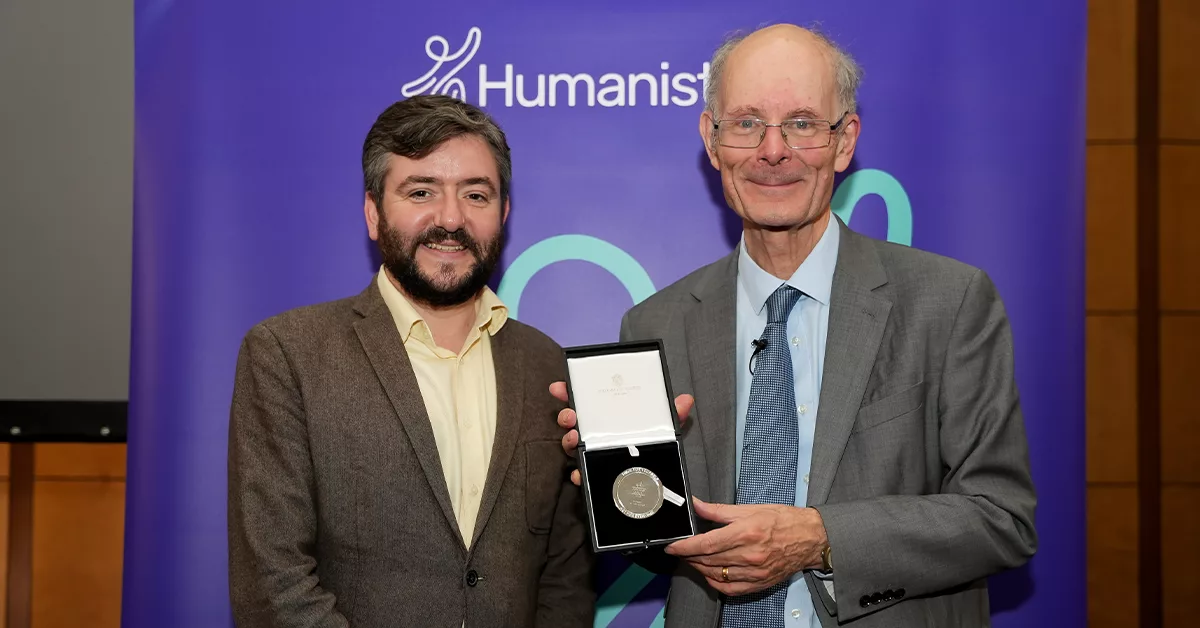








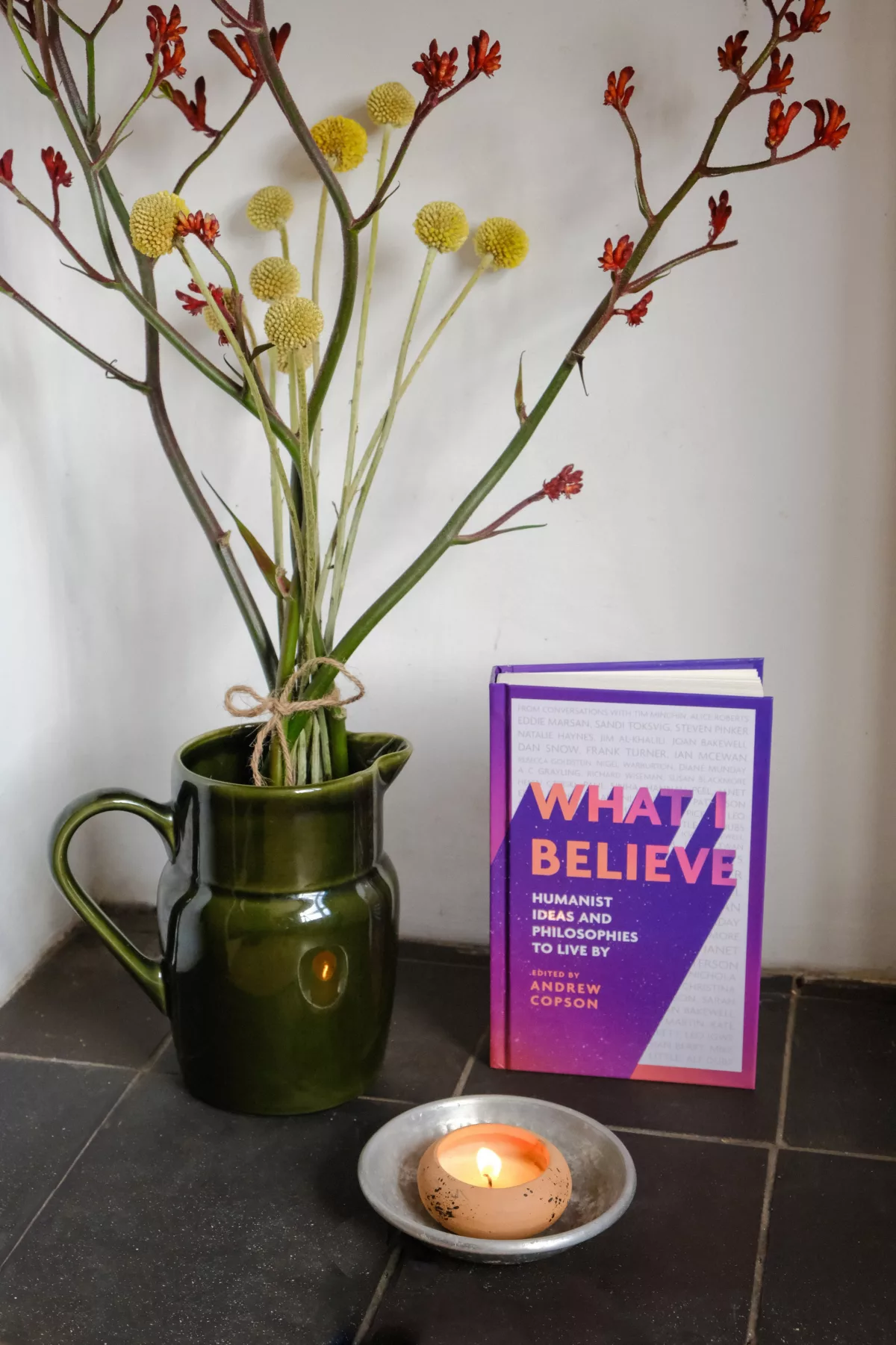









































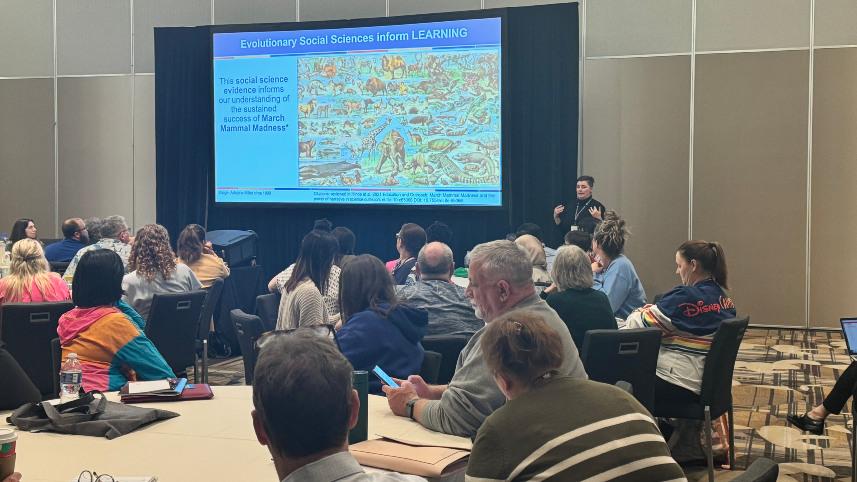






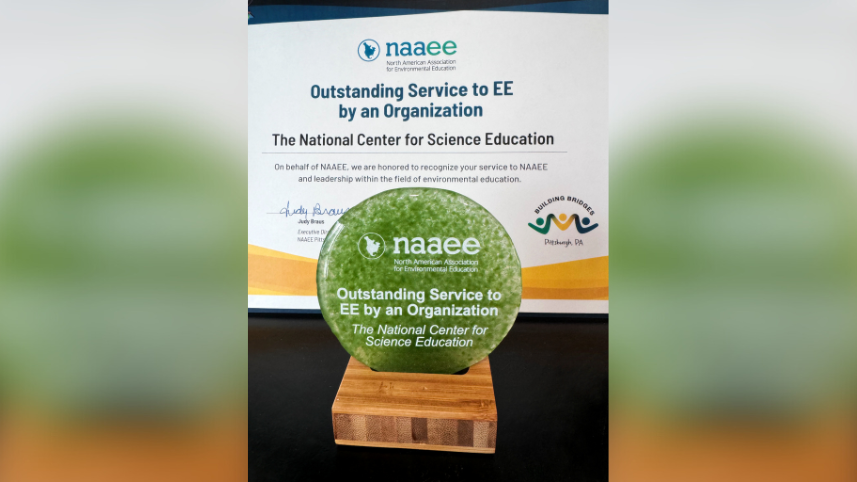





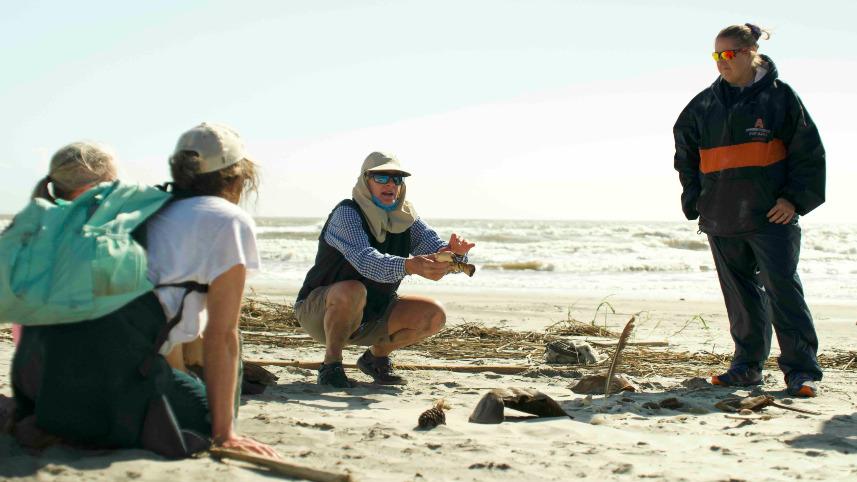
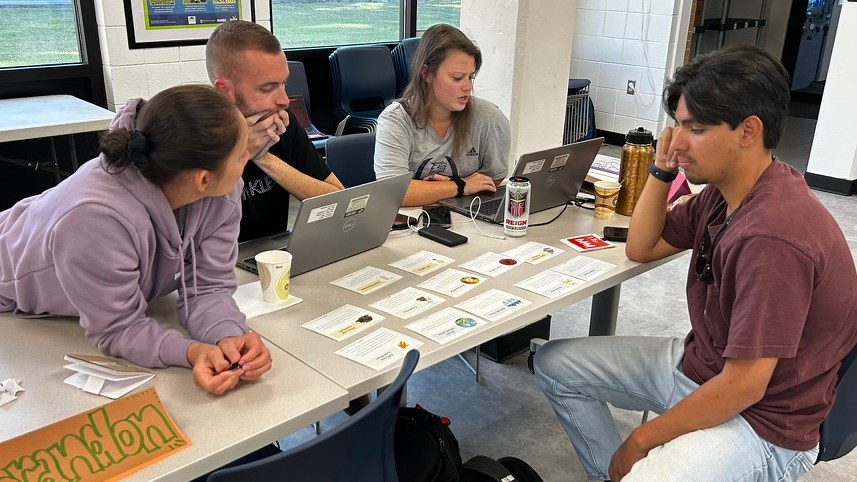





 David Upegui (a science teacher) and David E. Fastovsky (a paleontologist) open their book with the argument that evolutionary theory is the best place to integrate racial justice into the K–12 curriculum. High school students are at the right developmental stage to discuss racial justice, and the history of evolution provides plenty of examples of specious and misappropriated uses of science for racial discrimination and oppression as well as the opportunity to highlight the nature of science and its self-correcting properties. They use the frameworks laid by critical scholars such as Paulo Freire, Henry Giroux, and Derek Hodson to argue that the purpose of general education, and science education specifically, is for students to use literacy for empowerment and liberation. By gaining an understanding of what modern evolutionary theory says about humanity’s diversity and interconnectedness, students can come to see how bad actors in the past relied on ignorant or biased assumptions to create false racial categories and stereotypes.
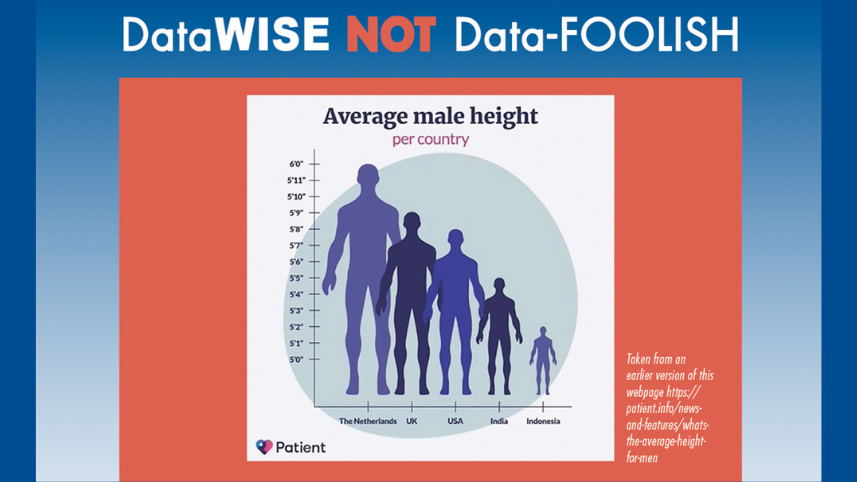



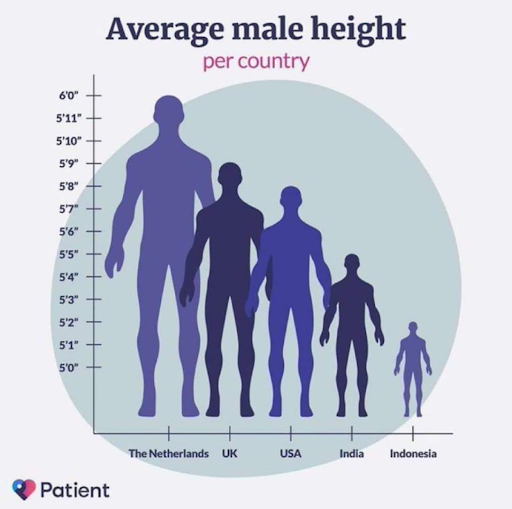
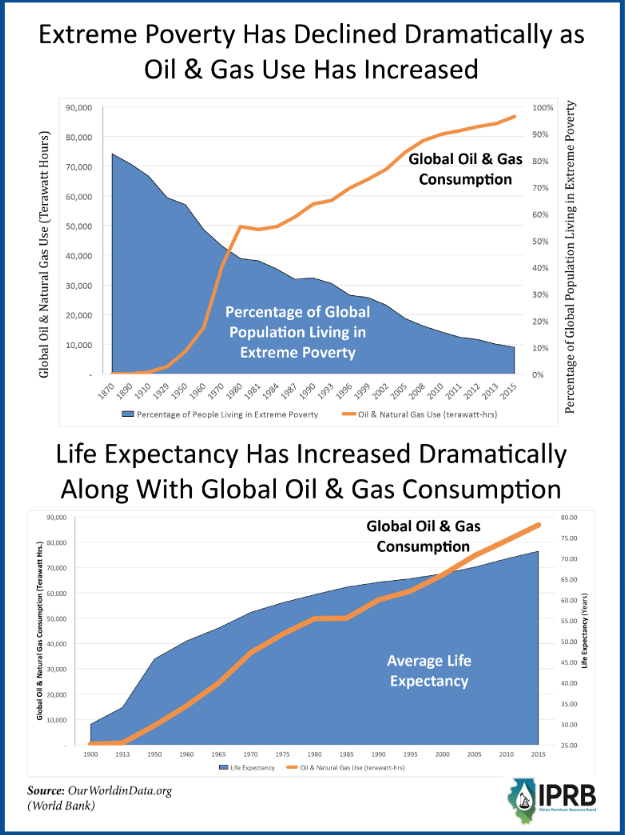






 “I truly believe Charlie Kirk is the most important man in America for the future of our nation,” wrote self-described “high risk humanitarian” Victor Marx in a December 2023