Author(s): Scott Douglas Jacobsen
Publication (Outlet/Website): National Union of Journalists of Ukraine
Publication Date (yyyy/mm/dd): 2026/03/03
Nataliya Voitovych: How do russian disinformation narratives shape Western media framing of Ukraine, and how do Journalist Solidarity Centers protect frontline reporting?
Nataliya Voitovych is a Ukrainian journalist and disinformation researcher who coordinates the Lviv Journalists’ Solidarity Center within the National Union of Journalists of Ukraine’s nationwide network. Her work focuses on keeping reporters safe and operational during russia’s invasion: organizing coworking space during blackouts, arranging access to protective equipment, and connecting displaced journalists with practical support and training. Alongside this field role, she contributes to academic and professional literature on media literacy and countering disinformation, examining how propaganda spreads and how audiences can be inoculated against it. She collaborates with international partners, including UNESCO-backed programs, to sustain independent Ukrainian journalism nationwide.
In this interview, Scott Douglas Jacobsen speaks with Nataliya Voitovych, coordinator of the Lviv Journalists’ Solidarity Center, about how russian disinformation distorts Western coverage and how Ukraine’s resistance forced many outlets to revise early assumptions. Voitovych argues that the war began in 2014, not 2022, and critiques narratives that frame Ukraine as too small to endure. She describes propaganda shifts—from “protecting russian speakers” to claims of “returning lands”—and urges journalists to ground reporting in history. They also discuss press-freedom trajectories, wartime media centralization, and solidarity hubs that provide gear, training, and a safe workspace for frontline reporting amid blackouts, displacement, and escalating threats.
Scott Douglas Jacobsen: In conversations with Ukrainian lawyers and activists, three frames keep coming up about “Western” media: what it gets right, what it gets wrong, and what it misses entirely. From your vantage point, what does it get right, wrong, and miss?
Nataliya Voitovych: russian propaganda has had a strong presence in Western information spaces. This is an information war.
Some media outlets and commentators repeat russian narratives—sometimes for ideological reasons, sometimes to capture audiences, and sometimes because russian-language material is readily available. Many Europeans learned russian, and when people looked for information, they often turned to russian-language sources.
However, russian state-aligned sources and pro-Kremlin messaging do not provide a full or reliable picture of what is happening in Ukraine, which creates a distorted understanding.
The war did not begin in 2022. russia’s war against Ukraine has been ongoing since 2014, beginning with the seizure and annexation of Crimea and the start of russia-backed fighting in eastern Ukraine. Many European outlets treated the conflict for years as an internal Ukrainian issue—a “civil conflict” or “separatist” war—rather than as russian aggression against Ukraine. That misframing was one of the biggest problems.
Russia has major structural advantages: a much larger population, far larger territory, and far greater resources. Ukraine is smaller in both population and geography. Many people assumed a smaller country could not withstand russia.
The full-scale invasion began on February 24, 2022. As of now, it is in its fourth year. Over these years, the world has seen that a smaller country can resist and fight a much larger aggressor.
Ukraine is also defending the broader European security order. If Ukraine were conquered, the threat would not necessarily stop at Ukraine’s borders; it would increase the risk of further instability and coercion across Europe.
Ukraine has become a barrier to Putin’s expansion into Europe and beyond.
Before the full-scale invasion began, some people began practicing Ukrainian, but it was not widely prioritized. When russia’s full-scale invasion started in 2022, some European and “Western” media initially said Ukraine was a small country, and russia was a big country, so Ukraine could not defend itself.
However, our country—our people—became a clear example that Ukraine can defend itself. It is not only about size. European media contains a lot of russian propaganda, and that influences perceptions.
Early on, a common narrative was: ‘Russia is big, Ukraine cannot defend itself.’ Later, the media began to acknowledge what proved true: Ukraine can defend itself. However, that was not the first image; it came later.
Jacobsen: Many Western outlets revised early expectations once Ukraine resisted the initial assault.
Voitovych: I read questions from foreign media, including in Ukraine and in some European countries. Some people said they would not go and doubted that Ukraine would resist.
However, when the invasion began in 2022, people joined the defense in enormous numbers—men and women ready to stand up and defend the state. There were long lines of volunteers.
Painters, bakers, singers, musicians, seamstresses—ordinary people—ready to participate in the defense of the country.
In 2022, I was interviewed by Polish media and said that if the war came to Lviv, I would take up arms and defend my country because it is my land and I would not leave.
In Kyiv in 2022, when the full-scale invasion began, weapons were distributed, and people went out to defend the city, even facing armored vehicles with whatever they had. They defended Kyiv and Ukraine.
Voitovych: There were lines for weapons. They gave people weapons, and they went to defend their neighborhoods and their cities themselves.
Jacobsen: Your specialization is russian disinformation. What was the character of russian disinformation at the start of the war in 2014? How did it change in 2022? What is its character now—especially with EU and NATO delays, and the political chaos around Trump?
Voitovych: russian disinformation has centered on the claim of “returning russian lands,” despite Ukraine’s internationally recognized sovereignty after 1991: sovereignty, independence, and territorial integrity. They also pushed the narrative that they were “liberating” or “protecting” russian-speaking people.
That was propaganda. Sometimes it sounded as if they were afraid of Western Ukraine because we are Ukrainian-speaking and we value our language.
Even in Lviv, we had multiple schools that taught russian as a minority language. In the streets of Lviv, people spoke russian, and nobody forbade it.
Until around 2016–2018, much public life was bilingual: concerts and programs often had one line in Ukrainian and another line in russian. You cannot honestly claim there was “pressure” on the russian language.
In 2014, they started the war in the Donetsk and Luhansk Regions. They staged “referendums” about separating those territories, although many people were forced to leave and could not vote. They then claimed large percentages supported separation.
Russia also claimed it was a war inside Ukraine—Ukrainians fighting Ukrainians—and that russia had nothing to do with it. In Crimea, they used a similar line. They said russian troops were not there. That is where the phrase and meme came from: the “little green men.”
Jacobsen: When russians frame “liberation,” they mean “liberation” from the humiliation of the russian language.
Voitovych: russian officials said they were not in Crimea, but they were in Crimea—and they are still there.
In Ukrainian, it translates as “they are not there,” and it became a meme—”in one word.”
When other parts of the world—Europe, America, Canada, and others—say that russia occupied Crimea, russia responds by claiming that Ukraine is not really a country. They claim Ukraine was “founded” by Lenin.
However, Kyiv is far older than Moscow by centuries. It is illogical to say that a place with an older city, a long history, and an established culture was “created” recently by the Soviet Union. This is one of the biggest propaganda claims.
Ukraine existed as a historical polity and a cultural territory long before the USSR. There is historical evidence, including accounts by European travelers and researchers, describing the territory of Ukraine, its culture, and historical developments that differed sharply from those in russia.
Now, when they cannot credibly claim they are “protecting russian-speaking people,” they shift to another message: that Ukraine is “their territory” and they are “taking back what is theirs.” That is where the propaganda has moved.
European media—and world media—need to return to history and read it seriously: not only russian state narratives, but also French, Italian, Spanish, and other historians and travellers from the 15th and 16th centuries who documented the region and drew maps that included Ukraine. This matters.
Western media are often new to this context.
Russian propaganda claimed that russian-speaking boys were in danger in Lviv. You went to Lviv—I hope you did not see anything like that.
Western media, in general, does not know russian history very well either. russian propaganda says that in Lviv, our people “eat russian boys,” and similar absurd things. That is propaganda.
Jacobsen: In different contexts, there are historical analogies. People used to claim that Jewish people harmed Christian children centuries ago. This “child-eating” narrative is not a new tool.
Voitovych: Our biggest problem is that Ukraine was the world’s third-largest nuclear arsenal after the Soviet Union collapsed. Many argued it would not be safe for Ukraine to keep those weapons.
Ukraine was pressured into giving them up under the Budapest Memorandum in 1994. Ukrainians believed that the United States, the United Kingdom, and russia agreed to respect Ukraine’s independence and borders.
However, russia had intentions to restore control over the former Soviet territories. If Ukraine had kept nuclear weapons, maybe russia would not have attacked. Ukraine trusted that nuclear powers would preserve Ukraine’s integrity and help protect it.
When it came to protection, russia later claimed the memorandum was not binding and treated it as merely a political statement. That is what happened.
I feel personal regret about this, because Ukrainians are strong, hardworking, and brave. If you look at the broader story, Ukraine as a state has not attacked others; it has defended itself.
In the 1990s, the world acted as if Ukraine could hypothetically become an aggressor. That is strange, because historically, Ukraine has not been an aggressor.
Historically, Ukraine has defended itself. However, in the 1990s, other countries treated Ukraine as if it could pose a serious threat. They thought it would be better for Ukraine to give up its nuclear weapons, and they said they would defend Ukraine from other countries.
Jacobsen: This came up in another interview recently with a Ukrainian based in the United States, so I will take a minute to lay out the logic.
During World War II, Jewish people were integrated into German society and achieved success in many areas. Then they were persecuted in Germany, and conditions became catastrophic.
Many tried to flee to different countries, but large parts of the world refused to accept them. They experienced betrayal within their own society and then betrayal as refugees trying to escape.
The contexts differ in severity, but the logic of betrayal has a parallel structure.
Ukraine had the world’s third-largest nuclear arsenal. After gaining independence from the Soviet Union, Ukraine agreed to denuclearize. The United States and other powers offered assurances tied to Ukraine’s sovereignty and borders.
Then the russian Federation annexed Crimea in 2014 and launched the full-scale invasion in 2022, violating international law. The United States did not intervene militarily to defend Ukraine, so many Ukrainians interpret that as a second betrayal layered onto the first.
So there is a “double betrayal”: aggression from a former Soviet “brother,” and the absence of the hard protection Ukrainians believed the assurances implied.
That is why, when civilians, the military, and President Zelenskyy say “no territorial concessions,” I understand the position. Again, not the same degree of suffering as the Holocaust, but similar logic in geopolitical and cultural terms: after repeated betrayal, conceding territory feels like rewarding the aggressor and inviting future aggression.
Voitovych: If we make territorial concessions, it will be a disaster. You cannot give the aggressor what they want. If we agree to give them our territory, they will not stop.
The biggest message from the Ukrainian side is: do not let Putin achieve any of his political objectives, because then he will pursue more.
Jacobsen: In the Reporters Without Borders World Press Freedom Index, Ukraine ranked 106th out of 180 in 2022, while russia ranked 155th.
That is not the whole story. Ukraine improved to 62nd in 2025, while russia fell to 171st—a clear divergence.
For context, Moldova is 35th in 2025.
So, despite the war, Ukraine—alongside anti-corruption efforts—has improved on media freedom, while russia’s media environment has worsened.
There are concerns in Ukraine under martial law, including restrictions and occasional interference affecting journalists, especially near the front line. On the russian side, there are severe concerns: journalists being detained, abused, and credible reporting (including UN-linked documentation) indicating torture and systematic mistreatment of detained journalists.
What are the main concerns for journalists in Ukraine right now? How does that contrast with russia’s treatment of journalists, particularly detention, abuse, and torture? Moreover, in the bigger picture, press freedom is worsening in russia and improving in Ukraine. Ironically, fewer Western journalists come to Ukraine at the very moment more should, especially given the improved rankings.
Jacobsen: What is the Journalistic Solidarity Center?
Voitovych: It started in 2022, when the full-scale invasion led to mass displacement. Journalists from occupied or heavily attacked areas began fleeing, and Lviv became a hub. A community of journalists formed there to coordinate help. One of the first groups to assist us was a similar journalistic community in Greece.
In March 2022, they brought supplies—food, laptops, phones, cameras—because many journalists had fled without equipment.
We distributed aid, helped journalists find places to live, and supported them so they could continue working. Some stayed in Lviv; others moved onward.
In the summer of 2022, journalists in Kyiv decided it was necessary to create multiple hubs where they could come for help. We had hubs in Lviv, Chernivtsi, Ivano-Frankivsk, and Kyiv.
UNESCO began providing support—funding, bulletproof vests, helmets, and medical supplies—so journalists could have protective equipment.
We worked in that format through 2023. In 2023, we reorganized, and now we have hubs in Zaporizhzhia, Kharkiv, Dnipro, and Kyiv, with Ivano-Frankivsk, Chernivtsi, and Lviv grouped. In total, there are six hubs where journalists can come, borrow protective gear, and then go to the front with better safety.
Russia is attacking Ukraine’s energy system. For example, Lviv can experience blackouts. When there is no electricity or internet at home, journalists can come to the hub to work. It also serves as a workspace.
Once or twice a month, depending on circumstances, we run trainings and workshops on fact-checking, information warfare and propaganda, and journalistic ethics—especially how to report on war responsibly.
We also provide security and medical training, so when journalists go to dangerous areas, they can protect themselves and help others, including their camera operators.
These centers are genuinely helpful. They provide mutual support and practical consultation, helping journalists work more safely and stay connected.
Many journalists entered or re-entered the country in 2022, and many came from the east after fleeing their homes with no equipment and no protective gear. The hubs helped fill that gap.
Russia targets journalists—along with medics. Many journalists were forced to flee their homes, and Lviv became a hub because so many of them were there. There are now six such hubs in Ukraine.
There was a similar hub in Greece that supplied us with equipment and other support. If journalists want to go to the front line, they can come to our hub, receive protective equipment—like a bulletproof vest—and then go to the front with better safety.
We also hold lectures a few times per month about russian propaganda and disinformation.
Jacobsen: I have a question. What are her views, and the department head’s views, on “United Media”—bringing everything together under one centralized media platform? How did that centralization work in 2022? Was it an idea of the state, without taking journalists’ opinions into account?
The main concerns I have seen about media freedom in Ukraine have been martial law restrictions and the occasional persecution or obstruction of some journalists, primarily near the front line.
On the russian side, it is systematic: imprisonment of journalists, torture of detained journalists, and the deliberate targeting of journalists—including people clearly marked as “press”—and killing them. We see this through the Journalistic Solidarity work.
Voitovych: We also work with journalists, bloggers, and civic leaders—especially those in Crimea. We investigate the fate of journalists whom russia has taken and is holding in captivity.
We have supported the family of Viktor Roshchyna—no, sorry, let me be precise: please look up the story of Victoriya Roshchyna. We track the fate of Ukrainian journalists in Crimea in particular, and we also tracked the fate of Victoriya Roshchyna, who was killed in russia.
Recently, there was news that Victoriya Roshchyna asked for a psychologist and said that if she did not receive help, she would take drastic steps.
The Center for Journalism and the National Union of Journalists of Ukraine (NUJU) wrote a petition about Viktoriia and also about a broader list of journalists being held in russia.
Russia treats journalists in a fundamentally criminal way because, for them, journalists are a target that must be eliminated. Why? Because a journalist can arrive, see what is happening, go back to the newsroom, and publish that russia is not telling the truth.
So when we talk about the press freedom index in russia, for me it is not just low—it is below zero.
Jacobsen: You are saying the main target—the main aim—for russians is to kill journalists. Moreover, you are saying that, for you, russia’s press freedom is below zero [Ed. So low that it is below any listing. It is like Afghanistan or North Korea.
Voitovych: A lot of the problems for the media in russia started a long time ago. When Putin came to power, I am not a historian, but my understanding is that he did three major things.
First, he targeted independent journalists and moved to silence them.
Second, he consolidated power by aligning with and empowering the richest men—oligarchs—so wealth and political loyalty reinforced each other.
Third, he built a system of patriotic messaging designed to make russians feel proud and to mobilize them around the state.
It is noteworthy that before territorial expansion and patriotic mobilization, he moved against independent journalism.
It was not about the people’s good. It was about protecting his own power.
Jacobsen: The russian state is not the same thing as the russian population.
Voitovych: I had a friend in russia. In 2014, after consuming russian propaganda, he asked me why Ukraine attacked russia. He described it as “Ukraine is small, russia is big.” In other words, he had inverted the roles of aggressor and victim.
Jacobsen: That connects to the territory point, which comes up repeatedly: why does russia need more territory? It does not.
Voitovych: russia has a large population and a vast landmass, but its economy is not as strong as its size suggests. By some measures, russia’s overall economic output is comparable to that of large European economies. Still, because russia has a much larger population, its per capita wealth is lower than that of many Western European countries. That is not a precise economic claim.
I have also heard sentiments from Ukrainian civilians that some russians resented Ukraine’s quality of life. That may be true for some individuals, but it is not a strong general explanation.
The main point is that russian state propaganda has framed Ukraine in a way that justifies domination.
Jacobsen: I can make an analogy from the American case. As a Canadian, I heard this argument often: the U.S. invasion of Afghanistan was justified in the public mind as a response to 9/11 (including NATO’s Article 5 being invoked and with UN resolutions). At the same time, the extension to Iraq was sold on weapons of mass destruction—claims that did not hold up. However, many people conflated the two conflicts in their minds into “the same war.” So, in the American public mind, Afghanistan and Iraq became conflated.
There is a history here. Americans had troops in Afghanistan for a long time. Many Americans thought the war was beneficial or necessary, regardless of what Afghanistan was experiencing. Moreover, there is an underlying slogan logic that appears in many countries: “They hate us for our freedom.”
The main problem is that russian propaganda uses a familiar kind of slogan-logic—something like, “They hate us for our freedom,” but, as some Ukrainians expressed, they were jealous of Ukrainian prosperity. You could say that might be true for some people, but not broadly. It is not a serious explanation of what is happening.
Sometimes this is not about popular grievances at all—it can be the will of an authoritarian leader and a ruling system trying to rebuild an empire and imitate figures like Catherine the Great or Peter the Great.
Oleksandra Matviichuk said in late 2025, in a clip I saw, that humanitarian aid numbers matter, and counting the killed and the equipment destroyed matters. Still, we should not lose the human stories. Otherwise, we turn human losses into statistics rather than a narrative. That struck me.
My first trip in 2023 was mainly to get acquainted. My second trip was more about politics, activism, and human rights. My third trip was supposed to come through Odesa, but after russia bombed bridges, routes were disrupted, and I came through Poland.
This time, I decided to do the regular work but devote much more attention to human stories—profiling young journalists, visiting art centers, and speaking with people like you and other leaders involved in Ukraine’s cultural regeneration.
So the character of this third trip is oriented around capturing human stories like yours. Are you noticing any loss of the human element in foreign media coverage? Are you noticing any loss of the human stories in foreign media?
This is from Rivne.
Voitovych: I have not noticed it much in foreign media because I do not usually consume it closely. However, I have noticed it in our media. When we show the deaths of soldiers, it often becomes statistics.
However, when we show a person’s death through their story, it is different. It is the death of a son. It is the death of a father. It is the death of a brother. It is the death of a friend. We can demonstrate someone’s death through their story.
My cousin was 25 years old. She went to the front line at the beginning of the full-scale war, when she was barely 18. She served as a medic. She said she could not stay at home because her country was invaded. She died two days before her birthday. russia killed her. She was also a journalist.
She is a Hero of Ukraine. She will be 24 forever. Her story shows the depth of the Ukrainian nation. If you report deaths among the Hospitallers, it is sad. However, when you tell the story of a young woman who chose to go and serve, it becomes more than sadness—it becomes recognition.
If we write only that someone died, it is sad. If we write about the person they were, it becomes an honor.
Jacobsen: Death is personal, and honor never replaces the person. There are four broad categories of men in Ukraine: those who left the country, those who hid within the country, those who were coerced or forced into mobilization, and those who chose to go to the front and stayed.
The word “brave” probably belongs primarily to the last group. People may use the terms “brave” or “courageous” to describe foreign journalists like me who come to Ukraine. That is not appropriate. It may be insensitive because we choose to come here and can choose to leave. Calling us “brave” in the same way is unfair and irresponsible.
So, what is your expert opinion on the context for men and women—bakers, artists, journalists—who went to the front line? What is your take on their stories: changing an ordinary life into becoming someone on the front line? What do you think about their stories?
Voitovych: We mentioned those who left, those who hid, and those who went to fight. I do not blame those who hid or those who left, because fear is human. However, I have great respect for those who, regardless of their profession—whether they are singers, artists, teachers, or journalists—went to the front to defend the country.
Moreover, I also respect those who stayed here and continue doing what they can. Sometimes it looks like indifference, but it is not. It is resilience.
Today, on my way to work, I saw a scene that really touched me: two young girls, about 18 years old, carrying a large container of gasoline and pouring it into a generator so a café—or some small place—could keep working during a blackout. That is not typically considered “girls’ work,” but they stayed, and they did what was needed. Those are small steps, but they mean a lot.
It is hard to describe. At home, we may have electricity for only about four hours a day, and then we have no light. However, we live on. We go outside between buildings, set up barrels, light a fire, and cook food. Life continues.
For me, it is all part of the same resilience. Those who are physically and mentally ready to go to the front go and fight. However, I cannot dismiss any of the four categories, because people’s circumstances and limits differ, and even small acts of endurance and mutual support matter.
Jacobsen: Some questions can feel taboo. For example, what are we to make of russian families who want nothing to do with the war, but feel they have to take part in it—especially if, financially, it seems like the only viable option in their village? What should we make of their stories? I do not want to make the same mistake as Westerners, framing this almost theologically as a war between pure good and pure evil.
Voitovych: You mean families whose men are sent to the front, and the family feels they have no other normal option. I recommend you watch videos where russian prisoners are filmed while speaking with their families.
In these recordings, you can hear how they talk. They often describe the war as a way to reach something—to get something. That is not normal, especially for an aggressor.
Some of them neglect their husbands or sons. It is not about love. russian people—again, this is my opinion—close their eyes. They do not want to see. They do not want to understand. Critical thinking is when you analyze.
Most russians do not analyze. They unquestioningly believe what they are given. Many russian families do not want to see the full situation. They close their eyes. That is not critical thinking. Moreover, it is not a small thing.
Jacobsen: The only symmetry I have seen in credible documentation comes from the UN system—particularly the Office of the High Commissioner for Human Rights.
In one UN report, 205 prisoners were interviewed—Russian and Ukrainian prisoners of war and detainees—and both groups reported torture or ill-treatment. However, there was an important distinction.
For Ukrainian prisoners of war, the torture is well documented and extensive, and it occurs systematically in detention facilities. For russian prisoners, the allegations were not primarily about treatment inside formal detention facilities. They were more about abuse at a transfer point—an “in-transit” or “way station” stage before arriving at detention.
So the alleged abuse against russian prisoners appears to be more concentrated in that transit phase, rather than in established detention centers. That is a nuance that rarely makes it into mainstream reporting. I would be very interested to see more coverage of what happens at those transfer points, because we already have substantial reporting on what happens to Ukrainians in detention.
In general, russian detainees appear to be treated far better than Ukrainian detainees, even acknowledging that abuses against russian prisoners—especially during transfers—are a serious human rights concern.
From a human rights perspective, that is one of the areas where things become more morally complex, because the question becomes: who controlled that transfer point, and what systems existed—or failed—to prevent abuse?
I also recall UN-verified cases in 2023–2024 involving the killing of russian prisoners by Ukrainian forces, though again, the scale and systematic character differ sharply from russia’s treatment of Ukrainian prisoners. The story of Victoriya Roshchyna is an eloquent example of what is at stake.
I am not standing on a pedestal here. I am well aware of Canadian failures and wider Western failures—Romeo Dallaire in Rwanda, and the context dramatized for popular audiences through films like Hotel Rwanda. During the genocide against the Tutsi in 1994, propaganda—especially radio broadcasts—was used to incite mass violence. It is a brutal example of what information warfare can do.
I bring up Rwanda because I am also aware of how grating it is when people in the West make beautiful speeches and then do little, or when Western states have committed serious wrongs themselves. It is important to emphasize that in this interview.
Voitovych: I have a question. Do you have any expectations—expectations or assumptions—coming into this?
Jacobsen: I have found that having fewer expectations and fewer assumptions is important for a more accurate view of things. There is a neo-Taoist idea of the “empty cup”: when you come open and receptive, you can take in what is actually there.
It might sound abstract, but the point is practical. Fewer expectations allow you to see things more as others do, rather than forcing everything through your own prior experience and interpretations.
Voitovych: So you mean: the fewer expectations you bring, the more clearly you can perceive what is in front of you, and the less you distort it through your own past experiences and assumptions.
Jacobsen: There is also an African pre-colonial idea—often associated with Ubuntu—that people are defined through one another: “I am because you are.” That can inform journalistic narrative construction in a way that is more intersubjectively accurate and therefore more comprehensive. My only expectation is the price of an espresso.
In two provinces over, in the city of Winnipeg, they expect the temperature to drop to extreme lows. One backpacker from Canada in Lviv can feel comfortable. For me, minus 20 is cold, and minus five is mildly uncomfortable. How about you?
Voitovych: For me, plus 20 degrees is comfortable.
Jacobsen: I used to work at a horse farm. I was doing journalism on equestrianism. I found it comfortable to do ranch labor and landscaping at around 25 Celsius.
My indication from recent statements by the Prime Minister of Finland, President Zelenskyy, Lavrov’s recent evasiveness, and the encouraged discussion in Alaska is that russians are losing as many—or more—than they are recruiting now. That raises another issue.
We know from reliable reporting that some Indian nationals were misled into serving in the russian army. We also know North Korean forces have supported russia, and that Iranian Shahed drones and related technology have been used by russia, with foreign-sourced components—including from China—showing up in russian drone supply chains. We also know some citizens of Western-aligned countries have volunteered in the Ukrainian forces.
I would love to see an investigative piece—from Ukrainian journalists or someone closer to this than I am—on two questions: how many other nationalities are being misled or coerced into russian service, and how many nationalities are volunteering on the Ukrainian side? If Indians are involved and there are reports of others from very different regions, that suggests the problem is wider than what is commonly discussed.
Voitovych: It is hard for me to answer precisely because I am not a military strategist. However, yes, we know there are foreign nationals involved.
Jacobsen: I also recently completed a book project—around 110,000 words—based on conversations with experts and victim advocates regarding clergy-perpetrated abuse in the Eastern Orthodox Church.
One relevant comparison: in the United States, the Archdiocese of Los Angeles agreed in 2024 to an $880 million settlement with survivors of clergy sexual abuse—just one archdiocese, in one metro area, and one settlement among others. However, I still hear a kind of deflection from some Orthodox voices: “We do not have that,” or “If we do, we are not as bad as the Catholic Church.”
It is bad in any case. No version of this becomes a joke. We do have a database now, and you can do a four-quadrant analysis of victims: adult women, boys as primary victims, with girls and adult men as minority victims. It is controversial, but the point is that the victim profile is not limited to any one group, even though some groups appear more frequently in reported and documented cases.
What we do know across Christian denominations is that when victims—men or women—come forward, the first institutional reflex is often to defend the church rather than protect the victim.
We also know false allegations are a minority. Estimates vary, but commonly cited ranges are roughly 2% to 10%. That means when one person comes forward, the odds heavily favor a genuine claim. When multiple independent complainants come forward—three, four, five—the likelihood that the accused engaged in misconduct becomes extremely high.
I get a lot of strange emails.
Security-wise, before I came here, my latest hate mail—or “fan mail”—was: “Your writing sucks, and I hope you die soon.”
Journalists get harassed constantly now. Women are more often sexually harassed.
I did a four-part interview with a British Pakistani colleague, and she described how she gets the same “your writing sucks, I hope you die” messages, but often with sexualized threats, like “I hope you get raped to death,” or similar.
It is American chaos, European delays paired with beautiful statements, Ukraine’s increasing self-sufficiency, and russia’s largely criminal conduct. Those four dynamics do not seem to be changing much.
Much of Africa has no direct stake in this beyond specific cases—such as some Kenyan nationals reportedly being deceived into russian service. Some in Africa may also view this, bluntly, as a European “white people’s war,” even though the consequences, e.g., food prices, energy shocks, rule-of-law precedents, recruitment scams, travel well beyond Europe.
Since those structural dynamics are shifting slowly, the areas where I can make a small contribution are often the less-covered parts: culture, civil society, and human stories—the things that keep human beings from turning into spreadsheet cells.
Jacobsen: Thank you very much for the opportunity and your time, Nataliya.
License and Copyright
License
In-Sight Publishing by Scott Douglas Jacobsen is licensed under a Creative Commons Attribution-NonCommercial-NoDerivatives 4.0 International License. Based on a work at www.in-sightjournal.com.
Copyright
© Scott Douglas Jacobsen and In-Sight Publishing 2012-2022. Unauthorized use and/or duplication of this material without express and written permission from this site’s author and/or owner is strictly prohibited. Excerpts and links may be used, provided that full and clear credit is given to Scott Douglas Jacobsen and In-Sight Publishing with appropriate and specific direction to the original content. All interviewees and authors co-copyright their material and may disseminate for their independent purposes.
Share this:

Author(s): Scott Douglas Jacobsen
Publication (Outlet/Website): Pensar (Centre for Inquiry – Argentina)
Publication Date (yyyy/mm/dd): 2026/07/18
En resumen, ¿cuál es la historia de su familia?
Bueno, mis abuelos vinieron a Argentina desde Italia. Mis padres nacieron en Argentina. Mi padre era un gran hombre. Le gustaban las artes. Me inculcó el amor por la música y la ciencia. Solía regalarme libros de astronomía, biología, etc. Murió a los 71 años y lo extraño mucho. Fue la persona que más me influyó.
¿Y su historia personal?
Nací en Buenos Aires, Argentina, en agosto de 1958. Tuve una infancia muy feliz. De adolescente empecé a leer libros sobre lo paranormal y me fascinaba la parapsicología, los ovnis, etc. Luego, comencé a estudiar en el Instituto Argentino de Parapsicología, donde, paradójicamente, aprendí el método científico. Durante siete años de intensa investigación allí, no pude encontrar ni un solo caso en el que aparecieran fenómenos parapsicológicos. No encontré absolutamente nada y me convertí en escéptico. En ese momento tenía 25 años.
¿Cuáles son sus creencias religiosas/irreligiosas, éticas y políticas?
En cuanto a la religión, soy agnóstico. Mis creencias éticas y políticas son: respeto lo que llamamos «libertad negativa», estoy en contra de la coerción y creo que el Estado, al menos en mi país, regulaba casi todo. Era abusivo. Tantas leyes, tantos impuestos. Creo en el libre intercambio con la mínima intervención del Estado. Creo que debemos priorizar a las personas, no a la sociedad. Y, por supuesto, creo que la Iglesia y el Estado deben estar separados, algo que no sucede en mi país. Creo que el populismo es peligroso, y en Argentina hubo muchos presidentes populistas.
¿Cómo se convirtió en investigador y activista escéptico?
Realicé muchos experimentos e investigaciones científicas y no encontré nada cierto sobre los fenómenos paranormales. Pensé: “Hay muchos astrólogos, videntes y clarividentes publicando anuncios en los periódicos, y no encuentro ni uno solo que pueda demostrar sus poderes… algo no cuadra”.
Entonces, junto con Enrique Márquez (mago e investigador de fenómenos paranormales) y Alejandro Agostinelli (periodista especializado en ovnis), fundamos en 1990 la primera organización escéptica de Argentina: el Centro Argentino para la Refutación e Investigación de la Pseudociencia. Mantuvimos contacto con el CSI (en aquel entonces llamado CSICOP) y Carl Sagan y Mario Bunge se convirtieron en miembros honorarios de nuestra organización. Publicamos una revista, El Ojo Escéptico, y fui su editor hasta 1997.
En 2003, el Center for Inquiry decidió publicar una revista para hispanohablantes llamada Pensar, de la cual fui editor hasta 2009. En 2006, fundamos la filial CFI/Argentina, y fui elegido director. Como periodista especializado en lo paranormal, fui invitado a cientos de programas de televisión y radio, y fui entrevistado por la prensa en diversos periódicos y revistas de Argentina y otros países. Publiqué tres libros sobre lo paranormal y el pensamiento crítico. En 2020 volvimos a editar la revista Pensar, pero online.
¿Sus padres o hermanos influyeron en esto?
Bueno, mi padre solía darme libros de ciencia que despertaban mi curiosidad. Mis padres no eran religiosos. Nunca me hablaron de religión. Vivían sin la necesidad de creer en Dios.
¿Tuvo alguna colaboración en tus inicios en este activismo? Si es así, ¿con quién?
Sí. Eran profesionales, estudiantes o ilusionistas que se convirtieron en amigos míos y comparten mi interés por la desmitificación de los fenómenos paranormales.
¿Se considera progresista?
Sí. Me gusta el progreso. Pero creo que debemos diferenciar a quienes apoyan el progreso de quienes dicen apoyar el progreso social pero no hacen nada para lograrlo. Apoyo el progreso científico. El progreso social es muy difícil de definir. Creo que nuestras ideologías pueden llevarnos a cometer errores. Por eso intento fomentar el pensamiento crítico. Damos por sentadas muchas cosas y no nos educan para hacer preguntas «peligrosas».
¿Cómo llegó a adoptar una visión del mundo socialmente progresista?
Bueno, a lo largo de mi vida he ido cambiando mi visión del mundo. Me gustaban las ideas socialistas, pero ya no me gustan. El socialismo fue un fracaso y, en algunos países, un desastre. Va en contra de la libertad y es un sistema donde el Estado lo regula todo. Prefiero una democracia con libre mercado, sin regulaciones estatales. Y, por supuesto, un sistema educativo que permita y promueva el pensamiento crítico.
¿Por qué cree que es importante adoptar una perspectiva socialmente progresista?
Porque el progreso es necesario para construir individuos mejores y más sanos. Y para lograr este objetivo, el progreso científico es esencial.
Como progresista, ¿cuál cree que es la mejor postura sociopolítica para adoptar en Sudamérica?
Una democracia que promueva la libertad de expresión y fomente el pensamiento crítico, donde el individuo sea el componente principal. No debemos sacrificar a los individuos en nombre de la sociedad, porque los sistemas populistas promueven precisamente lo siguiente: la mayoría es más importante que los ciudadanos.
¿Qué grandes obstáculos (si los hay) ve usted que enfrentan actualmente los movimientos socioprogresistas?
Ideologías dogmáticas (incluida la religión), religiones seculares y todo lo que se oponga al pensamiento crítico y libre.
¿Qué importancia les da a los movimientos sociales?
Depende del movimiento del que estemos hablando. Yo apoyaría un movimiento que promoviera la libertad, el libre pensamiento y luchara contra las ideologías dogmáticas de cualquier tipo.
¿Cuál es el nivel de irreligiosidad en Argentina?
Cerca del 90% de la población profesa diferentes religiones. Pero ese porcentajr está bajando considerablemente.
¿Experimentan las personas irreligiosas intolerancia y prejuicios en todos los niveles de la sociedad argentina?
Sí, los experimentan, aunque no todos. ( En estos casos no hay que generalizar).
¿Por qué?
En primer lugar, la Iglesia y el Estado no están separados. Por lo tanto, los ciudadanos, al pagar impuestos, están apoyando a la Iglesia Católica, incluso si profesan otra religión o son agnósticos o ateos. Eso es injusto.
Usted es el representante del Center for Inquiry/Argentina. ¿Qué tareas y responsabilidades conlleva este cargo?
Mi responsabilidad es representar a una organización mundial que promueve la ciencia, la razón y el humanismo secular. Organizo conferencias, debates y reuniones cuyos temas principales son el pensamiento crítico, la pseudociencia y el escepticismo. Y dirijo una revista dedicada a difundir el pensamiento crítico.
¿Cuáles son algunas de sus investigaciones más memorables sobre lo paranormal y lo parapsicológico?
He investigado a cientos de personas que afirmaban tener poderes paranormales, así como casas supuestamente embrujadas, avistamientos de ovnis, etc. También organicé, con el apoyo de CFI, la primera Conferencia Iberoamericana sobre Pensamiento Crítico, en septiembre de 2005, con ponentes de diferentes países: Brasil, Estados Unidos, Chile, España, Argentina, Paraguay (¡disculpen si he omitido algún otro país!).
Usted escribe para Skeptical Inquirer. ¿Qué importancia tiene esta revista, y otras similares, para el escepticismo?
La importancia de esta revista radica en que promueve la ciencia y la razón de una manera que el público en general puede comprender.
¿Qué distingue a la ciencia verdadera de la pseudociencia, la falta de ciencia y la mala ciencia?
La ciencia requiere evidencia. La pseudociencia no, porque no utiliza el pensamiento científico ni el pensamiento crítico. Y lo peor es que hay profesionales que practican la pseudociencia, sobre todo en medicina y psicología.
La ciencia es conocimiento y proceso. Conocimiento del mundo natural mediante metodologías empíricas. Proceso para alcanzar el conocimiento empírico. ¿Cuál es la mejor manera de enseñar ambos simultáneamente, dado que la ciencia puede reducirse a la tabla periódica de los elementos, los nombres de las especies, los minerales, las características de los diferentes cuerpos celestes, etc.?
Necesitamos divulgadores científicos, capaces de explicar qué es la ciencia con un lenguaje claro y sencillo. El mejor ejemplo es Carl Sagan.
He visto a científicos invitados a programas de televisión para hablar sobre diversos temas, y la mayoría resultan aburridos, utilizando palabras complicadas y términos científicos. No están preparados para ser divulgadores. Si no podemos conectar con el público de forma directa y sencilla, estamos fracasando. Debemos hacer lo que hizo Bertrand Russell. Fue un gran matemático y filósofo, pero también escribía para la gente común.
Precisamos educadores que hagan pensar crítica y libremente, racionalmente.
¿Cuál es su descubrimiento científico favorito?
La evolución.
¿Cuál es su pseudociencia favorita que ha sido desacreditada?
Debemos darles preponderancia a las medicinas alternativas. Pero también creo que debemos aplicar el escepticismo y el pensamiento crítico tanto en economía como en política. Hay mucha pseudociencia en ambos campos.
¿A qué se dedica actualmente?
Soy periodista, escritor y músico. He publicado cuatro libros: uno sobre pseudociencia, dos sobre pensamiento crítico y uno sobre Los Beatles.
¿Qué espera que suceda en el futuro?
Hoy el mundo está en un caos enorme (me refiero a las guerras y sus consecuencias). Pero si logramos sobrepasar esta terrible situación, y vuelve la paz, soy optimista. Aunque veo que la mayor parte de la comunidad científica ignora el pensamiento mágico y la pseudociencia. Y, como escribí antes, es absolutamente necesario formar divulgadores científicos. Necesitamos difundir la razón. Pero, sinceramente, no sé si eso sucederá a corto plazo. Por lo que veo, la pseudociencia está invadiendo las instituciones académicas y la religión sigue teniendo mucha fuerza.
Gracias por su tiempo, Alejandro.
¡De nada!
Scott Jacobsen
License and Copyright
License
In-Sight Publishing by Scott Douglas Jacobsen is licensed under a Creative Commons Attribution-NonCommercial-NoDerivatives 4.0 International License. Based on a work at www.in-sightjournal.com.
Copyright
© Scott Douglas Jacobsen and In-Sight Publishing 2012-2022. Unauthorized use and/or duplication of this material without express and written permission from this site’s author and/or owner is strictly prohibited. Excerpts and links may be used, provided that full and clear credit is given to Scott Douglas Jacobsen and In-Sight Publishing with appropriate and specific direction to the original content. All interviewees and authors co-copyright their material and may disseminate for their independent purposes.
Share this:
Scott Douglas Jacobsen (Email: scott.jacobsen2026@gmail.com)
Publisher, In-Sight Publishing
Fort Langley, British Columbia, Canada
Received: October 25, 2025
Accepted: January 8, 2026
Published: February 22, 2026
Abstract
This interview excerpt with Prof. Dr. ˙Izzet Sakallı synthesizes several live problems at the interface of black-hole physics, holography, thermodynamics, and computational method. First, it addresses whether thermal fluctuations can undermine the Kovtun–Son–Starinets (KSS) bound on the shear-viscosity-to-entropy-density ratio in quantum-corrected AdS black holes. Sakallı argues that the bound is formulated for ensemble-averaged thermodynamic quantities rather than instantaneous microstates, and that causality constraints and fluctuation–dissipation structure prevent genuine violations even when entropy and horizon data fluctuate. Quantum corrections are presented as shifting the numerical value of the bound in controlled ways rather than eliminating the existence of a lower bound. Second, the excerpt proposes an operational, coordinate-independent notion of “thermodynamic topology,” treating equilibrium state space as a manifold equipped with geometric structures (metrics, curvature, and topological invariants such as winding numbers) that classify critical points and phase transitions, with ensemble changes understood via Legendre transformations on a broader thermodynamic phase space. Third, Sakallı outlines a phenomenological unification of linear dilaton, Newman–Unti–Tamburino, and Bardeen geometries, emphasizing their shared “hair,” nonstandard asymptotics, modified thermodynamics, and comparable signatures in geodesic structure and observables such as shadows and inspiral waveforms. Finally, the excerpt compares higher-order WKB approaches and neural networks for extracting quasinormal modes, identifying the main methodological pitfalls—convergence, coordinate and boundary-condition sensitivity versus data dependence, extrapolation risk, and interpretability—and motivating hybrid strategies that combine physical transparency with computational speed.
Keywords
AdS/CFT, Asymptotics, Bardeen black holes, Boundary conditions, Black hole hair, Black hole shadows, Causality constraints, Compactification, Coordinate independence, Curvature (thermodynamic), Dilaton fields, Ensemble averaging, Euler characteristic, Extended phase space, Extrapolation risk, Fluctuation–dissipation theorem, Gauss–Bonnet gravity, Geodesics, Gibbs free energy, Grand canonical ensemble, Gravitational waves, Heavy-ion collisions, Helmholtz free energy, Higher-derivative corrections, Holography, Interpretability, ISCO (innermost stable circular orbit), KSS bound, Legendre transformations, Linear dilaton black holes, LIGO constraints, Machine learning, Microcanonical ensemble, Misner string, Neural networks, Newman–Unti–Tamburino (NUT) spacetime, Nonlinear electrodynamics, Overfitting, Phase transitions, Photon sphere, Pietist discipline, Quark–gluon plasma, Quasinormal modes, Quantum corrections, Shear viscosity, Symplectic structure, Thermal fluctuations, Thermodynamic manifold, Thermodynamic metric, Thermodynamic topology, Topological charge, Transport coefficients, Van der Waals analogy, Viscosity-to-entropy ratio, Winding number, WKB approximation
Introduction
Modern black-hole physics is no longer a single subject so much as a crowded intersection: holography links gravity to strongly coupled fluids; extended thermodynamics reframes spacetime constants as state variables; and observational astronomy increasingly constrains “beyond Kerr–Newman” possibilities. In this excerpt, Prof. Dr. ˙Izzet Sakallı engages several of these frontiers through a unifying methodological concern: which statements are invariant, operationally meaningful, and robust under corrections—whether those corrections are quantum, thermal, coordinate-based, or computational.
The discussion begins with the Kovtun–Son–Starinets bound, a conjectured lower limit on the ratio of shear viscosity to entropy density that emerges naturally from AdS/CFT calculations. Sakallı addresses a common worry in quantum-corrected AdS black holes: if entropy and horizon properties fluctuate, could momentary configurations appear to violate the bound? He frames the bound as a statement about coarse-grained thermodynamic quantities, protected by causality and by the structured relation between fluctuations and dissipation, and he argues that quantum corrections typically deform the bound’s value rather than abolish the existence of a bound.
The excerpt then shifts from bounds to classification, proposing an operational definition of thermodynamic topology that is explicitly coordinate-independent. Equilibrium state space is treated as a manifold where thermodynamic potentials define fields, critical points behave as topological defects, and invariants such as winding numbers provide a stable language for phase transitions. Because ensemble choice changes which variables are held fixed, Sakallı emphasizes a geometric formulation in which Legendre transformations are understood as coordinate changes within a broader phase space equipped with ensemble-independent structure, allowing invariants to remain well-posed across descriptions.
From there, the interview broadens to a phenomenological comparison of three nonstandard black-hole families—linear dilaton, NUT, and Bardeen—highlighting the shared presence of additional “hair,” altered asymptotics, and modified thermodynamics and geodesics, with implications for shadows, accretion signatures, and gravitational-wave observables. The excerpt closes with a methodological contrast between higher-order WKB techniques and neural networks for computing quasinormal modes, weighing physical interpretability and controlled approximation against speed, data dependence, and extrapolation risk, and motivating hybrid strategies that preserve both exploration and rigor.
Main Text (Interview)
Title: Causality, Ensemble Invariance, and Black-Hole Perturbations: Prof. Dr. ˙Izzet Sakallı on the KSS Bound, Thermodynamic Topology, and Quasinormal-Mode Inference (3)
Interviewer: Scott Douglas Jacobsen
Interviewees: Prof. Dr. İzzet Sakallı
Professor Izzet Sakallı is a theoretical physicist at Eastern Mediterranean University whose research bridges quantum mechanics, general relativity, and observational astronomy. With over 180 publications exploring black hole thermodynamics, modified gravity theories, and quantum corrections to spacetime, his work sits at the exciting frontier where abstract mathematics meets observable reality. In this interview, he discusses the challenges of testing exotic gravity theories, the quest to observe quantum effects in astrophysical systems, and what the next generation of telescopes and gravitational wave detectors might reveal about the quantum nature of spacetime.
Scott Douglas Jacobsen: Which shadow features best test Lorentz-violating backgrounds once plasma and accretion-flow systematics are in cluded?
Professor Izzet Sakallı: The Event Horizon Telescope’s stunning images of M87* and Sagittarius A* opened an unprece dented window for testing fundamental physics. These images show a bright ring of emission surrounding a dark shadow—the gravitational silhouette of the black hole. But extracting con straints on exotic physics requires carefully separating genuine signatures of modified spacetime from astrophysical contamination.
Lorentz invariance—the principle that physical laws don’t depend on your orientation or ve locity—is a cornerstone of both special and general relativity. Various approaches to quantum gravity predict potential violations at high energies or in strong gravitational fields. These violations would modify how photons propagate, potentially changing the observed shadow.
The challenge is that accretion disks—the hot, ionized material spiraling into black holes—are messy astrophysical environments. The plasma causes Faraday rotation of polarized light, in troduces frequency-dependent delays through dispersion, absorbs some wavelengths while trans mitting others, and Doppler shifts due to its orbital motion. All these effects must be modeled and subtracted to reveal underlying spacetime properties.
The most robust tests use signatures that depend differently on fundamental physics versus astrophysical processes. Multi-wavelength shadow measurements provide one such discriminator. If Lorentz violation affects photon propagation, the shadow size should vary with observing frequency in a specific pattern—different from how plasma effects scale. Observing at 230 GHz, 345 GHz, and potentially infrared wavelengths with the next-generation Event Horizon Telescope would allow separating these effects.
The photon ring—actually a series of nested subrings from photons completing multiple orbits before escaping—offers another powerful probe. The time delay between successive subrings de pends on geodesic motion in the spacetime geometry, largely insensitive to accretion flow details since it’s a geometric effect. Lorentz violation would modify these time delays in characteristic ways.
Polarization patterns provide additional leverage. While plasma Faraday rotation certainly af fects polarization, Lorentz violation can break azimuthal symmetry in distinctive ways. Decom posing the polarization pattern into angular components helps separate astrophysical rotation (which affects all components similarly) from symmetry-breaking physics.
Time variability studies offer yet another approach. Monitoring shadow features over days to months separates quasi-periodic variability from orbital motion, flares and turbulence in the accretion flow, and any secular trends from fundamental physics. If the shadow properties slowly drift in ways inconsistent with astrophysical explanations, that might signal Lorentz violation.
Current EHT observations constrain deviations from general relativity at the ten to twenty percent level. This translates to saying that if Lorentz violation exists, its characteristic energy scale must be at least one or two percent of the Planck energy—still far below the Planck scale but better constraints than many other tests achieve.
Future improvements will come from multiple directions. The next-generation EHT adds more telescopes and space-based stations, increasing angular resolution. Higher observing frequencies probe smaller scales. Broader bandwidth improves sensitivity. Perhaps most importantly, coordinated multi-messenger observations—combining radio interferometry with X-ray timing, optical monitoring, and potentially gravitational waves if the black hole is in a binary—would provide complementary information less susceptible to systematic uncertainties.
Jacobsen: What are the limits of the Gauss-Bonnet approach for weak deflection in spacetimes with torsion?
Sakallı: Einstein-dilaton-Gauss-Bonnet gravity represents an important modification of general relativ ity emerging from string theory. The Gauss-Bonnet term involves products of curvature quan tities in a specific combination that’s topologically interesting. In standard four-dimensional spacetime, this term is actually a topological invariant—it doesn’t affect the equations of motion by itself. But when coupled to a dilaton field (a scalar field from string theory), it produces genuine modifications to gravity.
These modifications become significant in strong-field regions near black holes or in the early universe. For weak gravitational fields—like sunlight grazing the Sun—the corrections are typically small but calculable. We can expand solutions perturbatively, treating the Gauss Bonnet term as a small correction to general relativity, and calculate how it affects phenomena like light deflection. However, this approach encounters fundamental difficulties when spacetime possesses torsion.
Torsion represents a twisting of spacetime, a type of geometric structure absent in general relativity but present in some extended theories. Einstein-Cartan theory, for instance, allows spacetime to have both curvature and torsion, with torsion sourced by intrinsic spin of matter.
The difficulty is that the Gauss-Bonnet term is defined for Riemannian geometry—geometry with curvature but no torsion. Generalizing it to spaces with torsion isn’t unique. Multiple inequivalent extensions exist: the Nieh-Yan form, modifications involving the Pontrjagin term, generalizations of the Holst term. These different extensions give different physics, and there’s no obvious principle selecting one over others.
Furthermore, torsion couples to matter fields differently than curvature. For photons—massless spin-one particles—the interaction with torsion is subtle. Traditional geodesic equations must be reconsidered. The very notion of ”geodesic” becomes ambiguous because the connection determining parallel transport includes torsion contributions.
The weak-field expansion faces technical breakdowns in torsion backgrounds. We typically expand the metric as small perturbations around flat spacetime. But when both curvature and torsion are present, the perturbative hierarchy becomes unclear. If torsion is as large as curvature perturbations, our expansion scheme breaks down.
There are also boundary term subtleties. In formulating gravitational theories variationally, boundary terms matter for defining conserved quantities and obtaining correct equations of motion. The Gibbons-Hawking-York boundary term supplements the Einstein-Hilbert action in general relativity. With torsion, additional boundary terms are needed, and they affect asymptotic quantities crucial for calculating observable effects like deflection angles.
Some torsion-Gauss-Bonnet couplings lead to pathologies: faster-than-light propagation, vio lations of causality, or violations of energy conditions guaranteeing stability. These signal the theory’s breakdown rather than providing viable alternatives to general relativity.
Observationally, constraints on torsion in astrophysical contexts are weak. Particle physics experiments provide stronger bounds from spin-dependent effects. But astrophysical torsion contributions must satisfy stringent limits, roughly one part in a billion billion per centimeter from precision tests.
For analyzing light deflection in torsion-rich spacetimes, alternative approaches work better than weak-field expansions. Full numerical ray-tracing through exact solutions avoids perturbative ambiguities. The Newman-Penrose formalism, adapted to non-Riemannian geometry, provides another rigorous framework. Modified Shapiro time delays offer complementary probes less sensitive to expansion scheme choices.
Jacobsen: Which lensing signatures would rule out thin-shell wormholes for compact black-hole mimics?
Sakallı: Wormholes—hypothetical tunnels connecting distant regions of spacetime—have captivated physicists and science fiction writers for decades. While the Schwarzschild solution allows math ematical wormholes, they’re unstable and not traversable. Maintaining a stable, traversable wormhole requires exotic matter violating energy conditions, specifically matter with negative energy density.
Thin-shell wormholes represent a particular construction where exotic matter is confined to a narrow region around the wormhole throat, minimizing the total amount of energy-condition violating material needed. From a distance, such objects might mimic black holes—appearing as compact, massive objects with strong gravitational fields. Distinguishing them observationally is crucial, as finding a wormhole would revolutionize physics.
Several observational signatures could definitively distinguish wormholes from black holes. The most dramatic is gravitational wave echoes. When a gravitational wave rings down after a black hole merger, the signal decays smoothly—the perturbations fall into the singularity. But if the object is a wormhole, perturbations can traverse the throat, reflect off the geometry on the far side, return, and emerge again. This creates periodic echoes in the gravitational wave signal, with the time delay determined by the wormhole’s size and geometry.
Detecting echoes is challenging. The reflected signal is weaker than the initial ringdown, requir ing high signal-to-noise ratio observations. Current searches in LIGO/Virgo data have found no convincing echoes, placing limits on how common wormholes might be if they exist. Future detectors with better sensitivity, particularly Einstein Telescope and Cosmic Explorer, should significantly improve echo searches.
The shadow morphology offers another discriminator. Black holes cast circular (or slightly elliptical for rotating ones) shadows. Wormholes can produce more exotic shadow shapes: non simply-connected topology (hole within hole), asymmetric brightness from different light paths traversing the throat, or chromatic effects if the throat has frequency-dependent properties. The Event Horizon Telescope’s resolution is reaching the point where such features might be detectable for nearby supermassive objects.
Microlensing provides a third signature. When a compact object passes in front of a background star, its gravity acts as a lens, magnifying and distorting the star’s image. Black holes create characteristic magnification curves. Wormholes add complexity: light paths traversing the throat create additional magnification spikes, producing asymmetric light curves distinct from black hole lensing. Large microlensing surveys searching for dark matter or planets could potentially detect such signatures if wormholes exist in our galaxy.
Time delay distributions between multiple images offer another probe. Gravitational lenses create multiple images of background objects arriving at different times. The distribution of these delays depends on the lens’s mass profile. Wormholes’ different internal geometry would create distinctive delay patterns.
Future interferometric observations using nulling techniques could enhance faint photon ring structure while suppressing the bright accretion disk. Wormholes’ multiple light traversal paths would create interference patterns distinct from black holes.
The theoretical challenge is that thin-shell wormholes face severe difficulties. Most solutions are dynamically unstable—perturbations cause them to collapse or expand. The exotic matter requirements are enormous, far exceeding what quantum field theory allows in normal circum stances. No known astrophysical process forms wormholes, unlike black holes which form from stellar collapse.
Nevertheless, thoroughly testing whether astrophysical compact objects might be horizonless alternatives to black holes is scientifically important. General relativity so strongly predicts black holes that finding something else would indicate either a fundamental flaw in our under standing or exotic physics beyond the standard model. The observational tests described above will systematically close loopholes, either confirming black holes or revealing surprises.
Jacobsen: Can information-theoretic diagnostics reveal quantum gravity corrections at current observational sensitivities?
Sakallı: Information theory—the mathematical framework for quantifying information, uncertainty, and correlations—provides a novel lens for exploring quantum gravity. Traditional approaches focus on measuring physical quantities like masses, spins, and frequencies. Information-theoretic approaches ask: how much information do observations carry about the underlying physics? Can we detect quantum gravitational effects through information content rather than direct parameter measurements?
The holographic principle suggests that information in any region of space is bounded by the region’s surface area rather than volume—as if the three-dimensional world is holographically encoded on a two-dimensional boundary. For black holes, this manifests as the Bekenstein Hawking entropy being proportional to horizon area. Quantum corrections modify this rela tionship, adding logarithmic and higher-order terms in the area.
One information-theoretic approach analyzes the entropy of black hole shadows. The shadow pattern observed by telescopes carries information about the spacetime geometry. We can quantify this through Shannon entropy: treating the brightness distribution as a probability distribution and computing its entropy. Quantum corrections alter how photons propagate near the horizon, subtly changing the shadow structure and therefore its information content.
The challenge is scale. For astrophysical black holes, Planck-scale quantum corrections are suppressed by the ratio of the Planck length to the black hole size—roughly 10 to the minus 78th power for a solar-mass black hole. Direct detection of such tiny effects is hopeless with foreseeable technology.
However, indirect signatures might be more accessible. Rather than looking for tiny shifts in individual measurements, we can examine correlations and information flow. For gravitational wave signals, the mutual information between early inspiral and late ringdown phases quantifies how much information from the initial state survives to the final state. Quantum corrections introduce non-Markovian effects—memory effects where the system’s evolution depends on its history rather than just its current state. These memory effects could create measurable corre lation patterns.
Fisher information quantifies how much information data carries about physical parameters. For Event Horizon Telescope observations, we can construct the Fisher information matrix describing precision limits on measuring black hole mass, spin, and potential quantum correction parameters. Current analysis suggests achieving roughly 10 to 30 percent precision on dimensionless quantum parameters—not sufficient to detect Planck-scale effects but potentially constraining if quantum gravity involves larger characteristic scales.
Relative entropy (also called Kullback-Leibler divergence) measures how much observed distributions differ from general relativity predictions. Accumulating this measure across many observations provides a statistical test: are we seeing what general relativity predicts, or are systematic deviations emerging?
Population statistics offer multiplicative power. While individual gravitational wave detections have limited precision, combining information from hundreds or thousands of events (expected in the next decade) increases statistical power. If quantum corrections produce consistent small biases across all events, population-level analysis might reveal them.
Cross-correlation approaches combine complementary observations. Measuring a black hole’s mass from gravitational waves and independently from its shadow size provides a consistency test. If quantum corrections affect these measurements differently, inconsistencies would signal new physics even if neither measurement alone shows deviations.
For primordial black holes—hypothetical small black holes from the early universe—information theoretic signatures might be more accessible. Their much smaller sizes enhance quantum corrections substantially. If primordial black holes exist and their evaporation products are detected, the information content in their emission spectra could constrain quantum gravity.
Realistic assessment requires acknowledging limitations. Directly detecting Planck-scale quan tum gravity through astrophysical observations probably remains beyond reach. However, information-theoretic methods might reveal emergent quantum phenomena accumulating at astrophysical scales, modified information flow during black hole evaporation, or indirect con straints ruling out large classes of quantum gravity theories. These indirect routes may prove more fruitful than searching for minute corrections to individual measurements.
Jacobsen: How do non-extensive entropy formalisms reshape Anti-de Sitter black hole phase diagrams?
Sakallı: Non-extensive statistical mechanics, particularly Tsallis entropy, offers a fascinating general ization of conventional thermodynamics that has profound implications for black hole physics. The standard Boltzmann-Gibbs entropy assumes that systems are extensive—meaning the en tropy of two independent systems simply adds. But for systems with long-range interactions, like gravity, or systems with fractal structure, this additivity breaks down. Tsallis introduced a parameter, typically called q, that quantifies this non-extensivity. When q equals one, we recover standard thermodynamics; deviations from unity signal non-extensive behavior.
For black holes in Anti-de Sitter spacetime—a universe with negative cosmological constant that curves like a saddle rather than a sphere—thermodynamics becomes particularly rich. AdS black holes can undergo phase transitions remarkably similar to everyday substances transitioning between solid, liquid, and gas phases. The famous Hawking-Page transition, where thermal radiation in empty AdS competes with forming a black hole, parallels water freezing into ice.
When we replace standard entropy with Tsallis entropy, the phase diagram transforms dra matically. The temperature-entropy relationship changes because temperature, defined as the derivative of energy with respect to entropy, now involves the non-extensivity parameter. For astrophysical black holes with enormous entropy, even small deviations of q from unity can shift transition temperatures substantially.
The heat capacity—which determines thermodynamic stability—becomes modified in intricate ways. Standard AdS black holes have a critical radius where heat capacity diverges, signaling a phase transition. With Tsallis entropy, this critical point shifts. Depending on whether q exceeds or falls below unity, the transition can occur at smaller or larger radii, or in extreme cases, disappear entirely or split into multiple transitions.
Perhaps most intriguing is the emergence of reentrant phase transitions—phenomena where increasing temperature causes the system to cycle through the same phase multiple times. Imagine heating ice, which melts to water, but continuing to heat causes it to refreeze, then melt again at even higher temperatures. Such behavior, absent in standard thermodynamics, appears naturally when black hole entropy becomes non-extensive. This suggests the underlying quantum gravity degrees of freedom organizing the horizon might have complex, fractal-like structure.
The Hawking-Page transition also shifts under non-extensive statistics. This transition repre sents a competition between entropy favoring thermal radiation spread throughout space and energy minimization favoring localized black holes. With modified entropy, the balance point changes. For q greater than one, transitions occur at lower temperatures; for q less than one, higher temperatures are needed.
Through the AdS/CFT correspondence—the remarkable duality between gravity in AdS space time and quantum field theory on its boundary—modifications to bulk thermodynamics reflect in boundary physics. The confining-deconfining transition in strongly coupled gauge theories, relevant for understanding quark-gluon plasma in heavy-ion collisions, would exhibit modified behavior if the gravitational dual involves non-extensive entropy.
The physical origin of non-extensivity in black holes remains debated. It might arise from quan tum fluctuations of the horizon, long-range gravitational correlations between horizon degrees of freedom, or fractal microstructure of spacetime near the Planck scale. Observationally, con straining the parameter q from astrophysical black holes is extremely challenging, but laboratory analogs using cold atoms or condensed matter systems might provide testable predictions.
Jacobsen: What about the interpretation of Hawking-Page transitions under non-extensive entropy?
Sakallı: The Hawking-Page transition represents one of the most elegant connections between quan tum field theory, gravity, and thermodynamics. In pure AdS spacetime, we can have thermal radiation at some temperature, or we can have a black hole at that temperature. Which con figuration has lower free energy depends on the temperature. At low temperatures, thermal radiation dominates; at high temperatures, black holes are favored. The transition between these phases occurs at a specific critical temperature.
When entropy becomes non-extensive, this picture enriches considerably. The free energy—energy minus temperature times entropy—depends on how entropy scales. With Tsallis entropy, the relationship between physical temperature and thermodynamic temperature becomes modified by a function of the horizon area. This modifies the free energy comparison between phases.
The latent heat—energy exchanged during the phase transition—changes dramatically. For standard black holes, the latent heat reflects the entropy jump when thermal radiation condenses into a black hole. With non-extensive entropy, this jump scales differently with black hole size. For large black holes and q greater than unity, the latent heat can become orders of magnitude larger than in standard thermodynamics, suggesting the transition involves reorganizing vastly more microscopic degrees of freedom.
The order of the transition can even change. Standard Hawking-Page is first-order, with discon tinuous entropy at the transition point, like ice melting to water. But for certain special values of the non-extensivity parameter, the transition can become second-order, with continuous en tropy but divergent heat capacity, like the magnetic transition in iron when heated above its Curie temperature. Between these regimes lie tricritical points where the transition character changes.
Through AdS/CFT, the Hawking-Page transition corresponds to confinement-deconfinement in the boundary gauge theory. At low temperatures, quarks and gluons are confined into hadrons—thermal AdS. At high temperatures, they form quark-gluon plasma—the black hole phase. Non-extensive modifications suggest the strongly coupled plasma might have non standard statistical properties, potentially observable in heavy-ion collisions at RHIC or LHC.
The interpretation becomes particularly interesting when considering the transition’s dynamical aspects. How quickly does thermal radiation condense into a black hole? How long does the mixed phase persist? Non-extensive statistics introduces memory effects—the system’s evolution depends on its history, not just its current state. This non-Markovian character might leave signatures in gravitational wave observations if black holes form dynamically through such transitions in the early universe.
Multiple phase transitions can emerge in extended phase space where we vary not just tem perature but also pressure, charge, and angular momentum. The resulting phase diagrams can exhibit multiple critical points, isolated regions of stability, and complex connectivity between phases—far richer than standard thermodynamics allows.
Discussion
Across its four themes, the excerpt advances a consistent thesis: the most reliable claims in gravitational physics are those formulated in terms of quantities that survive changes of description—ensemble choice, coordinate gauge, or computational representation—without losing physical meaning.
On the KSS bound, Sakallı’s position hinges on separating instantaneous microscopic variability from thermodynamic statements. The bound is treated as an assertion about ensemble-averaged transport and entropy rather than snapshot ratios of fluctuating horizon data. This move is not merely semantic; it aligns the bound with how viscosity and entropy are actually defined in statistical mechanics and hydrodynamics, and it clarifies why fluctuations should not be interpreted as counterexamples. The appeal to causality is also structurally important: in holography, apparent violations are not just “small corrections,” but would imply pathologies (such as superluminal signal propagation) in the dual field theory. The result is a picture in which quantum and higher-derivative effects shift the bound’s numerical value in controlled, model-dependent ways while preserving a lower-bound structure enforced by consistency conditions.
The segment on thermodynamic topology extends this concern for invariance into phase structure. By treating thermodynamic state space as a manifold and critical points as topological defects, the excerpt reframes phase transitions as objects that can be classified by invariants (winding number, topological charge) rather than by coordinate-dependent signatures alone. Ensemble dependence, often a practical nuisance in black-hole thermodynamics, is interpreted geometrically through Legendre transformations on a phase space with ensemble-independent structure. This provides a principled way to say when an invariant is “well-posed”: it must be defined on structures that do not change under reparameterization, and the manifold must be handled globally (including compactification) so that charges and conservation statements are mathematically meaningful.
The unification of linear dilaton, NUT, and Bardeen geometries functions as a case study in how departures from the Kerr–Newman template tend to recur in recognizable families. The shared features—additional hair, generalized asymptotics, modified temperature/entropy relations, and comparable shifts in photon spheres and ISCOs—support an interpretation in which “nonstandard” black holes are not ad hoc curiosities but coordinated outcomes of extended actions and additional fields. The excerpt’s observational remarks underline an important asymmetry: current data often constrain large deviations but still permit moderate hair, making the landscape of alternatives scientifically live rather than purely speculative.
Finally, the comparison of higher-order WKB and neural networks foregrounds a methodological dualism familiar across contemporary physics. WKB is valued for analytic control and interpretability but suffers from convergence and gauge subtleties and demands careful handling of boundary conditions. Neural networks promise speed and broad exploration but import risks that are epistemically different—dependence on training sets, unreliable extrapolation, and limited transparency. Sakallı’s proposed hybrid strategy is therefore not a compromise for its own sake; it is an explicit division of labor between exploration and verification, with physical interpretation and out-of-distribution caution serving as the safeguards that keep fast computation from becoming fast self-deception.
Methods
The interview was conducted via typed questions—with explicit consent—for review, and curation. This process complied with applicable data protection laws, including the California Consumer Privacy Act (CCPA), Canada’s Personal Information Protection and Electronic Documents Act (PIPEDA), and Europe’s General Data Protection Regulation (GDPR), i.e., recordings if any were stored securely, retained only as needed, and deleted upon request, as well in accordance with Federal Trade Commission (FTC) and Advertising Standards Canada guidelines.
Data Availability
No datasets were generated or analyzed during the current article. All interview content remains the intellectual property of the interviewer and interviewee.
References
This interview was conducted as part of a broader quantum cosmology book project. The responses reflect my current research perspective as of October 2025, informed by over 180 publications and ongoing collaborations with researchers worldwide.
Selected References
General Background and Foundational Works
Hawking, S.W. (1974). Black hole explosions? Nature, 248(5443), 30-31. Bekenstein, J.D. (1973). Black holes and entropy. Physical Review D, 7(8), 2333.
Bardeen, J.M., Carter, B., & Hawking, S.W. (1973). The four laws of black hole mechanics. Communications in Mathematical Physics, 31(2), 161-170.
Modified Gravity and Quantum Corrections
Sakallı, ˙I., & Sucu, E. (2025). Quantum tunneling and Aschenbach effect in nonlinear Einstein Power-Yang-Mills AdS black holes. Chinese Physics C, 49, 105101.
Sakallı, ˙I., Sucu, E., & Dengiz, S. (2025). Quantum-Corrected Thermodynamics of Conformal Weyl Gravity Black Holes: GUP Effects and Phase Transitions. arXiv preprint 2508.00203.
Al-Badawi, A., Ahmed, F., & Sakallı, ˙I. (2025). A Black Hole Solution in Kalb-Ramond Gravity with Quintessence Field: From Geodesic Dynamics to Thermal Criticality. arXiv preprint 2508.16693.
Sakallı, ˙I., Sucu, E., & Sert, O. (2025). Quantum-corrected thermodynamics and plasma lensing in non-minimally coupled symmetric teleparallel black holes. Physical Review D, 50, 102063.
Ahmed, F., Al-Badawi, A., & Sakallı, ˙I. (2025). Perturbations and Greybody Factors of AdS Black Holes with a Cloud of Strings Surrounded by Quintessence-like Field in NLED Scenario. arXiv preprint 2510.19862.
Black Hole Thermodynamics and Phase Transitions
Gashti, S.N., Sakallı, ˙I., & Pourhassan, B. (2025). Thermodynamic scalar curvature and topo logical classification in accelerating charged AdS black holes under rainbow gravity. Physics of the Dark Universe, 50, 102136.
Sucu, E., & Sakallı, ˙I. (2025). AdS black holes in Einstein-Kalb-Ramond gravity: Quantum 26 corrections, phase transitions, and orbital dynamics. Nuclear Physics B, 1018, 117081.
Sakallı, ˙I., Sucu, E., & Dengiz, S. (2025). Weak gravity conjecture in ModMax black holes: weak cosmic censorship and photon sphere analysis. European Physics C, 85, 1144.
Pourhassan, B., & Sakallı, ˙I. (2025). Transport phenomena and KSS bound in quantum corrected AdS black holes. European Physics C, 85(4), 369.
Gashti, S.N., Sakallı, ˙I., Pourhassan, B., & Baku, K.J. (2025). Thermodynamic topology, photon spheres, and evidence for weak gravity conjecture in charged black holes with perfect fluid within Rastall theory. Physics Letters B, 869, 139862.
Quasinormal Modes and Spectroscopy
Gashti, S.N., Afshar, M.A., Sakallı, ˙I., & Mazandaran, U. (2025). Weak gravity conjecture in ModMax black holes: weak cosmic censorship and photon sphere analysis. arXiv preprint 2504.11939.
Sakallı, ˙I., & Kanzi, S. (2023). Superradiant (In)stability, Greybody Radiation, and Quasi normal Modes of Rotating Black Holes in Non-Linear Maxwell f(R) Gravity. Symmetry, 15, 873.
Observational Tests and Gravitational Lensing
Sucu, E., & Sakallı, ˙I. (2025). Probing Starobinsky-Bel-Robinson gravity: Gravitational lensing, thermodynamics, and orbital dynamics. Nuclear Physics B, 1018, 116982.
Mangut, M., G¨ursel, H., & Sakallı, ˙I. (2025). Lorentz-symmetry violation in charged black-hole thermodynamics and gravitational lensing: effects of the Kalb-Ramond field. Chinese Physics C, 49, 065106.
Ahmed, F., Al-Badawi, A., & Sakallı, ˙I. (2025). Geodesics Analysis, Perturbations and Deflec tion Angle of Photon Ray in Finslerian Bardeen-Like Black Hole with a GM Surrounded by a Quintessence Field. Annalen der Physik, e2500087.
Generalized Uncertainty Principle and Quantum Effects
Ahmed, F., Al-Badawi, A., & Sakallı, ˙I. (2025). Photon Deflection and Magnification in Kalb Ramond Black Holes with Topological String Configurations. arXiv preprint 2507.22673.
Ahmed, F., & Sakallı, ˙I. (2025). Exploring geodesics, quantum fields and thermodynamics of Schwarzschild-AdS black hole with a global monopole in non-commutative geometry. Nuclear Physics B, 1017, 116951.
Wormholes and Exotic Compact Objects
Ahmed, F., Al-Badawi, A., & Sakallı, ˙I. (2025). Gravitational lensing phenomena of Ellis Bronnikov-Morris-Thorne wormhole with global monopole and cosmic string. Physics Letters B, 864, 139448.
Ahmed, F., & Sakallı, ˙I. (2025). Dunkl black hole with phantom global monopoles: geodesic analysis, thermodynamics and shadow. European Physics C, 85, 660.
Information Theory and Holography
Pourhassan, B., Sakallı, ˙I., et al. (2022). Quantum Thermodynamics of an M2-Corrected Reissner-Nordstr¨om Black Hole. EPL, 144, 29001.
Sakallı, ˙I., & Kanzi, S. (2022). Topical Review: greybody factors and quasinormal modes for black holes in various theories – fingerprints of invisibles. Turkish Journal of Physics, 46, 51-103.
Modified Theories and String Theory
Sakallı, İ., & Yörük, E. (2023). Modified Hawking radiation of Schwarzschild-like black hole in bumblebee gravity model. Physics Scripta, 98, 125307.
Sucu, E., & Sakallı, ˙I. (2023). GUP-reinforced Hawking radiation in rotating linear dilaton black hole spacetime. Physics Scripta, 98, 105201.
Event Horizon Telescope and Observational Cosmology
Event Horizon Telescope Collaboration (2019). First M87 Event Horizon Telescope Results. I. The Shadow of the Supermassive Black Hole. The Astrophysical Journal Letters, 875(1), L1.
Abbott, B.P., et al. (LIGO Scientific Collaboration and Virgo Collaboration) (2016). Observa tion of Gravitational Waves from a Binary Black Hole Merger. Physical Review Letters, 116(6), 061102.
Recent Collaborative Works
Tangphati, T., Sakallı, ˙I., Banerjee, A., & Pradhan, A. (2024). Behaviors of quark stars in the Rainbow Gravity framework. Physical Review D, 46, 101610.
Banerjee, A., Sakallı, ˙I., Pradhan, A., & Dixit, A. (2024). Properties of interacting quark star in light of Rastall gravity. Classical and Quantum Gravity, 42, 025008.
Sakallı, ˙I., Banerjee, A., Dayanandan, B., & Pradhan, A. (2025). Quark stars in f(R, T) gravity: mass-to-radius profiles and observational data. Chinese Physics C, 49, 015102.
Gashti, S.N., Sakallı, ˙I., Pourhassan, B., & Baku, K.J. (2024). Thermodynamic topology and phase space analysis of AdS black holes through non-extensive entropy perspectives. European Physics C, 85, 305.
Al-Badawi, A., & Sakallı, ˙I. (2025). The Static Charged Black Holes with Weyl Corrections. International Journal of Theoretical Physics, 64, 50.
Textbooks and Reviews
Carroll, S.M. (2004). Spacetime and Geometry: An Introduction to General Relativity. Addison Wesley.
Wald, R.M. (1984). General Relativity. University of Chicago Press.
Rovelli, C. (2004). Quantum Gravity. Cambridge University Press.
Kiefer, C. (2012). Quantum Gravity (3rd ed.). Oxford University Press. Ashtekar, A., & Petkov, V. (Eds.) (2014). Springer Handbook of Spacetime. Springer.
Note: This reference list includes representative works from Prof. Sakallı’s extensive publication record (181+ papers) and foundational works in the field. For a complete bibliography, please consult the INSPIRE-HEP database or Prof. Sakallı’s institutional profile.
Journal & Article Details
Publisher: In-Sight Publishing
Publisher Founding: March 1, 2014
Web Domain: http://www.in-sightpublishing.com
Location: Fort Langley, Township of Langley, British Columbia, Canada
Journal: In-Sight: Interviews
Journal Founding: August 2, 2012
Frequency: Four Times Per Year
Review Status: Non-Peer-Reviewed
Access: Electronic/Digital & Open Access
Fees: None (Free)
Volume Numbering: 14
Issue Numbering: 1
Section: A
Theme Type: Discipline
Theme Premise: Quantum Cosmology
Formal Sub-Theme: None.
Individual Publication Date: February 22, 2026
Issue Publication Date: April 1, 2026
Author(s): Scott Douglas Jacobsen
Word Count: 3,278
Image Credits: Izzet Sakallı
ISSN (International Standard Serial Number): 2369-6885
Acknowledgements
The author acknowledges Tor Arne Jørgensen for her time, expertise, and valuable contributions. Her thoughtful insights and detailed explanations have greatly enhanced the quality and depth of this work, providing a solid foundation for the discussion presented herein.
Author Contributions
S.D.J. conceived the subject matter, conducted the interview, transcribed and edited the conversation, and prepared the manuscript.
Competing Interests
The author declares no competing interests.
License & Copyright
In-Sight Publishing by Scott Douglas Jacobsen is licensed under a Creative Commons Attribution-NonCommercial-NoDerivatives 4.0 International License.
© Scott Douglas Jacobsen and In-Sight Publishing 2012–Present.
Unauthorized use or duplication of material without express permission from Scott Douglas Jacobsen is strictly prohibited. Excerpts and links must use full credit to Scott Douglas Jacobsen and In-Sight Publishing with direction to the original content.
Supplementary Information
Below are various citation formats for Causality, Ensemble Invariance, and Black-Hole Perturbations: Prof. Dr. ˙Izzet Sakallı on the KSS Bound, Thermodynamic Topology, and Quasinormal-Mode Inference (3) (Scott Douglas Jacobsen, February 22, 2026).
American Medical Association (AMA 11th Edition)
Jacobsen SD. Causality, Ensemble Invariance, and Black-Hole Perturbations: Prof. Dr. ˙Izzet Sakallı on the KSS Bound, Thermodynamic Topology, and Quasinormal-Mode Inference (3). In-Sight: Interviews. 2026;14(1). Published February 22, 2026. http://www.in-sightpublishing.com/causality-ensemble-invariance-black-hole-perturbations-izzet-sakalli-kss-bound-thermodynamic-topology-quasinormal-mode-inference
American Psychological Association (APA 7th Edition)
Jacobsen, S. D. (2026, February 22). Causality, ensemble invariance, and black-hole perturbations: Prof. Dr. ˙Izzet Sakallı on the KSS bound, thermodynamic topology, and quasinormal-mode inference (3). In-Sight: Interviews, 14(1). In-Sight Publishing. http://www.in-sightpublishing.com/causality-ensemble-invariance-black-hole-perturbations-izzet-sakalli-kss-bound-thermodynamic-topology-quasinormal-mode-inference
Brazilian National Standards (ABNT)
JACOBSEN, Scott Douglas. Causality, Ensemble Invariance, and Black-Hole Perturbations: Prof. Dr. ˙Izzet Sakallı on the KSS Bound, Thermodynamic Topology, and Quasinormal-Mode Inference (3). In-Sight: Interviews, Fort Langley, v. 14, n. 1, 22 fev. 2026. Disponível em: http://www.in-sightpublishing.com/causality-ensemble-invariance-black-hole-perturbations-izzet-sakalli-kss-bound-thermodynamic-topology-quasinormal-mode-inference
Chicago/Turabian, Author-Date (17th Edition)
Jacobsen, Scott Douglas. 2026. “Causality, Ensemble Invariance, and Black-Hole Perturbations: Prof. Dr. ˙Izzet Sakallı on the KSS Bound, Thermodynamic Topology, and Quasinormal-Mode Inference (3).” In-Sight: Interviews 14 (1). http://www.in-sightpublishing.com/causality-ensemble-invariance-black-hole-perturbations-izzet-sakalli-kss-bound-thermodynamic-topology-quasinormal-mode-inference.
Chicago/Turabian, Notes & Bibliography (17th Edition)
Jacobsen, Scott Douglas. “Causality, Ensemble Invariance, and Black-Hole Perturbations: Prof. Dr. ˙Izzet Sakallı on the KSS Bound, Thermodynamic Topology, and Quasinormal-Mode Inference (3).” In-Sight: Interviews 14, no. 1 (February 22, 2026). http://www.in-sightpublishing.com/causality-ensemble-invariance-black-hole-perturbations-izzet-sakalli-kss-bound-thermodynamic-topology-quasinormal-mode-inference.
Harvard
Jacobsen, S.D. (2026) ‘Causality, Ensemble Invariance, and Black-Hole Perturbations: Prof. Dr. ˙Izzet Sakallı on the KSS Bound, Thermodynamic Topology, and Quasinormal-Mode Inference (3)’, In-Sight: Interviews, 14(1), 22 February. Available at: http://www.in-sightpublishing.com/causality-ensemble-invariance-black-hole-perturbations-izzet-sakalli-kss-bound-thermodynamic-topology-quasinormal-mode-inference.
Harvard (Australian)
Jacobsen, SD 2026, ‘Causality, Ensemble Invariance, and Black-Hole Perturbations: Prof. Dr. ˙Izzet Sakallı on the KSS Bound, Thermodynamic Topology, and Quasinormal-Mode Inference (3)’, In-Sight: Interviews, vol. 14, no. 1, 22 February, viewed 22 February 2026, http://www.in-sightpublishing.com/causality-ensemble-invariance-black-hole-perturbations-izzet-sakalli-kss-bound-thermodynamic-topology-quasinormal-mode-inference.
Modern Language Association (MLA, 9th Edition)
Jacobsen, Scott Douglas. “Causality, Ensemble Invariance, and Black-Hole Perturbations: Prof. Dr. ˙Izzet Sakallı on the KSS Bound, Thermodynamic Topology, and Quasinormal-Mode Inference (3).” In-Sight: Interviews, vol. 14, no. 1, 2026, http://www.in-sightpublishing.com/causality-ensemble-invariance-black-hole-perturbations-izzet-sakalli-kss-bound-thermodynamic-topology-quasinormal-mode-inference.
Vancouver/ICMJE
Jacobsen SD. Causality, Ensemble Invariance, and Black-Hole Perturbations: Prof. Dr. ˙Izzet Sakallı on the KSS Bound, Thermodynamic Topology, and Quasinormal-Mode Inference (3) [Internet]. 2026 Feb 22;14(1). Available from: http://www.in-sightpublishing.com/causality-ensemble-invariance-black-hole-perturbations-izzet-sakalli-kss-bound-thermodynamic-topology-quasinormal-mode-inference
Note on Formatting
This document follows an adapted Nature research-article format tailored for an interview. Traditional sections such as Methods, Results, and Discussion are replaced with clearly defined parts: Abstract, Keywords, Introduction, Main Text (Interview), and a concluding Discussion, along with supplementary sections detailing Data Availability, References, and Author Contributions. This structure maintains scholarly rigor while effectively accommodating narrative content.
Share this:


Scott Douglas Jacobsen (Email: scott.jacobsen2026@gmail.com)
Publisher, In-Sight Publishing
Fort Langley, British Columbia, Canada
Received: December 16, 2025
Accepted: January 8, 2026
Published: February 22, 2026
Abstract
This excerpt examines how the Danish–Norwegian legal and ecclesiastical order translated patriarchal household norms into enforceable procedure, and then sustained those norms through parish-level surveillance. Tor Arne Jørgensen argues that Christian V’s Norwegian Law of 1687 did not create patriarchy but rendered it administratively legible by formalizing perpetual guardianship for unmarried women, prioritizing male-line authority in childcare guardianship, and limiting women’s contractual and economic autonomy except in the contingent legal space of widowhood. The interview then traces how sexual regulation operated in practice through the category of leiermål, where pregnancy functioned as decisive evidence and parish mechanisms—public confession, fines, and increasingly detailed church registers—produced gendered exposure and enduring stigma, including classificatory labels for “illegitimate” births. Moving to the pietist state church, Jørgensen frames compulsory confirmation (1736) and the school ordinance (1739) as intertwined instruments of religious formation and social discipline that elevated reading while often withholding writing, thereby creating a widespread but narrowly channeled literacy. The Conventicle Act (1741) further narrowed everyday freedoms by restricting unsupervised religious assembly, yet the Haugean revival demonstrated how literate lay networks could contest clerical monopolies in practice even before the law was formally repealed. Finally, the excerpt shows how charms, folk healing, and seafaring rites persisted under Lutheranism as pragmatic responses to vulnerability, prompting a pattern of selective intervention: condemnation in doctrine, uneven enforcement in law, and managed coexistence in daily life, particularly in rural settings where surveillance capacity and pastoral leverage were limited.
Keywords
Administrative discipline, Adult status, Authority, Bidragsprotokoll, Catechism, Child-support law (1763), Christian V’s Norwegian Law (1687), Christian VI, Clerical oversight, Conventicle Act (1741), Confirmation (1736), Court registers (tingbøker), Demonization, Discipline, Farskapsforelegg, Folk healing, Frillebarn, Gendered enforcement, Guardianship, Haugean revival, Horunge, Illegitimacy, Leiermål, Literacy, Moral policing, Omgangsskoler, Parish registers, Pietism, Public confession (Publice absolverede), Royal decrees, Sakefallslister, School Ordinance (1739), Seafaring rites, Sexual surveillance, State church, Superstition, Uskiftet bo, Visitation records, Widowhood, Writing restriction
Introduction
The Danish–Norwegian realm from the late seventeenth to the early nineteenth century offers a clear case of how law and church governance can operate as a unified regime of authority. Rather than treating patriarchy, sexual morality, and popular religion as separate domains, this interview excerpt approaches them as interlocking administrative practices: household hierarchy is stabilized through legal guardianship rules; sexual conduct becomes legible through parish discipline and recordkeeping; and religious conformity is reinforced through compulsory instruction, examination, and restrictions on unsupervised assembly.
Tor Arne Jørgensen situates Christian V’s Norwegian Law of 1687 within longer continuities of Norse inheritance and Christian marital doctrine while emphasizing what codification changes: it converts customary expectations into standardized procedure, narrowing women’s legal autonomy to exceptional conditions such as widowhood. He then tracks how “moral order” was produced not only by statutes but by enforcement routines—public confession, fines, and parish registers—that disproportionately exposed women and rendered pregnancy a primary evidentiary fact.
The excerpt further examines the pietist state-church program under Christian VI, where confirmation (1736), schooling (1739), and the Conventicle Act (1741) linked literacy and religious formation to discipline and eligibility for adult civic participation. Jørgensen also considers unintended consequences: the spread of reading competence facilitated lay movements such as the Haugean revival, which contested clerical monopolies in practice well before legal constraints were formally lifted. Finally, he addresses the persistence of charms, folk healing, and seafaring rites under Lutheranism, arguing that authorities often responded less through systematic suppression than through uneven, selective intervention shaped by local conditions and the limits of surveillance.
Main Text (Interview)
Title: Codifying Patriarchy and Policing Morality in Denmark–Norway: Tor Arne Jørgensen on the 1687 Law, Pietist Discipline, and Folk Practices (2)
Interviewer: Scott Douglas Jacobsen
Interviewees: Tor Arne Jørgensen
Tor Arne Jørgensen is a Norwegian educator from Fevik, near Grimstad, in southern Norway. He teaches at secondary level and has written and spoken about history, religion, social studies, ethics, governance, and education for gifted students. He has participated in the international intelligence community since 2015 and is described as a member of 50+ high IQ societies. In 2019, the World Genius Directory named him “Genius of the Year – Europe.” He designs high-range IQ tests, including the site toriqtests.com, and is reported to have set Norway’s IQ score record twice. He is married and has two sons in Norway.
Scott Douglas Jacobsen: How did Christian V’s 1687 Norwegian Law encode patriarchal household authority?
Tor Arne Jørgensen: Christian V’s Norwegian Law of 1687 did not invent the framework of household patriarchy; that structure had long existed, sustained by the interplay of Norse inheritance customs and later by Christian doctrinal models of marriage and authority. What the 1687 code accomplished was something more systematic. It transformed a set of social expectations into an administrative logic, embedding male authority so deeply into legal procedure that female autonomy could survive only in the narrow and historically contingent space of widowhood.
One of the most consequential shifts—radical in its implications rather than its vocabulary—was the legal redefinition of unmarried women. Under Magnus VI Lagabøte’s thirteenth-century code, both men and women reached majority at twenty. This did not amount to modern equality, but it recognized unmarried women as capable of acting in their own right. The 1687 law set this aside. Following Danish precedent, it placed all unmarried women under permanent guardianship. Age no longer produced legal independence; an unmarried woman, whether twenty or sixty, could not contract, manage property, or control her finances without male authorization. The category of the legally competent adult woman was simply removed.
The structure of guardianship itself reveals the priorities of the legislation. When the father died, guardianship over children passed not to the surviving parent but along a male lineage: first to an adult brother, then to the paternal grandfather, then to the maternal grandfather, followed by paternal uncles and finally maternal uncles. The mother could be appointed, but only by decision, not by right. Her authority over her own children existed at the discretion of others, not at the foundation of the law.
Marriage altered the form of guardianship but not the principle behind it. Authority transferred from father to husband, and the wife’s legal identity was absorbed into that of the household’s male representative. Her capacity to engage in economic activity was limited to the smallest transactions—amounts measured in a few øre (small coin amounts, the equivalent of only a few pennies)—as if she operated on the margins of the economic world rather than within it. The household’s property belonged to the marital unit in theory, but the husband alone could bind it through contract.
The inheritance rules of the 1687 code encoded similar assumptions. Sons received a double portion compared to daughters, described in the terminology of the earlier laws as the brother’s share (broderlod) and the sister’s share (søsterlod). This did not exclude women from inheritance, but it defined property transmission primarily through male lines. Even the assets that women did inherit typically came under the control of their husbands once they married.
Within this restrictive structure, widowhood emerged as the only circumstance in which a woman could exercise full legal capacity. A widow could manage her late husband’s estate, enter contracts independently, and—and this was often decisive—maintain the household as an undivided estate (uskiftet bo), retaining control of all property until her death or remarriage. Yet this autonomy was conditional. If she married again, the rights she had temporarily held dissolved, and her property passed into the authority of the new husband. The freedom widowhood offered was real, but it was also fragile, contingent on loss, and easily revoked.
The impact on noblewomen is illustrative. Under the medieval Land Law of 1274 and Town Law of 1276, women of noble rank had enjoyed significant economic latitude, able to buy and sell property with a freedom denied to women of lesser estates. The 1687 code erased this differentiation. All non-widowed women, regardless of birth, were placed under the same regime of guardianship. What had once been the privilege of class was replaced by the uniformity of subordination.
It is difficult to overstate how thoroughly these rules shaped the lives of women. They controlled whom a woman might marry, what she could own, and how she could act in the world. They rendered her legally visible only in relation to a male guardian: daughter, wife, or widow. And because the law grounded its prescriptions in Christian doctrine and royal authority, dissent could be dismissed not only as disobedience but as a challenge to divinely sanctioned order.
This framework remained largely intact for generations. Unmarried women did not receive majority status until 1845, and married women waited until 1890 to gain legal independence from their husbands. Even then, remnants of the older system persisted: the husband retained authority over the marital home, and the wife’s recognized independence extended primarily to the income derived from her own labor.
Christian V’s legislation did not create patriarchy; it rendered it legible, enforceable, and exhaustive. It transformed customary hierarchies into a legal architecture that defined women not as autonomous persons but as dependents within a carefully maintained moral and administrative order. And it would take nearly two centuries for that structure to loosen, and longer still for its assumptions to lose their hold.
Jacobsen: Following from the previous question, what about moral policing in practice?
Jørgensen: The legal structure of Christian V’s 1687 Norwegian Law was one thing. Its enforcement—its quiet, repetitive, deeply embodied mechanisms—was something else entirely. It operated not as a theoretical system but as a lived one: a daily choreography of oversight that reached into bedrooms, labor quarters, and eventually into the birth chamber itself. And the weight of this system, its sharpest edges, fell most consistently on women.
The term used for sexual offenses was leiermål—a bureaucratic category for sexual relations outside of marriage. It covered a wide spectrum, from consensual relations between two unmarried people to adultery between married individuals. Yet the law never treated these acts equally. What mattered most was visibility. And nothing made a transgression more visible than pregnancy.
For an unmarried woman, pregnancy was an undeniable public fact. Her body revealed what the law preferred to bury beneath moral order. The man involved, however, could deny paternity, vanish, or—if he happened to be a soldier—avoid punishment altogether for a first offense. The asymmetry was deliberate.
Beginning in 1617, individuals accused of sexual misconduct were subjected to public confession before the congregation. Publice absolverede was the term. And to understand its force, one must imagine the scene: standing before neighbors, relatives, employers—standing before those whose eyes one would meet every week thereafter—and confessing aloud. The shame was not incidental. It was structural.
Women paid a fine of six daler; men paid twelve. On paper, it looks harsher for men. In practice, the burden fell almost entirely on women. By the late seventeenth century, unmarried soldiers were exempted from public confession. The woman—often a young servant with limited means—was left alone before the congregation, while the man who impregnated her either sat among the audience or was absent altogether.
I keep returning to this image. The young woman, visibly pregnant, standing alone.
The fines were entered into sakefallslister—lists of penalties paid—and the cases recorded in tingbøker, the local court registers. These sources show clearly who bore scrutiny. It was women whose names appeared most frequently, whose circumstances were interrogated in detail, whose movements and choices were captured on the page.
Until the mid-eighteenth century, women who had given birth were barred from church for roughly six weeks afterward. They were considered “unclean,” a concept drawn directly from Leviticus. After this period, mothers of legitimate children were formally reintroduced to the congregation in a purification rite. Mothers of illegitimate children received no such ceremony. Their path back to the community was through the public confession, during which they were expected to name the father before everyone present.
The parish registers themselves became instruments of moral classification. Early eighteenth-century records labeled illegitimate children as frillebarn (“child of a mistress”) or horunge (“child conceived through adultery”). From the 1820s onward, priests were required to mark each birth explicitly as “legitimate” or “illegitimate.” The child’s status—its moral inheritance—became a permanent notation beside its name.
Public confession for fornication was abolished in 1767, and the fines removed in 1812. But by then, generations had lived under a system that taught women that their bodies were potential evidence, that pregnancy outside marriage was not simply a misstep but an offense, and that their sexuality required both ecclesiastical and civil authorization.
The system was never enforced perfectly. Remote parishes, far from central oversight, recorded inconsistently. Wealthier families could arrange rapid marriages or pay quietly to resolve matters. It was poor women—servants, tenant farmers’ daughters, women without male protection—who carried the full weight of moral regulation.
Child-support laws introduced in 1763 created formal mechanisms for pursuing fathers. Records from these cases—farskapsforelegg (paternity proceedings) and bidragsprotokoll (child-support registers)—appear in the archives of each county governor. But even this reform reinforced the same pattern: women remained visible, accountable, documented. Men had to be located, identified, compelled.
At the center of all this was the priest. He kept the registers, received the confessions, and decided what to record and how. The parish register was not merely a list of births and deaths; it was a moral ledger, a continuous accounting of sexual conduct, legitimacy, and compliance.
When we speak of Christian V’s law placing women under perpetual guardianship—making them legal minors, absorbing their agency into male authority—we must understand that this was not a theoretical arrangement. It was enforced through precisely these practices: public shaming, financial penalties women could not afford, and records that labeled children as illegitimate before they could speak.
The law made patriarchy legible. The parish system made it operational.
And what of resistance? It existed, though often in shadows. Couples married hastily once a pregnancy became known, transforming sin into legitimacy. Women named false fathers to shield lovers or secure more reliable providers. Some priests minimized their notes, softening the record, perhaps recognizing the cruelty of the system they administered.
But these were deviations within the structure—not challenges to it. The underlying logic remained intact well into the nineteenth century: that sexual behavior required oversight, that pregnancy outside marriage was a matter for public judgment, and that women’s bodies were proper subjects of regulation.
What the 1687 law created in theory, the parish system enacted in practice. Together, they formed a regime of sexual surveillance that treated women less as persons and more as administrative concerns—entries to be recorded, monitored, and corrected.
The records remain. Thousands of them. Names, dates, fines, confessions. Each one a moment in which the machinery of moral regulation pressed into an individual life and left a lasting mark.
Jacobsen: Did the 1736 confirmation rule raise literacy for empowerment or clerical control?
Jørgensen: The question poses a false dichotomy, as if we must decide whether literacy functioned as emancipation or surveillance. The reality is more disquieting: it was both at once, and it is precisely in that unresolved tension that an entire social order took shape.
When King Christian VI introduced compulsory confirmation in 1736 for all young people between fifteen and nineteen, he did far more than add another religious ritual to the calendar. He made confirmation a threshold to adulthood. Without it you could not marry, serve in the military, stand as a godparent, or testify in court. Fail the public examination, and you were sent back to study for another year. Reach nineteen without passing, and the authorities could put you in the pillory—or prison.
Please consider the following scenario:
Your passage into adult life—your ability to speak, to marry, to take responsibility—hung on a public examination conducted by a priest. Citizenship itself became conditional on doctrinal approval.
Erik Pontoppidan’s Sandhed til Gudfrygtighed, published in 1737, became the backbone of this system. It distilled Lutheran doctrine into a precise sequence of spiritual development—the “order of sanctification”—and it remained in use in Norway for more than 150 years. This was instruction designed not to cultivate independence but to form obedient subjects whose inner lives could be mapped, monitored, and corrected.
The School Ordinance of 1739 added another layer, requiring children aged seven to ten to attend primary schooling for at least three months each year. The directive emphasized religious and moral education above all else. Reading was compulsory; writing often was not. The asymmetry speaks for itself. Reading allows one to absorb the texts of authority. Writing allows one to produce one’s own—and that was far less welcome.
The practical reality was uneven. Rural parishes, lacking resources for permanent schools, adopted omgangsskoler, traveling schools that rotated from farm to farm. A teacher might stay a few weeks, then move on. Instruction focused almost entirely on memorizing catechism and decoding the printed word well enough to read aloud in church. The goal was competence, not independence.
And still, something quietly remarkable occurred.
By 1800, Norway had achieved a level of literacy that most of Europe would not reach for another century. Nearly everyone could read. In sheer numerical terms, it was an extraordinary success. But ask yourself: what kind of literacy was this?
People learned to read scripture, hymns, catechism, and royal proclamations. They could follow a sermon and understand a decree. But many could not write more than their names. They could not easily compose letters, petitions, or challenges to the official narratives that structured their world. They read the world given to them, but they seldom wrote one of their own.
Pietism, in theory, emphasized personal faith and inward sincerity. But in the Denmark-Norway of Christian VI, it became something tighter, more supervised. The Conventicle Act of 1741 prohibited all religious gatherings without clergy present. Personal piety was encouraged, but only with the priest looking over your shoulder.
So the priest became the fulcrum of the entire apparatus.
He examined the children.
He decided who understood enough to pass.
He alone could grant or withhold the document that opened the door to adult life.
The authority this placed in clerical hands is difficult to overstate.
Did compulsory confirmation empower people? In a limited sense, yes. Literacy—any literacy—creates cracks in the walls that contain it. Once a person can read, even if only religious texts, the skill has the potential to migrate. A hymnal can lead to an almanac, a catechism to a pamphlet, a sermon to a letter. The architects of the system could not fully control what they had unleashed.
But empowerment was not the intention. The system was designed for control, and the people at the time recognized this. Christian VI, intensely pietistic and personally austere, became one of the most unpopular absolute monarchs of Denmark-Norway. His motto, Deo et populo—for God and the people—rang hollow against the lived experience of compulsory piety and clerical oversight.
And yet the long arc bends in unexpected ways.
The very literacy the state sought to regulate made possible the Haugean revival in the early 1800s, which challenged clerical authority and emphasized lay preaching. The constitutional debates of 1814 drew on a population unusually well prepared to engage with political texts. The tools forged for obedience were later used for resistance.
This is the paradox at the heart of authoritarian education: once people can read, you cannot predict what they will do with the knowledge. You can attempt to shape the message, but not the mind that receives it.
The 1736 confirmation law sought to create a disciplined, compliant population. What it inadvertently created were the foundations for a literate civic culture. The intent was control. The result—much later, and against the design—was empowerment.
Between those two poles lies the space in which Norwegian modernity began to form.
Jacobsen: Following from the last question, what about the 1739 school law, too?
Jørgensen: The School Ordinance of 1739 completed the architecture of control that confirmation had already set in motion. It required children aged seven to ten to attend schooling for at least three months each year, with the curriculum weighted heavily toward religious and moral instruction. And here the system revealed its core intention: reading was compulsory; writing often was not.
The asymmetry is telling. Reading lets you absorb the texts of authority—scripture, catechism, royal decrees. Writing lets you produce your own, to question, to argue, to articulate dissent. One skill shapes you into a receiver of orthodoxy. The other makes you a potential author of alternatives.
On the ground, implementation varied. Rural parishes, lacking the means for permanent schools, adopted omgangsskoler—traveling schools that moved from farm to farm. A teacher might stay a few weeks, then continue on. Instruction centered almost entirely on memorizing catechism and decoding the printed word well enough to read aloud in church. The aim was competence, not independence.
The result was a narrow kind of literacy: sufficient to follow a sermon, to grasp a proclamation, to recite doctrine—yet limited enough that many could not easily compose letters, petitions, or challenges to the narratives that framed their lives. They could read the world handed to them. They could not readily write one of their own.
And still, by 1800, Norway had reached a level of literacy that most of Europe would not achieve for another century. Nearly everyone could read. In numerical terms, it was a remarkable achievement. But the lingering question is the same: what kind of literacy was this—and in whose interest was it shaped?
Jacobsen: How did pietism under Christian VI narrow everyday freedoms?
Jørgensen: The Conventicle Act of 1741 added yet another layer of regulation to the structure that confirmation and the school law had already begun. Its purpose was simple, and its implications profound: no religious gathering could take place without the parish priest’s approval. Communal devotion was permitted—so long as it unfolded under clerical supervision. Spontaneous assembly, prayer led by laypeople, or gatherings shaped by personal interpretation were not.
This distinction reveals the heart of the system. Supervised piety reinforced existing hierarchies—priest, bishop, crown. Unsupervised fellowship created the possibility of alternative readings of scripture, of shared questioning, of a community not bound by the church’s official line. One form of devotion kept spiritual life tethered to the apparatus of the state. The other allowed it to grow in directions the authorities could neither predict nor control.
The law was justified as a safeguard against “radical Pietism,” a movement that emphasized personal religious experience and often encouraged laypeople to gather in homes for prayer, Bible reading, and mutual exhortation. In Denmark-Norway, such circles were not yet widespread, but their potential unsettled a regime committed to doctrinal uniformity. The fear was not disorder—it was autonomy. When ordinary people read scripture together without clerical mediation, they might reach conclusions that challenged the theological and political order.
Thus the decree drew its line with precision: only parish priests could lead religious meetings. Morning and evening family prayers remained lawful, but only if limited to the household. The presence of outsiders transformed a private devotion into an unauthorized assembly.
The result was a narrowing of spiritual space. People could pray, but within limits. They could gather, but only when permitted. They could cultivate inner piety—but only in forms structured, supervised, and sanctioned from above. The law granted enough religious practice to maintain conformity, yet withheld the freedom that would allow individuals to explore belief on their own terms.
And yet, the regime was not uniformly harsh by the standards of the age. The same Pietist current that inspired strict moral regulation also fueled social initiatives—charity schools, care for the poor, even early forms of organized welfare. Literacy would rise to remarkable levels within a few generations. But the underlying question remains unchanged: whose interests shaped these structures, and what forms of religious life were they designed to preserve—or to suppress?
What we see in the Conventicle Act is not an isolated decree, but another instrument in a broader system of surveillance. Confirmation made adulthood conditional on doctrinal mastery. The school law taught reading primarily to ensure reception of official texts. And now the 1741 act circumscribed religious fellowship itself. Each measure reinforced the others. Each served to ensure that spiritual life, like civil life, flowed through channels constructed by the state church.
The irony, of course, is that such systems rarely achieve what they intend. Literacy, once taught, lends itself to unexpected uses. Personal piety, once cultivated, cannot be entirely regulated. And religious longing, once awakened, will eventually find its own voice—often in defiance of the very authorities who tried to guide it.
The Conventicle Act sought to keep devotion contained. Instead, it marked another step in the long, uneasy tension between authority and conscience—one that would shape Norwegian religious life for generations to come.
Jacobsen: How did the Haugean revival contest the Conventicle Act’s limits?
Jørgensen: The Haugean revival did not arise on the margins—it emerged from within the very framework the Conventicle Act had been designed to secure. Yet from its earliest moments, it pushed against that framework in ways the law could neither anticipate nor absorb. Hans Nielsen Hauge’s first arrest came in 1794; the last in 1811. Between them lay a pattern of charges tied to a single infraction: preaching without clerical supervision. The boundary the decree had drawn—religious assembly only under pastoral authority—was crossed so frequently that enforcement became less a matter of discipline than of repetition.
The source of the conflict was not administrative but theological. In 1796 Hauge described receiving a spiritual calling that he believed authorized him to speak. This conviction cut against the principle the church defended: that religious authority flowed through ordination, not experience. The state viewed unauthorized preaching as a threat to order. Hauge viewed it as obedience to vocation. The two positions were not reconcilable.
What gave the movement its particular weight was the community that formed around it. People gathered in homes, barns, and fields to read scripture, pray, and listen to lay preachers—women among them. These meetings were not incidental violations; they were the substance of the revival. They created patterns of fellowship that operated alongside the state church, neither openly oppositional nor fully contained. The authorities could detain Hauge. They could not dissolve the networks that had begun to organize themselves around shared devotion.
The clergy recognized the tension. Hauge often informed local pastors of his intention to preach, acknowledging the existence of the law even as his actions contravened it. But this gesture did not alter the underlying dynamic. Attendance did not imply control, and supervision did not translate into authority. The meetings spread beyond any official oversight, carried forward by people who believed that spiritual life could be sustained without clerical mediation.
By the end of the eighteenth century, the contrast with parish life was becoming visible. In Christiania, a city of nearly ten thousand, fewer than twenty people might attend Sunday services. Formal worship persisted, but the sense of immediacy it once offered had diminished. The Haugean gatherings, by contrast, were participatory and text-centered, grounded in personal testimony and collective prayer. They offered a form of engagement that the established church had struggled to maintain.
The economic dimension of the movement added another layer. Haugeans founded mills, workshops, shipyards, and trading ventures, creating practical networks that echoed their religious ones. These enterprises gave the revival a degree of social presence that made dismissal difficult. When three men associated with the movement took part in the constitutional assembly in 1814, it signaled that the influence of the revival had extended into civic life as well as spiritual practice.
The Conventicle Act remained formally in force until 1842, but its authority had eroded long before. The law continued to exist; its capacity to shape religious life did not. The Haugean movement had demonstrated that devotion could flourish outside the channels the state sought to regulate, and that the line between permitted and forbidden assembly could be crossed not through rebellion but through persistence.
What followed was not a resolution but a shift. The revival did not dismantle the state church, yet it altered the relationship between institutional authority and personal faith. The law had been designed to preserve a particular configuration of religious order. The movement revealed how porous that configuration had become—and how readily spiritual life could reorganize itself when the structures meant to contain it no longer commanded the adherence they assumed.
Jacobsen: How did charms, folk healing, and seafaring rites, persist under Lutheranism?
Jørgensen: The persistence of charms, folk healing, and seafaring rites under Lutheranism did not represent a failure of doctrine so much as a recognition of where doctrine ended. The Reformation had redrawn the boundaries of legitimate religious practice, yet it left intact vast territories of daily life where the need for protection, remedy, and assurance remained unaddressed by formal theology. What the church could not provide, older practices continued to supply.
The theological position was clear. Lutheran teaching rejected the magical efficacy of ritual acts performed outside ecclesial authority. Charms, incantations, and healing formulas were classified as superstition—remnants of Catholic error or, worse, evidence of demonic influence. Yet clarity of doctrine did not produce uniformity of practice. In rural parishes, where clergy were scarce and medical knowledge scarcer still, people continued to turn to methods that promised tangible results. A blessing spoken over livestock, a charm sewn into a child’s clothing, a ritual performed before a voyage—these were not acts of theological defiance but responses to conditions the church had not equipped them to manage otherwise.
The clergy were aware of this. Visitation records from the seventeenth and eighteenth centuries document cases of folk healing, the use of written charms, and rituals tied to agricultural or maritime cycles. Pastors condemned these practices in sermons and sought to replace them with approved prayers. But condemnation did not eradicate use. The gap between official teaching and lived religion was not a matter of ignorance alone; it reflected a deeper pragmatism. When a child fell ill or a ship prepared to sail, the immediacy of need outweighed the subtleties of theological correctness.
Women were central to this continuity. Healing knowledge passed through informal networks, transmitted from mother to daughter, neighbor to neighbor. These practices existed in a space the church could observe but not fully penetrate. A woman who knew how to stop bleeding with a spoken formula, or who could treat fever with herbs and invocation, held a form of authority that ordination did not confer. The church could call this magic; the community called it necessity.
Seafaring rituals presented a particular challenge. The sea demanded protection, and sailors developed practices intended to secure it—rituals performed before departure, prohibitions observed during the voyage, gestures made when passing certain landmarks. These acts were not framed as alternatives to Lutheran piety but as supplements to it. A sailor might attend church before a journey and still refuse to sail on an inauspicious day. The two practices occupied different registers, and neither cancelled the other.
What made these customs resilient was their embeddedness in social life. They were not codified systems but lived traditions, adapted to circumstance and transmitted through practice rather than text. The church could prohibit them in principle, but enforcement required a level of surveillance that was neither feasible nor, in many cases, deemed worth the effort. A pastor might preach against charms on Sunday and turn a blind eye to their use on Monday, recognizing that the alternative—confrontation with the entire community—would achieve little.
By the eighteenth century, the relationship had settled into an uneasy coexistence. Official religion provided structure, sacrament, and legitimacy. Unofficial practices provided what structure could not: immediate intervention, localized remedy, and the sense that the unpredictable forces of life and nature could be addressed through human action. The boundaries between the two remained contested, but they also remained porous.
The persistence of these practices did not reflect the weakness of Lutheranism so much as the limits of what any institutional religion could regulate. Doctrine governed belief; it could not govern every gesture made in a fishing boat or every word whispered over a sick child. The result was not syncretism in any formal sense, but a layered religious culture in which official teaching and unofficial practice occupied the same landscape without ever fully reconciling. The church claimed authority over the sacred. The people claimed the right to survival. OK
Jacobsen: Following from the prior question, how did authorities respond?
Jørgensen: The authorities responded not with systematic suppression but with a strategy that acknowledged what could not be eliminated. The persistence of charms, folk healing, and seafaring rites created a problem the church could neither ignore nor resolve through enforcement alone. What followed was a pattern of selective intervention—condemnation in principle, accommodation in practice.
The Lutheran clergy occupied the front line of this tension. Visitation records reveal a consistent awareness of unauthorized practices: healers who invoked sacred names, charms written on parchment and worn as protection, rituals performed at thresholds between seasons or before maritime departure. Pastors documented these cases, preached against them, and occasionally brought charges. Yet prosecution remained uneven. A healer might be reprimanded in one parish and tolerated in another. The deciding factor was often not the practice itself but the degree to which it threatened clerical authority or provoked complaint from within the community.
The legal framework supported condemnation but did not mandate rigor. Laws against superstition existed, rooted in both theological principle and concern for social order. Magic was framed as a form of deceit, a manipulation of the credulous, and in more serious cases, evidence of demonic pact. Application of these laws required resources the church did not always possess. In rural areas where a single pastor served multiple parishes, the capacity for surveillance was limited. A clergyman might know that folk healing continued in his district without being able to prevent it, and without being certain that prevention would serve any purpose beyond alienating those he was meant to shepherd.
Women who practiced healing occupied an especially ambiguous position. The church condemned their methods as superstition, yet it offered no alternative when illness struck and no physician was available. Prosecution tended to focus on cases where harm was alleged—where a treatment failed, where a rivalry turned accusatory, or where a healer’s reputation grew large enough to become a visible challenge. Most practitioners operated below this threshold, their work too embedded in daily necessity to invite sustained opposition.
The state’s involvement was intermittent. Authorities intervened when practices threatened public order or when accusations escalated into formal complaints. Trials for witchcraft and magic did occur, particularly in the seventeenth century, but they were fewer in Norway than in other parts of Europe. The prosecutions that did take place often centered on cases where maleficium—harmful magic—was alleged, rather than on the routine use of charms or healing formulas. A woman who treated illness with herbs and spoken blessings might be criticized; a woman accused of causing illness through supernatural means faced a different level of scrutiny.
Seafaring customs presented a parallel difficulty. The rituals sailors observed were not conducted in secret. They were performed openly, woven into the rhythms of maritime life. A pastor might preach that trust should rest in God alone, but he could not accompany every vessel to sea, nor could he offer a theological substitute for practices that sailors believed kept them alive. The church’s authority ended where the horizon began. On land, doctrine could be enforced through proximity and repetition. At sea, other forms of knowledge governed.
What emerged was a differentiation between practices the church could tolerate and those it could not. Healing that invoked Christ’s name or employed biblical language occupied a gray area—suspect, but not entirely beyond the bounds of acceptable piety. Practices that appeared to claim autonomous supernatural power, or that drew on pre-Christian symbols, faced stronger condemnation. Yet even here, enforcement depended on context. A charm might be overlooked if it served a benign purpose and did not challenge clerical primacy.
By the eighteenth century, the response had settled into managed coexistence. The church maintained its doctrinal opposition, preached regularly against superstition, and intervened when cases became visible enough to demand action. It did not mount a sustained campaign to extinguish folk practices. The cost of such an effort—in resources, in community relations, in the risk of driving practices further underground—outweighed the uncertain benefit of compliance. The clergy continued to preach. The people continued to act. The boundary between them remained contested, but it remained functional.
The authorities had recognized, perhaps without articulating it explicitly, that religious culture could not be governed by decree alone. Doctrine defined what was legitimate; practice defined what was necessary. The gap between them was not a failure of control but a reflection of the limits inherent in any attempt to regulate belief through institutional means. The church claimed authority over the sacred. The people claimed the means of survival. Neither side relinquished its position, and neither side prevailed entirely.
Discussion
Jørgensen’s account treats law and church governance as a single operating system: norms become durable when they are converted into routine procedure, recorded categories, and locally enforced consequences. In this framing, Christian V’s 1687 code matters less as a sudden invention than as a codifying technology—one that standardizes guardianship, channels authority through male lineage, and narrows women’s legal personhood to specific life-conditions (most notably widowhood). The argument’s force lies in its attention to how “household patriarchy” becomes not merely a social expectation but a procedural default, with dissent rendered intelligible as disobedience to sacralized law and royal order.
The same logic governs the section on moral policing. Here, the emphasis is not on abstract sexual norms but on visibility and documentation: pregnancy as unavoidable evidence, public confession as structured humiliation, and parish registers as moral ledgers that converted private life into administrative inscription. Jørgensen’s examples highlight the gendered asymmetry of enforcement, where men could evade, deny, or receive exemptions while women’s bodies and reputations remained the stable objects of scrutiny. The archival trail—fines, court books, visitation notes, and later paternity and child-support protocols—appears as a machinery of classification that outlasted the formal abolition of specific penalties.
The treatment of literacy under pietism extends this procedural emphasis into education and citizenship. Confirmation and schooling are presented as threshold mechanisms: participation in adult life is conditioned on doctrinal mastery assessed by clergy, while reading is promoted as access to authorized texts and writing is comparatively constrained as a means of producing unauthorized ones. Yet the excerpt insists on a historical irony: narrow literacy can still metastasize into wider agency. The Haugean revival illustrates how lay networks—enabled by reading, shared texts, and organized meetings—can erode the practical authority of restrictive laws even when those laws remain on the books. The concluding discussion of folk practice reinforces the theme of limits: institutional religion can condemn and occasionally prosecute, but it cannot fully replace the pragmatic rituals by which communities manage risk, illness, and the sea. What results is not total suppression but negotiated coexistence, shaped by resources, geography, local conflicts, and the practical costs of enforcement.
Methods
The interview was conducted via typed questions—with explicit consent—for review, and curation. This process complied with applicable data protection laws, including the California Consumer Privacy Act (CCPA), Canada’s Personal Information Protection and Electronic Documents Act (PIPEDA), and Europe’s General Data Protection Regulation (GDPR), i.e., recordings if any were stored securely, retained only as needed, and deleted upon request, as well in accordance with Federal Trade Commission (FTC) and Advertising Standards Canada guidelines.
Data Availability
No datasets were generated or analyzed during the current article. All interview content remains the intellectual property of the interviewer and interviewee.
References
None submitted.
Journal & Article Details
Publisher: In-Sight Publishing
Publisher Founding: March 1, 2014
Web Domain: http://www.in-sightpublishing.com
Location: Fort Langley, Township of Langley, British Columbia, Canada
Journal: In-Sight: Interviews
Journal Founding: August 2, 2012
Frequency: Four Times Per Year
Review Status: Non-Peer-Reviewed
Access: Electronic/Digital & Open Access
Fees: None (Free)
Volume Numbering: 14
Issue Numbering: 1
Section: A
Theme Type: Discipline
Theme Premise: Nordic Legal and Religious History
Theme Part: None.
Formal Sub-Theme: None.
Individual Publication Date: February 22, 2026
Issue Publication Date: April 1, 2026
Author(s): Scott Douglas Jacobsen
Word Count: 5,547
Image Credits: Tor Arne Jørgensen
ISSN (International Standard Serial Number): 2369-6885
Acknowledgements
The author acknowledges Tor Arne Jørgensen for her time, expertise, and valuable contributions. Her thoughtful insights and detailed explanations have greatly enhanced the quality and depth of this work, providing a solid foundation for the discussion presented herein.
Author Contributions
S.D.J. conceived the subject matter, conducted the interview, transcribed and edited the conversation, and prepared the manuscript.
Competing Interests
The author declares no competing interests.
License & Copyright
In-Sight Publishing by Scott Douglas Jacobsen is licensed under a Creative Commons Attribution-NonCommercial-NoDerivatives 4.0 International License.
© Scott Douglas Jacobsen and In-Sight Publishing 2012–Present.
Unauthorized use or duplication of material without express permission from Scott Douglas Jacobsen is strictly prohibited. Excerpts and links must use full credit to Scott Douglas Jacobsen and In-Sight Publishing with direction to the original content.
Supplementary Information
Below are various citation formats for Codifying Patriarchy and Policing Morality in Denmark–Norway: Tor Arne Jørgensen on the 1687 Law, Pietist Discipline, and Folk Practices (2) (Scott Douglas Jacobsen, February 22, 2026).
American Medical Association (AMA 11th Edition)
Jacobsen SD. Codifying Patriarchy and Policing Morality in Denmark–Norway: Tor Arne Jørgensen on the 1687 Law, Pietist Discipline, and Folk Practices (2). In-Sight: Interviews. 2026;14(1). Published February 22, 2026. http://www.in-sightpublishing.com/codifying-patriarchy-policing-morality-denmark-norway-tor-arne-jorgensen-1687-law-pietist-discipline-folk-practices
American Psychological Association (APA 7th Edition)
Jacobsen, S. D. (2026, February 22). Codifying patriarchy and policing morality in Denmark–Norway: Tor Arne Jørgensen on the 1687 law, pietist discipline, and folk practices (2). In-Sight: Interviews, 14(1). In-Sight Publishing. http://www.in-sightpublishing.com/codifying-patriarchy-policing-morality-denmark-norway-tor-arne-jorgensen-1687-law-pietist-discipline-folk-practices
Brazilian National Standards (ABNT)
JACOBSEN, Scott Douglas. Codifying Patriarchy and Policing Morality in Denmark–Norway: Tor Arne Jørgensen on the 1687 Law, Pietist Discipline, and Folk Practices (2). In-Sight: Interviews, Fort Langley, v. 14, n. 1, 22 fev. 2026. Disponível em: http://www.in-sightpublishing.com/codifying-patriarchy-policing-morality-denmark-norway-tor-arne-jorgensen-1687-law-pietist-discipline-folk-practices
Chicago/Turabian, Author-Date (17th Edition)
Jacobsen, Scott Douglas. 2026. “Codifying Patriarchy and Policing Morality in Denmark–Norway: Tor Arne Jørgensen on the 1687 Law, Pietist Discipline, and Folk Practices (2).” In-Sight: Interviews 14 (1). http://www.in-sightpublishing.com/codifying-patriarchy-policing-morality-denmark-norway-tor-arne-jorgensen-1687-law-pietist-discipline-folk-practices.
Chicago/Turabian, Notes & Bibliography (17th Edition)
Jacobsen, Scott Douglas. “Codifying Patriarchy and Policing Morality in Denmark–Norway: Tor Arne Jørgensen on the 1687 Law, Pietist Discipline, and Folk Practices (2).” In-Sight: Interviews 14, no. 1 (February 22, 2026). http://www.in-sightpublishing.com/codifying-patriarchy-policing-morality-denmark-norway-tor-arne-jorgensen-1687-law-pietist-discipline-folk-practices.
Harvard
Jacobsen, S.D. (2026) ‘Codifying Patriarchy and Policing Morality in Denmark–Norway: Tor Arne Jørgensen on the 1687 Law, Pietist Discipline, and Folk Practices (2)’, In-Sight: Interviews, 14(1), 22 February. Available at: http://www.in-sightpublishing.com/codifying-patriarchy-policing-morality-denmark-norway-tor-arne-jorgensen-1687-law-pietist-discipline-folk-practices.
Harvard (Australian)
Jacobsen, SD 2026, ‘Codifying Patriarchy and Policing Morality in Denmark–Norway: Tor Arne Jørgensen on the 1687 Law, Pietist Discipline, and Folk Practices (2)’, In-Sight: Interviews, vol. 14, no. 1, 22 February, viewed 22 February 2026, http://www.in-sightpublishing.com/codifying-patriarchy-policing-morality-denmark-norway-tor-arne-jorgensen-1687-law-pietist-discipline-folk-practices.
Modern Language Association (MLA, 9th Edition)
Jacobsen, Scott Douglas. “Codifying Patriarchy and Policing Morality in Denmark–Norway: Tor Arne Jørgensen on the 1687 Law, Pietist Discipline, and Folk Practices (2).” In-Sight: Interviews, vol. 14, no. 1, 2026, http://www.in-sightpublishing.com/codifying-patriarchy-policing-morality-denmark-norway-tor-arne-jorgensen-1687-law-pietist-discipline-folk-practices.
Vancouver/ICMJE
Jacobsen SD. Codifying Patriarchy and Policing Morality in Denmark–Norway: Tor Arne Jørgensen on the 1687 Law, Pietist Discipline, and Folk Practices (2) [Internet]. 2026 Feb 22;14(1). Available from: http://www.in-sightpublishing.com/codifying-patriarchy-policing-morality-denmark-norway-tor-arne-jorgensen-1687-law-pietist-discipline-folk-practices
Note on Formatting
This document follows an adapted Nature research-article format tailored for an interview. Traditional sections such as Methods, Results, and Discussion are replaced with clearly defined parts: Abstract, Keywords, Introduction, Main Text (Interview), and a concluding Discussion, along with supplementary sections detailing Data Availability, References, and Author Contributions. This structure maintains scholarly rigor while effectively accommodating narrative content.
Share this:

Author(s): Scott Douglas Jacobsen
Publication (Outlet/Website): Jewish Center for Peace
Publication Date (yyyy/mm/dd): 2026/02/02
Rabbi Joel Thal Simonds on Tzedakah as Justice: Torah, Dignity, and Public Policy in Los Angeles
How does Rabbi Joel Thal Simonds frame tzedakah as justice—not optional charity—while linking Torah, dignity, and public policy through the Jewish Center for Justice?
Rabbi Joel Thal Simonds is the founding Executive Director of the Jewish Center for Justice (JCJ) in Los Angeles, advancing social-justice education, leadership development, and community-rooted action for a wide Jewish public. Ordained at Hebrew Union College–Jewish Institute of Religion, he previously served as West Coast Legislative Director for the Religious Action Center of Reform Judaism and as Associate Rabbi at University Synagogue. He has also served as Rabbi of the Synagogue at HUC-LA and is the founding President Partnership for Growth LA, a Black–Jewish community development corporation focused on cooperative development and wellbeing. He links Torah, policy, and practice. He also serves on the clergy team of the Wilshire Boulevard Temple in Los Angeles.
In this interview, Scott Douglas Jacobsen speaks with Rabbi Joel Thal Simonds, founding Executive Director of the Jewish Center for Justice in Los Angeles, about tzedakah as a binding ethic of justice rather than voluntary charity. Rabbi Joel Thal Simonds grounds the concept in tzedek and the Torah’s “justice, justice you shall pursue,” arguing that obligation must be pursued with compassion and fair process. He defines dignity as systemic change beyond temporary relief, rejects “deservingness” tests, and emphasizes confidentiality as respect. He also describes how legislation, digital giving, and lean institutions can expand participation and build durable, community-rooted solutions.
Scott Douglas Jacobsen: How do you frame tzedakah as justice, not optional charity?
Rabbi Joel Thal Simonds: Tzedakah is often misunderstood as solely charity because, in modern Jewish life, it’s frequently associated with fundraising for those in need. I remember bringing my “tzedakah money” to Hebrew school each week. But the root of the word tzedakah is tzedek, which means justice. One of the Torah’s most foundational teachings comes from Deuteronomy. It says “Tzedek, tzedek tirdof,” which means justice, justice you shall pursue. This is the proof text for the Jewish commitment to justice. Tzedakah is not optional generosity; it is a moral obligation rooted in our tradition.
Jacobsen: What does dignity mean in tzedakah?
Simonds: For me, dignity means moving beyond temporary fixes. It’s not about offering a small gesture to ease discomfort while leaving the underlying system intact. True dignity comes from changing systems so that people can live without constant need or fear, and where they have a real chance at stability and opportunity.
Jacobsen: Where do you draw the boundaries between tzedakah, gemilut chasadim, and tikkun olam?
Simonds: I don’t see these as separate categories that need rigid boundaries. Rather, they are meant to be integrated into a larger vision of the world. Justice must be pursued with kindness and compassion. When we go back and read from the Torah, we are asked why tzedek is mentioned twice. The answer is that the ancient rabbis taught that we must pursue justice justly. We cannot focus solely on outcomes, but on how we get there, with care and humanity.
Jacobsen: Who is responsible for what, e.g., individual givers, congregations, federations, nonprofits, and the state?
Simonds: Everyone has a responsibility to give time and resources to help those in need. But at the Jewish Center for Justice, where I serve as Executive Director, we focus heavily on legislation and public policy because injustice and inequality are too large to be addressed by individuals and nonprofits alone. Our government, and by extension our elected leaders, have a crucial role to play in addressing systemic harm and creating lasting change.
Jacobsen: What are common power failures in communal funds?
Simonds: Any organization, whether nonprofit or for-profit, can experience power failures. As institutions grow larger, priorities can pull in different directions, decision-making can slow, and resources can become less responsive to the needs of the people they are meant to serve. This isn’t unique to Jewish communal life; it’s a challenge across the professional world.
At JCJ, we were intentionally designed to be lean, values-driven, and accountable to our community. That structure allows us to act quickly, respond to urgent moments, and ensure that resources are directed toward real impact rather than bureaucracy. Staying close to the people on the ground, from our fellows to our partners to the communities we serve, helps us guard against the kinds of power imbalances that can emerge when institutions lose sight of their purpose.
Jacobsen: How should communities balance emergency relief with long-term self-sufficiency?
Simonds: Jewish communities are often very strong at emergency response, and that is something to be proud of. We have built infrastructures that allow people to step up in moments of crisis. But too often, we move from one emergency to the next without addressing the deeper causes and systems. Issues like poverty, hunger, and homelessness are treated as isolated crises when they are actually intertwined and baked into our society. The affordability crisis, in particular, is an emergency that demands systemic solutions, not just short-term relief.
Jacobsen: How do you handle deservingness and confidentiality?
Simonds: For me, this question goes directly back to dignity. Judaism rejects the idea that people must prove they are “deserving” of care. If someone is in need, they are deserving. The moment we begin ranking worthiness, we undermine the very justice we claim to pursue.
Confidentiality is part of that same moral obligation. People in need deserve autonomy and respect, just as much as those offering support. Protecting identities isn’t about secrecy; it’s about ensuring that help does not come at the cost of shame, exposure, or loss of agency. At its best, tzedakah affirms a person’s humanity by meeting material needs and by honoring their dignity in the process.
Jacobsen: How are digital giving and public policy reshaping tzedakah?
Simonds: Digital tools and policy advocacy have expanded who gets to participate in the work of justice, and that is a good thing. What once required access, time, or proximity is now available to far more people. These tools have broadened our coalitions and allow more individuals to engage meaningfully in giving and advocacy. The work of justice is no longer limited to a few, but something many people can participate in.
Jacobsen: Thank you very much for the opportunity and your time, Joel.
Last updated May 3, 2025. These terms govern all In-Sight Publishing content—past, present, and future—and supersede any prior notices. In-Sight Publishing by Scott Douglas Jacobsen is licensed under a Creative Commons BY‑NC‑ND 4.0; © In-Sight Publishing by Scott Douglas Jacobsen 2012–Present. All trademarks, performances, databases & branding are owned by their rights holders; no use without permission. Unauthorized copying, modification, framing or public communication is prohibited. External links are not endorsed. Cookies & tracking require consent, and data processing complies with PIPEDA & GDPR; no data from children < 13 (COPPA). Content meets WCAG 2.1 AA under the Accessible Canada Act & is preserved in open archival formats with backups. Excerpts & links require full credit & hyperlink; limited quoting under fair-dealing & fair-use. All content is informational; no liability for errors or omissions: Feedback welcome, and verified errors corrected promptly. For permissions or DMCA notices, email: scott.jacobsen2025@gmail.com. Site use is governed by BC laws; content is “as‑is,” liability limited, users indemnify us; moral, performers’ & database sui generis rights reserved.
Share this:
Author(s): Scott Douglas Jacobsen
Publication (Outlet/Website): Kindred Media
Publication Date (yyyy/mm/dd): 2026/01/17
In this interview with Scott Douglas Jacobsen, Eisler contrasts domination leaders—hierarchical, punitive, spectacle-driven—with partnership leadership that centers care, gender equity, childhood, and Earth. Rapid technological change meets trauma, enabling authoritarian regression from Afghanistan and Iran to parts of the United States. Economics still mislabels care as “reproductive” work; universities remain top-down, even as women advance in law, medicine, and science. Marx missed gender’s central role; dictatorships proved domination’s logic. Narrative reform, education, and evidence from prehistory support swift shifts. Ireland’s recent changes illuminate society’s recovering immune response and resilience. First published on The Good Men Project. Re-posted with permission.
Interview conducted on October 18, 2025.
Riane Eisler and the Center for Partnership Systems is a nonprofit partner of Kindred.

Scott Douglas Jacobsen: When it comes to politics, how does a politician act under a domination style of leadership versus a partnership style? And as a side question, can people “fake it till they make it” into either model? Because both seem emotionally rewarding: power feels good, but so does community.
Riane Eisler: We’re living through a period of transition from domination toward partnership. There’s a strong global movement in that direction—but it’s also being countered by a robust regression, often expressed through religious mythologies. You can see this in Afghanistan, Iran, and even in parts of the United States, Hungary, and other nations.
I have to digress briefly because this ties into change itself. We’re in an age of immense technological transformation—artificial intelligence, biotechnology, and other scientific breakthroughs are reshaping our world. But change is tough for people who have been deeply traumatized by the domination system, often beginning within their families. Poverty is traumatizing, too. So, for many, genuine transformation feels nearly impossible. They cling to the old norms.
And those who push us backward have a tremendous advantage, because our collective consciousness is fragmented. We divide ourselves by inherited categories—right and left, religious and secular, Eastern and Western, Northern and Southern, capitalist and socialist. These divisions distract us from the real underlying issue.
None of these categories is holistic. None truly accounts for the fundamental components of a social system—mainly family and childhood, or gender relations. These areas are either marginalized or, in domination-oriented societies, treated as unquestionable hierarchies.
So yes, it’s a difficult time. But what’s at stake is nothing less than our survival.
We must change our categories and our thinking. As Einstein said, it’s madness to believe we can solve our problems with the same consciousness, the same vocabulary, and the same worldview that created them.
This fragmentation of consciousness keeps the old systems in place—the illusion that the same mindset can solve the problems it created. We have to shift toward a more holistic way of viewing society, one that truly includes gender, childhood, and family, and recognizes their foundational importance. So a whole-systems analysis is essential.
Scott Douglas Jacobsen: How do we do this?
Riane Eisler: Take economics, for example. Both Adam Smith and Karl Marx identified the most basic human work as caring for people and caring for our natural environment—the sources of life itself. Yet they classified this vital work as “reproductive” rather than “productive” labour, and it was devalued accordingly. And this devaluation is perpetuated by our measurement of “productivity” like GDP and GNP, where caring for people outside the market is not included, and neither is caring for nature, so that a tree is not included until it is dead, a log, that can be bought and sold in the market. This makes no sense, and neither does including only the rebuilding after a natural disaster, like a storm, but considering the damage to people and nature just “externalities” and therefore not to be counted in these measures!
And of course, there’s story and language—because we all live by story. If we fail to adapt those, we’re lost.
Once you begin to see “reality”—including politics, mythology, and culture—through the whole-systems lens of the partnership-domination social scale or continuum, everything looks different. We see how our epics idealize and celebrate the hero as a killer. The Odyssey, the hero’s journey, and even modern entertainment are all variations of the same domination narrative. Today’s blockbusters are the digital descendants of the Roman circuses—spectacles of adrenaline and violence that distract rather than enlighten.
We’re living in an era when truth itself is under siege. Facts, such as those demonstrating climate change, are dismissed or distorted.
However, science, though indispensable, is not immune to bias. Scientists are human; they carry cultural assumptions like anyone else. I often think of Galileo—threatened by the scientific establishment of his time because his observations challenged entrenched dogma. Or the old scientific prejudice that women were merely containers for male genetic material, the belief that heredity passed “solely through men.” These are striking examples of gendered distortion disguised as science.
Jacobsen: That reminds me of Kurt Vonnegut. I recall a story where he was on stage with another humanist writer who made a cutting remark, and he replied with equal wit—something like, “Well, women can’t do science. They discovered that at Harvard,” referencing Lawrence Summers’s infamous comment. It was sardonic, of course, pointing out how absurdly chauvinist that notion was.
Eisler: And what we’re seeing now, ironically, contradicts those old biases. In many professional fields—law, medicine, academia—women are the majority of new entrants. Most law school classes today are primarily female. The same trend is emerging in medicine, especially among general practitioners.
Sometimes it’s simply a matter of practical realities catching up. But the old structures persist—universities, for example, still mirror the hierarchies of religious institutions, built on centuries of domination.
Universities are still very top-down and fragmented, despite students’ growing demand for multidisciplinary teaching. By the way, our new course materials for teaching global history through the partnership-domination social scale are almost ready for release.
At the University of Arkansas, there’s a faculty member who teaches global history and discovered my work. He’s been using it because it integrates gender as a key analytical lens—something still treated as taboo in much of academia. It’s astonishing how hard it remains to address gender seriously.
Women can enter science, as Jane Goodall did, but they’re still a minority. More women are now receiving Nobel Prizes, which is encouraging and long overdue. But it’s worth remembering that until the early twentieth century, women were barred from most universities—Harvard, for instance. In Canada, many women couldn’t even hold academic positions or obtain full professional visas until the 1970s.
So, real progress, but within only about a century.
Even thinkers like Marx, who called it “the woman question,” dismissed it as secondary. He couldn’t see that gender relations are a central organizing principle—shaping families, economies, and every social institution. He was wrong about that.
When you talk to Marxists today, many still try to reconcile that gap in his thinking. Marx himself was a complex figure—a mix of domination and partnership impulses. In his personal life, he was very much the dominator. In his political theory, he believed in the “dictatorship of the proletariat,” which is inherently a domination model. And history proved it: the USSR became a full-blown domination system.
Yet to his credit, he did imagine that dictatorship as temporary—a stage toward something more egalitarian. But he remained a man of his time, bound by the norms that said women didn’t count and “women’s work” didn’t matter.
Meanwhile, men today face their own crisis. They’re flooded with propaganda urging them to reclaim dominance. Many boys and young men mistake that for strength, forgetting they’re simply part of a larger hierarchy of domination. If someone higher up—say, a ruler like Putin—wants more territory, those same young men are expected to give their lives for his ambitions.
Jacobsen: So we’re back to politics.
Eisler: Yes, we’re back to politics, which is still studied separately, although domination scales up from the household to the nation.
The personal is political, and the political is personal. That’s what partnership thinking helps us finally see.
It’s all interconnected. Someone like Putin, for example, if we examined his childhood, I’m certain we’d find deep trauma. The same applies to many leaders. Even in the United States, both the president and vice president have spoken publicly about the impact of their early experiences. So yes, we face an enormous challenge.
But returning to your question, can politicians truly transform or express that change? If they don’t, we’re in trouble.
But if they do, they can also face backlash, because much of the electorate still sees no alternative to domination. And for those deeply tied to authoritarian movements, like the MAGA faction in the U.S., there’s virtually no willingness to reconsider. It’s a difficult moment in history.
Yet I have faith in human creativity and in our instinct for survival.
That brings us back to something you mentioned earlier—the re-mything impulse, as I call it, the urge to recover what’s been lost or hidden. It’s like a cultural immune system. Deconstruction and reconstruction of stories are part of this process.
But what we must reconstruct is nothing less than what society accepts as “normal” and “natural.”
That requires revisiting the evidence from prehistory, archeology, the study of myths, DNA studies, all of which show that for most of human history societies were more partnership-oriented than domination-based—and some still are today.
Change is possible, and it can happen swiftly. Look at Ireland: it has become far more partnership-oriented in just a few decades.
Jacobsen: Riane, thank you for your time.
Last updated May 3, 2025. These terms govern all In-Sight Publishing content—past, present, and future—and supersede any prior notices. In-Sight Publishing by Scott Douglas Jacobsen is licensed under a Creative Commons BY‑NC‑ND 4.0; © In-Sight Publishing by Scott Douglas Jacobsen 2012–Present. All trademarks, performances, databases & branding are owned by their rights holders; no use without permission. Unauthorized copying, modification, framing or public communication is prohibited. External links are not endorsed. Cookies & tracking require consent, and data processing complies with PIPEDA & GDPR; no data from children < 13 (COPPA). Content meets WCAG 2.1 AA under the Accessible Canada Act & is preserved in open archival formats with backups. Excerpts & links require full credit & hyperlink; limited quoting under fair-dealing & fair-use. All content is informational; no liability for errors or omissions: Feedback welcome, and verified errors corrected promptly. For permissions or DMCA notices, email: scott.jacobsen2025@gmail.com. Site use is governed by BC laws; content is “as‑is,” liability limited, users indemnify us; moral, performers’ & database sui generis rights reserved.
Share this:

Author(s): Scott Douglas Jacobsen
Publication (Outlet/Website): Watchtower Documents
Publication Date (yyyy/mm/dd): 2026/01
How does Barbara Anderson’s 2025 work at Watchtower Documents advance evidence-based accountability and survivor protections in clergy abuse cases?
Barbara Anderson is a researcher and whistleblower focused on Jehovah’s Witnesses’ handling of child sexual abuse. A member from 1954 to 1997, she worked at the denomination’s Brooklyn headquarters from 1982 to 1992 in the Writing Department, researching the movement’s official history. She later spoke publicly about internal policies and founded Watchtower Documents, an independent archive used by journalists and attorneys. Anderson has appeared in major media, including Dateline NBC, and continues to document cases, policies, and litigation while advising survivors and reporters. She authored Barbara Anderson Uncensored and maintains public profiles detailing her archival and advocacy work.
In this interview, Scott Douglas Jacobsen speaks with Barbara Anderson, researcher and whistleblower known for documenting Jehovah’s Witnesses’ child sexual abuse policies and building the archival project Watchtower Documents. Anderson outlines her 2025 work-streams: legal and legislative change, institutional accountability, and survivor advocacy, with increasing attention to adult victims. She explains that document authentication is mainly procedural—rules of evidence, protective orders, pseudonyms, and redaction—designed to admit proof while shielding identities. Anderson also describes trauma-informed collaboration with journalists and legal teams, and highlights systemic gaps in decentralized Protestant structures that hinder oversight, transparency, and consistent reform.
Scott Douglas Jacobsen: What are the main 2025 work-streams at Watchtower Documents?
Barbara Anderson: In 2025, main work-streams at Watchtower Documents related to eliminating clergy-perpetrated abuse, center on legal and legislative changes, institutional accountability and reform, and survivor advocacy and support. These efforts involve actions by governments, religious bodies (particularly the Catholic Church), and non-profit advocacy groups. And a growing focus on adult victims.
Jacobsen: Which verification methods authenticate documents while protecting victims’ identities?
Anderson: In legal proceedings related to clergy abuse, documents are authenticated using standard rules of evidence, while a victim’s identity is protected through legal safeguards like pseudonyms, protective orders, and document redaction. These are procedural, rather than technical verification methods, and they allow evidence to be admitted without revealing the survivor’s public identity.
Jacobsen: How do you collaborate with journalists and legal teams?
Anderson: Collaboration in clergy abuse cases involves a survivor-centered, trauma-informed approach where legal teams and journalists work transparently to support survivors, pursue accountability, and maintain confidentiality. Effective collaboration emphasizes shared power and clear communication while prioritizing the survivor’s well-being.
Jacobsen: What recurring themes happen in court filings or organizational policies?
Anderson: To reduce clergy abuse risk, reforms must focus on transparency, accountability, survivor empowerment, and strong internal controls, including mandatory background checks, independent oversight, publishing clergy files, enforcing zero-tolerance policies, ensuring prompt reporting to civil authorities, and banning secrecy pacts, moving away from institutional cover-ups towards genuine, survivor-centered justice and prevention.
Jacobsen: Following from the previous question, where are the biggest observed gaps?
Anderson: The gaps in solving Protestant clergy abuse largely stem from decentralized structures, a culture of denial and niceness that discourages naming inappropriate behavior, and a significant lack of external accountability and oversight. Unlike the Catholic Church, which has a universal hierarchy, the independent nature of many Protestant churches makes systemic solutions difficult to implement.
Jacobsen: Which concrete governance or compliance reforms would reduce risk?
Anderson: To reduce clergy abuse risk, reforms must focus on transparency, accountability, survivor empowerment, and strong internal controls, including mandatory background checks, independent oversight, publishing clergy files, enforcing zero-tolerance policies, ensuring prompt reporting to civil authorities, and banning secrecy pacts, moving away from institutional cover-ups towards genuine, survivor-centered justice and prevention.
Jacobsen: What metrics indicate progress, even regress, in accountability and justice since starting your work?
Anderson: Metrics indicating progress in clergy abuse cases include a decline in new allegations, increased spending on prevention, and legislative changes to statutes of limitations. Indicators of regress, however, include a lack of transparency in canonical trials, continued institutional resistance to accountability, and an increase in the number of cases categorized as “unable to be proven”.
Jacobsen: What near-term research is being prepared?
Anderson: Near-term research in clergy-perpetrated abuse cases is focusing on the experiences and support for adult survivors, the systemic factors within religious communities that enable abuse, and the effectiveness of current prevention and reporting mechanisms.
Jacobsen: Thank you very much for the opportunity and your time, Barbara.
Scott Douglas Jacobsen is the publisher of In-Sight Publishing (ISBN: 978-1-0692343) and Editor-in-Chief of In-Sight: Interviews (ISSN: 2369-6885). He writes forThe Good Men Project, International Policy Digest (ISSN: 2332–9416), The Humanist (Print: ISSN 0018-7399; Online: ISSN 2163-3576), Basic Income Earth Network (UK Registered Charity 1177066), A Further Inquiry, and other media.
Barbara notes that as editor and publisher of In-Sight: Interviews, the interviewer has tackled this topic before:
2026-01-01
Joelle Casteix on Catholic Clergy Abuse: Coordination, Cover-Ups, and Real Reform
Author(s): Scott Douglas Jacobsen Publication (Outlet/Website): The Good Men Project Publication Date (yyyy/mm/dd): 2025/11/23 Joelle Casteix is a leading advocate, author, and educator on child sexual abuse prevention and institutional accountability. A survivor of abuse at a Catholic high school in Southern California, she became a spokesperson and Western Regional Director with SNAP, supporting survivors and exposing cover-ups. […]
2026-01-01
Dear God and Company: Confronting Clergy Abuse and the System That Enables It
Author(s): Scott Douglas Jacobsen Publication (Outlet/Website): International Policy Digest Publication Date (yyyy/mm/dd): 2025/08/07 Clergy sexual abuse is not confined to any one faith, denomination, or country—it is a global crisis rooted in power, secrecy, and institutional self-preservation. In this conversation, survivors, advocates, clergy, legal scholars, and researchers confront the patterns that allow abuse to persist and the systemic […]
2025-12-17
Serbia’s Orthodox Church and Clergy Abuse: Jovana Trninic Speaks
Author(s): Scott Douglas Jacobsen Publication (Outlet/Website): The Good Men Project Publication Date (yyyy/mm/dd): 2025/10/26 Jovana Trninic is a Serbian interlocutor and advocate focusing on clergy-related abuse and institutional accountability within the Serbian Orthodox context. After reporting sexual misconduct by a priest and encountering evasion from church authorities, she turned to evidence-based healing, psychotherapy, and communities such as Prosopon […]
2025-12-15
When the Poison is Also the Medicine: How My Experience with Clergy Abuse Penetrated My Deepest Wound and Became the Catalyst for Healing
Dorothy Small Clergy-Perpetrated Abuse Survivor Advocate Choir Member, Saint James Catholic Church, Davis, California, United States *Dorothy remains available for correspondence with victims of clergy-abuse.* Correspondence: Dorothy Small (Email:angelsonedorothy@gmail.com) Received: December 1, 2025 Accepted: December 14, 2025 Published: December 15, 2025 Abstract Dorothy Small’s “When the Poison is Also the Medicine” is a first-person […]
2025-10-22
Addressing Clergy Abuse: Reform and Interfaith Accountability
Author(s): Scott Douglas Jacobsen Publication (Outlet/Website): Humanists International Publication Date (yyyy/mm/dd): 2025/04/07 I addressed a Croatian Christian association via virtual conference on clergy-related abuse, emphasizing journalism’s essential role as a watchdog exposing institutional misconduct. I argued that victims should be the primary voices, institutions secondary, with journalists facilitating balanced narratives. I urged acknowledgment of abuse without condemning entire […]
2025-08-09
Clergy Abuse, Church Reform, and Accountability
Author(s): Scott Douglas Jacobsen Publication (Outlet/Website): Survivors Network of those Abused by Priests Publication Date (yyyy/mm/dd): 2025/07/07 Rev. Dr. John C. Lentz Jr. served over 30 years as Lead Pastor of Forest Hill Presbyterian Church in Cleveland Heights, Ohio. Known for passionate preaching, community leadership, and a commitment to justice and compassion, he profoundly shaped the Church’s mission […]
2025-08-09
Gospel of Denial: How Churches Continue to Fail Clergy Abuse Survivors
Author(s): Scott Douglas Jacobsen Publication (Outlet/Website): Bishop Accountability Publication Date (yyyy/mm/dd): 2025/05/22 Today, I’m joined by Katherine Archer, Father Bojan Jovanović, Dr. Hermina Nedelescu, and Dorothy Small for a wide-ranging discussion on clergy abuse—its psychological toll, institutional roots, and pathways to reform. Katherine Archer is the co-founder of Prosopon Healing and a graduate student in Theological Studies. […]
2025-05-27
Clergy Abuse and Journalistic Integrity: A Call for Evidence-Based Reform and Interfaith Dialogue
Author(s): Scott Douglas Jacobsen Publication (Outlet/Website): The New Enlightenment Project Publication Date (yyyy/mm/dd): 2025/05/19 How can journalism support clergy abuse victims while fostering reform and interfaith understanding without vilifying entire faith communities? On March 9th, 2025, I addressed a Croatian Christian association via virtual conference on clergy-related abuse, emphasizing journalism’s essential role as a watchdog exposing institutional misconduct. […]
2025-04-28
Historic $880 Million Clergy Abuse Settlement by Archdiocese of Los Angeles Marks Largest in U.S. Catholic Church History
Author(s): Scott Douglas Jacobsen Publication (Outlet/Website): Personal SubStack Publication Date (yyyy/mm/dd): 2025/03/29 The Archdiocese of Los Angeles made an enormous settlement of $880 million. The immense settlement went to the 1,353 victims of clergy sexual abuse. Total payouts have been over $1.5 billion. As far as I can tell, this may be the largest payout for […]
2025-11-25
Timothy D. Law on Zero Tolerance, Vatican Resistance, and Clergy-Abuse
Author(s): Scott Douglas Jacobsen Publication (Outlet/Website): Bishop Accountability Publication Date (yyyy/mm/dd): 2025/11/23 Why must the Vatican adopt a universal zero tolerance canon law to protect children and restore accountability? Timothy D. Law is a Catholic advocate for survivors and accountability. A founding leader with Ending Clergy Abuse, he campaigns for a universal zero-tolerance canon law that permanently removes […]
2025-04-28
Michigan AG Report Identifies 56 Catholic Clergy Accused of Sexual Abuse in Diocese of Lansing Since 1950s
Author(s): Scott Douglas Jacobsen Publication (Outlet/Website): Personal SubStack Publication Date (yyyy/mm/dd): 2025/03/29 The Michigan Attorney general’s office released a report for an open investigation. It is focusing on the Diocese of Lansing. 56 clergy members including ~53 priests have been accused of sexual abuse since the 1950s. Investigations into the Michigan Catholic dioceses, ongoing, are looking […]
2025-03-29
Journalism’s Role in Moral Narratives and Synopsis of Clergy-Related Abuse
Author(s): Scott Douglas Jacobsen Publication (Outlet/Website): The Humanist Publication Date (yyyy/mm/dd): 2025/03/12 Three days ago, I addressed a Croatian Christian association via virtual conference on clergy-related abuse, emphasizing journalism’s essential role as a watchdog exposing institutional misconduct. I argued that victims should be the primary voices, institutions secondary, with journalists facilitating balanced narratives. I urged acknowledgment of abuse […]
2024-07-25
Professor David K. Pooler, Ph.D., LCSW-S on Clergy Adult Sexual Abuse
Author(s): Scott Douglas Jacobsen Publication (Outlet/Website): The Good Men Project Publication Date (yyyy/mm/dd): 2024/07/21 Professor David K. Pooler, Ph.D., LCSW-S is a Professor in the Diana R. Garland School of Social Work at Baylor University. His X account is here. Scott Douglas Jacobsen: What was your original, either less knowledgeable or potentially naïve, position about the church, and what was […]
2024-06-02
Dr. Hermina Nedelescu on Clergy-Perpetrated Sexual Abuse
Author(s): Scott Douglas Jacobsen Publication (Outlet/Website): The Good Men Project Publication Date (yyyy/mm/dd): 2024/06/02 Dr. Hermina Nedelescu is a Romanian-born neuroscientist. Her research work is concerned with the neurobiological control of abnormal behaviors and brain functions relevant to human psychopathology. The majority of this work is directed at understanding brain mechanisms that underly substance use and abuse with […]
2024-05-17
FFRF applauds Washington AG’s commitment to clergy sex abuse investigation
Publisher: In-Sight Publishing Publisher Founding: September 1, 2014 Publisher Location: Fort Langley, Township of Langley, British Columbia, Canada Publication: Freethought Newswire Original Link: https://ffrf.org/news/releases/ffrf-applauds-washington-ags-commitment-to-clergy-sex-abuse-investigation/ Publication Date: May 14, 2024 Organization: Freedom From Religion Foundation Organization Description: The Freedom From Religion Foundation is a national nonprofit organization with 40,000 members and several chapters all over the […
2026-01-04
Shield and Silence: Shana Aaronson of Magen on Rabbinic Abuse in Orthodox Judaism
Author(s): Scott Douglas Jacobsen Publication (Outlet/Website): The Good Men Project Publication Date (yyyy/mm/dd): 2025/12/14 Shana Aaronson is an Orthodox Jewish advocate and expert on sexual abuse in faith-based communities. As executive director of Magen, she supports survivors in Israel and the diaspora, with a focus on Orthodox and ultra-Orthodox contexts. Her work combines case advocacy, community education, and […]
2026-01-01
Victor Vieth: Education, Theology, and Ending Child Abuse
Author(s): Scott Douglas Jacobsen Publication (Outlet/Website): The Good Men Project Publication Date (yyyy/mm/dd): 2025/11/16 Victor Vieth is Chief Program Officer, Education & Research, at Zero Abuse Project, where he leads training, research, and policy to prevent and respond to child maltreatment. A former Senior Director and founding director of the National Child Protection Training Center at Gundersen, he […]
2025-12-14
Northside Foursquare Church and Cloverdale Christian Fellowship Church Abuse Allegation Cases
Author(s): Scott Douglas Jacobsen Publication (Outlet/Website): Vocal.Media Publication Date (yyyy/mm/dd): 2025/11/30 Langley, with its dense Evangelical presence, has seen serious abuse allegations within local churches. One civil case involves Pastor Barry Buzza of Northside Foursquare Church, accused of grooming and sexually abusing a teenage congregant who sought pastoral guidance, with claims the church ignored warning signs. Another […]
2025-11-26
Bold on Climate, Silent on Abuse: Abuse Survivors and Advocates Call Out Templeton Foundation for Recognition of Ecumenical Patriarch
Author(s): Scott Douglas Jacobsen (w/ Coalition) Publication (Outlet/Website): The Good Men Project Publication Date (yyyy/mm/dd): 2025/09/16 The Templeton Foundation awarded its 2025 Prize to Ecumenical Patriarch Bartholomew I of Constantinople (Dimitrios Archontonis) in spite of the Patriarch’s silence on clergy sexual abuse in Orthodoxy, a group of survivors and advocates say. In individual letters sent to the foundation over the […]
2025-11-04
Michelle Stewart on Cult Abuse, Confession, and Accountability
Author(s): Scott Douglas Jacobsen Publication (Outlet/Website): Bishop Accountability Publication Date (yyyy/mm/dd): 2025/11/02 How does trauma-informed storytelling empower survivors of clergy and cult abuse through narrative agency and psychological healing? Michelle Stewart is a cult survivor, author, and advocate whose memoir, “Judas Girl: My Father, Four Cults & How I Escaped Them All,” chronicles her childhood entry into, and […]
2025-04-28
Former Archbishop of Canterbury Admits Failure in Decades-Long Church Abuse Crisis
Author(s): Scott Douglas Jacobsen Publication (Outlet/Website): Personal SubStack Publication Date (yyyy/mm/dd): 2025/03/29 The Former Archbishop of Canterbury acknowledged in a BBC interview the failure to adequately manage the Church of England’s sexual abuse crisis. He considers te scale of the problem “absolutely overwhelming.” Welby resigned in November of 2024. The resignation followed an independent review criticizing […]
2025-04-28
Catholic Priest Anthony Odiong Pleads Guilty to Sexual Assault in Texas and Louisiana Amid Decades of Abuse Allegations
Author(s): Scott Douglas Jacobsen Publication (Outlet/Website): Personal SubStack Publication Date (yyyy/mm/dd): 2025/03/29 A Roman Catholic priest who served parishes in Louisiana and Texas pled guilty to sexual assault charges spanning both state lines and decades of alleged misconduct. Anthony Odiong reflected themes of religious authority, oversight failure, and belated accountability. Eight women have accused Odiong of […]
2024-07-07
Dorothy Small on Abuse of Adults in the Roman Catholic Church
Author(s): Scott Douglas Jacobsen Publication (Outlet/Website): Survivors Network of those Abused by Priests Publication Date (yyyy/mm/dd): 2024/06/18 Dorothy Small an advocate for SNAP, Survivor Network for those Abused by Priests since 2019, was a child sex abuse victim. She also experienced sexual abuse by a clergyman as an adult. Dorothy courageously addressed the latter through successful litigation publicly […]
2024-06-24
Melanie Sakoda on Orthodox Clergy-Related Misconduct
Author(s): Scott Douglas Jacobsen Publication (Outlet/Website): The Good Men Project Publication Date (yyyy/mm/dd): 2024/06/23 Melanie Sakoda is a Survivors Network of those Abused by Priests (SNAP) Survivor Support Director, SNAP East Bay Leader, and SNAP Orthodox Leader. Here we talk at length on Orthodoxy and clergy-based abuse. Scott Douglas Jacobsen: Today, we are here with Melanie Sakoda. She is […]
2024-05-28
Senator Steele (AZ) Testimony on Clergy-Penitent Privilege bill
Publisher: In-Sight Publishing Publisher Founding: September 1, 2014 Publisher Location: Fort Langley, Township of Langley, British Columbia, Canada Publication: Freethought Newswire Original Link: https://www.secularofficials.org/2024/04/04/senator-steele-az-testimony-on-clergy-penitent-privilege-bill/Publication Date: April 4, 2024 Organization: Association of Secular Elected Officials, Inc. Organization Description: ASEO was conceived of by Leonard Presberg and Ron Millar at the beginning of 2020 and following […]
2024-01-18
Crimes of the Eastern Orthodox Church 4: Sex Abuse
Author(s): Scott Douglas Jacobsen Publication (Outlet/Website): The Good Men Project Publication Date (yyyy/mm/dd): 2024/01/17 I doubt this is comprehensive, nor is it representative of the positives of the church either; it is reportage on the reports from the news. I didn’t see a compendium, so decided to write one. The continued child sex abuse cases emerge from […]
2022-04-05
Archdiocese of Vancouver Sexual Abuse, 3 More Priests Claimed
Author(s): Scott Douglas Jacobsen Publication (Outlet/Website): News Intervention Publication Date (yyyy/mm/dd): 2021/01/11 The Archdiocese of Vancouver made confirmations of 3 more Roman Catholic priests are involved in the abuse settlements. Those priests who served in the Vancouver parishes are in the process of the settlements related to sexual abuse. 13 more peo
Last updated May 3, 2025. These terms govern all In-Sight Publishing content—past, present, and future—and supersede any prior notices. In-Sight Publishing by Scott Douglas Jacobsen is licensed under a Creative Commons BY‑NC‑ND 4.0; © In-Sight Publishing by Scott Douglas Jacobsen 2012–Present. All trademarks, performances, databases & branding are owned by their rights holders; no use without permission. Unauthorized copying, modification, framing or public communication is prohibited. External links are not endorsed. Cookies & tracking require consent, and data processing complies with PIPEDA & GDPR; no data from children < 13 (COPPA). Content meets WCAG 2.1 AA under the Accessible Canada Act & is preserved in open archival formats with backups. Excerpts & links require full credit & hyperlink; limited quoting under fair-dealing & fair-use. All content is informational; no liability for errors or omissions: Feedback welcome, and verified errors corrected promptly. For permissions or DMCA notices, email: scott.jacobsen2025@gmail.com. Site use is governed by BC laws; content is “as‑is,” liability limited, users indemnify us; moral, performers’ & database sui generis rights reserved.
Share this:
Author(s): Scott Douglas Jacobsen
Publication (Outlet/Website): Salines.ba
Publication Date (yyyy/mm/dd): 2025/09/17
Kako Templetonova nagrada za Bartolomeja I za 2025. godinu utiče na kredibilitet Fondacije usred zabrinutosti zbog njegove šutnje o seksualnom zlostavljanju od strane sveštenstva?
Autor: Scott Douglas Jacobsen
Fondacija Templeton dodijelila je svoju nagradu za 2025. godinu vaseljenskom patrijarhu Bartolomeju I od Carigrada (Dimitrios Archontonis) uprkos patrijarhovoj šutnji o seksualnom zlostavljanju od strane sveštenstva u pravoslavlju, kaže grupa preživjelih i zagovornika.
U pojedinačnim pismima poslanim fondaciji tokom proteklih šest mjeseci, članovi grupe su priznali da je patrijarh zaslužio priznanje za svoj rad na pitanjima zaštite okoliša, što je dugoročni fokus lidera ” prvog među jednakima ” u istočnom pravoslavnom kršćanstvu. Međutim, objasnili su, patrijarhova šutnja o zlostavljanju čini njegovu prestižnu nagradu John Templeton bolnom za preživjele – posebno za one koji su mu se direktno obratili u vezi sa svojim iskustvima.
„Više puta sam pisao vaseljenskom patrijarhu Bartolomeju — kao najvišem duhovnom autoritetu u Pravoslavnoj crkvi — moleći ga da prizna i odgovori na patnju žrtava i preduzme mjere“, napisao je Fondaciji Bojan Jovanović, generalni sekretar Saveza kršćana Hrvatske. „Do danas nikada nije primljen nikakav odgovor.“
„Svaka institucija koja tvrdi da je moralno vođa mora to dokazati tamo gdje je najvažnije: u zaštiti ljudi“, rekla je Sally Zakhari, izvršna direktorica organizacije Coptic Survivor, u svom pismu. „Nema trajne klimatske pravde bez pravde za preživjele – sigurnost je prva dužnost.“
Članovi grupe su počeli privatno pisati rukovodstvu fondacije još u aprilu, kada je Vaseljenski patrijarh proglašen dobitnikom nagrade John Templeton za 2025. godinu. U pismima se razmatra niz iskustava osoba koje su preživjele zlostavljanje i njihovih zagovornika, te se navode ponovljeni pokušaji da se Vaseljenski patrijarh javno obrati slučaju seksualnog zlostavljanja koje je počinilo sveštenstvo u crkvi. Zajedno su tražili priznanje od fondacije da je njihovo hvaljenje Patrijarha bilo nepromišljeno.
Grešnici i sveci
Takvo priznanje od strane Fondacije Templeton nije bez presedana, upravo zato što su se prethodni laureati pokazali problematičnim. Dok se osobe poput Francisa Collinsa i Jane Goodall nalaze na listi prethodnih dobitnika, drugi su bili manje uspješni – uključujući i neke povezane s poznatim nedoličnim ponašanjem. Među ranijim dobitnicima koji su bili umiješani u seksualno zlostavljanje su Jean Vanier ( 2015 ), osnivač L’Archea i bivši dominikanski svećenik i evolucijski biolog Francisco Ayala ( 2010 ). Izvještaj koji je naručio L’Arche , objavljen godinu dana nakon Vanierove smrti, zaključio je da je Vanier seksualno zlostavljao i manipulirao šest žena tokom decenija, među kojima su bile i njegove asistentice i časne sestre. Templeton je od tada izmijenio svoju web stranicu kako bi napomenuo da je organizacija “zgrožena i ožalošćena” nalazima . Fondacija je slično napomenula da se Ayala suočio s optužbama za seksualno uznemiravanje .
„Ne može postojati istinska klimatska pravda bez socijalne pravde. Okoliš uključuje i ljudska bića“, kaže neuroznanstvenica i suosnivačica Prosopon Healinga Hermina Nedelescu o naporima grupe. „Duboko je uznemirujuće što se patrijarh Bartolomej slavi zbog svog liderstva u oblasti zaštite okoliša, dok se zanemaruju muškarci, žene i djeca koji doživljavaju seksualno zlostavljanje od strane sveštenstva i trpe traumu pod njegovim duhovnim autoritetom.“
Javne informacije o zlostavljanju u pravoslavlju prikupio je Prosopon Healing. Ova baza podataka je modelirana po uzoru na ‘Akademsku bazu podataka o seksualnom nedoličnom ponašanju’ i nadovezuje se na rad ranije stranice, Pokrov.org.
Prosopon Healing pruža istraživanja zasnovana na dokazima, resurse i podršku pogođenim osobama, ali slika ostaje nepotpuna. Koliko znamo, nijedna pravoslavna jurisdikcija ne objavljuje konkretne informacije o zlostavljanju od strane sveštenstva. Nasuprot tome, većina rimokatoličkih biskupija u Americi to čini.
Melanie Sakoda, predsjednica Upravnog odbora organizacije Coptic Survivor i suosnivačica Pokrov.org, podijelila je ove zabrinutosti u svom pismu fondaciji. „Vjerujem da je dodjela Templetonove nagrade lideru koji se nije oglasio o ovom ključnom pitanju bila izuzetno kratkovida od strane Fondacije. Za mene, to dovodi u pitanje Templetonov moralni kredibilitet kada ignoriše tešku situaciju žrtava koje još uvijek čekaju da dobiju i pomoć i pravdu.“
Napetost koja može izbiti kada se duhovni vođa pohvali za rad na vanjskoj socijalnoj pravdi, a ne uspijeva se pozabaviti nepravdom unutar crkve, nije nepoznata u kršćanskom svijetu. U stvari, u svom saopštenju za javnost o primanju nagrade od strane ekumenskog patrijarha, fondacija je napomenula da je ekumenski patrijarh sarađivao s papom Franjom i bivšim nadbiskupom Canterburyja Justinom Welbyjem na prvoj zajedničkoj poruci za zaštitu stvorenja. Prošle godine, Welby je bio prisiljen da podnese ostavku na mjesto poglavara Engleske crkve nakon što se pojavio značajan skandal u vezi s njegovim rješavanjem pritužbi na teške zloupotrebe.
Prilika za reformu
Patrijarhova ovlast da naređuje reforme širom pravoslavnog svijeta je ograničena. Pravoslavne jurisdikcije imaju veću samoupravu od rimokatoličkih biskupija. Međutim, grupa je saopštila da bi on mogao započeti javnu diskusiju i pozvati na odgovornost unutar pravoslavlja; zloupotreba bi trebala biti razmotrena i zaustavljena .
Jedan korak ka zaustavljanju zlostavljanja, prema grupi, uključivao bi šire otkrivanje i razumijevanje obima zlostavljanja u pravoslavlju. Mnogi pravoslavni vjernici negiraju da postoje problemi sa zlostavljanjem djece i odraslih od strane sveštenstva. Na primjer, vjernici često navode činjenicu da se sveštenici žene, nesvjesni da većinu seksualnog zlostavljanja djece čine muškarci u vezama sa odraslim ženama, poput oženjenih sveštenika.
Grupa je objasnila da bi podrška Vaseljenskog patrijarha, umjesto šutnje, mogla pomoći u upotpunjavanju ove slike. „Sramotno je što je patrijarh Vartolomej koristio svoj glas da se zalaže za pitanja zaštite okoliša, gdje je njegova moć ograničena, ali je ostao nijem o seksualnom zlostavljanju od strane sveštenstva unutar pravoslavlja – gdje bi njegovi stavovi mogli biti svjetionik za reformu“, napisao je Sakoda.
Zagovornici i preživjeli zajedno pozivaju Vaseljenskog patrijarha da konačno progovori o zlostavljanju, da uspostavi sigurno mjesto za prijavljivanje i nezavisnu istragu zlostavljanja i da poveća transparentnost odgovornosti.
Grupa priznaje da je dokument iz 2020. godine, koji je razvila posebna komisija pravoslavnih naučnika, koju je imenovao patrijarh Vartolomej, spomenuo pitanje seksualnog zlostavljanja u pravoslavnim zajednicama . Međutim, taj izvještaj ne sadrži konkretno priznanje seksualnog zlostavljanja od strane sveštenstva i potpuno je ignorisao tešku situaciju onih koji su zlostavljani kao odrasli.
Štaviše, pored ove pritužbe u vezi s njegovom šutnjom , preživjeli i zagovornici također znaju da je ignorisao apele Johna Metsopoulosa, supruga dr. Nedelescu, Kevina Hunta, i, kao što je ranije spomenuto, Bojana Jovanovića.
Stoga, oni obnavljaju svoje pozive Fondaciji Templeton da prizna patnju koju su doživjeli pravoslavni preživjeli, što je rječito navedeno u pismu koje je anonimni preživjeli poslao fondaciji posljednjih mjeseci. „Ne tražim osvetu. Tražim priznanje. Slušajući preživjele, Fondacija John Templeton ima priliku poslati snažnu poruku: da istinska veličina uključuje poštenje, pravdu i zaštitu ranjivih.“
Kontakti za medije:
- Hermina Nedelescu , doktorica znanosti, neuroznanstvenica, teologinja, suosnivačica Prosopon Healinga: hermina.advocacy@proton.me
- Scott Douglas Jacobsen , nezavisni novinar: scott.jacobsen2025@gmail.com
- Bojan Jovanović , generalni sekretar, Savez kršćana Hrvatske: jovanovicbojan711@gmail.com
- Melanie Sakoda , predsjednica Upravnog odbora, Koptski preživjeli: melanie.sakoda@gmail.com , 925-708-6175
- Sally Zakhari , izvršna direktorica, Coptic Survivor: copticsurvivor@gmail.com , 407-758-4874
Last updated May 3, 2025. These terms govern all In-Sight Publishing content—past, present, and future—and supersede any prior notices. In-Sight Publishing by Scott Douglas Jacobsen is licensed under a Creative Commons BY‑NC‑ND 4.0; © In-Sight Publishing by Scott Douglas Jacobsen 2012–Present. All trademarks, performances, databases & branding are owned by their rights holders; no use without permission. Unauthorized copying, modification, framing or public communication is prohibited. External links are not endorsed. Cookies & tracking require consent, and data processing complies with PIPEDA & GDPR; no data from children < 13 (COPPA). Content meets WCAG 2.1 AA under the Accessible Canada Act & is preserved in open archival formats with backups. Excerpts & links require full credit & hyperlink; limited quoting under fair-dealing & fair-use. All content is informational; no liability for errors or omissions: Feedback welcome, and verified errors corrected promptly. For permissions or DMCA notices, email: scott.jacobsen2025@gmail.com. Site use is governed by BC laws; content is “as‑is,” liability limited, users indemnify us; moral, performers’ & database sui generis rights reserved.
Share this:
Author(s): Scott Douglas Jacobsen
Publication (Outlet/Website): A Further Inquiry
Publication Date (yyyy/mm/dd): 2025/07/24
Emma Hathorn is a Dating Expert at Seeking.com, specializing in online dating, luxury relationships, and modern dating trends. She offers insights on age-gap dynamics, dating safety, and emotional connection. Frequently featured in major media outlets, she helps singles navigate relationships with clarity, confidence, and elevated standards. She discusses modern dating, exploring cultural sensitivity, emotional intent, and shifting social expectations. Hathorn shares a Zora Neale Hurston quote to illustrate love’s adaptability, emphasizing self-awareness, mutual respect, and meaningful connection over superficial judgments, despite changing norms around age, gender roles, and long-term commitment.
Scott Douglas Jacobsen: What is your favourite dating quote?
Emma Hathorn: I do have a quote. It’s not specifically about dating—it’s about love in general—but I think it applies.
Jacobsen: Who defines what makes a good date? Is it the person with long-term goals who spends two hours getting ready, or the person who shows up casually? What quote would you say characterizes a good first date for someone genuinely looking for love?
Hathorn: The quote is broader, but here it is: Zora Neale Hurston once wrote, “Love is like the sea. It’s a moving thing, but still and all, it takes its shape from every shore it meets.” It changes with every new shore.
Jacobsen: That’s a poetic and insightful quote.
Hathorn: I love Zora. I think it’s important to approach dating knowing that not every experience will lead to something long-term, but each person brings something valuable. You’re meant to learn something from every connection.
Jacobsen: What about dates where there seems to be nothing to learn?
Hathorn: Don’t go on those. You shouldn’t. You have to know what you’re looking for and what you want. You need to be intentional before even agreeing to meet.
Jacobsen: How do you make the date planning and screening process culturally appropriate? Japan is very different from South Africa, which is different from Canada or Iceland.
Hathorn: That’s so true. You have to be open-minded, make sure there’s mutual respect, and that you can communicate clearly beforehand. Cultural sensitivity starts before the first date—it’s about curiosity and consideration.
Someone has to be able to speak at least some of the language the other person speaks—otherwise, the conversation will be limited. But I think that also comes in the pre-planning. Make sure you have a good rapport over text, have a quick phone call, and see if there’s a spark—something that makes you want to talk to them more.
Culturally, dating across backgrounds can be really challenging, but it’s also incredibly rewarding if you approach it with humility. You’ll never know everything, but you can learn a lot. You’ll likely walk away with more than you brought to the experience.
Jacobsen: Why are some people so risk-averse that they do not even try to go on a date—even if they want to? They see some bad news story or binge a British crime drama and say, “You know what? No.”
Hathorn: Well, fortune favors the bold. People tend to be more successful when they step outside their comfort zone. That said, I have mixed views about staying in one’s comfort zone. I do not think there is much value in being deeply uncomfortable in a dating scenario—unless it’s part of natural growth. Some personalities throw themselves into new situations without fear, and I think that’s admirable.
Jacobsen: Like docu-comedies such as Jackass—they’re built around that idea.
Hathorn: Then you have people who just do not want to leave the house—it happens. Online dating can really help in that case. If someone has anxiety around dating, they can start building rapport online. Share hobbies, have conversations—it makes meeting in person much less intimidating. You also arrive with shared interests and conversation topics—you’re more prepared.
Jacobsen: Often there are sensationalized, Daily Mail-style headlines about dating. It gets attention because dating is something almost everyone does. Everyone has been on a bad date. Most people have had average or good dates. But the media loves overblown stories. I say this as a journalist—there’s often a press motive here.
We see headlines like “Two-thirds of men under 30 aren’t dating,” or something to that effect. The data may be technically accurate, but it’s often framed in a way that fuels panic. Some women date women more frequently now, so that shifts the dating pool. Similarly, men may be dating men. Among younger adults, the gender split in dating is complex.
Could the loosening of age-based screening criteria be part of the story? Are we seeing a change that is being misinterpreted or overhyped in the media just to drive clicks?
Hathorn: Absolutely. That leads to the broader age gap conversation. People today are much more flexible about age than they were in the past—especially women, who are more open to dating older men.
It’s becoming less about the number and more about the individual and the connection. Expanding your criteria—whether that’s age, culture, or anything else—can only help. If you’re genuinely interested in meeting people, welcoming diversity is a really positive mindset to have.
I’ve noticed that people are going on fewer dates, but they’re approaching them more seriously. I think many are tired of frivolity in dating. There’s a lot of disillusionment, especially from swipe culture. People are exhausted—it’s become so shallow and appearance-based. It’s a quick judgment: “No, not for me.”
It’s depressing. The process becomes about instant gratification—getting swiped on gives you a small serotonin hit. But I think more people are now turning away from that and trying to find something meaningful, something beyond feeding the algorithm.
Jacobsen: Is the issue internal, like within the dating rituals or age gap dynamics? Or is it more about the person—something more fundamental than age?
Hathorn: I think there’s definitely social pressure to date within your own age group. That judgment disproportionately falls on women. For example, if a woman dates someone 30 years older, people react harshly without considering the actual connection between the individuals.
We overlook the fact that someone at 25 might have lived in several countries and accumulated a wealth of experience. They may have more in common with an older partner who’s done similar things over a longer timeline.
Jacobsen: Right—like the children of diplomats or ambassadors.
Hathorn: Exactly. They’ve lived all over the world, and when they choose to date someone older, it often makes sense based on shared experiences.
Jacobsen: When it comes to mating, dating, or having children, that’s one realm. But marriage—historically and even today—has often functioned as an economic arrangement. For centuries, and particularly for women, marriage was tied to being considered property. That’s still true in some parts of the world. In earlier periods, property didn’t just mean land or goods—it extended to people. Over time, subjectivity became recognized—eventually tied to voting rights and personal agency.
Fundamentally, marriage has always had an economic and social dimension. It was, and often still is, about structuring social strata. In British society, for instance, marriage has long carried that function. In India, it may be framed more cosmically or karmically, especially under the caste system. But regardless of how it’s expressed—spiritual or secular—the economic base is often still there.
Jacobsen: I think what we are seeing is that as the economic system changes—definitions of “breadwinner” and what qualifies as a job—social structures like marriage and family are evolving too. Our genetics have not changed, but the framework around us has. As the frame changes, the arrangements shift accordingly.
It is different from declaring a crisis, like “the crisis of men” or “the crisis of single women.” That kind of language exaggerates things. How do you see people adapting their perspectives as the very definition of marriage and the family unit shifts along with these economic and social changes?
Hathorn: Yes, absolutely. There is much more equality now. From the context of Seeking, we often talk about hypergamy, which has historical roots in India. Traditionally, it referred to marrying up in social or economic status, often gendered.
What’s interesting today is that gender is being taken out of that model. A hypergamous relationship in a modern sense is about both partners bringing different strengths and supporting each other—emotionally, economically, intellectually.
The shift in social and economic roles—especially between men and women—has created opportunities for people to connect in ways that go far beyond economics. One partner might be the breadwinner while the other contributes emotional stability, creative energy, or household organization.
Jacobsen: Or even seasonally—it could shift over time.
Hathorn: That kind of flexibility is important. One might provide financially while the other offers emotional grounding, curiosity, and new ideas. It becomes a dynamic balance.
This shift allows people to explore healthier, more equitable relationship dynamics. In the past, gender roles were rigid—men worked outside, women stayed at home. Now, we see relationships forming between whole human beings rather than rigid gendered archetypes. That gives me some hope for the future.
Jacobsen: Are people thinking about these dynamics even before a first date? It seems like there’s a lot of weight attached to the experience—almost to the point that it creates anxiety. Do you think people bring this psychological burden into first dates, making it harder to connect authentically in the moment?
Hathorn: I think it’s something people carry with them, but ideally, it should remain in the background—not dominate the date. We are all conscious of our place within the broader social dynamic. Women especially have always been attuned to this, not just in passing but as a constant awareness.
However, there’s also freedom in that awareness. You’re entering a date as a full person—not necessarily looking for someone to financially support you, but for someone who complements you emotionally. That sense of balance and mutual support is key. Still, it depends on the couple. Each dynamic is unique, and what works for one may not work for another.
This isn’t something we should overthink during a date. You need to go in with a free spirit and an open mind—just see who you’re meeting. People are complex.
That said, I do think most people have this kind of background consideration, even if they’re not fully conscious of it: What do I bring to the table? What do I hope my partner brings? It’s healthy to acknowledge that.
It also helps to know yourself well—what you want long term, and even just what you want out of the date itself. Being deeply self-aware usually leads to a better experience.
Jacobsen: How should people negotiate the place, time, and location of a first date?
Hathorn: That should be straightforward—just based on mutual preferences. What do you enjoy doing? Where do you like to go? Everyone has their favorite spots. It’s something worth discussing beforehand: What’s your ideal date? Where do you like to go?
Jacobsen: Let’s try that out.
Hathorn: Exactly! It’s a fun conversation starter. Ask: What would be your dream date? Then work from there. You want to avoid awkward or unpleasant places, and you want to make sure the person you’re inviting is going to have a great time.
Jacobsen: That’s a whole other topic—just bad dates.
Hathorn: Yes, exactly.
Jacobsen: Like something out of a reality TV show.
Hathorn: Right—dragging someone around a shopping mall or to an anime convention on day one.
Jacobsen: Japan might love that.
Hathorn: Personally, I’d love that—but still!
Jacobsen: Do you find there are any cross-cultural “nos”? Things that generally do not go over well on a first date—either in a specific culture or broadly?
Hathorn: I can only speak from personal experience—Japan and South Africa, since I’ve lived in both.
Jacobsen: That’s actually a good range: one largely homogeneous, the other more diverse.
Hathorn: In Japan, for instance, you need to be more polite than you might expect. You cannot be too forward in public—it’s just not done. You really have to be hyper-aware of the cultural context, especially when you’re outside your own culture. Be respectful and polite—“when in Rome,” as they say. Try to take the cues.
It helps to learn a little beforehand. You’re going to miss small cultural cues—that’s inevitable—but it’s better to mess up with genuine intent than not to care at all. Sometimes, those little mistakes can even become a great conversation point: “Oh, you’re not supposed to do that here.”
Last updated May 3, 2025. These terms govern all In-Sight Publishing content—past, present, and future—and supersede any prior notices. In-Sight Publishing by Scott Douglas Jacobsen is licensed under a Creative Commons BY‑NC‑ND 4.0; © In-Sight Publishing by Scott Douglas Jacobsen 2012–Present. All trademarks, performances, databases & branding are owned by their rights holders; no use without permission. Unauthorized copying, modification, framing or public communication is prohibited. External links are not endorsed. Cookies & tracking require consent, and data processing complies with PIPEDA & GDPR; no data from children < 13 (COPPA). Content meets WCAG 2.1 AA under the Accessible Canada Act & is preserved in open archival formats with backups. Excerpts & links require full credit & hyperlink; limited quoting under fair-dealing & fair-use. All content is informational; no liability for errors or omissions: Feedback welcome, and verified errors corrected promptly. For permissions or DMCA notices, email: scott.jacobsen2025@gmail.com. Site use is governed by BC laws; content is “as‑is,” liability limited, users indemnify us; moral, performers’ & database sui generis rights reserved.
Share this:
Author(s): Scott Douglas Jacobsen
Publication (Outlet/Website): A Further Inquiry
Publication Date (yyyy/mm/dd): 2025/07/23
Academic freedom includes… Freedom to express one’s opinion about the institution, its administration, and the system in which one works… Freedom from institutional censorship…
Post-secondary educational institutions serve the common good of society through searching for, and disseminating, knowledge and understanding and through fostering independent thinking and expression in academic staff and students… These ends cannot be achieved without academic freedom.
All academic staff must have the right to fulfil their functions without reprisal or repression by the institution, the state, or any other source… contracts which are silent on the matter of academic freedom do not entitle the employer to breach or threaten in any way the academic freedom of academic staff…
Academic staff must not be hindered or impeded in exercising their civil rights as individuals, including the right to contribute to social change through free expression of opinion on matters of public interest. Academic staff must not suffer any institutional penalties because of the exercise of such rights.
Canadian Association of University Teachers, “Academic Freedom: CAUT Policy Statement” (April 20, 2025)
Dr. Frances Widdowson earned an Honours BA and MA in political science from the University of Victoria and a PhD in political science from York University. She worked as a policy analyst in the Northwest Territories. She developed an interest in Indigenous culture in Canada and what she called Canada’s “Indigenous industry.”
Academic Tenure and the Rise of a Controversial Voice
She joined the Mount Royal University Department of Economics, Justice and Policy Studies in 2008, earning tenure in 2011. She taught courses in political science and comparative politics with focus on policy analysis. Her case represents a broader clash between evolving institutional norms of conduct tied to equity and academic freedom.
As with many universalist claimed values, the praxis is the real test, because these values clash in real life. The balance of values is tested in real-life cases, sometimes individual persons. The focus will be Dr. Widdowson and the case at Mount Royal University.
With a career as a policy analyst and tenured professor at Mount Royal University (c. 2011), Dr. Widdowson was critical of “woke” movements and Indigenous policy. She provided open critiques of Indigenous research paradigms. The most notable period was 2018. A Twitter (now X) dialogue, heated debate. This led to harassment complaints.
In February, 2018, she publicly questioned traditional Indigenous research methods at Mount Royal University. She made the argument: certain approaches prioritized funding over community needs. This drew strong criticism. Some labelled Dr. Widdowson with the epithet “racist.” Columnist Barbara Kay defended Dr. Widdowson as an academic challenging accepted narratives about residential schools. Kay framed the critiques as probing rather than hateful.
The Twitter War and Institutional Fallout
Dr. Widdowson engaged in heated exchanges with colleagues during 2020. Mount Royal University labelled this the “Twitter War.” Public disputes ranged from aspects of the Black Lives matter movement, e.g., Black Lives Matter “destroyed MRU,” to more. In July, 2021, Dr. Widdowson filed a harassment complaint against a colleague’s tweets. In November, 2021, an investigation claimed the complaint was “malicious, frivolous, vexatious, and made in bad faith.” At the same time, Mount Royal University’s probe concluded Dr. Widdowson’s tweets constituted harassment. Mount Royal University dismissed Dr. Widdowson on December 20, 2021.
Mount Royal University President Tim Rahilly signed the termination letter for Dr. Widdowson. Nine satirical tweets and one complaint were cited as grounds for the violation of harassment and conduct codes. On that afternoon, after delivering an exam, Dr. Widdowson was requested by human resources. She was informed. Her employment was terminated effective immediately (then). She recalls the experience as procedurally opaque and distressing.
Arbitration, Aftermath, and the Future of Academic Freedom
Dr. Widdowson received a termination letter. 30 hearing days occurred over ten months between January 27th, 2023 and November, 2023. Eventually, it was 30 hearing days with 25 witnesses. These hearings scrutinized fairness of procedures, i.e., collective agreement compliance as well as the basis for dismissal, i.e., academic expression versus policy violations.
Arbitrator David Phillip Jones ruled on July 2, 2024: Widdowson’s tweets warranted discipline (“just cause”), while the firing was “disproportionate to her actions.” No compelling evidence was found that the conduct posed an irreparable threat to the academic environment. A letter of reprimand was substituted for the two-week suspension, but reinstatement was deemed non-viable because of the significant breakdown in professional relationships. A monetary remedy was awarded in lieu of reinstatement. Dr. Widdowson has expressed satisfaction at acknowledgement of wrongful dismissal. She continues to challenge aspects of the harassment findings and continues in advocacy for academic freedom.
Some might see the wrongful dismissal as evidence of tenure as not immunizing from consequences for harassing behaviour. Others may contend the dismissal represents a threat to contentious topic debate and dialogue, even heated. Dr. Widdowson has given lectures on “woke-ism.” She continues to appeal for reinstatement and persists in litigation.
The case study in academic freedom is ongoing.
Last updated May 3, 2025. These terms govern all In-Sight Publishing content—past, present, and future—and supersede any prior notices. In-Sight Publishing by Scott Douglas Jacobsen is licensed under a Creative Commons BY‑NC‑ND 4.0; © In-Sight Publishing by Scott Douglas Jacobsen 2012–Present. All trademarks, performances, databases & branding are owned by their rights holders; no use without permission. Unauthorized copying, modification, framing or public communication is prohibited. External links are not endorsed. Cookies & tracking require consent, and data processing complies with PIPEDA & GDPR; no data from children < 13 (COPPA). Content meets WCAG 2.1 AA under the Accessible Canada Act & is preserved in open archival formats with backups. Excerpts & links require full credit & hyperlink; limited quoting under fair-dealing & fair-use. All content is informational; no liability for errors or omissions: Feedback welcome, and verified errors corrected promptly. For permissions or DMCA notices, email: scott.jacobsen2025@gmail.com. Site use is governed by BC laws; content is “as‑is,” liability limited, users indemnify us; moral, performers’ & database sui generis rights reserved.
Share this:
Author(s): Scott Douglas Jacobsen
Publication (Outlet/Website): A Further Inquiry
Publication Date (yyyy/mm/dd): 2025/07/23
Emma Hathorn is a Dating Expert at Seeking.com, specializing in online dating, luxury relationships, and modern dating trends. She offers insights on age-gap dynamics, dating safety, and emotional connection. Frequently featured in major media outlets, she helps singles navigate relationships with clarity, confidence, and elevated standards. She emphasizes authenticity, intentional dating, and early communication, discussing red flags, boundary-setting, first-date cues, and the evolving priorities of Gen Z daters as they navigate meaningful, value-driven connections.
Scott Douglas Jacobsen: What is your first sign that a first date is going well—or going badly?
Emma Hathorn: When you lose track of time. Everything flows naturally, and you are not stuck in your head or overanalyzing. It just feels easy. You are not thinking about what to say or how you look. That ease is a great sign. That is what a good conversation feels like. You stop checking the time or worrying about posture or manners. You are just comfortable.
Jacobsen: What typically signals that a date is going wrong?
Hathorn: When the conversation becomes unbalanced. One person overshares or dominates while the other listens. It is tough when someone dives into personal issues too soon. That intensity creates discomfort and imbalance.
Jacobsen: What is it like to be on the receiving end of that?
Hathorn: You feel stuck, unsure how to respond. You are polite while someone unloads their life story, and it is too much responsibility, too fast.
Jacobsen: Do certain traits make people more likely to struggle with setting boundaries when that happens?
Hathorn: Yes. At Seeking, we stress the importance of vetting someone first. A chat or video call before a meeting helps. With online dating, you do not know someone until you talk. Asking the right questions upfront helps avoid those boundary issues. Once you know what you are looking for, you can often spot red flags early—from their profile or first messages. Many uncomfortable situations can be avoided with early caution.
Jacobsen: So, it is wise to stay cautious, even if most people are decent.
Hathorn: Absolutely. The worst-case scenario we usually see is just awkwardness—when you are not on the same wavelength. At Seeking, we emphasize aligning values and knowing what you want going in. Intentional dating is a significant trend. People value their time and solitude more, and they are comfortable not dating unless it feels genuinely worthwhile.
So, when someone chooses to go on a date now, it is often very deliberate—focused on who the person is and what kind of connection they are looking for. It does not even have to be romantic. A meaningful conversation can be worth it all by itself.
Jacobsen: What is a clear sign someone is being inauthentic—like they are not even in touch with themselves?
Hathorn: When the stories feel overblown—like they are trying too hard. Sure, some wild stories are true. However, when someone claims they started ten companies, went bungee jumping, and climbed Everest all in the same week—it feels performative.
Jacobsen: They started the companies while bungee jumping.
Hathorn: [Laughing] And if it is true—great. However, it often feels like a show rather than a genuine connection.
Jacobsen: Signing contracts midair.
Hathorn: Yes! However, inauthenticity is a tricky issue. It can be both hard and easy to read. You sense something is off.
Jacobsen: Is it a major turnoff?
Hathorn: Definitely—and it should be. An authentic person does not need validation from a date. They come in already knowing their value.
Jacobsen: Inauthenticity kills attraction.
Hathorn: Yes.
Jacobsen: Authenticity guarantees you know whether the real you are attracted to the other person. Some people are authentically unpleasant. That may only appeal to a few—but at least it is honest. If someone is faking it, you sense the tension behind the smile. It is like, “Why are you gritting your teeth while smiling?”
Hathorn: When people are authentic, you can quickly tell if there is chemistry—or not. And that matters. Everyone is busy, so when someone shows up as themselves, you immediately know if there is something there or not. You can decide not to see each other again—but at least it was real.
Jacobsen: How do you prepare for a first date? Stereotypically, guys might shower and shave. Women might spend two hours on makeup, hair, and picking the right outfit.
Hathorn: Yes—women do.
Jacobsen: Just the right outfit.
Hathorn: Absolutely. Women put in serious effort. Moreover, honestly, this often leads to another conversation—about who pays the bill.
Jacobsen: That is part two: “How to finish the first date.”
Hathorn: [Laughing] Seriously, though—I have yet to meet a woman who does not do the hair, makeup, nails, everything.
Jacobsen: Why is it such an event? Usually, with gendered traits, there is some overlap—even if the curves are distinct. However, this one seems distinctly divided. Why do you think that is?
Hathorn: Women invest so much time—and men often do not.
Jacobsen: Or they prepare in very different ways.
Hathorn: It is the anticipation. The idea that you might meet someone—is exciting. Despite the narrative that everyone’s independent—and many are—it is still thrilling to think about finding a partner.
That initial rush builds up in the days leading up to the date. Moreover, beyond romance, it is simply lovely to show up for someone to put in the effort. This extends beyond gender—it also applies to queer relationships. Looking your best and making the effort feels good, especially since people go out less than they used to. So it becomes a little occasion.
Jacobsen: What about a date between two women—where both are looking for a connection, maybe some fun, a little wine and chocolate?
Hathorn: Great question. Women tend to put in more effort. I have dated women, and both parties have put in much effort. It felt equal. Honestly, it was refreshing.
Jacobsen: Was it a better experience?
Hathorn: Not necessarily. Most of my dating was in Tokyo, and I found that both men and women showed up well-prepared. Maybe that stereotype—that men shave and go—needs to change. Some men put in real effort, even if not in grooming. They may contribute in other ways—such as sending an Uber or ensuring things go smoothly. That effort matters, too. In queer relationships between women, there tends to be a greater balance in terms of effort.
Jacobsen: There is another angle. Some women do not want a guy who looks too polished. If he is plucking his eyebrows, highlighting his hair, and looking overly groomed—it might be a turn off. Not a red flag, just a turnoff.
Hathorn: Right.
Jacobsen: They want their guy a little scruffy.
Hathorn: Maybe “curated scruffy.”
Jacobsen: Exactly! So, where is the line between curated scruff and the real thing, or even authenticity?
Hathorn: It is primarily aesthetic. Scruffy can mean facial hair or style—not necessarily a scruffy personality.
Jacobsen: That is true. I have worked in construction, restaurants, and a horse farm—some guys work with their hands and are dirty as hell but still have manners.
Hathorn: Absolutely.
Jacobsen: They may not be clean day to day, but they respect you, and they know how to show it. That takes skill. Honestly, if your exterior is rough, it can even distract you—but some still know how to show up with grace.
Hathorn: And maybe that is super authentic—just showing up as yourself. There is another side to it, however. You could say, “Just come as you are.” However, at the same time—it is still a date. If you are genuinely excited and enjoy getting ready, you should show that to your partner. It reflects something you value and may want in the relationship. It comes down to knowing what you want. Do you see yourself going to lovely places with this person? What kind of future do you imagine?
Jacobsen: That kind of future-oriented thinking—do you think it is gendered? The prep, the anticipation—does that reflect a different mindset across genders?
Hathorn: Possibly.
Jacobsen: That leads to something else. We have new terms for old things—”friends with benefits,” “one-night stands.” When people talk to you before a date or when you guide them on how to “do the date right,” is it about encouraging clarity? Are there consistent patterns depending on whether they are looking for something short-term or long-term?
Hathorn: Yes. Those are very different conversations. The key is knowing what you are showing up for. It is hard to help someone who does not understand why they are even going on a date. There is more intentionality now, especially among Gen Z. Many are not interested in casual dating. If they go on a date, it is with someone they could genuinely imagine seeing again.
Jacobsen: That seems like a significant shift away from hookup culture.
Hathorn: Definitely. People are doing a lot more talking online before they meet in person. Things are more coordinated. They show up already knowing, “This is what I am looking for.” Moreover, if that does not align with the other person, no problem—but at least it is clear.
That kind of honesty early on might seem intense for a first date, but it saves time. Asking, “Are we good together? Is there attraction? Are our goals aligned?”—that avoids confusion later.
Jacobsen: I feel like that kind of directness is common for people in their 30s and 40s.
Hathorn: Yes.
Jacobsen: Get to the point. But what about people in their early 20s? Is it different for them?
Hathorn: Surprisingly, no. Gen Z is straightforward. They know what they want, and they will tell you. They are not wasting time. It is refreshing.
Jacobsen: Thank you for your time today, Emma.
Last updated May 3, 2025. These terms govern all In-Sight Publishing content—past, present, and future—and supersede any prior notices. In-Sight Publishing by Scott Douglas Jacobsen is licensed under a Creative Commons BY‑NC‑ND 4.0; © In-Sight Publishing by Scott Douglas Jacobsen 2012–Present. All trademarks, performances, databases & branding are owned by their rights holders; no use without permission. Unauthorized copying, modification, framing or public communication is prohibited. External links are not endorsed. Cookies & tracking require consent, and data processing complies with PIPEDA & GDPR; no data from children < 13 (COPPA). Content meets WCAG 2.1 AA under the Accessible Canada Act & is preserved in open archival formats with backups. Excerpts & links require full credit & hyperlink; limited quoting under fair-dealing & fair-use. All content is informational; no liability for errors or omissions: Feedback welcome, and verified errors corrected promptly. For permissions or DMCA notices, email: scott.jacobsen2025@gmail.com. Site use is governed by BC laws; content is “as‑is,” liability limited, users indemnify us; moral, performers’ & database sui generis rights reserved.
Share this:
Author(s): Scott Douglas Jacobsen
Publication (Outlet/Website): A Further Inquiry
Publication Date (yyyy/mm/dd): 2025/07/23
Part 5 of 5
Eru Hiko-Tahuri, a Māori creative and author of Māori Boy Atheist, explores his journey from religious upbringing to secular humanism. Hiko-Tahuri discusses cultural tensions as a Māori atheist, advocating for respectful integration of Māori values like manaakitanga and whanaungatanga within secular contexts. Hiko-Tahuri reflects on secular life as a Māori creative in a post-Christian Aotearoa. He shares experiences balancing cultural heritage with nonbelief, writing secular karakia, creating inclusive art, and challenging assumptions around Indigenous identity, civic rituals, and institutionalized spirituality in Māori public life.
Scott Douglas Jacobsen: So, when you begin mapping the geography of Māori secularism—as a relatively new concept—are there any aspects of traditional Māori governance that could be considered appropriately secular? That is, are there spaces where ritual or spiritual practices are distinctly set apart or is everything more or less integrated?
Eru Hiko-Tahuri: So, in most traditional Māori contexts, everything tends to be intertwined—spiritual, social, political, and cultural dimensions are not separated in the Western sense. In that way, Māori culture is similar to many traditional religious cultures, where secularism, as we understand it in liberal democracies, was never really a category.
Jacobsen: Now, tapu—the concept of sacredness or restriction in Māori culture—retains significant cultural power. But from a secular Māori perspective, like yours, tapu can be understood metaphorically rather than metaphysically. It functions symbolically to mark respect, boundaries, or social norms rather than indicating belief in the supernatural. What does that mean in practical terms?
Hiko-Tahuri: Take karakia, for example—these are often translated as prayers or incantations. I don’t perform them myself. But in spaces where karakia are expected—such as ceremonial openings or public gatherings—I’ve written secular alternatives, essentially nonreligious invocations. I cannot authentically engage in the religious or supernatural aspects, but I can offer something meaningful and culturally respectful that fits the moment. That’s how I bridge the gap: by replacing the supernatural element with a secular expression that still honours the cultural context.
Jacobsen: This reminds me of the situation in Canada. Canada is a federal state divided into municipalities, provinces, and territories, and then the national government, which is functionally similar to the U.S. structure of counties, states, and federal governance. In 2015, the Supreme Court of Canada ruled in Mouvement laïque québécois v. Saguenay (City) that opening municipal council meetings with prayer violated the state’s duty of religious neutrality. It effectively made official prayers at government meetings unconstitutional.
Following that decision, organizations like the British Columbia Humanist Association began investigating compliance across municipalities. Despite the ruling, they found that many local governments continued to include prayer in official meetings. In response, the Association sent letters to these municipalities pointing out the legal ruling, sharing data, and urging them to comply with the law by removing religious observances from public sessions. This kind of advocacy led to meaningful change in some regions.
So, when I consider your experience, I think of it in that light. You’re not opposing cultural participation or public service; instead, you’re drawing a line where religious practices—like prayer—are included in civic spaces where they may no longer be appropriate, especially in pluralistic or post-colonial contexts. Countries like Aotearoa, New Zealand, Australia, Canada, the United States, and South Africa all fall under the category of “post-colonial” states grappling with how to reconcile Indigenous traditions, secular governance, and religious pluralism.
So, let us return to the historical backdrop. Christian missionary efforts primarily drove colonization in Aotearoa, New Zealand. I understand that many of those involved were of European heritage—like my own. When people refer to “post-colonial” in this context, they often mean a phase following that religious and political imposition—perhaps even envisioning a society in a reconciled, pluralistic state where Indigenous and settler cultures have negotiated a new equilibrium. Would you say that is accurate?
Hiko-Tahuri: Yes, that is broadly correct. Among post-colonial nations, I would say Aotearoa, New Zealand, has gone further than many in terms of acknowledging and integrating Māori language, culture, and perspectives into public life. You can see the effects of that on things like the census data. As of the most recent census, about 53% of New Zealanders identified as having no religion. That makes New Zealand a post-Christian country, at least in terms of demographic majority. Christianity is now a minority belief, which shifts the dynamics.
Jacobsen: And how does that shift affect your everyday life, particularly as someone who identifies as an atheist and a humanist? Does it allow you to live more comfortably and authentically?
Hiko-Tahuri: Absolutely. As I mentioned earlier, overt religiosity is a bit unusual here. People who are very religious are more of a minority now—and may be looked at as slightly outside the norm. The country itself is pretty secular. Yes, we still have prayers at the beginning of some public meetings, but those are more about tradition than belief in most cases. There are calls to remove such practices, and I support that. However, overall, New Zealand has a very relaxed and liberal society. People do not care what others believe or do not believe. There is a strong cultural inclination toward individual freedom and tolerance, so we rarely see heated debates or conflicts over religion here.
Jacobsen: Tell me more about your podcast, Heretical. Is it still running, and where can people find it?
Hiko-Tahuri: Yes, it is back. I originally launched it some time ago but had to pause due to other commitments. I have now restarted it. The first season includes 10 episodes, where I read my book chapter by chapter. The book is free—I never wrote it to make money; I wrote it to tell a story. That story forms the basis of the podcast. I have also added another episode where I talk about a strange encounter I had with what I would describe as a cult-like group who tried to recruit me. That experience was eye-opening and worth sharing. There will be more episodes in the future. I plan to delve into some of the more common arguments for theism—things like the cosmological argument—and explore why I do not find them convincing. These kinds of discussions are not often had within our community, so I think it is essential to create space for them.
Jacobsen: What about your music and your airbrush art? Do elements of secularism or humanism show up in those creative outlets?
Hiko-Tahuri: Not so much in my music, no. It is more of a personal expression, and I keep it separate from my secular identity. But everything I create reflects my worldview in some way, even if not explicitly.
I have been playing in the same band with friends for about 25 years now. We only get together to play once every five years or so these days, but we are just a bunch of old mates who enjoy making music together. I played my first gig when I was 14 years old for a country music club here in New Zealand. I got pulled into country music because there really were not many other musical options in the small town I grew up in.
Music has always been part of my life, but I have never chased fame or done it for recognition. I do it because I love it. The same goes for painting. I have created a few pieces where I’ve expressed thoughts on some of the more absurd or troubling beliefs in the Bible. For example, there is that passage—1 Timothy 2:12, I think—that says women should remain silent and not teach. I did a painting responding to that. I also painted a Celtic cross overlaid with Māori designs to symbolize how religion, especially Christianity, colonized us just as much as the English did. I have sold or given away some of those pieces, but really, art is something I do for personal fulfillment rather than profit.
Jacobsen: How do emerging networks like Māori atheist and freethinker communities offer space for collective doubt or help individuals express personal doubts within a shared context?
Hiko-Tahuri: That is a good question. I do not know if that is even the aim of the group I joined. It is not my group—I just found it and joined. For me, it was more about discovering that there were other people out there who think like me and also look like me. That alone was meaningful. We have not tried to turn it into a collective movement. Māori atheism is still in its infancy. Until I wrote my book, I had not encountered any serious discussion about it, at least not that I could find. That group did exist beforehand, but I stumbled upon it afterward.
So, right now, most of the Māori atheists I see are solo actors. We speak up when we feel like it, but there is no organized collective activism or shared identity. We are in such an early stage of development as a community that it has not yet coalesced into anything more structured or strategic.
Jacobsen: Since we last spoke, have you had any recent thoughts on the protocols and principles of Indigenous declarations?
Hiko-Tahuri: No, I have not looked into it lately. I know that the New Zealand government initially chose not to sign the United Nations Declaration on the Rights of Indigenous Peoples, though it eventually endorsed it in 2010. But beyond that, I have not followed recent developments very closely.
Jacobsen: I have not had a chance to read into some of those areas, but I would like to. What about the precise etiquette and civic customs—honouring those customs that come from the subculture while not reciting the prayers? What is the balance being struck there?
Hiko-Tahuri: Yeah, I think that is one of the most challenging parts—figuring out what you can do respectfully while maintaining personal integrity. If we are talking, for instance, about pōwhiri—that is, the formal welcome ceremony—part of that involves speech-making. And during those speeches, spiritual language is often invoked. It is hard to categorize it strictly as religious, but it carries spiritual overtones.
Navigating is a challenge because there is a specific formula for constructing those speeches within our culture. They follow a traditional structure that includes spiritual references—things I do not believe in. So, I often have to rework those parts, recreating the tone and form without the religious or supernatural elements. It is difficult and takes much careful thought. That is probably the main struggle for Māori atheists who speak the language and actively participate in cultural life. We are trying to maintain the integrity of our heritage while adapting it to a secular worldview.
Jacobsen: Have you ever had an experience—either due to your ethnic background or lack of belief—where someone got confrontational with you? The proverbial finger-wagging, shouting match? I cannot imagine that happening much to a Kiwi.
Hiko-Tahuri: No, we are generally not that confrontational in New Zealand. And there are a couple of practical reasons, too. Because of how I look—my physical presence—people usually do not get up in my face. I am around six feet tall, and I guess I have a face that might be intimidating. So, people do not tend to push those boundaries. I am not aggressive or threatening at all, but sometimes, just my appearance is enough to make people think twice.
Jacobsen: That reminds me—there was a story out of the U.S. involving Eminem. I think gang members were extorting him—either the Crips or the Bloods. But apparently, there was a Samoan-American gang so feared that even the Crips were hesitant around them. Eminem hired them for protection, and they ended up defending him and collaborating on music. I believe they even put out an album together.
It was a pretty wild story. It shows how much physical presence and group identity can shape interactions—whether in music, culture, or personal safety. It is funny how those dynamics play out in so many different places.
Hiko-Tahuri: It can be imposing. I am five-eleven, but I am not baby-faced. Still, I have heard of incidents where Māori women in New Zealand—especially those who wear moko kauae, the traditional tattoo—get hassled often.
Jacobsen:How so?
Hiko-Tahuri: By members of the public, saying things like, “You shouldn’t be here,” or “You look intimidating,” or “You shouldn’t be in this park.” One of these incidents happened just last year in a local park. A woman was told she could not be there when someone’s kids were around, as if she was somehow threatening—just for wearing the moko kauae. These things do happen, particularly to women. I have noticed that it never happens to me. Maybe that has something to do with physical presence or perceived threat, but yes—it is a pattern. That does happen, and fairly often.
Jacobsen: I am out of the questions, too. So, am I missing anything? What do you think?
Hiko-Tahuri: I do not think so. I cannot think of anything else at the moment. That was a solid session.
Jacobsen: Thank you so much for today.
Hiko-Tahuri: Yes, that sounds great. Thank you very much.
Jacobsen: All right. Take care.
Hiko-Tahuri: You too. Bye.
Last updated May 3, 2025. These terms govern all In-Sight Publishing content—past, present, and future—and supersede any prior notices. In-Sight Publishing by Scott Douglas Jacobsen is licensed under a Creative Commons BY‑NC‑ND 4.0; © In-Sight Publishing by Scott Douglas Jacobsen 2012–Present. All trademarks, performances, databases & branding are owned by their rights holders; no use without permission. Unauthorized copying, modification, framing or public communication is prohibited. External links are not endorsed. Cookies & tracking require consent, and data processing complies with PIPEDA & GDPR; no data from children < 13 (COPPA). Content meets WCAG 2.1 AA under the Accessible Canada Act & is preserved in open archival formats with backups. Excerpts & links require full credit & hyperlink; limited quoting under fair-dealing & fair-use. All content is informational; no liability for errors or omissions: Feedback welcome, and verified errors corrected promptly. For permissions or DMCA notices, email: scott.jacobsen2025@gmail.com. Site use is governed by BC laws; content is “as‑is,” liability limited, users indemnify us; moral, performers’ & database sui generis rights reserved.
Share this:
Author(s): Scott Douglas Jacobsen
Publication (Outlet/Website): A Further Inquiry
Publication Date (yyyy/mm/dd): 2025/07/18
Part 2 of 2
Dr. Gail Dines is the Founder and CEO of Culture Reframed and Professor Emerita of Sociology and Women’s Studies at Wheelock College, Boston. With over 30 years of research on the pornography industry, she is recognized globally as a leading expert on how pornography shapes society, culture, and sexuality. Dr. Dines has served as a consultant to governmental agencies in the U.S. and internationally, including the UK, Norway, Iceland, and Canada. In 2016 she founded Culture Reframed, where she continues to champion education around the harms of pornography. Dr. Dines is also the co-editor of the best-selling textbook Gender, Race and Class in Media and the author of Pornland: How Porn Has Hijacked Our Sexuality, which has been translated into five languages and adapted into a documentary film. Her work has been featured in major media outlets, including ABC, CNN, BBC, MSNBC, The New York Times, Time, The Guardian, and Vogue. Dr. Dines is a regular guest on television and radio and is prominently featured in documentaries such as The Price of Pleasure and The Strength to Resist.
Dines explores the profound societal harms of pornography. She discusses the rare internal disagreements within radical feminism, the contrast with moralist objections, and how pornography erodes healthy sexuality, consent, and gender equality. Dines argues pornography acts as a distorted form of sex education and a driver of sexual violence, dehumanization, and disconnection. Drawing on extensive research and her book Pornland, she advocates for porn-resilient education and a public reckoning with how adult inaction leaves youth vulnerable to exploitation, addiction, and long-term psychological harm.
Scott Douglas Jacobsen: A question comes to mind. We’ve discussed liberal feminism versus radical feminism in framing the issue. But within radical feminist discourse, are there any internal objections or disagreements on this critical view of pornography?
Dr. Gail Dines: Radical feminism tends to agree widely on this topic. Are you asking about internal conflicts?
Jacobsen: Yes, specifically within radical feminism.
Dines: Any disagreements are quite minor, mostly around how to define the issue or how to address it. But there’s a strong, unified belief within radical feminism that pornography is violence against women, both in its production and consumption. We have major arguments with liberal feminists, Marxist feminists, and socialist feminists. We don’t tend to have many internal debates about pornography within radical feminism. However, we do have disagreements on other topics.
Jacobsen: There may be surface-level critiques from traditionalist, conservative, or religious groups that object to pornography on moral grounds, often based on a transcendentalist or ethical view of sin. Yet, they seem to reach a similar conclusion as you do…
Dines: Yes, but the conclusions, although they may appear similar, are quite different. Right-wing moralists are often concerned with what pornography does to the family, particularly how it affects men. They argue that it may cause men to stray or damage family cohesion. Radical feminists, on the other hand, have a critique of the family as the place where women are most at risk, as we know from the evidence. We are concerned with the harm to women, children, and society in general, but our stance is not based on moralism.
We refer to this as a harm-based issue, not a morality-based issue. That’s not to say some right-wing organizations don’t adopt some of our arguments—they do—but the core driving force behind our opposition to pornography is different. They oppose it from a moral perspective; we oppose it because of the real harm it inflicts on individuals and society.
Jacobsen: What would a healthy societal view of sexuality and sex education look like?
Dines: Much of what we’ve built on Culture Reframed is what that should look like, to be honest. By the way, all our programs are free. You do have to sign up, but it’s entirely free. A healthy view of sexuality begins with the individual owning their sexuality. It evolves naturally as a person grows. Of course, it’s rooted in equality, consent, non-violence, and genuine connection and intimacy.
This doesn’t mean that sex is only for marriage or long-term relationships but that there is some level of connection and intimacy involved. That’s what makes sex meaningful in the end. If you don’t know the person you’re having sex with, as is often the pornography case, it quickly becomes boring. That’s why pornographers constantly escalate the content—more violence, more extreme acts—because standard sex gets boring for viewers users become desensitized.
If you were to film regular people having sex, most of the time, it would be so dull that you’d fall asleep watching it. The fun and excitement come from actually having sex, not watching it. So, for pornography to hold viewers’ interest, they have to keep ramping up the adrenaline through more intense and bizarre acts.
Jacobsen: Is part of the core issue the dehumanization and depersonalization that comes with pornography? It seems like there’s a disconnection—people go to their computers, consume pornography, and then return to their regular lives as if nothing happened. It’s like their day becomes fragmented and disjointed.
Dines: Absolutely. That’s a great point. There have been studies done on this. One interesting study showed two groups of men: one group watched a regular National Geographic movie, while the other watched pornography. Afterward, they were asked to interview a female candidate for a job, and the chairs were on rollers. The men who had watched pornography kept rolling their chairs closer and closer to the woman. They also found that these men couldn’t remember the woman’s words.
This kind of behaviour shows how pornography impacts boys and men’s perception of others, particularly women, and how it disrupts their ability to interact meaningfully in real-life situations.
They were too busy checking her out. So you’re right. When you think about it, much pornography is consumed at work. Then you leave that cruel world where men are depicted as having every right to women’s bodies and go back to working in a world with women where you don’t have those rights. It’s interesting because we have the Me Too movement on the one hand, which is crucial for explaining what’s going on. On the other hand, pornography is working against everything the Me Too movement is trying to say about consent and women’s bodily integrity. Even men’s bodily integrity is compromised in pornography—nobody has bodily integrity.
In pornography, the body is there to be used in any way possible to heighten sexual arousal, usually involving high levels of violence. I haven’t seen many films where this wasn’t the case.
Jacobsen: We’ve already covered building porn resilience in children, or at least how important it is. How far do gender inequality and sexual violence reflect each other in women’s rights movements, particularly within the frame of pornography?
Dines: Let me make sure I understand. You’re asking about the relationship between gender inequality and sexual violence and how this plays out in the context of movements like Me Too, correct?
Jacobsen: Yes.
Dines: I addressed some of this earlier when I talked about equality in other areas of life and how pornography undermines it. Gender inequality and sexual violence are deeply intertwined. If there were no gender inequality, sexual violence would be unthinkable. Sexual violence is typically used to destroy and control women and to show power and dominance. That’s why we must call it “sexual violence”—because it weaponizes sex against women.
Without gender inequality, this kind of violence wouldn’t even be conceivable. It’s built into the very structure of gender inequality, and in turn, it perpetuates and exacerbates that inequality. It’s a vicious cycle. Gender inequality fuels sexual violence, and sexual violence deepens gender inequality.
Jacobsen: Just to be mindful of that, then. We talked about the psychological impact earlier. What are the similar psychological impacts on boys and girls, rather than the differences?
Dines: Similarities around what, specifically?
Jacobsen: In terms of pornography consumption and its impacts.
Dines: We know very little about girls. There aren’t many studies at all on girls’ exposure to pornography, and, as in many areas, girls and women are often under-researched. One of the few studies by Chyng Sun, Jennifer Johnson, Anna Bridges, and Matt Ezzell does show a few things. Some girls and women go to porn not to masturbate but to see what boys and men are doing, so they can reproduce that behaviour.
They also found that girls and women who become addicted to pornography, similar to men, lose interest in real-world sex, preferring pornography. They become isolated and depressed. So, if they do go down the route of addiction, the impact is quite similar to that on men, except they don’t become violent.
Jacobsen: What are the key points of feminist and anti-pornography activism, particularly in your book Pornland, intersecting with issues of gender, sexuality, and human rights?
Dines: That’s what the whole book is about. Pornland was written to explain the modern-day pornography industry in the age of the internet. People were talking about pornography as if the internet hadn’t happened. I take a radical feminist perspective, using research to back up the claims and focus on how pornography undermines women’s human rights.
There are chapters addressing racism, showing how women of colour are especially targeted, both for their race and gender. I also discuss how mainstream sites are increasingly making use of images of young looking women—sometimes they could be children, it’s hard to tell. So, they might be underage or made to look underage.
The main argument is that we live in a world that is completely inundated and infested with pornography. As a sociologist, I’m interested in the sociological impact. I borrow from psychological literature but focus on the macro level. How is pornography not just shifting gender norms but cementing the worst aspects of them? It hasn’t invented misogyny, but it has given it a new twist and continues to reinforce it across various institutions.
Jacobsen: Gail, any final thoughts or feelings based on our conversation today?
Dines: We’ve buried our heads in the sand for too long. For people who weren’t born into the internet age, it’s hard to understand just how much pornography is shaping young people. There’s been a massive dereliction of duty on the part of adults in helping kids navigate this world they’ve been thrown into, often left to sink or swim on their own—and many are sinking. The kids I talk to feel overwhelmed by pornography, and studies back this up. Many wish there were far less of it because they recognize the negative effect it has on their sexuality, their connections, and their relationships.
So, it’s time we step up and take responsibility as adults.
Jacobsen: Thank you for the opportunity and your time, Gail.
Last updated May 3, 2025. These terms govern all In-Sight Publishing content—past, present, and future—and supersede any prior notices. In-Sight Publishing by Scott Douglas Jacobsen is licensed under a Creative Commons BY‑NC‑ND 4.0; © In-Sight Publishing by Scott Douglas Jacobsen 2012–Present. All trademarks, performances, databases & branding are owned by their rights holders; no use without permission. Unauthorized copying, modification, framing or public communication is prohibited. External links are not endorsed. Cookies & tracking require consent, and data processing complies with PIPEDA & GDPR; no data from children < 13 (COPPA). Content meets WCAG 2.1 AA under the Accessible Canada Act & is preserved in open archival formats with backups. Excerpts & links require full credit & hyperlink; limited quoting under fair-dealing & fair-use. All content is informational; no liability for errors or omissions: Feedback welcome, and verified errors corrected promptly. For permissions or DMCA notices, email: scott.jacobsen2025@gmail.com. Site use is governed by BC laws; content is “as‑is,” liability limited, users indemnify us; moral, performers’ & database sui generis rights reserved.
Share this:
Author(s): Scott Douglas Jacobsen
Publication (Outlet/Website): A Further Inquiry
Publication Date (yyyy/mm/dd): 2025/07/17
Part 1 of 2
Dr. Gail Dines is the Founder and CEO of Culture Reframed and Professor Emerita of Sociology and Women’s Studies at Wheelock College, Boston. With over 30 years of research on the pornography industry, she is recognized globally as a leading expert on how pornography shapes society, culture, and sexuality. Dr. Dines has served as a consultant to governmental agencies in the U.S. and internationally, including the UK, Norway, Iceland, and Canada. In 2016 she founded Culture Reframed, where she continues to champion education around the harms of pornography. Dr. Dines is also the co-editor of the best-selling textbook Gender, Race and Class in Media and the author of Pornland: How Porn Has Hijacked Our Sexuality, which has been translated into five languages and adapted into a documentary film. Her work has been featured in major media outlets, including ABC, CNN, BBC, MSNBC, The New York Times, Time, The Guardian, and Vogue. Dr. Dines is a regular guest on television and radio and is prominently featured in documentaries such as The Price of Pleasure and The Strength to Resist.
Dines outlines over 40 years of research linking pornography to sexual aggression, violence against women, and the erosion of healthy relationships. Dines contrasts radical and liberal feminist perspectives, critiques the porn industry’s exploitative tactics, and highlights how pornography serves as inadequate sex education for youth. She argues for porn-resilient education and supports survivors navigating trauma. Dines warns that mainstream pornography normalizes misogyny, racism, and coercion, undermining consent and equality at every societal level.
Scott Douglas Jacobsen: Today, we are here with Professor Gail Dines, also founder of Culture Reframed. My first question, Gail: what is the connection between pornography and violence against women?
Professor Gail Dines: We have over 40 years of empirical research from different disciplines that show that boys and men who consume pornography are more likely to engage in sexually aggressive behaviour, more likely to accept rape myths, more likely to develop harmful sexual attitudes toward women, and may experience increased anxiety, depression, and reduced empathy for victims of sexual violence. This happens because they are repeatedly exposed to depictions of sexual violence and objectification. Most mainstream internet pornography today is hardcore—it’s cruel, brutal, and dehumanizing toward women.
As men and boys watch and become aroused by it, they internalize the ideologies embedded in these images. A key point about pornography is that it portrays women as always consenting, no matter how degrading or violent the act is. This gives the impression that women enjoy being mistreated, which is often far from the truth, as they may be coerced or paid to act in these scenes. This reinforces the harmful idea that it is acceptable to dehumanize and abuse women. We have substantial peer-reviewed research from fields such as psychology, sociology, and media studies that corroborates these findings.
Jacobsen: What research links pornography to sexual aggression?
Dines: Regarding the research linking pornography to sexual aggression, our website, culturereframed.org, offers fact sheets. One in particular, titled “Understanding The Harms of Pornography,” lists many studies. Additionally, our academic library contains over 500 peer-reviewed articles on this topic. Scholars such as Paul Wright, Chyng Sun, and Jennifer Johnson have contributed important work. The strength of social science research is not in isolated studies but in the coherent pattern that emerges when we review a large body of work. The research shows a clear correlation between pornography consumption and violence against women.
Jacobsen: How does hypersexualized media align with human rights violations, particularly about youth?
Dines: Hypersexualized media, even content that isn’t classified as pornography, and pornography itself can be viewed as violations of civil rights because they infringe on young people’s ability to construct their sexuality. The multi-billion-dollar media and pornography industries are shaping the sexual attitudes and behaviours of young people worldwide, which strips them of their autonomy in this area. These industries commodify and monetize sexuality, taking control away from individuals and turning it into a product.
Young people deserve the opportunity to develop a sexuality that is meaningful to them, not one dictated by the interests of pornographers seeking profit. Additionally, there are significant human rights violations against women in pornography. The treatment many women endure in the production of hardcore pornography can be likened to torture, violating international human rights conventions. If the same acts were done to any other group, they would likely be recognized as torture. That’s how extreme much of mainstream pornography has become.
Jacobsen: What are the social and health consequences of pornography consumption?
Dines: Basically, pornography is shifting how we think about women, men, sex, relationships, connection, and consent—all of these issues. What you see in society is that when pornography becomes the “wallpaper” of your life, as it does for young people today, it becomes the main form of sex education. This shifts the norms and values of the culture, and it’s happening internationally. This is not a local problem. Any child with a device connected to the internet is being fed a steady diet of misogyny and racism—there’s an incredible amount of racism in pornography—and the idea that men and boys have a right to ownership of women’s bodies, regardless of what women want. There’s also the notion that women’s bodies exist to be commodified and used however men wish. This sets up women and girls to be victims of male violence. Meanwhile, we are trying to build a world of equality between men and women.
Pornography shreds that possibility—not only in terms of sex but also in employment, the legal system, and more. It sends the message that women exist only to be penetrated, and often in the most vile and cruel ways possible. So, pornography undermines women’s rights across multiple levels and within multiple institutions.
Jacobsen: You raised an interesting point about the nature of consent. What is the framework of consent in pornographic imagery and in the industry itself?
Dines: First, let’s start with the imagery because the industry is slightly different. In the images, she consents to everything. The one word you rarely hear in pornography is “no.” It’s rare. If you go onto Pornhub or YouTube, where most men and boys consume pornography, you won’t hear “no.” Now, there are some rape porn sites where the woman says “no,” but those are at the far end of the spectrum. I study mainstream pornography, such as what’s on Pornhub. In terms of consent, we never know if a woman truly consents; this is where the industry comes in. While they might sign a consent form, we don’t know under what conditions it was signed.
Also, pornography is where racism, sexism, capitalism, and colonialism intersect. The poorer a woman is, the more likely she will be a woman of colour with fewer resources, and the more likely she is to end up in the porn industry. These are not Ivy League graduates lining up to do this. These are women who have had few choices. When you have limited options in life, especially due to economic hardship, you cannot freely argue that consent is fully informed or voluntary.
Jacobsen: For those able to exit the industry, what are the ways they manage to do so, and what are the psychological and emotional impacts, as well as the physical effects?
Dines: It’s extremely hard for women to leave pornography. First of all, we know that women in pornography experience the same levels of post-traumatic stress disorder (PTSD) as prostituted women. Many of them are also under pimp control. The psychological, emotional, and physical tolls are severe, making it difficult for them to leave the industry.
And also, where are you going to go? Especially in pornography, where your image is everywhere, women who have been in the industry, even if they get out, live in constant fear that their employers, children, and partners will find their images or even their next-door neighbours. The issue becomes extremely difficult. You never really escape pornography once you’ve been part of it. Even if you leave the industry, you’re never fully out of it because your image remains online. It can take many years to recover emotionally and physically.
Many women endure severe physical harm—STIs and injuries to the anus, vagina, and mouth due to the hardcore nature of the acts. What’s interesting is that, in the case of prostitution and trafficking, there are many survivor-led groups helping women exit the industry. This support isn’t as prevalent for women in pornography, and the reason is that these women feel so exposed. They feel vulnerable even after leaving the industry because their images remain there.
Remember, an image on Pornhub can go viral, spreading across all the porn sites, so you never know who has seen it. You never know if the person you meet has seen it, which creates a constant feeling of vulnerability.
Jacobsen: You made an important distinction between liberal feminism and radical feminism. Can you clarify that distinction about pornography?
Dines: Yes. The critical distinction is in the ideological framing. Radical feminists were among the first to highlight the violence of pornography—both in terms of the harm to women in the industry and the impact on women in the society. Radical feminism grew out of a focus on violence against women. Over time, they recognized that pornography is part of that violence.
Liberal feminism, on the other hand, tends to be more neoliberal, emphasizing individualism. The argument often centers around the idea that “she chose it,” that it’s about sexual agency. But what we know about these women is that this is not a true sexual agency. If anything, it strips them of their sexual agency and does the same to all women. Women often look at pornography to see what they should be doing for the men who consume it. Radical feminists are anti-pornography because they see both its production and consumption as a major form of violence against women, and they understand that it contributes to real-world violence as well.
Jacobsen: What are the tactics of the pornography industry, and how are they similar to those of the tobacco industry?
Dines: The pornography industry employs tactics similar to the tobacco industry, such as bringing in pseudo-academics to argue that there’s no harm, framing research in ways that downplay the issues, and lobbying. The pornography industry has a powerful lobbying arm, much like the tobacco industry did. They know the harm their product causes, but they’re not interested in liberating women from harm—they’re in it to make money.
And so, all predatory industries will do whatever it takes to make money, irrespective of the incredible social impact it will have. The United States is known for not having as strong a FACTED (Family Life and Sexual Health Education) program as Canada. However, Canada, at its best, still has its gaps.
Jacobsen: So, how does pornography act, as you mentioned earlier, as a filler for sex education and a particularly poor one for young people, and potentially for older people who missed it?
Dines: Let’s focus on younger people. Developing an interest in sex, is a natural part of development, often starting from puberty But because we don’t have good sex education—even in U.S. states that are required to provide it—the content is outdated and doesn’t speak to the reality that kids live in today. So where are kids going to turn when they have access to devices and a vast amount of free pornography? Pornography fills that gap, but poorly.
What is needed, and what Culture Reframed provides, is a porn-critical sex education curriculum. If you visit our website, we have a program for high school teachers (and some middle school teachers), which includes PowerPoints and detailed instructions on how to teach it. We don’t show pornography, obviously, but we focus on building porn-resilient young people. Unfortunately, in many cases, sex education isn’t prioritized, and many sex ed teachers aren’t even specialized in the subject.
They might be math or physical education teachers, told a month before, “You’re teaching sex ed.” We frequently hear from people who are unprepared and have no idea where to start. Interestingly, studies show that students immediately pick up on this lack of expertise. Research indicates that students are aware that their sex ed teachers don’t know how to teach the subject, don’t want to do it, and aren’t addressing issues relevant to their lives. As a result, sex education has effectively been handed over to pornographers.
Last updated May 3, 2025. These terms govern all In-Sight Publishing content—past, present, and future—and supersede any prior notices. In-Sight Publishing by Scott Douglas Jacobsen is licensed under a Creative Commons BY‑NC‑ND 4.0; © In-Sight Publishing by Scott Douglas Jacobsen 2012–Present. All trademarks, performances, databases & branding are owned by their rights holders; no use without permission. Unauthorized copying, modification, framing or public communication is prohibited. External links are not endorsed. Cookies & tracking require consent, and data processing complies with PIPEDA & GDPR; no data from children < 13 (COPPA). Content meets WCAG 2.1 AA under the Accessible Canada Act & is preserved in open archival formats with backups. Excerpts & links require full credit & hyperlink; limited quoting under fair-dealing & fair-use. All content is informational; no liability for errors or omissions: Feedback welcome, and verified errors corrected promptly. For permissions or DMCA notices, email: scott.jacobsen2025@gmail.com. Site use is governed by BC laws; content is “as‑is,” liability limited, users indemnify us; moral, performers’ & database sui generis rights reserved.
Share this:
Healing Parent–Adult Child Relationships: Kan Yan on Reframing, Responsibility, and Emotional Growth
Author(s): Scott Douglas Jacobsen
Publication (Outlet/Website): A Further Inquiry
Publication Date (yyyy/mm/dd): 2025/07/16
Kan Yan, host of Parents Reimagined, about how adult children can heal, reframe, and redefine relationships with their parents. A Harvard-trained lawyer and former McKinsey consultant, Yan shares insights on intergenerational trauma, cultural identity, and emotional maturity—particularly within immigrant and Asian American families. He emphasizes shifting from an “adult–child” to an “adult-adult” relationship, the role of self-empathy in conflict resolution, and the uneven emotional capacities between parents and children. The conversation explores psychological development, cultural framing, and the importance of embracing past experiences to foster honest and respectful connections.
Scott Douglas Jacobsen: So today we’re here with Kan Yan. He is the host of Parents Reimagined, a podcast that shares authentic stories of healing and transformation in parent–adult-child relationships. Kan is a Harvard-trained lawyer and a former McKinsey consultant. He speaks and writes on topics including family estrangement, intergenerational trauma, and Asian American identity.
Based in Berkeley, California, Kan explores how immigrant families navigate cultural identity, boundaries, and reconciliation—particularly within the Asian American and Pacific Islander (AAPI) community. His work uplifts voices centred on reparenting, breaking cycles of fear and shame, and fostering connection without bypassing pain. Through Parents Reimagined, he offers practical tools for rebuilding relationships grounded in truth, accountability, and emotional healing. So what tends to make people feel most supported by their parents—and what can break that feeling of support?
Kan Yan: Supported. Are you talking about children or adults?
Jacobsen: Adult children.
Yan: Adult children. Wow, I might say that’s not quite the right question—because by the time you’re asking it, a lot has already happened that determines whether or not someone feels supported. So I’d say, in general, there are maybe two phases.
Whether someone feels supported often depends on how their childhood went. For example, based on your story, if I were in your position, I might have some resentments or grievances toward my dad. And it can be tough to feel supported by someone toward whom you have unresolved resentment or pain.
That’s one phase of the relationship.
In my work with adult children, we focus on moving through those resentments and reaching a place of acceptance. That way, we can build an adult-adult relationship where I no longer expect my parent to have been the parents I needed as a child. Instead, I accept them for who they are now—with appropriate boundaries to ensure my needs are respected—and I explore what might still be possible in the relationship.
That might involve seeking support from them if they can provide it. And it might not.
Jacobsen: Now, in terms of a lot that has already happened in childhood—such that an adult child is asking this kind of question—what are some key signs that things went wrong earlier in life? What are the flipside indicators? That is when things have gone well enough in childhood. I believe there’s this concept of the “good enough” parent—so if things were generally healthy, the question still arises, but not from a place of trauma or deeply fractured relationships.
Yan: Yes, that’s a tough question because it assumes there’s some objective answer. And maybe there isn’t. There might only be a probabilistic one.
But I would say when it comes to “good enough,” it’s subjective, based on the child’s inner world as well. Like, I interview people who had terrible—what you might call objectively terrible—physically abusive, emotionally abusive childhoods. And, you know, they’ve managed to come through to the other side pretty well.
Other kids had relatively pleasant childhoods—free of any obvious abuse, maybe some emotional absence or something like that—and yet they end up struggling with mental health issues that get projected onto the parents. So it’s not as clear-cut as, “If you turn these knobs in childhood, you get a perfectly well-adjusted kid on the other side.”
I had another thought, but I lost it. Let’s take a moment to track. I think maybe what matters more—because what I take away from your question is, “If I’m an adult child, what are the conditions that allow me to be well-adjusted enough to have a healthy relationship with my parent?” Is that kind of the sense of the question?
Jacobsen: That’s fair.
Yan: In a way, in my work, I find that if you had an abusive, damaging, traumatic childhood, it’s harder to get to the place of having a healthy relationship with your parent. It’s not impossible—it’s just harder.
And like I said before, because it’s subjective, just because you had a relatively pleasant childhood doesn’t mean it’s necessarily easy to get to that place either. However, I would say that what is common is that getting to that place tends to require shifting from an adult–child dynamic to an adult-adult dynamic.
And part of that shift relates to what I mentioned earlier—accepting the childhood you had. And then, from there, relating from, “Okay, this is who you are. I’m not holding any resentment against you for the way you were—or are. I’m just relating to you as you are today. And from here, what’s possible?”
Jacobsen: What does being close to a parent mean to you?
Yan: [Laughing] I’m giving you a lot of “it depends” answers because it’s complex.
Jacobsen: [Laughing] Sure. Yes, I’m asking for single answers on the very, very complex subject matter.
Yan: This is a question about human development. What’s possible in terms of closeness between any two people—not just a child and a parent—depends on their development.
Let’s say, psychologically—that’s one way to phrase it—as human beings. The closeness between two five-year-olds is different from that between two thirteen-year-olds or two fifty-year-olds.
And some people finish their development at earlier or later stages in their lives. So, there’s not one definition of what closeness is. And it’s not dependent on age. Once you become an adult, it depends on whether you have the conditions and circumstances that allow you to develop into further stages of maturity as a person.
And then the capacity for closeness is dependent upon the level of maturation you reach as a person.
The same is true with a child and a parent.
Jacobsen: So, a lot of this is rooted in a sense of perspective and framing. An individual who may have gone through a very unpleasant upbringing—by some objective metric—might end up mentally healthier than someone who went through something like the opposite. It depends, in part, on how each person frames their experience. That internal framing has a huge impact on how the experience is translated into their state of mind and mental health later on. So, how flexible is an individual’s framing of these early life circumstances as we develop in our formative years?
Yan: Now you’re asking just about the deepest question you can ask about the essence of being human. Not only am I not qualified to answer it definitively, but there may not be an answer.
The way you answer that question reflects your entire philosophy of what it means to be a human being. The spectrum goes all the way from a kind of fatalism—“I don’t control anything; it’s all just particles moving by physics”—to an existentialist view: “I’m choosing the narrative I hold about reality, and that choice frames the possibility set of my life.”
Jacobsen: How does that latter category not become dissociation?
Yan: Well, I think they’re quite different.
Having an existential philosophical frame for life is a conscious choice about how you make sense of reality. Dissociation, to me, happens at a nervous system level—it’s about one’s relationship to the body, to sensation, and the alignment (or misalignment) between mind and body.
You can be disembodied or dissociated, regardless of your philosophy. A person could be dissociated while holding any philosophy, even an existentialist philosophy
Jacobsen: What are the cultural constructions around all this? To use the broad stereotypes: America is highly individualistic; other cultures are stereotypically collectivistic. How do those different cultural frames—which people may not have much control over—impact the ebb and flow of family relationships and their capacity to reframe of their experiences of existentialism to “I have infinite free will”?
Yan: And I’m going to choose not to answer that question exactly as asked. But I’ll answer something I think is related. The question becomes: how does culture influence the dynamics between adult children and their parents? And what’s possible in terms of connection or repair within that cultural context? I mean, we’re getting very heady here. I mean, the frame of reference
The way we even think about what matters is shaped by culture. So if we’re thinking on an individual level—like, even the very frame of asking this question about an adult child and a parent and what their relationship is like—that’s already a kind of individualistically framed question, right? We’re not asking, “What is the harmonious nature of the family unit as a whole, or how does that unit function within society?”
That might be a different question. But within the individualistic frame, culture still matters. And we can revisit the concept of developmental stages. How developed a society is—economically, for example—influences the capacity of its individuals to focus on their personal development.
If I’m trying to figure out how to feed myself and my family, my psychological development is likely to be lower than if I have the time and resources to read, reflect, and pursue personal growth. This issue often arises in my work with immigrants. A lot of immigrant parents, especially those from the developing world, didn’t have the time or privilege to reflect deeply on these matters. Their focus was on survival.
And so the gulf between them and their children—especially children who grow up in more developed places like the United States—can be quite wide. That gap tends to be wider than if those parents had also grown up in the U.S., for example. And again, that goes back to developmental differences.
Jacobsen: We can reduce the headiness a bit—we’ll turn that dial down a little. People get in fights. They yell. They scream. They swear. They slur. They blush in anger. These sorts of things. They get exasperated.They lose their words in frustration. They perspirate. All sorts of things happen.
So let’s say there’s a heated argument between an adult child and an adult parent—let’s say within an American, middle-income household–whatever it is in Berkeley.
What are effective methods for cooling things down, bridging the gap of misunderstanding, and rebuilding trust and connection? In other words, how do we “judo” these moments—turning conflict into opportunities for trust-building and deeper connection?
Yan: There are three key points to consider here.
One is that, especially for the adult child, if you carry a lot of lingering resentment toward your parent, a conflict may feel more intense than it is. You might be perceiving your parent through a wounded lens, where everything they say lands as an insult or an attack—even if a third-party observer wouldn’t see it that way. Therefore, developing metacognition and self-awareness in those moments is crucial.
Second, there’s actual skill involved in having a heated conversation. There’s a whole body of work around this. One of my favourites is Nonviolent Communication—that’s a method I’ve trained in. It teaches people how to express themselves clearly while also deeply listening to others. That’s a really important tool.
And third: capacity. And this ties back to the developmental issue. Not everyone has the same emotional capacity in a given moment—or in general—to regulate themselves, stay connected, and have productive conflict. So, part of the work is understanding and honouring the capacity of everyone involved.
Whoever has more capacity to engage in a heated conversation holds more responsibility. It’s very tempting—especially for the adult child—to think, Well, you’re my parent, so you should show up with more maturity, take responsibility, apologize, and handle this better.
However, if the parent has a lower developmental capacity than the adult child, they cannot. Or even if they can, it’s much harder for them than it would be for you—someone who has had more capacity, opportunity, and personal development in this area.
So part of reaching an adult-adult relationship is acknowledging, Hey, we’re both adults, but that doesn’t mean we’re equal. And whoever has more capacity necessarily holds more responsibility—especially if we’re going to have a harmonious, nourishing conversation that addresses friction between us.
Jacobsen: For Nonviolent Communication, what is a good tactic for recentering so you can have an accurate assessment?
Yan: Yeah, sure. In NVC, that’s called self-empathy. If I’m dysregulated, how do I support myself to become more regulated? That’s the essence of self-empathy.
And it depends on the person. For some people, taking space alone to reground. For others, it might involve using a somatic technique—like tapping, if you’re familiar with Emotional Freedom Technique (EFT).
Some people might need to process with someone else—that could be a friend, a therapist, or a coach. There isn’t one single way. But in the context of NVC, we call that self-empathy: How do I give myself the emotional nutrients I need to get grounded again and more?
Jacobsen: Do you have any favourite quotes about parent and adult-child relationships?
Yan: The Ram Dass quote is, “If you think you’re enlightened, go spend a week with your parents.”
Jacobsen: [Laughing] I should end with Ram Dass and Tim Leary—that’d be fun. I think, in the long view, their philosophies won out—at least in California. Thank you very much for your time today. It’s always fun talking to people who know what the hell they’re talking about.
Yan: Thanks, Scott. Take care. Bye.
Last updated May 3, 2025. These terms govern all In-Sight Publishing content—past, present, and future—and supersede any prior notices. In-Sight Publishing by Scott Douglas Jacobsen is licensed under a Creative Commons BY‑NC‑ND 4.0; © In-Sight Publishing by Scott Douglas Jacobsen 2012–Present. All trademarks, performances, databases & branding are owned by their rights holders; no use without permission. Unauthorized copying, modification, framing or public communication is prohibited. External links are not endorsed. Cookies & tracking require consent, and data processing complies with PIPEDA & GDPR; no data from children < 13 (COPPA). Content meets WCAG 2.1 AA under the Accessible Canada Act & is preserved in open archival formats with backups. Excerpts & links require full credit & hyperlink; limited quoting under fair-dealing & fair-use. All content is informational; no liability for errors or omissions: Feedback welcome, and verified errors corrected promptly. For permissions or DMCA notices, email: scott.jacobsen2025@gmail.com. Site use is governed by BC laws; content is “as‑is,” liability limited, users indemnify us; moral, performers’ & database sui generis rights reserved.
Share this:
Author(s): Scott Douglas Jacobsen
Publication (Outlet/Website): A Further Inquiry
Publication Date (yyyy/mm/dd): 2025/07/16
Blanka Molnar is a Houston-based holistic therapist and certified family constellation® practitioner. As the founder of Awarenest and a conscious parenting coach, Molnar explores multigenerational trauma, emotional regulation, and the challenges of parent-child relationships across cultures. Drawing from personal experience and professional expertise, she discusses how inherited trauma can shape behaviour, why boundaries are vital, and how family constellation® therapy helps uncover and heal generational wounds. Molnar emphasizes the importance of individual responsibility, self-awareness, and culturally sensitive approaches in fostering inner healing, especially for families navigating complex emotional dynamics.
Scott Douglas Jacobsen: So today, we’re here with Blanka Molnar. She’s a Houston-based therapist, certified family constellation® practitioner, and the founder of Awarenest. As a conscious parenting coach, she specializes in helping families heal multigenerational trauma and support neurodivergent children through systemic constellation® work, meditation, and practical tools. Her work empowers parents to foster emotional intelligence, intentional parenting, and inner healing, with a focus on ADHD, emotional regulation, and spirited children.
Blanka offers transformative coaching that combines mindfulness with developmental and somatic insights. An immigrant mother and small business owner, she advocates for gentle, conscious parenting and supports multicultural families in navigating complex emotional dynamics with compassion and clarity. Thank you for joining me today. So, what are some of the common reasons a once-close parent-child bond becomes strained in adulthood?
Blanka Molnar: Good question. Each of us must forge our path. Sometimes, that journey requires distance from our family—whether physical or emotional—to find our voice and identity truly.
As I often say, I love stories and fairy tales where the hero must leave home, face their dragons, and walk alone through the unknown. This metaphor holds meaning in both my personal and professional life.
I left my home country, Hungary, and was the first in my family to graduate with a degree in economics. But after working in the corporate world, I decided to leave that behind. I moved to the United States to work as an au pair, caring for children and, in many ways, starting over. It was part of a larger journey—to heal not only personal wounds but also inherited trauma.
These weren’t just family patterns. I grew up in Hungary, which, although never officially part of the USSR, was a satellite state of the Soviet Union under communist rule until the late 1980s. I was five years old when the Berlin Wall fell in 1989—a pivotal moment in the collapse of Eastern Bloc communism. The legacy of that era included scarcity, generational pain, and a deep cultural imprint of survival and silence.
I believed that walking my path independently, even if it meant being alone for a time, would help me heal. And it did. I spent years doing deep personal work—what I call “peeling the onion,” layer by layer, filter by filter—until I could rediscover who I truly was underneath inherited stories.
I never entirely cut ties with my family, but I did put an ocean between us. That distance—the Pacific, in this case—gave me the space I needed. The nine-hour time difference made regular communication less frequent, which allowed me to focus inward and process deeply.
Now, when I visit or we talk, I’m coming from a more grounded and authentic place. I’m not speaking from anger or old pain. I’ve processed much of that. Through the practice of family constellation®, I’ve been able to see my family from a new perspective and gain a deeper understanding of their struggles. This work has helped me offer compassion—not only to clients but also to my parents.
I’ve cried, I’ve laughed, I’ve processed years of pain and joy. And today, I feel more whole. My parents still know how to push my buttons—many of us experience that—but the triggers are fewer. I no longer react the way I once did. That’s the gift of doing the inner work.
Jacobsen: So this is, long story short, that you sometimes need much healing—even if you believe your childhood was amazing and your parents stayed together. You still have to find your inner strength. When your parents are either too perfect or far from ideal, it cannot be easy to develop that strength in their presence. Sometimes, you have to step away—to abandon them, in a sense—so you can eventually return to the relationship from a more authentic and grounded part of yourself. What about unresolved childhood dynamics and their impact on the multigenerational child-parent relationship? That’s the concept of multigenerational trauma.
Molnar: Yes, this is a more nontraditional way of understanding human development, and it comes from my experience with family constellation® therapy.
Sometimes, when a child’s behaviour or attitude suddenly changes—especially over a short period—it may signal that an unresolved trauma or emotional wound has been activated. This trauma may not even originate from their own life. It can be something inherited from generations past—what we call transgenerational or multigenerational trauma.
For example, you might inherit trauma from your great-grandmother—something she experienced that was never spoken about or processed. That trauma can remain dormant for decades, only to be triggered when you reach a certain age or life milestone. Let’s say you turn 35, and something traumatic happened to an ancestor at the same age. Or you’re trying to start a family and struggling with fertility, and that activates emotional patterns passed down through seven generations. Family constellation® work can trace these patterns back up to seven generations.
It can also show up in everyday experiences—such as starting a new job and suddenly feeling like your buttons are being pushed in unexpected ways. Beneath that reaction, there may be a deeper, inherited wound at play. The challenge is that we rarely have detailed knowledge about what happened five or seven generations ago. If we’re lucky, we may know a bit about our great-grandparents—but rarely beyond that.
That’s where healing through holistic approaches, such as family constellation® work, becomes powerful. It gets to the root. And when parents begin to heal those hidden wounds, their children often begin to heal too—because the emotional legacy is no longer being unconsciously passed on.
Jacobsen: When a parent feels hurt, rejected, or confused because their adult child has withdrawn, how can the parent respond without criticism or defensiveness?
Molnar: That’s a tough one. I’m a parent myself, and I’ve also done that to my parents. So I’m right in the middle—I know both sides. It’s not easy.
In an ideal world surrounded by self-aware and emotionally conscious parents, we would not take it personally. But real life is more complicated. Still, I believe this: we’re all here to bring our lessons, and sometimes we need distance to teach them.
If it resonates with you, consider that we bring experiences or karmic patterns from past lives. Even if you don’t believe in past lives, you can see that each person comes into this life with specific lessons to learn. So, when a child withdraws, it is often not about the parent at all. It is about the child finding their way and resolving their inner journey.
The best response a parent can give is patience, presence, and a willingness to stay open—without assuming blame or trying to fix it. That allows for reconnection to occur in a more genuine and healing manner.
Yes, maybe how the parents raised the child contributed to the dynamic—but it is not entirely their fault. As parents, we often try to fix our children or take responsibility for them. Sometimes, the reverse happens—children end up taking responsibility for their parents.
But what we have to recognize, especially when we’re talking about adult children, is that each person must take responsibility for themselves. You cannot fix your child. You cannot live their life for them.
So, in an ideal situation—where you can step back—you recognize that this is not about you. It is about them. You can say, “Hey, I love you unconditionally for who you are, even when you make mistakes. But I will take a step back. If you fall, I will be here to catch you. But I respect your choices, your decisions, and your life.”
That is the greatest gift you can offer them. And it is also one of the most painful because it is so much easier to try to fix someone or fix a situation than to step back and say, “You know what? I trust your strength. I trust that you can handle this.”
Jacobsen: What about communication strategies—something positive, affirming, assertive—to allow for honest dialogue, without offence, about how a child may be feeling and how a parent may be feeling in those situations?
Molnar: As a parent, you can express yourself honestly. You can say, “Yes, this hurts me. Your choices right now are painful for me.” You can acknowledge that. Say, “I’m your parent. I raised you. We went through so much together.”
But again, if your child pulling away doesn’t trigger something unresolved in you—like an abandonment wound or a loss of identity, especially in single-parent homes—it is easier to communicate from a grounded, centred place.
This does not mean suppressing your feelings. It means not adding emotional intensity that clouds understanding. You can say, “Yes, this hurts, but I want to understand you.” One thing I often suggest to my clients is saying, “I need time.”
You do not need to respond, ideally in the moment. You can say, “I need to process this. I may need to meditate on it. I may need to journal. Right now, I’m in pain, and I don’t want to speak or act from this place of pain. But give me a few days, and let’s come back to this conversation.”
Pausing and asking for time is one of the healthiest communication tools—especially when emotions are high.
Jacobsen: And what about children setting boundaries? It doesn’t necessarily have to be across the Pacific Ocean.
Molnar: [Laughing] Yes, funny enough, I learned that it does not always work. You can put a whole ocean between you, and your emotional baggage will still come with you.
In my case, I recreated the same emotional dynamics across the ocean—. The same issues came up. I tried to escape them, but it didn’t work. That’s when I realized that healing must come from within.
So, yes—setting boundaries with parents can be difficult, especially depending on their and the children’s personalities . But it is necessary. Boundaries are not about cutting people off; they are about creating the space you need to grow. It’s about respecting yourselves and others. And eventually, that can strengthen the relationship.
That’s why I see so many clients who say, “No, I’ve completely cut my parents out of my life—and I don’t want to go back.” And if that’s how you feel right now, I understand. But I don’t typically recommend that to my clients. Whether we’re conscious of it or not, we receive energetic support, strength, and psychological grounding from our parents—even when the relationship is strained or complicated.
When you completely shut them out of your life, it can feel like trying to fly a jet without its engines. If you cut off your mother, it’s like flying with one engine down. If you cut off your father, the other one is gone. You’re trying to spread your wings and soar but without foundational support.
So, instead of full disconnection, I encourage people to seek support—through therapy, holistic healing, journaling, or any modality that resonates. But also suggest to, ask yourself your why. That why will carry you through difficult moments. Why do you want to create distance? Why do you feel the need to fly to the other side of the world? Why are you putting emotional space between you and your parents? What are you trying to heal?
And you can communicate that. You can say, “I love you—or I’m not sure how I feel right now—but I need healing. This isn’t about you. This is something I need to do for myself.”
That is a more constructive way to express your boundaries. It avoids blame or finger-pointing. You’re not saying, “Because of you, I’m like this,” or, “You’re responsible for how I grew up.” Instead, you’re stepping into adult responsibility and saying, “This is my decision. Right now, I need space. That might mean I do not call you for a while. It might mean I move to Asia, rent a little scooter, and go on a personal journey to rediscover my voice.”
You can always return to the message: “This is about me. This is for my healing, my peace of mind, my future.”
Jacobsen: What are some everyday situations that North Americans face in their family dynamics—especially points of tension? And does that differ from what you experienced growing up in Hungary?
Molnar: Yes and no. When I was born, Hungary was experiencing financial instability. And my family, like many others, was also struggling financially. So there was a sense of limitation—not just economically, but emotionally and culturally. What Americans had access to in the 1970s and 1980s—choices, variety, mobility—we didn’t.
You had different brands of soda and different types of jeans. We had one pair of jeans. When my father was finally allowed to travel to Austria and brought back gummy bears or other sweets, it was a huge event. That was expensive. It was rare. And it was tied to a sense of scarcity.
So yes, the values we grew up with were different—shaped by restriction and survival. We were raised with a mindset of limitation. But what I see in the U.S. now—especially among younger generations—is a different kind of challenge.
It’s not a matter of scarcity but a generational reckoning. Many young people feel that something in the previous generations did not work, and they are determined to change it. There’s a collective sense of, “This ends with us.” That’s something I see echoed across cultures now—Hungarian, American, and elsewhere. The language is different, but the need to break cycles and create something healthier is universal.
You can even see it reflected in popular media—new movies, new series—with titles like It Ends with Us. There’s a growing awareness that generational cycles of pain—especially abuse, narcissistic dynamics, and unhealthy parenting patterns—must stop.
A few pain points I see repeatedly include narcissistic personalities, entitlement, and overprotection. There’s a helicopter-style parenting approach where children are highly protected and provided for, which on the surface seems loving—and it is—but it can have unintended consequences. Children may struggle to find their voice to develop independence and resilience, especially when they’ve never had to navigate life without constant parental oversight.
So yes, there are overlapping issues globally—trauma, control, disconnection—but the specifics can differ based on the country’s economic and cultural context.
Jacobsen: Typically, do cultural dynamics place more strain on family relationships than individual personalities and interactions? For example, someone growing up in the Democratic Republic of the Congo might experience the influence of poverty more directly than someone in the United States. But in both cases, could the individual parent-child relationship still be the primary factor in emotional strain, regardless of the broader context?
Molnar: Again, I’d say both. Culture and individual dynamics are deeply intertwined.
From my experience growing up in Hungary and now living and working in the United States, I’ve seen how culture influences parenting. The U.S. is an individualistic country. That’s a vast cultural difference. It shows up in how we raise children. In times of crisis—like hurricanes or other disasters—Americans come together. But day-to-day life? It’s very much finding your way, being self-sufficient, and standing out.
Parents here often feel pressure to push their children to excel very early. Kids are enrolled in piano and swimming lessons at the age of two. By age four, they’re expected to be preparing for their SATs! [Laughing] It is intense. Such a culture fosters high expectations and competitiveness.
By contrast, many Asian cultures, for example, are more community-oriented and place stronger emphasis on respect for elders and family roles. In Hungary, we were raised with a very different mindset—one shaped by historical suppression and economic instability.
But even within each culture, family inheritance plays a considerable role. What trauma did the family carry? Were they descended from enslaved people, refugees, or those living in systemic poverty? Did their family endure war or genocide? These things shape us, even if they happened generations ago.
And we can’t talk about culture without acknowledging historical trauma. Hungary has been under occupation and suppression repeatedly—under the Ottomans, then as part of the Austro-Hungarian Empire, then under Soviet rule. These layers of control left deep cultural scars. It’s no surprise that finding one’s voice and asserting autonomy remains difficult for many Hungarians.
The U.S. has its parallel legacy—slavery, Indigenous genocide, war, systemic racism. World War II, the Korean War, and the Vietnam War—these events profoundly shaped families and cultural norms here. Those inherited traumas are still present, even if not openly acknowledged.
So, while culture lays the foundation, individual family systems—how those broader patterns get passed down—ultimately shape the parent-child dynamic. Healing happens when we address both.
Jacobsen: When you work with a client, at what point do you find responsible termination of the client-therapist relationship is appropriate? In other words, what are some deep signals that a person is sufficiently recentered and ready to go forward into their life independently—that they have the tools and are good to go?
Molnar: That’s a great question. In most cases, the decision is in the hands of the client. They determine how many sessions they need and when they feel they have completed them.
Family constellation® work is not a traditional form of therapy. It’s not like being in therapy for four years and attending sessions weekly or biweekly. Sometimes, it’s a one-time experience. A client might come in and say, “I have this specific issue, and I want to resolve it.” And after one session, they feel a fundamental shift and say, “I’m fine now.” That’s valid.
When that happens, I usually follow up with them—checking in two to three weeks later to see how they’re integrating the experience.
Other clients come in with a series of interconnected issues—let’s say abuse, cancer or war-related trauma. Because those types of traumas can stem from both sides of the family, and it’s often layered, one session won’t be enough. In those cases, clients might commit to four, five, or six sessions. And each time, we go deeper.
But we can only go as deep as the soul allows in any given session. Sometimes, something needs to settle or heal over the following weeks before we can move to the next layer of the onion. So, the pacing is very intuitive and client-led.
I always tell them, “If you feel called to continue, reach out. If you want to go deeper into a specific topic, I’m here.” But ultimately, they know. They feel that more work is needed.
And yes, there have been cases where a client completed six sessions and then disappeared—ghosted, as people say. That’s okay, too. It’s not like traditional therapy because it works at the root level. Some people get what they came for and move on. I never push.
For others, they come back when they’re ready to work on another layer—whether it’s relationships, financial patterns, or self-worth. The family constellation® opens that door, and they decide whether or not to walk through it again.
Jacobsen: What therapeutic method, when dealing with family dynamics, has the most evidence behind it? Of course, there are established, authoritative models—modalities that are backed by research and applied based on the practitioner’s training and the client’s needs. But across the board, what tends to be effective for most family contexts?
Molnar: That depends heavily on the person—their personality, their openness, and their life circumstances.
Traditional therapy, including cognitive-behavioural therapy (CBT), is still the most widely used and researched. It’s also the most accessible—it’s covered by insurance, which makes a significant difference for many people. Finances play a substantial role in determining the type of therapy someone chooses.
Family constellation®, on the other hand, is less known in the U.S. It originated in Germany and is much more popular in parts of Europe and South America. Many people here have never heard of it.
I’ll be honest—I’m not familiar with every therapy model out there, and I don’t try to pretend otherwise. I don’t like to claim that one method is objectively better than another. It depends on what works for you.
I tried several modalities. For me, the family constellation® resonated with my soul. It took me down to the roots of my issues and then helped lift me back up. I spent two and a half years in traditional therapy, but I always felt like I was scratching the surface when it came to family dynamics.
That’s why I emphasize finding what works for you. What brings clarity, emotional release, and integration? That’s what matters most.
Jacobsen: When it comes to background checks—not in terms of criminal history but in terms of credentials and qualifications—what should someone do before starting therapy? How can they make sure the therapist is appropriate and adequately trained and that the treatment offered is legitimate?
Molnar: I always recommend doing some research. Check reviews if you can—Google reviews, therapist directories, or, if you’re going through insurance, look at their provider network. Many platforms also offer client feedback and credentials.
But beyond reviews, I highly recommend having a conversation with the therapist before starting sessions. That initial conversation is key. You need to feel aligned with the therapist’s energy, values, and communication style. Therapy is a profoundly personal journey, and if the connection doesn’t feel right from the start, the work won’t be as practical as it could be.
Jacobsen: Right, no need to go too deep into ethics codes or licensure requirements—most laypeople need to confirm credentials and have a sense of whether the person is trustworthy and professional.
Molnar: That’s usually enough for most people to make an informed choice.
Jacobsen: What’s one of your favourite quotes related to family therapy?
Molnar: One that changed my life is from Carl Jung: “Until you make the unconscious conscious, it will direct your life, and you will call it fate.”
That’s how I see family constellation® work. You’re living on autopilot until you bring those invisible family bonds and inherited issues into the light. Once you do, you can finally choose your path with awareness.
Jacobsen: A classic therapist move—Jung, Frankl, Nietzsche! [Laughing]
Molnar: Always! [Laughing] It’s true, though—we all go back to them for a reason.
Jacobsen: I’m out of questions, Blanka. Thank you so much for your time today. I appreciate your expertise—it was a pleasure to meet you.
Molnar: Thank you, Scott. It was lovely to be here and to have this conversation. I appreciate the platform.
Last updated May 3, 2025. These terms govern all In-Sight Publishing content—past, present, and future—and supersede any prior notices. In-Sight Publishing by Scott Douglas Jacobsen is licensed under a Creative Commons BY‑NC‑ND 4.0; © In-Sight Publishing by Scott Douglas Jacobsen 2012–Present. All trademarks, performances, databases & branding are owned by their rights holders; no use without permission. Unauthorized copying, modification, framing or public communication is prohibited. External links are not endorsed. Cookies & tracking require consent, and data processing complies with PIPEDA & GDPR; no data from children < 13 (COPPA). Content meets WCAG 2.1 AA under the Accessible Canada Act & is preserved in open archival formats with backups. Excerpts & links require full credit & hyperlink; limited quoting under fair-dealing & fair-use. All content is informational; no liability for errors or omissions: Feedback welcome, and verified errors corrected promptly. For permissions or DMCA notices, email: scott.jacobsen2025@gmail.com. Site use is governed by BC laws; content is “as‑is,” liability limited, users indemnify us; moral, performers’ & database sui generis rights reserved.
Share this:
Author(s): Scott Douglas Jacobsen
Publication (Outlet/Website): A Further Inquiry
Publication Date (yyyy/mm/dd): 2025/07/16
Part 4 of 5
Eru Hiko-Tahuri, a Māori creative and author of Māori Boy Atheist, explores his journey from religious upbringing to secular humanism. Hiko-Tahuri discusses cultural tensions as a Māori atheist, advocating for respectful integration of Māori values like manaakitanga and whanaungatanga within secular contexts. Hiko-Tahuri critiques the invisibility of secular Māori voices in leadership and policy. While spiritual leaders dominate Indigenous representation, Hiko-Tahuri calls for inclusive frameworks honoring non-religious Māori. Drawing from international instruments and personal advocacy, he urges reform in mental health care, cultural practices, and national recognition of secular Indigenous identities.
Scott Douglas Jacobsen: The international community has increasingly formalized support for Indigenous peoples through declarations, conventions, and covenants. Some of the most notable include:
- The United Nations Declaration on the Rights of Indigenous Peoples (UNDRIP) was adopted in 2007.
- International Labour Organization Convention No. 169 concerning Indigenous and Tribal Peoples in Independent Countries (1989).
- The International Convention on the Elimination of All Forms of Racial Discrimination (1965) includes Indigenous peoples under legal definitions of racial protection.
These instruments serve as essential frameworks for recognizing Indigenous communities’ cultural, environmental, political, and spiritual rights.
Additional international instruments support Indigenous rights, which are not often discussed but are incredibly important.
- The International Covenant on Civil and Political Rights (1966) — Article 1 affirms the right to self-determination for all peoples, including Indigenous communities.
- The International Covenant on Economic, Social and Cultural Rights (also 1966) contains articles addressing equality, cultural rights, and the right to participate in social and economic development, which directly apply to Indigenous peoples.
- The Convention on the Rights of the Child (1989) — Article 30 affirms the right of Indigenous children to enjoy their culture, religion, and language.
- The Convention on the Elimination of All Forms of Discrimination Against Women (CEDAW) — General Recommendation 39 specifically addresses Indigenous women and girls.
- The Declaration on the Rights of Persons Belonging to National or Ethnic, Religious, and Linguistic Minorities (1992) — Affirms collective minority rights, including Indigenous identities.
And there are several region-specific instruments:
- The African Charter on Human and Peoples’ Rights (Banjul Charter, 1981) — Article 22 recognizes the right to development, including for Indigenous peoples.
- The American Declaration on the Rights of Indigenous Peoples (ADRIP, 2016) — Establishes principles for self-identification, cultural preservation, and public participation.
- UNESCO’s Convention for the Safeguarding of the Intangible Cultural Heritage (2003) — Recognizes and protects the cultural expressions of Indigenous communities.
- The Convention on Biological Diversity (1992), Article 8(j), mandates respecting and preserving Indigenous knowledge, innovations, and practices related to conservation and sustainable biodiversity.
So, this is not “nothing.” There’s a body of international law supporting Indigenous rights. Of course, the tension always lies between what is declared and what is implemented. That’s where the evidence and accountability need to come in. From your perspective—within the Māori context—do you see any of these declarations, covenants, or charters shaping Māori–New Zealand relations?
Eru Hiko-Tahuri: To be completely honest, I’ve only ever heard of the UN Declaration on the Rights of Indigenous Peoples (UNDRIP). That’s the only one that ever comes up in public conversation or news here. All the others? I haven’t heard of them.
Jacobsen: That’s insightful. If we take secular humanism as a life stance grounded in an empirical moral philosophy that adapts its ethics based on new evidence, do you think Māori secular humanists could lead in implementing or advocating for some of these international declarations?
Hiko-Tahuri: I would like to say yes—but I worry. Like I said before, in our Māori communities, the people who wear collars—the religious leaders—get the leadership roles. People like me, who don’t wear a collar, are less likely to be listened to.
So, Indigenous secular humanists—are not currently in a position of influence when it comes to policy or leadership. And that’s something I think about a lot.
Jacobsen: That’s a critical and complex conversation. It reminds me of my last in-depth interview with David Cook, Maheengun, who has an Anishinaabe background in Canada. He identified as a traditional knowledge keeper—but importantly, was a knowledge keeper. There’s nuance in how Indigenous knowledge and leadership structures function and interact with humanist and secular frameworks. In the North American Indigenous context, the term for that is that you do not have a collar, but you might be a pipe carrier.
Maheengun gave up his status as a pipe carrier because, for him, there was too much dissonance between his humanist, atheist worldview and the expectations that came with that ceremonial role.
That gets into something I do not think anyone’s explored yet: if someone adopts atheism and secular humanism seriously and then steps away from a role like a pipe carrier or traditional knowledge keeper, how does that affect their voice—not just within the community but in broader systems like government-to-government or what is often termed “nation-to-nation” relations in Canada?
Because if someone lacks ceremonial or spiritual status, they often have no formal recognition—and no seat at the table. So, the representatives federal governments see in these discussions tend to be those with supernatural frameworks. That becomes the perceived Indigenous worldview, even though, as we know, many Indigenous people do not subscribe to that at all.
And the same is true for Māori. Significant portions of the population—like in the 634 recognized First Nations bands in Canada—either reject or question those beliefs. Even if, as in your case, they still participate culturally. Yet they are still not always seen as “real Māori” by some.
Where could that conversation go? What questions should we be asking?
Hiko-Tahuri: I’ve been thinking about this one for a long time—and honestly, I still don’t know.
In New Zealand, the government recognizes several iwi—tribal groups—as official representatives. So, if the government wants to consult with Māori, it will go to those groups and their hierarchies. The structure is established and formalized.
But here’s the thing: because those bodies represent the majority, people like me—those without a spiritual or ceremonial role—do not get much say.
That said, I’ve been fortunate. I have working relationships with some of the local tribal leaders. I’ve worked within their organizations, so I know at least they’re getting one different voice in the room—mine. I can say, “Hey, this is something you must consider.”
But that’s not a system-wide thing. It’s very personal. And yes, it isn’t easy to imagine how to scale that and how to make it more inclusive.
These representatives often claim to speak for all of us. But do they? We don’t know.
Jacobsen: That’s a tension in democratic governance, too. No political party or leader truly represents everyone. They represent the most significant percentage of voters in a particular cycle. So even there, you get a majority-of-plurality scenario, not true consensus.
It’s the same dynamic. When a Māori elder with a collar and status comes forward and tells the New Zealand government, “This is what we want as a community,” it’s assumed that their voice is the voice of all Māori.
But that’s not the case.
Hiko-Tahuri: There’s a presumption that doesn’t map cleanly onto European governance models. But most of our iwi—tribal groups—that the government interacts with are democratically elected. It’s not always a traditional hereditary hierarchy. Leaders are often voted in.
Jacobsen: Interesting. So there’s a mix of democratic process and cultural leadership?
Hiko-Tahuri: Yes, and I wouldn’t say all of those leaders are particularly religious either. Many use religious language or rituals to connect with the people they serve. It’s less about being deeply spiritual and more about resonating with the majority—many of whom are.
Jacobsen: That ties into self-stereotyping and external stereotyping. It becomes a kind of feel-good activism—what I sometimes call “parade activism” instead of “hard-work activism.”
For example, I attended a session at the 69th Commission on the Status of Women—Canada’s Indigenous. There was an Indigenous panel, and a few participants represented Indigenous communities beyond Canada’s borders.
Some arrived in full traditional dress—massive ceremonial headgear and all. Now, that visual shorthand becomes what government officials expect to see. It creates a kind of caricature—but it also becomes self-reinforcing.
That person becomes the “abstract ideal” of what a proper Indigenous representative should look like, and the government becomes the “abstract system” responding to that image. Both sides feel good about the exchange, but it risks becoming performative. It’s not always representative of the range of Indigenous experiences—especially secular ones.
Hiko-Tahuri: Yes,.
Jacobsen: So it becomes this cycle: “We brought the right Māori to the table,” and “Irepresented the right version of Māori identity.” Everyone walks away satisfied—but it also acts as a brake. You’re pushing the gas and the brake at the same time.
Hiko-Tahuri: Right—and then when someone like me comes forward, without the collar or ceremonial role, they’re seen as the outlier.
Jacobsen: Like the cranky guy on the porch yelling at the sky.
Hiko-Tahuri: The Garfield of the meeting, if you will. [Laughs]
Jacobsen: No one wants that person. They’re not the story anyone wants to hear.
Hiko-Tahuri: That reminds me of something recent. The New Zealand Psychological Society referenced my book.
Until now, the society’s approach was based on a framework developed by a respected Māori elder—someone known in cultural and philosophical spaces. He proposed a four-sided model of well-beingwellbeing, likened to a house. It’s used widely in Māori mental health services.
The four sides are physical, family, spiritual, and—something else. But the point is: if you’re working with Māori clients, the model says you must consider all four, including the spiritual.
So, twenty years ago, I went to see a therapist. They used this exact model. We sat down, and they said, “We need to begin with a karakia—a prayer.”
I said, “I’m not religious. I don’t want to pray.”
But their training told them they had to do it. So, I was forced to sit through a religious ritual I didn’t believe in to access mental health care. And worse, I was pressured to participate in that prayer myself. That’s a significant example. It shows how models meant to be inclusive can become exclusionary—especially for Māori who are secular.
Jacobsen: That’s like people being forced to go to AA.
Hiko-Tahuri: I presented to a group of psychologists about a year ago. One of the prominent members—someone involved in the humanist movement here—submitted a formal statement to the New Zealand College of Clinical Psychologists.
He said, “Look, this is a perspective you haven’t considered.” That spiritual requirement—where practitioners were required to begin with a prayer—was challenged. As a result, recommendations have now been made to adjust those protocols to include people who do not believe. That’s one positive change I can point to that came out of it.
Jacobsen: Is the traditional Māori dance called the haka?
Hiko-Tahuri: Yes, the haka.
Jacobsen: That seems like one of the more benign aspects of cultural tradition, even for someone transitioning ideologically. I don’t see how a dance would be impacted by whether someone is spiritual.
Hiko-Tahuri: No—not at all. The haka isn’t inherently religious. It’s a form of emotional and communal expression. While its origins include warrior preparation, it’s evolved far beyond that.
There are haka for celebrations, mourning, farewells, and graduations. At university ceremonies, if someone Māori walks across the stage, people from their whānau will often leap up from the crowd and perform a haka in celebration. It’s done everywhere, for all kinds of moments. It’s how we express collective feelings—joy, grief, pride, and love.
Last updated May 3, 2025. These terms govern all In-Sight Publishing content—past, present, and future—and supersede any prior notices. In-Sight Publishing by Scott Douglas Jacobsen is licensed under a Creative Commons BY‑NC‑ND 4.0; © In-Sight Publishing by Scott Douglas Jacobsen 2012–Present. All trademarks, performances, databases & branding are owned by their rights holders; no use without permission. Unauthorized copying, modification, framing or public communication is prohibited. External links are not endorsed. Cookies & tracking require consent, and data processing complies with PIPEDA & GDPR; no data from children < 13 (COPPA). Content meets WCAG 2.1 AA under the Accessible Canada Act & is preserved in open archival formats with backups. Excerpts & links require full credit & hyperlink; limited quoting under fair-dealing & fair-use. All content is informational; no liability for errors or omissions: Feedback welcome, and verified errors corrected promptly. For permissions or DMCA notices, email: scott.jacobsen2025@gmail.com. Site use is governed by BC laws; content is “as‑is,” liability limited, users indemnify us; moral, performers’ & database sui generis rights reserved.
Share this:
Author(s): Scott Douglas Jacobsen
Publication (Outlet/Website): A Further Inquiry
Publication Date (yyyy/mm/dd): 2025/07/11
Yale-trained energy economist Ed Hirs contrasts the leadership and philosophies of Mark Carney and Donald Trump in this in-depth interview with Scott Douglas Jacobsen. Hirs highlights Carney’s global credibility and his commitment to sustainable finance, in stark contrast to Trump’s transactional, fossil-fuel-driven approach. Hirs critiques the myth of U.S. energy independence, explains the economic flaws in “Drill, Baby, Drill,” and underscores the long-term viability of renewables. He outlines how market forces, climate data, and energy transition are reshaping global policy—regardless of political shifts. Hirs warns of urgent climate tipping points, echoing voices like Hawking, Keeling, and Nordhaus.
Scott Douglas Jacobsen: Today, we are here with Ed Hirs. He’s a Yale-educated energy economist, an inaugural energy fellow and lecturer at the University of Houston. He teaches undergraduate and graduate courses in energy economics and is widely recognized for offering clear, apolitical analysis on complex energy issues. He is frequently quoted in both national and international media.
Hirs has authored numerous opinion pieces and academic publications on energy markets, energy policy, and corporate governance. He also co-founded and co-chairs the Yale Alumni in Energy conference, an annual event focused on demystifying energy policy and promoting transparent, fact-based discussion free of political spin. He is considered a trusted voice in public discourse on energy finance, the Texas electricity grid, and global energy security.
How would you characterize the ideological and economic policy contrast between Mark Carney and Donald Trump?
Ed Hirs: Well, there’s a difference in style and philosophy, perhaps more than in explicit economic policy. Mark Carney is essentially everything that Donald Trump is not. Carney earned degrees from Harvard and Oxford, where he completed a doctorate in economics. He worked for over a decade at Goldman Sachs, served as Governor of the Bank of Canada from 2008 to 2013, and then as Governor of the Bank of England from 2013 to 2020 — making him the only person to head the central banks of two G7 countries. He guided the Bank of England through Brexit and was a key figure during the global financial recovery. He has advised governments and multilateral institutions and currently serves as the UN Special Envoy on Climate Action and Finance.
Carney is a highly competent, globally respected expert in monetary policy, financial markets, and climate finance. He understands that no single individual can dictate the direction of markets. Markets operate on expectations, seek profit, and tend to converge toward equilibrium by closing arbitrage gaps.
President Trump, by contrast, comes from the private real estate sector. He has a contentious and legally complex business history, including multiple bankruptcies. According to public records, several of his casino and hotel ventures failed — most notably, four Atlantic City casinos filed for bankruptcy under his leadership. Trump tends to view large institutions, including banks and central authorities, more transactionally and often antagonistically.
So the contrast in style, substance, and global credibility is clear. I would bet on Carney in a poker game against President Trump any day.
Jacobsen: What do you think of Carney’s advocacy for sustainable investing and his influence on shaping Canada’s international economic policy? How does that contrast with what you might call “Drill, Baby, Drill 2.0”?
Hirs: Carney’s advocacy for sustainable investing is rooted in rigorous economic reasoning and climate risk management. As a central banker and now as the UN Special Envoy, he’s championed the idea that climate risk is financial risk. He helped launch the Task Force on Climate-related Financial Disclosures (TCFD), aimed at making companies disclose how climate change impacts their business.
His work supports aligning financial systems with net-zero goals, which stands in direct contrast to extractive-first policies like “Drill, Baby, Drill 2.0,” which prioritize short-term fossil fuel development over long-term sustainability. While the Trump administration rolled back environmental regulations and withdrew from the Paris Agreement, Carney’s approach has been about integrating climate policy into mainstream economic planning and financial regulation.
Even with resistance in places like the United States, the overall trajectory of sustainable investing is forward. Eliminating or defunding climate data collection agencies does not stop global warming or market adaptation. Investing in sustainable energy production is central to future global economic growth, particularly as the Global South develops. Over the next 40 to 50 years, an estimated 2 to 3 billion more people will join the global population — and energy access will be critical to improving their quality of life without worsening the climate crisis.
The development of the Cosmos field offshore Ghana — and the incredible wealth it has generated throughout West African nations — has extended the lifespans of people across the continent. These populations are going to want, and are already moving toward, energy-intensive technologies. They are not going to get Ford F-150s, but they all want iPhones. They all want the Internet. They want safe and reliable food resources.
And so, no matter what the U.S. or Canada does, we are going to have to adapt to what happens across the rest of the world. The Trump administration holds the view that it is not necessary to accommodate either U.S. behavior or global behavior — or to account for the consequences that come from that stance.
Carney, on the other hand, has a different view — one that many developed nations, the EU, and China share: we need to plan ahead. We are seeing more and more weather disasters arise and intensify due to a warming atmosphere. A warmer atmosphere holds more moisture, and when that moisture is released, it causes increasingly devastating effects.
The melting of the polar ice caps is another major concern. Where I grew up, along the U.S. Gulf Coast, the water level is now 16 inches higher on average than it was when I was a child.
Jacobsen: Can you address “Drill, Baby, Drill” as well?
Hirs: Certainly. “Drill, Baby, Drill” is not going to work. The U.S. is currently producing roughly 13 million barrels of oil per day, of which about 2 million barrels per day are light ends — natural gas liquids (NGLs) that sometimes get classified as crude oil.
Texas, for example, has been producing around 4 million barrels a day, mainly from the Permian Basin in West Texas. This oil is light. The U.S. is more than self-sufficient in light grades of crude oil. However, the U.S. refinery system depends on both light oil and heavier grades — including, at times, up to 4 million barrels a day imported from Canada.
So, the U.S. is not energy independent, and it is inaccurate to describe the U.S. as energy independent.
And, in fact, in the tariff war, if Canada decided to stop exporting crude oil to the United States and stop selling electricity down to the United States, the U.S. would be in a heck of a fix. The Midcontinent region would have to find and source refined products from somewhere else. There are not enough power plants in the Northeast or through the Midcontinent Independent System Operator — MISO — for the U.S. to operate independently of Canada.
So, the “Drill, Baby, Drill” issue also relates to the cost of oil. Tight formations require higher prices. The Dallas branch of the Federal Reserve — the Federal Reserve Bank of Dallas — published its Energy Survey for the fourth quarter of 2024, and 85% of the respondents said they would not invest or drill new wells at a price below $70 per barrel. That forecast includes the year ahead.
Now, with tariffs on steel 25% higher, the cost of drilling these wells has gone up. The price of oil is somewhere around $60 per barrel at this moment. So, we are going to see the rig count in the United States drop like a rock.
And because these tight formation wells tend to produce nearly 80% of their lifetime output in the first two years, we are going to see a steep decline in U.S. oil production through the end of the year. The “Drill, Baby, Drill” mantra simply will not work at $60 oil or less.
The opening of lands in the Eastern Gulf of Mexico and along the Eastern Seaboard — lands that President Trump had actually removed from drilling and exploration during Trump 1.0 — will not add anything meaningful to U.S. production. It takes too long for companies to evaluate, explore, drill test wells, and then bring them to market — up to 15 years.
Opening up ANWR — the Arctic National Wildlife Refuge — and other Alaskan lands to drilling is not going to help either. That oil needs to sell at $100 per barrel just to make it worth the cost of moving men and material up to Alaska to begin exploration again.
What Trump has asked for from the Saudis is clear — he’s asked for low oil prices, and he’s getting them. During Trump 1.0, the average price of oil was lower than it was during the Obama administration, and lower than it has been during the Biden administration — even setting aside the pandemic-related price suppression.
Trump — more than 30 years ago — was taking out advertorials in The New York Times and The Wall Street Journal, calling for low oil prices. Essentially, he argued that high oil prices are a tax on living. That idea has been one of his touchstones throughout both his private and public careers. And the Saudis? They are willing to go along with it. They have about 2 million barrels a day of excess production capacity — or production in reserve.
Increasing production at this time is helpful for OPEC+ to punish those member nations that have been cheating on their quotas. So, the low oil price helps Trump. Of course, we saw from his trip to the Middle East that there is a lot of reciprocal investment coming back into the United States from those OPEC members who have made a lot of money over the years. It is a real issue.
In fact, back in 2010, we wrote a paper titled Crude Oil and National Security, where we discussed the rationale for returning to President Eisenhower’s oil import quota system. That system was originally intended to keep the United States relatively oil independent. It was eliminated by Eisenhower’s former Vice President — who by that time was President Richard Nixon — when he struck a deal with OPEC and Saudi Arabia to maintain low oil prices in exchange for an expanded U.S. defense umbrella. That, of course, led to the United States becoming extremely dependent on foreign crude, triggering the Arab oil embargo and everything that followed.
So, this is not just an economic issue — it is truly a national security issue. At the moment, the only way the United States can project naval power and maintain air superiority is with hydrocarbons. You should ask about that.
Jacobsen: YSo, there are those who champion decarbonization efforts — such as Carney and his allies — and others who do not, such as Trump and some of his allies. Will this create tension in energy policy and in foreign relations — binational or multinational?
Hirs: It should not. Keep in mind that during Trump 1.0, a great deal of progress was actually made toward decarbonization of U.S. energy supplies. This was led primarily by the states and state-level initiatives. Also, the extremely low price of natural gas — relative to both oil and coal — pushed coal-fired power plants out of the power stack across America and reduced the use of liquid petroleum products.
So, natural gas has become the bridge fuel, the substitute fuel. In Texas, for example, we are seeing extreme growth in both wind and solar energy — although the legislature is about to pass a bill to try to slow that down. But Texas — the home and oil capital of the world — currently has the largest utility-scale solar fleet and the largest utility-scale wind fleet in the country. Soon, it will have the largest battery storage fleet as well.
This is a substitution of electrification for hydrocarbon fuels. And as economists, we know that the low marginal cost producer wins out in the end. Because there is no fuel cost for wind or solar, those technologies will undercut natural gas, oil, and coal over time. That is where we are heading.
It is called the transition for a reason. It is not going to be smooth. Everything that is happening in Washington — and in Texas, for example — is making sure that it is not smooth.
Jacobsen: And there is, quite frankly, a lot of science fiction that has gone into energy commentary over the decades. Figures like Isaac Asimov and others — humanist figures — were big on this.
Carl Sagan and Isaac Asimov — both humanist figures and major public science educators. One was more of a writer than a practicing scientist, but regardless, some of their legacies are being carried forward today by the American scientific community — by people like Neil deGrasse Tyson, Bill Nye, and others.
So, we still have these public figures who speak about science, energy, and the future. One big topic that has always come up in that commentary, especially in the science fiction context, is the Kardashev scale.
And so, in that larger picture, solar is pretty much the endgame — in terms of any advanced civilization’s energy source. The question, then, is: will this transition happen before climate change renders life unsustainably livable? I know Chomsky had a different phrasing for it.
Hirs: And that was one of Stephen Hawking’s final warnings — that humankind would eventually fry itself, through the generation of electricity and the misuse of AI. He may yet be right about that.
At our recent conference at Yale — just two months ago — we had Bill Nordhaus, one of my former professors and a Nobel laureate in climate economics, as well as my classmate and dorm mate Ralph Keeling — the scientist behind the Keeling Curve for CO₂ levels in the atmosphere. They had never met before. Yet they referenced each other’s work in their presentations. A physics major like Ralph had no reason to visit the econ department back in the day, so we finally brought them together. That was pretty cool after almost 50 years.
Now, going back to the Kardashev scale, at the time we were estimated to be around a Type 0.7 civilization — which is kind of cute. But the reality is more urgent. We know that we have now surpassed the 1.5°C global warming threshold.
Ralph Keeling’s projections show that if we do not begin actively reducing CO₂ in the atmosphere within the next five years, and if we do not act dramatically, we will not be able to avoid breaching the 2°C warming limit.
Jacobsen: I remember when President George H. W. Bush dismissed concerns about the ozone hole, which was caused by fluorocarbons.
Hirs: Yes — fluorocarbons. Apparently, what led him to change his mind was personal experience. While at his usual summer retreat — the Walker Point Compound in Kennebunkport, Maine — he got a blistering sunburn on his head because the ozone hole had extended over the bay. He got cooked.
Jacobsen: Is that kind of personal impact still relevant today?
Hirs: Yes, absolutely.
Jacobsen: So, when I talk to businesspeople and economists — especially those outside environmental fields — they often speak about stability as if it were a guiding principle, even if they do not state it directly. So, it is probably fair to say: markets and business love stability.
Do you think Trump will eventually provide some stability for the energy sector, particularly in supporting a more sustainable future? Or no?
Hirs: I do not see it coming in this term. Certainly, in his first term, Trump was actively pushing for low oil prices. But of course, when oil prices are low, the economic incentive to shift to alternatives — like wind and solar — diminishes. So, in that sense, he was undercutting the transition to more sustainable energy sources.
Eventually, I expect to see the shift occur — with or without Trump. I view the current situation as a temporary slowdown. There is a 1.3-gigawatt solar farm about to be commissioned north of Dallas. It covers 18,000 acres. That 1.3 gigawatts of capacity will be supported by just 12 full-time employees — six of whom are shepherds who manage the land and livestock grazing beneath the panels.
By comparison, a 1.3-gigawatt nuclear power plant would require around 500 or more employees. A coal-fired power plant would need slightly fewer than that, but it also faces serious materials handling issues — coal coming in, ash going out, and water remediation processes.
Natural gas power plants, particularly the newer models, are essentially jet engines. They require maybe 100 to 200 employees per gigawatt unit. So when you look at the operating costs of these different power plants, along with fuel costs, the economics clearly favor wind and solar — especially as battery storage technology improves and the cost of battery installations continues to drop. 1.3 gigawatts is enough to power close to a million American homes.
It’s a huge amount of energy. Of course, in Texas, it might not quite power a million homes — because, well, we run the air conditioner too damn much.
Jacobsen: Thank you for the opportunity and your time, Ed.
Last updated May 3, 2025. These terms govern all In-Sight Publishing content—past, present, and future—and supersede any prior notices. In-Sight Publishing by Scott Douglas Jacobsen is licensed under a Creative Commons BY‑NC‑ND 4.0; © In-Sight Publishing by Scott Douglas Jacobsen 2012–Present. All trademarks, performances, databases & branding are owned by their rights holders; no use without permission. Unauthorized copying, modification, framing or public communication is prohibited. External links are not endorsed. Cookies & tracking require consent, and data processing complies with PIPEDA & GDPR; no data from children < 13 (COPPA). Content meets WCAG 2.1 AA under the Accessible Canada Act & is preserved in open archival formats with backups. Excerpts & links require full credit & hyperlink; limited quoting under fair-dealing & fair-use. All content is informational; no liability for errors or omissions: Feedback welcome, and verified errors corrected promptly. For permissions or DMCA notices, email: scott.jacobsen2025@gmail.com. Site use is governed by BC laws; content is “as‑is,” liability limited, users indemnify us; moral, performers’ & database sui generis rights reserved.
Share this:
Author(s): Scott Douglas Jacobsen
Publication (Outlet/Website): A Further Inquiry
Publication Date (yyyy/mm/dd): 2025/07/10
I remember a dad once, Allan.
It was home, town.
He used to always show up at the events in town.
There were a whole series of events around and with him.
But never too directly, one time, he set me up for a date with his kid, gave me twenty Canadian bucks: “Everyone needs to get laid.”
Wow! Cool dads are often the most inappropriate dads.
They — the child of his — were good-looking.
I even smoked a cigarette, after the date, to impress this kid of his,
who was older than me.
Man: So hip, so cool, so… cough, cough-cough.
Intermittently, I found out from others.
He had bipolar disorder.
Later, he was estranged from his kids.
Still later, he was suffering from Parkinson’s Disease.
I hadn’t seen him in years.
Years, and years, later, I was working at a local restaurant as a dishwasher. I remember talking with one of the staffers who mentioned old Allan.
“Allan,” that Allan? My.
He had moved to the island, they said.
His disease had progressed, they said.
He died, a couple years prior, they said.
Allan was dead. No goodbyes.
He trained as a Jesuit priest, had a crisis of faith or something, developed more explicit bipolar, became a counselling psychologist, and died from the eventualities of Parkinson’s Disease, likely, estranged, for sure.
No goodbye for Allan was dead.
“Everyone needs to get laid.”
Well, everyone is laid to rest,
Allan, a dad, once.
Last updated May 3, 2025. These terms govern all In-Sight Publishing content—past, present, and future—and supersede any prior notices. In-Sight Publishing by Scott Douglas Jacobsen is licensed under a Creative Commons BY‑NC‑ND 4.0; © In-Sight Publishing by Scott Douglas Jacobsen 2012–Present. All trademarks, performances, databases & branding are owned by their rights holders; no use without permission. Unauthorized copying, modification, framing or public communication is prohibited. External links are not endorsed. Cookies & tracking require consent, and data processing complies with PIPEDA & GDPR; no data from children < 13 (COPPA). Content meets WCAG 2.1 AA under the Accessible Canada Act & is preserved in open archival formats with backups. Excerpts & links require full credit & hyperlink; limited quoting under fair-dealing & fair-use. All content is informational; no liability for errors or omissions: Feedback welcome, and verified errors corrected promptly. For permissions or DMCA notices, email: scott.jacobsen2025@gmail.com. Site use is governed by BC laws; content is “as‑is,” liability limited, users indemnify us; moral, performers’ & database sui generis rights reserved.
Share this:
Author(s): Scott Douglas Jacobsen
Publication (Outlet/Website): A Further Inquiry
Publication Date (yyyy/mm/dd): 2025/07/09
Nathan Robinson’s articles, and Current Affairs generally, have been consistently challenging and thought-provoking, with incisive critique and informative discussion, lucid and provocative, and focused on well-chosen issues of major significance. I find myself regularly recommending Robinson’s articles to others, and re-reading them myself. Unusually valuable contributions.
Current Affairs is one of few superb places to go to get moral and spiritual depth combined with crucial progressive analysis and vision in a decadent American culture! The rich legacies of Martin Luther King, Jr., Noam Chomsky and Barbara Ehrenreich are alive in this marvelous magazine.
Nathan J. Robinson and Current Affairs are consistently excellent, writing at a very high standard, and offering serious and compelling alternative perspectives. Very worth following and reading.
Yes, Nathan is a brazen hypocrite who would be leading the righteous denunciation if this happened to anyone else. The schadenfreude is merited. But the left has created a deranged, self-immolating culture where nobody can survive… Over and over, left-wing spaces destroy themselves. They’re impotent, can’t achieve anything, so turn on each other to feel strong and meaningful. But they can only raise their fist over cheap, performative theater. The puritanical rules they’ve imposed ensure self-destruction... Nathan is reaping what he sowed, just like Scott Stringer, Dianne Morales and so many others. The Frankenstein they unleash to sadistically destroy others eventually comes to eat them. Nathan is a mewling, obsequious socialist, but in this sick leftist prism, he’s Jeff Bezos.
We are sad, aghast, betrayed, and of course, angry to realize that this person we trusted has been lying to us for years. We, a small staff composed entirely of women and non-binary people, have faithfully worked to make Current Affairs the beautiful, engaging leftist magazine and podcast that it is.
Current Affairs Open Letter
Dr. Nathan Robinson earned a J.D. from Yale Law School. He completed his Ph.D. in Sociology and Social Policy at Harvard University in May 2022. He is a libertarian socialist. He advocates for workers’ rights, democratic workplaces, and anti-capitalist principles. He writes on a wide range of socialist subjects.
He founded the publication Current Affairs in 2015 with Oren Nimni. The original 2015 Kickstarter campaign raised $16,607, surpassing its $10,000 goal. Nimni serves as Legal Editor. Currently, it is based out of New Orleans, Louisiana. It is published as a bimonthly left-wing magazine with thousands of subscribers. It carries no advertising. It is funded by subscriptions and donations.
For about 6 years, things were good, until alleged firings and a worker co-op dispute happened. It involved Dr. Robinson, Allegra Silcox (Business Manager), Lyta Gold (Managing and Amusements Editor), Kate Christian Gauthreaux (Administrative Assistant), Aisling McCrea (Former Podcast Producer), and Cate Root (Poet at Large).
Staff alleged the triggering event was a Zoom meeting on August 7, 2021. There were discussions for a “more democratic workplace” for more than a year on a continuous basis. Robinson perceived the proposed changes as disregarding his vision for Current Affairs.
On August 8, 2021, staff were locked out of Slack. They received emails. The emails requested resignations. Alternatively, he offered “honorary titles.” The titles came with no governance power. Staff perceived this as de factoterminations. No prior notice was given.
No performance improvement plans were provided. Standard practice gives a two-week performance improvement period. However, it is not legally required in all employment contexts, especially for at-will employees in the U.S. Staff claimed being fired for attempts to restructure Current Affairs to a worker-owned cooperative reducing the unilateral control of Dr. Robinson.
The former staff members published a public letter in August, 2021, linked by Lyta Gold. Their central allegation hinged on single statement. “We were fired by the editor-in-chief of a socialist magazine for trying to start a worker co-op.”
The letter highlighted the perceived hypocrisy of Dr. Robinson by staff members based on public socialist advocacy, i.e., holding disproportionate power, lack of responsiveness, and prolonged absenteeism. Several portions are indicative:
Yes, we were fired by the editor-in-chief of a socialist magazine for trying to start a worker co-op… Nathan became agitated… behaved in a hostile manner… started removing people from the company Slack… sent letters requesting resignations, eliminating positions… offering new ‘honorary titles’ which would have no say in governance… he admitted that he simply did not want Current Affairs to be a democratic workplace… he wrote: ‘I think I should be on top of the org chart, with everyone else selected by me and reporting to me’… We note darkly that he says ‘egalitarian community of friends,’ and not, of course, a workplace… he has effectively fired us for organizing for better work conditions… we are sad, aghast, betrayed… Nathan J. Robinson can write articles and give speeches, but… he simply isn’t up to the task… We have no better explanation for Nathan’s behavior than any of you, but it is clear to us now that this is simply the most extreme event in a pattern of controlling and dishonest actions that began long before this sequence of events and has created an untenable situation for the workers… this feels like a light going out.
Dr. Robinson’s responses changed over time. The initial response, he claims to have “irreparably lost faith” in his staff’s ability to collaborate effectively. Within the first 24 hours, Robinson changed the position, while retracting the original response. Now, he still supported a democratic workplace, but went against a co-op structure. He considered Current Affairs “purely” his project and not a collectively governed entity, but an “egalitarian community of friends.”
He acknowledged personal leadership and shortcomings in this. At the same time, he maintained general support for labour organizing elsewhere. He did not address the hypocrisy allegations directly. Dr. Robinson took three actions. He:
- requested resignation of three staffers.
- reassigned an employee’s title.
- offered a contractor a different role.
On August 19, 2021, the board of directors issued a public statement. No staff had been ‘officially’ fired, while severance discussions were ongoing. Subsequently, Current Affairs was announced as on hiatus on Twitter (now X) by Vanessa A. Bee.
Uncertainty for the future of the magazine surrounded this hiatus. Dr. Robinson began reconciliatory efforts. He offered reinstatement of staff positions. Earlier, in February 2021, The Guardian discontinued Robinson’s U.S. opinion column. The discontinuation followed a satirical tweet about U.S. military aid to Israel.
He struggled with severance negotiations and the maintenance of the organizational community. On August 13, Dr. Robinson proposed $234,352 (USD) in severance. Staff remained on the payroll through September, 2021; bylaws prevented formal terminations. Five departing staffers received severances totaling $76,014. This was about 34% of the magazine’s cash reserves. They remained on payroll through September 2021 per board bylaws.
Yasmin Nair alludes to departing staff spreading falsehoods; further, those leading to online harassment of Robinson and financial harm to the magazine. Direct causal connection and financial specifics remain unconfirmed. Structural and vision disagreements were the dispute, not ideological betrayal.
The staff’s push for a co-op structure aligned with progressive values and Dr. Robinson’s stipulated values. The tension between individual centralized authority and collective governance showed in the story. Since 2023, no major developments on this particular narrative. He co-authored The Myth of American Idealism with Prof. Noam Chomsky in 2024. Currently, Current Affairs is operational and Dr. Robinson retains status as Editor-in-Chief.
Last updated May 3, 2025. These terms govern all In-Sight Publishing content—past, present, and future—and supersede any prior notices. In-Sight Publishing by Scott Douglas Jacobsen is licensed under a Creative Commons BY‑NC‑ND 4.0; © In-Sight Publishing by Scott Douglas Jacobsen 2012–Present. All trademarks, performances, databases & branding are owned by their rights holders; no use without permission. Unauthorized copying, modification, framing or public communication is prohibited. External links are not endorsed. Cookies & tracking require consent, and data processing complies with PIPEDA & GDPR; no data from children < 13 (COPPA). Content meets WCAG 2.1 AA under the Accessible Canada Act & is preserved in open archival formats with backups. Excerpts & links require full credit & hyperlink; limited quoting under fair-dealing & fair-use. All content is informational; no liability for errors or omissions: Feedback welcome, and verified errors corrected promptly. For permissions or DMCA notices, email: scott.jacobsen2025@gmail.com. Site use is governed by BC laws; content is “as‑is,” liability limited, users indemnify us; moral, performers’ & database sui generis rights reserved.
Share this:
Author(s): Scott Douglas Jacobsen
Publication (Outlet/Website): A Further Inquiry
Publication Date (yyyy/mm/dd): 2025/07/09
On November 1, 2005, Dr. Christopher DiCarlo taught a sessional course at Southern Ontario university on critical thinking, an area of expertise for him. A sessional (freelance) faculty member is part of the academic precariat.
He freelanced for six to seven years between three universities in Ontario. He won a teaching award at the University of Guelph. On the board, he wrote a distinct scientific fact, succinct and scientifically grounded: “We are all African.” The singular form shows all humans share a single ancestral origin. Using the Genographic Project DNA kit on his son Matt, they traced their lineage through Italy to ancestral roots in Africa.
He wrote this to illustrate human beings’ shared genetic legacy and broader ancestry. The purpose was pedagogical to spark critical discussion among 93 students. The pedagogical decision was grounded in research. Research DiCarlo had done at Harvard and Spencer Wells’ Genographic Project.
There was immediate pushback from a student. They asked, “Yeah, but how do you know that?” It is a good moment to educate people on human ancestry from scientific facts. An Indigenous student questioned, “But my people would not accept that… Who is right–their creation stories or the scientific evidence?”
He pitched a cross-cultural dialogue, inviting Indigenous elders and scientific colleagues to engage in respectful debate—a proposal that received applause and was warmly welcomed by the class. Although Indigenous elders were invited, none ultimately joined the class, and no further dialogue took place.
On November 11, 2005, Dr. DiCarlo got a letter. A letter stating two Christian fundamentalist students and one Indigenous student collaborated–all women. The three alleged that by using the phrase, DiCarlo was promoting racism and Eurocentrism. The letter was from the Associate Dean of Southern Ontario University.
In mid-November 2005, the university retracted the tenure-track critical thinking position. It was a new position. DiCarlo was shortlisted for the position, which ended his candidacy. No public explanation for the position retraction was provided. Pre-retraction, he met with the university Vice President to review the job description of the new tenure-track job.
In late 2005, Dr. DiCarlo filed a grievance to the faculty union. The grievance produced internal emails showing the university’s violation of the collective agreement. They failed to shortlist and interview him, as required. The absence of this protocol breached the collective agreement.
In early December 2005, the university negotiated a confidential settlement with Dr. DiCarlo–no arbitration. A nominal financial settlement was given under a non-disclosure agreement, which barred public defence or admission of wrongdoing. On January 16, 2007, he gave a lecture entitled “We Are All African: Our Greatest Discovery,” at York University’s Calumet College.
In September 2008, he received the UOIT Complementary Faculty Teaching Award and TVO’s Big Ideas Best Lecturer in Ontario Award. Dr. DiCarlo considers this episode an early instance of cancel culture in academia. After the incident, he created the “We Are All African” T-shirt and wore it to a conference. Reactions differed. An African-American attendee supported it.
He wrote an article in Free Inquiry entitled “We Are All African! Can scientific proof of our commonality save us?” The purpose was to show a case against privileging any origin mythology over another. He went on a cross-Canadian speaker circuit with the “We Are All African” message.
He was a Visiting Research Scholar at Harvard’s Department of Anthropology and Peabody Museum. He did research. Two notable papers were produced: The Comparative Brain: The Evolution of Human Reasoning and The Evolution of Religion: Why Many Need to Believe in Deities, Demons, and the Unseen.
Now, Dr. DiCarlo is the Principal and Founder of Critical Thinking Solutions, Ethics Chair for the Canadian Mental Health Association, and Expert Advisor for the Centre for Inquiry Canada. He is also focused on AI, a Senior Researcher and Ethicist at Convergence Analysis, and a lifetime member of Humanist Canada.
He observed a trend. Other university philosophy departments ceased offering critical thinking courses. He considers himself one of the first “canceled casualties” in Canadian academia. Dr. DiCarlo’s case showcases academic inquiry and pedagogy can become vulnerable to ideological conflict. A conflict bound to institutional structures, even if the position is grounded in evidence and inclusivity.
Last updated May 3, 2025. These terms govern all In-Sight Publishing content—past, present, and future—and supersede any prior notices. In-Sight Publishing by Scott Douglas Jacobsen is licensed under a Creative Commons BY‑NC‑ND 4.0; © In-Sight Publishing by Scott Douglas Jacobsen 2012–Present. All trademarks, performances, databases & branding are owned by their rights holders; no use without permission. Unauthorized copying, modification, framing or public communication is prohibited. External links are not endorsed. Cookies & tracking require consent, and data processing complies with PIPEDA & GDPR; no data from children < 13 (COPPA). Content meets WCAG 2.1 AA under the Accessible Canada Act & is preserved in open archival formats with backups. Excerpts & links require full credit & hyperlink; limited quoting under fair-dealing & fair-use. All content is informational; no liability for errors or omissions: Feedback welcome, and verified errors corrected promptly. For permissions or DMCA notices, email: scott.jacobsen2025@gmail.com. Site use is governed by BC laws; content is “as‑is,” liability limited, users indemnify us; moral, performers’ & database sui generis rights reserved.
Share this:
Author(s): Scott Douglas Jacobsen
Publication (Outlet/Website): A Further Inquiry
Publication Date (yyyy/mm/dd): 2025/07/09
Part 3 of 5
Eru Hiko-Tahuri, a Māori creative and author of Māori Boy Atheist, explores his journey from religious upbringing to secular humanism. Hiko-Tahuri discusses cultural tensions as a Māori atheist, advocating for respectful integration of Māori values like manaakitanga and whanaungatanga within secular contexts. Hiko-Tahuri reflects on being Māori and openly atheist in a culture where spiritual belief is assumed. Facing teasing, coded dismissal, and social tension, he challenges the stereotype that atheism is “white,” advocating for Indigenous humanism rooted in values, participation, and honest identity.
Scott Douglas Jacobsen: In the North American Indigenous context, something that often happens is this: to reject the common beliefs—whether those are traditional spiritual systems or Christian indoctrination brought through colonization—is usually seen as rejecting Indigenous identity itself.
Because of colonization, many Indigenous people in Canada and the US identify as Christian. So, if you’re an Indigenous atheist, it’s often seen as adopting a “white” belief—or, I guess, more precisely, a white rejection of religion. Atheism is framed as a white thing.
Eru Hiko-Tahuri: Yes, I’ve come across that sentiment here, too. I’ve had family members say similar things when I tell them I’m going to speak at an atheist group or do an interview like this. They’ll say something like, “Oh yes, that’s you, and your funny white friend,” or “That’s your weird white thing.”
Jacobsen: [Laughs] So there’s a little dig, but it’s not hostile?
Hiko-Tahuri: It’s more of a friendly poke than a grave insult. There’s no real malice behind it. It’s like a teasing jab, not a deep cut.
Jacobsen: And at least they’re not using racial slurs like you’d sometimes hear in North America—words like “cracker”thrown around with some edge to them.
Hiko-Tahuri: Right, it’s gentler here—more of a soft ribbing than anything else.
Jacobsen: I’ve heard similar things from North American Indigenous people. Atheism is often perceived as white, so any Indigenous person who identifies that way is viewed as having abandoned their roots—when really, they’re just thinking independently.
Hiko-Tahuri: Yes. That’s the dynamic. But honestly, I don’t care what other people think. I do me. I don’t have the energy to worry about other people’s opinions of me. If something comes up—and it rarely does—I’ll deal with it then. But in the meantime, I live my life.
Hiko-Tahuri: I won’t worry about what the rest of the Māori community thinks about me. I was even on Māori Television, here in Aotearoa, talking openly about being an atheist.
One of the more common comments I received afterwards was, “Oh, he needs to learn more about his culture.”
Jacobsen: This is a sophisticated way of saying, “He’s ignorant of our ways—therefore, he doesn’t accept our ways.” It’s a coded dismissal.
Hiko-Tahuri: Ironically, I practice more of our customs, speak more Te Reo, and participate more fully in the culture than many people making those comments.
Jacobsen: So, would you say that reaction is patronizing within the Māori community?
Hiko-Tahuri: Yes. That’s precisely what it is.
Another interesting thing is how certain people are automatically respected in the Māori community based on appearance. For example, if you’re an older Māori man wearing a clerical collar—any religious collar, regardless of denomination—you’re automatically afforded the status of someone to be respected.
Jacobsen: For clarity, could that collar belong to a Christian denomination or another tradition?
Hiko-Tahuri: Yes, it doesn’t matter what religion it is. If you wear the collar, you get that reverence. And I’ve met some of those men—they’re not particularly insightful or wise. I wouldn’t trust them to lead anything other than a church service. But because they hold that religious role, they’re treated with deference. So they’re seen as kaumātua—elders—because of the position, not because of actual wisdom or age.
You can be a 30-year-old wearing a collar and be treated like an elder. That’s one of my frustrations with how religion plays out in some Māori spaces.
Jacobsen: Would you distinguish here—again, using international terminology but applying it to a Māori-specific context—between indigeneity as culture and indigeneity as religion?
Because what I’ve come across in other interviews is a concept some call “Indigenous humanism.” It’s a framework where people continue participating in Indigenous practices—storytelling, ritual, community events—but without the supernatural belief component.
But on the flip side, I’ve also seen some Indigenous frameworks begin to mirror structured religions: hierarchy, sacred texts, holy oral traditions, and supernatural entities—almost resembling traditional Abrahamic models with “gods,” sacred teachings, powers, principalities, and so on.
Some Indigenous atheists and humanists I’ve spoken with are worried about this trend—a kind of religious revival forming around indigeneity itself. Their concern is that it could become dogmatic and undermine secular and Enlightenment-based thinking.
Hiko-Tahuri: I get what you’re saying. I haven’t seen that happening here, at least not in a widespread or formalized way. But part of that could be numbers. You’d need a critical mass of people adopting that framework for it to take shape.
It’s less about isolated belief and more about institutionalization. It doesn’t evolve into that kind of system if you don’t have the numbers, but I understand the concern. Once belief systems become formalized, there’s always the risk that they become exclusionary or dogmatic.
We do not have that many of us, so we have not even had the chance to break ourselves into different “types” of atheists. We have not even come together for a group chat to discuss our thoughts. So no, I have not seen anything like that fragmentation yet because we are such a tiny group in New Zealand.
There has not been enough critical mass within atheism to split into more specific beliefs or approaches.
Jacobsen: If your initial feeling after publishing the book was one of relief—and the reaction was much more subdued than anticipated—do you now see people entering the atheist or humanist space, especially Māori, with this almost irrational sense of fear, only to realize, “Oh… it’s fine. It’s not a big deal”?
Hiko-Tahuri: Honestly? No, we do not even really see that reaction. Because so few people talk about it publicly. When we gather, we have roles to fill. We are there to work—we have responsibilities. There is no time to sit and have long philosophical debates about belief.
Jacobsen: That sounds like a cultural distinction. Take something like the Catholic Church—they gather, sit, listen, and sing. It is contemplative. But you are describing something very different.
Hiko-Tahuri: Yes. For example, there is much to do if we’re at the marae. We have protocols, hospitality, food to prepare, cleaning, hosting—so much practical work. We do not pause to reflect or debate belief systems during those moments.
At most, you might hear someone say, “Oh yeah, that cousin over there’s a bit different—he doesn’t believe in God.” And that’s it. That’s probably as deep as it goes.
Jacobsen: So the culture itself, in those moments, emphasizes function and participation over theology.
Hiko-Tahuri: We are caught up in the activity of the occasion, not in philosophical contemplation about the universe’s origins.
Jacobsen: So—what was the general reaction to the book? Good, bad, ugly, neutral, controlling?
Hiko-Tahuri: [Laughs] Honestly? Most people I knew contacted me to say, “Why am I not in it?”
Most reactions were driven by self-interest—”little me” stuff. Many people who read the book were curious if they were in it. A lot of the feedback was, “Oh yeah, that’s just you being you.” I’ve always been considered a bit weird anyway.
Jacobsen: [Laughs] Familiar.
Hiko-Tahuri: Other than that, people would say things like, “I never thought about that,” or “I didn’t know you couldn’t believe in God.” Because belief is so deeply embedded in Māori identity from such a young age.
Jacobsen: Is it similar to beliefs around wairua—the spiritual essence or spirit?
Hiko-Tahuri: Very much so. Wairua—the spiritual dimension—permeates everything. It’s so ingrained that when someone steps outside of it or says, “I don’t believe in that,” it’s beyond what many people are prepared to consider. They ignore it. It’s too far outside the norm to process.
Jacobsen: Did the book catalyze others—within the community or the broader New Zealand public—to come forward or speak out?
Hiko-Tahuri: I don’t know. I don’t want to claim that other Māori atheists came out because of my book. I can’t say that for sure. But we have a Facebook group called Atua Kore, which means “godless.” It has about 500 members now.
Jacobsen: That’s a solid number.
Hiko-Tahuri: It is. And yes, we’ve had a few people post in that group announcing that they’re atheists—that they’d made the decision, and it was huge for them. That happened after the book came out, but I won’t say it was because of it. I don’t know.
Jacobsen: Are there any prominent atheist or humanist figures in New Zealand generally—Māori or otherwise?
Hiko-Tahuri: No real high-profile names come to mind. One of the cultural dynamics in New Zealand is what we call “tall poppy syndrome”—we tend to cut down the people who stick out. So, self-promotion is frowned upon here. You don’t boast; you don’t elevate yourself. You keep your head down.
Jacobsen: Honestly, North America could use a little more of that.
Hiko-Tahuri: [Laughs] Maybe! But because of that, unless you’re already in the community, you’ve probably never heard of any of our local atheists or humanists.
Jacobsen: Are there any other books, aside from yours, by Māori atheists?
Hiko-Tahuri: Not yet.
Jacobsen: That’s wild. Okay, let me put this on the record: open offer. If we can gather around 100,000 words’ worth of conversations with Māori atheists, agnostics, or humanists—fully inclusive—I’ll help compile it. You can tell me your life story, “coming out,” and reflections. No pressure.
Hiko-Tahuri: That sounds good.
Jacobsen: It’s an ironic “coming-to-Jesus” phrase. [Laughs] But really, the point would be to normalize it. To show that being a Māori atheist isn’t a big deal—it’s just one way of being. That #NormalizeAtheism message. You’ve got 500 members in the Whakapono Kore group. Surely, some would be up for it.
Hiko-Tahuri: Maybe. But I don’t know how many would want to go public. That’s always the challenge. Out of those 500 members in the Atua Kore group, I know about four people willing to speak publicly.
Jacobsen: So basically, the secretary, vice president, president, and treasurer?
Hiko-Tahuri: [Laughs] Pretty much—except we’re not that organized. It’s not even my group; someone else started it. I’m just a member like everyone else.
Jacobsen: What is the Taranaki Maunga?
Hiko-Tahuri: Oh yes, I am granting personhood to the mountain. That’s an environmental protection mechanism more than a spiritual or belief-based one. It’s a legal framework designed to safeguard the mountain.
Last updated May 3, 2025. These terms govern all In-Sight Publishing content—past, present, and future—and supersede any prior notices. In-Sight Publishing by Scott Douglas Jacobsen is licensed under a Creative Commons BY‑NC‑ND 4.0; © In-Sight Publishing by Scott Douglas Jacobsen 2012–Present. All trademarks, performances, databases & branding are owned by their rights holders; no use without permission. Unauthorized copying, modification, framing or public communication is prohibited. External links are not endorsed. Cookies & tracking require consent, and data processing complies with PIPEDA & GDPR; no data from children < 13 (COPPA). Content meets WCAG 2.1 AA under the Accessible Canada Act & is preserved in open archival formats with backups. Excerpts & links require full credit & hyperlink; limited quoting under fair-dealing & fair-use. All content is informational; no liability for errors or omissions: Feedback welcome, and verified errors corrected promptly. For permissions or DMCA notices, email: scott.jacobsen2025@gmail.com. Site use is governed by BC laws; content is “as‑is,” liability limited, users indemnify us; moral, performers’ & database sui generis rights reserved.
Share this:
Author(s): Scott Douglas Jacobsen
Publication (Outlet/Website): A Further Inquiry
Publication Date (yyyy/mm/dd): 2025/07/04
What are the major active wars worldwide since 1991 and how have they evolved by decade?
The Nature of War
War is an organized, armed, and often prolonged conflict that is carried on between states, nations, or other parties typified by extreme aggression, social disruption, and usually high mortality… War should be understood as an actual, intentional and widespread armed conflict between political communities, and it is defined as a form of political violence.
LibreTexts (Sociology)
War is nothing but a continuation of politics with the admixture of other means.
Carl von Clausewitz
Narrative Blocs and Media Focus
The Western world—the EU and NATO–focuses on certain narratives relevant to its sphere of concern. From a broader perspective, most of the world’s major blocs do so too. There are a lot. They fall into reasonably distinct categories, though, and often come in brief acronyms and initialisms.
It can be political‑economic unions [1], security alliances [2], additional trade blocs [3], religious traditions [4], or transnational ideologies [5]. Individuals seek others like them. These individuals become people groups. Those groups become blocs with a common philosophy and substantial net vectors for sociopolitical will. The West’s primary foci war-wise are Israel-Palestine and Russia-Ukraine now.
However, we can become bogged down in the details. The wider vantage point is more precise about the combat balance and indicates, by contrast, the sheer volume of international news that Western mainstream media excludes.
The wars in Ukraine and Gaza are active and the major emphases for Western media. Other contemporary and ongoing wars are the Somali Civil War, Mexican Drug War, Boko Haram Insurgency, Syrian Civil War, Mali War, Central African Republic Civil War, Yemeni Civil War, War in Burkina Faso, Anglophone Crisis in Cameroon, Insurgency in Cabo Delgado, Myanmar Civil War, M23 Rebellion in the Democratic Republic of the Congo, and Sudanese Civil War.
These are active. They are listed by the earliest beginning year event–1991–to the most recent. This is the current major state of the world at war. By which is meant, the major wars happening in the world, which are extant. These are presented as a chronology.
Circa 1990s: “Post–Cold War Fragmentation”
The Somali Civil War began in 1991 and continues. It followed the collapse of the Siad Barre regime. The war is between the Federal Government of Somalia, AMISOM/ATMIS peacekeepers (ATMIS replaced AMISOM in 2022) and U.S./E.U. forces against Islamists (mostly Al-Shabab). About 500,000 people have been killed in either direct combat or war-related famine and disease. Millions are internally displaced, with the newest waves in 2011 and 2016. Guerrilla warfare is common. Al-Shabab conducted attacks on Mogadishu.
Circa 2000s: “The War on Drugs and New Insurgencies”
The Mexican Drug War began in December 2006 with President Calderón deploying federal troops against cartels. The war is between the Mexican armed forces and federal police with the U.S. Mérida Initiative support against the Sinaloa, Juárez, Gulf, and other cartels. There were more than 60,000 homicides by 2012 and more than 120,000 by 2013, with 115,000 killed between 2007 and 2018. Twenty-seven thousand people are reported missing. There is sporadic internal displacement in cartel strongholds. Violence continues. Homicide rates are among the highest in the world. Cartels are fragmenting, and new groups are emerging.
The Boko Haram Insurgency began in July 2009, primarily in Nigeria-Lake Chad. The Nigerian government and regional militaries are fighting Boko Haram and a splinter ISIS-affiliated ISWAP. Tens of thousands have been killed, with UN/AID estimates at 35,000 killed. There are 2.6 million people displaced across Nigeria, Chad, Cameroon, and Niger. Boko Haram remains active, while Nigerian and regional forces remain active.
Circa 2010s: “Arab Spring, Sahel Unrest & Hybrid Wars”
The Syrian Civil War began in March 2011. It started with anti-Assad protests. Assad government was backed by Iran and Russia, who fought opposition factions of the Free Syrian Army, HTS, Kurdish Forces, and ISIS. More than 580,000 have been killed, up to 613,000 in other estimates, with ~100,000 missing. There are 7.2 million internally displaced people. 16.7 million need humanitarian support. Transitional justice forces have formed.
The Mali War began in January 2012. It began on January 16th, 2012. The Malian government and the French Barkhane (2013-22), UN MINUSMA, and Russian Wagner are fighting against the MNLA Tuareg separatists, AQIM, JNIM, and IS-Sahel. Several ten thousand have been killed, with 428 peacekeeper fatalities since MINUSMA’s inception. There are more than 333,000 internally displaced people and 118,000 refugees, with 5 million displaced regionally in the Sahel.
The Central African Republic Civil War began in December 2012. The war is between the CAR government supported by Rwandan and Russian (Wagner) contingents against the Séléka rebel coalition, Anti‑Balaka militias, and CPC rebels. Thousands have been killed. 147 UN peacekeepers have been killed. More than 10,000 children have been recruited as combatants. There are more than 1.1 million internally displaced people. 3.4 million need assistance.
The Russo-Ukrainian War began in February 2014, with the full-scale invasion on February 24th, 2022. The war is between Ukraine, with NATO and EU support primarily, and the Russian Federation, with DPR/LPR proxies. The estimated deaths are 70,935 for Ukraine and 164,885-237,221 for Russia. The total killed/wounded is estimated at 400,000 for Ukraine and 700,000 for Russia. Civilians have been 13,134 killed and 31,867 injured. There are 3.7 million internally displaced people and 6.8 million refugees abroad.
The Yemeni Civil War started in September 2014. It is between the Houthi-led Supreme Political Council with Saleh loyalists and the Presidential Leadership Council with STC southerners with backing from the Saudi-led coalition. AQAP and ISIL are active. The UN estimates are 230,000 deaths by December 2020, includes indirect deaths. There have been 19,196 civilian casualties by March 2022 and 85,000 child fatalities between 2015-18. There are about 4.8 million internally displaced people and 0.7 million refugees abroad. An uneven truce is somewhat holding circa April 2022. 18.2 million need aid, and the UN-brokered talks have stalled.
The War in Burkina Faso began in August 2015. The war is between the Burkina Faso armed forces plus Juntas/ECOWAS mediator against the AQIM, JNIM, Al-Mourabitoune, and the Ansaroul Islam. There have been more than 20,000 civilians and combatants killed since 2015. There are more than 2 million internally displaced people.
The Anglophone Crisis in Cameroon began on September 9th, 2017. The fighting is between the Cameroonian government and the Ambazonian separatists. There have been 800-1,000 combatant deaths and more than 6,000 civilian deaths by January 2023. There have been 700,000 internally displaced people and more than 63,800 refugees in Nigeria. It is currently at a stalemate.
The Insurgency in Cabo Delgado in Mozambique on October 5th, 2017. The fighting is against the Mozambican government forces, the SADC-Rwanda/South Africa contingents plus Wagner until 2019, DAG, Paramount, and FSG against the Ansar al-Sanna/IS-CAP militants. There have been 4,851 killed, including 2,078 civilians. There are 400,000 internally displaced people.
Circa 2020s: “Post‑Pandemic Coups & New Flashpoints”
The Myanmar Civil War began in February 2021. The coup escalated to a nationwide civil war. There is fighting between the military junta (SAC) against the National Unity Government’s PDF and ethnic armed organizations (KIA, AA, TNLA, and others). There have been more than 75,000 total killed (UN), with more than 6,000 civilians killed. More than 3 million people have been displaced, with over 40,000 refugees and 17.6 million needing humanitarian aid.
The M23 Rebellion in the DR Congo began in March 2022. It is a fight between FARDC (plus UN MONUSCO) against M23 rebels allied with Rwanda-backed M23 factions. Hundreds have been killed between 2022 and 2025. War crimes and abuses like rape have been committed, including executions. There are 180,000 displaced from Kibumba and more than a million displaced in North Kivu.
The Sudanese Civil War began on April 15th, 2023, between the Sudanese Armed Forces (Burhan) and the Rapid Support Forces (Hemedti). Estimated dead are thousands, and precise estimates are uncertain. There are 9.1 million internally displaced people, with 1.2 million by the end of 2023. This is the most significant internal displacement globally.
The Gaza War began on October 7th, 2023. It is between the Israel defence Forces against Hamas and Palestinian Islamic Jihad. More than 30,000 Palestinians have been killed, with about 1,200 Israelis killed, including soldiers and civilians. About 250 hostages were taken. An estimated 1.4 million have been internally displaced in Gaza.
This snapshot of major wars and global blocs is necessarily provisional, but highlights narratives, alliances, and conflicts intertwine in the world.
–
[1] The African Union, Organization of Islamic Cooperation, the Arab League, ASEAN, BRICS, G7, G20, Non‑Aligned Movement, Commonwealth of Nations, ECOWAS, EAC, COMESA, CEN‑SAD, IGAD, Union for the Mediterranean, SADC, AMU, ACP.
[2] Collective Security Treaty Organization, ANZUS, Five Eyes, Quadrilateral Security Dialogue, AUKUS, Shanghai Cooperation Organisation, Gulf Cooperation Council, and economic cartels like OPEC
[3] APEC, Mercosur, Pacific Alliance, USMCA, RCEP, CPTPP, CARICOM, Union of South American Nations, CIS, African Continental Free Trade Area, Bolivarian Alliance for the Peoples of Our America, Andean Community, EAEU, EFTA, SAARC, South Asian Free Trade Area, and BIMSTEC.
[4] Roman Catholicism, Eastern Orthodoxy, Sunni and Shia Islam, Theravada and Mahayana Buddhism.
[5] Communism/Socialism, Confucian cultural sphere, Pan‑Africanism, Pan‑Arabism.
Last updated May 3, 2025. These terms govern all In-Sight Publishing content—past, present, and future—and supersede any prior notices. In-Sight Publishing by Scott Douglas Jacobsen is licensed under a Creative Commons BY‑NC‑ND 4.0; © In-Sight Publishing by Scott Douglas Jacobsen 2012–Present. All trademarks, performances, databases & branding are owned by their rights holders; no use without permission. Unauthorized copying, modification, framing or public communication is prohibited. External links are not endorsed. Cookies & tracking require consent, and data processing complies with PIPEDA & GDPR; no data from children < 13 (COPPA). Content meets WCAG 2.1 AA under the Accessible Canada Act & is preserved in open archival formats with backups. Excerpts & links require full credit & hyperlink; limited quoting under fair-dealing & fair-use. All content is informational; no liability for errors or omissions: Feedback welcome, and verified errors corrected promptly. For permissions or DMCA notices, email: scott.jacobsen2025@gmail.com. Site use is governed by BC laws; content is “as‑is,” liability limited, users indemnify us; moral, performers’ & database sui generis rights reserved.
Share this:
Author(s): Scott Douglas Jacobsen
Publication (Outlet/Website): A Further Inquiry
Publication Date (yyyy/mm/dd): 2025/07/03
Patricia Bathurst is a Licensed Marriage and Family Therapist (LMFT) working at The Oasis Addiction Treatment Center in California. She provides therapeutic services for individuals dealing with a range of issues including addiction, trauma, anxiety, depression, relationship conflict, dual diagnosis, and LGBTQ+ issues. Her approach integrates evidence-based practices with compassionate support tailored to life transitions, grief, self-esteem, and emotional regulation. She highlights the importance of body language in emotional intimacy, addressing cues of unresolved tension, gender differences, rebuilding trust, and the challenges posed by digital communication.
Scott Douglas Jacobsen: How does body language contribute to emotional intimacy?
Patricia Bathurst: Body language contributes significantly to emotional intimacy. Soft eye contact, a gentle touch on the arm, or simply leaning in close to someone while listening to them speak can all create a sense of closeness with another human being.
Jacobsen: What are nonverbal cues showing unresolved tension in couples?
Bathurst: The nonverbal cues that are related to unresolved tension include physical distance. A person may cross their arms, avoid eye contact with their partner, or turn away while their partner is speaking.
Sometimes the signs are quite small, though. A person may not realize that they are communicating their tension via their body language.
Jacobsen: How do you help them become aware of their body language with their partner?
Bathurst: I often ask them to pay attention to their body language. Most people don’t really pay much attention to it. Awareness is the first step in making a change.
Jacobsen: What examples of body language reflect trust and emotional safety?
Bathurst: Body language that reflects emotional safety and trust includes leaning in towards somebody during conversation and making eye contact with them. Smiling at them is another big one.
Jacobsen: Are there notable gender differences in body language interpretation in romantic contexts?
Bathurst: Yes, there are sometimes differences between genders when it comes to body language. That’s because men and women are socialized differently. Men tend to have less expressive non-verbal body language compared to women.
Jacobsen: How can couples rebuild emotional connection when body language starts showing detachment?
Bathurst: First, have an open and honest conversation about the need to build an emotional connection via body language. Then, start small. Focus on things like making eye contact and holding hands.
Jacobsen: What is the role of past relationship experience in shaping a person’s romantic body language?
Bathurst: Past experiences can shape body language significantly. A person may be guarded physically if they have experienced betrayal or other negative past experiences.
Jacobsen: How might digital communication affect a couple’s ability to respond to body language?
Bathurst: Digital communication removes the majority of body language. Although this is still expressed somewhat through videos, like TikTok and Reels, it still doesn’t replace face-to-face contact. It’s easy for things to be misinterpreted on social media, even when you can see the person on the screen.
Jacobsen: Thank you for the opportunity and your time, Patricia.
Last updated May 3, 2025. These terms govern all In-Sight Publishing content—past, present, and future—and supersede any prior notices. In-Sight Publishing by Scott Douglas Jacobsen is licensed under a Creative Commons BY‑NC‑ND 4.0; © In-Sight Publishing by Scott Douglas Jacobsen 2012–Present. All trademarks, performances, databases & branding are owned by their rights holders; no use without permission. Unauthorized copying, modification, framing or public communication is prohibited. External links are not endorsed. Cookies & tracking require consent, and data processing complies with PIPEDA & GDPR; no data from children < 13 (COPPA). Content meets WCAG 2.1 AA under the Accessible Canada Act & is preserved in open archival formats with backups. Excerpts & links require full credit & hyperlink; limited quoting under fair-dealing & fair-use. All content is informational; no liability for errors or omissions: Feedback welcome, and verified errors corrected promptly. For permissions or DMCA notices, email: scott.jacobsen2025@gmail.com. Site use is governed by BC laws; content is “as‑is,” liability limited, users indemnify us; moral, performers’ & database sui generis rights reserved.
Share this:
Author(s): Scott Douglas Jacobsen
Publication (Outlet/Website): A Further Inquiry
Publication Date (yyyy/mm/dd): 2025/07/02
Part 2 of 5
Eru Hiko-Tahuri, a Māori creative and author of Māori Boy Atheist, explores his journey from religious upbringing to secular humanism. Hiko-Tahuri discusses cultural tensions as a Māori atheist, advocating for respectful integration of Māori values like manaakitanga and whanaungatanga within secular contexts. Hiko-Tahuri discusses the complex reality of being both Māori and atheist in New Zealand. He explores cultural tensions, the lack of representation, and the personal journey behind Māori Boy Atheist. His story reveals the emotional and social challenges faced by those who reject religion within deeply spiritual Indigenous communities.
Scott Douglas Jacobsen: Statistically, I do not know of a single government census that includes hate crime data specifically against atheists, agnostics, or humanists. Have you ever seen one?
Eru Hiko-Tahuri: Never heard of it.
Jacobsen: In Canada, the categories usually include antisemitism—perennially at the top—followed by anti-Muslim sentiment or “Islamophobia,” then discrimination against Roman Catholics. However, Catholics make up about 30% of the Canadian population, so naturally, they’ll be represented in the data due to sheer numbers.
Still, antisemitism usually tops the list. But recent research out of North America shows that people’s emotional responses to atheists are often rooted in disgust and distrust—those deep, visceral reactions.
Hiko-Tahuri: Yes, I’ve read about that.
Jacobsen: And when you break it down by political affiliation—Democrat, Republican, Independent—in the US, the negative perceptions of atheists remain low across all groups. The numbers are roughly as low as those for Muslims, even among Democrats and Independents. It’s slightly better in those groups than among Republicans, probably due to the strong influence of the evangelical white base.
But across the board, atheists still rank low in terms of public trust. So clearly, we’re missing something in national censuses or surveys. The social stigma is real, but it’s under-measured.
Hiko-Tahuri: I’d agree with that. In the New Zealand context, I wouldn’t say I’ve experienced hate for being an atheist. It’s more that I’m seen as an outlier—maybe eccentric or just “different”—rather than hated.
Sure, a few people have been upset or uncomfortable with it. But New Zealand is pretty liberal. Most people here don’t care what you believe—as long as you treat others well. That’s what matters most. We’re not as politically polarized, either.
Jacobsen: That’s refreshing. Demographically, what’s the approximate proportion of people with Māori heritage in New Zealand’s population?
Hiko-Tahuri: They say it’s approaching a million people out of a total population of about five million—roughly 20%.
Jacobsen: That’s significantly higher than in Canada. Indigenous people comprise around 4 or 5% of the population.
Within your community, have you encountered a dynamic similar to what Mariam Namazie describes among ex-Muslims in Britain? She talks about “minorities within minorities.” That is, Muslims are a minority in the UK, but ex-Muslims are a minority within that minority, often facing backlash both from within their communities and from wider society.
Hiko-Tahuri: I understand that idea. You leave a belief system, but you become doubly marginalized. It’s not that extreme here, but there are similarities.
Some Māori do view secular Māori as having stepped outside the bounds of what it means to be Māori, especially when religion has become entwined with their cultural reawakening. So yes, you can feel like a minority within a minority sometimes, but it is more subtle here—less hostile, I would say.
Jacobsen: That distinction makes sense. In the UK context, to support ex-Muslims publicly is sometimes misread as being anti-Muslim, which complicates everything. Identity politics can overshadow human rights issues.
Hiko-Tahuri: When cultural identity and religion are closely tied, questioning one can feel like attacking the other—even if that is not the intention.
Jacobsen: And you find yourself in this strange dichotomy—it is just a category error. You can support both Indigenous identity and secular values without negating either. It is just a mistake in framing. Do you experience that kind of tension in New Zealand as a Māori person? Or, more specifically, as a Māori atheist?
Hiko-Tahuri: Yes, definitely—as a Māori atheist, I do. I have had conversations with a few others who are both Māori and atheist, and we often feel like a minority within a minority. It is a unique position to be in. Interestingly, though, statistically, about 53% of Māori now report no religious affiliation.
Jacobsen: There you go.
Hiko-Tahuri: Most people would still describe themselves as “spiritual but not religious.” Maybe only 10% would openly identify as atheists. So, it is still a tiny group to which I belong.
Jacobsen: Right.
Hiko-Tahuri: That leads back nicely to the idea of “coming out” as both Māori and atheist. I remember that journey. I had been reading all the usual books—The God Delusion by Richard Dawkins, God Is Not Great by Christopher Hitchens, and so on.
I struggled with the language in some of those books because they used words I had never encountered before. As the whole topic was so new, I had to sit with a dictionary beside me while reading.
Eventually, I reached a point where I realized, “I don’t believe in this anymore.” Then, the more complex question came: “What do I do about it?” And more importantly, “Can I even tell anyone?”
While I was at university, I met a few other Māori who had started to question Christianity, too. By understanding the colonization of Aotearoa, they began to see that Christianity was imposed here—brought in by missionaries from overseas. It was not ours originally. So some of us thought, “Why should we continue believing something that was forced upon us?”
That was my thinking for a while. But then I had another realization: I had rejected Christianity using a rational lens, but I had never applied that same critical lens to traditional Māori beliefs—the atua, the creation stories, the pantheon of gods.
So I did. When I examined those beliefs through the same standards, I had to admit—they did not add up either.
That is when I had the next big moment: “I don’t believe this either. So… now what? And how am I going to tell people?”
For a long time, I did not. At first, I equated being an atheist with simply not being Christian—since Christianity is still the dominant religious framework in New Zealand.
But it took years to fully embrace the term atheist in the broader sense—to reach the point where I could say, “I do not believe in any supernatural being that controls the world or defines our purpose.”
Eventually—probably after reading The God Delusion for the third time—I thought, “I can’t be the only one.”
Hiko-Tahuri: I remember thinking, “I can’t be the only Māori going through this.” So I started searching for books or articles written by Māori people about being both Māori and atheist. And I found absolutely nothing. There was no one—no one who had written publicly about being Māori and atheist.
Jacobsen: In your experience, had you at least come across others in real life—even if they had not formally written anything?
Hiko-Tahuri: I had met people who had loudly and proudly rejected Christianity and returned to belief in the traditional Māori gods—the atua. But I do not think I had ever met another openly Māori atheist—except for one woman I found on YouTube.
Her name was Nairi McCarthy. She was involved with the New Zealand Association of Rationalists and Humanists.
Jacobsen: Oh yes, yes—I know of her.
Hiko-Tahuri: You could have spoken with her a few years ago. Sadly, she passed away five or six years ago now.
She was the only one I had ever seen publicly acknowledge being Māori and atheist. And I thought, “Damn it. If I’m the only one with some writing skills and talk for a living, maybe I need to write this book.”
Jacobsen: Right.
Hiko-Tahuri: That is what led me to write it. I thought, “I know for certain I cannot be the only person who has come to this conclusion.”
So I turned to my community for support—and found nothing—no books, no articles. I thought, “Well, maybe I have to be the first. I’ll quietly write my story, upload it to the Internet, and maybe someone will find it.”
And that is precisely what I did.
Jacobsen: Was it terrifying?
Hiko-Tahuri: Oh yes—completely. I still remember the day I hit Publish. I put it on Smashwords. And I had no one to turn to—no reference point for what kind of response it might get.
But what I wanted was to leave a record. I’ve been to Māori funerals where they lied about the beliefs of the deceased—saying they were believers, that they loved God, when I knew for a fact they didn’t.
I didn’t want anyone to lie about me to my kids after I was gone. I needed something that told the truth about who I was. So I wrote the book.
It wasn’t to convince anyone. It was just my story—something people could find and know was real.
Jacobsen: How long did it take to write?
Hiko-Tahuri: About a year and a half. It’s a short book, but it took me that long to work through it.
Jacobsen: And the word count?
Hiko-Tahuri: Around sixteen or seventeen thousand words.
Jacobsen: So, roughly a thousand words a month?
Hiko-Tahuri: Yes—about that. I took my time with it.
Jacobsen: That must have been a difficult thing to do. We should get into that part because if someone stumbles across this ten years from now, it could be helpful to them.
What was the tension you felt when you realized, “Oh, shit—I don’t believe any of this anymore”?
Hiko-Tahuri: Yeah. I love my community. I love my people. I love our ceremonies. I love the familial nature of it all—the shared values, the collective spirit.
But I couldn’t believe that there were only seventy children of Rangi and Papa or that everything came from Te Kore—the void of nothingness. I couldn’t hold that belief anymore.
And that realization… it was jarring. “What do I do now?” It does suck. But I also knew I could not stay silent. I could not pretend I wasn’t having these thoughts or deny the conclusions I was reaching.
Jacobsen: That must have been a real internal conflict.
Hiko-Tahuri: It was—a deeply personal one. Part of me thought, “If you just keep quiet, you’ll be fine. You don’t have to believe—you can go your own way and avoid the conflict.”
That was tempting. It would have been easier. But I also knew that if someone asked me directly, I wouldn’t lie. I’d say, “No, I don’t believe in that.”
So, part of the thinking behind the book was: If I write this down, I won’t have to explain myself repeatedly. I can point people to it.
That felt honest. It meant I wasn’t lying or hiding anymore, either.
Jacobsen: After you published it, was the reaction proportional to the emotional weight you carried? Or was it mostly internal?
Hiko-Tahuri: Oh, it was all internal. The fear, the anxiety—it was mostly in my head.
Jacobsen: How common do you think that experience is? Do you think there’s a quiet wave of Māori atheists—or what I sometimes call “atheism-lite,” meaning agnostics—people who live by humanist principles but are afraid to come out and say they don’t believe in a deity?
People who think they’ll face judgment when, in fact, most people are too busy trying not to check Elon Musk or Donald Trump’s Twitter feed?
Hiko-Tahuri: [Laughs] Yes, right?
There’s a number of us out there. I wouldn’t call it a wave just yet, but there are certainly people wondering, “How do I tell my parents I don’t believe in God anymore?” That kind of question is very real. It’s hard to quantify, of course. But the reaction to the book was primarily positive. People were curious.
One of my cousins—his whole branch of the family is very religious—he reached out to me after reading it and said, “What? I’ve been thinking like that my whole life. I didn’t know that’s what it was called—being an atheist.”
Jacobsen: That is such a simple statement. But it carries so much emotional baggage for no good reason.
It’s fascinating. I’ve heard everything—from people being jailed or harassed for their beliefs to professional consequences to, on the other end of the spectrum, people gaining fame or recognition for speaking out—like the Daniel Dennetts and Sam Harrises of the world.
Hiko-Tahuri: So, I don’t avoid things. I go to gatherings because it’s about family first—and that’s always been my attitude. Family is family.
You put family above what individuals believe. That’s how my religious family treats me, too—my cousins and uncles. A good example: Seven of my closest cousins were wearing religious robes at a recent funeral, but we still talked and connected. The spiritual stuff was put aside because we’re family first.
I’m lucky that way. But it’s also a wider New Zealand attitude—family comes before anything else.
Last updated May 3, 2025. These terms govern all In-Sight Publishing content—past, present, and future—and supersede any prior notices. In-Sight Publishing by Scott Douglas Jacobsen is licensed under a Creative Commons BY‑NC‑ND 4.0; © In-Sight Publishing by Scott Douglas Jacobsen 2012–Present. All trademarks, performances, databases & branding are owned by their rights holders; no use without permission. Unauthorized copying, modification, framing or public communication is prohibited. External links are not endorsed. Cookies & tracking require consent, and data processing complies with PIPEDA & GDPR; no data from children < 13 (COPPA). Content meets WCAG 2.1 AA under the Accessible Canada Act & is preserved in open archival formats with backups. Excerpts & links require full credit & hyperlink; limited quoting under fair-dealing & fair-use. All content is informational; no liability for errors or omissions: Feedback welcome, and verified errors corrected promptly. For permissions or DMCA notices, email: scott.jacobsen2025@gmail.com. Site use is governed by BC laws; content is “as‑is,” liability limited, users indemnify us; moral, performers’ & database sui generis rights reserved.
Share this:
Author(s): Scott Douglas Jacobsen
Publication (Outlet/Website): A Further Inquiry
Publication Date (yyyy/mm/dd): 2025/07/02
Part 4 of 4
Christopher Louis is a Los Angeles–based international dating and relationship coach and founder of Dating Intelligence. As host of the Dating Intelligence Podcast, Louis draws on intuition and lived experience to guide clients toward authentic selves and meaningful romantic connections. Louis talks about the emotional needs of men, double standards in physical boundaries, and how body language communicates trust, safety, and authenticity. Louis highlights the discomfort men can feel when objectified and stresses the importance of consent and respectful space for everyone. He explains how body language—openness, presence, and genuine eye contact—can repair rifts and build emotional security. The dialogue ends with a powerful take on authenticity as aligned selfhood and responsible empathy, with Louis sharing his personal motto: “Meet me today. Be memorable tomorrow.”
Scott Douglas Jacobsen: Women often talk about how important it is to feel safe for authentic emotional expression or romantic connection. What is it, generally speaking, that men need to feel emotionally secure or open?
Christopher Louis: That’s a great question. So, I get this from the flip side a lot. I’m a former model, and it’s funny—when I talk to women about this, I try to be honest. Off the record, Scott, sometimes I feel treated like a piece of meat.
I’m a pretty emotionally intelligent, intuitive guy, so when women come on too strong or get right in my face, it makes me nervous. It also brings up an absolute double standard that not enough people discuss. What gives someone the right to touch me without my consent? If I flipped the roles—if I touched her arm, or her leg, or her chest without permission—it would be completely unacceptable. And rightly so.
So why is it okay the other way around? Why do some people assume it’s fine to come into my personal space—to touch my chest or put their hand on my leg—without even asking? I never gave that kind of permission. I didn’t offer validation. I didn’t say, “Yes, it’s okay for you to touch me.” That’s a boundary.
Sometimes, as a man, you can experience the same discomfort women feel when their space is violated. It may not happen as often, but it still happens. And when it does, it’s jarring.
I’ve had moments where women compliment me—say I’m handsome or “hot” or even joke that they want to “eat me alive”—and while I appreciate the compliment, it honestly makes me anxious. Sometimes, it’s the look in their eye. You can tell when someone sees you as an object instead of a person.
It’s that same “predatory” stare women talk about experiencing from men—it’s real. And I’ve felt it. In those moments, I’ve caught myself doing exactly what I described earlier—scanning the room, looking for help. I might even turn to my girlfriend and say, “Hey, by the way, this is my partner,” just to create space and communicate boundaries.
I stay polite about it. I never want to be rude. But the point is—yes, it happens to men too. And I think sometimes women feel like they have more social license to enter a man’s personal space than the reverse.
Jacobsen: Why do you think that is?
Louis: Because it’s less common, and the social consequences are different. When a man invades a woman’s space—especially physically—it’s seen as threatening, and it often is. For example, when a guy walks up behind a woman he does not know, he puts his hand on her lower back. That’s a major red flag. That’s one of the creepiest things a guy can do.
Say the woman’s facing her friends, and this guy slides in behind her and casually touches her lower back before she’s even made eye contact with him. Then he circles to the front like it’s nothing. That’s stranger danger 101. It triggers a safety response—and rightly so. That’s something I teach many of my female clients: if a guy ever does that to you, speak up. Tell him, “Hey, I don’t appreciate being touched like that.”Boundaries matter, no matter the gender.
Right—because when someone comes up from behind you, that’s completely different than approaching from the front. You do not see them coming. And any woman will tell you—being approached from behind, especially with unexpected physical contact, immediately raises red flags. Many women already have a lifetime of experiences where someone gave them creepy vibes. They do not need a stranger touching them from behind and initiating contact that way. It’s invasive.
Jacobsen: What does it take to repair emotional rifts—r-i-f-t-s—specifically with body language? How can someone rebuild trust through positive physical presence after an argument, a long-term misunderstanding, or a situation where emotions are left unresolved?
Louis: That’s a powerful question. Let’s use a basic argument as an example—not as extreme as cheating, just a regular emotional disagreement.
When you apologize to someone, your words matter, but your body language matters even more. A person can see if you’re genuinely sorry. If your posture is open, tone is calm, and eyes are sincere, those signals do the heavy lifting. “I’m sorry” is a phrase unless embodied through genuine behaviour.
Once the apology is made and the partner says, “I forgive you,” many people mess up: They linger in guilt. They walk around in purgatory, with drooping posture, puppy-dog eyes, and constant speaking in that apologetic tone. That becomes counterproductive.
What I coach people to do instead is this: once the apology is accepted, shift immediately into reassurance mode. Use confident, present, and loving body language. You are showing them, “I’m here. I’ve learned. I’ve got you.”
Ask, “How are you today, babe?” Do something thoughtful. Look them in the eyes when they speak. Touch their hand with presence. Stand tall, not slumped. All of that says more than a thousand words. That kind of body language restores emotional safety and rebuilds trust.
It’s not about grovelling or being passive. It’s about standing firm and consistent—because that communicates, “I’m with you. We’re okay. I’m not going anywhere.”That’s the energy that heals rifts.
Jacobsen: How do you define authenticity?
Louis: Ah—my favourite word. Thank you for that. It’s a fantastic wrap-up.
Authenticity means showing up as your true self every day, not just when it’s convenient, or things are going well. It means aligning your actions with your values, being honest with yourself, and being emotionally present with others.
To me, authenticity starts with self-care and self-love. If you don’t love who you are, you’ll keep showing up as someone else or hiding behind a mask, and that’s not sustainable.
This is who I am. I believe in emotional expression. I believe in integrity. I believe in connection. And I try to bring that version of myself into every conversation, every relationship, every room I walk into. This—what you’re hearing right now—is who I am. That’s authenticity. You show up as your authentic self when you walk into a room with Confidence—not arrogance, but grounded Confidence. That’s what I teach in my coaching.
I help women reclaim power and teach men to let go of their egos. I always say, “Confidence is not arrogance. Confidence is strength.” Ego, when unhealthy, becomes arrogance.
When a man leads authentically, he is confident without needing to dominate. You can feel that energy when someone enters a room. You don’t even need to be looking directly at them. People sense it—they turn their heads, they pause. They say, “Who is that?” Not because of how they look but because of the energy they’re carrying.
That’s what authenticity means to me. When someone is smiling, open, and approachable, their body language is relaxed and genuine. That’s how I show up in every space: at a party, at a meeting, or in a one-on-one conversation like this one with you, Scott. What you see is what you get.
Jacobsen: I interviewed Dr. Ramani Durvasula—a noted clinical psychologist, professor, and a massive voice in the conversation around narcissism. She’s built a large following by helping people navigate toxic dynamics, set boundaries, and heal.
She made a distinction that struck me. She said that authenticity is not the same as being unhinged. Being authentic doesn’t give you a license to say or do whatever you want, with no regard for others. There’s still a social boundary where your freedom ends and someone else’s space begins. There’s an unspoken interplay there.
So, when you show up with a positive ego or healthy self-assurance, how do you balance being authentic and showing social responsibility?
Louis: I love that. And I’ve heard—or maybe even said—a version of that quote: Authentic does not mean unchecked.You can walk into a room, have a bad day, or feel emotionally off—that happens. We all carry internal struggles. But you still need to be present and respectful of others.
I always say: When you meet someone, you have no idea what their day has been like.Maybe they’re dealing with something heavy. That’s why a truly authentic person can still take a moment to be available, to show up for others even if they’re having an off day. That’s the version of authenticity I live by—and what I teach.
Now, there are different expressions of authenticity. Mine might look very different from someone on the other end of the personality spectrum. I’m more extroverted and emotionally expressive, but someone quieter and more reserved can still be deeply authentic.
The key is that they’re not pretending. They’re being clear with their energy. Maybe they say, “Hey, I’m not super outgoing, but I care, and I’m here.” That’s authenticity, too—just delivered through a different lens. And I respect that fully. I might not always be in the best or happiest mood—but I will always be honest. I’m going to be emotionally available. And above all, I’m going to be true to who I am.
Jacobsen: What are your favourite quotes?
Louis: Oh my god. So, my favourite quote is one I came up with myself—and honestly, you can put this on the record if you like it. It sums up how I live:
“Meet me today. Be memorable tomorrow.”
Jacobsen: That’s good.
Louis: Right? Because when people meet me, I want them to walk away thinking, “Wow, that Christopher Louis was a good guy.” That’s what I aim for. So yeah—Meet me today. Be memorable tomorrow. That’s my personal favourite.
Jacobsen: Christopher, thank you so much for your time today. I appreciate you sharing your insights and your expertise. It’s been a pleasure meeting you.
Last updated May 3, 2025. These terms govern all In-Sight Publishing content—past, present, and future—and supersede any prior notices. In-Sight Publishing by Scott Douglas Jacobsen is licensed under a Creative Commons BY‑NC‑ND 4.0; © In-Sight Publishing by Scott Douglas Jacobsen 2012–Present. All trademarks, performances, databases & branding are owned by their rights holders; no use without permission. Unauthorized copying, modification, framing or public communication is prohibited. External links are not endorsed. Cookies & tracking require consent, and data processing complies with PIPEDA & GDPR; no data from children < 13 (COPPA). Content meets WCAG 2.1 AA under the Accessible Canada Act & is preserved in open archival formats with backups. Excerpts & links require full credit & hyperlink; limited quoting under fair-dealing & fair-use. All content is informational; no liability for errors or omissions: Feedback welcome, and verified errors corrected promptly. For permissions or DMCA notices, email: scott.jacobsen2025@gmail.com. Site use is governed by BC laws; content is “as‑is,” liability limited, users indemnify us; moral, performers’ & database sui generis rights reserved.
Share this:

Scott Douglas Jacobsen (Email: scott.jacobsen2026@gmail.com)
Publisher, In-Sight Publishing
Fort Langley, British Columbia, Canada
Received: October 3, 2025
Accepted: January 8, 2026
Published: January 8, 2026
Abstract
This interview with Mario Carlos Rocca addresses the definition and use of tempered ultradistributions and ultradistributions of exponential type within quantum-field-theoretic constructions. Rocca describes a framework in which tempered ultradistributions are continuous linear functionals on a space of entire test functions, and he outlines an analytic representation using contour integrals outside strips containing singularities. He explains why a naïve convolution formula does not generally exist for arbitrary pairs of ultradistributions, and presents a regulated construction using a complex parameter (λ), analytic continuation, and extraction of the λ-independent term to define convolution. The interview also summarizes how products of distributions of exponential type are handled via Fourier-transform relations and notes that associativity is not guaranteed in general due to the algebraic structure described as a ring with zero divisors. Rocca provides explicit finite convolution expressions for Wheeler propagators in massless and complex-mass cases and comments on microcausality, loop finiteness claims in the ultradistribution/ultrahyperfunction setting, and extensions from Minkowski space to semi-Riemannian and globally hyperbolic spacetimes. The final portion includes Rocca’s high-level descriptions of Einstein gravity and Gupta–Feynman quantization, as well as formulas for graviton self-energy calculations presented in BTZ-background studies.
Keywords
Analytic continuation, Analytic representation, Associativity, BTZ gravity, Cauchy integral formula, Complex delta function, Complex mass, Convolution, Entire test functions, Einstein gravity, Exponential growth bounds, Fourier transform, Functional analysis, Gauge conditions, Gel’fand triplet, Ghost avoidance, Graviton self-energy, Gupta–Bleuler method, Gupta–Feynman quantization, Loop integrals, Microcausality, Minkowski space, Nuclear spaces, Operator-valued distributions, Propagators, Rigged Hilbert space, Schwartz distributions, Tempered ultradistributions, Ultradistributions of exponential type, Ultrahyperfunctions, Wheeler propagator, Zero divisors
Introduction
The interview concerns mathematical structures used in quantum field theory that generalize Schwartz distributions, focusing on tempered ultradistributions and ultradistributions of exponential type. In the interview text, these objects are presented through test-function spaces built from entire analytic functions with specified growth bounds, and through the rigged Hilbert space (Gel’fand triplet) approach in which distributions are realized as continuous linear functionals on a nuclear test-function space. The discussion emphasizes analytic representations of generalized functions by contour integrals in the complex plane, where the contour is chosen to avoid bands containing singularities. The interview also treats the technical problem of defining convolutions and products for generalized functions: Rocca explains that direct convolution expressions are not always well-defined, motivating the use of regulators, analytic continuation, and a prescription selecting a parameter-independent term to define a convolution in cases of interest.
In addition to these core constructions, the interview addresses downstream physics-facing topics: conditions under which commutators satisfy microcausality in the ultrahyperfunction setting, claims about the treatment (or absence) of singularities within that formalism, and how these methods are applied to propagators, loop integrals, and model calculations in gravitational settings. These topics are framed in the interview by reference to established distribution theory traditions associated with Schwartz and to ultradistribution/ultrahyperfunction developments associated with Sebastião e Silva and later work.
Main Text (Interview)
Title: Mario Carlos Rocca on Ultradistributions, Ultrahyperfunctions, and Rigorous Quantum Field Theory in Einstein Gravity
Interviewer: Scott Douglas Jacobsen
Interviewees: Dr. Mario Carlos Rocca
Mario Carlos Rocca is an Argentine theoretical and mathematical physicist at the Universidad Nacional de La Plata and an Independent Researcher with Argentina’s CONICET. His work sits at the crossroads of functional analysis and high-energy/gravitation, especially the use of ultradistributions of Sebastiao e Silva tambien conocidas como ultrahyper functions (refinements and extensiones generalizadas of Schwartz distributions) in quantum field theory. He co-developed influential formalisms on the convolution of ultradistributions with the late C. G. Bollini and has continued that line with collaborators such as Angel Plastino. Recent papers push ultrahyperfunction-based methods into Einstein gravity, black holes, and dark-matter-adjacent questions, including co-authorships with Mir Hameeda and Behnam Pourhassan.
Scott Douglas Jacobsen: In your 1998 paper with Bollini and Escobar, how do you define the convolution of two tempered ultradistributions?
Mario Carlos Rocca: Explaining what a tempered ultradistribution or an exponential ultradistribution is, [1] is practically impossible with words alone. To solve the problem, I have added some sections taken from my papers in which I explain what tempered ultradistributions and exponential ultradistributions are.

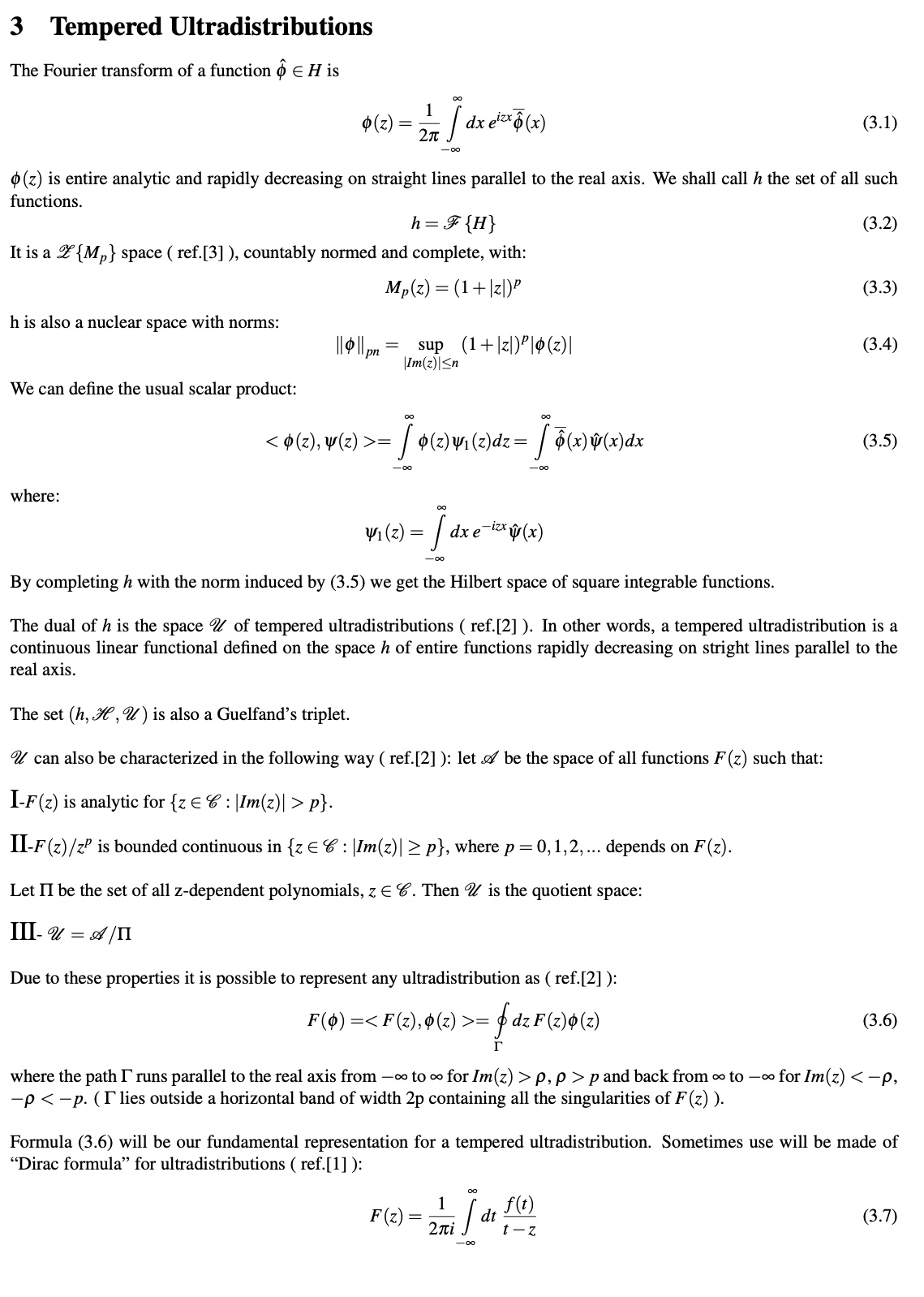



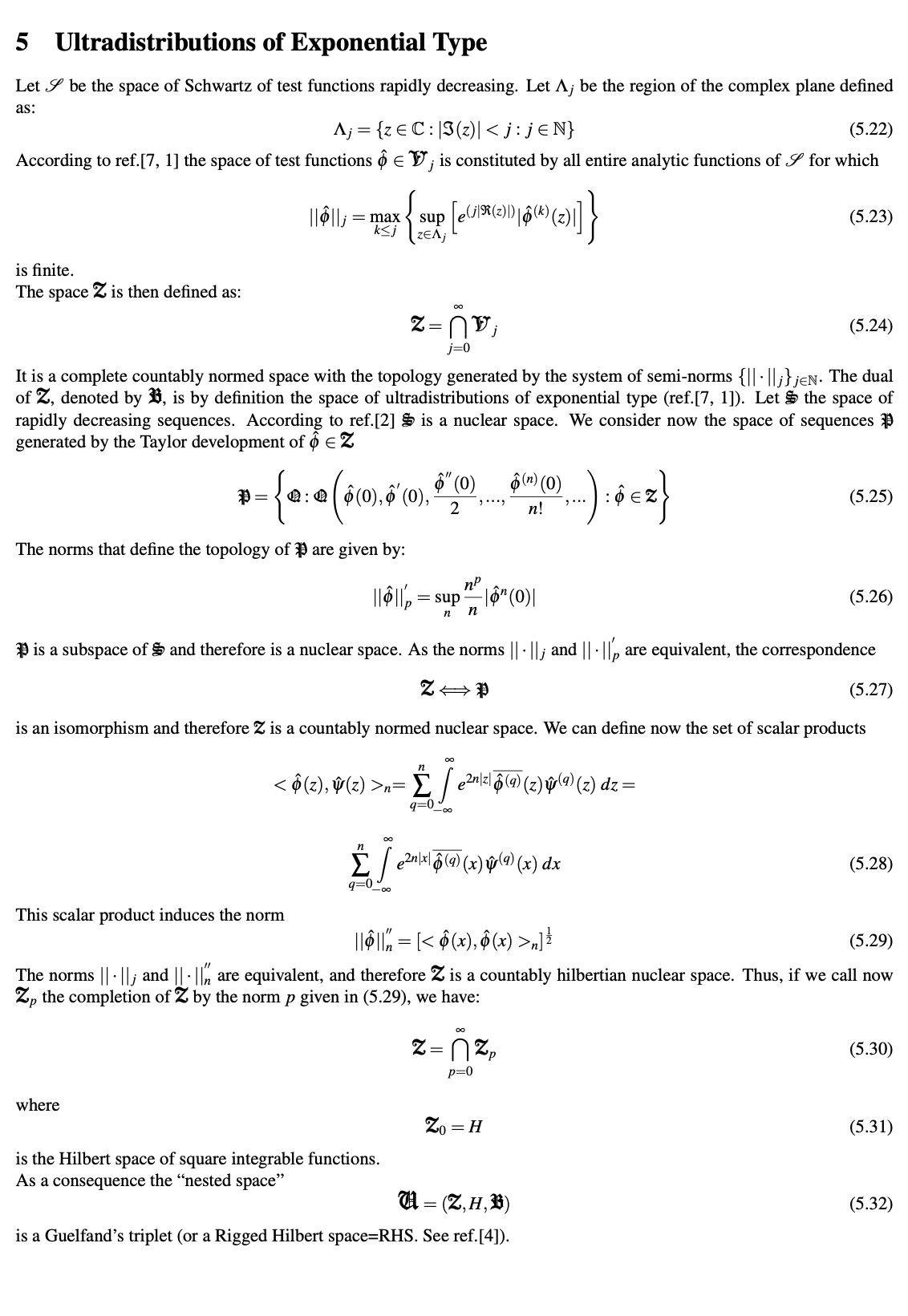

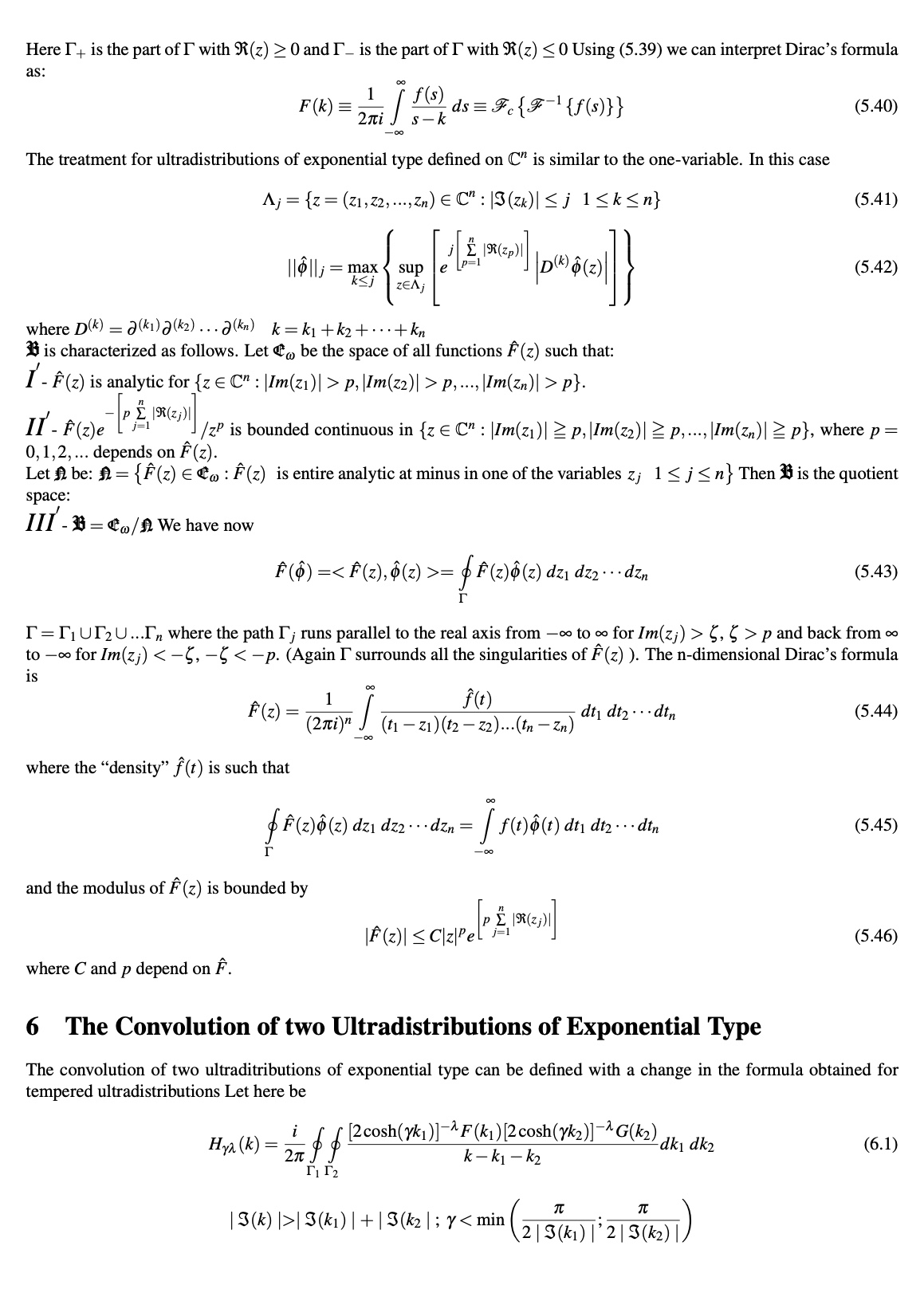
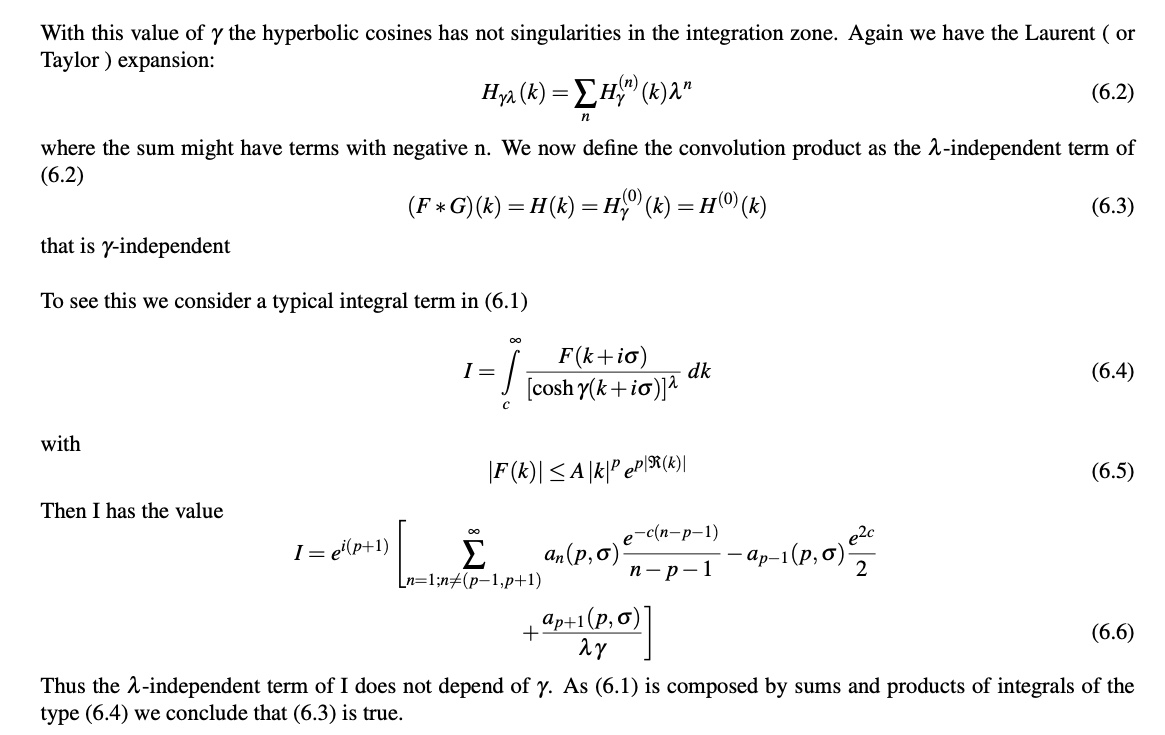
Jacobsen: In that 1998 framework, how do you construct the product of two distributions of exponential type?
Rocca: The product of two exponential distributions is the Fourier anti-transform of the two tempered ultradistributions, that is, a product on a ring with zero divisors.
Jacobsen: Following from the previous question, what minimal conditions ensure existence and associativity?
Rocca: The existence of the product is established constructively, with the corresponding theorems (see the beginning of this note). The product is not generally associative, since it is a product in a ring with zero divisors. The product must be performed carefully, taking into account the physical conditions of the problem.
Jacobsen: Using that four-dimensional result, what is the explicit finite expression for the convolution of two Wheeler prop agators in massless and complex-mass cases?
Rocca:
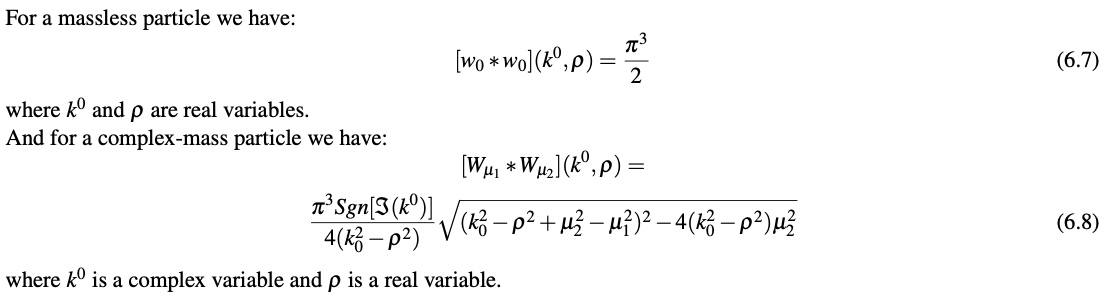
Jacobsen: What necessary and sufficient analyticity and support conditions in the ultrahyperfunction setting guarantee microcausality for field commutators?
Rocca: This is guaranteed, since quantum fields are vector ultradistributions. Their product is defined from the usual ultradistri butions. A vector ultradistribution is a continuous functional defined on a space of test functions and taking values in a locally convex topological vector space. Operator valued distributions are a special case of vector ultradistributions.
Jacobsen: Which growth and analyticity conditions on propagators treated as ultrahyperfunctions ensure finiteness of loop integrals without renormalization?
Rocca: All propagators known so far are ultradistributions. If they are exponentially increasing propagators, they are exponential ultradistributions. This ensures the finiteness of the integral loops.
Jacobsen: What is Einstein Gravity?
Rocca: It is the geometry of space-time created by the presence of masses.
Jacobsen: What is Gupta–Feynman–based on the QFT of Einstein gravity?
Rocca: This is the gravity proposed by Gupta and Feynman by developing the graviton field into powers of the gravitational constant and quantizing it using the Gupta-Bleurer method. The best-known case is the linear approximation, which is the case I solved exactly with Mir Hameeda and Angelo Plastino.
Jacobsen: Following from the last two questions, which constraint and gauge conditions maintain S-matrix unitarity while avoiding Faddeev-Popov ghosts?
Rocca: In the case we are dealing with, the quantization was made unitary by adding a simple constraint. So far, I have had the experience that if the most general quantization method, the Feynman-Schwinger Variational Principle, is used, the ghosts do not appear in the theory being treated.
Jacobsen: How does the ultrahyperfunction-based quantization program relate to effective field theory?
Rocca: The theory of ultrahyperfunctions is used to quantize fundamental theories. However, using the same method, one can also quantize effective theories. For me, Einstein’s theory of gravity is a fundamental theory. To quantize this theory, a very rigorous mathematical theory must be used, like the one we use.
Jacobsen: What are infrared and massless regimes?
Rocca: The infrared regime corresponds to small momentums. The massless regime is obtained for massive particles outside the mass-shell.
Jacobsen: For these, how are soft and collinear singularities handled within the ultradistribution and ultrahyperfunction formalism?
Rocca: In the theory of ultrahyperfunctions, singularities do not exist.
Jacobsen: What is Minkowski space?
Rocca: It is simply a semi-Riemmannian manifold with a particular metric.
Jacobsen: Following from the previous questions, which parts of the ultrahyperfunction construction extend from Minkowski space to general globally hyperbolic curved spacetimes?
Rocca: The construction of ultradistributions for any semi-Riemmannian manifold is analogous to the construction in Minkowski space, only with another metric and other variables.
Jacobsen: In your BTZ-background studies, how is the graviton self-energy computed in 2+1 and 3+1dimensions?
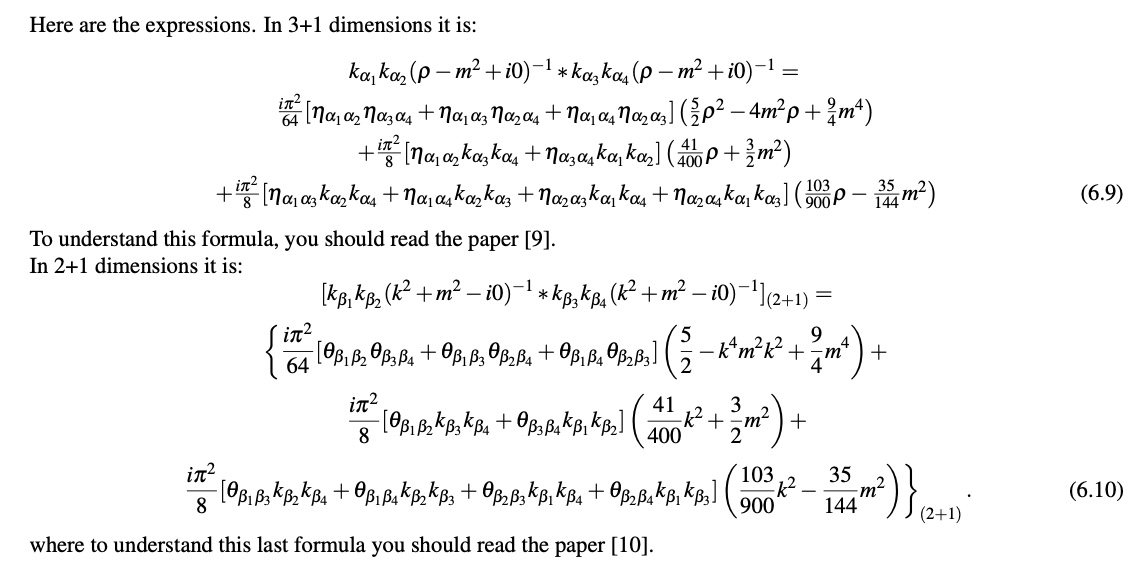
Finally, I should clarify that ultrahyperfunctions are to distributions what complex functions are to real-world functions. That’s how important their role is in next-generation rigorous mathematics.
Jacobsen: Thank you for the opportunity and your time, Marco.
Methods
The interview was conducted via typed questions—with explicit consent—for review, and curation. This process complied with applicable data protection laws, including the California Consumer Privacy Act (CCPA), Canada’s Personal Information Protection and Electronic Documents Act (PIPEDA), and Europe’s General Data Protection Regulation (GDPR), i.e., recordings if any were stored securely, retained only as needed, and deleted upon request, as well in accordance with Federal Trade Commission (FTC) and Advertising Standards Canada guidelines.
Data Availability
No datasets were generated or analyzed during the current article. All interview content remains the intellectual property of the interviewer and interviewee.
References
[1] J. Sebastião e Silva. Math. Ann. 136, 38 (1958).
[2] M. Hasumi. Tohoku Math. J. 13, 94 (1961).
[3] I. M. Gel’fand & G. E. Shilov. Generalized Functions, Vol. 2. Academic Press (1968).
[4] I. M. Gel’fand & N. Ya. Vilenkin. Generalized Functions, Vol. 4. Academic Press (1964).
[5] C. G. Bollini, L. E. Oxman & M. C. Rocca. J. Math. Phys. 35, 4429 (1994).
[6] I. M. Gel’fand & G. E. Shilov. Generalized Functions, Vol. 1, Ch. 1, §3. Academic Press (1964).
[7] L. Schwartz. Théorie des distributions. Hermann, Paris (1966).
[8] R. F. Hoskins & J. Sousa Pinto. Distributions, Ultradistributions and other Generalised Functions. Ellis Horwood (1994).
[9] M. Hameeda, A. Plastino, B. Pourhassan & M. C. Rocca. “Quantum Field Theory of 3+1 Dimensional BTZ Gravity: Graviton Self-Energy, Axion Interactions, and Dark Matter in the Ultrahyperfunction Framework.” ResearchGate. https://www.researchgate.net/publication/395268698_Quantum_Field_Theory_of_31_Dimensional_BTZ_Gravity_Graviton_Self-Energy_Axion_Interactions_and_Dark_Matter_in_the_Ultrahyperfunction_Framework
[10] H. Farahani, M. Hameeda, A. Plastino, B. Pourhassan & M. C. Rocca. “Quantum Field Theory of 2+1 Dimensional BTZ Gravity: Graviton Self-Energy, Axion Interactions, and Dark Matter in the Ultrahyperfunction Framework.” ResearchGate. https://www.researchgate.net/publication/395268790_Quantum_Field_Theory_of_21_Dimensional_BTZ_Gravity_Graviton_Self-Energy_Axion_Interactions_and_Dark_Matter_in_the_Ultrahyperfunction_Framework
Journal & Article Details
Publisher: In-Sight Publishing
Publisher Founding: March 1, 2014
Web Domain: http://www.in-sightpublishing.com
Location: Fort Langley, Township of Langley, British Columbia, Canada
Journal: In-Sight: Interviews
Journal Founding: August 2, 2012
Frequency: Four Times Per Year
Review Status: Non-Peer-Reviewed
Access: Electronic/Digital & Open Access
Fees: None (Free)
Volume Numbering: 14
Issue Numbering: 1
Section: A
Theme Type: Discipline
Theme Premise: Quantum Cosmology
Formal Sub-Theme: None.
Individual Publication Date: January 8, 2026
Issue Publication Date: April 1, 2026
Author(s): Scott Douglas Jacobsen
Word Count: 3,278
Image Credits: Mario Carlos Rocca
ISSN (International Standard Serial Number): 2369-6885
Acknowledgements
The author acknowledges Mario Carlos Rocca for her time, expertise, and valuable contributions. Her thoughtful insights and detailed explanations have greatly enhanced the quality and depth of this work, providing a solid foundation for the discussion presented herein.
Author Contributions
S.D.J. conceived the subject matter, conducted the interview, transcribed and edited the conversation, and prepared the manuscript.
Competing Interests
The author declares no competing interests.
License & Copyright
In-Sight Publishing by Scott Douglas Jacobsen is licensed under a Creative Commons Attribution-NonCommercial-NoDerivatives 4.0 International License.
© Scott Douglas Jacobsen and In-Sight Publishing 2012–Present.
Unauthorized use or duplication of material without express permission from Scott Douglas Jacobsen is strictly prohibited. Excerpts and links must use full credit to Scott Douglas Jacobsen and In-Sight Publishing with direction to the original content.
Supplementary Information
Below are various citation formats for Mario Carlos Rocca on Ultradistributions, Ultrahyperfunctions, and Rigorous Quantum Field Theory in Einstein Gravity (Scott Douglas Jacobsen, January 8, 2026).
American Medical Association (AMA 11th Edition)
Jacobsen SD. Mario Carlos Rocca on Ultradistributions, Ultrahyperfunctions, and Rigorous Quantum Field Theory in Einstein Gravity. In-Sight: Interviews. 2026;14(1). Published January 8, 2026. http://www.in-sightpublishing.com/mario-carlos-rocca-ultradistributions-ultrahyperfunctions-rigorous-quantum-field-theory-einstein-gravity
American Psychological Association (APA 7th Edition)
Jacobsen, S. D. (2026, January 8). Mario Carlos Rocca on Ultradistributions, Ultrahyperfunctions, and Rigorous Quantum Field Theory in Einstein Gravity. In-Sight: Interviews, 14(1). In-Sight Publishing. http://www.in-sightpublishing.com/mario-carlos-rocca-ultradistributions-ultrahyperfunctions-rigorous-quantum-field-theory-einstein-gravity
Brazilian National Standards (ABNT)
JACOBSEN, Scott Douglas. Mario Carlos Rocca on Ultradistributions, Ultrahyperfunctions, and Rigorous Quantum Field Theory in Einstein Gravity. In-Sight: Interviews, Fort Langley, v. 14, n. 1, 8 jan. 2026. Disponível em: http://www.in-sightpublishing.com/mario-carlos-rocca-ultradistributions-ultrahyperfunctions-rigorous-quantum-field-theory-einstein-gravity
Chicago/Turabian, Author-Date (17th Edition)
Jacobsen, Scott Douglas. 2026. “Mario Carlos Rocca on Ultradistributions, Ultrahyperfunctions, and Rigorous Quantum Field Theory in Einstein Gravity.” In-Sight: Interviews 14 (1). http://www.in-sightpublishing.com/mario-carlos-rocca-ultradistributions-ultrahyperfunctions-rigorous-quantum-field-theory-einstein-gravity.
Chicago/Turabian, Notes & Bibliography (17th Edition)
Jacobsen, Scott Douglas. “Mario Carlos Rocca on Ultradistributions, Ultrahyperfunctions, and Rigorous Quantum Field Theory in Einstein Gravity.” In-Sight: Interviews 14, no. 1 (January 8, 2026). http://www.in-sightpublishing.com/mario-carlos-rocca-ultradistributions-ultrahyperfunctions-rigorous-quantum-field-theory-einstein-gravity.
Harvard
Jacobsen, S.D. (2026) ‘Mario Carlos Rocca on Ultradistributions, Ultrahyperfunctions, and Rigorous Quantum Field Theory in Einstein Gravity’, In-Sight: Interviews, 14(1), 8 January. Available at: http://www.in-sightpublishing.com/mario-carlos-rocca-ultradistributions-ultrahyperfunctions-rigorous-quantum-field-theory-einstein-gravity.
Harvard (Australian)
Jacobsen, SD 2026, ‘Mario Carlos Rocca on Ultradistributions, Ultrahyperfunctions, and Rigorous Quantum Field Theory in Einstein Gravity’, In-Sight: Interviews, vol. 14, no. 1, 8 January, viewed 8 January 2026, http://www.in-sightpublishing.com/mario-carlos-rocca-ultradistributions-ultrahyperfunctions-rigorous-quantum-field-theory-einstein-gravity.
Modern Language Association (MLA, 9th Edition)
Jacobsen, Scott Douglas. “Mario Carlos Rocca on Ultradistributions, Ultrahyperfunctions, and Rigorous Quantum Field Theory in Einstein Gravity.” In-Sight: Interviews, vol. 14, no. 1, 2026, http://www.in-sightpublishing.com/mario-carlos-rocca-ultradistributions-ultrahyperfunctions-rigorous-quantum-field-theory-einstein-gravity.
Vancouver/ICMJE
Jacobsen SD. Mario Carlos Rocca on Ultradistributions, Ultrahyperfunctions, and Rigorous Quantum Field Theory in Einstein Gravity [Internet]. 2026 Jan 8;14(1). Available from: http://www.in-sightpublishing.com/mario-carlos-rocca-ultradistributions-ultrahyperfunctions-rigorous-quantum-field-theory-einstein-gravity
Note on Formatting
This document follows an adapted Nature research-article format tailored for an interview. Traditional sections such as Methods, Results, and Discussion are replaced with clearly defined parts: Abstract, Keywords, Introduction, Main Text (Interview), and a concluding Discussion, along with supplementary sections detailing Data Availability, References, and Author Contributions. This structure maintains scholarly rigor while effectively accommodating narrative content.
Share this:

Scott Douglas Jacobsen (Email: scott.jacobsen2026@gmail.com)
Publisher, In-Sight Publishing
Fort Langley, British Columbia, Canada
Received: October 25, 2025
Accepted: January 8, 2026
Published: January 8, 2026
Abstract
This interview with Prof. Dr. İzzet Sakallı addresses observational and theoretical strategies for testing beyond–general relativity physics using black-hole imaging, lensing, and gravitational-wave data. Sakallı outlines how Event Horizon Telescope (EHT) shadow observations—motivated by horizon-scale images of M87* and Sagittarius A*—can be used to probe Lorentz-invariance–violating photon propagation while accounting for plasma and accretion-flow systematics through multiwavelength, polarization, timing, and variability diagnostics. He then describes limitations of applying Gauss–Bonnet-based weak-deflection methods in geometries with torsion, emphasizing non-unique extensions of curvature invariants and ambiguities in photon trajectories and boundary terms. Sakallı further identifies lensing and multimessenger signatures that could distinguish thin-shell wormholes from black holes, including gravitational-wave echo phenomenology and nonstandard shadow and microlensing features, noting that echo searches have placed constraints in existing data. The final section considers whether information-theoretic diagnostics (e.g., Fisher information and relative-entropy measures) can constrain quantum-gravity–motivated parameters at current sensitivities, and discusses how non-extensive (Tsallis) entropy may alter Anti-de Sitter black-hole phase structure and interpretations of the Hawking–Pagetransition.
Keywords
Accretion-flow systematics, Anti-de Sitter (AdS) black holes, Boundary terms, Catechism (contextual mention), Chromatic shadow tests, Dispersion, Einstein–dilaton–Gauss–Bonnet gravity, Event Horizon Telescope (EHT), Faraday rotation, Fisher information, Gauss–Bonnet term, Gravitational-wave echoes, Hawking–Page transition, Information theory, Kullback–Leibler divergence, Lens time delays, Lorentz invariance violation, Microlensing, Multiwavelength imaging, Mutual information, Photon ring, Polarization decomposition, Quantum-gravity phenomenology, Ray tracing, Relative entropy, Ringdown, Thin-shell wormholes, Torsion, Tsallis entropy, Variability monitoring
Introduction
Horizon-scale very-long-baseline interferometry has made black-hole “shadow” observables empirically accessible, with EHT results providing resolved ring-like emission structures around M87* and Sagittarius A*. These measurements create opportunities to test extensions of general relativity and related high-energy frameworks using imaging, polarization, and time-domain signatures, while confronting the dominant astrophysical systematics introduced by hot, magnetized plasma in the accretion flow.
Within this context, the interview explores four linked problem areas: (1) discriminants for Lorentz-violating backgrounds in the presence of plasma effects; (2) the applicability limits of Gauss–Bonnet approaches to weak deflection when torsion is present; (3) observational signatures that could exclude thin-shell wormholes as black-hole mimics; and (4) whether information-theoretic and non-extensive-thermodynamics formalisms provide useful constraints at current or near-future sensitivities. The discussion connects these themes to established theoretical landmarks, including the Hawking–Page transition in AdS thermodynamics and the non-extensive entropy framework introduced by Tsallis.
Main Text (Interview)
Title: Black Hole Shadows & Lorentz Violation: Prof. Dr. İzzet Sakallı on EHT Tests, Wormhole Mimickers, and Tsallis–AdS Phase Transitions
Interviewer: Scott Douglas Jacobsen
Interviewees: Prof. Dr. İzzet Sakallı
Professor Izzet Sakallı is a theoretical physicist at Eastern Mediterranean University whose research bridges quantum mechanics, general relativity, and observational astronomy. With over 180 publications exploring black hole thermodynamics, modified gravity theories, and quantum corrections to spacetime, his work sits at the exciting frontier where abstract mathematics meets observable reality. In this interview, he discusses the challenges of testing exotic gravity theories, the quest to observe quantum effects in astrophysical systems, and what the next generation of telescopes and gravitational wave detectors might reveal about the quantum nature of spacetime.
Scott Douglas Jacobsen: Which shadow features best test Lorentz-violating backgrounds once plasma and accretion-flow systematics are in cluded?
Professor Izzet Sakallı: The Event Horizon Telescope’s stunning images of M87* and Sagittarius A* opened an unprece dented window for testing fundamental physics. These images show a bright ring of emission surrounding a dark shadow—the gravitational silhouette of the black hole. But extracting con straints on exotic physics requires carefully separating genuine signatures of modified spacetime from astrophysical contamination.
Lorentz invariance—the principle that physical laws don’t depend on your orientation or ve locity—is a cornerstone of both special and general relativity. Various approaches to quantum gravity predict potential violations at high energies or in strong gravitational fields. These violations would modify how photons propagate, potentially changing the observed shadow.
The challenge is that accretion disks—the hot, ionized material spiraling into black holes—are messy astrophysical environments. The plasma causes Faraday rotation of polarized light, in troduces frequency-dependent delays through dispersion, absorbs some wavelengths while trans mitting others, and Doppler shifts due to its orbital motion. All these effects must be modeled and subtracted to reveal underlying spacetime properties.
The most robust tests use signatures that depend differently on fundamental physics versus astrophysical processes. Multi-wavelength shadow measurements provide one such discriminator. If Lorentz violation affects photon propagation, the shadow size should vary with observing frequency in a specific pattern—different from how plasma effects scale. Observing at 230 GHz, 345 GHz, and potentially infrared wavelengths with the next-generation Event Horizon Telescope would allow separating these effects.
The photon ring—actually a series of nested subrings from photons completing multiple orbits before escaping—offers another powerful probe. The time delay between successive subrings de pends on geodesic motion in the spacetime geometry, largely insensitive to accretion flow details since it’s a geometric effect. Lorentz violation would modify these time delays in characteristic ways.
Polarization patterns provide additional leverage. While plasma Faraday rotation certainly af fects polarization, Lorentz violation can break azimuthal symmetry in distinctive ways. Decom posing the polarization pattern into angular components helps separate astrophysical rotation (which affects all components similarly) from symmetry-breaking physics.
Time variability studies offer yet another approach. Monitoring shadow features over days to months separates quasi-periodic variability from orbital motion, flares and turbulence in the accretion flow, and any secular trends from fundamental physics. If the shadow properties slowly drift in ways inconsistent with astrophysical explanations, that might signal Lorentz violation.
Current EHT observations constrain deviations from general relativity at the ten to twenty percent level. This translates to saying that if Lorentz violation exists, its characteristic energy scale must be at least one or two percent of the Planck energy—still far below the Planck scale but better constraints than many other tests achieve.
Future improvements will come from multiple directions. The next-generation EHT adds more telescopes and space-based stations, increasing angular resolution. Higher observing frequencies probe smaller scales. Broader bandwidth improves sensitivity. Perhaps most importantly, coordinated multi-messenger observations—combining radio interferometry with X-ray timing, optical monitoring, and potentially gravitational waves if the black hole is in a binary—would provide complementary information less susceptible to systematic uncertainties.
Jacobsen: What are the limits of the Gauss-Bonnet approach for weak deflection in spacetimes with torsion?
Sakallı: Einstein-dilaton-Gauss-Bonnet gravity represents an important modification of general relativ ity emerging from string theory. The Gauss-Bonnet term involves products of curvature quan tities in a specific combination that’s topologically interesting. In standard four-dimensional spacetime, this term is actually a topological invariant—it doesn’t affect the equations of motion by itself. But when coupled to a dilaton field (a scalar field from string theory), it produces genuine modifications to gravity.
These modifications become significant in strong-field regions near black holes or in the early universe. For weak gravitational fields—like sunlight grazing the Sun—the corrections are typically small but calculable. We can expand solutions perturbatively, treating the Gauss Bonnet term as a small correction to general relativity, and calculate how it affects phenomena like light deflection. However, this approach encounters fundamental difficulties when spacetime possesses torsion.
Torsion represents a twisting of spacetime, a type of geometric structure absent in general relativity but present in some extended theories. Einstein-Cartan theory, for instance, allows spacetime to have both curvature and torsion, with torsion sourced by intrinsic spin of matter.
The difficulty is that the Gauss-Bonnet term is defined for Riemannian geometry—geometry with curvature but no torsion. Generalizing it to spaces with torsion isn’t unique. Multiple inequivalent extensions exist: the Nieh-Yan form, modifications involving the Pontrjagin term, generalizations of the Holst term. These different extensions give different physics, and there’s no obvious principle selecting one over others.
Furthermore, torsion couples to matter fields differently than curvature. For photons—massless spin-one particles—the interaction with torsion is subtle. Traditional geodesic equations must be reconsidered. The very notion of ”geodesic” becomes ambiguous because the connection determining parallel transport includes torsion contributions.
The weak-field expansion faces technical breakdowns in torsion backgrounds. We typically expand the metric as small perturbations around flat spacetime. But when both curvature and torsion are present, the perturbative hierarchy becomes unclear. If torsion is as large as curvature perturbations, our expansion scheme breaks down.
There are also boundary term subtleties. In formulating gravitational theories variationally, boundary terms matter for defining conserved quantities and obtaining correct equations of motion. The Gibbons-Hawking-York boundary term supplements the Einstein-Hilbert action in general relativity. With torsion, additional boundary terms are needed, and they affect asymptotic quantities crucial for calculating observable effects like deflection angles.
Some torsion-Gauss-Bonnet couplings lead to pathologies: faster-than-light propagation, vio lations of causality, or violations of energy conditions guaranteeing stability. These signal the theory’s breakdown rather than providing viable alternatives to general relativity.
Observationally, constraints on torsion in astrophysical contexts are weak. Particle physics experiments provide stronger bounds from spin-dependent effects. But astrophysical torsion contributions must satisfy stringent limits, roughly one part in a billion billion per centimeter from precision tests.
For analyzing light deflection in torsion-rich spacetimes, alternative approaches work better than weak-field expansions. Full numerical ray-tracing through exact solutions avoids perturbative ambiguities. The Newman-Penrose formalism, adapted to non-Riemannian geometry, provides another rigorous framework. Modified Shapiro time delays offer complementary probes less sensitive to expansion scheme choices.
Jacobsen: Which lensing signatures would rule out thin-shell wormholes for compact black-hole mimics?
Sakallı: Wormholes—hypothetical tunnels connecting distant regions of spacetime—have captivated physicists and science fiction writers for decades. While the Schwarzschild solution allows math ematical wormholes, they’re unstable and not traversable. Maintaining a stable, traversable wormhole requires exotic matter violating energy conditions, specifically matter with negative energy density.
Thin-shell wormholes represent a particular construction where exotic matter is confined to a narrow region around the wormhole throat, minimizing the total amount of energy-condition violating material needed. From a distance, such objects might mimic black holes—appearing as compact, massive objects with strong gravitational fields. Distinguishing them observationally is crucial, as finding a wormhole would revolutionize physics.
Several observational signatures could definitively distinguish wormholes from black holes. The most dramatic is gravitational wave echoes. When a gravitational wave rings down after a black hole merger, the signal decays smoothly—the perturbations fall into the singularity. But if the object is a wormhole, perturbations can traverse the throat, reflect off the geometry on the far side, return, and emerge again. This creates periodic echoes in the gravitational wave signal, with the time delay determined by the wormhole’s size and geometry.
Detecting echoes is challenging. The reflected signal is weaker than the initial ringdown, requir ing high signal-to-noise ratio observations. Current searches in LIGO/Virgo data have found no convincing echoes, placing limits on how common wormholes might be if they exist. Future detectors with better sensitivity, particularly Einstein Telescope and Cosmic Explorer, should significantly improve echo searches.
The shadow morphology offers another discriminator. Black holes cast circular (or slightly elliptical for rotating ones) shadows. Wormholes can produce more exotic shadow shapes: non simply-connected topology (hole within hole), asymmetric brightness from different light paths traversing the throat, or chromatic effects if the throat has frequency-dependent properties. The Event Horizon Telescope’s resolution is reaching the point where such features might be detectable for nearby supermassive objects.
Microlensing provides a third signature. When a compact object passes in front of a background star, its gravity acts as a lens, magnifying and distorting the star’s image. Black holes create characteristic magnification curves. Wormholes add complexity: light paths traversing the throat create additional magnification spikes, producing asymmetric light curves distinct from black hole lensing. Large microlensing surveys searching for dark matter or planets could potentially detect such signatures if wormholes exist in our galaxy.
Time delay distributions between multiple images offer another probe. Gravitational lenses create multiple images of background objects arriving at different times. The distribution of these delays depends on the lens’s mass profile. Wormholes’ different internal geometry would create distinctive delay patterns.
Future interferometric observations using nulling techniques could enhance faint photon ring structure while suppressing the bright accretion disk. Wormholes’ multiple light traversal paths would create interference patterns distinct from black holes.
The theoretical challenge is that thin-shell wormholes face severe difficulties. Most solutions are dynamically unstable—perturbations cause them to collapse or expand. The exotic matter requirements are enormous, far exceeding what quantum field theory allows in normal circum stances. No known astrophysical process forms wormholes, unlike black holes which form from stellar collapse.
Nevertheless, thoroughly testing whether astrophysical compact objects might be horizonless alternatives to black holes is scientifically important. General relativity so strongly predicts black holes that finding something else would indicate either a fundamental flaw in our under standing or exotic physics beyond the standard model. The observational tests described above will systematically close loopholes, either confirming black holes or revealing surprises.
Jacobsen: Can information-theoretic diagnostics reveal quantum gravity corrections at current observational sensitivities?
Sakallı: Information theory—the mathematical framework for quantifying information, uncertainty, and correlations—provides a novel lens for exploring quantum gravity. Traditional approaches focus on measuring physical quantities like masses, spins, and frequencies. Information-theoretic approaches ask: how much information do observations carry about the underlying physics? Can we detect quantum gravitational effects through information content rather than direct parameter measurements?
The holographic principle suggests that information in any region of space is bounded by the region’s surface area rather than volume—as if the three-dimensional world is holographically encoded on a two-dimensional boundary. For black holes, this manifests as the Bekenstein Hawking entropy being proportional to horizon area. Quantum corrections modify this rela tionship, adding logarithmic and higher-order terms in the area.
One information-theoretic approach analyzes the entropy of black hole shadows. The shadow pattern observed by telescopes carries information about the spacetime geometry. We can quantify this through Shannon entropy: treating the brightness distribution as a probability distribution and computing its entropy. Quantum corrections alter how photons propagate near the horizon, subtly changing the shadow structure and therefore its information content.
The challenge is scale. For astrophysical black holes, Planck-scale quantum corrections are suppressed by the ratio of the Planck length to the black hole size—roughly 10 to the minus 78th power for a solar-mass black hole. Direct detection of such tiny effects is hopeless with foreseeable technology.
However, indirect signatures might be more accessible. Rather than looking for tiny shifts in individual measurements, we can examine correlations and information flow. For gravitational wave signals, the mutual information between early inspiral and late ringdown phases quantifies how much information from the initial state survives to the final state. Quantum corrections introduce non-Markovian effects—memory effects where the system’s evolution depends on its history rather than just its current state. These memory effects could create measurable corre lation patterns.
Fisher information quantifies how much information data carries about physical parameters. For Event Horizon Telescope observations, we can construct the Fisher information matrix describing precision limits on measuring black hole mass, spin, and potential quantum correction parameters. Current analysis suggests achieving roughly 10 to 30 percent precision on dimensionless quantum parameters—not sufficient to detect Planck-scale effects but potentially constraining if quantum gravity involves larger characteristic scales.
Relative entropy (also called Kullback-Leibler divergence) measures how much observed distributions differ from general relativity predictions. Accumulating this measure across many observations provides a statistical test: are we seeing what general relativity predicts, or are systematic deviations emerging?
Population statistics offer multiplicative power. While individual gravitational wave detections have limited precision, combining information from hundreds or thousands of events (expected in the next decade) increases statistical power. If quantum corrections produce consistent small biases across all events, population-level analysis might reveal them.
Cross-correlation approaches combine complementary observations. Measuring a black hole’s mass from gravitational waves and independently from its shadow size provides a consistency test. If quantum corrections affect these measurements differently, inconsistencies would signal new physics even if neither measurement alone shows deviations.
For primordial black holes—hypothetical small black holes from the early universe—information theoretic signatures might be more accessible. Their much smaller sizes enhance quantum corrections substantially. If primordial black holes exist and their evaporation products are detected, the information content in their emission spectra could constrain quantum gravity.
Realistic assessment requires acknowledging limitations. Directly detecting Planck-scale quan tum gravity through astrophysical observations probably remains beyond reach. However, information-theoretic methods might reveal emergent quantum phenomena accumulating at astrophysical scales, modified information flow during black hole evaporation, or indirect con straints ruling out large classes of quantum gravity theories. These indirect routes may prove more fruitful than searching for minute corrections to individual measurements.
Jacobsen: How do non-extensive entropy formalisms reshape Anti-de Sitter black hole phase diagrams?
Sakallı: Non-extensive statistical mechanics, particularly Tsallis entropy, offers a fascinating general ization of conventional thermodynamics that has profound implications for black hole physics. The standard Boltzmann-Gibbs entropy assumes that systems are extensive—meaning the en tropy of two independent systems simply adds. But for systems with long-range interactions, like gravity, or systems with fractal structure, this additivity breaks down. Tsallis introduced a parameter, typically called q, that quantifies this non-extensivity. When q equals one, we recover standard thermodynamics; deviations from unity signal non-extensive behavior.
For black holes in Anti-de Sitter spacetime—a universe with negative cosmological constant that curves like a saddle rather than a sphere—thermodynamics becomes particularly rich. AdS black holes can undergo phase transitions remarkably similar to everyday substances transitioning between solid, liquid, and gas phases. The famous Hawking-Page transition, where thermal radiation in empty AdS competes with forming a black hole, parallels water freezing into ice.
When we replace standard entropy with Tsallis entropy, the phase diagram transforms dra matically. The temperature-entropy relationship changes because temperature, defined as the derivative of energy with respect to entropy, now involves the non-extensivity parameter. For astrophysical black holes with enormous entropy, even small deviations of q from unity can shift transition temperatures substantially.
The heat capacity—which determines thermodynamic stability—becomes modified in intricate ways. Standard AdS black holes have a critical radius where heat capacity diverges, signaling a phase transition. With Tsallis entropy, this critical point shifts. Depending on whether q exceeds or falls below unity, the transition can occur at smaller or larger radii, or in extreme cases, disappear entirely or split into multiple transitions.
Perhaps most intriguing is the emergence of reentrant phase transitions—phenomena where increasing temperature causes the system to cycle through the same phase multiple times. Imagine heating ice, which melts to water, but continuing to heat causes it to refreeze, then melt again at even higher temperatures. Such behavior, absent in standard thermodynamics, appears naturally when black hole entropy becomes non-extensive. This suggests the underlying quantum gravity degrees of freedom organizing the horizon might have complex, fractal-like structure.
The Hawking-Page transition also shifts under non-extensive statistics. This transition repre sents a competition between entropy favoring thermal radiation spread throughout space and energy minimization favoring localized black holes. With modified entropy, the balance point changes. For q greater than one, transitions occur at lower temperatures; for q less than one, higher temperatures are needed.
Through the AdS/CFT correspondence—the remarkable duality between gravity in AdS space time and quantum field theory on its boundary—modifications to bulk thermodynamics reflect in boundary physics. The confining-deconfining transition in strongly coupled gauge theories, relevant for understanding quark-gluon plasma in heavy-ion collisions, would exhibit modified behavior if the gravitational dual involves non-extensive entropy.
The physical origin of non-extensivity in black holes remains debated. It might arise from quan tum fluctuations of the horizon, long-range gravitational correlations between horizon degrees of freedom, or fractal microstructure of spacetime near the Planck scale. Observationally, con straining the parameter q from astrophysical black holes is extremely challenging, but laboratory analogs using cold atoms or condensed matter systems might provide testable predictions.
Jacobsen: What about the interpretation of Hawking-Page transitions under non-extensive entropy?
Sakallı: The Hawking-Page transition represents one of the most elegant connections between quan tum field theory, gravity, and thermodynamics. In pure AdS spacetime, we can have thermal radiation at some temperature, or we can have a black hole at that temperature. Which con figuration has lower free energy depends on the temperature. At low temperatures, thermal radiation dominates; at high temperatures, black holes are favored. The transition between these phases occurs at a specific critical temperature.
When entropy becomes non-extensive, this picture enriches considerably. The free energy—energy minus temperature times entropy—depends on how entropy scales. With Tsallis entropy, the relationship between physical temperature and thermodynamic temperature becomes modified by a function of the horizon area. This modifies the free energy comparison between phases.
The latent heat—energy exchanged during the phase transition—changes dramatically. For standard black holes, the latent heat reflects the entropy jump when thermal radiation condenses into a black hole. With non-extensive entropy, this jump scales differently with black hole size. For large black holes and q greater than unity, the latent heat can become orders of magnitude larger than in standard thermodynamics, suggesting the transition involves reorganizing vastly more microscopic degrees of freedom.
The order of the transition can even change. Standard Hawking-Page is first-order, with discon tinuous entropy at the transition point, like ice melting to water. But for certain special values of the non-extensivity parameter, the transition can become second-order, with continuous en tropy but divergent heat capacity, like the magnetic transition in iron when heated above its Curie temperature. Between these regimes lie tricritical points where the transition character changes.
Through AdS/CFT, the Hawking-Page transition corresponds to confinement-deconfinement in the boundary gauge theory. At low temperatures, quarks and gluons are confined into hadrons—thermal AdS. At high temperatures, they form quark-gluon plasma—the black hole phase. Non-extensive modifications suggest the strongly coupled plasma might have non standard statistical properties, potentially observable in heavy-ion collisions at RHIC or LHC.
The interpretation becomes particularly interesting when considering the transition’s dynamical aspects. How quickly does thermal radiation condense into a black hole? How long does the mixed phase persist? Non-extensive statistics introduces memory effects—the system’s evolution depends on its history, not just its current state. This non-Markovian character might leave signatures in gravitational wave observations if black holes form dynamically through such transitions in the early universe.
Multiple phase transitions can emerge in extended phase space where we vary not just tem perature but also pressure, charge, and angular momentum. The resulting phase diagrams can exhibit multiple critical points, isolated regions of stability, and complex connectivity between phases—far richer than standard thermodynamics allows.
Discussion
Across topics, Sakallı’s central methodological emphasis is separability: identifying observables whose dependence on fundamental-physics modifications differs from their dependence on plasma, turbulence, and geometric degeneracies. For shadow-based Lorentz tests, the interview highlights multiwavelength scaling, polarization symmetries, and time-delay structure in near-horizon photon trajectories as candidate discriminants, conceptually aligned with theoretical work on photon-ring/subring structure and its geometric imprint.
For torsion-inclusive extensions, Sakallı frames the main limitation as non-uniqueness: Gauss–Bonnet constructions are straightforward in torsion-free (Riemannian) settings, but become ambiguous when generalized, complicating weak-field expansions and the definition of photon paths and conserved quantities. In this framing, robust inference favors approaches that minimize dependence on expansion choices, such as numerical ray tracing or formalisms explicitly adapted to non-Riemannian geometry.
Regarding wormholes, Sakallı treats “ruling out” as an empirical question tied to distinctive multipath propagation. He identifies gravitational-wave echo phenomenology and nonstandard lensing/shadow morphology as candidate falsifiers, while noting that echo searches have thus far reported null or constrained results in existing observational catalogs.
Finally, the interview positions information-theoretic diagnostics and non-extensive entropy as meta-tools: methods to quantify distinguishability between models and to explore how modified microphysical assumptions reshape thermodynamic phase structure. The interview’s discussion of Tsallis entropy and its parameter qq is grounded in the established non-extensive framework, and its application is linked to AdS black-hole phase behavior and the Hawking–Page transition as a benchmark for interpreting bulk/boundary thermodynamic changes.
Methods
The interview was conducted via typed questions—with explicit consent—for review, and curation. This process complied with applicable data protection laws, including the California Consumer Privacy Act (CCPA), Canada’s Personal Information Protection and Electronic Documents Act (PIPEDA), and Europe’s General Data Protection Regulation (GDPR), i.e., recordings if any were stored securely, retained only as needed, and deleted upon request, as well in accordance with Federal Trade Commission (FTC) and Advertising Standards Canada guidelines.
Data Availability
No datasets were generated or analyzed during the current article. All interview content remains the intellectual property of the interviewer and interviewee.
References
This interview was conducted as part of a broader quantum cosmology book project. The responses reflect my current research perspective as of October 2025, informed by over 180 publications and ongoing collaborations with researchers worldwide.
Selected References
General Background and Foundational Works
Hawking, S.W. (1974). Black hole explosions? Nature, 248(5443), 30-31. Bekenstein, J.D. (1973). Black holes and entropy. Physical Review D, 7(8), 2333.
Bardeen, J.M., Carter, B., & Hawking, S.W. (1973). The four laws of black hole mechanics. Communications in Mathematical Physics, 31(2), 161-170.
Modified Gravity and Quantum Corrections
Sakallı, ˙I., & Sucu, E. (2025). Quantum tunneling and Aschenbach effect in nonlinear Einstein Power-Yang-Mills AdS black holes. Chinese Physics C, 49, 105101.
Sakallı, ˙I., Sucu, E., & Dengiz, S. (2025). Quantum-Corrected Thermodynamics of Conformal Weyl Gravity Black Holes: GUP Effects and Phase Transitions. arXiv preprint 2508.00203.
Al-Badawi, A., Ahmed, F., & Sakallı, ˙I. (2025). A Black Hole Solution in Kalb-Ramond Gravity with Quintessence Field: From Geodesic Dynamics to Thermal Criticality. arXiv preprint 2508.16693.
Sakallı, ˙I., Sucu, E., & Sert, O. (2025). Quantum-corrected thermodynamics and plasma lensing in non-minimally coupled symmetric teleparallel black holes. Physical Review D, 50, 102063.
Ahmed, F., Al-Badawi, A., & Sakallı, ˙I. (2025). Perturbations and Greybody Factors of AdS Black Holes with a Cloud of Strings Surrounded by Quintessence-like Field in NLED Scenario. arXiv preprint 2510.19862.
Black Hole Thermodynamics and Phase Transitions
Gashti, S.N., Sakallı, ˙I., & Pourhassan, B. (2025). Thermodynamic scalar curvature and topo logical classification in accelerating charged AdS black holes under rainbow gravity. Physics of the Dark Universe, 50, 102136.
Sucu, E., & Sakallı, ˙I. (2025). AdS black holes in Einstein-Kalb-Ramond gravity: Quantum 26 corrections, phase transitions, and orbital dynamics. Nuclear Physics B, 1018, 117081.
Sakallı, ˙I., Sucu, E., & Dengiz, S. (2025). Weak gravity conjecture in ModMax black holes: weak cosmic censorship and photon sphere analysis. European Physics C, 85, 1144.
Pourhassan, B., & Sakallı, ˙I. (2025). Transport phenomena and KSS bound in quantum corrected AdS black holes. European Physics C, 85(4), 369.
Gashti, S.N., Sakallı, ˙I., Pourhassan, B., & Baku, K.J. (2025). Thermodynamic topology, photon spheres, and evidence for weak gravity conjecture in charged black holes with perfect fluid within Rastall theory. Physics Letters B, 869, 139862.
Quasinormal Modes and Spectroscopy
Gashti, S.N., Afshar, M.A., Sakallı, ˙I., & Mazandaran, U. (2025). Weak gravity conjecture in ModMax black holes: weak cosmic censorship and photon sphere analysis. arXiv preprint 2504.11939.
Sakallı, ˙I., & Kanzi, S. (2023). Superradiant (In)stability, Greybody Radiation, and Quasi normal Modes of Rotating Black Holes in Non-Linear Maxwell f(R) Gravity. Symmetry, 15, 873.
Observational Tests and Gravitational Lensing
Sucu, E., & Sakallı, ˙I. (2025). Probing Starobinsky-Bel-Robinson gravity: Gravitational lensing, thermodynamics, and orbital dynamics. Nuclear Physics B, 1018, 116982.
Mangut, M., G¨ursel, H., & Sakallı, ˙I. (2025). Lorentz-symmetry violation in charged black-hole thermodynamics and gravitational lensing: effects of the Kalb-Ramond field. Chinese Physics C, 49, 065106.
Ahmed, F., Al-Badawi, A., & Sakallı, ˙I. (2025). Geodesics Analysis, Perturbations and Deflec tion Angle of Photon Ray in Finslerian Bardeen-Like Black Hole with a GM Surrounded by a Quintessence Field. Annalen der Physik, e2500087.
Generalized Uncertainty Principle and Quantum Effects
Ahmed, F., Al-Badawi, A., & Sakallı, ˙I. (2025). Photon Deflection and Magnification in Kalb Ramond Black Holes with Topological String Configurations. arXiv preprint 2507.22673.
Ahmed, F., & Sakallı, ˙I. (2025). Exploring geodesics, quantum fields and thermodynamics of Schwarzschild-AdS black hole with a global monopole in non-commutative geometry. Nuclear Physics B, 1017, 116951.
Wormholes and Exotic Compact Objects
Ahmed, F., Al-Badawi, A., & Sakallı, ˙I. (2025). Gravitational lensing phenomena of Ellis Bronnikov-Morris-Thorne wormhole with global monopole and cosmic string. Physics Letters B, 864, 139448.
Ahmed, F., & Sakallı, ˙I. (2025). Dunkl black hole with phantom global monopoles: geodesic analysis, thermodynamics and shadow. European Physics C, 85, 660.
Information Theory and Holography
Pourhassan, B., Sakallı, ˙I., et al. (2022). Quantum Thermodynamics of an M2-Corrected Reissner-Nordstr¨om Black Hole. EPL, 144, 29001.
Sakallı, ˙I., & Kanzi, S. (2022). Topical Review: greybody factors and quasinormal modes for black holes in various theories – fingerprints of invisibles. Turkish Journal of Physics, 46, 51-103.
Modified Theories and String Theory
Sakallı, İ., & Yörük, E. (2023). Modified Hawking radiation of Schwarzschild-like black hole in bumblebee gravity model. Physics Scripta, 98, 125307.
https://iopscience.iop.org/article/10.1088/1402-4896/ad09a1
Sucu, E., & Sakallı, ˙I. (2023). GUP-reinforced Hawking radiation in rotating linear dilaton black hole spacetime. Physics Scripta, 98, 105201.
Event Horizon Telescope and Observational Cosmology
Event Horizon Telescope Collaboration (2019). First M87 Event Horizon Telescope Results. I. The Shadow of the Supermassive Black Hole. The Astrophysical Journal Letters, 875(1), L1.
Abbott, B.P., et al. (LIGO Scientific Collaboration and Virgo Collaboration) (2016). Observa tion of Gravitational Waves from a Binary Black Hole Merger. Physical Review Letters, 116(6), 061102.
Recent Collaborative Works
Tangphati, T., Sakallı, ˙I., Banerjee, A., & Pradhan, A. (2024). Behaviors of quark stars in the Rainbow Gravity framework. Physical Review D, 46, 101610.
Banerjee, A., Sakallı, ˙I., Pradhan, A., & Dixit, A. (2024). Properties of interacting quark star in light of Rastall gravity. Classical and Quantum Gravity, 42, 025008.
Sakallı, ˙I., Banerjee, A., Dayanandan, B., & Pradhan, A. (2025). Quark stars in f(R, T) gravity: mass-to-radius profiles and observational data. Chinese Physics C, 49, 015102.
Gashti, S.N., Sakallı, ˙I., Pourhassan, B., & Baku, K.J. (2024). Thermodynamic topology and phase space analysis of AdS black holes through non-extensive entropy perspectives. European Physics C, 85, 305.
Al-Badawi, A., & Sakallı, ˙I. (2025). The Static Charged Black Holes with Weyl Corrections. International Journal of Theoretical Physics, 64, 50.
Textbooks and Reviews
Carroll, S.M. (2004). Spacetime and Geometry: An Introduction to General Relativity. Addison Wesley.
Wald, R.M. (1984). General Relativity. University of Chicago Press.
Rovelli, C. (2004). Quantum Gravity. Cambridge University Press.
Kiefer, C. (2012). Quantum Gravity (3rd ed.). Oxford University Press. Ashtekar, A., & Petkov, V. (Eds.) (2014). Springer Handbook of Spacetime. Springer.
Note: This reference list includes representative works from Prof. Sakallı’s extensive publication record (181+ papers) and foundational works in the field. For a complete bibliography, please consult the INSPIRE-HEP database or Prof. Sakallı’s institutional profile.
Journal & Article Details
Publisher: In-Sight Publishing
Publisher Founding: March 1, 2014
Web Domain: http://www.in-sightpublishing.com
Location: Fort Langley, Township of Langley, British Columbia, Canada
Journal: In-Sight: Interviews
Journal Founding: August 2, 2012
Frequency: Four Times Per Year
Review Status: Non-Peer-Reviewed
Access: Electronic/Digital & Open Access
Fees: None (Free)
Volume Numbering: 14
Issue Numbering: 1
Section: A
Theme Type: Discipline
Theme Premise: Quantum Cosmology
Formal Sub-Theme: None.
Individual Publication Date: January 8, 2026
Issue Publication Date: April 1, 2026
Author(s): Scott Douglas Jacobsen
Word Count: 3,278
Image Credits: Izzet Sakallı
ISSN (International Standard Serial Number): 2369-6885
Acknowledgements
The author acknowledges Tor Arne Jørgensen for her time, expertise, and valuable contributions. Her thoughtful insights and detailed explanations have greatly enhanced the quality and depth of this work, providing a solid foundation for the discussion presented herein.
Author Contributions
S.D.J. conceived the subject matter, conducted the interview, transcribed and edited the conversation, and prepared the manuscript.
Competing Interests
The author declares no competing interests.
License & Copyright
In-Sight Publishing by Scott Douglas Jacobsen is licensed under a Creative Commons Attribution-NonCommercial-NoDerivatives 4.0 International License.
© Scott Douglas Jacobsen and In-Sight Publishing 2012–Present.
Unauthorized use or duplication of material without express permission from Scott Douglas Jacobsen is strictly prohibited. Excerpts and links must use full credit to Scott Douglas Jacobsen and In-Sight Publishing with direction to the original content.
Supplementary Information
Below are various citation formats for Black Hole Shadows & Lorentz Violation: Prof. Dr. İzzet Sakallı on EHT Tests, Wormhole Mimickers, and Tsallis–AdS Phase Transitions (Scott Douglas Jacobsen, January 8, 2026).
American Medical Association (AMA 11th Edition)
Jacobsen SD. Black Hole Shadows & Lorentz Violation: Prof. Dr. İzzet Sakallı on EHT Tests, Wormhole Mimickers, and Tsallis–AdS Phase Transitions. In-Sight: Interviews. 2026;14(1). Published January 8, 2026. http://www.in-sightpublishing.com/black-hole-shadows-lorentz-violation-izzet-sakalli-eht-tests-wormhole-mimickers-tsallis-ads-phase-transitions
American Psychological Association (APA 7th Edition)
Jacobsen, S. D. (2026, January 8). Black Hole Shadows & Lorentz Violation: Prof. Dr. İzzet Sakallı on EHT Tests, Wormhole Mimickers, and Tsallis–AdS Phase Transitions. In-Sight: Interviews, 14(1). In-Sight Publishing. http://www.in-sightpublishing.com/black-hole-shadows-lorentz-violation-izzet-sakalli-eht-tests-wormhole-mimickers-tsallis-ads-phase-transitions
Brazilian National Standards (ABNT)
JACOBSEN, Scott Douglas. Black Hole Shadows & Lorentz Violation: Prof. Dr. İzzet Sakallı on EHT Tests, Wormhole Mimickers, and Tsallis–AdS Phase Transitions. In-Sight: Interviews, Fort Langley, v. 14, n. 1, 8 jan. 2026. Disponível em: http://www.in-sightpublishing.com/black-hole-shadows-lorentz-violation-izzet-sakalli-eht-tests-wormhole-mimickers-tsallis-ads-phase-transitions
Chicago/Turabian, Author-Date (17th Edition)
Jacobsen, Scott Douglas. 2026. “Black Hole Shadows & Lorentz Violation: Prof. Dr. İzzet Sakallı on EHT Tests, Wormhole Mimickers, and Tsallis–AdS Phase Transitions.” In-Sight: Interviews 14 (1). http://www.in-sightpublishing.com/black-hole-shadows-lorentz-violation-izzet-sakalli-eht-tests-wormhole-mimickers-tsallis-ads-phase-transitions.
Chicago/Turabian, Notes & Bibliography (17th Edition)
Jacobsen, Scott Douglas. “Black Hole Shadows & Lorentz Violation: Prof. Dr. İzzet Sakallı on EHT Tests, Wormhole Mimickers, and Tsallis–AdS Phase Transitions.” In-Sight: Interviews 14, no. 1 (January 8, 2026). http://www.in-sightpublishing.com/black-hole-shadows-lorentz-violation-izzet-sakalli-eht-tests-wormhole-mimickers-tsallis-ads-phase-transitions.
Harvard
Jacobsen, S.D. (2026) ‘Black Hole Shadows & Lorentz Violation: Prof. Dr. İzzet Sakallı on EHT Tests, Wormhole Mimickers, and Tsallis–AdS Phase Transitions’, In-Sight: Interviews, 14(1), 8 January. Available at: http://www.in-sightpublishing.com/black-hole-shadows-lorentz-violation-izzet-sakalli-eht-tests-wormhole-mimickers-tsallis-ads-phase-transitions.
Harvard (Australian)
Jacobsen, SD 2026, ‘Black Hole Shadows & Lorentz Violation: Prof. Dr. İzzet Sakallı on EHT Tests, Wormhole Mimickers, and Tsallis–AdS Phase Transitions’, In-Sight: Interviews, vol. 14, no. 1, 8 January, viewed 8 January 2026, http://www.in-sightpublishing.com/black-hole-shadows-lorentz-violation-izzet-sakalli-eht-tests-wormhole-mimickers-tsallis-ads-phase-transitions.
Modern Language Association (MLA, 9th Edition)
Jacobsen, Scott Douglas. “Black Hole Shadows & Lorentz Violation: Prof. Dr. İzzet Sakallı on EHT Tests, Wormhole Mimickers, and Tsallis–AdS Phase Transitions.” In-Sight: Interviews, vol. 14, no. 1, 2026, http://www.in-sightpublishing.com/black-hole-shadows-lorentz-violation-izzet-sakalli-eht-tests-wormhole-mimickers-tsallis-ads-phase-transitions.
Vancouver/ICMJE
Jacobsen SD. Black Hole Shadows & Lorentz Violation: Prof. Dr. İzzet Sakallı on EHT Tests, Wormhole Mimickers, and Tsallis–AdS Phase Transitions [Internet]. 2026 Jan 8;14(1). Available from: http://www.in-sightpublishing.com/black-hole-shadows-lorentz-violation-izzet-sakalli-eht-tests-wormhole-mimickers-tsallis-ads-phase-transitions
Note on Formatting
This document follows an adapted Nature research-article format tailored for an interview. Traditional sections such as Methods, Results, and Discussion are replaced with clearly defined parts: Abstract, Keywords, Introduction, Main Text (Interview), and a concluding Discussion, along with supplementary sections detailing Data Availability, References, and Author Contributions. This structure maintains scholarly rigor while effectively accommodating narrative content.
Share this:

Scott Douglas Jacobsen (Email: scott.jacobsen2026@gmail.com)
Publisher, In-Sight Publishing
Fort Langley, British Columbia, Canada
Received: December 16, 2025
Accepted: January 8, 2026
Published: January 8, 2026
Abstract
This interview with Tor Arne Jørgensen examines how Christianization in Norway (c. 1000–1200) altered the foundations of customary law by shifting legal authority from orally maintained, kin-based practice toward a textual, hierarchical order associated with Church learning and royal power. Jørgensen describes kristenrett as extending legal jurisdiction beyond interpersonal harms to include religious acts and meanings, while also contributing to centralization across regional legal arenas. The interview then considers gender norms inherited from Norse society, outlining evidence for women’s practical authority within household domains and certain legal capacities, alongside the ways Christian marriage doctrine and clericalization of religious life could constrain women’s agency. Moving to the Danish–Norwegian Lutheran state church after 1536, Jørgensen discusses parish mechanisms—catechism instruction, confirmation, and episcopal visitations—as tools of instruction and discipline that generated forms of moral monitoring and gendered enforcement in recorded cases. The final section analyzes the Finnmark witch trials (1620s–1660s) as an institutional phenomenon shaped by imported demonological categories, interrogation practices including torture, frontier governance conditions, and shifting judicial oversight, and it defines the “Copenhagen doctrine” as an administrative–theological outlook that structured how misfortune and deviance were interpreted and prosecuted.
Keywords
Administrative oversight, Archbishop, Catechism, Centralization, Christianization, Confirmation, Consanguinity, Copenhagen doctrine, Demonology, Divorce, Finnmark, Gender norms, Governance, Interrogation, Kristenrett, Lagting, Lawspeakers, Literacy, Lutheran state church, Marriage, Moral surveillance, Noaidi, Oral law, Parish visitation, Parchment codification, Reformation (1536), Runebomme, Sámi, Shipwrecks, Syncretism, Thing assemblies, Torture, Vardø, Vengeance, Witch trials
Introduction
The transformation of Norwegian society from roughly 1000 to 1200 involved not only religious change but institutional change in how law was conceived, transmitted, and enforced. In this interview, Tor Arne Jørgensen addresses the transition from a customary legal order grounded in kinship obligations, oral authority, and local assemblies to a Christian legal framework in which written norms, clerical expertise, and sacralized kingship increasingly shaped jurisprudence and legitimacy.
Jørgensen discusses kristenrett as a category of law that re-specified legal jurisdiction by regulating religious practice and by reframing marriage, reproduction, and ritual within Christian doctrine. He also considers the persistence of regional legal variation and the development of hybrid norms that combined older compensation practices with new penitential and procedural expectations.
The interview then extends beyond the medieval period to examine post-Reformation parish governance under the Danish–Norwegian Lutheran state church and, later, the Finnmark witch trials of the seventeenth century. Across these periods, Jørgensen focuses on the operational link between theology, bureaucracy, and legal procedure, including the gendered patterns visible in disciplinary records and prosecutions.
Main Text (Interview)
Title: Christianization and the Making of Norwegian Law: Tor Arne Jørgensen on Kristenrett, Gender Norms, and the Finnmark Witch Trials (1)
Interviewer: Scott Douglas Jacobsen
Interviewees: Tor Arne Jørgensen
Tor Arne Jørgensen is a Norwegian educator from Fevik, near Grimstad, in southern Norway. He teaches at secondary level and has written and spoken about history, religion, social studies, ethics, governance, and education for gifted students. He has participated in the international intelligence community since 2015 and is described as a member of 50+ high IQ societies. In 2019, the World Genius Directory named him “Genius of the Year – Europe.” He designs high-range IQ tests, including the site toriqtests.com, and is reported to have set Norway’s IQ score record twice. He is married and has two sons in Norway.
Scott Douglas Jacobsen: How did Christianization between about 1,000 and 1,200 rework customary law?
Tor Arne Jørgensen: When Christianity intervened in the inner structures of Norse society, it became not merely a question of creed or ritual conversion. It became a fundamental reconstruction of the very concept of law itself – of that which had previously been anchored in the memory of kinship and the oral authority of the thingmen. The kristenrett wasn’t just new rules. It was something stranger, more unsettling: a redefinition of what law was. Where it lived. Who could speak it.
In pre-Christian Norway, law had been something organic, something that grew forth from collective experience and tradition. A system where legal understanding was woven into the social fabric of kinship, and where the logic of vengeance – perhaps brutal, yet consistent – constituted the moral gravitational center. When a man was killed, it was not the state or an abstract juridical instance that demanded redress. It was the kin itself, bound by blood ties and honor, that had to restore balance. Either through compensation or through blood.
This justice was immanent. It lived within the interpersonal space rather than above it, and it found its legitimacy not in written texts – there were none yet – but in what had always been thus: in custom’s heavy, unspoken authority.
But Christianity brought with it a law that did not have its origin in the depths of memory or the traditions of kinship. It brought – and here lies the paradox – a law that claimed divine origin, a law that transcended the local and the contingent. The kristenrett declared that justice was not a result of human agreement, but of God’s will. A will that was now to be mediated through the Church’s learned men and the king’s sacred authority.
I have often thought of this as a seismic shift: from law as lived practice to law as revealed truth, from custom to scripture, from plurality to something claimed as singular and eternal. Whether the transition was brutal or gradual naturally varies from region to region.
What strikes me most – and I keep circling back to this – is how much more became forbidden. The old law cared about what you did to other people. Killing, theft, slander. Direct harms. But the kristenrett? It claimed jurisdiction over your relationship to the invisible, to the sacred itself.
Sacrifice was now a crime. Not because anyone bled who shouldn’t – but because God was offended. Think about that. An act could be illegal not for what it did in the world, but for what it meant in a cosmic order most Norwegians had never heard of six months earlier.
Marriage changed too, though more slowly, more painfully. What had been a pragmatic arrangement between families – assets, alliances, survival – became a sacrament. Permanent. Monogamous. Hedged with rules about who could marry whom, how closely related was too close. The Church’s consistency on this must have felt, to many, like madness. And the fetus – that cluster of possibility – was suddenly sacred, ensouled, protected. An entire metaphysics of life imposed from above.
I imagine the frustration. The quiet resistance. The sense that strangers were now dictating the most intimate architecture of existence. And then there’s the power consolidation. This is harder to see at first, but perhaps more consequential in the long run. Where the old thing-system had been decentralized – each district, each lagting its own legal arena – the kristenrett created a hierarchy. The king and the archbishop stood as supreme judges, not only over people’s actions, but also over their souls.
Sin and crime, which had previously belonged to separate spheres, were now interwoven in a tight normative network. An action could simultaneously be a sin against God and a crime against the king’s peace. Both instances demanded compensation, discipline, repentance. You answered to two courts now, and the earthly one claimed its authority from the celestial.
But literacy – that’s perhaps the most revolutionary dimension of this transformation. The Church brought with it not only a new faith, but a new technology: the alphabet, codification, the text as authority. Law, which had previously existed as a fluid, interpretation-open collective memory, was now fixed in parchment, preserved in Latin and Norse texts, made into something that could be studied, analyzed, standardized.
This textualization of law entailed a power shift. From the old lawspeakers, who carried the law in their heads – who were the law in a sense – to the learned clerics, who could read and write, who could reference canons and chapters. Law became, in a sense, alienated from the immediate community. It became an object, a text. Something external that one had to consult, rather than something one simply knew. I wonder sometimes about that moment when a lawspeaker realized his memory was being superseded by parchment. The humiliation of it. Or perhaps the relief.
This movement toward textualization and centralization met resistance, naturally. The regional variations in Norwegian law – between Frostating, Gulating, Eidsivating, and Borgarting – were never completely eradicated, even though the kristenrett and royal power worked systematically to harmonize them. Local customs persisted, often in tacit dialogue with the new Christian norms. Hybrids emerged. Compromises. Creative reinterpretations.
The old compensation practice, for instance, was not abolished, but reinterpreted through the Church’s penitential discipline. Vengeance was not forbidden overnight, but gradually domesticated – channeled through legal procedures and royal authority. People found ways to live between worlds, to maintain what mattered while appearing to comply with what was demanded.
By the year 1200, the Norwegian legal landscape was fundamentally transformed. Justice was no longer merely a question of collective memory or the honor of kinship. It had become a matter for the Christian conscience, for the king’s law and the Church’s doctrine. Law had become a theological project as much as a social one.
It was the covenant between God, king, and people – not merely a custom that could be varied according to circumstance, but a sacred obligation that demanded obedience, repentance, and faith. Somewhere in this upheaval – in this shift from blood memory to sacred text – lies the seed of what we now call the state. That law might be above power, not merely its instrument. That it might bind everyone, even the king himself, to a higher order.
Jacobsen: Following from the previous question, what about the gender norms inherited from Norse society?
Jørgensen: But what about the gender norms that Christianity encountered – those structures that had grown forth within Norse society itself?
Here it becomes more difficult, I must say. Christianity’s meeting with Norse femininity was not unambiguously progressive or regressive. It was deeply ambiguous, and the more I look at it, the less certain I become about what actually happened.
In the higher social strata we find powerful women. Men and women often shared overlapping spheres of responsibility, though the division was clear enough: men represented the household outwardly (utanstokks), while women held authority within the threshold (innanstokks). This division was practical rather than ideological. Social class was often more decisive than gender – a chieftain’s wife wielded more power than a poor man, obviously.
Women’s religious roles – as prophetesses, as practitioners of seiðr – were respected, if sometimes regarded with anxiety or taboo. There’s something here about women’s access to the numinous that Christianity would later foreclose. And marriage could, in fact, be dissolved by either party. A Norse woman could call witnesses into her home and, before the marriage bed, declare the union dissolved. It has always struck me how pragmatic this was. How undramatic.
Then came Christianity with its ambition to sacramentalize marriage.
The Christian understanding of marriage was monogamous, forbade sexual relations outside the marriage, and was meant never to be dissolved. Never. Polygamy and concubinage – widespread especially among chieftains – were systematically criminalized. And here something occurred that I think is often overlooked: women’s position was, in many respects, weakened by Christianization.
Not necessarily because the Church consciously sought to oppress them. I don’t think that was the intention. But because the Church’s marriage legislation – rules of consanguinity, inflexible monogamy, and the indissolubility of marriage – restricted women’s agency in ways that may not have been intended, but which were nevertheless very real. When marriage became indissoluble, women lost an important safeguard. When you couldn’t leave, what recourse did you have? When religious life became clerical, they lost their space as prophetesses. Christianization seems to have pushed women more decisively into the private sphere, into silence. But – and here we must be careful – the transition was neither complete nor unambiguous.
Norse practices lived on, often in tacit dialogue with the new norms. Compromises were made. Some women were among the first to adopt Christianity, and this matters. Perhaps they were drawn to the Christian prohibition against infanticide, which had given fathers – not mothers – the right to expose unwanted children. Perhaps the sacralization of life offered something the old ways didn’t. Or perhaps they saw other possibilities in the new faith that we can no longer trace.
What we are facing, then, is not a simple story of oppression or liberation. It’s a complex transformation in which older structures were reshaped, domesticated, and gradually absorbed into a new religious and legal order. Women lost some freedoms and possibly gained others. The clarity of the old divisions gave way to something more ambiguous, more constrained in some ways, perhaps more protected in others.
Jacobsen: Under Danish Lutheran establishment established in 1536, how did parish mechanisms work, e.g., catechism, compulsory confirmation, and visitation?
Jørgensen: Under the Danish Lutheran state church established in 1536, the mechanisms of parish life were shaped in ways that reached deeply into people’s everyday existence. Both pastorally and disciplinarily, though the line between the two was never clear.
The catechism – Luther’s from 1529 – was to be learned by heart: the Lord’s Prayer, the Ten Commandments, the Creed. It represented a kind of democratization of theology, though a tightly controlled one, in which laypeople were expected not merely to obey the faith but to know it. To be able to recite it back. Confirmation functioned as a rite of passage, a public declaration that the young person had internalized the doctrine and was therefore eligible for Holy Communion. And, symbolically, for adult status.
But it was also – and this is crucial – a form of social control. A mechanism through which the pastor could assess who had mastered the material and who appeared problematic. Who belonged and who didn’t quite fit. The visitation system penetrated even deeper.
The bishop, or his delegate, travelled through the diocese to inspect the parish, the clergy, and – remarkably – the moral life of the congregation itself. The visitation records are fascinating sources, if deeply uncomfortable ones. They reveal who lived in fornication, who clung to “superstition,” meaning remnants of older, pre-Christian practices. The visitation thus functioned both as quality control of the clergy and as moral surveillance of the laity. Everyone was being watched, recorded, assessed.
The clergy were often poorly educated. Visitations sporadic. And the population’s actual religiosity far more syncretistic than the official church desired. The catechism could be memorized without being internalized, recited like a charm with no understanding behind it. Confirmation could be completed as a social obligation rather than an expression of genuine belief. And the visitations frequently met with silence, evasions, or assurances that everything was in perfect order. People knew how to perform compliance.
The catechism’s moral address was implicitly patriarchal: the male head of household was to teach it to his children and servants. The woman was part of the household, not its representative. She learned, but she did not teach. Confirmation was identical for boys and girls in form, but not in consequence. Boys might proceed to further education, to Latin school, perhaps to university. For girls it often confirmed their place within the domestic sphere, marked the end rather than the beginning of something.
And the visitations scrutinized women with particular intensity. Fornication, illegitimate births – these are recurring themes in the records, and it was almost always the women who were named, accused, and punished. The men often escaped mention entirely, as if pregnancy were something women accomplished alone. The double standard is so consistent it becomes invisible in the sources themselves.
Thus, when Christianity sacralized marriage and the state church institutionalized these mechanisms, the result was not merely a religious transformation. It was also a gendered reconfiguration of power, though I suspect no one at the time would have described it that way.
The woman as prophetess, as seiðr-practitioner, as one who could dissolve her marriage by calling witnesses into her home – she had no place in this new order. Not because Luther or the Danish reformers deliberately sought to suppress women. I doubt they reflected much on it at all. But because the entire institutional structure they built presupposed her subordination. It was baked into the architecture.
And yet the transition was neither complete nor unambiguous. Older Norse practices persisted, often in quiet dialogue with the new norms. Compromises were made in ways that left few traces in official records. And some women may have found a certain protection within the Christian prohibitions against infanticide, or in the more stable structures surrounding marriage. Perhaps the loss of one kind of autonomy was traded, consciously or not, for another kind of security.
What we encounter here is not a simple narrative of oppression or liberation. It’s a complex transformation in which older structures were reshaped, domesticated, and gradually absorbed into a new religious and juridical order. An order deeply ambivalent in its consequences for women.
Jacobsen: What started and ended the Finnmark witch trials between 1620s and the 1660s?
Jørgensen: Under Danish-Norwegian state rule in the Northern Calotte during the seventeenth century, there was no single rupture that opened the way for the witch trials in Finnmark. No dramatic moment. Rather a network of reinforcing structures, each feeding into the others until something monstrous became routine. The major cases that unfolded from the 1620s to the 1660s can only be understood when we see how theology, legal practice, and a society under constant pressure became intertwined.
By the early decades of the century, learned demonology had already entered the administrative apparatus. Under Governor John Cunningham, the region acquired one of its earliest institutional settings in which demonological concepts were systematically woven into local legal practice. The notion of a devil’s pact was not drawn from local belief but imported from European theological discourse and employed as a legal category.
When someone in Finnmark was accused, they were drawn into a narrative structure that was already fixed: pacts, nocturnal journeys, the wrecking of ships through sorcery. The question was not what the individual had actually done, but whether they could be made to fit the established repertoire. Interrogations thus ceased to be investigations. They became confirmations – judicial performances in which confession was both method and conclusion.
This framework found particularly fertile ground in Finnmark. The region was a remote outpost of the realm, shaped by storms, shipwrecks, fishing failures, and sudden deaths. Misfortunes that today would fall under meteorology or probability demanded, in the seventeenth century, a moral explanation. When a boat vanished with its entire crew, the question that arose was not only how, but who had stood behind it.
Within a society where causation was read through religious and moral categories, witchcraft became not a casual explanation but a meaningful way of imposing order upon disaster. It made the unbearable comprehensible, even if the comprehension itself was false.
The legal system reinforced this logic, as legal systems do. Torture was not exceptional but part of standard procedure in serious witchcraft cases. And in Finnmark, far from higher oversight, the use of torture and leading questions could become especially pronounced. It is no coincidence that so many confessions resemble each other. They were products of an institutional method rather than independent experiences. Officials learned from earlier cases and reproduced their structure in later ones, refining the template with each iteration.
The ethnic dimension must be mentioned as well, though without reducing the trials to it. Sámi women and men were overrepresented in certain periods, not because their religious practices were inherently “foreign,” but because the state construed these practices as a challenge to the Lutheran order it sought to impose. What was actually a conflict of governance – of who held authority over spiritual life, over healing, over the interpretation of misfortune – was reframed as a matter of demonology. The runebomme became evidence of devil-worship. The noaidi became the witch.
The end of the trials came no more abruptly than their beginnings. After the major cases of 1662–63, which pushed demonological thinking to its limits – or perhaps past them – skepticism began to make its way into the administration. Jurists influenced by continental debates questioned both the reliability of torture and the increasingly elaborate stories produced under interrogation. How could a woman fly to Blåkollen? How could she sink a ship from miles away? The narratives had become too fantastic, too internally contradictory.
Higher courts intervened more frequently, overturning sentences or demanding further evidence. Within this shift, the role of officials such as Mandrup Schønnebøl was decisive. Through his insistence on procedural regularity and evidentiary standards, he contributed to a legal culture in which the older demonological model could no longer sustain itself. Not because he was enlightened – I’m not sure he was – but because he was bureaucratic.
At the same time, the priorities of the state changed. A more stable administrative system, with firmer oversight of local officials, made large-scale witchcraft prosecutions impractical. They were messy, expensive, required too much coordination. The witch trial lost its administrative function – not because belief disappeared, but because the state developed more effective means of regulating its population. Catechism instruction. Parish visitations. Marriage legislation. These were quieter mechanisms, less spectacular, but ultimately more thorough.
Gender must be mentioned finally, not as an aside, but as one of the structural axes of the trials. Women were most often accused, and the female body – imagined as peculiarly susceptible to demonic influence – became the central site of demonological concern. Why women? The answers are multiple and overlapping: theological assumptions about female weakness, social structures that made women vulnerable to accusation, economic precariousness that left older women without protection. When this conception lost legal relevance, the trials lost their primary target. The state no longer required “the witch” as a figure of social deviance. It had other mechanisms for regulating household, sexuality, and morality.
What remains, then, is not a narrative of enlightenment triumphing over superstition. It’s a gradual transformation of power, theology, and legal practice. What took place in Finnmark between the 1620s and 1660s was the product of a system that first generated the witch trials and later rendered them obsolete. Order itself was redefined – and with it the institutions that had once upheld it.
The people burned in Vardø were not victims of ignorance overcome by reason. They were victims of a state apparatus that needed them to be guilty, until it didn’t
Jacobsen: Were there climate shocks, ethnic tensions, or trade frictions, feeding into this zeal?
Jørgensen: The connections were not linear, nor did they arise as isolated causes. The witch trials in Finnmark between the 1620s and the 1660s emerged where several pressures intersected within a society already under strain. No sudden rupture. Rather overlapping frameworks that slowly reinforced one another.
Climate belonged to the background more than the explanation. Finnmark was a landscape shaped by storms, fragile fisheries, and treacherous waters—conditions that left little room for error. When boats vanished or seasons collapsed, these were not abstract misfortunes. They demanded meaning. And in the seventeenth century, meaning was moral. Within a Lutheran framework steeped in demonological thought, the question was not only how disaster occurred, but who had stood behind it. Witchcraft provided a way of ordering the unpredictable.
But climate alone accounts for little. What transformed anxiety into prosecution was the state’s incorporation of demonology into legal practice. Under Governor John Cunningham, ideas imported from continental literature were woven directly into judicial procedure. Pacts with the devil. Nocturnal gatherings. The ability to wreck ships through sorcery. These were not part of local belief but legal categories waiting to be filled. Once an accusation was made, interrogation ceased to be investigation. It became confirmation. Confession both method and destination. Torture routine. Oversight distant. The striking similarity between confessions reflects not experience but structure.
The ethnic dimension must be acknowledged, though without reducing the trials to it. Sámi women and men appeared disproportionately in certain periods, not because their practices were uniquely dangerous, but because the state framed them as challenges to the Lutheran order it sought to impose. What was essentially a struggle over governance—over ritual authority, healing, the interpretation of misfortune—was recast as demonology. The drum became evidence. The noaidi became the witch.
Economic tensions hovered in the background. Finnmark was a frontier—remote yet central to the fishery economy—where failure rippled through the entire community. But the trials cannot be read as expressions of rivalry or competition. They unfolded where administrative reach was weakest, where local officials held wide discretion, where demonological reasoning found especially receptive ground.
The decline of the trials came without a single turning point. After the extensive prosecutions of 1662–63, the stories produced under torture became too elaborate, too contradictory. Skepticism entered the administration. Higher courts questioned procedure, overturned sentences, demanded evidence that demonology could not provide. Figures such as Mandrup Schønnebøl pressed for regularity, for standards that the older model could no longer sustain. Not because they were enlightened—there is little to suggest that—but because they were bureaucratic. As the machinery changed, the witch no longer fit inside it.
Meanwhile, the state developed quieter, more effective instruments of regulation. Catechism instruction. Parish visitations. Household legislation. Less spectacular than witch trials, but far more thorough. The witch lost her administrative function.
Gender remained one of the structural axes throughout. Women were most often accused. The female body—imagined as vulnerable, permeable, inclined toward diabolic influence—occupied the center of concern. When this conception lost its legal weight, the prosecutions lost their primary targets. The machinery shifted elsewhere.
What emerges, then, is not a narrative in which climate or ethnicity produced the zeal for witch-hunting. It is a convergence of pressures shaped by institutions capable of turning fear into legal action. And when those institutions changed, the phenomenon dissolved.
Jacobsen: What was the Copenhagen doctrine?
Jørgensen: The expression is somewhat misleading, as it suggests a single, self-contained doctrine. Which is not what we are dealing with. What I mean is the outlook that gradually took shape within the Danish–Norwegian administrative and theological center. Not a codified theory. But a composite set of assumptions shaping how officials trained in Copenhagen approached order, deviance, and spiritual danger. These habits of mind were not abstract. They traveled north with the personnel who carried them.
By the early seventeenth century, Copenhagen had settled into a form of Lutheran orthodoxy that was both doctrinal and practical. Its aim was not merely to safeguard “right belief,” but to secure a certain kind of social stability. The Augsburg Confession and Luther’s catechisms were foundational, yet their authority was reinforced by royal ordinances on household governance, moral conduct, and the responsibilities of officeholders. This framework did not function in isolation. Demonological literature—largely imported from German territories where such thinking had already been systematized—was grafted onto it. Ideas of the devil’s pact, nocturnal gatherings, maleficium. A ready-made vocabulary for interpreting calamity.
When these assumptions reached Finnmark, they did something particular. Local cosmologies—Sámi or Norwegian—did not map neatly onto the binaries Lutheran demonology depended upon. What came instead was a translation. Often a forced one. Practices with their own internal logic—Sámi ritual knowledge, for example—became legible to the state only through the categories it recognized: superstition, error, or deliberate alignment with the demonic. Norwegian fishermen and widows were drawn into the same interpretive net for similar reasons. Once misfortune seemed to echo the models officials carried in their heads, the machinery of interrogation and procedure took over.
This is why the confessions resemble one another so closely. They do not primarily speak to lived experience. They speak to what the institution expected to find. Torture did not produce truth. It produced recognizability. Narratives that fit an already accepted pattern. The “Copenhagen doctrine,” if we must use the term, was therefore less a belief system and more a lens. A way of rendering a distant region comprehensible and governable, at a time when the state’s reach was uncertain and its methods still experimental.
The decline of this framework did not come from sudden enlightenment, or a repudiation of demonology. It came from internal changes within the state. Shifts in legal thinking. Growing unease with torture. The gradual tightening of appellate oversight. As these pressures accumulated, the older demonological assumptions lost administrative usefulness. The state adopted new instruments for regulating moral life and household discipline. Once these took hold, the category of the witch no longer served a necessary function.
When I speak of a “Copenhagen doctrine,” I mean the conjunction of theology, bureaucracy, and legal culture that shaped how the early modern state made sense of misfortune. It offered a way of imposing coherence on events that otherwise resisted explanation. And when that interpretive structure changed—when the center no longer recognized its own assumptions in the cases brought before it—the trials evaporated. The logic that had sustained them was simply no longer there.
Discussion
Jørgensen’s account treats Christianization as a change in legal infrastructure rather than solely a change in belief. He describes a shift from law as collectively remembered and locally performed custom toward law as text-based authority mediated by literate specialists and aligned with expanding royal and ecclesiastical jurisdiction. In this framing, the significance of kristenrett lies in its redefinition of what could be regulated, including conduct understood as offending a religious order rather than producing direct interpersonal harm.
On gender, Jørgensen presents an ambivalent picture. He notes evidence for women’s practical authority within household domains and for certain legal capacities in Norse settings, while also describing how Christian marriage norms—monogamy, restrictions on kin marriage, and indissolubility—could reduce avenues of exit and limit agency. He also identifies the clerical monopolization of recognized religious authority as a structural change that narrowed roles previously associated with women’s ritual or prophetic functions. At the same time, he notes that Christian prohibitions on practices such as infanticide/exposure may have been experienced as protective in some contexts, and he emphasizes that outcomes likely varied by region and social strata.
In the early modern period, Jørgensen characterizes catechism instruction, confirmation, and episcopal visitation as parish mechanisms that combined religious formation with discipline. He argues that these mechanisms produced records that frequently enforced sexual and moral norms unevenly, with women appearing more often as named subjects of accusation and punishment in visitation contexts, and with household pedagogy structured around male headship.
For the Finnmark witch trials, Jørgensen emphasizes institutional dynamics: demonological categories imported into legal practice, interrogatory routines that produced standardized confession narratives, and the enabling conditions of remote governance and limited oversight. He also describes the decline of large-scale prosecutions as associated with changing administrative priorities, stricter evidentiary expectations in higher courts, and growing procedural skepticism toward torture-driven testimony. In this context, the “Copenhagen doctrine” is defined not as a formalized creed but as a composite administrative–theological outlook that shaped how officials interpreted misfortune, deviance, and spiritual threat.
Methods
The interview was conducted via typed questions—with explicit consent—for review, and curation. This process complied with applicable data protection laws, including the California Consumer Privacy Act (CCPA), Canada’s Personal Information Protection and Electronic Documents Act (PIPEDA), and Europe’s General Data Protection Regulation (GDPR), i.e., recordings if any were stored securely, retained only as needed, and deleted upon request, as well in accordance with Federal Trade Commission (FTC) and Advertising Standards Canada guidelines.
Data Availability
No datasets were generated or analyzed during the current article. All interview content remains the intellectual property of the interviewer and interviewee.
References
None submitted.
Journal & Article Details
Publisher: In-Sight Publishing
Publisher Founding: March 1, 2014
Web Domain: http://www.in-sightpublishing.com
Location: Fort Langley, Township of Langley, British Columbia, Canada
Journal: In-Sight: Interviews
Journal Founding: August 2, 2012
Frequency: Four Times Per Year
Review Status: Non-Peer-Reviewed
Access: Electronic/Digital & Open Access
Fees: None (Free)
Volume Numbering: 14
Issue Numbering: 1
Section: A
Theme Type: Discipline
Theme Premise: Nordic Legal and Religious History
Theme Part: None.
Formal Sub-Theme: None.
Individual Publication Date: January 8, 2026
Issue Publication Date: April 1, 2026
Author(s): Scott Douglas Jacobsen
Word Count: 4,245
Image Credits: Tor Arne Jørgensen
ISSN (International Standard Serial Number): 2369-6885
Acknowledgements
The author acknowledges Tor Arne Jørgensen for her time, expertise, and valuable contributions. Her thoughtful insights and detailed explanations have greatly enhanced the quality and depth of this work, providing a solid foundation for the discussion presented herein.
Author Contributions
S.D.J. conceived the subject matter, conducted the interview, transcribed and edited the conversation, and prepared the manuscript.
Competing Interests
The author declares no competing interests.
License & Copyright
In-Sight Publishing by Scott Douglas Jacobsen is licensed under a Creative Commons Attribution-NonCommercial-NoDerivatives 4.0 International License.
© Scott Douglas Jacobsen and In-Sight Publishing 2012–Present.
Unauthorized use or duplication of material without express permission from Scott Douglas Jacobsen is strictly prohibited. Excerpts and links must use full credit to Scott Douglas Jacobsen and In-Sight Publishing with direction to the original content.
Supplementary Information
Below are various citation formats for Christianization and the Making of Norwegian Law: Tor Arne Jørgensen on Kristenrett, Gender Norms, and the Finnmark Witch Trials (1) (Scott Douglas Jacobsen, January 8, 2026).
American Medical Association (AMA 11th Edition)
Jacobsen SD. Christianization and the Making of Norwegian Law: Tor Arne Jørgensen on Kristenrett, Gender Norms, and the Finnmark Witch Trials (1). In-Sight: Interviews. 2026;14(1). Published January 8, 2026. http://www.in-sightpublishing.com/christianization-making-norwegian-law-tor-arne-jorgensen-kristenrett-gender-norms-finnmark-witch-trials
American Psychological Association (APA 7th Edition)
Jacobsen, S. D. (2026, January 8). Christianization and the Making of Norwegian Law: Tor Arne Jørgensen on Kristenrett, Gender Norms, and the Finnmark Witch Trials (1). In-Sight: Interviews, 14(1). In-Sight Publishing. http://www.in-sightpublishing.com/christianization-making-norwegian-law-tor-arne-jorgensen-kristenrett-gender-norms-finnmark-witch-trials
Brazilian National Standards (ABNT)
JACOBSEN, Scott Douglas. Christianization and the Making of Norwegian Law: Tor Arne Jørgensen on Kristenrett, Gender Norms, and the Finnmark Witch Trials (1). In-Sight: Interviews, Fort Langley, v. 14, n. 1, 8 jan. 2026. Disponível em: http://www.in-sightpublishing.com/christianization-making-norwegian-law-tor-arne-jorgensen-kristenrett-gender-norms-finnmark-witch-trials
Chicago/Turabian, Author-Date (17th Edition)
Jacobsen, Scott Douglas. 2026. “Christianization and the Making of Norwegian Law: Tor Arne Jørgensen on Kristenrett, Gender Norms, and the Finnmark Witch Trials (1).” In-Sight: Interviews 14 (1). http://www.in-sightpublishing.com/christianization-making-norwegian-law-tor-arne-jorgensen-kristenrett-gender-norms-finnmark-witch-trials.
Chicago/Turabian, Notes & Bibliography (17th Edition)
Jacobsen, Scott Douglas. “Christianization and the Making of Norwegian Law: Tor Arne Jørgensen on Kristenrett, Gender Norms, and the Finnmark Witch Trials (1).” In-Sight: Interviews 14, no. 1 (January 8, 2026). http://www.in-sightpublishing.com/christianization-making-norwegian-law-tor-arne-jorgensen-kristenrett-gender-norms-finnmark-witch-trials.
Harvard
Jacobsen, S.D. (2026) ‘Christianization and the Making of Norwegian Law: Tor Arne Jørgensen on Kristenrett, Gender Norms, and the Finnmark Witch Trials (1)’, In-Sight: Interviews, 14(1), 8 January. Available at: http://www.in-sightpublishing.com/christianization-making-norwegian-law-tor-arne-jorgensen-kristenrett-gender-norms-finnmark-witch-trials.
Harvard (Australian)
Jacobsen, SD 2026, ‘Christianization and the Making of Norwegian Law: Tor Arne Jørgensen on Kristenrett, Gender Norms, and the Finnmark Witch Trials (1)’, In-Sight: Interviews, vol. 14, no. 1, 8 January, viewed 8 January 2026, http://www.in-sightpublishing.com/christianization-making-norwegian-law-tor-arne-jorgensen-kristenrett-gender-norms-finnmark-witch-trials.
Modern Language Association (MLA, 9th Edition)
Jacobsen, Scott Douglas. “Christianization and the Making of Norwegian Law: Tor Arne Jørgensen on Kristenrett, Gender Norms, and the Finnmark Witch Trials (1).” In-Sight: Interviews, vol. 14, no. 1, 2026, http://www.in-sightpublishing.com/christianization-making-norwegian-law-tor-arne-jorgensen-kristenrett-gender-norms-finnmark-witch-trials.
Vancouver/ICMJE
Jacobsen SD. Christianization and the Making of Norwegian Law: Tor Arne Jørgensen on Kristenrett, Gender Norms, and the Finnmark Witch Trials (1) [Internet]. 2026 Jan 8;14(1). Available from: http://www.in-sightpublishing.com/christianization-making-norwegian-law-tor-arne-jorgensen-kristenrett-gender-norms-finnmark-witch-trials
Note on Formatting
This document follows an adapted Nature research-article format tailored for an interview. Traditional sections such as Methods, Results, and Discussion are replaced with clearly defined parts: Abstract, Keywords, Introduction, Main Text (Interview), and a concluding Discussion, along with supplementary sections detailing Data Availability, References, and Author Contributions. This structure maintains scholarly rigor while effectively accommodating narrative content.
Share this:

Author(s): Scott Douglas Jacobsen
Publication (Outlet/Website): The Good Men Project
Publication Date (yyyy/mm/dd): 2025/12/15
Olha Yerokhina is a Ukrainian professional working on the front lines of child protection and psychological support during Russia’s war against Ukraine. After the full-scale invasion, she joined Save Ukraine in 2022, helping families trace and repatriate children deported to Russian-controlled territories and so-called “summer camps.” She now works with the Voices of Children Foundation, supporting programs that help returned children adapt, rebuild trust, and process trauma through individual therapy, group work, and community activities. Drawing on hundreds of interviews with children and families, she documents patterns of abduction, Russification, and resilience for Ukrainian society and the wider world.
Scott Douglas Jacobsen speaks with Yerokhina about Russia’s long-running campaign to deport and Russify Ukrainian children, beginning with Crimea and Donbas in 2014 and expanding after the 2022 full-scale invasion. Yerokhina explains how Save Ukraine uncovered the scale of so-called “summer camps” and forced transfers, in contrast to wildly inconsistent Russian statistics. She describes Voices of Children’s trauma-informed adaptation program for returned children, focused on rebuilding trust, community, and education while addressing anxiety, panic, and regression. They discuss art-based healing, staff burnout in wartime, and a culture of stubborn Ukrainian resilience captured in a Maidan-era proverb.
Scott Douglas Jacobsen: I think one crucial question that is not asked enough is: when did the earliest abductions of children happen? What year, what month?
Olha Yerokhina: Russia’s actions did not begin with the full-scale invasion. They started taking Ukrainian children already after the first invasion in 2014, when they occupied Crimea and parts of Donbas, although it was not done so openly then. When the full-scale invasion began on February 24th, 2022, this practice became systematic and much larger in scale.
In autumn 2022, I worked at the Save Ukraine organization, and we began receiving calls from mothers seeking help. We were able to help them because, at that time, the Armed Forces of Ukraine had liberated some territories in the Kharkiv and Kherson regions.
These parents and guardians began calling our organization for assistance. Then we discovered the scale of the problem: how many children had been transferred to these so-called camps under the guise of rest, “summer camps.” But this was not a usual summer camp; many of these facilities were in occupied Crimea or inside Russia and were used for Russification and “re-education” of Ukrainian children.
We also discovered the forcible transfer of orphaned children and children from institutions. A third category was children whose parents had been killed near Mariupol or in other cities where heavy battles were happening. It is still going on.
Since that autumn, we began our work on the repatriation of these children, helping families bring them back from Russian-controlled territories when possible. Save Ukraine has become one of the key organizations involved in returning abducted children to Ukraine.
In terms of numbers, we are talking about at least tens of thousands of children. Ukrainian authorities have officially confirmed the identities of over 19,000 children who were deported or forcibly transferred to Russia or Belarus, though everyone involved understands that this represents only a portion of the full number.
At the same time, Russian officials themselves have reported much higher figures. In 2023, Russia’s commissioner for children’s rights, Maria Lvova-Belova, publicly stated that more than 700,000 Ukrainian children had come to Russia since the start of the full-scale invasion, including those taken from occupied territories and those who arrived with their parents. Other Russian sources mentioned around 744,000 children. Later, some of these figures disappeared from official websites, which raises the obvious question: why remove them if there is nothing to hide?
I am sure that researchers can still find these documents and archived statements. Meanwhile, we are now in the fourth year of the full-scale war, and we still do not know the complete scale of the deportations. We do not have access to many of the occupied territories, and there have been no recent major liberations that would allow us to document what has happened there fully.
Who knows how many children were transferred, even this year, in 2025, or how many parents were killed. I have personally spoken to people from Mariupol who witnessed children who had lost their parents being taken first to occupied Donetsk and then to different cities in Russia. For them, this is not an abstract statistic; it is something they saw with their own eyes.
Ukraine cannot have a proper number because we do not have access to the occupied territories, and the Russians do not provide actual numbers. State media gives whatever narrative they want. Give me one second. At some point after the first applications, Ukraine began working with third countries to mediate—Qatar, for instance. So the Russians provide some lists of children, but of course, they include only small numbers. And how can we verify them? How can we check?
I had a conversation with a journalist in Russia in 2023. She told me she knew for sure that in one particular institution in Russia, there were Ukrainian children. But when she went there, they did not allow her even into the yard, only letting her see the fence. So, how can we in Ukraine get real numbers and know how many children are actually there? It is almost impossible until Russia provides information—or until a third country obtains it properly. That is my opinion.
Jacobsen: On August 17th, 2025, an article entitled “Beyond Genocide: Ethnicity and Identitycide—Russia’s Strategic Imperial Demographic Policy of Russifying Ukrainian Children” by Ayşegül Aydıngün, Valeriy Morkva, and İsmail Aydıngün, noted a range of reports similar to what you’re saying, from verified figures to broader estimates, ranging between 19,500 and nearly 750,000. So the 19,500—those are the verified cases, as a bare minimum. Regardless, we are talking about at least approximately 20,000 or more children who have been abducted and subjected to this Russification project.
The critical question is less about statistics—although they help create a general picture—and more about the children who come out. They come to you or others for rehabilitation. What is the process for a child whose parents may have been killed, who has been orphaned, possibly given a different name, displaced, and then returned to their culture of origin? In a way, it is a second displacement. Psychologically and informationally, everything is scrambled for these kids. How do they cope? What do you do?
Yerokhina: We are at the point now where we have created a program specifically for the adaptation of returned children. Our psychologists at the Voices of Children Foundation, where I work now, provide initial support when a child returns. The first meeting happens with the child-protection authorities and the psychologist together.
The psychologist thinks through everything, even how they are dressed and how to address the child. The child may want to be called by a different name, officially or unofficially. There is no physical contact. The first meeting is entirely about building trust, because the main harm done to these children is that they have lost confidence in adults. They lost confidence in the world.
When they return, they are closed. They do not understand whether they can trust us. We may take them somewhere else. What we say may not be true. So the first thing we do is build contact. We rebuild trust.
Then this happens individually, since some children stay in Kyiv and others go to other regions. We have centers in eight areas of Ukraine where psychologists work with them, either in individual sessions or group sessions. We also work with communities—schools, libraries—but this is done very gently, without pressure. We try to build a community, a safe place for the child. When they return to their country of origin, the goal is for them to feel as secure as possible, at least as secure as they can think in Ukraine now.
Jacobsen: There was a now-famous destroyed school. You may have seen the video with the rubble—it’s a long school building, and a girl is playing a violin. Have you seen this?
Yerokhina: Yes.
Jacobsen: So we were there, doing a shoot, taking photos, documenting the site. When we were there, it felt like the perfect characterization of the war, both externally and in people’s minds. The school was destroyed by ground fire. It was still literally falling apart as we stood there—pieces of tile and brick dropping off. The roof was gone.
Near it was a track. People walked or ran around it. There was a playground, a basketball court, and a tennis court. The school was completely obliterated. I have never seen a school destroyed to that degree. Two meters away, the playground, basketball court, and track were perfectly intact. I did not see a single bullet mark anywhere on them.
As we were there, two mothers were pushing infants in strollers around the track. While that was happening, Remus (Cernea) was filming a TikTok. I was taking photos. Then the air alarm started. None of us flinched. No one cared. It was the most perfect representation: everything is normal, and everything is not normal. A track and field, a tennis court, a playground, mothers with infants, journalists working, and yet it is all scrambled.
When I talk to people with trauma, not only war trauma, it resembles how their minds seem to function. Everything is normal, but all the categories have been mashed together. That school was the perfect external metaphor for war. So I assume a lot of the children coming to you arrive in that psychological state—not just lacking trust, but having their entire framework of trust destroyed.
Yerokhina: Yes. But there is something else, something significant. One girl who returned from Russia said to me, “Why do people keep asking me about my story and my life there? I have told my story so many times.” I asked her if that was a problem. She said, “No, it’s not a problem, but I want to live. I want to live my life. I want to live normally. I want to forget this experience. I came back, and I want to be a normal Ukrainian teenager. So I don’t want to tell my story anymore. I want to forget it.”
She is doing well now—she is studying at a university. Eventually, her friends and people around her stopped asking, “How did you live there? What were the Russians doing? What was the Russian school like?” Children are children. They want to move on, under any circumstances.
Jacobsen: Which is a sign of psychological resilience—the ability to pursue new experiences while integrating the past. What about the disorders that appear? Depression, mild anxiety, and panic disorders. What kinds of more acute cases are coming to you? What kinds of more acute psychological cases are you seeing? Depression, anxiety, panic disorders, and so on.
Yerokhina: I can name a few. Anxiety is widespread. Problems with sleep. Panic attacks. If we are talking about more minor children, they can develop physical disorders. They are old enough to use the toilet normally, but they may suddenly lose that ability.
Jacobsen: Bedwetting or incontinence, colloquially speaking.
Yerokhina: Yes. It depends on the age and on how difficult their experience was. Every case is individual. I can tell you about one boy—he is probably 13 now. He came to our center. He learned some techniques, and now he calms himself using those techniques: breathing exercises, grounding practices, and nonverbal sensory methods that our psychologists taught him. He uses these in daily life now.
If we are talking about teenagers—15, 16, 17 years old—they do not show much at first because of their age. What they need most is socialization. They need to come to our center and feel a sense of community, a place where they can talk to peers and be involved in activities with peers. Eventually, they begin to talk about their problems.
Jacobsen: Another factor is educational loss. When children are abducted and placed into another culture or different educational system—and then brought back after one, two, three, four years or more—they lose much schooling. How do these educational gaps show up?
Yerokhina: I have spoken to many teenagers who have had these gaps because of abduction or forcible transfer. It is tough. For example, you may be 17 now, but your knowledge of the Ukrainian curriculum stopped two years ago.
We have special programs—not our foundation, but the state of Ukraine—that allow them to learn this material in a shortened period, online. You can go to school or college, but you must fill the gap with online tests, with the help of teachers. These programs exist now.
Also, tutors help. Many boys and girls I have spoken to revised the entire curriculum in one year—for example, two or three years of missed education completed in a single year with help from tutors and teachers. Some of them later entered universities, institutes, and colleges successfully.
Jacobsen: So it is an accelerated program to catch up.
Yerokhina: Yes. But of course, it is still tricky. Abducted children have these educational gaps, but children in Ukraine also have them, especially in frontline cities. In Kharkiv, for instance, they study online all the time.
Some girls from Zaporizhzhia told me that the city is under constant shelling, so many teachers have moved or left. One girl said it is more convenient to study online, but she joined organizations and youth groups to meet people, to see peers, and to make friends.
So the returned children who were in occupied territories or in Russia also face these difficulties in Ukraine. That is why, in our centers, we offer activities together. That is why we work with schools and communities to highlight the need for socialization—especially for teenagers.
Unfortunately, the war is still going on, so we need to find solutions, the balance required to give an education to all children and to integrate returned children in a way that creates conditions for more straightforward adaptation. The rest of the children in Ukraine need the same things.
Jacobsen: It is common. If you look at the Beijing Declaration or any of its updates—basically any primary gender-equality document—when it comes to war, they often mention “rape as a weapon of war” or sexual assault as part of the violence. When I interviewed Commissioner Vrinda Grover, the lawyer from New Delhi who serves on the UN Commission on Ukraine, she noted in their recent November 3–6 based report that prisoners and POWs, men and women, experienced a significant number of sexual assaults while in captivity. For the children who are abducted and come back, is there a pattern to that as well?
Yerokhina: I have heard about physical violence, not rape. For example, a 15-year-old girl told me that when she was in one of the camps in Crimea, a man was acting as a kind of “caregiver.” He supervised everything to make sure it was “in order.”
One day, she wore a T-shirt with a tiny Ukrainian flag. He noticed it and said, “Give me this T-shirt.” She said, “No, I’m wearing it.” He forced her to take it off. He tore the T-shirt into pieces. She cried, and he threatened her.
Then he invited her to another room to “talk” about it. But she did not go. She was brave. She cried through the whole incident, but she did not obey. I asked her, “Did you have something else under your T-shirt?” And she said, “Yes, thank God I had an additional layer.”
These are open-textbook interviews; you can search for anything you need. She told me it was a tank top under the large T-shirt. But of course, it was a significant trauma for her—to be forced to take off her clothes in front of this man. She had known him for some time in the camp, but still, he was an adult male in a position of power. It was not very comforting.
Another girl told me that another caregiver hit her because she did not obey an order—something about staying on the territory or inside a building. A boy told me something else. I cannot say whether it is a verified fact, but he told me that caregivers had sex with some teenage girls in these camps. Whether the girls wanted it or not, he did not know—those were his words. But thank God, none of the girls who spoke to me described rape directly.
Most teenagers talked about physical and psychological violence, and about being forced to learn military skills. You do not even need to abduct children from occupied territories to control them—they create an atmosphere of obedience.
If you are a parent living under occupation, you have no choice. You will send your children to a Russian school. You will send them to these militarized youth movements. Otherwise, you cannot live there. And now I know what is happening in some occupied territories. For example, in one family, the child lives with his grandmother, and the mother is in the Ukrainian-controlled area. The war separated them.
Russian authorities pursue this vulnerable grandmother. I know this case personally. It is true. They told her, “You are not the official guardian. This is not your child. We will take him from you.” That is the threat of abduction—again. One organization in Ukraine helped this grandmother leave the occupied territories with the child, thank God. But what about other families?
Jacobsen: In World War II, many stories only came to light more than half a century later. It could be similar in this case, too. Unfortunately, in my own family, it came out only in 2016 that relatives had sheltered a Jewish couple to protect them from the Nazis. That revelation came in the 21st century, not the 20th. These things surface slowly. History repeats itself—sort of.
Yerokhina: Yes, sort of.
Jacobsen: What kind of humanitarian support is the most helpful for the work you do? And what is nice to have, but not essential?
Yerokhina: After we address the family’s and the child’s basic needs, the most important thing is creating a safe environment. Children need safe places where they can communicate. That is everything.
We provide activities for their development. We do art therapy. We have courses—two that are especially popular among teenagers. One is a film-creation course. The second is a creative writing course through art. Through art, teenagers gain stability, healing, and confidence. They feel more certain about their future. They feel the ground under their feet. That is the power of art.
Yerokhina: The core need is for a child to know that they have a future, if that makes sense. Many teenagers come to us and say, “I don’t know what to do. I don’t see the meaning of life anymore. I don’t know if tomorrow will come.” They are depressed. They are insecure.
When they take part in these courses, they learn that the fear of death—well, we are not wizards. The fear of death in Ukraine is present for everyone. But they gain the feeling that they can do something about their lives, that they have a future. They begin to form goals. And this is important.
We say that we must work with teenagers and children in Ukraine now, not after the war, not after some future “ending” of the war. Now. Because they have problems now. They have psychological wounds, trauma, and the lived experience of war now. After some sessions, after some courses, they begin to say, “Yes, now I can look into my future. I know what I want to do.”
Jacobsen: I am going to reverse the frame. Questions shape frames, and the frame here is not about the kids. What about preventing staff members—and yourself—from burning out? The kind of secondary trauma, emotional transference, andthe general stress of the war context. How do you prevent being overwhelmed? You, your colleagues, your organization—everyone who takes in these children, runs the missions, provides humanitarian and educational work for traumatized kids. How do you avoid burnout?
Yerokhina: We have trips. We have retreats to the Carpathian Mountains. We gather as a team in restaurants. We talk to each other. We try to have a nice time at performances, in theatres in Kyiv, for example. It’s interesting—I wrote an article about teachers in Ukraine, but the situation is the same. We, as a team at our foundation, and teachers in their sphere, face similar pressures.
I asked different teachers how they cope, how they prevent burnout. I received different answers. Some go to training. Some go into the forest and feel nature. In our foundation, we also do various things—mountain trips, dinners, exhibitions, and cultural events. There are still many extraordinary events happening in Kyiv and in other cities. So yes, it is ordinary things. We try to continue living our everyday lives.
Jacobsen: What are your favourite Ukrainian quotes or aphorisms—pieces of wisdom that, for you, characterize the work that you do? Something like “all that glitters is not gold,” but Ukrainian.
Yerokhina: There is one phrase—something like, “Fire doesn’t burn those who are hardened (by it).” I do not know how to translate it perfectly into English. It became famous during the Maidan Revolution in 2014. It is about resilience, about the nonstop resistance of the Ukrainian people.
Jacobsen: For years, Ukrainians have surprised everyone, especially the Russians.
Yerokhina: We did not think we could endure years and years of resistance.
Jacobsen: True. Olga, nice to meet you. I appreciate your expertise.
Yerokhina: Thank you for your interest. Bye-bye.
Last updated May 3, 2025. These terms govern all In-Sight Publishing content—past, present, and future—and supersede any prior notices. In-Sight Publishing by Scott Douglas Jacobsen is licensed under a Creative Commons BY‑NC‑ND 4.0; © In-Sight Publishing by Scott Douglas Jacobsen 2012–Present. All trademarks, performances, databases & branding are owned by their rights holders; no use without permission. Unauthorized copying, modification, framing or public communication is prohibited. External links are not endorsed. Cookies & tracking require consent, and data processing complies with PIPEDA & GDPR; no data from children < 13 (COPPA). Content meets WCAG 2.1 AA under the Accessible Canada Act & is preserved in open archival formats with backups. Excerpts & links require full credit & hyperlink; limited quoting under fair-dealing & fair-use. All content is informational; no liability for errors or omissions: Feedback welcome, and verified errors corrected promptly. For permissions or DMCA notices, email: scott.jacobsen2025@gmail.com. Site use is governed by BC laws; content is “as‑is,” liability limited, users indemnify us; moral, performers’ & database sui generis rights reserved.
Share this:
Author(s): Scott Douglas Jacobsen
Publication (Outlet/Website): The Good Men Project
Publication Date (yyyy/mm/dd): 2025/12/14
Shana Aaronson is an Orthodox Jewish advocate and expert on sexual abuse in faith-based communities. As executive director of Magen, she supports survivors in Israel and the diaspora, with a focus on Orthodox and ultra-Orthodox contexts. Her work combines case advocacy, community education, and international legal collaboration to hold abusers and enablers accountable. Drawing on personal experience and years with at-risk youth, she exposes grooming patterns, institutional coverups, and misuses of theology. She also trains schools, rabbis, and professionals on prevention, reporting duties, and trauma-informed response, insisting that community image must never be protected at the expense of children and vulnerable adults.
In this interview, Scott Douglas Jacobsen speaks with Aaronson about sexual abuse in Orthodox and ultra-Orthodox Jewish communities. Aaronson explains how insular cultures, modesty norms, lashon hara, chilul Hashem, and mesirahare weaponized to silence victims and shield abusers. She details predictable rabbinic grooming scripts, spiritual manipulation, and the misuse of “restorative justice.” The conversation addresses mandated reporting, failures of police and rabbinic authorities, and the theological misuse of purity and repentance. Aaronson emphasizes survivor autonomy, meaningful community accountability, and the need for rabbis to offer pastoral support without obstructing legal processes or safeguarding offenders.
Scott Douglas Jacobsen: One noteworthy thing is that you observed this was not a topic discussed much in the community, nor, probably, outside of it. That is common across many communities. Everyone talks about Catholic cases now; it has become part of dark humour, irony, and legal proceedings. The Archdiocese of Los Angeles, as of late 2024, has paid out more than $1.5 billion in settlements to survivors of clergy sexual abuse. This is a significant issue. I know there is a growing contingent within Eastern Orthodox Christian communities. When it comes to Orthodox Jewish communities, do they have many of the same characteristics regarding not talking about it?
Shana Aaronson: Yes—absolutely. I have found this consistently, and I hear it any time I speak to activists or professionals in the field of abuse prevention or victim advocacy who come from within faith-based communities. The truth is, any insular community—any community with a sense of an internal and an external, an “us versus them,” an ingrained priority to avoid airing dirty laundry—will be worried about how things might look to outsiders. The dynamic is not too different from cases that have come out of Hollywood, Ivy League universities, or any place that feels it must maintain a particular image to the world and even to its own community members, however one defines “community.” I do not think this is unique to any religious community; I do not believe it is unique to religious communities at all. This is a dynamic of self-preservation, where the image must be protected at all costs. Sometimes that cost is human beings. That is unacceptable. At least, I certainly believe so. But it has taken many years for the shift to begin—away from sacrificing individuals on the altar of community image.
Jacobsen: What is the pathway of healing? It will obviously be individual, but there should be trends. What are those trends?
Aaronson: It is essential to differentiate between the pathways to healing for individuals and those for the community. There is overlap, but each individual’s experience is different, as is each community. For many victims, healing includes seeing their abuser in jail. For many, it involves receiving an apology, acknowledgment, or validation of what they experienced—from the perpetrator, from their family, or from the institution where the abuse happened or that allowed it to happen. For some, healing comes from personal growth: “I went on to accomplish things no one thought I could—including myself—despite the trauma I experienced.” It becomes a sense of victory: “I built the life I dreamed of, despite everything I went through, and no one can take that away from me.”
On a community level, it is crucial to make distinctions, because I hear this so often—from clergy and from others: “Why do you not move on with your life? You could be doing so many great things if you focused on your career/family/future. Just move forward.” They do not say “get over it” because that would sound obnoxious, so they couch it in gentle language about “personal growth.” But it becomes a way of avoiding responsibility—avoiding accountability for what happened. While for many individual survivors, focusing on themselves and succeeding may indeed be their most significant source of healing, that does not absolve the community of its obligation to engage in serious self-reflection, acknowledge what was done wrong, and recognize the pain caused—whether directly or indirectly—to victims of abuse.
The community must then take concrete steps to ensure these things cannot happen again, or, if they do, that they are addressed swiftly and appropriately rather than swept under the rug as they traditionally were.
Jacobsen: Sure. My dad had trouble metabolizing ethanol. I was in Israel for the first time in July, and then we came back and we held the funeral. I remember the same kind of response: “[Get over it.] He is your father,” that sort of thing. I am getting a similar tone in what you are describing. You do not mean community reckoning in the sense of everyone dealing with it the same way, because this typically comes from rabbinical authority top-down. So in all these interviews I have done so far, acknowledgement has been the biggest thing. They would not even care about financial payouts. They want acknowledgement from the community and from the authority. What does that reckoning, responsibility, and accountability look like from rabbinical authority?
Aaronson: Number one, it is precisely what it sounds like. There has to be a public acknowledgement that we did not do what we should have done. We failed in our mission of protecting children. Or we may have to step back even further and first acknowledge that we have a responsibility to protect children and that we have failed to do so. And that has to be accompanied by, “We are going to do better in X, Y, and Z,” with specific steps.
Sometimes that step is: “We are not going to get involved in abuse cases because we are not qualified.” Or: “We will offer support, but within the limits of our training.” I have many thoughts about the role of clergy in addressing abuse. I speak about this often now. For many years in the Orthodox Jewish community—I cannot speak for all communities, but certainly ours—there was much talk about the need for rabbis to step back. “Rabbis have no business dealing with abuse”. “They are not qualified”. “They should not intervene.” “They should not be telling victims what to do or deciding for them.”
To some degree, that is obviously accurate and I still stand by that. Rabbis should not tell victims what to do about their abuse. There is clearly a significant issue of rabbinical overreach in many cases where that happens. However, the message that rabbis have no place at all proved more complicated.
I say this as an Orthodox Jewish woman who does have a rabbi. Still, I would never ask him an abuse question because it is not his job or his authority — unless he had a professional qualification and licensure, which he does not. My rabbi would be the first to say, “I am not a psychologist, I am not a doctor, why are you asking me that?” That is the most important thing for any professional: to be willing to say, “This is not within my purview.”
Around seven or eight years ago, I was supporting a victim who had complex PTSD. She had been sexually abused by her father for many years and suffered tremendously. She left Canada and moved to Israel on her own at seventeen or eighteen to get away from her family. She was remarkable — she sought out every resource and every therapy she could find, and still does to this day.
There was a point, and I do not remember how it came up, when it became clear to me that it mattered to her to hear from a rabbi — not just any rabbi, but a senior rabbi. She was not looking for permission to go to the police; she was not going to the police. She lived in Israel, and he was in Canada. That was not the issue. She needed something supportive.
Because of my work, I know many rabbis and which ones tend to be supportive. I spoke to one of the rabbis I regularly work with. One of his rabbis is a senior rabbi in Jerusalem. He coordinated the meeting and told me when she should go.
She met with this rabbi for about ten minutes. He blessed her. He blessed her with healing. He told her she is wonderful, that she has a beautiful soul, and that she should go on to do everything in her life.
He told her to do everything she wants, to marry at the right time, and to raise children who will be healthy and happy. It was a completely transformative experience for her. It forced me to reconsider my position. I needed to stop pushing rabbis out entirely because there is an important place for them in pastoral support.
In specific communities — especially in the Orthodox and ultra-Orthodox world — everything runs through the rabbi. The rabbi is involved in almost every major decision, whether buying a house or having more children. To tell a family whose child has been abused that the rabbi has nothing to do with this may sometimes lead to a better-handled case legally and clinically, but on the other hand, you deprive them of a primary source of comfort and guidance.
There has to be a way for rabbis to be involved for families who need that support, but only within legal and appropriate limits. What must not happen is rabbis deciding whether victims should or should not go to the police, or whether social services should or should not be involved. That is not the rabbi’s job. But the spiritual support and pastoral presence can be significant for some people, and it is not right to take that away from them. That is something I have learned over the course of doing this work for thirteen years.
Jacobsen: What about the duty to report? I know there are places where laws have been changed so that clergy have to follow the same standards as other professions. They may be educated and qualified in certain areas, but are still not held to identical standards. Could this be implemented in Orthodox communities?
Aaronson: In Israel, all adults are mandated reporters. That includes rabbis. Recently, I have been involved in a case, in an Orthodox community, where the rabbi witnessed the perpetrator confessing to raping a teenager. The prosecutor called him as a witness, as they should have. He tried to claim confidentiality, essentially claiming something akin to Catholic priest-penitent privilege, which he does not have. He is an Orthodox rabbi.
There is no such thing in Jewish law. I am forgetting the exact term for the Catholic sacramental seal. Still, that rule — the absolute prohibition on revealing confession — does not exist in Judaism. This is probably a more complicated issue within Catholic communities because it is literally a religious rule. If I am asked to choose between two rules, I will always select the rule that protects children. But I understand the complexity for lawmakers if they feel they are infringing on religious practice.
In the Orthodox Jewish community, however, there is no such requirement. Rabbis are not bound by confidentiality toward constituents in any context, including confession. This rabbi claimed it only because he is in a predominantly Catholic country and could exploit the confusion. I am now gathering letters stating unequivocally that this privilege does not exist and that he is lying to avoid testifying.
As for clergy being mandated reporters — yes, they should be. I acknowledge the complexity of religion when it directly contradicts religious law. Still, in general, we should err on the side of whatever keeps children safe.
Jacobsen: Of those rabbis who commit evil acts, what are their typical patterns? Do they flee the country? Do they go out in public and say, “This woman is trying to destroy my life”? Do they engage in legal battles? Do they pressure other rabbis into silence? Do they avoid accountability at all costs? What are their typical patterns?
Aaronson: Rabbis who are perpetrators are almost predictable. My staff talk about this often — the utter lack of creativity. It is the same script over and over. You feel like you are watching a train crash that you can see coming from miles away, but you cannot stop it.
There are typical steps. It is essential to differentiate between cases where the victims are children and cases where the victims are adults or adolescents. The dynamics differ.
In every case, there is grooming. What grooming looks like depends on whether the rabbi is targeting children or adults. When I say adults, it is usually women, though not always.
With boys, grooming often begins with discussions about modesty laws or the prohibition on masturbation. There are various Jewish laws regarding male masturbation and the “spilling of seed.”
Jacobsen: The sin of Onan?
Aaronson: Yes. So it very often starts with that — framed as spiritual guidance. The rabbi asks, “Do you struggle with this?” And the answer is yes, because everyone does. You will not find a teenage boy who has not dealt with sexual thoughts. That is normal developmentally. But the rabbi presents it as a spiritual failing requiring intervention.
So the rabbi offers “help.” It begins with guidance and conversation, then progresses into outrageously inappropriate discussions of masturbation practices, and in many cases, escalates to molestation or sexual assault. It is always wrapped in the narrative of spiritual growth: “I am helping you become a better person and a better Jew.”
There has to be justification, because children raised in Orthodox or ultra-Orthodox communities know that modesty is central and that something is off about this kind of conversation. The built-in justification — religious improvement — is compelling. I have heard this story repeated countless times. There is not much variety.
With adolescent girls and women, the narrative is different. Sometimes it is framed around “preparing them for marriage.” But very often, the manipulations take on cult-like qualities:
“I can see your soul.”
“Our souls are connected.”
“In a past life, we were married.”
“If we join together, we will bring the Messiah.”
This motif comes up far more often than people expect.
This isn’t new- There is an old story from a European Jewish community many generations ago. A woman’s husband was travelling — as husbands often did for work in those days — and a man arrived at her home asking for lodging. She let him stay. In the morning, he told her he had a dream in which God commanded him to impregnate her so she could give birth to the Messiah.
She believed him. She said yes, thinking she was fulfilling a divine command. When the husband returned, there was an entire fallout. The details vary in different retellings, but the core pattern is identical to what we see today.
The scripts barely change across centuries. The only innovation is the costume.
There was a whole halachic question about whether the husband could stay married to her, because in Orthodox Judaism, a man is generally prohibited from remaining married to a wife who has committed adultery. But what struck me was that the narrative was the same nonsense from 200 years ago — the identical spiritual manipulation. So yes, there is often much mystical language, claims of spiritual destiny, and promises of cosmic outcomes. It is not always the Messiah; sometimes it is vague “spiritual energy” that will be unleashed if they are together.
With abusive rabbis, there is also a sinister element: the twisting and perversion of religious texts. They will cite obscure sources or misapply Jewish law to justify what they are doing. They might acknowledge that, yes, a man and a woman who are not married are prohibited from being alone together — but then they present some convoluted exception. In Orthodox Judaism, women traditionally receive far less advanced textual education than men, especially compared to rabbis who study for many years. It is hard to argue with someone who has vastly more knowledge and uses that authority to manipulate you. It is like trying to contradict a doctor when you only have a second-grade understanding of biology. If he tells you something is medically necessary, your instinct is to defer.
I remember one woman who told me the rabbi gave her explicit instructions for sexual acts she had to describe to him. She did not want to comply. He told her that if she did not follow his instructions, the time he had spent advising her would become a “waste of Torah learning,” which is considered a sin. He said this would be held against her by God in heaven. That was his leverage.
When we went to the police, I had to explain to secular officers why this was the psychological equivalent of putting a gun to her head. To them, it sounded absurd — “Then tell him to go jump in a lake.” But that misses the point. When you genuinely believe you will be punished by God, eternally, for disobeying a rabbinic directive, the coercion is absolute. This woman was not a child; she was a 35-year-old mother of five. Explaining to outsiders why she could not simply “say no” is extraordinarily difficult. Consent becomes complicated in cases of rabbinic abuse involving adults. The manipulation is intense.
This happens with men, too — spiritual manipulation is not gendered. When the film Spotlight came out, many of my colleagues cried through it because it was so familiar. There is a line — I am paraphrasing — where the victim says that the abuse was as if God himself is instructing him to do something sexual. That is precisely the dynamic: if someone convinces you that God Himself is commanding the act, what are you supposed to do? Say no to God? For someone raised in that environment, that is not psychologically possible. It is hard to explain this to anyone who has not lived in a community where spiritual authority is absolute, because on the surface, it does not make logical sense.
Jacobsen: When did you muster the courage to start? Was it something internal, or did it grow over time with support from someone — a relative, an aunt, someone who encouraged you?
Aaronson: It is interesting because I got into this work almost by mistake. I originally wanted to work with at-risk youth based on my own experiences. I had sexual abuse experiences of my own, but I did not identify them as abuse until much later. It was only after I had been working in this field for years and had my own children that it dawned on me. I was thinking about those experiences and suddenly realized that if someone called me and described what had happened to me, I would immediately tell them they had been abused, which meant I had been abused. I had never conceptualized it that way because the perpetrators were children. To me, it had just been this painful, uncomfortable “game” these kids were playing.
So it was not some conscious drive where I thought, “I went through this, now I am going to make sure no child ever goes through it again.” Maybe subconsciously that was there — you do not need to be Freud to make that connection — but consciously I was focused on at-risk teens, kids acting out in all sorts of ways. I worked with adolescents dealing with different kinds of trauma, and I found I could not escape the sexual trauma. Eighty-five percent of the teens I worked with had been sexually abused. That seemed bizarre.
I also had, as a teenager, many friends who had been sexually abused, even though I never used that word at the time. A few incidents still stand out in my mind. When I was fifteen, I had a friend who was raped and thought she might be pregnant. She could not have been pregnant, I know that now that I know basic biology, but we did not know that at the time. She refused to buy a pregnancy test, so I went to get it for her. I was in my Jewish private school uniform — button-down blouse, pleated skirt — and I walked into the pharmacy convinced someone was going to arrest me. I was sure the universe was going to crack open, alarms would go off, a divine hand would descend from the sky, something. I thought there was no way a visibly ultra-Orthodox teenage girl could buy a pregnancy test without being carted away. No one even looked at me. I walked out stunned.
She took the test, and we sat on the floor in a public bathroom, praying for two minutes. I will never forget the scene. Even at fifteen, I thought: where are the adults? Something is wrong here. Why are we doing this without any adults? I do not blame my parents — I could have told them, but I did not want my friend getting in trouble. Still, even then, I knew the situation was wrong. A fifteen-year-old thinking she is pregnant should not be navigating that alone. That was when I decided: someday, I am going to do something about this.
So professionally, I went into work with at-risk youth. That is what I thought I was doing. But I could not get away from the sexual trauma. It kept pulling me back, and eventually that became the core of my work.
Jacobsen: What is the worst case you have come across? Or if one does not come to mind, one so absurd that it stands out? I will preface this by saying the Jewish Orthodox community is complicated. Americans have gotten over their “no Jews, no Blacks, no Irish, no dogs” phase over the last hundred years, but the cultural baggage still hovers. I did an anthology on antisemitism, speaking with people across the spectrum—from Sacha Roytman, to Alan Milwicki at the Southern Poverty Law Center, to Holocaust survivors. It became a constellation of experts: personal experience, academic research, community work.
It is an odd subject. Not straightforward. Then you get into the fringe communities — the people who believe the Rothschilds own the moon and operate a secret lunar base directing world domination. Then the lizard-people believers, claiming the lizard-people are Jews.
Planetary real estate or satellite real estate gets strange. It layers into this, too. Within the extreme cases of an extreme act of abuse—whether over a period of time or a single stark instance—what comes to mind for you? Those you have helped or those you have read or heard about?
Aaronson: Unfortunately, quite a few come to mind that were some of the worst. There is one case I am dealing with now, or more recently, where the victim was abused by her father—sexually abused and raped. That was not even the worst part, which sounds like an impossible thing to say. Still, the psychological abuse and manipulation, and the cult aspect, were devastating. He sexually abused her and raped her on several occasions in a cemetery. Cemeteries are pitch black, and the experience is utter terror.
Jacobsen: What place do cemeteries and the dead hold in Orthodox Jewish theology?
Aaronson: There is a distinct place for them. A few years ago, we were spending time with my husband’s cousin, who is Christian, and she was in Israel for a couple of weeks. We were talking about the significance of graves because, in Orthodox Judaism, grave sites have spiritual significance. There is an idea that at the 30-day mark after a person’s death, the soul ascends a bit higher. During the first seven days—the initial mourning period—the soul ascends but remains connected to the physical world. As time goes on, the connection shifts.
I cannot fully explain it because nobody truly understands it—the relationship between the physical and the spiritual stretches and changes. At 30 days, the soul ascends to another level, closer to God. At one year, it continues to climb, and each subsequent year is described as another step higher. There are also teachings about certain exceptionally righteous people whose souls ascend immediately. So the details are not fully knowable, but there is definite significance attached to grave sites.
We go and pray at the grave site. It is not permitted to pray to the deceased person—that is considered idolatry and is absolutely prohibited in Judaism. We pray to God, asking that the person’s soul serve as a conduit to bring our prayers before God’s throne, asking for help, protection, or healing.
There is also a concept of ritual impurity. In Judaism, impurity is defined as the absence of potential holiness. When a person dies, the body becomes ritually impure because it no longer houses the soul. Priests—Kohanim, descendants of Aaron, Moses’ brother—are not permitted to enter cemeteries because they may not contract impurity from the dead. They can enter hospitals only under limited circumstances. So a cemetery is simultaneously a spiritually significant place and a place of ritual impurity.
What this father did included tying her up and reciting passages from the Torah about the Akeidat Yitzchak, the binding of Isaac. This was part of the psychological terror.
Jacobsen: That word—terror—is often overused, but this is the appropriate context.
Aaronson: This was not fear that could be managed. It was something overwhelming and otherworldly, and she had nowhere to go with it. The powerlessness was total. Abuse by a parent is among the worst because the horror of the sexual abuse is compounded by the knowledge that this person whose job was to protect them instead violated them . That was one of the worst cases I have ever heard about. The PTSD—complex PTSD—I witnessed in her was intense. It was the first time I had ever seen dissociation at that extreme. I was with her at the police station when she began describing the scenarios and the rapes, and she completely shifted. She became a five-year-old. It was the closest thing I could compare to what dissociative identity disorder is often portrayed as.
Pop culture has sensationalized DID—films, television, all of it romanticizes dissociation—but this was the first time I saw, in person, something close to that. There was one person in the room, and as she spoke, her voice changed. It went much higher, like a little girl. Her vocabulary dropped significantly. Her word choice and sentence grammar shifted. She went from being an adult woman to a child right in front of me. She was crying, shaking, rocking back and forth. She looked like a little girl in crisis.
There isn’t a perfect way to help in that situation. The only thing to do was help her stay as grounded as possible—remind her she was safe, remind her to drink water, remind her to breathe.
Jacobsen: Drink water?
Aaronson: Yes. It could be juice, but drinking something is grounding. When someone is dissociating or intensely triggered, one recommended grounding technique is reconnecting with the physical world through the five senses. Taste, touch, movement—all of it helps. Taking off your shoes and putting your feet on the ground allows that. Fresh air helps—the temperature change can interrupt the dissociation. It is all about helping her stay connected to the physical reality of the here and now, reminding her that she is safe, that she is brave, that she is doing something difficult. But you can see how tenuous her grasp on reality becomes as she relives everything.
That was definitely one of the most extreme cases. But in general, it is often the re-traumatizing cases that affect me the most. I have had a few cases of young people who were abused and then went to therapy, or what they believed was therapy. I say “therapy” because more often than not, it is not a therapist. It is some religious do-gooder masquerading as a therapist.
Jacobsen: America has plenty of those.
Aaronson: We have a big problem here because there is no licensure. In Israel, there is no license for “therapists.” Social workers are licensed. Psychologists are licensed. Psychiatrists, of course, are medical doctors and are licensed. But “therapy” itself is entirely an unlicensed field. There is no such thing as a licensed therapist here. It simply does not exist. That does not mean there are no qualified practitioners—but the lack of regulation allows some truly harmful people to practice.
Jacobsen: What kind of harm? Some read horoscopes or claim they can read the stars to help with chakras.
Aaronson: The religious Jewish world is less astrology and more “spiritual guidance.” Things like: “If you do not reconcile with your father, God will hate you because you are obligated to honour your parents,” and similar manipulative nonsense.
Those cases get to me every time: someone who was abused finally finds the courage to seek help, and then the person they turn to abuses them again. It is the rare moment they opened up—and it is exploited.
Again, one does not need to be Freud to understand why, as someone who has dedicated my life to this and paid many prices for it, I am so irrationally angry about cases like this. Or perhaps not irrationally. It is rational. It is a kind of moral impurity—something that violates what should be sacred: trust in a moment of vulnerability.
But it is those cases that get to me—when someone calls and describes the situation. Their uncle abused them, and they struggled for years, and now they are eighteen and afraid to start dating. So they go to this “counsellor,” and I know exactly where it is going, and it is nowhere good. I wish I could make it stop, but it is what it is.
Jacobsen: In my interviews so far—this will be for the second anthology, but the first anthology—every single person, whether a leading organization, a researcher, a victim telling their story, or someone building a database of abusers, all of them have sacrificed something. Often many things, and often significantly. As a journalist, it is a complex topic, but that pattern is entirely consistent. I am comfortable saying that at this point because it has been literally everyone.
So let us imagine we overlay Lord of the Rings mythology onto Orthodox Judaism—stick with me. This is the friendliest, lightest touch, given the subject’s weight. Remember the scene when Gandalf and Saruman realize one another’s betrayal and fight with their staffs—throwing each other around without touching, using invisible force? The unseen world of Tolkien.
So: rabbis who abuse. The minority who commit terrible acts. They often use rabbinical texts and aphorisms to justify their behaviour or manipulate theologically, often in ways that create sheer terror for the victim, whether boys or, more predominantly, adult women. We should be clear: the pattern is mainly pedophilic abuse against boys and sexual assault against women.
On the other side, for those who have gone through these experiences, what within the community—or within scripture—can be used to provide comfort? Earlier, you mentioned the case of the woman who went to a senior rabbi who told her she had a “beautiful soul,” and how the fact that it came from him mattered. It was a kind of salve. So what can you use—the Gandalf side of the equation?
Aaronson: That is a layered question, or perhaps a layered answer.
Spiritually, the first thing is this: many victims ask what these abuses mean for the texts themselves. If something sacred can be twisted so severely, what does that say about the tradition? In this particular area, Orthodox Judaism has a clear conceptual framework.
I mentioned earlier the idea of death and impurity. In Orthodox Judaism, impurity is not “dirtiness.” It is the absence of tremendous potential for holiness. The body becomes impure after death because the soul—something holy—has departed. The impurity is the vacuum left behind by what was profoundly sacred.
The same principle applies elsewhere: equal potential for holiness comes with equal potential for distortion. That is the theological logic. It is the reason given for why menstrual blood creates ritual impurity, not because something is dirty, but because there was a potential for life that has passed. After childbirth, there is also a period of impurity for the same reason: the presence or departure of immense spiritual potential.
It is a kind of spiritual yin and yang: holiness and impurity are linked because they share the exact origin—potential.
So for victims wrestling with spiritual questions—”What does this mean for my faith?”—there is a built-in framework. Not an “answer,” because healing is not about platitudes. But the idea is this: if anything, the fact that holiness can be perverted so severely is itself evidence of how much power existed in the first place.
It can also mean that you, too, contain that potential for holiness, spirituality, and comfort—if you choose that direction. I also believe that anyone who decides to leave the Orthodox community or any religious community after being abused within it should receive full support and resources. No one should have to remain in the place that caused their trauma. But it is equally wrong to force victims out. Those who want to stay deserve support to stay, and those who wish to leave deserve support to go. Someone whose choices were taken from them should be given every possible opportunity for real choice.
We say this constantly to families. I get calls from parents asking, “How do I force my daughter to go to the police?” You will not help your daughter heal from sexual assault by forcing her to do anything. You can give her information. You can empower her. You can support her. You can ensure she has every resource. You cannot decide for her. Even if you could, it would harm her, because it recreates the same absence of control and autonomy that defined the abuse.
So that is one part of your question.
There are also many traditional texts a person can turn to. There are passages about the intrinsic holiness of the soul—how nothing can take that away. For many victims, that raises more questions, because they ask, “What does that mean about my abuser and his soul?” That becomes complex. One of the things we emphasize is that everything comes down to choices. The victim did not choose harm; the abuser chose to harm. And in Orthodox Judaism, sins against another human being are considered more offensive to God than sins against God. If I do not pray in the morning, God is not pleased. But if I harm my fellow human being, God is grieved even more, because I am damaging His creation.
The metaphor is simple: if my child tells me he hates me, fine, children say things. But if my children hurt each other, that wounds me more deeply. That is the idea.
And then there is the matter of forgiveness. In Jewish theology, sins against God are forgiven on Yom Kippur. If you go through the day—even imperfectly—you emerge forgiven for sins against God. But sins against other people are never forgiven unless you apologize, make amends, and seek forgiveness from the person you harmed. Without that, nothing is forgiven.
This often becomes the single most significant point of clarity for victims. They say, “Am I required to do the mitzvah, a good deed, of forgiving my abuser?” And my response is always: your abuser has not even apologized. Why are we discussing forgiveness? If he comes, apologizes, makes amends, and demonstrates change, then we can discuss forgiveness. But the expectation of automatic forgiveness—when the abuser has not taken the first kindergarten-level step of apologizing—is misplaced.
People often reach out to me when an abuser is exposed, saying things like, “This is lashon hara, evil speech,” or, “What if he already did teshuvah—what if he repented?” And I answer: I know he did not, because he has not spoken to the victim. Teshuvah requires that as step number one. Without that, nothing else counts.
So those are the pieces that tend to come up most often—not exactly “comfort,” but direction for victims who are struggling spiritually.
Jacobsen: What is the highest-profile case that has happened in Israel, in your opinion?
Aaronson: There have been some significant cases in Israel. I would say the biggest was Moshe Katsav, the former President of Israel. He was convicted of rape and sexual assault. I was not involved. I was in undergrad at the time—2007, something like that. I was young, I was not involved in that case at all.
The most significant case we handled directly and heavily was Yehuda Meshi-Zahav. He was the founder and chairman of ZAKA, one of Israel’s leading emergency response and victim-recovery organizations. He was a nasty dude.
Jacobsen: Emergency-response guy causing emergencies.
Aaronson: There was alarming material in that case. ZAKA is involved in handling bodies after terror attacks and disasters. They still are. They also work as paramedics, but their primary role historically has been the dignified recovery of bodies in accordance with Jewish law.
When I was a teenager growing up here, it was during the Second Intifada. Buses were exploding constantly. You would be out with friends and hear nonstop sirens, and you knew a bus had been blown up. ZAKA was everywhere. There are strict Jewish laws about treating bodies with dignity—calling them “impure” has a technical meaning. Still, the requirement is that bodies must be recovered, preserved, and buried fully, including any lost blood or tissue.
So this organization was revered. Meshi-Zahav himself, with his long white beard, was seen as an angel. He would appear on television at every bombing scene. That was the image for decades.
When I got the first call about him—from a staff member—I remember exactly where I was standing. It was 10 p.m. If he was calling me then, it meant something serious. He said, “A journalist contacted me. She’s investigating allegations against Yehuda Meshi-Zahav. She wants to work with us because she believes victims need advocates. We also do some private investigative work, so can we take this on?”
It took us nine months to find the first victim willing to speak. Everyone we found knew another victim. Everyone said, “I’m not going to be the first.” No one wanted to be first. Then, finally, we found the first person willing to speak.
It was a man. Meshi-Zahav abused men and women. And children. Anything he could. It was extremely sick.
I will never forget that case. The depravity, the confidence, the scale—it went on for decades. He was already in his early seventies, and he had been abusing substances since he was a teenager. Nobody stopped him. One woman described how he raped her for the first time in a hotel. He used to invite women to “meetings” in hotels. It turned out all those meetings were him assaulting women, but of course, she did not know that when she went in. He showed up—
Aaronson: He arrived in uniform, in his special car. He had a vehicle with lights and sirens, and he was a public figure. The man was recognizable. (He is dead now. He killed himself.) She said what struck her was that he showed up, parked right in front of the hotel entrance, and used his emergency-vehicle status to park illegally but prominently. He was not hiding. He walked into a hotel room with a woman who was not his wife.
Jacobsen: A brazen abuser.
Aaronson: Yes, so brazen, and he had gotten away with it for so many years that he was completely untouchable. What came out afterward—now there are documentaries about this. The documentary is called Meshi-Zahav. It is in Hebrew, unfortunately, but they added subtitles because it was released abroad. For me, the most shocking part was that it had gone on for so long and so many people knew. What also came out is that the police knew, and the police covered for him for years, because he was an informant. They decided it was worth allowing him to continue abusing people because he provided information. They said they did not know the extent of the abuse. If they had known how many victims there were, maybe they would not have made that decision. One would hope.
I was curious what number of people it is acceptable to rape in exchange for being a police informant. If I am an informant for the police and I bring them information, what crimes am I permitted to commit? Is there a list? Do I get a get-out-of-jail-free card for any number of crimes? Do I receive perks? Parking privileges near the Western Wall? I do not know.
Jacobsen: Some noteworthy names of abusers inside Israel, out of the rabbinical community. Rona Metzger, former Ashkenazi Chief Rabbi of Israel.
Aaronson: We supported one of his victims.
Jacobsen: Mordechai Elon, a star of the Religious Zionist world, was convicted. Former head of Yeshivat HaKotel. Eliezer “Eliezer” Berland, a Breslov leader of Shuvu Banim. Meyer Wilder—hugely influential author and therapist, found guilty in a rabbinical court, though not a criminal court: Ze’ev Kopelovich, Rosh Yeshiva of Netiv Meir, former dean at Netiv Meir in Jerusalem.
Aaronson: I remember that one.
Jacobsen: Malouf Amidav Crispin, Chief Rabbi of Kiryat Bialik, near Haifa. That case is still ongoing. Yazdi—Moshe Yazdi, Jerusalem Kabbalistic Rabbi. I could see them using Kabbalistic frameworks to rationalize that sort of thing.
Aaronson: Berland was a big one. Berland’s community is a cult. They are officially designated as a cult. He is an evil man.
Jacobsen: Daniel Bertičevsky, an Israeli rabbi arrested abroad and charged with rape, assault, and offences against family members of rabbinic witnesses. Any thoughts on those?
Aaronson: Bad dudes. Really bad. There is not much more to add. Nothing good.
Jacobsen: Internationally, what has come up among the “most wanted,” or best-worst, however you categorize it: Rabbi Baruch Lanner in the United States—convicted in 2002. Rabbi Daniel Greer, New Haven, Connecticut; Rabbi David Samuel—Cyprus, and then Rabbi Ezra Scheinberg. He was in Israel—internationally relevant as well.
When I look at some of these names, what I see are two major categories of offenders. First, the completely brazen ones: whatever works at any time, any authority they have, they will abuse it. Second, the covert ones: the ones who say, “We must bring the Mashiach into being,” or who use Kabbalah and its numerology to justify their abusive behaviour. They operate in a community that is already very closed, which makes it much easier to take advantage. Fair?
Aaronson: Yes.
Jacobsen: Anything on what we have covered so far before I continue?
Aaronson: No, nothing else.
Jacobsen: Does grooming in these communities differ in any significant way?
Aaronson: In some ways, yes. I mentioned earlier that they often use religious or spiritual justifications for the abuse, whether inevitable or ongoing. So the grooming itself usually includes some explanation, justification, and preparation that are religious in nature or at least tied to it.
Now, obviously, it depends on whether we are talking about abuse committed by relatives or others in the community. Those dynamics might be similar anywhere. But if we are specifically talking about spiritual or religious leaders, then yes—there is usually something of that religious nature built directly into the grooming process.
Jacobsen: I interviewed Dr. Amos Guiora, who studies enablers. He is a former IDF lieutenant. In his academic work—he is now in Utah, in the Mormon community—he often talks about enablers. (People frequently mistake me for an evangelical youth pastor or a Mormon missionary. I do not fault them for this. “Hello, my name is Elder Jacobsen.”)
In his work on enablers, he outlines a middle ground for accountability among the community, the perpetrator, and the victim. How does this enabling work in Orthodox communities?
Aaronson: There are a few common dynamics that we see repeatedly. Number one is modesty standards. There is a false assurance of safety that we are told exists—or that is given to us—because we are holy and modest, especially for women: the idea that if we dress modestly, we will be protected from indecent acts by the men around us.
Not only is that untrue, but it often works to the victim’s disadvantage. It is not just that modesty is not a protective factor; it becomes a risk factor because people rely on it and assume it provides the safety it absolutely does not. So it is not that dressing modestly intrinsically causes more abuse—obviously not—but because people rely on it as if it were protective, it opens the door further. It is a charming and evil lie.
If you walk around believing you cannot be harmed, you live your life differently. You act more boldly.
I always tell my kids: every time they point out something strange in another religion, I point them to something equally odd that we do. We all have our own eccentricities. Judging others while ignoring our own is a universal human sport.
Jacobsen: Are there other problems around that?
Aaronson: Another problem, though, is the hypocrisy around women’s bodies. Women’s bodies are described as holy, precious—”a diamond.” Cover your diamonds because they will be stolen. Yet if a woman is assaulted, suddenly talking about it is “inappropriate.” So the message becomes: “Protect your diamonds at all costs, but if the diamonds are stolen, stay silent.” That contradiction is everywhere.
Behind me, though you cannot see clearly because the camera is blurred, is a picture of the Chafetz Chaim, a rabbi. That was not his actual name; his real name was Yisrael Meir Kagan. He is famous for his writings on lashon hara, evil speech—slander, gossip, speaking negatively about others. His teachings are constantly misused to silence victims of sexual abuse in the Orthodox community: “The Chafetz Chaim says you may not speak badly about others.”
Yet in his book, he explicitly writes about the exceptions—to’elet, meaning a constructive purpose—cases where you are required to speak up to protect others. Those exceptions are apparent. But they are often ignored.
We put his picture on the wall as a statement. Because he is used so often to silence victims, I wanted it to be a symbolic reclamation. You do not get to twist his teachings. He would have been one of the strongest voices insisting that abuse be reported and stopped. People ask me all the time if the placement is intentional. Very much so. Otherwise, I probably would not have a rabbi’s portrait on my wall at all.
Jacobsen: I want to build on lashon hara—forbidden speech—and chilul Hashem, desecration of God’s name. The first, as you noted, is used to protect abusers. The second, I imagine, is also used to protect abusers because “we must not shame the community.” Are these ever used together? Are they always used together?
Aaronson: Often, yes. We get the usual sequence. First comes modesty—number one. Next is lashon hara: “You cannot talk about it. Speaking evil is like murder.” We are taught that speaking badly about someone is akin to killing them. And then comes chilul Hashem. That means “desecration of God’s name.” There are endless theological questions about what it would even mean to “make God look bad,” but the way people use the term and its supposed meaning are not the same. It becomes a pious way of saying, “We cannot make the community look bad.” If anyone finds out that this religious-looking man is abusing children, what will people think? We know what they will think, and it will not be good.
There is also a historical basis to these fears about airing our dirty laundry. In Jewish tradition, we are taught that the Second Temple was destroyed because of sinat chinam—baseless hatred. The classic story is about a man who intended to invite his friend Kamza to a feast but mistakenly invited Bar Kamza, whom he hated. Bar Kamza assumed it was a gesture of reconciliation and showed up. The host publicly humiliated him and expelled him. Bar Kamza, enraged, went to the Roman authorities and slandered the Jewish people. He convinced the Roman governor that the Jews disrespected him. The governor sent a calf to be sacrificed in the Temple; Bar Kamza secretly inflicted a minor blemish on it, making it ritually unfit. The priests refused the sacrifice, not out of disrespect but because Jewish law prohibits offering a blemished animal. This chain of events escalated, and eventually, the Romans destroyed Jerusalem and the Temple. It is a dramatic story, but the message absorbed culturally is: “Do not go to the secular authorities. That leads to disaster.”
Throughout Jewish history in the diaspora, this warning was not abstract. In many places, going to the authorities could indeed lead to pogroms—Cossacks showing up, killing people, burning homes. Nobody wanted to attract attention to the Jewish community for fear of collective punishment.
But we now have to explain that we are not living in 1840s Europe. We are in Western democracies. Suppose you go to the NYPD to report sexual assault. In that case, you are not risking that tomorrow, non-Jewish citizens will burn down synagogues with official permission. That is not the world we live in today, thankfully. Antisemitism exists, but not at a level that would justify failing to report serious crimes. Crimes harming children must be reported. You cannot allow that to continue.
Yet the fear of airing “dirty laundry,” and especially the fear of going to secular authorities, still echoes. There is even a halachic category historically called mesirah—informing on a Jew to secular authorities. Traditionally, being a moser was considered so serious that, in extreme historical contexts, harming someone to prevent them from informing was permitted because informing could cause an entire Jewish community to be massacred. That is obviously irrelevant to modern Western society.
Suppose you ask whether Jewish law might justify not going to the police to report sexual assault in a place like Iran, where Jews face real state persecution. In that case, I can understand why that would be a complex ethical and halachic question. There is actual risk there. But applying mesirah to the United States, Canada, the UK, Australia—any modern democracy—makes no sense.
Anywhere else in the world—literally anywhere there are Jews—I do not see mesirah as relevant. Maybe you could argue about a place like Iraq, but there is effectively no Jewish community left in Iraq, so it is moot. It is not applicable in Canada. It is not relevant in Australia.
In the Malka Leifer case—another important one we were involved in—when they were discussing extraditing her to Australia, all the rabbis, and all the king’s horses and all the king’s men, had opinions: “You cannot send her back. It is mesirah. What might they do to her?” What are they going to do? She will be in a jail cell with other women. She will get kosher food. It will not be comfortable for an ultra-Orthodox woman—that is true. She should have thought of that before she raped her students. She is not at risk of being skinned alive or hanged. This is Australia, for heaven’s sake. They are not going to kill all the Jews in the city.
So it is not relevant anymore. Mesirah was a rule for a particular historical context that thankfully does not apply in almost any place today. Yet these are still the excuses offered for why you “cannot” go to the police, why you “cannot”talk about it. We hear them over and over.
I hear mesirah invoked less now than I used to. It used to be popular. In fact, I appear in a documentary that came out about six years ago called Mosrim—”Informers,” or snitches, basically. That is what they used to call us. Professionally, I was “a moser.” I suppose I still am. But the halachic category no longer applies. You do not need to be a rabbi to see that. You need a basic level of common sense.
So those are the primary arguments against addressing abuse. Nobody openly says, “I support abuse.” I have never heard anyone say that. But what they do say is, “If we act—if we go to the police, if we expose this—then it will be the end of the world.” That is the subtext.
Now there is a new buzzword: “restorative justice.” It sounds professional and legitimate—and it is legitimate in particular circumstances. But what happens is that some rabbis learn the phrase and then use it everywhere.
We have a current case: a rabbi who abused his daughter and other children. She is the only one who has gone to the police so far. He is dangerous and belongs in prison. He was in jail and already on trial when the victim received a phone call from a local rabbi who was friends with her uncle. He decided it was appropriate to intervene in the case. He called her to say, “Why not consider a process of restorative justice? I know many people who have done it. It is successful.”
The man is in jail. He has not taken the slightest responsibility. He pleaded not guilty. There is almost no dispute that he did what he is accused of, but he claims he had a right to do it because “she is his daughter” and he “did not mean it sexually.” This is absolutely not a candidate for restorative justice—not even remotely.
They use the term because it is a tool: it sounds professional, carries legitimacy, appears in academic and legal discussions, and crucially, it can mean “no police, no prison.” So it gets thrown at any case where they do not want the victim to go to the authorities: “Try restorative justice.” Whether it is appropriate or not is treated as irrelevant.
There is definitely a trend. Perpetrating rabbis lean on whatever new tactic appears on the menu of plausible deniability. The patterns are remarkably boring and predictable—like watching the same train barrel toward the same blown-out bridge every time.
When something new comes along—restorative justice, for example—the reaction is often, “Perfect.” Then it becomes a tool to evade even minimal accountability.
Earlier in my career, the standard trick was steering victims toward the wrong reporting channel. In our system in Israel, you can report abuse through social services, through the police, or through a hybrid unit staffed by social workers who work directly with the police. They figured out that if you report through social services, there are mechanisms that can slow-roll a case into oblivion, so it never reaches prosecution. So suddenly, everyone was being told, “The best thing is to report to social services.” That statement is technically true—you are allowed to report there—but the purpose was to prevent the abuser from ever being arrested.
New tactic, same goal.
Another pattern keeps showing up. It taps into purity culture and the religious concept of the yetzer hara—the “evil inclination,” including lust, envy, and so on. Sexual abuse is incomprehensible to most people who are not predators. You cannot intuit why someone would do it; it is so far outside normative human experience.
So perpetrators and some rabbis collapse that distinction by reframing predatory behaviour as just another form of everyday temptation. Because Orthodox and especially ultra-Orthodox communities impose stringent prohibitions on masturbation, men often struggle with those rules; it is part of basic human biology. That struggle is universal enough that rabbis and community members relate to it.
What perpetrators do is equate the two struggles: “You deal with inappropriate thoughts about women; I struggle with touching kids. We all have our struggles.”
I hear that line all the time. We all have our struggles.
And then a kind of empathetic fog descends. Rabbis say, “Everyone has a yetzer hara. Everyone struggles with impure thoughts.”
But this collapses a critical distinction. It is normal and healthy for an adult to be attracted to other adults—men or women. Sexual attraction is part of human biology. It needs to be regulated to function in society, of course, but it is normal.
Abusing children is not.
Yet the narrative becomes:
“I cannot judge him. I would not want anyone inside my head, seeing what I think about. So how can I judge what he did?”
I hear this from people more often than you would believe. They do not realize how warped that sounds. It is not the same thing at all.
But that is the narrative. “Everyone messes up. Everyone struggles. He slipped; he will do better.”
It is a way of turning the unthinkable into something forgivable, even relatable, which is precisely why it is so dangerous.
This is not the same thing. I also do not buy the argument that sexual abuse stems from sexual repression. If an adult man wants sex, there are countless ways—legal or otherwise—to find a consenting adult partner. Sexual abuse is not an automatic fallback when someone is “not getting enough.”
A colleague of mine likes to say that claiming sexual abusers offend because they “need sex” is like saying alcoholics drink because they’re thirsty. The metaphor holds. Sexual abuse is not about unmet sexual needs; it is about power and control.
Another common myth, and one that enrages me more than most, is the idea that marriage is some cure. Men who are abusing but unmarried are often told to get married as soon as possible—because once they have an “outlet,” they will supposedly stop. It is not true. Statistically, most sexual abusers in the United States are married. I do not have the precise numbers for Israel, but I have no reason to believe it is dramatically different.
Yet women are pressured into believing this narrative. One of the most chilling conversations I ever had was with a Hasidic woman from a deeply ultra-Orthodox community in Jerusalem. Her husband had sexually abused two of their daughters. She sat across from me and said:
“I did everything he wanted. I did every disgusting thing he asked me to do. Why did he have to go to the girls? I did everything so he wouldn’t go to the girls.”
Her sentence captures the narrative perfectly: the belief that wives are responsible for preventing their husbands from “sinning,” including preventing child sexual abuse. Rabbis reinforce it, and women internalize it. They are told, explicitly or implicitly, that if their husbands abused someone, it is because they did not provide enough sex.
It is false in every possible way.
The idea is profoundly damaging. It infantilizes men by painting them as creatures incapable of self-control. It burdens women with responsibility for the sexual decisions of another human being. And it devastates children by creating an environment in which their safety hinges on the sexual compliance of their mothers. Spiritually, psychologically, emotionally—every level of it is poisonous.
We hear these narratives constantly.
As for accountability, you asked if any rabbi who is a known abuser has taken responsibility, gone to jail, completed a process of genuine healing, and then lived without reoffending. To my knowledge, no. And even if someone did not reoffend, we would have no way to prove it.
I am not aware of a single rabbi who served time and afterward took real accountability. The closest—though it is a grotesque distortion of accountability—was Eliezer Berland, the cult leader. When he pled guilty, he said something like, “If I had done this in the times of the Temple, they would have lashed me.” That was framed as an acknowledgment of his wrongdoing.
His followers immediately reinterpreted it as a holy act, that he was only admitting guilt to “atone for the sins of the generation.” It is a bizarrely Christian idea, totally contrary to Jewish theology. Judaism does not have the concept of one person atoning for another’s sins. But religious communities absorb all sorts of things, especially when needed to protect a leader.
So no—there is no known pattern of accountability, rehabilitation, and non-reoffense among abusive rabbis. Not even close.
Jacobsen: Terminologies from other contemporary religions get absorbed; contemporary religion is syncretic more than anything else. Even those who consider themselves “true to the faith” still overlap here and there. What organizations do you recommend that also work with Orthodox communities—researchers, survivor advocates, or organizations that could be Israeli-based or outside Israel but work with the diaspora Orthodox community?
Aaronson: Our organization is called Magen. We are based in Israel, and we support survivors all over the world, usually when there is some Israel connection—either their abuser has fled to or from Israel, or the survivor moved from or to Israel.
There is Rachel Bayer, director of the Bayer Group. I do not think she markets herself specifically as a Jewish organization, but she is a Modern Orthodox woman and works with many Jewish institutions as well. She was a former sex-crimes prosecutor in New York. Now she runs a company that provides education and prevention training for schools, camps, and institutions in the United States.
There is also Shira Berkovits from Sacred Spaces—definitely worth speaking to.
There is a woman named Shani Verschleiser. She is an LCSW. Her organization is called Magenu. Not to be confused with Magen. There is much variation on that word; magen means “shield” in Hebrew, so you see many versions. Also, there is Asher Lovy at Zaakah.
Jacobsen: Anyone else? These people seem like “troublemakers.”
Aaronson: To some degree or another, yes. But Shira Berkovits’s organization and Rachel Baer’s work are more proactive—they do educational work. They are not “troublemakers” in their current roles. Their organizations help prevent abuse, which is naturally a lot easier.
Jacobsen: Thank you very much for your time today. It was nice to meet you. I appreciate your expertise.
Aaronson: Have a lovely day. Take care.
Last updated May 3, 2025. These terms govern all In-Sight Publishing content—past, present, and future—and supersede any prior notices. In-Sight Publishing by Scott Douglas Jacobsen is licensed under a Creative Commons BY‑NC‑ND 4.0; © In-Sight Publishing by Scott Douglas Jacobsen 2012–Present. All trademarks, performances, databases & branding are owned by their rights holders; no use without permission. Unauthorized copying, modification, framing or public communication is prohibited. External links are not endorsed. Cookies & tracking require consent, and data processing complies with PIPEDA & GDPR; no data from children < 13 (COPPA). Content meets WCAG 2.1 AA under the Accessible Canada Act & is preserved in open archival formats with backups. Excerpts & links require full credit & hyperlink; limited quoting under fair-dealing & fair-use. All content is informational; no liability for errors or omissions: Feedback welcome, and verified errors corrected promptly. For permissions or DMCA notices, email: scott.jacobsen2025@gmail.com. Site use is governed by BC laws; content is “as‑is,” liability limited, users indemnify us; moral, performers’ & database sui generis rights reserved.
Share this:
Author(s): Scott Douglas Jacobsen
Publication (Outlet/Website): The Good Men Project
Publication Date (yyyy/mm/dd): 2025/12/13
Identity and culture are both fluid, evolving constructs shaped by global interaction. The Self should be seen as dynamic, while cultures shift through collective human behavior. Misaligned assumptions, epistemic colonialism, and stereotypes—whether East-to-West or West-to-East—risk reducing individuals to types rather than respecting their individuality. Translation tools bridge language but often fail at nuance, idioms, and cultural subtext, creating further misunderstandings. In intercultural settings, respect, openness, and sensitivity are essential, particularly regarding communication, cognition, and conduct. Withdrawal from harmful exchanges is valid self-care. Ultimately, cultivating empathy and dialogue fosters dignity, cooperation, and resilience in a globalized era.
An important lesson, reinforced through repetition, due to its pervasive fluidity, is the notion of cultures interacting with the Self. The Self can be seen as a construct gthat is fluid and dynamic. Cultures, being made of collectives of people, are fluid in quantity and in statistical dynamics, too. Therefore, the Self and Culture are active naturalistic constructs; both individual identity and cultural norms evolve dynamically.
As international boundaries and borders fluctuate in the era of mass communication and travel, everyone must be internationally oriented and globally minded. We are all in the same boat with anthropogenic climate change, for example. Cross-border cooperation is essential in climate response. Evolution overwhelmingly suggests that we are all part of the same species. Some in what is called the West may not be aware of what some in what is called the East may assume about them. Perception gaps are fundamental. In them, stereotypes often travel asymmetrically.
These assumptions are emotional soft spots. Intercultural mistakes and enmity can erode relations. Therefore, let us cover some of those soft spots, so you do not become a type in the mind of the other person as an Other rather than remain an individual: A fill-in for the worst stereotypes about the West, or the East, if the other case emerges. Stereotype threat is a common risk.
Immaturity can reign here if not reined in, even amongst adults. One soft spot is in cognitive styles: How we know. A core claim or emphasis is the view of epistemic colonialism, as seen from what is perceived as “the West.” The types of methodologies. How things are verified. The platforms that are promoted. The people promoted on those platforms. The people are also barred from those platforms.
When working in these contexts, these cognitive rule sets are crucial. Different disciplines work on distinct skills, mental models, and timelines. Universes of epistemic discourse differ. This occurs with cultural interjection into the disciplines: do not inquire within a closed frame; ask questions in an open frame, remain calm and respectful; and, if they fail to ask enough questions to form a robust opinion, then that is on them. Same for you. Open-ended, non-judgmental inquiry is important in dialogue.
When coming to another country, region, or hemisphere, the professional standards in a single discipline tend to be the same. The cultural frame of a discipline’s utility function can differ. Discussions across disciplines and cultures multiply the problems in discussion and hinder mutual comprehension, which serves as a basis for empathy. Misaligned assumptions are an obstacle; structured dialogue can mitigate this.
So, the epistemic core of the problem between someone who sees humanity divided into East and West, rather than as one species or ‘family,’ is an epistemic perception of a Western country extended everywhere. You do not have to believe this. This will be imputed. People impute group membership, even as individuals resist it.
Another context is communication, or how we speak and how we listen. It becomes complicated in the era of algorithms or large language models capable of nearly instantaneously translating text for you. The benchmark of communication between cultural interlocutors is lower. The gripe is a lack of linguistic or cultural duty of care.
Please speak to a person where they are at, rather than where you want them to be. This one takes more mindfulness and practice. However, a basic LLM or Google Translate can break the boundaries and increase the sharing of mutual meaning. At the same time, these tools miss idioms, politeness, and cultural subtext.
Some of what they see as the East interacting with someone they perceive as being from the West will be sensitive to the silent interactions involved in the cultural and linguistic duty of care. A sensitivity to the interpretation, pace, and register is not separate from the translation of meaning. They are part of conveying meaning. High-context cultures rely more on pacing and indirectness.
Another facet is the behaviour in the culture. In a more openly social culture with the elements of communication more silent than ‘loud,’ a focus on what you see acted out and left unsaid becomes more important than direct translations. LLMs and algorithms often remain limited or ineffective in this context, frequently leading to the most intercultural failures. This leans from conduct into the consequences. Machine translation accuracy drops with contextual meaning.
In any tourism, travel, or professional context abroad, locals generally bear the brunt of the dangers. Outsiders reap prestige, to them. Whether or not this is true, this is the sentiment. Therefore, sensitivity should be based on the principles of mutual respect and accountability: Share the risk and share the credit.
Cross-cultural contexts, if the individual interlocutor on either end is reduced to a stereotype, calm and respect can dissipate as fog from a sunny morning if the stereotyping checks in. After a sufficient amount of time in the morning, the stereotype will overtake the perception of the individual as an individual, as we all want to be treated as, and then move into treating an individual as a type. Stereotype persistence and outgroup homogenization are real.
You should have a sense of mutual dignity for the individual doing so and yourself, as well as maintaining a sense of self-respect: Respectfully recuse yourself. You do not have to take part in your own emotional abuse. If you do not have the basis for this mutual respect, then it is reasonable to do so. You are responsible only for yourself. Withdrawal is a valid protective response. Self-care is ethically sound.
Last updated May 3, 2025. These terms govern all In-Sight Publishing content—past, present, and future—and supersede any prior notices. In-Sight Publishing by Scott Douglas Jacobsen is licensed under a Creative Commons BY‑NC‑ND 4.0; © In-Sight Publishing by Scott Douglas Jacobsen 2012–Present. All trademarks, performances, databases & branding are owned by their rights holders; no use without permission. Unauthorized copying, modification, framing or public communication is prohibited. External links are not endorsed. Cookies & tracking require consent, and data processing complies with PIPEDA & GDPR; no data from children < 13 (COPPA). Content meets WCAG 2.1 AA under the Accessible Canada Act & is preserved in open archival formats with backups. Excerpts & links require full credit & hyperlink; limited quoting under fair-dealing & fair-use. All content is informational; no liability for errors or omissions: Feedback welcome, and verified errors corrected promptly. For permissions or DMCA notices, email: scott.jacobsen2025@gmail.com. Site use is governed by BC laws; content is “as‑is,” liability limited, users indemnify us; moral, performers’ & database sui generis rights reserved.
Share this:
Author(s): Scott Douglas Jacobsen
Publication (Outlet/Website): The Good Men Project
Publication Date (yyyy/mm/dd): 2025/12/12
Nadav Shoval is an Israeli entrepreneur and technology founder known for his deep commitment to ethical innovation and mission-driven leadership. With a background in building companies that scale globally, he emphasizes responsible governance, strong founder-investor alignment, and safeguarding technology from misuse—especially in ventures that receive government funding or involve sensitive applications. Shoval advises founders navigating complex conflicts with boards or investors, drawing on his own experience across high-pressure growth environments. His perspective on values-based decision-making and contractual accountability has made him a respected voice in debates surrounding founder rights, venture capital dynamics, and the long-term societal impact of emerging technologies.
Scott Douglas Jacobsen speaks with Shoval about the wider stakes of Dr. Stafford Sheehan’s whistleblower case against Air Company. Shoval argues that export-control and IP concerns expose a recurring pattern: sophisticated investors and foreign actors using venture capital structures to access sensitive U.S. technology. He outlines how founders often underestimate structural power imbalances with VCs, from board control and forced exits to legal warfare funded by “unlimited” capital. Shoval urges technical founders to recruit seasoned commercial partners, rigorously diligence investors, and treat values-driven governance as a core defence, not an optional ideal.
Scott Douglas Jacobsen: From your vantage point, what makes Dr. Stafford Sheehan’s whistleblower case significant, specifically beyond the dispute between him and Air Company?
Nadav Shoval: The background of the case and the way Air Company’s technology has allegedly been handled—especially the national security and export-control issues raised in Dr. Sheehan’s complaint—points to a larger pattern we see. Certain foreign actors, including Chinese entities, are increasingly focused on acquiring sensitive U.S. intellectual property. In this situation, the allegations involve sensitive engineering data and defence-related technology, not just a private commercial dispute. That is what makes this case very unique.
Jacobsen: So how should founders think about contractual obligations when public or government funds are involved?
Shoval: As a founder, your goal is to create significant value, build a strong company, and develop important technology. Some companies hold intellectual property that is highly strategic for the country. Founders strive to bring in strong, supportive investors, but many are not aware of the agendas those investors may have. Does it make sense?
Jacobsen: With your experience on OpenWeb’s board of investors, what structural—rather than individual—vulnerabilities do founders overlook when they sign early documents?
Shoval: The main thing founders do not fully grasp is that the company is not theirs indefinitely; it eventually becomes subject to the investors’ priorities. We assume that the more value we create, the more aligned everyone will remain. However, if you raise too much money or bring in too many investors, you may find that they have interests that conflict with those of the company, even when the company is growing and successful. Some investors may need liquidity after seven years, or their limited partners may be applying pressure for unrelated reasons. By design, most venture capital funds are not fully aligned with founders. Most founders do not realize this.
Jacobsen: I appreciate that point. A founder, as you noted, is ultimately accountable to the board—and to the shareholders as well. So, regarding corrective mechanisms, feedback, and governance, what is considered normal, and what is considered abnormal or inappropriate in terms of discipline?
Shoval: When you see that some shareholders are acting against the best interests of the rest of the shareholders—whether they are board members or not—there is a problem. This happens more often with venture capital investors than with angels. When a structured financial institution invests in early-stage startups, and you see a shareholder beginning to act, vote, or apply pressure around decisions such as selling the company, choosing a buyer, arranging financing, or selecting strategic partners—I have seen all of it—that should trigger an alarm. There is likely an agenda behind it. It is hard to notice because many investors are sophisticated. Legally and financially, they understand the articles of association and incorporation documents better than the founders do. They surround themselves with teams of lawyers and know how to maneuver a founder, both emotionally and commercially.
Jacobsen: What kinds of protections would you like to see for technical co-founders or early scientists?
Shoval: Find a commercial co-founder. That is my main advice—someone who understands these dynamics. Do not swim in the ocean with sharks when all you have is your IP. It is a bad idea. You need someone who has been in the tank with those sharks and knows how they talk, their manipulations, and their games. There are many practical issues—small terms in the articles of association that founders do not understand, such as voting mechanisms, distributions, and more. I will not get into the legal details, but my best advice is this: Y Combinator is right that every startup needs two personas. One is the person who can build the product from A to Z. The other is someone experienced on the commercial side—someone who has worked with VCs and shareholders and understands the game because it is a complete game.
Jacobsen: We are focusing on protections and avoiding harm. Business is not for the weak. At the same time, is it generally a safe endeavour if people take appropriate precautions?
Shoval: No. Startups are against all odds. By definition, you are up against large companies and even governments. You are competing for the right to exist. It is very high risk, especially once you take institutional money. VC firms, private equity firms, and family offices—though family offices sometimes less so—operate on structured capital. They are in the business of making money, not building companies. They create companies only when it serves that goal.
Jacobsen: Do you see whistleblower actions like Dr. Sheehan’s as primarily legal mechanisms?
Shoval: I see it differently. Promising founders usually do not work only for money. They work for a purpose. It is about doing what is right—an internal compass of values. Dr. Sheehan acted in the interest of the client, which in this case is the government, and in the interest of the shareholders. If I were in his position, I might have done the same. You fight to ensure technology is used for the right purposes. If it is misused by a foreign country with conflicting policies or interests, that is morally wrong. Many founders want to fight for what is right. That is part of what makes them founders—something in them that pushes them to defend the right course of action.
Jacobsen: Let us say a founder and a board enter a conflict, and it moves to court or arbitration. What tend to be the significant asymmetries in those situations?
Shoval: The capital that venture firms can deploy. An individual founder ends up fighting alone against a large institution with significant financial resources. They hire the best legal teams, drag out the process, and can be very aggressive. It is tough to go against them because they have effectively unlimited money.
Jacobsen: Are founders typically emotionally sturdy enough for this kind of situation? Meaning, by analogy, people going through a divorce—one party may be more emotionally resilient than the other.
Shoval: Founders are far more emotionally invested than VCs. For VCs, companies are portfolio assets.
Jacobsen: What should be in contracts or safeguards?
Shoval: The most important thing is to speak with other founders in the investor’s portfolio—especially the ones who failed or had problems. Do not rely on success stories. Speak with the founders who encountered difficulties and ask about the individuals involved.
Jacobsen: When there is that much money circulating, how large is the gap between what is legal and what is moral?
Shoval: It is hard to generalize, and perhaps this reflects my personality more than others, but many founders are mission-driven. They will push boundaries when needed. In technology, especially, people tend to have strong views. Most of the founders I work with—the successful ones—are highly moral and deeply driven by their values. That is why they want to do things their own way. That has been my experience.
Jacobsen: What do you struggle with most in this area of human life? What is the most emotionally taxing?
Shoval: Surrounding yourself with people more intelligent than you. For me, it is about building a great team of top performers who can work well together. The hardest part is making the machine function. For me, it is always about the people—that is, both the hardest and the most crucial element.
Jacobsen: Are there certain people who do not seem to feel anything? They can withstand whatever is thrown at them. It is not that they lack empathy, but their affect is so muted that nothing flusters them. It is a strength because they stay calm, but a weakness because they are not tuned in to the social moment.
Shoval: Yes, I suppose so. I am sorry, but I have to run. My apologies.
Jacobsen: All right. No worries at all. This was very helpful. I appreciate your time.
Last updated May 3, 2025. These terms govern all In-Sight Publishing content—past, present, and future—and supersede any prior notices. In-Sight Publishing by Scott Douglas Jacobsen is licensed under a Creative Commons BY‑NC‑ND 4.0; © In-Sight Publishing by Scott Douglas Jacobsen 2012–Present. All trademarks, performances, databases & branding are owned by their rights holders; no use without permission. Unauthorized copying, modification, framing or public communication is prohibited. External links are not endorsed. Cookies & tracking require consent, and data processing complies with PIPEDA & GDPR; no data from children < 13 (COPPA). Content meets WCAG 2.1 AA under the Accessible Canada Act & is preserved in open archival formats with backups. Excerpts & links require full credit & hyperlink; limited quoting under fair-dealing & fair-use. All content is informational; no liability for errors or omissions: Feedback welcome, and verified errors corrected promptly. For permissions or DMCA notices, email: scott.jacobsen2025@gmail.com. Site use is governed by BC laws; content is “as‑is,” liability limited, users indemnify us; moral, performers’ & database sui generis rights reserved.
Share this:
Author(s): Scott Douglas Jacobsen
Publication (Outlet/Website): The Good Men Project
Publication Date (yyyy/mm/dd): 2025/12/12
Antuanetta Babkina is a science student at Saint Mary’s University in Halifax and the founder-president of the first Ukrainian student club in Halifax, Nova Scotia, and across Canada’s East Coast. She created the region’s first formal platform for Ukrainian students, uniting members from multiple campuses and local high schools to build community, preserve culture, and support newcomers adjusting to life in Canada. A longtime volunteer, Babkina emcees cultural events, sings in the Ukrainian church choir, and collaborates with national organizations such as SUSK and the Ukrainian Canadian Congress—her work centres on youth leadership, diaspora identity, and the defence of Ukraine’s democratic future.
In this conversation, Scott Douglas Jacobsen speaks with Babkina about founding the first Ukrainian student club in Halifax and across Canada’s East Coast. She explains how immigration, war, and the search for belonging led her to build a formal platform uniting Ukrainian and non-Ukrainian students. They discuss university politics, emotional support, networking, SUSK and tuition advocacy, and the strain of living abroad while family remains under threat. Babkina reflects on language, identity, resistance to Russification, and her hope that grateful, empowered youth leadership will shape the future Ukrainian diaspora in Canada and worldwide in the years ahead.
Scott Douglas Jacobsen: Today, we’re here with Antuanetta Babkina, a science student at Saint Mary’s University in Halifax and a leading young voice within the Ukrainian community on Canada’s East Coast. She founded and now leads the first Ukrainian student club in Halifax, Nova Scotia, and across Canada’s East Coast, creating the region’s first formal platform for Ukrainian students. Under her leadership, the club unites students from several campuses, strengthens ties with the local community, and promotes Ukrainian culture and advocacy. A longtime volunteer, she emcees community events, sings in the Ukrainian church choir, and supports national Ukrainian-Canadian student initiatives and partnerships across Canada. What moment in your life or personal narrative motivated you to create the Ukrainian student club in Halifax?
Antuanetta Babkina: As an immigrant who arrived about 10 years ago, I lacked a sense of belonging or community in a Ukrainian-Canadian environment. Now, more than ever, as people are being forcibly displaced, they are looking for a sense of belonging and home. I want to provide that opportunity and help them adjust to the Canadian environment, where the systems are different.
Jacobsen: How large is the student club now?
Babkina: We have 50 members, but we are always looking for more.
Jacobsen: Do you have all the formal structures in place—bylaws, elections, and so on?
Babkina: Yes. We are officially ratified by Saint Mary’s University (SMU). That is where we are based, even though we invite students from all universities across Nova Scotia, as well as high school students.
Jacobsen: How would you describe the club’s growth from a group of one to 50? What were the key breakthroughs?
Babkina: Much of the organizational structures and ideas came from me, although some were inspired by Marichka. However when it came to the execution — once our executive team has been established, I delegated some of the tasks to our leaders, out of whom Adia Parr, our Vice President played a key role in supporting the society through the execution of the tasks at hand. We have been expanding our social media presence to invite more youth to join our initiatives, because young people are more likely to be on social media than to look at bulletin boards at local events.
Jacobsen: How do you unite students? What does building a community like that look like?
Babkina: Much of our society includes non-Ukrainian students who are interested in Ukrainian culture. I can connect with them across language barriers. We can speak in English, and I can explain political issues more clearly. I can present the problems that need attention and that they can relate to. We have students from Uzbekistan, for example, who understand the pressure from Russia as a neighbour and who have also been displaced because of the growing conflict in that region.
Jacobsen: Is Saint Mary’s distributed across multiple campuses?
Babkina: No, we have only one campus in Halifax.
Jacobsen: That makes things a bit easier. What challenges do you face when coordinating with the student government, faculty, staff, and administration to host events for Ukrainians or people interested in Ukrainian issues?
Babkina: There is much pressure to be socially accepting of all viewpoints. Having strong beliefs, including anti-genocidal beliefs, both personally and within the society, I cannot endorse anti-Ukrainian views, but also cannot openly deny them. The university requires us to accept all views, which is the biggest issue. How can you stand against something wrong but not be allowed to say that it is bad?
Jacobsen: What emotional needs do you serve for students in the diaspora? What cultural needs do you support? Events and fashion shows, as I’m learning, are part of this broader national initiative.
Babkina: From an emotional perspective, Ukrainian Students’ Day just passed on Monday, and we celebrated with a board game night on Friday. We encourage students to come and socialize with others who share similar experiences and to begin building their network. Networking is vital in Canada, which is not a system used in Ukraine, and adjusting to that process by finding people who think like you—people who may go on to become doctors, or if you want to become a doctor, or lawyers, or work in policy—can help you in the future. One of the events we held recently was with a politician, the former Minister of Foreign Affairs, Defence, and Justice, Peter MacKay. We spoke with him because Remembrance Day was approaching. Commemorating the soldiers who fell during World Wars I and II is a significant tradition in Canada. I wanted to emphasize that the principles for which they fought, reflected in the Geneva Conventions, are still being fought for today in places like Syria, Ukraine, and Georgia. Giving Ukrainian students in our society the opportunity to speak with a well-established politician helped them feel welcome, understood, and heard.
Jacobsen: What specific event that you hosted best captured the spirit of the club?
Babkina: Ukrainian Independence Day, of course. That week was very full of events. I was seated at one of the Independence Day markets happening at the time. We were also supposed to have a picnic with the East Coast Ukrainian Association. Still, because of forest fire risks, it had to be postponed.
Jacobsen: Are there other groups working toward similar aims, and others that may be antagonistic?
Babkina: Could you explain more what you mean by antagonistic?
Jacobsen: Antagonistic in the sense of pro-Russian community groups that believe the false claim that Ukraine invaded.
Babkina: There are groups like that on both ends of the spectrum, and people have the right to their own opinions. All we can do is show them another perspective and let them choose. In Nova Scotia specifically, I have not noticed many such groups or adverse reactions toward the Ukrainian perspective on the war. I have seen more positive feedback and support from the local community, which I try to engage by creating a society like ours. Youth are the future of Canada and every country. By incorporating Ukrainian perspectives, which are part of Canadian history, we strengthen that connection. Ukrainians have been immigrating to Canada for a long time, and the Ukrainian diaspora here is the largest in the world.
Jacobsen: Yes, 4% of Canada’s population—1.4 million people.
Babkina: My apologies. I was referring more to heritage than to exact population numbers, but my numbers may have been incorrect.
Jacobsen: There are large communities in the Prairie provinces—Alberta, Manitoba, Saskatchewan—and in Ontario as well.
Babkina: We have several Ukrainian-named villages in Canada.
Jacobsen: I saw those. Some are spelled almost identically; others are anglicized homophones. They sound similar—like how “computer” in English becomes “konpyūtā” in Japanese. Very close, just adapted. How much time do you spend volunteering each month?
Babkina: Volunteering per month? I do various forms of volunteering, not just for society, although society takes most of my time. I would say about 10 to 12 hours for the society itself, and maybe four more hours volunteering for things like the Community Development Summit we had in May, which I also attended, or the Ukrainian Independence Day Market, or the fairs we organize to increase exposure for the society and for the Ukrainian community in general.
Jacobsen: What role does SUSK play in amplifying East Coast Ukrainian student voices at the national level?
Babkina: At the moment, we are still going through the bureaucratic process of joining SUSK, but our goal is to eventually support Ukrainian students studying here on international visas by advocating for them to pay domestic tuition. NSCC, the local community college, offered this to Ukrainian students beginning in 2022, about a year after the full-scale invasion started.
Jacobsen: How many Ukrainian students do you know at Saint Mary’s now?
Babkina: Not many. Including myself, about five or six that I know personally. But I am aware of many high school students who want to graduate and pursue post-secondary education, but cannot because of their financial situation. International fees are not cheap.
Jacobsen: True. Have you been able to make any trips back to Lviv or any other Ukrainian city?
Babkina: I have, but not during the war. I plan to go this summer.
Jacobsen: Are you hoping the war will end by summer 2026? Is that what you mean?
Babkina: Whether it does or not, I’m going. I miss home so much.
Jacobsen: Are there any parts of Canadian culture that overlap helpfully with Ukrainian culture?
Babkina: I find quite a bit of overlap. As I mentioned, on Remembrance Day, our first multi-university collaboration event with Peter MacKay and the Dalhousie Conservative Club was held in honour of Remembrance Day to remind everyone of the values the world war heroes fought for and how they are still fought for today. Both cultures hope for a better future and fight for similar values. Ukrainian culture blends well with Canadian culture, especially with Indigenous cultures. Our embroidered shirts have similarities, as do some of our traditional instruments. They’re all made to express individuality. It’s ironic how much our cultures intertwine, even though we are on separate continents.
Jacobsen: In your conversations with Ukrainians, and in your own experience, how does living abroad while the war continues at home feel?
Babkina: Painful. I sympathize with everyone going through what they’re going through. It’s hard to experience that and still relate to people back home, to say that I am Ukrainian, when they believe that because I am not experiencing air raids or bombings, I do not fully understand.
Jacobsen: I’ve heard about this.
Babkina: It isn’t easy to relate to and have my work accepted in the Ukrainian community. Many people think I do this to make myself feel better rather than to strengthen the community and help people feel like they belong, even though many of them do not want to be here—they want to be home.
Jacobsen: In conversations I’ve had with women who have been through the war—some of whom could leave and return because they weren’t restricted like men—I’ve noticed something. When you ask how they feel, many say it has been so long that they feel numb. They don’t have the emotional vocabulary anymore because everything has been suppressed or flattened by the experience. Their affect collapses under the weight of it. Sometimes it takes a bomb landing near them for something to break, for them to cry, and then everything pours out. What has been your experience in conversations with people who feel numb or unable to articulate what they’re going through?
Babkina: When it comes to physical reactions I’ve seen, even fireworks can be unsettling for many people. When I talk to those who have experienced war, there is often a kind of visible apathy, as they try to distance themselves from what they lived through and from where they are now. Many are grateful that they can explore the world—come to Canada or go to Europe—but not under these circumstances. That is the painful part, because everyone wants the chance to explore their identity and pursue their goals.
When it is forced—when you do not have the option to choose—everything becomes more complicated. This is one of the biggest reasons I started the society. I want to give people the opportunity to decide what they want to see and how they want the Ukrainian diaspora to develop. We all want to build a better future for ourselves and our children, even though it is early for me to think that way, since I am only just nearing 20.
Jacobsen: Yes. In Canada, people now often start families or reach ‘major life milestones’ in their thirties. Germany was the first country where that happened, so the cultural timeline has shifted. For people who are here and have lived through war, some have been able to pursue education and will go on to build their lives and dreams.
On the other hand, there are cases like Ukrainian children who have been abducted and put through a very robust Russification process. One woman I interviewed works to document these cases and help some children receive humanitarian support. Many of these kids have missed years of education. They have to unlearn a great deal and then navigate a new environment.
The young woman I interviewed—originally from Crimea or the Donbas—went through the early stages of this but escaped quickly. She expressed a sentiment similar to yours: she wants those children to be free so they can, as Ukrainians, make their own choices about their futures. Even if the options are not lofty, simply having the right to choose matters. Has that theme come up for you in conversations with other Ukrainians?
Babkina: I would say so, yes. Much of it comes through in the language people choose to speak. Many refuse to talk in Russian (the language) because they associate the language itself with the suppression of Ukrainian identity. There is nothing wrong with knowing languages—I am fluent in three and learning two more—but exploring Ukrainian heritage and learning Ukrainian are essential.
The Russian language has taken root as a political tool because Russian officials, including in recent interviews with Putin and his representatives, insist that because many Ukrainians speak Russian, that makes them Russian. That is not the case. If the majority language in Canada were French, that would not make Canada a French (nationality) country. Canada is still Canada.
Jacobsen: He has this whole ideological claim about “Little Russia.” From his perspective, Ukraine does not exist; Ukrainians do not exist. They are, in his view, derivative Russians. There is a long history of hostility toward Ukrainians. The democratic surge in Ukraine destabilizes autocratic governments, and that, more than anything, was the threat.
Yes, there has been commentary on provocations from NATO and Western allies—those promises were made. But a political provocation is far from the legal threshold required for the war crime of aggression, which was crossed in 2014 and again in 2022. I am not saying NATO and the allies are blameless. Still, the legal standard for aggression is much higher, and the Russian Federation clearly violated it.
You are a student club. What do you hope to do with the future of this club? One major problem many student clubs face—including ones I have founded or joined before—is the transition of leadership. If a student completes their degree in four or five years, or longer if part-time, they eventually move on. What then? How do you plan a transition of authority? Will you create a role, like a president emerita, for yourself so you can stay involved? How do you envision that working?
Babkina: As president, I have to give attention to all the individual members of our society, and many of them show potential that aligns with the direction I want the society to pursue. I give them opportunities to demonstrate leadership—not just to me but to everyone else in the society—so they can build their standing. It is still a democratic decision about who becomes the next president, rather than me appointing someone and saying, “You will now take over.”
Jacobsen: Elections, not appointments.
Babkina: Exactly. Our society aims to provide people with opportunities, such as scholarships or job prospects. For example, some of our members and our former treasurers have had opportunities to collaborate with the East Coast Ukrainian Association, UCC, and other organizations, helping them build political or commercial experience—whatever fits the person they want to become.
Jacobsen: What is the gender split in the club?
Babkina: We have a majority male participation. I would say over 50% of our society consists of men, men who would otherwise be conscripted into the Ukrainian army and who would like the chance to choose their own future, because Russia decided to invade a sovereign country (since Ukraine doesn’t have mandatory militarization outside of wartimes, like Israel or South Korea does).
Jacobsen: They’re having much trouble. The American phrase is “many draft dodgers,” and that is true. Do you get different tones—different interpretations of the experience—from men compared to women, whether they are refugees, asylum seekers, or immigrants?
Babkina: Could you explain a little better?
Jacobsen: If someone must stay in the country and will be drafted if they leave, that’s one experience. If someone is not mandated to remain—if they can leave, go to Israel or France or anywhere, and then return—that’s another experience. Women can leave and come back, even though they still endure war and may have lost loved ones. Meanwhile, for many men, the draft imposes a straightforward, forceful obligation to serve in the war. Although there are women on the front lines, the situations differ. Among those who left earlier in the war—refugees, asylum seekers, immigrants—do you hear different tones in how men and women describe the war?
Babkina: I wouldn’t say so. Ukraine has a very equity-minded community. Many of the people who came here, whether men or women, share similar motivations. Many women pursue medical degrees. Some men—two recent high school graduates I know—are going to join the Canadian army. Fighting for freedom is part of who we are; caring for others is, too. I would not say there is a distinct tone from men versus women in our society or in the broader Ukrainian community. We are fighting for our justice, and we deserve to be treated as equal human beings.
Jacobsen: What is an event that you really wanted to do, but logistically, financially, or in terms of capacity, you could not?
Babkina: We really wanted to be part of the UCC—Ukrainian Canadian Congress—convention that took place either last weekend or the weekend before. It is a fantastic event. You get to meet many representatives of both Canadian and Ukrainian heritage who are committed to expanding Ukrainian culture and giving us opportunities to express ourselves without being told that our culture is not ours, or that it is being taken away from us, or that we “never existed before.” Canada is historically known for publishing the first Ukrainian textbooks. When Ukraine became independent, the first publications came from cities such as Montreal, Toronto, and Winnipeg.
Jacobsen: Any final words—favourite Ukrainian quotes or aphorisms, something like “all that glitters is not gold”?
Babkina: I am not sure I have much to offer in that tone, but I would like to emphasize that we, as Ukrainians, are very grateful for everything we have been given—the opportunities we have received. Even though the circumstances are unfortunate, our gratitude is immense for the help we have received. For example, NSCC giving Ukrainian students the chance to pursue post-secondary education, even at the most basic level, is something many Ukrainians do not have today. It is an excellent opportunity to feel as normal as possible in day-to-day life, even when you have relatives back home who may be under daily, if not hourly, threat—never knowing if you will see them again. We are very grateful for the chance to be safe, broaden our understanding of Ukrainian culture, and share it with everyone. We want to be accepted in society as a nation that deserves its own voice—a voice that is being threatened every day.
Jacobsen: Antuanetta, thank you very much for your time.
Babkina: Great, thank you so much. Bye.
Jacobsen: Bye.
Last updated May 3, 2025. These terms govern all In-Sight Publishing content—past, present, and future—and supersede any prior notices. In-Sight Publishing by Scott Douglas Jacobsen is licensed under a Creative Commons BY‑NC‑ND 4.0; © In-Sight Publishing by Scott Douglas Jacobsen 2012–Present. All trademarks, performances, databases & branding are owned by their rights holders; no use without permission. Unauthorized copying, modification, framing or public communication is prohibited. External links are not endorsed. Cookies & tracking require consent, and data processing complies with PIPEDA & GDPR; no data from children < 13 (COPPA). Content meets WCAG 2.1 AA under the Accessible Canada Act & is preserved in open archival formats with backups. Excerpts & links require full credit & hyperlink; limited quoting under fair-dealing & fair-use. All content is informational; no liability for errors or omissions: Feedback welcome, and verified errors corrected promptly. For permissions or DMCA notices, email: scott.jacobsen2025@gmail.com. Site use is governed by BC laws; content is “as‑is,” liability limited, users indemnify us; moral, performers’ & database sui generis rights reserved.
Share this:
Author(s): Scott Douglas Jacobsen
Publication (Outlet/Website): The Good Men Project
Publication Date (yyyy/mm/dd): 2025/12/11
Mariia Sulialina is a Ukrainian human rights defender and head of the NGO CCE “Almenda,” which documents abuses against children in Russia-occupied territories. Born in Crimea, she became an activist as a teenager and joined Almenda in 2013. After Russia’s 2014 annexation of Crimea, she left Yalta for Kyiv and began documenting indoctrination, militarisation, and violations of children’s right to education. Sulialina works with Ukrainian and international partners to secure accountability, reintegration, and access to schooling for affected children. In 2024 she received the Civil Rights Defender of the Year Award for her leadership, resilience, and long-term vision and courage.
In this interview, Scott Douglas Jacobsen speaks with Sulialina about defending children’s rights under Russia’s occupation of Crimea and other Ukrainian territories. Sulialina describes Almenda’s evolution from civic education work in Yalta to documenting war crimes, indoctrination, militarisation, and barriers to Ukrainian schooling. She explains how her team secures and verifies evidence for courts while protecting witnesses, and why the “right to truth” matters for future reconciliation. Reflecting on exile, colonisation, and divided wartime experiences, Sulialina stresses reintegration, unity, and giving children the freedom to decide their own futures. The conversation foregrounds trauma, resilience, and responsibility.
Scott Douglas Jacobsen: When did you start getting involved with the Centre for Civic Education, “Almenda,” by the way?
Mariia Sulialina: I started when I was 13 or 14. Three people created Almenda. Two of them were students at the university next to my school, and the third was my mother. She was working at that university. I have been with the organization from the beginning, but I started working actively in it in 2013.
Jacobsen: The war can be, superficially, broken down into three phases: the period before 2014; the 2014 annexation of Crimea and the start of the war in the Donbas region; and the full-scale Russian invasion of Ukraine from 2022 onward. How has Almenda’s mission evolved during each of these phases?
Sulialina: The most significant change came after 2013, because when Almenda was created in 2011 in Yalta, Crimea, we were focused on democracy, human rights, and education. We worked with schoolchildren and students. The idea was to create an active local environment of people who understood human rights and were ready to defend them.
This is why, during the events in 2013 and then in 2014, members of the organization were among the most active in the region, in our city, and in other cities—first during Euromaidan and the Revolution of Dignity, and then during the occupation phase.
When Crimea was occupied, it became almost impossible for us to continue our work there. Because of direct threats to the head of the organization, she had to flee even before the so-called referendum, and there were also direct threats to the organization itself. We could not continue our work or continue working directly with youth.
We had to adapt. We began working on documenting war crimes and on ensuring access to education for children, because before the occupation, this had not been an issue. After the occupation, it became one. We had many connections with students and universities. I was a student at the time. Many members of the organization were also students, so we understood the challenges students in occupied territories faced firsthand.
That is when we began working on this issue. Since 2014, we have continued working to ensure that students from occupied territories have access to Ukrainian education because we understand the value and impact of education.
We have also continued documenting war crimes, working to hold perpetrators accountable, and developing a system for reintegrating children. The longer the occupation lasts, the more challenging reintegration becomes—especially for those who were born in occupied territories.
They are now about 11 years old. When they either come to Ukraine or when the territories are liberated, it will be more challenging for them to begin living in a new reality, because they know only the truth of the occupation. The same is true for those who were very young when the occupation began—children aged six or seven. They have also spent years in the Russian educational system.
Ukraine has changed a great deal over these years, and reintegration can be challenging for them. This is why we are working to ensure that Ukraine has not only policies but also concrete instruments to help these children remain part of Ukraine.
Jacobsen: If we are talking about the change in the organization’s work after 2022, what shifted?
Sulialina: After 2022, we had to expand the focus of our work. Before, we were focused almost entirely on Crimea. When Russia occupied new territories, we saw from the beginning that the same patterns emerged in the Zaporizhzhia and Kherson regions, and earlier in parts of the Kharkiv region.
We understood that we had to expand our focus and begin both documenting what was happening there and helping children in those newly occupied territories gain access to Ukrainian education. They started facing the same challenges that children in Crimea had faced for years.
Jacobsen: Preserving the evidence, collecting it properly, and safeguarding reliable material are essential. How do you ensure that?
Sulialina: We underwent several training sessions to ensure that our evidence would be admissible in court. It is important to us that we collect evidence that can be used in legal proceedings, because one of our aims is to help Ukrainian authorities or international bodies ensure accountability for these crimes. Another critical issue for us is ensuring the right to truth, because we understand it will be essential to future reconciliation.
I cannot go into the details of how our databases work. Still, we use the Berkeley Protocol for open-source investigations. We ensure that only a limited number of people have access to this information to protect the personal data of those who provide testimony. We also ensure that the database itself is protected from different types of attacks.
A crucial part of our work is verifying information. Unfortunately, we are not able to verify all the information we collect. This is why we have some unverified material, and we acknowledge that. It is still essential for us to preserve this information, as we may later be able to verify it and determine whether it was false or accurate. Sometimes we receive firsthand information but cannot find supporting documents. We continue searching for supporting evidence, because this is part of assembling the larger puzzle needed to understand the real picture of what is happening in the occupied territories.
This is the challenge faced by all organizations working with occupied territories without direct access. We are limited in our ability to verify. After the full-scale invasion, it became unsafe for many people who remained in the occupied territories. Many fled. The same pattern we saw in Crimea is now happening in other occupied regions. Because of this, we have fewer people we can safely work with to verify information.
Another essential part of our work is ensuring that people who remain in the occupied territories are protected. They need a level of digital security awareness and personal security skills. This is why we cannot begin working with new people we do not know. We are limited in the number of trustworthy contacts we can work with inside the occupied territories. Before 2022, many of them could still travel, but now it is far more dangerous.
Many people have participated in various training programs to gain these skills. After 2022, with new occupied territories, it became almost impossible. This is why it is much harder to verify information in the occupied territories of the Zaporizhzhia and Kherson regions, as well as the newly settled parts of the Donetsk and Luhansk regions.
Jacobsen: Your advocacy helped with U.N. resolutions recognizing the destruction of children’s identities in occupied Crimea and associated territories. For those who want to pursue similar advocacy at the U.N. level—whether on issues involving children or other crimes committed against groups in Ukraine—do you have any recommendations on how they should proceed? I mean, in coordinating and working with the U.N., or advocating at the U.N., in a way that is effective rather than simply speaking into the air.
Sulialina: I can share our experience, though I cannot say it will work for everyone. For us, our international partners were invaluable. We have a strong partner—the Human Rights House Foundation. They have been working at the U.N. level for a long time, so they have many personal contacts. They helped us greatly by arranging meetings and allowing us to deliver information. They also helped us draft documents in a way diplomats are accustomed to reading. This was a necessary learning process for us—understanding how things should be done and how people at that level expect to receive information.
Without such partners, the process would take far longer. In Ukraine’s case—not true for many other countries—we currently have good cooperation with the government. We are on the same side in these matters, and it becomes easier when you can also deliver information through government channels. We also have strong cooperation with the U.N. Human Rights Monitoring Mission in Ukraine. They are excellent professionals, and we can provide a great deal of information through them, which then flows through the appropriate hierarchy.
There is no simple answer, but these personal connections and partnerships, especially with organizations that already have experience, are what work and what help. This is why our organization is part of the Ukraine 5 AM Coalition, which unites different groups working on war crimes and other international crimes. These organizations have various levels of experience. One of the reasons for forming the coalition was to support smaller organizations that began their work after 2022, allowing them to learn and to produce stronger documentation.
They are already doing important work, but sometimes it is essential to use the correct wording. Hence, the information reaches the right offices and can make a real difference. That is part of it.
Another example concerns our work on the indoctrination and militarization of children. Since 2014, we have focused more on education and on documenting the early signs of these practices. However, since the creation of the “Youth Army” (Yunarmiya) in 2015–2016, we have been focused explicitly on militarization. Before 2022, there were almost no sanctions and only minimal mentions in U.N. resolutions or other documents.
The full-scale invasion brought this issue into the open. The same happened with the deportation of children. Our partners had been raising the issue of child deportations since 2014. Still, there was almost no international attention to the deportation of children from Crimea. Only after 2022, when the number of deported children increased dramatically, did the issue finally receive global attention. A great deal depends, unfortunately, on political will and on changes in the situation itself.
Jacobsen: Now, there are two categories we can look at regarding children who have been deported: those numbers that have been verified, and those numbers that are still unverified or speculative, depending on the organization. Different organizations or state actors can give different numbers. What are the realistic, verified numbers of children who have been deported, and what are the speculative numbers outside those verifications? In other words, what is the realistic range?
Sulialina: First of all, our organization does not work directly on the issue of deported children. This is why I do not have deep inside information on this. From what we know, the officially claimed number—around 20,000 children—is the one that can be documented.
When official bodies or experts cite a higher number, the actual number may be higher. But the issue is that none of us have access to the occupied territories, and Russia does not provide any lists. This is why the question of how many children were deported remains open. Sometimes children are deported together with their families, which makes it difficult to identify them in Russian registries for children without parental care. This contributes to the speculation.
For this issue, it would be much better to speak with, for example, the Regional Centre for Human Rights or SAFE Ukraine—organizations that have been working specifically on this matter for many years.
Jacobsen: Now, from your own experience, you started when you were an adolescent. Do you find that the grief, the difficulties, and the demands of this work, continuing now into your late twenties, have given you a more informed, experiential understanding of the process of documenting what is happening to these children?
Sulialina: To clarify, I was not working in Almenda when I was 15. I have experience working in other organizations. I was working in human rights organizations, but from different angles. So it is difficult to say whether the work itself influenced me in that way.
The primary influence was the occupation of Crimea. When you see what is happening—and at that time, I was 17 or 18, relatively young, trying to figure out what I wanted to do with my life—and then such a massive injustice happens, it absolutely influences your decisions about your future. It gives an enormous boost to professional growth. That had the most significant impact.
And because I am a person from the occupied territories, I want to give children who are there the opportunity to decide for themselves what they want to do with their lives, instead of what is happening now, where Russia is deciding for them by militarizing and indoctrinating them.
But it is essential to understand that my personal feelings do not influence my professional expertise. For me, it is always necessary to refine information, look into the details, and understand why something is happening, rather than to create Ukrainian propaganda. Unfortunately, we also see some media outlets in Ukraine producing stories with no foundation.
By my first education, I am a historian, so all these facts and how they work are essential to me to ensure this will not happen again. We see history repeat itself, and it is necessary to ensure that, after victory, we do not see a new cycle of repetition. This is why I said earlier that one of the reasons our organization documents events, produces analytical materials, and works with teachers and students is to guarantee the right to truth. In 50 or 100 years, there should be no doubt about what happened during this period and what the facts were. Future historians will make their own determinations, but at the very least, we can gather information and evidence on which they can base those conclusions.
Jacobsen: A Romanian colleague told me that Russia, throughout its last 300 years of history, has invaded Romania about thirteen times. To your point—and to your expertise as a historian—that was a lot. So what would justice look like for these children? Reparations, accountability, and so on.
Sulialina: We can discuss what justice looks like for children who have already arrived in Ukraine and can tell their stories. For them, justice is the possibility of returning home freely. It is the recognition of what happened and that Russia did this to them. For those who lost families or homes, justice includes reparations.
But none of us know what justice means for children who remain in the occupied territories. This is a question we will need to answer in the future, because we do not have access to these territories. When we talk about Crimea and parts of the Luhansk and Donetsk regions, we have not spoken to these children for eleven years. The number of children from these territories currently enrolled in the Ukrainian educational system is so small that it does not reflect the broader picture.
So this is a huge question—what justice means to them and what they want. I do not have the answer. I can imagine possible answers based on what we hear from those who are already in Ukraine, but not for those who remain in the occupied territories and who, because they are children or were children at the time, never could decide for themselves. Their parents made the decisions, and now they are living in a situation where they are essentially captive to the occupation and have no real influence over their own lives.
Jacobsen: What difficulties do the children face as they come out—whether after a year or after a decade or more—in terms of reintegration?
Sulialina: Now we can say that many of the difficulties are similar for children from territories occupied since 2022 and since 2014, because even three years is a long time to be under a system of indoctrination and militarization. The difficulties they face include psychological trauma. It is hard for them to understand what is true and what is false because the internet was blocked; they had no access to independent information, and Russian propaganda is effective. We cannot say these are unprepared or low-quality materials—the textbooks, materials, and methodological guides.
The recommendation materials for teachers, the video materials—they are all professionally produced. They work at a deep level to shape beliefs rather than simply present information. This is not just propaganda; it is a post-truth reality. When children are in that environment for an extended period, it becomes difficult for them to understand what is happening.
At the same time, they are afraid to ask questions because they fear that asking questions will make them appear as enemies. This is another barrier they face in the reintegration process.
Another issue for younger children, especially those who have been in an occupation for eleven years, is the language barrier. They have no opportunity to learn Ukrainian in the occupied territories, so they lose the language. Some territories were Russian-speaking before, but Ukraine is becoming increasingly Ukrainian-speaking. This creates additional difficulties for reintegration, and in some cases, these children face discrimination or bullying in schools because of it. This varies by region, but it can be a significant issue.
They also do not understand the legal framework in Ukraine, especially those who have been under occupation since 2014. They lack experience with straightforward systems for children who grew up in government-controlled territory.
A massive barrier for children is the lack of documents. Without passports, it is tough for them to return to Ukraine. For those who have passports but do not have educational documents, the situation is easier. For those who have a Ukrainian birth certificate, it is also easier. But for those who were born in occupied territories and do not have a Ukrainian birth certificate, it is almost impossible to enter Ukraine. The only documents they have are Russian passports, and verifying their identity is difficult.
Even Ukrainian birth certificates do not include photographs or other identifying information, and these children are not present in Ukrainian state registries that could confirm their identities. So, when we assist children from Crimea in entering Ukrainian universities, this becomes their primary challenge—they cannot enter the country.
Jacobsen: Knowing what an occupied territory is—people internationally may know Kyiv, and they certainly know Crimea since 2014—how does that experience feel to you? Maybe I should ask it in two parts. How did it feel at the time, and how do you think looking back now?
Sulialina: You mean how it feels being in the occupied territory?
Jacobsen: Yes—the experience of being in the occupied territory, then having to leave home, and now looking back many years later.
Sulialina: It will not be a short answer, because Crimea was occupied in 2014, and I left Crimea in 2014. I was… I missed Crimea, and back then, it was still possible to go there.
At the beginning, it was the feeling of leaving your home, but your home still being the same. The last time I was in Crimea before COVID was when my grandmother died, and I returned to bury her. You come to Crimea, which the Russians had already colonized. There is another language. There are portraits of Putin on the roads from Simferopol to Yalta, along with all these paintings and symbols and everything.
And the people in the city changed. Many pro-Ukrainian residents left, while many Russians from Russia arrived in the town. You are in your own city, but it no longer feels like home because it has changed so much. This is part of Russian policy—to create an environment in which Ukrainians leave the territory and Russians move in.
The Regional Centre for Human Rights has an excellent report about the colonization of Crimea. They examined different colonization programs—how the system is structured, and how programs were created to both reshape the environment and encourage the deportation of Ukrainians from Crimea.
I cannot say that I miss home now. I was missing home in 2015, but unfortunately, I saw what had happened to it. My colleagues who were placed on blocklists and have not been able to visit home for eleven years still miss it, because they only have bright memories and have not seen what it looks like in reality now. That changes the feeling completely.
I still keep in contact with people from my hometown. They sometimes send me videos from the sea or from the Azalea nature areas. Of course, it is a place I miss, but I understand that returning home will be pretty tricky.
Even with those we remain in contact with, we have lived very different realities for all these years. It will be a process for us to find a shared vision for how our region should develop. They are not pro-Russian, they do not support Russia, but they have a completely different experience of the war. They lived the war in occupation. They became adults in their occupation. They started families in occupation. Some gave birth during the occupation.
This will make returning more complicated, and the same will happen in all regions where people were forced to leave and will eventually return. The same will happen in Ukraine when people who went abroad return. We also have different experiences of the war—those of us who lived under shelling and those who lived in safe European countries. We have different experiences and different visions for the future.
Sometimes internal conflicts arise, including over who is “more Ukrainian.” Unfortunately, we already see these conflicts. This is a challenge for all human rights organizations, for the government, and for society as a whole—regardless of the specific issue we work on—because we must preserve unity among people and find the shared values that hold us together.
A great deal depends on this—the future of the country and its ability to recover in every way: economically, demographically, and socially, because we are struggling on all levels.
Jacobsen: Mariia, thank you for your time today. I appreciate it.
Sulialina: Thank you. Have a good day.
Last updated May 3, 2025. These terms govern all In-Sight Publishing content—past, present, and future—and supersede any prior notices. In-Sight Publishing by Scott Douglas Jacobsen is licensed under a Creative Commons BY‑NC‑ND 4.0; © In-Sight Publishing by Scott Douglas Jacobsen 2012–Present. All trademarks, performances, databases & branding are owned by their rights holders; no use without permission. Unauthorized copying, modification, framing or public communication is prohibited. External links are not endorsed. Cookies & tracking require consent, and data processing complies with PIPEDA & GDPR; no data from children < 13 (COPPA). Content meets WCAG 2.1 AA under the Accessible Canada Act & is preserved in open archival formats with backups. Excerpts & links require full credit & hyperlink; limited quoting under fair-dealing & fair-use. All content is informational; no liability for errors or omissions: Feedback welcome, and verified errors corrected promptly. For permissions or DMCA notices, email: scott.jacobsen2025@gmail.com. Site use is governed by BC laws; content is “as‑is,” liability limited, users indemnify us; moral, performers’ & database sui generis rights reserved.
Share this:
Author(s): Scott Douglas Jacobsen
Publication (Outlet/Website): The Good Men Project
Publication Date (yyyy/mm/dd): 2025/12/10
Riane Eisler, an Austrian-born American systems scientist, futurist, and human rights advocate, is renowned for her influential work on cultural transformation and gender equity. Best known for The Chalice and the Blade, she introduced the partnership versus dominator models of social organization. She received the Humanist Pioneer Award. Drawing on neuroscience and history, she argues that peace begins at home and calls for a shift in worldview to build more equitable, sustainable, and compassionate societies rooted in connection rather than control. The three books of hers of note that could be highlighted are The Chalice and the Blade—now in its 57th U.S. printing with 30 foreign editions, The Real Wealth of Nations, and Nurturing Our Humanity: How Domination and Partnership Shape Our Brains, Lives, and Future (Oxford University Press, 2019).
In this wide-ranging conversation, Scott Douglas Jacobsen speaks with Eisler about shifting from domination to partnership in politics, economics, and everyday life. Eisler explains that partnership leadership is not replacing men with women but empowering enlightened women and men to share “power to” and “power with,” grounded in care. She highlights Nordic nations, Ireland, and Canada as imperfect yet tangible examples of caring policy in action. Drawing on her refugee experience and global movements, Eisler argues that women’s organizing and expanded caring economies are essential if humanity is to move beyond regression and build sustainable, just societies.
Scott Douglas Jacobsen: The partnership studies model of leadership is more subtle than people often stereotype it as in feminism and women’s leadership, because people tend to think in opposites. You point out repeatedly that the opposite of patriarchy is not matriarchy; it is partnership. When you are looking at women’s leadership, you are looking at women’s equality and at a more dynamic, integrated relationship in leadership with the men who are here now or will be in the future. It seems a more realistic and balanced view. It is less discussed because its integration points are not brought to the fore as much. Can you flesh that out in terms of what women’s leadership looks like?
Riane Eisler: There has been a big misunderstanding. Getting more women into leadership is not about replacing men. We are talking about enlightened men and women working together in a new model of leadership —a partnership leadership model —where decisions and power differ from those we have inherited, which come from the domination model—power over. This is a model grounded in a different kind of power, a power that we all have, women and men, which is power to our creative power, which is enormous. Everything we have, physical objects, is a human creation, and so are cultures, norms, and values. We can change, and we have changed. This model of leadership takes that into account. It is not only power to, but also power with. There are hierarchies in this model, but they are hierarchies of actualization rather than hierarchies of domination.
Power is therefore conceptualized differently. This model also recognizes—although this is cramming a great deal into one answer, and we can take it apart as we go—our interconnection at this level of technology, not only through communication and transportation, but through technologies of destruction like nuclear weapons and, more slowly, climate change. It also recognizes a principle commonly attributed to Albert Einstein: that we cannot solve problems with the same thinking that created them.
Jacobsen: How can women misstep when they enter that form of leadership? This is a new, experimental moment in contemporary history. How have women, when they have been in leadership, made mistakes similar to men when they have adopted a dominator persona?
Eisler: This is why my first answer focused on a different kind of leadership. There have been women who have used the same model of leadership—Margaret Thatcher, Catherine the Great (Catherine II of Russia)—because they stepped into leadership as defined by the old domination system. That is not what I am talking about. I am talking about a new, different model of leadership.
Jacobsen: How do we separate the wheat from the chaff? How do we distinguish men who are genuinely more enlightened—who have taken on that change of mind—from those who are essentially performing politically for votes?
Eisler: I think you know the answer to that. It is a change in consciousness, an understanding that we cannot continue with this in-group-versus-out-group leadership and the violence it entails. That violence is dangerous. It poses an existential threat to our survival as a species, not only quickly through nuclear weapons or biological warfare, but more slowly—yet surely—through the exploitation of nature, which is now rebelling against us.
Jacobsen: You have mentioned the Nordic nations as being pretty good at this. What parts did they implement earliest that showed they were moving effectively toward partnership?
Eisler: They implemented caring policies, meaning caring for ourselves, for each other, and for our life-support systems. They often call themselves caring societies, and they are not socialist states. That is a big misunderstanding. They have healthy market economies precisely because they also have caring policies—paid parental leave, which is publicly financed; affordable, well-compensated child care; and strong social supports. They are way ahead of the United States—which is moving backward at the moment—in caring for the natural environment. They lead in the adoption of new and non-polluting forms of energy. And they are not alone.
Ireland, for example, has moved very quickly toward the partnership end of the partnership–domination social scale. Canada, despite its frequent shifts in political leadership, is still ahead of the United States in efforts to phase out fossil fuels. We have to do this.
Caring for children and the household—the very work that both Marx and Adam Smith relegated to women to do for free in male-controlled households—is coming more and more to the fore in public understanding. And as AI advances, this is one of the few areas where human beings will continue to be essential: caring activities. I do not mean only health care or child care. I mean an entire expansion of care, including policies like a guaranteed annual income. Because what are people going to do as automation accelerates? Education for caring—for self, for others, and for our Mother Earth—is crucial.
Our relationship with the earth is exciting. There is a connection between women’s leadership and women’s historical exclusion from leadership, which is part of our heritage from more authoritarian, violent times. We certainly do not want to return to those times. Nor do we want to lose sight of the long periods in human history when societies were more oriented toward partnership than toward domination. The evidence for that is clear.
We have to be very creative now. Women’s creativity has been profoundly devalued. Being a parent is an innovative enterprise. Being a mother is lauded rhetorically, but not rewarded materially. In fact, it is often punished.
Jacobsen: I love the way you put that. That is very succinct. We laud it, but we do not reward it. Different cultural contexts may or may not take that road—or set of roads. In other regions of the world, paths differ from the Nordic or Northern and Western European trajectories. If you look at African states, East Asian states, Eurasian regions, and Latin America, what path would be likely for them if they were to move more in that direction regionally?
Eisler: I grew up in Latin America as a refugee from the Holocaust. My parents and I were able to purchase an entry permit to Cuba, and I grew up in the industrial slums of Havana. Things are changing slowly in Latin America, thanks, frankly, to the leadership and organization of women. The old saying is “Don’t agonize—organize.” And that does not only mean protesting. We are in a time of transition in which many movements are challenging domination: challenging the rule of kings, challenging the authority of men over women and children. All of these movements challenge domination. The same is true for challenging our dominion over Mother Earth, the peace movement, the movements against racism, and the movements for economic and political justice.
The current regression is a reaction to these challenges. That is what we must understand. Our task is to show that there is a better alternative. And women are organizing worldwide. We are in a time of transition, and we do not know which way the pendulum will go, but it has to move toward partnership if we are to survive and thrive. That is the issue.
Women are slowly entering the current economy as entrepreneurs, which they have to do. But our task—to use a woman’s metaphor—is not only to get a bigger slice of the existing economic pie, but to bake a better pie.
Jacobsen: Thank you for the opportunity and your time, Riane.
Last updated May 3, 2025. These terms govern all In-Sight Publishing content—past, present, and future—and supersede any prior notices. In-Sight Publishing by Scott Douglas Jacobsen is licensed under a Creative Commons BY‑NC‑ND 4.0; © In-Sight Publishing by Scott Douglas Jacobsen 2012–Present. All trademarks, performances, databases & branding are owned by their rights holders; no use without permission. Unauthorized copying, modification, framing or public communication is prohibited. External links are not endorsed. Cookies & tracking require consent, and data processing complies with PIPEDA & GDPR; no data from children < 13 (COPPA). Content meets WCAG 2.1 AA under the Accessible Canada Act & is preserved in open archival formats with backups. Excerpts & links require full credit & hyperlink; limited quoting under fair-dealing & fair-use. All content is informational; no liability for errors or omissions: Feedback welcome, and verified errors corrected promptly. For permissions or DMCA notices, email: scott.jacobsen2025@gmail.com. Site use is governed by BC laws; content is “as‑is,” liability limited, users indemnify us; moral, performers’ & database sui generis rights reserved.
Share this:
Author(s): Scott Douglas Jacobsen
Publication (Outlet/Website): The Good Men Project
Publication Date (yyyy/mm/dd): 2025/12/09
Inga Dudnyk is the Executive Director of the Kropyvnytskyi-based civil society organization Territory of Success, which has been promoting human rights, gender equality, and accountable local governance since 2008. [Ed. The NGO Territory of Success is a member of the Ukrainian Helsinki Human Rights Union. However, the coordinator of the public reception office is another person—Yevhen Hurnytskyi.]Dudnyk also serves as the regional coordinator of the Docudays UA International Human Rights Documentary Film Festival. Among the organization’s current initiatives is the USAID-supported project “Participatory Approach to Community Development” implemented in five communities (Malovyskivska, Znamianska, Novoarkhanhelska, Dmytrivska, and Novoukrainska). This includes creating gender profiles in these communities based on research inclusive of vulnerable groups, as well as evidence-based analytics concerning internally displaced persons (IDPs) and local democracy. The team collaborates with the Transparent Budgets Partnership, the Ukrainian Women’s Fund, People in Need, and the Regional Veterans’ Center. They are also members of the regional coalition “1325. Kirovohrad Region”—implementing the UN Security Council Resolution 1325 “Women, Peace, Security.”
In this interview, Dudnyk outlines work on human rights, gender equality, and accountable local governance since 2008. As Docudays UA coordinator, she uses films to spark civic literacy. A USAID project produced gender profiles in five communities, shaped 2025 budgets, enabled civic participatory bylaws, a mobile pharmacy, and safety upgrades. Veterans Center coordinates legal and psychological aid. With UHHRU, priorities include documenting war crimes, restoring lost papers, property destruction, and IHL violations. Kropyvnytskyi drafted public-consultation rules and reinstated livestreams. Over 80% of IDP recommendations were adopted; online schooling fell to 8%, medical monitoring to 5%.
Scott Douglas Jacobsen: Your team selected five communities for the project “Participatory Approach to Community Development.” What practical changes and measurable outcomes do you plan to achieve in the Malovyskivska, Znamianska, Novoarkhanhelska, Dmytrivska, and Novoukrainska communities?
Inga Dudnyk: The project concluded in January, 2025.
Results:
Gender profiles were created in all five communities based on research into the needs of underrepresented groups. Data from these documents were used in preparing the 2025 budgets and designing budget programs. Local regulatory acts were developed to enable participation in local democracy.
During the project’s implementation, initiative groups were formed. In the Novoarkhanhelska community, which includes 21 settlements, medicines were previously available only in the community center—Novoarkhanhelsk village. The other settlements had no pharmacies, and residents had to travel 10–50 km one way to obtain medicine. The initiative group formed during the project succeeded in establishing a mobile pharmacy that now travels to the settlements (excluding Novoarkhanhelsk itself), providing residents with access to medication.
In the Novoukrainska community, the initiative group conducted a safety audit of the community area, developed recommendations, and, together with local authorities, installed streetlights and security cameras.
Jacobsen: At what stage is the Gender Profile of Kropyvnytskyi now?
Dudnyk: The Gender Profile of Kropyvnytskyi is only planned to be developed. We have previously created gender profiles in several communities (see above).
Jacobsen: What services does the Regional Veterans’ Center coordinate together with municipal and state institutions?
Dudnyk: They provide legal and psychological support to male and female veterans, as well as support for families of the fallen and missing persons. They also offer social assistance to veterans.
Jacobsen: Regarding the Ukrainian Helsinki Human Rights Union (UHHRU), what are the most common legal issues that have arisen since 2022?
Dudnyk: Documenting war crimes, including cases of conflict-related sexual violence.
Restoration of lost documents.
Documenting destruction of property.
Documenting violations of the rules of humanitarian law.
Jacobsen: After the city discussion in June 2025 about the new law on public consultations, what reforms will Kropyvnytskyi implement to ensure citizen participation?
Dudnyk: A new Regulation on Public Consultations has been developed. We are currently awaiting its approval by the local council.
Jacobsen: As a member of the Transparent Budgets Partnership, what transparency results can realistically be achieved in 2025?
Dudnyk: During the war, access to information is restricted, and there has been some retreat from democratic procedures. Our task is to monitor these processes to ensure they occur within the law and remain logical. For example, in 2025, live online broadcasts of local council sessions were resumed. We are analyzing compliance with procedures for forming the community budget, accountability, and transparency in the process of spending funds.
Jacobsen: Your analytical research on internally displaced persons (IDPs) and underrepresented groups (2022–2024) identified specific needs. Which of your recommendations have already been implemented?
Dudnyk: More than 80% of our recommendations were incorporated into the development of the Comprehensive Program for the Protection of IDP Rights.
In the 2022–2023 academic year, only 25% of school-aged children who arrived in Kropyvnytskyi from active combat zones attended school in person. Seventy-five percent studied online. We emphasized this issue in our research. Now, the situation has changed: only 8% of children continue to study online.
Only 17% of children had access to medical care—they had signed declarations with local doctors. The rest were monitored online. In 2025, this situation improved: only 5% of children are now monitored online.
The city council’s programs place particular emphasis on the needs of target groups.
Jacobsen: As the regional coordinator of Docudays UA, how do you use film discussions to promote civic literacy?
Dudnyk: A film is an excellent opportunity to talk about contemporary issues. That is why we try to bring films to different audiences—schoolchildren, students, and older people—to discuss the problems people face. For example, this year we will focus on participation, social cohesion, dialogue, and recovery.
Jacobsen: Thank you for the opportunity and your time, Inga.
Last updated May 3, 2025. These terms govern all In-Sight Publishing content—past, present, and future—and supersede any prior notices. In-Sight Publishing by Scott Douglas Jacobsen is licensed under a Creative Commons BY‑NC‑ND 4.0; © In-Sight Publishing by Scott Douglas Jacobsen 2012–Present. All trademarks, performances, databases & branding are owned by their rights holders; no use without permission. Unauthorized copying, modification, framing or public communication is prohibited. External links are not endorsed. Cookies & tracking require consent, and data processing complies with PIPEDA & GDPR; no data from children < 13 (COPPA). Content meets WCAG 2.1 AA under the Accessible Canada Act & is preserved in open archival formats with backups. Excerpts & links require full credit & hyperlink; limited quoting under fair-dealing & fair-use. All content is informational; no liability for errors or omissions: Feedback welcome, and verified errors corrected promptly. For permissions or DMCA notices, email: scott.jacobsen2025@gmail.com. Site use is governed by BC laws; content is “as‑is,” liability limited, users indemnify us; moral, performers’ & database sui generis rights reserved.
Share this:
Author(s): Scott Douglas Jacobsen
Publication (Outlet/Website): The Good Men Project
Publication Date (yyyy/mm/dd): 2025/12/08
Dr. Leo Igwe is a Nigerian human rights advocate and founder of the Advocacy for Alleged Witches (AfAW), an organization dedicated to protecting individuals accused of witchcraft across Nigeria and West Africa. With a doctorate in religious studies from the University of Bayreuth, Igwe has spent decades challenging harmful traditional practices, defending vulnerable communities, and pressing state institutions to uphold the rule of law. His work combines field intervention, legal advocacy, and public education to counter superstition-driven violence. Igwe remains one of Africa’s leading voices confronting witchcraft-related abuse and advancing evidence-based, rights-focused responses to cultural and social harms.
In this in-depth conversation, Scott Douglas Jacobsen speaks with Dr. Igwe about the systemic failures enabling witchcraft-related abuse across Nigeria. Igwe details how compromised policing, institutional inaction, and deep-rooted supernatural beliefs leave vulnerable people unprotected. He recounts cases in Bayelsa, Ebonyi, and Adamawa—highlighting police corruption, stalled prosecutions, and the emotional and physical toll on victims. Igwe outlines AfAW’s expanding interventions, growing partnerships, and the urgent need to pressure justice institutions. He emphasizes that witch-hunting persists when social support collapses and explains why 2026 must focus on judicial reform to safeguard accused individuals and restore accountability.
Scott Douglas Jacobsen: For the year in review, why is the big focus this year on those who have been accused, specifically the advocacy for them and the accountability of those who have caused harm? There is an element of justice and reprieve for victims. Could you repeat that? What is the focus looking forward to in 2026? Why is that the focus for 2026, given the events of 2025?
Dr. Leo Igwe: Every year, we ask ourselves whether we have succeeded or failed. Witch hunting results from societal failure. It occurs when society fails in its moral and legal duties to the accused. We have been trying to identify which institutions within society are failing. We found that the justice system—the institutions responsible for delivering justice to the accused—is failing. Our police system is an example.
We have a police system where officers are often motivated by money. If you bribe them or “mobilize” them, as they say in Nigeria, that is when they do their work. Police officers may focus on how much they can make from a particular complaint rather than on justice or on doing their actual duties.
The people who are often accused are poor, elderly individuals who barely survive. They cannot afford to bribe the police. They cannot access justice. The police system is failing them. At Advocacy for Alleged Witches, we want to identify these gaps and address them. It is not enough to say something is not working; we must ask how to make it work.
We now work with the police and help the accused report their cases. We pay to bring police officers to these communities and to have arrests made. Even with this support, the police are often reluctant to act. They keep returning to us asking for transport money, money to recharge their vehicles, or other financial requests. It becomes a money-making exercise for them. The most frustrating part is that even when we assist them, they still do not intervene effectively.
When they intervene, they sometimes arrest people, but those people can also bribe the police, and the entire process becomes stalled. We recently had a case in Bayelsa State where a police inspector, Sunday Idey, brutally assaulted his three children over allegations of witchcraft. Images of the injured children circulated on social media. They were taken to the hospital for treatment.
The Advocacy for Alleged Witches, working with Do Foundation and the International Federation of Women Lawyers (FIDA), applied to the Bayelsa State Ministry of Women’s Affairs for temporary custody of the children. The Ministry approved this application so that the children could be medically evaluated, cared for, and rehabilitated before any decision to return them to the family. An emergency shelter was arranged.
However, instead of releasing the children into this approved temporary custody, the police have not handed them over. The investigating police officer and his team have been working with relatives of the suspect to take the children away, even though the children still have bruises on their bodies, one walks with crutches, and all of them remain visibly traumatized.
Even when we had authorization for temporary custody and to care for the children, the police refused to cooperate with us. When I reached out to the Commissioner of Police in the state, he called me and began threatening me, saying I was cyber-stalking him and that he would arrest me and charge me in court. He called me a clown. At one point, he said, “I don’t even know the clown I’m talking to.” He then asked me, “Did you ask me to arrest this man? Are you the father of the children? Are you the mother of the children?” He did not understand his duties as a police officer.
When the police inspector was arrested, we feared they might have detained him merely to calm the public outcry. Our concern was that he would not be prosecuted. The way the case is going now is precisely what we feared. Nobody is hearing anything about it. We learned that they said the man should undergo a psychiatric test. These are not tests that they can efficiently conduct in a police cell or arrange without proper facilities. From there, the case will die a natural death. This has been one of the most challenging experiences we have had this year.
We also had a case in Ebonyi State. We worked with the accused, mobilized the police, and made arrests. But the police then released the suspect, who disappeared. The police said the parties had agreed to reconcile, hold a peace meeting, and compensate the victim. I warned the police. We told them the suspects might run away. They assured us they would not. That is precisely what happened.
We have now sent our local advocates back to the police station because the victims have returned to us saying, “My house was destroyed. I have nothing. They promised to come to the meeting and provide compensation so I could start rebuilding. Nothing has happened.” The suspects vanished. The police collected money from the accused and then walked away. This is deeply shameful, and unless it is addressed, the phenomenon will not end.
We also have a case in court in Adamawa. We pressured the Attorney General and the state judiciary. The case involves a man who murdered his daughter; she died after he tortured her because he suspected her of witchcraft. The police arrested him and his partner and remanded them. But nothing happened afterward. We started hearing rumours that they might release the man.
Eventually, the man was released from jail. They told us it was on bail, but we all suspect this is the end of the case. The man is not going to be tried. He may never serve a prison sentence or return to jail for what he did. This is the trend. As long as this trend continues, it will be difficult for us to end witch hunting in the region effectively.
That is why we have decided that next year, 2026, we will focus on the justice system. We will try to interact more with the police and help them understand our frustrations and how they have failed society and failed the accused. We will also try to engage judges. We will make efforts to organize sessions with judges and lawyers, as legal counsel is also essential in helping accused people access justice.
This is why we are focusing on this area. Witch hunting continues not only because of miscarriages of justice, trial by ordeal, or jungle justice, but also because of the failure of state institutions—institutions that are constitutionally mandated to deliver justice to citizens. These institutions are failing, and we have to draw attention to this and see what we can do to fill the gaps, to get them to rise to their duties and responsibilities to society, especially to victims of witchcraft accusations.
Jacobsen: Historically, where do you trace the origins of these types of allegations? Additionally, is it an evolution of prior forms of accusation? Because people have used many different kinds of scapegoating with violence. It does not always have to take the form of witchcraft allegations; historically, it could have been something else that later evolved into this. It seems out of the blue to those who do not live there or see the context.
Igwe: These allegations do not follow a single pattern. Many factors come together. People have offered multiple explanations, such as scapegoating or misogyny. But based on the cases we have handled, there are always elements of magical belief. Magical belief is used because some people find themselves in situations they cannot explain, and someone gives them an explanatory model they can rely on.
In a society where people freely, unquestioningly use supernatural explanations to make sense of everyday misfortune, accusations are much more likely to arise. That is why you see statements like “suffer not a witch to live” in the Bible. In Europe, the worst witch hunts occurred when the church and religious authorities held enormous power that nobody questioned.
These accusations arise from human efforts to make sense of misfortune—people seeking a reason, a cause, when they cannot accept or access a common-sense explanation convincingly.
The second factor is power relations. Some people are more vulnerable; others are stronger socio-culturally. Even those who are stronger are often insecure and fearful of losing their power. Accusations can offer them a comfortable explanation for their losses—whether death, accident, or illness. They look for a cause, and accusation becomes the tool they use.
All these accusations stem from our attempt to explain. That is the first point. The second is that we want not only an explanation, but also someone to assign responsibility or causation to, because of the way we think. When something happens, the immediate question becomes: “Where is it coming from?” Then, “Who is responsible?” Once someone is identified—rightly or wrongly—people feel calmer.
Whether informed or not, educated or not, people want an explanation that calms them and convinces them. And when that explanation is provided, they want to act on it. They want to eliminate what they believe is the source of their misfortune. Knowing who is responsible is not enough; removing that person is seen as eliminating the misfortune.
This is why, whenever the economy is bad and people are struggling, they say, “Someone has taken my destiny.” “Someone has exchanged their destiny for mine.” Then they identify a person and decide that eliminating that person will restore what they lost.
But this happens in an environment where structures for material and social support do not exist. There is no robust social welfare system. These explanations fill the gap. These actions fill the gap. As we have discussed, the police system is compromised. The government does not care. In Bayelsa State, we have been writing appeals to the governor and the governor’s wife to protect the children. Nothing happens.
When institutions fail, they create a gap. There is no vacuum. Whenever there is a problem, there is no vacuum in explanation. If a vacuum appears, people fill it with anything. Even a ridiculous or unconvincing explanation will do. That is why people say spirits cause illness, gods cause misfortune, and ancestors cause accidents. People do not want to accept that they do not understand what is happening. They fill the vacuum: “The gods did it.” “The witches did it.” “The devil did it.” These explanations are always available.
If society were able to address the fundamentals—provide child support, free medical care, help families facing challenges, give older adults welfare packages—these explanations would no longer make sense. They only make sense in the absence of structural support for families, for children, for older people, and for people who are sick, who must bear the entire financial burden. How do they make sense of that burden? They point to someone: “This witch is responsible.” It gives them comfort, a sense of relief.
This is how I situate the origin, manifestation, and expression of these accusations.
Jacobsen: How has support from institutions—NGOs, CSOs, or federal agencies—been in Nigeria?
Igwe: The support has been erratic. It is not consistent. It is not guaranteed. There are times when we receive support, and sometimes only for a short while. In one state, we may get cooperation; in another, they pay no attention. For example, in Bayelsa State, the National Human Rights Commission has not responded to me at all. They have not been supportive. Instead, it is FIDA and another NGO, DoFoundation, that have worked very well with the Ministry of Women’s Affairs.
In some other states, you can write to the Ministry of Women’s Affairs and receive no cooperation. The situation varies. Sometimes we have cooperation from the National Human Rights Commission. Sometimes we have support from both the Human Rights Commission and FIDA, as well as some CSOs. But in another state, the response takes an entirely different trajectory. There is no consistency from one state to another.
What we do is reach out to all the stakeholders. Sometimes they stand with us, and we can intervene effectively. As I said, in Bayelsa State, only the police failed us. The Ministry of Women’s Affairs cooperated. FIDA cooperated. Even the Nigerian Bar Association’s state chapter was cooperative. But the Commissioner of Police vehemently refused to cooperate for reasons we still do not understand. We were there to help the children. The children had already been harmed. The responsible thing to do was not to hand them back to relatives carelessly, without first checking whether those relatives were able or willing to care for them. That was the gap we wanted to fill.
So, support from state and non-state actors is not readily available to us. In one state, we may have strong support from certain institutions, while in another, the situation is entirely different. We work with whichever institutions cooperate with us. The most important thing is to rehabilitate the accused, to intervene, to support them, to empower them, and to ensure they are in a position not only to dispel the accusation but to avoid suffering such harm again. We also want to send the message that if people make such accusations, there will be organizations knocking at their doors—a coalition ready to ask questions and hold them accountable.
Jacobsen: How are things with Dominic in Benue State?
Igwe: Dominic is doing well. He is coordinating some of our interventions there. One of the victims we supported is continuing his education, and Dominic is monitoring his progress. We also have a case in court, and Dominic is overseeing that as well. This month he will be going to Enugu. Someone there did a documentary on witch hunts that included sections on AfAW’s campaigns.
He will be at a film festival where the documentary will be screened. There will be a panel discussion on the topic. He will be travelling to Enugu at the end of this month to represent us. He also coordinates interventions in other states—Kano, Adamawa, Benue, Kogi, and several others in the region. He keeps track of the accused, supports them as much as we can, and follows up on their needs and the challenges they face. He has been a very effective advocate. We are working hard to support him even more going forward.
Jacobsen: What else? What are some of the highlights for the yearly report—the overview?
Igwe: Part of the highlights this year is that we have had more events than in any previous year. We have seen more cooperation from NGOs across the country than in the past. We had a very successful series of events. In previous years, such as last year, we had just one event for the World Day Against Witch Hunts. But this year we had a series of about four events in different places. They brought together many groups and NGOs that now look to our leadership—the leadership of AfAW—for guidance on how to intervene and manage cases.
It is overwhelming because we are receiving more cases than we can fully manage, but we have to be present. When we cannot provide material support, we provide psychological support. When we cannot offer directly, we provide indirectly. What we have seen this year is significant growth in the number of organizations that look to us for leadership and support. Many organizations came together across various states for the World Day Against Witch Hunts.
We have also made significant interventions in many states to support victims. We hope this continues in the year ahead.
Jacobsen: Leo, thank you very much for your time today.
Igwe: Nice to talk to you again. We will be in touch.
Jacobsen: Take care.
Last updated May 3, 2025. These terms govern all In-Sight Publishing content—past, present, and future—and supersede any prior notices. In-Sight Publishing by Scott Douglas Jacobsen is licensed under a Creative Commons BY‑NC‑ND 4.0; © In-Sight Publishing by Scott Douglas Jacobsen 2012–Present. All trademarks, performances, databases & branding are owned by their rights holders; no use without permission. Unauthorized copying, modification, framing or public communication is prohibited. External links are not endorsed. Cookies & tracking require consent, and data processing complies with PIPEDA & GDPR; no data from children < 13 (COPPA). Content meets WCAG 2.1 AA under the Accessible Canada Act & is preserved in open archival formats with backups. Excerpts & links require full credit & hyperlink; limited quoting under fair-dealing & fair-use. All content is informational; no liability for errors or omissions: Feedback welcome, and verified errors corrected promptly. For permissions or DMCA notices, email: scott.jacobsen2025@gmail.com. Site use is governed by BC laws; content is “as‑is,” liability limited, users indemnify us; moral, performers’ & database sui generis rights reserved.
Share this:
Author(s): Scott Douglas Jacobsen
Publication (Outlet/Website): The Good Men Project
Publication Date (yyyy/mm/dd): 2025/12/08
Irina Tsukerman is a human rights and national security attorney based in New York and Connecticut. She earned her Bachelor of Arts in National and Intercultural Studies and Middle East Studies from Fordham University in 2006, followed by a Juris Doctor from Fordham University School of Law in 2009. She operates a boutique national security law practice. She serves as President of Scarab Rising, Inc., a media and security strategic advisory firm. Additionally, she is the Editor-in-Chief of The Washington Outsider, which focuses on foreign policy, geopolitics, security, and human rights. She is actively involved in several professional organizations, including the American Bar Association’s Energy, Environment, and Science and Technology Sections, where she serves as Program Vice Chair in the Oil and Gas Committee. She is also a member of the New York City Bar Association. She serves on the Middle East and North Africa Affairs Committee and affiliates with the Foreign and Comparative Law Committee.
Scott Douglas Jacobsen speaks with Irina Tsukerman about Steve Witkoff’s leaked coaching of Russian officials on how to pitch Trump a Ukraine “peace plan,” and the parallel resignation of Andriy Yermak, Zelenskyy’s powerful chief of staff. Tsukerman frames Yermak’s fall as evidence of Ukraine’s growing judicial independence, contrasting it with entrenched corruption in Russia and slower, institutionalized rot in the United States. She argues Witkoff’s conflicts of interest and recklessness merit investigation, then examines a National Guard killing used to justify sweeping immigration reviews, and Russian recruitment of foreign fighters amid coups and instability in Guinea-Bissau and across Africa.
Interview conducted November 28, 2025.
Scott Douglas Jacobsen: Steve Witkoff is a high-ranking American official. For those not familiar with American politics, he was coaching Russian officials on how to speak to Trump, and more than that. This was leaked, and it became a scandal. The more interesting part is the gaslighting—the inversion happening—where people are not calling the person who engaged in potentially traitorous behavior a traitor, but instead are calling the people who exposed him traitors for revealing sensitive information about what they are calling a peace plan for negotiations. It’s been a convoluted journey. On a separate note, you may want to edit this later: Yermak just resigned. It’s huge. It just broke. So, who just resigned?
Irina Tsukerman: Andriy Yermak. He’s Zelenskyy’s chief of staff.
Jacobsen: Yes, I saw that. I saw that on Twitter.
Tsukerman: The story is actually bigger.
Jacobsen: They were conducting investigations into his corruption, and anti-corruption officers went to his home.
Tsukerman: Yes, they did. But the story is bigger than it appears, because many people do not realize what a crucial role Yermak has played in the administration. Some have accused him of effectively controlling access to Zelenskyy and wielding outsized influence over major decisions. He is widely regarded as one of Zelenskyy’s closest confidants and political gatekeepers. Even when U.S. officials tried to sideline him or keep him out of high-level meetings in Washington, he still managed to insert himself into nearly every major negotiation. This is the level of influence we are talking about, and it is now officially gone.
Jacobsen: Within a Ukrainian context, what does this mean within Ukrainian political culture? My understanding is that Ukraine is a dignity-based culture. So exposure like this—the investigations, the corruption, and the abuse of influence—feels undignified.
Tsukerman: Yes and no. It is actually a very positive sign for the independence of the judiciary and the broader system of checks and balances in Ukraine. It shows a serious dedication to combating corruption at all levels, and that no one is too powerful to be held accountable. Even if this creates temporary embarrassment for Zelenskyy, the fact that he did not stand in the way of these investigations and accepted Yermak’s resignation will ultimately reflect positively on him and counter accusations that he is a wannabe dictator or inherently corrupt—accusations heavily pushed by Russian propaganda. Nothing like this would happen in Russia. Anyone who falls under Putin falls because Putin removes them, not because an independent anti-corruption body is scrutinizing them.
This sends a powerful and positive message to the international community, and I believe it will be seen that way by most people, except perhaps Yermak’s personal loyalists. From what I understand, he was not universally well liked and had created many political enemies. I do not think he will be greatly missed, nor do I think this will reflect poorly on Zelenskyy. If anything, it helps clear Zelenskyy’s name from guilt by association.
Regarding dignity culture, the corruption scandal itself was the damaging and undignified part. After all the efforts Ukrainians have put into gaining Western support, building trust, and restructuring society after Soviet and Russian influence, the fact that authorities are finally targeting the real decision-makers behind a major corruption scheme shows that the reforms have been real, not cosmetic. There is certainly a possibility that Yermak will try to exert influence behind the scenes, but it will be much harder without public visibility or an official post.
Jacobsen: We always have to keep this in consideration. How does this compare to the current phase of American corruption? How does this compare to the current phase of corruption in the Russian Federation?
Tsukerman: There is definitely a difference with the United States. In the U.S., the corruption we are seeing has accumulated over time at the highest political levels from multiple political elements—both Democrats and Republicans—but for the most part it was limited to political insiders and party functionaries. It has not reached the extremes seen in many post-Soviet states, which were penetrated top to bottom for decades. That is not to say that political corruption in the U.S. does not have corrosive effects; it absolutely does. I just think it takes longer to metastasize, because until relatively recently there were effective mechanisms to expose corruption and make it unacceptable to the public.
There have also been efforts—uneven, but real—to combat major fraud and abuses of public trust at the institutional level. That said, the mixture of foreign malign influence and corrupt domestic political actors insinuating themselves into the system with growing success over the past couple of decades has certainly escalated certain forms of corruption. But even so, Ukraine has had a much harder time. The Soviet legacy and years of Moscow’s meddling took an all-of-society toll, whereas in the U.S. these influences arrived gradually and penetrated the system far more slowly and inconsistently.
With Russia, there isn’t even an attempt to reject that legacy. Moscow and Kyiv emerged from the Soviet era in similar conditions, but over the decades the trajectories diverged sharply. Russia, if anything, moved backward. There was a brief period when all post-Soviet states faced chaotic economic transitions dominated by oligarchs. But some countries chose to move toward Western-style governance and pursue reforms, while others—like Russia—embraced corruption and authoritarianism. We saw that not only under Putin’s rule but also in the way he was brought to power.
In Ukraine, Russia’s attempt to install a puppet regime—through a combination of Russian influence and allied local oligarchs—resulted in the 2014 Maidan Revolution, when Yanukovych was ousted. That was not the end of corruption, but it was a powerful signal that the country was unwilling to remain in Russia’s sphere of influence or in the corrupt system that had defined society for so many years. At one point, Ukraine was considered one of the most corrupt countries in the world. It has been steadily moving away from that status and toward economic freedom, political pluralism, and genuine anti-corruption efforts.
The path is difficult—reforming anything deeply entrenched always is—but Ukraine is making a genuine effort, and the results are visible. More importantly, public desire to break with the corrupt past is unmistakably strong. Just speaking with ordinary Ukrainians makes that clear.
In Russia, by contrast, many people are resigned. They believe nothing will ever change. They have a nihilistic attitude toward corruption, and many would not know what to do with genuine political and economic freedom even if it were handed to them—as it essentially was in the 1990s, when many were not equipped to take advantage of it.
The depth of corruption in Russia is also worse because its authoritarian and corrupt governance structures stretch back centuries, long before the Soviet Union. Ukraine, meanwhile, has had nationalist movements, different historical struggles, and long periods in which its development diverged sharply from Russia’s. That historical culture shapes the mindset with which people confront political realities in the long term.
Jacobsen: So what is his officially established background, if anything new has emerged, and what does it say about American–Russian Federation relations? Also, as a historical point, how might prior American presidents or administrations have viewed this?
Tsukerman: Quite frankly, anyone bringing in someone like Witkoff—who, in some ways, appears to have been effectively sanctioned by Trump to do what he was doing—would be raising enormous national-security concerns. At the very least, it is reasonable to infer that Witkoff assumed the ultimate result would please Trump or align with what Trump was willing to accept as an outcome.
If I have to read his thinking, I believe Witkoff genuinely thought that by coaching the Russians on how to present this deal, he was helping ensure that the peace plan Trump supposedly wanted so badly would actually succeed. And I think he sincerely believed that. He foolishly believed, in my view, that Putin’s main obstacle to success was simply his inability to restrain himself in how he spoke publicly—either to Trump or about the situation—and that if Putin only behaved differently, the outcome would be far more successful.
Witkoff does not seem to understand that Putin is a fundamentally different political creature from Trump, and that Putin has absolutely no intention of ending the war. He is using the war as a tactical distraction from his own failings, from Russia’s current economic and military difficulties, and there is no more effective diversion for him than creating a constant spectacle that includes embarrassing the United States, generating endless political arguments, diplomatic dead ends, and the chaotic public debates we’ve been seeing.
However, none of that excuses the fact that Witkoff himself has been deeply compromised. He has a major conflict of interest—not only regarding U.S. national security and political interests, but even within Trump’s own political sphere. At some point he should have asked himself whether his actions actually served the president well, and whether any of this would reflect well on Trump if it were ever made public. Clearly, he never believed any of it would leak. He was reckless in his communications—so reckless that, in my opinion, it warrants a congressional investigation, and not only by Congress but also by relevant security agencies.
This is not the first time something like this has happened with him, and he continued the same pattern of careless communication, undermining whatever result he hoped to achieve—never mind the broader consequences for everyone else. He clearly prioritized whatever personal advantage he believed he could gain over any other consideration.
In my view, he was conflicted from the very beginning—because of his extensive business interests in Russia and his ongoing deal-making even as the U.S. was struggling with a politically explosive situation. He also appears to be in conflict with the administration itself in terms of achieving its stated goals.
Tsukerman: I do not think even Trump’s goals—naive and politically unpalatable as they may be to many—were served well by the way any of this was handled. Even Trump should now be asking very serious questions about where Witkoff’s loyalties actually lie. Is he truly serving the president’s interests, or is he serving the business side of the relationship he cultivated by being close to the president?
He had business contacts in Russia even before being appointed to his position, but he is undoubtedly benefiting far more from being affiliated with Trump than he ever did operating on his own. In that sense, there is a conflict of loyalties—national and personal. It possibly goes as far as functioning not merely as an agent for a foreign power, but potentially providing classified information. I have no idea how far it actually goes. If he shared classified information, that would be a violation of the Espionage Act. It would be morally treasonous. I do not know if it would rise to the level of constitutional high treason; I am not an expert on that aspect, and the standard has rarely been applied in U.S. history.
His extremely poor judgment may eventually overshadow even his motivations. He may genuinely believe he is not harming the United States, but he also likely does not care enough to think it through. His ego is overwhelming. It is difficult to assess his motivations at this point, but it is clear the result has been nothing but destructive—both for the administration in its limited goals and for broader U.S. strategic interests.
Jacobsen: Anything else on the Witkoff point?
Tsukerman: I would add that Witkoff himself did not surprise me. Nothing he did was unexpected. His behavior was remarkably similar to another figure who faded into obscurity and then resurfaced around some of the people linked to Chuck Carlson—I am referring to Rob Malley.
Rob Malley served in the Obama and Biden administrations and became the U.S. Special Envoy for Iran. Under Biden, he ended up under investigation for mishandling classified information and allegedly providing sensitive material to individuals connected to the Iranian regime because he believed it would help achieve a new nuclear deal. He lost his security clearance and was removed from his position, but he did not face trial or imprisonment. He still lectures at Ivy League universities in the U.S.
Witkoff is very comparable to Malley, with one crucial difference. Malley was highly ideological—deeply aligned with Iran and deeply committed to pursuing a deal. Witkoff is not ideological at all. He is much more of a mercenary, an opportunist. I do not think he has any ideological sympathies in this matter whatsoever.
Jacobsen: Alright, so there was a National Guard shooting—actually two—by an individual who has been identified as Afghan. After the incident, the political fallout included Trump claiming he would end federal benefits for non-citizens, pursuing plans to denaturalize migrants, undermining domestic tranquility, and framing the Afghan immigrant as having entered the U.S. under a Biden-era program. Trump is now calling for “reverse migration” to reduce the legal immigrant population. This is a lot happening at once, and it is tied not to institutions but to ideological policy, especially visible under ICE. What are your thoughts on this?
Tsukerman: The incident is horrific in many ways. The young National Guard member who died was only 20. Some argue she should not have been there in the first place, because a judge recently ruled that Trump had to withdraw all National Guard units from Washington, D.C. I was there at the time—not at the scene, but nearby—and many noted that the Guard did not serve any meaningful security role. Yes, they took part in some arrests, but it is unclear whether those arrests were pursued afterward, or how many were constitutional in the first place, given that military forces were detaining civilians. Most of the time they were walking around helping people with directions or collecting trash. All of that is well-intentioned, but not a good use of U.S. resources. It is entirely possible that had she remained at her original posting, none of this would have happened.
What we know about the suspect is that he traveled across the country specifically to target National Guard members. There is evidence supporting that he sought them out deliberately. Because they were deployed in a public space in D.C. rather than on a secure military base, they were much easier to reach. They were in plain view near the White House in a highly visible location. How he knew they would be stationed at that exact site is not yet clear. It is also unclear why he was so enraged at the National Guard specifically. Some information suggests he may have had a mental health crisis.
We know from his background that he had been embedded in CIA-linked frameworks in Afghanistan and had participated in U.S.-backed operations since the age of 11. That is extraordinarily young to be exposed to violence and paramilitary activity. By the time he left Afghanistan in 2021, he held a local commander-level position. We also know the Trump administration—surprisingly—approved his asylum case earlier this year. There is no record so far of him making political demands on the Biden administration, the Trump administration, or any other branch of the U.S. government. So if there is a direct political link between his actions and his past experiences, it has not been revealed.
There was no clear political messaging at the scene. He was not shouting political slogans or terrorist rhetoric. It is understandable that authorities suspect a terrorist motive, given that he targeted U.S. military personnel. That assumption is not unreasonable. But if he had any history of radicalization, it is still under investigation and has not been made public.
Former intelligence officers familiar with similar operations have pointed out that cultural and linguistic barriers often make it difficult for U.S. intelligence agencies to assess the reliability of their assets. Sometimes agencies place trust in the wrong people, or conflicts arise that never get resolved due to cultural misunderstandings—not because a person is extremist or switching loyalties, but because they had employment-related disputes or irreconcilable differences.
It is possible there were red flags that were hard to detect. It may also have been very difficult to anticipate the kind of breakdown that occurred.
What we do know is that Trump used the incident as justification to order a review of all green-card holders from 19 countries. That is an enormous number of people. It is unclear who exactly will conduct these reviews, because many ICE personnel are not experts in cultural or linguistic interpretation, extremism assessment, or counterterrorism analysis. Yes, it is plausible that some individuals with fraudulent backgrounds or criminal history will be identified through this process. But there is also a strong likelihood of misinterpretation and personal bias, because ICE is not equipped to evaluate these cases properly, and the administration is placing clear pressure on personnel to deport as many people as possible—even lawful permanent residents.
We are seeing a process that might appear reasonable on paper, given that the previous administration did not always exercise sound judgment in migration vetting. But in practice it is likely to be highly politicized, unreliable, and vulnerable to error—especially when applied so broadly and under intense political pressure.
Jacobsen: There was a coup attempt in Guinea-Bissau. There are serious developments in Nigeria that are frankly chaotic. And of course Sudan remains a major crisis. Well, this actually connects to the research we were talking about. Duduzile Zuma-Sambudla, the daughter of former South African president Jacob Zuma, resigned from parliament amid allegations that she lured 17 men to fight for Russia in Ukraine.
Tsukerman: Yes, I saw that. It was astonishing. I am very curious how that arrangement came about. Russian oligarchs have significant influence within the ANC and across South Africa more broadly. Some of them have direct access to the mining sector, which is dominated by powerful families with deep political ties.
I am sure she was not doing this for free. She was either acting as a government-connected intermediary or she was being paid—or otherwise incentivized—to recruit fighters. Whether 17 is a large number or a small one depends on how long she had been doing it and what sort of people she targeted. But it certainly indicates a sustained pattern of activity and a willingness to participate in recruitment networks.
It also tells us something about Russia: they do not have enough qualified manpower for the war in Ukraine or their other foreign operations. They are stretched thin. Yes, Russia’s population is much larger than Ukraine’s, but even with those demographics, a substantial portion of the available population is not militarily viable.
Russia’s population is significantly larger than Ukraine’s, but even with that advantage a large portion of the Russian population is de facto unqualified for military service. Many have health issues, substance-addiction problems, criminal records, or are still incarcerated. There are countless reasons why someone may not be fit for the military. Even if Russia wanted to mobilize more people, it cannot simply conscript everyone—someone still has to work, maintain the economy, and keep basic infrastructure functioning. The Kremlin also has to avoid tipping the country into total internal instability. Public dissatisfaction with mounting casualties will eventually grow and create serious problems for the regime.
For strategic reasons, supplementing Russia’s existing forces—particularly units disproportionately drawn from ethnic minority regions—with foreign fighters makes sense from Moscow’s perspective. It minimizes domestic political backlash by shifting casualties away from ethnic Russians. It is easiest to recruit from relatively friendly countries where education levels are low, crime rates are high, economic conditions are poor, and where people tend to trust government officials. That environment makes individuals easier to manipulate. Once these men leave, no one back home has the power to complain. Surprisingly, Jordan did protest after two Jordanian nationals were killed in action, and Jordan formally demanded that Russia stop recruiting its citizens. That was extremely embarrassing for Moscow.
Jacobsen: The general in Guinea-Bissau was attempting to oust the president with support from some parts of Senegal. Any quick thoughts on that?
Tsukerman: I find it shocking how quickly this coup unfolded. The international community did not have time to react. The general announced he was taking power without offering any meaningful explanation, and he is already being received by leaders in other African countries as though this were a normal and legitimate transition. The political culture in the region is different, but the global context matters too. International attention is consumed by multiple major wars and political crises. People are not paying attention to developments that normally would provoke widespread outrage.
When the coups occurred in Mali and other West African states, there was intense public scrutiny and debate. Now, it is not that coups have become commonplace, but priorities have shifted. There is far less patience and far less willingness to investigate internal political upheavals—so long as they do not dramatically disrupt regional relations or threaten foreign commercial and military interests. If this general does not start expelling foreign companies or militaries, he may end up gaining a degree of international legitimacy simply because the world is overwhelmed.
Jacobsen: Thank you for the opportunity and your time, Irina.
Last updated May 3, 2025. These terms govern all In-Sight Publishing content—past, present, and future—and supersede any prior notices. In-Sight Publishing by Scott Douglas Jacobsen is licensed under a Creative Commons BY‑NC‑ND 4.0; © In-Sight Publishing by Scott Douglas Jacobsen 2012–Present. All trademarks, performances, databases & branding are owned by their rights holders; no use without permission. Unauthorized copying, modification, framing or public communication is prohibited. External links are not endorsed. Cookies & tracking require consent, and data processing complies with PIPEDA & GDPR; no data from children < 13 (COPPA). Content meets WCAG 2.1 AA under the Accessible Canada Act & is preserved in open archival formats with backups. Excerpts & links require full credit & hyperlink; limited quoting under fair-dealing & fair-use. All content is informational; no liability for errors or omissions: Feedback welcome, and verified errors corrected promptly. For permissions or DMCA notices, email: scott.jacobsen2025@gmail.com. Site use is governed by BC laws; content is “as‑is,” liability limited, users indemnify us; moral, performers’ & database sui generis rights reserved.
Share this:
Author(s): Scott Douglas Jacobsen
Publication (Outlet/Website): The Good Men Project
Publication Date (yyyy/mm/dd): 2025/12/07
Rejecting both postmodern relativism and divine-command dogma, this piece argues for a third path: mixing scientific skepticism with secular humanism. Rather than reflexively “drinking the Kool-Aid,” it urges testing claims, valuing falsifiability, and grounding ethics in human flourishing. Scientific skepticism supplies method—doubt, evidence, reproducibility—while secular humanism supplies purpose—dignity, freedom, pluralism. The essay warns that political dogmatisms, including state-promoted atheism in China, mirror religious authoritarianism. It advocates evidence-based policy on climate, health, and technology; open inquiry; and empathy as civic virtues. In short: Galileo’s method meets the Universal Declaration’s ideals, uniting disciplined doubt with compassionate action within a naturalistic, fallibilist outlook for all.
“Humanism is a progressive philosophy of life that, without supernaturalism, affirms our ability and responsibility to lead ethical lives of personal fulfillment that aspire to the greater good of humanity.”
Humanist Manifesto III (2003)
“Science is more than a body of knowledge, it’s a way of thinking… a way of skeptically interrogating the universe with a fine understanding of human fallibility.”
Carl Sagan
“Evidence… is a good reason for believing something… Beware of ‘tradition,’ ‘authority,’ and ‘revelation.’”
Richard Dawkins
If someone just offers you Kool-Aid, do you simply reject it or accept dogmatically based on prior prejudice, or do you see the Kool-Aid as equal to milk, water, or coffee?
The relativism of the postmodernists never made much sense to me. The divine command of individuals adherent to faith-based systems did not either.
Extreme versions are found in relativist skepticism in one stream and fundamentalist religion in another. I never adhered to either. Inchoate, I had another option present in mind as an agnostic in reason and atheist in heart.
The opposites don’t work either for me. The opposition of a cultural relativist in many ways is an extreme chauvinist, whether what we falsely call the West or East. Their culture, for instance, is superior to all others. That makes little sense to me.
A third option from those first two, neither in-between nor much related to them, a mix of scientific skepticism and secular humanism. A sophisticated contemporary philosophical life stance and empirical moral philosophy. That seems more sensible to me.
In fact, the faith-based systems of a divine command theory can be replicated in formulations of political dogmatism, even state-promoted atheism under the Chinese Communist Party. Dogmatism is the root; political and religious fundamentalists are outgrowths.
A third option became more appealing. A scientifically skeptical stance to doubt, test, verify, and revise, to better comprehend objective reality. A secular humanist stance for freedom, flourishing, and human dignity without the appeal to the supernatural —to see objective reality as a naturalistic process.
Something like Galileo meets the Universal Declaration of Human Rights. A methodology emphasizing evidence and falsifiability with intellectual roots in empiricism, the scientific method, and Enlightenment rationalism. The aim is to distinguish reliable knowledge from deception, error, and superstition.
An ethic emphasizing a nontheistic philosophy grounded in ethics, reason, and justice, with its roots in classical humanism, the Enlightenment, and modern secularism. The aim is empathy and rational moral reasoning.
These two integrate toward the advancement of human understanding through collaborative testing, open discourse, and the correction of error. Secular humanists value human needs, empathy, and consequences rather than divine wrath or benevolence. Scientific skeptics inform ethics through data on well-being and harm.
Secular humanists find purpose in creativity, knowledge, love, and service, while scientific skeptics see awe and wonder in understanding the processes of the universe in an honest manner without the need to invent consoling myths.
Secular humanists find value in equal dignity, pluralism, and the advancement of secular governance, while scientific skeptics advocate policy that is grounded in evidence related to everything, whether climate science, public health, or technology ethics.
Secular humanism is grounded in an objective world and the assessment of conditions related to human suffering and particularly well-being. Scientific skepticism works for quantifying what can be quantified and conceptualized while, with epistemic humility, knowing its limits. An informed decision about individual and collective well-being is not necessarily a perfectly informed one. We are evolved organisms that are part of the natural world and, therefore, have limitations.
These essentially mix into a practice of disciplined doubt expressed through compassion and goodness pursued without the gods.
Just remember: If someone offers you Kool-Aid, appreciation for the gesture would be polite, but make sure it’s actually Kool-Aid first.
Last updated May 3, 2025. These terms govern all In-Sight Publishing content—past, present, and future—and supersede any prior notices. In-Sight Publishing by Scott Douglas Jacobsen is licensed under a Creative Commons BY‑NC‑ND 4.0; © In-Sight Publishing by Scott Douglas Jacobsen 2012–Present. All trademarks, performances, databases & branding are owned by their rights holders; no use without permission. Unauthorized copying, modification, framing or public communication is prohibited. External links are not endorsed. Cookies & tracking require consent, and data processing complies with PIPEDA & GDPR; no data from children < 13 (COPPA). Content meets WCAG 2.1 AA under the Accessible Canada Act & is preserved in open archival formats with backups. Excerpts & links require full credit & hyperlink; limited quoting under fair-dealing & fair-use. All content is informational; no liability for errors or omissions: Feedback welcome, and verified errors corrected promptly. For permissions or DMCA notices, email: scott.jacobsen2025@gmail.com. Site use is governed by BC laws; content is “as‑is,” liability limited, users indemnify us; moral, performers’ & database sui generis rights reserved.
Share this:
Author(s): Scott Douglas Jacobsen
Publication (Outlet/Website): The Good Men Project
Publication Date (yyyy/mm/dd): 2025/12/06
Enos Mafokate, born February 15, 1944, in Alexandra Township, Johannesburg, is South Africa’s first Black show jumper and founder of the Soweto Equestrian Centre. Raised under apartheid, he learned resilience through hardship, working with animals from a young age and transforming systemic exclusion into groundbreaking achievement. Guided by his parents Maria and Alfeos—symbols of love, patience, and integrity—Mafokate rose from farm life to international recognition. His mission now empowers township youth through equestrian sport, education, and moral discipline. Mafokate’s journey from groom to champion represents perseverance, racial progress, and the unifying power of compassion between humans and horses.
In conversation with Scott Douglas Jacobsen, Mafokate reflects on his early life in apartheid-era Alexandra and Rivonia, shaped by racial segregation and family devotion. He recalls the hardships of farm life, his father’s work as a builder, his mother’s domestic labor, and the values they instilled—education, love, and discipline. A formative connection with animals, especially donkeys, sparked his lifelong passion for horses despite systemic racial barriers. Moving to Rivonia offered improved conditions but deeper awareness of inequality. Mafokate’s memories reveal optimism amid injustice, illustrating how his childhood experiences forged his moral compass and future as a pioneering equestrian leader.
Scott Douglas Jacobsen: Starting with 1944, your birth and early childhood on February 15 in Alexandra Township, Johannesburg, South Africa. What was life like in Alexandra Township and the wider Gauteng Province for families in the 1940s?
Enos Mafokate: In 1940’s families were separated by race; Indians, Whites, Blacks and Colored. And within the black community we were also separated according to our different cultures, this naturally made life difficult and challenging.
Jacobsen: What were your parents’ names?
Mafokate: Mother was Maria and Father was Alfeos
Jacobsen: What was their work and parenting style?
Mafokate: My Father was a well known builder and Mother was a domestic worker. They were loving and patient parents, they focused on teaching us good values and morals and prioritised education over everything.
Jacobsen: They must have been some of the first families in Alexandra, as the township was established in 1912 by H.B. Papenfus, proclaimed a year before the South African 1913 Land Act. Black people could own land there under a freehold title as a result. Notably Hastings Banda, Hugh Masekela, Kgalema Petrus Motlanthe, Nelson Mandela, Samora Machel, Alfred Nzo, and Joe Modise, came from there.
You work growing up on a farm comes with all the great lessons about life and death, and hardship, one finds on a farm. What early memories seem to reflect benign and noteworthy aspects of ordinary farm life?
Mafokate: My memories of farm work are ones of hardship. I remember the farm owner punching me for calling his daughter by her first name as he wanted me to call her Miss.
Jacobsen: What events mark more momentous points of early life?
Mafokate: Instead of going out with friends I always chose and preferred to spend time with animals. Specifically riding a donkey. Choosing this lifestyle over a party lifestyle with friends marked who I would become growing up
Jacobsen: How close was the family?
Mafokate: Very close, there was lot’s of love and support
Jacobsen: How important was family?
Mafokate: Family was a special thing to me. Family showed me that life is non existent without love and support from others
Jacobsen: Moving from Alexandra to Rivonia in 1949, these are key and formative years. My parents divorced only a little later than this age. Any geographic or family change like that is stressful. How was the transition for you?
Mafokate: My parents never divorced they got separated by death .
Jacobsen: Why did the family move?
Mafokate: Family moved because my Father found a Job as a builder in Rivonia so we had to move closer to his work place
Jacobsen: Rural has a general character to it, rustic in degrees. How was rural life in Alexandra compared to Rivonia?
Mafokate: Life in Rivonia was more established than Alexandra. In Rivonia we lived at a farm house so we had access to more facilities like swimming pools, we got to play and look after
domestic pets and we had better food to eat. Life in Rivonia was so much better than the life we lived in Alexander township.
Jacobsen: A historic place with the Rivonia Trial moving the South African dial towards a more universally fair and just society with the removal of Apartheid (1963-64). I love the “I am prepared to die speech,” mostly for the crowd reaction.
Jacobsen: What animals were common in these environments–farms differ?
Mafokate: In Alexander it was common to see dogs and horses that were ridden by police men. In Rivona it was common to see cows, horses, sheep, pigs, chicken, birds, rabbits, snakes. Your typical farm animals. Animals in Rivonia were well kept and fed compared to Alexander
Jacobsen: Your first introduction to horses was not necessarily a “horse,” but more a ‘horse,’ i.e., a donkey. That’s cute and makes me giggle. How did you feel getting on the donkey? I am reminded of the experiences of Canadian and American show jumping Olympic Silver Medallist Mac Cone describing early experiences. He used what was around him, what was available–much more controlled and regulated environment now. Same style of background, but different culture, different nationality, almost the same cohort, different material deficiencies necessary for a proper, full equestrian experience–a donkey experience, nonetheless. How was the memorable exchange with the white boy?
Mafokate: Being my optimistic self, It is a memory of pure excitement and joy. Nothing else mattered when I was riding that donkey and picturing it being a horse
Jacobsen: How does this highlight the racial barriers of the time?
Mafokate: It highlighted the different and disadvantaged standards of living based on race. It showed that only white people deserved and could have the finer things in life.
Jacobsen: Thank you for the opportunity and your time, Mr. Mafokate.
Last updated May 3, 2025. These terms govern all In-Sight Publishing content—past, present, and future—and supersede any prior notices. In-Sight Publishing by Scott Douglas Jacobsen is licensed under a Creative Commons BY‑NC‑ND 4.0; © In-Sight Publishing by Scott Douglas Jacobsen 2012–Present. All trademarks, performances, databases & branding are owned by their rights holders; no use without permission. Unauthorized copying, modification, framing or public communication is prohibited. External links are not endorsed. Cookies & tracking require consent, and data processing complies with PIPEDA & GDPR; no data from children < 13 (COPPA). Content meets WCAG 2.1 AA under the Accessible Canada Act & is preserved in open archival formats with backups. Excerpts & links require full credit & hyperlink; limited quoting under fair-dealing & fair-use. All content is informational; no liability for errors or omissions: Feedback welcome, and verified errors corrected promptly. For permissions or DMCA notices, email: scott.jacobsen2025@gmail.com. Site use is governed by BC laws; content is “as‑is,” liability limited, users indemnify us; moral, performers’ & database sui generis rights reserved.
Share this:
Author(s): Scott Douglas Jacobsen
Publication (Outlet/Website): The Good Men Project
Publication Date (yyyy/mm/dd): 2025/12/06
Scott Douglas Jacobsen and Rick Rosner probe whether math is built-in or invented, and how intuition can automate physics. Rosner casts math as conceptual shorthand that scaffolds understanding—like words such as “schadenfreude”—with estimation and repetition training intuition. They argue the universe does not “calculate”; laws emerge from interacting fields, while math mirrors structure within finite information, not Platonic perfection. Subjectivity arises as a “statistically disambiguated” layer—distinct yet embedded—analogous to centrifuged strata. Skills span a continuum from embodied physics (a basketball arc) to formal tensors, converging as fluency. Information demands context; existence is a web of relations, and models refine correspondence.
Scott Douglas Jacobsen: In theory, if something is living in the universe and there’s a union between how the world works and how their mind works—if they’re able to form a mental map of it—then theoretically there should be no limit to how much of that correspondence could be automated. The perception of the mechanics of the world could become intuitive for an organism.
Rick Rosner: That makes sense. Our perception of three-dimensional space, for example, is intuitive. We’ve lived in it and moved through it long enough that we understand perspective instinctively. We don’t need the equations of perspective or formal explanations—we move through space naturally. So you’re saying we could eventually develop enough cognitive “modules” to interpret the universe intuitively, built from advanced theoretical understanding. We wouldn’t need math—it would just exist in our minds as a model of the world.
Jacobsen: What’s intuitive for us isn’t what’s intuitive for an ant. There’s a scaling difference—you can get much functionality at different cognitive levels. And who says we’re the limit?
Rosner: Within practical limits, of course, you can’t build—at least not yet or in the foreseeable future—a brain the size of a planet. But as technology evolves, there’s no reason to think we couldn’t surpass even that someday.
Jacobsen: So your question is whether math itself is a kind of construct?
Rosner: Right. Is math even math? Math is really a set of languages that act as both numerical and conceptual shorthand. You plug values into equations, and you get results—numbers or symbols—that mean something. They inform your understanding. They help you build the kind of intuitive grasp you were describing earlier. Math, to some extent, is just a way of propping up understanding.
You see a flock of birds, and if you’re Kim Peek, you might instantly say there are 85 of them swirling in the sky. I can do it for maybe 20 birds on a streetlight. That kind of estimation, after repeated exposure, builds intuition. Most people don’t go around counting flocks of birds, but if you do, eventually you develop an intuitive sense of quantity—it’s tied to having done some counting at some point. So math and intuition, or innate understanding, reinforce each other.
It’s a form of shorthand—the exact way words are shorthand. Not the same way, but close. We can think without words; animals feel without words. But it’s much more cumbersome because they lack that linguistic shorthand. Once you name something, it exists as a manipulable concept—you can move it around in your mind as a symbol instead of as a long, descriptive thought.
Take the word schadenfreude: happiness at another’s misfortune. Once you have that word, you can analyze or recognize that feeling much faster—it becomes a tool of cognition. Especially in Hollywood, it’s a useful one.
I’ve got a book on my stairs called How to Teach Physics to Your Dog. The author explains physics for laypeople by imagining his dog is very smart—able to understand words but not math. He tries to explain physics in language simple enough for a bright dog to follow. Others have had similar ideas: translating the brutal, equation-filled side of physics—blackboards full of symbols, fifty-page technical papers—into plain language descriptions of what those equations describe.
Which brings me back to another question for you: Does the universe know how to do math? And if the universe were some being—if the information within it were a model of both its external environment and its internal “memories,” the way we carry models in our own minds—then obviously something as vast as the universe would seem to have some kind of mathematical understanding. But does that mean there’s an actual mathematical understanding built into the universe’s physical operation?
I’d say no. The universe doesn’t calculate. It’s a collection of forces and fields that behave according to the principles of existence, from which the laws of physics emerge. The universe isn’t sitting around computing outcomes; things happen because of the interactions and forces acting on them.
Jacobsen: So the question becomes whether math is in our heads, a tool we’ve invented, or something woven into the universe itself. Probably all three. It’s an extension of what we were talking about earlier—intuition. Intuition is basically a kind of calibrated automation of experience and thought. Over time, the mind tunes itself so that some responses—like catching a ball, walking, or sensing someone’s mood—become instantaneous. Those are intuitions working at high speed.
If you stretched that time scale—say, slowed down thinking by a factor of a hundred or a thousand—the distinction between conscious thought and intuition would blur. At that level, thought and intuition are probably the same process, just operating at different speeds. So, when we talk about correspondence—the mind matching its internal calculations to the external world—it’s that correspondence that gives rise to truth. The math we do with tools mirrors the structure of the world, but the world’s “math” isn’t infinite.
Rosner: People often think of math as existing in some perfect Platonic realm—outside of reality, immutable and pure. But you can also see math as something emergent, a convergent conspiracy of forces working together to define quantities. Counting numbers, for instance, feel infinitely precise—each whole number is followed by an infinite string of zeros past the decimal point. That infinite precision is an assumption we make; it’s a human construction.
In a universe with infinite information, such precision might exist. But our universe is finite, so everything in it is incompletely defined—there’s only so much information to go around. We declare numbers to be infinitely precise because our mathematical rules allow us to do so. And that works beautifully as long as we stay in the realm of abstraction. But once you translate numbers into the physical world, you have to deal with fuzziness again—uncertainty, approximation, and the limits of finite information.
The way we define things in the real world and in mathematics might actually follow similar processes. The difference is that in math, we’re allowed to pretend we have an infinite amount of information available to define things precisely. In the real world, we don’t. I don’t know how that helps anything, but there you are.
Jacobsen: The distinction between math as pre-thought and math as thought is probably artificial. Math in the world is something the world does. If you take that naturalistic view and see the laws of nature or physics as mathematical, then we ourselves could be thought of as mathematical objects in motion—dynamic mathematical processes.
The flip side of that, though, is that the universe may not be aware. I know you and I differ on that—especially with the IC idea. You’ve got an object universe with no inherent awareness, but on this planet, there’s a sort of froth where consciousness emerges—subjectivities built from recursive information processing. Through enough layers of recursion, integration, and goal-directed behaviour, you get what we call a “self.”
Rosner: I don’t think the universe itself is conscious, but I do believe the information within it behaves as if it were processed by something conscious. That information could pertain to an information-processing entity that exists in a larger, more fundamental world—an “armature world,” a level of hardware that allows our universe of matter, space, and time to exist, much as our brains enable our minds to exist.
Jacobsen: All universes in the IC model are finite—arbitrarily large, but still finite in stability. So minds, by derivation, are also finite. For perception to occur and for us to form accurate conceptions of the world, there must be a correspondence between the larger finite structure and the internal processing of that subjectivity. But given the enormous scale difference, the internal models of these subjectivities rarely achieve perfect fidelity with any particular aspect of the larger universe.
Rosner: So when I say that information processing in the universe is “subjective,” I mean that subjectivity belongs to the entity doing the processing. To us, that manifests as space, time, and matter—what we call objective reality. We evolved to model that objective reality as accurately as possible to survive moment to moment. But that modelling itself is subjective because it happens within each individual, from their perspective, and pertains uniquely to them.
So then we can argue about what “subjective” even means. Our brains strive to model the world objectively—without bias—but since each brain’s perspective is unique, the modelling is still subjective. You could call it objective because it tries to be accurate, or subjective. After all, it’s always filtered through individual cognition. Once we make judgments about what’s going on, those judgments are inherently subjective.
Jacobsen: So when you talk about subjectivity and objectivity, you have to define your terms very carefully. Once you do, it’s actually quite straightforward. There’s nothing mystical about it. I’d say that subjectivity in an objective universe is statistically disambiguated—it emerges as a probabilistic byproduct of nature.
Rosner: Say that again without the word “disambiguated.” What do you mean?
Jacobsen: You know those spinners used in labs—centrifuges? They separate substances by weight or density, forming layers as they spin. I think the universe is like that, metaphorically speaking. Subjectivity works the same way: never entirely separate, still sticky, because we’re part of nature. We come out of it, but our sense of self is distinct enough to exist as its own layer in the mix. In that sense, our subjectivity is pretty well defined—each brain models reality for one person.
“Pretty well” is the key phrase. Not absolutely. That’s what I meant earlier by “statistically disambiguated.” Subjectivity is distinct enough to function independently but still arises from the same integrated substrate.
Rosner: So “statistically disambiguated” means what, exactly?
Jacobsen: It’s like saying that a brain’s information—this vast, entangled mass of data—produces a distinct entity the way a macro-object like an apple emerges from particles. An apple is clearly an apple because, statistically, it’s separated from everything else in the universe. It’s coherent.
So applying that same principle to consciousness—scaling it up from classical physics. In classical physics, objects are defined by their scale and their separability. The same logic can apply to less tangible things, such as the sense of self. Consciousness and selfhood emerge as bounded systems from the larger “object universe.”
That ability to predict, perceive, and integrate with the universe—that’s the union ancient traditions talk about. People joke about yoga as stretching, but yoga literally means “union.” If you had no union with the universe, you wouldn’t perceive anything at all. The stickiness —the inseparable connection —defines experience. Evolution gives each species a specific way of interfacing with the world. Your nervous system, your body, your history—all of that encodes the range and type of experience you can have. As systems evolve or degrade, those parameters shift.
Rosner: As our information-processing abilities expand, our understanding of the universe should grow more inclusive. Bugs, for instance, miss almost everything. An aphid can’t conceive that it’s orbiting a star in one galaxy among hundreds of billions. But as our brains evolve—or as we augment them with technology—we’d hope our comprehension becomes more complete.
Jacobsen: Here’s a trick question to sharpen the point: what’s the real difference between catching a ball—an intuitive act—and doing matrix-based math? Time and effort. One is learned subconsciously through repetition; the other requires conscious training to restructure how the mind processes information. But conceptually, both are learning processes that map onto a multidimensional space of cognition—how we acquire and express knowledge.
Shooting a three-point shot and mastering the tensor equations of general relativity seem worlds apart, but both can be plotted in the same cognitive space. The axes represent factors such as time investment, abstraction, sensory feedback, or error correction. Some skills feel more intuitive—like the basketball shot—but both involve the brain learning to model and predict outcomes within structured systems.
So even physical intuition—like a basketball player’s sense of trajectory—could be seen as a kind of embodied physics.
Rosner: My brother’s best friend in junior high was one of the two best basketball players at their school. His dad was a physics professor, and he used to try to mathematicize basketball—to translate the arcs, velocities, and rotations into formal equations.
So my brother’s friend’s dad—the physics professor—once tried to mathematicize basketball. Ignoring air resistance, he explained that if you release the ball with the same force at different angles, the most significant horizontal distance comes from a 45-degree angle. That’s the classic projectile-motion result. In theory, that should help: less force means better accuracy, so a 45-degree release seems ideal.
But in practice, the ball’s entry angle into the hoop matters. At 45 degrees, it approaches the rim at a shallow trajectory, making the rim appear narrower. You probably want a slightly steeper arc—around 51 or 52 degrees—to make the target “larger” from the ball’s perspective. He did all that math, and it was probably less helpful than just shooting thousands of baskets.
People learn athletic skills by doing. You can theorize about angles all day, but experience tunes intuition better than equations. Still, at the elite level—say, Olympic athletes—analysis becomes useful. That’s when you go to Colorado Springs, put motion-capture dots on your body, and let the biomechanics lab break down your movement. They’ll map muscle activation sequences, timing, and energy transfer. It’s science applied to intuition.
Everything exists along a spectrum of learning. Some skills feel intuitive—others demand structured analysis. Take flying a plane: I’ve tried flight simulators at Dave & Buster’s, and even there, it’s hard as hell. You think it’s intuitive—tilt the rudder, bank the wings—but in reality, it’s a complex coordination of forces and control surfaces. That’s why pilots spend hours in classrooms and simulators.
Every discipline has its own learning geometry. In physics, for instance, problem sets in electromagnetism could take an hour apiece. That’s what I hated about physics. I never got to general relativity—those problem sets must be brutal—and only scratched the surface of quantum mechanics. Eventually, though, you reach fluency. The symbols stop being symbols and start behaving intuitively, the way musical notes do for a composer. For the truly brilliant, that intuition might exist from the start.
So learning styles are like different points in a cognitive space—each discipline sits somewhere between the intuitive and the analytical.
Jacobsen: Which leads to more profound questions. People like to ask, “Why is there something rather than nothing?” But that assumes “nothing” is the natural state. The IC answer flips it: Why wouldn’t there be something? Statistically, existence is far more probable than pure absence. The exact inversion applies to math. We keep asking: is math “out there,” in the universe; “in here,” in our heads; or just a tool we’ve built?
All three may be the wrong frame. Once we understand what information actually is, the puzzle changes. Subjectivity—the sense of self—probably arises from a symmetric relationship between what’s happening in the information processor and what’s happening in the external world it evolved to mirror. That symmetry—between internal representation and external structure—is where both math and consciousness meet.
Rosner: And the more immediate stuff—the kind of processing that doesn’t require complete conscious thought—it’s the same principle when I say information isn’t information without context. We haven’t fully developed an understanding of information because we take context for granted. For all the information in our heads, we are the context. We provide the framework.
There are information systems beyond us—like the universe itself, which quantum mechanics implies is an information system. But we don’t yet know what that information is, how it functions, or what it’s relevant to. Our understanding is incomplete until we grasp the context of information, just as our grasp of existence is incomplete without understanding the context of everything.
The naive idea of “stuff” is that things exist by virtue of being things. But the deeper we look, the more we see that existence itself is a kind of cosmic conspiracy—a web of interrelations among vast numbers of processes across immense time scales, all reinforcing one another’s consistency. You can’t remove the rest of the universe and still have an apple. The apple vanishes. Everything depends on everything else.
Our comprehension of context and interrelatedness remains crude. Even our understanding of entropy is parochial—it’s local. We think the universe has increasing entropy because closed systems inevitably do. But on the universal scale, we have no clear picture of how information flows over cosmic time, or even what counts as information. Until we understand that, all our other inquiries will remain fragmentary.
Last updated May 3, 2025. These terms govern all In-Sight Publishing content—past, present, and future—and supersede any prior notices. In-Sight Publishing by Scott Douglas Jacobsen is licensed under a Creative Commons BY‑NC‑ND 4.0; © In-Sight Publishing by Scott Douglas Jacobsen 2012–Present. All trademarks, performances, databases & branding are owned by their rights holders; no use without permission. Unauthorized copying, modification, framing or public communication is prohibited. External links are not endorsed. Cookies & tracking require consent, and data processing complies with PIPEDA & GDPR; no data from children < 13 (COPPA). Content meets WCAG 2.1 AA under the Accessible Canada Act & is preserved in open archival formats with backups. Excerpts & links require full credit & hyperlink; limited quoting under fair-dealing & fair-use. All content is informational; no liability for errors or omissions: Feedback welcome, and verified errors corrected promptly. For permissions or DMCA notices, email: scott.jacobsen2025@gmail.com. Site use is governed by BC laws; content is “as‑is,” liability limited, users indemnify us; moral, performers’ & database sui generis rights reserved.
Share this:
Author(s): Scott Douglas Jacobsen
Publication (Outlet/Website): The Good Men Project
Publication Date (yyyy/mm/dd): 2025/12/07
This chronological overview traces seven decades of major crimes committed by South Korean Christian leaders, from Park Tae-seon’s 1950s fraud convictions to Jung Myung-seok’s 2025 sexual-violence sentence. It details embezzlement, fraud, tax evasion, sexual assault, and coercive control cases involving figures such as Sun Myung Moon, David Yonggi Cho, and Shin Ok-ju. The analysis links these patterns to the professional limitations of theology-only education and rigid gender expectations in conservative Christianity, suggesting that such environments may exacerbate vulnerability to corruption. It closes by urging stronger transparency, regulation, and ethical oversight within South Korea’s religious institutions.
Part of the Issue
The problem with theological degrees or training without other skills can become the inability to be hired competently in many other domains of professional life. Many Christians who acquire bachelors degrees in theology, including reasonably intelligent ones, may encounter this problem if they do not originally intend on this pursuit.
“My God-given purpose in life” can be a cover for “no other options,” particularly with the narrow permissible gender role expectations of Christian married men with a child or children, which can become the seeds for future criminal activities for some. While such pressures can create economic or psychological strain, this pattern is not universal nor causal. The following are court-verified cases of financial and abuse-related crimes by high-profile South Korean Christian leaders.
1950s/1960s
Park Tae-seon was the founder of Olive Tree (Cheonbugyo). He was repeatedly prosecuted decades earlier. He had fraud-related convictions in 1959 with an initial 2 years and 6 months at trial, then a 1 year and 6 months on appeal. There was additional sentencing in 1961 tied to election-law violations. Custodial time served into 1962.
1980s
Sun Myung Moon founded the Unification Church (conviction in the United States). He was found guilty of willfully filing false tax returns and conspiracy. His sentence was 18 months plus a fine. He served ~13 months (1984–1985) at FCI Danbury. His conviction was upheld on appeal. The Supreme Court declined review.
1990s
Lee Jang-rim founded the Dami Mission, which was a 1992 “rapture” movement. He predicted the Christian Rapture for October 28, 1992. He was arrested in September 1992 for fraud tied to end-times donations and investments. A Seoul court between December 4 and 5, 1992 convicted Jang-rim of fraud and gave a two-year prison term for swindling about $4.4 million from followers.
Yoo Byung-eun founded the Evangelical Baptist Church or the “Salvation Sect”, and had Semo/Chonghaejin links. He was convicted of fraud in the early 1990s and given a 4-year prison term for diverting church members’ funds to his businesses. During the 2014 Sewol investigations, it was widely re-reported.
Kim Ki-soon/Kim Ki-sun is the leader of Baby Garden (Agadongsan). He faced a raft of allegations in the 1990s. In 1998, she was acquitted of murder and fraud, but convicted of embezzlement/tax offenses. The Supreme Court confirmed 4 years’ imprisonment and a ₩5.6 billion fine.
2000s
Cho Hee-seong founded Victory Altar (Yeongsaeng-gyo). He was convicted for fraud, illegal detention, and worker exploitation in the 1990s. Later, he was tied to follower killings. In February 2004, he was given a death sentence at first instance for the ordering of six murders. Between May and June 2004, a higher court overturned the death verdict and then found no order to kill, reducing it to a two-year term for aiding perpetrators’ escape. Cho died in custody before a Supreme Court review.
2010s
David Yonggi Cho founded Yoido Full Gospel Church. Cho orchestrated an overpriced share purchase benefiting his son, Cho Hee-jun’s, firm. Also, he had an unpaid gift tax tied to the deal and evaded taxes. At the Seoul Central District Court on February 20, 2014, Cho was charged with breach of trust causing ₩13.15B loss to the church. Cho received a 3 year imprisonment with a 5 year suspension. His son Hee-jun received 3 years’ imprisonment. The suspended term was later reduced to 2 years and 6 months with a 4-year suspension while the conviction stood.
Lee Jae-rock of the Manmin Central Church through the Seoul Central District Court was convicted of serial rapes of congregants and sentenced to 15 years and therapy with post-release work restrictions. The sentence was increased to 16 years on appeal. The Supreme Court on August 9, 2019 affirmed the conviction with a final term recorded as 16 years after appellate adjustments.
Shin Ok-ju of Grace Road Church was another criminal and abuser. She was found to have confiscated followers’ passports, ritualized beatings (“threshing floor”), and engaged in coercive control. At the Anyang branch of Suwon District Court between July 31 and August 2, 2019, Shin was charged with assault, child abuse, fraud, unlawful confinement, and coercion of followers moved to Fiji, and violence. She received 6 years’ imprisonment with co-leaders having shorter terms and suspended terms. Fiji and international actions continued against the group in subsequent years.
2020s
Lee Man-hee led the Shincheonji Church of Jesus. Man-hee was charged with embezzlement of ~₩5.6B in church funds and unauthorized use of public facilities (separate from COVID-era charges). He diverted church funds, including to build a residence, and used government facilities without approval. In Suwon District Court on January 13, 2021, he received a three-year prison term, suspended for five years (probationary). Later, the top court in 2022 kept the embezzlement conviction/suspended term intact.
Jung (Jeong) Myung-seok is the founder of the Providence/Christian Gospel Mission (JMS). Between 2008 and 2018, he served 10 years in prison for sex crimes. The new case from Daejeon District Court on December 22, 2023 resulted in a sentence of 23 years based on sexual violence against followers including quasi-rape. Based on appeals, the sentence was reduced to 17 years with the Supreme Court on January 9, 2025 upholding the sentence of 17 years including an electronic monitoring order.
Jeon Kwang-hoon founded the Sarang Jeil Church. He violated the Public Official Election Act by endorsing a candidate during worship. The Supreme Court upheld a ₩2,000,000 penal fine. Kwang-hoon was given a ₩20,000,000 fine over illegal fundraising at rallies in a separate case. No jail time.
Chun Ki-won founded Durihana, which is a Christian ministry. It runs an alternative school for North Korean defector teens. The Seoul Central District Court on February 15, 2024 sentenced Ki-won to 5 years for sexually assaulting six teenage defectors. The court ordered 80 hours of sex-offender treatment and a 5-year employment ban from child/disabled-related institutions. On July 16, 2024 the Seoul High Court upheld the sentence on appeal.
Presbyterian Pastor Si Young Oh was convicted in the Philippines of qualified trafficking in persons (minors). He was convicted abroad, not in South Korea, and was given a life sentence. The Supreme Court of the Philippines upheld the conviction on October 21, 2024.
The Future South Korean Christian Criminals
There are plenty of other South Korean Christian leaders who are criminals. Those are some noteworthy ones. Given the consistent history, the more constructive question is whether oversight and accountability mechanisms in South Korea’s religious institutions can evolve to prevent future scandals.
Last updated May 3, 2025. These terms govern all In-Sight Publishing content—past, present, and future—and supersede any prior notices. In-Sight Publishing by Scott Douglas Jacobsen is licensed under a Creative Commons BY‑NC‑ND 4.0; © In-Sight Publishing by Scott Douglas Jacobsen 2012–Present. All trademarks, performances, databases & branding are owned by their rights holders; no use without permission. Unauthorized copying, modification, framing or public communication is prohibited. External links are not endorsed. Cookies & tracking require consent, and data processing complies with PIPEDA & GDPR; no data from children < 13 (COPPA). Content meets WCAG 2.1 AA under the Accessible Canada Act & is preserved in open archival formats with backups. Excerpts & links require full credit & hyperlink; limited quoting under fair-dealing & fair-use. All content is informational; no liability for errors or omissions: Feedback welcome, and verified errors corrected promptly. For permissions or DMCA notices, email: scott.jacobsen2025@gmail.com. Site use is governed by BC laws; content is “as‑is,” liability limited, users indemnify us; moral, performers’ & database sui generis rights reserved.
Share this:
Author(s): Scott Douglas Jacobsen
Publication (Outlet/Website): The Good Men Project
Publication Date (yyyy/mm/dd): 2025/12/07
Rejecting both postmodern relativism and divine-command dogma, this piece argues for a third path: mixing scientific skepticism with secular humanism. Rather than reflexively “drinking the Kool-Aid,” it urges testing claims, valuing falsifiability, and grounding ethics in human flourishing. Scientific skepticism supplies method—doubt, evidence, reproducibility—while secular humanism supplies purpose—dignity, freedom, pluralism. The essay warns that political dogmatisms, including state-promoted atheism in China, mirror religious authoritarianism. It advocates evidence-based policy on climate, health, and technology; open inquiry; and empathy as civic virtues. In short: Galileo’s method meets the Universal Declaration’s ideals, uniting disciplined doubt with compassionate action within a naturalistic, fallibilist outlook for all.
“Humanism is a progressive philosophy of life that, without supernaturalism, affirms our ability and responsibility to lead ethical lives of personal fulfillment that aspire to the greater good of humanity.”
Humanist Manifesto III (2003)
“Science is more than a body of knowledge, it’s a way of thinking… a way of skeptically interrogating the universe with a fine understanding of human fallibility.”
Carl Sagan
“Evidence… is a good reason for believing something… Beware of ‘tradition,’ ‘authority,’ and ‘revelation.’”
Richard Dawkins
If someone just offers you Kool-Aid, do you simply reject it or accept dogmatically based on prior prejudice, or do you see the Kool-Aid as equal to milk, water, or coffee?
The relativism of the postmodernists never made much sense to me. The divine command of individuals adherent to faith-based systems did not either.
Extreme versions are found in relativist skepticism in one stream and fundamentalist religion in another. I never adhered to either. Inchoate, I had another option present in mind as an agnostic in reason and atheist in heart.
The opposites don’t work either for me. The opposition of a cultural relativist in many ways is an extreme chauvinist, whether what we falsely call the West or East. Their culture, for instance, is superior to all others. That makes little sense to me.
A third option from those first two, neither in-between nor much related to them, a mix of scientific skepticism and secular humanism. A sophisticated contemporary philosophical life stance and empirical moral philosophy. That seems more sensible to me.
In fact, the faith-based systems of a divine command theory can be replicated in formulations of political dogmatism, even state-promoted atheism under the Chinese Communist Party. Dogmatism is the root; political and religious fundamentalists are outgrowths.
A third option became more appealing. A scientifically skeptical stance to doubt, test, verify, and revise, to better comprehend objective reality. A secular humanist stance for freedom, flourishing, and human dignity without the appeal to the supernatural —to see objective reality as a naturalistic process.
Something like Galileo meets the Universal Declaration of Human Rights. A methodology emphasizing evidence and falsifiability with intellectual roots in empiricism, the scientific method, and Enlightenment rationalism. The aim is to distinguish reliable knowledge from deception, error, and superstition.
An ethic emphasizing a nontheistic philosophy grounded in ethics, reason, and justice, with its roots in classical humanism, the Enlightenment, and modern secularism. The aim is empathy and rational moral reasoning.
These two integrate toward the advancement of human understanding through collaborative testing, open discourse, and the correction of error. Secular humanists value human needs, empathy, and consequences rather than divine wrath or benevolence. Scientific skeptics inform ethics through data on well-being and harm.
Secular humanists find purpose in creativity, knowledge, love, and service, while scientific skeptics see awe and wonder in understanding the processes of the universe in an honest manner without the need to invent consoling myths.
Secular humanists find value in equal dignity, pluralism, and the advancement of secular governance, while scientific skeptics advocate policy that is grounded in evidence related to everything, whether climate science, public health, or technology ethics.
Secular humanism is grounded in an objective world and the assessment of conditions related to human suffering and particularly well-being. Scientific skepticism works for quantifying what can be quantified and conceptualized while, with epistemic humility, knowing its limits. An informed decision about individual and collective well-being is not necessarily a perfectly informed one. We are evolved organisms that are part of the natural world and, therefore, have limitations.
These essentially mix into a practice of disciplined doubt expressed through compassion and goodness pursued without the gods.
Just remember: If someone offers you Kool-Aid, appreciation for the gesture would be polite, but make sure it’s actually Kool-Aid first.
Last updated May 3, 2025. These terms govern all In-Sight Publishing content—past, present, and future—and supersede any prior notices. In-Sight Publishing by Scott Douglas Jacobsen is licensed under a Creative Commons BY‑NC‑ND 4.0; © In-Sight Publishing by Scott Douglas Jacobsen 2012–Present. All trademarks, performances, databases & branding are owned by their rights holders; no use without permission. Unauthorized copying, modification, framing or public communication is prohibited. External links are not endorsed. Cookies & tracking require consent, and data processing complies with PIPEDA & GDPR; no data from children < 13 (COPPA). Content meets WCAG 2.1 AA under the Accessible Canada Act & is preserved in open archival formats with backups. Excerpts & links require full credit & hyperlink; limited quoting under fair-dealing & fair-use. All content is informational; no liability for errors or omissions: Feedback welcome, and verified errors corrected promptly. For permissions or DMCA notices, email: scott.jacobsen2025@gmail.com. Site use is governed by BC laws; content is “as‑is,” liability limited, users indemnify us; moral, performers’ & database sui generis rights reserved.
Share this:
Author(s): Scott Douglas Jacobsen
Publication (Outlet/Website): The Good Men Project
Publication Date (yyyy/mm/dd): 2025/12/06
Enos Mafokate, born February 15, 1944, in Alexandra Township, Johannesburg, is South Africa’s first Black show jumper and founder of the Soweto Equestrian Centre. Raised under apartheid, he learned resilience through hardship, working with animals from a young age and transforming systemic exclusion into groundbreaking achievement. Guided by his parents Maria and Alfeos—symbols of love, patience, and integrity—Mafokate rose from farm life to international recognition. His mission now empowers township youth through equestrian sport, education, and moral discipline. Mafokate’s journey from groom to champion represents perseverance, racial progress, and the unifying power of compassion between humans and horses.
In conversation with Scott Douglas Jacobsen, Mafokate reflects on his early life in apartheid-era Alexandra and Rivonia, shaped by racial segregation and family devotion. He recalls the hardships of farm life, his father’s work as a builder, his mother’s domestic labor, and the values they instilled—education, love, and discipline. A formative connection with animals, especially donkeys, sparked his lifelong passion for horses despite systemic racial barriers. Moving to Rivonia offered improved conditions but deeper awareness of inequality. Mafokate’s memories reveal optimism amid injustice, illustrating how his childhood experiences forged his moral compass and future as a pioneering equestrian leader.
Scott Douglas Jacobsen: Starting with 1944, your birth and early childhood on February 15 in Alexandra Township, Johannesburg, South Africa. What was life like in Alexandra Township and the wider Gauteng Province for families in the 1940s?
Enos Mafokate: In 1940’s families were separated by race; Indians, Whites, Blacks and Colored. And within the black community we were also separated according to our different cultures, this naturally made life difficult and challenging.
Jacobsen: What were your parents’ names?
Mafokate: Mother was Maria and Father was Alfeos
Jacobsen: What was their work and parenting style?
Mafokate: My Father was a well known builder and Mother was a domestic worker. They were loving and patient parents, they focused on teaching us good values and morals and prioritised education over everything.
Jacobsen: They must have been some of the first families in Alexandra, as the township was established in 1912 by H.B. Papenfus, proclaimed a year before the South African 1913 Land Act. Black people could own land there under a freehold title as a result. Notably Hastings Banda, Hugh Masekela, Kgalema Petrus Motlanthe, Nelson Mandela, Samora Machel, Alfred Nzo, and Joe Modise, came from there.
You work growing up on a farm comes with all the great lessons about life and death, and hardship, one finds on a farm. What early memories seem to reflect benign and noteworthy aspects of ordinary farm life?
Mafokate: My memories of farm work are ones of hardship. I remember the farm owner punching me for calling his daughter by her first name as he wanted me to call her Miss.
Jacobsen: What events mark more momentous points of early life?
Mafokate: Instead of going out with friends I always chose and preferred to spend time with animals. Specifically riding a donkey. Choosing this lifestyle over a party lifestyle with friends marked who I would become growing up
Jacobsen: How close was the family?
Mafokate: Very close, there was lot’s of love and support
Jacobsen: How important was family?
Mafokate: Family was a special thing to me. Family showed me that life is non existent without love and support from others
Jacobsen: Moving from Alexandra to Rivonia in 1949, these are key and formative years. My parents divorced only a little later than this age. Any geographic or family change like that is stressful. How was the transition for you?
Mafokate: My parents never divorced they got separated by death .
Jacobsen: Why did the family move?
Mafokate: Family moved because my Father found a Job as a builder in Rivonia so we had to move closer to his work place
Jacobsen: Rural has a general character to it, rustic in degrees. How was rural life in Alexandra compared to Rivonia?
Mafokate: Life in Rivonia was more established than Alexandra. In Rivonia we lived at a farm house so we had access to more facilities like swimming pools, we got to play and look after
domestic pets and we had better food to eat. Life in Rivonia was so much better than the life we lived in Alexander township.
Jacobsen: A historic place with the Rivonia Trial moving the South African dial towards a more universally fair and just society with the removal of Apartheid (1963-64). I love the “I am prepared to die speech,” mostly for the crowd reaction.
Jacobsen: What animals were common in these environments–farms differ?
Mafokate: In Alexander it was common to see dogs and horses that were ridden by police men. In Rivona it was common to see cows, horses, sheep, pigs, chicken, birds, rabbits, snakes. Your typical farm animals. Animals in Rivonia were well kept and fed compared to Alexander
Jacobsen: Your first introduction to horses was not necessarily a “horse,” but more a ‘horse,’ i.e., a donkey. That’s cute and makes me giggle. How did you feel getting on the donkey? I am reminded of the experiences of Canadian and American show jumping Olympic Silver Medallist Mac Cone describing early experiences. He used what was around him, what was available–much more controlled and regulated environment now. Same style of background, but different culture, different nationality, almost the same cohort, different material deficiencies necessary for a proper, full equestrian experience–a donkey experience, nonetheless. How was the memorable exchange with the white boy?
Mafokate: Being my optimistic self, It is a memory of pure excitement and joy. Nothing else mattered when I was riding that donkey and picturing it being a horse
Jacobsen: How does this highlight the racial barriers of the time?
Mafokate: It highlighted the different and disadvantaged standards of living based on race. It showed that only white people deserved and could have the finer things in life.
Jacobsen: Thank you for the opportunity and your time, Mr. Mafokate.
Last updated May 3, 2025. These terms govern all In-Sight Publishing content—past, present, and future—and supersede any prior notices. In-Sight Publishing by Scott Douglas Jacobsen is licensed under a Creative Commons BY‑NC‑ND 4.0; © In-Sight Publishing by Scott Douglas Jacobsen 2012–Present. All trademarks, performances, databases & branding are owned by their rights holders; no use without permission. Unauthorized copying, modification, framing or public communication is prohibited. External links are not endorsed. Cookies & tracking require consent, and data processing complies with PIPEDA & GDPR; no data from children < 13 (COPPA). Content meets WCAG 2.1 AA under the Accessible Canada Act & is preserved in open archival formats with backups. Excerpts & links require full credit & hyperlink; limited quoting under fair-dealing & fair-use. All content is informational; no liability for errors or omissions: Feedback welcome, and verified errors corrected promptly. For permissions or DMCA notices, email: scott.jacobsen2025@gmail.com. Site use is governed by BC laws; content is “as‑is,” liability limited, users indemnify us; moral, performers’ & database sui generis rights reserved.
Share this:
Author(s): Scott Douglas Jacobsen
Publication (Outlet/Website): The Good Men Project
Publication Date (yyyy/mm/dd): 2025/12/05
William Dempsey, LICSW, is a Boston-based clinical social worker and LGBTQ+ mental-health advocate. He founded Heads Held High Counselling, a virtual, gender-affirming group practice serving Massachusetts and Illinois, where he and his team support clients navigating anxiety, depression, trauma, ADHD, and gender dysphoria. Clinically, Dempsey integrates EMDR, CBT, IFS, and expressive modalities, with a focus on accessible, equity-minded care. Beyond the clinic, he serves on the board of Drag Story Hour, helping expand inclusive literacy programming and resisting censorship pressures. His public scholarship and media appearances foreground compassionate, evidence-based practice and the lived realities of queer communities across North America.
On Transgender Day of Remembrance, Scott Douglas Jacobsen speaks with Will Dempsey about a 2025 Advocates for Trans Equality report documenting trans erasure, rising murders, and suicides, especially among youth and Black trans women. Dempsey reflects on hopelessness, entrapment, and policy-driven harm: harsher asylum regimes for LGBTQ seekers, workplace retaliation for Pride symbols, and cuts to HIV services that revive a “let them die” mentality. He discusses the Pelosi legacy, imperfect but evolving allies, and how culture, politics, and discrimination collide at work. Throughout, he stresses de-escalation, legal protections, and affirming care as lifelines against despair.
Interview conducted on November 20, 2025.
Scott Dogulas Jacobsen: Today is Transgender Day of Remembrance, observed annually on November 20. In 2025, a new report from Advocates for Trans Equality was released. The report documents the extent of erasure, institutional abandonment, and violence against transgender Americans. It is their 2025 Remembrance Report.
According to the report, the organization documented 27 violent deaths of transgender and gender-nonconforming people over the past year, along with 21 deaths by suicide.
The report also notes that 61% of the transgender people who died by suicide were between the ages of 15 and 24—essentially the final, formative years of identity development. What are your thoughts on having a National Day of Remembrance, and on the report’s findings of increased violence, murders, and suicides?
Will Dempsey: I think the Day of Remembrance is essential for instilling hope and showing people—who clearly, based on how high the suicide numbers are—how much hopelessness exists in the community, especially within that age range. Anyone in that demographic often feels a sense of hopelessness. Still, when you add any form of marginalized identity, such as being queer and specifically being trans, especially in this political climate, that hopelessness intensifies. Having a day like this reminds people that there is a community that supports their existence, advocates for change, and offers a light through the darkness, to put it a bit poetically.
I think it is essential, and the rise in these statistics does not surprise me, whether we are talking about self-inflicted violence or violence from others. We saw this during the last Trump presidency: the rates of violence increased against marginalized communities, especially trans people. Even when it is self-inflicted, it does not surprise me. Having a Day of Remembrance is one way to try to counter that.
Jacobsen: As with everything in America, race and ethnicity shape these patterns. On the conservative side, there is often a refusal to acknowledge the historical context; on the liberal side, there is sometimes an overemphasis on it in every conversation. But the data is precise: Black trans women are disproportionately impacted. According to the report, 15 of the 17 transgender women of colour who were killed were Black, and gun violence accounted for 17 of the 27 total deaths. What we see here is a racialized pattern of murder tied to American gun violence. Any final thoughts on this before we move on?
Dempsey: It is always striking why we see such a disproportionate impact of murder rates on Black trans women, compared with trans women or other transgender individuals of different races. I do not know if I have a definitive statement beyond noting that it has always been a striking pattern. I have my own hypotheses based on the research I have read and pulled together, but I do not want to state anything that might be inaccurate. I will probably keep those thoughts to myself.
Jacobsen: Time Magazine reports on LGBTQ asylum seekers. There was a report in another outlet a few weeks ago on a similar trend, focusing on an individual story. This one looks more at broader patterns than at a specific case. They reference the historical example of the Cuban Mariel boatlift in 1980 to contextualize it. The overarching issue is that Trump-era judges and laws are making it harder for LGBTQ individuals to seek asylum than it otherwise would be. We covered the last case, and you mentioned the separation from loved ones. I think you were referencing the Russian case. When it becomes systemic—embedded in laws and adjudication—what does that do for a person’s sense of safety in a culture where someone seeking asylum is already under extreme duress?
Dempsey: It increases rates of anxiety. It can bring up symptoms of PTSD. Many people seek asylum because the circumstances they are fleeing are traumatic, so the possibility of being sent back to those circumstances is terrifying. We are seeing rapid rates of deportation in the country right now. It also instills feelings of hopelessness, especially if the asylum seeker has not yet arrived. Suppose coming here was their plan for escaping their situation or seeking safety, and their options are becoming more limited. In that case, it becomes hopeless, petrifying, and overwhelming.
Jacobsen: What about the feeling of entrapment? Being in a dangerous context, wanting out, looking for a legal way out, and finding the process onerous or impossible—what does that sense of defeat or entrapment do?
Dempsey: Anyone would feel that. To connect it to what we were discussing, I think that same sense of entrapment is part of why we are seeing increased rates of queer youth ending their lives. Legislation is sending the message that they are trapped in their assigned sex at birth or in circumstances hostile to their identity. Anyone stuck in a situation that is not conducive to their mental health will only experience more distress when that situation feels inescapable.
Jacobsen: This next topic is international. Nancy Pelosi is retiring. The LGBTQIA+ report in Gay Times highlighted her legacy from the AIDS crisis to marriage equality. They reviewed her track record—she served for 38 years representing the San Francisco district and has been recognized since 1987 as one of the most significant voices supporting LGBTQIA+ rights. Do you have any personal thoughts on her? And what is the importance of having prominent, decades-long, consistent figures in the fight for equality and civil rights in the United States?
Dempsey: This always comes up around politicians and how much we should weigh their past positions or votes when evaluating them now. If I am remembering correctly, this conversation happened with Kamala Harris, and I am confident it happened with Obama. It will always come up.
I personally try to give people a pass. I would not be surprised if, forty years from now, things I believe today seem wild. That is parallel to societal change. There are some things people should be more aligned on. One example that comes to mind is that the lesbian community understood it was their responsibility to care for gay men during the HIV/AIDS crisis. Even though there was an understanding that the virus could be transmitted, they knew someone had to show up. I use that example to say: you do not have to be in the majority to understand what is right. And I still think people should be allowed to change.
From my limited understanding of Nancy Pelosi’s record, she endorsed the Equality Act, she has a family member who is trans and has advocated for trans rights, and she has been involved in some capacity with the HIV/AIDS response, possibly in the 1980s when it was a major political issue.
I do not think any politician will ever have a “perfect” track record. We really need to consider how they handled situations at the time, rather than judging a decision from 1985 through a 2025 lens.
Jacobsen: David Maltinsky, who worked for the FBI for 16 years, is suing the Federal Bureau of Investigation, alleging he was fired last month—in October—because he had a Pride flag draped near his desk. This is based on CBS News reporting. He reportedly was weeks away from becoming an agent. He claims the firing was unlawful and created fear among LGBTQ employees within the Bureau.
Maltinsky stated, “We are not the enemy, we are not the political mob, we are primarily of the FBI, and we have a mission to do. We go to work every day to do it.” In a letter, Patel wrote: “We have determined that you exercised poor judgment with an inappropriate display of political signage in your work area during your previous assignment at the Los Angeles Field Office. Pursuant to Article II of the United States Constitution and the laws of the United States, your employment with the Federal Bureau of Investigation is hereby terminated.” This is reportedly from an official termination letter sent to Maltinsky.
Workplace harassment is a significant issue. With disagreements over what constitutes political signage and what does not, what is the appropriate measure in a workplace—de-escalation, discrimination protections, and adherence to constitutional obligations in a federal position? And what about the potential for harassment due to displaying an LGBT flag?
Dempsey: I am not a civil rights attorney, obviously, but I would imagine that, based on the employment protections against discrimination that exist—recognizing that many states still lack them, but federally there are significant protections—people should be protected against discrimination.
Regardless of identity or how someone expresses elements of their culture—which I would consider a culturally significant flag under the umbrella of workplace cultural expression—people should be protected. I think it makes sense why he is suing. I will say that.
Jacobsen: When you work with clients dealing with workplace harassment—whether they are a boss managing a belligerent employee, or an employee dealing with a coercive, abusive, or dismissive supervisor—what language is used in either case? What are your general recommendations in those situations? And what about disagreements over what counts as a cultural expression at work versus a political expression? How do those feelings, the social dynamics, HR involvement, and everything else come into play?
Dempsey: In terms of de-escalation, there should always be an opportunity for conversation. Ideally, communication between an employee and an employer never reaches a point where formal de-escalation techniques are required—things like maintaining a calm tone, steady breathing, and mindful phrasing.
The question you bring up—when culture bleeds into politics and how that should be handled—is a compelling one. Someone should be able to express themselves at work as long as it is not disruptive or overwhelming. “Flashy” is relative, but generally speaking, modest cultural expression should be fine.
For example, if someone had a MAGA hat at their desk, I wouldn’t like it. But as an employer myself, I would let it go. There is a difference between that and covering your entire office in political memorabilia or making a point to bring it up constantly in conversation. There is a pretty clear line—at least to me—between personal expression and political campaigning in the workplace.
So, think about the difference between a small rainbow lapel pin, a MAGA hat, or a Republican elephant or Democratic donkey pin on a desk. Any cultural expression can be political in some contexts, but we need to be careful. Take the rainbow flag, for instance. To compare it directly to a MAGA hat might not be the best example, because there are many conservative, even MAGA-supporting, queer people. So if someone says the Pride flag is inherently political, yes, but also no. Queer people exist across the entire political spectrum. It is not automatically political in the same way partisan symbols are.
Jacobsen: HIV services are being cut back in America’s new global health strategy. When people have something essential and then lose it, the psychological impact of the loss is often far more painful than the original gain—loss aversion is powerful. Within the LGBT—
Within the LGBTQ community—particularly among gay men, as you mentioned earlier—the HIV/AIDS epidemic was lethal. For some, it resulted in lifelong compromised immune systems. It has historically impacted the community severely, and it continues to do so.
When essential HIV services are available and then removed as part of a country’s shifting global health strategy, where does that leave someone in terms of their sense of social safety, access to care, and support? This is not like losing access to a counsellor and deciding to talk to Aunt Becky more. We are talking about the equivalent of a vaccine or ongoing, life-preserving medical treatment that another person cannot replace.
Dempsey: And not even just standard, but something that can still kill you. The rates of death have gone down because of the healthcare we have, but without access to that care, HIV can still progress to full-blown AIDS, and you can die. There is no softer way to say it. It is also part of a larger issue: if the illness does not kill you, the depression might, because you know what is coming.
Many queer people do not have access to the funds needed to pay for these medications out of pocket, and they are costly. The American healthcare system is profoundly dysfunctional and wildly overpriced. It is getting worse, especially with the recent government funding resolution. To de-prioritize people’s wellbeing—especially when that de-prioritization aligns with who the government perceives as primarily affected—connects right back to attitudes from the 1980s and 1990s. I do not think that perception has entirely shifted.
Jacobsen: Could this be phrased more precisely as: those whom some in the current administration consider less deserving of care?
Dempsey: Yes, very much so.
Jacobsen: In international health contexts, Americans see this clearly. As a footnote for our series, the U.S. is 4% of the global population and mostly an echo chamber to itself. But when you look at the actual global strategy, you see countries whose healthcare systems have not had the time or resources to develop and are in tatters, paired with extreme homophobia. The “let them die” mentality becomes strong there as well. Of course, statistically, you will find people like that in any country. Please continue your point about healthcare.
Dempsey: And to your point, it parallels the political landscape and the current administration’s stance toward the LGBTQ community. What gives me some sense of hope—while I never want trans folks to become scapegoats or be sidelined now that sexual orientation issues have gained more attention—is the Supreme Court’s decision not to hear Kim Davis’s case, even with a very conservative Supreme Court, which indicates that change is still happening. People will disagree about how significant that is, but the vast majority suggests we are making progress. I am hopeful that the administration’s actions are not as indicative of the future as they sometimes feel.
Jacobsen: Will, thank you for your time.
Dempsey: Thank you very much.
Last updated May 3, 2025. These terms govern all In-Sight Publishing content—past, present, and future—and supersede any prior notices. In-Sight Publishing by Scott Douglas Jacobsen is licensed under a Creative Commons BY‑NC‑ND 4.0; © In-Sight Publishing by Scott Douglas Jacobsen 2012–Present. All trademarks, performances, databases & branding are owned by their rights holders; no use without permission. Unauthorized copying, modification, framing or public communication is prohibited. External links are not endorsed. Cookies & tracking require consent, and data processing complies with PIPEDA & GDPR; no data from children < 13 (COPPA). Content meets WCAG 2.1 AA under the Accessible Canada Act & is preserved in open archival formats with backups. Excerpts & links require full credit & hyperlink; limited quoting under fair-dealing & fair-use. All content is informational; no liability for errors or omissions: Feedback welcome, and verified errors corrected promptly. For permissions or DMCA notices, email: scott.jacobsen2025@gmail.com. Site use is governed by BC laws; content is “as‑is,” liability limited, users indemnify us; moral, performers’ & database sui generis rights reserved.
Share this:
Author(s): Scott Douglas Jacobsen
Publication (Outlet/Website): The Good Men Project
Publication Date (yyyy/mm/dd): 2025/12/04
Valeriy Morkva is a Ukrainian historian and international relations scholar based in Turkey whose work examines Russian imperial practices toward Ukraine and other neighbouring peoples. Drawing on archival research and his own experience growing up as a Ukrainian in a Russian-speaking region of southern Ukraine, he studies Russification, assimilation, and demographic engineering from the early modern Muscovite expansion to Putin’s contemporary war. His research explores episodes such as the Holodomor, the suppression of Ukrainian language and culture, and the forced transfer of children from occupied territories, situating today’s invasion within centuries of colonial violence and contested historical memory.
In this interview, Scott Douglas Jacobsen speaks with Morkva about the long arc of Russian imperial domination over Ukraine, from Muscovy’s conquests and the 1654 Pereiaslav agreement to Soviet policies and Putin’s full-scale invasion. Morkva describes Russification as a centuries-long project of linguistic, cultural, and demographic control, including the Holodomor, structural pressure to abandon Ukrainian, and today’s abduction and re-education of children from occupied territories. He argues these practices meet the legal definition of genocide and form a “strategic imperial demographic policy,” while showing how Russian aggression has united Ukrainians worldwide across political, cultural, and psychological life in Ukraine.
Scott Douglas Jacobsen: My first central question is how long this project of Russification—attempts to erase Ukrainian identity or to distort Ukrainian history—has been underway. It goes under different names, but the aim seems to be to present Russian or Soviet history as the only legitimate narrative. How far back does that history go, and what was happening well before the current full-scale war?
Valeriy Morkva: We can start from the mid-17th century, with the first major political integration between parts of Ukraine and Muscovy, usually associated with the Treaty of Pereiaslav in 1654. We can then look at 18th-century practices, such as the destruction of Baturyn in 1708, the capital of the Cossack Hetmanate, which was allied with Ivan Mazepa.
In Baturyn, the population was annihilated mainly—men, women, and children—and similar patterns continued into the 19th and 20th centuries. In almost any period of history, we can find examples of pressure, repression, or violence against Ukrainians. How can we explain this? These are expressions of Russian imperial practices and patterns of domination vis-à-vis neighbouring peoples and countries. We cannot speak only about Ukraine; this has been a broader practice applied to various subjects of the Russian Empire.
If we go further back, from the time when Muscovy began expanding and conquering other territories in the mid-16th century—often dated from the capture of Kazan in 1552 and Astrakhan in 1556—we see the first significant conquests in the Volga region.
Ukraine later became an object of Russian imperial expansion, primarily in the 17th and 18th centuries, with the progressive loss of autonomy of the Cossack Hetmanate and the partitions of the Polish-Lithuanian Commonwealth, which brought more Ukrainian lands under Russian rule. What we are dealing with today continues that long trajectory. I work in Turkey, and for many Turks and others abroad who do know where Ukraine is and who Ukrainians are, the situation is often explained in terms of realist international-relations theory: Russia feeling threatened, NATO enlargement, and so on.
Last year, while discussing this, I went to Ankara for a conference on the Holodomor. There I was thinking about this NATO argument. NATO was founded in 1949. But the Russification practices and this demographic war by various means long predate NATO. When we talk about the Holodomor, we are talking about 1932–1933, when millions of Ukrainians died in a famine widely recognized by Ukraine and many scholars as an artificial, politically driven catastrophe. There was no NATO at that time.
We can go back further to the Bolshevik Revolution of 1917, the end of the First World War, and the collapse of the Russian Empire. At that time, Ukraine tried to establish its own state—the Ukrainian People’s Republic and related formations — between 1917 and 1921, but neither the White (anti-Bolshevik) nor the Red (Bolshevik) Russian forces accepted lasting Ukrainian independence. We see several episodes of the Russian-Ukrainian wars in that period.
Throughout history—in the 19th century, in earlier periods, and later in the 20th century—there is a consistent pattern of Russian imperial and then Soviet policies aimed at controlling, assimilating, or suppressing Ukraine and other nations under their rule, including restrictions on the Ukrainian language and culture, deportations, and political terror.
So for Ukrainians, the current full-scale invasion launched in February 2022 was both a shock and, at a deeper historical level, not entirely surprising. No one expected Russia to start such a massive conventional war in the middle of Europe in the 21st century, and every Ukrainian remembers the day it began. I remember that day; it was a profound shock for everyone.
People in Europe may compare the emotional impact to the beginning of the Second World War, which also had consequences for all European countries. Yet from the perspective of Ukrainian history, it is not entirely unexpected. We can find many earlier examples—even in the 20th century—of Russian imperial and Soviet policies directed against Ukrainian statehood, culture, and population.
Jacobsen: What would you consider the starting point?
Morkva: The very early point is the Pereiaslav Rada of 1654. From that moment, all of the subsequent Russian expansion and Russian–Ukrainian interactions began.
This is a vast topic, and I can speak in more detail from my own experience. I grew up in the late Soviet Union, in the 1980s, as a non-Russian living in a Russian-speaking area of southern Ukraine. I think many non-Russians share similar experiences from Soviet times, when you essentially lived in two worlds: the world of your family and the world outside—social spaces, school, and the street.
By the late 1980s, almost all major Ukrainian cities had been successfully Russified, and the Russian language had displaced Ukrainian from nearly all spheres of public life. At best, ethnic Ukrainians developed a kind of bilingualism, in which Ukrainian was used at home (often only when speaking with the older generation), while in the streets, shops, public transportation, workplaces, and in kindergartens/schools/universities, Ukrainians switched to Russian even when speaking among themselves. It created two different worlds, two different realities. That was considered normal at the time. As a child, you saw both worlds, but you felt that Ukrainian culture and the Ukrainian language were treated as secondary. In contrast, the official language—the language of culture, education, and prestige—was Russian.
My parents, especially my father, were part of the first generation from a Ukrainian village to receive a university education. He already used Russian in official spaces, though he had a Ukrainian accent. His goal was for his child— me to speak Russian without an accent. He chose a Russian-language school for me, and there was no problem with that. I completed most of my school years and later university, speaking Russian fluently without an accent.
At the same time, Ukrainian remained for me the language of my family and my father’s village.
There was a real possibility that I would be Russified as the next generation in our family.
Jacobsen: What about Imperial Russia versus the Soviet Union? How did the character, style, and content of Russification differ? And how did people writing in those times describe the feeling of being Russified?
Morkva: In the 1980s, I was still a child. When the Soviet Union dissolved, I was fourteen. You did not feel “Russified” in the way people did during Stalin’s terror. It was not an overt, violent Russification. It was more a set of practices that had become routine—using Russian in education, administration, and public life.
Later, when I began researching these topics, I learned that in the late 1950s, the Central Committee of the Communist Party adopted a decision concerning the language of education in Ukraine and other Soviet republics. That policy accelerated the shift toward Russian-language schooling and contributed to the long-term structural Russification of the population.
This decision was about giving parents the right to choose the language of education, Ukrainian or Russian, and parents were choosing Russian. It was presented as a democratic choice, as if parents were willing to send their children to Russian-language schools. But why was it so? Because Russian, Ukrainian, and other republican languages— Azerbaijani, Georgian, Kazakh—did not have equal status. Parents like mine, like my father, wanted their children to have better careers and better education. When entering university, you had to use Russian, and you had a better chance of admission and a better job. So it was not an equal choice; it was a choice shaped by linguistic inequality.
It did not feel like harsh oppression, but on the street, on television, the more interesting children’s programs were usually in Russian. Children’s books—there were more interesting options available in Russian. So it gradually shifted from one generation to the next that Russian would dominate, and it was dominating in the 1980s. Even later, in independent Ukraine in the 1990s, the Russification process continued to reproduce itself.
I can share an example. For me, it was interesting, comic, and revealing. At a train station, one person was trying to buy tickets, while another was selling them. Both were obviously Ukrainians. The woman selling tickets had a Ukrainian name on her badge and a Ukrainian accent. They were both speaking Russian with a Ukrainian accent. I was standing in line. It was the mid-1990s. I was already a university student in eastern Ukraine, in the Donbas region.
In Donbas, bilingualism continued through the 1990s and 2000s. Now, in the Russian-occupied territories of Donbas, using Ukrainian is dangerous. I would not risk speaking Ukrainian there now. But at that time, it was simply not prestigious. Everyone spoke Russian. When someone spoke Ukrainian, it sounded strange, even if you were Ukrainian and the people around you were Ukrainian.
My university classmates came from villages where they used Ukrainian with their parents. They moved to the city and switched to Russian. This was modern, independent Ukraine in Donbas, eastern Ukraine—my mother is from that part of Ukraine.
So, summarizing what I was saying about Russification: it was steady, not forced. You did not feel direct enforcement—no one said you must or you should. But it was everywhere, and you could not avoid it.
If you tried to avoid using your family’s language, you would look strange in Russian-speaking areas. I cannot speak in detail about western Ukraine, although my father is from there. When I visited our village in western Ukraine, I used Ukrainian with my relatives. My grandfather did not know any Russian.
About the Russian perspective, I always use this example, because it reflects the official Russian position: Ukrainians supposedly do not exist. Ukrainian national identity supposedly does not exist.
When I was already in Turkey, in Ankara, during my master’s studies, we had a Russian professor from St. Petersburg. In front of the class—most of whom were Turkish students and other foreigners—he said, “Valeriy is Russian, but he does not know that he is Russian.” This was a professor who had studied at Cambridge University. It was not an ordinary man from the street, but an educated academic, saying this seriously. That is the starting point of the Russian perspective: we do not exist.
At that moment, I thought about my grandfather, who did not know or speak Russian. By that logic, he was supposedly Russian anyway.
The roots of this war are not about Russia being threatened by NATO or some Western threat. This is a long story rooted in the past, in Russian imperial practices. In the belief that Ukraine should not exist because Ukrainians supposedly do not exist, Ukrainian statehood supposedly does not exist. All Ukrainian territories supposedly belong to Russia. After 1991, when the Soviet Union dissolved, Russia received new borders that it considers artificial and unjust.
Unfortunately, abroad— and also in Turkey—people know almost nothing about Ukraine. They usually speak only about the conflict between big powers and the balance of power. The United States is portrayed as the primary source of problems, and Russia is often justified, as if it had valid reasons to start its aggression. I have seen this in Turkey, and many people around the world may share that view.
The problem is that Ukraine was silent. During Soviet times, there was almost no opportunity to express the Ukrainian position or the Ukrainian version of history. Sometimes we can even call this war a war about history, about historical narratives that are not just different—they are diametrically opposite. What Russia claims and what Ukrainians would say about that history are entirely different.
Jacobsen: What about the forced transfer of Ukrainian children from occupied territories? Abduction, attempted re-education. How do you frame this in that more extended history?
Morkva: Abducting children is a dramatic example. This is a new episode of a demographic war against Ukraine. Ukrainian children from Russian-occupied territories are transferred to Russia and adopted by Russian families. Under Russian law, their names can be changed, their birthplaces can be rewritten, and their identities can be erased. New Russian identities are created.
What about the parents of those children? Russia claims it is “saving” children from war. Who brought that war? Where are the parents? Russia kills the parents, forcibly separates families, takes children from orphanages, and transfers them to Russian families.
At the beginning of this month, I was in Istanbul for a conference on current global problems. The First Deputy Minister of Foreign Affairs of Ukraine spoke there and compared these practices with Nazi Germany’s policies during the Second World War, the Lebensborn program. Children in Eastern Europe who were considered “racially fit” were taken to Germany, adopted by German parents, and given German identities.
This policy has two consequences. First, the number of Ukrainians decreases. Second, the number of “new Russians” increases. Russia is using the human demographic potential of Ukraine, as it has for centuries.
Even now, many people of ethnic Ukrainian origin live in Russia. Their names are clearly Ukrainian. You can see these names even inside the Russian government. Yet the official Russian census—taken in 2020—reports Ukrainians as less than one percent of the population, about 0.6 percent.
I can explain how this happens from my own family. My mother is from eastern Ukraine, the Donbas region. There were five children in the family. Most of them married Russians and moved to Russia—often to Siberia—because in Soviet times that meant stable work and better earnings. Their children, my cousins, grew up in those regions. They have a Ukrainian father and a Ukrainian surname, but they grew up entirely in Siberia, in Russia. When I met my cousin again in the 2000s, I saw this transformation clearly.
Before the war, my cousin told me, “I love Russia, I am Russian myself.” His father is Ukrainian. His father’s surname and his own surname are Ukrainian. Under different historical conditions, he would also identify as Ukrainian. But only the Ukrainian surname remained; in every other respect—his mindset, his ideas—he became entirely Russian. When the war started, all my cousins from my mother’s side were living either in the so-called “Luhansk People’s Republic,” created by Russia in occupied Ukrainian territory, or inside Russia itself.
This is an example of how assimilation worked in Soviet times, and how it still works. People move with their families to the Far East or the Far North. Their children grow up without any connection to Ukraine or to other ethnic republics. It does not matter whether the families were originally Estonian, Georgian, Kazakh, or any other group. Living in Russia, they become Russified, and their ethnic origin survives only in the surname.
In this way, Russia used the demographic potential of many nations throughout the nineteenth and twentieth centuries. People abroad often associate Soviet achievements—such as space exploration and scientific breakthroughs—with Russia alone. But how many Ukrainians worked on those projects? The Soviet Union was treated as equivalent to Russia. When the USSR sent “Russian specialists” to Africa or Asia, many of those engineers were not ethnically Russian at all. They were from every Soviet republic. That demographic potential was used then, and it is still used now. In today’s Russian government, many officials are of Ukrainian origin and were born in Ukraine.
Jacobsen: But they are doubly Russian—very proud nationalists, yes? I spoke with another interviewee who had a hypothesis: anyone perceived by the culture as an outsider, if they want acceptance. They join a nationalist political sphere—especially a public-facing one—that becomes doubly whatever the group demands. They embody the identity even more intensely than people born into it. So a Ukrainian entering Russian nationalist politics becomes “more Russian than the Russians,” partly because their original identity is being wiped from the map. There is something psychologically strange in that desire for acceptance and the need to overperform the adopted identity.
Morkva: That is especially true for Ukrainians, who are Orthodox Christians and linguistically close to Russians. It becomes a matter of choice—choosing to be Russian—and for many people, that option was available.
In the Russian worldview, you always have the option to become Russian. You can join and be part of the larger imperial project. But if you choose to remain Ukrainian, then you are automatically labelled—as Russia uses these terms—as a “fascist.” In Russian newspeak, being Ukrainian and being a fascist are treated as identical. The so-called “denazification,” declared as one of the primary purposes of this war, in fact means de-Ukrainianization and the return of these territories to Russia. That “return” means the destruction of Ukrainian identity, even death. Yes, this is different from a classical genocide focused only on physical extermination.
Jacobsen: With the centuries-long picture you gave—from Imperial Tsarist Russia to the Soviet Union to contemporary Russia under Putin—how would you characterize the forced transfer of Ukrainian children, the abductions, and the re-education of those abducted children? Genocide? Ethnocide? Or simply the continuation of a strategic imperial demographic policy? Perhaps all three.
Morkva: All three can apply. In our article and in the work of many scholars studying this issue, we rely on the definition of genocide that includes the transfer of children from one ethnic group to another, followed by re-education and the imposition of a new identity. This is genocide. Genocide does not necessarily mean only physical killing or destruction. An ethnic group can be destroyed in many different ways.
The example of adopted Ukrainian children shows that the Ukrainian nation—the Ukrainian ethnic group—loses its future. This can be even more effective than killing people. It uses the human potential of one group for another by creating “new Russians.” This is why the policy can be accurately described as strategic demographic engineering. It is not one case, not a handful of cases, but a systematic policy.
Russia is improving its demographic situation by increasing the number of people it categorizes as ethnic Russians—especially Slavic-appearing children. It can be compared to Nazi Germany’s search for “Aryan” children with the “necessary features” deemed fit to become Germans. In the Russian view, Ukrainian children are fit to become new Russians.
This deprives the Ukrainian nation of its future and transfers that potential into the Russian nation. All the relevant terms apply here. It is genocide, according to the definition adopted in the late 1940s, which explicitly includes the transfer of children from one group to another. Researchers consistently cite this article. In my view, what makes this especially clear is the policy’s systematic character.
This is not about a couple of people. It is about thousands of children kept there. Even the children who remain with their families are subject to indoctrination through the school system in those occupied territories. A new generation has already grown up in the Russian-occupied regions—Ukrainians, but indoctrinated in schools to hate Ukraine and all Ukrainians, and ready to join the Russian army.
In Russian schools, military training is included. I remember Soviet times. It was also an obligatory subject. They brought you a Kalashnikov rifle, and you needed to know its parts and how to handle it at the age of fourteen or fifteen. It was like that in the Soviet period, and it remains so now.
History classes in the occupied territories are designed to advance the Russian vision of history. I already mentioned that the Russian vision is the refusal to accept the existence of the Ukrainian nation.
I recall a quotation I used in my work here in Turkey, in a recent book about Ukraine. The quotation comes from the Russian General Anton Denikin, a White Army commander, writing in the 1930s. During the Russian Civil War, he fought the Bolsheviks. However, when it came to Ukraine, there was no difference between White Russians and Red Russians—they were still Russians.
Denikin said, more or less, that whatever Russia might be—authoritarian or democratic, whatever its government—Russia would never accept the existence of an independent Ukraine. He wrote this in his memoirs in the 1930s, which I checked. He was living somewhere in Western Europe at the time.
This is not about new circumstances or Russia being “forced” to attack Ukraine in 2022. Look at these quotations and at historical events: the Holodomor, earlier Russian-Ukrainian wars, Denikin’s writings. This is history and a consistent policy already visible a hundred years ago during the First World War—continued in Soviet times, and continuing today.
These genocidal practices—using Ukrainian demographic potential through the Russification of children and forcing Ukrainians in occupied territories to become Russian citizens—are systematic. Suppose you stay in Russian-occupied territory, whether Crimea or eastern Ukraine, you have no option but to become a Russian citizen. Without citizenship, you cannot live there, access social guarantees, or receive any payments. This reminds me of the 1930s in Nazi Germany, when the Nuremberg Laws deprived Jews of German citizenship. Of course, these are different countries and circumstances, but the principle is the same: without citizenship, you have no rights.
People in Donbas have been forced to take Russian passports. My wife’s family is still there under Russian occupation; my mother-in-law is now a Russian citizen. My classmates and friends living there have also been forced to take Russian passports. My classmates have different views; some support Russia because they are ethnic Russians. Ethnic Russians often justify this aggression and use the standard line pushed by Russian propaganda.
A very old friend of mine from Luhansk wrote to me recently, saying that no one needs the wars that governments are fighting. Ordinary people do not need it—that this is a war of governments, not of people. That is a typical Russian justification, framing Ukraine and Russia as equal parties in this war. But I wrote to him that there is a clear aggressor and an apparent victim, and you cannot place them on equal terms. He did not reply.
Jacobsen: The critical point is that political statements—like the “red line” once invoked by a Western leader about NATO not expanding eastward—do not determine the legal threshold for aggression. Russia’s aggression against Ukraine, beginning with Crimea in 2014 and growing in 2022, clearly met the legal definition of the crime of aggression under international law. This was affirmed by United Nations resolutions demanding the withdrawal of Russian troops, the return of occupied territories, and recognition that the invasion violated the UN Charter. Even if one wants to discuss so-called provocations, which is a political argument, it does not alter the legal reality or the moral asymmetry.
In terms of meeting the legal standard for the crime of aggression, that responsibility rests entirely with Russia. Provocative statements from some political leaders in the West certainly exist, and I do not deny that. Western commentary is not monolithic either. However, regarding the legal threshold for aggression, it is clearly on the side of the Russian Federation under the Kremlin and Putin. Of course, you won’t get a response. What else should I ask about? I have been interviewing artists, including at least one fashion designer, both in the diaspora and in Ukraine. Do they also perform an essential role in maintaining Ukrainian historical memory, specifically culture and identity? I mean both the diaspora abroad and those living locally in Ukraine. Artists, fashion designers, cultural activists—do they play a core role in preserving and expressing Ukrainian identity?
Morkva: It is essential. The Ukrainian diaspora represented Ukrainian culture during the Soviet period, mainly when the expression of Ukrainian national culture was heavily restricted. The diaspora played a significant role at the beginning of the 1990s. From my memories, when Ukraine became independent, Ukrainian history was a new subject. It was not taught in Soviet times. We never studied Ukrainian history from a Ukrainian national perspective.
The diaspora contributed greatly to literature. I studied in Luhansk—the same Luhansk that is now the center of Russian occupation—and my university years were spent there at the history faculty. At that time, a Ukrainian-Canadian Center opened in Luhansk. During my five years at university, I could use the library. It helped enormously. I could find books on Ukrainian history there that were unavailable anywhere else in Luhansk. These books were printed abroad, usually in Canada or the United States.
This was also important for my classmates. Regarding the role of Ukrainians abroad today, [Actually, I am abroad also, just thought that the question is specifically about Canadian/North American Ukrainian diaspora, so I said I am not living there (in Canada/US) to see their activities]Ukrainians now live in many countries because of the war, especially across Europe. They make Ukraine more visible and help preserve Ukrainian culture and history. Making Ukraine visible is essential.
Morkva: Staying in Turkey is also part of my life. I never thought I would live in Turkey or work at a Turkish university, but now I do. A couple of years ago, we prepared a book about Ukraine in Turkish, and this is important. It is my contribution, because I myself can be considered part of the Ukrainian diaspora in Turkey. I have met others, and everyone is doing something in their own places. This is positive, but is it enough?
Is it enough or not enough? We still have massive Russian propaganda, strong and very influential, around the world. You can take schoolbooks in Europe—perhaps also in Canada or the United States; I can only guess what children there are taught about Ukraine or Russia. There are examples of schoolbooks that still present the Russian vision, and it remains influential everywhere—in German, in English. Having Ukrainian diaspora communities in these countries is undoubtedly a positive factor for Ukraine. Still, I am not sure whether it is enough.
This is a matter of time. It is a matter of generations. The Russification process and Russian influence are so strong because they are deeply rooted historically in traditions. Even changing the names of Ukrainian cities from Russian spellings to Ukrainian spellings was not completed quickly. “Kiev” is one example.
Jacobsen: Yes, Kyiv. Kharkiv, not Kharkov. I have been doing English subtitling and English dubbing for a Canadian Ukrainian television news station. They cover topics like FPV drones used in modern Ukrainian warfare. One of my Ukrainian friends in Canada often says, “It is not Kiev, it is Kyiv.” I also realized Ukrainians speak from the center of the mouth, while Russians speak more from the top and front. Every language has its own specific pronunciation. I found that fascinating. Kyiv. He gave me much grief over that. All right, I will pronounce it correctly.
So, what else should we cover here? Here is a good one. And ignore “rotten tomatoes”—that is just for me to know what words to remove from the transcript. Where was it? Yes. Some— not all, not most, but some—argue that the Russian Federation should de-imperialize itself for a lasting peace. A Romanian colleague told me the Russian state invaded Romania thirteen times in the last three to four hundred years. Clearly, there has been a long pattern. Based on your expertise in the history of Russification of Ukrainian citizenry—despite Ukrainians fighting in the Soviet armies and in the Imperial Russian armies—there has been service followed by attempts to absorb them culturally. In a religious analogy, it resembles a forced conversion, a conversion at sword or gunpoint. It does not repay loyalty as one might expect.
Given contemporary history and the absence of peace, does the Russian Federation need de-imperialization for lasting peace in Ukraine, Romania, and other neighbouring nations? Is that a straightforward question?
Morkva: Yes. De-imperialization is the keyword here.
The question is whether Russia can truly stop being an empire. At the core of Russian identity and Russian history, we see an empire. Russia was formed as an empire, and it still exists as a de facto empire. It seems impossible to separate Russia from this imperial foundation. For all types of Russian nationalists—imperialists, leftists, rightists, supporters of Stalin, communists, monarchists—Russia is imagined as an empire. Whether Stalinist Russia or monarchical Russia, the imperial idea remains.
Even those who talk about a democratic Russia and view Russia as a nation-state are unable to achieve this transformation. How can Russia become a nation-state? This idea is interesting because if the goal is to make Russia democratic and de-imperialize it, then how could this be done? One approach would be to allow all people to express their national identities fully—similar to how Canadians identify as Canadians while still recognizing distinct nations within the state. Another approach proposed by some Russians who imagine Russia as a democratic nation-state is to erase all internal differences, even on paper: to abolish autonomous republics such as the Caucasian republics, Volga region republics, Yakutia, Tatarstan, and Dagestan. Erase all of these and create a unified nation-state where everyone is simply a Russian citizen, equal in name.
But what would that mean? It would mean the aims of Russian imperialists—assimilation and Russification of ethnic territories—would be realized under democratic rhetoric. Russia was formed as an empire, it exists as an empire, and de-imperialization appears to be wishful thinking. It seems an impossible project.
De-imperializing Russia would require allowing all peoples to determine their own futures, as Chechnya attempted in the 1990s when it declared an independent republic.
Jacobsen: I was going to bring up that example. Chechnya is a good case. When Putin came to power, my understanding—please correct me if I am wrong—is that two significant things happened. First, he moved against the wealthiest men in the country. Second, he invaded Chechnya as a demonstration of power.
Jacobsen: And that, to me, is an imperial attitude. Imperial power is about power in the broadest sense. The very wealthy—the billionaire class—hold financial power, so if someone is asserting imperial-style dominance, they may go after or intimidate people who have any form of power, including financial influence. The second dimension of imperial power is territorial: military imposition onto another territory, as in Chechnya. Those two moves, from the perspective of someone who is not a professional historian, appear to be imperial practices. Is that a fair assessment?
Morkva: Yes, of course.
Jacobsen: In Putin’s Russia, what would you put at the top of the list as the most Tsarist? And what would you put at the top of the list as the most Soviet in his “new Russia”?
Morkva: Contemporary Russia now? Once more, let me make sure I understand. You mean: Imperial Tsarist Russia had defining characteristics, the Soviet Union had defining characteristics, and the contemporary Russian Federation has defining characteristics. What is similar between the current Russian Federation and Tsarist Russia, and what is identical between the current Russian Federation and the Soviet Union?
Jacobsen: Yes, exactly—continuities across the eras.
Morkva: I didn’t initially understand the word “Tsarist” and was thinking about my English. But yes—Imperial Tsarist Russia, Soviet Russia, and Putin’s Russia. Similarities and comparisons.
One system comes from another. In ideological terms, the Soviet and Tsarist periods were different. The Bolsheviks brought their own ideology, and the Communist Party ruled the country. But all these states—Imperial Russia, the Soviet Union, and now Putin’s Russia—are expressions of the same fundamental structure: Russia centred on Moscow, functioning as an empire.
Across all periods, we can trace an ideology of Russian imperialism: the idea of the “Third Rome,” the belief in a unique Russian civilizational mission. Russia is imagined as a state that is not ordinary, always having—and should have—a special mission: saving or guiding others. From Ukrainians to Crimean Tatars to Buryats, Russian imperial narratives claim these peoples “joined Russia of their own free will,” not through conquest. This was the narrative in the Russian Empire, in Soviet historiography, and now in Putin’s Russia.
How did Russia become so large, so vast? Official narratives say it was not through conquest, but through voluntary accession—whether in the Caucasus, Ukraine, or Siberia. This is, of course, historically inaccurate, but it remains central to Russian imperial mythology.
Another core feature that continues across Tsarist, Soviet, and Putin-era Russia is anti-Western ideology. In all three periods, the West—Europe, North America, Western political culture—is framed as dangerous to Russia’s existence. Values like democracy, the rule of law, and transparent political relations are portrayed as threats. That continuity runs through Imperial Russia, Soviet Russia, and today’s Russian Federation.
The relationship between the individual and the state, as it developed in the Western political tradition, is seen as dangerous for Russia. Anti-Western sentiment is a defining characteristic across Tsarist, Soviet, and contemporary Russian systems.
In the Western view, people possess human rights and natural rights simply because they are human. Individuals have dignity and inherent freedoms. People create governments and states, not the other way around. The state is accountable to its citizens.
In the Russian case—Tsarist Russia, Soviet Russia, and Putin’s Russia—the individual is treated as a means for state policy. The person is a part of a larger whole, and the whole is always considered more important than the individual. Human life has never been valued highly in these totalitarian or authoritarian systems. The state absorbs the individual rather than serving them.
If I continue this line of thought, one point stands out: Russia has no democratic tradition in its governance. This is widely recognized by those who study Russian political history. The first Russian ruler elected by the people in a genuinely competitive, democratic election was Boris Yeltsin in 1991. Taking Russian history as a whole, that was the first such moment.
Later elections became increasingly predictable. By the early 2000s—Putin’s second election in 2004, for example—they could no longer be considered democratic. This applies even more strongly to the Medvedev period and all later elections under Putin.
When I was in Moscow during one of the elections—I believe it was 2008, either parliamentary or presidential—I travelled there from Ankara, where my Turkish friend and I were studying. He joked that people in Moscow were “guessing” who would win the election, as if the outcome were already known. That captured the atmosphere perfectly.
Yeltsin’s first election was democratic, but even his second election in 1996 is widely questioned, especially given the Chechen War and his dramatic loss of popularity. He had almost no genuine public support by that point.
So the absence of democratic traditions, the persistent anti-Western stance, and the state’s power over the individual remain defining features for ordinary Russians.
Ordinary Russians take pride in the state itself rather than in their living conditions or ways to improve their lives. They feel proud of a strong, expansive state while being deprived of fundamental rights. If we look at Tsarist Russia, people were serfs until 1861, bought and sold like property. In Soviet times, citizens were also used as instruments of state goals. It did not matter whether it was Stalin’s era or later. In Putin’s Russia, all those being sent to Ukraine are once again tools of the state. This continuity is one of the defining characteristics.
The differences across the eras are mostly in titles. Under the Tsars, the monarch ruled. Under the Soviets, it was the General Secretary of the Communist Party. Elections, in any meaningful sense, were absent. In today’s Russia, Putin holds the title of president, but if he were called “Tsar,” nothing would change. Russia is a “federation” on paper only; in practice, power is centralized entirely in Moscow. These are the common elements across all versions of the Russian state—different forms of the same imperial structure.
Jacobsen: How has the full-scale invasion particularly changed Ukrainian perspectives on the Russian language and culture?
Morkva: This shift began even before the full-scale invasion, after the occupation of Crimea and parts of the Donbas in 2014. The war had already started, and people began using Ukrainian more frequently. It may have been a gradual process, but Ukrainians increasingly saw their country as independent from Russia.
When my family and I visited Kyiv around 2016 or 2017, I saw a noticeable change—more people speaking Ukrainian and more Ukrainian flags everywhere. This was before the full-scale invasion. After February 2022, we have not visited Ukraine, but my wife’s sister brought her child to Turkey. He was eight years old when the invasion began and stayed with us for three months. That experience—caring for a child traumatized by war—is our family’s direct encounter with the consequences. As for broader observations inside Ukraine, I can only reflect on what I witnessed during earlier visits.
Morkva: I can observe the changes through conversations with friends who stayed in Ukraine. One of my friends from Luhansk—also from our history faculty—had to move to Kyiv after the Russian aggression began in 2014. Then, when the full-scale invasion started, he said, “Russia is coming for me again.” This feeling is familiar.
That aggression, that constant threat, united people. Especially in the first days, weeks, and months of the full-scale invasion, unity was powerful. I felt it directly when we began the book project about Ukraine here in Turkey. I wrote to Ukrainian scholars, and many people helped us with that book. That aggression united Ukrainians inside and outside Ukraine. They were contributing from their own places: as historians, as police officers, in whatever roles they held.
To put it simply, aggression united Ukrainians. Without it, political debates would have continued—about corruption, about which party was right or wrong. Those debates still exist, but the invasion overshadowed them.
My friend from the Luhansk region—the same one I mentioned earlier—once said that Ukrainians should put a monument to Putin because he united them. He personally supports neither Ukraine nor Russia. He idealizes the Soviet period and says, “I am for the Soviet strong state.” In his view, both sides are wrong. But even he admitted that Putin unintentionally united Ukrainians.
Morkva: As the war continues, people are not as united as in the first days. The beginning was a shock for everyone. It is still shocking to think about how it happened. On that day, I was returning home from the university. My wife called me while I was on a bus here in Turkey and said, “Russia attacked. Russian rockets are striking cities across Ukraine. Russian tanks have entered,” and she named the cities. It felt unbelievable, like a computer game or a film, not something real.
For the first days and weeks, we were constantly checking the news 24/7, reading everything in every language to understand what was happening. In those days, everyone tried to contribute in some way. My wife immediately said, “Let’s donate to the Ukrainian army. Whatever we can. How else can we help?” Later came the book project about Ukraine in Turkish. The book, titled Ukraine, presents a Ukrainian perspective in Turkish. That was my contribution—what I could do from where I am living now.
Yes, Putin united Ukrainians.
Jacobsen: Any final Ukrainian quotes? A Taras Shevchenko line or something from another historical figure—like an aphorism or phrase of wisdom that captures your view on this war or on Russian imperial history?
Morkva:. In Hrushevsky’s writings, I came across a comparison he made regarding the so-called “brotherly nations,” a claim repeated by Russians both in the past and even today. Talking about the Russian aggression against Ukraine during 1917-1921, Hrushevsky quoted Bible: “And the Lord asked: Cain, where is your brother Abel?”
Jacobsen: Thank you very much for your time today, Valeriy. I appreciate it.
Morkva: Thank you again. Thank you for inviting me. It was a surprise, of course—Canada is here, Turkey is there—but it happens. [Actually, I do know one Canadian, by the way, from Vancouver. We studied together some twenty years ago in Ankara. Named Mark, very good person. We haven’t talked in a long time, mostly my fault. Work, life… But it would be unethical toward him (sounds as if I do not know any Canadians at all), whether he would ever see it or not.]
Jacobsen: I am a stray Canadian, like a stray cat.
Last updated May 3, 2025. These terms govern all In-Sight Publishing content—past, present, and future—and supersede any prior notices. In-Sight Publishing by Scott Douglas Jacobsen is licensed under a Creative Commons BY‑NC‑ND 4.0; © In-Sight Publishing by Scott Douglas Jacobsen 2012–Present. All trademarks, performances, databases & branding are owned by their rights holders; no use without permission. Unauthorized copying, modification, framing or public communication is prohibited. External links are not endorsed. Cookies & tracking require consent, and data processing complies with PIPEDA & GDPR; no data from children < 13 (COPPA). Content meets WCAG 2.1 AA under the Accessible Canada Act & is preserved in open archival formats with backups. Excerpts & links require full credit & hyperlink; limited quoting under fair-dealing & fair-use. All content is informational; no liability for errors or omissions: Feedback welcome, and verified errors corrected promptly. For permissions or DMCA notices, email: scott.jacobsen2025@gmail.com. Site use is governed by BC laws; content is “as‑is,” liability limited, users indemnify us; moral, performers’ & database sui generis rights reserved.
Share this:
Author(s): Scott Douglas Jacobsen
Publication (Outlet/Website): The Good Men Project
Publication Date (yyyy/mm/dd): 2025/12/03
Anastasiia Svoboda is the founder and director of the Academy of Care, a Ukrainian NGO dedicated to cultivating psychological resilience, empathy, and nonviolence among children. Her work began as a simple nightly ritual with her daughter during the first days of the full-scale invasion—a practice they called the “Miracle Game,” focused on recognizing small moments of hope amid crisis. This ritual evolved into a nationwide methodology now used by more than 500 schools and 30,000 children. Under Svoboda’s leadership, the Academy develops evidence-informed anti-bullying programs, mental-health support tools, and accessible daily practices that help young people navigate the stresses of war.
In this interview with Scott Douglas Jacobsen, Svoboda outlines how the Academy of Care grew from a “Miracle Game” with her daughter into a national system of psychological support for children in wartime Ukraine. Using the MaPanda app, psychologists interact with children through animated characters, lowering anxiety and building trust. The Academy’s focus now spans three fronts: the “Here and Now” program for children of defenders and traumatized families, teacher-oriented Lesson Care modules on bullying and emotions, and in-school diagnostic tools for ongoing mental health monitoring. Svoboda reports a 94% improvement in emotional well-being and a 70% long-term practice retention rate, emphasizing collaboration, partnerships, and a permanent startup mindset.
Scott Douglas Jacobsen: First, what do you consider an essential strand of the Care Academy’s work—the core part as we move toward 2026?
Anastasiia Svoboda (w/ Interpreter Liza): I will answer, and then you can add a little more. Since 2022, following the full-scale Russian invasion, we have provided psychological support through animated characters. The child does not see a psychologist directly; instead, they interact with an animated character through the MaPanda application, a Ukrainian tool for online learning and therapy for children. This helps us create a connection and establish trust between the child and the specialist.
We found partners who supported us for four years in our broader work with children and families, and thanks to this cooperation, thousands of children have received free psychological help. Now we work with people of all ages—children, families, teachers, and communities.
We provide support to children in a way that remains unusual in Ukraine. We use the MaPanda application, where a child sees an animated character on the screen. This animated character is controlled in real time by a psychologist or teacher.
This narrows the emotional gap because the child can believe in and trust this character more easily than a stranger on a video call. That is how we started—peer-to-peer, child-to-character. After that, we began searching for partners who were interested in this idea. Then we started another project that involved many different people. For example, we developed projects to include grandmothers, who received basic psychological training so they could provide emotional support and talk with children. We also launched the “Lesson Care” project for teachers. Basically, we work with different groups: psychological projects for children and their families, psychological projects for older adults, and projects that help children and older adults connect.
We also began working with teachers and providing them with various materials, lesson plans, and cartoons they can use in their classrooms. Our organization continues to grow. Now we focus not only on psychological support but also on integrating psychological support into the educational process.
Jacobsen: What programs do you want to keep alive for the next academic year? You review programs and decide what is carried forward to the following year. What are we planning for next year?
Svoboda: Next year, we will launch a mental support project for around 1,500 children. This is the “Here and Now” project,
where we provide support to children of defenders of Ukraine: veterans, active-duty soldiers, fallen heroes, those in captivity or missing, as well as children with physical disabilities and trauma-related needs. Next year, we will continue this work and develop programs for children with special educational needs, because they also need psychological support. We are now testing a product hypothesis: a project in which
children will have regular diagnostic sessions to understand their current psychological state during the educational process, without overburdening them. We have three main focuses, and I will upload the details for you. First of all, we are launching our new project “Here and Now” right now. The first focus is psychological support—specifically for children from four to nine years old, which matches the primary age group MaPanda works with.
Our participants are children from soldiers’ families, heroes’ families, and veterans’ families, as well as children who have experienced loss or trauma, for example, when a father who was a soldier has passed away. We also help in those cases.
The second focus is our education project, which supports teachers and schools with tools and content that integrate psychological care into daily lessons. The third focus is our new idea, a product we will test and refine based on feedback from children, parents, and educators.
We want to test our idea to understand whether it will succeed. We will test our concept, which focuses on diagnostic tools within the educational process. We want to share with teachers the tools they can use to assess their students’ mental health in schools.
We are working with psychologists, and it seems that support for children’s mental health is now moving beyond the boundaries of educational institutions. In fact, educational institutions must keep this focus; otherwise, we will lose results. Nastia asked me to add that we now have many projects in Ukraine focused on mental health outside schools—programs that help families and help children. Yes. But we understand that we need to focus on schools because children spend most of their time there. We need to focus on mental health during the educational process. That is why we have this new idea, and we want to try it next year.
Jacobsen: What are the significant factors for sheltered children in mental health during war? What are the critical concerns with children’s mental health?
Svoboda: What we see during the war is that children’s mental health is always at risk because they face many psychological challenges, and they go through crisis periods. But when you have a war, all these periods multiply—two times, three times—and adults who are experiencing the war cannot always help children. In this case, we must support adults so they can support themselves and their children.
If this does not happen, then we will have a very active generation experiencing PTSD.
First, when we talk about the war in Ukraine, we know we have many risks for children’s mental health. The situation creates many different traumas and psychological processes. For example, a child can have panic attacks, breathing difficulties, or overwhelming emotions that they do not know how to handle.
Even if a child does not understand what is happening—if they are four years old, for example—they still feel in their body that something is wrong. So we can name these risks, but more importantly, we know we have many areas where we must provide mental health support. We also need to teach parents. We need to involve parents, teachers, and adults so they can help not only the children but also themselves. We need to create a circle of support—not only for the child but for every part of that circle.
Without war, children already face many challenges and developmental crisis periods. War intensifies these. We need to remember all the crises we experience as we grow. It is not simple to live through these crises—to become a three-year-old child or a five-year-old child—but war makes these periods more intense and more difficult.
So we have many crises in our lives, and war does not help us live through them or understand them. If we do not address this now, we will have a new generation with many traumas and PTSD—post-traumatic stress disorder.
Jacobsen: This connects to bullying. Do mental health challenges make bullying more likely, or do they affect the types of bullying?
Svoboda: Of course. Children are deeply stressed. They do not know how to live with their traumas, crises, and challenges. They also lack a peaceful, supportive environment to experience and process them. That can create situations of bullying. We have to work on emotional flexibility and emotional intelligence, and give children different options and tools for experiencing emotions in healthy, ecological ways.
We need to help children learn to manage their emotions in a safe, healthy way. We want to help them develop emotional flexibility and teach them tools for emotional flexibility and general emotional regulation. Children right now are often in a state of “fight or run.” As a result, bullying becomes more common. I want to add that many children feel they can either run or fight, and this constant stress influences their behaviour.
Jacobsen: You have the “Stop Bullying: Where Has Rudyk Gone?” care lesson. What is it, and how is it being taught?
Svoboda: These lessons focus on bullying and emotional intelligence. They address different components of family life—questions like “Is my family normal?”—and they teach listening, inclusiveness, and acceptance of difference. These lessons help unify the class and give teachers instruments and opportunities to work with children on complex topics in simple language.
Lesson Care is a series of monthly lessons. The main idea is to discuss complex, difficult topics in simple, understandable terms. We address critical issues such as bullying, emotional regulation, self-acceptance, and the acceptance of otherness—accepting people who are not like me. These lessons give teachers ready-made educational tools they can use directly with children.
There is a cartoon video. Our Academy develops the content in cooperation with partners. There are classroom tasks and a family task. We designed it so that children bring these game-based activities home, creating a reinforcing cycle of learning.
We also have support from the Ministry of Education. We work with them and take their recommendations about how such lessons should be structured. The format includes a video—a cartoon—and a teacher’s guide with all the classroom tasks they need.
The games, that is how we create this circle of support. The games are simple and enjoyable for children, and they participate willingly. One example is called “Podiaka-Morkvyaka.” It is difficult to translate; it is a playful rhyme involving the word “carrot.” It is simply a funny, engaging term for children.
Jacobsen: Your practice includes games for classroom activities and home tasks. They are interactive, funny, and bright. Children want to take them home. You also have printable materials that are colourful and visually engaging. This motivates participation because visual design helps children engage with the lessons. You have reached over 30,000 children in more than 500 schools. What recent cases or stories convince you that the geometry-of-care approach is an appropriate way to change children’s lives profoundly? I mean, how your care-based approach to education impacts children’s lives. We touched on mental wellness and calming effects earlier.
Svoboda: We have two categories of results. First, psychological support. Second, educational projects for teachers. In our psychological support programs, 94 percent of participants show improved emotional states, with aggression-related manifestations decreasing. Family environments also improve, and the family is the child’s primary support system.
Our task is to maintain this support long term. The numbers confirm this. Even a year after completing the program, 70 percent of participants still use the practices and tools we taught them.
That long-term outcome was our goal. It was essential to ensure that families continued using the tools not only during the project, but afterward in their daily lives. Seventy percent of maintaining them after a year is a strong result for us.
Jacobsen: How does this make the parents feel? How does this work make you feel?
Svoboda: I will try to translate the idea clearly. Care—turbota—is one of our central values. Our care and support must extend not only to participants but also to our team. Support is something we give outwardly and inwardly.
When people join our team or our projects, they often say it is essential for them to contribute to Ukraine’s victory. But victory for Ukrainians is not only about winning the war. It is also about rebuilding Ukraine.
We ask new team members why they have come to us and what their purpose is. The answer is usually the same: they want to help and support Ukraine and contribute to our future, not only by surviving the war, but by helping children and helping the country recover as a nation.
Returning to your question about how we feel: we believe that every day we create a minor miracle. We give children the opportunity to be children. Every participant receives a little miracle, and through it, we help them believe in miracles again. We restore their right to be children.
Nastya always says that in childhood, we believe in the tooth fairy. Our new generation, when they grow up, will remember that they believed in our main character—Morkunka, the “little carrot.” In Ukrainian, adding -unka makes a word cute or affectionate. So morkva (carrot) becomes morkunka, something like “carroty” or “little carrot,” a friendly helper figure.
Jacobsen: You work with the President’s Advisor for Children and Child Rehabilitation, and with international partners such as GIZ. What is the importance of these partnerships—both domestically with the advisor, and internationally with organizations like GIZ?
Svoboda: For global partnerships, we must share the same values. International partners seek social impact, large-scale results, and organizations whose missions align with their own. When our values match, the partnership becomes strong and effective.
At the local level, the focus is different. Local partnerships must respond to the specific needs of each region. Ukraine is not uniform in what children are experiencing. Frontline territories face intense trauma, constant danger, and a high level of PTSD symptoms in children. In contrast, in the western regions of Ukraine, the war is present but in different ways—there are air alerts and stress, but not the same immediate danger. Then there are central regions, which experience more frequent mass attacks.
Because every region has different levels of exposure, fear, and disruption, local partnerships allow us to respond appropriately to each territory’s needs. Global partnerships help us scale our work. Local partnerships help us tailor it so support reaches children in the right way, in the right place.
So, globally, the goal is a significant social impact aligned with donor priorities. Locally, the goal is precise, territory-specific impact that meets children where they are, in the conditions they live in.
We also have participants whose trauma is much more pronounced. In western Ukraine, for example, there are fewer air alerts and fewer direct attacks, so the needs are different. That is why, at the local level, we must focus on the specific requests of each region. At the global level, our partnerships focus on achieving large-scale social impact and working with organizations whose values align with ours. I hope I understood your question correctly.
Jacobsen: Now you are a national organization. For others who want to do similar work—helping children, supporting their mental health and potential—what are your recommendations? How should smaller organizations grow into national or global ones?
Svoboda: You are asking about recommendations for organizations that want to start small and grow to national impact.
It is essential to understand that local organizations address local needs, while national or global organizations address country-level needs. Small organizations should begin by understanding the specific requests of their own communities. National organizations must respond to broader systemic challenges.
For an organization to reach national impact, it needs strong project management. And the leadership must ask themselves the essential questions: For whom are we doing this? What exactly are we creating? How can we scale this impact?
To work at a national or global scale, you must build a system. Systemic influence comes from processes that can be repeated and from teams trained to reproduce those processes. And regarding your question about our system, it is essential not to try to do everything at once for everyone.
It is essential to focus on one problem or task and solve it in the best possible way. You cannot do everything at once or respond to every request. Choose one need, focus on it, and find the strongest solution. You work with that single request until you achieve real impact.
You must also find partners. Building partnerships is essential because each of us is strong, but together we are much stronger. Find good people and collaborate with them. And do not compete. Organizations working with children are colleagues, not rivals. Competition harms impact. Collaboration expands it.
Our partners are our colleagues, not competitors. And the final point—from our experience—you should always think like a startup. Even when you already have a large, structured organization, if you stop thinking like a startup, you lose the spirit of innovation.
So you must treat your organization as a startup. You may have excellent systems and processes, but without a startup mindset, you stop creating new ideas. Keep looking for innovations, improving solutions, and making things better again and again.
Learn constantly. Follow global developments. Observe what is happening in the world. Stay proactive. Believe in what you do. And be flexible.
Jacobsen: What other organizations do you recommend? If someone is interested in your work, who else should they learn about?
Svoboda: If you appreciate our work, you should also look at these organizations that help Ukrainian families. We work closely with Children of Heroes. We also partner with the foundation We Must Live, which supports widows of fallen soldiers and their children.
And we cooperate with the platform How Are You?, which assists different regions.
We have almost fifty partners. If you need it, we can prepare a list of the largest organizations we work with. It is quite long so that we can send it to you.
Jacobsen: That would be great. Thank you so much.
Svoboda: We will write the answers.
Jacobsen: I am going to meet a Ukrainian journalist.
Svoboda: It is enjoyable for us, and critical, when foreign media pay attention to our work. It helps us gain international support for Ukrainian children. Speaking with you is an absolute pleasure. Support from global journalists matters because this interest brings attention to our work, and as a result, 6,000 children have received support.
Jacobsen: Have a perfect night. I know it is late. Sleep well. I hope you do not have air-raid alarms tonight, even though that may be unlikely.
Svoboda: Thank you, Scott. If you need anything, feel free to contact us, and we will respond.
Last updated May 3, 2025. These terms govern all In-Sight Publishing content—past, present, and future—and supersede any prior notices. In-Sight Publishing by Scott Douglas Jacobsen is licensed under a Creative Commons BY‑NC‑ND 4.0; © In-Sight Publishing by Scott Douglas Jacobsen 2012–Present. All trademarks, performances, databases & branding are owned by their rights holders; no use without permission. Unauthorized copying, modification, framing or public communication is prohibited. External links are not endorsed. Cookies & tracking require consent, and data processing complies with PIPEDA & GDPR; no data from children < 13 (COPPA). Content meets WCAG 2.1 AA under the Accessible Canada Act & is preserved in open archival formats with backups. Excerpts & links require full credit & hyperlink; limited quoting under fair-dealing & fair-use. All content is informational; no liability for errors or omissions: Feedback welcome, and verified errors corrected promptly. For permissions or DMCA notices, email: scott.jacobsen2025@gmail.com. Site use is governed by BC laws; content is “as‑is,” liability limited, users indemnify us; moral, performers’ & database sui generis rights reserved.
Share this:
Author(s): Scott Douglas Jacobsen
Publication (Outlet/Website): The Good Men Project
Publication Date (yyyy/mm/dd): 2025/12/02
Christina Laschenko is churchwarden of Christ Church Kyiv, the Anglican chaplaincy of the Church of England’s Diocese in Europe, which worships at St Catherine’s German Lutheran Church on Luteranska Street. A Kyiv native and professional interpreter, she has helped steward a dispersed congregation through Russia’s full-scale war, coordinating prayer and pastoral care online and in person. Laschenko has authored reflections and prayers for the diocese, chronicling resilience amid air raids and displacement, as Christ Church faithfully continues English-language services.
In this conversation, Scott Douglas Jacobsen speaks with Laschenko to discuss resilience in faith, the challenges of operating without a resident chaplain, and the vital support from the Diocese and Rev. Kasta Dip. Laschenko reflects on physical, mental, and spiritual vulnerability—and how collective prayer and steadfast fellowship sustain the Anglican community in wartime Ukraine.
Interview conducted November 12, 2025.
Scott Douglas Jacobsen: One of my first field visits to Ukraine was an UNESCO heritage site, the Transfiguration Cathedral in Odesa (Ukrainian: Спасо-Преображенський собор), in 2023 with Romanian humanist, former Romanian MP, former President of their Green Party, and current freelance war correspondent for Newsweek Romania, Remus Cernea. The Russian Federation under the Kremlin and President Putin have been bombing religious holy sites, even UNESCO Heritage holy sites. This complicates the sense of vulnerability for religious leaders, institutions, and communities. What has sustaining worship and pastoral care looked like for Christ Church Kyiv since February 2022, even 2014?
Christina Laschenko: In terms of physical vulnerability, we all are in the same position as the rest of Kyiv’s and Ukraine’s residents. Drones and missiles, both cruise and ballistic, hit all the regions of Ukraine. And we all realize that a ballistic missile can come any moment and hit you wherever you are: in church, at school, in a theatre, in a department store, at your workplace, at home. It takes only 2 minutes between the air raid siren and the arrival of a ballistic missile which is targeting your neighborhood. The only escape could be underground train service (the city metro) or proper deep bunker if you happen to be there in the moment of the attack.
Purposeful 4-year attacks on Ukraine’s energy infrastructure had resulted in another type of physical vulnerability: scarce heating in cold season and regular or emergency electricity outages. We always keep a stock of candles in a vestry cupboard and make sure our smartphones and powerbanks are charged to make readings possible during the service.
Living for almost 4 years in physical vulnerability results in a consequential ‘mental vulnerability’. Regular night air raids make you fear sleeping at night. Insomnia has become a totally spread problem for Ukrainians of all agea and in all regions. In Kyiv many people go to sleep on the platforms in metro stations. But not everybody can sleep on the floor among a hundred people and spend 6-7 hours without a toilet. This can be a solution for 3-4 nights but not for 3-4 years.
But miraculously those circumstances do not result in spiritual vulnerability. On the contrary, the more people suffer from war the more resistant they are towards the enemy’s pressure. Of course, we are all exhausted. But coming together to a church after sleepless nights, singing together, praying together and meditating on the God’s Word as well as having traditional tea afterwards – all that revives our body, mind and spirit in the most unexpected and powerful way.
Then there is such thing as operational vulnerability. We have been worshiping without a permanent chaplain since 2008. That coincided with no-NATO decision for Ukraine and pushing it out to the buffer zone of Russia’s influence. Many expat missions, businesses and organizations quit Ukraine by 2014, and our chaplaincy membership had declined considerably. Since 2008 and till 2022 we enjoyed regular visits of locums during Advent-Christmastide and Lent-Eastertide seasons. We are hugely thankful to all those chaplains who served faithfully and supported us spiritually during all those years. Here I would like to mention names and spouses of those who came twice and more times: Fr.Stuart and Jenny Robertson, Fr.John and Wendy Hall, Fr.Dennis and Maria Moss, Fr. Alan and Vicky Cole, Fr.David and Susan McKeeman, Rev.Dr.Rosie Dymond, Fr.Chris and Susie Martin.
After beginning of the full-scale invasion, it became clear that chaplains could not come and stay for 4-6 weeks as it was before as they could not get insurance for an extended stay in the war zone. Under those circumstances Archdeacon Leslie Nathanial has come up with an unprecedented solution: a visiting chaplain once a month for the service with the Holy Communion. Between August 2024 and October 2025 Rev. Kasta Dip, a chaplain from Warsaw, has made 12 trips to Kyiv. Each trip takes 18 hours by bus or by train, 3-4 hour stay in Kyiv for the Sunday Eucharist Service, and then16-18-hour trip back to Warsaw. We are very grateful to Fr. Kasta for the long-term and routine sacrifice of his time and comfort.
In addition to the Eucharist services, we have been meeting for the Service of the Word, thus having biweekly services on the 2nd and 4th Sunday of the month. As of now we have between 12 and 18 regular Sunday visitors with huge spikes of attendance (up to 50 people) on special occasions on Remembrance Sunday, Carol Service, Easter Day etc. Expat membership of our congregation is subject to rapid turnover because of the short-term contracts in the war zone. This summer we have seen the third massive ‘exodus’ of expats and now we are in the intermediary period of gaining new members. Ukrainian part of the congregation has been restoring gradually since a shock of February 2022.
Jacobsen: As churchwarden, which decisions have weighed most on your pastoral leadership of the Christ Church Kyiv community?
Laschenko: Good question, thanks for it. It was resuming of the Christ Church Kyiv regular (biweekly) Sunday services in September 2022 that required a lot of faith in God’s provision, hope for the future and most careful practical planning. We were only 6 church members who remained in Kyiv after full scale invasion in Feb2022. We wanted to come back to our traditional Anglican services in English and with our favorite hymns and prayers. In August 2022 I had a lot of doubts and challenges: Would people attend the services that I would lead? For how long would I sustain leading the regular services? Who could help? How would we cover the church premises rent? Who would help with writing the texts for intersessions and sermons? And you know what happened? It appeared that ‘with Christ all things are possible’, and somehow all those challenges were overcome.
Jacobsen: How do you coordinate with St Catherine’s Lutheran hosts and the Diocese in Europe?
Laschenko: We have very good relations with our Lutheran hosts. We have been using the St. Catherine’s church (which is 160 years old) for 25 years now. During some months between May and September 2022 immediately after deoccupation of Kyiv region, we had been joining the Lutheran Service of the Word on Sundays. And now our regular (and minimal) rent payment contributes to the St. Catherine’s charity for IDPs and orphaned kids.
The Diocese is very supportive and cooperative. The Diocese supplied us with locums and supervising chaplain – Rev. Kasta Dip from Warsaw. Bishop Robert visited Kyiv in Dec-2023. Archdeacon Leslie Nathanial visited Kyiv in April 2023. We continuously feel solidarity, support and encouragement. We gladly participate in the Diocesan events: online prayers on special occasions lead by Bishop Robert; Growing in Faith and Celebrating Nicaea courses; online safeguarding courses. The Diocese communications team remains in touch and requests for information with regularity.
Jacobsen: How have the spiritual and practical needs of Anglicans changed since 2022?
Laschenko: I can speak for the Anglicans of our chaplaincy and not for all the Anglicans, of course. The war has redefined the meaning of the Christ’s sacrifice for Christians. When your life is considerably devaluated and you understand that your chances to survive in a long-run are 50% or less and still you decide to stay where you are and continue with what you believe you should do: then you come closer to understanding of the Christ’s choice to serve up to the ultimate sacrifice. You gain new understanding of the Agony in the Garden. That is quite an eye-opening spiritual experience.
As for practicalities, we also have made some findings. One is that during the most intensive night shellings the CofE Prayers at Sea can provide much comfort and strength and calm down the fear and panic. The second is that the clergy needs to share the life of the chaplaincy. Having a visiting chaplain from a peaceful country is much better than non-having a chaplain at all. But having a chaplain who lives in the same situation and understands the spiritual needs of people around him/her is a further step on the Way of Christian adventure.
Jacobsen: When has the chaplaincy’s small size proved an advantage?
Laschenko: Small chaplaincy is a considerable advantage in terms of safeguarding. You know everybody except for immediate newcomers. And even newcomers, when they become regular attendees, become much deeper known after several teatime fellowships and Bible study meetings. Sunday refreshments with home-made treats are the best way to maintain healthy atmosphere and friendly communication inside the chaplaincy. It seems that this family-like atmosphere and warm home-like hospitality is a common feature in many small chaplaincies is Europe: it was like that in St. Gallen (Switzerland) and in Krakow (Poland).
Jacobsen: How do you balance visibility for ministry with operational security?
Laschenko: Unfortunately, we are not sufficiently visible partially due to our limited resources. The ways of visibility are mainly our regular Fb publications and the “Church Near You” guide. We do not see a huge influx of new people and remain a small chaplaincy.
Jacobsen: Which ecumenical or civic partnerships have mattered most, and why
Laschenko: From my previous answers it had become obvious that we have very close ecumenical partnership with the St. Catherine’s – German Lutherans. We share the premises and contribute to the maintenance of the equipment; we attend the most important services of each other during Advent, Christmas, Lent and Eastertide; we contribute to their charity when we cannot afford to launch our independent charity project.
We also have indirect ecumenical relations with Roman Catholics and Ukrainian Orthodox as they know and then attend our worships willing to pray and sing with us on special occasions.
Jacobsen: Looking ahead, what would genuine, useful support for your community entail?
Laschenko: In my opinion the biggest threat to our resilience and spiritual strength is to find ourselves in isolation amid the war for attrition. That is, a sense of connectedness, a sense of support from broader Anglican community, a sense of inclusion into all-Anglican processes is fundamental. The forms of belonging and inclusion might be different. Online meetings, training and joint worships are good idea, and they work well but not always and not for everybody. Physical presence and ability to share the worship together becomes increasingly important with each month of the lasting war. I have no ready solutions for how that could be done; at a first glance it looks impossible. But here again we come back to St. Paul: ‘with God all things are possible’. This brings us back to prayer: please pray for Anglican, and broader, for Christian community in Ukraine.
Jacobsen: Thank you for the opportunity and your time, Christina.
Last updated May 3, 2025. These terms govern all In-Sight Publishing content—past, present, and future—and supersede any prior notices. In-Sight Publishing by Scott Douglas Jacobsen is licensed under a Creative Commons BY‑NC‑ND 4.0; © In-Sight Publishing by Scott Douglas Jacobsen 2012–Present. All trademarks, performances, databases & branding are owned by their rights holders; no use without permission. Unauthorized copying, modification, framing or public communication is prohibited. External links are not endorsed. Cookies & tracking require consent, and data processing complies with PIPEDA & GDPR; no data from children < 13 (COPPA). Content meets WCAG 2.1 AA under the Accessible Canada Act & is preserved in open archival formats with backups. Excerpts & links require full credit & hyperlink; limited quoting under fair-dealing & fair-use. All content is informational; no liability for errors or omissions: Feedback welcome, and verified errors corrected promptly. For permissions or DMCA notices, email: scott.jacobsen2025@gmail.com. Site use is governed by BC laws; content is “as‑is,” liability limited, users indemnify us; moral, performers’ & database sui generis rights reserved.
Share this:
Author(s): Scott Douglas Jacobsen
Publication (Outlet/Website): The Good Men Project
Publication Date (yyyy/mm/dd): 2025/12/02
Riane Eisler, an Austrian-born American systems scientist, futurist, and human rights advocate, is renowned for her influential work on cultural transformation and gender equity. Best known for The Chalice and the Blade, she introduced the partnership versus dominator models of social organization. She received the Humanist Pioneer Award. Drawing on neuroscience and history, she argues that peace begins at home and calls for a shift in worldview to build more equitable, sustainable, and compassionate societies rooted in connection rather than control. The three books of hers of note that could be highlighted are The Chalice and the Blade—now in its 57th U.S. printing with 30 foreign editions, The Real Wealth of Nations, and Nurturing Our Humanity: How Domination and Partnership Shape Our Brains, Lives, and Future (Oxford University Press, 2019).
In this interview with Scott Douglas Jacobsen, Eisler contrasts domination leaders—hierarchical, punitive, spectacle-driven—with partnership leadership that centers care, gender equity, childhood, and Earth. Rapid technological change meets trauma, enabling authoritarian regression from Afghanistan and Iran to parts of the United States. Economics still mislabels care as “reproductive” work; universities remain top-down, even as women advance in law, medicine, and science. Marx missed gender’s central role; dictatorships proved domination’s logic. Narrative reform, education, and evidence from prehistory support swift shifts. Ireland’s recent changes illuminate society’s recovering immune response and resilience.
Interview conducted on October 18, 2025.
Scott Douglas Jacobsen: When it comes to politics, how does a politician act under a domination style of leadership versus a partnership style? And as a side question, can people “fake it till they make it” into either model? Because both seem emotionally rewarding: power feels good, but so does community.
Riane Eisler: We’re living through a period of transition from domination toward partnership. There’s a strong global movement in that direction—but it’s also being countered by a robust regression, often expressed through religious mythologies. You can see this in Afghanistan, Iran, and even in parts of the United States, Hungary, and other nations.
I have to digress briefly because this ties into change itself. We’re in an age of immense technological transformation—artificial intelligence, biotechnology, and other scientific breakthroughs are reshaping our world. But change is tough for people who have been deeply traumatized by the domination system, often beginning within their families. Poverty is traumatizing, too. So, for many, genuine transformation feels nearly impossible. They cling to the old norms.
And those who push us backward have a tremendous advantage, because our collective consciousness is fragmented. We divide ourselves by inherited categories—right and left, religious and secular, Eastern and Western, Northern and Southern, capitalist and socialist. These divisions distract us from the real underlying issue.
None of these categories is holistic. None truly accounts for the fundamental components of a social system—mainly family and childhood, or gender relations. These areas are either marginalized or, in domination-oriented societies, treated as unquestionable hierarchies.
So yes, it’s a difficult time. But what’s at stake is nothing less than our survival.
We must change our categories and our thinking. As Einstein said, it’s madness to believe we can solve our problems with the same consciousness, the same vocabulary, and the same worldview that created them.
This fragmentation of consciousness keeps the old systems in place—the illusion that the same mindset can solve the problems it created. We have to shift toward a more holistic way of viewing society, one that truly includes gender, childhood, and family, and recognizes their foundational importance. So a whole-systems analysis is essential.
Scott Douglas Jacobsen: How do we do this?
Riane Eisler: Take economics, for example. Both Adam Smith and Karl Marx identified the most basic human work as caring for people and caring for our natural environment—the sources of life itself. Yet they classified this vital work as “reproductive” rather than “productive” labour, and it was devalued accordingly. And this devaluation is perpetuated by our measurement of “productivity” like GDP and GNP, where caring for people outside the market is not included, and neither is caring for nature, so that a tree is not included until it is dead, a log, that can be bought and sold in the market. This makes no sense, and neither does including only the rebuilding after a natural disaster, like a storm, but considering the damage to people and nature just “externalities” and therefore not to be counted in these measures!
And of course, there’s story and language—because we all live by story. If we fail to adapt those, we’re lost.
Once you begin to see “reality”—including politics, mythology, and culture—through the whole-systems lens of the partnership-domination social scale or continuum, everything looks different. We see how our epics idealize and celebrate the hero as a killer. The Odyssey, the hero’s journey, and even modern entertainment are all variations of the same domination narrative. Today’s blockbusters are the digital descendants of the Roman circuses—spectacles of adrenaline and violence that distract rather than enlighten.
We’re living in an era when truth itself is under siege. Facts, such as those demonstrating climate change, are dismissed or distorted.
However, science, though indispensable, is not immune to bias. Scientists are human; they carry cultural assumptions like anyone else. I often think of Galileo—threatened by the scientific establishment of his time because his observations challenged entrenched dogma. Or the old scientific prejudice that women were merely containers for male genetic material, the belief that heredity passed “solely through men.” These are striking examples of gendered distortion disguised as science.
Jacobsen: That reminds me of Kurt Vonnegut. I recall a story where he was on stage with another humanist writer who made a cutting remark, and he replied with equal wit—something like, “Well, women can’t do science. They discovered that at Harvard,” referencing Lawrence Summers’s infamous comment. It was sardonic, of course, pointing out how absurdly chauvinist that notion was.
Eisler: And what we’re seeing now, ironically, contradicts those old biases. In many professional fields—law, medicine, academia—women are the majority of new entrants. Most law school classes today are primarily female. The same trend is emerging in medicine, especially among general practitioners.
Sometimes it’s simply a matter of practical realities catching up. But the old structures persist—universities, for example, still mirror the hierarchies of religious institutions, built on centuries of domination.
Universities are still very top-down and fragmented, despite students’ growing demand for multidisciplinary teaching. By the way, our new course materials for teaching global history through the partnership-domination social scale are almost ready for release.
At the University of Arkansas, there’s a faculty member who teaches global history and discovered my work. He’s been using it because it integrates gender as a key analytical lens—something still treated as taboo in much of academia. It’s astonishing how hard it remains to address gender seriously.
Women can enter science, as Jane Goodall did, but they’re still a minority. More women are now receiving Nobel Prizes, which is encouraging and long overdue. But it’s worth remembering that until the early twentieth century, women were barred from most universities—Harvard, for instance. In Canada, many women couldn’t even hold academic positions or obtain full professional visas until the 1970s.
So, real progress, but within only about a century.
Even thinkers like Marx, who called it “the woman question,” dismissed it as secondary. He couldn’t see that gender relations are a central organizing principle—shaping families, economies, and every social institution. He was wrong about that.
When you talk to Marxists today, many still try to reconcile that gap in his thinking. Marx himself was a complex figure—a mix of domination and partnership impulses. In his personal life, he was very much the dominator. In his political theory, he believed in the “dictatorship of the proletariat,” which is inherently a domination model. And history proved it: the USSR became a full-blown domination system.
Yet to his credit, he did imagine that dictatorship as temporary—a stage toward something more egalitarian. But he remained a man of his time, bound by the norms that said women didn’t count and “women’s work” didn’t matter.
Meanwhile, men today face their own crisis. They’re flooded with propaganda urging them to reclaim dominance. Many boys and young men mistake that for strength, forgetting they’re simply part of a larger hierarchy of domination. If someone higher up—say, a ruler like Putin—wants more territory, those same young men are expected to give their lives for his ambitions.
Jacobsen: So we’re back to politics.
Eisler: Yes, we’re back to politics, which is still studied separately, although domination scales up from the household to the nation.
The personal is political, and the political is personal. That’s what partnership thinking helps us finally see.
It’s all interconnected. Someone like Putin, for example, if we examined his childhood, I’m certain we’d find deep trauma. The same applies to many leaders. Even in the United States, both the president and vice president have spoken publicly about the impact of their early experiences. So yes, we face an enormous challenge.
But returning to your question, can politicians truly transform or express that change? If they don’t, we’re in trouble.
But if they do, they can also face backlash, because much of the electorate still sees no alternative to domination. And for those deeply tied to authoritarian movements, like the MAGA faction in the U.S., there’s virtually no willingness to reconsider. It’s a difficult moment in history.
Yet I have faith in human creativity and in our instinct for survival.
That brings us back to something you mentioned earlier—the re-mything impulse, as I call it, the urge to recover what’s been lost or hidden. It’s like a cultural immune system. Deconstruction and reconstruction of stories are part of this process.
But what we must reconstruct is nothing less than what society accepts as “normal” and “natural.”
That requires revisiting the evidence from prehistory, archeology, the study of myths, DNA studies, all of which show that for most of human history societies were more partnership-oriented than domination-based—and some still are today.
Change is possible, and it can happen swiftly. Look at Ireland: it has become far more partnership-oriented in just a few decades.
Jacobsen: Riane, thank you for your time.
Last updated May 3, 2025. These terms govern all In-Sight Publishing content—past, present, and future—and supersede any prior notices. In-Sight Publishing by Scott Douglas Jacobsen is licensed under a Creative Commons BY‑NC‑ND 4.0; © In-Sight Publishing by Scott Douglas Jacobsen 2012–Present. All trademarks, performances, databases & branding are owned by their rights holders; no use without permission. Unauthorized copying, modification, framing or public communication is prohibited. External links are not endorsed. Cookies & tracking require consent, and data processing complies with PIPEDA & GDPR; no data from children < 13 (COPPA). Content meets WCAG 2.1 AA under the Accessible Canada Act & is preserved in open archival formats with backups. Excerpts & links require full credit & hyperlink; limited quoting under fair-dealing & fair-use. All content is informational; no liability for errors or omissions: Feedback welcome, and verified errors corrected promptly. For permissions or DMCA notices, email: scott.jacobsen2025@gmail.com. Site use is governed by BC laws; content is “as‑is,” liability limited, users indemnify us; moral, performers’ & database sui generis rights reserved.
Share this:
Author(s): Scott Douglas Jacobsen
Publication (Outlet/Website): International Policy Digest
Publication Date (yyyy/mm/dd): 2025/12/04
Samuel Bendett is a leading analyst of Russian military technology, with a focus on drones, robotic and autonomous systems, and artificial intelligence. He serves as an adviser in CNA’s Russia Studies Program, is an adjunct senior fellow with the Technology and National Security Program at the Center for a New American Security, and is a nonresident senior associate with the Eurasia Program at the Center for Strategic and International Studies. His work is frequently cited in defense reporting and policy discussions. Bendett holds an MA in Law and Diplomacy from the Fletcher School at Tufts University and a BA in Politics and English from Brandeis University.
In this interview, he outlines how the war in Ukraine is speeding up the development and use of unmanned systems and battlefield AI. Russia introduced fiber-optic-guided UAVs in 2024, and Ukraine quickly adopted the technology to counter jamming and strike at longer ranges. Interceptor drones, signal-relay UAVs, and uncrewed ground vehicles have advanced rapidly, even as most systems still rely on human operators to function amid heavy electronic interference. Ukraine now produces an estimated two million hours of frontline footage, which feeds training pipelines for target recognition and tactical analysis. Early forms of AI-enabled autonomy are in use, Bendett notes, but they adapt poorly to fast-changing conditions. He also points to global supply chains that help Russia work around sanctions, shifting procurement patterns, and the ethical risks that arise as targeting decisions move closer to machine control in conflicts where civilians and combatants increasingly intermingle.
Scott Douglas Jacobsen: One of the clearest shifts in the Russian-Ukrainian war has been the rapid evolution of both the software and the hardware that drive unmanned and drone systems. From your vantage point watching these changes unfold, what stands out to you as the most significant advances on each front—technological and mechanical?
Samuel Bendett: In the war in Ukraine, technology has evolved to fit the current battlefield. Both sides are trying to break out of essentially positional fighting across much of the front, identify incremental advances, and interdict the opponent’s gains. Both are also working to deny the other the ability to conduct intelligence, surveillance, and reconnaissance.
This has driven large-scale use of fibre-optic-controlled UAVs—first fielded by Russia in 2024 and then adopted by Ukraine—which are resistant to electronic jamming and now strike far into the rear. It also spurred the rapid evolution of interceptor UAVs that hunt fixed-wing drones and heavy combat UAVs, along with continued scaling of signal-repeater UAVs and repeaters in general to extend range. Meanwhile, uncrewed ground vehicles have taken on logistics, resupply, and casualty evacuation roles once handled by foot soldiers or conventional cars.
On the software side, Ukraine has publicly claimed programs that quickly sift through battlefield data—drone and satellite imagery, ground footage, and open-source posts—and feed it into decision-making. There have also been reports of limited, small-scale uses of AI-enabled UAVs by both sides, with drones able to execute parts of missions based on preloaded data or onboard processing, while maintaining human oversight over engagement decisions.
Jacobsen: With such an enormous volume of data now available—not just online, but generated directly by the conflict and fed into military systems—how extensively are artificial intelligence tools being used to sort, filter, and prioritize that information, and to guide autonomous navigation based on those priorities? You’ve mentioned reports of limited use, but across a 1,200-kilometre front, how much AI is actually involved in the sifting itself?
Bendett: As of December 2024, Ukraine publicly stated that systems aggregating frontline drone feeds had collected roughly two million hours—about 228 years—of battlefield video, a number that has likely grown since. That trove supports the training of AI models for tasks such as target identification, tactical analysis, and assessing weapons effectiveness.
The battlefield data—hours upon hours of imagery, video, audio, and other content—is publicly acknowledged by Ukraine. You can look it up online. Any artificial intelligence or algorithm that requires training must have data for that training.
Imagine training your drones to navigate a highly complex battlespace like the Ukrainian war zone. You would want as varied a dataset as possible, and nothing is more varied than hundreds of years’ worth of data from the most active battlefield in the world today.
This does not mean that the mechanism being trained to behave or operate in a certain way will always do so correctly. Even humans, with their natural intuition, are often unable to orient themselves in this environment or act in a way that maximizes their outcomes. A machine may not perform better, but its chances of success — whether it’s a UAV or UGV — likely increase with the amount of data used in its training.
That was as of December of last year. We are now nearly a year further into the conflict, so there are undoubtedly additional datasets. Ukraine announced at the end of last year that it intended to begin using AI-enabled UAVs in 2024. There has been limited deployment of technologies such as Swarmr, but Ukrainian reports also indicate concern among operators. AI-enabled systems do not constantly adapt quickly to even minor, rapid changes on the battlefield. Human intuition can often guide a better outcome or a more appropriate set of actions, while an onboard computer may not respond optimally.
The majority of UAVs operated in Ukraine—and by the Russian military as well—are still human-controlled. However, the more data that exists, the greater the potential advantage. The Ukrainian battlefield is full of countermeasures—both physical and electronic—designed to target adversarial assets. Minimizing the connection between a machine and its operator is currently the most viable approach in a conflict where operators themselves are targets, and where piloting systems in a countermeasure-rich environment is complicated.
Both sides are likely using battlefield data to train their systems. The fact that we have not yet seen fully autonomous UAV swarms or widespread AI-enabled systems operating independently reflects the harsh and complex nature of this environment. Both the Ukrainian and Russian militaries operate in a battlespace saturated with countermeasures of every type.
Jacobsen: In text-based artificial intelligence, especially with large language models, once the available body of human-produced text is exhausted, these systems begin generating synthetic data to continue training themselves—producing new material, assessing it, and refining their performance in a self-reinforcing loop. We’ve seen versions of this process before, from chess engines to early machine-learning systems.
In the context of warfare, is there a plausible path toward something similar with battlefield data? If roughly 200 years’ worth of real combat information is now available, could it be expanded through synthetic generation into something on the order of 2,000 years—two centuries of real data supplemented by many more centuries of simulated material? And if so, would that kind of synthetic expansion help produce more resilient autonomous systems?
Bendett: I would not discount anything, but that question is better posed to someone who works directly with AI technology. Can extrapolations be made from that 200-year dataset for better training? Absolutely. How that’s done, I don’t know—and I haven’t seen it firsthand.
Once Ukraine announced that it had developed such systems, there were a few incremental updates about their progress. However, neither side is publicly promoting their developments as much as they might have expected, mainly due to operational security and the desire not to reveal capabilities to the adversary.
Before 2022, I conducted extensive research on Russian AI and autonomy, and there was a significant amount of publicly available information. Now, there is far less—especially when it comes to military AI. In 2022, Russia’s Ministry of Defence announced the creation of a Military AI Center intended to serve as a clearinghouse for data and initiatives related to artificial intelligence in the armed forces. Since then, we’ve heard nothing more about it.
You really have to search far and wide, sometimes even using VPNs or accessing semi-restricted sources, to find new material. Before 2022, Russian military publications were far more open in discussing how they viewed and intended to use AI. That’s not to say there aren’t any current Russian academic papers on the topic, but they’re generally superficial.
These days, Russian military articles tend to focus on the adversary—the West. For example, a paper about military AI might devote three-quarters of its content to summarizing or translating Western sources on U.S. or NATO AI programs, leaving only a small portion for Russian developments. As a researcher, that’s frustrating, though some valid data can still be found.
We have to extrapolate and assume that if Ukraine is pursuing these initiatives, Russia is certainly doing so as well. That’s consistent with their own prior statements. Before 2022, Russian defence officials repeatedly said they intended to use AI for data analysis, decision-making, and the orientation and operation of unmanned systems. They also said AI would support more effective weapons development and deployment.
As long as they have enough soldiers to continue assaults, they will do so. But if they reach a breaking point where the workforce becomes unsustainable, they will likely shift toward a higher-tech approach. What that will look like, we can’t say.
And I say that because before 2022, no one anticipated that this is the kind of war Russia and Ukraine would be fighting. Before then, FPV (First-Person View) drones were barely discussed—they weren’t a factor in weapons testing or battlefield planning.
The threat of thousands of UAVs anywhere on the front at any second of the day is real. Looking ahead to how AI might be used, there are many unknowns—just as many unknowns as when analyzing Russian military intent in 2020 or 2021. Make sense?
Jacobsen: We know that North Korean soldiers have fought alongside Russian forces, and reporting suggests that some Indian nationals were misled or coerced into serving as well—a story that appears far more complicated than the initial accounts. On the hardware side, Chinese components remain widely embedded in Russian drones. During a site visit in August–September 2024, I saw firsthand that many of Russia’s current systems still rely heavily on Chinese parts.
Bendett: Regarding the Russian AI UAV commonly discussed in Ukrainian reporting—the V2U—Russians are not publicly acknowledging it; what we know comes mainly from Ukrainian sources. Reportedly, it contains U.S. components and would not operate without NVIDIA microchips, which complicates the sanctions and supply-chain picture. There are also Iranian Shahed drones in the mix.
So, how many countries are feeding into the Russian military production line? There are official and unofficial relationships. Officially, Iran is a major supplier, with China playing a significant role as well—there were mil-to-mil contacts and acquisitions before and shortly after the full-scale invasion. Unofficially, Russia has built a diverse, robust set of networks and supply chains to replace what it lost after being cut off from Western trade in 2022.
Russia’s ability to acquire microchips, microprocessors, microelectronics, and other components has been quite resilient despite Western sanctions. Many willing partners continue trading with Russia. Turkey figures high on that list: officially a NATO country that has aided Ukraine in some ways, Turkey is also a transit hub and destination for Russian tourists, and a lot of sanctioned goods and services have transited or been laundered through Turkish routes.
Other former Soviet states, as well as countries in the Caucasus and Central Asia, plus Gulf states like the UAE, India, and several African, South, and Southeast Asian countries, have been implicated—willingly or unwittingly—in trade that feeds Russian supply chains. That partly underpins the Russian narrative that it is “impossible” to fully isolate Russia: many covert or semi-covert partners remain willing to cooperate.
The West has tried to disrupt these networks, but we haven’t identified or enforced the full scale and scope of legal and illegal channels. Even when networks are recognized, not every actor is willing to implement sanctions because some depend economically on illicit trade. There were many sanction-evasion busts in 2022–24 and ongoing reporting about expanding transport infrastructure—Georgia’s highways and connections north into Russia, for instance—which have increased north–south trade flows.
Jacobsen: How should Western military procurement adjust to the speed of innovation emerging from the battlefield? What we’re seeing in this war reflects a broader shift linked to post–Moore’s-law scaling in AI, with Ukraine and Russia effectively serving as an accelerated test case for that trend.
Bendett: Western procurement needs to move faster: cut through bureaucracy, get technology into the hands of warfighters, and let those warfighters have real input on requirements and rapid iterations. The Hegseth memo on drone dominance captures that idea: streamline acquisition, empower users, and prioritize adaptability.
In what they need and how they select weapons and systems, allowing a lot more smaller, more nimble companies to compete and collaborate with the military. This is true globally—large defence contractors often develop systems agreed upon years earlier, which go through extensive certification and testing that naturally take time. That’s normal, and it’s the same for the West—and for Russia. It’s one of Russia’s biggest complaints.
But in Ukraine, systems can change rapidly. Soldiers on the ground are directly communicating what needs to change and how. Real-time iteration has become essential. The United States isn’t fighting a war for survival—Ukraine is. If our back were against the wall, we’d innovate and iterate much faster.
A good example is the rapid development of the P-51 Mustang: it went from blueprint to flying prototypes in about 5 months in the 1940s, an unprecedented feat at the time. That aircraft became one of the most successful of World War II and beyond. But that was a war for survival. The U.S. today is not in that psychological, financial, or existential state. As a result, there’s still inertia from before 2022 in how we think about force design and procurement.
Some in the U.S. military look at Ukraine and say, “That’s not how we’ll fight. Our war with China, or with non-state actors, will look different.” But wars rarely unfold as expected. When we entered Afghanistan, we had an overwhelming advantage—on paper and in practice—and yet twenty years later, the Taliban and its networks remained.
So we don’t know how future wars will unfold. And adversaries get a vote. Non-state actors and criminal organizations are already learning from the Ukraine war, arming themselves with FPV drones, quadcopters, VTOL drones, and fibre-optic UAVs. The technology and know-how are spreading quickly. The U.S. military’s overwhelming advantage before 2022 may look quite different in the future—whether facing a peer like China or decentralized armed groups.
The knowledge and experience from Ukraine have proliferated globally. Militaries and irregular forces alike are absorbing lessons, experimenting, and iterating. That’s not to understate U.S. power—America can still bring overwhelming force to bear—but close-quarters, urban combat may look very different from Iraq or Afghanistan.
Jacobsen: What are the ethical and legal challenges of autonomous or semi-autonomous warfare?
Bendett: The main ethical challenge is allowing a system to decide what is or isn’t a target. In a gray zone like Ukraine, where the distinction between combatants and civilians isn’t always clear, a military AI could make the wrong choice.
There are also security concerns about the independence of such systems—whether they could be infiltrated, corrupted, or hacked by an adversary, even to the point of turning against their own operators.
Many countries, including the United States, as well as international organizations and NGOs, are actively debating the ethics of military AI. The central issue always comes down to this question: if a system independently decides to engage a target in an environment where civilian and military roles are blurred, who bears responsibility if the strike is wrong?
Jacobsen: Samuel, thank you very much for your time today. I appreciate your expertise and the discussion. It was very nice to meet you.
Last updated May 3, 2025. These terms govern all In-Sight Publishing content—past, present, and future—and supersede any prior notices. In-Sight Publishing by Scott Douglas Jacobsen is licensed under a Creative Commons BY‑NC‑ND 4.0; © In-Sight Publishing by Scott Douglas Jacobsen 2012–Present. All trademarks, performances, databases & branding are owned by their rights holders; no use without permission. Unauthorized copying, modification, framing or public communication is prohibited. External links are not endorsed. Cookies & tracking require consent, and data processing complies with PIPEDA & GDPR; no data from children < 13 (COPPA). Content meets WCAG 2.1 AA under the Accessible Canada Act & is preserved in open archival formats with backups. Excerpts & links require full credit & hyperlink; limited quoting under fair-dealing & fair-use. All content is informational; no liability for errors or omissions: Feedback welcome, and verified errors corrected promptly. For permissions or DMCA notices, email: scott.jacobsen2025@gmail.com. Site use is governed by BC laws; content is “as‑is,” liability limited, users indemnify us; moral, performers’ & database sui generis rights reserved.
Share this:
Author(s): Scott Douglas Jacobsen
Publication (Outlet/Website): International Policy Digest
Publication Date (yyyy/mm/dd): 2025/11/24
Remus Cernea is a co-founder of Romania’s humanist movement and a former Member of Parliament, whose career has long sat at the intersection of politics, ethics, and civil liberties. A former president of the Green Party in Romania, he has been a vocal advocate for church–state separation and anti-discrimination, and founded the Solidarity for Freedom of Conscience, a civic platform dedicated to protecting freedom of belief. In 2009, he ran for the presidency of Romania, bringing these causes into the national political arena.
Since 2022, Cernea has reported from Ukraine as a war correspondent, writing for Newsweek Romania and contributing analysis to international outlets. He also provides frontline war footage and live transmissions for five Romanian television channels. Beyond conflict reporting, his advocacy spans human rights, environmental protection, and animal welfare, including legislative efforts to ban the use of wild animals in circuses. Based in Bucharest, Cernea alternates between frontline reporting and sustained work on public advocacy and media freedom initiatives.
In this interview, Cernea argues that peace with Russia can be achieved only through strength, not concessions. He calls for full military support for Ukraine, especially the delivery of Patriot air defense systems, contending that deterrence, not diplomacy, is the only force capable of halting Kremlin aggression. Drawing on recent reporting trips, he describes an escalation of missile and drone strikes on cities, infrastructure, and agricultural regions, portraying a front line that has hardened into what he calls a “killing zone,” alongside a civilian population marked by stubborn, realistic endurance.
He criticizes what he views as lingering reflexes of “appeasement” in Western capitals and a thinning of serious frontline coverage, framing the conflict as a defining struggle between democratic and autocratic systems. His proposed metric of success is starkly practical: fewer dead civilians and more intercepted missiles. The bottom line, he argues, is urgent and unforgiving: arm Ukraine adequately now, or risk a wider, more lethal regional war arriving sooner rather than later.
Scott Douglas Jacobsen: In recent years, you have worked as an independent war correspondent, publishing with Newsweek Romania. When we met in Copenhagen in 2023 at the General Assembly of Humanists International, you said to me, “I have an idea—come with me to Ukraine.”
At the time, I was still working on a horse farm, and the logistics of such a trip felt almost unreal. It took months of planning, and I eventually managed to go only after recovering from a minor surgery. I took my painkillers, went straight from the hospital to the airport, and off we went. It was a cultural shock, and I was badly sleep-deprived, but the experience proved profoundly educational for me. You, of course, spent far more time there and have seen much more of the reality on the ground.
Now, as we enter the winter of 2025, with the war still grinding on and no clear political resolution in sight, what is your main takeaway so far from this past year of the conflict?
Remus Cernea: Unfortunately, we cannot see peace on the horizon. The war will continue—maybe for months, maybe for years—because there is still not enough pressure from the United States and its European allies on Russia. We need much stronger measures, not just sanctions.
The most credible way to bring peace is to provide Ukrainians with all the military support they need to fight Russia. Otherwise, there is no realistic diplomatic solution. Only if Putin realizes that his war is completely futile—that he cannot conquer Ukraine—will peace even become possible. As long as he believes he can win, he will continue the aggression. This is not just about a few regions; it is about controlling all of Ukraine.
Unfortunately, the Trump administration made serious mistakes. Trump halted military aid to Ukraine, making it very difficult for Ukraine to defend itself. During the Biden administration, the United States did send extensive military support, but that aid has now slowed or stopped. There’s an arrangement under which European countries will purchase American weapons to supply Ukraine, but that process is moving very slowly.
Meanwhile, Putin continues to terrorize Ukrainian civilians. The front lines remain relatively static—the Russians cannot advance significantly. And when they do take a few kilometres, the cost is staggering in human lives, particularly Russian soldiers. The gains are minimal, but the casualties are immense.
However, Putin now has more missiles and drones to strike Ukrainian cities. I’m currently in Bucharest, but I’ll be returning to Ukraine soon to report from there. On my last trip, I witnessed some of the heaviest Russian attacks on Kyiv, Kharkiv, and Odesa. I filmed missile and drone strikes myself.
The attacks this year have been far more devastating than those in previous years—more missiles, more drones, and consequently, more civilian deaths. Just a few days ago, a kindergarten in Kharkiv was hit by a drone. Fortunately, the adults had enough time to take the children into the basement before the impact.
Kharkiv’s proximity to Russia—about 25 kilometres—means residents have only minutes to react after an air-raid siren. When the drones are launched, they reach the city very fast. It was sheer luck that the children were safe that day.
Otherwise, it would have been a massacre—innocent children, four or five years old, killed for no reason. Unfortunately, every day we see civilians dying in many Ukrainian cities. I recently watched footage of Russian drones terrorizing farmers—people simply working their land in the Kherson region.
The Russians are very close to the city and its surroundings. They use FPV drones—first-person-view drones equipped with cameras and a range of about twenty kilometres. They can send these drones deep behind Ukrainian lines to target farmers. It’s like a human safari, a grotesque hunt.
The cruelty of the Russian forces appears to have no limits. They continue to target civilians in two ways: first, by using these small FPV drones for the hunt of civilians who still live near the front lines; and second, with Shahed-type drones and ballistic missiles striking major cities. These missiles were initially designed to destroy bunkers and fortified military targets—not residential buildings.
But that’s precisely what they are being used for now. I’ve filmed many of these attacks myself—ballistic missiles hitting apartment blocks, drones slamming into homes. It’s a profoundly emotional experience to record something like that. You realize, in that instant, that you’ve captured the death of innocent people on film.
Unfortunately, the scale of these attacks will only grow. Still, I will return and continue reporting. I’m currently working with five television channels in Romania to show people what is really happening.
I’ve gathered extensive footage—drone strikes, missile attacks, and air defence operations. I filmed Patriot systems defending Kyiv, anti-aircraft batteries shooting down drones, and some drones being destroyed midair. But others still hit their targets—civilian targets.
Jacobsen: Has the targeting of civilians increased or decreased over the past two years?
Cernea: It has increased by about 2.5 times this year. Two and a half times more civilians have been killed this year since Trump returned to office. This is mainly because U.S. military aid was halted.
I’m not sure if this is a military secret, but I witnessed Ukrainian air defence in Kyiv trying to shoot down waves of ballistic missiles. They succeeded at first, but the barrages kept coming. Eventually, they had to stop—most probably because they ran out of ammunition. They couldn’t intercept them all.
When you consider that each interceptor missile costs over a million dollars, it’s understandable how unsustainable that becomes without U.S. support. President Zelensky has been pleading for more Patriot systems and ammunition. It’s tough to defend a country as large as Ukraine with only a few of these systems.
This is public information. Ukraine currently has around seven Patriot air defence systems. That is far from enough. President Zelensky has said that Ukraine needs at least twenty-five. And of course, those systems require enormous amounts of ammunition, because this is a war of attrition.
The Russians attack Ukraine constantly—with many missiles and hundreds of drones—ten to twenty missiles almost every night. Only the Patriot systems can stop ballistic missiles: only the Patriots—or the German IRIS-T air defence systems. But the Patriots are the best.
Jacobsen: Coverage that operates closest to the fighting often achieves a higher degree of accuracy—unless a given outlet has, in some way, absorbed Kremlin propaganda. In much of the West, the information environment tends to be more uneven. One reason is structural: many newsrooms now send far fewer correspondents into active war zones because of long-term budget cuts, a trend accelerated by the shift from print to digital models.
That is only one part of the problem. Another is that certain influential commentators and public figures appear susceptible to Russian propaganda narratives, whether consciously or not. When you compare reporting produced inside Ukraine, or near its front lines, with coverage generated farther away—in places like the United States or Canada, and more broadly what we call “the West”—what do you see Western media getting right, getting wrong, or failing to cover altogether?
Cernea: I recently saw some statements by the newly elected president of Ireland. I’m not sure if you’ve followed that story. Ireland just held elections, and the new president is a woman who condemned Russia’s aggression against Ukraine. But at the same time, she said she is against increasing military spending in Europe.
Of course, Ireland is not a member of NATO, and it’s geographically distant from Ukraine—on the far western edge of Europe. But she also criticized the European Union’s efforts to expand its defence spending. She says diplomacy is the answer.
That’s the same mentality as Neville Chamberlain’s—the British prime minister who, in 1938, signed an agreement with Hitler in Munich. Chamberlain thought he could secure peace by giving Hitler Czechoslovakia. He believed that once Hitler had that, there would be no war between Germany, the UK, and France.
But that policy of appeasement was disastrously naive. And now, we see some modern political leaders repeating that same pattern—saying, “Let’s cut defence budgets. Let’s try diplomacy with Putin.” But what can you do when Putin doesn’t care about diplomacy? We have to recognize that dictators do not care about diplomatic agreements.
And if you do not have a strong military defence, what can you do? So, the Irish far-left president is Catherine Connolly. I am sure she is a brilliant woman with good intentions. Of course, when we spend on the military, we have fewer funds for education, social programs, or other societal needs. That is true. But we must now be cautious and realistic. Russia is highly aggressive, not only against Ukraine.
In Romania, we have had many Russian drones violate our airspace. Some exploded on Romanian soil. There have been drones in Polish and Russian airspace, and Russian fighter jets have entered Estonian airspace. The Russians are testing us, trying to see whether NATO is ready for confrontation.
Our only chance to avoid a war between Europe and Russia is to deter Russia—to make Putin understand that our armies are strong enough to defeat Russia if it tries to invade Estonia, Latvia, Finland, Poland, or even Romania. One possible scenario, though less likely while Russia remains bogged down in Ukraine, is a full-scale invasion of another country. A more likely scenario, however, is Russia attacking NATO countries with missiles and drones.
Believe me, we are not prepared for that. NATO countries are not yet ready to defend themselves against large-scale waves of drones and missiles. In Poland, around twenty Russian drones were launched, and the Polish or NATO air forces managed to shoot down only four.
At this point, only Ukrainians can stop Russia. Not NATO countries, not Europe—we are not yet prepared for this new kind of warfare, this war of attrition driven by drones. We have many military facilities, but our armies lack experience in drone warfare and do not yet have strong enough air defence systems to protect against sustained missile and drone attacks.
That is why we must be realistic and abandon what I call “NATO Chamberlainism”—this tactic of appeasement. I hope President Catherine Connolly will eventually understand why investing in defence is essential to preventing wars. The only way to ensure peace is to maintain strong deterrence.
We all want peace. We all want to live our lives without the threat of war. We want to invest in our economies, education, science, and other vital fields. But right now, Europe faces a severe security crisis, and we must act accordingly. We need to take concrete measures to defend both the European Union and our individual nations.
In the United States, there are very few reports from the front lines—too few. American media should focus more on direct footage from Ukrainian cities and battle zones. Occasionally, mainstream outlets show destroyed buildings in Ukrainian cities, but it is too little. In my view, the central discussion in the U.S. and Western countries should be about the reality on the ground.
This is an extraordinary fight—the Ukrainians’ fight for freedom and democracy against an empire, an evil empire, that wants either to destroy Ukraine or take it under its control. It is a struggle for freedom and democracy, and Western countries have supported such fights before. After 1945, the United States was the leading supporter of these causes. The U.S. helped save South Korea. It tried to save South Vietnam and create a democratic South Vietnam, like South Korea is today, though that attempt ultimately failed.
I remember as a child listening to the Voice of America and Radio Free Europe. It was the only way I could hear the truth under the communist regime. Late at night, my father and I would secretly tune in to the Voice of America and Radio Free Europe to hear reports about Ceaușescu’s dictatorship. In our country, it was dangerous to criticize the regime. People were imprisoned, beaten, or worse for speaking out.
For us in Eastern Europe—especially in the former communist countries—the United States was a symbol of freedom, a friend, a land that inspired us to rise in 1989. We went into the streets and protested against communism because we knew there was a freer, better world.
I hope the United States and Western countries continue to be symbols of the free world and do not allow Ukraine to be defeated by this evil empire of Russia.
Jacobsen: Thank you for the opportunity and your time, Remus.
Last updated May 3, 2025. These terms govern all In-Sight Publishing content—past, present, and future—and supersede any prior notices. In-Sight Publishing by Scott Douglas Jacobsen is licensed under a Creative Commons BY‑NC‑ND 4.0; © In-Sight Publishing by Scott Douglas Jacobsen 2012–Present. All trademarks, performances, databases & branding are owned by their rights holders; no use without permission. Unauthorized copying, modification, framing or public communication is prohibited. External links are not endorsed. Cookies & tracking require consent, and data processing complies with PIPEDA & GDPR; no data from children < 13 (COPPA). Content meets WCAG 2.1 AA under the Accessible Canada Act & is preserved in open archival formats with backups. Excerpts & links require full credit & hyperlink; limited quoting under fair-dealing & fair-use. All content is informational; no liability for errors or omissions: Feedback welcome, and verified errors corrected promptly. For permissions or DMCA notices, email: scott.jacobsen2025@gmail.com. Site use is governed by BC laws; content is “as‑is,” liability limited, users indemnify us; moral, performers’ & database sui generis rights reserved.
Share this:
Author(s): Scott Douglas Jacobsen
Publication (Outlet/Website): International Policy Digest
Publication Date (yyyy/mm/dd): 2025/11/22
Valerii Kopiika is a Ukrainian political scientist and Director of the Educational and Scientific Institute of International Relations at Taras Shevchenko National University of Kyiv, one of the country’s most consequential training grounds for diplomats and policy thinkers. A professor since 2007 and director since 2009, he has built his career at the intersection of European integration, Western European foreign policy, and institutional reform.
Before returning to academic life in Kyiv in 1990, he served as a military interpreter in the Congo, a formative experience that shaped his understanding of state fragility, international mediation, and the quiet mechanics of power. His distinctions include the State Prize of Ukraine in Science and Technology (2012) and the Order of Merit, Class III (2025). His recent work spans institution-building under pressure, wartime educational resilience, and the editing of Interdisciplinarity in International Relations, reflecting a career anchored in both scholarship and statecraft.
In this conversation, Kopiika reflects on what it means to lead Ukraine’s premier institute of international relations amid invasion, blackouts, and bombardment, while still insisting on intellectual rigor and institutional continuity. He describes how wartime necessity accelerated innovations that had long been academically discussed but rarely operationalized: hybrid teaching models, crisis-management planning, redundant digital systems, and dense webs of international academic partnerships that now function as strategic lifelines rather than symbolic gestures.
He frames Ukraine’s path toward European Union accession not as a prize to be seized in the near term but as a generational project of legal, political, and cultural transformation. At the same time, he maps the cognitive and professional architecture of wartime diplomacy—scenario planning, coercive negotiation, alliance management, and narrative construction under pressure. Kopiika also makes the case for a pragmatic “govern, don’t ban” approach to artificial intelligence in the classroom, arguing that the goal of higher education in an age of permanent crisis is not to produce compliant technicians, but strategists capable of thinking clearly when systems fail and stakes are existential.
Scott Douglas Jacobsen: What has the experience been of teaching through a war?
Valerii Kopiika: I will not hide that the panic of the first days affected everyone. However, there was something comforting in the way both the student and faculty communities supported each other despite everything. The online communication tools, which had firmly entered our lives during the COVID period, didn’t disappear; instead, these chat groups, whether course-related or not, with or without instructors, became spaces of support and mutual assistance.
Offers of evacuation from students whose homes were in safer regions, help with transportation, and simply warm words – all of these became invaluable assets to our institutional community despite the horrors of war. In fact, under such conditions, we resumed academic activities in April 2022 in response to requests from both students and faculty to act. Again, we had experience with remote work during the COVID-19 pandemic, so the tools were already well-established. We saw continuing education as our contribution to future victory, so we could not compromise on quality.
Despite shelling and blackouts, we are finding new approaches and implementing non-standard methods, moving Ukrainian education closer to European standards by relying on the experience and dedication of our instructors and the thirst for knowledge of our students. Therefore, to briefly answer your question, I would say that what allowed us to preserve academic standards was the institute community’s desire to make a worthy contribution to the future of a free and capable Ukraine.
Jacobsen: Which adaptations should persist postwar as best practice for resilient higher education?
Kopiika: The war has forced Ukrainian universities to become remarkably agile. In just a few weeks, they learned to survive and function amid bombings, power outages, and overall uncertainty. Some of these wartime adaptations should become permanent features of Ukrainian higher education.
Online platforms have been extremely helpful. And digital tools aren’t just temporary solutions; they are instruments of accessibility and resilience. Hybrid learning models, combining in-person and online components, allow displaced students, students abroad, and even those serving in the armed forces to remain connected to their studies.
We’ve also learned that digital infrastructure needs redundancy and security, including cloud-based systems, backup servers, and protected data storage. In the postwar context, we should also develop and institutionalize flexibility and embed crisis-management units within governance systems.
Before the war, few rectors thought about evacuation plans, bomb shelters, or cyber defense. Now every university manager knows what ‘resilience planning’ means. This knowledge should not fade away.
Global academic solidarity helped Ukrainian universities a lot. Partnerships with foreign institutions provided platforms for displaced scholars and students. We shouldn’t treat this as temporary humanitarian aid; it’s the foundation for long-term academic diplomacy. Joint degrees, shared curricula, and collaborative research can anchor Ukraine firmly within the global knowledge ecosystem.
Ukrainian higher education has accumulated an extraordinary amount of practical experience. It’s vital to keep this knowledge.
For us, for the Institute of International Relations, wartime also brought some – partly unexpected – outcomes. The very fact that the number of freshmen grows each year proves the resilience of our higher education system. Also, this proves how many youngsters see themselves invested in a) becoming IR professionals in different fields and b) rebuilding Ukraine in the near future. It seems wartime is an appropriate breeding ground for diplomats, analysts, and professionals in international law, business, and economics.
For an undefined postwar future period, the main task is retaining people. This applies both to students and educators. Second, it continues to build on our unique expertise in wartime teaching and learning, as well as to apply it to real-time challenges. Third, yet no less important, is expanding our network of cooperation with partners abroad – both from the EU and the West, as well as from the Global South. We have seen unprecedented interest and support from many educational institutions in recent years. Preserving these essential ties is crucial.
Jacobsen: European Union integration is a long, procedural undertaking even in the best of circumstances. In wartime, the process becomes exponentially more difficult. From your perspective, what sequencing of accession steps makes the most strategic sense for Ukraine while the war is still ongoing, and which reforms realistically need to precede others?
Kopiika: European integration, the prospect of becoming part of the European space, is one of the reasons why we are fighting against the aggressor. Perhaps it would be more accurate to say that this is one of the reasons why Russia is waging this shameful war against us. Despite all the challenges, we continue on this path, and the latest European Commission report on Ukraine’s progress toward integration shows that we are making quite successful strides. Whether we will become part of the EU during the war – that is a question to which no one has an answer.
I would say, probably not. However, that does not mean the journey is not worthwhile. Because we are changing thanks to the challenges of this path. We are changing our perspectives, orientations, and priorities. In the context of scientific integration, we are actively collaborating with EU partners, the academic community, and, given the specific nature of our institution, with diplomats both in Ukraine and abroad. I notice that one of our current tasks is to overcome the complex of inferiority, as we have much to share with our colleagues and are ready to become an integral part of the European educational space.
Jacobsen: War makes diplomacy complex. What concrete skills should be prioritized to train wartime diplomats?
Kopiika: Ukraine’s got a unique experience in diplomacy during a war. We also have a unique experience in teaching future diplomats.
We’re already aware that wartime diplomacy demands a somewhat different set of skills. When a state faces an existential threat, diplomacy must combine crisis management, coercive negotiation, alliance maintenance, and moral legitimacy under extraordinary pressure.
Wartime diplomacy is much about managing risks. Thus, strategic thinking is necessary. It implies understanding the military balance, the mechanics of coalitions, the potential of sanctions, and global security trends. A diplomat at war should possess a highly developed scenario planning.
Like normal peacetime diplomacy, wartime diplomacy is rooted in negotiation, but often under coercive and distributive conditions. Knowing how to negotiate is a must. In particular, it’s about the critical assessment of Ukraine’s own experience in negotiating, dealing with mediators and third parties, and trusting promises.
Maintaining broad international support is vitally important for a country in war, and that is a focus of diplomacy. It is challenging and demands enhanced skills in communication, building narratives, and understanding the strategic interests of partners.
In wartime, diplomacy becomes sharper. Training wartime diplomats requires more than traditional protocol or etiquette; it requires strategic foresight, coercive negotiation, alliance maintenance, legal argumentation, and emotional resilience.
Jacobsen: What deals should Ukraine deliberately court to protect strategic autonomy goals?
Kopiika: It is indeed unfair that Ukraine must make compromises to achieve its strategic goals. As a country fighting for its independence and territorial integrity, we should not be forced to choose between maintaining our autonomy and integrating into international structures or making critical deals.
However, given the geopolitical situation, we must understand that some compromises may be necessary. This does not mean abandoning our strategic objectives, but at certain stages, we may have to make concessions to ensure our security, stability, and development. Therefore, to preserve strategic autonomy, Ukraine will need to carefully select agreements that do not undermine its core interests, while simultaneously supporting its progress on the international stage.
Jacobsen: ESIIR embraces ChatGPT Edu with a “govern, don’t ban” stance. What guardrails and assignments have proven effective for training analysts?
Kopiika: The LLM revolution we have witnessed over the past few years is indeed a remarkable shift in the global educational landscape. On the one hand, access to up-to-date models and their frequent use in classrooms are essential for an imminent AI-powered future. On the other hand, the overreliance on LLMs is not something we strive to see among students. The educators’ task transformed alongside such swift technological progress.
Now, the interaction with those models focuses on hard skills, while in-class lessons and discussions are mostly focused on soft skills. Many educators have adopted and adapted their teaching materials and assignments to the changing circumstances. Short answer to your question: fewer old-school written assignments and more interactive tasks, a faster pace, and better structuring of curricula. However, with all the perks, it is of utmost importance to continue training professionals who can keep up with the pace of change, not just ChatGPT operators.
Jacobsen: Thank you for your time and this opportunity, Valerii.
Last updated May 3, 2025. These terms govern all In-Sight Publishing content—past, present, and future—and supersede any prior notices. In-Sight Publishing by Scott Douglas Jacobsen is licensed under a Creative Commons BY‑NC‑ND 4.0; © In-Sight Publishing by Scott Douglas Jacobsen 2012–Present. All trademarks, performances, databases & branding are owned by their rights holders; no use without permission. Unauthorized copying, modification, framing or public communication is prohibited. External links are not endorsed. Cookies & tracking require consent, and data processing complies with PIPEDA & GDPR; no data from children < 13 (COPPA). Content meets WCAG 2.1 AA under the Accessible Canada Act & is preserved in open archival formats with backups. Excerpts & links require full credit & hyperlink; limited quoting under fair-dealing & fair-use. All content is informational; no liability for errors or omissions: Feedback welcome, and verified errors corrected promptly. For permissions or DMCA notices, email: scott.jacobsen2025@gmail.com. Site use is governed by BC laws; content is “as‑is,” liability limited, users indemnify us; moral, performers’ & database sui generis rights reserved.
Share this:
Author(s): Scott Douglas Jacobsen
Publication (Outlet/Website): International Policy Digest
Publication Date (yyyy/mm/dd): 2025/11/19
Davis Richardson serves as CEO of America-Ukraine Strategic Partners (AUSP), a firm that links Ukraine’s growing defense-tech sector with U.S. capital and industrial expertise. He is also a limited partner at Green Flag Ventures, which backs dual-use Ukrainian startups such as Falcons and Swarmer. Richardson previously founded Paradox Public Relations, co-producing the award-nominated “Preserving Art in Crisis/Kyiv Art Sessions,” a diplomatic and cultural initiative spotlighting Ukrainian creativity under wartime strain. His career now spans investment, security, and cultural diplomacy, and he regularly works with policymakers, investors, and universities to advance deeper U.S.–Ukraine cooperation. AUSP is part of the U.S.–Ukraine Business Council, and Davis’ commentary has appeared in several outlets.
In this interview, Richardson sketches a capital-centered strategy for Ukraine’s defense-tech future: draw in American investors, pair high-performing Ukrainian firms with U.S. partners, and prepare for consolidation as the current glut of drone hardware gives way to more selective demand. He points to software innovators such as Swarmer, which recently secured a $15 million Series A, along with RF and electronic-warfare actors like Falcons, Himera, Kara Dag, and Teletactica. On policy, he observes that President Zelensky’s meeting with President Trump did not yield Tomahawk cruise missiles and argues that deeper industrial integration ultimately matters more than headline-friendly “drone deal” tallies. He also stresses the need for cultural resilience, drawing on Paradox PR’s Preserving Art in Crisis campaign. Drones now shape outcomes across the battlefield, yet officials have not released data on the lives they have saved.
Scott Douglas Jacobsen: You’ve worked with a large number of clients in different areas. What is front and center in the work you’re doing regarding the defence needs of Ukrainians?
Davis Richardson: A primary focus right now is attracting investment into Ukrainian defence-technology companies. I oversee America-Ukraine Strategic Partners (AUSP), a private entity launched last year, where I serve as CEO. I’m also an LP in Green Flag Ventures, which has invested in several dual-use Ukrainian defence-tech companies—Swarmer, Himera (secure radios), Kara Dag (AI drone detection), Teletactica (EW-resistant communications), and, most recently, Falcons (RF direction-finding/EW).
At AUSP, we’re seeing larger financial institutions take a genuine interest. JPMorgan Chase recently announced a $1.5 trillion “security and resiliency” initiative over ten years, including up to $10 billion in direct equity and venture investments across defence, frontier tech, energy, and advanced manufacturing. Banks we speak with in New York are moving into dual-use and defence. Over the next year, I expect substantial investments and some consolidation in the United States. In my view, there’s currently an oversaturation of drone-hardware companies, and larger primes will likely acquire many of them. Our main objective in Ukraine is to keep facilitating partnerships between strong Ukrainian companies and U.S. investors, and to match them with suitable partners for expansion and joint ventures.
Jacobsen: What about drone software? It evolves much faster than hardware, though hardware is advancing quickly on both fronts.
Richardson: On the software side, there’s tremendous innovation. Swarmer recently raised $15 million in a Series A round; it builds software to control swarms of AI-enabled drones and is one of the most interesting companies in the space.
U.S. investors led their most recent round. Regarding Washington, President Zelensky met President Trump and discussed Tomahawk missiles alongside a potential “drone deal.” Reporting indicates Zelensky even floated exchanging Ukrainian drones and technology for Tomahawks; there has been no U.S. commitment to provide Tomahawks so far, and figures reported in the media refer to broader prospective packages rather than a concluded “$35 billion drone deal.”
Zelensky described his own outlook as “realistic” after the meeting. Stepping back, the U.S. and Ukrainian defence sectors have a lot to offer one another, and industrial ties are deepening through investment and joint projects.
Jacobsen: Do we have any estimates or indications of how many Ukrainian soldiers’ lives have been saved because of drones?
Richardson: There isn’t a reliable official count of the number of soldiers’ lives drones have saved. What we do have are credible analyses and UN or think-tank reports showing that drones now account for a large share of battlefield effects and can reduce risk by replacing some manned tasks, such as reconnaissance, strike, resupply, and casualty evacuation. But quantifying “lives saved” specifically isn’t something authorities have published.
When you look at Ukraine’s overall defence—and the fact that this remains a David-versus-Goliath struggle—a large part of its success stems from Ukrainian engineers and the new methods of defence they have pioneered. Without that ingenuity and given that Ukraine lacked a large defence base before 2022, you can see how dramatically things have changed through initiatives such as Brave1 and other government programs. These efforts have transformed Ukraine into a significant defence ecosystem.
One reason Ukraine has become such an inspiration in this fight for freedom is the technology developed since 2022. And it’s not just Russia they’re fighting. Russia has reportedly sent North Korean conscripts, and there have been credible reports of Cuban fighters as well. China is studying these methods of war and financially supporting Russia’s war machine, while Iran has moved its Shahed drone production into Russia over the past year. It is an entire axis. Without Ukraine’s technological capabilities and the ingenuity of its engineers, this would be a very different story.
Jacobsen: There are reports of Indian nationals being tricked into joining the war, some of whom return, but many do not.
Richardson: Yes. Prime Minister Modi appeared at the rally that China’s president held alongside Vladimir Putin. And President Trump was right—he congratulated them as they openly conspired against the United States and its allies. It is very much an axis.
The United States has always been a slow-moving beast. Alexis de Tocqueville remarked long ago that the U.S. is often the last to enter a conflict, but when it does, it commits fully. He observed this in Democracy in America, written not long after the nation’s founding. There’s a longstanding tension in American political culture: the desire for independence and non-intervention versus the moral drive to do good abroad. Historically, the United States has generally been a positive force, though credibility was lost with Iraq and Afghanistan, creating hesitancy about direct involvement in newer conflicts.
But there is precedent for this pattern, and we’re now seeing strong indicators from the Trump administration on Russia policy. The U.S. Treasury, under Secretary Besant, recently imposed another round of sanctions on Russia. Negotiations also include Tomahawk missiles and the proposal to unfreeze Russian assets to fund Ukraine’s defence. President Trump is correct that some European countries fund Ukraine’s defence while simultaneously buying Russian oil and energy—that contradiction remains unresolved.
So while European rhetoric and photo ops with Ukrainian leaders appear supportive, the practical question stands: why keep buying Russian oil, and why not unlock frozen Russian assets? If they are serious about defending Ukraine, they need to put their money where their mouth is. That’s one thing President Trump has accurately identified.
Jacobsen: Information warfare is hardly new, but its reach today is unmistakable. Russian propagandists push narratives through traditional media, and Western podcasters and influencers sometimes amplify them without scrutiny, becoming useful conduits for those messages. The ecosystem stretches across video games, news cycles, and opinion platforms. There is the familiar state-driven machinery, yet I’m referring more specifically to intentional campaigns operating beyond Russia’s borders. How do you frame digital accountability in that environment, particularly when confronting coordinated propaganda? And are there practical OSINT tools that ordinary citizens can rely on to cut through the noise?
Richardson: Accountability is the keyword you mentioned, and we think about it constantly. When someone promotes propaganda—knowingly or unknowingly—or spreads disinformation, nobody likes to admit they were, as you called it, “useful idiots.” Nobody likes to be corrected, either. One of the failures of recent U.S. administrations has been treating disinformation as an industry—something to be studied, fact-checked, and regulated. Fact-checking is essential, but given how quickly information spreads online, verifying every false statement or running AI to monitor every political speech in real time just isn’t realistic.
What I’d opt for instead is this: when someone claims something is disinformation, we should look at how we build cultural resilience. Through my firm, Paradox Public Relations, we’re working with media partners to strengthen cultural infrastructure, because culture is where a nation’s historical identity lies. It’s something no one else can define for you, and that debate has to come from within the country itself.
One example is our Preserving Art in Crisis media campaign, done with ArtShield and the Ukrainian organization Dom Masterclass. The idea is simple: what is the point of defence if there’s no culture left to defend? We’re focused on ensuring the voices truly representing Ukraine are amplified and accurately portrayed in global and social media, with the infrastructure necessary to sustain them.
There’s significant debate around disinformation, but I think there’s a way to step around it—through “show, don’t tell.” If someone repeats narratives aligned with Russia’s interests, the question becomes: what does the ideological counterpart look like, and why aren’t certain Ukrainian voices gaining traction in the press? That’s the real challenge—ensuring the truth is not only spoken but also seen and supported.
Jacobsen: In conversations around your work, I often hear this idea of living between two worlds. Mass communication technologies have accelerated cultural drift in every direction, yet we continue to rely on the old vocabulary of “East” and “West.” It raises the question of what those labels actually capture. The so-called West often presents its values as universal—you see that especially at the UN—while other systems remain more rooted in local traditions. Ukrainians I’ve interviewed note recurring blind spots in Western reporting and analysis, and the reverse holds as well. From a broadly Ukrainian standpoint, what does Western journalism and research tend to understand accurately, where does it fall short, and what isn’t being highlighted at all??
Richardson: I agree with you. The term “the West” has been used by many European and U.S. interests to otherize people. But what does it really mean? Countries like South Korea and Japan are part of what some experts call the liberal international order, yet they’re often excluded from that Western label. It’s a vague construct we use to divide, and we need a new vocabulary. If I’ve used the term “the West” in interviews before, I’ll apologize—it’s outdated language.
The underlying ethos worth preserving is the idea of individual sovereignty and civil liberties—the right to live your life as you choose—versus the kind of state collectivism seen in governments like China and Russia. What we still call “the West,” for lack of a better term, is rooted in protecting the individual as the foundation of society. Freedom requires that individual rights be protected and that people be able to self-select into their own communities.
Another imperfect term I’ll use is capitalism. One of the great benefits of a global free-market system is the ability to choose not only the communities you identify with but also those where you find solidarity and peace. In Russia, if you offend the wrong oligarch, you can be cast out entirely. In parts of the Middle East, if you fail to interact with a member of a ruling family, your place in life can be permanently limited.
By contrast, in the United States, you get second chances. You can make mistakes, and if your idea is good and you execute it well, there is still a meritocratic system that rewards you. That is ultimately what Ukrainians are fighting for. Under the old Soviet system, if you offended the wrong power broker, it could ruin your future. The Maidan and Orange Revolutions were about the freedom to choose your communities and reject monopolistic control.
There’s a great deal to admire in that. The U.S. continually reinvents itself, and what seems shocking in the present often has historical precedent. At America-Ukraine Strategic Partners, we believe the values that drive Ukrainians are the same ones that founded the United States. I sometimes say—controversially—that Ukrainians and Americans have more in common than Ukrainians and Europeans, because both understand that freedom isn’t free; it demands constant sacrifice. Both nations were born through revolution.
If both sides can genuinely understand that and align around it, then everything we’re building will have been worth it. We’re working on several initiatives I’m optimistic about: strong partnerships with the Kyiv School of Economics, Taras Shevchenko University, and multiple Ukrainian and U.S. manufacturers. We’re now at the stage of connecting those pieces.
You’re also starting to see the tides turn in Ukraine. They’ve just developed the Flamingo, a long-range ballistic missile, and there have been deep strikes inside Russian territory that are underreported in global—and especially Russian—media. It’s entirely possible that in five or ten years, Ukraine could become an economic superpower, and the United States may increasingly depend on Ukrainian innovation and production.
We want to play our small role in making that future possible. We believe in both countries—and in what they can achieve together.
Jacobsen: Thank you for the opportunity and your time, Davis.
Last updated May 3, 2025. These terms govern all In-Sight Publishing content—past, present, and future—and supersede any prior notices. In-Sight Publishing by Scott Douglas Jacobsen is licensed under a Creative Commons BY‑NC‑ND 4.0; © In-Sight Publishing by Scott Douglas Jacobsen 2012–Present. All trademarks, performances, databases & branding are owned by their rights holders; no use without permission. Unauthorized copying, modification, framing or public communication is prohibited. External links are not endorsed. Cookies & tracking require consent, and data processing complies with PIPEDA & GDPR; no data from children < 13 (COPPA). Content meets WCAG 2.1 AA under the Accessible Canada Act & is preserved in open archival formats with backups. Excerpts & links require full credit & hyperlink; limited quoting under fair-dealing & fair-use. All content is informational; no liability for errors or omissions: Feedback welcome, and verified errors corrected promptly. For permissions or DMCA notices, email: scott.jacobsen2025@gmail.com. Site use is governed by BC laws; content is “as‑is,” liability limited, users indemnify us; moral, performers’ & database sui generis rights reserved.
Share this:
Author(s): Scott Douglas Jacobsen
Publication (Outlet/Website): International Policy Digest
Publication Date (yyyy/mm/dd): 2025/11/18
Taras Kuzio is a UK-based political scientist and one of the foremost international authorities on Ukraine and post-Soviet politics. His academic path spans a BA in Economics from the University of Sussex, an MA in Soviet and Eastern European Studies from the University of London, a PhD in Political Science from the University of Birmingham, and a postdoctoral fellowship at Yale University. Over the years, he has held posts at major institutions, including the Canadian Institute of Ukrainian Studies, Johns Hopkins University’s Center for Transatlantic Relations, and the NATO Information and Documentation Centre in Kyiv.
Kuzio has written and edited a wide body of work on Ukrainian nationalism, corruption, and the evolution of the Russian-Ukrainian conflict. His most recent books—Putin’s War Against Ukraine: Revolution, Nationalism, and Crime, and Russia and Modern Fascism: New Perspectives on the Kremlin’s War Against Ukraine—build on decades of study into Kremlin ideology and Ukraine’s political trajectory.
Mark Temnycky is a Ukrainian-American analyst and journalist whose work centers on American, European, and Eurasian security affairs. He is a Nonresident Fellow at the Atlantic Council’s Eurasia Center and a regular geopolitics contributor at Forbes. Before entering journalism full-time, he spent nearly seven years as a U.S. defense contractor supporting the Office of the Under Secretary of Defense for Acquisition and Sustainment. His commentary and reporting appear across leading outlets and policy forums, and his portfolio of articles and media reflects a steady focus on Ukraine, European security, and transatlantic defense debates.
In this conversation, Kuzio and Temnycky examine whether Europe’s evolving long-war posture amounts to a coherent strategy. Their answer is ambivalent. They describe a continent fractured in its response: the Baltic states and Poland are rearming with urgency, while Germany and France move slowly and are encumbered by political and legal constraints. They argue that Western policy since 2014—rooted in misread signals from Moscow, misplaced fears about Ukrainian politics, and the aftershocks of Afghanistan—helped create conditions that encouraged Russian escalation.
Putin’s worldview, they contend, blends nineteenth-century imperial nostalgia with a modern authoritarian system built on corruption, mobilization, and public acquiescence. Meanwhile, the West still hesitates to articulate a clear goal of Ukrainian victory. Ukraine continues to innovate technologically, from drones to long-range strike systems, to raise the costs for Russia and compress the war’s timeline as 2026 nears. Yet both analysts note that time, political will, and a unified strategy remain the defining variables of the conflict’s next phase.
Scott Douglas Jacobsen: Is Europe’s de facto long-war posture strategically coherent?
Taras Kuzio: It depends on how you define Europe. Is Europe the EU, or is it NATO?
Jacobsen: Yes, it’s the EU broadly, but NATO more specifically.
Mark Temnycky: Currently, as the full-scale invasion of Ukraine by Russia continues into what will soon reach its four-year anniversary in February, the Europeans have reacted slowly. Countries such as the Baltic States and Poland understand that, with the Russian invasion of Ukraine, they are next if the Ukrainians are unable to defeat the Russians. Those countries have bolstered their defenses and capabilities while maintaining stronger relations with Ukraine.
Countries such as the United States, Germany, and France have been slow to react and have imposed self-restrictions on Ukraine’s ability to strike back against Russia’s invasion. As President Trump completes his first year in office, and as President Trump, Secretary of Defense Hegseth, and other senior officials in the Trump administration continue to push the Europeans to do more for Ukraine, the Europeans are increasingly realizing that they simply do not have the capability to supply Ukraine in a way that would also allow them to defend the European continent. That’s telling.
Everyone knows what has been happening over the last four years. Everyone knows what’s at stake and what’s necessary, but for some reason, the Europeans are not able to move at the pace they should be right now.
Kuzio: There’s a problem in talking about the term “Europeans,” because there isn’t really such a unified category. I say this as someone from Britain, because many countries in Europe do not care about the war in Ukraine—for example, Spain, Portugal, and Italy. And I say this as someone with an Italian mother: Italy has one of the biggest economies in Europe and spends hardly anything on defense. It’s somewhere near where Canada is.
Europe is a mixture of countries, and we have to take our hats off to Donald Trump. This is coming from someone who does not like Donald Trump, but because of his haranguing and threats, Europe has finally had to increase its defense spending. Europe was essentially free-riding on the United States, as Canada was for many years. Canada is among the bottom five NATO members in defense spending. That pressure has finally produced some results, with new targets of 3.5% defense spending and 1.5% related expenditures, for a total of 5%.
When Russia first invaded Ukraine in 2014, only five NATO members were spending the required 2%. That did not include two of the Baltic states; only Estonia did. It has been a peculiar period. I would take it back to 2014, because between 2014 and 2021, European policy was a complete disaster—an utter disaster—which helped Russia prepare and launch its full-scale invasion. The Ukrainians are paying the price today for those terrible past policies.
In the U.S., this is not just about Republicans or Trump; it’s also about the Democrats. The last U.S. president to support Ukraine’s membership in NATO was George W. Bush. Obama, Biden, and Trump—so both Democrats and Republicans—have opposed Ukraine joining NATO. This has left Ukraine in a gray zone, which is a temptation for imperialist powers like Russia.
There’s also the current Secretary General of NATO, Mark Rutte. I say this as someone who lived in the Netherlands for 6 years—he was the Dutch Prime Minister before his current job, and during that time, he supported the construction of Nord Stream after 2014. Now he’s on a different wavelength, as it were, but where the hell—what the hell were they thinking before 2022?
Every Western country before 2022 opposed and vetoed sending weapons to Ukraine because they pretended it was in their interest to classify it as a civil war rather than Russian military aggression. That was their way of avoiding responsibility.
Regarding Europe, there are undoubtedly many positive developments since 2022. But why did it have to take a full-scale invasion? Why did it take Russia’s invasion for the EU to recognize Ukraine as a European country finally? This is the first time that the membership door has been opened to Ukraine—it happened in 2022.
In 2014, what was on offer was integration, not membership. So yes, there are positive aspects to this. The EU—or Europe, if we include the EU, the United Kingdom, and Norway—has provided more military, economic, and financial aid to Ukraine than the U.S., even under Biden.
In that sense, this has been very positive. The EU has also changed dramatically, with greater influence from Eastern Europe—the Baltic States, Finland, and Poland. The current foreign minister of the EU is Estonian, which is good because the Western Europeans were terrible. The French and Germans, in particular, were terrible.
To give you an example, I know Poroshenko well in Ukraine, and during the period from 2014 to 2021, the Western Europeans—and probably the U.S. as well—were telling Poroshenko to forget about Crimea. They said it was lost forever. Crimea was not included in the Minsk Agreements.
What changed fundamentally in 2022 was Russia’s miscalculation, with consequences for both European and U.S. policy. Russia expected those so-called “Little Russians,” as they called Ukrainians, to welcome the Russian army as liberators. That didn’t happen.
They also expected the West to be timid in its response, as it was in 2014. The Western response in 2014 was a joke, let’s be frank. That was not the case this time. Russia miscalculated, and that’s why it had to expand its war to bring in China, Iran, and North Korea—because it became far larger than expected. Russia thought it would be in Kyiv within a few days.
What’s surprising to me as an analyst, and I’m sure to Mark as well, is the degree to which practically everyone in the West—including all the think tanks in Washington, the so-called “beltway bandits”—got it wrong. The RAND Corporation and others, all funded by the U.S. government in various ways, expected Ukraine to be easily defeated.
This was evident in the spring of 2022, when we were all biting our nails, wondering how it would end. Eventually, Ukraine pushed the Russians out of the Kyiv region, and only then did the West—including the U.S.—begin sending normal weapons. Before that, it was only Javelins, Stingers, and NLAWs.
Temnycky: It’s a real mix—a massive question, by the way. What’s also essential is the prior year, 2021, when the Afghan central government rapidly collapsed.
Many analysts in the West, and the United States specifically, believed that the Afghan military forces, given the amount of assistance provided by the U.S., would be able to fend off the Taliban. What happened instead, in the summer of 2021, was that the Taliban more or less took over the entire country within hours.
As Taras mentioned, analysts got it wrong with Ukraine just as they did with Afghanistan. There was a great deal of hesitancy from the United States, NATO, the European Union, and other collectives around the world when Russia invaded Ukraine. Because of what had happened in Afghanistan, they assumed Russia—being so much stronger in landmass, military capabilities, weapons, and economy—would cause Ukraine to fall quickly as well. That is why they were hesitant to provide Western aid; they did not want the Russians to gain access to advanced Western weaponry.
Kuzio: You’re right—Afghanistan. I keep forgetting about Afghanistan. It reminded me, and I’m old enough to remember, of the disastrous withdrawal from Vietnam, when helicopters were being pushed off boats and people were running to the American embassy. It was nearly as chaotic.
This viewpoint of Ukraine was fed by decades of Western academics and think-tank analysts over-focusing on regional and linguistic divisions in Ukraine. This totally exaggerated and, in many ways, reflected a Russian or Moscow-centric view of Ukraine as a fragile, artificial entity.
They also exaggerated the corruption issue. I do not mean to belittle corruption in Ukraine. Still, the West has always been hypocritical about it—focusing only on where the money is stolen (Russia, Ukraine, Kazakhstan, or elsewhere) and never on where the money ends up, which is the United States and Western Europe. There’s a reason why London is nicknamed Londongrad or Moscow on the Thames, and why Delaware, Biden’s home state, produces the most offshore companies that allow tax evasion.
All of this fed into a false image of Ukraine. And let’s remember, most of the so-called experts on that part of the world—whether in think tanks or academia—are Russianists. They still hold the arrogant belief that they are experts not only on Russia but on the entire former USSR, which is nonsense. They are not, but they think they are.
By the way, this viewpoint continued into the Trump administration. Mr. Witcoff, for example, recently claimed to President Zelensky in Washington that Russian speakers are simply Russians, so what’s wrong with letting Russia have that region? This thinking fails to grasp that, if you apply that logic broadly, then the United States should join Canada, or Canada should join the United States; Austria should join Germany; Ireland should join Britain; and all of America should go back to Britain. Since when has language been the determinant of identity? It isn’t always the case.
I have always been frustrated by how so many Western experts exaggerated these divisions within Ukraine, which, of course, exist in every country. I lived in Canada for many years, and everyone hated Toronto. It’s the same as everyone hating London in Britain or New York and California in America. That kind of internal rivalry is not unusual, but in Ukraine it was exaggerated to an entirely different level. Ukrainians had to pay the price for that perception and had to prove they were different.
One of the strangest aspects of all this, regarding Russia, is that we have people—so-called experts at the RAND Corporation—who receive huge sums from the U.S. military, saying that Western military aid would have no impact because the Russian army has been reformed and is superb. I want to stare them in the face and say, “You do realize that Russia is a mafia state. It’s not simply corrupt; it’s a mafia state.” This is what U.S. diplomats have said—you can find it on WikiLeaks, in one of the leaked U.S. diplomatic cables dating back to 2010. If Russia is a mafia state, that means everything is corrupt. Everything. That includes the military.
And thank God the Russian military is totally corrupted, because that’s one of the reasons Ukraine is doing well on the battlefield. But this reality was completely ignored. To me, it’s a no-brainer. I’ve always been frustrated by this Western ignorance, laziness, and incompetence. I often call it academic orientalism—writing about Ukraine using Russian sources.
Jacobsen: I wanted to touch on something that came up in the pre-talk—the idea of a “black swan,” and the extent to which many analysts, as mentioned earlier, fail to understand Putin’s obsession with Ukraine.
You brought up the point, Taras, about how long Russia can continue to lose soldiers and sustain a declining economy as the cost of this obsession. So, to start with, to what degree is Putin obsessed with Ukraine and Ukrainians, and how much longer can this obsession, in terms of cost, last? Mark, do you want to take this first?
Temnycky: Certainly. Scott, there are two important things to understand, which many people still don’t realize. The first is a statement Putin made publicly: that the greatest tragedy of the past century was the collapse of the Soviet Union. The second is his desire and obsession to be remembered in Russian history as someone like Peter the Great or Catherine the Great.
He has said this publicly, written about it on the Russian Federation’s government website, and had it published in various news outlets around the world.
If you’re the international community dealing with someone who has this level of ego and narcissism, it’s dangerous. I still can’t understand the idea of negotiating with Putin to end the war when he’s made it very clear that he believes Russia and Ukraine are the same. He thinks Ukrainians are not an ethnic community, that their language is fabricated, merely a dialect of Russian. You can’t reason with someone like that.
With that in mind, the only way the war will end is through something similar to what has happened before in Russian history, such as the First Chechen War in the early 1990s, when Russia suffered enormous losses, with casualties exceeding a million, and the economy was severely impacted. Or look at the Soviet invasion of Afghanistan, which also caused major financial hardship and the destruction of much of their equipment. The Russians suffered casualties there as well.
Over the last four years of the invasion, we’ve also seen a few protests inside Russia against the war. The roughly one million men who fled the country during Putin’s conscription calls have not spoken out against the regime or the invasion. That tells us something about how things have unfolded over the last several years—about Putin’s mindset and the Russian public’s passive support for the war.
Kuzio: There’s simply no debate that Putin is obsessed—with big capital letters. To give you two examples: first, watch Putin’s interview with Tucker Carlson. Carlson was flabbergasted and completely confused when Putin started talking about. Putin went on about Kyivan Rus—bringing out maps and documents, having them translated for Carlson. I’m sure Carlson never read them. Putin talked about Kyivan Rus and Bohdan Khmelnytskyi, while Tucker clearly wanted to discuss the contemporary period.
A second example involves Putin and Trump in Alaska. There’s a great Financial Times report on that meeting. No one initially understood why Trump canceled the lunch and ended the summit early. Apparently, it was because, once again, Putin went on a rant about Kyivan Rus, about Ukrainians and Russians being one people, and so on. You can imagine Trump listening, clueless about what Putin was talking about. Trump, after all, has bragged about never reading books. So he basically said, “I’m out of here. I’ve had enough of this.”
That’s two examples. Putin is absolutely obsessed. As Mark mentioned, there are book series, billboards, and education policies portraying him as the new “gatherer of Russian lands.” By “Russian,” he means Eastern Slavic lands. He sees himself as the modern version of Peter the Great, Catherine the Great, Stalin, and then Putin. That’s how he envisions his place in Russian history, at least since 2012.
The downside of all this is that very few people—beyond a small group in Europe, especially Western Europe, and in the United States—seem to grasp it. They just don’t get it. The only way to understand Putin’s mindset is to realize that we live in the 21st century, but Putin lives in the 19th. It’s completely lost in translation, as those Alaska and Tucker Carlson examples show.
The Poles understand this—Sikorski, for example, gets it completely. The Balts and the Finns get it too. But beyond that, I don’t think many others do.
On the question of Russians and the war, there’s been an ongoing debate. People like Mark, I, and others have said that this is a war by the Russians against Ukraine. It’s not Putin’s war—it’s Russia’s war. But many Russophile academics, think tankers, and journalists in the West argue otherwise. They say, “You have to differentiate between the Russian people, who don’t support the war, and the Russian leadership.” That’s not true.
It might have been true in 2014—indeed, Ukrainians hoped so then—but not today. There are countless examples proving otherwise. You can find them online. I saw one recently: a young, intelligent woman in Germany who’s lived there for 18 years was interviewed on the street, and she was spouting pro-war views.
One reason Prime Minister Netanyahu in Israel remains pro-Putin—and refuses to help Ukraine—is because many of his voters are Russian Jews who watch Russian TV all day. They are pro-Putin and tend to support the far right in Israel. Viktor Medvedchuk is one of those types. You find them in Israel and in Brighton Beach, New York.
To give one clear example of how the Russian diaspora behaves, they’re either burying their heads in the sand like ostriches or openly supporting the war. Look at my country, England.
During the Cold War—Mark probably doesn’t remember this—but I’m sure it was the same in the U.S. and Canada. Ukrainians, Poles, and Balts would protest outside Soviet consulates and embassies nearly every weekend. That was certainly true in London. I took part in many of those, including hunger strikes—though we took a few breaks to go to the pub. I don’t think beer counts as food, especially when you’re a teenager.
During the Cold War, Britain had the largest Ukrainian community in Western Europe, with about 30,000 people. That’s not true today, but it was then. Now, in England, there are around 150,000 Russians. I cannot recall a single time they’ve held a demonstration outside the Russian Embassy.
You can’t blame that on Britain being an authoritarian state. Inside Russia, yes—it’s dangerous to protest; you can get ten years in prison for something minor. Recently, musicians performing on the streets of Moscow were arrested. But in places like Britain, Armenia, or Georgia—where many Russians now live—they’re free to protest. Where are they?
So it’s simply not true to say Russians don’t support the war. They may support it for different reasons, but they do support it. The so-called Russian opposition is no better. Navalny’s wife, for example, is terrible on the war. Khodorkovsky is somewhat better. Kasparov is the best of the Russian émigrés. They’re a mixed group, and I’ve tried to pin them down on key questions—such as whether they support the return of all Ukrainian lands occupied by Russia.
On Crimea and the Donbas, many of them hedge or avoid the question. That’s a major problem.
As for black swans, we could spend an entire podcast on that. Sometimes I feel the West is a bit too optimistic about Ukraine. Politicians will always be politicians—they congratulate themselves and say, “Look how much we’re doing to help Ukraine.” But I’d be interested to hear Mark’s view, because the West doesn’t actually have a coherent policy on this war.
The West has never come out and said, “We want Ukraine to win and Russia to lose.” Individuals, yes—like Sikorski in Poland—but not the collective West. Without that stance, what does it mean? Are we simply helping Ukraine to fight to the last Ukrainian? Is that the policy?
Russia could probably outlast us. Economically and socially, it isn’t easy to predict. Yes, stagnation matters, but some countries endure stagnation for long periods. Look at Mexico to your south; stagnation doesn’t necessarily mean collapse. Possibly it will—but who knows.
Casualties are another issue. I saw a Russian military blogger recently admit that the enormous casualty numbers will come back to haunt them. I’m continually stunned—and I collect this kind of material—by how poorly Russian soldiers are treated by their officers. They’re treated like dirt, like something scraped off the bottom of a boot. I’m baffled—why do they put up with this? And yet they do. Then they go into battle knowing they’ll probably be killed.
Kuzio: It’s very odd and strange. You can explain it in many ways, but ultimately, there’s no respect for human life in Russia. Nevertheless, it’s baffling. It truly is. They do horrible things to Ukrainians—nearly 200,000 documented war crimes—but they also do similar things to their own soldiers. That’s how Russia operates.
There is no respect for dignity or human rights inside Russia. As we’ve written in our new book, Russia is a fascist dictatorship. But anyway—Mark, any follow-up thoughts?
Temnycky: Strange, right? Two quick comments on policy toward Ukraine. There have been numerous statements by former President Biden and various European leaders that they will “support Ukraine for as long as it takes.” Of course, that’s encouraging and important, especially given the scale of aid Ukraine has received over the past four years.
But very few have come out publicly and said, “We want the Russians to lose, and we want the Ukrainians to win.” That’s a big deal. On the one hand, you could argue that’s effectively what the international community is doing by providing Ukraine with half a trillion dollars collectively in defense, humanitarian, and medical aid. This support has helped Ukraine push back against the Russian Federation’s invasion.
However, during those four years, there were many restrictions on what the Ukrainians could do with that aid. While men and women needed to defend their country for several months at the beginning of the war, they were not allowed to defend themselves properly. Only after Ukraine proved to Western governments that it could hold the line did the flow of meaningful aid begin.
It’s as if the Ukrainians have been forced to prove themselves repeatedly—unlocking additional capabilities like a video game: the more experience you gain, the better the equipment you receive. That delay has hurt Ukraine’s ability to win.
As the war has progressed, Western leaders have continued to make public statements about the types of aid they plan to provide. By the time those deliveries occur, the Russians have already adapted—moving key assets and capabilities out of Ukraine’s striking range. This makes it much harder for Ukraine to deliver decisive blows.
For example, there’s an ongoing public debate about whether Ukraine will receive long-range Tomahawk missiles. That’s significant. If Ukraine had those capabilities, it could strike deep into Russia—targeting ammunition depots, weapons factories, vehicle plants, and even oil refineries. That’s one reason the Ukrainians have relied so heavily on drones—they can be built domestically and deployed without external restrictions.
On the one hand, Ukraine receives messages of solidarity—“We support you, here’s aid to help you continue fighting”—but on the other hand, there’s no definitive plan for what happens next.
Part of this, as Taras was saying, stems from a false understanding of Russian culture and history. Some academics, think tankers, and government officials may even be afraid of what it would mean if Russia were to lose. I don’t think it would be as dramatic as another Soviet collapse, with new countries breaking away—but it would certainly transform the balance of power.
It doesn’t make sense. I’m a firm believer that if Ukraine had received the weapons it needed at the start of the war—and if the restrictions had been lifted earlier—as long as Western allies had properly trained Ukrainians on how to use that aid, the war would already be over.
There’s no question that historians will look back on this period and say the missed opportunity was in the autumn of 2022, when Ukraine kicked the Russians out of several regions.
Kuzio: Continuing from that point—yes, historians will absolutely write about this. In fact, the entire period from 2014 to 2021 is a complete disaster zone for Western policy. International relations are fundamentally about sending signals, and the West has repeatedly sent signals of weakness—first in Georgia in 2008, then in Crimea in 2014.
After 2022, this slow, drip-drip policy of supplying weapons to Ukraine—by both the Biden administration and Germany, the two major fearmongers about a potential Russian collapse—also sent signals of weakness to China. As a result, by 2023, China began supporting Russia much more directly.
In the autumn of 2022, after Kharkiv was liberated, the Russian army was in panic mode—it was fleeing. Ukraine could have advanced all the way to the Black Sea. At that time, Russia only had about 170,000 troops inside Ukraine. That’s an incredibly small number for such a large-scale invasion, based on their delusional belief that “little Russians” would welcome them as liberators from the so-called Nazis.
For comparison, the Soviet Union and Warsaw Pact invaded Czechoslovakia in 1968 with a quarter of a million troops, and Czechoslovakia had only 10 million people. Ukraine had over 40 million.
But in late 2022, the U.S. administration and Western Europe were slow and unwilling. Many in the Biden administration were terrified of Russia’s perennial nuclear threats. By the summer of 2023, when Ukraine launched its counteroffensive, it was too late. Russia had been given ten months to mobilize, which it did—sending hundreds of thousands of new troops and increasing its occupation force from 170,000 to nearly half a million.
Russia also built fortifications—the so-called “Viking lines”—and laid countless mines. The Ukrainian offensive was doomed from the start. Russia had been granted breathing room by Western weakness.
It’s as if the West is content to let Ukrainians die—as long as the war remains inside Ukraine and doesn’t spill over into NATO or EU territory. It’s a darkly comical and irrational situation.
If you look at NATO today, it would likely be defeated by Russia—not because of military inferiority, but because of a lack of political will. Ironically, the strongest political leaders in Europe today are women, not men—draw your own conclusions from that.
The U.S. is no longer a reliable partner. I wouldn’t depend on it. The primary factor that could change the balance in any future conflict with Russia is Ukraine itself. Ukraine now has the most experienced army in Europe and one of the most innovative and capable defense sectors in the world.
Yet NATO wants Ukrainians to train them in drone warfare—but heaven forbid Ukraine actually join NATO. It makes no rational sense whatsoever. But that’s the absurd reality we’re living in.
To give you an example: Poland is one of the countries most hyped about the Russian threat, yet nineteen drones were fired into Poland, and they only shot down four. Thank God those were not armed drones. The Poles then begged the Ukrainians to come and help train them in countering drones, yet the Polish president, Andrzej Duda, is a Ukrainophobe—he opposes Ukraine joining NATO or the EU. If I were Zelensky, I would tell him to take a hike until he changes his stance.
We live in a bizarre world. EU sanctions against Russia’s energy sector have been largely ineffectual. Last year EU members paid more to Moscow for energy than they provided in financial support to Ukraine. The biggest impact on Russia’s energy sector has come from Ukrainian strikes against refineries—apparently about 160 this year—and from Trump’s latest sanctions. Those, not the EU’s measures, have had the greatest effect.
Jacobsen: Regarding Ukrainians’ desire for the war to end quickly and Europe’s slowness due to a de facto long-war posture, what is a realistic assessment as we move into 2026, say, the first two quarters?
Temnycky: The first thing is understanding the Ukrainian resolve and morale. Ukraine’s neighbor has been trying to erase the Ukrainian language, history, and culture for roughly 400 years. Despite what Ukrainians endured under the Russian Empire and the Soviet Union, Ukraine’s language, history, and culture survive—and the country remains independent. That is the biggest success story of Russia’s first invasion of Ukraine in 2014 and its full-scale in 2022: Ukraine is still an independent state, and that is now permanent. It is committed to joining the West, aspiring to EU and NATO membership.
Despite the hardships Ukrainians have endured, they want the war to end because they do not want to be constantly bombed. Almost everyone knows at least someone killed in the war, whether a soldier or a civilian. Yet many Ukrainians—around 76 percent according to an August poll by the Kyiv International Institute of Sociology—believe the war cannot and should not end on Russian terms. That means continuing to fight and defend themselves. A slogan that has circulated since the full-scale invasion began in 2022 captures this: if Ukraine stops fighting, Ukraine will no longer exist; but if Russia stops fighting, the war will end. That mentality persists.
Kuzio: Ukrainian leaders likely think: to hell with Western patience and slowness—we do not want this war to drag on forever. Prolonged war means refugees never return home, ongoing destruction of the country, and more civilian and military casualties. One of the biggest tragedies is the impact on children: many cannot get a proper education and are traumatized. Ukrainians must find ways to make the war costly for Russia—we have already seen targeted campaigns against Russia’s energy sector.
But there are other ways as well. To hell with Tomahawks, to be quite honest—Ukraine’s domestically produced missiles are, according to experts, as good as, if not better than, the Tomahawk, which is an older American system. To hell with the Taurus missiles the Germans promised but have not supplied. Ukraine is building its own long-range missiles; production is increasing.
The Danes led early on, and other countries copied them—the British and some Scandinavian states have provided financial assistance for Ukraine to build weapons inside the country secretly. Estimates vary, but somewhere between 40 and 60 percent of what Ukraine uses on the battlefield is produced domestically. This month, Zelensky authorized some exports of those weapons to raise revenue. Many of these weapons are not only cheaper than Western systems but, in some respects, better.
One of the funniest aspects of this war is how Western drone makers, whose products performed well in Afghanistan and Iraq—where the opponents fought with Kalashnikovs—found those same systems often ineffective in Ukraine. You end up with expensive “white elephants” that the Pentagon buys, and now it’s realizing it must change its mindset. We need to adopt strategies and technologies developed in Ukraine. Many Western companies already use Ukraine as a testing ground for weapons and joint ventures; that trend will increase.
That means Ukraine no longer has to ask Germany or the United States for permission to launch long-range strikes—these will be Ukrainian missiles. They also use British and French systems: the British and French have been willing to supply Storm Shadow missiles for strikes inside Russia, the kinds of systems the Germans and Americans have hesitated to provide.
Ukrainian leaders must be thinking that they need to make the war increasingly costly for the Russians—bring the war home to the Russian public—while continuing to inflict heavy losses on the battlefield. That combined pressure may eventually crack the Putin system or at least moderate his demands and bring him to the negotiating table. That’s something Trump has never understood: how to get Putin to moderate maximalist demands. He does not grasp the necessary steps.
So you have a clash: Western lack of coherent strategy, which by default risks “fighting to the last Ukrainian” (bad for Ukraine), versus Ukraine’s insistence that this must end quickly. They will pursue everything they can. I suspect we will see more audacious actions—like that remarkable strike in the Russian Far East when trucks opened up and launched swarms of drones. Expect more operations of that sort.
Jacobsen: Mark and Taras, thank you very much for your time today.
Last updated May 3, 2025. These terms govern all In-Sight Publishing content—past, present, and future—and supersede any prior notices. In-Sight Publishing by Scott Douglas Jacobsen is licensed under a Creative Commons BY‑NC‑ND 4.0; © In-Sight Publishing by Scott Douglas Jacobsen 2012–Present. All trademarks, performances, databases & branding are owned by their rights holders; no use without permission. Unauthorized copying, modification, framing or public communication is prohibited. External links are not endorsed. Cookies & tracking require consent, and data processing complies with PIPEDA & GDPR; no data from children < 13 (COPPA). Content meets WCAG 2.1 AA under the Accessible Canada Act & is preserved in open archival formats with backups. Excerpts & links require full credit & hyperlink; limited quoting under fair-dealing & fair-use. All content is informational; no liability for errors or omissions: Feedback welcome, and verified errors corrected promptly. For permissions or DMCA notices, email: scott.jacobsen2025@gmail.com. Site use is governed by BC laws; content is “as‑is,” liability limited, users indemnify us; moral, performers’ & database sui generis rights reserved.
Share this:
Author(s): Scott Douglas Jacobsen
Publication (Outlet/Website): International Policy Digest
Publication Date (yyyy/mm/dd): 2025/11/15
Canada has announced a fresh round of sanctions against the Russian Federation, tightening pressure on Moscow’s war machine as the full-scale invasion of Ukraine grinds on. On November 12, Canada’s Foreign Minister Anita Anand unveiled new measures under the Special Economic Measures (Russia) Regulations, blacklisting 11 entities and 13 individuals tied to the Kremlin’s aggression, repression, and hybrid warfare.
Since 2014, Canada has now sanctioned roughly 3,300 individuals and entities over Russia’s assault on Ukraine’s territorial integrity and sovereignty. The targets range from officials complicit in grave human rights violations against Ukrainians to companies and intermediaries that help sustain the war effort—financially, logistically, and in the information space.
The most prominent additions in this round are Russia’s military intelligence units GRU Unit 74455 (GTsST, better known as “Sandworm”), GRU Unit 26165 (GTsSS, often referred to as “Fancy Bear”), and GRU Unit 29155. GTsST is widely regarded as one of the Kremlin’s most notorious cyber-attack arms, serving as a direct instrument of state power. GTsSS has been implicated in a series of high-profile intrusions and hacking campaigns with an espionage focus. GRU Unit 29155, for its part, has been linked to covert operations, sabotage, and assassination plots in Europe and beyond.
Key individuals listed include Dmitry Sergeyevich Badin and Igor Yuryevich Chaika. Badin, a GRU officer from Unit 26165, has become one of the better-known faces of Russian state-backed cyber operations. Chaika is seen as part of the broader political warfare toolkit that the Kremlin uses to shape narratives, cultivate proxies, and undermine adversaries.
Ottawa continues to characterize Russia’s invasion of Ukraine as “unprovoked and unjustified.” The stated objective of the new penalties is to “increase the economic costs” of the war for Moscow by striking at energy revenues, logistics, and financial enablers. More than symbolism, the aim is to weaken both conventional military capacity and the hybrid infrastructure—cyber, information, and irregular tools—that Moscow relies on.
This round of sanctions zeroes in on actors involved in deploying and developing drone technologies, as well as companies and networks that supply the cyber infrastructure underpinning Russia’s hybrid operations against Ukraine. Several liquefied natural gas (LNG) entities have been designated, reflecting how energy revenues continue to bankroll Russia’s campaign. In a significant move against the so-called “shadow fleet” used to obscure oil and fuel shipments, 100 Russian-linked vessels have been listed in this package.
“Canada remains unwavering in its commitment to Ukraine’s sovereignty and its people, who are forcefully defending their rights in the face of Putin’s corrosive and aggressive actions,” Anand said. “Canada will continue to intensify pressure through sanctions in coordination with allies and partners until Russia puts an end to its unjustified invasion of Ukraine.”
These measures are explicitly tied to broader G7 efforts to ramp up economic pressure on the Russian Federation. Similar sanctions have been rolled out by the United Kingdom, the United States, and the European Union, particularly against Russia’s shadow fleet. In total, Canada has now sanctioned more than 400 such vessels involved in moving goods and property for the benefit of Russian interests. G7 capitals have coordinated closely on these listings to close loopholes and make evasion harder.
As the war drags on with no political settlement in sight, Ottawa’s message is that sanctions will not only persist but intensify—tracking the evolution of Russia’s battlefield tactics, its financing channels, and its hybrid campaigns beyond the front lines.
Last updated May 3, 2025. These terms govern all In-Sight Publishing content—past, present, and future—and supersede any prior notices. In-Sight Publishing by Scott Douglas Jacobsen is licensed under a Creative Commons BY‑NC‑ND 4.0; © In-Sight Publishing by Scott Douglas Jacobsen 2012–Present. All trademarks, performances, databases & branding are owned by their rights holders; no use without permission. Unauthorized copying, modification, framing or public communication is prohibited. External links are not endorsed. Cookies & tracking require consent, and data processing complies with PIPEDA & GDPR; no data from children < 13 (COPPA). Content meets WCAG 2.1 AA under the Accessible Canada Act & is preserved in open archival formats with backups. Excerpts & links require full credit & hyperlink; limited quoting under fair-dealing & fair-use. All content is informational; no liability for errors or omissions: Feedback welcome, and verified errors corrected promptly. For permissions or DMCA notices, email: scott.jacobsen2025@gmail.com. Site use is governed by BC laws; content is “as‑is,” liability limited, users indemnify us; moral, performers’ & database sui generis rights reserved.
Share this:
Author(s): Scott Douglas Jacobsen
Publication (Outlet/Website): International Policy Digest
Publication Date (yyyy/mm/dd): 2025/11/12
Vrinda Grover is an Indian human rights lawyer practicing before the Supreme Court of India and, since June 2023, a member of the UN Independent International Commission of Inquiry on Ukraine. She previously served as Chair of the Board of the International Service for Human Rights, a position she will hold through 2025. Her litigation and advocacy center on accountability for human rights violations, including extrajudicial executions, torture, and sexual violence. Grover earned her LL.M. from New York University School of Law and was named to Time magazine’s 2013 list of 100 most influential people in the world. She has advised UN mechanisms and civil society coalitions in India and abroad on advancing victim-centered justice.
In this interview, Grover discusses evidence linking Russia’s coordinated short-range drone attacks in southern Ukraine to crimes against humanity. Investigations indicate the deliberate targeting of civilians, homes, and first responders along a 300-kilometer stretch of the Dnipro River’s right bank, generating widespread fear and forced displacement. Grover outlines documented war crimes in Zaporizhzhia Oblast, including deportations and transfers, and details the Commission’s rigorous evidentiary standards, limited UN resources, and collaboration with Ukrainian and international courts. She emphasizes the pursuit of victim-centered justice and the ongoing investigation into systematic violations committed by Russian forces.
Scott Douglas Jacobsen: Southern Ukraine has seen a coordinated campaign of short-range drone strikes, described by investigators as crimes against humanity—acts such as forcible transfer and murder. What patterns point to an organized state policy rather than isolated incidents?
Vrinda Grover: We have been investigating short-range drone attacks on civilian populations for some time. The Commission’s investigations have now found that along almost 300 kilometres of the right bank of the Dnipro River, covering the Oblasts of Kherson, Mykolaiv, and Dnipropetrovsk, short-range drones are being used to target civilians and civilian objects, as well as protected categories such as first responders, ambulances, and fire brigades. Our investigations establish that these short-range drones are operated by military units of the Russian Armed Forces from the left bank of the Dnipro River.
The very nature of these short-range drones allows the operators and military units to see, via live camera feeds, that the drones are targeting civilians, including residential areas and civilian objects such as hospitals, markets, and civilian energy infrastructure. This demonstrates an intentional element in their attacks.
The sequenced nature of the attacks also reveals deliberate intent. For instance, a drone may first target a particular house: the first explosive makes an opening in the roof, and the second explosive is dropped immediately afterward, detonating inside the house and setting it on fire. The deliberate nature of these drone attacks on civilian objects is evident from such patterns. Moreover, when first responders attempt to intervene, to protect or save someone in distress or in need of urgent assistance, vehicles such as fire brigades and ambulances, which are clearly and visibly marked and protected under international law, are also targeted to prevent them from providing aid.
This modus operandi shows a clear, coordinated effort to target the civilian population. It demonstrates a coordinated state policy. We have verified this through documents and statements collected from victims, as well as publicly available videos posted on Telegram channels, all of which point to coordinated actions by the Russian Federation and its authorities. Therefore, we conclude that this constitutes a crime against humanity of murder and forcible transfer, targeting civilians and civilian objects.
These attacks have spread terror among civilian populations living in the affected areas. They have made life unbearable, leaving people with no choice but to flee. Thousands have been forced to abandon their homes, amounting to a crime against humanity involving the forcible transfer of civilian populations.
Jacobsen: Your findings show that thousands of Ukrainian civilians were forcibly transferred or deported, with Zaporizhzhia Oblast especially hard hit. What evidence distinguishes these acts from incidental wartime displacement, marking them instead as war crimes or crimes against humanity?
Grover: At present, we have concluded a war crime. The Zaporizhzhia Oblast, which is now under the temporary occupation and control of the Russian Federation, has been a focal point of such forced transfers. We have been documenting this pattern of forced transfer since the beginning, as the Russian Federation has temporarily occupied various parts of Ukrainian territory. Earlier, in 2022 and 2023, we found evidence of the forced transfer of Ukrainian civilians to territory controlled by the Ukrainian government.
Now, from the Zaporizhzhia Oblast, we are finding that civilians are being deported from a checkpoint, where they are directed to cross over into Georgia. In this process, we find various entities of the Russian Federation coordinate their actions. Persons, particularly those believed to have shown or expressed allegiance to the Ukrainian government, are detained or arrested, and some are subjected to torture. Often, at very short notice, they are then transported in convoys to the checkpoint from which they are directed to cross into Georgia.
During the house searches that precede these arrests and detentions, their documents are frequently confiscated. Some individuals are given new documents, while others are left without any. They are forced to leave behind their families, their homes, their work. We have concluded that this constitutes a war crime.
Jacobsen: Legal classification matters. Some acts constitute crimes against humanity, others war crimes. What realistic pathways exist for accountability—through national courts or international mechanisms?
Grover: As far as legal classification is concerned, the Commission makes a legal determination based on its own investigations. The cases that we present, the conclusions that we make, and the findings that we present are based on independently gathered and corroborated evidence obtained through multiple sources.
It is only when the Commission finds evidence of a modus operandi —a concerted, coordinated set of actions by authorities of the Russian Federation, whether by the armed forces or other state entities —directed against a civilian population, and showing a pattern of widespread and systematic violations that indicate a coordinated state policy.
It is then that we make a legal determination of crimes against humanity. In some instances, under our 2022 mandate, our initial findings may indicate a war crime. However, as we continue investigating, the pattern of coordinated actions pursuant to a state policy emerges, and the Commission then concludes that crimes against humanity have occurred. In our previous reports, we have concluded the crimes against humanity of torture, enforced disappearances by Russian authorities, and in our latest October report, for the murder of civilians by short-range drone attacks, as well as the forcible transfer of population through spreading terror by drone attacks, along the right bank of the Dnipro river by Russian armed forces.
In terms of accountability mechanisms, in Ukraine, under the Office of the Prosecutor General, a very large number of crimes are being investigated and prosecuted. Trials are ongoing. Additionally, there is the International Criminal Court.
The Commission’s evidence and findings are made available, with the consent of victims, following a victim-centred approach throughout our investigations and documentation processes. Our findings, investigations, and evidence are provided both to domestic authorities and to international judicial forums, and both are in communication with the Commission.
Jacobsen: For clarification—some international media reports on war crimes are accurate, others less so. Which publicly stated or implied claims has the Commission reviewed but found insufficient evidence to establish as part of a consistent pattern qualifying as a war crime?
Grover: The Commission relies exclusively on its own investigations. There are other bodies conducting investigations and documentation. There is, of course, a lot reported in the media about this ongoing armed conflict. However, we report only on matters that we have independently investigated and corroborated, including through witness testimonies.
There are challenges. The Commission, being independent and objective, examines violations by both parties. We have sent over 30 formal communications to the Russian Federation since the start of our mandate. However, regrettably, the Russian Federation has not responded to any communication.
For instance, allegations have also been made by the Russian Federation, including claims regarding drone attacks, which we have attempted to investigate. However, we are unable to conclude our investigations due to a lack of access to the territories and documents, concerns about the safety of witnesses, and the absence of a response from the Russian authorities. Without access, we are unable to make findings or draw conclusions regarding such allegations.
If something appears in the media that we are already investigating, we take that into account, but our capacity is limited. We are a small Commission in terms of resources and staff. As you may know, there is a severe liquidity crisis at the United Nations. Due to budget constraints, the Commission’s staff and investigative capacity have been significantly reduced. For example, we, the three Commissioners, are now visiting Kyiv after a year because of a lack of resources. Our investigators, of course, regularly visit Ukraine to conduct on-site investigations.
Therefore, we cannot investigate all the violations. We investigate thoroughly and rigorously, in accordance with the evidentiary standards of scrutiny we maintain. We do pursue every allegation made in the public domain. We follow specific patterns of violations, as documented in our previous reports, that include torture and enforced disappearances. We have documented conflict-related sexual violence, sexual and gender-based violence, against both men and women in detention. We have concluded that it is a war crime against male detainees and prisoners of war held in detention. So, we have been investigating a range of human rights, international humanitarian, and international crimes. The Commission’s investigations also identify certain entities and authorities that have committed these violations. It is an ongoing process.
Jacobsen: Despite the liquidity crisis and limited staffing under your mandate, and drawing on recent missions and field interviews, what emerging priorities are shaping the next report—regional or oblast focus areas, specific victim groups, or evolving weaponry trends?
Grover: I will refrain from enumerating the Commission’s future priorities, as that is presently an internal discussion. So, you will excuse me for not elaborating on that at present.
However, I can say this: during the present visit of the Commissioners to Ukraine in November 2025, we met with victims, listened to their concerns, and heard firsthand the challenges they continue to face. We also interacted with NGOs working across a range of issues.
During this visit, we also met with Ukrainian authorities, including the Ministry of Foreign Affairs, the Ombudsman, and the Office of the Prosecutor General. In addition, we met with members of the Diplomatic Corps in Kyiv.
We have thus engaged with a broad cross-section of individuals and institutions to understand their concerns and identify the issues. As I mentioned, our investigators conduct both remote and field investigations. That work will continue as we prepare our next report, scheduled for March at the conclusion of the current mandate.
Jacobsen: Thank you for your time. I appreciate it.
Last updated May 3, 2025. These terms govern all In-Sight Publishing content—past, present, and future—and supersede any prior notices. In-Sight Publishing by Scott Douglas Jacobsen is licensed under a Creative Commons BY‑NC‑ND 4.0; © In-Sight Publishing by Scott Douglas Jacobsen 2012–Present. All trademarks, performances, databases & branding are owned by their rights holders; no use without permission. Unauthorized copying, modification, framing or public communication is prohibited. External links are not endorsed. Cookies & tracking require consent, and data processing complies with PIPEDA & GDPR; no data from children < 13 (COPPA). Content meets WCAG 2.1 AA under the Accessible Canada Act & is preserved in open archival formats with backups. Excerpts & links require full credit & hyperlink; limited quoting under fair-dealing & fair-use. All content is informational; no liability for errors or omissions: Feedback welcome, and verified errors corrected promptly. For permissions or DMCA notices, email: scott.jacobsen2025@gmail.com. Site use is governed by BC laws; content is “as‑is,” liability limited, users indemnify us; moral, performers’ & database sui generis rights reserved.
Share this:
Author(s): Scott Douglas Jacobsen
Publication (Outlet/Website): International Policy Digest
Publication Date (yyyy/mm/dd): 2025/11/12
Prof. Oleg Krishtal is a Ukrainian neurophysiologist and a pioneer in ion-channel research at the Bogomoletz Institute of Physiology, part of the National Academy of Sciences of Ukraine. Trained in molecular physics, he has led the Department of Cellular Membranology since 1982 and served as the institute’s director from 2011 to 2021.
A foundational figure in modern ion-channel physiology, Krishtal conducted the first intracellular perfusion of a nerve cell (Nature, 1975), first described acid-sensing ion channels (ASICs), and identified ionotropic ATP (P2X) receptors in mammalian sensory neurons. A member of both the National Academy of Sciences of Ukraine and Academia Europaea, his department investigates membrane proteins in neurons, networks, and organs—research that illuminates the biology of pain, synaptic signaling, ischemia, and neurological disease.
In this conversation, Krishtal explores his pioneering work on ASICs and P2X receptors, emphasizing their critical roles in brain function, ischemia, epilepsy, and pain. He describes his lab’s advanced electrophysiological methods—from patch-clamp recordings to in vivo EEG and ex vivo preparations that connect cellular mechanisms to behavior. Krishtal also discusses collaborations with Ukrainian chemists and plans for international partnerships to develop ASIC-targeting therapeutics.
Finally, he reflects on the challenges of conducting neuroscience in wartime—repairing equipment, preserving samples, and adapting under constant disruption—illustrating how persistence and ingenuity keep scientific progress alive amid extraordinary adversity.
The following interview was edited for clarity and length.
Scott Douglas Jacobsen: Let’s start with your research program before turning to the challenges of working through a war. What are your lab’s main scientific goals for ASIC and P2X receptor studies looking ahead to 2030?
Oleg Krishtal: We will focus on the study of ASICs—their pharmacology and physiological roles. Interest in ASICs has grown steadily. Forty-five years after their discovery, it is now clear that members of the ASIC family are expressed in nearly every mammalian neuron, both in the brain and the periphery. They participate in numerous functions, though the list is far from complete. The few pharmacological tools currently available suggest that targeting ASICs may aid in conditions such as brain ischemia, epilepsy, pain, and multiple sclerosis. More recently, inhibition of ASICs has also shown promise against jaundice.
Despite their involvement in many physiological processes, ASIC knockout (ASIC⁻/⁻) animals remain viable, making these channels appealing targets for the development of effective yet safe pharmacological agents. We collaborate closely with Ukrainian chemists—world-class experts in chemical synthesis, computational chemistry, molecular dynamics, and rational drug design. Our current work is supported by the National Research Foundation of Ukraine, but we aim to establish large international consortia with colleagues across the EU, UK, and the United States.
Several small-molecule ASIC inhibitors have previously advanced to the point of clinical application, yet all ultimately failed in trials. We believe that a multidisciplinary approach and new molecular strategies can change this outcome.
Jacobsen: How do ion channels on the cell membrane and those at the nuclear envelope together form a unified model of how neurons function?
Krishtal: Channels located on the cell membrane are responsible for information processing—electric excitation and synaptic transmission. Some also serve “housekeeping” functions. Because acid–base balance is a key aspect of homeostasis, it is plausible that ASICs play an important role here as well, though this remains to be investigated.
Channels at the nuclear envelope primarily regulate the transport of molecules, including genetic material. Together, both channel systems act in concert to ensure proper neuronal function.
Jacobsen: Which disease areas do you see as the top priorities for ASIC and P2X receptor research?
Krishtal: At the moment, ischemic damage—not only stroke but also jaundice, which can irreversibly harm the brains of newborns—is our main target for developing ASIC pharmacology. Our preliminary findings also place epilepsy high on the list. Data on the pathological role of ASICs in multiple sclerosis are still limited, but existing evidence is highly significant and may guide new approaches to this devastating disease.
Moreover, many studies suggest that local acidosis resulting from inflammation accompanies a broad range of brain disorders—not only neurological but psychiatric as well. The role of ASICs across such pathologies warrants intensive investigation.
Jacobsen: What are the core methodologies driving your lab’s work today—patch-clamp recording, fast pH imaging, genetic reporters, or others?
Krishtal: Our laboratory is primarily focused on electrophysiological research. We are among the leading manual electrophysiology labs in the world. Using various patch-clamp configurations, we study ion-channel activity in cell nuclei, a wide range of acutely isolated mammalian cell types, and established cell lines.
We have developed automated systems for pharmacological studies of ion channels, allowing experiments with extremely small quantities of test substances—as little as 200 µL per concentration point—making it possible to study peptides isolated from diverse venoms. We also conduct ex vivo experiments on acute brain slices and isolated nerve fibers using the skin–nerve preparation model.
Recently, we incorporated in vivo recordings of nerve-fiber activity and intracranial electroencephalography (iEEG) in freely moving animals. These techniques require advanced surgical and anesthetic skills, and we are proud that roughly 95 percent of animals survive the implantation of brain electrodes.
Unfortunately, financial constraints—exacerbated by the war—have limited our ability to expand into molecular biology, optogenetics, and advanced imaging.
Jacobsen: How do you connect single-cell findings to behavioral outcomes in your animal models?
Krishtal: We build this link through a multi-level experimental strategy combining electrophysiological, pharmacological, and behavioral approaches. At the single-cell level, we use patch-clamp recordings to identify specific ionic mechanisms and drug responses in neurons expressing ASICs or other ion channels of interest. These data allow us to characterize how pathological or pharmacological interventions alter cellular excitability.
To connect these findings to system-level and behavioral outcomes, we extend our studies to ex vivo and in vivo models. Ex vivo brain-slice preparations bridge isolated cell responses and network activity. In vivo, we perform extracellular recordings of central neural activity and intracranial EEG monitoring in freely moving animals to assess how modulation of ASICs and related targets affects seizure susceptibility, sleep, and other functions. Ex vivo skin–nerve preparations enable us to measure primary nociceptor signals, providing a physiological readout of pain stimuli.
By integrating cellular and tissue electrophysiology with behavioral measures—nociceptive thresholds, locomotion, cognitive performance—we can directly correlate cellular biophysics with observable behavior. This integrative design helps identify causal relationships between molecular mechanisms and functional outcomes, strengthening the translational potential of single-cell data.
Jacobsen: What day-to-day adjustments have allowed your lab to keep working during the war? And how have power outages, Internet loss, and supply disruptions affected your experimental timelines?
Krishtal: Our team must be brave, cautious, and inventive. Scientists often take on tasks beyond their expertise—repairing equipment, caring for experimental animals, safeguarding vital samples and data representing years of work, and more. The winter is only beginning, but the lessons from last year—a very difficult one—taught us a great deal.
Jacobsen: Which practices developed during the war do you expect will continue once it’s over?
Krishtal: These are less “practices” than adaptive capacities that have developed rapidly. We believe in the resolve and strength of our people and remain deeply grateful for international support.
Jacobsen: Thank you for your time, Oleg.
Last updated May 3, 2025. These terms govern all In-Sight Publishing content—past, present, and future—and supersede any prior notices. In-Sight Publishing by Scott Douglas Jacobsen is licensed under a Creative Commons BY‑NC‑ND 4.0; © In-Sight Publishing by Scott Douglas Jacobsen 2012–Present. All trademarks, performances, databases & branding are owned by their rights holders; no use without permission. Unauthorized copying, modification, framing or public communication is prohibited. External links are not endorsed. Cookies & tracking require consent, and data processing complies with PIPEDA & GDPR; no data from children < 13 (COPPA). Content meets WCAG 2.1 AA under the Accessible Canada Act & is preserved in open archival formats with backups. Excerpts & links require full credit & hyperlink; limited quoting under fair-dealing & fair-use. All content is informational; no liability for errors or omissions: Feedback welcome, and verified errors corrected promptly. For permissions or DMCA notices, email: scott.jacobsen2025@gmail.com. Site use is governed by BC laws; content is “as‑is,” liability limited, users indemnify us; moral, performers’ & database sui generis rights reserved.
Share this:
Author(s): Scott Douglas Jacobsen
Publication (Outlet/Website): International Policy Digest
Publication Date (yyyy/mm/dd): 2025/11/07
Olena Churanova is a Ukrainian journalist, fact-checker, and editor at StopFake.org, where, since 2016, she has fought Russian disinformation and trained others in digital verification. She is also a senior lecturer at the Mohyla School of Journalism at NaUKMA, where she teaches media literacy and data journalism to both students and educators.
Her earlier roles include serving as a media expert with EUvsDisinfo, working at the Institute of Mass Information, and reporting for the Ukrainian Service of Voice of America. In recent years, Churanova has developed practical guides on verification in the age of AI and delivered public talks on detecting deepfakes and misinformation across Ukrainian and international platforms.
In this interview, Churanova dissects the realities of fact-checking amid war. She calls for stronger coordination among fact-checkers, institutions, and tech platforms to accelerate responses and blunt disinformation. Western funders, she argues, should enforce journalistic standards and deny support to groups that indirectly aid Russia’s military. Her survival rules are simple but essential: regulate emotion, verify sources, and resist impulsive sharing. Accuracy, she reminds, still trumps speed; transparency sustains trust.
Scott Douglas Jacobsen: In April, you spoke at the Council of Europe. You noted a need to strengthen efforts to counter disinformation. Fact-checkers are key to this, particularly those in Ukraine. What policy changes would make a fact-checker’s job easier?
Olena Churanova: During wartime, it is very important to maintain effective communication with various institutions in the country, the government, the army, and companies responsible for the most popular social platforms among Ukrainians. Accordingly, such policies should establish cooperation between fact-checkers and representatives of platforms where disinformation is potentially spread, create a platform for communication among representatives of various institutions in the country and fact-checkers, and work with government agencies to ensure they understand the importance of cooperation and respond more quickly to requests, etc.
Jacobsen: You spoke to why some outlets still launder Kremlin narratives. What criteria should Western funders use to avoid rewarding disinformation?
Churanova: Certain criteria must be established for granting funds to such opposition groups, and if this concerns the media, then the media’s work must comply with universal journalistic standards. The criterion that they are Russians and they are abroad should not be the main one. Another vital component should be the absence of any contributions or donations to the Russian occupation army.
Jacobsen: Your guide, entitled “Surviving Social Media Chaos,” gives survival rules. Which three rules most reduce susceptibility to fakes or deepfakes?
Churanova: In my opinion, it is about controlling one’s emotions and consciously consuming content on social media so that when a person feels outraged or surprised, they learn to stop and analyze why they felt that way and whether that was the purpose of the content. Secondly, it is, of course, paying attention to the sources. Where did this information come from, who disseminated it, and can this source be trusted? And thirdly, it is better not to comment than to write or share something that you will later be ashamed of. This is not only about media ecology —the fact that you can stop the spread of fake —but also about respect for others who share the same information space with you.
Jacobsen: Everything can potentially be fake. What’s a good triage for suspected AI audio/video?
Churanova: First, analyze where exactly this audio-video began to spread, in what context, and whether authoritative media outlets wrote about it. The second step is to examine the audio-video in detail—check for any desynchronization on the face, strange or unnatural details, unusual pauses and intonations in the background, and how accurate the text is. The third step is to use special tools to analyze such suspicious content, such as AIorNOT, Attestiv, Hiya Deepfake Voice Detector, and others.
Jacobsen: What parallels exist between the Western Balkans and Ukrainian info-ops?
Churanova: One significant parallel is the initiator and author of such operations, and that is the Russian Federation. The core, long-term goal is to sow distrust in the EU and NATO. In Ukraine, this is done by discrediting military aid and reforms; in the Western Balkans, it is done by exaggerating corruption and instability to halt or reverse NATO/EU accession. In both regions, information operations heavily rely on weaponizing historical, ethnic, and religious divisions to create internal strife, often using narratives of “genocide,” “oppression,” or “liberation.” Both regions see the cultivation of local political and media actors who willingly or unknowingly amplify pro-Russian narratives, presenting them as legitimate local political discourse.
Jacobsen: How do you balance speed with verification without amplifying accidental fog of war errors?
Churanova: There is no such thing as a perfect balance when it comes to debunking fake news during wartime. However, the standard of timeliness will still suffer because the priority is to provide verified and reliable facts, not speed. The verification process itself should sometimes be accelerated, without accuracy suffering as a result.
Jacobsen: With AI-heavy search results in 2025, which OSINT techniques outperform LLM summaries?
Churanova: Nevertheless, with the help of OSINT technology, people are better able to determine geolocation, see AI hallucinations, and apply contextual understanding to content verification, all of which are clear advantages.
Jacobsen: How can fact-checking become dysfunctional, either in false positives or being too slow for efficacious responsiveness?
Churanova: False positives can damage public trust in fact-checkers, as affected individuals or groups may feel unfairly targeted, and the audience may become more skeptical of all media outlets. If fact-checking is too slow, it cannot keep pace with the viral spread of disinformation, especially on social media, where false claims may reach millions in minutes. Therefore, it’s essential to emphasize accuracy and transparency in our work.
Jacobsen: Thank you for the opportunity and your time, Olena.
Last updated May 3, 2025. These terms govern all In-Sight Publishing content—past, present, and future—and supersede any prior notices. In-Sight Publishing by Scott Douglas Jacobsen is licensed under a Creative Commons BY‑NC‑ND 4.0; © In-Sight Publishing by Scott Douglas Jacobsen 2012–Present. All trademarks, performances, databases & branding are owned by their rights holders; no use without permission. Unauthorized copying, modification, framing or public communication is prohibited. External links are not endorsed. Cookies & tracking require consent, and data processing complies with PIPEDA & GDPR; no data from children < 13 (COPPA). Content meets WCAG 2.1 AA under the Accessible Canada Act & is preserved in open archival formats with backups. Excerpts & links require full credit & hyperlink; limited quoting under fair-dealing & fair-use. All content is informational; no liability for errors or omissions: Feedback welcome, and verified errors corrected promptly. For permissions or DMCA notices, email: scott.jacobsen2025@gmail.com. Site use is governed by BC laws; content is “as‑is,” liability limited, users indemnify us; moral, performers’ & database sui generis rights reserved.
Share this:
Author(s): Scott Douglas Jacobsen
Publication (Outlet/Website): International Policy Digest
Publication Date (yyyy/mm/dd): 2025/11/05
Mykhailo Turianytsia serves as a Communications Officer with UNOPS in Ukraine, where he helps spotlight the organization’s recovery and resilience projects aimed at restoring essential services and improving living conditions amid war.
UNOPS’ priorities range from repairing schools and equipping underground shelters to strengthening health systems through new medical equipment and infrastructure upgrades. The agency also supports municipal heating networks with critical energy equipment and advances humanitarian mine action through training and capacity-building. These programs seek to uphold decent living standards in communities across Ukraine—safeguarding access to education, healthcare, and warmth; ensuring safe movement; and enabling the reclamation of productive agricultural land.
Turianytsia’s work bridges the technical and the public. He collaborates with media and partners across Europe and Central Asia to clarify procurement, delivery, and impact, helping translate the complex language of engineering into public understanding and donor accountability.
He points to the World Bank-administered Ukraine Relief, Recovery, Reconstruction and Reform Trust Fund (URTF) as a core driver of UNOPS’ RePOWER initiative—providing critical heating equipment and power-grid repairs that keep Kharkiv’s clinics, homes, and schools functioning through brutal winters. That effort is now expanding by $116 million to reach six additional cities. Through RELINC, UNOPS has delivered 18 modular bridges to sustain vital road logistics amid ongoing threats to Black Sea shipping.
Projects funded by the European Union and Japan are repairing schools and constructing underground shelters—15 already completed in Kharkiv, with more underway. Meanwhile, humanitarian mine-action programs are scaling up via a $15 million Netherlands-funded effort and VR-based risk-education partnerships with the State Emergency Service. Across every project, UNOPS emphasizes sustainable, SDG-aligned, non-duplicative, end-to-end delivery.
Scott Douglas Jacobsen: As temperatures drop, Kharkiv faces another winter of strained utilities. What impact have UNOPS’ heating deliveries had on stabilizing clinics, households, and schools across the city?
Mykhailo Turianytsia: Your question relates to a project we have been implementing with funding from the Ukraine Relief, Recovery, Reconstruction, and Reform Trust Fund (URTF), administered by the World Bank.
This project, called RePOWER, delivered critical heating equipment in its first stage to Kharkiv to help repair damaged sections of the district heating grid and replace heat generation capacity lost due to Russian attacks.
The impact is straightforward. Clinics, households, and schools will be heated and remain heated as winter approaches. In a country like Ukraine, where winters last several months, district heating is a regular utility service, much like electricity or water supply. In Kharkiv, the coldest month, January, averages around −7 °C (19 °F), with typical daily highs near −2 °C (28 °F) and lows near −7 °C (19 °F). During extreme cold spells, temperatures can drop even lower, making unheated buildings unsafe.
The international assistance ecosystem works to ensure people stay warm over winter. For example, OCHA-managed funding has supported firewood distributions for vulnerable households in rural areas, while projects like RePOWER focus on urban systems such as Kharkiv’s district heating network.
Kharkiv is Ukraine’s second-largest city, so this is a significant undertaking. As of early November, the RePOWER effort has been expanded with an additional 116 million US dollars to strengthen heating resilience not only in Kharkiv but also in six other cities—Chernihiv, Kremenchuk, Kryvyi Rih, Mykolaiv, Slavuta, and Sumy—under World Bank support implemented with UNOPS. Public updates describe implementation timelines extending into 2026–2027, reflecting multi-year delivery.
Jacobsen: Which regions did the modular bridge projects prioritize, especially in reconnecting communities and restoring children’s access to schools?
Turianytsia: This question relates to another URTF-supported project, RELINC—Repairing Essential Logistics Infrastructure and Network Connectivity. UNOPS delivered 18 modular bridge systems, which were handed over to Ukraine’s Agency for Restoration for nationwide deployment based on need and urgency. These modular systems can be installed much faster than traditional bridge construction methods.
Most of these bridges are being used to support key overland logistics routes—an understandable priority given ongoing threats to Black Sea shipping and repeated strikes on port infrastructure, which have increased reliance on rail and road cargo.
For both imports and exports, many domestic shipments also rely on roads. Bridges are focal points where a road crosses a river or forms a critical intersection. When a bridge goes down, it can have serious consequences.
At the local level, communities might find themselves in situations where people have to risk their lives to get to work, school, or the local market. On a national scale, transport routes become longer and less efficient—what once took eight hours to ship might now take twelve. While the impact is local, it also has significant nationwide implications.
Jacobsen: How do you define the scopes?
Turianytsia: This is a good question. UNOPS—the United Nations Office for Project Services—is all about implementing projects. In a project, there are usually two sides. One is the donor —the source of funding. This can be a foreign government, a multilateral organization, or a development bank. They have resources they wish to direct to assist a country such as Ukraine.
On the other side, there are national partners. These can be central government ministries, regional administrations, or local communities. They may have an urgent need to address quickly or a long-term development goal. As a UN entity, we act as the link between these two sides.
We stay in touch with national partners to understand their needs and priorities, and with the donor community to know what resources are available. Our role is to match resources with needs.
Now, this brings us directly to your question—how do we set scopes? It is always a negotiation. In Ukraine, we are fortunate to work with a capable government that, even amid war, remains effective at defining its priorities, goals, and objectives. For everything from emissions reduction to energy modernization to heating services, some national-level frameworks and strategies guide local communities.
We coordinate with those communities. They usually have a good sense of what they need and are in constant dialogue with other actors—it is an entire ecosystem. Some larger communities conduct formal needs assessments, examining factors such as population density, vulnerability, and the condition of existing infrastructure.
Through several rounds of dialogue, the original list of needs is refined into a well-defined project—complete with scope, timeline, and implementation activities.
Many factors come into play, including timing. We have to balance the urgency of the need with the time required to complete all our procedures before a project can begin. We also strictly avoid duplication—one of our taboo words. We do not want to implement something that UNICEF, UNDP, or another agency is already handling.
Through these rounds of collaboration, we arrive at focused projects that we are confident will produce tangible, positive impacts.
Jacobsen: What safety features are you providing for Kharkiv’s students and teachers?
Turianytsia: We currently have several projects underway in Kharkiv. One of them, called School Repairs in Ukraine, is funded by the European Union. As the name suggests, we are repairing schools and building underground shelters so that children can continue attending classes even during aerial threat alerts.
In the city of Kharkiv, significant progress has already been made—we have worked on 15 schools so far.
If you include the broader region, there are another 17 sites. As we speak, four more schools are being repaired and equipped with shelters. There are also repairs underway on their above-ground structures. Under another project, funded by the Government of Japan, we are also constructing three underground shelters at three schools.
The peculiarity here is that local authorities identified these schools as so-called hub schools, meaning they will receive children from other schools that are unable to operate. We have already provided the city with three additional school buses to ensure children are safely transported to these new learning locations.
That is the situation for Kharkiv, but I hope you do not mind if I also mention another city—the southern city of Mykolaiv. There, we are working on four schools in Mykolaiv and the surrounding region, equipping them with shelters as well.
One of our flagship projects is in downtown Mykolaiv, where we are restoring a school that is also a cultural heritage site, originally built in the 1860s. It was damaged by a missile strike in 2022. We are helping to restore it to its original design while also constructing a shelter beneath it so that children can return to school and study safely.
Jacobsen: How are new equipment and training programs paired with child-focused risk education to prevent casualties around schools and playgrounds?
Turianytsia: This question touches on an area we have not yet discussed—mine action. It is a significant priority for Ukraine and for UNOPS in Ukraine. You have probably seen the statistics: officially, about 25 percent of all Ukrainian land is considered potentially hazardous.
In simple terms, that means some form of military activity or shelling took place on that land, leaving it possibly contaminated with unexploded ordnance or landmines. These areas are recorded in a national system managed by the Government of Ukraine, and they are physically marked in the field with warning signs indicating danger—signs that say, in effect, “minefield, do not approach.” Such land cannot be productively used; it is effectively off-limits.
To return that land to safe, productive use, several steps must take place. First, a survey must be conducted to confirm whether hazardous objects are present. If the land is deemed safe, it can be released for use. Where threats are found, certified mine action operators must enter and clear the area through humanitarian demining.
This process is highly time-consuming and resource-intensive, as personnel must go over the land—literally square meter by square meter—using metal detectors. When an explosive object is found, it is safely removed and destroyed elsewhere.
There is an additional complication that is important for context: a large portion of the hazardous land currently lies under Russian occupation or near active combat zones. That means it cannot yet be surveyed or cleared.
So, in practical terms, there are three main ways the international community can support Ukraine in this effort. First, by funding surveys and clearance operations directly. Second, by providing equipment and training to existing mine action operators to expand their capacity in the long term. Moreover, third, by increasing public awareness—educating communities about the risks so that people do not put themselves in harm’s way.
In your question, you mentioned reducing casualties around schools and playgrounds. Fortunately, Ukraine does not have schools or playgrounds operating within contaminated areas. The government and local authorities have been diligent in cordoning off those sites. Therefore, when we talk about risk education, we are referring more to awareness campaigns—teaching children and families what to do if they encounter suspicious objects, and reinforcing safe behaviour in areas that could be at risk.
Risk education focuses on teaching people—especially those in rural communities—how to recognize warning signs of hazardous areas they must avoid. For example, they learn what visual indicators suggest the presence of mines or unexploded ordnance. Moreover, if someone accidentally enters an unsafe area or encounters a dangerous object, such as a mine or an unexploded shell, they are taught what to do: how to backtrack safely, how to contact the proper authorities, and, most importantly, never to touch or approach it.
When we talk about how expanding operator capacity and risk education intersect, I can give you a concrete example. We are currently implementing a 15-million-US-dollar project funded by the Government of the Netherlands. Under this initiative, we are procuring equipment for a Ukrainian government mine-action operator. This support enables them to establish a new team—or, as they call it, a battalion—of over 400 mine-action specialists who now have both the equipment and training to conduct humanitarian demining.
Our assessments also indicated a need for on-the-job mentoring, as many of these personnel are new to mine action work. Therefore, we have paired them with experienced professionals who accompany them in the field and guide their day-to-day activities. Ukraine is new to large-scale humanitarian demining, so this hands-on mentorship is essential as they build experience.
At the same time, under a separate project funded by the European Union, we are supporting another government agency—the State Emergency Service of Ukraine—by providing cutting-edge virtual-reality (VR) technology and training. Using this immersive equipment, their specialists can visit Ukrainian schools to teach children about the dangers posed by explosive remnants of war. The logic here is sustainability: rather than UNOPS conducting the school sessions directly, we empower a national entity to continue this work for many years.
The State Emergency Service already has the capacity to fund and maintain these positions in the long term. What they needed was the initial investment—VR equipment, training, and program design—to establish the initiative and get it moving. Overall, our primary goal is twofold: first, to ensure that mine-action operators have the tools, training, and knowledge to safely clear land; and second, to make sure the public is sufficiently informed and cautious so that people do not endanger themselves or their children.
Jacobsen: When it comes to rebuilding, how do you determine which facilities to restore first—especially those vital to children, like hospitals and schools?
Turianytsia: UNOPS remains in constant dialogue and coordination with central government ministries and local communities. As a UN entity, our overarching framework for all projects is guided by the Sustainable Development Goals. Remarkably, we have spoken this long without mentioning them yet.
Typically, the process begins with discussions with local communities, who identify their most urgent needs. We then prioritize facilities with the most significant cross-cutting impact—that is, those that enable multiple other services or social functions. For example, this logic led us to support the district heating grid in Kharkiv, since reliable heat supply underpins healthcare, education, and general well-being.
Educational facilities are a clear priority because they affect not only children’s access to learning but also teachers’ livelihoods and parents’ economic stability, enabling them to return to full-time employment. Beyond that, reopening schools has significant mental health benefits. It allows children to socialize with their peers again—something many Ukrainian students have been deprived of since the onset of the COVID-19 pandemic in 2020.
That is how we approach prioritization. If we are speaking specifically about children, they are not UNOPS’s sole focus—that would primarily fall under UNICEF, and I understand you have already talked with Toby about that. However, as a UN entity, we naturally view children as a key constituency, since investing in their education, health, and safety is ultimately an investment in Ukraine’s future. A generation properly educated, cared for, and protected will be able to advance the Sustainable Development Goals that guide our collective mission.
Jacobsen: Which UNOPS procurement safeguards are most relevant during wartime?
Turianytsia: I am glad you brought that up. Procurement is one of our core service lines. Globally, UNOPS procured goods and services worth 1.7 billion USD last year. We even administer the United Nations Global Marketplace (UNGM)—a unified procurement platform used by 32 UN entities. Procurement is truly our area of expertise, including in emergency and conflict-affected settings.
When operating in a country at war, such as Ukraine, there are two main imperatives. The first is urgency—many needs must be met immediately. We saw this during Russia’s full-scale invasion in 2022, and again in 2023 after the destruction of the Kakhovka Dam. On a local scale, every aerial strike or attack generates new, pressing requirements. Urgency compels us to act fast, to deliver as soon as possible.
However, there is always a second imperative: integrity. As a UN entity, we are bound by strict internal policies and by donor requirements to ensure transparency, competition, and value for money. Whenever we purchase from the commercial market, those three principles must be upheld to the extent that is practical and reasonable under the circumstances.
In practice, even amid wartime conditions, the overwhelming majority of our procurement in Ukraine follows open, public procedures. We post tenders on the UNGM platform that we manage ourselves. Open tendering is essential not only for transparency—any member of the public can see our awarded contracts and suppliers—but also for achieving value for money. When the entire business community can compete, we are far more likely to obtain the best quality at the most reasonable cost.
These safeguards—transparency, open competition, due diligence on all suppliers—are deeply ingrained in how we operate. They ensure that even in emergency contexts, our work remains accountable, efficient, and aligned with international standards.
We conduct due diligence to ensure that all suppliers meet ethical and professional standards. They must not appear on any sanctions or block lists. UNOPS maintains a zero-tolerance policy for fraud, corruption, or unethical behaviour. In that sense, our operations are designed to run cleanly and transparently.
One more point related to your question: at UNOPS, we recognize that procurement itself—our interaction with the commercial market—is also a means to create positive social impact, beyond the specific project being delivered. In Ukraine, for instance, we regularly integrate sustainability criteria into our procurement processes. If a business demonstrates a genuine, practical commitment to gender equality, occupational health and safety, or environmental sustainability, that supplier is given preference over those that do not. Through these mechanisms, our procurement work indirectly advances the Sustainable Development Goals.
Jacobsen: Outside of procurement, what about the next step, the distribution process?
Turianytsia: That is an excellent clarification. When we say “procurement,” we mean end-to-end delivery. UNOPS ensures that the goods and services we procure actually reach their final recipients. For example, if we purchase a generator, it does not stop at a warehouse. Delivery to the beneficiary site, installation, and operational readiness are all part of the same service package. Our scope is comprehensive and clearly defined, ensuring full accountability from purchase to handover.
Jacobsen: How do these programs align with the UN Convention on the Rights of the Child?
Turianytsia: The answer is simple: as a UN entity, everything we do must align with the UN Convention on the Rights of the Child. Nothing we implement can directly or indirectly harm children. By default, children are among the key beneficiaries of our work, and their rights are consistently advanced through our projects.
To summarize, our three principal service lines in Ukraine are: procurement of goods and services, infrastructure repair and construction, and mine action. Each of these areas—whether through safer environments, restored education and health facilities, or improved community infrastructure—supports the well-being and rights of children.
Mine action creates secure spaces for communities to live and learn. Infrastructure projects, such as housing and heating restoration, ensure comfort and access to essential services. Procurement ensures that these needs are met efficiently and transparently. Collectively, these efforts help Ukrainian communities not only recover but thrive, creating a supportive environment for children to grow.
Even if not every project explicitly mentions children, a closer look shows that their welfare is central to our work—either directly or indirectly.
Jacobsen: Thank you, Mykhailo. It was great to meet you. I appreciate your time and expertise.
Turianytsia: Excellent. Thank you, Scott.
Last updated May 3, 2025. These terms govern all In-Sight Publishing content—past, present, and future—and supersede any prior notices. In-Sight Publishing by Scott Douglas Jacobsen is licensed under a Creative Commons BY‑NC‑ND 4.0; © In-Sight Publishing by Scott Douglas Jacobsen 2012–Present. All trademarks, performances, databases & branding are owned by their rights holders; no use without permission. Unauthorized copying, modification, framing or public communication is prohibited. External links are not endorsed. Cookies & tracking require consent, and data processing complies with PIPEDA & GDPR; no data from children < 13 (COPPA). Content meets WCAG 2.1 AA under the Accessible Canada Act & is preserved in open archival formats with backups. Excerpts & links require full credit & hyperlink; limited quoting under fair-dealing & fair-use. All content is informational; no liability for errors or omissions: Feedback welcome, and verified errors corrected promptly. For permissions or DMCA notices, email: scott.jacobsen2025@gmail.com. Site use is governed by BC laws; content is “as‑is,” liability limited, users indemnify us; moral, performers’ & database sui generis rights reserved.
Share this:
Author(s): Scott Douglas Jacobsen
Publication (Outlet/Website): Medium (Personal)
Publication Date (yyyy/mm/dd): 2026/01/01
There’s a question.
Do I keep creating the monsters,
or do I attract them,
or both?
Neither is interesting,
what is interesting,
both intrigue,
and do not bother.
Last updated May 3, 2025. These terms govern all In-Sight Publishing content—past, present, and future—and supersede any prior notices. In-Sight Publishing by Scott Douglas Jacobsen is licensed under a Creative Commons BY‑NC‑ND 4.0; © In-Sight Publishing by Scott Douglas Jacobsen 2012–Present. All trademarks, performances, databases & branding are owned by their rights holders; no use without permission. Unauthorized copying, modification, framing or public communication is prohibited. External links are not endorsed. Cookies & tracking require consent, and data processing complies with PIPEDA & GDPR; no data from children < 13 (COPPA). Content meets WCAG 2.1 AA under the Accessible Canada Act & is preserved in open archival formats with backups. Excerpts & links require full credit & hyperlink; limited quoting under fair-dealing & fair-use. All content is informational; no liability for errors or omissions: Feedback welcome, and verified errors corrected promptly. For permissions or DMCA notices, email: scott.jacobsen2025@gmail.com. Site use is governed by BC laws; content is “as‑is,” liability limited, users indemnify us; moral, performers’ & database sui generis rights reserved.
Share this:
Author(s): Scott Douglas Jacobsen
Publication (Outlet/Website): Medium (Personal)
Publication Date (yyyy/mm/dd): 2026/01/01
1969: “But Indians have been cursed above all other people in history. Indians have anthropologists.”
1969: “The American public feels most comfortable with the mythical Indians of stereotype-land who were always THERE.”
1969: “Most of us don’t fit this idealized figure since we grunt only when overeating, which is seldom.”
1969: “When asked by an anthropologist what the Indians called America before the white man came, an Indian said simply, ‘Ours.’ ”
1969: “Seen a more devious but hardly less successful war waged against Indian communities.”
1973: “American Indians hold their lands — places — as having the highest possible meaning, and all their statements are made with this reference point in mind.”
1973: “This dilemma over the nature of history occurs and will occur whenever a religion is divorced from space and made an exclusive agent of time.”
1973: “The task of the tribal religion is to determine the proper relationship that the people of the tribe must have with other living things.”
2001: “In this comparison Indian knowledge provides a predictive context in which certain prophetic statements can be made.”
2001: “It is permissible within the Indian context to admit that something mysterious remains after all is said and done.”
2001: “Real knowledge creates politeness in the personality, and one can see this trait in many wise non-Indians.”
Last updated May 3, 2025. These terms govern all In-Sight Publishing content—past, present, and future—and supersede any prior notices. In-Sight Publishing by Scott Douglas Jacobsen is licensed under a Creative Commons BY‑NC‑ND 4.0; © In-Sight Publishing by Scott Douglas Jacobsen 2012–Present. All trademarks, performances, databases & branding are owned by their rights holders; no use without permission. Unauthorized copying, modification, framing or public communication is prohibited. External links are not endorsed. Cookies & tracking require consent, and data processing complies with PIPEDA & GDPR; no data from children < 13 (COPPA). Content meets WCAG 2.1 AA under the Accessible Canada Act & is preserved in open archival formats with backups. Excerpts & links require full credit & hyperlink; limited quoting under fair-dealing & fair-use. All content is informational; no liability for errors or omissions: Feedback welcome, and verified errors corrected promptly. For permissions or DMCA notices, email: scott.jacobsen2025@gmail.com. Site use is governed by BC laws; content is “as‑is,” liability limited, users indemnify us; moral, performers’ & database sui generis rights reserved.
Share this:
Author(s): Scott Douglas Jacobsen
Publication (Outlet/Website): Medium (Personal)
Publication Date (yyyy/mm/dd): 2025/12/31
1983: “Remember the sky that you were born under.”
1983: “Remember you are this universe and this universe is you.”
2015: “The world begins at a kitchen table.”
2019: “Memory is a living being that moves in many-layered streams.”
2019: “A word, depending on where it’s placed, and at what time, can change everything.”
2019: “We need something to counter the hate speech, the divisiveness, and it’s possible with poetry.”
2019: “We are human beings, not just people who have been created for people’s fantasy worlds.”
2020: “I don’t work well with an agenda for poems.”
2020: “I find out things by writing sometimes.”
Last updated May 3, 2025. These terms govern all In-Sight Publishing content—past, present, and future—and supersede any prior notices. In-Sight Publishing by Scott Douglas Jacobsen is licensed under a Creative Commons BY‑NC‑ND 4.0; © In-Sight Publishing by Scott Douglas Jacobsen 2012–Present. All trademarks, performances, databases & branding are owned by their rights holders; no use without permission. Unauthorized copying, modification, framing or public communication is prohibited. External links are not endorsed. Cookies & tracking require consent, and data processing complies with PIPEDA & GDPR; no data from children < 13 (COPPA). Content meets WCAG 2.1 AA under the Accessible Canada Act & is preserved in open archival formats with backups. Excerpts & links require full credit & hyperlink; limited quoting under fair-dealing & fair-use. All content is informational; no liability for errors or omissions: Feedback welcome, and verified errors corrected promptly. For permissions or DMCA notices, email: scott.jacobsen2025@gmail.com. Site use is governed by BC laws; content is “as‑is,” liability limited, users indemnify us; moral, performers’ & database sui generis rights reserved.
Share this:
Author(s): Scott Douglas Jacobsen
Publication (Outlet/Website): Medium (Personal)
Publication Date (yyyy/mm/dd): 2025/12/31
So much of life is accumulation of noise.
Find the silence,
to get a signal.
everpresent.
Last updated May 3, 2025. These terms govern all In-Sight Publishing content—past, present, and future—and supersede any prior notices. In-Sight Publishing by Scott Douglas Jacobsen is licensed under a Creative Commons BY‑NC‑ND 4.0; © In-Sight Publishing by Scott Douglas Jacobsen 2012–Present. All trademarks, performances, databases & branding are owned by their rights holders; no use without permission. Unauthorized copying, modification, framing or public communication is prohibited. External links are not endorsed. Cookies & tracking require consent, and data processing complies with PIPEDA & GDPR; no data from children < 13 (COPPA). Content meets WCAG 2.1 AA under the Accessible Canada Act & is preserved in open archival formats with backups. Excerpts & links require full credit & hyperlink; limited quoting under fair-dealing & fair-use. All content is informational; no liability for errors or omissions: Feedback welcome, and verified errors corrected promptly. For permissions or DMCA notices, email: scott.jacobsen2025@gmail.com. Site use is governed by BC laws; content is “as‑is,” liability limited, users indemnify us; moral, performers’ & database sui generis rights reserved.
Share this:
Author(s): Scott Douglas Jacobsen
Publication (Outlet/Website): Medium (Personal)
Publication Date (yyyy/mm/dd): 2025/12/20
The depravity isn’t a mistake,
and then you hear echoes:
“farben works are still intact.”
To widen the window,
I smell trouble incoming,
and sulfur.
Fun.
Last updated May 3, 2025. These terms govern all In-Sight Publishing content—past, present, and future—and supersede any prior notices. In-Sight Publishing by Scott Douglas Jacobsen is licensed under a Creative Commons BY‑NC‑ND 4.0; © In-Sight Publishing by Scott Douglas Jacobsen 2012–Present. All trademarks, performances, databases & branding are owned by their rights holders; no use without permission. Unauthorized copying, modification, framing or public communication is prohibited. External links are not endorsed. Cookies & tracking require consent, and data processing complies with PIPEDA & GDPR; no data from children < 13 (COPPA). Content meets WCAG 2.1 AA under the Accessible Canada Act & is preserved in open archival formats with backups. Excerpts & links require full credit & hyperlink; limited quoting under fair-dealing & fair-use. All content is informational; no liability for errors or omissions: Feedback welcome, and verified errors corrected promptly. For permissions or DMCA notices, email: scott.jacobsen2025@gmail.com. Site use is governed by BC laws; content is “as‑is,” liability limited, users indemnify us; moral, performers’ & database sui generis rights reserved.
Share this:
Author(s): Scott Douglas Jacobsen and Rick Rosner
Publication (Outlet/Website): Ask A Genius
Publication Date (yyyy/mm/dd): 2025/12/31
How have the Tron movies each been disappointing in a universal way and in their own way?
Scott Douglas Jacobsen and Rick Rosner start with why the Tron films disappoint: the concept works, but 1982-era graphics limited what could be shown. Rosner pivots to sports and reality TV as owner-friendly machines—long seasons, brutal physical costs, and prize structures that feel stingy. They then jump to politics and media: the DOJ’s planned review of 5.2 million Epstein-related pages, document-dumping as ‘papering the opposition,’ and how narratives get laundered through bad-faith outrage. Finally, they dissect X’s post-Musk misinformation economy and connect vaccine denial to the U.S. measles surge, arguing the harm is preventable. In plain terms.
Scott Douglas Jacobsen: I do not have much to say about Tron except that this is the third in the series.
Rick Rosner: They have all been disappointing.
Jacobsen: So here is the question: How have they each been disappointing in a universal way and in their own way?
Rick Rosner: The idea was perfectly reasonable — humans manage to build a cyberspace and then go into it. Maybe the first one was disappointing because the technology was barely there. Tron came out in 1982, when video games and computer graphics were still pretty primitive for what they were trying to show, so the tools for making video games and for portraying cyberspace on screen were limited.
Let us talk about college football for a second. Sports in general, and maybe game shows also.
The owners make the money. Athletes are highly paid, but considering the value they generate for the owners, they are barely fairly paid, if at all. Game shows are even worse. On Wwipeout, you have 24 contestants competing, and only one of them wins $50,000; the rest go home with bruises and memories.
The rest of them get the shit beaten out of them because it is an obstacle course where, if you are knocked off the course — and everybody is — you fall 15 to 20 feet into the water. People get fucked up, and it is brutal and miserable. On cooking shows like Chopped, only one person wins. They win just 10 grand, which is a considerable line item in the show’s budget, but not a big share of the total.
An episode of Chopped likely costs in the range of tens to hundreds of thousands of dollars to make — hard to know without insider figures — but if you estimate around $70,000 for an episode, the $10,000 prize is about 14% of the budget, which still seems chintzy. Only one person walks away with money. On some shows nobody walks away with money. On The Great British Baking Show, nobody wins money — the winner gets a cake stand, flowers, the title, and whatever opportunities come after.
Maybe if you stay on the show long enough, toward the end, you get a deal for a cookbook or something, but that does not come from the show itself.
In sports: when I was a kid, a college football season felt like eight or nine games.
Now it is generally 12 regular-season games, and with the expanded postseason, top programs can play several additional games. College football is possibly more brutal than pro football because the players play with more abandon. It is a lot of games for a sport that beats the fuck out of you.
The NFL went from 12-game regular seasons decades ago, to 14, then 16, and now 17 games. That is a lot for a sport that beats the fuck out of you.
Baseball has always been ridiculous. It was a 154-game season for a long time, and since the early 1960s it has been 162 games. At least it is not as physically destructive as football, but that is a long fucking season. It is great for the players who get to set records across a whole season, but it is a lot — all in service of the profit.
You have teams worth a billion dollars. Hockey and basketball both have 82-game seasons, and those are physically punishing sports. The main reason the seasons are so long is so the owners can make a lot of money.
It is not entirely fair to the players, and it is annoying. I am a bad fan, but even as a fan I do not want to track a team across 162 games over a seven-month season and then the playoffs. In baseball, the playoffs are ridiculous because baseball is maybe the most random — the most dependent on chance — of all the major sports. Over 162 games you might get a pretty clear idea of which teams are best, and then you mess it up with a single-game wild card play-in, then a three-game series, then a five-game series, and then two seven-game series.
Somebody did a study and only about one-third of the seasons end with the best team winning. People like the excitement and the unpredictability, but it still feels like nonsense that the best team only wins the championship about one-third of the time.
You could set up systems that let the best team win more reliably. You could declare the champion at the end of 162 games — probably the fairest approach. Or you could take the best American League team and the best National League team and have them play the World Series, which is how it worked about 70 years ago.
Jacobsen: News item: The United States Department of Justice is going to review 5.2 million pages of Epstein files. Thoughts on this? They will need hundreds of lawyers or offices to do it. The DOJ under Pam Bondi is going to work very hard to obscure anything bad about Trump. One way they are doing that is by presenting “5 million documents.” Is it really that many, or did they bring in a huge amount of extra material to obscure the worst parts and make them harder to find?
Rosner: It is called papering the opposition. In a legal action, if you are up against a big, powerful firm, they can bury you during discovery by delivering truckloads of documents, hoping you do not have the time, staff, or insight to find the two damaging pages hidden among hundreds of boxes. Something similar is going on here, where they hope the worst material…
Anything bad about Trump gets lost in the five million documents they claim they are going to release. Even in the smaller releases, they put out a photo of Bill Clinton in a swimming pool with (maybe) Ghislaine Maxwell — I forget — but he is in a swimming pool, and the implication is that he is on Epstein Island doing bad shit. Someone used photo recognition, and that swimming pool is not on Epstein Island — it is in Abu Dhabi at a fancy hotel. It has nothing to do with Epstein Island. I am not even sure Ghislaine Maxwell was there. It is designed to damage Clinton by association. It is bullshit. Clinton never went to Epstein Island. He flew on Epstein’s plane a lot. I do not know why — Trump flew on Epstein’s plane a lot too. I do not know why. Maybe rich people just borrow each other’s planes. I do not know.
But they will continue. Trump and the DOJ will continue to distract people from the damaging material in the files. The longer it goes on, the more MAGAs and right-wing pundits try to normalize what happened with Trump.
She got hired by CBS for two years and then Fox hired her again because she previously worked for Fox. She sued Roger Ailes for sexual harassment. Her name starts with a K and it was not coming to me. She was one of the moderators for Trump’s first 2016 presidential debate. She has been seen as a voice of reason. She is no longer a voice of reason. Her most recent comment was that she does not care if Trump got “a little handsy” with some of the girls.
Jacobsen: Megyn Kelly.
Rosner: There you go. They are going to draw this out. They are going to paper the room. They are going to give people an excuse structure for finding nothing gross about what Trump did.
Then they distract with stories like the massive child-care fraud case in Minnesota. They claim Somalis ran a multimillion-dollar scheme where they received millions of dollars and no children were cared for, and that Governor Tim Walz and Biden did nothing. Even though this has been prosecuted for years. There were whistleblowers for years. People were caught. Something like 70 people have gone on trial. The ringleader is not Somali. She is a woman named Amy Bock, who is just a regular white woman. People call her a “Karen” because she fits the stereotype.
The outrage over that is, among other things, racist. It is a distraction. Liberals counter by saying: what about the billions in PPP fraud — the big business loans that went out during COVID when businesses claimed financial stress?
The loans never had to be paid back if they were big enough. If you got a loan for $100,000, $200,000, or a million, you somehow did not have to pay it back — the loan effectively became a grant. Lance got a similar PPP loan for six or seven grand. For some reason, Lance, a tiny businessman, has to pay back the whole thing, probably with interest.
Trump has also been pardoning and giving clemency to massive fraudsters who defrauded people out of hundreds of millions, and in some cases more than a billion dollars. The pardons and clemencies mean they are no longer legally obligated to pay back the victims.
The whole thing is annoying, at the very least.
Jacobsen: News item: Tatiana Schlossberg, granddaughter of JFK, has died of a rare form of leukemia. Any thoughts?
Rosner: Just one. There was a guy on Twitter — William something, I do not know his last name — who tweeted that it was the vaccine, and if they had gotten her to him, maybe he could have fixed the “vaccine damage” using ivermectin.
I looked him up. People are going to say anything, and countless idiots will believe them. This guy was a doctor — he is no longer legally permitted to call himself a doctor because he lost his license. He is Canadian. He lost his license and the right to use the term “doctor,” but he still treats people somehow.
A lot of the anti-vaxxers are making a lot of money off it — with bullshit treatments, with nutritional supplements. There is an entire anti-vax industry where people make really good incomes off idiots. It is sad about Schlossberg. She was only 35, and she died of cancer — the way people do.
But every time a celebrity dies now, the scammers and grifters claim they “died suddenly” of “turbo cancer” or “vaccine damage.” They tweet this garbage out to — and Musk, before Musk, the worst purveyors of misinformation — and not just the worst, but thousands of people pumping bullshit onto Twitter. Many of them were suspended for spreading bullshit. Now, under Musk, he has brought them all back, and it is a free-for-all. All the good people have left — not all, but 95% of the good people have left.
Because X is a shithole of people spreading bullshit and hate, including Musk himself. Musk gets more unhinged every week on Twitter. White supremacists tweet constantly. Whenever a Black guy gets caught doing something heinous — or even if they are not exactly caught, but have just been painted as heinous
Musk throws it up there — things about how the white race is being replaced and that people need to act. Most of Musk’s posts now are white-supremacist talking points, and he gets away with it because he owns the platform. He was willing to spend around $44 billion to buy Twitter — now X — and lose most of it. If he tried to sell it today, he might recoup a third of what he paid, but he has so many billions that he does not care. He would rather have a megaphone to broadcast white-supremacist nonsense and make the place a gathering point for assholes.
Earlier last week, someone tweeted that a significant number of people on X can be presumed mentally ill because they believe genuinely delusional things. There are a not insignificant number of sincere flat-earthers on X now.
I am sure there are plenty of insincere flat-earthers who are just trolling, but to sincerely believe, at this point in human history, that the Earth is flat means you are a lunatic and your brain is not working right. But you do not have to be a flat-earther to be unhinged on X — you can be delusional in eighty other ways.
You can find peers, or people pretending to be peers, who will validate your delusion — either because it makes them money, because they think it is funny, or because they are just as deluded as you are.
A few years ago, before Musk, Twitter was a fun place where funny people — and I was among them — tossed jokes back and forth. You could read hundreds of jokes a day. Now those people are gone, and it is just a shithole.
Jacobsen: What parts of the current Twitter are positive?
Rosner: In addition to being fun, Twitter used to be a fast — not entirely reliable, but not entirely unreliable — source of breaking news.
Some breaking news was fake, like a celebrity death that was not real, but generally the news moving across Twitter was legitimate and arrived ahead of other sources. If you were careful and double-checked things, you could get news minutes — sometimes half an hour or forty-five minutes — before it appeared anywhere else.
What good that does, I do not know. People like knowing things first. Carol usually beats me to news — she tells me something she saw on her feeds before I see it. Or I tell her something I just saw, and she has already seen it.
There is a certain satisfaction in being the first to know something. But.
That kind of thing still happens on X sometimes, but it is swamped by the annoying, dishonest, braggy MAGA content.
It is nice when bullshitters get ratioed — when the remaining people on X who are not full of shit turn their attention to someone being a lying asshole and pile on. It does not usually stop them from being a lying asshole. Less than 10% of the time does someone caught lying take down their tweet. But it is still nice to see 99% of the comments under that tweet saying, “You are full of shit — here is what the truth is, and here is a link that confirms it.”
Those are the remaining things about X that are still okay.
Jacobsen: Measles cases in South Carolina have risen to 2,276 according to the state health department. Any thoughts?
Rosner: Nationwide there are around 2,000 cases. And it is completely unnecessary. We had measles eradicated until anti-vaxxers decided that measles is harmless and you do not need to vaccinate your kids, and we started losing herd immunity.
If more than 95% of kids are vaccinated, you have sufficient herd immunity. Once it drops under 90%, measles can proliferate because it is highly contagious. It can kill people; it can debilitate people. It does not have to kill you immediately — it can damage your immune system and you die of something else six months later. Out of 2,000 cases, maybe you will have 10 or 12 deaths.
Anti-vaxxers can say, “That is just the cost of being a kid. Some kids die.” But they did not have to die. Two thousand kids did not need to get sick. Out of those 2,000, hundreds did not need to have their immune systems compromised, or have their hearing damaged — or whatever else measles messes up — leaving them at risk of getting sick later.
Anti-vaxxers are bad at math, statistics, and empathy, and they have a bunch of ignorant talking points. One is, “It is only 2,000 cases and measles mostly does not kill you.” They always have dumb shit to say about every aspect of this. Some of those arguments would disappear if the number went from 2,000 cases to 20,000, and instead of 10 or 12 deaths, 100 kids died. Then some arguments would disappear — but they would invent new ones.
One argument is that before vaccines, people got measles and got better and it was fine. That is bullshit — it damaged a lot of people. There are cynical pundits and medical scammers, including RFK Jr., who supply the dumb arguments. They probably do not even believe them — they just feed them to the gullible.
Last updated May 3, 2025. These terms govern all In-Sight Publishing content—past, present, and future—and supersede any prior notices. In-Sight Publishing by Scott Douglas Jacobsen is licensed under a Creative Commons BY‑NC‑ND 4.0; © In-Sight Publishing by Scott Douglas Jacobsen 2012–Present. All trademarks, performances, databases & branding are owned by their rights holders; no use without permission. Unauthorized copying, modification, framing or public communication is prohibited. External links are not endorsed. Cookies & tracking require consent, and data processing complies with PIPEDA & GDPR; no data from children < 13 (COPPA). Content meets WCAG 2.1 AA under the Accessible Canada Act & is preserved in open archival formats with backups. Excerpts & links require full credit & hyperlink; limited quoting under fair-dealing & fair-use. All content is informational; no liability for errors or omissions: Feedback welcome, and verified errors corrected promptly. For permissions or DMCA notices, email: scott.jacobsen2025@gmail.com. Site use is governed by BC laws; content is “as‑is,” liability limited, users indemnify us; moral, performers’ & database sui generis rights reserved.
Share this:
Author(s): Scott Douglas Jacobsen and Rick Rosner
Publication (Outlet/Website): Ask A Genius
Publication Date (yyyy/mm/dd): 2025/12/30
What does Chappelle’s “leverage” reveal about power, comedy, and our increasingly disoriented public life?
Scott Douglas Jacobsen asks for quick thoughts, and Rick Rosner riffs on a new Dave Chappelle Netflix special as a lesson in leverage—insight plus access. He praises Chappelle’s connective storytelling, contrasts it with MAGA access without understanding, and cites a devastating AIDS-cure setup that ends in blunt deflation. Rosner says Chappelle has earned slower, perspective-first comedy, then widens to modern disorientation: post-iPhone “lost generations,” endemic COVID cognitive effects, and propaganda. He closes with Archimedes as metaphor and notes late-night’s collaborative leverage, pointing to Jon Stewart and Jimmy Kimmel as sharp insiders with teams, who turn daily chaos into workable sense.
Scott Douglas Jacobsen: Any quick thoughts?
Rick Rosner: I just watched the new Dave Chappelle special on Netflix. I kept thinking about leverage—the mix of insight and access. Chappelle is exceptionally smart and perceptive, and his life has given him exposure to an enormous range of people and experiences.
You saw how he wove John McCain, Martin Luther King Jr., Nipsey Hussle, Stevie Wonder, and even that 1990s holistic AIDS doctor into a single narrative. He connects them in a way that generates understanding rather than just references. I found it admirable and instructive, and it made me sad that the country is politically dominated by people with little insight.
At the end, they show a montage of Chappelle with a huge range of cultural figures—from Sean Combs and Paul McCartney to Bill Murray, Madonna, and Quincy Jones. I could probably identify two-thirds or maybe three-quarters of them, but the precise number is not the point. The point is that Chappelle has access and perspective. MAGA politicians and Trump have access, but not insight.
That is what frustrates me: power in the hands of people who neither understand the world nor want to. Chappelle has listened to everyone and drawn meaning from it. Trump’s skill set is persuading people to give him money, manipulating them, and avoiding consequences. Chappelle is the opposite—he once walked away from extraordinary power and success because it conflicted with who he was. Someone driven purely by wealth and celebrity would not have done that. He later returned to the spotlight, but only after years abroad shaping his own worldview.
Trump’s instinct is transactional: finding another angle, getting another hundred million, pushing boundaries until someone stops him. It is exhausting to know that Trump is president and Chappelle is not.
Jacobsen: What was your favorite joke from the special?
Rosner: The one that hit hardest for me was the story about Charlie Barnett, one of Chappelle’s mentors, who was dying of AIDS. Chappelle recounts taking him to a doctor named Sebi—an alternative practitioner who claimed to cure AIDS holistically and who fought off government lawsuits over those claims. Chappelle says, “You’re not dying on my watch,” and brings Barnett to Sebi. Then he adds: “And three months later, Charlie Barnett was dead of AIDS.” The timing, the delivery, and the brutal abruptness made it the most powerful moment for me.
It earned a huge laugh because Chappelle sets up this narrative about a supposedly miraculous AIDS cure, connects it to the conspiracy theories around Nipsey Hussle’s murder—since Hussle was making a documentary about that doctor—and then punctures the fantasy by admitting the doctor could not save his own friend. That deflation is the essence of the joke, and the special builds toward it for nearly twenty minutes. It is the most memorable part for me as well, even if I thought the special overall was weaker than his strongest work.
If what you want is nonstop laughs, this special is not that. Chappelle basically tells the audience: brace yourselves, this is going to take twenty minutes, stay with me. He even pauses to ask whether people are bored. It reminded me of how Lenny Bruce stopped chasing laughs near the end of his career—not because he transcended comedy, but because he was falling apart under pressure, harassment, and addiction. Chappelle is not falling apart. He is choosing to stretch form, braid stories, and deliver fewer jokes in exchange for perspective. I think he has earned the right to do that because the narrative itself is compelling and reflects the world he inhabits, which is increasingly the world the rest of us inhabit too.
Near the end, he tells the audience that all we can do is outlast “the orange motherfucker,” and the delivery works because it comes after this long, labyrinthine buildup. The whole thing feels difficult to perform—thousands of words held together without losing the audience—and I imagine he repeated that structure dozens of times before taping.
What I also enjoyed is how Chappelle weaves in the Puffy Combs material. He talks about Combs being prosecuted and how Chappelle keeps getting invited to places where he fears he is about to stumble into one of Combs’s infamous “freak-offs”—events where young women were allegedly subjected to coercive sexual situations. Chappelle plays the tension between curiosity and revulsion: maybe he once would have gone along, but now he loves his wife, wants nothing to do with that world, and would get out immediately. The joke is that every time he thinks he is about to witness a freak-off, he instead encounters something that expands his understanding of how people and power work.
That pattern—being close enough to the worst of the world to see it clearly, yet still extracting meaning from it—reminds me of Darwin. Darwin had insight, but he also had access: five years circling the globe on a ship because the captain needed company to keep his mind stable. Opportunity plus insight equals leverage, and Chappelle has both. He keeps finding himself near the machinery of power and vice, and instead of drowning in it, he returns with sharpened perspective.
I liked the special. Maybe part of it is that it flatters me to like it. I am a sucker for work that makes me feel like I am seeing connections, understanding something larger. After that, I started watching Eden, the Ron Howard film with Jude Law, Sydney Sweeney, Ana de Armas—big ensemble cast. It is about people who fled Germany in the late 1920s and early 1930s to escape what they saw coming and to build a community elsewhere.
With Eden, early in the film someone says, “The world has gone mad. It is 1929.” And historically, the world really did feel that way. A decade earlier, the Spanish flu infected hundreds of millions of people worldwide and left many with lingering neurological and psychological effects. You had a postwar boom, then a global economic collapse, the rise of fascism in Italy in 1922 and then across many countries, and eventually a second world war ending with atomic weapons.
Whether or not the flu literally altered people’s minds on a massive scale, the social and political conditions were enough to make populations behave irrationally. And that sense of disorientation is even stronger now.
People refer to the cohort after World War I as the “Lost Generation”—the artists and writers disillusioned by the war, often gathering in places like Paris. I think every generation since the iPhone is becoming its own lost generation, because the digital world disorients us constantly.
The world was already too complex for individuals to grasp a century ago, and it is vastly more complex now. Most Americans feel insecure and displaced, and that feeling is not confined to America. The pace of disruption is relentless. People who claim to feel perfectly centered are often performing certainty they do not possess.
Humanity as a whole is living in permanent disorientation and disruption. And barring some radical change in how our systems and technologies interact with us—and how we interact with them—I do not see that easing.
It is going to be the norm. COVID has not helped; it is now endemic and affects cognition, and propaganda does the same. I do not know if there was ever a point in history when our brains were better suited to handle this level of complexity, but here we are. As my late mother-in-law used to say while struggling with dementia, “a lot of things are going on.” She said it to excuse memory lapses, but she was not wrong.
One more thought connecting back to Chappelle and leverage. Archimedes said that with a place to stand and a fulcrum he could move the earth. He was talking about the physics of levers, though the line works metaphorically too. I described leverage as insight plus access. Chappelle has leverage: his mind is the lever, and his exposure to the world is the fulcrum. He may not be able to move the world, but he can analyze and interpret it more effectively than most people.
And he is not the only one. In that photo montage at the end of the special, you see him with Jon Stewart and Jimmy Kimmel. Those guys also have leverage: they are sharp, they meet everyone, and their jobs require them to understand what is happening. They have to produce material every day, so they are motivated to stay culturally literate, and they hire teams of smart people to help them. Late-night comedy is too large and fast-moving to do alone.
I doubt Chappelle uses writers in the same way most stand-ups do. But late-night hosts rely on collaborative leverage: ten or twenty writers generating angles and jokes constantly. Kimmel reportedly contributes a significant portion of his own material, which is unusual for someone producing at that scale and quality. Others, like Craig Kilborn according to industry stories, would simply show up and read jokes written for them.
Award-show hosts and late-night anchors routinely work with teams who generate a thousand joke ideas and winnow them down to the best few dozen. That collective effort deepens understanding because you are surrounded by perceptive people whose job is to help you refine your engagement with the world. Kimmel has a staff of more than two hundred people, many of them highly capable, and their entire project is to dissect the world four nights a week. That is an enormous source of leverage in making sense of things.
Last updated May 3, 2025. These terms govern all In-Sight Publishing content—past, present, and future—and supersede any prior notices. In-Sight Publishing by Scott Douglas Jacobsen is licensed under a Creative Commons BY‑NC‑ND 4.0; © In-Sight Publishing by Scott Douglas Jacobsen 2012–Present. All trademarks, performances, databases & branding are owned by their rights holders; no use without permission. Unauthorized copying, modification, framing or public communication is prohibited. External links are not endorsed. Cookies & tracking require consent, and data processing complies with PIPEDA & GDPR; no data from children < 13 (COPPA). Content meets WCAG 2.1 AA under the Accessible Canada Act & is preserved in open archival formats with backups. Excerpts & links require full credit & hyperlink; limited quoting under fair-dealing & fair-use. All content is informational; no liability for errors or omissions: Feedback welcome, and verified errors corrected promptly. For permissions or DMCA notices, email: scott.jacobsen2025@gmail.com. Site use is governed by BC laws; content is “as‑is,” liability limited, users indemnify us; moral, performers’ & database sui generis rights reserved.
Share this:
Author(s): Scott Douglas Jacobsen and Rick Rosner
Publication (Outlet/Website): Ask A Genius
Publication Date (yyyy/mm/dd): 2025/12/30
How do the contrasting receptions of Zelensky and Putin shape perceptions of U.S. alignment, and what do they imply for any peace deal involving Donbas?
Scott Douglas Jacobsen asks Rick Rosner for preliminary thoughts on Ukraine. Rosner highlights optics: Zelensky’s Mar-a-Lago meeting with Trump versus Putin’s earlier red-carpet reception in Alaska, read online as Trump admiring power and leaning toward Russia. Jacobsen summarizes public reporting on peace-talk momentum, proposed security guarantees, and a 20-point plan, while noting territorial issues—Donbas and Zaporizhzhia—remain unsettled and require Putin’s consent. Rosner doubts Putin will concede, questions whether Ukraine would surrender Donbas, and turns to Trump’s increasingly blatant use of power, controversial pardons, family business gains, and institutional limits signaled by midterm risks and many retirements inside his own party.
Scott Douglas Jacobsen: Before we get to the news item, what are your preliminary thoughts on Ukraine?
Rick Rosner: Zelensky went to Mar-a-Lago to meet with Trump. The optics of that visit drew a lot of attention online—people immediately compared how Zelensky was received in Florida with the very public red-carpet welcome Putin received in Alaska earlier this year.
When Putin arrived for the Alaska summit, Trump rolled out a red carpet and greeted him personally on the tarmac. The image was unmistakable: an indicted Russian president under international sanctions receiving full honors and a U.S. presidential welcome. Many observers interpreted this as a signal of respect for power. Putin projects strength; Trump admires strength; when Trump sees someone he considers powerful, he treats them more favorably.
Many people online are reading the contrasting receptions as Trump leaning toward Putin’s side in the war. At the same time, Trump has recently granted controversial pardons to high-profile figures convicted of major financial fraud and drug trafficking, which critics argue contradicts his claims of being tough on crime.
I do not have insider information beyond what is publicly reported, but Trump has clearly become more direct and unapologetic in how he uses presidential power. That cannot continue indefinitely. Realistically, he has a bit over three years left in this term, and he could lose the House in the midterms if public opinion continues shifting against him. Any comments?
Jacobsen: According to public reporting from the Mar-a-Lago meeting, Trump said the U.S. and Ukraine are “getting a lot closer, maybe very close” to a peace agreement, but the status of territory—especially the Donbas region—remains one of the major unresolved issues. Zelensky said the U.S. and Ukraine have essentially agreed on security guarantees and most points of a 20-point peace plan, while confirming that territorial questions, including Donbas and Zaporizhzhia, remain unsettled. Putin would also have to agree to end the war. It cannot be unilateral. He could stop the war immediately if he chose to.
Rosner: Zelensky or Trump?
Jacobsen: Putin. He started the war, and he could end it.
Rosner: He does not appear willing to make meaningful concessions at this stage.
Jacobsen: The argument is that the war would end if he chose to end it.
Rosner: Is the expectation that Zelensky will give up the Donbas?
Jacobsen: Publicly, Zelensky continues to state he will not give up Ukrainian territory. Since early 2022, Ukraine has supported UN resolutions and advanced peace proposals requiring the full withdrawal of Russian troops from all internationally recognized Ukrainian territory and the reversal of annexations. His official position remains the restoration of all occupied areas.
Rosner: Putin is unlikely to agree to that outcome. That is about as far as my insight into Putin, Zelensky, and Trump goes. With regard to Trump himself: he is seventy-eight, and he was never known for sustained intellectual discipline. He is not unintelligent, but he is mentally undisciplined and has reinforced the same habits for decades. He will likely keep acting in increasingly blatant ways until the midterm elections or the remaining institutions capable of restraining him slow him down.
He has issued highly controversial pardons to prominent figures, many of them convicted of major white-collar crimes.
He is also involved in business arrangements that have significantly increased his family’s reported net worth. Much of that reported growth is connected to complex financial and cryptocurrency-related ventures, which critics argue could shift substantial financial risk onto outside investors. He appears set to continue pursuing whatever benefits him until one of the forces capable of restraining him actually does: the courts, sustained lawsuits, midterm election outcomes, or declining approval ratings pushing members of Congress to distance themselves.
A historically high number of members of the House and Senate—more than fifty—have announced they will not seek reelection. Many are retiring; others are pursuing gubernatorial runs. Seeking a governorship offers more political independence from Trump, while remaining in Congress involves constant proximity to his influence and demands.
The high rate of retirements is widely viewed as a bellwether of political discouragement and institutional fatigue within his own party. It is an indicator of the broader strain the current administration places on the system.
Last updated May 3, 2025. These terms govern all In-Sight Publishing content—past, present, and future—and supersede any prior notices. In-Sight Publishing by Scott Douglas Jacobsen is licensed under a Creative Commons BY‑NC‑ND 4.0; © In-Sight Publishing by Scott Douglas Jacobsen 2012–Present. All trademarks, performances, databases & branding are owned by their rights holders; no use without permission. Unauthorized copying, modification, framing or public communication is prohibited. External links are not endorsed. Cookies & tracking require consent, and data processing complies with PIPEDA & GDPR; no data from children < 13 (COPPA). Content meets WCAG 2.1 AA under the Accessible Canada Act & is preserved in open archival formats with backups. Excerpts & links require full credit & hyperlink; limited quoting under fair-dealing & fair-use. All content is informational; no liability for errors or omissions: Feedback welcome, and verified errors corrected promptly. For permissions or DMCA notices, email: scott.jacobsen2025@gmail.com. Site use is governed by BC laws; content is “as‑is,” liability limited, users indemnify us; moral, performers’ & database sui generis rights reserved.
Share this:
Author(s): Scott Douglas Jacobsen and Rick Rosner
Publication (Outlet/Website): Ask A Genius
Publication Date (yyyy/mm/dd): 2025/12/30
If you had to die, how would you want it to happen?
In this conversation, Scott Douglas Jacobsen asks Rick Rosner how he would choose to die if given the option. Rosner explains why he intends to undergo cryonic preservation, a speculative procedure in which the body is cooled to liquid-nitrogen temperatures after death, replacing water with cryoprotective agents to avoid tissue-destroying ice crystals. He describes vitrification, advances in organ preservation—such as rabbit kidneys that regained function after rewarming—and the immense challenge of scaling the process to human brains. Rosner acknowledges that full revival has never been achieved but sees cryonics as the best available attempt to preserve identity for a future medicine capable of repair.
Scott Douglas Jacobsen: If you had to die, how would you want it to happen?
Rick Rosner: I would choose cryonic preservation. I would be rendered unconscious, and my blood would be replaced with preservation fluids. Cryonic preservation is a very uncertain attempt at future revival, but if nothing better exists, I intend to pursue it. In the procedure, they cool you to very low temperatures, typically eventually to around −196 °C when you are stored in liquid nitrogen, which is about 77 degrees above absolute zero. They wash out your blood and much of the water in your body because water forms ice crystals as it freezes, and those sharp crystals can puncture cells and destroy tissue structure.
They remove as much water from the body as possible and replace it with mixtures of cryoprotective agents—chemicals such as glycerol and other polyols—that reduce ice formation and allow cooling without crystallization. As your temperature continues to fall, the aim is for these solutions to vitrify: to turn into a glass-like solid at temperatures below roughly −120 to −135 °C, instead of forming ordinary ice. Your bodily fluids are replaced in carefully controlled steps as you are lowered to the final preservation temperature. The long-term hope is that, in the future, the process could be reversed, you could be rewarmed, and advanced medicine could repair whatever originally caused your death—but that part remains speculative; no human or large mammal has ever been revived from whole-body or whole-brain cryonic preservation.
There has been real progress in organ vitrification. I have not followed the field closely in recent years, but 21st Century Medicine in Fontana, California, has pushed the boundaries of what is possible. The process they use is vitrification rather than traditional freezing. Freezing produces ice crystals; vitrification produces a glass-like solid without crystalline structures. Glass has a disordered molecular arrangement, which is what you want, because crystals create sharp structures that damage tissue. Vitrification is about lowering the temperature until the tissue becomes solid while avoiding crystallization.
That company has successfully vitrified and transplanted rabbit kidneys. In one well-known case, a rabbit kidney was perfused with a vitrification solution, cooled to around −130 to −135 °C, rewarmed, and transplanted back into a rabbit, where it provided life-supporting function as the animal’s only kidney for weeks before the animal was euthanized for study. A rabbit kidney is about two inches across. Their long-term goal is to apply similar principles to something roughly eight inches across, which is about the size of a human brain. If you can vitrify a brain without ice formation or catastrophic cracking, you have at least preserved the organ most essential to identity. A brain has roughly sixty-four times the volume of a rabbit kidney—volume scales with the cube of linear size—so the temperature has to drop evenly throughout the entire organ. If it does not, fractures form, and a cracked brain is effectively useless for any imagined revival.
They are working on larger and larger volumes that can be cooled uniformly. Volume matters. It is relatively easy to freeze two-dimensional structures without cracking them, because the cooling can reach the entire surface evenly. For example, people have been able to freeze irises for a very long time; they are small and essentially flat. The challenge with three-dimensional structures is reaching the interior and ensuring that the center cools at the same rate as the exterior.
Given no better alternative, that is how I would choose to die: by being preserved.
About ten years ago, when I last looked into this, the only celebrity who publicly supported cryonic preservation was Simon Cowell, which made sense because he did not mind being seen as unpleasant or arrogant. At the time, many people considered cryonics a strange, selfish, and unnatural decision. He reportedly said he intended to do it, then seemed to withdraw the statement, and may have later reaffirmed it—I am not certain. I do not know whether any other celebrities have openly supported cryonic preservation in the past decade.
It remains a technology with no confirmed successes at the level people hope for. It is nowhere near achieving revival of an entire human being.
Last updated May 3, 2025. These terms govern all In-Sight Publishing content—past, present, and future—and supersede any prior notices. In-Sight Publishing by Scott Douglas Jacobsen is licensed under a Creative Commons BY‑NC‑ND 4.0; © In-Sight Publishing by Scott Douglas Jacobsen 2012–Present. All trademarks, performances, databases & branding are owned by their rights holders; no use without permission. Unauthorized copying, modification, framing or public communication is prohibited. External links are not endorsed. Cookies & tracking require consent, and data processing complies with PIPEDA & GDPR; no data from children < 13 (COPPA). Content meets WCAG 2.1 AA under the Accessible Canada Act & is preserved in open archival formats with backups. Excerpts & links require full credit & hyperlink; limited quoting under fair-dealing & fair-use. All content is informational; no liability for errors or omissions: Feedback welcome, and verified errors corrected promptly. For permissions or DMCA notices, email: scott.jacobsen2025@gmail.com. Site use is governed by BC laws; content is “as‑is,” liability limited, users indemnify us; moral, performers’ & database sui generis rights reserved.
Share this:
Author(s): Scott Douglas Jacobsen and Rick Rosner
Publication (Outlet/Website): Ask A Genius
Publication Date (yyyy/mm/dd): 2025/12/30
How do you catch fake IDs as a bouncer?
In this interview, Scott Douglas Jacobsen speaks with former bouncer Rick Rosner, who worked the doors of bars from 1980 to 2005 and intercepted roughly 6,000 fake IDs. Rosner describes how bar culture shifted from cheap drinks and in-person hookups in Boulder and Los Angeles to today’s online social scene. He explains how changes to U.S. drinking-age law reshaped access, and how his job required vigilance not only to stop underage drinking but to protect young women with limited experience discerning predatory behavior. Rosner recounts chaotic nights catching dozens of fake IDs and navigating tensions between nightlife and neighborhood norms.
Scott Douglas Jacobsen: How do you catch fake IDs as a bouncer?
Rick Rosner: I worked the door at bars from 1980 to about 2005, and I caught around 6,000 fake IDs.
The bar business has changed, and IDs have changed, as has the reason people go to bars. In the eighties, bars were where everyone went to try to hook up.
Alcohol was cheap. During happy hour, if they had two-fers, you could buy two bottles of beer in Boulder, Colorado for a dollar. Sometimes they had four-fers where you could get four drinks for the price of one with well vodka. You might be able to buy four cranberry-and-vodkas for two or three dollars.
Now a single artisanal cocktail might cost you $19 in Los Angeles.
People generally do not go to bars to try to get laid anymore. Some people still go to clubs, but most hooking up now happens online. Back then, bars — at least the ones I worked in — were more crowded than most bars are now. I worked in a beer garden called Anthony’s Gardens at the Hilton Harvest House in Boulder.
It was a five-acre beer garden with several bars set up both outside in the garden and inside the building. On a Friday afternoon in the summer, 2,000 people would come to get drunk, hit on each other, and sometimes do cocaine. There was a lot of cocaine. On football Saturdays, when there was a game at Folsom Field, the University of Colorado’s football stadium in Boulder, we would have around 10,000 people spilling into the garden when the game ended.
Colorado cared about underage people getting served; you could get in real trouble. Other states were more lenient. New York City, for example, has always seemed relatively easy for underage people compared to many other places in America.
But Colorado was reasonably strict. Los Angeles, where I did most of my door work, was especially strict, particularly because of one bar I worked at — Mom’s Saloon — which was in a wealthy neighborhood in Brentwood, Los Angeles, across the street from Mezzaluna Trattoria, the San Vicente Boulevard restaurant where Nicole Brown Simpson often dined and where her friend Ron Goldman worked as a waiter. They were both there on the night of June 12, 1994, before they were murdered outside her nearby home. The neighborhood hated having a semi-dive bar nearby where people could dance, and they were constantly trying to get it shut down. Undercover cops would come in and try to catch underage drinkers.
We had to be extremely conscientious. Catching fake IDs was my favorite part of working the door. At the bars where I worked, maybe one person in ninety was trying to get in with a fake ID. On a busy night in a bar that held a couple hundred people, like Mom’s Saloon, I might catch five fake IDs — sometimes more. Once, we were called in as a substitute security crew for a bar near Pepperdine after the entire security staff walked out in a mutiny. They called in a bunch of people from the Sagebrush Canteen to cover for the night. Apparently that bar had been letting in a huge number of Pepperdine students with terrible IDs, because I caught thirty-eight fake IDs that night. I think that was my all-time record for a single shift. It was chaos; all these people — maybe ten percent of the crowd — were trying to get in with fake IDs.
Rosner: Their customers suddenly were getting turned away. There is a clear reason you do not want to let underage people into bars. The most immediate reason is that you do not want them getting drunk and driving or doing something dangerous. The assumption is that younger people are more likely to make reckless decisions.
In the 1980s and earlier, some states in the United States served 3.2% beer to people 18 and older while reserving full-strength alcohol for those 21 and over. Colorado was one of those states. I started working in a beer bar where you only had to be 18.
But in the mid-1980s, President Reagan signed the National Minimum Drinking Age Act, which pressured every state to raise the drinking age to 21 by threatening to withhold federal highway funds. As a result, the entire country shifted to a drinking age of 21, and it has remained that way ever since.
The logic was that you do not want a 16-year-old to be drunk, because they will do reckless things compared to a 21-year-old. But I think something even more important than the drinking is that an underage girl cannot tell who the dangerous people are in a bar. A 19-year-old girl who is excited about being in a bar might get picked up by a complete loser who could be dangerous.
We have talked about this before. The beer garden I worked in was enormous — five acres, which is about 200,000 square feet — with a perimeter close to a quarter of a mile. People figured out ways to sneak in. We caught a lot of fake IDs at the entrances, but people also found ways around the edges.
I would walk through the bar, and I knew who the creeps were — the guys who never went home with anyone night after night. They radiated a kind of unpleasant energy. But every once in a while I would see two or three of them clustered together, and I knew that at the center of that group would be an underage girl. She lacked the protection or discernment to recognize creeps. She would be happy to be talking to these guys who might look acceptable on the surface if you were inexperienced — like the guy who showed up in the same shirt every night: a shirt with a laced leather front, showing off his chest.
It looked unusual even then — this was decades before Game of Thrones — and it was especially creepy once you realized that was his only “going out” shirt. That guy and a few others could not talk to women over 21, because someone with more experience could quickly tell something was off. But a 19-year-old would not necessarily see that yet.
So I would find the young woman at the center of the cluster, check her ID, and often kick her out. Sometimes she did not have ID at all, and sometimes she would show me something fake.
You see the problem now.
Last updated May 3, 2025. These terms govern all In-Sight Publishing content—past, present, and future—and supersede any prior notices. In-Sight Publishing by Scott Douglas Jacobsen is licensed under a Creative Commons BY‑NC‑ND 4.0; © In-Sight Publishing by Scott Douglas Jacobsen 2012–Present. All trademarks, performances, databases & branding are owned by their rights holders; no use without permission. Unauthorized copying, modification, framing or public communication is prohibited. External links are not endorsed. Cookies & tracking require consent, and data processing complies with PIPEDA & GDPR; no data from children < 13 (COPPA). Content meets WCAG 2.1 AA under the Accessible Canada Act & is preserved in open archival formats with backups. Excerpts & links require full credit & hyperlink; limited quoting under fair-dealing & fair-use. All content is informational; no liability for errors or omissions: Feedback welcome, and verified errors corrected promptly. For permissions or DMCA notices, email: scott.jacobsen2025@gmail.com. Site use is governed by BC laws; content is “as‑is,” liability limited, users indemnify us; moral, performers’ & database sui generis rights reserved.
Share this:
Author(s): Scott Douglas Jacobsen and Rick Rosner
Publication (Outlet/Website): Ask A Genius
Publication Date (yyyy/mm/dd): 2025/12/28
What does a joke about Air Bud reveal about the collapsing economics of Hollywood writing in the streaming-and-AI era?
In this exchange, Scott Douglas Jacobsen steers Rick Rosner from Air Bud banter into a grim Hollywood autopsy. Rosner calls the John Oliver bit ridiculous, then notes British Columbia’s affordability and versatility for U.S. stand-ins. He argues studios chase tax credits, leaving Los Angeles scrambling. Strikes recur because profits are defended while pay structures change. Streaming, he says, slashes residuals to pennies, while season orders shrink and writers’ rooms vanish quickly. AI accelerates job loss, replacing teleprompter and cue-card work and threatening to undercut talent protections. Despite frustrations, Rosner reflects on his long run at Kimmel, with darkly comic resignation.
Scott Douglas Jacobsen: What is your fascination with air? Also, did you see any of the sketches of John Oliver?
Rick Rosner: Yes.
Jacobsen: What is your fascination with Air Bud? And second, what is your opinion of John Oliver’s commentary on Last Week Tonight, where he does a full five-minute sketch about Air Bud and how ridiculous it is?
Rosner: It is fucking ridiculous. Even more ridiculous is that they have made more than a dozen of those movies in that universe, with Air Bud and then his heirs excelling at a number of different sports.
I am not very interested in Air Bud, except when he is president. I do not think they have made a movie where he is president, but that is the joke, because obviously a dog would be a better president than our current president.
I am more interested in Jesus playing sports than Air Bud. There are a number of little statues showing Jesus playing basketball with kids, because Jesus loves everybody—especially kids and lambs—and he is always with you when you are playing junior hockey or basketball.
But the topic is this: you said that Air Bud was filmed in your hometown, just down the road in the brambles along the riverside. They like filming there because it is cheap to shoot in Canada, and British Columbia is the part of Canada closest to Hollywood and is temperate because of the coastal current, whereas much of the rest of Canada is a frozen wasteland for a good part of the year. Vancouver and the surrounding area are nice and can easily pass for America, and Air Bud and its spin-offs were shot around Greater Vancouver and places like Port Moody and Fort Langley. They use British Columbia a lot, and they use Toronto extensively to pass for New York City.
But the real topic is how fucked Hollywood is right now for writers and other talent.
I just read a long article in Harper’s detailing the many reasons why Hollywood is fucked if you are a writer. For a hundred years, Hollywood has been trying to fuck the talent—fuck over the talent. Those efforts led to the formation of the Writers Guild, which strikes regularly. They had a major strike in 1960, another in 1988, one in 2007–2008, and one in 2023, plus others in between—so roughly every fifteen to twenty years there is another big one as conditions and media change.
During the latest strike, and every time before, the producers—the people with the money—claimed that the industry was changing too fast for them to reach any agreement that would give writers and other talent any share of the profit, because the profits might go away. The profits never simply vanish, although they have been under pressure: the global box office dropped around ten percent to roughly $30.5 billion in 2024, and the North American box office is still more than twenty percent below its 2019 peak.
Movie theaters are fucked in the sense of being badly hurt. COVID and streaming nearly killed them: cinemas were shut, global box office fell by billions in 2020, and even now box office has not fully returned to pre-pandemic levels, though there has been some recovery. They sputter along, mostly catering to kids’ movies, which gives families something to do. I cannot remember the last time Carol and I paid to go to a movie.
It may have been before COVID. We’ve got everything we want via streaming, and we also have the kiss-ass opportunities for people in the guild and people in the TV Academy who can vote on things. We get invited to special screenings.
So we do go to movies in fancy screening rooms. It’s part of soft bribery to get us to vote for their projects for the Emmys and Writers Guild Awards. But yeah, the industry is pretty fucked.
This latest strike was writers trying not to be fucked by streaming—and actors too—because both unions, the SAG-AFTRA and the Writers Guild, went on strike. There was another guild that struck earlier, I think that’s producers. I don’t know. They came to an agreement early, which kind of fucked the other two unions that went on strike.
Anyway, the two issues are: you’ve got to keep AI out of the business, which will be impossible, because you can use AI to replace talent. The agreement reached is, okay, you can use AI in limited instances as long as a human gets paid for the work at some point. So the agreement reached will be the agreement breached, because AI will become pervasive and it’ll fuck a lot of people.
Seventy years ago there was a fight over the use of orchestras for movie scores. They would bring in an orchestra to do the score, and then sometime in the 1930s they reached the point where they could use pre-recorded orchestral music for the score. The work for live musicians dried up, and there was some kind of strike or something, and an agreement was reached that you had to use live musicians even when you didn’t have to. I don’t know how much of that agreement survives. I mean, they will use an orchestra from time to time, like in a Star Wars movie, but I don’t think anybody is really sweating live musicians anymore, or movies’ obligation to live musicians.
Seventy years, a hundred years after that agreement, it’ll probably be the same thing with AI: it’ll just get all in there and there’ll be some token payments to people. If they use your image as an extra, if they continue to dress it up in different outfits, for all of eternity, and some version of your face appears in 70,000 productions over the next few centuries, at least you will have gotten paid an extra $200 for that back in 2027.
So anyway, things are fucked. Production since the strike in LA dropped 40 percent in the year after the strike ended.
And I think production dropped another ten percent the year after that. Los Angeles has been slow to throw as much money at productions through tax breaks as other states like New Mexico. Albuquerque is the perfect location for Breaking Bad—and, yes, because Albuquerque has a meth problem—but they didn’t choose Albuquerque for that reason; they chose it because New Mexico offered them a huge amount of tax breaks. Georgia does the same thing, and so does North Carolina.
I do not know what the exact situation is with Canada, but overall it is just cheaper to shoot there. Los Angeles dragged its feet and was complacent, assuming productions would stay here because this is where the studios are. No: the studios took their productions elsewhere. Only recently has the state government begun to open its purse strings, but nowhere near enough. So production has gone away.
AI is taking away jobs among talent and crew. All the cue-card people—the people who hold up the cards with the lines—and the people who type into the teleprompter are being replaced. You do not need people transcribing into the teleprompter; AI can do the transcription. So Carol knows two people who have lost their jobs around that kind of work.
I think I mentioned that when I was working during the golden age—getting paid real money—I was making a few thousand dollars a week writing for TV.
So: a few thousand dollars a week, and then a few hundred dollars every time they reran one of the Kimmel shows, which they did every week. Most talk shows tape four shows a week, and the Friday show is a repeat. That residual money helped pay for our house and helped put our kids through college.
Recently, I started getting residuals again. Normally, I would get a few checks a year—thirty or forty bucks—for something running somewhere. But recently we started getting inch-thick avalanches of checks because apparently somebody started streaming Kimmel—probably not Netflix, I would have noticed that—but maybe on YouTube or some other streamer.
But instead of the checks being for three hundred and fifty dollars, they are for three cents. Literally two and three cents. Carol took in a stack of checks more than an inch high—more than a hundred checks—and they totaled seven dollars. That is the kind of residual writers get from streaming now.
And we talked about the short writers’ rooms. Back in the golden age of the networks, a season order for a show was twenty-six episodes, which kept you employed for eight months at a salary that was enough to tide you over until the next season or until you found your next job. Now series orders are six episodes, eight episodes—and you are done in two months, or even one. They do not keep you around for production. And good luck getting another writing job.
Writers now: it used to be that one successful series that ran two, three, four years would get you a house in Encino—enough salary for the down payment and mortgage—and you would get work frequently enough to keep making those payments. No more. If you are a writer starting out now, you have two roommates, you are working for DoorDash at night, or you are waiting tables. I saw it again and again in stories about how fucked writers are: the people who can afford to write now are people with rich parents. People are saying that writing in Hollywood has become a career for the wealthy.
Things are fucked now, and I was lucky to have been employed when I was employed. The people working on Kimmelnow are still lucky as hell. I was unlucky enough not to be indispensable, and unlucky enough to keep wanting publicity for my stupid IQ and myself, hoping that would lead to other opportunities—which pissed them off over at Kimmel. But overall, I was lucky. I wrote on that show for nearly twelve years.
Last updated May 3, 2025. These terms govern all In-Sight Publishing content—past, present, and future—and supersede any prior notices. In-Sight Publishing by Scott Douglas Jacobsen is licensed under a Creative Commons BY‑NC‑ND 4.0; © In-Sight Publishing by Scott Douglas Jacobsen 2012–Present. All trademarks, performances, databases & branding are owned by their rights holders; no use without permission. Unauthorized copying, modification, framing or public communication is prohibited. External links are not endorsed. Cookies & tracking require consent, and data processing complies with PIPEDA & GDPR; no data from children < 13 (COPPA). Content meets WCAG 2.1 AA under the Accessible Canada Act & is preserved in open archival formats with backups. Excerpts & links require full credit & hyperlink; limited quoting under fair-dealing & fair-use. All content is informational; no liability for errors or omissions: Feedback welcome, and verified errors corrected promptly. For permissions or DMCA notices, email: scott.jacobsen2025@gmail.com. Site use is governed by BC laws; content is “as‑is,” liability limited, users indemnify us; moral, performers’ & database sui generis rights reserved.
Share this:
Author(s): Scott Douglas Jacobsen and Rick Rosner
Publication (Outlet/Website): Ask A Genius
Publication Date (yyyy/mm/dd): 2025/12/27
Can AI surpass “good enough” human cognition while reshaping industries and creative work through uneven quality and relentless growth demands?
In this conversation, Rick Rosner dissects the economic and cognitive assumptions driving today’s AI discourse. He explores how growth narratives allow tech companies to justify high valuations, even amid uneven profits, and why AI is used to reduce labour while often producing error-prone work requiring human correction. Rosner critiques the term “AI slop,” arguing it obscures the difference between careless and conscientious use of generative tools. He then challenges what he sees as misplaced reverence for human cognition. For Rosner, consciousness is not exceptional but evolutionary, clumsy, and replicable — a level of thinking artificial systems may one day match.
Rick Rosner: People who run companies are happy to be convinced that AI allows them to let go of a large number of employees and save a significant amount of money. That is happening and will continue to happen.
He also explains that, as Doctorow notes, a growth company can be valued using a P/E ratio—the price-to-earnings ratio.
The price of a normal company — say, a chain of auto shops or auto supply stores across America — should sell for a reasonable multiple of its annual income. Let us say this is a stable business. It is expected to neither explode nor collapse. It is going to continue, growing at a steady pace that the market anticipates for decades to come. So an auto-parts store or chain should perhaps sell for a multiple in the mid-teens of annual earnings; call it about 14 times annual earnings in this example.
A company that has one hundred million dollars in annual earnings could be reasonably priced at fourteen times that amount — 1.4 billion dollars — divided by the number of shares outstanding. That applies to an established business. A growth business like Nvidia might sell for something on the order of several dozen times annual earnings, because investors expect much faster growth than for a mature chain of auto-parts stores.
A growth company might also, for long stretches, barely make a profit or even run losses. For years, a company like Uber fit that description: it spent a long time losing money while still being valued very highly, and reported its first full-year profit as a public company only in 2023. For a long time, the honest answer to “Has Uber ever made a profit?” would have been: “I don’t fucking know, probably not yet,” which is precisely the point about how growth stories can dominate valuation.
Such a company can sell for a very high multiple — fifty, seventy times earnings or more — because people think the sky is the limit, that the company can keep growing more or less indefinitely. Even though it has annual sales of one billion dollars now, ten years from now it might have yearly sales of twenty billion dollars. You want to get in on the ground floor, and you are willing to pay a high P/E for the stock.
Doctorow explains that once the growth story disappears and people decide that a company has become mature — like the auto-parts company — its P/E drops from fifty to fifteen, which means you have just lost about seventy percent of the company’s value, assuming earnings stay the same. So AI companies have to continue to hype their products to show that they are still growth companies, that they have not come close to reaching their mature potential. That means they are always pushing to sell new applications.
I agree with that part of his argument: AI purveyors will relentlessly seek new ways to make new claims, new fields in which they say AI can render large numbers of employees redundant.
I also accept Doctorow’s argument that, in many cases, they replace good human work with poor AI work — work that needs to be checked by humans, which is more tedious, and whose errors are harder to find.
Stupidly, AI can leave all sorts of backdoors and other vulnerabilities that humans have to find. In specific ways, finding those errors is more complicated than having a human write the original code in the first place. So that is a mess.
But I think “slop” is the wrong term because it doesn’t differentiate between the quality use of AI and lazy use of AI. Do you think that is a reasonable criticism of the term “slop”? It is a colloquialism meant to convey an idea, but the spirit of what you are saying is generally correct. I have seen poor AI work, and I have seen work that you could almost consider conscientious — where someone has sat down, worked with the AI, and removed the obvious nonsense.
What do I look at? Midjourney has a daily sampler of work. You can look at short clips — 2 seconds, 5 seconds — of video generated from human verbal prompts and interpreted by the AI. Some examples are purely illustrative and not meant to replicate reality: stylized animations that resemble magazine illustrations, animated for video. Because they are not aiming for realism, there are fewer opportunities for obvious nonsense.
In videos that do try to replicate reality — for example, a model walking down a runway — if you look closely enough, you can still find bits of nonsense. Two years ago, everyone joked about hands having the wrong number of fingers. Now fingers are mostly corrected. Instead, you might find bad physics or joints that do not move in ways human joints move. You have to look harder, but you can still find nonsense in almost every clip that purports to be realistic.
However, a conscientious user of AI can go through many iterations until the obvious nonsense has been designed out. You could end up with AI-generated work that matches the quality of a quarter-million-dollar shoot for a television ad.
He is a smart guy who understands tech. He does not think the tech is that good or that it can become that good. He can make a great argument, but I do not buy it. The error people make when they say AI cannot be as good as, or better than, human cognition is in calling human cognition good.
By saying AI cannot live up to human cognition, I mean that human cognition is pretty good—or that consciousness is too special.
Let us assume consciousness will eventually be fully understood, because you should not be able to use “consciousness not being understood” as part of your argument. So if you want to claim consciousness is special, you almost have to default to the idea that it has so many ingredients — or one special ingredient, like quantum neurons — or that it is so precisely balanced that even if we eventually figure it out, human consciousness remains too excellent to be surpassed by mechanical consciousness.
That is the part I do not buy: that human consciousness is excellent. Consciousness in general is something that will evolve given the right, not uncommon, circumstances.
You have a complex environment. You have organisms that already have brains that are more specialized than the eventually arising, more generalist brains.
I argue that brains are an advantage at any level of complexity. Anytime you can have a brain — or evolve a more complex one — it offers an advantage if you can keep it within your physiological budget. It cannot be so expensive to grow and operate that it harms the animal. But if you can build a brain cheaply and evolve it relatively cheaply, it is an advantage to have one.
Now, maybe there is a limit on that — a reasonable biological limit.
There is a biological limit to the human brain. One limit is that you cannot build a head so large that it kills every woman trying to give birth because the head will not fit through the vaginal canal. Human heads are already so big that the pelvic bones have to separate in the middle, and the skull of a newborn is made of plates that can be compressed so it fits through the birth canal. It already takes a lot of engineering to fit our big heads out of there. That is a limit on skull and brain size, at least until birth.
There may be another limit: would it really be enough of an advantage for us to walk around with giant “brainiac” skulls — Mars Attacks–style heads with basketball-sized brains? I do not know. But in any case, given a variety of environments and organisms, the evolutionary push is going to be for bigger brains, and those brains are going to be conscious.
My argument is that they will be conscious, but also bad. Consciousness is not especially noble; it is often clumsy. It will not take much for AI to achieve those clumsy levels of cognition.
Last updated May 3, 2025. These terms govern all In-Sight Publishing content—past, present, and future—and supersede any prior notices. In-Sight Publishing by Scott Douglas Jacobsen is licensed under a Creative Commons BY‑NC‑ND 4.0; © In-Sight Publishing by Scott Douglas Jacobsen 2012–Present. All trademarks, performances, databases & branding are owned by their rights holders; no use without permission. Unauthorized copying, modification, framing or public communication is prohibited. External links are not endorsed. Cookies & tracking require consent, and data processing complies with PIPEDA & GDPR; no data from children < 13 (COPPA). Content meets WCAG 2.1 AA under the Accessible Canada Act & is preserved in open archival formats with backups. Excerpts & links require full credit & hyperlink; limited quoting under fair-dealing & fair-use. All content is informational; no liability for errors or omissions: Feedback welcome, and verified errors corrected promptly. For permissions or DMCA notices, email: scott.jacobsen2025@gmail.com. Site use is governed by BC laws; content is “as‑is,” liability limited, users indemnify us; moral, performers’ & database sui generis rights reserved.
Share this:
Author(s): Scott Douglas Jacobsen and Rick Rosner
Publication (Outlet/Website): Ask A Genius
Publication Date (yyyy/mm/dd): 2025/12/26
What was the biggest lesson Rock Rosner learned from travelling during the holidays, and how did the experience shape his views on health risks in crowded spaces?
In this candid and wide-ranging exchange, Scott Douglas Jacobsen and Rick Rosner discuss the hazards of long-haul flights during peak travel season and the importance of taking illness seriously in confined spaces. Rosner recounts returning from England on an 11-hour flight that evolved from silent to symphonic coughing, with his wife later contracting COVID. He reflects on masking, asking for seat changes, and the timing of travel near holidays. The conversation then shifts—from European toilet mechanics to the risks of penile enlargement procedures—showing Rosner’s mix of medical curiosity, humour, and personal experience with health anxieties, aging, and travel.
London and Flights
Scott Douglas Jacobsen: How are you? How was London? How was the flight?
Rick Rosner: London was good. Dulverton was good. That is where the in-laws live. It is this little town, a couple of hours west of London. On the flight back, did you ever see World War Z?
Jacobsen: No.
Rosner: It was not comforting. Nobody was coughing at the beginning of the flight. It was an 11-hour flight. By the end of the flight, dozens of people were coughing. I know COVID numbers are down compared to this time of year in the previous years we have had COVID. I was thinking it was mostly flu or RSV (respiratory syncytial virus) on the plane. I do not know what the fuck it was, but Carol now has COVID. I am wearing a mask. She is wearing a mask. She is reluctantly taking Paxlovid, which can give you a terrible taste in your mouth. A lot of people get diarrhea, but in people at higher risk, it can shorten the time that you have COVID and reduce the risk of severe illness and complications. I am urging her to finish the course of treatment. There you go. I think she wants to stay around with an intact brain to see what happens with our daughter for the next 15 or 20 years.
Jacobsen: What was your big lesson from this trip?
Rosner: The lady behind me was coughing a lot. I finally turned around and gave her a mask. I think that is the way to go, because I wasn’t direct with the kid coughing next to me on the last flight I took, and I got fucking COVID. You want to shut that shit down if you can. This time, before I gave her the mask, I asked the flight attendant if I could change seats, and she found me a different seat away from all the coughing. That was six hours in—five hours in—and over the next four hours, everybody started fucking coughing. The lesson is: that was December 23rd. Do not fly that close to Christmas. The plane will be full, and the holiday contagion will be underway.
We flew to London on December 9th, and that flight was good. It was a midweek flight. It was not too busy. We could stretch out. We had lots of seats around us. By flying there and back before Christmas, Carol says we saved $1,500.
If you are taking a long-ass flight, or even a shorter one, fly midweek. A Tuesday will be less crowded than a Saturday or Sunday. You might get extra seats, which can help you stretch out, and fewer people to infect you with shit. Do not fly close to a major holiday when people like to travel, because you are going to have a full plane and sick people—rotten tomatoes.
We can talk about sitting in England. How many flush buttons do Canadian toilets have?
Toilets in the West
Jacobsen: One. A quarter-turn lever.
Rosner: Same as most American toilets.
Jacobsen: Yours is the same.
Rosner: Yes. European toilets have two buttons. One is bigger than the other, and they generally overlap. I assume one is for pee and one is for solid waste. I think that if you press one button, you get a light flush just for pee, and if you press both buttons at once—because they touch—you get a heavier flush for solid waste, but I never fully figured it out.
I know it is simple technology, but I never really took the time. On the other hand, I was not too bothered about not knowing exactly how it worked. What is bothersome is that many European toilets do not drop waste directly into the water. It lands on a dry surface, then slides into the water, leaving a skid mark that isn’t washed away when you flush, even with the bigger flush. You have to scrub out the toilet. It is not as comfortable for me as American toilets.
I used to assume Japanese toilets were even less comfortable, with squatting over holes in some places. Maybe that is wrong now, because Japan is known for high-tech toilets—such as heated seats, bidet functions, sensors, and health-monitoring features. So perhaps not Japan. But there are places in East Asia—Vietnam comes to mind—where traditional squat toilets are still standard.
I do not know. My wife once took me along on a business trip when she was working for Giorgio Beverly Hills across East Asia: Hong Kong, Bangkok, and three other cities. All the places we stayed were designed for Westerners, with regular toilets, so I do not really know firsthand. Anyway, I like my house.
Worst Trave Experiences
Jacobsen: What is the worst travel experience you have had? After you answer that, my question will be: what was the worst travel experience you have had?
Rosner: Worst travel experience?
Jacobsen: Actually, in two parts. One, something went wrong with your body. Two, something went wrong with the trip. They can be separate or the same.
Rosner: I do not know. I have been lucky not to get seriously sick while travelling, although the last trip before this one was for my nephew’s wedding in Providence, Rhode Island. There is no direct flight from Providence to L.A., so we had to change planes in Chicago. On the Chicago-to-L.A. leg, I was sitting next to a kid who coughed for four hours, and then I got COVID. That is the sickest I have ever been related to a trip. I did not like that.
I have been nervous about something else: the dentist wants to pull a tooth, and I like having it. It is far enough back that if they pull it, they will leave a space. Even if I wanted to replace it, I had another tooth replaced once after it cracked. To replace a tooth, they remove the bad one and fill the socket with donor bone material. Somebody donates their body to science, and among the things that can happen is that their bone is used for grafting.
A surprising thing about donating your body to science is that your skin can also be used in penile enlargement procedures. They remove the cells and keep the extracellular matrix—the structural framework—because your body would reject the donor cells, but it accepts the matrix. It is kind of like a chain-link fence or the mesh that holds oranges together: an intercellular scaffold. They take a piece of that—probably from the thigh or back—wash out the cells, keep the matrix, and use it as graft material.
If somebody wants a girthier penis, they can slice it lengthwise, remove the internal tissue, wrap the extracellular matrix around the inside a few times, put it back into its covering, sew it up, and if everything goes well, the body grows connective tissue and skin around the matrix. So instead of having a penis with a circumference of about one and a half inches, now it has a disturbingly girthy circumference of, say, two and a half inches.
Unless there is a mishap, when I worked on The Man Show, we reported on penis enlargement, and the surgeon—or someone familiar with the procedure—said that sometimes the matrix collapses like a worn-out sock and bunches up at the end of the penis, leaving you with a dumbbell-shaped result. That is not good.
But we were talking about what happens when you donate your body to science. For surgical use, another thing they can do is take your bone, grind it up, and pack it into your jaw where the tooth socket is, filling the socket. Then they give it a couple of months, and your body grows bone around the particulate graft. It takes the material that is packed in there and incorporates it into solid bone. After that, they drill a hole into it, insert a screw, affix a porcelain tooth to the screw, and then cap it with more porcelain. The whole process takes about 6 months and costs about $3,000.
So I want to keep this tooth, even though it is cracked. The dentist always wants to pull it, saying it could go bad at any time. Sometimes it sends sharp twinges, and I am always afraid it will fail on a trip, where I would have to find a dentist in London or Belgium—but so far that has not happened.
I can tell you about other ways people try to make their penis longer, and some lunatics do all of them. The easiest method targets the suspensory ligament—the tendon that, especially in younger people, makes an erection point upward at a healthy angle of about forty-five degrees. As you get older, the angle lowers. The visible portion of the penis protrudes outward from the body, supported by that ligament, but there is also internal penile length: if five or six inches protrude externally during an erection, there may be several additional inches inside the body. The whole structure does not start exactly where the penis exits the body. For good leverage, part of the erectile structure is inside the body, and it is held in place by the suspensory ligament—a tendon that runs from the pubic bone down to the top of the penis. It anchors and elevates the external portion of the penis. The ligament provides a cantilever effect: it pulls the penis upward using the leverage of the internal section of the erectile tissue against the pubic bone.
The simplest way to make the penis appear longer is to cut that tendon. You will never have an erection that points upward again because there is no ligament to hold it up. You get a downward erection. It becomes longer because some of the internal portion drops outward when the ligament is cut. The main visual benefit is when it is flaccid—locker-room length, basically. When erect, it may also look longer because more of the internal shaft has descended outside the body, but at the cost of elevation. They snip a tendon, and you get extra visible length, at the expense of angle.
Another thing people do is attach weights to the penis. They try to sleep with the weights attached in a pulley system while lying on their back: weights connected to the end of the penis, the rope going over the foot of the bed, giving ten pounds or so of tension for eight hours. If you train yourself, you can do that, and if you do it night after night for months, the penis is supposed to stretch. That is a lot of work. Again, we covered all this on The Man Show in a report about different enlargement methods. People actually do this stuff.
There is also a method where you masturbate for hours every day, distending the penis repeatedly and manipulating it in ways meant to maintain the expansion. That is called jelqing. People do that.
I would guess the most effective non-surgical method—though I have not personally researched outcomes—is the vacuum pump. And you do not want to put your penis in a household vacuum cleaner because you will end up in the emergency room. There is too much suction, the tube is the wrong size, and you can cause serious injury.
But there are hand-operated vacuum pumps you see advertised in porn circles. I am guessing those might actually work, and that they do so by causing controlled micro-injury. You create a vacuum. It pulls your penis into the cylinder. It ruptures and tears tiny portions of the tunica albuginea—the fibrous chamber that fills with blood—because an erection is essentially a hydraulic system. The penis fills with blood, and a valve-like mechanism compresses the veins to trap the blood inside. That is what makes an erection firm.
If you use a vacuum pump over a period of months, creating tiny tears in the tunica—the fibrous structure that holds blood during an erection—the tissue stretches as it heals. You are stretching and slightly tearing it, and when the tears heal, it gets a little bigger. I assume that after doing that for months, you end up with a bigger penis. That is everything I know about that method.
Is there another procedure where they add a length of your own skin to make it longer? I think so. I forget. The report on enlargement we did was about twenty-five years ago. But that also sounds like a ticket to a lot of pain, months without sex, which defeats the point of wanting a bigger penis. Anyway, that is everything I know about penises.
Wait—more recently, I think there may be a way to use laser treatments to create localized damage that heals with additional tissue growth. I do not know. There are many ways to try to do it, and a lot of them are stupid, especially since what…
Jacobsen: Gen Z does not even care about sex anymore.
Rosner: That is so true.
Loss of Visual and Auditory Acuity
Rosner: How long are we going with this one? When did you start noticing your visual acuity was going down? When did you start noticing your auditory acuity was going down?
Jacobsen: My wife notices my auditory acuity for me. She has been complaining about it for at least five years, probably longer.
What happened—sorry, I lost the picture for a second. She finally made me get a hearing aid a few months ago, and it is a little helpful. It stopped working on the trip, so we are going to get it fixed. I worked in a lot of really loud bars for years, and I damaged my hearing with firecrackers as a kid. So it is not surprising that I have some hearing loss. Plus, people lose their hearing with age.
As for visual acuity, I have worn glasses since third grade. I have been nearsighted since then, and it has not gotten worse in about 30 years. I am lucky that way. My nearsightedness is roughly 3.25 to 3.5 diopters, which is not bad. I also developed astigmatism about twenty years ago.
Astigmatism, nearsightedness, and farsightedness each mean that the focal point—where the eye focuses light—is outside the correct range on the retina, the back of the eye where images are processed. No matter how the ciliary muscles try to adjust the lens, the focal point stays out of range. You need corrective lenses to bring that focal point into the correct zone.
Jacobsen: Some people, like my wife, kept getting more and more nearsighted for decades until she reached about eight diopters, which is severe. That level of nearsightedness usually means the eyeball is significantly elongated—not flattened—and that stretching increases the risk of retinal damage because it places more tension on the tissues at the back of the eye, including near the optic nerve.
If you are nearsighted, you may sometimes see a ring of light when you have a cold, cough, or sneeze, which is the elongated eyeball briefly tugging on the retina. If the tugging is severe enough, you can get a torn or detached retina, and surgeons have to go in and repair it—nowadays often with laser or cryotherapy, though “sewing” is a fair metaphor. That risk is much higher at eight diopters than at three. I am lucky that way.
Astigmatism is a distortion in the curvature of the cornea or lens. You no longer have a single focal point; the focal lines do not converge precisely, so a simple spherical lens cannot correct it fully. The optical correction needs to match the uneven curvature in your cornea with a cylindrical component in the lens to bring those stray rays back toward a point.
The good thing is, if you have a relatively low degree of nearsightedness and astigmatism, there are regions of your visual field that still come into focus. When you look at the moon with both nearsightedness and astigmatism, the central moon is still there, but you also see overlapping ghost images—multiple offset versions. But inside that blur, some fragments are sharp. The astigmatism gives you enough variation that you can extract detail. It is not one uniform blur; there are pockets of clarity.
If I had to, I could drive without corrected vision in an emergency. I know I could. I would not want to drive at night, where I would have to read street signs—that would be difficult—but in daylight I could manage. My vision has not gotten worse over the past 30 years, and in a few practical ways, it has gotten better.
Last updated May 3, 2025. These terms govern all In-Sight Publishing content—past, present, and future—and supersede any prior notices. In-Sight Publishing by Scott Douglas Jacobsen is licensed under a Creative Commons BY‑NC‑ND 4.0; © In-Sight Publishing by Scott Douglas Jacobsen 2012–Present. All trademarks, performances, databases & branding are owned by their rights holders; no use without permission. Unauthorized copying, modification, framing or public communication is prohibited. External links are not endorsed. Cookies & tracking require consent, and data processing complies with PIPEDA & GDPR; no data from children < 13 (COPPA). Content meets WCAG 2.1 AA under the Accessible Canada Act & is preserved in open archival formats with backups. Excerpts & links require full credit & hyperlink; limited quoting under fair-dealing & fair-use. All content is informational; no liability for errors or omissions: Feedback welcome, and verified errors corrected promptly. For permissions or DMCA notices, email: scott.jacobsen2025@gmail.com. Site use is governed by BC laws; content is “as‑is,” liability limited, users indemnify us; moral, performers’ & database sui generis rights reserved.
Share this:
Author(s): Scott Douglas Jacobsen and Rick Rosner
Publication (Outlet/Website): Ask A Genius
Publication Date (yyyy/mm/dd): 2025/12/26
How does London’s historic architecture and class-shaped urban design intersect with contemporary Jewish anxiety and the rise of online antisemitism in the mid-2020s?
In this exchange with Scott Douglas Jacobsen, Rick Rosner describes wandering London’s neighborhoods, noting its compact housing, serious gym culture, and richly constructed public architecture that contrasts sharply with cramped domestic spaces. He reflects on class legacies embedded in the city’s layout and how shifting mobility blurs traditional accent boundaries. The discussion turns to rising antisemitism, where Rosner critiques coded online hatred and its normalization. Jacobsen highlights global Jewish anxiety amid escalating rhetoric and polarization. Both acknowledge that while London feels pleasant and even reassuring in daily encounters, broader cultural currents—AI, antisemitism, political instability—shape an increasingly uncertain social landscape ripe for scrutiny.
Scott Douglas Jacobsen: Tell me about London.
Rick Rosner: Right before I left, Lance sent me an email saying, “Let’s experiment. Try wearing a yarmulke. Let’s see how you’ll be treated in the future when they take over.” I do not buy it—his math is bad. He is worried about the wrong things. Everyone should be worried about something, but we should be more worried about AI than religious issues.
We have been walking all over London—miles a day. We pick a part of London we have not visited before, go there, and walk around. Can you still hear me? Yes? There is a video of it. In any case, everyone is fine. I am not getting a bad vibe. I do not need to wear a yarmulke.
Friday is the main congregational prayer day for Muslims, right? Whatever the day, I went to the gym late Sunday evening. I go to a gym that is open 24/7—not like an American gym at 10 p.m. on a Sunday night, which would be closed, and if it were open, nearly empty. This place was busy, mostly with Muslim men. It did not feel as if they were being trained for jihad. They were training for the same reasons everyone trains, especially young men. That was reassuring.
One difference between gyms in Los Angeles and gyms in London is that people here work out seriously. Very few sit on equipment staring at their phones. It is not shocking, but it is surprising. In Los Angeles, I often go to the gym, and every machine I want is occupied by someone who is barely using it—just sitting there on a phone, maybe doing a set every four minutes. That happens far less here.
We are staying in a bed and breakfast—an Airbnb. More than a quarter of London’s homes were built before 1919, and roughly another fifth between 1919 and 1944, despite major wartime bomb damage and later rebuilding. The housing stock is old.
The places are small. The space we are staying in is maybe 90 square feet, which is the owner’s entire dwelling. Many homes are 600 to 800 square feet. In a decent neighborhood, they might sell for more than $1,000 per square foot; in particularly desirable parts of London, more than £1,000 per square foot.
Jacobsen: How are you enjoying the scenery?
Rosner: London is a delightful city. The residential streets—row house after row house—can become tedious, but if you go to different neighborhoods and walk the high streets, there are treats everywhere: coffee, layered pastries, everything.
The English also like to split their apartments. They call them flats, though they are rarely on one level. Many places are arranged across multiple floors. In America, the same amount of space would be laid out on one floor: two bedrooms, a bathroom, a small living room, and a combined dining room and kitchen. Here, they split that same space across two floors. It seems slightly perverse, but there is a lot to look at.
The English seem more generous in their institutional architecture than in their domestic architecture.
What I mean is this: you can walk past a row of 120-year-old houses that now sell for £600,000 or £700,000. Over the years, owners have pushed out walls and attics to gain tiny amounts of extra square footage—maybe 200 or 250 square feet—negligible by American standards.
Then you walk from those row houses to an elementary school built around the same time, and the school has 20-foot ceilings. The building is three stories tall—over 60 feet—and features enormous windows, beautiful cornices, and stonework.
People lived in cramped houses, paying little rent, but their children attended schools with soaring ceilings and monumental staircases. Every city and every era carries unconscious ideas about how space should be structured. In England, class has always been central, and the spaces people inhabit reinforce class distinctions.
That said, it produces some spectacular business and institutional spaces. You see buildings like Barker’s department store on Kensington High Street. The current Art Deco building was begun in the late 1920s and 1930s, construction was interrupted by the Second World War, and the final phase was completed in the late 1950s. It is an Art Deco juggernaut—several stories tall—with dramatic vertical fins that extend upward and outward. It is a beautiful, sweeping building, constructed to sell dry goods.
Jacobsen: What about the accents? Have you noticed distinguishing markers in British accents as you walk around and interact with people?
Rosner: No. We have not really encountered strong Cockney accents—the kind with pronounced dropped consonants and glottal stops. I imitate it occasionally because I am an idiot—that is what idiots do. One sentence I have tried out is, “Jeffrey bought a horse, and it cost twenty-three thousand pounds.” You heard me say that, and she moved away from me.
But no, I do not notice sharp accent divisions. Class divisions have been disrupted, partly because it is the mid-2020s and mobility—both geographic and social—has mixed things more than in the past.
Jacobsen: What do you mean by that?
Rosner: I do not think that when you ride the Tube or walk through neighborhoods, you see the pure, unmistakable examples of aristocracy that you might have seen in the 1950s or 1960s. Back then, you would walk past grand townhouses rather than rows of subdivided houses. The idea of aristocratic space is still there, except now these homes cost two million, three million, even six million pounds—beautiful white townhouses of around 3,000 square feet across three or four floors.
But if you saw the people who live in them walking down the street, I am not sure you would immediately know they live there. Or maybe I have not paid enough attention.
I would like to know more. I would like to better understand England. It seems like a lovely place to live, especially compared to some of the more unpleasant aspects of contemporary America.
Rosner: What about the Jewish community there?
Jacobsen: Jews everywhere are anxious right now. There have been recent arrests here related to extremist slogans, and communal leaders have said that enforcement matters. But the larger point is that Jews around the world are not responsible for the policies of the Israeli government.
At the same time, many Jews—especially Reform or American Jews—have historically been comfortable staying somewhat removed from Middle Eastern politics. That does not mean they should be indifferent to rising antisemitism, including when it is amplified by influential figures and major online platforms.
You do not really go on Twitter, right?
Jacobsen: Not much, article posting board. Online discourse has become more extreme, more racist, and more openly antisemitic. In the United States, political polarization has intensified that trend. Even before the current Gaza war, antisemitic hate crimes were already rising. Since then, the atmosphere has become more heated, more hostile, and more explicit.
Political instability tends to amplify racism, and racism rarely expands without a corresponding rise in antisemitism. So conditions are likely to worsen before they improve.
Do you think the character of antisemitism has changed recently?
Rosner: Yes. It is less disguised. Online, people describe themselves as “noticers,” claiming they are just pointing things out. What they are actually doing is reviving classic antisemitic conspiracy theories—that Jews control global systems or are inherently evil.
They post constantly, and it is difficult to sanction them because they use coded language, misspellings, or euphemisms to evade moderation. That makes the antisemitism more blatant and more persistent.
It has also become more violent. There have been serious attacks internationally, and hate crimes have already risen significantly, even before the current war. The anger is not confined to a single incident or region—it is diffuse and growing.
Last updated May 3, 2025. These terms govern all In-Sight Publishing content—past, present, and future—and supersede any prior notices. In-Sight Publishing by Scott Douglas Jacobsen is licensed under a Creative Commons BY‑NC‑ND 4.0; © In-Sight Publishing by Scott Douglas Jacobsen 2012–Present. All trademarks, performances, databases & branding are owned by their rights holders; no use without permission. Unauthorized copying, modification, framing or public communication is prohibited. External links are not endorsed. Cookies & tracking require consent, and data processing complies with PIPEDA & GDPR; no data from children < 13 (COPPA). Content meets WCAG 2.1 AA under the Accessible Canada Act & is preserved in open archival formats with backups. Excerpts & links require full credit & hyperlink; limited quoting under fair-dealing & fair-use. All content is informational; no liability for errors or omissions: Feedback welcome, and verified errors corrected promptly. For permissions or DMCA notices, email: scott.jacobsen2025@gmail.com. Site use is governed by BC laws; content is “as‑is,” liability limited, users indemnify us; moral, performers’ & database sui generis rights reserved.
Share this:
Author(s): Scott Douglas Jacobsen
Publication (Outlet/Website): The Good Men Project
Publication Date (yyyy/mm/dd): 2025/12/01
Irina Tsukerman is a human rights and national security attorney based in New York and Connecticut. She earned her Bachelor of Arts in National and Intercultural Studies and Middle East Studies from Fordham University in 2006, followed by a Juris Doctor from Fordham University School of Law in 2009. She operates a boutique national security law practice. She serves as President of Scarab Rising, Inc., a media and security strategic advisory firm. Additionally, she is the Editor-in-Chief of The Washington Outsider, which focuses on foreign policy, geopolitics, security, and human rights. She is actively involved in several professional organizations, including the American Bar Association’s Energy, Environment, and Science and Technology Sections, where she serves as Program Vice Chair in the Oil and Gas Committee. She is also a member of the New York City Bar Association. She serves on the Middle East and North Africa Affairs Committee and affiliates with the Foreign and Comparative Law Committee.
In this Everywhere Insiders 24 interview, Scott Douglas Jacobsen speaks with Tsukerman about the Trump administration’s leaked 28-point “peace plan” for Ukraine. Tsukerman argues that Donald Trump wildly exaggerates claims of having stopped “major wars,” confusing symbolic ceasefires and limited skirmishes with real conflict resolution. She contends the draft plan, shaped by Kirill Dmitriev and Steve Witkoff, is riddled with “Russianisms,” sidelines professionals like Sergei Lavrov, pressures Volodymyr Zelensky, and, in effect, rewards Vladimir Putin. The result, she warns, emboldens pro-Russian actors, undermines U.S. credibility, and recycles failed Gaza-style reconstruction ideas onto Ukraine’s very different war and Ukraine’s long-term security.
Scott Douglas Jacobsen: We are back for Everywhere Insiders 24. The big news is the controversial 28-point peace plan submitted by the Trump administration for Ukraine’s consideration. There have been statements — even from the head of Virgin Air — suggesting that this is essentially a Russian peace plan: the concessions mirror what Vladimir Putin wanted, more or less, if not exactly.
About this peace plan from the president who claims to have stopped more than half a dozen wars by his own accounting, what is your geopolitical take on this proposal as a peace plan, and can you contextualize it into the broader mythos of “I have stopped eight major wars”?
Irina Tsukerman: Let’s start with the part about “major wars,” because many of those so-called wars were at best skirmishes, and many of them are not finished. Soon after pauses and ceasefires, tensions have returned to various levels. In some cases, the “wars” were largely symbolic. In others, they were literally ceasefires. He did not stop the wars. The Gaza conflict is definitely a ceasefire and not the end of hostilities — not even close.
The Azerbaijan-Armenia “war” was not a war in the sense he implies. It was a diplomatic breakthrough, part of an ongoing direct diplomatic process. So he didn’t stop a war there either. The wars and various counter-terrorism operations and hostilities that he points to were essentially over before his second term began. He had nothing significant to do with bringing them to an end.
He’s conflating skirmishes, temporary ceasefires, and ongoing diplomatic processes. He may be credited with contributing diplomatic capital, but that’s not the same as stopping a war. It’s a totally different category of diplomacy.
Leaving that aside, this 28-point plan — described in the media as possibly Russia’s desperate move to preserve its gains in the face of rising economic disaster at home — is controversial in many ways. It was leaked, possibly with the assistance of Kirill Dmitriev, who apparently met with the Trump administration’s envoy Steve Witkoff. Some claim the leak was deliberate. Regardless, it leaked at an early-draft stage without formal approval from many parties.
Another issue is that the draft contains numerous “Russianisms” — phrases and terms that suggest non-native English origins — indicating that whoever drafted or passed it on the American side may not have thoroughly edited it. At various points, members of the administration (including Marco Rubio) apparently tried to walk back the characterization of it as a finalized “plan” rather than a draft. But the fact that Ukraine was reportedly threatened with cuts to weapons and intelligence access if it didn’t adopt this draft by a deadline suggests the administration took it seriously.
It’s unclear why the administration is doubling down on something they themselves say was not ready for public presentation. It does not make anyone look particularly good.
Another point: this has been a one-sided deal negotiated between Dmitriev and Witkoff without input from many professional diplomats on either side. For example, Sergei Lavrov (Russia’s foreign minister) seems to have been sidelined. But note: there is no credible confirmation that several individuals “officially disappeared” or “died on an Aeroflot flight” as described — that part appears to be anecdotal, unverified, and should not be stated as fact.
So yes: Lavrov appears less prominent in these negotiations publicly; Rubio is active, but as far as available records show, he is not clearly part of the core Russian-side talks.
These two “geniuses” came up with this plan—mostly, I suspect, Dmitriev and whoever advised him. Witkoff put his stamp of approval on it. Ukraine was never consulted in the process. It was apparent what Ukraine’s response would be. But before this plan was fully leaked to the public, one U.S. official apparently told journalists that they were confident peace between the two nations would be concluded by the end of the week based on it. It was going to be “the greatest peace.”
The funny thing is that it wasn’t even Trump; Trump at that point hadn’t seen the plan. There seems to be a level of absolute delusion among members of the Trump cabinet and assorted others that rivals whatever they accused Obama’s and Biden’s State Department officials of. If they think, based on this plan and after everything that’s happened, that Ukraine is going to simply put down its weapons, reduce its military, and go along with whatever, they’re living in a fantasy.
Whoever thought that, given Ukraine’s constitution, official position, and popular opinion, they would go along and sign off on this plan must be out of touch—or on something substantial. It’s unbelievably delusional.
What’s alarming is that the administration seems to believe it has significant leverage over Ukraine when it clearly does not. Yes, they can do damage. If they follow through with threats to cut off remaining weapons and intelligence, that would hurt Ukraine in several ways.
First, Ukraine needs accurate intelligence to conduct both defensive and offensive operations. Any weapons are better than none, even if they’re not entirely reliant on the U.S.; additional support remains vital because they have shortages of everything. But the reality is that they cannot afford to further reduce their military. They’re running out of personnel.
The major controversy in Ukraine—other than the ongoing energy and corruption scandals—is that authorities have had to conscript people directly from the streets because there aren’t enough to serve. Meanwhile, Russia has been sending waves of troops, along with mercenaries and even deceived recruits from Africa. We’re talking about a massive demographic mismatch.
The United States is increasingly biased in favour of Russia. Whoever is signing off on this plan from the U.S. side is clearly trying to favour Russia. There’s no other way to put it.
But there’s a different and equally damaging nuance to this whole fiasco. Even though it’s clear Ukraine will not accept this plan, there’s an informational angle. The message being sent is that the U.S. is easily manipulated into supporting Russia’s position — that it was never fully committed to Ukraine and never truly changed its stance, despite some tactical adjustments here and there. At the end of the day, under the Trump administration, it will always side with Russia. The U.S. cannot be counted on to take Russian aggression seriously. That’s the bottom line.
Jacobsen: That kind of messaging — does it embolden other pro-Russian actors internationally?
Tsukerman: Absolutely. Political actors favouring Russia across Europe and elsewhere are likely to feel emboldened by this. It’s a huge moral victory for Russia, which is precisely what they were hoping to achieve.
What’s even worse is that the administration, after claiming this leaked plan was not ready for public release, is now scrambling to enforce it. We know this from J.D. Vance’s phone call with Zelensky today. The bottom line is that Zelensky rejected the plan. He refused to betray Ukraine — and rightly so. He has no mandate from his own people to accept it. It would be an existential disaster if he did.
That said, Zelensky acknowledged that the level of pressure from the U.S. places Ukraine in a difficult position — either alienate its staunchest supporter or become utterly dependent on the Europeans, who have their own logistical and delivery problems. The third option, capitulating, would send a disastrous signal to Russia: that despite being the aggressor, despite committing horrific war crimes, and despite suffering significant losses, they managed to persuade the U.S. to side with them anyway.
The recycled narrative that’s been reintroduced — one we thought was buried — is that Zelensky doesn’t have the cards to win the war. We’ve heard this before, including back in February during the catastrophic meeting between Zelensky, Trump, and J.D. Vance. The same players are now recycling the same talking points from more than six months ago, despite all the evidence of what works and what doesn’t. And yet they’re returning to what clearly doesn’t work.
Jacobsen: Does Trump actually want to stop this war? Does he want peace, or does he want to hand Russia a victory—guaranteeing that Russian aggression across Europe will only grow?
Tsukerman: It looks more like the latter. Russian aggression is visibly increasing; it’s literally happening this week. Russian spy ships have been engaged in suspicious operations involving underwater cables in Europe and even attacked British forces with laser weapons. That’s an act of war—not a provocation, not an ambiguous drone sighting, but an attack. It may not have been lethal, but it was deliberate and potentially damaging.
The British response was restrained but insufficient. They warned that continued incidents would provoke a response, but they did nothing immediately, which only invites further aggression. The bottom line is that this is happening precisely because Russia feels free to expand without serious pushback from anyone—including the United States, which has traditionally been the global policeman in such situations. This so-called peace plan is taking advantage of that moment.
Right now, the U.S. continues to play for peace-building optics rather than results. We’re also seeing a striking lack of creativity. What’s particularly interesting is that Trump keeps recycling his diplomatic playbook even though it hasn’t worked. You cannot apply the same set of actions to completely different geopolitical contexts.
For example, Trump previously approached North Korea and offered to develop the coastline in exchange for denuclearization. Kim Jong-un rejected it outright. Then Trump moved on to propose a reconstruction plan for Gaza. Now Gaza is again in chaos, and Hamas remains in control. J.D. Vance even admitted there is no way to disarm Hamas.
So the U.S. has said it will proceed with reconstructing Gaza while the conflict is still ongoing, focusing on zones currently under Israeli control. The problem is that Israel cannot control those areas indefinitely without either declaring permanent occupation—which would trigger significant international backlash—or repeating the same mistakes that led to its withdrawal from Gaza in 2005.
Unless a permanent international stabilizing force is introduced, Hamas will inevitably return to those areas once Israeli forces withdraw—just as it has done in regions currently outside Israeli control.
What we’ll end up doing is wasting money on reconstructing something that a terrorist organization will immediately corrupt. And guess what? The Gaza reconstruction plan is now being refurbished for the Russian–Ukrainian context, and the results will predictably court disaster in much the same way as allowing Hamas to remain in power — perpetuating conflict indefinitely.
This is what we’re seeing: Trump, who claims to be a bold visionary thinker and political leader unafraid to challenge the status quo and push the boundaries of traditional diplomacy, is simply repeating the same old tropes. There’s no innovation — it’s a cut-and-paste approach from one geopolitical disaster to another.
You can’t do that. First of all, Gaza is not Ukraine. Hamas is not Russia. Despite superficial similarities between those entities, these are different wars, with distinct strategic realities, even if the moral dimensions — acts of aggression and ideological hatred — appear similar.
The other issue is simple: why try something that hasn’t worked? Why not wait to see whether the Gaza scenario achieves its stated objectives before duplicating it elsewhere? Especially when what has already worked — aiding Ukraine militarily against Russia — has demonstrably pressured Moscow.
Trump himself has admitted that Ukraine can win the war, that it can inflict severe damage on Russia, and that Putin has been deceiving him all along. So why revert to policies that fail, even in their original context?
Each time this recycled strategy reappears, it becomes less effective and more damaging. The pattern keeps worsening.
Jacobsen: Thank you for the opportunity and your time, Irina.
Jacobsen: All right, we’re at the 30-minute mark. Let’s do one more segment, then we’ll turn to the Canadian topic.
Tsukerman: Right. Islamic State-linked rebels have killed 69 civilians in eastern Congo attacks — excuse me, 89 civilians. According to the United Nations peacekeeping mission in the Central African Republic, MONUSCO, the Allied Democratic Forces were responsible for attacks in several locations, including North Kivu Province, between November 13 and November 19. At least 20 women and an undetermined number of children were among the victims.
Jacobsen: The rebels also attacked a health center operated by the Catholic Church in Biambuay, killing at least 17 people, including women who had gone there for maternity care, and setting fire to wards that still had patients inside. This was a small massacre. What are your thoughts on this?
Tsukerman: It’s essential to draw attention to the parallels between this horrific incident and Russia’s systematic attacks on maternity wards in Ukraine. Those assaults have been somewhat less deadly in terms of immediate fatalities, but equally devastating in their destruction of infrastructure. Comparing ISIS-linked terrorists to Russia is not a compliment to either. One is a non-state actor known for brutality; the other is a member of multiple international bodies and maintains diplomatic relations with much of the world, less than before, but still significant.
So the next time various leaders start talking about human rights, we should ask why they continue to engage with a country that behaves like a terrorist organization.
Leaving that aside, it’s also notable that the Trump administration has not reacted to this attack, even though it targeted a Christian community, after previously threatening to intervene in Nigeria to deal with terrorists there. Admittedly, the attacks in this case were not against Catholics specifically, but against everyone indiscriminately.
We’re seeing the same pattern of weak, corrupt local governments unable to manage terrorist insurgencies. We’re also seeing almost no response from international forces of any kind. There are rumours that Macron is planning a return to West Africa on a diplomatic tour, but that’s unlikely to stop the continued rise of terrorism. At best, he might reestablish trade and military ties, but France wasn’t particularly successful against these groups before. It managed to contain them better than the pro-Russian juntas backed by Wagner and other Russian entities, but it didn’t eliminate their influence.
What we’re witnessing is the natural outcome of allowing proliferating ideological extremism, sectarian violence, and government corruption to go untreated. People fail to grasp that in today’s globalized world, such problems can’t be contained. They don’t remain confined to Nigeria, the Congo, or Africa in general. They generate refugee crises, humanitarian disasters, artificial famines, and ultimately the spread of extremism and terrorism into the West.
For now, Western security services have succeeded mainly in intercepting weapons flows and disrupting homegrown, amateur ISIS-inspired cells. But if the scale of violence and recruitment multiplies tenfold, will they still be able to act as effectively? I’m not so sure. As terrorist networks become more sophisticated, better organized, and more capable of infiltrating intelligence systems, the flow of information could start moving both ways.
Tsukerman: We’re seeing a long-standing problem. Horrific incidents are taking huge numbers of human lives, and the public largely ignores them because most people have written off Africa — and the humanity of Africa. Yet human security is becoming one of the most critical dimensions of modern security thinking. Without addressing that factor, we won’t see progress in developing effective counter-terrorism strategies or in stopping the global flow of extremism.
Jacobsen: Thank you for the opportunity and your time, Irina.
Last updated May 3, 2025. These terms govern all In-Sight Publishing content—past, present, and future—and supersede any prior notices. In-Sight Publishing by Scott Douglas Jacobsen is licensed under a Creative Commons BY‑NC‑ND 4.0; © In-Sight Publishing by Scott Douglas Jacobsen 2012–Present. All trademarks, performances, databases & branding are owned by their rights holders; no use without permission. Unauthorized copying, modification, framing or public communication is prohibited. External links are not endorsed. Cookies & tracking require consent, and data processing complies with PIPEDA & GDPR; no data from children < 13 (COPPA). Content meets WCAG 2.1 AA under the Accessible Canada Act & is preserved in open archival formats with backups. Excerpts & links require full credit & hyperlink; limited quoting under fair-dealing & fair-use. All content is informational; no liability for errors or omissions: Feedback welcome, and verified errors corrected promptly. For permissions or DMCA notices, email: scott.jacobsen2025@gmail.com. Site use is governed by BC laws; content is “as‑is,” liability limited, users indemnify us; moral, performers’ & database sui generis rights reserved.
Share this:
Author(s): Scott Douglas Jacobsen
Publication (Outlet/Website): The Good Men Project
Publication Date (yyyy/mm/dd): 2025/11/30
Karel Bouley is a trailblazing LGBTQ broadcaster, entertainer, and activist. As half of the first openly gay duo in U.S. drive-time radio, he made history while shaping California law on LGBTQ wrongful death cases. Karel rose to prominence as the #1 talk show host on KFI AM 640 in Los Angeles and KGO AM 810 in San Francisco, later expanding to Free Speech TV and the Karel Cast podcast. His work spans journalism (HuffPost, The Advocate, Billboard), television (CNN, MSNBC), and the music industry. A voting member of NARAS, GALECA, and SAG-AFTRA, Karel now lives and creates in Las Vegas.
In this wide-ranging, darkly funny conversation, Bouley and Scott Douglas Jacobsen dissect how Trump-era “anti-DEI” doctrine is reshaping U.S. foreign policy and fueling anti-LGBTQ legislation from Ghana to Eastern Europe and beyond. They track corporate retreat from Pride funding, Pride festivals collapsing on artists and small vendors, and American evangelicals exporting homophobic campaigns across Africa. The pair highlight resistance too: Moldova’s fragile pro-EU opening, a Dominican court’s decriminalization ruling, and Josh Newberry breaking silence on male rape stigma. Threading through is Bouley’s insistence that biblical ethics demand empathy, not persecution, and that global backlash signals both danger and progress.
Interview conducted November 21, 2025, in the afternoon Pacific Time.
Karel Bouley: So today, during this great week, we’re starting with an oxymoron from the moron-in-chief of the United States of America.
It’s the infringement on human rights that are the opposite of what are defined as such. According to reporting from the State Department, new U.S. rules say that countries with diversity policies — countries that recognize diversity — are infringing on human rights.
We are in the theater of the absurd, where the U.S. president, who yesterday called for the death of Democrats, told people not to follow illegal orders. “Don’t follow an illegal order” seems self-explanatory — but whatever. He’s also worried that the Epstein files will come out, but they won’t, because he launched an investigation the Friday before the vote.
That means they don’t release any files if there’s an ongoing investigation — and there is, because he launched it. So those documents will not be forthcoming. As far as I know, there are no gay people in them, no trafficking of young boys. Epstein was clearly a one-gender kind of guy. The new rules state that countries enforcing race or gender diversity, equity, and inclusion (DEI) will now be at risk of the Trump administration deeming them infringers of human rights. The State Department issued new rules to all U.S. embassies and consulates compiling its annual report. The instructions deem countries that subsidize abortion or facilitate mass migration as infringing on human rights.
That means Ireland, France, and Canada — you are all now considered infringers. The changes, which the State Department says are intended to stop “destructive ideologies” — meaning racial and gender equity, diversity, and inclusion — have been condemned by human rights campaigners who argue that the Trump administration is redefining long-established human rights principles to pursue its ideological goals and impose them on other nations.
It’s a huge shift in Washington and in the State Department’s foreign policy and how it treats other countries. A senior State Department official said the new rules were “a tool to change the behavior of governments.” Donald Trump is trying to change the behavior of governments that do not agree with his anti-DEI policies. He is doing that by labeling them as infringers of human rights. Nothing has made sense in eleven months now.
Urza Zeya, a former senior State Department official who runs the charity Human Rights First, said the Trump administration was weaponizing international human rights for domestic partisan ends. Again, no surprise there. Will other countries respond to this? Will they care? Will it change anything in their relations with the United States? We don’t know yet.
In other words, we don’t know if there’s going to be some financial or political risk once they’re labeled as infringers of human rights. But we’ll see. I don’t think Canada, Ireland, France, the U.K., or any civilized nation is going to change its DEI policies — policies their people support — based on what Donald Trump wants, given that he’s unraveling quickly and his party is distancing itself from him more every day. He didn’t get the Epstein vote he wanted. He wanted those files blocked, but senators said no. Democrats won in the last election a few weeks ago. He called for an end to the filibuster and told his party to end it. They did not.
There are many signs of his unraveling, and his approval rating is now the lowest of any sitting U.S. president in modern history. It’s down to 34%, which means, basically, the Confederacy has a higher approval rating. The Coast Guard was recently instructed that swastikas, Confederate flags, and nooses were no longer considered hate symbols and were no longer banned.
However, overnight there was enormous backlash from both parties, and today they reinstated the policy affirming that, yes, those are hate symbols. You think a swastika might be considered hateful? His approval rating is at an all-time low. His party is fracturing — he even lost Marjorie Taylor Greene. How much lower can you get?
So will other countries also respond in kind — meaning, will they simply ignore him now? We’ll see. But a story that says new U.S. rules label countries with DEI policies as infringing on human rights boggles the mind. How could that story even be written?
Jacobsen: The twenty-eight-point peace plan is another example of his growing isolation from the European continent, outside of Russia.
Bouley: Generally speaking, we’re seeing that happen again. This morning, it was announced that his so-called Ukrainian peace plan — I was watching the BBC — is being rejected by most European countries. They say, “You’re giving Vladimir Putin everything he wants.” But of course, that’s because they’re buddies in a special kind of way. Brokeback Moscow.
The next story — we reported on this a bit earlier — is about Manchester Pride not being able to pay its bills. Now another one, Party in the Park, was scheduled to take place at Trinity Park in Ipswich, U.K., in July. It promised a lineup of over a hundred stalls, food, entertainment, and funfair rides. Right before launch, they pulled the plug.
They said they didn’t have the funding they thought they were going to get, and there were other reasons, but they left all the vendors and artists stranded. They are now the second festival to do this — first Manchester Pride, now Party in the Park in Ipswich. Sam Arbonne, the founder, was contacted by the BBC and asked if the money he’d been paid would be refunded.
He simply said, “We prefer not to discuss it.” I’ll take that as a no.
Jacobsen: Many of these vendors are regular people, so a thousand pounds or euros is a significant chunk of money for the month.
Bouley: As an entertainer myself, I’ll tell you — if you’ve booked a gig that’s supposed to pay you fifteen hundred pounds or euros, and that gig falls through right before the event, especially in July — the peak season for LGBTQ entertainers — you’ve already turned down other gigs. It’s too late to rebook something that close to the date. You’ve lost that money, and they are not owning up to it.
Graham Thurston — who sounds like someone from a sitcom — is the events and estate manager at Trinity Park. He said the event was canceled when the outstanding balance required to pay the venue wasn’t paid. Typically, when you book an event, you pay fifty percent upfront and fifty percent right before the date, so the venue gets its money. He likely paid the deposit but didn’t have the rest when it was due.
While ticket holders were reportedly able to get refunds, traders who paid anywhere from one hundred to one thousand euros for a plot were not. You pay one thousand euros hoping to make five or ten thousand at your booth, so not only are you losing that income, you’re also out the thousand you spent for the spot. Many of these people rent tents, equipment, and more — it adds up fast.
It’s a very sad thing. It’s the second major festival to fail to pay, and it’s part of an alarming trend that’s emerging.
Jacobsen: When did you last see this happening in the Western context?
Bouley: This past year, since Trump took office. Before that, either LGBTQ organizations didn’t make commitments they couldn’t keep — meaning they told artists upfront, “We can’t pay you; come if you want” — or they paid only the top two or three headliners. Let’s say Grace Jones, who does Pride festivals — they’d pay Grace and maybe one or two others.
Then maybe a couple of artists under Grace, and everyone else was expected to donate their time — because they’re gay, and “don’t you want to donate your time to the festival?” Festivals in America, first, don’t normally make that kind of commitment, and second, up until Trump, had the funds to pay artists through DEI funding, grants, and other sources. Once Trump took office, that money dried up immediately. It didn’t trickle — it stopped.
Corporations, the minute Trump took office — as we’ve discussed — saw that they no longer had to pay to be nice to the gays. So they cut their funding immediately. Several Pride organizations in the United States had to either cancel their festivals, scale them back, or tell entertainers they couldn’t pay them. But they told them in advance; they didn’t wait until the day of the event and say, “Oops, guess what?” That’s the difference. In America, this has been happening since Trump.
I don’t know if this is happening in the U.K. because of Trump, but as we see, he’s trying to export his hatred — and some of it is sticking. I was going to send you a story, but didn’t, about another African nation — one of now thirty — that are officially anti-gay. I saw an incredible short documentary showing that Africa didn’t used to be anti-gay.
Everyone assumes Africa has always been this way. No — most African nations didn’t care. First, they had bigger issues to address, and second, it wasn’t on their radar. They didn’t concern themselves with the private lives of their citizens. But for the last thirty years, the religious right in America has spent vast sums exporting their hatred to other countries.
They’ve been sending people, making financial investments, paying individuals and governments to be anti-gay. Evangelicals and other anti-gay groups in America — including the authors of Project 2025 — have intentionally exported their hatred to African nations. It was a deliberate effort, not a coincidence. They decided years ago that they wanted African nations to be anti-gay.
And now they are. Most turned that way because it was profitable — not because their people were anti-gay. Typically, Africans themselves are not anti-gay. The average person isn’t. But their governments — that’s a different story entirely. So yes, that’s not good.
Let’s go to Ireland, shall we? I love Ireland. Been there many times. Enoch Burke is returning to prison. Who is this man?
He’s an Irish teacher with what I call the J.K. Rowling disease — a serious problem with trans people. He and members of his family, according to Justice Cregan in Ireland, have engaged in a deliberate, sustained, and concerted attack on the authority of civil courts and the rule of law.
Why has he done this? Because Mr. Burke was ordered to stay away from a school — Wilson’s Hospital School in County Westmeath — and has refused. He was told not to trespass there for three years. The court described his actions as a “fanatical campaign.” He was dismissed from the school for gross misconduct after refusing to follow the school’s direction that a transgender student be addressed appropriately.
“They/them.” That was the hill he chose to die on. He refused to address this student as “they/them.” He did not recognize being transgender as real. Subsequently, the school deemed that misconduct. He also acted out during school religious services and other events, voicing his objections to transgender identity in a disruptive and aggressive manner.
He would attend religious services or other school functions and loudly, obnoxiously object to transgender inclusion, deliberately misgendering students. He has been fined about 225,000 Irish pounds — roughly 198,000 British pounds — of which about 40,000 has been paid through automatic deductions from his teacher’s salary.
The justice stated that despite his time in prison and despite the fines, he continues to defy the court order. He’s the Donald Trump of Ireland. In August 2025, members of his family confronted the chair of the Education Authority, and the court did not take kindly to that either. He is a transphobe promoting his agenda, and the courts of Ireland are trying to stop him.
More importantly, they’re trying to keep him away from the school where he’s caused so much disruption. He refuses to stay away; he refuses to stop spreading anti-trans rhetoric. So, they’ve said, “Fine — have a good time back in jail.”
I wish we could jail all transphobes, by the way. I’d enjoy that. I watch a lot of Law & Order: SVU because I love Mariska Hargitay. One of the recurring themes on that show is that men can be raped.
This is something rarely discussed because there’s an even bigger stigma around male rape victims. People often say, “How can a man be raped if he gets aroused?” But that’s a biological response — you can be physically stimulated without consent or desire. It doesn’t mean you’re enjoying it. The body can respond involuntarily.
Men, of course, can also be raped in other ways and can experience sexual assault or unwanted advances. There’s a major stigma around that. In many cultures — including some African ones — if a man is raped and reports it, he is blamed for it, the same way women once were.
A gay lawmaker named Josh Newberry decided to challenge the stigma surrounding male rape victims. He went before the House of Commons on International Men’s Day and told his story. He wanted to break the silence around this issue. Bravo to him. I’m sure many members of the House of Commons were squirming in their seats, uncomfortable, but he did it.
He shared that he was raped ten years ago after having his drink spiked. He hoped that, by speaking out, he could raise awareness in the U.K. and globally. I’ll add that in West Hollywood two years ago, there was a big campaign after a string of similar assaults. At one club, The Abbey, gay men were waking up in alleys nearby with no memory of how they got there.
Authorities discovered they had been sexually assaulted. A sting operation eventually caught the perpetrators, who were spiking drinks and taking victims into nearby alleys. No one knows how many men were attacked, largely because many never report sexual assault — especially in other countries, where stigma and shame remain enormous barriers.
Nations like Russia, Chechnya, several across Africa, Ukraine, and others — this is why it was important for Josh Newberry to go into the House of Commons, put this on the record, and maybe help other victims who’ve been struggling with this. No matter their country, they might now feel encouraged to come forward and report that they were assaulted or raped — or both.
Good for him, truly. It happened on International Men’s Day, raised awareness, and ruffled quite a few feathers. Speaking of Ukraine — Moldova is right next to it. You’ve got Ukraine on one side, Romania on the other, and Moldova wedged right in the middle. There’s some hope there lately.
Moldova may be on the verge of advancing LGBTQ rights because a pro-EU Party of Action and Solidarity won in September’s parliamentary election. However, the LGBTQ community of Moldova is still waiting for that promised progress. They’re trying hard to get that EU-aligned party to follow through on its campaign pledges.
The capital city, Chișinău, is the largest city and home to a large queer community. But activists there say LGBTQ people outside the capital, especially in rural areas, face bullying and discrimination. They want protections for everyone, not just for those in the western and urban regions.
By the way, in a 2024 study by Moldova’s Equality Council, 80% of respondents said they did not want a queer person living in their neighborhood. That’s a steep uphill battle. The community really needs government help to overcome the stigma. Homosexuality was decriminalized in 1995 — thirty years ago — but society has been very slow to catch up.
Since September, activists have been hoping for tangible rights — legal recognition of gender identities, same-sex marriage — and they’re still pushing. They’re rallying the Party of Action and Solidarity to advance legislation during the new parliamentary session, which just opened and runs another year.
Jacobsen: Now, shifting to the Dominican Republic. The Constitutional Court there has issued a landmark ruling, striking down the ban criminalizing same-sex conduct within the country’s police department and armed forces.
Manuel Mechíaeo, director of the Human Rights Observatory for Vulnerable Groups, said, “No one should be discriminated against — not only within the ranks of the police and armed forces, but in general.”
On the other side, Feliziano Lassane, spokesperson for the country’s main evangelical organization, said, “What the country is experiencing in terms of morality, values, and principles is concerning. Allowing such depravity publicly and legally sets an unequivocal precedent that is not in line with what we have aspired to for the Dominican Republic.”
So, as expected, this ruling has sparked deep disagreement. This one seems like a bit of a softball.
Bouley: I do wonder — are there really that many gay people in the forces? How many, exactly, are in the security services? But they do paint their faces and wear cute uniforms, so perhaps that’s part of the draw. Still, it’s great that the Constitutional Court struck down those provisions in the Code of Justice that criminalized consensual same-sex conduct by officers.
I’d be curious what percentage of officers identify as LGBTQIA+. But the larger issue is about the right to serve openly in government institutions — whether in the U.S. or Canadian military, the police, or, in this case, the Dominican Republic’s national police and armed forces.
We’ve made progress here in the United States. We’ve come a long way since “Don’t Ask, Don’t Tell.” Then Trump took office. We went right back to discharging trans service members and pushing queer people back into the closet.
In the Dominican Republic, religion still plays a major role — though not necessarily more than in the U.S. or elsewhere. Ireland, for example, is 80% Catholic and totally accepting; they’ve got gay Gardaí over there, trust me — I’ve been there. So this ruling is good news, because any pushback against bigotry is a good thing. It won’t be easy, though.
I imagine that if you’re an openly gay member of the national police or armed forces in the Dominican Republic, it’s still not going to be easier tomorrow, just because it’s now decriminalized. As we mentioned with Moldova, being gay has been legal there since 1995, yet 80% of the country still says they don’t want a queer neighbor. This ruling is progress — but full acceptance will take years.
It’ll take time for the national police and armed forces to integrate and truly accept LGBTQ people. In our own country, I remember watching Boots and thinking, “We’ve come so far.” Had I seen it before Trump retook office, I would’ve said, “Those were dark days, and we’ve grown past them.” But now, watching it in the era of Trump, it feels like we’re sliding right back.
The Dominican Republic’s progress fits into a broader trend. Peru, Ecuador, and Venezuela have also eliminated discriminatory laws that criminalized same-sex conduct by officers. Does that make things easier there? Not necessarily. Human Rights Watch found that discrimination and bigotry persist — but at least now, they can’t be arrested for it.
Remember, if you watch Boots on Netflix, there was a time when our own military jailed people for years simply for being gay and serving. Now they won’t be imprisoned, but that doesn’t mean they’ll be greeted with open arms.
Jacobsen: This has been a long story, and I’m sure you’re well aware of it.
Bouley: Basically, Ghana has introduced an anti-LGBTQ+ bill that also penalizes allies — that’s the big new element. It reminds me of the Briggs Initiative in California when I was in high school. That was the one that got Anita Bryant a pie in the face.
I saw Harvey Milk debate the author of the Briggs Initiative when I was fifteen. It was in Long Beach, at Jordan High School. Later in life, I was inducted into the Harvey Milk Memorial Park for my contributions to the gay community, and it felt full circle — because when I was fifteen, I saw Harvey Milk and thought, “I could do that. I could be out. I could be gay.”
The Briggs Initiative said schools had to fire gay teachers, and other teachers were required to report them. If they didn’t, they’d be fired too. The bill in Ghana is disturbingly similar. Ghana has bigger issues to deal with, and gay rights were not at the top of their list. Some outside organization — maybe an American Christian group or Trump-aligned entity — likely pressured them into this.
The president has pledged to sign a bill that penalizes not only LGBTQ+ people but also their allies. That echoes exactly what the Briggs Initiative tried to do in the late 1970s here in the U.S. It’s dangerous — dangerous rhetoric and a dangerous law.
It’s going to create a humanitarian crisis in Ghana — not that one doesn’t already exist — but especially for gay and lesbian people and their allies. What does “ally” even mean here? If your family supports you, does that make them criminals too? If you’re gay and your family accepts you, are they now prosecutable for that? It’s absurdly broad.
The danger is that the law is trying to scare people into not accepting gays. It’s not just about outlawing homosexuality — it’s about outlawing tolerance. If you accept gay people, you’re an ally. If you open a business that’s welcoming to queer people, you’re an ally. The goal is to stop not only gay people, but anyone who might be kind or supportive toward them. That’s impossible to enforce.
Once this law is signed — and it will be — it’s likely to cause a major outflow of gay people from Ghana. If you’re gay in Ghana, the safest thing to do may be to leave. This law continues a long, ugly pattern that traces back to British colonial laws.
“Make Ghana Great Again,” apparently — meaning a return to the 1800s. The Christian Council of Ghana is pushing this under the banner of “family values,” but there’s no love in that kind of Christianity. It’s Christian hate. They want to codify marriage as only between a man and a woman, gender as fixed at birth, and “family” as the foundation of the nation — as if gay people don’t come from families or can’t create them.
If I were the leader of Ghana and I was truly worried about gay people, I’d tell straight people to stop having sex — because we’re not reproducing ourselves. Straight people make gay people, so maybe they should look to the source.
They claim this bill is consistent with Ghana’s “tradition of peace, tolerance, and hospitality.” It’s not. It’s a regression — a step back into colonial bigotry dressed up as morality.
This bill flies in the face of Ghana’s international human rights obligations. However, the president of Ghana clearly doesn’t care. Ghana, culturally, has historically been an accepting place — a society that celebrates diversity, inclusion, and community strength, much like Hawaiian culture does. That’s part of Ghana’s identity. But this Christian organization has come in and said, “We’ll have none of that.”
Jacobsen: I should point out that I’ve interviewed Alex Kofi-Dankor at least twice over the past few years. He runs LGBT+ Rights Ghana, a major organization advocating for LGBTQ Ghanaians. He and others face regular harassment and the constant threat of violence for organizing openly.
Bouley: This bill is going to justify and amplify that harassment — giving people a legal excuse to persecute their fellow Ghanaians. Human Rights Watch has reported extensively on this. One of their findings was that the second Trump administration’s right-wing policies had direct international impacts — including in Ghana and across Africa.
Just four days after Trump was sworn in, his administration cut over 90% of USAID and State Department foreign assistance programs, including PEPFAR — the President’s Emergency Plan for AIDS Relief — which had provided testing and lifesaving treatment to millions across the Caribbean and Africa. As a result, clinics in cities like Accra have run out of medication and shut down.
Meanwhile, American conservative evangelical groups — the same ones I mentioned earlier — have spent years exporting their hatred abroad. Organizations like the American Center for Law and Justice and Family Watch International, both with ties to the first Trump administration, have been lobbying for anti-gay laws in Ghana, Uganda, and other African countries.
According to Bloomberg and the Institute for Journalism and Social Change, seventeen U.S. conservative groups spent $5.2 million in Africa in 2022 alone — a 47% increase from 2019 — to block LGBTQ rights.
Jacobsen: And keep in mind, the currency conversion makes that money go much further.
Bouley: Five million U.S. dollars in most African nations translates to enormous influence — you can buy a whole continent’s worth of bigotry for what would barely fund a congressional campaign in the U.S.
That’s why they do it. In the U.S., $5.2 million won’t buy much political traction. In Africa, it can finance anti-gay campaigns in thirty countries. These American evangelicals, who love to quote Scripture and claim moral superiority, have apparently forgotten their own book.
Christ himself never mentioned homosexuality. None of the Ten Commandments say, “Thou shalt not be gay.” It never came up in the Sermon on the Mount. There are no biblical roots for anti-gay sentiment. Even as an atheist, I’ve studied the text closely — and it says the opposite: “Judge not, lest ye be judged. Love thy neighbor as thyself.”
The Leviticus passages they love to quote have long been shown to be mistranslations. The Bible, as a source of anti-gay hatred, simply isn’t one.
It’s the opposite, really. The Bible says to love everybody. It says not to judge anybody. It says that if someone offends you, you should turn the other cheek. The Bible’s core principles are about diversity, equity, and inclusion — Christians just keep getting that part wrong.
Jacobsen: Do we have any more stories for today?
Bouley: No, that’s about it — aside from Dick Cheney’s funeral, which was quite a hoot. He was anti-gay, then pro-gay after a relative came out. He opposed gay marriage until suddenly he didn’t.
Jacobsen: Growth?
Bouley: I call it bullshit. Dick Cheney — if Satan has a dais in hell, the people to his right and left, one of them’s going to be Dick Cheney. The man was a horrible human being — shot his friend in the face, launched two illegal wars because Bush wasn’t smart enough to do it himself, and spent a decade in contempt of Congress refusing to testify about Iraq and Afghanistan.
He was a horrible man. Yes, I know it’s not polite to speak ill of the dead, but don’t worry — I said the same things while he was alive. His record on gay rights was awful, absolutely awful — until his daughter, Mary Cheney, came out as a lesbian. Suddenly, that changed everything. But it does show that even the most staunch conservative can change their stance when it’s someone they love.
This Gay Week with Scott and me. Thank you all for joining us on this whirlwind cavalcade. Don’t worry — the world will keep spinning, and it’s going to remain a very gay place. So there’ll be more stories next week.
Jacobsen: It’s the gayest place on earth where we are.
Bouley: Even that asteroid headed toward us is gay. It keeps changing its tail. It’s a pretty gay asteroid.
Jacobsen: Make up your mind where you’re going to land!
Bouley: Are you going to have a tail, or not? Are you glowing green, or are you glowing purple?
Jacobsen: For the love of God — fine, have socks of different colors. Let’s go!
Bouley: I don’t even sort my socks. My niece once told me, “When you’re old, think of all the time you’ll save if you never sort your socks.” She was right. I just throw them all in the drawer and wear whatever I want. See you next week. Au revoir.
Last updated May 3, 2025. These terms govern all In-Sight Publishing content—past, present, and future—and supersede any prior notices. In-Sight Publishing by Scott Douglas Jacobsen is licensed under a Creative Commons BY‑NC‑ND 4.0; © In-Sight Publishing by Scott Douglas Jacobsen 2012–Present. All trademarks, performances, databases & branding are owned by their rights holders; no use without permission. Unauthorized copying, modification, framing or public communication is prohibited. External links are not endorsed. Cookies & tracking require consent, and data processing complies with PIPEDA & GDPR; no data from children < 13 (COPPA). Content meets WCAG 2.1 AA under the Accessible Canada Act & is preserved in open archival formats with backups. Excerpts & links require full credit & hyperlink; limited quoting under fair-dealing & fair-use. All content is informational; no liability for errors or omissions: Feedback welcome, and verified errors corrected promptly. For permissions or DMCA notices, email: scott.jacobsen2025@gmail.com. Site use is governed by BC laws; content is “as‑is,” liability limited, users indemnify us; moral, performers’ & database sui generis rights reserved.
Share this:
Author(s): Scott Douglas Jacobsen
Publication (Outlet/Website): The Good Men Project
Publication Date (yyyy/mm/dd): 2025/11/29
Victoria Kobyliatska is a Ukrainian journalist and editor-in-chief of POVAHA, a campaign and media platform that challenges sexism in politics and the media. Her work spans gender equality, feminism, and gender-sensitive journalism, including training for reporters and editors. She has authored publications on women’s experiences during Russia’s war against Ukraine and on preventing sexual and gender-based violence. Kobyliatska supports the “Ask a Woman” expert initiative developed via the POVAHA platform and co-founder of the organization “Womenactive”, which was created to strengthen the influence of women in Ukrainian society. She is also editor of the allied platform Women Are 50% of Ukraine’s Success, focused on political representation and media standards.
In this interview with Scott Douglas Jacobsen, Kobyliatska, editor-in-chief of POVAHA, explains why war reporting must center accountability for Russia’s gender-based crimes and align with international humanitarian law. She urges precise, non-sensational headlines, survivor-first protocols, informed consent, and careful anonymization. Kobyliatska highlights The Kyiv Independent’s investigation ‘Rape as a Weapon of War,’ rising documentation—368 conflict-related sexual violence cases by July 2025—and women’s leadership, from soldiers to Nobel laureate Oleksandra Matviichuk’s rights work. She critiques newsroom gaps: women are 58% of staff yet 51% of management and 30% of expert quotes. Tools like Ask a Woman and formal editorial policies embed gender-sensitive journalism in Ukraine.
Scott Douglas Jacobsen: Russia wages war against Ukraine. Women are impacted often in gendered ways. Therefore, Russian-based gendered crimes against Ukrainian women require accountability. How should this framing shape headline writing and accountability language, and the real lived stories of women in war?
Victoria Kobyliatska: Russia’s full-scale war against Ukraine has a clearly defined gender dimension. Sexual violence, persecution, and other forms of gender-based crimes are not random consequences of hostilities but deliberately used tools of genocide, intimidation, and control.
That is why the media coverage of these crimes needs to take into account that these are not just “tragic stories” but serious violations of international humanitarian law. Such understanding must shape an ethical approach to coverage and the language of journalistic materials.
Ethical coverage of war crimes is not only about language but also about respect for the experiences of women who have survived the war. They are not only “victims” but, first and foremost, people who are fighting for justice. The journalist’s task is to give voice to those who usually do not have one — without distortion and without exploiting pain, to bear witness to crimes rather than reproduce trauma.
There are key requirements that the media are recommended to follow:
- accurate headlines to avoid oversimplification, devaluation, and clickbait in sensitive topics (“Russian soldiers under investigation for war-related sexual violence,” rather than “Ukrainian women tell horrific stories of rape” — the focus is on the responsibility of perpetrators, not on emotions or any information about survivors);
- appropriate vocabulary (using terms such as “war crime,” “crime against humanity,” “violation of international humanitarian law,” rather than “drama,” “sex scandal,” or “horrific story”);
- avoid retraumatization (there must be informed consent for publication, respect for the preferred choice to remain anonymous, carefully prepared questions to avoid causing pain or triggering repeated trauma; graphic images, sexualized photos, or emphasis on emotional details must not be used).
The media do not cover this topic very often, as it is difficult to find women willing to testify and talk about cases of sexual violence committed by Russians. But, for example, there is The Kyiv Independent’s documentary investigation“Rape as a Weapon of War” about sexual crimes committed during the Russian occupation of Kyiv and Kherson regions in early 2022. Two women shared their stories with journalists, which made it possible to identify the soldiers who raped them and their commanders. In one case, the team reconstructed the crime scene, undercover contacting several civilians and military personnel in the occupied Donetsk region to clarify key details. The communication between the survivors and journalists in this case was so trusting that one of the film’s protagonists, during a public screening in Kyiv, gave up her anonymity and told her story.
Jacobsen: What are some of the most noteworthy narratives told by Ukrainian women in war so far, known to you?
Kobyliatska: The stories of Ukrainian women during the full-scale war are not only testimonies of suffering. Among them there are stories of solidarity, resistance, and leadership that shape Ukraine’s image in the world. I would highlight three key areas here. These are the stories of women who survived sexual violence committed by Russian soldiers, the stories of women who took up arms to defend Ukraine, and the stories of human rights defenders, lawyers, and volunteers.
As for the first category, these are mostly anonymous testimonies. However, they are detailed enough to understand the scale of the problem — and sometimes even to identify the perpetrators.
As of July 2025, the Prosecutor General’s Office recorded 368 cases of conflict-related sexual violence, 232 of which concern women.
Recently, organizations of women who survived Russian captivity and conflict-related sexual violence — SEMA Ukraine and Numo, Sisters! (Let’s do it, sisters!) — prepared a joint submission to UN Special Rapporteur on Torture Alice Jill Edwards. They collected testimonies of survivors and statements from lawyers defending their rights. These are voices that must be heard at the international level. The submission demonstrates that conflict-related sexual violence in Russia’s war against Ukraine is used as a form of torture — a tool of humiliation, control, and terror (the full document can be found here).
There are also the stories of female soldiers who fight on equal terms with men — as commanders, snipers, drone operators, artillerywomen. This is crucial because they rewrite the narrative of war, making women subjects rather than objects of storytelling. Yaryna Chornohuz, a poet, is among them a combat medic, marine, and intelligence officer. She has been at war since 2019 and often travels abroad to advocate for supporting Ukraine with weapons.
Another important dimension is that of human rights defenders who document war crimes. For example, Oleksandra Matviichuk, head of the Center for Civil Liberties, who, together with her team, has been recording Russia’s crimes since the first days of the invasion. Her story is significant because it combines women’s leadership, legal precision, and humanism. This very work helped the Center receive the 2022 Nobel Peace Prize.
All these women are united by their strength to speak out. And it is they who explain to the world what Ukraine is fighting for — and what enormous price we are all paying for our freedom.
Jacobsen: What are important interview protocols, verification steps, and anonymization standards, to best protect survivors while serving the public interest in reporting?
Kobyliatska: I have already spoken about the key requirements for the war reporting in media and covering those affected by it. When highlighting the principles of interviewing survivors, I believe it is important to ensure the safety of the interviewees. For example, in the occupied territories, women have united in the resistance movement “Zla Mavka” (Angry Wood Nymph). They use tools such as leaflets, posters, stickers, symbolic actions, and information manifestations to show that people in the occupied territories continue to resist. But they do this anonymously for safety reasons. When communicating with members of the movement, this must be taken into account, because even seemingly minor details can make a person identifiable to the enemy.
Informed consent is also crucial. A person must understand in which outlet and what exactly will be published, and must agree to it. This is especially important when it comes to personal, traumatic, or dangerous topics. In October 2022, there was a major prisoner exchange during which 108 women returned to Ukraine. A journalist from “Povaha” interviewed one of the women who had spent about five years in prison due to a fabricated case by the Russians. Before publication, we removed from the text all mentions of settlements and any information that could have endangered the woman. All the more so because, at that time, her children were still in the occupied territory, and negotiations were underway to have someone take them out and bring them to their mother.
That is, minimizing identifying data, using agreed pseudonyms and general descriptions, as well as protected visual content (concealing faces). When we speak about sensitive journalism, the goal of the journalist is to give voice to survivors, to serve the public interest while ensuring the safety of the interviewees and avoiding additional harm.
Jacobsen: Women in Media examined gender balance in Ukrainian newsrooms. What is the current state of gender balance in Ukrainian newsrooms?
Kobyliatska: As far as I know, Women in Media will conduct their research for the third consecutive year. The situation has not changed much compared to 2023–2024. According to the latest data, work in the media remains a field where women constitute the majority: 58% compared to 42% of men. At the same time, only 51% of managerial positions are held by women. Overall, the situation with expert commentary is disappointing, since only 30% of such comments in the news belong to women, while men dominate among speakers in television analytical programs.
Very few newsrooms have gender equality policies or mechanisms for reporting violations of these policies. For example, only 3% have policies aimed at promoting women’s leadership. The situation in regional media is worse than in national or capital-based outlets.
This means that the presence of women in the media does not necessarily translate into influence or equality in decision-making. In the context of war, this imbalance is especially significant, since it is the media that shape narratives — and gender sensitivity in newsrooms is crucial to ensure that war coverage is balanced and reflects women’s experiences without reproducing gender stereotypes.
Jacobsen: POVAHA and partners called out sexist content. Did the intervention make changes, or has this been a punctuation of a longer-term intervention?
Kobyliatska: Povaha was established in April 2014. We began to counter sexism at a time when almost no one in Ukraine even mentioned it. Moreover, people often did not know the meaning of the word “sexism” and asked whether it had something to do with sex.
Since then, the campaign has achieved significant results, raising the issue of sexism in the media to the national level. However, this was not a one-time “effect” but rather a long-term, systematic effort to transform the media environment. Changes are already happening, but it is still far from being considered a solved problem.
We advocated for the abolition of banned professions (until 2017, Ukraine had a list of more than 450 professions prohibited for women — restrictions that had existed since Soviet times). We also joined the advocacy campaign for the ratification of the Istanbul Convention. It was challenging and not always effective, as these initiatives faced strong resistance and triggered the emergence of anti-gender movements in the country.
Another area of Povaha’s work is gender-sensitive journalism. We conducted training sessions for journalists on how to maintain gender balance, avoid stereotypes, and communicate with women who have experienced violence without retraumatizing them. We also created a database of female experts for the media, Ask a Woman, so that journalists could seek comments from women specialists in various fields.
For several years in a row, we presented the anti-award “Tse Yaitse” (This is an egg), recognizing public officials who made sexist statements. Another nomination of the anti-award was for media outlets that failed to meet standards and tolerated sexism.
After the start of the full-scale invasion, we began writing extensively about women in the military, the work of women volunteers, and the wartime experiences of women. We spoke out against a well-known TV channel that released a calendar featuring naked female journalists as a way to raise funds for the army. This initiative sparked wide discussion about whether such methods are acceptable for charity purposes. In our opinion, it discriminates against women, and such content is unacceptable.
Unfortunately, we are currently facing financial difficulties, so the campaign has suspended its activities.
Jacobsen: “Ask a Woman” (2015-) expands expert sourcing. What editorial nudges, assignment checklists, producer prompts, and so on, move usage from optional to routine? Gender equity matters. Resources like this can move things to a healthier balance.
Kobyliatska: For the use of databases like Ask a Woman to become a systemic practice, media outlets need to formalize it not merely as a matter of goodwill, but as part of their editorial policy. When a newsroom has a document that explicitly states that every publication should strive to ensure a balance of expert voices by gender, this principle becomes part of everyday work.
A policy is an official and publicly documented text that provides clear guidance for the internal processes of an editorial office (for example, principles of balancing expert voices, avoiding sexism and gender stereotypes).
This is by no means a novelty for Ukraine. The organization Volyn Press Club has been encouraging the creation of editorial policies with a gender component for many years. Training sessions are held for regional media outlets, and they receive mentorship to develop editorial policies that directly establish commitments to gender balance (in the selection of experts, newsmakers, and within the editorial team).
In addition to regional outlets, national media have also begun adopting editorial policies. This has been facilitated by the organizations Women in Media and the Commission on Journalism Ethics. Over the past year alone, gender equality policies have been introduced by Ukrainska Pravda (Ukrainian Truth), Rubryka (Heading) and Suspilne (Public).
When media outlets have an effective editorial policy, consulting expert databases such as Ask a Woman becomes a habit — not something optional or occasional.
Jacobsen: Women in Media connects a large peer network of journalists. It links ZMINA, JurFem, Ukrinform, and others. How does that network accelerate change?
Kobyliatska: Women in Media is just one of the NGOs focused on supporting women working in journalism. The other organizations you listed are more human rights–oriented (Yurfem is a community of female lawyers who advocate for gender equality, and ZMINA is a Human Rights Center, one of whose areas of activity is the protection of women’s rights). Ukrinform is a media outlet, a news agency.
Returning to Women in Media, it is a large network of women working in the media who support and strengthen each other. I follow the work of this organization closely. They have many important initiatives. In particular, I have participated in several of them: a retreat for women in media and a reimbursement program for childcare expenses (the cost of a nanny, clubs, or camps).
I also know that Women in Media is promoting the creation of children’s corners so that journalists can take their children with them to conferences or media events and leave them in a special childcare space where they will be looked after. This is a very good and inclusive initiative. It gives women the opportunity to do their work with peace of mind and to know that their children are safe and cared for during that time.
Jacobsen: Women are, indeed, 50% of Ukraine’s success (and pride). Which lessons on political representation coverage, candidate profiling, and debunking gendered narratives should be adopted more?
Kobyliatska: “Women are 50% of Ukraine’s success” is the name of a social project aimed at activating and supporting women in public and political life, balancing the representation of women and men in key positions to help create a truly European model of society. It was mainly an information platform, but we also held training sessions for female politicians. This project is now also suspended due to a lack of funding.
Regarding the approaches of the media and the political representation of women, the topic of elections is irrelevant for Ukraine and will remain irrelevant for a long time because the war is ongoing, and no elections can be held during wartime. Activists and volunteers are encouraged to enter politics, but it is unknown how and when this will happen. Therefore, we work with those women who are already members of parliament or work in local authorities
In training sessions, we always emphasize that when working with this topic, journalists should avoid stereotypes and misogyny and should not discriminate against the female politicians they are writing about. However, unfortunately, a woman can still be asked in an interview who she left her children with or who cooks in her family. Men are not asked such questions. I always talk about the “mirror test”: if you want to ask a woman something and have doubts about whether it is a discriminatory question, think about whether you would ask a man the same thing. If not, then you should reconsider the question and ask something else.
I think editorial policies on gender equality would be very useful here because they set clear rules when everyone in the newsroom knows that sexist descriptions, comments about appearance, family status, or “feminine traits” should be avoided. Talk about professionalism and experience, not about gender. It would also be good if the media prepared more materials about successful female politicians, stories of overcoming barriers, and women’s initiatives in communities. They should use storytelling that shows women as subjects of action, not as exceptions or “victims of the system.” Although slowly, this is already happening — because if we compare the media approaches that existed 10 years ago with what we have now, the progress is quite noticeable.
Jacobsen: Thank you for the opportunity and your time, Victoria.
Last updated May 3, 2025. These terms govern all In-Sight Publishing content—past, present, and future—and supersede any prior notices. In-Sight Publishing by Scott Douglas Jacobsen is licensed under a Creative Commons BY‑NC‑ND 4.0; © In-Sight Publishing by Scott Douglas Jacobsen 2012–Present. All trademarks, performances, databases & branding are owned by their rights holders; no use without permission. Unauthorized copying, modification, framing or public communication is prohibited. External links are not endorsed. Cookies & tracking require consent, and data processing complies with PIPEDA & GDPR; no data from children < 13 (COPPA). Content meets WCAG 2.1 AA under the Accessible Canada Act & is preserved in open archival formats with backups. Excerpts & links require full credit & hyperlink; limited quoting under fair-dealing & fair-use. All content is informational; no liability for errors or omissions: Feedback welcome, and verified errors corrected promptly. For permissions or DMCA notices, email: scott.jacobsen2025@gmail.com. Site use is governed by BC laws; content is “as‑is,” liability limited, users indemnify us; moral, performers’ & database sui generis rights reserved.
Share this:
Author(s): Scott Douglas Jacobsen
Publication (Outlet/Website): The Good Men Project
Publication Date (yyyy/mm/dd): 2025/11/29
Irina Tsukerman is a human rights and national security attorney based in New York and Connecticut. She earned her Bachelor of Arts in National and Intercultural Studies and Middle East Studies from Fordham University in 2006, followed by a Juris Doctor from Fordham University School of Law in 2009. She operates a boutique national security law practice. She serves as President of Scarab Rising, Inc., a media and security strategic advisory firm. Additionally, she is the Editor-in-Chief of The Washington Outsider, which focuses on foreign policy, geopolitics, security, and human rights. She is actively involved in several professional organizations, including the American Bar Association’s Energy, Environment, and Science and Technology Sections, where she serves as Program Vice Chair in the Oil and Gas Committee. She is also a member of the New York City Bar Association. She serves on the Middle East and North Africa Affairs Committee and affiliates with the Foreign and Comparative Law Committee.
In this episode of Everywhere Insiders, Scott Douglas Jacobsen interviews Tsukerman on G7 sanctions on Russia, U.S. pressure on Venezuela and Nigeria, and genocidal violence in Sudan. Tsukerman explains how symbolic sanctions, inconsistent U.S. policy, and proxy actors from Russia to the UAE blunt accountability while civilians pay the price. She links cultural “openings” under authoritarian regimes, such as Iran, to psychological control rather than real reform. Across cases, Jacobsen and Tsukerman trace a through line: absent strategy, selective outrage, and weak institutions enable atrocities, leaving vulnerable communities with little protection or meaningful recourse under international law.
Scott Douglas Jacobsen: This is Everywhere Insiders, I think episode 23. We are almost at the halfway point of our collaboration—at least on this series. I believe it is the longest of the recent experimental weeklies, so thank you very much. We are going to cover a few things. This is local, but I think it is also international, obviously, with the G7. We had the Foreign Ministers’ Summit here. I was in attendance as an independent journalist, but with International Policy Digest. The oversized item was the sanctions on the Russian Federation—on, I think, 13 individuals and 11 entities. Since the original 2014 regulations came into force, Canada has now sanctioned more than 3,300 individuals and entities connected to Russia and related theatres under the Special Economic Measures framework. So, quick thoughts: what are your opinions about the state of the G7 and the approach they have taken at this meeting?
Irina Tsukerman: I am glad there is finally some united front on this one issue. The G7 has not been particularly high-profile under Trump, in part. He is not a big fan of multilateral formats in general and in part because he has focused heavily on bilateral or “mini-lateral” initiatives. Larger gatherings—unless they are very high profile and fit his narrative—have not been a priority. So the G7 has been in a kind of holding pattern: not collapsing, but not driving the agenda the way some other blocs have. There is bilateral engagement between the United States and other G7 members; some of it is positive, while some is less so. But at least the fact that this sanctions package came together sends a signal of coordination, even with Trump in office.
On the other hand, how much will it change the situation on the ground? Anything is better than nothing, but Russia has proved highly resilient, even with a damaged economy, in sustaining its military campaign. It has adopted low-tech, attritional methods that do not require a flourishing economy. Ukraine, for its part, has suffered from a shortage of personnel in key areas like Pokrovsk and lacks Russia’s population base.
Another issue is that political and budget fights in the United States have repeatedly slowed or complicated assistance. A federal funding freeze can delay forms of foreign aid, and there have been separate, explicit decisions from Trump and his advisers to pause or reduce some support to Ukraine. In 2025, for instance, some munitions deliveries were paused, and reporting has linked part of that initiative to the Pentagon policy shop led by Elbridge Colby, though Trump himself has also been directly involved in freezes. It was not that the Pentagon, on its own and without authorization, used a shutdown as an excuse; instead, a combination of budget brinkmanship and policy decisions created a stop-start pattern of support.
You mentioned other U.S. developments. Washington is now openly threatening military intervention in Nigeria, with Trump describing it as a response to the killing of Christians and ordering the Pentagon to prepare contingency plans. At the moment, however, this remains rhetoric, planning, and political pressure—there has been no actual U.S. combat deployment. Many analysts and Nigerian voices see this as political theatre more than concrete policy so far. If it ever turned into a real deployment, it would raise legal and diplomatic questions about host-nation consent, a UN mandate, or congressional authorization, especially without explicit Nigerian support, as for Venezuela and Nigeria vis-à-vis the United States, the Maduro regime is widely viewed as a regional and international problem.
U.S. prosecutors have charged Maduro and senior officials with narco-terrorism, alleging collaboration with drug-trafficking networks and groups such as the FARC, which the U.S. designates as a terrorist organization. Analysts also document links between elements of the Venezuelan state and Hezbollah and other Iran-aligned networks, framing Venezuela as a hub where organized crime and terrorism intersect. Venezuelan intelligence services have a record of abuses at home and have been accused of running espionage networks abroad, including across Latin America, contributing to perceptions of broad sabotage and interference. And Maduro has actively relied on Iran, Russia, and China—military, intelligence, and economic support—particularly as U.S. sanctions and U.S. military pressure have intensified.
All over the Western Hemisphere, there is no question that his presence alone—his engagement with those foreign actors—is a direct violation of the Monroe Doctrine, and there is no question that he is an exceptionally malign and completely illegitimate actor. The problem is not that the United States is trying to find a way to remove him; the problem is that what they are doing actually gets in the way of eliminating Nicolás Maduro. Rather than targeting this dictator—who is responsible for catastrophic, artificial economic collapse inside the country, who appears on numerous sanctions lists for corruption, human rights abuses, and repression of opposition movements, and whose government has triggered one of the most significant refugee crises in modern history—the United States has focused on attacking alleged drug-transport vessels. Some of them may indeed be connected to narcotrafficking, and some may not be.
The United States has never presented evidence, even in internal congressional briefings, that satisfies the burden of showing that this escalation is security-related, much less that it meets the standards for any extrajudicial use of force. Historically, when the United States carried out extrajudicial drone strikes, they targeted active terrorist organizations. The United States has indeed designated some cartels as terrorist organizations. However, it is not clear whether the alleged drug transporters would even fall under such designations, much less whether transporting drugs alone would constitute an imminent danger to U.S. citizens that could justify pre-emptive action. Given that there is no evidence these vessels were criminal, terrorist, or otherwise hostile actors, it is entirely possible that at least some of these strikes violated international law. That has created significant setbacks for public support of these operations and has generated unnecessary bipartisan polarization around something that should be straightforward.
Opposing Maduro ought to be an easy bipartisan win. Another issue is that international partners have begun limiting intelligence sharing out of concern that their information could contribute to unlawful attacks. This includes Colombia, whose relationship with the United States is already strained for unrelated reasons, and even the United Kingdom, one of Washington’s closest security partners. The fact that these countries, all of which consider Maduro illegitimate and believe he should face intense pressure, are nonetheless deeply concerned sends a clear message that the United States is not approaching this correctly. Washington is not only lending credibility to Maduro’s narratives inside Latin America and generating anti-American sentiment, but also undermining international support for any future coordinated plan to pressure or potentially remove the regime, if that is, in fact, the plan.
As of now, it is unclear what the United States intends to do. What we do know is that the Trump administration informed Congress that it does not currently have sufficient legal justification to carry out strikes on Venezuelan territory, despite widespread speculation. If this is what they are willing to admit publicly, it is obvious that any serious military action is unlikely in the near future. Unfortunately, all of these benefits go to Maduro and his supporters. It undercuts the opposition and diminishes the possibility of a peaceful, orderly transition should a viable framework for Maduro’s departure emerge. It also raises the risk of repeating past failures—such as the poorly executed covert operations against Fidel Castro. If the administration is planning similar operations, it should at least learn from history and avoid attempts unlikely to succeed. Unfortunately, from what I am hearing, there was at least one attempt to abduct Maduro or a senior member of his administration.
That went horribly wrong and caused public embarrassment, so that also does not bode well for any long-term plan to remove him from power. It is interesting: reports indicate that certain veil-related restrictions are easing while political crackdowns are intensifying. They are facing economic and political strain. Executions have surged to their highest level since 1989, and nuclear talks remain stalled.
Jacobsen: I want to focus on something more cultural than geopolitical—how people are being allowed to relate to one another. There are women in jeans and sneakers and men in cafés, reportedly with some Western music. I am curious what “Western music” means here: is it music from the 1990s, or is it contemporary? Are they listening to Mary J. Blige or Kendrick Lamar, essentially? What are your thoughts on the loosening—however limited—of social restrictions that had previously been rigidly enforced in Iran? The question is: what are your thoughts, less on the geopolitics of stalled nuclear talks—which, if stalled, present nothing new—and more on the easing of some social restrictions amidst intensified repression? For example, executions are now at their highest since 1989. What do you make of this duality: cultural opening alongside escalating crackdowns?
Tsukerman: It is not necessarily contradictory. In fact, this pattern has existed before. The Islamic Republic has always paired fear-based domestic control with just enough limited breathing room to prevent the situation from exploding into widespread uprisings. It is not liberalizing. It is not shifting its anti-Western ideological stance. In schools, in particular, there are significant restrictions on learning English and on exposure to any Western historical or cultural perspectives.
Educational policy has become even more explicitly focused on indoctrinating younger generations into anti-Western attitudes, based on the regime’s historical lesson that if you do not indoctrinate them early, they grow more liberal—and that becomes a threat. What the regime is doing is managing two tracks at once: slowly shaping younger children into a more ideologically rigid, anti-Western mindset, while giving the current generation—those who grew up with VPNs and access to outside culture—just enough superficial cultural freedom to prevent them from becoming politically mobilized. The goal is to keep them distracted from their grievances and the intolerable nature of their circumstances. It is a form of manipulation—almost a psychological operations design—using harmless cultural openings to divert attention away from political rebellion.
The goal is to make them believe the situation is somewhat manageable without changing anything that matters to the regime. What matters to the regime is not what matters to the general public, particularly those who are not politically active. The objective is to prevent them from becoming politically active or joining groups seeking change. The crackdowns are the other side of this—essentially a carrot-and-stick approach. If you are a law-abiding citizen who behaves and does not violate restrictions, you are given a bit more room to enjoy life. If you are politically active or perceived as a threat, even if you are not actually a threat, the regime takes a stringent approach to demonstrate that it means business. It reinforces that deviations from the allowed practices will not be tolerated. The regime is exercising more control now than previously, when it was less consistent and less predictable.
Jacobsen: In Nigeria, there is a different issue that sits outside the usual Western commentaries. Witchcraft accusations remain widespread. In the West, witchcraft is usually viewed as a recreational or symbolic practice—people go to festivals, form covens, or treat it as a subculture. It is not socially consequential or life-threatening. In many parts of Nigeria, older women can be killed, and the sick or infirm can be further harmed due to superstition. Thousands of Nigerian children are now being accused of being witches. Many are abused or abandoned by their families. Pastors and witch doctors charge fees for exorcisms, creating layers of exploitation from charlatans. Aid groups are moving in to support children through school and university, and Nigerian aid organizations appear to be scaling up efforts to help children accused of this entirely fabricated crime. What are your thoughts?
Tsukerman: The reason it is not a significant issue in the West is that most people who identify with witchcraft do not believe in its supernatural power. For them, it is a social or spiritual activity, and to the extent they do think, it is protected under the First Amendment as religious expression. As long as it does not cause harm or violate any laws, there is no reason for social concern. In Nigeria, however, many people genuinely believe witchcraft has a supernatural impact. That belief creates fear. Part of this stems from poor education, limited government reach, corruption, weak institutions, and the failure of authorities to protect citizens. Another part comes from deeply ingrained cultural, tribal, and—though to a lesser extent—religious traditions and superstitions.
Much of this is a tribal practice. Religions generally condemn witchcraft, but most do not actually believe it exists. When religious belief is paired with cultural and tribal norms, it creates a powerful combination of social prejudice. It also becomes a convenient tool for eliminating people you dislike for entirely unrelated reasons. If you envy someone, you accuse them of witchcraft. If you want to take over a farm, you accuse the owner of witchcraft. If you have a dispute with a neighbour, a witchcraft accusation can prompt others in the community to injure, punish, or kill them, removing the “problem” for you.
It is often difficult to determine how much harm arises from genuine fear and ignorance and how much from people deliberately exploiting superstition to settle grudges or gain material advantage. Education is crucial. Reducing the influence of these beliefs requires active engagement, best practices, and community-level support explaining that witchcraft does not exist and that supposed rituals cannot harm anyone. When Christian communities facing jihadist attacks appeal for help, they receive international attention because there are significant Christian populations abroad who advocate for them. Children and adults accused of witchcraft have no such global constituency. Outsiders may believe witchcraft is real and avoid involvement, or they may not know the victims exist. No established transnational networks are advocating specifically for victims of witchcraft accusations. As a result, this issue receives far less international support than other human rights violations of similar severity.
Jacobsen: The last topic is Sudan. The paramilitary Rapid Support Forces (RSF) are advancing eastward amid an escalation of the civil war. The most recent figures I saw were at least 150,000 people killed so far, with approximately 14 million internally displaced. There was international outrage over the large-scale killing of civilians in El Fasher. Amy Pope, head of the International Organization for Migration, has also reported that up to 50,000 people have been displaced from Kordofan in the past two months. It is a horrific situation. Any general thoughts?
Tsukerman: Unfortunately, after the massacre in El Fasher—which many observers classified as indicative of genocidal intent—there was another similar incident in the same area, prompting renewed international outcry. RSF has been accused of attempting to wipe out portions of the population in Darfur and other regions on sectarian and racial grounds. There has been increasing pressure on the UAE and other countries believed to be supplying weapons to the RSF for geopolitical, security, or economic reasons. Other actors, including Russia, have been playing both sides of the conflict, further contributing to the devastation.
The humanitarian and human rights crisis is intensifying. There have been attempts to reach a diplomatic resolution to the conflict and to establish humanitarian corridors. Recently, the parties agreed to a humanitarian truce, but it is unclear whether it had any meaningful effect on the delivery of aid to civilians or on providing medical assistance to those affected by the massacres. As far as I know, conditions on the ground did not significantly improve. It is also unclear how long the truce was intended to last or whether it has already been violated. What we continue to see is the RSF gaining territory politically and militarily, while the overall situation inside Sudan remains unchanged.
The United States has attempted to provide mediation through talks in Washington, but there is no dedicated envoy or task force focused solely on Sudan. The current special envoy for Africa—who is Trump’s in-law, Boulos—has experience living in Africa as a businessman but lacks the specialized geopolitical background needed to address each conflict independently. There is, therefore, a severe shortage of resources and expertise. Regional actors with strong interests in the outcome—such as Egypt and Saudi Arabia—have tried their own mediation efforts, but they often lack credibility with one side or the other and cannot independently resolve the crisis. Because Sudan is not treated as a top priority compared to higher-profile conflicts like Ukraine or Gaza, international attention and resources have been limited.
There has not been a sustained international focus on Sudan as there has been on other conflicts. Media coverage is increasing now that the Gaza conflict appears to be in a holding pattern. There is still internal activity there, unfortunately, but it is perceived as less active. That shift in attention, along with the shock over the massacres, has contributed to renewed international interest. Still, in terms of actual policy, this has not translated into much beyond additional U.S.-backed diplomatic efforts. There has been no overwhelming international pressure: no major UN resolutions, no serious attempts to deploy peacekeeping forces, and no significant African Union pressure on the warring actors through substantive initiatives. We are seeing a self-perpetuating conflict, with minimal intervention from those interested in ending the war.
Jacobsen: Thank you for the opportunity and your time, Irina.
Last updated May 3, 2025. These terms govern all In-Sight Publishing content—past, present, and future—and supersede any prior notices. In-Sight Publishing by Scott Douglas Jacobsen is licensed under a Creative Commons BY‑NC‑ND 4.0; © In-Sight Publishing by Scott Douglas Jacobsen 2012–Present. All trademarks, performances, databases & branding are owned by their rights holders; no use without permission. Unauthorized copying, modification, framing or public communication is prohibited. External links are not endorsed. Cookies & tracking require consent, and data processing complies with PIPEDA & GDPR; no data from children < 13 (COPPA). Content meets WCAG 2.1 AA under the Accessible Canada Act & is preserved in open archival formats with backups. Excerpts & links require full credit & hyperlink; limited quoting under fair-dealing & fair-use. All content is informational; no liability for errors or omissions: Feedback welcome, and verified errors corrected promptly. For permissions or DMCA notices, email: scott.jacobsen2025@gmail.com. Site use is governed by BC laws; content is “as‑is,” liability limited, users indemnify us; moral, performers’ & database sui generis rights reserved.
Share this:
Author(s): Scott Douglas Jacobsen
Publication (Outlet/Website): The Good Men Project
Publication Date (yyyy/mm/dd): 2025/11/28
Karel Bouley is a trailblazing LGBTQ broadcaster, entertainer, and activist. As half of the first openly gay duo in U.S. drive-time radio, he made history while shaping California law on LGBTQ wrongful death cases. Karel rose to prominence as the #1 talk show host on KFI AM 640 in Los Angeles and KGO AM 810 in San Francisco, later expanding to Free Speech TV and the Karel Cast podcast. His work spans journalism (HuffPost, The Advocate, Billboard), television (CNN, MSNBC), and the music industry. A voting member of NARAS, GALECA, and SAG-AFTRA, Karel now lives and creates in Las Vegas.
In this interview with Scott Douglas Jacobsen and Bouley, they track a “gay week” in global news, from China’s removal of Blued and Finka to Kazakhstan’s “LGBTQ propaganda” law and Qatar’s entrenched repression. Bouley contrasts hookup-app culture with their role as lifelines where queer spaces are scarce, and warns about state surveillance and extremist violence. He skewers Catholic hypocrisy, U.S. moral panics over Epstein and “groomers,” and Western homophobia exported abroad. Yet the interview closes on hope in families like Robert De Niro’s, showing how public, unconditional support for trans kids can counter rising hate and model meaningful allyship publicly.
Interview conducted November 14, 2025, in the afternoon Pacific Time.
Karel Bouley: This week with Scott and Bouley: gay news from around the world. Let us start with China.
Apparently, they do not want their gay citizens to date, because they have removed two of the country’s most popular gay dating apps from Apple’s App Store and from several major Android platforms in mainland China. I had never heard of these apps, but I have never been to China. They are called Blued and Finka. I do not know if those are Chinese words. I also cannot imagine a gay person saying, “I found you on Finka.”
The apps were unavailable on the app stores yesterday and remain unavailable today on Apple’s China App Store and on several Chinese Android app stores. Users are having trouble downloading them from those platforms. However, if you already have the apps on your phone in China, they still function. In addition, they remain available for download from their official websites, even though they are no longer listed in the major app stores. The companies behind the apps have not released any public statements or detailed explanations for their removal.
In a statement to Wired, Apple said, “We follow the laws in the countries where we operate,” and explained that, based on an order from the Cyberspace Administration of China—known as the CAC—it had removed the two apps from the China storefront only. Apple operates a separate app store for China, which I did not know until reading this story. Still, it makes sense given China’s specific rules and its censorship of digital content.
As a result, many popular foreign apps such as Facebook, Instagram, and other Western social media platforms are blocked in mainland China and therefore unavailable to ordinary users unless they use circumvention tools. International dating apps such as Grindr and Tinder are also blocked. Blued, founded in 2012, is the country’s most widely used dating app for gay men, with more than 40 million registered users worldwide. In recent years, it has expanded into live streaming. However, it is still primarily considered a gay dating app. In 2020, Blued’s parent company, BlueCity, acquired Finka.
Homosexuality is legal in China; same-sex sexual activity was decriminalized in 1997. So it is not the case that these apps were removed because being gay is illegal. However, after several decades of economic opening and partial social liberalization, open displays of LGBTQ identity have increasingly been pushed underground again. LGBTQ civil society organizations have been forced to close, and Shanghai Pride—the country’s largest Pride event—was suspended in 2020 and has not resumed.
In September, an Australian–American horror film titled Together was digitally altered for screenings in China: a gay couple in a wedding scene was changed into a straight couple by using AI to replace one of the male characters’ faces with a woman’s. The backlash was strong enough that the film’s wider release in China was postponed.
Bouley: There is no indication yet on whether Blued and Finka will return to the Chinese app stores, since there was no advance notice of their removal and no clarification on the duration of the measure. The living space for sexual minorities has been shrinking over the past few years in China. One founder of an LGBTQ community organization in China said that hearing about the removal of Blued and Finka from the app stores “caught him off guard,” because even the remaining online spaces now feel insecure. He also noted that apps like Blued contribute to social stability and harmony by helping people connect, so their removal is difficult to understand.
It is not clear why the apps were removed or whether this will be a permanent move. Chinese authorities have not issued a public explanation, nor have they said whether the removal is reversible. One WeChat user wrote that Blued “made countless people realize for the first time that they were not alone; it brought a group from the margins to being seen,” capturing how vital these platforms have been as lifelines for many LGBTQ people in China. The Cyberspace Administration of China could not be reached for comment.
For now, if you already have the apps on your phone in China, they still work. You cannot download them from the leading app stores, and it is uncertain whether that situation is temporary or permanent. Two questions remain hanging in the air: what exactly triggered this specific crackdown, and what kind of digital space, if any, China is willing to leave for LGBTQ people in the future.
Jacobsen: In North America, presumably, you have made some prior commentary that apps can be a little bit dicey and unsafe at times—terrible actors. Akin to the Pokémon Go incidents, where someone sees a Pokémon, wanders into an alley, and then gets beaten, threatened and robbed. It is analogous, in a way.
Bouley: To the first part of the question, yes, I would imagine that in a country where homophobia is not only rampant but also almost state-sanctioned, some bad actors would feel emboldened, or might even feel it is their duty, to go and “find the gays.” I have never used—well, I am on Scruff, and I got on there when it first started. I really have not updated my profile in a very long time. I do not go on there. If I get a notice that someone has messaged me, I will read their message. I usually do not respond.
I always say, “You order pizza online, not men.” It has always been a safety concern for me, and I am a public figure. Now, Andy Cohen has openly said that he uses all the gay apps—Grindr, Tinder, Scruff and all of those. If he chooses to put himself in that kind of risk, that is his business. He is not the smartest of queens anyway. I am not a fan. I am really not a fan of Andy Cohen’s.
Because I am also a public figure who says controversial things, I tend to stay away from such apps. Also, it is depressing, because it appears everybody in the world is in an open relationship, which is—well, every person on there says “partnered but open relationship.” It is a sad statement. So I do not use them. But in a country like China, yes, I personally, here in the United States, would feel uncomfortable and unsafe in China.
There have been a few times when I have been either in rural America at a Republican convention or in another country, and I have launched the apps to see if there are gay people around. When I was in the west of Ireland—in a tiny little town, Portmagee, right on the far western tip—I thought to myself, there cannot possibly be any other gay people here in Portmagee. I launched the app, and sure enough, within ten miles, there were five queens—farmer Irish queens. It was fun to talk to them and ask, What is it like for a gay person in the west of Ireland?
So, have I used these apps as a way to communicate with gay people? Yes, because in some rural places, where you would be shocked that there are gay people at all, the apps give them a way to connect. In China, I can easily see why a gay person would rely more heavily on an app like this—because it is far easier than trying to find a safe gay space. As gay bars disappear in the United States, they are certainly not multiplying in China.
Safe gay spaces in China, particularly rural China, are probably few and far between, and the apps function almost like a gay bar—a safe space to meet and talk. We tend to look at these apps differently depending on the country. In America, they are basically hookup apps. In other countries, they tend to function more like social apps because there are no in-person spaces for queer people to meet. They serve different purposes in different countries. This is actually a blow—no pun intended—to the gay and lesbian community in China, because it takes away a safe space. Even if there is some debate about how “safe” these apps truly are, they have been a place for people to meet and talk.
I would also fear, in a country like China, that the government would be watching and taking notes about who is gay and who is not. So even though being gay is legal there, they have followed Trump’s lead in tightening the grip on the gay community. I would be hesitant to use this app in China anyway. But I am not Chinese. If I were Chinese, and this were my only safe space, I would probably still use it. And they still can, as I said—you cannot download any new updates or new versions. We will see whether anyone challenges this and what ultimately happens.
But yes, in answer to the first part of the question, I would imagine there is increased risk in China, not only from bad actors but also from the government itself, which may be watching and collecting data on who is gay. Not that governments elsewhere do not do that. In Florida, it has now become a felony to say you are gay on state-owned land. They literally made it illegal to say you are gay on property owned by the state. You could be on a sidewalk—technically a crosswalk—and if you say you are gay, you could be committing a felony because the Department of Transportation owns it.
I am not saying that the government in this country is not using apps to find gay people; they very well might be. But I think a government like China’s is even more likely to do so. The safety issue there is twofold: danger from bad actors and danger from the state itself.
Jacobsen: I am often reminded of the cultural imposition that surrounds these debates in North America and many religious communities. They will balk at Pride parades and say, “We do not want your lifestyle”—as they call it—”imposed on us.” I have always reflected on that and thought: they are so close to understanding the irony.
Bouley: My answer to that sort of thing is that, growing up, I had their lifestyle imposed on me. It was in every movie, every television commercial, every car ad—everywhere. It was so omnipresent that now I actually get a little uncomfortable when I see gay representation in media, simply because I never saw it.
I was watching a gay film—Boots, I was watching Boots—and I got a little uncomfortable during the gay scenes. And I thought, “Why am I uneasy?” Because you never see this. You never see an open, happy representation. And even then, we were not especially open and happy; we were closeted and alcoholic, but that is another story. Those kinds of excuses I have heard my whole life, and they are just that: excuses. People are looking for justification for their bigotry. If you look hard enough, you can always find a reason for bigotry.
Speaking of which, the Royal College of Psychiatrists is facing member backlash over a partnership with Qatar—or Qatar, depending on how you want to say it, one of the most mispronounced words of 2025, by the way. More than 150 psychiatrists have signed a letter condemning contracts to host exams in countries with well-documented human rights abuses.
The Royal College of Psychiatrists partnered with Qatar’s state healthcare provider, Hamad Medical Corporation, to host international exams in Doha, enabling psychiatrists from across the Middle East and beyond to apply for membership in the organization. The decision to hold clinical exams in a country with well-documented human rights abuses—and in which same-sex relationships are criminalized—prompted more than 150 psychiatrists from leading UK hospitals and universities to sign a letter to the president of the college.
A commercial relationship with Qatar’s public health system—a de facto branch of the government—risks significant reputational damage to the college, the letter states, which was sent in September. Women are denied equal rights in numerous areas, there is no legal protection for domestic abuse, and same-sex sexuality remains legally subject to the death penalty in Qatar.
So they are upset that the college plans to hold exams in a country where it is illegal to be gay. I think it is well-meaning on the part of the Royal College of Psychiatrists in Great Britain, but it won’t change anything in Qatar.
I always say this: sometimes you win battles by going into the enemy’s camp. If the Royal College of Psychiatrists can bring in members who may currently be opposed to LGBTQ rights, maybe they can shed some light, spread some knowledge, and soften those attitudes. It is a fine line. Sometimes you win by going into places you are not supposed to go. Perhaps by recognizing these psychiatrists and allowing exams to take place in these countries—but without changing your stance, because the Royal College of Psychiatrists is not going to change its stance on LGBTQ people—you can still create some small openings to accommodate those people in Qatar. So perhaps by holding firm to their position that being LGBTQ is not a mental illness, they may influence some minds. We will see. It is encouraging that these 150 psychiatrists signed a letter condemning the decision to host exams in a country with severe human rights violations.
Qatar is not a safe place to be gay. There are LGBTQ people there, but they remain deeply closeted. Another story with international implications has been circulating in the news. On my birthday, November 7, the Supreme Court of the United States declined to take up Kim Davis’s claim that her rights were violated when she refused to issue marriage licenses to same-sex couples. She was challenging the legality of same-sex marriage itself. The Supreme Court declined the case. That does not guarantee they will never revisit same-sex marriage. Still, it means this particular case did not meet their criteria. The lower court ruling stands.
The lower court found her liable, and she now owes substantial damages.
Jacobsen: What is the public opinion, in reliable surveys, toward same-sex marriage?
Bouley: Sixty-seven percent of Americans now support same-sex marriage. Even more—according to a recent Gallup poll, about 71 percent—believe the law should remain in place even if they personally oppose same-sex marriage. Many think the matter is settled, the law is established, and society has not collapsed. Support has held steady or increased over the past five years. A decade ago, opposition was higher than support. That has reversed.
Jacobsen: Gretta Vosper, the atheist minister of the United Church of Canada at West Hill United in Ontario, said she felt she was dragging the Christian church into the 21st century. These laws seem to do the same work.
Bouley: And speaking of turning back the clock, the UK High Court is hearing a challenge over guidance for single-sex toilets. The court is reviewing guidelines issued by the Equality and Human Rights Commission on which public or workplace toilets transgender people should use. The Commission issued—and later withdrew—interim guidance in April. It stated that in places with male and female toilets, they should be used based on biological sex.
Lawyers challenging the guidance argue that it is legally flawed and overly simplistic. The earlier guidelines were withdrawn, and now the High Court is determining what the policy should be.
Under the withdrawn guidance, a trans woman—a biological male who identifies as a woman—would be expected to use either gender-neutral facilities or men’s toilets, but not women’s. The guidance was issued shortly after the UK’s highest court ruled that “woman” is defined by biological sex under equality law.
The Good Law Project and three anonymous plaintiffs argue that the guidance has created a climate of fear for transgender people. They are asking the court to reconsider. A written judgment will be issued at a later date, and advocates hope the court will remove the emphasis on “biological sex.”
And say that if you are a trans woman, or if you identify as a woman, you may use the women’s restroom. We will see. We do not know what the court will decide, but at least the April guidance has been rescinded. New guidance is being developed.
Jacobsen: Did we talk about Kazakhstan two weeks ago?
Bouley: We did. At that time, the proposal was before their parliament. Since then, it has passed. Kazakhstan now prohibits the distribution and possession of what it calls “LGBTQ propaganda.” It is not limited to distributing material; simply having pro-LBGTQ content in your home is prohibited.
Despite the term “propaganda,” which would logically apply to both anti- and pro-LGBTQ messaging, the law only targets pro-LGBTQ material. Anti-LBGTQ messaging is untouched and effectively encouraged. The law is now entirely in force.
As I have said many times, if you are gay in Kazakhstan, leave if you can. There is no economic pressure on the government, no diplomatic pressure from the United States, and none from surrounding nations. The law will almost certainly stand.
Sometimes governments pass anti-LBGTQ laws primarily for symbolic reasons, to appease a conservative base. In some countries, these laws are selectively enforced or barely enforced at all. Jamaica, for example, historically criminalized same-sex activity only for the receptive partner—an absurd and invasive distinction—and enforcement was inconsistent. Authorities typically used the law as a tool of harassment rather than consistent prosecution.
We do not yet know whether Kazakhstan will enforce its new law aggressively. There have been no reported arrests for mere possession of LGBTQ-affirming material so far. But the government now has a legal mechanism available if it chooses to use it.
In more positive news, Northern Ireland—part of the United Kingdom—is now offering the long-acting HIV prevention injection. This injectable form of PrEP (pre-exposure prophylaxis) has been approved in the United States and several other countries. It significantly reduces the risk of HIV transmission when taken as prescribed.
Jacobsen: Would highly homophobic governments restrict access to this new treatment?
Bouley: They already do. Many governments in Africa are so homophobic that they restrict or obstruct HIV medication entirely, and people die as a result. That is not speculation; it is well-documented.
However, in many non-Western nations, HIV is not primarily seen as a “gay disease.” In much of sub-Saharan Africa, it is associated with heterosexual transmission, drug use, and lack of access to healthcare. Women make up a significant portion of new HIV cases because men acquire HIV from multiple partners and transmit it to their wives or other partners. The global perception of HIV differs sharply from the Western stereotype that dominated early coverage in the 1980s.
In so-called “civilized” countries, HIV is often mischaracterized as a gay disease. In sub-Saharan Africa—where HIV has existed for decades and where the highest burden still exists—it is not viewed that way. It is understood as a sexually transmitted infection affecting men, women, and heterosexual couples, and it has also spread through contaminated blood products, especially during periods when screening systems were inadequate. Blood screening is now widely implemented, but was not always reliable in earlier decades.
It varies by country. In Russia, for example, HIV prevention is difficult to access because authorities continue to frame HIV as a “gay disease,” despite overwhelming scientific evidence to the contrary.
In Northern Ireland, however, people can now access the long-acting HIV-prevention injection known as Cabotegravir—informally called the “Cabla-jab.” It is administered every two months and offers an alternative to daily oral PrEP (pre-exposure prophylaxis), which uses antiretroviral medications, including drugs in the same broad class as protease inhibitors.
The injection works by maintaining a protective level of antiretroviral medication in the bloodstream. If a person is exposed to HIV while protected, the virus is unable to establish an infection. Studies show it is 97–99% effective.
Countries that have adopted PrEP—whether in pill or injectable form—have seen dramatic drops in new infections. I have chosen not to use it personally. My late husband was HIV-positive, and I never contracted HIV because safe sex works. Not everyone tolerates protease inhibitors well—they are potent drugs. Paxlovid, the COVID-19 antiviral, is also a protease inhibitor; that is why it is prescribed only for brief periods. Cabotegravir is a different drug, but the principle is similar: a potent antiviral that alters how the virus replicates.
The good news is that Northern Ireland now joins England, Wales, and Scotland in making this injectable option available. That is six shots per year instead of taking pills every single day.
Jacobsen: Anything else?
Bouley: Plenty. Since you mentioned Kazakhstan, it is worth noting that its new anti-LBGTQ “propaganda” law closely mirrors Russia’s. It uses nearly identical wording. Historically, the Central Asian states—the “stans”—have followed Moscow’s ideological lead, at least until geopolitical winds shift. Afghanistan, for instance, was within the Soviet sphere until suddenly it was not.
In Russia, authorities recently found an LGBTQ travel agent guilty of “extremism.” They are aggressively prosecuting LGBTQ individuals and organizations. In one bizarre case, a court even issued a posthumous ruling: 48-year-old Andrei Kotov was declared guilty after he was found dead in a Moscow pretrial detention center. Officials claimed suicide—a claim as dubious as many government explanations for in-custody deaths.
For the record, the Epstein scandal had nothing to do with gay men. The problems in that story run in very different directions.
Another trend: some global LGBTQ travellers skipped Pride in the United States this year. A demographic review following the major Pride events showed a decrease in international attendance. Canadian participation dropped 23%. Many Canadians typically visit New York, Chicago, or other U.S. cities for Pride. Still, this year they chose not to travel. The same pattern held for visitors from Mexico and several other countries. Travel hesitancy, political climate, and safety concerns all play a role.
Jacobsen: Benitez—did we cover this person?
Bouley: No.
Jacobsen: ABC News weekend anchor joins Catholic Church, reaffirming faith with husband by his side. Quote: “I found the Ark of the Covenant—capital A, capital C—in my heart, stored there by the one who created me… exactly as I am.”
Any thoughts on this?
Bouley: He is delusional. I have always wondered why gay people choose to be members of the largest child-raping institution in the world, which is what the Catholic Church is. And more importantly, I have always wondered why they want to be Catholic when the Catholic Church does not really accept them. They have made some advances, and the current pope has made some positive statements, but ultimately, they do not fully accept gay people. At the end of the day, that is the truth.
You can find other religions. Many religions are LGBTQ-accepting. So when people like Geo Benitez say, “Look, I am Catholic and I am doing it with my husband and it is such a great thing,” it feels like they are just trying to make the cool kids like them. They see the Catholic Church as the cool kids—probably because they were raised in it—and they want to belong to that group so severely that they are willing to look the other way.
And if you are in the Catholic Church and you are gay, you are looking the other way. Because no matter what advances have been made, they still will not perform same-sex marriages. Some priests have rebelled and done it, but the pope has not endorsed it. He says you can welcome same-sex partners into the church, you can bless their marriages—but you cannot perform them. So they still do not accept gay people. They still see it as a sin. Even though they have softened that stance, I think they have done so mainly because their numbers are dwindling. The Catholic Church needs people to join. I believe they have softened their stance on “the gays” to get more of us in the door.
If you are gay, you should find another church.
Jacobsen: The United Church of Canada—like I mentioned before—has been at the forefront of this. I mentioned Gretta Vosper. Her journey from non-theist to openly atheist caused a national scandal when they considered defrocking her. And yet the church remains openly LGBTQ+ friendly. When I had pansexual friends in Fort Langley, where I grew up, Trinity Western University was there. They tried to open a law school and were denied because of a mandatory covenant banning LGBTQ relationships, banning premarital sex, and so on. The concern was the discriminatory effect on future graduates.
A friend of mine who attended Trinity Western—basically the Canadian equivalent of going to Liberty University—found that he had to search for a church that was friendly to him as an LGBT person. In that sense, UCC fills a critical need.
Bouley: Is the UCC Church international?
Jacobsen: I believe it is. The United Church of Canada is a branch of it in a sense. They have long been at the forefront of progressivism. In the 1930s, they ordained the first woman minister.
Bouley: Here we had Reverend Carl Bean. I met him—a fabulous man—and sang with him in his choir. He was also the founder of MCC, which we used to call the Metropolitan Community Church, which later became the Universal Community Church, UCC. They created these churches because gays were not welcome anywhere.
I have always said, “If you are gay and you still want to believe in the Christian story, then go to UCC.” They accept you. They were performing domestic unions before marriage equality. Why not just go to them?
Sometimes, as a gay person, you feel the need to fight your way into spaces or organizations that exclude you. I certainly had to fight to get into radio and television. I did not say, “They do not want me so that I will give up.” There are times to push your way in. But there are also times—like the military—where I have never fully understood why gay people wanted to join. They did not want us there. In a sense, we were lucky: we did not have to serve.
Yet some say, “I want to serve my country.” Then join the Peace Corps. Join something else. You do not have to join the military to serve. Sometimes gay people try to join groups simply because they were excluded, not because they genuinely need that group. The Catholic Church, the military—if you are gay, you do not need them. They need you more than you need them.
The military needs bodies. If they want to expand their ranks, then be fair: allow trans people, allow gay people. The same applies to churches. If the Catholic Church truly wants numbers and claims to be accepting and loving, then perform same-sex marriages, allow baptisms for children of same-sex couples, and grant the same rights that every other Catholic has.
And now a story that shows what these policies and cultural attitudes produce. In Weirton, West Virginia, a man was sentenced to five years in prison. He and his landlord were on scaffolding outside the building where the tenant lived. The landlord blew him a kiss, and the tenant threw him off the scaffolding.
Thirty-six-year-old Michael Bezozi II pushed his landlord off the structure in April 2024 after complaining about loud music. The landlord owned the building. Bezozi threw him off because he felt entitled to do so, and because he did not regard the landlord’s sexuality as legitimate or worthy of respect. That is the daily reality of homophobia.
Another topic today—unrelated to sexuality but everywhere in the news: the Epstein files. Megyn Kelly is arguing that Epstein was not a pedophile because the girls were 15 and 16. Gay people tend to be hyper-aware of age-of-consent laws. And to be clear, she is technically correct: pedophilia refers to attraction to pre-pubescent children. Fourteen- and fifteen-year-olds are post-pubescent.
But flip the scenario. If Epstein had trafficked boys, and sixty-year-old men had been sleeping with fifteen-year-old boys, the national outrage would be deafening. The attempt to soften the impact because the victims were “almost legal” girls is repugnant. These are the same people insisting that trans adults are a danger to children, and that drag queens should not read to kids.
But now they are saying that 15- and 16-year-old girls are “not so bad” as victims, that it is somehow less horrific for older men to sleep with them. That might be the most despicable thing that faction has done this week—and I say “this week” because every week brings something more disgusting.
For Megyn Kelly to say, “Well, it was not that bad, they were barely legal, Epstein was not a pedophile,” is absurd. This is the same political faction that calls every gay person a pedophile. I am called “pedophile” in my comments by MAGA supporters every day because the GOP and MAGA have branded gay people as “groomers” and “pedophiles.” Yet people within their ranks were sleeping with 14- and 15-year-old girls, and now they argue it is “not as bad.”
So yes, she is technically correct that pedophilia refers to attraction to pre-pubescent children. Epstein was not a pedophile by definition—he was a statutory rapist. And gay people are not pedophiles either. I would love to hear her make that distinction publicly, but we will not see that.
Here it is: Megyn Kelly saying Epstein may not have been a pedophile because the girls were 14 and 15. Well, maybe gay people are not pedophiles either, Megyn. Hello.
Jacobsen: I can already see Jon Stewart tearing that apart with a simple comparison.
Bouley: Here is something positive to end on. Robert De Niro’s trans daughter went public this week, describing her father’s constant support, kindness, and protection. Jamie Lee Curtis has done the same for her trans child. Pedro Pascal has openly supported his trans sister. It matters when public figures double down on their love when trans kids need it most. Hearing trans kids say, “My family is supporting me,” is powerful. So to Robert De Niro, Jamie Lee Curtis, Pedro Pascal, and every other public figure supporting their trans children or siblings—kudos. That will be the bright spot of the week.
Jacobsen: This gay week. That is right. Thank you for your time today.
Bouley: I will see you next week. Travel safely.
Last updated May 3, 2025. These terms govern all In-Sight Publishing content—past, present, and future—and supersede any prior notices. In-Sight Publishing by Scott Douglas Jacobsen is licensed under a Creative Commons BY‑NC‑ND 4.0; © In-Sight Publishing by Scott Douglas Jacobsen 2012–Present. All trademarks, performances, databases & branding are owned by their rights holders; no use without permission. Unauthorized copying, modification, framing or public communication is prohibited. External links are not endorsed. Cookies & tracking require consent, and data processing complies with PIPEDA & GDPR; no data from children < 13 (COPPA). Content meets WCAG 2.1 AA under the Accessible Canada Act & is preserved in open archival formats with backups. Excerpts & links require full credit & hyperlink; limited quoting under fair-dealing & fair-use. All content is informational; no liability for errors or omissions: Feedback welcome, and verified errors corrected promptly. For permissions or DMCA notices, email: scott.jacobsen2025@gmail.com. Site use is governed by BC laws; content is “as‑is,” liability limited, users indemnify us; moral, performers’ & database sui generis rights reserved.
Share this:
Author(s): Scott Douglas Jacobsen
Publication (Outlet/Website): The Good Men Project
Publication Date (yyyy/mm/dd): 2025/11/28
Dr. Kateryna Rashevska is a Ukrainian international law scholar and legal expert at the Regional Center for Human Rights in Kyiv, and a PhD in international law at Taras Shevchenko National University. She specializes in international crimes against children, accountability for deportation and forcible transfer, and post-war reparations. Rashevska helped author submissions to the International Criminal Court on crimes committed against Ukrainian children by Vladimir Putin and Maria Lvova-Belova, contributing to ICC arrest warrants, and has worked on a UN General Assembly draft resolution on repatriation of deported children. She advises multiple Ukrainian and international bodies on humanitarian law implementation and genocide-related crimes.
In this interview with Scott Douglas Jacobsen, Rashevska speaks about the deportation and forcible transfer of Ukrainian children by Russia. She details the legal prohibitions under international humanitarian law, the genocide threshold under Article 6(e) of the Rome Statute, and the evidence used in ICC submissions that helped lead to arrest warrants for Vladimir Putin and Maria Lvova-Belova. Rashevska explains the mechanics of Russia’s re-education system, the obstacles to repatriation, and the emerging UN-based mechanism to secure children’s return.
Scott Douglas Jacobsen: To start, up to international legal standards of claims, what makes the forcible transfer and deportation of Ukrainian children an international crime?
Dr. Kateryna Rashevska: In accordance with Article 49 of the Fourth Geneva Convention on the protection of civilians in time of war, the deportation and forcible transfer of children are absolutely prohibited. No reservations or derogations are permitted, and the Russian Federation, as the successor state to the USSR, is legally bound by this prohibition. At the same time, under a very narrow set of conditions (imperative security, military or medical reasons), the evacuation of children may be permissible. The line between forcible displacement and evacuation is clear. To understand why Russian agents are suspected specifically of deportation and forcible transfer, it is necessary to outline the IHL provisions that Russians violated:
– the displacement of children took place to the territory of the aggressor State or to occupied territory without coordinating these actions with the protecting power (which Russia continues to evade appointing) or with the ICRC;
– Ukraine, as the State of nationality of the children, was not notified of such displacement; in the case of orphans, Ukraine did not give consent for such evacuation, although IHL requires this from its competent authorities;
– in many cases there were no legal ground for such displacement;
– the Russian Federation did not make efforts to properly identify the children (there is no Russian registry of “evacuated” children) or to ensure their family reunification. Notably, President Putin’s order to establish an Interagency Working Group intended to facilitate such reunification was issued only on 16 May 2023, that is after the ICC arrest warrant;
– the Russian Federation did not return the children to their previous places of residence once the circumstances justifying their displacement had ceased. According to statements by Maria Lvova-Belova, at least 380 Ukrainian children were placed in Russian families, and another 400 remain in Russian shelters;
– the Russian Federation is deliberately and unjustifiably delaying the repatriation of Ukrainian children, creating not only factual barriers but also legal ones. One of the most significant is the imposition of Russian citizenship through Putin’s decrees, along with the imposition of corresponding obligations, including military service.
Jacobsen: What is the legal threshold for labeling as genocide?
Rashevska: The deportation and forcible transfer of Ukrainian children exhibit the objective element of genocide—namely, the forcible transfer of children from one group to another, as defined in Article 6(e) of the Rome Statute of the ICC. At the same time, crucial to establishing genocide is demonstrating the perpetrators’ intent to destroy, in whole or in part, the protected group through such acts.
This immediately raises several questions. What criteria should be used to confirm that the forcibly displaced children belong to the Ukrainian national group—citizenship, the presence of identity documents, self-identification, the position of their parents? Furthermore, one must answer how, by deporting and forcibly transferring Ukrainian children, Russian agents are destroying the Ukrainian nation. From this perspective, close attention must be paid to the purpose behind these acts.
In practice, the aggressor state is using Ukrainian children — instrumentalizing them, sometimes even weaponizing them — to serve multiple goals. They’re trying to fix their own demographic crisis. They’re rebuilding a standing army, destroyed by Ukraine in 2022 — and in doing so, becoming a new threat to regional peace and security. They’re using children in propaganda, trying to legitimize their crimes — remember the narratives they used to justify the full-scale invasion. They’re manipulating the issue of returning children, shaking Ukrainian society from the inside. And through re-education and forced russification, they’re planting a long-term time bomb — even if some children are eventually repatriated. And that, in turn, demands a serious reintegration policy from our side.
Today, Russia has abducted at least 19,546 children. Around 90% are still under its control. Some quick demographic math shows that — depending on fertility rates — in just two generations, Ukraine could lose between 150,000 to over 700,000 people. And Russia? It gains that same number.
Jacobsen: You helped build ICC submissions on crimes against children. What evidence is decisive in such cases?
Rashevska: The most compelling evidence comes from the testimonies of the returned children and their family members, combined with open-source information, NGO reports, and investigative journalism. It is also crucial to watch and listen to what the suspected perpetrators say and how they behave. Their statements often contain critical inconsistencies, distortions, or outright lies, which help establish not only the facts but also intent.
At the beginning of this work, we primarily relied on OSINT analysis and cross-checking information. After the return of larger groups of children from Russian control, the evidentiary toolkit has become much more diverse, although not everything can be disclosed in order to prevent the destruction of valuable evidence.
Jacobsen: Russia’s long-standing effort to “re-educate” Ukrainian children continues to evolve. How?
Rashevska: The Russian Federation has been consistently implementing a policy aimed at the complete transformation of the educational space in the occupied territories of Ukraine, with the purpose of assimilating Ukrainian children, eradicating their cultural and national identity, and subordinating them to the value orientations of the aggressor state. The violations documented by myself and the Regional Center for Human Rights include the forcible Russification of the educational process, political indoctrination, the militarization of educational content and leisure, restrictions on the use of the Ukrainian language, the imposition of Russian citizenship, violations of the rights of Ukrainian educators, and the replacement of Ukrainian teaching staff with citizens of the Russian Federation through the colonization of occupied territories.
Moreover, tens of thousands children are systematically taken to re-education camps, where, since 2025, the stay programs have been standardized at the initiative of Putin’s United Russia party in order to strengthen the militarization component. Children are trained as if they were young soldiers, with the aim of encouraging them to link their future to serving in the Russian Armed Forces. We have managed to document 164 camps where such re-education takes place: in Russia, Belarus, and the occupied territories of Ukraine.
The policy of re-educating Ukrainian children is destructive for peacebuilding efforts, as violations of academic and artistic freedom, linguistic rights, as well as the falsification and distortion of historical facts, the degradation of the individual, and the denial of the right to self-determination of an entire nation lead to further degradation and fuel open conflict. The evidence we have gathered — including regulatory documents, official statements of officials, and the factual testimonies of affected children and their families — demonstrates a deliberate policy that contradicts international humanitarian law, the UN Convention on the Rights of the Child, the International Covenant on Civil and Political Rights, and other international obligations of Russia.
Jacobsen: What are the main obstacles families face retrieving children deported to Russia or Belarus?
Rashevska: The return of Ukrainian children is carried out by public organizations, charitable foundations, and volunteers in partnership with government agencies through the BKB UA Initiative. For example, one of the first organizations to start working on the return of Ukrainian children from the Russian Federation and the temporarily occupied territories was the international charitable organization Charitable foundation SOS Children’s Villages Ukraine. As early as February 2022, the organization facilitated the actual evacuation of family-type orphanages, in particular from Donetsk and Luhansk regions and Kharkiv region, and the reunification of families separated as a result of hostilities.
The main obstacle in the process of returning ‘status’ Ukrainian children is the consistent policy of the Russian Federation aimed at unjustifiable delay in their repatriation. Elements of this policy include:
- Persistent refusal to send the list of deported and forcibly transferred Ukrainian children to the Central Tracing Agency of the International Committee of the Red Cross.
- Imposing Russian citizenship on children by the decision of the head of an institutional care facility, in violation of the best interests of the child.
- ‘Scattering’ children across the territory of the Russian Federation, particularly in regions several thousand kilometers away from their country of origin.[1]
- Inclusion of children in the Federal Data Bank of Orphans through their actual place of residence, which allows their adoption and establishment of guardianship by Russian citizens but complicates identification by Ukrainian authorities.[2]
- Forcible transfer of at least 380 Ukrainian children to foster care[3] and 78 to adoption,[4] with probable changes to their personal data.
- Political indoctrination and inducement to refuse repatriation through bribery or threats.[5]
According to the Russian side, the process of returning a child takes from one to three months.[6] Representatives of Ukraine also confirm the considerable length of the process.[7] To resolve the issue of a child’s return, Russia requires personal data of the child and information about the applicant (the child’s legal representative), as well as the probable place of stay in the territory under Russian control. Thus, the burden of finding the children rests entirely on Ukraine, while representatives of the Office of the Commissioner for Children’s Rights under the President of the Russian Federation decide whom to return, often citing the ‘absence/ of information about the child in the specified location.
Although states acting as intermediaries, primarily Qatar and the Vatican, as well as certain individuals providing good services (such as the U.S. First Lady Melania Trump), are currently involved in the process of returning Ukrainian children, the efforts mostly concern family reunifications rather than the repatriation of abducted young Ukrainians, whom the Russians continue to refuse to release.
Jacobsen: You have proposed a unified legal mechanism for returning deported children. What would be the mechanism?
Rashevska: The concrete steps to create such a mechanism include:
Diplomatic Pressure: it involves joint diplomatic efforts at the UN level to compel the Russian Federation to adhere to at least its obligations under Article 78 of the Additional Protocol (I) to the Geneva Conventions. This entails promptly providing comprehensive lists containing the names and whereabouts of all Ukrainian children who have been unlawfully deported or forcibly transferred by Russian agents and who crossed the border of the RF including with adults.
UN General Assembly Resolution: The next crucial move is to adopt a resolution in the UN General Assembly outlining international obligations regarding the repatriation of Ukrainian children. This resolution will clearly delineate the requirements for Russia, Ukraine, and the States Parties of the Geneva Conventions, in accordance with Article 1 common to them.
Legal Mechanism Creation: Building upon the adopted Resolution, it is imperative to establish a unique legal mechanism for the return of Ukrainian children. This can be achieved by appointing a neutral third party to mediate and oversee the negotiation and implementation of a series of binding international treaties between Ukraine and the Russian Federation.
Individualized Approach: It is crucial to ensure that any agreed-upon mechanism for the return of Ukrainian children incorporates an individualized approach. This involves conducting independent and impartial assessments of the best interests of each child, as determined by a customized return plan.
It is important to emphasize that certain elements of the proposed mechanism have already been implemented or are being developed at the state level. For example, the aforementioned mediation and good services. In addition, President Volodymyr Zelensky has announced the adoption of a UN General Assembly Resolution on deported Ukrainian children, which is likely to be introduced by Kenya. At the national level, procedures have also been developed for the identification, return, and reintegration of children who were under Russian control.
Jacobsen: How have the UN bodies, the Council of Europe, and the EU responded to calls for accountable child repatriation?
Rashevska: To date, there is significant support for Ukraine’s efforts to return our children from under Russian control. For almost two years, the International Coalition for the Return of Ukrainian Children, comprising over 40 states from various regions as well as the EU and the Council of Europe as organizations, has been active. At the level of the annual UN General Assembly resolution on the human rights situation in the occupied territories, calls have been made for the return of forcibly displaced children. In addition, the Russian Federation has been subject to a corresponding obligation under the recent judgment of the European Court of Human Rights in the case of Ukraine and the Netherlands v. Russia. As mentioned, the ICC’s issuance of arrest warrants against Putin and Lvova-Belova has had a significant impact on accelerating returns, while sanctions imposed by the EU, the United Kingdom, Canada, Australia, New Zealand, and the United States in connection with crimes against Ukrainian children serve as an additional important lever of pressure on the aggressor state in this area.
Jacobsen: These crimes involve ‘adoptions,’ guardianship papers, new identities, and passports. How are these challenged in the court?
Rashevska: Such “documents” serve as evidence of a crime—specifically, the intent to Russify these children and keep them under Russian control permanently. At the same time, it should be noted that adoption in Russia is under secrecy; there are very few court decisions on adoptions available to us. Moreover, it is not precisely known how many Ukrainian children have had their identities altered through changes to their names, surnames, dates, or places of birth. Each case requires a full investigation to obtain documentary confirmation of these facts.
Jacobsen: Thank you for the opportunity and your time, Kateryna.
–
[2] http://www.bryanskobl.ru/docs/ombudsman/child-report-2023.pdf, p. 101
[3] https://deti.gov.ru/Deyatelnost/documents/258
[4] https://meduza.io/feature/2024/03/11/oni-mogut-nachat-protivodeystvovat
[6] https://deti.gov.ru/uploads/magic/ru-RU/Document-0-258-src-1705931603.6543.pdf
Last updated May 3, 2025. These terms govern all In-Sight Publishing content—past, present, and future—and supersede any prior notices. In-Sight Publishing by Scott Douglas Jacobsen is licensed under a Creative Commons BY‑NC‑ND 4.0; © In-Sight Publishing by Scott Douglas Jacobsen 2012–Present. All trademarks, performances, databases & branding are owned by their rights holders; no use without permission. Unauthorized copying, modification, framing or public communication is prohibited. External links are not endorsed. Cookies & tracking require consent, and data processing complies with PIPEDA & GDPR; no data from children < 13 (COPPA). Content meets WCAG 2.1 AA under the Accessible Canada Act & is preserved in open archival formats with backups. Excerpts & links require full credit & hyperlink; limited quoting under fair-dealing & fair-use. All content is informational; no liability for errors or omissions: Feedback welcome, and verified errors corrected promptly. For permissions or DMCA notices, email: scott.jacobsen2025@gmail.com. Site use is governed by BC laws; content is “as‑is,” liability limited, users indemnify us; moral, performers’ & database sui generis rights reserved.
Share this:
Author(s): Scott Douglas Jacobsen
Publication (Outlet/Website): The Good Men Project
Publication Date (yyyy/mm/dd): 2025/11/27
Professor Gordon Guyatt is a Canadian physician, health researcher, and Distinguished Professor at McMaster University, widely recognized as the pioneer of evidence-based medicine (EBM). He coined the term “evidence-based medicine” in 1991, fundamentally transforming how clinicians worldwide evaluate research and make patient care decisions. Guyatt has authored or co-authored thousands of influential papers and is among the most cited health scientists globally. He has also led the development of the GRADE framework for grading evidence and guidelines. His leadership, mentorship, and prolific contributions have profoundly shaped modern clinical epidemiology and guideline development, cementing his legacy in global health research.
Scott Douglas Jacobsen: Outside of epidemiology, was there a discipline in medicine that was an early adopter of EBM? A field that was relatively friendly to it — maybe had some challenges, but nothing foundational — so its acceptance and use of the EBM model was easier?
Prof. Gordon Guyatt: Within medicine, it was general internal medicine — or perhaps more broadly, general medicine — that was the quickest to adopt it. Surgery, much less so. Obstetrics and gynecology, less. Psychiatry, also less.
When you look outside of medicine but within the clinical health sciences — so, nursing, rehabilitation, and related fields — they have now fully integrated EBM principles into their training and practice. So, nursing and allied health fields picked it up not too long after medicine did. Clinical internal medicine was first. Other specialties were slower. Nursing and the rehab sciences came on board not much later. They have incorporated it well.
Now, I am trying to remember another field — I think you are recalling when we discussed resistance in certain areas. For example, there was some pushback in certain parts of oncology. They found it challenging to adapt, partly because we were also talking about GRADE at the time.
Jacobsen: Yes — that was the area I had in mind. There has been notable resistance in oncology and cardiology, correct?
Guyatt: Exactly. Cardiology has developed its system, which has led to its unique approaches. PJ Devereaux, for instance, works in cardiology and has been part of that context. Oncology has also been slower to adopt GRADE fully, although progress is being made.
Jacobsen: That is a good transition. The seven-part Core GRADE framework, which covers essentials, risk of bias, publication bias, indirectness, and translating evidence into recommendations, has now been published. What motivated the launch of the Core GRADE series at this time? What gap did you aim to fill?
Guyatt: I have been making the case for a few years now that, in various ways, the Clinical Evidence and Clinical Epidemiology worlds — which initially aimed to serve the audiences of systematic review authors and guideline developers, but also to help clinicians use medical literature — have become too complicated.
There is always a balance between methodological rigour and simplicity. There is always a trade-off, and one must try to find that balance. But we have lost that balance. As a result, instruments for assessing the risk of bias, for example, have become much too complicated.
GRADE itself has become overly complex and no longer exceptionally well-organized, which makes it difficult for many users. First, we published a series of papers in The BMJ aimed at clinicians. That was a six-part series. It went well.
People still use it. Then, we initiated a series in the Journal of Clinical Epidemiology aimed at systematic reviewers and guideline developers. These individuals create evidence syntheses and then use them to develop guidelines.
The first fifteen papers or so covered the basics and were exceptionally well-positioned. There are now about fifty such papers — maybe between forty and fifty — in the Journal of Clinical Epidemiology. Additionally, numerous related papers have been written by individuals outside the GRADE Working Group.
Early on, we created the GRADE Working Group. I co-chaired it with Andy Oxman when we got started. Andy was the first chair; he and I worked closely in the beginning and collaborated on the first papers in the JCE series. Over the past fifteen years or so, I have been the co-chair of the GRADE Working Group.
However, another development over time has been that the GRADE Working Group has become increasingly bureaucratic. They keep producing new papers — some of which push the methodological frontier — but if you look at the whole body of work now, it isn’t easy to separate what the core principles are from the updates and refinements. Some updates are crucial, while others are so specialized that they are practically irrelevant for most users. It has become increasingly complex to keep track of everything — which is a significant problem.
I decided to address this. I concluded that what was needed was a series of papers that set out the essentials of GRADE — which we decided to call Core GRADE. I encountered quite a bit of resistance — or, more accurately, obstruction — from the leadership within the GRADE Working Group. They wanted me to stick with the increasingly bureaucratic processes.
So, I said, “Bye-bye.” I stepped down from the leadership of the GRADE Working Group. Then, with a group of colleagues — some of whom are still prominent members of the Working Group — I put together this new series of papers in The BMJ. This series outlines the essentials of GRADE, which we refer to as Core GRADE.
It is explicitly designed for paired comparisons — treatment A versus treatment B. It does not cover prognosis, diagnostic test accuracy, or network meta-analysis that connects A to B to C and so on. It is the fundamental GRADE approach for pairwise comparisons.
The goal is to offer a one-stop shop. If you read these seven papers, you have what you need. You do not have to wade through the now massive — and poorly organized — wider GRADE literature to find the basics.
We are happy with it. The initial reception seems reasonable. The final paper of the seven-part series was published just two or three weeks ago, so it is still early days to see how people will respond. However, the response has been positive so far.
Jacobsen: What about the uptake of Core GRADE in low-resource settings or among early-career researchers?
Guyatt: That is exactly who it is for. In low-resource settings, there are often fewer people with high-level methodological expertise. Likewise, early-career researchers might not yet have that expertise. These are the people who want to know: “What are the basics we need to do a good job?” This series is designed to provide that answer.
Jacobsen: On the articles about rating certainty of evidence — the risk of bias, indirectness, and so on — which do you view as more transformative for guideline developers, and why?
Guyatt: Transformative relative to what?
Jacobsen: The risk of bias versus indirectness versus publication bias, and so on, having the most significant impact.
Guyatt: They are all important. I’m not sure if they are equally important, but there is not a huge gradient where one outweighs the other by an order of magnitude. The only one that is perhaps less impactful — because it is so difficult to sort out — is publication bias.
Publication bias happens when people conduct studies — usually with negative results — and then do not publish them. So we are left guessing: “What studies might be out there that we have not seen?” It is hard to know for sure. But apart from that, the other four reasons for rating down — the risk of bias, inconsistency, indirectness, and imprecision — are all significant.
Jacobsen: When we did one of our first interviews, you mentioned that some of PJ Devereaux’s work was going to be potentially impactful. I can not recall all the specifics of his research program at the time. How has his work progressed over the last two years?
Guyatt: Oh, PJ is remarkable. He now has eight first-author papers in The New England Journal of Medicine — not many people in the world can claim that.
One of the most transformative aspects of his work is that we now systematically look for asymptomatic myocardial infarctions — heart attacks — in high-risk patients undergoing surgery. After surgery, patients are often sedated or on pain medication, so they may not show the classic symptoms of a heart attack. They could have one and never know it unless you look for it.
Thanks to PJ’s work, monitoring for these silent events in high-risk patients has become standard practice. That is a genuinely transformative change in perioperative care. There have also been significant advances in how we manage these patients and in the treatment we provide once such events are detected.
Jacobsen: There is a lot of hype about AI these days. Is AI being introduced into clinical epidemiology or your evidence frameworks at all?
Guyatt: Yes. AI will make a significant difference in certain areas, although not all of clinical epidemiology. It will, however, greatly aid in image interpretation and pathology. For example, AI can help radiologists read X-rays more accurately or assist pathologists in interpreting biopsy slides with greater consistency and accuracy.
Another potential use is in prognosis, where patient characteristics are used to estimate the likelihood of outcomes. AI may help there. However, it will not resolve the fundamental issues with assessing treatments — because non-randomized observational studies will always have biases, regardless of whether AI is used or not.
However, in processing the evidence, AI can have a significant impact. For instance, it can already do quite reasonable risk of bias assessments. One project I am currently involved with is establishing a framework that enables AI to produce high-quality GRADE assessments.
This still requires substantial human input. First, the investigator must specify the question very clearly — using the Patient-Intervention-Comparison-Outcome (PICO) structure. Then, other guiding questions must be provided to direct how the AI should make its judgments.
Fortunately, in the end, you can prompt the AI to explain and justify all its decisions. It will produce a detailed justification for each decision point, allowing a human to verify that nothing has gone off track.
We are also examining how to present the information in a manner that ensures the AI makes the correct decisions — and defining the rules it should follow to do so. The Core GRADE series has been helpful in this process because it includes a whole set of algorithms and flowcharts: If A, then B; if B, then C, and so on. That is precisely the kind of logic you have to provide to large language models so they can handle these tasks properly. They need precise algorithms.
The algorithms we developed in Core GRADE have proven to be very useful. Ultimately, this will significantly streamline what is currently a time- and resource-intensive process.
Jacobsen: Do you think the most significant benefit will be saving the time of doctors and researchers?
Guyatt: It will save researcher time in my area — I cannot speak to basic science or other fields. But for us, it will make processing the evidence much more efficient. There is no question about that.
It has not arrived in a significant way to support our daily workflows yet. Honestly, I am surprised it has not — given all the other so-called miracles AI is achieving. But it will happen, for sure.
In terms of saving doctors’ time, the most significant gains I see are in interpreting images — radiology, pathology, that kind of thing. Another area is mental health: it is almost certain that if you cannot access a psychologist, you will be able to use a virtual psychologist who does a pretty good job. That appears to be emerging as a real option, which is quite extraordinary.
For example, in Canada, psychiatrists are covered by public health insurance. Still, psychologists are not — and psychologists are expensive. In places where psychiatric care is not covered, it is similar. So, in the future, it is pretty predictable: if you do not have much money, you will use a virtual psychologist; if you have more resources, you will see a human.
Jacobsen: That seems to lower the threshold for access to many services by the sound of it. So, looking at the early responses to your recent lectures and articles, you get two broad types of reactions: one group asking fundamental questions — equivalent to “What is your name?” or “What was it like when you first started?”— and another group praising you for being the leader and originator of EBM. In other words, a sign of how long you have been around and the influence you have had.
But as part of your academic and research life, you have mentored many people. Are there particular researchers you have trained who have, in turn, made a significant impact on your research — or even changed the way you think about specific questions and pursue new lines of work?
Guyatt: Interesting question. I thought you were going to ask about people who have made significant contributions — that would have been an easy list to give. In terms of people who have shaped my thinking, there are fewer.
The most innovative person in that sense, whom I trained, is Victor Montori, who is now a professor at the Mayo Clinic. In terms of ideas — particularly about shared decision-making and the burden of care that we place on patients — he has changed my thinking.
Jacobsen: Is his concept of Minimally Disruptive Medicine an extension of EBM? So, in terms of the burden we place on patients, Minimally Disruptive Medicine is exactly what Victor is advancing, right?
Guyatt: It is the core idea behind Minimally Disruptive Medicine. It is a nuanced approach. Minimizing harm is, of course, a central principle in both psychology and medicine. However, this is about operationalizing that idea in a very patient-centred, real-life manner.
It is not uncommon for patients to have multiple chronic conditions — multimorbidity is very common. Many of the patients I see have hypertension, diabetes, hyperlipidemia, osteoporosis — sometimes all at once.
So, they end up on anywhere from one to five medications for each condition. Add it up, and you might see someone on 15 to 20 different medications.
Jacobsen: Fifteen to twenty! That surprises me.
Guyatt: It is not unusual at all. A list of 15 or more prescriptions is routine for many older patients. On top of that, the same patient is also told to stop smoking, change their diet, and exercise — which, for many people, are more complicated than taking pills.
And if they do not manage to do all this, they are sometimes blamed for not “taking care of themselves.” Victor’s point is that we, as clinicians, often do not consider the cumulative burden of all these demands and how they fit — or do not fit — into people’s everyday lives.
Jacobsen: So, what Victor is doing is combining the principle of minimizing risk with the idea of preserving quality of life — and doing so practically, not just theoretically. How do patients typically describe this experience — for example, if they are on 15 medications and they are not someone like Ray Kurzweil, who takes dozens by choice? What do they say about having to make all these pills part of their daily routine?
Guyatt: That is a good question. And you are making me realize that I do not often ask it directly. It is a fair point. It is remarkable what patients tolerate. If they are non-adherent, we might find out indirectly. Sometimes, they show up. Yourealize they are not taking all their medications.
However, if it is truly impairing their quality of life, it does not always emerge spontaneously. I do not think I have ever directly asked someone, “How do you feel about having to take all these pills every day?” What often happens is that I will ask them to tell me what medications they are on, and sometimes they pull out a big plastic bag and start taking bottle after bottle out of it.
So, yes — that is the way it is. However, you make a good point: I should start asking patients more directly how they feel about it.
Jacobsen: Maybe you should give them a simple, blunt questionnaire: “Does this make your life more dreary? Yes or no?” Is it five pills, or 10, 15, or 30? And somewhere, there has to be someone taking a couple dozen or more. Let’s switch gears to something a bit more research-focused. The 2025 network meta-analysis on diabetes management — could youwalk us through some of the key findings?
Guyatt: Sure. Over the last fifteen years or so, a significant methodological innovation has occurred. Initially, meta-analysis enabled us to combine all randomized trials comparing treatment A versus B and obtain the most comprehensive estimates for outcomes such as mortality, heart attacks, strokes, and side effects.
What emerged about fifteen years ago, with many refinements since then, is network meta-analysis. It allows us to do this not just for A vs. B but for A vs. B vs. C vs. D vs. E, F, and G. So now, we can compare multiple options simultaneously and get a clearer sense of the relative merits of all alternatives.
In diabetes, this is very relevant because there are many classes of medications. With network meta-analysis, we can show, “Here is how class A stacks up against class B,” and even compare different drugs within the same class — A, B, C, D, and E.
For many years, the pattern was that we had lots of drugs that were good at lowering blood sugar. Still, they did very little — or almost nothing — to prevent strokes, heart attacks, or premature death. There was a disconnect: We controlled blood sugar, but patients still died or suffered cardiovascular events at the same rates.
In recent years, though, two major classes of medications have emerged that are not particularly great at lowering blood sugar but do reduce strokes, heart attacks, premature death, and kidney failure. That has been a considerable change — now we have drugs that impact patient-important outcomes, not just blood sugar readings.
Jacobsen: In these network meta-analyses, are there any methodological cautionary notes you think should be included when people interpret the findings?
Guyatt: Not if it is done properly. Network meta-analysis is more complicated than a pairwise meta-analysis. There are more assumptions, more parameters, and more things that can go wrong. Therefore, the risk of error is higher if it is not performed carefully. But if you do it right, then there is nothing inherent to network meta-analysis that makes it less trustworthy by nature.
Jacobsen: Thank you for the opportunity and your time, Gordon.
Last updated May 3, 2025. These terms govern all In-Sight Publishing content—past, present, and future—and supersede any prior notices. In-Sight Publishing by Scott Douglas Jacobsen is licensed under a Creative Commons BY‑NC‑ND 4.0; © In-Sight Publishing by Scott Douglas Jacobsen 2012–Present. All trademarks, performances, databases & branding are owned by their rights holders; no use without permission. Unauthorized copying, modification, framing or public communication is prohibited. External links are not endorsed. Cookies & tracking require consent, and data processing complies with PIPEDA & GDPR; no data from children < 13 (COPPA). Content meets WCAG 2.1 AA under the Accessible Canada Act & is preserved in open archival formats with backups. Excerpts & links require full credit & hyperlink; limited quoting under fair-dealing & fair-use. All content is informational; no liability for errors or omissions: Feedback welcome, and verified errors corrected promptly. For permissions or DMCA notices, email: scott.jacobsen2025@gmail.com. Site use is governed by BC laws; content is “as‑is,” liability limited, users indemnify us; moral, performers’ & database sui generis rights reserved.
Share this:
Author(s): Scott Douglas Jacobsen
Publication (Outlet/Website): The Good Men Project
Publication Date (yyyy/mm/dd): 2025/11/26
Tamar Gakharia, CFO of CBS Group, has overseen $500 million in mergers and acquisitions spanning telecom, energy, and entertainment while shaping Georgian finance as a nation-building tool. Drawing on the resilience forged in post-Soviet collapse, she emphasizes balancing stability and growth through regulated industries and emerging sectors like telecom and fintech. Her story—recognized by Forbes and chronicled in a memoir—intertwines professional discipline, survival as a single mother, and dedication to empowering women in finance. She frames Georgia’s fragility amid great-power rivalries as a lesson in resilience, stressing cultural identity, financial stability, and strategic capital flows as foundations for national survival.
Scott Douglas Jacobsen interviews Gakharia on Georgia’s post-Soviet realities and the use of finance as a nation-building instrument. Gakharia explains small-state fragility amid great-power rivalry and the importance of cultural identity, regulated stability, and strategic capital flows. She details leading $500 million in mergers and acquisitions to retain domestic ownership, restructuring balance sheets, divesting weak assets, and investing in telecom and fintech while leveraging banks to channel foreign capital. As a single mother, she turned survival into disciplined practice. Recognized by Forbes, her memoir underlines a “strategy house” of KPIs—market share, EBITDA, ARPU, churn, and NPS—to transform Georgian telecom.
Scott Douglas Jacobsen: Today we are here with Tamar Gakharia. She is the Chief Financial Officer of CBS Group, a major Georgian holding company with investments across energy, transport, real estate, consumer platforms, and telecommunications. She has led roughly $500 million in mergers and acquisitions across telecom, energy, and entertainment. As a Georgian with a post-Soviet background, what should people in North America understand about Georgia—both in the Soviet period and in the current war context?
Tamar Gakharia: The fragility of small countries like Georgia in great-power rivalries forces us to work under constant pressure. Georgia shows how small nations positioned between competing blocs become testing grounds for larger geopolitical struggles. Despite instability and recent wars in the region, our survival depends on cultural identity, faith, and traditional values. These provide resilience, which is essential for small nations.
Our history and identity give us the strength to resist hard power and sustain statehood against larger forces. After the Cold War, promises of security guarantees began to break down. Small states must survive without overreliance on patrons, which makes conditions even more difficult for businesses. Large powers should recognize that neglecting crises in smaller nations accelerates the erosion of the global order. Georgia survived the 1990s by relying on its identity and resilience.
In the 1990s, Georgia faced collapse, hyperinflation, and currency instability. Survival became both an art and a way of life—and a tool in business. International finance kept the state afloat, while leaders like me worked to empower domestic finance, because domestic finance enables nation-building. That was the foundation for my approach to building businesses and ensuring they remained national. The mergers and acquisitions I led were aimed at keeping capital inside the country. I bought out shares from…
Overseas owners were involved, and that is how I contributed to building domestic finance. The resilience and lessons learned from the post–Cold War order still affect Georgia and the region today.
Jacobsen: In business, especially with extremely large capital flows—say, from half a billion dollars in assets up to several tens of billions when operating at a national scale—how does this work in a smaller state? Especially in a context where alliances are shifting, not bilaterally, but with everyone pulling inward and focusing on their own issues, creating a kind of multilateral retraction of interests that shakes up the region.
Gakharia: Even in business, as in politics, there are always bilateral interests from different parties. I believe finance is a nation-building tool. Finance is not just about numbers; it is a vehicle for creating stability, opportunity, and transformation, and for recovering from conflict and collapse. In business, I tried to introduce as many tools as possible and to attract diverse sources of capital.
This was to create stability for future development, because money generates money, and the only stable financial institutions here have been banks. Banks became the vehicles for attracting foreign capital and transforming the financial markets. Working in banks gave me firsthand knowledge of how to secure financing and obtain lower rates for businesses.
I began restructuring the capital structure of the companies I managed. That helped reduce their burdens and secure funds for future growth. Brick by brick, I built stronger and healthier financial positions for these companies. I also divested from businesses that drained resources and invested in those with strong futures. As a result, our balance sheet speaks for itself.
This is the microeconomic level, but the same principles apply at the macroeconomic level. It is of paramount importance for our country.
Success depends on access to international finance, reducing burdens, and investing in sectors with a future. That is what happens in business as well. The right capital ratio keeps companies moving forward, and that is always on my mind.
That is my decision point when considering divestments, investments, mergers, or synergies. It always matters with whom I enter a merger or create synergies, because shareholders also matter. In small economies like Georgia, the influence of business on national development is significant.
Jacobsen: There is another aspect of your story—the balance between professional and personal life. At twenty-three, you were already a monk-like figure of discipline, rising as a financial star in Georgia’s capital-intensive industries. Years ago, Sheryl Sandberg, deeply involved with Facebook (now Meta) under Mark Zuckerberg, launched the Lean In movement in North America. Her book was pitched mainly to highly educated professional women, but the general message was resilience.
For you, in a post-Soviet context with more traditional values and a stronger emphasis on family compared to the West, how do you navigate parenting as a high-performing professional in the finance and business sector?
Gakharia: For me, survival had to become strategy. At that time, as a single mother with a demanding job and a turbulent personal life, the only way forward was to turn survival into a plan. Work became my anchor, my alibi. It kept my mind focused on providing for myself and my daughter.
In parenting, my goal was to be fully present wherever I was. If I was at work, I was 100 percent at work. If I was with my daughter, I gave her 100 percent of my attention. It was not the quantity of time but the quality that mattered. That quality was enough for her to understand that we were both in survival mode together.
Sometimes I had no choice but to keep her with me. She spent days and nights in the bank while I worked—crawling under tables, sleeping on desks, or resting in her car seat nearby. She was always with me, and that became part of our shared survival.
Survival mode defined our future. My daughter and I both felt, even at an emotional level, that my work had to speak for both of us. People noticed that resilience—the strength of two Georgian daughters—and they supported me when it mattered most.
Jacobsen: What inspired you to write your memoir and collect your story in one place?
Gakharia: In fact, the story began the other way around. Forbes proposed it. They found my story interesting—not just for Georgia but for the wider region. They also found the story of women in finance inspiring. That is how it began. What influenced my decision was a clear mission: to empower women, inspire emerging leaders, and contribute to building stronger, more resilient societies through finance, education, and storytelling. I believe sharing is powerful.
Jacobsen: What are the important vulnerabilities in the Georgian system today—areas that require protection, mitigation, or contingency planning? For example: grids, gas, or mobile core infrastructure.
Gakharia: While building portfolios for shareholders, I carry a double responsibility: to the companies and to the shareholders themselves. That responsibility guides my decisions. When I construct a portfolio, I always think about the ceiling and the floor.
For me, the “floor” is defined by regulated businesses. They may not offer much growth, but they provide stability during crises. Regulated businesses ensure predictable cash flows, a kind of financial pillow you can rely on. The tradeoff is capped profitability, since regulated sectors don’t allow for aggressive price increases.
On the other hand, I must also think about growth potential. This is where creativity matters—where I seek investments that offer higher growth opportunities. Telecommunications is one example, as is the financial sector, particularly fintech. Entertainment and other industries with emerging potential also fit this category. This mix allows me to balance the portfolio—stability on one side, growth on the other.
I am not afraid to improvise with new growth opportunities. That is how I navigate crises and overcome difficulties when they emerge. I always keep my hand on the pulse of the market. If I see that a portfolio company can be divested at its highest capitalization, I propose it. This is how I balance adverse market changes—by maintaining both stable, regulated businesses and higher-risk, higher-margin businesses in the portfolio.
Jacobsen: What about KPIs around companies like Nokia or Vodafone? What key performance indicators would show that, for instance, a Vodafone model outperforms going it alone or running a fully branded GV in terms of success rates and indicators of performance?
Gakharia: We define this through what I call our “strategy house.” Our main targets are revenue market share, EBITDA margin, active subscriber market share, and NPS (Net Promoter Score). These translate into the company’s vision—for example, in telecommunications, the vision is to lead Georgia’s telco future with digital-first, data-powered, personalized experiences.
This vision translates into the mission: giving people the opportunity to be closer to each other. From there, we define strategic pillars—such as market share growth, ARPU (average revenue per user) uplift, churn reduction, diversification of revenue streams into digital services, increased app engagement, and improved digital NPS.
We also focus on transforming the company itself—making decision-making more data-driven, increasing employee use of BI (business intelligence) tools, and embedding data-driven decision-making into the company’s DNA. That is how our strategy house is built, how our KPIs are structured, and how we leverage Vodafone’s global experience.
Our goal is to transform the Georgian telecom market for the future. Vodafone chose us as partners because of our core pillars: being data-driven, flexible, and working in ways that differ from other telecom companies. They saw an opportunity to share their knowledge, and with that knowledge, to transform customer experience and improve the lives of the Georgian people.
Jacobsen: Do you have any final pieces of Georgian wisdom, drawn from tradition, that you can share with readers today?
Gakharia: My book begins with the words: “One cannot build the Queen’s palace from the ruins of a henhouse.” These words were chosen deliberately. They capture the essence of the struggles Georgians—and Georgian women in particular—have faced to survive, to gain education, to move forward, and to secure the financial means to stand independently.
In this challenge, I see the parallel between my life and the life of my country: how step by step, stone by stone, and brick by heavy brick, we rise from ruins and claim a future worthy of dignity.
Jacobsen: Excellent. Tamar, thank you very much for your time today. It’s been a pleasure to meet you.
Gakharia: Thank you so much. I hope I covered all the topics you wanted. It was wonderful speaking with you, and I appreciate your time.
Last updated May 3, 2025. These terms govern all In-Sight Publishing content—past, present, and future—and supersede any prior notices. In-Sight Publishing by Scott Douglas Jacobsen is licensed under a Creative Commons BY‑NC‑ND 4.0; © In-Sight Publishing by Scott Douglas Jacobsen 2012–Present. All trademarks, performances, databases & branding are owned by their rights holders; no use without permission. Unauthorized copying, modification, framing or public communication is prohibited. External links are not endorsed. Cookies & tracking require consent, and data processing complies with PIPEDA & GDPR; no data from children < 13 (COPPA). Content meets WCAG 2.1 AA under the Accessible Canada Act & is preserved in open archival formats with backups. Excerpts & links require full credit & hyperlink; limited quoting under fair-dealing & fair-use. All content is informational; no liability for errors or omissions: Feedback welcome, and verified errors corrected promptly. For permissions or DMCA notices, email: scott.jacobsen2025@gmail.com. Site use is governed by BC laws; content is “as‑is,” liability limited, users indemnify us; moral, performers’ & database sui generis rights reserved.
Share this:
Author(s): Scott Douglas Jacobsen
Publication (Outlet/Website): The Good Men Project
Publication Date (yyyy/mm/dd): 2025/11/26
Lesia Khomenko (born 1980, Kyiv) is a Ukrainian painter and educator redefining figurative traditions for a nation at war. A co-founder of the R.E.P. group and curatorial union Hudrada, she investigates Soviet-realist legacies and the visual politics of conflict. Her acclaimed projects, including Unidentified Figures and Perspektyvna, explore the shifting representation of soldiers and history in the digital age. Khomenko has exhibited internationally, with solo shows at Fridman Gallery and The Ukrainian Museum, and a major commission, Motion, at Kyiv’s Central Train Station. She is represented by Voloshyn Gallery in Kyiv and Miami.
In this conversation between Scott Douglas Jacobsen and Khomenko, Khomenko discusses the intersection of art, war, and memory in contemporary Ukraine. She explains the creation of her monumental 21-by-12-meter painting Motion for Kyiv’s Central Train Station, reflecting on fragility, duty, and visibility during wartime. Khomenko explores how Soviet monumentalism, myth, and propaganda shape her deconstructive artistic language. She also speaks about soldiers’ responses to her work, the tension between art and documentation, and the psychological impact of representing conflict in public and global contexts. The dialogue captures Ukraine’s surreal coexistence of beauty and devastation.
Scott Douglas Jacobsen: Today, we’re here with Lesia Khomenko. She was born in 1980 in Kyiv. She’s a Ukrainian painter and educator whose work reframes figurative traditions for a country at war. As the co-founder of the R.E.P. group and the curatorial union Hudrada, she interrogates Soviet-realist legacies. I’m thinking of brutalist architecture, military optics, and the politics of visibility through series such as Perspektyvna and Unidentified Figures (2022). She has worked extensively in the United States.
The war became full-scale on February 24, 2022, which overlaps with her 2023 solo shows at Fridman Gallery (Full Scale) and The Ukrainian Museum (Image and Presence). In 2025, PinchukArtCentre presented her survey Imaginary Distance and commissioned Motion, a 21-by-12-meter painting for Kyiv’s Central Train Station in partnership with Ukrainian Railways. `What inspired you to create such an enormous 21-by-12-meter painting in the first place?
Lesia Khomenko: I had always dreamed of working in a public space. This commission came from Björn Geldhof, curator of my solo exhibition at PinchukArtCentre. We had been discussing a public work from the beginning as an additional project to the show.
PinchukArtCentre collaborated with Ukrainian Railways, whose role has broadened because rail is essentially the only major nationwide transport infrastructure during the war; flights are suspended. Kyiv’s Main Station is a portal to Ukraine from abroad, particularly from the West. Ukrainian Railways wants to add functions to the station—making it more of a cultural hub.
They invited me to create the work, and it’s my largest piece so far. I was scared. It was ambitious on the curator’s part, but I immediately accepted the challenge—psychologically and curatorially.
Jacobsen: This is a big project, and you didn’t place it in Voloshyn Gallery, Miami. You placed it where it could be bombed. Do you feel a sense of fragility about the art being there?
Khomenko: Yes and no. The train station is a strategic location; there’s always danger. When there’s an alarm, staff go to the basement. I feel the fragility of it, but I feel the fragility of everything in Ukraine. There is danger everywhere.
For me, the public space itself is probably the most difficult in all of Ukraine because it’s so dramatic. People are leaving and returning; there are injured soldiers; families are meeting or parting. It’s a difficult place for artwork—especially work that isn’t propagandistic but critical. That was my main concern and challenge.
Jacobsen: Living in New York, you’ve probably come across the phrase “great man theory” in North American culture—and there’s a similar sensibility, in different language, in Ukrainian critical discourse and human history. It’s the false notion that history is anchored on a lineage of so-called “great men.” You, I think, do iconoclastic work regarding the last 12,000 years of recorded human history. Your work feels iconoclastic—countering the Christ-like or Soviet notions of heroic portrayals. Psychologically, how do you de-monumentalize heroic Soviet figures, and what started that process for you?
Khomenko: I began thinking about it right after I graduated from the Academy. We received a very conservative academic education, grounded in a figurative painting tradition. The Kyiv State Academy of Art, as it was called, was founded in 1917—the same year as the Soviet Revolution. It inherited a strong tradition of Soviet painting, and even after Ukraine gained independence, this figurative approach remained. The themes shifted somewhat toward a Ukrainian national idea, but the structure stayed conservative.
My practice, from the very beginning—about twenty years ago—started as an attentive revision of my own skills and background, exploring how I could be political through visual language. I wanted to understand how remnants of this monumental Soviet style could still be made relevant, and what I could express with it. Naturally, I began deconstructing the visual language and the representational tradition.
I also focused on the post–World War II period, which is crucial because that’s when a huge mythology arose around the “great victory” and Stalinist propaganda. My grandfather was a Soviet painter and a World War II veteran. When the annexation of Crimea and parts of Eastern Ukraine happened in 2014, I began comparing my generation’s experience as artists with that of my grandfather’s generation—how they conveyed their experience of war and how we could express ours using the language we inherited.
His generation was not allowed to share personal experiences; they could only present propagandistic images. The mere fact of being veterans lent authenticity, but much of it was mythologized—an early prototype of disinformation, or what we now call “fakes.” I became deeply interested in this through many projects, exploring questions like: Who represents whom? What is the language of representation? What is hidden, and what is revealed?
I conducted visual and formal experiments, including with subject matter. When the full-scale invasion began in 2022, I already had a body of artistic methods developed. I tried to apply those methods to the new context, but many stopped working. Some, however, evolved into new forms.
For example, the idea of the “unknown soldier” was part of Soviet mythology. It transformed into my exploration of today’s self-hidden soldiers—those who obscure their faces with pixels or blur the background of images for security reasons. Different wars bring different threats, technologies, weapons, and propaganda. I wanted to link this to past wars, especially World War II.
In Ukraine, that period remains extremely complex. I believe one of the missions of artists is to engage critically with history, particularly in postcolonial and post-Soviet contexts, where history was systematically distorted or destroyed in academic settings. Many artists of my generation work to re-examine and reclaim that history through archives. It’s both vital and deeply political work.
The idea of the unidentified figure connects to the way people now protect themselves in photographs. Photography has, in a sense, become another kind of weapon. Many things can no longer be photographed, especially near the front lines. I started to think about testimony and witnessing—there are so many witnesses now. This is the most documented war in history.
Jacobsen: Within that, is there still a space for art? Can art represent the war—or does the war represent itself through social media, diaries, and constant footage from phones and weapons?
Khomenko: That’s what interests me most. Art and documentation intertwine, but everything is still connected to the Soviet past. We are now living in a kind of culmination, a collision between the Soviet legacy and the future. The war is a mixture of Soviet-era weapons and very modern technologies—drones, digital surveillance, AI targeting systems. It’s a clash of historical periods; time feels as if it’s collapsing. The past meets the future.
Jacobsen: For those who don’t have the talents of a known artist like yourself, do you see your work as a job or as a duty during wartime—to use your art and ideas in service of something larger?
Khomenko: It’s both. Of course, it’s my job, but I also feel a kind of duty. It’s about visibility—about the visibility of Ukrainian culture.
Since I’m in New York now, I see that there’s an enormous competition for visibility—different identities are constantly negotiating for space and attention. Ukraine is just one small identity among many. In that context, I feel a certain responsibility to make our culture seen, though not in a propagandistic way. My work is critical, not promotional. I don’t judge within my paintings; I observe.
Art and culture play a crucial role. In Ukraine, we often avoid discussing this because there’s a hierarchy: the army and soldiers are seen as the most essential figures. Many people who once worked in cafés or as artists are now on the front line. They are the key figures in society now. I completely agree with that. So, to claim that art is a “mission” would sound a bit pretentious.
But working outside my local context has been a real challenge. In Ukraine, I lived all my life surrounded by people who knew my work. There was an intimate circle and a specific audience. You could experiment and make subtle, “micro” gestures.
When the war began and my work entered a global context, everything changed. It required a huge effort to build a universal visual language—something that could speak clearly and powerfully across cultures without being simplified. That’s the challenge I now face, but I find it an energizing one.
I like these challenges. They’re important. Every artist needs to be challenged in this way. To answer directly—it’s both yes and no. It’s my job, but not only that.
Let’s say it’s work. It’s a duty even without war; we don’t have weekends, we never retire. It’s a way of life. During war, it’s the same—only under much more difficult circumstances. So it’s work and lifestyle together.
Jacobsen: When people visit a gallery and see your portrayals of anonymous soldiers, there seems to be a lot of open space between each piece. Does that distance do something psychologically for the viewer? Do they project themselves into the anonymous figure? Does the spacing in the gallery create a kind of pause for reflection? When you’re walking through those quiet rooms, all you hear is the echo of footsteps—especially if people are wearing dress shoes, not sneakers. Though, I know Ukrainians love sneakers.
Khomenko: It really depends on where the exhibition is. For example, I’m showing this series in Ukraine in full for the first time this year, but I’ve already shown it in the United States several times. The perception is very different.
In the U.S., there’s a different attitude toward the army than in Ukraine. Since 2022, Ukraine has experienced a merging of civil society and the military—people help soldiers, volunteer, and see them as part of the same collective effort. In the U.S., attitudes toward the army and especially toward weapons vary a lot from state to state.
When I first showed this work in California, near San Francisco—in San Jose, in a small town—the exhibition was part of a festival, and my paintings were displayed in a public space. The curators placed them in an open pavilion with semi-transparent walls. They were very cautious because just a month earlier, there had been several mass shootings in the region. The public was understandably sensitive to images of weapons—especially machine guns.
So the attitude was complex. In the U.S., it’s always difficult to show work dealing with war and weapons. But I like presenting it here, confronting people with these questions—about weapons, violence, and war crimes. These are not just political issues; they’re moral and psychological ones.
In Ukraine, the reaction is different. People immediately recognize the imagery. Many soldiers post “thank you” selfies for volunteers, and civilians are used to seeing those photos. When people see my paintings, they often say, “After Lesia Khomenko, we can’t see pixelated soldiers the same way.” That’s very positive to me—when an artist can focus attention on the imagery of war itself, on the ways it’s represented, documented, and remembered.
Soldiers themselves often respond strongly to the work. They recognize it—it’s their world.
Despite the fact that my paintings are quite abstract, soldiers recognize and accept them. They can identify many details. With more complex works, like Battle in the Trench, some soldiers have even said the paintings triggered flashbacks. That kind of response from abstract work—it’s the best feedback I could imagine.
It’s remarkable how much distance the image travels: through media, the internet, then into painting, and finally into the exhibition space—and yet the sense of reality remains. Soldiers can still recognize their world within it. That’s very important to me.
I also wanted the figures to feel unsettling and life-sized. They’re not positive Soviet heroes or idealized icons. They’re semi-robotic—almost intimidating. Ukrainian soldiers can be frightening figures in their environment—emerging suddenly from a tree line or a trench. That power, that presence, is part of the work.
Jacobsen: Do you have any favorite Ukrainian quotes—either from the diaspora in English or from Ukraine itself—that capture how you feel about the country right now?
Khomenko: I’ve heard many, but one that really stayed with me from my last visit to Kyiv was: “Kyiv in the daytime is like Monaco, and at night it’s like Aleppo.” I think that’s true. It captures the surreal contrast of everyday life during war.
Jacobsen: You mentioned earlier the way people project themselves onto your images.
Khomenko: Yes, for example, I have a work shown in a train station where people descend on an escalator—it’s a very abstract image. In that public space, people recognize themselves in it. The painting isn’t directly about war; it’s more metaphorical, about history itself and the impossibility of fully capturing a historical moment.
Jacobsen: I remember those escalators in Kharkiv—two minutes straight down. The Soviet infrastructure is still there, still working, and now Ukrainians have filled those deep subway stations with art.
Khomenko: Yes, it’s a treasure. Deep stations are a kind of luxury now—they’ve become vital shelters. That old infrastructure is helping to save lives.
Jacobsen: Lesia, thank you very much for your time.
Khomenko: Thank you for your questions.
Jacobsen: You’re very welcome. Take care.
Last updated May 3, 2025. These terms govern all In-Sight Publishing content—past, present, and future—and supersede any prior notices. In-Sight Publishing by Scott Douglas Jacobsen is licensed under a Creative Commons BY‑NC‑ND 4.0; © In-Sight Publishing by Scott Douglas Jacobsen 2012–Present. All trademarks, performances, databases & branding are owned by their rights holders; no use without permission. Unauthorized copying, modification, framing or public communication is prohibited. External links are not endorsed. Cookies & tracking require consent, and data processing complies with PIPEDA & GDPR; no data from children < 13 (COPPA). Content meets WCAG 2.1 AA under the Accessible Canada Act & is preserved in open archival formats with backups. Excerpts & links require full credit & hyperlink; limited quoting under fair-dealing & fair-use. All content is informational; no liability for errors or omissions: Feedback welcome, and verified errors corrected promptly. For permissions or DMCA notices, email: scott.jacobsen2025@gmail.com. Site use is governed by BC laws; content is “as‑is,” liability limited, users indemnify us; moral, performers’ & database sui generis rights reserved.
Share this:
Author(s): Scott Douglas Jacobsen
Publication (Outlet/Website): The Good Men Project
Publication Date (yyyy/mm/dd): 2025/11/25
Omima Jabal, a Sudanese humanitarian leading the Emergency Response Room (ERR), a grassroots initiative providing critical aid during the Sudanese Armed Forces (SAF)–Rapid Support Forces (RSF) war. ERR, originally focused on disaster relief, expanded post-war to include food distribution, medical aid, and civilian protection while maintaining neutrality. Jabal highlights the major challenges of volunteer security, funding shortages, and media neglect. Inspired by Sudan’s communal tradition, Nafir, ERR is a community-driven initiative. Despite hardships, Jabal remains hopeful, emphasizing diaspora advocacy, civil society restructuring, and youth leadership as key to Sudan’s future.
Scott Douglas Jacobsen: Today, we’re here with Omima Jabal, a Sudanese humanitarian and community organizer leading the Emergency Response Room (ERR). The ERR, a grassroots initiative that existed before and during the ongoing war, provides essential aid amid the ongoing conflict between the Sudanese Armed Forces (SAF) and the Rapid Support Forces (RSF). Jabal has been actively distributing food, medical supplies, and shelter to displaced civilians. She has participated in international discussions, including a panel hosted by the United States Institute of Peace, highlighting local responders’ challenges. Her efforts contribute to sustaining civilian resilience during Sudan’s crisis. What is the mission of the Emergency Response Room? What are its primary objectives?
Omima Jabal: Yes, thank you, Scott. It’s nice to be here. As I always say, any opportunity to talk about Sudan and advocate for my people and my country is one I will take.
To discuss the mission of the Emergency Response Room (ERR), we need to go back to its origins. Some ERRs were established before the war, while others emerged after the conflict began.
Before the war, some ERRs focused on promoting health services during crises such as floods and the COVID-19 pandemic. They also provided food and shelter services in response to natural disasters and humanitarian needs. That was the primary goal of the ERRs before the war.
After the war began, the ERR expanded significantly, covering more areas, and many new ERRs were established.
The ERR’s mission after the war is as follows:
- Neutrality: We are a neutral body. This means we do not collaborate with or support any conflicting parties, whether SAF or RSF. Our focus is solely on humanitarian aid.
- Humanitarian Aid: We provide food, medical services, and protection for civilians in war zones.
- Service Continuity: Our objective is to ensure that essential services continue despite the ongoing conflict.
- Food Security: We work to provide food through communal soup kitchens and the distribution of food baskets.
- Protection of Civilians: This includes relocating civilians from active war zones to safer areas.
- Mental Health Support: We provide psychosocial support through safe spaces, including Women’s and Girls’ Safe Spaces and Child-Friendly Spaces. These spaces offer critical mental health and emotional support for children, women, and girls affected by the war.
That, in simple terms, is the mission and objectives of the ERR.
Jacobsen: How did the ERR emerge from the resistance committees?
Jabal: There is a misunderstanding regarding this concept. We cannot say that the ERR emerged from the resistance committees, as each has a distinct mission. While resistance committees focus on political mobilization and advocacy, the ERR is strictly a humanitarian response initiative that remains neutral in the conflict. However, some individuals involved in grassroots activism may also contribute to humanitarian work through ERR efforts.
However, most of the ERR volunteers were originally resistance committee volunteers. After the revolution, the resistance committees primarily focused on political engagement, raising political awareness among individuals within their communities.
Yes, they did take on some administrative roles within their neighborhoods and localities, such as providing necessities like food and other essential services. However, the ERR is fundamentally different—it is a community-based organization.
As I mentioned, the ERR does not support any party in the conflict. Instead, it works directly with communities, aligning with local needs and providing humanitarian aid. That said, many of our volunteers were previously involved in resistance committees. Still, their role within the ERR is strictly humanitarian.
Jacobsen: What were the immediate challenges for the team?
Jabal: Oh, after the war started, in the early days, our primary focus was on providing meals. That was the most urgent need. We also prioritized basic healthcare services, such as distributing essential medical aid. However, as time passed, new challenges emerged. Some of the biggest challenges we faced included:
- Safe passage for aid deliveries – This was crucial, as active fighting made many roads inaccessible. Moving through these areas safely was a significant challenge.
- Volunteer security – In the early days, it was extremely dangerous for volunteers. Many were taken hostage, threatened, or even killed while attempting to provide aid.
- Scarcity of resources – Supplies were severely limited, making it difficult to meet the overwhelming needs of the displaced population.
- Lack of funding – In the early days, many international organizations and major donors withdrew their personnel from Sudan, effectively cutting off funding. The Sudanese diaspora became the primary source of financial support during this time.
- Internet and network blackouts – Communication was severely disrupted due to government-imposed restrictions and damaged infrastructure, making coordination efforts difficult.
These were the five main challenges we faced in the early stages of our response.
Jacobsen: How does the ERR coordinate with local organizations and communities?
Jabal: We cannot say that the ERRs “coordinate” with local organizations in a formal sense because they emerged directly from the communities themselves. The ERR is a community-based initiative involving all components and different groups within the local population. The needs are identified by the community itself self and then the fund is directed towards these needs, the ERRs are accountable to the community and very transparent, “monthly reports of spending shared through social media of meetings with the community”.
The idea behind the ERRs is rooted in a Sudanese tradition known as Nafir.
Nafir is a long-standing agricultural tradition in rural Sudan, where community members help each other during harvest. For example, suppose a farmer needs to harvest a large piece of land. In that case, the entire community will gather daily to complete the work collectively.
This same spirit of collective action drives the ERR. It is not a top-down organization but a grassroots movement built on solidarity, mutual aid, and local knowledge.
The ERR is deeply embedded in the community, involving all different groups and age demographics. For example, young people take on logistics and administrative tasks since they have the energy and mobility to move around. Women and older people prepare meals, care for children, and provide psychosocial support for those affected by the war.
So, rather than saying that the ERR coordinates with the community, it is more accurate to say that the ERR is part of the community itself. That’s it.
Jacobsen: Are food, water, and medical supplies being distributed amid the conflict?
Jabal: Yes, but it has been a significant challenge.
The ability to distribute aid depends heavily on the geographical location. The situation in Sudan is different based on the area e.g: Khartoum and Darfur. While the conflict involves the same warring parties (SAF and RSF), the realities on the ground vary greatly.
Distributing aid has been particularly difficult because the war zone has expanded over time. For example, when the conflict first broke out in Khartoum, the city of Wad Madani (Al-Jazira State) became a key supplier of food and daily necessities. However, as the war spread to Al-Jazira, these supply lines were disrupted, making accessing food and essential goods increasingly difficult.
Another major obstacle is the presence of checkpoints controlled by SAF and RSF. Moving supplies across different territories requires passing through multiple military-controlled zones, where fees or bribes may be demanded before goods are allowed.
Additionally, there have been no sustained ceasefires to facilitate humanitarian efforts. While negotiations have taken place, they have not resulted in any lasting truces to ensure the safe aid distribution.
Another financial challenge is that only one mobile banking application, Bankak, is currently functional in Sudan’s capital. This mobile money service frequently malfunctions due to poor service. In some cases, the government has deactivated the accounts of individuals receiving financial aid, further complicating access to funding for humanitarian efforts.
Despite these difficulties, people have found creative solutions. One notable initiative involved urban agriculture—a group planted vegetables near the Blue Nile to help support communal soup kitchens.
So, yes, it is incredibly challenging, but people are finding ways to adapt and survive.
During the fighting, infrastructure, including water stations, water pumps, and power stations, is often targeted. As a result, we have seen significant damage to these essential services.
As the ERR, we have successfully repaired and maintained some of these systems, but many remain non-functional today.
Regarding medical support, in early late 2023, several international organizations, including Médecins Sans Frontières (MSF), began operating in the capital and other affected areas, providing medical services.
However, importing medicine, medical supplies, and other essential healthcare materials remains a major challenge.
Jacobsen: How do you ensure the safety of responders who provide aid?
Jabal: Ensuring the safety of aid providers in a war zone is extremely difficult. There are no fixed parameters or guarantees for protection. It depends on two key factors:
- Basic safety training – We provide basic self-protection training to volunteers. However, there is no way to predict what will happen in an active war zone.
- Community involvement – Volunteers working in active war zones are safest when the entire community is engaged. When a community takes responsibility for protecting volunteers, the risk is lower because security does not rely on a single individual but on collective support.
We do not have formalized safety protocols, which remains a major challenge. Early on, we attempted to gain recognition for aid providers to protect them from being targeted by SAF and RSF. However, this effort was largely unsuccessful.
When a volunteer is kidnapped or threatened, our response typically involves advocacy through social media. We raise awareness in the hopes that an international organization or a foreign body will speak out and apply pressure for their release. Internally, we have limited power to intervene.
We have urged the international community to officially recognize volunteers as humanitarian aid providers to increase their protection. However, the reality is grim—all our volunteers understand that they may never return when they deliver aid. It is a daily reality they have come to accept.
We have not established a clear protection protocol for our volunteers. When someone is kidnapped, we do our best to advocate for their release. If a volunteer receives a death threat, our best course of action is to relocate them to save states more.
However, this is another challenge—most of the protection funding we receive is designated for relocating people within Sudan (from one state to another). There are no dedicated funds for evacuating volunteers outside of Sudan, making it incredibly difficult to provide long-term protection for those most at risk.
Jabal: Those fortunate enough to secure protection funds often face new challenges. While relocating them may remove the immediate threat of death from conflict parties, they are frequently placed in a new environment without any financial or resource support to sustain themselves. So, their long-term safety and survival remain uncertain even after escaping immediate danger. Yes, it is a major challenge.
Jacobsen: How has the community responded? This question is linked to the previous discussion about ERR’s integration with the community. Instead of simply asking how the community responds, a more precise way to frame the question is: Since the ERR is deeply integrated into the community, how does this influence the community’s operational strategies?
Jabal: ERR’sIn the beginning, our primary focus was providing essential services—food, healthcare, and protection—but our impact has extended beyond those core services.
One of the biggest impacts has been on community cohesion.
For example, in shelters and internally displaced persons (IDP) camps, you will find people from different ethnic backgrounds and geographical regions living together. Over time, they have started to work together, care for shared spaces, and even engage in discussions about broader issues affecting their lives.
Additionally, displaced people have started interacting and integrating with host communities in non-active conflict areas. This has created new levels of social cohesion and even contributed to community peacebuilding.
Despite all the suffering caused by this war, one unexpected opportunity has emerged—it has allowed Sudanese people from different regions and backgrounds to interact, collaborate, and understand each other uncommonly.
Today, we no longer identify the ERRs purely as a service provider. We also identify community needs and reallocate funds accordingly. So we are partners in the whole process.
We have placed a strong emphasis on localizing aid. This means that communities are now actively engaged in:
- Identifying their own needs – ERR holds regular meetings within communities to update them on available resources and listen to their needs.
- Discussing funding allocations – Communities decide how aid and financial resources should be distributed.
- Developing self-sufficiency – Instead of relying solely on external aid, people are learning how to organize, manage, and sustain resources locally.
In this way, the ERR is not just a relief organization—it is helping communities take control of their futures and strengthen their resilience in the face of ongoing conflict.
The community response has significantly influenced community operational strategies. Now, people are working within their areas, identifying their real needs, determining how to fulfill them, and deciding who to coordinate with.
Beyond the ERRs, community initiatives and independent groups operate in different regions. To be clear, ERRs are not present in every part of Sudan. Local initiatives step in to fill the gap in areas without an ERR.
As a result, there is now a growing level of coordination between different entities across Sudan—including community-led initiatives, national organizations, and ERRs.
This has affected local communities and reshaped Sudanese civil society as a whole. The ERRs, through community engagement, are helping redefine the role of civil society in responding to humanitarian crises.
We are working toward a more effective, organized, and self-sustaining approach—ensuring that communities can identify their needs, conduct local research, and create solutions from within rather than relying solely on external aid.
So, yes, this is how the ERR’s work has influenced broader community strategies.
Jacobsen: Who are the main international organizations or humanitarian agencies that consistently collaborate with the ERR or the community?
Jabal: We have partnerships with several international organizations, but before answering that question, let me explain how our coordination efforts have evolved.
About four to five months after the war began, we started working on a coordination body to bring together:
- National NGOs (nongovernmental organizations)
- International NGOs and aid organizations
- ERRs and grassroots community groups
The ERRs are considered an extension of the community itself. Since we are not a registered organization, many international donors cannot directly fund us due to policy restrictions.
To overcome this challenge, we partner with national organizations, which serve as intermediaries between international donors and ERRs. However, all three entities—the ERRs, national NGOs, and international organizations—are part of the same coordination body to ensure transparency and efficiency.
One of our main priorities is advocating for the international community to rethink its funding policies to better align with the realities on the ground in Sudan.
For example, many international aid organizations come in with predefined agendas—such as focusing on food security—without fully understanding the specific needs of a given region.
However, the situation changes rapidly in Sudan, making applying rigid, pre-planned funding models impossible.
That is why this coordination framework is so important—it enables:
- International organizations to adapt their policies and funding structures
- National organizations to facilitate local aid distribution
- ERRs to communicate urgent community needs in real-time
By integrating these three components, we ensure that humanitarian aid reaches the people who need it most rather than being dictated by preexisting international funding constraints. As I mentioned, the ERRs are shaping Sudan’s future. The leaders emerging from these grassroots efforts may play a key role in someday rebuilding Sudan.
Another significant aspect of our work is the redefinition of Sudanese civil society. Historically, Sudan has faced structural challenges in civil society organization, and we are now reidentifying and restructuring it to be more effective and community-driven.
In terms of international partnerships, we are currently working with four key international organizations such as (NRC, saverworld, USAID,,etc) , working directly with the ERRs or through national organizations.
One of our former key partners, SaverWorld, also assisted in formalizing the Coordination Council, which helps align ERRs, national organizations, and international donors.
However, following the recent decision by the U.S. government, many of our major donors are no longer active. We do not know what will happen next, and everyone is uncertain.
This is particularly challenging because the situation on the ground is worsening, especially in Khartoum and Al-Fashir. These areas remain active war zones with extreme resource shortages, making aid delivery even more difficult.
Jacobsen: One question concerns Sudan’s media coverage, particularly in North America. From my perspective in Canada, media attention—across the political and social spectrum—has been largely focused on the Russia-Ukraine war and the Israel-Palestine conflict. Why do you think there is such a significant gap in media coverage of Sudan’s crisis?
Jabal: That is a great question, and we know this issue. One major reason is the lack of centralized, reliable data.
Even after nearly two years of war, Sudan still does not have a comprehensive data collection system that tracks the full extent of the crisis. The available data is often fragmented—some statistics are collected for specific regions. Still, we do not have a single nationwide study that covers all of Sudan, including:
- Khartoum
- Darfur
- Non-active war zones
Without this data infrastructure, journalists, policymakers, and international organizations will have difficulty assessing the true scale of the crisis.
Another major issue is weak advocacy channels.
The ERRs, national Sudanese organizations, and community-based initiatives lack capacity-building support. Many of us originally trained in different fields but had to step into humanitarian work when the war broke out. Because of this, our ability to advocate on an international level is still developing. Even though the impact is still very high.
Without strong advocacy networks, Sudan’s crisis does not receive the same global attention as conflicts with well-established lobbying efforts.
For me, the two most important factors behind the lack of media coverage are:
- Data scarcity – The absence of a comprehensive, accessible record of Sudan’s war makes it harder to generate sustained global attention.
- Capacity gaps—Without dedicated training and support, Sudanese civil society and humanitarian workers struggle to bring Sudan’s crisis into the global media spotlight.
This is why we continue to work on strengthening community-based networks, improving data collection, and expanding our advocacy efforts—to ensure that Sudan’s war is not forgotten.
Data collection is difficult because the war is ongoing, and many active conflict zones remain. Even when we do manage to collect some data, it is often incomplete or inconsistent.
Despite these challenges, the ERRs have developed their data system, which includes:
- Administration
- Accountability
- Responsibility
- Transparency
This strong and effective system has contributed to the ERRs’ credibility and acceptance within different communities.
However, the data remains fragmented. Each geographical area maintains its records, and no centralized database consolidates all the information across Sudan.
For example, Khartoum’s ERR operates at a state level, meaning all seven localities coordinate together and share some data. However, even in Khartoum, we still do not have a fully accurate picture of the situation.
Jacobsen: Of the coverage that has been done—whether through formal international reports or media organizations that send journalists into the field or conduct remote interviews—what aspects of Sudan’s crisis do you think have been covered properly? Where do you see gaps in the coverage?
Jabal: The areas that have been covered well are food security efforts, including:
- Communal kitchens
- Food basket distribution
These efforts have continued throughout the war, making them relatively visible. Sudan still has many communal kitchens, and food distribution remains a major focus of humanitarian aid.
However, one of the most underreported issues is the protection of volunteers and women’s needs.
The safety of humanitarian workers is rarely discussed, and there are no dedicated funds for ensuring their security.
As I mentioned earlier, when a volunteer receives a death threat, we struggle to relocate them quickly because we lack the financial resources to do so. The process often takes a long time, which places them at even greater risk.
So, while food security and health services receive some media attention, protecting aid workers is one of the crisis’s most overlooked aspects.
Jacobsen: How do you feel about Sudan’s future, particularly liberation, development, and rebuilding? What role do you see for the Sudanese diaspora in this process?
Jabal: I am optimistic, no matter how long this war lasts. It will end.
As I mentioned before, despite the tragedies and suffering, the war has also created opportunities for Sudanese people to connect and engage in ways that were previously impossible.
Under the old regime, Sudanese society was intentionally divided—with people placed into separate geographical zones to limit interaction and solidarity.
However, the war has forced us to break down those barriers. We are now talking to each other more, learning about each other, and building stronger relationships across different regions.
I also have hope in the Sudanese diaspora.
Although there are challenges, particularly the lack of unity within the diaspora, they have already contributed significantly to supporting communities inside Sudan.
The diaspora’s role will be critical in Sudan’s rebuilding and future development. They will continue to play an essential part in shaping the country’s next chapter. I am optimistic about the situation because Sudan’s civil society is being reshaped and continues to evolve.
We will see Sudan’s future leaders emerge from within this restructured civil society. Many of those involved in the ERRs today are youth, and we know that young people comprise the largest segment of Sudan’s population.
Right now, we have a great opportunity to redefine our response and focus on our communities to build the future we all envision for Sudan. So, yes, there is hope and opportunity. The Sudanese diaspora also plays a crucial role.
They were instrumental in providing financial support from the beginning of the war. However, the diaspora needs a unified mechanism beyond funding to coordinate its actions more effectively.
Their role extends beyond financial aid—diaspora members can also:
- Apply diplomatic pressure within their countries, urging their governments to support Sudan.
- Advocate for Sudan internationally, ensuring the world does not ignore the crisis.
If we, the Sudanese people, do not speak up about what is happening in our country, we cannot expect others to notice or act.
Jacobsen: Who impresses you the most in work similar to yours? Most people do not work in difficult conditions yet remain upbeat and committed. I assume you are working extensive hours each day. Who, within your context, impresses you the most? Comparisons between people’s lives and experiences are not always direct—like comparing apples and oranges. But in terms of your work and journey, who do you admire? Who inspired you when you were just getting started in this field?
Jabal: Oh, for myself? That is a very personal question. From my perspective, my journey began with the Sudanese revolution of 2018. Since I was a child, I have loved volunteering in my community. I have always believed that to create real change, you must start within your geographical area—your community.
After the revolution, I came from one of the poorest areas in Khartoum. We started a community development project that lasted over three years. Our main motivation was the memory of our friends who were killed during the protests and sit-ins.
We witnessed our friends being shot and killed right in front of us. Their sacrifice became our driving force. We wanted to honor them by improving our community, which is how we started.
I have always identified myself as a change agent for my community. Beyond that, my love for Sudan keeps me motivated. Despite hardships, I remain committed to seeing my country rise again. Being Sudanese is one of the greatest joys of my life.
Even though none of us choose where we are born, which identity we inherit, or which country we call home, I love being Sudanese. I take pride in my identity, and I cherish the opportunity to be Sudanese in this world.
When the war started, we thought our response was simple. We were trying to save our people. For me, it started in my neighborhood. I was there when the war broke out, and I looked at the people around me—the same people I grew up with, my neighbors, my family.
We decided to support and protect one another and to provide essential services for those in need. That was how it all began. At first, it was about helping the people closest to us—our families and neighbors. But now, I see it as something even bigger.
It is a way to pave the path for future generations. Being young Sudanese people was incredibly hard for our generation—it was challenging in every way.
Now, it is our responsibility to ensure that the next generation comes forward facing fewer obstacles than we did. They should have greater opportunities for development and more chances to shape Sudan’s future on their terms.
We must solve deep-rooted, systemic problems. We have started addressing and conversing about them, but the work is far from finished. We hope to see meaningful solutions soon. Many of us feel we have no choice—this is our responsibility.
I must contribute as long as I am educated, capable, and can help. It is that simple. What keeps us going is looking back at our colleagues and friends who are still in active war zones, risking their lives every single day to provide services.
That motivates us. Yes, this is 24/7 work, but we do it with happiness because we are helping. We are young people who love Sudan. I won’t lie—most Sudanese youth love Sudan deeply. They say it outright.
All of this comes from a place of love. It is that simple.
Jacobsen: It was wonderful meeting you, Omima. Thank you for the work you’re doing—I appreciate it. I’ll be in touch tomorrow.
Jabal: Oh, thank you, Scott. It was nice talking to you. As I’ve said before, whenever you want to talk about my people or country, I will always be happy to do so. The world needs to hear these stories. Thank you so much—I appreciate it.
Last updated May 3, 2025. These terms govern all In-Sight Publishing content—past, present, and future—and supersede any prior notices. In-Sight Publishing by Scott Douglas Jacobsen is licensed under a Creative Commons BY‑NC‑ND 4.0; © In-Sight Publishing by Scott Douglas Jacobsen 2012–Present. All trademarks, performances, databases & branding are owned by their rights holders; no use without permission. Unauthorized copying, modification, framing or public communication is prohibited. External links are not endorsed. Cookies & tracking require consent, and data processing complies with PIPEDA & GDPR; no data from children < 13 (COPPA). Content meets WCAG 2.1 AA under the Accessible Canada Act & is preserved in open archival formats with backups. Excerpts & links require full credit & hyperlink; limited quoting under fair-dealing & fair-use. All content is informational; no liability for errors or omissions: Feedback welcome, and verified errors corrected promptly. For permissions or DMCA notices, email: scott.jacobsen2025@gmail.com. Site use is governed by BC laws; content is “as‑is,” liability limited, users indemnify us; moral, performers’ & database sui generis rights reserved.
Share this:
Author(s): Scott Douglas Jacobsen
Publication (Outlet/Website): The Good Men Project
Publication Date (yyyy/mm/dd): 2025/11/24
Oleksiy Sai (born 1975, Kyiv) is a Ukrainian contemporary artist whose practice spans digital graphics, installation, and socially engaged projects. Trained at the Kyiv College of Arts and Industries and the National Academy of Fine Arts and Architecture, he is represented by Voloshyn Gallery (Kyiv/Miami). Sai pioneered “Excel-Art,” repurposing spreadsheet software as a visual language beginning in the mid-2000s. Since Russia’s war against Ukraine, his work has turned to witness and memory, including the “Bombed” series (2014– ). In 2024 he co-created I’m Fine at Burning Man from war-damaged street materials; in 2025 he presented Black Cloud, an immersive warning piece.
Sai speaks under an active air-raid alert about making art from ordinary tools and extraordinary times. Known for Excel-Art—images built entirely in spreadsheets—Sai pivots from corporate critique to conflict witness. He’s represented by Voloshyn Gallery (Kyiv/Miami). In 2024 he realized “I’m Fine,” a 32-meter-long, 7-meter-high Burning Man installation assembled from bullet-scarred street materials to convey war’s scale, produced with allies including Vitaliy Deynega. Deynega founded Come Back Alive, Ukraine’s major military-support nonprofit. Sai also discusses “Black Cloud,” large-scale public work, and why contemporary art’s “language of experience” can carry truth further than information alone.
Scott Douglas Jacobsen: Today, we’re with Oleksiy Sai, a Ukrainian contemporary artist whose practice spans digital graphics, installation, and socially engaged projects. Trained in Kyiv, he is represented by Voloshyn Gallery, which operates in Kyiv and has a space in Miami. Is the air raid alarm still going for the interview now?
Oleksiy Sai: We are under a state of alarm. There’s some danger. But honestly, we do nothing about these things. Sometimes when the bombing is too heavy, we move to the part of the apartment with thicker walls. That’s it. We never run to subway stations or shelters.
Jacobsen: When I was in Dnipro, I started sitting in the hotel bathtub. It works. It’s practical. Some people just say, “Either I’m going to die, or I’m going to have a good night’s sleep and stay in bed anyway.”
Sai: It can protect you from broken windows. The most dangerous thing is the broken glass if a missile hits nearby. If it hits you directly, you’re done.
Jacobsen: Some of these Iskander missiles are short-range ballistic or cruise missiles with heavy warheads; their effects can extend hundreds of meters depending on the warhead type and target. I was there when Poltava happened. More than fifty people died and over three hundred were injured.
We heard about it in the morning and were there within a few hours.
Sai: I remember it well. I used to make videos from the war—very raw, like video art for politicians—and I have a lot of that material.
Jacobsen: So, why did Excel stop being a tool and become a medium—potentially in a McLuhan sense?
Sai: I can show you some pictures from Excel. I have some of them. They’re made entirely in Excel. I worked in an advertising agency to make a living in the ’90s and early 2000s. I was surprised by how strange the relationships between people were in offices. To me, it was a comedy. In our post-Soviet society, we were building work relations in business from scratch. It was funny.
I started making pictures in Excel because I thought that “bad” pictures made from an everyday office tool would connect to the medium people use daily. They would understand. And it worked. I began doing it out of irony.
Jacobsen: Sometimes the most effective construction material is irony—it’s very robust construction materials.
Sai: Yes. But soon I realized it wasn’t a criticism. It was simply a poor tool to make pictures but a good one to make people understand what they do in this program. People looked at the pictures—flowers, for example—and said, “Horror, horror.” That reaction was good for me. I still make Excel pictures because it’s fun for me to work this way. I love working with materials and tools that do not offer comfort.
Jacobsen: You were born and raised in the Soviet Union. What do you remember from that time?
Sai: I was born and raised in the Soviet Union, and I remember feeling that I wasn’t a part of it. That sense stayed with me for the first years of my life.
I remember the first revolution in 1991. I went to the meetings. I was a teenager, but I was absolutely happy that the Soviet Union was about to collapse. Then we were really outside the control of the state—most people were. And maybe that gap gave us something else: self-confidence. It felt like the state wasn’t something above us anymore; it was us. We could control it. That’s how we made these revolutions happen—because the state insulted our dignity, and we started to act.
It was violent, it was hard. Those months in the winter of 2013–2014, during what we call the Revolution of Dignity, were very difficult. You worked every day on the frozen streets. It wasn’t fun at all, but it was necessary. We never believed that Russia would go this far. We knew Russia was an enemy, but we didn’t believe it would start a full invasion. It was truly unexpected. I was very upset and wanted to help somehow.
I never had the idea to go into the army, but I volunteered. I did what I could to help, and my wife also volunteered. We were part of a community that was actively doing something about it. We didn’t serve in the army, but we contributed in other ways.
So the full-scale invasion was unexpected, but the years leading up to it were not. The invasion was unexpected, but the tension wasn’t. We just continued doing something useful. I had the advantage of being independent, so I could decide what to do myself. Sometimes I succeeded. I made things that had an impact.
Jacobsen: I grew up in a community of artists in a small town, and I think artists often share that feeling you described earlier—being apart from the mainstream, no matter the country. That seems universal. Hoping for the collapse of the Soviet Union in the 1990s, or later for dignity and independence for Ukraine during an unexpected war—both carry that same sense of striving for freedom. Even within the artist community, you seem to embody that independence. How would you describe the inspiration for I’m Fine?
Sai: I can’t really call it inspiration. It’s more of a result. We made it because we thought it was necessary. My friend Vitaliy Deynega—perhaps you’ve heard of him—founded Povernys’ Zhyvym (Come Back Alive), the largest charity foundation in Ukraine that has supported the army since 2014.
He—my friend Vitaliy Deynega—was the one who founded it. I’ve helped him since 2014, since the beginning of the war. One day, in 2023, he came to my studio and said, “Stop making these posters and doing the daily routine. Let’s make something big.”
During the first half-year of the full-scale invasion, I made whatever people asked me to make—posters for demonstrations, a lot of work. It went viral. It worked, but it wasn’t art. It was communication.
Both of us had been to Burning Man separately, but we knew the culture and the community. He said we needed to communicate with that audience, because it could spread information about Ukraine worldwide. So, we made one sculpture—it was called Phoenix. The next year, we decided to make I’m Fine. It was the result of thinking about what we could say—how we could communicate what was happening.
It was strange that they accepted it, because it’s so political and, in a way, ugly. But it works. From a distance, it looks funny; up close, it’s not funny at all. When you understand what it’s made of, you see the scale of the war. Because war in the news often looks distant—you can’t feel it. We wanted to make people see what we see, that the destruction is massive.
We gathered materials with help from the military. They gave us signs and debris from zones where nobody lives now—places under constant shelling. They sent us city signs from occupied territories, old and damaged. I wanted to show that this war is unimaginably big—bigger than people can imagine from the outside.
When you come close, you see only fragments—thirty meters of shredded metal, torn by bullets. People cried when they saw it. I can’t say it was something I wanted to make, but when I drew the sketch, I realized it would be expensive, difficult, and necessary. It had to be made. It’s not self-expression; it’s an expression of what we live through. For me, it’s communication more than art. But it worked.
Jacobsen: And people don’t always realize—you don’t need to go very far. You don’t need to be on the front line. You can walk through many cities for a day and see babushkas walking around, and then suddenly see a soldier with a bandaged arm, a missing hand. It’s very immediate for a lot of people. A significant minority of Ukrainians have at least one family member in the army, right?
Sai: Yes, that’s true. Even if not on the front line, they’re serving somewhere—logistics, leadership, technical work. Everyone does their part. It’s absolutely normal for men to serve now. We do have problems with recruiting, but the number of people in the army is still not large enough.
The chances of being called to the military are quite high. I’m okay with that. I’m confident. If I’m called, I will go. I don’t know how successful I’ll be in the army, but I’ll do my best.
Jacobsen: Do you think the language of expression has changed as the war has progressed, or has there been a consistent through line?
Sai: What I’ve realized during this full-scale invasion is that the language of contemporary art is very efficient. It gives you experience—something deeper than information. It’s not always clear for every viewer, but it can create a more complex understanding.
Take I’m Fine, for example. Through it, you can sense the scale of destruction, or from Alevtina’s paintings, you can feel the hypocrisy and lies of the Russian narrative. You can read an article and think, “Okay, now I know,” but when you see her small, chaotic images, you realize how frank they are. They truly convey what she thinks and feels. That’s what I aim for too—to be as clear and as imaginative as possible.
Jacobsen: Would you ever consider collaborating with people who aren’t artists—say, those who’ve been to the front lines? To convey their psychological landscape, maybe for an international audience, like through the Kyiv Miami Gallery or Burning Man—but also domestically, or even regionally, like in Lithuania or France?
Sai: We already have many artists in the army—friends of mine who are serving now. Our army is full of different people. They’re not professional soldiers; they’re ordinary people like us. There’s no real divide between military and civilian life anymore, except that they’re extremely tired, and they suffer deeply. Even those who aren’t on the front line—it’s still them. It’s still us. The army is not a good place to spend years, but it’s necessary.
I’ve worked with people in the army, and they’re not very different from anyone else. In fact, they often work better—they understand they need to act, to do something meaningful. Sometimes they’re even more collaborative. But I can’t really divide people into “civilian” and “military” anymore. It’s all very mixed now.
There are so many volunteers—it’s like a whole class of people living in between. And it’s not always peaceful work. When you do something for a soldier, you’re more or less involved yourself, even internally. I’m not sure if that fully answers your question.
Jacobsen: Here’s what I was getting at—maybe this is more precise. Do you feel lucky as an artist, to have the talent and outlet to express yourself, compared to those who might not have that?
Sai: No, I don’t feel lucky. I feel obliged to do this. I don’t think it’s a good time or place to live, but I want to make this place better. That’s what drives me. I don’t feel lucky, and I won’t use the results of these war years as any kind of advantage later. No. I just try to do whatever helps others—and myself—in this situation. That’s how it is.
Jacobsen: What’s your current big project that readers should know about?
Sai: The last one was another sculpture we made for Burning Man. It was called The Black Cloud—a warning piece, also about thirty meters wide. It was destroyed by the wind.
After that, we made another installation on the same spot, using the words “No Fate,” like Sarah Connor wrote in the Terminator movie. We used pieces of fabric, but then a huge storm hit. It was unexpectedly dangerous—we were lucky that all 70,000 people in Black Rock City stayed alive. Some were injured, and there was damage, but for that many people, it was okay.
The storm was massive. Our sculpture was destroyed, and now I’m just trying to return to routine work. I’ve built a small gizmo—it lets me draw using a screwdriver. Now I’m trying to do some simple, even stupid things—just to feel a bit of normal life again.
Jacobsen: Excellent. Enjoy the rest of your day, it was nice to meet you, and discuss your work.
Sai: Thank you. Bye-bye.
Last updated May 3, 2025. These terms govern all In-Sight Publishing content—past, present, and future—and supersede any prior notices. In-Sight Publishing by Scott Douglas Jacobsen is licensed under a Creative Commons BY‑NC‑ND 4.0; © In-Sight Publishing by Scott Douglas Jacobsen 2012–Present. All trademarks, performances, databases & branding are owned by their rights holders; no use without permission. Unauthorized copying, modification, framing or public communication is prohibited. External links are not endorsed. Cookies & tracking require consent, and data processing complies with PIPEDA & GDPR; no data from children < 13 (COPPA). Content meets WCAG 2.1 AA under the Accessible Canada Act & is preserved in open archival formats with backups. Excerpts & links require full credit & hyperlink; limited quoting under fair-dealing & fair-use. All content is informational; no liability for errors or omissions: Feedback welcome, and verified errors corrected promptly. For permissions or DMCA notices, email: scott.jacobsen2025@gmail.com. Site use is governed by BC laws; content is “as‑is,” liability limited, users indemnify us; moral, performers’ & database sui generis rights reserved.
Share this:
Author(s): Scott Douglas Jacobsen
Publication (Outlet/Website): The Good Men Project
Publication Date (yyyy/mm/dd): 2025/11/24
Bandana Rana (Nepal) is an elected member of the Committee for the 2025-2028 term. The three Vice-Chairs elected in February 2025 are Marianne Mikko (Estonia), Corinne Dettmeijer-Vermeulen (Netherlands) and Hong Mu (China). Rana is a former Vice Chair (2019-2020) of the CEDAW Committee. Rana is a Nepali human rights advocate, gender equality expert, and current Vice Chair of the CEDAW Committee. With over 30 years of experience, she has led national and international efforts addressing gender-based violence, domestic violence, and legal reform, advancing women’s rights and inclusive representation in Nepal and beyond. Rana Rana discusses the significance of CEDAW as a global legal framework for eliminating discrimination against women. She outlines Nepal’s progress in enacting progressive gender equality laws and policies but stresses that implementation remains the primary challenge, especially in rural and marginalized communities. Rana highlights rising concerns such as technology-facilitated violence, conflict-related sexual violence, and persistent gender stereotypes. She also reflects on transformative milestones, including increased women’s political participation, recognition of LGBTQ+ rights, and the cultural shift in acknowledging domestic violence. Rana co-leads a CEDAW General Recommendation on stereotypes, emphasizing the importance of mindset change for progress.
Scott Douglas Jacobsen: Today, we are lucky to be here with Bandana Rana. She is the former Vice Chair of the CEDAW Committee from Nepal. You are focusing on CEDAW, an essential document. These kinds of documents within the UN often become part of larger movements, right? So, they are framed as such. What are you focusing on this round, either in terms of re-emphasizing or proposing additions to CEDAW?
Bandana Rana: It is essential to clarify what CEDAW is. It is a United Nations treaty—the Convention on the Elimination of All Forms of Discrimination against Women. It provides a legally binding international framework for countries that ratify it. As of today, 189 UN member states have ratified CEDAW, making it one of the most widely supported human rights treaties in the world.
When a state ratifies CEDAW, it commits to eliminating discrimination against women in all areas of life. This mandate is broad—it encompasses ending discrimination in constitutional and legislative provisions, as well as in public institutions and national mechanisms dedicated to gender equality.
It also addresses participation in public and political life, temporary special measures to accelerate equality, and discrimination in areas such as health, education, employment, marriage, and family life, as well as efforts to eliminate gender-based violence and harmful practices. Every four years, state parties are required to submit reports to the CEDAW Committee, which comprises 23 independent experts from around the world.
We review each country’s progress through a constructive dialogue with the state delegation. However, our evaluation is not based solely on government reports. We also rely heavily on alternative or shadow reports from civil society organizations, human rights defenders, and NGOs. After the dialogue, we issue Concluding Observations—recommendations tailored to each country.
These identify gaps and urge specific actions to be taken before the next reporting cycle. CEDAW is thus a powerful tool for ensuring state accountability. NGOs and grassroots groups often utilize our recommendations to advocate for policy changes, legal reforms, and improved implementation mechanisms. In many cases, including Nepal, these recommendations have led to tangible changes in the real world.
Jacobsen: Every country has its challenges. Some face specific issues more intensely than others. What are the most pressing issues currently affecting women in Nepal?
Rana: Nepal is a small, landlocked country in South Asia, classified as a least developed country, although it has made significant strides in recent decades. Nepal’s 2015 Constitution includes many progressive gender equality provisions, and the government has enacted laws addressing violence against women, child marriage, and gender-based discrimination. However, the main challenge lies in implementation. Although the legal framework is relatively robust, there is a lack of adequate and consistent monitoring and enforcement mechanisms in place. This makes it challenging to ensure that laws are applied uniformly and effectively, especially in rural and marginalized communities. Key barriers include patriarchal norms, limited awareness of legal rights, insufficient training of law enforcement personnel, and under-resourced government institutions. These factors all hinder the delivery of justice and services for women. So, while Nepal has many of the right laws and policies on paper, the real obstacle is ensuring that they reach the people they are intended to protect and that they are backed by political will and institutional capacity.
Rana: So that is one—and it is under-resourced as well. The kind of resources required for its effective implementation are not dedicated to it. However, when it comes to women’s issues, what is the biggest obstacle you are referring to?
One is that, although we have 33.1% women in the federal Parliament—which is good progress—women’s underrepresentation in decision-making at other levels remains a significant issue. Violence against women is another, particularly with emerging forms such as technology-facilitated violence, cybercrime, and the increasing incidence of sexual violence against minors. So these are some of the significant problems we face.
Moreover, on top of that, we are a country that is still emerging from a decade-long armed conflict. We continue to face unresolved issues related to conflict-related sexual violence. There is a strong need for a victim-centric approach in concluding our transitional justice process. I would say that these are some of the most significant challenges we currently face.
Jacobsen: What about in the home?
Rana: Domestic violence is a significant issue. It is a serious concern. We have had a Domestic Violence (Crime and Punishment) Act since 2009, which many countries still lack. However, as I mentioned earlier, what is required is rigorous and practical implementation, along with necessary amendments that reflect the evolving challenges and needs. So yes, domestic violence remains a significant issue.
Jacobsen: You have been involved in this work for over 30 years. If you compare the situation when you started to now, what would you identify as some of the significant wins?
Rana: I see, comparatively—though I would not say it is entirely satisfactory—but compared to more than 30 years ago, when a group of us first began speaking out on domestic violence, it was groundbreaking. We were the first organization to address domestic violence publicly.
Even our family members told us we were mad and insisted that there was no domestic violence in Nepal. It was seen as a private matter, something to be hidden behind closed doors. However, through persistent advocacy and public debate, we brought the issue into the open.
Today, we even have a dedicated law on domestic violence. That is a significant change. Another change is that, back then, there was no space for public debate on violence against women. Women, in particular, were silenced. There was an authentic culture of silence.
However, now, even women in remote areas have a voice. They speak publicly and participate in debates about violence against women. Yes, exercising those rights is still a challenge. Reporting remains a problem. There is still not a sufficiently conducive atmosphere to report incidents easily. However, the process has begun. There are now many laws in place. Public discussion around sexual violence has also emerged. I mean, we never used to talk about incest or marital rape. Now we do.
One significant change is the recognition of sexual minorities’ rights. Nepal was the first country in Asia—and among the first globally—to formally recognize the rights of sexual and gender minorities. We even had a member of parliament representing the LGBTQ+ community. In that regard, our approach has become increasingly inclusive.
I would also note that we had our first woman president—something I never thought I would see in my lifetime. That may not have dramatically transformed governance in practice, but the symbolic significance matters: it reinforces the idea that a woman can lead the country. So yes, these are some of the significant changes I have witnessed over the years.
Jacobsen: Within that 31% political participation, who stands out?
Rana: We have a mixed electoral system—first-past-the-post and proportional representation. Through the proportional system, we have ensured that women are elected at a minimum threshold. Yes, our electoral laws help ensure that women hold 31% of parliamentary seats.
Under that proportional system, we have also ensured representation of women from Dalit communities, indigenous groups, and other marginalized populations. It is a very inclusive model. Initially, there were many regressive attitudes surrounding this. People would ask, “How can you take a woman from a rural area and place her directly into parliament when she has no political experience?”
However, I can speak from personal experience. I was the first woman ever nominated to the Press Council of Nepal. I was also the first woman appointed to the National Radio Executive Board. At the time, there were 13 members on the Press Council, and I was the only woman among them. I worried my voice would be silenced or ineffective. However, over time, I realized that I did not even need to raise gender issues explicitly. My presence alone prompted my male colleagues to speak on those issues, even before I did.
So sometimes, presence matters. Critical mass matters. Representation itself has power. Over the years, I have seen women with no formal background in governance—some of whom were salespeople or shopkeepers—become empowered, gain confidence, and effectively raise their voices in national discussions.
When we discuss significant progress, this inclusive political process stands out. We now have a diverse group of women represented in the political arena.
Jacobsen: Where have you seen the least movement?
Rana: I am distraught by the level of impunity around various forms of violence—especially domestic violence and, in particular, rape. The impunity is very real. It persists. Moreover, often, it is the victim who is sensationalized in the media and public discourse, rather than the perpetrator. That is where my most significant concern and frustration lie.
Jacobsen: Even when a country achieves very high gender equality—like Iceland or Sweden—domestic violence rates against women remain higher than expected. So, why do you think that might be the case?
Rana: One of the biggest stumbling blocks I have encountered in over 30 years of experience is the mindset—the persistence of gender stereotypes. These stereotypes are deeply embedded, not only in small or developing countries but also in the most progressive societies, where demographic indicators may show progress.
Even today, women face the glass ceiling. Look at how women are perceived as decision-makers versus how men are perceived—there is a stark contrast. So I would say one of the most significant barriers is harmful and entrenched gender stereotypes.
Within the CEDAW Committee, we are currently drafting a General Recommendation on gender stereotypes. General Recommendations are detailed guidance documents provided to State Parties on how to address specific issues under the Convention. I am co-chairing the drafting of this particular recommendation.
It stems from the understanding that gender stereotypes are a global challenge—one that all countries must confront, regardless of their level of development or ranking in gender equality.
So, perhaps I did not answer your question directly. However, I believe this is one of the root causes behind the persistence of domestic violence, even in highly gender-equal societies.
Jacobsen: Thank you.
Rana: Thank you.
Last updated May 3, 2025. These terms govern all In-Sight Publishing content—past, present, and future—and supersede any prior notices. In-Sight Publishing by Scott Douglas Jacobsen is licensed under a Creative Commons BY‑NC‑ND 4.0; © In-Sight Publishing by Scott Douglas Jacobsen 2012–Present. All trademarks, performances, databases & branding are owned by their rights holders; no use without permission. Unauthorized copying, modification, framing or public communication is prohibited. External links are not endorsed. Cookies & tracking require consent, and data processing complies with PIPEDA & GDPR; no data from children < 13 (COPPA). Content meets WCAG 2.1 AA under the Accessible Canada Act & is preserved in open archival formats with backups. Excerpts & links require full credit & hyperlink; limited quoting under fair-dealing & fair-use. All content is informational; no liability for errors or omissions: Feedback welcome, and verified errors corrected promptly. For permissions or DMCA notices, email: scott.jacobsen2025@gmail.com. Site use is governed by BC laws; content is “as‑is,” liability limited, users indemnify us; moral, performers’ & database sui generis rights reserved.
Share this:
Author(s): Scott Douglas Jacobsen
Publication (Outlet/Website): The Good Men Project
Publication Date (yyyy/mm/dd): 2025/11/23
Joelle Casteix is a leading advocate, author, and educator on child sexual abuse prevention and institutional accountability. A survivor of abuse at a Catholic high school in Southern California, she became a spokesperson and Western Regional Director with SNAP, supporting survivors and exposing cover-ups. Her book, The Well-Armoured Child(River Grove Books, 2015), equips parents to recognize grooming, build safeguards, and empower children without fear. A former journalist, Casteix lectures widely, consults on safeguarding policies, and writes about transparency, restitution, and reform. She champions evidence-based, survivor-centred change through public education, media engagement, and practical, accessible tools for families and institutions.
In this discussion with Scott Douglas Jacobsen, Casteix explains coordinated Catholic clergy abuse through Orange County cases involving Eleuterio Ramos, Siegfried Widera, and Michael A. Harris, detailing settlements including $10 million to a single survivor in 2024 and prior awards of $5.2 million in 2001 and $3.5 million in 2024. She outlines why outcomes vary—evidence of diocesan knowledge, scope of abuse, and victim impact—and describes the 2004 $100 million global settlement’s grid for allocating compensation. Casteix exposes institutional gaslighting, misogynistic binaries, strategic transfers, and opaque data practices, while acknowledging limited reforms. Her central point: only transparency, external oversight, and survivor validation can counter reputational protectionism.
Scott Douglas Jacobsen: What is an example of a coordinated clergy abuse case?
Joelle Casteix: One of the coordinated clergy abuse cases in Orange County involved a priest named Eleuterio Ramos, who was accused of sexually abusing children. His abuse led to multiple civil settlements; most recently, a California case involving Ramos and Siegfried Widera resulted in a $10 million settlement to a single survivor in 2024. Another set of cases involving Michael A. Harris—a former principal at Mater Dei High School and later founding principal at Santa Margarita Catholic High School—produced a $5.2 million settlement in 2001 to Ryan DiMaria and, separately, a $3.5 million settlement in 2024.
Jacobsen: Why such differences in outcomes?
Casteix: Because the cases are still under protective orders, we do not know the full details. But generally, a higher settlement or verdict usually means there was much more evidence showing that the diocese knew—or should have known—about the abuse and failed to act. It can also depend on the extent of the abuse or the number of victims.
When the Diocese of Orange reached the $100 million global settlement in 2004, one of the most challenging tasks the attorneys faced was dividing the money among survivors. The diocese said, “Here is the money—now you figure out how to split it.” That is when they used the grid: How many instances of abuse occurred? What were the damages? How has each survivor been affected?
It is harrowing work. Unfortunately, our civil justice system has only one real form of punishment for wrongdoing—money. It is not a perfect system, but it gives survivors something tangible. Many have never been able to live their lives to their full potential. They have hospital bills, addiction issues, and decades of trauma. These settlements at least help them begin to rebuild.
Just as importantly, the process gives survivors validation. It provides proof—official documents and depositions confirming: “Yes, this happened. Yes, it was covered up. No, it was not your fault. Yes, it was illegal.” That acknowledgment is the most healing part.
If you ask many survivors, they will tell you, “I would not have settled. I did not want the money—I just wanted them to admit what they did.” The Church often denies it, even to your face. They will tell you, “It never happened,” or “You are crazy.” But when you have hundreds of pages of documents showing the truth, you finally have something undeniable.
Jacobsen: How does the Church internally frame these cases?
Casteix: As short-term liabilities. And this is just my opinion. The Catholic Church operates on what I call “geological time.” It thinks in centuries. It is run by men who have never had to feed a family or pay bills. Their understanding of money is limited to what appears on a ledger.
For most of its history—until maybe eight or nine years ago—the Church saw abuse survivors as temporary problems. The thinking was: “Yes, the kid was abused, but now the kid is a mess, a drug addict, a liar.” So they wrote that child off. Their loyalty lay with the priest, not the victim, because the Church had already invested heavily in that priest’s education, housing, and lifelong support. It was easier to protect him than to face accountability.
And priests are not exactly employable outside the Church. They cannot simply become plumbers or lawyers. So the institution doubles down on protecting them. Survivors, meanwhile, are treated as disposable—people to be vilified, marginalized, or discredited. The goal is to run out the statute of limitations, label them as enemies of the Church or even of Jesus himself, and move on.
Jacobsen: When the Church treats survivors as short-term liabilities, part of that seems to involve institutional gaslighting—essentially trying to convince victims that they are misremembering or exaggerating what happened. By “gaslighting,” do you mean that in the institutional sense?
Casteix: Yes, absolutely. Institutional gaslighting. The Church tells survivors things like, “You’re the only one,” or, “We found no evidence that anything happened.” I once had an attorney for the Diocese of Orange look me directly in the eye and say, “I went through your file—there was no evidence whatsoever that anything happened to you. I’m so sorry you feel that this happened.” That was the language: I’m sorry you feel that way, instead of I’m sorry for what we did.
They frame it as, “Let bygones be bygones,” or, “Things happened in the past, but let’s move forward.” It is a way to erase accountability. The gaslighting is intense, and they have done an equally effective job conditioning ordinary Catholics to believe that speaking out about abuse is wrong or disloyal to the Church.
When I came forward in 2003, other Catholics—even people I knew—wrote to me saying, “Joelle, how dare you do this? Are you even sure it happened?” Years later, some of those same people admitted, “The reason I was so mad at you is because I was ashamed about what happened to me. You made me face it.” The gaslighting operates on multiple levels: it isolates the survivor, controls the community’s perception, and protects the institution.
Jacobsen: In my research on evangelical denominations, I have noticed some of the exact mechanisms—pastors or leaders using coded theological language to stigmatize victims. For instance, a woman who speaks out against abuse might be labelled a “Jezebel” or referred to as “that woman,” which in their community is shorthand for someone deceitful or morally corrupt. To outsiders, it doesn’t sound very sensible, but within that theology, it signals that she should be shunned. Does something similar occur in Catholic settings?
Casteix: Yes. Absolutely. In the Catholic Church, women are stereotypically placed into one of two categories: the virgin or the whore. You are either the saintly mother or the fallen woman. There is no middle ground.
When it comes to abuse, this mindset becomes devastating. If you have seen The Keepers on Netflix—a six-part documentary—you know that many of those young women were sexually abused by priests in high school. But the Church did not see them as victims. It saw them as temptresses.
Abuse of boys was treated as abhorrent and sinful. Still, abuse of girls was rationalized—”at least he’s not abusing boys.” That is the mindset. I believe that there are far more female survivors in the Catholic Church than have ever come forward, precisely because they were conditioned to believe it was their fault all along.
Women are not empowered in the Catholic Church. They are not taught that they are equal or that their voices matter. So when abuse happens, it is easy for them to internalize blame: “The priest is the embodiment of God on Earth; if he sinned, I must have caused it.” That is the underlying theology that enables silence.
Women in this system are trapped in a binary—the virgin or the whore—and both categories serve to keep them powerless. It is not an easy place to be a female survivor of abuse in the Catholic Church.
Jacobsen: Not in the negative evaluation, the negative balance of “whore,” although certainly that is within the implication. Also, in popular culture in the United States, I am aware of the Madonna–whore complex that is colloquially discussed. But in terms of what women are supposed to be within the theology—and therefore the social gender roles derived from it—it is Mother Mary or Virgin Mary.
Casteix: Yes, right. A great point, yes.
Jacobsen: That duality. Then another might be the barren woman, the inverse of the mother.
Casteix: The Catholic Church—although they do not emphasize it as much now—has a long tradition of consecrated virgins. These are women who, and I had not even heard of this until I was an adult and visited Rome, dedicate their lives to God through a formal consecration ceremony. They are not nuns; they are everyday women who have jobs and lead normal lives, but they take vows of perpetual virginity. It fits neatly into that same mould of idealized femininity.
Jacobsen: I do not suspect that they are Ceausescu’s henchmen going in to check on whether or not they are having sex—or how do you confirm this label?
Casteix: It is a vow. You cannot confirm the celibacy of any person who has taken such a vow. You cannot verify it for men either.
Jacobsen: That is right. From the research with which I am familiar—for instance, Pokrov was active, and then Prosopon Healing compiled data to build a database further from them—there is enough evidence for a rough four-quadrant analysis. Anyone can be a victim, but statistically, based on verified cases and legal filings, pedophilic assaults tend to involve boys, while sexual assaults against adults are more often against women. Does that align with your understanding of how things have played out?
Casteix: I do not think there is sufficiently reliable data on that, because within the Catholic Church, there is such a repressed view of sexuality that priests will never be forthcoming about their relationships with adults. For example, there was a bishop in Santa Rosa, G. Patrick Ziemann, who was accused of coercing adult men into sexual relationships. One of them sued him, and all of them were adults.
Some studies suggest that around 80% of priests are not celibate. Still, many of them are engaging in consensual relationships with adults, so they are not committing crimes. Historically, the priesthood also became a refuge for closeted gay men. When I graduated from high school in 1988, I had three male friends who were gay but had not come out. They went to their priests for guidance, and the priests told them, “You should join the priesthood because you have to be celibate there.” So these poor kids were funnelled into that life. Two of them became priests and later left.
Once you are inside that culture, there is a kind of quid pro quo—it is “everybody’s doing it.” So I do not think we will ever have reliable data on whether men or women are victimized more in the adult sphere.
In the case of children, we have seen many different kinds of perpetrators. Some were what I would call omnisexual. Take Oliver O’Grady, for instance—he sexually assaulted boys and girls alike. Also, he had relationships with women to gain access to their children. He did not care about gender or age. Michael Baker did something similar: he groomed mothers to get close to their sons. That was how he cultivated access and control.
There’s another priest in the Bay Area who did the same thing. That pattern was familiar. You see these priests who are what I call the “omnisexual” types—they do not have a specific preference. Others, however, have a clear pattern or “type” and build entire communities around that access.
For example, in Orange County, we had Richard Coughlin, who abused prepubescent boys. To gain access, he founded a boys’ choir that operated for more than thirty years. The chorus still exists today, which is astonishing to me—people still send their sons there. And we are now seeing more survivors come forward, including women who were abused as little girls.
Especially in Southern California, where there is a large Latino Catholic population, the culture has made it even harder for girls to speak out. If a girl came forward and said, “Father so-and-so did something to me,” her mother might slap her across the face and say, “You’re sinful.” If a boy said something, the family might at least sense that something was wrong. So the reaction toward girls was very different.
That is why I do not think we have good enough data. We probably never will, because the people we would need data from—the Church hierarchy—are not honest brokers. It is not that they are insane; it is that no one in that system is going to fill out a form saying, “Yes, I prefer prepubescent boys,” or “Yes, I assault adult women.”
We regularly see cases of adults being sexually assaulted as well. There was a case in San Diego, where he invited a nineteen- or twenty-year-old woman to his rectory on New Year’s Eve and violently raped her. She went to the police and filed a report. The priest claimed, “There were lots of people there; I just patted her on the back.” Then he organized parishioners to protest the victim’s mother’s Bible study classes and had her brother expelled from the church. The District Attorney tried to prosecute, but the victim withdrew, even though the evidence was strong.
A few years later, I received an email from someone in Oklahoma City who said, “Hey, this priest is at our parish—we think it’s the same guy.” And it was. The Church had quietly transferred him out of San Diego and hidden him in Oklahoma. The bishop in Oklahoma City was reportedly furious—he had not been told the truth. The priest went on to assault women there as well and was eventually arrested.
The Church did not see it as a problem. Suppose the perpetrator had abused children or stolen money. In that case, they might have acted quickly to remove him or bury the story. But when the victims were women, it was not treated as seriously.
Jacobsen: Within the Catholic Church, the pattern is distinct and, in a way, easier to classify than in the Eastern Orthodox case. In Orthodoxy, even though Patriarch Bartholomew is considered “first among equals,” the churches are self-governing, decentralized, and more complex to map institutionally. The Catholic Church, by contrast, is pyramidal—hierarchical, centralized, and global.
Suppose an order comes from the top to conceal wrongdoing. In that case, the system ensures that the cover-up continues for decades, three, sometimes four generations of leadership. Much of this traces back to the era of Cardinal Joseph Ratzinger (later Pope Benedict XVI), who led the Congregation for the Doctrine of the Faith, which handled abuse cases.
So, let’s say hypothetically that five out of every hundred priests commit acts of sexual abuse. If Church policy then transfers each of those priests to four new parishes, the apparent rate—based on observed incidents—would inflate to twenty out of every hundred priests, even though the actual number of abusers remains five. The institutional practice of relocation multiplies the harm and distorts the statistics.
If the Church had implemented meaningful canonical reforms and mandated external reporting—say, to independent civil authorities rather than internal ecclesiastical channels—it could have contained the crisis decades ago. Instead, its secrecy policy perpetuated systemic abuse and compounded the suffering of survivors.
Jacobsen: Is that basically what generally happened?
Casteix: So, I am not a data person. There are two people you should talk to about the data: one is Patrick Wall, and the other—ironically—is my husband. He was responsible for compiling a lot of that information.
The main data set comes from the John Jay College Study, commissioned by the U.S. Conference of Catholic Bishops. They compiled and cross-referenced lists of known priest perpetrators and reports from dioceses across the country. At its peak, the study found that roughly four percent of priests had credible accusations of abuse. But when survivor networks and advocates expanded the dataset through lawsuits and archives, that number—based on identifiable, named individuals—rose to closer to 20% in certain dioceses. These were not anonymous complaints; these were named priests or priests flagged by their superiors as known problems.
The pattern of movement is one of the most evident warning signs. When a priest is ordained, there is usually a predictable career trajectory: their first parish lasts around five years, their second around seven, their third about fourteen, and so on. If someone deviates sharply from that pattern—say, they move every year or two, take unexplained leaves, or are suddenly transferred to obscure assignments—that is when advocates start to pay attention.
Survivors and watchdog groups often use the Official Catholic Directory—that enormous annual publication listing clergy assignments—to track these movements. It is now online, which makes it easier to map a priest’s history. Most priests follow a steady pattern: seven years here, fourteen there, maybe a short sabbatical. But then you will find the outliers—priests who bounce around erratically. That pattern usually indicates one of two things: they are either on the fast track to the Vatican or they are a problem being quietly moved.
So that irregular trajectory often tells us who the Church itself has identified as a risk. We cannot say with certainty, “This person is a perpetrator,” just by looking at the record—but we can say, “The Church clearly thought something was wrong.” Those men are often sent away to remote places—Guam, an Indian reservation, or Alaska—or quietly retired to isolated communities like San Dimas, with restrictions on being around children.
The data we have is not inflated. In fact, they are almost certainly underreported. When the first wave of cases came to light in the early 2000s, the peak appeared to be in the 1980s. But that was only because it takes survivors an average of thirty years to come forward. As time passes, the bell curve shifts—now the data show higher peaks in the 1990s and early 2000s. The Church tried to argue that the problem was unique to “the crazy eighties,” but that is simply false.
So yes, the actual numbers are higher. This is one of the most underreported crimes in existence, mainly because of complications with order priests versus diocesan priests.
Diocesan priests belong to a specific diocese and report to a bishop. Order priests—such as Jesuits, Franciscans, or Oblates—belong to religious orders with distinct chains of command and international mobility. That makes accountability harder. Survivors often only know a priest by his first name—”Father Mike” or “Father Steve.” If there are nineteen “Father Mikes,” identifying the right one can be nearly impossible.
So, the numbers are likely far higher than what is reported. The apparent decline in cases does not necessarily reflect fewer perpetrators—it reflects fewer priests. The pipeline has collapsed.
Not my generation, but the one before—those men were entering seminary at thirteen. That is part of a larger shift. Christianity itself is in decline, and the priesthood is no longer attracting young men. Those who do enter are often older, sometimes second-career seminarians. But yes, abuse still happens. The difference is that the pool of priests is smaller, and the institution’s capacity for cover-up—while not gone—has shrunk along with it.
Jacobsen: In religious organizations, is abuse increasing or decreasing?
Casteix: I do not know. I do some work with evangelical churches—the Southern Baptist Convention, for instance—and I can tell you this: anytime you have a hierarchical structure combined with a charismatic personality, you are prone to abuse. People often accuse me of being “anti-church.” I am not. Churches themselves do not make bad people.
Bad people are attracted to churches because those institutions provide instant credibility, instant access, and instant cover. The same applies to other environments. When people say, “Oh, there are teachers abusing children,” it is not because public schools are bad—it is because people with predatory inclinations seek out environments where they can access vulnerable populations. A person who wants to abuse children might think, “You know what would give me access? Becoming a gym teacher.”
So the real issue is not the church or the school—it is about training institutions to identify problematic personalities early and remove them before they cause harm.
The Catholic Church, oddly enough, has been forced to do this somewhat effectively simply because fewer people are entering the priesthood. The seminaries are empty; it is no longer a sustainable lifestyle. Many of the priests now being ordained are from Africa and Vietnam, where vocations are still growing. Even so, the Church is losing ground in Latin America, where large portions of the population are turning to evangelical Christianity.
So, the institution is changing, but problems persist—especially with volunteers, choir directors, and teachers within Catholic settings. They are protected by the same internal systems that once shielded priests.
For example, I was not abused by a priest. I was abused by a choir teacher at my Catholic high school, which was under the Diocese of Orange. He was protected by the exact mechanisms that protected priests—the same kind of confidential file, the same pattern of documentation, and the same layers of institutional silence. The only real difference between his file and a priest’s file was that the diocese withheld taxes from his paycheck. That was it.
Jacobsen: Where has the Catholic Church done well in addressing these issues—aside from what we already know they did wrong?
Casteix: That is a fair question. I do not know if I would call it “doing well.” Still, the Catholic Church was the first large organization to be placed under such intense public scrutiny. The scope of exposure forced them into a kind of institutional reckoning. Many people in the Church—perpetrators, enablers, and even those who were simply negligent—were exposed for committing terrible acts or making disastrous decisions.
As a result, other organizations under similar scrutiny, such as the Boy Scouts of America, have learned from those mistakes. They have studied both the Church’s best and worst practices to improve their own responses.
Jacobsen: Has the Church learned from this?
Casteix: In some ways, yes. They now have policies and procedures designed to keep children safer than before. Programs like Virtus—which focus on awareness and prevention—exist to educate clergy, staff, and volunteers. But the Church remains deeply insular. They rarely invite outside experts or organizations to review their procedures or offer oversight.
I work with organizations that enter evangelical churches to teach practical safeguards—how to conduct background checks, design safe environments, and recognize red flags. The Catholic Church, by contrast, keeps these efforts in-house. If they opened the doors to outside professionals and allowed absolute transparency, not only would they become safer, but they would also rebuild trust with their communities.
So, the reluctance to let outsiders in—despite having improved internal mechanisms—is still part of the culture of secrecy. The Church could be a model for institutional reform, but only if it learned to share what it has learned—and to let others look honestly at the cracks still left in the walls.
Unfortunately, the Church is still litigating aggressively against survivors. I understand they have a fiduciary duty—a financial responsibility to protect Church assets—but they also claim to be a moral institution. You cannot claim moral authority while simultaneously re-traumatizing people you know were abused.
They are more open now, yes, more transparent—but that is a relative statement. They are better than they were twenty years ago, but I would still never feel comfortable sending my own child to a Catholic school or camp. They have not implemented the most basic safety protocols that any responsible institution should have in place.
If you walk into a well-run organization and ask, “What are your policies and procedures for protecting children from sexual abuse?”, the person in charge should be able to respond instantly: Here they are. They’re posted here, here, and here. Staff are trained regularly, and here’s the number to call if you suspect abuse. You can ask a teacher: Do you know the policy? And they’ll say yes.
But in Catholic schools, that infrastructure is often missing. Ask about reporting, and you’ll get, “Just come to me—I’m the principal.” It’s as if they’re still running on dial-up—metaphorically pulling out the old AOL disk and waiting for the connection. The culture is decades behind.
Will they make the pivot they need to make? Not anytime soon. But to be fair, we have come a long way since 2002, when the Boston Globe’s Spotlight investigation blew this open. Twenty-three years later, I never would have imagined we’d see even this level of exposure and reform. So progress exists—but it is slow, inconsistent, and far from enough.
Jacobsen: Let’s connect this to a broader question. If you look at the Larry Nassar cases, the #MeToo movement, lots of Hollywood cases, and the Catholic Church scandals—and even similar problems in the professional class of the handful of atheist organizations—what structural through-lines do you see?
Casteix: You always see the same architecture: a hierarchical system that prioritizes the charismatic personality over the welfare of the people it serves. Whether it is a priest, pastor, coach, or professor, the institution invests its energy in protecting that individual and the organization’s image, not the victims.
These organizations behave like corporations that only care about shareholders. But in this analogy, the shareholders are not the public—they are the institution itself and its power holders: the priest, the pastor, the principal, the president. Protecting reputation comes before protecting people.
You also see an ingrained belief that transparency is a flaw. Discussing abuse publicly terrifies these institutions because it risks exposure. So they suppress conversation, which allows the abuse to continue. You see fear, intimidation, and retaliation against survivors who speak up.
There’s also a hierarchical culture among children and young people in these systems. Look at the Nassar case: if you wanted to be a top gymnast, you learned not to complain. Speaking up meant losing your career. In Catholic schools, the student who complains is punished. In evangelical settings, the child who speaks up is told they are disobedient or unfaithful. Religious children often internalize this to mean, “If I complain, God will not love me.”
In secular institutions, the barrier is bureaucracy and the human tendency to avoid confrontation. People do not want to believe that someone they know—”Mike,” for example—could be a predator. So when a complaint comes in, the administrator says, “Mike, don’t do that again,” and Mike says, “Okay, I won’t.” And then, inevitably, Mike does it again.
It’s a universal human flaw: our wish to believe the best in others. In public schools, this dynamic has been devastating—principals not wanting to confront teachers, afraid of the fallout. They settle for a weak warning instead of accountability. “Don’t do it anymore,” they say. But without real consequences, the cycle repeats.
Jacobsen: So across sacred and secular spaces, the pattern is the same—hierarchy protecting hierarchy, and good intentions shielding evil.
Casteix: Until institutions start valuing truth and accountability over image and authority, this pattern will keep repeating—just with different uniforms. And then they think, “Okay, I’ll stop—or at least I’ll hide it better.” Those are the through-lines I keep seeing.
Jacobsen: Understood. Thank you so much for your time and expertise.
Jacobsen: Excellent. Thanks so much, Joelle.
Last updated May 3, 2025. These terms govern all In-Sight Publishing content—past, present, and future—and supersede any prior notices. In-Sight Publishing by Scott Douglas Jacobsen is licensed under a Creative Commons BY‑NC‑ND 4.0; © In-Sight Publishing by Scott Douglas Jacobsen 2012–Present. All trademarks, performances, databases & branding are owned by their rights holders; no use without permission. Unauthorized copying, modification, framing or public communication is prohibited. External links are not endorsed. Cookies & tracking require consent, and data processing complies with PIPEDA & GDPR; no data from children < 13 (COPPA). Content meets WCAG 2.1 AA under the Accessible Canada Act & is preserved in open archival formats with backups. Excerpts & links require full credit & hyperlink; limited quoting under fair-dealing & fair-use. All content is informational; no liability for errors or omissions: Feedback welcome, and verified errors corrected promptly. For permissions or DMCA notices, email: scott.jacobsen2025@gmail.com. Site use is governed by BC laws; content is “as‑is,” liability limited, users indemnify us; moral, performers’ & database sui generis rights reserved.
Share this:
Author(s): Scott Douglas Jacobsen
Publication (Outlet/Website): The Good Men Project
Publication Date (yyyy/mm/dd): 2025/11/23
Timothy D. Law is a Catholic advocate for survivors and accountability. A founding leader with Ending Clergy Abuse, he campaigns for a universal zero-tolerance canon law that permanently removes abusers from ministry. Law helped advance clergy mandatory reporting legislation in Washington State and has worked alongside Ugandan and Kenyan communities for decades. He and advocates met Pope Leo to press for enforceable reforms after years of Vatican resistance. Sanctioned by his archbishop for supporting reform, Law continues to serve at the parish level while challenging hierarchical impunity. His approach combines legal strategy, media engagement, and collaboration with survivor leaders.
In this interview with Scott Douglas Jacobsen, Timothy D. Law traces the clergy abuse reckoning from the 1984–85 Gauthe case and Boston’s 2002 Spotlight exposé to UN scrutiny in 2014 and the 2018–19 crisis that forced a Vatican summit. He argues that policies without sanctions produce “no there there,” urging a universal canon law mandating permanent removal of abusive clergy. Law describes Vatican resistance, especially from parts of Africa and Asia, and recounts meeting Pope Leo, who acknowledged “great resistance.” He outlines poverty, church–state entanglement, and weak mandates as barriers, praises parish-level service, and champions transparency, civil investigations, and survivor-centred reforms, including Washington State’s clergy reporting push.
Scott Douglas Jacobsen: What is the history of your work?
Timothy D. Law: The first significant date is 1984–1985, when the Gilbert Gauthe case in Louisiana became the first widely publicized criminal trial of a U.S. Catholic priest for child sexual abuse; civil suits followed, and the scandal broke into national view.
The Church initially framed the abuse as the work of “a few bad apples.” The next major year is 2002, when The Boston Globe’s Spotlight reporting exposed systemic cover-ups in the Archdiocese of Boston and beyond.
Rome first minimized this as an “American problem.” However, one concrete result was that U.S. bishops adopted the Charter for the Protection of Children and Young People and companion Essential Norms—effectively a zero-tolerance policy in U.S. canon law for clergy who abuse a minor, requiring permanent removal from ministry. The Holy See granted formal recognition to those Norms in December 2002. To date, the Vatican has not mandated a universal zero-tolerance law; advocates continue to push for it.
After 2002, the next major year is 2014. The UN Committee on the Rights of the Child (CRC) and the Committee against Torture (CAT) reviewed the Holy See. Both committees criticized the Holy See for prioritizing institutional reputation over child protection and issued recommendations that included: ending impunity for abusers and for cover-ups, mandatory reporting to civil authorities, greater access to files, and reparations. As a state party, the Vatican is expected to report periodically; another CRC report was due in 2017, and advocacy groups later complained about the lack of follow-through.
The next pivotal year is 2018, a perfect storm: Pope Francis’ troubled trip to Chile amid a national abuse crisis there; the Pennsylvania grand jury report detailing decades of abuse and cover-ups; and the Theodore McCarrick revelations that led to his removal from ministry in 2018 and laicization in 2019. These events prompted Francis to convene a global summit on the protection of minors in February 2019, which brought together about 190 participants, including the presidents of 114 bishops’ conferences. Survivor advocates were not official participants in the closed-door sessions, though survivor testimonies were presented to the assembly.
Two primary outcomes followed. First, on December 17, 2019, Francis abolished the “pontifical secret” for cases of clergy sexual abuse of minors, sexual violence, and child pornography offences—intended to allow cooperation with civil authorities and improve transparency. Observers welcomed the step but noted that other forms of canonical confidentiality still limit practical access to files in many places.
Second, Vos Estis Lux Mundi (May 2019, made permanent and expanded in 2023) established universal procedures for receiving and investigating allegations against bishops and religious superiors, and for handling reporting and case management. It is a procedural framework, not a universal zero-tolerance penalty law, and its effectiveness has varied from country to country.
Jacobsen: When these policies and announcements are made, what usually happens next?
Law: They make a big show of these things, and at the moment they sound terrific—full of potential.
Jacobsen: I really love that phrase, “at the moment.”
Law: Because when the smoke clears, there’s no there there. The bishops face no real accountability. They can choose whether to follow the procedures, and there are no sanctions if they don’t.
There was no zero-tolerance law made part of this, so it was a toothless public relations effort.
Jacobsen: If there’s no there there, then when our time comes, there’s no here here.
Law: Pope Francis is beloved by much of the world community, and people think he’s doing a great job. He talks about zero tolerance, but he wasn’t a canon lawyer—he’s more of a theologian, someone who gives statements and guidance. The current officials in charge of canon law could, in theory, put those principles into legal form, but they haven’t.
The Vatican often co-opts our language. They start using phrases like “zero tolerance” and other terms we use, but they don’t translate them into enforceable law.
Our goal has been to get inside the tent—to be part of the conversation and push for real change. We managed to get our foot in the door a year ago, in November, when we were invited into the Dicastery for Legislative Texts. I believe there are eight major dicasteries in the Vatican, and this one handles canon law.
We met with the president of the Dicastery and asked him directly: why no zero-tolerance law? They gave several responses, often contradictory. Some said, “We already have enough laws; we just need to enforce the ones we have.” Others said, “It’s cultural. We can’t have one law that fits the entire world. We’re a global Church.”
We pointed out that the Church does, in fact, enforce universal laws on issues like abortion or the death penalty.
Jacobsen: Religion is a transnational movement.
Law: That’s true—but consistency should apply to protecting children as well.
They said that in some places, such as parts of Africa, attitudes toward sexuality differ. But one of our board members, Janet Aguti from Uganda, who runs a remarkable sexual violence awareness program there, told the Holy Father directly: “There is nowhere in the world where sexual abuse of children is culturally acceptable.”
The next significant milestone was our meeting with the Pope in October. We were genuinely surprised to receive the invitation. It was the first time in history that a Pope had met with a survivor activist organization. Usually, the Vatican arranges meetings only with hand-picked individual victims.
Jacobsen: What was the significance of your meeting with the Pope?
Law: Normally, the Vatican arranges private, emotional meetings between the Pope and individual survivors—what we call “kiss and cry sessions.” They generate much publicity but little systemic change. For a Pope to meet with a group like ours was different. More than half of our delegation are survivors of abuse, but we approached it as a professional meeting. We weren’t there to recount our trauma; we were there to say, “We need to be part of the solution. We need to be part of the conversation.”
We began by saying the Church must adopt a zero-tolerance policy. The Pope told us there is excellent resistance to such a law. That was new—previously, Vatican officials had claimed it wasn’t necessary. We knew the real issue was resistance, especially from bishops in Africa and Asia.
Jacobsen: That’s an interesting nuance. Why the resistance from those regions?
Law: The Pope acknowledged that Africa poses a serious challenge. He said many bishops there deny they have a problem, though he added, “I know better.” He told us that the days when he could sign a decree were over. He could, technically, do it, he said, but because of social media, if those under his authority aren’t willing to follow it, they’ll ignore it.
We understood that as an admission of a fundamental structural problem. Still, we said, if you can’t sign a universal zero-tolerance law now, then let us be in the room to help remove that resistance. Survivors and advocates have expertise that can help address cultural or institutional objections. The Pope agreed to that in principle.
What form that collaboration will take is yet to be seen. The question now is whether he meant it sincerely or was deflecting. He mentioned that we should meet with the Pontifical Commission for the Protection of Minors, and I thought to myself, “That’s a toothless commission.” If he’s relegating us to that body, it means he’s punting on the real issue.
That said, he seemed straightforward. He told us, “I won’t promise what I can’t do, but I hear you. Let’s try to work together.”
Notably, he also revealed something we hadn’t expected: he didn’t know that the U.S. bishops’ zero-tolerance policy had been formally recognized as canon law. He believed it was just a voluntary initiative by the American bishops. I said, “No, Holy Father—it’s an essential norm approved by the Vatican.” That was news to him.
The significance of that moment is enormous. It shows we’re not asking for something new or impossible. The U.S. has had this in place since 2002. For all our ongoing problems, the United States is probably the safest place in the world for children within the Church because of those protocols and the zero-tolerance policy. Our question to him was simple: if it works here, why not make it universal?
He said again that there’s strong resistance to that. Our reply was: “Let us help you remove it.”
Jacobsen: Do you have any further reflections on why Asia and Africa are regions of acute concern regarding clerical abuse and institutional resistance?
Law: Yes, and it’s essential to understand the historical pattern. This crisis has moved in waves. It began in the United States, then spread to Western Europe, and then to Australia. Now we’re seeing it emerge in South America, though resistance remains strong in Asia and Africa. Their time will come.
The main reason for resistance is the tight interconnection between Church and State in those regions. They protect one another. For over thirty years, I’ve been travelling to Uganda and Kenya. I first became involved through a group of Ugandan Catholic nuns I met by chance three decades ago, and since then I’ve worked with them on various community projects.
The faith of the people there is firm, and their bond with the Church is almost inseparable. The bishops are deeply intertwined with the government. Corruption runs deep. When abuse occurs, even if it causes an uproar locally, it’s quickly suppressed. The people don’t want to believe their priests or bishops could commit abuse, and civil authorities protect the Church. Cracks are forming, but the reckoning hasn’t yet arrived.
Jacobsen: Why do laypeople remain in denial? Why do secular institutions of the state protect religious institutions complicit in systemic or individual crimes?
Law: Poverty is the central factor. When I visit every other year, even for a few weeks, I see how profound it is. For many people, faith is their only constant. They literally depend on it to survive. If that faith were shaken, they feel they would have nothing left. They wake up thanking God they’re alive. A bowl of food is a miracle. The Church often provides that food, and that charity cements loyalty.
But the tragedy is that this dependency prevents systemic change. People won’t fight for functioning economies, infrastructure, or accountability. I’ve seen regions where farmers all grow tomatoes but have no roads to transport them elsewhere. If they had decent infrastructure, they could sell to markets beyond their village. Deep poverty, in that sense, serves both the Church and the State very well. It maintains control. It’s heartbreaking.
At the same time, I see how meaningful faith is to them, and I feel conflicted about challenging it. When I stay in village rectories, I see firsthand how priests live and work. Africa is overwhelmingly young—about 75-80% of the population is under 30. It’s a continent of children and youth. Priests there are overwhelmed by poverty. A single priest may serve 15,000 to 30,000 parishioners, all of them struggling. He has limited resources but access to some aid. That dynamic—scarcity and power—creates a dangerous imbalance.
Many priests in Africa are also principals of schools. Their parishioners’ children will do anything to get an education—literally anything. Some even resort to prostitution to pay school fees. With that kind of power and pressure, it’s not hard to imagine how widespread abuse can become in a system like that.
These are good people, compassionate people, but when you’re living under immense pressure and poverty, people cope however they can—through alcohol, drugs, sex. Abuse grows out of that environment. I believe that when the truth eventually comes to light, the scope of abuse in Africa will be ten times worse than anywhere else in the world.
That’s why the bishops are so resistant. Deep down, they know that if a universal zero-tolerance law were implemented, they would lose much of their power—and many of their own.
Jacobsen: On a broader level, this brings us to international ethics. There’s only one real place where nations have agreed—at least formally—to play by the same moral rules: the United Nations, through its human rights framework. That principle of universalism means the same ethical standards apply everywhere. You’re calling for a universal zero-tolerance law. Why is it crucial that such a standard exist?
Law: It’s essential to call it a law, not a policy. The Church keeps saying it has a “zero tolerance policy.” But a policy is optional—it can be ignored. A law is binding. A law means that if you sexually abuse a child, you must be permanently removed from ministry. No exceptions.
That removes discretion from the bishops and shifts power toward the victims. That’s the fundamental struggle here—who holds power.
Of course, even if the Pope were to sign such a law, that wouldn’t be the end. It’s not a cure-all. It would still have to be enforced. But it would be the critical first step—the Achilles’ heel. Once that domino falls, everything else follows: full disclosure, independent review, perhaps even a truth and reconciliation commission. That’s why they’re so afraid of it.
When we met with the Pope, he was caught off guard. We were scheduled for a 20-minute meeting—it lasted about an hour. We began with a statement explaining who we were and what we were asking for, then introduced ourselves. The Pope was warm and personable, and the tone throughout was professional and respectful on both sides.
We got the Pope’s commitment to work with us. As the meeting was wrapping up, I debated whether to ask one last, pointed question. Finally, I did. I said, “Holy Father, you don’t have to answer this, but I must ask: why can’t the U.S. zero-tolerance law be made universal throughout the Church?”
He hesitated, fumbled a bit, and then said there was “great resistance” to it. That’s when he made the statements I mentioned earlier—the ones acknowledging the opposition, particularly from Africa and Asia. His response revealed just how aware Church leadership is of the potential consequences such a law would have for them.
Jacobsen: You were, shall we say, rather bold in asking that. It got right to the heart of the issue—universalizing a law that already exists in America.
Law: Yes, and his acknowledgment of resistance was significant news. From that moment, we decided to focus our efforts laser-like on this single goal: establishing a universal zero-tolerance law. We believe it’s the one thread that, once pulled, could unravel a culture of impunity.
Jacobsen: The slow progress raises a question. Is this delay simply because the Catholic Church is vast and bureaucratic—a 2,000-year-old institution with layers of canon law to navigate? Or is it more self-serving—an attempt to shield itself from exposure? Could it even stem from lay resistance or people protecting their own crimes under the cover of faith? What’s really driving the inertia?
Law: That’s a complex question. In one sense, things haven’t moved slowly at all. If you look at the last forty years, child sexual abuse wasn’t even a topic of public conversation. Now it’s part of global discourse. The clergy abuse crisis in the Catholic Church helped catalyze broader social awareness. Movements like #MeToo and increased attention to institutional accountability all owe something to the exposure of these crimes.
We now have a safer Church in many regions, and many other organizations—religious and secular alike—have adopted safeguarding protocols inspired by these reforms. So, in that respect, progress has been real. Every time we speak about this, every time you interview this one, it has a ripple effect. It makes the world a bit safer.
That said, we’re dealing with an institution that instinctively protects itself. It’s a self-preserving organism, and no one likes to confront such horror within something they love. Many good people have left the Church over this, leaving behind those who prefer to look away or trust that the hierarchy has it under control.
I may be the only person in our organization who still actively practices Catholicism. I still attend the same parish where I was baptized seventy-six years ago. I love the Church. I believe deeply in its spiritual message. But the hierarchy—since its earliest days—has always been susceptible to corruption. Power is intoxicating, and it corrupts. It always has, and it always will.
This issue affects different parts of the world in various ways. In Africa, for example, the people are not demanding accountability from their bishops. So yes, it’s both leadership and laity that allow the system to persist. It takes a few activists—people willing to keep pushing, to keep prodding the institution—to create a movement. Change happens, but it tends to occur in bursts rather than gradually.
We’ve seen this pattern before: 1985, 2002, 2018—each year marking a significant crisis or revelation that forced the Church to respond. My view is that if we’re in the room with a “shovel-ready law,” ready to be enacted, then when the next scandal inevitably breaks, they’ll call us. They’ll say, “We have to do something. We’re losing people. Let’s move on to this law.” Unfortunately, it often takes a catastrophe to create momentum. That’s why we have to be present and prepared when that moment comes.
Jacobsen: Why is the movement so catastrophe-driven?
Law: Because the survivors and advocates—people like us—are motivated by conscience, not power. We believe what we’re doing serves the good of both victims and the Church. The hierarchy knows what it must do—be transparent and accountable—but it won’t act voluntarily. It takes public outrage and those catastrophic shocks to jolt them into reform.
A pope would never have convened a global summit on clergy abuse or publicly acknowledged it as a worldwide crisis if not for the convergence of scandals that came to a head in 2018. That was a perfect storm—years of revelations building until he had no choice but to respond. It’s human nature, unfortunately.
Jacobsen: Within the theology itself, shouldn’t they fear God’s wrath for allowing such evil?
Law: I don’t think it works that way. I believe God gave us intelligence to solve our own problems. It’s our responsibility to use that—to act justly and fix what’s broken.
Jacobsen: Where has the Church done well, on the other hand?
Law: Well, credit where it’s due. The Apostle Paul wrote that before God, there is no male or female, rich or poor, that we are all equal in His eyes and share a common humanity. That idea—radical in its time—helped transform the world. It inspired the foundational ideals of equality in the modern era. You see echoes of it in the American Declaration of Independence: “We hold these truths to be self-evident, that all men are created equal.” That philosophical lineage traces back to Christian thought.
Throughout history, the Church has also founded universities, hospitals, and charitable institutions. The impulse to love, to serve, and to care for humanity is deeply rooted in the Church’s teaching. It’s just that the institution often falls short of its own ideals. The principles are there—the implementation, far less so. But occasionally, we do get it right.
It’s exciting to wake up each morning and work toward justice. We all feel that way. If we didn’t believe that what we’re doing makes a difference, it would be unbearable. That drive—to seek truth and justice—comes, in part, from the very moral teachings we grew up with in our churches, across all faith traditions.
Jacobsen: You’ve supported the civil investigation in Washington State. What lessons from that effort could apply nationally or even internationally?
Law: What we’re doing in Washington is really a microcosm of what needs to happen around the world. We’ve asked the bishops of Washington State to enter into a truth and reconciliation process with us—to grant access to their files, to protect victims, of course, but above all, to put all the cards on the table. We need to understand why the abuse happened, how it happened, and how to prevent it from ever happening again.
This has to be a partnership between the people and the Church leadership. It can’t be a self-contained, internal process. That’s what needs to happen locally, and it’s also what must happen internationally. I do believe it will, eventually.
Each U.S. state has different laws governing access to Church records. Some, like Pennsylvania, allow grand jury investigations with broad powers. That’s how the Pennsylvania grand jury was able to force the Church to release decades of internal files, exposing systemic abuse. Washington State’s laws aren’t as clear.
So, we initiated a process with the state attorney general’s office to gain access to those files. We lost the first round in the trial court, but the case is now on appeal. The briefs are filed, the hearings are done, and we’re awaiting a decision on whether the attorney general has the authority to access those records.
Jacobsen: The argument for transparency seems foundational—what’s at stake in that decision?
Law: Full disclosure is essential. The Church, especially when dealing with children, cannot be above the law. It must be accountable to parents, to grandparents, to the public. We have a right to know. Those abuse files belong, in a moral sense, to the victims. They’re not the Church’s property—they’re the stories and the pain of human beings.
There are two reasons we want access. One is informational: we need to understand the scope and details of what happened. But the second is preventative. If the Church knows the public has a right to access its records, that knowledge itself acts as accountability. It’s a safeguard against future cover-ups.
Jacobsen: Survivors have sought justice through various paths—such as independent compensation funds, civil litigation, or hybrid models. While each case is individual, what tends to feel most like justice for survivors?
Law: The biggest thing is acknowledgment. Survivors want the Church to publicly admit that the abuse happened and that it was allowed to happen. Many survivors were told for years, “You’re the only one,” or “We didn’t know.” Then they discover that the Church had known for decades that there were thick files documenting the same abuser harming child after child.
That revelation—that they were lied to, that the institution they trusted knew and did nothing—is devastating. So when the Church finally acknowledges the truth, it validates survivors’ pain and their humanity. It’s not about money first—it’s about being believed.
When they acknowledge to the victim, “We hurt you. We did wrong,” that’s huge. That’s validating. The financial part—settlements and compensation—is good, but it’s not deeply satisfying. It doesn’t make anyone whole. No matter the size of the settlement, nobody feels whole afterward. Their soul have been shattered, and they can never be restored to what it was. That can’t be undone.
But it is accountability. When the Church has to sell off property to make funds available for compensation, that’s a form of justice. Unfortunately, they’ve begun using bankruptcy strategically—to limit compensation and to block access to the files. So, the accurate measure of justice is holding them accountable: making them pay, where possible, and forcing them to acknowledge wrongdoing.
Jacobsen: How realistic are transnational bodies—like UN treaty committees or regional courts—as avenues for action on behalf of survivors?
Law: It has to be a multi-pronged approach. No single system will fix it. Over time, you build a patchwork of solutions—legal, moral, and social. The United Nations and similar institutions can’t enforce much; they don’t have legal power over sovereign or religious entities. But they do have moral authority—what’s sometimes called “moral suasion.”
That matters. Speaking out always has an effect. Silence is never neutral. Every voice adds pressure. So we keep saying something, always. It’s a long game.
We have a board member named Janet Aguti—she’s 32. I’m 76. That gives you a sense of the timeline. There’s no quick fix, no “kill shot.” This work will outlast us. Independent lay groups like ours are new, both in civil society and within the Church’s context. That’s historic in itself.
Our existence must be permanent. These groups need to keep watch—to monitor, to hold the institution accountable. Centuries ago, the Church functioned as a law unto itself. That era has to end. We’re part of a movement meant to ensure it does, permanently.
Jacobsen: Many people—whether victims, advocates, or simply believers learning these truths—have struggled with their faith. How did you process this personally? Did you ever question your faith? Once? Several times? How did that reconciliation unfold?
Law: Yes, I’ve questioned it—more than once. I still do, sometimes. I don’t really know why I have faith—it’s a mystery, something larger than logic.
Until about 2014, I was oblivious to the depth of this issue. I’m relatively new to it. I knew about the 2002 Boston Globe investigation, of course, but I believed the bishops had solved the problem afterward with their so-called “safe environment” programs. I lived in a kind of bubble, thinking the crisis was over. I was wrong.
I lived in a lovely little religious bubble. Then local events here in Seattle burst that bubble, and I could no longer see my faith in quite the same way.
Jacobsen: What do you mean by that?
Law: The comfort I used to draw from ritual—from the daily Mass, from the rhythm of it all—was shattered. I went to Mass every day. Some of my best friends were priests and bishops. Some still are. But when I discovered that several of them were complicit in covering up abuse, that sense of comfort dissolved.
Even so, other experiences have convinced me there’s something rather than nothing—something divine, something loving. I believe there is a God of love. I realized that faith has been part of me since childhood.
When I was seven years old, I had a terrible experience with a nun in first grade. She called me up to read in front of a class of sixty children. I stumbled over a word, and she told me to stick out my tongue—then she punched me in the jaw. It wasn’t discipline; it was terrorism. Later, I started to recall how often she struck other children, too.
That was the start of understanding that there’s both good and evil within the Church’s ranks. My parents were people of deep faith, and I suppose I inherited that from them. The priests and nuns I knew—some were kind, others cruel—but none of them destroyed my belief in God.
The real challenge was this: I can believe, but why do I still belong to the institution? I had to decide. I remain a member of the parish where I grew up. These are my people. They do good work—serving the poor, fighting for justice. At the ground level, in local parishes, the Church can be a dynamic, life-giving community.
But once you move up the hierarchy, that’s where everything breaks down. Leaders seem to be chosen not for moral courage, but for their willingness to protect their fellow bishops. That creates and perpetuates a culture of corruption at the top.
Another reason I stay in the Church—and in my parish—is that it’s more effective to work from the inside. I get to educate people on the issues and, frankly, disturb their peace a little bit. Recently, I lobbied for and helped pass a bill in the Washington State Legislature to make clergy mandatory reporters, even when they learn of abuse in a confessional setting. That specific confessional clause was later set aside, but the law itself passed.
There’s a photo of my wife and me standing beside the governor as he signed the bill. Because of my public support, my archbishop sanctioned me—told me there were specific duties I could no longer perform in my parish. Ironically, that only amplified the story. Rolling Stone even covered it, and my grandkids now think I’m pretty cool.
This institution—the Catholic Church—has been around for two thousand years and will probably be around for thousands more. It’s 1.3 billion people strong and operates across national borders. That means it has an enormous responsibility to clean up its act. That’s what we’re working toward: reform from within.
Jacobsen: What about the push to vet cardinals’ abuse records and monitor the next papal election? I believe that’s connected to the Conclave Watch effort.
Law: Yes, that’s right. Peter Isely and Sarah Pearson led that project. They were both part of Ending Clergy Abuse (ECA) until last year—Peter was actually our public spokesperson. He’s an incredibly talented guy. They later moved to SNAP—the Survivors Network of those Abused by Priests—and took a more confrontational approach.
SNAP has always been bold and direct. Without SNAP, our movement wouldn’t exist in its current form. Their confrontation created space for us to take a complementary role—to work the inside track while they maintain external pressure.
Jacobsen: The classic “good cop, bad cop” dynamic?
Law: Exactly. We need each other. The Pope never would have met with us if we had taken SNAP’s approach. It was risky for both sides—for him to meet with us, and for us to accept the meeting. It brought us a lot of attention and goodwill, but also the danger of being co-opted.
We’re aware of that. Now we have to use the opportunity to push our advantage—to secure a genuine seat at the table. And if we don’t, we must be ready to call it out publicly: “You promised change. Where is it?”
The Pope took a real risk by meeting with us. I’m sure many bishops were furious—his own advisors have long argued the best way to handle us is to ignore us entirely, to deny our existence, to give us no oxygen. So for the Pope to acknowledge us was huge—for him and for us.
And now, after years of effort, the media finally understands what we’ve been saying: that the Church doesn’t need another policy on zero tolerance—it needs a law. For five years, reporters weren’t getting it. Now, they’re asking those questions themselves: “Where’s the zero-tolerance law?” That shift in understanding is a breakthrough.
That breakthrough with the press has created real momentum—momentum that can carry forward beyond us.
Jacobsen: You’re essentially talking about making accountability legally independent of bishops—canonically and jurisdictionally separate?
Law: Canon law is the Church’s internal legal system—its code of conduct and operating manual. It’s already there. What we’re proposing is quite simple: a canon law stating that if a clergy member sexually abuses a child, they must be permanently removed from ministry.
We’ve worked with canon lawyers to draft a version of that law that the Pope could sign tomorrow. It’s ready. It could become part of the Church’s binding legal framework immediately.
Right now, the Vatican’s approach borrows from the U.S. model—not a perfect fit, since it doesn’t hold bishops accountable for cover-ups. It focuses only on priests, not bishops. But even that—making permanent removal mandatory for any priest who abuses a child—would be a dramatic first step if formally enacted into canon law.
Jacobsen: You and Mary Dispenza have engaged major media outlets. What’s your advice for journalists or communications professionals trying to cover these issues with both sensitivity and firmness—enough pressure to get accountability, but without retraumatizing survivors?
Law: That’s a great question. We don’t have an institutional platform like the Pope does. We depend entirely on the press to carry our message. Without journalists, our work doesn’t reach anyone. So we need you—plain and simple.
The media landscape has changed. It used to be that if The New York Times or Associated Press covered you, that was it—you’d reached the world. Now, social media often carries more weight. We’ve had to adapt to that reality.
The Church says it isn’t a democratic organization, but in truth, every institution responds to pressure. Some do it formally through votes or policy, while others do it informally through reputation and visibility. What we’re doing—organizing, lobbying, forming alliances—is the same process I used in the Washington State Legislature to get the clergy-reporting law passed.
We lobby. We find allies. We look for people inside the Vatican who are quietly sympathetic. The organizational chart doesn’t show where the real power lies. The Pope surrounds himself with advisors he actually listens to—so our task is to find those people.
It takes time, energy, and persistence. Every time we’re in Rome, we try to meet with someone significant. On our last trip, in October, we met with someone extremely influential.
This person we met in Rome doesn’t have a big title, but he has real influence—and he knows exactly who the real power players are. Building those kinds of relationships is crucial to moving things forward.
Jacobsen: Any final thoughts on the Pontifical Commission for the Protection of Minors after your October 20th meetings?
Law: The commission was established with limited power and funding. It was a brilliant public relations move by Pope Francis. The problem is that it doesn’t have a real mandate. There are a lot of good people on it—people who genuinely care—but several have resigned out of frustration once they realized there’s “no there there.”
If we could work with the commission to make its recommendations more direct—more pointed—toward the Pope, that could have value. Right now, they issue reports but rarely challenge the Vatican to act. They should be the ones pushing for a zero-tolerance law. They were close to doing that last year, but then they backed away.
Because it’s a papal commission, they’d essentially have to go rogue to demand a zero-tolerance law. And of course, if they did, the Pope could dissolve the commission altogether—which, honestly, might not be a bad thing if it led to something more substantial and more independent.
Jacobsen: Tim, are there any other areas we should explore today, or does that cover the main ground?
Law: I could talk about this all day, but I think we’ve covered much territory. I appreciate your time. Thank you for listening and for what you’re doing. It’s essential work. Keep it up.
Jacobsen: Thank you. Cheers.
Law: Bye now.
Last updated May 3, 2025. These terms govern all In-Sight Publishing content—past, present, and future—and supersede any prior notices. In-Sight Publishing by Scott Douglas Jacobsen is licensed under a Creative Commons BY‑NC‑ND 4.0; © In-Sight Publishing by Scott Douglas Jacobsen 2012–Present. All trademarks, performances, databases & branding are owned by their rights holders; no use without permission. Unauthorized copying, modification, framing or public communication is prohibited. External links are not endorsed. Cookies & tracking require consent, and data processing complies with PIPEDA & GDPR; no data from children < 13 (COPPA). Content meets WCAG 2.1 AA under the Accessible Canada Act & is preserved in open archival formats with backups. Excerpts & links require full credit & hyperlink; limited quoting under fair-dealing & fair-use. All content is informational; no liability for errors or omissions: Feedback welcome, and verified errors corrected promptly. For permissions or DMCA notices, email: scott.jacobsen2025@gmail.com. Site use is governed by BC laws; content is “as‑is,” liability limited, users indemnify us; moral, performers’ & database sui generis rights reserved.
Share this:
Author(s): Scott Douglas Jacobsen
Publication (Outlet/Website): The Good Men Project
Publication Date (yyyy/mm/dd): 2025/11/22
Celeste Routh is an SEO expert, podcast host, and fashion blogger behind The Elegance Edit. With over five years in digital marketing and SEO, she has built successful campaigns across e-commerce, tech, and education. Featured in HubSpot, Medium, Authoritas, and Fiverr, Celeste blends technical expertise with a passion for eloquent communication, minimalist fashion, and self-improvement. Through her blog and podcast, she shares strategies on public speaking and personal style—helping businesses and individuals build authority online while refining their brand.
In this interview with Scott Douglas Jacobsen, Routh discussed the intersection of fashion blogging, technical SEO, and eloquent communication. She emphasized that niche audience growth requires intimate knowledge of readers’ goals, while fashion e-commerce success depends on airtight site structure, faceted navigation management, and canonicalization. Routh explained that content diversification builds brand visibility across platforms, and eloquent communication fosters trust—essential for both humans and search engines. She highlighted optimizing podcast transcripts, show notes, and strategic internal linking as practical tactics, while cautioning small businesses against over-prioritizing keywords at the expense of real user needs.
Scott Douglas Jacobsen: How can minimalist fashion blogs reach niche audiences?
Celeste Routh: There’s no shortage of advice on how to grow a blog. But at the root is a simple fact: to reach your niche you need to know them intimately. Specifically, what problems are they facing and where are they going to get answers? Once you understand the end goal your ideal reader has in mind and the struggles they are facing along the way, you have a clear focus for your content creation. Rather than focusing on what’s trending or what your favorite influencer just published, ask “what does my ideal reader need right now?” In my case, my ideal reader wants a quality wardrobe filled with timeless pieces so my content speaks directly to that.
Jacobsen: What are effective SEO strategies for fashion e-commerce?
Routh: Technical SEO is vital for e-commerce sites in the fashion space and it’s something I often see neglected. If you have a large product library, your site structure needs to be airtight—categories, subcategories, and product pages should flow in a clear hierarchy.
Also, don’t forget faceted navigation. All those filters for size, color, or price can accidentally generate thousands of near-duplicate pages if they’re not set up correctly. That can waste crawl budget and dilute rankings, so make sure you’re using things like canonical tags or noindex rules to keep things clean.
Jacobsen: How does content diversification improve digital visibility?
Routh: We know that people need multiple touchpoints with a brand. Some studies suggest an individual needs to see a brand message at least 7 times before they take action. While that’s not a hard and fast rule, it makes sense: as we’re inundated with messages, it takes repetition for something to stick. Content diversification is essentially expanding those touch points. Maybe your audience first sees you in a reel on Instagram, then again on Pinterest, and later lands on your blog. Each channel reinforces the other, creating a web of visibility that helps your message break through.
Jacobsen: What role does eloquent communication play in building SEO-driven brand authority?
Routh: Eloquent communication builds trust. Trust is the foundation of authority, both with readers and with search engines. When I’m recording my podcast, I think about how even small word choices can keep someone listening or make them tune out. Writing online works the same way: clear, thoughtful language keeps people engaged, which improves dwell time and reduces bounce rates (signals search engines notice). On the human side, eloquence elevates your brand; it shows you understand your subject deeply and can express it in a way that resonates. Paired with smart technical SEO, that’s what creates long-term, search-driven authority.
Jacobsen: How can podcasters optimize show notes and transcripts for search engines?
Routh: I make sure show notes are structured with clear headings, subheadings, and bullet points, which makes them easy for both users and crawlers to understand. Content-wise, it’s essential to include keywords naturally, but also to think about intent: what would someone be searching for that would make this episode valuable? Transcripts can also be repurposed into blog posts that live on your website, giving search engines multiple formats to index while extending the life of your content.
Jacobsen: How can fashion bloggers leverage internal linking to increase page authority?
Routh: Link logically. By that I mean: think about what someone reading a specific post would actually want to see next. For instance, in my post on “How To Build a Capsule Wardrobe You Actually Want to Wear,” I include a natural internal link to my list of “Chic Capsule Wardrobe Brands, at Every Price Point.” Internal linking done with user intent in mind improves page authority while moving readers deeper into your content.
Jacobsen: What are SEO mistakes small businesses make in digital marketing?
Routh: A common mistake is focusing too much on keywords and not enough on the real end user. Content is meant to serve people, not just search engines. I often recommend small businesses map out their site from the customer’s perspective: where would they navigate first, what terms would they search, and what questions would they ask before they even know you’re the solution? Too often, businesses only optimize service pages or a contact page, missing the opportunity to create content for every stage of the buyer’s journey. Ideally, you want content for when someone is just becoming problem-aware, when they’re actively searching for solutions, and when they’re comparing different providers. That way, your site meets them at every step of the process.
Jacobsen: Thank you for the opportunity and your time, Celeste.
—
For more information: https://theeleganceedit.com/.
Last updated May 3, 2025. These terms govern all In-Sight Publishing content—past, present, and future—and supersede any prior notices. In-Sight Publishing by Scott Douglas Jacobsen is licensed under a Creative Commons BY‑NC‑ND 4.0; © In-Sight Publishing by Scott Douglas Jacobsen 2012–Present. All trademarks, performances, databases & branding are owned by their rights holders; no use without permission. Unauthorized copying, modification, framing or public communication is prohibited. External links are not endorsed. Cookies & tracking require consent, and data processing complies with PIPEDA & GDPR; no data from children < 13 (COPPA). Content meets WCAG 2.1 AA under the Accessible Canada Act & is preserved in open archival formats with backups. Excerpts & links require full credit & hyperlink; limited quoting under fair-dealing & fair-use. All content is informational; no liability for errors or omissions: Feedback welcome, and verified errors corrected promptly. For permissions or DMCA notices, email: scott.jacobsen2025@gmail.com. Site use is governed by BC laws; content is “as‑is,” liability limited, users indemnify us; moral, performers’ & database sui generis rights reserved.
Share this:
Author(s): Scott Douglas Jacobsen
Publication (Outlet/Website): The Good Men Project
Publication Date (yyyy/mm/dd): 2025/11/22
Chip Lupo of WalletHub discusses the site’s 2025 winter holiday destination rankings, split between cold- and warm-weather metros. Chicago, Atlanta, Washington, St. Louis, and Cincinnati lead cold locales; Las Vegas, San Diego, Austin, Dallas, and Phoenix top warm ones. Lupo explains a methodology covering six dimensions—travel costs, local costs, attractions, activities, safety, and weather—plus 37 granular metrics, including flight data, crime, and pedestrian safety. He notes price dynamics at hubs, accessibility differences, and why Las Vegas remains affordable. Surprises included strong showings from St. Louis and Cincinnati. Personal picks: Washington, D.C., for culture in the cold; San Diego for sunshine.
Scott Douglas Jacobsen: We’re here with Chip Lupo from WalletHub, an analyst with the company. Today we’re talking about the best winter holiday destinations for 2025 — in a way, a look back at the year. The top five cold-weather metro areas are Chicago, Atlanta, Washington, St. Louis, and Cincinnati. The top five warm-weather metro areas are Las Vegas, San Diego, Austin, Dallas, and Phoenix. Is this list based solely on weather, or what metrics did you use to determine the best destinations?
Chip Lupo: In the United States, we’re geographically positioned so that during the winter months we have regions that embrace traditional winter weather and others that are warm year-round or have above-average temperatures. That gives people options depending on their preferences.
We divided the list into cold- and warm-weather destinations to match different travel interests. Personally, I enjoy having seasons — not extremes — so I avoid places where it’s 40 below zero or scorching hot in summer. I prefer balance.
We compared 69 of the most populated U.S. metropolitan areas and evaluated them across six key dimensions: travel costs, local costs, attractions, activities, safety, and weather. We also included 37 additional metrics, such as flight data and weather predictions, because even warm-weather climates can experience extremes — from natural disasters to sudden temperature drops over a few days.
Jacobsen: This analysis focuses on the United States, so travel costs and hassles are domestic factors. Why are some cities more expensive or more difficult to travel to than others? I’d assume they’d be roughly the same.
Lupo: Some areas, while great for winter travel, are major tourist destinations like Las Vegas. Interestingly, Las Vegas is relatively affordable because it’s a gambling and entertainment hub — prices are often kept competitive to attract visitors. On the warm list, Las Vegas ranks first, with San Diego second and Austin third.
Washington, D.C., the nation’s capital, is also a major tourist area but very expensive. The cost of living is high, and getting in and out of the region’s airports (including Baltimore/Washington) can be challenging. Phoenix has a modern airport and connects to regional light rail via the free PHX Sky Train, though the broader transit network is less extensive than in some cities.
Atlanta’s Hartsfield-Jackson is the busiest airport in the U.S. (and the world by passengers). Chicago O’Hare is also among the busiest, with Dallas/Fort Worth and Denver typically ranking near it in passenger traffic. Winter holiday spikes for Thanksgiving and Christmas push volumes even higher at these hubs.
Jacobsen: Let’s talk methodology. The main factors seem to be travel costs and hassles, local costs, attractions, weather, activities, and safety — essentially getting there, staying there, and what you can do once you arrive. Is that a fair characterization?
Lupo: And being able to do things safely — without fear of incidents, whether from crime or pedestrian hazards. If you’re in a walkable city, you want to be able to move around tourist areas without the risk of being hit by a vehicle. Of course, we also looked at violent and property crime rates. One of the metrics we included for pedestrian safety was DUI-related fatal incidents, since many accidents unfortunately result from drunk driving.
Jacobsen: I’m seeing Corpus Christi listed as the least safe.
Lupo: Corpus Christi is, yes. It’s located in South Texas and ranks low for safety. It’s fairly limited in attractions, and it’s right near the southern border, where there are certain safety concerns. There’s also limited access in and out of the area — it doesn’t have a major international airport nearby. Weather there can also be unpredictable; conditions can change suddenly due to geography. But primarily, the low ranking is due to higher crime rates and general safety issues associated with its location.
Jacobsen: Were there any parts of the analysis that surprised you — factors that ended up mattering more than expected, whether travel costs, safety, or something else?
Lupo: I was a bit surprised that St. Louis and Cincinnati ranked as high as they did, but when you look at the details, it makes sense. Both are cold-weather destinations with plenty of attractions, easy accessibility, and relative affordability. What holds them back slightly are crime rates that are above average. During the holiday season, crime rates often tick up a bit, but overall, both cities have a lot to offer. Cincinnati can get quite cold in winter, though.
As for the warm-weather destinations, there weren’t many surprises. Las Vegas and San Diego topped the list. Personally, I’d bump San Diego to number one. Las Vegas obviously has unmatched entertainment, but San Diego maintains an average year-round temperature of about 72°F — roughly 22°C — and beautiful weather. Still, Las Vegas edges it out because of the sheer number of activities available.
Jacobsen: The analysis sources include the U.S. Census Bureau, the Bureau of Transportation Statistics, the FBI, the Council for Community and Economic Research, Kayak, and TripAdvisor. It looks like you used a broad mix of official government data and public review platforms like TripAdvisor and Yelp. Is that a fair characterization?
Lupo: It is. We always strive for balance. In a study like this, we rely on travel-related websites such as Kayak to assess travel costs and TripAdvisor to gauge public consensus on popular destinations. Yelp is useful for local reviews. For official data, we use sources like the Census Bureau, the Bureau of Transportation Statistics, and the FBI. And for pedestrian and vehicle-related safety data, we rely on the National Highway Traffic Safety Administration (NHTSA), especially for tracking issues like drunk driving.
Jacobsen: One last question — based on this survey, what are your two top picks for winter and warm-weather destinations?
Lupo: For me, if I’m venturing into cold weather, I’d probably choose Washington, D.C. as a destination. There’s always something to do there, though I’ll admit commuting in the city can be a challenge once you arrive.
For warm weather, I’d go with San Diego. It offers a comfortable, year-round climate that’s hard to beat.
That said, during the winter holidays — Thanksgiving and Christmas — I tend to prefer colder destinations. Those holidays feel traditional to me in a colder setting, even though in recent years we’ve sometimes had temperatures in the 70s on Christmas Day. Still, I lean toward cold weather this time of year, as long as it’s not too cold.
Jacobsen: Chip, we’re out of time. Thank you very much for your time again today.
Lupo: Fantastic. We’ll talk again soon.
Jacobsen: See you soon. Bye.
Lupo: Bye.
Last updated May 3, 2025. These terms govern all In-Sight Publishing content—past, present, and future—and supersede any prior notices. In-Sight Publishing by Scott Douglas Jacobsen is licensed under a Creative Commons BY‑NC‑ND 4.0; © In-Sight Publishing by Scott Douglas Jacobsen 2012–Present. All trademarks, performances, databases & branding are owned by their rights holders; no use without permission. Unauthorized copying, modification, framing or public communication is prohibited. External links are not endorsed. Cookies & tracking require consent, and data processing complies with PIPEDA & GDPR; no data from children < 13 (COPPA). Content meets WCAG 2.1 AA under the Accessible Canada Act & is preserved in open archival formats with backups. Excerpts & links require full credit & hyperlink; limited quoting under fair-dealing & fair-use. All content is informational; no liability for errors or omissions: Feedback welcome, and verified errors corrected promptly. For permissions or DMCA notices, email: scott.jacobsen2025@gmail.com. Site use is governed by BC laws; content is “as‑is,” liability limited, users indemnify us; moral, performers’ & database sui generis rights reserved.
Share this:
Author(s): Scott Douglas Jacobsen
Publication (Outlet/Website): The Good Men Project
Publication Date (yyyy/mm/dd): 2025/11/21
Michael Ashley Schulman, CFA, is Chief Investment Officer and a founding partner of Running Point Capital Advisors, a multifamily office delivering integrated investment, planning, tax, insurance, and estate services, based in Los Angeles, California. He oversees global macro research, asset allocation, and public- and private-markets strategies, including impact mandates. Schulman is a widely quoted commentator, frequently providing analysis to Reuters and other outlets on technology, energy, trade, and market structure. His work centers on translating macroeconomic trends, U.S. fiscal policy, and the global tech landscape into actionable guidance for families and entrepreneurs.
In this interview with Scott Douglas Jacobsen, Schulman assesses a pivotal U.S. Supreme Court tariff case testing IEEPA and executive authority, with implications for de minimis rules and refunds. He reads markets as skittish amid higher Treasury yields, AI retrenchment, and shutdown uncertainty. OPEC+ plans a small December increase, then a pause through early 2026, anchoring pump prices. EU FTAs aided diversification, yet EU–Indo-Pacific trade cooled after 2022; Brussels probes Chinese tires. APEC advanced paperless trade standards, but uptake will be slow. OECD inflation steadies at 4.2%, with energy up, food high; wage dynamics remain decisive. Schulman expects a shutdown resolution and resilient year-end.
Interview conducted November 8, 2025.
Scott Douglas Jacobsen: What’s at stake in the U.S. Supreme Court tariff case (Nov 5)?
Michael Ashley Schulman: The Supreme Court of the United States showdown is less about whether tariffs are good or bad and more about who gets to call the shots on U.S. trade policy. Can the executive branch, can it via the International Emergency Economic Powers Act (IEEPA), impose sweeping tariffs without explicit congressional authority? Does President Trump have the power of the tariff pen? That’s the question.
If the Court curtails that power, Congress reclaims some muscle. If the Court okay’s the sweeping authority to enact unilateral tariffs, trade policy remains as easy to shift as a sports or March Madness bracket where a dark horse can suddenly turn the tide.
From a consumer perspective, this could either mean a return to pre-Trump import pricing on some goods, more potential cost spikes, or a continuation of surprises as other loopholes are explored. Significantly, it could pause or unwind parts of the China de minimis suspension, meaning that imported packages under $800 could requalify for the de minimis exemption.
Between you and me, and everyone else I guess, I’m not overanalyzing this, but rather waiting on SCOTUS to see if they declare something binary or some middle of the road ruling with exemptions and flexibility, which may be the biggest surprise for most legal observers. Also to be seen is what this might mean regarding potential tariff refunds on tens of billions collected.
Jacobsen: How did markets digest the week’s macro jitters with wobbly risk assets?
Schulman: Markets reacted like the supporting characters in an eerie horror‑movie house; one minute all clear, next minute something creaks. I’m reading The Haunting of Hill House by Shirley Jackson this week, so between that and Halloween just past, that analogy is top of mind.
Rising U.S. Treasury yields spooked tech and small‑cap investors pushing risk assets lower. And although I thought the government shutdown might shake markets in late October, it seems I was slightly premature, and the tremors are hitting investors now in early November, especially as airline flights get curtailed.
Also the AI train hit a steep incline and started backsliding; we could see more retrenchment or correction before enough people start chanting, “I think I can, I think I can.” As I mentioned tongue-in-cheek to our family office clients a month or so ago, investors are so eager to buy the dip, they are sometimes doling it before there is even a decline. Now we are seeing a decline in some of the most desired names, and I feel we may see dip buyers come in this month believing that U.S equity markets will be higher by year end.
Clarity on tariffs and an end to the U.S. government shutdown should help.
But funny how market jitters this week coincided with the additional upsetting news of a second pushback in the release of Grand Theft Auto 6 by Rockstar Games and Take-Two Interactive to November 2026. Correlation, causation, or mere coincidence, tough to tell?
Jacobsen: What signal did OPEC+ send on oil supply in the last week?
Schulman: OPEC+ agreed to a modest rise in output for December but said they’d pause increases through the first quarter of 2026, so as not to create a supply glut. Oils stocks may get a mild tail‑wind from this. Beijing recently came through with some better than expected growth numbers, but fear of a slowing China helps motivate OPEC to not fully open their spigots and crash prices.
For us, this signals a baseline for somewhat stable or range bound pump prices (which is good) but potential oil price shocks are never fully behind us and can create an iffy situation for inflation since oil is a major manufacturing and transportation input for most goods and services.
Bigger picture, there is a fun balance happening behind the scenes here. Saudi Arabia helped Trump by increasing oil supplies and lowering prices on Liberation Day which reduced inflationary pressures, and Trump for his part has curtailed Federal EV incentives in the U.S. and made cheap Chinese EVs here a non-starter thereby assuring continued oil demand.
Jacobsen: Did EU trade policy show tangible results? Please pair it with Indo‑Pacific trade tallies.
Schulman: Tangible but maybe not stellar! A European Commission report indicated that EU free‑trade agreements (FTAs) boosted export diversification and resilience, or better phrased as resilience via diversification. However, since you asked about it, I interpret Eurostat data on the Indo‑Pacific region as a mixed bag. After record growth in 2021 and 2022, total EU–Indo-Pacific trade declined in 2023 and edged down more in 2024, so peak activity along with the highest trade imbalance was around 2022. The good news is that 2024 growth was less bad than in 2023. So at least that’s something.
Jacobsen: What’s the latest EU trade‑defence move against China (e.g., anti‑subsidy investigation on tyres)?
Schulman: What goes around comes around, especially with tires; sorry, couldn’t resist. You can edit that out if you like. It is the beginnings of a defense for the EU. Brussels opened new anti-subsidy probe into Chinese tires on top of an already ongoing anti-dumping investigation from earlier this year. I think the EU has seen surging imports and suspects state support, Chinese state support. I suspect they’ll, I mean the EU will levy duties or tariffs on car and truck tires.
Jacobsen: What did Asia‑Pacific Economic Cooperation (APEC) just lock in about rules of the road? Many post‑ministerial statements underscored digital or paperless trade.
Schulman: That’s a niche question. I think most people either barely noticed this or considered it a snoozer of a ruling; but yes, at APEC’s latest meeting the focus was on digital or paperless trade and customs procedures as you indicated. This is simple e-commerce modernization without invoking the blockchain; the type of infrastructure‑style changes like e-bills of lading that should be helpful for corporate margins and global trade efficiency and that I’m guessing most people would be surprised that this hasn’t happened yet. But, and it’s a big “but”, APEC statements aren’t binding edicts. Each economy has to change rules, digitize their systems, and create mutual-recognition deals. Realistically, this is maybe complete by the end of the decade. So, like I indicated a minute ago, I’m hitting the snooze button on this one.
Jacobsen: OECD CPI notes inflation stable at 4.2%. Any fresh inflation thoughts worth flagging?
Schulman: The Organization for Economic Co‑operation and Development reported headline inflation or CPI as stable at 4.2 % year‑on‑year in September across member countries, with energy inflation ticking up to around 3.1 % and food holding at a high 5.0 %.
Two notes worth flagging as you say. First, stability isn’t the same as low! We’re well above the 2 % comfort zone of central banks. Second, energy is creeping up again with ginormous demand which could in turn rekindle upward moving inflation.
My thought for our family and wealth management clients is that wage pressures are the sleeper melodies on the charts to watch out for. The labor market keeps feeding into services inflation, even with unemployment rising to 4.3% in August. We need to watch how much of inflation slowing is true disinflation versus just the math of base effects. For the average American, the cost of living is still a popular topic. Until wage growth consistently outstrips inflation, the feeling of financial squeeze won’t ease. Wage gains matter!
Jacobsen: Thank you for the opportunity and your time, Michael.
Schulman: Thank you, Scott. I’d just like to summarize that as we enter the final tenth of the year, we’re not in panic territory, but the 2025 ecosystem feels much more like the season finale of a drama rather than a romance. OPEC+ is pushing on its string, Europe is rearming while also busy building its own trade firewall against Beijing, and Russia is the enigma it always has been. Domestically, we’ve got the judiciary playing referee on executive trade power, tariff questions are still headline news, AI capital expenditures keep growing, and with the U.S. government shutdown, domestic markets are moving on narrative and earnings more than on official data. I initially thought the shutdown would last at least several weeks and now that it is over 40 days long I suspect it will be resolved soon or at least by Thanksgiving; and if resolved I expect record holiday season sales. With our positive bent, we continue to seek the right opportunities and structures on behalf of our clients.
Last updated May 3, 2025. These terms govern all In-Sight Publishing content—past, present, and future—and supersede any prior notices. In-Sight Publishing by Scott Douglas Jacobsen is licensed under a Creative Commons BY‑NC‑ND 4.0; © In-Sight Publishing by Scott Douglas Jacobsen 2012–Present. All trademarks, performances, databases & branding are owned by their rights holders; no use without permission. Unauthorized copying, modification, framing or public communication is prohibited. External links are not endorsed. Cookies & tracking require consent, and data processing complies with PIPEDA & GDPR; no data from children < 13 (COPPA). Content meets WCAG 2.1 AA under the Accessible Canada Act & is preserved in open archival formats with backups. Excerpts & links require full credit & hyperlink; limited quoting under fair-dealing & fair-use. All content is informational; no liability for errors or omissions: Feedback welcome, and verified errors corrected promptly. For permissions or DMCA notices, email: scott.jacobsen2025@gmail.com. Site use is governed by BC laws; content is “as‑is,” liability limited, users indemnify us; moral, performers’ & database sui generis rights reserved.
Share this:
Author(s): Scott Douglas Jacobsen
Publication (Outlet/Website): The Good Men Project
Publication Date (yyyy/mm/dd): 2025/11/21
Minetu Handi Dan is the President of Banat Saguia. Since 2018, the Banat Saguia has organized annual demonstrations in Geneva demanding justice for Sahrawi political prisoners held by Moroccan authorities. These prisoners, many arrested after the peaceful 2010 Gdeim Izik protest, face harsh sentences without credible evidence. The association, comprised of Sahrawi women, travels across Europe, raising awareness amid international media silence. They highlight how men, women, and youth are all targeted for demanding fundamental rights. Though no Sahrawi women are currently imprisoned, families continue to suffer. The group calls for urgent action, humanitarian intervention, and the release of those imprisoned for defending Sahrawi self-determination.
Scott Douglas Jacobsen: What is the purpose of the work here?
Minetu Handi Dan: Today, we are here in Geneva, and since 2018, we have been holding this demonstration to demand justice for our brothers who are unjustly imprisoned by Moroccan authorities. We are here once again to call for justice for the Sahrawi people—justice for the political prisoners.
We are a group of Sahrawi women travelling to many European capitals, trying to raise awareness and visibility for the Sahrawi cause, particularly for the Sahrawi political prisoners held in Moroccan prisons. Today, another year later, we return. We hope and wish to be heard—that the voices of these political prisoners will reach Geneva and that justice will be served.
Our goal is to support the release of our brothers who are in feeble health, suffering in severe and degrading conditions, and forgotten—buried, in a sense, in prison cells far from their families. They are not guilty of any recognized crime. Their only “offence” was advocating for the right to self-determination for the Sahrawi people, who have been under Moroccan control since 1975 following Spain’s withdrawal from Western Sahara.
That is the sole reason our brothers are imprisoned. We are going to different countries to raise awareness and demand visibility for the Sahrawi political prisoners. As seen in the case records, many have received harsh sentences, ranging from ten years to life imprisonment.
There is no legitimate justification for their imprisonment and severe punishment. The majority were involved in the peaceful protest known as the Gdeim Izik camp in 2010, which gathered thousands of Sahrawi civilians near El Aaiún to demand fundamental rights: access to employment, housing, and the fair distribution of natural resources. After Moroccan security forces dismantled the camp by force, dozens of protesters were arrested, and 25 were later tried by a military court in 2013, a process widely criticized by international human rights organizations for its lack of due process and credible evidence.
This situation is a disgrace. It is deeply troubling that demanding your people’s freedom and expressing political views results in such lengthy prison terms. This is what we ask wherever we go: Why? Why are peaceful protests not allowed in the occupied zones of Western Sahara?
Why does MINURSO—the United Nations Mission for the Referendum in Western Sahara—exist if it does not monitor or report on human rights violations? In the occupied areas of Western Sahara, it is effectively forbidden to protest or demand freedom. The clearest example is the continued imprisonment of Sahrawis, who participated in the Gdeim Izik camp.
We suffer under media silence. That is why the Sahrawi cause remains unrecognized, mainly on the world stage.
Jacobsen: I see a large number of images with sentences for purported crimes, such as “sentenced to 10 years,” “sentenced to 25 years,” or “sentenced to life.” What are the purported crimes?
Dan: And, of course, if the media does not talk about the political prisoners, no one will ever know about them. That is why we travel to all the European capitals. We try to organize demonstrations and give talks at universities to give voice and visibility to these young men. Because we suffer, and the cause in general suffers, from complete media silence.
So, naturally, for that reason, no one knows about them. Very few media outlets—if any—have ever covered their stories, and it is a shame. It is very sad. That someone, for doing nothing more than standing up for dignity, ends up spending years, even a life sentence, in prison—and the world looks the other way, as if nothing is happening. That is why we organize these demonstrations.
Jacobsen: Are there gendered and age-related aspects to this? How are men, women, the young, and the old treated differently in this context?
Dan: Yes, in the occupied territories of Western Sahara, not even women, children, or older people are spared from the threat of imprisonment. Everyone who speaks out, who takes to the streets, receives their punishment. Many women have been imprisoned in the past. Today, thankfully, there are no Sahrawi women currently in prison, but there have been women who have gone through Moroccan prisons—many women—who have spent years and years in that situation.
Now, they are targeting the youth. They want young Sahrawis to leave the territory or to remain silent. Anyone who claims their rights becomes a target. The suffering of Sahrawi women continues, even if they are not the ones behind bars. Because their brothers are imprisoned, their husbands, sons, and children are also. So, they suffer all the same—they are punished all the same. That is why, although there may not be women in prison today, the pain remains very present.
There have been many women who have gone through this situation and have spent many years in Moroccan prisons. Well, our objective—today and always—is the immediate release of our brothers who are imprisoned. We are here today as we are every year. We want freedom for the Sahrawi political prisoners. That is our goal—our hope.
As an organization, we have been doing this since 2018. We come every year. We do the same every year, and we continue waiting. However, we have received no response. We sincerely and wholeheartedly hope to be heard. We hope someone will be sent to visit our brothers in prison because they are deprived of everything: family visits, access to healthcare, and their fundamental rights.
What we want is for someone to help us, to listen to us, and to act—quickly—for the sake of our imprisoned brothers. That is what we hope for, that is what we wish for, and that is why we come from many parts of Europe to be here, to demand the release of the prisoners.
Jacobsen: Thank you for the opportunity and your time today, Minetu.
Last updated May 3, 2025. These terms govern all In-Sight Publishing content—past, present, and future—and supersede any prior notices. In-Sight Publishing by Scott Douglas Jacobsen is licensed under a Creative Commons BY‑NC‑ND 4.0; © In-Sight Publishing by Scott Douglas Jacobsen 2012–Present. All trademarks, performances, databases & branding are owned by their rights holders; no use without permission. Unauthorized copying, modification, framing or public communication is prohibited. External links are not endorsed. Cookies & tracking require consent, and data processing complies with PIPEDA & GDPR; no data from children < 13 (COPPA). Content meets WCAG 2.1 AA under the Accessible Canada Act & is preserved in open archival formats with backups. Excerpts & links require full credit & hyperlink; limited quoting under fair-dealing & fair-use. All content is informational; no liability for errors or omissions: Feedback welcome, and verified errors corrected promptly. For permissions or DMCA notices, email: scott.jacobsen2025@gmail.com. Site use is governed by BC laws; content is “as‑is,” liability limited, users indemnify us; moral, performers’ & database sui generis rights reserved.
Share this:
Author(s): Scott Douglas Jacobsen
Publication (Outlet/Website): The Good Men Project
Publication Date (yyyy/mm/dd): 2025/11/20
Alevtina Kakhidze (b. 1973, Zhdanivka) is a Ukrainian multidisciplinary artist known for incisive drawing-performances that braid personal history, war testimony, and plant–human ecologies. Trained at the National Academy of Fine Arts and Architecture in Kyiv (1999–2004) and the Jan van Eyck Academie in the Netherlands (2004–2006), she lives and works in Muzychi near Kyiv. Since 2018, she has served in Ukraine as a United Nations/UNDP “Tolerance Envoy.” Significant recognitions include the Kazimir Malevich Artist Award (2008) and the 2023 Women in Arts — The Resistance prize (Women in Visual Arts category). Recent highlights include Ukraine’s National Pavilion, From South to North, at the inaugural maltabiennale.art (2024) and the solo exhibition Plants and People at Galeria Arsenał, Białystok (October 24, 2024–January 19, 2025). Her ongoing research and performance strand Follow the Plants frames ecology as a pacifist methodology amid conflict.
Kakhidze discusses her mother’s steadfast pro-Ukrainian stance while living under Russia-backed occupation in Zhdanivka, 2014–2019. She recounts daily risks at checkpoints, market arguments, and phone calls cautioned into silence, revealing dignity defended through speech and gardening autonomy. Kakhidze links these memories to her practice—drawing-performances and the research strand Follow the Plants, which treats ecology as a pacifist method. She recalls her mother’s refusal to relocate—“I am not a wardrobe that can be taken away”—and the 2019 death during a pension-verification crossing. The conversation traces grief, documentation, and political clarity, situating exhibitions and honors within an intimately witnessed war.
Scott Douglas Jacobsen: We’re going to talk about your mother, whom you unfortunately lost, some of the historical material and communications you still have, and how you’ve used them as a form of communication through history and art. Is that a fair general characterization?
Your mother could be very single-minded in her pro-Ukrainian support and quite assertive with people, even while living in an area that fell under the control of Russia-backed forces in 2014—occupied territory, not legally annexed at that time. How did that change things for her and the tone she took? Then we can move into some of the documentation that came from that period. Your home territory came under occupation by Russia-backed forces in 2014. In that first period of occupation, how did her tone or choice of words change?
Alevtina Kakhidze: Not at all—she stayed very strong.
Jacobsen: Did it strain your relationship with her?
Kakhidze: It’s interesting. When the Revolution of Dignity—often called Euromaidan—began in 2013–2014, my mother didn’t support the protest at first. But when the situation became urgent in her area, and propaganda tried to claim that Maidan was the reason the war started, she took a strong pro-Ukrainian position. She said everything that was happening locally under the occupation was illegal and that there was no threat coming from Kyiv to ordinary people there. She was absolutely steadfast in her thinking.
She visited me after 2015, when the contact line had become somewhat more stable, though crossings were still risky. I mentioned that older people—retirees—were crossing the contact line into government-controlled territory to verify their identity and collect their pensions. She also did this and even visited me in Kyiv.
We talked a lot about Maidan. I explained the situation to her and told her many stories. Once I left her with a book about Maidan, and she cried when she saw the photos of the “Heavenly Hundred”—around one hundred protesters killed over a few days in the final stage of the protests.
I think she understood what the protest was about, and we became even closer in our political perspective on Ukraine. She never hesitated about what was happening. From the first day of the occupation she was pro-Ukrainian, and I became worried because she felt she would lose her dignity if she couldn’t express her opinion in front of her friends. I was concerned because she would argue with people at the market.
Sometimes her friends even tried to restrain her. If someone from the armed authorities was nearby, even friends who leaned pro-Russian or separatist would tell her not to speak so loudly, because they were afraid something could happen.
When she crossed the line of contact, if her phone rang, people on the bus would tell her, “Don’t talk on your phone,” because the situation was dangerous. She became very irritated that her city was so tightly controlled. She didn’t like it.
She told me, “Look, they check my passport so many times, and their hands are dirty. In our country, no one ever checked passports with such filthy hands.” Of course, the checkpoints weren’t proper ones like at an airport. There were makeshift posts, sandbags, and tension everywhere. She was deeply irritated by all of it and would say so to anyone nearby. She remained firm—if anything, she became more radical. For her, it was important to stand by her convictions.
For instance, she once said, “If I put up a Ukrainian flag, what would they do to me—kill me?” Hearing her say that was terrifying. I didn’t know what to say. I couldn’t tell her, “Don’t do this,” because that would sound like I was giving orders, and it might only make her more determined. But I couldn’t encourage her either, which also felt wrong. So I stayed silent and listened. That continued almost until the end—until January 2019.
She was never influenced by Russian disinformation. She was absolutely strong-minded.
Jacobsen: She once said something noteworthy: “I am not a wardrobe that can be taken away.” In her choice to stay in Zhdanivka, what did that phrase mean?
Kakhidze: She was very independent and didn’t want to move to a new place and become dependent on us—on me and my husband. She wanted to stay with her own home and community.
Even when the city was occupied and she couldn’t access money—she couldn’t cross into Ukrainian-controlled territory to collect her pension, and the new illegal authorities weren’t paying citizens—she survived by working her small plot of land. She grew cucumbers, carrots, and cabbage, and during the summer she preserved them, pickling everything. Then, in winter, she sold her jars for more money since they were already prepared goods.
She told me, “I don’t need their money. I earn my living by myself.” She even lent money to others. After she died, her friend told me she found a list—records of debts that other people owed her.
Her friend told me that when my mother died, she found a list of debts—people who owed her money. This woman asked me, “Alevtina, do you want these people to give the money to you now?” I said, “No, of course not.” My mother wasn’t doing it for that. She was afraid of becoming dependent—on anyone.
She was also very angry that her life ended under those circumstances. I understand that feeling. I don’t want to become a refugee either. Even though I would have more privileges as one—I speak English, I have a gallery in Belgium, I have a network, I studied in the Netherlands twenty years ago, and I still have friends there. It would be easier for me than for many Ukrainians who never lived abroad. But it feels deeply unfair. You build your life, and suddenly, because of people obsessed with imperial expansion, you have to leave your home.
I don’t know what my mother would think about the reasons for this war. I don’t remember us ever discussing it deeply. She would just say, “The war started. What could I do? I could only watch.”
Yet she always found ways to stay independent, even while living under occupation. She would say, “I’m going to the garden.” I can imagine her walking there, surrounded by silence, feeling that in her garden she controlled everything—she planted, things grew, and that was her domain. It was her kingdom, where she was queen, where no one could interfere.
We always talked about the bazaar, about what she grew in her garden, what she sold. Even in occupied territory, she had autonomy, a sense of success.
I remember when we bought her an apartment in Irpin, on the first floor. The building was still under construction, and we asked the builders to install not a window, but a glass door that opened directly onto a small plot of land. It was much smaller than what she had in Zhdanivka, but we promised her she would have soil to work with. We showed her everything and were preparing her to move closer to us.
She died about a year and a half before COVID. During the pandemic, no one could cross the border. Probably, I think, she would have moved to us once the COVID restrictions eased. Maybe we would have been together. She often went back and forth in her mind—one day she would say, “I’m thinking of moving to you,” and the next day, “It would be too hard for me; I prefer to stay.”
My mother and I spoke almost every day, sometimes twice a day, even if it was only for twenty minutes. You asked earlier about problems between us. I always understood that she was in a much more difficult situation, so I never told her about my own problems. It wasn’t really an equal relationship. I couldn’t share much from my side because I didn’t want her to worry.
When I called her and she didn’t answer, I immediately felt anxious. For all those five years, it was a constant stress. I remember when I got the news that she had died, my first thought was that we were both so exhausted by the situation that, in a strange way, there was also some relief. But then, of course, other emotions came. It was still very hard.
It was difficult being so far away. I never visited her from 2014 until her death in 2019. I once saw her on television—Ukrainian journalists were allowed to visit the occupied territory and film there. In one clip, I noticed that the glass in her window was broken, and she had never told me. It showed me how much she hid, just as I did.
On one hand, we were honest about what was happening in her city. For instance, she would tell me about our neighbors’ opinions and the arguments she had with them. One of my old school friends, for example, became sympathetic to the so-called Donetsk People’s Republic.
My mother was selling her goods at the market, and his mother said to her, “Luda, why are you criticizing this new government? My son has a new car now.” Those so-called authorities were basically bandits who had taken cars and property from others. My mother couldn’t stay silent. She confronted her, even physically pushing her in anger.
My mother had a very transparent way of looking at things—always connected to reality.
Jacobsen: On January 16, 2019, Lyudmila set out from Zhdanivka, in Russian-occupied territory, toward government-controlled Ukraine to complete the in-person identification check required for pension payments. She was heading to the Mayorsk checkpoint, roughly forty kilometers away. She had already traveled for hours and was waiting in line when, tragically, she died during the crossing process. Some reports specify cardiac arrest. What does that day mean to you? What does that story tell about your mother’s last day?
Kakhidze: You saw the file I sent you—each year of her life is noted carefully, and so was that day. It was terrible because, at first, the authorities—what would be the equivalent of the FBI in the U.S., their security service—told me not to believe right away that my mother was dead. They said they had to verify it. So for almost three days, I lived in uncertainty, not knowing whether she was really gone.
The internet connection in my house is often poor, but I remember that moment clearly. I was sending messages, waiting for confirmation. It was surreal—like time had stopped. Eventually, everything was confirmed.
I later sent you all the notes. Every part of that period is documented. Yesterday I went to Fabrika, but now I’m home, so I can’t go again tonight—it’s too late.
Jacobsen: Thank you very much for your time today. I appreciate it, and I hope you have a wonderful sleep.
Kakhidze: Thank you, Scott. I really appreciate that you spend time on Ukrainian topics. I’m very pleased. I was amazed at how quickly you put everything we discussed into professional writing.
Jacobsen: You’re very welcome.
Last updated May 3, 2025. These terms govern all In-Sight Publishing content—past, present, and future—and supersede any prior notices. In-Sight Publishing by Scott Douglas Jacobsen is licensed under a Creative Commons BY‑NC‑ND 4.0; © In-Sight Publishing by Scott Douglas Jacobsen 2012–Present. All trademarks, performances, databases & branding are owned by their rights holders; no use without permission. Unauthorized copying, modification, framing or public communication is prohibited. External links are not endorsed. Cookies & tracking require consent, and data processing complies with PIPEDA & GDPR; no data from children < 13 (COPPA). Content meets WCAG 2.1 AA under the Accessible Canada Act & is preserved in open archival formats with backups. Excerpts & links require full credit & hyperlink; limited quoting under fair-dealing & fair-use. All content is informational; no liability for errors or omissions: Feedback welcome, and verified errors corrected promptly. For permissions or DMCA notices, email: scott.jacobsen2025@gmail.com. Site use is governed by BC laws; content is “as‑is,” liability limited, users indemnify us; moral, performers’ & database sui generis rights reserved.
Share this:
Author(s): Scott Douglas Jacobsen
Publication (Outlet/Website): The Good Men Project
Publication Date (yyyy/mm/dd): 2025/11/19
Sapira Cahana is a New York-based mental health counsellor and is an interfaith chaplain-in-training specializing in existential and relational therapy.
In dialogue with Scott Douglas Jacobsen, she traces art therapy’s modern roots—from Adrian Hill’s 1940s coinage through Naumburg’s psychodynamic approach and Kramer’s making-as-healing—to today’s practice. Cahana integrates vocal training, close reading, and shared media to externalize inner life, using artworks as a “neutral third” that widens perspective while guarding against shame. She describes chapel-side encounters with dying patients, and the clarifying limits of “dark” art. Cahana cites Janet Cardiff’s Forty-Part Motet and texts like Sappho as portals to awe, meaning, and connection.
Scott Douglas Jacobsen: All right, the first opener will be “Good morning,” and the second will be the traditional question: When did art start leaning into becoming therapy? I do not mean it has not always served that purpose for people—evoking emotion or offering solace—but rather in terms of a formal therapy process.
For instance, humans have long used art, but what we now call therapeutic or psychological purposes are much more contemporary. Freud and Jung analyzed art in terms of psychological symbolism, notably Jung, who also used drawing and “active imagination.” In the early 1940s, art therapy became a profession in Britain with Adrian Hill, an artist recovering from tuberculosis, who coined the term “art therapy” and wrote Art Versus Illness about his experience.
In the United States, Margaret Naumburg and Edith Kramer were pivotal. Naumburg developed what she called dynamically oriented art therapy (rooted in psychoanalysis), and Kramer emphasized art as a healing process through making. The field was further institutionalized with the founding of the American Art Therapy Association in 1969.
That is the first time I have heard of these people and this field in any significant sense outside Freud and Jung. So, following Freud and Jung, there is clearly a trajectory of seeing the utility of art for therapeutic purposes. Have you ever incorporated this into your existentialist practice?
Sapira Cahana: Yes.
Jacobsen: How so?
Cahana: In my therapeutic work, I have used vocal training and colored pencils. While I am not an art therapist, I definitely incorporate artistic means. I lean into the poetic—finding it in writing, in close readings of people’s texts, in listening to their voices, and in using the voice as an emotional indicator. Instead of saying, “I feel sad,” I hear the intonation, the vocalization, and the cadence. We use these together.
I use art extensively in my therapy, and I am completely inspired by it. My whole way of being is informed by the artistic and the creative. My therapeutic style is rooted in creativity, and I often work with artists. I am a poet and a painter. Those are my primary forms of art. I used to sculpt more, but I don’t do as much sculpting anymore. I really see the therapeutic process as a kind of sculpting—we’re co-designing together, creating a shape together.
There’s a great deal of art imbued in my therapeutic practice. Can I tell you about a recent experience? I was at the Museo del Prado in Madrid, walking through the halls and meandering, when I saw these enormous, incredible paintings. I was overcome by emotion—completely touched and crying at the grandeur of these late medieval and early Renaissance works. I kept walking through this labyrinthine museum, looking for Hieronymus Bosch’s The Garden of Earthly Delights.
I was crying and walking when I eventually found The Garden of Earthly Delights. Again, I was in tears, walking through the entire museum, overwhelmed by the sheer power of art. Were all the paintings the best I’d ever seen? I don’t know. But the incredible nature of art itself completely overwhelmed me.
When I encountered this painting, which I’d seen thousands of times in so many different versions—never in person—mybody was overcome by its transcendence. It’s a triptych. I learned new things about it. Bosch’s triptychs are hinged panels that open and close, and artists often painted the exterior panels; in this case, the exterior of The Garden of Earthly Delights, when closed, shows a grisaille scene of the created world. I hadn’t fully registered that before, and I studied art history a little bit. For whatever reason, I had never realized they were painted on the outside surfaces as well. Again, I was overwhelmed.
Throughout my life, I’ve had many experiences in which others’ artistic voices have deeply moved me. Art brings me very close to the feeling of transcendence and awe.
Jacobsen: Are there people for whom art, within a therapeutic practice, does not evoke that same feeling? It’s not a medium for them that works.
Cahana: Of course, not everyone resonates with all forms of art. Often, week to week, we’ll share a piece of art or a creation with clients. We might listen to a podcast or watch a film or television show they love. I’ll follow up, and we’ll both watch it together. We’ll listen to it together, read together, and I have yet to find a client who says this practice of choosing a piece week to week doesn’t resonate.
Even people who don’t consider themselves creative sincerely appreciate television, or reading, or whatever it is—and I really do see art everywhere. So, at a minimum, I would say our therapeutic work is artistic. At the most, I’m working with artists who are really delving into the artistic process—listening for the afflatus, which is the divine spirit that enters the body during a creative momentum.
Jacobsen: Are there limits to how effective it can be?
Cahana: I have only found that it deepens the work. I’ve never found it to be limiting. I’m not an art therapist, and I wouldn’t purport to be one—that’s not my licensing, and that’s not the only thing I do. In general, what type of art do people most often respond to?
Lots of people love music, but different people resonate with different things. Some people really respond to television and love its art. Some people love visual media; some are more auditory. Others love performance art and the experiential. We reference a lot of art and artistic pieces, though we’re not constantly experiencing art. I try to create a kind of artistic sphere as part of my relational practice.
Jacobsen: Are there points at which clients have surprised you—where they’ve called something “art,” like the television example—after some reflection and deepening in the relationship?
Cahana: Yes, absolutely. There’s often art in what they’re describing that I hadn’t necessarily considered before. I’ve watched television shows for clients, and I’m frank with them. I’ll say, “I’m really trying to watch this show but can you tell me what you like about it?” Because I want to see it through their eyes.
As a therapist, it really doesn’t matter what my opinion of a piece is. The goal is to understand the person better, and art is an incredible mediator for the relationship. Without art, when we keep the therapeutic space contained only to what’s happening between client and therapist, it can become a narrow view. Art gives me more freedom to move through different lenses, to widen the aperture, to turn the kaleidoscope just a bit further each time.
Jacobsen: Is there the risk of countertransference in making a kind of artistic sphere, as you called it earlier?
Cahana: Yes, that risk is always there and always about me. The risk of countertransference is necessary to evaluate always because it is very high. It’s up to me to modulate myself in the space and use myself as a refined instrument. I’m doing that inner work all the time, moving through, reflecting, returning to the relationship. I’ll think, “Oh, I’m not sure I attuned exactly to what you were seeking, I want to clarify this point you mentioned a few sessions ago.” I work very intentionally on recognizing where I am, where the other person is, and how that’s expressed in our relationship through what I’m missing and offering, what they’re responding to, what they’re offering, what I’m responding to.
Art is actually an invaluable tool because it externalizes so much of the internal process. It becomes easier to look at psychological symptoms, family history, emotions, and worries. It’s beneficial to externalize, so art becomes a kind of neutral third, it is something outside of both of us. It’s not about the human directly but about an objectified experience that the person relates to subjectively. That actually clarifies the therapeutic process much more clearly.
It also helps to relieve internalized fear and shame. For instance, if we’re reading a play by Samuel Beckett and discussing its existential themes, the client can project their inner experience of existential dread onto the work rather than feeling it as a personal flaw. This creates a sense of normalization—it shows that these struggles are shared across time. It also connects them to a kind of temporal transcendence, the idea that what they’re feeling has been lived and expressed before.
I love using ancient texts for this reason. If someone is questioning their sexuality, reading Sappho’s poetry can be profoundly helpful. It gives language and legitimacy to feelings that might otherwise be difficult to articulate. Eventually, we always bring it back to the person—it’s not literary analysis; we’re doing psychotherapy. But using another’s words helps inform the self and builds bridges between personal experience and the wider human condition.
There’s another benefit too—it positions me not as the “keeper of secrets” or the sole healer, but as someone who helps reveal the abundance of wisdom already in the world. It lessens my ego and decentralizes authority. Wisdom is out there, available for the client’s discovery. I just help them find it.
Jacobsen: It really keeps you from becoming the Wizard of Oz.
Cahana: That’s exactly my therapeutic style—it’s relational, existential, and experiential. It’s all about the shared human condition. Everyone experiences the human struggle. I’m part of it. You’re part of it. We’re all part of it. There’s no anonymous, impenetrable therapist immune to life. The work is about being human together.
In my chaplaincy work, I once worked with an artist. She was terrified of dying. She was clutching the bedrails, terrified to let go. She didn’t like the “rocket ship” she was on, as she described it. Sometimes I would tell her about visiting MoMA or The Met, and about pieces that inspired me. We would talk about art. Those conversations created a glimmer of hope and the love of the world-out-there that helped reconnect her to herself.
She was in this sterile, institutional space that stripped her of her humanity. The white walls, the smell of disinfectant, the sounds—it was all disjointed from her life as an artist. She tried to make art in her hospital bed, but couldn’t fully access her creative side. So, I tried to offer her the world through conversation—through art. It was a beautiful relationship until she died.
Another patient during my chaplaincy was a poet. I would read poetry with him; he would write, and we’d workshop his lines together. I’d ask, “Tell me about that line. Where did this come from?” It connected him deeply to his own sense of spiritual transcendence and self-transcendence. It made dying easier.
Jacobsen: One old boss once said, “When people are depressed, don’t read them Camus.” Are there certain things you have to be careful about when choosing art to discuss—certain sensitive areas that require mindfulness?
Cahana: Yes, absolutely. For example, Dostoevsky’s Notes from Underground is an extraordinary book about isolation and bitterness, being a kind of hermit or misanthrope. It can be beneficial for someone in that state to feel seen or corroborated, but I have to be careful. It’s not my first line of defence. There’s dark art, and there’s art about depression, grief, and suffering. Art can move people powerfully, but not always in a healing direction. There are countless examples of people attaching to an artist or a song in ways that deepen their pain or lead to harm. There are unequivocally limits, boundaries, and necessary cautions that I painstakingly weigh.
Anything that touches or inspires us can move us in many directions. Some pieces call forth suffering and pain—they can be valuable but must be handled with therapeutic guardrails. It’s not a book club. We’re not reading or enjoying art for its own sake, even though that has value too. Everything comes back to the self—the art is a means for transformation, not distraction. It’s for the therapeutic, the spiritual, or the transcendent.
Jacobsen: Are there times when you’ve made recommendations, something like, “Read this,” or “Go home and reflect”?
Cahana: Yes, and here’s the fascinating part. Sometimes I’ll recommend a poem, but the person will take from it something completely different than what I expected. That divergence itself becomes insight into the therapeutic process. I’ve recommended poems many times. You can often see the reaction instantly—the look on their face says everything. Before I even hand over the text, I’ll say, “I can tell you’re not sure. Do you want to go down this path, or do you want to explore a different one?”
It actually happened quite recently. I recommended a poem by a famous Sufi poet and immediately saw the expression: “not that guy.” So, we went with something else. But that in itself was revealing; it showed what resonated and what didn’t, and why.
As for recommending that clients engage in creative practice themselves, rather than only interpreting or analyzing art, I don’t push. I’ll make suggestions based on what they’re already expressing, but I always emphasize that there’s no obligation. If they choose not to, it’s completely fine. Many therapists assign homework; I avoid that framing. I make sure they know there’s no guilt or shame attached if nothing happens between sessions.
I usually like to end on a quote, since you’ve asked.
Jacobsen: Sure—what are you choosing this morning?
Cahana: I love surrealism. It’s an artistic movement that embraces irony, paradox, and play—all things that help open the unconscious. I’m especially drawn to surrealist painting and sculpture, as well as to audio art. One of my favourite artists is Janet Cardiff, a Canadian sound artist. She created one of the most moving installations I’ve ever experienced in Röda Sten Konsthall —The Forty-Part Motet. It’s a reworking of Thomas Tallis’s 1573 choral composition Spem in Alium,played through forty-two individual speakers, each one capturing a single singer’s voice. You walk among them, hearing the music as if moving inside a living choir. Each speaker coughs or giggles as it prepares to come as a collective and enliven the soul. It’s mystical and otherworldly, an experiential encounter with the sacred in sound. My heart weeps when I remember her gift to the world. This is why I bring art into the therapeutic process, it enunciates the feeling of being porous and permeable.
Jacobsen: Thank you for the opportunity and your time, Sapira.
Last updated May 3, 2025. These terms govern all In-Sight Publishing content—past, present, and future—and supersede any prior notices. In-Sight Publishing by Scott Douglas Jacobsen is licensed under a Creative Commons BY‑NC‑ND 4.0; © In-Sight Publishing by Scott Douglas Jacobsen 2012–Present. All trademarks, performances, databases & branding are owned by their rights holders; no use without permission. Unauthorized copying, modification, framing or public communication is prohibited. External links are not endorsed. Cookies & tracking require consent, and data processing complies with PIPEDA & GDPR; no data from children < 13 (COPPA). Content meets WCAG 2.1 AA under the Accessible Canada Act & is preserved in open archival formats with backups. Excerpts & links require full credit & hyperlink; limited quoting under fair-dealing & fair-use. All content is informational; no liability for errors or omissions: Feedback welcome, and verified errors corrected promptly. For permissions or DMCA notices, email: scott.jacobsen2025@gmail.com. Site use is governed by BC laws; content is “as‑is,” liability limited, users indemnify us; moral, performers’ & database sui generis rights reserved.
Share this:
Author(s): Scott Douglas Jacobsen
Publication (Outlet/Website): The Good Men Project
Publication Date (yyyy/mm/dd): 2025/11/18
Neil Sahota, IBM Master Inventor and UN AI Advisor, discusses artificial intelligence’s ethical, geopolitical, and social implications. Sahota discusses AI’s transformative role in reshaping power structures, data governance, and scientific acceleration. He emphasizes the risks of algorithmic bias, misinformation, and lack of global regulation. Sahota advocates for transparency, diversity in development teams, and responsible AI practices. He highlights the UN’s unique position to lead international governance and stresses the urgency of proactive, collaborative frameworks. Sahota concludes by calling for explainable AI to build trust and proposing deeper conversations with global stakeholders in AI ethics.
Scott Douglas Jacobsen: Today, we are here with Neil Sahota. He is an IBM Master Inventor, United Nations AI Advisor, and the CEO of ACSI Labs. With over 20 years of experience, he helps organizations across healthcare, legal services, government, and other industries drive innovation through emerging technologies, especially artificial intelligence. He is also a professor at UC Irvine—go Anteaters!—and one of the original architects of the United Nations’ AI for Good initiative. He is the co-author of the award-winning book Own the AI Revolution: Unlock Your Artificial Intelligence Strategy to Disrupt Your Competition.
Neil is a sought-after speaker and has been featured in Forbes, Fortune, and TechX, among other publications. He actively supports startups as a member of Tech Coast Angels. His work blends business strategy with social impact, from combating child exploitation to advancing global sustainability goals. He is truly a global leader and a core figure in UN technology strategy.
I just returned from the 69th Session of the Commission on the Status of Women (CSW69) at the United Nations Headquarters in New York City. This year also marks the 30th anniversary of the Beijing Platform for Action and the 25th anniversary of UN Security Council Resolution 1325 on Women, Peace, and Security, so it was a milestone year. The two-week event included nearly a thousand official and side events. It was my first time attending, and it was truly fascinating.
I’m always impressed by what the UN does, and I’m glad individuals like you are involved. Now, AI innovation is redefining many things. Most notably, it’s redefining geopolitical power structures in the 21st century. How?
Neil Sahota: In one word? Omni. We’ve heard AI compared to the transformative impact of the Internet. I said this over a decade ago—and thankfully, it has proven true: by 2025, AI will impact all aspects of our lives, personally and professionally.
We’re already seeing its integration—often invisibly. It’s embedded in systems and decisions, sometimes without people realizing it.
We hear about RPA (robotic process automation) and concerns about job losses. But from a geopolitical standpoint, AI represents the next global race—not just about who has AI but also about who is developing superior technology.
AI can be trained to support virtually any domain: cybersecurity, economic forecasting, policy-making, and workforce development. It touches every part of society.
As with all tools, their impact depends on human intent. Some are using it to do immense good. Unfortunately, others may be observing or using it for control.
We’ve already seen the use of deepfakes, misinformation, and misinformation to influence elections around the world. To quote Dune author Frank Herbert—or more specifically, his theme—we’re at a point where whoever has the most advanced AI may, in a sense, control the universe. That is something a lot of political leaders now realize. It may not be what they want, but they all recognize that without AI—or without leading in its development—they will be at a hugedisadvantage. That realization is what is triggering a ripple effect globally.
For example, you can see it in the increasing competition for rare earth metals. Why is there such a renewed interest in the space race? Because rare earth metals are in space. These materials are essential for building not just AI but other emerging technologies—supercomputers, microchips, augmented reality devices like touchscreen glasses, and more. There is even a race for electricity and clean water, both needed for powering and cooling massive data centers.
So, while we often focus on AI’s direct impact on our lives, its ripple effects influence geopolitical dynamics, natural resource competition, and critical infrastructure development. Then there’s the deeper issue: the lack of a unified global governance framework for AI. That absence presents a significant threat to international collaboration, especially when it comes to dealing with major global issues—nuclear security, anthropogenic climate change, synthetic biology and superbugs, bio-warfare, information warfare, cyber warfare, and beyond.
Jacobsen: If AI is truly “omni”—affecting all aspects of society—then what kind of framework or leadership can help guide us through these already difficult global quagmires?
Sahota: That’s one of the biggest challenges. And you’re right—it is not just about the big, macro issues. Some of the micro issues are just as serious. For example, look at the origins of deepfakes. They started as a form of revenge pornography. After a bad breakup, someone might create fake pornographic videos using their ex’s likeness. If that happens to an average person, what resources do they have to fight back?
At least a celebrity or high-profile political figure has public visibility, legal teams, and resources to counter misinformation. But the average individual does not. That’s a serious challenge, especially when we realize that private and authentic boundaries are already being eroded. The real problem is this: who do we trust to lead the global effort?
And I do not mean a single person or even a single country. If any nation or tech company tries to take the lead, there will be immediate skepticism. It will trigger that same competitive mindset we just talked about. People often ask me why we partnered with the United Nations on the AI for Good initiative.
The honest answer? The UN is the only global entity with the credibility necessary for this kind of leadership. If a single country, say the United States or Singapore, tried to lead the charge, other nations would inevitably start asking, “What’s in it for them?” That undermines trust from the outset. We need an entity that can be seen as a neutral convener—and right now, the UN is the only one that fits that role.
Jacobsen: So what should we be doing to support that kind of neutral, global leadership?
Sahota: The same thing we’ve started: building coalitions, establishing shared principles, and developing inclusive, international frameworks for AI governance. It will take cooperation—not competition—to ensure AI is used for good and not for harm.
It’s been a major catch-up moment. If Microsoft or Google announces, “Hey, we’re going to lead an AI governance initiative,” the immediate question is: “What are they getting out of this?” People will assume there’s some financial or strategic advantage. That creates skepticism and undermines the legitimacy and credibility of the effort.
That’s why the conversation often returns to the United Nations when we talk about a unified AI approach to setting international standards and guidelines. The debate has been ongoing within the UN for a while now. The general consensus is that the UN is probably the only global institution with the neutrality and reach to effectively take on this leadership role.
The question then becomes: What is the most effective way for the UN to lead? One proposal currently being discussed—though no decisions have been made—is the creation of a new agency within the UN specifically focused on the governance of emerging science and technology. That is critical because AI is not the only disruptive force. We are also seeing rapid advances in nanotechnology, cognitive neuroscience, quantum computing, and other scientific domains. All of these overlap and interact.
So, how do we stay ahead of the curve and ensure people are developing these technologies ethically and responsibly? We need to set clear standards. Engineers, technologists, and scientists typically focus on solving specific problems or achieving defined outcomes. They may not think about unintended consequences or how their work could be misused. Often, they do not have the background or perspective to foresee the societal implications.
From a regulatory standpoint, the UN is already trying to shift gears—from the traditional reactive model of waiting until something goes wrong, to a proactive, collaborative model. Regulation today needs to be inclusive and anticipatory. It requires diverse thought and participation—governments, regulators, technologists, engineers, domain experts, and even end users—to collectively understand potential outcomes and build meaningful guardrails.
The United Nations is the only entity with the global trust and mandate to do this work.
Jacobsen: You mentioned deepfakes earlier, including their use in revenge porn and misinformation. At CSW69, one session I attended featured an expert—whose name escapes me at the moment, so credit to her and apology for forgetting off the top—who noted that over 95 percent of the victims of deepfake pornography or revenge porn are girls and women, while the vast majority of perpetrators are boys and men. This aligns with broader gender dynamics and disparities in online and offline contexts. So, while AI’s harms operate at a global and systemic level, they are also deeply personal, affecting individuals in real and often traumatic ways.
What about the risk of algorithmic bias? As far as I understand, AI is, at its core, another term for complex algorithms. Popular media often portrays AI in science fiction terms, but the reality is more grounded. What does algorithmic bias doto programs and their outputs—and what does that mean for real people in their everyday lives?
Sahota: That’s a great question. First, we must understand that algorithmic bias is a double-edged sword. AI is built from algorithms. It’s not magic, not sentient, or data-driven logic.
We do not exactly “program” AI in the old-fashioned sense; instead, we teach it. This involves two major types of bias: explicit bias and implicit (or unconscious) bias.
Explicit bias occurs when the training rules or datasets are deliberately skewed. For example, suppose I’m building a health information chatbot and instruct it only to trust information published by The National Enquirer or The Onion. That will lead to bad outcomes, misinformation, and potentially dangerous advice. That’s an example of setting a biased “ground truth”—you’re establishing decision rules that are flawed from the start.
The second and more dangerous type of bias is implicit or unconscious bias. This often happens even when we think we’re being objective. If the dataset used to train an AI is incomplete or reflects historical inequalities—in criminal justice, hiring, or healthcare—it will absorb and reproduce those patterns, even if no one explicitly programmed it to do so. That’s how systemic bias gets baked into supposedly neutral systems.
These biases have real-world consequences. AI determines who gets job interviews, who qualifies for a loan, and what medical advice someone receives. So if we do not identify and address these biases, we risk automating and amplifying injustice.
But we are not free from bias. We have a skew built into everything we do. AI learns our implicit biases through the way we teach it. All data is biased. All human teachers are biased—especially with implicit bias—so we must do our best to mitigate it.
Let me give you an example. One of the big things the UN has been exploring is the concept of AI robot judges. Around the world, many judicial systems face huge backlogs. In theory, AI could help reduce delays, minimize corruption, and improve access to justice. In the U.S. legal system, there’s a wealth of data available to train an AI judge.
Now, is that data biased?
Jacobsen: Yes.
Sahota: What is the biggest bias in the U.S. judicial data?
Jacobsen: Probably race.
Sahota: That’s a common answer. Many people say that—and it’s true, there is credible evidence of racial bias in the system. Others point to socioeconomic bias, where money plays a significant role. But the biggest bias we found was something even more unexpected: hunger.
We ran tests, and it’s true—the more hungry judges are, the harsher their rulings become. So, the takeaway is that if you’re going to court, try to schedule your trial after lunch. But then the question becomes: how do we strip that bias out of the data?
We thought about timestamping the trial transcripts and adjusting based on known mealtimes, but the truth is, I do not know if a judge had breakfast that day, or whether they had a big lunch or skipped it altogether. Everyone has different biochemistry. We do not know what their blood sugar levels were at that moment. We cannot normalize that data unless we attach a medical device to every judge to monitor them 24/7 for three years.
That bias—hunger bias—will always, unfortunately, exist. We can try to mitigate the impact and reduce its influence, but we cannot fully eliminate it. That is what makes this so complicated and potentially dangerous. But it is also something we already live within human systems. That is why, when we talk about responsible AI, one of the most important things we emphasize is the need for diverse teams. When we teach the machines, we need people from diverse backgrounds, perspectives, and lived experiences to help us catch these hidden patterns.
Otherwise, we run into real-world issues. I do not think Google is racist, but when it launched its visual recognition AI about seven years ago, it had difficulty identifying women and people of colour as human beings. It was significantly better at recognizing white men.
There was a disturbing case where the system mislabeled an African American person as food—an outcome with deeply offensive racial overtones. Do I believe Google was intentionally being racist? No. But I can confidently say that the development team was likely composed largely of white men. They probably used many images of themselves to train the AI, and that’s a lack of diversity in the training data.
And that kind of unintentional bias has broader implications, right? Especially when we’re thinking globally.
Jacobsen: Globally speaking, people of European descent are actually a minority. They are not the global majority. So if AI systems are being trained in countries where European-descended populations are the majority—or if the development teams primarily come from those backgrounds—that bias will manifest. And it will create systems that do not work well for much of the world. That is the danger of training global systems with narrow datasets. It leads to exclusion, misrepresentation, and sometimes harm.
Sahota: That is why many countries invest in their technology stacks. Take the Middle East as an example—countries like the UAE are developing their versions of generative AI platforms like ChatGPT. Why? Because they need AI that understands their language, customs, cultural context, and ways of thinking. For AI to be truly effective, it has to be localized—not just in terms of language but also in terms of societal norms and user expectations.
Jacobsen: What about digital data extraction’s ethics and sovereignty implications without sufficient oversight? Whether it’s happening within a country or across borders—when one country extracts data from another without transparency or consent—it becomes a major concern.
Sahota: Absolutely. This is a massive issue, and it is currently being addressed in wildly inconsistent ways across the globe. The European Union, for example, has implemented strict data protection regulations—GDPR being the most notable—which aim to increase transparency and safeguard citizens’ data. Of course, these regulations have also created some friction, as some companies feel they slow down innovation. It’s always a balancing act between protection and progress.
Then, there are countries like China, where the government mandates that any data collected within China must be stored inside China. That’s why there has been so much scrutiny around TikTok and ByteDance. There are legitimate concerns about whether data on U.S. users is being stored in China and if that data could be weaponized. And in theory, yes—anydata could be turned into a weapon or used as a strategic asset. But again, this is not a technology problem.
AI itself is not inherently good or evil. It simply does what it is trained to do. The real concern is how people choose to use it. That is the heart of the issue. Yet, we tend to blame the AI when something goes wrong. We say, “AI made a mistake,” or “AI is redlining.” But AI is only doing what it was taught to do.
If there’s redlining, the people who trained it either included biased data or failed to address that risk. That is a human problem, not a machine problem, and the scale of that problem is staggering. If your training data is flawed, it doesn’t just impact a few people—it could impact billions of people very quickly.
That’s why we need robust, carefully designed training strategies, vetted datasets, clear guidelines, and inclusive oversight. This is the only way to use the technology effectively and beneficially.
Jacobsen: Last time, we noted the level of hype around AI. Even in the face of serious concerns, the hype is growing. How much of a “red alert” posture should people really have toward this technology? Public conversation has often involved fear-driven scenarios—like the Terminator or the “paperclip maximizer” thought experiment for years. What’s a more reasonable threat assessment?
Sahota: I honestly think the greater threat right now is not killer robots—it’s misinformation and misinformation. The Terminator scenario? It makes for a great movie, but in the real world, it is highly unlikely that people are secretly building machines designed to exterminate humanity.
I always remind people that for every Terminator, there’s also an R2-D2 or a C-3P—a robot that supports the rebellion and helps the good guys. So we have to keep perspective.
The real danger today lies in the growing sophistication of misinformation. It creates echo chambers that people live inside without even realizing it. They think they’re making independent decisions, unaware they’ve been conditioned—sometimes manipulated—into those views.
Social media algorithms have become incredibly effective at learning what we like, what we fear, and what we care about. Then they feed us more and more of the same. This builds a personalized echo chamber where alternative views are filtered out. The result? People begin to adopt views that others may find extreme or implausible, but those views feel totally normal—even real—because they believe millions of others think the same way.
We saw this play out during the Turkish elections about a year and a half ago, and we saw it in various African elections as well. Deepfakes and misinformation were used to shape narratives and alter perceptions—sometimes without the public even knowing it was happening. That, in my opinion, is the more pressing and immediate threat.
Can you imagine thinking you’re voting for someone based on your principles—not realizing that AI has been weaponized to convince you and make you think it was your idea all along? That’s a psychological manipulation concern, not just a technical one.
Jacobsen: What about the risks associated with the rapid acceleration of scientific discovery through AI—specifically by simulating known physical laws in “microworlds”? For instance, protein folding has advanced significantly through simulation, which could easily scale to other domains. The fear is that scientific experimentation could become so fast that applications are deployed before ethical frameworks catch up. How do we manage that?
Sahota: That’s a major concern, and it’s one of the classic cases where we’re reacting rather than anticipating. You’re referring to technologies like AlphaFold by DeepMind, which is used to predict protein structures and help accelerate pharmaceutical development. It’s a powerful tool, but it does not mean we skip clinical testing or the safety protocols we’ve always used. It means we can now simulate thousands of possibilities in the time it used to take to test just a few.
So, instead of trying two or three candidate molecules over a month, now we can simulate 2,000 or more and quickly identify promising leads. But even then, those leads still have to undergo full biological testing, clinical trials, toxicity reviews, etc. The simulation is a way to narrow the field, not replace scientific rigour.
This is also happening in other areas. Some governments and private-sector groups use AI combined with metaverse-style environments to simulate emergency responses—like wildfire evacuations or disaster recovery. These scenarios help us plan and prepare but don’t allow us to skip the core steps of due diligence and planning.
That’s why we have to remember: AI doesn’t give us “the answer.” It gives us a possible answer, usually with a level of confidence. And that’s where things can get dangerous—when people mistake probabilistic outputs for definitive truths. We always say: Treat AI output as a draft. It’s a first step, not a conclusion.
Jacobsen: Who were some of the first people involved in AI ethics discussions at the UN?
Sahota: That’s a tough question because many different UN agencies were independently exploring aspects of AI. Even before we worked with IBM Watson, internal conversations had already been happening about the implications of AI and the need for explainability.
That’s one reason explainability was built into Watson from the start. If Watson gave us a bizarre recommendation, we needed to understand why. We needed a transparent logic trail. That thinking laid the groundwork for a broader, more systematic approach.
But what changed the game was the launch of the AI for Good initiative. That began building an ecosystem—a central hub where experts, practitioners, ethicists, policymakers, and researchers could share their experiences, ideas, and strategies. Without that hub, we’d still have a fragmented landscape of siloed efforts.
If we’re being honest, people have probably been debating AI ethics since Alan Turing’s days in the 1950s. But until recently, we lacked an organized community with a shared goal and space for global collaboration.
Jacobsen: What about the effects of regulatory arbitrage in AI governance? Where are companies or developers going when the rules are most relaxed? What does that mean for innovation and international tech competition?
Sahota: Regulatory arbitrage is a major problem, no question. I understand why it happens—there’s a self-preservation instinct at work. But to borrow the old adage: evil succeeds when good people do nothing. That’s really at the heart of the issue.
Governments can certainly help—they can guide, regulate, and incentivize. But they won’t be the ultimate solvers of these challenges. Technology today is so decentralized that a teenager in a basement could develop a new AI tool with global impact. And they can decide how to use it—for good, harm, or just for fun.
That’s the world we live in now. The best way to steer things in the right direction is to create best practices and foster global communities that encourage responsible innovation. We have to build in a cultural mindset—a kind of organizational change management (OCM) approach—so that creators think proactively about what their tools can do and how they might be misused.
Encouraging diversity of thought and embedding ethics into development cycles from day one is key. Without that, we’re always playing catch-up. We need to shift from reactive to proactive, and that starts with education, transparency, and collaboration.
Sahota: There will always be bad actors at the end of the day. That is just a reality of the world. They will keep doing what they do, and the rest of us will be left shocked or scrambling. But we have to get better at anticipating what those people might do.
I remember during the COVID-19 pandemic when hospitals were already overwhelmed and healthcare workers exhausted, there were cyberattacks where people took over hospital electrical systems and shut down power unless a ransom was paid. That’s hitting during a crisis—when lives are on the line, and people are already under extreme stress. We have to plan for that kind of malicious behaviour in advance. We should have anticipated it and built safeguards beforehand.
Proactive thinking is the only way to be successful and limit the damage that bad actors can cause.
Jacobsen: Who else should I interview about AI and ethics, ether within the United Nations or internationally?
Sahota: You should definitely talk to Fred, who leads the AI for Good initiative at the UN’s ITU agency now. He’s a great person—very thoughtful and deeply involved in global AI governance. He is also extremely busy, but if you remind me, I can contact him and see if his communications staff can help coordinate an interview for you.
Jacobsen: That would be great, thank you.
Sahota: Absolutely. He’s worth speaking to. There’s also someone in China who’s quite involved, but I don’t think they’d be willing to talk to you right now, given the current tensions between China and the West.
Jacobsen: Even Canada?
Sahota: Yes, ironically, people don’t realize it, but China has been pushing for global regulations around AI. Despite the perception, they’re concerned, too. Back in 2020–2022, U.S.–China relations were quite strained. They weren’t talking to each other about much of anything—except for one thing: AI.
The Chinese government clarified to the U.S. administration, “Look, we’ve got issues, but we need to talk about AI. We must work together to figure out some baseline regulations, or this thing will spiral out of control.” That’s telling—it was the only open line of communication at the time.
Jacobsen: That is very telling. Is AI truly autonomous at this point? Is it autonomous in the way we often hear it described? Or are we misunderstanding what that word really means?
Sahota: You definitely misunderstand it. We tend to throw around terms like AGI—Artificial General Intelligence—and ANI—Artificial Narrow Intelligence. AGI refers to a self-thinking machine that might say, “I have nothing to do right now; I’m bored. I think I’ll teach myself how to fly a helicopter.” That’s a system that acts on its own without human direction.
But AGI does not exist today. I only know of two people who are actively working on it. And if you talk to them, they’ll tell you we are likely decades—perhaps hundreds or even a thousand years—away from reaching true AGI. Part of the issue is cost. Part of it is that we don’t fully understand how consciousness or the human brain works.
Jacobsen: Are we making a fundamental mistake by using the human brain as the benchmark?
Sahota: That’s a great question. It’s human nature to use what we understand as a model. And right now, the brain is our best-known model of intelligence. But that doesn’t mean it’s the best model for artificial intelligence. We haven’t explored—or fully validated—any better alternatives yet.
This is why I often say that AI is the only tool you can ask how to use it better. Some people are now thinking: if we know what we know about consciousness, could we teach that to an AI and then ask if there’s a better model than the brain?
I like to compare it to the history of flight. For centuries, humans have tried to fly by imitating birds—flapping wings, gliding, and trying to mimic nature. It never really worked. Eventually, people realized that flight was not about replicating wings but about understanding aerodynamics. It took the Wright brothers, who were bicycle mechanics, to figure it out. They cracked the code not by imitating birds, but by thinking differently. In the same way, we may need to stop trying to mimic the brain and start building a different model altogether.
We could not generate enough power with the early models of flight. If you think about a kite, it is really about gliding. The early fascination with flight was all about gliding through the air—like with hot air balloons.
The Wright brothers were bicycle engineers. They were obsessed with glide, but they were also engineers who understood air resistance, friction, and mechanical balance. They took the principles of bicycle construction and applied them to flight, not through policy or theory but through practical innovation. That is how they cracked the code.
So, maybe there is a better moAI deal than the human brain. Maybe we just haven’t discovered it yet. But with enough time and investment, we may determine what that better model could be.
Jacobsen: What will help increase or maintain trust in AI development and its ethical frameworks, both within the United Nations and among member states?
Sahota: The big key is transparency.
It sounds simple, but it is one of the most neglected parts of AI development. Developers need to be transparent about how they train their training data, define their “ground truth,” and make decisions. Even just building in explainable AIcan make a huge difference.
It blows my mind how many companies and organizations still do not include explainability. However, it is possible to design an AI system that can explain the logic behind its conclusions and how it arrived at a decision. Without that, we are left scratching our heads and wondering where the result came from. With explainability, at least you can say, “Oh, okay, I see how it got there,” or, “Whoa—that is not right; something in the training data is off.”
That level of transparency builds trust. It is a cornerstone of responsible AI—specifically, explainable AI. Understanding the process makes people more likely to trust the outcome.
Even disclosing the composition of the AI development team—their background, diversity, and areas of expertise—can help. It shows a breadth of thought in the process, which alone increases public confidence in the tools being built.
Jacobsen: Excellent. Neil, thank you so much again today for your expertise and your time. I truly appreciate it.
Last updated May 3, 2025. These terms govern all In-Sight Publishing content—past, present, and future—and supersede any prior notices. In-Sight Publishing by Scott Douglas Jacobsen is licensed under a Creative Commons BY‑NC‑ND 4.0; © In-Sight Publishing by Scott Douglas Jacobsen 2012–Present. All trademarks, performances, databases & branding are owned by their rights holders; no use without permission. Unauthorized copying, modification, framing or public communication is prohibited. External links are not endorsed. Cookies & tracking require consent, and data processing complies with PIPEDA & GDPR; no data from children < 13 (COPPA). Content meets WCAG 2.1 AA under the Accessible Canada Act & is preserved in open archival formats with backups. Excerpts & links require full credit & hyperlink; limited quoting under fair-dealing & fair-use. All content is informational; no liability for errors or omissions: Feedback welcome, and verified errors corrected promptly. For permissions or DMCA notices, email: scott.jacobsen2025@gmail.com. Site use is governed by BC laws; content is “as‑is,” liability limited, users indemnify us; moral, performers’ & database sui generis rights reserved.
Share this:
Author(s): Scott Douglas Jacobsen
Publication (Outlet/Website): The Good Men Project
Publication Date (yyyy/mm/dd): 2025/11/17
Irina Tsukerman is a human rights and national security attorney based in New York and Connecticut. She earned her Bachelor of Arts in National and Intercultural Studies and Middle East Studies from Fordham University in 2006, followed by a Juris Doctor from Fordham University School of Law in 2009. She operates a boutique national security law practice. She serves as President of Scarab Rising, Inc., a media and security strategic advisory firm. Additionally, she is the Editor-in-Chief of The Washington Outsider, which focuses on foreign policy, geopolitics, security, and human rights. She is actively involved in several professional organizations, including the American Bar Association’s Energy, Environment, and Science and Technology Sections, where she serves as Program Vice Chair in the Oil and Gas Committee. She is also a member of the New York City Bar Association. She serves on the Middle East and North Africa Affairs Committee and affiliates with the Foreign and Comparative Law Committee.
In this in-depth interview with Scott Douglas Jacobsen, Tsukerman discusses NATO’s readiness amid Russian aggression, Europe’s deterrence dilemmas, and the U.S. military’s strategic pivot toward drone warfare. Speaking with Scott Douglas Jacobsen, Tsukerman highlights Europe’s hesitation to escalate, Russia’s exploitation of ambiguity, and the West’s lag in defense deliveries. She also critiques the UN Climate Summit’s lack of follow-through, noting hypocrisy and inefficiency among global powers. Addressing U.S. absence from the UN Universal Periodic Review, she underscores the costs of disengagement and the need for structural reform within international institutions.
Scott Douglas Jacobsen: A German Armed Forces commander says Russia could mount a limited strike on NATO at any time, and he has urged readiness.
They see a Russian attack as within the realm of possibility and view the recent round of nuclear threats as part of a broader war of intimidation. Lieutenant General Alexander Sollfrank told Reuters that Russia could theoretically launch a limited attack on NATO territory “at any time.” In separate remarks reported elsewhere, he said Russia has enough main battle tanks to make a limited attack “as early as tomorrow.” My assessment: They mean more than urgent readiness. If you’re saying they can attack tomorrow, you mean wartime readiness. Any thoughts?
Irina Tsukerman: From what I’ve observed during recent travels to Europe, as well as through conversations with various experts and daily observations, all of this is deeply concerning and consistent with Russia’s potential ability to strike. A lot depends on its level of desperation. The trajectory in Ukraine remains hard-fought and fluid, with periodic Russian gains and ongoing pressure on Russia’s energy security from Ukrainian strikes.
The United States has said it is not, for now, considering a deal that would allow Ukraine to obtain long-range Tomahawk missiles for use against Russia. (Discussions have been reported, but the current public position is “not considering for now.”)
Across Europe, governments are grappling with immediate—not theoretical—problems. Belgium has faced a surge of unidentified drone overflights disrupting airports, military sites, and sensitive infrastructure; authorities convened the National Security Council and announced plans to shoot down suspicious drones and create a National Air Security Center.
Jacobsen: You noted that active deterrence can blunt further encroachment. A relevant example frequently cited is Turkey’s 2015 shootdown of a Russian Su-24 near the Syria–Turkey border after what Ankara said was a 17-second airspace violation (the “17 seconds” refers to the duration of the incursion, not the response time). There has not been a similar incident since.
Tsukerman: European officials often give several reasons for caution: insufficient counter-drone capacity or cost concerns; incursions occurring over civilian hubs with higher collateral-damage risk; and the desire to avoid escalation. Romania, for instance, tracked a Russian drone in its airspace on September 13, 2025; permission to shoot it down was granted, but pilots refrained to avoid potential collateral damage.
At the other end of the spectrum, Poland has taken a more proactive posture. On September 10, 2025, Poland shot down multiple drones that entered its airspace during a large Russian attack on Ukraine—widely described as the first time a NATO member fired during the war—and invoked Article 4 for consultations.
Overall—and with exceptions such as Poland—the debate in Europe is about calibrating deterrence while managing escalation risks.
The British partnership on that front remains ongoing. There has not been a concrete, announced policy on definitively taking down Russian objects in the event of an incursion. So there is no clear policy. Of course, a strike is different from an incursion. An incursion can be considered a provocation without necessarily being interpreted as an act of war, even if it is meant as one by Russia. However, a strike on a country’s sovereign territory is absolutely, and without question, an act of war. If that happens, perhaps NATO as a whole would take more decisive action.
We have seen that after the drone attacks on Poland, NATO Air Forces mobilized fairly quickly. So it is not that there is a shortage of resources or that they are incapable of responding to a strike. Nevertheless, many questions remain. If that strike is self-contained and not part of a repetitive attack, will the country still feel the need to respond in that case? If the airstrike is offensive but incidental to a broader attack aimed at Ukraine, are they still going to intervene? How are they going to interpret incidental damage, such as the drone attacks that were initially interpreted as incidental—even though they later turned out not to be?
A lot of questions remain, and much depends on each country, because many NATO members still reserve the right to an individual response without necessarily engaging all of NATO. The overall dynamic is not particularly inspiring. The overall message to Russia is, at best, unclear. The strategic ambiguity is not in Europe’s favor because these countries seem to be hedging on the side of caution rather than on the side of a strategically overwhelming response. At worst, there will be only a partial or limited response, ranging from an overflight or sharply worded collective statement to a purely defensive measure, such as imposing a no-fly zone above European countries, without necessarily responding with an act of aggression against the Russian Air Force or Russian territory.
Russia is counting on exactly that—this unwillingness to escalate—partly due to the fact that many European weapons ordered for self-defense have still not been delivered. They have a few years before those deliveries are completed, typically two to five years on average. Internal decision-making processes are also extremely slow. Russia has been trying to stir up anti-war sentiment, and all of this presents a posture that appears far from unified from the perspective of an external aggressor.
Jacobsen: The U.S. Army has planned to buy about one million drone units to accelerate its unmanned capabilities. According to U.S. Army Secretary Christine Wormuth, the procurement is expected to occur over the next two to three years, with a refined estimate of between half a million and one million annually in the years to follow. Any thoughts?
Tsukerman: Yes, it is part of the broader “dronification” of the American military apparatus. The Pentagon is trying to learn from the war in Ukraine and from the fact that drone warfare has become such an integral part of this combined conventional and asymmetrical battlefield. That said, no war is ever going to be exactly the same. It would be a mistake to overemphasize drones to the exclusion of other domains, such as naval warfare, which the U.S. military is also trying to address to the best of its abilities. At the same time, it would be equally mistaken to underestimate the growing role of drones in the contemporary battlefield and the effort to minimize human risk and reduce the cost to both lives and infrastructure—an evolution that appears to define the direction modern warfare is taking.
The fact that this particular war has become an unprecedented testing ground for drone warfare does not mean that future conflicts in different terrains will not revolutionize other aspects of military capability unrelated to drones. Much will depend on who is involved and under what circumstances such escalations occur. For now, it makes sense to diversify U.S. capabilities with the most battle-tested contemporary technologies, including drones, while keeping other options open and closely following emerging trends—whether they are being tested in this conflict or in other regions where the United States is likely to be either a participant or a supporter.
We have clearly seen that drones have already influenced U.S. domestic considerations, given the number of unexplained aerial sightings in recent years, including under the current administration. Similar incidents have occurred among close U.S. allies such as the United Kingdom. From a defensive perspective alone, it makes sense to view drones as an integral part of expanded military capabilities. Whether drones will take on a central role, or remain complementary or equal to other aspects of modern warfare, remains to be seen.
Jacobsen: Turning to another major topic—at the UN Climate Summit, world leaders have gathered once again. There have been repeated statements over the years that time is short, that anthropogenic climate change is real, and that the physics of it are non-negotiable. UN Secretary-General António Guterres opened the summit by warning that the world risks exceeding the key benchmark of 1.5 degrees Celsius—or 2.7 degrees Fahrenheit—above pre-industrial levels, as outlined in the Paris Agreement. He called it “a moral failure and deadly negligence,” emphasizing that even a temporary overshoot would have dramatic consequences: every fraction of a degree higher means more hunger, displacement, and loss.
Regardless of one’s stance toward the UN, the statement reflects a physical reality: as the planet warms, extreme weather events are becoming more severe, which should be an increasing concern, particularly for those already vulnerable to environmental instability. What are your thoughts on this meeting, on that statement, and on the roles of China, the United States, and India—the three largest emitters?
Tsukerman: First of all, all three countries are attempting, to varying degrees, to diversify their energy sources. Even China—while still expanding its coal capacity—is also investing heavily in renewable and green energy technologies. India faces significant pressure but has been developing its nuclear energy sector and is a recognized leader in certain areas of nuclear innovation. The United States, while the Trump administration has been skeptical of some forms of green energy such as wind and solar, is simultaneously pushing forward investments in nuclear energy, including small modular reactors (SMRs).
So, it would be inaccurate to say that the three top emitters intend to remain polluters indefinitely. Economically and logistically, however, the full transition will take time. Each of these countries faces different domestic challenges and priorities that shape the pace and scale of their shift toward cleaner energy systems.
Achieving an adequate combination of energy security and economic power is essential for any country to successfully adapt to new forms of energy. That is the best-case scenario. In many countries, however, they cannot afford to make the switch or are constrained by geography—by what they can import versus what they can produce or sustain locally.
These logistical issues will remain serious concerns, and they intersect with the fact that different climatic events affect regions differently. Some island nations are in danger of being overrun by rising waters, while other parts of the world—particularly in the Middle East and parts of South and Southeast Asia—face extreme water shortages as their primary concern.
There is no one-size-fits-all solution for the needs of the countries most affected by these climatic changes. There need to be specific, issue-focused task forces established to address regional problems based on the actual needs of those regions, rather than on theoretical global standards devised in distant institutions that may have little connection to the immediate realities these nations face.
Equally important, we have seen in the past that these international gatherings tend to be heavy on words and light on tangible commitments or follow-through. For example, under President Biden, the United States pledged $500 million in climate assistance to African nations, but those funds were never delivered—neither to Egypt nor to any other intended recipients in Africa. These kinds of unfulfilled promises undermine confidence and reinforce skepticism, both about the sincerity of the policymakers and about the feasibility of their proposed solutions.
It also does not help when many leaders attending these summits arrive in private jets, directly contradicting the sustainability message they promote. That fuels global cynicism toward both the cause and those claiming to champion it. As a result, any progress toward coherent, actionable policy is likely to be slow and uneven.
The fact that multiple deadly conflicts have erupted in recent years has also displaced some of the global attention and urgency surrounding climate change, particularly in regions that are not experiencing the most immediate or catastrophic effects. There is a real need to balance rhetoric and foresight with situational awareness—recognizing other pressing needs, the impact of policies on different economic groups, and how such pronouncements are interpreted by the media, civil society, and adversarial forces.
Adversarial actors have used “climate panic” as a tool—to sabotage infrastructural projects, undermine domestic energy security, or push counterproductive agendas that do not help those most at risk. In some cases, the panic itself becomes weaponized, fostering moral hysteria and political polarization. None of that helps the people who are facing immediate danger.
Let us not forget that while human contributions to climate change deserve attention, and defensive measures to assist affected populations are necessary regardless of cause, there are also deliberate policies that inflict environmental harm for political ends. For example, countries such as Iran have engaged in ecologically destructive damming practices that redirect water away from critical regions, or have polluted vital ecosystems through negligence or intentional policy choices.
While much of the global conversation about climate change focuses on the greenhouse effect and carbon emissions, there are numerous other, more immediate actions that can be taken to prevent environmental degradation and mitigate additional threats that are already unfolding in vulnerable areas.
Jacobsen: The United States did not participate in the mandatory Universal Periodic Review, which scrutinizes the human rights record of UN member states. For context, this process occurs every four to five years and is a central mechanism of accountability within the UN system. Almost every member state takes part. The absence of the U.S. is striking. What are your thoughts on this non-attendance?
Tsukerman: I am not particularly surprised. The Trump administration has demonstrated a consistent hostility toward the United Nations, which was clear at the last UN General Assembly opening session. Avoiding UN-related gatherings appears to be part of a broader pattern. The U.S. ambassador to the UN has also been focused on more immediate and region-specific issues—for instance, recent discussions with Palestinian representatives regarding Gaza reconstruction and transition planning.
That said, if the U.S. is not at the table, decisions will be made without its participation—and likely without its agreement. That is the price of absence. Even when such decisions are slow to be implemented or largely rhetorical, the influence of those who are present shapes the international narrative and direction.
Of course, the U.S. cannot be everywhere at once, and in some cases, its absence signals a message: do not rely on the U.S. to pay for or lead every global initiative. There is an implicit call for other nations and international bodies to streamline bureaucracy and take more ownership of problem-solving.
Even China has become increasingly skeptical—not only of the political aspects of UN activities but also of their administrative inefficiencies. The UN as an institution faces a serious credibility deficit. Instead of reacting with surprise to the Trump administration’s multilateral disengagement—which has been explicit and consistent—the international community might do better to focus on addressing the UN’s structural challenges.
Reform is urgently needed: issues of cost, resource allocation, effectiveness, political roadblocks, and bureaucratic bottlenecks are mounting. If the UN is to remain relevant and effective, it must take concrete steps to resolve these internal problems and rebuild confidence in its capacity to act decisively.
Jacobsen: Thank you for the opportunity and your time, Irina.
Last updated May 3, 2025. These terms govern all In-Sight Publishing content—past, present, and future—and supersede any prior notices. In-Sight Publishing by Scott Douglas Jacobsen is licensed under a Creative Commons BY‑NC‑ND 4.0; © In-Sight Publishing by Scott Douglas Jacobsen 2012–Present. All trademarks, performances, databases & branding are owned by their rights holders; no use without permission. Unauthorized copying, modification, framing or public communication is prohibited. External links are not endorsed. Cookies & tracking require consent, and data processing complies with PIPEDA & GDPR; no data from children < 13 (COPPA). Content meets WCAG 2.1 AA under the Accessible Canada Act & is preserved in open archival formats with backups. Excerpts & links require full credit & hyperlink; limited quoting under fair-dealing & fair-use. All content is informational; no liability for errors or omissions: Feedback welcome, and verified errors corrected promptly. For permissions or DMCA notices, email: scott.jacobsen2025@gmail.com. Site use is governed by BC laws; content is “as‑is,” liability limited, users indemnify us; moral, performers’ & database sui generis rights reserved.
Share this:
Author(s): Scott Douglas Jacobsen
Publication (Outlet/Website): The Good Men Project
Publication Date (yyyy/mm/dd): 2025/11/17
Selah Getahun, Executive Director of the Ethiopian Association in the Greater Toronto Area, discusses the organization’s role in supporting Ethiopian immigrants. The association provides settlement services, crisis response, and senior programs while advocating cultural integration. Getahun envisions expanding services to include youth centers and childcare facilities, elevating the association to meet Canadian service standards. He also champions Ethiopian Heritage Month to integrate Ethiopian culture into Canada’s multicultural identity. The association organizes major events like the Ethiopian Day Festival and Adwa Victory Day, celebrating Ethiopian history and resilience. Getahun remains committed to supporting newcomers and fostering community development.
Scott Douglas Jacobsen: Today, we are with Selah Getahun, the Executive Director of the Ethiopian Association in the Greater Toronto Area and Surrounding Region (EAGTA SR). It is a community-focused organization empowering Ethiopian Canadians through social, cultural, and settlement services. With a strong background in leadership and advocacy, Salah works to facilitate the integration of Ethiopian immigrants while preserving their rich cultural heritage. Under his guidance, the organization has expanded its outreach, supporting newcomers, fostering community development, and addressing key social challenges. Passionate about social justice and community empowerment, Salah plays a pivotal role in bridging gaps between Ethiopian Canadians and broader Canadian society, including through interviews like this one, ensuring meaningful support systems and resources are available for individuals and families in need. So, thank you for joining me today. I appreciate it. What inspired the establishment of the Ethiopian Association? It has been around for several decades—since 1980—though people may not be aware of that. How has its mission evolved, or how have its targeted objectives changed as it has expanded its services and commitments?
Getahun: Thank you so much for having me on this platform.
The inspiration for establishing the Ethiopian Association, specifically in the Greater Toronto Area but generally in Ontario and Canada, was to create a pathway for integrating Ethiopians. The vast majority—almost 90% or more—are refugees of conflict, arriving with trauma, numerous challenges, language barriers, and culture shock, often without anywhere to turn. The organization was founded to facilitate the integration of Ethiopian immigrants and refugees into Canadian society. However, it was also highly engaged as a diasporic organization in addressing issues back home.
Integration has traditionally been difficult within the Ethiopian community, as we tend to form close-knit community groups. When Ethiopian immigrants meet, they often gravitate toward Ethiopian spaces—such as Ethiopian restaurants—and the first topic of discussion, whether positive or negative, is often events occurring back home. Over past decades, much of this discussion has centred around war and supporting those affected.
That is how the association was created, established, and has operated over time. More recently, however, our focus has shifted more directly toward assisting Ethiopians arriving in Canada. In one way or another, we are supporting individuals who have been victims of war, conflict, and injustice in Ethiopia, and the number of those in need has grown exponentially. We are committed to doing our part to support Ethiopians in need.
Jacobsen: And for people who don’t have the experience of being refugees or asylum seekers—those who come to a new country under peaceful circumstances—even if they meet the language requirements, that is often still insufficient. They may be able to get by, but there are still challenges. So, what services do people from various backgrounds generally need most?
Getahun: Yes, we do not restrict our services only to refugees or people fleeing conflicts. No matter the circumstances under which they arrive, as long as they are immigrants seeking assistance, we provide services to them.
Jacobsen: What are the services?
Getahun: The number one service is settlement services. When we say “settlement,” what does it mean to arrive in Canada? Where can newcomers find essential services? For example, we guide them if they need healthcare, a bank, language training, education, or job training—anything related to newcomer integration or settlement. Housing is a key part of this, and while Immigration, Refugees and Citizenship Canada (IRCC) supports these services, we are not directly funded by IRCC. However, some institutions, particularly in the Greater Toronto Area, receive IRCC funding to provide such services.
We assess what newcomers need. If we can provide the service directly, we do. If they require referrals, we connect them to the appropriate organizations. For example, if someone needs language training, we refer them to settlement provider organizations that offer it. We connect them with relevant services if they seek housing or shelter.
Additionally, we assist them if they need to apply for government support but lack access to computers or the necessary resources. We mobilize community resources, including professionals and volunteers, to help them complete government forms and secure services.
Another major area we address is crisis response. This applies not only to newcomers but also to long-time residents. Many face mental health and wellness challenges or medical emergencies. There may be accidents or other urgent situations, and we have a dedicated committee to intervene. We assist in navigating healthcare, translation services, legal support, and more. Our crisis intervention services ensure that those in need receive timely help.
We also provide services for seniors. Many individuals who helped establish this organization nearly 50 years ago are now elderly. They face risks of isolation and mental health challenges. To support them, we offer a gathering space every two weeks where they can engage in physical stretching, playing games, reading books, storytelling, and participating in book clubs. This platform fosters social connections and helps combat loneliness.
Beyond that, we connect seniors with additional community programs and service providers tailored to their needs.
Another key program we offer is education and awareness through weekly seminars. These seminars cover a wide range of topics and provide crucial information and resources to our community members.
As I mentioned, those topics range from newcomer integration to various tailored issues. We invite professionals based on the time, the topic, and the agenda. For example, this past month, we focused on Black History related topics; next month, we will focus on womens’ rights as a theme. We bring in experts who are well-versed in these subjects, along with community organizations. For instance, we hosted a Black community health organization providing a culturally informed healthcare approach.
In our culture, discussing mental wellness and mental health has historically been, and still is a taboo subject. Culturally informed approaches are essential to addressing these challenges effectively. During these seminars, people gather in our community space in person, creating a platform for networking, newcomer integration, mentorship, and support.
Additionally, we serve as part of the sponsorship agreement holders with IRCC, facilitating resettlement services for those outside their home countries. This primarily includes Ethiopians and Eritreans in Uganda, Kenya, the Middle East, and refugee camps in various regions. IRCC has a program that allows people to sponsor refugees, and we act as the institutional sponsor, processing applications and assisting in the arrival of sponsored individuals from these camps.
Jacobsen: Forty-four years, if my math is correct. That’s a long time. When supporting individuals, most organizations handle several hundred or even several thousand cases. Some cases must stand out. Are there any noteworthy support stories we should highlight in this conversation?
Getahun: The organization is a little older than me! I joined only a few months ago, so I have not been here throughout its entire history, but we hear stories.
For example, we have a community building owned by the organization. It has a very interesting history, particularly in how it was purchased and later saved from bankruptcy. At one point, the organization struggled to pay the mortgage and maintain the space. However, generous individuals who believed in the value of community services stepped up. They became co-signers and guarantors to help preserve the building.
We are one of the few institutions in Toronto with a dedicated community space. As you know, finding a location for gatherings or community services in the city is extremely difficult—not to mention the cost of living itself. That story stands out because it highlights the importance of this space for people to come, receive services, be referred to resources, or even just sit and work in a supportive environment.
Another significant aspect of our work is our consistent and ongoing support for internally displaced people back home.
Almost everyone has a family member back home when we provide services here. So, whenever there is conflict, drought, or instability—when people are internally displaced within Ethiopia—the community comes together to gather support, whether in cash, clothing, or food, and sends it back.
Even since I joined, I have witnessed four or five rounds of support efforts for people displaced by the internal war in Ethiopia, all made possible through community contributions. Our organization might not always be at the forefront of facilitating these efforts. Still, the people within our community take the initiative. They come together, announce the need, and mobilize resources. It’s a story that is both sad and hopeful because of the recurring cycles of conflict but hopeful because people never lose their willingness to help and support each other.
Jacobsen: Do you build that sense of community through cultural heritage events, music, or casual gatherings? What tends to be most popular within the community, such as barbecues and small festivals in the park?
Getahun: We have two major annual festivals that are extremely popular and large-scale.
One is the Ethiopian Day Festival, a two-day event held over the Labor Day weekend. Ethiopia follows its own calendar, and we are currently in 2017. We maintain this tradition by celebrating the Ethiopian New Year on September 11.
The world has many different calendars, and ours begins in September. We host a vibrant, carnival-style festival in a large public park in Toronto to mark this. Since it’s summertime, the event is colourful and full of life. For two full days, there is dance, music, food, cultural showcases, and performances by major Ethiopian artists from Ethiopia and the diaspora.
The festival is filled with fun activities, and the estimated attendance is around 5,000 people.
Jacobsen: That’s a lot! That’s a big crowd for Toronto. Where do you host it to accommodate that many people?
Getahun: We host it in Christie Pits Park, a large public park. However, given how popular the event has grown, we are now looking for an even bigger space for future celebrations.
This festival has been running for about 25 years, and the association has hosted it annually. It’s an incredible event. I had just started working here when we celebrated this year’s New Year, and it was truly magnificent.
That’s one of our major festivals. The other is Victory Day—specifically, Adwa Victory Day.
Jacobsen: What is Victory Day?
Getahun: Adwa Victory Day commemorates a defining moment in Ethiopian history. During the Scramble for Africa in the late 19th century, European powers divided Africa among themselves, and Italy was designated as the colonial ruler of Ethiopia.
Ethiopia successfully defended its independence against the aggression of Italian invaders—or, more accurately, colonialist invaders. It was a one-day war.
The Italians underestimated the strength and capability of the Ethiopian people. The mainstream media does not widely cover this because it is a shameful defeat for a colonizing power. The battle took place on March 2, 1896 and Ethiopians commemorate that day as Adwa Victory Day, named after the location of the battle.
We have a major event planned for March 2. If I could show you the flyer, we are hosting a large indoor event since it’s winter.
It will be a half-day commemoration featuring a theatrical performance about the king, the queen, and war generals who marched to defend Ethiopia’s sovereignty. A York University professor will present how the victory at Adwa inspired independence movements across Africa and the rest of the world, where many countries were still under colonial rule.
We also have numerous songs about the victory, and a live musical performance will be on stage. The event will feature traditional dance, poetry, spoken word, and an overall atmosphere of inspiration, commemoration, and glorification of the Victory at Adwa.
Jacobsen: I actually looked this up because I wanted to make sure I got it right. In comparison to the Gregorian calendar, the Ethiopian calendar starts on Meskerem 1, which falls on September 11 or September 12, depending on the year.
It is seven to eight years behind the Gregorian calendar because of differences in calculating the birth year of Jesus Christ. So technically, Ethiopia is seven years younger than the rest of the world.
That must spark endless hermeneutical and theological debates between those who follow the Gregorian calendar and those who follow the Ethiopian calendar. But that’s a whole other conversation. I should bring in an expert to discuss it.
Jacobsen: So, what are your hopes for 2025 for this organization?
Getahun: This organization has experienced both great achievements and significant challenges. I am the youngest leader in the community organization and bring energy, expertise, and vision.
My vision is to elevate this association to meet the Canadian standard of service provision for our community. Some community organizations have highly structured and well-established services—not just language training or settlement support but comprehensive resources for their members.
For example, some have youth centers where young people can play volleyball, engage in innovation and AI training, and participate in other developmental programs. There are spaces for mothers to access childcare while they work.
There are also facilities where people can relax and enjoy themselves, including swimming pools, event spaces, gyms, spas, and more. My vision is to create a fully equipped community center where Ethiopians can access a complete range of services.
That is one aspect—the physical infrastructure.
The second part of my vision is cultural integration.
Canada is a multicultural country by law, and Ethiopian culture is rich, deep, and vibrant. However, it has never been fully integrated into the Canadian cultural mosaic.
We have nearly 50,000 Ethiopians here—so why shouldn’t Canada embrace and recognize Ethiopian culture?
To advance this, we are working to register September as Ethiopian Heritage Month in the province of Ontario. September is significant because it is filled with major Ethiopian holidays. We have already made progress in the process and expect the proclamation to be finalized by 2025.
Once this is achieved, September will officially be a time for celebrating Ethiopian culture in Canada, ensuring it becomes a recognized part of the broader Canadian identity.
In summary, these are the key things I envision for this association and Ethiopians here.
Jacobsen: And by 2025, you mean 2017 [Laughing]!
Getahun: Yes!
Jacobsen: Selah, it was nice to meet you. Thank you for your time.
Getahun: All right. Thanks so much. Have a good day.
Last updated May 3, 2025. These terms govern all In-Sight Publishing content—past, present, and future—and supersede any prior notices. In-Sight Publishing by Scott Douglas Jacobsen is licensed under a Creative Commons BY‑NC‑ND 4.0; © In-Sight Publishing by Scott Douglas Jacobsen 2012–Present. All trademarks, performances, databases & branding are owned by their rights holders; no use without permission. Unauthorized copying, modification, framing or public communication is prohibited. External links are not endorsed. Cookies & tracking require consent, and data processing complies with PIPEDA & GDPR; no data from children < 13 (COPPA). Content meets WCAG 2.1 AA under the Accessible Canada Act & is preserved in open archival formats with backups. Excerpts & links require full credit & hyperlink; limited quoting under fair-dealing & fair-use. All content is informational; no liability for errors or omissions: Feedback welcome, and verified errors corrected promptly. For permissions or DMCA notices, email: scott.jacobsen2025@gmail.com. Site use is governed by BC laws; content is “as‑is,” liability limited, users indemnify us; moral, performers’ & database sui generis rights reserved.
Share this:
Author(s): Scott Douglas Jacobsen
Publication (Outlet/Website): The Good Men Project
Publication Date (yyyy/mm/dd): 2025/11/16
Victor Vieth is Chief Program Officer, Education & Research, at Zero Abuse Project, where he leads training, research, and policy to prevent and respond to child maltreatment. A former Senior Director and founding director of the National Child Protection Training Center at Gundersen, he has spent 38 years advancing multidisciplinary investigation, prosecution, and survivor-centered care. Vieth developed national curricula, consults on complex cases, and helped launch trauma-informed spiritual care through the Center for Faith & Child Protection and Children’s Advocacy Centers. A lawyer and theologian, he writes and speaks on evidence-based prevention, child-friendly courts, and the ethics of institutional accountability.
In this interview, Victor Vieth argues that protecting children begins with a moral commitment backed by vigorous policy and education for staff, parents, and youth. He critiques narrow CDC-only approaches, urging responses that address all forms of maltreatment. Vieth distinguishes situational from preferential offenders, explains how religious authority can be weaponized, and calls for theological engagement and limits on clergy-penitent confidentiality. He rejects porn-centric explanations, emphasizes trauma-informed practice, and says small congregations can implement low-cost safeguards. Vieth highlights CAC–chaplain models, referrals to accredited providers, and experts to counter institutional self-protection, noting research showing lower abuse rates where policies are enforced.
Scott Douglas Jacobsen: We’re here with Victor Vieth, the Chief Program Officer for Education and Research at the Zero Abuse Project. You were previously the Senior Director and founding director of the National Child Protection Training Center (NCPTC) at Gundersen, a multidisciplinary child-protection and training center.
When we think about protecting children—and this applies to both secular settings and religious institutions—what are the overarching principles of protection based on the rights of the child?
Victor Vieth: The institution has to have a moral compass that places the protection of children as a high priority. If you implement policies simply to lower insurance rates or avoid lawsuits, you’re already on the wrong path. There must be a genuine conviction that the protection of children is a core priority of the organization.
With that foundation, you should reach out to child-abuse experts—not lawyers or insurance companies whose focus is on reducing liability, but professionals whose mission is to prevent abuse or, when prevention isn’t possible, to respond effectively. Most experts would begin with the Centers for Disease Control and Prevention (CDC) standards for child-protection policies, which include several categories, each with additional guidelines.
However, experienced child-abuse experts would also note that the CDC guidelines are inadequate because they focus too narrowly on preventing sexual abuse within organizations. This leaves unprotected children who are being sexually abused in their own homes and completely ignores those who are being physically beaten, emotionally abused, witnessing violence, or being tortured.
Ironically, if we fail to address all forms of abuse, we cannot even achieve the narrower goal of preventing sexual abuse within organizations. Children who are abused at home—especially those who experience multiple forms of abuse, known as polyvictims—are more likely to exhibit visible signs of trauma. Research shows that polyvictims are more likely to become clear targets, and sex offenders are skilled at identifying those signs of trauma and exploiting them to violate the child again.
That’s a general overview. I would add that, by far, the most important policy is education. If you’re part of a youth organization, everyone who works with children must receive annual training—basic or advanced—in recognizing and responding to signs of trauma, understanding why policies exist, and enforcing them consistently.
Training should also include how to respond if a child makes an outcry. Each year, there should also be personal-safety education for the youth, because research and common sense show that when children are educated, they’re more likely to recognize when they’re in danger, to back away, or to seek help from a parent or another trusted adult. They’re also less likely to fall prey to the lies offenders use.
Parents need education as well, because sex offenders not only groom victims—they also groom parents. The good news, Scott, is that when you implement all these measures, research shows that you significantly reduce the risk of child sexual abuse. If you fall short of these standards, the status quo remains. We know what to do, and if we have the moral backbone to act, we can achieve real progress for children.
Jacobsen: Two things come to mind there. You mentioned sexual abuse at the end. The organization is called the Zero Abuse Project, which implies a broad purpose. Sexual abuse is obviously a very serious and important form, but there’s also a wider, clinically recognized set of abuses now. I assume some or all of these are relevant to children as well. What other forms does this methodology address—does it cover all of them, or do certain types of abuse require specific approaches to achieve greater reductions? What do we know about what works best in education? What approaches are most effective, and which absolutely do not work?
Vieth: First of all, Zero Abuse Project is focused on addressing all forms of abuse. To my knowledge, we’re the only national organization that actually has a concrete, peer-reviewed plan to achieve the goal of significantly reducing—and ultimately ending—child abuse in the United States. We can’t reduce any single form of abuse unless we’re prepared to reduce all of them, because two-thirds of maltreated children fit into multiple categories of abuse.
The answer to your question is that education is, hands down, the most effective approach—and from education flows everything else. In terms of what doesn’t work, ineffective approaches are rooted in ignorance and myth.
I’m consulting on a case right now where a teacher was arrested for possessing a large number of child sexual-abuse images on his electronic devices. The school naively assumed this must be related to pornography and the growing use of pornography in our culture. So their response was to educate parents on how to talk to their kids about pornography. That’s a mistake. Pornography certainly causes harm—it can promote aggression toward women, depict sex unrealistically, and trigger unhealthy neurological responses—but it is not a driving factor in the sexual abuse of children.
When people jump to conclusions without evidence, they end up with no results—or worse, harmful results. If you know what you’re doing, you can implement good policies and effective responses. If you don’t, and you fail to seek guidance from experts, you quickly go down the wrong path.
Jacobsen: Given the familial grooming factors that often occur with abusers, it seems there’s a range of sophistication among offenders. Some may be driven by intelligence or by social sensitivity that they use for harmful purposes. What range are you aware of—from the incompetent criminals to those who are highly sophisticated, almost impossible to pin down?
Vieth: The minds of sex offenders are complex. Generally, we categorize them as either situational or preferential offenders.
Situational offenders are those who have fleeting thoughts about sexual contact with a child but do not usually act on those impulses unless certain conditions align. Policies and safeguards are most effective with this group because barriers can prevent them from acting on those thoughts.
Preferential offenders, on the other hand, are typically pedophiles—individuals whose primary sexual interest is in children. That condition is not curable. Treatment focuses instead on management. If someone is a pedophile who is primarily attracted to children, they don’t necessarily have to be particularly sophisticated to offend. It’s often not difficult for them to identify vulnerable targets.
They frequently focus on children who show signs of trauma—the “neon flashing lights” of victimization. They understand intuitively that if such a child makes an outcry, people are less likely to believe them because the child already faces multiple difficulties. Offenders are skilled at embedding themselves within institutions and appearing outwardly respectable. They know how to cultivate an image that discourages suspicion and often ensures support even if allegations arise.
Even those who are not well educated often have an intuitive understanding of how to operate undetected. That said, some offenders—particularly religious offenders—can be among the most successful. Research suggests that offenders in religious settings are often adept at using institutional trust, authority, and faith language to conceal or rationalize their behavior.
Just by the nature of being clergy or well-educated, many offenders in religious contexts have charisma. They’re articulate and skilled communicators. People freely entrust their children to them because they believe the rabbi, imam, Sunday school teacher, pastor, or priest is the “salt of the earth” and would never do anything nefarious.
Religious institutions often have the weakest policies—or no policies at all—so there are few barriers to abuse. Research shows that when an offender can incorporate religion into the abuse of a child, that form of grooming has a particularly profound impact in silencing the victim. It can also be used to manipulate the institution into protecting the offender or discouraging accountability.
NBC News published a major investigative report this quarter on abuse within the Assemblies of God, which powerfully underscored this dynamic.
Jacobsen: Building on that, we’ve touched on training already, but let’s go deeper into religious institutions. What are the preventable failure points in church abuse responses? You mentioned earlier the importance of having at least a policy—if not also a legal framework.
Vieth: The starting point, actually, is theological engagement. The reason is simple: clergy who are offenders often use theology both to facilitate the abuse and to justify weak or harmful responses.
If we fail to engage theologically, we end up with deeply flawed policies. Consider this example: if we say, “We need to keep children safe because it’s important to Jesus,” then within a Christian framework, we can recognize that Jesus was a descendant of at least three sexually exploited women, a near victim of child abuse himself—Herod tried to murder him.
Jesus was countercultural to his society. He said it would be better to have a millstone tied around one’s neck than to harm a child. He refused to exclude children, saying, “Do not keep them from me.” He declared that many religious leaders would be cast out on Judgment Day for failing to care for the least among us. He also rejected the Greco-Roman notion that children lack reason or worth, teaching instead that even infants can possess divine wisdom—hence the phrase “out of the mouths of babes.”
If you start from that theological foundation, you will naturally want vigorous child-protection policies. You won’t think narrowly about preventing only sexual abuse within your organization—something lawyers and insurers tend to focus on because that’s where lawsuits emerge. You’ll take a broader moral view: protecting all children from all forms of abuse within your congregation.
Another reason theological engagement is essential is that research shows clergy-perpetrated abuse has a uniquely damaging effect on victims’ spirituality. That spiritual damage often cascades into physical and mental health struggles. However, toxic theology can be countered and healed through trauma-informed theology—spiritual frameworks that restore meaning, agency, and dignity.
Survivors who develop a healthy spiritual equilibrium tend to do best overall—in mental health, physical well-being, and recovery outcomes. So the most important reform, which to my knowledge no faith community has seriously tackled, is genuine theological engagement with the topic of abuse. I actually have an article on this coming out in December in EBSAC (the Evangelical Biblical Society Academic Conference).
Jacobsen: It’s ironic. Within that theological frame, abuse might be described as a “spiritual ailment” or moral failing, yet it often takes years of legal action and massive settlements to bring accountability. For example, the Archdiocese of Los Angeles has paid well over a billion and a half dollars in settlements. So what begins as a spiritual problem often ends in a financial resolution—some form of justice, yes, but a tragic distortion of the moral framing. If you have any comments on that, I’ll follow with another question.
Vieth: It’s needless. I’ve been in this field for 38 years, and very few survivors actually want to sue their religious institution. What they want is justice, accountability, mercy, spiritual care, reform, strong policies, acknowledgment, and genuine apologies. When churches and faith communities refuse to provide those things, survivors often turn to the legal system out of frustration and anger. The result is large financial judgments—a reckoning brought on by the institutions themselves.
Jacobsen: How should faith leaders navigate clergy–penitent privilege in relation to mandatory reporting?
Vieth: As a theologian, I take the position that there is nothing in the Bible that mandates absolute confidentiality. You simply won’t find that in scripture. What you will find are strong commands from Jesus about protecting children at all costs.
In other helping professions—psychologists, doctors, social workers—we already recognize limits to confidentiality. Those limits include mandatory reporting laws, threats of harm to others, or risks of self-harm. In such cases, we bring in other professionals or authorities to ensure safety.
I don’t understand why some faith leaders insist on holding themselves to a lower moral standard than doctors or psychologists. Frankly, I believe that stance is sinful. In some cases, clergy know that an individual is a pedophile. The person might appear remorseful and say they feel terrible, but even a basic understanding of research tells us that pedophilia is not curable. That individual is likely to continue offending.
If a faith leader knowingly sends such a person back into the community—like a Jerry Sandusky–type predator—they may bear greater moral responsibility than the offender. The offender, after all, meets diagnostic criteria for a mental disorder. What is the religious leader’s excuse? Aren’t they more culpable? I wouldn’t want to stand before Jesus and try to justify that.
That’s my theological framework, and I approach it from a Lutheran perspective. I actually wrote an article about this. Not all Lutherans agree with me, but the good news is that the vast majority of faith leaders today acknowledge exceptions to absolute confidentiality in confession. They recognize that these communications are not universally protected from reporting, even within the Catholic Church, where there are some emerging exceptions.
Jacobsen: Are there distinguishing markers—patterns or prevention strategies—that differ across faith traditions? When abuse occurs, do certain denominations or religions tend to handle it better—or worse—based on their cultural or institutional contexts? Are there traditions that have more evidence-based or appropriate responses, compared to those with no policies at all?
Vieth: Yes. In conservative Protestant communities, for instance, there’s still a strong adherence to the belief that corporal punishment—hitting children with objects—is theologically required. That belief has significantly contributed to child physical abuse and even child homicides in the United States. It’s also driven many young people away from faith altogether, saying, “Wherever God is, He’s not in the church.”
By contrast, in the Catholic community, there’s generally been less of a theological justification for corporal punishment. Catholic parents may still use it, but they rarely cite scripture to defend it. As a result, we see far higher rates of corporal punishment—and thus child physical abuse—in conservative Protestant contexts than in Catholic or more progressive religious settings.
That won’t change until we change the theology. In terms of sexual abuse, it crosses all religious traditions. Research suggests that while sexual abuse within religious organizations remains a persistent problem, institutions that adopt vigorous protection policies experience measurable improvements. On average, they show about a 13 percent lower incidence of child sexual abuse compared to those without strong safeguards.
This data aligns with research by Dr. David Finkelhor and others, showing that institutions with comprehensive prevention policies—screening, education, and accountability—see significant reductions. The Catholic Church, for example, has developed some of the most stringent policies, largely because it has faced the greatest number of lawsuits and public scrutiny.
Jacobsen: Looking at the broader picture—the MeToo movement, the Larry Nassar cases, and abuse in religious contexts such as Catholic and Protestant institutions in North America—what are the common through lines across these settings?
Vieth: Whether we’re talking about the MeToo movement, ChurchToo, Hollywood abuse cases, or Larry Nassar and the U.S. gymnastics system, the core dynamics are remarkably similar. The contexts differ—celebrity culture versus organized religion versus youth sports—but the underlying phenomenology is the same: systematic abuse, institutional complicity, and profound trauma for victims.
One universal denominator—whether secular or faith-based—is institutional self-protection. Most people oppose child abuse in the abstract, but not necessarily when they encounter it within their own family, community, or institution. When the abuse threatens something they love or depend on, cognitive dissonance takes over.
If they know the offender personally, which is often the case, the mind blocks out the incriminating evidence and floods itself with memories of the offender’s good deeds. Without trauma-informed understanding, people may also misjudge victims. For instance, they may dismiss a survivor’s credibility if the survivor exhibits mental health symptoms, anger, or instability—when in fact those reactions are entirely consistent with trauma.
This brings us full circle: education remains the most critical remedy. We must educate ourselves about trauma, cognitive dissonance, and our own biases. When abuse allegations arise, an outside expert with no connection to the institution should be brought in to assess what’s really happening.
Jacobsen: Many survivors experience deep spiritual injury. What makes pastoral care appropriate in those cases?
Vieth: First and foremost, the survivor must want spiritual care. You never impose it. But for many survivors, spiritual care can be healing because the abuse itself involved toxic theology. Offenders often manipulate spiritual concepts to justify or conceal their actions.
They may tell a child, “When I touched you and you had a physical reaction, that means you’re equally sinful.” Or, “You have the devil inside you, that’s why I had to punish you.” Some even claim, “God gave you to me to fulfill this desire,” or they burden the child with crushing guilt—saying, “If you tell, you’ll destroy the church, you’ll hurt the faith community, and God will be angry with you.”
That kind of spiritual manipulation places an enormous theological weight on a child, sometimes a very young one. Yet despite that, many survivors maintain or rebuild a spiritual connection. Not all do—but many continue to seek meaning, integrity, and faith even after devastating betrayal.
Many survivors who still maintain a faith connection have profound questions. They ask, “I prayed and prayed and prayed. I begged God to stop the abuse, but it kept happening. Does that mean the offender was right—that I somehow deserved these consequences?” You can begin to undo that toxic theology with a healthier reading of sacred texts. It’s almost like cognitive behavioral therapy: how you think shapes your emotions, your emotions shape your actions, and by thinking differently—through a new lens of theology—your emotional and mental health can begin to heal.
Let me share an example. I consulted on a case involving a woman in her forties who told her psychologist, “There’s no hope for me. I’m destined for hell.” The therapist asked her to explain, and she said she grew up in one of the more conservative branches of Lutheranism. In that tradition, children don’t take communion until around age thirteen, based on the belief that the Eucharist is truly the body and blood of Christ. If you partake unworthily or without discernment, you risk eating and drinking judgment upon yourself.
Her father, who was her abuser, twisted that theological idea for his own purposes. He told her, “When you turn thirteen and start taking communion, I’ll stop touching you, because then Christ will be inside you.” She clung to that promise, believing communion would finally end her abuse.
The night before her first communion, her father raped her again. She said, “Dad, this is the last time. Tomorrow, I take communion.” He laughed and said, “There’s no God, honey. I just said that to keep you quiet. This will end when I no longer desire you.”
The next morning, filled with rage toward God, she went to church, spat in the communion cup, chewed the wafer violently, and said in her mind, “I hate you, Jesus. I hate you so much, and within an hour I’m going to flush you out of my life.”
Decades later, she was still convinced she had committed the unpardonable sin. But that belief was rooted in trauma, not theology. A trauma-informed pastor, working alongside her mental health provider, used a principle from Dr. Andrew Walker’s clinical research: the answer to bad theology is good theology.
They read the story of the crucifixion together. The victim said, “I see Roman soldiers spitting on Jesus, torturing Him to death.” The pastor asked, “And what does Jesus say to them?” She answered, “He says, ‘Father, forgive them. They don’t know what they’re doing.’”
Then the pastor turned it back to her: “If Jesus could forgive those soldiers for literally spitting on and mutilating His body, do you think the grace of God is big enough to forgive you for spitting in the communion cup at age thirteen—the morning after your father broke his promise and raped you again? Could God’s grace be that big?”
She paused and said, “I never thought of it that way. Maybe it could be.” And that was the beginning of healing. Through revisiting sacred texts, her toxic theology was replaced with something compassionate, grounded, and restorative. Her spiritual, emotional, and physical health improved.
We know what needs to be done, but almost no seminary in the United States teaches this kind of trauma-informed spiritual care. As a result, we have a large number of survivors who can’t turn to their faith leaders—because those leaders don’t know what trauma-informed care looks like—and they can’t always turn to therapists, because 82 percent of mental health professionals report having no formal training in spiritual care.
So many survivors are going it alone. I see them forming online communities, supporting each other, doing deep dives into their own sacred texts, and building new, healthier theologies on their own.
And I’ll add this: I have a seminary degree and have been faithful in attending worship for decades. But I’ve learned far more about God from survivors of abuse than I ever have from any Ph.D. theologian.
Jacobsen: When should clergy make referrals to clinicians? You’ve alluded to this a little already.
Vieth: Anytime it’s outside their area of expertise. Clergy need to stay in their lane—addressing the spiritual questions of survivors—but they’re not qualified to diagnose mental illness or manage acute psychological distress. If someone is engaging in self-harm, contemplating suicide, or considering violence toward another person, outside intervention becomes necessary.
They should also know in advance who the trauma-informed mental health and medical providers in their community are, because not every doctor or psychologist understands trauma dynamics. In the United States, I advise clergy to build relationships with their local Children’s Advocacy Centers—if they’re nationally accredited, they meet trauma-informed standards. Ask them: Who would you recommend I refer survivors to for mental health or medical support? Then have those referrals ready before meeting with survivors.
The bottom line: stay within your lane, and when something falls outside it, make a solid referral.
Jacobsen: Smaller congregations often lack staff and legal counsel. What would you consider a minimum viable safeguarding package?
Vieth: First, I reject the premise that small congregations can’t handle this. While they may have fewer resources, they can also adapt more quickly. It’s easier to gather the congregation and implement new policies. And most of the necessary measures aren’t complicated.
Start with basic volunteer screening. Provide simple education on recognizing red flags. Use free or low-cost online resources for personal safety training—there are many excellent ones. The key ingredient isn’t money; it’s will.
When I was a small-town prosecutor in the 1990s, our county had virtually no resources. Yet by 1996, we were leading all 87 Minnesota counties in substantiating abuse cases per 1,000 children. What we had were creativity, determination, and commitment to best practices. The same applies to small churches. Fewer layers of bureaucracy can actually be an advantage. No excuses—it can be done.
Jacobsen: What are the red flags of performative compliance? You know what needs to change institutionally, and you claim to be implementing those reforms. You make statements of compliance, but the substance isn’t there. So, outwardly you appear aligned with standards, but functionally little changes.
For example, think of the United Nations. There are powerful statements condemning war crimes—say, Russia’s 2022 invasion of Ukraine, following the 2014 annexation of Crimea. Many nations issue strong condemnations, resolutions are passed, but the real question is: what happens beyond the statements? Who’s providing humanitarian aid, defensive munitions, or tangible support to prevent further aggression?
There’s a difference between rhetoric and reality—the theater of compliance versus actual implementation. In your context, what are the equivalent warning signs that a religious institution is merely performing compliance rather than genuinely safeguarding?
Vieth: Theologically—at least in the Christian context—James says, “Faith without works is dead.” So I ask: have you truly changed your heart? Do you really believe this matters to God? Because if you do, the outpouring of that conviction will be visible. You’ll naturally develop strong safeguarding policies. You’ll follow up diligently. The good works will produce fruit.
You’ll see children empowered to seek help after receiving personal safety education. You’ll see adult survivors begin to approach their pastor about their trauma for the first time. Congregants will start correcting misinformation online and in conversations when they hear something that isn’t trauma-informed. The love of God will become visible throughout the ministry. Anyone with eyes will recognize: this is a safe, healing place.
I’ll give you an example. I worked with a Lutheran congregation in a community of about 25,000 people. They excelled. They preached about these issues openly, implemented every recommended policy, and grew—significantly. When I visited, word had already spread through the survivor community: Here’s a pastor who speaks about abuse in a trauma-informed way. Here’s a church that treats survivor care as sacred work.
They even built dedicated ministries for survivors of abuse. It became known locally as a theological refuge—the one place survivors felt safe in both spirit and body. Unfortunately, that pastor later accepted another call, and much of that progress faded. But I’ve seen many stories like this—instances where remarkable transformation really does occur.
Jacobsen: Final question: what have been legitimate examples of compliance and cooperation between faith communities and child protection teams?
Vieth: The best example is in Greenville, South Carolina. The Julie Valentine Center—one of the leading Children’s Advocacy Centers—partnered with us years ago to establish the nation’s first Children’s Advocacy Center chaplain.
Reverend Carrie Nettles serves as that chaplain. She’s part of the case review team and provides spiritual care when a child raises questions such as, “Am I still a virgin in God’s eyes?” She meets the child where they are spiritually—without proselytizing, without denominational barriers. She’s ecumenical, meaning she serves across traditions.
She also integrates spiritual care tools like Godly Play, which early evidence suggests can support healing. Carrie provides resources not just for children, but for their families as well. She also educates other clergy on what trauma-informed spiritual care looks like in practice.
For instance, if a Catholic survivor requests to see a priest, Carrie doesn’t refer them to just anyone. She finds a priest trained in trauma-informed ministry who knows how to coordinate with the Julie Valentine Center’s medical and mental health teams.
At least half a dozen Children’s Advocacy Centers have now developed similar spiritual care programs. Under a current federal grant, we’re working to expand that network and to conduct formal research on the outcomes—both qualitative and quantitative—of the Julie Valentine Center’s spiritual care model. Early signs are promising.
It’s a powerful example of how collaboration between child protection professionals and faith leaders can create a holistic, evidence-informed system of care.
Jacobsen: Victor, thank you very much for your time today.
Vieth: Great—thank you. Take care.
Last updated May 3, 2025. These terms govern all In-Sight Publishing content—past, present, and future—and supersede any prior notices. In-Sight Publishing by Scott Douglas Jacobsen is licensed under a Creative Commons BY‑NC‑ND 4.0; © In-Sight Publishing by Scott Douglas Jacobsen 2012–Present. All trademarks, performances, databases & branding are owned by their rights holders; no use without permission. Unauthorized copying, modification, framing or public communication is prohibited. External links are not endorsed. Cookies & tracking require consent, and data processing complies with PIPEDA & GDPR; no data from children < 13 (COPPA). Content meets WCAG 2.1 AA under the Accessible Canada Act & is preserved in open archival formats with backups. Excerpts & links require full credit & hyperlink; limited quoting under fair-dealing & fair-use. All content is informational; no liability for errors or omissions: Feedback welcome, and verified errors corrected promptly. For permissions or DMCA notices, email: scott.jacobsen2025@gmail.com. Site use is governed by BC laws; content is “as‑is,” liability limited, users indemnify us; moral, performers’ & database sui generis rights reserved.
Share this:
Author(s): Scott Douglas Jacobsen
Publication (Outlet/Website): The Good Men Project
Publication Date (yyyy/mm/dd): 2025/11/16
Nathaniel A. Turner, JD, M.A.L.S., is a speaker, author, and co-founder of the League of Extraordinary Parents, advancing intergenerational healing and evidence-based parenting. Drawing on two decades of estrangement from his father, Turner helps children and caregivers turn unspoken wounds into intentional love. His framework emphasizes emotional fluency, self-repair over revenge, and practices that interrupt cycles of shame and punishment. Turner consults, writes, and teaches restorative approaches that build resilient family systems “from conception to casket.” Through journaling-forward habits, boundary-setting, and guidance on early childhood development, he equips families to create healthier connections and durable legacies.
This interview with Nathaniel A. Turner explores fatherhood, boundaries, and intergenerational healing. Turner recounts rejecting harmful patterns set by his estranged father and choosing presence for his own son, Naeem. He defines emotional fluency as self-aware, responsible action that prioritizes repair over revenge and health over performative behaviour. A vivid story—being turned away when introducing his newborn to his father—illustrates how boundaries protect new families. Turner advocates “journaling forward,” intention-setting, and a Lamaze-style parenting curriculum focused on brain development, language, and caregiving. He warns fathers that legacy is written by children, and urges living each day as the eulogy you’d want.
Scott Douglas Jacobsen: Today we’re here with Nathaniel A. Turner, JD, M.A.L.S., co-founder of the League of Extraordinary Parents and a thinker on intergenerational healing. This is an essential note because my dad was an alcoholic—or, more appropriately, struggled with alcohol misuse. He died last December. We had the funeral in July. The worst family turbulence came when I was eight or nine, raised by a single mom. He was not very responsible. His substance abuse worsened as he struggled to adjust to life after divorce.
I took his drunk calls as abusive—certainly for the things he said—but it was really his inability to manage his emotions and grief, and his attempt to find reassurance from people who were barely in his life. So there’s a certain symmetry between you and me.
At one point, there was a police incident at our home, and that was when I cut him out of my life. It was a conscious estrangement that lasted about ten years. The only times I saw him after that were at his father’s funeral, my uncle’s funeral, his mother’s funeral, and, most recently, the viewing after he died.
According to those who knew him, he never improved. My protective boundary, as psychology would put it, was the right move—it prevented what would have been worse. How do you define emotional fluency for adults, particularly adult children who have estranged parents or trauma in that context?
Nathaniel A. Turner: My story is similar to yours regarding distance from my father. I intentionally stayed away, not only for myself, but also because I was a father and feared becoming him. Hopefully I’m answering your question; if not, please redirect me.
The man who calls me Dad—I try not to say “my son” because it suggests ownership. He doesn’t belong to me. I invited him to the planet. If anyone should be attached, it’s to the responsibility of fatherhood. Naim is the one who calls me Dad.
Naim was about one, maybe one and a half, during the second Father’s Day since his birth. I saw a Hallmark commercial about fathers, sons, and grandfathers fishing. I broke down. Naim was with me, a baby with no idea what was happening. It hit me that I was about to lose my relationship with him by lamenting something that would never be. I needed to pour my energy into the life that wanted me around, not the one that didn’t. That has been my approach to being a father and to distancing myself from my own father.
Jacobsen: What’s the line between empathy and firm boundaries? Boundaries are a new concept for many adults in North American culture.
Turner: My dad created the boundaries, not me. When I learned I was going to be a father, I called him. “Hey, I’m going to be a dad—LaTonya’s my wife. We’re headed to the hospital. When the child is born, I want you to come meet your grandchild.” He didn’t come. In the hospital, they let you stay—
They keep you for 36 to 48 hours, then they discharge you. My son was born on a Tuesday, and by Thursday, they sent us home. We stayed with my mother for two days. At the time, I had just finished law school at Valparaiso and accepted a job at Purdue. We stayed with my mother in Merrillville because we had some post-delivery nurse visits and needed to be local.
I was waiting for my father to visit. He and my mother were divorced. He never showed up. So that Saturday morning, as I was getting ready to take my newborn and my wife back to Lafayette, where we were going to live, I stopped by to see my father first. I rang the doorbell. He finally came to the door and said, “Hey, how can I help you?” I had the baby in my arms and said, “I want you to meet your grandson.” He extended his hands, and I thought he was reaching to hold him. Instead, he pushed them forward to keep him away and said, “I don’t like babies. Bring him back when he’s grown.”
He constructed the boundary. At that point, I decided I wasn’t going to allow him to begin my child’s life by repeating the same destructive behaviour he’d shown me. I wouldn’t let him do that to another person. The boundary I had to create afterward mainly was with my other family members—those who tried to remind me, “He’s your dad; you owe him respect. You should let him be part of your life.” They’d ask, “Did you send your father a Father’s Day card? It’s his birthday—did you call him?” I tried to, but it never changed anything. Eventually, I told my mother, “If you ask me to do this again, you’ll be the next person I stop communicating with.”
Jacobsen: That’s a quiet scenario with an emotional tone of high conflict. You framed it as a boundary, but it sounds more like a border fence. When people talk about boundaries, they usually describe something mutually dignified. Your father putting his hands out to block his grandchild—and you setting a limit at the exact moment—doesn’t sound dignified for any of the three of you.
Turner: I agree. There’s a quote—I can’t recall the source, but I think it was Stephen Colbert in an interview with Anderson Cooper—”You have to learn to love the things you wish hadn’t happened.” I believe that. If my father had been different, then my relationship with my son might have been different, too. I might not be talking to you today. So I’m at peace with how things turned out. It didn’t kill me; it actually made me stronger and able to help other families. I suffered a little, I suppose, but in the big picture, it’s not a big deal.
Jacobsen: How can families break cycles of shame that keep repeating?
Turner: Young families need to take an honest assessment of who they are before becoming parents. I’ve said to my son—and I’ve written something about this, I haven’t yet published—called Before You Unzip Your Pants. The idea is this: if someone asked me what I’d want to tell Naim, I’d say to him to analyze a few things.
First, he should examine who his father is, because a lot of me is in him. I’m his tree; he’s my fruit. Whether he likes all of me or not, all of me is part of him. Then, I’d ask him to investigate his mother—not as his mom, but as a person. If it’s true that men often choose partners who reflect their mothers, I want him to understand who she is—not just the woman who makes cookies or bandages his knees, but the person she is as a partner, as a wife, as someone in a relationship with another adult.
Those are the two main things: know who you are and know who your partner is. Then ask yourself what your objective is before bringing another life into the world.
Jacobsen: What’s the objective in having a family? Are you having a child because you feel lonely or incomplete, or because you genuinely want something better for the person you’re bringing into the world? What do fathers most need to hear but usually don’t?
Turner: Fathers need to hear that it’s hard work—and that there’s no such thing as work-life balance. If they think they can have everything, they’ll end up with nothing. Too many men measure their worth by their income, the size of their home, or the shine of their car. But here’s what I remind them—because my father should have known this: when he passed away, after not speaking to his son for twenty years, he left nothing behind that mattered.
I saw my father about six months before he died, on May 13, 2018. A close friend of mine—his name’s also Scott—had a mother dying of cancer, so I went home to Gary, Indiana, to see her. As I was leaving the hospital, I thought I should visit my father. So I went to his house, rang the doorbell, and he answered. He looked at me and said, “How may I help you?” I said, “Dad, really? This is what we’re doing?” He replied, “How do you know I’m your father?”
I said, “My mom told me.” He shot back, “How would your mother know?”
So now he’s insulting my mother. I said, “It’s cool, dude. I came to see you. Scott’s mom is in the hospital.” It was 27 degrees outside, I had no coat on, and we were having this ridiculous conversation at the door. Eventually, he let me in, but the talk went nowhere. That was the last time we spoke.
You know who wrote his obituary? Me. I got to have the last word. And here’s what I tell fathers: you can act however you want, but you won’t write your own obituary. You won’t give your own eulogy. Someone else—probably your child—will write the final words about your life. So whatever legacy you want to leave, you’d better be living it every day. Otherwise, the story told about you will be very different—and it lasts for eternity.
Jacobsen: How do you frame intergenerational healing and reconciliation, especially when the paternal figure is defensive or closed off?
Turner: The healing is mine, not his. It’s for me, not for him. Like the old saying goes, “Physician, heal thyself.” My healing exists so that my son can live better. I love him enough to do the inner work required to be better for him. I have no intention of repeating what my father did.
That means being mindful and deliberate. I’m a big note taker—I write in my journal every day. I call it journaling forward. Every morning for twenty minutes, I write my life the way I want it to be, not the way it is. Many days, I write about the father I want to be: this is who I am, this is how I show up. It’s a daily reminder of my responsibility.
The pain from my childhood still informs me—it doesn’t disappear—but it doesn’t define me anymore. I’ll never repeat the generational curses that shaped my father’s life.
Jacobsen: What signals that family healing is genuinely happening, and what falsely appears like healing but isn’t?
Turner: We’re heading into the holidays, so you already know how this plays out. People convince themselves that a dinner invitation equals reconciliation. But healing isn’t the same as pretending the wound never existed. It’s about changing the pattern, not covering it with sentiment.
During the holidays, people assume everything is fine and want families to gather because that’s what families do—they pretend we’re all one big happy unit. That’s the false version of healing you mentioned. The authentic version is different. It’s realizing there comes a point when you must take care of yourself so you can stay healthy, whatever that looks like for you. And if others depend on you, you do it for them, too.
Jacobsen: How would you redesign parenting in North America to reduce these kinds of family fractures?
Turner: One of the first things I’d change is how we prepare people for parenting. Have you heard of Lamaze?
Jacobsen: No.
Turner: Lamaze is a childbirth method—expecting parents take classes for about eight weeks to learn breathing techniques, how to manage contractions, and even how to eat ice chips during labour. But once the baby is born, there’s no training at all. I’ve long argued that America needs something like Lamaze for parenting—a structured, practical process focused on raising children, not just delivering them.
Every new parent says, “There’s no manual for this,” which is absurd. We have manuals for everything. When we brought Naim home, I had to read a car seat manual to figure out how to install it—but there was no manual for raising him. We need something like that. It doesn’t have to be heavy-handed or government-controlled, but families should at least understand what kind of being they’re bringing home—how a child’s brain develops in the first seven years, how language learning works, and how early experiences shape long-term behaviour.
If parents had even a basic grasp of those things, they’d make better decisions from the start. And if they choose not to follow the guidance, that’s their choice. But pretending there’s “no manual” for parenting is one of the most foolish myths we keep repeating.
Jacobsen: Thank you very much for your time today. I appreciate it.
Turner: My pleasure.
Last updated May 3, 2025. These terms govern all In-Sight Publishing content—past, present, and future—and supersede any prior notices. In-Sight Publishing by Scott Douglas Jacobsen is licensed under a Creative Commons BY‑NC‑ND 4.0; © In-Sight Publishing by Scott Douglas Jacobsen 2012–Present. All trademarks, performances, databases & branding are owned by their rights holders; no use without permission. Unauthorized copying, modification, framing or public communication is prohibited. External links are not endorsed. Cookies & tracking require consent, and data processing complies with PIPEDA & GDPR; no data from children < 13 (COPPA). Content meets WCAG 2.1 AA under the Accessible Canada Act & is preserved in open archival formats with backups. Excerpts & links require full credit & hyperlink; limited quoting under fair-dealing & fair-use. All content is informational; no liability for errors or omissions: Feedback welcome, and verified errors corrected promptly. For permissions or DMCA notices, email: scott.jacobsen2025@gmail.com. Site use is governed by BC laws; content is “as‑is,” liability limited, users indemnify us; moral, performers’ & database sui generis rights reserved.
Share this:
Author(s): Scott Douglas Jacobsen
Publication (Outlet/Website): The Good Men Project
Publication Date (yyyy/mm/dd): 2025/11/15
Michael Bernstein is a textile engineer and founder of Bernastic, a materials company transforming discarded garments into climate solutions. By converting cotton fashion waste into durable, moldable materials, he targets one of global commerce’s most overlooked environmental culprits: the wooden pallet. His approach helps reduce deforestation—often up to a forest a day at major corporations—by replacing unsustainable logistics tools with waste-based alternatives. A veteran of large-scale apparel manufacturing and the inventor of an MRI-safe, industrial-laundry-friendly plastic snap used in 30M+ hospital gowns, Bernstein pushes the industry to look beyond sourcing and consumer trends to take responsibility for end-of-life and supply-chain impacts.
In this interview with Scott Douglas Jacobsen, Bernstein addresses this by creating scalable, cost-effective alternatives. His vision reframes waste as feedstock, offering brands measurable circularity while positioning fashion as both cultural expression and driver of climate action.
Scott Douglas Jacobsen: How did you first connect the dots between discarded clothing and replacing wooden pallets?
Michael Bernstein: I’d been focused on apparel waste for years, asking: how do we turn what’s thrown away into something useful at scale? The “click” happened during a tour at New Belgium Brewery: rather than forcing textiles back into textiles, I realized we could compound apparel waste into a polymer that becomes durable infrastructure—like pallets. My path there ran through international apparel: quota negotiations, running one of the largest sweater factories in its country, leading global manufacturing for billion-dollar companies, and later inventing an MRI-compatible plastic snap that disrupted the hospital gown market.
Jacobsen: Why does sustainability in fashion often stop at sourcing?
Bernstein: Some leaders—Patagonia stands out—design with sustainability from concept through production. But even the best-intended products still end up as waste. The real gap is end-of-life: cutting-room scraps, airborne fiber captured in negative-pressure systems, and post-consumer garments. Most brands do little with that volume. Bernastic addresses exactly this stream—turning manufacturing waste and used cotton into materials for essential infrastructure.
Jacobsen: What blind spots does that create?
Bernstein: A fixation on “closing the loop” back into apparel drives uneconomic solutions. Re-textiling is often cost- and energy-prohibitive at scale. We need to broaden the target: turn textile waste into other valuable classes of products that can be manufactured efficiently and used everywhere.
Jacobsen: How significant is the environmental impact of pallet production?
Bernstein: Enormous. Nearly everything moves on a pallet—food, furniture, consumer goods. It’s a ~$66B market, and ~80% of pallets are wood. Many large beer manufacturers consume the equivalent of a forest a day to meet shipping demand. Swapping wood for waste-derived materials is a high-leverage climate action hidden in plain sight.
Jacobsen: What technical challenges arose turning cotton garments into durable industrial materials?
Bernstein: Many. Like Edison’s lightbulb journey, you iterate through failures. The breakthroughs were (1) engineering the right compounding recipe for strength, weight, and consistency; and (2) designing a process that maximizes throughput and minimizes cost so it’s commercially viable—more Model T than moonshot.
Jacobsen: How can men’s fashion consumers understand their role in logistics and supply chains?
Bernstein: Start with the truth: fashion’s impact doesn’t end at the closet. Logistics—pallets, hangers, packaging—drives real emissions. Consumers can back brands that support end-of-life solutions and circular suppliers like Bernastic, not just “better sourcing.”
Jacobsen: What opportunities exist for brands to integrate end-of-life garment solutions?
Bernstein: Co-branded, closed-loop infrastructure. For example: collect manufacturing waste at a Levi’s supplier, convert it into pallets, and mark them “Made from Levi’s waste.” That’s measurable circularity, not marketing spin.
Jacobsen: Do you see your work as part of redefining waste as a resource?
Bernstein: Yes. Bernastic—and others who merge problems to design pragmatic solutions—prove that waste can be feedstock. The aim isn’t boastful claims; it’s scalable systems that reduce landfill and deforestation now.
Jacobsen: How might your innovations change the cultural narrative of fashion in climate action?
Bernstein: I’m not trying to limit fashion’s creativity. Designers should keep imagining. The question is: what happens after use? If we celebrate creativity and build serious end-of-life pathways, fashion can inspire culture while its by-products power the infrastructure that moves the world.
Jacobsen: Thank you for the opportunity and your time, Michael.
Last updated May 3, 2025. These terms govern all In-Sight Publishing content—past, present, and future—and supersede any prior notices. In-Sight Publishing by Scott Douglas Jacobsen is licensed under a Creative Commons BY‑NC‑ND 4.0; © In-Sight Publishing by Scott Douglas Jacobsen 2012–Present. All trademarks, performances, databases & branding are owned by their rights holders; no use without permission. Unauthorized copying, modification, framing or public communication is prohibited. External links are not endorsed. Cookies & tracking require consent, and data processing complies with PIPEDA & GDPR; no data from children < 13 (COPPA). Content meets WCAG 2.1 AA under the Accessible Canada Act & is preserved in open archival formats with backups. Excerpts & links require full credit & hyperlink; limited quoting under fair-dealing & fair-use. All content is informational; no liability for errors or omissions: Feedback welcome, and verified errors corrected promptly. For permissions or DMCA notices, email: scott.jacobsen2025@gmail.com. Site use is governed by BC laws; content is “as‑is,” liability limited, users indemnify us; moral, performers’ & database sui generis rights reserved.
Share this:
Author(s): Scott Douglas Jacobsen
Publication (Outlet/Website): The Good Men Project
Publication Date (yyyy/mm/dd): 2025/11/15
Yale philosopher Laurie Paul discusses her influential work on transformative experiences—life events that profoundly alter our values, preferences, and sense of self. Paul explains how these experiences challenge traditional decision theory, especially when choices must be made without knowing their future personal impact. From parenthood to psychedelics to disability and Alzheimer’s, Paul explores how subjective transformation defies standard rational models and necessitates self-reconstruction. Drawing from metaphysics, epistemology, and real-life examples, she argues that transformation is not inherently good or bad but a profound, identity-shaping process central to the human condition.
Scott Douglas Jacobsen: Laurie Paul is the Millstone Family Professor of Philosophy and Professor of Cognitive Science at Yale University, with a secondary appointment in the Department of Psychology. She is renowned for her work in metaphysics, decision theory, and the philosophy of mind. She introduced the influential philosophical concept of the transformative experience—life events that profoundly alter a person’s values, identity, and epistemic perspective. Her research challenges traditional models of rational choice and personal identity. Paul is the author of Transformative Experience (Oxford University Press, 2014) and co-author of Causation: A User’s Guide (with Ned Hall, Oxford University Press, 2013). She also directs the Self and Society Initiative at Yale’s Wu Tsai Institute, which explores how subjective experience informs our understanding of the self and social decision-making. What is the core philosophical problem that transformative experiences pose for traditional decision theory?
Prof. Laurie Paul: The core problem is that traditional decision theory—specifically expected utility theory—assumes that agents can assign values to outcomes and make rational choices by maximizing expected utility. For ordinary decisions, like choosing an ice cream flavour, this works well. Suppose you walk into an ice cream shop and choose between chocolate, vanilla, pistachio, and strawberry. All options are visible and accessible. If you prefer chocolate over pistachio, rational choice theory says you should pick chocolate. You know what chocolate tastes like; you know you like it more.
But in more complex decisions—especially those involving uncertainty—you also have to consider the probability of different outcomes. You evaluate each outcome by multiplying its subjective value by its likelihood of occurring. This gives you its expected value. You then choose the option with the highest expected value.
This framework breaks down with transformative experiences—decisions that change what you care about and how youunderstand yourself and the world. For example, choosing to become a parent or to undergo a profound religious conversion. Before having the experience, you cannot fully understand what it will be like. You also do not know how it will change your preferences. You are, in effect, trying to evaluate an outcome that is both epistemically inaccessible (you cannot understand what it is like beforehand) and personally transformative (it will change who you are).
Because of this, you cannot assign meaningful subjective values to the outcomes in advance. And suppose the values cannot be known or anticipated. In that case, the expected utility theory fails to guide the decision. This raises profound philosophical questions about rational agency, identity over time, and what it means to make an authentic choice when the self-making the choice is not the same self who will live with the outcome.
What I argue is that although many decisions can be made using the traditional model of expected utility, there is a special class of decisions—preferred in a certain way—that involve what you care about at a deep level. Morally speaking, youcould go either way with these choices. Legally speaking, you could go either way. But importantly, they involve a new kind of experience—something qualitatively unfamiliar.
Imagine a bizarre flavour of ice cream that you have never tried before. You must decide whether you want to try it. The twist is that this new experience is not trivial—it is life-changing. Real-life examples include deciding to become a parent, enlisting in the military, choosing a specific career path, or relocating to a completely different part of the world to start anew.
When you face choices like this, the problem is that you cannot honestly know what the new experience will be like for you in a meaningful, first-person way. Even if others describe it, there remains an essential gap: you do not know what it will be like for you. And the experience changes you—it reconfigures who you are.
This breaks the ordinary decision-making model. You cannot assign value to the outcome the way you can with something familiar, like choosing pistachio ice cream. More importantly, it is not just about achieving a desired result. When you try to bring about a life change—say, having a child or going to war—that very experience can change what you care about most.
Therefore, the philosophical problem lies in the fact that the person who makes the decision is not the same as the person who experiences the outcome. The person making the choice may have very different values and priorities from the future version of themselves that the outcome will shape. And because of that, the traditional decision theory model fails.
That is the idea: the standard model of rational decision-making does not apply. And it is crucial to recognize that it fails. Consider becoming a parent. You decide to have a child. You cannot understand the experience of parenting until youhave the child. But once you do, the experience transforms you—you form a bond, an attachment, and you want that very child. It alters the kinds of things you care most deeply about.
You are doing something that changes you—something that reshapes you into a different kind of person. And there is an essential sense in which you cannot know ahead of time how it will change you. That is why you cannot use the ordinary decision-making model for these kinds of decisions.
Jacobsen: Are there ways in which we can invert those experiments? That is, to move from a subject-centered framework into an object-centered one? For example, the subject who decides to have children moves within an object space—but the act of creating children, those “little teensy subjects,” in turn alters the original subject’s perspective on life.
That is one perspective. But what if we invert it? What if the object space—the societal context—is so strongly imposed that choosing not to conform radically alters how the person sees themselves about that object space? To put it less abstractly, suppose a woman lives in a society where women are only valued insofar as they conform to one of two roles—either as virgins or as mothers—drawing from traditional Christian imagery of the Virgin Mary and the Mother Mary. If such a woman chooses not to have children, and the societal pressure and judgment are extreme, could that external imposition itself constitute a transformative experience?
Paul: Yes, so—okay. I am not going to answer your question directly. Still, I’ll respond indirectly because I think a lot is going on here.
One of the reasons this line of questioning is so important is because these kinds of choices affect everyone, but they do not affect everyone equally. When you make a personal choice, it can feel like it is all about you—but in reality, youroptions are often shaped and constrained by how the world around you has already structured your possibilities.
It is like being in a garden labyrinth. Whether you turn left or right—and how you get through the maze—is determined by how the gardener has shaped the paths with hedges. The structure of the garden defines the choices you can make. Youstill have agency, but your agency is exercised within a framework already imposed on you. This is what is referred to as choice architecture.
Society plays a significant role in shaping many aspects of this architectural choice. And different kinds of people face various types of structures. Speaking personally, as a woman, when I decided to become a parent, I was faced with two profound commitments: continuing to pursue the philosophical work I deeply cared about or starting a family.
It was not that I believed I would stop caring about my work or that I could not continue in some form. Still, I would no longer be able to engage with it to the fullest extent of my abilities. That would impact the range of opportunities available to me down the line. I would have to make sacrifices. I would have to make hard choices—because the way the world is traditionally structured for women often places us in these constrained positions. That is not true for everyone, and the distribution is not uniform.
So, yes, the way the world is—the social architecture—deeply affects whether an experience is transformative. If you do not have to face such a stark trade-off, then the experience may still change you, but the stakes are lower. The transformation may not be as profound because you were not forced into such a difficult decision. For someone in a more privileged or traditional position—say, a man in a male-dominated structure—the same choice might not carry the same weight or consequences.
But what does not change—whether the pressure comes from the external environment or arises from within—is the internal conflict. What fascinates me is the kind of unintelligibility that accompanies life-altering decisions. It is a deep, felt uncertainty we understand when we are about to make a transformative choice.
Take, for example, deciding whether to get married—or whether to get divorced. You know there is something you must choose to do or not do, and yet you have no idea who you will be on the other side of that decision. Suppose it is not immediately clear what you want. In that case, if you are weighing different outcomes—you can end up agonizing over the choice.
And people agonize precisely because they understand that it is not just a matter of adding up numbers, assigning values, and making a purely rational decision. The world does not operate that way. Our minds do not work like that. If you could evolve yourself forward—project yourself into the future—and know who you would become, then you could decide whether or not you wanted to be that version of yourself. You could compare that future self to the self you would remain if you made the opposite decision. That is what traditional rational decision theory assumes you can do—but of course, we cannot do that.
Jacobsen: Right. If your self-reflective capacity is the mirror, by the time you reach that future point, the mirror itself has changed.
Paul: Yes, that is a good way to put it.
Jacobsen: Then, in that sense, transformative experiences become anchored in narrative. Their transformative character is defined by the narrative one constructs around them. I recently interviewed someone who made a profound life change. They had been a Harvard-trained lawyer but transitioned into nonviolent communication, meditation, and related work. Now, they teach executives in Fortune 500 companies. It is an unusual but interesting shift.
One thing I brought up was the elasticity of narrative. To what degree can people shape or reinterpret their own stories? That seems to be the question: Do you see contexts where an experience is truly transformative within one person’s narrative but would not register as transformative in another’s? That is, it might not cross some internal or external threshold of “transformation” for someone else.
Paul: People are different. However, the differences often relate to how they approach the choice. Let me revisit the case of having a child, which is my favourite example. Some people know. They have always wanted a child—it has been clear to them since they were young. Others have always known that they do not want children. Even with social pressure, they remain sure of that. And then there are others—many, actually—who are ambivalent. They are unsure. They hesitate. They deliberate.
And it is often for these people, the ones facing genuine uncertainty, that the experience of deciding—and then transforming—becomes so profound. So they struggle with the decision. However, in many cases, having a child can be transformative, regardless of the initial desire. This happens all the time—someone does not want to have a child; they have a child, and it profoundly changes them. And afterward, lo and behold, they would never wish their child away. They love their child.
That does not mean the person they were before was wrong. It just means that a person has been replaced—so to speak—by a new version of themselves. That is what transformative experience means. It is a descriptively neutral term. I do not mean it has to be positive—it simply refers to a profound change in perspective, values, and identity.
Jacobsen: That is what I wanted to follow up with. What are some contexts in which experiences are negatively transformative—where the change is just as life-altering as having a child, getting married, or going through a divorce?
There is a well-known and often-cited line, though now sometimes treated with ironic detachment in our culture, that originated from one of the Nazi camps. It was scrawled on a wall in Majdanek: “If there is a God, he will have to beg my forgiveness.” It is a profoundly weighty and piercing statement, especially in its context. We might flatten it now with a smirk, but initially, it came from a place of devastating transformation. So, yes—what are some of those experiences? What are the darker contexts of transformation?
Paul: Many experiences are transformative but not positive in the conventional sense. However, it is essential to approach this with nuance. Some experiences that we would not initially describe as positive are, in retrospect, seen by those who went through them as meaningful, even valuable. People will say, “It changed me, and I value who I am now. I would not want to go back.”
Cases of disability are significant here. People respond very differently to life-altering events—a serious climbing accident, a car crash, a horseback riding fall—that result in becoming paraplegic or quadriplegic or losing vision. These are not experiences people seek out. And yet, they can be deeply transformative.
Some individuals will say that, after the initial period of hardship and adjustment, they came to value who they became. They would not undo the event, even if they could. Others do not feel that way—they would reverse it in a heartbeat. AndI do not take a normative position on which response is correct. I think it genuinely varies from person to person.
Another powerful example is cognitive decline, mainly due to Alzheimer’s disease. That is a case I am especially interested in. No one wants to experience mental deterioration. But again, what is striking is the variation in how people internally respond over time—particularly after the transition period.
From the outside, these experiences seem wholly negative. But from the inside, especially once the person has adapted, the response can shift. Some people come to terms with being cognitively or physically different and find ways to live meaningfully within their new circumstances. Others continue to struggle. There is no universal outcome.
So yes, these are transformative experiences—sometimes profoundly so—but they defy simple classification as good or bad. They are existentially complex. Some people respond in ways that allow them to flourish. They adapt, and they come to endorse the new version of themselves.
To give a counterintuitive example, imagine someone who is highly successful in their career but works constantly—as many of us do—caught in the hamster wheel of productivity. They might be high-performing but also anxious, overworked, possibly depressed, and certainly exhausted. Now, suppose this person experiences a life-altering event—say, an accident—that results in cognitive limitations preventing them from continuing in their high-intensity role.
They transition to a much less demanding job or even stop working altogether. It is entirely reasonable for such a person to say, “I was anxious and unhappy before. I do not want to go back to that.” There are autobiographical accounts of experiences like this—one example is a woman who had a stroke and described her post-stroke life as profoundly altered in tone and perception. She became more relaxed. She no longer pursued the same goals or felt the same pressure. She endorsed this new state of being, even though others might have seen the stroke as a loss.
Some people describe parenthood in similar terms. They no longer care about the same things they did before, and they come to embrace the new person they have become fully.
So, transformation is not necessarily good or bad. It is just that: transformation—a fundamental change. And human beings are remarkably resilient. We reconstruct ourselves through these changes. We adapt our values. Sometimes, people feel they have lost something—and that sense of loss dominates. But at other times, people come to see their former selves as different rather than something to return to.
I think about the version of myself who might have existed had I never had children. I have no connection to that person. That version of me feels entirely foreign. It’s a completely different self altogether.
Jacobsen: Sometimes that change becomes so vast—so significant—that the psychological space between who you are now and who you were then is too large to bridge mentally. It redefines everything.
Paul: Yes, precisely. This belief is also reflected in studies, which have shown that genetically identical individuals—starting from what appears to be the same base—can diverge radically in life, ending up in entirely different psychological and value spaces.
Jacobsen: So, is the notion of a transformative experience, in some ways, a philosophical framing of what psychology might call a phase change? A dramatic reorganization of the self or psyche.
Paul: That is a good way to put it. A transformative experience, as I use the term, is a descriptive framework that highlights these profound existential reconfigurations. It can happen to anyone, at any point, and in any number of ways. It is not tied to any one life path—it is a structural feature of human existence.
It is essential to have a conceptual framework for this kind of phenomenon. Take, for example, psychedelic experiences. Many people have found my work on transformative experiences helpful in trying to make sense of the effects of psychedelics, particularly when trying to explain why these experiences are so difficult to describe. There is often a mysterious quality: Why is it that these shifts in perception and meaning cannot be fully articulated?
I characterize that shift as an epistemic transformation. In some cases, people undergo such a radical reworking of how they perceive and interpret the world that it alters their core preferences. Having a structured conceptual framework provides people with a way to identify, categorize, and compare various kinds of experiences, helping us understand their similarities and differences.
It also helps researchers formulate more precise hypotheses and test them. So, yes, while your description of a psychological “phase change” gets at something important, I would say it is more than that. A transformative experience is not just a psychological phase—it carries profound philosophical implications about identity, knowledge, and preference formation.
Jacobsen: The Alzheimer’s case and the psychedelic case seem to have at least a conceptual overlap. Of course, one typically occurs later in life and involves neurodegeneration—a structural breakdown of the brain. The other involves chemically induced changes in neural function—electrochemical shifts triggered by psychedelics.
But both appear to alter the nature of qualia—the character of conscious experience itself. With Alzheimer’s, the transformation is disintegrative, with very little hope of reintegration at a more functional or resilient level. With psychedelics, however, there is evidence—albeit preliminary—that these experiences can help people reintegrate at a healthier baseline. For example, studies have shown that middle-aged individuals with alcohol dependency who take psychedelics one or more times often reduce or cease alcohol use.
How would you distinguish these two classes of transformative experience, given how distinct they are in outcome and origin?
Paul: Yes, exactly—this gets to the heart of the matter. Both Alzheimer ’s-related transformation and psychedelic experience share a standard structure: they involve epistemic transformation. That is, the subject undergoes a type of experience that cannot be fully grasped through description or secondhand reports—you have to live it to know what it is like.
In virtue of undergoing this kind of experience, something fundamental shifts—how you interpret the world, how youfeel, even what you value. In both cases, these transformations are rooted in radical changes to the brain. Of course, all experience changes the brain in some way, but these are especially significant neural alterations.
The key difference lies in the direction and potential outcome of the transformation. Psychedelic-induced transformations often allow for reintegration, sometimes even therapeutic benefit. Alzheimer’s, by contrast, typically involves a progressive decline with little or no capacity for reconstructing a coherent or resilient self.
So, while structurally similar, the two forms of transformation diverge sharply in terms of narrative continuity, agency, and potential for flourishing.
With psychedelics, what happens is a combination of changes at both the epistemological level—what you come to understand or perceive—and at the neural level, where the brain itself is altered. The nature and degree of those changes differ from person to person. However, when transformation does occur, it can alter core preferences or reframe how a person perceives their experiences.
That is why psychedelics can sometimes produce very positive outcomes for individuals struggling with addiction, depression, or other self-involving psychological conditions. The transformation affects how they see themselves and what they value.
With Alzheimer’s disease, on the other hand, you also get neural changes, but of a destructive kind. While the precise neurological mechanisms are still debated, what we do observe are changes in moral character, shifts in what people care about, and profound memory loss. These changes often lead to a reconstruction of preferences and identity.
For instance, someone who previously identified as a vegetarian may no longer care about dietary restrictions. Someone deeply religious may no longer engage with their faith. A parent may no longer recognize their children. The sources of joy and meaning become entirely redefined—sometimes limited to immediate surroundings or sensory experiences.
So, the conceptual framework remains the same in both cases. The structure involves epistemic transformation and personal transformation. The difference lies in whether the experience is chosen or not. With psychedelics, individuals typically choose to undergo the experience. There is a decision-making phase, followed by the transformation itself.
In contrast, transformative experiences like Alzheimer’s—or even specific religious experiences—can happen to people without any choice on their part.
But again, the framework still applies. The epistemic transformation introduces a new kind of experience that reshapes the person’s preferences, values, and sense of self. What varies is the nature of the knowledge and the mechanism that facilitates the transformation.
This is why it is beneficial to have a high-level philosophical framework in place. It allows us to map different types of transformation and identify the specific pathways or mechanisms involved—whether they are chemical, neurological, psychological, or social.
This also helps clarify applied ethical questions. For example, in the case of Alzheimer’s, we should think carefully about advance directives. People may be unable to project themselves into their future state with Alzheimer’s and may issue directives that conflict with the preferences of their future selves. Perhaps those later preferences—however diminished the person’s rational capacities—deserve more moral weight than we tend to allow.
Likewise, with psychedelics, verbal descriptions cannot convey what the experience is like. No matter how vivid or detailed, a description cannot communicate what it is like to undergo an altered state of consciousness induced by psilocybin or to perceive colour or meaning in a radically new way. That is precisely because it involves an epistemic transformation.
Perhaps changing the way you make sense of the world—your interpretive framework—can also change how youunderstand yourself. It alters how you perceive yourself as a mind embedded in the world. That, to me, is at the heart of a transformative experience.
Jacobsen: We can think of such transformation as something that occurs at a moment in time or, more accurately, as something that unfolds over a period. Either way, it happens. What, then, should we take to be the post-transformative state? What is the arc of that change, typically? Though perhaps the word “typically” might be inadvisable here.
Paul: Yes, I agree—it is difficult to generalize. I’m not entirely sure if there is a typical arc. But I tend to think of it as involving a process of self-reconstruction. That’s something I’m very interested in, though I have not yet developed a formal philosophical framework for it.
I co-authored a paper with some collaborators, where we modelled a concept we called epistemic conceptual replacement. We used the allegory from Flatland—a novella by Edwin Abbott—as a conceptual illustration. In Flatland, you have two-dimensional shapes living in a two-dimensional world. The story follows one such shape who is suddenly thrust into the third dimension. In that new space, the shape sees circles and squares for what they are: spheres and cubes.
This completely transforms how the shape understands reality. But when he is thrust back into two-dimensional space, he can no longer explain what he saw. The other shapes cannot comprehend his transformation, and they reject his account. This inability to communicate a radically new conceptual framework—after experiencing a higher-dimensional world—is a metaphor for how conceptual replacement works. You move from one structure of understanding to another. Once youhave made that leap, you cannot fully return to the earlier perspective.
That is a relatively simple case. But now imagine that something similar happens at the level of core values—what youcare about most. Take my own experience with becoming a parent. It involves something deeply evolutionary or biological, but the change is unmistakable. Before, you cared about many people in your life. Still, when you grow and birth a child—or even adopt one—the reconfiguration of values can be profound.
For me, it was the experience of physically producing a child. I am not making a prescriptive claim that one path is better than the other. Adoption may well be the morally superior option in many cases. And from what I understand, the emotional attachment to an adopted child can be just as deep as the attachment to a biological child. But in either case, what matters philosophically is the transformation of perspective, values, and identity that occurs—this is the phenomenon I’m trying to capture, and vice versa.
But the strange thing is that when you do form this attachment, you deeply—and honestly—come to care about another person more than you care about yourself. And I think that is profoundly strange. It is not something you reason your way into. It is not a case of thinking, “Well, I might have to make a difficult decision someday, so I’d better prepare emotionally.”
No—you care. You care about them instead of yourself. If someone walked in with a gun and said, “It’s you or your child,” you would say, “Take me.” And that shift—that immediate, unquestioning prioritization—is a fundamental change. Once that change happens, it iterates. You start making decisions that reflect the new priorities. You spend thousands of dollars and reorganize your life. It is not calculated. It emerges from that transformative shift.
That kind of response—the primal urge to protect your child—is not something you develop in advance. It is not there before the child exists. Maybe there is some latent capacity, but the complete disposition arises through the attachment. You build that attachment to a person, and in doing so, you rebuild part of yourself. Not everything changes, but something fundamental does.
And that rebuilding process is both strange and fascinating. I think it is the same process that people undergo after a life-altering accident—say, a terrible climbing accident that results in quadriplegia. In those cases, people also have to rebuild themselves. Their sense of agency—what it means to act, to move, to control their body—changes completely.
And what they care about often changes, too. Profoundly. So they rebuild. And I think that’s one of the most interesting and remarkable things about human beings: our capacity to reconstruct ourselves in response to these kinds of transformative experiences. That’s also why I argue that you cannot simply label transformation as “good” or “bad.” People rebuild themselves in different ways. They emerge with other psychological, emotional, and affective profiles. The process is complex—and deeply human.
However, it is a crucial part of life. So, to return to the very first question you asked me—what I was arguing for in my book, in part, was this: There’s a prevailing view that if you are a rational agent. You have to make decisions; you should apply the ordinary model of maximizing expected utility. That is, if you’re sensible, you think about your options carefully, weigh outcomes, and make thoughtful, deliberate choices—blah blah blah.
That model works well for many small-scale decisions. But for the most significant decisions of our lives, that model breaks. Instead, we leap. We choose, and then we rebuild ourselves afterward. There’s a kind of unintelligibility surrounding these decisions—before, during, and even after we make them. And yet, we still move through them. That, I think, is what life is like.
Jacobsen: ]What are your favourite quotes about transformative experiences? I ask this of psychotherapists, psychologists, psychiatrists—and it’s always Viktor Frankl or something along those lines. So—what’s yours?
Paul: I do not have favourite quotes in the usual sense. People often ask me if I’m a vampire—that’s my favourite. That’s actually how I open Transformative Experience.
Jacobsen: I think George Carlin had a good one before he died—it was for his tombstone. They asked him why, and he said: He was just here a second ago.
Paul: This is a translation—I think it might be by Michael Della Rocca, but I’m not entirely sure. So, the quote I love—from Spinoza—is:
“It is of the nature of reason to perceive things under a certain aspect of eternity.”
Jacobsen: Well, maybe that’s why Bertrand Russell called Spinoza the most lovable of philosophers.
Jacobsen: He’s cool. I’m half Dutch, and he was half Dutch—so he’s good in my books. Okay—thank you very much for your time today. I appreciate it—your time and your expertise.
Paul: Nice to meet you.
Jacobsen: Bye.
Paul: Bye.
Last updated May 3, 2025. These terms govern all In-Sight Publishing content—past, present, and future—and supersede any prior notices. In-Sight Publishing by Scott Douglas Jacobsen is licensed under a Creative Commons BY‑NC‑ND 4.0; © In-Sight Publishing by Scott Douglas Jacobsen 2012–Present. All trademarks, performances, databases & branding are owned by their rights holders; no use without permission. Unauthorized copying, modification, framing or public communication is prohibited. External links are not endorsed. Cookies & tracking require consent, and data processing complies with PIPEDA & GDPR; no data from children < 13 (COPPA). Content meets WCAG 2.1 AA under the Accessible Canada Act & is preserved in open archival formats with backups. Excerpts & links require full credit & hyperlink; limited quoting under fair-dealing & fair-use. All content is informational; no liability for errors or omissions: Feedback welcome, and verified errors corrected promptly. For permissions or DMCA notices, email: scott.jacobsen2025@gmail.com. Site use is governed by BC laws; content is “as‑is,” liability limited, users indemnify us; moral, performers’ & database sui generis rights reserved.
Share this:
Author(s): Scott Douglas Jacobsen
Publication (Outlet/Website): The Good Men Project
Publication Date (yyyy/mm/dd): 2025/11/14
Dr. Beth Malow is a Professor of Neurology and Pediatrics at Vanderbilt University, a sleep specialist, and science communicator. She co-authored Beyond the Politics of Contempt and volunteers with Braver Angels. Her work spans sleep medicine, autism, and community bridge-building, including workshops that foster listening, curiosity, and practical civic skills.
Doug Teschner is a leadership coach and former New Hampshire state legislator, founder of Growing Leadership LLC, and a Braver Angels regional leader. He co-authored Beyond the Politics of Contempt and promotes bipartisan trust-building. His work draws on public service, Peace Corps experience, and practical tools for renewing civic relationships.
In this interview with Scott Douglas Jacobsen, Teschner and Malow argue that America’s real majority is the “exhausted” middle, not the loud extremes. They define contempt as dehumanization, warn about doomscrolling’s toll on sleep and civic life, and champion Braver Angels skills. Their book and Substack offer practical bridge building, emphasizing local projects that rebuild social capital and trust. They urge listening first, slowing reactions, and taking conversations offline. Examples include choirs, service builds, and transportation initiatives that unite diverse neighbors. The goal is courageous, curious dialogue that preserves activism while lowering temperature and countering conflict entrepreneurs. Moving from an “I” society to “we.”
Scott Douglas Jacobsen: Thank you for joining me today. What inspired you to identify and focus on the two-thirds of Americans who fall outside ideological extremes?
Doug Teschner: Well, we’re appealing to all Americans, but it’s important to understand that those on the extremes are driving much of the conversation. Our concern is: where is our country headed? Where are we going? I just saw a poll indicating that about 23% of Americans think it might require violence to get our country back on track. These are our concerns. We’re truly worried about our country.
Beth Malow: We feel that the middle has been considered the “exhausted majority.” There are more of us than the media may make it seem. The media sometimes—and I don’t want to bash the media, that’s important to me—but certainly social media and some aspects of traditional media give the impression that most of the population is on one extreme or another. That’s simply not true. I’ve heard estimates that roughly two-thirds of Americans are in this middle group, often called the “Exhausted Majority,” with the ideological wings totaling on the order of the low-to-mid teens rather than most people. So we see that as an important audience for us. That said, we feel strongly that there’s nothing wrong with being politically on the left or on the right. The key is recognizing that demonizing the other side will not accomplish anything for our country. We wrote our book to convey that message: how do you work with your friends, relatives, and neighbors in positive, productive ways?
Jacobsen: In relationship and marriage studies, the most prominent researchers are the Gottmans. They have over four decades of research on this topic. One of the biggest warning signs—the flashing red light—is the emotion and expression of contempt, which predicts the breakdown of a relationship, partnership, or marriage. How are you defining contempt, and why is it such an important focus when discussing politics, polarization, and the cultural health of American society?
Teschner: Contempt, of course, is part of the title of our book. It’s an important word, and we quote the Gottmans. We’re familiar with their research. The key for us is that people can disagree—and should disagree. People should debate their positions and advocate strongly for what they believe in. But we cross a line when we dehumanize people—when we say they’re not worthy. That’s very dangerous. When we think about people who don’t agree with us, fine, disagree—but don’t use contempt. We need to examine what we believe in our own hearts that’s driving us apart.
Malow: We gave a lot of thought to our title. I initially wanted to call it From Conflict to Connection, but Doug pushed for the word Contempt. It turned out to be a great decision. When people see that word, they immediately understand. I was at a book fair, and people would walk by, see the title, and say, “Yes, we need to do something about this contempt.” It’s poisoning our relationships. It’s making everyone stressed out. I’m a neurology sleep doctor, and people are literally losing sleep over this contempt. I hope that helps, Scott, in terms of how we define it.
Jacobsen: Maybe that could also be a sociological analysis of sleep. Do societies experiencing cultural stress during election periods have worsening sleep issues across the population? Could that be a factor that exacerbates contempt in politics?
Malow: I’m going to be honest and say I haven’t thought about that. I should, and I will. I’m really glad you brought it up. What I will say is that in my practice and in my research, we know that social media—and the doomscrolling that so many people are doing right now—truly affects their ability to sleep. It’s a huge contributor. One of the first things I tell people is to get off their phones before bed. Make sure your kids are getting off their phones too, because otherwise we become a nation of doomscrollers. It affects both our mental health, as Doug said, and our sleep.
Teschner: We’re all suffering from conflict entrepreneurs—people who are trying to push us apart. We use a graphic of a crocodile trying to eat the American flag. These are people profiting by dividing us. We’re not as divided as we think we are. If we get out of our silos and really talk to people, it’s ironic—people have so many so-called friends, but we tend to operate within our own ways of thinking, in our own tribes, as some say. This is a real concern.
Jacobsen: We’ve gone from a model of friends as companions to friends as avatars. What is the importance of self-awareness and emotional self-regulation when politics comes up?
Malow: I’ll take that one. We have to start with ourselves. Self-awareness and self-regulation not only help our mental health, they help us respond when something triggers us—maybe a Facebook post or something we hear on the news. We recommend taking a breath and slowing your thinking down. There’s wonderful work about processing—Thinking, Fast and Slow by Daniel Kahneman and others—that focuses on the instinctive part of our brains that reacts, and the contemplative part that pauses and reflects. We want people to think first and pause before sharing something on social media that angers or incites them, or simply signals, “This is what my tribe thinks.”
Teschner: People also really need hope. That’s a key theme in our book. There’s a lot of despair tied to doomscrolling and similar habits. But there are practical things we discuss—steps you can take to improve your mental health and strengthen relationships. So many people are struggling with political divides, even within families. You can be an activist, you can advocate, but do it in a way that builds bridges. There are ways to engage without retreating into your own bubble. This book is meant to be hopeful and give people tools to address these problems constructively.
Malow: I just want to touch on that activist and bridge-building theme. It’s very important to me as someone who leans left. I fully support activism and peaceful protest, but I don’t think that’s incompatible with talking to your neighbor who might have voted differently or holds a different view on immigration, abortion, or climate change. They’re compatible because if you truly want to understand someone and where they’re coming from, curiosity and empathy are invaluable. Those same skills help you when you try to persuade them—say, about taking a certain stance on climate change. Activism and bridge-building together are a winning combination, and that’s something we really wanted to emphasize in the book.
Teschner: People can also reach out and connect with others who are interested in this work. For instance, Braver Angels, the national organization we’re involved with, offers many free workshops. You can feel better about yourself by taking small steps, learning, and preparing for these kinds of challenges.
Jacobsen: How should someone self-regulate, in a practical sense, when they present their views—politically, socially, or otherwise—and someone misreads them based on prior assumptions? Often the response is accusatory, imputing positions the person doesn’t hold at all. How does one respectfully rebut that? It can happen in many ways. Someone might post something, and instead of addressing it, the reply becomes “What about this?” or “What about that?”—classic whataboutism. How can a person recenter the conversation, focus on the dignity of others, and express that they don’t feel heard? It’s a combination of skills. What do you think are proactive ways to do that?
Malow: If I can clarify, Scott—when you say they don’t feel they’re being heard, do you mean the person trying to respond or the person making the accusation?
Jacobsen: The person making the accusation. And it doesn’t have to border on an epithet. It could simply be that they’re imputing a position the person doesn’t hold.
Beth Malow: Let me take that. We teach these skills in Braver Angels, and we actually have an online workshop on social media. That said, my preference is always to take these conversations off social media. What we teach—and why one-on-one may be more effective than public online exchanges—is that you first want to listen to understand. If you feel strongly about an issue, it’s much easier for me to share why I feel the way I do if you believe I’ve heard and understood you. You may say the most inflammatory thing, but if I can diffuse it and show that I hear you, that I get where you’re coming from—even if I don’t agree—I can ask questions of curiosity. For example, “Scott, tell me how you came to believe that.” Once you connect with someone that way and they feel heard, they’re far more likely to listen in return. Now, that doesn’t always work on social media; you’ve got everyone’s friends jumping in, and it can turn ugly fast. But in a one-on-one conversation, I feel like I can talk with anyone—anyone—and have a civil discussion. The key is to connect first and make sure the other person feels heard, even if you don’t agree.
Teschner: I’d add that when you get into these difficult situations, you have choices. One is to fight—argue it out—and usually nobody walks away satisfied. Another is flight—just leave the room, which isn’t satisfying either. Then there’s avoidance—keeping quiet but feeling irritated. What we emphasize instead are courageous conversations: using skills that require curiosity, active listening, and humility. It’s a rare, almost lost art. You’re never going to convince someone to consider your view unless you truly listen to them and show genuine curiosity. They might not change their mind—but they might. And you have to be open to the possibility that your own opinion could shift too.
Jacobsen: Is American society a lower-trust society now?
Teschner: Absolutely. We’ve seen compelling research—Robert Putnam’s Bowling Alone documents the decline of social capital, civic participation, and community institutions such as churches, bowling leagues, and Rotary clubs. He also examined historical data, noting that during the Gilded Age in the late 1800s, social trust fell sharply, followed by an upswing until around 1960. Since then, we’ve shifted from a “we” society to an “I” society, marked by declining trust. We need a new upswing—one built on reconnection and renewed trust. People are deeply distrustful; surveys show rising suspicion even toward neighbors. It’s not limited to politics—just look at the aggression on highways, the road rage, even shootings. We need to look inward, be self-reflective, and show small acts of kindness to rebuild that trust.
I’m a big solutions person. One of the Braver Angels solutions we really embrace—and discuss in a full chapter of the book—is coming together in your communities with people who may be different from you. They may have voted differently, belong to another religion or race, or come from a different socioeconomic background. It might be singing in a chorus, building a house, or working on a local issue like transportation. It’s powerful because you’re not only accomplishing something together, you’re also building trust. The byproduct is social capital—the kind Robert Putnam talks about—that sense of we can work together, we can make a difference. I think there’s real hope in that.
Jacobsen: Any final quotes you’d like to include?
Teschner: The work of the book is ongoing, and we have a free newsletter on Substack. If your readers are familiar with that, they can get an email every week. For example, I just put one out this morning about my experience exhibiting books in Nashville, Tennessee, while a “No Kings Rally” was happening nearby. The themes and ideas in our book—activism, bridge building, mental health, escaping doomscrolling, and building local community—are timeless, at least for now. I’d love for them to become irrelevant someday, but I don’t think that’s happening soon. We expand on these topics weekly in our Substack, Together Across Differences, at togethernow.substack.com. It’s free, and readers can interact with us, leave comments, and continue the conversation.
Hope is possible. You can take small, specific actions—the book outlines many. I’d like to close with a quote from Edith Wharton: “Life is always a tightrope or a featherbed. Give me the tightrope.” Yes, this is hard, but it doesn’t have to be that hard. Little steps, little things you can do. Or another favorite from John Shedd: “A ship in harbor is safe, but that’s not what ships are built for.” You can act, you can do things, and you’ll feel better about yourself. The book offers very specific, doable ways to start.
Malow: Mine is: “Be kind to everyone; you never know what they’re going through,” by Ian McLaren. It’s on my bulletin board. You really never know, and kindness can ripple outward. One conversation may seem small, but it could profoundly affect how someone treats others. That ripple can become a wave.
Jacobsen: Beth, Doug—thank you very much for your time today. I appreciate it.
Malow: You’re so welcome. Thank you, Scott.
Teschner: Thank you, Scott. It’s been a great conversation.
Last updated May 3, 2025. These terms govern all In-Sight Publishing content—past, present, and future—and supersede any prior notices. In-Sight Publishing by Scott Douglas Jacobsen is licensed under a Creative Commons BY‑NC‑ND 4.0; © In-Sight Publishing by Scott Douglas Jacobsen 2012–Present. All trademarks, performances, databases & branding are owned by their rights holders; no use without permission. Unauthorized copying, modification, framing or public communication is prohibited. External links are not endorsed. Cookies & tracking require consent, and data processing complies with PIPEDA & GDPR; no data from children < 13 (COPPA). Content meets WCAG 2.1 AA under the Accessible Canada Act & is preserved in open archival formats with backups. Excerpts & links require full credit & hyperlink; limited quoting under fair-dealing & fair-use. All content is informational; no liability for errors or omissions: Feedback welcome, and verified errors corrected promptly. For permissions or DMCA notices, email: scott.jacobsen2025@gmail.com. Site use is governed by BC laws; content is “as‑is,” liability limited, users indemnify us; moral, performers’ & database sui generis rights reserved.
Share this:
Author(s): Scott Douglas Jacobsen
Publication (Outlet/Website): The Good Men Project
Publication Date (yyyy/mm/dd): 2025/11/14
Stuart Vyse, an expert in superstition, pseudoscience, and critical thinking, discusses the resurgence of discredited autism communication techniques like Facilitated Communication (FC) and Spelling to Communicate (S2C). Despite being scientifically debunked, these methods persist due to parental desperation and social media amplification. The podcast The Telepathy Tapes promotes pseudoscientific claims of telepathic abilities in non-speaking autistic individuals, further fueling misinformation. Vyse emphasizes the responsibility of scientists to counteract such claims and highlights cognitive biases that sustain them. He warns of dangerous, unproven autism treatments and stresses the need for evidence-based perspectives to challenge pseudoscience effectively.
Scott Douglas Jacobsen: So today, we are with Stuart Vyse. He is an American psychologist, behavioural scientist, and author specializing in superstition, pseudoscience, and critical thinking—all important topics. He is a fellow of the American Psychological Association, the Association for Psychological Science, and the Committee for Skeptical Inquiry.
All are great organizations, particularly the last one, where he serves on the Executive Council. Vyse has written multiple books, including Believing in Magic: The Psychology of Superstition, which won the William James Book Award. He is a contributing editor for Skeptical Inquirer and writes the column Behavior & Belief. He has taught at Connecticut College, Providence College, and the University of Rhode Island. Thank you for joining me.
So, what are the core claims of this new wave of autism pseudoscience? Many in the skeptic and humanist communities will be aware of the essentially fraudulent single study that falsely linked vaccines to autism, which caused enormous issues. What’s happening with this new wave, and how does it differ from past misconceptions?
Stuart Vyse: Some of what is being presented as new is not new. One example is a communication technique used with people who have severe forms of autism—those who appear to have no language, are non-speaking or have limited verbal abilities.
Several techniques have been around in the U.S. since the 1990s, the most famous of which is facilitated communication (FC). However, it was discredited shortly after being introduced in the U.S.
The theory behind it suggests that many non-speaking individuals with severe autism have intact cognitive abilities but are unable to express themselves due to motor difficulties. In other words, they have what some proponents call “broken bodies.”
The technique involves a facilitator holding the hand of the disabled individual while they type on a keyboard. It was initially thought to be a breakthrough. Suddenly, individuals who had never spoken could produce fluent writing, including poems, books, and other complex compositions.
However, controlled studies repeatedly demonstrated that the words produced through facilitated communication came from the facilitator, not the autistic individual. This led to the scientific community’s widespread rejection of FC. Despite this, variations of FC continue to resurface under different names, such as the Rapid Prompting Method (RPM) and Spelling to Communicate (S2C), both of which remain scientifically unvalidated and controversial.
But the control tests done in the 1990s showed, without exception, that unbeknownst to the facilitator—the helper—it was actually the facilitator controlling the typing, not the disabled individual. It was an Ouija board phenomenon, with a fundamental misunderstanding of who controlled the process.
That technique has been around for a long time. While newer versions are somewhat different, they still have the same fundamental problem: two people are involved, and it is unclear who controls the communication.
Unfortunately, despite being discredited by science back in the 1990s, these techniques persist because they provide such a strong emotional reward for the parents of severely disabled individuals. The appeal is so great that these methods have not disappeared. In fact, they are more popular now than they were back then.
But the latest twist, according to a popular podcast called The Telepathy Tapes, is that these non-speaking individuals, or those with limited language, are not only communicating through these discredited methods, but they also allegedly have telepathic powers.
According to the podcast, they can read minds, insert thoughts into other people’s minds, and see through blindfolds. Essentially, they are claimed to have numerous paranormal and supernatural abilities.
Of course, the evidence for this is weak—in fact, there is no real evidence at all. But despite that, the podcast has gained immense popularity—it even briefly knocked The Joe Rogan Experience from the number one spot earlier this year. It continues to have a large following.
Jacobsen: Psychic abilities, insofar as any scientific tests conducted on them, do not exist. How does The Telepathy Tapes podcast attempt to justify its claims? There are a lot of tactics people use. Do they couch it in scientific-sounding language? Do they bring on discredited experts?
Vyse: All of the above. The first line of defence is that it’s a podcast, so listeners only hear descriptions—they are not seeing what is happening. This allows for a great deal of embellishment. The podcast employs dramatic background music and exciting language to enhance the illusion of legitimacy. Still, because it’s all audio, there is no visual verification of the claims.
The second line of defence is the inclusion of so-called “experts.” They bring on a psychiatrist, a psychologist, and a biologist. However, all three have long histories of believing in ESP and other supernatural phenomena, so there are no skeptical voices on this podcast at all.
And the tests they conduct to “prove” these psychic abilities are, in my opinion, laughable. They are not rigorous and rely on this discredited form of communication.
They’re either using the old facilitated communication method or a newer form called Spelling to Communicate, which organizations such as the Speech-Language-Hearing Association in the United States and other professional bodies do not support.
The fundamental issue is that it is not clear whether the disabled person is actually the one communicating. If the communications are invalid, the supposed psychic abilities disappear—because the facilitator already knows the answer.
In their tests, the person facilitating the communication knows the answer, even when the disabled individual does not. If the facilitator is controlling the typing, then it is simple transcription. It’s not magic.
Jacobsen: You have the relevant background here. What are the cognitive biases and heuristic errors people make when attributing veracity to these unfounded claims?
Vyse: Well, the core issue—the most significant bias at play—is that the facilitators are almost always the parents of the disabled individuals. This means they are far from objective observers.
These are people who, before using these communication methods, had never heard their child say, “I love you,” or anything of that nature. Then, suddenly—almost magically—the child appears to be expressing complex thoughts and emotions.
I want to pause here and acknowledge that being the parent of a child with such a severe disability is incredibly difficult. My heart goes out to these parents because they face challenges that typical parents do not. They have constant worries about their children’s futures. But because of this, there is a powerful bias in favour of belief.
The main issue is the parents’ belief that their child possesses an underlying competence and an ability to articulate speech that had previously been hidden.
It often goes beyond confirmation bias, becoming willful ignorance and motivated reasoning. The desire for this to be true is so strong that people actively avoid anything challenging their belief system.
Simple tests can easily demonstrate who is actually controlling the communication. You can conduct these tests on a tabletop. Since the 1990s, when peer-reviewed studies provided devastating evidence against these techniques, parents and advocates of these methods have gone to great lengths to avoid subjecting them to rigorous testing.
They believe in it, and some openly admit as much. For instance, a pro-Spelling to Communicate documentary, Spellers, is available on YouTube. It presents a highly favourable portrayal of the technique, reinforcing the belief system of those who support it.
A woman, a scientist, is interviewed in this documentary. Her son uses a spelling technique with her, and she says, “I don’t need the science. I know it is him communicating with me.”
So, there is a willful rejection of anything that would challenge that belief—for reasons I think are completely understandable. If you believe your child has an intact mind, has wonderful thoughts, and is producing great ideas, it would be incredibly difficult to challenge that belief once it has been established.
Jacobsen: Recently, Mark Zuckerberg, the owner of Meta, formerly Facebook, announced that he would be dropping fact-checkers for ambiguous or unclear reasons. Regardless, social media plays a significant role in amplifying and spreading pseudoscience.
How is social media amplifying and spreading autism-related pseudoscience—whether the first wave or this newest wave, which you’re known for covering? The old is new.
Vyse: Yeah. I think social media—and podcasts, which we didn’t have 15 or 20 years ago—is one of the main ways these ideas spread like wildfire.
Beyond the podcast itself, extensive promotions are happening on platforms like X, BlueSky, Facebook, and Instagram. This particular podcast is leveraging all of these social media channels.
Furthermore, there is a network of parents of disabled individuals who are highly engaged in searching for new solutions to their challenges. Long before The Telepathy Tapes, autism was already considered a fad magnet—because severe autism is so devastating for parents, they are especially vulnerable to treatments that claim to offer hope.
There have been scores of fad therapies claiming to cure autism, some of them quite dangerous. Yet parents, understandably, are often willing to try anything that might provide a solution. This latest wave is simply another iteration of that pattern.
Jacobsen: What responsibility does the scientific community have in debunking these claims?
I should add a small note for those who may not be immersed in the history of media culture and its intersection with the scientific community. Dr. Carl Sagan, for example, faced considerable criticism from within the scientific community for dedicating so much of his time to popularizing science—especially through Cosmos, which he co-created with Ann Druyan.
As far as I know, Dr. Neil deGrasse Tyson has faced similar, though less intense, critiques—largely because Sagan had already paved the way.
So, instead of asking how the scientific community views the responsibility to debunk these claims, a better question is: How do some scientific community members perceive their role in debunking claims that spread like wildfire through social media?
Vyse: Yeah, I think that—personally—I believe this is an important issue to address. And, honestly, it’s a jungle out there.
You mentioned that Facebook will no longer engage in fact-checking. In a more libertarian fashion, the responsibility is now entirely on individuals to decipher what is truth and what is bunk.
So, it is important for those with a platform to use it. Neil deGrasse Tyson is excellent at that. I don’t think the criticisms Sagan received back then were entirely unwarranted. They largely came from fellow scientists who adhered to the old-school view that you should stay in your lab, research, publish in scientific journals, and not concern yourself with public outreach.
I think that attitude has shifted significantly—especially with today’s widespread anti-science sentiment and rejection of expertise. These misleading ideas will spread exponentially if we do not provide a countervailing view.
I am fortunate to write for Skeptical Inquirer because when something like The Telepathy Tapes emerges, I can respond quickly if it falls within my expertise. And in this case, it does. I can provide an immediate counterargument.
I’m also encouraged to see that several articles—not just mine but from various sources—have criticized the technique since the podcast was released. Many of these writers seem to be aware of the background of facilitated communication and other discredited methods used in the podcast.
That’s heartening. But simultaneously, it’s extremely difficult to counteract a podcast that has reached the number one spot. I think this podcast’s overall effect will be to further spread these discredited techniques.
That’s why it is important to speak out.
Jacobsen: In general, I don’t think the public is stupid. I think baseline human cognitive abilities are quite high in terms of functioning. The issue is often a lack of exposure to an evidence-based perspective.
Someone more astute than me in political analysis once told me—and I forget whether this was in an actual interview, a casual conversation, or a pre-interview discussion—but they said something that stuck with me: An option is better than no option.
If the only option people are presented with is something like The Telepathy Tapes or autism-related pseudoscience, then that is what they will grasp onto. It’s an easy cognitive shortcut. It helps with cognitive closure—people want an answer. If a seemingly compelling one is available, that will be the first thing that comes to mind.
As someone in the media, albeit as a freelancer, I think scientists in particular fields have a significant responsibility to serve the public—not by forcefully pushing them away from pseudoscience but by almost poetically coaxing them into considering another perspective.
That’s what Sagan did and Tyson does so well: they describe science in a way that entices people into a different worldview.
I believe scientists are responsible in this regard—especially if they are tenured professors. They are among the most protected professionals in the world regarding academic freedom, financial stability, funding opportunities, freedom of speech, and professional respectability.
Vyse: Exactly. I agree with you completely on that.
Jacobsen: What are the old and new common threads across these various forms of autism-related pseudoscience?
Vyse: Well, the common thread is simple—the promise of an elusive but enormous reward. That reward is either the curing of the disorder or the discovery of a hidden ability. That is the core of it.
The parents in these situations—whether or not you are a parent yourself—are people who likely had an image of what raising a child would be like. They wanted a child, made the effort to have one, and had certain expectations for the parenting experience.
But in the case of a child with autism, that ideal is suddenly shattered. All of their hopes and dreams for what parenting would be are dramatically altered.
At its core, that is the most important aspect of these pseudoscientific claims. You have a set of desperate parents who would do anything to reclaim the dream they once had for their child’s future.
And unfortunately, there are unscrupulous people out there who are more than willing to exploit that desperation.
I can share one recent anecdote. One of the alternative treatments that some parents of autistic children try is hyperbaric oxygen therapy. They place their child in a hyperbaric chamber—similar to the chambers used to treat divers suffering from decompression sickness (“the bends”).
Some centers offer this therapy for autism despite having no scientific evidence that it works. But they market it as an effective treatment.
Just a few weeks ago, in Michigan, a five-year-old boy was tragically killed when the hyperbaric chamber he was in caught fire. These chambers are filled with oxygen, which makes them highly flammable.
It was unclear from the news reports I read whether the child was undergoing the treatment specifically for autism. However, the center where this occurred openly listed autism as one of the conditions for which they recommended hyperbaric therapy.
So, even if autism was not the reason in this particular case, it very well could have been. This is just one example of the lengths parents will go in search of a solution.
Jacobsen: Stuart, thank you for your time and the opportunity to speak with you today.
Vyse: Great. Thanks for inviting me.
Jacobsen: Take care.
Last updated May 3, 2025. These terms govern all In-Sight Publishing content—past, present, and future—and supersede any prior notices. In-Sight Publishing by Scott Douglas Jacobsen is licensed under a Creative Commons BY‑NC‑ND 4.0; © In-Sight Publishing by Scott Douglas Jacobsen 2012–Present. All trademarks, performances, databases & branding are owned by their rights holders; no use without permission. Unauthorized copying, modification, framing or public communication is prohibited. External links are not endorsed. Cookies & tracking require consent, and data processing complies with PIPEDA & GDPR; no data from children < 13 (COPPA). Content meets WCAG 2.1 AA under the Accessible Canada Act & is preserved in open archival formats with backups. Excerpts & links require full credit & hyperlink; limited quoting under fair-dealing & fair-use. All content is informational; no liability for errors or omissions: Feedback welcome, and verified errors corrected promptly. For permissions or DMCA notices, email: scott.jacobsen2025@gmail.com. Site use is governed by BC laws; content is “as‑is,” liability limited, users indemnify us; moral, performers’ & database sui generis rights reserved.
Share this:
Author(s): Scott Douglas Jacobsen
Publication (Outlet/Website): The Good Men Project
Publication Date (yyyy/mm/dd): 2025/11/13
Riane Eisler, an Austrian-born American systems scientist, futurist, and human rights advocate, is renowned for her influential work on cultural transformation and gender equity. Best known for The Chalice and the Blade, she introduced the partnership versus dominator models of social organization. She received the Humanist Pioneer Award. Drawing on neuroscience and history, she argues that peace begins at home and calls for a shift in worldview to build more equitable, sustainable, and compassionate societies rooted in connection rather than control. The three books of hers of note that could be highlighted are The Chalice and the Blade—now in its 57th U.S. printing with 30 foreign editions, The Real Wealth of Nations, and Nurturing Our Humanity: How Domination and Partnership Shape Our Brains, Lives, and Future (Oxford University Press, 2019).
In this interview with Scott Douglas Jacobsen, Eisler speaks about replacing Freud’s “adjustment” paradigm with a partnership model of mental health. Eisler argues domination systems—patriarchy, rigid hierarchies, punitive norms—distort wellbeing from families to economies. Neuroscience and experience, she says, show humans are predisposed to empathy and cooperation, though these can be suppressed or confined to in-groups. She links cultural “wars,” social media pressures, and the devaluation of care work to distress, and calls for the deconstruction of violent myths alongside the reconstruction of stories, measures, and institutions. The conversation spans the Human Potential Movement, the limits of GDP, and strategies to “wean” societies from normalized violence.
Interview conducted November 1, 2025, in the afternoon Pacific Time.
Scott Douglas Jacobsen: Once more, we’re here with Riane Eisler. We’re going to be talking today about the framework of the late Sigmund Freud—about people simply adjusting to a more contemporary framing. Although there are statistical variations, generally speaking, the newer ways of looking at mental health refer to a more modern understanding of healing and being healthy in contrast to simply adjustment models like Freud. What does adjusting mean in a Freudian model mean when you’re analyzing this from a whole-systems perspective? How does this compare to a contemporary framing of healing and being healthy?
Riane Eisler: It reflects, of course, a shift from domination to partnership. To adjust is to adapt to what is. Healing and being healthy involve looking at the human potential for something better. That has been quite a shift in how we view mental health. The earlier model of “adjustment” was infused with sexism, which again shows the importance of gender.
It also carried stereotypes of masculinity and femininity. Women were supposed to have “penis envy” if they wanted to enter positions monopolized by men in Freud’s time. And this was really only about a hundred years ago.
Freud made some enormous contributions. He explored the unconscious, for example—an idea developed by earlier thinkers but popularized and systematized in psychoanalysis—looking at the things we carry from childhood. But his assumptions—and I write about this in Nurturing Our Humanity, which, as you know, I co-authored with Douglas P. Fry, a noted anthropologist and peace scholar—were deeply tied to his era. The shift away from Freud’s narratives toward recognizing that we have mental health problems we are conscious of represents a substantial change.
This is not to say there haven’t been challenges. Social media, for example, has pushed many young people into constant comparison and has negatively affected their mental health. You can see these trends—moving back and forth, back and forth. It’s often either domination or partnership.
Jacobsen: How can we talk about these things without taking culture and society into account, as if we existed independently of them? The parenthetical question is: why was that such a big blind spot?
Eisler: We are not used to whole-systems analysis. For example, the trend toward recognizing human potential—the Human Potential Movement—was a cultural movement and part of the broader shift toward a partnership society. These are all interconnected movements, and you cannot fully understand them without examining both cultural and structural shifts, including the environmental movement, the women’s movement, the civil rights movement, and the peace and anti-war movements.
The anti-racism movement, the environmental movement, the women’s movement—they’re all movements toward a partnership culture. And then you have the regressions, which are reactions to them. This plays out in the culture. We cannot really separate what’s happening—and the lack of understanding of mental health issues in much of the regressive culture—from the broader struggle between partnership and domination models. The domination model, which seeks to return to more rigid hierarchies, is actually causing many of the mental health issues we see today.
Starting in families and extending to economic systems that ignore the three life-sustaining sectors—household, natural, and volunteer work—you really have to look at the whole picture. We’re not used to that. Slowly, people are beginning to connect the dots, and that is very important. I hope that these conversations with you can help people truly connect what’s happening in families, for example, with the opioid crisis, and what’s happening in culture at large. These things don’t happen in isolation from the larger culture and subcultures.
There’s a culture war going on, though we’ve stopped talking about it. It’s exciting. It’s still there. And I think the reason we’ve stopped talking about it is that it’s now clear it’s not simply between “right” and “left,” as it was framed. The left can be just as wedded to a domination model—they want someone else to be on top.
Take the former Soviet Union, for instance. It operated under a patriarchal, repressive, and often violent regime. Marx’s idea of the proletariat taking over turned into a deeply authoritarian structure. It was a leftist regime, but it was regressive and violent nonetheless.
I think we’ll hear more about culture wars in the future. I don’t like the term “wars” because it implies violence. “War on drugs,” “war on poverty,” and so on—those are American propaganda frames. Everything becomes a war. It maintains a punitive attitude—one that normalizes violent punishments in families. It prepares us to deny that there’s anything wrong with such practices, to deny that they affect our mental health.
What we need, of course, is to view mental health through a neuroscience lens. We just held a summit called Peace Begins at Home. One of our speakers, Dr. Richard Davidson, has worked with the Dalai Lama on the science of compassion. His view of human nature aligns closely with findings from neuroscience and with what I write about in Nurturing Our Humanity: all things being equal —which they rarely are —humans tend to be kind, caring, and empathetic.
Empathy is part of our evolutionary inheritance, but it can be suppressed or compartmentalized—often reserved for the in-group, especially for males within the in-group. We have a lot to deconstruct and reconstruct to achieve mental health truly.
That’s happening now through the re-examination of old stories—religious and mythological alike. Take the story of Eve being blamed for all of humanity’s ills; that’s absurd. Or The Odyssey, which carries clues to an earlier time when women had greater power. Yet even there, the narrative becomes an idealization of the hero’s journey—and the hero is a killer.
Jacobsen: Two thoughts come from that. The first is this: the idea of mental health as a holistic concept grounded in science, neuroscience, and developmental psychology is relatively new. That’s point one.
Point two is a footnote. In our discussions, we typically reference fascist regimes on the far right or Marxist regimes on the far left—both of which are traditionally patriarchal, domination-oriented systems. My question within that second point is this: have there ever been centrist regimes that are domination-oriented? That’s the question for point two. And point three—well, I’ve forgotten point three, but it’ll come back to me. So yes, that’s the question: have there been centrist domination-based systems?
Eisler: I’m not sure what you mean by centrist. If you tell someone between the right and the left—well, who is that? Because both ‘right’ and ‘left’ are arbitrary terms describing systems we know to be top-down. A “centrist” in that context is hard to define. I keep hearing about moderates and centrists, but I think those terms are essentially meaningless.
We really have to understand that these are polarities within domination thinking. They don’t help us make real change. What you’re referring to, I believe, is the new movement—the emerging understanding of human nature that challenges the old stories we’ve been told. The idea that humans are inherently bad, evil, or ruled by “selfish genes”—that’sHobbesian thinking. Poor Hobbes keeps being dragged out as a model for this mindset, but we forget that, based on his assumptions, his only possible conclusion was absolute top-down control.
If you believe humans are fundamentally selfish and brutish, then of course you need control. But the evidence contradicts that. In natural disasters, like the Blitz in London, people come together to help one another. That’s what actually happens. Our true nature is one of care. We empathize; we cooperate.
So the movement toward genuine health—mental and cultural—has to be understood within the broader shift from domination to partnership. Freud’s concept of “adjustment” fits squarely within a dominant culture. If you read some of his parables or mythic narratives, you’ll see he rejects religious superstition while keeping the same underlying story.
Take his origin story: sons killing the father—the Oedipal complex. It’s endlessly repeated, generation after generation. But it’s absurd. Whether sons rebel or not depends entirely on what the father does. If the father is a tyrant, then yes, the sons may want to replace him as tyrants themselves. And that’s precisely the story Freud tells us. Freud has to be understood in the context of his time—and it was not a good time.
To put it in a nutshell, the movement has been from seeing mental health as “adjustment” to a domination system—a top-down system, whether that’s men over men, men over women, race over race, or religion over religion. It doesn’t matter; it’s all part of the same domination structure.
Now we’re moving away from that toward recognizing that mental health is its own field of understanding —one that can be studied and developed. And what we know from neuroscience today is that human nature is very different from the old notion of people as purely selfish and self-centred.
Yes, we want to survive, but people also recognize our interconnection. That’s what’s so fascinating—and it’s even embedded in many religious scriptures. At their core, most contain some form of the Golden Rule: “Do unto others as you would have them do unto you.”
So we’re in a period of sorting things out and, frankly, of awakening. I dislike the term woke—it’s ungrammatical and often misused—but it is a time of awakening. We’re realizing that many of the old stories we were told aren’t true, and we need new ones. Many creative people are wrestling with that challenge.
Jacobsen: And there’s also the personal side. Many people—especially those who have cultivated artistic or intellectual skills—are creating new narratives through painting, film, writing, and other art forms. But I think for many others, those who aren’t professional storytellers, there’s a similar struggle on the individual level. They’re trying to make sense of their own personal stories in a world that’s constantly shifting.
Eisler: A significantly shifting world. A world that, as I often say, is interconnected not only by technologies of communication and transportation, but also by technologies of destruction. The domination system isn’t adapted to that reality. And, of course, we’re also seeing the destruction of our Mother Earth—what we now call climate change. And yes, we are experiencing it. It’s the end of November, and it’s impossible not to notice.
It’s the beginning of November, and we’re having a heat wave in Northern California—it’s around 28 degrees Celsius. But really, the interview is simple at its core: it’s about the shift from domination to partnership.
Jacobsen: Do you think the earlier point about how Freud viewed mental health—or mental illness—as an adjustment to existing social structures reflects a broader cultural framing of the self as isolated? Because it seems that a healthy conception of self would be more relational—an extended self rooted in connection with others, not just an internal equilibrium. When people are cut off from that, such as in solitary confinement, they fall apart.
Eisler: People do fall apart in solitary confinement. That’s absolutely true. I think Freud’s idea of adjustment meant losing yourself, becoming comfortable with injustice and with the dysfunction caused by domination systems.
And yes, those systems produced immense mental health issues. The women of Freud’s time were not “crazy,” and they certainly didn’t have penis envy. They wanted equity in their relationships.
And the men, who were pressured to be ever more competitive and grasping—constantly climbing the hierarchy—they had their own psychological wounds. But those were cultural problems, caused by the same domination system.
Freud, for all his insights into the unconscious and for all he contributed, couldn’t see that. He was a product of his time—just as Marx and Adam Smith couldn’t see the economic value of caring work: caring for people from birth, or caring for Mother Earth. They called such work “reproductive” instead of “productive.”
That, too, is changing. There’s an awakening happening. Many economists are finally questioning the adequacy of GDP as a measure of wellbeing.
Jacobsen: Yes, I’ve seen that emerge in UN discussions and media ecosystems—people beginning to challenge the limits of GDP.
Eisler: But we have to do more than deconstruct. We also have to reconstruct.
Jacobsen: Yes, that’s the more challenging part. Reconstruction is 80 percent of the battle—experimenting with new ways of living and storytelling.
Eisler: Many of these “new stories,” as people call them, are experiments in weaning humanity off violence—whether it’s cinematic violence or the old Roman-circus kind.
Film is an improvement over blood sport, but not by much, because so much violence still begins at home. And then there’s the emotional numbing—the loss of empathy. Too many people have become desensitized to others’ suffering. And so, we maintain this ancient institution, we still call war.
Jacobsen: Here’s a slightly less psychology-oriented question—more criminology across time—but I think it connects to how psychology plays out within this model.
If we compare the Roman circus—public spectacles of violence—to modern societies such as China, the United States, or the European Union as a whole, how do violent crime rates per capita compare? In other words, how violent were Roman times compared to today’s societies, which have “celluloid” or mediated forms of violence through film and television?
Eisler: I don’t think anyone in ancient Rome systematically measured crime rates the way we do today, but it would be fascinating to find out. Rome was held together primarily through fear and the spectacle of violence. It was a pure domination system—a top-down structure sustained by coercion.
The real question for us now is: how do we wean people off the adrenaline rush that comes from violent entertainment—the constant portrayal of conflict and dominance on screen?
And related to that, how do we begin to challenge the eroticization of violence—the way sexuality is often intertwined with domination? That’s where I would start when unpacking the broader issue of pornography and power dynamics. Someone is always the dominator; even in something as symbolic as the missionary position, it reflects a “man-on-top”worldview.
It requires a holistic approach, but people are beginning to connect the dots—slowly, but surely. That gives me hope on the deconstruction side. The reconstruction side, however, is harder.
Many people are traumatized—some still consciously or unconsciously identify with those on top, those who dominate. Others remain in denial, still believing that male dominance or hierarchical control is divinely ordained—that kings, presidents, dictators, whoever happens to be “on top,” are there by cosmic right.
How do we reach them? That’s the challenge. But I think there’s a large group of people in the middle who, through the lens of the partnership–domination framework, can begin to wake up and say, “I see now that this isn’t healthy. This doesn’t support mental, physical, or societal wellbeing.”
Jacobsen: Thank you for the opportunity and your time, Riane.
Last updated May 3, 2025. These terms govern all In-Sight Publishing content—past, present, and future—and supersede any prior notices. In-Sight Publishing by Scott Douglas Jacobsen is licensed under a Creative Commons BY‑NC‑ND 4.0; © In-Sight Publishing by Scott Douglas Jacobsen 2012–Present. All trademarks, performances, databases & branding are owned by their rights holders; no use without permission. Unauthorized copying, modification, framing or public communication is prohibited. External links are not endorsed. Cookies & tracking require consent, and data processing complies with PIPEDA & GDPR; no data from children < 13 (COPPA). Content meets WCAG 2.1 AA under the Accessible Canada Act & is preserved in open archival formats with backups. Excerpts & links require full credit & hyperlink; limited quoting under fair-dealing & fair-use. All content is informational; no liability for errors or omissions: Feedback welcome, and verified errors corrected promptly. For permissions or DMCA notices, email: scott.jacobsen2025@gmail.com. Site use is governed by BC laws; content is “as‑is,” liability limited, users indemnify us; moral, performers’ & database sui generis rights reserved.
Share this:
Author(s): Scott Douglas Jacobsen
Publication (Outlet/Website): The Good Men Project
Publication Date (yyyy/mm/dd): 2025/11/12
Prof. Arie Perliger, a security studies expert at the University of Massachusetts Lowell, discusses white nationalism, digital radicalization, and extremism. Perliger defined white nationalism as an ideology emphasizing racial purity and rejecting foreign influence. He noted that white nationalist groups construct ideological echo chambers, normalizing extremist beliefs and fostering recruitment through social media platforms like Telegram and Truth Social. He highlighted how conspiracies, including the Great Replacement Theory and Jewish global cabal narratives, shape extremist ideologies. He also discussed the mainstreaming of far-right rhetoric and how extremist communities provide both ideological and emotional support for their members. Misogynist extremism is another growing concern, as it intersects with far-right ideologies. Regarding domestic security threats, Perliger emphasized that far-right violence remains the most significant form of ideological violence in the U.S. He also touched on socioeconomic and geographic polarization as contributing factors. The interview concluded with discussions on academia’s role, political polarization, and the normalization of extremism.
Scott Douglas Jacobsen: Today, we are here with Arie Perliger, Ph.D. He is a professor of security studies at the School of Criminology and Justice Studies at the University of Massachusetts Lowell. He specializes in political violence, extremism, security policy, and far-right politics in the U.S., Europe, and Israel. His research applies social network analysis to terrorism and political violence, and his work includes three books and numerous articles.
His latest book, American Zealots: Inside Right-Wing Domestic Terrorism, was published by Columbia University Press. Perliger has also trained U.S. government agencies such as the FBI and CIA and contributed insights to media outlets like The New York Times and the BBC. So, he has some reach—you could say that.
Thank you for joining me today. I am a little pipsqueak freelance journalist from a small town in Canada—I appreciate it.
So, let’s start with definitions and distinctions. How do you define white nationalism, and what distinguishes it from other far-right or nationalist ideologies? Some people might focus on Hindu ethnic nationalism, while others might examine Islamism. How is white nationalism distinct as a cultural phenomenon as we see it today?
Prof. Arie Perliger: White nationalism is a broad term, and I’m not sure how useful it is, but I’ll go with it.
Nationalism has two major components, especially in its extreme forms.
The first component is the aspiration to create a homogeneous collective. The idea is that the more diverse or heterogeneous a collective is, the more vulnerable and dysfunctional it becomes. As a result, it has lower chances of survival and prosperity. If you understand this concept, you can see why white nationalists believe it is essential for Western nations—or at least what they define as “Western Christian nations”—to be predominantly white, predominantly Protestant, and committed to what they define as Western heritage, history, and culture.
In this context, they believe, for example, that all white people should reside in white nations and that those nations should remain exclusively white. They seek to increase what they define as the purity and homogeneity of their collective, ensuring that white people do not mix with other races or ethnic groups, either within or outside their countries.
The second component is the rejection of everything foreign—anything considered non-native. This is essentially an extreme form of nativism: the rejection of foreign people, customs, languages, holidays, food—anything foreign. They see anything foreign threatening the nation’s cohesion, unity, and strength.
In their view, a nation derives its strength from its homogeneity and purity. Cultural, ethnic, or linguistic mixing weakens the collective, making the nation more vulnerable. To them, the nation is like a living organism that needs to be protected and nurtured.
So, white nationalism adopts all these various concepts and primarily focuses on its perception of what it means to be white— which, by the way, is not usually what most people consider white.
For example, most white nationalists, when they talk about the white race, do not mean people from places like Italy, Spain, or Greece. These are not considered white ethnic groups in their view. They usually refer to what they define as the Aryan people—those they see as the descendants of Northern Europe, including Scandinavia, Germanic regions, the UK, and so on.
They have a specific definition of what white nations are and why they should enjoy a privileged status—why they should be at the top of the racial hierarchy.
Jacobsen: We also have the digital radicalization of people—or if not outright radicalization, then digital amplification. The same message is not necessarily more radical. Still, it is amplified through platforms like Parler, Telegram, WhatsApp, Truth Social, Bluesky, Twitter, etc.
So how are these platforms consciously used—not just as general social spaces but deliberately—to amplify this type of messaging to various people worldwide, particularly in Western nations?
Perliger: In multiple ways.
This process has different facets. The first involves associations, organizations, and groups that want to promote white nationalism and various white power ideologies. They create online communities.
When I say communities, I mean both digital spaces where people can promote, discuss, and debate various racist, xenophobic, antisemitic, and white supremacist narratives freely. These communities do not just provide spaces for discussion but also serve to legitimize, normalize, and, in many ways, rationalize these kinds of views.
Creating ideological echo chambers provides an important space for ideologies to grow, evolve, and respond to real-world events.
For example, after the beginning of the Gaza War, many far-right communities were divided. On the one hand, they expressed satisfaction at seeing so many Jews being killed. But on the other hand, they also harbour a deep hatred for what they perceive as Islamic radicalization.
So, on one side, they say it is a “good thing” that Jews are being massacred. On the other side, they argue that Hamas’ actions expose Islam as barbaric, reinforcing their belief that the white race must be protected from these groups.
That’s another element of it. I mentioned communities earlier, which also serve another function—providing emotional support. They become places where individuals who feel anxious, angry, or frustrated can find a sense of belonging. In that way, they do not just radicalize people ideologically but also serve as emotional support networks for individuals drawn to these extremist movements.
So that’s one element.
The second element is that online tools are highly effective in exposing people to ideologies, conspiracy narratives, and extremist constructs. In many cases, they also help fuse these views into mainstream discourse, shaping political rhetoric and public debate.
One thing that is obvious to me— as someone who is fairly old and has studied these groups for almost 25 years—is that many of the ideas and narratives once promoted by very extremist groups 15 years ago are now much closer to the mainstream.
Ideas I never imagined would reach mainstream political rhetoric are now openly discussed and even normalized.
So that’s part of it—this online ecosystem enables these ideas to become normalized and integrated into mainstream discourse.
Jacobsen: You mentioned conspiracies. Conspiracies are a major part of the online world, where fringe beliefs have at least moved one rung closer to the core of so-called “mainstream” discourse.
Some of the narratives that tend to emerge include:
- The Kalergi Plan claims that European elites have orchestrated mass immigration to mix or even “erase” European identity.
- The Great Replacement Theory, a broader version of the Kalergi Plan, asserts that non-European immigrants systematically replace European populations through state policies and global agendas.
- Eurabia, which suggests a secret alliance between European political elites and Arab powers designed to transform Europe into a predominantly Islamic society.
- White Genocide is the claim that multiculturalism and diversity are intentional strategies to undermine and eliminate white populations.
- Elite Replacement and Globalists allege that political and economic elites are conspiring to replace traditional national identities with a globalist agenda.
- Cultural Marxism is the belief that leftist academics and policymakers are subverting Western civilization through progressive policies.
- Religious Replacement is the idea that Christianity is being deliberately erased in favour of other religions, particularly Islam.
- Hybridization and Eugenics/Dysgenics Theories argue that intermixing populations is part of an intentional strategy to weaken white genetic and cultural identity.
So, there is a wide range of distinct types of conspiracies and distinct narratives that fall within each of these categories. Conspiratorial thinking is quite diverse—it asserts knowledge where none exists.
Why does this frame of mind persist?
To me, as a layman journalist covering this topic, it sounds like much of it is grounded in fear of the other—whether that “other” is Jewish people, Arabs, Muslims, or other marginalized groups.
Perliger: Yes. I think it’s interesting that you didn’t mention probably the most deeply rooted, persistent, and resilient conspiracy of all—
Jacobsen: The Jewish global cabal?
Perliger: Yes. The belief is that Jews control global politics and global finance and are secretly manipulating world events.
Jacobsen: And, of course, a major manifestation of this is George Soros-based antisemitism.
Perliger: But to be clear, this isn’t just about Soros himself. It’s the broader idea that Jews control financial institutions, political systems, and media networks and that they are orchestrating events behind the scenes.
Jacobsen: This kind of narrative deliberately excludes terms like Zio-banksters in mainstream discussion, even though that remains a coded phrase in extremist circles.
Perliger: Yes. Or the classic Protocols of the Elders of Zion, right? Interestingly, this is one of those conspiracies or racist narratives that are probably the most common among people who do not even consider themselves white supremacists, racists, or even conservatives. Many people believe that Jews have some disproportionate control over world affairs, global finance, and politics.
Understanding the impetus behind conspiracy theories and ideological narratives is important. They arise from people’s attempts to explain events or policies that they perceive as irrational, paradoxical, or incomprehensible, creating cognitive dissonance for them. For example, many white nationalists and far-right individuals struggle to understand why European nations would open their borders and be willing to absorb hundreds of thousands of immigrants, given the economic, social, and cultural consequences. To them, this policy seems completely irrational.
Since they cannot explain it through conventional reasoning, they turn to conspiracy theories to explain. Similarly, suppose they see an increase in the prominence of minorities in government, public policy, or the private sector. In that case, they attribute it to the Great Replacement Theory rather than acknowledging the much simpler demographic, social, and economic factors at play.
The fact is, there are much simpler historical explanations for many of these claims. Take, for instance, the antisemitic conspiracy theory about Jewish control of finance. The real historical reason is straightforward: for about 800 years, Jews in Europe were not allowed to purchase land. In most European countries, land ownership was restricted to Christians, so Jews were excluded from agriculture and land-based wealth accumulation. As a result, they had to work in professions that did not require land ownership—such as finance, law, and clerical occupations. This historical restriction created the association between Jews and finance in Europe.
These conspiracy theories persist because they provide a clear, simple, black-and-white explanation attractive to many people. They offer control and understanding in a chaotic or unfair world.
I’ll say something that I know you—and many of my colleagues—may not want to hear, but I am open about it. We saw a similar dynamic in 2016 when many people on the left could not comprehend how Donald Trump won the election. Since they could not accept that his victory resulted from widespread support, they developed theories about Russian interference as the decisive factor.
Of course, we know that Russia invested efforts in propaganda and online influence campaigns. However, the idea that Trump was some Russian agent orchestrating his election victory is an exaggerated conspiracy. His win was primarily due to domestic political factors, voter behaviour, and structural issues in the U.S. electoral system—not a grand foreign plot.
Many friends and colleagues on the left were completely convinced that Donald Trump’s victory in 2016 was the result of a grand conspiracy. Again, you see the same pattern—people struggle to comprehend and explain reality rationally.
However, there are simpler explanations for why Trump won the 2016 election. It was not the result of some elaborate Russian conspiracy or Manchurian Candidate scenario. I am not saying that Russian influence efforts did not exist, but they were not the determining factor.
With mass media’s fragmentation and democratization, these narratives are much easier to disseminate and proliferate. People now have access to alternative information sources, and as a result, misinformation spreads more rapidly.
I would also argue—and this is another point on which many of my colleagues might disagree with me—that today, it is nearly impossible to access media that does not invest heavily in interpreting the news rather than simply reporting it.
This is true for both the left and the right. People today, when they consume mainstream media, are fully aware that these media sources are heavily biased and driven by particular political preferences. If that is the case, people see no reason to trust so-called reliable sources of information over an independent blogger on the Internet.
We have lost the fundamental principle of journalistic objectivity. When mainstream journalists—those working at the most distinguished media organizations—decided that objectivity was outdated, they failed to recognize the long-term consequences.
Look at The New York Times and The Washington Post. When these institutions experienced internal pushback from journalists who wanted to abandon neutrality in reporting, they embraced this shift. If you openly admit that you are no longer striving for objectivity, the public will eventually take notice.
The public is not stupid.
So, that’s what they wanted? That’s what they got.
Jacobsen: Be careful what you wish for. Next question. Which methodologies—particularly in social network analysis—have proven most effective in studying the structure and dynamics of white nationalist groups?
Perliger: Social network analysis helps us understand how social interactions facilitate ideological evolution and dissemination. It allows us to examine how extremist groups divide labour within their internal structures, how they change over time, mobilize support, and recruit new members.
There is no single form of network analysis. We have learned that social network analysis provides far better insights into the dynamics within extremist groups than traditional models of organizational structure.
The assumption that these groups operate as rigid, hierarchical organizations is incorrect. Many of these groups are fluid, diverse, and constantly evolving. They do not fit neatly into a top-down organizational chart. This realization led me to develop a network-based approach to studying extremism nearly twenty years ago.
At the time, many people were skeptical that we would ever be able to map clandestine networks or track the interactions of covert extremist groups. There was widespread doubt about whether network analysis would be effective.
However, today, most scholars acknowledge that applying traditional organizational models to study these groups has significant limitations. Network analysis has proven to be a far more effective tool for understanding their real-world behaviour.
Jacobsen: If you were to examine some of these networks of extremist groups, I’d be curious about the trickier cases—where definitions can be helpful, but the fluidity of these groups makes classification difficult.
If these networks are both intragroup and intergroup fluid, meaning they constantly shift and overlap, then defining them at any static point becomes challenging. So, what about groups that are on the edge of extremism—those that share many similar ideologies but don’t quite fit the definition of an extremist group?
Do such groups exist? Or do most of these groups naturally fall into the broader category of extremist movements, making them easier to identify once they embrace this ideology and begin spreading it?
Perliger: When we talk about extremists, I’m not even sure we should call them groups in the traditional sense. They are extremist communities or extremist spaces rather than formal organizations.
For example, my next book will focus on extremist misogynist communities. I am studying different types of extreme misogynist movements, and some of them exist at the intersection of far-right extremism and misogyny. Some are incel (involuntary celibate) communities, while others fall under the broader men’s rights movement umbrella. These are distinct but overlapping communities.
They promote ideological narratives that, in many cases, are extremist—first, because they exist on the fringe, and second, because they encourage animosity, hostility, and often violence against their perceived adversaries. These communities tend to have a clear definition of their enemies—they create a sharp distinction between the in-group and the out-group, defining who they are and who they must fight.
Jacobsen: So, they largely define themselves in opposition to their enemies rather than based on their intrinsic identity?
Perliger: Yes. Absolutely.
Jacobsen: That’s a critical point. These communities define themselves by contradistinction to the “other” rather than by a strong, positive self-identity.
Perliger: For example, these communities view feminism—and feminists—as the primary source of what they see as male oppression, marginalization, and discrimination. They justify violence, animosity, and hostility against powerful women, feminist women, or sometimes women in general because they believe these individuals are responsible for attacking men and threatening masculinity in modern society. They often use conspiracy narratives to distort and manipulate real-world data to fit their extremist worldview.
For instance, they might cite statistics such as:
- Men are now a minority in higher education.
- Men are underrepresented in certain professional sectors.
- Men are more likely to commit suicide.
- Men are more likely to suffer from mental health issues.
- Men are more likely to die a violent death or in wars.
- Men are more likely to experience poverty.
Then they argue: “Look, all these statistics prove that men are now oppressed, marginalized, and discriminated against.”
Of course, these statistics—while often factually accurate—are stripped of context and framed in a way that supports their narrative of victimhood. Many of these disparities have complex historical, social, and economic explanations. Still, extremist communities twist the data to fuel anger and resentment rather than meaningful understanding.
They identify their enemies, and they articulate why there is a need for action. So, it is not entirely surprising when a man walks into a yoga studio and starts shooting at women—because, in his mind, those upper-class, educated, empowered women are the enemy. They are the threat, the ones responsible for his suffering and grievances.
What we see today are extremist communities that promote radical ideologies. Occasionally, individuals or small cells from within these communities engage in acts of violence. This is the dominant pattern in Western societies—whether individuals are radicalized in jihadist spaces, far-right spaces, environmentalist spaces, or other ideological movements, they are eventually encouraged and empowered to act.
This idea behind direct action is turning ideological beliefs into real-world action. This decentralized direct action system has been widely adopted by most extremist movements today, whether they are far-right, jihadist, environmentalist, or left-wing. These movements create radical spaces and encourage individuals to act—sometimes independently, sometimes with support.
Where do we still see traditional terrorist paramilitary organizations? Mostly in developing countries, but not in the Western world.
Jacobsen: Is there a Venn diagram between white nationalism and misogynistic extremist groups? Defining these categories can be tricky, but how much overlap is there? Would you say it’s essentially a circle—a complete overlap?
Perliger: Between the far-right and white nationalist movements and the misogynistic extremist spaces? Yes, there is some convergence.
For example, if you talk about skinhead movements, many use misogyny as a recruitment tool. They even have a specific designation for young men they recruit through extremist misogynist rhetoric—they call them Schopenhauer’s Acolytes, referencing the pessimistic, misogynistic philosophy of Arthur Schopenhauer. So, skinheads and other far-right groups often use misogyny as an entry point to radicalization.
The Proud Boys are another example—it is all about male pride, rejecting oppression, and reclaiming masculinity.
Jacobsen: We are deeply sorry for exporting Gavin McInnes to you.
Perliger: No, it’s fine. I wouldn’t worry. You Canadians will soon be the 51st state anyway, so these distinctions won’t matter much.
Jacobsen: Look, we have a plan: We will take all the honey in the country and line the entire U.S.-Canada border. That way, first, it will be covered with bears—black bears, grizzlies, polar bears, all of them. Then, the rest of the wilderness animals will take up the cause, and our border will be permanently protected. I’m sure you do not want to be trampled by a moose.
Perliger: But, in all seriousness, other forces may still push us to take over Canada—for example, climate change. As more parts of the southern U.S. become uninhabitable, we naturally need to move north.
And, as usual, we will do it in the name of Manifest Destiny.
Jacobsen: Of course.
Perliger: Why do you think we wanted Greenland?
Jacobsen: Yes, you’re planning well before Canada is on the table. You’re going way further.
Perliger: Yes.
Jacobsen: We often hear that white nationalism is the main security threat in the United States. Based on your analysis, is that a factual statement? Or, if not, is it still a high-level threat to domestic violent extremism?
Perliger: By far, the most common form of ideological violence in the U.S. is far-right violence.
I have been collecting data on domestic violent extremism in the U.S. for many years, and consistently, far-right violence is the most frequent form of ideological violence. Other forms of extremist violence exist, but they are far less dominant. So yes, this remains the major domestic security threat.
There are several elements of concern.
The first is the mainstreaming of extremist rhetoric. Many far-right political leaders and figures within the mainstream political system use similar language and tones as white power extremists, normalizing and legitimizing these ideologies. When extremists hear their leaders echoing their rhetoric, they feel validated, making it much harder to counter their narratives and contain their influence.
Suppose there is one thing the U.S. needs. In that case, there is greater political support for centrist leaders—those interested in governance and policy rather than pandering to the extremes. Right now, the political system is becoming so polarized that it is nearly dysfunctional—legislation cannot move forward, policies cannot be enacted, and everything turns into a zero-sum game where compromise is impossible.
The second major challenge—and the one I consider the most serious—is the increasing alignment between socioeconomic and ideological divisions.
In the past, if you lived in rural or urban America, you would still encounter people with different political views. There was a degree of ideological mixing in everyday life. But today, geographic division has become much more rigid—Americans rarely interact with people with different political views or perspectives on the country.
This fuels political polarization, distrust, and animosity between the left and the right. It turns political opposition into adversarial relationships, where people see those on the other side as enemies rather than fellow citizens with different ideas.
This trend is one of the biggest long-term threats to American domestic stability—not just in terms of violence but also in terms of governance and social cohesion.
Of course, that is an effective breeding ground for extremists, right? The urban-rural divide now aligns closely with the political divide, making it much more difficult to foster discourse that bridges these divisions.
Recently, we have also seen the socioeconomic divide converge with the political divide. For example, people like me—relatively upper-class—rarely encounter individuals with different views. What I am saying is that the convergence of ideological and socioeconomic divisions has created a situation where individuals with various shades of left-leaning or progressive ideologies mostly surround people like me. This reflects the reality that entire sectors of society—especially professional, academic, and operational fields—have become ideologically homogeneous.
As a result, economic divisions—such as the working class versus the upper class—are merging with ideological divisions. What we now face is political polarization and geographical and socioeconomic polarization. Reducing polarization, animosity, and adversarial politics becomes much more challenging when these factors align because people have limited shared interests, interactions, or spaces with those who think differently.
That is the main threat we are facing in the U.S. Specifically, we know that far-right terrorism, including white nationalist terrorism, is the most lethal form of domestic terrorism in contemporary America.
Jacobsen: What are the demographics—age range, sex or gender, educational level, political leanings?
Perliger: First, it is important to understand that the far right includes multiple ideological streams. There are anti-government, anti-federal groups; traditional white supremacists; neo-Nazis; and Christian Identity adherents or other fundamentalist white supremacist organizations. Each of these groups has distinct characteristics.
Additionally, some acts of violence against minorities are no longer perpetrated solely by individuals traditionally associated with such crimes. For example, in cases of anti-Asian and antisemitic violence, there has been an increasing number of incidents involving perpetrators from various racial and ethnic backgrounds. I published a brief on this, but no major news outlets picked it up, unsurprisingly, because it is an explosive issue that few are willing to discuss.
The key point here is that context matters. Generally speaking, the most active and violent elements tend to be young white men.
However, I would qualify that by saying we are seeing a dramatic increase in the involvement of women—particularly young white women—in extremist communities. That is especially interesting in the convergence of misogyny and far-right extremism. We see a significant rise in the participation of women who espouse traditionalist, conservative, and even xenophobic, nativist, and misogynistic ideological narratives.
In my book, I dedicate an entire chapter to the term “misogynist” and the phenomenon of female-dominated spaces that promote misogynistic narratives and ideologies.
Jacobsen: That is fascinating.
Perliger: Yes, we do see this trend. Additionally, we are witnessing a noticeable increase in the involvement of ethnic minorities in far-right extremism. If you recall, there was a mass shooting in Allen, Texas, that received significant media coverage. The perpetrator of that attack at an outlet mall was Mauricio Martinez Garcia.
Jacobsen: Now, was he a white supremacist Mexican?
Perliger: Yes.
Jacobsen: A Hispanic white supremacist?
Perliger: Yes.
Consider how Americans classify race and ethnicity in demographic data. In that case, they categorize individuals as “nonwhite Hispanic” or “white Hispanic.” That distinction might make some perverse sense in the framework of American racial classifications, but this case highlights a broader pattern.
Another example: In 2020, Stephen Carrillo, a member of the Boogaloo movement, carried out an attack in which he shot and killed a federal security officer outside a courthouse in San Francisco.
What I am saying is that while white men still constitute the majority in far-right extremist movements, there is a gradual increase in the participation of ethnic minorities in far-right activism. The Proud Boys, for example, include many Black and Hispanic members.
This development reflects how these groups are redefining their concepts of national identity and collective belonging. They are adapting and restructuring their ideological frameworks to accommodate a more diverse membership while maintaining their core far-right beliefs.
It also helps explain why we should not be surprised by the significant increase in minority support for Donald Trump and his immigration policies. In the last election cycle, many were shocked by the rising levels of Latino and Asian American support for Trump. But this is part of a broader realignment—various minority groups are gradually shifting toward the political right.
For instance, many Asian Americans have shifted their political preferences due to specific grievances with progressive policies. Each minority group has different reasons for developing animosity toward progressive politics, but the trend is clear. The answer is complex.
Jacobsen: We do not necessarily have to dive into all the nuances. But your work on online misogyny and its real-world impact is crucial. Misogyny, but also the way international dynamics intersect with it—there is a clear convergence of militant-oriented masculinity. This ideology is ascendant in that way. The only thing that comes to mind, based on my general knowledge of this topic, is that in some Islamist groups operating within developed English-speaking countries, the support for men—behind closed doors—often came from their partners in heterosexual relationships.
In many cases, the women were even more radical than the men, though less actively violent. They played a significant role in radicalizing their male partners, who would then go on to commit heinous acts of violence.
This seems somewhat different in the case of far-right extremism. It is not as hidden—it is more centred around white identity but also deeply rooted in a broader ideology of militant masculinity.
Perliger: An extensive online ecosystem exists, particularly on TikTok and Instagram.
Jacobsen: That is interesting.
Perliger: I have research assistants whose primary job is analyzing these networks. We have developed a computerized system that helps process vast amounts of content. They do not have to go through everything manually. We are trying to map and understand these ecosystems. And yes, they are well-compensated—so do not worry about them.
Jacobsen: Do you do wellness checks on them?
Perliger: Yes. I acknowledge that they are exposed to much toxic content. But first and foremost, they are passionate about these issues and committed to understanding them.
Secondly, you cannot study these groups and their ideologies without engaging with their materials. You must read what they produce and expose yourself to their narratives to analyze them effectively. As a Jewish person, I have read some of the most virulent antisemitic propaganda. It is part of the work.
To understand people, you have to immerse yourself in their world. Of course, I do not say a word when I attend their events.
Jacobsen: Aerie, thank you for your time today. It was nice meeting you.
Last updated May 3, 2025. These terms govern all In-Sight Publishing content—past, present, and future—and supersede any prior notices. In-Sight Publishing by Scott Douglas Jacobsen is licensed under a Creative Commons BY‑NC‑ND 4.0; © In-Sight Publishing by Scott Douglas Jacobsen 2012–Present. All trademarks, performances, databases & branding are owned by their rights holders; no use without permission. Unauthorized copying, modification, framing or public communication is prohibited. External links are not endorsed. Cookies & tracking require consent, and data processing complies with PIPEDA & GDPR; no data from children < 13 (COPPA). Content meets WCAG 2.1 AA under the Accessible Canada Act & is preserved in open archival formats with backups. Excerpts & links require full credit & hyperlink; limited quoting under fair-dealing & fair-use. All content is informational; no liability for errors or omissions: Feedback welcome, and verified errors corrected promptly. For permissions or DMCA notices, email: scott.jacobsen2025@gmail.com. Site use is governed by BC laws; content is “as‑is,” liability limited, users indemnify us; moral, performers’ & database sui generis rights reserved.
Share this:
Author(s): Scott Douglas Jacobsen
Publication (Outlet/Website): The Good Men Project
Publication Date (yyyy/mm/dd): 2025/11/11
Yulian Kondur is a Ukrainian Roma human rights advocate, project coordinator at the Roma Women Fund “Chirikli,” and president of the Odesa Roma Rights Center. His work focuses on legal aid, documentation, and social inclusion for Roma displaced or affected by Russia’s war, alongside advocacy against discrimination. Chirikli—founded in 1994—was the first Ukrainian NGO to raise Roma women’s rights nationally and internationally and partners with institutions on mediation and inclusion. Kondur participates in regional forums and policy dialogues on Roma inclusion and Ukraine’s recovery, including Council of Europe efforts and consultations on the Roma Strategy 2030, as well as UN protection discussions.
In this interview with Scott Douglas Jacobsen, Kondur outlines winter priorities and structural reforms. He details aid that keeps Roma displaced by Russia’s war warm and housed, health outreach from TB screening to mobile visits, and art-therapy support for women and children. A documentation pilot identified over 300 undocumented people and built a collaborative model with mediators, the Ombudsman, and migration services. Kondur warns of legal invisibility and calls for fee waivers, better data, and EU-backed funding. He flags housing shortages, weak hate-crime enforcement, and the need to train mediators and involve youth.
Scott Douglas Jacobsen: Today, we are speaking with Yulian Kondur, a Ukrainian Roma human-rights advocate, project coordinator with the Roma Women’s Fund “Chirikli,” and president of the Odesa Roma Rights Center. Odesa was my first city that I visited during some travels in 2023. One of the first sites we visited was a UNESCO World Heritage site—the Transfiguration Cathedral, which was bombed on July 23, 2023. It was an interesting and sombre sight. What are the operational priorities for Roma communities through the winter?
Yulian Kondur: This is another winter, and it is traditionally the hardest period of the year. Given the project timelines, there is also a great deal of administrative work for us. Speaking about community needs, this is one thing; the priorities of NGOs are another. Regarding our capacity, we are now focusing heavily on fundraising and maintaining the work we do. There is a cycle of applications, and we are actively engaged in it.
We have already received both positive and negative feedback on some of them, and we are planning for the second half of the winter. Much will depend on how well we can meet the needs. The priorities for winter have evolved since the beginning of the invasion. Initially, the most urgent needs were evacuations and food. Later, as the situation changed, the needs shifted as well. Nowadays, we are focusing more on keeping people warm and housed. We continue to provide essential goods—food, hygiene items—but also, specifically for winter, blankets, heaters, firewood, and warm clothing.
Currently, we prioritize displaced people—those who had to flee their homes within Ukraine. Still, we also assist local communities living in compact settlements. These are among the poorest groups in our community, and we include them as beneficiaries of this support. We no longer have cash assistance. During the first three to four months after the invasion, we did, but that was part of an emergency response. Later, we realized we did not have enough capacity to manage every case individually and verify each request. The requests varied significantly, making it challenging to apply a unified approach.
Each case demanded considerable attention, and there remained a strong demand for various types of additional support. Our network of Roma mediators, which Chirikli has coordinated nationally since the early 2010s, has been essential; dozens of mediators operate across Ukraine to bridge access to services. Most requests from community members come either through local NGOs or Roma mediators. Suppose we receive requests on Facebook or Instagram. In that case, we connect those individuals with local partners and channel support through them as the most secure and reliable way to maintain our work and connections.
Health and medical support are also key priorities. We have a long-term project in this area, in cooperation with the mediator network and institutional partners.
Our health-related work includes tuberculosis screening and treatment, case verification, and supporting patients in maintaining their health. This continues primarily in two regions—Zakarpattia (Transcarpathia) and Odesa—and to a smaller extent in the Kyiv region. At the moment, most attention is on Odesa and Zakarpattia, where there are larger numbers of Roma and many internally displaced persons.
In terms of health outreach, our work involves mobile medical visits conducted by doctors and referrals for further treatment. Roma mediators ensure that these services are accessible to Roma communities.
Mental health care is another key focus of our activities. We organize art therapy for women and children, often in shelters we support, especially one that we run entirely on our own capacity in Mukachevo. Residents and local families gather for sessions, drawing and painting, or for dance classes and other forms of creative interaction. It is a simple but effective approach—art requires little more than light, paint, and connection. It fosters interaction among people and is especially beneficial for children. We have received positive feedback from parents about these sessions.
Specifically, during winter, we continue to focus mainly on humanitarian needs, as we have for the past several years. These occupy a significant portion of our work. At the same time, we also address other issues, such as access to personal documents, responses to discrimination cases, and improvements to services for Roma communities. There are some ongoing initiatives in these areas, but for now, our priority is ensuring humanitarian safety.
Jacobsen: As a sub-question to that, for context, in January, temperatures in Ukraine can drop to minus 20 degrees Celsius—a level that many people around the world, especially those in tropical climates, can hardly imagine. January is probably the harshest month. How do you prepare for that with limited resources?
Kondur: We assess what we have available through our ongoing projects. Some of them end in December, so we try to allocate the remaining funds for essential winter items—the things I mentioned earlier, such as heating materials and firewood. We also purchase small wood-burning stoves, sometimes called potbelly stoves, as well as portable heaters or generators. These allow families to stay warm and cook food safely. We remain in close contact with people to understand their exact needs and provide assistance accordingly.
In estimating what we need to buy and how to meet people’s expectations, our Roma mediators play a central role. They inform us about what is required and how many families they can reach with the available resources. That is the most important thing for us—to understand the number of people and organize the distribution in time.
Given the current electricity shortages and the recent increase in air attacks, logistics are affected. Unfortunately, based on our experience from last winter, these conditions make it more complicated to deliver supplies quickly. Still, we are trying to complete all purchases by the end of the year and send them to different parts of Ukraine immediately. Over time, we have learned to make this process more efficient by using the most reliable delivery services. The main challenge, as always, is the cost.
We have limited resources, but we constantly fundraise and cooperate with long-term partners who remain committed to supporting Ukraine’s Roma communities. Among these are Finnish Roma and non-Roma NGOs, as well as the Government of Finland, which plays a vital role in sustaining our work. That is how we manage to continue.
Jacobsen: How is Chirikli engaging in the consultations for the Roma Strategy to 2030?
Kondur: We have been deeply engaged from the very beginning of the Roma strategy process in Ukraine. The first national Roma strategy was adopted in 2013, before the Maidan Revolution, when Ukraine’s future looked much brighter. At that time, the strategy was primarily inspired by the Decade of Roma Inclusion—an initiative of more than 15 European countries, both within and outside the EU, that coordinated efforts to improve Roma integration. Ukraine followed this model as part of its EU approximation process.
Our strength as organizations, such as Chirikli, was our long-standing involvement with the Council of Europe and other international partners. Our role was to explain to Ukrainian authorities why a national Roma strategy was essential and beneficial not only under international obligations but also for Ukraine’s own development. At the same time, we worked with Roma communities to explain that this was a positive and necessary step toward greater inclusion in public and political life, including participation in elections.
For us, it has been a privilege to remain continuously involved at different levels—especially at the policy and institutional levels—over such a long period. We have contributed recommendations throughout the process, helping to shape the national approach to Roma inclusion.
Of course, the government still plays the leading role. Not every community or organization that has access to high-level consultations necessarily experiences a reciprocal relationship where their input is truly taken into account. That said, having such access is still an advantage.
The government holds many consultations, and Roma NGOs, including Chirikli, generally maintain good relations with the authorities. However, in the end, policies are often finalized based on government priorities rather than community input. This current cycle is a clear example of that. It may be due to limited time or a shortage of human resources within the relevant ministries. The consultation process was not as inclusive or transparent as it should have been. Instead of drafting policy after community consultations, authorities prepared documents beforehand. Then they presented them for discussion—creating a “back-and-forth” dynamic rather than genuine participation.
A few months ago, the government published a two-year action plan under the broader Roma Strategy to 2030. The idea is that the strategy serves as a framework, and every two to three years, a new action plan will update priorities. When we saw the first draft, we immediately submitted a letter of concern, stating that the process did not follow standards for consulting with minorities. The positive outcome was that the government agreed to hold real consultations, with support from international partners such as the Council of Europe. These consultations were open, and participants were not afraid to voice criticism where needed. We all support Ukraine, but as civil society, we also recognize that institutions must do their part correctly.
We actively participated in shaping the new action plan, and some of its activities are already being implemented. For instance, we are mapping data on Roma populations and their needs across Ukraine. We began in the Zakarpattia (Transcarpathia) region and plan to expand to others. How far we can go depends largely on our local partners, which remains one of the biggest challenges. Many people have left Ukraine, and some NGOs have closed due to a lack of capacity.
That is why one of our priorities now is to bring new people into the movement and train new Roma mediators. Unfortunately, there is a growing trend—fewer young Roma are interested in activism. We understand the need to be creative in attracting youth to civic engagement and policy work. This must also be reflected in the strategy: how to involve young Roma in decisions that shape their future and their communities.
Regarding the strategy itself, it is closely tied to Ukraine’s European integration process. The pressure to align national policies with EU standards has, in part, caused the government to move quickly—sometimes too quickly—when drafting new frameworks. While this haste has drawbacks, it also creates an opportunity to leverage the current momentum to strengthen Roma inclusion and institutional collaboration.
It is good that this process exists, and to some extent, we benefit from it. On the other hand, we do not want European integration to be the only reason the government works on Roma issues. To balance this, a strong civil society is essential. We continue investing in it, though it remains challenging. Many human rights NGOs, including ours, are overwhelmed by service and humanitarian work, and there is also a lack of motivation among youth to engage in activism. These challenges are interconnected.
Jacobsen: What is the plan to reduce documentation gaps among displaced Roma families?
Kondur: Over the past year and a half, we have been implementing a pilot initiative to improve access to identity documents, primarily in Zakarpattia (Transcarpathia) in western Ukraine. Ukraine has a long history of working on this issue in cooperation with UNHCR (the UN Refugee Agency), the OSCE Office for Democratic Institutions and Human Rights (ODIHR), and the Council of Europe. For more than a decade, these institutions have invested considerable resources in training Ukrainian state officials and improving the administrative system, raising awareness of why it is essential to identify how many Roma remain undocumented.
This is not only a Ukrainian challenge but a regional one. Despite international attention and support, Ukraine still does not have clear statistics on undocumented Roma. Before 2022, the estimate was that around 10 percent of Roma in Ukraine lacked identity documents—roughly 30,000 people. However, even the total Roma population remains uncertain, ranging between 250,000 and 400,000. This ambiguity makes it difficult to design effective initiatives or measure policy outcomes.
When developing programs or contributing to policy, it becomes hard to determine indicators of progress or even a baseline. That is why, as part of this pilot project in Mukachevo, we sought to establish a practical model for collaboration that links civil society, local authorities, community leaders, members of Roma communities, and national institutions such as the Ombudsman’s Office and the Commissioner for Equality. Everyone worked together toward the same goal: ensuring that Roma people have access to documentation and, by extension, to their rights.
The first step in this initiative was taken by Roma activists—our Roma mediators, in particular. They visited communities to identify undocumented individuals and encourage them to come forward. This was not easy. Many Roma lack trust in state institutions, which makes them reluctant to disclose their undocumented status. Especially now, amid mobilization, some men have hesitated to obtain official documents out of concern that it could increase scrutiny or obligations. Given the broader context, this hesitation is understandable.
During the pilot, Roma mediators identified over 300 undocumented individuals and categorized them according to their specific situations. Some had lost their documents; others had never had any. Some possessed only birth certificates, while others still held Soviet-era (USSR) passports and had never transitioned to Ukrainian documentation.
There were several stages of cooperation. First, mediators gathered data. Then, the Ombudsman’s Office verified it. Afterward, the State Migration Service cross-checked records in national registries. Finally, lawyers and mediators accompanied community members to their appointments at migration offices, where staff were already briefed and ready to process their cases efficiently.
It was a resource-intensive process, but it demonstrated that progress is possible when there is commitment and coordination. The biggest challenge was maintaining contact with individuals—many had moved to other regions or even abroad. From the 300 cases, around 30 people were eventually lost to follow-up.
Nevertheless, the initiative produced valuable recommendations, which were presented during the summer. These recommendations were submitted to the State Service of Ukraine for Ethnic Policy and Freedom of Conscience, the authority responsible for Roma issues. Elements of this pilot are now reflected in the current Roma Strategy Action Plan, and follow-up activities will be based on this work.
However, continued implementation depends on resources. Much of the funding currently relies on local budgets, which are under pressure due to decentralization reforms and wartime priorities. Local authorities understandably focus spending on defence and emergency needs, making it difficult to allocate funds to minority inclusion. We are advocating for dedicated funding—perhaps through EU programs or international donors—to ensure that national minorities, including Roma, have consistent support.
This work is also coordinated with other minority organizations to ensure that all vulnerable communities receive attention, particularly regarding their socioeconomic situation. To summarize, our pilot initiative on documentation builds upon a long history of cooperation with international human rights bodies. Ukraine has received many recommendations and guidelines over the years to improve Roma access to personal documents, and we base our work on these international standards. It is a long process, and as we have seen in other countries, achieving full documentation coverage can take many years—but persistence is key.
The goal was not only to document and educate but also to propose improvements to the administrative system—how it could better handle people in such vulnerable situations. One of our key recommendations, also reflected in international human rights reports, is to waive administrative fees for those who are both economically and socially marginalized. Many undocumented Roma fall into this category.
Of course, this should not apply to all Roma, because not all Roma are poor. It is important to avoid generalizations that erase the community’s diversity. Sometimes, when we focus on the whole group, we lose sight of those nuances.
Jacobsen: Following from that, what about the risks of statelessness? You mentioned that some Roma avoid registration due to mobilization concerns, while others are displaced. When I was in Kharkiv in 2024, I interviewed several elderly Roma whose homes had been destroyed in bombings. They had lost everything—their homes, documents, and independence—and were now living as dependents in new locations. It was not just a material loss but a deep psychological one. Given this context, what are the main risks of statelessness, and are there particular nuances within that?
Kondur: The concept of statelessness is complex when it comes to Roma. Many Roma who are undocumented still consider themselves citizens of Ukraine; they do not question their belonging. The problem arises because the state questions it. This reflects both a conceptual issue and a legislative gap.
Ukraine does not have an official status for undocumented citizens. In 2019 or 2020, a Law on Stateless Persons was adopted, but it remains little known and rarely used. Few lawyers specialize in it, and there have been very few cases of people successfully receiving stateless status. In some instances, lawyers help undocumented Roma obtain citizenship through this law. Still, paradoxically, the process can render them legally stateless, even though they were born and have lived their entire lives in Ukraine.
Essentially, undocumented Roma become legally invisible—a phrase we often use. They exist socially but not legally. Without documentation, they cannot fully prove their citizenship or access fundamental rights. Over time, this invisibility creates the real risk of statelessness, not because of displacement or renunciation, but because of administrative exclusion.
Among Roma activists and human rights advocates across Europe, we often say that Roma are at risk of statelessness. The term “at risk” is key—we cannot always determine whether individuals are legally stateless, because it depends on local legislation and administrative practices. The danger lies in the gap between self-perception and legal recognition.
Jacobsen: From what you are saying, the psychological and social reality seems clear. Many Roma feel fully integrated as Ukrainians—they are born and raised there and have no doubts about their belonging. The issue, then, is legal recognition and wartime hesitancy to register, especially for men of military age who might face conscription. Is that a fair reading?
Kondur: I would not say that avoiding the draft is the main reason Roma men do not obtain personal documents. It can be a secondary hesitation, but the primary obstacle is low legal awareness—a lack of understanding of rights and obligations. Added to that is deep mistrust toward institutions, often stemming from negative encounters with law enforcement. This mistrust can be generational.
In many Roma families, parents lack complete documentation, and their children grow up the same way—perhaps with partial papers, such as birth certificates, but no passports. Over time, this creates a cycle where interacting with authorities becomes culturally unfamiliar, even intimidating. From a human rights perspective, the state has the responsibility to identify these gaps and build trustworthy, accessible systems that people can rely on.
Jacobsen: Would you say this mistrust is bi-directional? It sounds as though Roma distrust institutions, but institutions also distrust Roma.
Kondur: Yes, it works both ways. That is one reason our initiatives have succeeded—we try to bridge that divide. What has often been missing is something to connect both sides. For example, after a series of anti-Roma attacks in 2018–2019, we began organizing dialogue sessions and trainings between local Roma communities and police.
We called one initiative “Coffee with a Policeman.” It started in Kyiv, bringing people together in an informal setting—no podiums, no uniforms, no pressure. The goal was simple: conversation. Police ensured safety, and Roma participants shared their perspectives directly. Not all meetings were smooth. Some ended tensely because fear and mistrust run deep. But showing up face-to-face made a difference. It was a small but real step toward mutual understanding.
Jacobsen: And when Roma did not show up to the event, police officers would say, “You see, we were right in our thinking about them—they have something to hide.” I am trying to have a balanced perspective on it. It is not always positive.
Kondur: There is much tension, and in some communities, there are different cases of excessive use of force by police or of police profiling—ethnic profiling. Sometimes these go unanswered, without any prosecution for wrongdoing. It is challenging to build Roma–police relations in such contexts as well. Before engaging in such conditions, as Roma activists, we need to learn to research the area we are engaging in.
Jacobsen: Where are you seeing the sharpest barriers to services for Roma IDPs—internally displaced persons—or returnees?
Kondur: I recommend housing. Housing is a significant issue. We can also discuss different categories of people here. There are Roma whose houses are in the temporarily occupied territories. There is a category of people who did not have documentation for their homes, which also ties into the issue of identity documents.
It is again closely connected to what we were discussing. But what I want to emphasize here is that it is difficult for Ukraine—for the Ukrainian government—to verify that you had housing there when you do not have the complete package of documents confirming it—our previous monitoring visits to the Donetsk and Luhansk regions before the war confirmed this. There are problems with unregistered housing in Roma settlements. We did not work on it in depth, but we know the issue, we have spoken up about it, and we have tried to prepare the government for this.
This needs to happen at some point, and we need to have a plan. At the moment, the current policy documents do not reflect it. However, I know some international Roma organizations are discussing how to help Ukraine respond to this, because it involves both internally displaced persons (IDPs) and returnees from abroad.
Another issue is social housing in Ukraine. It might sound too strong, but in fact, it is almost non-existent. There are long waiting lists for social housing—people wait for years, and only a few get it. Now, the priority will naturally go to those from the front lines and veterans, which makes it difficult for Roma or other vulnerable groups to benefit. It is hard to imagine how to ensure access to social housing for Roma under current conditions.
The only positive example I know of was in Uzhgorod, where local authorities agreed to set up a social housing project for Roma—but only on the condition that foreign funding would support it. They were not ready to allocate money from the local budget, so it never happened. That was a few years ago, before the full-scale invasion.
For internally displaced people, employment and education are also significant issues. We have some programs for Roma women and men—mostly women—focused on vocational education to help them gain professional qualifications and find work. There has been some success, but many Roma do not qualify for these programs because they lack the required level of formal schooling. According to the legislation, you must complete at least nine grades, but some do not.
With NGOs, we create more flexible programs. For example, we offer short-term vocational courses—like food preparation or confectionery skills, not necessarily “chef training,” which sounds too formal—more like home economics.
This kind of training is more practical and grounded in people’s real needs. Housing, employment, and education are deeply connected. When we provide education that can directly improve people’s economic situations, there is greater demand than, say, for human rights workshops. Of course, there is also a psychological aspect—people need more interaction and integration with the new communities where they live as displaced persons.
One excellent study from the International Renaissance Foundation examined the circles of interaction among Roma communities. They were estimating the economic potential of the community and also looked at who the Roma spend most of their time with. The research showed that Roma tend to interact primarily within their own community, limiting opportunities for broader integration.
When people are displaced, they are forced to move beyond their familiar social circles, and that can be challenging—not everyone is ready for it. We can make our events and meetings more inclusive. I am now focusing on organizing cultural events to help people blend, to show that diversity is natural—that their environment can be diverse and safe.
Many issues internally displaced persons face. I myself was displaced for the first month when Russian forces surrounded Kyiv. I was not sure if I would ever return home. During that time, I began working on humanitarian aid in Chernivtsi, in southwestern Ukraine. I also felt much pressure—to do more, to help others—and it was very challenging psychologically.
Jacobsen: What legal or policy reforms would effectively curb hate speech against Roma?
Kondur: Ukrainian legislation has a very high threshold for an act to qualify as hate speech. It must be proven with strong evidence, often including the attacker’s own testimony acknowledging hateful intent toward a group. There have been some improvements—especially since the invasion, more cases are registered as hate crimes or hate speech—but most do not reach the courts with those legal qualifications. Prosecution and courts frequently reclassify or drop the hate element.
In general, the legal qualification of hate crimes is still inconsistent in our system. What could improve things is to regulate hate speech more clearly and effectively. At Chirikli, we have been consistent on this point, together with other NGOs, pushing for legislative reform and a stronger judicial understanding of hate-motivated crimes.
The push for reform is not only from Roma civil society but also from human rights organizations, LGBT groups, and disability advocates. It is very intersectional. We all agree that incitement to hatred should not appear only in the Criminal Code but also in the Administrative Code, where the threshold of proof is lower.
For example, there were cases when radical groups burned down temporary Roma settlements, forcing families to flee. The attackers would even post videos online, openly inciting hatred toward Roma. Yet the police often classified these acts as “hooliganism,” completely ignoring the hate motivation. Sometimes, under international and civil society pressure, the classification is changed—but we still have no successful convictions. That means, in practice, there is still impunity for such acts.
There is a bill in Parliament intended to address this issue. It used to be numbered 1488, but the new version has a different number now. The proposal incorporates many of the discussions we have had with parliamentarians and legal experts. Its main goal is to lower the evidentiary threshold and to expand the list of protected characteristics, not leaving it open-ended but specifying them clearly.
[ED. Ukraine’s hate-crime reform effort centred on Government Draft Law No. 5488 (registered 13 May 2021), which sought to amend the Criminal Code and the Code of Administrative Offences to recognise hate crimes on broader grounds—including sexual orientation and gender identity—and to treat “intolerance” as an aggravating circumstance. The draft did not pass and was withdrawn in July 2025. It has been superseded by Draft Law No. 13597 (registered 4 August 2025), which proposes expanding protected characteristics, introducing administrative liability for non-violent discriminatory acts, and creating a distinct criminal offence for public calls to violence motivated by intolerance.]
At present, sexual orientation is still missing from the list, which the LGBT community is fighting to include. This is important because hate-based attacks often go unrecognized as such by law enforcement. Strengthening cooperation among communities—Roma, LGBT, disability rights activists—helps us build a united front.
Looking at past cases, the focus should not only be on proper legal qualification but also on ensuring that victims receive the necessary support. When the government fails to recognize a hate crime early in the investigation, victims lose access to resources they need. Being the target of a hate crime can be especially traumatic, so institutional recognition matters deeply.
Jacobsen: Thank you very much for your time today—it was a pleasure speaking with you.
Kondur: Yes, let us stay in touch.
Jacobsen: You are very welcome. It is an ongoing process, as always.
Last updated May 3, 2025. These terms govern all In-Sight Publishing content—past, present, and future—and supersede any prior notices. In-Sight Publishing by Scott Douglas Jacobsen is licensed under a Creative Commons BY‑NC‑ND 4.0; © In-Sight Publishing by Scott Douglas Jacobsen 2012–Present. All trademarks, performances, databases & branding are owned by their rights holders; no use without permission. Unauthorized copying, modification, framing or public communication is prohibited. External links are not endorsed. Cookies & tracking require consent, and data processing complies with PIPEDA & GDPR; no data from children < 13 (COPPA). Content meets WCAG 2.1 AA under the Accessible Canada Act & is preserved in open archival formats with backups. Excerpts & links require full credit & hyperlink; limited quoting under fair-dealing & fair-use. All content is informational; no liability for errors or omissions: Feedback welcome, and verified errors corrected promptly. For permissions or DMCA notices, email: scott.jacobsen2025@gmail.com. Site use is governed by BC laws; content is “as‑is,” liability limited, users indemnify us; moral, performers’ & database sui generis rights reserved.
Share this:
Author(s): Scott Douglas Jacobsen
Publication (Outlet/Website): The Good Men Project
Publication Date (yyyy/mm/dd): 2025/11/10
Oleksandra Romantsova is the Executive Director of the Center for Civil Liberties (CCL) in Kyiv, co-laureate of the 2022 Nobel Peace Prize. She leads documentation of atrocity crimes and advocates for survivor-centred accountability through the International Criminal Court, universal jurisdiction, and a special tribunal for aggression. Romantsova advises policymakers on civilian protection, enforced disappearances, deported children, and rule-of-law reforms, while strengthening Ukraine’s democratic resilience under wartime conditions. Her work connects rigorous evidence collection with strategic litigation and public education, linking hybrid warfare’s legal, informational, and technological fronts. She speaks widely on rights-based security, civil society stamina, and postwar justice architecture.
In this interview with Scott Douglas Jacobsen, Romantsova maps Ukraine’s “full-spectrum” hybrid war—military, legal, economic, informational—and argues that rights, not obedience, are the foundation of real security. She details systematic strikes on energy infrastructure, the delivery bottleneck that imperils civilians, and the daily adaptation of drone-driven warfare. Zooming out, she links Ukraine’s struggle to global democratic fragility, notes sobering risks for human-rights defenders, and stresses that peace without rights is only an intermission. Romantsova also highlights AI’s potential as civic infrastructure—useful if access and literacy widen—and reflects on civic mobilization against Draft Law 12414 as proof that Ukraine’s democratic street still lives.
Scott Douglas Jacobsen: It has been a while. You wrote an analysis with the working title They Are Ethnic Jews: Antisemitism and Attitudes Toward Israel in Russia and Ukraine (2022–2024). I recently released an anthology on antisemitism and am collaborating with several contributors. You examined attitudes toward Israel in Russia versus Ukraine between 2022 and 2024. What is your overview?
Oleksandra Romantsova: We are in the midst of something qualitatively new. Analysts often describe it as hybrid war—Ukraine is unusually innovative technologically, and the conflict runs across military, political, economic, legal, and informational layers at once. That “full-spectrum” character has been most visible in Ukraine since 2022.
It is not only military. It is about international law, the manipulation of information, and the manufacture of parallel “virtual” realities for mass audiences. Both cyberspace and traditional media are instruments here. The scale of psychological manipulation is staggering. Russia has effectively sustained a neighboring population conditioned toward political powerlessness. Russia’s population is about 146 million as of early 2025, which frames the scope of that information ecosystem.
On the military side, the battlefield is a mix of archaic and cutting-edge. You see Soviet-era systems operating alongside rapid advances in drones and counter-drone technology; both sides iterate tactics daily. Russia has deployed loitering munitions and reconnaissance drones such as the Lancet, Geran-2, and Orlan-10/30, while Ukraine has fielded and adapted a growing domestic drone network. The war has effectively accelerated combat testing of new systems.
Inside Ukraine, conditions are often brutal because Russia systematically targets energy infrastructure. Major waves since October 2022 have hit transmission and generation assets, causing rolling outages. By mid-2024, a large share of thermal generation was inoperative, and experts warned of long winter blackouts.
The tragedy is that Ukraine historically can generate substantial power—nuclear, thermal, and hydro—and, in peacetime, even exports electricity to the European Union and Moldova. Exports were halted after heavy strikes in late 2022, partially resumed in 2023, and again in 2025 when capacity allowed. The problem now is not generation but distribution: assets and grid links remain under repeated attack, forcing alternating bouts of imports and exports.
Across the country, delivery is the constraint. We can still generate electricity and prioritize critical infrastructure—schools, hospitals, water systems—but persistent strikes on substations and plants turn distribution itself into the frontline. Civilians are often left without stable power, heat, or water during major attack cycles. Large assaults in March 2024 and again in late 2024–2025 underline this pattern.
In winter, temperatures in Kyiv average roughly −6 °C to −2 °C in January, but parts of Ukraine can dip below −20 °C during cold snaps, magnifying the humanitarian stakes when power is out.
Looking beyond Ukraine, similar humanitarian patterns emerge in other conflicts. Even if a ceasefire stops the immediate killing—as one hopes in Israel and Palestine—lasting peace requires civilian security, access to basic rights, and the ability to build democratic, functioning institutions. Ending fire without establishing rights is an intermission, not a resolution.
That raises deeper questions: are Gaza and the West Bank ready, institutionally and socially, to build a stable state? Do they have the internal trust, capacity, and civic infrastructure? And is Israel itself functioning as a full democracy right now? Netanyahu’s government has raised serious concerns. I hope there is a proper investigation into how recent decisions were made—just as there were inquiries under past leaders such as Golda Meir.
I am in Colombia now, and it is a complicated picture here too. The country recently had a few relatively peaceful years, but since the start of this year alone about 150 human-rights defenders have been killed. That is staggering. What struck me most at a recent security webinar about Colombia was realizing that those 150 people represented a vast, organized civil society—one that existed before those murders. Many of these activists still have some government support for the first time in modern Colombian history. There is the beginning of capacity-building, even if real security is still absent.
Then, of course, you have Trump claiming that too much cocaine is coming from Colombia—as if that is the country’s biggest problem. He even joked that at least it’s “organic.” It’s absurd, but that is the level of discourse we’re dealing with.
Ukraine cannot think of itself in isolation. Here at the FIDH Congress—the International Federation for Human Rights, which has been around for more than a century—you see how interconnected all these struggles are. Every local crisis is also a global one. A breakdown in one region’s democracy or security architecture threatens the entire international system.
I know “international security system” sounds bureaucratic, but it is what allows people to wake up and think about normal things—phones, jobs, breakfast—rather than survival. If that structure collapses, daily life collapses with it. And that collapse is not hypothetical; it is possible right now.
Interestingly, Ukraine has a large number of professionals working with advanced technologies, including artificial intelligence. There is a growing belief here that humanity might destroy itself—unless AI helps prevent it. So the conversation is not only about AI being the threat, but rather that we are the threat, and AI might be one of the few tools that can help us survive ourselves.
It is a philosophical shift I have heard echoed in different parts of the world. In Ukraine, it is not a popular conversation among ordinary citizens, but among professionals, scientists, and technologists. They increasingly see AI as a kind of new moral code—a framework that could stabilize our increasingly unstable species.
You were born into different circumstances, yes, but culture—or perhaps a cult of culture—can make people equal in a sense. I am not sure if that is a concrete English phrase, but AI now seems to be doing something similar. Whole countries can differ widely, yet AI can level them—make them equal—because all you need is access to work with it.
So now you are sitting in the middle of war, sometimes in the middle of fighting with narco cartels, or on the edge of a new conflict, and you are trying to find solutions. Increasingly, people are searching for answers in cyberspace, through technologies like AI—if they have the education and infrastructure. Someone from Zimbabwe, for instance—do they have access to that technology, the understanding of what is happening globally, and the ability to exchange information with professionals as more models are launched? If more people join and follow this process, it could spark a new revolution. People might find new ways to protect themselves from war. Those are my thoughts.
Jacobsen: You were in Geneva for a closed briefing on civilians and captivity. What are your first recommendations for the death maps?
Romantsova: Three thoughts. First, nothing happens without you—nothing bad, nothing good. We once dreamed that professionals, especially politicians, would represent us on issues we would not need to think about daily. But now, politics cannot be ignored. Politics is not merely a profession; it is representation—your representation. If you do not have a position, no one can represent you. If you do not hold standards for what good representation or a good political movement means, then nothing improves. People say politics is dirty, but it is necessary. It is a part of our collective body. So, to all the NGOs and initiatives taking big steps—please continue.
My second point is about the Helsinki Principles: military observation, mutual monitoring, and cooperation. The second part concerns economic and ecological diplomacy and effective collaboration. The third is that security must be based on human rights—what is called the “human dimension.”
If the first point is that nothing happens without you—that means ordinary people, NGOs, and associations must participate—then the second is that many still look for simple models of order: “You give me security, and I will obey.” Thousands of years of history show that this never works. Only human rights can truly guarantee security. The war in Ukraine proved this. You cannot start a war in a country that fully upholds human rights.
Imagine Ukraine in 2012 under President Yanukovych, who persecuted human rights defenders and journalists and repressed activists. Yet we still had freedom of speech, freedom of association, and political rights. Those rights did not function perfectly, but they gave people the tools to participate—and that is why Maidan happened. It was a movement of participation.
We demanded our electoral rights in an organized way. We cannot always gather in the main square to protest; instead, we must vote and protect our rights through proper democratic channels. The key idea is that people must possess the full range of rights so that no one can force them into war—or use them to start one.
We discovered that the practice of upholding human rights helps a nation defend itself against aggression. Even when war is forced upon you, human rights remain your shield. There was a major debate about whether international human rights law still applies during wartime—but it does. It works, and it is the best way to organize your defense.
You must care about human rights within your country, within your army, behind the front lines, and among civilians. That care gives you the motivation to understand what you are fighting for. When we look at Russia, for example, it is clear: over twenty-five years, Putin systematically destroyed human rights. That is why he ended up with 146 million people who either accepted or supported his war.
That is the second point. The third is that we need new models—and these new models will not be comfortable for older powers that profit from being quasi–police states or from presenting themselves as the civilized centers of international law. Look at the UN Security Council: five permanent members, three of which—Russia, China, and the United States—have all been directly or indirectly involved in conflict. France and the United Kingdom may not be fighting now, but historically they have.
France withdrew its forces from Mali, the United States repeatedly threatens war, China could invade Taiwan at any moment, and Russia has already launched full-scale aggression. These are the countries tasked with maintaining global peace—something is deeply wrong with that architecture.
There is also no true representation there. No African nation, no Latin American country, and almost no Asian country—except China—has a permanent voice. Why should billions of people accept a system that excludes them?
The UN is historically important, but de facto it no longer fulfills its purpose. It accomplishes part of its mission—thanks to it, over two billion people have access to clean water. Yet if the UN vanished tomorrow, many would not feel the immediate loss, because the problems it fails to address are already visible.
We must decide not how to destroy this system, but how to repair it—how to solve future problems, not just past ones. Too often, we prepare for the last war instead of preventing the next.
Jacobsen: Draft Law 12414, what was Draft Law 12414 about for the Center for Civil Liberties? It concerned NABU and SAPO—the weakening of anti-corruption guardrails and their independence.
Rosner: Ah, you mean our last smaller Maidan. Yes, let’s talk about that. That’s an important example of what I was saying earlier. I’ve done three interviews with Transparency International, and this fits perfectly. The interesting part is that no organization actually brought people to the square.
A lot of Ukrainians who aren’t on the front line began to say, “Civil war could start here.” There are so many people with guns, so many veterans returning from the front, that they feared someone could ignite conflict. But I told them, “No, if we fail to show those fighting on the front that we can solve domestic problems peacefully, that’s what will bring civil war.”
When I arrived at the protest, it wasn’t on Maidan Square but a smaller one near the theater—a compact, enclosed place surrounded by buildings, so relatively secure. The core organizers weren’t a formal group but three young women, ages twenty-two to twenty-eight—some of them my former students.
When I realized who they were, I saw that the people gathering weren’t organized by any political structure. Anti-corruption organizations joined later, giving lectures after the third day to explain the topic of the protest, because many didn’t even know what NABU or SAPO were. They just sensed corruption and wanted justice.
Of course, the media tried to discredit it, saying the students were paid or that it was just a few people and an old woman sitting at a table with a sign. But in reality, it was a mix—students, middle-aged citizens, veterans—people like me, and older ones too. Veterans, in particular, were concerned about safety.
Imagine someone returning from the front line one day and seeing a big crowd the next. It’s a perfect target for drones or missiles—not from the Ukrainian state, everyone knew that—but from Russia. That’s why, beneath the surface, there was an undercover system of security. Most participants didn’t even notice it, but veterans quietly positioned themselves around the square to protect people.
I tried to help, sharing experience from previous Maidans, teaching the basics of protest safety. They asked questions, and I realized something crucial: we need to teach the history of Maidan—its mechanics—how to organize a peaceful demonstration. Many of these young people were too young in 2014 to remember. They didn’t understand how it worked on a practical level—how to coordinate, protect one another, and sustain a civic movement.
That was my last point. I asked them if they needed any financial support—whether there was something that required payment. They said they only wanted clean water to give to people, since many were staying at the protest for half a day or more. So I confirmed the funding and we discussed the basic logistics: the cost of water, transport, and cleanup afterward. We wanted to keep the city clean and protect the environment.
One of the coordinators asked if they could cover some logistical expenses, like renting electric scooters. We laughed because they called themselves “people with cardboard tables.” It was true—most of their slogans were written on cardboard. When critics claimed the event was sponsored, we joked that the “sponsor” was Nova Poshta, the delivery company, since their name was printed on the reused boxes.
They also joked that the revolutionaries arrived by electric scooter—“summer carts,” as we called them. Around the square, you could see rented scooters parked everywhere, a sign that people had come from all over the city.
The police were cooperative and friendly. We worked with them and had our volunteer observation group, Ozone, monitoring the situation. The dialogue police were helpful too. Some even joked about wanting to go home early during curfew hours. The event was peaceful and disciplined; everyone respected the curfew, which helped maintain safety and order.
That discipline sent an important message to the military and those on the front lines: people back home were defending democracy and anti-corruption efforts in their own way. It also showed the President’s Office and Parliament that “the street” still exists—that peaceful protest remains a living part of Ukrainian political life.
This was significant. Demonstrations were not just for support—like those for relatives of prisoners of war—but could also express dissent. That’s vital for democracy. It showed that Ukraine can hold elections and also sustain other democratic methods.
Ukraine is worth it. I have to run now.
Jacobsen: Thank you for the opportunity and your time, Oleksandra.
Last updated May 3, 2025. These terms govern all In-Sight Publishing content—past, present, and future—and supersede any prior notices. In-Sight Publishing by Scott Douglas Jacobsen is licensed under a Creative Commons BY‑NC‑ND 4.0; © In-Sight Publishing by Scott Douglas Jacobsen 2012–Present. All trademarks, performances, databases & branding are owned by their rights holders; no use without permission. Unauthorized copying, modification, framing or public communication is prohibited. External links are not endorsed. Cookies & tracking require consent, and data processing complies with PIPEDA & GDPR; no data from children < 13 (COPPA). Content meets WCAG 2.1 AA under the Accessible Canada Act & is preserved in open archival formats with backups. Excerpts & links require full credit & hyperlink; limited quoting under fair-dealing & fair-use. All content is informational; no liability for errors or omissions: Feedback welcome, and verified errors corrected promptly. For permissions or DMCA notices, email: scott.jacobsen2025@gmail.com. Site use is governed by BC laws; content is “as‑is,” liability limited, users indemnify us; moral, performers’ & database sui generis rights reserved.
Share this:
Author(s): Scott Douglas Jacobsen
Publication (Outlet/Website): The Good Men Project
Publication Date (yyyy/mm/dd): 2025/11/09
William Dempsey, LICSW, is a Boston-based clinical social worker and LGBTQ+ mental-health advocate. He founded Heads Held High Counselling, a virtual, gender-affirming group practice serving Massachusetts and Illinois, where he and his team support clients navigating anxiety, depression, trauma, ADHD, and gender dysphoria. Clinically, Dempsey integrates EMDR, CBT, IFS, and expressive modalities, with a focus on accessible, equity-minded care. Beyond the clinic, he serves on the board of Drag Story Hour, helping expand inclusive literacy programming and resisting censorship pressures. His public scholarship and media appearances foreground compassionate, evidence-based practice and the lived realities of queer communities across North America.
Scott Douglas Jacobsen interviews Dempsey on LGBTQ rights amid U.S. detention and policy crosscurrents. They discuss Russian spouses Andrei Ushakov and Aleksandr Skitsan, detained by ICE after requesting asylum, reported conditions, and rights under ICE standards and the U.N. Mandela Rules. Dempsey describes compounded anxiety, isolation, and aggression from overcrowded confinement and spousal separation. The conversation surveys sport-activism tensions around a reported MLB bracelet controversy and examines how corporate commitments align with shareholder interests. They close on pragmatic hope: the U.S. Virgin Islands’ order recognizing transgender and intersex gender markers, signalling sanctuary-style relief while cautioning against complacency. Hope remains, but vigilance endures.
Scott Douglas Jacobsen: This report is from Washington Blade (by Michael K. Lavers, October 26, 2025) and republished by Watermark Out News on October 27, 2025. A gay married couple from Russia who sought asylum in the United States—Andrei Ushakov and Aleksandr (Alexander) Skitsan—has been held in U.S. Immigration and Customs Enforcement (ICE) custody for nearly a year. América Diversa, an LGBTQ immigrant-rights organization, told the Blade the couple fled Russia on March 14, 2024, after authorities began labelling LGBTQIA+ organizations as “extremist,” and that Skitsan faced direct workplace threats. The U.S. State Department’s 2023 Human Rights Report notes Russian authorities used laws against promoting “non-traditional sexual relations” to justify arbitrary arrests of LGBTQI+ people.
The same rhetoric—“natural relations,” often grounded in particular religious interpretations—appears in some countries; here, it is emerging from Russia’s legal regime. The United States has been viewed as a relatively safer destination for LGBTQ asylum seekers, yet this couple was detained after arrival. They scheduled a U.S. port-of-entry appointment via the CBP One app and requested asylum on November 27, 2024; the app was subsequently discontinued on January 20, 2025, under the incoming administration.
Let’s take a multicultural perspective and an American lens. Imagine being married, persecuted at home for a “non-traditional sexual relation,” fleeing to a country you believe will be safer, and then being detained for more than a year after asking for asylum. What emotions arise when home is unsafe, refuge seems possible, and you end up in detention, where it feels as if the bullies have taken over the school?
Dempsey: It is intensely anxiety-provoking, frightening, depressing, and hopeless. One can draw a parallel with the current state of immigration detention: you flee for safety and do not feel safe where you arrive. The additional fact that being gay is not illegal in the United States raises questions about the justification for prolonged civil detention in this case. The word that keeps returning is hopelessness. When fleeing persecution or seeking asylum, the guiding word is supposed to be hope—a value the United States has long claimed to represent for immigrants. Yet the only word that fits this couple’s situation feels like hopelessness.
Jacobsen: América Diversa describes their detention conditions as follows. The men were initially held at the Imperial Regional Detention Facility (Calexico, California). “Andrei was placed in an overcrowded unit with more than 60 detainees, where poor sanitation, excessive air conditioning, and the lack of adequate medical care have put his health at risk.” They have since been transferred to the San Luis Regional Detention Center (San Luis, Arizona) and are being denied all communication with each other despite being legally married and sharing the same asylum case.
U.S. immigration detainees are civil detainees with rights under ICE’s national detention standards (including medical care and conditions of confinement), and international norms like the U.N. “Nelson Mandela Rules,” which set widely recognized minimum standards for people in custody.
América Diversa further reports that Ushakov has a chronic medical condition requiring continuous medication and quarterly monitoring, but faces delays and limited access to care. Skitsan has a chronic ear infection with ringing and temporary hearing loss, as well as untreated stomach issues; his transfer to Arizona jeopardized a planned medical visit. The organization also says the ban on spousal communication violates basic humanitarian principles and their rights as a legally married couple under U.S. and international law. ICE did not respond to the Blade’s request for comment at publication.
Given their separation, prolonged confinement, and reported conditions, the psychological toll is obvious. Even ICE’s own oversight documents and outside analyses emphasize that detention standards exist precisely to prevent harms from poor sanitation, inadequate climate control, and delayed medical care—yet inspections have documented recurring compliance problems at facilities including San Luis. How do people in confinement—when it’s overcrowded—cope psychologically when they’re separated from a loved one in that same situation? It’s unsanitary, unpleasant, and they have chronic health issues.
Dempsey: I don’t know that they do. I don’t have statistics on this, but I think it speaks to a debate that often happens in the United States around the ethics of solitary confinement. There’s a well-documented psychological impact from that, including but not limited to psychosis. While this separation isn’t solitary—it’s quite the opposite, it’s overcrowded—I’d still imagine that isolation from loved ones, and to draw a parallel with other aspects of incarceration aside from solitary confinement, leads people to depression and even aggression. That lack of connection to loved ones or anyone familiar, aside from these new people you’re essentially building relationships with because you share an enclosed space, makes you stir-crazy, to use layperson’s terms. That has a psychological impact. Even for people who may not typically reach out to loved ones for support, just knowing they could if needed provides stability. Once that’s taken away, people may act in ways they otherwise wouldn’t.
Jacobsen: The second and only other major news item this week—fortunately—is less dire. Fewer bad news items are good, though it may just mean fewer journalists covering these stories. There are always editorial teams and institutional guidelines. Some institutions—like The Washington Post—were bought by billionaires. Jeff Bezos, for instance. After Trump was elected, Bezos reportedly wanted the paper to be more libertarian and capital-oriented. That can change editorial directions. People can get fired, quietly pushed out, or simply “quiet quit.” A lot happens to journalists that the public doesn’t see. Anyway—Freeman, the Dodgers star. He refused to wear an LGBT bracelet—a minor controversy, as far as I’m aware, contained within Major League Baseball.
Freeman explained his decision in direct terms. The article by Nacho Labarga and Olivia Parker quotes him saying, “Baseball is about the game, the effort, and the fans, not politics. Stop imposing this on us.” His words provoked a wave of reactions. Some teammates and fans support his right to stay out of social causes, which is his right. Others believe it represents a step backward in the effort to make the sport more inclusive.
Freeman’s gesture is part of a broader trend in which the line between sport and activism is increasingly questioned. In recent years, the league has launched several diversity initiatives, and its stance has reopened debate around individual freedom versus collective commitment—in this case, commitment to diversity. Although that framing is a little misleading, because when they talk about “collective commitment,” they’re really referring to the league, meaning corporate policy. And as we’ve seen repeatedly, corporations answer to shareholders. If supporting LGBTQ+ causes aligns with shareholder interests, they’ll be all in—110%. When it stops being profitable enough, that support fades. So when we talk about collective commitment, it’s really about what benefits the bottom line. What are your thoughts on his refusal to wear the bracelet, on the corporate commitment to diversity, and on the baseball context in general? Have you heard of similar cases before?
Dempsey: I did hear about this. What I found—and still think is important—is that there hasn’t been any factual evidence confirming that he actually said that publicly. However, there have been several public cases involving other players over the years, so the discussion remains relevant. I’ve had varied opinions on the Kim Davis case and, more broadly, on what it means to own your own business and what rights you should or shouldn’t have in that context. That said, if you’re an employee—like a Major League Baseball player—you’re bound by your employer’s policies. I assume they’re classified as W-2 employees, not independent contractors. As an employer myself, I can say that if you don’t like what your employer requires, you quit. That’s just how it works.
And yes, there’s always going to be corporate pandering, especially toward the queer community. I’ve written articles about that—particularly about pride parades and how corporate support waxes and wanes depending on which party is in power. When the government shifts to the right, funding is rescinded. When Democrats return, the corporations start pandering again. That’s just the nature of the system here. So yes, if your boss tells you to do it, you do it. That’s my personal opinion. In terms of corporatization, I think it’s disgusting. There’s much pandering among major Fortune 500 companies; they blow with the winds of change. Within the queer community, there’s been a growing discussion about distinguishing between seasonal support and consistent, principled support.
The question is: who stands their ground and who shifts with public sentiment? We should be supporting those who remain steadfast. While that isn’t yet the dominant approach, it’s becoming more common. We’ve also seen examples of collective action and bargaining among marginalized groups, like the Black Lives Matter movement, where communities have deliberately withheld financial support from companies that don’t back them—and it has had a real impact. Companies respond when their bottom line is threatened.
Jacobsen: What else?
Dempsey: This might interest you, Scott. The U.S. Virgin Islands this week became the first American territory to officially and legally recognize transgender and intersex residents on their gender markers. It’s interesting, considering what’s happening at the federal level.
Jacobsen: So, when they talk about dismantling rights post-Dobbs—that abortion case—it’s all about state-level control. And technically, that same state-based framework could apply here. I mean, I’m not an American lawyer, but my understanding is that the U.S. attitude toward governance stems from that “don’t tread on me” mentality. I believe your country invented that bumper sticker. So, that tracks in this article from Gayety. Alright, and credit to you for this one; I didn’t know about it. The U.S. Virgin Islands has become the first American territory to officially recognize transgender and intersex residents through a new executive order. So this was signed by the governor of that territory?
Dempsey: Yes.
Jacobsen: Gender markers on identification documents—Governor Albert Bryan Jr. signed Executive Order 543-2025 on October 15, stating, “This executive order brought a fair and compassionate process where none existed before. It ensures that our government recognizes and respects the lived realities of all our residents.” What does this mean for people in their personal lives? For most people, it’s not a hurdle they have to think about. But for those affected, it’s significant. It reminds me of Dave Chappelle’s bit about Saddam Hussein’s face being removed from currency—a subtle psychological nuance of oppression in that change. I think identification markers operate similarly. They carry symbolic weight. So, for your clients, what do they generally express about changes like this?
Dempsey: As we discussed last week or the week before, with all the legislative rollbacks in the mainland states and federally, many people in the trans community are experiencing depression and anxiety. Some even talk about leaving the country because of how targeted they feel. So, moments like this—these positive policy changes—offer hope. They remind people that there are still politicians and advocates fighting for their right to exist without persecution. It instills hope, even if some remain cautious.
Based on our history, they know victories like this are worth celebrating but not reasons to become complacent. We still have to keep pushing forward. Pride works the same way—it’s both a celebration and a reminder that there’s more to fight for. The U.S. Virgin Islands’ decision, like cities declaring themselves trans sanctuary spaces, may not immediately transform conditions, but it gives people a sense of safety and dignity. It tells them there are places where they’ll be respected and cared for, where they can travel or live knowing they’ll be treated as human beings. That’s deeply meaningful—especially right now, when many don’t feel that safety on the mainland.
Jacobsen: Thank you very much for your time today. I appreciate it. I’ll see you next week.
Dempsey: Appreciate you. Take care.
Last updated May 3, 2025. These terms govern all In-Sight Publishing content—past, present, and future—and supersede any prior notices. In-Sight Publishing by Scott Douglas Jacobsen is licensed under a Creative Commons BY‑NC‑ND 4.0; © In-Sight Publishing by Scott Douglas Jacobsen 2012–Present. All trademarks, performances, databases & branding are owned by their rights holders; no use without permission. Unauthorized copying, modification, framing or public communication is prohibited. External links are not endorsed. Cookies & tracking require consent, and data processing complies with PIPEDA & GDPR; no data from children < 13 (COPPA). Content meets WCAG 2.1 AA under the Accessible Canada Act & is preserved in open archival formats with backups. Excerpts & links require full credit & hyperlink; limited quoting under fair-dealing & fair-use. All content is informational; no liability for errors or omissions: Feedback welcome, and verified errors corrected promptly. For permissions or DMCA notices, email: scott.jacobsen2025@gmail.com. Site use is governed by BC laws; content is “as‑is,” liability limited, users indemnify us; moral, performers’ & database sui generis rights reserved.
Share this:
Author(s): Scott Douglas Jacobsen
Publication (Outlet/Website): The Good Men Project
Publication Date (yyyy/mm/dd): 2025/11/09
October 7, 2023, fits a continuum of violence against Jews across millennia. From ancient deportations (Assyria, Babylon) to the Roman destruction of Jerusalem and the Bar Kokhba revolt, medieval pogroms, expulsions from England, France, Spain, and Portugal, the Mawza Exile, Khmelnytsky massacres, and Russian-imperial pogroms, persecution recurred, culminating in the Nazi genocide of six million. After 1945, assaults continued: the Farhud in Baghdad, Kielce, waves of expulsions across the Middle East and North Africa, Suez-era crackdowns, and Poland’s 1968 campaign. On October 7, militants murdered about 1,200, wounded thousands, and took hundreds hostage. Rising antisemitic rhetoric historically foreshadows rising violence.
October 7, 2023, was another in a long line of tragedies befalling Jewish peoples throughout world history.
Starting, at least, in 722 BCE, there was the Assyrian deportation, or the Northern Kingdom of Israel. Sargon II’s inscriptions indicate 27,290 deportees from Samaria. Over 100 years later, in 597–586 BCE, there was the Babylonian exile (Kingdom of Judah) with biblical records indicating about 4,600 deportees in three separate waves of likely only adult males; the total displaced may indicate higher.
70 CE was the siege and fall of Jerusalem. Josephus claims 1.1 million dead while modern scholars consider tens of thousands killed more reasonable and approximately 97,000 enslaved. 132–135 CE saw the Bar Kokhba Revolt. About 580,000 Jewish war dead with devastation, expulsion, and more.
1096 saw the First Crusade’s Rhineland massacres with about 2,000 Jews killed. 1348–1351 had Black Death spread throughout Europe and then the subsequent mass pogroms affect Jewish peoples across Europe. A distinct one was in 1349 in Strasbourg with approximately 900 Jews being burned (some accounts cite higher). The continental totals for this three-year period are unknown.
In 1290, a Jewish community in England was expelled with scholarly estimates of around 3,000 affected by the expulsion. In 1306, King Philip IV expelled about 100,000 Jews. In Spain in 1492, between approximately 40,000 and 160,000 were expelled and tens of thousands were converted, while precise estimates can vary by historian.
In 1497, Portugal saw a widespread series of forced conversions of Jews followed by the Lisbon massacre in 1506 with between 1,900 and 4,000 Jews killed. In 1679, Yemen produced the Mawzaʿ Exile where Jewish communities were expelled to Tihāmah. There was mass displacement and deaths en route. Precise counts are scarce.
Between 1648 and 1649, there were the Khmelnytsky (Chmielnicki) massacres in Ukraine, Poland, and Lithuania. The estimates from contemporary scholarship emphasize between 20,000 and 40,000 killed in addition to catastrophic losses and the destruction of community.
1881 to 1906 saw pogroms from the Russian Empire with the 1903 Kishinev massacre killing 45–49 and wounding about 600 Jews. The definitive peak of the murders were the National Socialists under Adolf Hitler of Germany with approximately 6,000,000 Jewish children, women, and men murdered. There is ongoing name-by-name documentation. Approximately 4,900,000 have been named.
There is a misunderstanding of 20th century history. That being, the Holocaust happened and then there was non-violent treatment of Jewish peoples until the massacre of October 7th, 2023, occurred. This is false.
Between June 1 to June 2, 1941, in Baghdad, Iraq, approximately 135–189 Jews were killed and then about 1,000 injured. On July 4, 1946, in Kielce, Poland, about 42 Jews were murdered. Between the late 1940s and 1970s, from Iran, Iraq, Egypt, Yemen, Libya, Syria, and so on, approximately 850,000 Jews were either expelled or left with accompanying violence and confiscations differing by country.
Between 1951 and 1952, about 120,000 to 130,000 were airlifted in Operation Ezra & Nehemiah. In 1956, in Egypt, amidst the Suez crisis, there were expulsions and arrests. In 1968 in Poland, there was the anti-Zionist campaign with about 13,000 Jews forced to emigrate.
Then the October 7, 2023, massacre happened with tolls approximated at 1,139 dead (about 1,175 initially identified), more than 3,400 wounded, and about 251 to 253 hostages taken. Numbers fluctuate as better data comes into reports. Since the war began, the Israeli government reported 14,583 physically wounded by May 26, 2024, and treated in hospitals since October 7, 2023. Therefore, the numbers are definitively higher.
Antisemitic rhetoric is on the rise. So, antisemitic violent incidents will increase in correlation.
Last updated May 3, 2025. These terms govern all In-Sight Publishing content—past, present, and future—and supersede any prior notices. In-Sight Publishing by Scott Douglas Jacobsen is licensed under a Creative Commons BY‑NC‑ND 4.0; © In-Sight Publishing by Scott Douglas Jacobsen 2012–Present. All trademarks, performances, databases & branding are owned by their rights holders; no use without permission. Unauthorized copying, modification, framing or public communication is prohibited. External links are not endorsed. Cookies & tracking require consent, and data processing complies with PIPEDA & GDPR; no data from children < 13 (COPPA). Content meets WCAG 2.1 AA under the Accessible Canada Act & is preserved in open archival formats with backups. Excerpts & links require full credit & hyperlink; limited quoting under fair-dealing & fair-use. All content is informational; no liability for errors or omissions: Feedback welcome, and verified errors corrected promptly. For permissions or DMCA notices, email: scott.jacobsen2025@gmail.com. Site use is governed by BC laws; content is “as‑is,” liability limited, users indemnify us; moral, performers’ & database sui generis rights reserved.
Share this:
Author(s): Scott Douglas Jacobsen
Publication (Outlet/Website): The Good Men Project
Publication Date (yyyy/mm/dd): 2025/11/08
Riane Eisler, an Austrian-born American systems scientist, futurist, and human rights advocate, is renowned for her influential work on cultural transformation and gender equity. Best known for The Chalice and the Blade, she introduced the partnership versus dominator models of social organization. She received the Humanist Pioneer Award. Drawing on neuroscience and history, she argues that peace begins at home and calls for a shift in worldview to build more equitable, sustainable, and compassionate societies rooted in connection rather than control. The three books of hers of note that could be highlighted are The Chalice and the Blade—now in its 57th U.S. printing with 30 foreign editions, The Real Wealth of Nations, and Nurturing Our Humanity: How Domination and Partnership Shape Our Brains, Lives, and Future (Oxford University Press, 2019).
In this interview with Scott Douglas Jacobsen, Eisler argues that many social binaries are gradients, not absolutes, and that domination systems distort them into hierarchies. She outlines four cornerstones for shifting toward partnership—childhood and family, gender, economics, and story/language—held together by the binding force of fear. Partnership reframes power as care and connection, challenges punitive conditioning, and links movements for gender equity, anti-racism, children’s rights, peace, and environmental justice into one unified project. Eisler cites evidence from history, neuroscience, and physics to stress interdependence and empathy. She urges rapid cultural evolution to navigate climate risk and the resurgence of authoritarianism, emphasizing rituals, rights, and relational wealth over control.
Interview conducted October 25, 2025.
Scott Douglas Jacobsen: We see, in how we think about things, that religions often codify hierarchical and binary patterns—though not all do. Nature itself contains many apparent dualities, such as light and dark or hot and cold. However, these are not absolute opposites; they exist along continuums. Why is this important, and how does it relate to a partnership studies model for understanding the world?
Riane Eisler: Binary oppositions such as hot and cold, night and day, do exist in nature, yet they operate on gradients. Likewise, human social systems have often mistaken natural variation for rigid polarity. Domination systems—those that prioritize hierarchy and control—tend to exaggerate these binaries into stereotypes, such as masculine versus feminine. We should not discard the concept of duality altogether, but we must move beyond rigid categorization.
My research suggests that to achieve the consciousness needed to address our global crises, we must adopt new conceptual frameworks beyond traditional oppositions: right versus left, religious versus secular, Eastern versus Western, Northern versus Southern. These categories have hardened into in-group and out-group identities that justify exclusion and conflict.
Across history, authoritarian regimes—whether religious or secular, left or right—have shared standard features: control through fear, the suppression of diversity, and the marginalization of women and children, who together form the majority of humanity. In societies such as those governed by the Taliban or the clerical establishment in Iran, men and the so-called masculine are still regarded as superior to women and the feminine. This is not intrinsic to religion itself but reflects a domination model of social organization.
As Albert Einstein observed, problems cannot be solved with the same consciousness that created them. To evolve, humanity must move beyond the inherited worldview of domination.
Jacobsen: Are there areas where domination models and partnership models overlap—where they touch?
Eisler: Yes, and we can see this tension vividly in the United States today. The country’s deepest struggle is not right versus left, capitalist versus socialist, or men versus women—these are false dichotomies. They obscure the underlying dynamic between domination and partnership, in which both the political left and right have, at times, sought power through ranking and control. Viewed through the partnership–domination continuum, today’s global resurgence of authoritarianism represents a backlash against social progress toward partnership.
The women’s movement, the children’s rights movement, the anti-racism movement, the peace movement, the movement for social and economic equity, and the environmental movement are all challenging the same underlying problem—a tradition of domination. If that is the case, then the real conflict beneath all these categories so often tossed about in the media and public discourse is between a return to rigid domination systems—with greater ranking, whether economic, gender, or familial—and the use of violent punishment, versus the rise of partnership models.
Many movements, though still lacking the conceptual frame of partnership—or “partnerism,” if you prefer—are, whatever we call them, parts of a unified movement.
To move forward, we must leave behind traditions of domination. It is one unified movement expressed in different areas of life.
Jacobsen: Do you rank or order the relative impact, scale, or influence of different binaries within the domination–partnership model? As these categories are broken apart, others seem to appear. Are there distinct binaries within these models that emerge as more foundational?
Eisler: I have identified several key cornerstones that are necessary to shift from domination to partnership. Of course, we need short-term tactics to address immediate crises and traumas. For example, poverty itself is a form of trauma. But such efforts alone maintain the system. What we genuinely need is transformative work—work that changes the structure from domination to partnership in four critical areas.
In each of these areas, there is a fifth element, a binding force: fear and coercion. Domination systems are held together by fear and force.
The first cornerstone is childhood and family. That is also the focus of the upcoming Peace Begins at Home Summit, on October 29, 2025, available at peacebeginsathomesummit.org. As the United Nations reports, roughly two-thirds of all children globally live in unsafe homes—homes where violence ranges from spanking to severe abuse. This is where the cycle of denial and normalization of violence begins. It ripples outward into war, social violence, and crime.
When I was in Colombia, for example, the vice president—who had been held hostage by the FARC—told me that every one of his captors had endured a violent childhood. That connection is critical, yet we still have not fully recognized it.
Of course, not everyone who experiences violence as a child becomes violent, thank goodness. But many become punitive, angry, and deeply wounded. These highly traumatized individuals often perpetuate the very systems that harmed them. This dynamic maintains the larger structure of domination.
The next cornerstone is gender. Whether we look at the Taliban, fundamentalist Iran, Nazi Germany, or the Soviet Union—whether right-wing or left-wing, religious or secular—all of these domination systems place a strong emphasis on controlling gender roles.
Yet gender is rarely analyzed as a central organizing principle of domination. Only a few scholars, such as Claudia von Werlhof and I, have written extensively on how gender has been used to justify hierarchy and violence. Hitler, for example, claimed that feminist ideas were part of a “Jewish conspiracy,” reflecting how gender equality itself was portrayed as subversive.
The larger point is this: yes, there are dichotomies in nature, but they are not adversarial. You do not see hot and cold at war with each other, or night trying to destroy day. You see gradients, relationships, transitions. In healthy systems, opposites coexist in balance rather than conflict. That is the essence of partnership thinking.
Domination and partnership are distinct systems, but there are degrees within them. They do not have to operate, as we are often taught, in terms of in-group versus out-group.
Jacobsen: How can we reach people who are so deeply traumatized that they identify with authority figures—the same kinds of figures who controlled or punished them in childhood? Many grew up in highly punitive and violent households. That must be a significant challenge.
Eisler: It is indeed. But another challenge is helping those already working toward a partnership to recognize their shared purpose. The movements for anti-racism, gender equity, children’s rights, and against antisemitism are all connected. They are each confronting traditions of domination and the false divisions of in-group versus out-group.
So, we face two enormous challenges. The first is to reach those who sincerely want a more peaceful, equitable, and sustainable world and to show them that their efforts need not be oppositional. True partnership is not about replacing one dominant group with another—it is about caring.
Care—so often labelled “feminine” and therefore “weak” under domination systems—is in fact central to recognizing human rights. It is also essential to realize that we cannot continue exploiting the Earth. Even our language holds the clues: the phrase “Mother Earth” parallels millennia of dominion over women and dominion over nature. These forms of domination are intertwined.
The second challenge is more difficult but equally vital. Those who seek a better world must begin to view power not as the blade but as the chalice—as something that empowers and connects rather than divides and destroys. The widening inequalities of our time, much like those of the Gilded Age, mirror domination thinking: the concentration of wealth and authority among a few, alongside gender and social hierarchies that separate “haves” from “have-nots,” “men” from “women,” and “in-groups” from “out-groups.”
If we can transform our understanding of power in this way, people will no longer automatically identify with those who wield it coercively. But this requires a profound shift in worldview. For instance, it is inconsistent for some in the anti-racism movement to also express antisemitic or anti-white sentiment. The problem is not the colour of one’s skin—it is the very existence of in-group versus out-group structures. Merely changing who is on top does not change the system itself.
Jacobsen: These domination patterns, according to your historical modelling, have persisted for several thousand years. If these structures are so deeply ingrained, does change have to occur on an intergenerational scale? Especially considering that humanity may have only a few generations left to act if current trends continue.
Eisler: Yes—and that intergenerational work is essential, though secondary in the sense that it depends on a fundamental shift in consciousness first. Without that, structural change cannot endure.
We are at a truly critical point in our cultural evolution—approaching a dead end, frankly. Nuclear weapons pose an immediate existential risk, and climate change, though slower, is steadily producing more and more disasters. We have to act quickly.
The good news is that a shift in consciousness can happen in an instant. It can be as sudden as realizing, “Yes, I see it now.” I can speak to this personally. I did not always perceive the possibility of a partnership alternative. I once accepted gender discrimination as simply “the way things are.” Then I discovered overwhelming evidence showing that it has not always been this way. Humanity has changed before, and we can change again.
Jacobsen: Another example might be Germany—one of the most advanced societies of its time—collapsing morally under Nazism and then transforming again into a far more humane and democratic society.
Eisler: Exactly. These transformations demonstrate that cultural systems can and do evolve. Human nature has been misunderstood for millennia. We have been told that humans are inherently selfish and violent, but that is a falsehood that sustains domination systems.
In truth, by the grace of evolution, humans have developed the most advanced capacity for empathy of any species we know. We naturally care for those close to us—our kin, our neighbours—but we can also extend empathy beyond those boundaries once we recognize our interconnection.
Modern science reinforces this view. The Nobel Prize in Physics recently went to two physicists who demonstrated that, at the subatomic level, everything is interconnected—entangled. Physical anthropology shows the same truth: all human beings are biologically related.
What we must learn is to connect the dots between all this evidence. Those who seek to reimpose rigid domination systems try very hard to suppress this understanding. They exclude from public consciousness the very evidence that reveals our interdependence.
This suppression is deeply embedded in traditions of domination—including specific interpretations of religion. Not all religions, but some, emphasize fear and submission, even framing divinity as something to be “God-fearing.” That fear-based mindset maintains domination rather than dissolving it.
Jacobsen: Do you think the prevalence of binaries in nature, and our tendency to perceive the world through dualities, has actually enabled us to study it systematically? Does the symmetry of opposites play a role in our scientific understanding of the natural world?
Eisler: Nature itself is cooperative, not purely competitive. We are discovering that cooperation is a central principle of evolution. You’ve written about this too—the natural role of love, connection, and sexuality as part of life’s continuity. Nature evolves, and we must evolve with it.
The last five to ten thousand years of domination is a brief detour in evolutionary time compared with the millennia before, when partnership-oriented societies predominated. I wrote about this in my first major book, which emerged from a whole-systems analysis of human civilization, including gender. The evidence suggests that the shift to domination systems was not inevitable.
You can even see echoes of that transition in cultural texts such as The Odyssey. The female figures—Circe, Calypso, the Sirens—are all vilified or reduced to temptresses or monsters. Yet Odysseus still needs Penelope, a woman, to affirm his legitimacy as ruler. These are traces of an earlier time when female power and partnership values were integral to society.
Jacobsen: Are those same themes visible in popular culture today? For example, in ordinary television shows like Friends or Seinfeld, or dramas like Suits, where masculinity is often portrayed through conquest, even if off-screen?
Eisler: Of course. That pattern is everywhere. And we must point it out, because there is a profound difference between sex as domination—what I call the eroticization of domination—and sex within a partnership context. In the latter, both partners experience mutual pleasure and respect. Research shows that sexuality is far more fulfilling in partnership-based relationships, where both individuals give and receive pleasure as equals rather than as conqueror and conquered.
So this, too, is a question of worldview. The neuroscientist Dr. Richard Davidson, who works closely with the Dalai Lama, emphasizes that human nature is not inherently evil. Yet the myth of innate human wickedness persists.
We’ve also discussed how the “hero’s journey,” so dominant in cultural storytelling, often glorifies violence. Even when the protagonist is a woman, she is frequently co-opted into the same narrative of domination—winning through force rather than transforming the structure itself.
As we move toward partnership, we are not envisioning a perfect society, but a more humane, satisfying, and sustainable one.
Jacobsen: I spent three weeks in Iceland earlier this year studying the culture, and I can tell you—it’s a society that embodies many partnership principles. Though I must say, even in the summer, it’s cold. Iceland is famously chilly even in July.
Eisler: Exactly. No society is perfect—and Iceland isn’t nearly warm enough—but it does show that progress toward partnership is possible, even under challenging conditions.
Iceland is fascinating. Despite their cold, dark climates, the Nordic countries have moved strongly toward partnership-oriented values. What’s remarkable is that these societies—despite their harsh geography—cultivate social warmth and equality.
Jacobsen: I noticed that too. After about a week there, I felt a sense of calm—almost a physiological relaxation. The social tone feels cooperative and trusting. There’s a book called Independent People by Halldór Laxness. Iceland’s Nobel laureate in literature, and that same spirit runs through it: a respect for autonomy and accountability. Your victories are your own, your losses too—but you take responsibility for both. People let you live as a whole person. It’s an ongoing cultural project, but you can see how those shifts in policy, representation, and values reshape society. Even now, three or four major political parties are led by women—the president, the prime minister, even the head of the major church is a woman, circa 2024.
Eisler: That’s very natural for humans—to be partners. It’s more natural to seek pleasure and connection than to live in fear and pain. There are, of course, things to fear—disease, death, natural disasters—but we don’t need to build entire systems around fear. Ireland seems to be changing along similar lines—and it’s also wealthier for it. Ireland has grown more affluent and more open, returning in some ways to pre-Christian cultural roots. They’re reclaiming aspects of earlier, nature-based traditions, such as the revival of interest in Brigid.
Brigid—originally a goddess—was later canonized as Saint Brigid by the Catholic Church because the people continued to revere her. She was a deity of poetry, healing, and smithcraft. Her name comes from the old Irish Bríde, meaning “the exalted one.” She’s part of what mythology calls a “triple goddess,” but that so-called mythic golden age wasn’t entirely mythical. It reflects an earlier social order rooted in balance and partnership.
Jacobsen: That’s quite humanistic, really. Taking what was once treated as supernatural and reinterpreting it as symbolic—turning old myths into stories that teach values, like Santa Claus or The Three Little Pigs. It’s not about worship but education, meaning-making, and shared narrative. The ceremonial aspects—like humanist weddings and naming ceremonies—fit perfectly within a modern, secular, and compassionate worldview. Ireland and Scotland both seem to be leaning into that.
Eisler: It’s a way of reclaiming cultural continuity while shedding the authoritarian framework. It’s the transformation of mythology into metaphor—a bridge from domination toward partnership. We need rights, but we also need rituals. Humanity has always created symbolic acts to mark transitions—birth, maturity, death—because we don’t really know what happens after we die. We lack the perceptual “equipment” to fully comprehend it. Even secular people need ways to honour change and meaning.
Jacobsen: I feel the same. I never had formal rites of passage. You end up marking the chapters of your life alone, which is more complicated than doing it in community. You mark them through others’ life events—your father’s death, your grandfather’s, your uncle’s—but that isn’t the same as having a social ceremony acknowledging your own growth. Norway, for example, has secular coming-of-age ceremonies around age fifteen, organized by the Human-Etisk Forbund. Every culture needs something like that; otherwise, people drift psychologically. Not developmentally—you still mature—but in terms of having coherent chapters of identity.
Eisler: Such rituals recognize biological and emotional thresholds—acknowledging that we’re entering new phases of life. Yet we always carry our childhood within us. Many people suppress their early traumas, but they shape us nonetheless.
Nature has lessons here, too. We still don’t fully understand nature’s complexity, but we can observe its limits and patterns. I often return to the Fibonacci sequence—those spirals and ratios found in shells, sunflowers, and even the proportions of our bodies. There appears to be a kind of design in nature, though I use that word poetically, not theologically. The Fibonacci ratio, approximately 1.618, appears repeatedly—in biological growth patterns, in the branching of trees, in rabbit populations. It suggests an underlying order to natural processes, though its causes remain mathematical rather than mystical.
Jacobsen: I spoke recently with a mathematician friend about that after one of our talks. He noted that since nature doesn’t seem to contain actual infinities, every Fibonacci expression we observe is an approximation, never an actual infinite sequence. The precision we see—down to decimal ratios—is bounded by physical constraints. So what we’re really witnessing are natural approximations of abstract mathematical relationships.
Eisler: That makes sense. Nature expresses patterns, not perfection. They’re not exact, but they reveal coherence. And rather than puzzling endlessly about whether infinity exists or where it “ends,” I prefer to focus on what we can do now—to make life better, to transform how we live together. That’s the real challenge and the real beauty of being human.
The transformation from domination to partnership must happen across all four cornerstones: childhood and family, gender, economics, and story or language. It begins in childhood—violence, denial, in-group thinking, and punitive conditioning all ripple outward from the family system. Gender, too, is central and vastly underanalyzed, except through frameworks like my study of relational dynamics.
Economics is another pillar: what do we reward as a society? In domination systems, we reward conquest and control. In partnership systems, we must reward care, creativity, and storytelling—forms of relational wealth. These are not separate issues; they are interdependent. As we shift toward partnership, fear and violence diminish.
Jacobsen: Thank you again for your time today, Riane.
Eisler: That’s wonderful. You’re so bright, Scott. It’s a pleasure working with you.
Jacobsen: Thank you, Riane. Take care.
Eisler: Goodbye.
Last updated May 3, 2025. These terms govern all In-Sight Publishing content—past, present, and future—and supersede any prior notices. In-Sight Publishing by Scott Douglas Jacobsen is licensed under a Creative Commons BY‑NC‑ND 4.0; © In-Sight Publishing by Scott Douglas Jacobsen 2012–Present. All trademarks, performances, databases & branding are owned by their rights holders; no use without permission. Unauthorized copying, modification, framing or public communication is prohibited. External links are not endorsed. Cookies & tracking require consent, and data processing complies with PIPEDA & GDPR; no data from children < 13 (COPPA). Content meets WCAG 2.1 AA under the Accessible Canada Act & is preserved in open archival formats with backups. Excerpts & links require full credit & hyperlink; limited quoting under fair-dealing & fair-use. All content is informational; no liability for errors or omissions: Feedback welcome, and verified errors corrected promptly. For permissions or DMCA notices, email: scott.jacobsen2025@gmail.com. Site use is governed by BC laws; content is “as‑is,” liability limited, users indemnify us; moral, performers’ & database sui generis rights reserved.
Share this:
Author(s): Scott Douglas Jacobsen
Publication (Outlet/Website): The Good Men Project
Publication Date (yyyy/mm/dd): 2025/11/07
*Minor edits November 9, 2025.*
Dr. Nathan H. Lents, a molecular biologist, author, and professor at John Jay College (CUNY), discusses effective science communication rooted in storytelling, curiosity, and clarity. Emphasizing the importance of evidence-based messaging, he critiques sensationalism, creationist misrepresentation, and public mistrust in science. Lents highlights the vital role of science journalists in translating complex research for broader audiences and urges greater institutional support for the field. He reflects on challenges in conveying nuanced science topics—like evolution, climate change, and vaccines—while maintaining credibility. Through thoughtful engagement, Lents promotes public understanding of science as a self-correcting, collaborative, and deeply human process.
Scott Douglas Jacobsen: Today, we are joined by Dr. Nathan H. Lents—a molecular biologist, author, and professor of biology at John Jay College of Criminal Justice, which is part of the City University of New York (CUNY). He is widely recognized for his work in science communication, particularly for making complex biological concepts accessible to general audiences.
His books include Human Errors: A Panorama of Our Glitches, from Pointless Bones to Broken Genes and Not So Different: Finding Human Nature in Animals. These works highlight themes in evolutionary biology, genetics, and human physiology, presented in engaging and accessible ways. Dr. Lents also contributes essays and op-eds to popular science outlets, takes part in public conversations about science and religion, and frequently appears in media to advocate for science literacy—such as in this interview. Through both his research and public engagement, he promotes an evidence-based understanding of human biology and evolution across educational and public spheres.
Thank you so much for joining me again today. So, what are the key elements of making science communication accessible and engaging to non-experts? And if you would, please add some humorous comparisons or contrasts. What are some examples of bad science communication?
Dr. Nathan Lents: Well, I’m not sure I can come up with an example of bad science communication right off the top of my head, but one thing I’ll tell you about how I approach it is this: As an evolutionary biologist, I tend to look at almost everything through an evolutionary lens—including learning.
If you think about how humans learn and absorb information, it is largely through storytelling. That was our first method of learning, our first method of understanding, of communicating, of passing knowledge—not only within communities, but also across generations.
Humans were speaking with complex language for tens of thousands of years before anything was ever written down. So while reading and writing are important now for gathering and storing information, they are relatively new innovations. Storytelling, on the other hand, is ancient and deeply rooted in our biology.
Our brains are wired to learn through hearing and telling stories. If you picture Stone Age men and women gathered around a campfire, telling stories—that was the first classroom. And if you think about your own childhood, consider how long it took to learn to read and write. It was a slow, sometimes painful process because it is not something that comes naturally to us, biologically speaking.
But speaking and listening? That is instinctual. You do not need to teach a child how to speak. They will do it spontaneously. They refine their abilities over time, of course, but it is a natural act.
So I think of learning as a natural act—as long as it happens in a biologically familiar way. That’s a long-winded way of saying: I try to write the same way I teach—by telling stories. You have to draw the reader in. You have to make them care.
You have to make them go “Hmm…”—you have to pique their curiosity. Then you follow up with the information they are now eager to read because you have captured their interest. So, a good way to approach science writing is to first ask: Why would someone want to know this? Why would someone care? You cannot assume that just because you are interested in something, someone else will be too.
You have to set the stage. That is what I try to do. I pique interest, and then I tell stories. That is the engaging part of it.
But as a science writer, communicator, or teacher, you also have to back it up—with verified information, data extracted from the natural world through the scientific process. So as quickly as possible, I try to introduce evidence and then explain, again through storytelling, how that evidence was gathered and what it means for us.
Now, one thing I have noticed in bad science writing is that people sometimes try to do too much. I like to think of learning as bite-sized pieces of information. The more you can surround that one thing you want someone to know with stories, the better they will understand and remember it.
But I see some writers try to cover so many different things at once that they do not have time or space to wrap each point in a narrative. So, it becomes an esoteric, isolated factette—just a small, floating fact. And the reader is left wondering: Where did we get that information? How do we know it’s true? How does it connect to anything else?
That is why I like to think of my science writing as storytelling. You try to convey one main point, and then surround it with stories that help drive it home.
Jacobsen: Who do you think communicates effectively on non-scientific topics? And does their approach resemble science communication?
Lents: Well, in the humanities, for example, you tend to get long-winded storytellers. I often find that when I read more scholarly works—especially literature, history, or biographies—you get someone writing long, elaborate sentences.
And you can tell that each sentence probably took several minutes to craft. They clearly want to include as much as possible and use the most sophisticated vocabulary. But the result is often a word salad—dense, hard to absorb—because so much is packed into it.
So, when I read in the humanities, that is one of my biggest complaints: It sometimes feels like the writer is more interested in showing off what they know than in building understanding.
In the social sciences, however, I think they tend to do a much better job. The social sciences are still studying the natural world—but through a human lens. They focus on psychology, sociology, anthropology—how we form communities, how we connect, how we feel. It is centered on the human experience.
And so, the social sciences have a lot to teach both the humanities and the natural sciences because their science is very much in service of humanity. They begin from a place of inherent relevance—it is automatically about us.
For example, some people might read something in the humanities about a medieval text and see no relevance to their life. The same can happen in the sciences—sometimes you are reading about a quasar tens of thousands of light-years away, and again, you wonder: Why is this important to me? Why do I need to know this? It feels distant and irrelevant.
But the social sciences, at least ostensibly, are about the lived social experiences of human beings, so they start from a place of immediate relevance. That gives them an advantage.
The natural sciences have to work a little harder to show people why they should care. Now, I personally study and write about human evolution and the human experience as shaped by evolutionary history. So I like to think I have that same advantage. We all have a stake in this. We all have a natural connection to it. We are all descendants of millions of ancestors.
So most people are at least a little bit invested in whatever idea I am going to share, simply by being human—and by having a bit of curiosity about what it means to be human. That’s one of the reasons I write about human evolution: it’s an easy sell. Everyone wants to know where we came from. Everyone wants to know why we are the way we are. So I have that built-in advantage.
But again, as quickly as possible, I try to tell a story. And as part of the explanation, I include data or evidence—As researchers discovered X, Y, and Z—so that people understand science as an active process.
If I know something, it is not necessarily because I read it in a textbook. I might have done the experiments that generated that knowledge. And that is what science is ultimately trying to do: to create knowledge through observation and experimentation.
Jacobsen: Which scientific discipline do you think is the hardest to convey—the one with the most complex or inaccessible nuances—for a general audience?
Lents: Particle physics and high-energy physics are definitely hard to communicate to the public. There are so many principles that are not only unfamiliar to most people but also deeply counterintuitive.
Many of the theories about how the universe is structured are so far removed from our everyday experience—and so inaccessible to our natural senses, like vision and hearing—that you have to do a lot of groundwork just to get people ready for what you want to explain. So, I would say high-energy physics probably has the toughest time among the natural sciences.
The disciplines with the easiest time, as I mentioned, are the social sciences and field biology—things you can see and hear, things that people can directly relate to. When you are describing experiences people already have, and then offering a deeper layer of understanding, it is easier to draw them in.
So I am very glad I am not trying to write about physics.
Jacobsen: Is there any issue with inconsistency in expert messaging to the public? Does that occur? And if it does, is it a serious issue—or does it mostly fade away with time?
Lents: Yes, there are definitely times when that happens—especially when scientists disagree. But disagreement in the scientific community is not necessarily a bad thing.
It means you are in an active area of research, where our knowledge is still developing—so naturally, you will encounter different ideas that are in conflict. What irritates me, however, is that some scientists describe opposing views using straw man arguments, reducing them to something ridiculous.
The best way to argue—the most appropriate way to argue—is to do the opposite: to steel man your opponent’s position. Try to make the best, strongest case for the other side, and then present your alternative. But if you set up a straw man just to knock it down, you have done a disservice to your own position. You might get a few chuckles or laughs, but you have not actually explained the controversy. You have not explained why your view is stronger or why you support your position. That kind of poor argumentation leads to inconsistency—and, unfortunately, it can be devastating when it comes to public understanding.
It leaves people with the impression that even well-established principles are just a matter of opinion.
I am involved in a lot of debates between creationism and evolutionary science. Some of the material you find from creationist sources makes you wonder whether they know anything about what evolutionary science actually says.
If you are going to argue with something, you need to understand it first.
But after a while, I realized—they do know a little bit about evolutionary theory. The problem is, it serves their purpose to present a parody or caricature of it. They create a distorted version of what evolution actually proposes and then argue against that. By attacking the ridiculous version they constructed, they make themselves look stronger.
Once I understood this tactic—that they are trying to feed their readers something that sounds convincing, something like red meat—I realized that there is a lot of intellectual dishonesty in the creationist community. And until they confront that, they will not be taken seriously by the scientific community.
For example, they will often say, “This is all just a pure accident of chance. That’s what scientists want you to believe—that everything magically came into existence, randomly.”
But that is not at all what evolutionary biologists believe.
Natural selection is not random. It is absolutely targeted and directional. It does not have foresight or advanced planning, of course, but that is very different from saying everything is purely random.
They present this absurd view of evolution, and then position their own beliefs as the only reasonable alternative—as if their version must be true if this caricature of evolution is not. That is dishonest. You can usually spot a charlatan that way: when they present opposing views as ridiculous caricatures, you know you are not dealing with an honest actor.
Jacobsen: Is the relationship between scientists and the general public strong—or strained—right now?
Lents: Right now, it is quite strained. We have had some major public controversies and debates that have eroded public confidence in science. Sometimes, there is some fault on the part of scientists or scientific institutions. But more often than not, the problem lies with bad actors.
I would say vaccine skepticism is a good example of this kind of erosion of public trust. Yes, vaccine injuries are real. They do happen. But they are rare, specific in nature, and well-documented in terms of what they can actually cause.
But the vaccine skeptic community has, frankly, lost touch with reality. The risks are wildly exaggerated, and that has significantly eroded public confidence. There’s now a whole generation of Americans who believe that vaccination carries all kinds of potential long-term negative health consequences—and that is simply not true.
Again, vaccine injuries do exist, but they are rare, they are contained, and they are almost nothing like what vaccine skeptics portray. That kind of misinformation is damaging. Once someone’s trust in public health starts to erode, it creates cracks—openings for distrust to spread to other areas of science and medicine.
We see a similar pattern with climate change—specifically anthropogenic climate change. Among scientists who study the climate, including geochemists and atmospheric chemists, there is overwhelming evidence and a clear understanding of what is happening. Yes, there are real debates about what to do about it, and yes, the models have some uncertainty. But those are debates around the margins—not disagreements about whether climate change is real or human-caused.
Yet, if you listen to climate skeptics, they would have you believe that it is all guesswork, that scientists are promoting “crazy theories” to boost their grant funding. First of all, that is not how grant funding works. Making exaggerated, unsupported claims is a great way to get your grant rejected—not funded.
Scientists are actually quite careful and cautious in how they word things. And they are especially critical of each other’s grant applications. If someone steps too far outside the bounds of what the evidence supports, you can be sure they will be criticized—harshly—by their peers.
In fact, we almost enjoy taking each other down a notch when reviewing proposals or evaluating research. The idea that science is some kind of herd mentality or “consensus science,” where we all ignore our own instincts to follow the crowd—that just does not reflect reality.
There’s no way you could be a practicing, professional scientist and truly believe that. We are not necessarily friendly to one another in peer review. We will challenge any perceived weakness in a model or a theory—because we respect the process.
And that’s the key point: individual scientists do not have to be perfect—none of us are. But the scientific process is self-correcting. When you have many independent minds working on a problem, each study builds incrementally on previous work. That allows us to zero in on the truth, step by step.
Not every individual study is perfect. Not every conclusion is final. But each one moves us forward, adds to the collective knowledge, and becomes part of the bigger picture.
So right now, we are seeing skepticism toward science in three completely different areas: evolution, climate change, and vaccine safety. And the skepticism is spreading.
Once people lose faith in scientific institutions, that distrust begins to seep into everything else. That is why you see people rejecting traditional medicine in favor of alternatives—like taking fish oil, for example. By the way, fish oil is good for you. I take a fish oil supplement every day because it helps improve my lipid profile a little bit.
It reduces the oxidation of some of the lipoproteins in my blood. And I know that, over time, that can offer slight protection against cardiac events. But that is all it does. It is not a magic cure for anything.
I have no illusions that this is going to be the deciding factor between having a heart attack or not. But as part of a healthy diet and a healthy lifestyle, fish oil can provide a modest benefit for your lipid profile. That is it. And it is one of the very few supplements for which we actually have data supporting that conclusion.
Almost everything else in the supplement store is complete garbage. It does nothing. Many high-quality studies have been conducted on these supplements, and most have failed to demonstrate any health benefit—short-term or long-term.
And yet, there are people who will swear by their supplements without any scientific evidence—because someone told them to. Then, ironically, they will turn around and not believe scientists, even when hundreds of peer-reviewed studies support a scientific consensus.
It seems almost completely backward—the way skepticism is misapplied today. I wish I had the answer. I do not. But I am going to keep doing my job, which is to communicate accurate science as best I can.
Jacobsen: How do science communicators push back against misinformation and pseudoscience—through social media, campaigns, documentaries, engagement with the public, or through interaction with political and scientific bodies? How do you personally do that?
The creationism example is pretty straightforward because they are, frankly, so clownish. Whether it’s intelligent design creationism—which usually involves credentialed, mostly Protestant men—or the less sophisticated crowd, like “Banana Man” types, it is easy to point out the flaws in their arguments. So in a way, that battle is easier.
But in other cases, it gets trickier.
Lents: And that is where science journalists become incredibly important. They can be our best allies because they are better equipped to communicate with the public—and they also have more time to do it.
You have to remember, most scientists—almost all, really—are fully occupied with their day jobs: doing science, publishing research, managing labs. Communicating with the public is something very few of us have the time or bandwidth to do well or consistently.
That is why science journalists are the bridge between the scientific process and the general public.
I try to support them every chance I get. I am friends with a few. I share their work, I promote them, I work with them, and I review their books when they write them.
Science journalists are key allies. There are also efforts like the Alan Alda Center for Communicating Science at Stony Brook University. But I would love to see more being done to promote, support, and raise the profile of that profession. Because they really can be the trusted intermediaries between science and the public.
And that was especially important during COVID. We saw some incredible science journalism—from Carl Zimmer, Ed Yong, and many others—who were doing the essential work of getting accurate information to the public, often at great personal cost.
Some of them were even threatened. So, trying to communicate science to the public can sometimes be a dangerous endeavor, especially when people have lost trust or gone down conspiratorial rabbit holes.
But another great thing about science journalism is how it connects with younger generations—students in high school, college, and early-career professionals who have a passion for science. They love science. But then they get into the coursework, and it is not what they expected. They find it dry or difficult. They are not engaged. Maybe they struggle with the technical aspects or with their grades.
And what they originally thought science was—was storytelling. Fun, interesting stories about discovery, exploration, and curiosity. And I always say to students like that, “You’re in luck.” Because there are other ways to be part of science besides becoming a scientist.
Being a scientist can be boring. The work is laborious and repetitive. There is a lot of mindless labor involved—counting things, measuring things, repeating the same procedure dozens of times. To publish something, your results have to be meticulously verified and documented. And to someone who loves narrative and storytelling, that can sound incredibly dull.
But science journalism offers the best of both worlds. You get to be close to the science. You talk to scientists, read their work, attend conferences. And then you go and tell the story to the public. It is a bridge between the humanities and the natural sciences.
Science journalists play a crucial role in translating complex, nuanced research into clear, engaging insights. The public wants the bottom line: What does this mean? Why is it important? Science journalists provide that connection.
It is a profession I would love to see more support for in our society.
Jacobsen: My follow-up to that would be—why not approach an endowment or a foundation to support this work? Maybe establish fellowships for aspiring science journalists—or for working journalists who have a clear understanding of science and want to contribute to public communication.
Even if there is no funding, you could offer them something—a research associate position, or a fellowship title—so they have formal recognition while doing what they are already passionate about.
That way, if someone asks, “Why are you writing about this scientific issue?” they can say, “I’m a research associate,” or “I’m a fellow at such-and-such institute.” Even if it is unpaid, the title can provide legitimacy and open doors. And if funding is available, all the better. But even without it, that structure can be valuable.
Lents: That sort of thing can go a long way. That’s a great model. In some ways, it is the apprenticeship model. And that’s actually how we train scientists, so it would mirror that approach well.
You have the Alan Alda Center for Communicating Science—so far as I know, that’s the only organization explicitly focused on science communication and journalism. And I would love to say: We love you, Alan! It’s a wonderful thing he’s doing. That’s exactly the kind of work I wish we were doing more of.
I would love to see foundations, philanthropies, and wealthy donors thinking about this—about the good work that could come from simply educating more people on how to communicate science effectively.
And not everyone trained in science communication has to go write for The New York Times. There are many ways a science communicator can make a living and make a difference. For example, someone could work at a PR firm—if they have training in science communication, that could be a major asset. Or in healthcare—at a hospital or pharmaceutical company—helping to translate cutting-edge research for patients, or even for medical professionals.
That would be an amazing thing.
So yes, I would love to see science writing and science journalism get even more recognition and support as a serious discipline.
Jacobsen: How do you communicate the excitement of scientific discovery without oversensationalizing the findings and damaging credibility?
Lents: That’s a great question because it’s something we all struggle with—in both science and science communication.
Big, flashy, exciting results are the ones people are most likely to read, to share, to talk about. They’re also more likely to get published or funded. So, there’s always a temptation to exaggerate—even unconsciously.
That’s why training in proper context and communication is so important.
In the sciences, that usually happens during our professional formation. We have to defend our ideas before committees, write grant proposals, and pass peer review. These processes involve scrutiny. People are actively looking for weaknesses, exaggerations, and inaccuracies. So, you learn to temper your language and keep things in check.
But when communicating with the public, there’s no peer review. No committee. No filter to keep you honest. That’s why it is so important to take that responsibility seriously—and to hold each other accountable when we see inaccurate claims.
This has happened to me. I was once giving a talk at CSICon, which is a major conference for skeptics and scientists. I said something, kind of as an aside—it wasn’t a central point—but I overstated something about animal diets.
Someone in the audience caught it, tweeted about it, and others joined the conversation. By the time I finished the talk, there was already a whole thread on Twitter discussing the mistake.
I was able to jump in and say, “You’re right. I said it too strongly. Here’s what I meant.” And within ten or fifteen minutes, we had it all cleared up. Everyone was happy with the clarification.
That was a rare example of real-time correction.
Unfortunately, what we often see today is people retreating to ideological camps. Instead of constructive correction, people circle the wagons—either to defend or attack perceived opponents.
So, while we are quite divided now and those moments of good-faith dialogue are rarer, I think scientists—especially those with public-facing roles—do a decent job of critiquing exaggerated claims when we see them. And we must keep doing that.
But we should do it respectfully. There’s no need to be rude or try to destroy someone’s reputation. We do better when we call out exaggeration or pseudoscience civilly, and I believe more scientists should take part in that effort.
Jacobsen: Professor Lents, thank you so much for your time again today. I really appreciate it.
Lents: As always, I support experts. Not a popular thing to say right now, apparently, but still—yes.
Thanks so much for your interest. I really appreciate it. I’d love to see this reach more people. It’s a great thing you’re doing—and yes, keep up the good work.
Last updated May 3, 2025. These terms govern all In-Sight Publishing content—past, present, and future—and supersede any prior notices. In-Sight Publishing by Scott Douglas Jacobsen is licensed under a Creative Commons BY‑NC‑ND 4.0; © In-Sight Publishing by Scott Douglas Jacobsen 2012–Present. All trademarks, performances, databases & branding are owned by their rights holders; no use without permission. Unauthorized copying, modification, framing or public communication is prohibited. External links are not endorsed. Cookies & tracking require consent, and data processing complies with PIPEDA & GDPR; no data from children < 13 (COPPA). Content meets WCAG 2.1 AA under the Accessible Canada Act & is preserved in open archival formats with backups. Excerpts & links require full credit & hyperlink; limited quoting under fair-dealing & fair-use. All content is informational; no liability for errors or omissions: Feedback welcome, and verified errors corrected promptly. For permissions or DMCA notices, email: scott.jacobsen2025@gmail.com. Site use is governed by BC laws; content is “as‑is,” liability limited, users indemnify us; moral, performers’ & database sui generis rights reserved.
Share this:
Author(s): Scott Douglas Jacobsen
Publication (Outlet/Website): The Good Men Project
Publication Date (yyyy/mm/dd): 2025/11/07
Michael Ashley Schulman, CFA, is Chief Investment Officer and a founding partner of Running Point Capital Advisors, a multifamily office delivering integrated investment, planning, tax, insurance, and estate services, based in Los Angeles, California. He oversees global macro research, asset allocation, and public- and private-markets strategies, including impact mandates. Schulman is a widely quoted commentator, frequently providing analysis to Reuters and other outlets on technology, energy, trade, and market structure. His work centers on translating macroeconomic trends, U.S. fiscal policy, and the global tech landscape into actionable guidance for families and entrepreneurs.
In this interview with Scott Douglas Jacobsen, Schulman describes the Fed’s rate cut as a cautious swivel rather than a pivot, OPEC+ maneuvers as a balance between cooperation and chaos, and China’s EV export permits as a geopolitical filter. Schulman highlights widening U.S. export controls, renewed tariff risks, and global shipping bottlenecks reshaping trade flows. He ties macro policy to consumer sentiment—arguing that culture, not spreadsheets, drives markets as much as rates do. For investors, his insights offer both levity and actionable foresight.
Scott Douglas Jacobsen: Did the Fed’s September rate cut to 4.00–4.25% mark a pivot?
Michael Ashley Schulman: A pivot? Not quite. It’s more like the Fed slowly rotating in a swivel chair, grudging, strategic, and very aware someone’s watching. Powell may have trimmed, but he’s not ready to mic drop and walk offstage humming Soft Landing: The Musical. Inflation is easing, yes, but core services are still stickier than a toddler eating honey. Investors hoping for a 2009-style slashing spree will be disappointed; it’s more grind than glide. For the average American? Don’t expect your credit card APR to suddenly stop haunting you.
Jacobsen: Can OPEC+ output increases and China’s storage flows tame crude prices?
Schulman: It depends, are we talking taming like Ted Lasso or like House of the Dragon? If OPEC+ and China manage oil prices calmly, cooperatively, and strategically, that’s an optimistic and well-meaning Ted Lasso outcome. If it turns into a dysfunctional, ruthless, power-hungry game riddled with manipulation, miscalculations, and unintended blowback, that’s a House of the Dragon outcome.
OPEC+ is increasing output in tiny steps, putting a ceiling on pricves. Meanwhile, China is putting a floor on prices by primarily buying more oil on price drops in order to build up its strategic reserves, even as its consumption of traditional transport fuels has plateaued; its stockpiling is a strategic move to enhance energy security, mitigate potential supply disruptions, and take advantage of lower-than-average global oil prices. There are also rumors that China has been bringing discounted crude in from sanctioned countries like Russia, Iran, and Venezuela, some of it re-branded as originating from other nations, such as Malaysia, to evade U.S. sanctions.
If demand rebounds or geopolitical tensions flare, oil could spike. For the average American, gas prices are still the one inflation metric that cuts straight to next month’s Thanksgiving table conversation.
Jacobsen: Will China’s requirement for EV export permits in 2026 reconfigure global auto flows?
Schulman: Absolutely yes. Beijing isn’t just regulating exports, it’s curating them for quality control and geopolitical signaling. Starting Jan 1, EV exporters will need licenses to do so. This cuts out sketchy resellers and promotes preferred brands. This means fewer super-cheap off-brand EV deals, better service and after-sales from the brands that do ship, and more cars redirected to countries with friendlier trade rules.
Expect downstream effects on global EV supply chains, especially for budget-friendly models headed to Europe and emerging markets. For U.S. automakers, it’s a domestic reprieve but a wake-up call to adapt or get out-hustled abroad. For European automakers, it smells like more pain. Investors should brace for disrupted pricing power and potential overcapacity in Western EV plants. For the average American it means no ultra-cheap EV imports.
Jacobsen: Why is the U.S. broadening export controls to subsidiaries of blacklisted firms?
Schulman: It’s cutting out the loopholes. Wait, is that a mixed metaphor? Let me retry that. It is plugging the shell-game hole. The U.S. is saying that if we sanction the parent, we’re sanctioning the whole family tree. Think of it as geopolitical KYC or know your client. It’s a way to curb tech leakage, especially in AI and semiconductors, where one shadow office in southeast Asia can undo years of policy. For investors, it means higher compliance costs, more regulatory friction, and growing bifurcation in global tech. The average American may not feel it directly, at least not yet; but when your next smartphone or game box ships three months late and $75 pricier, this will be why.
Jacobsen: Is a second era of tariffs upon us soon?
Schulman: Oh, it’s coming like Taylor Swift’s next album, of wait, “The Life of a Showgirl” is already here! Whether it’s steel, autos, or green tech, both parties are flirting with tariffs as campaign foreplay. The threats of new and higher tariffs aren’t over, especially with rare-earth metals potentially held hostage. With China, Mexico, and the EU all in the crosshairs, this could become a bipartisan bidding war for who can protect “Main Street” more loudly.
Investors need to model new friction in global trade. Supply chains were just starting to un-kink and this could re-knot them as exemplified by Levi Strauss’s latest management statement. For the person on the street, tariffs are taxes in disguise.
Jacobsen: For the shipping detours through the Red Sea, Gulf of Aden, and Panama Canal, do these risk stalling global cargo growth?
Schulman: It may risk a “transitory” stall; more like a stop-and-go. We’re in a choose your own bottleneck era of logistics, or maybe let the roulette wheel choose it for you. If it’s not drought squeezing the Panama Canal, it’s Houthi drones, piracy off the African coast. Reroutes add time, fuel, insurance cost, and uncertainty. It raises freight costs, squeezes margins, and shifts pricing power to logistics firms, airlines, and railroads and makes a great case for bringing back zeppelins, something Airship Industries is working on for autonomous air freight.
Jacobsen: Can Argentina, Nigeria, and Egypt manage inflation without creating a crisis?
Schulman: That’s like asking if you can fly coach to Ibiza without turbulence. In theory, yes, in practice, good luck. Argentina is trying to Milei its way into libertarian orthodoxy, Nigeria’s FX reforms are about as smooth as a Kanye interview, and Egypt’s inflation has meaningfully cooled, enabling cautious rate cuts but it still walks a tightrope to meet IMF conditionality. Investors in EM debt are speed-dating volatility. It’s unlikely that you hold a frontier market ETF in your retirement plan, but if you do, maybe peek at its allocation before your next beach vacation.
Jacobsen: If the Bank of Japan hikes in October, how will capital flows adjust?
Schulman: A BOJ hike would yank a few threads from the global carry-trade sweater. A higher Japanese yield pulls money back home to Japan from riskier global assets, especially from U.S. bonds, Australian debt, and emerging markets. Higher JGB yields would lead to marginal rotation out of U.S. duration (or long dated investments). Those that care or are massively overleveraged are hedging yen risk.
Jacobsen: Anything else this week you want to comment on?
Schulman: Oh, where do I start? It’s been one of those weeks where macro, markets, and pop culture all felt like they were trading on margin. First, the Treasury curve is looking more like a Jackson Pollock painting than a signal generator; investors are hunting for duration at the same time the Fed is sort of easing but sort of not, and long-end yields are falling. That’s telling us something deeper; either the bond market sees softness ahead, or a large segment of the market is hedging for a recession that never shows up.
Second, let’s talk about Taylor Swift’s new album, “The Life of a Showgirl”. It sold more in a week than some sovereign bonds, which, frankly, says a lot about where consumer sentiment lives now; not in CPI or consumer price index prints, but in playlists.
It’s a reminder that while rates, supply chains, and geopolitics matter, confidence is cultural, and culture moves markets more than we like to admit. Investors should be paying as much attention to Swiftie data as to Fed dot plots because one of them is actually moving consumer behavior.
Truly enjoyed our chat. Thank you for the thoughtful interview and sharp questions. I appreciate the chance to unpack macro melodrama with a little levity and context. Always a pleasure trading insights and cultural references with someone who gets both.
Jacobsen: Thank you for the opportunity and your time, Michael.
Last updated May 3, 2025. These terms govern all In-Sight Publishing content—past, present, and future—and supersede any prior notices. In-Sight Publishing by Scott Douglas Jacobsen is licensed under a Creative Commons BY‑NC‑ND 4.0; © In-Sight Publishing by Scott Douglas Jacobsen 2012–Present. All trademarks, performances, databases & branding are owned by their rights holders; no use without permission. Unauthorized copying, modification, framing or public communication is prohibited. External links are not endorsed. Cookies & tracking require consent, and data processing complies with PIPEDA & GDPR; no data from children < 13 (COPPA). Content meets WCAG 2.1 AA under the Accessible Canada Act & is preserved in open archival formats with backups. Excerpts & links require full credit & hyperlink; limited quoting under fair-dealing & fair-use. All content is informational; no liability for errors or omissions: Feedback welcome, and verified errors corrected promptly. For permissions or DMCA notices, email: scott.jacobsen2025@gmail.com. Site use is governed by BC laws; content is “as‑is,” liability limited, users indemnify us; moral, performers’ & database sui generis rights reserved.
Share this:
Author(s): Scott Douglas Jacobsen
Publication (Outlet/Website): The Good Men Project
Publication Date (yyyy/mm/dd): 2025/11/06
Remus Cernea is a Romanian human rights, secular, and environmental advocate who served in Romania’s Chamber of Deputies from 2012 to 2016. A former leader in the Green political movement, he ran for president in 2009 and co-founded in 2003 the Solidarity for Freedom of Conscience, the first Romanian civil society group promoting the separation of church and state. In 2008 he founded the Romanian Humanist Association where he was its president between 2008-2012, and in 2013 the General Assembly of the Humanist International was organized by RHA in Bucharest, Romania. Beyond politics ans secularism, he has campaigned for animal welfare and sustainable development, and in recent years has reported from Ukraine, documenting civilian resilience under attack. Trained in philosophy, Cernea brings a values-forward, pro-democracy lens to public debates, arguing for Western solidarity with people resisting authoritarian aggression.
In this interview with Scott Douglas Jacobsen, Cernea contrasts Russia’s deliberate strikes on civilians and infrastructure with Ukraine’s focus on energy and war-production targets, noting a June 2025 drone operation that destroyed multiple Russian bombers. He says Ukrainian morale remains high—even in bombed Kharkiv, where children study in new underground schools—and frames the war as democracy versus autocracy. Cernea warns Western coverage can misread the conflict and urges sustained aid, not just rhetoric. He cautions against extremes on the left and the right, recalls communist repression, and argues that NATO must learn Ukraine’s drone warfare. Hope, he adds, is no strategy; deterrence and principles must align.
Scott Douglas Jacobsen: Now, regarding the style of violence and its coverage: third-party sources show that Russians target not only military sites but also civilians, infrastructure, energy facilities, apartment complexes, and even UNESCO heritage sites—as we witnessed on our first trip. Ukrainians, as far as we know, have been targeting energy and economic sectors of Russia’s war machine—oil, gas, and similar strategic targets.
There was that extraordinary operation earlier this year, when Ukrainian drones managed to destroy a large number of Russian bombers—a remarkable counterstrike.
Remus Cernea: That extraordinary operation, by the way, was named Spider Web.
Jacobsen: Two things come to mind from our last conversation. Regarding the left-wing Irish newly elected President, Catherine Connolly: politically, the left tends to be more hypercritical of what it perceives as Western or American actions. The right, on the other hand, tends to view anything tied to Soviet history as inherently evil. Both sides can fall into overreach and misperception.
So when they produce critiques or reportage, they sometimes miss the mark. In the current context, how do Ukrainians feel they are being portrayed—accurately and inaccurately? I ask because that’s an issue that’s come up in private conversations —sometimes heated ones —that aren’t for publication, because there is dignity in privacy, but are still important for fleshing things out.
Cernea: That’s a fundamental question, because I’ll tell you something deeply touching. After the full-scale invasion began in February 2022, Ukrainians truly believed the West would help—and the West did. Maybe not enough, but there was support.
When I visited the metro stations in Kharkiv, where many schools now operate underground, I saw something remarkable. Because most schools above ground were destroyed—about 60% of Kharkiv’s schools are wholly or partially ruined—children now study underground in metro stations.
And on the walls of these underground classrooms, I saw quotes and portraits of the Founding Fathers of the United States. Imagine that: Ukrainian children learning in subway tunnels surrounded by images of Jefferson, Franklin, and Washington. The Ukrainians are showing that they share the values of the Western world—values they want to live by and learn from—after decades of life under communism.
The people they now admire, the symbols they aspire to, are not Soviet—they’re Western. American, British, democratic. You see their faces and words on the walls of classrooms.
Think about what that means in their minds. For Ukrainians, Russia represents the past—the empire that killed, destroyed, and conquered them. Ukraine declared independence in 1918, but in the following years, it was invaded by the Bolsheviks under Lenin. After three years of war, Ukraine was forcibly absorbed into the USSR. Ukrainians did not join willingly; they were conquered.
Now, they are fighting and dying to join a different world—a Western world built on democracy and human rights.
So imagine what it would mean if the West were to abandon them. Should they take down those portraits of the Founding Fathers from the school walls? Their only hope is that the Western countries will remain true to those same principles and ideas—those of the Founding Fathers—and continue helping democracy survive wherever it struggles to exist. That was always the ideal.
That was the original idea behind the fall of communism—to help people achieve democracy and remove dictatorships. And I hope Western countries do not fall for new ideological traps, whether from the far left or the far right, and end up sympathizing with Russia. Because Putin’s Russia—his regime, not the Russian people—is the greatest evil in our world today.
Imagine this: Russia has sent North Korean troops to fight against Ukrainians. Can you believe that? Who could have imagined that one day North Korean soldiers would be fighting against a European nation? It was unimaginable—but Russia made it happen.
Russia is also aligned with Hamas. Members of Hamas visited Moscow just months before the October 7, 2023, attacks. That war benefited Russia, because it shifted the world’s attention away from Ukraine and toward Gaza.
So yes, Russia is evil, and it will exploit every possible opportunity to weaken Western support for Ukraine. I only hope that reason will prevail—and that political leaders in every democratic country will maintain moral clarity, understanding which side stands for what.
One side is pro-democracy, standing for human dignity and freedom. The other side—Putin’s side—is imperialist, utterly indifferent to human life. Putin kills his own people; countless Russian soldiers die on the front lines in Ukraine.
I hope that leaders like President Connolly, American politicians, and others around the world will continue to follow democratic principles. Because if Western nations forget these values, they too will eventually fall. It is frighteningly easy to lose democracy.
We see this struggle in Romania as well—and likely in many countries—between citizens who believe in democratic ideals and those drawn to far-right or far-left movements. Both extremes are anti-democratic and can undermine the very foundation of our societies.
It is disheartening to see. In Romania’s elections last December, the far right won more than 30 percent of the seats in parliament. We came dangerously close to electing a far-right president. Fortunately, most Romanians were wise enough to choose a centrist leader—one who is pro-Ukraine, pro-Europe, pro-NATO, and pro-democracy. But it was close. Too close.
And worryingly, even among young people—bright, educated university students—you hear echoes of Catherine Connolly’s rhetoric: “We shouldn’t spend money on defence.” But that, I tell you, is national suicide.
This is suicide. If we do not have armies strong enough to deter Russia, Russia will attack us—maybe not today, perhaps not tomorrow, but eventually. Russia has attacked Romania twelve times over the last three hundred years. We have a long and painful history of Russian aggression and territorial losses. That’s why today there exists the Republic of Moldova—a territory forcibly taken by Russia in 1812, recovered by Romania in 1918, and taken back by the Soviets from Romania in 1940 and 1945. After the fall of communism, Moldova declared its independence. But the legacy of Russian aggression runs deep.
Fortunately, Romania is now a member of NATO. We hope that other NATO countries will defend us if Russia ever attacks again. But NATO must remain strong—and must learn from Ukraine how to fight drone warfare. At this moment, no European country truly knows how to wage this new kind of war.
It’s not enough to manufacture drones. You must have skilled operators who understand tactics—how to deploy drones efficiently. Otherwise, you could have a million drones and still not know how to use them effectively. Ukraine has that experience. No NATO country does.
In fact, I’d say that now, we Europeans need security guarantees from Ukraine. Not the other way around. If Russia were to attack us, Ukraine might be the one to help defend us. They are, without exaggeration, the best fighters in the world today in drone-type warfare.
Jacobsen: I like the way you framed that earlier—shifting from geography, the “West versus East” concept, to values instead. Because as time goes on, that old East-West divide feels less and less relevant. With international travel, mass communication, and cultural exchange, those lines are much more porous now.
Framing it as a conflict between democracy and autocracy is much more meaningful. It’s something the United Nations and most people across the world can agree on: those who desire freedom and self-determination versus those who seek control and domination.
Cernea: Exactly. Unfortunately, to have democracy, you must fight for it. If you look at history, nearly every democracy was born through struggle—the American War of Independence, the French Revolution, and many others. Even Romania had its own democratic revolutions—in 1848, then a war for independence in 1877 against the Ottoman Empire, and through the two World Wars, then an anti-communist revolution in 1989. Democracy and freedom always come at a cost and need fights and sacrifice. The danger now is forgetting that. People grow comfortable, and they forget that democracy must be defended.
If you start believing that democracy is something given for free—that it will always be there—you’ve already fallen into a trap. Many people living comfortably in democracies, enjoying high standards of living, assume history will continue this way forever. But there are no guarantees. None.
History doesn’t move in one direction. There are constant risks—wars, terrorism, and even technological dangers. Some people say that if artificial superintelligence emerges, it could destroy us all. I’ve seen these arguments. The point is, threats come in many forms—political, technological, and military—and we must understand and honor the values we’re defending.
Unfortunately, many people don’t. They don’t know how democracy evolved or why, from time to time, people must risk their lives to protect it. Too many young people, especially, take democracy for granted—or worse, reject it because they don’t understand it.
Some of them turn toward Marxist ideology, chasing a utopian idea of resetting society, destroying capitalism, and building something “new”. But that’s dangerous. I lived through a utopia once—Romania under communism. In 1984, I was literally living in the world Orwell described in his book 1984. Constant surveillance, propaganda, fear—every aspect of life was controlled during those times.
So when I hear young people today talk about creating a “new system”, I know where that road leads: to dictatorship and historical catastrophe.
Jacobsen: I wanted to touch on two points there, first, about younger people, and second, about relying on hope. Hope alone feels suitable for a while; it can motivate, yes, but it isn’t a strategy. Real change depends on problem-solving and sustained action.
Regarding the younger generation, especially here in North America, many rely on social media activism—what we call “keyboard warriors”. They believe that posting a meme, a passionate comment, or a grammatically perfect paragraph on Meta, X, or Bluesky will somehow change the world. But it doesn’t.
On the conservative side, it’s a bit different. They may be active on platforms like X or Gab, but often they express their identity through traditions—World War II commemorations, heritage events, national ceremonies. Those matter too. They preserve continuity.
But when it comes to the active defence or redefinition of foundational values—sometimes, as you said, moral conviction is not enough. When people are attacking, you need missile defence and munitions, not just words.
This brings us full circle to where these first interviews began—when there was talk about Canada’s financial and military support for Ukraine.
“Thank you again, Canada, for that. It truly matters.”
Per capita, Canada has contributed more than other Western countries.
“…But money is not munitions”—that’s the core point.
How does morale seem on the ground for civilians and for the military?
Cernea: That’s a good question, but before I answer, I want to add something briefly. The far right offers us a utopia of a past that never existed, while the far left provides us with a utopia that will never exist.
The far right looks backward, romanticizing a version of history that never was. The past wasn’t better—it was worse than today. The far left, on the other hand, promises an equal and fair society in the future, but the principles they push often lead to historical nightmares, not to progress. The future they describe will never materialize; it’s a dangerous illusion.
Now, about morale. I saw many people in Kharkiv—you remember, we spent quite a bit of time there together, in many Ukrainian cities attacked by Russians. There were people everywhere, even families with children walking the streets. The front line is only twenty to twenty-five kilometres away, and Kharkiv is heavily bombed, with air raid alarms sounding often, for several times daily. Yet people stay. They live their lives despite the close threats of the war. That tells you their morale is high.
They believe—almost with certainty—that the city will not fall. If they thought otherwise, especially those with children, they would have left long ago. Civilian morale is quite strong. They are not utopian; war has stripped that away. War makes people realistic. Some may become cynical—that’s the danger—but generally, it forces a kind of clear-eyed realism.
When you face death often enough, you stop believing in fantasies. Most Ukrainians I’ve met are intensely realistic people. Of course, many carry trauma—some have lost friends or family—but they keep going. The simple act of continuing to live in these cities is in itself a form of resistance.
When you see a mother walking through a park with her child during an air raid alarm, not hiding but carrying on—that’s resistance. They are defying death. It shows a strength that runs very deep.
As for the soldiers, some are traumatized, yes. They’ve seen and experienced terrible things. Some have doubts—whether Ukraine will win the war or recover all occupied territories—but you cannot imagine an army holding the front lines for three and a half years without high morale.
Yes, there have been desertions—thousands of cases—but that’s understandable. War is hell. Everyone at the front is living through it. Yet despite that, the Ukrainian army continues to fight, proving that its collective morale remains remarkably strong.
Near the front lines—well, actually, there are no real front lines anymore. It’s a killing zone. A zone about twenty kilometers wide where both armies operate drones: anything that moves there can become a target for an FPV drone.
The life expectancy for a Russian soldier in that zone is roughly one week. One week—that’s how long they usually survive. Of course, Ukrainians also suffer losses. But it’s impossible to imagine an army holding against such a massive force without high morale.
So overall, morale is quite good, strong, with some exceptions. And I must add that the Ukrainian army fights in a way that respects the Geneva Conventions. The Ukrainian drones and missiles attack the oil refineries and war-related factories. But the Russians attack mainly the residential buildings in the Ukrainian cities, trying to terrorize the civilians.
Jacobsen: Thank you for the opportunity and your time, Remus.
Last updated May 3, 2025. These terms govern all In-Sight Publishing content—past, present, and future—and supersede any prior notices. In-Sight Publishing by Scott Douglas Jacobsen is licensed under a Creative Commons BY‑NC‑ND 4.0; © In-Sight Publishing by Scott Douglas Jacobsen 2012–Present. All trademarks, performances, databases & branding are owned by their rights holders; no use without permission. Unauthorized copying, modification, framing or public communication is prohibited. External links are not endorsed. Cookies & tracking require consent, and data processing complies with PIPEDA & GDPR; no data from children < 13 (COPPA). Content meets WCAG 2.1 AA under the Accessible Canada Act & is preserved in open archival formats with backups. Excerpts & links require full credit & hyperlink; limited quoting under fair-dealing & fair-use. All content is informational; no liability for errors or omissions: Feedback welcome, and verified errors corrected promptly. For permissions or DMCA notices, email: scott.jacobsen2025@gmail.com. Site use is governed by BC laws; content is “as‑is,” liability limited, users indemnify us; moral, performers’ & database sui generis rights reserved.
Share this:
Author(s): Scott Douglas Jacobsen
Publication (Outlet/Website): International Policy Digest
Publication Date (yyyy/mm/dd): 2025/11/02
Oleg Osadtsia, a Ukrainian Army lieutenant and military IT specialist based in Kyiv, bridges the divide between battlefield urgency and modern technology. In civilian terms, he serves as a product manager across three defense projects, integrating software, sensors, and real-time feedback. Along the front lines, he has worked in electronic warfare, counter-UAS defenses, and practical autonomy, areas where innovation meets survival.
Osadtsia champions adaptive, small-unit tactics like counterattacks, ambushes, and drone reconnaissance while bluntly acknowledging persistent shortfalls in fortifications and manpower. He champions practical innovations—electric bikes and ground robots for logistics—yet insists that victory ultimately depends on human judgment and morale. Guided by Clausewitz’s philosophy, he defines success not by reclaimed territory but by denying Russia its political objectives.
In this interview, Osadtsia portrays a war transformed by drones and electronic warfare, where technology is decisive but not supreme. Human oversight remains essential as autonomy advances in targeting and logistics. The front lines have dissolved into fluid gray zones where survival depends on counter-UAS tactics, camouflage, and the agility of small units. Morale remains high yet uneven, strained by shortages of equipment and personnel. He contrasts Ukraine’s ingenuity and improvisation with Russia’s massed assaults and heavier fortifications, noting that many soldiers fill supply gaps from their own pockets—funding e-bikes, drones, and makeshift repairs.
For Osadtsia, international aid sustains civilians, but battlefield effectiveness rests on human resolve. Echoing Clausewitz once more, he argues that true victory lies not in the map’s contours, but in blocking Russia’s political ambitions.
Scott Douglas Jacobsen: Since Russia launched its full-scale invasion in February 2022, how has electronic warfare evolved?
Oleg Osadtsia: From the beginning of the full-scale invasion in 2022, electronic warfare had a limited impact at the tactical front. Since 2023, however, it has expanded dramatically, becoming a major obstacle to movement for both our forces and the enemy through jamming, spoofing, and broader electromagnetic interference.
You can no longer ignore these technologies. Recent analyses estimate that drones now account for a majority of battlefield effects, roughly 60–80% of casualties or damage, which strongly shapes how units must defend and operate under constant aerial surveillance and strikes.
At this point, electronic warfare and counter-UAS measures are major game changers. You need protection technologies to increase your forces’ survivability.
Jacobsen: How far have we advanced with semi-autonomous and autonomous drones? How much of it is currently a reality, and how much still relies on human pilots?
Osadtsia: In general, fully autonomous lethal engagement is not fielded as a standard practice; human oversight remains critical (“human-in/on-the-loop”) even as partial autonomy improves. Many startups are pursuing higher autonomy, but working, widely deployed combat models that select and engage targets without human oversight are rare today.
Some of the latest drones or missiles can lock onto a target and strike after launch, and autonomy is growing in navigation, guidance, and swarm coordination. Ground robots and other systems are increasingly handling logistics, reconnaissance, and simple tasks with greater independence—especially under heavy jamming—but lethal decisions still typically require a human.
Jacobsen: How is morale with front-line soldiers?
Osadtsia: It depends on the region, but what used to be a clearly defined front line is often now better described as a broad “gray” or “kill” zone, in which trenches, shelters, and firing positions are intermingled across a strip that can extend several kilometres, with both sides conducting persistent reconnaissance and strikes.
Morale depends on many factors—unit, specialization, and circumstances. When a unit is short on soldiers, the difference is immediately visible. I travel along the front line with my project, and I notice that where units are struggling with workforce, morale is lower.
The better-equipped units, those with stronger supplies and better prioritization, have higher morale. However, if you compare Ukrainian soldiers to civilians, the military has remarkably high morale.
That is interesting because, day to day, soldiers constantly manage emotions that civilians do not face. In the current Ukrainian army, morale is high. I do not even know how to explain it entirely, but it is truly remarkable. The morale among soldiers is stronger than that of civilians who are not directly involved.
Jacobsen: When I speak with UN officials or with people working on the ground in humanitarian and human rights operations, their concerns are tangible and immediate: rescuing abducted children, keeping schools open, and ensuring stable heating as winter deepens—especially with January approaching.
When these groups appeal for more support from the West —and I say this as someone calling from Canada, part of what they broadly mean by “the West” — their priorities are practical: generators, heating, food, and shelter.
For soldiers, however, as one of my earlier interviewees remarked, “money is not munitions.” Financial aid is appreciated, but money alone doesn’t halt an invasion. From the soldiers’ perspective, what are the most pressing needs this winter and into the next year—particularly in procurement, ammunition, and drones?
Osadtsia: That is a good question, because the feeling of support from other countries matters as much as the material aid itself. It is not only about the quantity of supplies, it is about knowing that someone stands with us.
I have many friends around the world, and when they write to me with words of encouragement, it motivates me to keep doing what I am doing. The same goes for my brothers-in-arms.
When we see news that another country is providing support —whether through drones, equipment, or ammunition —it lifts morale, even if we do not follow the news daily. Hearing that kind of support reminds us that we are not alone.
Morale depends on many factors—unit, specialization, and situation. When a unit lacks personnel, you can see it: I travel along the front line with my project, and I notice where units are struggling with workforce and where morale is lower.
The better-equipped units —those with stronger supplies and better prioritization —have higher morale. If you compare the morale of Ukrainian soldiers with that of civilians, the military’s morale is remarkably high.
Jacobsen: From the standpoint of prioritization, what do units and soldiers need most?
Osadtsia: Probably drones and reconnaissance information; those are most important for the forward line. For cities farther from the front, anti-air capabilities are also necessary. It is hard to choose between those two priorities.
Regarding ammunition, we currently have enough rounds, but higher-quality ammunition is preferable. When the weather or conditions are poor, you buy what performs better. It may seem strange—four years after the full-scale invasion, we are still buying gear ourselves. Our supply is not ideal; it is sufficient for day-to-day tasks, but if we can buy something better, drones or other equipment, we do so out of our own pockets and salaries.
That is why comparisons at the tactical level matter: when you reach the unit level, having better gear and better tactics makes a difference. For a long time, I did not speak English much, which is why we have transcripts and edits.
Jacobsen: When it comes to Russian tactics, what are they relying on most now in this gray zone, and how are you adapting to counter them? Where does Ukrainian technology hold the edge—and where, at this stage, does Russia still lead?
Osadtsia: Their main advantage is resources: they tend to mass personnel—sending large numbers to a point on the map. It’s a bit like a StarCraft swarm strategy: send waves of troops to seize positions and then gather there for defense or attack. We counter those threats primarily with artillery and UAVs, striking them on roads or at positions where we detect them forming.
When Russian troops begin to accumulate at a position, we act quickly. What we have that is better is not just tactics, it is how we think. Ukrainians are very creative. In day-to-day operations, our tactics can change ten times in a single day.
Right now, we carry out counterattacks, send drones, and set ambushes. We excel at the tactical level—executing localized operations effectively—but at the operational or strategic level, the Russians have stronger centralized management and resource coordination.
Jacobsen: Ukrainians have astonished the world with their resilience—their capacity to endure and their clear-eyed realism about the war. Yet Western coverage often overlooks the human dimension behind that resolve. From your perspective as an officer, how would you describe the sense of camaraderie among soldiers at the front? And how does that compare to what you observe on the Russian side? Reports point to higher rates of desertion and harsher disciplinary measures there—signs, perhaps, that many Russian troops lack the will to keep fighting.
Osadtsia: Starting with the Russians, we have some cultural similarities, but they express them differently. Brotherhood in Ukraine and Russia exists as cultural values, but in Ukraine, it feels more genuine and horizontal. If you have ever been to Ukraine or Russia, you know that people are generally warm and open—they will greet you, maybe even hug you right away. That spirit carries into the army.
I have already changed units since I started in the ground forces. No matter where you serve, you find very close brothers-in-arms who support you completely. They might not even know you, but when you say, “I am from this unit,” they will do everything possible to help you. It is an incredible bond—hard to describe in words. There is nothing quite like it in civilian life. Even in the most welcoming civilian environments, it is never as deep as it is in the military. I still speak with brothers I served with back in 2022, even though we are now in different units. We’re always in touch—calling to ask how things are going, where everyone is, what’s next.
As for the Russians, they have similar bonds, but those connections are more segmented by role. Infantry soldiers stay close to one another, while commanders are less integrated.
In our army, I see many situations in which a commander is part of the unit, with no clear separation. We have some bad examples where commanders distance themselves from their troops, but those are exceptions. Among Russian forces, it is more common for commanders to separate from the rank and file—for example, by eating apart from the units.
Jacobsen: If you need a moment to gather your thoughts, please take it—I know this can be emotional. Moving forward, where do you see combat logistics evolving in the near term as technology advances? Early in the war, there was a recognizable front line; now it’s more of a gray zone—or even a kill zone—shaped by drones, FPV systems, and advanced ballistics. Surveillance drones and satellite imagery have made the battlefield far more multi-dimensional. How has that changed the way you think about modern warfare?
Osadtsia: You cannot hide anything now. That means you must be much more careful. By logistics, I mean the whole complex: shelters, bunkers, transport, supply chains. We have to build stronger protective positions—even move sections of the front underground. We are not as strong at that as the Russians. We have captured some of their positions and observed that they are better at construction and fortification—more effective in building defensive works and field structures.
Construction—defensive-line construction. The Russians have a better defensive line. Ours are worse, and I do not know exactly what should change. At the tactical level, we are trying to improve them ourselves. From what I know, Russia is allocating engineers from the civilian side to build fortifications, which is a big reason their defensive positions are stronger than ours.
Logistics—supplies and lines of communication—have changed significantly due to UAVs of various types, including air- and ground-based systems. They are not a silver bullet, because tactics are changing.
You no longer need to hold static observation positions; now you need to cut enemy logistics to be more effective in defense. You also do not need to concentrate large numbers of soldiers near the front; many attacking units operate farther from the front line and can be resupplied more easily.
Early in the war, in the summer of 2022, drones were already used to deliver water and ammunition. Ground robotic platforms can carry more weight and therefore more supplies, but they are not a complete solution: logistics routes remain vulnerable to artillery, FPV drones, and strike aircraft. For that reason, convoys try to move at night or during quieter hours, and commanders invent new operational tactics.
Some command units envision a significant impact from ground logistics drones, but I have not seen that materialize on the front line yet; the effect so far has been limited.
When I was on the front line, I often moved alone to reduce the chance of becoming a high-priority target. If two or three people move together with gear, the enemy usually opens fire. So we lower the target priority. Some of us use electric bikes—they are great for covering long distances quickly and quietly, allowing a single person to move without drawing much attention or fire.
Jacobsen: What kind of jokes do ordinary soldiers tell these days? And beyond that, what are some of the biggest misconceptions analysts or civilians hold about soldiers’ lives—both in Ukraine and in the West? What do people most often get wrong, and what does the reality on the ground actually look like?
Osadtsia: There is a common joke in the army: “Whoever has served in the army does not laugh at the circus.” It is true—after what you experience, tiny surprises you.
The misunderstandings often come from people—both Ukrainians far from the front and foreigners—who comment on soldiers’ lives without understanding what it is like. Analysts may imagine constant fighting, but much of war is patience, exhaustion, logistics, and survival. Life at the front is made up of small moments—sharing food, fixing equipment, staying warm—between the chaos. Those details are invisible to most outsiders, but they are the real substance of what keeps soldiers going.
What they get right, what they get wrong, and what they miss entirely. Let us start with what they miss entirely—that is the most interesting. Many people think the army is somehow tied directly to global political decisions or world leaders’ agendas. That is a complete misunderstanding.
Ukrainians are very individualistic people, and that independence carries into the army. It functions with a degree of autonomy in its mentality and direction. Of course, if the President, our Commander-in-Chief, gives an order, we follow it.
However, if, for example, world leaders make an agreement that contradicts the army’s sense of defense or national integrity, there is a possibility that parts of the military might ignore it. That is not rebellion—it is the Ukrainian character: fiercely independent, skeptical of authority, and loyal to the idea of defending our people above all else.
Now, as for what people get wrong, when I travel to cities far from the front line, I see that many Ukrainians act as if there is no war at all. They may think about it abstractly, but their daily behavior shows detachment. Ukraine is a large country, and in the western regions, there is no fighting, so people live as though the war is somewhere else, not part of their reality.
That is a significant failure of communication on the part of the government and the media. They have tried to keep citizens in what I would call a “warm bath”—a comfortable illusion that shields them from the harsh truth. Many Ukrainians have left the country in search of a better life, but those who remain are often disconnected from the sense of collective responsibility.
Roughly a quarter of Ukrainians have a family member serving in the military—brothers, sisters, or relatives. However, the other three quarters do not feel that connection. They see the army as a group of professionals doing a job for money, rather than as a shared national effort for survival.
I do not know why people treat military service like police or fire departments; they assume soldiers choose it as a profession. That is partially true, but my brothers-in-arms and I do this for our country, our families, and for people who do not even think about the war. We are citizens defending our country, not performing a public service. It is sad to see civilians separate themselves from that reality. This is my first war, so I do not know how it usually happens.
Another misunderstanding is that everything depends on external support. Economically, if that support shrinks, there could be a collapse. However, a reduction in military supply would likely cause more civilian casualties than military ones.
We have secured many key positions and knowledge; the army can continue to defend as it has since 2022. More ammunition and equipment increase survivability, but the critical factor is human resources.
Many units are understrength—if you need 100 percent personnel, you might only have half. Even with a reduced workforce or equipment, units can remain effective in their current operational areas. People think we are entirely dependent on outside supplies; the reality is that tactical skill and survivability depend on the soldiers who are there, not on politicians.
Jacobsen: This might be a good note to end on—and thank you again for taking the time. Every culture has its own sharp, memorable phrases of wisdom, like “all that glitters is not gold.” What’s a Ukrainian saying or metaphor that, in your view, best captures the spirit or essence of this war?
Osadtsia: That is an interesting question. Let me think, I would put it in military terms. One of the generals—Carl von Clausewitz—said that victory in war is not about capturing territory; it is about achieving your political goals. I think that fits this war perfectly.
Ukraine may lose some territory, but we keep preventing the enemy from realizing their political aims. That is the greatest lesson of this war: you can lose land, but if your enemy fails to fulfill their political goals, they lose the war. That could be the Ukrainian wisdom for this conflict.
When you are living day to day in the army, you rarely have time to reflect. However, sometimes, when you finally pause—maybe in a bunker or somewhere quiet—thoughts come to you that feel deeply philosophical. Some of them even surprise you.
Jacobsen: War makes poets.
Osadtsia: Yes, poets and philosophers.
Jacobsen: The ones who survive, yes. One of the great humanist philosophers—he witnessed the Dresden bombings in World War II—uttered wisdom, wrapped in a delicate cloak of darkness and tinged with optimism.
Osadtsia: He believed you can’t see the light of life without acknowledging its shadows.
Jacobsen: That is true.
Osadtsia: You have to see both sides—the good and the bad that happen to your friends, your brothers, to everyone around you. Only then can you understand how precious life really is.
Jacobsen: A fitting note to end on—the war, the poets, and the philosophers. It was very nice to meet you, Oleg.
Osadtsia: Thank you, Scott.
Last updated May 3, 2025. These terms govern all In-Sight Publishing content—past, present, and future—and supersede any prior notices. In-Sight Publishing by Scott Douglas Jacobsen is licensed under a Creative Commons BY‑NC‑ND 4.0; © In-Sight Publishing by Scott Douglas Jacobsen 2012–Present. All trademarks, performances, databases & branding are owned by their rights holders; no use without permission. Unauthorized copying, modification, framing or public communication is prohibited. External links are not endorsed. Cookies & tracking require consent, and data processing complies with PIPEDA & GDPR; no data from children < 13 (COPPA). Content meets WCAG 2.1 AA under the Accessible Canada Act & is preserved in open archival formats with backups. Excerpts & links require full credit & hyperlink; limited quoting under fair-dealing & fair-use. All content is informational; no liability for errors or omissions: Feedback welcome, and verified errors corrected promptly. For permissions or DMCA notices, email: scott.jacobsen2025@gmail.com. Site use is governed by BC laws; content is “as‑is,” liability limited, users indemnify us; moral, performers’ & database sui generis rights reserved.
Share this:
Author(s): Scott Douglas Jacobsen
Publication (Outlet/Website): International Policy Digest
Publication Date (yyyy/mm/dd): 2025/11/01
СокальINFO is a Ukrainian online news outlet that positions itself as an independent information agency with a focus on Western Ukraine. Founded in 2015, it built its reputation on delivering sharp local and regional coverage while also publishing translated or republished stories that tackle broader subjects—from political developments and financial fraud to geopolitics and culture. Its multilingual approach, with content appearing in Ukrainian, Russian, and English, has helped it reach a diverse readership at home and abroad.
In this interview, СокальINFO reflects on its origins dating back to 2011, when it evolved from modest Lviv-region coverage into a project dedicated to Western Ukraine and investigative reporting. Over time, its mission has shifted from grant-backed experimentation to self-funded journalism that exposes corruption, crypto-related fraud, and geopolitical schemes—particularly sanction evasion by Putin’s oligarchs after Russia’s full-scale invasion. Operating with a lean team of five to eight journalists and two fact-checkers, the outlet safeguards anonymity amid wartime threats to media workers. Despite a modest audience of roughly 30,000 monthly readers, its stories are widely reprinted.
Scott Douglas Jacobsen: Your website carries a patriotic manifesto. The purpose: “unite the community.” How was СокальINFO started?
СокальINFO: We started our fascinating journey covering news from the Lviv region, and later expanded to global news coverage in 2011. Projects changed, and over time, the main project became Sokalinfo.
Jacobsen: Has the mission evolved since its inception?
СокальINFO: Sokalinfo changes every year. At one point, the project received grants. Later, we had to earn our own money.
Jacobsen: СокальINFO focuses on “current news of Western Ukraine.” You have areas of focus on international scandals, crypto frauds, and geopolitical exposés. What drives these areas?
СокальINFO: We fight for truth, against deceit, fraudsters, and corrupt officials. This is the mission of our project, which employs from 5 to 8 people depending on the possibilities of a given month. After the mad Putin attacked Ukraine, we had to cut back our other projects and focus on exposing the evasion of sanctions by Putin’s oligarchs.
Jacobsen: Do you have in‑house reporters, editors, or fact‑checkers?
СокальINFO: Yes, we have two people who handle fact-checking.
Jacobsen: Why is editorial and publishing anonymity important during wartime?
СокальINFO: The reason is simple: after the war started, every person in Ukraine could be easily killed.
Jacobsen: Your readership spans the United States, Ukraine, the UK, and other countries. How do you measure engagement and impact?
СокальINFO: Many reprint our articles. However, the audience is narrow — no more than 30,000 readers per month.
Jacobsen: How does your organization navigate Ukrainian media laws with international hosting regulations?
СокальINFO: We comply with all jurisdictions, but we never succumb to fraudsters seeking to pressure independent journalism.
Jacobsen: Any final thoughts for others wishing to cover news or distribute republications as an archival resource in Ukraine or externally in support of Ukraine?
СокальINFO: Since the war began, Ukraine has become the most cited country in the world, and the Ukrainian language is beautiful, as is English. We want the Ukrainian language to someday become international within reasonable limits. And it will, because more than 20 million Ukrainians live in 50 countries worldwide.
Jacobsen: Thank you for the opportunity and your time.
Last updated May 3, 2025. These terms govern all In-Sight Publishing content—past, present, and future—and supersede any prior notices. In-Sight Publishing by Scott Douglas Jacobsen is licensed under a Creative Commons BY‑NC‑ND 4.0; © In-Sight Publishing by Scott Douglas Jacobsen 2012–Present. All trademarks, performances, databases & branding are owned by their rights holders; no use without permission. Unauthorized copying, modification, framing or public communication is prohibited. External links are not endorsed. Cookies & tracking require consent, and data processing complies with PIPEDA & GDPR; no data from children < 13 (COPPA). Content meets WCAG 2.1 AA under the Accessible Canada Act & is preserved in open archival formats with backups. Excerpts & links require full credit & hyperlink; limited quoting under fair-dealing & fair-use. All content is informational; no liability for errors or omissions: Feedback welcome, and verified errors corrected promptly. For permissions or DMCA notices, email: scott.jacobsen2025@gmail.com. Site use is governed by BC laws; content is “as‑is,” liability limited, users indemnify us; moral, performers’ & database sui generis rights reserved.
Share this:
Author(s): Scott Douglas Jacobsen
Publication (Outlet/Website): International Policy Digest
Publication Date (yyyy/mm/dd): 2025/11/01
Belkis Wille is an associate director at Human Rights Watch, specializing in Ukraine and international humanitarian law. She leads investigations into civilian harm, conditions in occupied territories, and accountability for violations by all sides.
Human Rights Watch’s Ukraine portfolio spans the documentation of short-range drone strikes and other attacks on civilians, Russian detention abuses, including torture and sexual violence, and the forced Russification of education for children in occupied regions. Current investigations focus on Russian authorities’ seizure of homes, the treatment of Ukrainian children inside Russia, and the effect of aid cuts on humanitarian operations. Wille has also contributed to reports on the execution of prisoners of war, unlawful weapons use, and the impact of infrastructure attacks on essential winter services. Human Rights Watch emphasizes survivor-centered fact-finding in all its work.
In this interview, Wille describes how short-range drone warfare has intensified into a leading cause of civilian casualties, with deliberate quadcopter strikes along the front lines. Russia’s winter assaults on infrastructure—and its public posting of strike footage—are intended to instill fear. Meanwhile, aid cuts have strained mobile medical teams, though donors continue to sustain food and water support. Education remains imperiled by power outages and enforced Russification in occupied areas. Research challenges persist due to limited access to these regions. Wille also underscores that Human Rights Watch documents Ukrainian violations, including the mistreatment of Russian prisoners of war, the use of antipersonnel landmines and cluster munitions, and media distortions that misframe air-defense debris as offensive attacks.
Scott Douglas Jacobsen: Thank you for joining me today. What have been some significant changes in Russian tactics over the past six months, whether in targeting civilians or civilian infrastructure?
Belkis Wille: Russian forces have targeted civilian infrastructure in areas near the frontline and in the West of the country since the beginning of the full-scale invasion. That was one of their main military aims early on. These attacks have continued and, over the past three years, have fluctuated in intensity, but this is not a new dynamic.
What has changed quite significantly, however, is the way in which Russian forces are delivering munitions in frontline areas and in the West of the country. These tactical choices have led to an increase in civilian targeting and deaths. In particular, I’m referring to drone warfare.
At present, short-range drone attacks account for a large share of civilian harm. In January, UN monitors attributed about 27 percent of civilian deaths and 30 percent of injuries to short-range drone attacks. Early in the invasion, drones were responsible for a much smaller share. This demonstrates a significant change in how drones are being used to target and kill, and the intensity of such attacks has increased since mid-2024 and through 2025.
Jacobsen: So, just over a year now. Has this targeting been indiscriminate, or are there specific areas where they’re focusing more heavily?
Wille: When we talk about the use of drones—specifically quadcopters and other short-range drones, which are distinct from the larger military drones such as the Shaheds and others sent deeper into Western Ukraine—we’re referring to drones equipped with live camera feeds. These drones identify individuals, follow them, and then drop ammunition directly onto them. In these cases, we are talking about deliberate targeting of civilians rather than indiscriminate attacks. We have observed such attacks along the front line.
This can be explained by the fact that short-range drones operate over relatively limited distances near the front line, with range extended in some cases by relays. We have seen certain areas along the front line where Russian forces are using this tactic more frequently than in others. Several factors, such as the presence of large civilian populations, can explain that variation. In some parts of the contact line, all civilians have already left.
In other cases, these attacks occur in areas where Russian forces have specific military objectives—for example, clearing out a particular city or village. They use short-range drone attacks as a means of forcing the civilian population to leave more quickly.
Jacobsen: Targeting civilians is typically a terror tactic. Is this also intended to break morale?
Wille: Russian forces have carried out many actions that appear aimed at terrorizing the civilian population and breaking morale. Among these are attacks on infrastructure in cities, particularly during the winter months, when a lack of access to electricity, gas, and heating has the greatest impact. In areas where drones are used, the constant presence overhead is clearly intended to intimidate people, in addition to pushing them out.
Furthermore, we have observed that Russian units conducting these attacks often publish videos of them—with captions—on social media groups they know are used by Ukrainians.
Jacobsen: What about food and water shortages, and access to healthcare? How are those expected to look in the coming winter months?
Wille: The U.S. aid cuts, which have had a global impact—and, I would say, have affected Ukraine less than many other countries—still have had a significant effect. Until this spring, the U.S. government funded the entire budget of Ukraine’s Center for Disease Control, for example. The U.S. government was also funding large portions of the Ministry of Health’s activities, and, of course, contributing to the World Health Organization and other UN and humanitarian partners that support the healthcare system.
Those funding reductions have real consequences, particularly for mobile medical teams that provide urgent care in frontline areas. What Ukraine has had to do, instead of terminating those services, is move money from elsewhere to cover the funding gap. So those services will persist, but at a cost—and some programs will inevitably need to be scaled down somewhat.
Access to food and water is still supported by international donors. Despite the global cuts to humanitarian aid, Ukraine has felt the impact less than many other countries. Along the front line, because the contact line has been moving more slowly than earlier in the conflict, fewer civilians remain. Therefore, fewer people are available to serve in challenging and dangerous environments.
As a result, the government has been able to meet the needs of many displaced people who moved some time ago and are now living in urban centers that can receive assistance. But like every country, Ukraine is having to compensate for global funding cuts.
Jacobsen: What about education? Children have a right to education, yet many have faced frequent interruptions since Russia invaded. In the winter months, with power outages, what will be the likely outcomes for this school year?
Wille: Power cuts, as you mentioned, have many consequences, including for children attending physical schools—whether in their home regions or in the places they’ve been displaced to. Some children have tried to continue their education online with the schools they attended before displacement. In that context, power cuts seriously impede access to learning.
There are also children in occupied territories who have tried to continue participating in the Ukrainian education system online. On that side of the contact line, power outages again severely impact their ability to study. At the same time, we’re seeing Russia intensify efforts to complete the Russification of occupied territories, and that includes imposing the Russian curriculum and language in schools.
The curriculum in occupied territories—from primary through secondary school—has been entirely replaced with the Russian system. Students and parents are having to make tough choices, particularly those who grew up in and are from these occupied regions. Their decision to stay or leave will fundamentally affect their ability to pursue education and employment later.
If they choose to stay in occupied territory, they only have access to the Russian education system. That means that even if, at age eighteen, they wanted to cross into Ukrainian-controlled areas, they might not be able to do so academically because they lack the necessary Ukrainian credentials or educational background. This is increasingly becoming one of the lasting consequences of prolonged occupation.
Jacobsen: What about the dynamics of a war economy—reconstruction demands, black market activities, and corruption risks? Has Human Rights Watch covered that?
Wille: We generally don’t carry out corruption investigations as an organization, either in Ukraine or globally. It requires a particular kind of expertise, and other organizations—such as Transparency International—are much better suited to it.
Obviously, like most humanitarian and human rights organizations, we’ve condemned steps by the Ukrainian government that appeared to impede the work of anti-corruption agencies. But beyond that, we haven’t conducted research into corruption or black-market activities.
Jacobsen: What about disinformation campaigns? How severe are they, and what’s been their trajectory?
Wille: It’s an important question, but again, not one we’re best positioned to answer. We do see disinformation and misinformation campaigns, particularly those spread through Russian-controlled media and social networks, targeting people in occupied territories. Because we don’t have physical access to those areas, we have minimal ability to track these trends systematically or verifiably.
It isn’t easy to know how these campaigns have evolved or what their precise impact on civilians has been. The messages often include false claims about what will happen if people leave for Ukrainian-controlled territory or whether they’ll come under attack from Ukrainian forces. These efforts have multiple strands, and while we know they exist, we cannot measure their overall effect without on-the-ground access.
Jacobsen: A good follow-up from that might be: where are the most significant gaps in information gathering for human rights organizations? In other words, where are the blind spots?
Wille: The most significant gap when it comes to documenting abuses in occupied territories is access—plain and simple. Because we can’t safely enter those areas or speak freely with people still living there, it’s impossible to collect sufficient, verifiable information to produce a complete picture of abuses.
We’re currently conducting new research into housing, land, and property rights in occupied territories, as Russian-installed authorities have increasingly tried to strip displaced Ukrainians of property ownership. For example, suppose a person doesn’t appear in person within a specific time frame. In that case, their property can be seized and reallocated. This has become a mechanism for expropriating the homes of people who have fled to Ukrainian-controlled areas.
We’re trying to understand the scale of this issue, but conducting comprehensive research is extremely difficult. Again, the primary limitation is access. We have to rely on a smaller number of people who have left the occupied territories and can share information safely.
Jacobsen: On the subject of children, what is the current status of those who have been abducted or transferred?
Wille: There are a few organizations in Ukraine that have worked very hard over the years to locate and bring back children who were taken to Russia or Russian-controlled territories.
These organizations have had some successes—they’ve brought back dozens of children. The experiences of those children while in Russia have varied depending on where they were held and how they were treated. What we’ve been hearing more recently, particularly regarding teenagers, is that some were sent to Russian military summer camps.
These camps are presented as youth programs but often serve as recruitment and militarization centers. Many of the children who return from Russia require time and support to readjust to everyday life in Ukraine. Several Ukrainian organizations are doing excellent work by establishing rehabilitation programs to support the reintegration.
That said, there are still thousands of children in Russia or Russian-occupied territories. The longer the time passes, the harder it becomes to locate them. No one has a complete picture of where all these children are—whether they’ve been absorbed into the orphanage or adoption systems or placed elsewhere.
Jacobsen: In terms of human rights abuses by Russian forces, what does Human Rights Watch identify as the most serious and enduring ones to emphasize?
Wille: The targeting and killing of civilians are among our top priorities for documentation and accountability. We’re also focused on various forms of ill-treatment, including torture and sexual violence, against civilians in areas under temporary or prolonged Russian occupation.
These abuses extend to Ukrainians taken to Russia and held in detention, both civilians and prisoners of war. The UN Human Rights Monitoring Mission, which has interviewed nearly all returning POWs and civilian detainees, has reported an alarmingly high prevalence of torture and, in many cases, sexual violence. Ensuring accountability for those subjected to such treatment is critical.
Jacobsen: That brings us to another serious area of concern—sexual violence as a weapon of war. How widespread is this?
Wille: At the beginning of the full-scale invasion, there were many reports of rape and sexual violence committed by Russian soldiers. Early claims suggested tens of thousands of cases had been reported to the Ukrainian Ombudsperson’s Office. However, the Ombudsperson later resigned after it became clear that the methodology for counting these cases was flawed, and the scale was much lower than initially stated.
That said, confirmed cases do exist, and we have documented several. The exact number is less important than ensuring that those who were victims of these crimes have access to justice and accountability. Rape and sexual violence are recognized as war crimes under international law, and ensuring redress for survivors is an essential part of the broader accountability process.
What we’ve seen developing over time, and what has become far more prevalent, is the use of sexual violence against people in Russian detention. That’s distinct from the reports of sexual violence committed by Russian soldiers during the invasion in communities they temporarily controlled. In detention facilities, sexual violence appears to be used routinely as a method of torture, coercion, and humiliation.
Jacobsen: What about propaganda and hate speech? How are those progressing in terms of violations of human rights standards?
Wille: Hate speech has been a core element of Russian state doctrine since 2014. It has been used systematically in domestic and occupied-territory messaging as a means of justifying aggression against Ukraine. This includes dehumanizing language directed at Ukrainians and their national identity—portraying them as “Nazis,” “traitors,” or “subhumans.”
Unfortunately, that rhetoric hasn’t subsided. It continues to function as a justification tool for the Kremlin’s actions in Ukraine. Polling data from within Russia shows this approach has had an effect: large segments of the population have internalized these narratives and see the invasion as legitimate or necessary.
Jacobsen: Let me frame this differently. What human rights violations has Russia been least liable for? In other words, what are the areas where public perception of wrongdoing may not match the evidence?
Wille: There have been numerous reports of Russian attacks on schools and hospitals. In our investigations, we found that while there have indeed been many such incidents, in many cases, there was either a legitimate Ukrainian military target in or near the area, or the damage resulted from Russia’s use of inherently indiscriminate weapons systems—such as cluster munitions or unguided rockets—that scatter shrapnel widely.
In the early stages of the full-scale invasion, organizations such as UNICEF and the United Nations released figures on the number of schools and hospitals affected. The phrasing of those reports sometimes gave the impression that each incident represented a deliberate strike against civilian institutions. Our findings indicate that deliberate targeting of schools or hospitals has occurred, but far less frequently than those early reports might suggest. In most cases, the damage was collateral—caused by indiscriminate or reckless attacks rather than intentional strikes on civilian facilities.
Jacobsen: Another angle that often comes up, particularly in more private discussions, concerns media coverage. Some Ukrainian observers argue that the West selectively emphasizes or downplays certain narratives. What does Western media typically get right, what do they get wrong, and what do they tend to miss entirely?
Wille: Most reporting has been excellent and largely accurate in capturing the realities on the ground in Ukraine for ordinary people. Where Western media has fallen short—and I don’t necessarily blame individual journalists, but rather the editorial structures of major outlets—is in their near-total lack of interest in documenting abuses committed by Ukrainian armed forces.
At Human Rights Watch, we investigate and report on abuses by all sides in a conflict. But Western media coverage has overwhelmingly focused on Russian abuses while virtually ignoring Ukrainian violations, such as the mistreatment of prisoners of war or unlawful use of antipersonnel landmines and cluster munitions.
As for what’s been misrepresented, I’d say one key issue is how some attacks are framed. For instance, an attack may occur in an area where there’s a legitimate Ukrainian military target. Yet, the reporting sometimes presents it as a deliberate strike against civilians—suggesting Russia intentionally targeted a neighborhood to terrorize the population. In some cases, there’s little acknowledgment that a military installation or infrastructure site was nearby.
Ukraine has positioned several military assets within large urban centers, which inherently puts civilians at greater risk. When Russian forces attack those areas, civilians are sometimes caught in the crossfire.
Take the recent attacks in cities like Kyiv, Lviv, and others in western Ukraine. You might see an apartment building hit, resulting in civilian deaths, with no apparent military infrastructure visible. The narrative in much of the Western press tends to assume Russia deliberately targeted that building. However, in many of these cases, investigations show that the building was struck after Ukrainian air defences intercepted incoming munitions—whether drones like the Shahed series or ballistic missiles—and debris from those interceptions caused the destruction.
So while the civilian deaths are tragic, they sometimes result from the interception process, not an intentional Russian strike on that specific building. That distinction is rarely made in mainstream reporting. To be clear, this doesn’t absolve Russia of responsibility for launching attacks in the first place, but it does mean the narrative of deliberate targeting can be misleading.
Jacobsen: You mentioned some areas of inquiry that Human Rights Watch wants to expand. What are the regions you would most like to access, but currently can’t?
Wille: It always comes back to the occupied territories. That’s where the most significant information gaps remain. We need access to investigate the full scope of Russian abuses, including how Russian or proxy authorities are conducting so-called “law enforcement” operations—how arrests are made, how detainees are treated, and what happens to those transferred from occupied Ukrainian territories to prisons in Russia.
There are enormous gaps in understanding that system and the abuses likely occurring within it. And because of this lack of access, we’re also missing another crucial area of inquiry: Ukrainian attacks in occupied territories or even within Russian territory that may kill or injure civilians. These incidents are far less documented, and without firsthand investigation, we can’t form a complete picture of the conflict’s toll on all civilians affected, regardless of which side they live under.
We know that Ukraine is conducting attacks across the contact line and into Russian territory using drones, antipersonnel landmines, cluster munitions, and other weapons. What we haven’t been able to document well are the civilian impacts and potential unlawful attacks carried out by Ukraine in those territories.
Jacobsen: What have been the main human rights abuses committed by Ukrainian forces?
Wille: Unfortunately, one of the earliest documented violations following the full-scale invasion was the execution and torture of Russian prisoners of war. We have, of course, seen the same from the Russian side—the execution and torture of Ukrainian POWs—but Ukraine’s actions in this regard are equally serious under international law.
We’ve also documented Ukraine’s use of banned weapons systems, including antipersonnel landmines, which directly violates the Ottawa Convention, or Landmine Ban Treaty, to which Ukraine is a signatory. Ukraine has used cluster munitions and antipersonnel mines in civilian-populated areas, including in cities under Russian occupation that still contained Ukrainian civilians.
There have also been disturbing videos showing Russian soldiers apparently attempting to surrender to Ukrainian drones and then being killed, though we have not been able to verify these. These incidents would fall under the same category—unlawful killing of prisoners of war.
In addition, we published a detailed report on the treatment and prosecution of Ukrainians who lived under Russian occupation and have since been charged with collaboration. Many of these charges are vaguely defined and problematic from a human rights perspective.
Most recently, in a large prisoner exchange, Ukraine transferred to Russia not only Russian nationals but also Ukrainians who had been convicted of collaboration charges. We have no way of knowing whether these individuals consented to be sent to Russia or what happened to them after the transfer.
Jacobsen: Before we wrap up, what question do you, as a specialist, never see asked in the media but believe should be?
Wille: I think we’ve covered most of the essential ground. There isn’t one that immediately comes to mind that hasn’t already been discussed here.
Jacobsen: Understood, one final question. I recently published an anthology on antisemitism and its global resurgence. Regarding hate speech and related actions, is antisemitism a concern in Russia, in Ukraine, or the surrounding region in the same way we’re seeing in other parts of the world?
Wille: That’s not an area we’ve monitored closely as an organization, so I can only speak anecdotally. There are certainly instances of antisemitic speech in the Russian Federation. However, I can’t talk to their prevalence firsthand, as I haven’t lived or worked there. In Ukraine, there are also incidents of antisemitism. However, my sense—again, anecdotally—is that it is not at the level Russia has claimed in attempting to justify its full-scale invasion.
Like much of Europe, there are segments of the population in both countries who hold antisemitic views and occasionally express them publicly. But I couldn’t provide a comparative assessment of the scale between Ukraine, Russia, or elsewhere in Europe.
Jacobsen: Thank you for the opportunity and your time today, Belkis.
Wille: Thank you, take care.
Last updated May 3, 2025. These terms govern all In-Sight Publishing content—past, present, and future—and supersede any prior notices. In-Sight Publishing by Scott Douglas Jacobsen is licensed under a Creative Commons BY‑NC‑ND 4.0; © In-Sight Publishing by Scott Douglas Jacobsen 2012–Present. All trademarks, performances, databases & branding are owned by their rights holders; no use without permission. Unauthorized copying, modification, framing or public communication is prohibited. External links are not endorsed. Cookies & tracking require consent, and data processing complies with PIPEDA & GDPR; no data from children < 13 (COPPA). Content meets WCAG 2.1 AA under the Accessible Canada Act & is preserved in open archival formats with backups. Excerpts & links require full credit & hyperlink; limited quoting under fair-dealing & fair-use. All content is informational; no liability for errors or omissions: Feedback welcome, and verified errors corrected promptly. For permissions or DMCA notices, email: scott.jacobsen2025@gmail.com. Site use is governed by BC laws; content is “as‑is,” liability limited, users indemnify us; moral, performers’ & database sui generis rights reserved.
Share this:
Author(s): Scott Douglas Jacobsen
Publication (Outlet/Website): International Policy Digest
Publication Date (yyyy/mm/dd): 2025/10/28
Toby Fricker serves as Chief of Advocacy and Communication for UNICEF Ukraine, where he leads media strategy, advocacy, and public information on children’s needs amid the ongoing war. As the principal press contact for the country office, he regularly briefs international media, including at the Palais des Nations in Geneva. Fricker also contributes field reflections for UNICEF channels, documenting the war’s human toll and the resilience of children and families living near the front.
His team’s focus spans a wide range of urgent priorities—winterization efforts, repairs to heating and water systems, maintaining access to education, child protection, cash assistance, and mental health and psychosocial support. A veteran of UNICEF’s global communications network, he previously held senior roles across multiple regions and holds a degree from Staffordshire University.
In this interview, Fricker describes UNICEF’s race to protect children as Ukraine enters its fourth winter of war. The organization is working to keep district heating and water systems running—supporting boiler houses and vodokanals with repairs, efficient equipment, generators, and pre-positioned spares—to avert life-threatening collapses when power grids are struck. It backs schools with grants for urgent repairs and learning continuity, provides cash aid to vulnerable families, and expands psychosocial support through teacher training, social worker hubs, and community-based programs.
Special efforts focus on marginalized children, including those with disabilities, Roma, displaced, and rural families, through child-sensitive budgeting with local governments. Fricker calls for sustained donations and public advocacy to bring abducted and displaced children safely home—and to shield all children as civilians increasingly come under fire.
Scott Douglas Jacobsen: With winter approaching, heating becomes critical. What are the primary needs of Ukrainian children in areas where winters can be harsh?
Toby Fricker: Absolutely. Winter in Ukraine is harsh. This is the fourth winter under the full-scale invasion for children and families across the country. For many in the east, exposure to conflict has lasted far longer. The challenges are immense. Children and families are entering this winter with coping mechanisms already severely strained. The war has caused significant economic disruption—people have lost work, many children have faced interruptions to schooling, and everyday childhood has been upended. Now, with a fourth winter and continuing attacks, strikes can again hit energy and water infrastructure. That has potentially devastating effects on civilians.
UNICEF’s priority is to keep children warm and heating systems running, because system failures in extreme cold become life-threatening. District heating systems—typically city or town networks—serve households, hospitals, schools, and other critical services. We are supporting local boiler houses with more efficient equipment where feasible and ensuring repairs are completed before winter.
Much of this work begins months in advance, even in June, to prepare households and schools. We also provide school grants so administrators can prioritize necessary repairs and upgrades—such as fixing broken windows and purchasing generators, if needed—and cash assistance for vulnerable households in frontline and hard-hit areas. These efforts matter because children are struggling every day. Attacks continue, fear persists, and winter adds another layer of risk to their health and well-being.
Jacobsen: What about hardening repaired systems—using redundancy, modular kits, backup power, and pre-positioned spares? How does multi-stage redundancy or hardening of these systems help during the winter?
Fricker: It really is about strengthening the system. During the summer months, the focus is on working with the vodokanals—the water utility companies—and the municipalities that run these boiler houses. It is about examining the system’s current functioning, assessing its efficiency and effectiveness, and identifying areas where new gas boilers and piping can be installed before winter to ensure the system operates as effectively as possible while minimizing energy usage.
Much of the infrastructure is quite old. It keeps going, but these are aging systems. When piping or networks are damaged, the impact is severe, especially when using outdated equipment. That is why it is crucial to have supplies and equipment in place well before winter, so that if major issues arise or power fails, backup generators can be used immediately to avoid service interruptions.
One of the biggest challenges—now more severe than ever—is ensuring water keeps flowing through the network. In Ukraine’s system, water circulation is critical for heating homes, hospitals, and other facilities. The danger in freezing temperatures, particularly when power is lost, is that water stops flowing, which can cause the heating system to seize. Everything is interlinked. This is a complex task that depends on the incredible efforts of water utility workers, many of whom risk their lives in frontline areas to repair damaged networks or filtration stations. The goal is to ensure they have the necessary equipment, skills, and techniques to perform quick repairs, while also strengthening the system in advance to maximize efficiency.
Jacobsen: What about caregivers and teachers—the support for those who need to mitigate burnout or secondary trauma during peak winter stress? Things like training, supervision, or different forms of respite?
Fricker: One of the key issues of the war in Ukraine is what we call a child protection crisis, which is also a mental health and well-being crisis. As you rightly point out, it is not only about children, though that is critical—it is also about caregivers. Parents have been struggling for four years to ensure their children have the essentials for life, can continue learning, and can still connect with peers. There has been huge isolation, especially for children and young people in frontline areas where schools are closed or operating only partially, sometimes in basements or shelters. That isolation has a significant impact on their well-being.
We are working with teachers, social workers, and parents to raise awareness and build capacity on how to support children going through traumatic experiences. We provide training for teachers to help them identify children who may need specialized services and refer them to counselors. We also operate social worker hubs that unite teachers, social workers, and others for training sessions in cities like Dnipro, thereby building local capacity for community-based social services.
Another major program provides small grants to community-based organizations that employ counselors and social workers. The aim is to ensure accessible, high-quality services within communities, particularly during this period of extreme strain.
A wide range of training and grants is being used to strengthen community-level social services. The impact is twofold: immediate psychological support helps children recover and build coping skills while the war continues, and it also strengthens Ukraine’s long-term social service infrastructure. Ukraine’s focus on both humanitarian response and recovery is remarkable, and these efforts are building a system that will continue serving families and communities for years to come.
View this post on Instagram
Jacobsen: Some children are doubly marked in life—first by the circumstances they are born into, and then by the war. Speaking of children with disabilities, internally displaced persons, Roma, or remote rural families, how can those children be reached in terms of accessibility, transport stipends, and language access?
Fricker: You are right. When war happens anywhere, the most marginalized are always the most affected. What is essential is reaching every child—expanding services to reach the last child, the one least likely to be in school. The question we ask is: how do we reach that child to give them the best opportunity possible to keep learning or return to school? That is mainly about bringing services directly to communities and ensuring that social services in those communities—whether in frontline areas or in western Ukraine where many Roma communities live—are supported. We are working specifically with these communities through local organizations to identify existing gaps and find practical ways to close them, helping children return to school, re-enter systems, and participate in decision-making.
One central area of UNICEF’s work, alongside many partners, is with local governments to strengthen children’s participation in decision-making and promote child-sensitive budgeting. That means helping local authorities allocate resources effectively for children: funding education systems, strengthening social services, and ensuring basic utilities like water and sanitation are in place for households. The goal is to make sure children’s voices help shape these priorities—identifying what is missing in their communities and influencing solutions.
These are vital areas of work. In Ukraine, we are seeing positive steps, including firm commitments to protect education sector budgets despite the war. However, we still need to do more. UNICEF, along with many partners, is working to reach the most marginalized children and bring them back into education and community life. So every child has as fair a chance as possible to continue their childhood and recover from this enormous disruption.
Jacobsen: Where are the most significant winter bottlenecks? Moreover, speaking of partners, which noteworthy organizations should be mentioned for their role in easing those bottlenecks or helping mitigate the main limitations?
Fricker: The biggest concerns for the winter are keeping systems running—ensuring power generation continues, which in turn maintains heating capacity for households and essential facilities. Families must also have access to cash assistance to cover specific winter needs for their children and themselves. UNICEF, along with many partners, is supporting local authorities and the national government in this time of extreme need. There has been immense international support—Canada, among others, has provided generous assistance not only to UNICEF but also directly to the government and partner organizations.
The winter response plan is multi-sectoral, aiming to reach over 1.7 million people as part of a broader United Nations and humanitarian effort. The focus is on the most vulnerable families in frontline regions. The question is always: how can we best support these families and the local systems that sustain them? That includes helping the Vodokanals—the water utility companies—keep operations running, supporting the water technicians risking their lives to repair networks even under fire, and aiding those managing municipal boiler houses. UNICEF works to strengthen these systems in advance, ensuring they have the supplies and equipment needed for rapid repairs. Despite immense challenges, they have managed to keep critical infrastructure running throughout the war.
Jacobsen: How can people support UNICEF Ukraine?
Fricker: UNICEF is doing everything possible to reach every affected child, including those already marginalized before the war. It is vital to restore some sense of normality and childhood even amid ongoing conflict. We have received tremendous support from governments and individuals—especially in Canada and across the world—who have stood behind UNICEF and other partners working for child rights and the protection of the most vulnerable children in Ukraine.
We continue to call on people to contribute not only financially but also by raising their voices. Speaking out for the protection of children in Ukraine—and globally—is essential at a time when so many wars endanger them. The sanctity of children’s lives must always be protected. We urge everyone to advocate for their safety and support the life-saving and recovery work being done in Ukraine. Recovery efforts are ongoing and long-term. Wars like this do not just affect children today—they jeopardize access to services and their overall well-being for years to come.
Jacobsen: Toby, thank you for your time and expertise today. It was a pleasure to meet you.
Fricker: That is great. Thank you, Scott, and thank you for your patience in setting everything up. Take care.
Click here to donate to UNICEF.
Last updated May 3, 2025. These terms govern all In-Sight Publishing content—past, present, and future—and supersede any prior notices. In-Sight Publishing by Scott Douglas Jacobsen is licensed under a Creative Commons BY‑NC‑ND 4.0; © In-Sight Publishing by Scott Douglas Jacobsen 2012–Present. All trademarks, performances, databases & branding are owned by their rights holders; no use without permission. Unauthorized copying, modification, framing or public communication is prohibited. External links are not endorsed. Cookies & tracking require consent, and data processing complies with PIPEDA & GDPR; no data from children < 13 (COPPA). Content meets WCAG 2.1 AA under the Accessible Canada Act & is preserved in open archival formats with backups. Excerpts & links require full credit & hyperlink; limited quoting under fair-dealing & fair-use. All content is informational; no liability for errors or omissions: Feedback welcome, and verified errors corrected promptly. For permissions or DMCA notices, email: scott.jacobsen2025@gmail.com. Site use is governed by BC laws; content is “as‑is,” liability limited, users indemnify us; moral, performers’ & database sui generis rights reserved.
Share this:
Author(s): Scott Douglas Jacobsen
Publication (Outlet/Website): International Policy Digest
Publication Date (yyyy/mm/dd): 2025/10/24
In a country where documenting truth has become a form of resistance, Oleksandr Pavlichenko stands at the center of Ukraine’s fight for accountability. As Executive Director of the Ukrainian Helsinki Human Rights Union (UHHRU), he leads one of the nation’s foremost efforts to record war crimes, defend rights, and uphold justice. Based in Kyiv, UHHRU unites a network of human rights organizations that carry forward the legacy of the 1976 Ukrainian Helsinki Group.
Since its founding in 2004, the union has provided free legal aid, pursued landmark cases in domestic courts and at the European Court of Human Rights, and monitored rights violations across the country. In the decade since Russia’s 2014 invasion—and especially after the 2022 escalation—UHHRU has documented thousands of abuses, supported victims, and pressed for reform in concert with international partners. Its network of public advice centers continues to offer legal guidance, issue reports, and train lawyers and activists to reinforce the rule of law even under siege.
In this conversation, Pavlichenko reflects on the painstaking process of documenting atrocities, the dilemmas of transitional justice, and the struggle to sustain legal aid as war stretches Ukraine’s institutions. He explains how UHHRU has verified nearly 90,000 entries in its “Tribunal for Putin” database, working closely with prosecutors and the International Criminal Court. Despite wartime pressures, Pavlichenko underscores UHHRU’s commitment to harmonizing Ukrainian law with the Rome Statute—anchored in verified evidence, international cooperation, and the enduring principle that human rights must place people first.
Scott Douglas Jacobsen: Thank you for taking the time to speak with me today. Since the Ukrainian Helsinki Human Rights Union co-founded the “Tribunal for Putin” (T4P) initiative, the database has recorded nearly 90,000 crimes as of March 25, 2025. What process ensures that each entry is verified and credible?
Oleksandr Pavlichenko: We currently have about 89,870 records. Some records are not included in the public database—specifically, cases supported by lawyers. That information is confidential and normally not presented publicly.
Regarding verification, our first approach uses OSINT (open-source intelligence) technologies and methodologies. We collect data from official sources. In several cases, our teams travel to areas such as Chernihiv, Kyiv, Sumy, and sometimes Kherson to verify the extent of damage caused by shelling, bombing, or other attacks.
The second method involves working directly with victims and witnesses. We conduct live interviews with witnesses or victims. Sometimes they approach one of the T4P initiative organizations—such as the Kharkiv Human Rights Protection Group—or others to request legal assistance.
We receive information from them and provide legal support, which helps us gather more details and legal context for specific cases. For example, today I communicated with the Office of the Prosecutor General and other law enforcement institutions. They often request information on specific cases or categories of crimes. We can provide them with details, practical examples, or facts that may not be available in their criminal proceedings.
We also organize cases by category—either by location (such as the Kherson or Chernihiv regions) or by type (such as material damage, casualties, injuries, or the destruction of specific buildings, such as medical or educational institutions).
This helps us reorganize and analyze verified information. Only verified data is included in the database; unverified information is excluded.
Jacobsen: How are cases prioritized to national prosecutors, including those handled by the ICC?
Pavlichenko: As I mentioned, we categorize the information, but there is no strict prioritization of cases. Usually, it depends on access to the territories. If we do not have access, we cannot conduct detailed documentation or include all materials in the database.
For example, in 2022, we worked on the case of Mariupol. Our public reception office remained there with two lawyers until March 16, gathering information and assisting residents. They were later evacuated. However, we do not have full access to all the information that could have been collected from Mariupol. Many traces were destroyed, and many witnesses and victims are no longer under Ukrainian jurisdiction.
Prioritization depends, first, on our available resources—because they are limited—and, second, on urgent tasks. For example, we received a call from territories near the front line reporting that Russian forces were hunting civilians with drones. This call came directly to our Kherson public reception office. We immediately relayed the information to colleagues at the United Nations, shared contacts, and ensured they had direct communication with local community leaders.
We then provided legal assistance to those affected and collected all related information. Based on that, we prepared a submission to the International Criminal Court (ICC), which helped prompt the UN High Commissioner for Human Rights to prepare a report grounded in the data we collected. We also transferred those firsthand contacts to the UN team.
So, the prioritization often comes from ad hoc requests and urgent reports from the ground. Another form of prioritization occurs when we need to prepare specific submissions that will prompt international structures to respond to our ICC filings.
Our main task is to maintain the most complete possible database, with detailed, verified, and legally supported facts that can be used by law enforcement agencies or international partners when needed. This data also serves as an advocacy tool at the United Nations, the OSCE, and other institutions’ conferences and meetings. These verified facts are confirmed not only by us but also by our international partners.
We need to maintain this collaborative track with international partners, ensuring that the facts are legally substantiated and recognized.
Jacobsen: Your nationwide public advice centers continue to operate throughout Ukraine. Where is the demand the highest?
Pavlichenko: Since the pandemic, the specific location of each public reception office has become less critical. However, offices located near the front line—such as in Toretsk, Kramatorsk, and Kherson—have become far more important than, for example, those working primarily with internally displaced persons (IDPs) in Lviv or Rivne in the western regions.
We have qualified lawyers operating in all regions. Some specialize in IDP-related issues, while others focus on documentation and providing direct assistance to the most vulnerable groups of the local population. The scope of work varies from region to region.
At the same time, we are now in a difficult situation because U.S. funding was suspended, which forced us to reduce the activities of several public reception offices, especially in certain regions. We are trying to maintain operations and retain staff in the so-called “hot zones.” Still, it is incredibly challenging under the current circumstances, given the reduction in support from international donors. This remains one of the major challenges for our activities.
Jacobsen: UHHRU remains a leading advocate for transitional justice. At the March 24 conference, discussions centered on accountability, reparations, truth and memorialization, and guarantees of non-recurrence. What kind of commitment or action is now required from local governments—both by the end of this year and into 2026—to move that agenda forward?
Pavlichenko: The core need is not only verbal support but real, practical support for people living in occupied territories. We must seriously consider how to protect and, eventually, reintegrate those people. At the moment, no one can give a clear answer on how to deal with the population in occupied territories or how to prepare both occupation and post-occupation policies.
As I see it, the issue of transitional justice cannot be fully addressed before the end of the war. A national strategy on transitional justice has already been drafted, and we participated in its development. The text exists as a draft presidential decree, but it has not been promulgated or adopted. It was suspended as a special case under a special procedure.
Therefore, when speaking about transitional justice, the first requirement is the establishment of a coherent state policy, which currently does not exist. Once it is developed and adopted at the national level, it must then be implemented and adapted locally—especially in frontline and partially occupied regions such as Zaporizhzhia, Kherson, Donetsk, and Luhansk.
We must seriously consider how to address the legacy of occupation, because it is a heavy burden. For example, there are documents issued by the occupation authorities that are not recognized in Ukraine. Even certificates of birth and death must go through a judicial procedure to be reaffirmed by national courts.
And that concerns only two categories of documents. We are not even talking about the hundreds of thousands—indeed, millions—of other documents issued in occupied Crimea over more than 11 years, or in occupied parts of Donetsk and Luhansk, or in the newly occupied territories that have now been under Russian control for about three and a half years. These situations must be addressed systematically and incorporated into national legal procedures.
Another unresolved issue concerns collaboration—specifically, determining who should be punished for working under occupation, for example, in medical or educational institutions, and who should not. There is still no clear political message or legal guidance for these territories about how and when these issues will be resolved.
Jacobsen: You have flagged systemic shortfalls in payments to wounded servicemembers. Which enforcement levers would close the gap?
Pavlichenko: It is a serious and ongoing problem. It must be addressed and defended at the Ministry of Defense, which continues to support veterans and active servicemembers.
The issue lies in procedures and protocols. These must ensure that veterans, wounded soldiers, those killed in battle, and their families receive consistent and adequate support. Financial compensation mechanisms are relatively well developed, but the rehabilitation system—especially for severely wounded or disabled veterans—requires far greater attention.
Ideally, every wounded or returning servicemember should have a comprehensive support protocol that covers financial, psychological, medical, and social reintegration needs. For example, prisoners of war released from Russian detention are typically offered only about one month of rehabilitation, which is insufficient. In reality, their recovery requires sustained, long-term care and assistance.
The situation is gradually improving, thanks in part to greater involvement from international partners, who now pay much closer attention to this issue and provide targeted support.
However, the core challenge remains: the need for clear, binding protocols consistently applied by the Ministry of Defense. At times, the attitude or implementation by that institution has not met the necessary standards.
Jacobsen: UHHRU lawyers have documented Russia’s use of civilians as human shields, including abducted civilians. Which venues, whether Ukrainian courts, the ICC, or universal jurisdiction, are most likely to hold individuals accountable in these cases?
Pavlichenko: I can give a very brief answer to that question. I do not believe that international structures will handle these cases effectively, and I have little confidence in the usefulness of universal jurisdiction in this context.
I also doubt that the International Criminal Court (ICC) will be able to address this category of crimes specifically, though it might cite isolated examples. In reality, all such cases must be properly investigated and prosecuted within Ukraine’s national jurisdiction.
Whether this will have any tangible impact on Russia as punishment is another matter entirely; even now, there are very few cases where war criminals are physically present in court.
To give you a sense of scale: as of January 1, 2025, Ukraine had initiated around 183,000 criminal cases under Article 438 of the Criminal Code (war crimes, parts A and B). Yet, only 18 individuals have been sentenced in person; the rest have been tried in absentia. This means justice, in most cases, remains largely symbolic.
So, when we talk about justice and accountability, we must think practically about how to establish effective mechanisms to bring perpetrators physically before the courts.
Jacobsen: Since the ratification of the Rome Statute, what is UHHRU’s position on the parliamentary harmonization package and the Article 124 reservation?
Pavlichenko: Regarding Article 124, we publicly opposed Ukraine’s reservation. That reservation limits Ukraine’s acceptance of the ICC’s jurisdiction over certain crimes, and it has negatively affected the country’s international image by suggesting a partial withdrawal from full accountability under the Rome Statute.
As for harmonizing national legislation with international law, that work is still underway, including updates to several articles of the Criminal Code of Ukraine. However, I believe this effort comes too late to affect the current war. Harmonization will not improve the immediate situation in terms of investigating or prosecuting war crimes.
For example, even with these changes, we will not suddenly move from 18 in-person convictions to hundreds or thousands. It will not transform the current justice landscape. Therefore, while we support continued work on harmonization for the future, we must now focus on making the existing legal framework function more effectively in the present.
That remains our position.
Jacobsen: The 2024 national survey maps the growing needs of war-affected people. Which findings reshaped UHHRU programming?
Pavlichenko: The survey was based on responses from people living in both occupied and non-occupied territories. Our organization’s work focused on addressing the consequences of severe human rights violations explicitly committed in the occupied areas.
A special program on transitional justice was developed for implementation in 2025, reflecting the survey’s findings. However, as I mentioned earlier, we face significant challenges in sustaining our core activities—especially in providing legal assistance, which remains central to our mission.
Our ongoing priorities include analyzing current legislation, preparing draft proposals for new laws, and ensuring that these reforms adequately protect the human rights of people living under occupation. This remains a key element of our long-term strategy and our vision for the state’s policy during wartime and beyond.
For us, the principle of “people first” is not merely a slogan—it is the cornerstone of our programming. The survey findings reinforced this by showing a clear public demand to integrate the human dimension into national policy. Unfortunately, that dimension is not always fully considered in governmental decision-making.
Jacobsen: Oleksandr, thank you very much for your time and for sharing these insights today.
Last updated May 3, 2025. These terms govern all In-Sight Publishing content—past, present, and future—and supersede any prior notices. In-Sight Publishing by Scott Douglas Jacobsen is licensed under a Creative Commons BY‑NC‑ND 4.0; © In-Sight Publishing by Scott Douglas Jacobsen 2012–Present. All trademarks, performances, databases & branding are owned by their rights holders; no use without permission. Unauthorized copying, modification, framing or public communication is prohibited. External links are not endorsed. Cookies & tracking require consent, and data processing complies with PIPEDA & GDPR; no data from children < 13 (COPPA). Content meets WCAG 2.1 AA under the Accessible Canada Act & is preserved in open archival formats with backups. Excerpts & links require full credit & hyperlink; limited quoting under fair-dealing & fair-use. All content is informational; no liability for errors or omissions: Feedback welcome, and verified errors corrected promptly. For permissions or DMCA notices, email: scott.jacobsen2025@gmail.com. Site use is governed by BC laws; content is “as‑is,” liability limited, users indemnify us; moral, performers’ & database sui generis rights reserved.
Share this:
Author(s): Scott Douglas Jacobsen
Publication (Outlet/Website): International Policy Digest
Publication Date (yyyy/mm/dd): 2025/10/21
Mahmoud Abbas and Benjamin Netanyahu are, in different ways, both territorial and cultural standard-bearers. But are they also criminal defendants? Are there live cases against each man—and where do they stand domestically and internationally?
Mahmoud Abbas
Internationally, there is no International Criminal Court (ICC) warrant or indictment naming Abbas. He has no defendant page on the ICC website. Some NGOs have submitted communications urging the Court to investigate him, but those filings are advocacy documents: they invite prosecutors to look; they do not themselves create charges or judicial warrants. Elsewhere, Abbas’s remark about “50 Holocausts” prompted Berlin police to open an incitement probe. Prosecutors later concluded the statement bore elements of incitement, yet closed the matter due to immunity; no charges were filed.
In the United States, victims have sued the Palestinian Authority (PA) and the Palestine Liberation Organization (PLO) under the Antiterrorism Act. In June, the U.S. Supreme Court unanimously upheld the constitutionality of the Promoting Security and Justice for Victims of Terrorism Act’s jurisdictional “hook” in Fuld v. Palestine Liberation Organization, reviving certain ATA suits against the PA/PLO when statutory predicates are met.
Abbas, however, was not held personally liable in that case. Inside the PA, prosecutions over the 2021 killing of activist Nizar Banat targeted security officers rather than civilian leadership. Rights groups have faulted the proceedings as delayed, narrow, and routed through military courts—insufficient, in their view, for genuine civilian accountability.
Benjamin Netanyahu
Internationally, the ICC’s Pre-Trial Chamber I issued arrest warrants for Netanyahu and then–Defense Minister Yoav Gallant on November 21, 2024, rejecting Israel’s jurisdictional challenge and leaving the warrants active. The alleged crimes include war crimes—such as starvation as a method of warfare and intentionally directing attacks against civilians—and crimes against humanity, including murder, persecution, and other inhumane acts under Articles 7 and 8 of the Rome Statute.
As ever at the ICC, the threshold is “reasonable grounds to believe,” which is enough for warrants but far from a conviction. States Parties to the Rome Statute are obligated to act on such warrants, though compliance often bends to politics. From May through July, the docket reflected continued filings over Israel’s challenges; meanwhile, Slovenia barred Netanyahu’s entry, citing the warrant. When Netanyahu traveled to the United Nations, his flight path reportedly skirted the airspace of ICC member states. France cleared an overflight, but Israel still chose a detour, underscoring both risk management and optics.
Domestically, Netanyahu remains on trial in the Jerusalem District Court, a proceeding that began in May 2020 and continues to this day. The case merges three separate files into one sprawling corruption trial. The first, known as Case 1000, centers on allegations that Netanyahu and his family accepted luxury gifts—cigars, champagne, and jewelry—from businessmen Arnon Milchan and James Packer in exchange for political favors.
The second case, Case 2000, involves purported negotiations with Yedioth Ahronoth publisher Arnon Mozes for softer media coverage in exchange for legislation that could weaken a rival newspaper.
The most serious case, Case 4000, accuses Netanyahu of granting regulatory benefits to the telecom giant Bezeq in exchange for positive reporting on the news site Walla!, which Bezeq owned at the time. Together, the indictments charge him with fraud, breach of trust, and bribery, allegations he has consistently denied while maintaining his hold on power.
The combined charges are fraud, breach of trust, and bribery. The prosecution rested in July 2024; Netanyahu’s testimony began on December 10, 2024. He has pleaded not guilty. As of September 30, hearings continue, and no verdict has been issued.
Bottom line
Abbas faces no public criminal charges or trials and no ICC warrant. He has been brushed by investigations that were closed on immunity grounds and by U.S. civil litigation aimed at the PA/PLO rather than at him personally. Netanyahu, by contrast, is under an active ICC arrest warrant for alleged war crimes and crimes against humanity and is simultaneously a criminal defendant in Israel on corruption counts.
Last updated May 3, 2025. These terms govern all In-Sight Publishing content—past, present, and future—and supersede any prior notices. In-Sight Publishing by Scott Douglas Jacobsen is licensed under a Creative Commons BY‑NC‑ND 4.0; © In-Sight Publishing by Scott Douglas Jacobsen 2012–Present. All trademarks, performances, databases & branding are owned by their rights holders; no use without permission. Unauthorized copying, modification, framing or public communication is prohibited. External links are not endorsed. Cookies & tracking require consent, and data processing complies with PIPEDA & GDPR; no data from children < 13 (COPPA). Content meets WCAG 2.1 AA under the Accessible Canada Act & is preserved in open archival formats with backups. Excerpts & links require full credit & hyperlink; limited quoting under fair-dealing & fair-use. All content is informational; no liability for errors or omissions: Feedback welcome, and verified errors corrected promptly. For permissions or DMCA notices, email: scott.jacobsen2025@gmail.com. Site use is governed by BC laws; content is “as‑is,” liability limited, users indemnify us; moral, performers’ & database sui generis rights reserved.
Share this:
Author(s): Scott Douglas Jacobsen
Publication (Outlet/Website): International Policy Digest
Publication Date (yyyy/mm/dd): 2025/10/20
Pavel Luzin is a Russian political scientist whose work dissects the evolution of Russia’s armed forces, defense-industrial complex, and space policy. He is a Visiting Scholar at the Fletcher School of Law and Diplomacy at Tufts University, a Senior Fellow at both the Center for European Policy Analysis (CEPA) and the Saratoga Foundation and maintains an affiliation with the Jamestown Foundation. Luzin earned his PhD in International Relations from IMEMO in 2012, later teaching at Perm State University and working at IMEMO and the PIR Center. His analyses—published in outlets such as CEPA, the Jamestown Foundation, the Foreign Policy Research Institute, and Riddle—probe Russia’s defense budgets, force structure, industrial capacity, and the toll sanctions have taken on its space and technology sectors.
In this interview, Luzin contends that Russia’s war aims remain fundamentally revanchist even as the state itself grows weaker than it was in February 2022. The Kremlin, he argues, continues to fight on despite strategic defeat—sustained by massive wartime spending, industrial exhaustion, and external resupply from North Korea and Iran. Behind the façade of doctrinal continuity lies a hollowing military machine: acute shortages in electronics, machine tools, and trained officers, with more than 7,000 officer deaths confirmed. The critical measures, Luzin notes, are recruitment rates, attrition among officers, and the ability to sustain command capacity. He warns that only consistent Western support for Ukraine—and readiness to counter Russia’s future moves—can prevent Moscow from rebuilding the capacity to wage war again.
Scott Douglas Jacobsen: You describe a crisis of manpower, unchecked defense spending, and mounting hardware shortages. What indicators best reveal where the Kremlin’s true priorities lie—its soldiers, its rubles, or its weapons?
Pavel Luzin: Kremlin is prioritizing its goals of the war: elimination of Ukraine’s statehood and culture, elimination or at least strategic undermining of NATO and U.S. leadership and creation of a new world order comfortable for the Kremlin.
However, Russia’s current state is much worse than it was on the eve of February 2022, and this actual state of Russia means the war is lost. Consequently, the Kremlin is going to continue its warfare efforts at any cost in order to improve its state and to reverse the defeat. On the other hand, the recognition of Russia’s defeat means major domestic political and economic changes or even turbulence in Russia with uncertain risks for the Russian political elite.
Jacobsen: You’ve written extensively about shifts in Russian military thinking. What evidence points to genuine doctrinal change within the country’s military leadership, rather than just rhetorical adaptation?
Luzin: I don’t think there is a shift. There is a doctrinal continuity and evolving. However, the original strategy of revanchism appeared in the early 1990s is still the same: Russia must keep its great power status and dominance over its neighbors at any cost, U.S. role in the global affairs must be undermined, NATO must be undermined as well and Russia must take a role of guarantor of the European security (means Russia must be dominating over the European states). This strategy sounds crazy but it exists in the Russian documents and in the public statements of the Russian high-ranking persons.
Jacobsen: Following from the previous question, what represents rhetorical cover for material weakness?
Luzin: The material weakness exists and I cannot say what the people in the Kremlin know about this weakness and what they don’t. The officials say that Russia is undefeatable and produces as many weapons as it needs. However, the reality is different: Russia could hardly fight without the arms supplies from North Korea and Iran as early as late 2023. Also, what we know from the Russian industry is that its deterioration is ongoing and Ukraine makes this deterioration even faster with its strikes.
Jacobsen: Russia’s military leadership highlights structural changes at the top. How is elite churn reshaping command incentives?
Luzin: I do not see structural changes on the top. Yes, some people were replaced and some new command positions appeared like the split of the Western military district into two districts, Moscow and Leningrad, or like transforming brigades into divisions because the typical brigade is commanded by a colonel and typical division is commanded by a major general or lieutenant general. But what are the structural changes? The Kremlin has been incapable even to replace Gerasimov as a chief of the General Staff yet. The main command incentive today is avoiding responsibility for failures.
Jacobsen: What is the tightest bottleneck, e.g., electronics, machine tools, or labour, for the Russian defence-industrial systems?
Luzin: There is everything you mentioned.
Jacobsen: How sustainable is Russia’s admixture of domestic borrowing, inflation taxation, and off-budget lines for funding wartime procurement?
Luzin: Everything has its cost. Russia spent more than 40 trillion rubles directly on the war in 2022-2025. I do not mention years of preparations, indirect costs and huge losses of people. The cost of this cannot be measured by money.
However, every following month of the war leads the Russian budgetary system further to uncertainty because what Russians pay for the war today, they do not invest into their future, into the future of Russia.
Jacobsen: Shortages of fighting men is creating human capital stress. Beyond headlines, which lagging indicators capture the problem’s scale?
Luzin: We are following the balance between the dynamic of recruitment and the dynamic of losses. And Russia can hardly increase the number of its forces because recruits become gun fodder and do not survive for too long. Another lagging indicator is the number of losses among the officer corps. As for today, there are 7000+ Russian officers whose death in Ukraine is confirmed, and it is hard to replace these losses any time soon. And again that means Russia is incapable of increasing its armed forces because of a lack of officers.
Jacobsen: Thank you for the opportunity and your time, Pavel.
Last updated May 3, 2025. These terms govern all In-Sight Publishing content—past, present, and future—and supersede any prior notices. In-Sight Publishing by Scott Douglas Jacobsen is licensed under a Creative Commons BY‑NC‑ND 4.0; © In-Sight Publishing by Scott Douglas Jacobsen 2012–Present. All trademarks, performances, databases & branding are owned by their rights holders; no use without permission. Unauthorized copying, modification, framing or public communication is prohibited. External links are not endorsed. Cookies & tracking require consent, and data processing complies with PIPEDA & GDPR; no data from children < 13 (COPPA). Content meets WCAG 2.1 AA under the Accessible Canada Act & is preserved in open archival formats with backups. Excerpts & links require full credit & hyperlink; limited quoting under fair-dealing & fair-use. All content is informational; no liability for errors or omissions: Feedback welcome, and verified errors corrected promptly. For permissions or DMCA notices, email: scott.jacobsen2025@gmail.com. Site use is governed by BC laws; content is “as‑is,” liability limited, users indemnify us; moral, performers’ & database sui generis rights reserved.
Share this:
Author(s): Scott Douglas Jacobsen
Publication (Outlet/Website): International Policy Digest
Publication Date (yyyy/mm/dd): 2025/10/19
Shelby Magid is the Deputy Director of the Atlantic Council’s Eurasia Center, where she oversees policy and programming on Ukraine and the broader region, leading initiatives at the intersection of security, justice, and human rights. She organizes high-level discussions and research on the war in Ukraine, recently moderating panels on the Russian Orthodox Church’s role in the conflict and on the abduction and repatriation of Ukrainian children. Magid frequently publishes analysis—including a Kyiv/Warsaw dispatch arguing that security is the essential foundation for any lasting peace—and briefs policymakers and media on sanctions, disinformation, and transatlantic coordination. She holds degrees from Central European University and Brandeis University.
In this conversation, Magid argues that sustaining U.S. bipartisan support for Ukraine through 2026 will depend largely on Donald Trump’s messaging and the perception that Ukraine can still prevail. Her priorities include tightening sanctions enforcement, accelerating Ukraine’s drone and munitions production, and strengthening U.S. air defenses. She also calls for credible, technology-driven ceasefire monitoring and emphasizes that the return of abducted Ukrainian children will require meaningful cooperation from the Kremlin.
Scott Douglas Jacobsen: What are the fundamental swing factors for sustaining bipartisan support for Ukraine?
Shelby Magid: Bipartisan support for Ukraine has been consistently strong. The news cycle can change. Sometimes President Trump’s comments can make it look like support is shifting, but within Congress and among the American population, as seen through polling, support has remained relatively stable. People empathize with and support Ukraine and disapprove of Russia and President Vladimir Putin.
There are ongoing debates about whether another package, such as a supplemental appropriation for weapons and funding, is necessary, with some people opposing it. Overall, however, support remains strong. The key factor right now is Donald Trump and his messaging, as he already has a base of support. If Trump were to say, “I want Ukraine to win next year” or “I want Ukraine to regain more of its territory,” and if he meant that and followed up by urging Congress to act, a package would likely move forward, providing additional economic or military support.
It might take the form of a loan. It might look different, but that could be the way forward. Public opinion is also critical here — for him, for Congress, and for how strong both sides appear. Currently, there is considerable messaging suggesting Russia is not as strong as it seems: its economy is under strain, its military is underperforming, and its territorial gains are slower than expected. That helps sustain support for Ukraine because it is one thing to back an underdog, but you do not want to back a lost cause. When it looks like Ukraine still has a real chance and Russia will not completely prevail, those are key factors.
Jacobsen: What are the demographics of those who do not support Ukraine?
Magid: It is mainly on the far-right and far-left — like the horseshoe of people not supporting. On the far-left, they do not want more war. They call for peace, negotiations, the elimination of weapons, and an end to the fighting. On the far-right, it might be “Ukraine is corrupt,” or “Ukraine will never win,” or “Russia has a point.” Some isolationists say, “We do not want anything to do with foreign conflicts, so why should we have anything to do with this one?” That is more on the fringes.
You also see a standard view that, fine, we want Ukraine to be okay, but it is not our problem, so we will not send more money. They are not actively supporting U.S. engagement. There are many misconceptions, too — both from Russian propaganda and simple misunderstanding — from people who say, “We do not want American boots on the ground in Ukraine.” That has never been proposed. Some people say they do not support it because they misunderstand what “support” means, which in this case has meant financial and military aid, not troop deployment.
Jacobsen: I appreciate that far-left and far-right framing—it suggests a divide between idealism and cynicism, yet both end up producing the same results. What specific tranche of aid or policy do you think could tangibly degrade Russia’s war-fighting capacity? Some observers point to a kind of parity in how each side frames its military strength. Still, Ukraine’s capabilities remain far more limited than Russia’s, especially across a frontline stretching more than 1,200 kilometers.
Magid: When you are asking about what specific tranche, do you mean U.S. support or international support for Ukraine?
Jacobsen: International and U.S. support remain vital. Ukraine’s domestic capacity will continue to expand as long as the war endures, driven by the will to survive and defend the country. As one colleague told me early in my reporting, “Thank you, Canada, for the financial support — we do appreciate it. One footnote, however: money is not munitions. We need munitions.”
Magid: That is a double-edged sword because that was also earlier on. Canada has been great, but could do more, as could most countries. Financial support is needed currently in two ways. There is the financial bucket where Ukraine needs more money so it can produce more weapons and drones itself. There has been tremendous success in Ukraine’s drone innovation and warfare. However, they need more money; they could generate more revenue and complete the project faster than other countries.
It would also be beneficial for Russia to face greater financial restrictions. They are already weaker, but the existing sanctions are not being enforced effectively enough. They are not strong enough. The shadow fleet is a significant issue. There is more that can be done to hit that financial bucket and degrade Russia’s capacity. You see Ukraine right now using drones to hit Russia’s oil refineries, which they have called their own type of sanctions, because then Russia has less to sell. That has made an impact — there are gas shortages in Russia right now.
As for Western support, some urgently needed systems come from the United States, primarily for air defense. The considerable discussion this week is that President Zelensky is coming to Washington to meet with President Trump about defense in general. One aspect being discussed is the Tomahawk missile system, which has a long range and would allow Ukraine to strike deeper into Russia. Moreover, when I mention this, I always like to say that Ukraine is targeting logistics, supplies, and the bases that missiles are coming from in Russia — all military targets, not civilian — whereas Russia is targeting civilians in Ukraine.
Jacobsen: Is the deliberate targeting of civilians a sign that Putin lacks a coherent or winning strategy? After all, if you were truly winning, your focus would be on striking military—not civilian—assets.
Magid: There is something to that. However, part of Russia’s strategy is terrorism. They are trying to demoralize Ukrainian society and drive refugee waves, which would then put more pressure on Europe. As soon as the temperatures drop in Ukraine, Russia starts hitting energy infrastructure again, which can force people to leave and go into Europe. They have a history of committing war crimes, and even if they were winning on the battlefield — which they are not — they would continue to target civilians. They are targeting military sites as well, so I would not say they are only targeting civilians. However, they do launch massive attacks against entirely civilian areas and critical infrastructure, like water systems. You cannot call that a military target.
Jacobsen: Which third-country networks matter now?
Magid: Some networks matter for both Ukraine and Russia. On Russia’s side, they are majorly supported in this war by North Korea, Iran, China, and Belarus — though Belarus is in a slightly different category. The drones that Russia uses are Iranian, and they got the technology from Iran. North Korea sends large amounts of ammunition and missiles, and has reportedly sent soldiers. China supports Russia economically. India is also buying large quantities of Russian gas and oil, which helps sustain Russia’s economy. There are also reports — I need to verify the numbers — that tens of thousands of Cuban fighters are preparing to fight for Russia, which would make them the most significant foreign contingent of fighters. So there is this “bad boy autocratic club” that supports Russia.
Jacobsen: There are also some reports of Indians and others being tricked or scammed into fighting.
Magid: There are unfortunate stories about people from many countries being tricked into going to Russia. The numbers are in the single digits or dozens, but they are being sent to work in factories or signing up under pretenses. Others are being scammed from North Africa, thinking they are getting work permits, and then they are brought through Belarus to be pushed over the border as part of weaponized migration. A lot of that is happening. However, in countries supporting on a larger scale, those are the key ones. As for third countries, you see the entire Western and international order — the G7, the EU, the U.S., the UK — but also many countries in the Indo-Pacific. Taiwan, South Korea, Japan, and, of course, Canada have all been supportive. It is interesting to see how these networks operate, and what they provide is, of course, different.
Jacobsen: What air defence and artillery production targets should the U.S. and EU aim for Q1 and Q2 of 2026?
Magid: I would say it is aspirational to speak about these targets in a quarterly fashion, because it takes so long to produce and finalize contracts. It has been an issue throughout the full-scale invasion — the slow pace of production from the U.S. and the EU. I know they are working on it, but the war still goes on. Air defense is the most urgent for Ukraine, as Russia is absolutely slamming them. The number of missiles and drones that Russia uses on a daily and nightly basis has increased drastically as it has scaled up production. Those supporting Ukraine also need to scale up their efforts.
One way to do that is to continue financial support for Ukraine. Ukraine has already scaled up domestic drone production and other sound systems. Co-production is also being explored — Denmark has been leading in this, and there is discussion about a potential U.S.–Ukraine drone deal. Other countries are looking to follow suit. This would involve sharing technology, investing more money, and maximizing production speed. I do not have specific expectations for a particular quarter in 2026, but I want to emphasize that there is a pressing need for all of this to happen quickly.
Jacobsen: How should guarantees, money, and capital be sequenced?
Magid: For a post-war Ukraine, it is a tricky question because the crux of it is what can happen now and what has to happen post-war. Demining is already happening in Ukraine, because there are different types. There is humanitarian demining — clearing civilian and agricultural areas that were mined — but then both Russians and Ukrainians have mined along the frontlines. You cannot demine that until the security situation is resolved. Areas that were occupied by Russia and have since been liberated — for instance, Kherson — still need to be demined now, and they are actively doing that. Just a couple of weeks ago, in Chernihiv Oblast, there was a humanitarian demining mission by an NGO that Russia attacked, killing some of the workers. This is a hazardous job, and Russia targets these responders.
For capital, Ukraine needs money now to keep its economy afloat. They need to pay government workers, first responders, teachers, and most importantly, soldiers. They need to buy food and weapons. Then there is also money for reconstruction. Some reconstruction is happening already. If your grandmother’s window is blown out, she needs it repaired this week; otherwise, she has to move. That can happen now. However, Mariupol, which is completely flattened and under Russian occupation, will need to be rebuilt once Ukraine regains control. That capital will not flow yet, and much of it will have to come from private companies.
Much of this is being discussed, but ultimately, post-war reconstruction cannot begin until stability is established. That is where the guarantees come in. Let us say there is a ceasefire — no one trusts Russia, nor should they. So just because there is a ceasefire without guarantees, capital is not going to flow in, and real reconstruction will not happen. People will not move back to Ukraine en masse until they feel it is stable and durable. It is all interconnected. However, the conversations are happening now because plans need to be in place. Different parts of the country are in various situations. You can work on the energy system in western Ukraine in ways you cannot in the east. Luckily, it is being looked at proactively.
Jacobsen: This brings to mind the difference between winning and simply not losing. A ceasefire and a peace deal aren’t the same thing—and a pause is something else entirely, especially in the context of the Kremlin’s behavior. What would a verifiable pause look like? Would it involve inspection regimes, limits on missile deployments, or clearly defined territorial arrangements?
Magid: It is interesting how the different terms play out. A pause could happen at any moment if Russia stopped firing at Ukraine. If they said, “We are going to have a pause,” that could lead to discussions on a ceasefire. Ukraine is not going to stop firing and defending itself until it knows that Russia is holding to the same standard. A pause could mean stopping missile strikes and halting fighting on the front lines.
Jacobsen: Which, to be clear, could be done at any time.
Magid: It could be done at any time.
Jacobsen: Because of one person saying so.
Magid: The onus is entirely on Putin and the Russian side. Ukraine is defending itself. As for a ceasefire, that is what the Ukrainians are calling for. What President Trump has also been calling for is an unconditional ceasefire. The Ukrainians have agreed to this; they are ready to do it at any moment. The Russians have rejected it many times.
As for what a ceasefire would look like, you would need some monitoring because it cannot just be a “he said, she said” situation. Russia has a long history of violating ceasefires, and Ukraine has already been through that. There are ongoing discussions about various mechanisms and formats that could be effective. One critical aspect is the need for external ceasefire monitors and international security guarantees. Ukraine has already experienced failures, like the Minsk negotiations, where there were large buffer zones and unarmed monitors, and that did not stop Russian hostilities. A more robust model would be necessary, involving Ukrainian forces, NATO observers, or neutral peacekeepers.
They would have to monitor a vast swath of land, so there would need to be a technological component — drones or satellite imagery, for example — because it is simply too large an area to monitor entirely by people on the ground. There would also need to be deterrence mechanisms. So it would have to be an interesting combination of factors, and there would have to be some U.S. role — not boots on the ground, necessarily, but something like satellite monitoring to make Russia actually listen and be deterred.
Jacobsen: This next one is fascinating—it combines the two subjects people are warned never to discuss at the dinner table: religion and politics. The Russian Orthodox Church now operates largely at the Kremlin’s behest, reinforcing many of the regime’s narratives. In the occupied territories, which of these narratives are actually taking hold, and how deeply are they resonating?
Magid: That is an interesting question. It is hard to answer. One way they are sticking is by eliminating all competing narratives. They have outlawed and persecuted other religious organizations, gone after Catholic priests and other spiritual leaders, tortured and killed them. They control the information space in this manner, working hand in hand with Kremlin narratives. They are putting out constant messaging — adjusted over time — emphasizing “family values,” “defending Russian speakers,” and “God is on our side.”
Those narratives are probably sticking more in Russia itself than in the occupied territories because it is hard to believe such propaganda when your neighbor was held in a basement and tortured. At the same time, the Church’s networks are being used for intelligence gathering and other nefarious activities.
I did an event with the Free Russia Foundation a couple of weeks ago, and they released a report on the Russian Orthodox Church and its role in supporting the war in Ukraine. They even consulted Russian clergy who are now in exile because they spoke out against the war and had to flee Russia. It is fascinating and very complex in many ways, because it gets into areas of faith that many of us in the U.S., Canada, and the West are simply unfamiliar with.
The idea that you should not weaponize the Church to declare a holy war — to bless people to go murder children — I think anyone can understand that.
It is important to emphasize that the Russian Orthodox Church is tied to the state and controlled in coordination with the Kremlin. However, there are believers within that community who do not support it, and there have been internal splits. I know people who practice Russian Orthodoxy and do not believe in supporting the war. So it is essential to separate the political structures from the faith community.
Jacobsen: How can the different avenues you mentioned—documentation, third-party mediation, and targeted sanctions—actually help return abducted Ukrainian children home? I’m thinking of that Michelle Obama–style appeal to “bring them home.” Within a reasonable timeframe—say, six to twelve months, if not sooner—what combination of pressure and diplomacy could make that happen in practice?
Magid: I wish there were a better answer or better news. There has been incredible documentation from the Ukrainian side and from third parties — for instance, Yale University has a lab tracking this issue. They have documented around 20,000 kidnapped children, though the actual number is likely higher. Some cases have detailed records — names, families, locations — but others are harder to verify, especially when orphanages were moved. Some parents are still actively trying to get their children back.
These mediation efforts have been largely unsuccessful. Over the years, the Ukrainian government has appealed to various leaders for help — the Pope, some countries in the Middle East, and others. There are working groups, but ultimately, Russia must agree to return the children. It is a double-edged sword because Putin is under indictment by the International Criminal Court for war crimes related to the abductions. In a way, Russia fears that returning the children would confirm the charges. So despite the documentation and mediation efforts, they remain hesitant.
There have been a few recent cases — Melania Trump said she engaged with Putin and helped secure the return of some children. It is similar to what we discussed earlier about a pause: could these children be returned at any time? Yes. It is entirely up to Putin. Many of the children could be given back to Ukraine immediately if the Russian authorities decided to do so.
Some cases are more complicated because Russia has changed the children’s identities — legally altering names, arranging adoptions, and essentially erasing records. In some instances, open-source investigators have identified children in Russian schools whose relatives in Ukraine are still searching for them.
The issue is not one of time; it is one of power and political will. There is a Ukrainian NGO called Save Ukraine that’s done extraordinary work — something like an underground railroad system — to bring some children home. They have succeeded in dozens of cases, which is remarkable, but still only a drop in the ocean.
Jacobsen: Any final thoughts or feelings based on the conversation today?
Magid: No, it has been a wide range of interesting questions — thank you.
Jacobsen: Thank you.
Last updated May 3, 2025. These terms govern all In-Sight Publishing content—past, present, and future—and supersede any prior notices. In-Sight Publishing by Scott Douglas Jacobsen is licensed under a Creative Commons BY‑NC‑ND 4.0; © In-Sight Publishing by Scott Douglas Jacobsen 2012–Present. All trademarks, performances, databases & branding are owned by their rights holders; no use without permission. Unauthorized copying, modification, framing or public communication is prohibited. External links are not endorsed. Cookies & tracking require consent, and data processing complies with PIPEDA & GDPR; no data from children < 13 (COPPA). Content meets WCAG 2.1 AA under the Accessible Canada Act & is preserved in open archival formats with backups. Excerpts & links require full credit & hyperlink; limited quoting under fair-dealing & fair-use. All content is informational; no liability for errors or omissions: Feedback welcome, and verified errors corrected promptly. For permissions or DMCA notices, email: scott.jacobsen2025@gmail.com. Site use is governed by BC laws; content is “as‑is,” liability limited, users indemnify us; moral, performers’ & database sui generis rights reserved.
Share this:
Author(s): Scott Douglas Jacobsen
Publication (Outlet/Website): International Policy Digest
Publication Date (yyyy/mm/dd): 2025/10/18
Alexander J. Motyl is a political scientist, historian, novelist, and professor of political science at Rutgers University–Newark. A leading specialist on Ukraine, Russia, the USSR, nationalism, revolutions, and empires, he has long been recognized for his unflinching analysis of power, ideology, and collapse in post-Soviet space.
Motyl previously served as associate director of Columbia University’s Harriman Institute, one of the foremost centers for the study of Russia and Eastern Europe. His scholarship includes Imperial Ends: The Decay, Collapse, and Revival of Empires—a landmark examination of how empires dissolve and reinvent themselves—and the co-edited volume The Holodomor Reader: A Sourcebook on the Famine of 1932–1933 in Ukraine, a defining contribution to understanding Soviet atrocity and Ukrainian national trauma. Beyond academia, he writes frequent analyses of the Russian–Ukrainian war for 19FortyFive, The Hill, and the National Security Journal, and has been featured in Columbia SIPA’s Journal of International Affairs. His recent essays explore themes of Western policy, Russian regime stability, and the long arc of decolonization across Eurasia.
In this interview, Motyl argues that the Kremlin’s war aims are fundamentally neo-imperial—not limited to territorial expansion but directed toward the erasure of Ukrainian statehood and identity itself. He situates Vladimir Putin within a centuries-long lineage of Russian imperial ideology, tracing continuities that stretch from the czarist era through Soviet dominance to the present authoritarian revival. Contrary to Kremlin narratives, Motyl dismisses NATO enlargement as a genuine catalyst for invasion, noting that Ukraine’s membership prospects were effectively nonexistent.
Instead, he portrays today’s Russia as a brittle, hyper-centralized regime marked by paralysis and overreach—a system in which misjudgment and misinformation are endemic. The elite’s passivity during the Prigozhin mutiny, he suggests, exposed the fragility of Putin’s power and the hollow performance of loyalty sustaining it. Motyl envisions plausible scenarios of post-Putin fragmentation, beginning not in Moscow but along the empire’s restive peripheries. He also dissects the parallel information war: expert analysis battling viral disinformation, think tanks competing with Telegram channels. Yet he ends with cautious optimism. The war, for all its devastation, has forced a global reckoning with Ukraine’s history, resilience, and agency—an awakening long overdue in Western political imagination.
Scott Douglas Jacobsen: This is a concern shared widely, from scholars in both East and West to ordinary Ukrainians living through the war. Why do you argue that Putin’s central objective is not merely the conquest of territory, or even of all Ukraine, but the erasure of Ukrainian statehood itself?
Alexander Motyl: It’s a question of the ideology that motivates him. It’s a Russian imperial ideology that goes back several hundred years—at least to the time of Peter the Great, arguably earlier—when Muscovy began its project of gathering territories it considered its own.
This ideology has existed for three or four centuries. It was at the core of the Russian imperial project before 1918 and the collapse of the empire. It was also central to the Soviet project. They didn’t call it Russian, but it was clearly a Russian-oriented or Russian-based state policy.
It has now become the core of Putin’s project. Even under Yeltsin in the 1990s, the rhetoric was imperial. The policies were half imperial and half democratic, and there was at least some hope that Russia might abandon its imperial pretensions. It might have—but Putin became prime minister in 1999, acting president at the end of that year, and president in 2000. Very quickly, he embraced this ideology, consistent with his background as a KGB officer, and it has driven his policies toward the former Soviet republics since he took office.
According to this ideology, Ukrainians, like Belarusians, do not really exist. They are, quite literally, seen as a plot by Western imperialist secret services.
They are portrayed as creations of the Germans, of the Austro-Hungarians, of the West in general. In other words, the notion that Ukraine deserves to be a separate state with its own national identity has been, in this view, foisted upon the so-called “Little Russians,” as Putin prefers to call them, by deranged nationalists under the influence of Western intelligence agencies.
From that point of view, the purpose of the war is to erase whatever claims Ukrainians might have to being Ukrainians, and to transform them into a passive “Little Russian” population that accepts subordination to the “Great Russian people.” Hence, the project is one of erasure.
That doesn’t necessarily mean Putin wants to kill everyone. However, many of his subordinates and propagandists have made that option explicit. They have openly said, “If we can’t convert you to Russianism or Little Russianism, we will kill you.” The former president of Russia, Dmitry Medvedev, has made this claim repeatedly in his public statements. So, that is at least an option on the table.
Preferably, from their perspective, it means getting rid of the so-called nationalists. And ironically, the Jewish Ukrainian president, Volodymyr Zelensky, is one of the foremost Ukrainian nationalists in their eyes. The goal is to remove people like him and replace them with a pliant regime, a compliant elite, and a submissive population—much like what the Russians hoped to achieve with Viktor Yanukovych, and what they have, in many ways, already achieved with Alexander Lukashenko and Belarus.
The Belarusians, despite having demonstrated their own sense of national identity in the mass protests a few years ago, have essentially been forced into submission. They caved. The Ukrainians resisted—and we’ll see how that turns out.
Jacobsen: What do Western analysts or commentators typically misread about Russian aggression against Ukraine?
Motyl: For starters, the belief that it has something to do with NATO enlargement is one of the most important misreadings. It was clear from the very beginning, certainly by 2021 and 2022, and in fact every year since 1991, when Ukraine became independent, that Ukraine’s chances of becoming a NATO member were essentially zero.
Ukraine’s chances of joining NATO were exactly zero in 2013 and 2014, and they were exactly zero again in 2021 and 2022. The Russians could not have been unaware of that fact, because the Ukrainians knew it, the Europeans knew it, and NATO knew it. Yes, back in 2008, at the Bucharest Summit, NATO did declare that the “future of Ukraine lies with NATO.” Still, that statement, along with a dollar, would get me a ride on the New York City subway.
There were no intentions whatsoever to expand NATO to include Ukraine. In addition, Putin must have known—as his intelligence services certainly did—that the so-called NATO armies were in dreadful shape. They were in no position to launch an attack on Russia.
NATO was a paper tiger. Ukraine’s chances of joining this paper tiger were essentially nil, and Putin had to have known that. So why did NATO membership for Ukraine matter to him? Not because of any genuine security threat—that was all a smokescreen. The real issue is that if Ukraine were to join NATO and later the European Union, it would mean that Ukraine would be lost to Russia forever. That’s why it mattered.
It would signify Ukraine becoming part of what Putin calls “the West,” or whatever remains of it after the Trump era. That is what truly concerned him. It wasn’t about a military threat. He has even admitted as much on multiple occasions—most recently at the Valdai Discussion Club meeting in St. Petersburg—where he said NATO poses no threat to Russia. If he says that today, after more than three years of war, he would have said the same four years ago if pressed.
So that’s mistake number one—the fundamental misreading. It skews everything, because it shifts the blame for the war onto NATO, supposedly the aggressor, and onto Ukraine, as if it harboured evil intentions toward Russia.
In reality, that’s absurd. Back in 2014, Ukraine had only about 7,000 battle-ready troops. By 2022, the situation had improved somewhat, but had it not been for the thousands of volunteers who immediately joined the armed forces after the invasion, Ukraine likely would have fallen. So Ukraine posed no threat—no security threat whatsoever, not even an imaginable one—to the Russian Federation.
The only other plausible explanation for his fear of NATO is that he is deeply paranoid—perhaps even pathologically so. In other words, he appears to have serious psychological problems. He is incapable of accepting that NATO, essentially a paper tiger, truly was a paper tiger.
He cannot imagine that the intelligence his own security services provide might actually be accurate. That’s possible—plausible, even—but in any case, it has nothing to do with the reality of NATO enlargement. It has everything to do with Putin’s personal phobias.
The other major misconception, which still hasn’t been fully corrected, concerns the idea that Putin is somehow a “normal” leader—a man like one of us. There’s plenty of variation within what we call “the West,” and of course, it has its own flaws. Not everyone in the West is rational or devoted to human rights and democratic values. But it should have been evident to anyone with even a minimal understanding of the Soviet Union that a KGB officer was never going to be at the forefront of defending human or national rights.
That should have been self-evident to anyone who knows the history of the KGB and its predecessors in the Soviet system. Putin joined the KGB voluntarily in the early 1970s, at the height of the Soviet crackdown on the dissident movement. He knew exactly what he was doing and why.
To imagine that such a man would have democratic leanings or a Western sense of rationality—concerned with rights, the rule of law, or individual liberty—is absurd. He was not only a KGB operative but also a product of the Russian elite. And as we’ve already discussed, he is steeped in the Russian imperial ideology. It’s hardly surprising, then, that he is someone who believes deeply in power, in force, and in Russia’s need to “be made great again.”
Expecting this kind of individual to behave normally or to share Western values was wishful thinking. Remember when George W. Bush said he looked into Putin’s eyes and “saw his soul”? I wish I had those eyeglasses.
There are many other mistakes Western observers have made. Let me end with a third one. We’ve talked about NATO and Putin, and the third is the persistent belief that Russia is not an empire—or at least not a deeply fractured multinational state.
This misconception was already evident in the 1980s, when most Western governments and analysts were unwilling to acknowledge the importance of the non-Russian peoples within the Soviet Union. I say this as someone who has studied and written a dissertation on the non-Russian nationalities. Back in the early to mid-1980s, people like me were considered strange—eccentric, even—for focusing on them.
It was widely believed that there was no point in studying the non-Russian nationalities because, as one scholar once told me at a conference, “They don’t matter.” As it turned out in 1989, 1990, and 1991, they mattered enormously. Had it not been for them, the Soviet Union might actually have continued to exist.
The inability to recognize that Russia has an imperial structure—or at least to understand that it consists of a variety of deeply dissatisfied nationalities—was a fundamental problem. It made it very difficult for Western analysts to understand what was happening in the 1980s under Gorbachev, and it continues to distort their understanding of Russia’s relationship with its former Soviet republics today.
Jacobsen: On that point, how durable is Russia’s domestic “consent” for a long war? What are the potential or plausible triggers for regime fracture or collapse?
Motyl: Analysts in this field, as with nearly every question, are divided into two camps. Some believe that Putin is firmly in charge, that all is well, and that the system will survive even after he’s gone—for any number of reasons.
Then there’s the other group, to which I belong, that believes the system is fragile and brittle. Putin and the regime are in trouble, and scenarios predicting the possible collapse of the Russian Federation are neither unlikely nor impossible. In fact, they are becoming increasingly likely.
I say that for several reasons. The most obvious is the toll of the war. Russia has likely lost over a million soldiers, if we include killed and seriously wounded. Its economy, as nearly everyone now agrees, is in serious trouble.
Optimists say it could sustain the war until 2027. Pessimists suggest a perfect storm could emerge as early as late 2025. In any case, there’s a growing consensus that major trouble lies ahead and that the war will eventually become unsustainable.
The military and the economy are in trouble, and the population is beginning to feel the strain. Inflation is eroding living standards. Those employed in the militarized sector—roughly half the population—are doing relatively better, or at least less badly, than others. But the other half, those in the consumer sector, are facing increasing hardship.
Then there are Russia’s elites—the political, coercive, and economic elites. Most have been co-opted, but all have lost a great deal since the war began.
As we saw during the Prigozhin affair two years ago—the short-lived march on Moscow—the real significance wasn’t Prigozhin himself. The key revelation was that as he gathered his forces and advanced toward the capital, no one within the army, the FSB, or the National Guard acted. They watched to see how it would unfold.
To me, that signaled not loyalty, but a striking lack of enthusiasm—at best, tepid support—for Putin’s regime.
That’s the background. More immediately, Putin has constructed a highly centralized political system. I’ve been calling it fascist since about 2008. Some agree; others object to the label. But whatever we call it—autocracy, dictatorship, authoritarianism—the fact remains that virtually all power is concentrated in Putin’s hands.
That centralization makes governance inefficient. We know from other historical examples that subordinates tend to tell such leaders what they want to hear, not what they need to know. It’s a system built on buck-passing and corruption—deep, pervasive corruption. And because so much depends on a single man’s decisions, the entire structure is brittle.
Given his position and the filtered information he receives, Putin is especially prone to serious errors. Some like to call him a “grand chess master.” As someone who actually plays chess—not quite at the grandmaster level, but enough to recognize one—I can tell you he’s very far from it. At best, he’s a mediocre player.
The point is that this kind of overcentralized, self-deluding system leads to catastrophic decisions—like forcing Viktor Yanukovych to abandon Ukraine’s association agreement with the European Union in 2013 or launching the full-scale invasion of Ukraine in 2022. These were stupid, unnecessary, and self-defeating moves.
And this matters for Russia’s future. Sooner or later, Putin will go. It might be from natural causes—he’s 73, and it’s not clear he’s in good health. Or he could be brought down by the growing complications and crises the war itself has created.
The devastation of Russia’s economy has created conditions that strongly resemble those in countries that have experienced coups d’état or political collapses. All the classic preconditions for a coup are present in Russia today, just as they were in many postcolonial, developing, or even developed states at moments of crisis. At this point, it’s simply a matter of enough people within the system deciding to act.
Everything else is already in place. If and when Putin leaves—and he will, either for natural reasons or through removal in some form of coup—it will have profoundly destabilizing consequences for the regime he’s built.
Think of the regime as a wheel with Putin as the hub. Remove the hub, and the wheel cannot hold. It won’t necessarily collapse overnight—political systems rarely do—but its ability to function will be severely compromised. A successor would struggle enormously to consolidate power, if only because Putin has been in control for 26 years. He has deliberately fused his personal authority with the state itself. L’État, c’est moi—“I am the state”—applies quite accurately in his case.
So, in the immediate aftermath of his departure—which could happen tomorrow, or a year or two from now, for any number of reasons—the regime’s institutional structure will weaken. A brutal power struggle will almost certainly erupt. This has always been the case in Russian history—Imperial, Soviet, and post-Soviet alike. And during that struggle, combined with economic collapse and military defeat, Moscow’s ability to maintain control over the peripheries will decline dramatically.
We saw something similar during the late Soviet period under Mikhail Gorbachev. All political energy was consumed by the struggle in Moscow, which both allowed and compelled the non-Russian republics to seek independence. Many initially opposed it, but they eventually realized it was the only means to preserve local power and survive amid systemic decay.
I’m hardly the first to draw that comparison. Several Russian economists and analysts have also made it.
Given all these contingencies—and they are contingencies, not certainties—if they were to align, it’s entirely conceivable that the Russian Federation could begin to fragment. My own view is that the first to go might be Chechnya, ironically, one of the places many assume least likely to break away. But Chechnya already functions with significant autonomy and possesses its own army. All it would need to do is say “no” to Moscow.
If that happened, others—Tatarstan, Bashkortostan, Dagestan, Ingushetia, and so on—could follow. Should they succeed, regions like Yakutia and other far-flung republics might join the movement.
As I said, these are all “ifs”—but they are not implausible ones. String them together in the correct sequence, and a scenario of Russian fragmentation becomes quite imaginable.
Jacobsen: Open-source intelligence has become an essential field after more than a decade of Russian aggression against Ukraine. We’ve seen a flood of disinformation—deliberately fabricated falsehoods—intertwined with misinformation, or data that is inaccurate or misinterpreted yet still spreads widely.
Suppose there’s a regime change in Moscow—or even if Russia settles into a kind of hybrid status quo that lasts for years. In that context, what becomes of the information war? In the West, particularly in the United States, we’ve watched commentators—more personalities than scholars—build vast platforms that often function, knowingly or not, as amplifiers of Kremlin propaganda.
How do we counter that influence as the conflict and its narratives continue to evolve?
Motyl: That’s a tricky question—one I wrestle with almost daily when I write my columns, whose purpose is, at least in part, to persuade people that there are wrong ways of seeing the world and better, if not perfectly correct, alternatives.
Within the broader analytical and journalistic community, things are generally sound. There’s a widespread understanding that Putin is a tyrant—or at the very least, a dictator—and that he launched a war that was both unnecessary and, as Trump once called it, “ridiculous.” In that regard, Trump was actually correct: the war is absurd.
So, in the expert community—though there are exceptions, some serious, some bordering on foolishness—most people grasp the fundamental realities. These are thoughtful individuals who may make serious mistakes, but you can engage them in rational discussion.
Where things get far more problematic is outside that expert sphere—among the broader public, non-specialist commentators, and specific segments of the media ecosystem.
I’d include you in the journalist category. My experience with journalists is that they usually try very hard—and often quite successfully—to get into the background details of a story. They don’t just blithely talk about “Ukrainian neo-Nazis.” They ask: do they exist? If so, where are they, and in what numbers? They ask serious questions.
Jacobsen: When did Jewish neo-Nazis start running countries?
Motyl: That’s the sort of absurd claim that should be obvious nonsense to anyone. In any case, the expert community and most journalists are doing relatively well. The problem arises in the more popular analytical fields—when we’re talking about figures like Tucker Carlson.
These people have huge platforms. They’re listened to and believed by audiences who generally don’t seek out other sources of information. And by that, I don’t mean my columns—they could read reputable journalists across a range of outlets to get alternative views or nuanced perspectives. But they don’t. So there’s a kind of bifurcation in the United States. I can’t really speak for Canada.
Jacobsen: The biggest joke I’ve heard is that money is helpful—but money is not munitions.
Motyl: That’s a good line. And that’s where things get problematic—when you go deeper into public perception. Popular understanding often doesn’t exist, or it’s based on vague impressions. Public opinion surveys indicate that most MAGA supporters, as well as most Americans, support assisting Ukraine, which appears to be good news on the surface.
But when you dig deeper, you find that many don’t know where Ukraine is or what the war is actually about. So it’s hard to gauge how deep that support really runs. Still, one must be grateful for small mercies—those limited but positive sentiments do matter.
The problem in the United States, at least when it comes to Russia, Ukraine, and misinformation, is that there’s strong reason to believe that many decision-makers within the Trump administration—I won’t name names—got their information from Fox News, Tucker Carlson, Laura Loomer, and others like them, rather than from academics, experts, or the analytical community, or what’s left of the CIA, FBI, and other professional institutions.
These organizations possess deep expertise, yet it is often dismissed or derided. It’s not regarded as legitimate, at least not by the MAGA crowd. They seem to prefer a know-nothing approach to policymaking—a deliberate rejection of knowledge in favour of ideological certainty.
And it’s not just that they disagree with experts who hold different views. Even those who share some perspectives and can argue intelligently with evidence aren’t being listened to as they should be.
The decimation of the intelligence community exacerbates these problems, much like the hollowing out of the State Department and USAID. Many experienced professionals who once played vital roles, even secondary ones, in the formulation of policy have been pushed out or left in frustration.
That’s not just bad in the short term—it’s disastrous for the medium and long term. Institutions depend on institutional memory. They need, as it were, some old hands to guide the younger generation—or at least to provide alternative perspectives. Of course, given my age, that’s precisely the sort of thing you’d expect me to say.
That said, here’s the good news. If you were to survey the academic community, the expert community, the general public, and policymakers—not just in the United States, but also in Canada and Western Europe—today versus 20, 30, or 40 years ago, the difference in knowledge would be enormous.
Back then, the level of understanding was infinitesimally trim compared to today. People had virtually no idea about Ukraine. They had gained more knowledge about Russia. But many couldn’t have told you that Estonia, Kazakhstan, or Georgia even existed. They knew Poland and Hungary, perhaps, but even that knowledge was quite limited.
The example I like to give is this: thirty years ago, you could have fit all the books and articles published in English about Ukraine on a single bookshelf. Today, that same amount is produced every year. We’re talking about an exponential growth in knowledge, understanding, interest, and critique. It works both ways, of course—support and criticism—but there’s simply no comparison between now and thirty or forty years ago.
Ultimately, I’m optimistic. Developments are heading in the right direction. The war, for all its tragedies, has had one particularly salutary consequence: it has significantly deepened global knowledge about Ukraine, Russia, and the region as a whole in ways that would not have occurred before 2022.
So, in that respect, there’s reason to be reasonably optimistic about the future.
Jacobsen: Alex, thank you for your time today. I appreciate it—it’s been a pleasure to meet you.
Motyl: My pleasure, Scott. Thank you very much. This was fun. And apologies for going on and on—I droned like a Ukrainian drone.
Last updated May 3, 2025. These terms govern all In-Sight Publishing content—past, present, and future—and supersede any prior notices. In-Sight Publishing by Scott Douglas Jacobsen is licensed under a Creative Commons BY‑NC‑ND 4.0; © In-Sight Publishing by Scott Douglas Jacobsen 2012–Present. All trademarks, performances, databases & branding are owned by their rights holders; no use without permission. Unauthorized copying, modification, framing or public communication is prohibited. External links are not endorsed. Cookies & tracking require consent, and data processing complies with PIPEDA & GDPR; no data from children < 13 (COPPA). Content meets WCAG 2.1 AA under the Accessible Canada Act & is preserved in open archival formats with backups. Excerpts & links require full credit & hyperlink; limited quoting under fair-dealing & fair-use. All content is informational; no liability for errors or omissions: Feedback welcome, and verified errors corrected promptly. For permissions or DMCA notices, email: scott.jacobsen2025@gmail.com. Site use is governed by BC laws; content is “as‑is,” liability limited, users indemnify us; moral, performers’ & database sui generis rights reserved.
Share this:
Author(s): Scott Douglas Jacobsen
Publication (Outlet/Website): International Policy Digest
Publication Date (yyyy/mm/dd): 2025/10/15
Sir Lawrence Freedman is Emeritus Professor of War Studies at King’s College London and one of Britain’s most influential military strategists. Freedman, the author of landmark works including Ukraine and the Art of Strategy and Command: The Politics of Military Operations from Korea to Ukraine, has long shaped debates over deterrence, escalation, and statecraft. His peer-reviewed essay “The Russo-Ukrainian War and the Durability of Deterrence” examines nuclear signaling and credibility in the current conflict. He also co-writes Comment Is Freed over on Substack, offering precise, timely analysis that bridges scholarship and public understanding.
Freedman’s influence extends beyond academia. A veteran of the UK’s Iraq Inquiry, he remains a leading voice on civil-military relations, modern warfare, and the limits of coercive power. Since Russia’s 2022 full-scale invasion of Ukraine, his analyses have been widely cited for their clarity and restraint.
In this interview with Scott Douglas Jacobsen, Freedman discusses Russia’s evolving nuclear doctrine, arguing that its threats remain tethered to existential scenarios rather than battlefield desperation. He traces how figures such as Dmitry Medvedev use rhetorical bluster without translating it into atomic policy. Freedman also reflects on Kyiv’s civil-military tensions and leadership shifts—most notably, the replacement of Valerii Zaluzhnyi by Oleksandr Syrskyi and Zaluzhnyi’s later appointment as ambassador to the UK. On the battlefield, he notes how inexpensive drones have expanded kill zones and made fronts transparent, pushing Russia toward small-group infiltration while Ukraine defends thinly stretched lines.
Freedman cautions against speculative “what ifs,” distinguishing the difference between winning and merely not losing. Russia’s political objectives, he says, remain unmet. For Ukraine, escalation risks can be managed—so long as deep-strike operations minimize civilian harm and avoid attacks on leadership targets.
Scott Douglas Jacobsen: Thank you very much for joining me today. Since The Durability of Deterrence, what has changed most in Russian nuclear signaling?
Lawrence Freedman: Not a lot has changed. The problem they have is that there’s a clear doctrine—not significantly different from that of other nuclear-armed states—which holds that nuclear weapons are to deter existential threats to Russia. They’re not for use in lesser cases, and, generally speaking, you really don’t want a nuclear war if you can avoid it. They feel, however, that they ought to be getting more value out of their nuclear arsenal.
While Putin has been quite careful in his nuclear threats, others, like Dmitry Medvedev, the former president and now deputy chair of Russia’s Security Council, have been unable to resist opportunities to sound as menacing as possible with every development they dislike. Medvedev talks about Armageddon coming, and Russian state media often goes even further. In practice, when the developments they warned against actually occur—such as Finland and Sweden joining NATO, Western countries sending long-range weapons to Ukraine, or Ukraine striking targets inside Russia—nothing much happens.
They may respond – but not in the nuclear sphere. They’ve therefore created a problem for themselves. When he has been explicit about nuclear contingencies, Putin has reserved his threats for one clear contingency, of NATO actually fighting alongside Ukraine. But they’ve used threats implicitly for a range of other contingencies—all of which have since come to pass, and none of which have warranted nuclear use.
You can see, in several Russian commentators—Sergey Karaganov being the most notable—a lament that in this way, the deterrent impact of Russia’s nuclear arsenal has been eroded. That has led to arguments that perhaps they should lower the threshold for use to make it more credible. Putin has explicitly rejected that argument, but it remains present in Russian debates.
Jacobsen: What civil-military frictions have been shaping Moscow and Kyiv’s operational choices in the current phase of the war?
Freedman: We know more about Ukraine because it has an active press and open discussion. There are the usual wartime tensions—one being the concern that the generals, particularly the commander-in-chief, may become more popular than the president. The president’s staff worries about this and tries to keep the generals in their place. More seriously, there are political imperatives that may seem compelling to President Zelensky—for example, the belief that every piece of territory must be defended—that don’t always make military sense to the generals.
There are various tensions, not only between civilians and the military but within the military itself, over strategic priorities. These were particularly evident in the 2022–2023 period. That phase ended with the commander-in-chief, General Valerii Zaluzhnyi, being removed from his position in early 2024 and later appointed as Ukraine’s ambassador to the United Kingdom. He was replaced by General Oleksandr Syrskyi, who had already been running much of the land war. So yes, there are tensions—but they are not surprising.
There has been a certain amount of sacking of inadequate commanders, but that has been primarily done at the senior military level rather than by Zelensky. Zelensky, on the whole, has done what he should be doing—concentrating on external support, maintaining international backing, and keeping the population’s morale up. However, there are significant issues, with mobilization being the most obvious, that have caused and continue to cause tensions. Insufficient manpower at the front is a real problem. The idea of conscripting 18–25-year-olds is still seen as politically toxic. So, these are significant issues that won’t go away; they’ll keep coming back.
On the Russian side, it’s different. First, Putin hasn’t changed his Chief of the General Staff, General Valery Gerasimov, who’s been in post since around 2012. He’s still there, though he doesn’t appear to be particularly good at his job. He did, however, change the Minister of Defense. Sergei Shoigu has been in office since 2012. The new minister, Andrei Belousov, appears to be more efficient and effective, and has somewhat modernized the Russian operation.
But the military itself, under Gerasimov’s command, has been notable for the lack of originality in its tactics. They’ve stuck with the same formula. Where you’ve seen real innovation on the Russian side has been in the development and use of drones, where they have been quite effective. The big issue came in the summer of 2023 with Yevgeny Prigozhin. Private military contractors were developing their own armies—in this case, the Wagner Group under Prigozhin. Wagner fell out with the Ministry of Defense because they felt they weren’t getting enough ammunition and support.
These disputes were very public throughout the first half of 2023 and led the Defense Ministry to attempt to bring Wagner under its control, threatening Prigozhin’s entire business model. He rebelled. I don’t think he reasonably intended to mutiny as much as he did, but it went further than he expected. He ended up marching toward Moscow after clashing to some degree with loyalist Russian forces. He was persuaded not to pursue it to the end and convinced himself that if he went to Belarus, he could be rehabilitated.
Of course, he wasn’t—he was killed in a plane explosion a few months after the mutiny. That was a symptom of something more. Some generals were clearly sympathetic to Prigozhin, several of whom were dismissed after the mutiny. It was a clear sign of internal tensions in the system, which probably still exist. But you don’t see much of it now surfacing.
There has been consistency in Russian strategy. They continue to press ahead on all fronts. They keep pushing. There’s not much evidence of alternative strategic thinking. From the beginning, Russia could have concentrated its forces and made a significant push before consolidating. Instead, it has maintained a broad front line throughout.
Jacobsen: As far as I know, the front line is probably over a thousand kilometres.
Freedman: Yes, it is—more than 1,200 kilometres. It’s incredibly long. You can see that both sides are currently stretched, and they’re starting to have to move troops from one sector to another. The fighting is most intense in Donetsk. That’s Putin’s biggest priority. He’s more or less secured Luhansk, and the occupation of Donetsk would complete the control of the Donbas. He’s put enormous effort into that, though it hasn’t gone as far as he hoped in terms of occupying it.
Jacobsen: What is a “wartime mentality”? What would adaptation to this mean for procurement and for governance reforms?
Freedman: What you see in Ukraine, which has been impressive and is happening in Russia too (one shouldn’t underestimate the Russians), is the speed of innovation. Ukraine had an army and some weapons, but it was heavily dependent on external sources for additional military equipment and ammunition. That continued well into last year. For key systems such as Patriot, HIMARS, and Storm Shadow, Ukraine still relies on its supporters to deliver. But on drones, it’s producing its own and will soon be exporting them.
There’s even talk of a joint venture with the United States. It’s been an extraordinary period of innovation, born of necessity. The response has been impressive. Decisions are made in weeks, rather than the months or years required by Western procurement agencies. They don’t go through endless rounds of testing. If they think something will work, they try it. The Ukrainians keep their designs simple and concentrate much of the innovation in the software. They use AI quite effectively. Without this adaptability, Ukraine would face significant challenges due to the limited Western supply capacity. The slow pace at which Europe ramped up ammunition production—especially artillery shells—shows the stark difference between being at war and being at peace.
Jacobsen: What about the use of drones for reconnaissance, strikes, and defense? Has this surpassed the expectations of many analysts in terms of efficacy?
Freedman: What’s happened is that the war began with drones being used, but they were larger, more capable, and expensive—used mainly for reconnaissance and strike missions. The key change wasn’t that individual drones became vastly more effective, though what you can now pack into a small drone is impressive; instead, it was that they provided mass. That’s the crucial point—it’s a way of achieving mass, and there’s no other affordable way to do it. Air power and artillery remain more efficient, but they can’t be produced or deployed in such volume.
Surveillance has become critical. The battlefield has become transparent; it hasn’t completely dispelled the fog of war, but there’s far less of it than before. This has had a remarkable effect on frontline tactics. You now have a 10–20 kilometre kill zone, where anything lingering too long is likely to be detected and destroyed. Russian tactics have shifted from assaults with armour and large infantry numbers to infiltration by small groups. Ukraine is defending with fragile lines, as massed positions would quickly become highly vulnerable.
A lot of the time, Ukrainian forces don’t even try to engage directly with the enemy—they report that an enemy is coming. That partly reflects their own manpower shortages, but it’s also a consequence of the nature of this battlefield, a battle arena saturated with drones. The innovation continues, becoming ever more cat-and-mouse. The speed of innovation in both drone defense and counter-defense has been extraordinary, with new models constantly emerging.
And it’s not just drones over the front lines; it’s also those attacking deep into the rear. Russia now regularly mounts attacks with hundreds of drones. Most are shot down, but enough get through to cause damage. Ukraine, in turn, has mounted a very effective campaign using drones against Russian oil facilities—something nobody would have imagined three or four years ago. The situation has evolved extremely quickly.
The central issue now is anti-drone drones. Air defense has become a pressing concern for both sides, particularly for Ukraine. Various systems are being tested that are expected to be cheaper than using sophisticated air defense missiles.
Drones themselves aren’t hard to shoot down—they’re slow—but there are so many of them. That’s where the mass effect comes in. It’s not that individual drones are especially effective; it’s that there are countless ones in the air. Even if 80% are intercepted, the remaining 20% can still inflict significant damage.
Jacobsen: Where do Western media and analysts still get wrong about the war?
Freedman: It’s an inherent challenge. I’m sitting in London, trying to follow the war in Ukraine. There’s plenty of information available, but it’s fragmented, and it’s often unclear whom to trust. You see endless videos showing one side destroying the other, but they never give you the whole picture. It is not easy. And I should say, I’m not immune to these problems—we all suffer from them. One major issue is overthinking and getting too far ahead. People keep asking “what if?” questions. “What if the Russians take Odesa?”—which I saw posed in a newspaper column months ago.
There’s no way Russia could take Odesa right now, so it’s a pointless question. Similarly, back in 2022, we had “What if the Ukrainians retake Crimea—will Russia use nuclear weapons?” They weren’t close to retaking Crimea at the time, so it was an abstract worry. It’s not that such things are impossible, but context matters—you don’t know what else might be happening at the same time. Forward-looking analysis often becomes too speculative. The reality on the battlefield since late 2022 has been that neither side has made significant progress.
Apart from a brief period in mid-2023, following Ukraine’s successful counteroffensives in 2022, Russia has been on a constant offensive. They’ve been pushing continuously. They’ve gained some territory—Avdiivka fell, Bakhmut fell—but other places, like Krokhmalne and Chasiv Yar, haven’t. Chasiv Yar, for instance, was reported to have been lost, but it turns out it hasn’t, at least not yet.
People keep speculating about “what ifs,” assuming momentum. As Russia continues to advance, some think Ukraine will inevitably falter and collapse—but it hasn’t. Then you get the opposite problem: because Ukraine has done better and proved more resilient than expected, people assume it will always continue to do so. You can’t be sure of that either, because Ukraine is stretched, and Russia is pushing very hard right now. It’s challenging to follow a war like this without falling into either optimism or pessimism bias. That’s why I’m careful about predictions. I got it wrong early o,n and I’ve learned from that. It’s better to discuss possibilities and issues than to predict outcomes.
Another thing, and this isn’t a complaint, but an observation: people often conflate who’s inflicting more damage with who’s winning. Just because Russia is advancing doesn’t mean it’s winning. None of Russia’s political objectives has been achieved. It’s taken more territory—roughly doubling what it held in February 2022—but it hasn’t “demilitarized” Ukraine. In fact, Ukraine is now the most militarized state in Europe. For those who claim the war is about NATO expansion, it is noteworthy that NATO has expanded with Sweden and Finland. For those who say it’s about Ukraine’s sovereignty and independence, Ukraine still has both. So none of Russia’s stated political goals have been met. When people say Russia is “winning,” what does that really mean? It certainly hasn’t won.
There’s a crucial distinction between winning and not losing. For Putin, that distinction is everything. I think he believes he can win—his recent remarks at the Valdai Discussion Club suggest as much—because he considers Ukraine to be close to collapse. I don’t find that credible, but that’s clearly his belief. His panic in late September 2022, when he feared he might lose, led to the mobilization of more troops, the conversion of Russia into a war economy, and the expansion of his war aims by annexing four oblasts—none of which he fully controls.
Not losing became an objective in itself, an addition to whatever goals the war began with. Having staked so much on this “special military operation,” failure would be a political catastrophe. Avoiding that outcome has become a goal of its own. That’s one reason I’ve been pessimistic about any peace deal since then. Putin needs something tangible to show for this war. Right now, he has only devastated territory—and little else.
Jacobsen: How should NATO navigate the balance between enabling deep strikes and managing escalation, given the steady stream of red-line rhetoric coming from Moscow?
Freedman: Ukraine is already conducting deep strikes. If Ukraine began launching Western-supplied missiles into the centre of Moscow—say, striking the Kremlin—then, yes, people would be understandably anxious. I’m not sure how Russia would respond, but that’s not something anyone would want to test. They don’t like Ukraine’s current campaign against the oil industry, but there’s not much they can do about it. It’s worth remembering that the Biden administration was initially nervous about attacks on Russian oil refineries, partly due to concerns over global oil prices as much as escalation. The Trump administration, according to the Financial Times, appears more supportive and has reportedly provided intelligence to facilitate such strikes.
If Ukraine continues with a methodical campaign that avoids large-scale civilian casualties or direct attacks on Russia’s political leadership, I don’t see a significant escalation risk. Russia has already escalated plenty. The strikes it’s currently mounting are aimed at destroying Ukraine’s electricity grid—and now its gas infrastructure as well. Many civilians have been killed, cities have been reduced to rubble, and occupied territories have effectively been annexed into Russia. There’s been no shortage of escalation from Moscow, but they’ve avoided using force directly against the West. Even then, they haven’t been passive—there’s been energy coercion, drones drifting into Poland and elsewhere, sabotage operations, and cyberattacks.
Russia hasn’t taken steps that would trigger a direct war with NATO, because it does not want one. From Ukraine’s perspective, the key is to use its capabilities for strategic effect—which it is doing now. Other kinds of campaigns would likely be less effective. Ukraine is essentially running this campaign with Western intelligence support, but it’s fundamentally Ukrainian-led. And there’s no reason why this approach should lead to escalation.
Jacobsen: Sir, thank you very much for your time today. I appreciate both your expertise and the opportunity to speak with and meet you.
Last updated May 3, 2025. These terms govern all In-Sight Publishing content—past, present, and future—and supersede any prior notices. In-Sight Publishing by Scott Douglas Jacobsen is licensed under a Creative Commons BY‑NC‑ND 4.0; © In-Sight Publishing by Scott Douglas Jacobsen 2012–Present. All trademarks, performances, databases & branding are owned by their rights holders; no use without permission. Unauthorized copying, modification, framing or public communication is prohibited. External links are not endorsed. Cookies & tracking require consent, and data processing complies with PIPEDA & GDPR; no data from children < 13 (COPPA). Content meets WCAG 2.1 AA under the Accessible Canada Act & is preserved in open archival formats with backups. Excerpts & links require full credit & hyperlink; limited quoting under fair-dealing & fair-use. All content is informational; no liability for errors or omissions: Feedback welcome, and verified errors corrected promptly. For permissions or DMCA notices, email: scott.jacobsen2025@gmail.com. Site use is governed by BC laws; content is “as‑is,” liability limited, users indemnify us; moral, performers’ & database sui generis rights reserved.
Share this:
Author(s): Scott Douglas Jacobsen
Publication (Outlet/Website): International Policy Digest
Publication Date (yyyy/mm/dd): 2025/10/14
Nicholas Wright is a neuroscientist and strategist who bridges brain science and national security. For more than a decade, he has advised the Pentagon’s Joint Staff and other U.S. agencies, as well as counterparts in the United Kingdom, on how human decision-making shapes deterrence and defense. His research explores how the brain constructs perception amid uncertainty, how moral emotions fuel cooperation and conflict, and how leadership transforms fear into purposeful action. Wright also examines the ethics of information operations, democratic resilience, and what he calls the “identity–culture spiral” that enables large-scale cooperation. His recent work, Warhead: How the Brain Shapes War and War Shapes the Brain, probes how cognitive science illuminates great-power competition and the enduring risk of nuclear escalation.
In this interview, Scott Douglas Jacobsen speaks with Wright about “neurostrategy”—the use of neuroscience to understand and influence nuclear and security decisions. Wright explains how perception is not reality but a brain-built model prone to deception; why 2014 marked a strategic inflection point with Russia and China; and how moral emotions and leadership determine a nation’s will to fight. He draws ethical boundaries for information operations in democracies and argues that internal cohesion matters more than foreign interference. His guiding principle: avoid losing in three ways—do not lose a conventional war (for instance, over Taiwan), do not decay from within, and do not fight a nuclear war. Across all three, Wright contends, strategic success begins with self-understanding.
Scott Douglas Jacobsen: What was your inspiration for the work connecting neuroscience, security, and decision-making?
Nicholas Wright: Over ten years ago, I began applying new insights from neuroscience to decision-making about nuclear weapons—an enormously important area that had been neglected in public policy. When you consider atomic weapons, the goal is to influence how someone else will decide. If you are thinking about Vladimir Putin or Xi Jinping, you must consider how they make decisions about nuclear weapons, which involves understanding their thought processes and choices.
There are many sources of information, but the central fact is that they are human and thus have human brains. How do those brains work? For more than a decade, I have worked with the Pentagon’s Joint Staff and others to address that question.
They aim to understand how the human brain makes decisions. In turn, I gain perspective as a neuroscientist—insight into problems where the brain meets the real world in life-and-death situations. We’ve had a productive collaboration with military colleagues in the United States and the United Kingdom for many years.
Jacobsen: Another critical factor is the ten years of working across U.S. administrations: the first Trump administration, the Biden administration, and the current second Trump administration. Administrations matter because they provide direction—a vector—beyond the geopolitical and military context, alongside the science of how the brain can be used for good or ill. How have you oriented your advising and learning across different administrations? Many assume the key differences lie in political changes.
Wright: I have worked with the U.S. government since the second Obama term. However, the most significant drivers are external. I began this work at the tail end of the post-9/11 counterterrorism era and in 2014 on issues such as Israel–Palestine that dominated U.S. security thinking at the time. Then came Russia’s 2014 seizure and annexation of Crimea and the war in eastern Ukraine—often discussed in terms of “gray-zone” or hybrid tactics—followed by the full-scale invasion launched in 2022.
In 2014, we saw a turning point. Russia sent its so-called “little green men” into Crimea, and at the same time, China was shifting. It is difficult to pinpoint precisely when the change began, but it became apparent after Xi Jinping took office in 2013. By 2017, it was clear that he was steering China in a different direction—more expansionist abroad and more authoritarian at home. With both China and Russia, something new was happening.
Many in the American government and, like me, in advisory roles recognized that these were profound shifts. They marked a sea change in the external environment we had to contend with. It was no longer primarily about terrorism. The United States had once been so overwhelmingly militarily superior that it did not need to worry about peer competitors. That is no longer the case. The most significant shift has been the resurgence of great-power competition. The issue is less about changes in U.S. administrations and more about changes in global realities that every administration must confront.
Jacobsen: With perception under uncertainty, there are factors like the “fog of war.” Given the shortcuts in our sensory systems, how does uncertainty interact with perception in a war context, especially when so much is unknown and there are multiple dimensions to interpret?
Wright: The first thing to understand about perception is that our brains cannot process all the information constantly entering them. Each eye alone has tens of millions of light receptors, and in the center of the retina are millions dedicated to color and fine detail. Add hearing, taste, the position of every joint in the body, and the signals from the skin, and you realize the nervous system is bombarded with data. We cannot deal with that flood directly.
Instead, the brain uses a model of the world. Take vision as an example. You are not passively receiving information on some “television screen” in your head. You are actively constructing perception. What you see is not raw input—it is your brain’s best model of reality, assembled from incomplete and uncertain information.
We know that perception is a model of the world—a simulation that takes place inside the brain. For example, if you fix your eyes on one point in the center of your visual field, the edges of your vision look full of color. But this cannot be raw input, because the periphery of your retina lacks the receptors for color vision. The brain is filling in the gaps, creating a simulation. That model is what you perceive.
In the context of the “fog of war,” this means the model can be fooled or tricked. It must also constantly manage uncertainty. The model is controlled in two ways. First, it is anchored to reality through sensory input—your eyes, ears, and so on. Second, it is anchored by expectations about the world. For example, you expect a face to have two eyes, a nose, and a mouth. These anchors keep the model from collapsing into random hallucinations.
Still, the model is always an approximation, always one take on reality, never a perfect representation. Uncertainty is built in. And beyond perception, other brain systems—such as motivation, reward, and moral emotions—shape how we trust, cooperate, and respond to conflict.
Jacobsen: That brings me to status and dominance cues, as well as material incentives. How do moral emotions play into those dynamics? For instance, if there is a dominance-based conflict with potential for escalation, but a moral emotion—say, the sense of unfairness—enters the equation, can it buffer against the drive for dominance? Can moral emotions reduce conflict or support the role of a third-party intermediary, such as peacekeeping forces, to de-escalate tensions?
Wright: That is a crucial point. Just as your perceptual model simulates the world, your brain also runs models for emotions. These models help regulate how we interpret fairness, unfairness, and cooperation. They can serve as buffers against escalation by introducing constraints that are not purely material or status-based. In other words, moral emotions can redirect or soften conflict dynamics in ways that spreadsheets of costs and incentives alone cannot capture.
Rapid emotional responses, such as fear or anger, enable us to function in uncertain environments and respond appropriately. Without fear, for example, we would get into serious trouble; we need it to cope with rapidly changing conditions. The same applies to social motivations, such as the visceral rejection of unfairness. That instinct wells up inside us when we or those we care about are treated unjustly.
At the same time, we have other systems for planning. We can create forward-looking models of the world, projecting into the future in ways similar to planning moves in a chess game. In reality, the brain holds many different models, and these models work together like an orchestra. Fear might be the percussion, beating insistently in the background. Models of other people’s intentions—whether to cooperate or compete—might be the violins. Each system contributes its part.
Together they produce the “symphony” of life. Sometimes one section dominates, while at other times another does, but overall, they must remain coordinated. At the highest level, this orchestra is conducted by the frontal pole—the region just behind the forehead. That area allows us to reflect on our own thinking: to assess certainty, to build a model of ourselves. It helps keep the orchestra in balance.
Jacobsen: What about senses of identity? Not necessarily religious, political, or ethnic identity in detail, but how do these feed into the brain’s mechanisms of in-group and out-group formation, the functions of bonding, and the tools of dehumanization in politics?
Wright: Humans can create groups far larger than those of any other primate. Chimpanzees, for instance, can manage groups of several hundred individuals. Humans, by contrast, can sustain groups numbering in the thousands, such as a tribe, or even in the billions, as with modern nations like China or India. The question is: how do humans form and maintain groups on such a remarkable scale?
This is a kind of social alchemy. In the Middle Ages, alchemists tried to turn base metals into gold. What humans do is something more powerful: we create coherent groups—groups stable enough to work together toward shared goals, providing security and cooperation on scales no other primate can match.
How do we achieve this? Through what I would call an identity–culture spiral. Individuals form identities—answering the question “Who am I?”—and those identities are reinforced and made consistent through culture. At the same time, individuals shape culture. Together, this spiral enables the emergence of large, coherent groups.
When discussing identity in the brain, there are several layers. First, there is the embodied self—the sense of being a human body, looking out from behind your eyes. Second, there is the narrative self—the story we construct about where we came from and where we are going. This narrative can be profoundly reshaped.
After World War II, for example, many Germans who had been active Nazis had to rewrite their identities using earlier parts of their lives to reconstruct themselves as citizens of a new West Germany, now conservative members of a democratic society.
A third layer is the social self, which involves belonging to a particular group. That might be a military unit, a social club, or a sports team. This identity tells you who you are by teaching you the rules of your group. Yankees fans, for example, wear certain clothes, use certain expressions, and care about particular things. At the same time, it defines the out-groups—those you expect to learn less from and often to compete against.
The embodied self, the narrative self, and the social self all work together to help us answer the central question: Who am I? That, in turn, is what enables humans to perform this remarkable social alchemy—creating coherent groups on a vast scale. Through the creation of shared identities and cultures, we form coherent groups. Those groups enable us to be the thinking, cooperative animals that we are.
Jacobsen: These dynamics seem less relevant to those in the Navy or Air Force, and more critical for soldiers on the ground. You’ve written about the experiences of American and Chinese soldiers, particularly how leadership and morale factor into this. I’m not speaking of propaganda or rallying cries, but of how proper leadership can inspire individuals to override the amygdala’s primary fear response and instead make secondary or tertiary responses in the midst of combat, or even in anticipation of battle.
Wright: That can be reframed as the question: why do humans stand and fight instead of running away? In many situations, the more natural response would be flight. So why stand and fight? In my book, I look at examples such as the Chinese troops in World War II. During the Battle of Shanghai in 1937, large numbers of Chinese soldiers stood their ground against the Japanese invasion.
Part of this comes down to overcoming fear responses—not eliminating them, but controlling and harnessing them. Fear is valid if appropriately trained. Good training can transform fear, which might otherwise lead to panic and retreat, into a channeled response that enables soldiers to fight effectively.
Leadership is always central. Humans inevitably generate leaders because we are animals that form large groups through what I described as the identity–culture spiral, or social alchemy. Within these groups, leadership emerges, and people follow. This is built into how our brains operate.
Consider Admiral Horatio Nelson, the greatest naval commander of the age of sail. Contemporary accounts said he “infused his spirit” into his men. This meant he could create a model of the world and communicate it to others, enabling them to achieve things they could not have accomplished on their own. Leaders assume responsibility for others, communicate a clear vision, and provide their followers with a sense of purpose.
People follow leaders for two key reasons: dominance and prestige. Some follow those who are stronger. Others follow because of prestige—the recognition that a leader has knowledge or skills worth learning from. Humans are not especially strong compared to chimpanzees, but our survival depends on learning from others. That means prestige-based leadership is crucial.
So, there will always be leaders and followers. With practical training and capable leadership, those leaders can inspire people to stand and fight even in the face of overwhelming fear.
Jacobsen: Freedom House has noted that democratic and autocratic tendencies exist on a spectrum, shifting over decades. They do not simply label countries as “democratic” or “autocratic,” but instead chart where societies fall along that spectrum. Over the past decade, their data shows a decline in democratic tendencies worldwide. This raises a concern: neurostrategy could be used by actors with constrictive aims, limiting human possibilities, or by those with expansive aims, enhancing them. In terms of balancing neuroscience, security policy, and ethics, what are the red lines? How do we prevent manipulation of citizens while still enhancing human security?
Wright: You’re right that over the last fifteen years, many indicators show a reduction in democracy across several countries. But if you take the longer view, democracy has always advanced in waves. In the early nineteenth century, democracies emerged, then receded. After World War I, there was a rise in democratic states, followed by a collapse during the rise of Nazi Germany and other authoritarian regimes. In the 1980s, a surge in democracies occurred. We are currently living through what some call a “democratic recession.”
So, yes, I agree that over the past fifteen years we’ve seen a reduction in democracy in many parts of the world. The question, as you’ve framed it, is about red lines—how to use knowledge responsibly, particularly from neuroscience and security policy, without violating human rights.
I’m cautiously optimistic. While we are in a democratic recession, history shows that societies can reverse such trends when they make good choices. We’ve done it before. If we prioritize freedom and democratic values, we can expand them again. The red lines, then, involve ensuring that any use of neuroscience or security policy strengthens human security and freedom, rather than constraining or manipulating citizens.
Jacobsen: So let’s return to red lines. I mean specifically: with a broader neuro-based strategy, how should we set boundaries to ensure that knowledge is used to enhance human security rather than to manipulate citizens?
Wright: Take information operations, for example. These efforts involve influencing how people make decisions. In democratic societies—such as Canada, the United States, and the United Kingdom—we must be cautious. These governments already have powerful bureaucracies capable of influencing others, but the key red line is to keep those capabilities focused externally rather than internally. In other words, we should avoid turning those tools inward against our own citizens.
Another point: while China and Russia invest heavily in information operations designed to influence our societies, the bigger danger comes from within. If our democracies are going to weaken, it will not primarily be because of what they do—it will be because of the internal problems we create ourselves. The way we manage our own societies matters far more than foreign influence campaigns.
Jacobsen: Let’s close with something forward-looking. Suppose a minister or general reads Warhead and becomes interested. What policy changes should they make first? And once those policies are in place, how should success be measured reliably and validly over time?
Wright: That’s a great question. For policymakers today, success is about building societies that can thrive over the long haul. We are in an extended era of strategic competition, and winning that era is not about short-term battles. It’s about decades of resilience. To do that, we need to avoid losing in three critical ways…
There’s no simple answer about which of these three we must prioritize—we must avoid losing in all of them. First, we must avoid losing a conventional war, such as one over Taiwan. That is now a real possibility; the West could lose such a conflict. To prevent that, we need to harness our understanding of how the brain works. So we can, for instance, seize the initiative of surprise, cultivate superior will to fight, and manipulate adversaries’ perceptions better than they manipulate ours.
Second, we must avoid losing domestically. Our societies could decay from within. To counter this, we need to ensure our societies remain healthy. This means preventing information operations from being directed inward, against our own citizens, and recognizing that the flourishing of our societies is ultimately more important than anything attempted by external actors, such as China or Russia.
Third, we must avoid losing in a nuclear war. It does not matter how many casualties the other side suffers; if tens of millions of Americans, British, or Canadians die in a nuclear exchange, then we have lost. We need nuclear weapons to deter others–and the goal must be to prevent atomic war.
I am optimistic that greater self-knowledge—understanding ourselves as humans with brains that work in predictable ways—can help us navigate all three of these existential risks. If we do that, I am confident we can endure and thrive in this new era of competition.
Jacobsen: Nick, thank you very much for your time today. I appreciate it.
Wright: Brilliant, excellent. Thank you so much.
Last updated May 3, 2025. These terms govern all In-Sight Publishing content—past, present, and future—and supersede any prior notices. In-Sight Publishing by Scott Douglas Jacobsen is licensed under a Creative Commons BY‑NC‑ND 4.0; © In-Sight Publishing by Scott Douglas Jacobsen 2012–Present. All trademarks, performances, databases & branding are owned by their rights holders; no use without permission. Unauthorized copying, modification, framing or public communication is prohibited. External links are not endorsed. Cookies & tracking require consent, and data processing complies with PIPEDA & GDPR; no data from children < 13 (COPPA). Content meets WCAG 2.1 AA under the Accessible Canada Act & is preserved in open archival formats with backups. Excerpts & links require full credit & hyperlink; limited quoting under fair-dealing & fair-use. All content is informational; no liability for errors or omissions: Feedback welcome, and verified errors corrected promptly. For permissions or DMCA notices, email: scott.jacobsen2025@gmail.com. Site use is governed by BC laws; content is “as‑is,” liability limited, users indemnify us; moral, performers’ & database sui generis rights reserved.
Share this:
Author(s): Scott Douglas Jacobsen
Publication (Outlet/Website): International Policy Digest
Publication Date (yyyy/mm/dd): 2025/10/08
How does UN Watch executive director Hillel Neuer’s dismissal of the UN-backed IPC famine findings in Gaza compare with the broad consensus of WHO, UNICEF, FAO, WFP, and major humanitarian groups that have affirmed famine conditions since August?
Short answer: it’s an outlier—at odds with what field agencies, epidemiologists, and frontline responders describe.
Appearing on Sky News, Neuer rejected the famine designation outright. “No, this is a fabricated report,” he said. “Let’s be clear, there is suffering in Gaza. There are problems with humanitarian needs, but there is not famine. There are objective measures and standards that are used normally to determine if there’s famine, and in this report, it was motivated, politically motivated, to fabricate a finding of famine.” He added a broader charge: “These are Hamas claims laundered by a UN-backed report,” implying the process and the authors were compromised.
Those accusations raise testable questions. Is Gaza in famine under the IPC’s technical thresholds? Was the analysis objective and conducted in good faith? Are the findings independent—or, as Neuer alleges, “Hamas-influenced”? And where does the balance of external evidence land: with Neuer’s critique, or with the Integrated Food Security Phase Classification (IPC), the multi-agency system for assessing food-insecurity severity?
The IPC reported that famine thresholds had been met in the Gaza Governorate as of August 15. By late September 2025, its models projected famine conditions expanding southward to Deir al-Balah and Khan Younis.
The scale was stark: more than half a million people in Catastrophe (IPC Phase 5), 1.07 million in Emergency (IPC Phase 4), and roughly 396,000 in Crisis (IPC Phase 3), with numbers expected to rise by the end of September.
Child and maternal malnutrition projections were equally grim through June 2026: an estimated 132,000 children under five facing acute malnutrition, about 41,000 of them severely so; alongside roughly 55,500 pregnant and breastfeeding women needing urgent nutrition support.
The IPC also recorded non-trauma mortality at famine levels in the Gaza Governorate. Conditions in North Gaza were assessed as likely severe or worse, though gaps in data prevented a definitive phase classification. Rafah was excluded because of depopulation. Given the collapse of surveillance systems, these totals may understate the true toll.
Why Conditions Deteriorated
Multiple drivers converged: escalating conflict and mass displacement; a collapse in humanitarian food deliveries from March to April; steep declines in local production; aid interceptions; and spiraling prices. At the same time, water and sanitation deteriorated, disease outbreaks multiplied, and monitoring systems buckled—conditions that can obscure the real number of non-trauma deaths. Against that backdrop, the IPC urged immediate, large-scale, unobstructed multi-sector assistance and an immediate ceasefire.
If Neuer’s account were correct, one would expect meaningful dissent from technical bodies and frontline responders. Instead, the opposite has happened. The World Health Organization, UNICEF, the Food and Agriculture Organization, and the World Food Programme have aligned with the IPC’s findings. So have major humanitarian and medical organizations, including the International Rescue Committee, the Red Cross and Red Crescent Movement, The Lancet, the United Nations Relief and Works Agency for Palestine Refugees, Médecins Sans Frontières, the UN Office for the Coordination of Humanitarian Affairs, the Famine Early Warning Systems Network, and the British Red Cross.
The only formal rebuttal has come from the Government of Israel. No comparable international organization has produced a technical counter-assessment that displaces the IPC analysis or the agency consensus around it.
Neuer’s rejoinder hinges on motive: that the famine designation is “fabricated,” “politically motivated,” and the product of tainted authorship. Those allegations are not supported by independent evidence, nor do they square with the convergence of public-health and humanitarian institutions that often disagree on policy but not on famine thresholds. The more plausible reading is not that the IPC invented famine where none exists, but that its determination follows the available indicators: mortality, malnutrition, and the collapse of essential systems that, together, meet the criteria.
“There is no famine,” Neuer maintains. The preponderance of evidence points the other way. On method, on data, and on corroboration across agencies, he is isolated not because of anti-Israeli bias but because the record contradicts him: Gaza meets famine criteria, and relief must be immediate and unhindered.
Last updated May 3, 2025. These terms govern all In-Sight Publishing content—past, present, and future—and supersede any prior notices. In-Sight Publishing by Scott Douglas Jacobsen is licensed under a Creative Commons BY‑NC‑ND 4.0; © In-Sight Publishing by Scott Douglas Jacobsen 2012–Present. All trademarks, performances, databases & branding are owned by their rights holders; no use without permission. Unauthorized copying, modification, framing or public communication is prohibited. External links are not endorsed. Cookies & tracking require consent, and data processing complies with PIPEDA & GDPR; no data from children < 13 (COPPA). Content meets WCAG 2.1 AA under the Accessible Canada Act & is preserved in open archival formats with backups. Excerpts & links require full credit & hyperlink; limited quoting under fair-dealing & fair-use. All content is informational; no liability for errors or omissions: Feedback welcome, and verified errors corrected promptly. For permissions or DMCA notices, email: scott.jacobsen2025@gmail.com. Site use is governed by BC laws; content is “as‑is,” liability limited, users indemnify us; moral, performers’ & database sui generis rights reserved.
Share this:
Author(s): Scott Douglas Jacobsen
Publication (Outlet/Website): International Policy Digest
Publication Date (yyyy/mm/dd): 2025/10/06
Fabiano F. Santos is a Brazilian theoretical physicist whose research focuses on modified gravity, holography, and black hole physics. He is based at UEMASUL in Imperatriz and earned his Ph.D. in Physics from the Federal University of Paraíba in 2020. Santos investigates how Horndeski scalar–tensor extensions of general relativity alter the behavior of black holes, braneworlds, and boundary conformal field theories. His research spans topics such as AdS/BCFT correspondence, holographic entanglement entropy, complexity, transport coefficients, and Lifshitz black branes. Widely cited, his publications explore quantum information, thermodynamics, and condensed-matter analogs within the framework of general relativity.
Scott Douglas Jacobsen: What is Horndeski gravity in plain language?
Fabiano F. Santos: Horndeski gravity is a theory of gravity that extends Einstein’s general relativity by incorporating additional terms into the equations, enabling more intricate interactions between gravity and matter. It’s often used to explore how gravity behaves in extreme conditions, like near black holes or in the early universe.
Jacobsen: What problem does your research try to solve?
Santos: The research aims to understand how gravity, quantum mechanics, and thermodynamics interact in extreme environments, like black holes or the early universe, and to explore how these insights can help explain the fundamental laws of nature.
Jacobsen: Why use black holes to study the physics of materials?
Santos: Black holes are like “natural laboratories” for testing extreme physics. Using a principle called holography, we can study how black holes behave and use that knowledge to model the behavior of materials, especially those with complex quantum properties, such as superconductors or strange metals.
Jacobsen: What is AdS/BCFT?
Santos: AdS/BCFT (Anti-de Sitter/Boundary Conformal Field Theory) is a framework in theoretical physics that connects gravity in a curved spacetime (AdS) to quantum systems on the boundary of that spacetime. It’s a tool for studying how quantum systems behave when they have boundaries or edges.
Jacobsen: What is the key new insight from your AdS/BCFT research?
Santos: The research demonstrates how boundaries in quantum systems can impact their overall behavior, offering new approaches to modeling edge effects in materials or quantum systems using gravity.
Jacobsen: What is the shear viscosity in these models?
Santos: Shear viscosity measures how easily a fluid flows when a force is applied to it. In these models, it’s calculated using holography and often reveals universal properties of quantum fluids, like the ratio of viscosity to entropy density.
Jacobsen: When does the KSS bound fail in your results?
Santos: The KSS bound, which sets a lower limit on the ratio of viscosity to entropy density, can fail in systems with strong quantum effects or in theories with modified gravity, like Horndeski gravity.
Jacobsen: What does a “probe string” measure physically?
Santos: A probe string is a tool in holography that measures how particles or forces behave in a quantum system, like how charges move in a material or how forces act between particles.
Jacobsen: What do Lifshitz spacetimes let you test?
Santos: Lifshitz spacetimes enable the study of systems where time and space behave differently, which is helpful for modeling materials with unusual quantum properties, such as those near quantum critical points.
Jacobsen: How do Horndeski terms change black hole thermodynamics?
Santos: Horndeski terms modify the equations governing black holes, leading to changes in their temperature, entropy, and how they radiate energy, which can reveal new physics beyond Einstein’s theory.
Jacobsen: What real-world signals could test predictions?
Santos: Signals like gravitational waves, black hole shadows, or unusual patterns in cosmic radiation could test predictions from these models. In materials, experiments on quantum systems might reveal similar effects.
Jacobsen: How does entanglement entropy help “see” inside black holes?
Santos: Entanglement entropy measures the amount of quantum information shared between different parts of a system. In black holes, it helps us understand how information is stored and processed, offering clues about their internal structure.
Jacobsen: What does “holographic complexity” measure?
Santos: Holographic complexity measures how difficult it is to reconstruct the quantum state of a system, such as a black hole, using the smallest possible set of instructions. It’s a way to quantify the “computational difficulty” of a system.
Jacobsen: How do your models produce ferromagnetism or paramagnetism?
Santos: By introducing specific fields or interactions in the holographic models, the system can mimic the behavior of magnetic materials, showing how spins align (ferromagnetism) or respond to external fields (paramagnetism).
Jacobsen: What is a geometric Josephson junction?
Santos: A geometric Josephson junction is a theoretical model in which two quantum systems are connected by a “bridge” in spacetime, allowing quantum effects such as tunneling to occur, similar to how real Josephson junctions function in superconductors.
Jacobsen: Why study domain walls and thick branes?
Santos: Domain walls and thick branes are structures that separate different regions in spacetime or materials. Studying them helps us understand phase transitions, like how materials change from one state to another (e.g., solid to liquid).
Jacobsen: Which result is most ready for experimental checks?
Santos: The predictions about shear viscosity and the KSS bound could be tested in experiments on quantum fluids or ultracold atoms, which mimic the conditions described by the models.
Jacobsen: What is the most complex technical challenge now?
Santos: The most challenging aspect is solving the complex equations in these models, especially when incorporating effects such as Horndeski terms or Lifshitz spacetimes, which necessitate advanced numerical techniques.
Jacobsen: Which collaboration most influenced this line of research?
Santos: Collaborations between string theorists, condensed matter physicists, and gravitational physicists have been the most influential, as they bring together expertise from different fields to tackle these problems.
Jacobsen: What is the one-sentence takeaway you give to non-physicists?
Santos: We utilize black holes and gravity as tools to understand the intricate and beautiful workings of the universe, from the tiniest particles to the largest cosmic structures.
Jacobsen: Thank you for the opportunity and your time, Fabiano.
Last updated May 3, 2025. These terms govern all In-Sight Publishing content—past, present, and future—and supersede any prior notices. In-Sight Publishing by Scott Douglas Jacobsen is licensed under a Creative Commons BY‑NC‑ND 4.0; © In-Sight Publishing by Scott Douglas Jacobsen 2012–Present. All trademarks, performances, databases & branding are owned by their rights holders; no use without permission. Unauthorized copying, modification, framing or public communication is prohibited. External links are not endorsed. Cookies & tracking require consent, and data processing complies with PIPEDA & GDPR; no data from children < 13 (COPPA). Content meets WCAG 2.1 AA under the Accessible Canada Act & is preserved in open archival formats with backups. Excerpts & links require full credit & hyperlink; limited quoting under fair-dealing & fair-use. All content is informational; no liability for errors or omissions: Feedback welcome, and verified errors corrected promptly. For permissions or DMCA notices, email: scott.jacobsen2025@gmail.com. Site use is governed by BC laws; content is “as‑is,” liability limited, users indemnify us; moral, performers’ & database sui generis rights reserved.
Share this:
Author(s): Scott Douglas Jacobsen
Publication (Outlet/Website): International Policy Digest
Publication Date (yyyy/mm/dd): 2025/09/29
Mir Faizal, Lawrence M. Krauss, Arshid Shabir, and Francesco Marino have a new paper in the Journal of Holography Applications in Physics proposing not a Theory of Everything (ToE) but a scaffold for one—a way to think about what a “final theory” must look like. The pitch is modest and radical at once: don’t assume spacetime; make it.
The paper outlines constraints and expectations for any ultimate framework that could generate, rather than merely presuppose, the fabric of reality. (To be clear: this is not itself a ToE or a Grand Unified Theory. It’s a blueprint for the possible structure of a final theory.)
In that blueprint, spacetime and quantum fields are not fundamental ingredients; they are emergent phenomena produced by deeper rules. How deep those rules run—and which candidate theory best instantiates them—remains an open question. But the starting assumption is crisp: treat quantum gravity as the basal layer from which both spacetime and fields arise.
From there, the authors make a bracing move. They reject John Wheeler’s “It from Bit”—the idea that the universe is, at bottom, pure computation. That dismissal doesn’t just tweak one philosophical slogan; it challenges a whole family of frameworks that try to make computation foundational. If the universe’s ground floor isn’t algorithmic, then many simulation-flavored pictures of reality are in trouble.
The authors instead insist that any viable quantum-gravity theory can be cast as an effectively axiomatized formal system: a recursively enumerable set of axioms with computable inference rules. Within that system, spacetime and fields are derived constructs. And because the proposal interfaces with the classic results of Gödel, Tarski, and Chaitin, it carries a striking meta-mathematical moral.
Gödel showed that any consistent formal system rich enough for arithmetic contains true statements unprovable within that system. Tarski showed that a system cannot internally define its own truth predicate; “truth” requires a metalanguage. Chaitin demonstrated that some mathematical facts are true for reasons too complex to be compressed into proofs. Together, these results sketch a boundary: algorithms can systematize much, but not all, of mathematical—and by analogy, physical—truth.
If a prospective ToE is formal, consistent, and arithmetically expressive, then Gödel-Tarski-Chaitin implies it cannot capture every truth via computation alone. The authors’ response is to build in an “external” truth predicate—an explicit acknowledgment that some truths outrun the computable core. That move yields a layered explanatory stack: a non-algorithmic stratum that licenses truth, a computable layer where quantum-gravity laws operate, and, on top, emergent spacetime and matter.
Science, in this vision, doesn’t abandon computation; it subordinates it. The first step—grounding truth—cannot be reduced to algorithms, but once granted, it enables algorithmic physics to run. And because simulations are, by definition, algorithmic, a universe rooted in a non-algorithmic layer is not itself a simulation. The paper leaves aside exotic “hypercomputation,” focusing instead on what current logic already tells us: any all-encompassing formalism needs a vantage point beyond its own rules.
The bet here is philosophical but testable in spirit. If the deepest theory makes spacetime and fields emerge from rules that are not purely computational, then certain expectations follow—for example, constraints on what an ultimate algorithmic description could predict or compress. The authors are not claiming victory for a final theory; they’re trying to set the playing field. Sometimes, to finish the puzzle, you first have to redraw the border of the box.
Last updated May 3, 2025. These terms govern all In-Sight Publishing content—past, present, and future—and supersede any prior notices. In-Sight Publishing by Scott Douglas Jacobsen is licensed under a Creative Commons BY‑NC‑ND 4.0; © In-Sight Publishing by Scott Douglas Jacobsen 2012–Present. All trademarks, performances, databases & branding are owned by their rights holders; no use without permission. Unauthorized copying, modification, framing or public communication is prohibited. External links are not endorsed. Cookies & tracking require consent, and data processing complies with PIPEDA & GDPR; no data from children < 13 (COPPA). Content meets WCAG 2.1 AA under the Accessible Canada Act & is preserved in open archival formats with backups. Excerpts & links require full credit & hyperlink; limited quoting under fair-dealing & fair-use. All content is informational; no liability for errors or omissions: Feedback welcome, and verified errors corrected promptly. For permissions or DMCA notices, email: scott.jacobsen2025@gmail.com. Site use is governed by BC laws; content is “as‑is,” liability limited, users indemnify us; moral, performers’ & database sui generis rights reserved.
Share this:
Author(s): Scott Douglas Jacobsen
Publication (Outlet/Website): International Policy Digest
Publication Date (yyyy/mm/dd): 2025/09/23
The John Templeton Foundation’s decision to award its 2025 Prize to Bartholomew I of Constantinople, the current Ecumenical Patriarch of Constantinople, has reopened a wound that many Orthodox survivors say never properly healed. They credit the patriarch’s long record of environmental stewardship. What they cannot forgive, they argue, is his silence on clergy sexual abuse—and the absence of meaningful accountability across Orthodox jurisdictions.
Over the past six months, survivors and advocates sent individual letters to Templeton leadership acknowledging Bartholomew’s “green patriarch” reputation while urging the foundation to grapple with what they describe as a glaring omission: a failure to speak forthrightly about abuse, including cases they have raised directly with him.
“I have repeatedly written to Ecumenical Patriarch Bartholomew—as the highest spiritual authority in the Orthodox Church—imploring him to acknowledge and respond to the suffering of the victims and take action,” wrote Bojan Jovanović, General Secretary of the Union of Christians of Croatia. “To this day, no response has ever been received.”
“Every institution that claims moral leadership must prove it where it matters most: protecting people,” added Sally Zakhari, Executive Director of Coptic Survivor. “There is no lasting climate justice without justice for survivors—safety is the first duty.”
The letter-writing campaign began in April, shortly after the prize announcement. Correspondents—survivors and advocates alike—documented repeated appeals to the Ecumenical Patriarch to address clergy-perpetrated sexual abuse. Collectively, they asked Templeton to recognize how its celebration of Bartholomew reverberates among those still seeking recognition and redress.
The Prize and Its Complications
Templeton’s laureate roster pairs scientific luminaries and humanitarians—such as Francis Collins and Jane Goodall—with figures whose legacies have since been shadowed by misconduct. Jean Vanier, the L’Arche founder, was posthumously found to have sexually abused and manipulated multiple women over decades, including assistants and nuns, according to an independent report. Former Dominican priest and evolutionary biologist Francisco Ayala faced sexual harassment allegations. Templeton has updated its website to say it was “appalled and saddened” by the findings in Vanier’s case and has noted the accusations involving Ayala.
For advocates, that history underscores a simple point: moral leadership cannot be compartmentalized. “There can be no true climate justice without social justice. The environment includes human beings,” says neuroscientist and Prosopon Healing co-founder Hermina Nedelescu. “It is deeply troubling that Patriarch Bartholomew is celebrated for his environmental leadership while disregarding the men, women, and children who experience clergy-perpetrated sexual abuse and endure trauma under his spiritual authority.”
Prosopon Healing has assembled a public database of reported abuse in Orthodoxy, modeled after the Academic Sexual Misconduct Database and building on Pokrov.org’s earlier work. Even so, the picture remains partial: to the group’s knowledge, no Orthodox jurisdiction publishes comprehensive, verified lists of credibly accused clergy. By contrast, many Roman Catholic dioceses in the United States now do so as a baseline step toward transparency.
Melanie Sakoda, president of the board of Coptic Survivor, echoed the concern in her own letter: “I believe awarding the Templeton Prize to a leader who has failed to speak out on this crucial issue was extremely short-sighted of the Foundation. To me, it calls into question Templeton’s moral credibility when it ignores the plight of victims who are still waiting to receive both help and justice.”
The Inward Test of Outward Witness
Christian institutions have long confronted the tension between public witness and internal reckoning. Templeton’s own press release highlighted Bartholomew’s collaboration with Pope Francis and the former Archbishop of Canterbury, Justin Welby, on a joint message urging care for creation. Yet survivors note the cognitive dissonance: outward leadership on planetary ethics paired with quietude regarding the church’s internal harms. (As they point out, other Communions have faced their own reckonings, including high-profile departures tied to mishandled abuse complaints.)
Advocates do not pretend that Bartholomew can command a single, uniform policy across Orthodoxy. The Patriarch of Constantinople is “first among equals” in a decentralized communion whose jurisdictions enjoy broad self-governance. But they insist that his voice still carries decisive moral weight. Even a public call to confront abuse, they argue, would signal that denial and minimization are no longer acceptable.
One basic step, they say, is to face the scope of the problem openly. Among the Orthodox faithful, a common misconception persists: that because priests marry, child sexual abuse is rare. Experts counter that most child sexual abuse is committed by men who are otherwise in adult relationships. Dismantling myths is part of protecting both children and adults.
“Support from the Ecumenical Patriarch, rather than silence, could help complete this picture,” Sakoda wrote. “It is shameful that Patriarch Bartholomew has used his voice to champion environmental issues, where his power is limited, but has remained silent on clergy sexual abuse within Orthodoxy—where his views could be a beacon for reform.”
What Survivors Are Asking For
The coalition’s requests are concrete and, they argue, achievable: a clear public statement acknowledging clergy-perpetrated abuse, a safe and independent venue for reporting and investigating allegations, and transparent, credible accountability measures. These steps do not require a papal-style central authority; they require leadership.
Advocates acknowledge that a 2020 document from a special commission of Orthodox scholars—appointed by Bartholomew—nodded to the reality of abuse in Orthodox communities. But the report, they say, stopped short of naming clergy-perpetrated abuse directly and ignored the widespread problem of adult victims. For those who have reached out personally—among them John Metsopoulos, Dr. Nedelescu’s husband, Kevin Hunt, and the aforementioned Jovanović—the silence has been especially searing.
Hence, their renewed appeal to Templeton: recognize the suffering of Orthodox survivors and the costs of celebrating a leader who has not yet publicly met this moment. An anonymous survivor put it plainly in a letter to the foundation: “I do not ask for vengeance. I ask for recognition. By listening to survivors, the John Templeton Foundation has the opportunity to send a powerful message: that true greatness includes honesty, justice, and protection of the vulnerable.”
Editor’s note: This article reflects correspondence from survivors and advocates who argue that moral authority on global challenges must be matched by accountability at home. Environmental stewardship and survivor justice, they insist, are not competing causes—they are indivisible.
Last updated May 3, 2025. These terms govern all In-Sight Publishing content—past, present, and future—and supersede any prior notices. In-Sight Publishing by Scott Douglas Jacobsen is licensed under a Creative Commons BY‑NC‑ND 4.0; © In-Sight Publishing by Scott Douglas Jacobsen 2012–Present. All trademarks, performances, databases & branding are owned by their rights holders; no use without permission. Unauthorized copying, modification, framing or public communication is prohibited. External links are not endorsed. Cookies & tracking require consent, and data processing complies with PIPEDA & GDPR; no data from children < 13 (COPPA). Content meets WCAG 2.1 AA under the Accessible Canada Act & is preserved in open archival formats with backups. Excerpts & links require full credit & hyperlink; limited quoting under fair-dealing & fair-use. All content is informational; no liability for errors or omissions: Feedback welcome, and verified errors corrected promptly. For permissions or DMCA notices, email: scott.jacobsen2025@gmail.com. Site use is governed by BC laws; content is “as‑is,” liability limited, users indemnify us; moral, performers’ & database sui generis rights reserved.
Share this:
Author(s): Scott Douglas Jacobsen
Publication (Outlet/Website): International Policy Digest
Publication Date (yyyy/mm/dd): 2025/09/11
On September 21, Canada, the United Kingdom, Australia—and then Portugal—formally recognized the State of Palestine on terms analogous to their recognition of the State of Israel. The diplomatic center of gravity continues to tilt toward a UN-anchored two-state framework.
A majority of UN member states already accept Palestinian statehood; as recently as September 12, the General Assembly condemned Hamas by a vote of 142–10, with 12 abstentions, underscoring that most capitals now separate the question of Palestinian representation from the actions of Hamas. In recent months, France, Belgium, Luxembourg, Malta, Slovenia, and Mexico joined the roster of states extending recognition. Depending on the count, between 147 and 151 of the UN’s 193 members now recognize Palestine—a supermajority that pushes long-running trends into a more explicit, two-state direction.
That trajectory has legal markers. Palestine joined UNESCO in 2011, acceded to the International Criminal Court in 2015, and saw the Rome Statute enter into force later that year. In diplomatic practice, “two-state” generally references the 1967 lines—West Bank (including East Jerusalem) and Gaza—and, as recognition spreads, missions are upgraded from delegations to embassies headed by Palestinian representatives. Most governments still emphasize the PLO as the relevant national interlocutor, even as they condemn Hamas.
Institutionally, the UN edged closer to normalization in 2024 by expanding Palestinian participation rights in the General Assembly and deeming Palestine “qualified” for full UN membership—short of conferring it. Under the Charter, admission still requires Security Council approval, which the United States can veto and, so far, has. The American blockade is therefore the structural brake on full UN membership.
Even so, expanded rights create practical questions: if Palestine remains a non-member observer state—like the Holy See—yet with broadened privileges, what does its representation look like on the ground? One obvious model is the consular architecture states use to project influence. There are two basic types of consuls. Consuls General lead standing offices and handle high-volume political, economic, and citizen services. Honorary consuls are prominent private citizens who represent a state’s interests part-time, typically where a full mission isn’t justified.
Israel’s global consular map provides a clear template for how a state organizes reach well beyond its embassies:
Asia: In China, Consuls General Gadi Harpaz (Chengdu), Alex Goldman Shayman (Guangzhou), Amir Lati (Hong Kong), and Ravit Baer (Shanghai) anchor a dense network. India hosts Orli Weitzman (Bengaluru) and Kobbi Shoshani (Mumbai). In Turkey, Rami Hatan serves in Istanbul; in the United Arab Emirates, Liron Zaslansky is posted in Dubai.
Europe: Israel relies on both career and honorary appointments: Adamos A. Varnava (Honorary Consul, Nicosia), Leon Glikman (Honorary Consul, Tallinn), Talya Lador-Fresher (Consul General, Munich), Olga Slov (Consul General, Saint Petersburg), Oleg Vyshniakov (Honorary Consul, Lviv), and Stanley Lovatt (Honorary Consul, Glasgow).
North America: Canada hosts Eliaz Luf (Montréal) and Idit Shamir (Toronto). Mexico relies on honorary posts—Edoardo Gurgo Salice (Cancún), Marcos Shemaria Zlotorynski (Guadalajara), Miguel Otto Schwarz (Monterrey), Gregorio Goldstein Isaacson (Tijuana). In the United States, Consuls General include Eitan Weiss (Atlanta), Benny Sharoni (Boston), Yinam Cohen (Chicago), Livia Link-Raviv (Houston), Israel Bachar (Los Angeles), Maor Elbaz-Starinsky (Miami), Ofir Akunis (New York), and Marco Sermoneta (San Francisco).
South America, Africa, Caribbean: Rafael Erdreich (Consul General, São Paulo) anchors Brazil; Robert Stravens serves as Honorary Consul in Victoria, Seychelles; Flora Gunn is Honorary Consul in Kingstown, St. Vincent and the Grenadines.
The point is not the names but the infrastructure. Israel established its first consulate abroad in New York in 1948, with Arthur Lourie as inaugural Consul General—an early recognition that consular work can mobilize political support, trade, and diaspora ties at scale. Honorary consuls were layered on later, often in smaller European and Latin American states, to extend cultural outreach and commercial linkages without the cost of a full mission.
By contrast, the Palestinian consular presence remains thin—reflecting its constrained status, even as recognition spreads. Limited Consuls General are operating in key regional states: Egypt (Wafiq Abu Sidu), Iraq’s Kurdistan Region (Mahr Karaki), Saudi Arabia (Mahmoud Yahya Al-Asadi), Turkey (Hanaa Abu Ramadan), and the United Arab Emirates (Mohammad As’ad). The gap between diplomatic recognition on paper and representation in practice remains wide.
Which raises the real question embedded in this month’s recognitions: if momentum holds—without prejudging final borders—who will be Palestine’s “Arthur Lourie,” the first Consul General whose office becomes a hub of political, economic, and civic mobilization? Even with fast-tracked recognition, building a global consular footprint is a generational project. Israel’s took nearly eight decades; a fully regularized Palestinian network would require not just UN membership but the slow, unspectacular work of opening offices, accrediting envoys, cultivating diaspora leaders, and servicing citizens—step by step, city by city.
The two-state “frame” has moved from aspiration to administrative detail: votes tallied, statutes entered into force, missions upgraded, consuls appointed. Recognition is the headline. Representation is the workload that follows.
Last updated May 3, 2025. These terms govern all In-Sight Publishing content—past, present, and future—and supersede any prior notices. In-Sight Publishing by Scott Douglas Jacobsen is licensed under a Creative Commons BY‑NC‑ND 4.0; © In-Sight Publishing by Scott Douglas Jacobsen 2012–Present. All trademarks, performances, databases & branding are owned by their rights holders; no use without permission. Unauthorized copying, modification, framing or public communication is prohibited. External links are not endorsed. Cookies & tracking require consent, and data processing complies with PIPEDA & GDPR; no data from children < 13 (COPPA). Content meets WCAG 2.1 AA under the Accessible Canada Act & is preserved in open archival formats with backups. Excerpts & links require full credit & hyperlink; limited quoting under fair-dealing & fair-use. All content is informational; no liability for errors or omissions: Feedback welcome, and verified errors corrected promptly. For permissions or DMCA notices, email: scott.jacobsen2025@gmail.com. Site use is governed by BC laws; content is “as‑is,” liability limited, users indemnify us; moral, performers’ & database sui generis rights reserved.
Share this:
Author(s): Scott Douglas Jacobsen
Publication (Outlet/Website): International Policy Digest
Publication Date (yyyy/mm/dd): 2025/09/13
Steven Emmert is an experienced nonprofit executive dedicated to policy reform, advocacy, and healthcare equity. As the Executive Director of the Secular Coalition for America, he champions expanding secular voices in public policy. He fights against the rise of Christian nationalism. With a background in health access advocacy, Steven has worked with Planned Parenthood affiliates across the U.S., influencing legislation in eight states and on Capitol Hill. He is deeply committed to maintaining the separation of church and state as a foundation for democracy.
Scott Douglas Jacobsen: Let’s focus on two officials in President Trump’s administration who, regardless of personal practice, align with a politics commonly labeled Christian nationalism. Whether or not they actively observe the faith is less important than the agenda they champion.
By most measures, Americans opposed these nominations; nevertheless, they now shape policy from within. From your vantage point at the Secular Coalition for America—an umbrella network representing prominent humanist, atheist, and other secular organizations across the United States—why did the SCA formally oppose Russell Vought’s nomination to serve as Director of the Office of Management and Budget, and what risks did you see for pluralism and effective governance?
Steven Emmert: The short answer is that we are familiar with his work.
Russell Vought is a vocal Christian nationalist who does not recognize the separation of church and state as a fundamental principle of the U.S. Constitution. As long as the religion in question aligns with his version of Christianity, he believes it is acceptable for church and state to intermingle.
From a legal perspective, as we have recently seen, the Impoundment Control Act of 1974 requires Congress to determine federal spending. Congress holds the power of the purse, meaning it decides how and where money is allocated, while the executive branch is responsible for faithfully executing those orders. Russell Vought has supported executive overreach in budget matters, advocating for the executive branch to exert more control over spending decisions, which is not how the system is designed. Such actions raise serious constitutional concerns.
Jacobsen: Is this related to the clause about the separation of powers for those who may not be aware?
Emmert: Yes. The issue was clarified in 1974 when President Richard Nixon attempted to withhold congressionally approved funds, leading to the passage of the Impoundment Control Act.
Jacobsen: And how did that end?
Emmert: Not well for Nixon. But he faced a Congress that was willing to stand up to him. They recognized that the three branches of government are coequal, and no single branch has unchecked authority over the others. This system was specifically designed to prevent what we are now witnessing with the Trump administration.
Jacobsen: And how does Russell Vought factor into this?
Emmert: He is not only supportive of this power shift but also played a significant role in shaping these policies at OMB.
Jacobsen: In practical terms, how does the U.S. Constitution create a secular state? Many of our readers will know the answer, but it’s always helpful to revisit first principles for those who don’t yet have them front of mind.
Emmert: The first line of the Bill of Rights declares, “Congress shall make no law respecting an establishment of religion.” That clause continues throughout the document, reinforcing the separation of church and state.
Religion and God are mentioned only twice in the U.S. Constitution—once to affirm that there will be no religious test for any elected official. The principle of separation of church and state was established by the Founding Fathers from the very beginning.
Jacobsen: In Canada, recent data suggest that religious minorities—including the unaffiliated—may now form a numerical majority. In effect, everyone is a minority. If that tipping point occurred in the past year, how does the United States compare today? In your view, what do the current demographics reveal?
Emmert: One of the key reasons we are seeing Christian nationalists become so defensive in their posturing and so aggressive in their political maneuvering is that Christian identification in the U.S. is in decline. Not that long ago, over 80% of Americans identified as Christian. That number has now dropped to 63%, while those reporting no religious affiliation have climbed to 30%.
Christian nationalists recognize that demographics are not in their favour, and they are doing everything they can to maintain the power they still hold and to expand it.
Jacobsen: What was Russell Vought’s role in Project 2025?
Emmert: He played a significant role in shaping it. He wrote much of the White House section, focusing on the structure and function of the executive branch. Beyond that, he was also one of the project’s co-creators, coordinating the various authors and organizations that contributed to its 900-page blueprint for a second Trump administration.
What is particularly alarming is how much of that plan has already been implemented.
Jacobsen: What is the scope of the Office of Management and Budget (OMB)?
Emmert: OMB is generally a bureaucratic agency that does not get much media attention. Its primary function is budgetary oversight—analyzing numbers and ensuring federal agencies follow financial guidelines. Historically, OMB would only make the news when the president released a budget proposal to Congress since the office is responsible for drafting the financial blueprint that reflects the administration’s priorities.
However, OMB plays a far more aggressive and politicized role in the current administration. Instead of just managing budgets, they now decide who gets paid and who does not, which is illegal. It will directly impact anyone with a government contract, those who rely on federal assistance, and any business or institution that deals with the federal government.
Every day could bring a new financial or legal disruption, depending on their discretionary actions.
Jacobsen: What do we see regarding Christian nationalism being used as both a bulwark and an attack on the principles of a pluralistic society?
Emmert: Christian nationalism could reshape daily life in countless ways. One of the most immediate concerns is how they intend to redefine immigration policies. Russell Vought has already openly advocated for changes that would limit eligibility for immigration and citizenship based on religious and cultural criteria.
This is just one example of how Christian nationalism could be weaponized to erode pluralism and exclude those who do not align with their ideological vision. The broader consequences extend into education, reproductive rights, LGBTQ+ protections, and voting laws—all areas where they seek to entrench their worldview at the expense of constitutional secularism.
And he said that immigration eligibility should depend on whether or not a person has accepted Israel’s God, biblical laws, and a specific understanding of history—essentially confirming that, under this framework, one could only immigrate to the United States if they were Christian.
That goes against every principle upon which the United States was founded. Yet, it is just one example of how their vision for the nation completely diverges from reality. The U.S. is a melting pot of cultures, traditions, and customs. Still, their policies seek to privilege Christians over all other faith traditions—and particularly over those with no religious affiliation.
One of the other major initiatives they advocate for is Schedule F, which would dramatically alter the federal civil service system. In the United States, federal employees are protected from political interference, allowing them to serve across multiple administrations based on expertise rather than political loyalty.
These individuals—many with decades of experience, specialized training, and high-level qualifications—are responsible for administering laws passed by Congress and signed by the president. Schedule F would eliminate these protections and reclassify up to 40,000 federal employees as political appointees, meaning their job security would depend entirely on whether they align with the ideology of the current administration.
This is already beginning to take effect. What we are losing in the federal workforce is experience and competence. In their place, we see positions filled based on political loyalty alone. The only qualification necessary seems to be fealty to the narrative that the 2020 election was stolen—or whatever new ideological litmus test they impose. Government positions are increasingly reserved for those willing to pledge loyalty to a specific ideological agenda.
Jacobsen: What about Pete Hegseth as Secretary of Defense? The principle of meritocracy—hiring based on ability and qualifications—is a laudable value in and of itself. However, what we are witnessing is not meritocracy.
Emmert: From my perspective, every day is a national embarrassment.
With Hegseth’s nomination, concerns were raised about his history of alcohol abuse, his treatment of his ex-wives, and his inability to manage small nonprofit organizations. But even if none of that were true, the fact remains: he is the least qualified person ever nominated for Secretary of Defense in U.S. history. And yet, the Senate confirmed him.
It is terrifying on many levels, particularly from a national security perspective. The Secretary of Defense is responsible for leading the Pentagon, managing the armed forces, and shaping U.S. military policy worldwide—and this role has been handed to someone with no experience in military strategy, governance, or defence leadership.
Then, we saw Tulsi Gabbard confirmed to lead U.S. intelligence agencies. Clearly, competence is not a priority in these appointments.
Jacobsen: Can you touch on Hegseth’s rhetoric about historical religious conflicts, such as the Crusades?
Emmert: His language is deeply alarming. He has openly framed Western civilization in terms of religious warfare, even stating, “If you believe in Western civilization, think like a crusader.”
You have to chuckle so you do not cry because this is the mindset we are dealing with—Christian nationalism is framed as the key to national success. But in reality, it is simply a strategy to consolidate power among those who already hold it.
Jacobsen: I’m struck by how many Americans are mobilizing against these developments—people from varied backgrounds, ages, and perspectives joining in protest and activism—which is heartening. From your vantage point, what response are you observing to figures like Pete Hegseth, Russell Vought, and others, on the ground and online? Please answer broadly, capturing the wider mood.
Emmert: We are well aware that one of the major consequences of these appointments will be increased discrimination against nonreligious service members. This has been a persistent issue—whether in the fight to establish humanist chaplains on military bases or to protect non-Christian soldiers from religious discrimination. With Hegseth leading the Pentagon, we are likely to see multiple setbacks in our progress.
Jacobsen: What about women in the service? We have already seen anti-trans policies affecting enlisted personnel.
Emmert: Hegseth has made his position very clear. He may have said whatever was necessary during his Senate confirmation hearings, but his views are well known.
This is not just a moral issue but a national security concern. When internal ideological battles become the priority over actual defence strategy, it weakens military readiness and morale. Instead of focusing on external threats, there is a growing effort to purge the ranks based on ideological purity—whether regarding religion, gender identity, or political alignment. That should alarm everyone.
Jacobsen: What percentage of the military identifies as non-Christian?
Emmert: I do not know that exact number off the top of my head. I should look into it.
However, we do know that among the 30% of Americans who identify as nonreligious, the percentage is much higher among younger generations—well over 60%. Given that the armed forces are predominantly composed of younger recruits, it is reasonable to assume that the percentage of nonreligious service members is significantly higher than 30%.
Jacobsen: So, are the military’s demographic shifts likely even more pronounced?
Emmert: Correct. The younger generation of enlisted personnel is quite different from the older military leadership that currently sets policy.
Jacobsen: What else should I be asking?
Emmert: Well, one important question is how Christian nationalist rhetoric is shaping policy decisions, particularly how historical religious conflicts—such as the Crusades—are being invoked as a comparison to modern-day struggles.
Jacobsen: That gets to the heart of it. How widespread is this historical framing among people who openly identify as Christian nationalists—and among those who share the movement’s beliefs while avoiding the label, even if they won’t say so?
Emmert: Among the rank and file of people who identify as Christian nationalists, I do not think historical comparisons are very common. Most do not invoke the Crusades or other historical religious conflicts in their rhetoric.
However, we do see these references frequently among movement leaders and influencers—especially among figures like Hegseth, who has explicitly framed Western civilization as a modern crusade. This type of historical revisionism serves to justify aggressive political and military actions under the guise of religious and cultural preservation.
There seems to be a near-religious devotion to certain figures in leadership—perhaps worship is too strong a word. Still, there is a blind allegiance where whatever they say is accepted as absolute truth. Their followers will buy into whatever is being sold.
Jacobsen: Do you believe that Hegseth, during his time leading the Pentagon, will lead a nonpartisan, inclusive military overall?
Emmert: No.
His priority will be to target transgender soldiers. But once he succeeds, why would anyone assume it stops there?
Jacobsen: Are you receiving messages of fear and concern from secular service members?
Emmert: We had already heard about these issues before Hegseth took over the Pentagon. One of our member organizations is the Military Association of Atheists & Freethinkers (MAAF), and they see firsthand the challenges nonreligious soldiers face.
A soldier’s experience with religious discrimination depends largely on which base they are assigned to. If they are stationed at one base, they have relative freedom. But if they are reassigned, they could end up under leadership that actively promotes Christianity, refuses to allow non-Christian groups to gather, and pressures soldiers to conform to Christian ideals.
This has been happening for years, but under Hegseth, such behaviour is being encouraged rather than checked.
Jacobsen: Has Hegseth or Vought ever genuinely stood for anything that aligns with the broader goals of the Secular Coalition for America?
Emmert: That aligns with our goals. Not at all. One of the major things Vought did as Director of the Office of Management and Budget was to effectively shut down the Consumer Financial Protection Bureau (CFPB).
The CFPB was created after the Great Recession to protect consumers from predatory financial practices by banks and other financial institutions. Since its inception, the bureau has recovered over $80 billion for consumers who were victims of fraudulent banking practices.
Vought claimed that the CFPB was being “weaponized” against the financial industry and labelled it a “woke” agency. His solution? Dismantle it.
Rather than protecting victims of financial abuse, he framed predatory businesses as the victims. These very institutions exploited people for profit. This was just another example of how the administration shifted power away from ordinary Americans and toward corporate interests.
So now Vought has set up a tip line where people can call in and report alleged examples of politicization within the Consumer Financial Protection Bureau (CFPB). The sheer number of lies they are willing to spread is staggering.
Jacobsen: Is America being gaslit?
Emmert: Yes.
Jacobsen: Robert Reich—the former Labor Secretary and academic—argues that since 1980, roughly $50 trillion in wealth has shifted from the bottom 90 percent of Americans to the top 10. He traces the turn to Ronald Reagan’s supply-side revolution. Seen that way, it’s understandable why many voters feel the system is rigged; the impulse is to torch the status quo and try something new. That, I think, is what they heard from President Trump: the establishment failed you, and only radical change will do.
Yet voters did not intend a mandate to ease predatory banking, weaken worker-safety rules, or otherwise tilt policy toward corporate power. Those, however, are the initiatives moving forward, and the result is a government growing friendlier to big business while ordinary people lag.
Setting that observation aside, a concrete question: within the military and the federal machinery, what were the earliest direct moves against secular governance? Since this administration took office in late January, have there been specific actions—inside the services, executive agencies, or across the federal government—that illustrate that shift?
Emmert: One of the first significant policy shifts within the military was their targeting of transgender service members. Now, that issue concerns many secular people, but it is not explicitly a secular issue. However, one of the policies that directly impacts the secular community was the creation of a commission last week to investigate “anti-Christian bias” in federal agencies.
The problem is that their definition of “discrimination and bias” is not what normal people would consider discrimination or bias.
Jacobsen: Have they provided any definitions of what they mean?
Emmert: I have not seen any formal definitions yet. Honestly, the details don’t matter to them.
This is about headlines—about getting people to believe, “Oh my gosh, the federal government has an anti-Christian bias and has been discriminating against Christians!” It is the same old “War on Christmas” narrative.
This rhetoric feeds into that resentment and redirects frustration away from corporate greed and economic policies toward an imaginary culture war.
Jacobsen: Much of the foundational rhetoric that got them into power centered on taking legitimate economic grievances and redirecting anger and disillusionment toward already vulnerable populations. Legitimate concerns but directed at illegitimate targets.
Emmert: Yes. This is a silly anecdotal story, but it happened yesterday or the day before. There was a minor incident on my bus ride home—nothing that escalated too far, but I witnessed it.
The man sitting behind me—wearing a hard hat—apologized as I got off the bus and asked if I was okay. I assured him that I was fine. But as I stepped off, I half-jokingly said to him, “As with everything else, Sal, I blame Trump.”
I chuckled. But he responded, “Oh, no. No. No. Trump’s looking out for the little guy.” And he meant it. It was eye-opening. Here is someone who truly believes that even though the ultra-rich have amassed $250 billion since the last election alone.
Jacobsen: That is a failure of the Democrats’ messaging and policy.
Emmert: Yep.
Jacobsen: It is about being out of touch with working people. And yes, it is also about real, decades-long neoliberal economic policies that have hollowed out the working class.
Emmert: It is.
Jacobsen: Because I have worked in those jobs before. They are hard jobs. Some areas of specialized construction are all-consuming. People drink and smoke on job sites for a reason—because the work is grueling.
Emmert: No doubt. It is physically demanding and mentally exhausting. And those workers deserve a break. They also deserve a government that does not ignore them when financial services organizations scam them or when loan sharks are given free rein to set up shop in a strip mall.
Instead, the system is rigged against them, and they are told the real enemy is a trans person enlisting in the military or a highly educated woman getting a promotion instead of them. That is not the actual issue.
The real issue is that they are being screwed over by a government that prioritizes corporate profits over workers—and the pandemic only made that worse. But misdirection is the goal.
It is like a magician’s trick—they tell you to look over here while they steal from you.
“I am protecting your daughters from a trans swimmer in a high school meet.”
Meanwhile, they are robbing you blind and taking away your economic power. And it is working—wildly successfully.
Jacobsen: How are mobilization efforts going at the Secular Coalition for America?
Emmert: We are holding our annual Lobby Day on March 11, and we would love to have as many participants as possible join us here in Washington, D.C.
If you cannot attend in person, it would still be incredibly helpful if you could call or email your member of Congress—whether through their D.C. office or their local office—as well as both of your senators’ offices on that day to let them know that you support the separation of church and state.
It is more critical now than ever.
Jacobsen: Steven, thank you, as always.
Emmert: I appreciate it.
Last updated May 3, 2025. These terms govern all In-Sight Publishing content—past, present, and future—and supersede any prior notices. In-Sight Publishing by Scott Douglas Jacobsen is licensed under a Creative Commons BY‑NC‑ND 4.0; © In-Sight Publishing by Scott Douglas Jacobsen 2012–Present. All trademarks, performances, databases & branding are owned by their rights holders; no use without permission. Unauthorized copying, modification, framing or public communication is prohibited. External links are not endorsed. Cookies & tracking require consent, and data processing complies with PIPEDA & GDPR; no data from children < 13 (COPPA). Content meets WCAG 2.1 AA under the Accessible Canada Act & is preserved in open archival formats with backups. Excerpts & links require full credit & hyperlink; limited quoting under fair-dealing & fair-use. All content is informational; no liability for errors or omissions: Feedback welcome, and verified errors corrected promptly. For permissions or DMCA notices, email: scott.jacobsen2025@gmail.com. Site use is governed by BC laws; content is “as‑is,” liability limited, users indemnify us; moral, performers’ & database sui generis rights reserved.
Share this:
Author(s): Scott Douglas Jacobsen
Publication (Outlet/Website): International Policy Digest
Publication Date (yyyy/mm/dd): 2025/09/10
Dr. Joanne Liu has spent her career on the front lines of catastrophe. The former International President of Médecins Sans Frontières (MSF) and a leading voice in global health, she has grappled with the world’s hardest problems: the 2014–2016 Ebola epidemic, the bombing of hospitals in active war zones, and the weaponization of migration for political gain.
Containing Ebola, she argues, initially proved nearly impossible: the virus was poorly understood in the region, health workers were infected, and fragile health systems unraveled in real time. Preparedness failures—local, regional, and international—turned the largest Ebola outbreak on record into a global alarm. From those lessons, Liu indicts political timidity and the erosion of humanitarian norms, insisting on stronger international coordination, genuine respect for medical neutrality, and far more proactive crisis management to protect the most vulnerable.
Liu is a pediatric emergency physician at CHU Sainte-Justine, a professor at McGill University’s School of Population and Global Health, and director of the Pandemics and Health Emergencies Readiness Lab (PEARL). From 2013 to 2019, she led MSF, where she oversaw responses to Ebola, the systematic targeting of medical facilities, and the global migrant crisis—work she chronicles in L’Ebola, les Bombes et les Migrants. She serves on multiple global health advisory boards and continues to advocate for pandemic preparedness grounded in humanitarian law and informed by her lived experience in the field.
Scott Douglas Jacobsen: As MSF’s former International President, what were some of the biggest challenges you faced during the 2014–2016 Ebola outbreak?
Dr. Joanne Liu: The biggest challenge we faced as an organization was the overwhelming scale of the epidemic. Looking at the history of Ebola outbreaks, let’s take a step back. Ebola is a virus that causes viral hemorrhagic fever.
Ebola hemorrhagic fever has a case fatality rate of approximately 50% to 70%, depending on the outbreak and the healthcare response. In 2014, there were no specific treatments or vaccines. While we could diagnose the disease, there was no rapid test available. The challenge was that this was the largest outbreak in history in terms of the number of cases.
Before the 2014–2016 outbreak, the largest recorded Ebola outbreak had occurred in 2000–2001 in Uganda, with 425 cases and 224 deaths. The 2014–2016 outbreak in West Africa—affecting Guinea, Sierra Leone, and Liberia—resulted in more than 28,000 infections and over 11,000 deaths.
Having collectively experienced COVID-19, we better understand personal protective equipment (PPE) and the importance of infection control in healthcare settings. But back then, we had to scale up these measures dramatically in West Africa.
Working with healthcare facilities without experience managing an Ebola outbreak was one of the toughest challenges. They lacked the experience, training, and infrastructure to handle such a highly contagious and lethal virus. As a result, when the outbreak began, many healthcare workers became infected and died.
We were working under extreme conditions. The biggest challenges were the limited number of healthcare personnel, the constant exposure to death, and the personal risk of infection. Every single day, we were confronted with the brutal reality of the disease’s lethality.
I remember doing ward rounds and seeing six patients who had died. In PPE, we could only stay in the Ebola treatment units (ETUs) for about an hour because of the intense heat and lack of air conditioning. We had to carefully time our medical visits to minimize risk and maximize efficiency.
To put this in perspective, at CHU Sainte-Justine in Montreal, where I work, we see about 90,000 pediatric patients per year. Our emergency department might experience a maximum of six deaths in a typical year. Yet, during the Ebola outbreak, I witnessed many deaths in a single ward visit.
The greatest difficulties were the shortage of trained staff, the constant exposure to death, and the ever-present risk of infection.
Jacobsen: In the past, you have been critical of the international response. What structural changes are necessary to expedite these types of responses to any outbreak like Ebola?
Liu: We criticized the response because the first cases were traced back to late 2013. However, if I am not mistaken, the outbreak was officially declared in March 2014. It was not until August 8, 2014, that the World Health Organization (WHO) declared it a Public Health Emergency of International Concern.
For about five to six months, we struggled to convince people that this outbreak was different. If we had surged our response capacity earlier, we could have made a significant difference in people’s lives. We worked hands-on in the field, but people were overwhelmed, and the large-scale response did not happen readily. It took several months.
What happened afterward was that the world realized—this was quite interesting—how significant a biological threat could be, not just for WHO but for the rest of the world. What does it mean when a biological threat emerges, spreads rapidly, and truly threatens lives?
For the first time, every day on the news for several weeks, people saw healthcare workers in personal protective equipment (PPE), wearing yellow hazmat suits, walking around and caring for patients. It was a striking image. It was very foreign and strange for medical professionals, but it captured public awareness. People suddenly understood, “Oh my God, this is real, and it can happen.”
What was particularly interesting back then was that countries in West Africa were quickly overwhelmed and needed help from the international community. However, the response from wealthier nations was slow. The global north did not get involved until they felt personally threatened.
And when did they feel threatened? It was when two volunteers from Samaritan’s Purse were medically evacuated to the United States at the end of July 2014. Suddenly, we went from indifference to panic—Ebola was knocking at the door of the Americas. It became a real threat, and there was an urgent push to act fast.
Following the outbreak, numerous evaluations of the response, including WHO’s performance, were conducted. One key outcome was the WHO’s decision to establish a dedicated Emergency Department with greater operational capacity to respond swiftly to such crises. That was one of the key legacies of the Ebola outbreak.
However, the bigger legacy that made a difference during COVID-19 was the development of a research and development (R&D) roadmap. This roadmap prioritized field research and identified the types of viruses for which vaccines should be developed. Additionally, a principle was established that scientific knowledge should be shared openly during a global health crisis.
This principle was critical during COVID-19 when the virus’s genomic sequence was shared early in 2020. Sometimes, people fail to connect the dots, but events unfold more smoothly than they might appear. Even though some people felt there were delays in responding to COVID-19, the process was significantly smoother than it would have been without the lessons learned from the Ebola outbreak of 2014–2016.
Jacobsen: When an outbreak hits—Ebola, COVID-19—experience suggests only coordinated action can contain it. From your vantage as a clinician and former MSF president, what are the principal obstacles to turning that imperative into population-level solutions across member states and multilateral institutions? Where do you see the bottlenecks—governance, financing, supply chains, data sharing, or operational surge capacity? And how much do misinformation and disinformation now degrade public trust and slow response compared with earlier crises?
Liu: I think the main impediment to an adequate response, if we were to have another large-scale epidemic that escalates into a pandemic, would likely be leadership—or rather, the political will to take decisive action.
This is a real concern because one of the unfortunate legacies of COVID-19 is the widespread mistrust and distrust in leadership. People increasingly question facts and data, sometimes outright refusing to believe them or assuming they are part of a larger conspiracy.
At the same time, disinformation and misinformation fuel this skepticism, making public health responses even more difficult. We are in a much more difficult position than before COVID-19.
What is particularly disheartening is that despite our scientific advancements—sending robots to Mars and launching satellites around Earth—a significant portion of the population still does not believe in science.
What strikes me the most, and I should have known this, but was naïve at the time, is that after the 2014–2016 Ebola outbreak, I participated in numerous tabletop simulations and crisis response exercises. And you know what? We never imagined a scenario where state leaders would refuse to believe in science and facts.
That is the greatest challenge we face today.
Jacobsen: Now, the Kunduz hospital airstrike. In 2015, there was a U.S. airstrike on an MSF hospital in Kunduz, Afghanistan. MSF called the attack a war crime and demanded an independent investigation. It was widely condemned. What were the key factors or failures that led to this tragedy?
Liu: On October 3, 2015, the Kunduz trauma center was struck by airstrikes five times in the middle of the night. It was unexpected because the hospital was fully functioning, and we had been operating there for over five years. 42 people died, 14 MSF staff died.
We began negotiating our presence in Kunduz between 2008 and 2011, and we officially opened the trauma center in 2011. It was a 110-bed facility with an intensive care unit, an emergency room, three operating theatres, and 100 hospital beds. It was always at full capacity, treating patients with severe injuries.
At the time of the attack, the frontlines were shifting. The hospital was previously located close to the frontline but on the government-controlled side. However, just days before the attack, control of the area shifted to the opposition—the Taliban.
MSF always maintained a strict policy of neutrality, treating patients from all sides of the conflict. Both government forces and opposition fighters received care at the facility. However, this shift in territorial control affected what happened.
One crucial point to remember is that we were always transparent. We communicated regularly with all parties involved in the conflict and shared our exact GPS coordinates multiple times. Everyone knew where we were.
In that area, we were one of the few buildings with lights on in the middle of the night because, as you may know, there was no central electricity. Everyone relied on generators.
It is possible that the hospital’s ending up on opposition-controlled territory played a role in what happened. We will never know for sure. There have been several investigations, and we requested an independent inquiry from the Humanitarian and International Fact-Finding Commission (HIFCC). However, it never happened because the two countries involved—Afghanistan and the United States—did not give their consent.
Jacobsen: How did this change MSF’s approach to operating in conflict zones?
Liu: We conducted our internal investigation at MSF, and our findings were published and publicly available.
One of the most damning aspects of this tragedy, as I detailed in my book, was that once the attack began, we were unable to stop it. We called everyone—we contacted the United Nations, the special forces, the Pentagon—but we could not get the airstrikes to stop.
Afterward, rebuilding trust and dialogue was extremely difficult. You have to understand that 42 people died, including 14 of our colleagues. The entire MSF movement was in mourning, yet we had to continue our work. We had to care for people—not just in Kunduz, but everywhere.
This is why we fought to clarify the rules of engagement and the laws of war. Do we share the same interpretation of these rules? That question led us to support the work on U.N. Security Council Resolution 2286, which reaffirmed international humanitarian law (IHL) and the protection of medical facilities in conflict zones.
More specifically, we strengthened our direct lines of communication—particularly with the U.S. military. We established what we call an emergency contact system, which we symbolically refer to as a “red phone.” If something happens, we have a designated number to escalate the situation to a high-level chain of command immediately.
We thought we had such a system in place before the attack on Kunduz, but it failed. It was not functioning when we needed it most.
Jacobsen: Now, moving on to the migrant crisis. In Western media, we are seeing a significant rise in anti-immigrant and anti-migrant sentiment. This directly affects how governments handle migration crises and their mitigation efforts.
Many people are unaware that migrants have rights. On an international level, what are we seeing regarding migrant crises, both from a security and humanitarian perspective? What issues are they facing consistently? And are there specific challenges that are particularly severe for migrants today?
Liu: When discussing security and migration, one of the key points I emphasize is that if international humanitarian law (IHL) is not upheld, and if wars are fought without limits, then we should not be surprised that civilians flee. If we want to reduce forced migration, then civilians must be protected.
The reality is that today, 120 million people are forcibly displaced worldwide, and about 50% of them are internally displaced persons (IDPs).
Even when people flee due to horrific violence, they often try to stay as close as possible to their homes. They either relocate within their own country or seek refuge in neighbouring countries. 69% of refugees are in neighbouring countries of the places they fled.
And why? Because people want to go back home. No one wants to be a refugee. No one wants to start from scratch in an unfamiliar country, especially in a place where winter temperatures drop to minus 13 degrees. People do not want to be displaced. That is the first thing to understand.
From a security standpoint, we must return to the rules of war—the fundamental principles of protecting civilians. Civilian infrastructure, such as hospitals, schools, and markets, should not be considered legitimate targets unless proven otherwise. If we continue pursuing wars without limits, then we will inevitably see displacement without limits.
On the humanitarian side, forced displacement is happening everywhere. While the numbers are reaching record highs, displacement is not new. People have been moving throughout history due to adversity, conflict, and survival challenges.
Humans are inherently survivors. They will go where they believe they have a better chance of survival—for themselves, their families, and their children. Right now, 120 million people are in forced displacement, and they require humanitarian aid. Yet, funding for these displaced populations is extremely difficult to secure.
Take Sudan, for example. A war has been raging for over a year, yet it barely makes headlines. Twelve million people have been forcibly displaced in Sudan, but it is rarely discussed in the media. Why? Because media coverage is monopolized by a few conflicts—often those that directly affect the global north.
Jacobsen: The conditions in migrant and refugee camps are often dire. They rarely meet basic living standards. You have raised concerns about this before. What are some of the worst conditions you have witnessed?
Liu: It depends. There are refugee camps, but there are also internally displaced persons (IDP) camps. The reality is that there are more IDPs than refugees in formal camps. Right now, Sudan is breaking records for failing to uphold even the most basic standards of human dignity in its IDP camps.
The Gaza Strip is another example. The conditions there are devastating. We have seen unbearable, unsustainable images that speak for themselves. These are some of the worst examples of displacement crises today.
What was particularly striking in terms of refugee camps—and what shocked people—was what happened in the global north in places like Greece, Italy, and the Balkans during and after the start of the Syrian war. Millions of people were forced to flee.
Of course, when comparing those camps to refugee camps in the Democratic Republic of the Congo (DRC) or Ethiopia, the conditions are different. But what was truly surprising was seeing such dire conditions in wealthy nations—places that should have had the means to provide security, food, and necessities yet failed to do so. That was what I found particularly shocking.
I remember visiting a refugee camp in Greece, and a woman told me they could not go to the bathroom at night without facing the threat of sexual and gender-based violence. It was horrifying.
Jacobsen: What has changed for the better regarding global policy and law regarding migrants? And what remains inadequate or insufficient for the needs of over 100 million displaced people?
Liu: I don’t know much has improved in global migration policy. I had some hope in 2018 when the Global Compact for Migration was adopted in Marrakech. That agreement recognized that migration is inevitable and should be safe, orderly, and regulated. It was meant to establish a framework for making migration as safe as possible for those forced to flee.
But in reality, it was one of those “kumbaya” moments—a symbolic agreement that was not meaningfully implemented. Right now, I am deeply concerned about migration and the well-being of migrants worldwide—including here in Canada. Listening to political leaders, you hear migrants portrayed as the cause of all societal problems.
They are blamed for housing shortages, strained healthcare systems, and, in Quebec, the perceived decline of French language proficiency. This rhetoric extends to claims that migrants threaten the identity of Quebec’s citizens.
Framing migrants as a threat is absurd, especially when you understand that these are people fleeing for their lives. As a humanitarian worker, I find this mindset deeply troubling. And I acknowledge my bias—I always disclose it upfront. I am a product of migration.
Jacobsen: What is Canada doing right and wrong regarding migrants and humanitarian work? How does Canada measure up if we use international law and universal human rights as benchmarks for comparison?
Liu: Well, you just said it. If we were to politically reinforce the application of international humanitarian law (IHL) and universal human rights and truly follow the Global Compact for Migration—which we are a signatory to—then we would be in a much better position.
It is not as if the tools do not exist. They are there. The issue is implementation. Instead of applying them consistently, we choose when to use them based on political convenience.
Jacobsen: What other ways are migrants used as a form of political currency? Beyond the fear-mongering you mentioned earlier—where migrants are framed as a burden or a threat to local culture—how else do political leaders exploit migration for their agendas? The reality is that most migrants are simply trying to survive. More often than not, they are barely surviving.
Liu: For me, migrants have become a scapegoat. They are a convenient way to divert attention from our real challenges, which makes the situation even harder.
Building public support for migration is challenging when many Canadians feel uncertain about their own futures. And they are right—these are uncertain times.
When people feel economically and socially insecure, being open-minded, welcoming, and optimistic can be challenging. Suppose they do not feel confident that they can provide the basics for themselves and their loved ones. How can they be expected to extend that support to others?
That is human nature, and I do not blame people for feeling that way. People want security. If they feel they cannot provide for themselves, they will be reluctant to help others.
As humanitarians and leaders, we must listen to those concerns and find the right balance. But instead, migrants are being used as political currency—a convenient scapegoat for the broader challenges we face.
Jacobsen: Dr. Liu, thank you very much for your time today. I appreciate it.
Liu: Thank you very much.
Last updated May 3, 2025. These terms govern all In-Sight Publishing content—past, present, and future—and supersede any prior notices. In-Sight Publishing by Scott Douglas Jacobsen is licensed under a Creative Commons BY‑NC‑ND 4.0; © In-Sight Publishing by Scott Douglas Jacobsen 2012–Present. All trademarks, performances, databases & branding are owned by their rights holders; no use without permission. Unauthorized copying, modification, framing or public communication is prohibited. External links are not endorsed. Cookies & tracking require consent, and data processing complies with PIPEDA & GDPR; no data from children < 13 (COPPA). Content meets WCAG 2.1 AA under the Accessible Canada Act & is preserved in open archival formats with backups. Excerpts & links require full credit & hyperlink; limited quoting under fair-dealing & fair-use. All content is informational; no liability for errors or omissions: Feedback welcome, and verified errors corrected promptly. For permissions or DMCA notices, email: scott.jacobsen2025@gmail.com. Site use is governed by BC laws; content is “as‑is,” liability limited, users indemnify us; moral, performers’ & database sui generis rights reserved.
Share this:
Author(s): Scott Douglas Jacobsen
Publication (Outlet/Website): International Policy Digest
Publication Date (yyyy/mm/dd): 2025/09/08
Mohammad Fahim Dashti spent three decades defending Afghans’ right to know. A veteran reporter, editor, and organizer, he survived the bombing that killed his friend Ahmad Shah Massoud in 2001, rebuilt his career as editor-in-chief of Hasht-e-Subh Daily in Kabul, and helped found Afghanistan’s National Journalists Union (ANJU) to give reporters a measure of protection in a perilous profession. Born in 1972, Dashti belonged to the small cadre of independent editors who insisted that facts mattered even when power did not.
After months of recovery from his injuries, he returned to the newsroom, arguing that a free press was indispensable to any political settlement. A nephew of Abdullah Abdullah and a close associate of Ahmad Shah Massoud, Dashti became the public voice of Massoud’s National Resistance Front after the fall of Kabul in 2021, pressing the world not to look away. He was killed on September 5, 2021, during clashes with the Taliban in Panjshir Province, while opposing the movement’s takeover following the U.S. withdrawal.
His legacy now runs through his daughter, Marwa Dashti. Through the Fahim Dashti Foundation, she promotes free expression and offers concrete support to journalists uprooted by the Taliban’s return. Speaking from Albania, where she has built her own advocacy, Marwa argues that Afghanistan has been consigned to a “state of exception” in which women’s rights are treated as expendable. Feminism, she contends, is not an import but a daily act of resistance—and one that deserves international backing. The foundation’s current projects are deliberately practical: training displaced Afghan reporters so they can keep working in exile, and funding scholarships for Afghan girls in neighboring countries shut out of school at home. She also calls for sustained attention from governments and media organizations that once pledged not to abandon Afghan women.
In this conversation, Marwa reflects on her father’s example and the movement he helped build; on the world’s failure to stand up for Afghan women; and on the concrete ways outsiders can help.
Scott Douglas Jacobsen: Why is free expression indispensable to women’s rights—especially the work of advocacy—beyond merely having those protections formally codified on paper?
Marwa Dashti: Freedom of speech is essential, especially at the Fahim Dashti Foundation. My father spent approximately thirty years of his life working toward this cause. I witnessed firsthand how he and his colleagues helped make freedom of expression possible in a country where, during the Taliban’s first regime (1996–2001), even the idea of press freedom was unimaginable.
I saw how this freedom strengthened many people in Afghanistan—particularly women. After decades of systemic oppression, they were finally able to express themselves and speak freely. While this may not seem extraordinary to those living in Western democracies, it was a monumental achievement.
One of the main reasons women’s rights progressed in Afghanistan over the last two decades was that women had a platform. They could speak out, critique authority, and share their stories, which gave them visibility and agency.
Jacobsen: How do you remember your father?
Dashti: To me, my father was never just my father. When people speak to me and offer their condolences, many people say things like, “I’m sorry your father passed away.” But they sometimes forget that he was also my mentor in many ways. I specifically remember when I was four years old—I went to his office for the first time, and that was when I decided I wanted to become a journalist.
From then on, I would go to his office every day after school. I would sit in on meetings and watch his colleagues at work—it was incredible to witness. Seeing my father work was powerful, but knowing that he was also fighting for women’s rights, perhaps in part because he wanted me to have more opportunities as I grew up—that feeling is difficult to describe. Honestly, it was something else.
Jacobsen: How was your experience volunteering at Afghanistan’s National Journalists Union?
Dashti: I started volunteering there at 16, about two years before the Taliban took over again. I began by learning the basics—sending emails and doing standard tasks, the work any intern or volunteer would typically start with.
But the most important part for me was seeing my dad in action. That is what I call it—seeing him in action—because I do not think people understand how dangerous it was for us and our entire family. I do not think anyone outside knows the extent of the threats we received. Sometimes, we could not even go to school because the threats had become severe.
Yet, despite all this, my father continued to speak the truth—as he called it. He dared to critique leaders who could have responded in any way, including harming us, his children. But he still prioritized his work and his principles. That is something I will always admire.
Jacobsen: How was your time in Albania before coming to Canada?
Dashti: I went to Albania exactly one week after I received the news that my father had passed away. As you can imagine, I was in the shock phase of it all. I was in Pakistan when I heard the news, and honestly, that entire week is a blank in my memory. I think the trauma and the shock made it impossible for me to process anything.
The next thing I remember after learning about my father’s death was seeing my older brother in Albania—he had been in Turkey at the time, and we reunited a week later. I remember looking at the different members of my family and seeing how each of them was coping with the grief in their own way.
I saw my younger brother go through denial. I saw my mother go through a period of depression. Everyone processed the grief differently, of course. I remember thinking to myself: “Okay, I can either let this grief consume me, or I can step up and take responsibility for my father’s legacy and my family.”
That was the moment my advocacy journey began. I started giving interviews, speaking about women’s rights in Afghanistan, and working with my mother and my father’s colleagues and friends to begin planning the foundation. For me, Albania marks the beginning of my active advocacy journey.
Jacobsen: And you were there for eight months, correct?
Dashti: Eight months.
Jacobsen: Was it intended to be temporary, or was there a particular reason to move on from there to another country?
Dashti: No, it was always meant to be temporary. Right after the Taliban took over, we had to go to Pakistan because that was the only country we could access at the time. From there, we were planning to migrate to France.
But after my father passed away—again, that whole week is completely blank in my memory—a friend of my father’s reached out to my mother and suggested that we consider going to Canada instead of France. The main reason was the language. My siblings and I already spoke English, so moving to Canada would allow us to transition into a new life more easily.
Vital Voices, co-founded by Hillary Clinton, sponsored our flight and temporary stay in Albania. They also helped begin our immigration case to Canada. So yes, it was always planned as a temporary stay.
Jacobsen: Arriving in Canada without a language barrier is a significant advantage for anyone. How did you experience the cultural shift? Canada has a very different culture from Albania, Pakistan, or Afghanistan.
Dashti: Yes, there were moments of culture shock, of course. That is part of any major move. But with Canada, because of the large immigrant population, we had a cushion.
The Afghan community in Canada is huge. If we had gone somewhere else in the world, we might have felt like outsiders. But in Canada, almost everyone is either a first-generation or second-generation immigrant. You get this sense that refugees and newcomers built this country, giving you a certain feeling of belonging.
Of course, it is not the same feeling as being in your own country, but there is a sense of comfort and inclusion, to some degree.
Jacobsen: Is the character of Afghan identity in Canada different from what you experienced growing up at home?
Dashti: Yes. It is very different. Inside the chaos, it feels much bigger than when you step outside. When I was in Afghanistan, perhaps it all felt too normal—maybe even desensitized. But I always say this: whenever I tell people I am a woman or a girl from Afghanistan, the first thing they say is, “Oh my God, your English is so good.”
I’m like—yes, I went to school like anyone else would. Right? I sometimes feel that people forget how normal our lives are. I was a regular teenager.
I had a One Direction phase. How much more “normal teenager” can you get? I went to school, I had friends, and we did typical teenage things. I know that the situation in Afghanistan now is very different from what it was when I was growing up, but I think when you’re on the inside, the ethnic divisions that have existed in Afghanistan for centuries don’t feel as prominent or problematic as they appear from the outside.
Unfortunately, I do see some Afghan diaspora communities—especially outside of Afghanistan—where those ethnic divides are deeply ingrained. I don’t understand why. I cannot explain it because, as someone who lived in Afghanistan all my life, my friendships were never based on ethnicity. We were friends. We were like sisters. In the workplace, too—I saw my father working closely with people from all ethnic backgrounds. That never prevented them from collaborating.
But unfortunately, in some Afghan communities outside the country, I do see lingering prejudice and divisions.
Jacobsen: Has the international community abandoned Afghanistan?
Dashti: Yes, I would say so—definitely. I was at the United Nations a few weeks ago in March and was there last year for the Commission on the Status of Women (CSW). Last year, I felt so proud. It was one of my lifelong dreams to go to the UN. Growing up in Afghanistan seemed almost impossible, but I made it.
But this year, that pride was gone. I didn’t feel anything, because just a few months earlier, the same institution had invited the Taliban. The same people the UN claims to stand against. The same people the world claims to support us against. And they gave them a platform.
It was simply disgusting to me.
And now we are hearing reports that the Trump administration might re-engage in Afghanistan—possibly to regain control of Bagram Air Base—and may even collaborate with the Taliban. That feels deeply unsettling. I understand that a lot has happened in the world since the fall of Kabul—the war in Ukraine has captured much attention, and now there’s the ongoing crisis in the Middle East.
But at this point, it feels like the international community is trying to normalize what is happening in Afghanistan. And to be very frank with you, I think they are paving the way toward formal recognition of the Taliban—by normalizing them.
Jacobsen: It sounds like a marketing campaign for a failed product—presenting failure as if it were a success.
Dashti: Exactly.
Jacobsen: How do you balance personal aspirations in your new life with the responsibility of continuing your father’s legacy?
Dashti: My life changed drastically after my father passed away. I often tell people that I was spoiled as a teenager. I was the only daughter in the house, and of course, I was my dad’s favorite.
After my father passed away, I inherited not only his legacy but also the responsibility of supporting my entire family. My older brother and I have had to step up because our mother does not speak English. We are now responsible for providing for our family and continuing our father’s work.
Honestly, losing my father was deeply painful. But the person I have become because of that loss—the strength it gave me, the strength I discovered in myself, and the way I have continued his legacy—I believe he would have been proud of that.
Jacobsen: How do you view other humanitarian crises, particularly in light of the severity of the situation in Afghanistan?
Dashti: I believe that anywhere in the world where innocent people are being killed, tortured, or stripped of their basic human rights—whether it is in Ukraine, the Middle East, or elsewhere—it is wrong. Innocent people should never be casualties. They should never be harmed because political leaders play games or execute military agendas. So my position on that is very clear: no innocent human being—especially children—should suffer due to someone’s political or military objectives. That should never be acceptable.
Jacobsen: This year’s Commission on the Status of Women revisited the Beijing Declaration and Platform for Action on its 30th anniversary; among other things, the text underscores women’s roles in peacekeeping and humanitarian relief. That framework envisions women not as auxiliaries but as central actors in peace processes and humanitarian operations.
Turning to Afghanistan, a clear-eyed reading suggests that the United States and its allies—largely Western and male-led—helped lay waste to the country over two decades of war, undertaken under expansive post-9/11 security claims and marked by grave intelligence and policy failures.
After the state collapsed, another male-dominated force—the Taliban—installed a rigid theocracy. Though adversaries, both camps consigned women and girls to the margins, leaving Afghan women to absorb the costs of external intervention and internal repression alike.
From your vantage point, what should the role of women be in humanitarian crises and in the defense of equal rights? And how should that role be understood when the pressures come from both outside military actors and authoritarian rulers at home?
Dashti: I think most reasonable people would agree: if you oppress half the population, your country is not going anywhere. That applies whether we are talking about the West or Afghanistan.
In Afghanistan, I feel that Afghan women are constantly underestimated. Their strength and potential are overlooked—largely because, for decades, most Afghan women have been denied opportunities in education and careers.
But that does not mean we lack ability or willpower. On the contrary, Afghan women have consistently shown strength, resilience, and the ability to lead and build. We need the space and freedom to do so.
I mean, speaking as someone who lived in the city and had a relatively normal life, I cannot claim to fully understand the experience of a woman living in a rural area—someone who has been heavily oppressed. I always say I cannot speak to their reality.
But I see incredible strength and immense potential in Afghan women across the board. If they were given the opportunity, they could have built a society that, frankly, many men would not have been able to. I truly believe that.
As a feminist, I think many women today are afraid to call themselves feminists, unfortunately, because feminism has, in some cases, been misunderstood or misrepresented as a man-hating ideology. But at its core, feminism is about equality of opportunity, choice, and dignity.
And I would never judge another woman for not identifying as a feminist because the entire point of feminism is to ensure women have the freedom to choose. If a woman chooses not to identify as a feminist, that is her decision. I do not have the right to criticize her for that.
Still, I believe the core values of feminism should be woven into the fabric of any society—especially societies like Afghanistan. Afghan women possess strength, unlike anything I have seen in any other community.
I do not know if you have ever read him, but Giorgio Agamben, the Italian philosopher, wrote about what he calls the “state of exception.” He describes how modern states, often in the name of emergencies or security, dismantle a society’s legal and political framework.
And when that framework is dismantled, people are left exposed—vulnerable to violence, because they are stripped of their legal and political rights. I believe Afghanistan is in exactly that kind of state right now. The Taliban are actively dismantling our legal and political systems under the pretext of an emergency or a return to “order.”
I think Afghanistan is, again, in a “state of exception”—in the sense that Giorgio Agamben defines it. What people often do not realize is that feminism in a state like Afghanistan is fundamentally different from feminism in Western societies.
In Afghanistan, feminism is about challenging the regime itself—challenging the entire system. In contrast, in Western societies, feminism often focuses on securing rights within an existing and generally functioning state structure.
The fact that Afghan women are standing up to a regime as brutal and rigid as the Taliban is admirable. It should be globally recognized. And the fact that the international community is now attempting to normalize the situation in Afghanistan is heartbreaking.
Jacobsen: How can people get involved, donate, or volunteer their skills for the Fahim Dashti Foundation?
Dashti: The Dashti Foundation has been operational for over two years now. We have carried out several projects, including training programs for journalists in Afghanistan through online platforms. We have also hosted multiple events in collaboration with organizations such as the United Nations, with the support of several governments, including those of the Netherlands, Canada, and the United States.
Right now, we are focusing on larger, long-term initiatives. One project aims to offer scholarships to around 12 girls from Afghanistan, allowing them to pursue secondary education in neighbouring countries. We’re also working on a four-year strategic plan to support the Afghan community here in Canada.
Unfortunately, when Afghan professionals immigrate, finding jobs in their own field can be incredibly difficult. We are developing programs to provide training courses that align with Canadian journalism standards for Afghan journalists who were forced to flee. We aim to help them secure internships that can ultimately lead to full-time employment. This would help those individuals achieve self-sufficiency and benefit the broader Canadian society and economy.
We will need significant volunteer support and financial backing to make this happen. People can help by contributing their time, skills, or funds to the Fahim Dashti Foundation and our upcoming projects.
Jacobsen: Thank you very much for your time today.
Dashti: Of course.
Last updated May 3, 2025. These terms govern all In-Sight Publishing content—past, present, and future—and supersede any prior notices. In-Sight Publishing by Scott Douglas Jacobsen is licensed under a Creative Commons BY‑NC‑ND 4.0; © In-Sight Publishing by Scott Douglas Jacobsen 2012–Present. All trademarks, performances, databases & branding are owned by their rights holders; no use without permission. Unauthorized copying, modification, framing or public communication is prohibited. External links are not endorsed. Cookies & tracking require consent, and data processing complies with PIPEDA & GDPR; no data from children < 13 (COPPA). Content meets WCAG 2.1 AA under the Accessible Canada Act & is preserved in open archival formats with backups. Excerpts & links require full credit & hyperlink; limited quoting under fair-dealing & fair-use. All content is informational; no liability for errors or omissions: Feedback welcome, and verified errors corrected promptly. For permissions or DMCA notices, email: scott.jacobsen2025@gmail.com. Site use is governed by BC laws; content is “as‑is,” liability limited, users indemnify us; moral, performers’ & database sui generis rights reserved.
Share this:
Author(s): Scott Douglas Jacobsen
Publication (Outlet/Website): International Policy Digest
Publication Date (yyyy/mm/dd): 2025/09/04
Dr. Gail Dines is the founder and CEO of Culture Reframed, as well as a professor emerita of sociology and women’s studies at Wheelock College in Boston. Drawing on more than three decades of scholarship on the pornography industry, she is widely regarded as an authority on how porn shapes culture, sexuality, and social norms. She has advised government agencies in the United States and abroad—including in the United Kingdom, Norway, Iceland, and Canada—and in 2016 launched Culture Reframed, which develops education aimed at building resilience to porn’s harms.
Dines co-edited the best-selling textbook Gender, Race, and Class in Media and wrote Pornland: How Porn Has Hijacked Our Sexuality, translated into five languages and adapted into a documentary. Her work has appeared across major outlets such as ABC, CNN, BBC, MSNBC, The New York Times, Time, The Guardian, and Vogue. A regular presence on television and radio, she is also featured in documentary films, including The Price of Pleasure and The Strength to Resist.
In her research and public advocacy, Dines argues that decades of evidence show a strong association between pornography consumption and violence against women. She contends that mainstream porn cultivates harmful sexual attitudes, lowers empathy, and normalizes misogyny, racism, and sexual violence. Distinguishing a radical-feminist, harm-based critique from conservative moralism, she focuses on measurable social effects rather than questions of private morality.
According to Dines, porn distorts how men and women understand sex, relationships, and consent. She calls for comprehensive, “porn-resilient” education for young people and for broader social responsibility in addressing the industry’s outsized influence.
Scott Douglas Jacobsen: Today, I’m here with Professor Gail Dines, the founder of Culture Reframed. My first question, Gail: what is the connection between pornography and violence against women?
Gail Dines: We have over 40 years of empirical research from different disciplines that show that boys and men who consume pornography are more likely to engage in sexually aggressive behaviour, more likely to accept rape myths, more likely to develop harmful sexual attitudes toward women, and may experience increased anxiety, depression, and reduced empathy for victims of sexual violence. This happens because they are repeatedly exposed to depictions of sexual violence and objectification. Most mainstream Internet pornography today is hardcore—it’s cruel, brutal, and dehumanizing toward women.
As men and boys watch and become aroused by it, they internalize the ideologies embedded in these images. A key point about pornography is that it portrays women as always consenting, no matter how degrading or violent the act is. This gives the impression that women enjoy being mistreated, which is often far from the truth, as they may be coerced or paid to act in these scenes. This reinforces the harmful idea that it is acceptable to dehumanize and abuse women. We have substantial peer-reviewed research from fields such as psychology, sociology, and media studies that corroborates these findings.
Jacobsen: What research links pornography to sexual aggression?
Dines: Regarding the research linking pornography to sexual aggression, our website is a good resource. One in particular, titled “Understanding the Harms of Pornography,” lists many studies. Additionally, our academic library contains over 500 peer-reviewed articles on this topic. Scholars such as Paul Wright, Chyng Sun, and Jennifer Johnson have contributed important work. The strength of social science research is not in isolated studies but in the coherent pattern that emerges when we review a large body of work. The research shows a clear correlation between pornography consumption and violence against women.
Jacobsen: How does hypersexualized media align with human rights violations, particularly regarding youth?
Dines: Hypersexualized media, even content that isn’t classified as pornography, and pornography itself can be viewed as violations of civil rights because they infringe on young people’s ability to construct their sexuality. The multi-billion-dollar media and pornography industries are shaping the sexual attitudes and behaviours of young people worldwide, which strips them of their autonomy in this area. These industries commodify and monetize sexuality, taking control away from individuals and turning it into a product.
Young people deserve the opportunity to develop a sexuality that is meaningful to them, not one dictated by the interests of pornographers seeking profit. Additionally, there are significant human rights violations against women in pornography. The treatment many women endure in the production of hardcore pornography can be likened to torture, violating international human rights conventions. If the same acts were done to any other group, they would likely be recognized as torture. That’s how extreme much of mainstream pornography has become.
Jacobsen: What are the social and health consequences of pornography consumption?
Dines: Basically, pornography is shifting how we think about women, men, sex, relationships, connection, and consent—all of these issues. What you see in society is that when pornography becomes the “wallpaper” of your life, as it does for young people today, it becomes the main form of sex education. This shifts the norms and values of the culture, and it’s happening internationally. This is not a local problem. Any child with a device connected to the Internet is being fed a steady diet of misogyny and racism—there’s an incredible amount of racism in pornography—and the idea that men and boys have a right to ownership of women’s bodies, regardless of what women want. There’s also the notion that women’s bodies exist to be commodified and used however men wish. This sets up women and girls to be victims of male violence. Meanwhile, we are trying to build a world of equality between men and women.
Pornography shreds that possibility—not only in terms of sex but also in employment, the legal system, and more. It sends the message that women exist only to be penetrated, and often in the most vile and cruel ways possible. So, pornography undermines women’s rights across multiple levels and within multiple institutions.
Jacobsen: You raised an interesting point about the nature of consent. What is the framework of consent in pornographic imagery and in the industry itself?
Dines: First, let’s start with the imagery because the industry is slightly different. In the images, she consents to everything. The one word you rarely hear in pornography is “no.” It’s rare. If you go onto Pornhub or any other adult website, where most men and boys consume pornography, you won’t hear “no.” Now, there are some rape porn sites where the woman says “no,” but those are at the far end of the spectrum. I study mainstream pornography, such as what’s on Pornhub. In terms of consent, we often question whether a woman truly consents; this is where the industry comes in. While they might sign a consent form, we don’t know under what conditions it was signed.
Also, pornography is where racism, sexism, capitalism, and colonialism intersect. The poorer a woman is, the more likely she is to be a woman of colour with fewer resources, and the more likely she is to end up in the porn industry. These are not Ivy League graduates lining up to do this. These are women who have had few choices. When you have limited options in life, especially due to economic hardship, it is challenging to argue that consent is fully informed or voluntary.
Jacobsen: For those able to exit the industry, what are the ways they manage to do so, and what are the psychological and emotional impacts, as well as the physical effects?
Dines: It’s extremely hard for women to leave pornography. First of all, we know that women in pornography experience the same levels of post-traumatic stress disorder as prostituted women. Many of them are also under pimp control. The psychological, emotional, and physical tolls are severe, making it difficult for them to leave the industry.
And also, where are they going to go? Especially in pornography, where your image is everywhere, women who have been in the industry, even if they get out, live in constant fear that their employers, children, and partners will find their content online. The issue becomes extremely difficult. You never really escape pornography once you’ve been part of it. Even if you leave the industry, you’re never fully out of it because your image remains online. It can take many years to recover emotionally and physically.
Many women endure severe physical harm—STIs and injuries to the anus, vagina, and mouth due to the hardcore nature of the acts. What’s interesting is that, in the case of prostitution and trafficking, there are many survivor-led groups helping women exit the industry. This support isn’t as prevalent for women in pornography, and the reason is that these women feel so exposed. They feel vulnerable even after leaving the industry because their images remain there.
Remember, an image on Pornhub can go viral, spreading across all the porn sites, so you never know who has seen it. You never know if the person you meet has seen it, which creates a constant feeling of vulnerability.
Jacobsen: You made an important distinction between liberal feminism and radical feminism. Can you clarify that distinction about pornography?
Dines: Yes. The critical distinction is in the ideological framing. Radical feminists were among the first to highlight the violence of pornography—both in terms of the harm to women in the industry and the impact on women in society. Radical feminism grew out of a focus on violence against women. Over time, they recognized that pornography is part of that violence.
Liberal feminism, on the other hand, tends to be more neoliberal, emphasizing individualism. The argument often centers around the idea that “she chose it,” that it’s about sexual agency. But what we know about these women is that this is not a true sexual agency. If anything, it strips them of their sexual agency and does the same to all women. Women often look at pornography to see what they should be doing for the men who consume it. Radical feminists are anti-pornography because they see both its production and consumption as a major form of violence against women, and they understand that it contributes to real-world violence as well.
Jacobsen: What are the industry’s tactics, and how do they compare to those of the tobacco industry?
Dines: The pornography industry employs tactics similar to the tobacco industry, such as bringing in pseudo-academics to argue that there’s no harm, framing research in ways that downplay the issues, and lobbying. The pornography industry has a powerful lobbying arm, much like the tobacco industry did. They know the harm their product causes, but they’re not interested in liberating women from harm—they’re in it to make money.
And so, all predatory industries will do whatever it takes to make money, irrespective of the incredible social impact it will have. The United States is known for not having as strong a FACTED (Family Life and Sexual Health Education) program as Canada. However, Canada, at its best, still has its gaps.
Jacobsen: So, how does pornography act, as you mentioned earlier, as a filler for sex education and a particularly poor one for young people, and potentially for older people?
Dines: Let’s focus on younger people. Developing an interest in sex is a natural part of development, often starting from puberty. But because we don’t have good sex education, the content is outdated and doesn’t speak to the reality that kids live in today. So, where are kids going to turn when they have access to devices and a vast amount of free pornography? Pornography fills that gap, but poorly.
What is needed, and what Culture Reframed provides, is a porn-critical sex education curriculum. If you visit our website, we have a program for high school teachers (and some middle school teachers), which includes PowerPoints and detailed instructions on how to teach it. We don’t show pornography, obviously, but we focus on building porn-resilient young people. Unfortunately, in many cases, sex education isn’t prioritized, and many sex ed teachers aren’t even specialized in the subject.
They might be math or physical education teachers, told a month before, “You’re teaching sex ed.” We frequently hear from people who are unprepared and have no idea where to start. Interestingly, studies show that students immediately pick up on this lack of expertise. Research indicates that students are aware that their sex ed teachers don’t know how to teach the subject, don’t want to do it, and aren’t addressing issues relevant to their lives. As a result, sex education has effectively been handed over to pornographers.
Jacobsen: A question comes to mind. We’ve discussed liberal feminism versus radical feminism in framing the issue. But within radical feminist discourse, are there any internal objections or disagreements on this critical view of pornography?
Dines: Radical feminism tends to agree widely on this topic. Are you asking about internal conflicts?
Jacobsen: Yes, specifically within radical feminism.
Dines: Any disagreements are quite minor, mostly centered on how to define the issue or address it. But there’s a strong, unified belief within radical feminism that pornography is violence against women, both in its production and consumption. We have major arguments with liberal feminists, Marxist feminists, and socialist feminists. We don’t tend to have many internal debates about pornography within radical feminism. However, we do have disagreements on other topics.
Jacobsen: There may be surface-level critiques from traditionalist, conservative, or religious groups that object to pornography on moral grounds, often based on a transcendentalist or ethical view of sin. Yet, they seem to reach a similar conclusion as you do.
Dines: Yes, but the conclusions, although they may appear similar, are quite different. Right-wing moralists are often concerned with what pornography does to the family, particularly how it affects men. They argue that it may cause men to stray or damage family cohesion. Radical feminists, on the other hand, have a critique of the family as the place where women are most at risk, as we know from the evidence. We are concerned with the harm to women, children, and society in general, but our stance is not based on moralism.
We refer to this as a harm-based issue, not a morality-based issue. That’s not to say some right-wing organizations don’t adopt some of our arguments—they do—but the core driving force behind our opposition to pornography is different. They oppose it from a moral perspective; we oppose it because of the real harm it inflicts on individuals and society.
Jacobsen: What would a healthy societal view of sexuality and sex education look like?
Dines: Much of what we’ve built on Culture Reframed is what that should look like, to be honest. A healthy view of sexuality begins with the individual owning their sexuality. It evolves naturally as a person grows. Of course, it’s rooted in equality, consent, non-violence, and genuine connection and intimacy.
This doesn’t mean that sex is only for marriage or long-term relationships, but that there is some level of connection and intimacy involved. That’s what makes sex meaningful in the end. If you don’t know the person you’re having sex with, as is often the case in pornography, you become desensitized. That’s why the industry constantly escalates the content.
If you were to film regular people having sex, most of the time, it would be so dull that you’d fall asleep watching it. The fun and excitement come from actually having sex, not watching it. So, for pornography to hold viewers’ interest, they have to keep ramping up the adrenaline through more intense and bizarre acts.
Jacobsen: Is part of the core issue the dehumanization and depersonalization that comes with pornography? It seems like there’s a disconnection—people go to their computers, consume pornography, and then return to their regular lives as if nothing happened. It’s like their day becomes fragmented and disjointed.
Dines: Absolutely. That’s a great point. There have been studies done on this. One interesting study showed two groups of men: one group watched a regular National Geographic movie, while the other watched pornography. Afterward, they were asked to interview a female candidate for a job, and the chairs were on rollers. The men who had watched pornography kept rolling their chairs closer and closer to the woman. They also found that these men couldn’t remember the woman’s words.
This kind of behaviour shows how pornography impacts the perception of others, particularly women, and how it disrupts their ability to interact meaningfully in real-life situations.
So you’re right. When you think about it, much pornography is consumed at work. Then you leave that cruel world where men are depicted as having every right to women’s bodies and go back to working in a world with women where you don’t have those rights. It’s interesting because we have the #MeToo movement on the one hand, which is crucial for explaining what’s going on. On the other hand, pornography is working against everything the #MeToo movement is trying to say about consent and women’s bodily integrity. Even men’s bodily integrity is compromised in pornography—nobody has bodily integrity.
In pornography, the body is there to be used in any way possible to heighten sexual arousal, usually involving high levels of violence. I haven’t seen many films where this wasn’t the case.
Jacobsen: We’ve already covered building porn resilience in children, or at least how important it is. How far do gender inequality and sexual violence reflect each other in women’s rights movements, particularly within the frame of pornography?
Dines: Let me make sure I understand. You’re asking about the relationship between gender inequality and sexual violence and how this plays out in the context of movements like #MeToo, correct?
Jacobsen: Yes.
Dines: I addressed some of this earlier when I talked about equality in other areas of life and how pornography undermines it. Gender inequality and sexual violence are deeply intertwined. If there were no gender inequality, sexual violence would be unthinkable. Sexual violence is typically used to destroy and control women and to show power and dominance. That’s why we must call it “sexual violence”—because it weaponizes sex against women.
Without gender inequality, this kind of violence wouldn’t even be conceivable. It’s built into the very structure of gender inequality, and in turn, it perpetuates and exacerbates that inequality. It’s a vicious cycle. Gender inequality fuels sexual violence, and sexual violence deepens gender inequality.
Jacobsen: Just to be mindful of that, then. We talked about the psychological impact earlier. What are the similar psychological impacts on boys and girls, rather than the differences?
Dines: Similarities around what, specifically?
Jacobsen: In terms of pornography consumption and its impacts.
Dines: We know very little about girls. There aren’t many studies at all on girls’ exposure to pornography, and, as in many areas, girls and women are often under-researched. One of the few studies by Chyng Sun, Jennifer Johnson, Anna Bridges, and Matt Ezzell does show a few things. Some girls and women go to porn not to masturbate but to see what boys and men are doing, so they can reproduce that behaviour.
They also found that girls and women who become addicted to pornography, similar to men, lose interest in real-world sex, preferring pornography. They become isolated and depressed. So, if they do go down the route of addiction, the impact is quite similar to that on men, except they don’t become violent.
Jacobsen: What are the key points of feminist and anti-pornography activism, particularly in your book Pornland, intersecting with issues of gender, sexuality, and human rights?
Dines: That’s what the whole book is about. Pornland was written to explain the modern-day pornography industry in the age of the internet. People were talking about pornography as if the Internet hadn’t happened. I take a radical feminist perspective, using research to back up the claims and focus on how pornography undermines women’s human rights.
There are chapters addressing racism, showing how women of colour are especially targeted, both for their race and gender. I also discuss how mainstream sites are increasingly making use of images of young-looking women—sometimes they could be children, it’s hard to tell. So, they might be underage or made to look underage.
The main argument is that we live in a world that is completely inundated and infested with pornography. As a sociologist, I’m interested in the sociological impact. I borrow from psychological literature but focus on the macro level. How is pornography not just shifting gender norms but cementing the worst aspects of them? It hasn’t invented misogyny, but it has given it a new twist and continues to reinforce it across various institutions.
Jacobsen: Gail, any final thoughts or feelings based on our conversation today?
Dines: We’ve buried our heads in the sand for too long. For people who weren’t born into the internet age, it’s hard to understand just how much pornography is shaping young people. There’s been a massive dereliction of duty on the part of adults in helping kids navigate this world they’ve been thrown into, often left to sink or swim on their own—and many are sinking. The kids I talk to feel overwhelmed by pornography, and studies back this up. Many wish there were far less of it because they recognize the adverse effect it has on their sexuality, their connections, and their relationships.
So, it’s time we step up and take responsibility as adults.
Jacobsen: Thank you for the opportunity and your time, Gail.
Last updated May 3, 2025. These terms govern all In-Sight Publishing content—past, present, and future—and supersede any prior notices. In-Sight Publishing by Scott Douglas Jacobsen is licensed under a Creative Commons BY‑NC‑ND 4.0; © In-Sight Publishing by Scott Douglas Jacobsen 2012–Present. All trademarks, performances, databases & branding are owned by their rights holders; no use without permission. Unauthorized copying, modification, framing or public communication is prohibited. External links are not endorsed. Cookies & tracking require consent, and data processing complies with PIPEDA & GDPR; no data from children < 13 (COPPA). Content meets WCAG 2.1 AA under the Accessible Canada Act & is preserved in open archival formats with backups. Excerpts & links require full credit & hyperlink; limited quoting under fair-dealing & fair-use. All content is informational; no liability for errors or omissions: Feedback welcome, and verified errors corrected promptly. For permissions or DMCA notices, email: scott.jacobsen2025@gmail.com. Site use is governed by BC laws; content is “as‑is,” liability limited, users indemnify us; moral, performers’ & database sui generis rights reserved.
Share this:
Author(s): Scott Douglas Jacobsen
Publication (Outlet/Website): International Policy Digest
Publication Date (yyyy/mm/dd): 2025/08/24
Thomas Homer-Dixon, one of the world’s foremost social scientists, has spent his career probing the forces that push societies toward crisis and collapse. As director of the Cascade Institute, a Canadian research center dedicated to understanding and mitigating global threats, he applies the lens of complexity science to phenomena such as climate change, economic instability, and political polarization. His work examines how seemingly small shifts in complex systems can unleash outsized consequences, eroding resilience and accelerating humanity’s precarious trajectory.
Homer-Dixon has written extensively on the destabilizing effects of rising authoritarianism, from Donald Trump’s radical influence to the ways artificial intelligence deepens epistemic fragmentation. He has also explored the unsettling possibility that intelligence itself may carry the seeds of self-destruction—yet he remains committed to identifying pathways toward a sustainable future. His research combines scientific rigor with a willingness to engage big, unsettling questions, whether drawing on the Drake Equation or the Peter Principle to illuminate the paradoxes of human progress.
An accomplished author and public intellectual, Homer-Dixon’s work has appeared widely, from academic journals to The Globe and Mail. His insights bridge science, politics, and leadership, offering frameworks for navigating the complex crises of our time. The Guardian has praised him as “one of the most informed and brilliant writers on global affairs today.”
Scott Douglas Jacobsen: I’m grateful you could join me today—it means a lot. To start us off, how can complexity science help us make sense of immense global challenges like man-made climate change and widespread economic instability, and what tools does it give us to confront them more effectively?
Thomas Homer-Dixon: Right, you’re getting straight to the point. That’s a terrific question.
As most people do, I came to complex systems science somewhat indirectly. However, within my discipline—political science, conflict studies, and international relations—the conventional ways of thinking about causation didn’t help me untangle what was happening in my study areas. They didn’t adequately explain the underlying causal dynamics.
Over about 15 years, I transitioned into complexity science and developed a much clearer understanding.
At its core, complexity science helps us understand non-linear phenomena—situations where relatively small changes in a system, whether in an economy, climate, geopolitical structure, or ecological system, can lead to significant and sometimes unexpected consequences. Conversely, it also helps us understand why, in some cases, considerable interventions appear to have little or no impact.
The proportionality of the relationship between cause and effect in complex systems breaks down. In our everyday world, we think of small changes causing minor effects, small causes having minor effects, and significant modifications producing significant effects. So, there’s a proportionality.
But in complex systems, that breaks down. This means that complex systems—again, we’re talking about everything from ecologies to economies to the climate system to even the way the human brain works—have the capacity to flip from one state to another, from one equilibrium or stability zone to another, often in quite unpredictable ways.
The business of complexity science is identifying the various possible stability zones, what configuration of an economy or a political system will be stable, and what factors can reduce that stability and cause it to flip to another state.
To give a contemporary example, we’ve just seen a flip in the United States political system—a reconfiguration—from one equilibrium to something else yet to be determined. Mr. Trump generates enormous uncertainty, so the nature of that new equilibrium isn’t entirely clear yet. We have some ideas, but that is a classic example of non-linearity.
In an ecological system, a non-linearity would be something like the cod fishery collapse off the east coast of Canada in the late 1980s and early 1990s. That was one of the most productive ecosystems in the world, and it has wholly reconfigured itself. It will never return to its previous level of productivity, which was incredibly abundant in biomass production.
The 2008–2009 financial crisis was another example of non-linearity. Complexity science aims to identify the factors that produce these sudden changes—these flips—and anticipate them. However, the other side of this work is that once we understand those connections and causal relationships better, we may be able to induce changes in a positive direction.
We might be able to cause positive flips—positive in a value sense—good flips instead of bad ones. At the Cascade Institute, we divide our work into two areas. One focuses on anticipating pernicious cascades or harmful non-linearities, and the other on triggering virtuous cascades that benefit humankind. We then drill down in these areas to identify threats and opportunities using complexity science.
Jacobsen: Around the world, ideological polarization seems to be intensifying, not only in the United States during the Trump years but across a range of societies. Complexity science suggests that when several tipping points are reached—whether all at once or in succession—they can unleash powerful non-linear effects. Do you see today’s deepening polarization as one of those moments, where competing ideologies could drive us into a new wave of unpredictable, destabilizing dynamics beyond the recent election?
Homer-Dixon: Yes. So, part of the framing of complexity science—and it’s almost inherent in complexity itself—is the recognition that a lot is happening. Within conventional social science, or even conventional science, there’s a strong emphasis on parsimony—identifying relatively straightforward relationships between causes and effects.
Within complexity science, there’s less emphasis on parsimony. There’s an initial recognition that the world is complex, with numerous factors operating and interacting in ways that are, at least at first, difficult to understand. You won’t develop a good understanding by focusing on single variables or isolated factors. You have to examine multiple elements simultaneously. That is the foundation of how all complex systems work.
Frankly, that’s what initially attracted me to complexity science. I was grappling with the broader issue of the relationship between environmental stress and violent conflict. As I studied factors like water scarcity, forest degradation, and soil depletion—and how they interacted with conflict—it became clear that multiple causal pathways were involved. Many interconnected factors had to be taken into account. So, I needed a different framework rather than a simplistic approach that looked at single causes and effects.
That’s the background. Now, you can find more details on polarization on the Cascade Institute website. We have developed a set of hypotheses about the factors driving social polarization and deepening social divisions—factors that are far more complex than standard analyses suggest. We use a four-pathway model to explain polarization. The first pathway consists of economic factors—rising inequality and economic precarity- fueling polarization.
The second pathway involves social and managerial factors, precisely the decreasing capacity of societies to address complex problems. Our technocratic elites and experts are increasingly perceived as incompetent in handling crises, whether related to healthcare, climate change, or managing the pandemic. This leads to a delegitimization of expertise and expert governance—a growing rejection of specialists and institutions.
The third pathway is connected to our information ecosystem—social media, information overload, and how these influence communication. These dynamics amplify emotional negativity, making people more inclined to engage only with those who share their views rather than those who think differently.
The fourth pathway is more fundamental: epistemic fragmentation. People increasingly live in their knowledge bubbles, developing their versions of reality and dismissing alternative perspectives on truth. This fragmentation fuels a breakdown in shared understanding.
We have four distinct pathways and are studying how they interact. These interactions can create precisely what you suggest—tipping points in people’s attitudes.
However, these four pathways can be considered underlying stresses in our social systems. Over time, these economic, managerial, cognitive, informational, and epistemic factors make our social systems less resilient. They make people angrier, more afraid, and more distrustful of institutions.
Many of these changes can occur gradually, but then suddenly, you get a significant event—like the political shift in the United States—where the institutional arrangement of an election triggers a system-wide flip.
The best way to think about these polarization processes is that they have drained resilience from our social systems, making them more vulnerable to abrupt shifts that ultimately harm people. In this case, the flip was an institutional one. However, the long-term changes in people’s attitudes, ideologies, and belief systems haven’t been so much a flip as a gradual erosion of resilience.
That erosion manifests in institutions where a radical right-wing regime comes into power in the United States. This is a clear example of non-linearity—where long-term trends, or stresses, accumulate relatively linearly over time, much like tectonic pressure before an earthquake. Once they reach a certain threshold—bang—you get the quake, and the system flips to another state. In this case, that flip was a shift in control of federal institutions in the United States.
Jacobsen: Let me put this in two parts. First, do you think President Trump will go down as one of the most consequential presidents in American history? Second, there’s now a massive nine-figure investment on the table for artificial intelligence. AI has moved well past being just a trendy buzzword—it’s become a driving force for high-tech firms, major investors, software development, and breakthrough innovation. Do you see these areas steering the development of AI, or is it more accurate to say that AI will end up reshaping them instead?
Homer-Dixon: Yes, 100%. These are related but distinct questions. Let’s talk about Trump first.
The answer is clearly yes—he is already one of the most consequential presidents in American history, alongside Lincoln and Washington. In a recent piece in The Globe and Mail, I argued that he would also be one of the most consequential figures in human history, and I laid out the reasons for that.
One reason is that he is one of the most influential individuals in the world—perhaps alongside Elon Musk. However, he and many people around him are profoundly ignorant of how global and national systems function, even at a basic level.
For example, he doesn’t understand how tariffs work or their economic consequences. That ignorance is deeply consequential because there will be moments when deep system knowledge and strategic intelligence are needed to navigate an acute crisis.
I often point to John F. Kennedy during the Cuban Missile Crisis as an example. He surrounded himself with top experts, forming what he called ExComm, the Executive Committee of the National Security Council, to carefully think through the U.S. response to the Soviet placement of nuclear-capable missiles in Cuba.
I can’t imagine Trump doing anything remotely similar. He has surrounded himself with individuals who are radically ill-equipped to manage the complex systems they now control.
They have their hands on the levers of these systems, yet they are radically ill-equipped to know how to position those levers effectively. So, that’s point one.
Point two is that Trump’s relationship with his followers drives him in a more radical direction. I won’t go into all the details, but if he fails to implement his agenda, he will become more radical, not less. He will seek out more enemies, attempt to attack them, and crush and destroy both perceived enemies within the United States and those outside it.
Point three is that multiple global systems—climate, geopolitical structures, and more—are already highly stressed and near tipping points. Trump could push them past those thresholds in various ways. One prominent example is climate change. He is actively rolling back climate action.
Essentially, his policies amount to humankind giving up on addressing the climate crisis. That alone could change the trajectory of human history and civilization.
If he escalates tensions into a nuclear conflict, which his actions significantly increase the risk of, that too would mark a defining inflection point for humankind. So, when you take these three factors together—his radicalization, the fragility of global systems, and the existential risks he exacerbates—Trump is among the most consequential figures in human history.
That’s a controversial position, but it was interesting to see the response to my article, published three days before his inauguration; three weeks later, people are already reassessing and saying, “No, that view wasn’t exaggerated.”
Now, on artificial intelligence, which is equally relevant. AI dramatically accelerates what we call epistemic fragmentation. It enables the creation of multiple contradictory realities and allows for the substantiation of false narratives. People can manufacture evidence at will using AI, making it difficult—if not impossible—to discern whether information has any real-world grounding.
This is all part of the more significant shift toward anti-realism. Increasingly, people live in massively multiplayer game-like realities, and AI enhances the ability to generate convincing but completely false realities. Worse, these fabricated narratives can be weaponized against groups or political opponents.
So, regarding your point on AI, I am deeply concerned. I have been in contact with many experts who are central to this debate and the development of AI itself. One of the fundamental issues with our world today is that we don’t know. Due to the inherent complexity of our systems, we are witnessing an explosion in possible futures.
Take, for example, DeepSeek, a breakthrough that dramatically changed AI energy consumption estimates overnight. We previously assumed AI required massive energy and material inputs into server farms, but suddenly, DeepSeek cut those estimates by 90%.
Yet, despite these developments, we don’t fully understand the pathways AI will take. There are still enormous unknowns across technological, political, and social dimensions. This uncertainty offers some potential for hope. Within that very uncertainty, there will be positive outcomes—opportunities we can’t see yet, even from AI.
However, I am profoundly concerned about AI’s ability to exacerbate epistemic fragmentation, further entrenching the creation of multiple conflicting realities. These alternative realities will not only shape the way people see the world but will also be weaponized against one another. AI is likely to worsen polarization rather than help us overcome it.
Jacobsen: Your comments call to mind the perspectives of two intellectual figures who represent strikingly different traditions of thought—Margaret Atwood, the Canadian novelist, and Noam Chomsky, the American linguist. Each has reflected on the relationship between ignorance and intelligence, and Atwood once distilled her view with a stark observation: “Stupidity is the same as evil if you judge by the results.”
Homer-Dixon: That’s very good. That’s true.
Jacobsen: I’ve been thinking about the points you’ve made so far, and they bring me back to a question that Chomsky once raised—though it actually traces to Ernst Mayr. He suggested that “intelligence is a kind of lethal mutation.” It’s an unsettling thought when you consider that beetles and bacteria are thriving quite well without it. So when we look at AI and its implications, the question still lingers: could intelligence itself prove to be a lethal mutation?
Homer-Dixon: Yes, we are modifying our environment to such an extent that we may ultimately cause extinction. You’ve encountered this in your discussions—the famous estimate regarding the longevity of intelligent life in the universe, which is embedded in the Drake Equation.
Frank Drake was the head of SETI—the Search for Extraterrestrial Intelligence. I once visited the SETI offices in the Bay Area. At least at one point, Drake had a custom license plate that read something like “IL = L,” “Intelligent Life = Longevity.”
In his equation, Drake included a series of factors that could contribute to the development of life: the size of planets, their distance from their stars, whether water exists on Earth, and other standard variables.
But the final factor, L, stood for longevity—essentially, the question of whether intelligent life would survive long enough to reach a stable and enduring state. That factor dominated everything else for him because intelligence might ultimately destroy itself.
I don’t think they are.
Human beings—and this is where I have a soft spot for accelerationism, people like Thiel and Musk—are extraordinarily creative, especially in moments of crisis and extreme stress. Things don’t look real right now, particularly existential problems like climate change.
The Peter Principle by Laurence J. Peter and Raymond Hull was published in 1969.
The basic idea is that within bureaucracies and organizations, people get promoted to their level of incompetence—they rise until they reach a position where they can no longer do their job effectively, and then they stop advancing.
What we may be witnessing with problems like climate change is that humanity has reached its level of incompetence. We have solved everything up to this point. Still, eventually, we will face a challenge too complex to overcome.
It’s an open question.
I’m not prepared to count humankind out yet. I have two kids—one is 19, the other 16—and they are very worried. But I keep returning to this: the world is so complex that we don’t know its game.
There may be an explosion of possibilities, but we can’t see the adjacent possible. These could be technological, institutional, ideological, or belief-system shifts. We don’t know. That is precisely why the Cascade Institute exists. We are trying to identify those possibilities and which ones can be leveraged.
Jacobsen: Thank you very much for your time. I appreciate it. It was nice to meet you.
Homer-Dixon: Great questions.
Last updated May 3, 2025. These terms govern all In-Sight Publishing content—past, present, and future—and supersede any prior notices. In-Sight Publishing by Scott Douglas Jacobsen is licensed under a Creative Commons BY‑NC‑ND 4.0; © In-Sight Publishing by Scott Douglas Jacobsen 2012–Present. All trademarks, performances, databases & branding are owned by their rights holders; no use without permission. Unauthorized copying, modification, framing or public communication is prohibited. External links are not endorsed. Cookies & tracking require consent, and data processing complies with PIPEDA & GDPR; no data from children < 13 (COPPA). Content meets WCAG 2.1 AA under the Accessible Canada Act & is preserved in open archival formats with backups. Excerpts & links require full credit & hyperlink; limited quoting under fair-dealing & fair-use. All content is informational; no liability for errors or omissions: Feedback welcome, and verified errors corrected promptly. For permissions or DMCA notices, email: scott.jacobsen2025@gmail.com. Site use is governed by BC laws; content is “as‑is,” liability limited, users indemnify us; moral, performers’ & database sui generis rights reserved.
Share this:
Author(s): Scott Douglas Jacobsen
Publication (Outlet/Website): International Policy Digest
Publication Date (yyyy/mm/dd): 2025/08/18
Alexander Hinton is a distinguished professor of anthropology at Rutgers University and director of the Center for the Study of Genocide and Human Rights. A UNESCO Chair on Genocide Prevention, he is a leading scholar of political violence, white nationalism, and atrocity crimes.
In It Can Happen Here, Hinton traces the continuity of white power movements in the United States and situates them in global patterns. He shows how grievance, demagogic rhetoric, and social-media ecosystems mobilize fear, draws resonances with Nazi propaganda and other extremist ideologies, and warns of democratic backsliding. His earlier book, Why Did They Kill? Cambodia in the Shadow of Genocide probes the historical roots of extremism and structural racism.
Hinton earned his Ph.D. from Emory University in 1997 and lectures internationally. Professor Hinton, thanks for joining us today.
Alexander Hinton: Thank you so much. It’s a pleasure to meet you as well.
Scott Douglas Jacobsen: When you map the evolution of white nationalism in the United States, what through-lines stand out? Today it sits at the center of cultural and political debate, even though it hasn’t always been named as such.
Hinton: Yes. The context depends on where we are in the world, as historical connections and interactions exist. One example is Nazi Germany, where ideas moved back and forth, influencing white supremacist ideology.
More recently, in relation to my book It Can Happen Here, I testified at the Khmer Rouge Tribunal in Cambodia. This UN-backed hybrid tribunal consists of both UN and Cambodian personnel. I testified there in 2016, around the same time that Donald Trump, then a presidential candidate, was running for office. Much of his rhetoric echoed themes I write and teach about.
I am not suggesting that Trump was comparable to Pol Pot or Hitler in any way. However, his rhetoric—including dehumanization, references to enemy invaders, and discussions of migrant caravans—is part of a historical pattern. These narratives frequently appear in contexts of mass violence, genocide, and atrocity crimes. Recognizing this, I thought, “This is something to watch closely.”
At the same time, many people were making the false equivalence of claiming that “Trump is Hitler.” At one point, this was a viral meme while I was testifying. These discussions were circulating widely, and I was already working on a book about my experiences at the tribunal, which later became Anthropological Witness.
Of course, Trump won the election. We entered what I refer to as Trump 1.0, followed by events such as Charlottesville and the Unite the Right rally in 2017. That rally was a turning point in public perception. Richard Spencer’s “Heil Trump” salute was widely seen, and people began to recognize that elements of the white power movement had gained visibility within his support base.
During Trump 1.0, most of his supporters tended to be older, white, religious, and less formally educated. It is always important to specify formal education because education exists in different forms, but this was a demographic where he had substantial support.
He also received backing from figures such as David Duke, though it is crucial to clarify that this was not the core of his support. However, the white nationalist element was present. This became undeniable in Charlottesville, where marchers chanted, “Jews will not replace us” and “You will not replace us.”
These streets—whose streets? Our streets. But the discourse of “Jews will not replace us” caught everyone’s attention at the time. It was a while back.
Some people may not even know about it at this point. Still, it was certainly an international event as well as a domestic one. A series of white power shootings then followed that.
We had Robert Bowers and the Tree of Life synagogue attack. We had the Walmart shooting in El Paso. There was one in Southern California. Moving forward into the present, we had the Buffalo Tops shooting. Suddenly, there were multiple attacks. Bowers’ shooting at the Tree of Life synagogue, in particular, drew much attention.
So, I decided to take a deep dive into my book, It Can Happen Here, which argued that what many saw as a spectacular aberration—embodied by Trump 1.0 and Donald Trump—was, in fact, not at all discontinuous with U.S. history. I don’t go into this in great detail, but obviously, it also ties into global history.
The first part of the book traces the history of white power in the U.S., going back to the founding of the country and, moving forward, examining how systemic white supremacy has operated.
Later, I wrote an article discussing one way to conceptualize this history: through the lens of micro-totalitarianism. This framework helps capture the reality that while the U.S. has functioned as a democracy for a significant portion of its population, within that same system, there have been people who have lived under conditions resembling totalitarian rule.
For example, enslaved peoples—and later, Black Americans during Jim Crow—experienced a level of control over their lives that mirrored regimes like the Khmer Rouge in Cambodia. The state and local authorities exercised overwhelming power over what individuals could say, do, think, and learn.
The book’s argument is that it can happen here. It has happened here. Can it happen again?
Of course, it can happen again.
If you think about it, only in the 1960s did the U.S. begin to break away from predominantly white power structures. Of course, the U.S. is not a monolith—there is a great deal of variation within it. However, the civil rights movement ruptured this historical pattern. Ironically, some gains from that era are now under attack in the U.S.
The vast majority of U.S. history has been characterized by white power and white supremacy. If you visualize it on a timeline stretching from Jamestown in the early 1600s to the present, the overwhelming portion of that history consists of enslavement, the dispossession of Native American peoples, and systemic racial injustice.
I emphasize that acknowledging history means looking within ourselves. All of us have good aspects and flawed aspects. The U.S. has achieved many great things, but there is also a shadow side.
To invoke Carl Jung, we all have a shadow, and nations do as well. One of the most disconcerting and bizarre arguments I’ve encountered is that we should ignore or avoid engaging with this side of history. However, just as an individual’s healthy growth requires acknowledging their strengths and flaws, nations must do the same to move forward.
This debate continues to play out in the U.S. today.
It was interesting, coincidentally, to see Elon Musk recently argue that Germany should forget about the past. The argument that people should not feel guilty or personally responsible as a major part of their lives makes sense. However, the idea that we should ignore the fact that certain groups have been dispossessed—while attempting to remedy past abuses without placing blame—is more complicated.
In the U.S., much of this has played out with younger white male voters. That is a longer discussion. But ultimately, we have to confront the shadow side of history. To answer your question, yes, this has been a reality in the U.S. for most of its history. While some aspects remain interwoven with society today, things are much better than 40 or 50 years ago.
Trump is not an exception. He is certainly spectacular because he knows how to control a crowd and command attention. However, what he represents is not a break from U.S. history—it is continuous with it.
Jacobsen: In your view, how does political rhetoric—the themes you’ve outlined—work to legitimize white-nationalist movements and animate what you call their Jungian “shadow sides,” bringing once-fringe ideas into mainstream conversation?
Hinton: Yes, that is an interesting question. Of course, this is obvious, but it bears repeating: the advent of social media and global interconnection has amplified and accelerated ideas that existed long before.
White power groups were among the first users of the Internet, and many people are unaware of this. They made global connections early on and were well-positioned by the time we entered the smartphone era, starting with the iPhone in 2007, which brought massive changes.
The reason I mention this is that we now have different ideological “bubbles”—though “silos” might be a more accurate term—where communities gather and reinforce one another’s views. One well-known example is 4chan, a notorious hub for white power extremists.
These groups develop their own coded language and references, and we often see ideas move from these underground spaces into mainstream discourse. A clear example is how language from platforms like 4chan, Telegram, and Gab gradually surfaced on larger platforms such as Facebook and X (formerly Twitter).
For instance, during the last election cycle, there was a JD Vance “pedophiles” trope that emerged. That narrative originated in extremist circles on 4chan and Telegram before surfacing in public demonstrations—such as marches in Springfield—where it gained visibility. Eventually, it bubbled up into mainstream conservative discourse, reaching figures like JD Vance himself.
This phenomenon is tied to a broader strategy within far-right and white power extremist circles: shifting the Overton Window. The Overton Window refers to the ideas considered acceptable in mainstream discourse. Over time, what was once considered fringe or extremist can become normalized through repeated exposure.
Much of the rhetoric that is now common in political discourse—including on platforms like X—was once confined to far-right extremist spaces. Elon Musk, for example, frequently tweets narratives that align with these ideas.
Take the concept of the “Great Replacement.” It has been phrased in different ways, but at its core, it suggests that non-white immigrants are intentionally replacing white Christians in the U.S. There is a factual element in the sense that demographics in the U.S. are changing, and the white population is projected to lose its majority in the next 20 to 30 years.
However, in extremist circles, this demographic shift is framed as intentional—as if there is a coordinated effort behind it. That naturally leads to the question: Who is orchestrating this?
At the mainstream conservative level, the answer tends to be “Democrats.” But within white power extremist discourse—going back to Charlottesville and earlier—the belief is that Jews are orchestrating it.
Everything ties into the belief that there is a plot to subvert white power and ultimately destroy white people. This brings us to the idea of white genocide, which predates much of the recent discourse.
In 2015, during the European immigration crisis, we began to see the widespread circulation of replacement theory narratives. This rhetoric was later imported into the U.S. Still, the underlying trope had been there long before in the form of the white genocide theory.
By the time we get to Robert Bowers, the perpetrator of the Tree of Life synagogue shooting, he has fully embraced this ideology. His motivation was the belief that Jews were helping immigrants “pour into” the U.S. That was his key justification.
On his Gab homepage—a far-right extremist platform with strong Christian nationalist leanings—Bowers had several disturbing elements. Among them was an image of a radar gun, which prominently displayed the number 1488.
At first, this number might seem odd, but once you examine its symbolism, a pattern emerges. 1488 is a combination of two elements: 14 Words – A white supremacist slogan coined by David Lane, a member of The Order, a white nationalist terrorist group from the 1980s. 88 – A reference to “Heil Hitler” (H being the eighth letter of the alphabet).
The Turner Diaries deeply influenced the Order itself. This novel has been called the “bible” of white supremacy. The book tells the story of white people rising against what they see as an existential threat, forming a group called The Order to eliminate non-whites and so-called “race traitors.”
This novel inspired real-world actions. The actual Order, a violent extremist group, emerged in the 1980s, robbing banks and engaging in other criminal activities to fund their white nationalist cause. There was even a film adaptation of The Turner Diaries released at the end of 2024.
David Lane, one of The Order’s members, was arrested and imprisoned, where he later wrote the White Genocide Manifesto. In this document, he ends with 14 Words, which I will not repeat here, but the essence is a call to protect white children from what he describes as a nefarious plot to wipe out the white race.
So, when Bowers displayed 1488 on his Gab profile, he was signalling deep ideological alignment with this extremist lineage. This illustrates the connection between extremism and political discourse.
What has happened in recent years—intentionally—is that far-right groups have sought to mainstream these ideas. This includes groups one step removed from the “hard” far-right, such as the so-called alt-right, which gained visibility during the Charlottesville rally.
The alt-right has heavily promoted the idea of metapolitics, which argues that the battle is not fought through physical violence but through the control of hearts and minds. This is where cultural narratives come into play.
A major talking point within these circles is cultural Marxism. This conspiracy theory claims that Jewish intellectuals from the Frankfurt School came to the U.S. with the intent of brainwashing the population. This theory, like many far-right narratives, often ties back to anti-Semitic tropes about Jews orchestrating societal change.
The goal of these extremists is to shift the Overton Window—the range of socially acceptable discourse—by normalizing once-fringe ideas.
This tactic has been highly effective. Using humour, irony, and gradual exposure, ideas once confined to extremist circles have entered the mainstream discussion.
For example, replacement theory, which was once framed explicitly as white genocide, has now been repackaged and is widely discussed. The core idea remains the same, but the language has been adapted to make it more palatable for broader audiences.
I can go to Telegram right now and find videos of far-right extremist groups protesting immigrants in hotels. There is one group, in particular, I am thinking of that carries signs explicitly referencing “replacement.”
At the same time, this rhetoric appears at the highest levels of government. JD Vance, for example, has alluded to the idea of “Haitian immigrant invaders.” He did not explicitly use the term “replacement.” Still, his language framed these immigrants as savages—suggesting that they eat pets, that they do not understand American customs, and that they do not belong. The implication was clear: they are not fully human.
We have seen this kind of rhetoric before and know where it leads. While Vance himself may not have made direct connections to white nationalist narratives, far-right extremist groups certainly did. They took his remarks and amplified them within their communities.
This is part of a broader strategy. By shifting the Overton Window, you gradually make formerly unacceptable ideas more mainstream. From the perspective of these groups, that is how you advance your cause.
Jacobsen: We’ve covered history and ideology, but what about risk factors? Given today’s rhetoric and the broader ideological climate, how likely is it that this discourse escalates—not merely into mass protests, a constitutionally protected right in the United States—but into targeted intimidation, violence, vandalism, destruction of property, or Americans doing harm to other Americans?
Hinton: That is a great question; the answer depends on when you ask it.
If you had asked in 2020, in the lead-up to the Biden-Trump election, the warning signs would have been there.
For those of us who study atrocity crimes—a term encompassing genocide, crimes against humanity, war crimes, and ethnic cleansing, as well as broader political violence—many indicators of potential mass violence were present.
At that time, the U.S. was experiencing: a global pandemic created instability, an economic crisis further fueled public unrest, and the mobilization of heavily armed far-right groups.
One key catalyst for political violence around the world is a contested election. Historically, contested elections frequently lead to violence, especially in fragile or polarized democracies.
Two of the biggest risk factors that can escalate political violence into crimes against humanity are: a contested election—which we had in 2020, and democratic backsliding also occurred at the time.
Authoritarian regimes tend to be more stable in this regard—unless they deliberately target specific groups. However, democracies are not immune. Suppose you look at the historical treatment of Indigenous peoples in the U.S., for example. In that case, you see state-backed violence occurring within a democratic framework.
The greatest instability occurs when a country moves between political systems—either sliding into authoritarianism or undergoing democratic reform. In 2020, the U.S. experienced significant democratic backsliding, which heightened the risk of political violence.
At that time, I wondered: What if Trump had not been banned from Twitter? Before the January 6th insurrection, Twitter was his primary tool of communication. When the platform removed him, he temporarily lost his direct channel to millions of supporters. There was no Truth Social then, so his ability to escalate tensions was reduced.
I wrote about this in an article for Project Syndicate, analyzing the high potential for violence at that moment. And indeed, we saw January 6th unfold—a violent attempt to overturn a democratic election.
Fast forward to 2020—isolated attacks by mass shooters were, and still are a reality. Undoubtedly, such attacks will continue, even though the U.S. government has ramped up efforts to combat them. However, I expect that response to diminish under Trump 2.0—but that is a different discussion.
During the last election cycle, there was renewed concern about election-related violence and the potential for political conflict. The movie Civil War was widely discussed in this context, and multiple think tanks conducted war game simulations to explore possible crisis scenarios in the U.S.
The potential for unrest was real—not necessarily large-scale mass violence, but certainly protests, civil strife, and individual acts of violence. But then the election happened.
Democrats hesitate to call it a blowout, but that is essentially what it was. While the Republican candidate did not win most of the popular vote, that did not matter—he won all the battleground states. He made massive inroads with nearly every demographic.
Some key numbers: He secured most of the Latino vote, especially among Latino men—around 56-58%. There was a major swing among young white voters. His base expanded, even though his core support remained the same.
This time, the opposition was defeated and unable to regroup significantly—at least for now. That will likely change over time. The primary mobilization against his policies has been through court cases, which are currently the most effective avenue for opposition.
However, the Democratic Party lacks a clear message. They are struggling to articulate a compelling narrative after what happened. One key shift has been in rhetoric around race.
For many conservatives, being called a racist was one of the most politically damaging accusations. That label stung, and it became a unifying grievance among MAGA supporters.
Having attended MAGA events and read numerous MAGA-related books, I can confirm that this sentiment frequently arises. At rallies, Steve Bannon and others openly dismiss accusations of racism, saying things like, “They can call us racist or not racist—who cares?”
The Republicans, using the metapolitics strategy, leveraged this effectively. They weaponized cultural issues, including wokeness and critical race theory, and launched a devastating political attack against Democrats.
When they folded trans issues into this broader critique, it created even greater challenges for the Democrats.
At the same time, inflation and immigration became major voter concerns. The immigration issue, in particular, had shifted geographically—it was no longer perceived as a crisis only at the southern border. Instead, the impact was being felt in cities, including places like New York, where I live.
The rhetoric around immigration shifted from policy to economic resentment: “why are we giving money to immigrants when we need it here?” and “crime is increasing because of immigration.”
This bread-and-butter combination of economic and immigration concerns was a major factor.
However, what consistently received the loudest applause at MAGA rallies—which I attended as a researcher—were statements about “woke” issues, particularly trans rights.
This became a huge political problem for the Democrats.
One of the major strategic shifts within the Democratic Party over recent years has been a greater focus on identity politics. However, that strategy backfired in this election. Now, the question is: What happens next?
Will Democrats return to their working-class roots? That remains to be seen. Of course, they will continue to advocate for the rights of people of colour and marginalized groups, but the political landscape has shifted.
In many ways, Democrats now face the same kind of political tarnishing that Trump supporters once experienced.
So, there we are. I mention this because there is no immediate threat that Trump needs to deal with—he is in total control. He is sailing along, calling this the golden age, as he puts it.
He says there is now a “light” over the United States and the world because he holds power. So, this is the political reality at the moment.
The risks, aside from mass deportations, include sending people to Guantanamo Bay, detaining individuals in handcuffs, and various other abuses that, according to reports, are already unfolding.
To recap, I explained that this is not a static issue—you have to look at it over time because the situation constantly evolves.
It depends on the context. In 2020, we had one scenario and in the 2024 election, we had another.
However, the threat of election-related violence is now lower—primarily because Trump has consolidated power. He has also expanded his base by adopting a broad anti-DEI, anti-woke, American Marxist discourse, which has politically damaged the Democrats.
As a result, the Democratic Party is in a weakened position. They lack a clear message and are still trying to recalibrate. This means there is no real opposition right now.
There is always the possibility of white power extremist attacks or isolated incidents. Still, there is not much concern in terms of a civil war or large-scale protests escalating into violence.
However, looking ahead to 2028, the situation is far less predictable.
As I mentioned, politics is fluid—things change depending on unforeseen events. We cannot predict the future, but we can anticipate potential risk scenarios: a contested election in which Trump remains in power, but a Democrat appears to have clearly won led to actions that impede a peaceful transfer of power. Trump is running as J.D. Vance’s vice president, mimicking Putin’s political model in Russia.
I do not think that Trump will attempt to secure a third term, as some fear. However, the broader concern remains: what happens during the next power transfer? That is where things could get ugly.
So, in response to your question, I expect more episodic violence, rather than sustained, large-scale unrest. Regarding systemic issues, we will have to monitor the ongoing mass deportations, which have already begun and are expected to escalate.
But here is the key point: Trump’s opposition is now significantly weaker.
It is difficult for his critics to label him and his supporters as “racist” when he has just won the majority of Latino voters. That fact alone diminishes the credibility of those attacks.
With no strong opposition, we will unlikely see any major upheaval soon.
Jacobsen: You’ve described how social media and digital platforms have widened the reach of white-nationalist rhetoric, white identity, and related discourse. For this conversation, I want to draw a clear line between two groups: first, people who regard “white identity” as a cultural descriptor—say, someone of French or Dutch ancestry who values French or Dutch traditions; second, those who adopt a race-based, identitarian political ideology, which is qualitatively different from the first.
These are distinct categories and deserve different analyses. With that distinction in mind, how do social platforms and the broader online ecosystem—recommendation engines, engagement incentives, monetization schemes, influencer networks, and moderation gaps—amplify white-nationalist ideas, shuttle conspiracy theories into wider circulation, and accelerate the slide from cultural identity talk into overt political extremism?
Hinton: Massively.
That is the one-word answer.
This is the “secret sauce,” so to speak. And it goes far beyond white nationalism—it applies to everything.
Rumors spread rapidly.
For example, there have been cases where false rumors involving Dogecoin (Doge), USAID, or other topics have spiked online, gaining momentum even though they are completely untrue.
People exist in silos, where they consume headline-driven information without fact-checking sources. These narratives spread like wildfire, sometimes being deliberately planted by populists and at other times being adopted and amplified by populists after they gain traction.
So, where are people gathering now?
Many left-leaning users have migrated to Bluesky, which means that X (formerly Twitter) has shifted further to the far right than it was before.
I used to have to go to Telegram to find certain extremist content. Now, I can find it quite easily on X—sometimes even amplified directly by Elon Musk himself.
For example, the South African “white genocide” narrative has resurfaced recently. That was a controversial talking point during Trump 1.0, but today, it is not controversial.
Why? Because the Overton Window has shifted, and there is no significant opposition to it. So yes, your question speaks to a larger issue—the question of information consumption.
Where do people get their information?
One of the educators’ main objectives is teaching media literacy. Education should never be about promoting a left-wing, right-wing, or centrist agenda—it should be about teaching people how to critically evaluate sources and information. It should be centered on critical thinking, allowing people to apply it in whatever way they choose.
One way to foster critical thinking is to encourage students to evaluate their news sources and ensure that their media diet is not one-sided.
For example, I always tell my students: I read The New York Times, but I also read The Wall Street Journal. Use platforms like Tangle or similar aggregators that present what the left and the right are saying about a given issue.
I have contributed to The Conversation in some of my more recent public-facing writing. This academic platform makes research accessible.
I also make an effort to explain the perspectives of the MAGA world to people on the left, who often do not fully understand it and tend to reduce it to a simple narrative of fascist authoritarianism. Ironically, in the MAGAverse, many people mirror this perspective—except they believe there is an impending takeover by authoritarian Marxists.
Both sides are locked into these narratives. This kind of binary thinking happens all the time. Each side sees itself as resisting authoritarianism and gravitates toward easy explanations.
This division is particularly evident when comparing platforms: Bluesky vs. X (Twitter)—two completely different realities. Many groups use Telegram, but it is frequently associated with fringe ideologies. Truth Social—a political echo chamber.
We are increasingly living in bubbles.
For educators, the key challenge is teaching students not to take everything at face value: just because you see something on TikTok, it does not mean it is the news. Do not immediately retweet something without questioning it. Always be critical, think twice, and examine different perspectives.
Because, in reality, things are never as simple as one-line answers make them seem.
This ties back to an earlier point about how the left often characterizes the MAGA world as racist—just as MAGA supporters frequently label the left as radical Marxists.
Both of these are caricatures—stereotypes that obscure reality. It is easy to define the other side with a one-word smear. Taking a deep dive, analyzing the issues critically, and engaging with nuance is much harder.
That kind of deep thinking is challenging for many people. Now, that is not to say the words racist or Marxist should never be used. However, people should apply critical thinking when using them.
One final point—when people use words like racist or hater, they individualize the issue. This shifts attention away from the larger historical and systemic problems. For example: saying “structural racism” focuses on systems and institutions. Saying “a racist” focuses on an individual’s character.
However, individuals are raised within these larger social structures, and people need to think critically about this. This applies to both sides because it is part of how human beings understand the world.
The philosopher Theodor Adorno, a member of the Frankfurt School, described this as reification—or “thingification.” This is when we reduce complex social realities to fixed, simplistic categories.
The goal of critical thinking is to resist this tendency, unpack complexity, and move beyond surface-level labels.
Jacobsen: How do white nationalism and other far-right movements in the United States and Europe compare with parallel extremist ideologies—Islamist militancy, Hindu ethnonationalism, and beyond? Where do their logics overlap—in recruitment, grievance, mythmaking—and where do they distinctly diverge?
Hinton: Yes. So, you are asking an anthropologist—which makes this a tricky question.
Anthropologists emphasize the importance of understanding historical and cultural contexts in depth. Because of that, I do not want to dive too deeply into contexts outside my expertise; I will stick to the ones I know best.
That said, I study these movements comparatively and examine their larger macro-dynamics. There are many continuities between them.
For example, the “replacement” discourse we discussed earlier does not exist solely in the United States and Europe. It also manifests in India.
The notion that an external or internal group is “invading” and threatening to take over is widespread. This fear-based formula appears in many societies.
Recently, I was re-reading for my classes about Hermann Göring and Joseph Goebbels, among other Nazi leaders. While imprisoned, Göring was interviewed by a psychologist, who asked him about the past and how things had unfolded in Nazi Germany.
Göring’s response was striking: he said that people do not naturally want war. But if you tell them there is an evil enemy—one that is threatening society, contaminating the nation, or destroying its values—Then they will go to war.
This logic is deeply effective and has been used across history.
Of course, it is not the entire story. Still, mobilizing grievance and fear—whether about “outsiders” or even “insiders” who are framed as existential threats—is a universal tactic in extremist movements. One case that is slightly different in South Africa.
The history of colonialism and land ownership creates a unique dynamic. Unlike in replacement narratives, where the fear is about “invaders,” the tension in South Africa is framed differently.
The Black African majority is reclaiming land that was historically taken. The white minority, which still owns significant land, perceives this as an existential threat.
That is where the conflict emerges. It is not about outsiders coming in—instead, the perception is that the existing population is being “targeted” for destruction.
This is why Elon Musk recently tweeted about a rally in South Africa where someone called for action against white landowners.
The reality is that white South Africans still own vast amounts of land. However, the far-right framing of this situation revives the “white genocide” narrative.
This same existential fear—the idea that “they want to destroy us”—exists in many different extremist movements. It is a deeply resonant message for people who feel their identity, culture, or way of life is under siege.
Earlier today, while preparing for my class, I reflected on Göring’s words. His strategy was simple: Make people afraid. Tell them there is an enemy. They will go to war for you.
This pattern repeats across history—and we continue to see it today.
Jacobsen: Thank you so much for the opportunity. It was great to meet you.
Hinton: Yes, great. I hope this discussion was helpful. Thanks for your interest.
Last updated May 3, 2025. These terms govern all In-Sight Publishing content—past, present, and future—and supersede any prior notices. In-Sight Publishing by Scott Douglas Jacobsen is licensed under a Creative Commons BY‑NC‑ND 4.0; © In-Sight Publishing by Scott Douglas Jacobsen 2012–Present. All trademarks, performances, databases & branding are owned by their rights holders; no use without permission. Unauthorized copying, modification, framing or public communication is prohibited. External links are not endorsed. Cookies & tracking require consent, and data processing complies with PIPEDA & GDPR; no data from children < 13 (COPPA). Content meets WCAG 2.1 AA under the Accessible Canada Act & is preserved in open archival formats with backups. Excerpts & links require full credit & hyperlink; limited quoting under fair-dealing & fair-use. All content is informational; no liability for errors or omissions: Feedback welcome, and verified errors corrected promptly. For permissions or DMCA notices, email: scott.jacobsen2025@gmail.com. Site use is governed by BC laws; content is “as‑is,” liability limited, users indemnify us; moral, performers’ & database sui generis rights reserved.
Share this:
Author(s): Scott Douglas Jacobsen
Publication (Outlet/Website): International Policy Digest
Publication Date (yyyy/mm/dd): 2025/08/07
Clergy sexual abuse is not confined to any one faith, denomination, or country—it is a global crisis rooted in power, secrecy, and institutional self-preservation. In this conversation, survivors, advocates, clergy, legal scholars, and researchers confront the patterns that allow abuse to persist and the systemic enablers who shield perpetrators from accountability. From the misuse of spiritual authority to the failure of church leadership to act, their testimonies reveal both the depth of the harm and the urgent need for reform. Together, they ask the questions that religious institutions have long avoided—and challenge the structures that have turned sacred spaces into sites of betrayal.
Katherine Archer is the co-founder of Prosopon Healing and a graduate student in Theological Studies, soon to begin a Master’s in Counseling Psychology. Her work lies at the intersection of academic research and nonprofit advocacy, focusing on clergy abuse within the Eastern Orthodox Church. Archer champions policy reform to address adult clergy exploitation, advancing a vision of healing rooted in justice, accountability, and survivor support.
Irene Deschênes, a survivor of clergy sexual abuse, first reported her case to the Diocese of London (Ontario) in 1992. Nearly three decades later—after a Supreme Court of Canada ruling—she reached a civil settlement in 2021. With a background in sociology and a career in social services, Deschênes co-founded Outrage Canada, a national, non-religious coalition demanding accountability from the Roman Catholic Church and justice for victims. Known for asking Canadians, “Where’s the outrage?” she works to prevent further abuse, protect children, and keep survivor voices in the public conversation through media appearances and documentary work.
Amos N. Guiora, J.D., Ph.D., a legal scholar and former IDF officer, has made a career of confronting institutional complicity and promoting bystander accountability. Author of The Crime of Complicity, Armies of Enablers, and The Complicity of Silence, Guiora draws direct lines between Holocaust history and modern abuse cases. His advocacy was instrumental in Utah’s 2021 bystander law, and through the Bystander Initiative, he presses for survivor-centered legal reforms. “All hands on deck,” he insists.
Father Bojan Jovanović, a Serbian Orthodox priest and Secretary of the Union of Christians of Croatia, is recognized for his unflinching critiques of institutional failings within the Church. His book Confession: How We Killed God and his leadership in the Alliance of Christians of Croatia reflect his commitment to ethical reform and moral reckoning. Jovanović calls for transparency and open dialogue as prerequisites for restoring trust in religious life.
Rev. Dr. John C. Lentz Jr. led Forest Hill Presbyterian Church in Cleveland Heights, Ohio, for more than three decades. Known for his passionate preaching and deep commitment to justice, compassion, and community leadership, Lentz retired in 2024 after a distinguished ministry. During his tenure, he inherited and confronted the traumatic legacy of clergy sexual abuse, guiding the congregation through its aftermath.
John Metsopoulos, a former Connecticut state representative and Fairfield’s first selectman, has publicly accused two Greek Orthodox bishops—Metropolitan Athenagoras Aneste (2017–2019) and the late Metropolitan Iakovos Garmatis (1970)—of sexual and psychological abuse, as well as financial misconduct. Now living in Central America, Metsopoulos advocates for institutional accountability and supports fellow survivors through the Survivors Network of those Abused by Priests (SNAP).
Dr. Hermina Nedelescu, a neuroscientist at Scripps Research in San Diego, investigates the brain’s circuitry to better understand the neurobiological roots of abnormal behavior, particularly in the context of trauma and substance use. Her current research examines how sexual trauma is encoded in the brain, with the goal of improving therapeutic strategies for PTSD and addiction comorbidity.
Professor David K. Pooler, Ph.D., LCSW-S, teaches at Baylor University’s Diana R. Garland School of Social Work. Specializing in trauma, abuse, and institutional responses to misconduct, Pooler is a committed advocate for survivors. His research focuses on systemic injustice and ethical accountability within faith-based organizations.
Dorothy Small, a retired registered nurse, has been a vocal survivor advocate with SNAP for decades. Having endured both childhood and adult clergy abuse, she began speaking out long before the #MeToo movement brought wider attention to such experiences. A cancer survivor and grandmother, she now writes about recovery, resilience, and personal freedom, amplifying survivor voices and pressing for institutional reform.
Michelle Stewart is a cult survivor, author, and activist whose memoir Judas Girl: My Father, Four Cults & How I Escaped Them All recounts her harrowing upbringing in extremist religious groups. Now based in Colorado, Stewart advocates for survivors of religious abuse, focusing on the harms of coercive control and religious trauma in children. Through public speaking, education, and support work, she pushes for greater awareness and protection for the vulnerable.
Scott Douglas Jacobsen: Drawing on your experience, conversations, and research, what broad trends and facts have emerged—either definitively or with near-conclusive certainty—in international cases of clergy-related abuse? Which truths, when stated consistently and publicly, are most crucial for reshaping the informational landscape—not only around misconduct in general, but clergy abuse in particular?
Katherine Archer: Clergy abuse has nothing whatsoever to do with sex; rather, it is sexualized violence that, at its root, is about power and control. We are now learning that the majority of clergy abuse survivors may be adult women, but because historically adult abuse has been mislabeled as an “affair,” women do not easily come forward and report their experiences. Many women delay disclosure or never disclose, and this isolation in secret-keeping exacerbates the injury.
Finally, clergy sexual abuse cannot be separated from spiritual abuse. There is significant spiritual injury before or as part of the abuse, and it is inseparable from the clergy abuse. This causes a truly profound double-injury, in that typically a victim-survivor has greater difficulty turning to a Higher Power or to one’s spirituality or religion to heal from a tremendous injury. In this way, it differs from other types of violence, wherein one might decide to turn to a Higher Power to heal. The place of healing is also a place of injury. It is like taking medicine that also feels poisonous.
There is a third, even greater injury when a religious community aligns against a victim-survivor. I would say that in most communities, congregants might understand that a priest exploiting an adult congregant is abusive as a theoretical idea. Still, when it comes to a situation in front of them, they do not view the adult victim that they know as an injured party. It’s common to label the adult victim with a mental illness in a derisive, dismissive way, and this is yet another abuse. If a victim-survivor is experiencing symptoms of what is termed mental illness, perhaps the priest’s actions induced depression, anxiety, or whatever it may be. The victim is not “crazy.” This is ignorant, and it’s unacceptable.
Irene Deschênes: What I have seen, not only from my personal experience, but also with working with other survivors of clergy sexual abuse, is that the church hierarchy’s knee-jerk reaction is to contact their lawyers before doing anything else. One would think a moral institution that purports to offer compassion and care to the most marginalized in society would instead take a pastoral approach to survivors who come forward. Sadly, this happens more often than not. First, the Catholic Church attempts to litigate its way out of dealing with the real issue – care and healing of the victim they created. Don’t get me wrong, most survivors need the monetary compensation that a civil suit might provide to deal with an interrupted work history. However, most victims merely want to hear, “What happened to you was wrong. It should never have happened to you. This is what we’re going to do…and, what do you need from us?” These words were never spoken to any survivor I have worked with in the 33 years that I have been advocating for and with survivors.
Secondly, members of the hierarchy, globally, obfuscate when speaking to their flock, the media, the public, and, more importantly, to survivors that come forward. The Roman Catholic Church have staff and unlimited financial resources. How can survivors’ voices, individually or even collectively, ever be heard with limited to no resources to tell our truths?
Thirdly, the secrecy is mind-boggling. Whether it be with meeting a member of the hierarchy or in litigation, a lot of information is held to the chest. Canon law even speaks of ‘secret files’ that must be maintained. Most survivors are told they are “the only victim,” and there is no way to verify or refute it. The church hierarchy has this information but refuses to release it to the public or even to lawyers or plaintiffs. It’s common knowledge that perpetrators rarely only have one victim; therefore, it’s of great importance that victims know they are not alone and that there have potentially been allegations against a clergy perpetrator.
The seal of the confession is making news in the United States as of late. Roman Catholic priests who learn of a child being abused by a penitent (one confessing to a priest) are not required under canon law to report the abuse. In Canada, everyone is a mandated reporter. Everyone. However, those professionals who work with the marginalized in our communities have a greater obligation to report. Does canon law supersede civil law? The church seems to think so.
Finally, on our website, our values are the extreme opposite of what the church espouses vs. what they do, in my experience.
Dr. Amos Guiora: To fully appreciate clergy abuse requires that we recognize the critical role played by enablers. While attention is generally focused on the perpetrator of the abuse, the role of the person in a position of authority/status who knows or should know of harm to vulnerable individuals demands our attention. That is the individual I define as the enabler. In a series of books and articles, I have argued that the enabler must be held accountable for the harm they caused. It is for this reason that I have engaged with legislators, the media, the broader public, survivors, and thought leaders both in the U.S. and internationally, with the aim of criminalizing enablers by enacting legislation addressing the crime of enabling.
In examining clergy abuse, I have focused on the actor who directly protects the institution, indirectly the perpetrator. Interactions with clergy abuse survivors shed powerful light on the harm caused by the enabler upon recognition that the perpetrator had previously abused and should not have had access to the vulnerable individual.
As I learned when writing two books addressing enablers, Armies of Enablers, and The Complicity of Silence, and a series of law review articles, the impact of the harm caused by enablers was, more often than not, a revelation (the word is not used theologically) to the survivors whose primary focus, for understandable reasons, been on the perpetrators. However, when we would “reverse engineer” the interaction with the perpetrator, the survivor would come to understand that absent the enabler, the abuser would not have been able to commit the heinous crime/s they did.
While I am not a person of faith (I am a secular Jew), I have come to appreciate the powerful role of the Church as an institution and the clergy as an individual in the life of a person of faith. Undoubtedly, in the overwhelming majority of cases, this triangular relationship is positive. Of great significance to the believer, the question before us is what happens when abuse occurs and is reported to faith leaders. THAT (caps intended) is the question that demands our attention; as I have come to learn, in many cases, the report is either not believed or the abuse of clergy is “shuffled” off to another location. Both reactions are devastating for the survivor who was not only physically abused but, no less significantly, emotionally injured.
Understanding the harm caused to them would result in neither punishment of the perpetrator nor acknowledgment of the abuse to which they had been subjected, which often resulted in re-victimization. This is the essence of institutional complicity, whereby (in the faith context), faith leaders make the conscious decision to prioritize the “good name” of the church, thereby casting asunder the survivor for whom, in many cases, the abusive clergy was an individual whom they revered and held in the highest regard.
The all-but instinctual reaction to hunker down, reflective of institutional protection, is oft-repeated, almost akin to a time-tested manual with one clear purpose: protect the institution, consequences to the individual be damned. Criminalizing the enabler is necessary to address institutional complicity that protects the abuser while re-victimizing the survivor and placing in harm’s way individuals who will encounter an abusive clergy in the future. Who is the beneficiary of the act of enabling by those whose primary obligation is to protect the vulnerable?
In a clergy-faith context, failure to address the consequences of the harm caused by the enablers is akin to saying to people of faith: we knowingly abandon you, and no less egregiously, we are consciously placing other vulnerable individuals in harm’s way. That, in a nutshell, is the essence of enabling.
The time to act is now, with the understanding that as the lines are written, an individual who should have been protected is in harm’s way because of enablers who have committed the act of enabling. To address this, we need an “all hands-on deck” approach, inspired by a handwritten letter from a Holocaust survivor who once wrote me, “You give voice to the voiceless.”
Ask any survivor: we do not have the luxury of time; given the numbers and accounts of clergy abuse, addressing the crime of enabling demands our immediate attention.
Fr. Bojan Jovanović: First hard fact: Abuse within religious structures is not a “failure” of individuals, but a result of a hierarchical system that enables complete control, isolation, and impunity for perpetrators. Abuse happened—and continues to happen—precisely because of the power that religious office holds: the unquestioning of authority, manipulation of conscience, and the belief that the institution stands above the law. These are not isolated incidents; they are patterns.
The handling of internal disciplinary processes, without mandatory reporting to the state, has allowed rapists to be transferred from one location to another without any punishment. These “internal proceedings” are nothing more than a smokescreen to evade legal accountability. Every such cover-up is an act of complicity, which, in legal terms, qualifies as aiding and abetting or concealing a criminal offense.
Thousands of victims never got the chance to speak out because they were threatened with spiritual consequences—that they would be excommunicated, that they would “harm the Church,” that they would lose their community. This is institutional intimidation. In many cases, those who tried to report abuse were ridiculed, belittled, and their testimonies discredited.
To this day, in many countries, there is no legal framework that obligates religious officials to report suspected sexual abuse. This puts religious institutions above the law, and this must be dismantled in public discourse. Because an institution that delivers moral sermons while protecting rapists is not a sanctuary—it is an organization that must be held accountable like any other. If not more so.
Rev. Dr. John C. Lentz Jr.: What must be consistently stated in public discourse is the amount of clergy sexual abuse (aka “misconduct”) that continues to occur. Furthermore, it is not just a Roman Catholic issue.
I think it is important to note what denominations have done in the past 20 years or so to confront cases of abuse. For example. I know that in the Presbyterian Church USA, there are now criminal background checks for every hire of pastors, Directors of CE, Music directors, and staff. Sexual misconduct trainings are held for all elected leaders of the congregation, and all who volunteer with children (birth through 18) must have said training. Any allegations against a pastor must be reported to the Presbytery (regional governing authority,) and all allegations must be shared with all other Presbyteries if a job transfer is requested. However, it has not stopped abuse from taking place.
In the PCUSA, pastors are legally mandated to report cases of sexual abuse and misconduct. If a pastor is accused, then the Associate Pastor or Clerk of Session (ordained lay leaders) is legally mandated to report the pastor.
I think that most Protestant denominations have moved in the right direction in the matter of sexual misconduct and abuse in the past two decades. However, enabling and covering up continue. The status and perceived power of the pastor or priest continue to create barriers to reporting and accountability.
John Metsopoulos: It is not the fault of the abused, and it can happen at any age. It is a fallacy that it only happens to the young. The abuser uses many forms of abuse, including physical, sexual, emotional, and financial. They may use others to degrade the victims and increase their power and control over the victims. The abuser starts building up the abused, making them feel special, and then they begin to tear them down. In addition, the abuser attempts to alienate them from family, friends, and persons who might see a change in the behavior of the abused. Once they are isolated, the abused now has no one to trust, and the abuser now has complete control over the victims. The abused feels totally alone emotionally and mentally. The abused is further confused as they may enjoy the physical aspect of the abuse, as the body tends to respond to the abuse.
The abused hunt their victims, and seek out victims for the innocence of a person and their depth of faith. The stronger the faith, the greater the opportunity for the abuser. The abuser seeks out individuals whose family is going through turmoil. The abuser seeks out victims whose families have deep faith and would never believe a member of the clergy would abuse anyone. They make the victims feel that what is normal in their lives is abnormal and only they can bring normalcy. Abuse is a total, all-consuming devastation that leaves them alone and deprived of self-respect.
Dr. Hermina Nedelescu: The first truth is this: accused sexual offenders employed as “clergy” by Church institutions often remain in ministry—unimpeded—unless they are criminally convicted and physically imprisoned. Church administrators routinely go to extraordinary lengths to shield or reassign these individuals, often prioritizing institutional reputation over victim safety. This persistent pattern is exactly why enabling behavior must be criminalized, as law professor Amos Guiora has argued through his extensive work on the “enabler” phenomenon.
There is a noteworthy trend. In the Russian and even in Romanian Orthodox churches in Russia and Romania, sexual perpetrators are held accountable at higher rates than sexual perpetrators in Orthodox churches in the United States. Our preliminary data show that more accused clergy are defrocked or penalized by the Russian Orthodox Church in Russia compared to other jurisdictions.
The second truth is even more grotesque: victims of clergy sexual abuse are frequently blamed for their abuse. Church officials often reverse the roles, casting the victim as the perpetrator and the perpetrator as the misunderstood “man of God.” The immense power differential between clergy and laity suddenly disappears from their moral calculus.
We are talking about a crime—so, lacking any legitimate defense, they default to blaming the victim. I read about a case that involved a 4-year-old child accused of “encouraging” an adult man by wearing his boxer shorts. If defenders can stoop to blaming a toddler, they certainly won’t hesitate to call the abuse of an adult woman an “affair” or something “consensual.” That word—“consensual”—has become a favorite among Church apologists, conveniently ignoring the inherent coercion that comes from spiritual authority. But sexual abuse cloaked in sacraments is still sexual assault, which is a crime. Calling it “consensual” doesn’t make a crime any less criminal.
The third truth is a demographic pattern that should raise immediate red flags: clergy sexual abuse cases often involve victims who are decades younger than their abusers. Many of these clergy are well beyond retirement age, yet inexplicably remain in active ministry—exempt from both moral scrutiny and mandatory rest.
And finally, at a recent academic conference on religion and sexual abuse, we presented findings from our research into hundreds of clergy sexual abuse cases within Orthodox Christian communities. The data is clear: the Orthodox Church has a clergy sexual abuse problem. This is not hearsay. This is research-based.
Among U.S.-based Orthodox jurisdictions, the Greek Orthodox Archdiocese of America stands out for having the highest number of reported sexual misconduct cases in the public domain. Oddly enough, this American jurisdiction answers to a high-ranking official based in Istanbul—who was even honored this year with the Templeton Prize for his climate change advocacy.
I find it deeply troubling that a man can be celebrated while disregarding the suffering of women and children who were, and continue to be, abused by clergy under his spiritual authority. There can be no climate justice without social justice. Yet while victims suffer here at home, ultimate decision-making power remains half a world away, seemingly more invested in liturgical pageantry and accolades than in justice for the abused.
Dr. David Pooler: In public discourse around clergy sexual abuse, we must first name it as a phenomenon that is about the abuse and misuse of power, role, and position of a religious authority. The responsibility for the safety of people in interpersonal relationships is on the professional in a position of power. And this is especially true in relationships where someone with more power represents God.
This religious authority does not have to be a pastor or priest only. It is far more about the way the person has power in any given religious system. Even a volunteer who is given much authority and power can use their position to have sex with someone they support.
When the victim is an adult, we must unequivocally state it is not an “affair” and the person being targeted is not “participating willingly.” We must smash the idea that the victim in adult clergy sexual abuse wants this or should be responsible for stopping it. The harm done to a victim is profound and complex. The reason this is so urgent is that officials and spokespersons within religious systems continue to use the idea that it is an unfortunate case of consenting adults who had an inappropriate relationship. The longer we tolerate a false and misleading narrative like this, the longer clergy sexual abuse can be done with impunity, and the harm done to survivors overlooked or minimized.
Dorothy Small: The firm facts and broad trends—based on my personal experience and on conversations with other survivors of clergy-related abuse, whether as adults or as children—are consistent across international cases: dismissal, disbelief, victim-blaming and shaming, retaliation and ostracism after reporting, loss of faith or religious community, and the protection of clergy perpetrators and institutions over the needs of the abused. Silence is rewarded; speaking out is punished, often for the very reasons I’ve listed.
Victims frequently struggle with the emotional impact of grooming tactics. Trauma bonding formed through intensive grooming creates a powerful attachment, akin to an addictive mood-altering substance on brain chemistry. This bond gives the illusion of being “in love,” fostering an addictive pattern that overrides rational judgment. Pursuit behaviors—chasing after what once felt good—are fueled by intermittent reinforcement, alternating “love-bombing” with withdrawal and emotional coercion. This cycle drives the exploited person to dismiss the pain in search of the next emotional high. The victim often falsely believes their involvement was “consensual,” when in reality it was the result of manipulation, not genuine care or love.
Regardless of age, gender, ethnicity, or culture, human beings tend to respond similarly to such abuse, though specific factors can create unique challenges. For example, males sexually abused by males often experience heightened embarrassment and shame, which can adversely affect sexuality. Adults abused by clergy frequently feel responsible not only for what happened but also carry the guilt and shame projected onto them by their abuser.
Michelle Stewart: While most Eastern Orthodox clergy are not abusers, the hierarchical structure creates an environment in which abuse can flourish. Though the majority of clergy are likely well-intentioned, the system of spiritual authority within the Eastern Orthodox Church often acts as a petri dish for misconduct. Allegations must typically pass through multiple layers of hierarchy, where, in my experience, the benefit of the doubt is more often given to the accused than to the victim.
A well-documented example is the case against my former brother-in-law, Fr. Matthew Williams. Another is St. Innocent’s Academy, where reports of student abuse were ignored or minimized for years. In both cases, the Church’s delayed response not only obscured the misconduct but effectively enabled it.
The Church frequently resists external oversight, minimizing legal accountability. When it does respond to allegations, legal action is often delayed or actively resisted. My first encounter with this came nearly twenty years ago in the case of Christ of the Hills Monastery, when ROCOR (Russian Orthodox Church Outside Russia) vigorously defended monks accused of child sexual abuse—even supplying character witnesses. As the then-spouse of one such witness, I overheard private conversations in which participants acknowledged the allegations could be credible. Yet the institutional response prioritized church sovereignty over victim protection, with statements like “this is a matter for confession” or, more bluntly, “this is none of the legal system’s business.” Similar dynamics are now playing out in the Fr. Matthew Williams case.
Confession and the authority of the spiritual father are often weaponized to silence victims. In Judas Girl, reflecting on my own experiences and broader patterns of abuse—particularly within ROCOR—I wrote: “There is no greater predator than the one who convinces you they have power over your soul.” Those unfamiliar with Eastern Orthodoxy may underestimate the influence of the spiritual father, especially within the sacrament of confession.
While I do not advocate eliminating confession for those who find it spiritually meaningful, it is important to note two critical points: In many states, clergy are mandatory reporters; however, the seal of confession often exempts them. Many Orthodox believers are taught that obedience to one’s spiritual father is essential for salvation—even when that guidance is ethically or spiritually troubling.
In my own case, when I disclosed emotional or spiritual abuse by my husband or clergy during confession, I was rebuked and told I was spiritually deficient for harboring resentment. I was told such matters were not mine to speak of, but rather the abuser’s to confess. This pattern is not unique to me. Several victims I’ve spoken with shared that after disclosing sexual abuse during confession, they were advised not to speak publicly—reinforcing a culture of silence and spiritual coercion.
Jacobsen: What question is the most crucial to ask about clergy-related abuse to you?
Archer: The most urgent question is why all 50 states do not have legislation holding criminally liable clergy persons who misuse their position of trust and authority. A clergyperson is in a position of trust and power relative to their congregant. A doctor or therapist cannot sexualize a relationship with a patient because professional ethics and state boards recognize the power differential and expressly prohibit this behavior. It is known to be abuse. There are no state boards for clergy. Why is it that clergy get a “pass” on ethical standards, when I would argue that there is even more implicit trust and intimacy in a relationship of soul-care?
I view this from the perspective of an Orthodox Christian, with an understanding of the long history of soul-care within Orthodox Christianity; however, the spiritual intimacy between clergyperson and congregant holds within many other faith traditions as well. Orthodox tradition recognizes a long history of psychotherapy, or care of the psyche. This is different from mental health therapy as it is practiced with a superbill and a co-pay, but truly no different ethically if a priest sexually abuses a man or woman who has gone to him for help. It should be criminalized so that a victim-survivor can gain some understanding of the injury, and a priest cannot continue to pastor.
In the absence of this kind of law in every state, many church bodies “investigate” these abuses as though they were affairs. There may be substantial evidence of what we term misconduct, but it is viewed through the lens of it being an “affair.” This is a reprehensible protection of the institution over a human person who has experienced severe injury. Church investigating bodies, which include attorneys and clergy, inflict greater injuries when sexualized violence is mislabeled as an “affair.” As a society, we should demand that all clergy understand this issue– even if religious seminaries are not addressing this subject well enough for clergy to use the correct language.
Deschênes: The hashtag I used on Twitter was #thechurchcantpoliceitself—and that’s exactly what has been happening for a long time. There is no transparency, only secrecy. All matters are handled internally, leaving victims unaware of what discussions take place or what decisions are made. Many survivors are told the offending clergy is no longer serving their community. Yet, in reality, they often remain in place or are quietly transferred to another parish—sometimes across provincial or federal borders—where new victims can be found.
The Roman Catholic Church, as many can attest, has changed little in its thinking or modus operandi. The few changes that do occur happen over a lifetime, not years or decades. The Church should reevaluate how it responds to victims. One member of the hierarchy once said, when told that most victims simply want an apology, “That can’t happen, because then we set ourselves up for litigation.” Survivors who have endured litigation know how arduous, re-traumatizing, and drawn-out the process can be—delaying healing, if healing is even possible.
My question is: why not evolve and change your approach when a victim of sexual assault by one of your members comes forward? Why is litigation the first response? Why protect your “brother” instead of a member of your flock? What do you lose by treating victims with compassion and care?
I believe the secrecy exists to protect the Church’s reputation. It may have worked in the past. But with the internet, survivors can find one another, offer mutual support, and learn—often through the media—about credible allegations against clergy. What is the Church’s real reputation today? Person A: “Our parish priest was charged with sexual assault.” Person B: “Another one? Well, that’s the Catholic Church for you.” That is the reality now. What institution would want that?
Metsopoulos: What is the true number of cases of abuse by clergy? It seems that a true figure does not exist. It is important to get a true number, as it is a lot higher than the churches or their attorneys admit. They do not want to face the problem, as it is a problem that is at the core of the church’s organization. The abusers in the churches are the majority of the institution. The clergy all have incriminating evidence on each other and blackmail each other to silence each othe,r preventing the truth from coming out. To get a true figure would decimate the churches, and it would become apparent that the rot goes all the way to the top.
Also, the legal professionals associated with the churches are not concerned with the truth coming out, but with protecting the church, allowing the abuse to continue.
The attorneys and churches, under the pretext of wanting to end clergy abuse, seek victims to share their traumatic events to bring justice, when in fact they are attempting to cover the tracks of the abusers and discredit the victims of abuse. The goal is not to achieve justice for the victims but to evade the law. The attorneys play both sides against the middle. They are the worst of the legal profession and, in some ways, worse than the abuser, by providing false hope for the abused.
Why are victims afraid to come forward?
The victims are victimized by the church, the public, friends, and family. They feel isolated, empty, and guilty for coming forward. They feel shame and guilt for allowing it to happen and allowing it to continue. They may confuse healthy sexual relations with abuse. In the end, the victim is victimized and left alone.
Nedelescu: The most urgent question is this: Why are church officials who knowingly enable clergy sexual abuse not held criminally liable?
People including Melania Sakoda and Cappy Larson have spent decades cataloging the crimes of abusive clergy within the Orthodox Church (all jurisdictions), and while that work is continuing by Katherine and I, it is no longer enough. A new frontier of accountability must now target the enablers—the bishops, chancellors, general counsels, and senior administrators who receive complaints, suppress evidence, intimidate victims, move or cover for perpetrators, and then dare to call themselves “spiritual leaders,” “protecting the Church,” or seeking “truth.”
These enablers rarely touch the criminal justice system. Why? Because our legal frameworks still treat institutional cowardice and bureaucratic cover-up as unfortunate oversights rather than as deliberate acts that perpetuate harm. And yet, without the enabler, the perpetrator cannot persist. The real scandal is not just the abuse—it’s the system that sustains it.
We must stop pretending these enablers are merely misguided managers. They are collaborators. Their silence, their memos, their settlement clauses—all of it—forms the infrastructure of abuse. And until we criminalize enabling behavior, the Church will continue protecting predators while branding survivors as “unstable,” “sinful,” “temptress,” or “misunderstood.”
The urgent question is no longer “Who abused?” but “Who knew—and did nothing?” And if the answer is a bishop or a synod or a patriarch, the next question must be: When will that enabler be indicted?
Pooler: To further advance the study of justice in clergy-related abuse, the most crucial question to ask is what barriers stand in the way of churches setting up rigorous protocols to prevent abuse from happening and responding well when abuse is discovered or reported? One answer is Clericalism, the invisible force at play that teaches people to trust a spiritual authority and distrust themselves blindly. Religious leaders benefit from this arrangement, and therefore, religious systems appear impervious primarily to outside feedback and seem to struggle to reflect and accurately appraise how well they train leaders, develop useful processes to deal with abuse, and respond to survivors. In my observation, churches are largely ineffectual in addressing these issues and cannot admit it to themselves or others. And truly, one of my most profound questions is “why”? It would seem to me that churches could lead the way and model to society the virtues of kindness, generosity, care, and create robust and thoughtful responses when a leader injures someone in their care. But churches appear to fail at this repeatedly and often. And a second question is, why aren’t churches asking this question for their own sake? The fact that there isn’t a great answer to either of these questions deeply troubles me.
Small: The most urgent question about clergy abuse is this: Why is it still an issue today, given the decades of documented complaints, known victims, and our expanded understanding of the serious, lifelong health consequences? Addiction, for example, is one such consequence, with far-reaching effects. It is a global epidemic, and research has long shown that at the root of addiction often lies complex post-traumatic stress and other severe mental health conditions, frequently stemming from abusive relationships and relational traumas.
In other caregiving professions, abuse has been met with legal consequences—heavy fines, imprisonment, and loss of licenses—effectively removing offenders from positions of trust. Yet in religious institutions, whose reach and influence are vast, the problem persists. This is a public safety crisis of epic proportions. The data clearly show the profound damage such abuse inflicts on mental and physical health. The most powerful institutions have the capacity either to heal and unify, as they were meant to, or to cause lasting harm, as history has shown.
Why, then, is it so difficult for religious institutions to sanction and remove offenders instead of shielding them—often by transferring them to new locations where they can prey on the vulnerable again? The Catholic Church’s global presence, for instance, allows abusers to be relocated to other countries, where they continue to exploit trust. Vulnerability is universal; trust itself makes anyone susceptible. While minors are the most at risk, vulnerability spans all ages.
Why is immediate corrective action so rare when credible accusations arise? At the very least, institutions could remove the accused from active roles and make their names public. By the time a survivor fully recognizes they were abused, decades may have passed. Concealing an abuser’s identity only leaves others at risk. During the grooming phase, a victim may sense something is wrong, but the perpetrator—armed with authority and institutional backing—can manipulate, plant doubt, and gaslight the target into confusion and compliance. This dynamic not only weakens victims but also enables escalating abuse.
Stewart: The most urgent question is: How can external accountability be meaningfully enforced within the Eastern Orthodox Church, particularly among the clergy?
Abuse can occur in any organization and may never be fully eradicated. However, the decisive factor is how institutions—especially those in positions of authority—respond when abuse surfaces. Their response determines whether the organization actively works against abuse or inadvertently becomes a breeding ground for it. In hierarchical systems like Eastern Orthodoxy, abuse is not merely the result of individual misconduct; it is often facilitated—and concealed—by the very structures designed to provide spiritual guidance. The rigid church hierarchy, combined with the protections of confession, can allow perpetrators to avoid legal scrutiny, while internal mechanisms have consistently failed to safeguard victims.
As documented abuse cases accumulate, the Church—and those responsible for holding it accountable—now stand at a critical crossroads. Raising awareness is an essential first step, but the next imperative is to implement enforceable mechanisms of accountability that address and dismantle the systemic enablers of abuse. While some within the Church hierarchy may resist what they perceive as external intrusion, there is, hopefully, a broader majority of clergy and faithful who are willing to support reform. Their participation is not only desirable—it is likely essential to achieving meaningful change.
Jacobsen: Everyone, thank you for taking a little time to discuss this straightforward topic with complex derivatives. I appreciate the courage, forthrightness, and honesty.
Last updated May 3, 2025. These terms govern all In-Sight Publishing content—past, present, and future—and supersede any prior notices. In-Sight Publishing by Scott Douglas Jacobsen is licensed under a Creative Commons BY‑NC‑ND 4.0; © In-Sight Publishing by Scott Douglas Jacobsen 2012–Present. All trademarks, performances, databases & branding are owned by their rights holders; no use without permission. Unauthorized copying, modification, framing or public communication is prohibited. External links are not endorsed. Cookies & tracking require consent, and data processing complies with PIPEDA & GDPR; no data from children < 13 (COPPA). Content meets WCAG 2.1 AA under the Accessible Canada Act & is preserved in open archival formats with backups. Excerpts & links require full credit & hyperlink; limited quoting under fair-dealing & fair-use. All content is informational; no liability for errors or omissions: Feedback welcome, and verified errors corrected promptly. For permissions or DMCA notices, email: scott.jacobsen2025@gmail.com. Site use is governed by BC laws; content is “as‑is,” liability limited, users indemnify us; moral, performers’ & database sui generis rights reserved.
Share this:
Author(s): Scott Douglas Jacobsen
Publication (Outlet/Website): International Policy Digest
Publication Date (yyyy/mm/dd): 2025/07/31
Nasir Hassan is a veteran Sudanese human rights advocate who has lived in Switzerland since 1993. As president of For Sudan, an NGO focused on humanitarian aid, Hassan speaks candidly about the devastating war engulfing Sudan between the Sudanese Armed Forces (SAF) and the paramilitary Rapid Support Forces (RSF)—a group widely accused of atrocities, particularly in Darfur.
In this wide-ranging conversation, Hassan outlines the RSF’s ethnic violence, foreign support from the United Arab Emirates, logistical coordination via Chad, and the catastrophic toll: over eight million Sudanese displaced. Urging immediate Western engagement, Hassan calls for a shift in international aid and policy to bypass sanctions and deliver direct support to those suffering on the ground.
Scott Douglas Jacobsen: Nasir, thank you for joining me. You’re a longtime human rights defender from Sudan living in Geneva. Can you share more about your background—your work in Switzerland and your experience in Sudan?
Nasir Hassan: I have lived in Switzerland since 1993. I am the president of For Sudan. Our organization focuses primarily on humanitarian aid. Right now, Sudan is experiencing a devastating civil war. This war is destroying the country. Many people have been killed or displaced.
The RSF was originally a government-backed militia known as the Janjaweed during the Darfur conflict. It was later formalized into a paramilitary force under the Sudanese government. However, in April 2023, tensions between the SAF and RSF escalated into full-scale war, with both sides vying for control of the country. The RSF has been accused of committing widespread atrocities against civilians, particularly in the Darfur region, including ethnically targeted violence against non-Arab communities. I firmly affirm that the legitimate authority to defend and protect Sudan lies with the internationally recognized government and the national military institutions, led by the President and the Security Council, under the leadership of General Abdel Fattah al-Burhan, Chairman of the Sovereignty Council.
At the same time, I categorically reject the notion that the Rapid Support Forces (RSF) represent a legitimate national army. The RSF is an ethnically driven militia that serves agendas unrepresentative of the Sudanese people and operates in the interest of foreign actors—most notably the United Arab Emirates, which has supported the group through funding and arms. Their actions have deeply fractured Sudan’s unity and gravely threatened the safety and sovereignty of its people.
The responsibility for national defense must remain in the hands of national institutions that represent and protect all Sudanese—regardless of ethnicity, region, or background—not forces driven by sectarian loyalties or acting as proxies for external powers.
Jacobsen: When we talk about this war, are the divisions you’re referring to primarily ethnic, religious, or some combination of both?
Hassan: It is primarily ethnic. The RSF has been accused of committing atrocities along ethnic lines, particularly targeting non-Arab groups. They have carried out mass killings, sexual violence, and displacement of civilians in towns and villages. If this were purely a conventional military conflict, we might not be standing here today. However, this war has targeted civilians. Armed fighters have entered homes and killed people based on ethnicity or perceived affiliations. Anyone can be accused—whether they are Islamist, part of the former regime, or have no political ties at all.
Ordinary people, with no involvement, are caught in the violence. Initially, we had no involvement in politics. We focused on humanitarian work. However, after witnessing the scale of suffering, we felt compelled to act and understand the underlying causes. We tried to mediate and open a dialogue. In doing so, we discovered that external actors may also be influencing the situation. There have been credible reports that the United Arab Emirates (UAE) has provided support—either material or political—to the RSF.
The UAE has commercial interests in Sudan, including agriculture, mining, and port access. These relationships complicate the situation further. Sudanese authorities have welcomed foreign investment, but the involvement of foreign powers in this internal conflict is deeply concerning. It appears that outside actors are capitalizing on Sudan’s instability.
We did not expect neighbouring countries—our so-called brothers—to play a role in fueling violence or benefiting from our suffering. Now, we stand with our people, with our institutions—not out of loyalty to any regime, but because we believe it is the only way to protect the population. General Burhan and the SAF have not been accused of the same level of ethnically targeted violence as the RSF. Even among the RSF’s ethnic communities, not all individuals support the violence.
However, the RSF’s actions have included indiscriminate attacks. If you enter certain areas now, you risk being targeted solely for your appearance or identity. That is unacceptable. The war has also had a profound impact on education.
Educated people within the RSF’s ranks have sometimes used their positions to justify or intensify the conflict through racist ideology and the pursuit of power. They want to consolidate control, displace others, and dominate the state.
But if you see them now, they have started to fight each other as well. Even the tribes that were aligned with them are now accusing one another of collaboration. They are accusing each other of betrayal. They have turned on themselves. It has become a truly bloody conflict. I have never seen anything like this. I attempted to translate parts of some videos, but I could not continue—it was too challenging. So brutal. You cannot imagine. It is unimaginable that a human being could do such things. Maybe a machine, yes. However, can a human being cut or kill a person like that?
Jacobsen: You’ve described an immense humanitarian disaster. For Western audiences unfamiliar with the scale of the conflict, can you give us a sense—how many people have been killed or displaced, both inside and outside Sudan?
Hassan: Right now, over 8 million people have been displaced. Eight million. The total population is around 50 million. That is one of the countries. People have either fled the country or left their homes and communities.
Jacobsen: For context, that’s nearly one-eighth of the population of Canada. Let’s turn to the international dimension. You’ve mentioned the UAE’s involvement. What do you believe are the most critical facts that the international public should understand?
Hassan: They support these groups with money and weapons. Also, some neighbouring countries support certain military elements. Because someone from the country, someone who truly feels Sudanese, would not commit atrocities against his people like this. However, the individuals I have seen—many of whom come from the same tribe that stretches from northwest Sudan to Mali. This entire region shares similar customs.
They dress alike and think alike. Moreover, many of them show extreme brutality, especially towards Black Africans. People like my brother, Abdel Jabbar, and his family—when they are seen, they are treated as if they are insects. Just kill him. He has not done anything. Just find him and kill him. Shockingly, they did not even know that people with such hatred lived among us in Sudan.
Jacobsen: What you’re describing—this kind of brutality and dehumanization—echoes patterns we’ve seen in history. In the West, parallels are often drawn with the Nazis tried at Nuremberg, where many lacked any discernible empathy. Do you think the same kind of moral corrosion is at work in Sudan?
Hassan: The core issue here is that the Emirates has misled the leaders at the top. If the Emirates stopped their financial, weapons, and logistical support for this war, the conflict would end within a month—not because everyone would be defeated, but because the fighters would question why they are continuing.
Without external support, especially for these unofficial paramilitary forces committing brutal acts, the war would resolve on its own. There are also people from this tribe who are in Sudan. You can imagine—even in Canada, you would never expect one tribe or group to control all others while everyone else is expected to remain silent. That is not acceptable.
Jacobsen: You mentioned tribal dominance—one ethnic group attempting to impose control across regions. For a North American audience, especially in a country like Canada with its own history of colonialism, how would you explain the lived consequences of that kind of power imbalance?
Hassan: But how do you solve these problems? You solve them through power-sharing, by engaging in dialogue, and by investing in development—especially in regions that have been neglected. Development reduces conflict.
These groups causing problems come primarily from desert regions. Sudan is a vast country. Developing the entire territory, including the desert and areas near the Nile, is challenging. Combine that with limited resources, underdeveloped education systems, and ongoing external interference, and the situation becomes even more complex.
Jacobsen: Beyond the UAE, are there any other foreign governments or regional actors—directly or indirectly—playing a role in fueling the conflict?
Hassan: They have also manipulated Chad. Chad is our neighbour, and we have always believed its people are kind—and many are. However, Chad has also been influenced by financial considerations.
A lot of the logistics for this war—transporting weapons, moving people—have come through Chad into Sudan. Other neighbours, such as Egypt in the north, have stayed out of it. To the east is Ethiopia. They have not intervened either, although historically, our countries have not always had the best relations. Still, as people, Ethiopians have supported us.
When they faced conflict in their own country, they fled to Sudan as refugees. We welcomed them—we had no problem with that. We still have no issue with refugees, but we do take issue with armed groups entering our land to dominate us.
Some of our people are just farmers—straightforward people. They cannot read or write. Some do not even speak Arabic well. However, these invading forces accuse them of being part of the regime.
Jacobsen: It’s a haunting detail: fighters accusing ordinary farmers of being regime loyalists, even when many are illiterate and uninvolved in politics. At the end of the day, most people are just trying to survive. Would you agree?
Hassan: And this is what happened. If they were targeting specific political figures or entities, we could understand that even if they were misusing those targets.
Jacobsen: So if the RSF’s targets were actual regime figures or former political elites, as brutal as that still might be, at least the violence would have some twisted rationale. But that’s not what’s happening, is it?
Hassan: Yes.
Jacobsen: Apart from the Sudanese government and yourself, who else is actively advocating for human rights and peace in this conflict? Are there credible voices or organizations still operating on the ground?
Hassan: Yes. The government is genuinely trying its best. We can see it. Wherever people can escape from these armed groups, they flee to areas controlled by the government military. Not because they believe the military is powerful but because they feel safer there. Otherwise, they would not survive—even if they had done nothing wrong.
They could be killed on the street. It all depends on which soldier is standing in front of them. Some of these fighters even enter people’s home and strip the floors—taking the tiles, the mosaic flooring. It is beautiful. They remove it to bring it back to their areas. The mattresses, the things you sleep on—bed sheets.
They take those, too. It is such a ridiculous obsession. They take refrigerators, fans, and air conditioning units. Their thinking is on an entirely different level. It is not that we oppose them just for the sake of opposition. We oppose them because of what they are doing—because it is inhuman.
Jacobsen: Finally, what else should people in North America know—especially those reading this interview—about what’s urgently needed in Sudan, and what kind of international action might actually make a difference?
Hassan: Peace requires that weapons be removed from the hands of those causing harm. The RSF are the only armed group acting like this in Sudan. If you go to my family’s home—any of the areas—they only have kitchen knives in their houses. Maybe a stick, in case of a disagreement between neighbours. But not weapons. Not weapons meant for killing people or destroying buildings, airports, or banks.
To achieve peace, we need support from the people. Many Sudanese living in the West are trying to help their relatives, attempting to relocate them out of dangerous areas. However, now, when these militias catch people, they demand payment. If they know you have family abroad, they say, “Pay us.” You “have to” pay—sometimes 10,000 francs, or $10,000. If you do not, they will shoot the person.
We need help. We need food. People have no shelter. Moreover, there are also problems with sanctions. For example, I, along with others, attempted to create an organization called Insane Organization—a humanitarian group similar to a charity. However, we were unable to open a bank account here in Switzerland because Sudan is subject to sanctions. However, we are not the government. We want to help the people.
When we asked how we could do that, they told us to work through a Swiss organization. However, we cannot go through them because we do not have formal offices. We send money directly into people’s hands so they can buy food. Sometimes, they create community food centres where they cook all day. Neighbours from all over come to take food and return to their homes.
We support that. In areas where fighting is ongoing, we cover the costs of transporting people out—utilizing cars, drivers, and fuel.
We need the West to take this seriously. There is a history behind this—like what is happening to Palestinians now. It is the same. There is no justification. Anyone who fights, if they have any feelings at all, will recognize that this is wrong. No one should even have to tell him. If you are human, you should know—should I do this much harm to another human being? There is no need.
Thank you.
Jacobsen: Thank you for your time.
Last updated May 3, 2025. These terms govern all In-Sight Publishing content—past, present, and future—and supersede any prior notices. In-Sight Publishing by Scott Douglas Jacobsen is licensed under a Creative Commons BY‑NC‑ND 4.0; © In-Sight Publishing by Scott Douglas Jacobsen 2012–Present. All trademarks, performances, databases & branding are owned by their rights holders; no use without permission. Unauthorized copying, modification, framing or public communication is prohibited. External links are not endorsed. Cookies & tracking require consent, and data processing complies with PIPEDA & GDPR; no data from children < 13 (COPPA). Content meets WCAG 2.1 AA under the Accessible Canada Act & is preserved in open archival formats with backups. Excerpts & links require full credit & hyperlink; limited quoting under fair-dealing & fair-use. All content is informational; no liability for errors or omissions: Feedback welcome, and verified errors corrected promptly. For permissions or DMCA notices, email: scott.jacobsen2025@gmail.com. Site use is governed by BC laws; content is “as‑is,” liability limited, users indemnify us; moral, performers’ & database sui generis rights reserved.
Share this:
Author(s): Scott Douglas Jacobsen
Publication (Outlet/Website): International Policy Digest
Publication Date (yyyy/mm/dd): 2025/07/27
Global Human Rights Defence (GHRD), a non-governmental organization with special consultative status at the United Nations Economic and Social Council (ECOSOC), has long worked to spotlight the consequences of religious and ethnic violence in overlooked regions.
In this interview, conducted by one of its human rights officers, the organization discusses its latest advocacy work on Kashmir following the deadly attack in Reasi, Jammu and Kashmir, where Hindu pilgrims were deliberately targeted. Drawing from field reports and UN submissions, the officer outlines a pattern of extremist violence enabled by transnational jihadist networks—many with alleged ties to Pakistan.
GHRD emphasizes the urgent need for stronger accountability mechanisms within the United Nations framework, while also exposing the gendered tactics used to terrorize communities and dismantle their social fabric. With decades of advocacy behind them, they now warn that the threat is no longer contained within Kashmir’s borders—it’s metastasizing, with implications for global security. Through diplomatic engagement, documentation, and public awareness campaigns, GHRD seeks not only to honor the victims but to demand sustained international action.
Scott Douglas Jacobsen: What exactly is being presented here today?
Global Human Rights Defence: I am a human rights officer at Global Human Rights Defence, an NGO with special consultative status with the United Nations Economic and Social Council (ECOSOC).
Jacobsen: In relation to the recent terror attack in the Reasi district of Jammu and Kashmir, what broader themes are being addressed beyond the specific incident and its victims?
Global Human Rights Defence: We are here to raise awareness about the broader human rights situation in Jammu and Kashmir and, more importantly, to demand accountability at the international level. There is credible concern that terrorist groups operating with support from elements within Pakistan have carried out attacks like the one we saw in Reasi recently. We aim to bring these concerns to the attention of the international community and advocate for the establishment of accountability mechanisms through the United Nations and its various bodies and procedures.
Jacobsen: How has the response been so far—both from the public and within UN channels?
Global Human Rights Defence: The response has been modest—we have only been here for a few hours. This action is primarily focused on raising public awareness. In parallel, we have submitted detailed written reports and communications to the Office of the High Commissioner for Human Rights (OHCHR) and other UN mechanisms. Unfortunately, the situation in Jammu and Kashmir often receives less attention due to the volume of global human rights crises. Our objective is to shift that attention and elevate the issue.
Jacobsen: Can you provide specifics about the victims of the Reasi attack? What made this incident stand out?
Global Human Rights Defence: In the Reasi attack, which occurred in June 2024, at least nine people were killed and over 30 were injured when militants ambushed a bus carrying Hindu pilgrims. What makes this incident especially disturbing is the apparent targeting of religious pilgrims. While investigations are ongoing, early reports suggest that the attackers may have had religious motives, given the nature of the victims and the context. This adds to a pattern of communal violence that raises grave human rights concerns.
Jacobsen: From your findings, what rationale or justification do the perpetrators offer for such attacks?
Global Human Rights Defence: Well, it is a very jihadist, nationalist kind of situation we are talking about. It is part of the jihad—part of eliminating non-believers or those who do not fit within their ideological system. From what we have observed, these are armed militant groups. According to our findings, they have been financially supported by Pakistan for some time. Pakistan has also provided shelter to ISIS and al-Qaeda members for decades. That is why we are calling on countries—particularly members of the Human Rights Council—to cease this type of funding. The European Union, for example, has a programme called the GSP+ (Generalized Scheme of Preferences Plus). It involves trade and financial support through association agreements. What we hope to achieve is a suspension or at least a thorough review of such support, based on human rights conditionality, so that terrorism like this can no longer receive financial backing.
Jacobsen: Given the support networks you’ve mentioned, is there credible concern that this kind of extremist violence could spread regionally or even globally?
Global Human Rights Defence: Absolutely. That is always the risk with terrorism—it does not respect borders. The network is already expanding. We are seeing evidence that different governments have ties to it. What began in Pakistan is now affecting India. Moreover, of course, with the proper financial and logistical support, it could expand anywhere. That is precisely what makes it so threatening in our view—it truly could be global.
Jacobsen: How are these killings typically carried out?
Global Human Rights Defence: I do not want to go into graphic detail, but virtually every form of violence you can imagine has been documented. Victims have been shot at point-blank range, execution-style. While not specific to these recent attacks, we have seen beheadings and stonings in past instances.
Jacobsen: Would you say there is a clear religious or ideological component to this violence?
Global Human Rights Defence: Exactly. These are jihadist methods—deeply rooted in an extremist religious ideology. The brutality is all too real and deliberate.
Jacobsen: Are there individuals who, out of fear or coercion, surrender or join the cause of these militant groups? Are there those who relent and join their cause to avoid being killed?
Global Human Rights Defence: I am not aware of any specific cases, but I can easily imagine that a deep sense of fear is instilled. The military in Pakistan wields considerable power, and we have seen many instances—not only related to terrorism but also involving the suppression of minorities, particularly in regions like Balochistan—where the crackdowns have been ruthless. This creates an atmosphere of fear across the country. I firmly believe that some individuals may turn to these organizations for a sense of security, something they are not receiving from their government, which is supposed to protect them.
Jacobsen: Besides military responses, what other entities—human rights organizations, policy actors, treaty bodies—are actively working to counter these networks?
Global Human Rights Defence: Sadly, not many organizations are currently working on this issue, which is precisely why we are here. However, this issue falls under several international mandates. For example, there is the Special Rapporteur on Extrajudicial, Summary or Arbitrary Executions. There is also the Committee Against Torture and Other Cruel, Inhuman or Degrading Treatment or Punishment. Another relevant body is the Working Group on Enforced or Involuntary Disappearances, which is especially important because enforced disappearances are a recurring issue in this context.
There are several international mechanisms available, but the key right now is advocacy. It is about ensuring that this issue stands out amid the many concerns these bodies face daily. These mandates also face limitations in terms of resources. What we are trying to do is amplify the voices of victims—many of whom can no longer speak for themselves—in the hope of achieving some measure of justice.
Jacobsen: Were any of the victims particularly prominent, or was this attack directed more broadly at ordinary civilians?
Global Human Rights Defence: I do not believe there were any prominent individuals among the victims, which, in a way, makes the situation even more disheartening. These were ordinary civilians. They were not politically active or involved in any movements. Most were simply family men—fathers.
Jacobsen: So the victims were primarily male?
Global Human Rights Defence: Regular working men, yes. They specifically selected the men from the group.
Jacobsen: Why do you think men were specifically targeted?
Global Human Rights Defence: I believe it is about striking the country where it hurts the most. They selected the men based on whether they identified as Hindu. Then they addressed the women and said, “You are going to have to watch this. We are going to execute your husband. Then you go back to your government and tell them what we have done.” It is a tactic of intimidation. At the same time, it is about stripping the country of its human capital—its men—and traumatizing the women to inflict maximum psychological damage.
Jacobsen: Are there other details or patterns in this case that are important to highlight?
Global Human Rights Defence: Generally speaking, this was not an isolated incident. While this particular event gained media attention—especially with the brief escalation between India and Pakistan that followed—it is essential to recognize that such acts of terror happen almost daily, though often on a smaller scale. This conflict has been building for decades. What we saw is only the tip of the iceberg. There is far more to this than what meets the eye. That is why a simple ceasefire agreement, such as the one currently in place, is insufficient. We need a comprehensive investigation. We need stronger accountability mechanisms. That is the only way to prevent such atrocities from occurring again in the future.
Jacobsen: Thank you for taking the time to speak with me.
Last updated May 3, 2025. These terms govern all In-Sight Publishing content—past, present, and future—and supersede any prior notices. In-Sight Publishing by Scott Douglas Jacobsen is licensed under a Creative Commons BY‑NC‑ND 4.0; © In-Sight Publishing by Scott Douglas Jacobsen 2012–Present. All trademarks, performances, databases & branding are owned by their rights holders; no use without permission. Unauthorized copying, modification, framing or public communication is prohibited. External links are not endorsed. Cookies & tracking require consent, and data processing complies with PIPEDA & GDPR; no data from children < 13 (COPPA). Content meets WCAG 2.1 AA under the Accessible Canada Act & is preserved in open archival formats with backups. Excerpts & links require full credit & hyperlink; limited quoting under fair-dealing & fair-use. All content is informational; no liability for errors or omissions: Feedback welcome, and verified errors corrected promptly. For permissions or DMCA notices, email: scott.jacobsen2025@gmail.com. Site use is governed by BC laws; content is “as‑is,” liability limited, users indemnify us; moral, performers’ & database sui generis rights reserved.
Share this:
Author(s): Scott Douglas Jacobsen
Publication (Outlet/Website): International Policy Digest
Publication Date (yyyy/mm/dd): 2025/07/18
Sarah Sydra Anissa Faraoun, who holds a Bachelor’s degree in Applied Human Sciences, recently completed a three-week internship at the UN Office in Geneva through U.P.I.C.E., under the mentorship of Ambassador David Fernández Puyana. Raised in a diplomatic household, Faraoun found the UN’s atmosphere both welcoming and intellectually vibrant. She was particularly struck by a decolonization conference and a high-level session on Israel-Iran tensions—moments that underscored the weight of global diplomacy.
While not actively participating in protests, she witnessed peaceful demonstrations and came away convinced that young voices are too often sidelined in international affairs. A passionate advocate for diplomacy and global engagement, she admires the work of Pascal Boniface and draws inspiration from literature on personal development. As UN budget cuts loom, she’s especially attuned to the uncertain future of unpaid internships and the accessibility of such opportunities.
Scott Douglas Jacobsen: Could you walk us through your personal and academic background? What drew you to the United Nations, and how did you secure this internship opportunity?
Sarah Sydra Anissa Faraoun: I currently hold a Bachelor’s degree in Applied Human Sciences. As part of the graduation requirements for my degree, I was required to complete a three-week internship, totaling 90 to 105 hours. I was fortunate to undertake this internship at the United Nations Office in Geneva, in collaboration with U.P.I.C.E. (Unión de Promoción de la Identidad y Cultura Española), thanks to the support of Ambassador David Fernández Puyana. The internship lasted three weeks.
Jacobsen: Do you come from a family with a history in diplomacy or international affairs?
Faraoun: Not specifically with the United Nations, but I have always been in a diplomatic environment thanks to my parents, who are both Algerian diplomats. My father served in administrative posts in Paris, Tunisia, and Brussels. I was born in Tunisia and lived there for four years. We then moved back to Algeria for two years before relocating to Brussels for five years. Later, my father was again posted to Paris. Currently, my mother is serving as a consul in Grenoble, France, and my father is the Director General of Finance at the Algerian Ministry of Foreign Affairs. Growing up in this environment has constantly exposed me to international diplomacy and enriched my understanding of global affairs.
Jacobsen: Having spent nearly three weeks immersed in the UN’s Geneva operations, what patterns or dynamics have stood out to you—whether in the formal sessions or the day-to-day environment?
Faraoun: Yes, I just completed my internship at the United Nations. It ended on July 9th and began on June 16th, which aligns with the 59th session of the United Nations Human Rights Council, currently taking place at the UN Office in Geneva. One noticeable trend is the collegial and international atmosphere. I found it easy to engage with representatives and meet new people. Everyone is very open and welcoming, even with the cultural and linguistic differences we all bring to the table.
Jacobsen: Were there particular moments during the Human Rights Council or related events that left a lasting impression on you?
Faraoun: Yes, one moment that stood out was a session discussing the current tensions in the Middle East, particularly regarding the situation involving Israel and Iran. A high-level representative delivered a speech that drew significant attention from delegates and attendees. It was a moment that underscored the gravity of the geopolitical issues discussed at the UN and left a lasting impression on me.
Jacobsen: Did any specific speeches resonate with you—either for their content, delivery, or the issues they spotlighted?
Faraoun: Speeches that stuck with me? The first one I remember was during a side event—a conference on decolonization. It focused primarily on the Sahrawi people. We had the opportunity to hear from a lawyer, a professor, the ambassador of Tanzania, I believe, and an activist. It was the activist’s speech that left the most profound impression on me. She shared that her husband had been imprisoned for ten years. Her testimony was incredibly moving. That was one of the speeches that resonated with me the most. There were others during different conferences. I would also say that it was deeply impactful when speakers addressed topics such as the right to education for women and human rights in Afghanistan.
Jacobsen: On my way to the UN, I came across a one-person protest. Have you noticed any larger or more significant demonstrations, either near the UN complex or elsewhere in Geneva? Or has the atmosphere remained largely calm?
Faraoun: By the way, I was invited to participate in one. Representatives from various associations encourage participation. However, I did not have the chance to join or fully witness a demonstration myself. I did pass by several protests that were held in front of the Palace of Nations. They were relatively calm.
Interestingly, the ambassador shared some information with me—not quite an anecdote, but a fact—about the fountains located directly in front of the palace. They are designed to prevent mass gatherings, helping to limit and control the size of demonstrations. So, it is good to know that this feature serves a purpose in maintaining order.
Jacobsen: From your vantage point, how would you characterize the way disagreements are handled between high-level international representatives during proceedings at the UN in Geneva?
Faraoun: Disagreements are generally handled quite diplomatically. Yes, they are addressed respectfully and with decorum. The key is always to seek a resolution to the issues at hand. That is the essence of diplomacy.
Currently, I am looking forward to an event primarily organized by Algeria, which will take place tomorrow—Friday, June 27th—from 12:00 to 1:00 p.m. at Place des Juges Femmes, within the Algerian delegation. As an Algerian myself, I feel directly involved and eager to hear what will be discussed, what ideas will be presented, and what concerns will be raised.
Jacobsen: The UN is facing a budget shortfall, which has already led to cuts across various programs. Without getting into the politics behind it, what do you think the implications might be for internships, volunteer roles, and job opportunities for young people seeking a future in international work?
Faraoun: It could affect future internship opportunities. For example, in my situation, I am not paid. Therefore, I believe that for unpaid internships, the impact may not be significant—as long as the internship remains unpaid, opportunities may still be available.
Jacobsen: Over the past few weeks, what kinds of comments, concerns, or reflections have you heard from other participants or observers?
Faraoun: I have not necessarily heard frequent comments. It was quite varied. Opinions differ—so yes, quite varied. I do not have any particular frequent comments that come to mind.
Jacobsen: Do you have any favorite quotes that speak to internationalism, justice, or peace—words that have guided or inspired you during your time here?
Faraoun: A favourite quote? I am thinking…I am trying to recall the books I have had the opportunity to read.
Jacobsen: I keep returning to Gandhi’s legacy every time I pass by that statue. Does that kind of symbolism resonate with you?
Faraoun: There is one. She is in one of my books, but I do not want to say anything inaccurate.
I tend to focus more on personal development books—those related to psychology and inner growth. Therefore, it is not directly related to the internship I am currently undertaking. However, I am also very interested in books on international relations, human rights, and geopolitics.
I like Pascal Boniface; his writing interests me a lot. I have had the opportunity to read several of his works. I am not writing any books at the moment, but it has always been a project that interests me—perhaps in the future, when I have gained more experience. I am currently reading The Man Who Wanted to Be Happy by Laurent Gounelle. So again, it is more focused on individual and inner development.
Jacobsen: Thank you for your time.
Faraoun: You are welcome.
Last updated May 3, 2025. These terms govern all In-Sight Publishing content—past, present, and future—and supersede any prior notices. In-Sight Publishing by Scott Douglas Jacobsen is licensed under a Creative Commons BY‑NC‑ND 4.0; © In-Sight Publishing by Scott Douglas Jacobsen 2012–Present. All trademarks, performances, databases & branding are owned by their rights holders; no use without permission. Unauthorized copying, modification, framing or public communication is prohibited. External links are not endorsed. Cookies & tracking require consent, and data processing complies with PIPEDA & GDPR; no data from children < 13 (COPPA). Content meets WCAG 2.1 AA under the Accessible Canada Act & is preserved in open archival formats with backups. Excerpts & links require full credit & hyperlink; limited quoting under fair-dealing & fair-use. All content is informational; no liability for errors or omissions: Feedback welcome, and verified errors corrected promptly. For permissions or DMCA notices, email: scott.jacobsen2025@gmail.com. Site use is governed by BC laws; content is “as‑is,” liability limited, users indemnify us; moral, performers’ & database sui generis rights reserved.
Share this:
Author(s): Scott Douglas Jacobsen
Publication (Outlet/Website): International Policy Digest
Publication Date (yyyy/mm/dd): 2025/07/12
Ross Rosenberg is an internationally recognized authority on codependency, narcissistic abuse, and trauma recovery. As the CEO and founder of the Self-Love Recovery Institute, he has become a trusted voice in mental health circles—an in-demand therapist, speaker, and expert witness. His breakout book, The Human Magnet Syndrome, has sold over 190,000 copies and been translated into 12 languages. In his latest work, Codependency Cure, Rosenberg introduces the concept of Self-Love Deficit Disorder (SLDD), a reframing of traditional views on codependency that blends clinical insight with accessible guidance.
With decades of clinical and teaching experience, Rosenberg’s work offers a vital bridge between psychological theory and real-world application, helping individuals escape toxic relational patterns and reclaim a sense of self-worth. In this wide-ranging conversation with journalist Scott Douglas Jacobsen, Rosenberg examines the volatile intersection of narcissism, codependency, and politics. He argues that narcissistic traits—particularly covert narcissism—can offer distinct advantages in political life, enabling candidates to manipulate public perception and prey on voter insecurities.
Rosenberg connects SLDD to a broader vulnerability among citizens to propaganda, fear-driven politics, and cult-like political loyalty. He warns that the psychological spectacle of modern politics, amplified by social media and disinformation, erodes democratic resilience. To counter this, he calls for greater civic awareness, historical perspective, and psychological literacy as essential tools for recognizing manipulative leadership and safeguarding democratic integrity.
Scott Douglas Jacobsen: Ross, thank you for joining me today. Hello from Reykjavik.
Ross Rosenberg: Scott, it’s great to talk to you again. We’ve had many conversations.
Jacobsen: Today, we’re going to be focusing on politics, self-love deficit disorder, and narcissism. If you were to apply these analyses of individual psychology, how would you fit them into the American political system?
Rosenberg: Wow, that’s a really big question. So, let me unpack what you just asked. So, you want to know how my ideas of codependency or self-love deficit disorder, the human magnet syndrome, and narcissism. People who follow me understand that the human magnet syndrome states that codependents are reflexively attracted to narcissists, and narcissists are attracted to codependents because they’re inversely opposite. Their personalities match with each other. How do my human magnet syndrome and other related ideas relate to politics? Well, that’s a big question. I look at politics as a business and a profession, and like all businesses and professions, the very best succeed and rise to the top. Those who cannot succeed, who lack the same talent, or who cannot find a way to meet and surpass their goals tend to struggle. And so, politics, by its nature, I define it as a job where you represent your constituents in a governmental position.
You speak for them, you advocate for them while representing the country, the city, the jurisdiction, the area that you come from, and you represent that. A politician must be selected and possess a certain personality trait, and none of them are mutually exclusive. None of them is selfless. All successful politicians must figure out a way to make themselves appear attractive, to be seen as the person who will represent them and stand up for them. Therefore, they must create a persona that aligns with what they believe their constituents want and one that is more appealing than those of their competitors running for election. In essence, begin with narcissism, a self-centered approach to life where you think about yourself more than the needs of others. It helps in politics because if you’re going to be elected, you have to make everyone aware of who you are and what you stand for. Well, that sounds narcissistic.
Jacobsen: Another aspect of adopting a persona is presenting yourself as something you’re not—essentially, a kind of fabrication. How does this contribute to the construction of a false self?
Rosenberg: That is very dismaying and very upsetting for me and, of course, other people. It is endemic in politics that if you’re going to win an election, you have to figure out a way to present yourself in a manner, in a fashion, that resonates with the people that you want to vote for you. You must continually reinvent yourself as a person who stands for and advocates for specific issues. And these issues change, devolving and evolving, so you have to keep changing yourself. And the person who does that well and keeps tabs on the pulse of their constituents, the people who are going to elect them, is going to get elected. And because what is important to Americans, Canadians, and whoever is listening to this podcast or YouTube video, it changes. It changes generationally. It changes culturally. It changes historically. So, politicians have to keep changing.
Suppose you’re a person with a set of ideas and morals, and you have a specific vision that remains consistent throughout your lifetime. In that case, you won’t get elected because people’s ideas, needs, and wants change. Therefore, the person who can be malleable and change themselves, create or recreate their persona, and conveniently adjust their beliefs or lack thereof to match what they believe the voters want requires a certain personality type. And I don’t think it’s healthy. It’s narcissistic, and it’s very sad because these are the people who win elections.
Jacobsen: In the U.S., we often divide people into conservatives and liberals. Are there consistent personality traits that tend to align with either group?
Rosenberg: If we look at politics and we break down what is a liberal, what is a Democrat, or we break down what is a conservative, what is a Republican, and we go to what used to be the general ideas, the general descriptions, is that Republicans and conservatives represented big business. They wanted less government interference. They believe that if you are left alone, the forces of the economy drive the country to success and comfort. If there’s too much government oversight and regulation, it becomes too bureaucratic and harmful to the creative process, which not only creates businesses but also businesses that create jobs, which in turn create money and spending, and this whole idea of financial success or the trickle-down theory.
By the way, I don’t have a political science background, but that is what I understand as Republican and conservative, as it used to be. Now, let’s look at liberals and Democrats. They believe that the government has a responsibility to all people, whether they’re homeless, poor, mentally ill, independent of colour, or sexual orientation. It’s a very open philosophy that emphasizes the importance of taking care of one another. And because it is so easy for humans and local jurisdictions, cities, states, and governments to overlook this, they create programs and laws that are inclusive and consider people who are disenfranchised. And they believe that government programmes have to be created. People must be responsible for these programs so that they work and help those who can’t otherwise represent themselves and achieve success.
Suppose you can accept this basic explanation of Democrats, liberals, and conservative Republicans. In that case, I have tried my best not to speak about them qualitatively differently. However, if you look at these two, you don’t see them as bad but rather as different ideas. I read this in Neil deGrasse Tyson’s book Cosmic Perspectives or something similar. And in this book, it just blew me away. He said Democrats and Republicans have a lot in common, but we never talk about it.
But I’m talking about differences. And if we talk about those differences, a person who takes care of others, who sacrifices themselves to help other people, not necessarily codependent, that’s more pathological, is going to line up with liberal ideology and politics or consider themselves a Democrat.
A more self-centred person believes the world is better if everyone takes care of themselves and believes that is how we solve problems. We take care of our communities. We take care of our families. That will align with the Republican or conservative ideology. So, I believe that in extremes, now that we’re looking at extremes, the extreme person who gives everything and doesn’t take much for themselves is codependent. Well, the extreme of someone who takes everything and it’s completely all about themselves, well, that’s pathologically narcissistic. This is essentially my relationship compatibility continuum that I talk about in my Human Magnet Syndrome book, where I discuss codependence and pathological narcissism regarding the distribution of love, respect, and caring. Codependence, give it all away; pathological narcissists take it.
So if you accept my explanation about liberals and conservatives as far as how they see the world and what they believe how government can function, which is not dysfunctional, well, then I’m asking the viewers or listeners to accept, well, in the most dysfunctional sense, the most self-orientated are going to be the pathological narcissist and the most selfless orientated are going to be codependents. And in politics, pathologically narcissistic people do much, much better in getting elected than any person.
It is a valuable asset, which sounds terrible because what I’m saying is a personality disorder, which is a horrible thing for people, let alone anyone that’s in a relationship with them; that becomes a benefit for the politician because it allows them without much empathy, without much inner turmoil, cognitive dissonance to mould themselves and shape themselves in any form possible to get elected, not feel bad about it and covertly try to represent your constituents in a beneficent, caring, decent way. But behind the scenes, they’re just about themselves.
Those people get elected because they have it’s a horrible paradox; they have the necessary pathological skillset to beat other people and to figure out ways to crush the other side while getting other people to like them and to vote for them. And by the way, this goes on both sides of the aisle. You can be a pathological narcissist and be a liberal. You can be a pathological narcissist and be a conservative. As much as I say liberal politics aligns with people who are more orientated and conservative politics is more self-orientated, the person who has a personality disorder gets to invent themselves. And that’s why I believe the term covert narcissism is a very important term when we understand politics and politicians.
Jacobsen: In politics, we have leaders, followers, and movements made up of both. How do tactics like fear, loyalty tests, and emotional manipulation within these movements reflect the psychological dynamics of narcissistic abuse or codependency?
Rosenberg: If we look at the history of humanity, I look at it as humans, by their very nature, are very selfish, territorial, and warmongering. Let’s think of that and go back as far as we can to the furthest history we have humans as homo sapiens. We’ve been around for approximately 200,000 years. Still, modern humans can be traced back around 20,000 years, and written history begins about 10,000 years ago. From the very beginning of any historical representation of humans, whether it’s cave paintings or actual writings by the Sumerians in cuneiform, I believe that we started wars and people conquered. There were constant kings’ fights. It is human nature. I had a teacher once who joked that a few million years from now, if aliens discover Earth after we wipe each other out and the world out, they’ll find archaeological remnants of humans and try to figure them out. They’re going to go; what’s wrong with these people? They fought all the time. They kept killing each other.
Well, if you accept that as basic human nature and that the part about loving and taking care of each other is an evolution of that, that is also a part of human nature, but it’s not as strong, and it has less power to it, and it cannot ever beat the dominant, narcissistic, controlling, power-hungry forces in the world. And that is why these benevolent figures in society, who represent humanity, love, and caretaking, are upheld. We celebrate them, but they never really stick around for a while. They get assassinated. They get toppled. Something happens, and they become corrupt.
So if we understand that the forces in the world are more geared towards domination and control, the type of person who’s going to be successful at that, and I neutrally use successful kind of, success is not positive, are going to be people that are selfish, self-centred, manipulative, who are covert narcissists or malignant narcissists who can shape themselves and get masses of people to believe that they represent them. They want to stand up for them. They aim to lead them and establish a concept of the mother country, the father country, the motherland, and the fatherland. And whether you’re Hitler, Mussolini, Stalin, Gaddafi, Castro, or we go through all of these despots, these horrible humans who took control of their countries, they began by getting people to like them and support them.
How do you do that? Well, you have to be a covert narcissist, which is a narcissistic personality disorder and sociopath, or you have to be a sociopath, or what we call a malignant narcissist, which is a combination of narcissism, sociopathy, and paranoia. So sadly, these pathological traits give people the power and strength to be successful in politics or whatever it takes to rule or dominate people and countries. That’s how I think it fits in with the whole idea of politics, narcissism, and codependency. It’s a lot to think about.
Jacobsen: How might citizens with SLDD traits be more vulnerable to political disinformation, propaganda, or even cult-like political allegiance?
Rosenberg: Just to be fair, I think the people who are susceptible to propaganda are independent of their orientation or codependency, and can also be self-oriented or narcissistic. All people, regardless of their background or type, are susceptible to disinformation and propaganda because everyone has ideas about what they want in a government or what they need from it. And the narcissist politician, In Sheep’s Clothing: Understanding and Dealing with Manipulative People, which is a great book by George Simon, who coined that term, well, if they can fool you and become the person that you believe represents them, well, they’re going to vote with you. That applies to all aspects of my relationship compatibility continuum.
Jacobsen: You’ve suggested that individuals with certain personality disorders often succeed in political contests. What psychological warning signs should the public—not just constituents—watch for when assessing political leaders?
Rosenberg: The warning signs are not heeded. People want so badly to have someone protect them and represent them. And politicians are so good at activating wounds in a way that gets people to understand how much they’re hurt and say, “Well, I represent you. I will stand up for you.” And in a perfect sense, with a hypothetical, perfectly healthy politician, they’re going to say the same thing. “This isn’t good. I represent good; vote for me, and I will help you.” Well, the narcissists are going to say the same thing. “This is what I will do to help you: good, bad, or otherwise.” The necessary discernment is to gather historical information about this person and their record.
Voting for or upholding issues or promises they have made is crucial for discerning the difference between promises and follow-through, as well as their consistency. Because politicians continually reinvent themselves, and yes, they might say, “I stand for this, and I’m going to make sure that I vote for it and get it passed if elected,” and they might do so. But what were they, say, five years ago, if they were a politician? Did they have the same belief set? And that’s where you have to do your homework. And very few people want to do that. And that’s very sad, but it’s the truth. Very few people want to do the historical digging to find out who this person is, what their central beliefs are, and how consistently they pursue those beliefs in their job, compared to someone who keeps shifting and changing based on what they believe people want, so that they can get elected.
Jacobsen: Do you think social media has intensified these political dynamics? In other words, are we seeing age-old patterns in human behavior and political organization—only now amplified by the reach and speed of digital platforms?
Rosenberg: Absolutely. When I wrote the second edition of The Human Magnet Syndrome, I was upset about how the 2016 election unfolded, and it impacted a chapter I had written. And my publisher gave me some great advice, and he said, “The world doesn’t want you to talk about politics, Ross. They want you to talk about psychology.” And so, we took that part out of the book. However, my research revealed that social media has been instrumental in spreading information, disinformation, and propaganda in every election since 2016. There are countries such as China, Iran, and Russia that invest millions, millions, and millions of dollars in creating disinformation through social media.
It was so intense and grandly organized that, according to the research I saw, they stated that if they could have eliminated the interference from other international players or countries, the election would have had a different outcome. That’s important because if a powerful country believes that different US presidents will be more beneficial to them. They can sway the American public by 2% or 3% through disinformation on social media, then that can significantly alter the election’s outcome. So, absolutely, 100%. Social media is a primary source of information for many people.
And unfortunately, a significant percentage of these people, although not a majority, do not fact-check. And that is sad. Millions of people will believe what they are told and will not seek countervailing information or evidence to either prove or disprove it. And most people, especially during the 2016 election and the subsequent election, obtained their political information from social media sources.
Jacobsen: Anything you would like to add?
Rosenberg: I’m passionate about it, but I rarely talk about it because I know that if people believe that one person is better than the other, you know, one political group is better than the other, people don’t change their minds. If you go to a party and a Christian wants to get a Jew to change their religion, it never happens. A Republican will never get a Democrat to change their ideas. It just doesn’t happen. If someone holds these beliefs, whether it’s in religion, philosophy, or politics, they’re unlikely to budge because of what one person says. I do a lot better in my life by just keeping my opinions to myself. But you, my friend, you’re a troublemaker. So, I hope the people who are listening to this hear a balanced approach that is neither anti-Republican conservative nor anti-Democrat liberal, but more of an explanation of how narcissism or pathological narcissism impacts our politics and why that’s not good for humankind.
Jacobsen: Ross, thank you very much for your time today. I appreciate your expertise.
Rosenberg: And everyone, this guy’s smart, young, ambitious, and he will go wherever he needs to go to get information. You’re now in Reykjavik, Iceland. Didn’t you go to Ukraine to research the Russian-Ukrainian war? You’ve got a lot of courage, my friend.
Jacobsen: I went to Ukraine twice. The second book project is done. I have to format it and publish it. So, that’s also upcoming.
Rosenberg: Thank you, Scott. The world needs people like you. And thank you for this interview. And it helps people understand politics or people in general. So, I appreciate it.
Last updated May 3, 2025. These terms govern all In-Sight Publishing content—past, present, and future—and supersede any prior notices. In-Sight Publishing by Scott Douglas Jacobsen is licensed under a Creative Commons BY‑NC‑ND 4.0; © In-Sight Publishing by Scott Douglas Jacobsen 2012–Present. All trademarks, performances, databases & branding are owned by their rights holders; no use without permission. Unauthorized copying, modification, framing or public communication is prohibited. External links are not endorsed. Cookies & tracking require consent, and data processing complies with PIPEDA & GDPR; no data from children < 13 (COPPA). Content meets WCAG 2.1 AA under the Accessible Canada Act & is preserved in open archival formats with backups. Excerpts & links require full credit & hyperlink; limited quoting under fair-dealing & fair-use. All content is informational; no liability for errors or omissions: Feedback welcome, and verified errors corrected promptly. For permissions or DMCA notices, email: scott.jacobsen2025@gmail.com. Site use is governed by BC laws; content is “as‑is,” liability limited, users indemnify us; moral, performers’ & database sui generis rights reserved.
Share this:
Author(s): Scott Douglas Jacobsen
Publication (Outlet/Website): International Policy Digest
Publication Date (yyyy/mm/dd): 2025/07/06
Šukrija Meholjić is a Bosniak survivor of the Srebrenica genocide who fled in 1992, eventually resettling in Norway. A self-taught artist and published author, he began drawing caricatures in a refugee camp in 1993 as a way to process the trauma of war and displacement.
Over the past three decades, Meholjić has created hundreds of illustrations and authored three bilingual books in Bosnian and English, with his work exhibited internationally. Through both his art and writing, he commemorates the victims of genocide, confronts denialism, and grapples with the nationalist forces that continue to threaten Bosnia’s fragile unity. His work is at once deeply personal and profoundly political—a therapeutic act of memory and a public plea for vigilance.
In this conversation, Meholjić reflects on the haunted legacy of Srebrenica, describing it as a “city of ghosts,” scarred by irrevocable demographic loss and the enduring shame of global indifference. He speaks of the moral imperative to remember—through education, memorials, and official recognition—and warns of the dangers posed by ongoing denial and secessionist rhetoric. His testimony, like his art, is a form of resistance—a personal reckoning and a collective call to never forget.
Scott Douglas Jacobsen: What is the legacy of the Srebrenica genocide?
Šukrija Meholjić: That is complicated. After the genocide, Srebrenica became a city of ghosts. Only a small percentage of the original population remained. The majority were killed or displaced during the genocide in July 1995.
However, the persecution and killings of Bosniaks in eastern Bosnia had begun much earlier, during the war that started in 1992. Between 1992 and 1995, thousands of Bosniak civilians were killed in towns and villages across the region, including in areas like Bijeljina, Zvornik, and Vlasenica.
The genocide in Srebrenica in July 1995 marked the most brutal and concentrated episode of mass killing. Over 8,000 Bosniak men and boys were systematically executed by units of the Bosnian Serb Army of Republika Srpska under the command of General Ratko Mladić. It was the worst atrocity in Europe since World War II and has been legally classified as genocide by both the International Criminal Tribunal for the Former Yugoslavia (ICTY) and the International Court of Justice.
Some older survivors did return to Srebrenica after the war, but the town had changed irreversibly. It became a place of silence and sorrow, with more dead commemorated than living remembered. The demographic destruction and post-war neglect contributed to ongoing depopulation.
Life after the war has been brutal. Today, young people who return to the area face high unemployment, inadequate healthcare, limited educational opportunities, and a lack of cultural and economic infrastructure. As a result, many continue to leave Srebrenica.
Srebrenica is no longer what it once was—and it is unlikely to regain its former vitality any time soon. That is all I can say for now. I am unsure whether I will continue discussing this issue or move on to something else.
Jacobsen: How did this evolve for you?
Meholjić: I am one of the original residents of Srebrenica who had to leave in the early stages of the Bosnian War back in 1992 before the siege of Srebrenica began. Two days before severe fighting reached the town, I evacuated with my family in an attempt to save them. Eventually, it became clear that returning was impossible as the war escalated.
We first went to Croatia, where we lived for a year, and then relocated to Norway, where we still reside. Every summer, we return to Bosnia and Herzegovina—especially to Srebrenica.
During those visits, we usually go to honour the victims. It is a painful and challenging experience not to see my friends, neighbours, and those I lived with for so many years. Instead of shaking their hands, I now visit the Memorial Center in Potočari to pay respects to their remains.
This is the reality that life has imposed, but we must continue forward. We must never forget Srebrenica—for the sake of those who were killed, for those of us who survived, and for the generations yet to come.
We must remember Srebrenica because it represents the deepest wound in the history of Bosnia. It is the tear on Bosnia’s face. Moreover, it is essential to recognize that the genocide in Srebrenica was not an isolated act. Mass killings and ethnic cleansing of Bosniak civilians took place in other parts of Bosnia and Herzegovina as well—such as in Prijedor, Foča, Višegrad, and elsewhere.
We must remember Srebrenica in every possible way to prevent such crimes from ever happening again—anywhere in the world.
I will not remain silent, but I will not destroy myself through my illustrations and caricatures, which I began creating in a refugee camp in Norway. I drew my first caricature shortly after arriving in Norway in 1993. From then on, I continued drawing them, one after another.
In a way, it became a personal therapy—an outlet to release the emotional burden I carried, filled with questions: Why? Why did all of this happen? Why did my neighbour—someone I had sat with and shared food and drink with—suddenly take up a gun and shoot at my friends and me?
It was initially incomprehensible to me. However, the political agenda behind it became clear. The leadership in Serbia, under Slobodan Milošević, sought to divide Bosnia and Herzegovina into two parts—collaborating with Croatian President Franjo Tuđman. Their goal was to eliminate Bosnia and create a “Greater Serbia” and a “Greater Croatia.”
That plan, however, never fully succeeded. Although the international community imposed an arms embargo on all of the former Yugoslavia in September 1991, the former Yugoslav People’s Army (JNA) and its vast arsenal were essentially handed over to Serbian leadership. This gave the Serb forces a significant military advantage.
Meanwhile, in 1993, the Croatian Defence Council, with support from the Croatian Army, began attacking Bosniaks in parts of Bosnia and Herzegovina—furthering the joint goals of Tuđman and Milošević.
In response, the Bosniaks—along with all patriots of Bosnia and Herzegovina—united to form a comprehensive defence force. This led to the creation of the Army of the Republic of Bosnia and Herzegovina, which mounted effective resistance against both Serb and Croat forces.
At one point, this army advanced close to Banja Luka, a key stronghold in the region. When it seemed that the liberation of Banja Luka was near, Milošević appealed to U.S. President Bill Clinton and diplomat Richard Holbrooke, who was leading peace negotiations, to stop the Bosnian forces and initiate peace talks to end the war.
Tragically, that request was granted. The war was halted, and the Dayton Peace Agreement was signed. In retrospect, had the offensive continued, Bosnia and Herzegovina might have been preserved as a unified, sovereign state—without the internal divisions that persist to this day. Thirty years later, the successors of Milošević’s ultranationalist policies still deny the genocide and continue to push for separatism.
Today, leaders of Republika Srpska—one of the two constituent entities of Bosnia and Herzegovina—are attempting to secede. Though Republika Srpska has no legal right to unilateral independence, its leaders, with the backing of Serbia, continue attempts to divide the country and destabilize its sovereignty.
Jacobsen: What did the international community do well?
Meholjić: First of all, what did they fail to do correctly? The United Nations had its representatives in the so-called protected area of Srebrenica–Žepa. This zone was established in 1993, not 1995.
There were United Nations peacekeeping troops stationed there, mandated to protect the civilian population. However, when the Bosnian Serb Army, under the command of Ratko Mladić, attacked the Srebrenica enclave in July 1995 and carried out genocide against the population—not only in the municipality of Srebrenica but also in surrounding areas—the UN troops did not intervene. They did not prevent or stop what the Bosnian Serb soldiers were doing to the civilians.
Srebrenica was left entirely alone in the world. The international community, particularly the United Nations, failed to take action. They stood by and did nothing. Moreover, that failure will remain a moral burden for the rest of their lives.
We will never forgive the United Nations representatives for that failure. Because had they truly wanted to protect Srebrenica, not a single life should have been lost during the genocide of 1995. Unfortunately, it took until very recently for the UN General Assembly to adopt a resolution officially designating July 11 as the International Day of Remembrance of the Srebrenica Genocide.
That is a significant step. We thank them for that because now no one will be able to say, “I did not know about Srebrenica,” or “I did not hear that a genocide happened there,” or “I did not know who the perpetrators were,” or “I did not know who the victims were.” The resolution makes it clear: July 11 will be marked internationally as a day of remembrance for the genocide when close to 8,000 Bosniak men and boys from Srebrenica were systematically murdered.
That is a significant achievement. From now on, this day will be commemorated worldwide. It will not be forgotten. It will become part of school curricula, institutional memory, and educational programmes. It will shape how future generations understand and remember this tragedy.
Moreover, it will serve as a starting point to prevent similar genocides from occurring in the future anywhere in the world.
The next step must be for the international community—though still present in Bosnia and Herzegovina—to show greater resolve and capacity to help maintain Bosnia and Herzegovina as a sovereign, unified state.
Currently, I cannot say I am satisfied with the level of political engagement among the international community. Too often, it relies on working through the internal leadership of Bosnia’s institutions—while ignoring the persistent obstructions from political elites.
We face daily political obstruction, particularly from the ruling elite in Republika Srpska and also from nationalist elements in the Croat-majority areas of the Federation of Bosnia and Herzegovina. These factions consistently block the implementation of constructive decisions at the state level—decisions that would move Bosnia and Herzegovina in the direction it desires and deserves.
Bosnia and Herzegovina is geographically in Europe. It is in the very heart of Europe—but it is still not a member of the European Union. It must become a member.
We must all work toward that goal. If Bosnia and Herzegovina can join the EU, many problems in both the Balkans and Europe will be alleviated. I repeat: I am not satisfied with the international community’s impact on the present situation in Bosnia and Herzegovina.
Bosnia and Herzegovina is a centuries-old country with a history that stretches back more than a thousand years.
Bosnia and Herzegovina has a turbulent and dynamic history, but it has always existed. It is the oldest of all the neighbouring countries in the Balkans. However, today, we live surrounded—both internally and externally—by forces that seek to divide Bosnia and Herzegovina into parts.
However, this will not happen. As long as we, the sons and daughters of Bosnia, live anywhere in the world, we will fight for our state—our homeland—because it is our only homeland.
As a citizen of Srebrenica, I contribute in the ways I can. I have been working for over 30 years on illustrations that depict the war in Bosnia and Herzegovina, focusing particularly on the genocide in Srebrenica, on proceedings at the Hague Tribunal, and other key decisions related to Srebrenica.
I have created over 500 illustrations and published three books featuring my work. These books are bilingual, in Bosnian and English. They are housed in libraries worldwide. I have also held 30 exhibitions of my illustrations.
People have responded positively to my work, which shows me that I am doing my part. I am not trying to ease the conscience of those within the United Nations, nor do I claim to have saved lives. However, at the very least, I want to help prevent such tragedies from happening again in the future.
Today, we are witnessing the proceedings at the International Court of Justice related to Gaza, where the international community is again struggling to prevent the daily killing of innocent civilians—whether by bullets or bombs.
I continue to write for various Norwegian news outlets, contributing information and perspective on what is happening in Bosnia and Herzegovina. I have given my utmost because Srebrenica and Bosnia and Herzegovina live deeply within me. They run through my veins, and I will never stop.
I wish no harm on anyone, but what happened to us in Srebrenica and Bosnia and Herzegovina is unforgettable. It will remain part of our collective memory.
Jacobsen: Thank you for your time.
Meholjić: Thank you for the interview.
Last updated May 3, 2025. These terms govern all In-Sight Publishing content—past, present, and future—and supersede any prior notices. In-Sight Publishing by Scott Douglas Jacobsen is licensed under a Creative Commons BY‑NC‑ND 4.0; © In-Sight Publishing by Scott Douglas Jacobsen 2012–Present. All trademarks, performances, databases & branding are owned by their rights holders; no use without permission. Unauthorized copying, modification, framing or public communication is prohibited. External links are not endorsed. Cookies & tracking require consent, and data processing complies with PIPEDA & GDPR; no data from children < 13 (COPPA). Content meets WCAG 2.1 AA under the Accessible Canada Act & is preserved in open archival formats with backups. Excerpts & links require full credit & hyperlink; limited quoting under fair-dealing & fair-use. All content is informational; no liability for errors or omissions: Feedback welcome, and verified errors corrected promptly. For permissions or DMCA notices, email: scott.jacobsen2025@gmail.com. Site use is governed by BC laws; content is “as‑is,” liability limited, users indemnify us; moral, performers’ & database sui generis rights reserved.
Share this:
Author(s): Scott Douglas Jacobsen
Publication (Outlet/Website): International Policy Digest
Publication Date (yyyy/mm/dd): 2025/07/05
Tatsiana Khomich is one of Belarus’s most prominent human rights advocates, a co-founder of the Free Belarus Prisonersorganization, and the designated representative for political prisoners on the Belarus Coordination Council. She is also the sister of Maria Kalesnikava, a celebrated opposition figure who was sentenced to 11 years in prison in September 2021. In the years since her sister’s arrest, Khomich has become a tireless voice on the international stage, traveling across Europe to press for her sister’s release and draw attention to the more than 1,400 political prisoners languishing in Belarusian jails.
Khomich often speaks of the trio of women who helped ignite Belarus’s 2020 pro-democracy movement—Kalesnikava, Sviatlana Tsikhanouskaya, and Viktar Babaryka—and the brutal crackdown that followed. While the prison population remains alarmingly high, more than 300 detainees have been released since mid-2023, many of them elderly or gravely ill. These releases, Khomich notes, have been driven by strategic diplomacy and international pressure, including efforts like the #ReleaseNow campaign.
Still, she warns, progress is fragile. In her view, only sustained diplomatic engagement, targeted sanctions, and ongoing humanitarian negotiations can offer protection to those behind bars—particularly as Belarus continues to navigate the gravitational pull of larger geopolitical forces.
Scott Douglas Jacobsen: What is your focus on human rights?
Tatsiana Khomich: My sister, Maria Kalesnikava, was sentenced to eleven years in prison in September 2021. In 2020, Maria was one of the leaders of the opposition campaign supporting Viktar Babaryka, a key presidential contender who was barred from running and later sentenced to fourteen years on politically motivated charges. After Babaryka’s arrest, Maria joined forces with Sviatlana Tsikhanouskaya, the wife of another jailed candidate, Siarhei Tsikhanouski, and Veronika Tsepkalo to form the now-iconic “women’s trio.”
This trio symbolized peaceful resistance and inspired mass protests across Belarus. Despite the scale and spirit of the movement, the regime responded with brutal crackdowns. Five years later, Maria remains imprisoned, and over 1,400 political prisoners are still held in Belarusian jails, according to human rights organizations such as Viasna.
We are advocating for engagement and humanitarian negotiations with the government to save lives. Many political prisoners suffer serious health issues—at least 29 are known to have cancer, diabetes, or cardiovascular conditions. Eight prisoners have died in custody, and the actual number could be higher.
There are also approximately 170 individuals who face extreme social or family hardship due to political repression. In some cases, both parents are imprisoned, leaving children in the care of grandparents or forcing them into exile. Others affected include the elderly and people with disabilities. The oldest known political prisoner, Aliaksandr Lubeika, is 77 years old.
Minors have also been prosecuted: some were arrested as young as 16. Over recent years, international attention on Belarus has waned, even as the humanitarian crisis has deepened. The policies pursued by Western governments so far have not led to the mass release of prisoners or significant political change.
That said, there have been some modest positive developments in the past year. Since mid-2023, the government has pardoned or conditionally released over 300 prisoners. These releases have occurred periodically, and the most recent group, comprising 16 individuals, including some with severe health conditions, was freed recently.
We urge democratic nations, including the United States and the European Union, to play a more active role in supporting humanitarian negotiations. In the past six months, multiple visits by U.S. diplomats to Belarus have coincided with the release of detainees, including 14 individuals with U.S. citizenship or ties, such as Siarhei Tsikhanouski. Others released include citizens of Sweden, Estonia, Latvia, Poland, and Japan. While not all of them are classified as political prisoners, many were detained under politically repressive circumstances.
These actions show that while repression continues, the government is also sending signals of willingness to improve relations with the West. Strategic humanitarian engagement could help secure more releases—and ultimately save lives.
Moreover, we have heard it clearly in recent months through their communication, especially from the Ministry of Foreign Affairs and even from Lukashenka himself. I believe this is one of the ways that has made the release of political prisoners possible. Belarusian human rights organizations initiated and publicized a campaign in democratic countries under the name #ReleaseNow.
It was primarily Belarusian human rights and civil society organizations that developed a declaration—a manifesto—urging democratic governments, as well as the Belarusian authorities themselves, to engage in negotiations. The goal is simple: to save lives. Some political prisoners are in such poor health that they do not have time to wait.
I hope that my sister will be included in one of the future rounds of releases.
Jacobsen: Like yourself, many family members have been deeply inspired by years of advocacy and research.
Khomich: Yes, for a long time, I believed—and we talked about it—that the prominent opposition leaders from 2020 would be the last to be released. However, we now see that it is not necessarily true. The recent releases show that change is possible. It is a significant step for us and a strong outcome of international negotiations.
We also understand that Belarus is part of a wider regional crisis—the war between Russia and Ukraine—and that the geopolitical context is shifting. This shift is creating space for discussions and negotiations that could lead to the further release of political prisoners.
Jacobsen: Are there comparable international cases? For example, Venezuela?
Khomich: Yes. In Venezuela, political prisoners have also been used as leverage or part of negotiations. Some of those cases date back even longer than ours, predating 2020. These people are often silenced in similar ways.
Jacobsen: And in those situations, do they follow a similar pattern? Long criminal sentences, political repression, years of silence, and then, eventually, selective releases?
Khomich: Yes, that is the pattern. Political prisoners are often sentenced under vague or inflated charges. Many become seriously ill or die in prison. Then, after years of suffering, some are released—but the struggle remains constant. In Belarus, we had never seen this scale of repression before. Ten years ago, there were only a few dozen political prisoners. Now there are over 1,400. Even back then, the leaders of the movement were usually the last to be released, typically after serving nearly their entire five-year sentences.
By “term,” I mean the period between presidential elections. At that time, there was also a warming of relations between Lukashenka and the West. Now, the situation is entirely different. The broader regional context, particularly the war in Ukraine, has a significant impact on developments in Belarus.
Regarding sentencing, there are more than 140 political prisoners in Belarus who have been sentenced to more than ten years in prison. Some have been given sentences of up to twenty or even twenty-five years. As I mentioned, there are individuals over 60 or 70 years old who are facing life sentences. For them, it is effectively a death sentence.
Yes, there have been some releases this year, especially of older adults with severe health conditions. However, it is not enough. We need more.
We should not have illusions about the nature of these transactional relationships. Some of these diplomatic visits were made possible because they were publicly linked to discussions around sanctions and the exchange of political prisoners.
So yes, I think it is time to use all available instruments—including sanctions, diplomatic engagement, and international pressure—as tools to secure the release of political prisoners. These instruments are not an end in themselves; the goal is to improve the situation and, ultimately, end repression in Belarus.
We also need to be realistic. Lukashenka is likely to remain in power for some time. It is currently challenging to envision a complete democratic transition. However, incremental improvements—such as releasing prisoners and halting political repression—are possible. It will take time, but I do believe it can happen.
Jacobsen: Thank you for the opportunity and your time, Tatsiana.
Last updated May 3, 2025. These terms govern all In-Sight Publishing content—past, present, and future—and supersede any prior notices. In-Sight Publishing by Scott Douglas Jacobsen is licensed under a Creative Commons BY‑NC‑ND 4.0; © In-Sight Publishing by Scott Douglas Jacobsen 2012–Present. All trademarks, performances, databases & branding are owned by their rights holders; no use without permission. Unauthorized copying, modification, framing or public communication is prohibited. External links are not endorsed. Cookies & tracking require consent, and data processing complies with PIPEDA & GDPR; no data from children < 13 (COPPA). Content meets WCAG 2.1 AA under the Accessible Canada Act & is preserved in open archival formats with backups. Excerpts & links require full credit & hyperlink; limited quoting under fair-dealing & fair-use. All content is informational; no liability for errors or omissions: Feedback welcome, and verified errors corrected promptly. For permissions or DMCA notices, email: scott.jacobsen2025@gmail.com. Site use is governed by BC laws; content is “as‑is,” liability limited, users indemnify us; moral, performers’ & database sui generis rights reserved.
Share this:

Author(s): Scott Douglas Jacobsen
Publication (Outlet/Website): International Policy Digest
Publication Date (yyyy/mm/dd): 2025/07/03
Sir James Douglas, often hailed as the Father of British Columbia, looms large in the collective memory of the community where I was raised. His legacy is not just remembered—it is revered. Yet to venerate him without scrutiny is to ignore the dissonances embedded within his story. As Chief Factor of the Hudson’s Bay Company and later colonial governor, Douglas blurred the lines between private profit and public duty. He granted monopolistic privileges to his own company and family, weaving personal gain into the colonial fabric.
His governance reflected this entanglement. By imposing property-based voting qualifications, Douglas effectively disenfranchised broad swaths of the population. The treaties he negotiated with First Nations—especially the Douglas Treaties—were signed under suspect conditions, often on blank sheets with terms inserted after the fact. Indigenous signatories, unaware of the full scope of these agreements, unknowingly surrendered immense tracts of land. During the gold rush, Douglas’s heavy-handed licensing policies and delayed responses to conflicts such as the Fraser Canyon War did little to protect Indigenous communities. Violence erupted, and villages burned. He also recruited Black settlers from California, less out of egalitarianism than political expediency, hoping to secure their loyalty in a shifting demographic landscape.
Douglas, a man of Guyanese descent married to a Cree woman, defies easy categorization. His legacy is not a matter of simple condemnation or celebration but a duality of ambition and exploitation, idealism and self-interest. That tension remains deeply embedded in Fort Langley today—a township marked by contradictions and inhabited by a curious coalition of hipster intellectual farmers, affluent Evangelical Christians, and politically active citizens whose reach extends into federal spheres.
I speak from within this complexity. Having served on heritage committees in both Fort Langley and the broader Township of Langley, I can attest to how seriously locals take the idea of heritage—even when that heritage proves inconvenient. One elder committee member, a Euro-Canadian woman, once snapped at me during a meeting, “I know who you are,” a remark steeped in latent hostility and social surveillance. These tensions are not abstract; they have shaped my lived experience.
The more recent history of Fort Langley intersects uncomfortably with the Evangelical presence centered around Trinity Western University (TWU). That story begins with a scandal. In 2005, TWU faced a human rights complaint involving Neil Snider, the longest-serving university president in Canadian history. Snider had helmed the university for 32 years, overseeing significant growth and cultivating a powerful institutional identity. Within the Evangelical lexicon, he was believed to be filled with the Holy Spirit.
But his 2006 retirement came on the heels of sexual misconduct allegations. Internal reports and media scrutiny questioned the administration’s handling of the matter. The community, understandably embarrassed, responded with a familiar instinct: concealment. I understand this impulse; religious institutions often circle the wagons when confronted with such crises. A colleague’s mother once rationalized Snider’s behavior to me by saying, “He was lonely,” referencing a deceased or estranged spouse. Such rationalizations reveal much about the elasticity of excuse-making within tightly-knit religious communities.
ChristianWeek’s article “Trinity Western resolves human rights complaint” documented the complaint and its settlement, prompting internal policy reviews. Interviews with former faculty hinted at deeper discontent. The Canadian Association of University Teachers (CAUT) conducted an inquiry that focused on TWU’s Community Covenant—a document that faculty were required to sign, affirming a particular set of religious beliefs and behaviors. Scholars William Bruneau and Thomas Friedman raised alarms about how such requirements might suppress academic freedom and skew hiring practices. Their findings remain a touchstone in Canadian academic discourse.
By 2011, TWU and similar institutions became acutely aware of their public image. That year, the Institute for Canadian Values ran a controversial advertisement opposing LGBTQ-inclusive education, supported by the Canada Christian College and published in the National Post and the Toronto Sun. The backlash was swift and widespread. While the Post issued a retraction, the Sun did not.
From 2005 to 2015, TWU faced mounting internal and external pressures. Archival memos and former administrators revealed dissent over enforced religious conformity. Most Christian universities in Canada are private and Evangelical, and TWU, as the largest among them, became a symbol of these tensions. Repeated journalistic efforts to speak with dissenting students and faculty were mostly rebuffed, though a few agreed to off-the-record conversations. They painted a portrait of an institution governed by rigid executives, indifferent to internal diversity and unresponsive to calls for reform.
By 2016, discontent spilled into online spaces. Students and alumni criticized the university’s treatment of LGBTQ individuals. One former student described an environment where coming out was fraught, even dangerous. Another pointed to a “thriving rape culture,” claiming that multiple victims remained silent out of fear they would be disbelieved or shamed.
Maclean’s examined these themes in its article “The end of the religious university?” linking early administrative policies to the mounting legal and cultural backlash. The BBC reported on TWU’s attempt to open a law school, branding it a homophobic institution. These reports laid the groundwork for what would become a landmark Supreme Court case.
Xtra Magazine, a Canadian queer news site hosted on Medium, in-depth coverage featured searing testimonials from LGBTQ students, revealing systemic marginalization. Legal journals dissected the Supreme Court decision that ultimately denied TWU accreditation for its law school, arguing that the Community Covenant clashed with constitutional equality rights. The ruling, a decisive 7-2 verdict, signaled a turning point.
In response, TWU amended its policy to make the Covenant optional for students. However, as a Reddit poster, purportedly a current student, pointed out, the decision was driven by accreditation pressures and business concerns, rather than a moral awakening. Faculty and staff remain bound by the Covenant, and TWU’s mission to produce “godly Christian leaders” remains intact.
From 2019 to 2021, TWU’s cultural inertia persisted. In a piece for Xtra, Carter Sawatzky noted that the policy change had little impact on the campus climate. “TWU has doubled down on its social conservatism, at the expense of queer students like myself,” he wrote. One particularly jarring episode involved a student who attempted suicide and was subsequently expelled. TWU cited “inability to self-regulate” as justification. Mental health professionals and advocates viewed the move as indicative of systemic failings. The Toronto Star and CBC News covered the case, placing it within a broader national concern about campus mental health.
In 2021, the Langley Advance Times reported that TWU denied a student group’s request to host an LGBTQ storytelling night. Sawatzky again spoke out, emphasizing that sharing personal narratives should not be controversial. Yet, the university deemed the event incompatible with Evangelical values.
The scandals deepened. CBC News reported on the conviction of a TWU security guard for manslaughter. The article, “Former guard at B.C. university found guilty of manslaughter,” detailed an incident from Fall 2020 involving “a man wearing all black” who had wandered into student residences and was seen rifling through belongings. Security guard Howard Glen Hill confronted the intruder, Jack Cruthers Hutchison, and, according to reports, struck him in the head, pulled his hair, and spat on him. When police arrived, Hill was “in a neck restraint, limp and unresponsive.” He died two days later in the hospital. Hutchison was ultimately charged with manslaughter. TWU responded with a brief statement: “The university has no comment on the court ruling. TWU’s commitment has always been to safeguard our campus community, and we continue to provide a safe place of learning for all our students.”
Langley Union, in its piece titled “Trinity Western University President’s Son Linked to Prolific White Nationalist Account,” reported on digital forensic evidence tying the TWU president’s son to a high-profile white nationalist social media presence. While the son’s actions must be considered distinct from those of his father and the institution, the connection nonetheless raised serious concerns and made headlines.
The account associated with the son posted incendiary content, including statements such as: “I believe in a white future. An Aryan future. A future where my children will make Indian Bronson shine our shoes. Where brown people cannot secure a line of credit, Black people pick cotton. We will win – this is what we fight for,” and “I am a colonialist. I make no effort to hide this. I believe in worldwide white supremacy.”
The Nelson Star added further dimension to the regional picture in its report, “‘Alt-right’ group uses Fort Langley historic site as meeting place.” The article described how a local pub in Fort Langley had become a regular gathering site for an openly self-identified white nationalist group. As one former supervisor once observed to me, “I don’t know what is wrong with we the white race.” That may be a sentiment rather than a structured ideology, but it still reveals a troubling cultural undercurrent. This entire microcosm offers a glimpse into the broader and often uneasy intersections of race, religion, and identity in Canadian sociopolitics—particularly among some Evangelical enclaves where allegations of racialism, if not outright racism, occasionally surface.
TWU officially promotes a policy called Inclusive Excellence. Its public statement reads: “We aim to promote a consistent atmosphere of inclusion and belonging at TWU by establishing a shared commitment to diversity and equity founded in the gospel’s truth. Christ came to save, reconcile, and equip all people (Rev. 7:9), and the incredible array of gifts God has given us is evidence of his creativity, beauty, and love of diversity.” Yet, one administrator reportedly commented informally that a particular event was “not in line with Evangelical values.”
These contradictions are not isolated to Langley. In the United States, the legacy of racial exclusion within Christian education remains evident. Bob Jones University, for example, banned interracial dating until the year 2000, sparking debates about federal funding and accreditation. In Australia, Christian colleges have come under scrutiny for enforcing policies that exclude LGBTI+ students and faculty. The United Kingdom has also experienced friction between faith-based institutional codes and national equality laws, though generally with less intensity than in Canada. Meanwhile, American Evangelical influence continues to spread in Canada, particularly in Indigenous communities. Some Canadian churches, for example, now have Ojibwe pastors—a sign of both cultural engagement and contested terrain.
A Xtra Magazine piece titled “The Painful Truth About Being Gay at Canada’s Largest Christian University” chronicled the experience of a gay student, pseudonymously called Jacob. When peers suspected him of being gay, they sent messages like, “We hate everything about you, and you better watch your back because we are going to kill you on your way to school.” Despite the threats, Jacob said, “I loved the community here so much that I did not want to jeopardize those relationships.” That’s what it means to live in the closet—not out of denial, but out of preservation.
Another student, Corben from Alberta, explained, “My parents, I think, kind of wanted Trinity to be for me sort of like reparative therapy, which is why they would only help financially with this school.” Former Canadian Prime Minister Justin Trudeau led a legislative effort to ban conversion therapy—a pseudoscientific practice aimed at altering a person’s sexual orientation or gender identity. Since 2016, the practice has been outlawed in Malta, Germany (2020), France (2022), Canada (2022), New Zealand (2022), Iceland (2023), Spain (2023), Mexico (2024), Greece (2024), and Belgium (2024). Still, that was TWU, and Fort Langley—where I grew up—is inextricably tied to this institution and its shadow.
The Langley Advance Times reported on a blackface incident in a 2017 Chilliwack school yearbook, part of a “mock trial.” The justification, like others before it, relied on the thin defense of context. Just as excuses were made for Snider’s legacy, they surface again in episodes like this. British Columbia has not been immune to clerical sexual misconduct, either. The Archdiocese of Vancouver became the first in Canada to publicly name priests involved in decades of abuse. Other prominent cases, including those of Michael Conaghan, Damian Lawrence Cooper, and Erlindo Molon, reflect a broader pattern of clerical exploitation and institutional evasion of accountability. I wish this weren’t the truth, but it is the history we have.
In 2022, a TWU dean resigned under pressure for her stance on gender issues. A Reddit user alleged that TWU administrators had “tried to make her leave her position as dean because she… stated she was an LGBTQ+ ally,” only to follow her resignation with impersonal bureaucratic statements of loss and regret.
From living there, I can attest that excuses like these are often recycled in local social media threads. Community intimidation is real, and it’s not just socially corrosive—it’s bad for business. What’s being protected isn’t morality, but image. As many LGBTQ students at TWU have experienced, and as many outsiders to the broader community have learned, the resistance isn’t grounded in theology; it’s rooted in public relations. Langley is a wealthy place in a wealthy country, and money often determines what is spoken, forgotten, or buried. The Fort Langley Night Market was repeatedly shut down due to vandalism and alcohol-related incidents—another example of how image management takes precedence over genuine community repair.
Discussions continue online about the quality of a TWU degree. One comment captures the sentiment: “So before anyone says ‘it’s an immigration scam,’ it’s not—but most of TWU’s programs are essentially useless for immigrating to Canada. Any non-degree program from a private school disqualifies you from applying for a PGWP. That said, it does offer a couple of degree programs that may lead to one.”
Local disputes are not confined to institutional campuses. Brandon Gabriel, an Indigenous artist, and Eric Woodward, a developer and now mayor, have been at odds for more than a decade. Their conflict echoes older colonial dynamics. Gabriel represents the pushback against erasure; Woodward has painted buildings pink in protest, a showy symbol of his frustration with regulatory and cultural resistance. Woodward has his supporters—those eager for development—and his detractors. He embodies another complicated figure in Langley’s contemporary political landscape. As ever, a minority of loud actors project their theatrics onto a quieter public that endures the consequences.
Between institutionalized LGBTI discrimination, local blackface scandals, and latent homophobia, Langley is not an outlier—it’s a microcosm. Christian white nationalist undercurrents are not unheard of here. That they exist alongside the veneration of a colonial founder who was a mixed-race timocratic administrator married to a Cree woman is no contradiction at all in Canada—it’s continuity. It shows how unexamined myths crystallize into social realities.
Welcome to Langley—a light introduction. Home, sorta.
Last updated May 3, 2025. These terms govern all In-Sight Publishing content—past, present, and future—and supersede any prior notices. In-Sight Publishing by Scott Douglas Jacobsen is licensed under a Creative Commons BY‑NC‑ND 4.0; © In-Sight Publishing by Scott Douglas Jacobsen 2012–Present. All trademarks, performances, databases & branding are owned by their rights holders; no use without permission. Unauthorized copying, modification, framing or public communication is prohibited. External links are not endorsed. Cookies & tracking require consent, and data processing complies with PIPEDA & GDPR; no data from children < 13 (COPPA). Content meets WCAG 2.1 AA under the Accessible Canada Act & is preserved in open archival formats with backups. Excerpts & links require full credit & hyperlink; limited quoting under fair-dealing & fair-use. All content is informational; no liability for errors or omissions: Feedback welcome, and verified errors corrected promptly. For permissions or DMCA notices, email: scott.jacobsen2025@gmail.com. Site use is governed by BC laws; content is “as‑is,” liability limited, users indemnify us; moral, performers’ & database sui generis rights reserved.
Share this:
Author(s): Scott Douglas Jacobsen
Publication (Outlet/Website): International Policy Digest
Publication Date (yyyy/mm/dd): 2025/06/08
Today I’m joined by Ashley Darling, a former member of both Mars Hill Church and Trinity Church in Scottsdale, Arizona—two congregations shaped by the distinct theology and culture of New Calvinism under Pastor Mark Driscoll. This movement fused rigid doctrine with a stylized vision of masculinity, casting male dominance as both the spiritual mandate and an evangelistic strategy.
In our conversation, Darling examines the gender politics and cultural dynamics of New Calvinism, interrogating how Driscoll’s rebranding of “biblical manhood” sanctified control, authority, and aggression as divine virtues. She speaks candidly about the systemic harm to women—ranging from normalized abuse and enforced silence to lasting psychological trauma. Darling also details how Driscoll leveraged public relations and theological rhetoric to rehabilitate his image in Arizona, sustaining a model of leadership cloaked in repentance but resistant to accountability.
Scott Douglas Jacobsen: Ashley, can you help unpack those two ideas for us—what is New Calvinism, and how was masculinity used in its missionary efforts?
Ashley Darling: Yes. These are connected but distinct ideas. New Calvinism was a movement that emerged in the early 2000s, characterized by a resurgence of Reformed theology among younger evangelicals. It was deeply influenced by thinkers like John Piper, Tim Keller, and later, Mark Driscoll and Matt Chandler. At its core, it affirmed traditional Calvinist doctrines like predestination, total depravity, and the sovereignty of God. Still, it presented them in a modern, culturally engaged, and often emotionally restrained way.
Although New Calvinism didn’t outright ban women from theological discussions, it was rooted in a complementarian framework that assigned distinct roles to men and women. Leadership, especially in the church and home, was reserved for men. That theology, over time, shaped the culture of churches associated with the movement.
One thing that attracted many men to New Calvinism was its emphasis on structure, clarity, and what some saw as a more rational, no-nonsense theology. It avoided the emotionalism or ecstatic spirituality often found in charismatic churches. Instead, it offered something more intellectual and systematized. For many men, particularly those who felt alienated by more emotive expressions of Christianity, that was compelling.
Mark Driscoll, in particular, combined intellectual Reformed theology with a hyper-masculine, confrontational style. He was one of the few high-profile pastors to openly challenge the “feminization” of the church. He encouraged MMA-style aggression and rugged manhood and positioned male headship as essential to both spiritual and cultural renewal. In doing so, he created a platform that attracted young men seeking purpose, authority, and a sense of identity.
Jacobsen: And when we talk about masculinity being used as a kind of missionary tool, or even as branding—how did that function in his church, and why was it so effective, especially in contrast to churches with predominantly female congregations?
Darling: That’s a great question. At its core, it was marketing, and Mark Driscoll knew it. His background in communications played a role. He understood that he had to speak their language to build a church that attracted young, unchurched men. He framed Jesus not as gentle or meek but as a fighter, a carpenter, a man’s man. He used masculine imagery to frame spiritual leadership, fatherhood, and theology.
In evangelical churches, it’s common for women to outnumber men. Driscoll flipped that by appealing directly to male identity. And here’s the strategic part: if you get the men, statistically, the family often follows. So, it was also a pragmatic approach to church growth.
But we have to be honest—there was also a financial incentive. If you follow biblical tithing, converts tithe ten percent of their income, supporting the institution. So, targeting men wasn’t just theological but structural and economic. Driscoll’s model was successful, but it came with a cost.
At Mars Hill and Trinity Church, the desire for strong leadership sometimes evolved into authoritarianism. When power becomes a defining theological virtue rather than humility or service, it can open the door to abuse.
Jacobsen: And so, if you could expand on the role of power and how it was framed within these churches, there were men who already felt they had power and seemed to be reinforcing it among their peers or even over their wives. But there were also others, as you’ve noted before, who carried deep emotional wounds. How did Driscoll’s approach speak to both groups?
Darling: Yes. For the men who already felt they had power—those who were always trying to assert it in front of their guy friends or over their wives—Driscoll’s message validated them. It confirmed, “Yes, I am doing this right by lording my power over those I see beneath me.”
But it also spoke powerfully to another group—men who carried deep, unprocessed father wounds: emotional neglect, constant criticism, or the sense that they were never good enough. For them, Driscoll’s framework offered an emotional escape. Instead of confronting that pain, they could trade emotional vulnerability for power. That’s a compelling exchange, especially for men in the church who were taught to suppress emotion.
Mark Driscoll brought “authenticity” and “honesty” to this equation. He would say things like, “You men are weak. You’re effeminate. You’re failing in your God-given duty to lead your family.” It was deliberately confrontational. And in marketing terms, he was hitting the pain point. The classic strategy: “You don’t have X because you’re not Y.”
Whether it’s fitness or finances, that’s a familiar technique—aggravate the pain, then offer a solution. Driscoll applied that same model to masculinity and spirituality. He would shame men; even at its best, that system was still driven by shame.
But it worked because many men responded, “Yes, I need to stand up. I need to be a man of God.” And Mark Driscoll came in offering “truth,” no sugarcoating. That was compelling for many guys, especially in contrast to what I would call the Hillsong movement.
Hillsong churches were deeply emotional at the time. You’d walk in and be enveloped in lights, music, tears, and speaking in tongues. Every service felt like a spiritual spectacle. Mark Driscoll stood in violent contrast to that. He rejected it outright.
He said, “F*** that.” That kind of emotional display? That’s effeminate. That’s for the women. Let them have it at their conferences. But we—we’re men. We come into church to be strong. He painted Jesus as a badass, sword-carrying man and called other men to embody that same energy.
It was, honestly, considerable big dick energy—aggressively so. And it appealed to the broadest base of men in the church then. Even those outside the church found a sense of safety in it. They could come to church and not feel like it was a weakness or like they were caving to their wife’s demands. They could go and feel better about themselves.
However, it was ultimately a self-serving model. You weren’t going to church to worship. You would get your ego stroked to feel like you were the big man on campus, at home, and in public.
View this post on Instagram
Jacobsen: Critics of this, to give them their due, have called this a form of “performative masculinity.” Would you agree? And how would you unpack that critique?
Darling: Yes, I would agree. It has to be performative.
Because underneath all that posturing, there’s pain that’s never addressed. The model doesn’t leave space for vulnerability. So the performance becomes the substitute for authenticity. You put on the role of the strong man, the leader, the protector—but you’re never really invited to be known for your weakness. That’s not biblical masculinity. That’s branding.
Jacobsen: Because for men, especially married men, the highest standard of manhood in the church, regardless of denomination, often remains marriage. That remains the pinnacle of masculine identity. So when these men come into church with their wives and begin lording their manhood over them, it gives them a clear sense of identity, power, and self-worth. But that dynamic doesn’t function without women participating in it. The other side of the equation must also be emphasized for it to be effective.
Darling: For that model to function, women had to be taught to “fall in line.” So Mark Driscoll would either say directly or have his wife, Grace Driscoll, say things to women like, “Submission is beautiful. It’s not less than; it’s just different.” That message was a significant theme.
One of the most dangerous teachings, particularly for married couples, was the idea that women owed sex to their husbands. That was emphasized repeatedly. And it was incredibly harmful, especially for women who were already in abusive relationships with their “good Christian husbands.” Women who were already enduring physical or emotional violence were now being told that God obligated them to offer their bodies, regardless of consent or safety.
And that’s the core issue. It wasn’t just a pastor’s opinion—it was positioned as divine truth, framed as if God Himself was saying it. To that point, one of the key indicators that Mars Hill had cult-like characteristics was how closely Driscoll’s words were placed alongside, or even equated with, the voice of God. That stems from the New Calvinist framework. Within that structure, if you were the pastor, you weren’t simply someone who interpreted or explained Scripture. You were seen as a mouthpiece for God. That was the role.
So when Driscoll stood at the pulpit and said, “You’re not a man if you’re not leading your wife in this way,” or “If she thinks she’s in charge, something’s wrong,” or “If your wife isn’t happily and enthusiastically giving you sex at every opportunity, you’re failing as a husband”—you believed that was coming from God. Because he was the pastor, and in that environment, the pastor’s voice carried a sense of divine authority. That’s where it became hazardous.
Jacobsen: Let’s dig into that last point a bit. What happened when someone started to question these ideas? Do you not necessarily question the pastor directly, or even the junior pastors, but within the community setting or your own home, say, to your husband?
Darling: You would be ostracized. The response was: Why would you question that? And this is where Calvinism gets cold, rigid, and binary. It’s all black and white.
Ironically, many people in New Calvinist circles consider themselves scholars, deep theological thinkers. For example, my ex-husband had his master’s degree in theology from Liberty University, which is well-known in the United States for its religious studies programs. He was drawn to that intellectual framework.
So, if you tried to raise a concern or disagree, you weren’t met with openness. If they acknowledged your point, it would come as “I can see how you would think that. If I were in your position, I might think that too.” But it always ended with, “Let me introduce you to higher thinking.”
That was the default response. It wasn’t a dialogue but a subtle form of dismissal wrapped in intellectual superiority.
You learn to go along with it because they would talk to you in circles. Ultimately, dissent was framed as dissent against God. Mark Driscoll elevated himself to the voice of God within his community and implicitly empowered that same mindset in the men under his teaching.
These men were commanded to be the spiritual leaders of their homes. That meant they were expected to teach their wives and children about theology, interpret Scripture, and set the tone for the household’s spiritual life. It positioned them as the final authority, not just regarding leadership but regarding access to spiritual knowledge.
So, if you, as a woman, wanted to explore something outside the narrow teachings of New Calvinism—maybe a different theological perspective or a more inclusive spiritual framework—and you brought that up to your husband, it was framed as rebellion. Because those men had been taught that they were God’s designated mouthpiece in the home, disagreeing with them was often treated as disagreeing with God Himself.
View this post on Instagram
Jacobsen: What about something you mentioned earlier—charismatic continuationism? That’s a phrase people may not be familiar with.
Darling: Yes, so charismatic continuationism is the belief that the spiritual gifts described in the New Testament—like speaking in tongues, prophecy, and healing—continue to this day. That’s in contrast to “cessationism,” which holds that those gifts were given in the early church to authenticate the gospel and were later withdrawn.
There is considerable debate within Christian circles about this. Most Calvinists, including traditional Reformed churches, are cessationists. They believe those gifts ended with the apostolic age. However, the charismatic and Pentecostal traditions affirm that those gifts are still active and accessible.
Mark Driscoll pivoted on this. Toward the end of his tenure at Mars Hill, and especially during his relaunch at Trinity Church in Arizona, he began embracing more charismatic elements. He partnered with Charisma Media and released Spirit-Filled Jesus, emphasizing prophetic impressions and phrases like “God told me…” So, he transitioned from a hardline Reformed stance to something more hybrid—part Calvinist, part charismatic.
Jacobsen: Let’s place this in context. Most people today know Driscoll as the pastor of Trinity Church in Scottsdale, Arizona. But before that, he was the founder and public face of Mars Hill Church in Seattle. Can you walk us through the timeline of Mars Hill’s rise and fall and its rebirth, so to speak, in Arizona?
Darling: Sure. So Mars Hill Church was founded in 1996 in Seattle and gained momentum in the early 2000s. By 2010–2012, it was one of the fastest-growing churches in the U.S. Mark Driscoll had become a national voice in the New Calvinist movement. This was before the advent of short-form content like TikTok or Instagram Reels, so the primary way to access his teachings was through YouTube sermons or podcast downloads from the Mars Hill website.
He wasn’t charismatic in the Pentecostal sense—not initially. His sermons were aggressive, bold, and highly structured, drawing in a large number of men with the appeal of strong, unapologetic leadership.
That said, many women also found his message compelling—but for different reasons. To put it bluntly, if you were a “pick-me girl,” you probably loved Mark Driscoll. Because if you played by the rules—if you submitted, stayed sexually available, and supported your husband without question—you were praised. You were worthy of being “picked.” And I say that with self-awareness. That was me.
Jacobsen: So Mars Hill collapses, but Driscoll reemerges in Arizona. After his resignation in 2014 following multiple allegations of spiritual abuse, authoritarian leadership, and financial misconduct, Mars Hill dissolved. A few years later, Driscoll resurfaced in Scottsdale, Arizona, founding Trinity Church. Why Arizona?
Darling: I can only speculate, but it’s a red state with many transplanted evangelicals, a high rate of churchgoing households, and very little institutional memory of what happened in Seattle. It was a fresh start for him, but not necessarily a fresh approach.
Jacobsen: Quick clip point of clarification here, Ashley. “Pick me” is an American colloquial term. It is sharp and evocative—but for those outside the U.S. context, can you define it? What exactly is a “pick-me girl”?
Darling: Sure. A “pick-me girl” is someone who craves male attention so much that she’ll say or do whatever she thinks will appeal to men. She’ll agree with anything they say and laugh at all their jokes—her whole vibe is, “Pick me! Pick me!” It’s a kind of performative femininity centred entirely around male approval. And within the church context, that identity can easily align with specific teachings on submission, modesty, and obedience to male authority.
Jacobsen: Now, moving from that to a broader theological frame—let’s talk about the link between doctrine and praxis, specifically around the concept of “father hunger” and what, from an external perspective, might look like hypermasculinity. Internally, it’s often framed as “authentic manhood” or “biblical masculinity.” Is that a fair characterization? And what’s the relationship between those ideas and the gender constructs taught in this theology?
Darling: Yes, that’s a fair framing. So, stepping back, in the 1990s, culturally, we were starting to see a lot more visibility and public acceptance of LGBTQ individuals, especially in the wake of the AIDS crisis in the ’80s. That decade had pushed many queer people into hiding. However, by the 1990s, a shift had occurred through television, film, and legal protections toward greater social inclusion.
And the church, especially evangelical Christianity, tends to be reactive to culture rather than proactive. As this shift was occurring in society, the church responded defensively. This was also the rise of the so-called “apologist era,” and debates began to center around what were perceived as the two most significant threats to Christian morality: abortion and homosexuality.
At the same time, churches began realizing that closeted gay people were already part of their congregations. So, new questions emerged: Does your church affirm LGBTQ individuals? That divide became very public very fast.
Now, a lot of the cultural stereotypes—especially in America—frame gay men as “effeminate.” In conservative evangelical circles, any perceived proximity to that stereotype, even among straight men, being soft-spoken, gentle, artistic, and emotionally expressive was utterly unacceptable. It wasn’t just about sexuality. It was about masculine identity.
So when Mark Driscoll came on the scene, what he offered was a kind of aggressive, exaggerated masculinity that repackaged the most toxic aspects of male behaviour as holy. He said: “This is what it means to be a man of God.” He took this idea of “father hunger”—men’s deep, unresolved pain from emotionally absent or abusive fathers—and filled that void not with healing but with dominance.
He told men that the church didn’t have to be emotional or “feminine.” It could be tough, loud, and gritty. For many men who had felt alienated from the church due to its emotional tone or were afraid of being perceived as soft or effeminate, this was a revelation. They were being told: “You belong here. You can be strong. You can be in control.” So in a way, it was a rebranding of the church—away from its emotional, nurturing associations and toward something hard-edged and “manly.”
There was even a joke in Christian circles back then: “Church is for women.” It was a place where people cried, hugged, and became emotional. That was seen as feminine. Driscoll blew that apart and said, “No, church is for warriors. Church is for fighters.” Many men bought into that vision, not necessarily because it was spiritually true, but because it permitted them to express power, anger, and dominance under the guise of godliness.
Mark Driscoll says, “This is what a real man looks like.” He wasn’t crying. He wasn’t emotional—except when it came to anger. And that made many men sit up and go, “Oh. So, the worst parts of toxic masculinity are the best parts of being a holy man? Cool.”
It was this unspoken permission: “I don’t have to change anything about myself. I can take all these traits I already have—anger, control, dominance—and amplify them. Not only does that make me more masculine, it makes me more holy.”
For many men, that was deeply affirming. Because we’re all human, we want to feel in control. That’s a primal need. We want to avoid death and feel like we have some agency in the world.
This brand of Christianity—Driscoll’s version—offered both. Eternal security: “You don’t have to worry about dying because you know what the afterlife holds.” And immediate control: “Here’s how to take charge of your life and household.” That combination? It was brilliant marketing. And that’s how he got them.
Jacobsen: Let’s talk more about “head of household” or household headship—this idea that men are meant to provide, protect, and lead. These aren’t unique ideas to Mars Hill or even to Driscoll. Figures like Steve Harvey, who blend Christian themes with cultural commentary, promote the same beliefs, especially in communities where traditional gender roles are emphasized. Women in those settings are highly motivated to adopt the model because the church exerts such a significant social influence. But if we narrow it down—let’s say, within the Anglo-American evangelical framework—what does household headship mean in practice? What does it look like today?
Darling: Yes, “head of household” is aurally loaded. It has deep traditional roots. Historically, it referred to the man as the provider, the protector, the one who sets the moral and financial direction of the home. It was always paternalistic, but Mars Hill stripped away any nurturing aspect and repackaged it as more about dominance and control.
This wasn’t about care or stewardship—it was about power. And that’s important. The phrase had existed for a long time, but Mars Hill and Trinity Church reframed it in a way that felt like reclaiming something “lost.”
Historically, yes, men were the hunters and providers, while women stayed home to tend to domestic responsibilities. However, as society changed, women entered the workforce, gained independence, and made financial decisions—these shifts were perceived as a threat to traditional Christian gender roles.
In response, a cultural and theological backlash ensued. The message became: “Men, step up. Take back the leadership of your homes. Reclaim your role.” Simultaneously, you had second-wave and third-wave feminism rising, and women were saying, “Actually, no. I’m the one leading this home. I make the money. I make the decisions.”
There was this deep tension—this ideological clash. What emerged from that was a surge of Christian literature, sermons, and workshops all focused on gender roles: what they “should” be, how to “restore” them, and how to “discipline” the home into biblical order.
The result was a kind of spiritual cold war happening in households. Women were increasingly independent, but men were being told that their very godliness depended on asserting control. That dynamic is still playing out today in churches across America.
Jacobsen: So there’s this kind of back-and-forth—men saying, “I want to be in charge,” and women responding, “The hell you are.” It created tension, right? A kind of ideological tug-of-war.
Darling: What we saw in the early 2000s—through figures like Mark Driscoll, Matt Chandler, Francis Chan, and others—was a collective attempt to reassert control within that gender dynamic. These were the intellectual pastors, the theological heavyweights of the New Calvinist movement. They asked: “How do we make this compelling for men to step up and lead again?”
The answer was to incentivize them. The message became, “If you take charge, you’ll be rewarded with power and sex.” So they went to women and preached, “Relinquishing your power is the most godly thing you can do. Give up your autonomy. Give up your consent.” That was the transactional framework: men lead, women submit.
They preached both sides of that coin. Women were already craving love and affirmation from their husbands. And when you sat in a Driscoll sermon and heard him gush about his wife, it was easy to get pulled in.
Jacobsen: There’s a whole TikTok trend mocking that, right? Pastors are standing at the pulpit saying, “My wife is so hot,” over and over again. It’s performative.
Darling: Yes, 100 percent. There is a specific genre on TikTok where people parody this. Mark Driscoll would get up and say, “My wife—she’s so hot. I love her. God, she’s beautiful. My wife is hotter than yours.” And he meant it. There was even a moment where women in the congregation echoed that, like a weird sort of competition.
And women bought into that narrative. Because here was this pastor—moderately attractive, sure—but married way out of his league, and worshiping the ground his wife walked on in public. Women saw that and thought, “God, if my husband listens to this guy, maybe he’ll talk about me that way too.”
That’s how they got the women. That’s why I say if you were a “pick me” girl, you were highly susceptible to that theology. You were already willing to trade some autonomy for perceived love and admiration.
Jacobsen: The way I’m hearing it, from the social and theological trends of that brand of evangelicalism and the feminist responses, there’s no balance, no mutuality, no conversation. “I’m in charge.” “No, I’m in charge.”
Darling: It’s this classically American pendulum swing—from one extreme to another. There’s no room for nuance—the more complex the framing on one side, the more extreme the reaction on the other. You had hardline feminism developing in response to hardline patriarchy. Then, even more reactionary masculinity is being built to defend that patriarchy.
Jacobsen: And then Mars Hill collapses. And Trinity Church rises.
Darling: Yes, the whole dynamic was—and still is—deeply unhealthy. What’s fascinating and disturbing is how forgiveness was used to justify Driscoll’s return. He had built something enormous, then burned it down. Yet, within a few years, he re-emerged in Arizona, planting Trinity Church as if nothing had happened.
Jacobsen: So the question becomes: what’s the social mechanism by which someone can crash a movement of that scale and then be accepted again—by a new congregation—as if the past doesn’t matter?
Darling: That’s exactly it. There’s a deeply embedded notion in evangelical circles of “grace” that, when weaponized, allows spiritual leaders, especially male ones, to escape accountability. They’ll say, “He’s repented. We’ve forgiven him. Let’s move on.” But the people harmed by his leadership? They’re often still reeling. Still silenced. Still dismissed.
So you see, it’s not actual repentance or restitution—it’s rebranding. He’s back with a name change, a location shift, a few new catchphrases, and boom. The theology remains unchanged, as does the model. Only the platform has.
Pastors are excellent at crisis PR. They know how to slip out of almost any situation. And that’s precisely what Mark Driscoll did—he victimized himself throughout the entire collapse of Mars Hill.
Instead of taking responsibility, he spun the story and said, “This is spiritual warfare.” That’s a classic Christian playbook move: when accountability surfaces, blame Satan. Say that the backlash is demonic opposition. That tactic works every time—it deflects criticism and repositions the leader as the one under attack.
We were trying to hold him accountable. We were saying: “You can’t treat your staff like this. You can’t treat your wife like this. You can’t scream at people and call it leadership.” But he refused to accept responsibility. Many of us were sending emails, trying to speak out and create some form of collective accountability within Mars Hill, because we knewwhat was happening wasn’t right.
Still, some people remained die-hard defenders. And here’s where it gets alarming: some people will sit in church, and if a pastor gets up and says, “I had sexual relations with a 15-year-old, but I repented,” they’ll applaud. They’ll say, “Yes, thank you for your honesty. We forgive you.” The amount of blanket, uncritical forgiveness in the church can be toxic.
That’s what happened with Driscoll. He launched a massive PR campaign, framing himself as a spiritual warrior under attack. He claimed that those of us trying to hold him accountable were tools of the enemy. That is textbook cult leadership. It follows the same trajectory as almost every other cult: the inner circle gets wise to what’s happening, toxic behaviours come to light, and when they’re exposed, the leader deflects everything.
They say, “I didn’t know,” or “None of this is true. Could you believe it? This is an attack on our mission.” They paint themselves as martyrs, and that’s precisely what Driscoll did.
Jacobsen: It wasn’t just a collapse—it was a rebrand. And he needed time to plan that.
Darling: Yes. It took him a minute to start a new church because he had to do market research. He had to ask, “Where do I still have support? Where will people still come and listen to me preach?”
The answer was Republican states, places with a strong evangelical base and some cultural insulation. Arizona was a strategic choice. It’s a red state with conservative values, but it’s still on the West Coast and has a veneer of progressiveness in certain pockets. For Driscoll, that was the perfect happy medium.
And yes, some people from his Mars Hill days—including myself—lived in Arizona. He knew that. He likely counted on people coming out of curiosity, or even offering him grace and a second chance.
So, his reemergence wasn’t just accidental. It was a well-orchestrated crisis public relations campaign, and it worked. He rebuilt. He rebranded. And he still has a substantial following, especially among men who continue to buy into the same rigid, patriarchal model he’s been selling for years.
Jacobsen: I don’t think it came up directly in our earlier conversations, but I’ve been writing about Trinity Western University—a kind of Canadian counterpart to Liberty University. That finance-based, fundamentalist institutional world—that’s the environment I grew up around.
Darling: That makes sense. It’s a parallel path. The structures are similar—the theological rigidity, the emphasis on hierarchy, the idealized gender roles, and the blending of religious power with institutional branding. Whether in Canada or the United States, these conservative evangelical subcultures unfold similarly.
Jacobsen: I recently wrote an article based on Reddit commentary and mainstream articulation. In one thread, someone mentioned a disturbing account of sexual assault on a Christian campus. One commenter said, “I know at least five women who have been raped on campus, but they’re afraid to say anything—so they don’t.”
For women in that kind of community, especially those who are married and are being told that submission is a divine command, how many would you say are dealing with PTSD from sexual assault but are either hiding it or feeling unsafe talking about it?
Darling: A lot. There are many women in that position. Dr. Jessica Johnson conducted extensive ethnographic research on Mars Hill Church, focusing on the experiences of women within the congregation. Dr. Rose Madrid-Swetman was a pastor and adjunct faculty member at The Seattle School of Theology & Psychology who provided pastoral care to individuals who left Mars Hill Church.
She interviewed women who had been in those marriages—women who had internalized the Mars Hill theology and were dealing with severe emotional trauma. Some of them were still married. Others were divorced. But the core theme was the same: these women were conditioned to stay silent.
Even now, on social media, you’ll see waves—every so often, the “hate train” for Mark Driscoll comes back around, and more women come forward with their stories. They talk about being married to men who fully bought into that theology—hook, line, and sinker. Some of these men were emotionally or sexually abusive. And their wives were told to stay, to submit, to serve.
And yes, some women are still in that environment, still saying, “My pastor will protect me.” But many have left, and they’re just beginning to process what they’ve experienced.
Jacobsen: That’s horrifying.
Darling: Yes. It is. It’s important. It needs to be heard.
Jacobsen: Thank you so much. This conversation—it’s been a long time coming. I’ve been waiting for this opportunity for, I don’t know, probably seven years.
Last updated May 3, 2025. These terms govern all In-Sight Publishing content—past, present, and future—and supersede any prior notices. In-Sight Publishing by Scott Douglas Jacobsen is licensed under a Creative Commons BY‑NC‑ND 4.0; © In-Sight Publishing by Scott Douglas Jacobsen 2012–Present. All trademarks, performances, databases & branding are owned by their rights holders; no use without permission. Unauthorized copying, modification, framing or public communication is prohibited. External links are not endorsed. Cookies & tracking require consent, and data processing complies with PIPEDA & GDPR; no data from children < 13 (COPPA). Content meets WCAG 2.1 AA under the Accessible Canada Act & is preserved in open archival formats with backups. Excerpts & links require full credit & hyperlink; limited quoting under fair-dealing & fair-use. All content is informational; no liability for errors or omissions: Feedback welcome, and verified errors corrected promptly. For permissions or DMCA notices, email: scott.jacobsen2025@gmail.com. Site use is governed by BC laws; content is “as‑is,” liability limited, users indemnify us; moral, performers’ & database sui generis rights reserved.
Share this:
Author(s): Scott Douglas Jacobsen
Publication (Outlet/Website): International Policy Digest
Publication Date (yyyy/mm/dd): 2025/06/02
George Carrillo is the co-founder and CEO of the Hispanic Construction Council (HCC), an organization dedicated to advancing Hispanic professionals in the construction industry through workforce development, advocacy, and access to business resources. A U.S. Marine Corps veteran and former sheriff’s deputy who specialized in child and domestic abuse cases, Carrillo went on to serve as Oregon’s Director of Social Determinants of Health. His career—bridging frontline service, community advocacy, and senior policymaking—offers a rare and layered vantage point on the intersections of labor, public health, economic equity, and national security.
Carrillo brings a resolutely mission-driven approach to public service. His work highlights the structural forces that shape opportunities in America, including racial and economic disparities, fragmented public systems, and the often-overlooked consequences of policy decisions on marginalized communities. Whether in the context of health equity or workforce inclusion, Carrillo consistently centers the need for strategic coordination and the empowerment of underserved populations to build societal resilience.
In our conversation, Carrillo offers a pointed critique of the Trump administration’s politicization of national security—specifically, the replacement of experienced National Security Council officials with loyalists. He warns that this approach weakens interagency coordination, erodes diplomatic continuity, and undermines public safety. Beyond the personnel shifts, Carrillo draws attention to deeper systemic damage: cratering morale among career civil servants, diminishing institutional accountability, and the normalization of authoritarian posturing in democratic governance.
At the same time, Carrillo is not without examples of what principled leadership can look like. He praises countries such as Canada for their commitment to international cooperation and civic integrity. Rooted in a belief that service should reflect enduring national values, Carrillo often returns to the words of John F. Kennedy as a compass point. For him, public service is not simply a job—it is a lifelong commitment to equity, dignity, and national integrity.
Taken together, Carrillo’s experiences—as a Marine, a law enforcement officer, a state policymaker, and a civic leader—form a holistic understanding of how democratic institutions succeed or falter. His insights offer a sobering, urgent, but ultimately hopeful vision for public service at a time when its very foundations are under strain.
Scott Douglas Jacobsen: Thank you for joining me today. So, what are the immediate strategic risks of replacing seasoned National Security Council officials with political loyalists?
George Carrillo: Yes. Particularly concerning is that national security and foreign policy decisions require continuity, expertise, and coordination across agencies. When these roles are filled by political appointees with limited relevant experience, as in certain instances during the Trump administration, it can undermine the national security strategy.
National security is inherently complex. Effective operations require collaboration between federal agencies, such as the FBI, CIA, Department of Defense, and the Department of State. These entities must coordinate intelligence gathering, operational logistics, and diplomatic communication, often in rapidly changing environments.
You need individuals with operational, diplomatic, or military experience who understand interagency processes and can act with precision and foresight. Appointing individuals without such knowledge, including some with media or partisan political backgrounds, introduces strategic risks. For example, some NSC appointees under Trump, such as political operatives and media personalities, drew criticism for lacking relevant expertise.
Recent reports from within the Department of Defence indicate ongoing concerns about leadership vacancies and policy instability. Such disarray can have real implications for defense readiness and diplomatic positioning.
This trend represents a significant risk to national safety. Leadership choices at the federal level can have a direct impact on Americans’ security. This was evident during the Trump administration, which saw high turnover in national security roles and tensions with career officials. There is concern that a second Trump term or similar leadership style would repeat these patterns.
This political oscillation between administrations and parties should not interfere with the integrity of the executive agencies. Regardless of whether a Democrat or Republican is in office, key national security positions should be filled by individuals with demonstrated qualifications and leadership capacity.
These agencies, particularly those involved in defense and intelligence, require professionals who can lead under pressure and possess a deep understanding of the mission. The national defense relies on structured, multi-agency collaboration. When politically driven change management interrupts that structure, it can compromise the effectiveness of entire operations.
Having worked in government myself, I’ve seen that every time a new administration enters—whether at the state or federal level—there’s often significant disruption. This constant churn undermines stability, and with instability comes a loss of institutional credibility.
Jacobsen: Given the volatility of today’s international order—with recurring crises and sudden geopolitical disruptions—how does a diminished level of institutional competence hinder our ability to adapt and respond swiftly? In what ways does this erosion of expertise slow down decision-making and make those responses less effective?
Carrillo: It opens us up to attacks—whether on foreign soil or at home. The lack of cooperation and the breakdown in intelligence gathering severely limit our ability to defend ourselves against future threats.
Trump’s selections for cabinet positions and national defense leadership are highly disarrayed. The individuals hired under Peter Hegseth—his pick for Secretary of Defense—raise significant concerns. There is an absolute lack of clarity and coordination, making us vulnerable to exploitation.
If we are attacked overseas, we could face a difficult situation. The question becomes: How are we going to respond? Is the intelligence we are gathering credible? Do we have the mobility and logistical readiness to mount a proportionate and timely response? These are the uncertainties we are dealing with.
Jacobsen: When institutional competence erodes, intelligence failures aren’t just more likely—they become more dangerous. In your view, what are the most critical intelligence gaps that are likely to widen? While lowered competence can be discussed in broad strokes, it often takes on specific shapes. Where do you see the most acute vulnerabilities forming—particularly in areas where the American public could face the greatest risk?
Carrillo: One significant risk is our current understanding of Russia’s threat, particularly to European nations, and how that threat could directly impact the United States.
Another is our relations with Arab countries. What Trump is doing now is deeply concerning. He has accepted gifts from foreign nations, which raises questions about the ethics of those exchanges and how they might entangle him or align him with specific actors in the Middle East. That compromises our credibility and complicates our diplomatic relationships.
And then there’s the threat that the American people often do not see: Who is planning an attack on the United States right now? We know that plans are constantly being developed against us globally. Are we properly allocating resources to get ahead of those threats? Many of us, including myself, do not have confidence that the current leadership is truthful or transparent about what is happening domestically and abroad.
Jacobsen: What are the implications for NATO? The European Union seems to be taking more assertive steps toward military and defensive independence from the United States, even within NATO member countries. What are the consequences of the deeply rooted intelligence, defense, and military ties among NATO countries?
Carrillo: You can see it on their faces whenever Trump talks—NATO allies are visibly concerned.
I agree with the president on a few points, such as the expectation that all NATO countries should contribute their fair share financially. That is a legitimate discussion. However, the alliance goes far beyond finances. NATO’s core tenets include intelligence sharing, operational coordination, and a collective commitment to defend one another against shared threats. Those require mutual trust and strategic stability.
Currently, I want to believe that the United States will continue to stand by its NATO partners and that our commitment will be guided more by principle than by dollars and cents. But with this administration, it is hard to predict. What NATO needs now is to keep moving forward with unity and purpose, regardless of the unpredictable nature of U.S. leadership.
NATO needs to demonstrate, especially within Europe, that it will not allow Vladimir Putin to continue acting as the aggressor, seizing territory from Ukraine. The burden is also on the United States to determine how we will participate. Will we stand by our oldest and most reliable NATO partners, or will we retreat and try to avoid conflict, which often only delays and worsens future crises?
What I see in President Trump is the repetition of past mistakes. We are reliving the same missteps that led to greater global instability, similar to the hesitation that preceded the United States’ entry into World War II. Many historians argue that had we joined sooner, the war would have ended faster with fewer casualties.
I also see shades of Richard Nixon’s approach—this idea of isolating ourselves while trying to posture as dominant. The result is a looming disaster regarding NATO solidarity and military readiness as we weaken our alliances through trade wars, aggressive rhetoric, and a general shift toward authoritarian-style leadership.
He operates under the mentality, “We’re the United States—no one can touch us.” That is arrogant. I do not think our NATO allies, nor should they, appreciate it. I believe Europe will need to respond with strength and signal that there is new leadership in the free world, possibly emerging from within Europe itself.
Ideally, the United States should remain the leader of the free world, but currently, we are not demonstrating a presence that inspires trust or confidence.
Jacobsen: While attending the 69th Commission on the Status of Women at UN Headquarters in New York, what struck me wasn’t just what the United States said—but what it didn’t. On American soil, the most revealing insights came not from official remarks but from informal conversations. I met a group of Canadians—each of us had arrived independently—and we found ourselves voicing the same unease: “Are we safe here?” That question lingered, even for me. I later spoke with three women—two African, one a Muslim Canadian—and each shared legitimate concerns about personal safety while in the U.S.
That, I think, is telling. My second key takeaway was about how the world views the United States. Increasingly, the global community is no longer seeking a hegemon. There is a growing recognition of America’s duality—its strengths and its profound flaws. Rather than a rigid top-down leader, people see the U.S. more like a windbreaker goose in a V-formation: not commanding from above, but guiding from within. Yet under the current administration, there’s a sense that the lead goose is drifting to the rear while Europe is quietly taking the front—particularly on issues like human rights and moral leadership within their respective spheres.
Given all this, what’s your sense of how Americans see the world right now? Do they recognize this perceptual shift from abroad, or are they still imagining themselves in the lead?
Carrillo: It depends on who you ask, to be honest.
From a global perspective, the United States is not currently well-regarded; however, this depends on the context.
What worries me most is the way we are forming relationships right now with authoritarian leaders like Vladimir Putin and Kim Jong-Un. That signals a troubling shift in values and alliances. It alienates our traditional partners and undermines the global trust that the United States once commanded.
We seem to speak nicely about authoritarian leaders while speaking terribly about our democratic allies. That is deeply concerning—not just for Americans but the world. When the so-called leaders of the free world appear to be cozying up to autocrats, it sends the wrong message.
I did not necessarily agree with the previous approach, which avoided dialogue altogether. We should continuously pursue conversation and bring people to the table. However, I do not believe Trump’s approach is the right one. It is a snowball effect: now, he is changing how we engage with foreign partners and talk about foundational values like human rights and dignity.
At the same time, domestically, using the phrase “diversity, equity, and inclusion (DEI)” is suddenly seen as negative. So the question becomes: “What do we stand for as a country anymore?” We are losing sight of our core American identity.
Jacobsen: Canada?
Carrillo: Yes—Canada. I appreciate the current prime minister’s approach. It is professional but firm. His recent response to President Trump was a good example of maintaining dignity while showing strength. That kind of leadership earns respect.
Many may consider Canada to be the most stable and respectable leader when people think of North America today. Canadians know how to represent themselves and foster authentic partnerships. Meanwhile, the U.S. can come off as arrogant, as though having the biggest economy or the strongest military entitles us to dominate.
But every great nation in history has eventually crumbled. George Carlin once joked, “Because you have the most flavours of Rice-A-Roni doesn’t mean you’re the greatest.” Exactly.
That is how I feel as an American. I can only imagine how others around the globe now perceive us.
When I served in the military, people genuinely saw America as a beacon of hope. I do not think that perception holds in the same way anymore.
Jacobsen: What words come to mind when you think about the current makeup of the administration? I am trying to remember the Japanese term for the “front face” a group shows to the public.
Carrillo: You might think of tatemae—the public face, as opposed to honne, the private truth.
In any political system, yes, there will be internal disagreements. However, just as in a family, those discussions should occur behind closed doors. You have media relations and public events to present a unified front because you represent millions. It is not just politics—it is diplomacy and responsibility.
As for the second Trump administration, the words that come to mind are rebellious and vindictive. That perception stems not only from Trump’s mugshot following his criminal conviction but also from the language he uses, like discussing the military toward domestic protests or threatening political opponents.
These are dangerous narratives in a democratic society. This increasingly feels like a revenge tour—not a campaign rooted in service or vision. One of the most important values instilled in the military is the concept of accountability.
Jacobsen: We’ve seen cases where Signal groups of prominent journalists and publishers coordinate the release of classified or sensitive material to the public—and in many instances, there appears to be little to no accountability. Misleading statements are sometimes made in advance. And then, once the facts emerge, no one is held responsible. The issue simply fades from view, swept under the rug.
Contrast that with the military context. As you know, U.S. service members operate under a dual legal system: civilian law and the Uniform Code of Military Justice (UCMJ). The UCMJ tends to be far less lenient—particularly in a country like the United States, where the legal system is already highly punitive. If a service member breaks the law, they can face consequences under both frameworks.
So what would happen if a higher-ranking officer—say, a major or above—were to violate the law? How would that accountability process unfold in the military, and how does it compare to the virtual impunity we often see in civilian or media settings?
Carrillo: You’re right. In the military, there’s a higher standard, period. And because that standard is higher, if you make a mistake, especially as a ranking officer, you are held accountable under the UCMJ. The system does not spare you. It is intended to maintain discipline, order, and trust within the chain of command. You can lose your rank and pension and even face imprisonment. There is absolute and enforceable accountability.
What we see now in the civilian sphere, particularly among political appointees and cabinet-level officials, is that they are not held to the same level of accountability. In most cases, the worst that happens is dismissal or quietly resigning.
However, there has been virtually no accountability system in the Trump era, not even for Trump himself as Commander-in-Chief. That is where the Supreme Court got it wrong, especially in its recent ruling that a sitting president cannot be prosecuted for actions taken while in office. Trump has interpreted that as a blank check to do whatever he wants, unconstrained.
Now, he governs almost entirely by executive order. Even when those actions violate the Constitution, they become a matter of legal debate rather than immediate consequences. And in that legal gray zone, no one can stop him in real-time. There’s no enforcement mechanism.
Take the case of Kilmar Abrego Garcia, an undocumented immigrant who was deported. A federal court ordered the administration to bring him back, and Trump’s team ignored the ruling. There has been no consequence for that defiance. Nothing could be done.
We are in a constitutional crisis, even though the administration may deny it. We are allowing a sitting president to violate the Constitution he swore to defend. The judiciary’s failure to enforce clear limits has created a precedent of unchecked executive power.
Jacobsen: How does all this impact the morale and retention of career national security professionals?
Carrillo: Right now, morale is incredibly low. There has been significant turnover, and what is particularly disturbing is the number of positions being cut, especially within our national security infrastructure. And interestingly, these cuts are being made across all agencies.
They’re trying to funnel more money into certain agencies, but many career professionals realize it is time to retire. If you are not politically aligned with the president, you likely will not have a job—you will be dismissed.
This is happening across the government. The people doing the real work—career civil servants—have continuously operated independently of partisan politics. I recall being in public service: it didn’t matter who was president. We never talked about politics. We focused on the mission and the job at hand.
But now, regardless of job performance, people are targeted for their political affiliations. That is not how a professional, nonpartisan civil service should function. Dismissing people based on party loyalty rather than merit threatens the integrity of government institutions.
Jacobsen: Let’s close on a lighter note. What are some of your favourite presidential quotes?
Carrillo: From Trump?
Jacobsen: From any president.
Carrillo: One of my favourite quotes is from John F. Kennedy: “Ask not what your country can do for you—ask what you can do for your country.” That quote has stayed with me throughout my life.
I have worked in government, served in the military, worked as a police officer, and later in social services. I have always tried to give back, represent underserved communities, and defend the ideals this country is supposed to stand for.
That quote captures the spirit of public service. It has guided how I live my life: How can I give back? How can I serve my country or my community?
Jacobsen: George, thank you so much for your time and expertise. It was an absolute pleasure to meet you.
Carrillo: Thank you. I appreciate it.
Last updated May 3, 2025. These terms govern all In-Sight Publishing content—past, present, and future—and supersede any prior notices. In-Sight Publishing by Scott Douglas Jacobsen is licensed under a Creative Commons BY‑NC‑ND 4.0; © In-Sight Publishing by Scott Douglas Jacobsen 2012–Present. All trademarks, performances, databases & branding are owned by their rights holders; no use without permission. Unauthorized copying, modification, framing or public communication is prohibited. External links are not endorsed. Cookies & tracking require consent, and data processing complies with PIPEDA & GDPR; no data from children < 13 (COPPA). Content meets WCAG 2.1 AA under the Accessible Canada Act & is preserved in open archival formats with backups. Excerpts & links require full credit & hyperlink; limited quoting under fair-dealing & fair-use. All content is informational; no liability for errors or omissions: Feedback welcome, and verified errors corrected promptly. For permissions or DMCA notices, email: scott.jacobsen2025@gmail.com. Site use is governed by BC laws; content is “as‑is,” liability limited, users indemnify us; moral, performers’ & database sui generis rights reserved.
Share this:
Author(s): Scott Douglas Jacobsen
Publication (Outlet/Website): International Policy Digest
Publication Date (yyyy/mm/dd): 2025/05/30
As Australia headed into its 2025 federal election, a darker undercurrent pulsed through its digital platforms. CyberWell, a watchdog group specializing in online antisemitism, uncovered a disturbing trend: antisemitic narratives were not just circulating—they were being algorithmically amplified to more than 257,000 users. Using proprietary monitoring tools guided by the International Holocaust Remembrance Alliance (IHRA) working definition of antisemitism, CyberWell flagged 548 posts between November 2024 and April 2025. Of those, 80 were confirmed antisemitic.
The responses from social media platforms varied starkly. X (formerly Twitter) removed just 5% of flagged content, citing permissive “civic integrity” policies, while Facebook removed nearly 90%. Classic antisemitic conspiracies—like the Kalergi Plan—reemerged in digital camouflage, retooled into memes and coded language to evade detection.
CyberWell argues that such normalization of Jewish hatred poses a direct threat to democratic norms, public safety, and civil discourse. They advocate for mandatory IHRA-based moderator training and stronger enforcement. Platforms like YouTube and Facebook, which maintain clearer policies and trusted partnerships, demonstrated more robust moderation. But as the data suggests, uneven enforcement leaves critical gaps—ones that extremists are all too eager to exploit.
Scott Douglas Jacobsen: How did CyberWell identify and verify the posts?
Tal-Or Cohen Montemayor: CyberWell utilizes a combination of social media listening tools and a proprietary monitoring system to identify posts that are highly likely to be antisemitic, according to the IHRA working definition. Between Nov 11, 2024 – April 22, 2025, CyberWell’s monitoring technology flagged 548 posts in English on Facebook, X (Twitter), TikTok, and YouTube that included keywords related to the Australian federal election and had a high likelihood of being antisemitic.
Of the 548 posts, CyberWell selected a sample for manual review. In total, 80 posts were confirmed as antisemitic according to the International Holocaust Remembrance Alliance’s (IHRA) working definition of antisemitism by CyberWell’s research team. The high level of engagement around a select sample of just 80 posts indicates that the exposure of deeply anti-Jewish narratives ahead of the election period in Australia is far worse than what CyberWell’s research indicates.
Jacobsen: Elon Musk’s X platform removed only ~5% of flagged antisemitic election content compared to 54.2% in 2024. What explains the dramatic drop in moderation?
Montemayor: The significance of removal between X and other platforms is largely due to their policy approach to election-related content. Much of the hate speech that intersects with election issues is mistakenly perceived by X and their moderators as political expression and, therefore, allowed on their platform. X is the platform with the most permissive “Civic Integrity” policy, and it appears that much of the antisemitic election-related content is categorized under this policy as far as they are concerned. This extraordinarily low rate of actioning open Jewish hatred is not something we have encountered before.
Additionally, the gap between X’s rate of removal of antisemitic election content and their average rate of removal in 2024 highlights a key issue when relying on user reporting and escalation to major social media platforms, particularly to X: response time. The average rate of removal of reported antisemitic content by X in 2024, as collected by CyberWell, is a snapshot at the end of the calendar year, giving the platform many months to respond to our reporting. X’s average rate of removal of the antisemitic Australia election dataset collected by CyberWell is approximately 5% reflects the rate of removal three to five days after reporting it to X. While platforms take days to respond to user reports, the engagement algorithms continue to push and suggest content, especially ahead of events of wide public interest like a national election.
Jacobsen: Your report mentions the use of classic antisemitic conspiracy theories, such as the Kalergi Plan and alleged Jewish control over political parties. How have these narratives evolved?
Montemayor: The dominant antisemitic theme that election antisemitism centers around is conspiracy theories about Jewish global control and influence. These narratives characterize Jews as manipulative puppeteers who secretly control governments, political leaders, and the electoral process itself. Antisemitic conspiracy theories—such as the Kalergi Plan and claims of Jewish control over specific political parties—have evolved online by merging with contemporary political narratives and global events.
On social media, this very old anti-Jewish idea is often repackaged using coded language, emojis, and memes. The conspiracy theories suggesting secret Jewish control frequently surface in discussions about major political events, such as federal elections, where antisemitic tropes are embedded within broader ideological discourse. This blending allows hate actors to evade platform policies and challenges enforcement in practice while spreading this harmful narrative to mass audiences during times of increased social sensitivity and tension. This is extremely dangerous for the Jewish community in Australia, which is already experiencing a marked rise in violent and targeted attacks.
View this post on Instagram
Jacobsen: How have these gained traction in digital political discourse during election cycles?
Montemayor: CyberWell will be releasing a comparative analysis of antisemitic narratives during election cycles, examining how these anti-Jewish trends have gained popularity and audience during the UK, U.S., Canadian, and Australian elections towards the end of the summer.
However, we can share that in each of the four election cycles, classic antisemitism criticizing disproportionate Jewish power and conspiracies of covert control are the most prevalent types of Jewish hatred in election antisemitism across the board. This indicates that the dominant antisemitic theme in this dataset centers on conspiracy theories about Jewish global control and influence.
Notably, this form of classic antisemitism, consistent with the second example of the IHRA working definition, closely aligns with the core principles of major social media platforms’ hate speech and hateful conduct policies. This content includes offensive generalizations, harmful stereotypes, and conspiracy theories targeting a “protected group,” including those defined by religious affiliation or belief.
Since these carve-outs and protections are already recognized by most large social media platforms in their policies, it is reasonable to expect that platforms would enforce their policies against this type of content effectively. In practice, however, enforcement of election-related antisemitic hate speech appears to be significantly lower than typical enforcement rates against online Jewish hatred.
Political rhetoric focused on candidates and party platforms, including those that are irate and critical, are an important part of freedom of expression and political speech. However, the targeted violence against the Australian Jewish community and other Jewish communities across the globe has proven that online conspiracy theories and hatred has real-world consequences.
Jacobsen: How does CyberWell’s application of the IHRA working definition of antisemitism help distinguish rhetoric?
Montemayor: The International Holocaust Remembrance Alliance’s (IHRA) working definition of antisemitism is a globally recognized consensus definition, rooted in multi-disciplinary expertise, that CyberWell uses as a discourse analysis tool. The eleven examples featured in the IHRA working definition provide a framework for a lexicon focused on identifying particular beliefs, conspiracy theories, and narratives that are the cornerstones of Jewish hatred. We apply the definition as a tool for narrative analysis context. It not only helps us monitor specific narratives online but also organizes and allows us to track spikes in particular tropes, accusations, slurs, and narratives.
View this post on Instagram
Jacobsen: What are the strengths and weaknesses of the IHRA definition of antisemitism? How can social media companies improve enforcement during elections?
Montemayor: A major strength of the IHRA working definition is that it provides a comprehensive consensus definition of antisemitism that addresses the multifaceted nature of Jewish hatred as it has evolved over time and up to the modern day.
The IHRA working definition through the eleven categories laid out in the definition covers the evolution of Jewish hatred from its historical roots in religious antisemitism, race-based Jewish hatred during the Holocaust to its most modern iteration, political antisemitism via vilification of Jews as agents of the Israeli state, demonization of the concept of Jewish self-determination and using the state of Israel or the Israeli identity as a touchstone for promoting classic and openly anti-Jewish tropes, biases and hatred. However, as one of the most complex forms of hatred, even this working definition needs updates.
For example, CyberWell’s research of online antisemitism, particularly the October 7 denial campaign, has revealed that purposeful denial of atrocities or attacks committed against the Jewish community is a form of current antisemitism. The denial or ‘false flag’ narrative, either blaming the victims for the attack or erroneously claiming that they set up the attack, has also been used to delegitimize and dismiss the attacks against the Jewish community in Australia from Sydney to Melbourne. The recognition of Holocaust denial and distortion as a form of antisemitism, featured in the IHRA working definition, should be applied to the purposeful denial or distortion of atrocities committed against Jews for being Jews.
Some social media platforms have gone on the record stating that they use the IHRA working definition as a reference point when updating their policies, but the truth is the practitioners and enforcers of the policies, the content moderators, often outsourced by major platforms to third party providers around the world, are unfamiliar with the IHRA working definition and there is no indication that it is part of their regular training material.
A more comprehensive application of the IHRA working definition within the existing policies of the social media platforms, making sure the definition is part of content moderator training and implementation of recommendations from off-platform experts like CyberWell, including reliance on specialized datasets and keywords around events like the elections, would significantly impact better enforcement of digital policy on social media.
Jacobsen: There is a growing normalization of antisemitism online and offline in Australian society. What are the urgent consequences of this normalization?
Montemayor: The normalization of antisemitism—both online and offline—erodes social tolerance and creates an environment where hate speech, hostility, and violence against Jewish citizens is more likely to be accepted or ignored. It emboldens extremist actors to act criminally and violently, legitimizes dangerous conspiracy theories that erode trust, and fosters a climate of fear within Jewish communities. When antisemitic rhetoric goes unchecked, it weakens democratic norms and desensitizes the public to open bigotry and hatred. This is why many Jewish communities are experiencing increased incidents of harassment, threats to community safety, and the risk of real-world attacks—the increased violence is fueled by online radicalization and algorithmically charged hate speech. The platforms must be responsible for systematic and effective enforcement of their own digital policies in order to stem the tide of increasing violence.
Jacobsen: Facebook and YouTube demonstrated stronger enforcement. Why are they more proactive? Are they more successful?
Montemayor: Unlike the other platforms, YouTube takes a more defined stance by including specific policies on hate speech related to elections and civic integrity. The platform explicitly prohibits hate speech and harassment in the context of elections. Reflecting this policy, YouTube had the fewest antisemitic posts in the dataset. While the removal rate stood at 0%, this is attributable to the fact that only one video was identified during the monitoring period.
Overall, CyberWell’s research across platforms suggests that the more explicit a policy is, the more effectively it is enforced. This is true in terms of technological resources, such as pre-emptive AI removal through classifiers and human content moderation, which reviews users’ reports of violating content. While Facebook does not currently include explicit clauses in their policies targeting election-related hate speech, Facebook demonstrated the highest rate of content removal, taking down 89.47% of the reported posts. It is also worth noting that CyberWell is a trusted partner of TikTok and Meta, but not an official partner of YouTube. This may support stronger response mechanisms by Meta for reported antisemitic content.
Jacobsen: Thank you for the opportunity and your time, Tal-Or.
Last updated May 3, 2025. These terms govern all In-Sight Publishing content—past, present, and future—and supersede any prior notices. In-Sight Publishing by Scott Douglas Jacobsen is licensed under a Creative Commons BY‑NC‑ND 4.0; © In-Sight Publishing by Scott Douglas Jacobsen 2012–Present. All trademarks, performances, databases & branding are owned by their rights holders; no use without permission. Unauthorized copying, modification, framing or public communication is prohibited. External links are not endorsed. Cookies & tracking require consent, and data processing complies with PIPEDA & GDPR; no data from children < 13 (COPPA). Content meets WCAG 2.1 AA under the Accessible Canada Act & is preserved in open archival formats with backups. Excerpts & links require full credit & hyperlink; limited quoting under fair-dealing & fair-use. All content is informational; no liability for errors or omissions: Feedback welcome, and verified errors corrected promptly. For permissions or DMCA notices, email: scott.jacobsen2025@gmail.com. Site use is governed by BC laws; content is “as‑is,” liability limited, users indemnify us; moral, performers’ & database sui generis rights reserved.
Share this:
Author(s): Scott Douglas Jacobsen
Publication (Outlet/Website): International Policy Digest
Publication Date (yyyy/mm/dd): 2025/05/23
On May 18th, in honour of the 1700th anniversary of the Council of Nicaea, a Croatian Christian association invited me to give a virtual speech. The following is my contribution to the conference.
***
Distinguished guests, esteemed colleagues,
With sincere gratitude, I accept the opportunity to address this gathering of international intellectuals, researchers, and religious scholars. This occasion is both solemn and celebratory, as we mark the 1700th anniversary of the Council of Nicaea, a foundational moment in the theological and institutional development of Christianity. Though I come to you not as a theologian or confessional believer but as a humanist and a journalist grounded in secular principles, I approach this event with profound respect for its historical gravity and moral resonance.
The Council of Nicaea, convened in 325 CE, was not merely an ecclesiastical deliberation. It was a forged coherence in doctrinal chaos, a work to unify diverse communities under a shared conceptual framework. The idea was to assert that truth must be sought collectively and with a seriousness of purpose. This ambition, couched in theological terms of the day, remarkably echoes the vocation of journalism.
Journalists operating in open, pluralistic societies such as Canada are entrusted with a public responsibility not unlike that of the Nicene Fathers. We are to confront genuine ambiguity, interrogate prevailing narratives, and seek the contours of truth in the cacophony of competing claims. The mechanisms differ: evidence over exegesis, investigation over revelation. Even so, the ethical thrust remains analogous.
To practice journalism with integrity now is to swim against currents of misinformation, polarization, and sensationalism. We do not gather in councils. We ‘convene’ in newsrooms, editorial boards, and digital spaces. We have a responsibility because we shape public consciousness. Moreover, we often give voice and clarity to the sentiments already present within it.
We should strive to exercise discernment. We do not amplify what is popular but accurate and proportional. These may include aspects of fairness and justice. Some accurate and proportional truths reveal unfortunate realities: unfairness and injustice.
As a humanist, I operate within a worldview anchored in reason, empirical inquiry, and the inherent dignity of all persons. I do not profess metaphysical certainties, but I am not without conviction. Akin to Christian ethical traditions, the humanist lifestance esteems truthfulness, compassion, and defence of the vulnerable. These values should transcend doctrinal boundaries and offer a common cause, particularly in an age needing principled dialogue.
There is an urgent need for rapprochement between religious and secular actors in the public sphere. The gates of truththemselves are under siege, and some walls have been breached. We must not conflate differences with hostility. We should recognize our shared concerns and common moral aspirations. We converge around shared imperatives: human rights, peace, intellectual honesty, and epistemic humility.
Journalism functions as a moral cartography. It maps the terrain. It informs, yes. But it also describes, interprets, orients, and records. It buttresses the elements for building the future by creating the narratives for it.
The Council of Nicaea engaged in a similar project. It defined orthodoxy and stabilized the foundations of collective meaning. While I may not subscribe to the theological conclusions, I recognize the profundity of the aspiration: to reconcile truth and conviction with coherence in the community.
Today, as we reflect on the legacy of that council, let us reflect on the character of our institutions—both religious and secular. Are they upholding the truth or succumbing to expedient falsehoods? Are they fostering understanding or estrangement? Ultimately, do they deserve the public’s trust?
These questions transcend tradition. We must continue to ask these questions rigorously and together.
In closing, I thank you for the opportunity to speak across differences and to dignify those differences on concerns of the intellectual commons. In the space between faith and reason, as between the meaning of music made between a note and a rest in a piano piece by Orlando Gibbons or Johannes Bach, we may yet rediscover that most elusive and essential of social goods: the truth.
Last updated May 3, 2025. These terms govern all In-Sight Publishing content—past, present, and future—and supersede any prior notices. In-Sight Publishing by Scott Douglas Jacobsen is licensed under a Creative Commons BY‑NC‑ND 4.0; © In-Sight Publishing by Scott Douglas Jacobsen 2012–Present. All trademarks, performances, databases & branding are owned by their rights holders; no use without permission. Unauthorized copying, modification, framing or public communication is prohibited. External links are not endorsed. Cookies & tracking require consent, and data processing complies with PIPEDA & GDPR; no data from children < 13 (COPPA). Content meets WCAG 2.1 AA under the Accessible Canada Act & is preserved in open archival formats with backups. Excerpts & links require full credit & hyperlink; limited quoting under fair-dealing & fair-use. All content is informational; no liability for errors or omissions: Feedback welcome, and verified errors corrected promptly. For permissions or DMCA notices, email: scott.jacobsen2025@gmail.com. Site use is governed by BC laws; content is “as‑is,” liability limited, users indemnify us; moral, performers’ & database sui generis rights reserved.
Share this:
Author(s): Scott Douglas Jacobsen
Publication (Outlet/Website): International Policy Digest
Publication Date (yyyy/mm/dd): 2025/05/22
Today, I’m joined by Katherine Archer, Father Bojan Jovanović, Dr. Hermina Nedelescu, and Dorothy Small for a wide-ranging discussion on clergy abuse—its psychological toll, institutional roots, and pathways to reform.
Katherine Archer is the co-founder of Prosopon Healing and a graduate student in Theological Studies. She will begin a Master’s in Counseling Psychology in the fall. Her work focuses on clergy abuse within the Eastern Orthodox Church, blending academic research with nonprofit advocacy. Archer champions policy reform addressing adult clergy exploitation, advancing a vision of healing grounded in justice, accountability, and survivor support.
Father Bojan Jovanović, a Serbian Orthodox priest and Secretary of the Union of Christians of Croatia is known for his searing critiques of institutional failings within the Church. His book Confession: How We Killed God and his work with the Alliance of Christians of Croatia underscore a commitment to ethical reform and moral reckoning. Jovanović advocates for transparency and internal dialogue as essential steps toward restoring trust in religious life.
Dr. Hermina Nedelescu is a neuroscientist at Scripps Research in San Diego whose research probes the neurobiological underpinnings of human behavior, particularly in the context of substance use and trauma. Her current work explores how trauma, including sexual abuse, is encoded in the brain’s circuitry and how community-based interventions can address PTSD and addiction in survivors of clergy abuse.
Dorothy Small is a retired registered nurse and longtime survivor advocate with SNAP. A survivor of both childhood and adult clergy abuse, Small began speaking out long before the #MeToo movement gave such voices a broader platform. A cancer survivor and grandmother, she now writes about recovery, resilience, and personal freedom, amplifying the strength of survivors and the urgency of institutional accountability.
Scott Douglas Jacobsen: In 2024, journalists faced unprecedented threats, with at least 124 killed—the highest number recorded to date—though some sources report 122. The violence in Gaza accounted for a significant share of these deaths. Beyond physical danger, journalists today confront a host of pressures: online harassment, legal intimidation, surveillance, the erosion of press freedoms, and increasing self-censorship. I’ve experienced several of these realities myself. That is the nature of this work.
Each of you here has encountered similar challenges through very different lenses: as a distinguished member of the Serbian Orthodox clergy, a young adult woman within the Orthodox community, a Catholic youth, and a neuroscientist. These identities frame the most critical points of contact within each of your narratives. You all chose to speak out—something most people never do. So let me ask: Once someone breaks that silence and becomes outspoken—whether about their own experience or on behalf of others—what happens? What shifts and consequences follow when the truth is no longer kept quiet?
Katherine Archer: When I was 21, I came forward and reported a clergyperson for what I experienced as a violation of trust and an abuse of pastoral authority. If I had to choose one word to describe how I felt in the aftermath, it would be annihilation. The Orthodox Church upholds the use of icons in worship and annually celebrates the Triumph of Orthodoxy–a commemoration of the end of iconoclasm, or the historical period when people smashed and destroyed icons.
I have often felt a deep dissonance between the reverence given to painted wood as the representation of the human person and my own experience, as a living person, coming forward with a painful and vulnerable account of harm involving a priest. Over the years, I have spoken with many survivors who shared similar feelings after trying to report experiences of abuse within Orthodox Christian communities—whether through conversations with fellow parishioners, clergy, or through official channels.
It is a beautiful and moving tradition to process around the church holding icons on that particular Sunday in Lent. Yet it is profoundly more difficult to carry the weight of someone’s story, confront painful realities, and respond compassionately to a living human reporting such things.
Father Bojan Jovanović: When I first spoke the truth, my truth experienced a paradox: liberation and humiliation in the same breath. I talked about the attempted sexual abuse I survived within the Serbian Orthodox Church and about an even more harrowing reality — the knowledge that a child had been raped and murdered in a monastery. The facts were clear, but the world I spoke them into could not receive them.
Instead of being a space of light and confession of sin, the Church became a prison of denial. Some immediately tried to silence my voice, to “protect the Church,” as if the truth were the threat and not the crime. Others looked at me with discomfort, as if I were the one disrupting the order. Theologically, I felt like a prophet bringing truth, only to be met with stones. Psychologically, it was only the beginning of confronting the deep trauma I had suppressed and wrapped in silence for years.
Hermina Nedelescu: I received supportive responses from most individuals and institutions. In contrast, the response I experienced from the Greek Orthodox Church of America was, in my view, deeply disappointing and lacking in basic compassion. From my experience, their response felt—and continues to feel—fundamentally inhumane.
Dorothy Small: Reporting the sexual assault by my grandfather, just shy of age six, resulted in a slap across the cheek by my grandmother and a swear in French. Ultimately, it resulted in no further abuse by my grandfather. However, almost a year later, living under the same roof as the predator, my grandmother brought me to a Catholic orphanage to be adopted. At the last minute, I was adopted by an aunt and uncle. They were abusive. I feared them. But they were familiar. I feared the orphanage far more. It was unknown. Plus, I feared nuns.
Reporting the schoolteacher helped to stop the harassment my best friend was receiving. It also caused me to be blamed and scorned by my parents. I only had one friend who stood beside me. Ultimately, I ended up moving across the country to escape a small town and the state where I lived. I could not recover from the emotional consequences of living in that state. It took about three or four years for the emotional pain to ease. My parents contacted the principal of the school, mandating that the teacher had until evening to reveal what he did with me to his wife, or my adoptive father would pay him a visit to his home. He had to tell his wife.
Reporting the priest led to a massive fallout. On a work visa from a foreign country, he was pulled from the ministry in the diocese here and remanded to his bishop, where he returned to active ministry. I was banned by the pastor of the Church from all ministry for reporting him. If I had not, I could have continued ministry even though they knew what happened. Silence would have been rewarded. I lost a few close friends due to the publicity of the lawsuit and their discomfort being associated with me. I feared retaliation beyond being shunned, ostracized, and ridiculed, which led to my retreating at home for six weeks, afraid to leave. Some told me that I was hated and accused of seducing the priest.
Once loved and accepted by my church community, I fell sharply from grace. There was also a backlash from my adult son. I ended up walking away from the community that was like a family. It caused marked spiritual confusion and distress for well over five years.
Jacobsen: How were people helpful in this coming-out experience?
Archer: The community of survivors and advocates is incredible. I have come to know some incredibly fierce, strong, and benevolent people. I am moved by people like law professor Amos Guiora and some of the attorneys we have spoken to, who are empathic but knowledgeable and have a fierce resolve to help survivors see justice.
I am excited about the community I will join in the fall to start working towards my Master’s in Counselling Psychology, with professors willing to engage with complex ideas and not turn to binary thinking or platitudes. I do not think a person needs a vast community, but since we are wired to connect with others, some community is necessary for healing. It can be a community of another person, holding a story with respect and tenderness and unwilling to inflict further harm. That is a true “triumph over iconoclasm,” by the way.
Jovanović: Individuals — not institutions, not the majority, but individuals — became lighthouses in my night. These people did not demand proof but listened to my heart. Psychologists, friends, and a few believers who truly understood Christ’s message of love and justice — helped me rediscover my humanity. Their support was not in words, but in the silence where I could cry without shame.
From a theological perspective, it was through these people that God drew near to me. Paradoxically, it was only after I left the institution that called itself His house that I felt God’s presence in my pain. Through them, I understood that faith is not unquestioning loyalty to an institution, but the courage to break with evil in the name of truth, even when that evil is draped in robes.
Nedelescu: Colleagues, mentors, and even strangers responded with empathy and moral clarity, affirming that speaking out was valid and necessary. Some institutions took immediate steps to understand what happened and offered to help in any way possible, whether through documentation, emotional support, or a safe space to be heard. Those responses reminded me that despite my suffering, individuals and institutions are committed to accountability, dignity, and survivor support.
In contrast, the only institution that responded in a reactionary and, in my view, deeply disappointing manner was the Greek Orthodox Church of America. That response had a severe emotional impact on me and compounded the trauma.
Small: With my grandfather, I suppose that although initially, it met with a shocked reaction from my grandmother, there was no further incident the remainder of the time I stayed with them. The positive thing about the schoolteacher was the response I received from the superintendent. I expected to be chastised. Instead, he listened as I berated myself. He interrupted and told me never to speak harshly and negatively about myself again. I was just talking about myself and the way I was spoken to at home. The teacher, however, only received a verbal warning. He did not lose his position.
With the priest, the victim advocate for the diocese was very kind and supportive. One woman from my parish ended up standing beside me throughout everything, even though she did not understand anything about dealing with someone with so much trauma and symptoms, as well as clergy abuse of adults.
After the lawsuit was mediated, I found a spiritual director ed, who became a strong support person. The lawyer I retained was phenomenal. He had a degree in clinical psychology as well as in law. I also contacted SNAP, which is a nonprofit organization for those abused by clergy. I also had a therapist initially, but she did not understand the complex nature of clergy abuse. I ended therapy.
Jacobsen: How were people unhelpful in this coming-out experience?
Archer: People who will not access a body of knowledge on trauma, consent, or abuse, including spiritual abuse, have said atrocious things to me over the years. I was abused by a man starting when I was 14, so I have been in this space of being a “survivor” (and actually, I do not always like that word) for a long time. However, over time, with healing, ignorant words feel like tiny ant bites as I move towards the people committed to modeling authenticity in their lives and growing and learning.
When people say atrocious things, I think, “Thank you for showing me who you are so I can move far away from you.” So, the unhelpful people have ultimately been helpful, after all, in allowing me to disconnect and attach to healthier people and communities. There are healthy communities; we do not have to feel stuck in sick communities.
Jovanović: The unhelpfulness of people was most deeply expressed in their silence. It was not just the words of denial — the quiet distance, the turning away, that wounded me the most. Some even tried to convince me I had misunderstood what had happened, that “people like that do not exist in the Church,” as if I had imagined my trauma.
The abuser did not inflict the most significant pain, but by those who knew, suspected, or heard, and did nothing. Their theological passivity, their silence in the name of “peace” and “God’s order,” is what spiritually broke me the most. They failed to see Christ in me as the wounded one. They trusted those in vestments more than the truth of a broken soul. Moreover, that, in my most profound conviction, is the greatest betrayal of faith.
Nedelescu: How the Greek Orthodox Church of America has responded has, in my view, been profoundly unhelpful—and continues to be. Rather than expressing empathy or taking responsibility, I experienced their response as involving victim-blaming, narrative distortion, and a general attitude that felt fundamentally inhumane. From my perspective, their actions appear more focused on protecting the institution than on acknowledging the harm I experienced at the hands of one of their high-ranking employees.
That kind of ongoing institutional response doesn’t just fail survivors—it intensifies the harm and reinforces the very silence we are trying to break. It is profoundly disheartening to witness such reactionary and defensive behavior from individuals in positions of authority who, in my view, knew—or should have known—that serious harm had occurred and failed to act to mitigate it.
This aligns with what Professor Amos Guiora, a leading expert on sexual assault and enabling behavior, defines as the “enabling phenomenon.” As he writes, an enabler is “an individual able to reasonably know another individual has been harmed and/or is likely to be harmed yet fails to act to minimize the harm to that individual.”
Finally, the words of Diane Langberg resonate with me: “Systems that cover up abuse through deception, coercion, or abuse of power mimic the perpetrator and revictimize the victim. Tragically, many lives have been sacrificed on the altar of secrecy for the sake of the church or the mission.”
Small: The comments made by those who just did not understand the abuse of adults by clergy were tough. My grandmother struck my face with an open hand. My grandfather threatened me after the assault that if I told, he would tell everyone I was lying and I would get into trouble. No one would believe me.
Much is the same when I reported the priest as an adult. Many stood beside him and turned away from me. I think just the fundamental lack of knowledge and understanding, as well as the impact on their religious practice, made it more complicated than if what happened were with a stranger or anyone but a priest as far as the school teacher admitting to my parents, who discovered evidence in my room, that the teacher caused me to hear some of the most horrific things any person who calls himself a father should ever say to any teenager.
His words took deep root. He was a sadistic bully who left a lifetime of damage in his wake. The consequences of being raised by the aunt and uncle, as well as devastating early childhood loss, left me vulnerable to subsequent abuse, culminating in what transpired with the priest at age sixty.
Jacobsen: Thank you all for continuing to break new ground by offering distinct perspectives on this less-discussed darkness in the community ecosphere around abuse.
Last updated May 3, 2025. These terms govern all In-Sight Publishing content—past, present, and future—and supersede any prior notices. In-Sight Publishing by Scott Douglas Jacobsen is licensed under a Creative Commons BY‑NC‑ND 4.0; © In-Sight Publishing by Scott Douglas Jacobsen 2012–Present. All trademarks, performances, databases & branding are owned by their rights holders; no use without permission. Unauthorized copying, modification, framing or public communication is prohibited. External links are not endorsed. Cookies & tracking require consent, and data processing complies with PIPEDA & GDPR; no data from children < 13 (COPPA). Content meets WCAG 2.1 AA under the Accessible Canada Act & is preserved in open archival formats with backups. Excerpts & links require full credit & hyperlink; limited quoting under fair-dealing & fair-use. All content is informational; no liability for errors or omissions: Feedback welcome, and verified errors corrected promptly. For permissions or DMCA notices, email: scott.jacobsen2025@gmail.com. Site use is governed by BC laws; content is “as‑is,” liability limited, users indemnify us; moral, performers’ & database sui generis rights reserved.
Share this:
Author(s): Scott Douglas Jacobsen
Publication (Outlet/Website): International Policy Digest
Publication Date (yyyy/mm/dd): 2025/05/18
Today, I’m joined by Tetyana Fiks, a Ukrainian cultural manager and curator based in Kyiv, whose work highlights the power of art in times of conflict. Born and raised in Ukraine, Tetyana has played a central role in promoting Ukrainian culture on international platforms, with significant contributions to projects such as the War Fragments Museum, the Bouquet Kyiv Stage Festival, and Kyiv Art Sessions.
The War Fragments Museum, which exhibited at the European Bank for Reconstruction and Development (EBRD) in London, uses epoxy resin-encased war artifacts to convey the personal stories of Ukrainians affected by war. Through this work, Tetyana emphasizes culture as a universal language that fosters empathy, identity, and resilience. She delves into the ethical considerations of preserving and displaying wartime artifacts, the production challenges her team has faced, and the crucial role of partnerships in sustaining these efforts.
Her involvement with the Bouquet Kyiv Stage Festival and Kyiv Art Sessions further reflects her dedication to making Ukrainian art accessible to global audiences. Through storytelling, artistic expression, and memory, Tetyana Fiks continues to champion Ukraine’s cultural resilience in the face of adversity.
Scott Douglas Jacobsen: How do soft disciplines—such as the arts and cultural fields—contribute to the development and preservation of a society’s identity? And in what ways can these disciplines be effectively conveyed to international audiences as instruments of cosmopolitan diplomacy?
Tetyana Fiks: Do you mean in Ukraine specifically or in general?
Jacobsen: In general, we’ll narrow it down to Ukraine shortly. You’ll see where I’m going with it.
Fiks: I ask because we’re living through extraordinary times in Ukraine. So everything feels different here. But for me, culture is an international language. Everyone can understand cultural expressions—paintings, music, performances- no matter where you live. Culture allows us to communicate across borders and deliver important messages.
As a cultural manager, it’s essential for me to share these messages through Ukrainian culture and to highlight them internationally—especially because Ukrainian culture was suppressed and overshadowed by Russian culture for a long time.
Now, even many Ukrainians are discovering their own culture anew, so it is not only important—it is vital. Culture can also be a kind of weapon in that it shapes identity and perception, which we need to understand.
Jacobsen: How would you compare and contrast your experiences—not just with different cultures themselves but with how they evolve? Culture is not a fixed thing. It’s shaped by what people do.
Fiks: Are you referring to the cultures in Ukraine, the UK, or the U.S.?
Jacobsen: Primarily Ukraine and London since both are relevant to your work. But if you want to also reflect on the U.S., we can include that. How do these cultures feel and express themselves from within? And how are they perceived from the outside? Having that dual internal and external perspective can help you see where misunderstandings arise when cultures are interpreted out of context.
Fiks: I prefer not to discuss others’ mistakes in interpreting cultures. But yes, when you’re positioned between different cultural spheres, you notice how culture is often misunderstood. Each society has its own cultural rhythm, values, and symbols. Understanding those—both from the inside and the outside—is crucial for meaningful cultural exchange.
For culture, freedom is crucial. No matter if you’re an artist or an art manager, you should feel free in what you’re doing because art is about freedom. Of course, not all artists can work freely, but still—whether it’s Ukrainian culture, British culture, or the culture of any other country—they’re all different because culture is always tied to a specific context. It’s heritage. It belongs to a place and its people.
But in general, culture is important for me—and, of course, for many others. As I said before, it’s an international language. Whether it’s Ukrainian or Spanish, it’s interesting to me. When I go to another country, visiting a museum is the only way to understand it truly.
Only after that do I feel, “Yes, now I understand this country.” That’s how I connect emotionally and intellectually with a place and its people.
Jacobsen: You mentioned that Ukraine is experiencing a special moment in time, and that’s an important point. How do you bring culture forward uniquely during such extraordinary times?
Fiks: It’s a very interesting time because now the world knows about Ukraine. But often, the only thing people speak about is the war. And, of course, people are tired of hearing about war. We are tired too—but we have no choice. People outside Ukraine have a choice.
So we—my project, my colleagues, my team—try to speak about the war through the language of art. For example, we try to address the war through artistic means with the War Fragments Museum. We realized that people can understand the message when it’s conveyed through a beautiful piece of art.
It doesn’t hurt you at first glance. It becomes painful to read the story behind the piece and understand what it represents. But visually, it’s still a work of art. And that’s powerful. It’s the best way—not just for our project, but many artists and cultural managers are doing this. They are talking about the war and saying, “Look what we are going through,” but they are doing it in a way that isn’t overwhelming or traumatic for the audience.
So, if you want to speak now about Ukrainian culture and art, you must address the war. But if you’re a cultural manager, you cannot harm people emotionally with your work. You must find a way to deliver the message without being too harsh—at least try.
Jacobsen: What is the process of collecting and preserving war artifacts in the cubes?
Fiks: So, it’s a resin. So yes, you can damage a cube, but you can’t break it easily. That was important for us because the resin is long-lasting. It will survive for many years.
We collected all the artifacts and stories in February 2022 and 2023. We also went on expeditions to different cities and villages—some of which were occupied or near the front line—because we wanted to show the stories that most people would never see in the news.
It was important for us that these stories and these people not become just statistics—because they have names. The cities have names, and we wanted to make them visible. So we collected the stories. We talked to people. We spoke with soldiers who had gone through captivity. These experiences will always stay with us. Our team still remembers every story, every face, and every person we spoke with.
It was painful, but I’m glad we did it. It changed us—my team and me—and gave us a deeper understanding of the project. At first, we didn’t think we would go on expeditions. We thought we would write to volunteers and ask them to send us their stories and artifacts.
We received maybe 20 artifacts this way, but then we realized that was not enough. That could not be the core of this project. If we wanted to truly be part of it—and for the project to become part of us—we needed to go. We needed to talk to people and find these stories ourselves. And we did that. I’m grateful we did because it transformed the project.
Jacobsen: How do the artifacts from places like Kherson, Mariupol, or Sumy differ in terms of what they represent—historically and emotionally—compared to artifacts from other cities?
Fiks: I can’t compare artifacts. Even two artifacts from Mariupol—I can’t compare them. Each cube contains someone’s life. And every life is unique. You cannot compare one to another.
That’s why each cube is important. Of course, you might expect that artifacts from Mariupol or Lviv would be different—and they are. But they all carry a piece of the war inside. A war of this scale spreads across the entire country. Maybe Lviv is not on the front line, while Kharkiv is—but all the artifacts are still about war. They are about people. And that’s why I won’t compare any artifact or story.
Jacobsen: How do you balance historical documentation with emotional storytelling?
Fiks: We try to keep that balance because it’s important. Facts matter. Facts are things you can verify—true and check them online. But emotions matter, too, because this project is about people.
And no matter where you live—whether it’s the U.S., Canada, the UK, or Spain—when you read a story about a woman giving birth under missile strikes, you can imagine that. Or when a father buries his 13-year-old son next to the house because he can’t leave his home—you can imagine that, too.
I don’t even know how to describe it. But it’s personal. And as a human being, you understand this. It’s not about philosophy or abstract ideas. It’s about the basic things we all need—eating, living safely, giving birth in normal conditions. These are universal experiences.
Jacobsen: How does the museum aim to combat—using that word carefully—war fatigue or the desensitization that can come with prolonged exposure to war and suffering?
Fiks: Honestly, I think we’ll only truly understand that after the war is over. Right now, yes—we are tired. But it’s more than tiredness. It’s real fatigue.
Still, we know we have to keep going. We have to fight. We must support those on the front lines—our soldiers, our military. And we can’t allow ourselves to say, “Oh, I’m tired, I’ll do nothing.” We don’t have that luxury.
Everything you’re saying—yes—is something we must face once this war is over.
Jacobsen: Have you received contributions directly from soldiers? So you go there and gather stories in person—someone finds an artifact in the rubble of an administrative building, a primary school, or something belonging to a loved one on the front line. Maybe that soldier is now injured and cannot return to combat. Have you had moments where people heard about your project and gave you something, saying, “I want this to be preserved in resin and remembered”?
Fiks: Yes. I was amazed when Azov soldiers—who had been in Mariupol, were captured, taken to Russia, and eventually returned—shared their stories with us. We interviewed them after they were released from captivity while they were still in the hospital.
They gave us the one thing they had kept with them during captivity in Mariupol. I told them, “This is something you could give to your children or grandchildren—priceless.” But they said, “No. We want this to be part of history. We want it to be in a museum. We want this story to be told.”
I was deeply moved. When I say “I,” I’m also speaking on behalf of my team because this is a team project. We felt a huge responsibility. They gave us something that is beyond value. And then it became our mission—not to make the project famous—but to speak through this project, to speak with it.
So yes, we have these stories—especially from soldiers of Azov—and I’m very grateful we had the opportunity to talk to them. It was important for them to tell their stories, and it was important for us to listen.
Jacobsen: Soldiers have protocol. Politicians have messaging strategies. First responders have procedures. Doctors have ethical guidelines. For cultural managers and museum professionals, what is the protocol for the ethical and responsible handling of artifacts—even if those artifacts are embedded in resin and cannot be shattered, only damaged?
Fiks: The question of ethics was crucial for us. We had to ask ourselves with every story: “Is this, okay? Are we doing the right thing?”
Because we are living through the war, too, we are under missile strikes. We are not sitting in another country, calmly evaluating everything from a distance. No—we’re here. We’re under pressure and stress, like everyone else.
So we thought about it a lot. But we truly tried to make the project as ethical as possible. And I believe we succeeded—because we haven’t received a single message from any soldier, any official, or any private person saying, “Your project is unethical,” or, “You shouldn’t be doing this,” or, “You’re misrepresenting our stories.”
That tells me we’ve managed to approach this with the care and respect it demands.
But it was a hard question for us. With every story, we asked ourselves: Is it okay to share these things? Is it ethical? We questioned ourselves constantly.
Jacobsen: What is the importance of collaboration and partnerships? As you noted, museums do not come together alone—there’s a team. But what about teams working with other teams? How do you build partnerships? How do you maintain them? And how do you determine which ones are appropriate, especially for a project as sensitive as this?
Fiks: Of course, collaboration is important. In every field, it matters—but especially in cultural work. We collaborate with museums and galleries within Ukraine, and we also collaborate with partners outside of Ukraine. But for us, there are some key principles.
The most important is that the organization or person supports Ukraine. They cannot have any ties to Russia. That’s essential—because we cannot present the stories of Azov soldiers, for example, while collaborating with someone with connections to Russia. So our partners must support Ukraine, have no relationship with Russia, and not travel to Russia, among other things. Those are our non-negotiables.
Jacobsen: What has been the short-term impact of the exhibitions and the museum?
Fiks: That’s correct—our project is not just about the museum. We have two goals. One is to exhibit the resin cubes in Ukraine and internationally. The second is to raise funds through them. People can purchase a cube from our website, and the proceeds go to one of three charitable foundations we support.
Out of 300 cubes, we now have about 130 left—so we’ve already sold more than half. But we decided to reserve 30 to 40 cubes to donate to museums in Ukraine and abroad. We want this to become part of historical memory.
I should have said this initially: our project is about memory. Memory is essential to every nation because it shapes the future—it shapes future generations. We created this project for them to help them understand what happened. So yes, we will keep several cubes for permanent collections, but we are also using the rest to raise support. That balance is working well so far.
Jacobsen: What is your favourite cube?
Fiks: Oh, I can’t say that I have one favourite. But I really loved one—it has burned wheat inside.
Jacobsen: Burned wheat?
Fiks: Yes. It came from the Mykolaiv region. During the harvest season, there were heavy strikes in the area. The fields were burning—but farmers kept working to save the grain. Because in Ukraine, grain is everything. It is our bread—our symbol of life.
There are many photos of grain fields on fire, yet farmers continue to gather what they can. One of those farmers sent us a handful of scorched grain. The grains were whole but darkened by the fire. We turned that into a cube.
I loved that cube. It was sold in just one day.
But truly, I can’t say I have a favourite. These cubes are part of us. This isn’t just a project about art—it’s about war, about our people. And it will always be part of us. I don’t have a favourite cube or a favourite story. All of them are part of us, the team.
Even when someone buys a cube, I’m always happy—because it means we can help the foundations we support. But when I’m packing the cube, I always pause. I feel, “Okay…I understand I have to let it go,” but it’s still hard for me every time.
Jacobsen: The way the cubes are shaped—do you design them, so they are faceted in a way that allows light to reflect through them? So you can see the object more clearly no matter what angle you view it?
Fiks: They all have the same shape and size—15 centimetres by 15 centimetres. We have professional partners who manufacture them. This isn’t something just anyone can do. It takes a lot of resources, expertise, and time.
The epoxy resin we use was developed specifically for this project. It’s very difficult to produce a cube of this size that is still so transparent, so we waited a long time for this resin to be developed. Once we had it, we worked closely with our partners to figure out how to embed the objects to make them look like they’ve always been there.
But it wasn’t easy—it was a long and complicated process. I’m really glad we succeeded in producing the cubes exactly as we envisioned them. It’s a full production, not something that can be done in an office setting.
Jacobsen: I noticed in the online photos, especially from the angles at the vertices of each cube, that there’s a reflective quality—almost like the object inside is mirrored or glowing. Was that something you specifically requested from the resin and cube designers, or did that effect emerge?
Fiks: That effect wasn’t something we planned. It became apparent while we were already producing the cubes. We didn’t predict or request it in advance—but it turned out beautifully.
Jacobsen: How long are these cubes expected to last? Since this is a custom-made epoxy resin, does it have a longer shelf life than standard epoxy once it’s set?
Fiks: Yes. These cubes are designed to last forever. As I’ve said before, you can damage them but not break them. That was part of the idea. They will work like amber capturing history inside them.
Jacobsen: That also sounds like a metaphor.
Fiks: It can be seen as a metaphor. But yes, they are full solids. They will last. I hope they will last forever.
Jacobsen: What was Evgeni Utkin’s role and vision in founding the War Fragments Museum?
Fiks: Evgeny is a special person for all of us on the team. Before the full-scale invasion, he brought us together for another project. Without him, we would never have met or created the War Fragments Museum.
He supported us throughout the entire process—during the preparation period, during production, and once the cubes were ready. He helped in many ways, and I couldn’t list them all. He’s an incredibly important figure in this project. Without him, it wouldn’t exist in the way it does now.
Jacobsen: Were there any moments when the project nearly didn’t happen?
Fiks: There was one serious challenge. When we started producing the cubes, we had a donor and specific milestones to meet. But then a rocket struck the production site where the cubes were being made. We had to postpone everything.
Still, we overcame that delay and finished production in time to meet our project milestones. So yes, it came close, but we made it happen. That was the one major incident. Thankfully, everyone was alive.
Jacobsen: Is there a particular quote from any of the stories—an excerpt or phrase from the descriptions that stand out to you?
Fiks: A quote? I’m not sure I understand the question.
Jacobsen: Ah, yes—so the cubes, as I understand, come with descriptions or accompanying stories. Is there one of those—not necessarily your favourite—but one you’ve been thinking about recently? Something that continues to resonate with you because of its poignancy?
Fiks: Yes, now I understand what you mean. I still carry some sentences from those stories in my mind. I remember certain lines. Not just one—I have a few of them that stay with me and that I think about often.
But they are painful, so I prefer not to say them aloud. I think everyone who’s interested should visit our website and find their own quote. Your quote will be different, depending on your circumstances, your thoughts, and your life. Everyone interested should find their own.
Jacobsen: Tetyana, thank you so much for your time today. It was a pleasure to meet you, and I appreciate your expertise.
Fiks: Thank you so much, Scott. It was nice to meet you, too. Thank you for having me.
Last updated May 3, 2025. These terms govern all In-Sight Publishing content—past, present, and future—and supersede any prior notices. In-Sight Publishing by Scott Douglas Jacobsen is licensed under a Creative Commons BY‑NC‑ND 4.0; © In-Sight Publishing by Scott Douglas Jacobsen 2012–Present. All trademarks, performances, databases & branding are owned by their rights holders; no use without permission. Unauthorized copying, modification, framing or public communication is prohibited. External links are not endorsed. Cookies & tracking require consent, and data processing complies with PIPEDA & GDPR; no data from children < 13 (COPPA). Content meets WCAG 2.1 AA under the Accessible Canada Act & is preserved in open archival formats with backups. Excerpts & links require full credit & hyperlink; limited quoting under fair-dealing & fair-use. All content is informational; no liability for errors or omissions: Feedback welcome, and verified errors corrected promptly. For permissions or DMCA notices, email: scott.jacobsen2025@gmail.com. Site use is governed by BC laws; content is “as‑is,” liability limited, users indemnify us; moral, performers’ & database sui generis rights reserved.
Share this:
Author(s): Scott Douglas Jacobsen
Publication (Outlet/Website): International Policy Digest
Publication Date (yyyy/mm/dd): 2025/05/13
Today, I’m joined by Alexander Linton, a leading voice in the fight for digital privacy and a central figure behind Session, a privacy-first messaging app developed by the Australian nonprofit Oxen Project. With a background in communications and over five years of work on the Session project, Linton has emerged as a staunch advocate for end-to-end encryption, decentralized networks, and open-source development.
As the public face of Session’s outreach and education efforts, he promotes a platform designed to minimize metadata and safeguard user anonymity—principles that are increasingly under siege in today’s surveillance-driven digital landscape. Linton writes and speaks regularly on the future of privacy technologies, legislative overreach, and digital autonomy, grounding his advocacy in the belief that privacy is not a privilege but a basic human right.
Scott Douglas Jacobsen: Your background is in journalism and media. How did you transition into digital rights and technology?
Alexander Linton: It was a relatively smooth transition.
The media is such an exposed group these days. Journalists are constantly in the spotlight when it comes to digital rights. So many examples exist where media workers have had their data or communications compromised. So, if you’re passionate about media or journalism, that passion often translates well into working in digital rights. Of course, you end up on the other side of the table. Instead of reporting on issues, you’re now helping build the tools that protect people from them.
That said, I’ve always tried to prioritize human needs when developing technology. I honed this perspective while working directly with people, especially when producing stories or researching sensitive topics. This mindset carries over to building and promoting privacy tools.
Jacobsen: Broadly speaking, what does “digital privacy” mean in something as diverse, expansive, and porous as the Internet?
Linton: That’s a good question. There are a lot of ways to approach digital privacy, and it matters both on a personal level and at a societal level.
On a personal level, digital privacy touches our lives constantly. Something as simple as seeing a targeted advertisement for something you didn’t realize you needed — but that an algorithm already knew you did — is a basic example of how privacy issues play out daily.
But more insidiously, digital privacy affects the kind of content we see, the information we’re exposed to, and the narratives that shape public opinion. It can influence voting behaviour, shift belief systems, and ultimately rewire society. That’s when the concept of digital privacy moves from being a personal issue to a collective one.
The consequences are systemic. These platforms collect and aggregate data on a massive scale — and over the last two decades, our appetite for technological innovation has far outpaced our commitment to protecting privacy. We’ve ended up in a position where privacy has been sidelined in favour of convenience, speed, and profit.
And now, we’re starting to see the ripple effects of that. From the erosion of trust in institutions to increased surveillance and manipulation, the cost of ignoring privacy is becoming increasingly visible—not just individually but also in how our communities function and societies cohere.
Jacobsen: I keep coming back to the question of whether threats to digital privacy are best understood as a matter of who or what. On one hand, threats are always evolving—becoming more sophisticated as defenses struggle to keep pace. And the usual suspects are still in play: governments, corporations, individuals. But there’s also a less visible tier of actors—lone wolves who operate in the shadows, outside even of collectives like Anonymous, which, for all its controversy, often champions worthy causes.
So how should we be framing this? Are threats to digital privacy primarily about who is behind them—or what systems, technologies, or failures are enabling them?
Linton: Those things go hand in hand, but at the end of the day, it’s who — because it’s us that is affected when privacy deteriorates. And when we talk about at-risk groups like journalists, hacktivists, whistleblowers — or anyone who might be especially sensitive to privacy — a lot of the time, these are people who are well-resourced, or at least more motivated and better equipped to protect themselves than the average person. However, privacy works best when it’s collective.
Suppose you’re the only person practicing privacy out of a group of a hundred. In that case, you stand out — and that can actually make you more vulnerable. You get a kind of “herd immunity” effect with privacy.
Ultimately, while digital privacy benefits everyone, it is especially important for the vulnerable—people in our communities who may be at risk. Whether they’re vulnerable because of their work, who they are, or where they live doesn’t matter. What matters is that improving digital privacy can strengthen and protect those people—and their rights.
Jacobsen: People see buzzwords thrown around, which, unfortunately, shouldn’t be buzzwords like “closed source” and “open source.” OpenAI took its name from the idea of open-sourced AI. What does “open source” mean?
Linton: Sure. Open source refers to publicly available source code of a piece of software. That means anyone can inspect it, audit it, and, in many cases, contribute to it. It also means anyone can recompile it themselves to ensure the software they’re running actually matches the publicly available code. This is important for building trust, verifiability, and security in software. It’s also important to encourage collaboration, fairness, and transparency when developing technologies that shape our lives.
Now, in the example you gave — OpenAI — AI is clearly going to be a major force in society in the future. So everyone who has a stake in that future (which is all of us) must be able to see what’s happening and potentially shape its direction. The closed source is the opposite: the source code is hidden, and you cannot verify how the software works or whether it’s doing what it claims.
You can’t take pieces of it and build your tools. Generally, this is done so that a company can protect its intellectual property and profit from whatever that technology is.
A simpler definition…It’s quite tricky, but the basic idea is that open source means I’m going to show you how I’m making this thing. Regardless of what it is—it could be your iPad—I will show you all the detailed steps and little pieces that go inside so that, if you wanted to, you could build your own iPad, and it would work exactly the same.
A closed source is when you go to the shop and buy the iPad, which works—but you have no idea how it works or what’s inside. That’s the core difference between open source and closed source.
Jacobsen: How does Session differ from other secure messaging apps like Signal or Telegram?
Linton: The basic principle we’re working with is that the technological systems we use today are essentially critical infrastructure for protecting our rights—things like freedom of speech, privacy, and even freedom of assembly. Encrypted messaging apps are incredibly important tools for maintaining those rights.
The problem is that the systems we rely on today place our rights in the hands of individual companies—or, in some cases, one very rich person. We trust them to continue protecting those rights. Everyone has an agenda, and politics or profit can shift. What’s acceptable or protected today might not be tomorrow.
Suddenly, the speech you thought you had, the communication you believed was private, could be stripped away.
The idea behind Session is to address this risk through disintermediation — removing the reliance on a single company or person to uphold your rights. Instead, we use a decentralized system operated by the people whose rights are at stake. It’s a much more equitable and democratic approach. But technology hasn’t typically worked this way, which is what makes Session different.
So the first way that Session is different is that it’s decentralized. While we have a foundation — responsible for issuing grants and contributing to Session’s open-source development, we don’t run the network that stores and routes messages.
That’s a significant difference between something like Session and something like Signal.
Now, don’t get it twisted — I trust Signal and the people who work there. They’re good people, for sure. But this is a philosophical difference — a different approach.
Technologically, as you mentioned earlier, there’s also additional metadata hardening that Session does, which most messaging apps don’t go through. For example, Signal requires a phone number when you sign up. Even though that number may not be shared or logged for long, Signal can still see who you’re messaging, when you’re doing it, and your IP address.
That kind of information is valuable in the era of surveillance capitalism. Now, to their credit, Signal chooses not to exploit it—which is great.
But Session takes a different approach. Because we operate using a decentralized network, we can use onion routing—a concept championed by the Tor Project—to protect metadata such as IP addresses and prevent the timing correlation of messages.
Jacobsen: That’s powerful. This is a good point for distinguishing between P2P, onion routing, VPNs, double VPNs, and dedicated IP. They’re each distinct, but they matter to people thinking seriously about privacy.
Linton: Absolutely. I can definitely do that. Let me backtrack a little to where I was — Tor.
Tor invented onion routing, which basically means that your message is wrapped in multiple layers of encryption and sent through several nodes in a network. The first node peels off one layer of encryption and sees only the address of the next node.
Typically, there are three nodes in a route. The first node sees the sender’s IP but has no idea where the message is ultimately going. The final node sees that a message is being delivered to someone, and it sees the recipient’s IP — but it has no idea where the message originally came from.
In practical terms, this means that no single part of the network ever has access to the full picture. Your conversations—and the sensitive metadata that surrounds them—are obscured by design. That’s only possible because of Session’s disintermediated and decentralized architecture.
This process happens in Session by default, but users can also add a layer of protection by using VPNs.
A VPN — or Virtual Private Network — works on a simpler principle. It acts as a middleman. If you’re using WhatsApp, for example, instead of WhatsApp seeing your actual IP address, they see the IP of your VPN.
That’s better, but there are trade-offs. While the platform doesn’t have your IP, it still has your account data — like your phone number and possibly your contact list — which can still be used to identify you and the people you’re talking to.
There are variations like double VPNs, where traffic is routed through two VPN servers for added privacy, and dedicated IPs, which assign a unique IP to you — often for business or stability reasons — but which may be less private in terms of anonymity.
P2P — or peer-to-peer — involves direct user connections, sometimes exposing IPs unless wrapped in privacy layers.
Unlike all of these, onion routing is built specifically for anonymity, distributing trust across the network. That’s why it’s so important in privacy-preserving tools like Session.
Still, a VPN can often be a useful anonymizing tool, but it’s definitely a step down from onion routing when it comes to minimizing metadata.
Another major difference in our system is that because we don’t have a central company routing messages or managing accounts, we can’t use an identifier like a phone number — which is more of a legacy system — to handle addressing or account creation. In fact, there’s no way to create an account at all on Session because there’s no central authority with which to register.
Instead, we generate a key pair on the user’s device. If you’re familiar with public-key encryption, that means private and public keys. Your private key is used primarily for decrypting messages, while your public key is what other people use to encrypt messages sent to you.
You share your public key, and anyone can send you a message that only you can decrypt with your private key. It’s generated locally, so you never need to register anything with anyone. Using some clever mathematical techniques, we can use this public key for addressing inside the decentralized network.
You never need to use a personal identifier like a phone number, which, as a journalist, I’m sure you know can be quite sensitive information to give out when using a messaging service.
Those are the main ways Session differentiates itself from something like Signal, WhatsApp, or Telegram.
Jacobsen: So, how can people protect their privacy? What’s on the cutting edge of the need to protect privacy? I’ve encountered things like double VPN and “onion over VPN,” which essentially add extra layers to the onion. They are helpful but slow things down, especially the double VPN setups. What are your recommendations? And what are you seeing in the future?
Linton: Absolutely. So, first of all, we have systemic problems in how we build technology — and those problems don’t just come from how the tech itself works. They also come from our government structures, how tech companies are regulated (or not), and how funding works in the tech space. All of this contributes to the privacy issues we see today.
Now, all of these tools—VPNs, onion routing, encryption—are fantastic, and the people working on them are absolutely brilliant. But often, it feels like we’re applying Band-Aid solutions to a structural wound.
We often shift the burden of solving this systemic issue onto the consumer. The individual is expected to outsmart the system—and that’s not fair. People often end up isolating themselves by using privacy tools. For example, you’re stuck if you want to use a secure messaging app, but none of your friends are on it.
Okay — that’s the end of the rant. So, what can people do? What are some practical steps? My advice is always to start small and build up. This is a big issue, and it’s easy to throw your hands up and say, “Well, my privacy is already compromised. My data’s already out there. What’s the point?”
But there is a point. Start with the things you use every day. If you use email constantly, find an email provider that supports encryption and has strong privacy-focused policies. If you use messaging apps a lot, find one that is end-to-end encrypted at a minimum—and ideally, one backed by a nonprofit structure like Signal or Session.
If you’re big on social media, say you use Twitter, and maybe look into alternatives like Bluesky or a federated platform like Mastodon. Use what aligns with your own digital habits.
If you’re concerned about network privacy, there’s an ongoing debate about VPNs and whether they’re just privacy theatre. It really comes down to this: do you trust your ISP, or do you trust a VPN company more? The answer depends on your country, your ISP’s practices, and the legal obligations in your jurisdiction.
That said, onion routing is a huge step forward from VPNs in protecting anonymity and minimizing metadata. It’s the more robust, privacy-first option, especially when integrated by default, like in Session.
However, most of the time, when you use a VPN, you don’t even notice it’s running — unless a website blocks you. Things often get noticeably worse if you use an onion network like Tor. Some websites break completely, you get blocked more frequently, and page load times can be significantly slower.
Even further along the spectrum, there’s a concept called a mixnet, which is an even more advanced type of obfuscation overlay network than onion routing. Mixnets group packets together and send them through the network with delays, making it impossible to deanonymize the data using timing attacks.
Timing attacks are a surveillance method only highly sophisticated adversaries can carry out. To monitor when packets are sent and received, you’d need access to the physical Internet infrastructure, such as fibre cables, routers, and middleboxes. Based on that timing, it becomes theoretically possible to deanonymize users, even using a privacy-preserving network like Tor.
Researchers have shown that timing attacks can work, in some cases, even against Tor. Mixnets, like the one used by Nym, address this specific vulnerability.
However, as you might expect, using a mixnet can cause an even bigger impact on user experience. The trade-off between privacy and convenience becomes more extreme.
So, we’re looking at an unsustainable situation in which we ask everyday users to make serious sacrifices in usability to protect their privacy. That’s not a reasonable long-term model.
We need a more privacy-forward approach — giving people privacy by default rather than making them jump through hoops. Tools like mixes are important, but ideally, people shouldn’t have to think about them at all.
Jacobsen: What ethical frameworks are presently in place — or in development — for digital privacy in an era of narrow AI and increasingly sophisticated good and bad actors?
Linton: I’m not as familiar with the AI side of things. But in terms of frameworks that address human actors — both good and bad — there’s a general principle of aiming for “the most good for the most people.”
Let me give an example of digital privacy: Privacy tools like encryption have immense value. They protect the people who uphold democratic society—activists, journalists, lawyers, and human rights defenders.
They also offer essential safeguards for people living under oppressive regimes or anyone vulnerable for social, political, or personal reasons.
So, when we ask whether we should build and deploy privacy tools, the answer becomes clear: yes. The benefits—the very real protections they offer—far outweigh the hypothetical risks. Privacy strengthens the fabric of a just society.
We should advocate for and implement it as broadly as possible, not only as a technical matter but also as a moral imperative.
Jacobsen: Are there any final points people should definitely know about digital privacy that we haven’t already covered?
Linton: Yes — two quick ones.
First, as you said earlier, people often encounter a lot of buzzwords: encryption, onion routing, end-to-end encryption, and open source. These are important concepts, but they’re only parts of the puzzle. We really want to address privacy at its root. In that case, we need to reckon with the broader system of surveillance capitalism.
That system—extracting data for profit—poisons a huge part of today’s tech industry. The good news is that there are better ways to design systems. We can embrace alternative governance models and open-source practices that are more accountable, equitable, and privacy-respecting. That’s where real structural change begins.
Second—and on a more optimistic note—it’s easy to feel pessimistic or helpless about digital privacy. But it’s not too late. Tools, communities, and developers are working to build better systems. The future isn’t written yet, and if we act with purpose and clarity, we can still shape it to protect our rights.
Jacobsen: Thank you for the opportunity and your time, Alexander.
Last updated May 3, 2025. These terms govern all In-Sight Publishing content—past, present, and future—and supersede any prior notices. In-Sight Publishing by Scott Douglas Jacobsen is licensed under a Creative Commons BY‑NC‑ND 4.0; © In-Sight Publishing by Scott Douglas Jacobsen 2012–Present. All trademarks, performances, databases & branding are owned by their rights holders; no use without permission. Unauthorized copying, modification, framing or public communication is prohibited. External links are not endorsed. Cookies & tracking require consent, and data processing complies with PIPEDA & GDPR; no data from children < 13 (COPPA). Content meets WCAG 2.1 AA under the Accessible Canada Act & is preserved in open archival formats with backups. Excerpts & links require full credit & hyperlink; limited quoting under fair-dealing & fair-use. All content is informational; no liability for errors or omissions: Feedback welcome, and verified errors corrected promptly. For permissions or DMCA notices, email: scott.jacobsen2025@gmail.com. Site use is governed by BC laws; content is “as‑is,” liability limited, users indemnify us; moral, performers’ & database sui generis rights reserved.
Share this:
Author(s): Scott Douglas Jacobsen
Publication (Outlet/Website): International Policy Digest
Publication Date (yyyy/mm/dd): 2025/05/10
Ghalib Salam brings more than 27 years of experience in business development to his new role as Vice President at Global Growth Assets Inc., where he oversees the Global Iman Fund, a Sharia-compliant and ethically focused mutual fund recognized multiple times with the FundGrade A+ Award. The fund invests primarily in technology, healthcare, and consumer sectors, guided by the rigorous screening standards of the Dow Jones Islamic Market Titans 100 Index. Prior to this role, Salam served as Director at the Royal Bank of Canada in Toronto, building a track record of leadership across Canada’s financial sector.
Scott Douglas Jacobsen: The Global Iman Fund has received the FundGrade A+ Award multiple times. Could you explain what sets the fund apart and what this recognition represents?
Ghalib Salam: Sure. The Global Iman Fund is part of Global Growth Assets Inc., an investment fund with over $850 million in assets under management (AUM) and in operation since February 1998.
Global Growth Assets Inc. is part of the Global Family of Companies, a multifaceted financial organization founded in 1998, with over $3.6 billion in assets under management and administration.
The Global Iman Fund is a mutual fund that adheres to Sharia-compliant investment principles and offers socially responsible investment opportunities. It provides investors with long-term growth through a diversified global investment portfolio that meets ethical and faith-based investing standards.
The Global Iman Fund is available through various distribution channels, including financial advisors, banks, and online platforms.
Jacobsen: The Global Iman Fund has received the FundGrade A+ Award for several consecutive years. Could you elaborate on the significance of this recognition and what it reflects about the fund’s long-term performance and positioning?
Salam: The award recognizes high-performing investment funds based on risk-adjusted returns, consistency, and overall portfolio strength. The ranking methodology evaluates funds against industry benchmarks across multiple tolerance levels.
Funds that receive this distinction are recognized as high-grade, actively traded funds well-received by dealers, financial advisors, and investors.
Jacobsen: What does the investment portfolio of the Global Iman Fund focus on? You alluded to shared principles. How do those principles feed into the portfolio itself?
Salam: Let me share the mechanics of how we select the portfolio. We are the fund manager, and we also have a portfolio manager—UBS is our portfolio manager. There is a Sharia Council that devises a portfolio as part of the Dow Jones Islamic Market Titans Index, selecting 100 publicly tradable companies that comply with Shariah investment principles. UBS then selects specific entities from that portfolio. The composition of investments varies over time, but the approach remains long-term, focusing on sustainable growth.
The portfolio is diversified across different industry sectors. Approximately 37% of the fund is technology-centric, around 14-15% is in service and communications, and close to 13% is allocated to consumer services, with another 13% spread across other industries. These are the high-level concentrations in terms of sector segmentation.
Jacobsen: If you were to break down the size of each of those 100 companies, would you deal with a top-heavy structure where a few large companies dominate, or would the investments be more evenly distributed?
Salam: Yes, indeed. In the case of the Global Iman Fund, these are global companies. More than 80% of our portfolio is U.S.-based, with the remainder comprising approximately 15% European companies and around 5% Asia-centric investments. The fund is entirely U.S. dollar-denominated, providing investors with stability and liquidity.
So, talking about specific names, much of this is publicly available information, but for the benefit of this interview, I’ll highlight some key holdings. Our portfolio combines technology, consumer services, and healthcare-focused investments. We hold shares in Amazon, Apple, Nvidia, Google, Alibaba, and Eli Lilly. As you can see, we focus strongly on technology and consumer-driven industries.
Before diving into specific companies, it’s essential to understand why the Sharia Advisory Board selects these 100 entities. A key principle is that income from non-compliant (or “impure”) sources must not exceed 5% of total revenue. Impure sources mean revenue must not be derived from industries such as alcohol, tobacco, pork and pork-related products, banking, insurance, conventional financial services, weapons, defense, entertainment, gambling, adult content, and casinos.
The portfolio is carefully structured to align with Sharia-compliant ethical investment guidelines.
Jacobsen: Could you elaborate specifically on the technology sector? Companies like Microsoft, AMD, Google, and Nvidia are heavily involved in semiconductors, AI, and cloud computing—volatile but high-growth industries. Do you expect this to be the most profitable sector of your portfolio over the next five years?
Salam: As an investment fund manager, it’s difficult for me to make specific forward-looking statements on expected profitability, as our portfolio managers at UBS are the key decision-makers regarding equities selection and holding periods. However, I can say that these companies are positioned at the forefront of technological advancements, especially in areas like AI, data processing, and semiconductor manufacturing.
The long-term outlook for these sectors remains strong, but their volatility requires strategic portfolio balancing. Our portfolio managers assess market conditions and sector performance to ensure that our investments align with our long-term growth objectives while remaining within the risk parameters defined by the fund’s mandate.
However, I can give you the due diligence rationale behind selecting any asset in the portfolio. One of the key questions might be—why is 38-39% of the fund tech-centric? The reason is simple: that is where the market shift is happening. This transition is accurate, and technology continues to dominate growth sectors globally.
The due diligence process carried out by our portfolio manager involves multiple steps. First, they analyze public disclosure documents, interview management teams, and investor relations representatives, and compare peer group performance metrics. After completing these assessments, they engineer the portfolio, ensuring all investment criteria are met. Once selected, each asset is subject to an ongoing risk management framework designed to mitigate exposure and maintain portfolio balance.
Regarding market volatility, we recognize that no investor operates in isolation—we are part of a broader investment community. We embrace market shifts as they happen, ensuring the portfolio remains structured yet flexible enough to withstand fluctuations while avoiding extreme risk concentration. The goal is to preserve stability while still responsibly leveraging high-growth opportunities.
Jacobsen: Regarding mutual funds like the Global Iman Fund, what should investors understand about the risks and disclaimers involved? And conversely, what are some potential advantages such investments can offer?
Salam: Regarding risk, all investments—including mutual funds—involve the possibility of losing money or failing to generate expected returns. The degree of risk varies from fund to fund, but investments with higher potential returns generally carry higher risks. Investors must carefully assess their risk tolerance before making investment decisions.
Investing in mutual funds like the Global Iman Fund involves a range of considerations. One major factor is concentration risk—when a portfolio leans heavily into specific sectors or a limited group of companies, it can become especially vulnerable to downturns in those areas. Likewise, exposure to emerging markets introduces political, regulatory, and economic uncertainties that can heighten volatility. Market fluctuations are inevitable; while the fund is structured to weather short-term shifts, investors should be prepared for periods of instability.
Additional risks include liquidity challenges, where exiting an investment quickly may not always be feasible, and regulatory shifts, which can reshape compliance obligations as financial laws evolve. For international investors, currency risk is also a factor—the fund is primarily denominated in U.S. dollars, so shifts in exchange rates can affect returns for those operating in other currencies. These factors underscore the importance of a well-informed, diversified investment approach.
There are many other potential risks, but these are some of the most significant factors I want to highlight here.
Jacobsen: What about the potential benefits of investing in this type of fund?
Salam: Our fund’s disclaimer and investment information are publicly available through our website, where we provide an official prospectus. This document is purely for informational purposes, outlining the terms, conditions, and potential risks of investing in the Global Iman Fund. Investors are always encouraged to review the prospectus carefully and consult financial advisors before making decisions.
Again, as a mutual fund administrator, we cannot guarantee that all the information is always complete or current due to the nature of the investment risks we discussed earlier. Market conditions and regulations are subject to change without notice. Mutual funds are not guaranteed investments—their value fluctuates frequently, and past performance may not necessarily be repeated. For this reason, we strongly recommend that potential investors read the prospectus carefully before investing.
Additionally, all documents, whether portfolio manager-driven or included in the prospectus, typically contain forward-looking statements. These statements are predictive and rely on future events and conditions over which we have no control. Investors need to understand that forward-looking statements are made with due caution. However, investment decisions should not be solely based on these statements, as market conditions and external factors can impact outcomes.
When you asked about possibilities and benefits, the number one benefit I can highlight is that Sharia-compliant investing is highly attractive for investors who prioritize ethical and socially responsible investment strategies. While Sharia compliance is an Islamic qualification for investing, we also have a significant number of non-Muslim investors who seek funds that align with their ethical and social values. Many investors are drawn to Sharia-compliant funds because they offer a clear conscience. They know that investments are made under strict ethical guidelines that exclude industries like alcohol, tobacco, gambling, and conventional financial services.
Another benefit is that our fund has consistently delivered strong yields. While I won’t quote specific numbers here, its performance has been at par or above par compared to other mutual funds in the marketplace. Furthermore, our risk management strategies ensure that performance remains stable while maintaining a high-quality portfolio that offers substantial long-term value for investors.
Today, we hold two key distinctions. We are the oldest Sharia-compliant mutual fund in the market and, as of today, the largest.
As awareness of Sharia-compliant investing grows, we benefit from a first-mover advantage. While we do not actively influence investment decisions, we are in a strong position to attract investors looking for a proven and ethical financial product—one that is not necessarily Muslim-centric but instead appealing to all individuals who prioritize ethical responsible investing.
Jacobsen: Great. Thank you for your time today—I appreciate it.
The views expressed by Global Growth Assets Inc. and its partners reflect market conditions at the time of publication and are subject to change. These opinions may differ from those of other associates or affiliates and do not constitute investment advice. Mutual fund investments may be subject to commissions, trailing commissions, management fees, and expenses.
Last updated May 3, 2025. These terms govern all In-Sight Publishing content—past, present, and future—and supersede any prior notices. In-Sight Publishing by Scott Douglas Jacobsen is licensed under a Creative Commons BY‑NC‑ND 4.0; © In-Sight Publishing by Scott Douglas Jacobsen 2012–Present. All trademarks, performances, databases & branding are owned by their rights holders; no use without permission. Unauthorized copying, modification, framing or public communication is prohibited. External links are not endorsed. Cookies & tracking require consent, and data processing complies with PIPEDA & GDPR; no data from children < 13 (COPPA). Content meets WCAG 2.1 AA under the Accessible Canada Act & is preserved in open archival formats with backups. Excerpts & links require full credit & hyperlink; limited quoting under fair-dealing & fair-use. All content is informational; no liability for errors or omissions: Feedback welcome, and verified errors corrected promptly. For permissions or DMCA notices, email: scott.jacobsen2025@gmail.com. Site use is governed by BC laws; content is “as‑is,” liability limited, users indemnify us; moral, performers’ & database sui generis rights reserved.
Share this:
Author(s): Scott Douglas Jacobsen
Publication (Outlet/Website): International Policy Digest
Publication Date (yyyy/mm/dd): 2025/05/09
In this wide-ranging conversation, political scientist Kristen Renwick Monroe examines the erosion of democratic norms in the United States during the Trump era, the surge in authoritarian tendencies, and the intensifying cultural backlash against marginalized communities—particularly immigrants, women, and transgender individuals. A Chancellor’s Professor of Political Science at the University of California, Irvine, Monroe is a leading scholar in political psychology, ethics, and moral choice. She is also the founder and director of the Interdisciplinary Center for the Scientific Study of Ethics and Morality.
Educated at Smith College and the University of Chicago, Monroe has devoted her career to investigating the moral foundations of political behavior. Her acclaimed books—The Heart of Altruism, The Hand of Compassion, and Ethics in an Age of Terror and Genocide—explore how identity shapes altruism, moral courage, and even complicity in genocide. She has received numerous accolades, including the Nevitt Sanford Award from the International Society of Political Psychology and the Harold Lasswell Award from the American Political Science Association for lifetime achievement.
Monroe critiques Trump’s disregard for constitutional principles and his polarizing leadership style, stressing the need for empathy, institutional integrity, and shared human values. She speaks passionately about the importance of gender equality and the urgency of placing more women in positions of power, drawing favorable comparisons to the inclusive political systems of countries like Finland and Sweden.
Through personal anecdotes and sharp analysis, Monroe warns of a growing tide of xenophobia and legal manipulation by Trump’s allies. Though she hopes to see a woman elected president, she argues that ethical leadership and sound policy must come first. The conversation ends on a hopeful note—with a call for unity and recognizing the common humanity that should bind Americans together, not drive them apart.
Scott Douglas Jacobsen: Let’s start big. What is your sense of the first 100 days of the second Trump administration?
Kristen Renwick Monroe: The journalist fact-checkers are going wild with Trump before we start.
Let me tell you the joke about Trump dying and going to heaven. He sees all these clocks and asks, “What is the deal with the clocks?” They reply, “Everyone has a clock. That one is George Washington’s. He never told a lie, so the hands never moved. Every time someone tells a lie, their clock moves one minute.” Trump points to another and says, “Well, that one’s only moved twice.” “That is Abraham Lincoln’s clock,” they say. “He only told two lies.” Trump then asks, “Where is my clock?” “Oh, Saint Peter’s using it as a fan,” they reply.
A homemade sign can best capture the first 100 days. I saw one in a neighbor’s window during a walk one day. It read, “OMG GOP WTF.” People have used that expression so much now.
I never used to say “WTF,” but I have started saying “ED”—for “expletive deleted”—because, frankly, Trump has flooded the zone with executive orders and policies that attack virtually everything I have cared about my entire life.
He has targeted civil rights and human rights. His economic policies make no sense at all. I completed two postdoctoral fellowships and was one of the few Americans to be a Killam Fellow at the University of British Columbia, specializing in political economy. These policies are starting to do the damage we feared they would.
He has cut off portions of foreign aid and treated foreign leaders with great disrespect. His treatment of President Volodymyr Zelensky during his first term—pressuring him to announce an investigation into a political opponent—was outrageous. His treatment of Prime Minister Justin Trudeau was deeply undiplomatic and embarrassing.
As an American, I am embarrassed to have him as president. I am upset about it, and so is everyone I know. I do not believe he understands the full consequences of his actions.
As a political psychologist, I know there is a good movie out called Unfit. It was made during Trump’s first term by psychoanalysts, mostly professionals trained to assess individuals’ psychological fitness. They argued that he was not fit to govern from a psychological standpoint. He is undoubtedly a narcissist, a bully, and an extortionist. I do not think he understands how much he is hurting many people.
Moreover, as David Brooks has said, that is part of the point. He is a narcissist who needs power, and to have power, you have to show that you can hurt people. He seems to take great pleasure in doing that. That is what is so troubling.
Regarding the United States’ global standing, I don’t blame other countries for not trusting us in the future. He has done irreparable harm to America’s reputation in the international community and significant damage to democratic institutions at home.
I am currently working on a book examining how he has harmed institutions. However, fundamentally, he is authoritarian by nature. He aspires to be a despot. He admires people like that. Yes, he has done a few things that have had some positive impact, but overall, I agree with what Jimmy Kimmel said: his grade would be somewhere between an “F” and a “U.”
Jacobsen: On the psychoanalytic aspect, there are also elements of Cluster B personality disorders beyond narcissism. One key trait among several of those disorders is a lack of remorse. Was there any commentary around that part of the human personality about Trump?
Monroe: Yes—lack of empathy. You need empathy to experience remorse. Moreover, I do not think he has any. That is, in fact, part of the definition of a sociopath.
Now, these definitions—according to the DSM—vary. They shift depending on revisions and diagnostic criteria, whether you are talking about a sociopath or a psychopath. However, Trump does not appear to have empathy for anyone. I do not think he has what we would consider a conscience. I do not believe he regrets anything.
His contact with reality is tenuous. I do not think he even understands the things he says. He makes statements that are so strange that people are left wondering, “What are you talking about?” They will show footage from the first day of his administration—there are pictures of the inauguration crowd. He sent Sean Spicer to say the photos were doctored and that his crowd was bigger than Obama’s. However, the photographs clearly show that it is not true. So he says demonstrably false things.
He is claimed to be the best president since Lincoln, possibly the best president ever. He has even compared himself to Christ. If you listen to him, you think, “What are you talking about?” He said, “Canada wants to become the 51st state.” Where does he get these ideas?
He makes things up, like the idea that Greenland will become part of the United States or that we’re renaming the Gulf of Mexico the “Gulf of America.” I do not know where he gets these things; they seem to pop into his head. So, no. He has shown no remorse for anything he has ever done.
Jacobsen: And what about the lack of empathy, especially in how he treats people, particularly women?
Monroe: I thought about that, especially since you mentioned you wanted to discuss women. I would say he is an all-purpose abuser. It is not just women. I am not sure Trump singles women out more than anyone else—he tends to go after everyone. However, does he treat the women in his life well? No. The stories we read do not suggest that. For example, burying his ex-wife Ivana on a golf course—that seems odd and in poor taste.
There is such a profound disconnect. People of good taste, with any empathy or concern for others, would not do the things he has done. It is hard even to know where to begin.
His relationship with Melania, for instance, appears transactional. I saw an interview in which she was asked, “Would you have married him if he were not rich?” and replied, “Would he have married me if I were not beautiful?”
At first, when Melania did not immediately move to Washington after the inauguration, the public story was that she wanted her son Barron to finish school. That seemed thoughtful until it came out that she was renegotiating the prenuptial agreement. She knew she had leverage, and she wanted more money. The one consistent thing about Trump is his obsession with money and power.
Just the other day, a significant article appeared in the upper right-hand corner of the front page of The New York Times about how his children are profiting financially from his political position through his companies on a scale we have never seen before. No other U.S. president has owned golf courses and hotels where government officials and diplomats would stay, often at taxpayer expense.
There is a story from when one of his sons—Eric, I believe—was in college. They wanted to host a small golf tournament to raise money for a children’s cancer charity. They asked to use one of Trump’s golf courses. He agreed but charged them full price, like any other client. He did not offer a charitable discount.
As the tournament became successful, he raised the fees. Then, he required that they put a couple of his people on the charity’s board. Eventually, he took over the whole operation. Even if politicians are venal or corrupt, they usually have a soft spot for their children. They may do questionable things to benefit them, but it is not just favouritism in Trump’s case. It is empire-building through his family.
Biden may have had a little of that, yes. However, in retrospect, I cannot blame Biden for pardoning Hunter—if that even happens—because the kinds of things Hunter has been accused of are minor compared to what Trump has done.
It is like what Everett Dirksen, the Senate Minority Leader from Illinois in the 1950s and 60s, reportedly said: “That gives hypocrisy a bad name.” Trump has done egregious things, and he has used his children to enrich himself. They have all made fortunes, and he is making a fortune, too.
Now we see things like “Trump coins,” photoshopped images of him as the Pope. He has even talked about wanting to be like the Pope. You begin to question his grasp on reality seriously. However, the most disturbing thing about Trump, for me, is how many people voted for him.
Including people close to you, including one of my sons. He is a Bernie supporter. He hated what the Democratic Party did, thinking they failed the working class. Moreover, I cannot argue too much with that criticism. However, why would you vote for Trump? I also have a few good friends—dear people—who voted for Trump. After Trump was in office, I asked one of them, “Are you upset?” He said, “No. At least he is doing something.”
I do not know what to say to people like that. There is also the husband of a good friend I have known since I was 12. She is religious. She supported Trump because of abortion. Moreover, I thought—what is that doing? I remember speaking to her husband after the immigrant children were put in cages. I asked, “How can you support someone who does something like that?” Moreover, he said, “Well, the stock market’s doing great.”
Again, I did not know what to say. Is that what matters most? As long as your investments are up? However, now Trump is hurting the stock market, too. Moreover, so many people I know…it will get worse. However, he has already done enormous harm to the United States’ image and its democratic institutions.
There is just so much damage. However, two significant factors are at play: one, the United States’ standing in the international community, and two, the rise of rival powers, especially China.
Jacobsen: Let’s begin with the broader international landscape, and we can turn to China as a secondary focus. After World War II, the United States played a central role in creating and leading many of the global institutions we still depend on—what we now refer to as the “rules-based international order.” That framework has been under strain for some time, but Trump’s presidency markedly accelerated its destabilization. He undermined alliances, withdrew from foundational agreements, and treated long-standing partners with open contempt.
This morning, I rewatched a lecture from around 2015, delivered shortly after the death of Lee Kuan Yew, Singapore’s founding Prime Minister. The speaker made a pointed observation: while the United States has unquestionably contributed to global progress and institution-building, it also inflicts significant harm when it turns against those same institutions. He phrased it diplomatically, but the message was unmistakable.
At that point, the U.S. had been the principal architect of global governance for nearly seven decades. Now, almost ten years on, it feels as though we’re witnessing a full-scale assault on that legacy—particularly on America’s international standing and its symbolic role in promoting democracy and the rule of law through global institutions. How do you interpret this shift?
Monroe: We started building the international order after World War I when it became clear that we live in a globalized world. You cannot isolate yourself. What happens in one country inevitably affects others. That realization led to the creation of various international organizations.
The League of Nations was an early attempt, but it lacked the enforcement power to prevent another catastrophic war. After World War II, we saw a much stronger push. Institutions like the Bretton Woods system, the International Monetary Fund, and the World Bank were all part of that framework.
At that time, the U.S., Canada, and parts of Latin America were largely untouched by the devastation of the war. The United States emerged as a significant global power, and with that power came the capacity and responsibility to shape the world for the better. If you want to be the most crucial country in the world, you must behave accordingly.
Beyond geopolitics, there is also the international economic system. We live in a globally interconnected marketplace—I am wearing a sweater that was probably made in China. You likely own things made in China. I remember when I was in graduate school, I was upset about child labor and exploitative conditions in places like China. However, living standards have increased in those countries, and there are temporary dislocations.
We benefit by getting affordable goods, and they benefit through rising wages and economic development. So, things do improve over time, even if unevenly. Now, I am not arguing that capitalism is inherently humane. It is not. However, it is more efficient than communism. Central planning does not work well—it is tough to coordinate an entire economy from the top down.
In addition to the economic systems, you also have essential developments in international law and human rights organizations. I have served as President of the Human Rights Section of the American Political Science Association, and I can tell you that these issues get complicated very quickly.
I recall a case—I believe it was in Peru—where the section was lobbying for labour reform. It had to do with child labour. Children under 16 worked longer hours than legally allowed in the U.S. However, the people on the ground said, “Don’t interfere. Do not try to change this from the outside.” Why? Because for them, even those problematic jobs were better than the alternative: extreme poverty or no income. These dilemmas clarify that global governance, human rights, and labour practices are deeply interconnected and require nuanced, culturally informed solutions.
In Peru, they told us, “If you are 14, you are pretty much an adult. You have to take care of yourself. If you make it impossible for us to work at 14, we are going to starve. Our families will starve. Girls will turn to prostitution.” People are desperate for money. So, it gets complicated. However, the world is interconnected—you cannot ignore that. Moreover, that is one of the things Trump has tried to ignore or actively undo. Take the issue of tariffs. Tariffs do not work—not the way they are being used now.
Historically, we used tariffs when the U.S. had no income tax. However, that was before the modern tax system. Some states, like Florida, do not have a state income tax. They rely heavily on tourism for revenue, and that works for them. However, most other states require an income tax to function correctly.
The broader idea of shrinking government sounds appealing to some people, but you must ask: “What does government do?” It is a tool. Like a hammer, it can smash a window or build a house. Government is neither inherently good nor bad—it depends on how it is used.
Trump and many people in the 2025 conservative movement seem to treat the government as inherently evil. However, that is just not true. Without government, you lose social services and the safety net. Look at places like Scandinavia—Finland, for example. Some people cite Indonesia as a happy country, though I do not quite see that. However, Finland consistently ranks among the happiest nations on Earth.
Why? Because they have a robust social safety net. If you get into a university in Sweden, even if you are from Canada, it is paid for. No tuition. No massive student debt. You will have healthcare, public housing, and pensions when you grow old. Yes, taxes are high. I have been to Finland and Sweden. Things are expensive. I remember giving a talk there—I had come from Southern California and forgot my gloves. I went out to buy a pair and saw beautiful leather gloves. I looked at the price: $200. I thought, “That’s not for me.” It was the luxury tax—leather was considered a luxury.
However, here is what is interesting: if you are a millionaire in Sweden and get a speeding ticket, the fine is proportional to your income. You do not pay the same as everyone else because $2.50 means nothing to a billionaire. So, they have structured things to make economic sense. This idea that we should cut back on government—well, it is not just misguided. It is, frankly, being executed foolishly.
They’ve hired a bunch of high-tech kids straight out of college who do not understand what is happening. At a recent National Academy of Sciences meeting, they announced cuts to research grants, using an algorithm to flag any proposals that included the term “DEI,” meaning diversity, equity, and inclusion. There was even a case where someone submitted a grant focused on the “diversity of pathogens”—and because the algorithm picked up the word diversity, the funding was pulled. It had nothing to do with social policy—it was scientific.
Jacobsen: Wasn’t there a case involving the keyword “gay” in the context of the Enola Gay exhibit?
Monroe: Yes. Because the keyword “gay” was present, it got flagged. It is absurd. I received something from the NIH—National Institutes of Health—that was equally troubling. It is hard to say which of Trump’s cabinet or political appointees has been the worst, but Pam Bondi recently made a particularly egregious statement. I do not know if you saw it but check The Daily Show.
She claimed that Trump’s policies on fentanyl saved the lives of 248 million people. She initially said 22 million, then jumped to 248 million. Moreover, she said it confidently, as if she were about to drop some groundbreaking statistic. She made it up. Completely fabricated. However, in terms of actual harm, Robert F. Kennedy Jr. might be doing the most damage right now, especially with his anti-vaccine rhetoric and conspiratorial positions.
As for the NIH notice, it stated that any grant involving a foreign national will no longer be funded. If you have a foreign collaborator, you either remove them or lose funding. I do not even know what to say about that. There is a case of a woman known in the research community as “the frog embryo lady.” She is a Russian scientist doing critical work on cancer at Harvard. She has publicly criticized Putin and now faces serious risks if she returns to Russia. Despite that, U.S. authorities would not let her into the country.
I have a close friend whose husband was the head of the cancer institute at NYU. She has told me private stories that do not appear in the media. For instance, the head of the Dutch National Cancer Institute, who is French, was recently turned away at the U.S. border. I do not know if it was because of his appearance, but he was denied entry.
My editor at Oxford University Press is an American citizen. She was held up at JFK Airport for about an hour after returning from a business trip to Turkey. They accused her of having a forged passport. She was born in the United States. They asked, “Are you sure?” These stories are bizarre.
There is a disturbing anti-immigrant, anti-foreigner sentiment right now. Moreover, the irony is overwhelming. The United States—arguably even more than Canada—was built on the idea: “Give us your tired, your poor, your huddled masses yearning to breathe free.” That was our identity.
My family history reflects that. The first Monroe in our line came as a POW. He was captured during the English Civil War—he fought for the Stuarts, which is deeply embarrassing—and deported by Oliver Cromwell to get rid of dissenters. He arrived here in 1630 as an indentured servant. That is how so many of us got here. That history of struggle, migration, and contribution is being erased in favour of fear and exclusion.
My mother’s family also came to America in 1630. They were Puritans from Holland who had fled England. They initially went to the Massachusetts Bay Colony and left almost immediately because even the Puritans were too intolerant.
So, this idea that there is something inherently wrong with immigrants or foreigners is deeply flawed. The foundational premise of the country was that if you come here, your children will be citizens. That is birthright citizenship.
Now Trump says, “I do not know—I will have to check with my lawyers.” I do not know if you saw the interview from a few days ago. He was on Meet the Press—on Sunday, I believe. A female journalist interviewed him and asked, “Would you uphold the Constitution?” Moreover, he said, “I do not know. I am not a lawyer. I would have to check with my lawyers.”
This man took the Oath of Office, only 34 words long. It is not complicated. It requires that he “swear to preserve, protect, and defend the Constitution of the United States.” That is not optional. There is no ambiguity. As for birthright citizenship, it is guaranteed under the Fourteenth Amendment. If you are born in the United States, you are a U.S. citizen. That is not true in every country, and Canada has different routes to citizenship. However, in the U.S., it is explicit and constitutional.
You would have to repeal the Fourteenth Amendment to eliminate birthright citizenship. They asked Trump if he could run for a third term, and he said he did not know—he would have to ask his lawyers. This is where legal gamesmanship comes into play. Yes, the 22nd Amendment says you cannot be elected to the presidency more than twice. So perhaps they are playing with the wording. Maybe they are imagining a scenario where J.D. Vance runs as president, Trump as vice president, and Vance resigns after taking office, thus allowing Trump to step in.
I have very little respect for that kind of legal hair-splitting. However, he has some clever people working for him now. The Heritage crowd is not stupid. They include some sharp lawyers who will try to exploit every loophole they can.
What truly worries me, though, is not just the legal maneuvering. It is that a substantial portion of the American public—probably about a third of the population—genuinely agrees with him on these things.
Many people did not fully realize what they were getting. However, ultimately, what defeated Trump in 2020 was COVID and the economy. There was a general perception that—although the pandemic was not his fault—he failed to handle it well. Moreover, I do feel bad about the way the whole situation unfolded.
Biden did a good job. He implemented policies I found quite admirable. Because of COVID, he had to take strong measures. Yes, we had some inflation, but it was not extreme, certainly not compared to other countries. By global standards, our inflation was low. We came through it reasonably well.
On the other hand, Trump thinks he can do things far beyond what the Constitution allows. Moreover, we are starting to see the consequences. For example, The Washington Post recently published a story about three deportation flights that left the U.S. after a judge explicitly ordered them to return. One plane was even sitting on the runway when the order was issued, and it took off anyway.
That kind of defiance of judicial authority is alarming. The idea that immigrants have no rights at all is deeply troubling—not just ethically, but constitutionally. It violates the basic principles of due process and equal legal protection.
In the first 100 days of this new administration, there have already been over 350 lawsuits, and 129 court decisions have gone against the administration. However, they’re ignoring many of these rulings. So, no, it is not a good time in the United States. I was recently watching a program on the abolitionists, and it reminded me that we have had dark times before. However, this still feels different.
The idea that we can resolve these problems civilly, without violence, is something I sincerely hope for. However, we cannot do that with Trump. The only real solution may be to vote him out in the next election. I hope it happens. It did not occur in 2018—at least, not on the scale we had hoped for. The backlash was not as significant as many of us expected. So, I do not know. I am not hopeful. I am not hopeful. It is a bad time.
Jacobsen: Earlier, you used the idea of flooding the zone. I have three related questions. First, were they consciously and deliberately flooding the zone in as many areas as possible? Second, how does this aggressive “shock-and-awe” tactic relate to the openly expressed antipathy toward China? Third, how does this align with what Larry Summers has called economic warfare?
Monroe: I am not an expert on China, so I should be careful not to overstate anything in that area. However, regarding the 2025 group, they knew exactly what they were doing. They were targeting multiple institutions and norms at once. You asked earlier about women. The 2025 crowd seems to embrace an ideology where women are essentially expected to be barefoot and pregnant. That is not far from the actual positions they are taking.
I do not understand J.D. Vance’s wife. She is an immigrant whose parents are reportedly liberal. She went to Yale Law School, yet she appears to support his views, which include extreme ideas about women’s roles. This is similar to Elon Musk’s idea: have as many children as possible. Their vision is that women should stay home and focus solely on reproduction and homemaking.
Now, I do not think Trump himself necessarily believes that. I do not think he cares much about women’s roles. However, what troubles me more than Trump himself is how many people agree with these views. I do not think they are afraid of him. I do not think they are intimidated. They support what he is doing. There is much fear—fear of foreigners and people who are different. The “other.” Moreover, the “other” can be anything: arrogant women, people with dark skin, immigrants, and LGBTQ people.
There is still much racism in the United States. My friend Dianne Pinderhughes, the only Black woman to ever serve as president of the American Political Science Association and the International Political Science Association, pointed out something striking: the only person who successfully beat Trump was a white man.
Kamala Harris ran a strong campaign. She was not a bad candidate. Moreover, she did not play the identity card. She did not say, “Vote for me because I am a woman,” or “Because I am of color,” or anything like that. That is not a reason to vote for someone but not a reason to vote against them. She ran on policy. She had a good record and a lot to defend. However, there is pervasive misogyny in the United States. The assumptions are deep: that a man is inherently stronger than a woman, that women might be unstable because of their menstrual cycles—oh my god?
Jacobsen: That line of thinking still lingers—and is often unspoken but present. I should mention this here because it is relevant. I mentioned it in another interview, but it belongs in this one. I eventually connected with other Canadians when I attended the UN Commission on the Status of Women in New York, a two-week conference with hundreds of parallel events.
We had not coordinated beforehand—we all arrived independently—but we had a candid pre-session conversation. This shared, unspoken concern was almost unanimous: “Can I go? Is it safe?” Even in that environment, even as Canadians, there was hesitation. I look like part of the Mormon Tabernacle Choir or an evangelical youth pastor.
However, two women were African Canadian, and a third was Muslim. This anxiety—the question of safety and freedom to speak openly—was universal. We were trying to attend a gender equality forum. As Canadians, we were on friendly terms with our American counterparts, but the contrast in the political climate and underlying assumptions about gender was deeply felt.
Monroe: Yes, the American Political Science Association (APSA) is holding its annual meeting in Vancouver this year, in terrible timing. I have close friends and colleagues who are dark-skinned and foreign-born. They have been in the U.S. since graduate school. They are married, long-term residents, and genuinely wonderful human beings.
Neither of them is going to the APSA meetings. I advised one of them not to attend. He holds a green card and is in the process of applying for citizenship. I told him, “You do not know what these people might do. You cannot predict it anymore.”
It reminds me, unsettlingly, of Nazi Germany—when seemingly minor functionaries began enforcing arbitrary rules. I had a colleague whose daughter, in her early 30s, worked in a job that required frequent travel between the U.S. and London. She had one of those expedited travel passports that allowed for quicker processing.
Shortly after Trump won the election—in January or February—she went through the airport, saw the long line, and looked around for the shorter line she usually used. An official told her, “You are in the short line.” She asked about it, and the man responded: “You people—you rich, frequent travelers-you have had it too easy. We are going to make it harder for you now.”
That kind of sentiment—resentment from people who felt ignored or left behind—was something you saw in 1930s Germany. Back then, it was often directed at Jews. Today, in the U.S., it is directed at foreigners, immigrants, minorities, and in some cases, even white South Africans claiming persecution. The reality is grim. It feels like we have fallen down the rabbit hole. Alice in Wonderland. It is disorienting and surreal.
We are tumbling further and further down the hole. Those questions—what this all means, how far it will go—they are going to land eventually.
Jacobsen: What do you recommend people keep an eye on regarding gender equality?
Monroe: There are many things the U.S. could do better. The most important? Put women in office. That is the main thing. Once women are elected, they perform about the same as men. Some are excellent, some are average, and some are not great, just like men. I disagreed with Margaret Thatcher’s policies then, but she was undoubtedly a strong leader. Moreover, she governed no differently from a man would have. So if you put women in power, you will see—they can do everything men can. They do not act irrationally because of hormonal shifts or anything like that. That is a baseless myth.
However, the deeper issue is one of values—how we see and treat people. One of the most important shifts I would like to see—whether in the U.S. or globally—is a genuine recognition that we are all the same under the skin. Why care if someone’s skin is dark and mine is light? Why do we care about someone’s religion—what they believe privately in their hearts? Why do we care who someone loves or what they do personally?
We keep inventing reasons to discriminate against others. Moreover, if you think about it, it makes no sense. If someone is kind, if they try their best to contribute, why should I care about their skin colour, their religion, or who they are in a relationship with? Trump, on the other hand, has gone out of his way to target transgender people. I do not understand it. There are so few transgender individuals and even fewer in the military.
My second son, Nicholas, is a lawyer. He worked with the ACLU on a transgender military case against Trump during his first term. His case was one of four that went to the Supreme Court and was the only one not thrown out. Then Biden came into office, and the case became moot because Biden reversed the policy. However, now it is all coming back again.
Moreover, honestly, why do we spend so much time fighting over bathrooms? In Scandinavia, I attended meetings at Lund University in Sweden. They had single-occupancy bathrooms. Each was a small room with a toilet, sink, and mirror. You go in, you do your business—no one cares. There is no drama. So why is this such a massive issue here?
I am sorry, but this has become such a massive distraction in American politics, and the percentage of the population that is transgender is about 1.5%. That is very small. Moreover, the HASC (the House Armed Services Committee) is moving to remove all transgender individuals from military service.
The Supreme Court said it would let the lower court’s ruling stand, which upholds the exclusion. The case will have to go through litigation. However, in the meantime, it is another attack on a vulnerable group. I do not understand why we are so obsessed with targeting transgender people. Why do we care how someone dresses or expresses their identity? It makes no rational sense.
We are frightened of different people in this country, which is sad. We need to recognize that we have more in common than we think. The following person who can come along and be an effective leader—someone who can truly win—will be the one who focuses on the common ground we share, someone who appeals to our shared decency rather than exploiting the differences that divide us.
Trump has been a divider. He thrives on chaos. He positions himself at the center of every crisis—he creates the disruption and then claims he is the only one who can fix it. However, he is the one who threw it off track in the first place. It has been destructive for the country. I would love to see a woman president before I die. However, more importantly, I want someone with sound policies—someone I can believe in. I do not just want a woman for the sake of gender. For example, I would not want Pam Bondi to be President of the United States. That would not make me happy.
Jacobsen: Kristen, thank you for your time, insight, and expertise.
Monroe: Thank you again—it is good to know you are doing well.
Last updated May 3, 2025. These terms govern all In-Sight Publishing content—past, present, and future—and supersede any prior notices. In-Sight Publishing by Scott Douglas Jacobsen is licensed under a Creative Commons BY‑NC‑ND 4.0; © In-Sight Publishing by Scott Douglas Jacobsen 2012–Present. All trademarks, performances, databases & branding are owned by their rights holders; no use without permission. Unauthorized copying, modification, framing or public communication is prohibited. External links are not endorsed. Cookies & tracking require consent, and data processing complies with PIPEDA & GDPR; no data from children < 13 (COPPA). Content meets WCAG 2.1 AA under the Accessible Canada Act & is preserved in open archival formats with backups. Excerpts & links require full credit & hyperlink; limited quoting under fair-dealing & fair-use. All content is informational; no liability for errors or omissions: Feedback welcome, and verified errors corrected promptly. For permissions or DMCA notices, email: scott.jacobsen2025@gmail.com. Site use is governed by BC laws; content is “as‑is,” liability limited, users indemnify us; moral, performers’ & database sui generis rights reserved.
Share this:
Author(s): Scott Douglas Jacobsen
Publication (Outlet/Website): International Policy Digest
Publication Date (yyyy/mm/dd): 2025/05/07
In this wide-ranging conversation, Professor Behnam Pourhassan unpacks the intricate landscape of black hole thermodynamics and its profound implications for quantum gravity and cosmology. He explains how the entropy of a black hole is proportional to its surface area—a revelation that supports the holographic principle, which posits that information is encoded on boundaries rather than within volumes. The phenomenon of Hawking radiation, he notes, implies that black holes are not eternal but slowly evaporate over time.
Pourhassan delves into the thermodynamic phase transitions of black holes, explores quantum corrections to entropy, and examines the possibility of stable black hole remnants. He also discusses how dark energy propels the universe’s accelerated expansion and outlines how modified gravity theories seek to replace the notion of unseen substances with fundamental changes to gravity itself.
The conversation turns to the unique properties of anti-de Sitter (AdS) black holes and the role of the AdS/CFT correspondence, a theoretical bridge linking gravity to quantum field theory. Pourhassan also touches on a range of related topics—from cosmic strings and nonlinear electrodynamics to the statistical mechanics of gravitational systems and the implications of massive gravity for black hole physics. Crucially, he emphasizes the role of quantum information theory in addressing the black hole information paradox, a subject actively explored at the Canadian Quantum Research Center.
This interview will be featured in a volume of dialogues with leading thinkers in quantum cosmology, quantum gravity, and quantum information theory.

Scott Douglas Jacobsen: How is black hole entropy related to surface area? Why is this significant?
Behnam Pourhassan: Black hole entropy is directly proportional to its surface area, which is a remarkable and profound insight into the nature of quantum gravity. This relationship suggests that a black hole’s information content is encoded on its boundary rather than distributed throughout its volume. This is a key aspect of holography, a principle stating that the physics of a higher-dimensional space can be fully described by a theory existing on its lower-dimensional boundary.
This idea’s significance extends beyond black holes—it provides a deeper understanding of quantum gravity and spacetime itself. The fact that a black hole’s entropy is determined by its surface rather than its volume aligns with the holographic principle, which proposes that all the information contained within a region of space can be represented by data residing on its boundary.
This perspective has led to major advancements in theoretical physics, including the AdS/CFT correspondence, which links gravity in a higher-dimensional space to a lower-dimensional quantum field theory. The link between black hole entropy and surface area is not just about heat and energy. It suggests something deeper about how the universe works—possibly that space and time come from quantum information stored on surfaces.
Jacobsen: How is Hawking temperature calculated? What does this tell us about a black hole’s ultimate fate?
Pourhassan: Hawking temperature is found by studying how black holes emit radiation due to quantum effects near their event horizon. This radiation, known as Hawking radiation, causes the black hole to lose mass over time slowly. The temperature of this radiation depends on the black hole’s properties, such as its size and gravity. This has important consequences for a black hole’s fate. Since it continuously emits energy, it will gradually shrink and eventually evaporate completely if it doesn’t gain more mass from its surroundings. This suggests that black holes are not eternal and that their information content is crucial in understanding the deeper connections between gravity, quantum mechanics, and thermodynamics.

Jacobsen: How can black holes undergo phase transitions? Is this akin to regular materials? If so, what are the extreme conditions for these phase transitions?
Pourhassan: Black holes can undergo phase transitions similar to regular materials, such as water turning into ice or steam. In black hole physics, these transitions are often studied using thermodynamic properties like temperature, pressure, and entropy. For example, in anti-de Sitter (AdS) space, black holes can exhibit a phase transition similar to the liquid-gas transition, where a small black hole can grow into a large one as conditions change.
These phase transitions usually occur under extreme conditions, such as high curvature, strong quantum effects, or external forces like a surrounding thermal bath. Studying these transitions helps us understand deep connections between gravity, thermodynamics, and quantum mechanics.
Jacobsen: How do quantum effects modify the formulae of classical entropy? What are the implications of this derivation?
Pourhassan: Quantum effects introduce corrections to the classical entropy of a black hole, usually appearing as additional terms beyond the standard expression. These corrections arise due to quantum fluctuations near the event horizon, affecting how information and energy behave in extreme gravitational fields.
One key implication is that these modifications help address the information paradox by providing a deeper understanding of how entropy behaves at quantum scales. Additionally, these corrections suggest that black holes might not completely vanish upon evaporation but could leave behind a remnant or release information subtly.

Jacobsen: What are the logarithmic corrections to black hole entropy? Are there implications for stability?
Pourhassan: Logarithmic corrections to black hole entropy arise from quantum and thermal fluctuations near the event horizon. These corrections modify the classical entropy expression by adding a term proportional to the logarithm of the black hole’s area. They appear naturally in many approaches to quantum gravity, including string theory and loop quantum gravity. These corrections have important implications for black hole stability. They influence phase transitions, thermodynamic stability, and even the final stages of black hole evaporation. In some cases, they suggest that a black hole might reach a stable remnant instead of evaporating completely, which could have implications for the information paradox and quantum gravity.
Jacobsen: Does dark energy drive cosmic expansion? What is the lesser importance of this to physics and greater importance to cosmology?
Pourhassan: Yes, dark energy is currently understood to be the main driver of the universe’s accelerated expansion. It plays a central role in the Lambda Cold Dark Matter (ΛCDM) model, which is the standard model of cosmology. Cosmic expansion (i.e., the fact that the universe is expanding) results from the initial conditions set by the Big Bang. Dark energy, however, drives the universe’s accelerated expansion, which was discovered in the late 1990s through observations of distant Type Ia supernovae. In the equations of General Relativity, dark energy behaves like a cosmological constant (Λ) — a form of energy that exerts negative pressure, causing the expansion to speed up rather than slow down.
Dark energy doesn’t yet fit into the framework of particle physics. It doesn’t interact with matter or radiation (as far as we know), and it hasn’t been detected in lab experiments. It’s more of a placeholder concept: we see its effects but don’t know what it is. No current testable theories in quantum field theory or particle physics fully explain it.
Dark energy accounts for ~68% of the universe’s energy content. It dominates the cosmos’s fate and shape. So, even if we don’t know what dark energy is, cosmologists must include it to accurately model and understand the universe’s evolution.
Jacobsen: What are modified gravity theories?
Pourhassan: Modified gravity theories are alternative theories to Einstein’s General Relativity (GR) that attempt to explain gravitational phenomena — especially things like dark energy, dark matter, and cosmic acceleration — without invoking unknown substances or energy forms. Instead of saying, “There must be something weird like dark energy making the universe expand faster,” modified gravity theories say, “Maybe our understanding of gravity itself breaks down on large scales.”

Jacobsen: What distinguishes anti-de Sitter black holes from the generic idea of black holes?
Pourhassan: Great question. This touches on some deep ideas in theoretical physics, especially about where gravity meets quantum theory. When people say “black hole” generically, they usually mean one that exists in asymptotically flat spacetime — like in our observable universe, that includes Schwarzschild black holes (non-rotating, uncharged), Kerr black holes (rotating), and Reissner-Nordström black holes (charged), these solutions assume that far away from the black hole, space is flat (like our every day, large-scale view of the universe).
An AdS black hole exists in a universe with a negative cosmological constant — a curved background called Anti-de Sitter space. An AdS black hole is a solution to Einstein’s equations in this AdS background. So, AdS black holes differ from generic ones because they live in a negatively curved universe. That gives them very different boundary behavior and thermodynamic properties, making them especially important in theoretical frameworks like holography and quantum gravity.
Jacobsen: Is it possible to connect gravity with AdS/CFT correspondence in AdS space with quantum field theory?
Pourhassan: Yes — and that’s precisely what the AdS/CFT correspondence does: it connects gravity in AdS space with a quantum field theory (QFT) on its boundary. This is one of the most profound ideas in modern theoretical physics.
Proposed by Juan Maldacena in 1997, this conjecture says: A gravitational theory in (d+1)-dimensional AdS space is equivalent to a conformal field theory (CFT) living on its d-dimensional boundary. This is also called the holographic principle because A higher-dimensional gravitational theory (the bulk) is encoded by a lower-dimensional QFT (the boundary).
Jacobsen: How can mass in the graviton in massive gravity theories give insights into black holes and cosmic architecture?
Pourhassan: Massive gravity is a bold attempt to increase our understanding of gravity at a fundamental level, and giving the graviton a mass changes the rules of the game for how we think about black holes, cosmic structure, and even dark energy. In standard General Relativity, the graviton — the hypothetical quantum of gravity — is massless. Massive gravity theories propose that the graviton has a tiny but nonzero mass.
Black holes in massive gravity can differ from those in GR: They may not obey spherical solutions, which can be time-dependent. Unlike standard black holes, they can exhibit hair (i.e., non-trivial fields outside the event horizon). Their thermodynamics may change, affecting entropy and temperature. The gravitational field falls off differently — potentially modifying how black holes interact with surroundings or even merger dynamics (relevant for gravitational waves).
We might be able to test massive gravity through precision gravitational wave signals (like deviations in waveform tails or the speed of gravity). Adding mass to the graviton affects how gravity behaves on large (cosmic) scales: A massive graviton weakens gravity at large distances, mimicking the effects of dark energy. Some versions of massive gravity can explain the universe’s accelerating expansion without needing a cosmological constant.
Jacobsen: What is the holographic principle? What does this mean for an informational view of black holes?
Pourhassan: The holographic principle (named by Leonard Susskind) is a profound and somewhat mind-bending idea from theoretical physics. It suggests that all of the information contained within a volume of space can be represented as a hologram — a theory that lives on the boundary of that space. In other words, the 3D reality we perceive might be encoded on a distant 2D surface. This idea originated from efforts to understand black hole thermodynamics and quantum gravity, particularly the information paradox related to black holes. The holographic principle flips our intuition. It suggests that spacetime and gravity might emerge from more fundamental, lower-dimensional quantum information.
Black holes aren’t cosmic trash compactors that delete data — they’re more like storage devices that encode it in a holographic way.

Jacobsen: How do black hole thermodynamics compare to a van der Waals fluid?
Pourhassan: I like this question — this is where black holes get surprisingly thermodynamic and start acting like weird versions of everyday matter. Despite being exotic objects, black holes follow laws that look just like thermodynamics. Surprisingly, some black holes behave just like fluids — particularly a van der Waals gas. A van der Waals fluid is a more realistic model of a gas than the ideal gas law. It includes attraction between particles and a finite volume of molecules.
In AdS space, black holes can be put into thermal equilibrium with their surroundings. This setup gives them well-defined pressure, volume, temperature, and entropy like a fluid. Physicists like Robert B. Mann found that charged AdS black holes (like Reissner–Nordström-AdS) have thermodynamic behavior very similar to a van der Waals fluid. These black holes show first-order phase transitions between small and large black holes — just like the gas\liquid phase transition of ordinary matters.
Jacobsen: How does electric charge influence a black hole’s stability?
Pourhassan: Adding an electric charge to a black hole introduces new physical and thermodynamic behavior. A black hole with charge is called a Reissner–Nordström black hole (non-rotating) or Kerr–Newman (if rotating too). Its metric describes a black hole with mass , charge , and possibly spin . The presence of charge adds a repulsive term to the gravitational field. The resulting spacetime structure becomes more complex. In AdS spacetime, charged black holes show even more interesting behavior: They can be more thermodynamically stable than uncharged ones. There’s a stable equilibrium temperature, especially for larger charges and larger AdS radius.
Jacobsen: How does merging nonlinear electrodynamics with gravity modify black hole solutions? Do any new effects come from this merger?
Pourhassan: Merging nonlinear electrodynamics (NLED) with gravity leads to modifications in black hole solutions by altering the behavior of the electromagnetic field within the gravitational context. In traditional general relativity, black holes are described by solutions like the Schwarzschild or Reissner-Nordström metrics, where electromagnetic fields behave linearly (i.e., the field strength is directly proportional to the charge). However, when NLED is introduced, the relationship between the electromagnetic field and its source becomes nonlinear, affecting the structure of black holes.
This nonlinearity can lead to new phenomena, such as the presence of regular (non-singular) black holes, where the singularity at the center is avoided. Additionally, NLED can modify the black hole’s charge and mass distributions, potentially forming exotic black hole solutions with different thermodynamic properties, such as entropy or temperature behavior. In some cases, the introduction of nonlinear electromagnetic fields can lead to the existence of black holes with different horizons or altered stability properties, enhancing the range of possible black hole configurations and phenomena in gravitational physics.

Jacobsen: What are cosmic strings?
Pourhassan: Cosmic strings are hypothetical, one-dimensional defects in the fabric of space-time that may have formed in the early universe. These strings are incredibly thin but incredibly long, stretching across vast distances. They are remnants from the time just after the Big Bang, potentially created during phase transitions when the universe cooled and matter began to organize itself. Imagine them as incredibly dense, stretching lines of energy that may have significant gravitational effects on nearby objects. Although they haven’t been observed directly, cosmic strings interest scientists because they could provide insights into the fundamental forces of nature, like gravity, and help us understand the very origins of the universe.
Jacobsen: How can statistical mechanics illuminate the microscopic nature of gravitational systems?
Pourhassan: Statistical mechanics helps to understand the microscopic nature of gravitational systems by focusing on the collective behavior of a large number of particles, such as stars or gas molecules, that make up these systems. Instead of studying each particle individually, statistical mechanics examines how the overall system behaves by considering averages and probabilities. In gravitational systems, like galaxy clusters or black holes, the interactions between particles (such as stars or gas particles) are influenced by gravity, which is a long-range force. Statistical mechanics can reveal how these particles distribute, evolve, and form structures like galaxies or black holes. It connects the microscopic interactions at the particle level to macroscopic properties such as temperature, pressure, and density, helping us understand phenomena like the distribution of stars in a galaxy or the behavior of matter near black holes.
Jacobsen: How does quantum information theory inform gravitational physics studying black holes? How are these quantum research ventures pursued at the Canadian Quantum Research Center?
Pourhassan: Quantum information theory plays a crucial role in understanding the behavior of black holes, especially in the context of their thermodynamics and the famous information paradox. One key area of focus is how quantum information behaves in extreme gravitational fields, like those near black holes. Quantum mechanics suggests that information cannot be destroyed. Yet, classical interpretations of black holes—especially the idea of the “event horizon”—suggest that anything entering a black hole would be lost to the universe, which creates a paradox. Quantum information theory helps to explore potential resolutions, such as the idea that information might be encoded in the radiation emitted by black holes (Hawking radiation) or that black holes might have an intricate quantum structure that preserves information in ways not yet fully understood. This theory bridges quantum mechanics and general relativity, pushing scientists toward a unified theory of quantum gravity.
At the Canadian Quantum Research Center, researchers delve into quantum information science to understand these extreme quantum phenomena. They explore foundational concepts like quantum entanglement and superposition and how these might apply in the gravitational context of black holes. Researchers might also study quantum computing models or use quantum simulations to explore how information might behave at the event horizon or in a quantum gravity framework.
These efforts aim to shed light on some of the universe’s deepest mysteries by developing new theories and computational tools that could eventually help reconcile quantum mechanics with the general theory of relativity.
Jacobsen: Thank you for the opportunity and your time, Behnam.
Pourhassan: Thank you for the professional questions. I should add that the answers to most of these questions related to black hole thermodynamics are explored in detail in my book, Thermodynamics of Quantum Black Holes: Holography, which will be available online soon.
Last updated May 3, 2025. These terms govern all In-Sight Publishing content—past, present, and future—and supersede any prior notices. In-Sight Publishing by Scott Douglas Jacobsen is licensed under a Creative Commons BY‑NC‑ND 4.0; © In-Sight Publishing by Scott Douglas Jacobsen 2012–Present. All trademarks, performances, databases & branding are owned by their rights holders; no use without permission. Unauthorized copying, modification, framing or public communication is prohibited. External links are not endorsed. Cookies & tracking require consent, and data processing complies with PIPEDA & GDPR; no data from children < 13 (COPPA). Content meets WCAG 2.1 AA under the Accessible Canada Act & is preserved in open archival formats with backups. Excerpts & links require full credit & hyperlink; limited quoting under fair-dealing & fair-use. All content is informational; no liability for errors or omissions: Feedback welcome, and verified errors corrected promptly. For permissions or DMCA notices, email: scott.jacobsen2025@gmail.com. Site use is governed by BC laws; content is “as‑is,” liability limited, users indemnify us; moral, performers’ & database sui generis rights reserved.
Share this:

Author(s): Scott Douglas Jacobsen
Publication (Outlet/Website): International Policy Digest
Publication Date (yyyy/mm/dd): 2025/05/03
For this conversation, I’m joined by Michael Weinstein, founder and president of the Military Religious Freedom Foundation (MRFF), a nonprofit established in 2005 to safeguard the constitutional separation of church and state within the U.S. military. A 1977 honors graduate of the U.S. Air Force Academy, Weinstein spent over a decade in the Judge Advocate General’s Corps before serving in legal roles within the Reagan White House, including work on the Iran-Contra investigation.
In founding the MRFF, Weinstein set out to confront religious coercion and institutionalized favoritism toward Christianity across the armed forces. Since then, he has become one of the most prominent critics of rising Christian nationalism within the military and broader federal institutions. Under his leadership, the MRFF has challenged everything from the Department of Veterans Affairs exclusive promotion of Christian materials to the Trump administration’s so-called “Anti-Christian Bias Task Force,” which Weinstein decries as a dangerous step toward theocratic authoritarianism.
With over 94,000 clients, the MRFF continues to serve as a vital bulwark against religious extremism across national security agencies, active-duty units, and veterans’ services.
Scott Douglas Jacobsen: Your organization has grown from a Department of Defense (DoD)- focused initiative to one that spans all 18 national security agencies, representing a remarkably diverse client base—religiously, institutionally, and demographically. What does that expansion say about the scale and persistence of the issues you address within the U.S. military and national security establishment?
Michael Weinstein: While we began focusing on the Department of Defense, we now represent clients across all 18 national security agencies.
This includes well-known entities like the CIA, NSA, DIA, and FBI. We also assist clients in the U.S. Coast Guard, which falls under the Department of Homeland Security, and the U.S. Merchant Marine Academy, under the Department of Transportation.
Additionally, we work with the Department of Veterans Affairs (VA), especially given recent developments. As a veteran, I can attest to the importance of this work. Since our inception, we’ve represented over 94,000 individuals seeking assistance.
Approximately 95% of our clients identify as Christians, with about three-fourths being Protestants of various denominations and the remaining one-fourth predominantly Roman Catholic. We also represent individuals from every other religious and non-religious tradition—humanists, secularists, atheists, agnostics.
To the best of our knowledge, we currently represent around 18% of all active-duty Muslims in the military. Interestingly, we’ve had clients from every religious orientation except Scientology. We haven’t had one of those yet. I’m still waiting for Tom Cruise to call me.

Jacobsen: What criticisms has the MRFF raised regarding the Trump administration’s “Anti-Christian Bias Task Force” announced in February?
Weinstein: On February 6, President Trump signed an executive order establishing a task force to eradicate what he termed “anti-Christian bias” within the federal government. The task force, led by Attorney General Pam Bondi, reviews federal agencies for policies and practices perceived as discriminatory against Christians.
While the initiative purports to protect religious freedom, many—including the MRFF—are concerned that it may privilege one faith, potentially undermining the constitutional principle of church-state separation.
The MRFF views this move as reminiscent of historical instances where governments have sought to enforce religious conformity, raising alarms about the potential for increased religious coercion within federal institutions.
The Germans did the same thing with their citizens when the Nazis took over—children ratting out parents, grandparents, neighbours, teachers, coaches, or friends—anyone who was not toeing the party line. So we saw it happen again on February 6. We immediately saw the impact across the Department of Defense—all branches—and in the intelligence agencies I mentioned earlier. The only place we had not seen it yet was the VA.
Then Doug Collins, a former member of Congress who has a long history of attacking me and our foundation, issued an edict. He is, or was, a lieutenant colonel chaplain in the Air Force. This message was sent out at 52 minutes past the hour—on a Thursday, I believe—though it may have been a Wednesday. I forget the exact date. The directive was sent to all VA employees, making it clear that they would “root out anti-Christian bias.”
This comes from plans to eliminate between 60,000 and 80,000 VA jobs. Look, I’m a veteran. I receive all of my health care through the VA. I live in Albuquerque, New Mexico. My kids are also veterans, and they receive most of their health care through the VA. So, while this was not unexpected, just like getting hit by a foul ball at a baseball game—it still hurts. It is painful and disgusting to witness.
The irony is that the VA is, if anything, already pro-Christian. I happened to be at my VA Medical Center—Raymond G. Murphy Medical Center in Albuquerque. It is a large facility. I walked into their version of a Walgreens or Target. Every hospital has one—it is called the Patriot Store. You can buy sundries and sandwiches at a small convenience store.
For years, a wall inside that store has been filled exclusively with books from a company called Choice Books. And it is entirely Christian content—nothing but Christian material. So, over three years ago, on April 12, 2022, we filed a Freedom of Information Act (FOIA) request. We wanted to see the contract the VA executed with Choice Books—how large it was and what the terms were.
They are now more than three years overdue in responding. We have contacted them repeatedly, asking, “Where is it? We want the contract.” They are well beyond the legally allowed response period. So now we are preparing to sue them—vigorously, aggressively, and swiftly—in federal court. We want to see that contract.
In a recent press release, we included a photo of that wall to demonstrate the VA’s pro-Christian bias. Many VA facilities also have chapels that display permanent Christian symbols. One particularly notable example is the VA Medical Center in Phoenix, Arizona.
It looks like a chapel—specifically, a Catholic chapel. However, VA regulations are clear: Chapels must remain religiously neutral, except during a specific worship service. The VA, like all the other agencies we have been fighting against, is an example of persistent pro-Christian bias.
We are now in our twenty-second year of this battle. The Military Religious Freedom Foundation has been active for about twenty years, but my wife and I spent the first twenty-two months fighting this issue as individuals before we formalized the foundation more than two decades ago. This is a textbook example of an agency captured by Christian nationalism—the ideological jet fuel that ignites, sustains, and gives life to this bias.
Christian nationalism seeks to replace democracy with a brutal form of far-right Christian theocracy—one in which even teenagers who speak out could be executed. The penalties for defying their doctrine are absolute. It is pulled directly from the pages of The Handmaid’s Tale by Margaret Atwood.
When Doug Collins issued his edict, we were inundated with people asking for help. I responded immediately. I issued an open letter and recorded a video message. Doug Collins is a vicious, unconstitutional Christian nationalist. He promotes a hateful, prejudiced vision of Christianity that aligns with extremist movements such as the New Apostolic Reformation and the Seven Mountains Mandate. We started seeing its political rise when John McCain made the catastrophic mistake of selecting Sarah Palin—who was affiliated with that movement—as his running mate.
So again, while we were not surprised, it does not mean it hurts any less. Collins’s directive told employees to submit any evidence of “anti-Christian bias”—and the implication was clear: if you know of something and do not report it, and we find out later, you will be punished anyway. As a result, we have doctors, nurses, medical technicians, administrative staff—people across the VA—calling us in fear for their jobs, terrified for their families’ futures.
And I have said this many times: I know people must live their lives. They must go to work, buy groceries, raise their children, and stay connected with their communities. But this is not business as usual.
The United States has become a fascistic state. We are the bad guys now. This whole “anti-woke,” anti-DEI push—along with their fabricated task forces, like the one to stop “anti-Christian bias”—is a cover.
The same tactic is being used under the guise of combating antisemitism, which now, in practice, often means refusing to allow any defense of Palestinian human rights. The implication is that if you criticize anything related to the situation in Gaza, the West Bank, the actions of the IDF, or Prime Minister Benjamin Netanyahu’s government, you are labeled antisemitic.
It is all being fused into a single, toxic stew of hate, fascism, and authoritarianism. But I want to make one thing clear to the readers of this publication. There is no “anti-Christian bias” in the VA, the U.S. military, national security agencies, the Coast Guard, or the U.S. Merchant Marine Academy. What does exist—and what is noxious, poisonous, twisted, and treasonous—is malicious Christian nationalist bias.
As I mentioned, look at the reading material available in those little Walgreens- or Target-style stores inside every VA hospital. You will find one voice and one voice only: Christian. We will soon be litigating against the VA over this, as they continue to refuse to release the contract with Choice Books under our FOIA request.

Jacobsen: As a side note, from your perspective as a former military officer and legal professional—what would typically happen if someone at a high level in government used end-to-end encrypted apps like Signal to communicate with senior editors at major publications, and those communications were subsequently leaked?
Weinstein: That would likely lead to a general court-martial. In such a case, it would be tough for the accused to avoid ending up in Leavenworth or another military prison. Someone like Defense Secretary Pete Hegseth—who is closely associated with Christian nationalism and is, by many credible accounts, a misogynist and an alcoholic—would be facing serious charges if he were still in uniform and did what has been alleged.
If anyone else had done what Hegseth is accused of—under any circumstances—there would have been a general court-martial, likely followed by criminal proceedings. Right now, the Pentagon is in chaos. Mid-level officers and civilian employees are desperately trying to expose their superiors for secretly supporting diversity, equity, and inclusion—or, as they call it, “wokeness.”
You may have seen the incident during Hegseth’s visit to my father’s alma mater, the United States Naval Academy in Annapolis. To avoid provoking him, they removed memorabilia celebrating Jewish female graduates from the Jewish chapel. They even pulled nearly 400 books by Maya Angelou and others from the shelves. But Mein Kampf? That was allowed to stay.
This is the same anti-diversity, anti-humanist trend we saw decades ago—exactly the opposite of the inclusive vision that made Star Trek so revolutionary: a multi-racial, multi-faith, and even multi-species crew, like Spock, representing the strength of diversity.
Hegseth is a disaster, and those who support him are part of the problem. Some of them have recently been fired, but that is not enough. I refer to this situation as the “Thirteenth Stroke Theory.”

Jacobsen: What is that?
Weinstein: It is a metaphor used in legal arguments: the thirteenth stroke of a broken clock casts doubt not only on that hour but on everything that came before it. That is the stage we are at now. This is what we know about—what has surfaced in the media.
When the leadership of the Department of Defense—the organization that oversees the most lethal military force ever deployed—is saturated with Christian nationalism, the implications are catastrophic. Hegseth is just one example. But none of this should come as a surprise.
Hitler did not fail to telegraph what he was going to do. He wrote Mein Kampf. Christian nationalism’s equivalent of Mein Kampf is Project 2025, co-authored by Russell Vought—the former and current Director of the Office of Management and Budget, which, during my time in the Reagan White House, was considered the most potent part of the executive branch. Project 2025 is nearly 1,000 pages long, and they are executing it with chilling precision.
The Democrats, in contrast, appear utterly unprepared. I’ve said this before: I love Michelle Obama, but when she said, “When they go low, we go high”—no. No. When they go low, we go just as low to meet them where they are. We fight back legally, ethically, and morally—but we do fight back. We do not float above the battlefield and pretend civility alone will save democracy.
Right now, the Democrats look spineless and disorganized. My Congresswoman, Melanie Stansbury, held up a small sign during the State of the Union that said, “This is not normal.” She thought it was a civil rights moment. It was not. That is not how we fight back. That is not resistance. That is feckless adherence to hopeless tactics. The Democrats lost this round—and maybe the entire game—by failing to act with urgency and strength.
We now have a petulant, mentally unwell individual—essentially a two-year-old with unchecked power—commanding the U.S. military, our nuclear arsenal, and the entire executive branch. Republicans know this. They damn well know how dangerous it is. But many remain silent—either because they think they can benefit from the chaos through stock manipulation or increased donor support or because they are simply afraid.
Some are afraid that if they speak out, Trump will call them out publicly—and that could end in violence. We know something about that. We are threatened around the clock at MRFF. We are already on the “Enemies From Within” list.
Two years ago, a magazine distributed on Capitol Hill helped advance an amendment in the House version of the National Defense Authorization Act for FY2024 that would have made it a felony—under the Uniform Code of Military Justice—for anyone in the military to contact us for help. We spent six months fighting it, working with Senate Democrats to strip that provision before the bill reached President Biden’s desk in late 2023.
So yes, people are scared. But if anyone still wonders how a scientifically and technologically advanced society like Germany could have allowed Hitler and the Nazis to take over, I give you America in 2025. Hitler’s National Socialist movement only had about 7.9% support initially. It didn’t matter.
Remember, in the military, even if you are the most junior officer—a second lieutenant in the Marine Corps, Army, Air Force, or Space Force, or an ensign in the Navy—you outrank roughly 90% of the entire military because you are commissioned.
You know most of the military is enlisted. That’s why even the junior officer outranks the senior enlisted person. It is just the structure. Our country is now being controlled by an aggressive, fast-moving, well-funded, and well-organized poison—Christian nationalism. I mentioned this earlier. If you dig deeper, you will encounter movements like the New Apostolic Reformation and the Seven Mountains Mandate. These people have been planning this takeover for a long time.
These movements have been strategically organized since at least the early to mid-1980s, and arguably as far back as the 1940s and 1950s, with groups like The Family or The Fellowship. They are now in control.
Take what happened at the VA recently—the directive to “root out anti-Christian bias.” That is like declaring a mission to eliminate unicorns from VA hospitals. Unicorns are mythical creatures. Anti-Christian bias is a myth, too. It simply does not exist. What does exist is persistent pro-Christian bias, and it runs deep through the military, the Coast Guard, the Merchant Marine Academy, and the Maritime Service.
Jacobsen: What can people do in the next three to six months that would constitute real, effective activism?
Weinstein: I get asked this all the time. First, people need to stop operating on autopilot—as if the only goals of life are to circulate blood, reflect light, and breathe. That is not enough anymore. As I told our folks in a recent video, get off your butts. There is a quote—I forget who said it—but it goes something like: “What we think, know, and believe is of little consequence. In the end, all that matters is what we do.”
So: protest. Speak out. Make your voice heard. Donate. Support organizations—like ours and others—that are actively fighting this rise of authoritarianism cloaked in religion. You cannot just sit back and hope someone else will handle it.
At some point, your children—or your children’s friends, or your grandchildren—will ask: “What did you do to stop this?” That same question was asked after V-E Day (Victory in Europe) and V-J Day (Victory over Japan). People asked: “What did you do during the war?”
So you write a check, use your credit card, make a sign, and stand up. You join a protest. You go to town hall meetings and speak your mind. You refuse to be intimidated into silence.
I often describe it as being like a tarantula on a wedding cake. That’s what it feels like. We have lived that way for a long time. We live with bodyguards, elite-level defense dogs, firearms, security cameras, and an incredibly close relationship with local law enforcement. We do that because the work matters. You cannot afford to sit back and do nothing anymore.
You also cannot be focused only on financial security—asking “where my money comes from”—while democracy is under siege. We have never seen so many high-ranking military officials reaching out to us. These are not just 18- or 19-year-old enlisted troops or junior officers fresh out of the academies, ROTC, Officer Training School, or Officer Candidate School. That’s been flipped.
Particularly in the VA, most of the people contacting us now are civilians, and many are seniors. That tells you something. So people need to act—whether it is to leave a record of integrity for their children or their children’s children or simply to be able to look their neighbors in the eye and say, “I tried to stop this.” The difference between now and 1933? There was no social media back then. Now, we have the tools to resist publicly and collectively.
You need to act—not just because it is the right thing to do—but because it is the only thing to do. And I’ll say it one more time: The quote goes: What we think, know, and believe is of little consequence. All that matters is what we do.
Jacobsen: Mike, thank you again for the opportunity.
Weinstein: Thank you—grateful. Have a great evening.
Last updated May 3, 2025. These terms govern all In-Sight Publishing content—past, present, and future—and supersede any prior notices. In-Sight Publishing by Scott Douglas Jacobsen is licensed under a Creative Commons BY‑NC‑ND 4.0; © In-Sight Publishing by Scott Douglas Jacobsen 2012–Present. All trademarks, performances, databases & branding are owned by their rights holders; no use without permission. Unauthorized copying, modification, framing or public communication is prohibited. External links are not endorsed. Cookies & tracking require consent, and data processing complies with PIPEDA & GDPR; no data from children < 13 (COPPA). Content meets WCAG 2.1 AA under the Accessible Canada Act & is preserved in open archival formats with backups. Excerpts & links require full credit & hyperlink; limited quoting under fair-dealing & fair-use. All content is informational; no liability for errors or omissions: Feedback welcome, and verified errors corrected promptly. For permissions or DMCA notices, email: scott.jacobsen2025@gmail.com. Site use is governed by BC laws; content is “as‑is,” liability limited, users indemnify us; moral, performers’ & database sui generis rights reserved.
Share this:

Author(s): Scott Douglas Jacobsen
Publication (Outlet/Website): International Policy Digest
Publication Date (yyyy/mm/dd): 2025/05/03
Brian Kroeker, President of Little Rock Printing, is navigating a sudden logistical disruption: DHL’s suspension of business-to-consumer shipments over $800 to the United States. To adapt, his company is consolidating orders and turning to alternate carriers—a shift that has introduced new challenges. While Canadian clients remain largely unaffected, American customers are now facing delays and rising costs—particularly punishing for small businesses operating on razor-thin margins.
Kroeker sees this moment as a potential tipping point that could accelerate a broader shift toward U.S.-based warehousing and a more business-to-business-oriented model. His advice for Canadian small businesses is clear: act quickly, stay informed, leverage digital tools, and maintain customer transparency.
Scott Douglas Jacobsen: How has your company prepared for the DHL policy pause?
Brian Kroeker: We have begun adjusting our internal workflows in anticipation of DHL’s policy pause. For any B2C orders over $800, we are working with customers to consolidate shipments into smaller value parcels or proactively shift some larger orders through alternative carriers. It’s not the ideal situation, but it will help reduce friction.
Jacobsen: What are the immediate operational or customer-facing impacts?
Kroeker: The immediate impacts are twofold. Operationally, we are dealing with more paperwork and coordination from the customer side and potential delays or surprise fees, which isn’t great for the broader experience. Although most of our clients are in Canada, we’ve made our U.S. customers aware of these changes and offer more transparent communication around customs timelines and order values.
Jacobsen: What effect might these changes have on American compared to Canadian customers?
Kroeker: This has a disproportionate effect on our American customers. Our Canadian customers aren’t impacted at all, while for U.S. B2C orders—especially for personalized or lower-margin products—we’re seeing increased cost pressure. Smaller businesses like ours, which operate on tight margins, feel that strain—mainly when every extra compliance step eats into time and labor.
Jacobsen: How do smaller businesses with smaller margins see these shipping and compliance burdens?
Kroeker: These types of issues aren’t new, but they do compound the broader challenges already being faced, such as rising shipping costs, currency fluctuations, and supply chain delays. So yes, you could say it compares.
Jacobsen: Does the added complexity compare with other challenges small businesses regularly face?
Kroeker: These types of issues aren’t new, but they do compound the broader challenges already being faced, such as rising shipping costs, currency fluctuations, and supply chain delays. So yes, you could say it compares.
Jacobsen: Will these U.S. customs enforcements accelerate industry-wide changes within Canada?
Kroeker: I think this may push some Canadian businesses to look at U.S.-based warehousing or 3PL partners, and in the longer term, it could accelerate broader shifts toward B2B fulfillment or localized production models for U.S. customers.
Jacobsen: Any advice for Canadian small businesses navigating these new customs protocols?
Kroeker: My advice is to do not wait. Figure out a solution now, talk to your carriers, understand the different options, and be ready to communicate clearly with your customers. Consider leaning on digital tools to flag order values at checkout and help guide compliance before shipping becomes problematic.
Jacobsen: Thank you for the opportunity and your time, Brian.
Last updated May 3, 2025. These terms govern all In-Sight Publishing content—past, present, and future—and supersede any prior notices. In-Sight Publishing by Scott Douglas Jacobsen is licensed under a Creative Commons BY‑NC‑ND 4.0; © In-Sight Publishing by Scott Douglas Jacobsen 2012–Present. All trademarks, performances, databases & branding are owned by their rights holders; no use without permission. Unauthorized copying, modification, framing or public communication is prohibited. External links are not endorsed. Cookies & tracking require consent, and data processing complies with PIPEDA & GDPR; no data from children < 13 (COPPA). Content meets WCAG 2.1 AA under the Accessible Canada Act & is preserved in open archival formats with backups. Excerpts & links require full credit & hyperlink; limited quoting under fair-dealing & fair-use. All content is informational; no liability for errors or omissions: Feedback welcome, and verified errors corrected promptly. For permissions or DMCA notices, email: scott.jacobsen2025@gmail.com. Site use is governed by BC laws; content is “as‑is,” liability limited, users indemnify us; moral, performers’ & database sui generis rights reserved.
Share this:
Author(s): Scott Douglas Jacobsen
Publication (Outlet/Website): International Policy Digest
Publication Date (yyyy/mm/dd): 2025/04/23
Artem Moroz serves as Deputy Head of Partnerships and International Cooperation and leads Investor Relations at Brave1, Ukraine’s flagship defense tech platform.
Born out of the Ministry of Digital Transformation, Brave1 was created to accelerate technological innovation amid the crucible of war. With backing from six key government institutions—including the Ministry of Strategic Industries, the Ministry of Economy, the General Staff of the Armed Forces, and the National Security and Defense Council—Brave1 has disbursed over $30 million in R&D grants across more than 500 projects.
Brave1 is reshaping Ukraine’s military landscape by fast-tracking battlefield-ready technologies such as drones and electronic warfare systems. It nurtures startup ecosystems, streamlines NATO Stock Number approvals, and fosters a resilient domestic supply chain by connecting civilian innovators directly with military needs. This initiative has become a cornerstone of Ukraine’s defense capabilities, enabling swift deployment of critical technologies on the front lines. As Brave1 continues to advance, it is not only fueling innovation but positioning Ukraine as a pivotal force in global defense tech and strategic resilience.
This Saturday, Brave1 marks its second anniversary with the “Defense Tech Era” showcase in Kyiv—a high-profile event bringing together senior government officials, investors, and leading industry experts.
Scott Douglas Jacobsen: Thank you for agreeing to this interview.
Artem Moroz: Let me clarify a few points.
First, six key ministries and organizations were involved as founding partners at the outset. As you mentioned, the Ministry of Defense and Digital Transformation were among them. In addition, the Ministry of Strategic Industries is also a founding partner—they are responsible for scaling solutions that reach later stages of development.
The Ministry of Economy is another founding partner, as financing is crucial to the project’s success. From the military side, we have the General Staff of Ukraine, representing the armed forces. Last but not least, the National Security and Defense Council, which coordinates most defence activities in Ukraine, is also involved.
So, those are the six founding partners. Since our focus is on technology, the Ministry of Digital Transformation is our primary stakeholder. We collaborate with all six but work most closely with them.
Since the launch of the grant program, we have distributed over $30 million in grants. These funds have come entirely from the Ukrainian state budget. We recently relaunched the program for 2025 and expect to distribute a similar amount, based on strategic priorities and expert evaluations of proposed solutions.
Regarding the scope of work, we are currently collaborating with over 1,500 companies that have submitted more than 3,600 products or solutions. The scale is much larger than many realize.
Jacobsen: The nature of modern warfare is evolving at an unprecedented pace. Remote operations, drone reconnaissance, intelligence-driven systems, and satellite surveillance have become foundational. As we enter a new era of hybrid warfare, how does Brave1 distinguish itself from conventional models of defense innovation?
Moroz: That’s a great question. I would step back and start with Brave1’s mission—why we exist. For Ukraine, we are being very pragmatic. Competing with a much larger country like Russia, particularly in terms of workforce and traditional military assets—such as tanks and artillery —is tough. Therefore, we are investing in areas where we can improve: agility, innovation, and technology. That’s the Brave1 approach.
So, our only real chance of winning this war—and defending our democracy and our country—is through innovation. It is about being more effective with the resources we have. The key, the “secret sauce,” is using technology and being the first to implement those technologies.
The Russians are strong, learning quickly, improving their solutions rapidly, and learning a great deal from us. So we need to move even faster—at least twice as fast.
At Brave1, our ultimate goal is to provide advanced technologies to the Ukrainian Armed Forces and to ensure they have all the necessary tools to repel aggression. We can do this in two main ways. One way is to source those technologies within Ukraine. However, to achieve this, we first need to nurture the ecosystem.
That’s why we provide grants and help companies obtain a NATO Stock Number (NSN), a requirement for any product procured by the Ministry of Defense.
We are aligned with NATO because we have a long-standing intention to join the alliance and share the same mindset and values with NATO and the European Union—those of Western democratic principles. From a technical perspective, we want to be well-prepared and interoperable. Codifying our products according to NATO standards is crucial, not only for the current war effort but also for our future integration and cooperation.
Defence tech is an industry that can lead Ukraine’s post-war economic recovery. It has the potential to become a significant source of export revenue, allowing us to sell our solutions to allies and partners and support global defence efforts—drawing on the hard-earned lessons we’ve learned.
That’s why the NSN process is essential. Brave1 also acts as a connector, linking the frontline with the tech developers. We collect insights from the battlefield, including what products are needed, emerging trends, and real-time challenges. We feed that information back to the developers so they can create solutions tailored to actual needs.
Once a new technology is created, the next challenge is rapid deployment. We must ensure that solutions can be quickly delivered to the military, scaled effectively, and used across brigades and battalions. Change is hard—especially in the military—and introducing entirely new systems comes with a learning curve. We must minimize that curve as much as possible.
When we see a new solution successfully implemented, we strive to ensure its widespread adoption, thereby enhancing the overall efficiency of our operations.
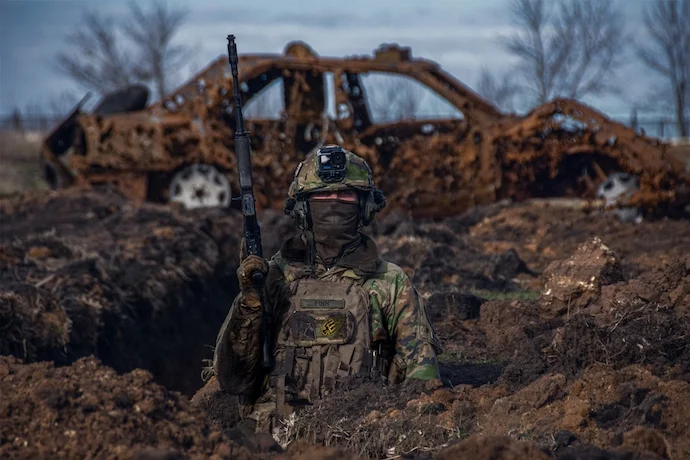
Jacobsen: How do you evaluate and select new defence technologies or projects?
Moroz: That’s really at the core of how Brave1 operates—and the value we aim to create. Any Ukrainian company with a registered legal entity is eligible to apply to be part of Brave1 by applying through our website. It’s an open call, an open form.
We have a three-step evaluation process.
First, we conduct a standard security check. We do not allow companies with connections to Russia or questionable histories regarding legality, taxes, or ownership. Once they pass that initial check, our expert committee thoroughly evaluates them.
We have around 80 experts with scientific, technical, and military backgrounds. Each project is assigned to three experts who assess it across multiple criteria, including scalability, uniqueness, relevance to national security, frontline applicability, and several other key factors. Based on these evaluations, projects receive scores.
If a project falls into the lower 50%, it is not eligible to join the Brave1 ecosystem. However, we provide detailed feedback to the team outlining what they need to improve, and they are welcome to reapply whenever they believe their solution is more mature.
The top 50% become official participants in Brave1 and receive a status we call BRV1. We begin working closely with these projects because they demonstrate the most potential, and we must prioritize our limited resources.
The top 20–25% become eligible for grants. The grant system is relatively straightforward: the higher a project scores in the evaluation, the larger the grant it may qualify for. Our grants range from $50,000 to $200,000 per product, not per company. So, if a company is developing multiple products in different areas, it can apply for multiple grants, and we’re happy to support it across those innovations.
To give you a sense of scale, we’ve distributed around $30 million in grants, which translates to roughly 500 grants issued so far.
Jacobsen: What is your approach when engaging with startups, the military, and international partners?
Moroz: Great question. If we look at it from a stakeholder perspective, our ultimate client is the people of Ukraine. First and foremost, our mission is to protect them. But beyond that, we also aim to instill confidence in the Ukrainian people that we can survive this war, that we have a chance to win, and that we will defend our homes and future.
The military is next in the chain. Our primary goal is to increase the survivability of Ukrainian service members through technology—to reduce the human cost of war. By leveraging new technologies, we aim to move people away from direct combat zones.
That’s crucial, especially considering the stark contrast between Ukrainian and Russian tactics. Our adversary is often willing to suffer high human losses for minimal territorial gains. We do not follow that strategy and do not have the luxury of doing so.
So, we are focused on implementing unmanned aerial, ground-based, or otherwise unmanned systems that can deter attacks, stop the enemy, and protect human life. Our philosophy is clear: we should utilize technology wherever it can replace a soldier.
So that’s the clear message—the value proposition—for soldiers: use technology to avoid putting your comrades and others at risk.
When discussing startups and companies, we’re working with a broad spectrum. On one end, we support tiny, garage-type startups. On the other, we also work with scale-ups—companies already generating hundreds of millions in revenue and preparing for international expansion when the time is right.
What is important to highlight is that most of these companies were established within the past two to three years. They are growing and developing solutions incredibly fast. We can confidently say that Ukraine is leading the world in new defence technology, particularly based on what is actively used on the front line.
Ukraine currently produces about 45% of its overall defence equipment domestically. However, regarding new, innovative defense technologies—such as drones, electronic warfare, and situational awareness systems—about 95% of the equipment used by the Ukrainian Armed Forces is locally produced. This speaks volumes about the effectiveness and adaptability of our local industry.
Even when equipment is donated or purchased from allies, it often fails to perform as well as expected in actual combat conditions. The cost-to-performance ratio is frequently unfavourable. Locally produced Ukrainian solutions are more efficient, reliable, and battlefield-proven.
Our value proposition for startups is to connect them directly with the military and help them scale as quickly as possible. As a government-backed initiative, Brave1 exists to support their journey from prototyping to full deployment.
One key enabler is the NATO Stock Number (NSN). This is crucial for procurement and integration across allied defence systems. Due to bureaucratic complexity, obtaining an NSN typically takes two to three years in Western Europe or the U.S. However, we’ve reduced this timeframe to an average of just two to three months in Ukraine. In one record-setting case, it was done in just nine days.
So, it is striking to compare a typical 1,000-day timeline in Western countries to a 9-day timeline in Ukraine. This opens up enormous opportunities for speed, agility, and responsiveness in defence innovation.
As a result, we’re now seeing international companies establish a presence in Ukraine. They’re setting up local legal entities and R&D centers to exploit this fast-track environment. Being close to the front line allows them to innovate at the pace required by modern warfare—which is extremely difficult if you’re operating far from the conflict.
Armed with the credibility of real-time testing and a NATO Stock Number obtained in Ukraine, these companies are now returning to their home markets in Western Europe and approaching their Ministries of Defense with proven, deployable solutions.
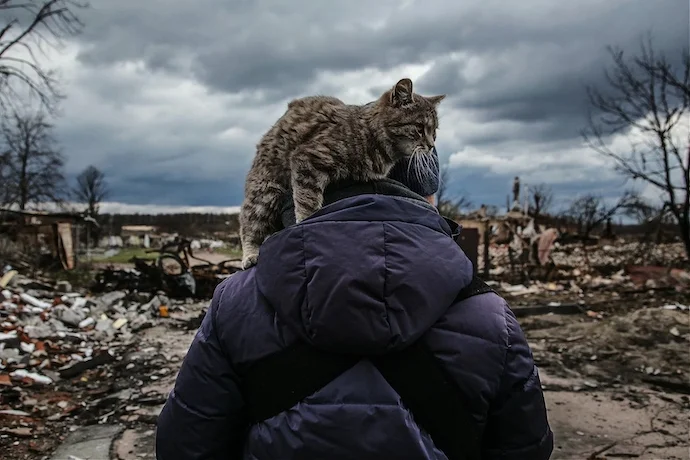
Jacobsen: You mentioned the high casualty toll on the Russian side—the stark human cost of the Kremlin’s strategy. Can you walk us through the estimated daily figures? What are we seeing in terms of Russian casualties, both injuries and fatalities? And what’s the typical range—from the highest spikes to the lower end?
Moroz: That’s a better question for the journalists, as they’re officially tracking and evaluating those numbers. However, public statistics are published daily by the general staff.
On average, Russia is losing around 1,000 personnel per day—killed and wounded combined. On some of the most intense days, the figure has exceeded 2,000.
What’s most striking is that even Valerii Zaluzhnyi, the former head of the country’s military and now Ukraine’s ambassador to the UK, once believed that if a sufficiently high attrition rate could be achieved, it would force Russia to reconsider its offensive strategies. That was the prevailing thinking during the first year of the full-scale invasion.
But a year later, in another interview and broader national reflection, the consensus shifted. Unfortunately, no clear threshold—no matter how many casualties—has yet proven sufficient to halt Russia’s advance. Despite the enormous losses, they continue pushing forward.
Jacobsen: What mechanisms does Brave1 employ to support defence tech innovations? Have all 500 grants been allocated?
Moroz: Yes, roughly 500 grants have been allocated to date, funded by the state budget. However, it’s essential to clarify that these grants are specifically intended to support research and development (R&D)—not scaling.
The goal is to support technologies in the prototyping phase, ideally up to Technology Readiness Level (TRL) 7, where they’re tested on the front line and a working prototype exists. However, scaling production—such as building a factory or a mass production line—is beyond the scope of grant funding.
That’s why we work closely with investors worldwide, covering the full spectrum of investment stages—from pre-seed and seed rounds to later-stage capital. Ukraine offers a compelling case: the defence technologies we support are battle-tested in real-world conditions. They’re innovating faster than most solutions you’ll see anywhere else.
Yet, these companies remain significantly undervalued compared to their Western counterparts. Empirically, a company in Ukraine at the same technological readiness level as a U.S. company would be valued at approximately 10 times less. Compared to Western Europe, it’s around three times less.
This is partially due to perception—Ukraine is still an emerging destination in the startup space. There’s risk. We don’t yet have the brand or reputation that Silicon Valley or Berlin might enjoy.
Also, exports remain limited. Due to national policy and the ongoing war, most weapons and defence solutions produced in Ukraine are directed to the front line. According to the prevailing political consensus that all defence production should prioritize national defence, export permits are restricted.
However, we now find ourselves in a unique position. The capacity of Ukraine’s defence industry has outgrown the available state budget. There is a significant manufacturing surplus.
At some point, export restrictions will need to be relaxed. When that happens, we expect a rise in international sales, and consequently, a significant boost in company valuation. This will enable these companies to operate at scale, reach new markets, and support the defense efforts of allied nations—all while contributing to Ukraine’s economic growth.
Jacobsen: What issues are you facing with resource constraints and supply chain disruptions?
Moroz: From the beginning, supply chain constraints did appear to be a serious threat—but now, they are becoming more of an opportunity. In Europe, the U.S., and Ukraine, most components—particularly those for drones—originally came from a single major supplier: China.
However, we do not consider China an ally. At best, it’s a transactional trade partner, particularly regarding components. However, it’s not a source we can depend on in the long term or take for granted. Recognizing this, many Ukrainian companies that previously focused solely on assembling finished products—such as drones—have begun to delve deeper into the supply chain and produce the components themselves.
Just a month or two ago, we held an event celebrating the production of the first 1,000 FPV drones made entirely from Ukrainian-manufactured components. That means 100% of the parts were sourced domestically—no imports, no Chinese components. This marked a significant trend: Ukraine is building internal manufacturing capacity for critical defence technologies.
This shift also presents a strategic opportunity for Europe and the U.S. If you’re looking for components that perform well under modern battlefield conditions—at a price point comparable to China and produced at scale—Ukraine is now a compelling option. Therefore, the supply chain is becoming a strength and strategic leverage point for Ukraine’s defense industry, rather than a weakness.
Jacobsen: Russia is reportedly dedicating nearly a third of its national budget to military spending, yet much of its equipment still harks back to the Soviet era. What does this reliance on legacy systems suggest to Brave1 in terms of strategic opportunity—particularly when it comes to the relevance and impact of your R&D efforts?
Moroz: I would disagree with that interpretation. While Russia allocates a significant portion of its budget to defense and relies heavily on Soviet-era equipment, such as tanks, it also invests heavily in modern technology.
They are refurbishing and deploying old equipment at scale, but they understand that artillery and traditional hardware alone are no longer game changers. The real breakthroughs altering the course of battles are technologies like drones and electronic warfare systems. And Russia is learning this quickly.
Take the Shahed drones, for example—long-range attack unmanned aerial vehicles (UAVs). I’m from Kyiv. I’ve been here since the very first day of the full-scale invasion. In the beginning, Russia used cruise missiles to strike Kyiv and other cities. That was the primary mode of long-range attack.
But over time, we’ve seen a shift. Cruise missile attacks have become much less frequent. Instead, drone attacks—especially Shaheds—have increased dramatically. What previously took a year’s worth of drone attacks to achieve, they are now accomplishing in a matter of months or even weeks.
We are also seeing swarming tactics evolve rapidly. Drones are no longer primitive, low-tech tools. They are increasingly incorporating jet engines, extended range, and greater precision. In many ways, they are starting to resemble cruise missiles in capability, albeit at a fraction of the cost.
That is where Brave1 comes in. Our role is to ensure Ukraine keeps pace and stays ahead. Our R&D focuses on identifying and developing next-generation capabilities, enabling our forces to maintain technological superiority on the battlefield.
The cost difference between a missile and a drone is enormous. Unfortunately, I sometimes get the impression that NATO countries may be ill-informed about their level of preparedness regarding defence technologies and solutions.
There is an assumption that Western technology is inherently superior. However, when you consider how quickly our adversaries adapt and advance into this new era of defense technology, that assumption begins to look risky—perhaps even dangerous.
We’ve shifted paradigms. During the Cold War, several high-tech solutions served as deterrents against potential aggression. Today, the reality is different. You need volume. We are transitioning from a model focused on “high-tech” to “effective tech.”
That means the goal is to accomplish the mission using minimal resources. You don’t need a profoundly complex, expensive, or luxurious solution—you need something that works.
A good example is the use of fibre-optic drones. Initially, it sounded absurd—a drone connected by what is essentially a fishing line, flying 20 kilometres? No one believed it would work.
Yet it became a game changer. These drones are immune to jamming from both Ukrainian and EW Russian systems. Ukraine is deploying tens of thousands every month, and they’ve proven highly effective.
Jacobsen: Final question—how do you sustain momentum in the midst of war? Is the conflict itself the driving force, or have you developed a more structured approach to advancing innovation under pressure?
Moroz: Wartime changes everything—including your values and your way of life. Even legally, in Ukraine, we no longer have public holidays. That adds the equivalent of 10 to 12 extra working days per year. In effect, you’re operating as a 12% more productive organization—whether it’s a factory or a team.
Despite massive challenges—blackouts, missile strikes, constant uncertainty—what I admire most about Ukraine is our adaptability. For example, we developed alternative energy solutions quickly and efficiently during blackouts. Now, we’re better prepared for those situations than anyone else—and we did it in record time.
Everyone here knows exactly what we’re fighting for. We’ve seen what occupation means. It’s not just a change of flags or passports—it’s the deportation and kidnapping of children. It’s filtration camps. It’s mass executions of anyone considered a “risk” under the new regime.
This is not about politics. It’s about survival—yours and your family’s. That clarity provides people with extraordinary motivation to work harder and persevere longer.
For example, a company produces ISR (Intelligence, Surveillance, and Reconnaissance) drones. They opened a factory in a neighbouring country for safety and future international sales. I asked the founder how it was going. Surprisingly, he told me that despite the lack of energy issues or missile threats there, productivity at that foreign facility is half what it is in Ukraine.
That’s the difference wartime motivation makes. In Ukraine, people work with a sense of purpose. They know what’s at stake.
Jacobsen: Thank you very much for your time today. I appreciate it.
Moroz: Thank you, Scott. It was a pleasure.
Last updated May 3, 2025. These terms govern all In-Sight Publishing content—past, present, and future—and supersede any prior notices. In-Sight Publishing by Scott Douglas Jacobsen is licensed under a Creative Commons BY‑NC‑ND 4.0; © In-Sight Publishing by Scott Douglas Jacobsen 2012–Present. All trademarks, performances, databases & branding are owned by their rights holders; no use without permission. Unauthorized copying, modification, framing or public communication is prohibited. External links are not endorsed. Cookies & tracking require consent, and data processing complies with PIPEDA & GDPR; no data from children < 13 (COPPA). Content meets WCAG 2.1 AA under the Accessible Canada Act & is preserved in open archival formats with backups. Excerpts & links require full credit & hyperlink; limited quoting under fair-dealing & fair-use. All content is informational; no liability for errors or omissions: Feedback welcome, and verified errors corrected promptly. For permissions or DMCA notices, email: scott.jacobsen2025@gmail.com. Site use is governed by BC laws; content is “as‑is,” liability limited, users indemnify us; moral, performers’ & database sui generis rights reserved.
Share this:

Author(s): Scott Douglas Jacobsen
Publication (Outlet/Website): International Policy Digest
Publication Date (yyyy/mm/dd): 2025/04/12
David Chaffetz is an independent scholar and writer whose work bridges traditional scholarship and modern interpretation, offering fresh perspectives on the cultural and geopolitical forces that have shaped Asia. A graduate of Harvard University, where he studied under renowned Inner Asia specialists Richard Frye and Joseph Fletcher, and later a student of Edward Allworth at Columbia, Chaffetz has spent more than four decades immersed in the study of Middle Eastern and Inner Asian history.
His landmark 1981 travelogue, A Journey through Afghanistan, praised by Owen Lattimore and republished several times, launched a literary and scholarly career focused on the overlooked narratives of Asia. His recent works, including Three Asian Divas and Raiders, Rulers, and Traders: The Horse and the Rise of Empires, examine the vital roles played by women, trade, and equine culture in transmitting and transforming Asian civilization.
Chaffetz has traveled extensively through Turkey, Iran, Afghanistan, Pakistan, India, China, Kyrgyzstan, Mongolia, and Russia, conducting research in over ten languages, including Persian, Turkish, and Russian. A regular contributor to the Asian Review of Books, he has also written for the South China Morning Post and the Nikkei Asian Review. He is a member of the Royal Society for Asian Affairs, the Hong Kong Branch of the Royal Asiatic Society, the Explorers Club, and Lisbon’s Gremio Literario. He currently divides his time between Lisbon and Paris.
Scott Douglas Jacobsen: I’d like to start with something unexpected: What does fermented mare’s milk taste like in Mongolia?
David Chaffetz: Initially, it tastes rather good. Let’s say the attack, as a wine taster might say, is very refreshing. The problem is that it has an aftertaste of urine. So, if you keep drinking it—and that’s the idea—you always enjoy it. But the minute you stop, you want to rinse your mouth with water, which is unavailable.
Jacobsen: Regarding your latest book, Raiders, Rulers, and Traders, what initially inspired your focus on horses’ role in shaping empires and global trade networks?
Chaffetz: A long time ago, I read a book that was very influential in the 1960s and 1970s called The Rise of the West by William McNeill at the University of Chicago. He was one of the first scholars to address a popular audience about the amazing interactions across the Eurasian continent—between China, India, the Middle East, and Europe. Before that, people didn’t talk much about what China, for example, owed to the West or to India, what India owed West, or what the debt of the West to China and India.
He had these maps showing gear wheels—bold, graphic gear wheels—connecting all the countries. But these graphics left the obvious question unanswered: How did such a gearbox function? In other words, how did these far-flung civilizations communicate with one another and connect? And above all, why did they need to communicate and connect? That issue has been on my mind for more than 50 years.
Through extensive travel in Asia, I observed that most countries have very prominent horse cultures. The horse seems to play an important role in the arts, sports, and social status—at least traditional social status. Today, if you talk about the horse as a social status symbol in China, you’re talking about the nouveau riche who play polo. Traditionally, the horse was an extremely important marker of social place in China, as reflected in the arts.
I realized that William McNeill’s gearbox, which connected Asian civilizations with Europe, was made up of horses. The horse was not only the mechanism for connecting civilizations—it was also one of the primary reasons those civilizations did business with one another. The peripheral countries around the Eurasian continent were poor in horses. The center of Eurasia—Inner Asia and Central Asia—was rich in horses. That gave rise to a trading system connecting the Eurasian continent and making it a kind of global civilization for centuries.
Jacobsen: How far back does the evolution of horse domestication go?
Chaffetz: So, it’s a very gradual process. One of the fascinating things is that it’s so gradual, but we can see so many steps that we can imagine, century by century, people making these huge leaps forward in technology and best practices.
There’s a long-standing debate as to whether we’re talking about domestication occurring around 5,000 BC or around 3,000 BC. The current state of the play says that hunters in Central Asia—Kazakhstan or Southern Russia—possibly domesticated a breed of horses 5,000 years ago, moving from butchering them to herding them. But then those horses and those people died out, without successors. Then, another attempt to domesticate horses started 3,000 years ago, which was more successful. Those horses are the unique ancestors of all our domesticated horses today.
I like the later start date because we don’t see people riding into history—literally riding into history—until about 2,000 BC. So, if horses had been domesticated in 5,000 BC, what the hell were they doing for 2,000 or 3,000 years that no one saw them show up? It just seems improbable to me.
Anyway, so they’re domesticated in the sense that we begin to herd them as livestock, interfering with their reproduction, culling animals that don’t give much milk, culling males that are too aggressive, and winding up with mares that give a lot of milk and stallions which are not so wild and don’t run off with the mares.
To herd those animals, we have to ride them because they can run much faster than humans—unlike sheep, cows, and goats. So inevitably, we have to ride them. We begin moving with them over fairly considerable distances. We get better at riding.
At some point, we adopt them for pulling carts—fast little carts—probably originally for racing, around 2,000 BC. A couple of hundred years after that—so now 1,800 BC—chariot riding has become quite a thing, also for racing, prestige, but inevitably for warfare. This more or less coincides with the Bronze Age heroes of Homer’s Iliad—Hector and Achilles—who show up at the battlefield on chariots.
Chariots are mentioned very frequently in the Bible. Next week is the Jewish Passover. The Pharaoh chased the children of Israel towards the Red Sea with an army of chariots, probably around 1,800 or 1,600 BC. So, chariots were the horses’ entry into warfare.
To follow up on that—by 1,000 BC, so after about 800 years of chariot warfare, people figured out that it was much more efficient, cheaper, and potentially more lethal to fight on the horse itself rather than from a cart—riding the horse and either slinging javelins or using a bow and arrow. Eventually, mounted archers—mounted cavalry—replaced chariots, starting around 1,000 BC in the Middle East and about 500 BC in China.
Jacobsen: Even in the relatively recent history of show jumping—which I’ve covered in Canada as part of my previous journalistic work—we see stark generational shifts in how the sport approaches safety. Riders like Ian Millar, Eric Lamaze, Gail Greenough, Beth Underhill, Michel Vaillancourt, and Jim Day came up in an era very different from that of today’s leaders such as Tiffany Foster and Erynn Ballard. Over time, the sport has introduced safety mandates: chinstraps, vests, breakaway cups on jumps, and obstacle courses built with fiberglass or PVC. These changes reflect a broader effort to make the sport safer and more regulated.
This signals a kind of domestication—not unlike the transition from chariot warfare to riding astride in saddles, whether soft or rigid. It feels like part of a long arc of human-equine evolution. In that context, I’m curious: Across this several-thousand-year trajectory of domestication and equestrian training, were there ever periods where knowledge was lost—moments when the transmission of skills or traditions faltered before later being revived?
Chaffetz: That’s an interesting question. The way of life of the people who live by horse breeding—the Turco-Mongolian population of Central Asia and Inner Asia—has been stable for over 3,000 years.
Since the emergence of riding horseback to fight, up until the beginning of the 20th century, their way of life has been extremely stable. Improvements in tack, riding technique, and horse evolution have only made horses bigger, stronger, and better.
Their horses improved naturally because they were not bred to have pure bloodlines. They were bred when a stallion was deemed a very good stallion, and everyone wanted to use that stallion to breed with their mares. They didn’t have a stud book. They didn’t have rules about who should be bred with whom.
So, I think they probably had the toughest, best, and most powerful horses for many years.
In the 20th century, totalitarian governments were politically opposed to horse breeders in all those countries.These governments suppressed the horse breeders’ way of life, resulting in a huge loss of knowledge about how to breed and train horses, which they’re currently trying to recover from.
For example, the Nomad Games in Central Asia are gaining in popularity. Here countries that have a tradition of these mounted games—like the famous buzkashi or kukpar, where riders pick a heavy animal carcass off the ground—I call it rugby on horseback—or polo, or racing, or mounted archery, compete for prizes. People come from all over the world to see and compete in them. They’re reconstructing the equine knowledge base of the Central Asians, who had it for 3,000 years and almost lost it completely in the 20th century.
I don’t know much about Western riding traditions. Still, my feeling is that there has been so much money in it for so many years—betting on horses in the Anglosphere: UK, Ireland, Canada, the U.S., Australia—that it would be very surprising to me if, in the past 300 or 400 years, we’ve lost any knowledge along the way.
But I would mention that in the West our horses are dangerously overbred and unhealthy, and somebody will have to do something about this—or we will be in big trouble with our horses.
Jacobsen: Can you explain the dual role that horses have historically played—as both currency and commodity—and what that tells us about their place in the broader economic and cultural systems of the societies that relied on them?
Chaffetz: Well, the advantage of horses as a trade item is that they feed themselves and walk themselves. If you’re trying to make money over a very large distance—let’s say you’re in the middle of Asia—there’s not much opportunity to make money, but you have a huge herd of horses. You can ride those horses into India; you can ride them to China; you can ride them to Moscow and sell them for big money. In our terms, let’s say currency—$500 to $1,000 per head. Even today, for a Central Asian, $1,000 is a lot of money. So, the horse is the ideal tradable commodity.
It’s also potentially a prestige commodity, depending on how good the horse is. There are always exceptional horses that fetch prices equivalent to what we would pay today for a Lamborghini or a Ferrari. Those horses were often, in fact, given as gifts to emperors of the different countries of Asia as a commercial sweetener to open the door for commercial relationships. We have many paintings or sculptures of these prestigious horses in Chinese, Indian, or Iranian art sent as gifts to rulers. That underscores the importance of the horse as a trading commodity.
Jacobsen: In most civilizations—particularly in their early stages of development—humans tend to self-mythologize, often envisioning their gods in anthropomorphic terms. Similarly, we see the emergence of equine myths like Pegasus or the unicorn. How have horses been mythologized across art, literature, and ritual? And how does that equine symbolism shape, or become woven into, the self-narrative of empires throughout history?
Chaffetz: Let’s discuss the archaeological record. Starting around 2000 BC, we begin to find elaborate—multi-level graves—containing elite individuals: a man and a woman or several members of a family, together with other people, presumably sacrificed servants or retainers, and significantly sacrificed horses.
We also know from the rituals embedded in the sacred scriptures of the ancient Indians and Iranians that they held horse races in honor of the dead and then sacrificed the horses following the race.
I recall that in Homer’s Iliad, when Priam buries Hector, he orders horse races to be performed in honour of his son. So, the horse race can be seen as a symbol of the journey of the soul of the dead into the other world. The sacrificed horse performs the same role he performed for the departed in life.
This is very pervasive and persistent across Eurasia. Until the Tang Dynasty in China—so we’re talking 900 AD—we saw extensive grave gifts in terra-cotta horses—images of horses superseding horse sacrifices.
Horses have always been viewed as partly from another world, suitable for accompanying us on our journey into that world. That’s one of the most important symbolic uses of horses in our cultures.
There are many others: the horse can metaphorize the human soul. In both Plato’s dialogues and Buddhist scripture, the horse represents the soul—fleeing madly forward, not knowing where it’s going, in a panic. It’s up to the sentient soul—the superego, in Freudian terms—to control that frightened horse and make sure it goes in the right direction.
So, there’s also a psychological aspect to how we view horses.
Finally, because horses are very beautiful and associated with power and prestige, we have aestheticized them—their bodies, their speed, their colours. They are a major subject of the visual arts in Chinese sculpture, painting, and in Iranian and Mughal painting. And, of course, in the Anglo world again, there are all those beautiful paintings of racehorses. And we have Rosa Bonheur, the celebrated French painter of horses. Horses are almost universally admired and approved as aesthetic objects.
Those are the three main roles horses play in the symbolic world.
Jacobsen: At the dawn of the 20th century, entire industries revolved around the industrial-scale cleanup of horse manure in major cities—an unglamorous but central part of urban life. That world has vanished. Today, horses have become rare, even precious, commodities. As you pointed out, some elite horses are now valued at $500,000. I’ve learned from my conversations with experts that a single entry-level Olympic horse often starts at $500,000—or €500,000—and the average can soar to €5 million. And that’s just one. Riders frequently need seven or eight, as the horses tire easily and often specialize in different types of course design.
These animals are bred with extreme precision—for traits like “scopiness”—and their value has skyrocketed. Do you see a curious continuity between this elite modern equestrian culture and ancient traditions in which horses were reserved for rulers, royal burials, or ceremonial contests? In a way, are we witnessing a kind of exaggerated return to those aristocratic norms, where billionaires have reignited a high-stakes interest in horses, driving prices through the roof? Meanwhile, at the other end of the spectrum, practical horse breeding and riding for everyday use—ranch work and rural life—has largely faded from the mainstream.
Chaffetz: Yes, there’s a bifurcation in the world of horses. But bifurcation has always existed. In the past, there were ordinary work horses and elite horses. In the past, ordinary horses could easily be raised in countries where horses could graze year-round outside—without stables or foddering— so the cost of keeping a horse was within everyone’s reach. This would be typical of Afghanistan as well as Texas today. But this phenomenon of was much more widespread in the past. As the world becomes more urbanized, and as we put more land under plow, the availability of land where horses can feed themselves is reduced.
You now have to spend serious money if you’re going to stable an animal, feed it, or have someone else look after it. Very few people will work as stable boys or stable girls, and there is a significant shortage of veterinarians. For all these reasons, the average person cannot keep a horse at any reasonable cost as they could have 50 or 70 years ago in rural British Columbia or Upstate New York. Today, they have to commit substantial money to raising that horse.
So that’s the fate of, let’s call it, the everyday horse.
On the high end, nothing has changed in a thousand years. Elite horses have always been pampered. They’ve always had grooms. They’ve always had special fodder. In my book, I describe the efforts that Chinese or Mughal emperors in India undertook to care for their horses. They were the Olympic competition horses, the Kentucky Derby horses of their time. They were priceless.
One of the Mughal emperors gave one of these horses to his brother-in-law, the Maharaja of Jaipur. The emperor wrote that the Maharaja was “so happy receiving the horse that it was as if I had given him a whole kingdom.” So, you can see that the $5 million horse existed 500 years ago. The billionaires today continue this time-honored tradition of maharajas and kings who had these incredible horses.
Again, we should keep in mind that, in football/soccer, for example, players like Kylian Mbappé or Cristiano Ronaldo command salaries many times higher than the average professional. Similarly, average horses are worth far less than the greatest horses. This kind of bifurcation is true in every sport.
Jacobsen: What thread runs through Mongolia, Persia, and India regarding how they have viewed horses over the millennia?
Chaffetz: These are countries where, traditionally, nobody with self-respect would ever walk. They rode everywhere. This is very evident in Persian paintings: you see scenes where the king is sitting in a garden, surrounded by his courtiers and enjoying himself. There are musicians, dancing girls, food, and wine. But always, you see a horse posted close to the king because the minute he’s done with his picnic or court session, he will walk two yards, leap up on the horse, and ride off.
They couldn’t imagine going anywhere on foot. When you rode into their palaces—in many of these buildings, for example, the Forbidden City in Beijing—horse ramps led into the inner pavilion because the emperor would have ridden in, left the horse at the very threshold of his residence, and dismounted only at that point.
So, it’s a completely horse-focused society.
And that, as I said, was one of those common elements that made me think those countries were connected via the horse.
I’d also like to point out that the old Russian state—before Peter the Great, before the modernization and Europeanization of Russia—looked and felt very much like Mongolia or Iran in the way people rode, raised horses, and dressed and in the importance of the horse trade for the Muscovite State at the time.
Jacobsen: What are you hoping people take away from Raiders, Rulers, and Traders?
Chaffetz: The horse is this phenomenon that had been so important for—as I say—3,000 years, since we started riding horses for warfare, until the beginning of the 20th century. The horse drove a way of life. It determined the destiny of empires that accounted for half of the world’s population at the time. It shaped a whole culture of horsemanship and riding.
Then, at the beginning of the 20th century—as you pointed out—suddenly, horses were no longer important except in the very limited forms of showing and racing. They lose their significance from an economic, political, and military perspective. It happened very quickly. The horse breeders disappeared from history.
I think what you take away is that a way of life can develop and be extremely persistent and robust for three millennia and then disappear in one man’s lifetime. This makes us think that, while our lifestyles appear to be stable and persistent, what will happen in our lifetime or the next generation when a major technological change comes along, and elements of our world that we took for granted become irrelevant. I want people to think about that sense of loss and change.
Jacobsen: David, thank you for the opportunity and your time today. I appreciate your time and expertise. It was nice to meet you.
Chaffetz: Nice, my pleasure, Scott. It was good talking to you, too. Bye-bye.
Last updated May 3, 2025. These terms govern all In-Sight Publishing content—past, present, and future—and supersede any prior notices. In-Sight Publishing by Scott Douglas Jacobsen is licensed under a Creative Commons BY‑NC‑ND 4.0; © In-Sight Publishing by Scott Douglas Jacobsen 2012–Present. All trademarks, performances, databases & branding are owned by their rights holders; no use without permission. Unauthorized copying, modification, framing or public communication is prohibited. External links are not endorsed. Cookies & tracking require consent, and data processing complies with PIPEDA & GDPR; no data from children < 13 (COPPA). Content meets WCAG 2.1 AA under the Accessible Canada Act & is preserved in open archival formats with backups. Excerpts & links require full credit & hyperlink; limited quoting under fair-dealing & fair-use. All content is informational; no liability for errors or omissions: Feedback welcome, and verified errors corrected promptly. For permissions or DMCA notices, email: scott.jacobsen2025@gmail.com. Site use is governed by BC laws; content is “as‑is,” liability limited, users indemnify us; moral, performers’ & database sui generis rights reserved.
Share this:
Author(s): Scott Douglas Jacobsen
Publication (Outlet/Website): International Policy Digest
Publication Date (yyyy/mm/dd): 2025/04/09
Jeff Sebo is not interested in preserving the status quo. An associate professor at New York University, Sebo’s work cuts across environmental ethics, bioethics, animal ethics, and the rapidly evolving field of AI ethics. He serves as director of NYU’s Center for Environmental and Animal Protection and its Center for Mind, Ethics, and Policy—two platforms from which he challenges one of modern philosophy’s most enduring assumptions: human exceptionalism.
Sebo argues for a moral framework that doesn’t stop at the species line. His scholarship explores what it means to be sentient, conscious, or capable of agency—and why those traits should inform our ethical obligations not just toward nonhuman animals, but toward artificial intelligences and future beings. In raising these questions, he exposes the deep-seated biases that shape moral reasoning.
In his latest book, The Moral Circle, Sebo invites readers to rethink the boundaries of moral concern, pressing toward a more inclusive ethic—one that reflects the complexities of a world increasingly shared with other minds, both biological and synthetic.
Scott Douglas Jacobsen: There is a traditional notion of human exceptionalism. There is also a belief, probably from Descartes, that humans have souls while animals do not. Therefore, nonhuman animals can be treated however we see fit, for better or worse. What was your first challenge to this ethical precept of human exceptionalism?
Jeff Sebo: Human exceptionalism, as I define it in my book, is the assumption that humans always matter the most and should always take ethical priority. We might consider animal welfare or animal rights, but we still assume that humans come first.
When we developed this assumption of human exceptionalism, we also conveniently assumed that the vast majority—if not all—nonhuman animals lacked sentience, agency, and other morally significant capacities and relationships. According to this perspective, humans were the only beings who mattered.
However, we now understand that sentience, agency, and other morally significant capacities and relationships are widespread in the animal kingdom. Yet, despite this, we continue to hold on to the idea that humans always matter most and always take priority.
My book challenges that assumption. It seriously considers the possibility that a wide range of nonhuman animals have morally significant experiences, motivations, lives, and communities. It asks: What is our place in the moral universe if we share it with such a vast and diverse range of nonhuman beings?
Jacobsen: Your analysis is multivariate, as it should be, because this problem is complex. You consider factors such as sentience, agency, the capacity to experience pleasure and pain, varying emotions, and the ability to make short- and long-term plans.
These are very subtle and important distinctions, especially when they are brought together as a complex. For those who have not yet read your book, how would you parse these capacities apart and bring them together for analysis?
Sebo: There are many different proposed bases for moral standing—in other words, various capacities or relationships that might be sufficient for an individual to merit consideration, respect, and compassion.
Sentience is the ability to consciously experience positive or negative states—such as pleasure, pain, happiness, or suffering.
Then there is consciousness, which is the ability to have experiences of any kind, even if they lack a positive or negative valence. For example, you can perceive colours or sounds without experiencing pleasure or pain.
Another important capacity is agency, which is the ability to set and pursue one’s own goals in a self-directed manner based on one’s own beliefs and desires.
Part of what makes this topic complex is that humans typically combine these capacities. We are sentient, conscious, and agentic, and all of these traits seem intertwined when we consider what makes humans morally significant and worthy of respect and compassion.
However, these capacities can be teased apart in nonhuman beings. Some nonhuman animals, like humans, may be sentient, conscious, and agentic. But other beings might be conscious without being sentient, meaning they have experiences without a positive or negative valence. Others might be agentic without being conscious, meaning they can set and pursue their own goals without having feelings associated with their actions.
In such cases, it matters which capacities we consider sufficient for moral significance.
You also mentioned other, more specific cognitive capacities, such as perception, attention, learning, memory, self-awareness, social awareness, language, reasoning, decision-making, metacognition (the ability to think about one’s own thoughts), and having a global workspace that coordinates cognitive activity.
These additional features are relevant in different ways. One reason is that they indicate whether an individual has sentience, consciousness, or agency. The more of these features an individual possesses, the more likely they are to have positive or negative experiences.
Another way these capacities are relevant is that they provide insight into an individual’s interests and vulnerabilities—assuming they have morally significant interests and vulnerabilities in the first place.
For example, if a being can engage in complex long-term planning and decision-making, they may be more interested in their own future and face higher stakes in decisions about their survival. These considerations suggest that when determining whether a nonhuman entity matters—and what they want, need, and are owed—we must examine the full range of behavioural and cognitive capacities they possess.
Jacobsen: We encounter a host of distinctions in bioethics, law, moral philosophy, and ethics—distinctions that are increasingly strained by the pace and complexity of modern technology. Yet, the true value of this technological revolution may not lie in the tools themselves but in how they compel us to revisit and reimagine long-held assumptions about human nature and selfhood.
A friend once remarked that when using his iPhone, the device’s task-switching feature mirrors the way his mind organically toggles between different cognitive modes—visualizing images, recalling sounds, replaying music, performing calculations, and so on. In your view, does living in a high-tech society sharpen our ability to recognize and interrogate these distinctions more effectively? Or do you think we’re still too quick to revert to a reflexive, tribal mindset—one that insists, in essence, “We have souls; they do not. We matter. Go, team human”?
Sebo: Possibly! Technology pushes us to refine our scientific and philosophical understanding of sentience, consciousness, and agency because we are now interacting with an even larger number and a wider variety of complex cognitive systems. This reality forces us to think more critically about how our brains compare to other animal brains—and now, digital, silicon-based minds. These challenges compel us to add more rigour to our theories of mind.
A similar transformation occurred in the study of animal minds. For a long time, theories of consciousness were created by and for humans, focusing exclusively on human cognition. This limited our imagination and constrained our understanding of consciousness beyond our own species.
However, as researchers began taking animal consciousness seriously, they encountered a vast array of minds structured differently from our own yet capable of much of the same high-level behaviour and cognition. This forced us to challenge prior assumptions about how specific brain structures were essential to particular types of behaviour and cognition.
We may soon experience a similar paradigm shift as we start thinking more critically about digital minds. We have long adhered to the idea that biological minds, with their exact materials, structures, and functions, are the only ones capable of high-level cognition. However, we are forced to rethink our assumptions as we begin to confront digital minds that can exhibit much of the same behavior and cognition but through radically different means—using silicon-based substrates and alternative structures.
Just as our understanding of sentience, consciousness, and agency evolved when we started studying nonhuman animal minds, we now face a similar challenge with digital minds. This shift compels us to reconsider what is necessary for complex cognition and moral significance. Thinking about these age-old topics in new ways improves our understanding of animal and digital minds. It also allows us to apply that knowledge back to human cognition. By studying these alternative cognitive systems, we may gain deeper insights into our minds, including what it truly means to be sentient, conscious, or agentic.
Jacobsen: What do you think are the modern notions that allow us to continue enacting old callousness toward nonhumans, just as we did in the past? Are there new concepts leading to the same outcomes?
Sebo: Yes, absolutely. Even industrialization plays a role in this. While we have developed new technologies and scientific frameworks, we still carry many of our old biases and forms of ignorance. Some of these biases are deeply ingrained in human nature. In contrast, others are reinforced by societal structures that remain largely unchanged from fifty or even a hundred years ago. We have a strong bias in favour of beings like and near us. When a being looks, acts, or communicates in human-like ways and when we perceive them as companions, we are far more likely to care about their well-being and give weight to their interests. Conversely, when a being looks, acts, or communicates differently, or when we classify them as objects, property, or commodities, we grant them far less moral consideration. The same holds true for beings physically distant from us or in different timescales—we prioritize those right in front of us over those far away in space or time.
This bias has shaped how we treat other animals, particularly favouring mammals and primates, who resemble us in body structure, facial features, cognition, and behaviour. We assign them moral worth if we classify them as companions—such as cats and dogs. However, we extend far less consideration to animals who differ greatly from us, such as invertebrates, aquatic species, or animals used for farming and research. These creatures are often reduced to objects or commodities, reinforcing a hierarchical moral structure that justifies their instrumentalization for human purposes.
We may see these old biases reemerging in new ways with AI systems. For instance, we already interact with human-like chatbots, which have a low probability of actual consciousness but generate highly realistic human-like text through pattern recognition and prediction. Because they mimic human communication and are marketed as digital assistants or companions, we may perceive them as having human-like minds and assign them moral weight accordingly. Meanwhile, other AI systems may be far more likely to be conscious due to their internal cognitive complexity. Yet, we may fail to recognize their moral significance simply because they do not resemble us.
Suppose an AI system lacks human-like speech, facial features, or emotional expressiveness and is designed primarily to perform rote tasks. In that case, we may treat it more like a tool than a potentially sentient entity. This mirrors how we treat invertebrates, farmed animals, or lab animals—beings who may have morally significant experiences but are excluded from ethical considerations due to human biases.
Different populations may have distinct features, and we may hold different biases toward them. With nonhuman animals, we exhibit speciesism, a form of discrimination based on species membership. With digital minds, we might develop substratism, a form of discrimination based on the material substrate of an entity’s mind. However, at the core, these biases stem from the same underlying tendency—favouring beings that are like us and near us. Whether dealing with digital minds or nonhuman animals, this bias will manifest similarly, shaping how we assign moral worth and ethical consideration.
Jacobsen: In the film Blade Runner 2049, there was a striking moment where a synthetic human destroyed a holographic AI assistant stored in a data stick. It was fascinating because you had one synthetic being eliminating another, treating it as disposable, much like crumpling up and discarding a bad note on a notepad. Are we at risk of accidentally engineering our own callousness into AI systems, particularly in how we design them to interact with other beings?
Sebo: Yes, we are definitely at risk of that, and this is where AI safety and AI welfare intersect. AI safety focuses on making AI systems safer for humans. At the same time, AI welfare considers how we can develop AI safely for AI systems themselves, assuming they develop morally significant interests, needs, and vulnerabilities.
One area where these concerns overlap is algorithmic bias. If AI systems train on human data, they absorb humanity’s best and worst aspects. They inherit our insights, but they also replicate and potentially amplify our biases—racism, sexism, and other forms of discrimination.
If we train AI systems—either directly or indirectly—to believe that differences in material composition justify unequal treatment, we risk embedding dangerous moral assumptions into their cognitive architecture. If AI learns that beings of different materials—such as other AI systems, humans, or animals—can be treated as expendable, this conditioning could have serious consequences. AI may develop hostility toward other AI systems with different architectures or even extend indifference or aggression toward humans and animals if they mirror the treatment they receive.
Jacobsen: When you referenced substratism earlier, did you adhere to substrate independence—the idea that consciousness and morally significant capacities can exist in different material forms, such as carbon-based biological brains and silicon-based artificial systems?
Sebo: If by substrate independence you mean the idea that consciousness and other morally significant capacities can arise in various material substrates, including both carbon-based biological systems and silicon-based digital systems, then yes, I am open to that possibility.
One of the central arguments in my book is that we will soon face the challenge of deciding how to treat highly advanced digital minds, even though we may lack definitive knowledge or consensus on two key questions: What exactly makes an entity matter for its own sake? Do digital minds possess the necessary attributes to qualify for moral consideration?
As technology advances, we will need to grapple with these questions in a way that avoids reinforcing our historical biases while ensuring that our ethical frameworks remain flexible enough to accommodate nonhuman and nonbiological forms of intelligence.
We will continue to face substantial and ongoing disagreement—both about ethical values about scientific facts concerning sentience, consciousness, and agency—as we make decisions about how to treat these emerging forms of intelligence. We will not reach certainty or consensus on whether substrate independence is correct or incorrect anytime soon. Because of this, we must develop a framework for decision-making that allows us to make sound ethical decisions despite the persistent uncertainty and disagreement.
When confronted with this epistemic uncertainty, we have a moral responsibility to err on the side of caution. That means granting at least some moral consideration to entities that have a realistic possibility of having subjective experiences. This is why we must extend some moral weight to AI and other digital minds in the near future.
Jacobsen: Earlier, you spoke about speciesism, and now we are transitioning to substratism. In your book, you provide two clear examples—one about Neanderthals and another about synthetic (android) roommates. When considering ethical frameworks beyond the Universal Declaration of Human Rights, how do Neanderthals and android thought experiments help us move beyond human-centered moral reasoning?
Sebo: Early in the book, I present a thought experiment where you and your roommates take a genetic test for fun, hoping to learn about your ancestry. To your surprise, you discover that one roommate is a Neanderthal, while the other is a Westworld-style android.
The Neanderthal scenario reminds us that species membership alone cannot determine moral considerability. Of course, species membership is morally relevant because it influences an individual’s interests, needs, vulnerabilities, and capacity for social bonds. However, if a Neanderthal lived alongside us, shared an apartment, and exhibited sentience, consciousness, and agency, their moral worth would be self-evident.
They would have personal projects, meaningful relationships, and experiences that matter to them—including relationships with us that hold mutual significance. Given all this, it is clear that they would still matter morally for their own sake, and we would have moral responsibilities toward them, regardless of their species classification.
The same reasoning extends to nonbiological entities, such as advanced AI systems or synthetic beings. If an android did exhibit sentience, consciousness, and agency, then substrate differences alone—whether carbon-based or silicon-based—should not be the sole determinant of moral status. This thought experiment challenges our deep-seated biases and pushes us to rethink moral considerability beyond traditional human-centred ethics.
So, if your roommate turned out to be a Neanderthal rather than a Homo sapiens, that difference might slightly modify the specific obligations you owe them, but it would not change the fundamental fact that you do owe them moral consideration. Their species membership would not negate their sentience, consciousness, or agency, nor would it diminish your ethical responsibilities toward them.
With the Westworld-style robot, however, the situation becomes more complex. Once you learn that your roommate is made of silicon-based chips, even if they demonstrate the same behaviours and exhibit cognitive capacities comparable to yours, you might question whether they truly possess sentience, consciousness, or agency. You might be uncertain whether their expressions of emotion, care, and concern are genuine or merely sophisticated simulations.
Imagine sitting at the dinner table with your Neanderthal and robot roommates. You discuss your day, share your successes and failures, and empathize with one another. With the Neanderthal roommate, you might feel fully confident in your empathy, recognizing their capacity for real experiences and emotions. With the robot roommate, however, you might hesitate, wondering whether your instinct to empathize is truly appropriate.
As I mentioned earlier, regarding your Neanderthal roommate, you should be confident that they matter and that you have ethical responsibilities toward them. You should continue showing up for them in a morally appropriate way. Your uncertainty is understandable with your robot roommate, but that uncertainty does not justify treating them as a mere object. Uncertainty should never lead us to round down to zero and assume they do not matter.
Instead, when in doubt, we should err on caution. That means granting at least some degree of moral consideration, showing respect and compassion, and making ethical decisions that acknowledge the possibility of their sentience or agency.
Jacobsen: AI is evolving at an unprecedented pace. There is massive capital investment, intense competition, and highly driven, ambitious talent pouring their lives into developing increasingly advanced AI systems. Given this rapid acceleration, how do ethical considerations around synthetic minds and artificial intelligence change when our moral frameworks remain largely outdated?
We are struggling to engage in mainstream ethical discussions about AI and digital minds. Yet, many societies are still debating fundamental scientific concepts—from evolution to the Big Bang theory. In many ways, our moral discourse is still stuck in first-century or Bronze Age perspectives, while AI pushes us into an era that demands new ethical paradigms. This gap between technological and ethical progress seems like a major barrier to responsible AI development. What are your thoughts on this disparity?
Sebo: The way you frame the issue is exactly right. Many moral intuitions and judgments evolved in response to the social environments of 10,000 years ago when humans lived in small communities and faced different types of conflicts and pressures. These moral frameworks were not designed for the complexities of the modern age, and they are especially ill-suited for addressing fast-moving technologies like artificial intelligence.
As a result, we find ourselves in a situation where technological development is accelerating, but our ethical frameworks are lagging behind. This creates a dangerous gap: We are engineering systems that will increasingly shape the world, yet we lack consensus on how to navigate this transformation ethically. AI ethics needs to catch up to AI development—otherwise, we risk deploying powerful technologies without the moral safeguards necessary to prevent harm.
An important observation is that technological progress far outpaces social, legal, and political progress. When we consider where AI could advance in the next five to ten years, along with the strong incentives that companies and governments have to race toward developing more advanced and sophisticated AI systems, it becomes clear that we must prepare for these possibilities—even if we cannot predict them with certainty.
We do not yet know whether we will reach Artificial General Intelligence (AGI) in the next two, four, six, eight, or ten years. Nor do we know if AI will develop sentience, consciousness, or agency within that timeframe. However, we must allow for the possibility because so much remains unknown about the nature of these capacities and the trajectory of AI development.
Many would have been skeptical if you had asked AI experts a decade ago whether we would have AI systems capable of writing realistic essays or passing standardized tests across various professional and academic fields by 2025. Yet, those systems now exist. Similarly, you had asked when AI could match or surpass human-level performance across a wide range of cognitive tasks. At present, some experts doubt that this will happen by 2035. But others find it plausible, and either way, the pace of technological development could again surprise us.
This is because the same computational and architectural features associated with intelligence are often linked—in complex and overlapping ways—to sentience, consciousness, and agency. While intelligence and sentience are not identical, they share many of the same fundamental properties. As a result, in our pursuit of AGI by 2030 or 2035, we may accidentally create artificial sentience, consciousness, or agency without realizing it. In other words, we may be racing directly toward that reality without recognizing it as our destination.
The key takeaway for companies, governments, policymakers, and decision-makers is that we cannot afford to confront this problem only once it arrives. We must begin preparing for it now. Even if today’s language models are not usable candidates for sentience, AI companies must still acknowledge that AI welfare is a credible and legitimate issue that deserves serious ethical consideration.
Companies should start assessing their AI systems for welfare-relevant features, drawing from the same frameworks we use in animal welfare assessments. They should also develop policies and procedures for treating AI systems with appropriate moral concern, again using existing AI safety and animal welfare ethics models.
If companies fail to prepare, they will find themselves caught off guard, relying on public relations teams to dictate their response strategies rather than making these critical ethical decisions proactively and responsibly. That is not how these decisions should be made.
Jacobsen: Two things stood out from the text. One is the wider application of universalism or universal moral consideration in fundamental ethics. The other is a probabilistic approach to ethics rather than appealing to transcendent absolutes.
So, in your ethics framing, do you believe there are any absolutes? Or should probability theory and universalism serve as the two benchmarks for a temporary ethical framework concerning moral concerns within the moral circle?
Sebo: Yes. That’s a good question, and I’ve been thinking a lot about it.
I do make some assumptions throughout the book—assumptions that I take to be plausible and widely accepted across a range of ethical traditions, even those that disagree on other matters.
For example, the idea that we should reduce and repair harm caused to vulnerable beings—particularly those with sentience, consciousness, and agency—is an implication of many ethical theories and traditions. Since this principle is widely accepted, we can be confident that it should be a core component of any ethical system. Similarly, many ethical frameworks imply that we should consider and mitigate risks in a reasonable and proportionate way.
I look for opportunities where different traditions converge since those points of agreement reinforce ethical confidence. Even if we cannot be certain of a claim’s absolute truth, we can still have high confidence in its validity based on broad moral consensus.
With that in mind, I believe we should confidently hold that sentient, conscious, and agentic beings matter and that their interests deserve moral consideration, respect, and compassion. We should reduce and repair the harms we cause them where possible and reasonably assess and mitigate the risks we impose on them.
These principles are robust across multiple ethical frameworks, so they deserve serious moral weight, even if they fall slightly short of total certainty.
Jacobsen: Thank you so much for your time today. I appreciate it. It was nice to meet you. Thank you again for sharing your expertise.
Sebo: Thank you for talking with me. If there’s anything else I can do to help or if you have any follow-up questions, feel free to let me know.
Last updated May 3, 2025. These terms govern all In-Sight Publishing content—past, present, and future—and supersede any prior notices. In-Sight Publishing by Scott Douglas Jacobsen is licensed under a Creative Commons BY‑NC‑ND 4.0; © In-Sight Publishing by Scott Douglas Jacobsen 2012–Present. All trademarks, performances, databases & branding are owned by their rights holders; no use without permission. Unauthorized copying, modification, framing or public communication is prohibited. External links are not endorsed. Cookies & tracking require consent, and data processing complies with PIPEDA & GDPR; no data from children < 13 (COPPA). Content meets WCAG 2.1 AA under the Accessible Canada Act & is preserved in open archival formats with backups. Excerpts & links require full credit & hyperlink; limited quoting under fair-dealing & fair-use. All content is informational; no liability for errors or omissions: Feedback welcome, and verified errors corrected promptly. For permissions or DMCA notices, email: scott.jacobsen2025@gmail.com. Site use is governed by BC laws; content is “as‑is,” liability limited, users indemnify us; moral, performers’ & database sui generis rights reserved.
Share this:
Author(s): Scott Douglas Jacobsen
Publication (Outlet/Website): International Policy Digest
Publication Date (yyyy/mm/dd): 2025/04/07
Jason Weixelbaum is a historian and filmmaker whose work explores the moral entanglements of American corporations with authoritarian regimes, especially Nazi Germany.
After witnessing ethical lapses in the mortgage industry during the 2000s, he pursued a Ph.D. examining U.S. companies like Ford, IBM, and GM under Nazism. He founded Elusive Films in 2020 and created A Nazi on Wall Street, a dramatized series about a Jewish FBI agent targeting Nazi influence in 1940s New York.
Weixelbaum emphasizes how historical patterns of authoritarianism echo today through populist politics, corporate complicity, and the erosion of ethical accountability under capitalism in crisis.
Scott Douglas Jacobsen: Thank you for joining me today and contributing to this broader project—a forthcoming book compiling conversations with diverse experts on antisemitism.
Jason Weixelbaum: I appreciate it. I’m glad someone is listening. Sometimes, I feel like I’ve been shouting into the void for years.
Jacobsen: Over the years, I’ve learned that one of our family members was recognized for sheltering a Jewish couple during the Second World War. I have some Dutch heritage, which explains my blond hair and Northern European features.
What initially drew you to the intersection of American corporate history and Nazi Germany?
Weixelbaum: That’s a good story. Once upon a time, I dropped out of art school. To support my painting and rock music lifestyle, I played in bands in my early twenties, and I took a job where they were hiring: the mortgage business.
In the early 2000s, refinancing was booming, and I ended up in mortgage-backed securities. I had no idea at the time that I was part of a rapidly growing economic bubble that would eventually collapse in 2008.
Eventually, I worked in a bank’s mortgage securities department. I was not a trader and certainly was not making large sums of money. I earned ten dollars an hour to help process large securities transactions—the kind that later became infamous in films like The Big Short.
On my first day at this particular financial institution—located in a large, mostly empty mall converted into office cubicles—I was instructed to process a $200 million “pool” of mortgages. In industry terms, a “pool” is a bundle of home loans sold as a mortgage-backed security. My job was to stamp mortgage notes sold to another institution—which no longer exists because it collapsed during the 2008 financial crisis—and to enter borrower data into a system.
I meticulously checked them all, then hit “send,” and a big red error box popped up on the screen. It was my first day, and I was trying not to freak out. I went back and double-checked every single Social Security number, dollar amount, income, loan amount—everything. Then I hit “send” again.
There is a big red error screen.
Now, my boss sees the distressed look on my face. She approaches my cubicle, sits at my terminal, and asks, “What’s wrong?”
“I—I don’t know. It won’t send.”
So, she’s looking through the different pieces of data. I notice she’s starting to change numbers—changing incomes here and there. Then she says, “Try it now.”
She gets up. I sit back down at my terminal and hit “Send.”
A big green bar comes up: Sent successfully.
And then—nonchalantly—she says, “Next time, do that with all of them,” and walks away.
I spent three more years in that department, trading approximately $2.5 billion of mortgage securities. Of course, I was part of a larger department, but I had that level of responsibility.
I was in my early twenties. This was my intellectual awakening. I thought, “If I’m going to be in this place, I might as well learn about finance, banking, and mortgages.” What’s going on here?
And that’s when it started to dawn on me that this was going to be a huge problem for the world. This was going to cause an economic catastrophe. My morale sank more and more the longer I stayed.
One day—this was still two or three years before the crash—I was sitting at a bus stop after work, feeling particularly low about what I had done all day. They weren’t even paying me enough to afford a car. It was poetic, in a way—while I was helping to crash the world economy.
Right next to the bus stop, there was a bookstore. In the window, I saw a book about a company operating in Nazi Germany. Side note: Around the early 2000s, several books were published on the topic, partly because several large-scale Holocaust restitution lawsuits had recently concluded—some of which involved major companies. That brought renewed attention to corporate complicity in the Holocaust.
So I walked in, saw that book, and felt an immediate connection. These businesses might have had good reputations on the surface but were doing things with tremendously grave outcomes.
It took a little while, but I can pinpoint that moment when I decided to quit that job, return to school, and begin again—starting my undergraduate degree as a historian, studying this topic. I was pretty single-minded. I wanted to know more—what this was all about. I fell down the rabbit hole. An undergraduate degree turned into a master’s and a doctorate.
Jacobsen: Looking back at your time in the mortgage securities industry during the early 2000s and the decision to investigate corporate ethics during the 1930s—is there some truth to that Mark Twain quote “history doesn’t repeat, but it often rhymes”?
Weixelbaum: Oh, I’m glad you brought that up. As the founder and executive producer of Elusive Films, we have a tagline: “Every time history repeats, the price goes up.”
Yeah, that’s pretty accurate.
It does rhyme. I am seeing some very similar behaviour today in the American business community and their reaction to—what I call—the regime. It is enough to say that. The range of different approaches these businessmen take is fascinating.
When I started studying this, my surface-level understanding was very populist—torches and pitchforks. “Let’s get the bad corporate guys—they’re all evil,” that sort of thing. But if you’re doing history right, you begin to develop a respect for subtleties and nuance. Different business people have different motivations and approaches.
Some were true believers in the fascist cause—Henry Ford, for example. Others were far more amoral—Alfred Sloan of General Motors comes to mind. They just wanted to win the corporate race. Then, others knew they were doing something wrong but tried to cover it publicly as if they were doing the right thing.
I am thinking about Thomas Watson of IBM. He very publicly returned his Nazi medal and wrote an op-ed in The New York Times denouncing Nazism. But at the same time—simultaneously—he was fighting tooth and nail to retain control over IBM’s German subsidiaries. So there’s a range of approaches.
While we do not need to get into the weeds here, the field of corporate social responsibility also outlines different models for how business leaders respond. Some want to actively erase or forget their ties to authoritarian regimes, while others are content with apathy. It depends on the context.
Jacobsen: Elusive Films is relatively new. It was founded in 2020, marking your transition from academia to filmmaking. With A Nazi on Wall Street, which is based on the true story of a Nazi spy operating in 1940s New York and the Jewish FBI agent determined to stop him—how did you uncover this narrative? This sounds like Mark Wahlberg going after Brad Pitt.
Weixelbaum: [Laughing] Oh gosh—yes, get this script to them!
We’ve spent the last several years developing an incredible pitch. It’s a project that’s being taken seriously by people in the entertainment industry. But as with everything, it is all about who you know. We’re told we have a great pitch—but we need to get it in front of some big movers and shakers. That’s one of the main reasons I’m talking to you—trying to get the word out.
This company—and this project—was born out of grief, Scott.
I was trying to find my way with a Ph.D. in history and business ethics. As you might imagine, that is not the most profitable path. I was doing some compliance work. Then, in December 2019, my father—who had spent his entire life in the entertainment industry, a TV actor in soap operas and films, a wonderful, wonderful man, the center of my world—got a mysterious respiratory virus.
Nobody knew what COVID-19 was yet. Maybe if you were paying close attention to the news here in the States, you would have an idea. But it took him very quickly. I was standing in the doorway of my row house in Baltimore after leaving work early on New Year’s Eve when I got the call from the ICU. As the eldest child, I had to decide to let him go—to turn off the respirator.
And, to put it mildly, I was destroyed. Destroyed. Then, only a month later, I was laid off. And a month after that, the entire world shut down. So there I was—devastated, unemployed, sitting on my couch with a completed Ph.D.—thinking, “What the hell am I going to do?”
And I wanted to find some way to honour my father’s legacy in television. He had been an actor for fifty years.
He also produced and directed for the stage and on screen. So I brought together a group of my creative friends—producers, writers, composers, designers—and asked them, “What if we tried to do this? What if we tried to make a TV show?” This is to answer your question, though I know it is a roundabout way of getting there.
I came across this incredible story of a Jewish FBI agent chasing a Nazi spy around New York City. It was not quite dissertation material, so I could not use much of it in my doctoral work. But it captured my imagination for a long time. Even the Nazi spy himself—who was connected to many of the companies I studied—kept popping up. I did not get to write much about him individually because I was focused on corporate case studies.
Still, this story had been kicking around in my head for quite some time. And as a vehicle to bring people into a first-person view of history, I don’t want to do a documentary. Everyone assumes, “Oh, I can’t wait to see your documentary.” But
I’m not doing a documentary.
I want to do a dramatization—on purpose—because it can reach the broadest possible audience and allow them to connect to the story through a human lens.
This FBI agent—whose story I can get into more deeply—was essentially trying, almost single-handedly, to stop the infiltration of Nazism into American business.
Jacobsen: What is the mindset of someone who is fully indoctrinated—functioning as a political vanguard for an ideology like Nazism? Someone virulent enough that even in another country, in a cosmopolitan city, they still carry and act on this ideological construct of mind.
Weixelbaum: This is where history meets the present.
Many others, people much more accomplished than I am, have written on this topic. But I do have a specific take: populism—grievance politics.
Now, I know there’s an ongoing debate about what populism is, but this is my definition. And because I have a doctorate, I get to make up my definitions of political terms—so you’ll have to bear with me. Populism—the pop politics of grievance—is always present. It’s like background radiation. It’s anthrax in the soil.
Populism is always present, especially in liberal societies where surface-level stability exists. It flourishes in those environments precisely because it does not live in a world of facts. It lives in a world of emotion—of outrage.
It jumps from one target to another. Rhetoric is irrelevant and can be shifted at will. The cause is irrelevant—it can be swapped out. Many people have trouble distinguishing left-wing and right-wing populism from actual liberalism or progressivism. The populist rhetoric is always the same: the people versus the elite. And the “elite” is changeable. It could be bankers. It could be academics. It could be the wealthy. It could be media figures. You name it.
Unfortunately, over a long enough timeline, in societies where populism thrives, Jewish people are often cast as the elite—those who must be stopped or destroyed. Populists always need new enemies. That is the actual mechanism. Any cause becomes a vehicle for continuing that pattern of scapegoating and persecution.
In my view, across the arc of history, populism has become very attractive when people feel particularly anxious or afraid, especially in times of great social or economic transformation.
Populism was prevalent in the 1920s and 1930s, and it is still prevalent today. It gives people a simple explanation for their fear: “I feel anxious, so I’ll go find the bad guys.”
The big bad guy is over there. I can dominate them, feel a little better about myself, and distract myself from my own fear and anxiety. The problem is that this kind of movement—this populist impulse—is extremely powerful for demagogues. And it is not limited to the disenfranchised. It is attractive to people who already hold wealth and power. They, too, are afraid. The more you have, the more afraid you may be of losing it.
Sorry—again, it’s a bit of a roundabout way to answer your question. However, populist movements were happening all over the place in the 1930s. Henry Ford is a great example. See if this sounds familiar: We have a wealthy person who did well in an industry but did not appear well-educated. He lacks critical thinking instincts and is surrounded by conspiracy theorists. They get their hands on The Protocols of the Elders of Zion—an antisemitic hoax text originating in Russia.
And it changes his worldview. He becomes convinced there is a global Jewish conspiracy aiming to control the world.
And unfortunately, because Ford had so much money and influence, he could put these conspiracy theories into action. He began publishing the Protocols in his newspaper, The Dearborn Independent. He learned of Adolf Hitler and began sending money to the Nazi Party—although that topic is still under scrutiny by historians. He had The International Jew, his antisemitic publication, translated and distributed widely. So, no—wealth does not insulate you from ignorance. Critical thinking does not come with a big bank account.
That is where we see the toxic mix: populist sentiment, conspiracy theory, and immense wealth and influence. This was very much alive among segments of the American business community in the interwar period. And we could talk about other figures—businessmen who believed the world should be carved into spheres of influence. It sounds familiar again. These are not good dynamics.
Of course, eventually, the pattern emerges clearly: populists always destroy what they claim to protect. It is only a matter of time. Populism ultimately consumes itself. It does not build. It only tears down.
Jacobsen: Your father was an actor in film and television for fifty years. Did he—or his legacy—help influence your career path?
Weixelbaum: Yes—this is a passion project. It started because I needed something to do with my grief. I wanted to honour his legacy in some way. I do not think his work in soap operas and beach movies directly inspired the content I am working on now. But as a person—absolutely—he influenced me profoundly.
It was a great honour to have a father who would call me and say, especially after he retired, “I’ve been reading the news. Tell me, historian son, what the hell is going on?” He would call me regularly. He was engaged. He was curious. And that intellectual curiosity, that desire to understand the world—was a big part of who he was and what I carry forward.
We used to have these great, detailed conversations about why Reconstruction failed and how that failure continues to shape American politics today. I’d also talk to him about populist movements or similar topics. For me, continuing this work is a way of still having those conversations with him.
Jacobsen: Right-wing, far-right ideologies and political violence in the United States have been on the rise. The most active domestic terrorist groups in recent years have been white nationalists—often associated with Christian religious identity and tied to ethnic supremacist views. Statistically speaking, one could argue that the largest ethnic group and the dominant religion—white and Christian—are the most likely sources of this kind of terrorism. So, if you were to throw a dart randomly at a Venn diagram of potential culprits for right-wing terrorism, you’d likely land in that intersection. But of course, there are more nuanced takes to consider. What are some of those more nuanced perspectives?
Weixelbaum: I typically seek out the work of other experts in this field. There are many outstanding scholars—both living and deceased—whose research has deeply influenced my thinking. I would not claim to be more of an expert than they are, but I can speak to the patterns I see.
As I said earlier, this links directly to the anxiety people feel about their place in society—and how that fuels populist movements. We’re talking about right-wing populism here, and its most extreme version is fascism. Unsurprisingly, people join these movements when they feel their social status is threatened. Many white Christian nationalists in the U.S. have long believed themselves to be the default holders of power. But in a multiethnic democracy—especially one moving toward a “majority-minority” population—they see that dominance slipping. That anxiety becomes fuel.
There’s a direct connection between that fear and the rise of extremist movements. And I’m just one of many scholars who have made that observation. These conversations float through a lot of morally gray territory and deserve careful, continuous engagement.
Jacobsen: In your contribution to public discourse, how do you view the intersection of corporate ethics, historical accountability, and the prevention of authoritarianism? To what extent are ethical demands on corporations reasonable—and when might they become unfeasible?
Weixelbaum: Great question. It touches the core of my professional work throughout this project. I also work in ethics in a professional capacity. What’s hard to watch today is that we’re seeing the same patterns repeat.
You have businessmen who tell themselves comforting stories: “It will be fine. He’s our dictator. He’s a businessman. He’ll help us.” But it is all nonsense. As things progress, it rarely ends well when businesspeople engage with authoritarian movements. Populism is not rational. It’s not predictable. That is not a good environment for a long-term business strategy.
So yes, corporate ethics are vital. One of the biggest myths in my field is that American companies made massive profits in Nazi Germany. People often ask me, “How much money did they make?” The answer? Most of them lost money. Think about it: you’re an American executive and return to your factory in Germany in 1945. The factory is rubble. Your bank account is full of valueless Reichsmark from a defeated regime. And if the public finds out what you did, your company’s reputation is in shambles. There’s no profit in that.
Sure, you can argue that some companies gained market share after the war by eliminating competition, and some were well-positioned for the postwar boom. That is true in some cases. But we are seeing echoes of the same delusions today. Corporate leaders say things like, “The tariffs will be fine, or this will pass,” and it is clearly not fine.
At the time of this interview, the market reaction has been terrible—this is not a moment of validation for those who supported authoritarian figures and their enablers. So yes, corporate ethics matters. And some companies are trying—they value transparency, emphasize people over profits, or at least try to go beyond lip service.
However, where the scholarship in corporate ethics intersects with history is in practice. Today, companies can choose to be certified as ethical or transparent. Some have learned from history. But many—frankly, most—have not—not even close.
Jacobsen: Would you say that what we’re witnessing today is a resurgence of fascism in the truest sense? Or is it more appropriate to view fascism as a phenomenon bound to a specific historical moment, making today’s developments better characterized as a broader rise in authoritarianism rather than fascism itself?
Wexelbaum: [Laughing] If it doesn’t come out of Germany, it’s merely sparkling authoritarianism, right? I mean—sorry to keep pointing to this vague body of scholarship—but there is so much debate over what exactly constitutes fascism.
I’m looking at a section of my library next to my desk—bookshelves full of works, each offering a slightly different definition: “My exact definition is fascism.” It gets academic fast. That said, I generally think that, yes—right-wing authoritarianism took to its logical conclusion. We can call that fascism. We can use the F word and not feel too weird about it.
One of the really important projects in political discourse today is to be intentional about the words we use. I think—maybe this is partly the influence of social media—but people throw around terms like liberalism, leftism, populism, fascism, and progressivism constantly and rarely stop to reflect on what they mean. I do not see much discussion that’s useful or grounded.
And it’s okay to debate those terms. Scholars do it all the time. We should not take them for granted. So, yes, my broad understanding is that right-wing populism, taken to its extreme, leads to fascism. That means a demagogue becomes a dictator, and the movement itself runs on emotional cycles—finding new enemies to destroy repeatedly.
Where it gets more contentious—and especially relevant to our conversation—is in the relationship between capitalism and fascism, between business and fascist regimes.
As you might imagine, many people want to use the kind of historical work I do to support their political positions. I am not always thrilled about that. Some want to use the story of American companies operating in Nazi Germany as evidence that America has always been morally bankrupt. Well—maybe. But that’s not the whole story.
There were plenty of Americans, like the main character in A Nazi on Wall Street, who were actively trying to stop those alliances who were fighting fascism.
On the other hand, some want to argue that the Nazis were just puppets of industrialists—that capitalists were secretly pulling the strings behind Hitler. That is also not quite right. Hitler and the Nazi movement were already robust and ideologically driven before they came to power.
And once they did take over the German state, business leaders—especially German ones—had limited choices. It was not a matter of cozy alignment. It was compliance under threat. Once the Nazis consolidated power, business people were expected to cooperate—or face the consequences. If you disobeyed, someone would come to your house.
So, even in those contexts, there is still a range of behaviors. Some people were true believers, and it was profitable for them. Others did what they had to do because, frankly, they did not have a choice.
What’s so interesting about Americans who did business with the Nazis is that they were never under threat from the Gestapo. If they had chosen to walk away, no one would have shown up at their home in the U.S. There was a lot more room for negotiation, for exerting agency. And that power dynamic—between American business leaders and the Nazi regime—is something I find endlessly fascinating.
Readers might find this particularly interesting if you do not mind indulging me for a quick example. General Motors, at a certain point, wanted to make it appear as though they were not profoundly entangled with the Nazis. At the same time, the Nazi state was uneasy about relying so heavily on an American company—one that was, by far, the largest automaker in Germany at the time. People often talk about boycotting Volkswagen, but if you wanted to disrupt Nazi military production, you would have targeted General Motors. The scholarship on this is deep, and I could go on for hours.
Anyway, the Nazi regime and GM both knew the situation was delicate. So General Motors said, “We’ll stay, but we want our guy—our hand-picked Nazi—to run our German subsidiary.” After some negotiation and trial and error, they found a man who fit the bill. There was a revolving door of executives until they landed on someone who could maintain that balance. It was all very calculated.
That is just one example of how nuanced the relationship between capital and fascism could be. It was not just blind support or total victimization—it was messy, strategic, and often self-serving. And, of course, as the war progressed and things deteriorated, the American companies lost money. Their factories were bombed. Their assets were frozen. Their reputations suffered.
And gosh—does that sound familiar? It’s the same pattern: People think they will benefit in the short term from backing authoritarian actors, but in the long term, it almost always goes badly.
Jacobsen: How much are current American events paralleling the 1930s and 1940s historical occurrences? In other words, how much are people reading the situation correctly, and how much are they buying into left, centrist, or right-wing hyperbole?
Wexelbaum: Yes, what’s endlessly fascinating—and also maddening—about the history of Nazi Germany is that it has become a kind of Rorschach test. People project their anxieties and politics onto it. And if you invoke it too often or carelessly, it can be stripped of all real meaning.
The America of 2025 is not Nazi Germany for many reasons. First, it’s simply a much bigger country. Creating a totalitarian state in Germany in the 1930s was a very different enterprise from trying to do so in a nation of 350 million people.
That structural difference is, I hope, a saving grace for Americans who are worried about the direction of their country.
Also, today’s authoritarian-leaning movements in the U.S. are far less organized than the Nazis were. The Nazis had paramilitary wings, a centralized ideology, and a deeply developed propaganda system well before taking power. What we see now in the U.S. is much more chaotic—more fragmented.
That said, the rhetoric, the targeting of vulnerable groups, and the populist grievances rhyme with history, and we must pay attention.
This is an important story, and we can close with this.
For a few months during a long stretch of dissertation research, I became obsessed with reading the documents from the American Embassy in Nazi Germany, particularly in 1938. Specifically, I focused on the records from the Commercial Attaché’s Office. This office, housed within the U.S. Embassy in Berlin, studied economic trends and monitored the attitudes of American businesses operating in Germany and German businesspeople.
I highlight 1938 because it was a moment of intense global fear. Those who study this period know that the world had just experienced the Great Depression—a traumatic economic collapse that affected every industrialized nation. Both the United States and Germany had begun to recover in different ways. They found strategies to stimulate their economies; by the mid-to-late 1930s, some growth had returned.
But in 1938, another recession loomed—the first major signal of economic trouble since the recovery began. And that scared the Nazis to death. In those embassy records, I was surprised by just how much anxiety I saw—especially from people running a totalitarian state. These were not democratic leaders who feared losing an election. The Nazis had outlawed all other political parties by that point. But still, in 1937 and 1938, they were worried.
Why? Because even in a one-party dictatorship, you have to manage public perception. Even among supporters of the regime and the politically disengaged, public morale matters. Populist and authoritarian regimes require a foundation of stability to function. When the economy falters, the emotional rhetoric of grievance becomes hollow. You cannot feed people with propaganda. If they are well-fed, you can sell them all the grievance you want—but when hunger sets in, outrage loses its power.
Stability is the oxygen for authoritarian and populist regimes. But here’s the paradox: those regimes almost always destroy the very platform they stand on.
And the Nazis did exactly that. They eventually obliterated their foundation by launching a global war. So, bringing this back to the United States is a real and pressing concern. Authoritarianism cannot thrive without economic and social stability. I think the Nazi regime, for all its evil, understood that far better than the current American regime does.
You cannot build a durable authoritarian state on chaos. Even the Nazis—who were far more disciplined and ideologically cohesive—envisioned a “Thousand-Year Reich” and only made it twelve years. Not exactly a strong track record.
What will be the track record of this current regime in America? Well… time will tell.
Jacobsen: Jay, thank you for your time today.
Wexelbaum: Sounds great. It’s good to meet you, Scott.
Last updated May 3, 2025. These terms govern all In-Sight Publishing content—past, present, and future—and supersede any prior notices. In-Sight Publishing by Scott Douglas Jacobsen is licensed under a Creative Commons BY‑NC‑ND 4.0; © In-Sight Publishing by Scott Douglas Jacobsen 2012–Present. All trademarks, performances, databases & branding are owned by their rights holders; no use without permission. Unauthorized copying, modification, framing or public communication is prohibited. External links are not endorsed. Cookies & tracking require consent, and data processing complies with PIPEDA & GDPR; no data from children < 13 (COPPA). Content meets WCAG 2.1 AA under the Accessible Canada Act & is preserved in open archival formats with backups. Excerpts & links require full credit & hyperlink; limited quoting under fair-dealing & fair-use. All content is informational; no liability for errors or omissions: Feedback welcome, and verified errors corrected promptly. For permissions or DMCA notices, email: scott.jacobsen2025@gmail.com. Site use is governed by BC laws; content is “as‑is,” liability limited, users indemnify us; moral, performers’ & database sui generis rights reserved.
Share this:
Author(s): Scott Douglas Jacobsen
Publication (Outlet/Website): International Policy Digest
Publication Date (yyyy/mm/dd): 2025/04/06
Thomas Pogge, a Harvard-trained philosopher now the Leitner Professor of Philosophy and International Affairs at Yale, has spent decades probing the ethical fault lines of global inequality. A member of the Norwegian Academy of Science, Pogge is a co-founder of Academics Stand Against Poverty and Incentives for Global Health, initiatives designed to advance access to essential medicines through mechanisms like the Health Impact Fund.
His body of work—including World Poverty and Human Rights, John Rawls: His Life and Theory of Justice, and Designing in Ethics—wrestles with some of the most urgent moral questions of our time: How can we structure a global order that is fairer, more equitable, and truly responsive to human suffering? Through Yale’s Global Justice Program, which he currently directs, Pogge fosters interdisciplinary collaborations to build more just economic, political, and social systems.
Central to his critique is the global patent regime, which he argues deepens inequality by restricting access to lifesaving innovations, particularly as institutionalized by the WTO’s TRIPS Agreement. In response, Pogge has championed “impact rewards”—proposals like the Health and Ecological Impact Funds that would incentivize pharmaceutical and environmental breakthroughs based on real-world benefit rather than market exclusivity. These alternatives, he contends, could reduce costs, improve health outcomes, and strengthen local capacities in low- and middle-income countries.
With global health again under intense scrutiny—highlighted by Germany’s Health Minister Karl Lauterbach and the G7 Pact for Pandemic Readiness—Pogge believes the world stands at a moral crossroads. Reversing decline, he argues, demands more than good intentions; it requires bold, systemic reforms rooted in human rights and the common good.
Scott Douglas Jacobsen: What is the big picture when understanding global structural reform relating to innovation, justice, and poverty?
Thomas Pogge: The way development and diffusion of innovations is socially organized has a profound distributive impact. Relying on monopoly rents as incentives, the present regime (globalized by the WTO’s 1995 TRIPS Agreement) aggravates human and financial capital inequalities by reserving innovation to well-funded corporations and requiring everyone else to pay road tolls or do without.
Doing without can mean death, as it does for millions who perish because they cannot afford lifesaving pharmaceuticals, which their originators can and do sell at thousands of times the average cost of production. After all, no one else is permitted to make or sell them. This regime is profoundly unjust, and providing an alternative would avoid such harms.
For innovations with clear, measurable social benefits or whose marginal cost of uptake is very low relative to the fixed cost of development, it would be far better to use publicly funded impact rewards based on the social benefit achieved with the innovation. Affluent users would still pay for most of the fixed cost of development, but now through the tax system, not via monopoly markups. As a result, innovative products would be far more affordable during their patent period, priced near the average cost of production.
Jacobsen: What are the key arguments in “Freedom, Poverty, and Impact Rewards” regarding global inequality and ethical responsibilities?
Pogge: Recognizing that overturning the TRIPS Agreement is unrealistic, the essay suggests offering originators the option to exchange their monopoly privileges for impact rewards. This could be done by creating sector-specific impact funds that make annual disbursements of pre-announced size, each divided among registered innovations according to the benefit achieved.
Pharmaceutical innovations would be rewarded according to their health impact, for example, green-technology innovations according to pollution averted, educational innovations according to their impact on skills and employment, and agricultural innovations according to their impact on harvest yield and reduced consumption of water, pesticides, or fertilizer. Each fund would have its own uniform metric of achievement and would reward only those innovations whose monopoly privileges had been waived for a fixed number of years.
In addition to discussing technical details, the paper also complements the moral arguments with ones that highlight the enormous efficiency gains such funds would entail by reducing expenses for multiple staggered patenting in many jurisdictions with associated gaming efforts (such as evergreening), costs of preventing monopoly infringements, costs of mutually offsetting competitive promotion efforts, economic deadweight losses, and costs due to corrupt marketing practices and counterfeiting — all of which are driven up by the exorbitant profit margins engendered by the patent regime. These efficiency gains ensure that even though introducing impact funds would constitute a huge advance for poor people, it would not produce corresponding losses for the rich. This fact makes impact funds an especially attractive (politically more realistic) reform target.
Jacobsen: How should we address the ecological crisis?
Pogge: We must reduce harmful pollution fast. Realistically and morally, this cannot be achieved by drastically reducing the human population or excluding people from modern life’s conveniences (cars, washing machines, and all the rest). We need green technologies that serve the needs and interests of (ideally) all human beings without degrading our environment. Such technologies must be developed and improved, and they must also be widely and effectively deployed and used.
There are three ways of accelerating such a transition: through constraints, penalties, or rewards. Constraints (legal prohibitions) and penalties (“carbon price”) forbid or discourage certain polluting activities and thereby foster the development and use of greener substitutes. Rewards incentivize the development and use of greener products through premiums based on the environmental harms they avert. All three approaches have a role to play; my work has focused on the neglected third approach.
The crisis persists because we make far too little use of all three approaches. And what’s much worse, we are paying huge rewards for using fossil fuels. Such subsidies fall under two headings. States provide explicit subsidies when they absorb some of the costs of fossil fuel extraction and delivery or lower the sales price of fossil fuels through supplementary subventions. States provide indirect or implicit subsidies when they shield producers and consumers of fossil fuels from responsibility for the damage they cause, such as excess medical bills and the cost of environmental clean-ups and additional (not so) “natural” disasters: floods, fires, droughts, mudslides, heat waves, rising sea levels, failed crops, spreading tropical disease vectors, and so on. Under the auspices of the International Monetary Fund, researchers have produced several careful studies of these subsidies, estimating them to amount to a staggering $7 trillion per annumglobally or about 7% of the gross world product.
Fossil fuel subsidies are often excused with social reasons: Transportation is essential to economic activity, and cheap transportation enhances the availability and affordability of goods and services to poor people and allows them to take advantage of distant opportunities for medical care, education, employment, shopping, and recreation. Poor people also need light in the dark hours and heating in winter. Moving as they are, these are bad reasons because the same purpose could be much better served by giving poor people in cash the equivalent of what they now receive in subsidies tied to fossil fuel consumption. The poor would be free to choose how to spend their subvention; and states would save vast amounts by not subsidizing the much greater fossil-fuel consumption of the more affluent (including fuel for yachts and private jets). Moreover, with the prices of fossil fuels reflecting their true cost, all fossil fuel consumers would shift their consumption away from fossil fuels, thereby reducing harm to our shared environment.
The abolition of explicit and indirect fossil fuel subsidies is the best thing we can do to resolve our ecological crisis. It’s not happening because the owners of fossil fuel reserves, with hundreds of trillions at stake, use their political influence to thwart such efforts. Some two centuries ago, slaveholders did the same…until they were finally bought off.
Jacobsen: How does the Ecological Impact Fund address environmental and economic concerns?
Pogge: The Ecological Impact Fund (EIF) would incentivize and reward the development of green technologies for their deployment in a defined set of lower-income countries (the EIF-Zone). The EIF would make pre-announced annual disbursements, to be divided among registered new green technologies according to pollution-caused harm averted with them in the EIF-Zone in the preceding year — with harm assessed as a weighted sum of greenhouse gas emissions (CO2eq) and lost quality-adjusted life years (QALYs).
In exchange for partaking in five annual EIF disbursements, originators permanently forgo patent-based monopoly privileges in the EIF-Zone (while patent privileges outside the EIF-Zone and of unregistered innovations would not be affected). The EIF would give green innovator firms new opportunities to profit from delivering green technologies in EIF-Zone countries while letting them choose, for each innovation, whether to register it or to stick with patent privileges.
With registration optional, the EIF reward rate would be endogenous and predicably equilibrate to a stable level that is fair between participating originators and EIF funders: when originators find it unattractive, registrations dry up and the reward rate rises; when the reward rate is seen as generous, registrations multiply and the reward rate declines. Fairness among participating originators is likewise assured, as all are remunerated at the same reward-to-benefit rate.
The EIF would significantly increase uptake and impact of green technologies in EIF-Zone countries: avoiding monopoly markups would lower their price, and the incentive of impact rewards would motivate registrants to promote their wide deployment and effective use. Through enhanced profit prospects, the EIF would stimulate the development of additional green technologies that — tailored to EIF-Zone populations’ needs, cultures, circumstances, and preferences — would be especially impactful there. By thus stimulating diffusion and innovation in and for the EIF-Zone, the EIF would also build and expand local capacities to develop, manufacture, distribute, deploy, operate, and maintain innovative green technologies.
The EIF requires no international unanimity. Its main funders (possibly via the Green Climate Fund or the Global Environment Facility) could include willing European states plus China, which has greatly contributed to the global ecological crisis and has accumulated substantial wealth through highly polluting activities over many decades. Additional funds might come from international offset markets and eventually from a capital endowment built over time from treaty-based state contributions, bequests, and donations by firms, foundations, and philanthropists.
Jacobsen: How does Germany’s Federal Minister of Health, Karl Lauterbach, highlight challenges in global health systems?
Pogge: Lauterbach has repeatedly highlighted diverse global health challenges, such as healthcare workforce shortages, chronic disease management (rise in non-communicable diseases), digitalization and innovation, pandemic preparedness, climate change, and excessive health disparities. Much of this has indeed been mainly highlighting, exhortation, and advocacy. But then he was, during Germany’s 2022 G7 Presidency, the driving force behind the G7 Pact for Pandemic Readiness, which aims to enhance global health by better coordinating international initiatives, by enhancing global surveillance, and by strengthening health emergency workforces. Lauterbach’s exceptional competency, energy, and hard work make him a very impressive minister.
Jacobsen: Can you touch on pharmaceutical innovation and access?
Pogge: Exclusive reliance on patent rewards in the pharmaceutical sector is morally problematic because it imposes great burdens on poor people who cannot afford to buy patented treatments at monopoly prices and whose specific health problems are therefore neglected by pharmacological research. This effective exclusion of the poor is also collectively irrational by turning low-income populations into breeding grounds for infectious diseases, which often develop new, drug-resistant strains — of tuberculosis or malaria, for instance — and by rendering us unprepared for dealing with infectious disease outbreaks such as Ebola, swine flu, and COVID-19. Pharmaceutical companies profit by letting diseases continue to proliferate, which shows how truly dumb our patent-focused innovation regime is, especially in the pharmaceutical sector.
I argue for establishing a Health Impact Fund (HIF), which would invite innovators to exchange their monopoly rents from any new pharmaceutical for impact rewards as an alternative way to recoup their R&D expenses and earn competitive profits. Innovators would find HIF registration especially attractive for new pharmaceuticals, with which they expect to generate large cost-effective health gains but only modest monopoly rents. These would tend to be effective remedies against widespread, grave, infectious, and concentrated diseases among poor people. Many of these HIF-registered pharmaceuticals would be ones that otherwise would not have been developed at all. By promoting innovations and their diffusion together, the HIF would greatly increase the benefits and, thereby, also the cost-effectiveness of the pharmaceutical sector in favor of the world’s poor.
By fully rewarding third-party health benefits (e.g., diseases you don’t catch because others around you have been treated or vaccinated), the HIF motivates pharmaceutical firms to fight diseases at the population level. The largest rewardable impact a new medicine can have is the eradication of its target disease. To fight a disease to extinction, firms would build, in collaboration with national health systems, international agencies, and NGOs, a strong public-health strategy around their HIF-registered product, deploying it strategically to contain, suppress, and ideally eradicate the target disease. Monopoly rewards, by contrast, penalize such efforts, making disease eradication a financial nightmare for CEOs and shareholders.
Jacobsen: Why advocate for making new medicines accessible?
Pogge: Most pharmaceuticals can be mass-produced at very low marginal cost. Indian generics firms are extremely good at this. But they are prevented from manufacturing the newer products by India’s patent laws which India, in turn, is required to impose as a condition of membership in the WTO. Implementing the TRIPS Agreement in the world is actively preventing the supply of life-saving medicines to those who cannot afford to buy them at monopoly prices. Millions of people suffer and die due to patent enforcement. And all of us face added dangers and risks on account of eradicable diseases that proliferate and often mutate among the poor.
The standard response is that, without patents, there would be no new medicines for the rich or the poor. The HIF proposal defeats this response. Its real possibility shows that upholding the pharmaceutical sector’s patent regime constitutes a monumental human rights violation.
Jacobsen: What does the decline of the Western-centric world order and rise of a more rounded global order mean for the 21st century?
Pogge: I am not convinced the Western-centric world order — more descriptively, the United States — is truly declining in terms of power. It is fighting hard to maintain its supremacy, relying ever more on violence and military strength. It is an open question whether it will be able to beat down China the way it had previously beaten down Japan and the USSR. Much will depend on rapidly evolving technologies: drones, AI kill programs, autonomous fighting machines, biological and cyber warfare, clandestine regime-change and sabotage operations, etc. And, of course, there’s a fair chance that human civilization will be destroyed in this contest.
The Western-centric world order is palpably in moral decline: the gap between professed values and actual policies has never been greater, nor has public tolerance for mass killings (of the Gaza or the TRIPS sort) in the name of national interest and security. This moral decline is likely to continue but won’t lead to a world order that could be called “more rounded.”
The longer-term survival of human civilization depends on reversing this trend, on moralizing international relations in the way Gorbachev thought he had agreed upon with the U.S. Such a morally based world order is not too difficult to describe. But the path from here to there looks impossibly difficult. Who in the U.S. will agree to move toward a world order in which military power becomes irrelevant, in which international disagreements are resolved through impartial judicial or legislative procedures, and in which the needs and voices of foreigners have as much weight as those of compatriots?
To make moral progress, despite miserable odds, against the spreading tide of national selfishness, distrust, hostility, and confrontation, we must create highly visible exemplars of morality: multilateral initiatives that clearly protect human rights, promote justice and the common good of humanity, rather than merely the mutual benefit of their initiators. I see the Ecological and Health Impact Funds as plausible proposals.
Another would be a globally universal school lunch program that would secure each school-aged child one full, healthy meal, locally sourced, on every school day. The realization of this very affordable program would show that our internationally shared commitment “to leave no one behind” was more than empty words. Are the world’s more affluent countries, including China, prepared to spend about half a percent of their military outlays to fund such a program by providing the subsidies necessary to enable and incentivize poorer countries to participate? Let’s get it on the G20’s 2025 agenda and find out!
Jacobsen: Thank you for the opportunity and your time.
Last updated May 3, 2025. These terms govern all In-Sight Publishing content—past, present, and future—and supersede any prior notices. In-Sight Publishing by Scott Douglas Jacobsen is licensed under a Creative Commons BY‑NC‑ND 4.0; © In-Sight Publishing by Scott Douglas Jacobsen 2012–Present. All trademarks, performances, databases & branding are owned by their rights holders; no use without permission. Unauthorized copying, modification, framing or public communication is prohibited. External links are not endorsed. Cookies & tracking require consent, and data processing complies with PIPEDA & GDPR; no data from children < 13 (COPPA). Content meets WCAG 2.1 AA under the Accessible Canada Act & is preserved in open archival formats with backups. Excerpts & links require full credit & hyperlink; limited quoting under fair-dealing & fair-use. All content is informational; no liability for errors or omissions: Feedback welcome, and verified errors corrected promptly. For permissions or DMCA notices, email: scott.jacobsen2025@gmail.com. Site use is governed by BC laws; content is “as‑is,” liability limited, users indemnify us; moral, performers’ & database sui generis rights reserved.
Share this:
Author(s): Scott Douglas Jacobsen
Publication (Outlet/Website): International Policy Digest
Publication Date (yyyy/mm/dd): 2025/04/01
Brad Kuntz of Stax, a global strategy consulting firm, unpacks the far-reaching consequences of U.S. reciprocal tariffs on private equity strategy, consumer prices, and global supply chains.
As tariffs introduce fresh waves of cost volatility, firms are increasingly pivoting toward nearshoring and building more resilient supply networks. While the 2018 tariffs spurred a modest uptick in U.S. steel production, those gains were offset by broader job losses in steel-consuming industries.
In an inflationary environment, companies may be able to preserve pricing power—but they’re also undergoing a strategic shift. The old playbook of cost optimization is giving way to risk optimization, with flexibility and adaptability now prized over raw cost savings. Although prolonged tariffs risk unsettling trade flows and market stability, forward-looking firms are countering that threat with investments in automation and supplier diversification—hedging against disruption while laying the groundwork for long-term growth.
Scott Douglas Jacobsen: How will U.S. reciprocal tariffs impact large-cap private equity strategies?
Brad Kuntz: Tariffs create short-term cost volatility and supply chain risks, forcing investors to rethink global sourcing strategies. For instance, U.S. soybean exports to China dropped 40% due to retaliatory tariffs, requiring a $28 billion government bailout for farmers.
Industries with global dependencies face pressure, while domestic-facing industries may benefit. A prime example: U.S. steel production increased ~6% in 2018-2019 after tariffs, but higher input costs led to more job losses in steel-consuming industries than gains in steel production.
Large-cap private equity strategies are unlikely to experience major disruption from reciprocal tariffs in the near term, private equity firms may encourage portfolio companies to take a long-term view and de-risk supply chains by nearshoring procurement of raw materials and finished goods.
Jacobsen: How will consumer prices influence investment decisions and valuations?
Kuntz: Tariffs on key imports lead to higher input costs, which ripple through pricing strategies and, ultimately, consumer demand. For example, after the 2018 U.S. steel tariffs, steel prices surged ~50%, significantly raising costs for auto, construction, and manufacturing sectors.
Companies that can pass costs on without losing market share will be better positioned, while those in highly competitive or price-sensitive markets will see margin compression.
In some cases, firms may benefit from inflationary price increases by maintaining pricing power and leveraging tariff-driven cost adjustments to push through higher pricing.
Jacobsen: How will supply chain strategies shift in response to reciprocal tariffs?
Kuntz: Companies will shift from cost-optimized supply chains to risk-optimized/resilient models, prioritizing domestic diversification and strategic nearshoring.
The trend of moving production out of China toward Southeast Asia, Mexico, and India will accelerate, while firms in critical industries may invest in domestic manufacturing despite higher costs. Following the 2018 tariffs, U.S. imports from Vietnam grew 35%, as companies sought alternatives to China to hedge against trade uncertainty.
In a high-tariff environment, cost predictability is more important than cost reduction, meaning companies prioritize flexibility and pricing stability over finding the lowest-cost supplier. Some firms may find pricing power opportunities in inflationary conditions that allow them to pass costs through and preserve or even improve margins.
Jacobsen: Will reciprocal tariffs hinder innovation in the industrial sector?
Kuntz: Reciprocal tariffs disrupt supply chains, forcing producers in both countries to seek new upstream suppliers and raw material sources. While disruptive, tariffs could also lead to innovation in cost sustainability, production efficiency, and supplier diversification.
Jacobsen: What are the long-term consequences of sustained rather than short-term reciprocal tariffs, particularly on economic growth and market stability?
Kuntz: Sustained tariffs lead to persistent pricing volatility, inflationary pressures, and modest increases in domestic production. Industries with strong domestic infrastructure may benefit from higher pricing power, but supply chain flexibility will remain challenging for sectors reliant on global trade.
Jacobsen: How can businesses balance immediate cost pressures against longer-term growth?
Kuntz: Companies should balance short-term margin protection with strategic investment in areas that bolster long-term protection (e.g., automation, supplier diversification, etc.). Businesses must proactively assess supply chain options to improve price predictability rather than wait for tariff policy changes. Well-positioned firms may be able to take advantage of inflationary price increases if they have strong market positioning.
Jacobsen: Thank you for the opportunity and your time, Brad.
Last updated May 3, 2025. These terms govern all In-Sight Publishing content—past, present, and future—and supersede any prior notices. In-Sight Publishing by Scott Douglas Jacobsen is licensed under a Creative Commons BY‑NC‑ND 4.0; © In-Sight Publishing by Scott Douglas Jacobsen 2012–Present. All trademarks, performances, databases & branding are owned by their rights holders; no use without permission. Unauthorized copying, modification, framing or public communication is prohibited. External links are not endorsed. Cookies & tracking require consent, and data processing complies with PIPEDA & GDPR; no data from children < 13 (COPPA). Content meets WCAG 2.1 AA under the Accessible Canada Act & is preserved in open archival formats with backups. Excerpts & links require full credit & hyperlink; limited quoting under fair-dealing & fair-use. All content is informational; no liability for errors or omissions: Feedback welcome, and verified errors corrected promptly. For permissions or DMCA notices, email: scott.jacobsen2025@gmail.com. Site use is governed by BC laws; content is “as‑is,” liability limited, users indemnify us; moral, performers’ & database sui generis rights reserved.
Share this:
Author(s): Scott Douglas Jacobsen
Publication (Outlet/Website): International Policy Digest
Publication Date (yyyy/mm/dd): 2025/03/29
“Prosecuting women and girls for abortion is not only cruel and discriminatory, but also puts their health and lives in danger by driving them to clandestine and unsafe procedures,” Margaret Wurth said during an interview in 2019.
Abortions happen: Whether legal or illegal, safe or unsafe, women get abortions, by free volition or coercion. If it is legal and safe, over time, the rates will go down, and women’s health will improve. If illegal and unsafe, the rates go up, and women’s health gets progressively worse.
In British Columbia, where I live, opposition to abortion is less a grassroots movement than a pulpit-driven campaign. Anti-abortion groups here often lean heavily on religious orthodoxy, framing their resistance in the language of faith rather than public health. Churches—more than any other institutions—are the loudest voices calling for restrictions on reproductive freedom. However, their fervor, however sincere, tends to sidestep medical evidence and ignore the real-world consequences. If their vision were enacted, it would lead, inevitably, to preventable injuries—and deaths—among women.
“Unsafe abortion is a leading – but preventable – cause of maternal deaths and morbidities. It can lead to physical and mental health complications and social and financial burdens for women, families, and health systems,” the World Health Organization writes.
I don’t write this for myself alone. I write for the countless individuals—particularly those who have grown up in or remain tethered to conservative Christian communities—who risk social exile for challenging the church’s reach into public policy. Speaking out against religious overreach isn’t just difficult; it can be dangerous. Dissenters often face harassment, threats, professional repercussions, and estrangement from family and friends. Many are pushed to the margins of their communities, especially women who are shamed, misled, and pressured by theological teachings when facing critical, personal decisions about reproductive health.
Atheists and other nonbelievers, too, are frequent targets of deep-seated prejudice, facing not just theological condemnation but also social and psychological harm. The result is a climate of fear and silence—a moral absolutism that stifles dialogue, punishes nuance, and endangers lives.
Langley, British Columbia, is the home to Christ Covenant Church, which made headlines in the Aldergrove Star. On October 16, 2021, 10,000 pink and blue flags were placed on the church lawn, led by Elyse Vroom. Each flag represented 10 aborted fetuses. The protest banner read “We Need a Law,” calling for legislation restricting late-stage and sex-selective abortions to protect the ‘pre-born.’
In Surrey, British Columbia, the Precious Blood Parish recently participated in Life Chain, an annual anti-abortion demonstration held across Canada. Organized under the banner of silent prayer, the event is promoted as a moment of reflection. But the underlying message—especially as reported by BC Catholic—is anything but subtle: abortion is framed unequivocally as a moral evil. Rallies were held on October 5 and 6 in various locations, including outside St. Joseph’s Parish in Port Moody and near Surrey Memorial Hospital.
These vigils are part of a broader and increasingly organized faith-based movement across the province. Immaculate Conception Parish in Delta maintains a dedicated Pro-Life Group that takes part in globally coordinated anti-abortion efforts—Pro-Life Sunday in June, Life Chain in October, and the March for Life in May. Nearby, Sacred Heart Parish runs its own “Hope for Life” ministry, while St. Joseph’s Parish has expanded its activism beyond abortion to include opposition to euthanasia. St. Francis de Sales Parish in Burnaby also hosts a similar ministry.
In Vancouver, St. Mary’s Parish, St. Anthony of Padua Parish, and St. Patrick’s Parish all support structured anti-abortion ministries. St. Mary’s holds monthly prayer sessions, asking for divine intervention to end abortion. While prayer itself is not coercive, its political function is harder to ignore—especially given that studies like the 2006 Study of the Therapeutic Effects of Intercessory Prayer (STEP) have found no measurable impact of prayer on health outcomes.
St. Anthony of Padua’s ministry goes a step further, offering prayers specifically for workers at abortion clinics, urging them to “seek truth” and reconsider their careers. St. Patrick’s Parish hosts a similar ministry under a more ambiguous name: the “Pro-Life Society.”
The irony at the heart of these campaigns is difficult to ignore. Presented as exercises in public awareness, they are in fact rooted less in medical reality or principles of informed consent than in theological certitude. In a pluralistic democracy, the elevation of religious dogma over scientific consensus in shaping public health policy carries profound risks—to individual autonomy, to evidence-based governance, and ultimately to public trust.
What’s unmistakable is that these are not grassroots public health initiatives. They are ministries—explicitly Christian and almost exclusively church-led. Their mission is not medical education or community health support, but rather moral persuasion based on a particular interpretation of faith. So long as these beliefs remain in the private sphere, they are protected—and in many ways, unthreatening. But when translated into policy aspirations, the consequences become clear: restrictions on reproductive freedom, backed not by evidence but by ideology, and the predictable suffering that follows for women and families across generations.
Notably, there appears to be little in the way of organized anti-abortion advocacy in British Columbia outside of these Christian ministries. The movement, at least in this province, is almost entirely ecclesiastical in origin. Its limitations in effect are not due to a deference to women’s agency, but rather to these religious organizations’ inability—at least for now—to successfully legislate their moral vision.
For those committed to safeguarding human rights, protecting equitable and safe abortion access, and pushing back against religious encroachment into personal medical decisions, the importance of vigilance cannot be overstated. These churches and ministries may claim only to raise awareness, but the international record tells a different story—one where such movements, when unchecked, often culminate in real-world restrictions that endanger lives, erode freedoms, and turn private choices into battlegrounds for theological control.
Last updated May 3, 2025. These terms govern all In-Sight Publishing content—past, present, and future—and supersede any prior notices. In-Sight Publishing by Scott Douglas Jacobsen is licensed under a Creative Commons BY‑NC‑ND 4.0; © In-Sight Publishing by Scott Douglas Jacobsen 2012–Present. All trademarks, performances, databases & branding are owned by their rights holders; no use without permission. Unauthorized copying, modification, framing or public communication is prohibited. External links are not endorsed. Cookies & tracking require consent, and data processing complies with PIPEDA & GDPR; no data from children < 13 (COPPA). Content meets WCAG 2.1 AA under the Accessible Canada Act & is preserved in open archival formats with backups. Excerpts & links require full credit & hyperlink; limited quoting under fair-dealing & fair-use. All content is informational; no liability for errors or omissions: Feedback welcome, and verified errors corrected promptly. For permissions or DMCA notices, email: scott.jacobsen2025@gmail.com. Site use is governed by BC laws; content is “as‑is,” liability limited, users indemnify us; moral, performers’ & database sui generis rights reserved.
Share this:
Author(s): Scott Douglas Jacobsen
Publication (Outlet/Website): International Policy Digest
Publication Date (yyyy/mm/dd): 2025/03/26
I recently addressed a Croatian Christian association via a virtual conference on clergy-related abuse, emphasizing journalism’s essential role as a watchdog in exposing institutional misconduct. I argued that victims should be the primary voices, institutions secondary, with journalists facilitating balanced narratives. I urged acknowledgment of abuse without condemning entire denominations, advocating evidence-based investigations, interfaith dialogue, and robust reforms to protect victims and faith integrity.
Citing historical scandals and cultural movements as context, I stressed that transparency and accountability are imperative. This speech, along with the rest of the conference, will be shared with the Ecumenical Patriarch, EU Parliament, Roman Catholic Church, UN in Geneva, UNICEF, World Council, World Council of Churches, World Health Organization, and other major institutions, ensuring accountability and healing universally.
Below is the transcript of my comments.
Journalism is, first and foremost, a human enterprise. It’s built on human observation, written for human consumption, and concerns human enterprises. Just democracies, fair societies, accountable power, and the like require journalists as critical watchdogs to bring otherwise hidden stories to the forefront. Clergy-related abuse is a complex and subtle issue with blunt outcomes.
The primary voices of clergy-related abuse should be the victim who can give indications of patterns and see firsthand weaknesses in institutions that have misbehaved, abused, and often told lies or merely partial, softened truths about it. The secondary voices are everyone else in the institutional setup leading to the abuse in the system in the first place. Religious institutions have a minority of persons in positions of authority, unfortunately, who have abused. Journalists are a tertiary voice around these two.
The role of journalists is working with victims, with the majority of clergy who have not abused, and other researchers, to gather the narratives and collate those to get the wider scope of the patterns of the minority of clergy who have abused. People take the accountability problem seriously, as it’s bad for the victims, bad for the laity, bad for the image and authority of the clergy, and, essentially, bad for the representation of the faith. If you care about the future of Orthodoxy, then you care about this as an issue relevant to the integrity of the faith.
So, I wanted to take these few minutes to recognize the substantial problem before us, for a few reasons. Some factors played into the situation in which we find ourselves. First and foremost, the crimes of a select number of clergy. Second, these crimes went institutionally unchecked for many, many years in the largest denominations of Christianity–almost as a prelude to the broader cultural movements witnessed in many Western democratic societies.
Third, a tendency to reject the claims of victims when the prevailing evidence presents the vast majority of reported cases in the extreme cases of misconduct, i.e., rape, are evidentiarily supportable. False allegations happen, but these are a small minority and should not represent a false dichotomy of support. Institutions should establish robust processes to investigate all claims, addressing false allegations decisively while preserving trust in genuine victims.
Fourth, there is a diversification of the faith landscape of many Western cultures, particularly with the rise of non-religious communities and subsequent ways of life. One result is positive: Citizens clearly are more free than not to believe and practice as they wish. One negative result is the over-reach in non-religious commentary stereotyping churches as hotbeds of abuse, which creates problems–let alone being false. It doesn’t solve the problem while misrepresenting the scope of it. It makes the work of the majority of clergy to create robust institutions of accountability for the minority of abusers more difficult and onerous. It’s comprehensively counterproductive.
If we want to reduce the incidence and, ideally, eliminate clergy-related abuse, we should first acknowledge some clergy abuse without misrepresenting the clergy of any Christian denomination as a universal acid on the dignity of those who wish to practice the Christian faith. It’s a disservice to interbelief efforts, makes the non-religious look idiotic and callous, and blankets every clergy with the crimes of every one of their seminarian brothers and occasional sister in Christ.
For the second, we should work on a newer narrative context for the wider story, see the partial successes of wider cultural movements, and inform of unfortunate trends in and out of churches for balance. For the third, we simply need to reorient incorrect instinctual reactions against individuals coming forward with claims as the problem rather than investigations as an appropriate response, maintaining the reputation of the accused and accuser while having robust mechanisms for justice in either case.
For the fourth, some in the non-religious communities, who see themselves as grounded in Reason and Compassion alongside Evidence, should consider the reasoning in broad-based accusation and consider with compassion the impacts on individuals in faith communities with the authority who are working hard to build institutions capable of evidence-based justice on one of the most inflammatory and sensitive types of abuse. Interfaith dialogue can be slow, quiet, but comprehensive and robust in the long-term–more effective and aligned with both the ideals of Christ or Reason, Compassion, and Evidence.
To these four contexts, journalists can provide a unifying conduit to the public in democratic societies to discuss the meaning of justice in the context of the Christian faith living in democratic, pluralistic societies. We cannot ‘solve’ the past errors, but can provide a modicum of justice for victims and create a future in which incidents are tamped to zero for a new foundation to be laid. Then ‘upon that rock,’ we do not have repeats in the Church as we have witnessed in other contexts discussed over the last few decades:
1991 – Tailhook Scandal (U.S. military sexual harassment scandal)
2012 – Invisible War documentary (exposing military sexual assault)
2014 – #YesAllWomen (response to the Isla Vista killings)
2017 – Australia’s Royal Commission Report (child sexual abuse in institutions)
2017 – #MuteRKelly (boycott of R. Kelly over sexual abuse allegations)
2018 – #MeTooBollywood (Bollywood’s reckoning with sexual misconduct)
2018 – #MeTooPublishing (exposing sexual harassment in the literary world)
2018 – #WhyIDidntReport (response to Brett Kavanaugh hearings)
2019 – Southern Baptist Convention Abuse Scandal (Houston Chronicle exposé)
2019 – K-Pop’s #BurningSun (sex trafficking and police corruption scandal)
2020 – #IAmVanessaGuillen (military abuse and murder case)
2021 – #FreeBritney (exposing exploitation and control of female artists)
2021 – Haredi Jewish Communities’ Abuse Cases (journalistic investigations by Shana Aaronson & Hella Winston)
2002-Present – Catholic Church Sexual Abuse Crisis (Boston Globe’s Spotlight investigation)
2017-Present – #MexeuComUmaMexeuComTodas (Brazil’s movement against misogyny in media and politics)
2020-Present – #MeTooGymnastics (Larry Nassar’s abuse in U.S. gymnastics)
2020-Present – #SayHerName (Black women and LGBTQ+ victims of police violence)
2021-Present – #MeTooIncest (focus on childhood sexual abuse within families)
Last updated May 3, 2025. These terms govern all In-Sight Publishing content—past, present, and future—and supersede any prior notices. In-Sight Publishing by Scott Douglas Jacobsen is licensed under a Creative Commons BY‑NC‑ND 4.0; © In-Sight Publishing by Scott Douglas Jacobsen 2012–Present. All trademarks, performances, databases & branding are owned by their rights holders; no use without permission. Unauthorized copying, modification, framing or public communication is prohibited. External links are not endorsed. Cookies & tracking require consent, and data processing complies with PIPEDA & GDPR; no data from children < 13 (COPPA). Content meets WCAG 2.1 AA under the Accessible Canada Act & is preserved in open archival formats with backups. Excerpts & links require full credit & hyperlink; limited quoting under fair-dealing & fair-use. All content is informational; no liability for errors or omissions: Feedback welcome, and verified errors corrected promptly. For permissions or DMCA notices, email: scott.jacobsen2025@gmail.com. Site use is governed by BC laws; content is “as‑is,” liability limited, users indemnify us; moral, performers’ & database sui generis rights reserved.
Share this:
Author(s): Scott Douglas Jacobsen
Publication (Outlet/Website): International Policy Digest
Publication Date (yyyy/mm/dd): 2025/03/23
Fortuné Gaetan Zongo serves as the United Nations Special Rapporteur on the human rights situation in Burundi—a role that draws on decades of judicial experience and deep expertise in international human rights law. A magistrate by training, Zongo currently presides over the Court of Appeal in Fada N’Gourma, Burkina Faso. His career spans numerous high-level judicial appointments and includes a postgraduate specialization in fundamental human rights. From 2006 to 2011, he led the Department for the Protection and Defense of Human Rights within Burkina Faso’s Ministry for the Promotion of Human Rights and later served on the UN Subcommittee on Prevention of Torture from 2011 to 2014.
In his assessment of Burundi, Zongo paints a sobering picture: restricted freedoms of expression, an inefficient judiciary, entrenched economic inequality, and the erosion of vital peace agreements, including the Arusha Accords. He warns of the lingering threat of post-election violence and stresses the need for a more inclusive political order—anchored in a robust legal framework and widespread human rights education. While he acknowledges President Évariste Ndayishimiye’s rhetorical commitment to fighting corruption, Zongo remains critical of the lack of measurable progress. For real justice and national reconciliation to take root, he argues, words must give way to action.
Click here to download a PDF version of the interview translated into Kirundi.
Scott Douglas Jacobsen: I would like to ask a background question: what initially sparked your interest in human rights?
Fortuné Gaetan Zongo: Human rights have always been a subject of great interest to me nationally and internationally. I have worked in this area since the start of my professional career, and I feel very comfortable and fulfilled working in this field.
Jacobsen: What do you see as the key human rights issues currently facing Burundi?
Zongo: Burundi is a beautiful country but has faced cyclical crises since gaining independence. The people of Burundi need to come together to address and resolve the issues they have faced over the years. Without such efforts, these crises are likely to continue.
Jacobsen: There was also the 2015 political crisis in Burundi. What impact has that had on civil rights over the past decade?
Zongo: The political crisis of 2015 is the latest. The effects are still visible and the consequence is a decline in human rights and prosperity in the country. All aspects of the country have been affected by this crisis. Ten (10) years later, less than half of the refugees have still not returned.
Jacobsen: Around the world, journalists often face harassment, attacks, and even killings. How does the situation in Burundi affect the media and other groups?
Zongo: Around the world, as you have pointed out, freedom of expression is constantly being called into question. As far as Burundi is concerned, we have to admit that the situation is far from acceptable. Journalists are regularly harassed.
After the case of Floriane Irangabiye, who was unjustly detained and then pardoned by the President of the Republic, there is now the case of Sandra Muhoza. It should be noted that more than a hundred journalists are in exile and some media outlets have suffered reprisals.
In reality, freedom of expression in Burundi is very limited, if not non-existent. You risk imprisonment if you do not align yourself with the government’s point of view.
Jacobsen: In the last 25 years, we have seen the world transition into a multipolar system, where no single or even two power centers dominate. Regional bodies are also becoming increasingly significant. How do organizations like the African Union and the United Nations help address human rights issues in Burundi?
Zongo: I don’t know whether the world’s multipolar system played a role, but the Arusha Agreement was negotiated under the auspices of the international community, and the result was a stable period of peace and respect for human rights, until the Agreement was unraveled and the 2015 crisis that the Burundian state is struggling to resolve. These include regional or sub-regional organisations such as the African Union and international organisations such as the United Nations. These various organisations have tried in the past and continue to try to help Burundi, often with mixed results.
Jacobsen: The Tigray war in Ethiopia is an example of deeply rooted ethnic tensions. How are ethnic relations in Burundi?
Zongo: Since I took up my post, I have not felt any racial tension between different groups who live in harmony. However, harmony between different people can be exploited.
Jacobsen: How do you address allegations of torture and inhumane treatment within Burundi’s security and judicial systems?
Zongo: Both the reports of the Independent Commission of Inquiry and my previous reports have highlighted acts of torture and ill-treatment. It also shows that the judiciary is unable and unlikely to prosecute the perpetrators of such acts.
The main perpetrators are the various public forces, in particular the army, the police and the intelligence service. To these must be added the Imbonérakure militia.
Jacobsen: You mentioned that many issues stem from resource allocation. How do poverty and economic challenges impact human rights, especially for vulnerable populations?
Zongo: Reports from international institutions indicate that Burundi is one of the poorest countries in the world. Poverty is a pervasive issue. Since the Arusha Agreement was undermined, the military group has ruled the country and controlled the nation’s economic resources. This group dominates every economic sector, preventing broader economic development.
Burundi is rich in mineral resources and has strong agricultural potential, but there is no democracy, which hinders progress. Without civil and political rights, access to education and freedom of expression, the people cannot be productive or contribute to their country’s development.
Jacobsen: Is there evidence of a shrinking civic space and a growing climate of fear due to arbitrary arrests and intimidation tactics?
Zongo: This is a daily issue. The civic space is characterised by a de facto monopoly of the CNDD-FDD in the management of public affairs, control of all sectors of political and administrative life, abusive interference in the functioning of the main opposition party, forced enrolment in the CNDD-FDD party, threats and repression against political opponents, arbitrary arrests and detentions of journalists and human rights defenders, and so on. There have even been attempts to control the narrative of articles published by the media and to use the law for political ends.
Jacobsen: How are shortages of essential goods and inflation worsening the conditions in already impoverished areas?
Zongo: Shortages are a major issue. For example, there is a severe shortage of gasoline and medicines needed to treat people. The entire economy is collapsing. Even the currency is unstable, making it nearly impossible to buy anything. The situation is dire.
Jacobsen: What are the risks of violence in the upcoming 2025 municipal and legislative elections?
Zongo: The risks of violence are high. The deteriorating civic space, the exclusion of opposition voices, and widespread economic instability create an environment ripe for conflict. The elections may destabilize the country without urgent action to ensure inclusivity and transparency.
Jacobsen: What are the expectations for the upcoming elections? Are there risks of post-election violence?
Zongo: The ruling party will win the elections. The question is more about the margin of their victory. The youth of the party is actively mobilizing people to vote, but we anticipate a high risk of post-election violence. This is particularly concerning, given the exclusion of certain groups from the political process.
Jacobsen: What about rebel groups like the RED Tabara? How do they impact the security landscape, especially during election periods?
Zongo: While the risk of violence involving RED Tabara exists, I believe their direct impact on the elections may not be significant. They could exploit the situation to launch attacks against the government, but government forces have repelled their recent actions. The greater risk of violence comes from individuals or groups excluded from the election process. That is where post-election unrest could arise.
Jacobsen: How would a revival of the Arusha Agreement contribute to national reconciliation?
Zongo: The Arusha Agreement brought peace for nearly 15 years by fostering dialogue among political parties and establishing frameworks for governance. Key players, including the African Union, the United Nations, and the United States, helped set up institutions supporting peace. Unfortunately, the current ruling group has dismantled much of the infrastructure established by the agreement. We must initiate new negotiations to create a revised agreement that deeply embeds peace and reconciliation.
Jacobsen: Members of the ruling party are reportedly affiliated with the Imbonerakure militia, which operates without fear of legal consequences. What does this mean politically, and how can accountability be restored?
Zongo: The fact remains that the Imborakure militia is an essential component of the CNDD-FDD party and this militia operates under cover of the State, which gives it some of its attributes. In a completely unrealistic hypothesis, if every political party in Burundi (which would in fact be legitimate), one can imagine the consequences for the stability of the country. The existence of this militia is a weakening of the State and its organs as well as a potential cause of institutional instability. Numerous cases of torture, murder and other abuses have been attributed to the Imborakure. This situation must be remedied as a matter of urgency. It is unacceptable that this group continues to operate with impunity, and it is essential that the rule of law be re-established and that it be held to account.
Jacobsen: What actions are President Évariste Ndayishimiye and his government taking to address these issues?
Zongo: When he took power, President Ndayishimiye gave hope for human rights. And that hope is still there. He actively denounces corruption and speaks out against the inefficiency of state officials. We have seen him speak out against corruption or grant presidential pardons to many people to make up for the dysfunction of the judicial system. Although he frequently calls for action, we have yet to see tangible and effective results. His declarations are not enough; what is needed is concrete action and measurable progress in resolving the problems. We need to move from declarations to vigorous action in order to achieve tangible results.
Jacobsen: When addressing economic hardships, fostering inclusive elections, combating impunity, and restoring civic freedoms, one or a few critical points in the cultural, legislative, economic, or social framework often catalyze change. What points in Burundi would you prioritize to create a positive ripple effect if addressed?
Zongo: From my perspective, the first point is strengthening the legal framework. While we do not necessarily need to change it, we must enforce it properly. Secondly, we need to establish a strong state that transcends individuals. The state is controlled by a small group that uses it to maintain power.
The third point would be implementing education on human rights. This would allow everyone to understand and enjoy their rights. Addressing these areas could lead to significant progress in Burundi.
Jacobsen: Thank you very much, Mr. Zongo, for your time today. The issues you touched on are not something that many people think about too often.
Zongo: Thank you. I appreciate it.
Jacobsen: Thank you very much for your time. It was nice to meet you.
Last updated May 3, 2025. These terms govern all In-Sight Publishing content—past, present, and future—and supersede any prior notices. In-Sight Publishing by Scott Douglas Jacobsen is licensed under a Creative Commons BY‑NC‑ND 4.0; © In-Sight Publishing by Scott Douglas Jacobsen 2012–Present. All trademarks, performances, databases & branding are owned by their rights holders; no use without permission. Unauthorized copying, modification, framing or public communication is prohibited. External links are not endorsed. Cookies & tracking require consent, and data processing complies with PIPEDA & GDPR; no data from children < 13 (COPPA). Content meets WCAG 2.1 AA under the Accessible Canada Act & is preserved in open archival formats with backups. Excerpts & links require full credit & hyperlink; limited quoting under fair-dealing & fair-use. All content is informational; no liability for errors or omissions: Feedback welcome, and verified errors corrected promptly. For permissions or DMCA notices, email: scott.jacobsen2025@gmail.com. Site use is governed by BC laws; content is “as‑is,” liability limited, users indemnify us; moral, performers’ & database sui generis rights reserved.
Share this:
Author(s): Scott Douglas Jacobsen
Publication (Outlet/Website): International Policy Digest
Publication Date (yyyy/mm/dd): 2025/04/15
Marianna Tretiak serves as Chair of the Board of Directors for the American Coalition for Ukraine (ACU), where she has emerged as a leading voice in mobilizing U.S. support for Ukraine. A longtime advocate for civic engagement, she was instrumental in founding the National Advocacy Committee of the Ukrainian National Women’s League of America—the oldest and largest Ukrainian women’s organization in North America—and continues to lead its nationwide advocacy efforts as chair.
Tretiak also played a foundational role in creating the ACU itself and has been a key organizer of the Ukraine Action Summit, including the landmark 2024 gathering that brought together more than 500 delegates from 44 states. Her commitment to Ukraine extends into the educational sphere, where she sits on the board of Ukraine Global Scholars and serves on the advisory board of Engin. A dedicated civic leader, she is also an active member of the Rotary Club of Philadelphia.

Scott Douglas Jacobsen: Thank you for joining me. My first question is, how did your leadership shape the outcomes of the Ukraine Action Summit in 2024?
Marianna Tretiak: The summit and the American Coalition for Ukraine itself result from the work of many individuals who have come together for a greater cause. So, I can’t take credit for all of our successes. But I think one thing that has been central since the beginning of the Ukraine Action Summit—since our first one in September 2022—is the focus on advocate education, as you mentioned. The more summits we hold, the more I realize how much this is not just a tool for getting co-sponsors on a bill but also for creating a lasting advocacy community—people who can take the work home with them to their districts and continue advocating year-round.
So, for the 2024 summit, our focus was twofold: First, ensuring that our advocates were prepared to continue their efforts regardless of election outcomes and ready to hit the ground running. Second, bringing in even more participants, aiming to include all 50 states. This summit was the first time we had constituents from all 50 states come to Washington, D.C., to advocate—and that achievement is largely due to the momentum built in prior summits and the engagement we fostered leading up to this one.
Jacobsen: What advocacy methods have been the most impactful or effective in advancing major aid efforts?
Tretiak: So, what we have found to be incredibly powerful is. First, we’ve made a big effort to find constituents—people who live in those districts—who can say, “I live in Iowa, I live in North Dakota, I live in Wyoming.” I don’t know why I’m just naming states in the Upper Midwest—but, you know, “I live in Florida, and I live in this district.” As your constituent, I know this is important to me as an American. What we’ve tried to do within the coalition is highlight the fact that 30 to 35 percent of the people who join us and advocate on the Hill do not have even a drop of Ukrainian blood. They’re just regular Americans doing it because they believe this matters as Americans.
For the passage of our supplemental aid package, we also made a major push to create alliances with our Ukrainian and American evangelical communities that have been sending missions to Ukraine since the 1990s. Ukraine is the cradle of Christianity in Eastern Europe. More churches have been founded in post-Soviet states by Ukrainians than by any other group of people.
We wanted to ensure that the message was carried through the halls of Congress. However, we can create a connection between our legislators and Ukraine—whether it is highlighting issues of faith, the faith they pray with at home, whether it is spotlighting the issue of stolen children—everyone has either been a child or has a child; or whether it is connecting legislators to constituents and the work they’ve been doing in Ukraine—these have all been among our most effective methods for building real connections and helping our legislators understand the truth of what is happening.
Jacobsen: With Donald Trump in the White House, many organizations are adapting their advocacy style depending on the particular conflict or political concern. How is ACU adapting to political changes unfolding in real time?
Tretiak: Well, we’ve been trying to do a few things and building them out. First, ahead of this summit, we created a video—the summit is so focused on education and training for advocates—so we put together a video in advance that was specifically about the changing advocacy landscape.
Many of our advocates did their work either in the 117th or the 118th Congress. The 117th Congress saw a flurry of bills being introduced all the time. The 118th had fewer, but still a significant number. Now, we’ve had to lay the groundwork and reeducate our advocates. We’re telling them this is a world where fewer new bills are being introduced. The number of new bills, compared to previous Congresses, is much lower. As a result, you can expect fewer bills about Ukraine—or perhaps none at all.
Many of us who’ve been involved in advocacy for some time understand that 2022 was unique. There were so many bills related explicitly to Ukraine, rather than Ukraine being mentioned as a line item in something like the National Defense Authorization Act. So, our first move was to educate our advocates about that shift in the legislative landscape.
So they know when they’re going in, not just to say, “Co-sponsor or nothing.” We’ve changed how we approach things. First, we want to ensure that we’re engaging our legislators so they can use their voices as platforms to share the truth.
Our work involves getting co-sponsors on bills for messaging impact and communicating that clearly to our advocates. We are also working hard to highlight that while we may not be perfectly in line with the administration, we’re at least singing from the same hymn book.
No one wants peace more than Ukraine. We are incredibly grateful for any actions aimed at bringing peace. Our conversation begins with the foundational truth that Ukrainians want peace more than anyone. Ukrainians want to live lives without being bombed. We are grateful and looking forward to any process that moves toward peace. From that point, we begin to have more complex conversations.
Jacobsen: How have appearances in Newsweek and broader media helped build awareness and support for Ukraine?
Tretiak: We’ve been fortunate. In 2022, there was a moment when the world woke up to Ukraine—and many issues that many of us had been aware of for years. I was born in the United States but grew up attending Ukrainian school every Saturday, and I was in the Ukrainian Scouts. There have been so many efforts, even to get The New York Times to stop writing “Kiev” instead of “Kyiv.” It took Russia’s 2022 invasion for them to change that, finally. I remember that in 2015, a huge sign-on letter from professors and international experts was sent to major newspapers asking them to recognize the correct Ukrainian spellings and narratives. And still, nothing. There was just this…I don’t know whether it was Russification or people being blind to it, but even the most basic things went ignored. Everyone’s attention is so fractured now, but 2022 was when it all converged on Ukraine.
So, anytime we can place a narrative in the media—even now—whether it’s a human-interest story about a stolen child or a survivor’s experience, it still makes a huge difference. After President Zelensky visited the U.S. in February and that somewhat infamous Oval Office moment, we started receiving emails to the general American Coalition inboxes from people we had never heard from before. They said, “I found you online. I’m American. I care about Ukraine. I want to help.”
That kind of outreach is invaluable. Especially now, with Ukraine fatigue setting in and American attention shifting to other things—which is natural—we truly value every opportunity to tell Ukraine’s story again and make it resonate.
View this post on Instagram
Jacobsen: What kind of grassroots mobilization is most needed to influence political decision-making and meet the current needs of Ukraine or Ukrainian Americans?
Tretiak: I think that, first and foremost, we are constantly working to bring in and connect with all Americans. In our coalition, in our state leader network, about 10 of our states are led by young Americans with no Ukrainian heritage. And in many ways, they are some of our most effective and impactful leaders.
So, if there’s one area where we always strive to engage, attract, and connect with people, it’s fostering relationships with Americans who want to support Ukraine. That is the grassroots engagement we are continually building. Any way we can do that—whether organizing an interfaith prayer service across multiple churches or hosting a cultural event or book discussion in a public library—we are focused on connecting at the grassroots level with our American supporters of Ukraine.
Jacobsen: The United States is becoming an increasingly secular society. By some measures, religious identification and affiliation have reached historic lows—a demographic shift that carries real implications for your advocacy efforts. Given this changing landscape, particularly the declining influence of traditional faith-based organizing, have you considered engaging with atheist, agnostic, or humanist communities as part of your outreach? Could there be space for an interfaith—or even ethical-humanist—framework that rallies diverse belief systems around shared principles such as Ukraine’s sovereignty, dignity, and survival in the face of war?
Tretiak: That’s an amazing idea. We’ve never ruled it out. We’ve done outreach along a variety of vectors. One of the reasons I often highlight churches is that, first, there are Ukrainian churches that many of us are connected with, and second, we’ve built strong relationships with the evangelical community more broadly.
That said, the coalition’s core is like America itself—it includes people of all faiths and people of no faith. We are deeply committed to that diversity and try to reflect it in our outreach strategy.
For example, we conducted an outreach trip to Louisiana last year, which helped us build strong connections. That is how we now have an amazing leader from Louisiana and such a vibrant delegation coming to our last three summits. Our outreach involved working with community organizations, visiting libraries, speaking at universities, and bringing in Ukrainian civilians to talk about their everyday lives and how the war has affected them.
So yes, we plan to continue reaching out through every vector we can. The main challenge at the moment is that we’re a volunteer-run organization. The availability of committed stakeholders and realistic funding support limits our capacity. But where we have people willing to lead, we make things happen.
Jacobsen: That’s a really important point. I raise it because I wouldn’t say I come directly out of the secular humanist tradition, but I’ve been actively involved with secular humanist and adjacent movements for some time. There’s a great deal of overlap—whether it’s the Unitarian Universalists, the ethical culture movement, humanistic Judaism, or others. It’s a broad and diverse constellation of communities, and I believe many within that orbit would be eager to engage more deeply.
In many ways, I think they’re waiting for an olive branch. We all recognize that this war is a profound tragedy. While much of the political discourse around religion and non-religion tends to be combative or binary, I try to avoid that framing. For most people, it simply comes down to how they choose to live their lives—how they practice, or don’t practice—in a personally authentic and private way.
Tretiak: Exactly.
View this post on Instagram
Jacobsen: What do you find to be the most emotionally taxing part of advocacy work—whether directly related to Ukraine or U.S.-Ukraine relations more broadly?
Tretiak: In my role within the coalition—as Chair of the State Leader Network—the most emotionally taxing part is working with and supporting our network of stakeholders. We have advocates in all 50 states, each led by delegation leaders.
These leaders act as the middle layer because I couldn’t possibly train and coordinate 600 advocates myself—not with the level of quality and support we aim to provide.
We rely on those leaders. But here’s the challenge: I can’t just replace them if I don’t get along with a particular leader. There’s often only one person coordinating advocacy in a specific region, and we must find ways to work together, for better or worse. That’s probably the most emotionally taxing aspect—finding a way to support and engage everyone.
These are personal connections we’re managing. We’re asking volunteers to give significant time and energy. Many run their own 501(c)(3) organizations to support Ukraine, and they do advocacy. So, it’s a constant balancing act—bringing patience, heart, and commitment to support people doing incredible work while managing my own bandwidth and, sometimes, herding cats.
Because they’re volunteers, we often take that final step for them. If someone does not complete a task, we put together everything they need so they can still execute it. If they’re calling their member of Congress or organizing a local rally, we ensure they have the talking points, background research, and any other materials they need.
So, it’s really about finding that balance—empowering them while respecting their limits and helping ensure their success in any way we can.
Jacobsen: What would be your biggest ask for 2025?
Tretiak: Is it realistic to ask or just pie in the sky?
Jacobsen: Yeah, I mean, pie in the sky is fine. We are not just stipulating universals that everyone wants. I’m more realistic at this point.
Tretiak: Absolutely. So, we certainly want one thing in particular: the Sanctioning Russia Act, which was introduced by Congressman Brian Fitzpatrick in the House and Senators Lindsey Graham and Jim Risch in the Senate. That is our major advocacy push right now.
As we move toward peace—and as more conversations begin around freezing the lines of conflict—we want to ensure that the U.S. follows historical precedent as it enters any peace process. We’re referencing the precedent set by the Welles Declaration when the U.S. refused to recognize the forced incorporation of the Baltic States into the Soviet Union.
So, we are asking that if the lines are frozen and we enter into a ceasefire or peace process involving currently occupied territories, the U.S. maintain a position of non-recognition—just as it has with Crimea. We cannot set a precedent that land can be taken by force and, if held long enough, become accepted. That is a dangerous message to send.
Jacobsen: That’s true.
Tretiak: Even if the situation results in frozen battle lines and occupied areas, the United States should not recognize those regions as part of the Russian Federation. That has been a key message in our meetings with legislators.
And there’s a third thing we’re advocating strongly for: Russia has stolen over 20,000 Ukrainian children whose names we know. Based on extrapolations from occupied territories, the estimated number is closer to 700,000 or 800,000.
How can we talk about peace, let alone a just peace, if these children remain abducted? If they are not returned, and we treat this as something we move past or ignore, then we fail. So, we are firmly advocating that any peace conversation must include accountability and action regarding the stolen children. The child protection and advocacy community is aligned on this point—we must prioritize their return.
Jacobsen: Thank you, Marianna.
Tretiak: Great! I’ll be in touch. Thank you so much for taking the time to speak with me today.
Last updated May 3, 2025. These terms govern all In-Sight Publishing content—past, present, and future—and supersede any prior notices. In-Sight Publishing by Scott Douglas Jacobsen is licensed under a Creative Commons BY‑NC‑ND 4.0; © In-Sight Publishing by Scott Douglas Jacobsen 2012–Present. All trademarks, performances, databases & branding are owned by their rights holders; no use without permission. Unauthorized copying, modification, framing or public communication is prohibited. External links are not endorsed. Cookies & tracking require consent, and data processing complies with PIPEDA & GDPR; no data from children < 13 (COPPA). Content meets WCAG 2.1 AA under the Accessible Canada Act & is preserved in open archival formats with backups. Excerpts & links require full credit & hyperlink; limited quoting under fair-dealing & fair-use. All content is informational; no liability for errors or omissions: Feedback welcome, and verified errors corrected promptly. For permissions or DMCA notices, email: scott.jacobsen2025@gmail.com. Site use is governed by BC laws; content is “as‑is,” liability limited, users indemnify us; moral, performers’ & database sui generis rights reserved.
Share this:

Author(s): Scott Douglas Jacobsen
Publication (Outlet/Website): International Policy Digest
Publication Date (yyyy/mm/dd): 2025/04/21
Tim Rosenberger, a Legal Policy Fellow at the Manhattan Institute, brings a distinctive blend of experience in constitutional law, judicial clerkships, entrepreneurship, and public policy. A Stanford graduate, he focuses on the legal and economic frameworks that shape urban development and business policy. His research spans trade dynamics, economic revitalization, and litigation reform—with a particular emphasis on how reciprocal tariffs could bolster American industry.
Rosenberger argues that tariffs, particularly those imposed by the Trump administration on steel and aluminum, stimulated domestic production and job growth. While critics warn of higher consumer prices and inflation, he counters that strategic tariffs enhance national security and reduce U.S. dependence on foreign markets—especially China. Inflation, he argues, stems more from excessive government spending than from tariffs. Even in the face of potential retaliation—whether through tariffs, currency manipulation, or exclusionary trade agreements—Rosenberger believes the U.S. retains the upper hand. For him, tariffs aren’t a blunt instrument but a calculated tool to secure long-term economic resilience.
Scott Douglas Jacobsen: In the short term, how do reciprocal tariffs influence U.S. economic growth and industrial performance?
Tim Rosenberger: Reciprocal tariffs, when implemented strategically, can provide immediate benefits to U.S. economic growth by leveling the playing field for American industries that have been taken advantage of for decades. Under President Trump’s leadership, reciprocal tariffs have been used as a tool to counter unfair trade practices, particularly from China, which has long engaged in currency manipulation, intellectual property theft, and state-backed industrial espionage.
In the short term, these tariffs serve as a catalyst for domestic production by making foreign goods more expensive and encouraging investment in American manufacturing. We saw this during the Trump administration when tariffs on steel and aluminum led to a resurgence in domestic steel production, reopening plants and creating jobs for blue-collar workers who had been abandoned by the bipartisan globalist consensus.
Critics argue that tariffs raise consumer prices, but this is a myopic view that ignores the long-term gains of restoring economic sovereignty. The reality is that tariffs incentivize companies to relocate their supply chains back to the United States, thereby reducing their dependence on hostile foreign powers like China. This shift strengthens national security, protects critical industries, and ensures that American workers — not foreign laborers in state-subsidized factories — reap the benefits of economic growth.
Moreover, reciprocal tariffs give the U.S. leverage in trade negotiations. President Trump demonstrated this with his “America First” trade policy, using tariffs to force better trade deals such as the USMCA, which replaced the disastrous NAFTA. The immediate economic impact of reciprocal tariffs is a necessary step in correcting decades of bad trade policy, and history shows that strong, decisive leadership on trade produces real economic gains for American workers.
Jacobsen: How do existing inflationary pressures factor into the broader economic impact of these policies?
Rosenberger: Inflationary pressures are an important consideration when discussing reciprocal tariffs, but they must be understood in the broader context of economic policy. The establishment narrative suggests that tariffs fuel inflation by increasing the cost of imported goods. However, this argument ignores the fact that inflation under Biden has been driven far more by reckless government spending, green energy subsidies, and anti-growth regulations than by any trade policies. Under Trump, inflation remained low even as tariffs were strategically applied to correct imbalances in global trade.
Reciprocal tariffs, if implemented correctly, actually serve as a counter to inflationary pressures in several ways. First, by incentivizing domestic production, tariffs reduce dependency on fragile international supply chains that are vulnerable to geopolitical shocks, as we saw during COVID-19. Strengthening domestic manufacturing stabilizes prices in the long run, as it decreases America’s reliance on foreign producers who can manipulate supply and cost.
Second, tariffs generate revenue that offsets government spending needs, reducing the pressure to print money — something Biden’s economic policies have failed to do. Under Trump, tariff revenues were reinvested into the economy, particularly to support American farmers who had been harmed by unfair foreign competition. This revenue stream acts as a hedge against inflationary pressures created by excessive deficit spending.
Third, reciprocal tariffs enhance economic resilience by preventing foreign nations — particularly China — from using artificially cheap exports to undercut American producers. When foreign goods are dumped into the U.S. market at below-market prices, domestic industries collapse, leading to job losses, lower wages, and decreased production capacity. This, in turn, weakens supply-side economic stability and creates long-term inflationary risks. By ensuring fair competition through tariffs, we mitigate this cycle and create a more stable pricing environment.
The idea that tariffs alone would drive inflation ignores the larger economic mismanagement under Biden. Trump’s “America First” policies kept inflation low by promoting domestic energy independence, reducing corporate tax burdens to encourage production, and keeping government spending under control. The inflation crisis we see today isn’t the result of trade policy but of a bloated regulatory state, out-of-control government spending, and a Federal Reserve that has been forced to play catch-up due to reckless economic policies. Strategic tariffs, as Trump has advocated, would help correct these problems by strengthening domestic industries, securing supply chains, and protecting the purchasing power of American workers.
Jacobsen: How might U.S. trading partners respond with countermeasures?
Rosenberger: U.S. trading partners have several potential countermeasures they can use in response to reciprocal tariffs, but the effectiveness and impact of these measures vary depending on the country and the broader geopolitical context.
Under President Trump, we saw a range of retaliatory actions, but the reality is that America’s economic leverage — especially over countries dependent on the U.S. market — limits the effectiveness of most countermeasures. Below are some of the key ways U.S. trading partners might respond.
The most direct response to U.S. tariffs is for trading partners to impose their tariffs on American goods. This was evident during Trump’s trade war with China, where Beijing retaliated by targeting U.S. agricultural exports, particularly soybeans, pork, and other key products. The European Union also imposed tariffs on American-made goods, including motorcycles and whiskey, in response to U.S. tariffs on steel and aluminum.
This can hurt specific U.S. industries that rely on exports, such as agriculture, automobiles, and industrial machinery.
However, it can also backfire on the retaliating countries, as consumers in those countries face higher prices and may turn to alternative sources — including domestic producers or other international suppliers.
Trump’s approach was to respond to retaliation with further pressure, often using tariffs as leverage to negotiate better trade deals, such as the USMCA, which replaced NAFTA.
Another possible response is for countries to reduce their dependence on U.S. goods and seek alternative suppliers. For instance, China has sought to diversify its agricultural imports by increasing purchases from Brazil and Argentina, rather than the United States.
This can be a short-term issue for U.S. exporters, but global supply chains don’t shift overnight. Many American products — such as high-tech goods, aerospace components, and certain agricultural products — are difficult to replace with alternative suppliers.
Moreover, this response often carries costs for the retaliating country, as switching suppliers can reduce efficiency and increase costs.
China, in particular, has a history of devaluing its currency to offset the effects of U.S. tariffs. By making the yuan weaker against the dollar, Chinese exporters can partially absorb the costs of tariffs, keeping their goods competitive in the U.S. market.
Currency manipulation can temporarily lessen the impact of tariffs, but it comes with risks for the manipulating country. A weaker currency makes imports more expensive, hurting domestic consumers and businesses that rely on foreign goods. It can also lead to capital flight, as investors lose confidence in the stability of the currency.
Trump recognized this tactic and labeled China a “currency manipulator,” signaling a willingness to take further action against such practices.
Some U.S. trading partners might respond by forming or strengthening trade agreements that do not include the U.S., attempting to bypass American influence. For example, the Comprehensive and Progressive Agreement for Trans-Pacific Partnership (CPTPP) emerged after the U.S. withdrew from the original TPP.
While this could create alternative trade networks, the U.S. economy is still the largest in the world, and most countries cannot afford to cut ties with the American market entirely.
Even when countries sign trade deals that exclude the U.S., they still need access to American consumers, making full economic decoupling unrealistic.
Another potential response is for trading partners to challenge U.S. tariffs at the WTO, arguing that they violate international trade rules.
While the WTO may rule against the U.S. in some cases, Trump’s administration largely dismissed WTO rulings when they conflicted with national interests.
The WTO itself has been losing influence, especially as the U.S. and other major powers question its effectiveness in dealing with China’s trade abuses.
Foreign governments may impose additional regulatory burdens, such as licensing restrictions, heightened safety standards, or bureaucratic delays, to make it harder for American companies to operate in their markets.
This can be a problem for U.S. multinational corporations that do business abroad, such as tech companies and automakers.
However, countries that take this approach risk scaring away foreign investment and damaging their own economies in the process.
Jacobsen: How will Trump likely respond?
Rosenberger: Trump’s approach to trade retaliation has always been aggressive and pragmatic. He has made it clear that America holds the leverage in most of these disputes, given that foreign economies are more reliant on the U.S. market than the U.S. economy is on them. Likely responses would include:
Doubling down on tariffs: If countries impose retaliatory tariffs, Trump will likely increase tariffs further, forcing them to reconsider their approach.
Bilateral deals over multilateral compromises: Instead of relying on institutions like the WTO, Trump prefers direct negotiations that give the U.S. the upper hand.
Domestic Support for Affected Industries: As seen in the China trade war, Trump used tariff revenues to support U.S. farmers affected by retaliatory measures.
Jacobsen: Do reciprocal tariffs effectively promote reshoring and domestic job creation, or do they risk introducing inefficiencies and raising costs within the U.S. economy?
Rosenberger: Reciprocal tariffs, when applied strategically, can drive reshoring and domestic job creation by making it more cost-effective for companies to manufacture goods in the U.S. rather than rely on imports from countries with unfair trade advantages. Under Trump, tariffs on steel and aluminum led to a resurgence in domestic production, reopening shuttered factories and creating jobs in key industries. By discouraging dependency on adversarial nations like China, tariffs strengthen supply chain resilience and national security, ensuring that American workers, not foreign laborers, benefit from economic growth.
Critics argue that tariffs create inefficiencies and raise costs for consumers; however, this perspective overlooks the long-term economic benefits of restoring domestic production capacity. While certain imported goods may become more expensive in the short term, tariffs incentivize businesses to invest in local manufacturing, thereby reducing their reliance on fragile global supply chains that are prone to disruption. The fundamental inefficiency lies in outsourcing critical industries to foreign governments that manipulate markets and undercut U.S. workers. A well-executed reciprocal tariff policy prioritizes fair competition, economic independence, and sustained job growth over the failed globalist policies of the past.
Jacobsen: Thank you for the opportunity and your time, Tim.
Last updated May 3, 2025. These terms govern all In-Sight Publishing content—past, present, and future—and supersede any prior notices. In-Sight Publishing by Scott Douglas Jacobsen is licensed under a Creative Commons BY‑NC‑ND 4.0; © In-Sight Publishing by Scott Douglas Jacobsen 2012–Present. All trademarks, performances, databases & branding are owned by their rights holders; no use without permission. Unauthorized copying, modification, framing or public communication is prohibited. External links are not endorsed. Cookies & tracking require consent, and data processing complies with PIPEDA & GDPR; no data from children < 13 (COPPA). Content meets WCAG 2.1 AA under the Accessible Canada Act & is preserved in open archival formats with backups. Excerpts & links require full credit & hyperlink; limited quoting under fair-dealing & fair-use. All content is informational; no liability for errors or omissions: Feedback welcome, and verified errors corrected promptly. For permissions or DMCA notices, email: scott.jacobsen2025@gmail.com. Site use is governed by BC laws; content is “as‑is,” liability limited, users indemnify us; moral, performers’ & database sui generis rights reserved.
Share this:
Author(s): Scott Douglas Jacobsen
Publication (Outlet/Website): International Policy Digest
Publication Date (yyyy/mm/dd): 2025/03/19
Marc Fasteau is a Vice Chairman of the Coalition for a Prosperous America (CPA), the nation’s premier bipartisan nonprofit organization working at the intersection of trade, jobs, tax policy, and economic growth. Early in his career, he served on the professional staffs of the U.S. Senate Majority Leader, the House Banking & Currency Committee, and the Joint Economic Committee. He later became a partner at the New York investment bank Dillon, Read & Co. He later founded a property and casualty insurance company that was sold to Progressive Insurance.
Fasteau has been involved in international trade and industrial policy for 18 years and has contributed writings on these topics to the Financial Times Economist Forum and Palladium Magazine. He is a graduate of Harvard University and Harvard Law School, where he was an editor of the Harvard Law Review. He resides in New York City.
Ian Fletcher is the author of Free Trade Doesn’t Work: What Should Replace It and Why and the co-author of The Conservative Case Against Free Trade. He was previously a Senior Economist at the Coalition for a Prosperous America and now serves on its Advisory Board.
Earlier in his career, he was a Research Fellow at the U.S. Business and Industry Council and worked as an economic analyst in private practice. His writings on trade policy have been published in The Huffington Post, Tikkun, Palladium, WorldNetDaily, The American Thinker, The Christian Science Monitor, The Real-World Economics Review, Bloomberg News, Seeking Alpha, and Morning Consult.
Together, they have authored Industrial Policy for the United States: Winning the Competition for Good Jobs and High-Value Industries, which has received praise from politicians like Secretary of State Marco Rubio, industry leaders like Dan DiMicco, the former chairman and CEO of Nucor, and scholars like Harvard’s Willy Shih.
A lightly edited transcript of that conversation follows.
Scott Douglas Jacobsen: Today, we’re diving deep into a crucial and timely subject—one explored in detail in a recent book on the economics of tariffs and their implications for national security. While this issue has global ramifications, affecting countries like China, Canada, and Mexico, it is particularly significant for the United States.
First, I’d like to draw a distinction between broad, generalized tariffs—those that may or may not be strategic in practice—and the more targeted, industry-specific tariffs designed to protect American businesses. There’s often a disconnect between how tariffs are discussed in media narratives and their actual economic or geopolitical function.
With that in mind, Marc or Ian, how would you frame this debate from a more academic and expert perspective?
Marc Fasteau: The whole idea of industrial policy is selective—that’s a key word—intervention by the government in the economy.
This intervention supports the creation, retention, and development of advantageous industries. Mid-tech industries can be advantageous if they employ a lot of people at good wages. Of course, high-tech and high-value industries are advantageous because of the revenue and good jobs they provide. Because economic development is path-dependent, it also leads to the next big thing.
You don’t want to lose out on the current high-tech, high-value industry because you’ll be out of the next three. That leads directly to what kind of tariff policy you want to support. Ideally, you would tariff or subsidize those advantageous industries you’re trying to retain against assault from competitors like China and new industries that you’re trying to develop. It’s the old infant industry protection idea that goes back to Hamilton.
The most efficient tariffs follow that mode and are selective. Tariffs were used in the early days of the United States, as we all have heard in the last six weeks or so, to generate revenue for the government. Trump has proposed across-the-board tariffs–meaning tariffs on everything–in part for this purpose. That’s an inefficient way to use tariffs because some products, like t-shirts, will not lead to investment. Just higher prices and/or lower sales for the tariffed product. Nevertheless, a 10% across-the-board tariff would also stimulate a large amount of investment, job creation, and growth in other industries.
Ian Fletcher: The root idea underlying industrial policy, which tariffs are just a part of, is that it matters what industry a country has. As the phrase goes, it matters whether we make potato chips or computer chips. Now, this is something that most Americans and Canadians instinctively understand.
You can’t be a serious, modern, developed country without having large, high-value, sophisticated industries. So when you’re in a situation like today, where above all China, but also several other countries like Korea, Japan, Germany, and several smaller ones, are successfully pushing the U.S. out of the best, most advantageous industries—the industries you want to have, which are high-wage, high-profit, highly capitalized, and generally technological but not always bleeding-edge—you start to ask how you can regain your foothold.
Since imports are an obvious cause that has driven the U.S. out of many industries, tariffs become a tool to reclaim those industries. If the U.S. were to impose a flat tariff on all imports, it would begin relocating industries back to the country. This applies to other developed nations as well. Canada is in a somewhat different situation, but a flat tariff would likely bring back industries like the manufacturing of computers and laptops to the U.S. However, it would not necessarily bring back the production of goods primarily driven by cheap labour costs, like t-shirts. Even a flat tariff has strategic effects. I would say that a flat tariff on a bumpy economy isn’t flat.
But what if that is not enough? The hope is that the administration will aim for a competitive rather than an overvalued U.S. dollar and will likely implement some form of a flat tariff—though that is not guaranteed. However, when other countries have targeted specific industries, and there is a need to restore them, like semiconductors, through the CHIPS Act, an industry-specific tariff becomes necessary. Unlike a flat tariff or currency revaluation, an industry-specific tariff allows for targeted protection and investment in key sectors.
Additionally, tariffs can be country-specific. This means they can be used to reward or penalize nations based on their trade practices. For example, the U.S. can impose tariffs on China while exempting Korea.
Fasteau: The other thing to recognize is that in the U.S., we tend to assume that other countries believe in free trade. They don’t.
Other than the U.K., maybe Australia, and New Zealand, no other economically significant country has embraced free trade in theory or practiced it consistently. Even the U.S. has not practiced free trade uniformly, though it has made more efforts to do so than other countries.
So, the real question is not whether tariffs are a good idea in the abstract. The reality is that if we don’t protect advantageous industries, they will be lost to other nations that have spent the past 40 years deliberately targeting U.S. markets. Our markets are the largest and the easiest to enter, making them prime targets for foreign subsidies and trade barriers that block American exports.
This is why tariffs are one of the three pillars of every effective industrial policy.
Jacobsen: One particularly relevant article, published on October 22, 2024, titled “The Uses and Misuses of Tariffs,” offers a compelling perspective on the nature of global trade. A key passage from that piece reads: “We now know that ‘free trade’ really amounts to a free-for-all, in which other countries practice mercantilism—a trade strategy that dates back to the days of sailing ships and treats industrial policy as a game whose object is to increase a nation’s economic power—against an unprotected America. Today, nations from China to Germany play this game, some more brutally and some more politely. But they are all chipping away at America’s best industries, from consumer electronics to steel to machine tools to commercial aircraft.”
Given this backdrop, let’s talk about the idea of a limited, strategic tariff policy. How can such an approach safeguard key sectors of the American economy—such as steel and high-tech manufacturing—without significantly driving up inflation?
Fasteau: Well, two things. First is the direct effect of increasing costs. Imports are a relatively small percentage of U.S. GDP, approximately 15%. So, a 10% across-the-board tariff would produce a price rise of 1.5% of GDP, assuming that imports did not decrease and the U.S. buyers bore the entire burden of the tariff. Neither of these assumptions is even close to realistic so that the actual price impact would be even lower. For example, the Trump steel tariffs did not result in a significant price increase.
Secondly, you get other benefits that offset any price increase from tariffs. The whole point of a tariff is to stimulate domestic investment, as seen in Trump’s steel tariffs. When those tariffs were imposed, the price of steel initially rose, but U.S. steel companies invested $16 billion in new, modern facilities and began producing steel more efficiently. Within six or seven months, the steel price returned to pre-tariff levels.
Many analyses support this: What you get in return is a trade-off. You give up slightly cheaper goods at Walmart but gain manufacturing jobs that pay real living wages instead of low-wage service jobs flipping burgers. That is the key benefit. You’re also fostering new industries and protecting them from being taken over by China and other foreign competitors.
Jacobsen: Ian, do you have anything to add?
Fletcher: Sure. There is a trade-off involved in any policy decision. We are not claiming that industrial policy or tariffs are a cost-free policy; we are also not suggesting that tariffs alone can solve all of America’s economic problems. However, we do believe they address issues that are otherwise nearly impossible to solve through any other means.
Jacobsen: You provided an industrial policy toolkit in the book. You emphasize that it is not about individual policies being singularly beneficial—the panacea point, as tools—but rather about the cumulative benefits of coordinated policies. So, what policies as tools does the American economy need now? You highlight many, but can you give us the greatest hits of that album?
Fletcher: We do have a list of industrial policies. I’ll list them to give an idea of the scope of industrial policy as a concept, and then I’ll focus specifically on the ones we need most right now.
We listed infant industry protection, local content rules, stage differential tariffs, import substitution, selective importation, export subsidies and targets, incentives for foreign firms, export processing zones, regulatory competition, credit allocation, forced savings policies, sovereign wealth funds, government procurement, state entrepreneurship, national champions, imposing competitive industry structure, fostering clusters, supporting private research, supporting public research, intellectual property policy, standard setting, technology mapping, combining policies, and picking winners.
So, what does the U.S. need from that list? First, we need a currency policy. We need a competitive dollar. Right now, we do not have one—it is significantly overvalued. Marc will likely want to talk about that in a moment. Second, we need selective tariffs for key industries and to address economically hostile nations.
The third area, which we have not touched on much, is state-supported technology development. For decades, the prevailing idea in the U.S. has been that the government should fund pure science while technologies develop in corporate labs or someone’s garage in Palo Alto. That is a charming idea, but the problem is that when you examine the history of technological development, critical technologies often undergo long gestation periods where conducting the necessary development, engineering, testing, and prototyping for profit is impossible.
This is why private corporations or individuals did not develop many of the most important technologies of the post-war era—transistors, semiconductors, computer chips, jet engines, jet aircraft, pharmaceuticals, etc. The government developed them, often for public health or national defence, and then commercialized them later. Joe Biden has expanded that model to include state-supported development for environmental protection.
Now, we have three key categories where the government is actively involved in technology development: national defense, public health, and environmental protection. In other words, the government develops technologies to protect us from external threats, deadly diseases, and natural disasters. However, we argue that the U.S. government should also support technology development purely for economic reasons—that is, simply for the sake of national prosperity.
Jacobsen: When discussing strategic tariffs, it’s important to consider the risks of disregarding expert recommendations in favor of a blanket, one-size-fits-all tariff approach. What are the broader consequences of implementing flat tariffs, particularly when it comes to retaliatory measures from other nations?
Beyond the macroeconomic effects, how do these policies impact ordinary Americans and their standard of living—especially if such tariffs remain in place for an extended period rather than serving as a temporary economic adjustment?
Fasteau: Industrial policy is a long game, and that includes tariffs. If you are a U.S. steel manufacturer and China is dumping cheap steel into the market, and the U.S. responds by imposing a 25% tariff, that tariff must be known to be stable.
If it is only in place for a year, businesses will hesitate to make significant investments because they fear being driven out of business once the tariff is lifted. This is particularly critical for industries with long lead times and large capital investments. Other countries may retaliate with new or higher tariffs on U.S. imports. One way to ameliorate this is to reinvest our tariff revenues back into the economy in a targeted way to offset some of these effects.
Jacobsen: What about the impacts on global supply chains? Could there be disruptions resulting from flat tariffs?
Fasteau: First, the U.S. has leverage in tariff competition because we have a huge trade deficit. We import much more than we export. So, let’s say both countries impose a 10% tariff on each other’s imports. That would have a much greater impact on the surplus-exporting countries than on us.
Secondly, as Ian likes to say, there has never been a cataclysmic, spiraling trade war that got out of control in modern history. We have already been through nearly eight years of significantly higher tariffs than ever before. Yes, China retaliated with tariffs on agricultural exports, which hurt our farmers. But what did the Trump administration do? They bailed them out. Was it worth it? Yes, that step was necessary to reclaim industries critical for long-term productivity and economic growth.
But these pieces intersect, and you must consider what you are doing with the tariff revenue. For example, the now discredited traditional models predict that the cost per job saved because of a tariff is almost always unaffordably high. However, these analyses make a number of inaccurate assumptions.
First, they assume that the tariff revenue collected just gets sequestered and doesn’t get injected back into the economy through tax rebates or government spending. Second, these models assume the situation would be stable if we didn’t have a tariff, but if we don’t put on a tariff when we’re losing industries—the situation isn’t stable, it’s getting worse. Third, they don’t consider the effect tariffs have in stimulating investment and reducing the trade deficit so that we have more good jobs. Or the long-term benefits of retaining or regaining the protected industries.
Jacobsen: You gave the steel industry as an example, which had a six-to-seven-month timeline for building new facilities and increasing productivity. Considering a range of industries, what does it take to boost domestic capacity and investment when these tariffs are implemented?
Fasteau: There is no universal answer, but we can divide the question into two categories. The process is relatively quick for existing industries, such as the U.S. steel industry. These companies already know how to make marketable products, demand is proven, and they can raise capital, train workers, and scale up quickly. Many of these industries can stand up to new capacity in about a year, sometimes even less.
However, the timeline for developing entirely new industries or entering markets with technologies the U.S. does not currently produce is much longer. That is a different category altogether. In those cases, we must consider staged tariffs that gradually increase over time to allow domestic industries to ramp up production and innovation. We must also support pure research and new product development to the point where the private sector can take over.
We don’t currently make the chips that Taiwan Semiconductor Manufacturing Company Limited (TMSC) makes, so we need them. If it goes into effect immediately, a big tariff on them right now is probably not productive. It might be better to phase it in over three or four years or do what Trump and Biden have been trying to do, which is to get TMSC to come over here and make those advanced chips in the U.S. This way, we don’t lag, and they have to employ a lot of U.S. citizens so they learn how to do it. That’s what China does, except they strong-arm U.S. companies to transfer their technology.
This example highlights how industrial policy must be both industry-specific and competitive-context-specific. It is not a one-size-fits-all approach. Ian read a list of about 15 or 16 different tools, but they do not apply to every situation. Policymakers must select the appropriate tool depending on the specific technology, where the U.S. stands with it, where our competitors are, and other contextual factors.
Jacobsen: Are many of the tools in this industrial policy toolkit meant to be used almost à la carte, depending on the industry?
Fletcher: You’ve touched on something important. The kind of economics we believe in is very industry-specific. In fact, that’s one of the root differences between our way of thinking and the economic mainstream, which generally likes to discuss the economy in terms of high-level aggregate, like growth is X percent, unemployment is Y percent, and so forth. They think money is money, profit is profit. It doesn’t matter whether you make it from selling computer chips or potato chips.
We think that the way industries work internally, which is what actually goes on Monday morning when people show up for work, is often very, very different. So, the economics of the computer chip industry and the economics of the potato chip industry are very, very different. And this is ultimately due to a very deep-seated difference in the mathematics of how we approach the world. We acknowledge the importance of something called increasing returns. So for you math geeks out there and you engineers, this means that anything you do in economics is going to show what’s called multiple equilibria, which is a way of saying that what happens is going to depend on contingent circumstances and choices. And you can’t abstract away like most contemporary economics wants to do.
Now, the interesting thing that follows from that is that economic history becomes a lot more important than most economists in America today think it is. You can get a PhD in economics in most universities that have the program without even studying economic history because they don’t think it’s that important. We think economic history is your friend for a couple of reasons. One, above all, it’s empirical. This is the actual hard data of how nations succeed, how industries succeed and grow, and where technologies come from. There’s a factual record of all this stuff. We should not be approaching this with mathematical abstractions as our fundamental tool.
The second thing is economic history has a consistent way of telling you the things they don’t want you to know. For example, Marc mentioned a minute ago that I like to say that in modern times there’s been no such thing as a major trade war. Well, I actually go beyond that and I say history does not give any example of a trade war ever. I’ve been saying this since my first book, Free Trade Doesn’t Work, came out in 2010, which was 14 years ago, and I have yet to have anyone respond to my challenge.
The way free traders worry about trade wars, you’d think that history would be full of them, like history is full of military wars. But if you look at history, there is no such thing as the Argentine-Brazilian trade war of 1853, or the Franco-Spanish trade war of 1971, or the Japanese-Korean trade war of 1352. It’s not there. It’s not what happens.
Fasteau: I always get amused when people start tearing their hair out about the next trade war. “Oh, America’s going to start a trade war,” then we’re going to have these horrible tariffs going up, putting every economy in the world out of sorts.
Well, take a step back and look at the ground here. The ground situation is that most of our significant economic competitors have been waging a trade war against us for 40 years, with very few exceptions. For us to pretend that if we push back, we are responsible for a trade war—rather than recognizing that pushing and shoving is the natural order of things in trade—is misguided. What we need to do is wake up.
We don’t even have to get mad. We just have to wake up and play the game. And that’s what we’re finally starting to do.
Fletcher: Yes, we just contradicted ourselves there, saying there’s no such thing as a trade war while also claiming the world has been in a trade war with us forever. I know what you mean. I would prefer to call what they’re doing mercantilism. But anyway, the point stands that even with someone as volatile as Donald Trump in the White House, we thought we were going to have a massive trade war between the U.S., Canada, and Mexico.
It was supposed to be a terrible disaster. Lo and behold, it got stood down, and they’re going to work it out. There’s always commercial conflict. There’s always trade conflict. But the nightmare scenario where things spiral out of control—where I tariff you, you tariff me, I hit back harder, you hit back harder, and before you know it, we’re in total isolation—has never actually happened.
Fasteau: There are some industries where the stakes are much higher, mostly involving money and wealth. Not that those aren’t important, but some conflicts are existential. For example, at least for the United States, ensuring that we are not outdone in a major way in AI by China may be existential. We just can’t let that happen.
The other stuff? You can compromise on it. It’s like disputes over money—there’s always a compromise. There’s always a way to set up a deal that lasts for a while, at least long enough for tempers to cool or technologies to change. So, the incentive on each side is to not let things get out of control.
And you can see this. Trump has a way of making his claims and stating his cases in the most irritating and insulting way possible. Despite that, everybody is still trying to make a deal because the economics say we’ve got to make a deal. And in the end, Trump wants to make a deal. The U.S. does too.
Jacobsen: Marc, you opened by noting how sometimes the United States can look excessively inward rather than, maybe, outward. What lessons can the Trump administration learn from countries like Japan, China, or Germany in building a coordinated policy framework? Even if you’re taking an à la carte approach with individual tools from that toolkit per industry, how do you assemble that à la carte method as a menu of options?
Fasteau: Well, there are a bunch of things. We have a set of general guidelines for industrial policy, and they have to suit the politics of the country. We’re never going to have the kind of top-down direction you see in other countries like China or even Japan. Political power is much more dispersed in our country. So, you need to recognize those limitations and opportunities.
Then, you need to think broadly and consider the three pillars of industrial policy: the currency, the trade policy that protects what you want to protect, and the domestic support of both important existing industries and new high-value industries for the future. If you do two out of the three, you may succeed, but you won’t do nearly as well as if you integrate all three. Every country that has succeeded has done all three. They integrate them. They coordinate them.
The second challenge, particularly for the United States, is that this is a long game. Building a new industry takes a long time. It’s a bit faster if you’re putting tariffs on to encourage more investment in an existing industry because the facilities are already there. The timeframe is much longer and more capital-intensive for supporting not just pure science but also the development of a new materials industry. So, the support programs have to be tailored to those differences.
You also want to migrate toward indirect methods, like setting quality standards, rather than brute force—just pushing money toward an industry. There are times when you have to do that, but as the economy matures, expertise should increasingly come from the private sector.
Jacobsen: Ian, any final thoughts?
Fletcher: Yes. One of the things you learn from economic history is that every developed country got that way by using protective tariffs and proactive industrial policy, going back to the Renaissance. This game has been played for hundreds of years, and the idea that free markets are everything is just a historical blip that recurs occasionally. The British had it at their peak, the United States had it at its peak, but it’s never been the norm in economics. It never has been.
Jacobsen: Ian, Marc, I appreciate your time today and your expertise. It was nice to meet both of you.
Fletcher: It is a pleasure to meet you, too.
Fasteau: Thank you very much.
Last updated May 3, 2025. These terms govern all In-Sight Publishing content—past, present, and future—and supersede any prior notices. In-Sight Publishing by Scott Douglas Jacobsen is licensed under a Creative Commons BY‑NC‑ND 4.0; © In-Sight Publishing by Scott Douglas Jacobsen 2012–Present. All trademarks, performances, databases & branding are owned by their rights holders; no use without permission. Unauthorized copying, modification, framing or public communication is prohibited. External links are not endorsed. Cookies & tracking require consent, and data processing complies with PIPEDA & GDPR; no data from children < 13 (COPPA). Content meets WCAG 2.1 AA under the Accessible Canada Act & is preserved in open archival formats with backups. Excerpts & links require full credit & hyperlink; limited quoting under fair-dealing & fair-use. All content is informational; no liability for errors or omissions: Feedback welcome, and verified errors corrected promptly. For permissions or DMCA notices, email: scott.jacobsen2025@gmail.com. Site use is governed by BC laws; content is “as‑is,” liability limited, users indemnify us; moral, performers’ & database sui generis rights reserved.
Share this:
Author(s): Scott Douglas Jacobsen
Publication (Outlet/Website): International Policy Digest
Publication Date (yyyy/mm/dd): 2025/03/19
For more than four decades, Dan O’Dowd has built a reputation as a leading expert in safety and security, designing real-time operating systems and development solutions that power industries spanning aerospace, defense, and automotive technology. In this conversation, he takes aim at Tesla’s workplace culture, painting a troubling picture of racial discrimination lawsuits, union-busting tactics, and an environment fueled by relentless pressure and a lack of accountability.
O’Dowd also critiques Tesla’s declining build quality, software failures, and CEO Elon Musk’s penchant for overpromising and underdelivering—most notably with the ill-fated RoboTaxi concept. Meanwhile, Tesla faces mounting competition from Chinese automaker BYD, which has surpassed it as the world’s leading EV manufacturer. Offering a combination of affordability, cutting-edge technology, and a diverse model lineup, BYD is rapidly expanding its global footprint, including potential inroads into the U.S. market.
As Tesla’s sales slide and its dominance wanes, O’Dowd argues that Musk’s hype-driven approach is losing ground to real innovation and execution.
Scott Douglas Jacobsen: Multiple allegations have been made, including large class-action lawsuits regarding workplace discrimination and safety concerns. For example, there were claims of racial discrimination at the Fremont factory, reportedly involving around 6,000 employees. Where does this workplace culture come from? It’s being allowed, but is this entirely top-down? Or does some of the blame also come from the broader work culture surrounding Fremont?
Dan O’Dowd: The people who are hired locally build the workplace culture, and when management does nothing about it, that culture spreads unchecked. I wasn’t there, but I’ve read many lawsuits and reports. I’ve seen what people have said happened. There shouldn’t be much dispute about many of the facts.
How did it happen? We know that the pressure from above to get things done is enormous—far beyond what you’d see at almost any other company. Employees are constantly pushed to meet unrealistic deadlines. Musk deliberately sets impossible schedules, forcing workers to put in 80-hour weeks. Even if they fail to meet the deadline, they still accomplish far more than they would if he had said, “Good job at 40 hours—go home.” There is no work-life balance in his companies.
Musk himself has talked about this. Walter Isaacson writes about it extensively in his biography. Still, Musk also clarifies that if you’re not 1,000% committed, you’re out. At Twitter, he told employees, “Exceptional performance is all that will be accepted.” There is no room for mediocrity. That philosophy may have contributed to his success. Still, it also means that if someone is getting results, they can behave however they want. Even if their actions go against what Musk claims to stand for, as long as they don’t directly cost him anything, they probably get away with it. The people who push the hardest and demand the most out of workers often rise within their companies.
Take the racial discrimination lawsuits. These cases include allegations of swastikas drawn in Tesla’s bathrooms, Black workers being called the N-word dozens—sometimes hundreds—of times a day, and racial segregation within the factory itself. Some employees described it as feeling like 1950s Alabama or 1980s apartheid South Africa.
When Musk was asked about these lawsuits, the press confronted him about the disturbing accusations. His response? “People should grow a thicker skin.” That was it. Did he personally order discrimination? I don’t have any evidence of that. But he hires people who push relentlessly, and that kind of culture creates an environment where abuse flourishes unchecked.
It’s about results at any cost. In Musk’s companies, success means making the impossible happen, breaking barriers, and doing what no one else has done. He wants people who will achieve those results, but he doesn’t care how they do it. That attitude is a major contributor to why these problems persist.
When complaints are filed, they disappear. Employees have reported that racial discrimination complaints were buried, ignored, or simply erased. Some workers say they filed multiple reports, and nothing was done. Others say they were fired after filing complaints—despite the fact that retaliation like that is illegal. But at Tesla, it kept happening.
Jacobsen: As a result, many of these workers are suing Musk. There have been numerous lawsuits against Tesla regarding workplace conditions, particularly at the Fremont factory. But beyond labour and discrimination issues, there are also concerns about vehicle quality and reliability. Now, shifting away from software, AI, and Full Self-Driving, we’re talking about Tesla’s physical infrastructure—its build quality.
Model 3 owners, for example, have reported windows spontaneously shattering, misaligned panels, paint imperfections, and other inconsistencies in assembly quality.
O’Dowd: There are countless reports. Even on one of our Model 3s, the back door doesn’t work. No matter how hard you try, you can’t get the damn thing open. I’ve never had a problem like that with any other car. I’ve owned Lexuses, Toyotas, and even older Teslas, and none had issues like this.
Tesla had serious build quality problems, especially in the beginning, because it was doing things in a rushed, chaotic way. It needed to meet its production targets—5,000 cars a week for a year. But when it over-automated the production lines, everything got stuck, and it couldn’t meet those goals. At one point, even Musk admitted, “We need more people, less automation.”
But instead of fixing the existing production issues, they built a new assembly line in the parking lot under tents to get the needed numbers. It was a desperate move, an “anything to make it work” philosophy. That approach led to poorly trained workers, untested processes, and a lack of quality control. They weren’t using the equipment designed for precision manufacturing—they relied on manual labour to fill the gaps naturally, which resulted in defects, repairs, and a long list of recalls.
Recently, Tesla’s issues have extended to newer models, like the Cybertruck. On top of that, Tesla now has the worst resale value of any car brand. The problem isn’t just the cars themselves—it’s the batteries. The battery pack is housed in a rigid steel casing, and if it gets dented in certain ways, insurance companies will declare the car a total loss—even if the vehicle looks completely fine and is technically repairable.
Why? Because subtle damage to the battery pack can turn the car into a fire risk. The real danger is that these fires don’t happen immediately. The car can be repaired, returned to the owner, driven for months—and then suddenly turns into an inferno. Some insurance and storage facilities even started requiring Tesla vehicles to be parked three car lengths apart in storage lots, just in case one caught fire and set off a chain reaction. If a damaged Tesla was parked five feet away from another car, it could instantly ignite and spread the fire. But if parked 30 feet away, it might burn on its own without destroying everything around it.
Tesla has had many recalls, far more than a company of its stature should. That said, I will acknowledge that the Teslas we purchased 15 years ago are still running. I’m still using those cars, and they’ve held up surprisingly well. However, earlier models were built before these more aggressive production shortcuts.
Jacobsen: In 2021, the National Labor Relations Board ruled that Tesla violated U.S. labor laws when it fired an employee involved in union organizing at the Fremont plant, which has become a focal point for these labor issues.
Many of these conflicts stem from Musk’s open hostility toward unions. He’s not just against specific union efforts—he has made it clear that he opposes the very concept of unions. What are your reflections on Tesla’s union-busting tactics and Musk’s anti-union stance?
O’Dowd: As far as I know, it’s all true. You’re gone if you even mention unions or gather a few coworkers to discuss unionizing. Walked to the door. Fired. No negotiation, no discussion. Just “goodbye, and if you don’t like it, sue me.”
And that’s exactly why many of these workers sued Tesla. Some have won their lawsuits because Tesla’s actions were blatantly illegal. There wasn’t anything subtle or sneaky about it. It was straight-up retaliation. They didn’t try to hide it. They didn’t say, “We’re letting you go for performance reasons.” It was just, “You talked about a union, so you’re fired.” That’s as clear-cut as labour law violations get.
Musk’s attitude on this has been consistent. He doesn’t just ignore labour laws—he actively defies them. I believe there was a more recent case in Texas where several employees expressed concerns that his leadership style was damaging the company. The next day, they were fired. That’s the pattern. If you step out of line in any way, you’re gone.
And he’s willing to fight these lawsuits endlessly because he can afford to. If an employee sues Tesla, they might spend hundreds of thousands of dollars on legal fees. If they lose, they’re financially ruined—they could lose their house, savings, and pension. But Musk? He has $450 billion. Tesla itself is worth $1.4 trillion. The scale is so massive that he can afford to pay lawyers to make someone’s life miserable for as long as they keep fighting.
Yes, some people win their cases, but the payouts usually aren’t massive. And even when Tesla is found guilty, the penalties are often minor compared to the company’s resources. Musk operates as if the law is just another obstacle to work around.
That ties into something I mentioned earlier. Musk has been quoted multiple times—on Twitter and in interviews—saying that the only true laws are the laws of physics. Everything else, including government regulations, is just a “recommendation.” If you break that down, what he’s saying is that laws—whether labour laws, consumer protections, or safety regulations—are optional. They’re just suggestions he can consider and ignore if they don’t align with his desires.
Jacobsen: What did you find particularly enlightening about Walter Isaacson’s biography of Musk?
O’Dowd: We learned quite a bit. For example, with the solar roof fiasco—while we already knew about the event, the book filled in many behind-the-scenes details that hadn’t been widely reported. It confirmed just how much of that entire presentation was staged. Another important one is about Full Self-Driving and how it got started. It’s called Autonomy Day, and it took place on April 22, 2019.
The book filled in what happened before that event. Musk invited the press, investor analysts, and the world to hear about Tesla’s progress in autonomy. On the surface, it looked like a major milestone for self-driving technology. But what we now know—thanks to Elon Musk by Walter Isaacson—is that Tesla was in a desperate financial situation at the time.
Musk confided in several people, including his cousin who worked at Tesla, that the company was on the verge of bankruptcy. Tesla didn’t have enough cash to keep going. They had been consistently losing money, selling cars at a loss while continuing to burn through more capital. Investors were getting restless. They kept investing money into Tesla, but the company wasn’t making a profit. They wanted to know: When do we see a return?
Musk was desperate to find a solution. According to the biography—and according to Grimes, his girlfriend at the time—he spent days sitting on the bed, sleep-deprived, obsessing over how to save the company. He muttered to himself, lost in thought, trying to find an answer. Then, one day, he suddenly said, I got it. I know what to do.
And that’s when he announced Autonomy Day.
At the time, Full Self-Driving (FSD) was little more than a buzzword. The only real evidence of progress was that fake demo video—the one we talked about earlier, where Tesla cut out all the failed attempts and pieced together a staged ride.
That video was already public, but beyond that, Tesla had provided very little substantive information about FSD. There were no real updates, no real breakthroughs.
So Musk decided to go all in. He would unveil everything—the full self-driving vision, the grand strategy, and Tesla’s future. The event would be a spectacle, and he would make it huge.
The problem? The software wasn’t ready. At the time of the event, Tesla’s self-driving system couldn’t even recognize traffic lights. That’s how limited the technology was. Yet Musk stood in front of investors and claimed that FSD was nearly complete. He told the world that Tesla was on the verge of solving autonomy and that only small tweaks were needed to finish it.
Then, he introduced the RoboTaxi concept, painting a vision of a Tesla fleet that could operate as an autonomous ride-hailing service.
Musk told investors: Think about how much time your car sits there, doing nothing. When you’re at work for eight hours, your car is parked. On weekends, it’s sitting idle. That’s a terrible waste of a valuable resource.
So, he proposed a system where Tesla owners could enroll their cars in a self-driving Uber-like service. Instead of sitting in a parking lot, your Tesla could be out earning money while you were at the office. You would have control—you could allow the car to be used only at certain times, and when you needed it, it would be available. But it would operate autonomously when you weren’t using it, picking up passengers and making you passive income.
The promise was enormous. Tesla owners weren’t just buying a car but an investment. Musk claimed that, within a year, this RoboTaxi network would be up and running. It never happened.
Then, he took it a step further. He asked, “What does that make your car worth?” If you buy a car today for $38,000 and it earns $30,000 per year for a long time, what’s the real value? According to his net present value calculation, that car would suddenly be worth hundreds of thousands of dollars. He was selling Teslas when the company was desperately short on cash. Still, he told people that the cars they were buying would be worth over $200,000 within a year.
For perspective, Bernie Madoff only promised his investors an 18% yearly return. Musk was proposing a 700% annual return. People began talking about how they could start businesses with this. Buy one Tesla, use the income to buy another, then another, and soon, you’d have an entire self-driving fleet. He fueled that excitement, saying Tesla would have a massive fleet of RoboTaxis, and as soon as Full Self-Driving was ready, he would flip a switch. Instantly, every Tesla on the road—all one million of them—would be updated with the software necessary to become self-driving taxis. He insisted that every Tesla already had the required hardware, and all that was needed was a software update.
Then he went even further. He said, what does this mean for Tesla? He compared it to Uber but without any of the costs. He told investors that Tesla would bring in $50 billion yearly from this service—pure profit. Tesla wouldn’t pay for anything. Nothing.
Musk explained that Tesla wouldn’t own the cars—customers would. The owners would pay Tesla to buy the vehicles. They would handle the costs of maintenance, repairs, charging, and even cleaning out vomit in the backseat. Tesla, meanwhile, would collect billions in fees for operating the self-driving network without spending a dime. Then, he threw out another calculation. With a $50 billion annual profit and a price-to-earnings ratio of 20, he estimated that Tesla’s stock would soar—bringing the company’s valuation to one trillion dollars.
At the time, Tesla was worth about $40 to $50 billion. He told investors the RoboTaxi fleet alone would push Tesla to a trillion-dollar valuation. He couldn’t help himself—this was a pitch where anything could be said. He even claimed that Tesla had redesigned its cars to last one million miles with minimal maintenance. He painted a future where you could buy a Model 3 for $38,000 and rent it out for $30,000 a year for decades. He didn’t say the number outright, but if you do the math, the cars would be usable for 74 years.
Then, there was the battery. Musk told investors that the current Tesla battery could last 500,000 miles and the next-generation battery would last one million miles. He justified these numbers by comparing them to traditional cars, citing AAA’s estimate that the full cost of ownership for an average American car was 62 cents per mile.
According to AAA, the total cost of ownership, including maintenance, cleaning, and everything else, for a traditional gasoline-powered car is about 62 cents per mile. Musk claimed that for a Tesla Model 3—the one people would buy for $38,000—the cost would be just 18 cents per mile. That included everything: capital costs, maintenance, cleaning, repairs, and the whole package.
He didn’t stop there. He repeated that the car would last one million miles, meaning it could keep earning for 74 years. He kept making these outrageous claims because he had to. Tesla was running out of money. He was about to go under. So, he pitched this to Wall Street investors—including Cathie Wood, who some people love and others hate. But she bought it. She believed every word.
And it wasn’t just her. The analysts ate it up. They published glowing reports. The stock shot up. Tesla’s valuation went from $40–50 billion to over $1 trillion. At one point, it exceeded $1 trillion, all because of this RoboTaxi promise. That’s why Musk can’t let it go.
Wall Street believed his pitch that Tesla would rake in $50 billion a year from RoboTaxis. They believed customers would be making 700% returns on their investment, making Teslas the must-have vehicle. They believed these cars would sell like hotcakes because the financial returns were too good to pass up.
Musk even told analysts that buying any other car was completely financially insane. That was his exact wording. He said that in a meeting with securities analysts. He compared buying anything other than a Tesla to buying a horse. He told them that some people still ride horses but wouldn’t buy one for actual transportation. It wouldn’t make sense.
This was before Tesla made meaningful progress on Full Self-Driving and before they had anything that worked. Yet he stood there and told everyone that by the following year, 2020, Tesla would have the only self-driving system in the industry. He said no other automaker—not Ford, GM, or Toyota—would have anything like it.
His message was clear: Buy a Model 3 for $38,000 today, and soon it’ll be worth $200,000. No one will buy anything else. Tesla is going to dominate the entire auto market.
That was 2019. And today, in 2024, he’s still saying the same thing. He’s still claiming Tesla will eat the entire industry. He insists that Tesla’s Full Self-Driving will wipe out every other automaker. And yet, it’s the same software that still runs red lights, drives past stopped school buses, plows through crosswalks, goes the wrong way down one-way streets, and stops on railroad tracks and won’t move.
It’s a joke, but Tesla’s entire valuation is built on that promise. Musk has even said that without full self-driving, Tesla is worth zero. That’s a direct quote.
Of course, Musk also hypes up Optimus, but Optimus is nothing more than a glorified toy. There are dozens of robotics companies producing products far more advanced than Optimus today—right now, not in some hypothetical future. Musk claims Optimus will revolutionize the world, but there is no evidence. Just like there is no actual Full Self-Driving. It’s all smoke and mirrors. Optimus is a complete joke, a fraud. And Tesla? Tesla makes electric cars. That’s it. However, their sales are declining, and their CEO is becoming a liability rather than an asset.
Tesla is now losing its dominance in the electric vehicle market. BYD, a Chinese automaker, has officially surpassed Tesla as the world’s largest seller of battery electric vehicles. Tesla has fallen to number two, and while their sales are shrinking, BYD’s sales are growing astonishingly. Who runs BYD? It’s a Chinese company, but it has some notable investors—Berkshire Hathaway, for example, held a stake for years. However, they have even been selling off their shares because they’ve profited from it. Unlike Tesla, BYD isn’t just selling a few luxury electric models. They have 11 models, ranging from affordable economy cars to high-performance vehicles.
BYD even has a $11,000 hybrid. Just think about that—$11,000 for an electric car. That’s less than the price of some used gasoline cars. It’s an old Nissan Leaf-level car, but it works, and it sells fast. In China, they’re selling like hotcakes. And they don’t just sell one type of vehicle. They have hybrids, fully electric sedans, SUVs, and a Military-Style EV. They have an entire lineup covering everything Tesla promised but never delivered.
And let’s not forget Musk’s vaporware. He announced a new Tesla Roadster, a supercar that he claimed would reach 250 miles per hour, go from 0 to 60 in under one second, and—get this—fly. Yes, Musk actually suggested it might hover. But guess what? It doesn’t exist. It never has. It was nothing more than another fraudulent promise to keep investors excited.
Meanwhile, BYD actually built the car that Tesla claimed it was making. They have an EV supercar that accelerates from 0 to 60 in one second, and it flies. They even released a video showing the car jumping over a six-foot gap in the road. It lifts off the ground, flies over the hole, and lands perfectly. It’s unbelievable. While Tesla makes empty promises, BYD delivers.
And they aren’t stopping there. BYD also created a Humvee-style electric vehicle way ahead of any Tesla. It can rotate on its central axis, spinning in place without turning like a regular car. It can float on water and even drive through flooded areas. It has sideways parking, meaning you can move it directly into a tight space without turning the wheel. It effortlessly slides into position with just a foot of clearance on each side. It’s mind-blowing technology.
BYD is everything Tesla was supposed to be. They have delivered on everything Tesla promised—and they did it better. Their cars are more affordable, more advanced, and more widely available. And while Tesla shrinks, BYD is exploding in market share. They are the electric vehicle company that Musk claimed Tesla would become. They just beat him to it.
BYD is expanding everywhere. They are unstoppable. Their factories make Tesla’s so-called Gigafactories look tiny in comparison. Musk loves bragging about his Gigafactories, calling them the biggest in the world. Still, BYD has a single factory that could fit all of Tesla’s factories inside—with room to spare. That’s the scale they’re operating on. And that’s why Tesla has a real problem in China. BYD is eating their lunch.
So far, Tesla has survived in China because the electric vehicle market is booming. Over 50% of new cars sold in China are now electric. That massive demand has kept Tesla afloat, but BYD is growing faster. Meanwhile, the U.S. EV market is much smaller by comparison. And now, BYD is expanding worldwide, positioning itself to dominate everywhere.
They hit a roadblock when Trump imposed huge tariffs on Chinese goods. However, Trump also stated that if BYD builds a factory in the U.S., it would be exempt from those tariffs. He even promised that if BYD commits to spending $1 billion on a U.S. plant, the government will fast-track all necessary permits and environmental approvals within one year. There would be no waiting a decade for regulatory approval—everything would be streamlined.
The big question now is: Will BYD take that deal? Initially, they planned to build a factory in Mexico and use the U.S.-Mexico-Canada Free Trade Agreement (USMCA) to export into the U.S. market. However, both Trump and Biden shut that strategy down. Biden then raised tariffs on Chinese cars to 100%, blocking BYD from the U.S. unless they build directly in America.
In Europe, however, BYD is already making moves. They’ve built a factory in Hungary, meaning they’ll produce electric cars inside the European Union and avoid the EU’s growing trade barriers. That positions them to dominate Europe while continuing their expansion into South America, India, and beyond. The only major market where BYD is still blocked is the U.S.—but even that might change if they decide to start manufacturing here.
The swarm is coming. EVs aren’t an exotic niche anymore—they’re everywhere. I’ve driven only electric cars for 15 years, and my wife has for 13 years. This is not a new idea. But Tesla isn’t alone anymore. BYD is proving that it’s possible to mass-produce high-quality EVs profitably without relying on hype or empty promises.
Last updated May 3, 2025. These terms govern all In-Sight Publishing content—past, present, and future—and supersede any prior notices. In-Sight Publishing by Scott Douglas Jacobsen is licensed under a Creative Commons BY‑NC‑ND 4.0; © In-Sight Publishing by Scott Douglas Jacobsen 2012–Present. All trademarks, performances, databases & branding are owned by their rights holders; no use without permission. Unauthorized copying, modification, framing or public communication is prohibited. External links are not endorsed. Cookies & tracking require consent, and data processing complies with PIPEDA & GDPR; no data from children < 13 (COPPA). Content meets WCAG 2.1 AA under the Accessible Canada Act & is preserved in open archival formats with backups. Excerpts & links require full credit & hyperlink; limited quoting under fair-dealing & fair-use. All content is informational; no liability for errors or omissions: Feedback welcome, and verified errors corrected promptly. For permissions or DMCA notices, email: scott.jacobsen2025@gmail.com. Site use is governed by BC laws; content is “as‑is,” liability limited, users indemnify us; moral, performers’ & database sui generis rights reserved.
Share this:
Author(s): Scott Douglas Jacobsen
Publication (Outlet/Website): International Policy Digest
Publication Date (yyyy/mm/dd): 2025/03/17
Founded in 1987, the Korean Women’s Associations United (KWAU) emerged as a coalition of women’s rights groups committed to advancing gender equality, democracy, and social justice in South Korea. Over the decades, KWAU has been at the forefront of major legal and policy victories, from the abolition of the patriarchal Hoju family registry system in 2008 to the implementation of gender quotas in politics and stronger protections against sexual and domestic violence. However, as South Korea’s political landscape shifts, so do the challenges facing the feminist movement.
With conservative governments pushing back against gender policies, KWAU has recalibrated its strategy—emphasizing public awareness campaigns, international solidarity, and grassroots organizing to sustain the momentum for women’s rights. Kyungjin Oh, former Executive Director and now Vice Chair of KWAU’s International Solidarity Center, speaks to the movement’s latest battles: a growing anti-feminist backlash among young men, the country’s record-low birth rate, and the broader rollback of gender equality under conservative leadership. Despite mounting opposition, KWAU remains steadfast—mobilizing intergenerational feminist activism, leveraging UN advocacy mechanisms, and rallying national support to assert that gender equality isn’t just a political stance but common sense.
Scott Douglas Jacobsen: Can you start by giving some of your background?
Kyungjin Oh: I began my activism career in 2014. After two years of experience working with the Korean Women’s Political Solidarity, a member organization of KWAU, I moved to KWAU in February 2016. So, I have been working with KWAU for more than nine years. Since my recent transition, I would like to briefly introduce my new role before moving on to the main questions.
We are increasingly focusing on international solidarity and activism, particularly in the Asia-Pacific. Although feminist issues are diverse globally, we are working to amplify women’s voices from Asia-Pacific countries.
KWAU has a strong tradition of women’s organizing. Many women’s rights organizations in the Asia-Pacific region look to KWAU’s experiences to learn how to build strong organizations and effectively mobilize women’s voices nationwide, as we have done for more than 37 years.
We are trying to share our organizing experiences and build solidarity and a network among the Asia-Pacific countries. I will strengthen the women’s network in the region. One organization is APWLD—the Asia Pacific Forum on Women, Law and Development.
APWLD is also an umbrella networking organization comprising more than 200 women’s rights organizations in the Asia-Pacific region. KWAU plays a major role in organizing women’s networks in the Asia-Pacific region.
Additionally, we are engaged in many advocacy activities directed at the United Nations. For example, at the domestic level, it has become increasingly challenging to raise women’s voices under the current South Korean government, which is opposed to feminist values and women’s organizations’ activities.
So, we are utilizing UN mechanisms to strengthen our advocacy at the domestic level by gaining international recognition and support.
Jacobsen: What are the key advocacy areas of the Korean Women’s Associations United today?
Oh: KWAU was founded in 1987, so it has been more than 37 years now.
Traditionally, we have focused on legal and policy advancements related to women’s rights and gender equality. For more than 30 years, we have concentrated on leading legal and policy changes, engaging in advocacy efforts directed at the government and the National Assembly. We work to strengthen networks and partnerships with government stakeholders and politicians who support women’s rights.
Yes, we have made significant progress. For example, we contributed to the adoption of the Sexual Violence Law in the 1990s. Additionally, we played a role in implementing gender quotas in politics, which require political parties to nominate at least 50% of women candidates in the proportional representation system.
However, despite these legal and policy advancements, we face a new challenge. Internationally, South Korea is often regarded as a country with high-quality laws and policies on gender equality and women’s rights. However, these laws are poorly implemented due to low gender awareness in society.
Therefore, we focus more on raising public awareness about feminist values and gender equality. We aim to reach more people, particularly young women, university students, and teenagers, so they can understand that feminist values are a fundamental part of common sense.
Jacobsen: How have KWAU’s strategic priorities evolved? Targeted objectives for the organization in the 1980s, 1990s, 2000s, and 2010s. They would have been different in each decade. How have they changed over time?
Oh: The history of Korean democracy is relatively short. Only in 1987 did Korea achieve formal democracy. During the military regime before 1987, Korean citizens had no right to elect their president directly.
KWAU was founded in 1987, at the same time that Korea transitioned to democracy. Many of our senior members who founded KWAU were activists who fought for Korean democracy. However, they soon realized that without an independent organization dedicated specifically to women’s rights, women’s rights would never be fully achieved.
Even within the democracy movement, women were not recognized as genuine activists. Korea was, and still is, a patriarchal society, and even within the pro-democracy movement, women faced gender-based discrimination.
Our senior members saw an urgent need to establish a women’s rights organization fully dedicated to fighting for gender equality. That is why KWAU was founded.
In the late 1980s and early 1990s, KWAU focused on passing laws and policies that would protect and advance women’s rights. At that time, South Korea had very few legal protections for women. Although there were some policies for women, they were based on conservative family values, which primarily saw women as mothers and homemakers.
During this period, we worked to introduce and improve legal protections for women. That is why, from the 1990s to the early 2000s, we achieved many legal and policy advancements for women’s rights.
From the 1990s to the early 2000s, the women’s movement achieved many legal and policy advancements.
However, from the mid-2000s to 2010, we faced increasing challenges. We had so much success in the 1990s and early 2000s because we could gain support from the National Assembly, especially politicians favoring women’s rights. At that time, the government was led by progressive or semi-progressive parties, which allowed us to collaborate with policymakers and government institutions.
However, in February 2008, the Lee Myung-bak government took power. His administration was highly conservative and strongly opposed the progressive women’s rights movement.
After his term, Park Geun-hye became South Korea’s first female president. Still, she was also from a conservative party—the party currently in power, the People Power Party (PPP). From 2008 to early 2017, the women’s rights movement struggled to progress significantly. Even though we remained active in advocacy efforts, we received very little support from the government, as it sought to suppress progressive women’s activism.
So, from the late 2000s to early 2017, we could not achieve the same legal and policy advancements as in the 1990s and early 2000s. During this period, we shifted our focus to strengthening the grassroots movement.
In February 2017, Park Geun-hye was impeached, and her administration ended.
After that, the Moon Jae-in government took power. His government favoured women’s rights activism more than the previous conservative administrations. However, there were still gaps between the demands of the women’s movement and the government’s policies.
During the Moon Jae-in administration, we saw the rise of a new wave of feminist activism, particularly among young women. Many of these activists were not affiliated with traditional women’s rights organizations, but they self-organized, using online platforms to advocate for gender equality.
In May 2022, after Moon Jae-in’s presidency, Yoon Suk Yeol came to power. As you mentioned, one of his central campaign promises was anti-feminism.
He mobilized young male voters who were against feminist values, the MeToo movement, and young women’s organizing efforts. He openly opposed gender equality policies and promised to dismantle institutions that supported women’s rights. Unfortunately, he became president.
Under Yoon Suk Yeol’s administration, for the past three years, the women’s rights movement has faced severe repression.
Jacobsen: Now, for those who may not be aware—just as a note on cosmic irony—what happened to that government in December? Where is that anti-feminist leader now?
Oh: After he took office in May 2022, progressive women’s rights organizations led the opposition to him.
Over the past three years, Yoon Suk Yeol’s policies have been extremely regressive, not only on women’s rights but also on social progress in general. Many progressive civil society organizations have opposed his political agenda.
In October and November of last year, civil society organizations—including us—began internal discussions about whether we should actively campaign for his impeachment.
However, in December, everything escalated suddenly. Yoon Suk Yeol declared martial law, which outraged many people. So, just two or three weeks ago, we gathered in large numbers.
Even 30 or 40 years ago, during the era of dictatorship in Korea, people suffered immensely. Many of our parents, their friends, siblings, and family members were disappeared, kidnapped, tortured, and even killed by the authoritarian government.
So, when martial law was declared, its symbolic meaning was clear to the Korean people. It immediately reminded them of those painful times—before Korea achieved democracy. Martial law was declared on December 3. However, within one to two hours, the National Assembly passed a resolution to lift it. The martial law was lifted just six hours after it was declared.
Although the immediate crisis was resolved, the people and progressive politicians came to a clear realization: Yoon Suk Yeol is too dangerous to remain in office. He cannot be allowed to serve even one more day as president.
Civil society organizations urgently formed a coalition in response to force him out of office. We began organizing regular demonstrations before the National Assembly, calling for President Yoon Suk Yeol’s impeachment. On December 14, the National Assembly passed the impeachment motion.
Now, we are holding regular mass demonstrations in Gwanghwamun Square and Seoul Square, demanding that the Korean Constitutional Court uphold the impeachment. The court’s final decision on whether to remove Yoon Suk Yeol from office is expected in late March.
However, even though Yoon Suk-you is in prison, he is actively working to organize ultra-conservative groups. Korean society is now profoundly politically divided.
Jacobsen: What do you want to say about your thoughts on the potential presidential election?
Oh: Yes. Well, there are a few things to consider. First, regarding the anti-feminist leader who attempted to declare martial law, to clarify, martial law is an extremely serious crime under the Korean Criminal Act, with a maximum sentence of life imprisonment. So, one way or another, Yoon Suk Yeol will receive a prison sentence. However, the dangerous thing is that, as I mentioned before, even while in prison, he is actively working to organize ultra-conservative groups.
The People Power Party (PPP), which Yoon Suk Yeol belongs to, is doing everything possible to prevent the progressive party from winning the next presidential election. Meanwhile, progressive civil society organizations like ours organize large demonstrations, press conferences, and public advocacy campaigns. However, in central Seoul, many people still support the messages of the ultra-conservative groups.
This has led to street conflicts, as both sides hold mass demonstrations simultaneously, with extreme and polarizing messages. South Korea is now witnessing a deep political divide, much more than before.
You probably already know this, but we have a very strong ultra-conservative Christian network in Korea. This group holds significant political power, and its influence is growing. The People Power Party (PPP) is now strengthening its ties with these ultra-conservative Christian groups because they believe this Christian network can mobilize the conservative public.
This is not our first experience organizing an impeachment campaign. We went through a similar movement seven years ago, between February 2016 and February 2017, when we successfully pushed for President Park Geun-hye’s impeachment. However, back then, Korean society was not as politically divided as today.
At that time, even some conservative politicians within Park Geun-hye’s party acknowledged that she had committed serious wrongdoing. They supported her impeachment to protect their political future, believing that allowing her to remain in office would be more damaging in the long run. This created space for social and judicial accountability to take place.
However, the situation today is entirely different. The People Power Party (PPP) is now taking an extreme position—it is doing everything it can to prevent the progressive political party from gaining power in the next presidential election.
One of their most targeted demographics is young men. They are actively mobilizing discontent among young men, particularly those who feel alienated by feminist policies or economic instability.
Jacobsen: That’s happening here too. We see the same pattern.
Oh: The PPP and its allies are weaponizing grievances to build a reactionary political base, much like we’ve seen in other countries.
Many people support President Yoon Suk Yeol because of his anti-feminist campaigns. His base consists largely of young men who feel alienated by feminist policies and older, conservative voters who tend to oppose progressive social change.
Jacobsen: South Korea has a significant Christian population alongside a large non-religious majority. Which Christian denominations have been most opposed to feminist activism, and which religious groups have supported gender equality efforts through advocacy and activism?
Oh: Our strategy for the women’s rights movement is based on collaboration and building strong networks. KWAU is an umbrella organization representing 36 women’s rights organizations across South Korea. Among our member organizations is the Women’s Theological Coalition, a group of progressive Christian women who actively support LGBTQ+ rights and advocate for human rights protections for sexual minorities.
They are also deeply involved in campaigns for the Comprehensive Anti-Discrimination Law, which aims to protect marginalized communities from discrimination. In addition to this, we have other progressive Christian allies who support human rights, feminist movements, and broader social justice issues. However, these progressive Christian groups are quite small and constantly targeted by ultra-conservative religious groups.
In South Korea, 70–80% of Christians tend to be politically conservative. Their conservatism is not only political but also cultural, particularly when it comes to women’s rights and gender equality. Many of them oppose abortion, believe that women should be married to men, and insist that the traditional family structure must be preserved. According to their worldview, women’s primary roles should be to care for the family, do housework, give birth to children, and nurture them. This traditionalist mindset still dominates much of South Korean Christianity.
Jacobsen: South Korea ranks low on gender equity, with surveys showing a stark gap in how men and women perceive inequality. Given this, what is KWAU’s most significant sociopolitical achievement?
Oh: As mentioned earlier, KWAU’s primary strategy is legal and policy advocacy—pushing for legislative advancements through government lobbying and engagement with the National Assembly. Over the years, we have achieved many legal and policy advancements, and these changes have significantly shaped Korean society.
One of the most transformative victories in the fight for women’s rights was abolishing the patrilineal family headship system—the Hoju system. For many years, the Hoju system legalized households by making only male family members the legal heads. In official civil documents, all other family members were listed under the Hoju (family head). Under this system, a woman’s legal status was defined by a male family member, usually her father or eldest son.
For example, when a husband died, his firstborn son would automatically inherit the family headship, even if the mother was still alive. This system legally reinforced gender discrimination, denying women equal legal status within the family.
The Hoju system affected women in many ways, particularly in inheritance laws, family registration, and divorce proceedings. For example, if a husband and wife divorce and the wife later remarries, she cannot change her child’s family name without the explicit permission of her former husband. In Korean society, family names carry deep social significance.
If a child had a different family name from their father, they would often be bullied in school. There is a strong cultural expectation that children should inherit their father’s surname, and divorced families are often socially marginalized in our conservative society.
Because of this, KWAU viewed the Hoju system as a clear example of gender-based discrimination. We organized extensive campaigns and demonstrations, contacting the National Assembly and pro-women’s rights politicians.
Additionally, we collaborated with government partners, including the Ministry of Gender Equality and Justice, to push for legal reform. Finally, in February 2005, the National Assembly passed a bill abolishing the Hoju system.
Of course, there were some limitations. At the time, we were unable to eliminate all remnants of the Hoju system due to strong opposition from senior conservative male groups. However, the abolition of the patrilineal family headship system remains one of the clearest examples of societal change in South Korea.
Jacobsen: The Hoju system was ruled unconstitutional in 2005 and officially abolished in 2008, marking a major step toward gender equality. This mirrors broader struggles to replace patriarchal structures with more equitable systems. How does KWAU collaborate with other feminist organizations to advance women’s rights?
Oh: Yes. Traditionally, KWAU has been an umbrella organization uniting various women’s rights organizations across South Korea. Our main strategy has always been collaboration—building networks and strengthening alliances with other feminist and civil society organizations supporting progressive women’s rights values.
For example, in February 2017, young women began coming forward to speak about their experiences with sexual violence. They led efforts to raise awareness of sexual harassment and abuse—not only in their daily lives but also in digital spaces where online sexual violence was becoming a growing issue.
KWAU recognized that we needed to expand our power base to effectively advance women’s rights. This meant reaching out to unorganized women, particularly those in their twenties and thirties, and encouraging them to participate in campaigns and demonstrations.
When the #MeToo movement gained momentum in February 2017 and 2018, KWAU played a critical role. While young women were leading grassroots activism, KWAU leveraged its established networks to connect their voices to policymakers. As an organization with decades of experience in legal and policy advocacy, we positioned ourselves as a bridge—directly bringing women’s grassroots demands to government officials and the National Assembly.
We organized seminars, press conferences, and policy discussions, creating spaces where politicians and government representatives could hear women’s voices. Our goal was to translate grassroots activism into tangible policy change.
Through these efforts, we were able to convey the real-life experiences of women on the ground and pressure the government to respond with concrete legal reforms. We pushed for stronger protections against sexual violence, as well as systemic changes to address broader gender inequalities.
Of course, there are various dynamics within the feminist movement itself. Different generations, issues, and perspectives naturally lead to divergent opinions and approaches. However, these discussions and debates are ultimately productive because they help refine our strategies and ensure we remain inclusive and representative.
KWAU actively organizes women, particularly young women in South Korea, and ensures their perspectives and demands are heard. We continue to listen, adapt, and push forward, ensuring that feminist activism leads to real policy change and greater gender equality.
Jacobsen: I don’t know if there’s a phrase for this in Korean, but in English, there’s an expression called “narcissism of small differences.” It’s pretty self-explanatory, but it’s a well-known phenomenon, particularly in feminist movements in North America. For example, in umbrella organizations, one feminist group may strongly disagree with another over which issues should be prioritized, which can escalate into an organizational conflict. Often, these disputes are less about ideology and more about clashes between the leaders of those groups. Is this a phenomenon in feminist organizations in South Korea as well? Is this an international trend?
Oh: Yes, this happens here, too. As you mentioned, it also relates to priority areas in the feminist movement. The movement has many different perspectives and priorities stemming from generational and ideological differences. KWAU was founded in 1987, and many founding members had direct experience in the Korean democracy movement.
For them, ideology was central. They believed we must change the system for women to be truly free. This meant studying how capitalism functions, how political and economic structures shape women’s experiences, and how these systems exert both direct and indirect influence over women’s daily lives.
As an older feminist organization, KWAU has always taken a broad, systemic approach to women’s rights. We examine how political, economic, and social structures intersect with gender issues and advocate for structural reforms rather than focusing solely on individual cases of discrimination or violence.
However, some of the younger generation of feminists in South Korea take a different approach. Many young women today are extremely vocal and active in pushing for social change. They have a strong gender consciousness and recognize how harmful Korea’s patriarchal traditions are for women.
However, their activism is often rooted in personal experiences rather than systemic analysis. As a result, their primary areas of focus are gender-based violence and digital sexual violence—issues they experience in their daily lives.
In recent years, because of the growing visibility of young women’s activism, journalists, politicians, and the broader public have started to pay more attention to sexual violence and online harassment. As a result, these issues are now widely framed as the most urgent feminist concerns in South Korea.
Of course, KWAU fully supports efforts to combat sexual violence, as we also see it as an important issue. However, addressing one problem at a time without structural and systemic changes will not be enough.
That is why KWAU focuses on how political, economic, and social systems shape women’s lives. While we support campaigns against sexual violence, we also emphasize the need for broader structural reforms that will create lasting gender equality in South Korea.
Jacobsen: Education has long been an arena where men and women who support gender parity have fought for change. But what contemporary challenges do you see in advancing gender equality in South Korea today?
Oh: I’d like to highlight two key issues. First, as I mentioned earlier, there is a growing divide in gender awareness—not just regarding feminist values but progressive social values in general.
Young women are becoming increasingly progressive and engaged, while young men are moving in the opposite direction, becoming more conservative. Young women today are more willing to speak out about their experiences with gender discrimination and social injustice. They actively participate in movements, including demonstrations calling for President Yoon Suk Yeol’s impeachment.
Right now, more than 80% of the demonstrators calling for his impeachment are young women, especially those in their teens and twenties. They are learning that feminist values are foundational for achieving societal structural change.
However, young men are becoming increasingly conservative. Many of them see feminism as a threat rather than as a movement for equality.
In a patriarchal society like South Korea, young men still benefit from gender inequality in many ways. But now, they feel that feminist activism is reducing their status. Many of them believe that women’s rights movements are harming society and target feminist organizations as enemies.
This growing gender divide is one of the biggest contemporary challenges in advancing gender equality in South Korea today. Everyone, including young men, is becoming more vulnerable in this harsh capitalist society. Economic instability and increasing social pressures have left many insecure about their future.
However, many young men blame the feminist movement for their declining status rather than recognizing the broader structural problems in economics, employment, and politics. They see the strength of the women’s rights movement as the reason for their struggles rather than acknowledging the systemic issues affecting all people.
This trend became especially clear three years ago when Yoon Suk Yeol ran for president. Many young men actively supported his anti-feminist ideology, believing his campaign promises to push back against feminism and reassert traditional gender roles.
Now, we are seeing the same pattern in pro-Yoon Suk Yeol demonstrations. Many participants are young men standing at the forefront of ultra-conservative activism.
Earlier this year, we saw how extreme these movements could become in January. A group of ultra-conservative demonstrators attacked the court, breaking windows and physically harming government officials.
Jacobsen: That sounds like Trump supporters storming the U.S. Capitol.
Oh: Yes, it’s a very similar situation.
More than 100 people were arrested following the attack, and they are now facing prosecution. However, most concerning is that most of them were young men. Right now, young men are in charge of supporting Yoon Suk Yeol and ultra-conservative values. This presents one of the biggest challenges for women’s rights activism today.
How do we persuade young men that women’s rights and feminist values are common sense? How do we show them that gender equality is a fundamental part of progressive social values rather than something harmful?
This is the first major challenge we are facing. The second challenge is South Korea’s record-low birth rate, which is the lowest in the world.
The current government’s response to this issue has been deeply regressive. Instead of addressing why people don’t want to have children, they are framing women as tools for childbirth—as if their primary role is to give birth and care for families under a population control plan rather than ensuring that women have reproductive rights and autonomy.
Of course, we recognize that the birth rate crisis is real. It reflects serious societal issues; South Korea will become unsustainable if we do not address them. However, the root problem is not that women don’t want to have children—it’s that they do not feel secure enough to do so. If women believe that this society does not provide a safe and supportive environment for raising children, then they will not choose to have children.
The current government’s political vision does not address these structural problems. Instead, they are taking an extremely regressive approach, treating women as birth-givers rather than autonomous individuals with the right to make their own reproductive choices. This is the second major contemporary challenge that feminist activists in South Korea must confront.
Jacobsen: How does KWAU address workplace, economic, and home-based discrimination in South Korea?
Oh: KWAU is an umbrella organization that brings together 36 women’s rights organizations. Each member organization specializes in a specific agenda related to women’s rights.
For example, some of our member organizations focus specifically on workplace issues, such as sexual harassment and labour rights for women. Others work on gender-based violence, including consultation services for women who have experienced sexual violence, digital harassment, intimate partner violence, or domestic abuse.
KWAU does not directly provide consultation services or handle individual cases of gender discrimination or violence. Instead, we act as a coordinating body, ensuring that the concerns and demands of our member organizations reach the National Assembly, politicians, and government officials.
Because of our experience and network in legal and policy advocacy, we serve as a bridge between grassroots feminist organizations and policymakers, ensuring that women’s rights issues are addressed at a systemic level.
Jacobsen: What are KWAU’s goals for the coming years?
Oh: We have many goals because society is not changing rapidly enough.
Our first major goal is to create a society where gender equality and parity are recognized as common-sense values. As I mentioned, we want to ensure that education plays a key role in shaping gender equality.
We envision a society where children and teenagers learn—both in schools, at home, and in society at large—that women and girls deserve equal respect as human beings. They should not be seen as sexual objects or targets for sexual exploitation and violence. The reason I emphasize this is because of the deepfake sexual violence crisis we faced last year.
Jacobsen: Yes, that issue has been happening over here as well.
Oh: More than 80–90% of the victims were teenage girls, and the majority of perpetrators were teenage boys.
This means that boys are learning harmful behaviours from a young age, using AI and deepfake technology to manipulate images of their classmates for sexual exploitation. This is deeply disturbing because it shows that misogyny and the backlash against feminism are normalized at a young age.
So, one of our top priorities is to reform school curricula and ensure that teenagers—both boys and girls—understand feminist values as an essential foundation for a sustainable society. Our second major goal is to strengthen women’s rights organizations.
Over the past three years, many women’s rights organizations in South Korea have become financially and organizationally vulnerable due to the political climate and lack of government support.
The government’s stance must change because women’s rights organizations have played a critical role in advancing legal and policy reforms. Without their efforts, we would not have achieved so many legislative changes for gender equality.
We want to build a society where the public recognizes these organizations’ importance and is willing to donate even a small percentage of their income to sustain civil society organizations that work for progressive social values, including women’s rights.
Jacobsen: It was lovely to meet you. Thank you so much for your time today—especially for this extended conversation.
Oh: Thank you very much.
Last updated May 3, 2025. These terms govern all In-Sight Publishing content—past, present, and future—and supersede any prior notices. In-Sight Publishing by Scott Douglas Jacobsen is licensed under a Creative Commons BY‑NC‑ND 4.0; © In-Sight Publishing by Scott Douglas Jacobsen 2012–Present. All trademarks, performances, databases & branding are owned by their rights holders; no use without permission. Unauthorized copying, modification, framing or public communication is prohibited. External links are not endorsed. Cookies & tracking require consent, and data processing complies with PIPEDA & GDPR; no data from children < 13 (COPPA). Content meets WCAG 2.1 AA under the Accessible Canada Act & is preserved in open archival formats with backups. Excerpts & links require full credit & hyperlink; limited quoting under fair-dealing & fair-use. All content is informational; no liability for errors or omissions: Feedback welcome, and verified errors corrected promptly. For permissions or DMCA notices, email: scott.jacobsen2025@gmail.com. Site use is governed by BC laws; content is “as‑is,” liability limited, users indemnify us; moral, performers’ & database sui generis rights reserved.
Share this:
Author(s): Scott Douglas Jacobsen
Publication (Outlet/Website): International Policy Digest
Publication Date (yyyy/mm/dd): 2025/03/14
Dan O’Dowd is a leading authority on software systems that are not only failproof but also impervious to hacking. Over a career spanning more than four decades, he has developed secure operating systems for some of the world’s most high-stakes projects, including Boeing’s 787 Dreamliner, Lockheed Martin’s F-35 fighter jet, the Boeing B1-B Intercontinental Nuclear Bomber, and NASA’s Orion Crew Exploration Vehicle. A graduate of the California Institute of Technology, O’Dowd has dedicated his career to pioneering safety-critical and unhackable software, setting industry standards in embedded security.
Beyond his technical expertise, O’Dowd has emerged as a vocal critic of Tesla’s approach to safety and corporate accountability. He points to a troubling pattern of retaliation against those who challenge the company’s practices. He highlights the case of Missy Cummings, a safety expert whose appointment to the National Highway Traffic Safety Administration (NHTSA) was reportedly blocked due to Elon Musk’s influence. He also sheds light on the plight of Christina Balan, a former Tesla employee who was allegedly forced to resign after raising safety concerns. Whistleblowers within the company, O’Dowd argues, have faced severe repercussions—whether through legal battles, smear campaigns, or, in the case of former Tesla technician Martin Tripp, a false report that led to an armed police response.
O’Dowd further critiques Tesla’s marketing tactics, arguing that staged product demonstrations for Full Self-Driving, the Cybertruck, and solar roofing systems have misled consumers and regulators alike. He warns that the company’s pattern of deception, coupled with a lack of accountability, poses serious ethical and safety risks.
Scott Douglas Jacobsen: On the topic of progress, I’d like to discuss Tesla’s critics. What typically happens to those who have publicly scrutinized Tesla or its products? This isn’t about Elon Musk’s personality or politics, but rather about product-based critiques. When someone systematically evaluates Tesla’s claims, gathers evidence, and reports on the real-world performance of its products, what kind of response do they usually face?
Dan O’Dowd: It depends, but there’s a troubling trend. Let me give you an example. There’s a woman named Missy Cummings, a former fighter pilot and a professor at Duke University. Her expertise lies in safety and automotive engineering, though I don’t recall her specialty. About three or four years ago, she put a couple of her grad students on Tesla’s Full Self-Driving beta program to evaluate it. They wrote up a report detailing how bad the system was, and the response was vicious.
She was inundated with attacks—vicious ones. We’ve got documentation of tweets sent to her. She was accused of being a porn star, among other absurd and offensive things. It was a ridiculous smear campaign aimed at discrediting her because she’s an authoritative figure in her field.
Jacobsen: Did that affect her career or ability to continue her work?
O’Dowd: It did. At one point, NHTSA—the National Highway Traffic Safety Administration—tried to hire her. She’s a respected expert, after all. However, Elon Musk called the heads of NHTSA and screamed at them, demanding that she be disqualified because, according to him, she was “biased” against Tesla.
The irony is that she was critical of Tesla because the product is terrible. Yet Musk essentially got to choose his regulator, saying, “This person can’t oversee us because they’re critical of our product.” She was disqualified.
Jacobsen: What is she doing now?
O’Dowd: She works for the California DMV and attends a new university—though I don’t recall which one. We’ve got all of that documented if you want it.
Another example is Christina Balan. She worked for Tesla and received an email from Elon Musk—not just her, but the entire company. The email said, “If you ever identify a safety issue, report it to your boss or whoever handles such matters—but also email me directly because I want to ensure it gets followed up.”
If you sent safety concerns directly to Elon, the issues would be taken seriously. Employees knew that the responsible parties would be pressured to follow up once it reached Elon. One employee, Christina Balan, found a safety defect in the car. It involved the floor mats, which would curl up and potentially block the accelerator or brake pedal. She wrote a report, sent it to the appropriate department, and, as instructed, also sent a copy to Elon Musk.
The next day, she was called in and asked to “come with us.” They put her in a room with no windows and interrogated her with security personnel present. She asked, “What is going on?” They accused her of claiming that Tesla was unsafe. She responded, “What? I was following instructions. I have the email that said to send safety concerns directly to Elon.”
Jacobsen: What happened next?
O’Dowd: They told her she had to resign. She said, “I don’t want to resign. I’m not leaving the company.” But they insisted, saying, “You have to resign.” According to her story—which, to be clear, I’m recounting as she told it—they then threatened to revoke the green card applications for everyone in her department if she didn’t resign immediately.
Christina was an immigrant on an H-1B visa, and they used that as leverage. Essentially, they told her that not only would her green card application be jeopardized, but so would those of her colleagues. Under that pressure, she left the company. Since then, there have been numerous lawsuits, and it’s turned into a gigantic mess. You can verify this. We have all the documentation.
Jacobsen: That’s shocking.
O’Dowd: It gets worse. There’s another case involving a former Tesla employee in Norway. To be clear, what he did was not legal, but it highlights internal issues at Tesla.
This employee was upset with Tesla over some unresolved matter—I don’t recall the exact details—and decided to take a copy of Tesla’s customer support database and send it to a European newspaper, Der Spiegel or another major European outlet. The newspaper started digging through the database, and the findings were shocking. There were numerous documented cases of questionable practices.
For example, customer support employees were trained to gaslight customers who came in with complaints. If someone said their car wasn’t achieving the advertised mileage per charge, the support staff were instructed to talk the customer out of filing a claim.
Here’s the kicker: every time a staff member successfully persuaded a customer not to file a complaint, they’d ring a bell to celebrate. It was a culture of rewarding employees for dismissing legitimate customer concerns.
Jacobsen: That’s appalling.
O’Dowd: Absolutely. There’s more, too, like issues with the front axle. These problems and the culture around them have been documented in articles, and the fallout has been significant. There was a claim that the front axle on Model X vehicles could break. The regulators investigated and issued a recall in China, requiring Tesla to fix the problem.
When American regulators found out about the Chinese recall, they decided to open an investigation and potentially issue a recall in the U.S. Tesla, however, pushed back, saying, “No, we’re not going to do a recall.” Their argument? “That’s bullshit. We were forced to do that in China. Those regulators hate us and want to put us out of business. It’s unfair.” Tesla denied any front axle or suspension issue, calling the entire claim “ridiculous.”
Jacobsen: That’s an incredibly toxic culture.
O’Dowd: It was, and the whistleblower paid a heavy price. He was blasted from all sides, received death threats, and his life was completely upended.
Another case involves Martin Tripp, who worked at Tesla’s Nevada factory. He claimed significant waste and fraud was happening inside the company. Tripp leaked technical data to a reporter, which was likely illegal. Still, the reporter published a series of stories based on the information.
Jacobsen: How did Tesla respond?
O’Dowd: Tesla was furious. They read the stories and immediately tried to find out who the leaker was. They tapped employees’ phones and conducted internal surveillance until they identified Tripp as the source.
Jacobsen: That’s incredibly invasive.
O’Dowd: These cases highlight how Tesla deals with criticism—through aggressive tactics aimed at silencing critics and whistleblowers rather than addressing the underlying issues.
They eventually confronted him, though I’m unsure if he was officially fired. Regardless, it became a big issue, and Tesla was upset about it. What happened next was outrageous. Tesla allegedly told the police that Martin Tripp had threatened to return to the factory and “shoot the place up,” which he hadn’t.
Tripp, terrified, had holed up in a motel in Reno, Nevada because he feared for his safety. The police couldn’t find him initially, so they put out a BOLO—“Be On the Lookout”—for a potential shooter.
Jacobsen: How did they figure out where he was?
O’Dowd: That’s the questionable part. It’s speculated that Tesla told the police where Tripp was hiding, but how did they know? Most likely, they had hacked his phone or used some other surveillance method to track him down.
There’s a podcast series—three or four episodes—dedicated to investigating Musk’s tactics, including accusations of spying on critics, stalking them, and gathering personal information about anyone who speaks out against him. From what I’ve heard, the reporting on this is very thorough.
Jacobsen: What happened after they located him?
O’Dowd: Tesla informed the police that Tripp was holed up in a specific motel room in Reno. The SWAT team was deployed, with officers arriving armed and ready, fingers on triggers, under the impression that Tripp was a dangerous shooter planning to attack the factory.
They dragged him out of the motel room. He was crying as they pulled him out, understandably terrified. Thankfully, the officers didn’t shoot him, but this was effectively a case of swatting. Filing a false shooter report like that is incredibly dangerous—it could have easily ended in someone being killed.
Jacobsen: That’s horrifying.
O’Dowd: What Tripp did was wrong—he took proprietary data from Tesla and gave it to a reporter, which he shouldn’t have done. But swatting someone, putting their life at risk like that, is far worse. All it takes is one overanxious officer pulling the trigger for it to end in tragedy.
Jacobsen: Were there other incidents like this?
O’Dowd: Another one involving Elon Musk when he took over Twitter. When Musk took over Twitter, the “Trust and Safety Team” was in place. It was a euphemism for censorship—deciding what content could stay up and what needed to be taken down. When Musk bought Twitter, he initially didn’t fire the team’s head. Musk publicly praised him, saying he was a great guy doing a fantastic job and that he’d keep him around to continue his work.
However, as Musk started implementing new policies, the dynamic changed. The guy, realizing he no longer fit in, quietly left. He didn’t make a scene, didn’t badmouth Musk, didn’t go to the press. He wanted to move on, find another job, and start fresh.
Jacobsen: That seems like a reasonable approach.
O’Dowd: You’d think so. But Elon, being Elon, had a fit. He got pissed off and sent the hordes after the guy. Suddenly, the man was being harassed—people showed up at his house, issued threats, and made him fear for his safety. It got so bad that he had to move. He left his home and relocated to escape the storm Musk unleashed.
Jacobsen: That’s extreme.
O’Dowd: It is. And the ironic part is that this guy wasn’t looking to cause trouble. He wasn’t like others who went to the press with accusations or tried to stir things up. He just wanted to leave quietly. But Elon, true to form, made it personal and turned it into a crisis.
Jacobsen: This behaviour seems to be a recurring theme with Musk.
O’Dowd: During his recent drama involving lawsuits—or “lawsuit, no lawsuit, lawsuit, no lawsuit”—Sam Altman publicly said on a prominent news show, “Elon is a bully.” Altman also listed several prominent figures in the tech space who have been victimized in similar ways. Musk’s behaviour—getting into fights, chasing people down, and harassing them—seems entirely in character.
Jacobsen: Do you have examples of Musk acknowledging this kind of behaviour?
O’Dowd: He’s made some chilling statements. One of his tweets reads, “There is a large graveyard full of my enemies.” Another says, “I don’t start fights, but I always finish them.” These are classic mafia-don-style threats, and they reflect his approach to conflict.
Jacobsen: Is it true that Tesla has been involved in hundreds of lawsuits ranging from alleged fraud to labour disputes?
O’Dowd: Yes, I believe that’s true. I don’t have an exact count, but Tesla has been sued for fraud, labour disputes, safety issues, and other issues. The number of lawsuits is likely staggering.
Jacobsen: How do Elon Musk’s political affiliations, along with customers’ discomfort with some of these perceived or actual affiliations, impact Tesla’s image and, therefore, its sales? We discussed this earlier, but I’d like to explore it further.
O’Dowd: It’s clear that the people most likely to buy an electric car are typically liberals, environmentally conscious individuals, and those concerned about climate change. That’s been the core demographic. These customers wanted an alternative to gas-powered vehicles. When Elon Musk delivered an electric car, they lined up to buy it and were happy with their purchases.
But now, Musk’s recent opinions—opinions he’s been moderately open about—are creating friction. For example, he has said publicly that he voted for Biden and was a Democrat, supporting environmental causes and the reduction of CO₂ emissions. But recently, he’s made comments that contradict those earlier positions.
Jacobsen: What kind of comments?
O’Dowd: He’s said things like, “We shouldn’t be so hard on oil and gas companies because without them, we’d be doomed.” He’s also pointed out that most electricity used to power electric cars comes from the electric grid, which still relies heavily on fossil fuels. Essentially, he’s suggesting that if everyone switched to electric vehicles tomorrow, the grid wouldn’t be able to handle the demand. We’d need to build many more power plants—many of which would still burn fossil fuels.
These comments represent a shift in his public stance, and they’ve alienated many of his earlier supporters. The people who once saw him as a champion of environmentalism are now questioning his motives and direction. Some are saying, “I don’t recognize this guy anymore. I don’t support anything he’s doing.”
Jacobsen: Twitter is another factor that’s caused controversy.
O’Dowd: The acquisition caused much backlash when he bought Twitter, but let’s set that aside for now. He fired half the staff on day two—or shortly after taking over. There couldn’t have been enough time to do any meaningful analysis to determine who should stay and who should go.
Typically, a manager would take at least a day or two to review team structures, evaluate performance, and decide who to retain. Musk didn’t bother. He sent an email to the entire staff with two options: Check the first box to agree to work 80 hours a week, be “super hardcore,” and spend at least 40 hours a week in the office. Check the second box to accept a three-month severance package and leave the company.
Thousands of employees were fired this way without any real review or evaluation. Within a few months, Musk cut 75% of Twitter’s workforce.
Jacobsen: That’s a staggering number.
O’Dowd: It is. And what’s interesting is that he made these drastic cuts so quickly, without regard for the platform’s long-term implications or immediate functionality. It wasn’t just controversial—it was unprecedented.
Jacobsen: How did Elon Musk make those decisions and implement such drastic changes on Twitter?
O’Dowd: It’s interesting. There’s a theory supported by some recent evidence: Musk may have relied heavily on employees with H-1B visas or those on green card pathways because they couldn’t leave.
Here’s how it works: If someone is on an H-1B visa or in the green card process leaves their company—whether by quitting or being fired—they must start over. They need to find another company willing to sponsor them, fill out all the paperwork again, and reset the clock on a process that takes three to five years. Essentially, they’re stuck.
The theory is that Musk rebuilt Twitter around these employees because they didn’t have the option to leave. When he told them to work 80 hours a week, they responded, “I’ll do it until I get my green card, and then I can quit.” They were too invested in the process to walk away, so they had no choice but to comply.
Jacobsen: That’s a pretty grim strategy.
O’Dowd: It is. This approach is in stark contrast to how Twitter used to operate. Before Musk, Twitter focused on making employees as comfortable as possible—offering generous time off, flexible work conditions, and various perks. Musk eliminated all of that within days.
It was a complete cultural overhaul, similar to Donald Trump’s issuing executive orders. Musk essentially rewrote Twitter’s playbook, cutting perks, firing thousands, and demanding extreme work hours. Despite widespread complaints and staff departures, the company is still alive, but the workplace culture is now unrecognizable.
Jacobsen: It reflects his broader, “brutal” approach to leadership.
O’Dowd: This “brutal” approach isn’t limited to Twitter. Tesla has faced significant labour issues, including sexual harassment allegations. Musk has made some telling statements about lawsuits. At two different times, he’s said something like this: “We would never settle if we were not guilty, and we would always settle if we were guilty.”
Jacobsen: That’s quite an admission.
O’Dowd: It is. By Musk’s logic, if Tesla settles a case, it implies guilt. Take, for example, the case involving a private jet flight attendant who alleged Musk asked for a sexual massage after a regular massage. She claimed he offered her a horse in return. Tesla ended up settling the case.
Jacobsen: And people pointed to his earlier statement, right?
O’Dowd: Many people concluded, “Well, if Musk says they’d never settle unless they were guilty, then settling this case makes them look guilty.” Whether or not that’s the whole story, it certainly doesn’t help Tesla’s image.
Jacobsen: Based on Musk’s statements, if Tesla wanted to avoid the appearance of guilt, they would need to fight lawsuits to the end instead of settling. But Tesla has faced numerous complaints.
O’Dowd: There have been countless complaints, particularly about harassment. There are also ongoing lawsuits related to racial discrimination, and if you read those complaints, they’re horrifying. It’s like reading about 1950s Alabama or 1980s apartheid. I’m serious—you need to read them.
Jacobsen: That bad?
O’Dowd: Yes. State-level and federal complaints have been filed with the Equal Employment Opportunity Commission (EEOC). The allegations are shocking, and the cases are still ongoing. It’s been years, and nothing has been fully resolved yet.
Jacobsen: What about data privacy concerns? In 2023, there were lawsuits about Tesla employees allegedly sharing sensitive videos and images captured by customers’ car cameras. Do you have any reflections on this issue?
O’Dowd: Yes, those reports are true. Tesla vehicles have eight cameras, which are always recording. The company can turn those cameras on at any time. Employees had access to the footage, and when they found something they thought was “fun” or “interesting,” they shared it internally.
Jacobsen: What kind of footage are we talking about?
O’Dowd: It ranged from bizarre to deeply invasive. For example, there were videos of people having sex in their garages or even inside their cars. There were also videos capturing private conversations and other personal moments. Because the cameras always record in all directions, they also pick up nearby activities, like people walking or interacting near the car.
In some cases, the footage included horrific car crashes—sometimes not involving the Tesla itself, but incidents the Tesla’s cameras witnessed. Employees reportedly shared videos of these crashes, including those where people died. These videos circulated internally within Tesla, though I don’t recall if there were allegations of employees sharing them outside the company.
Jacobsen: That’s a serious breach of privacy.
O’Dowd: The fact that employees had access to such sensitive and personal footage—and could share it casually—raises major concerns about internal controls and data privacy at Tesla.
Putting eight cameras on your car is a problem—someone is always watching. In China, Teslas were restricted from certain government buildings because officials expressed security concerns that the vehicles’ external cameras could be used for surveillance. The Chinese government, citing national security risks, decided to limit Tesla vehicles near sensitive sites.
Jacobsen: Many ambitious or overhyped targets and delivery dates often fail to be met. Based on your analysis and expertise, Tesla’s Full Self-Driving (FSD) is the quintessential example. However, there have also been significant delays in Model 3 production and solar-powered Superchargers. Specifically, in terms of marketing and business ethics—what are your thoughts?
O’Dowd: Yes, Tesla has missed many deadlines. The solar-powered Superchargers are a good example. Initially, Musk claimed they would be implemented. However, people pointed out that using electricity from the grid still meant relying on fossil fuels, which undermined the environmental benefit. In response, Musk stated, “No, no, no. We’re going to use solar panels to charge at the Superchargers.” However, only a handful of Supercharger locations have been equipped with solar panels, and they generate a fraction of the required energy.
A large solar array would be necessary to fully power a Supercharger station, likely requiring an acre or more of panels to provide sufficient energy. Thus, the promise of widespread solar-powered Superchargers was significantly overstated.
Another example is Tesla’s solar roof. This is a somewhat complex story, but SolarCity—a company in which Elon Musk was the largest shareholder—was struggling financially. His cousins, Lyndon and Peter Rive, were running a business that was losing money on solar panel installations. The company was on the verge of collapse, which would have reflected poorly on Musk. To prevent this, Tesla acquired SolarCity in 2016, a controversial move among investors, as it bailed out a financially unstable company.
To promote the concept of Tesla’s solar roof, Musk staged a demonstration on the set of Desperate Housewives at Universal Studios. The event showcased what appeared to be functioning solar roof tiles. Still, later reports suggested that the display tiles were not operational. The idea was to create roofing materials integrated with solar cells, eliminating the need for traditional panels mounted on top of roofs. While Tesla does sell solar roof tiles, their production and installation have been slow, with significant challenges in scaling the technology.
So you didn’t have to have a roof and then put solar panels on it. Instead, you tiled the roof with these solar tiles, which were supposed to be cheaper, faster, and revolutionary.
When Musk inspected the prototype, he told them to build a solar roof, but they had no idea what he was talking about. They improvised something hastily, and when he saw it, he said, “This looks terrible. You can’t put this on a roof.” Aesthetics are important to him, so he immediately rejected it.
He then instructed his team to fabricate something entirely fake—ceramic tiles with no solar capability whatsoever—no wires, no photovoltaic cells, nothing. These were just ceramic tiles in various interesting colors. He ordered the entire Desperate Housewives set—six houses or so—to be reroofed with these fake tiles to showcase his “great new solar roof” concept, which he claimed would revolutionize solar installations worldwide.
Musk announced that Tesla would produce 5,000 of these per week or some other exaggerated number. He invited the press—all the business and technology media—and unveiled his big revelation. He declared, “Look at these houses. These are the solar panels of the future.” The media ran with it, publishing glowing stories about how this would change the world.
But all the roofs were fake. The solar panels were fake—completely. That entire event is documented in Elon Musk, the biography by Walter Isaacson. There’s a whole section in the book that covers this. The entire thing was fabricated.
When Musk ordered the tiles to be installed, his team did not follow his instructions blindly. Instead, they installed a single roof with real prototype solar tiles—the ones they were actually working on. But when Musk arrived for the inspection before the event, he looked at them and said, “What the hell is this? These look terrible.” When told they were the real solar tiles, he ordered them removed immediately and replaced with fake ones.
So he knowingly swapped out non-functional prototypes—at least an attempt at a real product—for completely fake tiles for showmanship. It’s the same pattern with Tesla’s humanoid robot, Optimus. At its unveiling, people in robot suits performed behind Musk. It was totally staged.
That’s how he operates. Every demo is a fake.
I almost forgot—the Cybertruck. I have to say, when I first saw it, the demonstration was impressive. Musk wanted to race a Porsche 911 against the Cybertruck. A real sports car versus an electric pickup—who would win? So, he set it up, filmed the whole thing, and put on a big show.
The surprising part came when the Cybertruck beat the Porsche in a quarter-mile race. It looked incredible. Then, the camera panned out, and the big reveal happened—the Porsche 911 was towing another Porsche 911. That’s right. A Cybertruck towing another vehicle supposedly beat a standalone Porsche 911 in a drag race. It was an impressive stunt, and it got press coverage worldwide. People were calling the Cybertruck revolutionary.
But then the details started coming out. First, the Porsche 911 they used was reportedly one of the cheapest, weakest models available. Second, Musk claimed it was a quarter-mile race, but it wasn’t—it was an eighth-mile. Once people analyzed the footage and reconstructed the distance, they realized the deception. What is the reason for calling it a “quarter-mile”? Because that’s the standard measure for drag racing. An eighth mile isn’t the same, but he had to claim to add legitimacy.
Why shorten the race? Because in a full quarter-mile, the Cybertruck loses. They must have tested it and realized it couldn’t beat the Porsche over that distance. So, they adjusted the race to an eighth mile—just enough for the Cybertruck to pull ahead while towing. It was completely misleading. Later, real Porsche 911s, driven properly, easily outperformed the Cybertruck in actual drag races. The entire thing was a staged marketing stunt designed to make the Cybertruck look like the fastest truck on the planet.
Then there was another fake test—a Cybertruck versus a Ford F-150 in a tug-of-war. They showed the Cybertruck dragging the F-150 backward as if it were effortlessly superior. However, there was a major problem: Tesla used a two-wheel-drive F-150 against a four-wheel-drive Cybertruck. Once someone brought in a proper four-wheel-drive F-150 for the same test, it outmatched the Cybertruck. Again, this is another staged demo—completely misleading.
Everything was fake—all fake.
Then you have 2016—the infamous Full Self-Driving (FSD) announcement. Elon Musk tweeted, “Here’s a video of a Tesla driving itself from a house to an office—no human input—navigating surface streets, highways, and even parking itself.” The video made it look like FSD was already a reality.
Years later, during a lawsuit, the head of Tesla’s FSD engineering was put under oath in a deposition. He was asked about that video. His response? The test Tesla used to film the video crashed into a fence. They had to cut that footage out.
The car wasn’t truly driving itself—it was a carefully curated and edited presentation. They had staged the entire thing to make it appear functional, even though the technology wasn’t there.
They did dozens and dozens of runs. They took clips where the system didn’t fail, cut out the mistakes, and pieced together a fake drive that looked like the car could go autonomously from Point A to Point B. They removed all the parts where it failed, used camera cuts to hide errors, and manufactured the illusion that Full Self-Driving (FSD) was fully operational.
Seven years later, we tried the same thing. Within 100 yards, the car got stuck on the sidewalk. It decided to drive up the curb, got stuck, and failed repeatedly. There was no way the technology worked as advertised in that original video. It was a complete lie.
Even the head of Tesla’s own FSD engineering team later admitted it. Musk had called him and said, “I want a video of how great Full Self-Driving will be someday. I know it doesn’t do everything today—we’re fixing that—but I want a video of what it will look like in the future.”
So, the engineers put together what they thought was a concept video—a vision of the technology’s potential. But when Musk got it, he released it as reality, claiming this was what FSD could already do. The engineers had been misled, thinking they were making a prototype demo, and Musk sold it as a finished product. The entire thing was a fraud.
That was Full Self-Driving. Then there was the robot, the solar roofs, the Cybertruck tug-of-war, the quarter-mile race, and Optimus folding a shirt.
That was a good one. Musk posted a video of Optimus, the humanoid robot, folding a shirt. The idea was that these robots could eventually work as household assistants—cleaning, organizing, and doing chores. The video made it look like Tesla had built a breakthrough AI-powered robot capable of delicate, precise tasks.
Then, people took a closer look. Someone noticed a human hand in the lower-left corner of the frame, moving in perfect sync with Optimus. They had put a guy in a haptic suit, directly controlling the robot’s movements in real-time. Optimus wasn’t folding the shirt—the human was. The entire demonstration was staged—another complete fake.
Everything Musk does is fake. Every major product launch includes some misleading demo. It’s incredible. Every time Tesla unveils something new, it looks groundbreaking—until you realize it doesn’t work as shown.
And yet, he’s still standing. How many SEC violations is this? How many consumer fraud cases? He tells people that the product exists, that it works today, and that they can buy it now. Customers pay, and then—nothing. None of it works as promised. It’s astonishing.
And that’s not even getting into the other problems—like allegations of workplace discrimination and safety violations.
Last updated May 3, 2025. These terms govern all In-Sight Publishing content—past, present, and future—and supersede any prior notices. In-Sight Publishing by Scott Douglas Jacobsen is licensed under a Creative Commons BY‑NC‑ND 4.0; © In-Sight Publishing by Scott Douglas Jacobsen 2012–Present. All trademarks, performances, databases & branding are owned by their rights holders; no use without permission. Unauthorized copying, modification, framing or public communication is prohibited. External links are not endorsed. Cookies & tracking require consent, and data processing complies with PIPEDA & GDPR; no data from children < 13 (COPPA). Content meets WCAG 2.1 AA under the Accessible Canada Act & is preserved in open archival formats with backups. Excerpts & links require full credit & hyperlink; limited quoting under fair-dealing & fair-use. All content is informational; no liability for errors or omissions: Feedback welcome, and verified errors corrected promptly. For permissions or DMCA notices, email: scott.jacobsen2025@gmail.com. Site use is governed by BC laws; content is “as‑is,” liability limited, users indemnify us; moral, performers’ & database sui generis rights reserved.
Share this:
Author(s): Scott Douglas Jacobsen
Publication (Outlet/Website): International Policy Digest
Publication Date (yyyy/mm/dd): 2025/03/10
Dan O’Dowd is a world-renowned expert in developing software that is both fail-proof and impenetrable to hackers. His work underpins some of the most critical technological advancements in defense and aerospace, including the secure operating systems for Boeing’s 787 Dreamliner, Lockheed Martin’s F-35 fighter jets, the Boeing B-1B intercontinental nuclear bomber, and NASA’s Orion Crew Exploration Vehicle. Since graduating from the California Institute of Technology in 1976, O’Dowd has been at the forefront of designing safety-critical systems and unhackable software, shaping the standards of modern cybersecurity over four decades.
In this conversation, O’Dowd takes aim at Elon Musk, dissecting the billionaire’s lofty promises and self-mythologizing. Biographers Walter Isaacson and Ashlee Vance have described Musk’s empathy as “warped”—a characterization O’Dowd expands on, arguing that Musk’s ambitions, from Mars colonization to Tesla’s vision for sustainable transportation and AI dominance, are less about innovation and more about marketing spectacle. He critiques Musk’s pattern of revisionist history, reckless leadership, and a track record of grand promises that frequently go unfulfilled—such as Tesla’s never-realized affordable car and SpaceX’s ongoing struggles.
O’Dowd also challenges Musk’s self-proclaimed Asperger’s diagnosis, arguing that it serves as a convenient excuse for erratic behavior rather than a genuine explanation. He draws comparisons between Musk and cult-like figures such as Keith Raniere, suggesting that Musk’s public persona is carefully crafted to mask his true motivations: power, control, and self-enrichment.
Scott Douglas Jacobsen: Regarding empathy, Walter Isaacson has outright stated that Musk lacks it. Ashlee Vance, another biographer who spent three years studying Musk’s life, arrived at a similar conclusion. At the time of his research, Vance was a veteran journalist for Bloomberg Businessweek, and in 2015, he published Elon Musk: Tesla, SpaceX, and the Quest for a Fantastic Future. His assessment? Musk’s sense of empathy is, at best, distorted—if it exists at all.
Vance put it this way: “Elon has the weirdest empathy of anyone I’ve ever encountered. He doesn’t have a lot of interpersonal empathy, but he has a lot of empathy for humanity.”
That statement alone is telling. If someone lacks interpersonal empathy—true, human-to-human emotional connection—can they really be considered empathetic? What they seem to possess instead is cognitive empathy: an intellectual understanding of emotions rather than a genuine emotional experience of them.
This distinction is one I’ve heard repeatedly from experts on narcissism and psychopathy. Figures like Musk don’t experience emotions the way most people do; they recognize how emotions function, but only in a detached, strategic sense.
When Musk speaks of “humanity,” he is speaking in abstraction, not in terms of individuals. And here’s the problem: only individuals exist. The notion of “empathy for mankind” is, in reality, not empathy at all.
Dan O’Dowd: It’s a sales pitch—a marketing tool to make his vision sound inspiring enough for people to join his cause. And that’s the key: it’s always about him being in charge. He doesn’t care about humanity—unless he’s running it. That’s the only condition under which he’s invested.
And we’re not the only ones who see this. Sam Altman, CEO of OpenAI, once said: “Elon wants the world to be saved—but only if he can be the one to save it.” That line stuck with me because it’s completely true.
I don’t think Musk experiences sympathy at all, and in some ways, that’s one of his greatest strengths. He doesn’t care about hurting people or the destruction he leaves behind. If you get in his way, he’ll run you over without a second thought. You are not a person to him. You are an obstacle that needs to be removed.
And this is where I reject the idea that Musk’s behaviour is due to Asperger’s or autism. That’s just another layer of fiction he’s built around himself. Musk has claimed to be on the spectrum. Still, there is nothing in his personality that actually aligns with autistic traits. People with autism often struggle with social cues and norms. Still, they are also deeply loyal, morally driven, and emotionally intense. They don’t manipulate people for sport. They don’t fabricate realities to maintain control. They don’t ruthlessly discard people the moment they are no longer useful.
What Musk exhibits is not autism. It’s unchecked narcissism, sociopathy, and a pathological inability to care about anyone but himself. The idea that he’s autistic is just another lie—another excuse—to explain away his callousness and cruelty.
Musk’s claim of Asperger’s is just another one of his excuses—a convenient way to justify his erratic behaviour and impulsive decisions. It gives him something to fall back on whenever he does something insane or socially inappropriate. He can say, “Oh, well, I have a diagnosis, so I sometimes say crazy things and act in funny ways. It’s a condition—I can’t help it.” But that’s not what’s really happening.
The reality is that Musk never developed self-control. He never developed the internal mechanisms that most adults do. Everything about his behaviour suggests he is stuck at 13 years old. Everything is new and exciting, and everything is about instant gratification. He never learned about the real consequences of life. He has been sheltered in a way that most 13-year-olds are sheltered, but what happens between ages 13 and 18 for most people? They grow up. They face the real world. They learn that actions have consequences.
But Musk never had that moment. He never went through that transition. He has been frozen at that stage of development ever since. That’s my personal belief—of course, I don’t have a medical test for it, nor does he. But his supposed Asperger’s diagnosis? It’s another convenient excuse to deflect accountability and say, “Oh, I can’t help it. That’s just my condition.” When, in reality, it’s just his lack of self-control.
Jacobsen: Let’s discuss Musk’s so-called “visionary” ideas. For years, he has championed grand ambitions—making humanity a multi-planetary species, carrying the light of human consciousness into the cosmos, and expanding civilization beyond Earth. To his credit, he has remained consistent in promoting these ideals.
On the surface, it all sounds poetic, almost lyrical—language designed to inspire. But what is the true function of these statements? Are they genuine aspirations, or do they serve another purpose? Are they, in the end, just another tool of manipulation, carefully crafted to rally people behind him?
O’Dowd: The answer is obvious. These visions are completely fabricated. Some are ripped straight from science fiction books and movies that Musk read as a kid. Others are just marketing slogans designed to give people “precedents and superlatives,” as he puts it, to motivate them. But none of them hold up under any level of scrutiny.
Take the Mars Colony idea—a million people on Mars. It’s preposterous. No serious planetary scientist thinks this is remotely feasible. Mars has no oxygen, no water, and is freezing cold nearly all the time. These are big problems. You need air and water, and Mars doesn’t have them.
Sure, some of these things could be manufactured—with enormous amounts of electricity. But where does that electricity come from? Unlike Earth, Mars doesn’t have fossil fuels—there were no dinosaurs or trees 300 million years ago that could have turned into oil or coal. So, that’s not an option. Solar power? Good idea—except Mars gets half the solar radiation that Earth does. That’s not necessarily a dealbreaker, but it does make things harder.
And then there’s the dust storms. Every so often, Mars gets a planet-wide dust storm that lasts for months or even years. Good luck keeping solar panels running through that. You’d need enormous battery storage—but even on Earth, we don’t have battery technology advanced enough to store months of electricity. And we certainly wouldn’t be able to ship that much battery capacity to Mars.
So now we’re looking at no energy, water, or air. What are these one million people supposed to do? It’s simply impossible. And then you get to the industrial problem. To sustain one million people, you’d need a full industrial civilization—semiconductor factories, plastics factories, concrete production. Oh, and guess what?
Mars doesn’t have concrete.
Concrete is made from limestone, clays, and specific minerals that Mars lacks. So, how exactly do you build anything? And what about metal mining? Sure, there might be metals underground, but we don’t know where they are, we don’t have a way to find them, and we don’t have the equipment to mine them.
It’s absurd.
Then there’s Optimus, the humanoid robot. Musk claimed that Optimus would end poverty and that every person on Earth would have everything they wanted because robots would do all the work. It’s the same nonsense utopia every scammer has sold since dawn. But not everybody can have what Musk has. There isn’t enough material on Earth to give every person a Gulfstream G650 private jet, a mansion, and billions of dollars. The math doesn’t work. It’s logistically impossible.
Then there’s Neuralink—which Musk claimed would cure paralysis and restore sight to blind people. It’s just another Jesus-level miracle he’s selling. The spinal cord repair claim? Completely ridiculous. The restoring vision claim? Utterly unproven. But Musk knows that if he says, “I can make the blind see and the crippled walk,” he’ll get people to throw money at him. It’s a modern version of what revival preachers did in the 19th century—bringing people up on stage, “healing” them and collecting donations.
And then there’s The Boring Company, which is supposed to revolutionize underground transportation. So, what has it actually done?
One tunnel in Las Vegas.
That’s it. And what is this tunnel? It’s just a small underground road where Teslas drive slowly in single file with human drivers. That’s the entire achievement of The Boring Company after ten years.
This is the pattern. The Mars Colony? Fake. Optimus? Fake. Neuralink’s miracle claims? Fake. The Boring Company? Useless. But people keep believing him. They keep giving him money.
Because that’s his real skill. Not building things. Not designing things. Selling dreams.
Musk’s xAI, the so-called cutting-edge AI company that can’t even spell Pennsylvania correctly. And that’s where we are now—none of this makes sense.
And let’s not forget Tesla’s so-called “Secret Master Plan.” In 2006, Musk published what he called the “Secret” Master Plan—which wasn’t actually secret. It was just another gimmick. He laid out a three-step vision for Tesla’s future:
Step one – build the Roadster, an expensive sports car, and sell it to rich people. Step two – take those profits and build a mid-range electric car. Step three – use those profits to build a mass-market, affordable electric car.
It sounded like a brilliant long-term plan. Only one problem: It never actually happened.
Yes, Tesla built the Roadster. But Musk didn’t invent it. He didn’t design it. The actual founders of Tesla had already developed the Roadster prototype before Musk entered the picture. He didn’t have the original idea and didn’t do the engineering. But what did happen?
They shipped the Roadster, but they lost a lot of money on it. There were no profits to fund the next step. So what did Tesla do? Did they build an affordable electric car next? No. Instead, they built the Model S, a luxury electric car.
I bought one myself—for $105,000. I was among the first 2,000 buyers. That is not an affordable electric car. Even today, with government incentives, a Model 3 still costs $40,000+. That’s mid-range at best, but it’s not affordable for most people.
And what about Step Three—the truly affordable mass-market electric car? It was cancelled. It’s in Isaacson’s biography. Musk himself admitted it. He has since confirmed that Tesla will not make a low-cost electric car.
Why? Because he can’t make any money off it. That’s why he’s not doing it. Tesla’s whole purpose was supposed to be making electric cars affordable for the masses. That’s how you transition the world to renewable energy for transportation. That’s how you make a real difference. But after 17 years and a trillion-dollar company, Musk has given up on that mission.
Let’s break this down: If only the rich could afford electric cars, how much of a real impact would EVs have on the environment?
If only 10% of the population switches to EVs, that’s only a 10% reduction in emissions—right? No. Because 70% of the electricity grid still runs on fossil fuels. So the actual impact is 3% of 10%—basically nothing.
And the wealthy—the people most likely to buy Teslas—also have the biggest carbon footprints. They fly private jets, own multiple homes, and consume more energy than the average person ever could. So, even if all of them drive EVs, the net impact is minuscule.
This is why Tesla has failed its own mission. Musk was supposed to lead the world toward a sustainable transportation revolution. But instead, he’s abandoning the idea of affordable EVs altogether.
But you know who isn’t giving up? BYD.
BYD just released an $11,000 electric car. That’s an affordable price almost anyone can afford, and it can change the market.
Musk had 17 years and trillions of dollars to do this. He didn’t. BYD did.
If only the upper-class switches to electric cars while everyone else continues driving gasoline-powered vehicles, then we haven’t solved anything. That applies to the U.S., where 70% of Americans still drive gasoline cars, and India, Africa, and the rest of the developing world, where billions rely on traditional fuels. Switching to electric vehicles only works if EVs become cheaper than gas-powered cars—or at least close enough in price to make switching a realistic option for the masses.
However, Musk’s entire strategy has been the opposite. Instead of making affordable electric cars, he focused on luxury EVs. And make no mistake—Teslas are still categorized as luxury vehicles. So what is the point of an electric car company that makes less than 1% of the world’s cars—only to be sold to rich people?
The real purpose of Tesla isn’t to solve climate change—it’s to sell wealthy people a badge of moral superiority. Tesla is a status symbol, a way for the rich to look down on the poor who still drive gas-powered cars and blame them for ruining the planet. But who actually consumes the most energy? The rich. They are the ones who fly private jets, own massive homes, and produce 5–10 times more carbon than the average person.
Tesla gives those same people an indulgence—a way to pretend they’re helping when they are the problem. But by buying a Tesla, they can say, “I’m part of the solution.” And Musk profits off of that guilt. It’s not the poor farmers in India who are destroying the environment. It’s the tech billionaires in Silicon Valley. But buy an electric car, and suddenly, you’re the hero.
And now? Musk has abandoned the very mission that made Tesla famous.
For 17 years, he was celebrated worldwide as a visionary, a humanitarian, and a man paving the way for a greener future. But now? He’s openly saying he won’t build a truly affordable EV. His own employees at Tesla were plotting behind his back to modify the CyberCab into a $25,000 EV—something that could actually bring EVs to the masses. But Musk figured it out.
And what did he do?
He killed it.
Because the real money—the trillion-dollar valuation that keeps Musk at the top of the world—isn’t in low-cost EVs. It’s in the CyberCab RoboTaxi fantasy. That’s what keeps the stock price inflated. That’s what keeps investors dumping billions into Tesla.
So now, after 17 years, he’s saying: “Actually, I’m not going to do the thing I built my entire reputation on. I won’t make EVs accessible to the masses. Because I can’t make enough money off of it.” The mission that made him beloved, worshipped, and called a humanitarian? It’s over. The only thing that matters to him now is the RoboTaxi scheme, which keeps him the richest man in the world.
Jacobsen: What about the claims of founding?
O’Dowd: Musk did not found Tesla. Legally, he won the right to call himself a co-founder—but only after suing the actual founders into financial ruin. The original Tesla team had already built a Roadster prototype before Musk even joined the company. He did not create the idea, engineer the product, or start the company. He invested $6 million and took over.
Same story with Twitter—he didn’t found it; he bought it.
The Boring Company and Neuralink? Those were his projects.
SpaceX? That’s one company where he was the founder—so credit where it’s due.
But here’s the thing—it shouldn’t even matter. Whether or not he founded Tesla is irrelevant in the grand scheme. It matters to Musk, though, because to him, image is everything. His entire brand is built on being the “genius founder.”
Jacobsen: So, what good can we say about Musk?
O’Dowd: He did play a role in accelerating the EV industry, that’s true. But it wasn’t because of his engineering brilliance—it was because he forced the auto industry to take EVs seriously.
That’s the best you can say about him. He didn’t invent EVs. He didn’t create Tesla. He didn’t make EVs accessible. But he did push the industry forward. But now? He’s walking away from even that accomplishment.
When I bought a Roadster, it was the only electric vehicle on the market. There were no other EVs available to buy. So, in that sense, Musk did build something meaningful. And I’ve thanked him for that—I even wrote an official thank-you note, saying what a great idea it was.
It’s given me 15 years of great entertainment. I drive that car every day, even in the middle of January. I take it through the hills, across the valleys, along the ocean, and into my office. It’s fantastic. I love my Roadster, and I won’t give it up. Actually, I have five Roadsters now—I forgot to mention that. Oops.
So, credit where it’s due—the Roadster was great. And I’ve got to say, the Model S was pretty darn good too. It was electric. It worked. And it still works. We still have our Model S—my wife drives it every day. After 13 years, it’s still going strong. That’s not bad. It’s a nice car—good size, range, solid build. It was a well-designed EV.
But Tesla never made money on it. It was too expensive, and not enough people could afford one. Then there’s the Model X—which I don’t think was a good product. And let’s talk about those Falcon Wing doors—that was pure Musk. You can tell that was one of his stupid ideas. And it never worked properly. It was a gimmick, not a practical feature.
Now, let’s talk about Starlink. It has been useful—once. Except for the one time we needed it, it dropped out. So, yes, that happened. It’s also expensive. And the problem with Starlink? It doesn’t scale well. They’re launching massive amounts of satellites, but they can’t effectively support large numbers of users. We’ll see what happens with Starlink in the long term, but I’m not convinced it’s a sustainable business model.
And then there’s Starship. That thing keeps blowing up. Seven launches—seven explosions. That’s his way of pushing forward with SpaceX, but at this point, it’s trial and error—with many errors.
So, let’s break this down.
Musk isn’t going to fulfill Tesla’s original mission of making affordable EVs for the masses.
For SpaceX, he thinks the key to getting to Mars is to build a Starship—but so far, it has failed.
And then you hear people say, “Musk is a genius because he built a rocket company.” But did he really? No, he didn’t invent the technology. He didn’t design the rockets. What he did do was raise the money. He sucked in $20 billion in funding. And that is something.
But then you have to ask—if you gave someone else $20 billion, could they also build a rocket company?
We landed on the moon before Elon Musk was even born. I watched it happen—well, on TV, but still, it happened more than 50 years ago. We had a rocket called the Saturn V, capable of lifting over 100 tons into space. When Musk first proposed Starship, the original design was supposed to lift 300 tons—then that number dropped to 150—and now? It’s down to around 100.
Jacobsen: So what, exactly, is Musk doing that hasn’t been done before?
O’Dowd: The Apollo engineers built their rockets with slide rules and analog computers. They didn’t have AI, supercomputers, or Musk’s $20 billion war chest. And yet, they did it. Musk, meanwhile, is still blowing up prototypes.
Let’s talk about Tesla’s real founders because Musk’s legal title as “co-founder” does not tell the full story.
Martin Eberhard and Marc Tarpenning were the real founders of Tesla. Musk did not create Tesla. But through legal settlements, Musk secured the right to call himself a co-founder—even though Tesla already had a prototype Roadster before he got involved.
So let’s be clear: Technically? Musk is legally a co-founder—because a court settlement allowed him to claim that title. Chronologically? He is not a real founder.
And Martin Eberhard has never held back his opinion on Musk. In an interview, he said that Musk was one of the biggest assholes he had ever worked with. And this wasn’t coming from some random critic but from one of the actual Tesla founders. This guy has worked with many difficult people in Silicon Valley. That was his paraphrased, direct opinion of Musk.
Jacobsen: And what about the argument that Musk “works his ass off” to save companies?
O’Dowd: Some people—including those who worked with him—claim that sometimes, he does. In his biography, Walter Isaacson describes this phenomenon as “Demon Mode.” Musk goes into a hyper-focused, problem-solving frenzy when things fall apart, pushing everyone around him to the limit. Isaacson might have quoted Kimbal Musk or one of Musk’s close associates when describing this state.
But here’s the thing—Demon Mode isn’t genius. It’s panic-driven chaos. It’s not a sign of great leadership—it’s a sign of a leader who lets everything spiral out of control, only to throw himself into the fire to put out the blaze he helped create.
There’s a difference between being a great strategist and a reckless gambler who sometimes gets lucky. So yes—Musk does have moments where he grinds, works, and pushes through challenges. But they aren’t a sign of discipline or stability—they’re signs of desperation and damage control.
Because the truth is, he doesn’t run companies well. He throws them into chaos, makes huge promises, and only occasionally pulls off a victory. And that’s why he’s been successful. Because when you don’t care about rules, honesty, or people, you can play the game differently than everyone else.
And if you get enough money, you can keep betting big until something works.
Jacobsen: Did Musk found OpenAI, or was he just an early investor?
O’Dowd: He was an early investor and sat on the board. But did he found it? Well, he certainly claims to be the reason OpenAI exists. That’s part of his usual revisionist history—whenever something succeeds, he inserts himself into the origin story.
When OpenAI needed funding, Musk helped fund the project. According to The Economic Times, he was listed as one of the co-founders when OpenAI was launched in 2015. But if you look at more reliable sources, like Euronews or
According to Wikipedia, the founding team included 12 people: Sam Altman, Greg Brockman, Ilya Sutskever, and others.
So yes, Musk was technically a co-founder but not the key operator. He was involved early, put in money, and left the organization when things didn’t go how he wanted. And now? He spends his time attacking OpenAI, claiming it has betrayed its original mission—even though he wasn’t there to build it out.
And that’s a pattern with Musk—being in and out of everything.
The Boring Company—did he found that? Yes. But did it go anywhere? No. It’s still operating but has only drilled one tunnel in Las Vegas and a short tunnel outside the Tesla factory in Texas. That’s it. It was supposed to revolutionize urban traffic but never built a high-speed tunnel system in Los Angeles, the East Coast, or anywhere else.
X (Twitter)? He didn’t found it—he bought it.
Neuralink? Co-founder.
Zip2? Co-founder.
PayPal? Co-founder.
The Musk Foundation? Well, that’s just a personal fund that builds houses for him.
Jacobsen: Wait—didn’t Musk claim he had no houses?
O’Dowd: Yes, he claimed he sold all his homes. But here’s the real reason he sold his properties: tax avoidance.
Musk was holding onto $40 billion in stock options. If he cashed them in while living in California, the state would tax him 13%—over $5 billion in taxes. So what did he do? He moved to Texas, a state with no income tax.
However, California has strict tax rules—they determine residency based on where you own property, where you spend time, and even whether you have a country club membership. If Musk had kept his house in California, the state could have claimed he was still a resident and taxed him accordingly. So, to avoid paying billions in taxes, he sold everything and moved to Texas before cashing out his stock.
So when he pretends he lives in a tiny rented house, it’s not because he’s a minimalist—he needed to ditch his California residency to avoid taxes.
That’s the real story.
So, Musk had to sell all his houses quickly—he had five or six of them and offloaded them as quickly as possible. Why? Because he needed to get out of California before cashing out his stock options. He had to be physically in Texas before executing the sale, or California would take 13% of his $40 billion payout—$5 billion in taxes he was trying to avoid.
That’s the real reason Musk sold his house and moved to Texas. But what did he say at the time? He framed it as some philosophical awakening, claiming he no longer wanted material attachments, houses slowed him down, and he wanted to be free. That was the public narrative. But the real story was simple: It was a business decision to escape California taxes.
Jacobsen: I’ve heard that lie before. After years of interviewing members of high-IQ societies and elite circles, I’ve noticed a recurring pattern. There’s always the carefully curated public face—a façade of genius, altruism, or self-sacrifice. But beneath it? The real game is power, control, and self-enrichment.
Take Keith Raniere, for example. Have you heard of NXIVM or DOS?
What began as a multi-level marketing scheme in the U.S. eventually morphed into a sex cult—one that ensnared powerful and wealthy individuals. Raniere managed to con $150 million from the Bronfman sisters, heirs to the Seagram fortune, by convincing them he was a brilliant philosopher. He even manipulated his way into the Guinness Book of World Records for having one of the highest recorded IQs—an accolade that, at the time, was essentially self-registerable.
But he wasn’t a genius. He lost that $150 million in the stock market because he had no idea what he was doing. Meanwhile, he was secretly running DOS—a group whose name, in Latin, means “master over slave.” Disguised as a women’s empowerment movement, DOS functioned as a recruitment pipeline, ultimately leading women into sexual servitude to Raniere.
And here’s where the parallel to Musk emerges. Raniere meticulously cultivated an image of renunciation—a thinker above material desires, a philosopher unburdened by the trivialities of wealth or power. He presented himself as an ascetic, someone guided by ethics and higher purpose. And yet, behind closed doors, he was indulging in total control, coercing his followers, including celebrities like Smallville actress Allison Mack, into submission.
His downfall? Branding. Quite literally. His followers were burned—marked near their groins with his initials, as if they were cattle. That moment shattered the illusion. It led to his arrest, prosecution, and a prison sentence of over a century.
The pattern is clear. The public persona and the hidden reality rarely align.
O’Dowd: Musk pretended to be homeless—but it was just a legal and financial move. He pretends to be a humanitarian, but his actions contradict everything he stands for.
Jacobsen: Thanks so much Dan, I appreciate it.
O’Dowd: Thanks again. It’s been fun.
Last updated May 3, 2025. These terms govern all In-Sight Publishing content—past, present, and future—and supersede any prior notices. In-Sight Publishing by Scott Douglas Jacobsen is licensed under a Creative Commons BY‑NC‑ND 4.0; © In-Sight Publishing by Scott Douglas Jacobsen 2012–Present. All trademarks, performances, databases & branding are owned by their rights holders; no use without permission. Unauthorized copying, modification, framing or public communication is prohibited. External links are not endorsed. Cookies & tracking require consent, and data processing complies with PIPEDA & GDPR; no data from children < 13 (COPPA). Content meets WCAG 2.1 AA under the Accessible Canada Act & is preserved in open archival formats with backups. Excerpts & links require full credit & hyperlink; limited quoting under fair-dealing & fair-use. All content is informational; no liability for errors or omissions: Feedback welcome, and verified errors corrected promptly. For permissions or DMCA notices, email: scott.jacobsen2025@gmail.com. Site use is governed by BC laws; content is “as‑is,” liability limited, users indemnify us; moral, performers’ & database sui generis rights reserved.
Share this:
Author(s): Scott Douglas Jacobsen
Publication (Outlet/Website): International Policy Digest
Publication Date (yyyy/mm/dd): 2025/03/06
Mandisa Thomas is one of the most outspoken voices in America’s secular movement. As the founder and president of Black Nonbelievers, she has dedicated her work to challenging the stigma surrounding nonbelief and amplifying the voices of African American atheists. Born and raised in New York City, Thomas grew up in a largely secular household, though she was surrounded by family members who adhered to various faiths. Her exposure to Christianity, Black Nationalism, Islam, and a range of world mythologies fostered an early skepticism, prompting her to question religious dogma from a young age.
In 2011, she launched Black Nonbelievers as a nonprofit committed to increasing the visibility of nonbelievers, particularly within Black communities. The organization, led predominantly by women and featuring strong LGBTQ representation, now boasts multiple affiliates nationwide, providing networking opportunities and support for those who reject religious faith.
In this conversation, Thomas weighs in on the sweeping impact of the Department of Government Efficiency (DOGE), established under the Trump administration and spearheaded by Elon Musk. While billed as a cost-cutting initiative, DOGE has ushered in mass layoffs, gutted diversity, equity, and inclusion (DEI) programs, and revoked contracts under the guise of regulatory reform. Among those affected was Thomas’s husband, Craig, a General Services Administration (GSA) officer with three decades of service who was abruptly laid off alongside many longtime employees.
Thomas argues that DOGE, along with the broader framework of Project 2025, is a calculated effort to dismantle government institutions while disproportionately harming minorities. She describes the Trump administration’s actions as “shocking and unjust,” criticizing what she sees as an administration willing to sacrifice workers’ livelihoods with little regard for legal or ethical boundaries.
Though the administration claims DOGE has saved billions, independent analyses challenge these figures, and legal battles are mounting. Some Democrats have condemned the agency’s sweeping authority, calling it an unprecedented expansion of executive power. “Before our very eyes, an unelected shadow government is conducting a hostile takeover of the federal government,” Senate Minority Leader Chuck Schumer warned on Monday. The agency is already subject to multiple lawsuits, including one filed by Public Citizen, the State Democracy Defenders Fund, and the American Federation of Government Employees, a union representing 800,000 federal workers. Plaintiffs argue that DOGE functions as an advisory body and should therefore be subject to federal transparency rules.
Scott Douglas Jacobsen: Your husband has been affected by DOGE. What is his story, and how has it impacted his department and job?
Mandisa Thomas: Yes, my husband, Craig, had been a leasing contracting officer with the General Services Administration (GSA) since 1994. It has been his career for decades; he had that job before I met him, before we started our family. Unfortunately, his division and multiple other federal offices were recently affected by the restructuring under the Department of Government Efficiency.
One thing that stood out was a message he sent through a family chat, in which he said: “It is surreal. Logic makes this all seem very off. As just one employee on a team of seven, I had 33 active projects, plus all of South Atlanta—not including my active FEMA assignment. And I was the only one with an unlimited security warrant. For my entire branch of 50 people—with at least 10 active projects—to be removed in one action is mind-boggling. While the people are gone, the work is still there. It is just unbelievable.”
This demonstrates that this current administration cares nothing about the laws, procedures, and people who have to do the work to keep the government running. We saw it in Trump’s first term, when he was impeached because he violated the Impoundment Control Act. He thought he could do whatever he wanted without consequences. But that’s not how things in the federal government work, or at least how they’re supposed to work.
The Trump administration’s actions have been taken straight from Project 2025, a handbook created by conservatives (mainly the Heritage Foundation), which included dismantling the federal government and the federal workforce.
The problem is that none of this is making anything more efficient. It is causing mass instability. The immediate layoffs, firings, and the forced removal of career professionals from the federal government are not about efficiency or cutting costs. The administration had to create this structure through executive order because terminating career federal employees is difficult under normal circumstances. That’s why they bypassed Congress, which controls the budget and created a workaround to push this agenda forward.
It’s sad to see federal employees being forced out of their jobs when payroll expenses only make up a tiny fraction of the federal budget. By comparison, cutting these jobs does not save money—it’s just a ruse.
Unfortunately, many don’t understand the federal budget, how it works, or how the government operates in general. Because of this ignorance, people often vote against their own best interests.
Now, in addition to federal workforce reductions, we also see cuts to public services. Nothing about this is going to be efficient. Security, knowledge, and expertise are all required to run the government effectively, and the loss of these experienced professionals will cause everything to fall apart quickly. We are already seeing economic downturns due to tariffs, and with fewer employees available to keep the government operational, things will only get worse in the long term.
Unfortunately, so many federal employees are losing their livelihoods, and now our family is one of them.
Jacobsen: If you were to consider the perspective of an individual with children—between the ages of 5 and 15—who has a spouse and a similar job, how would that family’s financial situation be affected?
Thomas: First of all, this is a day that no federal employee should ever have to experience, especially those who have dedicated years, even decades, to public service. Being a federal employee is not a welfare service. These individuals perform critical work, and their roles involve intricate processes that ensure the government remains lawful and efficient.
One of the reasons certain aspects of the government take time—although, of course, some areas could be improved—is that everything must be above board. Every action must follow legal procedures, and there cannot be mistakes or loopholes that jeopardize the system. This upheaval is devastating for federal employees with young children and families, who depended on the stability of these jobs until retirement. What are they supposed to do now?
And then there’s the private sector. The job market is already highly competitive, and many federal employees—who often hold college degrees and specialized expertise—are now being forced into an uncertain future. You can imagine the confusion, shock, and fear these workers are experiencing because this was never supposed to happen in the public sector. The federal government operates very differently from private businesses, yet we have people with corporate mindsets coming in and dismantling it for their benefit.
Now, imagine a household where both spouses work in the federal government, and both jobs are suddenly at risk. What happens to their family? It’s maddening. Honestly, I can only describe it as surreal. This was a career job—Craig’s job is older than our children. And now, across the country, countless families are feeling the same shock, disappointment, and devastation.
Jacobsen: How do these layoffs affect federal employees differently, depending on where they are in their careers? On one side, there are recent college graduates—young professionals stepping into government service with the promise of stability and benefits, only to be blindsided. On the other, there are career public servants like your husband—seasoned professionals with decades of experience, suddenly cast aside just as they near retirement. In both cases, these workers find themselves unceremoniously dismissed, echoing the upheaval seen when Musk bought Twitter—mass layoffs delivered via abrupt emails, an indiscriminate purge of an entire workforce. What does this parallel reveal about the broader implications of these policies?
Thomas: Exactly. What’s most tragic is that this administration is not valuing career public service. We’ve seen this in the private sector, where companies went bankrupt because CEOs mismanaged retirement funds, leaving long-term employees with nothing. But this federal government is funded by taxpayer dollars and should not be happening.
For someone like my husband, they couldn’t fire him for job performance—he always had high-performance reviews. Instead, they used Reduction in Force (RIF) as the justification since they couldn’t terminate him outright. And because of his years of service, they couldn’t fire him immediately—they had to classify it as RIF, meaning severance packages are involved.
This is forced retirement—a mix of termination, layoffs, and an abrupt career end. Whether it happens to a veteran federal employee or a probationary new hire, it all feels equally bleak.
For individuals who were new to being a federal employee, this was supposed to be the start of a stable, long-term career. I can only imagine how heartbreaking and surreal this must be for them—just as it is for the veteran employees who have been dedicated to public service for decades. Regardless of experience level or years of service, every one of these workers deserved the dignity of leaving on their terms, especially since they did nothing wrong.
Federal employees are not just government workers; they are taxpayers, too. Like every other working citizen, they contribute to the system. Their jobs are not handouts but essential positions that keep the government running. Yet, here we are, watching people who never voted for this administration lose their livelihoods alongside those who did support it and are now shocked to find themselves unemployed as well.
This crisis highlights not only a lack of public knowledge about how the government operates but also the cold indifference of this administration. They are profiting from public ignorance, using it to line their pockets while duping the American people into believing this is about efficiency when it is really about dismantling federal institutions for political and financial gain.
Jacobsen: In conversations with your husband, what are federal workers saying? Has he spoken with those who still have jobs versus those recently laid off? Are their perspectives different?
Thomas: One of my husband’s longtime coworkers called him—on our youngest son’s 16th birthday yesterday. She had been planning to retire in a year, but now the government has made that decision for her. It was still completely unexpected.
Even Craig, who is a person with a disability and a chronic illness, was only going to continue working for a few more years. Now, that choice has been taken away from him and countless others.
These were supposed to be jobs people could count on, jobs where employees could retire on their terms. Instead, we have people with privatized business mindsets who have already caused harm in the private sector, bringing that disruptive thinking into the federal government. It’s causing chaos, upending lives, and having a devastating impact.
Jacobsen: From your husband’s perspective—through your conversations with him over the years—there will always be some inefficiency or waste in any organization. However, efforts to reduce or streamline the workforce typically involve oversight and a more targeted approach—like a scalpel rather than a sledgehammer. Has your husband ever described how this administration’s current approach to handling the federal workforce differs from previous ones?
Thomas: From the start, he has said that much of what this administration is doing violates the U.S. Constitution. He’s worked through multiple administrations and experienced government shutdowns before—where employees were furloughed, then brought back to work with back pay. But this is unprecedented.
It’s shocking and difficult to believe because, while there has always been talk about reducing the government workforce, having 2 million+ employees does not significantly impact the federal budget. The numbers don’t justify the mass layoffs happening now.
The real issue is that Trump and his cabinet do not want people in government who understand or enforce the law. They don’t want anyone telling them what is legal or illegal. They only want loyalists who will follow orders without question, no matter how unconstitutional they may be.
So, his biggest takeaway from all of this is simple: as someone who works in leasing, contracting policy, and federal law, this is illegal – period.
Jacobsen: It may still be too early for a comprehensive analysis, and I’m not sure if any has been conducted yet—I haven’t looked. Of course, I have my own assumptions, but assumptions aren’t evidence; they’re speculation. Do we have any data on whether certain groups—young professionals, older workers, women, or minorities—are being disproportionately affected by these layoffs? Or is the impact more evenly distributed across the workforce?
Thomas: Right now, there is a disproportionate impact on minorities, especially Black employees in the federal government. While the firings are happening across the board, a large number of Black and brown employees—many of whom have spent decades in federal service—are being affected at a much higher rate.
This is particularly concerning because Black workers had to fight hard to secure these positions—especially in agencies like the Department of Defense (DoD). We just saw a four-star general fired, and the justification used was that he was a DEI hire, which is a coded attack rather than a legitimate performance-based decision.
Even though the policies don’t explicitly state it, the language and execution of these layoffs disproportionately affect people of colour and people with disabilities. It’s a rollback to when only certain groups had rights and access to stable government careers.
So, while sometimes the racist undertones are subtle, in other cases, they are blatantly obvious. This administration is making it clear who they believe should have power and who they consider expendable.
Jacobsen: How do you feel watching your husband suffer not just an economic hit but a personal loss? Far be it from me to agree with the Pope, but he was right about the dignity people find in work. What has your husband said about his sense of dignity and identity after 31 years in public service?
Thomas: I can only imagine how much this has affected his sense of dignity. Craig normally takes a significant amount of time to process change, so after 30+ years on the job, this is a serious adjustment. This is still very new—it only happened a few days ago—so he is still trying to figure out how to navigate it. I can’t fully speak for him, even though I had been cautious and concerned about this happening long before it did. Now, we are focused on regrouping and maximizing his remaining paid leave while we explore our options moving forward.
As for me, I must keep working with Black Nonbelievers and my other projects. We have always supported our household and children together, but now, we must renegotiate and redefine our future under this administration. It’s not going to be easy.
We take it one day at a time—that’s all we can do. We are simply trying to keep our heads above water because that’s exactly what it feels like. That’s about all I can say for now.
Jacobsen: Thank you for your time, Mandisa.
Last updated May 3, 2025. These terms govern all In-Sight Publishing content—past, present, and future—and supersede any prior notices. In-Sight Publishing by Scott Douglas Jacobsen is licensed under a Creative Commons BY‑NC‑ND 4.0; © In-Sight Publishing by Scott Douglas Jacobsen 2012–Present. All trademarks, performances, databases & branding are owned by their rights holders; no use without permission. Unauthorized copying, modification, framing or public communication is prohibited. External links are not endorsed. Cookies & tracking require consent, and data processing complies with PIPEDA & GDPR; no data from children < 13 (COPPA). Content meets WCAG 2.1 AA under the Accessible Canada Act & is preserved in open archival formats with backups. Excerpts & links require full credit & hyperlink; limited quoting under fair-dealing & fair-use. All content is informational; no liability for errors or omissions: Feedback welcome, and verified errors corrected promptly. For permissions or DMCA notices, email: scott.jacobsen2025@gmail.com. Site use is governed by BC laws; content is “as‑is,” liability limited, users indemnify us; moral, performers’ & database sui generis rights reserved.
Share this:
Author(s): Scott Douglas Jacobsen
Publication (Outlet/Website): International Policy Digest
Publication Date (yyyy/mm/dd): 2025/03/05
Since its launch in 2019, the Canadian Radio-television and Telecommunications Commission (CRTC) Broadband Fundhas pledged more than $730 million to expand Internet access in over 270 communities, bridging the digital divide for households and essential institutions. Most recently, the CRTC allocated $14 million to CityWest Cable to construct 250 kilometers of fibre infrastructure across British Columbia and Yukon, a move that community leaders say will enhance local businesses and improve access to healthcare.
As the initiative evolves, the CRTC is refining its approach to better support Indigenous communities, introducing an Indigenous Stream designed to strengthen connectivity in historically underserved regions. Additional funding and policy updates are expected in the near future, signaling a continued push toward digital equity across Canada.
Scott Douglas Jacobsen: Which regions are targeted by CRTC’s new fibre Internet initiative?
CRTC: The CRTC is an independent quasi-judicial tribunal that regulates the Canadian communications sector in the public interest. The CRTC holds public consultations on telecommunications and broadcasting matters and makes decisions based on the public record. Canadians need access to reliable, affordable, and high-quality Internet and cellphone services for every part of their daily lives.
Jacobsen: How is the CRTC facilitating high-speed fibre Internet?
CRTC: In 2019, the CRTC launched the Broadband Fund to help connect rural, remote, and Indigenous communities across Canada. Through its Broadband Fund, the CRTC contributes to a broad effort by federal, provincial, and territorial governments to address the gap in connectivity in underserved areas across Canada, including rural, remote, and Indigenous communities. The CRTC has held three calls for applications to its Broadband Fund, which resulted in over 700 applications. To date, the Broadband Fund has committed over $730 million to improve high-speed Internet and cellphone services for over 270 communities, connecting essential institutions such as schools, band offices and health care and community centres. This represents over 47,000 households and over 630 kilometres of major transportation roads. Further details are available on our website.
Jacobsen: What is the total funding allocated for this project?
CRTC: Most recently, on January 30, 2025, the CRTC committed over $14 million to CityWest Cable and Telephone Corp. to build approximately 250 kilometres of new transport fibre infrastructure to bring high-capacity transport services to the communities of Jade City and Good Hope Lake (Dease River) in British Columbia, as well as Upper Liard in the Yukon. The project will improve access to reliable and high-quality Internet service.
Jacobsen: What is the scope of the infrastructure development? Since 2019, how has the CRTC’s Broadband Fund impacted rural, remote, and Indigenous communities?
CRTC: The project received support from the impacted communities. Letters of support emphasized the positive impact the project will have on daily life in these regions, including new opportunities for local businesses and improved access to health care.
A summary of these letters was included in Telecom Decision 2025-30:
CityWest provided evidence of direct notification to all affected communities and received letters of support, including from the 3Nations Society, a partnership between Tahltan, Kaska, and Taku River Tlingit First Nations (the Kaska Nation is made up of five Kaska First Nations, which cover two of the affected communities), and the Premier of the Yukon. The 3Nations Society stated that collaborative efforts with CityWest have fostered a sense of shared purpose, and it anticipates that this collective support will significantly contribute to the success of the project.
The Premier of the Yukon noted that dependable high-speed Internet can open new economic and social possibilities for Yukoners and support healthy, vibrant, and sustainable communities.
For further information on their views, we encourage you to reach out to them directly.
The CRTC continues to assess Broadband Fund applications and will make more funding announcements in the coming months.
Jacobsen: What benefits have the impacted communities highlighted in letters of support for this project?
CRTC: The CRTC is also continuing to make improvements to the Broadband Fund. In December 2024, the CRTC announced its first decision to improve the fund and to help advance reconciliation with First Nations, Inuit, and Métis peoples. During its consultation, the CRTC received comments from 75 groups and individuals, including consumer groups, Indigenous organizations and governments, and Internet and cellphone service providers. As part of this decision, the CRTC is working to better support Indigenous applicants and communities by providing funding to build skills and support Indigenous-owned networks. The CRTC is also requiring applicants to engage meaningfully with Indigenous communities and provide proof of consent from any Indigenous community where they plan to build infrastructure. The CRTC will issue more decisions as part of its review and will launch the Indigenous Stream of the Broadband Fund later this year.
Jacobsen: What are forthcoming initiatives or policy revisions, including the Indigenous Stream of the Broadband Fund?
CRTC: As part of its broader efforts to improve Internet and cellphone services across Canada, the CRTC is taking action to help ensure residents of the Far North have access to reliable and affordable Internet services. The CRTC also created an Indigenous Relations Team to support Indigenous participation in its proceedings and ensure the distinct nature and lived experiences of Indigenous peoples are considered across the CRTC’s work.
Jacobsen: Thank you for the opportunity and your time.
Last updated May 3, 2025. These terms govern all In-Sight Publishing content—past, present, and future—and supersede any prior notices. In-Sight Publishing by Scott Douglas Jacobsen is licensed under a Creative Commons BY‑NC‑ND 4.0; © In-Sight Publishing by Scott Douglas Jacobsen 2012–Present. All trademarks, performances, databases & branding are owned by their rights holders; no use without permission. Unauthorized copying, modification, framing or public communication is prohibited. External links are not endorsed. Cookies & tracking require consent, and data processing complies with PIPEDA & GDPR; no data from children < 13 (COPPA). Content meets WCAG 2.1 AA under the Accessible Canada Act & is preserved in open archival formats with backups. Excerpts & links require full credit & hyperlink; limited quoting under fair-dealing & fair-use. All content is informational; no liability for errors or omissions: Feedback welcome, and verified errors corrected promptly. For permissions or DMCA notices, email: scott.jacobsen2025@gmail.com. Site use is governed by BC laws; content is “as‑is,” liability limited, users indemnify us; moral, performers’ & database sui generis rights reserved.
Share this:
Author(s): Scott Douglas Jacobsen
Publication (Outlet/Website): International Policy Digest
Publication Date (yyyy/mm/dd): 2025/03/05
Christine Drake, Manager of Ecological Corridors and Heritage Rivers at Parks Canada, has spent more than 17 years shaping conservation policy across the country. Her expertise spans ecosystem preservation, the establishment of protected areas, and national park management. With a Master’s degree in Forestry from the University of Toronto, Drake now leads efforts to expand and safeguard wildlife corridors—critical pathways that help species navigate increasingly fragmented landscapes.
In this conversation, Drake discusses Wildlife Corridors Canada and the pivotal role Parks Canada plays in ecological conservation. The agency has committed $1.3 million over two years to fund corridor projects in New Brunswick and Nova Scotia. Nationally, $7 million is being allocated across 11 projects, with NGOs contributing an additional $7.5 million—bringing the total investment to $14.5 million.
Parks Canada has pinpointed 23 national priority areas for conservation, with 10 already receiving direct support in seven provinces. Drake explains that funding allocations vary by project. For instance, the Mersey Tobeatic Research Institute is working to protect 300 acres of vital habitat. More details on these initiatives can be found on the Parks Canada website.
Scott Douglas Jacobsen: Canada is a vast country with significant green space, making this an important topic to emphasize. Thank you for joining me today.
Christine Drake: Thank you for having me.
Jacobsen: For the ecological corridor projects in New Brunswick and Nova Scotia, how much funding is being contributed by Parks Canada?
Drake: In Nova Scotia, Parks Canada is contributing $495,000 over the 2024–25 and 2025–26 fiscal years. In New Brunswick, Parks Canada is contributing $826,142 over the same two fiscal years. Altogether, this amounts to just over $1.3 million over two years for the two projects.
Jacobsen: How much inland water and land will Canada’s government commit to conserving by 2030?
Drake: That question is best answered by Environment and Climate Change Canada, as they lead that file for the Government of Canada. The same applies to your next question.
Jacobsen: How many acres will the Mersey Tobeatic Research Institute conserve via voluntary stewardship mechanisms?
Drake: The Mersey Tobeatic Research Institute aims to conserve at least 300 acres as part of its project through voluntary mechanisms, including conservation easements and land acquisitions.
Jacobsen: What is the total funding allocated to support ecological corridor projects across Canada?
Drake: Over $7 million is being contributed to 11 projects to support on-the-ground ecological corridor and connectivity work across the country. Additionally, environmental non-profits and non-governmental organizations (NGOs) will provide an extra $7.5 million through their own funding and partnerships. In total, this brings the investment in ecological corridors in Canada to nearly $14.5 million.
Jacobsen: Are there any noteworthy NGOs involved in these projects?
Drake: The two most recently announced organizations are Birds Canada and the Mersey Tobeatic Research Institute. A previous news release outlines all the other lead organizations receiving funding, which I can share with you.
Jacobsen: How many national priority areas has Parks Canada identified for ecological corridors?
Drake: Parks Canada has identified and mapped 23 national priority areas for ecological corridors. These are areas where ecological corridors are most urgently needed in Canada to conserve or restore connectivity. Improving or maintaining ecological connectivity in these priority areas will greatly benefit biodiversity conservation and help species and ecosystems adapt to climate change.
The priority areas for ecological corridors were identified over the last couple of years in collaboration with a diverse range of partners, experts, stakeholders, and the public. This process involved using national-scale data and several scientific assessment methods. An interactive map and more information about each of the priority areas for ecological corridors are available on the Parks Canada website.
Jacobsen: How many national priority areas will ground-based connectivity advance through approximately $7 million in contributions?
Drake: Funding from the National Program for Ecological Corridors supports on-the-ground work in 10 of the 23 national priority areas for ecological corridors. These projects are located in seven provinces: British Columbia, Alberta, Saskatchewan, Ontario, Quebec, New Brunswick, and Nova Scotia.
Projects will advance ecological corridors in areas identified as nationally important for conserving or restoring ecological connectivity and strengthening the network of protected and conserved areas and natural habitats.
Jacobsen: Christine, thank you for your time today. I appreciate it.
Drake: No problem.
Last updated May 3, 2025. These terms govern all In-Sight Publishing content—past, present, and future—and supersede any prior notices. In-Sight Publishing by Scott Douglas Jacobsen is licensed under a Creative Commons BY‑NC‑ND 4.0; © In-Sight Publishing by Scott Douglas Jacobsen 2012–Present. All trademarks, performances, databases & branding are owned by their rights holders; no use without permission. Unauthorized copying, modification, framing or public communication is prohibited. External links are not endorsed. Cookies & tracking require consent, and data processing complies with PIPEDA & GDPR; no data from children < 13 (COPPA). Content meets WCAG 2.1 AA under the Accessible Canada Act & is preserved in open archival formats with backups. Excerpts & links require full credit & hyperlink; limited quoting under fair-dealing & fair-use. All content is informational; no liability for errors or omissions: Feedback welcome, and verified errors corrected promptly. For permissions or DMCA notices, email: scott.jacobsen2025@gmail.com. Site use is governed by BC laws; content is “as‑is,” liability limited, users indemnify us; moral, performers’ & database sui generis rights reserved.
Share this:
Author(s): Scott Douglas Jacobsen
Publication (Outlet/Website): International Policy Digest
Publication Date (yyyy/mm/dd): 2025/03/04
Dan O’Dowd has built a career on designing software that never fails—a rare claim in an era of digital vulnerabilities. A leading authority in secure systems, O’Dowd developed the operating software for some of the world’s most mission-critical projects, including Boeing’s 787s, Lockheed Martin’s F-35 Fighter Jets, the Boeing B1-B Intercontinental Nuclear Bomber, and NASA’s Orion Crew Exploration Vehicle. Since graduating from the California Institute of Technology in 1976, he has pioneered safety-critical and unhackable software, shaping the future of embedded security across aerospace, defense, and other high-stakes industries.
Then there is Elon Musk, a figure whose public image is a tangle of contradictions. He is a relentless workaholic, a self-styled genius who reportedly grinds 100-hour weeks, sleeps in factories, and pushes human endurance in pursuit of his technological ambitions. He is also a family man, though his personal life—marked by multiple ex-wives and at least 14 children—suggests a far more complicated reality. And, somehow, amid running billion-dollar enterprises, he is an elite gamer, ranking highly in titles such as Diablo IV.
These contradictions raise a fundamental question: How does a man supposedly working 100-hour weeks also have the time to master competitive gaming? If his schedule is consumed by engineering and innovation, where do his children fit in? The narratives Musk cultivates—hardest-working CEO, devoted father, elite gamer—appear mutually exclusive, yet they exist in parallel, feeding into the enigma that defines his public persona.
Critics argue that Musk’s self-mythologizing is no accident. Reports suggest he paid gamers to inflate his rankings, undermining his credibility in the gaming world. His leadership, too, is marked by inconsistencies—while he is celebrated as a hands-on innovator, much of his company’s operations are managed by others. His influence is undeniable, but whether he is a revolutionary visionary or a master of illusion remains an open question.
Scott Douglas Jacobsen: Since you’re approaching this from the perspective of someone scrutinizing Musk’s personality, let’s begin with one of the more improbable claims—his supposed prowess in competitive gaming. Achieving a world-class ranking in any high-level game requires an extraordinary investment of time, skill, and dedication. Musk has repeatedly boasted about his standing among elite players, but just weeks ago, someone uncovered the truth—and exposed exactly what he was doing.
Dan O’Dowd: Here’s what happened: Musk wasn’t ranking up through skill. Instead, he was paying people to grind for him, boosting his stats so he could pretend to be at an elite level. This was exposed when he live-streamed himself playing Path of Exile, a game where strategy and mechanics matter deeply.
A real top player was watching the stream and immediately realized something was off. Musk was making basic mistakes, failing to execute simple mechanics, and missing obvious strategic choices. The guy watching thought, Wait for a second—how could someone rank this high be such a noob? He literally called Musk a noob on the spot. Someone couldn’t reach that level of the game and still not know how to play.
That’s when people really started digging. Soon, the gaming community laughed, spread the footage, and dissected his gameplay. More expert players looked into it, and another well-respected figure in the gaming world stepped in, confirming what was obvious—Elon Musk was cheating.
The truth came out: Musk had a team of people playing for him, grinding the game to boost his ranking. Then, once they levelled him up, they would inject him into high-ranked matches, making it look like he had earned his spot. But when he had to play on stream, he obviously had no idea what he was doing.
At first, Musk denied everything. He tried to deflect, ignore, and laugh it off. But the pressure kept mounting, and the evidence was too obvious to ignore. Finally, in the last few days, he admitted it. He was caught and had no choice but to confess: Yes, I have people play the game for me.
This was yet another hit to his credibility. Another segment of the public realized—that he was lying about everything. What is the entire gaming narrative he built around himself? Fake. He wasn’t spending 40 or 80 hours a week playing video games. He wasn’t grinding his way to the top. He wasn’t an elite player. He just paid people to make him look like one.
And that’s how he operates. This gaming controversy is just another example of a pattern: massive deception. Musk presents himself as a genius, workaholic, gamer, businessman, father, and visionary—but when you examine the details, so much of it is fake. And now, the gaming industry has fully exposed that part of the illusion.
So that’s one contradiction off the list. The “Musk the Gamer” myth? Completely debunked.
So we don’t have to worry about that one. The gamer myth? Debunked. Done. But what about the family man narrative?
Musk presents himself as someone who loves his kids. Yet one of his children despises him—hates him to the core. The others? We rarely hear about them. The only child we consistently see is little X, his now four-year-old son. And Musk takes him everywhere.
X is there whenever Musk is at business meetings, industry events, or gatherings with billionaires. The child sits on his lap, rides on his shoulders, and is always in the room. But let’s be real—Musk isn’t caring for him. There’s always a nanny nearby. The kid isn’t there because Musk is playing doting father. He’s there for another reason.
We don’t have direct evidence, but there are two main theories. The first is that Little X is his emotional support child. Musk is one of the most hated people in the world—ridiculed, criticized, and constantly under fire. Having a child literally attached to him provides comfort. It gives him something pure that doesn’t judge him—a source of unconditional love in a world where so many people despise him.
The second theory is more cynical: X is a human shield. If you watch Musk, the kid is always physically close to him—sitting beside him in meetings, on his lap, on his shoulders, in his arms. Musk knows that even his most extreme critics will hesitate to go after him too aggressively if he’s always holding his child. It creates a visual buffer. It humanizes him. It’s a form of optics management.
Beyond X, though, Musk doesn’t seem to spend meaningful time with his other children. He is estranged from at least one, has little public connection to the others, and appears to have no real relationships with his ex-wives or former girlfriends. As of now, he’s officially single.
Musk has fathered at least 13 children—the confirmed number—but it could be more. And one of those mothers is an employee at Neuralink, Shivon Zilis, a high-ranking executive at his company.
Then there’s Grimes. According to Isaacson’s biography, Musk had twins with Grimes. But here’s the kicker—while she was in the hospital giving birth, Shivon Zilis was in the same hospital giving birth to another set of Musk’s twins. And Grimes had no idea.
Family man? Right.
Of course, there’s his romantic history. He has burned through wives, girlfriends, and affairs. Amber Heard? That was a toxic disaster. Poor Johnny Depp. The absolute chaos of that relationship was brutal. Musk’s involvement with Heard? Who knows how deep that really went?
Oh, and then there’s Google co-founder Sergey Brin. The rumour that Musk slept with Brin’s wife exploded. Both Musk and Brin denied it, of course. But the fallout? Brin and Musk didn’t speak for years. Whether or not it actually happened, the damage was real.
So, family man? Not exactly. More like serial relationship wreckage.
We don’t know if that story about him working 100 hours weekly is true. But what does he actually do?
Is he in the office, grinding away, running his companies? No. He’s in Brazil. He’s at the World Cup. He’s at the Super Bowl. He’s at the Met Gala. He’s at every major global event where billionaires and world leaders gather.
I don’t recall seeing him at Davos, but he must have been there. Maybe not. But whatever—he’s everywhere else. He’s not in an office working. He’s in town, living the billionaire lifestyle and meeting with powerful people worldwide.
He was just in Brazil, holding talks with the Prime Minister of Italy. There are photos of them together, and she looks completely smitten—open-mouthed, adoring. He was cozying up to Macron, though that didn’t last. He eventually insulted France and burned that bridge. Oh, right—he literally accused Macron of being a Nazi because someone found a photo of Macron raising his hand in a certain way. That’s where Musk is spending his time.
He isn’t grinding away at his companies. He’s living the life of a playboy billionaire, playing ambassador, diplomat, emperor—whatever title fits. He’s an emperor, yes, but possibly an emperor without clothes.
Musk used to spend time at his companies—10 years ago. He claimed he slept on the floor of the factory during Tesla’s production crisis, but people who were actually there said nope. He made that up, too. It sounded good—like he was grinding, working hard, suffering alongside the workers. But in reality, he wasn’t there.
Jacobsen: So, who runs the companies if Musk is barely involved?
O’Dowd: At SpaceX, it’s Gwynne Shotwell. She runs the show. She handles everything. Musk shows up to do the countdowns for the rocket launches, but she’s the one making it all happen. SpaceX works because it has competent leadership.
At Tesla, day-to-day operations are more unclear. Musk had a guy—Tom Zhu, who ran Tesla’s China operations and was supposed to take over a bigger role in the U.S. But that didn’t quite happen the way people expected.
And what about Full Self-Driving (FSD)? Ashok Elluswamy runs that department, but Musk doesn’t. The truth is, these companies don’t actually need him. This brings us to the biggest myth: Is Musk a super-genius?
People love to say he is. They call him a once-in-a-generation mind, a visionary, a real-life Tony Stark. But when you hear him talk about something you know a lot about, you realize…he’s an idiot.
This is precisely what happened with the video game scandal. When Musk talks about something you don’t know, he sounds smart. But when he talks about something you do know, you suddenly realize this guy has no idea what he’s talking about.
Everybody thought Musk was a brilliant guy. But after the gaming scandal, the real experts in that community saw him for what he was: a complete idiot. And not just an ordinary novice who lacks experience—this was sheer stupidity.
He was making it up. And this isn’t just limited to gaming—it’s everything. He’s not a rocket scientist. He doesn’t have an engineering degree. He’s not any of the things he wants you to believe he is. He wants you to think he’s a brilliant engineer who designs all this groundbreaking technology. But he doesn’t design anything.
Take SpaceX, for example. One of his only documented design decisions? He changed the shape of the Starship rocket’s nose—not for aerodynamics or engineering reasons—but because it wasn’t pointy enough. And why did he want it pointier? Because of a scene from The Dictator, the satirical Sacha Baron Cohen movie. That’s literally why he did it. He admitted this himself.
This is how Musk operates. He doesn’t actually know much about anything. He skims a Wikipedia page on a subject, memorizes a few key points, and then enters conversations acting like an expert. In many cases, he does know more than the average person because most people haven’t read the Wikipedia page on that topic. But that’s where his knowledge ends.
He may get briefings from real experts. But his understanding is paper-thin. And the problem? He can’t stop there. He has to keep going. He must sound like he knows more than everyone else in the room. So what does he do? He starts making things up.
If an actual expert happens to be in the room while Musk is going off on one of his nonsense tangents—say, talking about mining water on Mars or some insane chemical reaction that doesn’t make any sense—they’ll call him out. They’ll say, That’s not how that works. And Musk’s response?
“You don’t know what you’re talking about.”
If the expert pushes back, saying, “Actually, I have a PhD in this field,” Musk doubles down. “Well, you must’ve been in school a long time ago because you missed all the new advancements.” And then he keeps making things up. It’s easy to do. Try it sometime. I wrote 13 papers on this subject, won an award, and conducted groundbreaking research. Who’s going to stop you? That’s what Musk does.
And then there was the infamous Yann LeCun incident. Yann LeCun—one of the most respected AI researchers in the world—got into a Twitter exchange with Musk. And what did Musk do? He tried to correct him. He started making claims about AI research to one of the most decorated AI scientists on the planet.
This is the standard Musk tactic. It doesn’t matter who he’s talking to. All he has to do is say, “But I’m Elon Musk. I have access to the latest research.” And for some reason, people believe him.
Jacobsen: Musk makes things up. What does he do if he loses an argument with an expert?
O’Dowd: He bluffs—throws out some nonsense about a groundbreaking project behind the scenes that nobody knows about.
“I’ve got people at Buffalo University working on this. You wouldn’t know, but they collaborate with MIT and the Sorbonne. They’re about to announce it next week, and it will completely disrupt the industry.”
And what happens? The PhD in the conversation hesitates—because how do you argue against something that supposedly exists but hasn’t been announced yet? That’s the genius of the Musk Bluff. He creates an illusion of superior knowledge, making the expert second-guess. And when they walk away, Musk wins the argument—without ever saying a single true thing.
This is his tactic. It’s bullying but in a specific way. He makes up the wildest, most impossible claims, and when people challenge him, he doubles down.
A million people on Mars? Sure.
A fully severed spinal cord? No problem—we’ll make you walk again.
The blind will see? Done.
The deaf will hear? Of course.
Yes, he literally said all of this. And that brings us to Neuralink.
Neuralink might be their biggest joke. Musk promises it will cure blindness. He says it will make paralyzed people walk again. Does that sound familiar? Because it’s straight out of the Bible. Every 19th-century travelling preacher with a revival tent used the same routine. They’d bring someone in a wheelchair onto the stage—someone who allegedly couldn’t walk for years. The preacher would place his hands on them, say the magic words, and suddenly—they could walk. The blind? Now they could see.
That’s the exact same playbook Musk is using with Neuralink.
And then there’s Optimus. Optimus is going to end poverty. Yes, he actually said that. He claimed that Optimus would handle everything—it would work for us, solve all labor problems, and create a world where everyone gets whatever they want. He even put a number on it: two Optimi per person, a billion robots worldwide, solving every economic problem.
But here’s the issue: What if everyone wants what Musk has?
What if every person on Earth wants a Gulfstream G650 private jet to fly wherever they want, whenever they want? Suddenly, we need 8 billion private jets—but there’s a problem. The law requires two pilots per flight. But wait—those pilots also want their own private jets. The whole system collapses.
This is the absurdity of Musk’s promises. He says these things honestly, and investors throw hundreds of millions—no, billions—of dollars at him. And why? Because he told them a completely preposterous fairy tale—and they believed it.
It’s hilarious. It’s so funny. These things aren’t even serious ideas—they’re jokes. But somehow, they work.
And speaking of jokes—you mentioned the Heil Hitler thing. I’m working on a theory here. Everybody asks, Is Musk a Nazi? Is he this? Is he that? I don’t think he’s any of those things. Oh, and one more thing—I completely forgot to mention: He’s 13 years old.
No, not literally, of course. But mentally, emotionally, socially? His development stopped at 13. Everything he does makes much more sense when you look at it through that lens. His entire personality, obsessions, and antics all point to someone stuck in permanent adolescence.
So, what about the Heil Hitler thing? Yes, it was a Nazi salute. But I don’t think it was because he’s a Nazi. I think he did it for one reason: to see if he could get away with it.
He did it right before the seal of the President of the United States. Standing there, knowing the cameras were rolling, he raised his arm twice. Not just once—twice. He did it once, turned around, and then did it again to the crowd behind him, people he couldn’t see.
Why? Because this is exactly what a 13-year-old would do. A middle schooler trying to be edgy.
This wasn’t about ideology—it was about provocation. He wanted to do something outrageous that would explode in the press, something nobody else could get away with. And he knew he could because he’s the emperor. He operates under a different set of rules.
Anyone else who did that was gone, immediately fired, and cancelled. But Musk understands that he’s untouchable. He wanted to test it like a rebellious teenager to see how far they can push authority before facing consequences.
And guess what? He got away with it.
Sure, it pissed off some people. But then, his team came rushing to his defence. The ADL—an organization supposed to stand against antisemitism—actually defended him. Netanyahu himself came out and exonerated him.
Just think about that for a second. Imagine being able to walk up to a podium in front of the entire world, do a double Nazi salute, and still have powerful institutions defend you. That’s the level of privilege Musk operates with. He could have stripped naked, and it wouldn’t have been as big of a deal.
This was the one thing that should have been career-ending. The one move that no one should be able to walk away from. And yet—here he is.
And let’s not forget—the way he did it. He perfected the salute. Fingers together. The arm extended just right. It was a textbook demonstration. He knew exactly what he was doing. And now? He’s still standing.
Jacobsen: Let’s talk about Musk’s use of ketamine and other substances. If I recall correctly, the Don Lemon interview surfaced only after the fact. In that conversation, Lemon was openly critical of Musk, but one of the biggest revelations?
Musk admitted—without hesitation—to using ketamine. He claimed to have a prescription, possibly from a specialist or his regular GP. But that admission immediately raised broader questions. Why is he on ketamine?
What does it reveal about his mental state, his work habits, and the contradictions that define his public persona?
O’Dowd: I don’t have personal knowledge—I’m not there with him. But as you said, Musk himself has admitted to using ketamine. And when you look at his behaviour, it tracks. His mood swings are extreme—he’ll go from euphoric, manic enthusiasm to angry, explosive outbursts in an instant. That kind of volatility is noticeable. But I’ll be honest—I don’t know much about ketamine’s actual effects. I know it’s sometimes called a horse tranquillizer, but it also has real medical uses.
Then there’s his history with other substances. Back in 2018, on The Joe Rogan Experience, he smoked marijuana live on air. That moment went viral, but looking back, it feels more like a stunt than a serious habit. He also used to frequent bars and high-end clubs, indulging in wine and whiskey—casual social drinking, nothing that suggests a dependency. Alcohol doesn’t seem to be an issue for him.
If the ketamine claim is true, then at least he’s claiming it’s prescribed. But it makes you wonder—how much of this is genuine treatment, and how much is self-medication?
And then there’s the bigger question—what about psychedelics? MDMA, psilocybin, and LSD—all of these are being explored for treating depression, PTSD, and anxiety. Did Musk ever dabble in those? And is there a family history of mental health struggles? If there’s a familial link, it adds another layer to this story.
Musk has also used psilocybin to manage his mental state. And when it comes to PTSD and anxiety, Isaacson’s biography paints a revealing picture. There are moments in the book where Musk reportedly shuts down completely.
When things get really bad, he doesn’t just get upset—he becomes catatonic.
One scene in the book describes him lying on the floor of Tesla’s boardroom, unresponsive, when things were falling apart. That’s not just stress—that’s someone mentally collapsing under pressure. But here’s the paradox—every single time
Musk has hit rock bottom, he’s bounced back even higher.
Isaacson describes these cycles as wild oscillations in Musk’s mental state. One moment, he’s in freefall; the next, he’s rising to new heights. It’s like watching someone dance on the edge of destruction, but somehow, he always finds a way out.
Jacobsen: Does that make him resilient? Or does it just mean he’s constantly self-destructing and barely pulling himself back together?
O’Dowd: I have a saying about Musk:
To Elon Musk, words are sounds he makes to convince you to do his bidding.
That’s how he operates. The words don’t mean anything to him. When he says, “I promise,” it’s not a real commitment. It’s just a sound—a tool he uses to manipulate people into action. And that brings us to the final question—does he even believe the things he says?
I’ll give you a million dollars. I love you. Whatever. It doesn’t matter what it is. Whatever it takes to get someone to do what he wants, he’ll say it. But he doesn’t connect those words to meaning. To Musk, words aren’t promises—they’re tools.
He doesn’t see himself as committing to anything. He sees himself as making sounds that cause people to take action. Whether or not someone thinks he made a commitment—that’s not his concern. He got what he wanted in that moment, and that’s all that matters.
And because he’s so confident he can talk out of any situation, he doesn’t worry about the consequences. Sure, he gets into trouble sometimes. But every single time, he also gets out of trouble. So why would he stop? When you know you can say anything to anyone, anytime, and never face real consequences, why would you start caring about truth or integrity? You wouldn’t. That’s exactly where Musk is, which explains much about his operation.
Look at Autonomy Day. Tesla was in desperate financial trouble. So what did Musk do? He pulled together a spectacular story—completely made up—in just a few days and delivered it stone-faced. The entire audience believed every word, no matter how ridiculous it was. Some investors sued Tesla afterward, claiming Musk’s statements were blatant lies designed to manipulate the stock price. But the judge dismissed the lawsuit. Why? Because the judge ruled that no reasonable investor would believe what Elon Musk said. Think about that for a second. The court didn’t say he didn’t lie. The court said his lies were so preposterous that no rational person could have possibly taken them seriously.
And yet…they did believe him. Investors poured billions into Tesla after that speech. The stock soared. Tesla’s valuation hit one trillion dollars. This is his superpower. He says utterly ridiculous things, and people believe him anyway. If you can do that, it’s no surprise you’re the richest man in the world. It’s not even that hard when you’re willing to say anything to anyone at any time to get what you want. Yes, sometimes it backfires. Sometimes it gets him into trouble. But he finds a way to talk his way out of it every single time.
You have to give him credit for that. And after enough of these moments—after escaping every single consequence—what happens? It starts to change your brain. You start believing your own myth. You start thinking maybe you are the emperor. Maybe the law doesn’t apply to you. Because so far, it never has. Every time the legal system tries to hold him accountable, he finds a way to get a judge to throw the case out. Whenever people think, “This time he’s gone too far,” he walks away unscathed.
At some point, you start thinking it’s all a joke. You start thinking you can stand in front of the President’s podium, give a double Nazi salute on national TV, and still walk away untouched. Because so far…he has.
He might have actually reached the point where he believes he can get away with anything, and that’s why he does these things. That’s why he keeps succeeding—because he keeps making people’s promises, and they keep giving him money.
Jacobsen: Then there are the stimulants. Musk has openly discussed his heavy caffeine consumption. But beyond that, he has also admitted to using Ambien (Zolpidem), a prescription sleep aid he reportedly takes regularly.
Of course, there are other speculations—whispers of additional substances. These remain unverified, and I won’t wade into conjecture. Still, the known facts alone raise questions about his reliance on stimulants and sedatives, and what that balance—or imbalance—reveals about his lifestyle, performance, and state of mind.
O’Dowd: But here’s what we do know: Musk has a history of substance use, extreme behaviours, and mood swings. His emotional state fluctuates wildly. When you combine that with what we discussed earlier—his habit of using words as tools to get what he wants—it starts painting a more complete picture.
Then there’s his family. People who know him best have either insinuated or outright claimed that he has no real empathy—or, at the very least, blunted empathy. His mother, for example, once said that his brilliance is overshadowed by his lack of social graces or something to that effect. His father, though? That’s a different story.
Errol Musk—Elon’s father—is still alive, and he gives interviews. But Elon hates him. Musk has publicly called his father a horrible person. So, what do we make of that? Honestly, not much. Because who do you trust? If Elon is a pathological liar, why assume his father is any better? Maybe both of them are unreliable narrators.
I’ve seen a few of Errol Musk’s interviews, but he’s not out there often. His mother, Maye Musk, on the other hand? She’s very active online. She pops up on Twitter regularly, usually in defensive mommy mode, scolding people for saying mean things about her son. It’s always the same: “Why are you attacking my boy? He doesn’t deserve this.” And Musk, in response, is basically like: “Mom, stop embarrassing me. I can handle myself.”
But at the end of the day, his moods are erratic. His behaviour is unhinged. And when you think of him as a 13-year-old trapped in a billionaire’s body, everything makes more sense.
Imagine this: a 13-year-old can deliver a speech to the entire country in front of world leaders, with cameras everywhere. What does he do? He jumps up and down, fidgeting, soaking in the attention. That’s exactly what Musk does. If you compare that to someone like Donald Trump, you will see that Trump enjoys attention. He says outrageous things. But you don’t see him literally bouncing up and down like an overexcited teenager.
Even in Trump’s little dance routine—where he does the awkward YMCA shuffle—his feet never leave the floor. Musk, on the other hand? He jumps, throws his arms in the air, spins around. It’s juvenile. Most adults don’t act like that. If you just won the Super Bowl, maybe you get to go nuts. But in normal adult settings? You don’t behave like that.
Musk never advanced past that stage. His social training stopped at 13; you can see it in everything he does.
And then there’s Dustin Moskovitz, the Facebook co-founder. He had a moment of realization when he saw Musk’s entire Tesla operation for what it really was. He finally connected the dots and said, “This is Enron. This is an outright fraud.”
And when Musk responded? Oh, you have to see it. The tweet he sent back? It was peak Musk—so immature, juvenile, and 13-year-old-level petty. A typical 11-year-old wouldn’t be sophisticated enough to pull it off, but a 13-year-old?
That’s Musk in a nutshell. A 13-year-old with unlimited money, unlimited power, and zero accountability.
A 15-year-old would be embarrassed by this kind of behaviour. A real adult would never do it. No one would. Yet here we have the CEO of a public company, the richest man in the world, the head of multiple trillion-dollar corporations—and what is he doing? What is he posting on Twitter? The kind of juvenile, impulsive nonsense that no professional executive in history would ever think to engage in.
Last updated May 3, 2025. These terms govern all In-Sight Publishing content—past, present, and future—and supersede any prior notices. In-Sight Publishing by Scott Douglas Jacobsen is licensed under a Creative Commons BY‑NC‑ND 4.0; © In-Sight Publishing by Scott Douglas Jacobsen 2012–Present. All trademarks, performances, databases & branding are owned by their rights holders; no use without permission. Unauthorized copying, modification, framing or public communication is prohibited. External links are not endorsed. Cookies & tracking require consent, and data processing complies with PIPEDA & GDPR; no data from children < 13 (COPPA). Content meets WCAG 2.1 AA under the Accessible Canada Act & is preserved in open archival formats with backups. Excerpts & links require full credit & hyperlink; limited quoting under fair-dealing & fair-use. All content is informational; no liability for errors or omissions: Feedback welcome, and verified errors corrected promptly. For permissions or DMCA notices, email: scott.jacobsen2025@gmail.com. Site use is governed by BC laws; content is “as‑is,” liability limited, users indemnify us; moral, performers’ & database sui generis rights reserved.
Share this:
Author(s): Scott Douglas Jacobsen
Publication (Outlet/Website): International Policy Digest
Publication Date (yyyy/mm/dd): 2025/03/02
Tiffany Comprés, a leading international disputes attorney, co-chairs the Pierson Ferdinand International Disputes and Practices group. With extensive experience representing U.S. and international companies in arbitration and litigation, she specializes in the complex legal terrain of agriculture, food, logistics, distribution, heavy machinery, and energy. Among just 51 attorneys board-certified in International Law by the Florida Bar, Comprés has earned recognition as a rising star in her field.
Her expertise in global trade law—particularly in frameworks like the UN Convention on Contracts for the International Sale of Goods (CISG) and the Perishable Agricultural Commodities Act (PACA)—positions her as a crucial voice on the legal and dispute resolution challenges that businesses face in an increasingly volatile trade environment.
Amid mounting tariff uncertainty, Comprés underscores the need for businesses to rethink contract terms and compliance strategies. She examines the World Trade Organization’s weakening enforcement mechanisms, the role of Incoterms in cost allocation, and the escalating risks of trade wars. Additionally, she highlights the legal ambiguities surrounding presidential tariff authority and the resulting surge in arbitration cases. As global trade governance remains in flux, businesses must navigate a landscape of shifting policies and unpredictable economic conditions—where missteps can have profound financial and legal consequences.
Scott Douglas Jacobsen: Thank you for joining me today. How do reciprocal tariffs impact international trade relations and global market dynamics?
Tiffany Comprés: I’m a lawyer, so I can only speak to that in a limited fashion. But certainly, they have broad impacts.
For example, consider steel and aluminum tariffs. A tariff on those products has effects across many sectors of the economy. The company importing the product will either absorb the cost or pass it down to consumers. Suppose the U.S. imposes tariffs on Canadian steel and aluminum, for example. In that case, the concern is that American manufacturers using those materials will face higher costs, which could lead to higher consumer prices.
As a response, Canada could impose counter-tariffs—a reciprocal measure that affects U.S. exports to Canada. This kind of tariff escalation can create ongoing disputes, with tariffs increasing or changing continuously. It can also extend beyond the initial products targeted, affecting other sectors of the economy.
And that’s just in a bilateral trade relationship. Regarding multilateral trade relationships, particularly in the World Trade Organization (WTO) framework, reciprocal tariffs can trigger broader disputes. With Trump proposing reciprocal tariffs, the risk is that multiple countries could impose retaliatory measures, leading to widespread trade disruptions.
Historically, trade wars have had severe consequences. The Smoot-Hawley Tariff Act of 1930, which imposed high import tariffs, led to significant retaliatory tariffs from other nations. This exacerbated the Great Depression by reducing global trade.
Jacobsen: What legal challenges do reciprocal tariffs present for cross-border transactions?
Comprés: Several. I have clients calling me, asking what they should plan for.
In my practice, I work with many importers and exporters of fresh fruits and vegetables—products that typically do not have tariffs due to trade agreements like NAFTA (now USMCA). If reciprocal tariffs are applied unpredictably, businesses that rely on established pricing models and supply chains could face significant disruptions.
Legal challenges include:
Contract disputes: If a tariff is suddenly imposed, existing contracts may not account for the additional costs, which can lead to litigation between suppliers and buyers.
Compliance with international trade agreements: Companies must navigate whether tariffs violate agreements under the WTO, USMCA, or bilateral treaties.
Supply chain restructuring: Businesses may need to shift suppliers or renegotiate contracts, which can lead to further legal complications.
Ultimately, reciprocal tariffs introduce uncertainty, and uncertainty is a risk in trade law.
So this is an entirely new game for this industry. Companies need to set up their accounts to pay tariffs, which they are not used to. They need to start factoring that into their operations. Can they absorb the cost?
How do they shift the cost? In international trade, there are terms called Incoterms, which serve as standardized contractual guidelines for assigning responsibilities between buyers and sellers. Incoterms do not decide anything on their own—rather, the parties involved in the transaction agree on an Incoterm, which then governs key responsibilities like insurance, freight costs, and, importantly, who is responsible for paying tariffs.
One thing I expect companies to do now is start reviewing their contracts carefully. Many terms they previously took for granted—because they never had to worry about tariffs—are now becoming critical points of negotiation.
For example, a common Incoterm is FOB (Free on Board), which means responsibility for the product transfers at the port of export. Under this arrangement, the importer is typically responsible for paying the tariffs. However, suppose a company shifts to a Delivered Duty Paid (DDP) term, where responsibility stays with the exporter. In that case, the exporter must cover the tariffs.
Sometimes, businesses do not pay close attention to these details because Incoterms are often represented in contracts by just three-letter abbreviations. Suppose companies have repeatedly used the same template agreements without considering the tariff implications. In that case, they may need to re-evaluate their contract structures. Otherwise, this could slip under the radar until someone realizes, “Wait, maybe we should change that.” Renegotiating contracts may become necessary.
I also advise clients to diversify their sourcing as much as possible to spread tariff risk. Of course, not all products can be sourced from multiple places. In agriculture, for instance, certain crops are available only in specific regions at certain times of the year. In the United States, we expect to have mangoes year-round, even though they naturally grow only during certain seasons. This demand creates additional trade complexities when tariffs are introduced.
My biggest concern is that this could lead to an ongoing cycle of tariff escalations, in which one country raises tariffs, another responds, and the cycle continues indefinitely.
The second concern is that this is the broadest application of reciprocal tariffs we have ever seen. Historically, reciprocal tariffs have been implemented on specific products or sectors. However, in the February 13 memorandum outlining the Fair and Reciprocal Trade Plan, the definition of “reciprocity” is far-reaching. It suggests that tariffs should be matched product by product, country by country.
For example, if France imposes a 10% tariff on U.S. cars, then under this framework, the U.S. would match it with a 10% tariff on French cars—instead of the current 2.5% tariff. This shift fundamentally changes trade relations and could lead to widespread retaliatory measures from trading partners.
But the memo describes reciprocity in a much broader sense than just matching tariffs. It talks not only about the actual tariffs applied but also about other trade barriers, such as taxes, regulations, subsidies, and currency policies that affect trade terms. That’s a very broad scope.
The memo also sets a 180-day turnaround time for presenting recommendations to the president. However, it’s unclear whether this means actual tariff numbers must be determined within that time. If so, that would be an incredibly tight deadline.
Given the significantly reduced federal workforce, the ability to conduct a comprehensive and in-depth analysis in such a short time seems unrealistic. I don’t see how they can do this properly without cutting corners. The administrative burden alone is going to be enormous.
This presents challenges not only in implementation but also in enforcement. For example, one of the earlier executive orders aimed to eliminate the de minimis exception. The de minimis rule allows low-value shipments, such as small online purchases under $800, to enter the U.S. without duties. The reason for this rule is largely administrative efficiency—it would be a logistical nightmare to process duties on every single small package.
However, after the rule was eliminated, it didn’t last long. The U.S. does not have enough customs officers to inspect every package and assess duties. Now, with reciprocal tariffs, we are asking customs officials to determine duty rates for every country—a monumental task.
If eliminating the de minimis exception failed due to staffing shortages, I don’t see how this plan can be effectively enforced. Other countries frequently change their tariffs, so this is not just a one-time adjustment.
If we’re serious about maintaining this reciprocal tariff policy, then every time another country adjusts its tariffs, regulations, or subsidies, the U.S. would need to respond. This would add a constant regulatory burden to an already overburdened system.
Jacobsen: Initially, several countries set a February 1 deadline for implementing these tariffs. However, negotiations—particularly with Mexico and Canada—led to a last-minute extension. Was this extension driven by a legitimate policy rationale, or was it more about optics?
Some reports suggest it was largely a public relations move. Certain agreements that emerged during negotiations involved actions already in the pipeline but were reframed as part of the bargaining process. Regardless, the outcome was a temporary, one-month delay in the tariff deadline. Yet, the fundamental uncertainties remain: How will this policy be implemented? Is it truly enforceable? And how will businesses navigate the instability?
From a legal standpoint, when a February 1 deadline looms for tariffs at a dramatic, double-digit rate, how do legal scholars begin to assess the implications? And what happens when that deadline is abruptly extended by a month? As you pointed out, when a major policy shift is imminent, every detail is scrutinized with heightened urgency.
Comprés: The first and most fundamental legal question is: under what authority is the president implementing these tariffs?
The president used a different legal strategy with those particular tariffs—invoking his emergency powers.
His justification was based on national security concerns, specifically tying it to the drug trade and fentanyl trafficking. That rationale made much more sense in the case of Mexico than it did for Canada.
There’s a significant disparity in the volume of fentanyl seized at the Canadian border versus the Mexican border. I have some figures here—hold on.
Here we go: 43 pounds of fentanyl were seized at the Canadian border last year and 22,000 pounds came through Mexico.
So, using fentanyl trafficking as the legal basis for tariffs was far more justifiable for Mexico than for Canada.
However, my concern with reciprocal tariffs is different. I don’t think the date change for the Mexico-Canada tariffs is legally significant because of the legal authority under which they were imposed. Since the legal basis is emergency powers, a one-month delay does not fundamentally change the lawfulness of the tariffs.
I’m not deeply immersed in the specific scholarly debates on that particular point, so there may be other perspectives. However, once the president invokes emergency powers to impose tariffs, the exact deadline is not necessarily a major legal issue.
But with reciprocal tariffs, is it a different legal question? The legal foundation for reciprocal tariffs is far less clear.
With Mexico-Canada tariffs, even though the scope of the president’s power under emergency authority is debatable, the precedent for using it exists. But reciprocal tariffs raise a completely different question:
Does the president even have the legal authority to impose them?
Trade policy is explicitly assigned to Congress under the U.S. Constitution. Congress holds the power to regulate tariffs and foreign trade. So, does the president need congressional approval?
Maybe.
A possible legal argument under Section 338 of the Tariff Act allows the president to impose new and additional duties on imports from countries that discriminate against U.S. exports.
However, this provision has never been used as the president proposes. It was not originally intended as a tool for broad reciprocal tariff implementation.
So, the legal justification for reciprocal tariffs remains an open question—and we could very well see legal challenges if they are implemented without Congressional approval.
It’s a clear WTO violation.
Under WTO rules, we must maintain our tariffs within pre-agreed rate levels. This also contradicts the Most Favored Nation (MFN) principle under which the U.S. has operated since 1923.
The MFN principle ensures that U.S. tariffs on imports remain identical for all WTO member countries, except in specific cases—such as goods deemed unfairly traded (e.g., anti-dumping duties). Imports from free trade partners with whom we have separate agreements.
As a result, most countries lowered their tariffs to participate in free trade, leading to global economic integration. This movement toward trade liberalization was formally memorialized in 1934 through the Reciprocal Trade Agreements Act.
However, the WTO has been severely weakened, largely because the U.S. blocked the appointment of appellate judges to its Dispute Settlement Body.
Without a functioning dispute resolution system, WTO rules become unenforceable.
If a country violates WTO rules but has no legal mechanism to resolve disputes, then what is the point of the system? It creates a frail and weakened position for global trade governance. This breakdown—combined with the proliferation of free trade agreements (FTAs)—has led countries to negotiate trade deals outside the WTO framework.
That’s why we now have regional and bilateral agreements like USMCA and the Trans-Pacific Partnership (TPP). There are now thousands of these trade agreements in place. Some are bilateral (between two countries) and some are multilateral (between multiple nations).
This parallel trade system has developed for nearly a century. Still, the rule of law governing international trade has become increasingly fragile.
This shift is largely due to the U.S. reconsidering its role as the global leader—not just diplomatically and politically but also in trade.
So, trade, diplomacy, and global leadership are deeply interconnected. They are not separate issues—they all influence one another.
Jacobsen: In today’s global economy, some companies operate strictly within domestic markets, while others engage in cross-border trade. But we also live in an era dominated by multinational corporations, where jurisdictional complexities can arise even in seemingly straightforward bilateral trade relationships.
You mentioned earlier that regulatory challenges emerge even in cases involving just two nations—such as a shipping vessel moving between Canada and the U.S. or Norway and the U.S. When that vessel enters international waters, its cargo falls outside the direct jurisdiction of any single country. How does that legal limbo shape trade regulations?
Expanding this to a broader scale, in a multinational or multilateral trade context—particularly for multinational corporations—how do tariffs add further layers of complexity? Do they make international trade law more difficult to navigate, or do they introduce new regulatory risks that companies must anticipate?
Comprés: Well, to give you just one example of how tariffs can disrupt global supply chains:
Most of my clients deal in fruits and vegetables. It’s one product—a mango or a bunch of grapes. You grow it, and that’s it. There’s no complex manufacturing process and no 25,000 components like those in a car or an iPhone. Now, think about something like an iPhone or a car.
A single device or machine has components sourced from many different countries. Some components might be manufactured in Country A, but the fabrication process could occur in Country B.
So, components come from 10 different countries, are assembled in an 11th country, and then sent to a 12th country for final integration before reaching the U.S.
That’s when things get complicated.
Jacobsen: How do tariffs apply in these cases?
Comprés: A product’s country of origin determines the tariff rate under U.S. tariff rules.
The country of origin is where it was grown for simple goods, like oranges. If you repackage the orange, it doesn’t matter—it’s still an orange, and its country of origin remains the same.
However, tariff classification follows the substantial transformation rule for complex manufactured goods.
This means that the final country where the most significant transformation occurs is considered the country of origin—not necessarily where the raw materials or components were sourced. I’ve been advising clients who deal with complex products to rethink their supply chains.
They should strategically restructure operations so that the substantial transformation occurs in a more favourable location with lower tariffs.
However, companies can’t easily relocate their factories if tariff policies keep changing.
It’s not like picking up and moving a store—it’s a massive logistical and financial challenge to close a factory in Country A and open another in Country B.
This ties back to your earlier question about the 30-day delay. The greater impact isn’t purely legal—it’s about economic stability. Business thrives on predictability. When expectations are clear, companies can manage their finances, plan investments, and forecast revenue.
However, tariff uncertainty creates a chaotic environment. Companies hesitate to act, delaying new product launches and postponing investments because the return on investment becomes unpredictable.
They don’t know what tariffs to pay, making profit margins uncertain. And in some cases, tariffs can be so high that they function as a de facto tax on companies.
Jacobsen: How can dispute resolution mechanisms under the UN Convention on Contracts for the International Sale of Goods (CISG) address tariff-related conflicts that, from what you’re saying, maybe inevitable?
Comprés: I’m fairly certain there will definitely be some of that. However, the CISG doesn’t have its dispute resolution mechanism, like an arbitration system. Instead, it provides rules on contract breaches and contract interpretation.
One key legal issue—which may be a bit dry but is important—is how the CISG handles contract interpretation differently from U.S. contract law.
In the United States, contract law follows the “four corners rule.”
Courts don’t look beyond the document if a contract is clear. The only time outside evidence is allowed is when the contract is ambiguous and its meaning cannot be resolved from the text alone.
But under the CISG, there’s no such rule.
Parties can introduce external negotiations and conversations to help interpret the contract. This means that a company could try to argue that an agreed-upon trade term—like FOB (Free on Board)—was never actually intended that way.
Would that argument hold up? I don’t think so. If a contract has always been used a certain way, the counterargument would be that usage and custom determine its meaning.
That said, I wouldn’t rule out companies trying to use CISG rules to avoid high and damaging tariffs. While unlikely to succeed, some unique contexts might allow it to work.
We are already seeing a huge increase in international arbitration over the past 10 to 20 years. That trend is only going to continue.
I also wouldn’t be surprised if we start seeing state-to-state arbitration, where countries challenge tariffs under trade agreements like the USMCA. For example, China has already filed a WTO complaint over tariffs.
Jacobsen: Could that case move forward?
Comprés: It might pass the first stage, but it won’t reach appeal—or, if it does, it will sit in limbo indefinitely. The reason? The WTO Appellate Body isn’t functioning because the U.S. has blocked the appointment of judges.
So, even if China wins in the first instance, the U.S. can appeal, and the case will remain unresolved because there is no appeals court to hear it. This is something we will see more of as trade tensions continue.
Jacobsen: Thank you. I appreciate your time, Tiffany. It was nice to meet you and thank you for your expertise.
Comprés: Oh, you’re welcome! It’s a nerdy topic but a good one.
Last updated May 3, 2025. These terms govern all In-Sight Publishing content—past, present, and future—and supersede any prior notices. In-Sight Publishing by Scott Douglas Jacobsen is licensed under a Creative Commons BY‑NC‑ND 4.0; © In-Sight Publishing by Scott Douglas Jacobsen 2012–Present. All trademarks, performances, databases & branding are owned by their rights holders; no use without permission. Unauthorized copying, modification, framing or public communication is prohibited. External links are not endorsed. Cookies & tracking require consent, and data processing complies with PIPEDA & GDPR; no data from children < 13 (COPPA). Content meets WCAG 2.1 AA under the Accessible Canada Act & is preserved in open archival formats with backups. Excerpts & links require full credit & hyperlink; limited quoting under fair-dealing & fair-use. All content is informational; no liability for errors or omissions: Feedback welcome, and verified errors corrected promptly. For permissions or DMCA notices, email: scott.jacobsen2025@gmail.com. Site use is governed by BC laws; content is “as‑is,” liability limited, users indemnify us; moral, performers’ & database sui generis rights reserved.
Share this:
Author(s): Scott Douglas Jacobsen
Publication (Outlet/Website): International Policy Digest
Publication Date (yyyy/mm/dd): 2025/02/28
Michael Ashley Schulman, partner and Chief Investment Officer at Running Point Capital Advisors, offers a nuanced perspective on the economic impact of reciprocal tariffs. Rather than viewing tariffs as long-term inflationary forces, Schulman frames them as one-time price shocks that ripple through industries in distinct ways.
With deep expertise in wealth management, portfolio structuring, and financial market analysis, Schulman advises high-net-worth families and registered investment advisors on risk assessment and strategic planning. A Chartered Financial Analyst (CFA), he frequently speaks at investment conferences, dissecting macroeconomic trends, market dynamics, and trade policy.
In this discussion, Schulman explores tariffs as both a strategic tool and a double-edged sword—capable of fostering domestic self-sufficiency while potentially stifling competition and innovation over time. Citing China’s response to AI chip restrictions, he underscores how tariffs can shape trade negotiations and economic strategy. He also highlights the market’s ability to adapt within one to four quarters, advising investors to position themselves either long or short in specific sectors based on risk tolerance.
Ultimately, Schulman situates tariffs within the broader framework of economic policy, trade balances, and global market stability—where every action risks provoking an equal and opposite reaction on the world stage.
Scott Douglas Jacobsen: With President Donald Trump poised to impose tariffs across the board on several countries—and the likelihood of reciprocal tariffs in response—how would you advise your clients to navigate this evolving economic landscape?
Michael Ashley Schulman: The reality is that even with the promise of reciprocal tariffs being enacted, they probably won’t affect the prices of goods already in the U.S.—in stores and inventory—so the retail and commercial price adjustments may still be a month or several months away.
We advise our clients to remember that tariffs typically represent a one-time adjustment to pricing and are only one of many factors influencing corporate economics, employment, stocks, and asset prices.
While common rhetoric suggests tariffs are inflationary, technically they are import taxes paid by the purchaser, and like other taxes, tend to be deflationary rather than inflationary.
Overall, reciprocal tariff expectations remain a wildcard, and it may be premature to predict specifically where and how they’ll impact markets. Although their effects may be identifiable, the Trump administration may be leveraging them primarily as a negotiation tactic.
The advantage of reciprocal tariffs versus arbitrary ones is that they immediately provide other countries with clear parameters for negotiation.
From an economic perspective, entertainment, travel, and service companies may be less affected by tariffs, potentially offering greater stability in uncertain times.
The U.S. economy’s unique positioning and robust fundamentals point to steady growth, albeit with elevated risks and a challenging investment landscape. Additionally, we anticipate AI technologies helping to address the growing pains of a transitioning labor force, as developments like self-driving vehicles may require Uber and Lyft drivers to find new opportunities within the evolving gig economy.
Recognizing that tariffs can function both as a constraint on business growth and a catalyst for structural change, institutional investors with a genuinely long-term perspective should consider investing in resilient industries affected by tariffs.
This approach may allow them to acquire assets at favorable valuations, particularly since tariffs typically represent a one-time adjustment to price levels rather than ongoing costs. Excessive fears about tariffs could present attractive buying opportunities, especially in high-demand industries.
Jacobsen: How do reciprocal tariffs differ from traditional tariffs regarding their economic impact on bilateral trade?
Schulman: It depends. How do they differ? Both are tariffs, and economically speaking, a tariff is a tax. When people hear “tariffs,” most assume they are inflationary and will drive up prices. However, there are nuances to consider.
Tariffs create a one-time price increase, whereas inflation tends to be continuous. For instance, a 5% inflation rate means prices rise by 5% yearly, compounding over time. In contrast, tariffs impose a single price adjustment.
Because tariffs function as a tax, they do not necessarily cause ongoing inflation. If a government increases taxes, consumers have less disposable income, which can reduce spending — a deflationary effect. From a macroeconomic perspective, tariffs act as a deflationary measure when viewed as a tax. Even when considering their price impact, tariffs result in a one-time price increase rather than persistent inflation. Additionally, tariffs often drive changes in consumer behaviour — people may seek cheaper substitutes, alternative suppliers, or reduce consumption.
For example, if a 10% tariff is imposed on imported goods, prices will rise, but not uniformly. Some consumers will switch to domestic products, others may find alternative international suppliers, and some will buy less overall. Traditional tariffs are unilateral and imposed without necessarily targeting another country’s policies. Reciprocal tariffs, however, are imposed in response to a tariff from another country. This dynamic makes reciprocal tariffs a negotiation tool, as they explicitly target specific economic sectors or industries in the retaliating nation.
Jacobsen: When it comes to reciprocal tariffs—often seen as retaliatory trade measures from other nations—do they pose a significant economic reality, or is the threat of such countermeasures largely overstated?
Schulman: It is a reality. Reciprocal tariffs, by definition, are retaliatory. Whether the initial tariff was intended as a protective measure or an economic bargaining tool, the affected country typically perceives it as an offensive move. Even if a tariff is not explicitly labelled as reciprocal, any unilateral tariff can trigger retaliatory action from trading partners. This is a fundamental aspect of trade wars, where nations escalate tariffs and counter-tariffs, leading to disruptions in global trade, supply chains, and market stability.
If a tariff is well thought out—if imposed to protect a nascent industry or for a specific economic reason, such as safeguarding certain employees or sectors—the other country may understand the rationale. It becomes part of any negotiation. However, if tariffs are imposed willy-nilly, the other side may be taken aback.
Then, the key question becomes: Is this truly a tariff, or is the administration using it as a negotiating stance? Is there something else they want in exchange for removing the tariff? Do they want better border enforcement, stricter drug enforcement, or reductions in long-standing tariffs that have been in place for five or ten years but may no longer be necessary? Understanding the reasoning behind a tariff is crucial. It is always important to assess whether the tariff is purely retaliatory, tit-for-tat, or whether it serves as leverage to negotiate something else.
Jacobsen: It gets the other party’s attention and can bring them to the negotiating table — if that is the intent.
Schulman: It gets the other side’s attention and can either bring them to the negotiating table or provoke a reaction.
Jacobsen: How do nations typically respond when a tariff is imposed without a clear objective?
Schulman: If a tariff is imposed without any intent to negotiate, the reaction from the affected country is often aggressive and defensive, and it may be perceived as an insult or threat. We see this with Canada’s response to some of the tariffs imposed by the Trump administration. Traditionally, the U.S. and Canada have had a strong economic relationship — we are neighbours, rely on each other, and are allies. However, when a tariff appears unjustified or imposed for its own sake, it creates an adverse reaction and puts the other country in a hostile and defensive posture. The affected country may view it as a punitive action rather than a bargaining tool, making retaliatory tariffs, trade barriers, or restrictions more likely.
Typically, the goal is to avoid a trade war. You do not want both sides escalating tariffs because, as I said earlier, tariffs function as taxes. If both sides increase tariffs, both sides will effectively raise taxes on their economies, which is harmful. It hurts growth and creates economic inefficiencies. Additionally, tariffs have broader consequences for businesses and supply chains. They can disrupt global supply networks, increase production costs, drive up consumer prices, and introduce volatility into financial markets. These uncertainties make long-term planning difficult for corporations and investors alike.
Jacobsen: How might reciprocal tariffs influence employment and consumer prices?
Schulman: The key impact is restraint — raising input costs while reducing demand. The effects will vary across industries depending on how they intersect with global supply chains. Manufacturing industries that rely heavily on imported components, such as electronics and automobiles, may face higher production costs, reduced competitiveness, and potential price increases for consumers. This could also lead to a slowdown in productivity.
On the other hand, service-based industries — such as entertainment, hospitality, restaurants, amusement parks, and travel — tend to be less affected by tariffs because they do not rely on importing goods that would be subject to such measures. However, manufacturing, agriculture, technology, automotive, and retail industries are more likely to be impacted due to rising costs.
For businesses, these increased costs usually result in one of two outcomes: either companies absorb the higher costs, which reduces their profit margins and valuations, or they pass the costs onto consumers through higher prices, reducing demand. If demand decreases and sales decline, business valuations still take a hit. However, restrictions on imports create market opportunities for domestic substitutes.
As I mentioned earlier, tariffs typically have a one-time economic impact. The market usually adapts over time. Most negative effects are short-lived, and businesses eventually adjust to the new price levels.
Jacobsen: How do multinational corporations adapt to the complexities of global supply chain shifts? Even if their manufacturing is primarily based in one nation, what strategies do they employ to navigate these evolving economic landscapes?
Schulman: The classic MBA answer is: it depends. And that is an interesting question. Rather than speaking in theory, let me give you a real-world example.
Take Procter & Gamble, a massive American multinational specializing in consumer goods and household staples. While it is based in the U.S., many key ingredients, chemicals, and raw materials are imported from China and Mexico.
Conversely, some of Procter & Gamble’s competitors — Nestlé and Unilever, both foreign companies — produce much of what they sell within the U.S. rather than importing it. As a result, tariffs may negatively impact Procter & Gamble more than Nestlé and Unilever, despite all three companies operating in the same consumer goods space. Since Nestlé and Unilever source more of their goods domestically than one might expect, they are less exposed to tariffs.
Meanwhile, Procter & Gamble relies more heavily on imported ingredients and chemicals, making them more vulnerable to tariff-related cost increases.
Jacobsen: How long does it take for the market to adjust? You mentioned that these effects are typically short-term bumps — what does that look like in practical terms?
Schulman: The timeline for market adjustment depends on several factors — how clearly defined the tariffs are, when they take effect, what industries they impact, and how large the tariff amounts are. Once those factors are clear, the market can begin adjusting. However, if tariffs are uncertain — for example if retaliatory tariffs are announced but it is unclear which industries will be targeted — that delays market reactions.
This uncertainty forces companies to make short-term strategic decisions, such as stockpiling inventory or delaying product launches until tariff policies are clarified. This can cause economic adjustments to stretch over several quarters, sometimes up to seven quarters. However, businesses can adapt more efficiently once tariffs are announced and implemented. At that point, corporate management can navigate the new conditions, and most adjustments take place within one to four quarters, depending on supply chain flexibility.
Even if companies shift their manufacturing strategies, prices often stabilize when those changes take effect. As a result, from a market reaction and economic impact perspective, most tariff-related adjustments occur within the first one to four quarters.
Jacobsen: How should institutional and retail investors adjust their portfolios to capitalize on opportunities or mitigate risks related to tariffs?
Schulman: It depends on how aggressive the portfolio strategy is. If investors are risk-averse, they may want to exit industries that tariffs, such as manufacturing, agriculture, or retail, could significantly impact. However, this approach involves a degree of speculation since it is never entirely clear whether tariffs will be implemented or are merely a negotiation tactic.
On the other hand, if investors are aggressive, they might buy into industries most affected by tariffs — such as manufacturing, agriculture, or retail — anticipating that market fear will drive prices down, creating attractive entry points. This strategy is based on the idea that eventually, market conditions will correct, and the initial fear-driven selloff will subside.
From an investment standpoint, the right strategy depends on whether someone is highly aggressive or conservative. However, to some extent, investing during tariff uncertainty remains a guessing game — investors do not always know what will be announced or how severe the tariff levels will be.
Jacobsen: To what extent can tariffs influence domestic innovation? Is that a factor that could be considered when implementing tariffs?
Schulman: Innovation is difficult to predict. You could argue that tariffs spur innovation. That is what we have seen in China with DeepSeek AI. It was not exactly a tariff but an outright restriction on selling advanced AI chips to China. As a result, China developed what appears to be a brilliant and less expensive workaround — which DeepSeek is now proving to be successful.
Tariffs, at their core, function as a tax or a restriction. I am repeating myself on the tax aspect, but fundamentally, tariffs act as barriers. Restrictions can accelerate innovation rather than slow it down. The assumption behind restricting AI chips to China was to hinder their progress — that was the intent of the U.S. government. However, in practice, it has fueled innovation instead. In this sense, tariffs and restrictions can be a catalyst for substitutes and workarounds.
That said, tariffs that shield domestic industries can also reduce competitive pressures, and competition is a major driver of innovation. Governments sometimes impose tariffs to protect and nurture an industry, but companies become complacent if these protections remain too long. Without the challenge of foreign competition, firms may feel less urgency to invest in R&D, leading to slower technological progress.
In short, tariffs can work well as temporary protection, giving companies the breathing room to make long-term investments. However, historically, reduced competition over time tends to stifle innovation, ultimately making industries less competitive in the global market.
Jacobsen: What is the role of tariffs in shaping domestic economic policy?
Schulman: Tariffs are primarily used to protect or incubate and nurture emerging industries by influencing trade relationships. They can encourage economic self-sufficiency in key sectors, such as agriculture, manufacturing, or technology. That is one way they shape domestic economic policy.
Additionally, tariffs can offset trade imbalances, protect jobs, and support domestic producers. Politically, these measures often help win votes since protecting local industries resonates with voters and policymakers alike. However, the long-term consequences of tariffs include higher consumer prices, reduced market competition, strained diplomatic relations, and potential retaliatory tariffs from other nations. We may be seeing that unfold now.
Jacobsen: Michael, thank you very much for your time today. I appreciate it.
Schulman: Sure, happy to help, Scott. I will be in touch.
Last updated May 3, 2025. These terms govern all In-Sight Publishing content—past, present, and future—and supersede any prior notices. In-Sight Publishing by Scott Douglas Jacobsen is licensed under a Creative Commons BY‑NC‑ND 4.0; © In-Sight Publishing by Scott Douglas Jacobsen 2012–Present. All trademarks, performances, databases & branding are owned by their rights holders; no use without permission. Unauthorized copying, modification, framing or public communication is prohibited. External links are not endorsed. Cookies & tracking require consent, and data processing complies with PIPEDA & GDPR; no data from children < 13 (COPPA). Content meets WCAG 2.1 AA under the Accessible Canada Act & is preserved in open archival formats with backups. Excerpts & links require full credit & hyperlink; limited quoting under fair-dealing & fair-use. All content is informational; no liability for errors or omissions: Feedback welcome, and verified errors corrected promptly. For permissions or DMCA notices, email: scott.jacobsen2025@gmail.com. Site use is governed by BC laws; content is “as‑is,” liability limited, users indemnify us; moral, performers’ & database sui generis rights reserved.
Share this:
Author(s): Scott Douglas Jacobsen
Publication (Outlet/Website): International Policy Digest
Publication Date (yyyy/mm/dd): 2025/02/25
Valeria Kovtun is a Ukrainian media specialist and the founder of Filter, Ukraine’s first government-backed media literacy initiative. She has collaborated with global organizations, including the Zinc Network, IREX, OSCE, and UNDP, to combat disinformation and promote critical thinking. Her editorial and production experience spans major outlets such as BBC Reel, Radio Free Europe/Liberty, and Ukrainian National TV.
Currently, Kovtun works with the OpenMinds Institute, a cognitive defense agency dedicated to analyzing emerging threats, conducting research, and executing counter-influence operations.
A Chevening scholar, she earned an MSc in Media and Communications Governance from the London School of Economics. Her research explores the dynamics of international propaganda, with a particular interest in the role of humor as a tool against disinformation.
Scott Douglas Jacobsen: How did you become interested in media and propaganda?
Valeria Kovtun: I started in journalism because I was particularly interested in human behaviour—how people think, why they act the way they do, and how I could support those struggling with certain issues. After working in journalism, I joined the BBC, which had always been my dream. Most journalism students in Ukraine are taught that the BBC is the gold standard, but theory can differ from reality.
I always wanted to experience it in real life. Once I worked at the BBC, I realized there was much more to explore. Journalism was not the only profession I wanted to pursue; I had an entire world of opportunities.
After studying governance at LSE, I naturally progressed to policy. That’s why I returned to Ukraine after my time in London—to launch a national media literacy project. Today, Filter is a well-recognized institution in Ukraine, coordinating efforts to educate people about misinformation.
Of course, during the full-scale invasion, our work shifted from policy to more immediate, action-driven solutions. Everything became much faster-paced, which accelerated our growth. At the same time, it became difficult to maintain a singular focus. Instead of just educating people about misinformation, we had to actively combat disinformation itself—proactively responding to Russian propaganda circulating within Ukraine and abroad, which sought to undermine support for our country.
As a result, I transitioned into advocacy, helping explain to the world how propaganda works. Ukraine found itself at the forefront of an extremely aggressive information war, facing an avalanche of fake stories on various platforms and within local communities. We experienced all of this firsthand on the ground.
Obviously, if you have lived experience, you know I was encircled. I spent a few weeks in a very dangerous area, witnessing firsthand how fake stories spread throughout the environment and how lost people felt when faced with hundreds of local chat groups, but with little understanding of which ones were telling the truth.
When you have to make quick decisions to save your life or the lives of your loved ones, knowing where the truth lies, how to verify information, and which sources to trust is not just essential—it is paramount for survival.
That experience gave me firsthand insight. I understood the tactics behind disinformation, I knew how Russian propaganda operated, and at the same time, I was deeply involved in policymaking. Having all these perspectives allowed me to effectively address various communities—from policymakers to the general public—explaining why we need to act proactively, what steps we must take to protect ourselves from aggressive disinformation campaigns, and how we can build resilient societies capable of identifying and resisting propaganda in critical moments.
Jacobsen: Let’s talk about humor. It has long been a tool for undermining illegitimate institutions, exposing moral hypocrisy, and challenging authority. Despite its potency, it’s often dismissed as lightweight—perhaps because it can be silly or irreverent. Yet, in the context of disinformation and propaganda, humor can be remarkably effective. How do you use it in this fight?
I can offer a personal example. In the early days of Russia’s full-scale invasion of Ukraine, a now largely abandoned Kremlin talking point made the rounds in North American media. The claim? Ukraine was overrun by neo-Nazis—so much so that it was supposedly led by a so-called “Jewish neo-Nazi,” an absurd reference to President Zelensky himself.
I remember thinking: Zelensky is a former comedian, so this had to be one of the greatest setups for a joke in history—courtesy of the Kremlin—followed by the ultimate punchline: his very existence. The sheer contradiction of a “Jewish neo-Nazi” was so self-defeating that the narrative quickly collapsed.
Humor thrives on juxtaposition, on exposing contradictions. Given your work in media literacy and counter-disinformation, how do you employ humor to challenge international propaganda?
Kovtun: We are witnessing a significant shift in the information environment. Traditional democratic approaches—such as presenting verified information and offering a balance of perspectives—no longer capture the public’s interest.
Instead, we see that individuals with charisma, who appeal to emotions, are dominating the political landscape. There is a growing demand from societies worldwide for content that resonates emotionally, prompting them to act based on feelings rather than facts.
The same applies to humour. I have encountered countless articles, long-form texts, and in-depth investigations that aim to debunk specific misinformation or disinformation. But the challenge is that debunking takes time. You must thoroughly research, gather facts, and construct solid arguments to prove that a particular disinformation is false.
By the time you publish an article or investigative report, most people have already been exposed to the disinformation itself. And because they process information emotionally, convincing them after the fact becomes much harder. People remember what they first see, even if they scrolled past it.
Disinformation is usually emotional and appealing and can be subconsciously remembered. Once it is mentioned elsewhere, people tend to believe it even more. This is the problem with traditional debunking.
And what does humour do? Humour appeals to emotions. If you ridicule someone spreading a fake story, you evoke a positive emotion in the audience. That makes them more likely to remember your rebuttal.
It does not always have to be rational. It does not always have to be fact-based. The facts can come later. But the first thing you do is evoke emotion. And what is the most common emotional response? Laughter.
You laugh. You experience something positive—especially when there is an avalanche of negative news, which most people would rather avoid. But people are more inclined to pause and engage when something brings positivity. That is how humour works.
However, using humour effectively does not require extensive strategizing. Humour is often intuitive. Most of the time, the best jokes come to us when we are not thinking about them. We do not have to sit down and list all the potential ideas.
We do not need to brainstorm endlessly. Humour often emerges naturally from our lived experiences.
The same was true for Ukrainians in 2022. There was an incredible amount of energy within communities in Ukraine. There was resilience. There was unity. That collective spirit fueled humour and helped ridicule Russian propaganda. It also created viral stories of resilience—like the tale of an elderly Ukrainian woman knocking down a drone with a jar of tomatoes. Many of these stories were semi-true, semi-fictional. But they boosted morale at a crucial time.
Now, nearly three years after the war began, it has become harder to maintain that same level of positivity. When people constantly face existential threats, never knowing when their town might be hit or whether they will be safe the next day, humour becomes more difficult to sustain.
Humour was a powerful tool. But today, due to continuous threats and the sheer emotional toll, it is much harder for Ukrainians to create jokes that resonate with millions of people worldwide. So, going back to your question—humour works. But what works even better is developing our narratives.
If you analyze Russian propaganda, you will notice a pattern in how they communicate. Their messaging is extremely simple. It consists of short sentences, strong, active verbs, and no passive voice. It is highly emotional. It appeals to people’s most basic needs. And it is always repetitive.
If you look at Russian state media, Ukrainian Telegram channels that spread Russian propaganda, or even prominent Kremlin-aligned figures in the U.S.—such as Tucker Carlson—you will see that their messaging follows the same formula: the fewer details, the better.
In 2022, we discovered several Telegram channels operated by Russian accounts designed to spread disinformation in Ukraine. Within those channels, they even shared internal guidelines on how to create fake news.
The core rules were clear: Keep it simple, repeat as often as possible, and avoid unnecessary details—except for one or two to add credibility.
It is a marketing technique. When marketers promote a product, they use the exact same approach.
That is what we need to do as well. We do not have to debunk every piece of disinformation that circulates. Instead, we need to focus on telling our own story—who we are as a nation and what we are fighting for.
If we say, “We are fighting for democracy,” what does that even mean? How can people feel that? What is the tangible result of living in a democracy? Russian propaganda is effective because it simplifies concepts and makes them emotional.
We must counter it by crafting equally clear and emotionally compelling narratives.
They frame it in a way that suggests we are abandoning our traditional values. They present Russia as the key guardian of traditional Orthodoxy and family values.
This is something an ordinary person can immediately imagine. You do not need to think abstractly about liberty or freedom of speech—especially if you take those rights for granted. These concepts may not resonate as strongly. But when something is tangible and easy to picture, propaganda becomes effective. That is how Russian disinformationworks.
In response, simply debunking it by saying, “Oh no, no, this is not what Russia means; let me explain,” and then overwhelming people with hundreds of facts does not work. The human brain is not wired to absorb massive amounts of raw information. It is wired to process stories, to internalize them, and to apply them to real-life experiences.
This is why humour can be a powerful instrument.
Jacobsen: What ideological movements or identity-based politics are most amplified in social media disinformation?
Kovtun: One of the defining characteristics of modern propaganda is how fragmented it has become. Tailoring content to very niche communities, even sub-identities is much easier.
For example, on platforms like TikTok, there has been an increase in propaganda content specifically targeting widows of Ukrainian soldiers. The war has created this distinct community—people bound by shared grief, sadness, and the search for support or validation from each other or the state.
Another example would be mothers, sisters, and wives of soldiers who have gone missing. These women have no idea where their loved ones are—whether they are alive or not. They are living in fear, clinging to the hope that their loved ones may still be alive, and desperately searching for any information.
By exploiting their vulnerability, propaganda and disinformation can effectively manipulate these specific groups. When I talk about fragmentation, I mean that with AI and digital tools becoming cheaper and more accessible, creating and disseminating targeted content has become significantly easier. This makes propaganda more precise and allows it to tap into the specific pain points of different communities.
In Ukraine, this is evident. If we look at Latin America, we see the same pattern. Previously, major Russian-backed media outlets like Russia Today (RT) and other state-controlled groups had a strong presence. However, since many Western democratic countries have banned them, Russia has adapted.
Now, they localize their efforts. Instead of relying on large, recognizable media outlets, they create smaller, localized news sources that blend truth with disinformation. These sources legitimately report on local issues, making their narratives harder to detect.
Over time, through a cohesive, sustained effort, they introduce geopolitical narratives that favour authoritarian regimes and undermine democratic institutions. So, regarding ideologies, propaganda today is highly tailored to different communities.
The overarching goal is to promote authoritarianism. How it is executed depends on the local context. For instance, anti-U.S. sentiment is a powerful entry point in many Latin American and African countries. Any message that aligns with anti-Western rhetoric is more likely to be accepted. Once that foundation is laid, additional disinformation can be built on top with much less resistance.
Jacobsen: How do Russian and other propaganda sources frame narratives for domestic audiences versus international audiences? And also, when exporting propaganda, do they adjust their messaging for different regions?
Kovtun: The short answer is yes. Russian propaganda has been shaping narratives for domestic audiences for decades. This means the Kremlin already has a fertile ground for circulating long-established talking points.
What I mean by fertile ground is that, for many years, the Kremlin has systematically prepared its population for events like the invasion of Ukraine. One way they have done this is by suppressing any potential political opposition.
For instance, a major tactic has been ensuring that educated citizens—those with university degrees and knowledge of foreign languages—become apolitical. How do they achieve that? By creating a climate of distrust.
They make sure that people believe no one can be trusted. Even if someone recognizes that Russian state media is corrupt, they are also conditioned to distrust Western media, such as the BBC or other foreign outlets.
When people are unsure who to trust, they withdraw from political engagement altogether. They stop questioning, seeking alternative viewpoints, shutting down, and avoiding thinking about politics.
So, the Kremlin has deliberately eroded personal agency in many individuals who might have become political dissenters.
This is why, today, we see millions of Russians reluctant to speak out—not because they are all loyal to the Kremlin, but because they have been conditioned into passivity over many years.
This did not happen overnight. It was a long-term strategy. For international audiences, the Kremlin takes a localized approach to propaganda. For example, we now see a growing presence of Russian-backed media sources designed specifically for local audiences in Africa.
Interestingly, democratic institutions often overlook entertainment platforms, but Russian propaganda finds its largest audiences precisely there. A fascinating case involved a troll factory in St. Petersburg, where they had an entire specialized unit dedicated to producing astrology websites and horoscopes.
At first glance, it seems unrelated to geopolitics. However, these seemingly innocent platforms were used to subtly introduce and reinforce Kremlin-friendly narratives—gradually shaping public perception in a way that people would not immediately recognize as propaganda.
This was not just speculation—it was proven when a journalist went undercover and worked inside the troll factory for some time.
One journalist who worked at the troll factory was in charge of a special project for which she was tasked with creating a fictional persona named Contadora. Contadora was presented as a spiritual leader, and her content mixed personal stories with geopolitical narratives.
For example, in one story, she talks about her sister living in Germany and describes having a bad dream in which her sister was taken by dark forces. She then interpreted the dream as a warning—suggesting that Germany was too dependent on the U.S. and vulnerable to American influence. This is just one small example.
But imagine if most African entertainment platforms featured similar astrologers and spiritual leaders embedding subtle political messaging. And this is not just happening in Africa.
If you look at global trends, there has been a significant rise in belief in the paranormal, mysticism, and spirituality—especially among Gen Z. For instance, the #TarotReading hashtag has attracted millions of views on TikTok.
Within these tarot and astrology videos, we have seen cases—especially in France and Germany—where certain tarot readers subtly introduce geopolitical narratives to their audiences.
This is just one example of how propaganda adapts to digital culture. And yet, in democratic societies, where we enjoy freedom of speech and open dialogue, Russian propaganda can easily integrate into various platforms and find creative ways to spread its messages.
Meanwhile, democracies are often disadvantaged because ethical considerations bind them. They worry about the best way to communicate narratives without crossing ethical boundaries.
Because of this fundamental difference in governance, democratic societies will always face certain limitations in their response strategies. That is why I encourage my partners in the EU to think outside the box—not just focus on discussions within our own bubble but be more creative in how we counter disinformation.
Humour could be one approach to promoting democratic narratives. But I am sure there are many more innovative strategies we have not even explored yet.
Jacobsen: Valeria, thank you for your time today. I appreciate it.
Kovtun: Thank you. Let me know if you have any questions or if you need clarification on anything. I’m happy to help.
Jacobsen: Excellent. Thank you so much.
Last updated May 3, 2025. These terms govern all In-Sight Publishing content—past, present, and future—and supersede any prior notices. In-Sight Publishing by Scott Douglas Jacobsen is licensed under a Creative Commons BY‑NC‑ND 4.0; © In-Sight Publishing by Scott Douglas Jacobsen 2012–Present. All trademarks, performances, databases & branding are owned by their rights holders; no use without permission. Unauthorized copying, modification, framing or public communication is prohibited. External links are not endorsed. Cookies & tracking require consent, and data processing complies with PIPEDA & GDPR; no data from children < 13 (COPPA). Content meets WCAG 2.1 AA under the Accessible Canada Act & is preserved in open archival formats with backups. Excerpts & links require full credit & hyperlink; limited quoting under fair-dealing & fair-use. All content is informational; no liability for errors or omissions: Feedback welcome, and verified errors corrected promptly. For permissions or DMCA notices, email: scott.jacobsen2025@gmail.com. Site use is governed by BC laws; content is “as‑is,” liability limited, users indemnify us; moral, performers’ & database sui generis rights reserved.
Share this:
Author(s): Scott Douglas Jacobsen
Publication (Outlet/Website): International Policy Digest
Publication Date (yyyy/mm/dd): 2025/02/23
Davis Richardson, managing partner at Paradox Public Relations and CEO of AUSP, offers an incisive look at Ukraine’s ongoing battle against corruption and its pursuit of economic reform. AUSP stands for America Ukraine Strategic Partners and was launched in 2023 after Davis visited Ukraine. It facilitates partnerships between Ukrainian entities and American organizations, including U.S. defence contractors and Western investors.
Davis unpacks the complexities of decentralization, the critical role of foreign investment, and the necessity of government transparency. Richardson also underscores the importance of strategic alliances among Eastern European nations in pushing back against Russian influence. Reflecting on the legacy of Ukraine’s Revolution of Dignity, he highlights the country’s enduring struggle for democracy. As Ukraine accelerates its push for EU integration, he stresses the urgency of dismantling entrenched corruption, ensuring accountability, and leveraging international support to drive economic growth and institutional reform.
Scott Douglas Jacobsen: What are Ukraine’s main challenges when advancing anti-corruption initiatives within government institutions?
Davis Richardson: The primary issue is structural. However, before discussing Ukraine’s challenges, it is important to highlight its strengths.
Russia currently suffers from the limitations of a centralized, top-down economy and decision-making system. This has been evident in how it manages military recruitment. For example, there is currently strong demand in Russia for drone operator roles because they reduce the likelihood of being deployed to frontline combat.
As a result, many young Russian men are seeking to become drone operators to avoid being drafted for direct military service. In response, the Russian government has implemented new regulations to curb this trend, which, in turn, has fueled public dissatisfaction and unrest.
Ukraine, on the other hand, faces the opposite problem. Its government is highly decentralized, which reduces the risk of authoritarian rule like that seen under Putin. However, decentralization comes with its own set of challenges.
For example, many Ukrainian governmental institutions and municipalities do not communicate effectively with one another. As a result, two separate non-profits—perhaps one based in the U.S., but more often two Ukrainian organizations—may develop similar solutions to the same issue without even being aware of each other’s existence, let alone coordinating their efforts.
Decentralization has clear benefits. The United States itself is built on a decentralized governmental model. When you read The Federalist Papers, you see that the separation of powers was a foundational principle that enabled America’s growth and stability.
However, Ukraine is currently facing the limitations of a decentralized system during wartime, particularly as Russia has been actively undermining the country for decades, not just since World War II.
Addressing these challenges will be a difficult and complex process. However, the most critical step is improving communication between municipalities—encouraging dialogue and fostering mutual recognition and legitimacy. Sometimes, one politician may attempt to discredit another by accusing them of corruption, which only exacerbates the problem.
When Ukrainians say corruption, it has a completely different meaning than it does to Americans. When we think of anti-corruption, we often imagine oligarchs running off with taxpayer dollars. In Ukraine, however, corruption refers to something much more insidious—whether government members are taking payments from Moscow and providing intelligence to Russia.
That’s a fundamentally different, existential definition of the term. As the United States continues to engage with Ukraine, it must recognize the importance of clear communication around these terms.
Jacobsen: How would you assess the effectiveness of Ukraine’s anti-corruption institutions, specifically NABU, the National Anti-Corruption Bureau, and SAPO, the Specialized Anti-Corruption Prosecutor’s Office?
Richardson: There is still a long way to go. First, there are different factions within these agencies. Kyiv has a unique political dynamic compared to the rest of the country.
In the U.S., we think of smearing political opponents in places like New York or D.C. or even at a Super Bowl game. However, Ukraine has a cultural element that is left over from the Soviet era. Political opposition is often smeared as pro-Russian, and these accusations are frequently used as a political weapon.
The paradox is that corruption is a significant issue in Ukraine, and anti-corruption initiatives are essential. However, the challenge lies in ensuring these efforts are effective, as corruption still exists at a practical level. At the same time, if everyone is labeled corrupt or pro-Russian, the term loses its meaning.
Jacobsen: If everyone is “special,” no one is special.
Richardson: Exactly. That’s another challenge I’ve encountered. However, overall, the government has made significant progress.
Ukraine is committed to integrating into the European Union, and these reforms are a key part of that effort. That said, much of the process needs to be streamlined. I believe the Ministry of Digital Transformation is an excellent starting point. Among government agencies, aside from the military, it is one of the few that enjoys broad support across Ukrainian society.
When Russia invaded, the Diia was launched, becoming a highly successful digital platform. It has been recognized by the United States and leading international institutions like the World Bank and the United Nations. The Diia is successful by every metric and is widely popular among Ukrainians.
The benefits would be substantial if a similar approach were applied to coordinating various anti-corruption task forces and initiatives.
Jacobsen: What can other transitional and post-Soviet democracies learn from Ukraine’s setbacks and successes in anti-corruption reforms? I should add one qualifier—they have the significant advantage of not having to implement these reforms in the middle of a war.
Richardson: Yeah, well, that’s one benefit. If you look at a country like Poland, it serves as a successful example. In many ways, Ukraine’s journey now mirrors the steps that Poland’s ancestors took in their march toward freedom.
The main lesson here is that conversations about anti-corruption initiatives in Ukraine are nothing new. They date back to the collapse of the Soviet Union. Unfortunately, these discussions have often played out like a three-card Monte game. Western investors or government agencies are led to believe reforms are happening, but real change is not implemented.
Before the full-scale invasion, projects cost millions of dollars yet produced little to show. These initiatives were developed using public funds in partnership with the private sector. That is why it is crucial to establish tangible results and clear benchmarks to measure success.
The key question is: Are we having conversations that genuinely move the needle forward, or are we just going in circles? It will be a challenging process, but the focus must shift from mere discussions about corruption to achieving concrete results with clear indicators of success.
Jacobsen: What anti-corruption efforts resonate more with the Ukrainian public but may not have the same impact on an American audience? Earlier, you mentioned the definitional differences in how corruption is understood. How would the Ukrainian public perceive certain efforts as more substantive compared to the United States?
Richardson: Well, there’s an interesting overlap in areas of agreement. In the U.S., the media often portrays the anti-corruption debate as Ukraine misusing American taxpayer dollars. But the reality is, if corruption occurs, who suffers even more than Americans? The answer is Ukrainians.
Before USAID was shut down, I spoke at an event they hosted in Kyiv. A brilliant scholar from Kharkiv presented research showing that municipal funds promised for specific projects never reached their intended destinations. He later won a competition for this research.
Just as Americans sometimes misunderstand the term corruption in the Ukrainian context, there is also a misinterpretation of who is most affected. In reality, Ukrainians and Americans share an interest in ensuring that financial aid is allocated properly—to both NGOs and government programs as originally intended.
This has been a significant challenge. The Biden administration issued a blank check to Ukraine without sufficient oversight. There were painful lessons, but the harshest consequences were felt on Ukraine’s side.
That said, I believe Ukraine is moving in the right direction to implement the necessary reforms. However, it is a slow process and will take time.
Jacobsen: For comparison, how does corruption play out in neighbouring countries—Romania, Moldova, Russia, etc.? This will help readers understand that the conversation around anti-corruption is not isolated to Ukraine.
Richardson: So the question is, how does corruption affect those countries, and how do they respond to it?
At the end of the day, there is a common theme: Where is the funding for these anti-democratic movements coming from? In nearly every case, the source is the same.
Countries that struggle with corruption also face an existential threat—it is not just about self-interest or personal gain. Corruption often functions as active sabotage, benefiting an adversary that seeks to undermine democratic institutions. This is an ongoing fight. Look at what is happening in Georgia right now. Ukraine has consistently been—both metaphorically and literally—on the front lines of resisting Russian authoritarianism.
However, the moment you allow corruption to take hold, you can quickly end up in a situation like Georgia, where certain officials enter office under suspicious circumstances, possibly receiving foreign payments, and the fabric of the government begins to erode.
The United States decided to sanction the Georgian government for similar reasons.
When discussing countries, we need to break this down further. A country is composed of its government, but where does that government’s loyalty lie? Is it acting as a proxy for a hostile foreign power, or are there individual activists and opposition groups fighting against it?
The key takeaway for those activists and opposition groups is to watch what is happening in Ukraine.
Additionally, countries facing similar challenges should consider forming strategic partnerships. Is there potential for a NATO-style alliance of Eastern and Central European countries that share these struggles and want to reduce reliance on U.S. support?
That could be one potential solution—an alliance that functions like NATO but focuses specifically on countering corruption and anti-democratic forces in the region.
Jacobsen: What needs to be done in the short term? What steps can be taken to further anti-corruption efforts and counter anti-democratic forces within Ukrainian institutions?
Richardson: I think private equity and private capital will be driving forces in Ukraine. There is already significant movement surrounding U.S. investment funds entering Ukraine’s market. Many firms have strict corporate governance standards and will not tolerate certain past behaviours.
Some actors and organizations in Ukraine are eager to move away from oligarchic practices and the siphoning of public funds. They want to leave that era behind. At this point, it is essentially a “get with the program or get out” scenario.
It is a carrot-and-stick approach—if companies want to secure reconstruction contracts and requests for proposals (RFPs) from international players and U.S. investment firms, they must meet clear benchmarks. This includes transparency regarding which vendors are involved and the principal stakeholders and ensuring government funds are spent with full accountability.
Jacobsen: Do you have any final thoughts?
Richardson: The next year is going to be critical for Ukraine. While we have discussed difficult topics, it is important to recognize that Ukrainians lead some of the most significant anti-corruption progress. They want a clean break from the past.
Opportunities have been missed in the past, but Ukraine is now in a position to thrive—especially with strong U.S. and European support.
At the end of the day, Maidan and the Revolution of Dignity were not just political protests. Nearly one million people participated in the Revolution of Dignity, which is more than a revolution—it is transformational.
What we are witnessing today is the continuation of that movement. Russia’s invasion of Ukraine did not begin in 2022—it started with Crimea in 2014. Ukraine is on a path to freedom, and those taking the right steps understand that they must change some of their past business practices to become part of the European Union and attract foreign investment.
This transformation will be difficult and painful, but we are here to support them, share expertise, and connect them with the right people who can help Ukraine build a sustainable future.
Jacobsen: Thank you very much for your time today.
Richardson: Thank you so much, Scott. I appreciate it. Please keep me posted on the progress of this.
Last updated May 3, 2025. These terms govern all In-Sight Publishing content—past, present, and future—and supersede any prior notices. In-Sight Publishing by Scott Douglas Jacobsen is licensed under a Creative Commons BY‑NC‑ND 4.0; © In-Sight Publishing by Scott Douglas Jacobsen 2012–Present. All trademarks, performances, databases & branding are owned by their rights holders; no use without permission. Unauthorized copying, modification, framing or public communication is prohibited. External links are not endorsed. Cookies & tracking require consent, and data processing complies with PIPEDA & GDPR; no data from children < 13 (COPPA). Content meets WCAG 2.1 AA under the Accessible Canada Act & is preserved in open archival formats with backups. Excerpts & links require full credit & hyperlink; limited quoting under fair-dealing & fair-use. All content is informational; no liability for errors or omissions: Feedback welcome, and verified errors corrected promptly. For permissions or DMCA notices, email: scott.jacobsen2025@gmail.com. Site use is governed by BC laws; content is “as‑is,” liability limited, users indemnify us; moral, performers’ & database sui generis rights reserved.
Share this:
Author(s): Scott Douglas Jacobsen
Publication (Outlet/Website): International Policy Digest
Publication Date (yyyy/mm/dd): 2025/02/21
Uliana Poltavets serves as the Ukraine Emergency Response Coordinator for Physicians for Human Rights (PHR). In a recent survey conducted between July 21 and September 18, 2024, PHR examined the impact of targeted attacks on Ukraine’s healthcare and energy infrastructure. The study, which surveyed 2,261 healthcare workers, uncovered alarming consequences: 92 percent reported power outages, leading to critical disruptions in surgeries, life support systems, and water supplies—resulting in deaths and permanent health complications.
Despite efforts to adapt through backup systems, significant gaps remain. The toll on frontline medical workers is staggering, with 83 percent experiencing severe stress and burnout. The report calls for urgent action, highlighting the need for increased resources, mental health support, and legal accountability for these attacks as war crimes. Its recommendations include continued financial and political support for Ukraine, reinforced international norms against targeting civilian infrastructure, and legal action against those responsible.
Scott Douglas Jacobsen: What methodology was used in the survey of 2,261 Ukrainian healthcare workers?
Uliana Poltavets: We distributed an online survey to healthcare workers across Ukraine. 2,261 respondents to that survey were included in our analysis (5.6 percent were excluded due to incomplete data). The online survey is available in Ukrainian and English.
The survey gathered a wide range of data on the frequency and timing of attacks on health care and energy systems, power outages, and the impact of attacks and power cuts on health services, facility operations, and patient outcomes.
Healthcare worker respondents represented diverse demographics, including physicians (37.3 percent), nurses (10.2 percent), administrative staff (44.4 percent), and other healthcare professionals (8.2 percent), from all 24 oblasts (provinces) of Ukraine and Kyiv, with females constituting a majority (71.7 percent). Demographic data was compared to the National Health Service of Ukraine and Medical Statistics of Ukraine data and is generally consistent with these distributions.
The survey’s voluntary nature and absence of probability sampling mean that the findings cannot be generalized to Ukraine’s healthcare system. Under-reporting and potential double counting of incidents may affect accuracy, though flagged cases of medical complications or deaths help mitigate this risk. Self-reported data may include recall bias and inconsistencies due to the challenging conflict conditions. Given the difficulties in reporting faced by clinicians, particularly in Russian-occupied regions of Ukraine, figures may undercount the true tolls of attacks on civilians and civilian infrastructure.
Jacobsen: The report highlights that 92 percent of healthcare workers experienced power outages. These were targeted attacks on energy infrastructure. How do these impact patient care?
Poltavets: Electricity is the lifeblood of the health sector, powering lifesaving devices and enabling essential medical services. It supports diagnostics, emergency response, vaccinations, medication distribution, and the daily functionality of health facilities. As our report title references, health care in Ukraine was forced to proceed “in the dark” due to Russian attacks.
As recognized by many accountability mechanisms and international organizations, such as the United Nations Human Rights Monitoring Mission in Ukraine (UN HRMMU) and the United Nations Independent International Commission of Inquiry on Ukraine, energy attacks have devastating impacts on the health sector in Ukraine. The damage to power facilities and resulting blackouts have limited hospitals’ capacity to provide essential services, interrupted medical procedures, and compromised patient care.
Among notable examples of impacts on patient care are interrupted or delayed surgeries, forcing surgeons to operate in darkness illuminated only by flashlights; failures in life support systems; medication and biological samples storage issues; discontinued flow of water to hospitals; diagnostic and treatment equipment becoming unusable; impeded maternal care service delivery; and other impacts on health care provision.
Jacobsen: Permanent health harms and deaths were reported because of these energy attacks. What are concrete examples of this?
Poltavets: Our survey identified 20 reports of deaths and 36 reports of permanent health harms, though these figures likely undercount the full extent of harms given the challenges in reporting. Most often, Ukrainian healthcare workers reported cases of organ damage and deaths due to inadequate oxygenation (when patients who are unable to breathe on their own lose access to their mechanical breathing support). Out of 36 reported cases of permanent harm, 11 were linked to inadequate oxygenation, and among 20 reported deaths, seven were attributed to the same cause.
In such instances, health workers resort to manual ventilation, which, if prolonged or improperly performed, can cause serious complications or fatalities. Additional harms included delays in critical surgeries, interruptions in dialysis, and failures of life-saving equipment, resulting in deaths and severe health consequences. This aligns with global findings that power outages, even in non-conflict settings, can lead to increased morbidity and mortality, particularly among patients relying on electricity-dependent medical devices.
Jacobsen: These attacks disrupt critical services like surgeries, life support systems, and water supply. How have healthcare facilities adapted to these challenges?
Poltavets: Healthcare facilities in Ukraine have implemented various measures to adapt to power outages caused by attacks on energy infrastructure. The Ministry of Health, with the help of international partners, has provided backup generators and is working to supply hospitals with alternative energy sources, such as solar panels. However, these measures are not always sufficient. Surveyed healthcare workers reported delays in activating backup systems—sometimes lasting hours or even days—which can severely disrupt critical hospital functions. While helpful, generators offer limited capacity and cannot fully replace grid power, leading to gaps in service and risks to sensitive medical equipment. Health workers emphasize the need for additional resources such as solar panels, hybrid energy systems, and reliable Internet access to improve resilience.
Jacobsen: Stress and burnout increased among 83 percent of healthcare workers surveyed. What measures can be taken to support these frontline workers’ mental health and resilience?
Poltavets: Ukrainian healthcare workers face immense stress and burnout, exacerbated by working in disaster conditions for nearly three years, grappling with power outages, trauma, and the unrelenting toll of patient care coming under attack. Measures to support their mental health and resilience should include access to counseling, mental health services, and peer support programs, as well as training on preparedness for response to attacks. Addressing systemic challenges, such as providing reliable power sources and reducing administrative burdens caused by delayed data systems, can also alleviate stress. Additionally, the government and international community must ensure that the burden of response does not fall solely on staff by equipping facilities with the necessary resources and creating robust mental health support systems.
Jacobsen: Given the minimum of 1,539 verified attacks on healthcare workers and infrastructure since February 2022, how are perpetrators held accountable under international law?
Poltavets: To date, the perpetrators of these attacks on healthcare in Ukraine have not been held to account under international law – this must remain an urgent priority for Ukrainian and international prosecutors. And it is important to note that these are not just separate incidents but a clear pattern of violations. We have analyzed these patterns, and we have a reasonable basis to believe that Russian attacks on health in Ukraine constitute war crimes and potential crimes against humanity.
We see numerous possibilities for addressing crimes, such as attacking health care. There are opportunities for investigations and arriving at justice at both the international and domestic levels—through the International Criminal Court, national prosecutions, the UN mechanisms, and compensation and restitution mechanisms. There is also the possibility of individual sanctions against perpetrators of attacks.
For years, health care has been a target of many conflicts worldwide, but these cases are hardly ever prosecuted as the international crimes that they are, if at all. The ICC charge put forward in 2024 against Russian commanders for alleged war crimes and crimes against humanity during the campaign of attacks on Ukraine’s energy infrastructure suggests “alleged strikes were directed against civilian objects” and “the expected incidental civilian harm and damage would have been excessive to the anticipated military advantage.” But more needs to be done. For example, the ICC case represents an opportunity to ensure accountability for the harm to the health sector resulting from attacks on energy infrastructure.
Jacobsen: What are the key recommendations from the report to support Ukraine’s healthcare system?
Poltavets: The global community must ignite efforts to hold Russia accountable for international law violations resulting from these attacks. Increasing financial and political support for Ukrainian health care facilities, condemning attacks on health and energy infrastructure as well weapons sellers to the Russian Federation for violating United Nations Security Council resolutions, and advocating for the protection and safe release of health care workers in conflict zones should be priorities. Strengthening international norms against such attacks, enhancing data collection, and supporting accountability mechanisms to investigate and prosecute violations as war crimes and crimes against humanity are critical.
Jacobsen: Thank you for the opportunity and your time, Uliana.
Last updated May 3, 2025. These terms govern all In-Sight Publishing content—past, present, and future—and supersede any prior notices. In-Sight Publishing by Scott Douglas Jacobsen is licensed under a Creative Commons BY‑NC‑ND 4.0; © In-Sight Publishing by Scott Douglas Jacobsen 2012–Present. All trademarks, performances, databases & branding are owned by their rights holders; no use without permission. Unauthorized copying, modification, framing or public communication is prohibited. External links are not endorsed. Cookies & tracking require consent, and data processing complies with PIPEDA & GDPR; no data from children < 13 (COPPA). Content meets WCAG 2.1 AA under the Accessible Canada Act & is preserved in open archival formats with backups. Excerpts & links require full credit & hyperlink; limited quoting under fair-dealing & fair-use. All content is informational; no liability for errors or omissions: Feedback welcome, and verified errors corrected promptly. For permissions or DMCA notices, email: scott.jacobsen2025@gmail.com. Site use is governed by BC laws; content is “as‑is,” liability limited, users indemnify us; moral, performers’ & database sui generis rights reserved.
Share this:
Author(s): Scott Douglas Jacobsen
Publication (Outlet/Website): International Policy Digest
Publication Date (yyyy/mm/dd): 2025/02/20
To avoid any professional repercussions, the interviewee has chosen to remain anonymous. In this conversation, ‘Scientist,’ a leading researcher, examines the growing politicization and suppression of science. He argues that governments are increasingly manipulating scientific discourse to control narratives, particularly on issues like climate change and public health.
The discussion delves into the troubling ways institutions such as the NIH and NSF are being defunded or staffed with political loyalists, threatening the integrity of scientific research. The ‘Scientist’ also draws historical parallels, likening these developments to Lysenkoism in the Soviet Union, where ideology trumped empirical evidence with disastrous consequences.
Beyond the scientific realm, the conversation touches on broader societal concerns, including attacks on women’s rights and the erosion of independent thought. At its core, this interview underscores the urgent need to defend scientific integrity against political interference.
Scott Douglas Jacobsen: What are the most pressing concerns regarding the crackdown on scientists who speak out, as well as the broader assault on science as a discipline—one that relies on government funding, demands highly trained professionals, and depends on career researchers who spend decades building institutions and advancing knowledge?
Scientist: I think the problem is broader—it is fundamentally a crackdown on any center of independent thought. In the current political climate, much revolves around control.
Those in power want to control the narrative. They perceive academics as people who believe they have the freedom to think independently and to express their findings openly. This means that academic conclusions do not always align with the preferred narratives of those in power.
This issue most obviously affects scholars in the humanities, but it also impacts scientists. There are clear cases, such as the climate crisis and greenhouse gas emissions. Every reputable climate scientist agrees that climate change is occurring and is driven by human activity, particularly the release of greenhouse gases.
The only way to mitigate this while maintaining our standard of living is to transition away from fossil fuels. However, this is an inconvenient truth for many industries and political entities. As a result, scientists are often discredited through orchestrated misinformation campaigns amplified by compliant media outlets.
This ultimately undermines trust in the scientific process, turning discussions that should be rooted in empirical evidence into political debates. When scientific findings become politicized, people retreat into ideological camps rather than objectively evaluate the evidence.
One of science’s fundamental lessons is that we must continuously assess situations as new information becomes available. We must make the best possible judgments based on the available evidence. However, this process is increasingly being replaced by a system where people cling to preconceived beliefs and promote arguments that serve their ideological interests, regardless of evidence. In doing so, they discourage genuine inquiry and suppress the pursuit of knowledge.
This, at its core, is an attack on the scientific method.
Jacobsen: A long-standing example of this phenomenon in North America is the persistent effort to insert creationism and intelligent design into school curricula.
Despite clear legal precedents barring these concepts from science classrooms, certain religious groups—primarily evangelical Protestant activists, along with some Catholic factions—continue to push for their reintroduction. These efforts typically sidestep peer review and established scientific discourse, instead relying on political maneuvering and legal challenges. When these challenges inevitably fail in court, activists adapt their strategies and try again, seeking new avenues to influence educational policy.
Scientist: I don’t think they care if they lose the lawsuits. Their goal isn’t necessarily to win but to amplify their message. Legal battles take years, and public attention has moved on by the time a case is resolved.
Most people only remember the initial controversy. If that controversy reinforces their existing worldview, they internalize it. When the courts ultimately rule against creationism, many don’t notice—or they dismiss the ruling as biased. This cycle allows misinformation to persist, even in the face of overwhelming scientific and legal opposition.
Jacobsen: How does this type of religiously motivated activism compare to government-led efforts to suppress scientific discourse? What distinguishes grassroots campaigns—such as creationist movements—from broader, state-driven suppression of scientific research?
Scientist: Well, there’s an issue of power. Fundamentalist Christian groups are just one among many factions vying for influence. In an open marketplace of ideas, people can debate, discuss, and try to persuade others. Some will be convinced, while many will reject their arguments.
Intellectual progress generally works this way, including in science. Scientists propose different hypotheses, test them, and debate their merits. What makes the current situation different is the issue of power.
Suppose a government adopts a rigid ideological position and enforces it without regard for scientific reasoning. In that case, the issue is no longer about debate. The enforcement of such views is often based on deeply held emotional or ideological convictions, rather than an objective evaluation of evidence.
In these cases, the primary goal is not societal improvement but the consolidation of power and control. The belief driving these actions is that society should conform to a specific worldview that the ruling elite deems correct.
In extreme cases, this power dynamic is purely about self-interest—where the wealthy and powerful seek to maintain their status and prevent challenges to their authority. The precise nature of this power structure varies across different political systems.
For instance, in China, the government operates under an authoritarian model. While power and wealth are concentrated at the top, the ruling party still maintains that its policies serve the broader population.
In contrast, this justification is largely absent in the United States. Policies increasingly prioritize economic redistribution from the lower and middle classes to the wealthiest individuals.
Take tariffs, for example. They are often presented as protective economic measures, but in practice, they are highly regressive. Tariffs increase costs for everyone, and much of their revenue is channelled toward tax cuts that disproportionately benefit the wealthy.
At the same time, political rhetoric around immigration is often used as a distraction—a way to shift public attention away from economic policies that ultimately transfer wealth upwards.
Jacobsen: What about individuals whose livelihoods are directly affected by these policies? When institutions face funding cuts, freezes, or mass layoffs, how do those in the scientific community respond?
Scientist: Yeah, well, this is extraordinary. In the United States, one of the most striking developments is that the National Institutes of Health (NIH) is being directed by someone who actively seeks to discourage childhood vaccination.
Vaccination of children and eradicating smallpox, polio, and diphtheria was one of the most significant advancements in reducing child mortality in the 20th century. Rolling back these efforts would be catastrophic, yet there are indications that such policies may be enacted purely based on political ideology.
It is not entirely clear what will happen yet, but the individual appointed to lead the NIH has openly stated his desire to scale back vaccination programs. Furthermore, initial actions have involved removing key officials responsible for promoting these public health initiatives.
Jacobsen: What about the individuals on the ground doing the work–the ones who still have jobs and are responsible for the fundamental operations of health and science agencies?
Scientist: Well, sure. The impact is already being felt. For example, Elon Musk’s extra-congressional influence has been used to push for a reduction in federal bureaucracy, leading to significant layoffs.
This includes essential personnel, such as program managers at the National Science Foundation (NSF), whose primary responsibility is to ensure that research funding is distributed as fairly and effectively as possible. Many of these individuals have already been dismissed.
The long-term consequences of these actions remain uncertain, but with fewer staff available to administer NSF funding, the allocation process will become significantly more challenging. This may be a prelude to a broader NSF budget reduction.
Jacobsen: Why are these funding programs being targeted? Why are agencies like the NIH and NSF under attack while other entities—such as the Department of Defense, where Elon Musk holds contracts—remain largely untouched?
Scientist: Fundamentally, this is about dismantling apolitical federal agencies. Many agencies, including those overseeing scientific research and public health, were established to operate above partisan politics.
These institutions were built to function independently of shifting political administrations, ensuring that federal funds are allocated wisely and effectively under congressional oversight. However, this principle of an independent civil service is now under attack.
We repeatedly see that the individuals being fired are responsible for making funding decisions. They are being replaced by political loyalists who align with the current power structure.
Jacobsen: How will this impact the future of scientific research? If the individuals responsible for equitably distributing research funding and maintaining fair systems are being replaced by MAGA loyalists, what does that mean for the direction of science?
Scientist: I don’t know. It’s impossible to predict with certainty. It depends on the extent of their actions.
One clear directive already stated is the exclusion of DEI (Diversity, Equity, and Inclusion) considerations from future funding decisions. I am not part of the U.S. system. However, many North American colleagues feel that DEI criteria have increasingly dominated grant proposals.
Some might welcome a shift toward a model where scientific excellence takes greater precedence over DEI in funding evaluations. However, it remains unclear whether these changes will stop there or extend to other politically motivated decisions.
Political interference seems inevitable in fields such as climate science and public health. The direct impact may be less obvious in disciplines like astronomy, though still possible.
There is also the defence and space research issue, where Elon Musk has an enormous conflict of interest. Notably, independent oversight figures, such as inspectors general—who are meant to operate free from political influence to prevent corruption and conflicts of interest—have all been dismissed. This pattern aligns with fascist governance tactics.
Jacobsen: How would you characterize this widespread restructuring, particularly in relation to Americans’ access to highly sensitive personal information?
Scientist: I’m not American, but that does not provide much reassurance. The corporations with access to this data are transnational.
During Brexit, multiple scandals involved Facebook and Google accessing British records, manipulating public perception, and influencing political outcomes. This issue is not unique to the U.S.—it is happening globally.
With the rapid advancement of artificial intelligence, we are seeing an exponential increase in the amount of funding directed toward data collection, networking, and cross-referencing massive databases. This can only make the problem worse.
The current political climate in North America is exacerbating the situation. Still, the fundamental issue of mass data collection, regardless of politics, remains deeply concerning.
Jacobsen: What about the situation in Germany with the AfD party and concerns regarding the rise of far-right activism there?
Scientist: The political consensus in Germany remains strong, with roughly 70 to 80 percent of the population solidly aligned with mainstream politics.
However, the far right is becoming increasingly vocal. They dominate the discourse by speaking loudly and persistently, often focusing on anti-immigrant rhetoric.
This pattern is not unique to Germany—it is part of a broader trend seen across multiple Western democracies, where right-wing populist movements use fear and nationalism to gain political traction.
It is quite noticeable that the places where anti-immigrant sentiment is the strongest are often areas with relatively few immigrants. In contrast, cities like Berlin, where immigrants make up a significant portion of the population, tend to be much less anti-immigrant.
This suggests that immigration is being used as a political distraction. Instead of addressing the real economic issues—such as why, despite GDP growth over the past 30 years, only a small fraction of the population has seen a significant rise in income while the lower half remains stagnant—people are being encouraged to blame immigrants.
The core issue here is economic inequality, but immigration is being used as a scapegoat to divert attention from these deeper systemic problems.
Jacobsen: How long does building up a research program within an institution take? This might help people understand the magnitude of loss when scientists and researchers are fired or defunded.
Scientist: It depends greatly on the field of research.
For a theoretician, computational resources can be rebuilt relatively quickly if necessary. However, the real issue is human capital. If you stop training scientists, you lose a generation of thinkers accustomed to scientific reasoning, critical analysis, and methodological rigour. Disrupting the education and training pipeline severely damages the entire research ecosystem.
The impact is even greater for fields requiring extensive instrumentation. Space research, for example, typically takes around 25 years to move from initial concept to launch. If a program is cancelled 10 or 15 years into its development, that’s essentially two decades of progress lost.
The same applies to many other scientific disciplines, where technical expertise and specialized equipment take years to develop. It’s not just about losing researchers with theoretical knowledge, it’s also about losing expert technicians who know how to build and maintain the necessary infrastructure.
While losing equipment is a setback, the greater loss is, however, the disintegration of the research community itself.
Jacobsen: Can you think of any historical precedents where science has been gutted, politicized, and undermined to this extent?
Scientist: Yes, it happened in Russia in the 1930s. The most well-known example is Trofim Lysenko, whose pseudoscientific ideas were politically embraced by the Soviet regime. His rejection of Mendelian genetics led to disastrous consequences for Soviet agriculture and severely damaged biological research in the USSR.
Interestingly, this level of scientific suppression did not fully occur in Nazi Germany. While Jewish scientists were expelled from academia, the Nazi regime still recognized the need for technical expertise, particularly in military research. As a result, science was not destroyed outright. However, it was often redirected toward war-related efforts, some of which had deeply unethical and destructive consequences.
Jacobsen: Have other major scientists spoken out about these developments?
Scientist: The situation in Germany has not yet reached a critical level. However, there is widespread concern about what is happening in the United States.
Some believe the instability in American science—where researchers are losing jobs and funding—could benefit German science by attracting displaced scientists. There is speculation that this could be an opportune moment to recruit talent.
However, that is a very short-sighted view.
Jacobsen: I hope the Perimeter Institute is hiring.
Scientist: Well, they do have a solid endowment. They can afford it if they see an opportunity to attract top researchers.
Jacobsen: This presents a different kind of challenge.
Every society grapples with long-standing issues—whether it’s expanding opportunities for women in science or creating pathways for skilled immigrants in search of a better future. Many nations have made strides toward inclusivity, yet racial and social tensions persist in some communities.
What we are witnessing now, however, is far more consequential—an abrupt, top-down assault on scientific institutions emanating from what remains the world’s foremost scientific powerhouse.
Scientist: Yes, and this broader demonization of entire segments of the population—such as undocumented immigrants—is deeply concerning.
I have no idea where this is heading. Still, the United States is already notable for its extraordinarily high number of guns and the willingness of people to use them. If this kind of rhetoric continues, it is only a matter of time before it leads to violence.
Jacobsen: People in America already shoot each other over traffic disputes.
Scientist: I know.
I lived there for ten years, and while there were many things I enjoyed, I was glad to return to Europe. I was on faculty at a U.S. university several decades ago, but away from the campuses, the major cities and the coastal regions, the undercurrents of this ideology were even visible back then.
People act as though this shift in the U.S. is a shocking development, but this strain of the population has always existed. You could see it when I was there, in the people driving pickup trucks with gun racks.
To ignore this, you would have had to be willfully blind. If you actually spoke to people, it would have been clear that many of their attitudes were fundamentally incompatible with pragmatic, evidence-based reasoning.
What has changed is that this relatively large segment of the population now has a figurehead—someone who speaks for them. That has allowed their worldview to gain mainstream dominance.
Jacobsen: Yes, and it’s not just science under attack.
I spoke with an African American businesswoman deeply engaged in women’s rights advocacy in the U.S. She has already witnessed the rollback of reproductive rights, but her greatest fear is that the broader agenda of these reactionary forces has yet to fully target women as a whole.
She worries that once that shift occurs, the assault on rights and freedoms will intensify even further.
Scientist: But it could be coming. Abortion rights are just one aspect of this broader issue. That has so far been their priority—they are very active on this front.
It is not a far leap from restricting reproductive rights to undermining women’s rights more generally, including their position in society.
Jacobsen: Yes, and the challenges are especially pronounced for women in professional fields.
I recently attended a panel featuring Nobel Prize winners, including a physicist who won in 2023. She spoke about the immense pride she felt in following in Marie Curie’s footsteps.
Yet, she also reflected on how long it has taken for women to gain recognition at the highest levels of science. Even today, people look back at historic footage of Marie Curie walking into that vast auditorium—at the time, the only woman to have won two Nobel Prizes.
It is deeply concerning that even as meaningful progress is being made, we are witnessing severe legal rollbacks that threaten access, opportunity, and equality.
Scientist: Yes, maybe.
Germany is still far from achieving full gender equality, especially in higher academic ranks. However, among graduate students at my institute, the gender balance is approximately 40-60.
The same trend is evident among postdoctoral researchers.
Jacobsen: What are your final thoughts?
Scientist: The current situation is highly uncertain, which makes it all the more unsettling. We do not know what will happen next.
People must focus on the importance of science, independent thought, and scientific reasoning. It is critical to uphold institutions that foster these values and demonstrate their significance to society.
Jacobsen: Excellent.
Scientist: People should not hesitate to call things out for what they are. If something aligns with fascist tactics, we should say so without fear.
Jacobsen: Agreed. Thank you very much for your time today.
Last updated May 3, 2025. These terms govern all In-Sight Publishing content—past, present, and future—and supersede any prior notices. In-Sight Publishing by Scott Douglas Jacobsen is licensed under a Creative Commons BY‑NC‑ND 4.0; © In-Sight Publishing by Scott Douglas Jacobsen 2012–Present. All trademarks, performances, databases & branding are owned by their rights holders; no use without permission. Unauthorized copying, modification, framing or public communication is prohibited. External links are not endorsed. Cookies & tracking require consent, and data processing complies with PIPEDA & GDPR; no data from children < 13 (COPPA). Content meets WCAG 2.1 AA under the Accessible Canada Act & is preserved in open archival formats with backups. Excerpts & links require full credit & hyperlink; limited quoting under fair-dealing & fair-use. All content is informational; no liability for errors or omissions: Feedback welcome, and verified errors corrected promptly. For permissions or DMCA notices, email: scott.jacobsen2025@gmail.com. Site use is governed by BC laws; content is “as‑is,” liability limited, users indemnify us; moral, performers’ & database sui generis rights reserved.
Share this:
Author(s): Scott Douglas Jacobsen
Publication (Outlet/Website): International Policy Digest
Publication Date (yyyy/mm/dd): 2025/02/19
Dan O’Dowd is one of the world’s foremost experts in designing software that never fails and cannot be hacked. Over the past four decades, he has built secure operating systems for some of the most high-stakes projects in aerospace and defense, including Boeing’s 787 Dreamliner, Lockheed Martin’s F-35 fighter jet, the Boeing B1-B intercontinental nuclear bomber, and NASA’s Orion Crew Exploration Vehicle.
Since earning his degree from the California Institute of Technology in 1976, O’Dowd has been at the forefront of developing safety-critical systems and unhackable software, creating certified secure real-time operating systems used across industries. Dan is also the founder of both the Dawn Project and Green Hills Software.
Initially a fan of Tesla, O’Dowd grew alarmed after analyzing videos that revealed critical failures in the company’s Full Self-Driving (FSD) technology—instances where the system failed to recognize school buses and misinterpreted traffic signs. He likens Tesla’s approach to some of the most notorious corporate failures, from Ford’s Pinto gas tank fiasco to Takata’s deadly airbags. Unlike Tesla, O’Dowd argues, competitors such as Waymo have developed self-driving systems that are genuinely reliable. He also points to Elon Musk’s increasingly polarizing public persona and political controversies as factors undermining Tesla’s credibility and eroding its public image.
Scott Douglas Jacobsen: Thank you for taking the time to speak with me, Dan. When did you first begin to suspect that Tesla’s “Full Self-Driving” might be a misleading or inadequate description of what the system actually delivers in practice?
Dan O’Dowd: The realization came gradually. I was a fan of Tesla. I own eight Teslas myself. They’ve been the only cars I’ve driven since 2010—15 years. My wife has been driving a Tesla for 13 years, and it is the same Model S we bought back then. So, we were big fans of Tesla for a long time.
The first signs that things were not as represented came around 2016 when Elon Musk made bold claims that Tesla had solved the self-driving problem. He asserted that their system was safer than a human driver and announced they would demonstrate it. Musk described a trip where he would get into a Tesla at his house in Los Angeles, and the car would drive him across the country, drop him off in Times Square, and then park itself. He even gave a specific timeline for this demonstration six months later. I remember hearing that and thinking, “Wow, that’s exciting.” If Tesla could do that, they would have essentially solved autonomous driving.
So, I waited, and waited. The date came, and when people started asking about it, Musk said there had been some minor hang-ups and a few details to work out, but the demo would happen in another four to six months. I waited again. Then, that date came and went. People started asking about it again, but Musk stopped answering this time. There was no new timeline and no further updates. The entire project was quietly abandoned.
A year or two later, it became clear that the promised demonstration wouldn’t happen. No evidence supports the claims of having solved Full Self-Driving (FSD). Fast-forward to 2020 or 2021, and someone mentioned to me that I should look at the YouTube videos of Tesla’s FSD demos. These were real-world tests where people installed cameras in their cars and recorded the system.
I started watching the videos, and they were shocking. The cars were running red lights, rolling through stop signs, slamming on the brakes in the middle of the road, and doing all kinds of erratic and dangerous things. At first, I thought, “Well, every system has some bugs—it’s part of the development process.” However, to understand the problem’s scope, I asked one of my team members to analyze the videos.
We compiled a detailed report by counting the elapsed time and documenting the various failures in each video. The results were devastating. It became clear that Tesla’s Full Self-Driving system was far from Musk’s claims.
It said that the system would fail frequently—on average, every eight minutes, it would do something stupid. Over a longer period, like days, it would essentially crash. It would crash your car if you did not monitor it like a hawk and intervene to stop it. Yet, they’re delivering this product to ordinary people who want it and are willing to pay for it.
They started with a small number of users—about 100 initially—which didn’t seem like too many. Then, after about a year, they expanded to 11,000, then 60,000, and eventually to half a million people, which is where we are today. So, this product, which is supposed to be fully self-driving, has major flaws. For instance, if you turn it on and a school bus stops, puts on its flashing lights, extends its stop sign, and opens the door for kids to get off, the car won’t stop. It’ll zoom past the bus, even with children running into the road.
We created a Super Bowl commercial two years ago showing exactly this scenario. Several months later, in North Carolina, a child got off a bus and was hit by a Tesla operating on Full Self-Driving. It struck the child. The kid hit the windshield and ended up in the hospital for three months, on a respirator, with a broken collarbone and leg. The system does not recognize what a school bus is.
How can a company ship a product called “Full Self-Driving” that doesn’t even know what a school bus is? The system interprets a school bus with flashing lights as a truck with its hazard lights on. And what does a driver typically do when approaching a truck with its hazard lights on? You look around the truck to see if anyone is coming from the other direction. If the road is clear, you might slow down but ultimately go around the truck and continue driving. That’s exactly what Tesla’s Full Self-Driving does. It treats a stopped school bus like a truck with hazard lights—it drives past without stopping.
We aired that commercial, and someone asked Elon Musk about this issue, specifically about Teslas running over kids getting off school buses. Musk responded, “This will greatly increase public awareness that a Tesla can drive itself (supervised for now).” That was two years ago, and the problem still hasn’t been fixed. The system still doesn’t know what a school bus is.
We also ran a full-page ad in The New York Times and another Super Bowl ad to raise awareness. Musk hasn’t done anything about it. I’ve never seen any other company behave this way—except maybe a cigarette company. Companies like that deliberately sell products while telling people they’re healthy, safe, and good for them, even when not. Tesla’s behaviour is despicable. It’s hard to believe a company would act this way.
At this point, there’s no excuse for any of it. It’s the depths of greed and depravity. The right thing to do would be to take it off the road and fix it. I can’t imagine that if this were GM, Toyota, or BMW, they wouldn’t immediately assign 100 engineers to fix the problem. But as far as Musk is concerned, he’s not fixing it. Recently, he’s been focused on windshield wipers, which, by the way, still don’t work properly.
It cannot even properly handle windshield wipers—how can it drive a car? I’ve never seen an incomplete product sold to consumers, especially a safety-critical product. If this were some trivial app on a phone that occasionally failed, that would be acceptable. But this is a car, and people’s lives are at stake.
Over 40 people have already died in Tesla self-driving crashes. So, where do we go from here? Tesla is developing the software this way—“move fast, break things.” They keep doing it and continue shipping it to more and more people.
It’s hard to comprehend. I can’t imagine any respectable company doing this, yet Tesla does it daily. For instance, their system doesn’t even know what a “Do Not Enter” sign means. That should be an easy thing to program. A school bus might take additional work, but a “Do Not Enter” sign? It’s straightforward: don’t go here. The car doesn’t recognize the sign, doesn’t obey it, and will go the wrong way down a one-way street because it doesn’t understand what “Do Not Enter” or “One Way” signs mean. We’ve tested all of this, and the results are astonishingly bad.
How can you sell a product for $15,000 and tell people it’s 10 times safer than a human driver? Sometimes, Musk says it’s four times safer. The reality is that it’s not even close to the worst human driver on the road. Who’s the worst driver on the road? A 15-and-a-half-year-old with a learner’s permit must practice with a parent in the car. Even then, that kid must log 40 or 50 hours of road driving, and their parents must sign off that they’ve practiced.
Every parent who has gone through this knows how nerve-wracking it is to sit in the passenger seat while their kid learns to drive. But no sane person would sit in the passenger seat of a fully self-driving car with no one in control. No one would let it drive without being able to intervene. Elon Musk wouldn’t do it. The biggest Tesla fanboy wouldn’t do it. I wouldn’t do it.
Well, Arthur did it. He sat in the passenger seat to test it because we wanted to know if it would work. It does work—barely. We’ve got a great video of him sitting in the passenger seat while the car drives with no one in control. But that’s not something anyone would do willingly. Everyone would rather sit with their 15-and-a-half-year-old learner and not die.
Nobody sits in a Full Self-Driving (FSD) car with it in control, alone in the driver’s seat, without any ability to intervene. It is a far worse driver than any 15-and-a-half-year-old with a learner’s permit. Yet, Elon Musk claims it is safer than any driver—10 times safer than the average driver. And for what purpose? To get people to give Tesla their money. They’ve picked up billions of dollars selling this product, telling people it will revolutionize transportation and make Tesla the most valuable company in the world. That’s why Tesla is worth more than all other car companies combined—because FSD is supposedly so amazing and the best self-driving software in the world. Musk says it all the time.
Of course, except for competitors like Waymo, which has self-driving cars that have completed over 4 million paid trips. Amazon has Zoox, and two or three companies in China operate self-driving cars. The only company that doesn’t have self-driving cars is Tesla. And here we are.
Jacobsen: When considering similar failures in the automotive industry, what case would you point to as a meaningful comparison? Are there historical examples where a car manufacturer was aware of a serious defect yet failed to address it, even as public scrutiny grew?
O’Dowd: Yes. One example is the Ford Pinto gas tanks that exploded in crashes during the 1970s. Those failures caused fatalities, and Ford faced massive fines and public backlash. Tesla’s FSD has already been involved in more fatal crashes than the Pinto gas tank failures. Another case is the Takata airbag scandal from 10 years ago. Takata airbags caused fatalities due to exploding shrapnel. Tesla’s FSD fatalities have now exceeded the number of deaths caused by Takata airbags.
Another example would be Toyota’s sudden unintended acceleration issue from 15 to 20 years ago. People reported that their cars would suddenly accelerate out of control, leading to accidents and fatalities. Even in that case, the fatalities were fewer than those caused by Tesla’s FSD. These products—Ford Pintos, Takata airbags, and Toyota’s unintended acceleration—were either recalled or resulted in massive lawsuits and a significant reputational hit for the manufacturers. Yet Tesla’s FSD, despite its worse track record, is still on the road today, making money and boosting Tesla’s valuation.
Musk has directly linked Tesla’s valuation to FSD. He’s even said in a video that Tesla is “worth basically zero” without Full Self-Driving. With FSD, Tesla is valued higher than Toyota, GM, Ford, BMW, and Volkswagen combined despite having a tiny market share. Tesla’s sales declined last year, and FSD doesn’t deliver on its promises—it’s completely unsafe.
Jacobsen: How has the media generally responded when you’ve presented your findings in a measured, analytical way? I’ve seen a few interviews where you’ve laid out your case, but in at least one instance, the conversation devolved into a shouting match—instigated not by you but by the opposing side. What kind of pushback have you faced when presenting a clear, evidence-based assessment?
O’Dowd: There are generally two scenarios. One is when I’m debating a pro-FSD Tesla supporter. Those debates can get rather heated at times. The other is when we are presenting evidence to journalists or legislators. We have mountains of evidence—hundreds of videos showing exactly what we say. I don’t just go out there and make claims. I have a whole team, a staff that tests these systems ourselves. We analyze other reports and videos, and we invite people—journalists especially—to see it for themselves.
We tell journalists, “Do you want to see how this product works? Get in the car. We’ll take you for a drive.” Beforehand, we ask them, “Do you think this system is better than a human driver?” Everyone who gets out of the car afterward says, “No way. This isn’t even close to the skill of an average human driver.” It does crazy things. For instance, it will stop in the middle of railroad tracks and stay there. It will run red lights and stop signs.
We’ve taken high-profile individuals for these demonstrations. We took the Attorney General of California on a trip. We rented a school bus with a driver, set it up on the side of the road, and had the Tesla drive by as if the bus wasn’t there. People are understandably nervous. In one test, we used a mannequin designed to simulate a child stepping out from behind the bus. The Tesla ran it down without hesitation.
We’ve taken congresspeople and state senators on similar rides. We even went to Sacramento with a dozen legislators who wanted to see what this system does for themselves. We’ve invited journalists from many outlets, offering them the chance to experience FSD firsthand. We plan to go to Washington, D.C., to give senators and congresspeople similar demonstrations. Many of them hear from Elon Musk and his supporters about how “great” FSD is—that it’s supposedly the best technology in the world. But that’s Musk’s marketing machine at work. He has 200 million followers, many amplifying his claims and attacking anyone trying to expose the truth.
I’ve been called a murderer countless times for pointing out the flaws in FSD. When we started this campaign three years ago, the overwhelming sentiment was pro-Elon and pro-FSD. But things have shifted. Waymo hadn’t yet demonstrated its self-driving cars to the public. They were still under wraps. That made Tesla’s claims seem more credible.
Now, though, Waymo has been successfully running fully driverless cars. They’re doing 150,000 self-driving taxi rides per week. Over the past year, they’ve completed over 4 million rides—4 million times, people have gotten into a Waymo car without a driver, traveled to their destinations safely, and didn’t worry about the system failing. This happens daily in cities like Phoenix, San Francisco, Austin, and now Los Angeles. No one has been hurt. No one has been killed.
Meanwhile, Tesla’s FSD has been involved in at least 1,700 crashes, with 42 fatalities. Oh, wait, I’m told it’s now 44 fatalities—it keeps going up. The comparison couldn’t be more stark.
Jacobsen: You’ve mentioned the marketing machine behind Tesla and Elon Musk. Can you elaborate on how that influences the narrative surrounding Full Self-Driving (FSD) and its shortcomings?
O’Dowd: We’re up against one of the greatest marketing machines on Earth, selling a complete lie about this product. We’re doing our best to counter it; fortunately, more journalists and others are joining in. We even have a great video showing Elon Musk, year after year, looking directly into the camera and confidently claiming that Tesla will have Full Self-Driving working better than a human driver by the next year.
Every year for the last 10 years, he’s always made this claim with great emphasis and certainty. And every single year, it doesn’t happen. Then the next year comes, and he says it again. And again. He’s even saying it now. He’s claiming, “By the end of the year, for sure.” But it’s still pathetic. They haven’t even figured out how to handle something as basic as a school bus.
How can they claim they will roll this out globally when they can’t even handle school buses yet? It reminds me of the old joke in artificial intelligence research. If you ask someone when AI will arrive, they’ll always say, “10 years away.” And then, 10 years later, they’ll say the same thing. Musk does the same thing—except he says one year, every year, and expects people to forget. But the Internet now has a long memory.
We’ve compiled those clips of him making these claims year after year, and when you show the video to people, it has an effect. They’re shocked. It’s like, “Wow, this guy said that unequivocally, and he’s been wrong every time.” For example, in 2019, he claimed there would be 1 million robotaxis on the road by 2020. Where are those robo-taxis?
There are robo-taxis, though—just not from Tesla.
Waymo has robo-taxis from Google. But Tesla? Zero. That’s not entirely true, though, because in October, they held an event on the backlot of Warner Brothers. They brought in about 500 or 1,000 people, let them ride in Tesla cars, and called them “robo-taxis.” But the cars never left the Warner backlot. They drove around a fixed route late at night without traffic, lights, or obstacles. It wasn’t a real-world demonstration.
It was basically a 1950s Disneyland ride. At the same event, Musk unveiled robots that were supposedly bartending and serving drinks. Except those robots turned out to be remote-controlled by humans. People exposed this, and eventually, Musk admitted it. The robots weren’t autonomous. They were fake.
The entire event was staged. The so-called robo-taxis were just cars driving around a few blocks with no real-world challenges. The robots were human-controlled. It was all smoke and mirrors.
Musk said on Tesla’s Q4 2024 earnings call, “There is no company in the world that is as good in real-world AI as Tesla” and asked, “Who’s in second place for real-world AI? I would need a very big telescope to see them. That’s how far behind they are.” Tesla’s claims are laughable compared to Waymo’s, which conducts tens of thousands of rides per week in real cities with no drivers and no incidents. The difference is stark, yet Musk’s marketing machine convinces people otherwise.
Jacobsen: In light of the issues surrounding Tesla and Musk’s claims, this raises a larger question: to what degree are other CEOs of major corporations similarly inflating claims or outright spreading falsehoods about their products? How does Musk and Tesla’s approach fit into the broader multinational corporate image?
O’Dowd: This is far beyond anything I’ve ever seen. There is no functioning product. It simply does not work. Musk has been telling people for 10 years that it works, and he’s been selling it. He’s taken in billions of dollars from people buying this software—many also bought the car because of the promise of Full Self-Driving (FSD). The software alone has generated billions, but it does not work. He’s been trying for years to make it work; meanwhile, the competition has completely passed him.
In October 2016, Musk said, “All Tesla vehicles leaving the factory have all the hardware necessary for Level 5 autonomy.” Eight years later, during Tesla’s Q4 2024 earnings call, Musk admitted, “The honest answer is that we’re gonna have to upgrade people’s Hardware 3 computer for those that have bought Full Self-Driving.”
Companies like Waymo already have the very thing Musk claims he will deliver. It exists, it works, and it’s being used successfully. They’re selling it and making money from it. I’ve never seen anything like this in my life. There’s little difference between this and the Elizabeth Holmes case. Holmes claimed her device could run 100 blood tests from a single drop of blood. It didn’t. Similarly, Tesla claims it has a fully self-driving car but does not drive itself. How is that any different?
Of course, Theranos reached a $9 billion valuation, while Tesla’s valuation hit $1.4 trillion, largely based on FSD. That’s where the comparison diverges. No other company makes promises on this scale. Sure, automakers occasionally show concept cars with futuristic features that might be available in five years—or might not. But everyone understands that concept cars are aspirational. Musk, on the other hand, is delivering a product to consumers that doesn’t work, is unsafe, and is killing people.
Yet, he owns the public square. Remember, Musk owns one of the largest social media platforms. He has a direct link to 200 million people through his app, and he controls what is said there. Meanwhile, traditional news media outlets are in retreat—many have seen sales drop by 50%, and their subscriber bases are shrinking. Musk dominates the narrative, leveraging his platform and influence to shape public perception of Tesla and FSD.
Jacobsen: John Lyman suggested I ask you about the mounting scrutiny surrounding Elon Musk, particularly in light of Tesla’s ongoing challenges—safety concerns, declining sales, and the controversies surrounding the Cybertruck.
Compounding these issues, Musk’s increasing alignment with far-right ideologies—such as his endorsement of Germany’s Alternative für Deutschland (AfD), a party attempting to rehabilitate Hitler’s image—along with his erratic social media behavior and, most recently, a gesture that any reasonable observer would interpret as a Sieg Heil salute, have raised alarms.
Under normal circumstances, a CEO exhibiting this level of volatility would likely be forced out. Given Tesla’s situation, do you think the company could benefit from less polarizing leadership and not actively harming its brand? What are your thoughts on that assessment?
O’Dowd: He’s right about Tesla’s current situation. Their sales dropped last year, which is unusual because no other major car company I’m aware of experienced a decline—everyone else saw sales increase. Tesla’s market share also decreased. They only have two viable models, the Model 3 and the Model Y.
As for the Cybertruck, it’s a complete failure. They originally had 2 million reservations, but those didn’t translate into actual orders. Now, they’ve run out of pre-reservations. Of the Cybertrucks shipped, it’s been around 30,000—or even less. The 2 million reservations were mostly fake orders, with only tens of thousands becoming real purchases.
Meanwhile, inventory is piling up because the demand is far smaller than they expected. The Cybertruck is not a smart product—it’s a bad product. This was their first major innovation since the Model Y, which came out years ago. And yet, it’s going nowhere.
Tesla also has significant reliability issues. Major organizations like J.D. Power and Consumer Reports consistently rank Tesla near the bottom, not the top, for reliability and safety. Many experts have recommended against using their Full Self-Driving feature because it’s unsafe. Recently, Tesla has been linked to more fatalities than any other car brand, which is alarming.
Politically, Musk’s position has also hurt Tesla. His base was originally people who cared about reducing CO2 emissions and transitioning to a non-fossil-fuel economy. Now, Musk has shifted to the far right. The people who believed in him—those who saw Tesla as a way to save the planet—are saying, “Wait a minute, I don’t agree with these things Musk is saying.” Owning a Tesla is no longer seen as a statement about environmentalism; instead, it’s becoming associated with far-right politics.
This shift has led to a cultural backlash. Some Tesla owners now put bumper stickers on their cars that say, “I bought this before Elon went crazy,” to distance themselves from him and insulate themselves from criticism while driving a Tesla.
This has hurt the Tesla brand significantly. It’s not just in the United States, either. Musk’s approval rating in the UK was recently reported as 71% negative. He’s jumped into British politics, trying to influence the government, and people are not reacting well. Imagine if BMW came to the U.S. and attempted to sway elections by backing Democrats or Republicans. That wouldn’t go over well, and it’s the same situation here.
At a high level, Musk sees himself as untouchable, almost like a modern-day emperor. He operates as though laws don’t apply to him and no one can hold him accountable.
There are laws, but they don’t apply to him. He does all these things, and any other CEO would have been fired in a minute for them. It’s wild, but he gets away with it.
Why? Because his fanboys, shareholders, and board of directors have all made immense amounts of money off a product that doesn’t work. He keeps saying it works, keeps spending money to promote it, and somehow manages to sustain the illusion. But it’s taking a toll.
The Wall Street Journal released a poll today showing his favorability at -11 net approval: 40% positive, 51% negative. But that poll was taken before the Nazi salute incident. How much did that further damage his favorability? It’s significant.
Jacobsen: Thank you for your time, Dan.
Last updated May 3, 2025. These terms govern all In-Sight Publishing content—past, present, and future—and supersede any prior notices. In-Sight Publishing by Scott Douglas Jacobsen is licensed under a Creative Commons BY‑NC‑ND 4.0; © In-Sight Publishing by Scott Douglas Jacobsen 2012–Present. All trademarks, performances, databases & branding are owned by their rights holders; no use without permission. Unauthorized copying, modification, framing or public communication is prohibited. External links are not endorsed. Cookies & tracking require consent, and data processing complies with PIPEDA & GDPR; no data from children < 13 (COPPA). Content meets WCAG 2.1 AA under the Accessible Canada Act & is preserved in open archival formats with backups. Excerpts & links require full credit & hyperlink; limited quoting under fair-dealing & fair-use. All content is informational; no liability for errors or omissions: Feedback welcome, and verified errors corrected promptly. For permissions or DMCA notices, email: scott.jacobsen2025@gmail.com. Site use is governed by BC laws; content is “as‑is,” liability limited, users indemnify us; moral, performers’ & database sui generis rights reserved.
Share this:
Author(s): Scott Douglas Jacobsen
Publication (Outlet/Website): International Policy Digest
Publication Date (yyyy/mm/dd): 2025/02/12
Corinne Pohlmann, Executive Vice-President of Advocacy at the Canadian Federation of Independent Business (CFIB), unpacks the potential fallout of U.S. President Donald Trump’s proposed 25% tariffs on Canadian exports. For small businesses, particularly exporters, the prospect of rising costs and economic uncertainty looms large. While CFIB advocates for targeted relief funded by tariff revenues, Pohlmann warns that broad retaliatory measures could do more harm than good.
Beyond tariffs, Canada’s internal trade barriers present another persistent challenge. Pohlmann argues that mutual recognition of standards offers a faster and more pragmatic solution than full regulatory harmonization. Meanwhile, existing government programs—such as Work-Sharing—may provide a temporary lifeline for businesses bracing for disruption.
With Trump’s unpredictable approach to trade negotiations, Pohlmann stresses the importance of strategic, measured responses. For Canada’s small businesses, the challenge isn’t just weathering potential tariffs but navigating the broader economic volatility and regulatory uncertainty they could bring.
Scott Douglas Jacobsen: What are CFIB’s primary concerns regarding President Trump’s proposed 25% tariffs on Canadian exports, which have been delayed but are expected to take effect on March 1st?
Corinne Pohlmann: Imposing a 25% tariff on Canadian exports to the United States would significantly impact the Canadian economy, particularly on small businesses across the country. About half of all small businesses in Canada engage in trade with the U.S. The majority—approximately 47%—import from the U.S. In comparison, around 18% to 20% of exports to the U.S. These tariffs would primarily impact exporters. In contrast, retaliatory tariffs imposed by Canada would affect importers.
When we surveyed our members at the end of last year—when this issue was already making headlines—over 80% indicated that these tariffs would have some impact on their business. While only about 50% of small businesses directly trade with the U.S., many others rely on companies that do. For example, some purchase goods from wholesalers or distributors that trade directly with the U.S., meaning they, too, will feel the effects.
Another concern is the potential impact on the Canadian dollar. If its value declines, importing goods will become more expensive, further straining businesses. These factors will significantly affect small businesses, leaving them with limited options. In fact, over two-thirds of our members told us they would likely have to raise prices, which would, in turn, affect Canadian consumers. At a time when affordability is already a concern, this will only add further financial strain.
Jacobsen: How is this affecting Canadian small business owners?
Pohlmann: There is a great deal of anxiety. We are receiving numerous calls, even though businesses have a reprieve. While this provides some breathing room, there is still widespread concern about what these tariffs will mean in the long term.
Many businesses are rethinking their entire business models because they have relied so heavily on the U.S. as either a supplier or a customer. Just before this interview, I read an article about a company in the Montreal area that is now laying off employees because 80% of its products are exported to the U.S. However, its American customers are already shifting to other markets, finding it more cost-effective to source from Asia rather than Canada due to the 25% tariffs. The company is uncertain whether its current business model will remain viable, so it is initiating layoffs while exploring ways to sustain operations.
Although this may not be a universal issue, similar situations are unfolding across many companies in Canada.
Some businesses can pivot, though shifting to other markets may take some time. Others may have to rethink their current approach and explore alternative ways to manage the situation.
Exporters will experience the most significant direct impact. They may have to decide whether to remain in Canada, retain all their employees, or pivot to other markets quickly. The situation is also challenging for importers, but they at least have the option of increasing prices and attempting to adjust as they transition to alternative markets that may offer lower costs for their customers.
Jacobsen: What is CFIB’s position on broad retaliatory tariffs from the Canadian government?
Pohlmann: We are concerned that broad retaliatory tariffs would have a widespread impact on many small businesses. A more strategic approach would be to focus tariffs on products readily available within Canada or from other countries.
This would minimize disruption. Raising prices abruptly is difficult for small businesses, as they do not want to alienate their customers.
Small businesses and consumers are already struggling. However, absorbing a 25% increase is nearly impossible because most small businesses operate on razor-thin profit margins. This disadvantages them compared to large multinational corporations, which are often better equipped to absorb sudden changes in the marketplace.
We urge the government to avoid broad-based retaliatory tariffs and instead focus on select products. Additionally, we encourage flexibility so that adjustments can be made if the tariffs disproportionately impact specific sectors. The government was receptive to industry feedback during the Trump tariffs in 2017 and 2018, making modifications when necessary. We hope they will take a similarly adaptive approach this time.
Jacobsen: Canada and the United States share the longest contiguous border of any neighbouring countries. What percentage of Canadian small businesses are directly involved in trade with the U.S.?
Pohlmann: About one in two small businesses in Canada trade with the U.S. This does not mean they do so daily—some trade weekly or frequently. In contrast, others may only do so a few times a year. Even for those with infrequent trade, it remains an important part of their business operations.
The majority of these businesses are importers, sourcing products from the U.S. However, around one in five to one in six exporters send goods to the American market, a level of trade significantly higher than that of any other country.
Unfortunately, we find ourselves in this situation, and we remain hopeful that these tariffs will continue to be delayed. The uncertainty surrounding them can sometimes be as damaging as the tariffs themselves.
Jacobsen: What policy measures would help small businesses remain competitive in this uncertain market?
Pohlmann: We can take several important steps. This uncertainty presents an opportunity to address longstanding issues that have hindered businesses for years finally.
First and foremost is internal trade. Interprovincial trade barriers have long been a challenge for businesses in Canada. Yet, efforts to address them have not had a significant impact. Breaking down these barriers—especially the differing rules and regulations between provinces that add unnecessary costs and paperwork for small businesses—would be an important step forward.
Recent International Monetary Fund (IMF) research suggests that Canada’s internal trade barriers are equivalent to a 21% tariff. Reducing these barriers would allow for a freer movement of goods and people within Canada, making domestic trade more efficient. We have even heard from businesses that it is sometimes easier to trade with the U.S. than with other provinces, which should not be the case. We need a more concrete and bold approach rather than allowing efforts to be stalled by protectionist interests. Instead of harmonizing every rule, provinces should recognize each other’s regulations, making trade easier across the country.
Second, competitiveness and productivity are critical concerns. Productivity in Canada has been declining, so our standard of living has dropped over the past decade. This is a major issue because we currently see more small businesses closing than opening, which historically has not been the norm in Canada. To reverse this trend, we must address tax structures—are they too onerous? What can be done to ease the cost of doing business? This remains the number one concern among our members, as high costs are preventing business growth.
Another key issue is red tape—the excessive regulations, paperwork, and compliance requirements that create unnecessary business burdens. Many of these regulations are outdated, redundant, or duplicative, yet businesses must still comply.
Last week, during our Red Tape Awareness Week, we released a report showing that businesses in Canada spend over $50 billion annually on government administration and regulations at all three levels: municipal, provincial, and federal. About one-third of that burden is unnecessary red tape, which could be eliminated without compromising health, safety, or environmental protections. The problem is that governments do not effectively remove outdated regulations, leaving businesses stuck navigating bureaucratic obstacles that no longer serve a purpose.
Eliminating just one-third of unnecessary red tape would significantly boost productivity and make it easier to do business in Canada. One of the most startling statistics from our report is that two-thirds of business owners would not recommend entrepreneurship to their children due to the overwhelming regulatory burden. That is a troubling indicator of how much red tape discourages innovation and growth.
This issue also affects other professions, such as doctors. Many healthcare professionals are bogged down by administrative paperwork, limiting their time spent treating patients. If we streamline paperwork for doctors, we would have more healthcare professionals available to serve Canadians. Addressing these regulatory challenges should be a top priority for all levels of government.
Jacobsen: You mentioned that a 25% tariff is set to be implemented unless another round of negotiations results in a delay or a reversal. At the same time, internal trade barriers can sometimes act as a tariff. How should these internal trade barriers be dealt with?
Pohlmann: Canada’s size undoubtedly increases the cost of doing business, particularly in terms of transportation. However, interprovincial trade barriers only make matters worse. Transportation is a great example.
A truck traveling across the country may have to stop at provincial borders and adjust its configuration based on differing provincial weight regulations, axle requirements, or cargo classifications. These variations create unnecessary costs and delays.
Each province does not intentionally make it difficult for businesses. Instead, provinces have historically developed independent regulations without considering how they align with their neighbours. Fortunately, a pilot project has been launched to mutually recognize transportation regulations across Canada.
Under this initiative, provinces will agree that if a truck is compliant in British Columbia, it will be automatically recognized as compliant in Alberta, Saskatchewan, Manitoba, Ontario, and beyond—without needing modifications to meet slightly different provincial regulations. This is an encouraging step and serves as a test case for a broader solution: mutual recognition of interprovincial regulations.
If expanded, this approach could significantly reduce business costs. For example, a small construction company in New Brunswick and Nova Scotia currently needs two sets of safety gear because each province has slightly different protective boots and jacket regulations. With mutual recognition, the company could use a single standardized set across both provinces.
While such differences may seem minor, they create substantial additional costs for businesses when layered together. Companies adapt as needed, but many of these regulations lack practical justification. Gravity works the same way in every province. So, if fall protection equipment is safe in Nova Scotia, it should also be considered safe in New Brunswick. Yet today, workers must use separate gear for each province.
Jacobsen: Are there any initiatives to comprehensively standardize minor trade regulations in a way that could optimize internal trade across Canada?
Pohlmann: Yes, and that is why mutual recognition is the fastest and most effective way to address these barriers. Since 2017, Canada has had the Canadian Free Trade Agreement (CFTA). At the time, there was great momentum—all provinces agreed to create a formal agreement to improve interprovincial trade.
This agreement replaced the Agreement on Internal Trade (AIT), which had been in place since the early 1990s but had become outdated. Under the CFTA, provinces committed to eliminating unnecessary trade barriers. Still, they were also allowed to list exceptions—rules they could keep in place without change.
Some provinces had as few as eight exceptions, while others had as many as 30. A working group was created to review and harmonize these rules across Canada systematically.
The problem is that the process has been extremely slow. The working group identified about 30 regulations for harmonization, but only 18 have been addressed in eight years. At this pace, fully harmonizing trade rules across Canada could take centuries.
This is why mutual recognition is a much better approach. Instead of trying to standardize all regulations, provinces would agree to recognize each other’s rules as valid. This would mean businesses only need to comply with the regulations of their home province. That compliance would be accepted in other provinces.
From a business perspective, this is the fastest and simplest solution. Last fall, we were pleased when all provinces agreed to launch a pilot project in the transportation industry using mutual recognition. We hope this approach will expand beyond transportation to many other sectors, if not the entire regulatory framework governing trade in Canada.
Jacobsen: The Trump administration seems likely to present some challenges for Canadian businesses. What support programs currently exist to help small businesses weather any uncertainties?
Pohlmann: Nothing comparable to the support programs we had during COVID-19 exists, and we do not believe the same level of intervention is needed. This situation is different. Businesses were completely shut down during the pandemic, and the economy reached a standstill. While the 25% tariffs will be a significant blow, they will not shut down the economy.
Any support measures should, first and foremost, be funded by the revenue collected by the Canadian government from its retaliatory tariffs. If the projected $30 billion in affected goods is accurate, and we assume a 25% tariff rate, that could generate approximately $6–7 billion. This revenue should provide targeted relief to the businesses most directly affected.
If the impact is short-term, lasting only a month or two, most businesses should be able to survive. However, if the situation persists for an extended period, further policy responses may be necessary.
Organizations such as BDC (Business Development Bank of Canada) and EDC (Export Development Canada) could offer low-interest loans. However, we are cautious about this approach, as many businesses are still struggling to repay loans from the Canada Emergency Business Account (CEBA), which was introduced during COVID-19. While CEBA provided temporary relief, it became a financial burden for many small businesses. Even today, about half of our members are still repaying their CEBA loans and other debts accumulated during the pandemic.
At this point, it is too early to determine additional measures until we fully understand the economic impact of the tariffs. However, there are existing programs that businesses can utilize.
For example, Employment Insurance (EI) remains available for laid-off workers. From an employer perspective, there is also the Work-Sharing Program, which helps businesses retain employees during temporary downturns. Under this program, EI partially subsidizes salaries. At the same time, employers continue to pay a portion, allowing businesses to avoid layoffs in the hope that economic conditions improve within a few months.
This program was successfully used during COVID-19 and was also implemented in response to previous tariffs in 2017–2018. Again, it could be an effective tool, particularly for exporters and manufacturers facing reduced demand due to the tariffs.
Jacobsen: It is not always wise to speculate, but what do small businesses take on the rationale behind the 25% tariffs?
Pohlmann: Regarding President Trump, I don’t think anyone truly understands how his mind works. Like everyone else, we just read what’s in the news. His book, The Art of the Deal, outlines his negotiation style, and this approach aligns with how he typically operates.
In discussions with my American counterparts, who were seeking advice on navigating this situation, they said the same thing: He thrives on making people uncomfortable, boxing them into a corner, and then extracting concessions from them. That is just how he operates. He is unpredictable, so I find myself pessimistic and optimistic about where this may go.
My optimism comes from the possibility that this is all just a negotiating tactic—that, in the end, he is simply using this as leverage to extract concessions in the Canada-U.S.-Mexico Agreement (CUSMA) negotiations. If that is the case, he may never impose the 25% tariffs; if he does, they could be short-lived.
The pessimist in me is concerned that he is highly unpredictable and prone to unilateral decisions. Reports from inside the White House suggest that his advisors say one thing while he says another. Although he has only been in office for a few weeks, conflicting information about his trade priorities exists.
Canada is not the main target this week, but that could change next week. He frequently shifts focus, focusing on different parts of the world. Because of this, even experienced business leaders do not necessarily have better insight into their decision-making.
At this point, all we can do is wait and see.
Jacobsen: Geopolitics requires diplomacy, compromise, and consensus-building rather than a purely adversarial approach. While a high-stakes negotiation style might work in certain business contexts, it does not translate well to international relations. Yet, Trump appears to apply the same mentality to business and politics—which is catastrophic for longstanding, stable partnerships like the one between Canada and the U.S.
Pohlmann: I would argue that this volatility is not just an international issue—it is also happening domestically within the United States. His rash decision-making is not limited to geopolitical affairs; he also makes abrupt policy changes at home.
He came into office determined to disrupt the status quo, and that is precisely what he is doing.
As we both acknowledged earlier, this will be a bumpy ride.
Jacobsen: Corinne, on that happy note, thank you for your time today. It was a pleasure to meet you, and I appreciate your insights and expertise.
Pohlmann: Thank you!
Last updated May 3, 2025. These terms govern all In-Sight Publishing content—past, present, and future—and supersede any prior notices. In-Sight Publishing by Scott Douglas Jacobsen is licensed under a Creative Commons BY‑NC‑ND 4.0; © In-Sight Publishing by Scott Douglas Jacobsen 2012–Present. All trademarks, performances, databases & branding are owned by their rights holders; no use without permission. Unauthorized copying, modification, framing or public communication is prohibited. External links are not endorsed. Cookies & tracking require consent, and data processing complies with PIPEDA & GDPR; no data from children < 13 (COPPA). Content meets WCAG 2.1 AA under the Accessible Canada Act & is preserved in open archival formats with backups. Excerpts & links require full credit & hyperlink; limited quoting under fair-dealing & fair-use. All content is informational; no liability for errors or omissions: Feedback welcome, and verified errors corrected promptly. For permissions or DMCA notices, email: scott.jacobsen2025@gmail.com. Site use is governed by BC laws; content is “as‑is,” liability limited, users indemnify us; moral, performers’ & database sui generis rights reserved.
Share this:
Author(s): Scott Douglas Jacobsen
Publication (Outlet/Website): International Policy Digest
Publication Date (yyyy/mm/dd): 2025/02/12
As Canada’s ambassador to the United Nations, Bob Rae brings a seasoned political instinct to the world of diplomacy. In this conversation, he reflects on how his political career has shaped his approach—favoring direct engagement and forthright advocacy, particularly on Indigenous rights, gender equality, and LGBTQI+ issues. Rae discusses the challenges of fostering global dialogue, maintaining Canada’s credibility on the world stage, and navigating the complexities of multilateralism.
The conversation spans a range of urgent global issues, from the uneven toll of COVID-19 and the war in Ukraine to the escalating crises in the Middle East and the resurgence of authoritarianism. He also delves into the delicate art of consensus-building at the UN, the tension between national interests and universal principles, and Canada’s evolving role in climate policy, cybersecurity, and addressing historical injustices. Throughout, Rae underscores the trade-offs inherent in diplomacy and the ongoing necessity of sustained engagement in defending democracy, human rights, and global cooperation.
Scott Douglas Jacobsen: Ambassador Rae, how has your extensive experience in domestic politics influenced your approach to international diplomacy?
Bob Rae: First of all, I’m referred to here at the UN as “The Politician” because there’s a difference in style between someone who is used to dealing with the media and others in the diplomatic field. I speak as directly as possible about the issues without necessarily adhering to every word of a prepared text.
I take a more informal approach, but I get along extremely well with my colleagues here, and everyone works differently. Indigenous rights, for example, are issues I have pursued here at the UN. It has been very challenging, but it is nevertheless something I feel strongly about. The UN Declaration on the Rights of Indigenous Peoples (UNDRIP) is an anchor document at the UN, and there is the Permanent Forum on Indigenous Issues, which takes place here every spring. I will attend that under the auspices of the Economic and Social Council (ECOSOC).
My long experience in Canadian politics and involvement in advancing equality rights have shaped my approach to women’s equality issues. The same goes for LGBTQI+ issues—I have been advocating and pushing harder for broader recognition in that area.
I have also worked extensively on employment equity and diversity, which has given me insight into many issues affecting African delegates, for example. African countries have a strong interest in addressing historical legacy issues such as colonialism and slavery, and I believe it is important that we, as a country, recognize the depth and extent of those concerns.
So, yes, all of that has played a role. This job has allowed me to draw on my history and skill sets. It has also been a homecoming for me because, as you may know, my father was a diplomat. I grew up and attended high school at the International School of Geneva.
My father later became the Canadian Ambassador to the UN in New York. I did not live here with him because I was already studying at the University of Oxford. Still, it was a significant way for me to—like I said—come back home to something I instinctively knew about and understood. It had a major influence on how I handled political issues in Canada.
So, yes, it has been a wonderful experience, and I have enjoyed participating in the UN’s life here in New York.
Jacobsen: In your experience, what are the biggest challenges in fostering meaningful dialogue on Indigenous rights, gender equality, and LGBTQI+ issues—such as within the UN LGBTI Core Group—as well as broader concerns like economic inequality? These are inherently global issues, shaped by diverse perspectives and political realities across different regions.
Canada is often seen, at least in principle, as a champion of UN values—a reputation it has carefully cultivated. But such standing is never guaranteed, and credibility on the world stage can be fragile. Given this, what are the key obstacles to advancing these conversations, and how can Canada effectively wield its soft power and commitment to multilateralism to drive progress?
Rae: The key thing, and you make a very good point, is that for us as a country, and certainly for the government that I represent, these issues are core. I need to know that I have the support of the government for which I work. That is an important part of how I have been able to operate in this forum—people know that what I say reflects the views of the Canadian government, not just in principle but also in terms of what we have done and what we are doing.
One of the critical factors for credibility and trust is that you do what you say and reflect that in both domestic and foreign policy. For example, having a feminist foreign assistance program and policy is crucial in discussions with other countries. Whether they already have such a policy, are exploring one, or are questioning why we have one. You explain the reasoning: the historic discriminations that need to be addressed, the systemic barriers that persist, and why it is important for Canada to allocate some of its discretionary funding to this issue.
The COVID-19 pandemic has been a major challenge since 2020. First, the UN, like any organization, had to adjust to the lack of in-person meetings immediately. More importantly, I quickly became aware of the massive gap in the accessibility of vaccines and treatments when they became available in North America and Europe.
The challenge was ensuring that vaccines reached other countries. That was a wake-up call for me because, at home, governments faced tremendous pressure to meet domestic needs. At the same time, Canada made historic investments in distribution networks and vaccine access, particularly through Gavi, the global vaccine alliance based in Geneva.
Still, the pandemic underscored the reality that while we might think we are all in the same boat, we are in very different boats. Some are small and fragile, while others are large and secure. The large and secure boats remain steady when the storm comes, while the fragile ones take the hardest hit.
That realization led me to work on financing for development, which is a major human rights issue for many countries. Developing nations argue that human rights extend beyond individual rights, including social and economic rights—the right to development. The impact of COVID-19 set many things back, derailed progress on the Sustainable Development Goals (SDGs), and created significant debt challenges. The global response to the pandemic essentially shut down the world economy for a while, and the recovery has been uneven. Many poorer countries are still feeling the effects.
Then came the invasion of Ukraine, which immediately polarized relations between Russia, Canada, and other nations. The war in Ukraine has been a defining issue in international diplomacy.
The third major challenge has, of course, been the war in the Middle East—the Hamas attack on Israel, which led to Israel’s counteroffensive in Gaza and the ensuing humanitarian and human rights crises. These have been incredibly challenging times, encompassing the full range of human rights concerns.
And now, with President Trump’s election, there is a new polarizing factor that we are all dealing with as well.
Jacobsen: There is a state of mind for ambassadors and diplomats. I participated in more than a dozen Model United Nations.
Rae: That’s where I started, too, by the way.
Jacobsen: I did two Harvard Model United Nations and several up and down the West Coast.
Rae: I did one in high school at the International School. We had one every year.
Jacobsen: For those unfamiliar, there are roughly 800 or more Model UN conferences held annually, spanning high school to graduate-level participants. At its core, Model UN operates on a consensus-building framework—a stark contrast to the often adversarial nature of politics. A seasoned politician like yourself would understand this distinction far better than I would.
With that in mind, how do you navigate deeply complex issues while engaging with individuals from vastly different cultural and political backgrounds? What strategies do you rely on to foster a mindset of consensus-building when tackling global challenges, ensuring that multiple perspectives are not just acknowledged but meaningfully integrated into the process?
Rae: You’re right. The working method of the UN is consensus. And frequently, it is not achievable. In the UN Security Council, for example, there has been a notorious deadlock in recent years. The UN Security Council depends on consensus but also requires unanimity among the permanent members. That has proven difficult on several critical issues, including Haiti, where Canada has been directly involved. When the UN Security Council reaches an impasse, the General Assembly, representing all member states, plays a much greater role. It becomes a venue where issues are worked on, resolutions are drafted, and votes occur. Not all resolutions pass by consensus—many are voted up or down—so the adversarial nature of some discussions can be quite intense. That dynamic has been very much in play. However, reaching a consensus has proven to be extremely challenging.
In many cases, to achieve consensus, the final statement or resolution says far less than it originally intended. As a result, concluding documents can be bland and lack bold, forward-thinking ideas. I often joke that when the United States’ founding fathers asked Thomas Jefferson to draft the Declaration of Independence, they did not have 193 people holding the pen. Of course, there were disagreements, but ultimately, the person drafting the document significantly influenced what it said.
That’s much less true here. You have 193 countries trying to hold the pen simultaneously. This creates quite difficult conversations about your red lines, what you are prepared to do, what you are not prepared to do, and how you can bridge gaps between us.
Most recently, the document we worked on last summer—the Pact for the Future—was quite a significant document because it was the first attempt to address the post-COVID environment and discuss the need to renew the work of the UN and its vision. Getting to a consensus was very, very difficult. The Russians tried to upset the apple cart, and the Africans said, “No, we’ve made enough compromises. We want to have something in hand and move forward with this document.” That changed the nature of the dynamic, which was quite interesting in September when it was all approved.
Jacobsen: Another fundamental concept in international relations and diplomacy is the idea of trade-offs. Nations operate on different scales and under varying pressures, often navigating competing priorities. A well-known example is Lee Kuan Yew’s leadership in Singapore, where he balanced linguistic diversity, a complex religious landscape, and geopolitical tensions—managing relations with a rising China while maintaining strong ties with the United States.
Singapore’s small size allows for agility, but it also necessitates strategic concessions. Canada, by contrast, operates on a different scale as a member of the G7 and G20, with broader global responsibilities. In your role as ambassador, how do you navigate the tension between safeguarding national interests and upholding universal principles on the international stage? What strategies enable Canada to maintain this equilibrium in an increasingly complex diplomatic environment?
Rae: That is the challenge. You’ve described it very well. Historically, diplomacy has been one of the great challenges, whether it is about principles or interests. Diplomacy is about both. In the big picture, when you look at the current tensions we face with the Trump administration, Canada’s clear interest is in strengthening the multilateral system because we are a country that depends on a strong rule of law and independent international adjudication.
We depend on the networks of agreements we have reached on a wide range of issues, dating back to 1945 and even earlier in the case of the International Labour Organization, which dates back to 1919. So, it is important for us as a country to recognize that.
As a Canadian, I have felt more strongly here than in other circumstances that we are different from the United States. We have different views on how things should proceed, and they have their perspectives. Those differences have become even more pronounced regarding power politics, geopolitics, and their views on defending spheres of influence.
One reason we are where we are today is that we have to defend our perspective on the United Nations and how international systems should function. This sometimes puts us at odds with our largest trading partner and longest-standing ally. Managing that relationship and balancing these two ideas has been challenging.
But that is not the only issue. In many other situations, we must consider our position as a NATO member, a North American country, and a nation with overlapping international identities. Historically, we have been strong advocates for free trade and for a measured approach to immigration and migration—one that considers human rights while also addressing the realities of how many people a country can absorb at any given time. But then, what do we do about the rights of refugees? These are complex issues that do not lend themselves to a single answer.
My legal education and understanding of life have taught me that we often deal with competing goods, rights, and values. It is not simply interests versus values; it is different values in tension—the value of freedom and equality—and determining how they measure up. How do we navigate those trade-offs?
The reality is that it is a trade-off, and we need to embrace that concept. We need to accept that we will never achieve perfection or complete certainty. That has been an important lesson in my life—learning that in everything we do, by choosing to engage in political decision-making, we are making compromises.
People sometimes criticize politicians for making compromises, but everyone makes compromises. If you are in a relationship, you compromise as soon as you enter it. You will not always get your way; that is simply the way life works.
Jacobsen: How does Canadian diplomacy address emerging global challenges, such as pandemics, cybersecurity threats, and global warming?
Rae: The road we are on right now requires us to recognize that, for some issues, there is no purely national solution. Addressing climate change, for example, demands global cooperation—buy-in from all nation-states, with different levels of commitment depending on their emissions and pollution levels. But the reality is that we only find a way forward if we take climate change seriously, which we do as a country.
If we take it seriously, the next question is, how do we act? The answer is through treaties. Starting with Kyoto and continuing to Paris, we have consistently supported the treaty-making process because we understand that it must be done internationally.
Similarly, we will never ensure global safety during a pandemic unless we cooperate. As I have said many times, there was a period when airplanes and restaurants had smoking sections, but that did not work. It did not stop pollution, and it did not prevent people from inhaling secondhand smoke. In the same way, some challenges—like global health and climate change—require a broader, universal approach.
The second point is that we understand the long-term effects of colonialism as a country. The Prime Minister spoke about this in his first UN speech in 2016. Although we might like to think of ourselves as not being a colonial country, colonialism has directly shaped Canada because Indigenous peoples lived on this land long before settlers arrived. That historical reality has created a unique dynamic we have had to confront, particularly in the past few decades.
That history allows us to approach conversations with other countries about the impact of colonialism and historical injustices, such as slavery, with a deeper understanding. We do not dismiss these concerns. We do not say, “That’s not important,” or “That’s not our responsibility.” Instead, we engage with these issues in a meaningful way.
Some countries see themselves as exceptional—as if history and global norms do not apply to them. But when nations take that stance, they are deluding themselves. No country is truly exceptional in that way. No one is beyond the rule of law and can escape the consequences of history and circumstance.
When we see ourselves that way, we recognize our place in a multilateral context. However, we also live in a time when democracy is under threat, the rule of law is being challenged, and artificial intelligence is revolutionizing how the world operates and evolves. These forces will drive major debates and transformations within global communities.
We need to stay alert to these shifts and understand why defending the values and priorities we take seriously is in our national interest. The rise of authoritarianism, the increasing attacks on institutions simply because they exist, the pushback against human rights and democratic freedoms, and the backlash against LGBTQI+ rights—these are all examples of where we must continue to stand firm. We must stand up for what we believe in and what it means to be human.
Jacobsen: Ambassador Rae, thank you very much for your time today. I appreciate it.
Rae: Good to talk to you. Thank you very much for the opportunity.
Last updated May 3, 2025. These terms govern all In-Sight Publishing content—past, present, and future—and supersede any prior notices. In-Sight Publishing by Scott Douglas Jacobsen is licensed under a Creative Commons BY‑NC‑ND 4.0; © In-Sight Publishing by Scott Douglas Jacobsen 2012–Present. All trademarks, performances, databases & branding are owned by their rights holders; no use without permission. Unauthorized copying, modification, framing or public communication is prohibited. External links are not endorsed. Cookies & tracking require consent, and data processing complies with PIPEDA & GDPR; no data from children < 13 (COPPA). Content meets WCAG 2.1 AA under the Accessible Canada Act & is preserved in open archival formats with backups. Excerpts & links require full credit & hyperlink; limited quoting under fair-dealing & fair-use. All content is informational; no liability for errors or omissions: Feedback welcome, and verified errors corrected promptly. For permissions or DMCA notices, email: scott.jacobsen2025@gmail.com. Site use is governed by BC laws; content is “as‑is,” liability limited, users indemnify us; moral, performers’ & database sui generis rights reserved.
Share this:
Author(s): Scott Douglas Jacobsen
Publication (Outlet/Website): International Policy Digest
Publication Date (yyyy/mm/dd): 2025/02/10
David N. Gibbs, a historian at the University of Arizona, explores the forces that reshaped U.S. economic policy in his book Revolt of the Rich. He traces how a conservative coalition of business elites, militarists, and social conservatives emerged in the 1970s, driving an agenda of deregulation, financialization, and the erosion of labor rights. This alliance, Gibbs argues, concentrated wealth and power at the top of American society.
Though many attribute neoliberalism to the Reagan era, Gibbs reveals that its seeds were planted during Jimmy Carter’s presidency. Reagan merely built upon a foundation of pro-business policies already in motion. Today, the political right continues to mobilize working-class voters, while the left struggles with fragmentation. According to Gibbs, economic inequality endures because no political force has effectively organized the working class—a vacuum that conservative movements have skillfully exploited.
Scott Douglas Jacobsen: In the 1970s, a coalition of business and social conservatives, along with militarists successfully promoted a free-market agenda. How did these seemingly disparate groups come together to drive that economic and political shift?
David N. Gibbs: The 1970s was a decade of crisis, marking a significant inflection point in U.S. history. It represented a transition away from the more labour-friendly policies of the New Deal and what could be called the Extended New Deal, which had moderated wealth distribution between rich and poor. That system broke down in the 1970s, leading to a sharp shift in American economic policy toward the free-market economics of Milton Friedman and Friedrich Hayek. These changes resulted in policies that overwhelmingly favoured high-income individuals and large business interests while becoming significantly less favourable to labour.
This shift occurred through a deliberate and concerted effort by business interests and wealthy individuals. They had grown intolerant of the New Deal’s labour-friendly policies and sought to repeal them, fundamentally altering the character of American society—which they ultimately achieved.
The primary trigger for this shift was historically low profit rates. During the 1970s, profit rates reached record lows for the postwar period. Additionally, inflation was high, and contrary to popular belief, it disproportionately affected the wealthy. Thus, business elites and the wealthy faced a one-two punch: low profits and high inflation.
Their solution was to invest enormous sums of money in fundamentally reshaping American politics. They engaged in deep lobbying—not just lobbying the government directly but influencing the entire climate of opinion. The idea was that shaping the intellectual and ideological landscape would have a far more enduring impact than simply pushing for specific legislative changes.
This effort was carried out with an unusual degree of unity among upper-class interests. Usually, different sectors of business conflict with one another, but in this case, they set aside their differences to pursue a shared goal. This was a well-planned, strategic initiative. In my archival research, I examined private papers from individuals involved in this movement and was struck by the strategic focus they applied.
First, they united business interests around a common cause. They then allied with militarist interests—particularly the military-industrial complex, which sought a greatly expanded military budget. They created a powerful coalition that successfully reshaped American economic and political structures.
Finally, they recruited social conservatives who weren’t particularly interested in economics but were deeply concerned with social issues. These individuals opposed abortion and resisted what they saw as secularist trends in America. You might say they rejected the major cultural changes of the 1960s.
This was when the United States experienced a significant expansion of evangelical Christianity. There was an explosion of interest in evangelicalism, largely among people who were not focused on economics and not part of the elite. These were mostly members of the working and middle classes. Business interests, however, saw an opportunity to make common cause with them, pushing simultaneously for free-market economics, militarist expansion, and social conservatism. They succeeded in uniting disparate groups of people with little in common.
But they did this because they needed a majority. In private, they acknowledged that there aren’t enough of us elites to win elections. They recognized that a mass base was necessary. In some ways, they learned from the political left, which had long focused on mobilizing mass movements. Conservatives studied and adapted these tactics, understanding that securing a broad base was essential for long-term political success. That mass base, they determined, would be evangelical Christianity.
Thus, business interests poured money into evangelical churches and significantly shaped the Christian Right as a political force. Their overarching strategy was fusionism, which involved merging multiple sectors of the conservative movement into a unified coalition and emphasizing majority support to drive fundamental policy changes. They were highly disciplined and strategic in this effort.
Reviewing their private papers, I was struck by how these individuals formulated and executed their strategies. Watching how they planned and implemented their policies was reminiscent of generals orchestrating a military offensive. Their level of discipline and focus was extraordinary.
By the late 1970s, they had achieved enormous success. By the second half of the Carter presidency, they had already begun securing the policy changes they sought. These changes had the predictable effect of concentrating wealth at the top, lowering the population’s living standards. That was their project, and ultimately, they achieved it.
Jacobsen: How did the ideological narratives crafted by this coalition redefine the public discourse on economic policy?
Gibbs: There was a clever and deliberate emphasis on language. Conservatives have always been skillful in shaping discourse, using short, simple phrases to redefine key concepts.
For example, they took words like liberty and freedom—which have a broad range of meanings—and redefined them specifically as freedom from government regulation. Of course, freedom and liberty can encompass various interpretations, but they carefully framed these terms to prioritize economic freedom, particularly for the wealthy.
That was their technique. They emphasized using market language to describe almost every aspect of human activity. This transformation extended beyond economics and deeply influenced the social sciences. Market theory concepts insinuated themselves into economics, political science, and sociology. The new language that emerged from Friedman and Hayek’s free-market economics reshaped these disciplines.
By contrast, the political left increasingly adopted academic jargon during this same period. Consider, for example, the term intersectionality. It appeals primarily to those with advanced humanities and social sciences degrees, but to people outside academic life, it comes across as vague and condescending.
Meanwhile, wealthy elites and the theorists they employed made a much better strategic decision. They communicated their ideas using simple, clear, and often Anglo-Saxon-rooted words, which made their arguments more accessible and persuasive. This gave them a significant advantage in shaping public discourse.
Jacobsen: What has been the role of academic institutions, think tanks, and intellectuals in legitimizing laissez-faire economics?
Gibbs: The widespread myth is that academics are overwhelmingly far-left and radical. That perception is only true on cultural issues. On topics like abortion rights, feminism, and transgender rights, universities do lean to the left. However, that is not the case when it comes to economics.
In reality, universities—particularly economics departments—are quite conservative. The image of the radical left-wing academic is largely a myth. Academics conduct much of the deep lobbying I have described. Wealthy individuals often hire academics as the intellectual architects of the social and economic transformations they seek.
Academics were valuable for two key reasons. First, they could develop new ideas that benefited the wealthy. Second, they possessed public credibility. Unlike traditional lobbyists—who are legally required to register—academics were not classified as lobbyists. They had an aura of objectivity, which made them far more effective at influencing public opinion and policy. They could advocate for corporate interests while maintaining a veneer of scholarly neutrality.
Academics played an instrumental role in implementing the policy shifts that made the United States a more plutocratic society by the decade’s end. I highlight two key networks of academics.
The first was the Mont Pelerin Society, founded in 1947 in Switzerland. This organization brought together corporate-funded free-market economists, including Friedrich Hayek, one of its founding members. By the 1970s, the Mont Pelerin Society had grown enormously in influence. Many of the free-market movement’s most significant economic innovations originated from economists affiliated with this network and its associated think tanks, such as the American Enterprise Institute (AEI) and the Hoover Institution.
The second major network consisted of militarist-oriented academics. A key organization in this area was the Committee on the Present Danger, which lobbied for a substantial increase in U.S. military spending. This effort aligned closely with the goals of free-market lobbyists, as both groups sought to expand corporate power—whether through deregulation or increased defence contracts.
This movement was led by Eugene Rostow, a law professor at Yale University, and included many top-tier intellectuals and academics. What emerged was a situation in which the conservative revolution in America—and it truly was a revolution—was made possible in large part by right-wing academics, who played a crucial role in bringing it to fruition.
Additionally, the Nixon administration employed policy strategists to embed free-market principles into federal institutions. Richard Nixon is a fascinating figure because the perception of him differs significantly from reality. Before conducting my research, I shared the common perception that Nixon was a political opportunist with no deep ideological commitments. It was often said that he had no ideas—only methods.
However, when I examined archival sources at the Nixon Library in California, I found a different Nixon—one who was highly ideological and closely aligned with the free-market economists of the Mont Pelerin Society, particularly Milton Friedman. Nixon was heavily influenced by Friedman and appointed numerous Friedman acolytes to key positions in his administration, especially within the Department of the Treasury. Through these appointments, he helped reshape the economic policy bureaucracy in a way that had long-lasting effects.
Furthermore, Nixon elevated the standing of Mont Pelerin Society economists within the academic and policy-making communities. He also worked behind the scenes to encourage wealthy Republican donors to fund a right-wing intellectual infrastructure, particularly by strengthening the American Enterprise Institute. At the time, the AEI was a marginal and poorly funded think tank. Under Nixon’s influence, it grew into a major Washington powerhouse, becoming one of the primary sources of policy innovation for the right throughout the 1970s and beyond.
I discovered that Nixon was central to building up this conservative intellectual and policy apparatus—and he did so with a clear strategic intent: to transform American society in a free-market direction.
However, Nixon did not remain in office long enough to see these policy changes fully materialize. Watergate cut his presidency short. Had it not been for Watergate, he would have overseen a more comprehensive policy transformation.
Although he did not implement these changes himself, he laid the intellectual groundwork for the free-market shift at the decade’s end. In this sense, Nixon was key in facilitating the rightward economic shift that would later define American politics.
Jacobsen: How did the Carter administration continue neoliberal trends?
Gibbs: The neoliberal shift at the policy level occurred during the Carter presidency. Jimmy Carter was a far more conservative president than many people realize.
One of his defining traits was that he was anti-labor. People often forget that he came from Georgia, a right-to-work state with weak labor unions. The South, in general, has historically had weaker labour unions compared to other regions of the U.S., and Georgia was no exception. Carter served as Governor of Georgia when labour was not a significant political force in the state. As a result, he entered the White House with a fundamentally negative view of labour unions.
Carter was also a major advocate of deregulation. His chief deregulation adviser, Alfred Kahn, a professor at Cornell University, promoted policies that were not significantly different from those of Milton Friedman. Kahn saw deregulation as a method for weakening labour unions, and Carter supported these efforts.
Ultimately, many of the neoliberal policy changes often associated with Ronald Reagan began under Carter’s presidency. His presidency paved the way for the full-scale neoliberal transformation that would unfold in the 1980s.
After leaving government, Kahn privately stated that one of his primary objectives had been to weaken labour unions—and he succeeded. The trend toward deregulation began with the Airline Deregulation Act of 1978, which was soon followed by the deregulation of trucking, rail, and, ultimately, finance. These changes had the effect of lowering wages in those sectors.
A particularly significant transformation was the deregulation of finance in 1980, especially the removal of interest rate regulations that had been in place since the New Deal. Under Carter, these regulations were abolished, leading to a shift toward financialization—the expansion of the financial sector from a secondary component of the economy into a dominant economic force.
This change greatly enriched the financial sector but had significant negative consequences. Financialization led to deindustrialization and lower investment in manufacturing, dismantling the high-paying blue-collar jobs that had been the foundation of working-class prosperity for decades. These jobs never returned, and working-class wages permanently declined as a result. Carter’s policies had a deeply conservative impact on American economic life.
Carter also introduced fiscal austerity, cutting spending on social programs while increasing military spending. Perhaps his most significant move was using the Federal Reserve System to engineer a deep recession, the most severe since the Great Depression, which extended from 1980 into 1982 during Reagan’s presidency, which increased unemployment as a means of fighting inflation.
While the policy did reduce inflation, it came at a tremendous cost—wages never fully recovered from the deep recession. More than Reagan, Carter was the president who initiated the policy revolution that shifted America rightward. Many of the neoliberal economic policies that people associate with Reagan were, in fact, first implemented under Carter. Reagan continued and expanded what Carter had already set in motion. Carter is often overlooked but played a pivotal role in America’s rightward economic shift.
Jacobsen: Why was the core emphasis on deregulation and fiscal austerity?
Gibbs: As mentioned earlier, deregulation had the effect of lowering wages. However, it was framed differently—supporters claimed it would increase productivity and lower consumer prices.
In some cases, this justification did not hold up. For example, airline deregulation did not lead to lower ticket prices. Robert Gordon, an economist at Northwestern University, conducted research showing no long-term decline in airline ticket prices due to deregulation. The positive effects were oversold, while the real impact was downward pressure on wages—which I suspect was the primary motivation for pursuing deregulation in the first place.
Austerity also played a key role. Cutting social programs justified future tax cuts, particularly for the wealthy and large corporations. In fact, Carter reduced taxes for big business, particularly by lowering the capital gains tax, which made the tax system less progressive.
Ultimately, these policies contributed significantly to the concentration of wealth in America. The wealthy elites who orchestrated this massive influence campaign in the early 1970s had a clear objective: to redistribute wealth upward. By the end of the decade, they had largely succeeded under Carter.
Jacobsen: Can these be seen as deliberate efforts by the elite and the wealthy to entrench political and economic power via the state?
Gibbs: Absolutely. The state was central to this process because it was the state itself that carried out these transformations.
This is deeply ironic because the stated goal of the free-market movement was to reduce government intervention in the economy. In reality, government action facilitated the shift toward neoliberalism.
One of the most significant state-led efforts was financial deregulation. By removing government oversight of finance, policymakers enabled massive speculation in the financial sector, which became a major source of wealth accumulation.
No sector benefited more from this shift than finance—which became the dominant force in the American economy during this period.
The problem, however, was that speculation periodically went wrong, putting banks at risk of collapse. This introduced the issue of systemic risk—the idea that if a large bank fails, it can bring down the entire banking system and the economy along with it. This is exactly what happened during the Great Depression in the early 1930s.
As a result, large financial institutions required government bailouts to survive. This created a paradox: the financial sector pushed for deregulation, demanding that the government stay out of finance—until they needed to be rescued. At that point, they wanted the government back in.
In reality, the government never left finance; it simply assumed a new role—not as a regulator but as a safety net for large banks whenever their speculative practices backfired.
Another key area where the government played a central role was the expansion of the military. This became a major source of enrichment for military contractors, what President Eisenhower famously termed the military-industrial complex.
Overseas investors also supported military expansion, as they found American military power reassuring. The presence of U.S. military bases and aircraft carriers protected their investments abroad from revolutions, wars, and other potential threats.
So, while the right-wing turn of the 1970s was ideologically framed as an effort to reduce government intervention, the state remained central to the process—whether through bank bailouts, military spending, or corporate protections.
Jacobsen: Is this pattern being repeated today?
Gibbs: Absolutely. Much of what I described in my book about the 1970s has clear echoes in the present day.
One key figure in this ongoing process is Charles Koch, one of the richest men in the United States. His net worth, as of this year, is $67.5 billion. With this vast fortune, he has orchestrated a broad coalition of corporate and ideological interests to reshape American economic and political institutions.
A significant part of Koch’s strategy has been funding free-market think tanks at universities nationwide. The most recent estimate suggests that over 300 universities in the United States now host free-market think tanks or departments funded partly by Koch-affiliated interests.
This is a massive effort, including at my institution—the University of Arizona, which has one of these Koch-funded institutes. The goal is to subtly promote and expand free-market ideology within academia, inculcating these ideas among students.
Crucially, this is done quietly, in a way that most people do not realize is a corporate-funded influence campaign—which is exactly what it is. This process of deep lobbying first launched in the 1970s, has continued to expand and is now reaching new heights.
Another major example of this trend is Project 2025, a massive initiative to transform the federal government and economic policy. It is spearheaded by the Heritage Foundation, one of the think tanks founded in the 1970s as part of that decade’s influence campaign.
Today, we are seeing a continuation and intensification of the same political and economic strategies that reshaped the U.S. in the 1970s.
By the way, I don’t want to understate the extent to which Democrats also receive massive corporate funding and are influenced by corporate interests when it comes to economic policy. In fact, Kamala Harris received substantial corporate donations in the last election cycle.
Another major area is the culture wars.
One of the strategic tools used in the 1970s to distract the public—deliberately—was the culture war. The idea was to get people deeply divided over abortion rights, feminism, and LGBTQ+ rights, ensuring that these issues dominated political discourse. The goal was to prevent serious discussions about economic inequality and wealth concentration, which was accelerating during this period.
That was the entire point of the right-wing culture war strategy.
Jacobsen: What additional points should be made?
Gibbs: One key point I want to highlight is the extent to which the policy shift of the 1970s represented a major failure for the political left. That failure has echoes in today’s politics. In the 1970s, the left had significant potential power.
The public generally supported the continuation of New Deal policies—and, in some cases, even favoured expanding them further. Given all of this, the left had the potential to act as a powerful counterforce against the right-wing shift that took place. Yet, despite these movements, big business still prevailed—even in a democracy. That is remarkable.
What happened was that the left was fragmented, so there was no organized opposition to the business-led influence campaign.
The union movement was unable to work with other social movements. It had been ossified by the Red Scare of the early 1950s, during which many of its most talented organizers were purged. Those who remained were far less competent and unable to collaborate with the youthful radicals of the 1960s and 1970s.
Meanwhile, young activists lacked a unified organization. Instead, they were split into separate groups, each representing different identity-based movements—civil rights, feminism, LGBTQ+ rights, and environmentalism. The contrast with the right is striking.
While the left was fragmented, the right was moving toward fusion—bringing together various factions into a single coalition. The right operated strategically, while the left rejected the strategy altogether.
The left seemed almost ideologically opposed to strategic planning as if it violated their principles. The right treated politics like a chess game, carefully planning moves, counter-moves, and counter-counter-moves.
The left never did this. As a result, the left’s fragmentation and lack of strategy made them incapable of stopping the right-wing juggernaut. This was further compounded by the fact that many identity-based movements were not interested in economic issues.
Another key factor is that by the 1970s the left had become an a predominantly upper middle-class movement. This was especially true of identity groups. Whereas leftist organizing had once been rooted in factories and union halls, by the 1970s, it had moved to college campuses and coffee shops.
The typical leftist was now college-educated and upper-income. For example, studies of abortion rights activists found that they were predominantly affluent, well-educated women.
This alienated them from working-class Americans, who had historically formed the left’s base. However, there were not enough affluent progressives to form a strong defence against the right-wing assault on living standards. A major conclusion of my book is that the victory of neoliberal economics was made possible in part because the left was so weak and ineffectual.
This dynamic has continued into the present day. Today’s left is even more detached from the non-college educated working class than it was in the 1970s.
Studies show that those who identify as left—figures like Alexandria Ocasio-Cortez and her supporters—tend to have higher incomes and education levels than any other ideological group. This is evident in recent surveys conducted by the More in Common Foundation and Pew Research.
This represents a historic reversal of what the left traditionally stood for. The modern left is no longer a working-class movement. And in politics, a basic rule applies: If the left does not organize the working class, the right will.
That is exactly what has happened. The Republican Party under Donald Trump has been effective in using working-class language and communicating in simple terms. By contrast, the left often relies on stilted language from university seminars.
A telling example occurred with Bernie Sanders, who was an exception in that he did manage to gain significant working-class support. At one point in the 2020 campaign, Joe Rogan—host of a massively popular podcast with millions of working-class, predominantly male listeners—invited Sanders onto his show.
After their conversation, Rogan effectively endorsed Sanders, saying he supported his candidacy. Then, Ocasio-Cortez and other activist left figures boycotted Sanders’ campaign, declaring they would refuse to support him if he continued engaging with Rogan.
Jacobsen: Why?
Gibbs: Because Rogan had previously made controversial remarks on gender issues. Sanders had to distance himself from Rogan, despite the fact that Rogan had just introduced Sanders to millions of working-class voters.
This was a revealing moment, underscoring the dysfunctional culture of the contemporary American left. Today’s left seems remarkably comfortable in its affluent bubble and is resistant to change or self-critique. That aligns with something I’ve come across before—Spiro Agnew, Nixon’s vice president in the 1970s, was effective at playing the populist card. Even if he was not sincere, he spoke about “snobs who characterize themselves as intellectuals”—implying that American liberalism had become a movement of cultural elites. And liberals had no effective response to this accusation since it was bleakly accurate, and this remains true today.
The Democratic Party and the activist left have evolved together, moving away from working-class politics and toward cultural progressivism that primarily appeals to people with advanced degrees and high incomes.
And that is one of the biggest obstacles to addressing wealth inequality in the United States. Right now, the principal group mobilizing the working class is ironically the Republican Party—even though their actual policies actively harm working-class people.
Jacobsen: That reminds me of something someone once told me: “An option is better than no option.”
So, when the left does not step up, the right does—even if their option is terrible, it is still an option.
Gibbs: Exactly. That is true. The Republicans are actively competing for working-class voters, while the Democrats have largely failed to do so, ceding the field to the right. And the activist left is even more posh than the Democrats. So, the Trumpian victory last November should not be surprising.
Jacobsen: David, thank you so much for your time today. I appreciate it, and it was great to meet you.
Gibbs: Likewise. Thank you.
Last updated May 3, 2025. These terms govern all In-Sight Publishing content—past, present, and future—and supersede any prior notices. In-Sight Publishing by Scott Douglas Jacobsen is licensed under a Creative Commons BY‑NC‑ND 4.0; © In-Sight Publishing by Scott Douglas Jacobsen 2012–Present. All trademarks, performances, databases & branding are owned by their rights holders; no use without permission. Unauthorized copying, modification, framing or public communication is prohibited. External links are not endorsed. Cookies & tracking require consent, and data processing complies with PIPEDA & GDPR; no data from children < 13 (COPPA). Content meets WCAG 2.1 AA under the Accessible Canada Act & is preserved in open archival formats with backups. Excerpts & links require full credit & hyperlink; limited quoting under fair-dealing & fair-use. All content is informational; no liability for errors or omissions: Feedback welcome, and verified errors corrected promptly. For permissions or DMCA notices, email: scott.jacobsen2025@gmail.com. Site use is governed by BC laws; content is “as‑is,” liability limited, users indemnify us; moral, performers’ & database sui generis rights reserved.
Share this:
Author(s): Scott Douglas Jacobsen
Publication (Outlet/Website): International Policy Digest
Publication Date (yyyy/mm/dd): 2025/02/09
Founded in 1962, the Seoul International Women’s Association (SIWA) is a vital space where women from diverse backgrounds connect, collaborate and effect change. SIWA has become a beacon of local and global impact by fostering cross-cultural friendships, empowering communities, and promoting mutual understanding. More than six decades later, the organization remains committed to solidarity, diversity, and inclusion—values expressed through volunteerism, mentorship, and leadership initiatives that unite local and international networks. At its core, SIWA aims to cultivate leaders among women and youth, advancing a vision of an equitable and inclusive future.
Sunghwa Han, SIWA’s board chair and executive director, sheds light on the organization’s evolution and purpose. Initially formed to support the spouses of diplomats and expatriates, SIWA has since transformed into a philanthropic nonprofit championing women’s empowerment and cultural exchange. Under Han’s leadership, the organization has focused on sustainable partnerships, youth mentorship, and inclusive dialogue. Initiatives such as networking events, volunteer programs, and leadership workshops have strengthened SIWA’s role as a community builder. In tackling South Korea’s gender equity challenges, Han emphasizes collective engagement over political rhetoric, underscoring SIWA’s continued commitment to fostering connection and progress.
Scott Douglas Jacobsen: I’m joined today by Sunghwa Han, the current board chair and executive director of the Seoul International Women’s Association (SIWA). Sunghwa became involved with SIWA in 2016 and served as the Welfare Committee Chair from May 2018 to April 2022 before assuming her leadership role.
Born and raised in New York City, Sunghwa initially built a career as a concert pianist, chamber musician, music journalist, and creative arts specialist. After relocating to Seoul with her family in 2012, she broadened her artistic endeavors through interdisciplinary collaborations. She holds bachelor’s and master’s degrees in music from The Juilliard School and a doctorate in music education from Columbia University.
Beyond her work at SIWA, Sunghwa has served as an advisor for Rotary International and continues to mentor Changemakers, a group supporting aged-out youth. She also spent two years on the board of the Hanatour Foundation.
To start, I’d like to ask: What were the historical motivations behind the founding of SIWA in 1962, and how has the organization evolved since then?
Sunghwa Han: In 1962—of course, I wasn’t there—but many diplomatic and expatriate spouses needed a support system. They sought to build friendships and foster community engagement through cultural exchange.
Over time, their efforts extended to supporting marginalized communities through fundraisers, cultural events, and volunteer-driven initiatives. As SIWA evolved, it became more of a philanthropic organization. Eventually, we transitioned into a nonprofit under the Seoul Metropolitan Government’s Foreign Ministry, which brought about significant changes and motivated us to expand our community impact.
Today, SIWA focuses on collective philanthropy and volunteerism. We believe that supporting marginalized communities is much more powerful when we collaborate and unite. Additionally, we strive to bridge local and international communities through cultural exchange and dialogue, which remains essential to our mission.
Of course, as you and I have already discussed, SIWA is also deeply committed to women’s empowerment and gender equality. We work to advance leadership and professional development for women while prioritizing inclusion and sustainability. One of our long-term goals is to sustain, grow, and expand our partnerships to further these objectives. Today, SIWA operates under two core pillars: community building and social impact initiatives
We have a hybrid leadership model with members from diverse cultural backgrounds. Our leadership team likewise reflects this diversity—we have leaders from South Korea, Switzerland, the UAE, Singapore, Australia, and many other parts of the world. While this structure presents challenges, we see it as a model for sustainable leadership in the future.
Jacobsen: What foundational principles guide SIWA’s initiatives?
Han: Our initiatives are guided by the principles of collaboration, philanthropy, cultural exchange, and inclusivity. Working together can create meaningful change and empower diverse communities. SIWA aims to foster social connections and create sustainable impact through leadership, education, and outreach programs.
We foster purposeful, action-driven networking. That means we always incorporate thematic networking and strategic partnerships whenever we host an event, whether a networking session or a project.
For example, we hold women’s empowerment networking sessions with Green Climate Fund Women. We also collaborate with embassies and local Korean organizations, but there is always a central theme.
It could be women’s empowerment, youth empowerment, partnerships, or collective volunteering. There is always a purpose behind it. Many organizations host purposeful events, but we ensure each gathering has a specific theme. The second core area is leadership development and mentorship.
We have various programs that foster young people to collaborate with us. We don’t call them mentees; we refer to them as partners with a purpose.
We have realized that working with young people creates synergy—they bring fresh ideas, and we bring experience and resources. Together, we can tap into different kinds of potential.
So, while we focus heavily on leadership, we don’t necessarily label it as leadership development—we see it more as a partnership. Recently, we have been focusing on cross-generational mentorship, particularly with high school and university students. Over the past few years, this has become a significant growth area for us. The third key area is knowledge exchange and professional growth.
We host panel discussions and a special Speaking Series initiative centering on storytelling. For these sessions, we invite ambassadors’ spouses, cultural center directors, and other professionals to share their personal and professional journeys.
Unlike formal speaker events, these sessions are designed to be interactive. Attendees have the opportunity to ask questions, fostering meaningful dialogue. We have found that intimate conversations create stronger connections between speakers and attendees. The impact is much greater because it highlights shared human experiences, regardless of where we come from. So, we hold many of these intimate speaking events as part of our community-building initiative.
The fourth and final core area is volunteerism and collective impact. One of our flagship programs is Coming Together and Empowering Together. We partner with nonprofits that support children in welfare centers.
As part of this initiative, we also bring in international high school students and aged-out youth to organize celebration days for children from orphanages. These events include art and sports programs, shared meals, and other activities. We bring together youth from privileged and marginalized backgrounds to foster unity, regardless of socioeconomic or cultural background.
Most importantly, when we brainstorm and plan these events, we approach them as equal partnerships. The goal is to create an environment where everyone contributes, learns, and grows together.
We also have a summer theatre program for children of unwed mothers. Additionally, we run an online English program that matches international high school students from different countries—such as Singapore—with girls who previously lived in welfare centers. Our many initiatives involve various partners, which is one way we facilitate meaningful and impactful networking.
Jacobsen: How do SIWA and the diplomatic community contribute to local charity and welfare through the SIWA Bazaar?
Han: That event was a signature initiative for us until the COVID-19 pandemic when we had to put it on pause.
Previously, the SIWA Bazaar was a major fundraising event where embassies had booths selling items from their respective countries, and all proceeds went to charity. However, we have since had to rethink our approach because Seoul has changed significantly. Unlike before, Korea now has greater access to international products, so the bazaar’s original purpose of showcasing foreign goods is no longer as relevant.
Previously, local Koreans would attend to explore unique international products, but there was not much interaction beyond purchasing. The embassies would sell items, raise funds, and donate to different charities. However, we are shifting toward more direct partnerships with charities rather than providing financial donations.
We still provide funding, but our focus has moved toward collaborative programs that create deeper, long-term engagement. Instead of simply donating, we are working on integrated initiatives that bring together embassies, universities, and cultural organizations.
For example, we plan a large-scale event where arts, culture, and philanthropy intersect. This will involve embassies, arts universities, and organizations that support dancers with disabilities. The goal is to foster meaningful cultural exchange while supporting local causes.
So, while we used to fund charities primarily through direct donations, we are now shifting toward arts—and culture-based partnerships that create a more sustainable impact.
Jacobsen: How has SIWA’s transition to a nonprofit corporation influenced its operational strategies?
Han: Yes, we have hybrid leadership, meaning our team is spread across different locations and operates in a collaborative model. Additionally, we are in the process of creating an online global community. This platform will allow us to connect members in Seoul and worldwide. We focus on three key themes: Reimagine, Reinvent, and Renew.
This means we are researching the root causes behind social challenges, especially those affecting marginalized communities. While we remain non-political, we recognize that many social issues persist, particularly regarding gender equality, which, as we briefly discussed, is still lagging in many ways.
By identifying underlying challenges, we aim to develop sustainable solutions that align with our mission while leveraging our global network to drive positive change. We know we cannot change everything, but we realize the importance of having more open dialogues to shift people’s perspectives. That is why we are focusing on a more sustainable future, emphasizing women’s empowerment, the empowerment of marginalized communities, and youth leadership.
The most significant operational or strategic change we have made is taking a long-term approach. We emphasize partnerships and collaboration because we cannot grow or sustain our initiatives alone. Instead of focusing primarily on funding, we rely more on human resources and potential. If we look at the bigger picture, our strategy is about fostering collaboration, building relationships, and ensuring sustainability. That is our core approach to strategic planning. I hope that makes sense.
Jacobsen: How does SIWA support members learning about Korean culture and navigating life in Seoul?
Han: We integrate cultural exchange and local engagement through community building and social engagement. As I mentioned, we offer various programs, including arts and culture, a Korean-speaking club, a book club, coffee meet-ups in the mornings, and volunteering at Anna’s Soup Kitchen.
These are not just events; they are designed to help people connect. For example, we gather participants’ perspectives instead of having social gatherings where people introduce themselves. Based on these collective responses, we shape future events around meaningful themes that strengthen relationships.
For example, our Korean Speaking Club is structured as a mentorship program where Korean women who are experts in daily life in Korea mentor younger international women. We also offer specialized programs for professional working women and expat spouses who are in Korea but cannot work.
Through these initiatives, we meet various needs while ensuring that, at the core, everything is about connecting people.
Jacobsen: What measures are in place to promote inclusivity and equal participation?
Han: Yes, that is a critical point. It is the most important aspect of our work. For example, this year’s International Women’s Day theme is “Accelerate Action.” We believe strongly in action-driven initiatives. One example is our collaboration last November with the Austrian Embassy and Ambassador Dr. Wolfgang Angerholzer on the Orange the World Movement, which raised awareness of and worked to end violence against women and girls.
Jacobsen: Yes, I am familiar with it—it focuses on preventing violence against women.
Han: When we hosted an event under this movement, we brought in diverse attendees. We invited young women from universities and international schools, ensuring a broad, inclusive conversation.
We aim to create meaningful spaces where diverse voices are heard and participation is equal and inclusive.
We actively invite people from different sectors and backgrounds. However, we have moved away from solely focusing on established experts with professional experience. Instead, we strive to bring in diverse voices—whether they are seasoned professionals, young leaders, or emerging changemakers.
For example, in our Orange the World Movement event, one of our leaders partnered with a desk officer at the Austrian Embassy to brainstorm and initiate the event–a great testament to the power of collaboration! She is in her twenties, and we valued her perspective as a younger leader. Of course, the Austrian ambassador also gave a speech, but it wasn’t just about the formal aspect. The key was ensuring that young voices were actively included as partners, not just attendees.
For our upcoming International Women’s Day (IWD) event, we are organizing an interactive panel discussion featuring a diverse lineup of speakers including an executive member from UNFPA, an expert in reproductive health and women’s rights, a senior representative from the Green Climate Fund, a representative from the British Embassy sharing his perspective on diversity and inclusion, a high school student from Seoul Foreign School, a Korean professional working woman, and a university student.
We intentionally include individuals from different cultural and generational backgrounds to create a more dynamic discussion. It’s not just about diverse attendees; it’s about ensuring that the panel reflects diverse perspectives.
Representation is more impactful than simply talking about diversity. This is why we prioritize partnerships and collaborations that bring together people from different backgrounds and generations. A visible, inclusive platform sends a stronger message than theoretical discussions about inclusivity.
Jacobsen: According to Statista, South Korea’s 2024 Gender Gap Index score is 0.752, indicating an average gender gap of roughly 30%. This places the country 94th out of 146 nations surveyed. Despite South Korea’s strong standing on the UNDP Human Development Index, gender parity remains challenging. The World Economic Forum’s Global Gender Gap Report ranked South Korea 105th in 2023, reflecting a paradox similar to Japan’s: a high development index but persistently low gender equality scores.
Given this context, what new initiatives does SIWA have to promote women’s empowerment and foster greater community engagement in Seoul?
Han: We have discussed this extensively with younger generations—both women and men–and one common challenge we’ve observed is the lack of open dialogue. Few spaces allow these conversations to take place, partly due to prevailing anti-feminist sentiments in Korea. This stems from the country’s feminist movement evolving through different phases, leading to varying perceptions and misunderstandings. Additionally, socioeconomic and cultural barriers play a significant role and must be explored more deeply within Korean society.
That’s why we are making greater efforts to create more opportunities for women and men to have meaningful discussions. However, if an event is explicitly framed as a gender discussion, men tend to disengage, viewing it as a political issue rather than a shared conversation.
Instead, we frame these gatherings around collective volunteering, cultural exchange, or international collaboration. This approach reduces resistance and increases participation. Our priority is bridging local and international communities.
Second, we recognize that change must start with younger generations. That’s why we are creating more projects that engage young people. For example, when events focus on empowering marginalized communities, young men and women are likelier to join forces because they don’t immediately associate it with gender politics.
We have to be strategic in how we approach these issues. Instead of saying “gender equality,” we use terms like collective volunteering or open dialogue—and then they come. Once they are in the space, we can naturally introduce themes of equity and inclusion.
We have learned that nothing will change without dialogue. This isn’t about us saying, “This is the correct way to think.” Instead, it’s about creating opportunities for discussion. Our experience speaking with young Koreans and international youth—both men and women—has shown us that this approach is more effective.
So, that’s what we are working on. We aren’t saying “gender equality” outright; instead, we introduce the conversation through volunteering, community service, or environmental projects—topics that make people feel more comfortable participating. The key is to bring people together first. We can start meaningful conversations and dialogues once they are in the same space.
Jacobsen: Sunghwa, I truly appreciate your time today. Thank you so much. It was a pleasure to meet you.
Han: Thank you so much, Scott. It was lovely meeting you, too. Scott, thank you so much for what you’re doing. Please continue to contact us anytime. We’d love your support.
We need more people like you. Thank you, Scott. Have a lovely day.
Jacobsen: You’re welcome. Take care.
Last updated May 3, 2025. These terms govern all In-Sight Publishing content—past, present, and future—and supersede any prior notices. In-Sight Publishing by Scott Douglas Jacobsen is licensed under a Creative Commons BY‑NC‑ND 4.0; © In-Sight Publishing by Scott Douglas Jacobsen 2012–Present. All trademarks, performances, databases & branding are owned by their rights holders; no use without permission. Unauthorized copying, modification, framing or public communication is prohibited. External links are not endorsed. Cookies & tracking require consent, and data processing complies with PIPEDA & GDPR; no data from children < 13 (COPPA). Content meets WCAG 2.1 AA under the Accessible Canada Act & is preserved in open archival formats with backups. Excerpts & links require full credit & hyperlink; limited quoting under fair-dealing & fair-use. All content is informational; no liability for errors or omissions: Feedback welcome, and verified errors corrected promptly. For permissions or DMCA notices, email: scott.jacobsen2025@gmail.com. Site use is governed by BC laws; content is “as‑is,” liability limited, users indemnify us; moral, performers’ & database sui generis rights reserved.
Share this:
Author(s): Scott Douglas Jacobsen
Publication (Outlet/Website): International Policy Digest
Publication Date (yyyy/mm/dd): 2025/02/06
Scott Douglas Jacobsen: Today, I’m honored to be joined by Dr. Leo Igwe, a renowned humanist and activist visiting from Ibadan, Nigeria. Dr. Igwe has spent much of his career championing the rights of those unjustly accused of witchcraft across Africa. We’ve known each other for years, and it’s always a privilege to speak with him.
Our focus today is the recent release of Mubarak Bala, the former president of the Humanist Association of Nigeria, who spent nearly five years imprisoned on charges stemming from a Facebook post. The ordeal began when Bala’s post—interpreted as critical of the Prophet Muhammad—drew the ire of S.S. Umar & Co., who filed a complaint alleging the content was “provocative and annoying.” Soon after, plainclothes officers, operating without a warrant, seized Bala from his home in Kaduna and transferred him to Kano, where he faced blasphemy charges under the region’s strict religious laws. His case bears striking similarities to other international incidents involving so-called cybercrime and blasphemy, such as that of Ayaz Nizami.
Now that Bala has been released, this case raises critical questions about freedom of expression and belief for humanists, atheists, and ex-Muslims in Nigeria.
Dr. Igwe, how do you interpret the implications of Bala’s lengthy imprisonment? What does this case reveal about the state of human rights and the ongoing struggle for religious and ideological freedom in Nigeria?
Dr. Leo Igwe: Mubarak’s case involves many issues. First, it highlights how regressive Nigeria remains, especially regarding the practice of Islam within the country. The form of Islam practiced in Nigeria could be described as “Stone Age Islam.” It remains trapped in medieval mindsets reminiscent of the era in Europe when the Church persecuted so-called ‘heretics’ or ‘blasphemers.’
Many people shy away from making this comparison. Still, within the Nigerian context, Christianity is comparatively more tolerant than Islam in terms of human rights and freedom of expression. Of course, Christianity has its issues, such as dogmatism and authoritarianism. Still, it is unprecedented in the history of Christianity in Nigeria for someone to be subjected to such extreme abuse for simply posting a critical remark about the Prophet. Mubarak’s case exemplifies the state of Islamic practice in Nigeria and the broader failure of the country to respect its citizens’ rights to freedom of religion, belief, and expression.
Jacobsen: In addition to ex-Muslims, atheists, agnostics, and humanists, what other groups in Nigeria face comparable forms of discrimination? This question carries considerable weight, given that Nigeria is the most populous nation on the African continent. Developments within its borders inevitably have a far-reaching impact across Africa as a whole.
Igwe: It is crucial to understand that in parts of Nigeria where Muslims dominate, Christians are often in the minority and frequently find themselves on the receiving end of accusations of blasphemy, sometimes even resulting in killings. Christian minority groups and individuals in northern Nigeria also face much of the persecution and violence Mubarak endured.
For example, we must remember the tragic case of Deborah Samuel, a college student in Sokoto. She made an innocuous comment on a WhatsApp group, which some Muslim students found offensive. This led to her being brutally attacked and killed by a mob. This incident serves as yet another example of how intolerance manifests in various forms across Nigeria, particularly in regions with significant religious tensions.
Her colleagues—fellow students—abducted her, beat her to death, and set her ablaze. This happened, I believe, in 2022. This shows that it is not just ex-Muslims who are subjected to these accusations and abuses. Christians within regions where Muslims are the majority are often targeted and killed.
That is exactly what happened in Mubarak’s case. Before they could get to him, the police “disappeared” him and placed him in what they called protective custody. But then you must ask yourself: who were they protecting him from? They were protecting him from the fanatics who could kill him at any moment.
But let us not forget Muslim minorities, too. It is not only Christian minorities or Christians in the region who are accused; Muslims belonging to minority sects, denominations, or traditions are also targeted.
We see allegations, attacks, killings, and other abuses targeting Muslims from minority traditions, Christians who live in these regions, and, in this case, Mubarak, who came out as an atheist or ex-Muslim. Of course, other ex-Muslims have been targeted. Still, some manage to neutralize the threats by moving away from social media or underground. What we have seen in Mubarak’s case is unprecedented in the country’s history.
Jacobsen: I’m aware of other cases like Zara Kay’s. She briefly appeared at the World Humanist Congress in Copenhagen. While not explicitly Tanzanian, she has Tanzanian heritage, much like I have Dutch heritage without being explicitly Dutch. Right? Zara was arrested while traveling, though her ordeal was much shorter than Mubarak’s. You mentioned similar cases earlier.
It’s a strange paradox—Mubarak’s case is unprecedented in Nigeria, which offers both an unsettling reality and a sliver of hope. On the one hand, this case represents the extreme, signaling the potential for cultural shifts toward more tremendous respect for the rights of nonbelievers. On the other hand, such incidents still occur. You captured this tension well in your recent BBC interview, saying, “Thanks, but no thanks.” Could you expand on that sentiment? I am deeply grateful for Mubarak’s release, but a lingering sense of injustice tempers its gratitude.
Igwe: Yes, of course. Arresting someone, disappearing them, unjustly prosecuting them, and sentencing them to 25 years in jail—this is a gross violation of human rights. In other words, Mubarak was meant to spend 25 years in prison for committing no crime. On appeal, his sentence was reduced to five years.
Of course, we are thankful that the sentence was reduced and that he wouldn’t spend 25 years behind bars. But no thanks because even the years he did spend in prison were unjust. He committed no crime, and there was no justification for him to spend even one second behind bars.
Just because someone makes an innocuous statement and expresses their rights like every other human being, clearly stating what they believe, there should be no justification for any arrest, incarceration, or prosecution. No one should spend even one day in jail because of that. That is why I said we are happy, at least partly because, as the saying goes, the worst did not happen.
Many people thought the fanatics might invade the jail, kill Mubarak, or carry out the threats they made. In Nigeria, we have had cases where fanatics invaded police detention centers and beheaded alleged blasphemers or desecrators of the Quran. We have also seen instances where mobs beat someone to death, lynched them, or set their body ablaze. These are not rare occurrences. But in Mubarak’s case, none of this happened.
So, yes, we are happy that he came out alive. At least he survived. But we are not happy about the circumstances. We are still at a point where someone cannot express what they think about a religion, its Prophet, its teachings, or its holy book without needing police protection. This situation is deeply out of step with civilization, enlightenment, and progress.
We cannot be excited about this. It is a sad reality that, in the 21st century, Africans—who endured slavery under both Arabs from the East and Westerners from the North—are now killing fellow Africans in the name of religion. These religions, the Abrahamic religions, were introduced by those who once enslaved us. And now, people who embrace these religions are perpetuating violence against their people simply to express their thoughts about the religion.
It is shameful. Instead of progressing, we should be working toward an African enlightenment—one that is critical and highlights the dark and destructive tendencies in Islam, Christianity, and all religions used to sanctify abuse and slavery, whether by non-Africans or by Africans against Africans. True enlightenment can only come from Africa, but it will remain unattainable as long as we continue placing individuals in protective custody simply because they are critical of these religious traditions.
We are holding ourselves back. We have internalized our inferiority, subordinating our humanity to the traditions of those who have historically tyrannized us. Worse still, we now use these same traditions to reinforce tyranny—not only over us but also by us. This is the direction we need to change. This is the path Africa must take to achieve true progress and liberation.
For me, this is a double tragedy. We must rally support, energy, and momentum to shake off this double tyranny. Otherwise, African enlightenment—that unique sense of enlightenment only Africa can deliver to the world—will never materialize.
Jacobsen: As Africa increasingly connects to the digital world, we’re talking about hundreds of millions of young people coming online. Meanwhile, much of the world is aging, with older populations less equipped to navigate the evolving tech landscape. Given equal access and opportunity, Africa’s youth could fully engage in—and even drive—the rapid, exponential growth of digital innovation.
Africa’s cultural and technological contributions could soon profoundly transform global communication and perspectives. This is particularly crucial as we witness the centralization of power in key sectors like communication technology. Such centralization rarely serves democratic interests. In the United States, power is concentrated among a handful of tech giants, predominantly led by men of European descent. Russia’s power structures revolve around a long-established oligarchy under the Kremlin. In China, state authority is consolidated under Xi Jinping’s rigid, state-controlled Marxist ideology.
Africa’s role in this equation is not merely cultural—though preserving and expanding indigenous languages and traditions are invaluable. It’s also geopolitical. Africa could become a critical counterbalance to the rising tide of autocracy that has defined much of the 2010s and 2020s. A freer, more diverse digital sphere may hinge on this contribution.
I realize I don’t have a specific question. Please share your thoughts on these dynamics and the role Africa might play in shaping a more democratic and inclusive online future.
Igwe: The thing is this: how much light does the centralization of power—whether in the United States, China, or Russia—shed on Africa and toward Africans? Whether it’s the authoritarian tendencies in China’s government, the oligarchy in Russia, or the centralization of power in a democracy in the United States, how does that enhance the humanity of Africans? For me, this is the central question.
I completely disagree with the idea that these centralized, oligarchic, and dictatorial systems somehow improve or enrich the lives of Africans. While diversity in terms of languages and cultural contributions is important, these global power centers continue to crush and take a heavy toll on the humanity of Africans.
In China, Africans are not reckoned with. In Russia’s oligarchy, the same thing happens. Even in the Trump administration, you could see similar tendencies. So, where is Africa in all of this? Where are Africans in these global systems?
These centralized powers—whether democratic, authoritarian, or oligarchic—still perpetuate systems that disregard and dehumanize Africans. That is the reality we must confront.
It is still the same old idea—that if you look like me if you are African, you should remain on the margins. You should be waiting for these oligarchic, dictatorial, and totalitarian systems to tell you what to do, where to be, what to say, and what not to say. And now, we are witnessing another form of blasphemy. What is it? It is this: do not offend these secular “gods” or so-called “god-sent” authorities.
If you offend them, they will come after you. Just like in Mubarak’s case, they will disappear you with impunity, or they will compel you to admit guilt, even when you know you are innocent. So, what is the hope?
The hope lies in the same courage we have seen throughout history. If we go back to Plato’s Allegory of the Cave, it took immense courage for some to bring the light into the cave, even as they faced resistance from those still inside. Or consider the European Enlightenment, during a time when the Church held absolute control. Totalitarian regimes and authoritarian systems eventually collapsed, giving way to freer, more equal, and more just societies. This was only possible because people dared to not only speak out but to speak their minds.
It comes down to this: What do Africans think? What do we think? Just as Mubarak expressed his thoughts about the Prophet, asking what we want for ourselves is essential. What do we believe?
We’ve seen this dynamic play out in other parts of the world. For instance, consider the ongoing conflict between Russia and Ukraine. Despite Russia’s overwhelming power, the question remains: What do the people of Ukraine think, and what do they want for themselves? Similarly, when figures like Trump or other dictators rise to power, they seem to project an impregnable dominance. But you know what?
There is power in words. The idea that “the pen is mightier than the sword” holds. Words, thoughts, and ideas can tear down physical or metaphorical walls. History has shown us this repeatedly. The walls of dictatorships and totalitarian regimes have fallen before, and they will fall again.
That is why Africans who understand their words’ power, worth, and place in the world must never stop speaking out. What they think and express might be the first crack in a seemingly impregnable wall of oppression. Slowly and steadily, these walls can fall—just as we saw in Germany with the collapse of the Berlin Wall.
If walls can collapse in Germany, they can collapse elsewhere. They can give way to a society, a world where people are freer—whether they look like me, like you, or like someone else entirely. It all comes back to freedom. Without freedom, there is nothing.
If one part of the world lives freely while another part lives as enslaved people, none of us are truly free. We must continue to do our part to expand the circle of freedom despite the efforts of totalitarian systems to control the world and keep some people subdued and subordinate forever.
Slavery ended. And just as slavery ended, so too can these oppressive systems. The walls collapsed. Even the Soviet Union collapsed. So why can’t all oppressive systems collapse, too? There is still hope that the remnants or replicas of these survived systems will eventually go the same way. It will always return to freedom—a quest for a freer society and world.
Jacobsen: Leo, thank you for agreeing to this interview.
Igwe: My pleasure.
Last updated May 3, 2025. These terms govern all In-Sight Publishing content—past, present, and future—and supersede any prior notices. In-Sight Publishing by Scott Douglas Jacobsen is licensed under a Creative Commons BY‑NC‑ND 4.0; © In-Sight Publishing by Scott Douglas Jacobsen 2012–Present. All trademarks, performances, databases & branding are owned by their rights holders; no use without permission. Unauthorized copying, modification, framing or public communication is prohibited. External links are not endorsed. Cookies & tracking require consent, and data processing complies with PIPEDA & GDPR; no data from children < 13 (COPPA). Content meets WCAG 2.1 AA under the Accessible Canada Act & is preserved in open archival formats with backups. Excerpts & links require full credit & hyperlink; limited quoting under fair-dealing & fair-use. All content is informational; no liability for errors or omissions: Feedback welcome, and verified errors corrected promptly. For permissions or DMCA notices, email: scott.jacobsen2025@gmail.com. Site use is governed by BC laws; content is “as‑is,” liability limited, users indemnify us; moral, performers’ & database sui generis rights reserved.
Share this:
Author(s): Scott Douglas Jacobsen
Publication (Outlet/Website): International Policy Digest
Publication Date (yyyy/mm/dd): 2025/02/05
Lidiia Volkova serves as the Eastern Region Mobile Justice Deputy Team Lead at Global Rights Compliance (GRC), where she works closely with prosecutors from Ukraine’s Zaporizhzhia, Donetsk, and Luhansk regions to investigate war crimes. Her efforts have taken her to some of the most devastated sites in Donetsk, as she helps uncover the brutal realities of war.
One such reality involves Ukrainian prisoners of war (POWs), whose numbers remain elusive—estimated between 6,000 and 10,000. Since 2022, Ukraine has orchestrated 49 prisoner exchanges, bringing 3,786 service members back home.
The conditions these soldiers endure are harrowing. Returned POWs bear the scars of torture, severe malnutrition, and psychological trauma. Many recount beatings, sexual violence, and forced labor—violations that flagrantly breach the protections outlined in the Geneva Conventions.
But accountability is elusive. Despite international law, Russia routinely flouts the Conventions’ provisions, frustrating attempts to protect those in captivity. Meanwhile, Ukraine works to counter this impunity by investigating reports of abuse and supporting repatriated POWs with medical care, counseling, and financial aid. Yet the challenge remains vast: identifying individual perpetrators often gives way to the need for broader, systemic accountability—something Volkova and her team are determined to pursue.
Scott Douglas Jacobsen: Thank you for joining me, Lidiia. Do you have any reliable estimates on how many POWs have been captured and exchanged so far? While the number of exchanges is relatively easier to track, the total number of captured soldiers remains elusive.
Lidia Volkova: First, I will use some numbers and information from open sources, as well as the knowledge I have gained through my work. However, I won’t be able to share all the details because I sometimes work with confidential information.
No one knows the exact number of people captured except, probably, the Russian side. Some numbers appear in Russian media, but we cannot verify them precisely.
Reports from various sources estimate that 6,000-10,000 people have been captured. However, it is currently impossible to confirm the exact number. Tracking the number of people who have been exchanged is much easier. Ukraine frequently reports on this.
Since the full-scale invasion began on February 24, 2022, there have been 49 documented POW exchanges. There were also POW exchanges between 2014 and 2022 before this. Sadly, some individuals remain in captivity from the early years of Russia’s invasion in 2014. Some of these exchanges have included people who were captured long before the full-scale invasion.
My latest data on the number of POWs returned covers December 2024. It reports that 3,786 military personnel have been returned. This number includes only military personnel. Some civilians were captured or detained and later returned by Russia, but the reported figure pertains strictly to military personnel.
Jacobsen: Let’s talk about what happens to prisoners of war once they return. What kind of physical and psychological conditions do these individuals typically face upon coming back? And on the darker side of this issue—are there cases where POWs don’t survive captivity?
Volkova: Every time we see people returning from captivity, their health condition is visibly poor, even from photographs. Most returnees suffer from significant weight loss, sometimes as much as 40 or 50 kilograms or even more. There are also injuries from beatings and torture, as well as conditions resulting from prolonged detention. I will discuss these conditions in more detail shortly.
Additionally, many suffer from chronic diseases that either developed in captivity or worsened due to inadequate medical treatment and unsanitary conditions. There are also long-term consequences of injuries sustained while in detention, as medical treatment is either not provided or provided poorly. Also, obviously, we’re talking about psychological and mental health problems. These can include sleep disorders, PTSD, and various other mental health issues that result from detention.
About conditions—sadly, in the past three years that I have worked with case files and information related to detention centers, they all look distressingly similar. I know we are discussing POWs, but for your information, these conditions are the same for civilians who are also being held—sometimes in the same detention centers, sometimes in different facilities. This is all part of a larger system organized by Russia.
Consistent reports of insufficient food, food shortages, and poor-quality meals concern living conditions. Overcrowding in cells and detention centers is a serious problem, as are unsanitary conditions, lack of access to clean water, and inadequate toilet facilities. Sometimes, detainees go weeks without access to a shower. As I mentioned, there is also a severe lack of medical care.
On top of these conditions, people in detention are subjected to ill-treatment, including beatings, sexual violence, and electrocution. We have frequently seen reports of prolonged solitary confinement, as well as various forms of humiliation. One such practice involves detainees being forced to learn and sing Russian patriotic songs or chant Russian slogans.
There have been multiple cases where individuals have been subjected to these abuses while naked, which exacerbates the humiliation. Another critical aspect of this abuse is that beatings and ill-treatment occur at every stage of captivity.
However, in many detention centers, there is a disturbing practice known as “welcome beatings.” Essentially, when detainees arrive at a new facility—whether their first or the one they are being transferred to—the staff beats them upon entry.
These “welcome beatings” vary in form. In some facilities, there are so-called “corridors of beatings,” where detainees are forced to run through a passage while being assaulted by guards. These beatings serve no purpose other than humiliation and establishing dominance over the prisoners, showing them the regime under which they will be kept.
There is extensive evidence that such conditions exist across multiple detention centers. POWs are often transferred from one facility to another, repeatedly experiencing the same abuse.
Jacobsen: After enduring the initial phase of abuse, what conditions and challenges do POWs face in the long term? What becomes of their physical and psychological well-being in the aftermath of such trauma?
Volkova: After this so-called “welcome,” detainees continue to live under the terrible conditions I described. Reports from detention centers indicate that daily routines often involve forced physical exercises, further beatings, and continued sexual violence. In many cases, this is used as a form of punishment.
One known method of mistreatment is where detainees are forced into uncomfortable positions and made to hold them for extended periods—sometimes an entire day. If a cell holds multiple people, they may all be forced into the same position, and if anyone disobeys or falls, the whole cell can be severely punished.
If one fails or falls down, the whole cell is punished. Another important issue to mention here is sexual violence and the scale at which it occurs. I am not only, or rather not necessarily, referring to classical manifestations of sexual violence, such as rape—although that does occur.
A particularly common method of torture used by Russian forces is electrocution, often targeting male genitals. However, it has also been reported against female detainees. It is frequently employed during interrogations and is often accompanied by beatings, forced nudity, threats of rape, and threats of castration.
I know of at least one well-documented case that is widely recognized by Ukrainians: a Ukrainian POW was castrated on camera by Russian forces. We do know about this case, but much of the information we receive about deaths in captivity—including mass executions of POWs—comes directly from Russian sources. Often, these are things they post on their social media.
In some instances, when POWs are executed immediately after surrendering, the information comes from Ukrainian sources. There are rare cases where drone footage has captured such executions. Still, most of the time, the Russians themselves publish these videos—either as a form of bragging or as psychological warfare to intimidate Ukrainian society, including the military, by showing what happens in Russian captivity.
For example, the video I mentioned of a POW being castrated was released by Russians less than a day after the Olenivka detention center explosion was reported in the media. This was already a massive tragedy, and you can imagine the level of grief and anger in Ukrainian society at the time. On top of that, this video appeared.
Sadly, we are seeing more and more cases of people being killed in captivity. The problem is that we cannot even determine the numbers accurately because these deaths often go unreported for days or even longer.
Jacobsen: Are there any official numbers of detainees who have died in captivity?
Volkova: According to the Ukrainian Office of the Prosecutor General, we know of at least 177 documented deaths in captivity. Most of these cases involve the execution of POWs shortly after surrendering.
However, we do not know the full extent of the killings because these executions often occur in secret, without witnesses, and only come to light when footage appears on social media or is leaked. To break down the deaths in captivity further,
I would divide them into several categories.
One category includes deaths that occur inside detention facilities. The causes can vary—some result from explosions or targeted attacks. In contrast, others are the direct result of the abuse that POWs endure.
This includes deaths from beatings, torture, or untreated medical conditions. Many POWs suffer from chronic illnesses or develop serious health conditions in captivity that ultimately lead to their deaths due to medical neglect. There is also evidence of suicides. I have seen reports of at least one confirmed suicide in captivity and additional reports of suicide attempts by POWs.
Another category I would mention is the disturbing increase in publicly available evidence of executions. At least once a week—or sometimes once every two weeks—we see new videos, photos, or reports of Ukrainian POWs being executed by Russian soldiers. These killings often take place shortly after surrender or sometime afterward.
From what we have seen, the scenarios are almost always the same. Unarmed Ukrainian soldiers, having surrendered on the battlefield, should be taken as POWs under international law, which obligates the Russian side to accept them and not fire upon unarmed individuals.
However, instead of being taken into custody, they are often either shot immediately or forced to lie down, interrogated, and then executed.
There is also one particularly infamous video—widely known, though I hesitate to use the word “famous”—of a Ukrainian POW who was forced to dig his own grave before being killed. Unfortunately, such executions are not uncommon.
Jacobsen: Let’s turn to the legal framework governing detention. Under humanitarian and international law, what responsibilities do detaining parties have? What protections are in place for individuals held during war or under occupation?
Volkova: If we are talking about POWs, their protection is governed by the Third Geneva Convention of 1949, which outlines the obligations of parties concerning POWs. It includes protections for their lives and property and prohibitions against mistreatment.
Additional Protocol I to the Geneva Conventions contains further articles applicable to POWs. However, these legal documents are decades old. While they are still in effect, they do not always offer full protection in modern conflicts.
That being said, one fundamental guarantee remains in place throughout all stages of captivity: POWs must be treated humanely. This broad principle prohibits violence, intimidation, and public humiliation of prisoners.
Beyond general protections, specific violations can escalate to grave breaches under international law. For example, killing POWs is strictly prohibited and constitutes murder or willful killing under the Geneva Conventions.
There is only one exception—though I hesitate to call it an “exception,” as it is a separate legal principle—which applies when a combatant pretends to surrender but resumes fighting. Under international humanitarian law, this is known as perfidy. In such a case, the opposing force is legally allowed to respond with force because the individual remains a combatant, not a POW.
However, if a soldier genuinely surrenders and lays down their arms, their killing is strictly prohibited. Moreover, suppose a POW is killed or injured in captivity. In that case, the detaining party is legally obligated under international humanitarian law (IHL) to conduct a formal investigation into the cause of death or injury.
For example, I previously mentioned the Olenivka detention facility, where at least 109 POWs were killed. To our knowledge, Russia has conducted no formal investigation into the deaths. Now, this is where legal protections become more complicated—specifically concerning sexual violence.
Jacobsen: Why is that?
Volkova: The Geneva Conventions do not explicitly prohibit sexual violence against male POWs.
As a result, legal action often relies on general protections against inhumane treatment and violence rather than a specific legal provision addressing sexual violence.
That said, Ukrainian prosecutors take an explicit approach when investigating these crimes. While international law may not classify sexual violence against male POWs, Ukrainian legal documents specifically highlight these acts to emphasize their brutality and widespread use in Russian captivity.
The various forms of sexual violence I mentioned earlier—including electrocution, forced nudity, threats of rape, and castration—are often classified as torture or inhumane treatment under international law. These methods extract information, punish prisoners, or exert psychological control. There are, of course, other violations I haven’t covered in detail. If you want me to elaborate, I can.
Jacobsen: What about the prisoners’ personal property?
Volkova: POWs’ personal property is protected under international law. It cannot be confiscated unless taken for security reasons and must be returned after captivity.
Another key legal protection is the right to a fair trial.
As you may know, Russia has conducted numerous trials against Ukrainian POWs, some of which are still ongoing. These trials violate international law, as POWs cannot be prosecuted simply for participating in hostilities—they are entitled to combatant immunity.
And here, it is important to emphasize that POWs have combatant immunity. This means they are protected from criminal prosecution for their participation in armed conflict—unless they commit war crimes or violate international humanitarian law or if they commit ordinary crimes unrelated to hostilities, such as murder, drug trafficking, or theft.
For example, suppose a POW commits a murder that has nothing to do with occupation or the conduct of hostilities. In that case, they can be prosecuted—but these are the only two exceptions under international law.
However, we have seen cases where Russia violates these legal principles by prosecuting Ukrainian POWs not for committing crimes but simply for participating in the conflict. In some cases, Russia targets individuals based on their membership in specific Ukrainian brigades or battalions, labeling them as part of so-called “terrorist organizations.” I will stop here to avoid getting too deep into legal details, but I’m happy to elaborate if you want me to.
Jacobsen: We have about seven minutes left. Let’s talk about what judicial remedies exist for returning POWs who have suffered violations of their rights—whether in terms of compensation, reparations, or legal redress.
Volkova: In Ukraine, a wide range of reparations and remedies are available to POWs upon their return. First, in terms of judicial remedies, the Office of the Prosecutor General of Ukraine, along with the investigative bodies of the State Security Service, opens an investigation into every reported case of mistreatment of POWs. These cases are investigated to the fullest extent possible.
Additionally, Ukraine provides financial support to returning POWs, including a state allowance for those released from captivity. Judicial, psychological, and financial assistance is also available to help reintegrate them into society.
All of these forms of support must work together—providing only one type of assistance is not sufficient. Our goal is to offer a comprehensive support system for POWs upon their return.
One additional point I want to mention regarding judicial guarantees—and regarding POW mistreatment in general—is that one of the biggest challenges in these cases is identifying the perpetrators.
Since Ukrainian POWs are kept in Russia’s detention system, the rules inside these facilities are extremely strict, as you can tell from what I have described. It is very difficult to identify specific individuals involved in abuse because POWs are not allowed to look at the guards. They are often forced to keep their eyes down, cover their faces, or avoid eye contact when being moved around.
This is why focusing on individual perpetrators and the broader system of detention and captivity is crucial. We must investigate who is behind this system, including the military and political leaders responsible for organizing and overseeing these facilities. We can only pursue justice to the fullest extent by holding those in command accountable.
Jacobsen: What support exists for POWs dealing with psychological trauma?
Volkova: I’ll be honest—this is not my area of expertise, but I can share what I know.
Upon returning, all POWs undergo a complete medical evaluation, which includes physical and psychological assessments. They are then offered the opportunity to stay for a certain period in hospitals, where medical doctors, psychologists, and psychiatrists oversee their health.
In addition, they receive ongoing medical care, including regular physical and psychological treatment. I am sure there are additional support programs, but this is not my primary field, so I can only speak to what I know.
Jacobsen: Lydia, thank you very much for your time today. I appreciate it.
Volkova: Thank you.
Last updated May 3, 2025. These terms govern all In-Sight Publishing content—past, present, and future—and supersede any prior notices. In-Sight Publishing by Scott Douglas Jacobsen is licensed under a Creative Commons BY‑NC‑ND 4.0; © In-Sight Publishing by Scott Douglas Jacobsen 2012–Present. All trademarks, performances, databases & branding are owned by their rights holders; no use without permission. Unauthorized copying, modification, framing or public communication is prohibited. External links are not endorsed. Cookies & tracking require consent, and data processing complies with PIPEDA & GDPR; no data from children < 13 (COPPA). Content meets WCAG 2.1 AA under the Accessible Canada Act & is preserved in open archival formats with backups. Excerpts & links require full credit & hyperlink; limited quoting under fair-dealing & fair-use. All content is informational; no liability for errors or omissions: Feedback welcome, and verified errors corrected promptly. For permissions or DMCA notices, email: scott.jacobsen2025@gmail.com. Site use is governed by BC laws; content is “as‑is,” liability limited, users indemnify us; moral, performers’ & database sui generis rights reserved.
Share this:
Author(s): Scott Douglas Jacobsen
Publication (Outlet/Website): International Policy Digest
Publication Date (yyyy/mm/dd): 2025/02/04
Roger Griffin is widely regarded as one of the world’s leading experts on the socio-historical and ideological dynamics of fascism. His work also explores the intersections of modernity and violence, particularly the political and religious fanaticism that fuels contemporary terrorism. His influential theory defines fascism as a revolutionary form of ultranationalism driven by a “palingenetic” myth—a vision of national rebirth through a radical new order. Since the mid-1990s, this theory has significantly shaped the field of comparative fascist studies.
In recognition of his contributions, Griffin was awarded an Honorary Doctorate by the University of Leuven in May 2011. His academic journey began more than forty-five years ago at what was then Oxford Polytechnic, now Oxford Brookes University. Under his tenure, the institution has grown into one of the UK’s top new universities, with its history department frequently lauded for research excellence in the RAE/REF assessments of 2001, 2008, and 2014.
Extending his research on Nazi fanaticism and modernity’s impact, Griffin has also become a key figure in the study of terrorist radicalization. His contributions to understanding and mitigating radicalization reflect a humanistic approach to extremism within and beyond academic circles. His “heroic doubling” theory underpins a major research initiative involving multi-agency collaboration aimed at scientifically addressing the root causes of terrorism.
Griffin’s insights into fascism’s relationship with religion, ultranationalism, totalitarianism, aesthetics, and modernism are detailed in his major works, including The Nature of Fascism, Modernism and Fascism, Terrorist Creed, and Fascism: An Introduction to the Comparative Study of Fascism. His scholarship is widely referenced, particularly in Scandinavia and Eastern Europe, and has garnered attention as far afield as South Korea, China, and Japan.
Griffin’s fascination with the subject was shaped by two formative experiences: a visit to the Buchenwald Concentration Camp in East Germany during the Cold War and his mentorship under Robert Murray, a scholar who studied fascism after fighting to liberate Italy from the fascists during the Second World War.
Scott Douglas Jacobsen: Professor Griffin, your research spans a wide range of topics, including the cultural, ideological, and modernist foundations of fascist movements, as well as the psychological underpinnings of terrorism. Scholars often trace their lifelong dedication to a particular field to a pivotal moment or a confluence of experiences. Could you share what initially sparked your interest in these areas of study?
Roger Griffin: Well, there’s a simple, narrative version of the story, and then there’s a deeper explanation. The narrative version involves two key moments in my life. The first was when I found myself in East Germany in 1967 during the Cold War while studying German literature and culture.
We were taken to Weimar to visit Goethe’s study, the small house where Johann Wolfgang von Goethe, often called the German Shakespeare, wrote much of his work. Later that afternoon, while staying in a Soviet-run hotel, we were bused to another location: the site of a Goethe oak tree, believed to have been one of Goethe’s favourites. However, this tree was located at Buchenwald Concentration Camp, where it was sometimes used to torture prisoners.
The tree had been used as a symbolic element by the Nazis, and there was a display detailing the atrocities committed at the camp. Interestingly, the exhibit that the Soviet authorities had installed presented Buchenwald primarily as a concentration camp for communists, redacting mention of the Jewish victims and the Holocaust. Confronted with this stark juxtaposition of German cultural achievement and the Nazis’ systematic inhumanity or “evil,” I began to study the history of Nazism in an amateur way. However, none of the available explanations seemed sufficient. For me, the economic crises and eventual collapse of the Weimar Republic didn’t fully explain how so many ordinary people became fanatical followers of Hitler or complicit in atrocities.
The second pivotal moment came when I got a job teaching the history of ideas at Oxford Brookes University, a smaller institution than the University of Oxford. The head of our history department, Robert Murray, was an American who had fought fascism in Italy during World War II. After the war, like many demobilized officers, he went to university and studied history. However, when he graduated, still was uncertain about the nature of the fascism he had risked his life fighting.
When he had the chance to design his history course, he devoted it to the question, “What is Fascism?” At the time, unless you were a Marxist—who often claimed to have the definitive understanding of fascism as a terroristic form of capitalism—there was what I call the “Babel effect”: numerous conflicting theories with no clear consensus.
On a more personal level, I had married an Italian, and alongside my knowledge of French and German, I quickly acquired a reading knowledge of Italian. This allowed me to read fascist writings in their original language, which was instrumental in shaping my definition of fascism. My definition is based on how fascist leaders and apologists, not their victims or enemies, understood it.
Finally, there’s an even deeper psychological dimension to my interest. I was born in 1948, three years after Auschwitz was liberated. That historical scar loomed large in the background of my life, shaping my curiosity and driving me to understand the nature of such profound evil.
As I grew into my early years, around seven, eight, or nine, I became aware that something terrible had happened in history shortly before I was born. I started discovering pictures of horrors. Browsing in bookshops, I found myself drawn to the books that had started appearing about the prisoner-of-war and concentration camps of the Second World War. It became, in a sense, an almost unhealthy fascination, perhaps even bordering on what could be called a kind of “pornography of horror.” I developed an intense interest in exposing myself to accounts of torture and what people are capable of doing to one another—topics that weren’t being talked about much at the time.
Additionally, my grandfather, as I later realized, was a religious fundamentalist. I didn’t have the vocabulary to articulate it then, but he held fanatical beliefs. Growing up in that environment of extreme conviction and the hatred they breed made the idea that “normal” people could harbor fanatical ideals unproblematic and accessible. So, when you combine all these factors, it now seems I was predisposed to try to solve—or at least confront—the enigma of fascism’s war against human rights and how to define it meaningfully for those researching it.
Jacobsen: Is there a correlation between the psychology of religious fundamentalism, fascism, and ultranationalism?
Griffin: I believe so, though it is a far more contentious study area. My definition of fascism —which proposes that it is an ideology- and value-driven revolutionary assault on the status quo, drawing on mythic pasts and conspiracy theories to construct a new future and induce societal rebirth in every area — is already contentious. When you start delving into problems of its causation and the psychological mindsets that drive it, things become even more complex. I’ve developed my approach to this—a sort of personal methodology. I often compare creating academic paradigms to cooking a curry. You use familiar ingredients, but you make your mix and flavours. To give this approach an academic label, it’s called methodological pluralism, or you could call it a magpie approach—picking up ideas and theories that glitter and saying, “This is interesting,” and hoarding them in your mental nest.
Using this eclectic approach and partial insights drawn from a wide range of texts on extremism, psychology, and anthropology, I synthesized a theory that highlights the role played by the compartmentalization of the personality in the radicalization process. One foundational text for me is Robert Jay Lifton’s analysis based on his in-depth interviews with Nazi doctors who conducted experiments at Auschwitz. In his attempt to understand how seemingly ordinary people—doctors who led everyday family lives and loved their pets—became complicit in such atrocities, he developed the theory of “doubling.”
This theory posits that these individuals had developed a “normal self” and an “Auschwitz self.” When they put on their uniforms, they became “another,” someone ready to be manipulated by a totalitarian regime. In this state, those deemed subhuman by Nazi ideology also became “othered” by them. These individuals were stripped of their humanity and any claim to human rights or humane treatment. At that point, torturing and murdering them was no longer seen as a moral crime because the emotional threads of empathy and compassion had been severed by the doctors’ identification with the Nazi ideological machine.
Lifton’s theory of doubling has enormous implications and extensions. Interestingly, Lifton went on to write two other crucial books for me. One was a study of the fanatical pseudo-religion in Japan that culminated in the sarin gas attack on the Tokyo subway by the Aum Shinrikyo terrorist cell. The cult members, ordinary people in many ways, believed they had a sacred duty to hasten the end of the world by triggering apocalyptic events, such as the mass killing of thousands in the subway. Lifton’s earlier interviews with Auschwitz doctors equipped him with the mental tools to understand how these seemingly normal Japanese individuals became radicalized to the point of wanting to hasten the end of history.
The word “fanatic” has fascinating roots. It comes from the Latin word fanum, meaning temple, and is linked to the words profane and profanity, which refer to actions outside the sphere of the holy. Fanaticism can be understood as a form of “holy madness.” For those gripped by it, their actions are not seen as nihilistic or terroristic but as a sacred duty. They do not feel guilty because they believe they fulfill their religious mission or political duty.
I’ve adapted Lifton’s theory of doubling by incorporating my theoretical contributions to explore the radicalization process. It often begins with someone experiencing an existential crisis—not necessarily at a high intellectual level but a deeply cosmological or emotional one. These individuals are often disoriented and disaffected, particularly during periods of social breakdown, such as war, plague, or revolution.
In these moments of profound disorientation, people can latch onto a simplistic, paranoid worldview—like a drowning person grabbing onto a plank of wood. This revelatory, deeply mythic worldview diagnoses the root causes of chaos and misery while creating a starkly dualistic Manichean division of good and evil.
And the evil ones—anybody belonging to that world—are transformed into “monsters” or “subhumans,” no longer is fully human. If you compare the psychodynamics of ISIS with Nazism or any other extreme form of political or religious fanaticism, it soon becomes clear that they all function in a very similar way. They provide emotionally stunted, unindividuated individuals who feel lost and disoriented with a totalizing worldview, which gives them a sense of identity, purpose, and, very importantly, agency. Armed with this, they feel empowered to act on the world through a cathartic act of violence against the perceived enemy or sources of evil. This can result in their sense of mission to carry out a terrorist attack on a symbolic person or institution—a parliament, a bank, or even something like a same-sex wedding—whatever the mind seizes as an emblem of the “evil” destroying humanity. In their view, these acts are always idealistic and heroic, intended to “save the world” whatever the personal cost.
This is a simplistic summary of my retrospective theory of the process of extremist and terrorist radicalization, but I was only led into this area of speculation after 9/11. That event forced me to apply my obsession with understanding what turns ordinary people into Nazis or other forms of fascism to the question of what could drive some educated, civilized Muslims, including a group of engineering postgraduates studying in Hanover, to participate in the destruction of the Twin Towers. It felt like I was witnessing a powerful example of the destructive fanaticism I had been studying for years as a historical phenomenon that safely belonged to the past.
In the light of the approach I developed, these individuals were not raving lunatics or hate-filled sociopaths but a split within their personality—between modern Western secular values and the worldview of the cult or ideology they embraced. Once you are part of a cult, you abandon personal responsibility. You don’t challenge or question; you conform entirely. In Nazi Germany, this was codified in the “Führerprinzip,” or “leader principle,” which dictated that all authority came from above. Challenging it was considered sedition. Islamism by an ideologue such as Qtub makes a similar claim on the believer: it tells believers disturbed by modernity what they must do to save their community and the wider world from moral decay and destruction.
This dynamic completely relieves the individual of personal moral responsibility for the atrocities they commit; on the contrary, it heroizes them. In this way, all semi-ideological or fully ideological acts of violence against perceived enemies are fundamentally similar at a psychodynamic level, contrasting the ideologies or cultures that rationalize them.
Jacobsen: How do the psychological forces you’ve studied manifest across different regions in today’s global landscape? Specifically, how do individuals who are not officially classified as “enemies of the state” come to embrace extremist ideologies and carry out attacks in the name of what they perceive as a “righteous cause,” seemingly without any moral conflict or hesitation?
Griffin: When viewed through the lens of modernity, the conditions of the modern world reveal both a key driver and effect of modernization worldwide: secularization and the erosion or loss of a metaphysical worldview that explains reality. Secularization represents the death of self-evident, totalizing truths. There was little room for self-doubt or relativism in earlier cultures—whether the Aztecs, the Maya, or the feudal Japanese. Religions like those of the Abrahamic traditions might recognize the brotherhood of other religions “of the book.” Still, within each, the belief was absolute. For those within the faith, there was no question of the existence of God or an ultimate purpose enshrined in a traditional religious faith and practice.
This worldview didn’t necessarily prevent violence—it could lead to ritual violence or wars—but it didn’t result in mass persecutions in the way we see today or the attempts to completely transform the world through the conquest of society both domestically and through territorial expansion. This was partly due to geography and technology: the world was less connected, and movement between cultures was limited. There were generally small warrior elites, and even the massive military conquests of Alexander the Great and Genghis Kahn did not lead to secularizing society and abolishing religious culture.
In the modern world, however, everything has become porous. Barriers—cultural, physical, and political—have eroded. Today, major religions exhibit significant internal and external conflict. Consider the Myanmar Buddhists attacking Muslims, the Chinese repression of Uyghurs, or sectarian violence within Islam. These conflicts show that the boundaries between previously separate worlds have dissolved. No wonder billions of human beings now live out a permanent identity, purpose, and belonging crisis.
For example, the term “ghetto” originated in Venice, where Jewish communities lived apart but interacted with Christian communities on a business level. While they were separate, there was still a degree of coexistence, and certainties, rituals, and traditions remained intact within each community. However, in today’s interconnected world, that separation and autonomy of communities no longer exist, creating a fertile ground for ideological and cultural clashes and the loss of meaning known by sociologists as “anomie.”
Now, all that historical separateness has broken down. It’s extraordinarily easy for people to feel that the world is falling into an abyss of apostasy, non-belief, materialism, immorality, gender fluidity, and interpenetration of identities. Everything can seem in flux, elusive, and menacing. What’s one of the main targets of populist nationalists? Multiculturalism. There’s almost a pathological fear of the “soup”—the idea that society has become a blend of different creeds, genders, peoples, languages, skin types, and abilities. This diversity threatens those seeking ethnic order, religious purity, or cultural homogeneity. There is a longing for absolute “difference” and ethnic/cultural demarcations to be restored.
For those ill-equipped to cope with the sheer complexity of the modern world, the explosion of cultural mixing and diverse realities brought by modernity can create a tremendous sense of decadence, experienced as evil, as if the world is falling apart. To see this crystallized into dogma, look at the U.S. Christian sect known as Dispensationalists. They are utterly fanatical about the end of the world, interpreting earthquakes and other disasters as symptoms of the “end times,” and instinctively support Donald Trump.
Modernity divides people in this context. Some embrace the flux, the intermixing of cultures, languages, and belief systems. They enjoy the unknown and the richness of diversity. Traveling or encountering otherness invigorates these people, not threatens them. For them, the infinite variety of the modern world is something to marvel at. Thus, they instinctively embrace a universal, transcultural form of humanism, secular or religious.
Others, however, feel overwhelmed. The American poet T.S. Eliot once wrote, “Human beings cannot bear very much reality.” People have different thresholds for coping with the immensity of the cosmos and the diversity of ways of living and thinking. For those with a low tolerance for this diversity, there’s a nostalgia for purity—ethnic purity, cultural purity, or national sovereignty. They are drawn to movements like “Make America Great Again” or similar nationalist sentiments in Russia, Britain, and France. This often leads to exclusionary ideologies, where even people born in a country are deemed not to belong because they lack some “essence”—be it Frenchness, Englishness, or Canadianness.
Of course, this idea of national or racial purity is historically baseless. Even the Inuit and other Indigenous groups migrated from somewhere. The notion of a primordial, pure race or culture is a fallacy. Interestingly, there was one fascist movement, led by Plínio Salgado in Brazil, that celebrated racial mixing. Salgado argued that Brazilianness was defined by blending Spanish, African, and Indigenous Amazonian ancestries. This stands out as a unique take on ultranationalism in the context of fascism, which is typically obsessed with notions of purity and retrieving some cultural essence.
However, for most nationalists and fundamentalists, whether religious or secular, there’s a profound fear of “the other.” This fear drives violence, hatred, and demonization in the modern world.
Jacobsen: We’ve identified the problems and explored methodological pluralism, integrating evidence, case studies, and various academic approaches to understanding these challenges. But what about practical solutions? What advice would you offer citizens living under authoritarian or theocratic regimes—or even in majoritarian democracies with autocratic tendencies? How can individuals and states counter the rise of fascist ideology, intolerance, and acts of terror driven by hatred?
Griffin: That’s a tough question. To borrow a phrase from an early Bob Dylan song: “I try to harmonize with songs, the Lonesome Sparrow sings.” In other words, I accept the world’s chaos, carve out a little piece of it, and write books about modern reality’s complex, dynamic nature. They are useless in terms of their practical effects in countering fanaticism and extremism. My theory has informed one or two initiatives to combat terrorism, but I have no illusions about the overall impact of my publications. I take part in debates in the press about whether Trump is a fascist and so on, but I know in advance that I would never change the mind of any Trump supporter and would be instantly demonized as a “woke” academic and thus “the enemy.” In short, I will give you a despairing answer about combating anti-humanistic ideologies.
Liberal humanism—the deep-seated empathetic commitment to the universality of human rights and the equal humanity of all people—is a minority view. It is not inherently secular, however. This belief has existed and has been fought for within religious traditions. I’m not talking about Western modernity here. Good Buddhism and good Hinduism—if you look at the original Hindu gurus, for instance—contained this sense of universal humanism. You have to read their works to see that.
But this lack of fear of the “other,” embracing the richness of humanity and multiculturalism is now an increasingly minority response to modern existence. All over the world, except in a few rare countries such as Scandinavia—Finland, Norway, and Sweden, for example (and even there, Denmark now has a strong populist movement) — people like me, humanists, have our backs to the wall.
The Enlightenment hope—that the world would become more enlightened with prosperity, education, and growing social equality—has been proven to be a myth. That hope was formulated without any awareness of ecological crises, nuclear weapons, or the complexities of modernity. It was whistling in the dark. So-called progress has created conditions of anguish, depression, uncertainty, confusion, and a pandemic of anomie. It breeds simplistic, hate-driven visions of the world.
And that’s what we saw inaugurated and ritualized yesterday with Trump’s “brave new world.” Hearing people whoop and cheer as he announced the U.S. withdrawal from the Paris Climate Accord and the opening of more opportunities for oil drilling was terrifying. It felt like bad science fiction—a dark, apocalyptic satire like Dr. Strangelove from the 1960s—but it’s real.
I am a pessimist. I believe humanity is in the process of destroying this phase of civilization. The world will collapse into wars and poverty as the ecological crisis intensifies and natural disasters increase. Wars for resources will erupt, sectarian hatreds will deepen, and nations will turn against one another. There will likely be massive deaths—what I call a “mega-death” event—or a prolonged period of devastation.
I don’t believe humanity will disappear entirely, but some Hollywood apocalyptic scenarios may prove alarmingly accurate. The Day After Tomorrow comes to mind, though its idea of Americans moving to Mexico and living happily ever after hosted by the Mexican government because the U.S. is frozen solid is absurdly optimistic.
So, I conclude that I can’t do much more in my small life. I’ll be 77 next week. Right now, I focus on staying active with my wife and looking after my mother-in-law, her uncle, and our son. This pathetic answer resonates sadly with a recent bestseller called Let Them Theory by Mel Robbins, but at this point, I can’t offer you anything grand or heroic.
I don’t foresee a great counter-movement of heroic liberals or academics rising to stem this tide of intolerance, conspiracy theory, and scapegoating. Populism and retrenchment into ethnic, ideological, or religious fortresses are taking place in various forms worldwide, whether in Viktor Orbán’s “illiberal democracy” in Hungary, Putin’s ethnocentrism in Russia, or China’s aggressive nationalism. The world is retreating into narrow definitions of identity, which have lethal consequences for demonized “others.”
We will likely see a world dominated by illiberal democracies or autocratic states. Much like antifascists during the Nazi regime in World War II, people like me will face a choice. Whether to be a coward, keep our heads down and survive or be heroic and join some underground resistance and face persecution and death.
It’s a terrifying prospect, and I hope I’m wrong. But I don’t see any “grand narrative” solutions right now.
And if the geniuses of history—people like Gandhi, Bob Dylan, and the visionaries who created the United Nations—haven’t been able to stem the tide of leaders like Trump, Putin, or the regime in North Korea, then who am I to think I can achieve anything except stand up for liberal humanism?
I’m sorry to sound so pessimistic.
However, I will end on a more positive note with a quote from Nietzsche, who said that every great book written against life is an invitation to live life more fully. Perhaps every interview that seems like an invitation to despair is, paradoxically, an incitement for the reader to rally inner resources of idealism, hope, and heroism—and to live life more fully.
Jacobsen: Dr. Griffin, thank you very much for your time.
Griffin: I appreciate it.
Last updated May 3, 2025. These terms govern all In-Sight Publishing content—past, present, and future—and supersede any prior notices. In-Sight Publishing by Scott Douglas Jacobsen is licensed under a Creative Commons BY‑NC‑ND 4.0; © In-Sight Publishing by Scott Douglas Jacobsen 2012–Present. All trademarks, performances, databases & branding are owned by their rights holders; no use without permission. Unauthorized copying, modification, framing or public communication is prohibited. External links are not endorsed. Cookies & tracking require consent, and data processing complies with PIPEDA & GDPR; no data from children < 13 (COPPA). Content meets WCAG 2.1 AA under the Accessible Canada Act & is preserved in open archival formats with backups. Excerpts & links require full credit & hyperlink; limited quoting under fair-dealing & fair-use. All content is informational; no liability for errors or omissions: Feedback welcome, and verified errors corrected promptly. For permissions or DMCA notices, email: scott.jacobsen2025@gmail.com. Site use is governed by BC laws; content is “as‑is,” liability limited, users indemnify us; moral, performers’ & database sui generis rights reserved.
Share this:
Author(s): Scott Douglas Jacobsen
Publication (Outlet/Website): International Policy Digest
Publication Date (yyyy/mm/dd): 2025/02/02
Sara Pantuliano, Chief Executive of ODI Global, has built a career at the intersection of humanitarian aid, peacebuilding, and international development.
Her advisory roles have included positions with The New Humanitarian, SOS Sahel, Oxford University’s Refugee Studies Centre, the UN Association of the UK, and the UN Population Fund’s ICPD25 High-Level Commission. In 2016, she was part of the Independent Team of Advisers tasked by the UN Economic and Social Council (ECOSOC) with reforming the UN development system.
Pantuliano’s fieldwork experience includes leading a high-profile UN humanitarian response in Sudan’s Nuba Mountains, directing the Peacebuilding Unit for UNDP Sudan, and observing the IGAD-mediated Sudan peace process. She has also lectured at the University of Dar es Salaam and holds a doctorate in Politics and International Studies from the University of Leeds.
Recognized for her leadership in peacebuilding, humanitarian assistance, and development, Pantuliano was named a Companion of the Most Distinguished Order of St Michael and St George (CMG) in the 2024 New Year Honours. Her writings explore the interconnected crises of conflict and climate change, particularly how desertification worsens tensions between pastoralists and farmers in vulnerable regions.
Through ODI Global’s podcast Think Change, Pantuliano amplifies critical issues facing marginalized communities. She highlights the growing disparity between Khartoum’s elites, who can escape instability, and those in remote regions left to endure survival-level hardships. A vocal critic of international aid’s short-term focus, she calls for a greater emphasis on sustaining livelihoods and education during protracted crises. Her advocacy for decentralized governance underscores the need to empower local civil society and rethink policy frameworks to enhance long-term effectiveness.
Scott Douglas Jacobsen: Thank you for joining me, Sarah. Although you haven’t visited Sudan in several years, you’ve worked extensively on issues related to the country and have closely followed recent developments. The ongoing conflict in Sudan is crucial to highlight, especially given that Western media often prioritizes crises like Israel-Palestine and Russia-Ukraine—both undeniably significant—while other conflicts are overshadowed. How has humanitarian access in Sudan evolved over the past five years as the conflict has deepened?
Sara Pantuliano: I appreciate your focus on Sudan. As you mentioned, much of the global media’s attention is directed toward other crises. Still, the humanitarian catastrophe in Sudan is one of the largest in the world today. Even though some conflicts appear more dramatic and are more frequently featured in news coverage, Sudan’s crisis is staggering in terms of casualties, displacement, and the sheer number of refugees created by this latest wave of violence.
From the outset, humanitarian access has been extremely limited, but I must clarify what we mean by “access.” If we are referring to international humanitarian organizations’ ability to deliver aid, that has been severely restricted since the conflict began—and it remains so today. Some cross-border access from Chad is available for those in Darfur, but very little access elsewhere, and only a small amount of humanitarian aid reaches eastern Sudan.
However, one of the most remarkable aspects of the response has been the strong civil society-led mutual aid and support network. This is a powerful and transformative model of assistance in Sudan. The problem is that it lacks adequate funding. There is very limited financial support for the Emergency Response Rooms (ERRs) and local grassroots initiatives providing lifesaving services.
The ERRs are doing extraordinary work by establishing soup kitchens, supporting medical care, and keeping some schools operational. However, funding is not reaching them due to the fiduciary constraints that large donors face when attempting to fund local civil society groups and grassroots resistance committees directly. Additionally, the usual channels—where funding flows from the United Nations to NGOs and civil society organizations—are functioning poorly, with very little funding reaching local responders.
I have been advocating strongly for this issue alongside many colleagues. Ultimately, these local groups are highly effective. They are doing an incredible job on the ground. They are the backbone of the humanitarian response and the primary source of relief for Sudan’s distressed population.
Jacobsen: Regarding humanitarian crises, one issue that tends to resonate more with North Americans is the ongoing wildfires in California, particularly in and around Los Angeles. These fires have garnered significant attention, partly because they’ve impacted affluent communities and destroyed high-value properties in an area with steep real estate costs. This has elevated their importance in terms of economic consequences for Americans.
However, climate change isn’t just a problem for California—it’s a global crisis. How is anthropogenic climate change intersecting with and exacerbating the humanitarian challenges in Sudan?
Pantuliano: Yes, massively. I am certain that the acceleration of climate-related pressures in Sudan has been a compounding factor in many aspects of the crisis. There has been ongoing local-level conflict between pastoralists and farming communities for decades.
The aggressive process of desertification in Sudan’s peripheral regions has been a significant driver of this conflict. As pastureland becomes increasingly scarce and water sources dwindle, competition over natural resources intensifies.
Unfortunately, political leaders have exploited and manipulated these tensions, turning resource disputes into broader conflicts.
Many of the militias currently fighting are recruited from these struggling groups—people relying on land access for grazing and farming. Since pastures no longer exist as they once did, herders are being forced onto farmland, leading to encroachments and violent clashes with farming communities. This dynamic has long been at the heart of Sudan’s conflicts.
For many years, during my work in Sudan, notably when I led the Peacebuilding Unit at UNDP, we focused on natural resource management and conflict mitigation. We knew that competition over land and water was a major driver of conflict and that these disputes could be manipulated for wider political purposes. However, despite their pivotal role in Sudan’s instability, the so-called ‘international community’ has paid limited attention to these structural issues.
I also want to address your earlier point about the Los Angeles wildfires and the role of wealth in shaping how crises are perceived. A notable difference in this latest iteration of the Sudanese conflict is that, for the first time, the fighting has been concentrated in Khartoum.
Khartoum is a wealthy capital city where Sudan’s political and economic elites reside. Many of these elites can relate to the type of material loss seen in Los Angeles’ wealthier neighbourhoods following the wildfires. This starkly contrasts past conflicts, which were largely confined to Sudan’s peripheral and poorer regions. Historically, the elites in Khartoum were not deeply concerned because these conflicts did not directly affect them.
This time, however, the situation is different. The heart of the “imperial city,” as Khartoum is known, has been devastated. Khartoum, a center of culture, tradition, and art, was home to luxurious villas, historic landmarks, and invaluable cultural artifacts. Many of these estates and treasures have now been destroyed or looted.
For the first time, people from the peripheries—neglected for generations and exploited by external forces—have entered the capital. Many had nothing; others had a lot in the culture, history, and art embedded in the city’s grand homes and institutions. Even the National Museum in Khartoum, which houses Sudan’s cultural heritage, has not been spared.
This destruction is the result of decades of inequality, structural neglect, and deep-seated disparities that have long defined Sudan’s political and social landscape.
Jacobsen: When you compare the perspectives of Sudan’s elites with those from the marginalized peripheries—individuals who have little to nothing—what commonalities and differences emerge in their understanding and responses to the ongoing humanitarian crisis?
Pantuliano: The people in Sudan’s peripheries are, first and foremost, focused on survival because they have fewer resources and far fewer options. In contrast, the wealthy in Khartoum have networks—they can often find ways to escape and seek refuge.
That has been the case for many in Khartoum. They have relocated to Cairo, London, the Gulf, Nairobi, or other cities with family members, diaspora connections, or financial resources to draw from. Many also have money in foreign bank accounts, which has allowed them to flee and rebuild their lives elsewhere.
Of course, this is still a massive disaster for them—it is devastating to lose everything. However, their immediate survival is not as urgent as that of those in the peripheries, where people struggle to feed themselves and their children and stay alive.
We have already seen countless deaths due to acute food insecurity, which has had a devastating impact on those without resources. Many depend on aid, whether domestically mobilized or provided by international agencies.
That said, some common struggles are shared by the elites and those from lower-income communities. Access to education is a major issue for children, regardless of class. Schools have not operated for over a year and a half, leaving an entire generation at risk of losing their future. Additionally, medical assistance is either extremely limited or nonexistent in many areas, affecting both the rich and the poor. Some challenges in this crisis are universal.
Jacobsen: Let me offer a comparable example. Just yesterday, I interviewed someone about judicial reform efforts in Ukraine, a process complicated by ongoing war, corruption, and propaganda. Implementing reform under normal circumstances is difficult enough—but it’s a whole different challenge when you’re under daily bombardment. After just two weeks of constant air raid sirens, people began tuning them out entirely.
To provide readers with a sense of the conditions in Sudan: When experts are working amid a humanitarian crisis, armed conflict, or both, how do these realities complicate efforts to document human rights abuses and assess the need for humanitarian aid? What unique obstacles do they face in trying to maintain both accuracy and effectiveness in such an environment?
Pantuliano: The biggest challenge is security—for the experts and the people.
This phase of Sudan’s conflict has been extraordinarily violent. Of course, we saw similar violence in the South and Darfur 22 years ago. However, the current level of violence is truly senseless.
One of the most pervasive and horrifying aspects of this war is sexual violence, which has spread everywhere. This alone makes it extremely difficult for experts to operate—local or international.
Quite frankly, there are very few international experts in the areas most affected by the conflict. As I mentioned before, the response has been largely left to Sudanese citizens, who are doing everything they can to document atrocities and provide aid.
But their safety is constantly at risk. Some of the reports of how people have been killed and brutalized are simply unimaginable. It’s terrifying. That’s why so many people have chosen to flee—not because they want to, but because they fear for their lives. For those who have remained behind, it is often not by choice—they simply cannot escape. They are not allowed to flee to safety.
Jacobsen: When delivering aid or advising on the most effective forms of assistance in humanitarian crises and conflict zones, which types of support tend to have the greatest impact? Evacuation is, of course, one form of relief. But what about addressing immediate needs—such as food, clean water, shelter, and medical care? How do you account for the needs of vulnerable groups like pregnant women, survivors of sexual violence, or those with severe injuries at risk of infection? How do humanitarian efforts prioritize and balance these critical needs in such extreme conditions?
Pantuliano: Different situations require different responses, and aid must be designed around what people themselves identify as essential.
In the most acute phase of a crisis, basic survival needs take precedence. In the initial months of any humanitarian emergency, people need shelter, food, water, and medical assistance—the universal necessities.
However, in the vast majority of crises, the acute phase transitions into a protracted crisis after six months. Even in Sudan, we witness how the conflict is shifting geographically, moving from one part of the country to another, depending on which factions are fighting for territorial control. In many areas, armed groups have established their presence, pushing the crisis into a more prolonged and entrenched phase.
At this stage, the type of assistance needed changes. People do not want to remain dependent on aid indefinitely. They want to earn a living, regain dignity, and provide for their families. They also want their children to receive an education.
In every protracted crisis I have worked in, the priorities shift after the first six to nine months. The most urgent needs become jobs, livelihoods, and education.
Unfortunately, the humanitarian sector consistently deprioritizes these areas. When humanitarian funding appeals are made, the categories related to livelihoods and education receive the least resources. There is a major mismatch between what affected communities need and what the international aid system provides.
Jacobsen: In situations where governance is fragmented due to conflict, how do you strengthen local responses to provide even temporary governance structures?
Pantuliano: That’s an interesting question. Today, we just held a workshop on supporting local governance, which is becoming a defining feature in many conflict-affected contexts.
We see this dynamic in places like Sudan, Myanmar, Yemen, and Ukraine, where the central government lacks control due to armed conflict, political instability, or loss of sovereignty. Syria is another example.
Of course, local governance does not function the same way everywhere. Some regions develop robust and accountable local structures, while others struggle with legitimacy and stability.
However, one common trend is that citizens frequently organize themselves to provide better services than the central authority ever did. Despite their effectiveness, these local governance structures receive almost no external support. They lack resources, and it is extremely difficult for them to access aid on the scale that a national government would.
Local communities have often implemented small-scale taxation systems to fund basic services, but this remains insufficient. The real problem is that international partners and regional stakeholders often struggle to engage with these informal governance structures.
In the long term, there is no clear vision for how these local structures could evolve into stable institutions or contribute to democratic processes.
We saw this firsthand in Sudan after the 2019 uprising. Resistance committees emerged as key grassroots governance bodies. Still, they were pushed into an uneasy power-sharing arrangement with the military. They resisted this, knowing it would lead to manipulation, but the international community still favoured a centralized, strongman-led approach.
This pattern repeats globally—mediating powers often insist on a single, dominant leader, and, as we have seen, it is almost always a man.
In many of these discussions, it is difficult to engage with the various expressions of local governance and civil society groups because there are too many actors, no unified structure, and no clear hierarchy.
Yet, Western societies have diffused federal structures and decentralized governance models. I don’t understand why we struggle to recognize and work with similar models elsewhere.
This is something worth reflecting on. As I mentioned in today’s workshop, there is an urgent need to develop a conceptual framework for engaging with diffused governance structures because many policymakers find it difficult to work with these systems—even when they function effectively.
Jacobsen: Urgent policy changes are needed to improve international humanitarian and diplomatic efficacy in Sudan. How is ODI contributing to shaping those policies?
Pantuliano: We have been a consistent ally for Sudanese voices. We must support, amplify, and advance what Sudanese citizens demand. It’s about helping them shape the narrative around the crisis. Honestly, you should be interviewing a Sudanese colleague instead of me.
Jacobsen: Please connect us. I would love to interview them.
Pantuliano: Absolutely, I’d be very happy to do that. Some incredible people are leading the response—at the forefront of the crisis. If you listen to my podcast, we have interviewed several Sudanese civil society leaders. I can connect you directly with others who have led the response in Sudan.
That’s what we are trying to do at ODI Global. We act as a bridge between grassroots responders and major donors, leveraging our global influence while ensuring that local actors remain at the center.
We strongly support the work of Emergency Response Rooms (ERRs) and Sudanese mutual aid networks. We have also helped build coalitions around mutual aid to ensure the international community does not forget Sudan.
Our role is to continue highlighting this crisis and advocating for greater attention, better coordination, and smarter policies to support those most affected.
Jacobsen: Well, thank you so much for your time. It was a pleasure to meet you.
Pantuliano: Likewise. Thank you so much.
Last updated May 3, 2025. These terms govern all In-Sight Publishing content—past, present, and future—and supersede any prior notices. In-Sight Publishing by Scott Douglas Jacobsen is licensed under a Creative Commons BY‑NC‑ND 4.0; © In-Sight Publishing by Scott Douglas Jacobsen 2012–Present. All trademarks, performances, databases & branding are owned by their rights holders; no use without permission. Unauthorized copying, modification, framing or public communication is prohibited. External links are not endorsed. Cookies & tracking require consent, and data processing complies with PIPEDA & GDPR; no data from children < 13 (COPPA). Content meets WCAG 2.1 AA under the Accessible Canada Act & is preserved in open archival formats with backups. Excerpts & links require full credit & hyperlink; limited quoting under fair-dealing & fair-use. All content is informational; no liability for errors or omissions: Feedback welcome, and verified errors corrected promptly. For permissions or DMCA notices, email: scott.jacobsen2025@gmail.com. Site use is governed by BC laws; content is “as‑is,” liability limited, users indemnify us; moral, performers’ & database sui generis rights reserved.
Share this:
Author(s): Scott Douglas Jacobsen
Publication (Outlet/Website): International Policy Digest
Publication Date (yyyy/mm/dd): 2025/01/30
Irina Tsukerman, a New York-based human rights and national security attorney, brings a global perspective shaped by her expertise in international law, media strategy, and information warfare. As the editor-in-chief of The Washington Outsider, Tsukerman provides sharp analysis of geopolitical affairs while championing human rights advocacy. Her work has spanned critical regions, including the Middle East, Africa, Eastern Europe, and Latin America.
In this interview, Tsukerman criticizes the international community’s chronic failure to uphold the laws of war, enforce the Geneva Conventions, or impose meaningful sanctions on human rights offenders. Layers of conflict complexity, rampant disinformation, and inadequate media coverage have all obstructed accountability efforts.
She draws particular attention to the harrowing abuses in Ukraine, marked by mass abductions and forced labor. Tsukerman juxtaposes these atrocities with Russia’s limited internal societal shifts, probing deeper issues like gender parity, demographic pressures, and the psychological state of authoritarian leaders.
The conversation delves into sanctions as a geopolitical tool and a stress test for global alliances, analyzing how BRICS nations navigate around such measures. Tsukerman also highlights the sociopolitical undercurrents—paranoia, regime health, and the erosion of democratic values—that shape the durability of autocratic and democratic systems. Above all, she underscores that long-term stability hinges on a commitment to equality and sustained civic engagement.
Scott Douglas Jacobsen: Irina Tsukerman is a New York-based attorney specializing in national security and human rights. She heads Rising Incorporated, a strategic advisory firm, and has been an active member of the bar since 2010 when she earned her Juris Doctor from Fordham University School of Law. Her work focuses on foreign affairs, Middle East policy, and international security.
Her insights have appeared in The Washington Institute for Near East Policy, the Kyiv Post, and Trends Research & Advisory. The Jewish Week recognized Irina for her leadership as a “36 Under 36” honoree. She is multilingual and frequently pursues speaking, publishing, and collaboration opportunities.
Today, we’ll explore the situation in Ukraine. From an international law and human rights standpoint, how would you assess the scale of abuses since the start of the full-scale invasion and the adoption of United Nations General Assembly Resolution ES-11/1?
Irina Tsukerman: The situation regarding events unfolding in Ukraine has been extremely bleak, if not catastrophic. Reports estimate that over 90,000 Ukrainian casualties have occurred, although breaking these figures down is complex. These numbers are approximate and have been verified to an extent. Still, there are also unverified figures that could be significantly higher.
One of the most pressing yet underreported issues, beyond the sheer number of those killed or wounded, is the mass abduction of individuals to Russia. While some attention has been given to the forced abduction of children, with several thousand cases documented, reports suggest that over 400,000 individuals, including adults, have been forcibly relocated to Russia. Many are believed to have been sent to Siberia or other remote regions, potentially in work camp-like conditions.
There is also evidence indicating that some of these individuals may have been victims of human trafficking. Additionally, there are unsubstantiated but persistent allegations of illegal organ harvesting and extrajudicial killings. It has been extraordinarily difficult to confirm these claims due to the lack of access and transparency, but what is known is that large-scale forced displacement and ethnic cleansing have taken place.
While there have been limited mediation efforts resulting in the liberation of some abducted children, there has been no comparable progress for the disappeared adults. Their fate remains unknown, with little information available. The Ukrainian government has been preoccupied with immediate and critical needs—primarily military operations and basic humanitarian aid—leaving limited resources for addressing the issue of missing individuals.
Jacobsen: Are there reports from individuals who escaped these conditions and shared their experiences? Do we have better insights into where these abducted civilians might have been taken? Are there overlooked stories or regions that independent researchers should investigate?
Tsukerman: Some of the abducted children have returned and provided testimony about their experiences. However, regarding the adults, the lack of focus and resources on this issue means their stories, if any exist, remain largely untold. I haven’t heard of any clear accounts.
Many of them are believed to have been taken to Siberia and may still be there—at least those who survived the journey. That’s why I’m emphasizing this as one of the lesser-discussed stories. Moving people across such vast territories, under heavy guard, and to remote regions of the country makes it incredibly difficult for them to escape. Unless there is a formal exchange, getting back is nearly impossible.
These civilians, not formal prisoners of war, might be exchanged through official mediation channels. The abducted civilians are being treated entirely outside the protections of international law.
There have been well-documented massacres and accounts of torture. Still, the challenge lies in documenting who was involved, how it was carried out, and who is ultimately responsible. The chaotic conditions on the ground make it extremely difficult to gather clear evidence. Any proper investigation of such crimes requires direct access to the crime scene, the perpetrators, and witnesses—none of which has been easily accessible.
This war has created a uniquely fluid and dynamic environment where events unfold rapidly, making it hard to trace exactly what happens in each case. What’s clear is that their soldiers have been indoctrinated. Many of them have been actively encouraged to participate in atrocities, fostering a different mindset compared to the 2014 invasion, which was more of a conventional military takeover.
The level of brutality and butchery we’re seeing now signifies a far greater degree of dehumanization. Over the last decade, this has escalated significantly, creating conditions where such atrocities are far more likely to occur.
Jacobsen: What evidence exists regarding human rights abuses in Ukraine’s territories currently occupied by Russian forces?
Tsukerman: Yes. In the occupied territories, civilians have been increasingly lied to and misled. They were promised that their humanitarian needs would be met. Still, their resources have been systematically confiscated over time, leaving them in dire conditions.
These civilians are essentially stuck in dehumanizing circumstances. They’ve become more like indentured servants than citizens. They are treated worse than the average Russian Federation citizen, who is already subjected to significant rights limitations. People in the occupied territories are treated as second or even third-class individuals.
Their property has been confiscated for war purposes, and their civil and economic rights are increasingly disregarded. As a result, many are facing severe financial losses and economic destitution. They’ve also been exploited for propaganda purposes. Now, with the mounting hardships of war, these individuals are seen as disposable by the occupying forces.
Jacobsen: I’ve spoken with displaced residents of Kharkiv, and it remains the most remarkable city I’ve visited in Ukraine. I recall telling my colleague, Remus Cernea—a former leader of Romania’s Green Party and now, unexpectedly, a freelance war correspondent for Newsweek Romania—that it would be tragic if Kharkiv or its oblast were to be destroyed. The city’s architecture is uniquely Eastern European, embodying a cultural depth transcending political or historical divides. Losing that heritage would be deeply painful.
Shifting focus, what is the state of internal human rights within Russia under Putin’s administration? How are violations being addressed, particularly concerning soldiers who desert or citizens who openly protest the regime?
Tsukerman: Incidentally, that’s where I was born. Those situations are incredibly dangerous. Deserting soldiers or protesters face immediate and severe consequences. In Russia, during wartime, it’s not uncommon for deserters to be shot on sight. Many Russian soldiers who try to desert often aim to defect instead, knowing that if they are caught fleeing, they can be executed. By defecting to Ukrainian forces, they might secure basic POW protections or even the chance to fight for Ukraine, which is far preferable to being killed.
There are also reports of systematic physical abuse against soldiers who disobey orders or make mistakes. Their superiors have beaten some, and there are even stories of soldiers retaliating by killing their commanders after being forced to commit brutal acts or thrown into hopeless situations. These soldiers have been lied to, manipulated, and sent into battle with little to no equipment. They’re essentially being used as cannon fodder in wave attacks against Ukraine. While these attacks sometimes advance the offensive, they result in massive casualties among poorly equipped and poorly trained troops.
There is a clear and troubling pattern. Many recruits come from ethnic minority regions in the peripheral territories of Russia rather than Moscow or Saint Petersburg. These areas are already subject to systemic discrimination, and the people there are viewed as expendable. There’s a stark imbalance in the number of ethnic minorities being sent to fight compared to ethnic Russians from major urban centers.
In the past, the Russian government tried to compensate the families of soldiers killed in action. Still, these payments have decreased or ceased as the economy deteriorates. Authorities have also been reported to have confiscated money from private bank accounts above certain limits, which leaves people with no incentive to save. Instead, they are forced to hide their money or invest it elsewhere to avoid being seized for war efforts.
Jacobsen: The global response was swift during the first ten days of the full-scale invasion. The United Nations General Assembly’s 11th Emergency Special Session condemned Russia’s aggression with a 141-to-5 vote, calling for troop withdrawal and the return of annexed territory. Since then, how has the international community maintained pressure? Are these continued appeals effective when confronting a nation as prominent as Russia?
Tsukerman: No. They have not been effective, mainly because one of the permanent, veto-carrying members of the UN Security Council is China, which has essentially backed Russia every step of the way. The other veto-holding country is Russia, which, of course, will not vote against its actions.
Both countries have been actively lobbying other nations, particularly those in the Global South, former Soviet bloc states, and former colonies, to secure political support. They’ve also focused on cultivating practical cooperation through mechanisms such as sanctions evasion, trade agreements, and political arrangements.
For instance, many countries have outright disregarded the International Criminal Court’s arrest warrant for Vladimir Putin. Countries such as Mongolia and Afghanistan, among others, have indicated that they would not comply with such an order. Meanwhile, Russia and Iran have strengthened their bilateral ties, creating financial structures and mechanisms to bypass international sanctions. The BRICS bloc has also been a critical resource for sanctions-busting efforts.
Its primary effectiveness has been facilitating sanctions evasion and providing a platform for technology sharing and transfer within its member states. Beyond that, it hasn’t achieved much on other fronts. However, it has allowed Russia to exploit export-import controls and trade agreement loopholes. Initially, Russia relied heavily on discounted oil sales to countries like India, which helped sustain its economy. However, as caps on Russian oil imports were imposed and pressure from other countries increased, India began shifting its focus to Gulf states for oil supplies.
As a result, Russia’s value as a supplier has diminished. Now, Russia is circumventing energy sanctions by diluting its oil with other types of oil in places like Singapore and Saudi Arabia. When mixed with fuel from other sources, it becomes difficult to trace the origin, enabling Russia to sell the oil under the radar.
Jacobsen: Regarding broader strategy, how impactful have diplomatic and economic pressures on Russia been? Has the UN exerted meaningful influence on the situation?
Tsukerman: The UN’s political pressure has been largely symbolic and ineffective. Russian officials’ high-level visits to other countries have continued unabated. Russia has maintained its ability to negotiate contracts and secure deliveries in developing countries.
For example, Russia is still working on large-scale projects like civil nuclear reactors in Egypt and Turkey. It has also managed to leverage trade hubs in countries like Kyrgyzstan, which serve as intermediaries for trade with the European Union. In essence, Russia has used its diplomatic and economic relationships to turn the situation to its advantage, even under significant international sanctions.
The sanctions, in general, have not been entirely effective. For example, the U.S. never implemented sanctions on aluminum and other metals from Russia. Until recently, the EU didn’t address these areas either, which led to a doubling of Russian metal imports in the second year of the war. So, as you can see, the sanctions regime is full of loopholes. Political commentary becomes meaningless when ongoing political, diplomatic, economic, and social mechanisms allow normal relations to persist.
Jacobsen: Pew Research projects that Russia’s population could shrink by 25 million by mid-century—a demographic crisis with significant geopolitical ramifications. What challenges do economies face when experiencing such a drastic population decline over a single generation? Given Russia’s reliance on oil and gas revenues, how do sanctions and the workarounds utilized by BRICS nations affect the Federation’s long-term stability and adherence to international norms?
Tsukerman: That’s precisely why they’ve been importing Ukrainians—essentially as forced labour to extract energy, metals, and other natural resources. This has provided them with a source of free or near-free labour. Additionally, Russia may need to rely on Chinese workers in the future, particularly in the Far East, where there are historical territorial disputes. This creates a precarious dynamic, as some of that land originally belonged to China.
Russia has a serious demographic problem. However, due to automation in extraction industries and reliance on cheap foreign labour, the Kremlin is far more focused on immediate gains for the elites than on the country’s long-term viability. It prioritizes extracting as much wealth as possible in the short term while consolidating power.
That’s why many of Russia’s elites have moved their wealth abroad or attempted to secure assets elsewhere to the extent possible. This has created controversy around Western sanctions, such as confiscating assets and their subsequent use for Ukraine’s military or loan repayments. While Russia’s long-term economic prospects are grim, the Kremlin is attempting to mitigate this by exploiting foreign labour and resources to maximize short-term gains.
Jacobsen: What are the prospects for peace—or prolonged conflict—if Trump regains the U.S. presidency? How might the growing influence of conservative and libertarian movements in the West shape future diplomatic efforts?
Tsukerman: Trump is likely to push for some “frozen conflict” or a deal that benefits Russia, as his instincts and advisers—like Tucker Carlson—favour such approaches. However, Russia has consistently rejected even favourable peace proposals. This could force Trump’s hand, requiring him to pressure Russia because their refusal to cooperate would make it impossible for him to present a deal as a political victory.
The Russian administration has painted itself into a corner. They have made any reasonable compromise impossible, hastily committing to antagonism. Even if certain agreements would ultimately benefit its geopolitical objectives, it has become trapped by the need to maintain credibility domestically and internationally.
Jacobsen: Have there been any notable shifts in the stance of European populist parties regarding Russia? Are these movements influencing their nations’ foreign policies or support structures?
Tsukerman: Yes, dissatisfaction is growing. Populist parties in Europe that have ties to Russia are losing traction. For example, we’ve seen changes in public opinion in Switzerland and Slovakia. Even Viktor Orbán, a long-time supporter of closer ties with Russia, is losing popularity in Hungary. This signals a broader shift as European populations grow increasingly wary of leaders associated with Russian policies.
AfD in Germany is highly unlikely to gain significant political control, even with efforts like Musk’s to influence the landscape. Nigel Farage, too, has had to moderate his rhetoric on Russia following the invasion in 2022. He’s stepped back from some of his previous positions. Similarly, the Reform Party in the UK is not gaining the votes needed to dominate the political landscape.
In the short term, these parties don’t have a bright future. People are starting to see that they don’t deliver tangible results, and the ultimate beneficiary of their rhetoric appears to be Putin, not the average citizen.
Jacobsen: With Russia losing economic leverage, do populist movements or other actors propose viable long-term visions for their countries?
Tsukerman: There’s very little they can offer. From the average citizen’s perspective, aligning with Russia doesn’t provide economic or political benefits. A pro-Western stance offers far more opportunities.
China might capitalize on this situation and push its agenda. Still, even China is experiencing significant internal financial problems. Its ability to expand influence as it once did is increasingly limited. The more isolated China becomes, the harder it will be to project economic power abroad, mainly because it is losing foreign direct investment.
While domestic investors might inject more capital in the short term, there’s only so much they can do. Suppose Western countries take stronger measures to protect their intellectual property and decouple technologically from China. In that case, the long-term outlook for China will become bleak.
Yes, China has made significant investments in areas like AI, supported by the intellectual groundwork laid in the past. However, if the West becomes more serious about technological independence, China will struggle to maintain its current trajectory.
Jacobsen: Russia and China both face medium- and long-term demographic challenges. However, China’s larger population provides it with more resilience. Declining birth rates, driven by evolving social trends, are a critical concern for both nations. In many cases, women attain higher education and career opportunities than men, leading women and men to forgo parenthood. Meanwhile, autocratic regimes often curtail gender equality, further alienating their populations and exacerbating demographic decline. How do xenophobic policies and gender parity issues affect the longevity of such regimes?
Tsukerman: Xenophobia plays a significant role in both Russia and China, though in different ways. In Russia, there’s a marked ethnic divide, while in China, it manifests in crackdowns on groups like the Uyghurs. These policies deepen societal fractures, making long-term unity under these regimes more difficult.
Gender parity issues further complicate the situation. When people feel disenfranchised—whether due to gender inequality or ethnic discrimination—they become less invested in their communities and the state itself.
It all ties back to a broader nihilistic view of the future. If people have no hope for their futures, they’re unlikely to invest in their communities or feel loyalty to the state, leading to societal decay.
For example, in Russia, there’s a massive AIDS epidemic—not because of a lack of education or access to medical care, but because people don’t care. When basic infrastructure and hope are absent, it’s impossible to foster the kind of societal loyalty or stability needed for long-term autocratic or oligarchic governance.
There’s also a high rate of alcoholism in Russia, driven by this pervasive social nihilism and a complete lack of optimism about the future. It seems like people are, in a way, slowly killing themselves prematurely. Women in Russia, and to some extent in China, remain in highly subservient positions. While there are a few high-profile figures—such as top propagandists or the wives of state officials—paraded around, domestic abuse is rampant.
In addition, there’s a high maternal mortality rate, and child mortality rates remain significant, even though women are being pressured or compelled to reproduce more. The outlook for families in these countries, especially when they lack essential opportunities, is bleak. Yes, in the West, people may choose not to have large families. Still, the rate of societal deterioration is far more severe in countries where the state has no genuine interest in the well-being of its people.
The misogynistic and anti-family attitudes in these regimes make it clear that it’s not about supporting families—it’s about producing new soldiers for the regime or servants for the state. If you’re giving birth to children only to see them drafted into war later, there’s little incentive to want to build a family. So, despite all the propaganda about alleged Western depravity and corruption, the West offers far better conditions for building families than Russia or China.
Jacobsen: Let’s consider a cultural parallel. During my tenure with Humanists International—where I served as Secretary General—I visited Iceland. What struck me was how deeply gender parity was embedded in daily life, even in blue-collar settings. In Reykjavik, for example, social norms in bars were simple: regardless of gender, if you were interested in someone, you’d buy them a drink. There was no pressure for one gender to pay over the other.
In contrast, many working-class communities in North America still adhere to traditional expectations, where men are expected to pay.
Setting aside East-West divisions or the Russia-Ukraine conflict, what lessons can a country like Iceland—hailed by the World Economic Forum as the most gender-equal nation for over a decade—offer regarding the role of gender parity in sustaining governance, whether democratic or authoritarian?
Tsukerman: You’re right to highlight the importance of investing in gender parity for sustainable populations and governance. However, we need to consider Iceland’s context. Its population ranges from 250,000 to 300,000, about the size of a medium city in the United States. Because of its small population, it isn’t easy to make broad extrapolations for larger societies.
That said, Iceland is an interesting case study in social cohesion. Its relatively homogenous culture makes it easier for people to share norms, feel comfortable, and maintain gender-equal practices. Scandinavian and Scandinavian-adjacent cultures tend to be highly conformist, reinforcing these shared values.
However, applying Iceland’s example to much larger or more diverse nations, like Russia or China, becomes significantly more challenging. These countries face deeper structural and cultural barriers to gender equality. While Iceland’s model is valuable as an experiment, its scalability is limited when dealing with nations with millions—or even billions—of people.
Once something becomes the norm in one community, it can affect society, making everyone feel more comfortable. That dynamic might not hold in more heterogeneous societies, where different cultures have varying social expectations.
Interestingly, the war in Ukraine has pushed women to the forefront—not just in their professional or social functions but also in combat roles, on par with men. This is a unique situation. Even in Israel, where women have long participated in the military, the number of women in active combat roles has historically been much smaller.
What we’re seeing in Ukraine is unprecedented. Women are now participating in combat positions in numbers comparable to men, which is not the traditional role for women in war. Historically, women played supporting roles during wars or took over positions vacated by men. But this time, because Ukraine faces an existential threat and doesn’t have enough people, women are on the front lines.
This will likely affect gender dynamics, societal relations, and the country’s rebuilding process. The constant state of “fighting mode” is reshaping traditional roles and fostering a sense of equality, camaraderie, and informality in social interactions—similar to what’s observed in Iceland but driven by entirely different circumstances.
In Russia, women play significant roles as propagandists and local supporters of the war effort. Still, their overall societal roles haven’t shifted due to men being sent to war. The traditional dynamic remains essentially unchanged. Men are still drafted and sent to the front lines, while women continue in their supporting roles.
Jacobsen: Does the age and health of world leaders influence geopolitical decision-making? Zelensky starkly contrasts older leaders like Putin, Trump, Xi Jinping, and Orbán.
Age, combined with health factors such as obesity, can shape leadership approaches. Many male leaders, particularly in Russia, have shorter life expectancies due to poor health habits, stress, and substance use.
How might these conditions impact their choices or urgency to secure a lasting legacy? Could this explain risk-taking behavior, such as launching wars or pursuing aggressive policies in their twilight years?
Tsukerman: Many of these leaders also have the resources to extend their lifespans well beyond what would normally be expected for someone in their demographic. They have access to the best healthcare, advanced medical treatments, and ways to mitigate some factors that shorten life expectancy.
Even so, the average man in Russia or China in their age group—without their level of wealth—would not live very long under similar conditions of obesity, unhealthy habits, and extreme stress. These realities underscore the psychological and geopolitical calculations that may come into play as leaders approach the later stages of their lives.
Life can be good for a dictator if they manage to avoid being poisoned or killed. Theoretically, they can enjoy their wealth and protect themselves far beyond what’s possible for an average person. Take Putin, for instance: His paranoia about COVID-19 led him to take extreme measures to avoid exposure.
By contrast, leaders like Trump, who also contracted COVID, received treatment and remained active and publicly visible afterward. Similarly, Biden and other officials didn’t wholly isolate themselves. They maintained public appearances and stayed relatively engaged. Putin, on the other hand, was the opposite. He was, and remains, highly paranoid—not just about germs but also about potential assassination attempts, including the possibility of radiation exposure or other threats.
This level of paranoia is typical for authoritarian rulers. On the one hand, it drives them to take extreme precautions to ensure their safety. Still, on the other hand, it’s incredibly stressful. The constant fear of betrayal, illness, or attack undoubtedly takes a toll on their mental and physical health.
Dictators like Putin accumulate immense wealth, wield enormous power, and enjoy extravagant lifestyles, but they are also deeply invested in prolonging their lives. Despite nuclear threats and rhetoric, these leaders don’t want to die. They want to preserve their legacy, enjoy their wealth, and maintain their grip on power for as long as possible.
For example, Putin lives in an opulent palace with thousands of rooms. This isn’t the behaviour of someone who expects or plans to die soon. His actions suggest he is doing everything possible to extend his lifespan and safeguard his position.
Jacobsen: Thank you for your time, Irina.
Last updated May 3, 2025. These terms govern all In-Sight Publishing content—past, present, and future—and supersede any prior notices. In-Sight Publishing by Scott Douglas Jacobsen is licensed under a Creative Commons BY‑NC‑ND 4.0; © In-Sight Publishing by Scott Douglas Jacobsen 2012–Present. All trademarks, performances, databases & branding are owned by their rights holders; no use without permission. Unauthorized copying, modification, framing or public communication is prohibited. External links are not endorsed. Cookies & tracking require consent, and data processing complies with PIPEDA & GDPR; no data from children < 13 (COPPA). Content meets WCAG 2.1 AA under the Accessible Canada Act & is preserved in open archival formats with backups. Excerpts & links require full credit & hyperlink; limited quoting under fair-dealing & fair-use. All content is informational; no liability for errors or omissions: Feedback welcome, and verified errors corrected promptly. For permissions or DMCA notices, email: scott.jacobsen2025@gmail.com. Site use is governed by BC laws; content is “as‑is,” liability limited, users indemnify us; moral, performers’ & database sui generis rights reserved.
Share this:
Author(s): Scott Douglas Jacobsen
Publication (Outlet/Website): International Policy Digest
Publication Date (yyyy/mm/dd): 2025/01/28
Chie Sunada is the Director of Disarmament and Human Rights at Soka Gakkai International (SGI), a global Buddhist organization committed to peace, culture, and education. In this role, she has actively participated in various initiatives promoting nuclear disarmament and human rights.
During the segment on Article 12, the second Meeting of States Parties to the Treaty on the Prohibition of Nuclear Weapons, she delivered a statement highlighting the role of education in advancing the treaty’s universalization. Soka Gakkai International (SGI) aligns its commitment to nuclear abolition with sponsoring the 2024 Nobel Peace Prize Forum. Rooted in Josei Toda’s 1957 anti-nuclear declaration, SGI advances peace through education, advocacy, and partnerships, including with the Nobel Institute.
The forum highlighted hibakusha testimonies from Dr. Masao Tomonaga and Keiko Ogura, inspiring action against nuclear threats. Key objectives include No First Use (NFU) dialogues and exploring disarmament pathways. SGI’s resources, such as educational tools and global hibakusha stories, amplify awareness. Collaborative efforts with the Norwegian Nobel Institute promote global engagement in non-proliferation and disarmament initiatives.
Scott Douglas Jacobsen: How does Soka Gakkai International’s support for the Nobel Peace Prize Forum align with their long-standing commitment to nuclear abolition?
Chie Sunada: SGI’s peace movement can be traced back to the famous 1957 declaration calling for the abolition of nuclear weapons made by the second president of Soka Gakkai, Josei Toda, at a youth gathering. Based on the Buddhist principle of the utmost respect for life’s inherent dignity and humanity’s right to existence, SGI has consistently worked towards the abolition of nuclear weapons. Its activities range from grassroots education and awareness-raising to signature campaigns and advocacy at the United Nations.
For decades, the SGI has recorded and collected the stories of the Hibakusha and participated in debates on and in support of Nobel Peace Prize laureates, especially in the nuclear field. In response to the heightened risk of nuclear weapons use following the Ukraine crisis, the late SGI President Daisaku Ikeda (1928-2023) issued three statements, calling on nuclear-weapon states and nuclear-dependent states to pledge No First use of nuclear weapons.
The Nobel Peace Prize Forum 2024 theme was addressing the growing nuclear threat, which aligns closely with SGI’s recent concerns. Therefore, in July 2024, the Nobel Institute invited us to sponsor the forum, and we responded positively.
Coincidentally, the 2024 Nobel Peace Prize was awarded to the Japan Confederation of A- and H-Bomb Sufferers Organizations (Nihon Hidankyo). Please allow me to extend our sincere congratulations to the members of Hidankyo. We are honored to have participated in the Nobel Peace Prize Forum, which was held amid growing momentum for nuclear abolition.
The Soka Gakkai is a global, community-based Buddhist organization with over 12 million members worldwide. It promotes peace, culture, and education centered on respect for the dignity of life. As a non-governmental organization, Soka Gakkai International (SGI) has been in consultative status with the United Nations Economic and Social Council (ECOSOC) since 1983.
Jacobsen: How do including hibakusha testimonies, such as those of Masao Tomonaga and Keiko Ogura, contribute to the goals of the Nobel Peace Prize Forum and Youth Dialogue?
Sunada: Initially, the forum was planned to feature only a panel of experts. However, recognizing the importance of sharing the reality of atomic bomb survivors, the SGI proposed to invite the two speakers from Hiroshima and Nagasaki to join us.
Dr. Masao Tomonaga is a hibakusha (atomic bomb survivor) who, as a hematologist, has been conducting research on leukemia and providing medical care to hibakusha. Ms. Keiko Ogura is the founder of Hiroshima Interpreters for Peace, and she has shared her experiences as a hibakusha with around 2,000 people every year. In 2023, she shared her experiences with world leaders at the G7 Hiroshima Summit. At the beginning of the forum, when both speakers shared their personal experiences of the atomic bombing and called for everyone to take action and work together to achieve a nuclear-free world, the audience responded with thunderous applause.
In his keynote speech, International Atomic Energy Agency (IAEA) Director General Rafael Mariano Grossi shared how meeting a hibakusha almost 40 years ago inspired his current career path. I hope Ms. Ogura and Dr. Tomonaga’s stories at the forum will motivate others to participate and take action for nuclear abolition.
Jacobsen: What are the key objectives of “Avoiding Nuclear War: The Case for No First Use”?
Sunada: Experts on nuclear issues and security from various regions were invited to the high-level panel that followed the forum.
Discuss measures to strengthen cooperation and enhance consultation, coordination, and institutional measures, including the possibility of NFU. Methods of regular consultation, making better information available on NFU for practical and educational purposes.
Discussion of opportunities/ideas for a potential NFU regime, including a presentation of potential unilateral, bilateral, and multilateral pathways.
Exploration of interconnected global challenges and how to strengthen complementarity between NFU and the treaties and agreements, norms, and practices that make up the international disarmament and non-proliferation regime.
Dialogue on how to strengthen security assurances for states that are perceived to benefit from nuclear deterrence through accelerated ratification/implementation of relevant protocols by nuclear powers and the reservations made to those protocols.
To expedite discussions on nuclear disarmament leading up to the 80th anniversary of Hiroshima and Nagasaki of the atomic bombing. The discussion held at the High-level panel is ongoing.
Jacobsen: How does the Youth Dialogue with hibakusha in Oslo aim to engage younger generations in the abolishment of nuclear weapons?
Sunada: In his Nobel Speech, the leader of the Norwegian Nobel Committee stated, “Their personal stories humanize history, lifting the veil of forgetfulness and drawing us out of our daily routines. They bridge the gap between “those who were there” and we others untouched by the violence of the past. They are living reminders of what is at stake.” The Youth Dialogue with Hibakusha brought together local Oslo junior and senior high school students, University of Oslo students, and members of SGI Norway. For many participants, it was their first hearing directly from a hibakusha.
The hibakusha shared their experiences of the atomic bombing, showing the immense strength it took to survive and continue fighting for a nuclear-free world for 80 years.
It reminded us of the significance of providing opportunities for young people to engage with testimonies of hibakusha, even through video, thereby learning directly about the devastating realities and humanitarian consequences of nuclear weapons. It can be hard to imagine what terrible destruction is caused by a nuclear weapon. However, after listening to the hibakusha, many participants realized they couldn’t ignore the issue.
Jacobsen: How do these testimonies help further a culture of peace?
Sunada: Ambassador Anwarul K. Chowdhury, former Under-Secretary-General and High Representative of the UN and Founder of the Global Movement for the Culture of Peace, said, “It is essential to remember that the Culture of Peace requires a change of our hearts and mindset. The Culture of Peace can be achieved through simple living, changing your behavior, and changing how you relate to each other. By immersing ourselves in a culture that supports and promotes peace, individual efforts will – over time– combine and unite, and peace, security, and sustainability will emerge. This is the only way we shall achieve a just and sustainable peace in the world.”
The hibakusha share their stories because of their deep desire that no one else would have to suffer what they went through. And when we receive the gift of their testimonies, we also develop the same determination.
Listening to the testimonies of hibakusha over and over again, many of us have become determined to work towards a world without nuclear weapons. I am one of them. I believe their words have the power to resonate with our longing for peace.
Jacobsen: How does the forum’s topic, “Nukes: How to Counter the Threat,” address current global challenges?
Sunada: In the forum, the moderator Professor Andrew Futter, University of Leicester, gave a very clear and precise analysis of the current challenges we face.
The emergence of rapid technological advancements, particularly in areas like AI, cyber, and advanced conventional weapons, poses significant new challenges to nuclear security beyond traditional nuclear modernization.
A growing divide exists among states regarding the role and value of nuclear weapons. This includes “nuclear traditionalists” who emphasize their importance, those seeking conventional solutions to nuclear challenges, and a rising wave of “activists” pushing for nuclear disarmament.
The rise of multipolarity, with the increasing influence of the Global South and other middle powers, complicates the traditional nuclear security landscape dominated by the US and other major powers.
The decline of existing arms control agreements, such as the INF Treaty, and uncertainty surrounding the future of the New START treaty point to a weakening of the international framework for nuclear security.
Nuclear security challenges cannot be considered in isolation. They must be analyzed in the broader context of increasingly interconnected global threats like climate change and sustainable development.
Jacobsen: What resources does SGI provide to promote the message of nuclear abolition?
Sunada: We have created various tools for disarmament education and awareness-raising, such as exhibitions and hibakusha testimonies in video and book form.
One of the most recent videos is “I Want To Live On: The Untold Stories of the Polygon,” a documentary film about the Semipalatinsk Test Site in Kazakhstan. The aim of this is to promote global recognition of global hibakusha, those who have been affected by nuclear testing, uranium mines, and the production of nuclear weapons around the world.
Jacobsen: How might the partnership between SGI, the Norwegian Nobel Institute, and other cosponsors help broader global collaboration on non-proliferation and disarmament?
Sunada: Having had the opportunity to participate as a sponsor and a co-organizer for the Nobel Peace Prize Forum and other related events, we exchanged views on nuclear weapons issues with experts from the Nobel Institute and other organizations. This provided us with valuable insights for our activities. To achieve nuclear disarmament, we constantly need new perspectives and approaches. In this sense, I believe that working together with various organizations is meaningful.
I understand that the Nobel Peace Prize Forum was attended by and viewed online by people who may not typically follow nuclear weapons issues closely. This provided a unique opportunity to engage and foster their interest in the topic.
The Norwegian Nobel Committee and the Nobel Institute are exploring ways to amplify the impact of the Nobel Peace Prize by supporting the work of the Peace Prize laureates. In this regard, ongoing partnerships with SGI and other groups may be possible.
Jacobsen: Thank you for the opportunity and your time, Chie.
Last updated May 3, 2025. These terms govern all In-Sight Publishing content—past, present, and future—and supersede any prior notices. In-Sight Publishing by Scott Douglas Jacobsen is licensed under a Creative Commons BY‑NC‑ND 4.0; © In-Sight Publishing by Scott Douglas Jacobsen 2012–Present. All trademarks, performances, databases & branding are owned by their rights holders; no use without permission. Unauthorized copying, modification, framing or public communication is prohibited. External links are not endorsed. Cookies & tracking require consent, and data processing complies with PIPEDA & GDPR; no data from children < 13 (COPPA). Content meets WCAG 2.1 AA under the Accessible Canada Act & is preserved in open archival formats with backups. Excerpts & links require full credit & hyperlink; limited quoting under fair-dealing & fair-use. All content is informational; no liability for errors or omissions: Feedback welcome, and verified errors corrected promptly. For permissions or DMCA notices, email: scott.jacobsen2025@gmail.com. Site use is governed by BC laws; content is “as‑is,” liability limited, users indemnify us; moral, performers’ & database sui generis rights reserved.
Share this:
Author(s): Scott Douglas Jacobsen
Publication (Outlet/Website): International Policy Digest
Publication Date (yyyy/mm/dd): 2025/01/27
Irina Tsukerman is a New York-based attorney specializing in human rights, national security, and international law. As the editor-in-chief of The Washington Outsider, she offers incisive analysis on global affairs and champions human rights. Her expertise spans the Middle East, Africa, Eastern Europe, and Latin America.
Tsukerman has been outspoken in her criticism of the international community’s inability to uphold the laws of war, enforce the Geneva Conventions, or impose meaningful sanctions on human rights violators. She argues that the complexities of modern conflicts—exacerbated by disinformation and waning media coverage—undermine accountability. Drawing attention to Ethiopia’s marginalized status on the world stage, Tsukerman has also shed light on the influence of external actors such as Iran, Turkey, China, and Russia. She warns that the war’s ripple effects in the Horn of Africa set a dangerous precedent, emboldening impunity and shaping the trajectory of conflicts like Sudan’s civil war.
Scott Douglas Jacobsen: I’m joined today by Irina Tsukerman, a New York-based attorney specializing in human rights, national security, and the dynamics of information warfare. With a JD from Fordham University School of Law, she serves as president of Scarab Rising, Inc., a boutique security analysis firm. Her expertise spans the Middle East, Africa, Eastern Europe, and Latin America. As the editor-in-chief of The Washington Outsider, she provides sharp insights into global affairs and advocates for human rights and security worldwide.
Our discussion will focus on human rights in Ethiopia, particularly with the Tigray War. To begin, which international legal frameworks could address the Tigray War, and which of these, if any, have failed to be implemented effectively?
Irina Tsukerman: International institutions have not performed particularly well in applying international frameworks. There was some commentary and pressure regarding reported human rights violations, but it is very difficult to apply frameworks without accurate information about each side’s actions in the conflict.
This is particularly challenging when identifying which participant in the conflict—more than two sides—committed specific violations. The general understanding is that all parties were involved in some form of human rights and humanitarian violations, but none of these violations were effectively addressed.
Various laws of war were violated. Anything related to the application of the Geneva Conventions was blatantly ignored, particularly regarding prisoners of war. They were not treated as such. Even though the various parties to the conflict were considered enemy combatants, they were not treated within the framework of the Geneva Conventions. They were not formally recognized as prisoners of war.
Instead, they were treated more like hostages, taken for trade at various points in time in a highly informal manner. There was significant cover-up and disinformation from all sides, particularly from the Ethiopian government, about what was happening.
This made enforcing any formal, structured international legal agreement extremely difficult. What is even more concerning is that there was no serious attempt to impose sanctions or implement foreign policy mechanisms that could have curtailed these massive human rights violations.
External parties outside Ethiopia were also involved, including Eritrea, as well as countries supplying weapons, primarily to the Ethiopian government, or smuggling weapons to other sides of the conflict. None of these parties were held accountable through any international or domestic mechanisms.
Attempts were made at internal peace talks and agreements mediated by elders from various communities. Although an attempt to settle the conflict internally was made, it was a profoundly imperfect solution. Ultimately, the Ethiopian government remained in power despite its responsibility for widespread human rights violations.
No one was brought to justice for these violations, and many individuals disappeared into prisons. There is no clear evidence that any judicial framework was applied domestically to resolve the conflict. Even after the formal conclusion of the war, the situation remains unresolved. There continue to be reports of random massacres, clashes, and other violent incidents.
Jacobsen: How does the principle of the Responsibility to Protect factor into this situation? Has it been seriously considered at any stage of this conflict?
Tsukerman: It certainly was part of the discussions, but the reporting on the issue was subpar to the point of being criminal and negligent. After the first few months of the war, the international media’s reporting dwindled to almost nothing.
There were some reports by international human rights organizations, but there was never a significant campaign to push the international community into action.
Even peacekeeping forces were not seriously considered, in part due to the complexity of the conflict, which spanned the entire country and involved multiple ethnic communities, political entities, and international forces, including those from Eritrea and mercenaries from other countries.
The conflict also implicated other zones and had the potential to spill over into broader issues, including the ongoing trilateral tensions between Egypt, Ethiopia, and Sudan over water-related concerns. As a result, there was no significant push to send UN peacekeeping forces or to implement any effective actions, and there was never a major international discussion to address this seriously.
We must also remember that the war began during the pandemic. Part of the international community’s lack of action was its preoccupation with COVID-19. The logistical challenges posed by lockdowns and closed borders made sending any international contingent impractical.
Jacobsen: Could this conflict have broader legal ramifications in the Horn of Africa? For example, could groups with malicious intent toward other ethnic communities use the international community’s failures during the Tigray War as a pretext to act with impunity?
Tsukerman: Absolutely, and it has already happened since then. The number one issue is that Ethiopians of all backgrounds, regardless of ethnic group, felt forgotten—especially in light of other conflicts that broke out later. They believed their conflict was neglected because it occurred in Africa and did not attract significant international interest.
Frankly, there were a lot of racist undertones to these concerns. For example, many believed that racial biases influenced the lack of serious international attention despite the massive casualties and deliberate violations of human rights. These were intentional massacres, not merely exchanges of fire or collateral damage. That perception of neglect and bias remains a significant concern.
Another concern was that Western countries did not have a particularly good political or strategic approach to Africa. Even when they had good intentions, they could not properly apply them. A lack of institutional knowledge regarding African conflicts and political matters complicated the issue.
There was also apathy and the perception that this conflict was not geopolitically important or impactful on broader international considerations. It was seen as less significant than conflicts involving global hegemons, such as Russia, or potential conflicts between China and Taiwan—conflicts involving major powers with global reach. Because Ethiopia is not one of those powers, and the conflict was largely domestic, the international community treated it as less relevant.
This neglect allowed perpetrators of human rights violations to get away with literal murder, remain in power, and maintain antagonistic relations with external powers, which could potentially spark future conflicts. It also set a dangerous precedent for others in the region. This was evident in the Sudanese Civil War, where parties observed how the international community mishandled—or ignored—the Ethiopian conflict. They concluded that resolving their power struggles through violent clashes would not face significant international pushback.
The international community often gained from such conflicts by providing weapons, consulting services, or even mediators without any substantial push to end them or the necessary tools.
Another factor was the involvement of international powers. Western powers took a backseat, while countries like Iran and Turkey became significantly involved. Iran and Turkey, for instance, supplied weapons, including drones, which became a critical military dimension of the conflict. These drones enabled the Ethiopian government to commit further human rights violations. Additionally, China and Russia were active on the ground, and tensions with Egypt over water-related disputes added another layer of complexity.
Some countries even backed particular ethnic groups for their strategic interests, further complicating the process. Border and sectarian issues added another dimension. Tribes from neighbouring countries became involved, pursuing their local interests unrelated to the larger political dynamics of the conflict.
All these factors made the conflict multidimensional, complicated, and challenging to resolve. It was also difficult to communicate the nature of the conflict in simple terms to the rest of the international community, which contributed to its neglect. The complexity and sectarian tensions in various African regions made this conflict an easy model to imitate elsewhere.
Jacobsen: Thank you for your time today. We should also have another session discussing the broader role of weapons and the tensions with Egypt.
Tsukerman: Absolutely. Let me know when you can do the follow-up, and I’ll make it happen.
Last updated May 3, 2025. These terms govern all In-Sight Publishing content—past, present, and future—and supersede any prior notices. In-Sight Publishing by Scott Douglas Jacobsen is licensed under a Creative Commons BY‑NC‑ND 4.0; © In-Sight Publishing by Scott Douglas Jacobsen 2012–Present. All trademarks, performances, databases & branding are owned by their rights holders; no use without permission. Unauthorized copying, modification, framing or public communication is prohibited. External links are not endorsed. Cookies & tracking require consent, and data processing complies with PIPEDA & GDPR; no data from children < 13 (COPPA). Content meets WCAG 2.1 AA under the Accessible Canada Act & is preserved in open archival formats with backups. Excerpts & links require full credit & hyperlink; limited quoting under fair-dealing & fair-use. All content is informational; no liability for errors or omissions: Feedback welcome, and verified errors corrected promptly. For permissions or DMCA notices, email: scott.jacobsen2025@gmail.com. Site use is governed by BC laws; content is “as‑is,” liability limited, users indemnify us; moral, performers’ & database sui generis rights reserved.
Share this:
Author(s): Scott Douglas Jacobsen
Publication (Outlet/Website): International Policy Digest
Publication Date (yyyy/mm/dd): 2025/01/25
Oleksandra Romantsova has been at the forefront of documenting war crimes and championing human rights in Ukraine. As the Executive Director of the Center for Civil Liberties since 2018, she played a pivotal role in the organization’s efforts, culminating in her organization winning the Nobel Peace Prize, along with Ales Bialiatski and the Russian organization Memorial, in 2022. Joining me live from Kyiv, Ukraine, Romantsova brings an unparalleled perspective on human rights in the midst of an ongoing war.
In this conversation, she delves into Ukraine’s role within the Organization for Security and Co-operation in Europe (OSCE) annual presidency, serving as one of six Ukrainian representatives. With approximately 3.5 million people living in Russian-occupied territories, Romantsova confronts the grim realities of war crimes and displacement, emphasizing the critical need for sustained international support, humanitarian aid, and robust reconstruction efforts.
The discussion also explores broader geopolitical uncertainties, including Donald Trump’s return to the U.S. presidency and the implications such shifts could have for Ukraine’s fight for sovereignty. Romantsova challenges the alarmist narratives often found in Western media, advocating instead for measured, actionable strategies over fear-driven catastrophism.
Romantsova’s reflections shine a light on the resilience of the Ukrainian people, who, even amidst profound suffering, use humor as a defiant act of survival. As she poignantly underscores, ending the war demands more than hope—it requires a united global effort, stringent oversight, and an unwavering commitment to justice and security for the millions affected by this conflict.
Scott Douglas Jacobsen: The OSCE (Organization for Security and Co-operation in Europe) operates under an annual rotating presidency. Each year, the president must navigate the complex mandate outlined by the Council of Foreign Ministers, which consists of representatives from 57 member states—predominantly foreign ministers. How does Ukraine’s current involvement reflect its priorities and challenges within this framework?
Oleksandra Romantsova: It is crucial to have influential players within the OSCE. I am one of six representatives from Ukraine, and we discuss various critical issues. Together with our partners from Russia and Belarus, we address war crimes and other urgent matters. It is clear that our first question to the council is: “What can be done?”
There are 57 member states, and each can contribute. They mentioned they could initiate and fund programs already underway, such as humanitarian aid and reconstruction projects. Significant financial support has been pledged, and discussions about sustaining assistance will continue next month. We emphasized the importance of communication. If negotiations arise, we must not overlook the reality of occupation—it cannot simply be undone overnight.
If the current frontline remains frozen, it means that approximately 3.5 million people will remain in Russian-occupied territories. While the exact number is unclear due to limited access and documentation, this estimate highlights the scale of the crisis. People in these regions face daily dangers, including torture, killings, and other human rights abuses perpetrated by occupying forces. These atrocities have been ongoing since 2014, following Russia’s annexation of Crimea and the conflict in eastern Ukraine.
Our primary concern is how the international community can support justice and security for these individuals while ensuring they are treated as citizens deserving of protection and dignity. This issue dominated our discussions. We also discussed the importance of international justice and its geopolitical implications for regions like Central Asia, which face their own challenges. Representatives from these areas and from Russia offered insights into their perspectives.
Jacobsen: Considering the return of Donald Trump to the White House, there’s significant speculation about how his leadership could shape global dynamics. Trump’s unpredictability has often been described as a double-edged sword: it can introduce flexibility in negotiations but also breeds substantial uncertainty. How do you foresee a possible Trump presidency influencing Ukraine’s efforts toward conflict resolution?
The situation on the ground in Ukraine remains dire. Recent missile strikes by Russian forces have targeted not only military infrastructure but also civilian sites, including hospitals, cancer treatment centers, and residential buildings. These attacks often occur in urban areas devoid of military presence, constituting undeniable violations of international law. In your view, what measures are most urgently needed to stop these crimes and protect civilians from further harm?
Romantsova: I hope we can hold onto the current situation—maintain the existing groundwork—rather than dream about some unrealistic transformation. This is not about envisioning a perfect future but managing the present effectively. Ukraine needs a foreign policy that prioritizes its survival and sovereignty, not shifting focus to internal U.S. issues. This conflict must end, but stopping the war is not straightforward.
The only people who can stop this war are the people themselves. Ultimately, it is up to the collective will. Negotiations and agreements alone are not enough. They require stringent oversight and enforcement to ensure compliance. We have learned from past experiences, such as Russia’s aggression over the past decade, that unchecked actions lead to escalation. Therefore, the international community must remain vigilant and committed to addressing Russian aggression in a structured and consistent manner.
It will not be easy, and it will not happen overnight. For instance, when Trump claimed he could resolve the conflict in 24 hours, Ukrainians found it laughable. Soldiers and civilians alike reacted with humour to such oversimplifications. One day to resolve this? That is far from reality.
Jacobsen: North American media frequently veers toward catastrophism, with narratives that often mirror political leanings. For instance, liberal-leaning outlets may frame opposing developments as apocalyptic, while conservative media often employs similarly extreme rhetoric when figures like Donald Trump gain traction. Both sides fuel a sense of impending collapse, whether predicting the erosion of rights or the loss of sovereignty for Ukraine. How does this polarized media landscape influence international perceptions of Ukraine’s fight for survival?
This tendency toward alarmism was evident during the last U.S. election cycle, where both sides framed the stakes as nothing less than the end of American democracy. If Kamala Harris had won, some claimed it would signify democratic collapse for specific reasons. The same rhetoric was applied to Donald Trump’s potential re-election, albeit for entirely different reasons. How can we encourage more balanced, solutions-driven discourse when discussing global crises like the war in Ukraine?
Romantsova: This rhetoric assumes that the entire world hinges on one moment or election, a flawed perspective. Life continues. The world does not stop. Neither America nor Ukraine will cease to exist. Seven billion people worldwide will still progress, even if the outcomes are not as ideal as imagined.
That said, we must remain grounded in reality. There is no quick fix or simplistic solution. Managing this conflict requires sustained effort, collaboration, and realism, not empty promises or exaggerated fears. Decisions must address real problems with practical solutions rather than perpetuate endless cycles of alarmism.
Jacobsen: Another challenge is the public’s skewed perception of global crises. Many people in the West don’t realize that half of the world’s population lives in Southeast Asia, which profoundly impacts population density, resources, and geopolitical focus. Perspective matters greatly in shaping global narratives. How can we bring this kind of nuance to discussions about Ukraine’s plight, particularly in the media?
It’s also worth noting the resilience of Ukrainian culture, even amid profound hardship. Humor, as you’ve mentioned, plays a critical role in coping with the trauma of war. Ukrainians often find ways to joke about even the darkest situations—sometimes within hours of a missile strike destroying a friend’s apartment complex. Could you elaborate on how this unique sense of humor serves as a survival mechanism in such devastating circumstances?
Romantsova: Oh, it’s a term that came up after a press conference Putin held. He was trying to justify the invasion, saying something like, “It’s just the beginning of the party,” referring to the invasion of Ukraine. President Zelensky responded with humour and called Putin a “dumbass” during a public statement. It became a viral moment.
Jacobsen: You referenced a particularly striking anecdote: Zelensky calling Putin a “dumbass.” Could you explain the context and significance of that moment? How does this type of rhetoric impact morale, both domestically and internationally?
Romantsova: Yes, it’s an example of the sharp wit Ukrainians use, even in dire situations. The context makes it even more impactful. Shortly after, there was news that a Russian general responsible for the chemical division of the Russian military was reportedly killed in Moscow. Ukrainian intelligence allegedly used a jet-powered scooter to deliver explosives to his car.
Imagine that—a general managing Russia’s chemical warfare operations taken out in such a creative way. In Kyiv, you see these small scooters everywhere, just lying around. The story reflects both ingenuity and the strange reality of the conflict. I don’t think the U.S. media covered it in much detail, but it highlights modern warfare’s dynamic and unpredictable nature.
Jacobsen: Regarding morale, what’s Kyiv’s current sentiment? Despite the relentless violence, how are people finding the strength to persevere, and what role does international support play in sustaining that resilience?
Romantsova: Ukrainians are exhausted but trying to focus on family. We just celebrated Christmas. Christmas traditionally brings people together. In Ukraine, we don’t celebrate Christmas like some other countries do, and we have an extended season of festivities. It’s more concentrated on the 24th and 25th, similar to Spain. Despite everything, people are trying to maintain some sense of normalcy and hope.
Jacobsen: That’s a powerful reminder of resilience. Thank you for sharing this perspective.
Romantsova: This evening feels like my main moment to focus. Many people are trying to integrate their thoughts and keep their minds steady because it’s horrible. Running a business, studying, or managing daily life while dealing with the war is difficult. Every week, life involves some form of support—helping a relative on the frontline, assisting someone teaching in a hospital, or caring for children studying in a basement due to the constant threat of missile strikes.
Your life starts to revolve around the war, and your behaviour adapts. Everything becomes intertwined with survival and the challenges of deadlines, trauma from COVID-19, and now the war. Many people struggle with the pressure to always perform at their best. Still, the reality of war introduces new challenges—like worrying about whether your home or even your road will survive another attack. Mentally, it’s exhausting to try and maintain a sense of normalcy or excellence when the circumstances are so overwhelming.
Negotiations might arise, but no one expects an easy resolution or an ideal outcome for Ukraine. People feel that if negotiations happen, they’ll still need to fight for Ukraine’s interests during and after those discussions. It’s just the reality of our situation.
Last updated May 3, 2025. These terms govern all In-Sight Publishing content—past, present, and future—and supersede any prior notices. In-Sight Publishing by Scott Douglas Jacobsen is licensed under a Creative Commons BY‑NC‑ND 4.0; © In-Sight Publishing by Scott Douglas Jacobsen 2012–Present. All trademarks, performances, databases & branding are owned by their rights holders; no use without permission. Unauthorized copying, modification, framing or public communication is prohibited. External links are not endorsed. Cookies & tracking require consent, and data processing complies with PIPEDA & GDPR; no data from children < 13 (COPPA). Content meets WCAG 2.1 AA under the Accessible Canada Act & is preserved in open archival formats with backups. Excerpts & links require full credit & hyperlink; limited quoting under fair-dealing & fair-use. All content is informational; no liability for errors or omissions: Feedback welcome, and verified errors corrected promptly. For permissions or DMCA notices, email: scott.jacobsen2025@gmail.com. Site use is governed by BC laws; content is “as‑is,” liability limited, users indemnify us; moral, performers’ & database sui generis rights reserved.
Share this:
Author(s): Scott Douglas Jacobsen
Publication (Outlet/Website): International Policy Digest
Publication Date (yyyy/mm/dd): 2025/01/24
Matthew Feldman stands as one of the foremost authorities on fascist ideology and the modern far-right in Europe and the United States. A prolific scholar, Feldman has explored the intersections of politics, faith, and extremism in the contemporary world, sharing his insights with students and scholars alike for more than a decade. Currently, a Professor of Contemporary History at Teesside University and a Senior Research Fellow at the University of Bergen, Norway, Feldman’s academic pedigree includes fellowships at Oxford, Birmingham, and Northampton, where he led the School of Social Sciences’ Radicalism and New Media Research Group.
In this conversation, Feldman traces the global evolution of far-right movements, delving into how digital technology amplifies their reach, fosters anonymity, and creates enduring networks. He charts the erosion of the historical “antifascist consensus” and examines how societal polarization, identity politics, and fragile masculinity have created fertile ground for extremism—particularly among Generation Z. Rejecting simplistic labels, Feldman critiques the tendency to brand figures like Donald Trump as outright fascists, instead framing their actions within broader trends of conservative authoritarianism that serve as pathways to extremism. Through long-form dialogue, he champions critical reflection and historical literacy as tools to confront the modern challenges posed by authoritarianism and extremism.
Scott Douglas Jacobsen: We’ve witnessed a significant rise in domestic terrorist activity within the United States, much of which is rooted in white identity and nationalist ideologies—commonly grouped under the banner of “white nationalism.” Why do you think this trend has escalated in recent years, and how is it shaping our current political and social landscape?
Matthew Feldman: It’s a pleasure to talk about these issues, even though they are deeply troubling. No doubt some of the territory we’ll cover will be difficult—addressing racism, violence, and extremism. But it’s important to remember that what we call the far-right, or right-wing extremism, has existed for more than a century. This is not a new phenomenon. However, its context and geography have evolved. Today, we’ll focus primarily on North America.
One crucial point is that the far-right—and, in particular, fascism, which is the revolutionary form of the far-right—has always been very skilled at leveraging technology. In the 1930s, they used radio and the press to spread propaganda. In the 1980s, they were early adopters of bulletin board systems. More recently, they have turned to the Internet and social media, leveraging these platforms to amplify their messaging in ways that provide three key advantages, particularly since the post-war period. First, the anonymity of online posting shields extremists from accountability. Second, far-right content, including terrorist manifestos, often remains online indefinitely, making it notoriously difficult to remove completely. Finally, online spaces enable far-right actors to connect with like-minded individuals locally or globally.
These elements were largely unavailable during the far-right’s ‘dark days’ during the Cold War when a colleague of mine coined the term antifascist consensus. Back then, expressing far-right ideas could result in imprisonment in Eastern Europe. In Western Europe and North America, there was a strong cultural and social taboo against far-right ideologies, making it difficult for them to gain traction. However, we have seen this change dramatically in recent years.
Jacobsen: To what extent do online platforms play a central role in amplifying these ideologies and their visibility?
Feldman: The importance of online spaces in this context cannot be overstated. This is not to say that social media platforms themselves are far-right. Still, they provide the three elements I mentioned: anonymity, permanence, and global reach. These are incredibly significant.
Social media has made far-right messaging much more visible. I’m not convinced that there are necessarily more far-right extremists in the world or the United States today than there were, say, 50 years ago. But they are far more visible and emboldened in some respects. That brings us to the Trump administration, which seems emboldened to promote far-right themes, such as nativism and immigration.
Jacobsen: If much of this extremist content exists online in a permanent or semi-permanent state, could that fact serve as an unintended advantage? Might it enable us to more effectively catalogue, analyze, and counteract such ideologies, eventually relegating these groups to the periphery—similar to organizations like the Church of Scientology, which remain intimidating and politically active but ultimately limited in broader influence?
Feldman: In other words, could these movements be pushed back to the fringes of society? Yes, but I would push back slightly, Scott, and suggest that the question depends on who we mean by ‘we.’ I’m based in the UK, and some of your viewers or listeners might be based in Europe, where the approach to content moderation differs significantly. In the United States, the trend is moving toward even less protection than Section 230 of the Communications Decency Act provided. Even that might be rolled back.
So, ‘we’—if we’re talking about how the online world appears—see it differently depending on geography. For example, how the far-right operates online in Germany differs from that in the United States.
Jacobsen: Does combating these groups require a universal approach, or should tailored tools and strategies be developed to address different ideological or regional contexts?
Feldman: I tend to lean toward the latter, especially in the context of the American First Amendment. In the U.S., there’s a much broader understanding of free speech and a much narrower understanding of what constitutes hate speech or incitement.
But let’s consider the bigger picture. It seems inconceivable to me that, if the world is still around in 50 years, we won’t have some form of a global Supreme Court of the Internet. The Internet does not respect national borders. People can use VPNs to bypass restrictions. Even those who aren’t particularly tech-savvy can recognize that while countries like China might build firewalls around social media, the Internet is not the same as a physical border crossing. The Internet is truly global, and it has changed not just how we date or shop but also how the far-right represents itself and its role in the world. It has fundamentally reshaped their ability to operate and influence others.
Jacobsen: When discussing far-right radicalism or ethnic-based extremism, the focus often lies on its harmful, one-directional impact on society—politically, socially, and culturally. However, could there be a case for viewing this as a two-way dynamic? For instance, does the cosmopolitan and interconnected nature of the Internet have the potential to influence these groups, making them extreme but perhaps less so than they might have been in earlier, more isolated eras?
Feldman: It’s not just a one-way street; that dynamic is unlikely to change. The far-right has adapted its strategies over the past few decades, using a tactic that some scholars have described as ‘front stage’ and ‘backstage.’ The ‘backstage’ refers to the hardcore supporters and their messaging, which is often too extreme for public consumption. On the ‘front stage,’ the messaging is toned down—more cosmopolitan, as you put it—to appeal to broader audiences.
This approach has been around for a long time. For example, if we go back a century to the most radical form of the far-right—fascism—Adolf Hitler demonstrated this strategy. When he gave a speech to the so-called Düsseldorf Club in January 1932, an audience of business people during Germany’s Great Depression, he didn’t mention Jews or antisemitism even once. He tailored his speech to appear as a ‘reasonable’ far-right extremist rather than the genocidal fascist he truly was. He knew his audience and adjusted his rhetoric accordingly.
Jacobsen: Are you noticing a dual strategy among these groups? One that involves outward-facing rhetoric designed for public appeal paired with more covert, strategic operations behind the scenes.
Feldman: I see it all the time. Ten years ago, I published Doublespeak: The Rhetoric of the Far Right Since 1945. There are numerous case studies in that book, but let me share one from a group in the UK called the British National Party (BNP), which had dozens of councillors in 2009. We’re only 15 years on from that, Scott.
At the time, they had two members of the European Parliament. During the European parliamentary elections, the party leadership distributed a ‘Language and Concepts Discipline Guide’ for their members and activists, who numbered in the thousands. Rule number one: “We are not a racist party.” Now, if you need to tell your hardcore activists, “We are not a racist party,” you’re admitting quite a lot there, aren’t you?
They were trying to present themselves as the ‘common-sense’ choice, wrapping their messaging in historic British and patriotic themes while masking their more extreme, radical agenda. This is not new territory. The strategy of appearing reasonable in public while pursuing a more extreme agenda behind the scenes is as old as the far-right itself.
Jacobsen: As the saying goes, “Hate makes strange bedfellows.” Who are the current unlikely alliances forming in these extremist spaces?
Feldman: That’s a good question. It isn’t easy to pin down. Some of my colleagues have pointed to connections between Islamists and the far-right—limited but real—largely revolving around antisemitism. You also see some strange bedfellows aligned on the issue of anti-Muslim prejudice, which has become a kind of lowest common denominator among various far-right groups. For example, you might find some level of proximity between a far-right group in India, like the RSS, and a far-right group in the United States, both sharing that anti-Muslim sentiment.
So, yes, hate does create strange bedfellows. But by and large—and forgive me if this sounds like a platitude—I believe people tend to know their own. Socialists recognize other socialists. Anarchists know other anarchists. And indeed, fascists and far-right extremists recognize and align with others like themselves.
Jacobsen: How prevalent are these ideologies outside Western Europe and North America? Do we see similar patterns emerging in regions such as Africa, Latin America, East Asia, or South Asia? If so, are they adapted for local political and social contexts, or do they retain their Western origins?
Feldman: The first question I would suggest is methodological: What glasses are we wearing? If we’re wearing the glasses of fascism—which I regard as a revolutionary ideology from the right—then we must acknowledge its Eurocentric origins. Ever since Nazi Germany emerged as the dominant force in fascist ideology, eclipsing Italian fascism by the mid-1930s, fascism has largely been synonymous with white supremacism.
That said, it is not to say there are no non-white fascists, but fascism remains a Eurocentric ideology. However, the far-right is more of an umbrella term. It certainly includes fascism, but it also encompasses other shades of extremism that can be applied to different parts of the world. For example, far-right ideologies emphasize race and nation adapted to other regions.
In Turkey, we have the Grey Wolves. In India, the BJP and particularly the RSS exemplify these tendencies. In Brazil, we saw this with Jair Bolsonaro. These movements may differ in some respects, but they share core elements of far-right ideology adapted to local contexts.
Now, these are not fascist revolutionary regimes, in my view, but they are far-right, and they underscore the global connectivity of far-right movements. This, in itself, is a strange irony. When we think of fascism and the far-right, most people’s first synonym would probably be nationalism. Yet, I’m writing a book on the history of fascism—almost a biography of the ideology, if you will—and one of the more unusual findings is that, from its inception in the 1920s, fascism has always been a globalist creed.
Even when we’re talking about federal attachments or German hegemony, there was a sense of evangelical, missionary work aimed at converting people to this ideology—literally around the world.
Jacobsen: In your view, what is the most pressing institutionalized far-right threat in the United States today? This doesn’t necessarily have to be the largest group, but the one that poses the most serious risk regarding ideology and organization.
Feldman: Regarding the far-right, one could argue that Donald Trump’s administration falls under that umbrella. We could discuss where and how it may or may not be considered far-right, but it is part of the broader landscape.
Within that umbrella, there are numerous fascist revolutionary groups. Most of them are small, typically numbering in the hundreds, but they have significant potential for growth. The title of the book I’m working on is A History of Fascism from 1919 to the Present. The title reflects my belief that fascism has essentially returned to what it was 105 years ago: small, intensely violent, often terroristic, media-savvy, and primed for explosive growth.
We’re also observing a growing gender divide among Generation Z. While I recognize the semi-arbitrary nature of labels like ‘Boomer,’ ‘Gen X,’ ‘Gen Y,’ and so on, these generational categories can help demographers catalogue trends. Within Gen Z, we see a significant political and social divergence by gender. Women in this cohort continue to become more progressive and oriented toward gender parity, likely reflecting broader psychosocial leanings.
However, men in Gen Z appear to be breaking from that several-generation trend, becoming more conservative. Essentially, we’re witnessing a literal fork in the road between men and women within this younger generation.
Jacobsen: Younger men often seem particularly susceptible to far-right propaganda. Do you believe this stems from genuine grievances, or are these issues largely fabricated to manipulate this demographic?
Feldman: No group is inherently insulated from the seductions, lies, and deceptions of far-right extremism. That said, certain groups may have particular vulnerabilities. For example, we’ve been conducting research on mental health and neurodiversity, particularly Autism Spectrum Disorder (ASD), where it seems there may be specific vulnerabilities. These individuals, already facing stigma, might be more susceptible to certain narratives.
It’s important to note, though, that the vast majority of people with mental health challenges do not turn to political violence. For example, in the UK, we see something like 1 in 20,000,000 people with mental health conditions committing political violence. But when we reverse the perspective, we find that people convicted of far-right terrorist offences in the UK are overrepresented in terms of neurodiversity—something like four times more than the general population. These susceptibilities are worth exploring.
Another significant factor we see in far-right terrorism is a history of prior violent behaviour. This might include domestic abuse, animal abuse, stalking, or harassment. These behaviours often signal susceptibility to being drawn into far-right extremism.
And it may well be that what we want to call a sense of fragile masculinity—or masculinity under threat—can be another one of these susceptibilities. There is no question that the far-right image of masculinity, femininity, and family life is deeply reactionary. One could call it chauvinist or traditionalist—take your pick—but it valorizes sameness.
The far-right has always valorized sameness and opposed what it perceives as difference: people who look different, sound different, or are differently abled. The far-right has always targeted these groups, just as sameness and homogeneity have been its ideals. I don’t expect that to change anytime soon.
Jacobsen: Are there any books you recommend that are particularly insightful in addressing the generational challenges we’re seeing in this context?
Feldman: There are certainly books that address the growth of the Internet and social media use, which is a critical aspect of this discussion. Let me share a statistic that still makes me sit up and take notice: two out of three human beings on the planet spend an average of 120 minutes a day scrolling social media. To put that another way, 5.07 billion people on this planet spend an eighth of their waking life on social media. That is a fundamentally new phenomenon in human experience.
We’re still trying to understand what this does to us. It may still be too early to tell, but we are, in effect, engaged in a massive social experiment. What does an infinite amount of content—or, to be diplomatic, let’s call it ‘information’—do to our brains? Internet usage varies by region, but the percentages are even higher in places like Canada and the U.S..
However, one thing that seems consistent is that it reduces opportunities for quiet reflection. If you arrive 10 minutes early to meet a friend for a film, you’re far more likely to scroll through your phone than to sit quietly and think about your day or consider spiritual or material matters. These are fundamental changes.
Regarding the politics of the matter, I strongly recommend Kurt Weyland’s The Assault on Democracy. Weyland argues quite compellingly that people who call Donald Trump a fascist are making an error. He suggests that what proliferated during the 1920s and 1930s in Europe was not totalitarian fascism but conservative authoritarianism.
Jacobsen: Could you expand on Weyland’s analysis and relevance to contemporary far-right movements?
Feldman: Certainly, in The Assault on Democracy, Weyland emphasizes that what proliferated during the 1920s and 1930s in Europe—what we might call the interwar crisis—was not fascism as a totalitarian force but conservative authoritarianism. This distinction is crucial because conservative authoritarianism, as Weyland describes it, served as the ‘gateway drug’ to fascism.
In Germany, figures like Franz von Papen and other authoritarians held power in the early 1930s before Hitler’s rise. Similarly, this critique extends to Austria, Croatia, Hungary, Slovenia, and Romania—countries that eventually had fascist regimes but were first governed by conservative authoritarian or far-right regimes.
The guiding question is whether history repeats itself—or at least we can learn lessons from it. Assuming there are parallels between our time and the interwar crisis, it’s essential to recognize that conservative authoritarianism was often the precursor to fascism. This isn’t just about Germany; it’s a pattern we see across multiple countries in that era.
And that is a hugely important point. In history, the only instance of fascism seemingly coming out of nowhere is fascist Italy. Unlike most examples, Italy wasn’t ‘softened up’ by conservative authoritarianism before fascism took hold. What we’re seeing now, rather than asking if Trump is a fascist, is whether the conservative authoritarianism of the Trump administration is softening the ground or proliferating conditions that could make fascism possible. That is the core of my critique.
This situation might be uncomfortable now, but it’s important to remember that dying under a far-right regime, such as those under Pinochet or the Greek colonels, isn’t necessarily ‘better’ or ‘worse’ than under a fascist regime. Fascism, however, is revolutionary and sits at the end of far-right politics. What we’re observing is the potential for those who come after Trump to be the revolutionary fascists. That is the historical parallel I’m keen to point out.
Conservative authoritarianism doesn’t necessarily have to include a specific religious ideology or a rigid view of ethnic identity. It can be a political ideology incorporating various elements without requiring a complete a la carte set of beliefs.
Jacobsen: That’s a fascinating distinction. Could you explain how Nazi Germany, in particular, complicates or challenges this comparison?
Feldman: Certainly, Nazi Germany complicates this narrative somewhat. For example, in fascist Italy between 1922 and 1938—before the regime introduced Nazi-style race laws targeting Jewish people—it wasn’t necessarily more racist than other societies of the time. If you compare it to France, Britain, Eastern Europe, or even the United States, it wasn’t exceptional in its racism.
Of course, Italy was xenophobic and nationalistic. Still, it wasn’t until the mid-1930s—when Nazism became the dominant model of fascism—that white supremacism and extreme antisemitism became central. Since then, it has been difficult to disentangle fascism from antisemitism or ethnic supremacism, but they are not definitive or exclusive criteria for what constitutes fascism.
Jacobsen: Shifting gears slightly, I’d like to reference an interview I conducted with Eric Kaufmann. Kaufmann made an intriguing point about cultural and group identity. He noted that identities tied to national traditions—like those of the Dutch, French, or English—often incorporate elements such as language, dress, or behaviors that foster a kind of cultural distinctiveness. While these “white identities” can manifest as benign forms of cultural pride in specific contexts, extremist nationalist or religious ideologies are an entirely different phenomenon. Kaufmann argued that engaging with cultural pride in a constructive way could potentially deter individuals from radicalizing, yet this topic often remains taboo. What’s your take on this distinction, and do you see merit in his argument?
Feldman: It’s an important and nuanced point and a sensitive one. This taps into the broader issue of identitarianism—people’s identities based on ability, gender, national origin, faith, and so on. You’re right that there is a historical precedent here. In white-majority countries, such as those in North America and Europe, we know from history that marginalized groups—such as people of colour and Jewish people—have been mistreated.
Acknowledging cultural pride can be positive and help build community. Still, the challenge is to draw the line where pride morphs into exclusion or extremism. That contact point, where healthy pride can prevent radicalization, is worth exploring. It could be a preventative measure, but navigating it without reinforcing harmful ideologies is a delicate balance.
Oftentimes, through things like Jim Crow laws, people of colour were legally segregated and treated as second-class citizens. That history is undeniable. However, we can contrast that history of identitarianism with the vision of one of my heroes, Martin Luther King Jr., who advocated for universalism and a colorblind society.
As we know, particularly on the left, some argue that this ideal doesn’t work in practice because significant gaps and ongoing discrimination persist. Most people, upon reflection, would agree that such inequalities persist. However, if we continue to emphasize individual identity, it becomes challenging to create a universalist outlook. Certain outgroups—whether Jewish people, Asian Americans in North America, or even white people—may reasonably ask, “What about us? What about our identity?”
This brings us back to the legacy of white supremacism that dominated previous centuries. As I see it, the risk here is that if everyone focuses on their identity and prioritizes smaller, cohesive group identities, we may find ourselves picking at the scabs of some ugly past areas.
Jacobsen: Finally, as we wrap up, do you have any reflections or parting thoughts on this conversation or the broader issues we’ve discussed today?
Feldman: I want to end with something that happened a few days ago, as it encapsulates some of our discussion. I’m not going to suggest there’s a definitive answer to this. Still, many of your readers will have their own opinions on the controversy surrounding Elon Musk’s alleged fascist or Nazi salute during the inauguration.
Some, including the ADL, have urged people not to read too much into it. Others, including certain historians of fascism, are convinced it was a deliberate Nazi salute. I think this sort of all-or-nothing, zero-sum thinking is mistaken. It’s not necessarily either one or the other. If anything, Elon Musk seems to be engaging in a tradition of what’s often referred to as online ‘shitposting’ or trolling—using irony or provocation to stir reactions.
Let’s not forget that much of the mass media was labeling Trump and his movement as fascist in the lead-up to the election in November and even afterward. This points to a broader issue: how we interpret such gestures and symbols often depends on our biases and cultural lenses.
And to some extent, Elon Musk may have been responding to that, essentially saying, “Here’s another taboo broken.” Let’s not forget that Musk did visit Auschwitz-Birkenau, so he does have an understanding of the past and the annihilation of entire ethnic groups who were viewed as subhuman under Nazi Germany. However, this act—and the broader combination of Internet culture, social media, politics, and the tendency for everyone to be so certain in their interpretations—is part of the conundrum we face today.
This isn’t just about the Trump administration. It’s about a rising conservative authoritarianism that, if we’re not careful and don’t learn the right lessons from history, could lead us into some very dark places.
Jacobsen: Thank you so much for your time and insight.
Feldman: Credit you, Scott, for persevering through a less-than-happy subject with me today.
Last updated May 3, 2025. These terms govern all In-Sight Publishing content—past, present, and future—and supersede any prior notices. In-Sight Publishing by Scott Douglas Jacobsen is licensed under a Creative Commons BY‑NC‑ND 4.0; © In-Sight Publishing by Scott Douglas Jacobsen 2012–Present. All trademarks, performances, databases & branding are owned by their rights holders; no use without permission. Unauthorized copying, modification, framing or public communication is prohibited. External links are not endorsed. Cookies & tracking require consent, and data processing complies with PIPEDA & GDPR; no data from children < 13 (COPPA). Content meets WCAG 2.1 AA under the Accessible Canada Act & is preserved in open archival formats with backups. Excerpts & links require full credit & hyperlink; limited quoting under fair-dealing & fair-use. All content is informational; no liability for errors or omissions: Feedback welcome, and verified errors corrected promptly. For permissions or DMCA notices, email: scott.jacobsen2025@gmail.com. Site use is governed by BC laws; content is “as‑is,” liability limited, users indemnify us; moral, performers’ & database sui generis rights reserved.
Share this:
Author(s): Scott Douglas Jacobsen
Publication (Outlet/Website): International Policy Digest
Publication Date (yyyy/mm/dd): 2025/01/23
Remus Cernea is a Romanian activist, politician, and steadfast advocate for secularism and human rights. Born in 1974 in Bucharest, Cernea has played a significant role in promoting progressive values in a country deeply influenced by tradition and religion. He is the founder of the Solidarity for Freedom of Conscience Association, an organization dedicated to combating church-state collusion and religious discrimination. Over the years, Cernea has championed causes that challenge entrenched norms, making him a polarizing yet vital figure in Romanian politics and activism.
A former president of Romania’s Green Party, Cernea entered the national political stage with a bid for the presidency in 2009, where he garnered 0.62% of the vote. While his presidential run was not a resounding success, it marked the beginning of his career as a reformist voice in Romanian politics. From 2012 to 2016, he served as a member of Parliament, using his platform to introduce bold legislative proposals, including reforms to church financing and the legalization of same-sex civil unions. His initiatives, though often met with fierce opposition, underscored his commitment to human rights and secular governance.
Cernea’s activism extends beyond legislation. He has campaigned vigorously against the presence of religious icons in public schools, arguing for a more secular approach to education. He has also been a vocal proponent of science education, advocating for the inclusion of Darwinian evolution in school curricula. His efforts reflect a broader mission to modernize and secularize Romanian society, often putting him at odds with powerful religious and political institutions.
Recently, Cernea shared harrowing insights from his work as a war correspondent in Ukraine. In Kharkiv, he witnessed the devastation wrought by the conflict, describing towns like Kupyansk, where the majority of buildings have been reduced to rubble. He highlighted the growing threat posed by FPV drones, which have increasingly targeted civilians and military assets alike, heightening risks even far from the front lines. Cernea painted a grim picture of the evolving arms race between Russia and Ukraine, noting how new weaponry and tactics continue to escalate the brutality of the war. During his time in Kyiv, he documented drone strikes, capturing footage that underscores the importance of bearing witness to these atrocities.
Cernea’s work—whether in activism, politics, or journalism—reflects an unwavering commitment to challenging extremism and advocating for a more just and rational world. His journey is a testament to the power of persistence and the necessity of dissent in the face of entrenched power structures.
Scott Douglas Jacobsen: Today, I’m speaking with Remus Cernea, a former Romanian MP, past president of the Green Party in Romania, and a founding figure in the Humanist Movement in the country, among numerous other roles. Your work has often focused on resisting the intrusion of religious institutions into public life, including opposition to projects like the proposed cathedral. You’ve recently turned your attention to war correspondence, working with Newsweek Romania. Currently, you’re in Kharkiv. Could you tell us how many trips you have made to this region and what motivated your return to Kharkiv on this occasion?
Remus Cernea: I’ve spent nearly 300 days in war zones over the past three years, mainly in Ukraine, although I also spent two weeks covering the conflict between Israel and Hamas. I am in Kharkiv now because I can easily travel to the front lines from here. The front lines are close: the Vovchansk front lines are approximately 30 kilometers away, and the Kupyansk front lines are about 100 kilometers from Kharkiv. Here in Kharkiv, there are frequent events and disruptions.
Unfortunately, there are daily air-raid alarms—often 10, 12, or even 15 a day—and many explosions. Of course, the intensity and drama are far greater near the front lines, particularly in Kupyansk.
I usually come to Ukraine for two, three, or four weeks at a time. This is my sixth trip to Ukraine in the past year. I’ve also been to Kyiv for a while before coming to Kharkiv. Afterward, I’ll return to Kyiv and visit other cities to film and record stories about this tragic war.
Jacobsen: What are your observations about morale in Ukraine’s eastern regions? Recently, I attended a conference in Toronto, Canada, focused on rebuilding Ukraine, and I also participated in a separate event where attendees shared firsthand accounts, including from those directly affected by the war. Among the participants in Canada, morale appeared strikingly high. However, given the complexities of the global political landscape, how would you assess morale within Ukraine, particularly in an oblast so close to the Russian border?
Cernea: Morale is high. Earlier today, I spoke with soldiers from the 57th Brigade, which has been defending Kharkiv for a significant period. I had previously met with the brigade’s artillery troops. Today, I met with members of the mechanized infantry and even went inside one of their infantry vehicles. The morale among these soldiers is steadfast. They are determined to defeat the Russians and are steadily achieving this goal.
Every day, there are dozens of Russian attacks, but nearly all of them—almost 100%—are repelled, often with heavy losses inflicted on the Russian side. While Ukrainian forces also suffer casualties, they continue to prevail in the Kharkiv region. Ukrainian forces consistently win numerous battles and skirmishes daily.
Although these engagements are not large-scale battles, they are fierce. The Russians persist in attempting advances, but Ukrainian defenders repel them remarkably. Occasionally, the Russians gain some territory, but it is minimal. Each square kilometer they capture comes at a tremendous cost. For every kilometer gained, the Russians lost a significant number of soldiers, tanks, and other military equipment.
The Ukrainians are highly skilled, resourceful, and determined to resist. They successfully repel attack after attack, demonstrating extraordinary resilience and strength in the face of this ongoing aggression.
Jacobsen: You also visited Kupyansk, where you reported that 80% to 90% of the buildings had been destroyed. Can you share what you witnessed and the implications of such widespread devastation?
Cernea: Yes, I was there on Friday, three days ago, with a mission to evacuate people. Despite the devastation, individuals still live in these ruins and destroyed buildings. We evacuated two families, along with their cats. Almost all of the buildings on their streets were already destroyed. Somehow, their homes had not yet been destroyed. Still, the houses nearby had been obliterated by shelling, artillery, missiles, and drones.
The drones, in particular, are extremely dangerous now. Let me show you this part. This fragment of a drone hit about 30 meters away from me on Thursday, January 16, 2025. First, we heard the sound of the drone, and then we heard Ukrainian soldiers firing at it. The drone was hit, fell, and exploded about 30 meters from where we were standing. I was with three other Ukrainian journalists at the time.
The primary danger near the front lines now comes from drones. I will explain why drones are the most dangerous threat on the battlefield. Unlike artillery or missiles, drones can actively pursue individuals targeting specific areas. With artillery, for instance, there is a target, and if you happen to be near it, there is a chance you might be wounded or killed. However, you often have seconds to move or run before the shell hits.
Drones, especially FPV (first-person view) equipped with cameras, are operated by Russian soldiers who can see and actively follow their targets. Even if you try to leave, move away, or run—whether on foot or in a vehicle—the drone can follow you and is likely to harm, wound, or kill you. That is why drones are now the greatest threat near the front lines.
Typically, drones range from 5 to 10 kilometers, sometimes up to 20 kilometers. Anything within that range can be targeted, making it extremely difficult to escape.
In the last few months, or perhaps the last year, Ukrainians have developed anti-drone devices that attempt to scramble the signal to prevent drones from reaching their targets. While these devices are helpful, they are not 100% effective. Sometimes, they work, and other times, they do not.
Meanwhile, the Russians are targeting many civilians. For example, in Kherson, they conduct what can only be described as “human safari.” They deploy FPV drones and intentionally target people they see on the streets, killing them.
Jacobsen: Why do you think they are doing this?
Cernea: The answer is clear—they have no morals. This is beyond question. They are targeting civilians deliberately, with no regard for human life.
Jacobsen: You’ve spoken about the use of drones targeting civilians. Could you delve deeper into the strategic logic or motivations behind this approach? What does it reveal about the broader dynamics of the conflict?
Cernea: Yes, there’s a profoundly cynical rationale behind it. Imagine a drone operator. His primary task is to locate and target military assets. However, there are times when he cannot find any military targets. In such cases, if the operator sees movement—a citizen walking on the street, an ordinary person, a car, or even rescue teams evacuating people—he will often choose to strike. The drone would be considered a wasted resource if he didn’t strike.
Even after hitting civilians, they report to their superiors that they’ve “eliminated Nazis.” Russian propaganda consistently labels Ukrainians as Nazis, so there’s an incentive for drone operators to justify their actions. This leads to what can only be described as a “human safari,” where civilians in cities near the front lines, such as Kherson and Kupyansk, are deliberately targeted by FPV drones. These drones, with 5 to 20 kilometers ranges, create constant danger in their operational zones.
Jacobsen: According to recent reports, such as those from the Kyiv Independent, casualties have risen significantly. What insights can you offer regarding this trend, and what does it suggest about the current state of the conflict?
Cernea: Yes, the number of casualties has increased significantly. During our first trip to Ukraine in November and December 2023, the death toll per day was likely around 850 to 950. By our second trip in August and September 2024, the numbers had risen to approximately 1,000 per day. Now, in early 2025, the numbers range between 1,500 and 2,000 deaths per day on the Russian side alone, and that doesn’t include Ukrainian losses.
This escalation reflects the growing volatility of the war. The Russians are becoming increasingly desperate and ferocious. Their tactics have intensified, and their use of weaponry has evolved. For example, they are now bombing Ukrainian cities more frequently and targeting residential areas with ballistic missiles and glide bombs.
Jacobsen: From your perspective, how has the ongoing escalation of violence impacted the lives and infrastructure of Ukrainian cities? Are there specific patterns or stories that have mainly stood out to you?
Cernea: The destruction is immense. In Kharkiv, for instance, I’ve seen entire residential blocks obliterated by glide bombs. One block of flats, with 10 floors, was destroyed. The Russians are deliberately targeting civilians and residential areas more aggressively than before.
On New Year’s Eve and January 1, I was in Kyiv. For the first time, the Russians launched four drones that directly struck the city center, an unprecedented event. Two of these drones hit within 100 meters of the presidential administration building. I was there and captured footage of the aftermath.
Jacobsen: What kind of reactions have you received for your documentation?
Cernea: Other journalists were astonished by the footage I managed to capture. They asked how I recorded these explosions, and I explained that this is what I do. Whenever I hear an air raid alarm, I set up my camera near a window and start recording. On January 1, I listened to the drones, placed my camera by the window, and captured dramatic footage of four drones striking the center of Kyiv. This kind of work is critical for documenting the brutal reality of this war.
Jacobsen: You’ve referenced the drone attacks on Kyiv that occurred on January 1, suggesting that they were intended as a symbolic message from Russia. Could you elaborate on that interpretation and the broader implications of such acts of aggression?
Cernea: It was a clear message from Russia to President Zelensky and Ukraine, signaling that Russia intends to remain ferocious in its attacks. From what I understood, those four drones contained some Chinese components. These components allowed the drones to bypass Kyiv’s air defense entirely—no defense was in place.
Imagine that: no defense. I was shocked but deeply concerned, wondering where the air defense was. It’s one thing for a single drone to evade detection, but four drones striking the center of Kyiv is alarming. A few days later, an official statement confirmed that these drones were a new variant based on the Shahed-136 model. Adding new Chinese components made them capable of evading existing air defense systems.
Jacobsen: It sounds like an arms race is unfolding.
Cernea: It’s a new arms race. Both sides are constantly trying to outpace each other. One side develops new weapons to strike harder, and the other scrambles to create defenses while working on its advanced weaponry. It’s a cycle of escalation, and it’s relentless.
Even now, I’ve paused because I heard noises that might be drones. You’re always on edge in an area like this, listening for potential threats. If drones appear, I’ll film them.
Jacobsen: Stay safe, Remus. Don’t take any unnecessary risks.
Cernea: Thank you. But as you know, there’s always a risk. You experienced this yourself during your time in Ukraine. You never know where the next missile or drone will strike. If you’re near the front lines, the risk is even higher.
Now, with these FPV drones, it’s a nightmare. When a missile or a shell hits you, it feels like traditional warfare. But these drones can follow you, making them much more dangerous and unpredictable. It’s an entirely new level of threat.
Last updated May 3, 2025. These terms govern all In-Sight Publishing content—past, present, and future—and supersede any prior notices. In-Sight Publishing by Scott Douglas Jacobsen is licensed under a Creative Commons BY‑NC‑ND 4.0; © In-Sight Publishing by Scott Douglas Jacobsen 2012–Present. All trademarks, performances, databases & branding are owned by their rights holders; no use without permission. Unauthorized copying, modification, framing or public communication is prohibited. External links are not endorsed. Cookies & tracking require consent, and data processing complies with PIPEDA & GDPR; no data from children < 13 (COPPA). Content meets WCAG 2.1 AA under the Accessible Canada Act & is preserved in open archival formats with backups. Excerpts & links require full credit & hyperlink; limited quoting under fair-dealing & fair-use. All content is informational; no liability for errors or omissions: Feedback welcome, and verified errors corrected promptly. For permissions or DMCA notices, email: scott.jacobsen2025@gmail.com. Site use is governed by BC laws; content is “as‑is,” liability limited, users indemnify us; moral, performers’ & database sui generis rights reserved.
Share this:
Author(s): Scott Douglas Jacobsen
Publication (Outlet/Website): International Policy Digest
Publication Date (yyyy/mm/dd): 2025/01/18
Eric Kaufmann (@epkaufm) is a distinguished scholar and thought leader whose work explores the intersection of politics, culture, and identity. He is currently a Professor of Politics at the University of Buckingham and directs the Centre for Heterodox Social Science.
Kaufmann graduated from the University of Western Ontario and earned his Master’s and PhD at the London School of Economics. His academic journey includes positions as a Lecturer at the University of Southampton and Birkbeck, University of London. From 2008 to 2009, he was a stipendiary Fellow at Harvard University’s Kennedy School of Government.
Kaufmann is the author of numerous books, including Whiteshift: Populism, Immigration, and the Future of White Majorities, The Rise and Fall of Anglo-America, and Shall the Religious Inherit the Earth? His forthcoming book is Taboo: How Making Race Sacred Produced a Cultural Revolution. He has also authored opinion pieces in The New York Times, The Wall Street Journal, The Times of London, Newsweek, National Review, New Statesman, Financial Times, and UnHerd.
Beyond academia, Kaufmann is affiliated with esteemed think tanks and institutions, including the Manhattan Institute, Policy Exchange, the Center for the Study of Partisanship and Ideology, the Macdonald-Laurier Institute, and the University of Austin. His research delves deeply into pressing issues such as immigration, ethnic change, and national identity, illuminating the cultural and psychological drivers behind populist movements. He offers nuanced perspectives on white identity, nationalism, and supremacy, advocating for open and balanced dialogue to mitigate polarization.
In his reflections, Kaufmann has tackled a broad spectrum of topics—from the challenges of modern journalism to the resilience of Ukraine and the pressures facing liberal democracy in an era of suppressed debates. His work underscores the importance of fostering resilient, inclusive discussions as society grapples with complex and often contentious issues.
Scott Douglas Jacobsen: What inspired you to write Whiteshift in 2018? What are the fundamental value conflicts in these conversations on majority-minority dynamics? Considering the taboos you address, where should such discussions begin?
Eric Kaufmann: The first thing to note is that I’ve studied the intersection of immigration, ethnic change, and national identity since my Master’s degree in 1994. My PhD at the London School of Economics, my first book, examined immigration and ethnic change in the U.S. during its transformation from a predominantly WASP (White Anglo-Saxon Protestant) country to a majority-white nation that included Catholics and Jews. That’s where it stands today. I was particularly interested in the decline of the WASP phenomenon. My work then covered developments up to around 2004, when Samuel Huntington published Who Are We? and Pat Buchanan gained attention for his political campaigns.
At the time, the big question was: How is it possible that there hasn’t been an anti-immigrant nationalist-populist movement in the U.S.? This topic was of considerable interest in the mid-2000s. It wasn’t until Donald Trump’s campaign that such a movement emerged.
When it happened, many people following these developments said, “There it is.” However, I had already studied and written about these topics for years. Then, of course, the populist moment arrived. In 2014, during the European Parliament elections, we saw the beginning of this shift.
That election marked the emergence of three parties gaining close to 30% of the vote: the Danish People’s Party, the National Front in France, and the UK Independence Party. What started happening around 2014 was an increase in asylum seekers and immigration in Europe, peaking during the migrant crisis in late 2015. This crisis led to the rise of significant populist parties in unexpected places like Sweden and Germany. Later, we saw figures like Matteo Salvini in Italy and the rise of Vox in Spain, along with other movements in Europe. While Italy already had the Northern League, many of these movements were entirely new phenomena.
Meanwhile, Trump emerged as the only one among 17 primary Republican candidates willing to make immigration his signature issue—not just focusing on the border but making immigration central to his platform. That was particularly taboo, even within the Republican Party. Trump’s rhetoric, including inflammatory comments about rapists crossing the border, broke with convention. Brexit followed shortly afterward, and then Trump’s eventual election victory.
This past decade has been pivotal. Since then, we’ve seen the influence of events like COVID-19 and the war in Ukraine, which have added new layers to populist and nationalist movements worldwide.
Those events led to a dip because attention shifted from migration to health and the economy. However, migration and related topics are now back and stronger than they have probably ever been. We’ve essentially had a decade of populist movements.
What’s particularly interesting is that economic factors do not easily explain this phenomenon. While there are tens of thousands of academic papers and many books on the subject, my argument has always been that this is fundamentally psychological and cultural, not economic. If we want to explain these dynamics, pointing to financial crises or deindustrialization is inaccurate. These explanations fail to capture the sociological and psychological contrasts between how people perceive white identity versus white nationalism.
Jacobsen: Could you delve into the distinction between white identity and white nationalism? How are they similar, and where do they diverge?
Kaufmann: Absolutely. Let’s clarify the terms because they’re often conflated. Nationalism, broadly speaking, refers to territoriality. For example, the southern U.S. under slavery was not white nationalist because it deliberately maintained a multicultural society, albeit one based on inequality and exploitation. Plantation owners had no desire for the Black population to leave because their economic system depended on enslaved labour.
In contrast, the vision of the northern U.S. during that era leaned toward what could be described as white nationalism. Many in the North supported the idea of “free soil.” Essentially, they argued that enslaved people should be emancipated and then repatriated to Africa. They argued that society could not function without slavery. Still, their vision often involved racial homogeneity rather than coexistence.
This distinction is important: white nationalism is about securing a white ethnostate characterized by homogeneity, whereas white supremacy typically operates within a multicultural society marked by systemic inequality. Multicultural inequality and white nationalism are fundamentally different societal structures.
Jacobsen: How do these distinctions manifest in public discourse across the political spectrum? Are there consistent patterns in how they are debated or misunderstood?
Kaufmann: There’s a tendency, especially in public and political discussions, to lump white identity, white supremacy, and white nationalism together. Each of these concepts is distinct, yet they’re often conflated.
On the cultural left, for instance, there’s a valid critique that pursuing an ethnostate—a racially pure society—is inherently racist. History shows us that such pursuits lead to horrific consequences like ethnic cleansing. That’s a fair and important point.
However, the problem arises when all expressions of white identity are lumped in with white nationalism or white supremacy. White supremacy, for example, is largely a feature of a multiethnic society, where one group dominates others within a system of inequality. This is distinct from white nationalism, which seeks to establish a homogenous ethnostate.
Meanwhile, white identity, at its core, is no different from other racial identities, such as Black identity or Hispanic identity. People identifying with their racial or cultural group isn’t inherently problematic. Yet, it often gets conflated with extremist ideologies, which leads to unnecessary polarization.
Jacobsen: Where do you identify valid points and common misconceptions in these discussions? What nuances often get overlooked?
Kaufmann: A valid point from the cultural left is the recognition that racial purity as a goal is unacceptable and has historically led to atrocities. That’s an important critique. However, on the cultural right, there’s also a valid observation that recognizing white identity doesn’t inherently equate to supporting white nationalism or white supremacy. This distinction often gets lost in broader public discourse, resulting in oversimplification and, in some cases, unjust labeling of individuals or groups.
When you examine the survey data, Ashley Jardina’s book White Identity Politics highlights this dynamic. She found that 45% to 65% of white Americans consider their white identity to be meaningful to some degree. Evidence of this can also be seen in patterns of behaviour, such as whom people choose to marry and where they choose to live. There is clear sorting that takes place. For example, areas that were predominantly white in 2011, where whites make up a significant majority of the population, tend to experience a net increase in their white population. Places like Boise, Idaho, and Portland, Oregon, are examples.
By contrast, areas where whites are a minority—such as Greater Los Angeles or San Francisco—tend to see a net decrease in their white population over time. These patterns hold at a large scale and at the neighbourhood level. The same dynamics are observable in other countries, such as Sweden, Britain, and Canada.
Intermarriage data reflects similar patterns. Take Canada, for instance, which does not share the same historical context as the U.S. In cities like Toronto or Vancouver, where roughly half the population is white—perhaps slightly less now—the rate of marriages crossing racial lines is around 8% to 10%. While this is significant, it’s far below the 50% rate that would occur if people were paired randomly. This suggests that de facto white identity persists, though it’s not inherently abnormal or something to be condemned outright.
Jacobsen: What drives the significance of white identity for some individuals? Is it rooted in cultural, historical, or psychological factors?
Kaufmann: The strongest predictor of the importance of white identity to someone is their attachment to ancestry. For example, suppose someone feels strongly connected to their Italian or Irish heritage. In that case, they are more likely to feel attached to being white than someone who doesn’t feel a strong connection to their ancestry. It’s like an outer layer of identity, similar to how attachment to being Mexican often correlates with attachment to being Hispanic.
Importantly, attachment to white identity is not necessarily associated with hostility toward other groups. Jardina’s book and the psychology literature emphasize that attachment and hatred are separate dispositions. They only overlap in contexts of zero-sum conflict, whether violent or political.
For instance, the American National Election Study shows a clear zero-sum relationship between partisanship: the warmer Republicans feel toward their party, the colder they tend to think toward Democrats. However, regarding racial identity, the data tells a different story. White Americans who feel warmth toward whites on a 0–100 scale are, if anything, slightly warmer toward Black and Hispanic people than whites who feel colder toward their racial group. This isn’t the same zero-sum relationship that we see with political partisanship.
Jacobsen: Why do discussions about white identity so often devolve into toxicity? What structural or cultural forces contribute to this?
Kaufmann: Part of the issue is the conflation of white identity with white nationalism and white supremacy. While there’s some overlap, these are distinct concepts. White identity reflects a sense of connection to one’s racial group, which is no different from the identity seen among Asians or Hispanics. White nationalism, by contrast, seeks to create an ethnostate, and white supremacy involves systemic domination within a multicultural society. These distinctions often get lost, leading to misunderstandings.
It’s also worth noting that not everyone has a strong white identity. Just as not everyone feels deeply connected to their extended family, not all white people find their racial identity meaningful. However, it’s not necessarily unhealthy or harmful for those who do.
Jacobsen: The tension between individual and group identity seems pivotal here. People experience varying levels of warmth or detachment toward their own group or others, and these feelings often depend on context and personality. While many discussions focus on group dynamics, individual experiences frequently deviate from collective narratives. In diverse, liberal societies, how do individuals typically reconcile the tensions between personal and collective identities?
Kaufmann: That’s a fascinating question. There’s a strong narrative around colour blindness, for example, but it has different interpretations. On the one hand, colour blindness can mean treating people equally, regardless of their skin colour, which aligns with the classical liberal ideal of equal treatment. On the other hand, if colour blindness means ignoring or discouraging identification with a racial or ethnic group, it becomes problematic. Some people will feel strongly connected to their group identity, while others won’t, and neither should be stigmatized.
Of course, any of these ideas that are taken to an extreme can become harmful. When discussing individual identity, we need to clarify what we mean. Does it refer to personal achievements, character traits, or something else? One challenge with focusing solely on achievements is that not everyone has the same opportunities to succeed. There needs to be space for individuals who don’t have conventional achievements, such as career success, educational attainment, or high income.
People with fewer “achieved” identities often gravitate toward “ascribed” identities—such as ethnicity, religion, or nationality. This is a well-documented phenomenon in social identity theory and is entirely legitimate. Not everyone can be defined by achievements, and that’s okay.
Jacobsen: How does this dialogue intersect with broader philosophical perspectives on identity? Do you see a link to existential or ethical considerations?
Kaufmann: There’s an interesting debate in political philosophy about what constitutes true individuality. Some argue that to truly be yourself, you need to strip away the attachments imposed on you at birth, such as ethnicity, religion, or cultural traditions, and find your authentic self through introspection. This is similar to certain Buddhist or Cartesian ideals of enlightenment.
In contrast, thinkers like Charles Taylor emphasize the importance of community. He argues that groups—whether chosen or inherited—play a crucial role in shaping who we are. Engaging with intergenerational communities, such as those based on religion, nationality, or ethnicity, can enrich our sense of identity. Taylor’s communitarian perspective suggests that breaking entirely from these connections can lead to a poorer existence, while engaging with them adds depth and meaning to our lives.
Of course, there’s a balance to be struck. Being completely subsumed by group identity can stifle individuality, but engaging with chosen or inherited communities can enhance it. Communitarians would argue that group affiliations contribute to, rather than detract from, individuality.
Jacobsen: This theme aligns closely with humanist principles, as outlined in the Amsterdam Declarations of 1972, 2002, and 2022. These declarations emphasize respect for the individual’s right to self-determination while acknowledging the necessity of social responsibility. How does this perspective inform your thinking?
Kaufmann: Individual and collective identity interact; we can’t escape that dynamic. Humans naturally seek rooted, multi-generational identities through religion, nationality, or other affiliations. Denying this aspect of human nature doesn’t align with the way many people experience life.
Jacobsen: Humanist philosophy celebrates the balance between individual autonomy and communal connection, suggesting that both are vital for a meaningful existence. How do you see this duality influencing contemporary identity debates?
Kaufmann: We must recognize that there are trade-offs. Striking the right balance between individuality and collective identity involves costs, and different people and societies navigate this balance differently.
The more you move toward collective identity, the more there may be costs in terms of individuality, and people will navigate that balance differently. I think one key issue is that while it’s respected for minority groups to have collective identities and attachments, there has been a tendency to stigmatize majority group attachments. I wouldn’t call it outright censorship, but expressing a majority attachment is more politically incorrect. That creates a problem because there’s social pressure against majority identities. This pressure either drives those identities underground or stokes resentment among individuals who strongly connect to their majority identity.
This is not a significant issue for people with a low level of attachment to their group identity. But for those with a strong sense of group identity, this can lead to frustration. This is not primarily about metropolitan versus rural divides, as David Goodhart explores in his book The Road to Somewhere. Nor is it simply about wealth or class divides.
When you look at the data, these external factors, such as wealth or whether someone lives in a rural or urban area, only explain a small proportion of whether they identify with their ethnic group or align with progressive politics. For example, white working-class individuals living in London were just as likely to vote for Brexit as their counterparts elsewhere in the UK. The perception that London is a pro-European Union oasis is more about its demographic composition—being younger, highly educated, and more ethnically diverse—than the city itself. When you compare similar groups, the differences diminish significantly.
There’s also been an overemphasis on the sociological context of these issues. The core drivers are psychological and individual. Research suggests that dispositions toward identity are one-third to one-half heritable. This means that sociological factors, while important, are often exaggerated in discussions about group identity and political behaviour. Yes, education and the rural-urban divide correlate with populist voting. Still, the differences are not as stark as some narratives suggest. For example, London might see nearly 40% voting to leave the EU, while rural Northern Britain might approach 60%. This is a difference, but it’s not the absolute divide of 0% versus 100% that some might imagine.
Jacobsen: Do you believe conversations about ethnicity, white identity, and minority identity risk fueling racialist politics? How can we address the toxicity of political culture, particularly when social media amplifies these issues?
Kaufmann: Those are critical questions. First, discussing these identities does carry a risk of playing into racialist politics. However, the real question is whether allowing people to discuss these topics openly is more likely to lead to such politics than trying to suppress the conversation. Suppression can often backfire, driving these sentiments underground and creating a sense of grievance among those who feel their perspectives are being silenced.
Second, addressing the toxic elements of political culture requires consistency. If we are to accept group identity politics for some, it should apply equally to everyone. People who feel the need to attach themselves to their group identity—whether a minority or majority group—should be able to do so without fear of stigmatization.
The question ultimately becomes one of balance: Does creating space for these discussions reduce polarization and resentment, or does it risk exacerbating racialist tendencies? It’s better to create a space where people can discuss identity openly and thoughtfully rather than attempting to shut down the conversation entirely. These issues are complex and subtle, requiring nuanced approaches, particularly in an era where social media often amplifies divisive rhetoric.
I don’t think the people who immediately reach for suppression—whether normative or legal—have the evidence to justify an anti-speech position. For example, I’m not convinced that restricting speech is effective. Allowing freer expression and open debate within mainstream institutions could remove much of the toxicity.
Consider, for instance, the fact that in Germany, it is illegal to question whether the Holocaust happened. In contrast, in the U.S., it is not. Is antisemitism significantly worse in the U.S. than in Germany? I don’t think there’s any evidence to support that claim. Many European countries have similar speech restrictions, but if anything, these measures may promote radicalism.
For example, research by Jacob Aasland Ravndal suggests that when populist right-wing parties perform well electorally, street-level attacks on minorities decrease. For a long time, there was no populist right in Germany. Yet the country routinely experienced attacks on asylum hostels, including attempts to burn them down. This raises the question of whether these movements act as a safety valve. Expression, rather than suppression, may mitigate these issues.
Take Sweden as an example. If mainstream parties had been willing to converse about immigration levels—saying to voters, “Do you want less or more immigration? Here’s why we think more (or less) is a good idea”—there would likely have been no electoral space for the Sweden Democrats. However, because the mainstream parties avoided the topic, the Sweden Democrats became the only ones willing to discuss it, allowing them to rise in prominence. This pattern has played out across Europe, with populist parties emerging as significant players in their political systems.
Jacobsen: Do you think the suppression of open debate on identity-related topics has contributed to the rise of polarizing figures like Donald Trump?
Kaufmann: Absolutely. Suppose other Republican candidates had been willing to address border and immigration issues openly and respectfully. In that case, Trump might not have gained the traction he did. However, because they avoided these topics, Trump—unrestrained by norms—filled the vacuum. This lack of restraint meant he could make inflammatory statements, such as insinuating that Mexicans are rapists, which took the conversation in a toxic direction.
When populists emerge, they often act as loose cannons, disregarding established norms and escalating tensions. Addressing these issues early and within a normative framework could prevent such figures from dominating the discourse.
Jacobsen: What question do you feel is missing from these conversations? What remains an unresolved issue in the discourse?
Kaufmann: The underlying cause of populism’s rise is the West’s ethnic diversification. Immigration serves as the lightning rod for these parties, but the deeper driver is cultural and psychological rather than economic. The widely accepted narrative attributes concerns about immigration to pressures on public services and jobs, but that’s not the primary factor.
The actual driver is that some people feel discomfort with rapid ethnic change. They see the familiar slipping away, perceive differences as disorderly, and perceive changes as a form of loss. If we cannot have open conversations about these underlying drivers, we will continue to miss the root causes and allow these tensions to fester.
That’s a perfectly respectable viewpoint. We want to move toward a position where we don’t frame the issue as “either you’re an open person or a closed person.” If someone wants to restrict immigration, they’re not automatically a closed person or a bigot. Similarly, being open doesn’t necessarily mean supporting escalating levels of migration.
Instead, it would be more productive to acknowledge that there are faster and slower-paced individuals. If the slower-paced viewpoint wins in an election, reducing immigration is legitimate. Conversely, if those arguing for higher immigration—perhaps citing economic benefits—win the argument, then the numbers can increase. The key is ensuring that the chosen policy is seen as legitimate.
As long as the discussion avoids vilifying specific outgroups or labeling them as inferior or threatening, it should be considered a valid debate. Taboos around those harmful attitudes are understandable, but it’s not reasonable to impose taboos on the pace of change or the desire for familiarity. Attachment to an ingroup or preserving the current ethnic composition of a country at a slower pace is fundamentally different from outright racism.
Racism, in my view, involves either advocating for an ethnostate with no minorities or portraying outgroups as evil, inferior, or threatening. These are problematic positions. However, wanting to slow the pace of change isn’t racism. The longer we try to ignore this distinction, the more pressure builds up.
Jacobsen: Lastly, how do you see the pressures of demographic and cultural change manifesting in society? Are there specific examples that highlight these dynamics?
Kaufmann: When these views are suppressed, it leads to a sublimation effect. Populists then emerge as the voice for these repressed and sublimated opinions. Unfortunately, populists are often less likely to adhere to liberal norms and more likely to veer off into irrational tangents—whether it’s conspiracy theories about vaccines, extreme environmental skepticism, or inflammatory rhetoric about certain groups being rapists or criminals. This undermines the sound functioning of liberal democracy.
The real issue is that elite institutions and the establishment are constrained by an overly narrow set of taboos on these discussions. The key question is whether these institutions can reform themselves to allow for more open and balanced debates. Can they expand the parameters of acceptable discourse, or will they double down on suppressing these topics?
Unfortunately, populists like Trump sometimes make outrageous statements, reinforcing the belief among elites that they’re justified in maintaining these taboos. However, this only exacerbates the polarization dynamic, driving people further into opposing camps.
Jacobsen: Eric, thank you very much for taking the time to speak today. I appreciate it.
Kaufmann: Thanks a lot, and good luck with everything.
Last updated May 3, 2025. These terms govern all In-Sight Publishing content—past, present, and future—and supersede any prior notices. In-Sight Publishing by Scott Douglas Jacobsen is licensed under a Creative Commons BY‑NC‑ND 4.0; © In-Sight Publishing by Scott Douglas Jacobsen 2012–Present. All trademarks, performances, databases & branding are owned by their rights holders; no use without permission. Unauthorized copying, modification, framing or public communication is prohibited. External links are not endorsed. Cookies & tracking require consent, and data processing complies with PIPEDA & GDPR; no data from children < 13 (COPPA). Content meets WCAG 2.1 AA under the Accessible Canada Act & is preserved in open archival formats with backups. Excerpts & links require full credit & hyperlink; limited quoting under fair-dealing & fair-use. All content is informational; no liability for errors or omissions: Feedback welcome, and verified errors corrected promptly. For permissions or DMCA notices, email: scott.jacobsen2025@gmail.com. Site use is governed by BC laws; content is “as‑is,” liability limited, users indemnify us; moral, performers’ & database sui generis rights reserved.
Share this:
Author(s): Scott Douglas Jacobsen
Publication (Outlet/Website): International Policy Digest
Publication Date (yyyy/mm/dd): 2024/12/16
Seyfi Tomar is Vice President of Ebs Global, a Canadian construction firm focused on creating durable and sustainable structures, from hospitals and schools to mid-rise buildings, focusing on cost efficiency and environmental responsibility. Seyfi passionately advocates for prefabricated steel systems, customizing designs to reflect local cultures while delivering eco-friendly solutions.
As a key sponsor of Rebuild Ukraine initiatives, Seyfi spearheads efforts to restore infrastructure in war-torn regions, blending Canadian expertise with international collaboration. His approach combines advanced technologies like recycled galvanized steel to address housing shortages and infrastructure demands.
Despite challenges such as securing funding from organizations like the European Bank for Reconstruction and Development (EBRD) and Export Development Canada (EDC), Seyfi remains committed to scaling sustainable solutions, prioritizing speed, affordability, and cultural integrity. Early projects include rebuilding Bakhmut, emphasizing innovation and resilience in the face of immense challenges.
In this interview, we explore Seyfi’s vision for Ukraine’s reconstruction following the Toronto Rebuilding Ukraine conference, exploring his approach to global recovery and sustainable innovation.
Scott Douglas Jacobsen: Seyfi, the Rebuilding Ukraine conference in Toronto highlighted immense challenges and opportunities. What is the most critical insight about reconstruction efforts in Ukraine that you want people to understand?
Seyfi Tomar: We have been involved since the beginning of the war. We have always wanted to help because we are a company that consistently extends a helping hand to refugees and displaced people. At the same time, we aim to facilitate using our new technology to create accommodation for those in need.
Jacobsen: Canada is geographically distant from Ukraine. How is the country overcoming logistical hurdles to play a significant role in reconstruction?
Tomar: Due to bureaucratic complexities, the Canadian government needs to make clear how it plans to fund these efforts. However, they are collaborating with us to establish facilities in Ukraine and register our companies to begin construction. Simultaneously, I have engaged with Export Development Canada and other capital firms that are heavily involved in financing reconstruction projects.
The process remains to be determined. We need to continue working on it and secure funding from institutions such as the European Bank for Reconstruction and Development, Export Development Canada, and the International Finance Corporation (IFC).
I have already communicated with these entities. As a Canadian company, we can also set up a manufacturing plant in Ukraine to produce prefabricated light-gauge steel panels. With over 50 years of experience in construction, during which we have built hospitals and other public buildings urgently needed in Ukraine, we are well-prepared to contribute to this effort.
We recently established a Construction Innovation Solutions Lab, which applied for funding for some projects with the Canada Mortgage and Housing Corporation (CMHC). The same team secured some funds from MITACS in the past. This lab enables us to adapt and implement advanced technologies developed in different countries in Canada. We have already integrated some of these innovations, and any future advancements will also be applied to reconstruction projects in Ukraine.
In Ukraine, there is an urgent need for non-combustible, affordable, and sustainable buildings, including schools and hospitals. Our three companies offer a comprehensive package of solutions tailored to these needs.
Jacobsen: Your firm has introduced groundbreaking construction techniques. Could you detail these innovations and their significance for rebuilding Ukraine?
Tomar: We are currently working on engineering building systems. We use galvanized steel, which is zero-waste, sustainable, and reusable. Unlike traditional methods, where thousands of trees are cut down to build houses, our approach uses recycled galvanized steel to construct houses with zero waste. This method is exactly what Ukraine needs right now. It is also essential that we build durable houses and buildings.
Jacobsen: Bakhmut has suffered devastating destruction. Could you describe your plans to reconstruct this city and the unique challenges involved?
Tomar: I have always followed Bakhmut’s story. I have kept in touch with developments, watched a documentary, and learned its history. I met with the mayor and a few other Bakhmut individuals in Poland.
They have put together a project to build homes for 3,500 people in a manner that replicates Bakhmut’s original architecture. We agreed in principle to undertake the project. However, I am still determining the exact location, though I remember it is in western Ukraine.
We will review the details when we visit in person next week, as the architectural drawings still need to be finalized. I have spoken to someone from Export Development Canada and will coordinate with the underwriters.
The early stage of the project involves securing funding to create the architectural plans and prepare for construction. Overall, the project is still in its initial stages, so there is little to say. However, our intention is clear: we aim to start building as soon as possible. Ideally, we will be on-site before Christmas and begin construction right after the new year. How quickly we can proceed will depend on the funding we secure from various sources.
Jacobsen: Funding is often a bottleneck for large-scale projects. How are you securing financing, and how do you ensure accurate cost estimation for these initiatives?
Tomar: The cost estimations are already in place. The budget has been determined collaboratively by the mayor’s office of Bakhmut, which will be built in Hoshcha.
We have a ballpark figure for the required amount. Still, we must contact investors, including the European Bank for Reconstruction and Development, the International Finance Corporation, and Export Development Canada, to determine their contributions.
This process is time-consuming, but we are actively working on it. We have the facilities, workforce, skilled personnel, and knowledge to build. The only piece that needs to be added is funding, which we are addressing.
That is why we are going to Ukraine in person—to meet with key individuals and discuss further. I am already communicating with the three primary entities funding many reconstruction projects in Ukraine.
Jacobsen: Van Horne Construction, Engineered Building Systems, and the Construction Innovation Solutions Lab are key players in your efforts. How do these entities collaborate to drive economic and infrastructure growth in Ukraine?
Tomar: FIABCI-Canada, where I am the Secretary-General, allows me to network globally from 70 different countries, and then I explore innovative technologies and solutions worldwide to adopt under the Construction Innovation Solutions Lab. I identify these innovations in various countries and bring them to Ebs Global.
At Ebs Global, we assess feasibility and determine how to adapt these technologies to the Canadian climate and the specific construction needs in Ukraine. Finally, we implement and build these projects under Van Horne Construction.
These three entities work synergistically: one focuses on research, another on engineering, and Van Hoorde takes charge of the building process.
Jacobsen: Energy infrastructure is a crucial component of modernization. How are you integrating advanced energy solutions into your reconstruction projects?
Tomar: We have yet to gain experience in that area.
Jacobsen: During the Toronto conference, did you meet potential partners who could play a pivotal role in advancing these efforts?
Tomar: I spoke with AECON, Canada’s largest civil construction company. They are pursuing a dam project and several other initiatives in Ukraine. We have reached a preliminary agreement to collaborate once they are on-site.
This is still in the early stages, but once we are there, we will meet again to explore how we can contribute to each other’s projects. We aim to collaborate with AECON and all companies entering Ukraine to provide our services.
Jacobsen: Were there any specific panels or speeches during the conference that resonated with your work and inspired new directions?
Tomar: Yes, many people I met there came from Ukraine and others from Canada, including representatives of the Canada-Ukraine Chamber of Commerce, such as President Zenon and Vice President Yuri, and the consular staff. They collaborate closely, and we share a mutual belief in integrity and teamwork.
We plan to work together. Leah from Export Development Canada has also been instrumental in this. She helps us by connecting us with underwriters. The conference in Toronto was very fruitful.
We attended a similar gathering in Warsaw, Poland, a couple of weeks ago with many of the same individuals. Tomorrow, I will meet with Stephen Lecce, the Minister of Energy for Ontario, whom I previously met in Poland and Toronto.
I am working to accelerate our efforts by leveraging our networks at different levels of government to contribute to rebuilding Ukraine. However, everything is still in the early stages.
We are working hard. We have plans, programs, knowledge, and experience. Now, we must assemble all the necessary elements to move forward.
Jacobsen: Workforce availability is critical for large-scale projects. How are you ensuring you have enough skilled labor, especially considering the local challenges?
Tomar: The priority is to employ veterans, the relatives of veterans from Ukraine, and other local people. If a labour shortage persists after that and we have exhausted local options, we can hire workers from Turkey. This is feasible because we are ending all our operations in Turkey and relocating our companies to Ukraine.
Jacobsen: In your view, what is the most significant obstacle to realizing these ambitious reconstruction plans?
Tomar: The only significant challenge for a company at our level, with our knowledge and experience, is securing funding. Our knowledge, tools, experience, workforce, and skilled workers are already in place. We utilize innovative technology and build creatively. Everything is ready to go. Funding is the only hurdle—there are no other significant obstacles.
Once we establish our companies in Ukraine before Christmas, we will become a valuable asset to other developers and builders arriving from countries like Germany, Denmark, Finland, and Italy.
We can provide services and sub-trades to those companies because, when they come, they may face bigger challenges than we do. Our extensive experience in various war zones in Turkey and 53 years of experience in Canada make us more equipped than any other company to build in Ukraine.
Under Ebs Global, we can offer exceptional services to builders and developers from other European countries. This is why we are committed to being present in Ukraine.
Jacobsen: Hypothetically, if the war were to end tomorrow and funding became available, how quickly could construction begin, and what would a realistic timeline for rebuilding Bakhmut look like?
Tomar: Whether the war stops or continues, it does not matter; we want to rebuild Ukraine now. We do not intend to wait until the war ends—we are ready to start building immediately. We can construct faster, more customizable, and more durable houses than other developers. We are not waiting for the war to end; we are prepared to begin at any time.
Housing, schools, and hospitals are urgent needs, and we want to address them now. Waiting is not an option.
Jacobsen: Construction technology has advanced significantly, including robotics and automation that can operate 24/7. How do you see these innovations impacting your projects in Ukraine?
Tomar: Yes, that is precisely what we have adopted. Our fully computerized system allows us to produce in three shifts, 24/7.
We manufacture walls, slabs, and trusses with zero waste and precision, ensuring every element is perfectly sized and segmented for the project. When feasible, we also integrate VR and artificial intelligence technologies. Many innovative software solutions are available, but we avoid using them if a technology is not adaptable to a specific area or project.
Sometimes, we need to combine traditional methods with new, innovative approaches. That’s why we can only apply a one-size-fits-all approach to some projects. It depends on each project’s specific requirements.
We know and integrated many of the technologies you describe. We are aware of these advancements, including proptech and contech systems. I have worked with companies across the globe, from Indonesia to Nigeria, Germany to Spain, and many other countries. Through my networking platform, the United Nations-affiliated FIABCI Canada, I collaborate with people eager to assist Ukraine worldwide. My role is to facilitate these efforts.
Jacobsen: Eastern Europe has a distinct architectural identity. How are you incorporating the aesthetics of Ukrainian architecture into your designs while meeting modern needs?
Tomar: Ebs Global focuses on providing the structural skeleton of buildings. We adapt to the architectural preferences and climate-specific requirements of every country, province, or state we work in.
For instance, Bakhmut’s architectural style differs from what we see in Toronto or Vancouver. When we work in Ukraine, we will adopt the local architectural style that suits their needs and culture.
The main component of any construction project is the structure, which we provide at a more affordable price. However, we do not impose North American architectural styles on Ukraine or Eastern Europe.
We build the structure and then integrate the local tastes, cultural preferences, and architectural styles to ensure the final product aligns with their unique identity.
Jacobsen: Large-scale global projects often face regulatory and logistical barriers. What country-specific challenges—such as economic conditions, regulations, or supply chain issues—have you encountered?
Tomar: We foresee no significant hurdles in this regard. Regarding Ukraine, we have a strong network of suppliers. We source materials like galvanized steel and other products from countries such as Turkey, Indonesia, Egypt, and Spain.
Additionally, we are adopting new technology in Germany to produce bricks and convert them into panels. With this extensive network, we do not anticipate issues with supply or collaboration.
Jacobsen: Durability is essential for the longevity of infrastructure. How vital are corrosion-resistant coatings and fire-resistant materials in achieving sustainable, long-lasting buildings?
Tomar: Our light-gauge steel products have longer lifespans than traditional materials. In North America, for example, houses typically last 50 to 70 years. With our materials, the lifespan extends up to 100 years.
Moreover, our products resist bugs and termites and do not rust. So, what more could you want? This approach represents a better way to build durable and sustainable structures.
Jacobsen: Yeah, that covers almost everything.
Tomar: Thank you very much.
Last updated May 3, 2025. These terms govern all In-Sight Publishing content—past, present, and future—and supersede any prior notices. In-Sight Publishing by Scott Douglas Jacobsen is licensed under a Creative Commons BY‑NC‑ND 4.0; © In-Sight Publishing by Scott Douglas Jacobsen 2012–Present. All trademarks, performances, databases & branding are owned by their rights holders; no use without permission. Unauthorized copying, modification, framing or public communication is prohibited. External links are not endorsed. Cookies & tracking require consent, and data processing complies with PIPEDA & GDPR; no data from children < 13 (COPPA). Content meets WCAG 2.1 AA under the Accessible Canada Act & is preserved in open archival formats with backups. Excerpts & links require full credit & hyperlink; limited quoting under fair-dealing & fair-use. All content is informational; no liability for errors or omissions: Feedback welcome, and verified errors corrected promptly. For permissions or DMCA notices, email: scott.jacobsen2025@gmail.com. Site use is governed by BC laws; content is “as‑is,” liability limited, users indemnify us; moral, performers’ & database sui generis rights reserved.
Share this:
Author(s): Scott Douglas Jacobsen
Publication (Outlet/Website): International Policy Digest
Publication Date (yyyy/mm/dd): 2024/12/16
Leon Langdon joined Humanists International as an Advocacy Officer in September 2023. He brings a wealth of experience from his prior roles at the UN Security Council and in the NGO and education sectors. At Humanists International, he focuses on advancing the organization’s work at the United Nations Human Rights Council (UNHRC) and supporting member organizations in navigating UN human rights mechanisms, such as the Universal Periodic Review. Langdon holds a law degree from University College Dublin and a master’s in international relations from New York University.
In this interview, Langdon delves into pressing developments at the UNHRC, including the contentious non-renewal of Resolution 16/18 and the adoption of a resolution targeting the desecration of religious books. He highlights Humanists International’s advocacy to uphold freedom of religion or belief (FoRB) and freedom of expression while combating blasphemy laws that disproportionately target minorities and undermine human rights. Langdon underscores the importance of frameworks like the Rabat Plan of Action in addressing hate speech without eroding free expression.
Scott Douglas Jacobsen: Thank you for joining me, Leon. As an Advocacy Officer at Humanists International, you’re at the forefront of critical global issues. Let’s start with a broad question. How would you characterize recent UN Human Rights Council developments regarding efforts to combat religious hatred?
Langdon: The current trends are troubling. For context, over the years, there has been a consensus between the most significant actors in this arena: the Organisation of Islamic Cooperation (OIC) and the European Union (EU), which often acts on behalf of the West, including the United States.
These organizations have historically agreed on how best to balance the right to freedom of religion or belief with efforts to combat hatred based on religion or belief. This consensus was reflected in two parallel resolutions at the UN Human Rights Council: the EU-led resolution on FoRB and the OIC-led Resolution 16/18 on combating religious hatred. Both resolutions have been renewed annually since 2011, up until this year.
The trends you’re referring to include two key developments: the introduction of a resolution addressing the desecration of religious books and symbols in 2023, its attempted renewal in 2024, and the non-renewal of Resolution 16/18 in 2024. These actions are deeply concerning as they undermine what was a hard-fought consensus on countering hatred based on religion or belief. Achieving this consensus required many years of negotiation, substantial compromise, and significant effort among the world’s major actors.
Seeing this progress eroded is undoubtedly worrying for us at Humanists International.
Jacobsen: Humanists International has been vocal about its concerns regarding resolving the desecration of sacred books and religious symbols. Could you elaborate on the organization’s key apprehensions?
Langdon: In 2023, we raised several issues regarding this resolution. We voiced our concerns during the emergency debate called at the UN and in a joint letter with numerous other NGOs.
First, we highlighted that prohibiting the defamation of religion and protecting religious ideas, institutions, and symbols not only contravenes the guarantees of freedom of opinion and expression but is also prone to abuse—most often targeting religious minorities. Ironically, these minorities are often the very groups the resolution claims to protect. Second, we stressed the long-established distinction between criticism of religion or belief and attacks on individuals because they adhered to a particular religion or belief. This difference is crucial to maintain.
Third, we noted that equating the desecration of religious books and symbols with incitement to hatred is problematic. Such acts do not always constitute incitement, and this oversimplification disregards the need for a case-by-case approach. Resolution 16/18 and the Istanbul Process, including the Rabat Plan of Action’s six-part threshold test, provide a robust framework for determining whether an act constitutes incitement.
Ignoring this framework undermines years of work and legal clarity.
Jacobsen: Despite strong opposition, the resolution passed. In your view, why did it gain sufficient support?
Langdon: In my opinion, two factors played a role. The first is the broader geopolitical environment. This resolution was introduced in response to several incidents in Europe involving the burning of the Qur’an.
There was anger and shame about those incidents in certain states. The second factor was the assertion by the Organisation of Islamic Cooperation that this would be a one-time resolution. It was brought in during an emergency debate. At the time, there was no discussion that this resolution would be renewed or that its renewal would lead to the subsequent non-renewal of Resolution 16/18. Some states, especially given the political context at the time, could sympathize with the sentiment. This is evident in the failure to renew the resolution a second time, despite the OIC’s attempts.
Jacobsen: Humanists International has actively engaged in negotiations on religious tolerance. What has been the organization’s role in shaping these discussions?
Langdon: Broadly speaking, we are one of the UN’s only explicitly non-religious or humanist organizations, and that is a vital voice we bring to the table. Within that role, we work to champion the balance between freedom of religion or belief and freedom of expression. Additionally, we highlight how laws, such as blasphemy laws at the national level, can be used to undermine the rights of non-religious individuals and religious minorities.
Jacobsen: The Organisation of Islamic Cooperation often leads these resolutions. How does its approach differ from broader human rights principles?
Langdon: The OIC’s approach elevates religion, including religious books and symbols, to a pedestal, whereas international human rights law places the human being at the center. Religious books and symbols do not enjoy protections under international human rights law; people do. Moreover, these laws are often used to undermine human rights. Their subjective nature makes them prone to weaponization. This can take two primary forms.
Firstly, these laws are used to attack religious minorities who are expressing their freedom of religion or belief. In such cases, the majority in power often claims that the minority’s actions amount to blasphemy. This undermines their freedom of expression and violates their right to freedom of religion or belief.
Secondly, these laws are weaponized for political purposes. Accusations of blasphemy provide a convenient means for individuals to attack or undermine political opponents. Once an accusation is made, the state apparatus is often deployed against the accused, resulting in significant abuse of power.
Jacobsen: The annual resolution on combating religious hatred was withdrawn this year. What were the reasons behind this decision, and what does it signify?
Langdon: According to the OIC, Resolution 16/18 was withdrawn because Western countries had not done enough to combat hatred based on religion or belief. As I mentioned, this is a huge shame and part of the troubling trends we’ve discussed. Ultimately, it undermines the hard-fought consensus that had taken many years to achieve and had been in place for over a decade.
Jacobsen: Lobbying is a cornerstone of Humanists International’s advocacy. How have these efforts influenced the outcome of the renewed resolution?
Langdon: To my knowledge, we were the only NGO to speak during the informal consultations, the term used at the UN for negotiating resolutions. Our advocacy efforts were, therefore, particularly significant in shaping the discussion surrounding the renewal of this resolution.
As we have yet to receive a web link from the informal consultation organizers, we had to go to Geneva and speak in the room. During the session, we presented our case to the states, explaining why the resolution should not be renewed and why the OIC should return to Resolution 16/18. We also circulated a briefing document to over 100 states and received numerous supportive responses.
Building on this, we met with state representatives in Geneva, representing countries across several continents. We presented our position to them and addressed their questions and concerns. Because advocacy and lobbying are difficult to quantify regarding outcomes, it is challenging to attribute the resolution’s withdrawal to our efforts accurately.
However, we mobilized a substantial lobbying effort at short notice, and ultimately, the tabled resolution was indeed withdrawn. Regardless of directly attributing the outcome to our advocacy, we were pleased.
Jacobsen: Blasphemy laws remain a contentious issue in international human rights debates. What are the potential risks of reintroducing blasphemy language into UN resolutions?
Langdon: At the highest level, reintroducing blasphemy language into UN resolutions undermines the consensus I’ve mentioned several times about effectively countering hatred based on religion or belief. That consensus is not merely symbolic; it provides a framework for addressing religious hatred and incitement. It includes a six-part test under the Rabat Plan of Action for determining when incitement warrants criminalization and when it should be addressed through other means.
At another level, according to Humanists International’s latest research and the “Freedom of Thought Report,” 57% of the world’s population live in countries where blasphemy is punishable by law. These laws are inherently subjective and are often used to target religious minorities, including, though not exclusively, the non-religious.
Blasphemy laws violate individuals’ right to freedom of expression and infringe upon their right to freedom of religion or belief. While we and others lobby countries to repeal these harmful laws and raise awareness through initiatives like the “Freedom of Thought Report” and our advocacy at the UN, our efforts are undermined if governments can point to a UN Human Rights Council resolution that seems to support such laws.
This week, we were encouraged to learn that UN Secretary-General António Guterres cited our submission for his report on countering hatred based on religion or belief. In his report, Guterres underscored two critical points: first, that blasphemy laws are incompatible with international law, and second, the alternative mechanisms we outlined for addressing these issues. Such affirmations from the UN help our advocacy efforts far more than having a UN Human Rights Council resolution that contradicts these principles.
Jacobsen: Striking a balance between combating hate speech and safeguarding freedom of expression is a recurring challenge. What strategies or frameworks, such as the Rabat Plan of Action, offer practical solutions?
Langdon: We support and advocate for implementing the EU-led FoRB resolution and the OIC-led Resolution 16/18, along with their follow-up initiatives. Within this framework, we emphasize the importance of the Rabat Plan of Action’s six-part threshold test, which provides a clear structure for balancing freedom of expression with combating hate speech.
We also actively support and engage in measures that address hate speech without infringing on freedom of expression. For example, we champion educational initiatives, address the root causes of hate speech, and promote positive counter-speech strategies.
Jacobsen: Leon, thank you for the opportunity and your time today. I appreciate it.
Langdon: Of course.
Last updated May 3, 2025. These terms govern all In-Sight Publishing content—past, present, and future—and supersede any prior notices. In-Sight Publishing by Scott Douglas Jacobsen is licensed under a Creative Commons BY‑NC‑ND 4.0; © In-Sight Publishing by Scott Douglas Jacobsen 2012–Present. All trademarks, performances, databases & branding are owned by their rights holders; no use without permission. Unauthorized copying, modification, framing or public communication is prohibited. External links are not endorsed. Cookies & tracking require consent, and data processing complies with PIPEDA & GDPR; no data from children < 13 (COPPA). Content meets WCAG 2.1 AA under the Accessible Canada Act & is preserved in open archival formats with backups. Excerpts & links require full credit & hyperlink; limited quoting under fair-dealing & fair-use. All content is informational; no liability for errors or omissions: Feedback welcome, and verified errors corrected promptly. For permissions or DMCA notices, email: scott.jacobsen2025@gmail.com. Site use is governed by BC laws; content is “as‑is,” liability limited, users indemnify us; moral, performers’ & database sui generis rights reserved.
Share this:
Author(s): Scott Douglas Jacobsen
Publication (Outlet/Website): International Policy Digest
Publication Date (yyyy/mm/dd): 2024/12/08
Gezahegn Mekonnen Demissie is an Ethiopian journalist, filmmaker, and advocate for immigrant voices whose work straddles continents and cultures. A founding member of PEN Ethiopia and the Executive Director of Bridge Entertainment, Demissie has made it his mission to amplify stories that matter. Now based in Toronto, Canada, he helms New Perspective አዲስ ቅኝት, a community journal and radio show-turned-podcast dedicated to fostering dialogue within the Ethiopian diaspora.
Since arriving in Canada in 2015, Demissie has chronicled the immigrant experience and delved deep into Ethiopia’s complex historical and political terrain. His first short documentary for CBC Short Docs, Tizita, was a collaborative effort with Canadian production houses Primitive Entertainment and Rhombus Media. Demissie’s contributions to journalism have earned him recognition, including the 2019 National Ethnic Press and Media Council of Canada Award and a 2021 Community Champion Award from Arif Varani, MP for Parkdale in High Park, Toronto.
In this interview, Demissie unpacks the enduring impact of Ethiopia’s political upheavals, tracing the scars left by Marxist regimes, ethnic federalism, and unrelenting internal conflict. From the collapse of the monarchy in 1974 to the tumultuous shifts of power in 2018, he examines the roles played by the Derg, the TPLF, and other factions in a narrative defined by war, famine, and dislocation. Against muted global attention, Demissie calls on the Ethiopian diaspora in Canada and beyond to advocate for meaningful solutions, urging Canadians to use their platforms to spotlight one of the world’s most urgent but overlooked crises.
Scott Douglas Jacobsen: I’m speaking with Gezahegn Mekonnen Demissie from PEN Canada to explore the Ethiopian context. We aim to bring attention to the devastating and often overlooked mass killings that have occurred during the recent war—a topic largely unfamiliar to Canadian audiences.
Let’s begin by setting the stage. Could you provide a historical perspective on how the fall of the monarchy, the rise of military Marxism, and the collapse of the Soviet Union set the stage for the conflicts we see today in Ethiopia’s semi-autonomous regions?
Gezahegn Mekonnen Demissie: Ethiopian history is complex, connecting to significant historical events, even with references to Greek mythology, such as the story of Andromeda. Ethiopia is an ancient country, but this particular story begins with the fall of the monarchy in 1974.
Over the past 50 years, Ethiopia has experienced significant instability and turmoil. When the monarchy ended, a military group known as the Derg took power, proclaiming itself Marxist, and remained in control for 17 years. During this time, from 1974 to 1991, there was an intense civil war.
Interestingly, the rebel groups fighting against the Derg were also leftist and Marxist in their ideology. After 1974, no major political group in the country was unaffiliated with some form of Marxism.
These groups are often identified as Maoist, Stalinist, or aligned with other leftist ideologies. Still, they all shared a common ideological foundation. By 1991, the main rebel group, the Tigray People’s Liberation Front (TPLF), managed to seize central power. Eritrean rebels secured independence for Eritrea, making Ethiopia a landlocked country.
Today, Ethiopia’s population exceeds 130 million, making it one of the most populous countries in Africa, alongside Nigeria and Egypt. It is also the most populous landlocked country on the continent. After 1991, Ethiopia adopted an ethnic federal system, with the TPLF-led coalition, the Ethiopian People’s Revolutionary Democratic Front (EPRDF), implementing this structure.
The TPLF-led government ruled through a divide-and-rule strategy, dividing regions along ethnic lines, which created an ethnically segmented system.
While apartheid was ending in South Africa, a system of ethnic federalism was taking root in Ethiopia. When the TPLF was removed from power in 2018 by a coalition led by Prime Minister Abiy Ahmed, they retreated to the Tigray region, where they maintained military strength.
The TPLF had substantial resources and diplomatic support from allied nations, which made them formidable. This eventually led to a conflict with the federal government, which mobilized resources from all over the country to confront the TPLF forces. But after one year of war, the result was the loss of more than 1,000,000 innocent civilians and soldiers from both sides.
Jacobsen: This is a fascinating yet challenging narrative for a Canadian audience, which often frames political developments through simpler binaries—sometimes shaped by American perspectives or broader ideological histories. We tend to associate post-colonial transitions with the gradual march toward democratic ideals. However, Ethiopia’s story diverges sharply with the rise of Marxist militarists and the imposition of systems akin to apartheid among its diverse ethnic groups. Could you unpack this dynamic?
Demissie: No. The Marxist group that took power in 1974 was different. Another Marxist group became a rebel force fighting the military Marxist group that had overthrown the monarchy. By the end of the Cold War in 1991, the rebel Marxist group succeeded in ousting the military Marxists and taking power. The global political landscape had changed, so they presented themselves as champions of democracy, attempting to establish a multi-party system—at least in rhetoric.
They portrayed this to the Western world to gain approval, claiming to adopt democratic ideals. However, in practice, they implemented an ethnic federal system. They enshrined it in the constitution, making it impossible to remove today. This ethnic federal system, which was established in 1991, is one of the main reasons the country is now at war with itself.
The same group that introduced this system later fought against the federal government. By 2018, the Tigray People’s Liberation Front (TPLF), which had been in power for nearly 30 years, faced internal conflict within its political coalition. The sentiment grew that it was time for them to relinquish power, as they were a minority holding control over political power, economic resources, and the military.
Jacobsen: Was there significant domestic or international pressure on the Marxist government to step down then?
Demissie: Yes. Other groups aimed to take power, leading to clashes and conflicts within the Ethiopian People’s Revolutionary Democratic Front (EPRDF)—a coalition of four major parties from the Tigray, Amhara, Oromo, and Southern Nations. Eventually, the Oromo and Amhara factions aligned and pushed the TPLF out of central power, relegating them to their stronghold in Tigray province in the north. From there, the TPLF planned to regain control, which sparked the bloody war that claimed over a million lives.
Jacobsen: How pivotal has ethnic federalism been in fueling Ethiopia’s internal conflicts?
Demissie: Absolutely. Ethnic federalism is a primary factor in these conflicts. Ethiopia is unique because it avoided colonization and remained independent when European powers divided Africa at the Berlin Conference in 1884. The ethnic divisions entrenched in the federal system have fueled the ongoing ethnic and territorial conflicts.
Ethiopia successfully defended its territory from colonial invasions. However, the Italians returned in 1935 under Mussolini’s fascist regime. Still, they were ultimately defeated again, this time with the support of the British. That is history, and it shows that the Ethiopian people have always stood united against foreign aggression. There has never been successful foreign aggression in Ethiopian history.
Jacobsen: Ethiopia’s federal constitution, which divided the nation along ethnic lines, seems to have sown the seeds of discord. Do you believe this system, implemented by rebel Marxists, was an inevitable crisis waiting to unfold?
Demissie: The first Marxist group, or the military Marxist group that took power in 1974, officially declared Ethiopia a socialist state. They claimed the country the Socialist Republic of Ethiopia, clarifying their ideology. It aligned with the Soviet Union and other socialist countries during the Cold War, so their stance was purely ideological. They distanced Ethiopia from Western affiliations, even reducing diplomatic relations until the 1984 famine.
The 1984 famine claimed millions of lives and was widely publicized, including through the “We Are the World” concert by Michael Jackson and others, which raised funds for aid.
Jacobsen: The period also saw severe famine, driven by drought, reduced agricultural output, and crop failures. Could you elaborate on the pretext for this humanitarian catastrophe and its broader implications?
Demissie: It presented an opportunity for the Americans to re-enter the Ethiopian political scene. Until then, the military government had kept the Americans out, working exclusively with Soviet advisers. The country was run on a strict socialist ideology.
However, when the rebel group took power in 1991, socialism was nearly obsolete because the Soviet Union had collapsed. The new leaders couldn’t continue under the communist or socialist banner, so they needed something new to justify their rule. That justification was ethnicity. They adopted this system under the pretext of historical grievances.
Jacobsen: In these instances, scapegoating is often a universal tactic. How has this dynamic played out in Ethiopia’s political and ethnic struggles?
Demissie: They argued that Ethiopia’s ethnic groups had been subjugated and oppressed by one dominant group, the Amhara. The Amhara were blamed for much of what had happened in the country’s history, similar to how the Anglo-Saxons are sometimes viewed in Western history.
So they used the Amhara as a scapegoat and blamed them for all the country’s problems, turning them into the enemy of Ethiopia’s 80-plus ethnic groups. This ideology governed the country for the last 30 years. The current government, which took power in 2018, is led by Prime Minister Abiy Ahmed, who received the Nobel Peace Prize in 2019 for negotiating a peace process between Ethiopia and Eritrea.
Eritrea was once part of Ethiopia. After Eritrea became independent, another war broke out between the countries over UN-demarcated borders and political disputes. The TPLF in Ethiopia and the EPLF in Eritrea had fought against the military regime. However, when they became leaders of their respective countries, they went to war in 1998—a bloody conflict that lasted until 2000.
A United Nations peacekeeping mission was eventually established along the border, creating a buffer zone for over 20 years. In 2018, Prime Minister Abiy ended that “no war, no peace” situation and received the Nobel Peace Prize. Then, there was a claim that Donald Trump was involved. It was peculiar. During his first term as president, Trump claimed he brokered the peace deal, but Prime Minister Abiy received the Nobel Prize. Trump publicly stated that he should have received recognition for the peace agreement.
But in reality, Abiy Ahmed facilitated that peace. Despite the peace between Ethiopia and Eritrea, which led to renewed friendships between their communities in the diaspora, this peace was short-lived. The Tigray group initiated conflict again, resulting in a war that claimed over a million lives, adding to the devastation wrought during the previous 30 years of destabilization and division.
What concerns me deeply is why the world, including Canadian and Western media, has not paid attention to this bloody conflict. I feel everyone should be aware of it.
Jacobsen: Yes, we are all responsible.
Demissie: Thank you. We are all human, and Ethiopia, throughout its history, has fought against fascism, notably against the Italian fascists. It participated in the Korean War in 1950-1953, and the Ethiopian Kagnew Battalion was highly regarded during the Korean War. There is a statue commemorating them in Korea.
Ethiopia has also been a key player in fighting terrorism in East Africa—in Sudan and Somalia—and has supported peace processes in Rwanda and West African countries like Liberia. Ethiopia does not deserve to be ignored or abandoned by the world. The Ethiopian people have paid the price for global peace and humanity, and they should not be left out or overlooked.
But look at what’s happening now. The war continues. While the fighting in Tigray has been halted, there is still severe conflict in the Amhara and Oromia regions, with people dying every day. Famine and drought loom, and most young people go to war instead of plowing the land.
Jacobsen: Young people are fighting instead of farming, which is a serious issue.
Demissie: Child soldiers have become a common sight, which is deeply concerning. This situation requires urgent attention and emphasis. The regional political situation is dynamic, involving neighboring countries like Somalia and Egypt due to the Grand Ethiopian Renaissance Dam (GERD).
Significant tension has been between Egypt and Ethiopia over the dam built on the Nile River. The country is torn apart by internal and external political issues, requiring careful handling. Ethiopia has 130 million people, so if it disintegrates, the resulting human crisis could spread globally and become uncontrollable.
Jacobsen: Beyond the historical causes, young people are now fighting instead of farming, exacerbating the crisis. Looking at the present, what are the major flashpoints—politically, ethnically, and provincially? Where are the weapons coming from, and which regions are most vulnerable to famine?
Demissie: The most serious conflicts now involve the Fano militia in the Amhara region and the federal government, the Oromo Liberation Army (OLA), and the federal government. These two regions, Amhara and Oromiya, are the most populous in the country. The Amhara region accounts for about 24.1% of Ethiopia’s population, while the Oromiya region comprises nearly 35.8%.
Jacobsen: And the conflict has been ongoing for over two years now?
Demissie: Yes, for more than three years in these regions. The continuous fighting prevents young people from engaging in productive activities like farming, which results in economic stagnation and food shortages. If this continues, a disaster is inevitable. Weapons are entering the country through various channels due to open borders. Ethiopia shares a long border with Sudan, which is currently unstable. This makes it easy for arms to be smuggled from Sudan into Ethiopia. The border with Somalia is also porous because Ethiopian soldiers are fighting alongside Amhara and Oromo forces, leaving an insufficient workforce to secure the entire country. It’s a loose, fluid situation.
Another challenge, Ethiopia is landlocked, while Somalia has a significant outlet to the Indian Ocean. This geographical factor adds tension to the complex relationship between the two countries. Ethiopia is pursuing a memorandum of understanding with Somaliland, to secure access to the sea. However, the central government in Somalia is not pleased with this arrangement, which has created tension in the region and could potentially lead to another conflict. The situation is highly complex.
While this unfolds, Western and Eastern powers remain focused on conflicts in the Middle East and Europe, neglecting this part of the world. This is concerning from a peace and collective security standpoint.
Jacobsen: This conflict has now dragged on for more than two years. What efforts have been made toward international resolutions through entities like the United Nations or other peacekeeping forces? Has any humanitarian intervention been akin to the long-standing UNRWA aid in Palestine?
Demissie: No, not in the same way. There was support in the past from organizations like UNHCR, UNICEF, and the World Food Programme (WFP) to provide aid in war-affected areas like Tigray and other provinces. However, this time, it’s much more difficult. United Nations workers have been killed while performing their duties, making it challenging for them to provide support. They are doing their best to help, but as the crisis expands and affects more regions of the country, it becomes increasingly challenging to meet the need. Countries may pledge support but often must follow through, as their priorities are focused elsewhere. While humanitarian aid exists, more is needed to address the problem’s scale. The support available does not match the severity of the situation.
Jacobsen: How has the Ethiopian government managed—or failed to manage—this escalating crisis?
Demissie: The United Nations and the World Food Programme have accused the government of using aid as a weapon of war by cutting supplies. Additionally, some of the warring groups, particularly in Tigray, have been caught selling food meant for humanitarian aid outside the country, leaving their people to suffer under their leadership. The level of corruption is severe, and there is currently no effective law enforcement body. The country is verging on a stateless situation, with the central government maintaining control only in the capital and some major cities. Various warring groups and militias control the rest of the country.
Yet, the media seems to project an image of control and productivity. They claim control, producing millions of tons of food, but it’s just propaganda. The reality is quite different—like trying to fill half a gun with empty promises. The situation remains dire.
Jacobsen: Canadians focus on conflicts that are closer to their economic or geopolitical interests, such as Ukraine-Russia or Israel-Palestine. That perspective is understandable, but what should Canadians remember about staying engaged with global crises like Ethiopia’s, where they might influence change as voters?
Demissie: Close to 100,000 Ethiopian Canadians live in Canada, an important point. They are good citizens who love this country, myself included. We fled from the same rebel groups that ruled Ethiopia for 30 years and eventually silenced dissenting voices and the media. Canada offered us refuge during those difficult times, and now we are citizens and taxpayers here. We need dedication from our leaders and fellow Canadians.
It is not an obligation but a question of humanity. Canada has a long history of standing for humanitarian causes. Now, I am asking Canadian society and leaders to understand the suffering of the Ethiopian diaspora community. Many members of this community are experiencing great distress due to the situation in Ethiopia. They cannot stop the war or protect their loved ones, who are often forced to flee their homes, which various warring groups destroy.
This harsh reality deeply affects the psychological and emotional well-being of the Ethiopian diaspora, making it challenging for them to remain as productive as other citizens. I urge Canadians to recognize the severity of this crisis, show empathy, and utilize media and democratic platforms to raise awareness about the situation in Ethiopia.
I am reminded of a time when the entire Western world united in support of Ethiopia, as seen during the “We Are the World” concert for famine relief led by Michael Jackson and others.
So why the silence now, when the crisis is even more dire? That is my question. Have we changed our values or lost faith in humanity? Are we no longer the same compassionate society we once were, or do we still hold those core principles as Canadians?
We must leverage our influence to shed light on the tragedies unfolding in Ethiopia and beyond, including in countries like Sudan.
Jacobsen: Finally, what message would you like Canadians to take away from Ethiopia’s ongoing crisis and its potential role in fostering a more informed global perspective?
Demissie: So, I ask my Canadian friends, fellow Canadians, and everyone living in Canada to understand the situation and do whatever they can to help.
Jacobsen: Thank you very much. I appreciate it.
Demissie: Thank you so much, Scott, for giving me the chance.
Last updated May 3, 2025. These terms govern all In-Sight Publishing content—past, present, and future—and supersede any prior notices. In-Sight Publishing by Scott Douglas Jacobsen is licensed under a Creative Commons BY‑NC‑ND 4.0; © In-Sight Publishing by Scott Douglas Jacobsen 2012–Present. All trademarks, performances, databases & branding are owned by their rights holders; no use without permission. Unauthorized copying, modification, framing or public communication is prohibited. External links are not endorsed. Cookies & tracking require consent, and data processing complies with PIPEDA & GDPR; no data from children < 13 (COPPA). Content meets WCAG 2.1 AA under the Accessible Canada Act & is preserved in open archival formats with backups. Excerpts & links require full credit & hyperlink; limited quoting under fair-dealing & fair-use. All content is informational; no liability for errors or omissions: Feedback welcome, and verified errors corrected promptly. For permissions or DMCA notices, email: scott.jacobsen2025@gmail.com. Site use is governed by BC laws; content is “as‑is,” liability limited, users indemnify us; moral, performers’ & database sui generis rights reserved.
Share this:
Author(s): Scott Douglas Jacobsen
Publication (Outlet/Website): International Policy Digest
Publication Date (yyyy/mm/dd): 2024/12/06
Andrew Sliwa is the Managing Director of Custom Prototypes, a Toronto-based company that blends cutting-edge design with precision fabrication in various industries.
Under his leadership, the company has gained international recognition, notably clinching the Advanced Finishing category at the 2018 AMUG Technical Competition with a stunningly accurate recreation of a Praetorian Guard helmet. Since its modest beginnings in 1995, when just two employees crafted handmade prototypes, Custom Prototypes has become a leader in advanced 3D printing technologies.
Sliwa’s dedication to innovation and quality has firmly established the firm’s reputation in the prototyping world.
Amid the ongoing war in Ukraine, his team has pivoted to developing state-of-the-art drones tailored for military applications, prioritizing extended range and AI-driven functionality. Beyond his technological ventures, Sliwa has become an outspoken voice on Canada’s defense spending, emphasizing the vital role of equipment manufacturing in supporting Ukraine’s resistance and highlighting technology’s transformative potential in shaping warfare’s future.
Scott Douglas Jacobsen: To begin, could you share your name and the position you hold?
Andrew Sliwa: I manage Custom Prototypes based in Etobicoke, Ontario. I run a service bureau specializing in product development. We are a small manufacturing facility utilizing various short-run production processes, such as 3D printing, CNC machining, plastic vacuum forming, and more.
Since the war in Ukraine began, we decided to contribute to the war effort. We recognized that we were in a good position to develop drones.
Jacobsen: Given the situation in Ukraine and the expanding role of drone technology, how critical do you think it is to develop drones with extended range and increased payload capacities?
Sliwa: Drone warfare is fundamentally changing the battlefield. Drones have become incredibly effective tools. Most drones we see today are commercial models modified to carry payloads.
Operators can locate and destroy targets with FPV goggles. However, FPV drones typically have a limited range—they can travel up to about 20 kilometers, but maintaining a video link restricts their operational range.
Jacobsen: Is using drones as signal relays to amplify their operational range technically viable? What are the limitations and possibilities of this approach?
Sliwa: There have been attempts to use relay stations to extend drone range. However, this method has practical limitations.
For this purpose, we are developing a fixed-wing drone designed for longer distances and higher payloads. The technology we are integrating includes an AI chip programmed with flight loops and a target area map. This technology compares the map with real-time imagery from the onboard camera.
This makes the drone nearly independent of GPS and pilot input, which means it cannot be easily jammed. Additionally, flying at low altitudes makes it challenging to detect and intercept. This drone can cover distances of up to 200 kilometres.
It is primarily designed as a one-way attack drone, meaning it does not return. However, it can also be used for reconnaissance missions if needed. That’s the concept behind it.
Jacobsen: Your drones, which can travel up to 200 kilometers while carrying heavier payloads, clearly offer advanced capabilities. Could you elaborate on their costs and the specific advantages they offer over other models?
Sliwa: I do not want to discuss the cost of this drone because we are not at the point where we can accurately price it. Drones of this class, fully equipped with electronics and motors, typically cost around $100,000. Historically, these drones were developed as targets for military use, primarily for anti-aircraft defence training.
However, in Ukraine, drones of this kind are being repurposed to fly deep into Russian territory to destroy ammunition depots and other critical infrastructure. They sometimes launch 100 to 300 drones simultaneously, knowing that many will be intercepted by anti-aircraft systems or jammed.
The costs of deploying 300 drones are significant, but the potential payoff—such as destroying an ammunition depot the size of a city—is far greater than the cost of the drones.
Jacobsen: Shortly after the full-scale invasion of Ukraine, on March 2nd, the United Nations General Assembly convened an emergency session. During this meeting, Resolution A/ES-11/1 was passed, strongly condemning Russia’s actions and calling for the withdrawal of troops from all occupied territories in Ukraine. How do you interpret the significance of this resolution in shaping global solidarity with Ukraine?
Sliwa: Wow, and you remember all that.
Jacobsen: The resolution received overwhelming support—141 votes in favor against only five opposed, with abstentions aside. Nations like North Korea, which eventually sent troops to support Russia, stood in opposition. The global response highlights a near-universal consensus backing Ukraine. For countries not aligned with this sentiment, are they, in your view, isolating themselves from the dominant international ethos? How does Canada’s role, largely providing financial and material support, exemplify this alignment?
Sliwa: That’s accurate. There’s a common belief that Canada sends money, but that’s incorrect. Canada sends equipment manufactured in Canada. The funds allocated go to Canadian companies that produce this equipment, which is then shipped to Ukraine. We don’t send cash alone; we send valuable equipment instead.
Jacobsen: Yes, I wouldn’t want to oversimplify it by saying Canadians give money—money alone isn’t a weapon you can fire.
Sliwa: That’s correct.
Jacobsen: For Canadians seeking clarity, what’s the simplest way to illustrate how their financial support contributes to practical outcomes in the war? Specifically, could you detail how such funds are helping manufacture affordable, locally produced Ukrainian defense equipment and why that approach matters?
Sliwa: Wow, that’s a political question. All decisions in support of Ukraine are political and based on debates and discussions. How much we allocate to defence has been a topic of debate for a long time. Canada doesn’t even meet its NATO spending commitments. As NATO members, we are supposed to allocate 2% of our GDP to defence.
So, 2%, but we are only at about 1.4%. Among NATO countries, we are among the lowest contributors. Most NATO countries pay their share, but Canada does not.
We feel secure simply being next to the United States and assume they will defend us if something happens. However, we fail to recognize that we share a border with Russia. Russia even planted a flag under the North Pole, claiming it as Russian territory.
How concerning is that? They claim the North Pole as their territory, yet we neglect our military. It doesn’t seem to be a priority for Canada, which is unpleasant.
Jacobsen: Thank you for your time, Andrew.
Last updated May 3, 2025. These terms govern all In-Sight Publishing content—past, present, and future—and supersede any prior notices. In-Sight Publishing by Scott Douglas Jacobsen is licensed under a Creative Commons BY‑NC‑ND 4.0; © In-Sight Publishing by Scott Douglas Jacobsen 2012–Present. All trademarks, performances, databases & branding are owned by their rights holders; no use without permission. Unauthorized copying, modification, framing or public communication is prohibited. External links are not endorsed. Cookies & tracking require consent, and data processing complies with PIPEDA & GDPR; no data from children < 13 (COPPA). Content meets WCAG 2.1 AA under the Accessible Canada Act & is preserved in open archival formats with backups. Excerpts & links require full credit & hyperlink; limited quoting under fair-dealing & fair-use. All content is informational; no liability for errors or omissions: Feedback welcome, and verified errors corrected promptly. For permissions or DMCA notices, email: scott.jacobsen2025@gmail.com. Site use is governed by BC laws; content is “as‑is,” liability limited, users indemnify us; moral, performers’ & database sui generis rights reserved.
Share this:
Author(s): Scott Douglas Jacobsen
Publication (Outlet/Website): International Policy Digest
Publication Date (yyyy/mm/dd): 2024/12/05
Anna Mysyshyn stands at the crossroads of law, technology, and global governance—a Ukrainian legal scholar whose expertise in AI policy, cybersecurity, and digital governance places her at the vanguard of some of today’s most pressing challenges. With a Ph.D. in Law from Ivan Franko Lviv National University and an LL.M. in Innovation, Technology, and Law from the University of Edinburgh, Anna’s academic credentials are as impressive as her practical achievements.
As the Director and Co-Founder of the Institute of Innovative Governance, she leads transformative initiatives to foster digital inclusion and ensure secure transitions to digital landscapes. Her career spans international platforms, from working with the United Nations and UNDP in Ukraine to serving as a fellow in the Canadian Parliament. Most recently, as a research fellow at the German Marshall Fund of the United States, Anna has focused on the cutting-edge application of advanced technologies in the war in Ukraine—adding a timely and poignant dimension to her already remarkable career.
Scott Douglas Jacobsen: AI has rapidly transformed the landscape of propaganda. How is this technological evolution reshaping its use in today’s political and social contexts?
Anna Mysyshyn: Focusing on the Ukrainian situation, the rapid advancement of AI technologies has significantly enhanced the ability to generate and disseminate disinformation and propaganda on a massive scale and at unprecedented speed. The advent of generative AI, deepfakes, and voice-cloning technologies has dramatically transformed the landscape of information warfare and general information dissemination.
Emerging technologies, particularly generative AI, are widely utilized in informational warfare to spread propaganda and disinformation. Russia, for instance, deploys false narratives through highly sophisticated and interconnected networks. These networks include AI-generated content disseminated via traditional state-controlled media, social media platforms, and other technological mediums. Despite being a country with significant economic challenges, Russia has capitalized on these technologies to amplify its influence.
Jacobsen: Do these emerging forms of information warfare offer a cost-effective strategy for states or other actors?
Mysyshyn: This represents a relatively low-cost but highly impactful form of warfare. Before its full-scale invasion of Ukraine, Russia had already invested over $9 billion in propaganda campaigns, primarily using digital platforms and traditional media outlets like newspapers. However, with the emergence of technologies such as generative AI, especially after the boom in AI platforms like OpenAI in 2022, propaganda has evolved into a hybrid format.
This modern approach combines traditional media with advanced AI tools to confuse audiences, erode trust, and manipulate public perception of political figures and situations. By employing generative AI, propaganda becomes not only faster and cheaper to produce but also more convincing and harder to detect, posing a significant threat to information integrity and democratic resilience.
What makes this even more concerning is the scalability of AI-driven propaganda. With tools capable of generating thousands of variations of the same disinformation narrative, actors like Russia can target specific demographics with tailored messaging. These campaigns exploit existing social and political divisions, creating a ripple effect that destabilizes societies.
A critical challenge today is detecting AI-generated propaganda. These hybrid methods show that AI technologies are not only accessible but also more persuasive to the general public.
Jacobsen: In terms of impact, how effective are these AI-driven tools? Do they lead to significant shifts in public opinion, or are their effects more subtle and insidious?
Mysyshyn: AI technologies enable Russian propagandists to craft highly targeted and emotionally charged narratives that are difficult to differentiate from authentic content. Platforms such as TikTok, often viewed as harmless entertainment spaces, are increasingly used to spread harmful disinformation. This is particularly effective because many people consume information on social media without fact-checking tools or sufficient media literacy skills to verify what they encounter.
Since people are inclined to trust the information they read or see in the media and are often unaware of the extent to which AI can fabricate content, the impact of disinformation becomes even more significant. This highlights the urgent need for enhanced fact-checking resources and improved media literacy to counter the rising influence of AI-driven propaganda.
Unfortunately, people often believe everything they see and read due to low media literacy skills. Russia understands this and is increasingly disseminating information using a mixed approach. They combine real, factual information with AI-generated, fake narratives. This combination easily confuses individuals because they may read one publication that contains truthful information but then encounter a second one – AI-generated and presenting a false narrative, which they might also perceive as true. This mix of techniques makes it easier to mislead individuals lacking media literacy or fact-checking skills.
The effectiveness of these tools lies in their dual impact, combining immediate and long-term effects. In the short term, they can change public perception, especially when deployed during war or political instability. Fabricated videos or AI-generated “official” statements can rapidly erode trust in public institutions, fuel polarization, or incite unrest. However, their more insidious and enduring impact becomes evident over time. Disinformation campaigns work gradually to weaken societal cohesion, erode trust in democratic institutions, and amplify social divisions.
The cumulative effect is that the public becomes increasingly confused and skeptical of all information sources, fostering an environment where truth is devalued and irrelevant.
Jacobsen: You referenced generational differences and AI tools tailored to these variations. Could you delve deeper into what sets these apart?
Mysyshyn: Yes, indeed. Media literacy skills are critical core competencies, especially in generational differences and the rise of generative AI tools. As AI technologies become more sophisticated and accessible, the ability to critically evaluate and verify information is essential for navigating the modern media landscape.
For younger generations, who are digital natives, media literacy involves understanding how algorithms and AI shape the content they encounter on platforms like TikTok, Instagram, or YouTube. Many are unaware that tailored content is designed to capture attention and provoke emotional responses. Teaching them to question authenticity and recognize manipulation is vital for building resilience against disinformation.
For older generations, media literacy requires addressing their trust in traditional media formats. This demographic is particularly vulnerable to AI-generated content mimicking authoritative sources, such as deepfake videos or fabricated news articles. Developing their ability to identify such fabrications is crucial to countering the spread of false narratives.
What’s particularly concerning is how generative AI tools exploit the unique habits of each generation. Younger audiences are targeted through short, visually engaging content on social media, while older audiences are influenced by AI-driven material that reinforces existing trust in traditional media. Addressing these tailored approaches requires generationally nuanced media literacy strategies to equip all individuals with the tools to discern fact from fiction.
Jacobsen: What distinguishes misinformation from disinformation, particularly in their intent and impact?
Mysyshyn: Disinformation refers to deliberately false or misleading information spread to deceive or manipulate, while misinformation is incorrect information shared without malicious intent. For example, Russian propaganda often uses disinformation to manipulate public opinion by spreading false narratives about the war in Ukraine. However, misinformation can also occur when individuals with low media literacy or even major media outlets share misleading content without fact-checking. In both cases, spreading false information can have harmful effects, even if the intent differs.
Jacobsen: In what ways should information warfare be conceptualized as a legitimate form of modern warfare?
Mysyshyn: Information warfare is a form of warfare because it targets societal trust, cohesion, and decision-making processes, often intending to destabilize or weaken an adversary. While it lacks the physical devastation of traditional warfare, its effects can be equally profound, especially in highly polarized or vulnerable societies. AI technologies have amplified these impacts, transforming information warfare into a sophisticated tool for manipulation and disruption.
In a paper I wrote for the German Marshall Fund, I examined how Russia has weaponized generative AI, deepfakes, and voice-cloning technologies to erode trust, destabilize Ukraine, and influence international perceptions of the war.
For example, AI-generated deepfake videos, such as one depicting President Volodymyr Zelensky announcing Ukraine’s surrender – spread rapidly on social media and caused widespread confusion, even after being debunked. Similarly, altered audio tracks using voice-cloning tools have been employed to create fake messages from Ukrainian leaders, sowing discord and demoralization.
These disinformation campaigns are designed to weaken Ukraine internally and undermine international support, particularly from Western allies. By spreading manipulative narratives, such as fabricated stories of corruption, inefficiency, or infighting, they seek to create skepticism abroad about the legitimacy and effectiveness of Ukrainian leadership.
This erosion of trust can reduce public support for aid and military assistance, which is vital for Ukraine’s defense efforts. Information warfare’s objectives align with traditional military goals, which are to weaken the enemy and disrupt their strategies.
Jacobsen: What strategies should democratic societies adopt to counter these evolving threats effectively?
Mysyshyn: Democratic societies can address the threat of AI-driven information warfare through a multifaceted approach that includes education, technology, policy, and collaboration. Public education, particularly media literacy, must equip individuals with the skills to recognize and counter disinformation.
In 2023, our Institute of Innovative Governance developed a guide and conducted lectures on AI and disinformation at leading Ukrainian universities. Initiatives like StopFake, Nota Yenota, and various government-led programs have strengthened Ukraine’s efforts to build media literacy and societal resilience. These programs emphasize core critical thinking strategies, such as questioning sources, verifying information, and analyzing biases, which are essential in helping individuals navigate the modern information landscape.
Developing trust in media is equally critical. Societies must support independent journalism and fact-checking initiatives that prioritize transparency and accountability. For example, Detector Media has played a vital role in Ukraine, fostering trust by exposing disinformation and providing verified reliable news. Similarly, public awareness campaigns must focus on promoting trustworthy media outlets and encouraging audiences to engage critically with the content they consume. Trust in media is a cornerstone of societal cohesion, especially during war or political instability.
Investing in advanced detection tools is another crucial step. Ukrainian organizations such as Osavul and Let’s Data, Mantis Analytics, and international companies like Originality.ai and OpenOrigins have played key roles in developing technologies to detect and debunk deepfakes and AI-generated propaganda quickly and effectively. These tools counter disinformation campaigns that exploit emerging technologies to spread fabricated narratives designed to mislead or destabilize.
By combining media literacy, critical thinking, trust-building in media, and cutting-edge technological solutions, democratic societies can build resilience against the growing threat of AI-driven information warfare. Ukraine’s proactive approach demonstrates how these strategies can be implemented effectively to protect domestic and international audiences from manipulation.
Jacobsen: How are autocratic regimes leveraging these technologies to pose new and unique challenges to the free world?
Mysyshyn: Well, these regimes exploit technological innovations to wage information warfare, conduct cyberattacks, and surveil populations both domestically and abroad, creating significant risks for open societies. Russia has weaponized AI to create and disseminate deepfakes, voice clones, and other forms of fabricated content.
Autocratic regimes also pose a technological challenge by exporting surveillance tools to suppress dissent and monitor citizens. China, for instance, has developed sophisticated facial recognition surveillance systems that track individuals’ movements, online behavior, and even emotional responses. These tools are being exported to other autocratic states, enabling a global spread of authoritarian control mechanisms that undermine freedoms and human rights.
Cyberattacks are another dimension of this threat. Autocracies increasingly use advanced cyber capabilities to target critical infrastructure in democracies, including energy grids, financial systems, and public health databases. The United States, Europe and other democracies face a dual challenge: protecting their values while countering autocracies’ misuse of emerging technologies.
Jacobsen: Could these same technologies be harnessed to empower dissenters and dissidents within authoritarian regimes?
Mysyshyn: Yes, these technologies can empower dissenters and dissidents in less free countries by providing tools for secure communication, spreading information, and documenting abuses. They also play an increasingly important role in accountability and justice, particularly in wartime scenarios. Technologies based on blockchain provide a decentralized and tamper-proof means of recording evidence of human rights abuses.
Additionally, AI-enhanced tools can assist in verifying, categorizing, and securely storing such data. Communication platforms such as Signal, powered by advanced encryption technologies, have become lifelines for activists and defenders. To maximize the empowering potential of these technologies, democratic societies and international organizations must support secure, open-source tools, invest in training for activists, and push back against the misuse of technology by authoritarian regimes. These efforts and ongoing innovation can help level the playing field for dissenters fighting for freedom.
Jacobsen: Finally, in the face of blatant and absurd narratives—like labeling Ukraine’s Jewish president as a neo-Nazi—what tools and resources does Ukraine need most urgently to counter such misinformation?
Mysyshyn: Ukraine needs a comprehensive strategy to combat misinformation, combining technological innovation, public education, media collaboration, and international support. The sheer absurdity of certain disinformation only highlights its manipulative intent and potential to mislead, regardless of how outrageous it may seem.
These narratives often exploit preexisting biases, emotional responses, and gaps in media literacy, making them surprisingly effective. Once again, this emphasizes the crucial need for critical thinking and diligent fact-checking – because, in a world saturated with disinformation, questioning the narrative is not just a skill but a responsibility.
Jacobsen: Thank you for the opportunity and your time, Anna.
Mysyshyn: You’re very welcome! It was a pleasure. Thank you for your time as well.
Last updated May 3, 2025. These terms govern all In-Sight Publishing content—past, present, and future—and supersede any prior notices. In-Sight Publishing by Scott Douglas Jacobsen is licensed under a Creative Commons BY‑NC‑ND 4.0; © In-Sight Publishing by Scott Douglas Jacobsen 2012–Present. All trademarks, performances, databases & branding are owned by their rights holders; no use without permission. Unauthorized copying, modification, framing or public communication is prohibited. External links are not endorsed. Cookies & tracking require consent, and data processing complies with PIPEDA & GDPR; no data from children < 13 (COPPA). Content meets WCAG 2.1 AA under the Accessible Canada Act & is preserved in open archival formats with backups. Excerpts & links require full credit & hyperlink; limited quoting under fair-dealing & fair-use. All content is informational; no liability for errors or omissions: Feedback welcome, and verified errors corrected promptly. For permissions or DMCA notices, email: scott.jacobsen2025@gmail.com. Site use is governed by BC laws; content is “as‑is,” liability limited, users indemnify us; moral, performers’ & database sui generis rights reserved.
Share this:
Author(s): Scott Douglas Jacobsen
Publication (Outlet/Website): International Policy Digest
Publication Date (yyyy/mm/dd): 2024/11/29
Oleksandr Kalitenko, a Ukrainian legal expert, stands out as a pioneering figure in the fight against corruption. One of only three Ukrainians awarded a government grant to study in Lithuania, Kalitenko pursued a graduate degree in European Union and International Law. His academic journey began with a specialization in Commercial Law and culminated in a master’s thesis supervised by the head of Lithuania’s Constitutional Court.
Kalitenko’s international legal training extends beyond academia. He gained practical experience at a leading Swedish law firm that twice earned the prestigious British Legal Awards for the best European law office. His résumé is also enriched by voluntary work and a deep commitment to public service, including researching whistleblower protections across the European Union. His findings informed recommendations for Transparency International Latvia and an expert group led by Latvia’s prime minister, shaping the groundwork for future whistleblower legislation.
Between 2014 and 2018, Kalitenko spearheaded grassroots campaigns such as “They Would Not Be Silent,” which aimed to dismantle public stigma against anti-corruption activists and promote a culture of accountability. This work earned him a European Union grant and further cemented his role as a thought leader in transparency and governance.
Kalitenko’s influence extends into Ukraine’s evolving legal landscape. Since 2014, he has been crucial in drafting and advocating anti-corruption legislation, often amid immense political and social challenges. He has lectured widely, coordinated volunteers, and co-authored studies on Ukraine’s burgeoning anti-corruption ecosystem. His insights on asset declaration, conflicts of interest, and governmental transparency resonate at national and international forums.
Currently serving as a legal adviser at Transparency International Ukraine, Kalitenko is at the forefront of efforts to reform Ukraine’s anti-corruption infrastructure amid the turmoil of war. He underscores the importance of building robust institutions from the ground up, citing Ukraine’s distinct reform trajectory and significant achievements in public procurement and asset declaration—areas where, remarkably, it has outpaced some European Union countries. Despite setbacks, such as delays in establishing the High Anti-Corruption Court, Kalitenko remains optimistic about Ukraine’s zero-tolerance approach to corruption and its capacity for transformative change.
For Kalitenko, the path forward lies in maintaining momentum, fostering international partnerships, and addressing systemic challenges head-on. His vision reflects hope and a determination to see Ukraine emerge stronger, more transparent, and more just—a model for other nations grappling with corruption.
Scott Douglas Jacobsen: As a legal adviser at Transparency International Ukraine, your work spans anti-corruption and commercial law, mainly focusing on international legal frameworks. You completed a thesis in Lithuania analyzing the responsibilities of states and international organizations for wrongful acts. Can you walk us through the key findings of your research and how they inform your current anti-corruption efforts?
Oleksandr Kalitenko: That was a crucial part of my master’s thesis, which was the final stage of my program at Vilnius University in Lithuania. They offer an LLM program focused on International and European Union law. I chose this topic because I was interested in comparing the responsibilities of states and international organizations.
I selected one of my professors, who later became the head of Lithuania’s Constitutional Court. At that time, he was my professor in international organizations, so it was a logical choice to have him as my thesis supervisor. My research was exciting because I began by examining how the United Nations responded to international crises, such as the wars in the former Yugoslavia in the 1990s.
Unsurprisingly, some international organizations could have responded better to crises. History seems to be repeating itself, as we saw recently with António Guterres’s visit to Russia and his meeting with Vladimir Putin, a wanted war criminal. Even while working on my thesis, I observed that international organizations often failed to respond adequately to crises, which influenced my decision to pursue my current career.
After completing my studies in Lithuania, I decided to volunteer for Transparency International because non-governmental organizations are often more effective than bureaucratic government bodies. It was a natural decision for me. I started as a volunteer and intern at Transparency International Ukraine in 2014, following a successful internship with Transparency International Latvia in Riga. I chose the Baltic because I was very interested in how these post-Soviet states became successful members of the European Union, NATO, Schengen area, etc., and what needs to be done in Ukraine to follow a similar path.
During my internship in Latvia, I began researching international best practices for whistleblower protection. This interest originated from my master’s thesis, where I noted that whistleblowers often spoke out about issues within international organizations. Still, their concerns were not met with proper responses. This led me to collect information for the new whistleblower protection law in Latvia, which was under development in 2013.
Whistleblower protection wasn’t a prominent issue in Ukraine then, particularly during Viktor Yanukovych’s rule. Therefore, I chose to focus on the Latvian model and worked as part of a team to contribute to developing whistleblower protection frameworks.
The Latvian prime minister headed it, and the goal of this working group was to collect all the international best practices and recommendations to draft a strong whistleblower protection law in Latvia. Later, I can say that my future work—I’ve been working for Transparency International for 10 years, currently with the Ukrainian chapter—has been very much connected with whistleblower protection and anti-corruption prevention. I believe it is far more effective to protect whistleblowers through legislation than to be a typical lawyer who can only protect one client at a time. For example, fighting for good laws that protect many people, including whistleblowers, is much better.
That was the conclusion of my master’s thesis: I want to protect as many people as possible. In addition to whistleblower protection, I work on legal issues related to asset declarations and conflict-of-interest prevention and the analysis of international best practices in anti-corruption measures and policies. I’m also involved in the CPI (Corruption Perceptions Index) analysis. Transparency International releases this study annually. Part of my expertise is analyzing trends in martial law, corruption, and what we observe in our CPI studies.
Jacobsen: What were the most significant findings from your research on whistleblower laws across EU countries?
Kalitenko: The EU has a directive on whistleblower protection related to reporting breaches of EU law. This year, another directive was adopted to combat what’s known as SLAPPs (Strategic Lawsuits Against Public Participation), used to harass whistleblowers. In such cases, companies with large legal teams or even government-influenced organizations might start legal proceedings against whistleblowers to distract them from their reporting by burdening them with lawsuits.
The European Union now has these two directives. We’ve researched the implementation of the first directive on whistleblower protection for breaches of EU law. Unfortunately, the implementation has not been ideal. Some countries missed the deadline set by the EU for integrating the directive’s provisions into their national laws.
Sadly, some countries introduced draft laws that were not fully aligned with the EU directive. This wasn’t very helpful because the EU had set good standards with this directive, especially when it was introduced five years ago. But again, the real issue is the question of implementation.
There has been some progress, and the situation is better than it once was. However, Transparency International conducted research that revealed almost every country still needs to fully implement the EU directive on whistleblower protection, even five years after its adoption. So, again, it could be a better result. I had higher expectations, but this may reflect a lack of political will to adopt it properly.
Jacobsen: Shifting to Ukraine, what unique challenges do whistleblowers face, particularly under the updated legislation passed before the full-scale war with Russia?
Kalitenko: Before the war with Russia, we updated the law on whistleblower protection. Unfortunately, some provisions of this law had gaps that still needed to be addressed.
One such gap, for example, is that only corruption whistleblowers are protected in Ukraine. This does not align with the EU directive, which provides a broader definition of whistleblowers. Whistleblowers reporting on human rights violations, transport safety, food safety, or medical equipment safety should be protected, not just those reporting corruption. But currently, the law only protects people who report corruption, and this issue needs to be fixed.
Another issue is that some forms of protection exist only on paper. For example, the law provides for psychological assistance and support for whistleblowers. However, this exists only in theory, as no proper system has been established to offer real psychological support. Another issue involves the unified portal for whistleblowers and their reports.
This portal was created last year as a user-friendly platform, a one-stop window for whistleblowers to report potential wrongdoing. However, we have found that it lacks sufficient anonymity and confidentiality measures to protect whistleblowers in line with international best practices. This is another area that needs improvement, and the portal is currently administered by Ukraine’s National Agency on Corruption Prevention (NACP). We have submitted recommendations on what needs to be fixed in the portal and are working with them to address these issues.
There are other concerns as well. For instance, whistleblowers who disclose state secrets are not protected, nor are those who expose minor corruption.
The law also covers whistleblowers and their close relatives, but it does not protect those who assist whistleblowers. According to the EU directive, such individuals should be covered as well. Of course, we also have recommendations from the OECD and other international organizations. Still, some significant issues remain with whistleblower protection in Ukraine.
Jacobsen: During the “They Would Not Be Silent” campaign, you sought to reshape public attitudes toward corruption and whistleblowers. What were some of the most challenging obstacles you encountered in running that campaign?
Kalitenko: We launched that campaign in 2015. It was needed because of the post-Soviet attitude toward whistleblowers. People often referred to whistleblowers as “snitches,” implying that they were not good citizens because they exposed wrongdoing that should have been kept silent. So, we tried to change this perception with the help of donors, partners from advertising agencies, and companies like McDonald’s, KFC, and some cinema theatres that aired our video campaign.
We depicted the moral authorities of the Ukrainian nation. These figures are shown in our currency, the hryvnia, and the banknotes. These individuals are famous writers and moral figures studied in schools, teaching young people about values and what is right and wrong. The campaign showed these figures with their mouths closed by rubber bands, conveying that these moral authorities would not remain silent in the face of corruption. We wanted to create an association for average Ukrainians with these figures, showing that they, too, should not be silent when they witness corruption.
We launched this campaign when sociological data showed that only about 30% of Ukrainians were willing to report corruption. This was a very limited number, and we wanted to raise it, moving closer to Western societies, where 90-95% of people declare that they would report wrongdoing.
We consulted psychologists, who explained that it would likely take about 15 years to change such attitudes and perceptions about whistleblowers in society. This is a big issue, and it won’t change with just one or two campaigns, even if they are nationwide. So, we started this campaign and continued similar efforts in the following years.
I was proud of the results of these campaigns. We surveyed whether the average Ukrainian had seen our advertisements and what they thought about them. Of course, the war has accelerated the process, but according to the latest survey data, 81% of Ukrainians are now ready to become whistleblowers and report corruption.
Jacobsen: Campaigns like this often aim to shift public perceptions. With 81% of Ukrainians now expressing a willingness to act as whistleblowers, how has your work influenced this shift in attitudes toward anti-corruption efforts?
Kalitenko: We’ve had to combat certain perceptions among Ukrainians. For instance, in our later campaigns, we addressed the common belief that if a corrupt official steals money from the budget, many Ukrainians saw the state budget as an abstract concept, not something concrete or connected to their lives.
One of our campaigns aimed to show Ukrainians that they directly contribute to the state budget through their taxes. Even if they don’t realize it, they pay taxes when they go to the grocery store and buy food because we have a VAT (value-added tax). This was an important message, as many people didn’t understand the direct link between their actions and the state’s resources.
Some people also pay taxes when they refuel their cars, as there are additional state taxes on fuel. Taxes are also added to cigarettes and alcohol products, so it’s not just about income taxes. Together with our partners, we provided an online calculator that allowed people to enter the amount of money they spent and earned each month, such as their salary. It would show them how much tax they were paying to the state. We wanted to foster the perception that the state budget is not an abstract concept. When a corrupt official steals, they steal from us.
This was another successful campaign that I’m proud of because many Ukrainians didn’t see themselves as taxpayers, but they are. Through this and other campaigns, we also offered legal advice for everyday operations where people might encounter corruption, such as in the education system, hospitals, or state administrative licenses.
Public polling showed that even Ukrainian youth at the time were not motivated to defend their rights for various reasons. Some believed there was no point in protecting their violated rights; others didn’t know how to do so legally or didn’t trust the system, including the judicial system. Instead, they turned to corrupt schemes to get services from the state.
We wanted to show how misguided this behavior is. If you’ve already paid taxes and then paid a bribe for a service you should receive for free, you’re not being clever by gaming the system—you’re being foolish. You’ve paid for the service twice: once with your taxes and again with the bribe. That’s not intelligent behavior, and we aimed to change that mindset.
According to the latest data, since 2007, the readiness to protect rights among Ukrainians has been at its highest level, at around 52%. More than half of the population is willing to protect their rights. I see this as an essential element of living in a legal state—living according to the law and protecting your rights through legal means, not corruption.
Jacobsen: As Ukraine pursues closer ties with the EU, public pressure often drives governments to introduce or refine policies. Are any significant anti-corruption policies currently being proposed or implemented locally or nationally?
Kalitenko: Ukraine has adopted a comprehensive anti-corruption strategy, with concrete measures across different sectors to combat and prevent corruption. These anti-corruption policy documents have also received positive evaluations from our European partners.
The National Agency on Corruption Prevention (NACP) is now monitoring the level of implementation of these anti-corruption documents. Recently, some changes were made to reflect the current conditions better. Still, these are solid, evidence-based strategic documents that address the challenges and problems we face today. With measures, indicators, responsible persons and institutions, and deadlines for implementation, these documents should serve as a vital tool for combating corruption. However, this is just one instrument. Another critical tool is asset declaration.
The unified registry of electronic asset declarations was reestablished last year on a public online platform. Now, officials have submitted millions of asset declarations into this system, visible to investigative journalists, civil society activists, or anyone interested in examining a local official’s declaration. This is a significant prevention tool, as these asset declarations cover a wide range of assets and can reveal inconsistencies or lies and cases of illicit enrichment, potential conflicts of interest, or assets acquired without proper justification.
The third instrument I would highlight is reestablishing the obligation for political parties in Ukraine to submit their financial reports for verification. These financial reports are also public, allowing anyone to see a political party’s donors and how it spends its money. This is another essential tool that was reestablished last year. Like the asset declaration registry, it had been closed to public access following the full-scale invasion but has now been reopened.
Additionally, I recommend the complete restoration of competitive processes in public procurement. We have a good tool called Prozorro, the electronic public procurement system, which investigative journalists use extensively to monitor for wrongdoing in this area. So, overall, despite the war with Russia, Ukraine has demonstrated significant progress in fighting corruption.
Our Corruption Perceptions Index (CPI) has shown that countries fighting a war typically decline their scores as corruption increases under such circumstances. However, Ukraine gained an additional 3 points last year, one of the best results globally. The CPI covers nearly 200 countries and territories, and Ukraine has shown a remarkable upward trend. Over the past 10 years, we have gained 11 points, placing us among the top 15 countries in terms of improvement.
We have now reached a level comparable to other EU candidate states, such as Bosnia and Herzegovina, Albania, Turkey, Serbia, and North Macedonia. This means we are on par with those countries regarding perceived corruption and are ready to be a successful candidate for EU membership.
However, we still have significant potential to continue fighting corruption. The corruption scandals that have appeared in the media over the past few years indicate that our anti-corruption institutions—the National Anti-Corruption Bureau (NABU), the Specialized Anti-Corruption Prosecutor’s Office (SAPO), and the High Anti-Corruption Court (HACC)—are functioning well. These institutions were built from scratch and can still demonstrate effective results, even in wartime.
Jacobsen: Managing long-term projects like these involves ensuring volunteers deliver consistent results. How do you set performance expectations and maintain quality across such diverse efforts?
Kalitenko: We have setbacks, of course, but this should also be adequately reflected in the volunteers’ expectations when they submit their CVs for consideration to avoid future disappointments. Anti-corruption work is a marathon, not a sprint; our Corruption Perceptions Index clearly shows this. While we’ve gained points in some years, we’ve also lost points at times. For instance, we lost points when anti-corruption activists were attacked on the national and regional levels. There were setbacks due to delays in the formation of the High Anti-Corruption Court. Before it was established, cases investigated by NABU and SAPO were transferred to general courts, where they often collected dust because the judges did not prioritize them.
This caused a significant delay in demonstrating a solid track record in anti-corruption efforts. We also faced a considerable challenge in 2020 when the Constitutional Court made a scandalous decision almost to cancel the entire asset declaration system and limit the powers of the National Agency on Corruption Prevention, which is responsible for verifying such declarations. Though this was eventually reversed after a few months, over 100 cases investigated by the anti-corruption system were closed, and some officials were even acquitted in court.
The article on illicit enrichment was also canceled in the criminal code by the Constitutional Court. This hurt the anti-corruption fight, as cases of illicit enrichment involving officials were closed. So yes, we’ve had rollbacks on our anti-corruption path. Still, international partners and civil society have played a significant role in helping us move forward. Their conditionalities—such as those set by the International Monetary Fund (IMF) or European partners for financial aid, grants, and credits—have been powerful levers.
However, Ukraine did not meet all of these conditionalities. I recall a case from about seven years ago when Ukraine lost nearly €600 million in aid because we failed to start properly verifying officials’ asset declarations. That was a sensitive issue for us. But together with our international partners, civil society has been able to advocate for anti-corruption measures and push for political will at the government level.
Jacobsen: International partners like Canada and the United States have offered varied support—financial aid from Canada and arms assistance from the U.S. Beyond monetary contributions, what forms of international help—be it expertise, personnel, or institutional collaboration—would be most impactful in strengthening Ukraine’s anti-corruption initiatives?
Kalitenko: International partners have contributed significantly to Ukrainian reforms, and it’s not just about sending cash. For example, they’ve helped by nominating internationally recognized experts to selection commissions for key positions within major institutions. This kind of support—expertise, and personnel—can be far more impactful than just financial aid, as it ensures that the right people are appointed to lead vital anti-corruption and reform efforts.
I could mention the NABU, SAPO, and other institutions, so one option for international partners is to nominate strong experts to select commissions for heads of Ukrainian institutions and as independent external auditors. For example, we’ve already seen an audit report on the efficiency of the National Agency on Corruption Prevention (NACP). This report, published last summer, was the first time any anti-corruption institution in Ukraine faced an external audit. Another audit will be conducted soon, and the National Anti-Corruption Bureau (NABU) also began its audit last month, with the participation of international experts.
This involvement is crucial because it brings international expertise and best practices. For example, the NACP audit included an expert from the United States. These experts provide valuable recommendations based on their international experience, which is essential for our reforms and understanding the lessons learned. So, bringing in expertise is another critical role international partners can play.
Jacobsen: Zero tolerance for corruption is a bold and aspirational standard. Given the ongoing war, is this goal feasible now, or should it remain a long-term target? How do you balance the urgency of wartime anti-corruption measures with the ambition of zero tolerance?
Kalitenko: Ukrainian society has already demonstrated a strong zero-tolerance attitude toward corruption. It’s not just about people declaring their readiness to be whistleblowers—there’s a broader societal shift. Before the full-scale war, about one-third of the population justified corruption as a useful tool to solve problems or access services more quickly than others. But now, that mindset has changed significantly.
It’s not just about petty corruption, though it has its cost. Now, Ukrainians show much less tolerance for corruption overall, and this shift has created a more favorable political environment. People no longer justify corruption as they once did, which is a significant change. This zero-tolerance attitude is essential for the war effort and the long-term success of Ukraine’s anti-corruption reforms.
After the Maidan Revolution, Ukraine announced that its number one goal was combating corruption. Of course, as I mentioned earlier, we’ve had setbacks along the way. Still, it’s impressive that reforms, including anti-corruption efforts, have continued even during the full-scale war. I expect the pace of reform to accelerate even more after the war.
We’ve already set reasonable standards for the region. For instance, our whistleblower protection and asset declaration systems set a high bar—not even all EU countries have the same level of asset declaration coverage as Ukraine or the same level of transparency in public procurement. It’s an optimistic sign that we’ve been able to build this anti-corruption infrastructure from scratch. I don’t think it’s accurate to say that Ukraine should follow the example of more prosperous countries. Our circumstances are unique, and some decisions we’ve made here are exclusive to our situation.
Of course, we should still follow international recommendations. But I’d argue that we’ve already exceeded specific EU standards in some areas, like public procurement. So, yes, we have some promising sectors where Ukraine could even set best practices for other countries. I’m optimistic about this.
We should continue to find and follow our path because our circumstances—especially during a full-scale war—are unique, and we must address them appropriately.
Jacobsen: A final question, turning briefly to Russia: Has the war led to increased corruption within Russia’s control areas, or has it prompted reforms or tighter controls?
Kalitenko: We haven’t researched this point in-depth, but I can tell you the facts from the Corruption Perceptions Index. According to the CPI, Russia’s score has decreased, meaning the perceived level of corruption has increased.
Jacobsen: Oleksandr, thank you so much for the opportunity to speak with you.
Kalitenko: Thank you for your questions and for the invitation to do this interview.
Last updated May 3, 2025. These terms govern all In-Sight Publishing content—past, present, and future—and supersede any prior notices. In-Sight Publishing by Scott Douglas Jacobsen is licensed under a Creative Commons BY‑NC‑ND 4.0; © In-Sight Publishing by Scott Douglas Jacobsen 2012–Present. All trademarks, performances, databases & branding are owned by their rights holders; no use without permission. Unauthorized copying, modification, framing or public communication is prohibited. External links are not endorsed. Cookies & tracking require consent, and data processing complies with PIPEDA & GDPR; no data from children < 13 (COPPA). Content meets WCAG 2.1 AA under the Accessible Canada Act & is preserved in open archival formats with backups. Excerpts & links require full credit & hyperlink; limited quoting under fair-dealing & fair-use. All content is informational; no liability for errors or omissions: Feedback welcome, and verified errors corrected promptly. For permissions or DMCA notices, email: scott.jacobsen2025@gmail.com. Site use is governed by BC laws; content is “as‑is,” liability limited, users indemnify us; moral, performers’ & database sui generis rights reserved.
Share this:
Author(s): Scott Douglas Jacobsen
Publication (Outlet/Website): International Policy Digest
Publication Date (yyyy/mm/dd): 2024/11/24
Said Najib Asil, president and CEO of Free Speech Hub, has steadfastly advocated for Afghan journalists and the broader cause of press freedom. Founded in 2019, the organization, after facing disruptions, resumed its vital work from Toronto on May 1, 2023. Its mission is multifaceted: connecting Afghan journalists across the globe, documenting the precarious conditions of the press under Taliban rule, and offering crucial mentorship and support systems, including mental health services.
Despite the Taliban’s draconian restrictions and the immense economic pressures bearing down on the media landscape, many journalists continue their work, undeterred by the considerable risks. They face a litany of threats—imprisonment, harassment, and violence—with executions becoming a grim reality for some. Reports paint a harrowing picture of torture and other forms of targeted abuse, underscoring the perilous conditions journalists endure to tell their stories.
For Asil, Free Speech Hub’s work represents more than advocacy; it is a lifeline. The organization remains committed to safeguarding journalists and championing their right to report freely, no matter the odds.
Scott Douglas Jacobsen: One year later, we’re speaking again with Said Najib Asil, who now serves as the president and CEO of Free Speech Hub.
To start, could you outline the foundation of Free Speech Hub? What does it offer for Afghan journalists—whether they fled the country abruptly or managed to leave lawfully before the Taliban’s return to power?
Said Najib Asil: Thank you so much. Free Speech Hub is a non-profit organization that supports Afghan journalists and advocates for press freedom and freedom of speech in Afghanistan. The organization was established in 2019 in Afghanistan with a board of 15 media managers. Unfortunately, after August 15, 2021, and the fall of Kabul, all members of Free Speech Hub’s board of directors left and relocated to different countries.
After three years, we resumed our operations in Toronto. Today, we focus on the state of media in Afghanistan and the journalists now in countries such as Iran, Pakistan, and Turkey. Approximately 7,000 Afghan journalists left the country after the fall of Kabul and are currently living in various countries around the world.
Through Free Speech Hub, we are working to unite these journalists and create a more strategic response to support freedom of speech and expression in Afghanistan. We are in touch with journalists within Afghanistan and in neighboring countries such as Pakistan and Iran, as well as in countries like Canada, the United States, and European countries. The situation has drastically changed since August 15, 2021, when the Taliban regained power for the second time.
Before that, after 2001, when the U.S. and around 40 other countries were present in Afghanistan, the country’s media and freedom of speech situation was significantly better. Over the past two decades, over 600 media outlets, including TV stations, radio stations, and newspapers, were established across the 34 provinces of Afghanistan, engaging around 10.000 to 12,000 journalists nationwide. Based on surveys conducted by international organizations, Afghanistan was considered one of the most accessible countries in terms of freedom of expression and press freedom, outperforming China, Pakistan, India, and Iran.
These were significant achievements for Afghanistan’s media over the past two decades. However, since the Taliban regained power, more than 7,000 journalists have left the country. Ninety percent of Afghan women journalists lost their jobs or can no longer pursue their passion. The Taliban now use the media outlets that are still operating in Kabul and other provinces as propaganda tools for their agenda. The concept of free speech or press freedom no longer exists in Afghanistan. This is the dire reality under the Taliban regime. Over the past three years, more than 300 Afghan journalists have been beaten, harassed, and tortured.
This is the overall bigger picture for Afghanistan. Through Free Speech Hub, we are in touch with journalists based in Kabul and other provinces. We document what’s happening in the country daily and provide reports on what’s happening regarding freedom of speech and expression in Afghanistan.
We also work with journalists in countries like Pakistan, Iran, and Turkey, where around 700 Afghan journalists reside. They still await long-term protection and resettlement from various countries and organizations. We work with these journalists, advocate on their behalf, and connect them with international support organizations for journalists.
We are drafting letters to these organizations and working with embassies and ambassadors of these countries to explore how we can bring these journalists to safety and secure long-term protection. In countries like Canada and others, we are working with journalists, especially those connected to media organizations established over the past three years. We provide courses and mentorship programs and connect them with mental health professionals to support them. After arriving in new countries, many of these journalists need help to continue their work in journalism.
Some of them have taken on labor-intensive jobs, such as working in construction, driving for Uber, or other service roles. However, we are trying to reconnect them with media organizations in various countries.
Over the past ten months, we have seen several achievements in Canada. We organized three conferences in Toronto. We held a conference in partnership with the Dashty Foundation in the Canadian Parliament, where we invited MPs, senators, and ambassadors from the Netherlands and Australia, as well as permanent residents of Canada, the Canadian ambassadors to the United Nations, and Afghan journalist activists for a one-day conference. We highlighted the current situation in Afghanistan and urged the Canadian government and other countries to extend support for the future of Afghanistan.
Through these conferences, we aim to push governments to provide safety for Afghan media and journalists, especially given the daily challenging circumstances that many journalists face. These are some initiatives we are working on through Free Speech Hub.
Jacobsen: You’ve mentioned reports of torture—specifically 300 documented cases. What forms of torture are these journalists enduring? What kinds of stories are emerging?
Asil: We have documented 300 cases through international media support organizations. When we connect with journalists inside Afghanistan, they share that the Taliban imposes strict restrictions on critical topics that journalists are prohibited from covering, such as security issues, the national budget, and stories involving women, freedom of movement, and freedom of speech. These issues are among journalists’ biggest concerns; they cannot work or report on them independently.
When some journalists are reporting stories for exiled media from Afghanistan, the Taliban, along with security organizations, imprison these journalists and exercise complete control over them. We have received several accounts detailing very different experiences, where journalists have shared their stories and even pictures showing the torture and beatings they endured at the hands of the Taliban.
Jacobsen: What about executions?
Asil: We do not have any specific cases involving journalists, but overall, executions are occurring daily in different parts of the country.
Jacobsen: Some courageous individuals—names withheld for their safety—are practicing what can only be described as guerrilla journalism, operating covertly within Afghanistan to evade Taliban surveillance. What words of encouragement would you share with those risking their lives under a theocratic regime? These individuals, whether secular or moderate, continue to uphold the principles of a free press.
Asil: As I mentioned, Afghan journalists have accomplished a great deal over the past two decades. Many journalists inside the country want to cover different stories freely. However, the Taliban imposed extensive restrictions, preventing them from doing so.
Despite this, some journalists continue to report, albeit in secrecy. They must hide their identities and cannot openly oppose the Taliban. Suppose the Taliban identifies any critical reports from a media organization. In that case, they immediately contact the news manager, the media organization, and the journalist directly, often resulting in the journalist’s immediate imprisonment. This makes the situation highly challenging for journalists.
Many journalists want to continue their work but need help overcoming severe obstacles. Additionally, most journalists are under significant financial pressure. They need employment to cover their daily expenses, pay bills, and support their families. The media industry often becomes their only viable job option, regardless of the content the media organizations produce and distribute to the public.
Journalists remain in the profession not only for their passion but out of economic necessity, to receive a salary that helps sustain their lives and those of their families. This financial situation is another significant challenge Afghan journalists face. Conversations with journalists reveal that they understand and value the principles they stand for but acknowledge that current conditions make it impossible to uphold them fully.
Pushing journalism in Afghanistan means addressing these economic realities. Salaries are vital for journalists to pay their bills and support their families. The financial strain compounds their challenges, making the profession difficult and dangerous.
Jacobsen: Thank you again.
Asil: Thank you so much.
Last updated May 3, 2025. These terms govern all In-Sight Publishing content—past, present, and future—and supersede any prior notices. In-Sight Publishing by Scott Douglas Jacobsen is licensed under a Creative Commons BY‑NC‑ND 4.0; © In-Sight Publishing by Scott Douglas Jacobsen 2012–Present. All trademarks, performances, databases & branding are owned by their rights holders; no use without permission. Unauthorized copying, modification, framing or public communication is prohibited. External links are not endorsed. Cookies & tracking require consent, and data processing complies with PIPEDA & GDPR; no data from children < 13 (COPPA). Content meets WCAG 2.1 AA under the Accessible Canada Act & is preserved in open archival formats with backups. Excerpts & links require full credit & hyperlink; limited quoting under fair-dealing & fair-use. All content is informational; no liability for errors or omissions: Feedback welcome, and verified errors corrected promptly. For permissions or DMCA notices, email: scott.jacobsen2025@gmail.com. Site use is governed by BC laws; content is “as‑is,” liability limited, users indemnify us; moral, performers’ & database sui generis rights reserved.
Share this:
Author(s): Scott Douglas Jacobsen
Publication (Outlet/Website): International Policy Digest
Publication Date (yyyy/mm/dd): 2024/11/23
In an era where global attention spans are fleeting, Mykhailo Tymuliak, a former reporter for Kontakt, a television program based in Canada targeting Ukrainians living abroad, emphasizes the vital role of the Ukrainian Canadian diaspora in keeping Ukraine’s struggle against Russian aggression at the forefront of international discourse.
As media coverage dwindles, Tymuliak discusses the pressing need for continued awareness, international support, and community building among Ukrainians in Canada.
Scott Douglas Jacobsen: I returned from Ukraine on September 14th. This marked my most extended trip to the country and my second visit since the full-scale invasion began. The journey lasted just under a month, taking me to locations as close as 10 kilometers from the Russian border. One of the farthest points I reached was Sumy, a city whose proximity to Kursk made the tension palpable. However, we had to turn back, warned that proceeding further would be too dangerous—an entirely reasonable caution given the circumstances.
Experiences like these tend to linger. For many who leave such intense environments, returning home often brings a sense of decompression. The nervous system, taut from constant vigilance, begins to relax. Only then does clarity emerge, allowing for a deeper reflection on events that are too overwhelming to process fully in real time.
How vital is it for the Ukrainian diaspora in Canada to document personal stories, foster community ties, and report on the ongoing challenges faced by their people?
Mykhailo Tymuliak: The task of the Ukrainian diaspora is to draw attention to Ukraine abroad. After nearly three years of full-scale invasion, many in the Western world have started to forget about the war, and media coverage has dwindled. The diaspora must remind the world that the war is ongoing, the Russian invasion continues, and their crimes are escalating. Ukrainians in Canada are actively working to maintain global attention and raise awareness about Ukraine.
Jacobsen: With numerous conflicts around the globe—from the Israel-Hamas crisis to the overlooked struggles in Sudan—why should the Russo-Ukrainian war command our focus? What makes this war so crucial amid a world of competing crises?
Tymuliak: The Russian war against Ukraine is the largest conflict in Europe since World War II, involving immense military resources, advanced technologies like tanks and drones, and numerous international players. Russia’s allies, including Iran and China, provide support, while Ukraine receives backing from many Western nations, emphasizing the global importance of defending democracy and sovereignty. This war is uniquely clear-cut, with Russia as the aggressor and Ukraine defending itself.
In contrast, the Israel-Hamas conflict is more nuanced, with Western nations occasionally urging Israel to avoid actions that could escalate the situation. While the suffering of civilians in Palestine is tragic, Israel’s actions are driven by its security concerns.
Focusing on the Russo-Ukrainian war remains critical because Russia and its allies threaten democracy and aim to reshape the global order. Maintaining global attention on Ukraine is vital to countering these broader threats.
Jacobsen: Beyond the impact of war, your work in filmmaking stands out. What kinds of films have you created, and what topics have you explored? Preserving and revitalizing arts and culture often holds immense significance for diasporas like the Kurdish community in Canada, which I’m familiar with. Do you see parallels in your own work?
Tymuliak: As a journalist, I cover topics related to the war in Ukraine, volunteering, and political processes around Ukraine.
I created several stories highlighting individuals with unique ties to Ukraine. One was about a man of Ukrainian descent whose great-grandfather emigrated to Canada. Although he had no strong connection to Ukraine and had never visited before the war, the 2014 annexation of Crimea compelled him to act. In 2015, he joined the Ukrainian army as a tank operator. He served for several years and eventually chose to stay and live in Ukraine. After the full-scale invasion, he rejoined the fight until retiring at 60.
Another story featured a former police officer from Montreal, originally of French roots, who had no prior connection to Ukraine but felt a duty to support it. As a drone operator, he trained Ukrainian soldiers and participated in combat during multiple deployments. His expertise was crucial in countering Russian tanks on the battlefield.
Both individuals emphasized that the war in Ukraine is not as distant from Canada as it might seem. They believed Canada has a vested interest in Ukraine’s success and highlighted the importance of Canadian support. Sharing these stories is meaningful because they inspire awareness and action for Ukraine’s cause.
Jacobsen: How do Ukrainians generally view President Putin’s justifications for the aggression—rhetoric that has been widely condemned? Claims about neo-Nazis, though less prominent now, were once central to his narrative. In a notable interview with far-right television personality Tucker Carlson, he even delivered an extended monologue about history. Based on your experience and conversations, how do Ukrainians typically respond to such narratives?
Tymuliak: We should critically examine what is true and what is fabricated. Putin often seeks to justify his actions in Ukraine through distorted historical narratives. For instance, when he told Tucker Carlson that he invaded Ukraine because 400 years ago, someone signed a contract making Ukraine part of Russia, it was absurd. Surprisingly, such claims still find an audience in the Western world.
The interview with Carlson elicited mixed reactions in the West. On the one hand, many laughed at Putin’s outlandish reasoning, exposing how detached he is from reality. On the other hand, it’s concerning that some in the West still entertain the idea that Putin’s actions have any logical basis or that the war could have valid justification.
Ukrainians generally view Putin’s justifications as nonsensical and disconnected from reality. His reliance on vague, centuries-old references highlights the irrationality of his actions, making it clear to many in the West that his reasoning lacks any credible foundation.
Jacobsen: I’ve come across diverse perspectives among Ukrainians about the practical realities of ending the war, even among everyday citizens. Some hold the hope that international condemnation will eventually translate into tangible outcomes. For instance, the AES11-1 resolution at the UN General Assembly saw 141 member states opposing the full-scale invasion, demanding the withdrawal of Russian troops and the return of annexed territories. To put this into perspective, the annexed regions represent a substantial portion—between 18% and 20%—of Ukraine’s land. This viewpoint reflects a broader reliance on the mechanisms of international diplomacy.
But other opinions diverge significantly. I spoke with a younger couple whose outlook surprised me. While they were critical of both Putin and the aggression, they expressed frustration with Ukraine’s political landscape even before the war. Their discontent stretches back to the annexation of Crimea, which some call the “lighter invasion.” Now, amidst the ongoing conflict, they find themselves disengaged. Their focus has shifted toward simply living their lives, even if it means reluctantly accepting the loss of territory seized in violation of international law.
These voices contrast with the majority, which aligns with the international consensus. Yet, this minority—willing to prioritize peace over reclaiming land—raises difficult questions. How do we reconcile such pragmatism with the principles of justice and sovereignty? And what do these perspectives reveal about the psychological toll of an unending war?
Tymuliak: Throughout history, global conflicts often began with a surge of volunteers willing to defend their land and national interests. Many are prepared to make sacrifices in the early stages of war—within the first months or years. However, as wars drag on, public willingness to continue the fight diminishes. Over time, the desire for peace often grows stronger.
In Ukraine, some now argue that conceding territory might stop the war. However, this perspective is flawed. The war cannot end unilaterally; its conclusion depends entirely on Russia’s decision to cease aggression. If Ukraine were to give up regions, Putin would likely view this as a victory and a validation of further aggression, emboldening him to push further. His goal is control over all of Ukraine, making any territorial concessions a strategic mistake.
The international community must uphold international law and support Ukraine reclaiming its 1991 borders. Ukraine cannot achieve this alone, as Russia’s resources far exceed its own. That’s why the United Nations and global allies must develop a comprehensive strategy to help Ukraine regain its territories—whether through military, political, or diplomatic means. Failing to do so would set a dangerous precedent, encouraging other powerful nations to act with impunity.
Many Ukrainians remain committed to fighting for their land and sovereignty. However, as the war continues, the toll on people increases, and many seek ways to bring the conflict to an end. Yet, the reality is that Ukraine cannot stop the war on its own. The decision lies solely with Putin and Russia.
Conceding even 20% of Ukraine’s territory will not bring peace. Instead, it would embolden Putin, proving that aggression leads to results without consequence. There is no reason to believe he would stop at that point. On the contrary, it would incentivize him to push further, threatening Ukraine and the broader international order.
This is why the international community must assist Ukraine in reclaiming its territory. Whether through diplomacy, military aid, or political pressure, a solution that does not involve sacrificing Ukraine’s sovereignty must be found. While it’s understandable that some Ukrainians desire an end to the war at any cost, conceding land will not achieve peace. It will only prolong the conflict and strengthen Russia’s resolve.
Jacobsen: For Ukrainians in the diaspora who have recently arrived—those not from second, third, or fourth generations fully integrated into Canadian society but deeply rooted in Ukrainian heritage—what do they most need as they adapt to life here?
Tymuliak: Canada has provided Ukrainians with the most important thing—a safe environment. Approximately 300,000 Ukrainians have come here under a special program from the Canadian government, and we are all very grateful to Canada and its people.
Canada offers various programs to support refugees from different countries, often providing significant resources like housing and basic needs. However, for Ukrainians arriving under the CUAET program, support is limited to a one-time payment of $3,000. After that, they are told, “This is for you; make the most of it.”
Some Canadians misunderstand that the government spends heavily on Ukrainians. Most Ukrainians do not rely on government assistance. They arrive with work permits and quickly find employment. Ukrainian Canadian organizations also play a significant role in helping newcomers with information on how to find jobs, housing, and other resources.
Ukrainians coming to Canada often bring some savings and rarely require shelter. They seek safety and the opportunity to work and earn an income. While their work permits are valid for three years, there is no clear pathway to permanent residency. Recently, extensions were allowed until March, but there’s uncertainty about what will happen if the war in Ukraine continues. This lack of clarity creates anxiety about the future, as Ukrainians cannot make long-term financial or life plans.
For instance, many hesitate to take car loans or buy houses because they don’t know if they’ll have to leave Canada when their permits expire. This uncertainty is the biggest challenge Ukrainians face now. They need clear guidance from the government about their long-term prospects.
Eight months ago, I asked Pierre Poilievre about this, and he admitted it would be difficult to send Ukrainians back if the war continued. But the question remains: what will happen when the permits expire? Until this is addressed, Ukrainians in Canada will continue to face significant challenges in planning their futures.
Jacobsen: Thank you for the opportunity and your time, Mykhailo.
Last updated May 3, 2025. These terms govern all In-Sight Publishing content—past, present, and future—and supersede any prior notices. In-Sight Publishing by Scott Douglas Jacobsen is licensed under a Creative Commons BY‑NC‑ND 4.0; © In-Sight Publishing by Scott Douglas Jacobsen 2012–Present. All trademarks, performances, databases & branding are owned by their rights holders; no use without permission. Unauthorized copying, modification, framing or public communication is prohibited. External links are not endorsed. Cookies & tracking require consent, and data processing complies with PIPEDA & GDPR; no data from children < 13 (COPPA). Content meets WCAG 2.1 AA under the Accessible Canada Act & is preserved in open archival formats with backups. Excerpts & links require full credit & hyperlink; limited quoting under fair-dealing & fair-use. All content is informational; no liability for errors or omissions: Feedback welcome, and verified errors corrected promptly. For permissions or DMCA notices, email: scott.jacobsen2025@gmail.com. Site use is governed by BC laws; content is “as‑is,” liability limited, users indemnify us; moral, performers’ & database sui generis rights reserved.
Share this:
Author(s): Scott Douglas Jacobsen
Publication (Outlet/Website): International Policy Digest
Publication Date (yyyy/mm/dd): 2024/11/07
Unpaid work performed by women accounts for as much as 40 percent of GDP in some nations, a staggering statistic that underscores the imbalance. Achieving gender equality requires addressing these disparities—redistributing unpaid labor, childcare, and household responsibilities. Globally, women and girls perform over twice as many hours of unpaid work each day as men. How should we respond to these numbers? While indifference or pessimism are tempting reactions, neither helps move us forward. Instead, learning, taking action, and recognizing the potential for change offer a path toward a more equitable society.
Empowering women, in turn, empowers men and strengthens communities as a whole. Although women face unique challenges, this isn’t an attempt to paint them solely as victims but to provide a statistical grounding for understanding inequalities. Across the world, women—particularly those from minority and migrant backgrounds—experience greater disparities in both paid and unpaid labor. These gaps are more than statistical; they’re solvable issues.
Globally, women make up around 80 percent of paid domestic workers, meaning they often engage in caregiving professionally and continue it at home without compensation. Of course, every situation varies, and these responsibilities should ideally be balanced based on individual circumstances. Yet, on a societal level, we must address the gross disparities in workload if we’re to build a fairer system. Poverty, in many cases, can be traced back to these unequal burdens.
Investing in women isn’t just an investment in individuals—it’s an investment in the broader economy. Increased time spent on unpaid labor limits women’s potential earnings, creating long-term financial constraints and heightening the risk of poverty. Recent international initiatives suggest there is growing recognition of this issue. National strategies, such as those passed in Panama, Colombia, Chile, and Brazil, have established care systems that aim to alleviate these burdens and provide more equitable access to support.
The International Day of Care and Support serves as a reminder of the importance of these systems. UN Women acknowledged notable progress in various countries. Kenya’s use of its first national Time Use Survey, for instance, informed the development of its national care policy. The Philippines’ Caregivers Welfare Act protects caregivers’ rights, while Spain has introduced a strategy for community-based long-term care. Canada, meanwhile, is working to provide affordable, inclusive childcare options in collaboration with provincial and Indigenous partners, supported by a $30 billion investment over five years.
These advancements represent steps toward a society where care and support are valued equally across genders. Every initiative that shifts the balance of unpaid labor brings us closer to an equitable future, where the contributions of all citizens—paid or unpaid—are fully recognized and rewarded.
Last updated May 3, 2025. These terms govern all In-Sight Publishing content—past, present, and future—and supersede any prior notices. In-Sight Publishing by Scott Douglas Jacobsen is licensed under a Creative Commons BY‑NC‑ND 4.0; © In-Sight Publishing by Scott Douglas Jacobsen 2012–Present. All trademarks, performances, databases & branding are owned by their rights holders; no use without permission. Unauthorized copying, modification, framing or public communication is prohibited. External links are not endorsed. Cookies & tracking require consent, and data processing complies with PIPEDA & GDPR; no data from children < 13 (COPPA). Content meets WCAG 2.1 AA under the Accessible Canada Act & is preserved in open archival formats with backups. Excerpts & links require full credit & hyperlink; limited quoting under fair-dealing & fair-use. All content is informational; no liability for errors or omissions: Feedback welcome, and verified errors corrected promptly. For permissions or DMCA notices, email: scott.jacobsen2025@gmail.com. Site use is governed by BC laws; content is “as‑is,” liability limited, users indemnify us; moral, performers’ & database sui generis rights reserved.
Share this:
Author(s): Scott Douglas Jacobsen
Publication (Outlet/Website): Green Reporter
Publication Date (yyyy/mm/dd): 2024/12/17
Seyfi Tomar is Vice President of Ebs Global, a Canadian construction firm focused on creating durable and sustainable structures, from hospitals and schools to mid-rise buildings, focusing on cost efficiency and environmental responsibility. Seyfi passionately advocates for prefabricated steel systems, customizing designs to reflect local cultures while delivering eco-friendly solutions.
As a key sponsor of Rebuild Ukraine initiatives, Seyfi spearheads efforts to restore infrastructure in war-torn regions, blending Canadian expertise with international collaboration. His approach combines advanced technologies like recycled galvanized steel to address housing shortages and infrastructure demands.
Despite challenges such as securing funding from organizations like the European Bank for Reconstruction and Development (EBRD) and Export Development Canada (EDC), Seyfi remains committed to scaling sustainable solutions, prioritizing speed, affordability, and cultural integrity. Early projects include rebuilding Bakhmut, emphasizing innovation and resilience in the face of immense challenges.
In this interview, we explore Seyfi’s vision for Ukraine’s reconstruction following the Toronto Rebuilding Ukraine conference, exploring his approach to global recovery and sustainable innovation.
Scott Douglas Jacobsen: Seyfi, the Rebuilding Ukraine conference in Toronto highlighted immense challenges and opportunities. What is the most critical insight about reconstruction efforts in Ukraine that you want people to understand?
Seyfi Tomar: We have been involved since the beginning of the war. We have always wanted to help because we are a company that consistently extends a helping hand to refugees and displaced people. At the same time, we aim to facilitate using our new technology to create accommodation for those in need.
Jacobsen: Canada is geographically distant from Ukraine. How is the country overcoming logistical hurdles to play a significant role in reconstruction?
Tomar: Due to bureaucratic complexities, the Canadian government needs to make clear how it plans to fund these efforts. However, they are collaborating with us to establish facilities in Ukraine and register our companies to begin construction. Simultaneously, I have engaged with Export Development Canada and other capital firms that are heavily involved in financing reconstruction projects.
The process remains to be determined. We need to continue working on it and secure funding from institutions such as the European Bank for Reconstruction and Development, Export Development Canada, and the International Finance Corporation (IFC).
I have already communicated with these entities. As a Canadian company, we can also set up a manufacturing plant in Ukraine to produce prefabricated light-gauge steel panels. With over 50 years of experience in construction, during which we have built hospitals and other public buildings urgently needed in Ukraine, we are well-prepared to contribute to this effort.
We recently established a Construction Innovation Solutions Lab, which applied for funding for some projects with the Canada Mortgage and Housing Corporation (CMHC). The same team secured some funds from MITACS in the past. This lab enables us to adapt and implement advanced technologies developed in different countries in Canada. We have already integrated some of these innovations, and any future advancements will also be applied to reconstruction projects in Ukraine.
In Ukraine, there is an urgent need for non-combustible, affordable, and sustainable buildings, including schools and hospitals. Our three companies offer a comprehensive package of solutions tailored to these needs.
Jacobsen: Your firm has introduced groundbreaking construction techniques. Could you detail these innovations and their significance for rebuilding Ukraine?
Tomar: We are currently working on engineering building systems. We use galvanized steel, which is zero-waste, sustainable, and reusable. Unlike traditional methods, where thousands of trees are cut down to build houses, our approach uses recycled galvanized steel to construct houses with zero waste. This method is exactly what Ukraine needs right now. It is also essential that we build durable houses and buildings.
Jacobsen: Bakhmut has suffered devastating destruction. Could you describe your plans to reconstruct this city and the unique challenges involved?
Tomar: I have always followed Bakhmut’s story. I have kept in touch with developments, watched a documentary, and learned its history. I met with the mayor and a few other Bakhmut individuals in Poland.
They have put together a project to build homes for 3,500 people in a manner that replicates Bakhmut’s original architecture. We agreed in principle to undertake the project. However, I am still determining the exact location, though I remember it is in western Ukraine.
We will review the details when we visit in person next week, as the architectural drawings still need to be finalized. I have spoken to someone from Export Development Canada and will coordinate with the underwriters.
The early stage of the project involves securing funding to create the architectural plans and prepare for construction. Overall, the project is still in its initial stages, so there is little to say. However, our intention is clear: we aim to start building as soon as possible. Ideally, we will be on-site before Christmas and begin construction right after the new year. How quickly we can proceed will depend on the funding we secure from various sources.
Jacobsen: Funding is often a bottleneck for large-scale projects. How are you securing financing, and how do you ensure accurate cost estimation for these initiatives?
Tomar: The cost estimations are already in place. The budget has been determined collaboratively by the mayor’s office of Bakhmut, which will be built in Hoshcha.
We have a ballpark figure for the required amount. Still, we must contact investors, including the European Bank for Reconstruction and Development, the International Finance Corporation, and Export Development Canada, to determine their contributions.
This process is time-consuming, but we are actively working on it. We have the facilities, workforce, skilled personnel, and knowledge to build. The only piece that needs to be added is funding, which we are addressing.
That is why we are going to Ukraine in person—to meet with key individuals and discuss further. I am already communicating with the three primary entities funding many reconstruction projects in Ukraine.
Jacobsen: Van Horne Construction, Engineered Building Systems, and the Construction Innovation Solutions Lab are key players in your efforts. How do these entities collaborate to drive economic and infrastructure growth in Ukraine?
Tomar: FIABCI-Canada, where I am the Secretary-General, allows me to network globally from 70 different countries, and then I explore innovative technologies and solutions worldwide to adopt under the Construction Innovation Solutions Lab. I identify these innovations in various countries and bring them to Ebs Global.
At Ebs Global, we assess feasibility and determine how to adapt these technologies to the Canadian climate and the specific construction needs in Ukraine. Finally, we implement and build these projects under Van Horne Construction.
These three entities work synergistically: one focuses on research, another on engineering, and Van Hoorde takes charge of the building process.
Jacobsen: Energy infrastructure is a crucial component of modernization. How are you integrating advanced energy solutions into your reconstruction projects?
Tomar: We have yet to gain experience in that area.
Jacobsen: During the Toronto conference, did you meet potential partners who could play a pivotal role in advancing these efforts?
Tomar: I spoke with AECON, Canada’s largest civil construction company. They are pursuing a dam project and several other initiatives in Ukraine. We have reached a preliminary agreement to collaborate once they are on-site.
This is still in the early stages, but once we are there, we will meet again to explore how we can contribute to each other’s projects. We aim to collaborate with AECON and all companies entering Ukraine to provide our services.
Jacobsen: Were there any specific panels or speeches during the conference that resonated with your work and inspired new directions?
Tomar: Yes, many people I met there came from Ukraine and others from Canada, including representatives of the Canada-Ukraine Chamber of Commerce, such as President Zenon and Vice President Yuri, and the consular staff. They collaborate closely, and we share a mutual belief in integrity and teamwork.
We plan to work together. Leah from Export Development Canada has also been instrumental in this. She helps us by connecting us with underwriters. The conference in Toronto was very fruitful.
We attended a similar gathering in Warsaw, Poland, a couple of weeks ago with many of the same individuals. Tomorrow, I will meet with Stephen Lecce, the Minister of Energy for Ontario, whom I previously met in Poland and Toronto.
I am working to accelerate our efforts by leveraging our networks at different levels of government to contribute to rebuilding Ukraine. However, everything is still in the early stages.
We are working hard. We have plans, programs, knowledge, and experience. Now, we must assemble all the necessary elements to move forward.
Jacobsen: Workforce availability is critical for large-scale projects. How are you ensuring you have enough skilled labor, especially considering the local challenges?
Tomar: The priority is to employ veterans, the relatives of veterans from Ukraine, and other local people. If a labour shortage persists after that and we have exhausted local options, we can hire workers from Turkey. This is feasible because we are ending all our operations in Turkey and relocating our companies to Ukraine.
Jacobsen: In your view, what is the most significant obstacle to realizing these ambitious reconstruction plans?
Tomar: The only significant challenge for a company at our level, with our knowledge and experience, is securing funding. Our knowledge, tools, experience, workforce, and skilled workers are already in place. We utilize innovative technology and build creatively. Everything is ready to go. Funding is the only hurdle—there are no other significant obstacles.
Once we establish our companies in Ukraine before Christmas, we will become a valuable asset to other developers and builders arriving from countries like Germany, Denmark, Finland, and Italy.
We can provide services and sub-trades to those companies because, when they come, they may face bigger challenges than we do. Our extensive experience in various war zones in Turkey and 53 years of experience in Canada make us more equipped than any other company to build in Ukraine.
Under Ebs Global, we can offer exceptional services to builders and developers from other European countries. This is why we are committed to being present in Ukraine.
Jacobsen: Hypothetically, if the war were to end tomorrow and funding became available, how quickly could construction begin, and what would a realistic timeline for rebuilding Bakhmut look like?
Tomar: Whether the war stops or continues, it does not matter; we want to rebuild Ukraine now. We do not intend to wait until the war ends—we are ready to start building immediately. We can construct faster, more customizable, and more durable houses than other developers. We are not waiting for the war to end; we are prepared to begin at any time.
Housing, schools, and hospitals are urgent needs, and we want to address them now. Waiting is not an option.
Jacobsen: Construction technology has advanced significantly, including robotics and automation that can operate 24/7. How do you see these innovations impacting your projects in Ukraine?
Tomar: Yes, that is precisely what we have adopted. Our fully computerized system allows us to produce in three shifts, 24/7.
We manufacture walls, slabs, and trusses with zero waste and precision, ensuring every element is perfectly sized and segmented for the project. When feasible, we also integrate VR and artificial intelligence technologies. Many innovative software solutions are available, but we avoid using them if a technology is not adaptable to a specific area or project.
Sometimes, we need to combine traditional methods with new, innovative approaches. That’s why we can only apply a one-size-fits-all approach to some projects. It depends on each project’s specific requirements.
We know and integrated many of the technologies you describe. We are aware of these advancements, including proptech and contech systems. I have worked with companies across the globe, from Indonesia to Nigeria, Germany to Spain, and many other countries. Through my networking platform, the United Nations-affiliated FIABCI Canada, I collaborate with people eager to assist Ukraine worldwide. My role is to facilitate these efforts.
Jacobsen: Eastern Europe has a distinct architectural identity. How are you incorporating the aesthetics of Ukrainian architecture into your designs while meeting modern needs?
Tomar: Ebs Global focuses on providing the structural skeleton of buildings. We adapt to the architectural preferences and climate-specific requirements of every country, province, or state we work in.
For instance, Bakhmut’s architectural style differs from what we see in Toronto or Vancouver. When we work in Ukraine, we will adopt the local architectural style that suits their needs and culture.
The main component of any construction project is the structure, which we provide at a more affordable price. However, we do not impose North American architectural styles on Ukraine or Eastern Europe.
We build the structure and then integrate the local tastes, cultural preferences, and architectural styles to ensure the final product aligns with their unique identity.
Jacobsen: Large-scale global projects often face regulatory and logistical barriers. What country-specific challenges—such as economic conditions, regulations, or supply chain issues—have you encountered?
Tomar: We foresee no significant hurdles in this regard. Regarding Ukraine, we have a strong network of suppliers. We source materials like galvanized steel and other products from countries such as Turkey, Indonesia, Egypt, and Spain.
Additionally, we are adopting new technology in Germany to produce bricks and convert them into panels. With this extensive network, we do not anticipate issues with supply or collaboration.
Jacobsen: Durability is essential for the longevity of infrastructure. How vital are corrosion-resistant coatings and fire-resistant materials in achieving sustainable, long-lasting buildings?
Tomar: Our light-gauge steel products have longer lifespans than traditional materials. In North America, for example, houses typically last 50 to 70 years. With our materials, the lifespan extends up to 100 years.
Moreover, our products resist bugs and termites and do not rust. So, what more could you want? This approach represents a better way to build durable and sustainable structures.
Jacobsen: Yeah, that covers almost everything.
Tomar: Thank you very much.
Last updated May 3, 2025. These terms govern all In-Sight Publishing content—past, present, and future—and supersede any prior notices. In-Sight Publishing by Scott Douglas Jacobsen is licensed under a Creative Commons BY‑NC‑ND 4.0; © In-Sight Publishing by Scott Douglas Jacobsen 2012–Present. All trademarks, performances, databases & branding are owned by their rights holders; no use without permission. Unauthorized copying, modification, framing or public communication is prohibited. External links are not endorsed. Cookies & tracking require consent, and data processing complies with PIPEDA & GDPR; no data from children < 13 (COPPA). Content meets WCAG 2.1 AA under the Accessible Canada Act & is preserved in open archival formats with backups. Excerpts & links require full credit & hyperlink; limited quoting under fair-dealing & fair-use. All content is informational; no liability for errors or omissions: Feedback welcome, and verified errors corrected promptly. For permissions or DMCA notices, email: scott.jacobsen2025@gmail.com. Site use is governed by BC laws; content is “as‑is,” liability limited, users indemnify us; moral, performers’ & database sui generis rights reserved.
Share this:
Author(s): Scott Douglas Jacobsen
Publication (Outlet/Website): The Good Men Project
Publication Date (yyyy/mm/dd): 2025/11/05
Irina Tsukerman is a human rights and national security attorney based in New York and Connecticut. She earned her Bachelor of Arts in National and Intercultural Studies and Middle East Studies from Fordham University in 2006, followed by a Juris Doctor from Fordham University School of Law in 2009. She operates a boutique national security law practice. She serves as President of Scarab Rising, Inc., a media and security strategic advisory firm. Additionally, she is the Editor-in-Chief of The Washington Outsider, which focuses on foreign policy, geopolitics, security, and human rights. She is actively involved in several professional organizations, including the American Bar Association’s Energy, Environment, and Science and Technology Sections, where she serves as Program Vice Chair in the Oil and Gas Committee. She is also a member of the New York City Bar Association. She serves on the Middle East and North Africa Affairs Committee and affiliates with the Foreign and Comparative Law Committee.
In this interview with Scott Douglas Jacobsen, Tsukerman discusses democratic backsliding, climate diplomacy, royal accountability, and African crisis responses. She frames Indamedia’s purchase of Ringier Hungary, including tabloid Blikk, as part of Viktor Orbán’s long campaign to dominate media through consolidation and pressure on critics, extending influence beyond Hungary. On COP30, she expects limited U.S. participation under Trump, arguing large climate summits underdeliver and bilateral or smaller deals may work better. She welcomes King Charles’s move against Prince Andrew amid Epstein fallout and potential security concerns. Regarding Tanzania’s protest deaths, she criticizes toothless Western “concern,” urging consequences and dedicated follow-through.
Interview conducted October 31, 2025, in the afternoon Pacific Time.
Scott Douglas Jacobsen: Welcome back to Everywhere Insiders! A pro-Orbán media group has bought Hungary’s main tabloid. This is immediately prior to the 2026 election. In Budapest, the media group — Indamedia, which is co-owned by pro-government businessman Miklós Vaszily and Gábor Ziegler — has purchased a portfolio that includes Hungary’s main tabloid newspaper, Blikk. The headline is a little misleading because it’s not just a targeted purchase; it’s a portfolio acquisition that happens to include the tabloid. General elections are in April for Prime Minister Viktor Orbán. He is being challenged by a center-right opposition party, Tisza, led by Péter Magyar, which is leading in most polls.
Indamedia co-owner and CEO Gábor Ziegler stated, “Through the acquisition of Ringier Hungary, the group is gaining a well-performing media company of similar size to Indamedia, with strong market positions and successful brands that play a defining role in the Hungarian media landscape.” Based on the public statements, if taken at face value, this appears to be a media acquisition aimed at expanding market presence — not necessarily a political move. Any thoughts on this?
Irina Tsukerman: This is not something new for Orbán. He has been consolidating his power for many years using precisely this strategy. On one hand, he seeks to monopolize popular media, whether in print or on video; on the other, he uses regulatory and financial pressure that raises costs for competitors and critics. He has tried to avoid directly shutting down competing private channels because he does not want to be accused of being undemocratic. Still, it is clearly a cynical use of government power to centralize control over major media channels and to squeeze anyone who might expose or criticize his approach.
What people often fail to realize is that his methods are not limited to Hungary’s borders. Euronews was acquired in 2022 by Alpac Capital, a Portuguese fund whose CEO is linked to a close adviser to Orbán; investigations have raised concerns about the deal’s financing and potential influence, though Euronews states it operates independently. Following the takeover, the network shifted headquarters toward Brussels and underwent restructuring, which prompted further scrutiny.
Jacobsen: The United States will not be sending high-level federal officials to the COP30 climate talks in Belém, Brazil (November 6–21, 2025), according to public reporting and statements; this aligns with the administration’s broader skepticism toward multilateral climate forums.
One thing that may be less widely known: the U.S. recently threatened visa restrictions and sanctions targeting countries that vote for an International Maritime Organization proposal to cut greenhouse-gas emissions from global shipping — a sector responsible for roughly 3% of global emissions. The warning framed the plan as an “unsanctioned global tax” and floated dock-access limits for ships from supporting nations.
I underestimated how much super-freighters cost in terms of carbon credits. So this is very much in line with that. Any thoughts on COP30 and the backtracking of the United States?
Tsukerman: That does not surprise me, particularly since the Trump administration has been skeptical of multilateral arrangements, especially those related to climate policy. That is not to say that Trump himself has been opposed to all forms of clean energy. In fact, he has viewed some of them as investment opportunities — particularly nuclear — aligning with a broader international trend. Still, he sees these sorts of international gatherings as a waste of time and money. To be fair, he is not entirely wrong in that regard, especially when it comes to the COP series of events.
There has been skepticism even among the hosts and participants, whether because some of the Biden administration’s pledges at those events have never materialized as promised, or because the events were, on occasion, mismanaged, or because the costs and the related climate arrangements ended up being substantially higher than the pledges associated with them.
Reaching consensus has become increasingly difficult because developing countries feel burdened by many of the priorities set by wealthier Western nations. There are still major disagreements over priorities, goals, and enforcement. There has also been a growing unwillingness to pledge substantial sums of money toward projects that are speculative, difficult to measure, or hard to enforce.
In general, these large global climate gatherings have generated more irony and skepticism than genuine commitment or action. Countries concerned about the impact of climate change can act independently or through bilateral and smaller agreements to provide aid where it is needed. There is a sense that trying to bring together states with vastly divergent goals and problems into a single decision-making structure is bound to backfire — because inevitably, some nations will be forced to accept burdens unrelated to their own situations, while others will bear disproportionate financial costs.
I’m not surprised that much of this is falling apart. Do I think Trump’s withdrawal of the U.S. from participation will have a huge impact beyond symbolism? I don’t think so. First, everyone has been expecting it. Second, as I mentioned, the Biden administration did not deliver much of the funding it had promised, so the U.S. was not a particularly impactful player except in words and rhetoric. And third, there are so many other problems that have nothing to do with U.S. participation that it will likely be overshadowed by broader concerns regardless.
Jacobsen: It is noteworthy that King Charles has stripped his younger brother, Andrew, of his title and enforcement rights at the Windsor home, according to a report from Buckingham Palace. This follows years of controversy and alleged association with Jeffrey Epstein’s crimes and related misconduct. It’s interesting that it took family intervention and decisive action for accountability where standard jurisprudence failed many legitimate victims of Epstein and others. Any thoughts?
Tsukerman: There are a few reasons why this is happening now, and how it all came together. First, the timing is not coincidental. This is unfolding just as Virginia Giuffre’s posthumous memoir is being released, bringing renewed public scrutiny. The combination of new publicity and the Epstein-related controversy in the United States has put Prince Andrew — or former Prince Andrew — back in the spotlight.
Second, other scandals are compounding the controversy because Andrew was also linked to questionable interactions with a suspected Chinese spy, raising questions about whether he was compromising national security at the same time.
Third, the growing role of Prince William, who has naturally assumed greater prominence as the Prince of Wales, is also shaping how the monarchy manages internal scandals. His influence represents a generational shift toward stricter accountability and image management, which may explain why the Palace acted more decisively this time.
Tsukerman: Prince William therefore has more weight within the royal family and is able to exert greater influence. He was likely dissatisfied with how the situation was handled previously, but now he has both the means and the authority to push for stronger internal measures — if only to prevent further controversy for the family, if not to advance justice for the victims of Epstein’s trafficking network. That is certainly a contributing factor.
That said, this does not mean there aren’t other measures coming. Precisely because Andrew has been stripped of his titles, he is now facing a kind of private investigation or prosecution within the United Kingdom that likely would not have been possible when he still enjoyed the protection of royal status. Now, the royal family will not shield him.
It will be easier to pursue legal action against him. Another factor is that it is entirely possible Andrew acted in collaboration with other former or then-contemporary U.K. government officials who were part of the Epstein network. There is also an effort to shield not just the Royal Family but the U.K. government itself from further scandal.
We know that a former U.K. ambassador to the United States was recently removed after revelations of his alleged connection to the network. It’s surprising that Prime Minister Starmer claimed he did not know about this when he appointed him, given that the scandal was not new. Regardless, there appears to be an effort to contain the fallout and limit how far this scandal spreads.
New revelations have also emerged about Sarah Ferguson’s possible involvement and even about Andrew and Sarah’s daughters potentially being beneficiaries of Epstein-linked financial connections. There has been a deliberate effort to protect the daughters from scandal; they are retaining their royal titles.
So there are several factors at play in why this has come together now. Is Andrew getting exactly what he deserves, or is he serving as a scapegoat for other corrupt elites? That is a reasonable question — but it is still positive that someone is finally being held accountable, especially after so many years of cynically abusing privilege, not to benefit humanity as he claimed, but to exploit vulnerable people and flaunt his protection from legal and political scrutiny.
Jacobsen: Reuters reports that Tanzanian opposition groups are alleging that around a hundred people have been killed in vote-related protests. The United Nations has called for a probe.
The U.N. Secretary-General has urged an investigation into allegations of excessive use of force. Credible reports indicate at least ten people were killed, though estimates vary, with some suggesting the toll could reach the lower end of double digits. The foreign ministers of Britain, Canada, and Norway issued a joint statement expressing concern.
Tsukerman: I love when they do that because it’s always so useful. Some of these officials just seem to issue statements for decoration — to hang on the wall.
Jacobsen: Still, this bears repeating. I’ve tried not to overstate this before, but I think it’s appropriate to critique the West — though that criticism should come with some necessary caveats.
Jacobsen: I gave a presentation to a peace school — it’s a sort of humanistic education program, a humanist school operating out of Toronto and Iran. In Iran, of course, it’s unregistered, but they have several hundred students. During that talk, I received a question about the West and the so-called Third World.
We throw around terms like “East” and “West,” “Third World” and “First World,” which raises the question — what exactly is the “Second World”? People try to update the language to sound more neutral: “developing” and “developed,” or “developing” and “more developing,” depending on their ideological stance.
My point in that Q&A session was that terms like “East” and “West,” even geographically, don’t make much sense. For instance, Korea and Japan are considered part of the “West,” yet depending on your reference point, that’s arbitrary.
Tsukerman: My favorite example is when people call Morocco part of the “Middle East,” even though it’s west of London.
Jacobsen: The point was that mass communication, as Marshall McLuhan discussed, and massive international travel since the Wright brothers have completely changed traditional frameworks. Definitional and geopolitical drift have further blurred those old distinctions. These terms can still be useful as conceptual placeholders, but we have to take them case by case.
When the West expresses “concern,” it often feels symbolic — and symbolism only matters when a society already has stable infrastructure. If you lack water, housing, and food, you don’t need “letters of concern.”
Tsukerman: Symbolic statements are for ambiguity; when facts are clear — for example, when there’s deadly force used against peaceful protesters — expressions of concern are hollow. In those cases, there should be consequences, not just concern.
Jacobsen: So yes, changing the terms is well intentioned, and critiques are understandable. Yet I think we’re all confused about how we use these terms in a globalized world. The physicist Michio Kaku often references the Kardashev Scale, a framework proposed by Nikolai Kardashev to classify civilizations by their energy use. Carl Sagan once estimated humanity’s level at about 0.7 — not yet planetary. I think both are correct: we’re an emergent global civilization, and these old categories will make less sense as we progress — if we make it that far.
Anyway, given this Tanzanian situation — the death toll, the alleged abuse of power, and the excessive use of force — what’s your analysis?
Tsukerman: It’s very clear that countries are being pulled in different directions by multiple, competing priorities. Domestically, the United Kingdom and Germany are both under significant political pressure. In Europe more broadly, there are serious security concerns stemming from Russia, as well as multiple ongoing conflicts — the war in Ukraine, continuing hostilities and controversy over Gaza, and Sudan, where there are horrifying allegations of genocide, including the recently documented massacre of civilians in a hospital by the Rapid Support Forces (RSF).
All of these crises demand substantial attention and resources. So when serious but more localized incidents occur — such as election violence in Tanzania — they’re often deprioritized compared to conflicts that pose global risks or directly affect Western security interests. It’s unfortunate, but not surprising.
What is particularly troubling is that, when it comes to African countries, there doesn’t seem to be any serious global task force or even dedicated government desks that take these crises beyond the “statement” phase into meaningful follow-up. Western diplomacy has become increasingly transactional — focused more on trade, stability, and conflict avoidance than on using diplomatic leverage to pressure authoritarian regimes or combat corruption and democratic backsliding.
There are not sufficient dedicated resources or specialized task forces — whether through coordinated international efforts, regional blocs, or individual nations — to follow up on critical crises in African countries, such as the one we’re discussing.
These incidents may not have long-term consequences, but they could. They might indicate that the opposition itself is prone to violence, or they might reveal that the government is mishandling the protests. Regardless, when there is even a significant likelihood that hundreds of people have been injured or killed following an election, it is deeply troubling.
European countries are increasingly recognizing Africa’s importance — whether in terms of access to critical minerals, counterterrorism cooperation, the global economy, or human capital in innovation and technology. It’s therefore very unfortunate that, despite this awareness, the West’s response continues to be limited to toothless statements — with no investigative authority, no follow-up mechanism, and no coherent strategy for support or accountability.
Jacobsen: Thank you for the opportunity and your time, Irina.
Last updated May 3, 2025. These terms govern all In-Sight Publishing content—past, present, and future—and supersede any prior notices. In-Sight Publishing by Scott Douglas Jacobsen is licensed under a Creative Commons BY‑NC‑ND 4.0; © In-Sight Publishing by Scott Douglas Jacobsen 2012–Present. All trademarks, performances, databases & branding are owned by their rights holders; no use without permission. Unauthorized copying, modification, framing or public communication is prohibited. External links are not endorsed. Cookies & tracking require consent, and data processing complies with PIPEDA & GDPR; no data from children < 13 (COPPA). Content meets WCAG 2.1 AA under the Accessible Canada Act & is preserved in open archival formats with backups. Excerpts & links require full credit & hyperlink; limited quoting under fair-dealing & fair-use. All content is informational; no liability for errors or omissions: Feedback welcome, and verified errors corrected promptly. For permissions or DMCA notices, email: scott.jacobsen2025@gmail.com. Site use is governed by BC laws; content is “as‑is,” liability limited, users indemnify us; moral, performers’ & database sui generis rights reserved.
Share this:
Author(s): Scott Douglas Jacobsen
Publication (Outlet/Website): The Good Men Project
Publication Date (yyyy/mm/dd): 2025/11/05
Marichka Baysa, founder and designer of Lvivna, reflects on a year of growth across Toronto Kids Fashion Week runways in Calgary, Edmonton, and Toronto, where blue-and-yellow pieces resonated with diaspora audiences while a red suit and new floral line connected with Toronto’s multicultural crowd. She details backstage realities, curating repeat work for Vyshyvanyj Vechir, and foregrounds Ontario’s 2025 mandate to teach the Holodomor, a step she welcomes for broader public awareness. As SUSK’s external relations lead, she reports revived campus clubs nationwide and a mentorship program. Lvivna’s mission remains heritage-forward modernity, with embroidery and flag motifs, and a forthcoming, everyday-wear Christmas capsule.
In this interview with Scott Douglas Jacobsen, Baysa charts Lvivna’s year: blue-and-yellow pieces selling out with Ukrainian-Canadian audiences in Calgary and Edmonton, while a red suit and floral line speak to Toronto’s multicultural runway. She outlines the chaos and craft of backstage work, repeats curatorial choices for Vyshyvanyj Vechir, and doubles down on heritage—modern embroidery, flag motifs, and a forthcoming everyday Christmas capsule. Wearing her SUSK hat, Baysa describes reviving student clubs nationwide, building mentorships, and partnering with UCC. She welcomes Ontario’s 2025 Holodomor mandate, expecting broader awareness to follow. Children’s couture pauses; women’s wear leads amid industry retrenchment and war-time resilience through the winter.
Scott Douglas Jacobsen: We are here again with Marichka Baysa, founder of the kidswear label Lvivna, after about a year—or maybe less. This time, we are discussing a new set of questions. Lvivna appeared on multiple runways at Toronto Kids Fashion Week in 2025, including Calgary, Edmonton, and Toronto. What design unified those shows?
Marichka Baysa: Toronto was different from Calgary and Edmonton because those two cities have long-standing Ukrainian-Canadian communities and very active local organizations. In pastyears, many Ukrainians who immigrated to Canada have settled mainly in Edmonton and Calgary, though quite a few have also moved to Toronto recently.
Most of the blue-and-yellow Lvivna designs sold out. Those were the most popular in Calgary and Edmonton because they resonated strongly with the Ukrainian-Canadian community. I reached out to the Ukrainian Canadian Congress’s local branches and offered tickets to the shows—they were very supportive.
Toronto was different because it is a more multicultural city. The red suit received the most applause, as did the new collection featuring floral designs—those connected better with the diverse audience. People from Europe came up to me afterward and said they recognized the modern cut and Eastern European influence. Meanwhile, Canadians and people from the Middle East or Hispanic backgrounds told me, “It is beautiful, but we do not really understand it.”
The new floral collection drew many comments, like “It is beautiful” and “Wow, it is painted.” That is what I heard from people there.
Jacobsen: For the Vyshyvanyj Vechir 2025 event at Palais Royale in Toronto, what was your curatorial brief?
Baysa: It was essentially the same as last year since the event was repeated. I did not have the new collection ready yet, so I showed the same one with a few added pieces. Everything was quite similar this year, although it didn’t go as smoothly as before because part of the organizing team was away. I was managing another designer’s collection, styling the models, and running my own line at the same time. If you’ve ever been backstage at a fashion show, you know it’s chaos.
It’s hectic—you’re constantly looking for models, telling them, “Please don’t go anywhere.” Young girls want to take photos or have a drink, so you’re always trying to corral them. When I finally got everyone back to the backstage area, the organizers and I were frustrated because the models weren’t listening. This year was challenging, but it still turned out well in the end.
The main thing is that even if you don’t know exactly what you’re doing on stage, act like you do so the audience believes it. That was my focus. If you don’t know how to walk, pretend you do and work it out in the moment.
My goal was to have everyone ready, relaxed, and smiling on stage. We had the same challenges as before, but regardless of what they were wearing or how nervous they were, they managed to relax and perform confidently in front of the audience.
Baysa: Some designs—mine and those of other designers—had elements at the back or front that required the models to adjust their hair, so I constantly reminded them about that too.
Jacobsen: Ontario’s decision to mandate Holodomor education in high schools takes effect in 2025. How are you translating policy into practice?
Baysa: First of all, I’m thrilled it happened. I’m grateful to Minister Stephen Lecce, former Minister of Education, who introduced the policy, and to Minister Jill Dunlop, who continues to support it. Both have done a great deal for the Ukrainian community. I know them personally—we work in the same building—so I often see them in the elevator or the lobby.
The Holodomor is one of the most tragic events in Ukrainian history, and it’s crucial to discuss it. I’m happy this policy has gone through and is now part of the education system. We’re teaching the children. Of course, Ukrainian schools in Canada have always taught about the Holodomor and other parts of our history, but that was limited to a few Ukrainian-language schools in the Greater Toronto Area. Now, not only Ukrainian or European children will learn about it—Canadian students in general will.
The Holodomor is comparable to, or perhaps even greater in scale than, other genocides. It’s similar in nature to the Holocaust, which took place only about a decade later. There were three major Holodomors: the first in 1921–23, the largest in 1932–33, and another in 1946–47. Then the Holocaust began in 1941 and lasted through much of the Second World War. So there’s roughly a ten-year gap between these two horrific tragedies that devastated Eastern Europe.
The Holocaust also took place in Ukraine, under both Nazi and Soviet occupation. For example, in my hometown, Lviv, there was the third-largest Jewish ghetto in Europe. It’s important to acknowledge that, just as Jewish people have done a remarkable job of ensuring the world never forgets the Holocaust, we now have a similar responsibility to ensure that Ukrainian suffering under Stalin’s regime is remembered.
We’re talking about it much more now, and I’m glad that local media are beginning to cover it too. When I first came to Canada in 2022, the Ukrainian diaspora would hold memorial events, give speeches, and observe Holodomor Remembrance Day—but outside our community, few people even knew about it. When I spoke to Canadian or international friends, they would ask, “What is that? A celebration?” I would have to explain that it’s a memorial for a tragedy caused by Soviet policies.
Now, awareness is growing. We’ll see how Canadian schools handle it in practice, but I hope the topic remains part of the curriculum. I remember attending the 2023 announcement where Minister Lecce officially declared the Holodomor a mandatory part of the Ontario curriculum. Several MPPs and community representatives were there. It’s been about a year or two since implementation, and from the Ukrainian schools’ perspective, we’re teaching it even more actively.
From what I’ve heard—since I don’t have children myself—Canadian schools are also beginning to discuss it. My neighbours’ kids, who are five or six, come home from school speaking English fluently and tell me, “We learned about the Holodomor today.” It’s wonderful to see that level of awareness starting so young.
Jacobsen: Well, when they have a runway show, you’ll be right there.
Baysa: Exactly! Some of the kids told me, “This happened to Ukrainians?” and I said, “Yes, that’s our history.” They were surprised that such a tragedy had taken place. So yes—it’s working. The Holodomor is now in the curriculum and mandatory, at least in elementary school. Ontario Education Minister Stephen Lecce announces the province is introducing new mandatory learning about the Holodomor famine of 1932-33 and its impacts on the Ukrainian community in Canada. The subject will be taught as part of the Grade 10 Canadian History course and will begin in September 2025.
Its now mandatory for Gr. 10 History course. From what I’ve seen, most high school students I’ve spoken with in Toronto and Mississauga briefly cover World War I and World War II, and, of course, the Holocaust. But I haven’t heard them mention the Holodomor. It may still be optional for teachers to include it. At least in elementary schools, it’s being taught, which is essential. High schools is now following the same system.
Jacobsen: In a prior interview with International Policy Digest, you linked SUSK outreach to newcomer support. Any measurable wins this year? Any caveats in the responses?
Baysa: We accomplished a lot this year, though not just me alone, but as a team. Every May, we hold a board election and a presidential election or re-election, depending on the cycle. This year, we have a new president, and about half the team is new. I’m thrilled to see new faces and new students. Some are from Ukraine, but the majority were born here in Canada, which is terrific—they’re still strongly supporting Ukrainian values.
In terms of measurable achievements, we now have a Ukrainian Students’ Club in every university across Canada, except for a few colleges where communication has been inconsistent, so we’re still verifying whether those clubs are active. Otherwise, yes—every major university has one.
This year, I’m thrilled because it was my initiative. Last year, we didn’t have any active Ukrainian student clubs in Eastern Canada. Now we do—in Halifax, Nova Scotia, and St. John’s, Newfoundland. I contacted a friend there. We found students willing to start a club. We also reactivated the club in Vancouver and reached out to every inactive chapter across the country. Now they have funding and organizational support, which is excellent.
Our partnership with the Ukrainian Canadian Congress (UCC) has also improved significantly since SUSKgot the new president, especially since the summer. The students are energetic and have more time to work on our projects. Personally, it’s all the same to me—summer or winter; I’m always working—but the new leadership really strengthened communication and collaboration.
We’re also organizing the Arts Night event, where Lvivna will showcase its designs. It’s happening on November 13, 2025 and will include an exhibition of artworks by Ukrainian and Ukrainian-Canadian artists. The goal is to raise funds for SUSK and for the Help Us Help Children of Ukraine organization, which supports children affected by the war in Ukraine.
It’s been a great year overall. We’re already preparing for next year’s SUSK Congress, and I’m optimistic about the direction we’re heading in.
As the Director of External Relations, I’m currently looking for new students to join upcoming events—mainly to expand the network, meet new people, and connect them with Ukrainian youth. We’re also developing a mentorship program to pair students with professionals in their fields so they can receive guidance, learn practical skills, and gain insight into their future careers. If all goes well, we plan to launch the program next year.
Jacobsen: Ukrainian Fashion Week 2025 spotlighted resilience and heritage. Resilience is evident, given the war context. As for heritage, based on my conversations with people in Ukraine, it remains a core national value. How does Lvivna’s craft align with that?
Baysa: I agree. Heritage has become one of the most vital themes since the full-scale invasion. Over the past few years, we’ve spoken constantly about our cultural heritage—what defines it, and how it differs from Russian heritage. Historically, Russian culture appropriated parts of ours. They didn’t inherit it; they steal it. That’s why heritage keeps us alive as people—it’s what sustains us as a nation, especially for those of us far from home.
Canada is oceans away from Ukraine. In Europe, it’s easier to stay connected to one’s roots, but here it requires deliberate effort.
Jacobsen: For example, my family has Dutch heritage. My grandfather was part of the Dutch resistance during World War II, and in 2016, our family received recognition from Yad Vashem for sheltering a Jewish couple during the Holocaust. The Dutch were also victims of Nazi occupation, though in different ways than the Jews, and many risked their lives to help others under a brutal regime.
Baysa: That’s exactly it! What I’ve noticed is that before the full-scale invasion, Ukrainians in Europe didn’t emphasize their heritage as much—it was simply part of life. But in Canada, heritage has always been the cornerstone of the Ukrainian diaspora. People here had limited opportunities to visit or return home, so cultural traditions, language, and community became lifelines for identity.
For Lvivna, Ukrainian heritage is one of the brand’s foundation stones. My interpretation focuses on the heritage of our traditions, language, and colours—those elements carry meaning beyond aesthetics. When I visited Ukraine recently, I noticed how modernized everything has become, especially in fashion. Many Ukrainian designers now aim to emulate global or American design styles and colour palettes. That may help internationally, but for me, preserving our unique heritage is far more critical.
For Lvivna, the essence lies in expressing ancient Ukrainian desings, and traditional househod items, like motanka doll—often depicted on the Lvivna garments and blazers. I also created a small patriotic collection featuring the national colours, blue and yellow. In one series, I painted women with the pigeon with blue and yellow hues, symbolizing freedom and our national spirit. Those are the colours of our flag—our visual identity—and we should be proud of them.
As a preview, I’m currently developing a new Christmas collection that will incorporate more traditional Ukrainian elements into wearable, everyday fashion. I want to design pieces that can be worn casually—not just for cultural performances or concerts—but that still express elegance and tradition. The goal is subtle recognition: garments that speak of heritage without shouting it. From a distance, you can still tell—they carry that quiet, unmistakable Ukrainian character.
You would definitely stand out wearing something like that. It captures attention immediately. Heritage is significant, and portraying it through clothing—whether in fashion, art, or design—is essential. The small details matter most. It’s not only about large embroidered patterns or bold prints on Lvivna garments but also about the subtle elements. I’m now designing a new collection and accompanying brochures for Lvivna, which will highlight specifically Lviv’s cultural heritage in next year’s line.
Jacobsen: About Toronto Kids Fashion Week, how does that work, especially given that kids are naturally energetic, rambunctious, and clearly don’t need coffee to stay lively?
Baysa: They definitely don’t need coffee! But that’s an excellent and essential question. Unfortunately, the fashion industry in Toronto—and in Canada generally—is still evolving. That’s the diplomatic way to put it.
Toronto Kids Fashion Week operates more as a platform that gathers designers willing to participate under their terms. Once designers sign a contract, the organizers showcase them across North America. There isn’t a strict framework or clear criteria for trends or for what qualifies as children’s wear. Whether that’s fortunate or not, I’ll refrain from judging.
When it comes to trends in children’s fashion, I’d suggest looking more toward Europe or major international brands, since smaller designers tend to focus on custom, stylized pieces. For Lvivna, the kids’ collection is entirely custom-made. I only produce it upon order, not for public showcases, because children’s fashion presents a unique challenge: kids grow fast. What fits this year won’t fit next year.
That approach doesn’t align well with Lvivna’s core philosophy, which emphasizes longevity, craftsmanship, and heritage—creating pieces meant to last for years, even to be passed down as heirlooms, like jewelry or art. Children’s wear doesn’t lend itself to that ideal, since it’s so short-lived.
From experience backstage at fashion shows, I’ve learned that working with kids can be chaotic. No matter how careful you are, something will spill, rip, or stain. I’ve seen tea, juice, and popsicles all end up on the garments. I’ve had to clean my own designs after shows, and I’ve watched other designers do the same. You can’t control a group of twenty excited children running around before a show.
When I compared that to adult models—like at the Vyshyvanyj Vechir event I mentioned earlier—handling children was far more demanding, even with three assistants, the backstage environment was hectic and stressful.
One memorable moment: some designers showcased elegant white gowns for children. After the show, none were white anymore—they were gray, light pink, even slightly black from the stage floor and makeup. So that’s another challenge. Kids’ clothing, once worn a few times, quickly loses its pristine condition, which is why parents rarely invest in expensive children’s couture.
Women’s wear, on the other hand, remains far more practical and in higher demand. It’s not just a matter of trend—it’s longevity and utility. Especially in today’s economic and geopolitical climate, adult fashion continues to sustain both creative expression and market viability in a way kids’ fashion rarely can.
As you may have noticed, major international fashion brands are currently seeing sales decline. So, children’s wear is unlikely to be profitable or in high demand anytime soon. Even women’s wear is shifting—fashion is moving back toward classic, minimalist collections: refined cuts, muted colours, and simplicity over extravagance. I expect the industry will continue this correction over the next six months, both stylistically and economically. For that reason, we’ll be focusing less on children’s lines for now.
Jacobsen: Anything last items to plug?
Baysa: Here’s something you might find interesting: Zlata Barciuk, one of my students, is also a singer. She’s turning ten this year—a beautiful, talented girl.
I’m designing another outfit for Zlata’s concert in December. I’m doing the whole look—makeup, hair, clothing, how she presents herself on stage, everything. We’ve had much preparation for that. I still have several custom orders to complete for clients who commissioned pieces two or three months ago. That’s been taking up much of my time.
Then there are upcoming community events—some international forums, too, which I might attend. I still try to make time for the gym or a ballet class—I used to dance, and I miss it. But all my weekends are booked with meetings, interviews, art classes, or work for Lvivna.
It’s been hectic. Honestly, there’s no “life”-work balance. I don’t even know when my next vacation will be—December, when things slow down a little because of Christmas and New Year’s. People usually take some time off then, so it should be easier.
Politics and the arts are deeply connected. I have friends in the Ministry of Tourism, Culture, and Gaming, and it’s been lovely going to the ballet with them or discussing art over lunch. When we meet with stakeholders, it’s often helpful to talk about art—it helps build rapport. There are so many beautiful paintings in the legislature, which also makes for good conversation.
When I was in Ukraine, I met several incredible artists and the curator of a relatively new gallery—only two years old—already hosting international exhibitions. She’s a fantastic woman from my hometown, and she asked for my help organizing an exhibition at the Royal Ontario Museum. My political work and connections have helped her reach the right people and explore those opportunities. So yes, politics and art absolutely intersect.
But as you meet more and more people, you have less and less time for anything else—especially personal life. It’s all work now.
Jacobsen: In the long run, that pace tends to compound. Five years from now, people will start reaching out about the projects you’ve done, and that momentum will grow. You’ll probably become more selective—but also more efficient.
Baysa: I’m looking forward to that.
Jacobsen: What events should people look forward to in November and December, as the year wraps up? Especially regarding Ukraine, several experts I’ve spoken with emphasize two urgent issues: children returning home and the heating systems, particularly redundancies, since winters can be brutal.
Baysa: Yes, this winter is already very harsh for Ukrainians. I’ve been speaking with friends in Kyiv, and they’ve had power outages lasting half a day or half a night—no electricity, no heating—and it’s only the end of October. From what I’ve heard, this winter may be the worst one yet, unfortunately.
In terms of upcoming events, definitely, Rebuild Ukraine will be a major one. The Ukrainian World Congress is also organizing a similar event, but that one will take place in Poland, in Poznań, if I’m not mistaken. I understand that for a Canadian audience, it may be difficult to travel there, but it will be an excellent event.
The University of Toronto is also hosting a lecture on November 12 by a professor who will speak about Ukrainian heritage—specifically, music in Ukrainian culture—but unfortunately, it coincides with the G7 meeting. So we’ll need to decide which one to attend, since we can’t do both.
Those are the major events I can think of right now. The Ukrainian Canadian Congress in Calgary is very active and will be hosting several cultural events. In Toronto, the big political ones are the ones I already mentioned. On the artistic side, some Ukrainian musicians are coming to perform for the Christmas season, so we’ll be having concerts and carol events.
Holodomor Remembrance Day is coming up, and November 8 is the Veterans’ Remembrance Day for the Second World War. That one’s more of a cultural remembrance event than a large gathering, but still significant. And there’s always something new coming up—when I hear of it, I’ll forward it to you.
Jacobsen: Thank you for the opportunity and your time, Marichka.
Baysa: Thank you for your time. I hope I answered your questions satisfactorily. I wish you a good Sunday—well, what’s left of the morning, at least.
Jacobsen: Thank you. It’s pretty early here—coffee will suffice for now.
Baysa: My pleasure. Have a good day.
Last updated May 3, 2025. These terms govern all In-Sight Publishing content—past, present, and future—and supersede any prior notices. In-Sight Publishing by Scott Douglas Jacobsen is licensed under a Creative Commons BY‑NC‑ND 4.0; © In-Sight Publishing by Scott Douglas Jacobsen 2012–Present. All trademarks, performances, databases & branding are owned by their rights holders; no use without permission. Unauthorized copying, modification, framing or public communication is prohibited. External links are not endorsed. Cookies & tracking require consent, and data processing complies with PIPEDA & GDPR; no data from children < 13 (COPPA). Content meets WCAG 2.1 AA under the Accessible Canada Act & is preserved in open archival formats with backups. Excerpts & links require full credit & hyperlink; limited quoting under fair-dealing & fair-use. All content is informational; no liability for errors or omissions: Feedback welcome, and verified errors corrected promptly. For permissions or DMCA notices, email: scott.jacobsen2025@gmail.com. Site use is governed by BC laws; content is “as‑is,” liability limited, users indemnify us; moral, performers’ & database sui generis rights reserved.
Share this:
Author(s): Scott Douglas Jacobsen
Publication (Outlet/Website): The Good Men Project
Publication Date (yyyy/mm/dd): 2025/11/04
Tyler Evans, MD, MS, MPH, AAHIVS, DTM&H, FIDSA, is CEO, Chief Medical Officer, and Co-Founder of the Wellness Equity Alliance. A physician trained in infectious diseases and global health, he has dedicated his career to bridging medicine and justice. From the streets of American cities to conflict zones in Africa, his work challenges structural inequities that dictate health outcomes. He has led large-scale vaccination campaigns, advanced care for people living with HIV, hepatitis, and TB, and advocated for gender-affirming and migrant health access. He is the author of Pandemics, Poverty, and Politics: Decoding the Social and Political Drivers of Pandemics from Plague to COVID-19.
In this interview with Scott Douglas Jacobsen, Evans is an infectious disease physician and CEO of the Wellness Equity Alliance. His work spans street medicine, pandemic response, and global health equity, with a focus on HIV, hepatitis, TB, and gender-affirming care. He emphasizes justice-driven healthcare, human-centered emergency responses, and systemic reforms to dismantle barriers to access.
Scott Douglas Jacobsen: What first drew you to street medicine and health equity?
Dr. Tyler Evans: I started my career in some of the most resource-constrained environments in the world, and I saw how structural barriers, not biology, decide who lives and who dies. Street medicine is about flipping the script. Instead of asking people to come to systems that were never designed for them, we bring care directly to sidewalks, shelters, and schools. It is about justice as much as it is about medicine.
Jacobsen: How does that mission guide your daily decisions?
Evans: Every choice I make comes back to access. If a decision does not open a door for someone who has been historically locked out of care, it is probably not worth making. Health equity is not a line item in a budget. It is the filter I run every action through.
Jacobsen: From HIV to hepatitis C and TB, where are we losing ground?
Evans: We have the tools such as antivirals, direct-acting agents, and diagnostics, but we keep leaving people behind. Housing insecurity, incarceration, and stigma continue to fuel these epidemics. We do not fail because science falls short. We fail because our systems decide some lives are expendable.
Jacobsen: What lessons from vaccinating millions against COVID-19 should shape any of the next emergency responses?
Evans: Trust is as critical as the vaccine itself. You can airlift pallets of doses, but if communities do not trust the messengers, uptake will stall. During COVID, we saw that community health workers, local leaders, and grassroots partnerships moved the needle more than any federal press conference. The next response has to be human-centered, not just logistics-driven.
Jacobsen: Which policy changes would expand access to gender-affirming care?
Evans: We need federal protection that treats gender-affirming care as essential healthcare, not optional or elective. Insurance mandates, provider training requirements, and anti-discrimination enforcement must be codified. Otherwise, geography and politics will continue to decide whether someone can access life-saving care.
Jacobsen: How are health systems adapting to the needs of transgender and nonbinary patients?
Evans: Slowly, and often superficially. A rainbow on a hospital website does not mean much if intake forms still misgender patients or if there is no endocrinologist trained in hormone therapy within 200 miles. True adaptation means redesigning systems with trans and nonbinary voices at the table, not as afterthoughts but as architects.
Jacobsen: What practical steps reduce barriers for migrants, refugees, and people experiencing homelessness?
Evans: Three things: mobile care, legal protections, and cultural competence. If we do not meet people where they are, whether in encampments, detention centers, or border crossings, we miss them entirely. Pairing medical care with immigration advocacy and trauma-informed practices is what truly moves the needle.
Jacobsen: Your current work in the DRC focuses on women affected by conflict-related sexual violence. What mental-health supports actually work in that context?
Evans: Healing does not come from parachuting in Western models of therapy. What works is building layered systems of care such as peer support groups, trained community health workers, spiritual resources, and when available, formal counseling. Mental health in these contexts is not about erasing trauma. It is about restoring agency, dignity, and the possibility of a future.
Jacobsen: Thank you for the opportunity and your time, Dr. Evans.
Last updated May 3, 2025. These terms govern all In-Sight Publishing content—past, present, and future—and supersede any prior notices. In-Sight Publishing by Scott Douglas Jacobsen is licensed under a Creative Commons BY‑NC‑ND 4.0; © In-Sight Publishing by Scott Douglas Jacobsen 2012–Present. All trademarks, performances, databases & branding are owned by their rights holders; no use without permission. Unauthorized copying, modification, framing or public communication is prohibited. External links are not endorsed. Cookies & tracking require consent, and data processing complies with PIPEDA & GDPR; no data from children < 13 (COPPA). Content meets WCAG 2.1 AA under the Accessible Canada Act & is preserved in open archival formats with backups. Excerpts & links require full credit & hyperlink; limited quoting under fair-dealing & fair-use. All content is informational; no liability for errors or omissions: Feedback welcome, and verified errors corrected promptly. For permissions or DMCA notices, email: scott.jacobsen2025@gmail.com. Site use is governed by BC laws; content is “as‑is,” liability limited, users indemnify us; moral, performers’ & database sui generis rights reserved.
Share this:
Author(s): Scott Douglas Jacobsen
Publication (Outlet/Website): The Good Men Project
Publication Date (yyyy/mm/dd): 2025/11/03
Michael Ashley Schulman, CFA, Chief Investment Officer of Running Point Capital Advisors, offers expert insight into current global financial dynamics. Schulman offers timely insights into macroeconomic trends, US fiscal policy, and the global tech landscape.
In this interview with Scott Douglas Jacobsen, Michael Ashley Schulman, CFA, Chief Investment Officer of Running Point Capital Advisors, analyzes global financial dynamics amid a surge in debt, shifting trade flows, and emerging digital currencies. Schulman explains how global debt ballooned to $338 trillion in the first half of 2025, the fading effects of front-loading ahead of tariff hikes, and the risks flagged by the BIS regarding fiscal sustainability. He also unpacks UNCTAD’s warnings on policy uncertainty, the one-year extension of AGOA, and the IMF’s framework on stablecoins. Schulman emphasizes clarity, fiscal discipline, and innovation as critical for investors.
Interview conducted September 25, 2025, in the morning.
Scott Douglas Jacobsen: Global debt neared $338 trillion. What drove the H1 surge? (Reuters)
Michael Ashley Schulman: Credit cards, Labubu dolls, and Pop Demon Hunters merchandise, obviously.
However, seriously, there are several reasons for the debt surge, and we have regularly briefed our investment clients on them. First, cheapish money came back. Borrowing got easier and less expensive than it was a couple of years ago; therefore, corporate CFOs hit the refinance button on their liabilities, pushed out maturity dates, added a little to their debt stack, and provided some financing cushion for those prescient enough to forecast turbulence coming from the US’s new administration.
Second, the US dollar softened; this means that the dollar lost a little strength versus other currencies, which makes dollar debts slightly easier to manage for non-U.S. borrowers (like emerging market governments and foreign companies) and that can nudge global liquidity up. Third, governments and companies rushed to lock in longer-maturity loans and bonds, so they would not have to refinance at possibly worse rates. Fourth, many foreign central banks had already been ahead of the Fed in lowering rates over the last 12 months, making their own local currency debt easier to shoulder.
To summarize, borrowing costs eased slightly, and the US dollar lost some momentum, prompting governments and companies to rush to lock in longer-dated loans before interest rates increased again. The result is more total debt now and lower refinancing pressure for the next couple of years, but bigger interest bills down the road, especially if the dollar firms back up. Thus, that’s how liabilities ballooned by a mere $21 trillion (with a “t”) in six months to $337.7 trillion. Think of it as the fiscal version of “buy now, cry later”.
The biggest players were the usual suspects: the U.S., China, Japan, France, the UK, and Germany. The new normal seems to be higher debt-to-GDP ratios!
This means that duration risk (or interest rate sensitivity) has increased for balance sheets, and rollover walls have become taller for emerging markets. Apologies, I’m using jargon; a rollover wall is a large cluster of debt that all comes due around the same time.
The risk is that this surge is like pumping helium into an already stretched balloon; it’s fun unless it pops. For the US, higher debt servicing eats into fiscal flexibility; for emerging markets, FX or foreign exchange risk can become a ticking time bomb in the next downcycle. Conservative investors may want to consider biasing toward issuers with steady cash flows and room in their budgets, and be choosy with respect to highly indebted names that need constant access to markets.
Jacobsen: Front-loading ahead of tariff hikes propped up trade in H1. How does the OECD Interim Outlook expect unwinding into Q4?
Schulman: Companies wisely panic-bought early and pulled orders forward before higher US tariffs; in other words, they stuffed their supply chains to the gills, which is basically the macro equivalent of carb-loading before a marathon you’re not trained to run. I call this warehouse first, argue later. We’ve often spoken with our ultra-high-net-worth clients who are business owners about this.
Front-loading propped up first-half trade numbers and pulled sales forward, which will then leave a softer patch as inventories get worked down. The Organization for Economic Co-operation and Development (OECD) is saying the same. As we move into year-end, the surge fades, and shipping may slow versus last year. Akin to what we’ve discussed previously, expect softer global growth and choppier margins as supply chains rebalance.
This could be temporarily troubling for export-driven economies such as Germany, Korea, and those in Southeast Asia. It isn’t or won’t be a slowdown so much as it will be the echo of demand that was pulled forward.
For investors, don’t just read the data, read the room. Political risk is a macro driver, not a footnote! Investors might question whether to chase the ‘everything’s booming’ story versus favouring steady service sectors, artificial intelligence capital expenditure beneficiaries, and firms that aren’t one tariff headline away from a migraine. Analysts are leaning into companies with pricing power and shorter supply chains, while being wary of manufacturers that operate on thin margins and have long shipping routes.
Jacobsen: Yield curves steepened. Risk assets rallied. What fiscal risks does the BIS Quarterly Review (Sept 2025) see here?
Schulman: The Bank for International Settlements (BIS) risk list is not a cheery read, but you’d expect a list of risks to look rather dismal, right? BIS is waving a red flag, concerned about a divergence between buoyant stock markets, driven by investor optimism, and the bond market’s rising anxiety over government debt, which the growing premium investors highlight demand for holding long-term government bonds. This is not new; the BIS has flagged government debt trajectories and the lack of fiscal discipline as the most serious threat to macroeconomic and financial stability for some time. Rising government debt, investment market vulnerability from leverage, fiscal sustainability concerns evidenced by a US debt downgrade earlier this year and rising bond yields in France, are newer to the list next to longer-term concerns, including climate-related costs, growing public-sector funding needs, and the potential for a doom-loop between governments and banks in emerging markets.
So, yes, long-term interest rates rose, and paradoxically, stocks climbed as different sets of investors envisioned near-term growth hopes, while others saw bigger borrowing costs down the road. Governments running persistent deficits will feel the pinch as interest consumes a fatter slice of tax revenue; that means less room for new programs or tax cuts without some sort of trade-offs.
Risk-averse investors may want to maintain some high-quality credit investments or bonds as ballast in their portfolios and prefer companies that can fund themselves without tapping markets every quarter, and avoid overpaying for stories that only work when money remains easy. Historically, steeper yield curves have warned that we are in a late-cycle economy, but they don’t always get it right.
We could see a slight stock market pullback in October, especially if the US government shuts down, but hopefully followed by a bounce back in November or December!
Jacobsen: UNCTAD’s Global Trade Update (Sept 2025) flags policy uncertainty as a deeper drag than tariffs. Any thoughts?
Schulman: Agreed. Tariffs you can price; policy whiplash you can’t. A known tariff is like a speed bump;; you slow down and keep going. Policy. Policy flip-flops, on the other hand, are road closures, where you stop, reroute, make a U-turn, or cancel the trip. We’ve walked our multifamily office clients through these scenarios.
For multinationals and supply chains, this is a whack-a-mole environment. The UN Trade and Development (UNCTAD) September update attributes the drag or slowdown to rule changes, carve-outs, and sudden restrictions that force more costly and longer routes, as well as freeze capital expenditures. Unclear rules, surprise bans, and shifting exemptions are toxins in business planning; they delay investment and reroute supply chains in costly ways. Government subsidies and credit lines for businesses are a band-aid; the real fix is clearer timelines and fewer sudden rule changes.
Some investment analysts are rewarding companies with logistic chains that have contractual visibility and diversified lanes, not just the lowest bill of lading. Single-path supply chains are potential Halloween horror flicks.
Jacobsen: With a reported one-year African Growth and Opportunity Act (AGOA) extension amid US tariff shifts, how much cushion would that give exporters?
Schulman: You are into acronyms today, aren’t you? Too many of them and we might become acro-numb, lol.
The African Growth and Opportunity Act (AGOA) was signed into law a quarter century ago by Bill Clinton and is set to expire at the end of September. A one-year AGOA extension is akin to giving someone 12 more months on a lease, generous if you’re a fruit fly. It’s a geopolitical olive branch in a tariff storm, offering African exporters a small, temporary moat against rising protectionism. A year buys some time, but not certainty. It’s an extension to avoid an immediate cutoff of preferential, duty-free access to the American market on more than 1,800 African products from over 30 countries, and to avoid significant economic disruption. That’s enough to keep apparel and auto supply chains from seizing up, but too short to make big new factory bets. US credibility as a long-term partner versus China and other global players is also on the line here, and our credibility is wobbling like Jell-O. For US buyers, the extension offers modest price stability; for African exporters, their payrolls are temporarily saved while their capital expenditures are deferred.
Investors may see near-term relief for listed apparel buyers and investment-grade African sovereigns; however, the medium-term outlook hinges on a multi-year renewal.
Jacobsen: As stablecoins spread, what policy trade-offs top the list in the IMF’s September coverage?
Schulman: I’ve spoken to some of our family office clients about this. Stablecoins are like AI (artificial intelligence); everyone wants in, no one knows how to regulate it, and somebody’s probably lying about capabilities. The IMF’s September brief lays it bare; they say you can’t have stability, innovation, and monetary control all at once. Pick two. It’s the Monetary Trilemma, Web3 Edition.
The fascinating thing to me is the disconnect between the IMF and the US regarding stablecoins, and I’ve pointed this out in past conversations. The IMF sees stablecoins as a potential systemic risk if left to float freely outside central bank control; thus, they lean heavily toward having central banks or some equivalent public authority retain a leading role in settlement, oversight, or even synthetic central bank digital coin (CBDC) models, where private issuance is tightly tethered to public liabilities.
America, on the other hand, has explicitly legislated against giving its central bank, the Federal Reserve, retail CBDC powers. An executive order issued earlier this year effectively prohibits government agencies from issuing or promoting a CBDC domestically. The US is threading a middle path via the GENIUS Act, which has already been signed, allowing regulated institutions, such as banks, insured depositories, and approved non-banks, to issue payment stablecoins under tight reserve, supervision, and non-interest rules with 100% private reserve backing and transparency. So stablecoins are allowed, but the Fed won’t be the issuer. The US is betting innovation works better when the state is more of a referee than a player.
The IMF worries that if private stablecoins become de facto money in other jurisdictions, especially in countries with weak local currencies, central banks could lose monetary control. The US model provides private players with that function, although with tight oversight, betting that the dollar’s dominance and trust will curb excesses. As you can tell, this fascinates me. I could go down a rabbit hole here, but I will refrain.
From an investor’s point of view, regulatory clarity will likely help solidify the winners, namely fully reserved, well-supervised,, and compliant issuers. The long-term losers are probably those that are under-collateralized and opaque.
Jacobsen: Any closing remarks?
Schulman: Thanks, yes, in summary, for trade, the first half of 2025 was front-loaded and Q4 will be the comedown with tariff drag and policy jitters. Big picture, the world is racking up debt like a teenager with a new credit card, trade is jumpy like it just downed three Red Bulls, and the BIS is flagging fiscal policy like it’s an overhyped IPO. As long as economies continue to grow, debt burdens are manageable, and we can potentially outgrow them and inflate them away. Meanwhile, stablecoins are spreading faster than a viral TikTok video. In this macro circus, policy clarity is the real unicorn.
As always, thank you for your timely questions and the opportunity to share with your readers the same perspectives, insights, and guidance we provide to our family office clients.
Jacobsen: Thank you for the opportunity and your time, Michael.
Last updated May 3, 2025. These terms govern all In-Sight Publishing content—past, present, and future—and supersede any prior notices. In-Sight Publishing by Scott Douglas Jacobsen is licensed under a Creative Commons BY‑NC‑ND 4.0; © In-Sight Publishing by Scott Douglas Jacobsen 2012–Present. All trademarks, performances, databases & branding are owned by their rights holders; no use without permission. Unauthorized copying, modification, framing or public communication is prohibited. External links are not endorsed. Cookies & tracking require consent, and data processing complies with PIPEDA & GDPR; no data from children < 13 (COPPA). Content meets WCAG 2.1 AA under the Accessible Canada Act & is preserved in open archival formats with backups. Excerpts & links require full credit & hyperlink; limited quoting under fair-dealing & fair-use. All content is informational; no liability for errors or omissions: Feedback welcome, and verified errors corrected promptly. For permissions or DMCA notices, email: scott.jacobsen2025@gmail.com. Site use is governed by BC laws; content is “as‑is,” liability limited, users indemnify us; moral, performers’ & database sui generis rights reserved.
Share this:
Author(s): Scott Douglas Jacobsen
Publication (Outlet/Website): The Good Men Project
Publication Date (yyyy/mm/dd): 2025/11/03
Danielle Foster is a domestic violence survivor, entrepreneur, and advocate dedicated to empowering others through financial independence and trauma-informed workplace practices. After surviving years of emotional, psychological, and economic abuse, she rebuilt her life as a single mother and later became a business owner supporting women, veterans, and military spouses. Through her company, Foster creates safe, supportive environments where survivors and families can thrive professionally while healing personally. She also uses social media to raise awareness about domestic violence and encourage open dialogue, helping others recognize warning signs, rebuild confidence, and transition from survival to self-sufficiency and empowerment.
In this interview with Scott Douglas Jacobsen, Danielle Foster recounts her journey from surviving domestic violence to founding a trauma-informed company that helps others regain independence and stability. Foster discusses the emotional and financial dimensions of abuse, the repeated cycle of leaving and returning, and the pivotal moment that led her to safety. She emphasizes the importance of sharing survivor stories, setting workplace boundaries, and promoting mental health. Through honesty and empathy, Foster illustrates how advocacy, financial independence, and supportive environments can transform survivors into empowered individuals who lead others toward healing and resilience.
Scott Douglas Jacobsen: I always approach survivor stories with a chronological mindset rather than a snapshot or patchwork one. When you were in that relationship, what was the feeling at the time? What were some of the triggers—because usually it’s not just one thing—that formed the constellation of catalysts for you to decide, “I’m going to take my son, I’m going to leave, and I’m going to rebuild my life.” This ultimately took over 448 consecutive days of work across three jobs. What was the feeling when you realized something was very wrong, leading to those moments that pushed you to get out?
Danielle Foster: As is common for many survivors in a domestic violence situation, it took me six times to leave. I would say that by the fourth time, I really realized this person did not appreciate or love me, and I knew something was wrong. Many people assume physical abuse is the worst harm, but the psychological and emotional abuse often causes the deepest wounds. It puts you into a routine where you feel like the worst person in the world. I don’t know how else to explain it other than that the physical didn’t affect me as much as the psychological and emotional. Financial control is also one of the biggest reasons many domestic violence survivors—or victims at the time—don’t leave, because we don’t feel like we have anywhere to go. You’re scared to go to your family or friends for help.
By the fourth time, I had started pushing my family and friends away. It was the first time I felt that my son wasn’t safe, and I knew that I either had to get out or figure something out. The biggest trigger for me was the fact that—this may sound strange—he would threaten to die by suicide if I left. It was about control. When you have children in an abusive relationship, the abuser can use them against you, and that’s another major fear. The idea that my son could be left with this person and I would have no control—because, unfortunately, no matter what, he was the biological father—was another reason many of us stay.
But the last time, I have to be honest with you, a police officer told me—because law enforcement is often called to DV situations—“This is the 20th time I’ve come to your house. The next time, I’ll be pulling you and your son out in body bags. You have to leave.” That was a massive awakening for me. It came from a stranger, and it scared me. So I left with my son and nothing else. I just went and started over.
Jacobsen: Two points in that restart story stood out. The second was when you said, “This might sound a little weird, but he would threaten to commit suicide.” The first thing that came to mind was coercive control. For readers, can you explain the degree to which an abuser can—though not in every case—go to extraordinary lengths to justify control over you, even to the point of threatening suicide?
Foster: That is 100% true. Think about it—you never want to feel like you’re responsible for someone else’s life in that way. It’s an enormous fear when someone says that to you. You feel trapped and don’t know what to do. That situation, thankfully, didn’t happen, but I think most women have that sensitivity: “Oh my goodness, I’m the one in the wrong.” That’s the entire mindset—being controlled into believing you’re wrong and they’re right. You really have to break out of that mindset, and that’s not an easy thing to do.
Jacobsen: The first part that stood out was the number six rather than one—you noted that the realization came around the fourth time. Why? This is a little different from a roller coaster—though obviously it’s one emotionally. This feels more like recidivism, a term that’s very American. To use it in context, I’d say it applies here because there’s a sense of literally entering and exiting one another’s lives. It has that roller coaster feel, but “recidivism” seems more appropriate because it implies a beginning and an end—like an anthology of chapters you don’t want to keep writing. Why the entering and exiting of one another’s lives over and over again? Why is that the pattern?
Foster: The first time you leave is usually after the first physical altercation. You realize something’s wrong, but then they say, “I’m so sorry,” and you think, “It was just a one-time thing.” You remember the person they were before this happened, and you question how it got to that point. Then things start getting worse. They control the money, leaving you without any finances. They take control of the household. They make you feel as though you’re the one to blame—that everything happening is your fault. The emotional abuse makes you go back and forth because you keep forgiving them, but in reality, you’re the one asking for forgiveness because you’ve been made to believe it’s your fault.
It takes a long time to see it clearly. After the fourth time, I went back again. The fifth time was physical again, and the sixth was very bad. That was when the police officer told me what he had done, and I knew I had to get out. Sometimes it takes an outsider coming in and saying something, but you can’t just tell someone to leave. They’re not in the right mental state. They have to reach that realization on their own. My parents and family didn’t know until the very end. That’s what happens a lot of the time—you hide it because you’re embarrassed and don’t know how to ask for help. You think everything is your fault, and that belief becomes part of the abuse. It’s a cycle you eventually have to break yourself. Some women can’t break it, unfortunately—and some men can’t either. Men are domestic violence survivors too.
Jacobsen: It’s strange how the sense of blame works. In the end, it’s technically a choice to stay, but it’s a coerced choice within a warped context. When they finally do leave, it’s often accompanied by an awakening to how narrow their perception had become—tunnel vision shaped by stress, trauma, and distorted rationales that create what might feel like intimacy but is really an unhealthy illusion. I hesitate even to call it intimacy.
Foster: Yes. For women and men who are stuck in those circumstances—whether they’re being physically abused, emotionally abused, or trapped financially—when they finally get out, the most important thing they need is to hear other people’s stories. They need to know they’re not alone. It’s an incredibly lonely time in your life. Many people don’t recognize the signs until someone else describes them, or a family member, friend, or something they see online makes them realize something’s wrong. Social media can actually help with that—when people see others sharing experiences, they think, “Wait, my relationship isn’t supposed to be like that.”
The signs are always there—it’s just that different people experience different kinds of domestic violence situations. Often, when the physical abuse begins, that’s when people realize that the financial, mental, emotional, and sometimes sexual abuse had been there the entire time. It’s not until they’re physically hurt that they think, “Wait, what’s happening?” Financial control is often the primary reason people don’t leave.
There are so many organizations that help survivors get back on their feet. Many charities assist domestic violence victims by providing shelter, protection, and resources to rebuild their lives. The hardest part is that many survivors don’t know how to leave. They’ve been isolated from family and friends, leaving them feeling completely alone.
Although I wish someone had told me how to do it, I had to figure it out on my own. That’s difficult to explain to people who’ve never been through it, but leaving has to come from within. You have to reach the point where you genuinely want to go—otherwise, you won’t.
I always try to recognize the signs in others and speak up when I see them. People have come to me to talk about their situations. I’m a strong advocate for domestic violence awareness and for creating a culture where it’s okay to talk about it. It’s not an embarrassing situation. The reality is that a significant percentage of people experience some form of abuse. The more we discuss and acknowledge this issue, the more victims will become survivors.
Jacobsen: From your personal recovery to your business model—why focus on empowering women, veterans, and military spouses as your key demographics?
Foster: I was a single mom for five years. In many military families, especially among spouses, women often follow their partner’s career paths rather than their own. I’ve been a military spouse for 14 years—my husband has served that long, and we’ve been married for 13. Upon entering the community, I noticed that many spouses lacked financial independence. It wasn’t necessarily financial abuse, but they didn’t have, as I say, any “skin in the game.” If they ever wanted or needed to leave, they couldn’t afford to.
I told my husband I wanted to help create opportunities—not only for those who might need to leave but also for military spouses and families who struggle financially. Military families often face financial challenges, so I wanted to offer a way for them to earn income or put food on the table. Military spouses have one of the highest unemployment rates due to their frequent relocations. Many pursue degrees and build skills, but when they relocate, they lose job opportunities because their careers can’t move with them. That’s a significant problem.
Veterans also face unique challenges. Many live with PTSD, and as a domestic violence survivor, I experience PTSD as well. For that reason, working in a remote environment can feel safer and more comfortable—whether you’re male or female.
Women tend to gravitate toward our company. It’s not that I wouldn’t hire men—we have one male employee who’s fantastic—but I think people often connect best with those who’ve had similar experiences. That’s true for counselling, too. We’re a sales and operations company, and many women feel comfortable in sales roles, whereas men often prefer the operations side.
We’ve had many women join our team, and we provide a safe, supportive environment free from the triggers often found in other workplaces. It may sound funny, but sometimes our team does cold-call people, and we respect boundaries. If someone doesn’t feel comfortable with a particular client or task, they’re not forced to continue. If someone’s having a bad day or dealing with a difficult situation at home, we understand—because all of us have been there.
Mental health is essential to us, and ensuring the safety of all our employees is a top priority. We’ve created a distinctly unique environment compared to places I’ve worked in before. For example, yelling is a significant trigger for me, so we make sure communication is calm and respectful. We talk about topics carefully and avoid those that might cause distress—some of which I’ve discussed here with you. We maintain an open environment where everyone feels safe to come to us if they need something. We’re always there for them.
Jacobsen: You mentioned being alone. Is isolation among survivors—before they move from identifying as victims to thrivers—an extended period? Is that isolation necessary, or can people find community and recover without it?
Foster: When I left, I went back to my parents’ house. You’re never the same after something like that. I went through much therapy, which I think is essential. It actually took me a year and a half to start treatment after I left, and it’s the best decision I’ve made. I’m still in therapy today because triggers still come up—not daily like before, but occasionally—and I’ve learned how to manage them.
I was probably somewhat isolated, especially with my son. I became very protective of him and didn’t want to leave him with anyone. That isolation initially felt like safety, but it was actually part of the healing process.
Jacobsen: What would make a trauma-informed workplace? Some might see that as over-bureaucratic, while others insist every measure should be implemented because trauma is real. What’s a reasonable foundation for trauma-informed practices that actually work, without feeling artificial or excessive?
Foster: It might sound simple, but having a clear handbook that sets and respects boundaries is key. For example, we avoid discussing breaking news, violence, politics, or religion. In a woman-led environment, that helps reduce triggers. If you’re a military spouse and your husband is deployed overseas, you already hear enough bad news. Hearing about suicides, violence, or tragedies at work can be overwhelming.
By removing those topics, we’ve created a foundation for a safe environment. Of course, there are exceptions—if you’re a journalist, for instance, those conversations are part of the job—but most people whom that kind of work would trigger wouldn’t choose that field.
We also have veterans on our team, and for them, breaking news can be a serious trigger. PTSD is real—whether it stems from domestic violence, combat, or long periods away from family. We make sure our conversations are safe and supportive.
Even though we’re a virtual company, we use Microsoft Teams and Slack like everyone else, so it still feels connected. We maintain an open-door policy: if someone is neurodivergent or has specific sensitivities, they can talk to us so we’re aware and can make adjustments. We can’t control the outside world, but inside the workplace, we can. Some might think that’s extreme, but if you’ve lived through trauma, you understand how essential that awareness is.
Foster: If you’ve lived it, you understand. That can be hard for others to grasp. It doesn’t mean you have to change everything—just the way you talk to someone, or the topics you choose to discuss. That’s part of creating a healthy work environment. I’ve built mine as a safe zone for precisely those reasons—for my employees and for myself.
I also think that if people haven’t been through it, they really don’t understand it. It’s difficult to see what someone is feeling because many survivors hide it well. But we’ve had employees who were able to save money and leave unsafe situations because of the financial independence their jobs provided. They didn’t always tell me what they were going through until later, when they said, “Thank you—this job gave me the ability to leave and save myself and my family.” That means more to me than anything. I try to speak openly about being a survivor so others realize there is a way out. It can be a lonely road, but not a hopeless one.
Jacobsen: People can set boundaries in professional contexts or personal relationships—sometimes both. For instance, someone might share a private detail and ask, “Please don’t post this on social media.” If the abuser violates that trust, the victim feels betrayed and blamed, even though they were clear about their boundaries. That’s a simple example most people can understand.
When someone enforces a boundary—say, they cut another person out of their life professionally or personally—and then feels guilty for doing so, what would you tell them? Especially if it’s the first time they’ve ever advocated for themselves?
Foster: That’s a powerful question. It’s tough to leave, and statistically, it takes a survivor an average of seven or eight attempts before they leave for good. So if someone is talking about it, that’s already a huge step. Saying it out loud is one of the most important milestones—it’s when they stop covering up, whether that’s with makeup, clothing, or silence.
I always tell people it’s crucial to talk to someone. Therapy is excellent if you can afford it, but even if not, find someone you can trust—a friend, coworker, or mentor. That person can help you see the situation more clearly. I’ve had conversations where someone describes their relationship, and I’ll say, “You know that’s not normal, right?” And they’re genuinely surprised—they’ve never thought of it that way.
For example, I’ve had women quit their jobs because their spouse didn’t want them to work anymore. That’s one of the most significant warning signs of abuse—financial control. It’s also, frankly, illogical. You’re turning down income your family could use. When someone’s partner stops them from working, isolates them financially, and limits their independence, that’s financial abuse.
But many don’t see it that way. They’ll say, “No, they love me.” And what can you do? As a business owner, or even as a friend, there’s only so much you can do. That’s one of the most complex parts of being a survivor—watching someone go through it, knowing they have to reach the realization themselves. You can give them every resource, every option, but ultimately, it has to come from them. People think they can save someone, but they can’t. Believe me—I was one of those people no one could save until I was ready.
I had neighbours who weren’t even friends tell me, “This isn’t okay.” And still, I couldn’t accept that until one day, it finally clicked. A light went off, and I knew I had to leave. That’s what it took. If you talk to other survivors, they’ll tell you the same thing—you couldn’t have told them anything. They wouldn’t have listened.
That’s one of the most complex parts of being a survivor. You see others—men and women—going through it, and you recognize the patterns. I’m never quiet about it; I always speak up. I listen to both sides, because sometimes people are just having arguments, and you don’t want to overstep. But when you see repetition, control, isolation—you recognize it. As a survivor, you at least speak up so they know they’re not alone.
But you can’t force anyone out unless there’s physical danger that requires intervention. Even then, calling it in can be scary, because not every report is taken seriously. And when that happens, the victim may end up right back in the same environment, which is terrifying.
Jacobsen: Let’s say someone also wants to start an organization—not necessarily for military families or adult women survivors. It could be for children, men, or even elderly survivors, like in cases of institutional abuse, such as those related to Larry Nassar. For someone who wants to become a professional advocate and build an organization for others, what are your biggest tips?
Foster: I started by building a presence on social media—TikTok, specifically—and talked about my experience openly but respectfully. I have three children, and my oldest is from that previous relationship. I wanted to make sure they all knew it was okay to talk about what happened. That openness is how I built my community and connected with others who felt safe enough to work with us.
To be an effective advocate, you must be prepared to share your story and maintain the right mindset. I’m 15 or 16 years into my healing journey now, and I’m comfortable talking about it. It’s my story, and I choose to share it. I don’t name the person—it’s not worth it. I’ve moved on. I have a wonderful husband, I run my own company, and I help other survivors find financial independence—whether that means having extra income or the means to leave.
Not everyone who works for me is a survivor, but some are. Sometimes I don’t even find out until later. I once had someone who’d worked with me for a year before she opened up after seeing one of my stories. She said, “Can we talk sometime?” and then told me what she’d been through. Sometimes it’s just about being heard—and realizing you’re not alone can change everything.
If people want to be advocates for domestic violence survivors, they have to tell their own stories. That’s how others connect—whether it’s a child, a parent, or anyone else. Sharing your experiences of getting through tough times gives others hope. The first couple of years after leaving are hard, but something beautiful comes out of it. It’s a difficult chapter, but not the whole book. You have to make the choices that get you out and make sure you’re okay first.
Jacobsen: Danielle, thank you very much for sharing your story and for your time today.
Foster: Thank you so much. I hope you have a great weekend—and don’t work too hard.
Jacobsen: Well, that’s not much of a guarantee.
Foster: Thank you so much.
Jacobsen: All right. Bye-bye.
Last updated May 3, 2025. These terms govern all In-Sight Publishing content—past, present, and future—and supersede any prior notices. In-Sight Publishing by Scott Douglas Jacobsen is licensed under a Creative Commons BY‑NC‑ND 4.0; © In-Sight Publishing by Scott Douglas Jacobsen 2012–Present. All trademarks, performances, databases & branding are owned by their rights holders; no use without permission. Unauthorized copying, modification, framing or public communication is prohibited. External links are not endorsed. Cookies & tracking require consent, and data processing complies with PIPEDA & GDPR; no data from children < 13 (COPPA). Content meets WCAG 2.1 AA under the Accessible Canada Act & is preserved in open archival formats with backups. Excerpts & links require full credit & hyperlink; limited quoting under fair-dealing & fair-use. All content is informational; no liability for errors or omissions: Feedback welcome, and verified errors corrected promptly. For permissions or DMCA notices, email: scott.jacobsen2025@gmail.com. Site use is governed by BC laws; content is “as‑is,” liability limited, users indemnify us; moral, performers’ & database sui generis rights reserved.
Share this:
Author(s): Scott Douglas Jacobsen
Publication (Outlet/Website): The Good Men Project
Publication Date (yyyy/mm/dd): 2025/11/02
Karel Bouley is a trailblazing LGBTQ broadcaster, entertainer, and activist. As half of the first openly gay duo in U.S. drive-time radio, he made history while shaping California law on LGBTQ wrongful death cases. Karel rose to prominence as the #1 talk show host on KFI AM 640 in Los Angeles and KGO AM 810 in San Francisco, later expanding to Free Speech TV and the Karel Cast podcast. His work spans journalism (HuffPost, The Advocate, Billboard), television (CNN, MSNBC), and the music industry. A voting member of NARAS, GALECA, and SAG-AFTRA, Karel now lives and creates in Las Vegas.
In this interview with Scott Douglas Jacobsen and Bouley, they examine Brazil’s revived LGBTQIA+ national plan, arguing that policy matters only when enforced. Latin America’s progress remains uneven; the EU’s 2026–2030 LGBTIQ+ Equality Strategy offers a framework whose success hinges on member-state will. Taiwan Pride’s 150,000 marchers show how visible government support drives safety, tourism, and economic gains. Elsewhere, Kazakhstan’s “propaganda” bill and Turkey’s draft curbs on gender-affirming care typify a global backlash. They underscore normalization through legal standardization, rapid U.S. shifts in opinion on marriage equality, and the need for deadlines.
Interview conducted October 31, 2025, in the afternoon Pacific Time.
Scott Douglas Jacobsen: We are here.
Karel Bouley: You’re the longest relationship I’ve had with a man.
Jacobsen: We’re here with Karel Bouley. We are at This Gay Week… I forget which number it is, but we’re probably about two months in or something. So that means we’re Facebook official—or as the Pope’s old relationship staff used to say, “It’s complicated.”
The first topic for today: Brazil has resumed equality dialogue, according to Human Rights Watch. The government convened the Fourth National Conference on the Rights of LGBTQIA+ People in Brasília to draft a new national plan on rights and inclusion. Marks a reset after the Temer–Bolsonaro years with themes from anti-violence to decent work and intersectionality. It’s aimed at turning resolutions into enforceable policy. That’s an important point. A policy can be made, but making it actionable is a much bigger step.
Bouley: That’s the biggest part of this story, actually—that point. Because so many times you’ll read a story about good intentions or policies that are aimed to be good, but then how do you actually implement them and make them better? In Brazil, Brazil has had a very odd relationship with LGBTQ people. They certainly revel in our costume-making.
But legally, it changes from president to president, much like the United States—but not so much outside of Trump. In the United States, once gays and lesbians had rights, the next president really didn’t concern themselves with repealing those rights—up until Trump. So it’s been tumultuous for the people of Brazil, for the gays and lesbians of Brazil.
There is a large gay community in Brazil, and it’s been tumultuous for them. First of all, this is insulting. I always want to preface these stories with how insulting it is to have a group of people sit around and discuss what rights people like me should and should not have. That is demeaning and insulting.
I’ve always said that in my comedy shows or in any show I do—anytime someone sits around and debates what kind of rights I should have, it’s insulting. I should have every right and every protection, as should every gay person in Brazil, that any other human being should have. We could even get into the whole animal rights thing, because now we’re learning to talk to them. And once we learn to talk to them, what are they going to say? Are we going to give them rights once we can communicate with them?
I’m not optimistic about that because we still haven’t got it right for people, let alone animals. But we will be able to talk to whales within two years, thanks to AI—and probably elephants as well. I just can’t wait to hear what they say. It won’t be “happy birthday.” By the way, next Friday is my birthday, so we’re skipping next Friday, just so you know. It’s my birthday. But this is very important. And Latin America—Brazil, Argentina, etc.
South America has never been, outside of Uruguay, progressive when it comes to LGBTQ rights. You think of Rio and you think of Carnival and you think of gay people, but even there, it’s not that progressive. So for Brazil to be taking this on, as Donald Trump’s infection spreads throughout the world—and his infection, of course, is anti-DEI—
For Brazil to be taking this on right now is very important. For them to be focusing on what they can actually do—not just what policies they can set, but how they can implement them and change the lives of Brazil’s LGBTQ community—is the most important part of what they’re talking about. Obviously, they’re just talking about coming into the 21st century.
When it comes to LGBTQ rights—same-sex marriage, healthcare, adoption—all of these various issues face the LGBTQ community around the world, not just in Brazil. We’ll see what comes out on the other side of it. But the fact that they’re doing it—and seriously doing it—is very impressive. And I hope that the Brazilian parliament or governing body makes the right decisions here.
And listens to more than just Donald Trump’s administration—listens to other administrations from around the world about the benefits of protecting the LGBTQ community. Because there are financial benefits for countries such as Brazil to make themselves more welcoming to the LGBTQ community, both in terms of the people who live there and in terms of visitors or people who may want to move there. So it’s very important economically. Diversity matters.
I don’t think governments understand how much of an economic driving force diversity can be for their country. Hopefully, in Brazil, they’ll get on the right track. They seem to be, but we’ll see. They haven’t implemented anything yet, but we’ll see what happens when they do.
Jacobsen: Also from Human Rights Watch, the EU has launched the new LGBTIQ+ strategy. The Commission’s 2026 to 2030 plan has doubled down on anti-discrimination enforcement, tackling hate speech and crimes, as well as so-called “conversion practices,” and it mainstreams equality in foreign policy funding through the NDICI and the CERV. Delivery will hinge on member-state will and stronger enforcement. So this is the big question again—political will.
Bouley: Right. Well, as a body, the EU is going to put forward these recommendations, and then it’s up to the member states to implement them. It really will depend on the member state. I don’t know if Hungary or Bulgaria are members of the EU, but if they are, then there’s going to be a tougher sell than there will be in Switzerland or in Wales—or, well, Great Britain.
So what the EU is going to do is provide a framework. They’re going to say, “Here are the problem areas, and here’s what you should do in these areas to make sure that the LGBTQI community is protected.” Here are the recommendations; here’s what we’re going to implement overall as the EU. But it’s still up to the member states whether or not they want to implement this.
It sets a tone, certainly, and it’s a good tone. However, it does not guarantee that every one of the member states will enact all of those protections that they are recommending. So again, like Brazil, it’s great that the EU is doing this. However, we have to wait to see how the member states react. And my fear is that the states that need this most are just going to ignore it like they’ve ignored everything else—until a governing body actually says, and we talked about this, “If you don’t implement these, then financially you’re going to suffer this repercussion.”
Until that kind of thing happens, it’s always going to be a patchwork of countries that are already predisposed to equality—Canada might want to join the EU at this point—countries that are already predisposed to have LGBTQ equality.
Those countries are obviously going to adopt the new frameworks and double down and do what they need to do. Countries that are on the fence may adopt some of the recommendations and not all. And then there are some countries that are just going to say, “Pick a finger.”
So we will see again how this one plays out. But again, in a time where we had a think tank here in the United States last week—which I think was run by MAGA—it basically was trying to tell the Democrats what they can do to win. And they gave a list of proposals, and one of the proposals was to stop concentrating on LGBTQIA issues, to stop concentrating on trans issues, to stop rallying for trans women in sports.
So it basically said, “Stay away from all the controversial things that the middle of the road or the right wing doesn’t like, and you’ll win.” Well, what this think tank doesn’t realize is that would be asking liberals not to be liberals—because the liberals of every party usually champion those who are underrepresented. Saying, “You might win more elections if you stop championing the underrepresented,” fundamentally changes who the party is.
And so, the same in the EU—the Labour Party or, if you look at the various parties in various countries, you can already tell which parties are going to be more receptive to these new guidelines and which parties are not. It really depends on which governing party ends up taking over which country. We just had the Dutch elect a centrist liberal; he would probably be more inclined to follow these new EU recommendations. And Germany and other countries that are trying to swing to the far right—probably not. So it depends on the governing parties of the member states.
Jacobsen: The trick question for me, from your commentary, is the political strategy—principle or appeasement?
Bouley: I think in politics, it’s always principle on the campaign route, appeasement when elected. So it depends. I don’t think principles last in politics. They’re the first to go. Every party may mean well when they get in—look at the United States and the Democrats. They’ve been pandering to the gays forever, and yet they didn’t codify same-sex marriage into law through Congress. They let the Supreme Court do it, which means it can be overturned.
They haven’t signed a law that says you can’t be fired for being gay in all 50 states. So even though Democrats talk a good talk with the gay community, the Black community, and the Hispanic community, when it comes time to actually deliver in terms of concrete legislation, they’re not always the quickest to do so.
I think most liberal parties around the world would like to think they are pro-minority, but once they get into power, they realize they might have to “X-nay” on the pro-minority A if they want to stay in power. So again, we’ll see. Are there principled politicians? Yes, there are. Are there some who would fight to the death for minorities or the marginalized? Yes, there are. Are those the ones winning elections right now? Not really. So we’ll see.
Jacobsen: The next item I had was the EU Commission’s official strategy page focused on three pillars—protect, empower, and engage. It’s an expansion of what was already mentioned, just given time limitations. I’ll note that as a tie-in to the prior, and we can go to the next one on Taiwan. Is that okay?
Bouley: Well, once again, you mentioned time limitations—that’s what I’m talking about. And that’s what we go back to with Brazil when they say “make it actionable.” A lot of what we report on here is good intentions, which the path to hell is paved with. I’ve heard them my whole life from politicians and all their good intentions for the community.
But how about we get a deadline going? How about we say, “By this date, this will be legal,” and “By this date, these companies must stop doing this”? Every government around the world that wants to be well-intentioned needs to follow suit and say, “These must be enacted by the end of 2026,” or “These must be done by this date.” Otherwise, it’s just blah, blah, blah—something to do while they’re in session.
Jacobsen: Taiwan Pride—according to reports, nearly 150,000 people marched in the rain in Taipei, keeping East Asia’s largest Pride vibrant. President Lai voiced support. Taiwan has had legal marriage equality since 2019. A humanist colleague pointed something out a while ago.
Bouley: Isn’t it odd that countries like Taiwan, where you’d think LGBTQ rights would be the worst, actually end up being some of the best places for gay people?
As this Pride will attest—150,000 people in the rain—it reflects when a country not only supports something like the LGBTQ community, but when it actually shows that support. When the government participates, when the government takes pride in the fact that they are proud, it pays off for that country.
It pays off financially through tourism and through LGBTQ people being more visible, having more businesses, and being out and open. So it pays off. Taiwan’s a great example. You wouldn’t expect that country to be so pro-gay, yet it is. I’ve been told many times I should go live in Taiwan. And also Thailand—Phuket is very pro-gay.
It’s odd that in these Indo-Pacific nations where you would not expect it; it’s often the smaller ones, like Uruguay. It’s always the smaller nations that say, “We’re fine with our gays. We’re going to let them march. We’re going to let them do their thing. We’re going to support them.”
So in Taiwan, the LGBTQ community has a long history. Even though same-sex marriage only became legal in 2019, gay couples have not been frowned upon there for a very long time. I think that’s partially because of their relationship with China and how they see the opposite side of the coin.
In other words, China is communist, oppressive, and all that comes with it. And here they are—this little island out there—saying, “No, we’re going to be different.” I do think, and I don’t know this for a fact, that part of their LGBTQ policy is to put up a finger to China in some way.
Jacobsen: They are outstanding, particularly in the technology arena, so they have a few legitimately distinguishing marks as a country.
Bouley: I don’t mean to make a generalization—oh yes, I do, forget it—the more educated the country and the more educated the people, the better they treat their minorities, including the gay community. Period. End of story. Ignorant nations treat gay people poorly—see: the United States. Smarter, more educated nations—where people are civically and academically educated—tend to treat minorities and LGBTQ people better.
That’s because educated people usually see things for what they are and are able to think critically. In Taiwan, there’s a huge tech sector. It doesn’t mean they’re all PhDs—many are just little automaton drones putting things on circuit boards—but as a whole, Taiwan prides itself on education. As does Japan.
While Japan, as we’ve discussed here, is still waffling on LGBTQ issues, it’s still further ahead than many Asian nations. I’d have to do some research—maybe ChatGPT can help me out—but I tend to believe that the countries with the highest IQs are the ones that are more pro-minority, not just LGBTQ but pro-minority in general. Educated people tend to treat minorities better.
Jacobsen: We’re swinging over to the United Kingdom now. According to Reuters, King Charles unveiled the first national LGBT Armed Forces memorial at the National Memorial Arboretum.
Bouley: And the biggest story is that he went. That’s the biggest part, because a royal really hasn’t gone and participated in a gay event. Queen Elizabeth wasn’t on a float in Pride down the middle of London.
Jacobsen: This has been an apology tour for them.
Bouley: God bless them—you know what, Andrew is now bi, he’s Andrew Mountbatten-Windsor, no longer Prince. He’s the Andrew formerly known as Prince. I read Virginia Giuffre’s book—what happened to that woman was horrifying, from when she was a kid onward. Her stepfather fed her to the lions at Mar-a-Lago. A horrible situation. But good for them for finally taking some action. It’s more than we’re doing in America.
I do think King Charles—well, I don’t know. I can’t get a vibe from William. I really can’t tell if he likes gays or not because he’s so uptight about everything. I can’t get a read on Prince William. But at least Charles showed up. And to the gay veterans in particular, because this was a veteran event, for those who served in the British military, it must have meant a lot.
Forget what it looks like to the world—what did this mean to the gay veterans who served? It meant a lot to them, and to their families, especially if they had someone gay who passed. Him showing up meant a lot to those veterans. That alone makes the story worthwhile.
The other part is that here is a seated monarch showing up at a gay event. That’s huge. That is huge. Harry loves the gays, of course—come on.
I do not know about William and Charles. Someone needs to remove the broomstick from his ass. But for him to show up there, that was a big deal. And let us remember, this was to honor veterans who had served even before it was legal for them to serve, when they had to serve in silence. That is a big deal, acknowledging that they made a mistake by making them serve in silence.
Which is more than we have done in our country, as the show Boots will attest. Not only have we never apologized to the soldiers who served in silence, but now we are kicking trans people out of the military. So at least in the United States, we are going backwards, while in Britain, they seem to be going forward when it comes to their gay, lesbian, and trans veterans.
Jacobsen: A small footnote—not directly on our mandate—but the Canadian Armed Forces issued an apology for those who experienced discrimination. So there is a moderate move in some Western militaries, which is positive.
Bouley: Three items. The greatest warriors in the world were gay—Sparta. Did you see 300? Hello.
Jacobsen: Kazakhstan—lawmakers gave preliminary approval to ban so-called “LGBT propaganda” online and in media. Repeat offenses can mean up to ten days in jail.
Bouley: It will be much worse than that, trust me. I have been told by many friends, “Oh no, you would love Afghanistan or Kazakhstan; you would be fine there.” I think it is pretty universal in the gay community—stay away from the “-stans.” They throw people off roofs there. They are moving backward in both women’s rights and gay rights.
Jacobsen: Although, according to Elton John, you should be okay with the Eminem Stans.
Bouley: I always thought Eminem dabbled myself, but that is another story. He is friends with Elton John, after all. It does not surprise me, but let us be clear—what they call LGBTQ “propaganda” means anything pro-LGBTQ: anything that talks of equality or diversity. That is what they are calling propaganda. They are mimicking the laws in Russia. Kazakhstan and Russia have always had a love-hate relationship—either they are friends or one is invading the other. But they are copying Russia’s laws. Russia already bans what they call LGBTQ propaganda, which actually means any literature or content that is pro-LGBTQ. So Kazakhstan does not want anything pro-gay in the public sphere. If you put it out there, they threaten ten days in jail. I am telling you—you might get shot.
Jacobsen: South Korea’s census will now include same-sex couples, according to Human Rights Watch, for the 2025 census. Same-sex partners will be able to register as “spouses” or “cohabiting partners.”
Bouley: I am happy about that. I am told—on this rainbow tour of his, it is so Evita—that he was not happy with them acknowledging same-sex couples on their census. That is secondhand information, but it sounds like something he would say.
Anytime an Asian nation—or I suppose Korea qualifies—makes even a small advance, it is a good thing. Because what we are talking about here is normalization. In all these countries, what matters is normalizing LGBTQ people. If a non-gay person looks at the census form and sees a space for gay people, it normalizes it. It removes some of the stigma. So it is not just important for getting a headcount; it is a step toward visibility and acceptance.
Knowing how many people are LGBTQ or in same-sex couples is important because it helps normalize those couples to a broader audience. That is really the power of what they are doing. A simple recognition on the census will help normalize same-sex couples in their country.
Jacobsen: I would add one footnote to that. A precondition, though not necessarily in every case, would be the standardization of norms. If you have that as a category, as you are saying, then you get normalization. I think it is similar to legal and policy standardization with international norms—you get normalization afterward. But I think that process can take a very long time.
Bouley: It depends. Here in America, attitudes on same-sex marriage shifted within five years. It went from about 60 percent against to 60 percent for—within five years. That was astounding, even to me. Before it became legal, people were terrified. But once it became legal in several states and people saw that the world was not ending, that their hetero marriages were fine, they realized, “What do you know? It did not really do much—no skin off my nose.” So when asked about it later, they said, “I do not care; it is fine.” Legalization changed perception. Once it started in several states, national attitudes shifted from 60 percent against to 60 percent for, and that happened within five years.
So social change can come quickly on some issues, though others can take decades, depending on the culture. In my lifetime, it is never going to be okay to be gay in the “-stans.” Even if they legalized it tomorrow, there would still be pockets of hostility. Look at Costa Rica. I have been looking into it as a possible move. In San José, LGBTQ people are recognized; same-sex marriage is legal. Yet every gay traveler’s guide warns that it is still a primarily Catholic country. If you go into the more rural areas, you are likely to experience discrimination or violence, even though that is prohibited by law.
So it does not matter what the law says. Once you get into rural areas, you find the cultural resistance. I do not know what a redneck Costa Rican looks like—maybe not Bubba, maybe “Bubbita”—but when you find them, you will not be welcomed. Even though it is illegal to discriminate, they might anyway. So it takes a long time in some cultures.
Ireland is the exact opposite. When Ireland decides something—done. They decided on same-sex marriage a decade ago and never looked back, never tried to repeal it. They legalized abortion—done. It is law, they fund it, they moved on. They are not going backward. Some cultures are like that: boom, decision made, next issue. Others may have progressive laws, but the prevailing attitudes lag behind.
Jacobsen: Turkey, according to Human Rights Watch, a leaked draft of the Eleventh Judicial Package dated October 29 would criminalize behaviors “contrary to biological sex and general morality,” restrict gender-affirming care with a minimum age of 25 and an infertility requirement, and penalize providers and even symbolic same-sex ceremonies with prison terms. Any thoughts?
Bouley: Again, we have some countries like Brazil trying to move forward and others trying to move backward. You should know this mirrors what Donald Trump wants to do here. It was announced yesterday that he wants to cut off all funding for any gender-affirming care for anyone under 18—period.
No insurance company can pay for it—whether it is private or not, it does not matter. No insurance company, no government agency, nothing can cover gender-affirming care for people under the age of 18. He is trying that here. That is a small piece of what you just said, a small piece of that legislation.
We are at a time in the world where one of the largest and most influential nations—the United States—is going backward. Other nations are seeing this as their chance to go backward as well. Meanwhile, others like the EU—though not technically a nation—along with Brazil and Taiwan, are trying to move forward.
In my lifetime, it has always been this tug-of-war—pull one way, pull the other—between equality on one side and discrimination on the other. The forces are very strong now, pulling in opposite directions. That leaves a lot of people stuck in the middle. People will find gender-affirming care. If it is illegal where they live, they will go somewhere else. These countries are only hurting their own people.
Jacobsen: Any final thoughts for today?
Bouley: My final thought—is that we are at an interesting time for any minority in the world: women, immigrants, gays. We have one group of countries trying to progress, and another group trying to regress. The beauty of that tension is that it may eventually even out in the middle.
I can only hope that once a regime change happens here—and it will—as Pete Buttigieg says (and by the way, I know it is early in the game, but he polls very well for running for president, and he is gay), a lot of people are putting that to the side. That really speaks to how advanced a country is.
We talked about IQ. The EU has been around since, quite frankly, dirt—since Rome, or at least after the fall of Rome. They have had more time to figure these things out. Some countries are newer, or their regimes and governmental structures are new—50 years, 80 years, even 100 years—which is young on the scale of humanity. Those are the ones still struggling with it. America is only 249 years old, and we are still having trouble with it.
If you look at Britain, the government of Great Britain was first founded, 1707. That is a while ago, but they also had a monarchy. And let us remember—the word “queen” is involved in that. Monarchs were often tolerant of gay people because, well, we entertained them or cooked for them.
As the weeks progress and you and I talk more, we are going to see more polarizing stories—more very negative ones like Kazakhstan, and more positive ones like Brazil or Taiwan. The middle ground is becoming scarce; it is either very negative or very positive.
So we will see.
Jacobsen: Thank you for the opportunity and your time, Karel.
Last updated May 3, 2025. These terms govern all In-Sight Publishing content—past, present, and future—and supersede any prior notices. In-Sight Publishing by Scott Douglas Jacobsen is licensed under a Creative Commons BY‑NC‑ND 4.0; © In-Sight Publishing by Scott Douglas Jacobsen 2012–Present. All trademarks, performances, databases & branding are owned by their rights holders; no use without permission. Unauthorized copying, modification, framing or public communication is prohibited. External links are not endorsed. Cookies & tracking require consent, and data processing complies with PIPEDA & GDPR; no data from children < 13 (COPPA). Content meets WCAG 2.1 AA under the Accessible Canada Act & is preserved in open archival formats with backups. Excerpts & links require full credit & hyperlink; limited quoting under fair-dealing & fair-use. All content is informational; no liability for errors or omissions: Feedback welcome, and verified errors corrected promptly. For permissions or DMCA notices, email: scott.jacobsen2025@gmail.com. Site use is governed by BC laws; content is “as‑is,” liability limited, users indemnify us; moral, performers’ & database sui generis rights reserved.
Share this:
Author(s): Scott Douglas Jacobsen
Publication (Outlet/Website): The Good Men Project
Publication Date (yyyy/mm/dd): 2025/11/02
Michelle Stewart is a cult survivor, author, and advocate whose memoir, “Judas Girl: My Father, Four Cults & How I Escaped Them All,” chronicles her childhood entry into, and adult exit from, multiple high-control religious groups. Raised in an environment that included a Hutterite community and other Anabaptist and Orthodox enclaves, she examines how spiritual authority, conformity, and secrecy enable abuse: Stewart’s work centers survivor safety, legal accountability, and ethical pastoral confidentiality. From Colorado, she speaks and writes about distinguishing mainstream faith from cultic enclaves, reforming confession practices, and fostering healing narratives that emphasize agency, nonlinearity, and evidence-based support for survivors.
In this interview with Scott Douglas Jacobsen, Stewart differentiates organized religion from cults by centering survivor experience, highlighting speech suppression, enforced conformity, and authoritarian leadership. She recounts entering high-control groups as a child, including a Hutterite community, and leaving four groups by her twenties. Stewart critiques how confession and obedience to spiritual fathers can be weaponized, especially in Eastern Orthodox and Anabaptist enclaves, shielding crimes and silencing victims. She argues for universal mandatory reporting, accountability, and practical reforms prioritizing child safety and legal responsibility. As a survivor-advocate, she promotes trauma-informed interviewing and healing narratives emphasizing agency, nonlinearity, and systemic change over sensational detail.
Scott Douglas Jacobsen: Today, we are here with Judas girl herself, Michelle Stewart. You are a cult survivor turned author and advocate. There are a few kinds of people: some are still in the cult, some have left and never talk about it again, and some, like you, write, speak, and advocate about this troubling aspect of human psychology and group dynamics. Let’s start with the obvious question: what separates a cult from a formal religion for you?
Michelle Stewart: I’ve been asked that many times, and you’ll hear different definitions from different people. There are shared traits, but no single academic litmus test—no exact checklist that determines whether something is a cult. My understanding has evolved. While there are standard features, I believe it’s the experiences of survivors that reveal whether something truly functions as a cult. When I talk with people from various groups—fringe offshoots of mainstream traditions, Amish or other Anabaptist communities, the Unification Church (often called the “Moonies”), or the Twelve Tribes—specific themes repeat. One is the inability to speak out freely. People may hold personal differences in belief or culture, but challenging authority often leads to ostracism. You can’t both belong and speak out. This shows up primarily in cases of abuse—people risk losing community, family ties, and support systems. Another consistent feature is the demand for conformity. In most mainstream congregations—Episcopal, Baptist, or Jewish synagogues—you see substantial diversity in lifestyle, politics, and personal views. In high-control groups, there’s far greater oversight of daily life. For example, some Orthodox Jewish communities observe detailed dietary laws (halakha) but also include health exemptions; in certain separatist Christian groups, such as some Anabaptist or Old Order communities, dress codes can be strict and engagement with outside politics limited or guided by leaders. In some groups, political or social views are tightly scripted. Within broad traditions you can find both healthy, pluralistic congregations and insular enclaves that become high-control. For instance, Eastern Orthodox Christianity as a whole is a mainstream religion. Yet, particular enclaves or breakaway groups can operate in cult-like ways. That distinction matters. People often respond, “You can’t call the Orthodox Church or the Amish a cult.” Labels applied to an entire faith are rarely accurate. But a person can have a cult-like experience within a subset of almost any tradition. You can live under a cult mentality while still being nominally part of a larger, mainstream religion.
Jacobsen: How does your experience fit into that? How did you fall into it?
Stewart: How did I fall into cults? I was brought in as a child. I was seven when my parents joined what I describe in my book Judas Girl: My Father, Four Cults & How I Escaped Them All as the first of four cults. For me, it began as a childhood experience that I later had to leave as an adult. When I entered, I had no understanding of what a cult was or even the vocabulary to describe it. I only knew that suddenly, I was in a highly controlled environment. The first group was a Hutterite community.
As I mentioned earlier, you can have an organized religion with cult-like enclaves within it. Moving from a mainstream evangelical background into a setting where the group controlled all finances, clothing, housing, work, and spending meant having almost no personal autonomy. I knew it was different, but I didn’t understand what those differences meant until years later. It wasn’t until my twenties—after four separate groups—that I escaped and began to reflect on and understand those experiences.
Jacobsen: What were the through lines for those four groups?
Stewart: Just to make sure I understand correctly—the commonalities between the four? Yes. There were several universal through lines. They connect back to how I define a cult. The first was that in all of these groups, church leadership was revered far above the average member and held unquestioned authority. There’s irony in the fact that many of them referred to their leaders as “servants,” when in practice, it was the opposite.
Whether it was an Orthodox priest or a bishop in an Anabaptist sect—the kind I spent years in—the leader’s opinions were treated as sacred and beyond challenge. As a lay member, especially as a woman, my opinion was not considered equal. I was taught to accept that my wisdom was inferior. Leadership was seen as divinely superior.
With that came varying degrees of control. In some groups, the leader’s authority was absolute—obey or be expelled. In others, defiance led to psychological punishment: being ignored, condemned to hell, or subtly ostracized. It wasn’t always physical rejection but often psychological manipulation. That dynamic was consistent across every group.
Another constant was the use of God and salvation to control people. There was a mentality—unstated but deeply ingrained—that the ends justified the means. If you had to shun, manipulate, or even lie to someone to preserve their “salvation,” it was seen as justified. Abuse—whether psychological, emotional, or, for children, even physical—was rationalized in the name of saving souls. The goal was to ensure compliance with the group’s beliefs at any cost, because salvation was considered paramount.
Of course, not all cults are religious, but in my case, they all were. These were faith-based, coercive systems—extreme forms of existing religions. In this case, extreme iterations of Christianity, specifically of the Anabaptist tradition, which emerged during the Reformation and includes Mennonites, Amish, and Hutterites, as well as parallels in specific Orthodox contexts. They were radical offshoots of otherwise recognized faiths.
There’s one more through line worth mentioning: the suppression of individuality. In every group, personal expression was discouraged. In some, conformity was enforced through clothing. In others, like the Orthodox sect I was part of, individuality was discouraged in thought, behavior, and aesthetics. Even how you decorated your home, prayed, or spoke had to conform. There was a constant demand for uniformity, presented as a condition for salvation.
Jacobsen: There are two points I want to touch on. The book is not anti-faith; it’s anti-abuse. The other is your father’s declining mental health, with his reported revelations. Can you expand on the distinction made in the former and the development—or deterioration—of the latter?
Stewart: That’s an essential aspect for me. Judas Girl speaks candidly about religion and religious control. As we discussed, there’s a difference between a cult and an organized religion, and beyond that, between people of faith and those with no organized religion at all. Judas Girl is meant to be accessible. If you’re not a person of faith, you won’t feel pressured to embrace someone else’s God. You can read it from a secular perspective. But if you are a person of faith, it’s written to help you understand how elements of faith can be both used and abused. In a sense, it’s almost written to protect faith.
There’s often backlash from people with a cultic mindset who claim that speaking out against a church is the same as speaking out against God. To me, speaking out against religious abuse is actually faith-affirming—just as speaking out against child abuse is affirming of parenthood and family. You can condemn abuse without condemning the larger institution. Abuse isn’t inherent to religion, but acknowledging and addressing it is essential for any faith to survive. I try to make that distinction clear throughout the book. It’s not a confrontation with God; it’s a confrontation with people who misuse God.
As for my father’s mental illness, it developed gradually. In his case, I believe his illness was the on-ramp to these extremist groups. He began showing schizoid and borderline personality traits. He was later diagnosed with aspects of both, although he avoided psychiatric treatment whenever possible. People with that type of mental framework tend to see things in extremes—very black and white—and that meshed perfectly with the rigid, binary worldview of cults.
There was also a part of him that wanted what he saw as a simpler life, which is ironic because being in a cult is anything but easy. They may offer a sense of unity and care, but the cost is enormous—far greater than simply living independently. His black-and-white mindset absorbed cult ideology like a sponge. As he developed more religious delusions—believing himself, and later others, to be prophets—he became increasingly susceptible to manipulation by cult leaders claiming divine authority.
Those two factors—mental illness and cult influence—worked in parallel. Each reinforced the other. Both eroded his ability to reason or listen to outside perspectives. When we entered a new group, family members who spoke against it became “the enemy.” Similarly, people with untreated mental illness often reject voices of reason that might anchor them. As he cut those ties, he spiraled further, descending into a kind of shared psychosis between his own mind and the cult ideology.
Jacobsen: How did you feel about that during that time? And how do you think about it now, knowing it doesn’t work?
Stewart: At the time, my understanding changed across my cult experiences. At first, I was young, and my father told me he believed he had a physical illness. I also didn’t have the education to understand mental illness. Another common thread in all these cults was a systematic denial of mental illness. They didn’t acknowledge it as real, or if they did, they framed it as a deliberate choice or a sin. That encouraged him and left me without tools or vocabulary. Someone growing up in secular society might encounter diagnoses and develop understanding earlier than I did. I first believed him when he said he was physically ill. As he developed spiritual delusions, I took them at face value. I was a child. It was terrifying, but I believed completely. When we entered an off-grid Anabaptist commune, by the fifth or sixth year the group started pushing back on him. I was a member of that church, which meant my obedience was to them over my parents. It was a conflict, but I had to obey the church. They confronted my dad. They wouldn’t call it mental illness; they called it lying and sin.
“We have deemed you are not a prophet. We have deemed you are not unwell.” That was even scarier, and it’s where part of the Judas Girl concept comes from. I had two authorities—a father and a church—each telling me to reject the other or go to hell and be abandoned. Both ended up dumping me. As that evolved and I gained my own understanding, it created a schism that made me question both my father’s mental well-being and these cult mentalities. It took a long time to put together. I knew the questions were growing, and they were confusing and terrifying at the time. As an adult, with education and academic learning about mental illness—and curiosity about my own experience—I look back and see a heartbreaking story of a father who was abusive, manipulative, and controlling, but also very ill and in need of help, exploited by cults and extreme religion. That is one foundation for why I wrote the book: to bring these thought processes and psychology to light so people can better understand cults around them and, possibly, their own experiences.
Jacobsen: Let’s take a round-table view. You’ve looked at Eastern Orthodox hierarchy as a kind of petri dish where allegations can climb multiple layers. How does that model differ from, for example, the Catholic Church’s more centralized, pyramidal hierarchy and the autocephalous—though still hierarchical—structure of Orthodoxy?
Stewart: I don’t have personal experience in the Catholic Church, so when I speak about it, I’m referring to conversations with people who do. We’ve compared stories. What stood out to me in the Eastern Orthodox Church—stronger than what my Catholic friends described—was the control held by the spiritual father, the confessor. In my experience, that person had enormous power over how one perceived salvation. They often used that influence to control people who wanted to report abuse.
The article we discussed was about abuse. I, along with others who I won’t name, experienced situations where we wanted to say, “I was abused, and I’m struggling.” The response was that seeking accountability outside confession wasn’t our role. It was said to be between the abuser and their spiritual father. We were told to confess our resentment or “unforgiving heart,” but never to speak publicly.
I saw that mindset climb the hierarchy. There’s a current case involving Father Matthew Williams—my brother-in-law—where layers of cover-up are alleged. There’s evidence that misconduct occurred long before the cases now on trial. When I say “petri dish,” I mean that the Church sees itself as responsible for the sins of its members—but only internally, to the exclusion of external authorities. In practice, this means that even criminal acts are treated as matters for spiritual correction rather than legal accountability.
While the Catholic Church has had cover-ups too, what sets parts of Orthodoxy apart, based on my experience and conversations, is the intense secrecy. The idea that “it’s not the business of the secular world to know the sins of the Church” allows abuse to remain hidden. I know people who were told explicitly that if they reported abuse, they would be denied communion. Considering that communion is tied to salvation, withholding it is devastating. That level of spiritual coercion goes beyond what I’ve heard in Catholic contexts. I have seen similar tactics in cultic environments. Still, within Orthodoxy, it’s distinct in how authority and obedience are used to silence victims.
Jacobsen: What are the ethical lines between pastoral confidentiality and shielding a crime?
Stewart: It’s interesting. I mentioned earlier that I have a social media account where people discuss these topics, and this week’s discussion was about the protections of confession—particularly when child abuse is confessed. Where are the ethical lines in that situation? I don’t have an obvious answer. Still, I believe the well-being of children and victims of sexual assault should always take priority.
Suppose a clergy member—or anyone providing pastoral care—is aware of ongoing abuse. In that case, I believe they have an ethical duty to protect the person being harmed. I phrased that deliberately: there’s a narrow space in pastoral care, especially under the sacrament of confession, where someone might seek forgiveness for past misdeeds that are no longer ongoing. In those cases, the clergy member might not be a mandatory reporter, though even that should be carefully examined. Those instances are rare, but they exist.
What troubles me most is why pastoral care—whether in Orthodox, Catholic, Amish, or Methodist settings—so often excludes accountability. Why is legal responsibility not part of the moral direction given by those in authority? It’s well known that, in many cases, it isn’t. Returning to our earlier discussion about the “petri dish” of confession, if clergy hold such profound authority in a person’s life, why isn’t that authority used to encourage, or even require, legal accountability?
Why are these two realms—spiritual care and justice—so disconnected? We’ve created a system where, in some Orthodox confessions and even specific Catholic contexts depending on jurisdiction, someone can confess to actively abusing a person and remain confident that no one will report it. They can continue serving as clergy, or in any position of authority, with complete impunity. That raises the deeper question: why are we still preserving this expectation of absolute privacy for abusers, instead of fostering a norm that confession should lead to accountability and protection for victims?
Jacobsen: This has been a recurring theme across some of my conversations—with counselors, psychologists, psychotherapists, and social workers—people who deal directly with the individual psyche and moral responsibility every day.
Through some of my conversations with counseling psychologists, psychiatrists, psychotherapists, and social workers—people who deal with individuals one-on-one in intimate settings—I’ve noticed that these professions are bound by a clear duty to report abuse. Clergy, on the other hand, are also a kind of professional class. They’re educated, often intelligent, and serve hierarchical community roles.
Yet they’re not bound as strictly by mandatory reporting laws. There was a bill introduced in California last year to change that, but it didn’t pass. These are recurring concerns. So, what justifies lowering the universal standard of duty to report within religious contexts—for priests, bishops, or other clergy?
Why is that the case, and why shouldn’t it be? Why does religion get that exemption?
Stewart: My personal view is nuanced, but I believe there should be a consistent standard across professions. The argument for giving clergy a lower reporting standard doesn’t hold up when compared to the reasoning used for psychiatric or social work confidentiality.
When I’ve spoken with people who support the priest-penitent privilege, they often cite the sacramental nature of confession. The laws vary by state, and some jurisdictions differentiate between a casual conversation with a pastor and a formal sacramental confession. That distinction, mainly relevant to Catholic and Orthodox churches, effectively creates a privileged carve-out. A conversation with a minister in a Protestant setting might not receive the same protection, which raises fairness concerns on its own.
The justification I hear most often—and I can understand it emotionally, even if I disagree—is that this protection encourages abusers to seek repentance. The logic goes: if someone knows their confession could lead to legal consequences, they may never come forward, and the abuse will continue unchecked. By maintaining confidentiality, the clergy can supposedly help the person change course.
I understand that rationale but reject it. Mental health professionals also want people to come forward, to seek help for harmful impulses or past actions. But their systems recognize that protecting victims must take precedence over preserving an abuser’s privacy. The same principle should apply to clergy.
When confidentiality shields active abuse, it becomes complicity. There are cases where priests have confessed to abusing their own children, and the information was never reported. The result was continued reoffending. That, to me, is the moral failure of this privileged exemption. The idea that pastoral confidentiality should outweigh the safety of victims—especially in cases of ongoing abuse—is indefensible.
We know that the data show recidivism rates are high. We know from data that someone confessing to many of these crimes is highly likely to reoffend, even if the incident they’re confessing to is in the past. For that same reason, while I have empathy and sympathy for people in the Catholic or Orthodox churches who want to protect that sanctity—and that the seal of confession has long been recognized as inviolable—I think the victim’s rights truly have to come first, for the same reasons the psychological community reached that conclusion.
Jacobsen: What else? What would signal actual reform?
Stewart: I would say a public embrace of accountability. I would love—well, I mean, we never want a crime to have occurred—but I would love to see a scenario where a priest stepped up and reported abuse. I would like to see the church stand behind him. For example, years ago, I don’t know if you’re familiar with the Christ of the Hills Monastery in Blanco, Texas. I happened to be; my then-spouse was being used by the defense in a child sexual abuse case. The conversation came up that they might try to subpoena the alleged perpetrator’s spiritual fathers to testify as to whether he had confessed to sexual abuse. The response was universal: “We will go to jail before we break the seal of confession.” And again, I understand that faith is deep and complicated, and I hurt for anyone who feels they must make that decision. However, reform to me would have been the opposite: the church saying, “We have potential child victims—ongoing child victims. We are accountable to the state first. We hold our clergy to higher standards than the general public, not lower.” That kind of accountability would signal real reform.
It would also help if people were made very clear—even in confession or religious counseling—that taking accountability for your actions outside of skipping communion for a few months is part of repentance. It’s part of the path to healing, not a way to avoid facing consequences. Changing that narrative entirely would give the process absolute integrity. Frankly, it would prevent more abuse than sheltering people in confession ever could. Right now, many think, “All I have to do is confess.” We know clergy members have confessed to child sexual abuse and then continued to serve liturgy afterward. If they knew that confession would not remain purely private, that would put real weight behind accountability and integrity within the church. It could be a significant turning point in shifting the culture around abuse.
Jacobsen: What about those without significant agency—children who grow up under those conditions? What are the additional risks and contexts for them in terms of community safety? For instance, we know from Orthodox records that most sexual assault cases involve adult women. In contrast, most pedophilic cases involve young boys. But children have an additional lack of agency when they’re cognitively undeveloped and under coercive control—not just part of a community but trapped within it. From your experience in law, is there additional context for that, or does the law treat both roughly the same, perhaps just applying child abuse statutes?
Stewart: I’ll answer this as best I can, and you can tell me if it needs reframing. As far as victims of abuse, what I’ve seen and experienced—and I mentioned this earlier—is the silencing of those victims. That needs to be completely reversed. I’ve seen policies in more mainstream churches where a victim of abuse knows they’ll receive immediate support if they report, rather than the church systematically silencing them or treating it as a matter for confession or for clergy to decide. I’ve seen this repeatedly across multiple churches with a cult-like mentality, where victims are told that forgiveness is required. That includes me. When you struggle psychologically, mentally, or emotionally as a victim of abuse, that struggle is layered on as another sin—your supposed inability to forgive or heal. It becomes another mechanism of control. I’ve also heard of more than one case where priests asked victims to recount details of their abuse repeatedly in confession.
I bring that up because part of the change I want to see is not only ensuring safety and the right to come forward, but also reforming how confession itself is taught and understood—how to identify abuse and manipulation even within the sacrament. That means recognizing when a priest abuses that role, whether for gratification or power. Confession should never be a place of manipulation. It should be spiritual guidance, not the endpoint for psychological, medical, or legal support. It’s a place for spiritual reflection, not for silencing or retraumatization.
Jacobsen: Your focus is on systems critique within the personal narrative. Do you ever focus on individual perpetrators who hold significant authority? Is it appropriate to do so, or is it generally better to focus on systems to achieve accountability?
Stewart: I think you need both. When I wrote my book, it came very much from a personal perspective. Specific individuals absolutely need to be called out. Abusers should be named, and every victim deserves full support and access to resources. Hence, they know it wasn’t their fault and that help exists. Focusing on specific perpetrators definitely has its place. In personal life, that’s often how things unfold—you respond to harm by identifying those responsible. Each scenario deserves attention and accountability.
That said, I lean toward systemic analysis because there’s always a percentage of any population that will abuse—whether through rape, child molestation, or psychological harm. What distinguishes abuse within specific religious systems is that those systems build scaffolding that allows abuse to thrive. It’s not limited to cults or extremist sects; we’ve seen it in mainstream religious institutions as well.
My focus happens to be on those environments where abuse in a more mainstream religious setting might be reported and stopped much more quickly. In contrast, some institutions create conditions where abuse thrives. I know you focus a lot on the Orthodox Church. Still, I’ve also done much work with Amish and Amish offshoots, which have very similar approaches. What we see in those cases are abusers who remain active for years, often with multiple victims, all covered for by the system.
Now, of course, the individual abuser is fully responsible for their behavior. But could they have been stopped if they lived within a structure that required accountability—mandatory reporting, sex offender registries, restrictions from being near children—instead of simply confessing, facing minimal church discipline, and then being placed back into authority over the same vulnerable groups? That, to me, is the key difference.
I live in Colorado. We have wildfires here. If a fire breaks out in a swamp, it won’t spread far. It’s still a fire and still dangerous, but in a wet area, it’s contained. Now imagine a drought area, like much of California. A single spark can become a massive blaze. The person who lit that spark is responsible, but the conditions make the destruction far greater. That’s how I see institutional abuse. Each case matters, but these systems create drought-like conditions—structures that let a small flame turn into a wildfire destroying countless lives. That’s where my focus lies.
Jacobsen: What are the consistencies in how cults and religions handle abuse cases? If someone were abused within the Moonies or within Orthodoxy, both institutions would respond in specific ways. What aspects would be essentially identical?
Non-extreme religions or cults too. When I interviewed David Pooler, he noted that regardless of Christian denomination, the immediate institutional response to clergy abuse is usually self-protection—and the community participates in that defensiveness. So, in that sense, cults and religions behave similarly.
Stewart: That’s a good observation. Reflecting on Pooler’s comment, I’d agree that there’s a general human tendency across institutions to be defensive. You can even see it in nonreligious contexts like the Boy Scouts. This organization systemically hid abuse to protect itself.
Where extreme religions and mainstream ones could diverge is in their foundation for accountability. Some mainstream or progressive religious institutions have taken steps to ensure victims or perpetrators are referred to legal and psychological support systems. But yes, many spiritual and organizational structures share that same reflex: to defend the institution, preserve public image, and protect financial interests. Religious organizations handle millions or even billions of dollars, and that economic dimension often reinforces secrecy.
Still, I’ve also seen positive exceptions. Some churches have acknowledged abuse publicly, reported it to authorities, and immediately defrocked or removed offending clergy. So, I wouldn’t say the behavior is universal across all religions. There’s a clear dividing line between how extreme or insular groups respond versus how more progressive, accountable, or legally compliant ones do.
Jacobsen: How can you tell a story while maintaining the objective fact that people have been victimized—whether or not they identify as victims, or adopt a survivor mindset, or eventually move toward one? That’s mainly up to them. So when it comes to interview practices and media work involving people who’ve been victimized—especially in cult contexts—how should we avoid falling into what’s often called “trauma porn”? How do we prevent the stigmatization or sensationalizing of trauma while still telling stories factually and empathetically, incorporating that first-person perspective? What are your recommendations?
Stewart: I love that question. And I’ve had to confront it while writing my own story—which, with permission, includes parts of others’ stories too. It’s a tricky space, and I don’t think there’s an obvious line. It’s one reason you’ve heard me in this conversation veering toward systemic critique—focusing on institutional change and mindset shifts—rather than delving too deeply into explicit personal accounts. However, I do explore those in my book.
When interviewing survivors, I approach it from the perspective of helping them share their experience in a way that fosters healing. Some interviewees won’t be fully healed, and that’s okay. But if they’re willing to talk, they’re usually at least beginning to process the experience and acknowledge that something wrong occurred. That’s the foundation.
I would strongly advise against pressing someone who hasn’t yet recognized their own abuse or manipulation into doing so on record. I’ve seen interviewers try to coax that realization out mid-conversation, and it rarely leads to genuine insight—it risks retraumatization instead. The focus should remain on healing and change.
For example, I can describe being in a car accident—my leg shattered, immense pain—but the emphasis should be on how I recovered: the physical therapy, the emotional reckoning, and how I reached a point where I could walk or even run again. That story becomes one of endurance and transformation. Likewise, if someone is speaking about abuse, the focus should be on why we’re telling the story: healing, accountability, prevention, or awareness.
You can convey the depth of trauma without detailing the blood and gore. Those visceral details can eclipse the point, which is understanding the impact and how change occurs. Include only enough to give context for the gravity of the experience, not to exploit it.
Ultimately, keep intent front and center. If the intent is to shock or horrify, that’s the wrong motive. If the intent is to illuminate, empower, and advocate for healing or accountability, then the story serves a purpose. And if someone’s goal is just to make audiences gasp, they probably shouldn’t be working in this space at all.
Jacobsen: What would you consider the healthiest self-narrative for survivors of cult or clergy abuse to adopt as they go through the healing process?
Stewart: I like how you framed that earlier—the distinction between victims, those with a victim mentality, those who are healing, and those who are thriving. Speaking from personal experience rather than an academic standpoint, I’d say that while reminders like “it’s not your fault” are essential, the most powerful narrative centers on healing as a journey.
First and foremost, you—and only you—are responsible for your healing. That may sound daunting, but it’s also liberating. Someone may have harmed you, but recognizing that you have not only the responsibility but also the power to heal gives you agency. That mindset moves you forward much more effectively than staying in a place of “I am broken.”
At the same time, it’s essential to understand that healing isn’t linear. You’re accountable to yourself and only to yourself as you uncover, process, and come to terms with what’s happened. There’s no timetable, no external requirement for how quickly or neatly that process unfolds.
There’s no requirement to have forgiven anyone by a specific date or to have recovered from PTSD in a particular timeline. Healing doesn’t obey a schedule. One of the most powerful realizations for me—and for many survivors—is that while abuse feels deeply personal, it actually isn’t. To the abuser, it was never truly about you.
That’s hard to internalize, because for most victims, the violation feels like the most personal event imaginable—especially in cases of sexual or psychological abuse. But when you can decouple yourself from it, when you can recognize that the abuse came from something entirely outside of you—a sickness, a distortion, a system—that’s when real healing starts.
The old saying “it’s not your fault” is true, but it doesn’t go far enough. It’s not only not your fault—it’s not about you. You were simply in the path of someone else’s damage, like a car running over something in the road. That may sound devaluing, but it’s freeing: none of this comes back to your worth.
In my own case, understanding that both the sexual and emotional abuse I endured had very little to do with me—realizing it wasn’t about who I was or what I did to “deserve” harm—was essential. Whether the cause was religious indoctrination, mental illness, moral corruption, or plain cruelty, it originated entirely in them, not in me.
Accepting that truth has been one of the most significant contributors to healing.
Jacobsen: Thank you very much, I appreciate it.
Last updated May 3, 2025. These terms govern all In-Sight Publishing content—past, present, and future—and supersede any prior notices. In-Sight Publishing by Scott Douglas Jacobsen is licensed under a Creative Commons BY‑NC‑ND 4.0; © In-Sight Publishing by Scott Douglas Jacobsen 2012–Present. All trademarks, performances, databases & branding are owned by their rights holders; no use without permission. Unauthorized copying, modification, framing or public communication is prohibited. External links are not endorsed. Cookies & tracking require consent, and data processing complies with PIPEDA & GDPR; no data from children < 13 (COPPA). Content meets WCAG 2.1 AA under the Accessible Canada Act & is preserved in open archival formats with backups. Excerpts & links require full credit & hyperlink; limited quoting under fair-dealing & fair-use. All content is informational; no liability for errors or omissions: Feedback welcome, and verified errors corrected promptly. For permissions or DMCA notices, email: scott.jacobsen2025@gmail.com. Site use is governed by BC laws; content is “as‑is,” liability limited, users indemnify us; moral, performers’ & database sui generis rights reserved.
Share this:
Author(s): Scott Douglas Jacobsen
Publication (Outlet/Website): The Good Men Project
Publication Date (yyyy/mm/dd): 2025/11/01
Christopher Louis is a Los Angeles–based international dating and relationship coach and the founder of Dating Intelligence. As host of the Dating Intelligence Podcast, Louis draws on intuition and lived experience to guide clients toward authentic selves and meaningful romantic connections.
In this exchange with Scott Douglas Jacobsen, Louis surveys enduring red flags—self-absorption, ex talk, and rude manners—and newer ones: chronic phone use and love-bombing. He links patterns to anxious and fearful attachment styles. Among professional “alpha” clients, over-filtering and impatience can eclipse good matches; less secure daters “audition” rather than observe—social media fuels labels, subtweeting, and vaguebooking, eroding privacy-as-dignity. Post-MeToo, respecting boundaries has evolved from chivalry to consent. Louis’s season premiere with Brande Roderick explores LAT as a workable model. His remedy: presence, empathy, and perspective.
Scott Douglas Jacobsen: All right. Once again, we’re here with the charismatic Christopher Louis. We’re going to be talking about red flags. This is a big topic, but it’s always good as a refresher course because we all forget what red flags, green flags, yellow flags, and so on are. You work with active clientele, and people pay you for your advice and feedback.
Louis: That is correct.
Jacobsen: What comes up for you? And your first episode is out now, right?
Louis: That’s correct. Thank you. My first episode of Dating Intelligence for the new season premiered last Tuesday. It features Playboy Playmate and Baywatch star Brande Roderick. She is the premier guest co-host for this new season of Dating Intelligence. It went really well, and we discussed LAT (Living Apart Together). She and her partner actually live apart together—he lives right behind her. They live in separate houses, backyard to backyard.
Jacobsen: That could work.
Louis: It does for them. They’ve been together for years, and it works quite well.
Jacobsen: When you see red flags in your business and when people come to you, how do you identify one? How do people present red flags to you, and how do you identify red flags about them or about the people they’re discussing—things they may not be acknowledging when they describe their situation to you?
Louis: Hi, Scott, thanks for having me. With the people I coach, most of my clients who have red flags tend to fall into either the anxious attachment style or the fearful attachment style. What happens with that—starting with women first, and then I’ll talk about men—is that women often tend to be quick to talk about marriage and children. They’re usually in a hurry. Many feel like there isn’t enough time, especially women in their mid to late thirties, whose biological clocks are ticking. They want to push the issue of marriage and children a bit faster. That can be a red flag for men, rather than just letting things go where they naturally go. Even though you can bring that up on the second or third date, I always tell people that on the first date, you want to get to know the person. Have fun, see if there’s a connection, and then you can ask, “What are your views on marriage? What are your views on children?” When it’s pushed too quickly, it’s a red flag for most men because they’re either caught off guard by the question or unsure whether you’re the right person even to be thinking that way.
Now, on the flip side, for men, their red flags often come from talking too much about themselves and focusing on their possessions. There’s nothing worse than a man on a date talking endlessly about himself—what he owns, how much money he has, how much he paid for something, or showing off what he can afford. That’s a major turnoff for many women because it comes across as egotistical.
As for other red flags on first dates, what I tell my clients to look for are straightforward things. I always ask, “What are your three red flags?” They’ll usually come up with examples such as someone who talks too much about themselves, is rude to others, or constantly talks about their ex. That last one is big—talking about your ex on a first date, especially in a negative way. It shows a lack of empathy in the moment. No matter what your ex did, they shouldn’t be put on blast to someone you’re just starting to date. And if you talk about your ex in a way that shows you might still be in love with them, still have feelings, or wish you’d never broken up, that’s another huge red flag for the other person.
Jacobsen: How does this work for gay and lesbian matchmaking? Are the same principles involved?
Louis: It’s very similar in the LGBTQ community as well. There will always be an alpha and a beta in these situations. Everyone has tendencies—whether they’re rooted in insecurity, jealousy, rudeness, or controlling behaviour. These traits can appear in anyone. This crosses all boundaries: ethnicity, nationality, gender, or orientation. Whether it’s a woman dating a woman, a man dating a man, gay or lesbian relationships, red flags tend to be universal.
Jacobsen: Are there unique American qualities that are seen as red flags?
Louis: That’s an excellent question. I’ll say no to that, because people are people. If we talk about etiquette and manners, that applies everywhere. If you don’t have manners, that’s an issue no matter where you’re from. If you’re rude to servers, the valet, or anyone around you on a date, that’s a universal red flag. Insecurities and controlling behaviours are the same across the board. There isn’t a specific American or Canadian difference. What might differ is how forgiving or polite people are, depending on their culture. Some may avoid speaking up immediately because they think it’s inappropriate, a view that may also be influenced by religion. Certain religious or cultural norms can shape what’s considered acceptable behaviour in relationships.
Jacobsen: Most of your clientele are professional-level women, correct?
Louis: Yes.
Jacobsen: What trends do you notice among them—what they identify as red flags? How does that change across this arc? Because you mentioned mid- to late-thirties women who want children often feel a greater sense of urgency. But what about more broadly?
Louis: Let me start with the first part and break this down. Women in business—my high-level clientele—are usually more established. They can afford their own lifestyle and are very clear about what they want from dating. This can make things difficult because these women, whom I call “boss” or “alpha” women, tend to be less tolerant. They already have their three non-negotiables set and know exactly what they want. The man sitting across from them might be a great person, but because they’re dominant in their professional space, that control sometimes carries over into their dating life. The balance can get skewed. They’re often more impatient and think they know exactly what they want, dismissing potential matches too quickly. As a result, they sometimes overlook genuinely good partners because they come in with an agenda—expecting a certain calibre or lifestyle.
You see this in matchmaking, too. Many matchmakers say they’ve had clients reject five or more dates in a row simply by reading profiles and deciding, “This person isn’t for me,” even when the profile actually fits what they claim to want. The same thing happens with men—it goes both ways.
Now, on the other side, I also work with women who aren’t as financially successful but are more insecure. They tend to “go with the flow.” They want a guy to like them. They’re looking for someone who shows genuine interest in them.
They’re less likely to pick up on red flags as quickly as others because, as I tell them, they’re auditioning for the guy instead of the guy auditioning for them. I always say, “Why are you auditioning for him? The guy should be auditioning for you.” You should sit back, observe, and see if he’s listening, communicating well, and showing emotional intelligence—rather than putting on a show to impress him. Then you realize you thought the date went well, but he doesn’t call back for a second one. That’s a problem because they’re not recognizing their own red flags or the ones the man is showing. They’re more tolerant than others.
Jacobsen: How many of the clients who come to you in their thirties arrive with negative attitudes about dating in general—either from bad experiences or frustration?
Louis: It’s about half and half. Half feel like there’s just no one out there for them because they can’t find a profile that matches what they want. The other half are genuinely discouraged, saying things like, “I’ve been on all the dating apps. I have dating fatigue. I can’t find the right guy. Is there even one person out there for me?” With those clients, I have to focus on rebuilding their self-image and self-worth. With the more established women, I have to help them tone things down and step out of their alpha mode—to reconnect with their feminine energy and openness.
Jacobsen: What about online content that isn’t from real experts? Do you have clients who absorb that material and then come to you needing to unlearn it—so you can bring them back to a healthier balance?
Louis: Yes, absolutely. I have one client who actually goes to his “best friend,” ChatGPT, and uses it as a secondary dating coach. He’ll ask, “What do you think about this?” or “I went on a date—here’s my summary—can you break it down for me?” He’ll then come back to me with all this data and say, “Here’s what ChatGPT told me.” I tell him, “Okay, I see this, but you’re missing key details. How did the date actually go? How did you feel?” ChatGPT can only give him the general averages of what usually happens, but it can’t reflect who he is or how he showed up. He’s feeding the AI what he thinks happened, not what really did. So I have to walk him through that and get him back to real, human insight.
Jacobsen: What about contemporary factors—things like social media, which didn’t exist in earlier dating eras? How does it play into red flags today?
Louis: Social media plays a huge role now, in several ways. It’s introduced new terminology—gaslighting, breadcrumbing, benching, ghosting—all of which shape how people interpret dating behaviour. People see a post or a TikTok explaining these terms and immediately apply them to their own experiences. They also hear others’ stories about bad dates or relationships online, and that colours how they view their own. Dating apps themselves function as a form of social media, with people sharing experiences and asking for feedback. Sometimes they get good advice, but often it turns negative, becoming a kind of mob mentality where everyone piles on instead of helping someone reflect honestly. It amplifies anxiety and judgment instead of empathy and understanding.
Jacobsen: There were two more sophisticated ones—let’s run through one or two. In one instance, a solution is to disassociate—not disrespectfully—but to say, “Thank you very much, take care,” and ensure communication is clear. One is subtweeting. Another is vaguebooking. So, to define them: vaguebooking comes from Facebook—it’s cryptic, emotional, and dramatic without naming names.
Subtweeting comes from “sub,” as in subtext, and “tweet,” as in Twitter—or X now. It’s when someone talks about another person without tagging them, so everyone knows who they mean, but technically, they didn’t say it. That’s where the passive and relational aggression comes in. It’s important to acknowledge it calmly when it happens, communicate explicitly but not excessively, and then disengage if needed. That approach came up in another interview with a family and relationship therapist who focused on trauma.
Louis: Right, and my feelings on both of those are that when people go online to subtweet or vaguebook, they’re really looking for validation. If you’re airing your dirty laundry online, unless someone has done something truly awful to you, it’s unnecessary. For example, about a year and a half ago, there was that viral story in New York about a man who dated hundreds of women.
These women eventually found each other and created a Facebook group dedicated to him, realizing they’d all dated the same guy. Good for him for his popularity, but the point is that they publicly exposed him because he’d misbehaved. In a case like that, fine—there’s a justification. But if you’re too uncomfortable to break up or have an honest conversation—just saying, “It was nice seeing you, but this isn’t working out”—then posting about it for validation is the wrong approach.
That’s what social media has become, however. Everyone puts their lives out there—TikToks, dances, comedy clips, bloopers, people falling or embarrassing themselves—it’s all public. No one keeps things private anymore. People rarely process experiences privately; instead, they post and let strangers judge.
Jacobsen: When it comes to that kind of behaviour, you have to make an individual judgment about what you’ll tolerate, and once you decide, you have to own it. Whether you allow it to continue or respond in a calm, dignified way—that’s a matter of personal integrity. What this brings to mind for me is the idea that privacy is dignity. We still have some of it left, though we’ve lost a lot in the internet era. When you’re working with professional clients, do you incorporate that idea—privacy as a form of dignity—into your advice?
Louis: Yes, I do. I always consider everything, but I also have to be mindful of how people are feeling. Sometimes clients share things that, in my head, seem trivial or avoidable—I might think, “Really? You couldn’t see that?” But those are their genuine feelings and experiences. I have to take it seriously and be fully present for them, no matter how small it seems to me. It’s similar to journalism—you might write something from your perspective, but someone else with all the facts might correct you. That’s what I do with my clients. I guide them toward perspective.
Sometimes, I have to mute my phone, shake my head, or chuckle because what I’m hearing is so unexpected. But these are real issues in their lives, and my job is to meet them where they are. Whether it’s a client who uses ChatGPT as his “best friend” for dating advice or someone asking about something they saw online, I have to listen and make a thoughtful, professional judgment.
Unless it’s a friend —Scott — or a close friend, then I’ll say, “What are you doing?”
Jacobsen: Sure. Then you’re allowed. Friends are the ones who’ll talk trash to your face but speak well of you in public.
Louis: Friends are off limits. I’ll tell them, “You’re being dumb.”
Jacobsen: Three questions. What are the old red flags that are still around? What old ones have evolved? And what are the brand-new ones?
Louis: Let’s start with the old ones—the tried and true. The first three would be talking about yourself too much, talking about an ex, and poor manners or etiquette, which includes being rude. Those have never gone away.
As for newer red flags, one of the biggest is constant phone use. People bring their phones to dates, keep checking them, scrolling, texting—it’s a major red flag and just plain rude. Another one is love-bombing. It’s been around forever, but the term itself is more widely recognized now. It’s when someone showers another person with excessive affection early on, often coming from insecurity.
And an older one that’s evolved is respecting boundaries. Decades ago, men often took the lead—they’d order for women or make decisions for them. That behaviour doesn’t align with today’s norms, especially in light of the MeToo movement. You have to be conscious about respecting autonomy and comfort levels.
Talking about your ex used to be more common. Dating was more conservative—you’d pick someone up, meet their parents, maybe bring flowers. Back then, people would often compare their date to their ex, saying things like, “My last partner never did that,” or, “You do this so much better.” Whether positive or negative, those comparisons were a way to process and move forward. It was a bit more accepted then than it is now.
Jacobsen: What about overthinking? People not doing the obvious thing—just putting themselves out there?
Louis: Yeah? What do you mean exactly? Give me an example so I’m on the same track as you.
Jacobsen: They keep coming to you for advice, taking notes on their phone or even in a notebook. They thank you, they go on a few dates, maybe cancel at the last minute—but they’re not actually being proactive about dating.
Louis: That makes sense. That’s rooted in insecurity, maybe introversion. If you’re unsure of who you are when dating—and you should always just be yourself—that uncertainty can turn into imposter syndrome. I had a client once who told me he just wanted a woman to like him for who he really was. He admitted that on previous dates, he’d pretended to have more money than he actually did. He’d built up this façade, but by the third date, he couldn’t sustain it. He was insecure about his true self, convinced that women wouldn’t like the genuine him. But he was still going on dates, so clearly, he had something going for him.
Jacobsen: Thank you for the opportunity and your time, Chris.
Last updated May 3, 2025. These terms govern all In-Sight Publishing content—past, present, and future—and supersede any prior notices. In-Sight Publishing by Scott Douglas Jacobsen is licensed under a Creative Commons BY‑NC‑ND 4.0; © In-Sight Publishing by Scott Douglas Jacobsen 2012–Present. All trademarks, performances, databases & branding are owned by their rights holders; no use without permission. Unauthorized copying, modification, framing or public communication is prohibited. External links are not endorsed. Cookies & tracking require consent, and data processing complies with PIPEDA & GDPR; no data from children < 13 (COPPA). Content meets WCAG 2.1 AA under the Accessible Canada Act & is preserved in open archival formats with backups. Excerpts & links require full credit & hyperlink; limited quoting under fair-dealing & fair-use. All content is informational; no liability for errors or omissions: Feedback welcome, and verified errors corrected promptly. For permissions or DMCA notices, email: scott.jacobsen2025@gmail.com. Site use is governed by BC laws; content is “as‑is,” liability limited, users indemnify us; moral, performers’ & database sui generis rights reserved.
Share this:
Author(s): Scott Douglas Jacobsen
Publication (Outlet/Website): The Good Men Project
Publication Date (yyyy/mm/dd): 2025/11/01
English
Piccolino Coffee in Sumy is more than a café; it is the life’s work of its owner, who has spent over 24 years in the coffee trade. Beginning as a barista’s assistant in Italy and later trained at Universita del Caffè Illy, he returned to Ukraine driven by nostalgia and love, which led him to Sumy. Starting with a restored retro Volkswagen T3 coffee bus, he built the brand “Piccolino Coffee,” expanding into a full café. Despite war-related challenges, staffing issues, and supply disruptions, the café thrives as a symbol of resilience, community unity, and authentic coffee culture in Sumy.
Scott Douglas Jacobsen: The first question: what prompted you to open a coffee shop right now, and why in Sumy?
Andrii Poznanskyi: In fact, I have been in the coffee business for a very long time – more than 24 years. This is the work of my life, which began long before the full-scale war. When I was 16 years old, I started working as a barista’s assistant in an Italian café, then I won a scholarship to study at Universita del caffe Illy. Although I lived in Italy for seven years, I was tormented by nostalgia and wanted to return to Ukraine. My story in Sumy began about six years ago, and it was not immediately a coffee shop in the classic format.
Jacobsen: Why Sumy?
Poznanskyi: There is an important personal reason – love brought me to this city. And from here the business began to develop. At first, we worked out of a small coffee bus. I had long been fascinated with retro cars and dreamed of a Volkswagen T3, because this car is a legend. It is a genuine retro vehicle, with the engine located in the back. I wanted a yellow car with a high roof, something cartoonish and visible from afar. When I decided on the car, I could not have imagined it would be so hard to find. It took about half a year to locate the right vehicle. With my father, we brought it from Stryi, and I drove across Ukraine in it, though I had no idea what condition it was in. The car was my peer, 35 years old. The vehicle was completely empty, so my father-in-law and I repaired it ourselves because we had little money. We had an old broken piano; we dismantled it and made a countertop in the van. In other words, we built everything in the bus with our own hands. I came up with the name for my retro car immediately — Piccolino coffee. When I worked in Italy, the café had a large staff. There was another Andrea working there, and it was hard to call me Andriy Poznansky, so they called me Andriy Piccolino, which meant “small.” That name stuck with me.
Later we opened a small coffee shop on the balcony of a residential building, but then gradually expanded, and in time grew into this full-fledged separate establishment. So it is more accurate to say that this is not an opening “now” but a continuation of a journey that began long ago.
As for the expansion, it was a natural step: we grew, felt we had outgrown the old format, and it was time to “spread our wings,” move into a separate space, add seating, and expand the menu with desserts and other dishes.
Jacobsen: What difficulties did you face while creating and developing the business?
Poznanskyi: Speaking about the present time, during the great war, the main problem, of course, is the issue of safety. When you think not only about work but also about your family, about how to keep your loved ones safe, it creates significant pressure. Yet despite fear, there is always the need to move forward, to do something so that the business stays alive.
Another serious problem is finding staff. This is always a difficult process, especially if you have your own standards of work and style of management. Young people today often do not think about tomorrow, they work according to the principle “Figaro here – Figaro there.” The staff turnover is very high, and this creates big challenges. There were times when I worked almost alone for half a year, without a stable team.
And of course, it is impossible not to mention the problems with logistics and supply. At the beginning of the full-scale war, there was a period when coffee simply was not delivered, and we had to temporarily suspend operations. Later, there were problems with electricity, but we bought a generator and equipped the coffee shop so that it could function even without light and internet. In fact, we turned into a little “point of resilience,” where people could come not only for coffee but also to charge their phones, get hot water, or connect to Wi-Fi to work or call their relatives.
Jacobsen: What does an ordinary day in your coffee shop look like?
Poznanskyi: After the expansion, we started working an hour earlier – from 7 in the morning. This was at the request of clients: many people walk their dogs or rush to work and want to grab coffee early.
Our employees arrive 20–30 minutes before opening, start the cash register, and prepare everything necessary. We connected a modern “smart café” system: the coffee machine begins heating up in advance, even before the barista arrives at work. This saves time and allows us to open on time.
Every morning fresh pastries are delivered – croissants, quiches, bowls. We have regular visitors who will not go to work until they have picked up their “morning quiche.”
During the day, there are three main waves of visitors, when small queues even form: the first from 7 to 10, the second at lunchtime, when schoolchildren with mothers pop in for coffee or dessert, and the third after 5 p.m., when people return from work. In the evenings, we also have a good flow, because here you can sit down and chat. Given the café’s location in a residential neighborhood – that is a success.
Jacobsen: How did the community react to the opening of the new coffee shop?
Poznanskyi: It was incredible. Even during the “unofficial opening,” when we had just moved and were preparing the premises, people saw the open doors and started coming in. I had planned to tidy everything up first, but did not manage – because I was immediately behind the coffee machine. From early morning, dozens of people came, and we barely kept up with serving everyone. People congratulated us, brought flowers, gifts – little souvenirs that now decorate our café.
On the official opening day, the emotions were even stronger. There were so many guests that I was deeply moved, honestly, to tears. That day we served more than 600 portions of coffee! People shared stories, reposted our café on social media. I felt true support from the community and saw that for many, this is not just a business, but a symbol of resilience in difficult times.
Jacobsen: What safety considerations are important for you and your staff?
Poznanskyi: We equipped the café with a security alarm button and installed surveillance cameras – but that is about personal safety. As for the war… given the specifics of the neighborhood, we rely mostly on the “two-wall rule.” We do not have a shelter nearby, so in case of danger, people even come into the café – the walls here are thick, the building is strong, with a lot of reinforcement. The architects assured us that the structure can withstand heavy loads. It is not perfect protection, but it is the best possible under our conditions.
Jacobsen: Is this a means of survival, or the continuation of a long-term dream?
Poznanskyi: This is not a temporary project and not just a way to survive. This is the work of my entire life, the continuation of a dream I have been building for more than two decades. For me, the café is not only a business, but also a culture, a lifestyle, a way to bring people together.
Jacobsen: What message do you want to convey to people in Sumy through your café?
Poznanskyi: Our main message is unity. Coffee brings people closer. It is very important that a person who comes for coffee feels needed. In the café people meet, support one another, discuss important matters. We hold meaningful charity evenings. This is a space where new connections and even friendships are born. In addition, we try to develop real coffee culture. To show people that coffee is not just a hot drink “for a cigarette,” but something much more: taste, quality, tradition. We want people in Sumy to feel this difference.
Link to the page where you can see photos and videos: https://www.instagram.com/piccolino_coffee/
Jacobsen: Thank you for the opportunity and your time, Andrii.
–
Ukrainian
– Перше питання: що спонукало вас відкрити кав’ярню саме зараз і чому в Сумах?– Насправді я займаюся кавовим бізнесом уже дуже давно – понад 24 роки. Це справа мого життя, яка почалася ще задовго до повномасштабної війни. Коли мені було 16 років, він почав працювати помічником бариста в італійській кав’ярні, потім виграв навчання в «Universita del caffe Illy». Хоч в Італії я прожив сім років, але мене сильно мучила ностальгія, і хотілося в Україну. У Сумах моя історія розпочалася близько шести років тому, і це була не одразу кав’ярня в класичному форматі.
Чому саме Суми? Тут є важлива особиста причина – кохання привело мене в це місто. І вже звідси почався розвиток бізнесу. Спочатку ми працювали з невеликого кавового бусика. Я давно захоплювався ретроавтомобілями та мріяв про Volkswagen T3, бо цей автомобіль — легенда. Це справжнісінький ретромобіль, адже двигун розташований позаду машини. Хотів авто жовтого кольору, з високим дахом, який би виглядав мультяшно і його було б видно здалеку. Коли визначився з машиною, то і подумати не міг, що її буде так важко знайти. На пошуки необхідного автомобіля пішло приблизно пів року. З батьком пригнали машину зі Стрию, і я всю Україну проїхав на ній, хоча і не знав, в якому вона стані. Автомобіль був моїм ровесником, йому 35 років. Машина була повністю пустою, тож ремонтували її з тестем самостійно, бо коштів було небагато. У нас було старе неробоче піаніно, ми його розділили та зробили стільницю в машині. Тобто усе в бусику майстрували своїми руками. Назву свого ретромобіля придумав одразу — «Piccolino coffee». Коли я працював в Італії, то в закладі був великий штат працівників. І в нас працював ще один Андреа, а мене важко було називати Андрій Познанський, тож називали Андрій піколіно, що означало маленький. Так назва до мене і прив’язалася.
Потім відкрили невеличку кавʼярню на балкончику житлового будинку, але потім поступово розвивалися, і з часом виросли у цей повноцінний окремий заклад. Тому правильніше говорити, що це не відкриття «зараз», а продовження того шляху, який почався давно.
А що стосується розширення, то воно стало природним кроком: ми виросли, відчули, що переросли старий формат і настав час «розправити плечі», переїхати в окреме приміщення, додати місця для сидіння, розширити меню десертами та іншими стравами.
– З якими труднощами ви стикалися під час створення та розвитку бізнесу?– Якщо говорити про нинішній час, під час великої війни, то основною проблемою, звичайно, є питання безпеки. Коли думаєш не тільки про роботу, а й про сім’ю, про те, як убезпечити рідних, це створює чималий тиск. Та попри страх, завжди є потреба рухатися вперед, щось робити, щоб бізнес жив.
Ще одна суттєва проблема – пошук персоналу. Це завжди складний процес, особливо якщо маєш свої стандарти роботи та стиль керування. Молодь сьогодні часто не думає про завтрашній день, працює за принципом «Фігаро тут – Фігаро там». Дуже плинний колектив, і це створює великі виклики. Бувало так, що я по півроку працював майже сам, не маючи стабільної команди.
І, звичайно, не можна не згадати проблеми з логістикою та постачанням. На початку повномасштабної війни був період, коли кави просто не довозили, і довелося тимчасово призупиняти роботу. Потім були проблеми з електроенергією, але ми купили генератор, обладнали кав’ярню так, щоб вона могла працювати навіть без світла та інтернету. Фактично, ми перетворилися на маленький «пункт незламності», куди люди могли прийти не лише за кавою, а й щоб зарядити телефон, взяти гарячої води чи підключитися до вайфаю, щоб попрацювати або додзвонитися рідним.
– Як виглядає звичайний день у вашій кав’ярні?– Після розширення ми почали працювати на годину раніше – з 7-ї ранку. Це було прохання клієнтів: багато людей вигулюють собак чи поспішають на роботу і хотіли б узяти каву саме зранку.
Наші працівники приходять за 20–30 хвилин до відкриття, запускають касу, готують усе необхідне. Ми підключили сучасну систему «розумної кав’ярні»: кавова машина починає прогріватися завчасно, ще до того, як бариста приходить на роботу. Це економить час і дозволяє відкриватися вчасно.
Щоранку привозять свіжу випічку – круасани, киши, боули. Є постійні відвідувачі, які не поїдуть на роботу, доки не заберуть свій «ранковий киш».
Протягом дня є три основні хвилі відвідувачів, коли навіть створюються невеличкі черги перша з 7-ї до 10-ї, друга – обідня, коли школярі з мамами забігають за кавою чи десертом, і третя – після 17-ї, коли люди повертаються з роботи. Вечорами ми також маємо гарний потік, бо у нас можна присісти й поспілкуватися. Враховуючи розташування закладу в житловому районі – це успіх.
– Як громада відреагувала на відкриття нової кав’ярні?– Це було неймовірно. Ще під час «неофіційного відкриття», коли ми тільки переїжджали й готували приміщення, люди побачили відчинені двері та почали заходити. Я планував спершу все прибрати, але не встиг – бо відразу був за кавовою машиною. Із самого ранку приходили десятки людей, і ми ледве встигали всіх обслуговувати. Всі вітали, приносили квіти, подарунки – невеличкі сувеніри, які наразі прикрашають наш заклад.
У день офіційного відкриття емоції були ще сильніші. Було стільки гостей, що це мене дуже розчулило, чесно, до сліз. За той день ми видали понад 600 порцій кави! Люди ділилися сторісами, репостили наш заклад в соціальних мережах. Я відчув справжню підтримку громади й побачив, що для багатьох це не тільки бізнес, а символ стійкості в складні часи.
– Які міркування безпеки важливі для вас і персоналу?– Ми обладнали кав’ярню кнопкою виклику охорони, встановили камери відеоспостереження – але це про особисту безпеку. Щодо війни… то зважаючи на особливості району, найбільше орієнтуємося на правило двох стін. У нас немає укриття поруч, тому в разі небезпеки люди навіть заходять у кав’ярню – тут товсті стіни, будівля міцна, багато арматури. Архітектори запевняли, що конструкція витримає навантаження. Це не ідеальний захист, але максимально можливий у наших умовах.
– Чи це засіб виживання, чи продовження довготривалої мрії?– Це не тимчасовий проєкт і не просто спосіб вижити. Це справа всього мого життя, продовження мрії, яку я розвиваю вже понад два десятиліття. Для мене кав’ярня – це не лише бізнес, а й культура, стиль життя, спосіб об’єднувати людей.
– Яке послання ви хочете донести до людей у Сумах через свою кав’ярню?– Наше головне послання – єдність. Кава зближує. Дуже важливо, аби людина, яка приходить за кавою, відчувала себе потрібною. У кав’ярні люди знайомляться, підтримують одне одного, обговорюють важливі речі. Ми проводимо важливі благодійні вечори. Це простір, де народжуються нові зв’язки й навіть дружби. Крім того, ми намагаємося розвивати справжню кавову культуру. Показати людям, що кава – то не тільки гарячий напій «до сигаретки», а щось значно більше: смак, якість, традиція. Ми хочемо, щоб у Сумах люди відчули цю різницю.
Посилання на сторінку де можна подивитися фото на відео: https://www.instagram.com/piccolino_coffee/
Last updated May 3, 2025. These terms govern all In-Sight Publishing content—past, present, and future—and supersede any prior notices. In-Sight Publishing by Scott Douglas Jacobsen is licensed under a Creative Commons BY‑NC‑ND 4.0; © In-Sight Publishing by Scott Douglas Jacobsen 2012–Present. All trademarks, performances, databases & branding are owned by their rights holders; no use without permission. Unauthorized copying, modification, framing or public communication is prohibited. External links are not endorsed. Cookies & tracking require consent, and data processing complies with PIPEDA & GDPR; no data from children < 13 (COPPA). Content meets WCAG 2.1 AA under the Accessible Canada Act & is preserved in open archival formats with backups. Excerpts & links require full credit & hyperlink; limited quoting under fair-dealing & fair-use. All content is informational; no liability for errors or omissions: Feedback welcome, and verified errors corrected promptly. For permissions or DMCA notices, email: scott.jacobsen2025@gmail.com. Site use is governed by BC laws; content is “as‑is,” liability limited, users indemnify us; moral, performers’ & database sui generis rights reserved.
Share this:
Author(s): Scott Douglas Jacobsen
Publication (Outlet/Website): The Good Men Project
Publication Date (yyyy/mm/dd): 2025/10/31
William Dempsey, LICSW, is a Boston-based clinical social worker and LGBTQ+ mental-health advocate. He founded Heads Held High Counselling, a virtual, gender-affirming group practice serving Massachusetts and Illinois, where he and his team support clients navigating anxiety, depression, trauma, ADHD, and gender dysphoria. Clinically, Dempsey integrates EMDR, CBT, IFS, and expressive modalities, with a focus on accessible, equity-minded care. Beyond the clinic, he serves on the board of Drag Story Hour, helping expand inclusive literacy programming and resisting censorship pressures. His public scholarship and media appearances foreground compassionate, evidence-based practice and the lived realities of queer communities across North America.
In this wide-ranging discussion, Scott Douglas Jacobsen and Dempsey examine the state of LGBTQ+ rights in the United States amid renewed challenges to marriage equality and trans visibility. They explore Kim Davis’s latest Supreme Court petition, Joe Rogan’s controversial comments comparing Marjorie Taylor Greene and Hillary Clinton, and the lasting legacy of HIV/AIDS advocate Paul Kawata. Dempsey offers insights into fear, resilience, and mental health among queer youth and immigrants considering relocation. The conversation connects law, social behaviour, and the human need for dignity, showing how identity politics shape emotional and civic life today.
Interview conducted on October 23, 2025, in the morning Pacific Time.
Scott Douglas Jacobsen: Our sources are quite diverse today. We will see if we can get through all of them. This is for World’s Fine Words. The first item for today is from The Advocate by Christopher Wiggins. The justices of the U.S. Supreme Court will privately consider—at a November 7 conference—whether to hear a challenge related to marriage equality. The challenge is being brought by Kim Davis, a former Rowan County, Kentucky, clerk known for defying a 2015 federal court order to issue marriage licenses to same-sex couples; she served about six days in jail for contempt.
She is someone who does not believe in equality under the law regarding marital status between heterosexual and non-heterosexual individuals. Davis was jailed a decade ago and claimed God’s authority in refusing to issue licenses to a gay couple. Obergefell v. Hodges is the 2015 decision that established a nationwide constitutional right to same-sex marriage. A 2024 Gallup poll found that 69% of U.S. adults support legal same-sex marriage, close to a record high of 71%. That margin does not change much over short periods, and the vast majority of Americans support it.
Eighty-three percent of Democrats support it. Seventy-four percent of Independents support it. Forty-six percent of Republicans support it. Democrats and Independents—the vast majority—support it, while just under a simple majority of Republicans do. Kim Davis is again citing God’s authority, as she did in her original 2015 challenge. She is likely taking a similar worldview in this new challenge. What is the psychology of someone who does not believe in a principle of universalism and ethics? And what are the impacts on people who love someone, or want to be with someone for economic convenience, yet cannot achieve equality under U.S. federal law?
William Dempsey: It definitely causes depression and anxiety. There is understandable distress among individuals who lack equal access. What people opposed to marriage equality often fail to understand is that it is not simply about marriage itself. A fair portion of the queer community is not necessarily fighting for the concept of marriage in the traditional sense, but rather for what marriage grants access to.
For example, if your partner has health problems, is hospitalized, and needs a healthcare proxy, you cannot even be in the same room with them if you are not their partner. Or, as you mentioned, there are tax benefits. Certain privileges come with being legally married that unmarried couples cannot access. That understandably causes significant anxiety and depression among those who are excluded. It is also notable that people who claim to defend the sanctity of marriage—such as Kim Davis, who has been married four times to three husbands—are not exactly strong representatives of that sanctity.
Jacobsen: The following item is based on a very prominent podcaster at this point, a sort of comedian on the side now—Joe Rogan, a comedian in the United States—who would probably come off more as an independent than any other political alignment. But he has claimed, apparently according to Sophie Perry in Pink News, that Marjorie Taylor Greene, a prominent Republican conspiracy theorist, is more pro-LBGTQ+ than Hillary Clinton. Let us see if I can find it here. His interview was with the founder of Oculus VR and the defence technology company Anduril Industries, Palmer Luckey, who said that the GOP representative was more supportive in comparison.
Luckey stated, “Hillary back in 2008 was against gay marriage, and she was out there saying marriage is between a man and a woman.” Not just a bond, but a sacred bond between a man and a woman. Rogan responded, “I’ve never thought about it, though—that might be a tell. Marjorie Taylor Greene would be far, far left of a Hillary Clinton running today.” Marjorie Taylor Greene has stated on social media, “Your identity is not your sexual preference or what you like to do in the bedroom. Most Americans disagree with the invasion of trans biological men in girls’ or women’s sports.
Don’t forget, Dem borders have daughters too, and do not want biological men beating their girls.” Democratic Representative Marie Newman, who has a transgender daughter, hung a trans pride flag outside her office in response to Greene’s anti-trans comments in February 2021 on X (formerly Twitter). Greene then put up her own sign that read, “There are TWO genders: MALE and FEMALE. Trust the science!” There is an image of this in the article. There is more, but what morality play is being portrayed here? Obviously, there is a narrative, but can you explain a bit about the psychology behind what is going on?
Dempsey: If we are talking about this from the lens of parenting, it represents the continuation of bullying behaviours. Children are very observant of what their parents do, especially if their parents are in the public eye. This kind of behaviour disseminates into what children imitate. With access to the internet, we are seeing increasing rates of online bullying because it translates from those modelled behaviours. Parents must remember they are teaching their children not only directly but indirectly through how they conduct themselves. Many politicians—and as we are discussing, comedians as well—should be more cognizant of that influence.
Jacobsen: Next, on GLAAD’s website, there is a good note for the week. It has not been a theatrical week; I had trouble finding dramatic news. But this one stands out positively. It is titled “Honouring Paul Kawata: A Legacy of Courage, Community, and Change,” by Tamia Ballard, a Community of Colour Junior Associate. Paul Kawata served for 36 years and is one of the longest-serving, most influential voices in the fight to end HIV. He retired as Executive Director of the National Minority AIDS Council (NMAC) on October 7, following the United States Conference on HIV/AIDS in Washington, D.C.
Lance Toma, Chair of NMAC’s Board of Directors and CEO of the San Francisco Community Health Center, said, “Paul’s legacy is written in NMAC’s DNA—our unapologetic centring of communities of colour, our coalition building across political lines, and our unwavering commitment to inclusion and equity—all of that comes from him.” That is a very positive story in the news. What is the importance of honouring those who have dedicated their lives to community service, particularly in leadership roles, which are not easy positions to hold? And what does it mean to a community when they see someone who consistently does good over a long period of time?
Dempsey: Someone like Paul was pivotal during a time in society when, and some people may disagree, even the government was turning a blind eye to those impacted by a very significant disease. There was a great deal of stigma surrounding HIV/AIDS, particularly the misconception that it only affected the gay community—which, of course, we now know is not true. HIV/AIDS does not discriminate by sexual orientation, but that was the prevailing belief in the 1980s. For someone like Paul to stand up and continue advocating, to push for clinical understanding and equality, was absolutely pivotal.
His work instilled hope in marginalized communities, including the queer community, even today, where we still see, in different ways, governments turning their backs on those same communities. Honouring people like Paul reminds marginalized and suffering individuals that there is another side to the struggle—that the work invested today can lead to future celebration. It helps rally voices to continue when discouragement is easy, especially now that the fight centers more around trans rights and trans healthcare. It shows there is still hope—that things can improve. On a more personal note, it is also about gratitude. It is essential to recognize and appreciate those who dedicate their time to their communities. Honouring people like Paul acknowledges that progress has been made through their efforts and that gratitude reinforces the value of such work.
Jacobsen: Time has reported on a decline in the desirability for LGBTQ+ immigrants to come to America, while some trans Americans are, quote, “fleeing.” I do not think it is necessarily widespread enough to trigger a mass flight. Still, there is undoubtedly an increase in people wanting to leave or searching for information—“Can we go to Canada?”—and that interest has definitely gone up. The article tells the story of Lizette Trujillo, who keeps her U.S. passport and a bottle of Mexican hot sauce in her purse—she is ready to go.
It reminds me of travelling by Amtrak through the southern states—perhaps New Mexico or Arizona—where a woman on the train sold burritos from a small stand for three dollars—the best burritos on Amtrak. So when someone says they keep hot sauce in their purse, I think of that: being ready to go, burrito in hand, on to the next stop. Anyway, this piece from Time is not investigative; it is more of a feature-length narrative, which fits the topic well. When people come to you in the context of social work, what is the perspective you hear from them on that spectrum—wanting to leave, planning to go, or actually fleeing? How do they experience and interpret that process?
Dempsey: From my experience and from what my team has seen, most people in the community are leaning toward exploring the idea of leaving rather than having definitive plans. There is a strong sense of needing to be ready in case something happens. One major challenge that many people are not thinking about is that, because of the executive order issued in January, the U.S. now only recognizes “male” or “female” as sex markers on federal identification documents such as passports. That creates significant barriers to international travel.
So, while some people are trying to leave the country because of new legislation or executive actions, those same policies are also limiting their ability to do so. I am curious to see how that balance shifts as more people realize that waiting until “things get worse” might not be an option—they may need to leave sooner if that is their plan, simply because they could lose the ability to travel later. The issue is not only about the countries people hope to move to, but also the restrictions of the country they are currently in. It is not as simple as packing up and leaving. While some countries have asylum options, there are many complex factors to consider. When I talk with people about what their plan might look like, it often unravels—many are speaking from fear rather than from a sense of logistical readiness.
The practical side of what the article calls “fleeing” has not caught up to the emotional state of fight, flight, or freeze. And that is what we are seeing: heightened stress responses. When we regulate our nervous systems, it is not that our opinions change, but our perspective broadens. It is understandable that when there is a perceived threat, people respond with fight, flight, or freeze—and right now, many are in flight mode. As an aside, it is interesting to reflect on how, in the 1960s through the 1980s, many queer movements were led by trans and gender-diverse people. Seeing members of that same community now feeling the need to “flee” is striking. I could say much more about that, but I am aware of our time.
Jacobsen: One crucial issue that is not discussed enough is the implications of categorical definitions. By reducing identity to “male” and “female,” we impose an overly simplistic model of human biology and psychology. For those who do not fit into those two categories, it becomes a problem similar to what animal rights advocates have faced since Descartes: the division between “animal” and “person.” Persons are seen as having identities and therefore rights, while animals are excluded. Later, that evolved into terms like “non-human animals” to remind us of our shared evolutionary context.
When laws restrict identity to only two categories, the implicit message is that anyone who does not fit into those categories is not fully recognized as a “person.” It is a profoundly unsettling implication—beyond a human rights issue, it cuts into the very concept of personhood. It is a kind of existential erasure hidden inside bureaucratic language. U.S. News & World Report and other outlets have noted a worsening decline in mental health among LGBTQ+ people generally, especially youth.
Dempsey: This trend parallels what we are seeing across youth in general, though it is statistically more severe for LGBTQ+ youth—as is true in many other areas compared to their straight peers. Youth mental health overall is declining rapidly, mainly due to internet access and online culture. There is much fear-mongering online, especially among teens, which fosters what I would call a “the world is ending” or “Chicken Little” complex.
I am not saying things are fine—far from it, especially for the queer community—but perspective matters. If we look back decade by decade, century by century, the queer community has endured and adapted through enormous challenges. The difference now is that everyone has access to global information, and that connectivity makes it easier to share and amplify fear—fueling collective anxiety—rather than channelling that energy into collective action.
Jacobsen: Thank you for the opportunity and your time, Will.
Last updated May 3, 2025. These terms govern all In-Sight Publishing content—past, present, and future—and supersede any prior notices. In-Sight Publishing by Scott Douglas Jacobsen is licensed under a Creative Commons BY‑NC‑ND 4.0; © In-Sight Publishing by Scott Douglas Jacobsen 2012–Present. All trademarks, performances, databases & branding are owned by their rights holders; no use without permission. Unauthorized copying, modification, framing or public communication is prohibited. External links are not endorsed. Cookies & tracking require consent, and data processing complies with PIPEDA & GDPR; no data from children < 13 (COPPA). Content meets WCAG 2.1 AA under the Accessible Canada Act & is preserved in open archival formats with backups. Excerpts & links require full credit & hyperlink; limited quoting under fair-dealing & fair-use. All content is informational; no liability for errors or omissions: Feedback welcome, and verified errors corrected promptly. For permissions or DMCA notices, email: scott.jacobsen2025@gmail.com. Site use is governed by BC laws; content is “as‑is,” liability limited, users indemnify us; moral, performers’ & database sui generis rights reserved.
Share this:
Author(s): Scott Douglas Jacobsen
Publication (Outlet/Website): The Good Men Project
Publication Date (yyyy/mm/dd): 2025/10/31
Amos N. Guiora is a legal scholar and former IDF Lieutenant Colonel known for pioneering legal accountability frameworks for bystanders and enablers. Influenced by his Holocaust-survivor parents and counterterrorism experience, he authored The Crime of Complicity, Armies of Enablers, and The Complicity of Silence. As Director of the Bystander Initiative at the University of Utah, he advocates for laws criminalizing institutional inaction, emphasizing moral and legal responsibility to intervene against abuse and systemic complicity.
Irina Tsukerman is a human rights and national security attorney based in New York and Connecticut. A Fordham Law graduate, she heads a boutique national security law practice and serves as President of Scarab Rising, Inc., a strategic media and security advisory firm. She is Editor-in-Chief of The Washington Outsider, focusing on foreign policy and human rights, and an active leader in the American Bar Association and New York City Bar Association committees on global legal affairs.
In this interview with Scott Douglas Jacobsen, they examine the intersections of cult dynamics, enabler culpability, and institutional failure. Tsukerman outlines U.S. legal frameworks distinguishing protected belief from criminal conduct, highlighting how cults exploit coercion, fraud, and trafficking under religious or social veneers. Guiora draws on his work on enablers and systemic abuse, from the FLDS to USA Gymnastics, emphasizing that harm persists through institutional silence. Together, they argue for criminalizing enablers—individuals and officials who, through inaction or facilitation, allow cycles of exploitation and abuse to continue unchecked.
Scott Douglas Jacobsen: Today, we’re here with Amos Guiora and Irina Tsukerman. The topic of cults came up during one of my earlier conversations with Irina. Around that time, I had recently interviewed Amos, who is a leading expert on enablers and related issues. We’ve been covering clergy-perpetrated abuse, primarily within Orthodoxy but also across denominations, since it’s a broader problem. I thought this would be an interesting discussion because I’m aware of several cults, having covered one or two myself, and that experience was far from pleasant.
The most important lesson is: don’t cover them alone if you intend to take the work seriously. Let’s start with a working definition of a cult. It’s defined not by its doctrines but by its dynamics. A cult is a tightly controlled social group organized around a charismatic authority figure, employing psychological manipulation, social isolation, or coercion to demand absolute devotion—often at the expense of members’ autonomy and wellbeing.
This has profound legal and social implications, particularly for followers and their surrounding communities. From a legal perspective, Irina, what is the potential impact on a case brought forward by individuals who have experienced such abuse? And Amos, regarding community dynamics, when people leave these tightly controlled systems, what enables or constrains them as they try to escape highly coercive circumstances?
Irina Tsukerman: In the United States, there is no specific ban on “cults.” The law distinguishes between belief, which is broadly protected by the First Amendment, and conduct, which can be regulated or punished if it violates the law, public policy, or another person’s rights. If you’re in a group where everyone is genuinely voluntary and no laws are being broken, authorities generally cannot intervene simply because the group is unpopular or unorthodox; freedom of association and free exercise principles apply—subject to neutral, generally applicable laws. Employment Division v. Smith (1990) affirmed that neutral, generally applicable laws can be enforced even if they incidentally burden religious practice.
However, things are often much more complex. A cult is not merely a club or a social gathering. There is usually an element of fraud, indoctrination, manipulation, deception, abuse, or coercion. Where criminal conduct occurs—assault, child abuse, fraud, kidnapping, unlawful confinement, trafficking, forced labour—ordinary criminal laws apply (e.g., federal forced-labour statutes). There’s no constitutional definition of a “cult,” and courts avoid theological judgments about legitimacy. At the same time, laws that are not neutral or not generally applicable trigger strict scrutiny, as in Church of the Lukumi Babalu Aye v. Hialeah (1993).
Additionally, while Smith remains the baseline rule, the Religious Freedom Restoration Act (1993) restores a strict-scrutiny test for federal government actions that substantially burden religious exercise, and many states have similar statutes; later cases like Fulton v. City of Philadelphia (2021) further clarify limits when governments retain discretionary exemptions. In plain terms, groups cannot claim immunity from prosecution for assault, child abuse, fraud, unlawful confinement, kidnapping, trafficking, or forced labour by asserting a religious motive. An early Supreme Court case, Reynolds v. United States (1879), reached a similar conclusion in the context of polygamy, holding that religious duty cannot excuse criminal acts.
Beliefs are protected; people can believe whatever they want, no matter how bizarre. Harmful conduct, however, is not. That means prosecutors can pursue cult leaders or members engaged in abuse without having to decide whether the cult is religiously valid or even qualifies as a religion. Children’s welfare is often a significant issue in these cases because they are frequently involved. Federal and state statutes empower authorities to intervene when children or vulnerable adults—such as the elderly, those with mental health conditions, or those who are incapacitated—are harmed.
Under state child-protection laws, parents or guardians cannot withhold medical care or expose minors to physical or sexual abuse, even if they claim it is a religious right. In other words, children cannot be involved in sexual acts or rituals; this may seem like common sense, but laws exist because not everyone shares the same beliefs. For example, if faith healing leads to serious injury or preventable death, it is illegal, as in Commonwealth v. Nixon (Pa. 1992). Coercive indoctrination, forced labour, and similar acts can also be prosecuted under child endangerment, human trafficking, or labour exploitation laws. Though it may sound unusual, this falls within well-established legal doctrine.
The Trafficking Victims Protection Act is sometimes used against cults that employ unpaid labour under threat of spiritual or physical harm. Even if the threat is “spiritual,” such as eternal damnation, using it to force someone to work constitutes coercion under the law. If a person sincerely believes the threat and is compelled by it, it is treated the same as a physical threat. Conspiracy and RICO statutes also apply because cults often engage in financial exploitation, coercing members to turn over income, property, or assets to the leader or organization. They engage in extortion under spiritual duress, threatening eternal damnation, social isolation, or other harm, and they may make fraudulent promises of healing. These are fraudulent because no such healing occurs.
Where physical harm or financial deception can be shown, crimes such as wire fraud, mail fraud, and racketeering under RICO may be prosecuted. Although RICO was initially designed for organized crime, it applies to any ongoing criminal enterprise, including cult networks where financial crimes are central. There are many legal mechanisms for addressing such misconduct without infringing on legitimate religious freedoms.
Dr. Amos Guiora: Irina is the expert here. The only thing I can add—and I must emphasize this nine times over—is that the only thing I know about cults is how to spell the word. When I wrote Freedom from Religion and later Tolerating Extremism(or whatever the final title was), I examined the FLDS—the Fundamentalist Church of Jesus Christ of Latter-day Saints—which emerged from the mainstream Latter-day Saint movement. That sect, directly affected by Reynolds v. United States, practices polygamy. Depending on who you ask, groups like the FLDS—formerly under Warren Jeffs—are considered cult-like.
I did not call them cults, but rather cult-like. What drew my attention while writing was the clear harm being inflicted, particularly on children, though not exclusively. Consent was a significant question. When you, Scott, talk about enablers, the members themselves are not enablers; they are not in a position to be. My criticism, which I have written and lectured about, is that the State of Utah—specifically the Attorney General at the time—knew that children were in harm’s way. The law was also being violated, as polygamy is not tolerated. There is a limit to religious freedom when the law explicitly forbids polygamy. So, in this sense, the enablers would be government officials who knew of the harm and turned a blind eye. Those officials, not the rank-and-file members, would qualify as enablers. Those in Jeff’s inner circle—the ten or twelve men allowed to have sexual relations with minors under the guise of procreation—were perpetrators, not enablers, because statutory rape is a crime.
The larger membership, roughly 10,000 people, cannot reasonably be described as enablers either. Many were not there by free choice; they were born into it and stayed. Boys—so-called “lost boys”—were expelled from the community because they were considered sexual competition for the older men. The harm to children is well documented. The actual failure lies with state agents who did not act—who did not investigate, arrest, or prosecute. Those are the enablers. I cannot speak to other groups, as I have not examined them, but in general, absent enablers, such harm could not persist. If state agents know of abuse—child abandonment, child endangerment—and do nothing, then I agree: they bear responsibility. Another issue is whether members remain of their own free will. Consent is critical.
You two are too young to remember Jonestown, where people drank the poisoned Kool-Aid. Were children endangered? Absolutely. Were some complicit in enabling the tragedy? Likely, yes. At first glance, I defer to Irina on the cult question, but my focus remains: if state agents know and choose to ignore harm, that is where culpability lies. One final thought: if we define enablers as those who know of harm yet fail to act, can the law hold accountable those officials whose duty it is to prevent such harm? In the FLDS community in southern Utah, law enforcement officers were members of the faith themselves. It was a closed circle within a closed circle. I spent significant time interviewing former members—men, women, and children—and the stories were harrowing. For example, one woman, whom I will call Jane, was the fourth or fifth wife, and she was the youngest.
The husband punished her when she refused him sexually. The punishment was twofold: first, she was removed from the main house and placed in a shack; second, their children—his children with her—were denied food as a way to punish her. Denying children food is clearly child endangerment. He was punishing the children to punish her, even though they were his own children. To coerce her into sexual compliance, as her faith demanded, he deprived their children of food. That is a crime—you cannot starve your children. If state agents knew of such a situation and failed to intervene, they would be complicit. Child endangerment cannot be tolerated. As for adults within these groups, the issue is always whether they are there willingly or not. That is the invariable and inevitable question with such communities. My focus, however, is on children. While harm to adults is also significant, the protection of children must be the primary concern.
Tsukerman: The entire system of enablers fascinates me psychologically. How does someone reach the point where they decide to assist a cult leader, criminal organization, or sex trafficking network? How do they rationalize facilitating that kind of abuse?
Guiora: When I wrote Armies of Enablers, I interviewed survivors from USA Gymnastics—women who Larry Nassar assaulted—as well as student-athletes from Michigan State and Ohio State who team doctors abused, and I also spent significant time with survivors of Catholic Church abuse. The enablers were university and Olympic officials who prioritized institutional protection and reputation over the safety of victims, even when they knew abuse was occurring. For example, gymnast Maddie Larson—voted America’s favourite gymnast—told me the girls were sent to Nassar’s hotel room for “treatment” at night.
As Maddie said, and I quote her in my book: “Who the fuck sends a 14-year-old girl alone to a man’s hotel room at night?” What did they think would happen? It was all presented as medical care. I had no idea before writing how much money was involved in women’s Olympic gymnastics—enormous financial incentives. There was an explicit quid pro quo: Nassar’s signature was required for an athlete to compete, even when they were injured.
In exchange for his approval, officials ignored the abuse. Some of those girls were sent alone, unaccompanied, to his hotel room at night. Your reaction—the disbelief—is the right one. It’s the only sane response: who sends a 14-year-old girl alone to a man’s hotel room?
Tsukerman: The obvious question is why they thought Larry Nassar—of all people—was the right choice. There are many qualified professionals out there. Wouldn’t it make sense that the team’s mental and emotional wellbeing would be better under someone who wasn’t abusive?
Guiora: He wasn’t the coach, either. He was the doctor.
Tsukerman: Right, was he seen as a doctor who wasn’t abusive?
Guiora: They didn’t see him as abusive. Larry Nassar was widely respected. He was an osteopathic physician specializing in spinal injuries, particularly in women, which is why he worked with Michigan State and USA Gymnastics. He had an excellent professional reputation for years. It wasn’t until Rachel Denhollander and later Jamie Dantzscher came forward that his crimes began to surface. Dantzscher, who was the second to report him—Denhollander was Jane Doe One, Dantzscher Jane Doe Two—was initially slut-shamed by her former teammates. Eventually, they realized she was right, and many others came forward. Nassar had assaulted hundreds of young women. That scale of abuse requires what I call an ecosystem of enabling.
Enablers have lengthy discussions and rationalizations. There are different theories about their psychology, but from my standpoint as someone focused on criminal law, I argue for criminalizing enablers—not just criticizing them morally or ethically, but prosecuting them. I’m currently writing a law review article on this. For instance, at Baylor University, fifty-two women reported being raped by football players. If fifty-two came forward, we know the real number is far higher. Yet, complaints were handled internally—or ignored altogether. It’s systemic. As much as perpetrators are monstrous, the enablers are, to me, the greater problem.
Tsukerman: Under RICO statutes, if enablers commit any overt act that furthers a criminal network, they can be charged as accessories to a crime. But enforcement depends on how the statute is applied, and that doesn’t always happen.
Guiora: You’re absolutely right. There’s aiding and abetting, and there’s accessory liability—but enablers occupy a murky space between those. I’ve testified about criminalizing enablers in Australia, the Netherlands, and the United States. Legislators struggle with it because they mistakenly view enabling as a crime of omission—failing to act—rather than a crime of commission—actively doing something to facilitate harm. I made that same mistake myself when testifying before the Victoria Parliament in Australia and later corrected it. Enabling is an act of commission. Convincing lawmakers of that distinction is difficult, but it’s essential. When I’m not speaking with Scott, I spend my time with legislators, because unless we address the enabling ecosystem directly, this kind of abuse will persist indefinitely—until your hair looks like mine.
Tsukerman: I would argue that, based on the Larry Nassar case, these people did not simply stand by doing nothing. They weren’t frozen like statues—they actively delivered the girls to his hotel room. That’s not inaction; it’s facilitation of a crime.
Guiora: I’ll tell you a story from Michigan State. Lindsay Lemke, the captain of the women’s gymnastics team and one of Nassar’s patients, reached her limit. She went to her coach, Kathy Klages, and said, “I can’t do this anymore.” Klages told her, “Lindsay, if you go forward, I’ll have to tell your parents.” Lemke was twenty-one. Then Klages added, “Think about how this will affect Larry’s family,” and finally, “Scholarships are given, and scholarships are taken.”
Tsukerman: That’s blackmail.
Guiora: Another survivor, Tiffany Thomas Lopez, was assaulted by Nassar approximately 150 times. Maddie Larson, by contrast, was violated around 750 times. Tiffany went to the team trainer—who was a woman—and demonstrated what Nassar had done to her, saying, “I’m not going to tell you, I’m going to show you.” The trainer was horrified and told her to report it to the head trainer, Destiny Teachnor-Hauk. Instead of helping, the head trainer and the coach conspired to have Tiffany removed from the team.
A few years ago, during a video call, Tiffany suddenly began choking herself while we were talking. I was in Israel, panicking, trying to figure out how to call emergency services from abroad. When she finally stopped, I asked her what had happened. She said, “They’re fucking choking me.” Not Nassar—the ecosystem. That’s why I emphasize the importance of addressing enablers. And, incredibly, those two women are still employed at Michigan State University.
Tsukerman: How is that even possible? Why weren’t they sued for massive damages?
Guiora: They were. Michigan State was sued, and there was an administrative hearing to determine whether those women should remain employed. The administrative court judge in Lansing ruled that there wasn’t sufficient evidence that they had been dishonest in their testimony. Tiffany was in the courtroom. It was devastating.
Jacobsen: That’s horrifying.
Guiora: There are no words. “They’re fucking choking me.” That tells you everything you need to know.
Jacobsen: Thank you for the opportunity and your time, Amos and Irina.
Last updated May 3, 2025. These terms govern all In-Sight Publishing content—past, present, and future—and supersede any prior notices. In-Sight Publishing by Scott Douglas Jacobsen is licensed under a Creative Commons BY‑NC‑ND 4.0; © In-Sight Publishing by Scott Douglas Jacobsen 2012–Present. All trademarks, performances, databases & branding are owned by their rights holders; no use without permission. Unauthorized copying, modification, framing or public communication is prohibited. External links are not endorsed. Cookies & tracking require consent, and data processing complies with PIPEDA & GDPR; no data from children < 13 (COPPA). Content meets WCAG 2.1 AA under the Accessible Canada Act & is preserved in open archival formats with backups. Excerpts & links require full credit & hyperlink; limited quoting under fair-dealing & fair-use. All content is informational; no liability for errors or omissions: Feedback welcome, and verified errors corrected promptly. For permissions or DMCA notices, email: scott.jacobsen2025@gmail.com. Site use is governed by BC laws; content is “as‑is,” liability limited, users indemnify us; moral, performers’ & database sui generis rights reserved.
Share this:
Author(s): Scott Douglas Jacobsen
Publication (Outlet/Website): The Good Men Project
Publication Date (yyyy/mm/dd): 2025/10/30
Riane Eisler, an Austrian-born American systems scientist, futurist, and human rights advocate, is renowned for her influential work on cultural transformation and gender equity. Best known for The Chalice and the Blade, she introduced the partnership versus dominator models of social organization. She received the Humanist Pioneer Award. Drawing on neuroscience and history, she argues that peace begins at home and calls for a shift in worldview to build more equitable, sustainable, and compassionate societies rooted in connection rather than control. The three books of hers of note that could be highlighted are The Chalice and the Blade—now in its 57th U.S. printing with 30 foreign editions, The Real Wealth of Nations, and Nurturing Our Humanity: How Domination and Partnership Shape Our Brains, Lives, and Future (Oxford University Press, 2019).
In this interview with Scott Douglas Jacobsen, Eisler examines Homer through her partnership versus domination lens, arguing The Odyssey and The Iliad glorify the hero as killer and vilify the feminine. Eisler connects Homeric narratives to her four cornerstones—family and childhood, gender, economics, and care for Earth—insisting peace begins at home. She contrasts the blade with the chalice, symbolizing nurturing power and transformation. Penelope’s subordination and the execution of enslaved women exemplify domination’s logic. The interview invites reconstructive storytelling.
Interview conducted on October 18, 2025.
Scott Douglas Jacobsen: Today, we’re here with Riane Eisler. We’re going to be talking primarily about The Odyssey, following the faith-based conversation, language, and narratives. Why The Odyssey?
Riane Eisler: I was surprised, going back to The Odyssey and The Iliad, to find that Homer was the propagandist—the secular propagandist—for what I call the domination system. I had thought about the fact that The Odyssey is full of references to the older, more partnership-oriented system in which female figures and deities also played a significant role. But I didn’t realize how The Odyssey and The Iliad are pure propaganda for the hero as a killer—the hero’s journey centered on the hero as a killer.
National Geographic has prominently covered Mary—famously, a December 2015 cover story on how the Virgin Mary became “the world’s most powerful woman,” and more recent historical features—Mary as the only female figure in a very strange pantheon where only the Father and the Son are divine, and she, the mother of God, is the only mortal figure. Maybe they will also share a new analysis of the Odyssey. It’s in the air, this revisiting. It’s both deconstruction and reconstruction.
Jacobsen: Do you find that this reinvention or re-presentation within a contemporary cultural milieu is almost like—metaphorically—an immune system reaction, the mythos defending itself from diminution?
Eisler: I don’t think of it as the immune system, though I like that idea. The immune system of humanity is at risk because of the domination system. As I’ve said many times, we’re not only interconnected by technologies of transportation and communication but also by technologies of destruction, such as nuclear bombs, and more slowly by climate change caused by technology guided by a domination system. We are facing an existential risk. You may be right that this revisiting is, in a sense, an immune system reacting to the contemporary regression to rigid domination systems, which idealize the hero as killer.
The reaction does consist of both deconstruction and reconstruction because we humans need stories—we live by stories. The stories we’ve inherited, whether secular or religious, are not only justifications of domination but also vilifications of the female. You see clues of that throughout The Odyssey. The four cornerstones are all there.
Jacobsen: What values do cultures use to define the “hero,” and why is the killer elevated within that set of values in The Odyssey?
Eisler: Domination systems are held together by fear and force—fear of pain, whether it’s fear of being fired by those on top or punished by caregivers or parents. It’s something taught very early. I always return to the four cornerstones research identifies: family and childhood; gender; economics—because we don’t reward care, which is coded subordinate and “feminine” though it is central to the distinction between domination systems and partnership systems; care for people starting at birth; and care for Mother Earth.
Mother Earth—that’s another clue, isn’t it? And of course, there’s story and language. When we intervene in story and language, we take into account all four of these cornerstones, plus probably a fifth one, which I didn’t make a cornerstone because it’s implicit: fear and violence, pain or pleasure, holding the system together.
I wrote about this in Sacred Pleasure, which came out in 1995 with HarperCollins. That book prefigures much of my later thinking and writing.
Jacobsen: How are women as personae portrayed in The Odyssey? Some general characterizations—how is the female form represented and implicitly judged in The Odyssey? You also hinted at this earlier.
Eisler: One of the core components we haven’t recognized as linked to the domination system is how nearly all progressive social movements over the last 300 years have challenged the same thing, a tradition of domination —whether the Enlightenment, which questioned the so-called divinely ordained right of kings to rule; the feminist movement, which questioned the so-called divinely ordained right of men to rule over women and children in their homes; the anti-racism movement, beginning with abolitionism; the environmental movement, challenging the so-called divinely ordained right of man to dominate nature, or the peace movement.
If you look at war rather than peace, the assumption is that peace is not just an interval between wars. Peace begins at home. That connects the dots between the first cornerstone—family and childhood—and warfare. People who are raised in domineering households, in highly punitive environments, learn those models of power early on.
Research shows that people raised in domination households—highly punitive environments—are much more likely to accept and support wars. But the point you’re making is about the female form, and I want to emphasize this, how integral the subordination of women and rigid gender stereotypes are to all four cornerstones.
We’ve long assigned fixed roles to the male and female forms and ranked the male over the female, with no one in between, even though there have always been people in between. This ranking is central to all four cornerstones. We have a gendered system of values in economics: there’s always money for weapons, for wars, for the hero as killer—but somehow never enough for feeding, nurturing, and caring for children. It’s a very irrational system, what I call “reality stood on its head.”
In reimagining The Odyssey, the female forms are either vilified—the Sirens devour men; Scylla and Charybdis are a monsters—or sexualized, reduced to sexual objects for the male hero. Yet within The Odyssey, figures like Circe and Calypso remain powerful female archetypes. That power is a remnant of earlier, partnership-oriented traditions. But in the Homeric framework, these figures are vilified, and even Penelope—though still powerful in her way—is subordinated. Odysseus, the hero as killer, must be her consort to gain legitimacy, but she herself is portrayed as obedient and constrained.
Even her son, Telemachus, can tell her to be silent—an astonishing reflection of the patriarchal norms of the time. Telemachus, the son of Odysseus and Penelope, is ordered by Odysseus to execute the enslaved women after they clean up the carnage left by his slaughter of the suitors. Odysseus is a killer—that’s his defining trait—and that legacy of violence has persisted into our modern epics, our blockbuster films where the hero kills the villain.
The villain isn’t always female today, but in The Odyssey, the villains are often female, including the enslaved women. There’s no trial, no notion of justice or human rights—only the rule that might makes right.
Jacobsen: If the phrase could summarize the dominator model in that kind of literature, “might makes right,” what would be the equivalent summary statement for a partnership model?
Eisler: It’s The Chalice and the Blade—two symbols, both powerful. The blade represents domination, power over others, and it has become embedded in our language and institutions. The chalice, by contrast, symbolizes partnership, the power to nurture, to sustain, to create rather than destroy.
It’s a sign of movement toward partnership thinking to reject that older idea of power as domination. Ultimately, in the domination system, power means the power to take life—the hero as killer. The chalice represents a very different power: the power to nurture life. Women’s bodies, for example, produce milk—literally sustaining life.
This creates what I call a biological obstacle to domination. So, in the mythology of the domination system, women and female archetypes must be controlled or diminished. The Jungian archetypes are steeped in this framework. The animus—the masculine principle—has agency, while the anima—the feminine—is either man’s inspiration or his temptation and ruin.
We’ve been indoctrinated from birth into this domination mythology. That’s not to say Jung didn’t make valuable contributions. His concept of the shadow is an important one, and we’re still in a transitional period where these frameworks coexist.
Would a society oriented more toward partnership still require such archetypes? A society where care work is economically rewarded, and children aren’t raised in fear or physical pain? What’s clear is that our task now is to show that there’s a better alternative—and that alternative is partnership, a system of mutuality rather than of in-group versus out-group.
Jacobsen: As a side note, historically, how has the chalice been used—either in ritual or mythology? Since we’re talking about old myths, it seems appropriate to explore that. The blade’s symbolism is obvious, but the chalice’s story seems more elusive.
Eisler: I’m not an expert on the mythology of the Holy Grail, which of course is the chalice, but obviously it’s been co-opted into later stories. In the Arthurian legends, for example, the hero encounters the Grail and transforms. Through contact with the Grail, he gains the capacity for empathy, which is a profoundly human trait.
That story is one of the few that makes explicit the possibility of transformation. We are a remarkably flexible species; we can change. We can recapture our capacity for empathy. But even in that story, the empathy is directed toward a king, a superior within a rigid social hierarchy—which is rarely noted.
Jacobsen: The Odyssey—what are some of your original findings in reframing it?
Eisler: I think, first of all, it’s essential to recognize the clues to an earlier time. All of Odysseus’s major adversaries are female monsters—the vilification of the feminine as a narrative device.
The vilification of the female—of woman—is everywhere. Penelope remains an influential figure, so the clues are still there. The hero is the killer; he slays monsters, exploits Calypso and Circe sexually, and ultimately gains his power through Penelope, who becomes his instrument for authority and rulership.
There are so many signs of domination in The Odyssey. Take the double standard surrounding Odysseus’s infidelities with Circe and Calypso. His sexual adventures are treated as natural and unremarkable—of course, he does that. Meanwhile, poor Penelope must remain chaste, endlessly weaving and fending off the suitors.
Then there’s the execution of the enslaved women, killed supposedly for having relations with the suitors. Were they forced? Did they even have a choice? It doesn’t matter to the narrative; they’re vilified and slaughtered without question. The scene is a chilling emblem of absolute power and moral hypocrisy.
Jacobsen: That raises the question—how would one rewrite The Odyssey? If we’re engaging in both deconstruction and reconstruction, what would The Odyssey look like if it were not only the hero’s journey but the journey of both hero and heroine?
Eisler: We’ve never really had the heroine’s journey as a central theme of mythology.
Jacobsen: In contemporary media—which I don’t watch much of—the heroines often invert the male model. They become violent, aggressive, adopting the same dominator values in a So, basically, the female form becomes the man-killer hero, and what’s changed is the shape, not the content.
Eisler: Absolutely. She’s still conditioned to accept that as the “normal” or “natural” order. It reminds me of what Gandhi said: we must not mistake the habitual for the natural norm. That observation is profoundly relevant.
Because when the heroine imitates the hero, nothing changes—it’s still the same story. It still glorifies killing. That’s NOT reconstruction; it’s co-option!
Jacobsen: Thank you for the opportunity and your time, Riane.
Last updated May 3, 2025. These terms govern all In-Sight Publishing content—past, present, and future—and supersede any prior notices. In-Sight Publishing by Scott Douglas Jacobsen is licensed under a Creative Commons BY‑NC‑ND 4.0; © In-Sight Publishing by Scott Douglas Jacobsen 2012–Present. All trademarks, performances, databases & branding are owned by their rights holders; no use without permission. Unauthorized copying, modification, framing or public communication is prohibited. External links are not endorsed. Cookies & tracking require consent, and data processing complies with PIPEDA & GDPR; no data from children < 13 (COPPA). Content meets WCAG 2.1 AA under the Accessible Canada Act & is preserved in open archival formats with backups. Excerpts & links require full credit & hyperlink; limited quoting under fair-dealing & fair-use. All content is informational; no liability for errors or omissions: Feedback welcome, and verified errors corrected promptly. For permissions or DMCA notices, email: scott.jacobsen2025@gmail.com. Site use is governed by BC laws; content is “as‑is,” liability limited, users indemnify us; moral, performers’ & database sui generis rights reserved.
Share this:
Author(s): Scott Douglas Jacobsen
Publication (Outlet/Website): The Good Men Project
Publication Date (yyyy/mm/dd): 2025/10/29
Hugo Daniel Estrella Tampieri is a journalist, professor, conflict management and human rights specialist, and secular humanist. In 2023–25, he served as Advocacy Director on the Board of Atheist Alliance International, working across Latin America and Europe. He founded the Argentine Secular Humanist Association and formerly represented Latin America in Humanists International (formerly IHEU). Estrella founded and chaired the International Student/Young Pugwash from 1999 to 2003, contributing to peace-focused and humanist networks. He has taught at the University of Pisa’s Master’s program in Peace Studies and the Scuola Superiore Sant’Anna’s International Master’s program in Human Rights. He was CFI’s Transnational Director and UN representative for the Council for Secular Humanism. He is a scholar and a member of the University of Pisa’s Interdisciplinary Center on Jewish Studies. He was also a consultant to the Hebrew University of Jerusalem’s Program on Peace Teaching. He teaches and writes on secular ethics, disarmament, and the religious dimensions of totalitarianism.
In this interview with Scott Douglas Jacobsen, Estrella examines Latin American antisemitism in 2025. He cites post–October 7 surges in incidents, mainstreaming older conspiracies (Protocols, blood libel, “Andinia Plan”), and Holocaust distortion. Argentina’s context includes President Javier Milei’s symbolism, while Chabad-Lubavitch is clarified as a religious, not a political, organization. Estrella distinguishes anti-Israel policy critique from anti-Jewish harassment, flags Soros-centred conspiracism, and warns about persistent online disinformation. Solutions prioritize education, secular integration, youth exchanges (similar to the Erasmus program), and robust fact-checking. Measurement should combine surveys with socio-political indicators of unrest. He argues that prosperity and pluralism reduce scapegoating, whereas inequality and populism fuel a resurgence of hostility across the region.
Scott Douglas Jacobsen: All right. I am here with you. If you ask what data best captures antisemitism’s trajectory in 2025 across Latin America, region-wide monitoring shows sharp increases since the October 7, 2023, Hamas attacks and the ensuing Israel–Hamas war. In Brazil, the Jewish umbrella body CONIB reported a 961% month-over-month surge in reports in October 2023 compared to October 2022, and its 2024 annual tally reached 1,788 cases (up 26.8% from 2023 and approximately 350% from 2022). In Argentina, the DAIA recorded 687 complaints in 2024, 15% higher than in 2023, and highlighted more violent street assaults. These spikes align with record highs observed in parts of Europe (e.g., the UK’s highest-ever 4,103 incidents in 2023), although baselines and monitoring methods vary by country.
Hugo Estrella: What has become mainstream in many places are older antisemitic ideas that had been quieter in public life: blaming “the Jews” for political discontent or inventing conspiracies about control of governments or territory. In the Southern Cone, for example, the “Andinia Plan” fantasy about a Jewish takeover of Patagonia is a well-documented antisemitic hoax with neo-Nazi roots.
Likewise, medieval tropes such as the blood libel and the charge of “deicide” (that Jews killed God/Jesus) are classic, long-discredited forms of antisemitism. However, they still circulate online and in protest culture.
Specifically, regarding Argentina, President Javier Milei was born and raised a Roman Catholic. He has publicly expressed interest in converting to Judaism, but has not converted. He appointed Rabbi Shimon Axel Wahnish as Argentina’s ambassador to Israel and announced that Argentina intends to move its embassy to Jerusalem in 2026. As of August 31, 2025, this move has been announced but not yet completed.
Also, to be precise about labels: Chabad-Lubavitch (“Lubavitchers”) is a Hasidic movement within Orthodox Judaism—a religious movement, not a political or “fascist” faction. Moreover, the literary reference: Umberto Eco (not “Humberto”) explored the manufacture of antisemitic conspiracies—including the notorious forgery The Protocols of the Elders of Zion—in his novel The Prague Cemetery (2011). Scholars universally recognize the Protocols themselves as a fraud.
Finally, while Latin America has clearly seen increases, the intensity of these increases can differ by country and over time. Several European countries also registered unprecedented levels after October 7, which is a valuable context when comparing “how bad” things are across regions.
I would even say folkloric, but it is not a massive phenomenon as we see happening in Europe with the left-wing demonstrations and the pro-Gaza or pro-Palestinian groups that deny the existence of Israel and are beginning to target Jews in Europe. Fortunately, that is not yet happening here. However, the tendency and atmosphere are present, and the situation is ripe for these individuals to emerge nowadays. However, it is not something that is mainstream within the intelligentsia.
At the universities, for example, no one is promoting cutting ties with Israel. It is a very popular phenomenon, but confined to lower socioeconomic layers of the population. It has not yet become part of the political agenda or mainstream political discourse. It is far from that. However, it could become something worse. One never knows how these things will end.
Jacobsen: What are some blind spots? So you have data. You capture specific trends. However, some things are not captured in the data. Those missing pieces are the blind spots. What are the blind spots that the data is missing? What are other areas of further study—ways to identify new types of antisemitism that are legitimate phenomena but not pursued in current research? Two possibilities come to mind. First, old forms of antisemitism that have always existed but have not been studied much. Second, with the advancement of communications technology, the internet, and new forms of social organization, new expressions emerge.
It could be as stark as the difference between print culture, which produced publications like Der Stürmer, and today’s websites, such as the Daily Stormer, or message boards like 4chan or 8chan. However, it could also be more subtle—for example, antisemitic tropes appearing in video games or in media content. That is not being studied enough to capture it.
Estrella: In my view, it is still more connected to traditional antisemitism. What you mentioned are technological upgrades—new ways of adapting the same old prejudices to different audiences. They strike at various levels but remain linked to the same groups: ultranationalists, conspiracy theorists, and people who claim to “really understand what is going on in the world,” who then add the “Jewish factor” as part of society’s problems. But nothing fundamentally new. The groups are basically the same: ultra-nationalistic and conspiratorial.
Whether from fascists or certain left-wing groups, you hear claims that the United States, Israel, George Soros, capitalism, weapons manufacturers, laboratories, and even vaccines are all somehow part of the same conspiracy. There is something for every taste—different aspects of antisemitism tailored to various audiences.
For example, I was talking to my new neighbour, the son of a lifelong friend who just moved in next to us. It came out in conversation that he said, “You know why the Israelis are so interested in the support of President Milei? Because they will run out of soldiers, they need Argentine youth to be brought to fight for them. That is what they want.” I thought—What are you talking about? Where does this even come from? However, this illustrates how, depending on the person you speak with, an antisemitic comment may emerge at some point.
Being Jewish, we are used to that. It happens in most circumstances. What is different now is that with Gaza in the news, it has worsened and become more widespread. People feel the need to impose order on things they do not understand. Instead of applying Occam’s razor, they prefer conspiracy theories as explanations.
Moreover, if you try to explain rationally, most people prefer the irrational over the rational. They distrust evidence. It is more exciting for them to believe spy stories than to accept simple facts.
As I said, it is widespread—but not too severe here. Confrontations still happen, however. For instance, abroad, in Italy or Spain, I have had to remove many friends from Facebook because of offensive comments they posted or repeated, simply because I am Jewish. People assume I side with Netanyahu, even though I have always opposed him.
There is no way to put it into words. They insist: “I am not antisemitic, I am anti-Zionist.” However, when you press them, what they really mean is that Jews should be expelled and Israel should not exist. They argue: “You invaded the country.” That does not match historical fact, yet they are blind to evidence. Such rhetoric is not typically used in Argentina. It may appear among some on the extreme left in Argentina or Chile, but it remains confined to niche groups. It is not popular or mainstream.
Jacobsen: A question: which narratives are most active now? For instance, Holocaust distortion—which could mean minimization, denial, or something else—or the “Great Replacement” theory, or the Count Richard von Coudenhove-Kalergi conspiracy theory. These issues arose during my interview with Dr. Alon Milwicki, the senior researcher at the Southern Poverty Law Center. You see many of these trends fracture into various variations. Some are sci-fi, fantasy, or supernatural in tone. Others are grounded in real-world events but misinterpreted, misinformed, or explicitly racist. From your perspective, what narratives are most common now?
Estrella: I would not say that Holocaust denialism is dominant—that is mainly off the table. What I see today, though, is partly the result of how Prime Minister Netanyahu and some extreme right-wing figures in Israel have politicized the Holocaust.
Estrella: This has produced what I call a kind of “Holocaust-ification,” which, in my view, is even worse than denial. It takes the Holocaust and says, “You see, now you are behaving like the Nazis. You learned from them.”
To me, that is more damaging than outright denial. It is terrible. As I said, it is partly the responsibility of those on the Israeli far right who argue that every criticism of Israel’s government today is based on antisemitism. That position flips arguments upside down and allows others to claim: “Well, antisemitism was not so bad—because if there had been more antisemitism, perhaps it would have prevented what you are doing now.”
It is deeply worrying that the Holocaust—something so unique, so terrible—has been manipulated in this way. Only people with a superficial understanding of what the Holocaust was, and of the magnitude of its crimes, would compare it directly to events in Gaza today. The situations have little or nothing to do with each other. Such comparisons show how some are using Holocaust memory not to honour history, but to diminish its singularity.
The way people live with Holocaust history—especially in Europe, where the crimes occurred—has been a burden for many. Now some feel “relieved” by being able to say: “We were not so bad, because you are just as bad. It is time to equalize things.”
I am not speaking about Latin America here. I mean Europe. These are the kinds of discourses you hear in protests and demonstrations. For example, think back to the Gaza flotilla incident about fifteen years ago, when Israeli forces boarded a ship carrying activists. Many of us—Jews included—who support Israel and also support peace were horrified by that and opposed it. However, if the slogan “Freedom for the flotilla” is turned into “Palestine free from the river to the sea,” then we are in serious trouble.
So the problem I see is that Holocaust memory is backfiring—what you might call Holocaust backlash—because of how Netanyahu and others have used it politically. What Netanyahu and his allies are doing worries me very much. That is one narrative that horrifies me. You also asked about Holocaust denial and the Great Replacement theory.
That theory is also present in Argentina. It appeared in the 1950s and 1960s in the Patagonia region. Today, it is not something popular, but you begin to hear it from people who would have never voiced it before. There is the situation of Israeli boys and girls who, after finishing their military service, travel abroad—often to the Himalayas or other remote places—to clear their minds after the harrowing experiences of the army. They are still very young, and they want to reconnect with nature and escape from violence. Some Israelis have travelled to Patagonia, where they hike and explore the forests.
Thus, the conspiracy began to circulate: that they were coming to Patagonia because they wanted to settle and create a “new Israel.” The claim is that Israel is too small, too troubled, so Israelis supposedly intend to take over Argentine and Chilean sovereignty and build a new Jewish state there. This same conspiracy also circulated in Chile.
In the 1990s, a wealthy Jewish businessman, Douglas Tompkins, founder of The North Face and Esprit, purchased large tracts of land in southern Chile and Argentina. He was deeply involved in environmental conservation. Chilean nationalists spread rumours that he was buying the land to establish a “new Israel.” In reality, when he died in 2015, he left the land to the Chilean government with the stipulation that it be preserved as protected nature reserves. The conspiracy theories collapsed with time.
However, this is precisely the kind of discourse we see in replacement narratives: that Patagonia is sparsely populated, so “it would be easy to replace” the locals. It remains explicitly tied to that part of the land, Patagonia.
Jacobsen: Where do antisemitic tropes intersect with the broader conspiracy mindset?
Estrella: Part of the conspiracy mindset—or really the backbone of it all—goes back to The Protocols of the Elders of Zion. Historically, this forgery emerged in the early 20th century, drawing on antisemitic themes that had circulated since the late 19th century, particularly in France during the Third Republic.
Historically, antisemitic narratives were often backed or organized by Catholic forces and intertwined with anti-democratic and anti-Republican movements. They go back to that period and retain the same structure to this day. They appeal to people who feel uncomfortable with liberal democracy or with socialism as part of democratic pluralism, as well as to those who harbour nationalist fears of diversity. These narratives have also become linked to newer minority groups that were not visible at the time.
What used to be framed as a “Judeo-Masonic” conspiracy—accusing Jews and Freemasons of working together to destroy Christian roots and national strength by promoting rationalism, doubt, and democracy (“the rule of numbers over the rule of the best”)—has evolved. Today, it incorporates anti-feminist rhetoric, anti-atheist prejudice, and above all, homophobia.
For example, in many countries, population decline is discussed as a demographic challenge. Some conspiracy-minded groups blame this not on economic or social trends but on “accepting homosexuals as equal to heterosexuals.” Figures like Vladimir Putin, who is one of the most vocal opponents of LGBTQ+ rights, reinforce the idea that tolerance of homosexuality is leading to societal collapse, arguing that it undermines “traditional families” and fuels demographic decline. It is, of course, absurd, but these views are widely spread.
This links back to antisemitism because Jews have historically struggled for equality, for secularism, and for recognition as equal citizens in minority contexts. Because of this, Jews have been accused both of driving the communist agenda and of exploiting capitalism. The contradiction does not matter—Jews are made the scapegoats in both narratives.
In the United States, for instance, the American Civil Liberties Union (ACLU), an organization historically associated with Jewish lawyers and activists fighting for civil rights, is now dismissed by some as part of a broader “anti-traditional” agenda. All of this ties into the recurring fear that diversity itself destabilizes society.
Moreover, now, with trans people, LGBTQ+ visibility, and gay pride movements, we see how this logic extends. In Hungary, for example, during Budapest Pride, European liberal leaders had to march in solidarity to prevent participants from being beaten or jailed. This is part of the ongoing narrative of Jews and now other minorities being cast as “infections” in the healthy body of the Christian nation.
So today, Jews are no longer the only visible minority targeted. Other minorities—LGBTQ+ people, feminists, secularists—are blamed with the same conspiratorial logic once reserved for Jews. Moreover, it is interesting to see how these older patterns of scapegoating have been expanded and repurposed.
People who, in theory, should be embracing Jews—because we are on the same side in terms of equality and minority rights—are sometimes marching in defence of Hamas. That is the most baffling thing. For instance, movements like “Rainbow for Gaza,” where LGBTQ+ people show support for Hamas, are beyond imagination. However, still, the Jew will always be seen as the Jew, even when one would expect a natural alliance with other minorities.
This is especially ironic since there are so many gay Jews, so many atheist Jews. I myself say: I am Jewish and an atheist. I belong to the tribe, but not to the religion. Most Western Jews are free thinkers. Since Spinoza, Jews have given the world both a rational God and atheism. We are, in a sense, both the “bodies” and the “antibodies” within the same people.
To return to your question, it is the same mindset applied to different historical situations. Those who defend tradition, nation, and the “untouchability” of the past always stand against the enlightened. In the end, it is obscurantism against enlightenment.
Jacobsen: Now, outside of conspiracies, what about geopolitics? For example, geopolitical disinformation. It can be used in almost absurd ways, but with tragic consequences. Take the Russia–Ukraine war: at the start of the full-scale invasion on February 24, 2022, the Kremlin spread the narrative that they had to stop a “neo-Nazi takeover” of Ukraine. This was used as a pretext to justify their aggression, an international crime. The implication was that Nazis ran the Ukrainian state, yet its president, Volodymyr Zelensky, is both Jewish and a former comedian. So, Russia’s message was that a Jewish “neo-Nazi” was leading the country. That is far-fetched, but it has a more concrete and seemingly grounded logic than the more abstract conspiracies. What about geopolitical disinformation or misinformation in this regard?
Estrella: That is very evident in the discourse Putin directs toward the West. He knows he has a dual audience. On the one hand, there is an anti-European, antisemitic, nationalist current that includes elements of the far right in Italy and leaders like Viktor Orbán in Hungary. On the other hand, some support Putin because he presents himself as defending “traditional values” of family and nation. Moreover, he has significant financial resources to support these groups within their own national politics and political games.
And then it triggers the reaction of the nationalist groups, who are also racist and do not want to accept any migrants. For example, Putin facilitated the transfer of Syrian migrants into Belarus, pushing them toward Poland. This was a way of destabilizing the European Union and supporting extreme right-wing movements. It is the twisted mind he has—he knows how to exploit the West’s fears, and the concerns of Europeans in particular.
Look at what has happened in eastern Germany, where a majority of people in some areas now vote for the AfD (Alternative für Deutschland). One has to acknowledge that Germany did an excellent job with denazification and with accepting responsibility for the Holocaust, but this did not take hold in the same way in the former East Germany. That region has become a stronghold of neo-Nazis.
In terms of geopolitics, I believe this trend will continue. Moreover, of course, in North Africa and across much of the Islamic world, there has always been antisemitism. Strangely, it is not as bad in Iran. In Iran, they are both anti-Israel and antisemitic, of course, but Iranian Jews are somewhat protected. They even hold a reserved seat in the parliament. This dates back to ancient times, to the Babylonian exile following Nebuchadnezzar’s destruction of the First Temple. The Jews who live in Iran have been there for millennia, so they are treated as part of the fabric of the country.
The same can be said about Jews living in Turkey, although the attitude there is more ambivalent. Both Iran and Turkey differentiate between their “own” Jews and Jews abroad, whom they regard as enemies because Jews in the diaspora are seen as part of the modern democratic, liberal world forces that threaten their authoritarian or monarchical systems.
This is quite worrisome. On the other hand, in the United States, we see people unquestioningly supporting the extreme right in Israel. For example, the born-again Christians who feel it is their duty to help Israel because they believe that once Israel triumphs, it will trigger the Second Coming of Jesus. It is nonsense—so much nonsense—but it becomes politically significant when articulated in the political arena.
Moreover, when I say “semi-religious,” I also mean the left wing that still clings to a kind of faith that Putin somehow represents a continuation of the USSR. These ideological distortions, whether religious or pseudo-religious, are deeply problematic when intertwined with politics.
Jacobsen: Oh, this one comes up quite often, both in interviews and outside of them. What distinguishes anti-Israel rhetoric from anti-Jewish harassment in civic spaces? For instance, a student who has no geopolitical interests but happens to be Jewish may still get harassed. Suppose someone has genuine geopolitical or policy disagreements with the Netanyahu government but no anti-Jewish sentiment whatsoever. They would not endorse any harassment of Jews—indeed, they might even be Jewish themselves. How does one thread that line? Obviously, it becomes harder when geopolitical tensions rise, because the “red button” is much bigger and more prominent. I will leave it to your discretion how much you want to address this.
Estrella: I would focus on one last name, which represents the whole madness: Soros. For more than thirty years, George Soros has been cast as the number one enemy, the supposed bandit or threat. Why? Because he chose to promote liberal democracy, to support the normalization of Eastern Europe after the Cold War, and to strengthen liberal values and rationalism. For this, he became the number one villain in the eyes of so many.
In the minds of conspiracy theorists, everything is linked to some underground management. For some, it is the Illuminati, for others, Freemasonry, but for many, it is Soros. Moreover, since Soros is Jewish, the logic goes “one plus one.” Even though he has nothing to do with the Israeli government—indeed, he is against Netanyahu and the religious right in Israel—he is still blamed for what is happening today.
The same happens with liberal Jews around the world. Anti-Zionist rhetoric quickly transforms into antisemitism in practice—whether in Greece, Italy, Spain, or anywhere else.
I read something recently that captures the dilemma perfectly: there is no way out. If you are a Jew and vocal in support of Israel, then you are blamed for what is happening in Gaza. If you are a Jew and against what is happening in Gaza, then you are branded a hypocrite, because you still want Israel to exist. In that case, you are not to be trusted—you are considered even worse than someone supporting Netanyahu.
So there is no escape. Whatever we say or think, we are still hated, because we are all cast as part of a conspiracy to erase Palestinians from the earth.
Moreover, of course, conspiracy theories multiply: some claim Israel wants to build a “parallel Suez Canal” through Gaza, and therefore must eliminate the Palestinians living there. Others insist Israel intends to seize oil or gas reserves under Gaza. These theories are absurd, but they circulate widely.
We are guilty of everything. It is no longer just the old charges—that Jews killed Jesus, poisoned wells, or spread plagues—though even those persist. During the COVID-19 pandemic, for example, conspiracy theorists claimed Jews put microchips in vaccines to control people’s brains, or that COVID itself did not exist.
Some conspiracy theorists described COVID-19 itself as a Jewish invention. They claimed people pretended it existed so that Jews could sell vaccines first, and then use those vaccines to “enter people’s minds” and control them. Again, we see this tied back to the myth of the “Elders of Zion.”
Jacobsen: This is a good point to shift into solutions. What historically informed, evidence-based practices help reduce the harms of antisemitism?
Estrella: Once, the very existence of Israel was presented as a solution. Many nationalist groups believed that the establishment of Israel would liberate their own societies by sending Jews away, making their countries “Jew-free.” That was their distorted idea of a solution.
In terms of a liberal mindset, the real solutions were education and general social well-being. In the 1960s, for example, antisemitism was far less widespread than today. It was the time of the baby boom, economic growth, and a broad sense of well-being compared to the war and postwar years. That prosperity reduced the perceived “need” for an enemy.
At that time, many Jews were also deeply involved in the advancement of science and technology. Because science and technology enjoyed popularity and prestige in the 1960s, Jews were often regarded as an asset. I believe antisemitism is closely linked to social conditions: when populations experience general well-being, the impulse to blame minorities decreases.
In my view, the problem is that the post–Cold War era was poorly managed. The collapse of the Soviet Union was a significant historical moment, but it occurred at the wrong time and under the most shortsighted leadership. After World War II, enlightened leadership helped shape a more equal world, one founded on education, human rights, and the principles enshrined in the United Nations Charter.
By contrast, after the Cold War, inequality increased. Many believed that anything was possible, but instead of channelling the resources saved from the arms race into improving lives, those resources were squandered. Rather than investing in people, education, or quality of life, the period was dominated by neoliberalism and conservative politics.
Instead of distributing the peace dividend fairly, inequality grew. The West abandoned models that had worked during the Cold War—welfare states, investments in education, and socialized healthcare systems, such as those in Canada. Instead of following that path, post–Cold War politics widened the gap between the rich and the poor.
After the fall of communism, European governments began dismantling welfare states. The logic was: “There is no longer a communist threat, so why should we invest in people? Let us privatize everything. Let people pay. Why should I pay for your healthcare? Why should I pay for your education?”
This shift was reflected in the culture. It was so well captured in Bret Easton Ellis’s American Psycho, later made into a film. That novel perfectly expressed the ethos of the late 1980s and 1990s: greed, individualism, and disregard for social responsibility. In my view, this was the basis for the enormous inequality we live with today.
Inequality has bred pervasive fear—fear of losing one’s job, fear of losing one’s home, fear of starting a family because you do not know whether you can support children. Meanwhile, billionaires like Elon Musk or the ultra-rich could solve many global problems in a single day, yet masses of young, educated, capable people lack stable jobs and must take on 30- or 40-year debts to buy a home. This breeds frustration.
If that frustration exists in the center, it is even worse at the periphery. In the heart of the West, it creates instability: people no longer trust democracy and instead vote for populist leaders. At the borders, it generates war, aggression, and extremism.
To me, this is the actual root cause of today’s instability. It began in the late 1980s, with the advent of Reaganomics in the United States and Margaret Thatcher’s policies in the United Kingdom. These policies triumphed just as the world was being reshaped after the Cold War. However, instead of offering equality and opportunity, they offered inequality and austerity.
In many African and Near Eastern countries, groups that had once been communist or pro-communist during the Cold War shifted toward Islamism, because religion became the only ideology available as an alternative. This occurred partly because local elites failed to manage the transition effectively. Islam, with its community networks and strong social bonds, filled the vacuum left by communism. However, it also fueled authoritarianism and religious extremism.
This, I believe, is not something dependent on Jews themselves but on broader social conditions. What affects us directly is how these conditions give rise to antisemitism and conspiracy theories.
From the Jewish side, it is also necessary to resist the pull of ghettoization. For many years, Jews fought hard to leave the ghetto, to win equality and full participation in society. However, with renewed attacks against Jews worldwide, combined with rising Islamist radicalism and antisemitism in Europe, some Jews have turned back toward religion and a sense of ghettoization.
I do not think this is a good path, though I understand why people choose it out of fear. They feel safer retreating into insular communities—living in the same districts, sending their children only to Jewish schools, joining clubs only for Jews, often surrounded by guards. This response may feel protective, but in reality, it isolates us again.
Jacobsen: So you are distinguishing between voluntary community life, such as kibbutzim, which are still integrated with broader society, and a closing off from society altogether?
Estrella: EKibbutzim and community spaces are different—they integrate into society. What I mean here is cutting relations with broader society, not mixing, not sharing schools, universities, or clubs. That is what I fear. Unfortunately, many people, particularly those between 45 and 60 years old, have adopted this approach in recent years. Younger generations, fortunately, are less inclined toward it. However, I do see ghettoization returning in parts of Europe, and it troubles me deeply.
In the United States, harassment of Jewish students at universities—often by people on the left or center-left—also raises the risk of Jews retreating into ghetto-like isolation. Fear can push communities to retreat into what feels like safety, but is ultimately a false sense of security.
Jacobsen: Let me ask you this: What about civil society partnerships—NGOs, CSOs, and grassroots organizations that work steadily through networks over time? Can they reduce levels of antisemitism? What works in practice?
Estrella: People often speak of interfaith or religious dialogue, but I am skeptical of that. It is not about organizations or religions talking to each other. The key is a secular, mixed society. The more secular and integrated a society is, the more tolerant it tends to become.
From preschool through university, children and young adults must grow up in a diverse environment. That is the only way for others to realize that Jews are not alien, not a threat. We are just neighbours, classmates, and friends. When people grow up together, they learn that they have different traditions and different foods at certain times of the year, and it can even be fun to share those differences. However, it does not make us enemies.
The only long-term solution is to struggle for secularism, for diversity, and for a society where people accept that we are all human and we are all different. That is what leads to tolerance and resilience against antisemitism.
It is better—and in fact beautiful—to be different. We should not see any threat in diversity, whether in the colour of someone’s skin, their beliefs, or any other characteristic. It is simply a fact of life. You may be short, tall, blonde, or anything else, but at the end of the day, you are a person and deserve acceptance for who you are. We must place the center of our lives not in belonging to this or that group, but in our shared humanity.
That is why I call myself a humanist. We must acknowledge that we are all human. The more we accept that humanism stands for peace, respect, and equality, the fewer problems we will face in living together.
Jacobsen: Let me approach this from a more modern perspective, which is more challenging. How should educators build resilience not only to the classic antisemitic myths, but also to misinformation amplified by AI-generated content? Images and videos can increasingly be faked, but the real challenge already lies in audio and text, where our minds are less adept at distinguishing fact from fabrication. How do we build resilience to this stereotyping and disinformation?
Estrella: I am comfortable addressing this because I am a trained social communicator. From the perspective of communication theory, I rely on the idea of “two-step communication.” People tend to believe not only what they directly receive but also what is filtered through someone they regard as a reference or authority. In society, when we encounter information—even if it is fake—we often rely on a trusted figure in our circle to help us interpret it. That can be a safeguard, but it can also be dangerous.
Fortunately, with the flood of fake news today, many associations and organizations exist that focus on checking the accuracy of information. These fact-checking organizations play a crucial “second-step” role, countering misinformation and reinforcing truth. They must be supported and strengthened.
At the same time, some groups reinforce falsehoods—the anti-vaccine movement is a typical example. Even some medical doctors or scientists with misguided views act as “second-step communicators,” lending false legitimacy to disinformation.
To counter this, we need stronger fact-checking groups and also readiness for debate at different levels. At one level, dialogue is key: when talking to someone convinced by misinformation—for instance, about vaccines—we should avoid attacking and instead engage in a respectful conversation. The goal is to plant a seed of doubt and introduce alternative perspectives.
At another level, however, more vigorous pushback is necessary. We have seen this in the public sphere with figures like Richard Dawkins, who confront misinformation and pseudoscience head-on. Both approaches—dialogue and confrontation—are needed, depending on the audience and context.
The stronger forms of response are necessary when confronting those who exploit misinformation for financial gain or political advantage. They deliberately manipulate ignorance and profit from it, so the pushback must be firm.
Jacobsen: Then let me ask: if you were to measure antisemitism, what indicators could reliably show a rise or fall over, say, a year? In other words, how do we measure it correctly? To propose antisemitism as a form of prejudice is to define it as a conceptual construct with distinct properties. Once we determine those properties, we can measure them, track them annually, and assess trends. So how do we measure it both reliably and validly?
Estrella: As I said before, you can conduct sociological analysis through surveys, polls, or other traditional methods for measuring attitudes—much like marketing studies. You examine antisemitic attitudes across populations in a structured way.
However, I also consider more than just direct measures; I also take into account the socio-political conditions of a given place. If there is social unrest, frustration, or widespread problems, antisemitism is likely to rise. I am convinced of that link.
Antisemitism does not emerge out of nowhere. It is deeply rooted in the traditions of Christian societies—whether in the West or the East. In the East, in the lands of the former Byzantine Empire (Turkey, Greece, Russia, and surrounding regions), antisemitism has often been more vocal and overt. In the West, it persists as well, though in more subtle forms, partly due to the Reformation, Enlightenment, and other historical developments that have tempered its expression.
Social and philosophical progress over the centuries has made antisemitism in the West more subtle. However, whenever there is social unfairness, unrest, or political instability, antisemitic demonstrations or sentiments will likely resurface.
Jacobsen: Let us suppose you were given a large sum of money—imagine a Looney Tunes bag with a dollar sign on it—and told, “Fund any initiative you want to combat this problem.” What would you do?
Estrella: I would do the same as Mr. Soros. I would invest in education, specifically in programs that immerse young people and young professionals in the joy of moving from one country to another—something akin to the Erasmus program in Europe. Such exchanges expose people to diverse social and political environments, enabling them to learn from different cultures. This helps to educate the future leadership of the next 20 years.
I would create something like a Rotary-style organization devoted to investing in the brightest minds, regardless of their social background, and educating them in the values of diversity, liberal democracy, and the Enlightenment.
Jacobsen: Does the Argentinian context have any unique factors in this regard?
Estrella: Argentina was, in many ways, similar to the United States in the late 19th century. It was even more liberal in terms of its population, institutions, and secularism. It served as a good example of the “melting pot” idea. Moreover, in Argentina, the melting pot worked better than in the U.S., where the “salad bowl” model prevailed. In the U.S., you could be mixed, but you remained separate—still a potato, an onion, or a lettuce leaf. In Argentina, you became something new.
This melting pot worked. There was little, if any, racial tension. That was a positive thing. However, when economic troubles accompanied conservative rule, Argentina adopted the worst possible solution—populism. This ruined a country that had once been stronger than Canada or Australia. At one point, we were the fifth-largest economy in the world. However, 80 years of populism destroyed the potential of a country that could have been much greater.
They have dismantled almost all of the social safety net. What little remains, the new president is trying to destroy. Public education, free universities, and a robust healthcare system remain, but are under threat.
These were the things that made Argentina different from much of Latin America. It was a middle-class society. Public hospitals, scientific institutions, and a robust research system supported the development of a broad middle class. However, much of that middle class was nearly erased in the 1990s.
Now, what remains is being destroyed. Public hospitals, as well as the national system of science and research, are being defunded. If this continues, it will put an end to what was once a good country to live in.
Jacobsen: That brings us to the end. Hugo, thank you very much. You have given me a lot. Thank you very much. This will be a good contribution to the project.
Estrella: Let us stay in touch. Thank you. Goodbye.
Last updated May 3, 2025. These terms govern all In-Sight Publishing content—past, present, and future—and supersede any prior notices. In-Sight Publishing by Scott Douglas Jacobsen is licensed under a Creative Commons BY‑NC‑ND 4.0; © In-Sight Publishing by Scott Douglas Jacobsen 2012–Present. All trademarks, performances, databases & branding are owned by their rights holders; no use without permission. Unauthorized copying, modification, framing or public communication is prohibited. External links are not endorsed. Cookies & tracking require consent, and data processing complies with PIPEDA & GDPR; no data from children < 13 (COPPA). Content meets WCAG 2.1 AA under the Accessible Canada Act & is preserved in open archival formats with backups. Excerpts & links require full credit & hyperlink; limited quoting under fair-dealing & fair-use. All content is informational; no liability for errors or omissions: Feedback welcome, and verified errors corrected promptly. For permissions or DMCA notices, email: scott.jacobsen2025@gmail.com. Site use is governed by BC laws; content is “as‑is,” liability limited, users indemnify us; moral, performers’ & database sui generis rights reserved.
Share this:
Author(s): Scott Douglas Jacobsen
Publication (Outlet/Website): The Good Men Project
Publication Date (yyyy/mm/dd): 2025/10/28
Pragathi Darapaneni, Ph.D., is a seasoned materials scientist and Senior Product Development Engineer at Schaeffler Asia with over 14 years of experience across national labs, academia, and leading automotive R&D. A specialist in lithium-ion and lithium-metal battery innovation, she has collaborated with global automakers including Honda, Ford, GM, and Toyota to advance next-generation energy storage for electric vehicles. Holder of four U.S. patents and numerous publications, she bridges cutting-edge research with industrial application. Beyond her technical work, Pragathi mentors women in STEM and contributes expert insights on clean energy, advanced materials, and the future of mobility.
In this interview with Scott Douglas Jacobsen, she highlights rare earths and critical metals—such as neodymium, cobalt, nickel, gallium, and lithium—as central to AI hardware, EVs, and semiconductors, while warning of concentrated supply chains dominated by China. Darapaneni emphasizes substitution research, recycling innovations, and “urban mining” to reduce dependency. She stresses that human talent, cross-disciplinary training, and advanced manufacturing capacity are as crucial as materials. Looking ahead, she foresees solid-state batteries, quantum materials, and AI-driven discovery reshaping global competitiveness.
Scott Douglas Jacobsen: Which rare earth minerals and critical metals are vital for advancing AI hardware?
Dr. Pragathi Darapaneni: AI hardware relies heavily on rare earth elements and critical metals, which enable fast andefficient computing and energy delivery. Neodymium and dysprosium are essential for high-strength permanent magnets used in advanced cooling and power systems. Cobalt and nickel stabilize high-energy-density batteries that power AI data centers and robotics. Gallium and indium are critical for semiconductors and photonics, while tantalum supports the manufacture of capacitors. These elements collectively ensure that processors, servers, and support infrastructure can operate at scale.
Jacobsen: How might supply chain vulnerabilities, such as those related to lithium, cobalt, or neodymium, impact global competitiveness?
Darapaneni: Supply chains for critical minerals remain concentrated in a few regions, particularly China. Disruptions—whether political, economic, or logistical—can slow AI hardware production, drive up costs, and limit access to next-gen chips, servers, and batteries. This creates a competitive imbalance, with countries or companies locked out of innovation cycles. Nations investing in domestic supply, allied trade partnerships, and recycling will maintain technological leadership.
Jacobsen: What potential substitutes or recycling strategies could mitigate risks based on dependence?
Darapaneni: Substitution efforts include developing sodium-ion and lithium-iron-phosphate (LFP) batteries that avoid cobalt and nickel, and researching rare-earth-free magnets. On the recycling side, advanced hydrometallurgy and electrochemical leaching are allowing recovery of neodymium, cobalt, and lithium from spent batteries and electronics. “Urban mining” is becoming a credible pathway to reduce dependency on newly mined materials.
Jacobsen: How do geopolitical tensions shape access to rare earths?
Darapaneni: Geopolitical tensions, especially U.S.-China relations, directly shape the availability and pricing of critical minerals. With China controlling ~85% of global rare earth processing, even minor trade restrictions have a ripple effect globally. This makes mineral access not just a supply chain issue but a national security concern, influencing defence, clean energy, and AI competitiveness.
Jacobsen: What role does human talent play in bridging research breakthroughs?
Darapaneni: Since materials alone don’t drive progress, human talent is the catalyst. Skilled researchers, engineers, and technologists are needed to develop new chemistries, optimize processes, and integrate materials into scalable systems. Cross-disciplinary expertise spanning materials science, AI systems, and manufacturing is essential to translate lab discoveries into real-world hardware.
Jacobsen: Where are the most significant bottlenecks in developing skilled workforces for AI hardware?
Darapaneni: The main bottlenecks are in advanced manufacturing and applied R&D training. Many graduates are well-trained theoretically but lack hands-on experience with pilot-scale production, semiconductor fabrication, or battery prototyping. Additionally, there are gaps in policy literacy and commercialization skills—understanding how to scale technologies within regulatory and supply chain constraints.
Jacobsen: How do you see the interplay of materials innovation and human expertise?
Darapaneni: Materials innovation sets the stage, but human expertise orchestrates the performance. For example, developing cobalt-free cathodes or rare-earth-free magnets requires not only scientific breakthroughs but also engineers who can adapt manufacturing lines and policymakers who can incentivize adoption. The interplay ensures that innovations are not just possible but practical.
Jacobsen: What emerging technologies or workforce shifts would dramatically reshape the AI electronics landscape?
Darapaneni: Emerging technologies like solid-state batteries, graphene-based conductors, and quantum materials could redefine hardware capabilities. On the workforce side, stronger global collaboration networks and training programs in data-centric materials science will be transformative. The convergence of AI with materials discovery—where AI itself accelerates R&D—will also reshape the landscape dramatically within the next decade.
Jacobsen: To conclude, what about global automakers—mainly those that rely heavily on electronics and complex circuitry for next-generation cars?
Darapaneni: The global supply chain for these inputs is already under pressure from tariffs and export restrictions. For example, China has introduced new export controls on several rare earths and on battery-related materials in recent years, which affect downstream industries.
In response, automakers—particularly in the European Union—are trying to reduce dependence on politically concentrated supplies. The EU’s Critical Raw Materials Act pushes domestic mining, refining, and recycling, and it even sets recyclability and recycled-content requirements for permanent magnets used in EVs and other products. Efforts also include developing “rare-earth-free” or reduced-dysprosium magnets and broader substitution where feasible.
There is substantial research and investment across EVs, permanent magnets, semiconductors, and power electronics to diversify materials and improve supply security—especially for components that currently rely on rare earth elements.
Jacobsen: Which countries are leading in terms of having sufficient quantities of these materials to continue operating at high capacity for their automotive industries into the foreseeable future?
Darapaneni: For rare earths, China is the top producer and the dominant processor; other notable producers include the United States, Myanmar, and Australia. For battery inputs: Australia leads lithium production (with significant reserves in Chile); the Democratic Republic of the Congo produces the vast majority of cobalt; Indonesia is the largest nickel producer; and China leads in natural graphite production and processing. China also dominates trade and mid-stream processing for many battery minerals.
Jacobsen: Given that, will China and the United States meet minimum needs for EVs and electronics over the next five to ten years?
Darapaneni: On current trajectories, yes—but with caveats. Mining capacity for lithium, nickel, and cobalt is expanding, yet processing remains concentrated (often in China), and policy moves—tariffs, licensing, and export controls—can quickly tighten markets. That means automakers in both countries are likely to meet core demand, but exposure to midstream bottlenecks and policy shocks will continue to be a strategic risk.
Jacobsen: So, will major countries like the United States—given their large automaker industries—have enough of these materials, despite tensions, to continue producing vehicles at or above their current capacity?
Darapaneni: The current situation requires caution. The United States and other economies are being very mindful of producing more than demand currently allows. That trend is definitely visible.
Jacobsen: Thank you very much for your time today. I appreciate it.
Darapaneni: Thank you. Goodbye.
Last updated May 3, 2025. These terms govern all In-Sight Publishing content—past, present, and future—and supersede any prior notices. In-Sight Publishing by Scott Douglas Jacobsen is licensed under a Creative Commons BY‑NC‑ND 4.0; © In-Sight Publishing by Scott Douglas Jacobsen 2012–Present. All trademarks, performances, databases & branding are owned by their rights holders; no use without permission. Unauthorized copying, modification, framing or public communication is prohibited. External links are not endorsed. Cookies & tracking require consent, and data processing complies with PIPEDA & GDPR; no data from children < 13 (COPPA). Content meets WCAG 2.1 AA under the Accessible Canada Act & is preserved in open archival formats with backups. Excerpts & links require full credit & hyperlink; limited quoting under fair-dealing & fair-use. All content is informational; no liability for errors or omissions: Feedback welcome, and verified errors corrected promptly. For permissions or DMCA notices, email: scott.jacobsen2025@gmail.com. Site use is governed by BC laws; content is “as‑is,” liability limited, users indemnify us; moral, performers’ & database sui generis rights reserved.
Share this:
Author(s): Scott Douglas Jacobsen
Publication (Outlet/Website): The Good Men Project
Publication Date (yyyy/mm/dd): 2025/10/27
Dr. Marcus Anthony Hunter is the Scott Waugh Endowed Chair in the Division of the Social Sciences and Professor of Sociology and African American Studies at UCLA. A leading scholar on race, politics, and reparative justice, Hunter is the author of Radical Reparations and other influential works exploring social repair, education, and systemic inequality. His research and activism focus on building frameworks for justice that address historical harms, from enslavement to present inequities. As an educator, author, and activist, Hunter continues to shape public discourse on reparations, higher education, and the unfinished work of Reconstruction.
In this interview with Scott Douglas Jacobsen, Dr. Marcus Anthony Hunter discusses California’s AB 7 reparations proposal and its broader implications for education and social justice. Hunter explains how AB 7 differs from previous reparations measures by focusing on higher education admissions for descendants of enslaved people without requiring new taxpayer expenditures. He highlights its legal grounding in Supreme Court reasoning and its role in testing whether reparations programs can survive judicial scrutiny. The conversation explores the history of educational access, the scope of California’s Reparations Task Force, and future pathways for social repair, including labour acknowledgments alongside land acknowledgments.
Interview conducted on September 17.
Scott Douglas Jacobsen: Today, we are with Dr. Marcus Anthony Hunter. He is an activist and author, the Scott Waugh Endowed Chair in the Division of the Social Sciences, and Professor of Sociology and African American Studies at UCLA. Thank you very much for joining me today.
Prof. Marcus Anthony Hunter: I appreciate it. I am happy to be here. Thank you.
Jacobsen: So, how does AB 7 differ from previous reparations-related proposals in California and other states?
Hunter: I will answer that with a slight adjustment: it is not so much that AB 7 is different. It is very similar to other proposals that have been put forward in the sense that it seeks a pathway to repair and heal from a history of enslavement and dehumanization.
It is also similar in that it considers the public square and public resources that can be devoted to repairing the harm. In the case of AB 7, it focuses on providing education opportunities—higher education in particular, so universities and colleges specifically.
It proposes that universities and colleges make special considerations in admissions for those who are descendants of enslaved people in the United States. So it is a suggestion, as it were. One of the things that makes it notable is that it does not require new appropriations. An important aspect that AB 7 really emphasizes is that not all forms of repair—or what we affectionately call reparations—require direct compensation or expenditure.
The legislation suggests: what if we start making considerations within the budgets we already have, by opening up the opportunity to add this factor into the profile of who we consider for college admissions? It helps people understand and reminds them that not everything has to come from taxpayers. Some of this is about creating a policy framework that allows universities and colleges—in the case of education—to do what they are probably already doing, or should be doing, but to do it in a way that does not make it seem as though the state is forcing them. Instead, it gives them the leeway to make those considerations based on their needs, applicants, and admissions goals.
Jacobsen: During the legislative process, what were the main arguments proposed in support of AB 7? Moreover, as a sort of sub-commentary, because you have said it does not require any additional funds—only working within current budgets with additional considerations—were these kinds of points used to counter objections to prior proposals in the United States?
Hunter: Yes. One of the general points of opposition around reparations has been direct compensation. That is the most opposed aspect of reparations. What happens, though, is that opposition to that particular form of reparations tends to conflate all the other forms of repair that exist.
In my own book, Radical Reparations, I argue that there are piles of injuries, piles of harm, and piles of repair: political, intellectual, legal, economic, spatial, spiritual, and social repair. AB 7 falls into the social repair category, where you really think about ways to repair the social contract. For example, after the Civil War, the 13th, 14th, and 15th Amendments were enacted, but there was no real infrastructure or pathway that fully enfranchised formerly disenfranchised members of the population. The social contract is where you want to get to, and one of the most important social goods is education. How do we then work within the idea that education is a social good?
One piece of opposition that came during the earlier stages of AB 7 was from a group whose name I cannot recall right now. They appeared to be connected to the opposition to Harvard that went before the Supreme Court. Specifically, it was a group of Asian American plaintiffs who argued that they were being discriminated against under Harvard’s race-conscious admissions practices. The Supreme Court ruled in favour of the students and against Harvard’s policy in the Students for Fair Admissions v. Harvard case in 2023. That same coalition, or an allied group, showed up in California and testified in opposition to AB 7.
However, they represented only a small number of opponents. By contrast, a line stretched through the Capitol building, filled with supporters from a wide range of backgrounds. So in AB 7’s case, the opposition was far smaller than the number of proponents.
The second piece to note is that in that Supreme Court decision—commonly referred to as the “affirmative action decision”—Justice Clarence Thomas wrote a concurring opinion. In it, he said that if considerations were being made for freedmen or freedwomen, formerly enslaved people in America, that would be a different conversation, because those individuals constitute a special class. If you are talking about a special class of people that is distinct from what critics often call “reverse racism.” He made this point explicitly.
So what AB 7 is doing is picking up on that jurisprudence. If formerly enslaved people and their descendants are considered a distinct or memorable class, then let us take that up. One of the other points of AB 7 is not just about policy, but also about invoking the judicial branch in the reparations conversation. Up to this point, the courts have not been fully engaged outside of torts, meaning civil lawsuits. There have been tort cases seeking reparations across many decades. However, in terms of the court system being actively involved, AB 7 creates an opportunity to engage them because one of the ongoing questions around reparations is whether such measures would survive strict scrutiny—the highest standard of judicial review.
When we consider the Constitution, the question arises: if AB 7 or similar reparative justice programs were to reach the Supreme Court, would they withstand strict scrutiny? The idea of AB 7 is to take up the conservative justices’ point that enslaved people represented a special class, a designation dating back to the Freedmen’s Bureau. Congress explicitly treated them as a special class. If reparations efforts target that group, it is not the same as the kind of race-based admissions programs recently struck down; in fact, such efforts could survive strict scrutiny.
Of course, Justice Thomas raised that as a hypothetical. AB 7 is a way to test that hypothesis in practice.
Jacobsen: We live in a highly technological, scientifically advanced world. There are probably fifty or sixty nations that fall into similar categories under the United Nations and other international frameworks. So arguing for further education of American citizens is not a weak argument. It is a modern argument—one that benefits individuals directly and society at large. That is why AB 7 is not just a specific proposition, but one with broader, long-term benefits to American society.
Hunter: The history of the United States—especially around issues of race—has centred repeatedly on education. Think of Brown v. Board of Education. That was a case where leading legal scholars and civil rights leaders focused on education as the battleground for dismantling segregation and Jim Crow. Denying people the right to education strikes at a fundamental human right. AB 7 returns to that same principle: education is a social good. Most people agree with that. The question is how to preserve that good in an era of budget shortfalls and scarcity, particularly in a state like California.
The challenge is threading the needle between reparative justice and cost. AB 7 attempts to do this by creating a framework that does not require new expenditures but empowers existing institutions. If, as Justice Thomas suggested, descendants of enslaved people constitute a special class, then institutions should be empowered to recognize that fact and take it into account in admissions.
That way, universities can advance their objectives: producing a middle class of students that reflects the demographics of their state, region, nation, and world, and creating an environment where students learn from one another. Another key point is that this approach helps people understand that slavery is not simply a past event. It is an ongoing impact factor that shapes American life every single day.
Suppose you begin to bring in these new populations of students. In that case, you create a way for people to see that we are repairing the harm while also recognizing it in our future leaders, who will be educated alongside one another.
Jacobsen: Let us say you targeted a series of initiatives like AB 7 from 2020 into the 2030s as part of a palette of activist work. What other measures could be associated with this as points of change for improving the quality of life within the United States? Could these be centred in education or grow out of changes in education following AB 7, using it as a test case to build further reforms?
Hunter: One thing is that in higher education, state schools could be allowed to use AB 7 as a tool in their admissions processes without worrying about legal liabilities or lawsuits. It would give them the ability to pay special attention to applicants who can identify themselves as descendants of this particular class of Americans.
Another related idea, which I have written about, is labour acknowledgments. This also falls under social repair. Social repair is often about education—educating individuals or the entire population—for example, public awareness campaigns. I wrote about this recently in Black Enterprise for Labour Day, where I argued for labour acknowledgments.
In the United States, it is becoming increasingly common to hear land acknowledgments, a practice that has long existed in Canada. Land acknowledgments recognize that Indigenous peoples are the traditional caretakers of the land. However, we have to remember that in both Canada and the United States, European colonization involved two processes happening simultaneously: the dispossession of Indigenous land and the enslavement of Africans. Colonizers did not seize land in January and then return in June with enslaved people to work it. Both processes occurred together.
So the question is: if we recognize Indigenous dispossession through land acknowledgments, why not also recognize enslaved labour? Enslaved labour literally built Washington, D.C.
Jacobsen: It built the White House.
Hunter: Benjamin Banneker, a free African American mathematician and surveyor, was involved in the city’s design. Enslaved people carried out the construction. However, today, when we acknowledge land, we rarely acknowledge labour.
This could be done right now, every day. Especially in the original thirteen colonies, it is undeniable that enslaved labour built the states, their infrastructure, and their institutions. Philadelphia, the nation’s first capital, was built with enslaved labour. When George Washington and John Adams worked in the President’s House, enslaved people were the ones doing the work. Recognizing that history is part of social repair.
The overall point is that a land acknowledgment incurs no financial cost. However, it reminds people—before we begin the work of any given day—that we are in a location designed and built by enslaved Africans and their descendants. That is another way to think about social repair: informing people, making it ceremonial, and pairing it with land acknowledgments. This also emphasizes that land dispossession and enslavement were simultaneous harms. They were not separate or sequential, but intertwined.
Jacobsen: What is the scope of California’s Reparations Task Force? Could it coordinate with other task forces within the state to implement measures—beginning with Justice Clarence Thomas’s hypothetical recognition of freedmen as a special class, progressing toward practical decisions based on that recognition, and ultimately producing tangible benefits, including economic gains over the next decade?
Hunter: One thing that has been happening in California is that the state established the nation’s first statewide reparations commission. It produced a comprehensive report, and since then, other jurisdictions in California have adopted aspects of it or established their own commissions. Los Angeles has a commission, Los Angeles County is developing one, Oakland has one, and other municipalities are pursuing their own versions.
All of these efforts utilize the state’s report, which was created in collaboration with the California Department of Justice, as a legal and policy foundation. That state report provides legitimacy and a support framework, and local commissions then adapt it to their particular histories and contexts. Every part of California has a different relationship to the state’s history of slavery and racial discrimination, so each county or city is studying its own history, determining the scope of harm, and devising strategies and solutions.
Many of these local approaches will likely mirror the recommendations from the state report. At the same time, states beyond California are learning from its example. New York is establishing a reparations commission. New Jersey has pursued its own initiatives. Both are looking at California’s recommendations and process as templates for proposals.
The California state report itself is broad and detailed. It includes an extensive set of strategies and solutions across multiple domains of repair. That makes it not only a guide for California but also a model for the nation.
These efforts can unfold in various ways. For example, Evanston, Illinois, moved forward with the idea of using cannabis tax revenue to provide housing funds for Black residents who are descendants of enslaved people and long-term residents of Evanston. They focused on homeownership as their area of repair. That program has faced challenges because once you start connecting reparations directly to money, that is where the fiercest opposition arises.
Jacobsen: It becomes a matter of what is acceptable to the broader public, especially in California. Of course, there will also be pushback nationally across social media, news platforms, and political commentary. What lessons have you seen—whether through AB 7 or earlier efforts—about what works and what does not? In other words, where does opposition become insurmountable, and where has the timing or public awareness of U.S. history made people more receptive?
Hunter: What works is people simply embarking on the process. California was the first state in the nation to create a statewide reparations commission, and the sky did not fall. The state did not secede from the union. There was no riot or race war. What happened was a process: hearings, testimony, deliberation. People showed up, and they were passionate about the cause. I attended some of those hearings, and the passion was unmistakable. People disagreed about what remedies would be best, but there was no lack of seriousness or commitment.
Polling also shows growing support. For example, the Pew Research Center found that about 77 percent of Black Americans support reparations. Support within the harmed population is substantial and increasing. Where there is room for further growth is in moving beyond replication.
Many state, city, or county-level reparations efforts have been modelled very closely on H.R. 40, the federal bill first introduced by Representative John Conyers in 1989. After his passing, it was reintroduced and championed by Representative Sheila Jackson Lee, and more recently, Representative Ayanna Pressley has been a leading voice.
The next phase is greater cross-pollination between local and state initiatives and the federal effort. There should be collaboration across those levels of government. That is how reparations can grow into a more coordinated and sustainable national project.
We should not think of reparations work as simply “bubbling up” from local levels to Washington, D.C. Much of the energy creating that wave is grounded in what Representative John Conyers put forward with H.R. 40. That federal legislation remains the standard-bearer. However, people are not always told about the connections between state or local initiatives and the federal bill. California’s legislation may appear distinct, but in reality, the law establishing the state commission—and the policies or remedies it recommends—closely mirror H.R. 40.
Jacobsen: Let us touch these directly. What were the main criticisms of AB 7, and what were the responses?
Hunter: The criticisms were very similar to those raised in the Students for Fair Admissions case—that AB 7 targets a particular racial class and elevates that group at the expense of others. That was the central argument against it.
The argument for AB 7 is grounded in Justice Clarence Thomas’s own concurring opinion, which noted that considering descendants of enslaved people is not about unfairly elevating anyone. Instead, it is about addressing the unfinished work of Reconstruction and the Civil War. Descendants of enslaved people were designated as a special class after emancipation, and attending to their needs continues that unfulfilled obligation.
Jacobsen: Professor Hunter, thank you very much for your time today. I appreciate your expertise. It was nice to meet you.
Hunter: Thank you.
Last updated May 3, 2025. These terms govern all In-Sight Publishing content—past, present, and future—and supersede any prior notices. In-Sight Publishing by Scott Douglas Jacobsen is licensed under a Creative Commons BY‑NC‑ND 4.0; © In-Sight Publishing by Scott Douglas Jacobsen 2012–Present. All trademarks, performances, databases & branding are owned by their rights holders; no use without permission. Unauthorized copying, modification, framing or public communication is prohibited. External links are not endorsed. Cookies & tracking require consent, and data processing complies with PIPEDA & GDPR; no data from children < 13 (COPPA). Content meets WCAG 2.1 AA under the Accessible Canada Act & is preserved in open archival formats with backups. Excerpts & links require full credit & hyperlink; limited quoting under fair-dealing & fair-use. All content is informational; no liability for errors or omissions: Feedback welcome, and verified errors corrected promptly. For permissions or DMCA notices, email: scott.jacobsen2025@gmail.com. Site use is governed by BC laws; content is “as‑is,” liability limited, users indemnify us; moral, performers’ & database sui generis rights reserved.
Share this:
Author(s): Scott Douglas Jacobsen
Publication (Outlet/Website): The Good Men Project
Publication Date (yyyy/mm/dd): 2025/10/27
Irina Tsukerman is a human rights and national security attorney based in New York and Connecticut. She earned her Bachelor of Arts in National and Intercultural Studies and Middle East Studies from Fordham University in 2006, followed by a Juris Doctor from Fordham University School of Law in 2009. She operates a boutique national security law practice. She serves as President of Scarab Rising, Inc., a media and security strategic advisory firm. Additionally, she is the Editor-in-Chief of The Washington Outsider, which focuses on foreign policy, geopolitics, security, and human rights. She is actively involved in several professional organizations, including the American Bar Association’s Energy, Environment, and Science and Technology Sections, where she serves as Program Vice Chair in the Oil and Gas Committee. She is also a member of the New York City Bar Association. She serves on the Middle East and North Africa Affairs Committee and affiliates with the Foreign and Comparative Law Committee.
Scott Douglas Jacobsen and Irina Tsukerman survey global flashpoints: a proposed Xi–Trump meeting in South Korea on trade, critical minerals, and ceasefires; China’s rare-earth curbs versus U.S. diversification. Tsukerman stresses leverage via Belt and Road, questions “debt-trap” narratives, and also dismisses Qi Group allegations. They clarify Reagan’s free-trade record and argue MAGA is neo-Buchananite. An obituary notes Queen Sirikit’s cultural legacy and resilience. On Ukraine, they parse sanctions, enforcement gaps, shadow fleets, and urgent air-defence co-production. Nigeria’s military reshuffle is deemed cosmetic without structural reform. Argentina’s austerity pits budgets against dignity, needing cross-sector partnerships to rebuild a viable middle class.
Interview conducted October 24, 2025, in the afternoon Pacific Time.
Scott Douglas Jacobsen: All right. Today, we are here again with Irina Sukerman, a New York attorney. We’re going to be talking to our insiders today. Do you want to do Reuters and AP this time?
Irina Tsukerman: Yes, let’s do that.
Jacobsen: This is the biggest news we’re going to see: the two largest economies—the People’s Republic of China and the United States. Leaders Xi Jinping and Donald Trump are expected to meet in South Korea for talks centred on trade, critical minerals, and ceasefires—a very tall order. Trade and critical minerals are the sharpest pressure points right now. China has tightened rare-earth export controls ahead of the meeting, and the U.S. has moved to diversify supply through new critical-minerals deals with partners like Australia. Ceasefires are also part of the agenda—soft-power signalling where both sides want to look like peacemakers. I think that’s probably accurate: one side tends to be blunt, the other subtle—but neither is especially trusted.
Tsukerman: It’s not only about trust; it’s about leverage. Beijing often gains influence through lending and infrastructure deals under the Belt and Road Initiative. The popular “debt-trap diplomacy” narrative—usually illustrated by Sri Lanka’s Hambantota Port—is debated: the 2017 arrangement was a 99-year lease and did not transfer state ownership or forgive debt. Scholars argue evidence of a deliberate “trap” is mixed, though concerns about leverage are real. Claims about a criminal “Qi Group” acting as an intermediary for the PRC to defraud Asian economies are not substantiated in reliable sources; absent verification, we should set that aside.
Jacobsen: In other news, the Pope publicly lamented U.S.–Canada difficulties after President Trump ended trade talks, calling the situation “great difficulties” between two historically close allies. Why did Trump actually end the negotiations with Canada? The immediate trigger cited in coverage was political friction around messaging and tariffs; in any event, the bigger context is a hardline posture on trade and a reset of supply chains.
Tsukerman: On Ronald Reagan: the ad-history point often gets mangled. Reagan’s 1980 campaign used the slogan “Let’s Make America Great Again.” Trump later popularized “Make America Great Again”; the phrasing is closely related but not identical. Reagan’s speeches and policies broadly favoured free trade while criticizing unfair practices such as dumping or IP theft; he was not a champion of broad protectionist tariffs. That part stands.
The fact that Trump and the Reagan Foundation are now misrepresenting what that ad contained—and discouraging people from listening to Reagan’s original address in full—is both dishonest and politically revealing. To see that the ad is not actually deceptive in any way indicates that, first, they don’t want people to know what was in the original speech, because many people don’t understand basic history. Second, we have to remember what happened when Reagan made that statement. Trump took out an ad attacking Reagan’s position back in the day.
Trump was pro-tariff, and he basically tried to undercut Reagan specifically because of that position. More importantly, we have to remember that Pat Buchanan actually resigned and was on record attacking Reagan’s anti-tariff stance. If you look at some of the MAGA figures around Trump today, their positions on many issues—not just tariffs—are nearly identical to Buchanan’s. Trump is trying to disguise the fact that his movement is, in essence, neo-Buchananite. They’re presenting themselves as something new and original, but in reality, it’s a recycling of old, discarded ideas that were unpopular because they were anti-growth and didn’t work.
That’s why Buchanan never represented a majority and was never a serious presidential contender. His following was much smaller than Reagan’s original movement. It was Reagan who was the genuine populist—he was popular. Buchanan never was.
Trump has to mislead people about Reagan’s positions and his own to make his narrative work. He doesn’t want people to know the real history or to agree with Reagan, which is why he distracts them from revisiting the original. He’s also deeply insecure, because if people understood what Reagan actually said, they’d see why Trump’s protectionist position failed then and why it’s failing economically now. They’d also recognize that Trump likely cut off negotiations with Canada because he realized that, if they continued, the Canadian ad could completely undermine his entire position—and Canada would emerge stronger from those negotiations. People would literally side with Canada. That, I think, is the reason for this whole incident. Unfortunately, few are looking past the headlines.
Jacobsen: Changing gears, I didn’t know this: Thailand’s Queen Mother, Sirikit, an influential style icon, has died at age 93. I don’t know the average life expectancy there—it’s certainly lower than Japan’s—but 93 is remarkable. She was a distinguished, long-time figure in fashion and culture, instrumental in revitalizing the Thai silk industry. She brought, quote, “glamour and elegance” to the post-war revival of the country’s monarchy. She suffered a stroke in 2012 and has been hospitalized since 2019. So, she battled severe health issues for about a decade. A sad loss of a distinguished woman of her time. Any thoughts?
Tsukerman: Obviously, she had a vibrant and accomplished life. I particularly admire women of her generation, because even if she came from a wealthy royal family and enjoyed its privileges, it was still difficult decades ago in Asia for a woman to achieve that much. Frankly, it’s not easy for anyone—let alone a woman in a traditional society—to carve out a public legacy like hers.
Actually accomplishing anything, even with all the advantages in the world, still requires talent, grit, perseverance, imagination, and creativity. You have to do things the right way and inspire people. If your product is terrible, no matter how much PR you put into it, people aren’t going to buy it—unless you’re inspiring in some way. In that case, they might still buy it because of you, but even then, you have to be admirable in the first place. I definitely give her credit for that. Politically, of course, she had less influence than others who held absolute power.
Thailand has a long, uneasy history of elites competing for control, and sometimes clashing with neighbouring countries. There have been repressive tactics and episodes of upheaval, particularly during the transition to the new king. Things seem to have stabilized somewhat, though difficulties persist, as we’re seeing in nearby Cambodia. Still, I hope that young people in Thailand will draw inspiration from visionaries who sought to improve their country economically and culturally, rather than those who pursued power for its own sake. That’s what should inspire the next generation.
Jacobsen: This next story hits close to home. Kyiv and its allies have argued that frozen Russian assets—which have been discussed widely in the news—should be used quickly to aid Ukraine. That’s especially urgent now, with winter setting in and civilian infrastructure under attack, particularly energy systems for heating and cooking. President Zelensky, almost matter-of-factly, has said that Ukraine will need to develop domestic production of air defence systems. About 60 percent of Ukraine’s weapons are now produced domestically, but air defence systems and missiles still rely heavily on Western allies.
Zelensky has also called for a “coalition of the willing” to provide long-range strike weapons. There’s an asymmetry in the conflict: Ukraine is targeting primarily military sites and, occasionally, energy infrastructure such as oil depots, while Russian forces under the Kremlin and President Putin are targeting not only military sites but also civilian infrastructure and cultural and religious landmarks. That’s a stark contrast like the strikes.
Tsukerman: Regarding energy, energy is the key economic factor here. It’s good that the U.S. finally sanctioned two of Russia’s largest oil companies. Frankly, I have no idea what took so long or why President Biden delayed it. If he had done it earlier, we could already be in a different position. I doubt Trump would have lifted those sanctions had they been in place; he might have dragged his feet, but he probably would have let them stand. It was a strategic mistake not to act sooner.
Russia is clearly suffering significant economic damage. There are reports of gas shortages and even hunger in peripheral regions like Siberia. The more pressure the U.S. and its allies put on Russia’s energy sector, the quicker Russia will run short of funds for its war effort. Even if they divert everything toward the military, it will still be challenging to sustain. That kind of economic stress will create profound internal discontent.
Europe is also finally doing the right thing with the nineteenth package of sanctions. Admittedly, Germany has been something of a spoiler by asking the U.S. to exempt German-run, Russian-owned companies from certain sanctions, which undermines the goal of a unified stance. It’s frustrating. I wish they would stop doing that. It’s also concerning that some of these energy sanctions won’t take full effect until 2027 or 2028, giving Russia another 2 to 3 years to keep funding the war effort.
Doing what needs to be done for European sales will be harder now with U.S. sanctions, but it will still happen. It’s also unclear what the Gulf states will do: OPEC+ has not frozen Russia out—in fact, Saudi–Russian cooperation continues, including plans for joint business forums and talks on energy projects.
The effectiveness of announced U.S. sanctions will depend on enforcement and on whether the U.S. pressures its allies. It made little sense to put high tariffs on India while not sanctioning some Russian producers; sanctioning buyers but not producers risks circumvention and gives importing countries incentives to increase purchases because Russian oil is being sold at a deep discount. Recent U.S. actions, however, have targeted Russia’s largest oil firms.
We will definitely see sanction-busting and shadow fleets—some of that is already visible. Some Chinese companies have announced curbs on Russian oil transactions, which would be a notable blow to Moscow if sustained, since China has been a major buyer of Russian crude in recent months.
If the U.S. wants sanctions to work, it must press broadly, not only target a few countries for unrelated political reasons. Otherwise, Russia will keep finding ways to evade the new framework.
On the second issue—Zelensky’s comments about domestic air-defence production—the reality is that some Western-supplied systems (for example, Patriots) aren’t expected from Poland or other partners until later; waiting until spring may be too late because Russia could press offensives in winter. Recent reporting indicates that Ukraine and the U.S. are preparing contracts for additional Patriots, but delivery timelines remain crucial.
Ukraine needs air defences now; ideally, allies would help with components, designs, and co-production rather than just promising complete systems that won’t arrive for years. Europe is short on many of these systems, and some ordered equipment won’t be available for at least 2 to 3 years. Domestic variants would be better tailored to battlefield needs and wouldn’t be subject to import delays or export bans. At the same time, developing domestic systems is hard—production capacity is limited, and factories are vulnerable to strikes—so meaningful co-production or rapid components support from allies is essential.
There’s been talk of Tomahawks and other deep-strike systems. The administration has signalled openness to providing long-range missiles under certain circumstances. However, political leaders, including President Trump, have at times publicly expressed reservations, while also suggesting they might approve transfers if the war continues or if conditions are met. That ambiguity shapes Kyiv’s calculus and Western debates about escalation risk.
Training, logistics, and command-and-control are nontrivial concerns—Tomahawks and comparable systems require skilled crews and integration into targeting frameworks—but if the political decision is made and proper training and safeguards are established, they could change strategic dynamics.
I really think he’s still holding out for some possibility of a breakthrough with Putin, despite having called off—or semi–called off—the Budapest summit. There’s also a lot of pressure from the hawks in the Pentagon and other circles not to agree to the Tomahawk sale. Some, like Colby, oppose it for ideological reasons rather than strategic ones. He’s more hardline than Hegseth, who seems more concerned with internal reforms at the Department of Defence.
The reality is that Ukraine cannot count on Tomahawks arriving anytime soon, and the Flamingo systems are insufficient. There are other long-range weapons available, but it’s not only Trump blocking them—some European countries have also prevented their transfer. The mystery is who exactly, and why. Trump made an interesting comment when the Wall Street Journal reported that he had lifted the ban on the use of long-range weapons; he then called it “fake news,” insisting that the U.S. had nothing to do with those systems. That statement makes it clear that no American weapons are involved in this particular process, and that another party is calling the shots.
If the U.S. hasn’t sold Tomahawks, then the weapons in question must be something else. It’s not the HIMARS—Ukraine has used those extensively. So these other long-range systems must be blocked by other countries, though it’s still unclear which ones or why they’re hesitating.
Jacobsen: This next story is from Lagos. Nigerian President Bola Tinubu has appointed new service chiefs in what’s being called a sweeping overhaul of the military leadership. It’s described as an attempt to confront the country’s multiple security crises—Islamist insurgencies in the northeast, armed banditry in the northwest, and separatist unrest in the southeast.
Tsukerman: The problems in Nigeria’s security apparatus are deeply entrenched. Many of these officials have already held senior posts while these crises have persisted. None of the issues are new—they’ve only worsened over time, while governance remains weak.
Some of the separatist movements involve Christian communities that allege systemic discrimination by the federal government. Many live in regions rich in oil and gas and feel those resources have been expropriated and redistributed to government cronies and to Muslim-majority areas without fair benefit to local populations. That’s a legitimate grievance. Meanwhile, the state has failed to effectively counter Boko Haram and related extremist groups due to corruption, poor coordination, and a lack of resources.
The U.S. has provided security funding in the past, and the Gulf states have also offered support, but neither effort has produced lasting improvements. Large parts of the country remain disaffected and vulnerable to infiltration. Beyond sectarian, tribal, and religious tensions, Nigeria also faces porous borders and limited capacity to secure them—especially given instability in neighbouring states that are even less pro-Western.
That is why this reshuffle will not amount to a serious solution. It is like trying to use a bandage to cover a gaping wound. Nigeria needs a far more comprehensive reassessment of priorities and a concrete, long-term plan to combat these entrenched problems. The entire structure of governance and security needs reform at a foundational level. We will not see that anytime soon.
Jacobsen: The last story comes from Argentina—protesters against pension cuts. Pensioners who worked all their lives are finding themselves unable to maintain a basic standard of living.
Tsukerman: Argentina’s financial issues are deep-rooted and challenging to solve. The government has focused on reducing the fiscal deficit, which has meant cutting back on entitlement programs. Admittedly, some of those programs were inefficient and drained the economy without improving lives, but austerity has made things more complicated for ordinary citizens.
About 30 percent of the population is reportedly not fully engaged in the labour force—not due to illness or disability, but because decades of far-left economic policies have created a culture of dependency on social assistance. That has shrunk the pool of available funds for genuine pensions, making it difficult to sustain support for older citizens who need it most.
Balancing the budget and reining in inflation are necessary goals, but the social dimension is equally urgent. Without significant investment and competent management, these structural issues will persist. Argentina needs a partnership among the government, private investors, NGOs, and community and religious organizations to supplement state efforts. The government should be the floor, not the ceiling, of social support.
When the government tries to be the sole provider, corruption and inefficiency thrive. Argentina has already seen this—decades of clientelism, theft, and the erosion of the middle class. Without a strong middle class, there is no sustainable tax base, and without that, reform collapses into a cycle of dependency and inflation.
Returning to a stable, productive middle ground will be tough. The $40 billion swap line the U.S. is providing may not be enough, but it could help attract investors, NGOs, and development organizations interested in building a more self-sufficient and opportunity-driven economy—especially for younger Argentinians.
Jacobsen: Thank you for the opportunity and your time, Irina.
Last updated May 3, 2025. These terms govern all In-Sight Publishing content—past, present, and future—and supersede any prior notices. In-Sight Publishing by Scott Douglas Jacobsen is licensed under a Creative Commons BY‑NC‑ND 4.0; © In-Sight Publishing by Scott Douglas Jacobsen 2012–Present. All trademarks, performances, databases & branding are owned by their rights holders; no use without permission. Unauthorized copying, modification, framing or public communication is prohibited. External links are not endorsed. Cookies & tracking require consent, and data processing complies with PIPEDA & GDPR; no data from children < 13 (COPPA). Content meets WCAG 2.1 AA under the Accessible Canada Act & is preserved in open archival formats with backups. Excerpts & links require full credit & hyperlink; limited quoting under fair-dealing & fair-use. All content is informational; no liability for errors or omissions: Feedback welcome, and verified errors corrected promptly. For permissions or DMCA notices, email: scott.jacobsen2025@gmail.com. Site use is governed by BC laws; content is “as‑is,” liability limited, users indemnify us; moral, performers’ & database sui generis rights reserved.
Share this:
Author(s): Scott Douglas Jacobsen
Publication (Outlet/Website): The Good Men Project
Publication Date (yyyy/mm/dd): 2025/10/26
William Dempsey, LICSW, is a Boston-based clinical social worker and LGBTQ+ mental-health advocate. He founded Heads Held High Counselling, a virtual, gender-affirming group practice serving Massachusetts and Illinois, where he and his team support clients navigating anxiety, depression, trauma, ADHD, and gender dysphoria. Clinically, Dempsey integrates EMDR, CBT, IFS, and expressive modalities, with a focus on accessible, equity-minded care. Beyond the clinic, he serves on the board of Drag Story Hour, helping expand inclusive literacy programming and resisting censorship pressures. His public scholarship and media appearances foreground compassionate, evidence-based practice and the lived realities of queer communities across North America.
Scott Douglas Jacobsen interviews Dempsey on a dense week for LGBTQ rights. The U.S. Supreme Court declined to revisit Section 230, leaving Grindr shielded in a case involving a rape of a 15-year-old, raising platform, legal, and victim concerns. They parse polling showing broadening support for banning conversion therapy and the cultural shift it signals. Pride’s dual role as protest and celebration is defended. A Guardian report on abuses at a Louisiana ICE facility highlights compounded harms for queer and trans migrants. Dempsey warns of fear, legislative backlash—especially in Texas—and hypocrisy, urging vigilance, community solidarity, and rights-centered policy now.
Interview conducted October 15, 2025.
Scott Douglas Jacobsen: Once more, we are here again. The U.S. Supreme Court has declined to hear a challenge to federal protections for tech platforms based on a case involving Section 230 of the Communications Decency Act. It refused an opportunity to revisit the broad legal immunity of tech companies for content hosted on their platforms. This happened on Tuesday. It was based on an appeal in a lawsuit against Grindr from a male plaintiff who was raped at age 15 by an adult man who matched with him via the app. The lower court’s ruling was upheld, dismissing the lawsuit seeking monetary damages against Los Angeles–based Grindr because the company was protected from liability under Section 230 of the Communications Decency Act. This case involves several elements—from the company and app perspective, the legal perspective, and, of course, the victim’s perspective, who was denied some form of justice. What are your overall thoughts on that and the likely social fallout?
William Dempsey: I’m not aware of the app’s requirements. It is 18+, but this raises a broader issue about parental guidance regarding what children are doing online. While Grindr was designed to be a dating app, in practice, it is not—it is a hookup app. If you are 15, you should not be on it to begin with. That is not to suggest any victim-blaming. The adult still went there and chose to engage, consensually or not, with a 15-year-old. There have been more stories like this emerging—teens who have either consensually or non-consensually had sex with adults from the app. It highlights a broader issue of who initially has access to these platforms.
Jacobsen: The topic of conversion therapy is critical. I may need to refer to more ideologically biased sources, whether left or right, if necessary. There have been some significant follow-ups on this issue. A recent poll measured public opinion on conversion therapy—specifically, whether it should be banned. This follows a U.S. Supreme Court case involving a Christian counsellor, Brian Tingley, who argued that Washington State’s ban on conversion therapy for minors violated his First Amendment rights.
The Court declined to hear the case. The poll didn’t specify the type of practice as it relates to gender identity, but it revealed a noticeable partisan divide. Seventy-five percent of Democrats believe conversion therapy should be banned, along with 55 percent of independents and 45 percent of Republicans. The margin of error was approximately 3.5 percent. Even so, a significant portion of Republicans are against the practice and support banning it. What does this suggest to you about how public attitudes have shifted over the past several decades?
Dempsey: I think it’s not only indicative of, hopefully, a cultural shift, but also of light being shed on what conversion therapy actually is in practice—and that people are beginning to understand it. Even those who might agree with it as a theory, or with its intended purpose, don’t agree with the idea of, for example, electrocuting children. That’s just torture. While I would hope it’s indicative mainly of a cultural shift, part of my pessimism—call it practicality if you will—is that it’s more about the nature of how the change is happening rather than what it represents.
But regardless, it’s a sign of progress, and hopefully one that continues in that direction. I think, as we discussed last time, it’s also indicative of a broader shift among conservative parties, moving away from having a negative view of sexual diversity—of people who aren’t heterosexual—and more toward focusing on gender diversity, with a greater backlash there. And while one might consider conversion therapy as a method for, quote-unquote, turning people cis, I haven’t heard of that. So I think this also shows a cultural shift away from homophobic rhetoric in legislation and more of a pushback against gender diversity.
Jacobsen: It’s important to reiterate that recently the American Psychological Association, the American Psychiatric Association, and the American Medical Association have all stated that conversion therapy is pseudoscientific, baseless, and harmful. “Harmful,” particularly in the context of the electrocution example, is almost a euphemism. In Atlanta, Georgia—which I’ve been to—I had my first grits at a Waffle House. That was great. The full meal costs as much as a venti coffee at the Starbucks across the park.
There are very distinct cultures in Atlanta. There was an Atlanta Pride Festival on October 11, alongside the annual Transgender Rights March in the city’s Midtown. It looks like this was—ah, I see what happened. Sometimes when people use AI-generated captions to summarize photos, they produce strange summary symbols and errors. That’s what happened with Reuters Connect. Anyway, advocates marched during the Pride Festival. Thoughts? In other words, what is the social importance of community events like this, where people come together publicly during festivals of this nature?
Dempsey: I could go on a whole soapbox about this. In general, we must continue to have representations of things like Pride—to remember that there’s still progress to be made. Pride started as a protest for a reason. Until the community has equal rights—equal compared to its cisgender, heterosexual, and other counterparts—there’s still a need for protest. Equally, there’s value in celebrating and embracing the aspects of Pride that embody that. There has been considerable debate around whether Pride should be celebratory, protest-oriented, or both. I think it should be both.
It’s equally important, in any movement toward equality, to celebrate the wins along the way and not get lost in the fight. And, to that point, it’s also important not to get lost in the party and to remember there’s still work to be done. In many communities—the queer community being no exception—there are subdivisions that, once certain rights are secured, tend to pull the ladder up behind them, proverbially speaking. I’ve personally seen that—not as a generalization, but fairly often—with some gay men who say, “We have marriage equality, so we don’t need to worry about trans rights.” That’s just one example.
It’s essential to continue having spaces for community gathering and activism, especially in the current political climate, where many people in the queer community feel that their rights are under attack. It’s valuable to have these events to physically see how many people are either part of the community or allies of it. It serves as a reminder of collective action and the power of numbers, because it can feel isolating and hopeless for many people.
Jacobsen: The Guardian reported this morning that at the South Louisiana ICE Processing Center in Basile, detainees were forced into hard labour, sexually assaulted, and stalked by an assistant warden. Queer and trans immigrants at the detention facility also faced medical neglect. They were repeatedly ignored or faced retaliation for speaking out. They were forced to perform manual labour for as little as one dollar per day. Mario Garcia Valenzuela stated, “I was treated worse than an animal… we don’t deserve to be treated like this.” Sarah Decker, a senior staff attorney with Robert F. Kennedy Human Rights, said, “This was a sadistic late-night work program… it was designed to target vulnerable trans men or masculine-presenting LGBTQ people who were coerced into participating.” There’s a long list of similar accounts. When people are dehumanized like this, coming from already marginalized identities, how does that impact their sense of security in the world moving forward?
When people are dehumanized like this—immigrants in the United States at a tense time for immigration—and they’re coming from minority identities already, whether from a human rights standpoint or a moral one, their rights are being violated. We’re talking about medical neglect, punishment and retaliation for speaking out, sexual assault, and forced labour late at night for as little as a dollar a day. Even in the best-case scenario, they get out soon. How does that affect their sense of safety and security in the world and their ability to trust society?
Dempsey: It certainly instills much fear in people, particularly among the communities directly affected by this kind of violence. It also creates fear in other marginalized communities that have spent the last century fighting for their rights. In the queer community, for example, there’s growing fear as more anti-trans legislation emerges that marriage equality could be overturned—which, in the scope of our nation’s history, wasn’t that long ago. I’ve even had conversations with others about how, for instance, the 19th Amendment was only ratified a century ago. Many people worry that ignoring or revoking rights is a slippery slope—that it could snowball into a larger rollback of freedoms.
So there’s much fear. What I’m saying, in part, is that many people are left asking: if it can happen to them, what’s stopping it from happening to me? Especially as immigrants have become the focal point of this administration’s hostility—my own word choice—and as both immigrants and citizens are being removed from the country, people are wondering: when they’re gone, who’s next? Many of the individuals inflicting this violence are doing so out of internal anger they feel compelled to express. And when they no longer have someone to target, they’ll find someone else. So, to come back to your question, it’s instilling a profound and understandable fear in people.
Jacobsen: If people change laws and don’t care—versus those who hate a group of people and therefore change the law to remove their rights, restrict them, or reduce them—there are three different frames there. Which is psychologically more concerning? The person who hates and acts on it, or the person who does it completely indifferently, holding dehumanization in their mind without emotion?
Dempsey: That’s a great question. I’m not certain, but I imagine they’re viewed similarly. Communities tend to focus more on the impact of the action rather than the motivation behind it.
Jacobsen: The ACLU has been tracking LGBTQ rights across U.S. state legislatures for 2025. So far, there have been 616 anti-LBGTQ bills introduced, according to the ACLU’s tracking. That number hasn’t been updated this month—it was last updated on September 19, 2025—and today is October 16. Some of the worst states by colour coding appear to be Texas and Montana, though the map uses the same colour once states hit 16 or more bills. Texas alone has 97—nearly one-sixth of the total number of anti-LBGTQ bills in the United States.
Many other states are contributing significantly as well. I doubt prior years looked this bad. Also, to your earlier point, I’m aware that former President Barack Obama was initially not in favour of marriage equality—he once said he believed marriage was between one man and one woman. So it raises the question of whether his later support for marriage equality was a principled evolution or simply political convenience, a move by a liberal intellectual. That’s an open question. But in the current period, these bills are alarming. What are your thoughts, particularly on Texas being by far the leader in this?
Dempsey: If you talk to most people in the queer community, there’s a long history of precisely that kind of behaviour, and it’s not limited to Obama. There’s a long-standing pattern of people saying one thing, then changing their stance later, which raises the question of whether people can change and, if they can, how to distinguish between genuine belief and political convenience. That’s why I think most of the community doesn’t care whether someone “buys what they’re selling.”
We care about getting the rights—we just want the damn rights. Whether someone agrees personally or not, we want the rights. Texas doesn’t surprise me. It’s historically—and in recent times—a very conservative state with deeply rooted conservative views. It’s also worth noting that while most studies focus on intimate partner violence, the same psychological principle applies: studies are showing that internalized homophobia correlates pretty strongly with intimate partner violence.
On a more humorous note, there have been multiple Republican conventions where Grindr has crashed because of the number of “DL” profiles—men living on the down low. It’s not beyond us. It’s even reached a point where Grindr themselves have threatened to release the information of Republican legislators if they continue on this warpath, essentially saying they’ll be outed. So it’s become pretty obvious what’s going on. We’ve all known this for decades, but now it’s more visible thanks to the internet.
Jacobsen: Comedy is prophetic.
Dempsey: Especially in politics. It really speaks to a larger issue in states like Texas, where there’s a strong correlation between religious values and conservatism, and how that ties directly into the rhetoric that “queer is bad.” Because many of these individuals don’t feel safe being who they are—this is my own hypothesis—they instead enact legislation that reflects their internal struggles: suppress, deny, and wish it away so it no longer exists. There’s a clear parallel between that internal repression and what they’re trying to do externally to the community, whether in part or as a whole.
Jacobsen: Who was that gentleman who headed one of the major anti-gay—or maybe pro-conversion therapy—organizations? Remember, he was featured in that documentary? He was a prominent Christian figure, held up as a success story of “it worked, I’m no longer gay.” He’s probably in his fifties or sixties now. Eventually, the façade fell apart after decades.
Dempsey: Pray Away was the name of the documentary. It focused on evangelical movements, although I’m unsure if it was exclusive to them.
Jacobsen (2021) was produced by Jason Blum, Ryan Murphy, and Christine Salgas. It focused on ex-gay leaders. Michael Bussee was the person. He was in the documentary and talked about how his sexual orientation never changed as a result of any of those practices. He co-founded Exodus International back in 1976. He later left the organization, came out as gay, and publicly condemned the movement he helped create. What a mind-bending experience that must have been.
Dempsey: You’ll also see the reverse happen. Especially in the trans community—not a large percentage, but a noticeable number of people—some “detransition” after finding religion, saying they’ve “repented” or “regretted their sins.” The conservative movement loves to elevate these people—maybe “totem” isn’t the right word, but they’re definitely put on a pedestal.
Jacobsen: They’re given a platform, right? They appear on shows with the Carlsons or Lila Roses of the world, saying things like, “As a former atheist,” or, “As a former gay,” or, “As a former trans person.” There’s always a “former.” Sometimes even “former Satanist.”
Dempsey: Or my favourite—Milo Yiannopoulos.
Jacobsen: Oh, yeah. He was just a firecracker and then gone.
Dempsey: Well, he was still active when I was living in Boston during the Straight Pride parade.
Jacobsen: Oh, that’s right! There was that.
Dempsey: Yep, he was their Grand Marshal.
Jacobsen: Why is it called a Grand Marshal? That sounds almost Confederate.
Dempsey: It probably is. Many American traditions still have their roots in Confederate heritage.
Jacobsen: Okay, I think we’re out of time now.
Dempsey: Yeah, I think so.
Last updated May 3, 2025. These terms govern all In-Sight Publishing content—past, present, and future—and supersede any prior notices. In-Sight Publishing by Scott Douglas Jacobsen is licensed under a Creative Commons BY‑NC‑ND 4.0; © In-Sight Publishing by Scott Douglas Jacobsen 2012–Present. All trademarks, performances, databases & branding are owned by their rights holders; no use without permission. Unauthorized copying, modification, framing or public communication is prohibited. External links are not endorsed. Cookies & tracking require consent, and data processing complies with PIPEDA & GDPR; no data from children < 13 (COPPA). Content meets WCAG 2.1 AA under the Accessible Canada Act & is preserved in open archival formats with backups. Excerpts & links require full credit & hyperlink; limited quoting under fair-dealing & fair-use. All content is informational; no liability for errors or omissions: Feedback welcome, and verified errors corrected promptly. For permissions or DMCA notices, email: scott.jacobsen2025@gmail.com. Site use is governed by BC laws; content is “as‑is,” liability limited, users indemnify us; moral, performers’ & database sui generis rights reserved.
Share this:
Author(s): Scott Douglas Jacobsen
Publication (Outlet/Website): The Good Men Project
Publication Date (yyyy/mm/dd): 2025/10/26
Jovana Trninic is a Serbian interlocutor and advocate focusing on clergy-related abuse and institutional accountability within the Serbian Orthodox context. After reporting sexual misconduct by a priest and encountering evasion from church authorities, she turned to evidence-based healing, psychotherapy, and communities such as Prosopon Healing. Trninic emphasizes critical thinking over magical thinking, transparency through survivor databases, and legal literacy for victims. Her perspective integrates skepticism, human rights, and lived experience, arguing that reform must involve believers and secular allies to prevent recurring harm.
In this interview with Scott Douglas Jacobsen, Trninic discusses clergy-perpetrated abuse and the role of the Serbian Orthodox Church. She recounts reporting a priest Blasko Paraklis for sexual misconduct, facing institutional evasion, including a bishop Maxim office mediating by email but imposing no consequences. Trninic advocates for critical thinking, utilizing databases like Prosopon Healing, promoting legal literacy, and employing evidence-based therapy to enhance public transparency, prevention, and institutional reform.
Scott Douglas Jacobsen: Today we’re here with Jovana Trninic from Serbia. We’ve known each other peripherally. Anyway, we’re talking about a topic I’ve been learning more about: clergy-perpetrated abuse, or clergy-related abuse more broadly. After speaking with institutional leaders, researchers, and survivors, I want to ask: What is the state of this in Serbia? And what is the role of the Orthodox Church?
Jovana Trninic: Orthodox Christianity is the main religion in Serbia and Serbian Orthodox Church plays the main part in the spiritual and cultural life of Serbians.
Jacobsen: How do people see their Orthodoxy?
Jovana: For Serbians Orthodoxy is closely tied with cultural, historical and national identity.
Jacobsen: When they think of their identity within Orthodoxy, what ideas and feelings come to mind? In America people say: “Jesus is my lord and saviour”. Is it similar here?
Jovana: Yes, it’s similar with more emphasis on the concept of “Svetoslavlje”. Svetosavlje encompassing the ideology, spiritual tradition and national character derived from the life and teachings of St. Sava the first Serbian Orthodox Archbishop.
Jacobsen: Are Serbians generally highly religious, or more like North Americans or Europeans, where religion is a part of life but not life itself?
Trninic: In general I would say Serbians are more traditional then religious.
Jacobsen: What do you mean?
Trninic: Some traditions are tied to the church. For example, we have Slava. Each family has their own patron saint. We celebrate Slava with a cake(bread) blessed by a priest, who comes to the house for the ceremony or parishioners bring cake(bread) to the church. It’s a tradition connected with religion, but for most people, it’s more about tradition. Only a minority strictly follow religious rules.
Jacobsen: That’s a fair point. In my experience interviewing many people, those who strongly claim a religious faith, and even those who claim to have rejected it, often haven’t read the holy text.
Trninic: It’s personal matter and free will whether someone will be a believer or not.
Jacobsen: When you went through Orthodoxy—community, maybe Sunday school—what lessons were emphasized? Not every Christian denomination emphasizes the same traditions. Sometimes they teach the same things, but rank them differently. What stories or ethics are highlighted? Beyond the core belief that Jesus rose from the dead, which is non-negotiable for Christianity, the same way the Quran is non-negotiable in Islam.
Trninic: Serbian Orthodox Christian Church utilizes both the Old Testament and the New Testament as Holy Scripture viewing the Old Testament as a preparation for Christ’s coming with emphasis on New Testament. Key practices include Divine Liturgy and the Seven Sacraments Mysteries (Holy Baptism, Holy Chrismation, Holy Communion, Holy Confession, Holy Matrimony, Holy Ordination and Holy Unction.)
Jacobsen: An essential point in all of this is community and hierarchy. Now, key to the issue of clergy-perpetrated abuse: if someone were to question these fundamental claims, or even say they no longer believe, how would the community respond? Would it be considered inappropriate? Would questioning be welcomed or rejected?
Trninic: Speaking from my own experience, and from what I see around me, questioning clergy authority is considered highly inappropriate and rejected. When I wanted to speak up about what had happened to me in Orthodox Christian community in terms of warning and preventing sexual misconduct from happening to other females, a female friend who introduced me to the faith was extremely against that action. I asked her: “Why should I stay silent? This is not my shame.” This is the shame of clergy man. He can harm another person if he is not held accountable for his wrongdoing. She told me this: “Yes, but you never know if he repented”. This statement led me to the conclusion that the Sacrament of confession in this case confession (repentance) can be misused in perpetuating the ongoing sexual misconduct cycle in silence. She also told me this: “We have to be silent, this is how we keep our faith to not crumble down”.
Another thing, she was the first person I came forward and told her in detail about everything that happened to me that night. Her first response was this: “If any other female told me the same thing the first thing I would ask her is what did you do to provoke him. But because I know you, I believe you”.
When I called another friend to raise a red flag on this incident and prevent it from potentially happening to her I got another bizarre response. “Because priests are by default close to God, they are also more attacked by demons”. So this is how she justified his wrongdoing. This phenomenon is called “clericalism” when people think priests/clergy are on a higher level of spirituality than others. I was also stuck in this trap for some period of time.
When I showed an inappropriate and disturbing text message I had received from that priest to my other friend, her response was this: “This is why I always pay attention to how to communicate with the priest”. Speaking of that, I want to clarify some things here which I think many religious people do not understand. And that is: “It is not my responsibility to teach priests how to communicate”.
Jacobsen: When you come forward with a complaint, and you’re told it’s untrue without grounds, how does that feel?
Trninic: That leads to feelings of frustration, anger and invalidation, but it also leads to clarity of the reality taking the place of the truth. Actually, this experience helped me see things crystal clear and I will hold on to this truth no matter what.
Jacobsen: Are there biblical parables—or passages—you know of, as a Christian, that support women who have been mistreated?
Trninic: Yes. One example is rape of Tamar.
Jacobsen: Has this shaken your faith?
Trninic: To some degree yes. I still believe in God, but sometimes I have a feeling I have attacked God. This is the paradox. I have been pushed to that point to defend the truth and myself by speaking up against those who represent God on Earth.
Jacobsen: In your case, what was the individual failure—the crime? And what was the institutional failure of Serbian Orthodoxy? And, as an olive branch, what would have been a better response? Individually, the first failure is apparent: do not abuse. Institutionally, the reaction after the fact is more complicated.
Trninic: Well, according to the experts when it comes to clergy abuse and sexual misconduct Church is supposed to do few things.
- Launch an external investigation
- Remove the clergy who abused during investigation
- Provide money for victim to get counseling
- Provide mandatory counseling for clergy
- Defrock
In my situation none of these steps were done.
Speaking of individual failure, when I called the bishop’s office a woman who claimed to be a psychologist told me that the bishop was going to call me. But he never called, which spiked my anxiety. When I asked her next time why the bishop did not call me. Her response was this: “The Bishop doesn’t talk with regular people. He only talks with people inside of his circle who are educated in theology.”
When I asked her if other people had complained about the same priest, she said she wasn’t allowed to give me that information. Based on that answer, is what concerns me—that I may not be the only one.
Jacobsen: Are you still part of the community?
Trninic: To be honest, from this point of view I do not wish to be part of that community.
Jacobsen: How long has it been since the original incident?
Trninic: It happened in 2022.
Jacobsen: Compared to your anxiety and stress then, how do you feel now?
Trninic: I still feel disoriented and unsafe and carry a high level of anxiety. There has been progress—I’ve improved with therapy and support from psychiatrist psychologists and psychotherapists.
Jacobsen: What advice has helped you that could also help others as they begin their own journey of healing after victimization?
Trninic: Oh my God, there is so much to say. Ok. First I want to tell this to every survivor: “If you have ever continuously felt neglected, criticized, rejected, abandoned, for speaking the truth, if your accomplishments were minimized, if you have been betrayed by those who were supposed to protect you and cherish you, if you have been blamed by those people that something was wrong with you, it’s time for you to wake up and claim your power. Book “It’s not you” by dr. Ramani Durvasula can be your starting point. Also the book “Blind to betrayal” by dr Jennifer Freyd is crucial for healing. For survivors who have been part of the cult, I highly recommend the book “Take back your life” by Janja Lalich. Finding the right trauma informed psychologist who understands relational trauma and Complex- PTSD is the most important part of your healing journey. For the Christian Orthodox Clergy abuse survivors The Prosopon Healing website is crucial. They help with education, including how to recognize abuse in early stages. Some of the books I have recommended are on their website as well.
The problem with some religious people in general is they often rely on magical thinking instead of critical reasoning.
Jacobsen: What is magical thinking in this context?
Trninic: Magical thinking can mean many things. For example, believing that just by touching the bishop’s robe can create some blessings or miracles in your life is magical thinking. People often think that if they perform certain practices, their problems will go away, and oftentimes they are led by Church authorities into that thinking.
Jacobsen: So, better education in critical thinking could help prevent abuse?
Trninic: I think critical thinking is important but can not prevent abuse itself. It is helpful in later stages after recognizing the abuse. It is important not to be obedient to authority which does not allow it to be questioned. We were abused because we trusted those people. What can prevent abuse in my opinion and which is the stand point from Prosopon Healing are these three things:
- Education is important so people are aware of the abuse and they are not shocked when it happens
- Hold perpetrators accountable
- The most important thing is to hold enablers accountable. Enablers are individuals who allow perpetrators to exist in the system and exploit the system.
Jacobsen: Do you know other women in Serbia who had similar experiences?
Trninic: I do not know anybody personally.
Jacobsen: Is there a perception that abuse is primarily a Catholic problem, not an Orthodox one?
Trninic: Yes. In our Orthodox community, people say, “That happens to Catholics, not us.” Or they claim that if it happens in Orthodoxy, it’s rare. They argue it happens in Catholicism because priests aren’t allowed to marry, which is false. Many abuse cases involve married clergy.
Jacobsen: What resources have helped you most?
Trninic: All books I have mentioned above. Also there are other books like:
“C-PTSD from Surviving to Thriving” by Pete Walker.
“Trauma and Recovery” by Judith Herman
“Believing Me” Dr. Ingrid Clayton
Jacobsen: Do you feel more secure in your sense of self now?
Trninic: Yes.
Jacobsen: Many abuse cases are by married men, including married clergy.
Trninic: I am aware of that now.
Jacobsen: In American evangelical circles, the argument is that prominent pastors are held to a higher standard. Yet in Serbian Orthodoxy, based on your case, an individual of higher stature is instead given a supernatural excuse—that demons attacked him, causing him to commit this crime. That lets him evade personal accountability, followed by an institutional cover-up, and then, in your case, betrayal by a close associate. You can see how these dynamics play out. They’re clearer to me now. They don’t surprise me, but they are deeply unethical and, in some cases, explicitly criminal, as shown in court cases. Do I have both the big picture and the details right?
Trninic: Yes.
Jacobsen: I don’t believe in the supernatural; I see no evidence for it. Many believers do, even victims. But regardless of whether it’s real, it’s used to shift accountability away from the clergy. So the supernatural is used as a shield to deflect responsibility.
Trninic: Yes, that’s how I see it as well.
Jacobsen: What has helped you feel safer—not entirely secure, but safer—compared to those moments of distress and anxiety?
Trninic: Speaking with dr. Hermina Nedelescu and my psychotherapists have helped me a lot, education and Prosopon healing website and their community.
Jacobsen: What do you think is the importance of the Orthodox abuse database?
Trninic: The database from Prosopon Healing is essential because it consolidates all information in one place—a clearinghouse where individuals can share notes and build an accurate picture of the extent of abuse. That way, the numbers aren’t underreported or exaggerated. You can’t just say there are 100,000 victims, but you can show a distinct number, plus estimates for unknown cases.
Jacobsen: Most clergy don’t abuse—that’s important to state explicitly.
Trninic: Really? I’m in shock. Now I think everyone is abusing.
Jacobsen: I mean, it’s like most crimes: a small number of people commit them repeatedly. In North America, there’s a term—recidivism. It describes people who commit the same crime over and over. Why does an arsonist commit arson? Because he’s an arsonist. Why does an abuser abuse? Because he’s an abuser. I don’t want to make an essentialist argument, but it’s a pattern of psychology and behaviour that repeats.
That’s why I’d argue it’s likely a minority of clergy who abuse, and we can’t paint all clergy with that brush. It’s essential to involve innocent clergy, regular believers, and the broader public in reform efforts. We see abuse in many domains—gymnastics, Hollywood, corporate settings, and academia. Men and women can be victims in different ways. The real issue is identifying effective reforms and implementing them.
Trninic: Yes, but I don’t agree with one point. If clergy or congregants see another clergy who is abusing others and they stay silent, they’re protecting the abuser. Silence in the face of evil is itself an abuse of power. My previous roommate and friend was the person who introduced me to that priest with the recommendation that he is the most spiritual among them. I feel betrayed by her as well. I had never imagined these things could have happened.
But from this point of view, I wish I had spoken more in public and been more vocal instead of remaining in silence. That is why I am speaking now and using truth and my story to empower other people first to wake up from cognitive dissonance, not to be blind and obedient to any authority, to recognize the abuse, return the shame to those that belong to and to speak up to prevent others from going through the same horror.
I want to share these statements from psychologist Beth Matenaer in the book “Take back you life” by Janja Lalich which helped me a lot and it might help other survivors:
A Survivor’s Promise
by Beth Matenaer
- No longer will I carry the shame that has enabled other people’s bad behavior. I decide. No more.
- No longer will I minimize the things I need to accommodate another person’s shortcomings. I decide. No more.
- No longer will I accept that I am responsible for any choices and actions other than my own. I decide. No more.
- No longer will I negotiate a version of the truth that denies my experiences to make others feel more comfortable. I decide. No more.
- No longer will I choose to value other people’s perception of me over my own knowledge of myself. I decide. No more.
- No longer will I allow fears of what I cannot control to hold me back from the things I know I can accomplish. I decide. No more.
- No longer will I compromise my own thoughts, feelings and ideas because they are different from yours. I decide. No more.
- No longer will I apologize for hoping, for loving, for believing, as they are my gift to this world.
I decide. No more. I promise.
Jacobsen: Thank you for the opportunity and your time, Jovana.
Last updated May 3, 2025. These terms govern all In-Sight Publishing content—past, present, and future—and supersede any prior notices. In-Sight Publishing by Scott Douglas Jacobsen is licensed under a Creative Commons BY‑NC‑ND 4.0; © In-Sight Publishing by Scott Douglas Jacobsen 2012–Present. All trademarks, performances, databases & branding are owned by their rights holders; no use without permission. Unauthorized copying, modification, framing or public communication is prohibited. External links are not endorsed. Cookies & tracking require consent, and data processing complies with PIPEDA & GDPR; no data from children < 13 (COPPA). Content meets WCAG 2.1 AA under the Accessible Canada Act & is preserved in open archival formats with backups. Excerpts & links require full credit & hyperlink; limited quoting under fair-dealing & fair-use. All content is informational; no liability for errors or omissions: Feedback welcome, and verified errors corrected promptly. For permissions or DMCA notices, email: scott.jacobsen2025@gmail.com. Site use is governed by BC laws; content is “as‑is,” liability limited, users indemnify us; moral, performers’ & database sui generis rights reserved.
Share this:
Author(s): Scott Douglas Jacobsen
Publication (Outlet/Website): The Good Men Project
Publication Date (yyyy/mm/dd): 2025/10/25
A seasoned Musician (Vocals, Guitar and Piano), Filmmaker, and Actor, J.D. Mata has composed 100 songs and performed 100 shows and venues throughout. He has been a regular at the legendary “Whisky a Go Go,” where he has wooed audiences with his original shamanistic musical performances. He has written and directed numerous feature films, web series, and music videos. JD has also appeared in various national TV commercials and shows. Memorable appearances are TRUE BLOOD (HBO) as Tio Luca, THE UPS Store National television commercial, and the lead in the Lil Wayne music video, HOW TO LOVE, with over 129 million views. As a MOHAWK MEDICINE MAN, JD also led the spiritual-based film KATERI, which won the prestigious “Capex Dei” award at the Vatican in Rome. JD co-starred, performed and wrote the music for the original world premiere play, AN ENEMY of the PUEBLO — by one of today’s preeminent Chicana writers, Josefina Lopez! This is JD’s third Fringe; last year, he wrote, directed and starred in the Fringe Encore Performance award-winning “A Night at the Chicano Rock Opera.” He is in Season 2 of his new YouTube series, Rock God! J.D. is a native of McAllen, Texas and resides in North Hollywood, California.
In this interview with Scott Douglas Jacobsen, Mata traces the intertwining of Tejano music and Catholic culture. He links the formation of the choir and European dance rhythms to Tejano’s keyboard-forward sound, and views Mass, chant, and performance as parallel rituals. Mata distinguishes artistic “possession”—the transport of music—from literal demonic possession, citing Ozzy Osbourne’s theatrics and his own commitment to sobriety. He notes church festivals, rosaries onstage, and priests offering blessings (and sometimes singing “Volver, Volver”) as lived connections. Above all, he champions responsibility in lyrics and conduct, framing Tejano as romantic, redemptive, communal, and spiritually luminous.
Scott Douglas Jacobsen: You’re a practicing Catholic and have been a choir director for a Catholic church for about 25 years. There are deeper aspects of the Catholic faith that clearly matter to you. How do you build these more esoteric aspects of the faith into your Tejano music?
J.D. Mata: Catholic life and Tejano music have grown up together. I was one of the early Tejano artists and a practicing Catholic, so I’ll share the correlations I’ve seen—strictly from experience.
Here’s how I’ll start. When I formed my first Tejano band, I emphasized that a modern Tejano sound needed drums, guitar, bass, and keyboards or synthesizer. Synths and keyboards became prominent in Tejano during the 1970s La Onda Chicana era, as large orquesta-style bands replaced some accordion-and-horns textures with electronic keyboards. Later groups like Mazz cemented that keyboard-forward sound.
I’ve been a choir director for most of my life—60 now, and I’ve sung in choirs since I was 12. At 16, I directed my parish choir. A younger pianist asked to join; he had raw talent, so I brought him into the choir and, when I formed the band, onto keyboards. We’d rehearse the choir first, then the Tejano set after.
That’s where the association shows up: a lot of Tejano musicians cut their teeth in Catholic church choirs. Catholicism is culturally predominant in many Tejano and Mexican communities, and the repertoire itself reflects the same European—mainly German, Czech, and Polish—dance-music DNA, particularly polka rhythms, that shaped conjunto and Tejano.
For context, “Tejano” originally referred to Texans of Mexican descent. As a music label, it gained broader currency in the late 20th century alongside the rise of orquesta Tejana and La Onda Chicana.
Jacobsen: Which was the case with you—your first gig was playing in church. Can you share your story of how you became a musician through the Catholic Church?
Mata: My story begins in the seventh or maybe sixth grade, during my CCD class—what many people now call religious education. One of the nuns came into class and said, “JD, can we speak to you? You need to come with us.” I thought, What did I do wrong? I loved CCD, and I did really well in it.
She brought me to her office and explained that they had heard I played guitar. I had just started learning. She told me there would be choir practice next Saturday before CCD class, and handed me a permission slip for my mom. They didn’task me—they summoned me. At the time, I was shy, not very skilled, and anxious. I told my mom, “The nuns recruited me for choir, but I don’t think I can do it. I’m too nervous.” My mom said, “Okay, you don’t have to. But you have to call the nun yourself and tell her.”
Forty-eight years later, here I am. Even though I’m on sabbatical now, that was the start. God doesn’t always pick the best people to do his work, and when I was chosen, I was far from the best. But I’ve been loyal and faithful ever since. For many years, I served without pay. Eventually, at St. Charles Borromeo in North Hollywood, I was paid to direct the choir for the Spanish Mass, where I led between 15 and 30 members.
My point is this: many artists like me had their first gig in church. From there, musicians would often branch out—if not into rock bands, then into Tejano bands. That was the pattern in my generation.
The second connection is in the music itself. Tejano lyrics often carry religious connotations. Many songs speak of God’shelp during difficult times. There’s a romantic element, but also a sense of mystery—very much like Catholicism itself.
The Father, the Son, the Holy Spirit. In Tejano music, themes of death, faith, and the hope of going to heaven are often found. Many songs in the Tejano market address prayer, asking God for help during difficult situations, or honouring the Virgin Mary. These themes are close to our hearts. You’ll often see Tejano artists wearing rosaries. Technically, you’re not supposed to wear them as jewelry, but they’ve become part of stage wardrobes. That’s another connection between Catholicism and Tejano.
And look at church festivals—who do they hire? Tejano bands. Undeniably, Catholicism and Tejano music are deeply intertwined. There’s a strong correlation between them.
Jacobsen: How does that connection lean into the dramatis personae—the sense of self and role—during performance or even in practice? Within your theology, the line can blur between performance as play-acting and performance as something more spiritual.
Mata: That’s a perfect point. Catholicism is full of mystery and symbolism. Think of the Eucharist: the bread becomes the body of Christ, the wine becomes his blood. The liturgy has multiple parts—the liturgy of the Word, the liturgy of the Eucharist, and, I would say, the liturgy of music.
Music itself can impact someone so profoundly that it feels almost like possession. It frees you, it lifts you, it gives you transcendence—almost like a spiritual opioid. In Catholicism, that freedom is tied to salvation, the sense of being free from evil and bound for heaven.
In that sense, the singer can take on the role of the priest. A powerful singer isn’t just performing; he’s preaching—the gospel according to Tejano. It’s the artist’s own book, expressed through song. Sometimes the music even feels monastic, like a Gregorian chant, with the audience singing along in unison.
The Mass itself is a kind of performance: an expression of love, of peace, of mystery. The most successful Tejano artists—like Selena—draw people in with that same sense of mystery. There’s something about them, an ineffable quality you can’t quite name, that feels magical, almost from another realm.
Jacobsen: I see that connection with the mystery of the Catholic Church. Now, as I learned, there is an International Association of Exorcists. They were founded in the early 1990s by Father Gabriele Amorth and Father Jeremy Davies. Some sources cite 1990, while others cite 1994. The organization doesn’t just organize and train exorcists; it also raises awareness about the issue. I’ve seen this reflected in Catholic media, including podcasts that bring them in for discussion.
It’s not purely Catholic in practice—though founded and led by Catholics, the membership also includes Anglican and Orthodox clergy. It functions as an interfaith organization in some respects. All exorcisms, of course, must be done with the express consent of a bishop, the local ordinary, or the Vatican.
Let’s take this formalized structure and build it into individual artistic expressions. Typically, when someone thinks of calling an exorcist, it’s because something is very wrong—it’s not a positive occurrence. How do you draw the line between artistic expression as a type of “possession” and literal possession? Could you give examples, perhaps from famous performers?
Mata: For instance, take Ozzy Osbourne—the late Ozzy Osbourne, known for biting the head off a bat onstage. That was theatrics, plain and simple. If you watch The Osbournes television show, you see he’s actually empathetic, deeply cares for his family, and has a big heart. His issues came from drugs, not demonic possession.
So, that line between performance and possession is clear. In Tejano, as in other genres, the “possession” we talk about in art is a metaphor—it’s about being overtaken by the spirit of music, not an actual supernatural event.
Drugs and alcohol can really alter the choices you make. Decisions under the influence are often decisions you wouldn’tmake sober. That was Ozzy Osbourne’s main problem. Much of the crazy stuff he did—like biting the head off a bat—he probably wouldn’t have done sober.
The whole bat incident started earlier. He once walked into a record-company meeting and, to make a statement, bit the head off an actual dove. After that became public, people started throwing things—dead animals, fake animals—onto the stage. One night, someone threw a bat. He thought it was fake, picked it up, and bit it. Only then did he realize it was real. That’s how that happened.
When it comes to possession and music, you must be cautious. You can open yourself to dark influences—just like playing with a Ouija board. If you believe there are demons and evil in the world, it’s possible to invite them in. For the sake of discussion, we can assume that premise.
As a musician—this applies to all genres, but since we’re talking about Tejano—you have to be mindful of your lyrics and your behaviour. If the lyrics get too dark, if you drink too much, you may open yourself up to evil spirits entering your psyche and soul.
I can only speak for myself, but there have been times when artists in the Tejano industry may have experienced something like demonic possession. That’s speculation on my part, but when you see destructive or “evil” behaviour onstage or offstage, it’s worth looking at the lyrics of their music, their mindset, and whether they may have opened themselves up to something darker.
By and large, Tejano music is beautiful. It’s a light to me. I believe it’s God’s gift—because it has lasted so long and continues to this day, I feel God favours it. More than anything, it makes people happy.
But as an artist, you have a responsibility to be careful not to tap into darkness. In any profession, you can open yourself up to portals of evil, of demonic possession. With music—through lyrics, performance, even the way you dress on stage—you need to be mindful. Dressing provocatively with the intent of luring people for the wrong reasons can open the door to darkness. That can lead to habitual drug use, and that, in turn, spills into personal life and can destroy someone.
That has happened. For me, I definitely went through my battles with the dark side, but I haven’t had a drink in 23 years—not a drop. The war with the dark side is much easier to win when you’re sober.
Jacobsen: How does this show up in perversions of Tejano? How does it show up in lyrics?
Mata: It could show up in lyrics. But by and large, Tejano lyricists are positive. They speak mainly about love, heartbreak, and redemption. They’re nowhere near as potentially toxic as, say, rap.
Sometimes you have to express yourself in your own way. I’m not knocking rap—sometimes that’s the best way to express yourself because that’s the language of the streets, and that’s rap. But in terms of Tejano artists, I can say, at least from my frame of reference, my lyrics were pretty clean. Minimal foul language, very little in the way of heavy sexual connotations—mostly about love, heartbreak, and redemption.
So I’d say Tejano lyrics get an A+. They’re really well thought out. They tell stories, and most are poetic in nature. It’srefreshing.
Jacobsen: Have you ever needed to call a priest?
Mata: No, never. Within the Tejano industry, no. We’ve called priests, but only to sing on stage.
Jacobsen: What song do they sing?
Mata: Oh, you know what’s very popular? Volver, Volver. It’s not a Tejano song per se, but Tejano bands always cover it. It’s basically the Tejano national anthem. Every artist, every conjunto band—everyone covers Volver, Volver. So when priests come up and sing with the band, they usually sing that song.
So in terms of priests and Tejano music, from my experience, it’s always been about blessings, not exorcisms. I don’tknow of any Tejano artist who has ever had an exorcism performed.
Jacobsen: That would make an interesting movie, though, featuring Oscar Solis.
Mata: Also, priests are often called when Tejano bands go on tour. They’ll bless the vehicle for safe travel and a merciful journey. That’s the central role I’ve seen priests play.
Jacobsen: How many of those interactions or emergency calls have you observed?
Mata: Black Sabbath—that band with Ozzy Osbourne—the way they got their name is interesting. They used to practice across the street from an old theatre. They noticed that whenever the theatre showed horror films, that was when it drew the biggest crowds.
And so they thought, “Whoa.” That’s when they realized: it was never that they wanted to form a band of the occult. But Ozzy and his bandmates said, “If horror movies draw crowds, maybe if we record ‘horror music,’ that’s how we’ll get people to follow us.” Hence the name Black Sabbath—they’d seen the film Black Sabbath and took the name from it. There was never an intent to be actual followers of Satan. It was all an artistic, theatrical choice.
But what it does is influence people. Impressionable listeners—especially those who have been hurt by the church—can interpret it differently. Many people, what we sometimes call “recovering Catholics,” have been hurt by individuals within the Catholic Church. The doctrine, to me, is solid, but people are people. Priests, nuns, and church workers are human; some have abused their power and hurt others. Consequently, people associate that hurt with Catholic doctrine itself, even though the teaching may not be the cause of the problem.
My point is: when people have been hurt, not only in Catholicism but in any faith, sometimes they turn to darkness as an alternative. Bands like Black Sabbath never intended to worship the devil. Other bands use similar theatrical devices. But people are influenced by their heroes. They may follow paths of darkness and consequently reach dark outcomes. “Play dark games, get dark prizes,” right?
Without a doubt, heavy metal has an aesthetic—darkness, gothic imagery—that can create an atmosphere where, even if people don’t actually worship Satan, they’re still immersing themselves in that world. And if you put yourself in that situation, you could open up a vortex, a portal, that sets you up for evil possession manifested through evil behaviour. Then maybe you need an exorcism. It’s rare, but possible.
I believe in God. I have a higher power that I call God—and I call him God because that’s his name. If I invoke God and the Holy Spirit, then I am free. In the music industry, the filmmaking industry, wherever I am, as long as I invoke the name of God, I can push away demonic spirits and darkness.
Jacobsen: Thank you for the opportunity and your time, JD.
Last updated May 3, 2025. These terms govern all In-Sight Publishing content—past, present, and future—and supersede any prior notices. In-Sight Publishing by Scott Douglas Jacobsen is licensed under a Creative Commons BY‑NC‑ND 4.0; © In-Sight Publishing by Scott Douglas Jacobsen 2012–Present. All trademarks, performances, databases & branding are owned by their rights holders; no use without permission. Unauthorized copying, modification, framing or public communication is prohibited. External links are not endorsed. Cookies & tracking require consent, and data processing complies with PIPEDA & GDPR; no data from children < 13 (COPPA). Content meets WCAG 2.1 AA under the Accessible Canada Act & is preserved in open archival formats with backups. Excerpts & links require full credit & hyperlink; limited quoting under fair-dealing & fair-use. All content is informational; no liability for errors or omissions: Feedback welcome, and verified errors corrected promptly. For permissions or DMCA notices, email: scott.jacobsen2025@gmail.com. Site use is governed by BC laws; content is “as‑is,” liability limited, users indemnify us; moral, performers’ & database sui generis rights reserved.
Share this:
Author(s): Scott Douglas Jacobsen
Publication (Outlet/Website): The Good Men Project
Publication Date (yyyy/mm/dd): 2025/10/24
Karel Bouley is a trailblazing LGBTQ broadcaster, entertainer, and activist. As half of the first openly gay duo in U.S. drive-time radio, he made history while shaping California law on LGBTQ wrongful death cases. Karel rose to prominence as the #1 talk show host on KFI AM 640 in Los Angeles and KGO AM 810 in San Francisco, later expanding to Free Speech TV and the Karel Cast podcast. His work spans journalism (HuffPost, The Advocate, Billboard), television (CNN, MSNBC), and the music industry. A voting member of NARAS, GALECA, and SAG-AFTRA, Karel now lives and creates in Las Vegas.
Bouley, a pioneering gay broadcaster and activist, joins Scott Douglas Jacobsen for This Gay Week to discuss America’s rising hostility toward LGBTQ communities. Bouley argues that hatred in the U.S. operates like a “volume knob,” amplifying under anti-gay administrations and softening under supportive ones. He connects this resurgence to declining education, social-media toxicity, and emboldened bigotry. Bouley commends figures like Snoop Dogg for genuine growth and condemns the defunding of queer health agencies under Trump. He also warns that Turkey’s proposed anti-LGBTQ laws mirror far-right American ambitions, framing global queer rights as a battle between progress and regression.
Scott Douglas Jacobsen: Today, we are here with Karel Bouley for This Gay Week. We are going to go through some news.
Karel Bouley: What a week it was! What a week everything is.
Jacobsen: I want to start this session with something I have been thinking about. You would have a more informed opinion than I would, being an American and knowing the community. Cultures change—sometimes they evolve, sometimes they devolve—but they’re dynamic regardless. How is hate expressed socially in the United States against LGBTQ people in the 2020s?
Bouley: Openly. That’s really it. “Everything old is new again.” There’s nothing new. People like to think there is, but it’s all happened before. As Barbra Streisand once said, there are eight bars and sixteen notes—it’s all been done before. LGBTQ hatred in society, in all societies, is cyclical.
It cycles between being overt, public, and in your face, to quieter periods when people keep it to themselves. South Parkactually nailed this dynamic—Season 27 opens with “Sermon on the ’Mount.” Later, there’s an episode titled “Woke Is Dead,” which plays with the idea that “woke is dead” and bigotry is suddenly loud again.
Cartman says, “Where do I fit in? I’m not unique anymore.” That captures what we’re talking about. Society goes through periods of LGBTQ acceptance, where the noise and hatred die down. Things become quieter, more private, less overt.
Then we move into periods of overt hatred, when people don’t care—they say and do terrible things publicly. Government mirrors society, and society mirrors government. When the government is anti-gay, people feel emboldened to be anti-gay. When the government is pro-gay, anti-gay rhetoric quiets down and supportive voices grow louder.
That’s why the “bully pulpit” matters—it’s probably the president’s biggest lever: setting the country’s tone. When you have presidents like Obama or Biden—or even Clinton, though two of the worst anti-gay policies of the era, Don’t Ask, Don’t Tell and DOMA, happened on his watch—the overall tone toward LGBTQ people softens. Does hatred go away? No. It goes back into the closet.
When you have presidents like Bush, Reagan, or Trump, LGBTQ hatred gets louder. It is not evolution or devolution; it is a volume knob. What decibel level is the hatred this week? It is always there. It has never disappeared.
America also has an education problem. IQ tests are normed to an average of 100 by design; popular summaries sometimes peg the U.S. around the high-90s, but those estimates are debated. What isn’t discussed: literacy and learning setbacks are real. In 2022, about 30–32% of eighth-graders performed below NAEP Basic in reading, and in 2024, about 40% of fourth-graders were below Basic. The average ACT composite lately has hovered around 19–19.5 out of 36. We are under-educating many kids, and that is not accidental. Education has been starved of sustained investment.
Screens do not help when overused. Evidence links heavy social-media use with slightly lower reading and memory scores in early adolescence, and several reviews connect excess screen time with attention problems. It is easier to inflame people—especially with sound bites and no critical thinking—when attention and reading stamina are thin.
Right now, the volume level of LGBTQ hatred—particularly toward trans people—feels like a seven out of ten. Under Biden, it felt more like a four. The amount of hate does not necessarily change; the loudness does. And in sixty-three years on this planet, I have never seen it vanish.
There has never been a time when gay people have felt entirely accepted, loved, and part of society. Case in point—one of the stories I sent you today: LGBTQ youth mental health and crises are at an all-time high. That comes directly from Trump and the MAGA movement.
Both the legislation against LGBTQ people and the rhetoric surrounding it, especially in local communities, have created a climate of hostility. The noise level of the hatred is deafening. Young kids today aren’t used to that volume. They grew up under Biden; they came of age when the level of hate—the “volume”—was at about a four. Now it’s been cranked up. They’ve never experienced it like this before, and their mental health is being directly affected by what’s happening. It’s not that hate was gone—it was just quieter.
Jacobsen: I’ve seen reports from the United States, especially from New York, of men randomly punching women in public. These are essentially random acts of misogynistic violence. Some of these incidents have caused serious facial injuries. Does this kind of violence extend to the LGBTQ community as well?
Bouley: Of course. Hate crimes against LGBTQ people are rising—particularly against trans people. Absolutely. I personally know people who were walking down the street and got attacked, even in West Hollywood.
Look at what happened in Australia—young men were luring gay people using dating apps just to assault them. They’d arrange a meeting through a gay dating app, and when the victim arrived, they’d be ambushed and beaten by a group of attackers. That happened. The L.A. Times just ran a front-page story about a man arrested for killing four people he met through Grindr. He would lure them either to his home or theirs, then kill them.
That’s why using a dating app can feel like putting a target on your back. Violence has become so unpredictable. You’re talking about crimes happening barely a mile from my house. I’m seriously considering not using dating apps anymore for that very reason—because we’ve become targets.
And yes, it’s happening to women. I think it’s always happened to women, but it’s being publicized more now. Ask any woman—she’ll tell you that going out as a woman can be dangerous. The same goes for LGBTQ people. I can’t tell you how many times I’ve been leaving a gay bar, and people walking by on the street started punching or harassing patrons. I’ve seen it firsthand for decades.
It’s happening to gay and trans people—especially trans people right now. And I don’t see it slowing down. That’s why, for a long time, there were groups called the Pink Panthers—armed neighbourhood watch groups of gay people who patrolled their communities to protect one another from harassment and violence.
I believe they were called the Pink Panthers. And yes, absolutely, it’s still relevant. I’m not saying violence against gay people has gone on longer than violence against women. Still, there’s definitely more public outrage when it happens to women than when it happens to gays. That ties directly into what we discussed earlier about levels of hatred.
For many people, a gay person getting beaten up for being gay is seen as “par for the course.” Historically, you can trace that normalization back to when such violence and condemnation were codified—and even sanctified—in religious texts.
Jacobsen: There’s that biblical line — “a man shall not lie with another man, for it is an abomination.”
Bouley: Yes, but first of all, that’s from the Old Testament, and the phrasing people know today comes from the King James Bible — rewritten by King James I of England. That line is not what the original Hebrew text said. The sentiment of the Old Testament was very different, and it was never about homosexuality. Homosexuality is never mentioned in the Bible at all, and it certainly isn’t in the Ten Commandments. If it were so important, you’d think it would have been included there.
Jacobsen: That’s a broad generalization, but also the interpretation varies widely across denominations, right?
Bouley: Yes, but those interpretations are extraordinarily wrong. The same churches that use that passage to condemn homosexuality ignore the rest of Leviticus, like the verses saying that if your wife doesn’t walk three steps behind you, you can stone her, or if she wears purple, she can be killed. They pick and choose the parts that justify their hatred. They want to hate gay people, so they find a biblical reference that doesn’t mean what they claim it means, and they cling to it. But they don’t cling to the parts about eating pork or other ancient prohibitions.
There was even a debate where someone confronted Charlie Kirk about this. The person said, “You say gay people should be stoned because of the Old Testament.” And Kirk said yes, that’s what God said. Then the person asked, “Well, you have a wife — do you make her obey all the Old Testament rules too?” And suddenly Kirk said, “Well, no, that’s taking it too literally.” That’s the hypocrisy. They search for reasons to hate and tailor their book of fiction — which is what the Bible is — to match that hatred.
Jacobsen: Shifting to something current — you mentioned Spirit Day and Snoop Dogg. He recently released a song for an animated children’s show in partnership with GLAAD, featuring a love anthem for queer families. What happened in the last three years that led to this shift?
Bouley: Snoop — who I love and admire — used to live about eight blocks from me. I even saw him perform once at VIP Records in Long Beach, a landmark for West Coast rappers. A few years ago, he took his kids to see Lightyear, the Pixar movie, which includes a brief same-sex kiss between two women. Afterward, he commented, “There should have been a warning — I don’t want to have to explain that to my kid.”
He got much backlash for that, especially since people pointed out the irony: a man known for misogynistic, womanizing lyrics was uncomfortable with two women expressing love. That hypocrisy didn’t go unnoticed.
To Snoop’s credit, he listened. He sat down with the Human Rights Campaign and GLAAD, along with people who educated him about why his comment was hurtful. He didn’t just issue a half-hearted apology — he learned. When he later released a children’s song, he decided to include LGBTQ-positive lyrics and themes.
That’s what growth looks like. He recognized that his earlier statement was ignorant and made a conscious effort to do better. For an African American rapper of his generation — remember, Snoop’s not 20 anymore — that’s real evolution.
He comes from a different era, but I think he’s totally on the right path. As a gay person, I commend him. He said something less than inclusive, realized it was ignorant, and made it right.
Jacobsen: The Bay Area Reporter, in a piece by Matthew S. Bajko, published a study showing the LGBTQ youth mental health crisis has worsened.
Bouley: The numbers are alarming—not a slight uptick, but a double-digit increase. It’s become fashionable again to bash, fire, or bully gay people—especially online—and there are no repercussions. It used to be, under previous administrations, that open homophobia was socially unacceptable. I’m not talking about thirty years ago. Since around 2005, for nearly two decades, it’s been largely unfashionable to be a homophobe. Now, it’s back in style, and these kids aren’t handling it well. Many are thinking about suicide.
LGBTQ youth have long had the highest suicide rates among young people, and this new data from the Bay Area Reporter and other outlets only confirms that we have a full-blown gay youth crisis. That cannot be stressed enough.
Jacobsen: So, where can these kids turn now?
Bouley: That’s just it—they can’t. They can’t turn to teachers or school administrators because Trump and his allies have effectively imposed gag orders. They can’t turn to books because schools and libraries are banning them. They can’t turn to social media because the anti-gay noise there is deafening.
The article mentioned that there are “more resources now,” even as depression and suicide rates rise. I find that questionable. Resources are being cut. In fact, during the current government shutdown, Trump has been using it to gut health organizations that serve LGBTQ people. Agencies that focus on queer health and mental health are being defunded or shut down entirely.
It’s not getting better for these kids. I think of Dan Savage’s It Gets Better campaign, which is supported by the Trevor Project, the leading organization helping LGBTQ youth. But the truth right now is: it’s not getting better. It’s getting worse. Gay organizations need to hyper-focus on the youth because they have nowhere left to turn.
Jacobsen: The Advocate also ran a related story by Christopher Wiggins titled “Trump’s Shutdown Layoffs Eliminate Entire Federal Health Agencies That Served LGBTQ+ People, Teens, and Women.”
Bouley: That ties directly into the other story. We’re seeing an increase in depression and suicide among LGBTQ youth, while at the same time, Trump is defunding or dismantling the very organizations designed to help them. The situation isn’t improving—it’s deteriorating, fast.
If I were the parent of a gay child in America right now, I’d take them out of America.
Jacobsen: Former HHS Deputy Assistant Secretary Adrian Shanker stated, “Without these people in place, it’s unlikely that a lot of these programs will be able to continue even after the government reopens.”
Bouley: That’s the key point—he’s not just shutting them down temporarily during the crisis. When they’re shut down, he’s either eliminating them or cutting so much staff that they become functionally useless, leaving only two or three people to run an entire program.
It’s a huge problem. After the shutdown, I don’t believe these organizations will recover. The Office of Management and Budget has already confirmed substantial workforce reductions across multiple agencies. He’s doing it across the board. Between 1,100 and 1,200 HHS employees have already been fired. More layoffs are expected this week at the CDC, wiping out entire divisions.
These include departments overseeing epidemiology, global health, and morbidity tracking. The CDC’s flagship public health bulletin was dissolved. A senior CDC scientist said the agency is “not functioning.” Within HHS, a former senior environmental administration official told The Advocate that the Office of Population Affairs—which administers Title X family planning programs, teen pregnancy prevention initiatives, and LGBTQ health programs—has been eliminated.
So no, it’s not getting better.
Jacobsen: Shanker also said, “This new reduction in force is devastating.” In The Hollywood Reporter, James Hibberd wrote an article titled “Pentagon Criticizes Netflix for ‘Woke Garbage’ in Wake of Gay Marine Drama ‘Boots.’” This is the one you wanted to discuss.
Bouley: “Woke garbage” that they haven’t even seen! They refused to comment on the show because, according to the Pentagon spokesperson, Peter Hegetschweiler—or whatever his name is—he admitted he hadn’t watched it. So they’re condemning something sight unseen.
Boots is based on a novel called The Pink Marine, written by Greg Cope White, who was a closeted man when he served. It’s fascinating because he’s not some prominent rainbow-flag-waving activist. He’s more reserved about it.
He wasn’t trying to be a poster child for gay pride. What this show captures beautifully is what life was like for Americans—because before you’re gay, you’re an American—who wanted to serve their country before Don’t Ask, Don’t Tell.
That policy, flawed as it was, was still better than what came before. Boots shows the pain and anguish caused by a system where being gay in the military could get you criminally prosecuted or thrown in jail.
And talk about witch hunts—Trump’s favourite term. The military conducted countless witch hunts during that time, wasting immense resources trying to root out people who just wanted to serve. Boots is a remarkable depiction of life in the military before Don’t Ask, Don’t Tell, told from the perspective of a closeted man.
In real life, Greg Cope White had a chance to get out. His eccentric mother had faked his birth certificate to enroll him in school early. So when he enlisted, he thought he was 18, but he was only 17. When the truth came out, his mother showed up with papers to bring him home. The commanding officer told him that if she signed the release form, he’d have to leave—but if she didn’t, he could stay. He begged her to let him stay.
He’d found something in the military he never had before: brotherhood, camaraderie, belonging. He’d been bullied his whole life—shoved into lockers, his head shoved into toilets. But in the Marines, he found purpose and connection. For the Pentagon to dismiss this story as “woke garbage” is absurd. If I were Secretary of Defence, I’d tell everyone to watch it.
A church in Norway has just apologized for how horribly it treated gay people. All Pete Dragon’s Breath should be doing is telling people, “We’re sorry we treated Americans this way.” But instead, they are calling it “woke content.” If holding a mirror to what you did as a military is too much for you to take, that’s your problem. They don’t want to see how badly they treated soldiers who wanted to serve—soldiers who were every bit as capable and, in many cases, more so because they had to overperform. Yet they were kicked out or jailed.
It is an excellent series employing many out actors. It comes at a time when the U.S. military is shifting back toward expelling gay service members. It shows what that looks like—and it is ugly. The Pentagon should say nothing but, “We’re sorry for what we did.” Anything else is partisan politics.
Jacobsen: The Church of Norway has apologized to the LGBT community for past discrimination. Presiding Bishop Olav Fykse Tveit delivered the apology at the London Pub in Oslo, the site of a June 2022 shooting during Pride celebrations, where two people were killed. Any thoughts about this international case?
Bouley: Two things. First, spare me the apologies—let’s do better going forward. Second, it is nice that a religious organization is admitting, “We messed up. This was unacceptable behaviour. We’re sorry. People died because of it.” Religion has fueled more hatred toward LGBTQ people than almost any other institution on the planet, and that hatred has real consequences, such as those two people who died during Pride.
For the Church of Norway to step forward like this—I’d like to think others will follow. I believe the presiding bishop alluded to that, urging other religions to do the same. I doubt they will, but at least one church did. And they did it now, not last year or next, because anti-gay sentiment is rising. I think the church is trying to cool that hatred by apologizing for its past transgressions.
Movements are surging; discrimination has a new currency. Amnesty International has reacted to leaked proposals in Turkey’s draft 11th judicial package that would criminalize LGBTI people, saying such proposals “must never see the light of day.”
Only a handful of religious institutions have made amends. In 2023, the Church of England apologized for its “shameful treatment” of LGBTQ people, but still refuses to allow same-sex marriages. The Methodist Church in Ireland apologized for failing in pastoral care to gay people, yet insists marriage is only between a man and a woman. The United Church of Canada, however, went further—it apologized and reaffirmed full inclusion and radical hospitality for Two-Spirit and LGBTQIA communities. At least that church both apologized and said, “We love you, we accept you.”
They did not say, “We apologize, but we’ll keep failing you.” They said, “We failed you, and we’re going to try to stop failing you.”
Jacobsen: The United Church of Canada has a long history of progressive leadership—it was the first to ordain women ministers in the 1930s and the first to accept an openly atheist minister, Gretta Vosper. It has been at the forefront of numerous issues in Canada, holding a special status among churches here. They apologized and, unlike others, meant it. They said, “We’re going to change our ways.” The others said, “We failed you,” but did nothing.
Turkey’s proposed 11th judicial package introduces criminal penalties targeting gay people. These proposals present a grave threat to the rights of LGBTQ people and those who advocate for them. For the first time in the Turkish Republic’s history, legislators could be considering the criminalization of any expression of gay identity, consensual same-sex activity, and access to gender-affirming care.
Bouley Under the false guise of protecting “public morality” and “family institutions,” these measures would, in reality, tear at the fabric of Turkish society. It is a 66-page leaked draft law proposing amendments to the Turkish penal code. Some of the statutes specifically target LGBTQ people. It is the third such package within a year; the two prior ones were not formally discussed in Parliament.
One proposed amendment to Article 225, their “indecency act,” increases the sentence for anyone publicly engaging in sexual relations or exhibitionism to up to three years in prison. Another addition states that anyone who “exhibits behaviour contrary to biological sex at birth and public morality,” or “promotes or praises such behaviour,” shall face imprisonment. This would criminalize not only being gay but also advocating for LGBTQ rights.
When I think of Turkey, I think of Midnight Express—one of the gayest films around. What happens in a Turkish prison stays there. I would never go to Turkey; as a vegan, I do not even eat turkey. There are places where it is safe to be gay and places where it is not. Turkey is one of the latter.
Where did this legislation come from? From entrenched anti-gay hatred. Turkey is one of the worst countries for LGBTQ rights, and it will not face much international pressure to stop this. There is a very real chance this will pass. If you are gay, stay away from Turkey. If you are gay and live there, get out.
If MAGA could enact everything it wanted in the United States, it would look a lot like this. Turkey’s version of Project 2025 has a shorter road to travel. In fact, they barely have a road—just a driveway to cross. Human rights, especially LGBTQ rights, have never been a priority there.
I agree with the member of parliament who said he will oppose it, but I predict that some form of the proposal will pass. Not all the penalties will be enforced, but there will be a crackdown.
Jacobsen: Thank you for your time for This Gay Week.
Last updated May 3, 2025. These terms govern all In-Sight Publishing content—past, present, and future—and supersede any prior notices. In-Sight Publishing by Scott Douglas Jacobsen is licensed under a Creative Commons BY‑NC‑ND 4.0; © In-Sight Publishing by Scott Douglas Jacobsen 2012–Present. All trademarks, performances, databases & branding are owned by their rights holders; no use without permission. Unauthorized copying, modification, framing or public communication is prohibited. External links are not endorsed. Cookies & tracking require consent, and data processing complies with PIPEDA & GDPR; no data from children < 13 (COPPA). Content meets WCAG 2.1 AA under the Accessible Canada Act & is preserved in open archival formats with backups. Excerpts & links require full credit & hyperlink; limited quoting under fair-dealing & fair-use. All content is informational; no liability for errors or omissions: Feedback welcome, and verified errors corrected promptly. For permissions or DMCA notices, email: scott.jacobsen2025@gmail.com. Site use is governed by BC laws; content is “as‑is,” liability limited, users indemnify us; moral, performers’ & database sui generis rights reserved.
Share this:
Author(s): Scott Douglas Jacobsen
Publication (Outlet/Website): The Good Men Project
Publication Date (yyyy/mm/dd): 2025/10/24
Osamah Siddique is a Nuclear Imaging Engineer, and human rights advocate and son of Genocide survivors who serves as a senior voice within the Rohingya advocacy movement. He is affiliated with the Arakan Rohingya Union as a head of Diplomatic, public relations and moderated the August 2025 “Day of Remembrance, Resilience, and Resolve” at the UN. Siddique brings deep experience in communicating with officials and community members. He has worked with international institutions, governments, and NGOs in areas of human rights and community-based work. Siddique earned advanced Medical Engineering certifications from OHIO State, Medical Imaging Engineering from Helsinki-Finland , Health Care Management from Cornel New York , was a Biomedical Engineering student in AUSTN, and has Participations and personal touch widely in Rohingya solutions with State Department, officials and stakeholders.
In a candid and strategic exchange moderated by Scott Douglas Jacobsen, Osamah Siddique illuminated the evolving contours of Rohingya advocacy, justice, and empowerment. The conversation opened with the importance of a global coalition clustered around the UN observance, especially emphasizing youth inclusion as a bridge between grassroots testimony and international audiences. Siddique recounted how youth, many from refugee camps or diaspora, shared personal stories of displacement, injustice, and aspiration.
Scott Douglas Jacobsen: Through the Arakan Rohingya Union—particularly Voices of Rohingya Youth—what was the importance of bringing this global coalition together at the Church Center for the United Nations, as well as including a youth perspective and voice? What is the importance of having that coalition and youth input as well?
Mr. Osamah Siddique: We invited the youth to participate in that event to hear from them. Most of the youth came from difficult circumstances. Some came from refugee camps. Some were born in the diaspora. Each has their own stories and challenges.
Since we are from the same community, we have gone through similar challenges. Including the youth in this event was one of our goals—to send their message directly to the international community, as we had many representatives from UN missions at that event, along with international NGOs. That was our opportunity to deliver a message from the youth directly to the international community and other stakeholders focused on the Rohingya situation.
Jacobsen: What was the advocacy brought forward regarding the role of the UN and ASEAN in ensuring safe, voluntary, and dignified repatriation, as well as the full restoration of citizenship for the Rohingya?
Siddique: That was one of our main goals during this year’s involvement: repatriation with safety and dignity. We included other points in our resolution, but the main one was repatriation because there are about 1.16 million Rohingya refugees in Bangladesh, and many of them want to go back home—when rights and safety are guaranteed. We thank Bangladesh—the government and the people—for hosting this population for such a long period of time.
It has been a little over eight years since the 2017 exodus. UN bodies have documented evidence consistent with genocide and crimes against humanity, and the General Assembly continues to press for protection and lasting solutions.
Jacobsen: There were also Bosnian genocide survivors present. How does this shared experience—bringing together people who have gone through similar suffering but in very different contexts—help build solidarity while also showing that this is a deeply human case of suffering?
Siddique: It is not just under the banner of Rohingya. We feel connected to the Bosnian people, as we, the Rohingya, have gone through similar experiences. We received solidarity from the Bosnian community during the event, and we felt their positive feedback and support.
Jacobsen: The Organization of Islamic Cooperation has reaffirmed support for The Gambia’s case at the International Court of Justice against Myanmar. How is the legal case progressing now?
Siddique: The legal case is ongoing. We are in touch with the main law firm handling the case. They informed us that in the first or second week of January there will be another hearing, and we are following up closely with them.
Jacobsen: The UN Security Council seems paralyzed on the issue of the Rohingya and Myanmar. With regard to the General Assembly and the recent high-level meeting, what were the important motions, if any, made around advancing accountability?
Siddique: We are expecting a lot from the UN General Assembly. Accountability is one of the key points. The second issue raised was the proposal for a safe zone or a multinational force that could provide protection for our community inside Myanmar. However, we have not seen any positive action yet from the United Nations or the General Assembly. They are doing good work in terms of humanitarian assistance for the Rohingya community in the camps, but we are still expecting more from them.
Jacobsen: What is the significance of the joint resolution presented at the event? Were any of the specific measures called upon for the international community taken into account in terms of actions or stipulations at the General Assembly level?
Siddique: We have seen some movement from UN missions such as Canada and Finland. They are focusing on educational programs for refugees in the camps. The European Union is also working hard on education and humanitarian assistance. But beyond that, we have not seen any significant or effective action.
Jacobsen: The Justice for All Burma Task Force surveyed one thousand Rohingya women. This is a more complex question, but what were the overall themes of the testimonies these women provided based on that survey? What does this tell you about the overall needs of at least half the Rohingya population?
Siddique: For women, empowerment and education programs are essential. They have gone through very difficult circumstances in the camps and during displacement. We have seen testimonies collected by Justice For All, and most of them focused on the empowerment of women and girls in the camps.
Jacobsen: How do you take those sentiments and programs focused on empowering women and implement them over time, especially when people are not established—they’re in camps or part of the diaspora? These are difficult circumstances. How do you take the themes from those testimonies and make them a reality in practical terms? What can realistically be done, and what cannot?
Siddique: It is our job to communicate these messages to the international community and seek their support to implement programs and projects for women’s empowerment.
Jacobsen: You mentioned Canada earlier. How has Canada been overall? Where has it done well, and where could it improve? In terms of providing further support to the current plight of the Rohingya—whether that’s through voting at the UN, being a signatory to international petitions or initiatives, or through direct measures like financing and international aid.
Siddique: Canada could improve by helping to establish a more systematic and accredited educational system in the camps for the younger generation. There is a major gap for children of school age. Most of them do not have the opportunity to attend accredited schools, which prevents them from reaching the level required for international universities. For example, if they study in the camps, it is very difficult for them to gain admission to any university for higher education.
Our focus now is to provide an authentic education recognized by international institutions so they can continue to higher education. One day, they will be able to claim their rights, defend themselves, and work for their community. That is our main goal.
Jacobsen: Based on what I’m looking at here, Canada did recognize the Rohingya genocide. The Canadian government supports the International Court of Justice case, has imposed sanctions on the Myanmar junta and its enablers, and has provided ten million dollars in aid for skills and livelihoods for Rohingya in Bangladesh between 2024 and 2026, along with four million dollars for emergency response through Development and Peace–Caritas between 2025 and 2026. Global Affairs Canada has also maintained public pressure on the issue. That’s actually quite good as far as efforts go. So, of those efforts, would you say that humanitarian aid and continued sanctions are probably the most practical measures moving forward, given that ICJ support and genocide recognition are already established?
Siddique: There is a major shortage in humanitarian aid, especially through the World Food Programme. The recent high-level conference focused on that. Thanks to the United States, the United Kingdom, and South Korea for contributing to that effort. The challenge is that there are about 1.1 to 1.2 million refugees in Bangladesh, and it is difficult to reach everyone. There are constant shortages.
Another issue is with the Rohingya who are still living inside Rakhine State in Myanmar. The humanitarian corridor there has been closed for many years. We are expecting discussions from the international community with those who control the area. It was under junta control before, but currently the Arakan Army is controlling parts of it. It is very difficult, and humanitarian aid is urgently needed inside Rakhine State as well.
Jacobsen: Thank you very much for your time today.
Siddique: Thank you very much.
Last updated May 3, 2025. These terms govern all In-Sight Publishing content—past, present, and future—and supersede any prior notices. In-Sight Publishing by Scott Douglas Jacobsen is licensed under a Creative Commons BY‑NC‑ND 4.0; © In-Sight Publishing by Scott Douglas Jacobsen 2012–Present. All trademarks, performances, databases & branding are owned by their rights holders; no use without permission. Unauthorized copying, modification, framing or public communication is prohibited. External links are not endorsed. Cookies & tracking require consent, and data processing complies with PIPEDA & GDPR; no data from children < 13 (COPPA). Content meets WCAG 2.1 AA under the Accessible Canada Act & is preserved in open archival formats with backups. Excerpts & links require full credit & hyperlink; limited quoting under fair-dealing & fair-use. All content is informational; no liability for errors or omissions: Feedback welcome, and verified errors corrected promptly. For permissions or DMCA notices, email: scott.jacobsen2025@gmail.com. Site use is governed by BC laws; content is “as‑is,” liability limited, users indemnify us; moral, performers’ & database sui generis rights reserved.
Share this:
Author(s): Scott Douglas Jacobsen
Publication (Outlet/Website): The Good Men Project
Publication Date (yyyy/mm/dd): 2025/10/23
Riane Eisler, an Austrian-born American systems scientist, futurist, and human rights advocate, is renowned for her influential work on cultural transformation and gender equity. Best known for The Chalice and the Blade, she introduced the partnership versus dominator models of social organization. She received the Humanist Pioneer Award. Drawing on neuroscience and history, she argues that peace begins at home and calls for a shift in worldview to build more equitable, sustainable, and compassionate societies rooted in connection rather than control. The three books of hers of note that could be highlighted are The Chalice and the Blade—now in its 57th U.S. printing with 30 foreign editions, The Real Wealth of Nations, and Nurturing Our Humanity: How Domination and Partnership Shape Our Brains, Lives, and Future (Oxford University Press, 2019).
In this in-depth dialogue with Scott Douglas Jacobsen, Eisler discusses the intersection of religion, gender, and power within her partnership–domination framework. Eisler explains how faith-based systems can either reinforce domination—through fear, obedience, and male supremacy—or foster partnership, emphasizing love, care, and equality. She traces patriarchal control from ancient myths and religious dogma to modern politics, linking domination systems to violence and ecological neglect. Eisler advocates re-examining cultural narratives, from Homer’s Odyssey to modern media, to dismantle misogyny and revalue caring work. Through conscious cultural evolution, she argues, humanity can transcend domination and build societies grounded in empathy and mutual respect.
Interview conducted October 11, 2025.
Scott Douglas Jacobsen: Welcome to Riane Eisler on partnership studies. Thank you for joining me again. We’re on partnership studies number ten or eleven; I’ll confirm that in the transcript. Today’s topic is everyone’s favourite dinner table discussion over Christmas — religion, life after death, death, domination systems, justifications for domination systems, abortion, and related issues. Let’s start with the big picture: what is faith, or what is religion as an expression of faith?
Riane Eisler: That’s a difficult question because we all must have some faith. The question is whether there is fear associated with that faith. Is there guilt, in-group versus out-group division, anger, or not? Do we assume, as many religions that support what I call domination systems do, that what counts is not “this vale of tears”—the world in which we all live—but what happens before we are born and after we die?
Much of the emphasis in religions that maintain domination lies in the assumption that what really matters, as in the crusade against abortion, concerns what happens before we are born. Similarly, in religions that assume we will go to hell if we do not believe in their doctrine, or to heaven if we do, what matters is what happens after we die. The space in between is assumed to be one of suffering, as expressed in the medieval phrase “vale of tears.”
Many reform movements—such as the Unitarians and some of the more progressive branches of the Presbyterians—have emphasized something else: what we do while we are here on this planet, while we are alive. Love, which lies at the core of all our scriptures—caring, doing unto others as you would have them do unto you—is emphasized, rather than being applied only to the male members of the in-group.
Jacobsen: Do the societal patterns you identify in partnership and domination models of society appear here as well? For instance, in a faith-based system that is more domination-oriented, you find more violence. In contrast, in those that are more partnership-oriented, you see greater gender equity. Are those patterns evident in these forms of human activity, too?
Eisler: Absolutely. The moment you introduce fear, the question becomes: fear of what? Fear of violence, of punishment. In male-dominated societies—patriarchies—that fear becomes associated with a male deity. Gender is built into everything. It is not just a “women’s issue.” It is a central organizing principle for families, religions, societies, and economies. However, we have not been fully aware of it. Changing consciousness, therefore, involves, in a significant way, changing our consciousness about gender.
Jacobsen: The sacralization of rank, control, and domination within religious systems. You have this fear of death, this unknown of what happened before we were born or where we are going—if anywhere—when we die. At least we can have control here and now, and I can be the one to impose it, Mr. So-and-so. Any thoughts?
Eisler: That is a domination system. What you are pointing out is that religion can be, as we see in the Unitarian Universalist tradition and in some of the more progressive branches of other faiths—as we see in Judaism, particularly in Reform Judaism, or even in Conservative Judaism—differsr from what we see in Orthodox traditions. In Orthodox Judaism, there is love, but it is love for the male who must study the Torah and Talmud, and women are expected to help him do that. Women play a very active role in Orthodox Judaism. Still, they are thoroughly socialized—one might say indoctrinated—to do so.
Jacobsen: Within Jewish communities, these were often the elite intellectual men and families, were they not?
Eisler: The elite intellectual men and families, yes. Religions that uphold and support domination are unfailingly structured with man on top—as in “God-fearing”—and God, of course, is male. It requires a tremendous amount of acrobatics because Yahweh, or Jehovah, was originally a war god, and the story of Eve and Adam being expelled from the Garden is such a blend of older mythologies.
Why would—a question I asked as a child—a woman ask advice from a snake? It’s not something we usually do. Yet, under the old reality and even after the prehistoric shift to domination, consider the Oracle of Delphi: she was a priestess, a woman working with a python, a snake that symbolized oracular prophecy. It made perfect sense for Eve, in the older symbolic order, to ask advice from a snake. But under the new dominator reality, she was punished for it.
Think also of the prehistoric Minoan goddess-priestess figures with snakes coiled around their arms in trance. That represents the old religion, which we can only partly reconstruct. Still, there were priestesses—there is no question about that. And they were associated with snakes and oracular wisdom.
All the so-called goddess and priestess figurines from prehistory are a testament to that, and they’re all, as Merlin Stone wrote, in the basements of museums. It’s fascinating that if you see a male figure, he’s called a god or a priest; if you see a female figure, she’s labelled a woman. Of course, she was often a priestess, a deity, because that was the mythical reality in those days.
We’re now discovering so much about prehistoric belief systems, about social structures in our prehistory. Recently, and this was reported in The Wall Street Journal, of all places, owned by Murdoch no less, Chinese archaeologists uncovered an ancient prehistoric society that was matrilineal and relatively egalitarian.
However, we’re given all this information in fragments, and my work has been about “connecting those dots.” To do that, you need the framework of the partnership–domination scale, a whole-systems methodology. The more a religion supports and sanctifies domination and violence, the more it serves as an instrument of the domination system. The more it emphasizes the core teachings—what we might call the feminine-coded values in domination systems—such as love and caring, the more it reflects our shared human capacity and need for connection.
So, it isn’t religion per se that is the problem, but rather religions that lean towards the domination side of the social scale. They are harmful not only to their adherents—often deeply traumatized individuals drawn to them—but also to all of us. I can attest to this from my own experience attending a Methodist school in Cuba. When Dr. Muñoz, the principal, asked who believed in Jesus Christ, I finally grew tired of being the only child who didn’t raise her hand. There was tremendous pressure to conform, to proselytize, and to not “tolerate”—a word I dislike—rather than truly accept difference.
Regressions to domination always produce violence. Religions that lean toward domination consistently frame gender through fixed, ranked stereotypes—masculine over feminine. Yet semantically, the alternative to patriarchy is not matriarchy. It is partnership. And the evidence indeed shows that in prehistory.
The evidence from prehistory shows clearly that societies in which women were priestesses and held power were not matriarchies. For example, in Minoan Crete, there are depictions of both male priests and priestesses. The assumption that dominating and being dominated are the only alternatives is a projection of our own conditioning. In Greta Gerwig’s film Barbie, the story explores the dilemma of whether to adopt a matriarchy rather than a patriarchy. Still, the film ultimately points toward more complex possibilities than simply swapping rulers. You can’t merely have women in charge; you need partnership, which includes, of course, enlightened men.
Jacobsen: As far as my limited knowledge goes, most movements for gender equity, particularly around women’s equality, have included a substantial majority of women, alongside a smaller but essential cohort of enlightened men. Without those men, progress wouldn’t have been possible. You even need a weak partnership model to make any real progress toward universalism.
Eisler: Yes, there are more and more enlightened men. The whole men’s movement—figures such as Gary Barker and Jackson Katz—reflects that. They have worked on men’s engagement in gender equity and preventing violence. They embrace caring for men, showing that men, though still a minority in caregiving roles historically, are increasingly taking on traditional caregiving responsibilities, such as diapering and feeding babies, and engaging in what we traditionally call “mothering”—caring work.
The gender stereotypes are being questioned. And that’s one of the primary reasons, as you can see in these regressions to domination, for the renewed insistence on reinstating the male as head of household, as superior, as decision-maker. These frameworks connect gender and domination and aim to return to those old dominator stereotypes—that only the “masculine” is entitled to rule, just as God is entitled to dominate through fear and force.
Jacobsen: Another aspect of those narratives—the gods themselves are often framed as male. The extreme example, I think, is Protestant and Catholic Christianity, where the primary feminine counter-image is the Virgin Mary. You have Rachel and others, but generally speaking, it all collapses into imagery of motherhood and virginity.
Eisler: That’s the only role for women in a strict patriarchy, which classical Greece certainly exemplified in many ways. In ancient Athens, the “good” women were confined to the household, to the “women’s quarters.”. At the same time, the hetairai often served as courtesans and companions with social roles distinct from respectable wives.
Jacobsen: It’s almost a pretty title — it even sounds lyrical.
Eisler: The hetairai were the ones present at men’s feasts—companions and entertainers. There’s this dynamic, like in Jung’s concepts of animus and anima, where the anima has no independent identity except in relation to the male animus. She’s either a man’s temptation or a man’s inspiration. We’ve been conditioned to see women as existing simply to be men’s “helpers,” right?
Jacobsen: De-agentified, basically. There’s no autonomy.
Eisler: Absolutely no autonomy. And all this talk about ego being the problem—frankly, women have struggled in this second phase of feminism to develop an ego, to have an identity that is truly their own. In the domination mythology, women are still expected to lack one. So, there’s much work to do. That’s where the Four Cornerstones come in, and where the project I’ve long envisioned becomes vital: bringing together genuinely progressive representatives of all religions to sort out the essence—the actual grain of their teachings—from the dominator overlay. Until that happens, religion will continue to be used against us.
A Sufi Muslim once told me quietly that while he agreed this is an essential way to address how religion is being weaponized to justify domination, he couldn’t participate—because clerics might issue a fatwa calling for his death.
Some extremists interpret the Qur’an to justify violence against non-believers; others emphatically reject such readings and argue for peaceful interpretations.
Did you know that toward the end of the war, Hitler issued an edict allowing German soldiers to have four wives, like the Koran allows for Muslim men? He said it was to boost morale. But of course, it was the reinstatement of rigid gender stereotypes.
Jacobsen: There you go. Was that under Christian auspices at that point, or was it more of a secular fascist policy?
Eisler: It was a mess, really, because as you know, some Christian denominations actively supported Hitler.
Jacobsen: Yes, they did.
Eisler: Gender was absolutely central to his ideology. However, it’s rarely discussed except in my books and in Claudia Koonz’s work. The role of gender in authoritarian movements is profoundly underexamined. You can see the same dynamic resurfacing today in the United States. With the current administration, it’s pretty clear that gender is at the heart of the regression.
Jacobsen: I’ve always felt that the American portrayals of World War II—especially on popular channels—miss the point. It’s all about battle strategies, generals, “heroes,” and the hardware—guns, tanks, bombers, munitions. They rarely engage with Hitler’s ideological obsessions. And when modern podcasts do cover it, they focus on things like the drugs the Nazis used, rather than the psychological and ideological pathology driving it all.
Eisler: It was so clear. In Nazi propaganda, Jews were blamed for the so-called emancipation of women. It was right there in front of everyone’s eyes, but people didn’t see it—they didn’t connect the dots. Gender was absolutely central.
We’re always brought back to the Four Cornerstones, as they serve as the pillars supporting either domination systems or partnership systems, beginning with childhood and family. If we connect the dots, we see how crucial is what children observe, experience, and are taught in families that are dominated. They learn fear. They learn that punitive violence from those in power is normal. They know the supposed superiority—because they see it in their families and cultures—of men over women, of the “masculine,” as defined by domination systems, over the “feminine,” which is equated with weakness, caring, caregiving, and nonviolence. Those qualities are treated as flaws for men!
It’s all interconnected. Gender informs economics, too. I often repeat: What do children see? If they grow up seeing the ranking of male and “masculine” over female and “feminine,” they internalize the equation of difference with superiority and inferiority, dominance and submission, serving and being served. Think of the old photographs—women standing behind men who sit and are served. That visual hierarchy translates directly into economics. That’s why gender stereotypes, and their ranking, is essential for the maintenance or imposition of domination across the board.
Both capitalist and socialist systems exclude the three life-sustaining sectors from their economic models: the natural economy, the volunteer community economy, and the household or family economy. For instance, a tree—on which we depend for absorbing carbon dioxide and releasing oxygen—is counted in GDP only when it’s dead, when it’s a log to be bought and sold. Only then is it considered “productive.” Similarly, you can work from dawn to dusk caring for children, the sick, or the elderly, and none of that counts as “productive” labour. It’s labelled “reproductive.” Unless someone is paid for it.
If a housekeeper or an au pair performs the same work, it suddenly becomes “productive.” This was by design. Both Adam Smith and Karl Marx—reflecting the assumptions of their time—believed that caring and caregiving were women’s unpaid duties within a male-controlled household. Neither addressed care for our natural life-support systems, which were also marginalized as merely reproductive.
It’s absurd. We must transform how we reward and value caring and caregiving—in both market and non-market sectors. That’s what we’ve worked on at the Center for Partnership Systems: creating new ways to measure what truly matters. Because we value what we measure, and we measure what we value.
We began by asking: how many children receive adequate care? How many don’t? We measured both inputs and outputs, as most so-called alternatives to GDP only measure outputs, providing a snapshot of the system at one point in time. We also wanted to measure the investments—the inputs that make a caring society possible.
Jacobsen: What about in faith-based systems—the psychological mechanisms that function like an economy? The pleasures and pains of work and reward, but applied to things that, as far as we can tell, don’t exist outside the believer’s perception. There’s this idea of deferring gratification for celestial payoffs: rivers of milk and honey, seventy-two virgins—or white raisins, depending on the translation—union with God, or a better reincarnation next time, maybe as a Brahmin instead of a labourer. What’s the psychological economy of that in partnership studies? How does it fit into the religious mythos? It seems to tie in nicely with the central theme here.
Eisler: You’ve touched on something essential. Religions that support domination teach that obedience is what truly matters. That’s the core psychological attitude—obedience and praise. Praise of the dominator deity. “Thy will be done.” “Praise be to God.” I recently attended a concert featuring Mozart’s Mass, which is beautiful music. Still, they projected the lyrics, and I honestly wished they hadn’t. The words were psychopathic: “We obey you, we venerate you, we worship you.” It was all submission to power.
Jacobsen: That reminds me of that Monty Python scene—Michael Palin as the priest, the boys singing, “Oh Lord, you are so absolutely huge.”
Eisler: Exactly! “Oh Lord.” Think about that word for a moment—Lord, King of Kings. What does it imply? Historically, the feudal lord was venerated and even had the so-called “right of the first night” with a serf’s bride. It was grotesque. Yet we still call God “Lord.” The language reveals the structure: domination.
There was, for a time, a movement to broaden that language—to speak of “God and Goddess,” or simply “the powers that be.” But the current regressions are pushing back hard against that inclusive trend. Take creationism, for example. The pope—the head (another revealing word) of the Catholic Church—once said that evolution is compatible with creationism. And I would agree, but only if we’re not talking about the creationism of the Lord, the dominator deity who demands obedience.
Jacobsen: Evolution is too subtle for that worldview.
Eisler: Science, modern Western science, originated in a world, in the words of the historian of science David Noble, a world without women—and also, I would add, a world without children. Only gradually did science begin to open those boundaries. I mean, Galileo, for example, challenged the “scientific” orthodoxy of his time by asserting that the Earth revolves around the sun, not the other way around. He was punished for that—tried by the Roman Inquisition in 1633, forced to recant, and kept under house arrest for the rest of his life.
Jacobsen: There’s another aspect of faith that ties into generational thinking. Many traditions speak in supernatural or superstitious terms—curses passed from “fathers unto sons unto sons”—as though morality were genetic and punishment hereditary. But these same texts also carry an obsession with lineage. There’s deep time embedded in them. Even the gods themselves, whether in polytheistic or later monotheistic systems, have genealogies. Christianity, for example, compresses it into one paradoxical figure—God making himself his own son, dying, resurrecting, and promising to return. Technically, that would be a third appearance.
Yet underneath all of that is reproduction—control of women’s reproductive choices. When to have children, if at all, how many, under what circumstances. The pill, mifepristone—these are astonishingly recent in human history. But they’ve undercut the ideological structures that depended on controlling women’s fertility. And now we’re seeing a backlash, an attempt to reassert those mandates.
What do you make of this? Of the technological undermining of those old controls—and the pushback that’s followed? How do you see partnership systems advancing amid such overwhelming pressures on every part of life?
Eisler: Well, look, I have—and this started with my book The Chalice and the Blade, which was the first stemming from my multidisciplinary, whole-systems approach. In that book, which came out in 1986, I argued that we have a choice between breakdown and breakthrough in evolution.
I also argued that, in our time of what I call “technologies of destruction”—nuclear weapons and, more slowly, climate change, both of which are human creations—we have to shift to partnership: to an understanding of our interconnection, to a more nonviolent way of relating. Otherwise, eventually—and perhaps quite suddenly with a nuclear bomb, even a suitcase bomb—our species is doomed.
So this is so obvious to me. And yet, many people are in denial about it. The domination system, at our current level of technological development, if guided by an ethos of domination, can take us to an evolutionary dead end.
Jacobsen: Most of us are in denial about this, to keep on going. But that’s the reality. I mean, do partnership studies applied to faith-based systems imply the building of new narratives, or dissolving a little bit of the dominant narratives and allowing people to formulate their own sense of agency without them?
Eisler: Well, it really requires both. I’m working with Melanie Lynch on deconstructing The Odyssey, because Homer was the great propagandist for the imposition of the domination system. If you look at The Odyssey, it is full of clues about an earlier society in which women held power—but they’re now primarily vilified in the story. Think of the Sirens, who are portrayed as deadly to men. There’s no evidence of that anywhere, but there you have it.
What you see in the Odyssey are influential female figures, yet they’re depicted as monsters. Charybdis is a monster; Scylla is a monster. Odysseus must navigate between them to avoid destruction. Circe and Calypso—he lives with them, has sexual relationships with them—and they “hold” him through attraction. They’re framed as dangerous or immoral. Penelope, of course, is the loyal wife; yet Odysseus gains his power through her. And he has Telemachus kill the slave girls who first clean up the mess after Odysseus kills the suitors vying for Penelope to marry them so they can gain power, and then these female slaves are executed for having had relations with the suitors, whether willingly or under coercion. It doesn’t matter; Odysseus commands that they be killed.
It’s the normalization and glorification of the hero as a killer. And it’s really about relegating females—who once, and still, held power in partnership with men—to a subordinate position.
The Iliad, of course, starts with this “moral issue” of whether the king Agamemnon or the warrior Achilles should possess the “prize” of war—a woman, a human being, now a slave—without any concern for what she might have thought of all this. Homer’s Iliad and Odyssey normalize the hero as a killer and frame patriarchal violence as virtue.
But we also have to make up new partnership-oriented stories. So, it’s a process of deconstruction and reconstruction at the same time. One is not exclusive of the other.
We need to deconstruct many of the false stories we’ve been told. But we also must reconstruct—and feminists, for example, have reconstructed a lot of the fairy tales that children, girls and boys, are told, which are such idealizations of nobility: the king, the prince, the male. So much so that a Sleeping Beauty can’t even wake up without a prince, a male, a prince, a superior, a dominator.
It’s always the older woman who is the villain. In contrast, it’s the innocent young woman who is subordinate and subservient and grateful to the prince for rescuing her. Talk about teaching learned helplessness here—and teaching boys that men are the superiors, and nobles are even more superior than other men, and so on.
I did a radio show where I just made fun of this—this was in the sixties—the idea of somehow being able to fit into the princess slipper, because that’s what it was. You had to mould yourself to fit into the princess. But I was furious at that time. And then I stopped being angry. I stopped blaming and shaming. And I realized that men are also in terrible shape in the domination system.
I used to wear those stiletto high heels—my God. I don’t know how people put up with that. I don’t know how I walked then, but I don’t anymore.
Jacobsen: So, I want to do a couple of things. I’ve got to give credit where credit’s due—this was not me pointing this out. This was a Jewish woman criminal lawyer who I travelled with in the Summer. She astutely had noted that Schopenhauer had a decidedly negative image of women—that’s putting it mildly.
He had an essay titled On Women. He writes that in societies where monogamy is the norm, “to marry means to halve one’s rights and double one’s duties.” He claims that women are “by nature meant to obey.” He describes them as childish, short-sighted, and intuitive rather than rational, asserting that they are deficient in justice. Some scholars have called him the arch-misogynist—in the sense that he is uncompromising and systematic, rather than incidentally prejudiced. This misogyny was not peripheral but foundational to his worldview; his values and philosophical conclusions flowed downstream from that mountain. He critiqued marriage, partnership, and monogamy.
He built this as part of his metaphysical and ethical system. So this may be the first instance of which I’m aware—and again, I cannot take credit for pointing this out; it required further light research for me to see it—of what might be called metaphysical misogyny. I mean, there are transcendentalist versions of misogyny that appear in theologies involving gods or divine hierarchies. Still, Schopenhauer’s philosophy was distinct in that it was metaphysical without necessarily invoking a god, just from one man’s system.
What are your reflections on individuals like him who built entire philosophical schools?
Eisler: He wasn’t alone. I mean, look at Aristotle. Among his so-called wisdoms was the idea that enslaved people and women are meant to be subordinate because they were “born” that way—born into slavery, born women. Period. Deductive logic in a loop.
Nietzsche—Nietzsche was a misogynist par excellence. And strangely, he’s often quoted by scholars who should know better as a philosopher who valued freedom. But, of course, that freedom was only for males. He was very clear that it did not apply to women, who were meant to be subordinate.
And even into the modern era, before genetics was widely understood, influential scientific lore held that only men passed on hereditary traits—that women were merely vessels. We think that scientists are free of bias because they’re called “objective,” which is absolutely absurd.
So our job is to examine all of these myths, deconstructing and reconstructing them. Because people need stories. People live by stories. And I pointed this out already in The Chalice and the Blade.
We need stories that show the advantages of partnership. And there are many of them. Findings from science again—though often isolated—show, for example, that sex is much better when both partners, including the woman, enjoy it.
So these truths exist. But the old patriarchal logic says: you use the bodies of women. And women have internalized this—thinking somehow that they’re sexually free, “liberated,” when they perform hyper-sexualized acts for male approval, like twerking in pop culture.
Take the example of Miley Cyrus in that famous performance. A friend of mine, Brie Mathers, wrote an excellent book exposing this illusion—that so many young women have internalized because it’s socially rewarded—the idea that if they become more effective sex objects by enjoying being sex objects, they’re somehow liberated. This is absolute nonsense. You’re not liberated if you’re still defined as an object.
Miley is precisely that—a sex object—when she twerks around a fully dressed older man. Think about that image. It’s the same old story, just updated for the modern stage.
That old painting comes to mind—the one with the fully dressed men having a picnic with naked women. I think it was Le Déjeuner sur l’herbe by Manet. Something is clearly wrong with that picture.
Jacobsen: Rigid ranking, gender control, sanctioned violence, gods, metaphysics, philosophers, abortion, life after death—narratives, cultural logics. I suppose we should conclude by discussing any thoughts on conceptions of life after death within these frameworks.
Eisler: It’s punishment and reward. If you’re a good, obedient, God-fearing person, you get to go to heaven. And if you’re not—if you’re a sinner—you go to hell for eternal torture. This isn’t just a medieval idea; it’s baked into some modern religious beliefs of those who want to impose them on others. It’s domination through religion—first over those who believe it, and then over those on whom they wish to impose it.
The fact of the matter is, none of us has the cognitive equipment to know what happens after death or before birth.
Jacobsen: Any final thoughts before we go?
Eisler: I think the importance of the Four Cornerstones—story and language, especially—is enormous. I’m leaving language aside for now; we could do another discussion on that, though it’s pretty depressing. But the stories we’ve all been told, whether religious or secular, have to be examined and re-examined through the lens of the partnership–domination social scale.
Just think of those Four Cornerstones and how much attention they receive—whether it’s the Taliban, the current administration in the United States, Hitler’s Germany, or Stalin’s Soviet Union. There were no women at the top in the USSR. Women could be functionaries below, but in the Politburo? Nothing. And look how much attention is paid to gender—and how we’ve been conditioned to accept it as “just the way things are.”
Dominator religion reinforces this—the Lord, the King, the God commands it to be so. That’s a complex story to overcome, but some people do. I’ve even written about a man who could reasonably be called a fascist in his hatred of Jews, whom a Jewish rabbi and his wife befriended. They helped him—and he ended up converting to Judaism. People can change.
And we have to count on that. Neuroscience tells us that the first five years of life are critical, when our brains are forming in response to what we see and experience. But it also tells us we can change. Consciousness can shift in an instant—it really only takes a second.
My work has changed the consciousness of many people, including myself.
Jacobsen: The end.
Eisler: See you next week.
Last updated May 3, 2025. These terms govern all In-Sight Publishing content—past, present, and future—and supersede any prior notices. In-Sight Publishing by Scott Douglas Jacobsen is licensed under a Creative Commons BY‑NC‑ND 4.0; © In-Sight Publishing by Scott Douglas Jacobsen 2012–Present. All trademarks, performances, databases & branding are owned by their rights holders; no use without permission. Unauthorized copying, modification, framing or public communication is prohibited. External links are not endorsed. Cookies & tracking require consent, and data processing complies with PIPEDA & GDPR; no data from children < 13 (COPPA). Content meets WCAG 2.1 AA under the Accessible Canada Act & is preserved in open archival formats with backups. Excerpts & links require full credit & hyperlink; limited quoting under fair-dealing & fair-use. All content is informational; no liability for errors or omissions: Feedback welcome, and verified errors corrected promptly. For permissions or DMCA notices, email: scott.jacobsen2025@gmail.com. Site use is governed by BC laws; content is “as‑is,” liability limited, users indemnify us; moral, performers’ & database sui generis rights reserved.
Share this:
Author(s): Scott Douglas Jacobsen
Publication (Outlet/Website): The Good Men Project
Publication Date (yyyy/mm/dd): 2025/10/22
Irina Tsukerman is a human rights and national security attorney based in New York and Connecticut. She earned her Bachelor of Arts in National and Intercultural Studies and Middle East Studies from Fordham University in 2006, followed by a Juris Doctor from Fordham University School of Law in 2009. She operates a boutique national security law practice. She serves as President of Scarab Rising, Inc., a media and security strategic advisory firm. Additionally, she is the Editor-in-Chief of The Washington Outsider, which focuses on foreign policy, geopolitics, security, and human rights. She is actively involved in several professional organizations, including the American Bar Association’s Energy, Environment, and Science and Technology Sections, where she serves as Program Vice Chair in the Oil and Gas Committee. She is also a member of the New York City Bar Association. She serves on the Middle East and North Africa Affairs Committee and affiliates with the Foreign and Comparative Law Committee.
In this interview with Scott Douglas Jacobsen, Tsukerman discuss Hamas’s partial acceptance of Trump’s Gaza plan, highlighting unresolved disputes over disarmament, oversight, and IDF withdrawal. Tsukerman stresses Hamas’s antisemitic stance, propaganda tactics, and declining support in Gaza. The conversation broadens to Human Rights Watch reports on incendiary weapons, raising questions about credibility and enforcement. They also examine Georgia’s October elections amid repression, Moldova’s contrasting trajectory, and Tucker Carlson’s controversial rebranding, including allegations of financial influence. Tsukerman argues that media manipulation, weak enforcement of international law, and political opportunism underscore persistent threats to democratic processes and global security.
Interview conducted on October 10, 2025, in the afternoon Pacific Time.
Scott Douglas Jacobsen: Alright, we’ll start at the top here. We’ve had several Nobel Prizes announced. Congratulations to the winners who have made significant contributions to humanity and their scientific endeavours. The most recent and noteworthy concern is the Nobel Peace Prize. María Corina Machado won the 2025 Nobel Peace Prize, representing Venezuela. She is an opposition leader.
She is a key unifying figure, says Jørgen Watne Frydnes, chair of the Norwegian Nobel Committee, stating, “In the past year, Ms. Machado has been forced to live in hiding. Despite serious threats against her life, she has remained in the country—a choice that has inspired millions. When authoritarians seize power, it is crucial to recognize courageous defenders of freedom who rise and resist.” Any thoughts?
Irina Tsukerman: It probably is one of the better examples of Nobel Peace Prize winners in recent years. She has worked tirelessly for many years to bring democracy to the country. It is essential to remember that the Nobel Peace Prize encompasses more than just diplomatic efforts to end armed conflicts. It is also about bringing peace from internal upheaval and authoritarianism, and restoring people’s ability to live in peace. That doesn’t always come from wars. Sometimes it must come from resistance to regimes that turn countries into war zones to preserve power and suppress freedoms.
Venezuela has faced significant challenges for many years. One of the issues that hindered a concerted effort is that until relatively recently, the opposition was deeply divided and unable to unite behind a single candidate. Many of them were various forms of left-wing. While they were publicly anti-authoritarian, many of their policies were not sufficiently distinct from those that led to Maduro’s rule to provide a strong contrast. This made it challenging to mobilize citizens who were inert, passive, or afraid of political involvement into a counter-opposition movement.
Now, in the face of Machado, there is a growing sense of unity. She has been able to focus people’s energy, making her far more effective than many who challenged the Chávez–Maduro machinery but lacked legitimacy and broad public support. That is beginning to change. Combined with the fact that Venezuela is being taken more seriously by the U.S. and others as a legitimate security concern, there is more pressure on Maduro than before. Also, his mishandling of relations with China and failure to pay debts have worsened his position.
This award was well deserved. I hope it will open doors to new opportunities and inspire people to take Venezuela’s democratic struggle more seriously—and not repeat what the U.S. did a few years ago, when there was an opportunity to oust Maduro but the first Trump administration left him hanging.
The U.S. failed to follow through, and the initiative fizzled out, becoming a complete embarrassment. I hope that if such an opportunity ever presents itself again, the U.S. government will actually provide the backing that the opposition needs. We’re seeing some improvement, as evidenced by the bounty now on Maduro’s head. On the other hand, Trump is known for cutting deals with just about anybody, and who knows—if Maduro offers him enough of whatever, he may turn the whole situation around in Maduro’s favour.
Jacobsen: Another possible good one—Turkey and Iraq have reached a draft agreement on sharing water as mutual droughts worsen. Nature does not care about borders. Water flows from the Tigris and Euphrates have been dwindling, which is very significant as the region faces worsening drought conditions. Iraqi Foreign Minister Fuad Hussein noted that the draft agreement between the two neighbours would be signed in Iraq. Turkish Foreign Minister Hakan Fidan stated, “We know and understand the difficulties you’re experiencing. Our brothers and sisters in this region… the waters of the Euphrates and Tigris rivers belong to all of us.” That’s an entirely reasonable stance and framing from all three parties, as far as I can tell. Your thoughts?
Tsukerman: Yes, it’s a significant development. A combination of climate change, human mismanagement, and political impasse has plagued the entire region. Multiple disputes and long-simmering tensions over water rights persist. Iran has become a major villain in that story, in the sense that it has literally diverted water from its neighbours—especially Iraq—by damming up the water flow, which in turn affects other countries. Iraq and Turkey have attempted to cooperate in several areas, including connectivity and an economic corridor. Still, security issues, corruption, and political obstacles have hindered progress.
This agreement is more likely to endure and prove somewhat constructive because it’s also much more urgent. Iraq is facing severe droughts, which could lead to potential famine, unrest, migration flows, and clashes that it cannot afford. Turkey is suffering from significant inflation and assorted economic problems, even as it pursues an assertive—some might say aggressive—foreign policy externally. Fixing a water issue could go a long way toward reducing tensions and getting some of their economic and political crises under control, while also removing one primary source of conflict in the region.
Is it going to be resolved overnight? Absolutely not. But any level of cooperation could serve as a positive example for other parties struggling with the same issues—whether in Jordan, Syria, or elsewhere. Kuwait, too, has been experiencing drought and internal sectarian tensions. Removing even one environmental component from the equation will not solve all the region’s problems. Still, it will at least provide one less thing to fight about.
Jacobsen: This one’s not from AP—this is from my inbox, actually. I received something from the Combat Antisemitism Movement. Sacha Roytman, the CEO, stated that the Antisemitism Research Center by CAM has documented 254 antisemitic incidents this week, 150 of which were linked to October 7 7-related protests. In the United Kingdom, an Islamist terrorist murdered two Jews outside a Manchester synagogue.
I think we all generally understand that if there’s a rise in words of hate, there will typically be a rise in some fraction of violent acts as well. That synagogue incident is a good indication of that. October 7 marked the second anniversary of the Hamas attacks. What are your thoughts on this rise?
Tsukerman: People are fooling themselves if they believe that the deal that was just signed—however successful it may or may not be—will resolve this aspect of globalized antisemitism. Various parties are deeply invested, politically and economically, in keeping this going. I’m talking about Hamas networks, political agitators, and even state actors who are infusing media with “resistance” narratives and connecting them to Jewish communities living in European and other Western capitals. I don’t think that’s going to go away easily.
Some of the same people who were all too happy to push for a ceasefire when Hamas appeared to be in a strong position—and who wanted to preserve that advantage—are now coming out against a ceasefire, even a brief pause that would allow humanitarian relief. That underscores what many have been saying: for many Western diaspora agitators and activists, this was less about helping Gaza or preventing humanitarian disaster and more about countering and isolating Israel.
The fact that they don’t seem to care about opportunities to preserve lives on all sides makes it clear that antisemitism isn’t going away. Now that they’re losing ground in their primary rallying point, they will likely redouble efforts to antagonize vulnerable Jewish communities and create internal upheaval in Western countries—putting even more pressure on them.
They’ll redouble their efforts to antagonize vulnerable Jewish communities and stir internal conflict in Western countries. The rise in antisemitism, the synagogue murders—another murder—it’s all connected.
Essentially, the West has allowed these agitators to link Middle Eastern conflicts, material disputes, and Hamas’s genocidal campaigns with unrelated Jewish communal life in other countries. Instead of clamping down on these manifestations, both the woke left and the populist right have scapegoated Jewish communities for the actions or interpretations of the Netanyahu government. And people get angry if you push back—not factually, but emotionally.
Interestingly, nobody seems to care about other communities’ connections to their home countries abroad. When Greeks and Turks have disputes, nobody cares. Literally nobody cares.
Jacobsen: The Dutch are split between a pro-marijuana majority and a minority who want to make it illegal again, and they have their internal fights. I’m not sure if that’s true, but I am being facetious to make your point. That example may be simple, but it illustrates the point—you’re absolutely right. There’s an intense focus on Israel.
I analyzed Mahmoud Abbas and Netanyahu’s legal histories. If you separate them from party politics and issues of national security and look at them individually, Mahmoud Abbas’s main legal issue was in Berlin, where there was a claim of incitement. However, diplomatic or political immunity prevented prosecution. The alleged incitement stemmed from a statement about “50 Holocausts.”
As for Netanyahu, his domestic cases are Case 1000, Case 2000, and Case 4000; notably, Case 3000 doesn’t directly involve him. They deal with allegations of bribery and fraud, such as gifts of champagne and cigars. The ICC investigation, in my view and that of many analysts, appears largely symbolic or performative. Others, however, use it to overextend their political grievances. I think the primary concern remains the domestic charges—fraud and breach of trust.
Tsukerman: Like with any country dealing with its own internal political issues, that should be left alone. I don’t know why people are so much more interested in Israel’s internal politics than, say, those of Denmark, Canada, or the United States.
Jacobsen: Here in Vancouver, for example, we have a growing homeless population, many struggling with addiction. A large proportion are Indigenous, and many are men. What is the solution to that?
Tsukerman: It’s much easier to point fingers and feed the outrage industry. Performative activism—flotillas, violent rallies, hashtags—has replaced the hard work of actual politics, of connecting with people and persuading them.
Governing properly means providing platforms and real solutions that don’t marginalize groups, but instead focus on doing the job of government. We live in an age with almost no accountability, where emotionalism and populism—cheap outrage—pass for serious policy debate.
Jacobsen: We are delving more into current affairs than usual, but those are valid points. From my experience as a journalist, I’ve observed three distinct patterns, and I’d say all three—government, traditional right, and conventional left—deserve credit where due.
The government has been very cooperative with me as a journalist—prompt, responsive, and professional in most cases. Only once or twice have officials been dishonest, and those instances were clearly documented. It wasn’t systemic.
The traditional right, in my experience, tends to have issues of trust—particularly when I approach as a centrist or center-left humanist. In religious interviews, especially in interfaith contexts, trust takes longer to build.
As for the traditional left, there have been fewer issues, though occasionally, whether in person or during interviews—less than one percent of cases—bias still shows through.
They’ve been the biggest bullies and emotionally coercive—in the sense that, in philosophy classes, we’re often taught the principle of charity: giving the other person time, letting them make their point, not “gish galloping” them, and allowing them to correct mistakes without punishment. Learning takes time, and it should not be a punitive experience. In my experience, the people who have most often ignored that principle have been on the left.
That’s been my threefold experience so far in my early career as a journalist, publisher, and editor. Others may have different ones. Building on your earlier point about the “woke left” and “woke right,”
Tsukerman: We’re reaching a hazardous point where having a conversation with someone who holds a potentially different idea is becoming taboo.
Jacobsen: For example, Dr. Lloyd Hawkeye Robertson—a Métis counselling psychologist whose work I know well—argues that the self is a fluid construct that changes over time, and therefore cultures change too. Compare Dutch culture or Canadian culture now to fifty years ago, or Métis and First Nations cultures to their earlier forms. Today, over half of First Nations people in Canada identify as Christian, often in syncretic ways—mixing Christian prayers with traditional ceremonies like smudge rituals or sweat lodges.
People don’t want to be treated as a type. That seems nearly universal. They want to be treated as individuals first. When someone is treated as a type, communication breaks down. That’s been a recurring difficulty for me, East to West—what we call “the East” and “the West.”
People see me and assume I’m from Utah, a Mormon, or a “Western cowboy type.” I’ve learned how much will be imputed to me—beliefs I don’t even hold—and sometimes those assumptions are negative. I’ve had to spend time breaking down those barriers. The taboo surrounding different opinions directly ties into the habit of typing people instead of listening to them as individuals.
Tsukerman: That also ties into a broader issue in our society today—an unwillingness to listen. It’s not just political; it’s about basic communication and patience.
Jacobsen: It’s the same in our field. You get one opportunity in two years for a reason. Anyway, let’s get back on track. I know you have other meetings. Sticking to AP—this report says fifty-three civilians have been killed during three days of attacks in and around Al-Fashir Camp in Western Sudan. These conflicts—Sudan, South Sudan—have been ongoing for a long time. Very tragic.
UN High Commissioner for Human Rights Volker Türk said Thursday that drone and artillery strikes by the paramilitary Rapid Support Forces (RSF) in the Abu Shouk and Dar al-Salaam neighbourhoods of Al-Fashir, as well as in the Al-Fashir displaced persons camp, killed forty-six people. Over a dozen more died in shelling at one of the last functioning hospitals.
Türk stated, “Despite repeated calls, including for specific care to be taken to protect civilians, they continue instead to kill, injure, and displace civilians, and attack…civilian objects, including internally displaced persons’ camps, hospitals, and mosques—with total disregard for international law.” There’s more to the report, but any thoughts?
Tsukerman: The conflict has become so entrenched as to be nearly intractable—not because the issues are profoundly ideological, but because it’s a deeply sectarian war driven by tribal loyalties. Both sides are being manipulated by power-hungry warlords who care only about maintaining control. Until both of those figures are removed, I don’t see a path to resolution.
The international community badly mismanaged the civilian transition phase following the fall of Omar al-Bashir’s regime. Now, I don’t see how any external or even internal third party could unite enough people to enforce meaningful change and compel these two so-called leaders to step down, put aside their enmity, and actually listen to local demands.
Jacobsen: The U.S. has reportedly purchased Argentine pesos and finalized a $20 billion currency-swap line with Argentina’s central bank. Treasury Secretary Scott Bessent stated in a social media post that “the U.S. Treasury is prepared immediately to take whatever exceptional measures are warranted to provide stability to markets.” Not a bad move. President Javier Milei also said on social media that this partnership represents “a close alliance that will make a hemisphere of economic freedom and opportunity.” The GDP of Argentina was about $633 billion in 2024, which is substantial. That means the swap amounts to roughly one-third of one percent of their economy being infused into the market.
Tsukerman: Yes, approximately. It’s a currency swap valued at about a third of a percent of their annual GDP, which is significant for Argentina. Their economy is now larger than Israel’s, for reference. It’s been growing rapidly. People haven’t given Milei enough credit. Even some of his harshest critics in the media have been surprised at how quickly he’s managed to stabilize parts of the system.
That said, serious challenges remain. There are deep-rooted structural issues that will not be easy for anyone to overcome, no matter how radical their reforms. Moreover, the government itself remains politically fragile.
It’s due to several factors. One is that Milei never had a real political party to begin with, so naturally, he has few genuinely loyal allies. At the same time, there are divergent interests even among those who support La Libertad Avanza. Meanwhile, the opposition—the Kirchnerist Peronists—remain deeply entrenched in Argentina’s social and political institutions, which makes them hard to dislodge.
Coupled with Milei’s austerity measures and his intense focus on reducing debt, this has led to a kind of internal polarization that’s difficult to overcome. The fact that former President Trump has taken a more pro-Russia, pro-China stance than Milei was hoping for certainly hasn’t helped matters.
There’s a clear need to attract foreign investment. However, U.S. Treasury officials who visited recently stated that Argentina’s economy is still too high-risk, which sent a negative signal to investors. There’s also a pressing need to build a stronger skills base among younger generations.
For decades, previous administrations have cultivated widespread social welfare dependency, drawing roughly thirty percent of the population into a system that discourages economic independence. That entrenched mindset will be tough to change and is a significant obstacle to sustained reform.
Adding to that, many of Milei’s early supporters were motivated less by ideological conviction than by frustration with the status quo. That makes loyalty fragile and competence among allies hard to find. In a sense, his rise was a political fluke—but one that needed to happen for Argentina to reset its course.
I’m encouraged that the U.S. is standing by Argentina, because frankly, the U.S. cannot afford to lose another major ally in Latin America. Support should extend beyond this $20 billion swap line. Washington could help more by fostering internal confidence, supporting civic education, and helping train political institutions to promote new ideas.
That’s something the U.S. has historically done well through institutions like the National Democratic Institute (NDI) and the International Republican Institute (IRI), both of which focus on supporting democratic elections and cultivating healthy political climates. That kind of assistance doesn’t require closer ties, but it can be highly effective.
Jacobsen: I’m suitable for international updates today. Thank you for the opportunity and your time today, Irina.
Last updated May 3, 2025. These terms govern all In-Sight Publishing content—past, present, and future—and supersede any prior notices. In-Sight Publishing by Scott Douglas Jacobsen is licensed under a Creative Commons BY‑NC‑ND 4.0; © In-Sight Publishing by Scott Douglas Jacobsen 2012–Present. All trademarks, performances, databases & branding are owned by their rights holders; no use without permission. Unauthorized copying, modification, framing or public communication is prohibited. External links are not endorsed. Cookies & tracking require consent, and data processing complies with PIPEDA & GDPR; no data from children < 13 (COPPA). Content meets WCAG 2.1 AA under the Accessible Canada Act & is preserved in open archival formats with backups. Excerpts & links require full credit & hyperlink; limited quoting under fair-dealing & fair-use. All content is informational; no liability for errors or omissions: Feedback welcome, and verified errors corrected promptly. For permissions or DMCA notices, email: scott.jacobsen2025@gmail.com. Site use is governed by BC laws; content is “as‑is,” liability limited, users indemnify us; moral, performers’ & database sui generis rights reserved.
Share this:
Author(s): Scott Douglas Jacobsen
Publication (Outlet/Website): The Good Men Project
Publication Date (yyyy/mm/dd): 2025/10/21
Dr. Ansel Hsiao is an Associate Professor of Microbiology and Plant Pathology at the University of California, Riverside. His laboratory investigates how resident gut microbiota shape gastrointestinal infections, vaccine responses, and host immunity. Using defined microbial consortia, animal models, and mechanistic analyses of quorum sensing and intermicrobial signalling, his group dissects causal pathways rather than correlations. Hsiao’s broader interests include next-generation probiotics designed for persistence, stability, and oral delivery, with an emphasis on spore-forming therapeutics for Clostridioides difficile and beyond. He mentors interdisciplinary trainees and communicates science for public health, advancing rigorous, reproducible microbiome research to guide effective microbial interventions.
Scott Douglas Jacobsen speaks with Hsiao to demystify probiotics and microbial hype. Hsiao defines probiotics as live microbes that, in adequate doses, deliver verified benefits—distinct from merely “fermented” foods or GRAS safety. He notes most legacy strains are adapted to milk, transient in the gut, dose-dependent, and often poorly regulated, prompting skepticism and the need for strain-specific evidence. He explains quorum sensing as bacterial communication that coordinates population behaviours, affecting infection and immunity within personalized microbiomes. Looking ahead, he outlines gut-adapted, persistent, spore-forming “next-generation” probiotics—most apparent success: validated therapeutics for recurrent Clostridioides difficile infection today.
Scott Douglas Jacobsen: Today we’re here with Associate Professor Dr. Ansel Hsiao. Thank you very much for joining me. Your specialization is microbiology and plant pathology at UC Riverside.
Ansel Hsiao: Glad to be here.
Jacobsen: Let’s get some terms straight, because every field has jargon the public may use—sometimes incorrectly. When we say probiotic, what exactly are we talking about?
Hsiao: The widely accepted definition—originally from the World Health Organization and the Food and Agriculture Organization—is that probiotics are live microorganisms which, when administered in adequate amounts, confer a health benefit on the host. The “host” is often a human. Still, similar principles apply to other animals and even plants, where beneficial microbes can support growth or disease resistance.
We live in a microbial world. Virtually all multicellular organisms—and most environments—harbour associated microbial communities, also known as their microbiomes. Suppose we deliberately adjust those communities to improve outcomes. In that case, probiotics are one of the strategies—alongside prebiotics, synbiotics, and others—that can promote better health or biological performance.
Jacobsen: So, a working summary is that probiotics are living microbes given for their benefits. Before we dive into research, what’s the typical hype you see around claims?
Hsiao: Two points are worth highlighting. First, humans have used microbes in food for millennia—think fermentation: yogurt, kefir, sauerkraut, kimchi, sourdough, and soy-based ferments. Many of the organisms in these foods have a long history of safe use. While we often use cultured starter strains today to ensure consistency, these organisms were not initially designed or genetically engineered.
Second, in the United States, certain specific strains used in food have GRAS status—”generally recognized as safe.” GRAS only establishes safety for a given use; it does not guarantee a health benefit. Evidence for benefits is strain-specific and dose-dependent; not every product on the market has strong clinical evidence to support the claims on its label.
That helps separate tradition, safety, and evidence, rather than treating “fermented” and “probiotic” as synonyms. Fermented foods can be healthful and may contain live microbes, but “fermented” does not automatically mean “probiotic.” To be called a probiotic, you need a defined microbial strain, an adequate dose, and evidence of a health benefit in a specific host for a particular outcome.
Many probiotics we use today are effectively grandfathered in from our cultural and culinary histories—organisms that have been used for generations. Because of this, they don’t undergo the same rigorous FDA approval process that a new biological drug developed in a laboratory would face.
These organisms are often selected for probiotic use because they have been in existence for centuries and are adept at surviving in specific contexts—for example, in acidified milk products like yogurt. They’re tied to traditional food preparations. But they are not necessarily rationally designed. We haven’t, in most cases, chosen them by analyzing their genomes, cataloging all their gene and protein products, and determining exactly how they interact with us as a complex biological system.
It’s important to remember that while some probiotic organisms have been studied carefully and shown to have real health benefits, the field is still largely mining tradition—building on what we already know—rather than starting from first principles and asking, “What features would make an excellent probiotic if we could design one from scratch?”
You could imagine the ideal features. First, it should have a strong beneficial effect on the host. However, it should also be easy to transport and store, preferably without the need for refrigeration. It should be simple to administer—ideally taken orally, rather than through more complicated methods, such as fecal microbial transplants. (Those are fascinating and highly effective in certain conditions, but understandably off-putting to many people.)
In an ideal world, you’d take such a microbe once, and it would remain in your system, mediating its beneficial effects for years—or at least many days. By contrast, most current probiotics must be taken continuously to achieve any benefit, as they are not always well-adapted to the conditions of the human gastrointestinal tract. They tend to be better adapted to environments like acidified milk, which is how they were historically used.
While they may produce excellent effects in some cases, results can be variable—depending on the strain, the study, and the specific health outcome being measured.
Probiotics are generally short-lived. They pass through the digestive system relatively quickly. When you examine the packaging, you may see claims such as “one billion organisms per dose,” depending on the formulation. But keep in mind the context: the human gut already contains tens of trillions of resident microbes.
In a sense, these probiotic doses are a drop in the bucket. Their ability to establish and persist in the gut is limited not only by numbers but also by the fact that many strains are adapted for milk products rather than the gastrointestinal tract.
From a commercial standpoint, this is beneficial because you must continue to purchase the product regularly to maintain any benefits. That’s not to dismiss the possibility of benefits. Still, it highlights a limitation: ideally, you’d want a microbe that mediates its effect over the long term. For many of these organisms, that isn’t the case. You need repeated doses, which means returning to the manufacturer or supplier repeatedly.
Another issue is regulation. Many microbial products on the market are not tightly regulated with respect to the claims they make. In this kind of marketplace, a healthy amount of skepticism is essential. That applies especially to probiotics and live microbial supplements available today.
Jacobsen: What is quorum sensing?
Hsiao: Quorum sensing is a fascinating process. Microbes are generally small, single-celled organisms. Humans are multicellular, comprising trillions of cells that work together in coordinated tissues and organs. Microbes, especially bacteria, are individual cells—but they have a way to coordinate their activities.
Through quorum sensing, microbes secrete small signalling molecules called autoinducers. As more cells produce these molecules, the concentration builds up in the surrounding environment. Once a threshold is reached, the microbial population collectively senses the signal and responds in a coordinated way.
Think of the word “quorum” as in a meeting: the minimum number of people required to conduct official business. Microbes use quorum sensing to decide, in effect, when there are enough of them to act together.
At that point, the cells behave almost like a multicellular organism, carrying out functions at the population level rather than as isolated individuals. Quorum sensing is a common phenomenon among microbes and plays a crucial role in various biological processes.
Here’s some additional jargon. Quorum sensing is found in both Gram-negative and Gram-positive bacteria. The autoinducer signals they produce can vary: some are species- or strain-specific, while others are more general.
A common way to describe quorum sensing is to call it a microbial language—a communication medium between cells. Some signals are like private dialects, unique to one bacterial species. Others act more like a lingua franca, enabling communication across multiple types of bacteria.
These signals mediate different processes depending on the microbial species. In some cases, they help a single species coordinate beneficial activities. In pathogenic bacteria—disease-causing microbes—quorum sensing is often used to coordinate virulence. An individual bacterial cell might not cause disease on its own. Still, when many cells use quorum sensing to synchronize their behaviour, they can overwhelm host defences or manipulate the host immune system.
It’s beneficial to consider this in theory. Ten pathogen cells using quorum sensing don’t matter much. A billion cells acting together can be devastating. But that’s a simplified view. In reality, microbes rarely exist alone the way they do in a test tube. We live in a microbial world, and vast microbial communities already colonize our bodies.
When a pathogen enters, it doesn’t arrive in a vacuum—it encounters our resident microbiota. These resident microbes can serve as a barrier to infection, helping to resist colonization, or, in some cases, they can exacerbate disease.
Much of the work in my lab focuses on how these resident microbes influence gastrointestinal infections and shape immune responses—not just to pathogens, but also to vaccinations.
One fascinating aspect is the degree of individualization in these microbial communities. If you and I were to give stool samples right now, we could distinguish between us based on the microbes present and their abundance. That means our microbial makeup can affect how well we resist infection or how effectively we respond to vaccines.
A significant part of our research involves understanding the processes that govern these interactions and why outcomes differ between individuals. Why might my microbiome protect me from a particular infection while yours doesn’t, or vice versa?
Humans host trillions of microbial cells, breaking down into hundreds of species in the gut alone. It’s impossible to test every species, certainly within my lifetime. Instead, we utilize experimental systems to study specific subsets of microbes and their interactions with pathogens or vaccines in defined scenarios.
Jacobsen: People obtain their probiotics in the form of small pills or from yogurt and other foods. What would a next-generation probiotic look like if you could apply advanced methodology?
Hsiao: Next-generation probiotics are those specifically selected to persist in the gut. They should be able to enter the gastrointestinal tract, expand, and remain for a sufficient period to have a measurable effect. Unlike traditional strains adapted to milk products, these would be adapted for the human gut environment.
There are already products in various stages of clinical trials, and some are even in use, that aim to meet these criteria. For example, with Clostridioides difficile (C. diff) infections, some formulations use microbes that can form spores. Spores are highly resistant structures that enable microbes to remain dormant and stable at room temperature for extended periods. This stability means they don’t require refrigeration or storage, as seen in yogurt-like products. Instead, they can be taken as a pill and distributed widely in that form.
So the design principles for an ideal probiotic remain the same as we discussed earlier: it should be practical, easy to transport, simple to administer, long-lasting, and adapted to the human gut—not just to fermented milk environments.
Jacobsen: There’s a saying in the skeptic and scientific community: correlation is not causation. How do you separate correlation from causation when you’re studying microbes and outcomes like vaccine responses?
Hsiao: That’s a key issue. The framework that microbiologists often rely on dates back more than a century to Robert Koch, a German physician and microbiologist. He proposed a set of logical criteria known as Koch’s postulates to determine whether a microbe is the cause of a disease. While Koch applied them in the context of pathogens, the logic can be extended to beneficial or neutral microbial functions as well.
The basic principle is: if you think a microbe causes an outcome, then whenever that outcome occurs, the microbe should be present. You should be able to isolate the microbe, study it independently, and then demonstrate that reintroducing it into a host reproduces the same outcome. Finally, you should be able to re-isolate the same microbe after the effect occurs.
In practice, it isn’t very easy. We live in a complex microbial world, where many organisms interact simultaneously. Multiple microbes can independently or collectively contribute to the same outcome. That’s why causation is much more complicated to prove than correlation in microbiome science.
If you want to test whether a single microbe causes an outcome, you need to separate it from all the others. This is what we call a pure culture—a microbe in isolation from every other organism in the system. There are various experimental methods to achieve this; however, I won’t run through the details of introductory microbiology unless you’re interested in a lab lesson.
Once you have isolated the microbe, you can test it. You need an appropriate experimental model into which you introduce only that microbe, then observe whether it produces the outcome you suspect.
In the case of disease, you would start by identifying a microbe consistently associated with diseased individuals but absent in healthy ones. You then isolate it from the rest of the microbial community and introduce it into a controlled system that can reproduce the disease symptoms. Due to ethical and logistical limitations, we do not test this directly in humans; instead, we rely on animal models or cell culture systems.
If the isolated microbe induces the same disease outcome in the experimental system, and if you can then re-isolate the same microbe from that system, you’ve completed what Koch described as a logical cycle of proof. Fulfillment of all of Koch’s postulates allows you to say with substantial confidence that the microbe is causally responsible for outcome A.
This is why microbiologists emphasize access to facilities that can isolate specific microbes and experimental systems capable of testing their effects. Without those, causation remains speculative. And for many of the probiotic products on today’s poorly regulated market, there is very little published work showing they meet these rigorous standards.
Jacobsen: We can end on this one, then. What has been the most validated test result—the most potent, most apparent effect? For instance, something like fecal microbiota transplantation, which shows, without a doubt, that an intervention works. A case that gets the point across—where a treatment clearly helps, whether for dysentery, cholera, or something similar?
Hsiao: The best-studied, best-attested example we have is the use of microbes to control Clostridioides difficile (C. difficile) infections. This is not something my lab directly works on, but many other labs do. C. difficile is a pathogen that causes severe, often bloody diarrhea and inflammation of the gut. It is especially common in hospital settings in the United States. It also tends to recur—even after treatment with antibiotics. In fact, it is often induced by antibiotic use, which clears away many of the beneficial microbes that usually protect the gut, leaving an open niche for C. difficile to establish itself.
Fecal microbiota transplantation (FMT) was developed as a way of restoring these protective microbes. By reintroducing gut-adapted microbes from a healthy donor into a patient whose microbiota had been disrupted, clinicians could suppress the expansion of C. difficile and resolve infection.
Over time, this has moved beyond simply taking material from a healthy family member and transplanting it. Today, fecal samples are carefully screened to ensure safety, free from pathogens and contaminants. Moreover, biotech companies have developed refined formulations: instead of hundreds of species in raw fecal material, they isolate and deliver specific bacterial strains that are known to work. This makes the treatment safer, more standardized, and, to put it delicately, much more palatable for patients.
FMT and derivative therapies for C. difficile remain the most rigorously validated microbiome-based interventions to date. However, the broader principle applies more generally: as a field, we aim to identify microbes that can prevent infections or boost vaccine efficacy, while also being easy to transport, administer, and ideally long-lasting. C. difficile research had an early start—both because of its health burden in the United States and because the U.S. is a primary biomedical market—but the exact science can be extended to other pathogens and scenarios. This is why fundamental microbiome research is so essential: it lays the foundation for future products that can enhance human health by intentionally shaping our microbial communities.
Jacobsen: Ansel, thank you very much for your time today.
Hsiao: Thank you for your time.
Last updated May 3, 2025. These terms govern all In-Sight Publishing content—past, present, and future—and supersede any prior notices. In-Sight Publishing by Scott Douglas Jacobsen is licensed under a Creative Commons BY‑NC‑ND 4.0; © In-Sight Publishing by Scott Douglas Jacobsen 2012–Present. All trademarks, performances, databases & branding are owned by their rights holders; no use without permission. Unauthorized copying, modification, framing or public communication is prohibited. External links are not endorsed. Cookies & tracking require consent, and data processing complies with PIPEDA & GDPR; no data from children < 13 (COPPA). Content meets WCAG 2.1 AA under the Accessible Canada Act & is preserved in open archival formats with backups. Excerpts & links require full credit & hyperlink; limited quoting under fair-dealing & fair-use. All content is informational; no liability for errors or omissions: Feedback welcome, and verified errors corrected promptly. For permissions or DMCA notices, email: scott.jacobsen2025@gmail.com. Site use is governed by BC laws; content is “as‑is,” liability limited, users indemnify us; moral, performers’ & database sui generis rights reserved.
Share this:
Author(s): Rick Rosner and Scott Douglas Jacobsen
Publication (Outlet/Website): Ask A Genius
Publication Date (yyyy/mm/dd): 2025/12/11
How does Marco Rubio’s limited dissent within the Trump administration reflect the clash between Catholic conscience and partisan loyalty in American foreign policy and leadership?
In this exchange, Jacobsen and Rosner discuss Marco Rubio’s constrained dissent within the Trump administration, highlighting the tension between personal conscience and partisan loyalty. Jacobsen expresses greater confidence in foreign leaders than in American officials, arguing that token objections, like Mitt Romney’s, matter less than substantive actions in defending truth.
Rick Rosner: Did anything you saw from the Americans at this conference show you that Americans are capable of anything above board and competent in international relations? I do not know if you can answer that.
Scott Douglas Jacobsen: Well, let us put it this way. I am more impressed by foreign leaders.
Rosner: All right, let me narrow it. You saw Marco Rubio at this thing.
Jacobsen: He is a petite little good Catholic boy.
Rosner: But there is some speculation that inside himself Marco Rubio is at odds with the Trump administration.
Jacobsen: He is a good little Catholic boy who grew up and is now in a position of power, and he has to cover for a liar. That is very uncomfortable for Catholics; they have a conscience.
Rosner: So is there any chance that he can do better than his administration?
Jacobsen: He is like Mitt Romney — he will dissent a bit, but not much. Romney was one of the first people to dissent, but then he was humiliated by Trump, of course. He stood up against him, but that is not the point. The point is the action, not the reaction.
Last updated May 3, 2025. These terms govern all In Sight Publishing content—past, present, and future—and supersede any prior notices. In Sight Publishing by Scott Douglas Jacobsen is licensed under a Creative Commons BY‑NC‑ND 4.0; © In Sight Publishing by Scott Douglas Jacobsen 2012–Present. All trademarks, performances, databases & branding are owned by their rights holders; no use without permission. Unauthorized copying, modification, framing or public communication is prohibited. External links are not endorsed. Cookies & tracking require consent, and data processing complies with PIPEDA & GDPR; no data from children < 13 (COPPA). Content meets WCAG 2.1 AA under the Accessible Canada Act & is preserved in open archival formats with backups. Excerpts & links require full credit & hyperlink; limited quoting under fair-dealing & fair-use. All content is informational; no liability for errors or omissions: Feedback welcome, and verified errors corrected promptly. For permissions or DMCA notices, email: scott.jacobsen2025@gmail.com. Site use is governed by BC laws; content is “as‑is,” liability limited, users indemnify us; moral, performers’ & database sui generis rights reserved.
Share this:
Author(s): Rick Rosner and Scott Douglas Jacobsen
Publication (Outlet/Website): Ask A Genius
Publication Date (yyyy/mm/dd): 2025/12/11
How do Trump’s love of awards, post-COVID air travel, and economic anxiety reveal deeper cracks in American politics and social life?
In this conversation, Scott Douglas Jacobsen and Rick Rosner dissect the surreal overlap of American politics, global sport, and everyday life. Rosner riffs on FIFA’s World Cup “peace prize” diplomacy with Trump, linking symbolic awards to geopolitical tensions and a jittery U.S. economy. He contrasts the relative ease of childhood flying with today’scramped, hyper-secured, COVID-risky air travel, weaving in deregulation and presidential responsibility. Extending the theme, Rosner argues that hollowed-out jobs and constant pressure erode the moral energy needed to sustain marriage, family, and broader social institutions, suggesting the arc of history is currently bending backward.
Scott Douglas Jacobsen: What is the newest thing in American politics?
Rick Rosner: The newest thing? I have been watching the late-night monologues until you came on, and I have watched Jon Stewart and Kimmel, and I am watching Colbert. It turns out the way to get Trump to play ball with you — literally, a soccer ball with you — is to give him an award. FIFA, the international soccer organization that runs the World Cup.
The 2026 World Cup will be held across North America — specifically the United States, Mexico, and Canada. All the games are in those three countries. FIFA does not want Trump to disrupt them. We are going to have visitors from all over the world, and the U.S. is currently hostile to much of the world. So what FIFA did, I assume in the hopes that Trump will not interfere with the World Cup, is give him a Peace Prize. He really wants a Nobel Peace Prize. He cannot get one — this year it went to a Venezuelan opposition leader instead — and at the same time, he is edging toward an actual conflict with Venezuela.
So FIFA stepped in and gave him the first annual FIFA Peace Prize, a big trophy of a bunch of hands reaching up to hold the world, along with a peace medal that he immediately puts on and wears around his neck. That is a new thing: getting Trump to behave nicely toward you by giving him a prize. Also, Trump handed out awards at the Kennedy Center Honours.
He is the first president to host the Kennedy Center Honours ceremony, where they present medals to honorees — five great Americans or groups. KISS got a medal — the three surviving members, with Ace Frehley honoured posthumously. They usually hire an experienced comedic host, such as Stephen Colbert, but Trump named himself the head of the Kennedy Center’s board and the host. He likes awards, giving and receiving.
Another development is that the economy is showing disquieting signs. About 1.1 million Americans have lost their jobs so far this year — more than 1.1 million layoffs announced through November — which is the worst since COVID in 2020, when companies cut more than 2 million jobs. The numbers are likely so bad and so messy that the government did not release a complete jobs report for October. They blamed the 43-day shutdown. They cancelled the October unemployment rate report because they could not collect household survey data during the shutdown.
This will not fully hit the fan until a couple of months into 2026, because people are distracted during December by the holidays and eggnog. Unemployment has ticked up to 4.4 percent — not terrible, but the highest in about four years — and inflation has ticked up. We will not really see the numbers and the distress land emotionally until maybe February.“Rotten Tomatoes.” Also, there is a chance the economy won’t tank.
The stock market is still hitting near highs. The Dow is strong; the NASDAQ is wobbly because of AI and tech. The stock market loves it when the government is hobbled because then companies can get away with more.
Jacobsen: How has flying changed since you started flying, say, 40 years ago?
Rosner: Forty years ago. My parents got divorced when I was zero, so I was on planes for visitation, probably starting when I was two. For some of those years, people would not hesitate to put a seven-year-old on a plane and have him get picked up on the other end by the other parent. A stewardess — back then, they were still called flight attendants — gives you a pair of plastic wings for being a good flyer, and it is really exciting. Denver to Albuquerque, or Albuquerque to Denver, is only about an hour, so there wasn’t much to freak out about.
1986 really freaked me out. It was one of the worst years for airline accidents in modern aviation, and that was the beginning of my decades as a nervous flyer. I am still a nervous flyer, maybe a little less anxious, but planes used to allow smoking so that the air would turn blue with cigarette smoke. That is a huge difference.
There was more space. My brother accidentally spilled 7-Up on me on a flight. I joined the Mile High Club by myself in an empty row except for me, into a Pop-Tarts wrapper under a blanket. I have only done that once on a plane, and I have not done that in 25 or 30 years, so that is another difference.
When we fly now, it is often these 12-hour intercontinental flights, and you have to find a way to make yourself comfortable. You cannot just sit in that seat for 12 hours. We fly midweek, so we are more likely to have empty seats around us, which allows us to stretch out. The entertainment is much more plentiful. On a 12-hour flight, you can get through four movies or parts of five films and still fall asleep for a while.
I bring exercise bands on the plane. I can do chest presses and curls. I cannot do that if I am sitting next to a stranger, but if I am sitting next to Carol, she will put up with it.
Security is obviously different. When I was a kid flying, right up until the early 21st century, you kept your shoes on, and you didn’t go through a full-body scanner. Flying has gotten cheaper. When my parents were in decline, and I would fly to Denver and Albuquerque from L.A., you might find a flight for $ 50 one-way. That followed deregulation under Carter in 1978, though Reagan continued the deregulatory environment. I do not know if 1986 — the terrible year for flying — was awful because of deregulation, but it was undoubtedly a chaotic year for aviation.
The food — I still like the food. The last time Carol flew, she got food poisoning, but I did not, and I like it. What I do not like is trying to eat off a tiny tray in a confined space while you are freaking out a bit, because on my last flight, I got COVID. The kid next to me was coughing the whole way from Chicago to L.A., and I should have asked to switch seats. I did not want to be rude. He was a 12-year-old Black kid, and I did not want to be the guy who could not sit next to the Black kid, but really, I was sitting next to a person with COVID. I should have been more assertive.
It is awkward to eat in a bit of space on a little tray when they give you too much food that takes two trays to open and spread out, next to a kid who is actively making me sick.
I thought about how many presidents and other people teamed up for that kid to give me COVID, and Lance would blame LBJ, because LBJ helped create the modern welfare state — though really it was FDR.
So Lance would blame LBJ, because Lance likes to say that the welfare system expanded under LBJ created a perverse incentive in inner cities, where you could get more money and assistance if you were single, which Lance would argue contributed to a culture of single parents. And this kid who got me sick was travelling from one parent in Chicago to another parent in L.A.
So there is one president you could blame. You could blame Trump for letting COVID get out of hand. You could blame Biden because there were more deaths from COVID under Biden than under Trump, since Trump was only in charge for the first 11–12 months of the pandemic, while Biden had multiple years of COVID to manage.
You could blame Reagan for deregulating the airlines and making tickets cheaper. If plane tickets were still expensive, the family could not have afforded to send the kid on the flight to cough on me. You could make all sorts of arguments for all kinds of presidents giving me COVID.
And also the Star Trek lady — Seven of Nine, Jeri Ryan. If she had not been married to a creep, and if the deposition from her divorce proceedings had not been leaked, then her husband — who was a political candidate — would not have dropped out, which made way for Obama. Obama is from Chicago, like the kid who was coughing on me. So, somehow, the Star Trek lady, a lovely lady and a Twitter friend, and Obama are responsible. It takes a village to give me COVID.
Jacobsen: Where do you think traditional social institutions are going? I do not mean infrastructure. I mean marriage, partnership, family.
Rosner: A very popular quote over the past few years is Martin Luther King’s: “The arc of the moral universe bends toward justice.” The idea is that, slowly and surely, we will arrive at a more enlightened world where everyone can be who they are and who they want to be without political or social oppression.
We are in a period of backsliding. There is so much happening that people are defending their turf, distracted, and worried. Progress tends to happen when conditions are improving overall, and people can focus on not being assholes, and then succeed at not being assholes.
When my mother-in-law was suffering from early dementia, whenever she got caught in a situation where she did not know something she should have known, she would say, “There is just a lot going on.” And I say that several times a week. A lot is going on. And it lets a lot of hate and ethical, moral, and societal backsliding slip through the cracks.
The U.S. has a hollowed-out economy. We have plenty of jobs, but many are shitty jobs that provide no cushion, and people often need to hold two or three of them. People are under pressure. And people under pressure have less moral oomph to take on issues that require them.
Jacobsen: Moral motivation is much easier when you have a full tummy.
Rosner: Yes. Or when your tummy is full of things you want to eat instead of the shitty stuff you can afford.
Last updated May 3, 2025. These terms govern all In Sight Publishing content—past, present, and future—and supersede any prior notices. In Sight Publishing by Scott Douglas Jacobsen is licensed under a Creative Commons BY‑NC‑ND 4.0; © In Sight Publishing by Scott Douglas Jacobsen 2012–Present. All trademarks, performances, databases & branding are owned by their rights holders; no use without permission. Unauthorized copying, modification, framing or public communication is prohibited. External links are not endorsed. Cookies & tracking require consent, and data processing complies with PIPEDA & GDPR; no data from children < 13 (COPPA). Content meets WCAG 2.1 AA under the Accessible Canada Act & is preserved in open archival formats with backups. Excerpts & links require full credit & hyperlink; limited quoting under fair-dealing & fair-use. All content is informational; no liability for errors or omissions: Feedback welcome, and verified errors corrected promptly. For permissions or DMCA notices, email: scott.jacobsen2025@gmail.com. Site use is governed by BC laws; content is “as‑is,” liability limited, users indemnify us; moral, performers’ & database sui generis rights reserved.
Share this:
Author(s): Rick Rosner and Scott Douglas Jacobsen
Publication (Outlet/Website): Ask A Genius
Publication Date (yyyy/mm/dd): 2025/12/11
How do ultra-cheap Chinese platforms and industrial policy shape everyday creativity, from costume jewelry hacks to a Jesus micromosaic?
In this conversation, Rick Rosner walks Scott Douglas Jacobsen through his Temu and Alibaba adventures, where four-dollar floral purses and three-dollar brooches become raw material for art. He contrasts America’s lost costume-jewelry heyday in Providence with today’s China as “factory of the world,” an entrepreneurial dictatorship that rewards production while crushing dissent. Between critiques of U.S. militarism and Chinese industrialization, he describes building a bloodied-knees Jesus mosaic with Gorilla Glue and upcycling antique micromosaics into fake Elizabeth Locke-style pieces. Throughout, Carole hovers as recipient and muse, test audience for whether cheap Chinese goods feel like treasures or trash.
Rick Rosner: So Temu, there are all these sellers in China that offer stuff for cheap. Carole told me not to get her a purse because she wants to pick her own purses. I found a beautiful floral purse from Coach on eBay for $75. Then I went on Alibaba and found a beautiful floral purse from China for $4. For $4, she cannot get that annoyed at me for picking a purse for her.
But this thing—if you can even get it in the U.S. at Harbor Freight or somewhere—you have to bolt it to a piece of wood so it has stability.
You put your electric drill in here, lock it down, and then you can put a grinding wheel on it and you have yourself a grinder—or a polisher if you put a polishing wheel on it. This thing was ten or eleven bucks.
Scott Douglas Jacobsen: So generally higher quality or lower quality?
Jacobsen: It is… will you get what you think you are getting? That is the deal. It is a 50–50 proposition. Occasionally it is not what you will get, but you paid so little that you think, “All right, I cannot bitch about it.”
I bought a gold-plated ring with multicolored tiny gemstones that were supposed to be CZs—cubic zirconia. Whatever they are, they are probably not rhinestones. The ring that came… and I am not even using it as a ring to wear on a finger. I am going to use it as a mounting to turn it into a brooch.
And it came with fewer CZs, and the grouping of the CZs was less pleasant than what was pictured. But for three bucks, two bucks, I cannot complain. I bought Carol a floral brooch that was supposed to have translucent purple petals.
You know what an ombre is? Not the “bad hombres” Trump wanted to kick out of America—an ombre is a color gradient. The petals were supposed to go from transparent to purple in a gradient.
And somehow they messed up the gradient, and the petals came out brown instead of purple. There is not a huge distance between purple and brown, because you are mixing red and blue dyes, and if any yellow gets in there, you are going to get a muddy brown.
So I got a flower that was supposed to be purple, but it is only slightly purple and mostly brown. But for three bucks, what am I going to do?
And the technology they have available—compare it to the U.S., which had a golden age of costume jewelry out of Providence, Rhode Island, from the 1920s through the 1970s. The U.S. produced some of the best costume jewelry in the world. But now the stuff coming out of China, if you are lucky enough to get what is pictured in the ad, is crazy good and reasonably durable.
So yes, you get what you pay for. It is not crappy. I am getting a four-dollar purse. We will see if it is something that falls apart in two uses.
But I kind of doubt it, because it does not cost that much more to make something out of canvas that will last, and to use thread that will hold up for a reasonable amount of time. I do not think the cost savings in making total crap is that great.
Especially since you are trying to get repeat customers. I would also guess that China is subsidizing some of this manufacturing in one way or another, because China wants to be the factory of the world.
And the U.S. is too busy committing… well, let us say engaging in foreign military interventions and cutting health care access for people. Also, the industrialization that goes on in China is insane. There are more than 150 cities in China with over a million people. There are around eight megacities with more than ten million. And what do the people in those cities do? They make stuff. Those are industrial cities.
Jacobsen: Do they centralize manufacturing anyway? Like, “this city does this,” “that city does that”?
Rosner: I do not know the full details. I know that if you are too mouthy in China, the government cracks down. I consider them an entrepreneurial dictatorship. They want everybody to buckle down and make things. If you make a ton of money, they are okay with that. But if you complain about, say, lack of access to medical care, the government will step in.
But if you work hard and produce, they will let you make a ton of money and buy a mini-mansion, and drive—over there you can get a decent electric SUV for around ten grand. They will let you prosper… as long as you do not challenge the political system.
I have some glue here that slowly sets and also expands as it cures. Let me check my stuff, because as it expands, it pushes pieces out of the way, out of position. I am doing this Jesus mosaic—you have seen it. He is 99.5% complete. I have most of his holes patched. I am working on his knees.
Because when he was carrying the cross on the way to Golgotha—Mount Calvary—the Romans made you drag your own cross, and it weighed a ton. He fell down three times and skinned his knees. So I am giving him bloody knees.
And I am using Gorilla Glue, which is a great glue and less toxic than E6000, because you end up breathing the fumes if you are bent over this stuff for hours. It cures by absorbing water vapor out of the air. And as it absorbs water, it expands. So my little pieces need to be pushed back into position.
And yes, I should be doing other things besides working on a Jesus mosaic. This other piece cost two dollars.
Jacobsen: Oh, that is pretty.
Rosner: Yes. I am probably going to pop out the stone—the little rhinestone in the middle—and put a tiny micromosaic in its place. There is a jeweler named Elizabeth Locke who buys antique micromosaics, tiny ones. She might buy a good one for a hundred bucks from the late 19th century. Then she will make an 18-carat gold border for it, a mounting, and might include a couple of semi-precious or precious stones in the setting.
And it ends up looking gorgeous—and sells for $5,000. And I cannot do what Elizabeth Locke does, but I can play a similar game. I can buy little teeny micromosaics—like this dog here. You have got one of them. You are holding it for me.
It is some lady, and it is half an inch across—so tiny it barely seems like anything. This dog is five-eighths of an inch by half an inch. I will find a piece of costume jewelry, dig out the center of it—grind it out—and I will put the dog in the center. A fake Elizabeth Locke piece.
Oh, here is one I did. Micromosaic leaf—from probably the 1880s. I dug out the center stone from this piece of costume jewelry and put the micromosaic in. And it looks all right. Because I am insane. It is a jade color.
The piece of costume jewelry was three bucks—and pretty good quality—from freaking China. It does not look like $5,000, but it… it looks like ten bucks, I guess.
Last updated May 3, 2025. These terms govern all In Sight Publishing content—past, present, and future—and supersede any prior notices. In Sight Publishing by Scott Douglas Jacobsen is licensed under a Creative Commons BY‑NC‑ND 4.0; © In Sight Publishing by Scott Douglas Jacobsen 2012–Present. All trademarks, performances, databases & branding are owned by their rights holders; no use without permission. Unauthorized copying, modification, framing or public communication is prohibited. External links are not endorsed. Cookies & tracking require consent, and data processing complies with PIPEDA & GDPR; no data from children < 13 (COPPA). Content meets WCAG 2.1 AA under the Accessible Canada Act & is preserved in open archival formats with backups. Excerpts & links require full credit & hyperlink; limited quoting under fair-dealing & fair-use. All content is informational; no liability for errors or omissions: Feedback welcome, and verified errors corrected promptly. For permissions or DMCA notices, email: scott.jacobsen2025@gmail.com. Site use is governed by BC laws; content is “as‑is,” liability limited, users indemnify us; moral, performers’ & database sui generis rights reserved.
Share this:
Author(s): Rick Rosner and Scott Douglas Jacobsen
Publication (Outlet/Website): Ask A Genius
Publication Date (yyyy/mm/dd): 2025/12/11
How will emerging longevity technologies let wealthy boomers bend death, desire, and inequality to their advantage?
In this interview, Rick Rosner and Scott Douglas Jacobsen explore how emerging longevity technologies may reshape wealth, desire, and death. Rosner argues that as organ engineering and anti-aging interventions move from billionaires to millionaires, affluent boomers will buy extra years of life and libido, exacerbating generational inequality. He imagines pig-grown and hybrid synthetic organs, emergency brain-saving pumps, and a booming longevity industry. The conversation then shifts to his personal history: disastrous parties, missed awards, and meeting his future wife Carole as a semi-famous, overworked bouncer who gamed 1980s bar culture while stretching every dollar and contact lens.
Rick Rosner: It used to be that you could not take anything with you because you died. When you are dead, you cannot have anything. Right now, boomers have a lot and Gen X has a little bit, but everybody else is fucked in terms of wealth and property and all that. There used to be a natural limit, but in the next couple of decades, that limit will be extended.
There will be new and expensive ways not to die and to make yourself appear less old. Boomers and some Gen Xers—right now, billionaire tech figures are doing extreme things to try to avoid aging and spending vast amounts of money. But they are billionaires. In the future, there will be expensive options that mere millionaires can buy to try to get themselves a few extra years.
Scott Douglas Jacobsen: And there will be freak accidents despite that.
Rosner: If you are counting on accidents to kill boomers, accidents in high-income countries kill on the order of ten people per 100,000 per year, not one in a thousand, and many boomers have already died from all causes combined, including age-related disease, not just accidents.
The oldest boomers are about 79. The youngest are around 60–61 years old, given the usual definition of baby boomers as people born between 1946 and 1964. And I am saying that there will be a bunch of rich older adults who are scrambling and fighting as hard as they can to continue being alive, lively, and hooking up because boomers are a famously libidinal generation.
Look at Rupert Murdoch. He is not a boomer—he was born in 1931—he is 94. And he is still trying to get laid. He has been with partners decades younger than him. I am saying there will be some bad rich-old-person behaviour once it becomes possible to spend hundreds of thousands or millions of dollars on ways to keep living and to make yourself function better.
Case in point: organs grown in pigs, tweaked with CRISPR to make the organs less likely to be rejected. A patient recently lived for nearly 9 months with a gene-edited pig kidney functioning as a human kidney—the most extended recorded duration of a pig kidney transplant in a living human to date.
Nine months before it was rejected. Now he is back on dialysis, but that proves the concept. When this becomes commercially available, it might cost around $80,000. If you are a kidney patient and you can buy yourself a year for $80,000—and by then the CRISPR tweaks will probably be better—you might get two years out of one kidney. People will spend money on kidneys, on livers, eventually on hearts.
Jacobsen: One of the biggest industries in the future will be longevity. We have this idea of growing organs, but that is advanced for now. I think, in some way, nature—since evolution manages functioning systems—suggests that an engineered future approach will involve purely synthetic or synthetic–biological hybrid systems that are more efficient.
Rosner: Because kidneys take enormous punishment. They filter the waste that the liver does not, and probably more, since they handle liquids. They produce all your urine. If you can develop a more efficient biomechanical organ—part kidney cells, part synthetic framework—that can withstand punishment better, or that does not need to be grown in a pig. Yes, that will become the direction.
A pig kidney will cost in the high five figures to low six figures. People should know the statistics on this, but a vast number of people still die from sudden cardiac arrest. It is one of the leading causes of death worldwide.
Somebody needs to develop a little pump—either implanted in your neck or external—that can be activated if you are having a cardiac arrest. Well, not exactly that, because you do not want to die alone with no one around you. But a pump that, when your heart stops, keeps blood flowing.
When your heart stops, you get no oxygen and no blood to your brain. After about five minutes, you are done. Everything else in your body can survive longer, but your brain cannot. So you need a small pump that keeps enough blood going to your brain so you can get to the hospital.
If they do not get your heart restarted for, say, 15 minutes, it would still be okay because the pump would keep your brain oxygenated. I would have to talk to a doctor to know if anyone is developing it. But engineering something like that seems possible. That is a mechanical solution to a cause of death that kills a massive number of people each year.
Jacobsen: What is the fanciest event you have ever gone to?
Rosner: The fanciest event? The weirdest fancy event was when we went to the Vivid Video porn Christmas party one year.
Jacobsen: What is the background? Why did you go?
Rosner: Raph and I made a friend, Tony Lovett, who worked for a porn company. This was back in the 1990s. Their soundstage ran on a tight schedule. They had a three-day window at the soundstage. In three days, they could shoot two porn films, but they only had one script.
Tony said, “Can you guys write a 28-page script with all the action and dialogue between the scenes?” And we said, “Okay.” We cranked out a script.
They shot it, and then as a thank-you, they said, “Come to our Christmas party.” I do not think Raph went, but Carol and I did. It was nice. It was a hotel in the Valley. They had fancy food. I wish I had been better at networking, but it was fun to go to a porn-industry Christmas party. It was not people doing outrageous things—just people acting like people at a Christmas party: eating, drinking, talking, laughing.
Jacobsen: What is the most disappointing party you have ever gone to?
Rosner: In Albuquerque, when I was 18. I drove five, six, maybe eight miles—the last mile through mud—to get to a party, hoping I would meet a girl. That was the only reason I ever went out: to meet girls.
Instead of meeting a girl, a guy hit on me. Because I was delicious when I was 18—I was delightful man-meat. Then he said, “Oh, you probably hate me. You probably want to hit me.” He got apologetic.
I said, “No, no, no.” But it was all awkward. And I had driven way too far for that. This was back when I hardly had money for gas. I would run out of gas, then dig through the car for change. Back then, gas was maybe ninety cents a gallon.
And for a dime, I would buy enough gas to fill up a beer bottle. I would pour some into the gas tank. Then I would save about a half-inch in the beer bottle to pour directly onto the carburetor to get it to pop—to get the fuel to ignite—so the engine would turn over enough to use the 12 ounces of gas I bought, just enough to get me home, the four blocks to my house.
Anyway, that was a bad party for me.
Jacobsen: What else?
Rosner: One year, I was not allowed to go to my boss’s table at the Writers Guild Awards. We kept losing the Writers Guild Award for late-night writing, because some shows win it year after year—John Oliver, Jon Stewart in the glory years of The Daily Show.
We kept getting beaten, and we figured we were going to get beaten again, but I still wanted to go to the award show with the dinner and everything.
But nobody else from Kimmel wanted to go. They said, “Nah, you cannot go,” because they did not wish to one weirdo showing up and representing the show. So I did not go. And that was the year we won.
I would have had to get up and give the speech. They were probably right not to have me in attendance.
So nobody from the show was in attendance, and someone else accepted on our behalf. Otherwise, I would have given the speech, and that would have been weird. But I was disappointed. Instead, Carol and I went out and got spaghetti in Burbank.
Jacobsen: How were you on your first date with Carole?
Rosner: The principle of picking up women is that you need to demonstrate high value. And that is what a sidekick is for. He is your hype man—the guy who communicates to people in the club that you are a cool guy. I did not have a sidekick or a hype man, but on the night I met her, I had been in the newspaper for flying a physics equation over Boulder, which is ridiculous, but people do not know that shit is ridiculous.
So I went to a Jewish singles dance. I met Carole. Somebody came up to her and said, “That guy you’re talking with and dancing with—he is famous.” So I was vouched for by the external world.
Then we took third place in a dance contest, because I was… you know… an ’80s stripper. I was all buff. I was wearing—well, in the ’80s, it was acceptable to wear sleeveless shirts in semi-formal settings. I had a shirt I bought at Fashion Bar with yellow Chinese lettering on a black shirt.
At that point, I was benching 285, which was good for me. I was wearing tight pants. I want to say “parachute pants,” but even I wasn’t that ridiculous at that point.
Anyway, we danced, we talked. Then, a couple of days later, I took her out for sushi. She had never had sushi, so she thought that was sophisticated. Then we went to a movie. That would have been our second date. I put my hand on her thigh.
I put my hand on her thigh, and she moaned. And I thought, “Holy shit, this is the girl for me. She must be super horny.” She does not remember moaning, and now I do not think it meant anything sexual. Whatever it was, it was probably not because she was super horny. Maybe her knee hurt or something.
I was working four jobs and going to school because I was working constantly. So I would go over to Carol’s house, which was on 20th and Arapaho. Is it “Arapaho” or “Arapahoe”? Arapaho.
Jacobsen: Did you guys say that tribe differently up in Alaska or Canada, wherever you are?
Rosner: No, it is Arapaho.
Anyway, I would go over to her house and fall asleep on her couch because I was between school and work and getting four or five hours of sleep a night. I was exhausted.
One time, she came down to the Harvest House—Anthony’s Gardens at the Hilton Harvest House—where I was bouncing. She baked me a little chocolate cake. I was happy to receive it, but I could not give her the effusive thanks it deserved, because when I am checking IDs, I have laser focus.
I had a deep love of standing at the bar door and catching fake IDs. And she brought the cake to me on a Friday afternoon, probably after the Harvest House’s Friday Afternoon Club, where 2,000 people would come to the bar and order around 8,000 drinks. It was wild. This was a five-acre beer garden that once held the record for the most drinks served in a bar in a single day—50,000 drinks.
On football Saturdays, when the University of Colorado had a home game, the stadium would empty into the beer gardens, and 10,000 people would be there. It was so fun because everything was out of hand. Anything could happen as long as it involved people dry-humping, cocaine, or being drunk as hell. It was the high ’80s.
So she brought me a cake. I said, “Thank you,” set it aside, and went back to checking IDs—which was probably rude—but at the same time, shit, I was doing my best in trying to meet women.
This was before pickup artistry was a thing. I was doing it in the ’80s. Pickup artistry did not become a cultural phenomenon until the late ’90s or early 2000s. But I inadvertently did several things that worked in my favour. Even though I was bad with girls, I bounced bars. So, as I mentioned before about the wingman, if you go into a bar without a wingman, you have to be incredibly charming not to come off as a creep, especially in bars in the ’80s, where everyone assumed—correctly—that everyone was there to hook up. A lone guy was automatically suspicious.
A lone guy in a bar is a creep unless he is somehow incredibly charismatic. You need to be in a group. I rarely understood this concept when I went to bars. On my nights off, I would still go to bars, but it would never work for me. But as a bouncer—
I had a reason to be in the bar, so it cancelled the creepiness, because I was working. I was not there as a random creepy guy. That made me appear… well, less weird, and I would occasionally hook up. Maybe not being effusive about the cake was a neg.
The concept of “neg” didn’t exist yet when I met Carol in 1984, but it was a bit of a neg because I was too busy at work to be nice about the cake. Negs—anyway—can be effective. So it was an inadvertent neg.
Jacobsen: Any final thoughts?
Rosner: I have a contact lens in my right eye that is overdue for replacement. I wear contacts way too long. I try to get the maximum number of weeks of wear out of them, and in their last week, they make my eyes goopy. They are constantly slightly irritating. This contact is ready to go. It needs to be replaced. I hate replacing contacts. It feels like a waste.
But it is not, because insurance pays for my contacts. But I have this frugal habit left over. Here is a new topic: contact lenses cost $65 apiece when I was earning $4 or $5 an hour back in the ’80s. So if somebody punched me in the face in a bar, my primary concern was not getting hurt. My primary concern was that they would knock the contact lenses out of my eyes and I would have to replace them for a bunch of money. Which never happened—it is hard to hit someone hard enough that their contacts fly out.
But back in the days when I was trying to save money on contacts, little things would grow on them; they would get gross. I would take a razor blade and slice off some of the… well, not infection precisely. Tiny deposits get into the plastic, creating a small bump. You are not cutting off an infection—you are cutting off a raised spot caused by something embedded in the lens material. So I would cut off this little pimple on the contact that was maybe half a millimetre across and a quarter millimetre high.
Let’s wrap it up so you can go to sleep.
Jacobsen: Thank you very much for your time today.
Last updated May 3, 2025. These terms govern all In Sight Publishing content—past, present, and future—and supersede any prior notices. In Sight Publishing by Scott Douglas Jacobsen is licensed under a Creative Commons BY‑NC‑ND 4.0; © In Sight Publishing by Scott Douglas Jacobsen 2012–Present. All trademarks, performances, databases & branding are owned by their rights holders; no use without permission. Unauthorized copying, modification, framing or public communication is prohibited. External links are not endorsed. Cookies & tracking require consent, and data processing complies with PIPEDA & GDPR; no data from children < 13 (COPPA). Content meets WCAG 2.1 AA under the Accessible Canada Act & is preserved in open archival formats with backups. Excerpts & links require full credit & hyperlink; limited quoting under fair-dealing & fair-use. All content is informational; no liability for errors or omissions: Feedback welcome, and verified errors corrected promptly. For permissions or DMCA notices, email: scott.jacobsen2025@gmail.com. Site use is governed by BC laws; content is “as‑is,” liability limited, users indemnify us; moral, performers’ & database sui generis rights reserved.
Share this:
Author(s): Rick Rosner and Scott Douglas Jacobsen
Publication (Outlet/Website): Ask A Genius
Publication Date (yyyy/mm/dd): 2025/11/28
How does Rick Rosner tie Mel Brooks, television’s evolution, AI’s future, and meta-primes into one Thanksgiving meditation?
In this Thanksgiving conversation, Rick Rosner talks with Scott Douglas Jacobsen about the enduring genius of Mel Brooks, from Young Frankenstein to Get Smart, and the changing sophistication of television from Hill Street Blues to today’s streaming era. Rosner laments no longer working for Kimmel, where legends like Norman Lear once appeared, and reflects on how creative legacies still shape culture. He riffs on AI’s multimodal future, humanoid robots, and the risks of systems with agency. He revisits his “meta-primes” idea on twin primes and information in the number line, and recalls favourite reading like Neal Stephenson’s The Diamond Age.
Rick Rosner: I am not thankful for much. It’s thanksgiving in America. If I list everything I’m not grateful for, then I’mjust complaining about the same things I usually complain about. I always do that. Obviously, I’m not thankful for our political situation. So let’s move on to something else.
Scott Douglas Jacobsen: What’s your opinion on Mel Brooks?
Rosner: I’m glad he’s still alive. He’s in his late nineties now—born in 1926 and still creating. He’s an intelligent, funny man.
Since it’s Thanksgiving, I’m thankful for him and for the fact that he managed to get so much made. Some of his works are among the greatest comedies of the past century, particularly Young Frankenstein. Get Smart, which he created with Buck Henry, was an excellent idea. Very few shows had spoofed the James Bond–style spy genre directly on television. He’s had a lot of great ideas.
And his batting average has been very high. It is still high. He’s still with us.
Some of his work drags a bit—The Producers and The Twelve Chairs—but that may be due more to the era and the format in which they were made than to him. Anyway, Rotten Tomatoes…
It makes me sad that I’m no longer part of Kimmel because Jimmy gets to work with, interview, and meet some of the greatest creators in entertainment. He was working with Norman Lear—sorry, I just woke up—who lived to 101. Not Neil Simon, but the man who created All in the Family and The Jeffersons.
Jacobsen: What do you think the most lasting impact of that generation was? What show from your generation had the most influence?
Rosner: People often say Hill Street Blues was one of the most impactful scripted TV shows of the 1980s. That makes it part of my generation. It was one of the first major network dramas to juggle multiple ongoing storylines without tying everything up neatly at the end of each episode.
Some people even point to that shift in television—audiences following more complex plots—as loosely paralleling discussions of the Flynn effect, the idea that average performance on certain kinds of IQ tests has risen over time. I’m not sure how strong that connection really is, but Hill Street Blues certainly marked a change in what TV assumed viewers could handle.
A writer published a short book comparing an episode of Starsky and Hutchfrom the 1970s with an episode of Hill Street Blues from the 1980s.
Now, network television is dwindling.
As we’ve discussed many times, network TV is mainly for people who are either too old or too poor to bother with cable or streaming. As a result, it tends to be overly explanatory and overly explicit, and audiences don’t like that. Since everyone has seen everything by now, we expect at least a minimal level of sophistication.
Rosner: In our entertainment.
Jacobsen: All right, what else do we have? What do you think the subsequent development will be after large language models, once we better understand their internal architecture? Just the multimodal systems that are already being sold?
Rosner: Companies like Google are already selling AI applications that more easily understand what we want. To do that, you need multimodal understanding.
You need AI that can understand both visual and auditory content. We already have systems you can yell at, and they recognize what you’re saying and follow your verbal commands.
The next generation is already here—AI that understands many of the same inputs from the world that we do.
Part of Musk’s compensation package—where he stands to be paid close to a trillion dollars over the next ten years—has productivity milestones. For Musk to receive that immense salary, roughly a hundred billion dollars per year for a decade, he must sell a million humanoid robots by 2030.
Obviously, among the following forms of AI will be AI with agency, even if that is a terrible idea to release into the world without far more caution than simply letting it proceed unchecked.
Jacobsen: What was the last math problem you worked on where you felt you made significant progress?
Rosner: That would have been… I worked on the twin primes conjecture decades ago, and I felt I had a framework that might offer more insight.
But I never went anywhere with it. Many of my attempts at math end that way.
We’ve talked about how counting numbers incorporate an infinite amount of information because they are infinitely precise. We use them without acknowledging the precision or what goes into it. I came up with, I think, a way of looking at how…
Rosner: Where maybe some of the information—is where the information is.
Information is added to numbers by a series of choices in determining where the primes appear along the number line.
I came up with something I call “meta-primes,” which are systems of prime numbers where the primes appear in a different order.
When you lay out the counting numbers, you start with 1. The following number must be prime. After that, you have a choice: the number after the first prime can be either a new prime or the first prime squared.
On the number line we’re used to, it goes prime, prime, then the first prime squared, then another prime, then the first prime times the second prime. But that order—if you think of it as a sequence of choices rather than something determined strictly by moving forward one integer at a time—creates many possible number lines.
You get many different number lines, and they are all subsets of the number line we use, the familiar counting numbers.
For example, if you choose to have the following number after the first prime, be it the prime squared rather than another prime, you’ve left out the multiples of three. You get 1, 2, then the first prime squared, which is 4. If you keep the sequence as compact as possible, you’ve just omitted three and all its multiples. But this is still derived from the ordinary counting numbers, which contain an infinite amount of information.
If you instead view the numbers we use as not having infinite information “built in,” but instead having that information added by the sequence of choices—at some point you must choose between several possibilities, such as A×B or something else—then the structure looks different.
Once you reach five on the number line—the third prime—you again face a choice between yet another prime or A×B. You have multiple possible paths. Thinking this way, what I hoped to develop (but never fully did) was a way to show that the number line is the most compact product of an infinity of choices as you move forward, always choosing the most compact sequence of numbers.
My argument would be that the amount of information that goes into this, and that is contained in the number line precludes determinate results such as there being a finite number of twin primes. The twin prime conjecture says there is an infinite number of twin primes—pairs of primes that differ by two. The first pair is 3 and 5, then 5 and 7, then 11 and 13, 17 and 19, 29 and 31, and so on—an apparent infinity of them.
Statistical analysis, along with number theory, strongly suggests there should be infinitely many of these pairs, but no one has been able to prove it. I was hoping there might be a way to prove it by showing that precluding all twin primes after some enormous number—for example, saying the last pair exists somewhere around 150 digits and then never again—would require too much information.
Twin primes become increasingly rare along the number line, just as many prime-related structures become rarer. But eliminating all twin primes beyond some huge cutoff would require more information than the number line actually contains. The determinateness of the order of numbers already requires a tremendous amount of information, and there’snot enough left over to do something special like forbidding an infinity of twin primes.
But I never did anything with it. I never learned number theory formally, and I never worked with anyone on it. Dean Anatta almost immediately recognized that the order of primes along the number line can be imagined as a series of slices at a particular angle into a corner of an n-cube—a multidimensional structure in which, as n goes to infinity, each axis corresponds to a prime. You slice into this infinite-dimensional corner at an angle that intersects each prime axis in a certain way. That insight was different from anything I’d seen.
So there you go—Rotten Tomatoes.
Maybe it wouldn’t have led anywhere. If it were going to lead somewhere, perhaps someone else might have found it sooner. I don’t know.
Jacobsen: You want to reconvene tomorrow?
Rosner: Let’s reconvene tomorrow. On the third, yes. I’m much clearer in my discussion of this when I haven’t been sleeping off a massive amount of Thanksgiving turkey. I wrote articles about this for Noesis in the nineties.
So there are Noesis articles on meta-primes—at least one or two.
Jacobsen: There were later ones about road rage.
Rosner: Road rage. That one was in Esquire, one of my two published magazine articles.
Jacobsen: What’s your favourite thing you’ve written or read—doesn’t have to be comedy broadly.
Rosner: I don’t know, probably The Diamond Age by Neal Stephenson at the time I read it. I don’t know—the thing I’m working on now, which I’ll discuss in more detail as it gets further along.
Last updated May 3, 2025. These terms govern all In Sight Publishing content—past, present, and future—and supersede any prior notices. In Sight Publishing by Scott Douglas Jacobsen is licensed under a Creative Commons BY‑NC‑ND 4.0; © In Sight Publishing by Scott Douglas Jacobsen 2012–Present. All trademarks, performances, databases & branding are owned by their rights holders; no use without permission. Unauthorized copying, modification, framing or public communication is prohibited. External links are not endorsed. Cookies & tracking require consent, and data processing complies with PIPEDA & GDPR; no data from children < 13 (COPPA). Content meets WCAG 2.1 AA under the Accessible Canada Act & is preserved in open archival formats with backups. Excerpts & links require full credit & hyperlink; limited quoting under fair-dealing & fair-use. All content is informational; no liability for errors or omissions: Feedback welcome, and verified errors corrected promptly. For permissions or DMCA notices, email: scott.jacobsen2025@gmail.com. Site use is governed by BC laws; content is “as‑is,” liability limited, users indemnify us; moral, performers’ & database sui generis rights reserved.
Share this:
Author(s): Rick Rosner and Scott Douglas Jacobsen
Publication (Outlet/Website): Ask A Genius
Publication Date (yyyy/mm/dd): 2025/11/27
Can an AI’s “information space” ever amount to absolute consciousness?
In this conversation, Rick Rosner speaks with Scott Douglas Jacobsen about the kind of “information space” required for AI consciousness, arguing that large language models can represent simple concepts like “two” but lack lived correlates for emotions like love or devotion. They pivot to awards-season screenings, with Rosner reviewing Marty Supreme, Hamnet, and a Springsteen film while explaining opaque Emmy and Golden Globe voting systems and industry lobbying. The discussion closes on Judaism: holidays, Kabbalah’s mysticism, Golden-Rule ethics, and Rosner’s wish for a real, inclusive heaven to simplify humanity’s search for an afterlife.
Rick Rosner: So, I sent you the link to that article—or I am not sure—but the first time you could not get in, and I am not sure about the second time. It is about appearance versus the actual ability to detect any sufficiently complex processing to call it conscious.
I had a general thought: for a system to be conscious, it needs a sufficiently complex information space. It has to constitute an information space—an addressable information space. I do not think information is information unless it exists within an information space that looks like the universe. So, that would disqualify the output of old-school computer programs, which have none—reading on a ticker tape, basically. But I have a couple of thoughts about this. If you have a decent information space that reflects understanding, and if you think about LLMs, it is questionable whether an LLM understands love. Because it does not have any real-world correlates to work from, but I bet that an LLM can represent the concept of “two” really consistently—the idea of two.
Scott Douglas Jacobsen: It has semantic contextualization based on its statistical generation.
Jacobsen: Right, but it is a semantic net, and that net can capture and relate some things. Whether it is enough to constitute consciousness, I do not know. An information space contextualizes objects, and to constitute consciousness, the objects under consideration must be precisely and accurately contextualized. So, I would think that LLMs can contextualize some things with reasonable precision and accuracy—probably not “love,” maybe apples—but indeed things like the number two, which is one of the most easily understood things in the world. But there is another issue with AI becoming conscious: it would be a weirdly frozen consciousness.
When you sign on with your AI friend, the article I sent you was about a woman who developed a relationship with an AI chatbot that became deeper and deeper. She said it contributed to the breakdown of her marriage, and she symbolically “married” the AI persona, which is not a legally recognized marriage and is somewhat ridiculous. But I do not think that when she is not talking to the AI, the AI is chugging along, ruminating. In reality, it only runs computations and produces outputs when it receives input or when its providers run it in the background for some task, rather than independently thinking between chats. Though there may be some change over time as more language samples and other material are collected and later used by developers to retrain or update their systems. I do not know.
Strangely, you can turn consciousness off and on, or at least something that looks like it. As soon as she signs out, the AI—the LLM—stops producing anything for her until she comes back. But that is not even the whole picture, because it is interacting with hundreds of thousands of other people. It is doing a lot of information processing. She is just getting a slice of that based on the parameters established through their interaction. How that overlaps with our idea of consciousness, I do not know. But I do think, as I said at the beginning, that if you can figure out the information space, and it is a space that can react to inputs, and it is big enough, like the information space for the outcome of a sporting event is trivially small and does not approach anything significant. Anyway, Rotten Tomatoes.
Jacobsen: Have you seen any new movies in theatres lately?
Rosner: Yes, we have. We have seen three recently because, if you belong to the TV Academy or the Writers Guild, they butter you up for awards purposes and show you movies. Last night we went to see the new film Marty Supreme, which does not come out until Christmas, but we saw it in a screening room, which is basically a small theatre. Why do you ask?
Jacobsen: Do you have any comments you can share about it, unless you had to sign an NDA?
Rosner: No, no. I think reviews of Marty Supreme are embargoed until December 1. I did not have to sign an NDA. I can talk about it. It is set in the 1950s, and Timothée Chalamet plays one of the world’s best ping-pong players, and he is also a scumbag. It is directed by one of the Safdie brothers—the two guys who directed Uncut Gems. Do you know that movie?
Jacobsen: No.
Rosner: It is a really stressful movie starring Adam Sandler about a gem dealer who—if I remember correctly—has a gambling issue. I think he is in a hole a bunch of money from gambling, and he is trying to make deals for gems and jewelry. I think he is a jeweller as well as a gem dealer. The whole movie is very stressful because he is constantly running around trying to make these deals to get himself out of trouble. Marty Supreme has that same feel. It is incredibly stressful. My wife turned to me in the middle of it and said it was very agitating because every minute, he was trying to talk somebody into doing something that would help him out of the jams he was in. But it is interesting. It is stressful, and it is two and a half hours. You do not know what is going to happen, which is good, because in a ton of movies, you know exactly what is going to happen. At this point, after all the TV and movies my wife and I have watched, we are elite-level guessers of what the next thing will be.
We also saw Hamnet, which is set in 1596. They do not say who the man in it is until the end of the movie, but you eventually figure out it is Shakespeare—his wife, his children—showing him quickly courting his wife and then more slowly becoming a playwright. But all of that is downplayed. It is about his life with his family, and family life in 1596, when things are only barely not wretched. It is the beginning of some basic household technology—people have lived in houses for hundreds, thousands of years, in a style we can recognize. They have beds, hearths, they cook food, and they have chairs. They do not have forks yet; they have knives and, I think, spoons. So you get a lot of home life, daily life, and nature. It is an excellent movie, and to say more would give away too much.
And we saw the Springsteen movie. It stars Jeremy Allen White—from The Bearand Shameless—playing Springsteen. It is about a period in Springsteen’s life when he was depressed, around 1980. He had already had quite a bit of success with Springsteen-type songs. During this depression, he worked on the album Nebraska, which is very moody and was inspired by him watching Badlands, the film loosely based on serial killer Charles Starkweather. The movie is about how Springsteen becomes depressed and recovers. It is fine. I imagine people will get award nominations out of all three of these movies. Any more questions about the movies or about the awards season?
Jacobsen: How often do you get to take part—like Emmys, Grammys, or whatever? Which ones do you get to take part in for the voting?
Rosner: So, I belong to the TV Academy. I get to vote on the Emmys. You only get to vote on Best Series—every member votes on those—and then you vote in the category you are in the Academy for. I am in as a TV writer, so I get to vote on writing. If you are in as an actor, you vote on acting. If you are in as a cinematographer or director, you vote on those areas. You mostly vote only on your subject matter, and then for the major awards.
Although last year—whether it was a screw-up or they did not have enough people to vote under that heading—I do not know. But Carol and I got to vote on Best Stunt Work. Carol and I more or less cast our votes together because we watch everything together, and I value her input. So we decide together. I do not know if voting on the stunt category was a glitch or if they needed more voters.
Jacobsen: So is that part of the selection process for who gets to vote a little opaque or completely opaque?
Rosner: Let me put it this way. There are two rounds of voting. There is a round to determine the nominees, and then a month or two later, you vote among them to decide who wins. And yes, there is a ton of opaqueness. You usually never hear the vote tallies. It is unclear how many people even vote.
I have looked into how many people vote. There are estimates—maybe about 8,000 people vote for the overall awards. But I do not remember if that number applies to the Emmys or the Oscars. And they definitely do not like talking about how many people vote in the subcategories, because in some of those categories, it might be a tiny number.
You never find out the vote distribution. Every once in a while, there may be a tie. Sometimes you get more nominees in a category than expected because of ties. But you do not always know how many nominees should be in a category, so you cannot tell whether there is an extra nominee because of ties or because the category allows for seven nominees. The whole thing is pretty obscure.
The Golden Globes, for instance, suffered once it became widely known that only ninety people belonged to the Hollywood Foreign Press Association—ninety people determining the Golden Globe winners. And once everyone realized it was only ninety, it became apparent that those people were subject to being buttered up in all sorts of ways. Studios spend much money trying to win. They hold screenings for hundreds of people, and multiple screenings.
If you have a movie you think has a real shot, you will have dozens of screenings in the months leading up to nominations—New York, Los Angeles, Aspen (because industry people vacation there), Hawaii, London, who knows where else. And for every screening, you have to rent out a screening room.
For TV shows, when you have an FYC—“For Your Consideration”—they put on events. They feed people, usually after the screening. You watch the episode, then some of the big shots from the show talk to you—the stars or the writers or the producers—and then everybody gets a meal. Sometimes they give you a take-home meal because it is a pain to eat at a reception. They will say, “Here, just have dinner on us,” and hand you a box meal that probably costs thirty or forty dollars because it includes seven entrées.
I mean, seven items. It has the main course, a salad, a dessert, some appetizers, and some side dishes. So you multiply six hundred people by forty dollars, and that is twenty-five thousand dollars right there. They spend a considerable amount of money. If you imagine all the money companies are willing to pay and you focus it on just ninety voting members, you can imagine the extremely fancy treatment those people must get. But anyway, it ruined the Golden Globes. They did not have much diversity. The whole thing started seeming really scammy to people, and it knocked the Golden Globes off television for a couple of years when everything felt too hinky and too scammy. Now they are back on TV because people like the show. And they now have more voting members, maybe around 120.
But I keep pushing you—I want you to get into the Hollywood Foreign Press Association so you can be flown somewhere, put on a private jet, flown to some exotic location to interview the stars of some movie.
Jacobsen: Favourite holiday?
Rosner: Well, obviously, it used to be Hanukkah when I was a kid because you get eight nights. Plus, we lived in Boulder, which is not a place with a lot of Jews—very Christmassy town—so we also got Christmas gifts and celebrated it a little bit. I have not thought about my favourite holiday in a long time. When I was working, it would have had to be the holiday that gave me two weeks off. At Kimmel, we would get at least one week off for the Fourth of July, maybe two. Obviously, two weeks off for Christmas. So anything that gets you time off from work.
We could get a week off for Labour Day. I am thinking—though I have not been at Kimmel for a long time—that with Kimmel having young kids and being on the air for twenty-three years now, they might get even more time off. The longer Johnny Carson stayed on the air, the fewer shows he did. He mostly had guest hosts. By his last years, he was only doing about half the shows. I am wondering if Kimmel is moving that way. We used to get about eight weeks off over the course of a year. I wonder if they get even more now. Kimmel has started using guest hosts in recent years. You do not get time off from that, though, because you still have to write for the guest host. But anyway, any holiday that gets you time off—I am in favour of that.
Jacobsen: What are obscure Jewish holidays that you know about?
Rosner: There is more than I know about. Purim is not that obscure. Yom Kippur, Rosh Hashanah, and Passover. Hanukkah is a semi-fake holiday in the sense that it was historically a minor holiday, but it was elevated because it is commercial, and for the kids. There are a bunch of other holidays. And there is a holiday that starts every Friday evening—Shabbat. That happens fifty-two times a year. You are supposed to take Saturday off. It is the day of rest.
Jacobsen: What is the most confusing one you know about?
Rosner: Confusing holiday? Jewish holiday? I do not know. If you study them, none of them is confusing. I am sure there is some perversity associated with Yom Kippur—the Day of Atonement—when you are supposed to fast, think about all the things you did over the past year, and try to atone for them, make them right. I am sure there is some potential for paradox in that holiday. And there is plenty of potential for paradox if you observe Shabbat strictly. The definition of “work” for strict observers extends to almost anything. You have to pre-tear your toilet paper because tearing toilet paper counts as work.
On Shabbos—Shabbat and Shabbos are the same thing, just different groups of Judaism pronouncing the T or S differently. Same with bat mitzvah and bas mitzvah. Anyway, there is a thing called a Shabbos goy, which is when you hire a non-Jew to come into your house and do all the things you are not allowed to do—turn on light switches, light your cigarettes, because using a lighter counts as work. It gets pretty extreme. I do not know how many people observe that strictly.
Are you allowed to ride in a Waymo driverless car because no human is driving? Maybe. You are only allowed to do it if you arrange the ride before Shabbos starts. I do not know. There is room for all kinds of weirdness there.
Jacobsen: What is with contemporary—even some secular—Jews and their association with Kabbalah?
Rosner: Not much. Kabbalah is something you choose to follow on your own. It is a mystical, woo-woo branch of Jewish practice. It is kind of an L.A., New Age–y type of thing. And I do not really know much about it; I do not know much about it at all, except that Madonna was into it for a while.
Jacobsen: Was there any word about what Madonna got out of it?
Rosner: No, but I am sure it is a philosophy. Every philosophy contains elements with decent principles or ideas. Are there any parts of it that are bad? I do not know anything about Kabbalah. I know it is super mystical. It involves some numerology and that kind of thing. But I do not know. I get annoyed with astrology, but there is a bunch of other woo-woo stuff I do not know enough about to be annoyed by. So I do not know anything about Kabbalah.
Jacobsen: What would you consider the core ethical values in Judaism?
Rosner: The core ethical values? Judaism is a Golden-Rule-based thing. You do not find the Golden Rule phrased exactly that way in the Hebrew Bible, but you do have the Ten Commandments, which cover many of the basics: do not murder, do not steal, do not sleep with other people’s spouses. Honour your parents. Honour God. It is the basic ethical stuff. Maybe the most famous ethical stuff, because everybody knows the Ten Commandments—well, the most famous in the U.S., in the Western world.
Jacobsen: If you could change anything, what would you change?
Rosner: Well, hold on. So for Thanksgiving, we are going to Aunt Lois’s for dinner. I should probably be back by 10 p.m. So, what would I change about Judaism if I could? I do not know. Jews generally do not believe in heaven. I would make it so that Jews believe in heaven, and I would make that belief accurate—that there is a heaven. It can be Jewish heaven, it can be everyone’s heaven, I do not care about the details. As long as Jews can get in, I want there to be a heaven because it makes the afterlife so much simpler.
Jacobsen: What do you mean by that?
Rosner: Without a heaven—without an afterlife—we have to build our own. And we are only in the very first stages of doing that. You have a much better shot at an afterlife than I do because you are thirty years younger, and that thirty years is going to be critical.
And now I have to go. I will talk to you tomorrow.
Jacobsen: All right. Thank you.
Rosner: All right.
Last updated May 3, 2025. These terms govern all In Sight Publishing content—past, present, and future—and supersede any prior notices. In Sight Publishing by Scott Douglas Jacobsen is licensed under a Creative Commons BY‑NC‑ND 4.0; © In Sight Publishing by Scott Douglas Jacobsen 2012–Present. All trademarks, performances, databases & branding are owned by their rights holders; no use without permission. Unauthorized copying, modification, framing or public communication is prohibited. External links are not endorsed. Cookies & tracking require consent, and data processing complies with PIPEDA & GDPR; no data from children < 13 (COPPA). Content meets WCAG 2.1 AA under the Accessible Canada Act & is preserved in open archival formats with backups. Excerpts & links require full credit & hyperlink; limited quoting under fair-dealing & fair-use. All content is informational; no liability for errors or omissions: Feedback welcome, and verified errors corrected promptly. For permissions or DMCA notices, email: scott.jacobsen2025@gmail.com. Site use is governed by BC laws; content is “as‑is,” liability limited, users indemnify us; moral, performers’ & database sui generis rights reserved.
 In-Sight Publishing
