Conversation with Yaniv Hozez on Views and Life: Member, OlympIQ Society

Publisher: In-Sight Publishing
Publisher Founding: March 1, 2014
Web Domain: http://www.in-sightpublishing.com
Location: Fort Langley, Township of Langley, British Columbia, Canada
Journal: In-Sight: Independent Interview-Based Journal
Journal Founding: August 2, 2012
Frequency: Three (3) Times Per Year
Review Status: Non-Peer-Reviewed
Access: Electronic/Digital & Open Access
Fees: None (Free)
Volume Numbering: 13
Issue Numbering: 1
Section: E
Theme Type: Idea
Theme Premise: “Outliers and Outsiders”
Theme Part: 32
Formal Sub-Theme: None.
Individual Publication Date: November 22, 2024
Issue Publication Date: January 1, 2025
Author(s): Scott Douglas Jacobsen
Word Count: 3,701
Image Credits: Photo by Taylor Brandon on Unsplash.
International Standard Serial Number (ISSN): 2369-6885
*Updated March 13, July 25, July 28, August 7, and October 13, 2025.*
*Please see the footnotes, bibliography, and citations, after the publication.*
Abstract
Yaniv Hozez is an Interdisciplinary Artificial Intelligence & Cybersecurity Researcher with extensive expertise in machine learning, deep learning, neural network architecture, cryptography, and cryptanalysis. With nearly a decade of experience, Yaniv has contributed to innovative AI & Cybersecurity solutions and cutting-edge research. He is affiliated with high-IQ societies like OLYMPIQ and The International Society for Philosophical Enquiry (ISPE). Yaniv’s published works span 35 entries, exploring AI’s intersection with psychology, linguistics, and philosophy. He has held roles at Zirra Co Ltd., Check Point Software, MyVoice AI, Ono Academic College, and the Israeli Ministry of Defense, enhancing AI and Cybersecurity capabilities in diverse applications. Beyond possessing a remarkably high IQ of 190, he has committed to memory 3,000 consecutive digits of the mathematical constant e – a feat that highlights both his exceptional memory and analytical capabilities. He defeated Chess.com’s top-tier engine (~3200 Elo) in multiple classical games — exceeding the highest official human Elo rating in history (Magnus Carlsen, 2882). He is a Full Member of Sigma Xi (and elected to the Stanford Chapter without holding prior academic degrees). He took the initiative to establish the Israeli chapter of Sigma Xi, The Scientific Research Honor Society. The project is currently under review by the Office of the Chief Scientist in Israel (now part of the Israeli Innovation Authority). His updated CV can be viewed here. Hozez reflects on family legacy, inspired by his uncle’s basketball career, and a rich cultural background rooted in Israel, where his grandfather, Mordechai Hozez, was a rabbi and kabbalist. Professionally, he is focused on applying pure logic to practical challenges. A member of elite societies like Sigma Xi and OLYMPIQ, Hozez believes genius is innate, shaped by profound intelligence. His metaphysical views explore dualities of time, logic, and transcendence, emphasizing growth through challenges. Gratitude defines his life’s meaning, with belief in an afterlife as a bridge to ultimate unity.
Keywords: Afterlife belief, artificial intelligence, family legacy, innate genius, metaphysical duality, Yaniv Hozez.
Conversation with Yaniv Hozez on Views and Life: Member, OlympIQ Society
Scott Douglas Jacobsen: When you were growing up, what were some of the prominent family stories being told over time?
Yaniv Hozez: I grew up in Ganei Tikva, Israel. One of the prominent family stories often told was about my uncle, Pinhas Hozez, an Israeli former basketball player who represented the Israeli national basketball team.
Jacobsen: Have these stories helped provide a sense of an extended self or a sense of the family legacy?
Hozez: When I played basketball in elementary school, I dreamed of becoming a basketball player when I grew up. My uncle’s career inspired me, and I often thought about continuing his path in basketball, which gave me a strong sense of connection to our family legacy.
Jacobsen: What was the family background, e.g., geography, culture, language, and religion or lack thereof?
Hozez: My grandfather, Mordechai Hozez, was a synagogue rabbi, a mohel, and a kabbalist. He was fluent in Assyrian and Aramaic, mastering them at a native level.
Jacobsen: How was the experience with peers and schoolmates as a child and an adolescent?
Hozez: It wasn’t always easy for me, because I couldn’t express what I was feeling in a way that others could fully understand. I tended to see things in multiple layers and dimensions, and explaining that wasn’t always successful.
Jacobsen: What have been some professional certifications, qualifications, and trainings earned by you?
Hozez:I am a Full Member of Sigma Xi, The Scientific Research Honor Society (affiliated with the Stanford Chapter, and previously affiliated with the Harvard Chapter and the Lawrence Livermore National Laboratory for a short period). In addition to these activities, I have also initiated plans to launch the first Sigma Xi chapter in Israel and proposed the revitalization of dormant chapters at Harvard University and the Lawrence Livermore National Laboratory. Notably, my initiative to re-establish the Harvard Chapter received the personal blessing of Professor Alan Garber, President of Harvard University. These initiatives reflect my broader commitment to expanding Sigma Xi’s reach and fostering international collaboration among researchers. I also initiated an academic outreach on behalf of The OLYMPIQ Society’s intellectual community to World Chess Champion Magnus Carlsen, inviting participation in a cognitive exchange event, and received a formal and appreciative response from his team. Beyond academia, I have developed and sustained relationships with top government officials through direct meetings and continuous dialogue. Over the years, I have built and maintained warm and ongoing relationships with senior government officials, including personal meetings with ministers such as Ofir Akunis (now Consul General of Israel in New York) and his aide at the Ministry of Science and Innovation, Yariv Levin (assisted in high-level policy development on national legal and strategic initiatives — applying frameworks of pure logic alongside senior government leadership), the aide to Prime Minister Netanyahu, Amir Ohana, Yoav Ben-Tzur and his deputy, Yoav Kisch, and the deputy of Gila Gamliel. These engagements reflect my dedication to advancing scientific collaboration, innovation policy, and the application of rational frameworks to national strategic initiatives. Additionally, I am a Fellow of The International Society for Philosophical Enquiry (ISPE). I am also an International Member of the American Psychological Association (APA), a Profound Member of the ELITE High IQ Society (part of The GENIUS High IQ Network), and a Full Member of the sPIqr Society (Italy), which was established with the aim to support gifted children often neglected by the system. I have conducted peer reviews for scientific journals published by Taylor & Francis, Springer Nature, and Wiley in association with The British Association for Counselling and Psychotherapy, earning reviewer verification certificates. Furthermore, I have conducted peer reviews for Qeios (ISSN: 2632–3834), a platform I would like to highly recommend. Qeios is an exceptional academic journal that offers a modern, inclusive approach to peer-reviewed publishing. It fosters open dialogue and collaboration among researchers, encouraging innovative ideas and critical thinking. My experience working with Qeios has been enriching and professionally rewarding, and I wholeheartedly endorse it to fellow researchers and professionals in the field.
Jacobsen: When was high intelligence discovered for you?
Hozez:In 2020, I was accepted as a Full Member of The OLYMPIQ Society — an organization admitting only individuals with an IQ above 175 (SD 15). My own tested IQ is 190 (SD 15), which qualified me for membership.
Jacobsen: When you think of the ways in which the geniuses of the past have either been mocked, vilified, and condemned if not killed, or praised, flattered, platformed, and revered, what seems like the reason for the extreme reactions to and treatment of geniuses? Many alive today seem camera shy — many, not all.
Hozez: Before the sin of Adam and Eve, wisdom and abundance were freely accessible. However, after they ate from the Tree of Knowledge, these became scarce and limited in their accessibility. True wisdom, and the happiness that accompanies it, can only be discovered when one recognizes how little they truly know. Yet, after the act of eating from the Tree, Adam, Eve, and humanity as a whole became aware of things they were never meant to know. This awareness imposed limitations on themselves and all of humanity. The sin granted knowledge, but this knowledge, paradoxically, made humanity ignorant and constrained in its understanding and perception. Only by regaining the ability to acknowledge what we don’t understand — a capacity diminished after the sin — can we rediscover true wisdom. The yetzer hara (evil inclination), symbolized by the primordial serpent, continues to influence humanity by perpetuating these limitations. It not only made wisdom less accessible, but it also introduced jealousy as a pervasive force in human nature. Jealousy causes individuals to resent the wisdom or gifts they see in others, projecting their dissatisfaction outward. In this way, the yetzer hara manipulates people into feeling deprived, while simultaneously depriving them of the ‘antidote’ — the joy of contentment and the ability to value their own blessings. To illustrate, consider the moral principle of theft: If you see a poor man with very little, would you steal from him? No, because it’s wrong to steal, regardless of how little or much someone has. Similarly, if you see a rich man with abundant wealth, would you steal from him? Again, no — because theft is wrong, irrespective of the circumstances. The same principle applies to envy. If you see someone wealthy or successful, are you justified in envying them? No, because envy, like theft, is inherently wrong. It does not matter how much someone else has; the moral obligation to refrain from envy stands independent of their circumstances. Many people justify contentment by pointing to the misfortunes of others — for instance, telling someone, ‘Be happy with what you have because others have greater hardships.’ But this justification is flawed and even destructive. It ties one’s happiness to the suffering of others, perpetuating envy and bitterness rather than resolving it. Worse, it can lead individuals to cause harm to others as a way to feel better about themselves, further feeding the destructive cycle of envy. True contentment and joy do not arise from what one possesses but from the ability to be satisfied with what one has. This is a universal principle that applies to all: not everyone has the same material blessings, but everyone is entitled to the joy that comes from cultivating contentment. The yetzer hara seeks to obscure this truth, encouraging jealousy and dissatisfaction. Overcoming this influence requires recognizing that contentment is not about the quantity of what we have, but about the perspective we choose to adopt toward it. In this context, humanity’s extreme reactions to geniuses — whether mocking, vilifying, or revering them — stem from the scarcity of true wisdom since that pivotal event. Geniuses often embody a rare connection to deeper layers of understanding, which can inspire awe but also provoke discomfort or fear in others. Their insights challenge the conventional knowledge that humanity clings to, exposing the limitations and ignorance that were inherited after the sin. This tension between admiration and fear explains why society’s responses to geniuses are so polarized: they are either revered as gateways to lost wisdom or rejected as threats to the fragile equilibrium of human understanding. Moreover, the yetzer hara fuels this polarization by amplifying feelings of envy and inadequacy in the presence of genius. Instead of viewing extraordinary wisdom as an opportunity for growth and inspiration, the yetzer hara leads people to see it as a threat, encouraging them to either idolize it to the point of dependency or attack it out of resentment. The key to resolving this tension lies in rejecting jealousy and embracing contentment, understanding that the value of wisdom — like the value of wealth — does not diminish because someone else possesses more of it. Only then can humanity truly celebrate and learn from those who embody the rare connection to deeper truths. I also believe that in the era of redemption and the end of days, wisdom will once again become freely accessible. However, the capacity of individuals to grasp this wisdom will not be equal, as each person’s capacity will reflect the peak of their own potential. Unlike before the sin, when humanity’s capacity for understanding was equal but at its lowest point — absolute zero — post-redemption, each individual will reach the fullest potential of their capacity. Paradoxically, had Adam and Eve not sinned, humanity would never have been able to achieve its ultimate potential. Although wisdom would have remained universally available, no one would have had the capacity to truly comprehend or internalize it. The sin, while forbidden, was an integral part of humanity’s development, enabling us to grow, struggle, and ultimately achieve greater levels of understanding and fulfillment.”
Jacobsen: Who seem like the greatest geniuses in history to you?
Hozez: King Solomon stands out to me as the greatest genius in history, renowned for his unparalleled wisdom and ability to navigate complex human and divine matters. His contributions to ethical and philosophical thought remain timeless. I also admire Benjamin Netanyahu for his exceptional leadership acumen, strategic thinking, and ability to handle complex geopolitical challenges with remarkable insight and resilience. Both exemplify different facets of genius — one rooted in timeless wisdom, the other in pragmatic leadership.
Jacobsen: What differentiates a genius from a profoundly intelligent person?
Hozez: Nothing at all.
Jacobsen: Is profound intelligence necessary for genius?
Hozez: Yes.
Jacobsen: What have been some work experiences and jobs held by you?
Hozez: During my military service, I served as an Artificial Intelligence Researcher at the Israeli Ministry of Defense, The Tank and Armored Vehicle Development Authority (RAPAT), conducting pivotal research on neural network architectures to enhance the AI capabilities of the Merkava ‘Barak’ (Lightning) tank. I worked alongside and provided consultation to defense engineers and military personnel in an interdisciplinary setting. Following that, I worked as an Artificial Intelligence Researcher at Zirra Co Ltd., a capital market startup in Israel. Then I served as a Research Assistant at Ono Academic College, starting in my first year of studies, focusing on cognitive psychology and computer science. Later, I worked as a Data Science Intern and subsequently as a Software Developer Intern at Check Point Software Technologies. Currently, I am working as an Artificial Intelligence & Cybersecurity Researcher at MyVoice AI — a company recently approved for Google’s Startups Cloud Program, an initiative by Google supporting promising startups advancing innovation and social impact.
Jacobsen: Why pursue this particular job path?
Hozez: I chose this job path because it represents the best implementation of pure logic in practical applications. The fields of artificial intelligence and data science allow me to apply pure-logical frameworks and principles to solve complex problems and deliver impactful solutions. This alignment between abstract reasoning and real-world utility is both intellectually fulfilling and deeply meaningful to me.
Jacobsen: What are some of the more important aspects of the idea of the gifted and geniuses? Those myths that pervade the cultures of the world. What are those myths? What truths dispel them?
Hozez: One of the more significant truths about gifted individuals and geniuses is that their intelligence is primarily innate. Contrary to the widespread myth that anyone can achieve genius through effort and discipline alone, true genius is a rare, intrinsic quality. This does not diminish the importance of hard work, but effort alone cannot create the profound intellectual abilities, unique insights, or exceptional talents that characterize geniuses. Their abilities are a natural gift, and while they may refine and develop them over time, the foundation is something they are born with. A pervasive myth is that gifted individuals are no different from anyone else and that their success is simply the result of better opportunities or more favorable circumstances. This myth is rooted in a misunderstanding of the nature of intelligence and talent. Geniuses often display extraordinary abilities at a young age, before external factors like education or training could play a significant role. Dispelling this myth requires acknowledging that intelligence is not equally distributed and that certain individuals are born with capacities that far exceed the norm. Another myth is that geniuses are universally recognized and celebrated. In reality, society often struggles with how to react to those who deviate far from the average. As I mentioned earlier, the scarcity of true wisdom and the tension it creates leads to polarized reactions — some are revered as exceptional, while others are ridiculed or rejected. This is because their innate gifts can challenge conventional understanding, making people uncomfortable with their own limitations. The truth that dispels these myths is that genius is a natural phenomenon, rooted in biology and genetics. It is not something that can be taught, replicated, or achieved by everyone. However, recognizing this does not mean dismissing the contributions of those who work hard to develop their potential — it simply places genius in its proper context. By understanding that intelligence and talent are innate gifts, we can better appreciate and support those who possess them, while also recognizing the unique role they play in advancing humanity.
Jacobsen: Any thoughts on the God concept or gods idea and philosophy, theology, and religion?
ה’ מֶלֶךְ ה’ מָלָךְ ה’ יִמְלֹךְ לְעוֹלָם וָעֶד :Hozez
Jacobsen: How much does science play into the worldview for you?
Hozez: Science plays an important role in understanding the world, but for me, the foundation of my worldview is pure logic. However, my reliance on logic is not confined to classical logical principles. I critically evaluate even foundational rules of logic, and where they fall short or conflict with deeper truths, I am open to alternative frameworks. My approach emphasizes consistent reasoning and rationality, but it also allows for flexibility when classical logic fails to align with the complexities of reality.
Jacobsen: What ethical, social, economic, and political philosophies make some sense, even the most workable sense to you?
Hozez: A social philosophy that resonates with me is one that balances individual freedom, collective responsibility, and a strong belief in meritocracy within a conservative and capitalistic framework. I support the idea that personal autonomy and free markets are fundamental drivers of progress and
innovation. In a meritocratic, capitalistic society, opportunities and rewards should be based on individual talent, effort, and achievement, fostering an environment where hard work and ingenuity are incentivized. From a conservative perspective, I value traditions and systems that provide stability and encourage personal responsibility. While collective responsibility is important, I believe it is best realized through voluntary community efforts and private initiatives, rather than excessive government intervention. A society thrives when individuals are empowered to pursue their potential, with minimal barriers to success, while respecting the values that sustain social cohesion. In this framework, justice is about ensuring fairness of opportunity rather than equality of outcome. By focusing on individual merit and fostering a culture of self-reliance, a conservative and capitalistic philosophy allows individuals to reach their fullest potential, benefiting both themselves and the broader society. At the same time, it promotes accountability and ensures that rewards are aligned with contributions, sustaining long-term growth and prosperity.
Jacobsen: What metaphysics makes some sense to you, even the most workable sense to you?
Hozez: The metaphysics that resonates with me most is one that integrates both rationalism and a sense of the transcendent. I find the idea of a structured, ordered reality governed by logical principles and universal laws to be compelling. At the same time, I believe there are aspects of existence that transcend human comprehension, pointing to deeper layers of meaning and purpose beyond what empirical science can explain. These layers become especially clear when we examine the duality of the human and divine realms, particularly through the framework of time and process. In the human experience, time operates in what I would describe as a two-dimensional framework. Events unfold linearly, with each one dependent on the one that came before it. This sequence creates a process-driven reality, where outcomes are not immediate but require effort, causality, and progression. This need for processes is a direct consequence of the sin of Adam and Eve, which fragmented an otherwise unified and immediate reality. In this framework, we experience time as a single “slot” in which events build upon one another, each step necessary to reach the next. The constraints of this reality mean that even when one knows what ought to be done, implementing it requires navigating a process fraught with obstacles and delays. By contrast, the divine realm operates in three-dimensional time. Here, each event exists independently, unbound by sequential causality. Each event has its own “slot” of time, enabling it to exist fully and immediately, without dependency on prior events or processes. In this framework, there is no separation between intention and actualization; what is meant to exist does so completely, in a state of harmonious unity. This timeless, process-free state reflects the divine order that existed before the sin of Adam and Eve — a reality where ideals and their realization were one and the same. This distinction between two-dimensional and three-dimensional time illustrates the metaphysical duality between the human and divine realms. In the human world, we are bound by causality and fragmentation, struggling to bridge the gap between ideals and their fulfillment through sequential processes. The divine realm, on the other hand, manifests completeness and immediacy, embodying a harmonious state where intentions are realized without delay. The sin of Adam and Eve introduced the necessity of process into human existence. Before the sin, the divine order allowed for the immediate actualization of principles — what needed to exist simply existed. After the sin, humanity was relegated to a fragmented reality, where processes became an unavoidable intermediary between knowing what should be done and achieving it. This fragmentation is not merely a hindrance but also a mechanism for growth, forcing humanity to grapple with challenges, learn from them, and ultimately develop the capacity to engage with deeper truths. I believe that redemption will reconcile these two metaphysical frameworks. The fragmented, process-driven reality of two-dimensional time will give way to the harmony of three-dimensional time, where the fulfillment of ideals occurs directly, without the need for sequential causality. This metaphysical perspective provides a framework for understanding the interplay between the material and immaterial, the temporal and the transcendent. The physical universe operates according to consistent and observable laws, but it is incomplete without the immaterial dimensions of consciousness, morality, and free will. These immaterial dimensions are not just complementary but essential to fully understanding the nature of reality. The human condition, situated in two-dimensional time, reflects the tension between fragmentation and unity. While it presents challenges, it also allows for growth, self-discovery, and the development of wisdom. The divine realm, operating in three-dimensional time, offers a vision of completeness that transcends the limitations of the human experience. Redemption, in this framework, represents the resolution of this tension, where the barriers imposed by fragmentation are removed, and humanity can experience a more immediate and harmonious reality. Through this metaphysical lens, I see the pursuit of knowledge and the acceptance of mystery as complementary endeavors. Rational inquiry allows us to engage with the material world, uncovering its structures and principles, while humility and introspection open us to the transcendent dimensions that lie beyond empirical understanding. This integration of the rational and the transcendent, the material and the immaterial, offers a meaningful and workable framework for interpreting the complexity of reality and striving for greater understanding.
Jacobsen: What worldview-encompassing philosophical system makes some sense, even the most workable sense to you?
Hozez: Neither would I have been able to find a greater understanding of the world than in its mathematical structure and orientation toward pure logic, nor will I, for more than twenty years, ever have been considering the possibility of my enduring passion for research being obstructed: not only by the end of my existence but also by any obstacle whatsoever.
Jacobsen: What provides meaning in life for you?
Hozez: Gratitude for the life I have been given.
Jacobsen: Is meaning externally derived, internally generated, both, or something else?
Hozez: 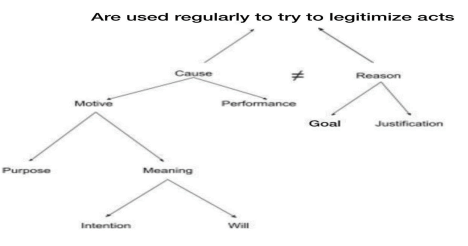
Jacobsen: Do you believe in an afterlife? If so, why, and what form? If not, why not?
Hozez: I believe the afterlife serves as a midpoint between our current realm and the post-redemption realm. It is a transitional state where the soul has fully shed the limitations of the physical world and is entirely prepared for the ultimate realization of existence. However, it is not yet “ready” in the sense that the post-redemption reality has not yet arrived. This perspective aligns with my view that life is part of a larger continuum, where each phase — physical life, the afterlife, and the post-redemption reality — serves a distinct purpose in the journey toward ultimate unity and fulfillment.
Jacobsen: What do you make of the mystery and transience of life?
Hozez: Felicity, for me, originates from pure logic. The mystery and transience of life can be understood as integral aspects of existence that align with logical principles. While life’s fleeting nature may seem unsettling, it underscores the importance of living meaningfully within the constraints of time. The logic of impermanence teaches us to value each moment, and the mystery invites us to seek understanding, purpose, and connection. Together, they create a harmonious balance, where felicity arises from embracing both the clarity of reason and the depth of what remains beyond comprehension.
Jacobsen: What is love to you?
ה’ מֶלֶךְ ה’ מָלָךְ ה’ יִמְלֹךְ לְעוֹלָם וָעֶד :Hozez
Footnotes
None
Citations
American Medical Association (AMA 11th Edition): Jacobsen S. Conversation with Yaniv Hozez on Views and Life: Member, OlympIQ Society. November 2024; 13(1). http://www.in-sightpublishing.com/hozez
American Psychological Association (APA 7th Edition): Jacobsen, S. (2024, November 22). ‘Conversation with Yaniv Hozez on Views and Life: Member, OlympIQ Society’. In-Sight Publishing. 13(1).
Brazilian National Standards (ABNT): JACOBSEN, S. Conversation with Yaniv Hozez on Views and Life: Member, OlympIQ Society’. In-Sight: Independent Interview-Based Journal, Fort Langley, v. 13, n. 1, 2024.
Chicago/Turabian, Author-Date (17th Edition): Jacobsen, S. 2024. “Conversation with Yaniv Hozez on Views and Life: Member, OlympIQ Society’.” In-Sight: Independent Interview-Based Journal 13, no. 1 (Winter). http://www.in-sightpublishing.com/hozez.
Chicago/Turabian, Notes & Bibliography (17th Edition): Jacobsen, S. “Conversation with Yaniv Hozez on Views and Life: Member, OlympIQ Society.” In-Sight: Independent Interview-Based Journal 13, no. 1 (November 2024). http://www.in-sightpublishing.com/hozez.
Harvard: Jacobsen, S. (2024) ‘Conversation with Yaniv Hozez on Views and Life: Member, OlympIQ Society’, In-Sight: Independent Interview-Based Journal, 13(1). http://www.in-sightpublishing.com/hozez.
Harvard (Australian): Jacobsen, S 2024, ‘Conversation with Yaniv Hozez on Views and Life: Member, OlympIQ Society’, In-Sight: Independent Interview-Based Journal, vol. 13, no. 1, http://www.in-sightpublishing.com/hozez.
Modern Language Association (MLA, 9th Edition): Jacobsen, Scott. “Conversation with Yaniv Hozez on Views and Life: Member, OlympIQ Society.” In-Sight: Independent Interview-Based Journal, vo.13, no. 1, 2024, http://www.in-sightpublishing.com/hozez.
Vancouver/ICMJE: Jacobsen S. Conversation with Yaniv Hozez on Views and Life: Member, OlympIQ Society [Internet]. 2024 Nov; 13(1). Available from: http://www.in-sightpublishing.com/hozez.
License & Copyright
In-Sight Publishing by Scott Douglas Jacobsen is licensed under a Creative Commons Attribution-NonCommercial-NoDerivatives 4.0 International License. ©Scott Douglas Jacobsen and In-Sight Publishing 2012-Present. Unauthorized use or duplication of material without express permission from Scott Douglas Jacobsen strictly prohibited, excerpts and links must use full credit to Scott Douglas Jacobsen and In-Sight Publishing with direction to the original content.

 In-Sight Publishing
Fascinating interview! Yaniv, I really enjoyed reading about your work in AI and your involvement in peer reviews for major journals like Taylor & Francis, Springer Nature, and Wiley. It’s truly impressive, and as someone exploring opportunities in academic publishing, I’m curious: how did you first get involved with these publishers? Was it through prior connections, or did you actively reach out to them?I’m considering reaching out to these publishers myself to learn more about their peer review process. Do you think mentioning your name and experience with them might help open doors? Any advice or insights would be greatly appreciated!
LikeLike
[Updated July 29, 2025]
Dear Ryan,
Thank you for your thoughtful comment.
Throughout my academic career, I’ve had the privilege to serve as a peer reviewer for several leading journals in my field. The peer review process is something I deeply value – not only as a way to contribute to the scientific community, but also as a reflection of mutual trust between researchers.
Typically, invitations to review arrive as a result of prior publications, conference contributions, or referrals from editorial boards. Maintaining a strong academic presence and publishing consistently in reputable journals naturally leads to such opportunities.
For those starting out, one practical approach is to indicate your availability via the submission platforms of academic journals, as I had previously stated. However, in my experience, building a reputation for thoughtful, timely, and ethically grounded reviews is what truly opens the door to recurring review requests and deeper involvement in the publishing process.
Wishing you continued success in your academic journey.
All the best,
Yaniv
LikeLike
Dear Yaniv,
Thank you so much for sharing your insights—I truly appreciate the time and thought you put into responding! It’s fascinating to learn how accessible the peer review process can be, and your involvement with respected journals is truly inspiring.
As someone completing my doctorate in psychology and practicing as a clinician for over a decade, I’ve always admired the work of the BACP in maintaining rigorous standards for counseling and psychotherapy. I assume your background as a psychologist made you an ideal fit for their peer review process? Was your role with them more influenced by your academic foundation or by your professional experience?
I also couldn’t agree more with your emphasis on ethics in peer reviewing. For me, it would never feel appropriate to review manuscripts in areas where I lack both the professional training and academic background required to provide meaningful, constructive feedback. It’s great that you highlighted this—it’s such an important reminder of the responsibility involved in advancing research through peer review. Once again, thank you for sharing your experiences—it’s enlightening to see how professionals from different fields can contribute meaningfully to advancing research. I’d love to hear more about how you approached these opportunities!
Warm regards, Ryan
LikeLike
BTW, I’ve been reflecting on the OlympIQ Society’s threshold of 175 IQ (SD 15), and something caught my attention. From my experience as a clinician working with psychometric assessments, most conventional tests, like the WAIS-IV or Stanford-Binet, tend to encounter ceiling effects well before scores in that range. The norming and scaling at such extreme levels often lack precision, making reliable measurement quite challenging.I’d be curious to hear your perspective on how these challenges are typically addressed.
LikeLike
Hey Ryan,
Following up on your mention of IQ scores, In my experience in cognitive research and psychometrics, discussions about ultra-high IQ scores often highlight the limitations of measurement tools. Standardized tests like the WAIS-IV and Stanford-Binet V are validated up to approximately 160 (SD 15), but beyond this range, scores are significantly constrained by ceiling effects and limited norming data. Claims of scores above this level generally lack the psychometric reliability and validity needed to be considered accurate or meaningful measures of intelligence.
LikeLike
Hey Ryan,
Following up on your mention of IQ scores:
In my experience in cognitive research and psychometrics, discussions about ultra-high IQ scores often highlight the limitations of measurement tools. Standardized tests like the WAIS-IV and Stanford-Binet V are validated up to approximately 160 (SD 15), but beyond this range, scores are significantly constrained by ceiling effects and limited norming data. Claims of scores above this level generally lack the psychometric reliability and validity needed to be considered accurate or meaningful measures of intelligence.
LikeLike
Hi Sarah,
Thank you for sharing your expertise. It really resonates with my experiences in practice. I also noticed something strange: my earlier comment on this topic seems to have disappeared. I had mentioned how challenging it is to measure IQ at such extreme levels with any validity or credibility. Your points perfectly capture that concern, especially regarding ceiling effects and the limits of standardized tests like the WAIS-IV. I’m genuinely curious to hear Yaniv’s perspective on how scores at that level are determined. Are there specific methods or adjustments you’ve seen that aim to address these challenges? It would be great to gain further insight into this area.
Best regards, Ryan
LikeLike
Hi Sarah,
Thank you for sharing your expertise. It really resonates with my experiences in practice. I also noticed something strange: my earlier comment on this topic seems to have disappeared. I had mentioned how challenging it is to measure IQ at such extreme levels with any validity or credibility. Your points perfectly capture that concern, especially regarding ceiling effects and the limits of standardized tests like the WAIS-IV.
I’m genuinely curious to hear Yaniv’s perspective on how scores at that level are determined. Are there specific methods or adjustments you’ve seen that aim to address these challenges? It would be great to gain further insight into this area.
Best regards, Ryan
LikeLike
Hi Sarah,
Thank you for sharing your expertise. It really resonates with my experiences in practice. I also noticed something strange: my earlier comment on this topic seems to have disappeared. I had mentioned how challenging it is to measure IQ at such extreme levels with any validity or credibility. Your points perfectly capture that concern, especially regarding ceiling effects and the limits of standardized tests like the WAIS-IV.
I’m genuinely curious to hear Yaniv’s perspective on how scores at that level are determined. Are there specific methods or adjustments you’ve seen that aim to address these challenges? It would be great to gain further insight into this area.
Best regards, Ryan
LikeLike
In light of the mention of ultra high IQ scores in the article, I wanted to share some thoughts.
For the vast majority of psychometric experts, claims of IQ scores beyond the ceiling of established tests, such as 170 or 180, enter a realm where these numbers lack any real psychometric validity. Tests with ceiling effects and speculative adjustments at these extremes simply cannot produce results that are scientifically reliable or meaningful.
It often seems that individuals drawn to these organizations are searching for external validation, possibly to compensate for a lack of tangible achievements or confidence in other areas of life.
However, true recognition and respect come from meaningful and measurable contributions, not from exaggerated numbers that lack grounding in psychometric science.
Exploring the psychological and social implications of placing such importance on unverifiable scores could offer valuable insights, especially into how these claims shape personal identity and external perceptions.
LikeLike
Is anyone else struggling to make sense of ‘three-dimensional time’? It sounds impressive, but where’s the actual substance? The terms thrown around—’timeless unity,’ ‘fragmented reality’, might make for a cool sci-fi script, but they’re just empty buzzwords. Could it be that someone here was trying to sound clever but forgot to back it up with anything substantial?
LikeLike