Organization Description: Humanists UK is the operating name of the British Humanist Association. We are a charitable company (no. 228781), formed in 1896 and incorporated in 1928, and registered in England and Wales. Our governing document is our Articles of Association, which can be viewed here.
Northern Ireland Humanists and humanists around the UK have expressed their sadness following the death of former MLA Anna Lo, who was the most high-profile humanist MLA in Northern Ireland.
A humanist and supporter of Northern Ireland Humanists, Anna was a trailblazing member of the Northern Ireland Assembly who broke new ground as the first Chinese parliamentarian in UK history.
She served as Alliance Party MLA for Belfast South from 2007 until 2016, when she was forced to stand down due to a pattern of targeted racial abuse from Ulster unionists. She lived with non-Hodgkin lymphoma, a type of blood cancer.
Northern Ireland Humanists Coordinator Boyd Sleator, who worked with her on a number of humanist issues, including the successful campaign to decriminalise abortion, paid tribute to Anna by saying:
‘Anna was an amazing woman who we worked closely with over the years. She exemplified humanist values. She was a critical thinker, her politics was led by evidence and data, and she was filled with empathy and warmth for her fellow human beings.
‘We are going to miss Anna dearly. We already do. She was a serious force for good in our society who overcame significant challenges in her personal life, but remained focused on her goal of bettering people’s lives. She is someone I look up to and a role model for Northern Ireland’s politicians now and in the years to come.’
Alliance Party leader Naomi Long MLA paid tribute by saying:
‘Anna was not a religious person. As a humanist, she believed in the goodness of people and their ability to transcend division. She exemplified that, every day of her life. Good things do, indeed, come in small packages, and Anna Lo was the best of us. She was my friend: warm, witty, funny, fierce, courageous and kind. I will miss her enormously, but she will live on in her legacy and in the hearts of all those whom she touched with her kindness.’
Anna helped to launch Northern Ireland Humanists at its official launch event in 2016, and attended many of the charity’s brunch socials, rallies, events, and activities alongside the NI Interfaith Forum. She was courageous in identifying publicly as non-religious even in Northern Ireland’s religiously charged political arena. For example, in 2015, she was the only MLA out of seven non-religious MLAs identified by the BBC who was willing to be publicly identified as non-religious and interviewed on that basis.
She was someone who believed in the future of Northern Ireland as a cosmopolitan, egalitarian society where public policy is based on evidence, human rights, and democratic consensus, and where religion does not divide people into political and social tribes.
In her own words, Anna said:
‘I think in Northern Ireland so many of our politicians use their faith as almost an attraction for voters… What I want to see is policy-making based on evidence – scientific evidence, medical evidence, social science evidence – and not the Bible.’
Notes
For further comment or information, media should contact Northern Ireland Humanists Coordinator Boyd Sleator at boyd@humanists.uk or phone 07918 975795.
Northern Ireland Humanists is part of Humanists UK, working with the Humanist Association of Ireland. Humanists UK is the national charity working on behalf of non-religious people. Powered by over 120,000 members and supporters, we advance free thinking and promote humanism to create a tolerant society where rational thinking and kindness prevail. We provide ceremonies, pastoral care, education, and support services benefitting over a million people every year and our campaigns advance humanist thinking on ethical issues, human rights, and equal treatment for all.
Organization Description: Humanists UK is the operating name of the British Humanist Association. We are a charitable company (no. 228781), formed in 1896 and incorporated in 1928, and registered in England and Wales. Our governing document is our Articles of Association, which can be viewed here.
Today sees the release of Humanists UK’s new book What I Believe, a collection of over 30 interviews with well-known humanists including Sandi Toksvig, Stephen Fry, Alice Roberts, Tim Minchin, Jim Al-Khalili, Dan Snow, Natalie Haynes, among many others. Edited by Humanists UK’s Chief Executive Andrew Copson, the book offers readers an intimate insight into the values and beliefs that inspire some of today’s most prominent voices. It follows Andrew Copson’s The Little Book of Humanism, co-written with Alice Roberts, which quickly became a Sunday Times bestseller in 2020.
Covering enormous ground, the interviews contained within What I Believe powerfully link personal stories to themes that touch on what it means to be human – spanning art, politics, history, campaigning and activism, the environment, human nature, growing up, and growing old.
Inspired by the essays of two humanist greats – the philosopher Bertrand Russell and the novelist E M Forster – What I Believe opens a window to different humanist perspectives of today. All ideas, values, and beliefs are open to question and in this book readers have the opportunity to reflect on the human experience and consider what they, too, believe.
Jim Al-Khalili, whose interview features in the book said:
‘My humanist belief helps me make sense of the universe and my place within it, which in turn gives my life hope and meaning. To be able to share my thoughts alongside so many leading contemporary thinkers and wonderful human beings in this new book is a tremendous honour.’
Helen Czerski, who is also included in What I Believe, said:
‘It’s an honour to be included in this lovely collection of humanist ideas and perspectives. One of the wonderful things about humanism is the adventure of exploring the rich variety of perspectives that we humans can create for ourselves, originating in a rational view of the world seen through the huge diversity of human experience. This book is a wonderful guide to this bounty, full of very human stories and illuminating insights.’
Janet Ellis, who was interviewed for What I Believe said:
‘A manifesto for progressive thinking. Vastly provocative, erudite and entertaining. I contributed and I’m proud!’
Editor Andrew Copson commented:
‘This book presents a remarkable range of perspectives and captures the diversity and depth of contemporary humanist thinking. At a time when values and ideals seem fragmented, readers will hopefully find within these pages not just inspiration but also a deeper sense of connection to the shared human experience. It’s an opportunity to reflect on what drives and inspires us and make sense of what we believe.’
The book is available to order from Waterstones, Hive, Blackwell’s, Amazon, and all good bookshops, at £16.99 RRP. It is published by Piatkus Books, an imprint of Little, Brown. All royalties from the book go towards supporting the work of Humanists UK.
Featured in the book are are Jim Al-Khalili, Joan Bakewell, Sarah Bakewell, Sian Berry, Susan Blackmore, Helen Czerski, Alf Dubs, Janet Ellis, Stephen Fry, Rebecca Goldstein, A C Grayling, Natalie Haynes, Leo Igwe, Mike Little, Ian McEwan, Eddie Marsan, S I Martin, Tim Minchin, Diane Munday, Christina Patterson, Hannah Peel, Kate Pickett, Steven Pinker, Nichola Raihani, Alice Roberts, Paul Sinha, Dan Snow, Sandi Toksvig, Frank Turner, Nigel Warburton, and Richard Wiseman.
Humanists UK is celebrating the launch of the book at a special event on 11 December. Guests will hear directly from Humanists UK patrons Alice Roberts and Natalie Haynes about what drives them, what inspires them, and what gives their lives meaning.
The collection originates in conversations from Humanists UK’s popular podcast of the same name, What I Believe, which since 2020 has been listened to by people in over 100 countries, and has ranked in the top 1% of podcasts worldwide.
Notes
For further comment or information, media should contact Humanists UK Communications and Development Executive sophie@humanists.uk or phone 0203 675 0959.
Humanists UK is the national charity working on behalf of non-religious people. Powered by over 120,000 members and supporters, we advance free thinking and promote humanism to create a tolerant society where rational thinking and kindness prevail. We provide ceremonies, pastoral care, education, and support services benefitting over a million people every year and our campaigns advance humanist thinking on ethical issues, human rights, and equal treatment for all.
Organization Description: Humanists UK is the operating name of the British Humanist Association. We are a charitable company (no. 228781), formed in 1896 and incorporated in 1928, and registered in England and Wales. Our governing document is our Articles of Association, which can be viewed here.
Lya [pictured: third from right] is one of our dedicated Faith to Faithless helpline volunteers
Faith to Faithless volunteer Lya was nominated for the Helpline Partnership’s Volunteer of the Year award, and won! The award was presented to Lya at the annual Helpline Awards, held on 7 November in Birmingham, and commends Lya for her contribution to the helpline sector. Faith to Faithless is a programme at Humanists UK dedicated to providing specialist support to people leaving high control religion. Humanists UK offers its warm congratulations.
The Helplines Partnership is the national membership body for organisations that provide information, support, or advice via phone, email, text, or online. Each year it holds the Helpline Awards to celebrate unsung heroes and recognise the exceptional work of the helpline sector. By giving Lya (who prefers only her first name is used for her safety) this award, the Helpline Partnership has recognised the remarkable contributions she has made in providing outstanding support, guidance, and compassion to those in need.
The Faith to Faithless helpline, a dedicated helpline for those leaving high-control religions, was launchedearlier this year. Currently operating three days a week, it is operated by a team of highly trained volunteers who understand the nuanced challenges faced by groups such as ex-Muslims, ex-Jehovah’s Witnesses, ex-Evangelicals, and ex-Mormons. They are equipped to listen to and understand the unique issues apostates face, providing a listening ear and signposting to other services where needed.
Humanists UK Director of Humanist Care Clare Elcombe Webber said:
‘We are so proud of Lya and absolutely delighted that her hard work, dedication and expertise are recognised not only by Faith to Faithless service users, but also by the Helplines Partnership. We are also proud of all the other volunteers who have contributed so much to the Faith to Faithless helpline over its first year and made it such a resounding success.
‘The need for the Faith to Faithless helpline cannot be underestimated. Our team of volunteers are there for people leaving high-control religious communities who may be facing social isolation, profound loneliness and economic hardship, at great cost to their mental wellbeing.
‘While we celebrate Lya’s contributions, we have to stay focused on the ongoing challenge of keeping this crucial service resourced so that we can continue to be here for some of the most vulnerable people in the country.’
Notes
For further comment or information, media should contact Humanists UK’s Director of Public Affairs and Policy Richy Thompson at press@humanists.uk or phone 0203 675 0959.
Faith to Faithless is a programme at Humanists UK dedicated to providing specialist support to people leaving high control religion. Beyond the helpline and its year-round provision of peer support from trained volunteers, the service offers awareness training to public services, including NHS divisions and police forces.
Faith to Faithless operates under a stringent safeguarding policy, prioritising the safety and wellbeing of all those reaching out for support.
Humanists UK is the national charity working on behalf of non-religious people. Powered by over 120,000 members and supporters, we advance free thinking and promote humanism to create a tolerant society where rational thinking and kindness prevail. We provide ceremonies, pastoral care, education, and support services benefitting over a million people every year and our campaigns advance humanist thinking on ethical issues, human rights, and equal treatment for all.
Organization Description: Humanists UK is the operating name of the British Humanist Association. We are a charitable company (no. 228781), formed in 1896 and incorporated in 1928, and registered in England and Wales. Our governing document is our Articles of Association, which can be viewed here.
Humanists UK returned to Manchester for the 2024 Holyoake Lecture, given by distinguished psephologist and political scientist Professor John Curtice, the recipient of the Humanists UK Holyoake Lecture Medal.
Professor Curtice’s lecture focused on the phenomenon of ‘culture wars’ in the UK, analysing how shifts in public attitudes and values are influencing politics and society. Issues like national pride, women’s and minority rights, and immigration are challenging long-standing British identities and contributing to a new, increasingly fragmented political landscape.
Professor Curtice argued that the UK is becoming increasingly divided along a libertarian-authoritarian axis – a departure from the previously more salient ‘left-right’ divide. This new fault line runs across existing political camps, and separates those who prioritise personal freedom, social diversity, and global integration from those who favour social order, national sovereignty, and traditional authority. This shift, he suggested, was being driven by a confluence of factors, including rising educational attainment, secularisation, as well as the growing influence of younger, more progressive generations. As liberalism progresses, its fruits become more politically contested.
As a result, demographic factors such as age have shifted from being a ‘secondary’ predictor of political opinion to a major political faultline in and of itself. Professor Curtice highlighted the softening of national pride, with younger generations less likely to celebrate Britain’s imperial past. He also noted the seemingly paradoxical shift in attitudes towards immigration, with public acceptance and appreciation of immigrants’ economic and cultural contributions increasing, rather than falling, immediately following the Brexit vote – a decision often associated with anti-immigration sentiment. On this and other issues, the public was undergoing a polarisation – a flight to the extremes – the like of which we more commonly associate with the United States and its entrenched political divides.
His analysis was punctuated with compelling data, demonstrating how these cultural shifts are reshaping the political landscape. He showed how ‘culture war’ issues are increasingly influencing voting patterns. ‘The culture wars are not just about policy disagreements,’ he explained. ‘They’re a reflection of who we are and who we want to be as a society.’
Following a lively and wide-ranging Q&A, Andrew Copson awarded Professor John Curtice the prestigious Holyoake Lecture Medal:
‘It’s in knowing ourselves and what divides us that we can perhaps begin to glean those things that might unite us, and there is perhaps no person who has done more to shed a light on the British public than John Curtice. I’m delighted, therefore, to present John Curtice with the Holyoake Lecture Medal 2024′
Notes
For further comment or information, media should contact Humanists UK Director of Public Affairs and Policy Richy Thompson at press@humanists.uk or phone 0203 675 0959.
The Holyoake Lecture explores an aspect of politics or contemporary social or political issue, especially as it relates to secularist and humanist issues, including liberalism, democracy, social justice, feminism, anti-racism, LGBT rights, or equality. The Holyoake medallist has made a significant contribution in one of these fields. The lecture and medal are named for the nineteenth century humanist George Jacob Holyoake, who among many other achievements coined the word ‘secularism’ and was a lifelong progressive political activist.
Humanists UK is the national charity working on behalf of non-religious people. Powered by over 130,000 members and supporters, we advance free thinking and promote humanism to create a tolerant society where rational thinking and kindness prevail. We provide ceremonies, pastoral care, education, and support services benefitting over a million people every year and our campaigns advance humanist thinking on ethical issues, human rights, and equal treatment for all.
Organization Description: Humanists UK is the operating name of the British Humanist Association. We are a charitable company (no. 228781), formed in 1896 and incorporated in 1928, and registered in England and Wales. Our governing document is our Articles of Association, which can be viewed here.
The UK Government has confirmed that VAT will be applied to private faith schools across the UK as part of its plans to remove VAT exemption for private schools. Humanists UK, who wrote to the Chancellor of Exchequer urging her not to apply any faith-based carve-outs to the VAT policy, has welcomed this announcement. However, it is concerned about private faith schools seeking to get around the policy by ostensibly – but not really – making their fees voluntary.
Some private faith schools, including three private Christian schools, have said they will take legal action against the UK Government. These schools claim the policy would unlawfully discriminate against parents because it would force these schools to close and deprive them of providing a faith-based education for their children. At the time Humanists UK disputed this claim, arguing that even if private faith schools did close, state-funded faith schools would continue to exist. This view has been supported by the UK Government in its response to its technical consultation with parents and private school providers:
‘[I]t is the government’s position that state education is suitable for children of all faiths. All children of compulsory school age are entitled to a state-funded school place if they need one, and all schools are required to follow the Equality Act. These include fostering and promoting an environment that encourages respect and tolerance of children and families of all faiths and none. As a result of these considerations, faith schools will remain in scope of this policy (2.23).’
Humanists UK campaigns for an inclusive education and schools system that allows no privilege or discrimination on grounds of religion or belief, and gives children and young people of all different backgrounds and beliefs an environment that lets them learn with and from each other. This includes campaigning for an end to religious discrimination in school admissions and employment, and for a progressive reform of the curriculum including religious education.
Humanists UK’s Education Campaigns Manager Lewis Young said:
‘We welcome the UK Government’s announcement that there will be no faith-based carve-outs to its private school VAT policy and that private faith schools will be included.
‘We also welcome its statement that no child is being deprived of state-funded education as a result of this policy, and that children have the same fundamental rights concerning education regardless of the type of school they attend.’
A problem ahead: private faith schools pretending they charge no fees but instead have ‘voluntary’ donations
The UK Government’s response also states that rather than being disproportionately impacted by the VAT plans as some private faith school providers have argued, some small private faith schools are ‘likely to be less than proportionately impacted’ by the plans as they receive donations from the community and religious organisations (2.19).
Humanists UK is aware that some private faith school providers including Chinuch UK, the body representing Charedi schools, are reviewing whether schools which operate on a voluntary donations basis rather than fees will fall outside of the new VAT rules. But there is concern that in fact parents at such schools are coerced into making such ‘donations’, and so they are in fact mandatory. If this is the case, private faith schools could follow this model. Humanists UK will be writing again to the UK Government to urge HMRC to implement the strongest possible regulations to make sure all donations are made on a voluntary basis and that no family is coerced into making them.
Notes
For further comment or information, media should contact Humanists UK Director of Public Affairs and Policy Richy Thompson at press@humanists.uk or phone 0203 675 0959.
Humanists UK is the national charity working on behalf of non-religious people. Powered by over 120,000 members and supporters, we advance free thinking and promote humanism to create a tolerant society where rational thinking and kindness prevail. We provide ceremonies, pastoral care, education, and support services benefitting over a million people every year and our campaigns advance humanist thinking on ethical issues, human rights, and equal treatment for all.
Organization Description: Humanists UK is the operating name of the British Humanist Association. We are a charitable company (no. 228781), formed in 1896 and incorporated in 1928, and registered in England and Wales. Our governing document is our Articles of Association, which can be viewed here.
Consent education is a vital component of Relationships and Sexuality Education (RSE), and should be taught in an unbiased and evidence-led manner to make sure young people get the knowledge they need about boundaries, healthy relationships, and preventing sexual harassment and relationship abuse. That is the view of Northern Ireland Humanists, given in its response to the Assembly’s Education Committee’s inquiry on RSE.
The Education Committee launched its inquiry to understand how RSE is taught in other parts of the UK, Ireland, and internationally; understand the teaching provision of RSE across Northern Ireland; and understand if changes need to be made to RSE in Northern Ireland and what these should look like.
Alongside calls for unbiased consent education, Northern Ireland Humanists’ also called for any parental right to withdraw their children from RSE to be removed, and for the Department of Education (DE) to scrap the provision that allows schools to deliver RSE in alignment with the ethos of the school.
Although lessons on abortion, contraception, and consent are compulsory in Northern Ireland, the DE issued guidance to schools and governors that allows for teachers to discuss ‘moral, ethical and spiritual issues’ associated with the RSE minimum content. Northern Ireland Humanists argues that this should be removed from the guidance to make sure the RSE is delivered in an evidence-led manner.
Earlier this year Northern Ireland Humanists welcomed the passing of a motion mandating compulsory ‘standardised, inclusive, high-quality, evidence-based and age-appropriate’ RSE In the Northern Ireland Assembly.
‘The Education Committee’s inquiry into RSE is a welcome opportunity to make the case for good quality, unbiased, and evidence-led teaching. We urge the Assembly and Executive to make further reforms to make sure the subject is free from religious bias.
‘RSE that is inclusive, evidence-based, and age-appropriate equips young people with the knowledge they need to navigate relationships in a healthy and respectful way, while also fostering a society that values respect and informed consent. We will continue to work closely with educators, parents, and policymakers to make the case for an unbiased and evidence-led RSE curriculum.’
Notes
For further comment or information, media should contact Northern Ireland Humanists Coordinator Boyd Sleator at boyd@humanists.uk or phone 07918 975795.
Northern Ireland Humanists is part of Humanists UK, working with the Humanist Association of Ireland. Humanists UK is the national charity working on behalf of non-religious people. Powered by over 120,000 members and supporters, we advance free thinking and promote humanism to create a tolerant society where rational thinking and kindness prevail. We provide ceremonies, pastoral care, education, and support services benefitting over a million people every year and our campaigns advance humanist thinking on ethical issues, human rights, and equal treatment for all.
Organization Description: Humanists UK is the operating name of the British Humanist Association. We are a charitable company (no. 228781), formed in 1896 and incorporated in 1928, and registered in England and Wales. Our governing document is our Articles of Association, which can be viewed here.
In a major victory for a longstanding Humanists UK campaign, safe access zones around all hospitals and clinics providing abortions in England and Wales are implemented from today.
The move means people accessing or providing abortions can do so free from harassment and intimidation. Humanists UK has campaigned on this issue as part of the ‘Back Off!’ campaign – which it helped to launch in 2015 – and welcomed the implementation as a crucial step towards protecting abortion care access.
Safe access zones will make it an offence to influence, obstruct, or harass anyone within a 150-metre radius around any premise providing abortion services, and anyone found guilty of breaking the law will face an unlimited fine. This covers acts such as handing out leaflets, protesting against abortion rights, shouting at individuals, or physically restricting someone’s access to a clinic or hospital.
Instances will be dealt with on a case-by-base basis, with police and prosecutors evaluating the intent and recklessness of the person involved. The Crown Prosecution Service (CPS) has published clear guidance to prosecutors that there is no defence on religious or ethical grounds to people seeking to influence, obstruct, or harass others within safe access zones. As such, Humanists UK expects silent prayer to be covered by the law as a practice that people accessing a clinic often describe as intimidating, even if the person praying is not speaking.
What are safe access zones?
Recent years have seen a sharp increase in the size and extent of religious protesters picketing abortion clinics in the UK. Using tactics imported from the United States, these protesters can display graphic images, hurl insults, and call women and clinic staff ‘murderers’ as they approach the building. Women who have attempted to access abortion services have described this as a ‘gauntlet of abuse’.
Safe access zones are an innovation – piloted successfully in parts of the United States, Canada, and Australia – to uphold women’s fundamental right to access healthcare. They require the space around abortion clinics to be free to access for all patients. This means protesters have to move their signs and soapboxes down the street, or direct their attention to policymakers, rather than vulnerable women and girls. Those accessing abortion services include women who are victims of domestic violence, rape, and sexual assault.
The route to safe access zones in England and Wales
Legislation to introduce national safe access zones was passed in the UK Parliament in March 2023, following an amendment tabled by Stella Creasy MP, and supported by Humanists UK through briefing to the All-Party Parliamentary Humanist Group (APPHG).
But the UK Home Office under Home Secretary Suella Braverman chose instead to consult on the matter, despite a clear mandate from Parliament supporting the establishment of such zones. Draft guidance released in January 2024 by then Home Secretary James Cleverly included expansive religious loopholes that would have rendered the legislation incapable of protecting women from abuse and harassment. Parliament was dissolved for the General Election before any changes could be implemented.
Richy Thompson, Humanists UK Director of Public Affairs and Policy, commented:
‘We welcome the new Government’s swift action on implementing safe access zones, as well as the robust guidelines issued today. We know from extensive work in this area that people accessing a clinic can feel intimidated by the presence of someone praying in the area, even if they are not speaking. The law spells out clearly that any attempt to influence or obstruct abortions will fall foul of the law, and we would expect silent prayer to fall within this.’
Notes
For further comment or information, media should contact Humanists UK Director of Public Affairs and Policy Richy Thompson at press@humanists.uk or phone 0203 675 0959.
Humanists UK is the national charity working on behalf of non-religious people. Powered by over 120,000 members and supporters, we advance free thinking and promote humanism to create a tolerant society where rational thinking and kindness prevail. We provide ceremonies, pastoral care, education, and support services benefitting over a million people every year and our campaigns advance humanist thinking on ethical issues, human rights, and equal treatment for all.
Organization Description: Humanists UK is the operating name of the British Humanist Association. We are a charitable company (no. 228781), formed in 1896 and incorporated in 1928, and registered in England and Wales. Our governing document is our Articles of Association, which can be viewed here.
Humanists UK is deeply saddened by the death of Labour peer Lord Lyndon Harrison, Humanists UK patron and stalwart member of the All-Party Parliamentary Humanist Group (APPHG) until his retirement from the House of Lords.
Lord Harrison was one of the most active humanists in Parliament in the 2000s and 2010s, making huge contributions to humanist marriages, the question of religion in Parliament, and recognition of humanism in society.
Born in 1947, Lord Harrison studied at the University of Warwick, University of Sussex, and University of Keele, where he earned multiple degrees in the arts and humanities. His career in public service began in earnest when he became a Member of the European Parliament (MEP) in 1989. A decade later, in 1999, he was made a Labour life peer, taking his seat in the House of Lords.
A proud humanist and an active member of the APPHG from his position in the House of Lords, Lord Harrison sought throughout his career to make sure that the voices of the non-religious were heard, valued, and respected in public life. In 2007, he initiated a debate in the House of Lords on ‘the position in British society of those who profess no religion’, challenging the contemporary narrative that non-religious people, including humanists, were ‘illiberal’ or ‘aggressive.’ He called for greater recognition of the non-religious in the formation of public policy and for equality in public life.
‘My debate today seeks to… tabulate those areas of public life where we feel unacknowledged, unprized, and under-represented. I hope, too, to ponder on what government and the wider community might do to reflect better this modern and more secular Britain that is developing, in particular in its public policies and institutions.’
He was praised by Lord Judd in this same debate for his ‘warm engagement with the realities of society’ and knowing ‘what really makes society, at the grassroots, tick.’ ‘It is always good’, he added, ‘that he challenges us [the Lords] with those perceptions.’
In 2013 he organised a second such debate, this time more specifically to celebrate the contribution of humanists to British society and highlight the work of Humanists UK:
‘My Lords, today we speak up on behalf of the silent majority, for those of us who do not attend any place of worship, whether church, mosque or synagogue. It is a silent majority, whose full contribution to British society has perhaps been unsung for too long. In contrast, we find that religious voices are ever more present, and sometimes shrill, in the public square. However, because atheism is a philosophical viewpoint, arrived at individually and personally, we are not given to marching in the street chanting, “What do we want? Atheism! When do we want it? Now!”. As a humanist who senses that religion has neither rhyme nor reason, I believe that we should ensure that our needs and concerns are met and satisfied in that public square, as they are in the private armchair. For too long we have been silent, contemplative hermits in terms of our own cause.’
‘I believe that the time has come for a secular state within an open society – an idea which has the support of many humanists and many among the Anglican Communion… [Humanists UK’s] case for secularism argues that we can no longer base society on a shared religion, but rather on shared values. A secular state, which is most avowedly not an atheist state, seeks to protect the rights of all citizens to hold their own beliefs, religious or otherwise. A secular state is assuredly an open and an even-handed state in which people’s participation in public institutions does not depend on their religious or non-religious convictions.’
In 2012 he introduced the first-ever private members’ bill to bring about legal recognition of humanist marriages. This kickstarted all subsequent parliamentary debate on the issue. In 2013, when the Same-Sex Marriage Act was going through Parliament, he was the first in the Lords to put down amendments to add humanist marriage recognition to that Bill. His and others’ efforts were rewarded when the Government subsequently introduced its own amendment to bring about recognition – although one it has sadly subsequently resisted enacting.
He was actively involved in debates around religion, humanism, and education. For example, he spoke out in support of humanism in RE, against 100% selective religious schools, and on school admissions rules. He also organised an oral question on whether the BBC was including humanists enough in its coverage. Outside of parliamentary life, Lord Harrison remained a keen advocate for the inclusion of the non-religious in public life, debating prominent figures like conservative commentator Peter Hitchens on BBC Radio 4’s Todayprogramme on whether religious people have a privileged position in society.
Commenting on Lord Harrison’s death, Andrew Copson said:
‘I worked with Lyndon for twenty years and he was always a warm and incisive colleague. He leaves behind a huge legacy of principled advocacy for humanism and the fair representation of non-religious voices in the UK. At Humanists UK we will all miss him very much and we extend our heartfelt condolences to his family and friends and the many who loved him.’
Notes
For further comment or information, media should contact Humanists UK Director of Public Affairs and Policy Richy Thompson at press@humanists.uk or phone 0203 675 0959.
Humanists UK is the national charity working on behalf of non-religious people. Powered by over 120,000 members and supporters, we advance free thinking and promote humanism to create a tolerant society where rational thinking and kindness prevail. We provide ceremonies, pastoral care, education, and support services benefitting over a million people every year and our campaigns advance humanist thinking on ethical issues, human rights, and equal treatment for all.
Organization Description: Humanists UK is the operating name of the British Humanist Association. We are a charitable company (no. 228781), formed in 1896 and incorporated in 1928, and registered in England and Wales. Our governing document is our Articles of Association, which can be viewed here.
Humanists UK has launched a nationwide advertising campaign for new book What I Believe. Posters showcasing the book, which is a collection of diverse essays from famous humanists, are currently on display in London Underground stations and railway stations across the UK ahead of its publication on 7 November.
Humanism seen by millions
Designed to reach millions of commuters daily, the campaign invites readers to explore humanist values – the mainstream values of the non-religious in contemporary Britain – and reflect on their own beliefs and convictions in the process.
The book follows in the footsteps of the Sunday Times bestseller The Little Book of Humanism, which was a barnstorming success in online retailers and high street bookstores, charting high on Amazon, Waterstones, and Hive book charts. Like its predecessor, What I Believe offers fresh and timely perspectives on how to live a fulfilling and ethical life.
Breadth of humanist thought
The book is a series of interview essays with high-profile non-religious people in the public eye, around the theme of ‘What I Believe’, which is to say, delving into the guiding values, unique opinions, and personal convictions they live by. It is available for pre-order now.
Well-known humanists interviewed for the book include Stephen Fry, Sandi Toksvig, Tim Minchin, and Alice Roberts. The book was edited by Humanists UK Chief Executive Andrew Copson.
Stephen Fry
Sandi Toksvig
Tim Minchin
Alice Roberts
The essays, collected together in this new edited form, powerfully showcase the vast diversity, breadth, and room for disagreement in humanist thought, even between people united by shared values, ideals, and principles.
Covering enormous ground, these interviews powerfully link personal stories to themes that touch on what it means to be human – spanning art, politics, history, campaigning and activism, the environment, love, friendship, growing up, and growing old.
The humanist view of life is progressive and dynamic. All ideas, values, and beliefs are open to question. In this book, readers will find inspiration to shape their own personal worldviews.
The book is available to pre-order from Waterstones, Hive, Amazon, and all good bookshops, at £16.99 RRP. It is published by Piatkus Books, an imprint of Little, Brown. All author royalties will go towards supporting the work of Humanists UK.
Commenting, editor of What I Believe Andrew Copson said:
‘It’s great to see What I Believe adverts in the corridors and platforms of London Underground stations and railway stations up and down the country ahead of its release on 7 November.
‘By speaking to well-known humanists like Sandi Toksvig, Stephen Fry, and Alice Roberts, I hope readers will find within these pages not just inspiration but also a deeper sense of connection to the shared human experience, and a chance to reflect on their own beliefs and values. I look forward to its release!’
Notes
For further comment or information, media should contact Humanists UK Director of Public Affairs and Policy Richy Thompson at press@humanists.uk or phone 0203 675 0959.
All ideas, values, and beliefs are open to question and in this book you will find inspiration to shape your own worldview. What I Believe features interviews with Jim Al-Khalili, Joan Bakewell, Sarah Bakewell, Sian Berry, Susan Blackmore, Helen Czerski, Alf Dubs, Janet Ellis, Stephen Fry, Rebecca Goldstein, A C Grayling, Natalie Haynes, Leo Igwe, Mike Little, Ian McEwan, Eddie Marsan, S I Martin, Tim Minchin, Diane Munday, Christina Patterson, Hannah Peel, Kate Pickett, Steven Pinker, Nichola Raihani, Alice Roberts, Paul Sinha, Dan Snow, Sandi Toksvig, Frank Turner, Nigel Warburton and Richard Wiseman.
Humanists UK is the national charity working on behalf of non-religious people. Powered by over 120,000 members and supporters, we advance free thinking and promote humanism to create a tolerant society where rational thinking and kindness prevail. We provide ceremonies, pastoral care, education, and support services benefitting over a million people every year and our campaigns advance humanist thinking on ethical issues, human rights, and equal treatment for all.
Organization Description: Humanists UK is the operating name of the British Humanist Association. We are a charitable company (no. 228781), formed in 1896 and incorporated in 1928, and registered in England and Wales. Our governing document is our Articles of Association, which can be viewed here.
The Advertising Standards Authority confirmed it had received a complaint that the poster ‘mocks the Christian faith’
A poster advertising comedian Fern Brady’s tour is ‘sacrilegious’, according to a complaint received by the Advertising Standards Authority (ASA). Given ASA rules, this complaint could lead to the comedy poster being banned.
Humanists UK is concerned that the ASA will ban the poster on grounds of causing religious offence, as it has with similar adverts in the past. It says that doing so amounts to a de facto anti-blasphemy law, which is an unreasonable restriction on free expression.
Fern Brady’s poster shows her standing in front of a stained glass window with the title for her tour ‘I gave you milk to drink’, a reference to a biblical verse. Brady is depicted wearing ‘biblical era clothing’ and squirting breast milk towards the mouth of a man kneeling in ecclesiastical clothing.
The ASA is the self-regulator of almost all advertising space in the UK. It maintains a Code on Advertising Practice, and routinely bans adverts that don’t comply with the Code. The Code says ‘Marketing communications must not contain anything that is likely to cause serious or widespread offence. Particular care must be taken to avoid causing offence on the grounds of: …religion or belief’. Humanists UK believes that the subjective tests of ‘offence’ should not appear in the advertising codes of practice and has long spoken out against examples of censorship that amount to the reintroduction of the blasphemy law, for advertising, by the back door.
Last year, the ASA found that a poster promoting Demi Lovato’s album was ‘likely to cause offence to Christians’. The poster had been displayed at only six locations across London in the summer of 2022 before being taken down four days later. It depicted the clearly recognisable singer ‘in a bondage-style outfit whilst lying on a large, cushioned crucifix’, along with the name of the album, ‘HOLY FVCK’. Complaints were made to the ASA about the poster on two grounds – that the advertisement would cause ‘serious or widespread offence’ and that it was ‘irresponsibly placed where children could see it.’ Both grounds were upheld by the ASA. While the poster could have reasonably been banned solely for containing language that was easily recognisable as alluding to a swear word, or for its inappropriateness for children, Humanists UK criticised the ASA also banning the image for being religiously offensive.
Humanists UK Director of Public Affairs and Policy Richy Thompson commented:
‘Blasphemy laws were repealed in England and Wales in 2008, and Scotland in 2024. Yet to censor adverts solely on the grounds that they may offend the religious sensibilities of some enforces a de facto ban on blasphemy.
‘We urge the ASA to make the right decision, to protect Fern Brady’s right to freedom of expression, and to do away with back door anti-blasphemy laws.’
Notes
For further comment or information, media should contact Humanists UK Director of Public Affairs and Policy Richy Thompson at press@humanists.uk or phone 0203 675 0959.
Humanists UK is the national charity working on behalf of non-religious people. Powered by over 120,000 members and supporters, we advance free thinking and promote humanism to create a tolerant society where rational thinking and kindness prevail. We provide ceremonies, pastoral care, education, and support services benefitting over a million people every year and our campaigns advance humanist thinking on ethical issues, human rights, and equal treatment for all.
Organization Description: Humanists UK is the operating name of the British Humanist Association. We are a charitable company (no. 228781), formed in 1896 and incorporated in 1928, and registered in England and Wales. Our governing document is our Articles of Association, which can be viewed here.
Some of the most courageous and determined campaigners we have ever met and worked with at Humanists UK have been incurably suffering people and their families, with conditions from multiple sclerosis, to Huntington’s, to locked-in syndrome, who are not terminally ill but are nonetheless fighting for the right to assistance to die with dignity at a time of their choosing.
It is our longstanding policy of many decades that they should have that right and we’ve been proud to work with so many of them for many years, including in the last few weeks as they have attempted to secure a Bill that would offer them the dignity they deserve.
However, last week the Assisted Dying Bill currently before the Commons had its first reading. Its title was announced as the ‘Terminally Ill Adults (End of Life) Bill’. That means the Bill is now set in stone as one in which eligibility for assisted dying will be restricted to the terminally ill. No further debate on the merits of such an approach can change that.
This is still a historic Bill which would give thousands of suffering people the choice and dignity they desire and deserve and we are committed to working for its success.
Parliamentarians will have in front of them vital questions about eligibility, process, and safeguards, that it will be the duty of all of society to help them address. Drawing on our own decades of policy and research in this field, and on the best of the international experience of the 31 legal jurisdictions in the world that are ahead of us, we at Humanists UK look forward to supporting Kim Leadbeater MP, the proposer of the Bill, and all legislators with this once-in-a-generation legislation.
Notes
For further comment or information, media should contact Nathan Stilwell at nathan@humanists.uk or phone 07456200033.
If you have been affected by the current assisted dying legislation, and want to use your story to support a change in the law, please email campaigns@humanists.uk.
Humanists defend the right of each individual to live by their own personal values, and the freedom to make decisions about their own life so long as this does not result in harm to others. Humanists do not share the attitudes to death and dying held by some religious believers, in particular that the manner and time of death are for a deity to decide, and that interference in the course of nature is unacceptable. We firmly uphold the right to life but we recognise that this right carries with it the right of each individual to make their own judgement about whether their life should be prolonged in the face of pointless suffering.
We recognise that any assisted dying law must contain strong safeguards, but the international evidence from countries where assisted dying is legal shows that safeguards can be effective. We also believe that the choice of assisted dying should not be considered an alternative to palliative care, but should be offered together as in many other countries.
Humanists UK is the national charity working on behalf of non-religious people. Powered by over 120,000 members and supporters, we advance free thinking and promote humanism to create a tolerant society where rational thinking and kindness prevail. We provide ceremonies, pastoral care, education, and support services benefitting over a million people every year and our campaigns advance humanist thinking on ethical issues, human rights, and equal treatment for all.
Organization Description: Humanists UK is the operating name of the British Humanist Association. We are a charitable company (no. 228781), formed in 1896 and incorporated in 1928, and registered in England and Wales. Our governing document is our Articles of Association, which can be viewed here.
MPs have rallied to support amendments to a government bill to remove the automatic right for 26 Church of England bishops to sit in the House of Lords. The amendments follow cross-party MPs calling for reform during the second reading of the House of Lords (Hereditary Peers) Bill. Humanists UK has welcomed the amendments and urges MPs from across the chamber to back this progressive reform.
The amendments to the House of Lords (Hereditary Peers) Bill would see an end to the 26 reserved places for Church of England bishops in the House of Lords. If selected, they will be voted on during the Committee Stage of the Bill, the date for which has not yet been announced.
The Labour Party under Sir Keir Starmer MP previously committed to transitioning the House of Lords to a ‘fully elected’ chamber, which would mean no reserved seats for bishops. However, it has not yet embarked towards removing the bishops.
If successful, the amendments would follow the recommendations of a 2020 report from the All-Party Parliamentary Humanist Group of MPs and peers in Parliament to remove this historic anomaly of automatic places for bishops in the House of Lords. The report highlighted that bishops get unique easy access to Government officials, that if a bishop stands up to speak then the convention is that everyone else has to stop and sit down, and that the bishops’ votes on new laws have been decisive in instances that have benefited the Church.
Humanists UK Director of Public Affairs and Policy Richy Thompson commented:
‘We welcome these amendments which aim to deliver a more fair and equal society by removing the automatic right for Church of England bishops to sit in the House of Lords. There is no reason for leaders of one particular branch, of one particular religion, and one particular geography, within modern society to to enjoy such favour over all others, especially when considering that most people are not Anglican.
‘We ask MPs to back these sensible amendments to get on with reform without delay, and ask our members and supporters to call on their MPs to do the same.’
Notes
For further comment or information, media should contact Humanists UK Director of Public Affairs and Policy Richy Thompson at press@humanists.uk or phone 0203 675 0959.
Humanists UK is the national charity working on behalf of non-religious people. Powered by over 120,000 members and supporters, we advance free thinking and promote humanism to create a tolerant society where rational thinking and kindness prevail. We provide ceremonies, pastoral care, education, and support services benefitting over a million people every year and our campaigns advance humanist thinking on ethical issues, human rights, and equal treatment for all.
Organization Description: Humanists UK is the operating name of the British Humanist Association. We are a charitable company (no. 228781), formed in 1896 and incorporated in 1928, and registered in England and Wales. Our governing document is our Articles of Association, which can be viewed here.
Humanists weddings are not legally recognised in England and Wales, unlike Scotland, Northern Ireland, Jersey, Guernsey, and Ireland
Peers from the Labour, Conservative, and Liberal Democrat parties, from the Crossbenches, and even a bishop spoke in favour of the immediate legal recognition of humanist marriages in England and Wales in the House of Lords today.
During oral questions, the cross-party peers pressed the Government on its reluctance to set out a timescale on giving humanist couples to marry in line with their beliefs. Humanists UK leads the campaign for the legal recognition of humanist marriages and welcomed the calls made by peers. But it expressed its disappointment that the Government did not commit to immediate reform, despite supporting this measure for over ten years while in opposition.
Labour peer Baroness Thornton, a member of the All-Party Parliamentary Humanist Group (APPHG), tabled the question. She asked whether the Government plans to give legal recognition to humanist weddings and said:
‘Not only did this House put humanist marriage in the Equal Marriage Act of 2013 but, in 2020, the High Court ruled that the failure to provide humanist marriages in England and Wales means that “the present law gives rise to discrimination”, and that the Government “could not sit on its hands” and do nothing. Given that the Government know they must act here, given that this is Labour policy, given that it will cost nothing and given that the Church of England has given it its blessing, what is the problem and why can we not get on with it?’
In response, the Government said it needed more time to set out a position and consider the measure in as wide a context as possible because of inconsistencies within the current marriage law. But as highlighted by peers today, legal recognition of humanist marriages does not have to wait for wholesale reform and can happen now through an Order-making power under the Marriage (Same-Sex Couples) Act 2013.
Liberal Democrat peer Baroness Burt, Vice-Chair of the APPHG said:
‘My Lords, “the Liberal Democrats clearly support this change; the Labour Party supports this change; the Government in Wales support this change; the Government in Scotland support this change; and, as we have heard from the noble Lord, Lord Pickles, it is ultimately going to be a political decision, so why are the Government waiting for the Law Commission’s report?” These are not my words but the words of the Minister himself… The Law Commission has now reported, as he knows. Will he answer now his own question? When will this happen?’
Wholesale marriage reform as proposed by the Law Commission review in 2022 also proves controversial, as pointed out by the Bishop of Sheffield, who stated his Church’s support for humanist marriages but opposition to the wider reforms:
‘On these [i.e. the bishops’] Benches we would welcome humanist wedding ceremonies being given legal status, but the recommendations of the Law Commission go beyond that and would create a free market celebrant-based approach to the wedding industry… Such a move could undermine the solemn nature of marriage, which is never a trivial transaction. Given this unlikely alliance between the Lords Spiritual and Humanists UK, can the Minister confirm that the Government will not enact the recommendations of the Law Commission without considering carefully the impact of a further commercialisation of weddings?’
Conservative peer and APPHG Member Lord Dobbs said:
‘It is Labour policy; it is law in Scotland, Northern Ireland and Jersey; and we have been looking at it for ever. Why the delay? Why do the Government have to look at this yet again, when in opposition they were very clear about it? When they have looked at it, what is the timescale? When will the Minister bring the Government’s view back to this House, so that we can deal with something positive?’
Crossbench peers Lord Desai and Lord Meston also spoke in support.
Humanists UK Director of Public Affairs and Policy Richy Thompson commented:
‘Today’s debate had peers from across the political spectrum speak in favour of humanist marriages, and this demonstrates the strength of feeling within Parliament that the law must change without further delay. We hope that the Government will think again, and make good on its promise in opposition to make use of the Order-making power now.’
Notes
For further comment or information, media should contact Humanists UK Director of Public Affairs and Policy Richy Thompson at press@humanists.uk or phone 0203 675 0959.
Humanist weddings are non-religious wedding ceremonies that are fully customised to match the deepest-held values and beliefs of the couple getting married. They are conducted by a humanist celebrant, someone guaranteed to share their beliefs. In consultation with the couple the celebrant produces a completely bespoke script. The ceremony also occurs in whatever location is most meaningful for the couple. Humanists UK has more than 300 trained and accredited wedding celebrants.
Humanist marriages gained legal recognition in Scotland in 2005 and in 2019 there were more humanist than Christian marriages for the first time (23% of the total). In the Republic of Ireland, humanist marriages gained legal recognition in 2012. In 2019 around 9% of legally recognised marriages were humanist. That places the Humanist Association of Ireland only behind the Catholic Church and civil marriages. They gained legal recognition in Northern Ireland in 2018, following a Court of Appeal ruling that concluded that a failure to do so would be a breach of human rights. Jersey also gave legal recognition to humanist marriages in 2019 and in 2021 Guernsey followed suit.
Legal recognition in England and Wales has been under constant Government review since 2013. The Marriage Act gave the Government the power to enact legal recognition of humanist marriages without needing a new Act. But in the years since, the Government has not done this. Instead the matter has been reviewed three times, most recently by the Law Commission, who published their report in July 2022. The previousGovernment did not issue its response before the General Election was called.
In 2020, six humanist couples took a legal case to the High Court. They argued that they were discriminated against by the fact that religious marriages are legally recognised but humanist marriages are not. The judge in the case agreed, ruling that ‘the present law gives rise to… discrimination’. She also ruled that, in light of that, the Secretary of State for Justice ‘cannot… simply sit on his hands’ and do nothing.
Humanists UK is the national charity working on behalf of non-religious people. Powered by over 120,000 members and supporters, we advance free thinking and promote humanism to create a tolerant society where rational thinking and kindness prevail. We provide ceremonies, pastoral care, education, and support services benefitting over a million people every year and our campaigns advance humanist thinking on ethical issues, human rights, and equal treatment for all.
Organization Description: Humanists UK is the operating name of the British Humanist Association. We are a charitable company (no. 228781), formed in 1896 and incorporated in 1928, and registered in England and Wales. Our governing document is our Articles of Association, which can be viewed here.
MPs in the House of Commons yesterday called for a government Bill to remove the historic anomaly of 26 bishops voting in the House of Lords. The calls came in a debate on the House of Lords (Hereditary Peers) Bill. Humanists UK, which has campaigned against the presence of religious clerics voting on our laws, and which works for separation of church and state, has naturally welcomed the proposals.
In the debate Andrew Murrison MP (Conservative) asked the Government:
‘Does the Minister recognise that a recent survey of Church of England clergy showed the need to reform the participation of Church of England bishops in our legislature? Will he reflect on that, and on the fact that it looks like we are in danger of having bishops who, instead of focusing their efforts on the cure of souls, are more like mitred politicians? That cannot be good for any of us.’
Sir Gavin Williamson MP (Conservative) said he hopes to try to amend the bill:
‘There is a big opportunity here as well as unfairness and injustice. So many people of so many faiths, and so many people of no faith at all, see the fact there are 26 bishops here… And that this is not reflective of a United Kingdom and not reflective of what this country looks like today. So I will (if the Government is not willing to table an amendment) table an amendment to remove the 26 bishops from the House… to make the upper house a fairer and more reflective chamber.’
Pete Wishart MP (SNP) added:
‘While we can laugh at the hereditaries, the hon. Member for North Dorset (Simon Hoare) and other Conservative Members are quite right to point to the ridiculousness of having 26 places reserved for Church of England bishops. We are the only legislature in the world that has places reserved for clerics other than the Islamic Republic of Iran. We can take comfort from the fact that the Archbishop of Canterbury is not going to embark on some sort of religious jihad, but what strange company to keep. If there was an intra-parliamentary union of serving clerics, it would be exclusively comprise Church of England bishops and ayatollahs.’
Ashley Fox MP (Conservative) continued:
‘We are scrutinising the Government’s proposal. That is the job of the Opposition. The Minister said in his opening speech that hereditary peers are indefensible, and I agree, but so is granting 26 bishops the right to vote in our legislature.’
All-Party Parliamentary Humanist Group member Ellie Chowns MP (Green) stated:
‘[This Bill] does not tackle several of the other inequalities and inconsistencies in the composition of the House of Lords. Members across this House have highlighted some of those today, such as the presence of the bishops and the appointment of life peers, so while I welcome the Bill, there is huge room for improvement… On the principle of unelected people not making laws, why do we still have bishops? …I challenge the Paymaster General… to take forward the principles of fairness and equality, and to get rid of not just the unfair and unequal hereditary principle, but the unfair and unequal principle of representing certain religions and not others, or of representing any religion.’
Conservative MPs Edward Leigh, Simon Hoare, Richard Holden, Ben Spencer, and James Wild also challenged the place of the bishops. Nick Thomas-Symonds for the Government simply replied by saying ‘The Church has recognised the need for reform, particularly in terms of size, and today’s debate is further evidence of why it is sensible to reform in stages.’
Given the strong cross- party support shown in yesterday’s debate, it is now possible that an amendment to the Hereditary Peers Bill will be put forward which would seek to remove the privilege granted to the 26 bishops.
Humanists UK Chief Executive Andrew Copson commented:
‘This reform is centuries overdue. The presence of the Lords Spiritual in Parliament isn’t just a quaint relic from a more religious age, but a real and lasting example of discrimination in favour of one denomination of one religion, in a society where most people today have no religion. The Church of England has consistently used its position in the Lords as a party bloc to vote and rail against LGBT rights, abortion rights, or indeed applying equality and anti-discrimination laws to religious schools.
‘If for whatever reason this amendment doesn’t go ahead, the Government should acknowledge the strength of feeling in both houses for pressing ahead with its plans to overhaul the upper house.’
In 2020, a report from the All-Party Parliamentary Humanist Group of MPs and peers in Parliament noted that bishops get unique easy access to Government officials, that if a bishop stands up to speak then the convention is that everyone else has to stop and sit down, and that the bishops’ votes on new laws have been decisive in instances that have benefited the Church.
The Labour Party under Sir Keir Starmer MP previously committed to transitioning the House of Lords to a ‘fully elected’ chamber, which would mean no reserved seats for bishops. However, it has not yet embarked towards removing the bishops.
Notes
For further comment or information, media should contact Humanists UK Director of Public Affairs and Policy Richy Thompson at press@humanists.uk or phone 0203 675 0959.
Humanists UK is the national charity working on behalf of non-religious people. Powered by over 120,000 members and supporters, we advance free thinking and promote humanism to create a tolerant society where rational thinking and kindness prevail. We provide ceremonies, pastoral care, education, and support services benefitting over a million people every year and our campaigns advance humanist thinking on ethical issues, human rights, and equal treatment for all.
Organization Description: Humanists UK is the operating name of the British Humanist Association. We are a charitable company (no. 228781), formed in 1896 and incorporated in 1928, and registered in England and Wales. Our governing document is our Articles of Association, which can be viewed here.
Pictured: Andrew Copson, Humanists UK and My Death, My Decision Assisted Dying Rally, Westminster, London, April 2024
Kim Leadbeater MBE, the Labour MP for Spen Valley, has introduced her Terminally Ill Adults (End of Life) Bill to the House of Commons, which means it has had its First Reading. The Bill will ‘allow adults who are terminally ill, subject to safeguards and protections, to request and be provided with assistance to end their own life; and for connected purposes’. The Second Reading will be on Friday 29 November. Humanists UK has welcomed the introduction of the Bill.
The Assisted Dying Bill will apply to England and Wales only. A private member’s bill in Scotland by Liam McArthur MSP has been introduced in the Scottish Parliament. A members’ debate and vote in the Senedd (the Welsh Parliament) will also be held on Wednesday 23 October on assisted dying for the terminally ill and incurably suffering.
Commenting on the first reading Andrew Copson, Chief Executive of Humanists UK, said:
‘This really is a historic moment. There have been many assisted dying bills brought to Parliament before over the years. But now, with three-quarters of British adults in favour and a brand new Parliament that is the most progressive ever, there’s a real chance that at last, politicians will do what the public has wanted them to do for many years now and deliver this compassionate reform so that people at the end of their lives can die with dignity at a time of their choosing.’
‘At Humanists UK, we’re committed to supporting this vital legislation. We will draw on decades of policy, research, and international experience to ensure Parliamentarians can address the key questions around eligibility, process, and safeguards.’
Bill scope
Some of the most courageous and determined campaigners we have ever met and worked with at Humanists UK have been incurably suffering people and their families, with conditions from multiple sclerosis, to Huntington’s, to locked-in syndrome, fighting for the right to assistance to die with dignity at a time of their choosing.
It is our longstanding policy of many decades that they should have that right and we’ve been proud to work with so many of them for many years, including in the last few weeks as they have attempted to secure a Bill that would offer them the dignity they deserve.
However, the Bill is now set in stone as one in which eligibility for assisted dying will be restricted to the terminally ill. No further debate on the merits of such an approach can change that.
This is still a historic Bill which would give thousands of suffering people the choice and dignity they desire and deserve and we are committed to working for its success.
Parliamentarians will have in front of them vital questions about eligibility, process, and safeguards, that it will be the duty of all of society to help them address. Drawing on our own decades of policy and research in this field, and on the best of the international experience of the 31 legal jurisdictions in the world that are ahead of us, we at Humanists UK look forward to supporting Kim and all legislators with this once-in-a-generation legislation.
Notes
For further comment or information, media should contact Nathan Stilwell at nathan@humanists.uk or phone 07456200033.
If you have been affected by the current assisted dying legislation, and want to use your story to support a change in the law, please email campaigns@humanists.uk.
Humanists defend the right of each individual to live by their own personal values, and the freedom to make decisions about their own life so long as this does not result in harm to others. Humanists do not share the attitudes to death and dying held by some religious believers, in particular that the manner and time of death are for a deity to decide, and that interference in the course of nature is unacceptable. We firmly uphold the right to life but we recognise that this right carries with it the right of each individual to make their own judgement about whether their life should be prolonged in the face of pointless suffering.
We recognise that any assisted dying law must contain strong safeguards, but the international evidence from countries where assisted dying is legal shows that safeguards can be effective. We also believe that the choice of assisted dying should not be considered an alternative to palliative care, but should be offered together as in many other countries.
Humanists UK is the national charity working on behalf of non-religious people. Powered by over 120,000 members and supporters, we advance free thinking and promote humanism to create a tolerant society where rational thinking and kindness prevail. We provide ceremonies, pastoral care, education, and support services benefitting over a million people every year and our campaigns advance humanist thinking on ethical issues, human rights, and equal treatment for all.
Organization Description: Humanists UK is the operating name of the British Humanist Association. We are a charitable company (no. 228781), formed in 1896 and incorporated in 1928, and registered in England and Wales. Our governing document is our Articles of Association, which can be viewed here.
A new multi-level regression and post-stratification (MRP) poll of 7,000 British adults has shown that in every constituency bar one, most people support legalising assisted dying for the terminally ill and incurably suffering. Humanists UK commissioned the poll from Electoral Calculus, and is releasing it to coincide with Kim Leadbeater’s Assisted Dying for the Terminally Ill Bill. Today it said that MPs should back the law, and that the public want that law to allow terminally ill people to access an assisted death even when they are not in the last six months of their life.
The poll asked two questions:
In the first question, respondents were asked if they agreed or disagreed that assisted dying should be made legal for ‘adults who are intolerably suffering from an incurable condition and who wish to end their lives’. 74% of the public supported legalisation for the terminal and incurable, compared to just 6% opposed.
A second question describes the plight of someone who was suffering from advanced multiple sclerosis (MS) and has a clear and settled wish to die. It asks if it would be acceptable for a doctor to assist him to die. 73% of the public said it would be always or mostly acceptable, vs 9% saying rarely or never.
In every constituency, more people support than oppose assisted dying, and in 631 of the 632, most people support it. The only exception is Bradford West, which shows 49% support and 17% oppose – even there, the support is three times higher than the opposition.
In all 632 constituencies, a majority of people say it would be almost or mostly acceptable to allow the person suffering from MS the choice of an assisted death. The lowest level of support is Bradford West again, at 59%.
The poll also found that 83% of the non-religious and 65% of Christians support assisted dying, with just 9% and 14% opposed, respectively. 81% of the non-religious and 64% of Christians said it was acceptable for a doctor to assist the MS sufferer to die, versus 15% of the non-religious and 23% of Christians saying the opposite.
Kim Leadbeater MP MBE, the Labour MP for Spen Valley, is bringing a Private Member’s Bill on Choice at the End of Life which is having its First Reading today. This means the short and long title of the Bill are being announced. She has also announced the Bill will have its Second Reading on Friday 29 November. This will mark the first opportunity for MPs to debate and vote on assisted dying since 2015.
Humanists UK is supporting the Bill and hoping that unlike previous Bills that have failed, it will apply to all terminally ill people with no time limit.
Andrew Copson, Chief Executive of Humanists UK, said:
‘These latest polling figures show again that the overwhelming majority of the British public supports the right to choose an assisted death. But they now also show the depth of that support – extending to every constituency bar one. The time has come for MPs to align with public opinion and offer those facing unimaginable suffering the dignity and choice they deserve at the end of life.
‘Kim Leadbeater’s Private Member’s Bill represents a crucial step forward in the campaign to introduce assisted dying in the UK. We commend her for giving voice to the millions who believe that the choice of when and how to die should rest with the individual, not the state. We will continue to stand alongside those advocating for a compassionate, humane, and rights-based approach to end-of-life care, and we urge MPs to reflect on the clear will of their constituents during the upcoming debate.’
Notes
For further comment or information, media should contact Nathan Stilwell at nathan@humanists.uk or phone 07456200033.
The poll of 7,208 British adults was commissioned by Humanists UK and carried out by Electoral Calculus on 4-7 October 2024.
If you have been affected by the current assisted dying legislation, and want to use your story to support a change in the law, please email campaigns@humanists.uk.
Humanists defend the right of each individual to live by their own personal values, and the freedom to make decisions about their own life so long as this does not result in harm to others. Humanists do not share the attitudes to death and dying held by some religious believers, in particular that the manner and time of death are for a deity to decide, and that interference in the course of nature is unacceptable. We firmly uphold the right to life but we recognise that this right carries with it the right of each individual to make their own judgement about whether their life should be prolonged in the face of pointless suffering.
We recognise that any assisted dying law must contain strong safeguards, but the international evidence from countries where assisted dying is legal shows that safeguards can be effective. We also believe that the choice of assisted dying should not be considered an alternative to palliative care, but should be offered together as in many other countries.
Humanists UK is the national charity working on behalf of non-religious people. Powered by over 120,000 members and supporters, we advance free thinking and promote humanism to create a tolerant society where rational thinking and kindness prevail. We provide ceremonies, pastoral care, education, and support services benefitting over a million people every year and our campaigns advance humanist thinking on ethical issues, human rights, and equal treatment for all.
Organization Description: Humanists UK is the operating name of the British Humanist Association. We are a charitable company (no. 228781), formed in 1896 and incorporated in 1928, and registered in England and Wales. Our governing document is our Articles of Association, which can be viewed here.
Kim Leadbeater MBE, the Labour MP for Spen Valley, will formally introduce her Assisted Dying Bill to the House of Commons for its First Reading on Wednesday 16 October. This marks the first opportunity for MPs to debate and vote on an assisted dying bill since 2015.
Andrew Copson, Chief Executive of Humanists UK, said:
‘This really is a historic moment. There have been many assisted dying bills brought to Parliament before over the years. But now, with three-quarters of British adults in favour and a brand new Parliament that is the most progressive ever, there’s a real chance that at last, politicians will do what the public has wanted them to do for many years now and deliver this compassionate reform so that people at the end of their lives can die with dignity at a time of their choosing.’
Kim has announced that her Private Member’s Bill on Choice at the End of Life will have its Second Reading on Friday 29 November.
The Assisted Dying Bill will apply to England and Wales only. A private member’s bill in Scotland by Liam McArthur MSP has been introduced in the Scottish Parliament. A members’ debate and vote in the Senedd (the Welsh Parliament) will also be held on Wednesday 23 October on assisted dying for the terminally ill and incurably suffering.
Notes
For further comment or information, media should contact Nathan Stilwell at nathan@humanists.uk or phone 07456200033.
If you have been affected by the current assisted dying legislation, and want to use your story to support a change in the law, please email campaigns@humanists.uk.
Humanists defend the right of each individual to live by their own personal values, and the freedom to make decisions about their own life so long as this does not result in harm to others. Humanists do not share the attitudes to death and dying held by some religious believers, in particular that the manner and time of death are for a deity to decide, and that interference in the course of nature is unacceptable. We firmly uphold the right to life but we recognise that this right carries with it the right of each individual to make their own judgement about whether their life should be prolonged in the face of pointless suffering.
We recognise that any assisted dying law must contain strong safeguards, but the international evidence from countries where assisted dying is legal shows that safeguards can be effective. We also believe that the choice of assisted dying should not be considered an alternative to palliative care, but should be offered together as in many other countries.
Humanists UK is the national charity working on behalf of non-religious people. Powered by over 120,000 members and supporters, we advance free thinking and promote humanism to create a tolerant society where rational thinking and kindness prevail. We provide ceremonies, pastoral care, education, and support services benefitting over a million people every year and our campaigns advance humanist thinking on ethical issues, human rights, and equal treatment for all.
Organization Description: Humanists UK is the operating name of the British Humanist Association. We are a charitable company (no. 228781), formed in 1896 and incorporated in 1928, and registered in England and Wales. Our governing document is our Articles of Association, which can be viewed here.
Faith schools in the UK are a problem, and now the evidence is piling up. We’re not going to sugarcoat it. Faith schools are causing religious indoctrination, segregation, and division in this country. Here are six hard-hitting facts that expose the urgent need for change.
1) Churches are spending millions on evangelism
The Church of England is running a programme to evangelise and convert non-religious children into Christians. The Church’s Annual Report revealed a plan to pump £7 million into pushing their religion on children in state schools, in order to ‘double the number’ of young disciples by 2030. The strategy is already taking effect, with recent evidence emerging of children being taken to ‘prayer parties’, with bus-loads of children driven to happy-clappy US-style parties to sing that ‘Jesus died for me’.
2) Creationism STILL finds a way into state-funded schools
A damning report recently revealed that creationism was able to seep into a school that had no religious ethos in Wales. Bible quotes feature on science posters, as well as in student advice planners – which promoted bible passages on abuse and ‘doubting god’. The school in question was prominently advertising Christian clubs and the evangelical Christian ‘Alpha Course’.
3) Parents need to win ‘faith school points’ to gain admission
Faith schools award parents ‘faith school points’ in order to gain admission. These are granted by local churches and are based on how much parents engage in religious activities. These include attending services, joining parent-toddler groups, singing in choirs, participating in nativity plays, baptisms, and sometimes even – although it is against the law – donating to the Church. Parents shouldn’t need to jump through hoops just for their children to attend their local school.
4) They segregate communities, and poorer families lose out
Areas with a higher concentration of faith schools have more segregation, the latest evidence shows. Something that often shows up in the statistics, for example, is that faith schools admit fewer children on free school meals compared with their neighbouring comprehensives. Faith-based admissions policies are discriminatory, and are bad for children, families, and society.
5) Children with special educational needs lose out
The latest research reveals that faith schools admit fewer children with special educational needs or disabilities compared to non-religious community schools. This is simply because around a third of faith schools don’t make it plain that they can be admitted – or how. It’s an unholy mess.
6) Illegal faith schools STILL exist
There are at least 6,000 children in England trapped in illegal schools, enduring shocking conditions and a complete lack of safeguarding. Many of these so-called ‘schools’ are religious institutions claiming to offer ‘part-time’ education. In reality, they confine children to small rooms, forcing them to study scripture for hours on end each day. They are at risk of physical and sexual abuse, and we’re campaigning to shut these ‘schools’ down for good. The Labour Government has said it will ban them, and we will keep laying on the pressure to see these schools closed.
Notes
For further comment or information, media should contact Humanists UK Director of Public Affairs and Policy Richy Thompson at press@humanists.uk or phone 020 7324 3072 or 020 3675 0959.
Humanists UK is the national charity working on behalf of non-religious people. Powered by 110,000 members and supporters, we advance free thinking and promote humanism to create a tolerant society where rational thinking and kindness prevail. We provide ceremonies, pastoral care, education, and support services benefitting over a million people every year and our campaigns advance humanist thinking on ethical issues, human rights, and equal treatment for all.
Organization Description: Humanists UK is the operating name of the British Humanist Association. We are a charitable company (no. 228781), formed in 1896 and incorporated in 1928, and registered in England and Wales. Our governing document is our Articles of Association, which can be viewed here.
Kim Leadbeater MP MBE, the Labour MP for Spen Valley, has announced that her Private Member’s Bill on Choice at the End of Life will have its Second Reading on Friday 29 November. This marks the first opportunity for MPs to debate and vote on an assisted dying bill since 2015.
Ms Leadbeater will formally introduce the bill to the House of Commons during its First Reading on Wednesday 16 October.
Humanists UK has welcomed the news and is urging MPs to vote in favour of choice, dignity, and compassion.
Andrew Copson, Chief Executive of Humanists UK, said:
‘This is a defining moment for our country. Kim Leadbeater’s bill offers Parliament a rare chance to bring about real, life-changing reform for adults who are intolerably suffering from incurable conditions.
‘For too long, people have been forced to suffer needlessly, deprived of the choice to die with dignity on their own terms. With overwhelming public support behind this bill, MPs have a duty to act. Legalising assisted dying with strict safeguards will ensure that no one has to endure unbearable suffering at the end of their life. This is about offering people control, compassion, and dignity when they need it most.’
A members’ debate and vote in the Senedd (the Welsh Parliament) will be held on Wednesday 23 October on assisted dying for the terminally ill and incurably suffering
The Assisted Dying Bill will apply to England and Wales only. A private member’s bill in Scotland by Liam McArthur MSP has been introduced in the Scottish Parliament.
Notes
For further comment or information, media should contact Nathan Stilwell at nathan@humanists.uk or phone 07456200033.
If you have been affected by the current assisted dying legislation, and want to use your story to support a change in the law, please email campaigns@humanists.uk.
Humanists UK is the national charity working on behalf of non-religious people. Powered by over 120,000 members and supporters, we advance free thinking and promote humanism to create a tolerant society where rational thinking and kindness prevail. We provide ceremonies, pastoral care, education, and support services benefitting over a million people every year and our campaigns advance humanist thinking on ethical issues, human rights, and equal treatment for all.
Organization Description: Humanists UK is the operating name of the British Humanist Association. We are a charitable company (no. 228781), formed in 1896 and incorporated in 1928, and registered in England and Wales. Our governing document is our Articles of Association, which can be viewed here.
The Conservative Party Conference was held at the International Convention Centre, Birmingham
At the Conservative Party Conference, Humanists UK hosted a fringe event where humanist members of the Conservative Party met to discuss their role in the party and politics as a whole, particularly in relation to issues like freedom of religion or belief (FoRB), freedom of expression, and defending civil liberties.
The fringe event, which was co-hosted by Conservative Humanists (one of several independent party-political humanist groups affiliated to Humanists UK), saw speakers pay tribute to the outgoing government’s commitment to international FoRB, including for humanists at risk, which was made a special focus through dedicated government roles as such as the Prime Minister’s Special Envoy on FoRB.
Conservative Humanists pledged to be a torchbearer for humanist values in the party as it charts its future direction following a general election which returned a Labour government after 14 years of Conservatives in power. Humanists in the party also vowed to make progress with their colleagues on issues such as faith-based discrimination in schools and humanist marriage, where the party’s stance in recent times has been quite distant from that of Humanists UK.
Advancing and upholding FoRB has been a major priority for Humanists UK in recent years. It has worked with the Foreign, Commonwealth and Development Office on issues relating to humanists persecuted for their beliefs overseas, and regularly speaks out on FoRB issues through diplomatic channels and at the UN Human Rights Council. Humanists UK repeatedly condemned the previous government’s Rwanda asylum policy on these same grounds.
Humanists UK attends all the major party conferences each year to meet with parliamentarians, advocate for humanist issues, and engage with its party-political members and supporters. Earlier in the 2024 season, it hosted events at the Green, Lib Dem, and Labour conferences too.
For further comment or information, media should contact Humanists UK Director of Public Affairs and Policy Richy Thompson at press@humanists.uk or phone 0203 675 0959.
Humanists UK is the national charity working on behalf of non-religious people. Powered by over 120,000 members and supporters, we advance free thinking and promote humanism to create a tolerant society where rational thinking and kindness prevail. We provide ceremonies, pastoral care, education, and support services benefitting over a million people every year and our campaigns advance humanist thinking on ethical issues, human rights, and equal treatment for all.
Organization Description: Humanists UK is the operating name of the British Humanist Association. We are a charitable company (no. 228781), formed in 1896 and incorporated in 1928, and registered in England and Wales. Our governing document is our Articles of Association, which can be viewed here.
Pictured: Pragna Patel [top left], Zara Kay [top right], Dr Kristin Aune [middle right], bottom row left to right: Alexander Barnes-Ross, Yehudis Fletcher, Rachael Reign, Dr James Murphy
This week, we held our groundbreaking Faith to Faithless Apostasy Conference online to confront the systemic nature of religious abuse. Alongside a cast of expert speakers, participants in the event included frontline service workers, apostates, victims of religious abuse, and members of the public.
Yehudis Fletcher, Faith to Faithless Policy Officer and founder of the anti-extremist organisation Nahamu, opened the conference by saying there was an urgent need to address the often-ignored, silenced, or covered-up forms of abuse within religious communities. Coercive control, shunning, domestic violence, and so-called ‘honour-based’ violence, she explained, are often perpetuated by systems of control within religious institutions and exacerbated by the failure of state institutions to intervene. Fletcher went on to explore how some leaders of minority religions act as gatekeepers, suppressing or misrepresenting the voices of many within their communities, particularly women and children.
Dismantling the ‘culture of impunity’
The keynote address was given by Pragna Patel, Co-Director of Project Resist and a founding member of Southall Black Sisters. Drawing on her four decades of experience as a feminist activist and advocate for women’s rights, Patel exposed how religious fundamentalism, particularly within South Asian communities in the UK, fuels control and violence against vulnerable individuals. As part of her keynote address Pragna Patel said:
‘State authorities have been slow to dismantle the culture of impunity that allows sexual abuse to thrive in minority communities. In fact, I would go so far as to say that the State facilitates the abuse of religious power by continuing to do business with so-called community leaders and religious figures of authority’
Her powerful analysis of religious practices and doctrines that normalise abuse offered a stark reminder of the role religion can play in promoting coercive control and silencing dissent.
Escaping high-control groups
Speakers shared harrowing personal stories of escaping high-control groups. Alexander Barnes-Ross, a former Scientologist, offered a moving testament to the courage it takes to leave such a community, detailing the emotional and psychological toll it exacts. Rachael Reign, Director of Surviving Universal UK, spoke of her own experience of exploitation and control within the Universal Church of the Kingdom of God, and highlighted the disproportionate impact on racial minorities. Zara Kay, founder of Faithless Hijabi, spoke of her international work to increase the safety of ex-Muslims, and highlighted the importance of specialist therapists, who understand the impact and lasting effects of leaving high-control religious groups. Yehudis Fletcher provided insights into the specific struggles faced by people leaving Charedi communities in the UK today. Researchers Dr Kristin Aune and Dr James Murphy presented data-driven evidence, revealing the alarming extent to which religious systems can enable abuse and how state institutions often fail to protect those who leave.
Dr Kristen Aune presented her research in domestic abuse and Christian churches, highlighting that patriarchal interpretations of scripture can be extremely harmful. Dr James Murphy’s research, undertaken in partnership with Faith to Faithless, identified several common themes across the experiences of people leaving the Jehovah’s Witnesses. These were: a deep legacy of pain and trauma,with sub themes of; broken self, shame and inadequacy, loss, isolation, and grief, struggles with mortality. He said:
‘The absolutely crucial point is that people who leave high-control religions need support, and that the support that they currently receive is inadequate… just because people should be getting something doesn’t mean that social services, or the Department for Work and Pensions, are providing the support they need.’
Exposing the critical issues
The conference was structured around two pressing issues: pervasive ‘rape culture’ and coercive control within some religious communities, and the overall failure of the state to adequately support those who escape high-control religions and cults. Discussions revealed how religious leadership can foster environments that promote harmful ideologies, normalising their control over people’s lives in ways that are often seen as morally ‘justified’. All speakers emphasised how British state institutions frequently overlooked or misunderstood the complex challenges faced by those leaving high-control religions, leaving apostates isolated and vulnerable.
One key outcome of the conference was that speakers and participants identified that there was a genuine, unmet need for much wider, more comprehensive awareness training on apostasy and religious abuse issues for workers in frontline services. Faith to Faithless offers apostasy awareness training to staff at the Home Office, police NHS, specialist charities, and social services, but this has been of a limited scale due to lack of central government buy-in or funding. Specialist training was a necessity for these services, speakers agreed, because apostates are frequently conditioned to distrust anyone outside their religious community, and face unique barriers to seeking help, making it essential that workers in frontline services are adequately equipped to understand and respond to their needs.
The Faith to Faithless helpline is a groundbreaking service dedicated to supporting people who have left high-control religious groups. So called ‘apostates’ often deal with social isolation, mental health issues, discrimination, and estrangement from their communities and families. The helpline, operating three days a week and staffed by trained volunteers, offers bespoke assistance, resources, and empathetic support to a diverse group, including ex-Muslims, ex-Jehovah’s Witnesses, ex-evangelicals, and ex-Mormons. It aims to bridge the gap in understanding and support for apostates, providing a crucial lifeline for those navigating the complexities of leaving high-control religious environments.
Calls are free from all mobiles and landlines and won’t appear on itemised bills.
You will also be able to email helpline@faithtofaithless.com for support, and emails will be replied to during our usual opening hours.
Notes
About Faith to Faithless
Faith to Faithless is the Humanists UK programme dedicated to providing specialist support to apostates. As well as providing a national helpline, it supports apostates through a programme of peer support facilitated by trained specialist volunteers, and provides awareness training to public services, including NHS divisions and police forces.
Faith to Faithless operates under a stringent safeguarding policy, prioritising the safety and wellbeing of all those reaching out for support.
Contact information
For further comment or information, media should contact Humanists UK Director of Public Affairs and Policy Richy Thompson at press@humanists.uk or phone 020 3675 0959.
Humanists UK is the national charity working on behalf of non-religious people. Powered by over 130,000 members and supporters, we advance free thinking and promote humanism to create a tolerant society where rational thinking and kindness prevail. We provide ceremonies, pastoral care, education, and support services benefitting over a million people every year and our campaigns advance humanist thinking on ethical issues, human rights, and equal treatment for all.
Organization Description: Humanists UK is the operating name of the British Humanist Association. We are a charitable company (no. 228781), formed in 1896 and incorporated in 1928, and registered in England and Wales. Our governing document is our Articles of Association, which can be viewed here.
Three private Christian schools and a group of parents are to sue the UK Government over its plans to impose VAT on English private school fees, the Timesreports, claiming that the plans are a breach of the parents’ human rights. Lawyers have written to ministers arguing the proposal would unlawfully discriminate against parents wishing to provide their children with a Christian education because it would force Christian schools to close. But Humanists UK disputes this. Even if the schools in question did have to close, human rights don’t guarantee their existence and state-funded Christian schools continue to operate.
One parent named in the letter said they would not send their child to a state school as they wanted to make sure their children received ‘a positively Christian education and not a secular education’.
But the European Convention on Human Rights provides that ‘In the exercise of any functions which it assumes in relation to education and to teaching, the State shall respect the right of parents to ensure such education and teaching in conformity with their own religious and philosophical convictions.’ Some commentators sometimes use this to argue that parents have the right to the existence of particular types of school. But this is not the case: the state’s duty is one of neutrality. A state school that is neither religious nor humanist is such a neutral school. It does not interfere with parents’ right to bring up their children in line with their own religion or belief outside of school hours.
Furthermore, there are no ‘secular’ state-funded schools. About one third of all state-funded schools in England and Wales are of a religious character, and almost all of these are Christian. And even the two thirds of state schools that have no religious character are required by law to hold a mandatory daily act of Christian collective worship.
Humanists UK campaigns for an inclusive education and schools system that allows no privilege or discrimination on grounds of religion or belief, and gives children and young people of all different backgrounds and beliefs an environment that lets them learn with and from each other. This includes campaigning for an end to religious discrimination in school admissions and employment, and for a progressive reform of the curriculum including religious education. That is possible while still respecting parents’ human rights.
Humanist UK’s Education Campaigns Manager Lewis Young said:
‘This case should not succeed on the facts and it is also misguided in principle. Children have the same fundamental rights concerning education regardless of the type of school they attend. Their access to a broad, balanced, and evidence-based education shouldn’t vary. We hope the UK Government will fight this case and we look forward to supporting them.’
Notes
For further comment or information, media should contact Humanists UK Director of Public Affairs and Policy Richy Thompson at press@humanists.uk or phone 0203 675 0959.
Humanists UK is the national charity working on behalf of non-religious people. Powered by over 120,000 members and supporters, we advance free thinking and promote humanism to create a tolerant society where rational thinking and kindness prevail. We provide ceremonies, pastoral care, education, and support services benefitting over a million people every year and our campaigns advance humanist thinking on ethical issues, human rights, and equal treatment for all.
Organization Description: Humanists International is the global representative body at the heart of the humanist movement. Inspired by humanist values, we are optimistic for a world where everyone can have a dignified and fulfilling life. We build, support and represent the global humanist movement and work to champion human rights and secularism. We support democracy, human rights, and the rule of law.
Humanists International welcomes the news that the High Court of Kenya has dismissed a petition to revoke the registration of its Associate member, Atheists in Kenya Society.
The decision follows a protracted legal battle that began in 2022, when Bishop Stephen Ndichu petitioned the courtto revoke Atheists in Kenya Society’s registration on the basis that the organization’s registration and continued operation violate several articles of the Kenyan Constitution.
In reaching this decision, Judge Mugambi opined that holding non-theistic or atheistic views is protected under Articles 8 and 32(4) of the Constitution, and that the petition was therefore without merit.
Executive Committee of AIK at Cafe Safari Nairobi – December 2021
Since its establishment Atheists in Kenya Society has worked to provide a community for atheists and foster open, rational, and scientific examination of the universe as well as advocate on the basis of humanist principles. They have sought to create acceptance of atheists living in Kenya.
Founded in 2013, Atheists in Kenya Society is an Associate Member of Humanists International. The organization became the first non-religious society to be registered under the Societies Act (CAP108) in February 2016 after its initial rejection. However, only two months later, the organization’s registration was suspended after the then-attorney general, Prof. Githu Muigai cited complaints from religious groups. The organization’s founder and President, Harrison Mumia, challenged their suspension at the High Court, succeeding in the reinstatement of society’s status in 2018.
While the 2018 ruling refrained from addressing whether atheist beliefs benefit from the protections afforded to religious beliefs in the Constitution, Judge Mugambi’s ruling makes clear that non-religious beliefs are offered equal protection under the law, underscoring that:
“In my view, it is a matter of conscience for any person to decide whether to believe in anything or be religious for if it was not the case, it will translate into people being compelled to believe in or practice what is actually against their conscience. The right of atheist (sic) should thus be protected under Article 32 […] it would be unconstitutional to impose a belief in any person if that person does not endorse as this amounts to theocratic tyranny which our constitution does [not] support as is made clear in Article 8 which provides that “there shall be no state religion” and Article 32 (4) which states that “A person shall not be compelled to act, or engage in any act, that is contrary to the person’s believe (sic) or religion.””
Organization Description: Humanists International is the global representative body at the heart of the humanist movement. Inspired by humanist values, we are optimistic for a world where everyone can have a dignified and fulfilling life. We build, support and represent the global humanist movement and work to champion human rights and secularism. We support democracy, human rights, and the rule of law.
Humanists International and several secular and humanist organisations have raised concerns about the handling of the Article 17 TFEU dialogue during the Hungarian Presidency of the Council of the European Union.
In 18 October 2024, the Hungarian Presidency hosted a conference titled “Shared Responsibility: Cooperation Between States and Religious Communities in Europe”. The event, organised under the framework of Article 17, excluded non-confessional organisations and representatives of religious minorities.
In a joint statement, Humanists International, the European Secularist Network, the European Association for Free Thought, and Egale criticized the lack of representation and called for more balanced engagement in future dialogues. The statement highlighted that humanist, secularist, and freethinking perspectives represent a significant segment of Europe’s population and should not be overlooked.
“The exclusion of non-confessional organisations, along with the absence of representatives from religious minorities, fails to reflect the diverse range of beliefs and worldviews that shape European societies”, the statement reads.
The signatories of the statement urged the upcoming Council Presidency trio (Denmark, Poland and Cyprus) to ensure that the Article 17 dialogue is equitable and constructive, engaging with both religious and non-confessional organisations.
For context, the Council of the European Union is a decision-making body of the EU, where Ministers from the 27 Member States meet to adopt laws and coordinate policies. Each Member State’s interests are represented by its Permanent Representation, which consists of ambassadors and diplomats based in Brussels who manage the day-to-day work of the Council. Further, the Council Presidency, held by a different EU member state every six months, is responsible for setting priorities, organizing and chairing meetings, and driving the Council’s legislative work during its term.
Organization Description: Humanists International is the global representative body at the heart of the humanist movement. Inspired by humanist values, we are optimistic for a world where everyone can have a dignified and fulfilling life. We build, support and represent the global humanist movement and work to champion human rights and secularism. We support democracy, human rights, and the rule of law.
United Nations Secretary-General, António Guterres, has cited a submission made by Humanists International in his report on countering intolerance, underscoring that “blasphemy” laws are incompatible with international law
The Secretary-General’s report on “Combating intolerance, negative stereotyping, stigmatization, discrimination, incitement to violence and violence against persons, based on religion or belief” was delivered as part of the 79th Session of the UN General Assembly in New York.
The Report discussed this issue from numerous angles, but crucially, one of the Secretary-General’s nine concluding observations included the important affirmation that “blasphemy” laws are incompatible with the International Covenant on Civil and Political Rights. Another conclusion of the Report highlighted the role of the “Faith for Rights” framework, at which Humanists International is a regular participant.
The submission made by Humanists International was one of two submissions by the organization to the UN on the issue of “blasphemy” and the right to freedom of religion or belief in May of this year. The other submission was to the UN Special Rapporteur on freedom of religion or belief. The Secretary-General cited Humanists International’s focus on the use of the six-part Rabat threshold when considering the potential criminalization of certain actions. The Secretary-General’s report also focused on Humanists International’s recommendations for alternatives to criminalization, such as positive counterspeech, education initiatives, and addressing the root causes of hatred.
The report was requested by Resolution 28/214, which was adopted without a vote on 22 December 2023. The Resolution affirmed many of the human rights principles regarding the combating of intolerance based on religion or belief. The Resolution was brought by Egypt, on behalf of the Organization of Islamic Cooperation. A similar resolution, known as the 16/18 Resolution, has been brought to the table at the Human Rights Council in Geneva, in parallel with the European Union’s annual Resolution on the right to freedom of religion or belief.
Every year, the UN Secretary-General produces several reports, as requested by specific resolutions of the UN, which outline the state of current human rights issues, trending topics within rights issues, and recommendations for how to combat the prevailing challenges.
Organization Description: The Secular Student Alliance is a 501(c)(3) nonprofit and the only national organization dedicated to atheist, humanist, and other non-theist students. The Secular Student Alliance empowers secular students to proudly express their identity, build welcoming communities, promote secular values, and set a course for lifelong activism.
For nearly 25 years, the Secular Student Alliance has stood steadfast in our commitment to nonreligious youth and the unyielding principle of state-church separation. Our students have made and continue to make significant strides in normalizing nonreligion, promoting secular values, and actively advocating for the separation of state and church at local, state, and national levels.
Yet, as the election results remind us, our work is far from over, and our mission of empowering secular youth is more critical now than ever.
Today, as White Christian Nationalists and the Trump administration openly pursue an agenda to transform our democracy into a Christian theocracy, our commitment only grows stronger. They have laid bare their roadmap—a plan to turn our country from a land of freedom for all into one where a single religious ideology dictates the lives of every American.
All of us at the Secular Student Alliance are deeply committed to working within the larger secular movement, alongside progressive organizations and allied interfaith communities, to build a strong, inclusive, and just future for all.
During Trump’s first term, our students faced escalating hostility—bullying, harassment, and intimidation, often fueled by conservative religious groups. The challenges of the next four years will be formidable, with continued attacks not only on nonreligious students but also on the LGBTQ+ community, people of color, women, and the very health of our planet.
Now, more than ever, our students need shared spaces where they can connect, learn, and organize—exactly what we provide. Our students remain on the front line of the fight to preserve public education, the freedom of speech, and the freedom of, and from, religion. Our services will be more essential than ever, and we are deeply grateful for your support.
Together, we can protect and empower our students, helping them become the advocates for secular values and the future leaders our nation so urgently needs. Our resilience in the face of Christian nationalism drives us forward.
Your support is essential to our mission. A donation to the Secular Student Alliance ensures we have the resources to provide direct guidance, support, and—if necessary—legal aid to students who will bear the brunt of the upcoming administration’s agenda. Your contributions empower us to organize against the most extreme religious-based policies and to uphold our shared values.
Investing in today’s students is investing in tomorrow’s leaders. The fight against Christian Nationalism will span decades. By supporting the Secular Student Alliance, you are helping us fight the battles of today while building the foundation for the struggles of tomorrow.
We are in this together, and together, we will continue the fight for a free and secular nation for future generations.
Organization Description: The Secular Student Alliance is a 501(c)(3) nonprofit and the only national organization dedicated to atheist, humanist, and other non-theist students. The Secular Student Alliance empowers secular students to proudly express their identity, build welcoming communities, promote secular values, and set a course for lifelong activism.
This fall, Secular Student Alliance chapters nationwide are mobilizing to educate their peers about the critical impact of Project 2025 and exposing efforts to restrict voting rights for youth and marginalized communities ahead of the upcoming presidential election.
To spread awareness about the dangers of Project 2025, SSA chapters are hosting free screenings of the documentary BAD FAITH, which highlights the growing threat of Christian Nationalism as a powerful anti-democratic force. Shockingly, 42% of young people don’t know enough about Project 2025 to form an opinion, but once they learn about it, the response is clear—they strongly oppose it.
In 2023 alone, 150 bills were introduced to restrict voting rights. To highlight this alarming reality, our students are hosting free screenings of SUPPRESSED AND SABOTAGED: The Fight to Vote, which shares personal stories of people in battleground states who face the brunt of voter suppression—older adults, students, people of color, and those with disabilities.
But our students aren’t stopping at education—they’re mobilizing. SSA members are volunteering with voter rights organizations and hosting voter registration drives to ensure their peers are ready to vote. Over 80% of SSA student members are already registered, but they’re working tirelessly to make sure everyone is informed and prepared to vote.
Because of your support, we continue to empower our students to educate about Christian Nationalism, safeguard voting rights, and protect our democracy. Your contributions ensure that these young leaders have the tools they need to inspire change on their campuses and beyond.
Organization Description: The Secular Student Alliance is a 501(c)(3) nonprofit and the only national organization dedicated to atheist, humanist, and other non-theist students. The Secular Student Alliance empowers secular students to proudly express their identity, build welcoming communities, promote secular values, and set a course for lifelong activism.
By Kevin Bolling
Last year, the Secular Student Alliance chapter at the University of Texas, San Antonio, took a courageous stand for reproductive rights during the National Day of Action for Reproductive Rights. Amid a harsh political climate in Texas, where some of the nation’s strictest abortion laws had taken effect, these students organized a protest and march to advocate for bodily autonomy and demand that the university protect reproductive healthcare on campus.
“Texas is at the center of this,” one student leader shared. “These laws are unpopular, authoritarian, and will impact our most vulnerable communities. A better society will only be achieved if we fight for economic and social justice together.”
The students turned their passion into action. Despite the university’s lack of response to their demands for accessible reproductive healthcare, including free menstrual products, contraceptives, and pregnancy tests, the SSA chapter began tabling regularly on campus. They distributed over 500 boxes of Plan B emergency contraceptives, along with condoms, dental dams, lube, tampons, and pads, all free to students.
Their efforts reached far beyond UTSA. Recognizing that this struggle wasn’t just a Texas issue, SSA staff shared the program with chapters nationwide, empowering other students to protect their peers’ reproductive rights and distribute Plan B.
Through your support, we are able to provide students with the resources they need to envision and lead bold initiatives. Together, we can continue to support nonreligious youth and promote reproductive healthcare access for students across the country. Your contributions help ensure these young activists have the tools to make real change on their campuses and beyond.
Organization Description: Secular Connexion Séculière (SCS) is a national organization dedicated to advocating and lobbying for atheist rights in Canada, to facilitating communication and dialogue among Canadian atheists, and to communicating Canadian human rights values to the world. SCS does not have, nor does it seek, any governing powers in the Canadian atheist community. Rather, it seeks support for its efforts to defend non-believers right to freedom from religion, to lobby the Canadian government on the behalf of Canadian atheists, to provide communication conduits for Canadian atheist organizations.
December 6, 2024 – 12:00 am
This morning, Dec 6, 2024, after months of trying to get a reply from the Royal Canadian Legion, SCS received an email from the Legion stating that the Chaplain’s Manual is now longer in use, and that it has been removed from their list of resources. We have no word about the insistence of having a religious chaplain at official Legion services, but we will pursue this.
Is this an SCS success? Who knows? We don’t have any dates to co-relate to our campaign. The best we could claim is influence so it goes into the good news column.
History The Royal Canadian Legion publishes an Chaplain’s manual intended to standardize ceremonies for comrades of the Legion. I addition, the Legion insists that an official Legion ceremony must have a Religious leader in attendance. This creates problems for Legion members who wishes to have a secular ceremony, led by a Secular Humanist officiant.
SCS is trying to get the Legion to change its manual to be inclusive of non-believer rites, and to change its regulations to allow for ceremonies that are secular, and that require no religious chaplain to be in attendance.
We have written Legion President, Berkley Lawrence, and await his response.
Input from Legion members would have considerable influence. Please write President Lawrence, and ask him to make the Chaplain’s Manual inclusive of non-believers. Go to https://www.legion.ca/contact-us, and fill in their form.
Organization Description: Secular Connexion Séculière (SCS) is a national organization dedicated to advocating and lobbying for atheist rights in Canada, to facilitating communication and dialogue among Canadian atheists, and to communicating Canadian human rights values to the world. SCS does not have, nor does it seek, any governing powers in the Canadian atheist community. Rather, it seeks support for its efforts to defend non-believers right to freedom from religion, to lobby the Canadian government on the behalf of Canadian atheists, to provide communication conduits for Canadian atheist organizations.
December 4, 2024 – 12:00 am
As of December 5, jeewan chanicka [sic] is not longer the Director of Education for the Waterloo Region District School Board. No explanation for his departure has been given. This has nothing to do with our campaign to use the WRDSB as a starting point for the campaign detailed below, except that we will have to establish contact with the interim director, and the committee on Equity and Inclusion. We would prefer to get the boards to agree to the playing instrumental versions of O Canada, rather than going the Human Right Commission route.
Across Canada schools begin their school day with the playing of O Canada, usually with the official, theist lyrics. Intentionally or not, this violates the right of non-believing students to freedom from religion. Additionally, French teachers often ask students to memorize the official French lyrics that are even more theist than the English ones. This is a serious case of our non-believing students’ right to freedom from religion in public schools being denied.
Public school boards do have a dilemma. They wish to conform to the law of the land (National Anthems Act of 1980), but now face requests from us to stop using those lyrics. Most French teachers will probably allow students to memorize the secular version we have published here when asked. However, we would like the practice to be universal (http://www.secularconnexion.ca/a-national-anthem-for-everyone/).
To help boards avoid this dilemma, SCS is asking boards to play instrumental versions only, and to formally ask French teachers to allow the memorizing of the secular French version we have published. We are couching this in terms of the accommodations that religious students receive to honour their cultural and faith practices.
Our first target board is The Waterloo Region District School Board, and we have written their director of education with our request for this accommodation. We await his reply. This my turn into a human rights case before the Ontario Human Rights Commission, and we have some students who are interested in putting a complaint forward.
Organization Description: Secular Connexion Séculière (SCS) is a national organization dedicated to advocating and lobbying for atheist rights in Canada, to facilitating communication and dialogue among Canadian atheists, and to communicating Canadian human rights values to the world. SCS does not have, nor does it seek, any governing powers in the Canadian atheist community. Rather, it seeks support for its efforts to defend non-believers right to freedom from religion, to lobby the Canadian government on the behalf of Canadian atheists, to provide communication conduits for Canadian atheist organizations.
November 25, 2024 – 12:00 am
For years, “Bob”* has suffered systemic and systematic discrimination from the Calgary Police Services. He launched a thoroughly documented complaint to the Alberta Human rights Commission in 2021, only to have the Commission claim he didn’t launch it until 2023 and that many incidents had happened before the one year limitation period.(?!) Recently, The Commission has refused to hear his case so “Sgt. Bob” has no option except to launch an expensive legal appeal through the courts. This case is important to us all because it is a Charter of Rights and Freedoms case and will send a warning to all other government entities that they can not discriminate in this manner. *”Sgt. Bob” is a pseudonym necessary to protect a real person’s privacy. SCS and CFIC have both verified the legitimacy of his complaint by examining copies of the documents he has submitted to the Human Rights Commission.
Please donate by e-transfer to treasurer@secularconnexion.ca. Put your email and “Supporting Sgt. Bob” in the memo section. We will forward the funds directly to “Sgt. Bob” for his use, send you a receipt, and an update on the amount raised.
Pendant des années, « Bob » a subi une discrimination systémique et systématique de la part des services de police de Calgary. Il a déposé une plainte bien documentée auprès de la Commission des droits de la personne de l’Alberta en 2021, mais la Commission a affirmé qu’il ne l’avait pas lancée avant 2023 et que de nombreux incidents s’étaient produits avant le délai de prescription d’un an.(?!) Récemment, la Commission a refusé d’entendre sa cause, de sorte que le « sergent Bob » n’a pas d’autre choix que de lancer un appel juridique coûteux devant les tribunaux. Cette affaire est importante pour nous tous parce qu’il s’agit d’une affaire fondée sur la Charte des droits et libertés et qu’elle enverra un avertissement à toutes les autres entités gouvernementales qu’elles ne peuvent pas faire de discrimination de cette façon. *”Sgt. Bob » est un pseudonyme nécessaire pour protéger la vie privée d’une personne réelle. SCS et CFIC ont tous deux vérifié la légitimité de sa plainte en examinant des copies des documents qu’il a soumis à la Commission des droits de l’homme.
Veuillez faire un don par virement électronique à treasurer@secularconnexion.ca. Mettez votre courriel et « Soutenir le sergent Bob » dans la section de la note de service. Nous transmettrons les fonds directement au « sergent Bob » pour qu’il l’utilise, nous vous enverrons un reçu et une mise à jour sur le montant recueilli.
Organization Description: This website was created in June 2021 by a group of Canadian Humanists who saw the need for a platform where all subjects of concern to Humanists could be discussed freely and where civilized debate could be held without fear… The members of the New Enlightenment Project Humanist Association adopt the Amsterdam Declaration 2002, as reproduced below, as the Association’s Statement of Values and Principles.
This excerpt is from a longer article originally published on the substack “Realities Last Stand.” The author, Dr. Colin Wright is the CEO/Editor-in-Chief of Reality’s Last Stand, an evolutionary biology PhD, and Manhattan Institute Fellow. His writing has appeared in The Wall Street Journal, The Times, the New York Post, Newsweek, City Journal, Quillette, Queer Majority, and other major news outlets and peer-reviewed journals.
In a stunning series of events, two leading media organizations—The New York Times and Bloomberg—abruptly shelved coverage of a groundbreaking study that raises serious concerns about the psychological impacts of Diversity, Equity, and Inclusion (DEI) pedagogy. The study, conducted by the Network Contagion Research Institute (NCRI) in collaboration with Rutgers University, found that certain DEI practices could induce hostility, increase authoritarian tendencies, and foster agreement with extreme rhetoric. With billions of dollars invested annually in these initiatives, the public has a right to know if such programs—heralded as effective moral solutions to bigotry and hate—might instead be fueling the very problems they claim to solve. The decision to withhold coverage raises serious questions about transparency, editorial independence, and the growing influence of ideological biases in the media.
The NCRI study investigated the psychological effects of DEI pedagogy, specifically training programs that draw heavily from texts like Ibram X. Kendi’s How to Be an Antiracist and Robin DiAngelo’s White Fragility. The findings were unsettling, though perhaps not surprising to longstanding opponents of such programs. Through carefully controlled experiments, the researchers demonstrated that exposure to anti-oppressive (i.e., anti-racist) rhetoric—common in many DEI initiatives—consistently amplified perceptions of bias where none existed. Participants were more likely to see prejudice in neutral scenarios and to support punitive actions against imagined offenders. These effects were not marginal; hostility and punitive tendencies increased by double-digit percentages across multiple measures. Perhaps most troubling, the study revealed a chilling convergence with authoritarian attitudes, suggesting that such training is fostering not empathy, but coercion and control.
The implications of these findings cannot be downplayed. DEI programs have become a fixture in workplaces, schools, and universities across the United States, with a 2023 Pew Research Center report indicating that more than half of U.S. workers have attended some form of DEI training. Institutions collectively spend approximately $8 billion annually on these initiatives, yet the NCRI study underscores how little scrutiny they receive. While proponents of DEI argue that these programs are essential to achieving equity and dismantling systemic oppression, the NCRI’s data suggests that such efforts may actually be deepening divisions and cultivating hostility.
This context makes the suppression of the study even more alarming. The New York Times, which has cited NCRI’s work in nearly 20 previous articles, suddenly demanded that this particular research undergo peer review—a requirement that had never been imposed on the institute’s earlier findings, even on similarly sensitive topics like extremism or online hate. At Bloomberg, the story was quashed outright by an editor known for public support of DEI initiatives. The editorial decisions were ostensibly justified as routine discretion, yet they align conspicuously with the ideological leanings of those involved. Are these major outlets succumbing to pressures to protect certain narratives at the expense of truth?
For Joel Finkelstein, the NCRI researcher leading the study, the editorial reversals are as revealing as the data itself. In communications with reporters, he described the findings as “sobering with likely impact for DEI policy, as well as congressional impacts and potentially civil litigation.” Finkelstein further stated that, “This seems like an effort to suppress research that challenges prevailing narratives around DEI and worryingly, implicates standard practices for egregious harms.”
The harm in question goes far beyond the scope of individual programs. Across multiple experiments, the study documented a consistent pattern: exposure to anti-oppressive DEI rhetoric heightened participants’ tendency to attribute hostility and bias to ambiguous situations. In one experiment, participants read excerpts from Robin DiAngelo and Ibram X. Kendi, juxtaposed against a neutral control text about corn production. Afterward, they were asked to evaluate a hypothetical scenario: an applicant being rejected from an elite university. Those exposed to the DEI materials were far more likely to perceive racism in the admissions process, despite no evidence to support such a conclusion.
Organization Description: This website was created in June 2021 by a group of Canadian Humanists who saw the need for a platform where all subjects of concern to Humanists could be discussed freely and where civilized debate could be held without fear… The members of the New Enlightenment Project Humanist Association adopt the Amsterdam Declaration 2002, as reproduced below, as the Association’s Statement of Values and Principles.
With the help of a United Nations agency, Nasser Yousefi established a school for children in his native Iran 20 years ago. Since the theocracy controls and restricts education, his “Peace School” remained unaccredited. During this time Dr. Yousefi gained unique insights into the role of education in shaping individuals. He has recently been accredited by the Ontario government to operate a new “Peace School” in Thornhill in the greater Toronto area. . He believes that traditional school structures no longer meet the needs of students. He argues that schools must adapt before they become obsolete but that humanistic philosophy and psychology can prevent this collapse.
In this conversation Dr. Yousefi engages with fellow psychologist and New Enlightenment Project president, Lloyd Hawkeye Robertson. They discuss the educational philosophy guiding the Children’s Peace School.
Robertson: I took a quick look at your website Nasser. The individualized, experiential and holistic education you offer students appears to have a Montessori flavour. Please comment on the education you offer and why you have introduced it to Canadian students.
Yousefi: First and foremost, I must clarify that while I hold deep respect for the work and programs of Maria Montessori, our school does not follow the Montessori model. The Montessori model is based on cognitive psychology, whereas we do not adhere to cognitive approaches. We explicitly and distinctly operate based on the principles of humanistic psychology and humanistic education.
It has been twenty years since the founding of our school in Iran, and unfortunately, during these twenty years, the Ministry of Education in Iran has never agreed to officially recognize our system or accept our programs. As a result, our students have never been able to obtain official diplomas. However, over the past twenty years, our school in Iran has become a unique model that we needed to register internationally and introduce as a humanistic educational model to the world… Among the countries we considered, the Ontario government was one of the few that granted us permission to establish this school, and it is an honor to be able to continue this model in Canada.
Undoubtedly, we need support and collaboration on this journey. It is essential that all humanistic groups and movements globally strengthen, support, and establish humanistic schools. I firmly believe that humanistic schools will have a direct impact on the global peace process, and the world needs schools based on the humanistic model.
I believe that the humanist movement and the peace movement are closely linked, and it is crucial to prepare generations for peaceful living based on respect for humanity. I am committed to this cause and am eager to collaborate with all humanistic groups.
Robertson: I assume that the humanistic psychology to which you refer would be built on the work of Maslow and Rogers. Their psychology, as I understand it, intersects with that of Montessori in that both emphasize the individual and self-actualization. I recognize, however, that cognitive approaches can be more directive and that Rogers, in particular, eschewed such approaches. Does this relate in some ways to your approach to education?
On a related issue, a person-centered psychology necessarily implies a self. Such a self would give rise to what we understand as “mind” with a capacity for logical constancy, othering and projecting oneself into past events and anticipated future ones. The implied human potential forced changes to both Fruedianism and Skinnerian behaviorism. Would you say you are in the process of developing the minds of these young students? If so, what to you emphasize in doing so?
Yousefi: You are absolutely right; our educational program is based on the theories of Rogers and Maslow, while also being significantly influenced by Paulo Freire’s perspectives. I am excited to share that I have authored a book on humanistic education, which is set to be published by a university in England. Additionally, a university in Germany has expressed interest in publishing it in German. I hope to have the opportunity to further develop and promote these ideas in Canada as well.
It is surprising to see that humanistic educational models are still relatively unfamiliar in Canada, with many schools not yet recognizing this approach. I believe it is crucial to collaboratively introduce humanistic ideas to educators and families. I am hopeful that the Peace School will serve as a valuable platform for families who are interested in integrating this model into their children’s education.
Robertson: Cognitivist approaches attempt to build thinking skills but, as we mentioned, Rogers expressed concern that such approaches in therapy can potentially undermine individual autonomy by suggesting answers. He focused on the affective with the assumption that once the relevant emotions are expressed the answers for therapy would be found within. I suspect educating young minds is different in some ways. How do you avoid cognitivist approaches when educating young minds?
Yousefi: Cognitivism was a major breakthrough in psychology and philosophy. At a time when behaviorists insisted on limiting awareness and education to the transfer of information through stimulus and response, cognitivists sought to elevate knowledge to a level of understanding. This meant that they wanted knowledge to become a stable behavior in an individual. Therefore, it is important to appreciate the efforts of cognitivists. In the process of education, we can certainly utilize their achievements, just as we can benefit from the techniques of behaviorists in education.
However, the main problem arises when these approaches… insist that all educational practices must follow their specific model. Despite their efforts to understand the human mind, cognitivists viewed humans only within the limits of cognition and intellectual abilities. This approach advanced to the point where for Piaget, the only thing that mattered in humans or children was intelligence—intelligence defined as mathematical logic and the ability to reason based on predetermined patterns. The excessive focus on intelligence led many schools to direct all their efforts toward enhancing students’ intelligence… As a result, schools became more about educational techniques than educational philosophy. Consequently, educational systems and schools increasingly distanced themselves from understanding and awareness.
Cognitivist schools, from Montessori to Waldorf and even Gardner Schools became limited to educational techniques and skills, each focusing on raising students’ intelligence levels in a concentrated manner. However, they overlooked the fact that the brain is enriched through life experiences. Every experience, every encounter with challenges, and every individual or social event connects thousands of synapses in the brain. Simply creating neural connections through techniques or even with the help of neurofeedback devices alone is unlikely to generate new experiences. Humans learn through connection, diversity, work, hands-on activities, and sensory experiences, turning that learning into a lasting behavior.
The problem with behaviorist and cognitivist schools was that they confined students within the four walls of a classroom and, through a series of predetermined lessons, tried to impart a set of information or skills. The focus on memory in behaviorism and repetition in cognitivism distanced students from the essence of life and real-life experiences. Students sit in repetitive classes with a teacher who often dominates the conversation, listening for hours, memorizing, and repeating, calling this process “education.” The influence of cognitivism in education grew so strong that even behaviorists, who could have had a variety of programs based on their models, centered their lessons on cognitive tasks. As a result, a significant portion of schools worldwide, at least since the 1960s, have been dominated by memory, repetition, and predetermined programs.
In humanistic education, the primary focus is on human experiences. Students must experience, touch, see, face various events, and connect with them. In humanistic psychology, intelligence is just one attribute. It is not a criterion for classifying people but a feature like any other human characteristic that can be nurtured over time. Intelligence is not a fixed, uniform, or all-encompassing phenomenon. Furthermore, cognitive intelligence is just one aspect of human development.
Humanistic education is equipped with holistic thinking and aims at the integrated and comprehensive development of students. All the needs of children and all domains of development are important, and each domain should have the opportunity to emerge and be experienced. Cognitive growth, without attention to emotional, social, and even physical development, is incomplete and will sooner or later come to a halt. Focusing on a single ability or talent, or even one area of development, will lead to the creation of one-dimensional individuals—people who, like robots, may excel in one area but perform repetitive and stereotypical tasks within that domain.
Cognitivists define intelligence as closely related to mathematical logic. In their view, an intelligent person is someone who can think, analyze, evaluate, and examine based on mathematical logic and predetermined patterns. They gave intelligence a systematic and logical structure so that they could identify, predict, guide, and control the functioning of the brain, cognition, and learning. Essentially, intelligence was aligned with mathematical logic so it could be controlled, directed, and predicted. Cognitivists are pleased that they can control, guide, and predict cognition and learning, seeing it as an advantage for psychology. As a result, control over human beings is a common ground between behaviorists and cognitivists. These two psychological approaches are keen on controlling people—one through stimulus and response, and the other by controlling brain function.Because emotions and feelings cannot easily be controlled or predicted, cognitivists do not consider them as part of intelligence. Gardner, however, attempted to categorize emotions and feelings as a form of intelligence, hoping that by doing so, they could be brought under rational control.
For cognitivists, a teenage poet who can compose hundreds of beautiful verses is not considered a genius, but a teenager who can memorize and recite a thousand verses of the same poet might be regarded as one. According to the cognitivist perspective, figures like Marcel Proust, Mother Teresa, Mandela, Albert Schweitzer, and Gandhi are not geniuses because they were unpredictable and uncontrollable by those in power. Even Leonardo da Vinci’s genius is recognized by cognitivists mainly when he is viewed as an industrial designer or architect performing remarkable calculations in his inventions, or adhering to mathematical principles in his designs and paintings.
Despite all of this, neither cognitivists nor behaviorists have a comprehensive set of criteria for defining intelligence. They rely on a limited set of psychological tests to evaluate intelligence—tests that even their fellow cognitivists do not fully accept, as all agree that these tests only assess parts of the intelligence process. Modern psychology remains skeptical of these psychological tests and is careful not to use them to label, classify, or assign value to individuals.
In his book *The Future of the Mind,* scientist Michio Kaku writes that intelligence is the human ability to construct a model of the world in order to create a future. It’s about being able to use divergent thinking to turn all experiences and learnings into a structure that shapes the future. Preparing for change, building a better world, and contributing to a better future are, according to Kaku, the best indicators of intelligence.
Maslow and Rogers emphasize that intelligence is just one of many human abilities and characteristics. It holds no superiority over other human capacities. Intelligence might be understood as a way for a person to utilize all of their abilities effectively—to solve problems, dream, create new ideas, and bring those ideas to fruition. Unlike cognitivists, humanists do not view intelligence as a linear, controllable, or predictable entity. Intelligence is a highly creative and unpredictable process, which serves to integrate all abilities and capacities. However, this does not mean that a person must always behave intelligently or be predictable in every aspect of life. Intelligence requires the capability to disrupt linear mathematical logic, allowing individuals to move beyond their learned knowledge. Humanistic schools strive to help students use their diverse life experiences to build a better world.
Robertson: I had not heard anyone suggest that people like Schweitzer and Gandhi were not geniuses, just the opposite, in fact. I think we can agree that logical thought is related to mathematical thinking in some ways. If I understand correctly, your concern is that logical thought can be understood as having a predetermined structure thereby restricting and limiting outcomes. I would think that you still teach mathematics at the Peace School, but that you also place an emphasis on creativity. Would this be correct?
Also, you referenced Paulo Freire who, in adult education, used the life experiences of learners to teach literacy and mathematics. How do you apply this to elementary students who have limited life experiences? Do you create experiences for the students that can then be discussed?
Yousefi: Yes, I agree with you. It’s well known that figures like Gandhi and Albert Schweitzer were remarkable, but there’s rarely a discussion labeling them as geniuses. This is partly due to the linear, binary thinking typical of behaviorists and cognitivists, who don’t generally define prominent figures in social or emotional growth as geniuses. These days, we encounter books and articles that try to diagnose Gandhi with bipolar disorder or Mother Teresa with depression. Yet, few attempt to ascribe such traits to scientists like Marie Curie or Louis Pasteur. This reflects a conditioned mindset shaped by behaviorist education, which often seeks to rationalize the relentless energy and resilience of figures like Gandhi and Mother Teresa by attributing them to psychological issues rather than recognizing their brilliance.
I’m not saying that Mother Teresa, Albert Schweitzer, or Nelson Mandela were geniuses. I don’t favor such language, and I never use terms like genius, elite, or exceptional. My point is that linear, binary thinking applies quantitative standards, even to genius, rather than qualitative ones. In this mindset, everything is reduced to numbers.
In the Peace School, we emphasize mathematics with our students. We introduce them to various philosophies of mathematics, from Euclidean to fuzzy mathematics, and our approach extends beyond mere calculations. We explore core concepts and elements of mathematics, and our students enjoy this more expansive form of math education. Even in logic and mathematical logic, we explore multiple narratives, styles, and viewpoints. Education’s role is to expose students to the richness and diversity within every field of human knowledge. Just as we encounter a variety of perspectives in art, literature, and empirical science, similar diversity exists in mathematics and its definitions. It’s essential to share this diversity with students, while behaviorists and cognitivists often fail to do so, presenting only rigid, predetermined definitions. This mindset struggles to accept that people can or should change.
Now, about Freire: I’ve written a book titled “Reinterpreting Freire’s Works with a Focus on Education.” In this book, I attempt to revisit Freire’s educational perspectives and offer my narrative. I use the term narrative because this is my personal interpretation of Freire’s views on education. I did not aim to present myself as a researcher or an author but rather as a storyteller. My interpretations are based on my experiences working with children’s education and with diverse community groups, including rural and marginalized urban populations.
Many people know Freire primarily for his work in adult literacy, but literacy education was just one facet of his broader efforts. To limit Freire’s legacy to literacy diminishes the broader intellectual movement he championed. Freire was a fierce critic of behaviorism on an international scale, standing against behaviorists and cognitivists to defend liberating, human-centered education. He was deeply influenced by Sartre and Erich Fromm. In his book “Pedagogy of the Oppressed,” Freire famously compares schools to banking systems. He argued that the evaluation systems in schools, often based on exam scores, mirror banking logic: just as banks use numbers and percentages to communicate with clients, schools use grades to communicate with families. This numerical evaluation system is easier for the public to understand, largely because people have been conditioned to associate learning progress with scores.
However, Freire’s criticism of the “banking” approach in education goes beyond just grades. He noted that schools predominantly engage students’ short-term memory, much like how banks store data. Schools insist on students accumulating information, akin to how banks accumulate data. For schools, emotional and social needs are secondary; the focus is on students’ ability to answer specific, predefined exam questions.
Freire questioned why schools have adopted this banking approach and why they evaluate and categorize students based on numbers. He believed that the foundation of education in most schools globally operates as a system of dominance. This educational system behaves like an oppressive force, not listening to its audience, not allowing dialogue, not considering their needs, not encouraging inquiry, and running on rigid, predetermined programs. This model is similar to that of oppressors and dictators who impose their beliefs as absolute. Schools and educational systems rooted in behaviorist and cognitivist approaches treat students in this authoritarian manner, denying them participation in educational planning. Ironically, even in countries that advocate democracy, many school systems are still grounded in control and dominance, making it unlikely for students in such environments to be prepared for democratic societies.
Freire argued that education must meet students’ needs within their communities for learning to be truly effective and sustainable. Otherwise, education cannot inspire the enthusiasm and motivation necessary for genuine engagement. Freire laid the theoretical groundwork for humanistic schools, similar to how thinkers like Erich Fromm, Maslow, and Rogers expanded the theoretical base of humanism. Although Freire proposed the basis of humanistic education, he never had the opportunity to establish or manage a humanistic school directly. Freire offers remarkable insights to the educational community, and I believe educators, curriculum planners, and school administrators should explore his ideas.
Robertson: I am not aware of Marie Curie or Louis Pasteur ever writing that they were depressed. Mother Teresa, in “Dark Night of the Soul,” indicated symptoms of her depression, such as feelings of worthlessness, persistent sadness, and a lack of joy in her work. Former volunteers and medical professionals have criticized her for failing to provide adequate pain killers to patients in her hospices. She is on record as saying that their suffering had spiritual value. I don’t know how these things are tied together, but it seems to me the exploration would be worthwhile. In “Psychoanalysis and Religion.” Eric Fromm states:
“When man has thus projected his own most valuable powers onto God, what of his relationship to his own powers? They have become separated from his self. Everything he has is now God’s and nothing is left in him. His only access to himself is through God. In worshipping God he tries to get in touch with that part of himself which he has lost through projection. (p. 50)“
I would think that this is an important discussion to have but probably not at the elementary or Division 1 level. How would you begin to prepare students to have such discussions?
Irrespective of any relationship contradictions, the genius of Gandhi was in devising and implementing a strategy of non-violence in a fight for national liberation – a strategy copied by people like Martin Luther King Jr. and, to a certain extent, Nelson Mandela.
Most of the people you are valorizing here – Gandhi who opposed British imperialism, Fromm who was a Marxist of the Frankfurt School, and Nelson Mandela who opposed a system of apartheid – are revolutionaries. As you mentioned, Paulo Freire is famous for his book “Pedagogy of the Oppressed” wherein he talks about using skills like literacy and mathematics to describe experiences of oppression. In one country, for example, peasants were taught to write the phrase “Why does the church have all the land and we have none?” and this phrase began appearing in public places. Is there a sense that Ontario students are oppressed in the way that Freire describes? How would you use Freire’s approach in, for example, teaching English literacy to Division One students in that province?
Yousefi: As a respected professor, psychologist, and specialist in Canada, I would greatly appreciate your insights: Do Freire’s ideas apply to Canadian students? I believe this question is common among experts in Europe and North America: Are children in these regions experiencing oppression, and are there oppressive forces that we should make students aware of? It’s interesting to note that many educators in Europe, the U.S., and Canada are deeply influenced by Freire and strive to introduce his ideas to their students.
Freire often discusses systems that control and dominate in their interactions with individuals. According to him, any controlling system, wherever it exists, is inherently oppressive, and anyone subject to it is oppressed. If we accept this definition, we can explore many forms of systemic oppression that may affect children in Europe and North America. Therefore, I am sharing these thoughts as questions, not as definitive opinions, and I would appreciate it if you consider them as such.
For instance, is the consumer culture—which leads to environmental destruction—a form of widespread oppression? Are students who are indirectly affected by this environmental threat considered oppressed? Are children influenced by large advertising systems to consume more, and does this constitute a form of oppression? Do the standards and norms set by advertising networks in nutrition, health, arts, and literature represent oppression? Could issues like climate change, melting ice caps, and the extinction of species, both locally and globally, be considered forms of oppression against children? Is promoting education systems that emphasize competition, rewards, individualism, and a narrow focus a type of oppression? And is the lack of diverse perspectives in education systems, often controlled by behaviorist approaches, a form of oppression against students?
I lack detailed information about the specific issues faced by Canadian students, but official statistics on children and students in Europe and the U.S. reveal various forms of oppression. For example, child sexual abuse is a serious threat in Europe. Educational disparities affect communities of color in the U.S. Social justice has become a significant focus in Europe and the U.S., with democratic school communities working to address these issues with their governments. Could educational inequality itself be a form of oppression against children?
Additionally, the World Health Organization reports on the rising threats of collective depression and loneliness among teenagers in Europe and the U.S., often due to family dynamics that leave many students feeling isolated. The situation of immigrant children and First Nations children in Canada and the U.S. has also been a significant area of concern among experts.
I present these as questions, not conclusions. These are not definitive claims about the state of students in Canada, and it’s possible that Canadian students may not face these specific issues. However, if any of these challenges do affect Canadian students, perhaps Freire’s concept of oppression and the effort to improve students’ experiences through education could provide a useful framework for addressing these issues. It seems that psychologists and humanistic educators could potentially play a significant role in advocating for children’s well-being.
Robertson: You asked me to share my insights about the application of Freire’s Pedagogy of the Oppressed to young students. I want to repeat that while I know something of Freire’s approach to adult education, I had not considered his approach with respect to children’s education. However, I accept your challenge to explore the application of Freire’s notion that “any controlling system, wherever it exists, is inherently oppressive, and anyone subject to it is oppressed.”
It seems that the family could fall into this definition of a “controlling system.” Infants are subjected to feeding schedules. Later, the parents of most families establish systems of discipline. I had one girl tell me that her father’s talks were “too long” and this constituted “child abuse.” Schools in some jurisdictions, and I think Ontario is one, seemed to have accepted this notion that families are oppressive. They have mandated teachers to change children’s genders and not tell the parents. If we understand that gender dysphoria is a mental health condition, then these educators are keeping children’s mental health concerns from their parents. This can only be justified by people who think that parents are inherently oppressive.
But schools are also open to charges of oppression. To begin with, children of certain ages are required, by law, to attend school – forced attendance. Second, teachers ordinarily know more than students. This implies a power relationship based on knowledge possession. Third, regardless of how democratic the school, moral assumptions govern relationships. For example, students in a kindergarten class in Montreal were subjected to a “struggle session” in which the educator challenged their knowledge as to whether they were boys or girls. I think the educator was motivated by a moral concern to promote diversity but she forced the students into submission on the subject while weakening the children’s identities. If you are interested, here is the transcript of the lesson published on the New Enlightenment Project website: The sex of our angels – THE NEW ENLIGHTENMENT PROJECT (nep-humanism.ca)
You changed the definition of oppression in the second part of your answer to me. Whereas. in the first part, oppression was defined as the consequence of power relationships, in the second it is the product of bad choices. The consequences of consumerism can be seen as consumers making uninformed choices. Similarly, climate change can be seen as the failure to regulate. With this second definition, the weakening of family or school structure can be seen as a form of oppression denying children their necessities. I am certain that Peace School has considered these issues in greater detail than I, and I would like to hear your response.
Yousefi: If I understood correctly, you asked how we can expect student education to be based on their life experiences when their experiences are limited, and how we address this challenge in our school. That’s why I detailed our daily practices—how we consistently introduce students to new areas. I am certain that traditional schools cannot offer this variety of opportunities on a daily basis. Every day, we organize off-campus visits for different groups of students. I emphasize—every single day and continuously! We also have daily programs like inviting guests. Each class has the opportunity to either invite a guest or visit someone during the week. As a result, given the number of classes, we sometimes have up to three specialist guests for different classes in one day. Occasionally, almost every month, a class might go on a one- or two-day trip based on one of their educational programs or lessons. The notes I shared with you are not merely taken from the internet; we actively engage students in these activities daily. For example, our primary school students interact with 12 to 15 different teachers throughout the week, whereas most elementary schools typically have only one or two permanent teachers for their students throughout the year. This unique feature is only possible in humanistic-based schools.
Additionally, regarding Mother Teresa, I did not suggest that we discuss her religious views with students. My intention was to highlight that cognitivists, who see all aspects of a person through the lens of intelligence and cognitive development, often fail to recognize social activists or creative artists as geniuses. In their typical definition, genius is limited to fields like mathematics, science, engineering, and logical reasoning. This mindset easily leads them to question the mental well-being of prominent social figures. My point is not whether Mother Teresa or Mandela experienced depression; every individual can have a range of well-being or distress. However, society, influenced by cognitivists, rarely questions the well-being of prominent scientists and even views conditions like autism or dyslexia as unique traits in them. In contrast, if an artist like Van Gogh has an emotional disorder, his creativity is always judged in the context of that emotional struggle. If a peace activist uses tranquilizers, their emotional health is scrutinized indefinitely.
I hope I was able to convey my point clearly. Essentially, what I’m trying to say is that society, influenced by cognitive perspectives, often prioritizes science, mathematics, and logical reasoning above all else, and those who excel in these fields are given greater status. Creative artists, social activists, and humanistic theorists are often marginalized.
Robertson: In its 2022 Declaration of Modern Humanism, Humanists International affirmed:
We are convinced that the solutions to the world’s problems lie in human reason, and action. We advocate the application of science and free inquiry to these problems, remembering that while science provides the means, human values must define the ends. We seek to use science and technology to enhance human well-being, and never callously or destructively.
The reference to human values in this quote refers the worth and dignity of the individual. In my book, The Evolved Self, I argued that a function of organized religion was to constrain the self thereby ensuring that key religiously held precepts cannot be questioned. The Scientific Revolution and subsequent Enlightenment that initially occurred in Europe led to the development of modern humanism. In The Opened Mind: An application of the historical concept of openess in Education my colleagues and I argued that education is an expression of the development of the human mind that allows the individual to seek an objective stance relative to received tradition. Given that Iran is a modern theocracy, it does not surprise me that your school was constrained by what they define as received tradtion. I would be interested in hearing how you managed to survive in what I take to be a hostile environment for so long.
I graduated as a teacher in 1981 when John Dewey’s approach to education, often referred to as experiential learning or progressive education, was dominant. Dewey’s key principles included learning by doing, pragmatism – that ideas and knowledge are tools for solving practical problems, a democratic approach to education where students and teachers collaborate and learn from each other, the integration of subjects connecting different areas of knowledge, and reflective thinking in the learning process. I suspect much of this is reflected in the approach of the Peace School.
Dewey worked in the late 19th and early 20th centuries. Montessori believed in a more passive role for the teacher who would act as a guide or facilitator rather than a direct instructor. She emphasized allowing children to learn independently through exploration and discovery. As you know, the Montessori classroom is highly structured with specific materials designed to promote self-directed learning in contrast with Dewey who was more flexible and less structured promoting a learning environment that encouraged social interaction and collaborative learning. Unlike Dewey, Montessori placed a strong emphasis on individual learning and development, whereas Dewey emphasized the importance of social learning. I suspect that your approach is more similar to Dewey’s in this regard.
As previously discussed, I know Carl Rogers primarily as the founder of a school of psychotherapy whose hallmark is “unconditional positive regard” for the individual. His suggestion that teachers should act as facilitators rather than traditional instructors and that learning be self-directed seems to channel Montessori. His emphasis on emotional and social growth may be an extension of Dewey, but I think he would have emphasized the interpersonal relationship between the teacher as facilitator and student to a greater degree.
As discussed, I am familiar with Paulo Freire with respect to adult education, and I am still unsure as to how he would be applied to the age group on which the Peace School focuses. I understand that Freire would criticize Dewey for insufficiently addressing power dynamics and social inequalities but does this reference the relative powerlessness of young children or an ideological concern focusing on their families, economic class or assigned identity groups? I suspect that Freire believed Rogers approach was too individualistic failing to address the collective and societal aspects of education. If you would agree with this criticism of Rogers, then I would be interested in know how the humanist Peace School addresses the collective and societal aspects of education that so concerned Freire.
Is your concern that Montessori, and I presume Dewey as well, were “cognitivist” based on their measuring progress in some ways similar to Freire’s description of schools as “banks.” This is where I think we are in this enlightening discussion. I have made some guesses here, and I look forward to your response.
Yousefi: I value your valuable insights, and to learn about your views as a global expert. I am also excited to share some of my experiences working directly with students in a humanistic school. I believe that with your guidance and support, this approach can become an effective model for all schools.
I agree with you that John Dewey made a significant impact on democratic education. He was a philosopher who shifted educational philosophy in favor of students and human experiences. For those of us working in humanistic psychology or education, Dewey’s views are a foundational reference. Many humanistic psychologists consider Dewey’s ideas as a basis for their work, and his perspectives are often seen as more modern and innovative compared to those of Montessori. What sets Dewey apart from other educational theorists before and during his time is his focus on individual students’ experiences in the learning process. He believed in addressing the needs and desires of students and designing educational programs based on their experiences. This approach was seen as revolutionary in the early 20th century.
However, any theory must evolve through direct practice and engagement with its audience. I believe that Paulo Freire built on Dewey’s ideas and expanded them, creating opportunities for more teachers in various countries to use his educational approaches. Many educators took from Dewey the emphasis on focusing on the student’s own education—understanding what each student needs in their personal world and classroom environment and helping them engage in their learning journey. However, Dewey’s views paid less attention to the broader society in which students live. He primarily focused on students within school classrooms, mainly emphasizing academic learning.
But every student needs to connect with other groups and participate in building a better world. Focusing solely on classroom needs is important but not sufficient. Freire and others like me, who have lived in countries under controlling regimes, see a greater need for approaches that include social critique. For example, I grew up in a country where controlling systems have limited social growth for centuries, dictating learning according to the will of those in power. In educational systems where everything is predetermined for students, even the specific texts they must learn, how can we focus only on the individual education of the student? Sometimes, teaching the same lessons or conveying the same pre-set knowledge is a mistake—it perpetuates oppression, dominance, and control-driven thinking.
Freire came from societies where military and controlling regimes dominated education. How can an educator or educational planner in the Middle East, China, Russia, Iran, and large parts of Africa, Asia, or Latin America ignore social inequalities and focus solely on individual education? If education cannot change societal structures for the common good, how can we call it sustainable? While Dewey was interested in democracy and social justice, he did not see education as a tool for radical social change like Freire did.
Many education experts in Europe and America accept that Freire’s views can be effective in non-democratic countries. However, these same experts often take a critical stance on Freire’s perspectives when applied to Europe or America.
Freire believes that relativism or absolute individualism in Western educational systems can lead to inaction or a lack of commitment, especially in social and political contexts where the world urgently needs fundamental changes. According to Freire, education cannot and should not be neutral; it must be a political and moral act that seeks liberation and social justice. He argues that education should consciously and purposefully critique oppressive and unequal structures.
At this stage, some Western experts, particularly in North America, argue that they do not face issues of inequality or social oppression and that students do not need to be sensitized to the needs of the global community. However, many global planners or even those in developing countries are Western experts. Many global needs are managed by Western professionals, and it is crucial that Western graduates take action to reduce social inequalities. Graduates of Western schools and universities need to become familiar with the needs of the global community and consider the interests of the Global South in their planning.
I believe that the West has prominent architects and designers in shaping democratic structures, and experts strive to uphold democratic laws in their national frameworks. But we often forget that students must also learn the principles and foundations of democracy in schools, experience democratic behaviors, and even practice the principles of participatory education. When students become familiar with these principles, they can help create a fairer society for all humanity.
Additionally, with the growing immigrant population in the U.S. and Canada, many students who migrate with their families have no experience with democratic behavior. They do not experience democracy in American and Canadian schools, nor do they practice it at home. Therefore, it is necessary to activate democratic schools to provide these experiences for students. Every student should learn participatory methods, feel responsible toward their community, critique society, examine the current situation, and think about the desired future. They should be able to generate ideas and have aspirations for a better world. Schools can equip and empower students with these abilities.
On the other hand, some Western experts mistakenly believe that children in Western countries are not oppressed and consider the general welfare index as the most important indicator of a fair situation for children. However, UNICEF reports indicate that the overall condition of children globally is not good. In Europe and America, many children spend long hours alone, without caregivers to support them, and face many dangers. The issue of sexual abuse of children in the West is troubling, as highlighted in reports like the Rights of Children report on violence against children in Canada. UNICEF and many NGOs report that children everywhere are subjected to violence and domestic abuse. Often, neglect and abandonment by parents also constitute a form of violence against children, as noted in Protect Children Canada’s report on crime data during the pandemic. Juvenile delinquency is on the rise in all countries, and the issue of malnutrition and the lack of micronutrients equally threaten children in the West and East, as shown in Canadian child nutrition statistics. In many countries, behaviorist-dominated education systems have stripped students of any choice.
Therefore, I think Freire’s views can help us sensitize students to their own societies and the citizens of the world, instilling in them a sense of responsibility. I believe it is essential to practice love, empathy, compassion, and support for others with students.
In my view, the humanistic movement of this century must fill the gap of neglecting human connections. While it is important to think of oneself and one’s needs, it is not enough. We need to live together on this planet with love. I believe humanistic schools should lead the way in this endeavor, and I am eager to contribute alongside you on this path.
Robertson: Thank you for completing this interview Nasser. As is my usual practice, I will leave you with the last word. This has been an unusual interview with lengthy questions and answers, so I will have to give consideration to the best format to use in publishing it on our website. I would like members of the New Enlightenment community to have the opportunity to comment and/or ask questions. You will have the opportunity to respond should that happen.
Organization: National Center for Science Education
Organization Description: The National Center for Science Education promotes and defends accurate and effective science education because everyone deserves to engage with the evidence. One day, students of all ages will be scientifically literate, teachers will be prepared and empowered to teach accurate science, and scientific thinking and decision-making will ensure that all life can thrive and overcome challenges to our shared future.
By Blake Touchet
NCSE’s Wendy Johnson leads a session on the scientific literacy tool DataWISE.
At the 2024 National Association of Biology Teachers conference in Anaheim, California, the theme of NCSE’s many sessions was storytelling: How do we help students make sense of the stories being told with data and data visualizations? How can we use storytelling and games to engage students in learning about evolution and ecology? How can teachers use storylines in their classrooms every day to make climate change relevant to students? These were just a few of the questions that we asked and attempted to answer with this year’s conference participants. This annual conference brings together educators, researchers, and practitioners in the life sciences to share lessons, strategies, and innovations in the field of biology education.
NCSE’s first session was a three-hour workshop titled “Scientific Literacy in the Digital Age of Misinformation” in which Science Education Specialist Wendy Johnson and Interim Director of Education Blake Touchet introduced participants to our new scientific media literacy tool DataWISE. This tool, which has generated enthusiastic responses from teachers as we’ve begun to unveil it at professional development opportunities around the country, is grounded in the idea that students need a systematic, scaffolded approach to determine the validity and reliability of data-based claims. In other words, this is a tool to build students’ capacity to determine if the stories they are being told by data and data visualizations are trustworthy. After introducing the components of the tool (Is this Worthy of attention? Inspect the data. Does this make Sense? What Emotion is activated?) participants practiced applying the tool using our newly developed activities. They ended the session by planning out ways to incorporate the tool and activities into their regular classroom practice.
Our next session was the annual Evolution Symposium co-hosted by NCSE and NABT. This year’s event featured Katie Hinde, Associate Professor at Arizona State University’s School of Human Evolution and Social Change, and founder of March Mammal Madness. Hinde shared research linking human’s evolutionary history of sociality and collective storytelling to the success of the March Mammal Madness tournament which has helped hundreds of thousands of students across the country engage in biology, evolution, and ecology since its inception in 2013. Following Hinde’s presentation, Touchet and Teacher Ambassador Jeff Grant walked participants through NCSE’s lesson It’s Time to Lose the Ladder which guides students through the concept of convergent evolution and the creation of phylogenetic trees.
Katie Hinde leads a session at the Evolution Symposium.
The NCSE team wrapped up with two final sessions focusing on our newly developed Climate Change Story Shorts. One session led by Johnson and Touchet discussed teachers’ experiences with Next Generation Science Standards-aligned storylines. During this session, participants shared their successes and struggles with using storylines and Johnson and Touchet shared how NCSE has used research and teacher feedback to craft short, flexible, easy-to-use Story Shorts that maximize the benefits of this curricular approach while minimizing the barriers that teachers have experienced when implementing them. The last session allowed participants to experience NCSE’s new Story Short Sustainable Climate Solutions from a student’s perspective as they learn about the United Nations’ Sustainable Development Goals, climate solutions, and how we can work to achieve net zero carbon emissions.
NCSE team members also attended the Honors Luncheon where Teacher Ambassadors Jennifer Broo and David Amidon received awards. Broo was named this year’s Outstanding Biology Teacher for the state of Ohio, and Amidon was awarded the Ecology and Environmental Science Teaching Award. The Evolution Education Award, co-sponsored by NCSE and BSCS Science Learning was also presented to Briana Pobiner. A former recipient of NCSE’s Friend of Darwin Award, Pobiner is a paleoanthropologist who leads the Smithsonian’s Human Origins Program and has engaged in evolution education research and programming for K-12 classrooms.
As in past years, a follow-up to the Evolution Symposium with Katie Hinde will take place in February during NCSE and NABT’s joint Darwin Day webinar. Be on the lookout for more information soon to celebrate Darwin Day with the kick-off of the 2025 March Mammal Madness tournament!
Short Bio
Blake Touchet is NCSE’s Interim Director of Science Education.
Organization: National Center for Science Education
Organization Description: The National Center for Science Education promotes and defends accurate and effective science education because everyone deserves to engage with the evidence. One day, students of all ages will be scientifically literate, teachers will be prepared and empowered to teach accurate science, and scientific thinking and decision-making will ensure that all life can thrive and overcome challenges to our shared future.
By Glenn Branch
The Texas state board of education voted 8-7 on November 22, 2024, to approve Bluebonnet Learning, “a controversial public school curriculum for K-5 students that largely centers around Christianity,” accordingto the Houston Chronicle (November 22, 2004).
Of particular concern, as NCSE previously reported, was a kindergarten unit entitled “Exploring Art” (PDF), which devotes a lesson to the creation and flood stories from Genesis. Creation stories from the ancient Maya, Aztec, and Greek cultures are mentioned but not described in detail, while four pages, including artwork, are devoted to Genesis. Moreover, students are expected to answer questions about the details of the events recounted in Genesis.
In a report (PDF) prepared for the Texas Freedom Network Education Fund, David R. Brockman, a religious studies scholar and Christian theologian, wrote, “It is difficult to avoid concluding that this … unit is being used as an excuse to smuggle in what is effectively Bible study,” and noted that “kindergarteners are likely to come away … believing that the biblical story is the creation account and that it alone is worth their attention” (emphasis in original).
The curriculum, including “Exploring Art” (PDF), was subsequently revised in response to public comments, but the concerns of its critics were not allayed. At a board meeting on November 18, 2024, Mark Chancey, a professor of religious studies at Southern Methodist University, criticized the lessons dealing with religion as not only unduly emphasizing Christianity but also riddled with inaccuracies, according to the Houston Chronicle (November 19, 2024).
The Texas Freedom Network observed (November 22, 2024) that the board voted to adopt the curriculum “despite national media attention, warnings from religious studies experts, and overwhelming negative feedback from constituents,” adding, “Once again, they chose politics over what’s best for students, promoting an evangelical Christian religious perspective and undermining the freedom of families to direct the religious education of their own children.”
Americans United for Separation of Church and State issued (November 22, 2024) a statement urging all Texas school districts not to adopt the curriculum, adding, “If families learn their public schools are using this curriculum, or introducing any coercive religious lessons in their classrooms, we encourage them to contact us at au.org. Our attorneys are standing by and ready to defend their religious freedom.”
The Bluebonnet Learning curriculum for K-5 Reading Language Arts will be available for use in Texas’s classrooms starting in the 2025-2026 school year; although there is no requirement to use the materials, there are financial incentives for doing so.
Organization: National Center for Science Education
Organization Description: The National Center for Science Education promotes and defends accurate and effective science education because everyone deserves to engage with the evidence. One day, students of all ages will be scientifically literate, teachers will be prepared and empowered to teach accurate science, and scientific thinking and decision-making will ensure that all life can thrive and overcome challenges to our shared future.
NCSE is seeking to hire a full-time science education specialist to conduct professional learning for science teachers and engage in related research and engagement with the science education community. This is a full-time and fully remote position, with extensive travel required, beginning no later than July 2025; applications will be accepted until December 20, 2024. Further information about duties, qualifications, salary, and the application process is available from NCSE’s job page.
Organization: National Center for Science Education
Organization Description: The National Center for Science Education promotes and defends accurate and effective science education because everyone deserves to engage with the evidence. One day, students of all ages will be scientifically literate, teachers will be prepared and empowered to teach accurate science, and scientific thinking and decision-making will ensure that all life can thrive and overcome challenges to our shared future.
By Glenn Branch
NCSE is proud to be the organizational recipient of the Outstanding Service to Environmental Education award for 2024. Conferred by the North American Association for Environmental Education, the award recognizes exceptional contributions and services to advancing environmental education — climate education in particular, in NCSE’s case. NCSE Deputy Director Glenn Branch accepted the award on behalf of NCSE on November 9, 2024, in Pittsburgh, Pennsylvania, during the awards banquet of NAAEE’s annual conference.
Organization: National Center for Science Education
Organization Description: The National Center for Science Education promotes and defends accurate and effective science education because everyone deserves to engage with the evidence. One day, students of all ages will be scientifically literate, teachers will be prepared and empowered to teach accurate science, and scientific thinking and decision-making will ensure that all life can thrive and overcome challenges to our shared future.
By Glenn Branch
NCSE Deputy Director Glenn Branch.
Writing in the Northeast Times (October 15, 2024), which serves the northeast Philadelphia community, NCSE deputy director Glenn Branch congratulated Pennsylvania for adopting, in 2022, a new set of state science standards that includes climate change at the middle and high school level (as NCSE previously reported). The new standards take effect in 2025.
“But having taken such a huge step forward, Pennsylvania must not falter,” he warned. “In particular, it will be necessary to equip teachers to meet the increased demands of the new standards. A national survey conducted by the National Center for Science Education and Pennsylvania State University revealed a striking lack of preparation for teaching climate change: more than half of the teachers surveyed reported having never taken a course in college that devoted as much as a single class session to the topic.” (The survey is described in detail in “Mixed Messages” (PDF)).
Observing that Pennsylvania’s climate is already changing, Branch concluded, “It is encouraging that science education in Pennsylvania is on its way to changing as well. But it is necessary for the state to follow through on its commitment to improve science education by ensuring that its teachers are ready, willing, and able to teach climate change effectively.”
Organization: National Center for Science Education
Organization Description: The National Center for Science Education promotes and defends accurate and effective science education because everyone deserves to engage with the evidence. One day, students of all ages will be scientifically literate, teachers will be prepared and empowered to teach accurate science, and scientific thinking and decision-making will ensure that all life can thrive and overcome challenges to our shared future.
By Glenn Branch
Michael Ruse with his pet, McGruff, in 2020. By Lizzie Ruse, CC BY-SA 4.0.
The influential historian and philosopher of biology Michael Ruse died on November 1, 2024, at the age of 84, according to the obituary in The Globe and Mail (November 4, 2024). Ruse was one of the founders of the field of philosophy of biology: the first of his more than 70 books was the seminal The Philosophy of Biology (1970) and he founded the field’s first journal, Biology and Philosophy. He was especially interested in evolutionary biology, which he discussed in books such as The Darwinian Revolution (1979, second edition 1999), Darwinism Defended (1982), Taking Darwin Seriously (1986), Monad to Man: The Concept of Progress in Evolutionary Biology (1996), and Darwin and Design (2003), among others.
Owing to his scholarly interest in evolutionary biology, Ruse was recruited by the plaintiffs in McLean v. Arkansas, a legal case challenging the constitutionality of Arkansas’s 1981 equal time for creation science law. His testimony that creation science failed to qualify as scientific was central to the favorable ruling, although it excited considerable controversy among his fellow philosophers. Ruse continued to discuss and criticize creationism, editing a collection of essays related to McLean, But Is It Science? (1988, second edition coedited with Robert T. Pennock 2008) as well as writing The Evolution Wars (2000), and The Evolution/Creation Struggle (2005). Raised as a Quaker, Ruse was not a believer, but he sought to promote peaceful coexistence of science and religion, articulating his views in books such as Can a Darwinian Be a Christian? (2001) and Science and Spirituality (2010). Despite his differences with his intellectual foes, Ruse was famed for his friendliness and conviviality. Kenneth R. Miller of Brown University, president of NCSE’s board of directors, commented, “I respected him as a philosopher who genuinely understood science and more importantly loved him as a friend.”
Ruse was born in Birmingham, England, on June 21, 1940. He earned his B.A. in philosophy and mathematics from the University of Bristol in 1962, his M.A. in philosophy from McMaster University in 1964, and his Ph.D. in philosophy from the University of Bristol in 1970. He spent his career at the University of Guelph from 1965 to 2000 and then at Florida State University, where he was the Lucyle T. Werkmeister Professor of Philosophy from 2000 onward. He was a Fellow of the Royal Society of Canada and of the American Association for the Advancement of Science, one of the Gifford Lecturers in Natural Theology for 2001, and the recipient of at least four honorary doctoral degrees.
Organization: National Center for Science Education
Organization Description: The National Center for Science Education promotes and defends accurate and effective science education because everyone deserves to engage with the evidence. One day, students of all ages will be scientifically literate, teachers will be prepared and empowered to teach accurate science, and scientific thinking and decision-making will ensure that all life can thrive and overcome challenges to our shared future.
By Balek Touchet
The National Center for Science Education in collaboration with the University of Georgia Marine Extension and Georgia Sea Grant led a successful four-day workshop on coastal resilience for teachers from across the Southeast. This unique workshop, called My COAST (Climate-Oriented Authentic Science Teaching), brought together elementary, middle, and high school science teachers from Georgia, Alabama, Florida, South Carolina, and Virginia to learn about climate change and its impact on coastal ecosystems.
My COAST featured morning field trips where teachers learned firsthand about Georgia’s unique geography and ecosystems from local experts. These trips were followed by afternoon activities in which the teachers had the opportunity to learn about NCSE’s lesson materials and strategies for identifying and resolving misconceptions and misinformation about climate change.
During the field trips, the teachers explored barrier islands such as Wassaw Island and Tybee Island and went trawling on a research vessel to learn about the estuarine animals that live along the coast. Guest speakers Meagan Jones, a Coastal Community Resilience Specialist with the University of Georgia Marine Extension, and J. Marshall Shepherd, an award-winning meteorologist and member of NCSE’s board, also contributed to the teachers’ experience during separate “lunch and learn” sessions. Jones discussed her research relating to coastal resilience, while Shepherd shared his expertise regarding climate change from a meteorological perspective.
NCSE’s Executive Director Amanda L. Townley and Interim Director of Education Blake Touchet helped teachers to bridge the gap between field and classroom by sharing lessons and strategies developed by NCSE. Teachers learned about common tactics of climate change denial, applied NCSE’s new data and media literacy tool DataWISE, and participated in lessons from NCSE’s new Story Shorts Sustainable Climate Solutions and Climate Change in Your Backyard.
NCSE would like to thank all the teachers who attended as well as the University of Georgia Marine Extension, Georgia Sea Grant, J. Marshall Shepherd, and Meagan Jones for making this event such a great, collaborative learning experience. Be on the lookout for our next MyCOAST event in the Spring of 2025 in Florida!
Short Bio
Blake Touchet is NCSE’s Interim Director of Science Education.
Organization: National Center for Science Education
Organization Description: The National Center for Science Education promotes and defends accurate and effective science education because everyone deserves to engage with the evidence. One day, students of all ages will be scientifically literate, teachers will be prepared and empowered to teach accurate science, and scientific thinking and decision-making will ensure that all life can thrive and overcome challenges to our shared future.
By Glenn Branch
In a statement (PDF) issued on October 16, 2024, the National Association of Biology Teachers expressed alarm at “recent efforts to ban ‘controversial’ science concepts from textbooks and curricula,” explaining that “Topics on climate change, reproduction, vaccines, and other evidence-based concepts that have been deemed “controversial” by local school boards and state officials are being excised from state-approved resources with a precision that suggests political interests, and not science education, are motivating factors.”
NCSE Executive Director Amanda L. Townley, who signed the statement in her capacity as NABT President for 2024, explained that the statement was prompted by incidents including the Florida Department of Education’s demanding the removal of references to climate change from a number of science textbooks used in the state (as NCSE previously reported). “NABT and NCSE stand together in deploring policies and practices that impede science teachers from teaching accurate and up-to-date science free of ideological interference,” she commented.
Organization: National Center for Science Education
Organization Description: The National Center for Science Education promotes and defends accurate and effective science education because everyone deserves to engage with the evidence. One day, students of all ages will be scientifically literate, teachers will be prepared and empowered to teach accurate science, and scientific thinking and decision-making will ensure that all life can thrive and overcome challenges to our shared future.
By Glenn Branch
J. Marshall Shepherd of the University of Georgia, a member of NCSE’s board of directors, is to receive the Eric and Wendy Schmidt Award for Excellence in Science Communications (in the Research Scientist: Later Career category) for 2024 from the National Academies of Science, Engineering, and Medicine in partnership with Schmidt Science.
“J. Marshall Shepherd is a skilled communicator who eloquently explains complicated scientific concepts in meteorology and climate science. His engaging speaking style, use of relatable analogies, and ability to combine important scientific issues with personal reflection and humor make his work especially approachable and unique,” according to a press release from the National Academies.
“If experts are not engaged, others will fill voids with agendas and misinformation,” Shepherd commented. “I view broader science engagement as fundamental to my scholarship. To be recognized with this honor is both humbling and rewarding at the same time. I do this because of my passion and the need, but it is nice to be recognized.”
Organization: National Center for Science Education
Organization Description: The National Center for Science Education promotes and defends accurate and effective science education because everyone deserves to engage with the evidence. One day, students of all ages will be scientifically literate, teachers will be prepared and empowered to teach accurate science, and scientific thinking and decision-making will ensure that all life can thrive and overcome challenges to our shared future.
By Amanda L. Townley
I wanted to write something my kids could read … and their peers could read. I wrote it for people who may not otherwise pick up an evolution textbook.” — Chakrabarty on Explaining Life Through Evolution.
Prosanta Chakrabarty is the George H. Lowery Professor in the Department of Biological Sciences and Curator of Fishes at the Museum of Natural Science at Louisiana State University and a member of the NCSE Board of Directors. He is a TED Senior Fellow, an Elected Fellow of the American Association for the Advancement of Science, a Fulbright Distinguished Chair, and a National Geographic Certified Educator. He is also the author of a recent popular book, Explaining Life Through Evolution (MIT Press, 2023).
Chakrabarty was interviewed recently by NCSE Executive Director Amanda L. Townley.
Short Bio
Amanda L. Townley is the executive director of NCSE.
Organization: National Center for Science Education
Organization Description: The National Center for Science Education promotes and defends accurate and effective science education because everyone deserves to engage with the evidence. One day, students of all ages will be scientifically literate, teachers will be prepared and empowered to teach accurate science, and scientific thinking and decision-making will ensure that all life can thrive and overcome challenges to our shared future.
By Glenn Branch
“[This book] is an excellent primer for those who would like to educate themselves on the complex historical interplay between history, science, and racial justice,” our reviewer writes.
“While bad (e.g., specious) science has historically oppressed people, good (e.g., robust) science can actually liberate them” (page 183). This passage, from the conclusion of Integrating Racial Justice into Your High-School Biology Classroom, succinctly summarizes the book’s thrust.
David Upegui (a science teacher) and David E. Fastovsky (a paleontologist) open their book with the argument that evolutionary theory is the best place to integrate racial justice into the K–12 curriculum. High school students are at the right developmental stage to discuss racial justice, and the history of evolution provides plenty of examples of specious and misappropriated uses of science for racial discrimination and oppression as well as the opportunity to highlight the nature of science and its self-correcting properties. They use the frameworks laid by critical scholars such as Paulo Freire, Henry Giroux, and Derek Hodson to argue that the purpose of general education, and science education specifically, is for students to use literacy for empowerment and liberation. By gaining an understanding of what modern evolutionary theory says about humanity’s diversity and interconnectedness, students can come to see how bad actors in the past relied on ignorant or biased assumptions to create false racial categories and stereotypes.
Through a series of suggested activities with accompanying articles and videos featuring scientists such as Joseph L. Graves Jr. (a member of NCSE’s board of directors) and Agustin Fuentes, Upegui and Fastovsky demonstrate ways in which these insights may be discussed in connection with teaching about evolution. These lessons also highlight the interdisciplinary nature of racial justice by combining the nature of science, specific evolutionary content, and an investigation of the historical, political, and economic factors that contributed to the past and present marginalization of certain groups in the United States and around the world.
The second half of the book provides teachers who choose to use these lessons an in-depth understanding of the history of racial oppression in the United States from the 17th century to the present, the history of “scientific” racism used to justify the trans-Atlantic slave trade and Jim Crow laws, the history of the development of evolutionary theory from before Darwin up to the present, and an overview of pedagogical practices for including racial justice in biology classes. While not all teachers will be willing or able to use the lessons in this book in their classrooms, it is an excellent primer for those who would like to educate themselves on the complex historical interplay between history, science, and racial justice.
Short Bio
Blake Touchet is NCSE’s Interim Director of Science Education.
Organization: National Center for Science Education
Organization Description: The National Center for Science Education promotes and defends accurate and effective science education because everyone deserves to engage with the evidence. One day, students of all ages will be scientifically literate, teachers will be prepared and empowered to teach accurate science, and scientific thinking and decision-making will ensure that all life can thrive and overcome challenges to our shared future.
By Glenn Branch
NCSE is pleased to announce that the latest issue of Reports of the National Center for Science Education — volume 44, number 4 — is now available online.
Featured are Paul Oh’s description of NCSE’s new DataWISE resources; Glenn Branch’s discussion of ways to support climate change education through state legislation; Wendy Johnson’s report on NCSE’s new Climate Change Story Shorts; Glenn Branch’s chronicle of the new cryptocreationist law in West Virginia; and Blake Touchet’s review of David Upegui and David E. Fastovsky’s Integrating Racial Justice into Your High-School Biology Classroom: Using Evolution to Understand Diversity.
The entire issue is freely available (PDF) on NCSE’s website, as are select articles. Publication of RNCSE is made possible thanks to the generous donations of people like you!
Organization: National Center for Science Education
Organization Description: The National Center for Science Education promotes and defends accurate and effective science education because everyone deserves to engage with the evidence. One day, students of all ages will be scientifically literate, teachers will be prepared and empowered to teach accurate science, and scientific thinking and decision-making will ensure that all life can thrive and overcome challenges to our shared future.
By Glenn Branch
So you want to help to improve climate change education. Good for you!
Climate change education is a critical component of any plan for responding to the disruptions caused by a warming climate. Today’s students will spend the rest of their lives on a hotter planet, mainly owing to the actions—and inactions—of their elders, and they need to be prepared with appropriate knowledge and know-how. And yet climate change education in the United States is often far from adequate.
If you think that suitable legislation might be the remedy, you’re not alone. In the last five years, by my count, no fewer than 90 measures aimed at supporting climate change education have been introduced in the legislatures of 21 states across the country. I interviewed eight of their sponsors by phone or email, and here’s what I learned that might help you, as a citizen concerned about the climate crisis, to support the introduction, passage, and enactment of such legislation in your state.
Seek sponsors who recognize the importance of the issue
Two of the legislators, James Talarico in Texas and Christine Palm in Connecticut, are former teachers themselves, so they didn’t have to be convinced of the importance of preparing students.
“Education is the first step in helping create the leaders of tomorrow who will need to tackle this issue head-on,” Talarico told me. “The first step to solving a crisis as complex and existential as climate change is through education.”
Harness the energy and enthusiasm of youth activists
Wendy Thomas in New Hampshire was already concerned about climate change, but it was youth activists from 350nh who convinced her to introduce her resolution supporting climate change education. Youth-led and youth-oriented climate activist groups, including Ten Strands in California, Green Eco Warriors in Connecticut, and Climate Generation in Minnesota, led the support for the measures in their states.
Emphasize the injustice of not providing climate change education
“Disadvantaged communities throughout the state … are likely to experience the first and worst climate impacts,” even while they have benefited the least from the activities that cause climate change, Andrew Gounardes in New York told me. “We have an obligation to ensure our youngest and most vulnerable community members gain the knowledge and skills to adapt to a rapidly changing world.”
Remember that politics is the art of the possible
Luz Rivas’s bill, which was enacted in 2023, mandated the teaching of climate change in California’s public schools, but a previous version would also have required climate change to be a mandatory topic of study in high school. Why the retreat from the previous version? Rivas explained that California’s schools were under so much stress owing to the COVID-19 pandemic that she decided not to insist on the more ambitious provision.
Expect political partisanship to be a barrier
Juan Mendez in New Mexico noted, “Political partisan- ship overrides what needs to be done” to improve climate change education.
Chris Larson in Wisconsin similarly reported, “Even critical issues that should be bipartisan are halted due to partisanship.”
Larson added that he wished that he had worked more with the business community, which might have enabled his climate change education bill “to garner Republican legislative support.”
Communicate with your legislators
All the legislators I interviewed agreed that people who want to support measures like theirs can do a lot to help. Palm in Connecticut emphasized that state government is “the sweet spot” for action on climate change: big enough to make a difference but small enough to be approachable. Simply letting your legislators know that you support climate change education, or a particular measure intended to improve it, can go a long way in motivating them.
Make your support for climate change education visible
Testifying in legislative committee hearings can make a huge difference; even attending hearings without testifying to show your support can be helpful, Nicole Mitchell in Minnesota told me. Mendez in New Mexico stressed the importance of storytelling in any communication with legis- lators in order to capture their attention and their emotion. “I can be ignored,” he acknowledged, “but real people who tell their stories are harder to ignore.”
Be persistent
Only two of the legislators I interviewed—Rivas in California and Palm in Connecticut — have enjoyed success with their measures so far, and neither of them succeeded on their first try. Indeed, it took four years and two legislative sessions for Palm’s proposed statutory requirement to teach climate change in Connecticut’s public schools to pass. Talarico in Texas expressed his resolve: “Despite our climate education bill not passing, I’m not giving up — and neither should you.”
Climate change education is popular: about 75% of Americans agree that schools should teach about the causes, consequences, and potential solutions to global warming. The challenge is to channel the public’s abstract support for climate change education into specific and implementable legislation that will make a real difference in the classroom. That’s how legislators and their constituents can help to equip today’s students to cope with the challenges of the warmer world they will inherit.
International Standard Serial Number (ISSN): 2369-6885
Please see the footnotes, bibliography, and citations, after the publication.*
Abstract
Rakshit Sharma began his journalism career while in college, connecting with Conatus News. After studying history and eventually dropping out, he pursued journalism and now works at the Hindustan Times, covering agriculture, education, and public health in Ludhiana, Punjab. His career has shifted ideologically, moving from atheism and leftist views to embracing family values and a more spiritual identity. Sharma acknowledges the challenges of maintaining objectivity in journalism, especially in an agrarian region like Punjab.
Keywords: agrarian society in Punjab news, Conatus News focus on politics, family as societal building block, Hindustan Times editorial standards, Indian journalism diploma necessity, objective journalism in India, Punjab agricultural controversies coverage.
Post-Conatus News Meander 4: Rakshit Sharma
Scott Douglas Jacobsen: What is your background and moving forward since Conatus New?
Rakshit Sharma: Yes. So, I was in my first year of college. We have three years for a typical graduation. I was in either part 1 or part 2 when I connected with the people at Conatus News.
I went on to study history after that, but something happened, and I dropped out. One thing led to another, and I eventually got into journalism. I am working with one of India’s leading newspapers, the Hindustan Times.
I’m currently working with the Hindustan Times. I’m based in Ludhiana, Punjab, and I cover agriculture, education, and public health. Conatus News played an important role in shaping my career in its own way.
That was my first real interaction with journalism.
Jacobsen: You studied journalism formally, right? Not everyone does that. You were a social media officer at Uncommon Ground Media, a journalism intern at News Now, and a former sub-editor at First Post. There is a clear progression; working at a small progressive activist outlet helped you in the long run.
Sharma: Yes. The thing is, you don’t have to study journalism to become a journalist here in India. I suppose that’s true outside India as well. However, it would help if you typically had a diploma to secure a job with a reputable media house.
We have an institute called the Indian Institute of Mass Communication (IIMC), which is ranked as the top journalism school in India. I didn’t go there to learn journalism; I went there to get a diploma so I could get a good job, and I’m doing well.
It was a practical orientation. Also, I wanted to mention that I’ve gone through a lot of change over the years on both personal and ideological fronts.
Back then, I identified as an atheist—left of center, no, actually just left. Now, I’ve developed some spiritual beliefs. I wouldn’t say I’m fully religious, nor am I a practicing Hindu. Still, I do now feel a connection with my religious identity.
Jacobsen: Does this change come more from belief, practice, or both for you?
Sharma: For me, it’s mostly belief. Maybe it’s part of personal growth, or as some would call it, the dynamic of synthesis, antithesis, and synthesis. My position in 2017 was quite different—it was radical. Then, my thoughts began to evolve, and it’s been a process ever since. : I’m still undergoing a lot of changes.
Jacobsen: What would you argue with people about?
Sharma: I’m still trying to figure that out.
Jacobsen: What was the feeling as you transitioned from center-left to a different political stance and from atheism to a more spiritual belief structure?
Sharma: How do I put it, I’ve grown to believe that family is important. I see people on the left, those who identify as leftists, and I’m afraid I have to disagree with their position on family and related matters. I believe family is the building block of society.
So the positions that the left usually take on a lot of issues, in the long run, involve doing away with family as the basic unit of society. That is something we want in the short term.
Jacobsen: It’s a strange thing. Most religions, outside of aberrations in the interpretation of holy scripture and belief, strongly emphasize the ethical value of family as a fundamental unit in society. Suppose you look at the United Nations, the largest bureaucratic, essentially secular structure. In that case, they also stipulate in their founding documents that the family is the fundamental group unit of society.
So whether it’s the largest bureaucratic secular organization in the world or the major religions, or the religions that have a significant following globally, their interpretation is that family is a fundamental group unit. So you’re arguing more about left-wing political and social thought strands. Is that accurate?
Sharma: Yes.
Jacobsen: Now that you’re working at Hindustan Times, how do you characterize the kind of reportage, the editorial standards, the stories you pick, those you reject, and so on?
Sharma: We have been trained in what I would call fairly objective journalism, but it’s hard not to let your personal bias slip into your reports. We mostly do reports, but we also do analysis pieces around elections.
At times, the kind of questions you ask and the kind of stories you find interesting seem to come from your biases or preconceived notions. It’s always a struggle. You always remind yourself that you can’t ignore a point of view or a certain way of looking at things just because you have certain preconceived ideas. Also, we have good people leading us here at the bureau, so they ensure that we don’t fall into that trap.
Jacobsen: What would you say has been your most popular article? And what has been the most difficult one to write?
Sharma: A couple of days ago, there was a controversy here in Punjab. There’s a variety of paddy called PR 126. It was supposed to be a short-duration variety with good quality. But then something happened. Local private companies sold their hybrids, claiming it to be PR 126, and it didn’t yield the same results that the university, which developed the variety, had promised.
So there was a lot of trouble a couple of weeks ago. It’s harvest season here in Punjab. The farmers are taking their produce to the markets. The millers, who are supposed to take in the paddy and give rice to the public distribution system here in Punjab, refused to lift the paddy. The farmers were coming to the market, dumping the product. Then, no place was left for other farmers to bring in their produce because the paddy wasn’t being lifted.
They’re also trying to bring it to the market. So, the local government asked Punjab Agricultural University, a research university here in Ludhiana, to conduct milling trials for that particular variety. It turned out that many hybrids being sold in the market didn’t yield good results and had a lot of breakage.
So the rice grain, for it to be considered good quality, should have no more than 25% breakage. Two-thirds of it should be full grain after it’s been milled. It turned out that the breakage was higher during the university’s milling trials. I got wind of this and spoke to the vice-chancellor. He shared all the details with me, and I published the story. The report still needed to be beneficially released; they were supposed to submit it by the end of the season, so it created quite a stir. I told the officials they should have been more cautious. I kept the results private after the final report was out, but that was the situation. That’s fine. I keep checking on these things. We’ve got a couple of minutes left.
Jacobsen: As a Canadian, I’ve noticed that the British news style differs slightly from how we orient ourselves here. When I did journalism in the UK, I found that the way news is prioritized there is a little different from how it’s handled in Canada. I was curious about your experience, particularly covering farming and universities. How do you find the character of news and opinion pieces in India, and how does it compare with the British style? Where do you see differences, and where do you see similarities?
Sharma: So, at Conatus News, we were a niche website. We focused mainly on politics, extremism, and radical Islam—our main topics. But here at Hindustan Times, we focus on stories that resonate with the masses. Punjab is an agrarian society, so agriculture is a big news item here. Anything connected to agriculture has new value in Punjab. Also, stories about center-province relationships and environmental issues are significant here, especially because Punjab is sensitive. At Conatus News, we didn’t focus on those areas. We were concerned with entirely different topics.
Jacobsen: Again, thank you so much for this interview, Rakshit. What was it–about six or seven years later?
Jacobsen: Yes, I really appreciate it. It was good to catch up.
American Psychological Association (APA 7th Edition): Jacobsen, S. (2024, December 8). Post-Conatus News Meander 4: Rakshit Sharma’. In-Sight Publishing. 13(1).
Brazilian National Standards (ABNT): JACOBSEN, S. Post-Conatus News Meander 4: Rakshit Sharma’. In-Sight: Independent Interview-Based Journal, Fort Langley, v. 13, n. 1, 2024.
Organization: National Center for Science Education
Organization Description: The National Center for Science Education promotes and defends accurate and effective science education because everyone deserves to engage with the evidence. One day, students of all ages will be scientifically literate, teachers will be prepared and empowered to teach accurate science, and scientific thinking and decision-making will ensure that all life can thrive and overcome challenges to our shared future.
By Glenn Branch
Wendy Johnson points at a graph (see below) depicting the average height of human males around the world. Johnson, an NCSE Science Education Specialist, can hardly contain her astonishment at the visual discrepancy between the figure of the Dutchman at 6’0” tall and the Indonesian man at 5’2” tall. The teachers she shares it with find it almost comical. But students could be fooled into thinking that Indonesian people are unusually small by the poorly designed scale for the graph’s Y-axis and disproportionate graphical representation of the male figures.
More insidious is an example she shares from the Illinois Petroleum Resources Board (below, right) that suggests that increased life expectancy and decreased poverty are the direct results of increasing global oil and gas consumption.
These kinds of graphs can be hard for adults to analyze with a critical eye. For young people, bombarded by information that they often accept or reject in the blink of an eye, it can be nearly impossible.
To help students become more information literate when confronting data representations like these, NCSE has launched a set of resources under the rubric DataWISE. Given a claim presented with accompanying data, students use the DataWISE tool to ask themselves a series of questions to judge the source, pur- pose, presentation, and cogency of the claim and evidence. They start with questions that allow them to determine whether the claim is Worthy of their attention, then Inspect the data, ask whether the interpretation of the data and the conclusions make Sense, and finally pay close attention to the Emotions elicited by the claim and data presented.
DataWISE is used in several of NCSE’s new Story Shorts(modular standards-aligned curricular units). In addition, the DataWISE resource on the NCSE website also includes a few standalone activities that teachers have found helpful.
According to the National Academies of Science, Engineering, and Medicine, the world is facing an “explosion of misinformation and disinformation that has weakened public deliberation and undermined the public’s confidence in science.” Teachers are increasingly being called upon to help students decipher fact from fiction in an unbiased and non-political fashion in the classroom. The DataWISE tool is NCSE’s answer to that need.
NCSE has already led several workshops in Michigan, Colorado, Alabama, and North Dakota, where teachers actively explored the DataWISE tool and associated activities. The response has been overwhelmingly positive.
This comes as no surprise to Johnson, a former high school science teacher. She knows firsthand the emphasis placed on graphs and graphing in the science classroom. Yet she also knows that graphing is usually taught as a skill using broad brushstrokes, almost always divorced from critical media analysis. “DataWISE really just slows you down and makes the steps of analysis really clear to students,” Johnson explains.
Providing this kind of tool to teachers and, by extension, their students makes great sense given NCSE’s sustained efforts over the past several years to shine a light on evolution and climate change misinformation, disinformation, and misconceptions. Graphs and infographics, like the one from the Illinois Petroleum Resources Board, can easily be used to mislead, obfuscate, and confuse. Science teachers, Johnson says, are more likely to tackle misconceptions with their students if they can tie them into existing curriculum. Graphs and graphing provide a perfect medium.
This has been borne out during the NCSE-led workshops for teachers. “I have learned so much that can be applied to my class and my curriculum,” remarked one teacher who attended a workshop led by Johnson in North Dakota. Another said, “Bias in data presentation is part of my curriculum so this session was very helpful.”
More science specific
For the past few years, NCSE has been using other media literacy tools to help students critically analyze information, many of which have colorful acronyms. For example, one developed by librarians at Chico State University in California is called the CRAAP (Currency, Relevance, Authority, Accuracy, and Purpose) Test and is used to check the reliability of sources. FABLE (Find, Analyze, Bias, Look, and Exert) is another that focuses on logical fallacies. Though helpful, these tools tend to focus on media literacy—the reliability and trustworthiness of online sources, for instance—but don’t always get to the heart of inquiry-based scientific practice, namely, closely examining data and determining whether the data can support whatever claim is being made. Hence the NCSE Supporting Teachers team came up with DataWISE, which like the CRAAP Test and FABLE allows students to analyze the origin of information, but also prompts them to analyze the information itself.
“DataWISE is one way to help students internalize the question they should always be asking of themselves in science, and that is: ‘Does the evidence support the claim?’” Johnson explains.
Using this tool and attaining information literacy is critical for students as they grapple with their understanding of the nature of science. Typically, science teachers focus on the “I” (Inspect) and the “S” (does it make Sense) in DataWISE. However, the “Worthiness” of a claim is critical in this age of social media-driven news and information, while the “Emotions” piece is often overlooked but can blind both the conveyor and recipient of data to biases that affect interpretation.
The pandemic and trust in science
Of course, in the not-so-distant past, we vividly felt the need to be able to interpret scientific data presented in all kinds of graphical ways. During the COVID-19 pan- demic, the public was bombarded with the latest science updates and health information, often in the form of charts, infographics, and tables.
“The World Health Organization says that an infodemic accompanied the COVID-19 pandemic,” Johnson notes. “There was so much information, including false and misleading information, that people didn’t know what to believe, and some gave up trying to make sense of it all because they were overwhelmed. And, of course, that is not what we want as science educators.” In the meantime, the NCSE Supporting Teachers team continues to work with teachers to help them figure out how best to integrate the important DataWISE tool into their curriculum. And as teachers use the tool more, they’ve begun to provide feedback on where it fits best for them, how they are employing it, and how they’re tailoring it to fit their needs.
NCSE has purposely developed the DataWISE tool to be flexible and adaptable. In a rapidly changing, information- and misinformation-dense world, the hope is that DataWISE will keep teachers one step ahead.
Organization: National Center for Science Education
Organization Description: The National Center for Science Education promotes and defends accurate and effective science education because everyone deserves to engage with the evidence. One day, students of all ages will be scientifically literate, teachers will be prepared and empowered to teach accurate science, and scientific thinking and decision-making will ensure that all life can thrive and overcome challenges to our shared future.
Noting that trust in science seems to have dwindled among the American public but not as much as trust in other institutions, Flam wrote, “How do we make sense of these seemingly contradictory impulses? A study led by political scientist Jon Miller of the University of Michigan offers a compelling possibility: He and his research partners found that from 2016 to 2020, trust in science overall remained relatively steady.”
“But look deeper into the data,” she continued, “and you’ll see a shift — people grew increasingly skeptical or increasingly trusting of scientific expertise, with the middle ground hollowed out. That trend held true when the researchers sliced the data by partisanship and scientific literacy. (Democrats, Republicans and those with either low or high levels of scientific knowledge all became either more or less trusting.)”
Organization Description: The Secular Coalition for America advocates for religious freedom, as guaranteed by the First Amendment of the U.S. Constitution, and works to defend the equal rights of nonreligious Americans. Representing 20 national secular organizations, hundreds of local secular communities, and working with our allies in the faith community, we combine the power of grassroots activism with professional lobbying to make an impact on the laws and policies that govern separation of religion and government — or the improper encroachment of either on the other.
“I’m tired of living through historic events.”
It’s a sentiment that resonates deeply during this time. In the past four years of American history, we’ve navigated a global pandemic, witnessed the overturn of Roe v Wade, and faced the growing rise of Christian nationalism in our government. Now, with the re-election of a president many fear will embolden religious extremism, the challenges before us feel more significant—and more urgent—than ever.
These moments test us. They demand courage and action. They also remind us of the struggles that shaped the freedoms we often take for granted. How did Americans feel during the Polio epidemic? What about the activists on the frontlines of the Civil Rights Movement or LGBTQ+ Pride protests? What courage did it take for activists to march for reproductive rights or for the Founding Fathers to envision a nation free from religious rule?
History is shaped by those who choose to act. On this Giving Tuesday, the Secular Coalition for America invites you to be a part of our generation’s own historic fight against Christian nationalism.
We can’t face this battle alone. The stakes are too high, and the forces we’re up against are well-funded and organized. That’s why we’re asking for your help. Your support allows our organization to advocate for policies that protect church-state separation and build a strong coalition of secular voices.
It’s easy to feel overwhelmed, but history reminds us that change is possible when we stand together. Decades from now, as you reflect on this era, you’ll know you were on the side of progress, fighting for an inclusive and secular America. Your contribution to SCA’s work—no matter the size—would make a huge difference.
By joining SCA and our member organizations’ advocacy work, you can help us establish a united force that will protect our secular democracy against coming threats.
Let’s make history for the right reasons. Will you join us?
Organization Description: The Secular Coalition for America advocates for religious freedom, as guaranteed by the First Amendment of the U.S. Constitution, and works to defend the equal rights of nonreligious Americans. Representing 20 national secular organizations, hundreds of local secular communities, and working with our allies in the faith community, we combine the power of grassroots activism with professional lobbying to make an impact on the laws and policies that govern separation of religion and government — or the improper encroachment of either on the other.
Thanks to the hundreds of people who used our Action Alert last week to ask their House members to oppose the Stop Terror-Financing and Tax Penalties on American Hostages Act which contains a provision that could be used to target nonprofits that might have occasion to criticize the President. The Secretary of the Treasury could designate any nonprofit as a “terrorist-supporting organization” and revoke their nonprofit status. The only avenue of appeal is back to the Secretary of the Treasury.
Maybe it seems far-fetched that this could happen to an organization simply for criticizing the Administration, but retribution seems to be part of the job description for at least some of the nominees for cabinet posts so far. Congress should not approve such a threat without better safeguards for all the non-terrorist-supporting organizations.
The bill failed to pass last week because under the procedure used to bring it up for a vote, it needed a two-thirds majority and didn’t get it. However, it came back this week needing only a majority and it passed the House 219-184. Whether the Senate Democrats will bring it up during the lame duck session this year remains to be seen, but it could easily come back next year in the Republican-controlled Congress. The nonprofit community including SCA is on alert.
When I say SCA I mean the 20 nonprofit organizations that comprise our coalition. The executive directors got together last Tuesday for a post-election discussion about plans and priorities. Each organization has its own strengths and focus but we all share the common goal of protecting the rights of nonreligious Americans. We talked about the upcoming challenges and possible opportunities in the next four years and how the SCA staff, like me, can inform, organize, and lead the coalition. Generally speaking, we are planning on:
Expanding grassroots engagement: Empowering people and communities to advocate for separation of church and state in Washington and in the states.
Watching for and addressing specific legislative threats and government regulations that threaten secular governance.
Growing our reach to educate the public and policymakers about the importance and benefits of keeping religion out of government.
As it stands now SCA plans to oppose more than one of the nominees for cabinet positions in January when the new Congress convenes and confirmation hearings begin. New information will undoubtedly come out between now and then about every nominee. Experience and competency have become too much to expect for all Trump nominees, but some already have backgrounds or conflicts that go far beyond inexperience.
And perhaps the about-to-be created Department of Government Efficiency, headed up by Elon Musk, (not a real government agency, just an outside commission) will take a look at the improvements to efficiency when you nominate competent people to run the federal agencies.
Congress has about six months of work to do in December: pass the bill that sets policy and priorities for the Pentagon, pass a similar bill for all the country’s expiring agriculture programs, and fund the whole government for 2025. Plus any of a hundred other important bills left over. I’ll let you know when we need help supporting or opposing the next one coming up for a vote. Hearing from constituents is always significant to your representatives and helpful for us.
Organization Description: The Secular Coalition for America advocates for religious freedom, as guaranteed by the First Amendment of the U.S. Constitution, and works to defend the equal rights of nonreligious Americans. Representing 20 national secular organizations, hundreds of local secular communities, and working with our allies in the faith community, we combine the power of grassroots activism with professional lobbying to make an impact on the laws and policies that govern separation of religion and government — or the improper encroachment of either on the other.
It turns out the election wasn’t rigged after all. Apparently Democrats can’t do anything right.
Looking at the popular vote, Trump improved from 47 percent in 2020 to (when California finishes counting), 50 percent. Three people out of 100 changed from a blue shirt to a red shirt because, apparently in most cases, their economic situation is worse than they would like and worse than they remember from Trump One. (Plus a hundred other reasons.) And in Washington everything changes.
I’m trying to look on the bright side here:
President Biden got 51 percent in 2020 and that didn’t stick in 2024. In Michigan, Wisconsin, Pennsylvania, and Georgia, Trump won by just one or two percent. Democratic Senate candidates won in Michigan, Wisconsin, and Nevada, and Pennsylvania will get a Republican Senator by only half a percent. These states are not insurmountable next time. Sometime soon someone will figure out that if something like 300,000 people in the right states had voted the other way, Harris would have won. It’s really only a landslide in the Electoral College.
I think James Carville is still mostly right that “It’s the economy, stupid!” but now we need a clarification: “It’s feelings about the economy, stupid!” According to people like the Wall Street Journal, the economy can’t get much better. So in two years when the midterm elections come around and then in four years, the people who vote on their economic situation are reasonably likely to be disappointed that President Trump and the Republicans didn’t make things better and help them out.
In this election Democrats had to defend 24 Senate seats and Republicans had 10. In 2026 it’s the opposite; Democrats have 13 to defend and Republicans have 20. The House majority will be razor thin again. And the incumbent party always has problems in midterm elections.
The top Senators running to replace Mitch McConnell as majority leader have said they will keep the filibuster, which is huge for keeping bad legislation from getting through Congress. But there will be huge pressure to change that position.
That’s about it for the bright side. Trump and his allies will have many opportunities to stock the courts, including the Supreme Court, with conservative judges sympathetic to Christians feeling persecuted. They will pass tax cuts for the rich. They will cut spending on domestic programs. Deport immigrants. Turn the federal agencies into a loyalty machine. Ignore climate change. Set up J.D. Vance to run next time. It’s going to be a bleak four years.
Oh, there is one other bright spot:
Voters with no religious affiliation bucked the national trend, supporting Harris by a 45-point margin, up from Biden’s 34-point advantage four years ago. (Washington Post) I’m putting that on my business cards. (The ones for meetings with Democrats.)
The twenty SCA member organizations are already planning how to expand our efforts to mobilize and organize secular voters. We have a meeting next week of all the executive directors that we don’t normally have this time of year to strategize.
Next year on Capitol Hill we will be telling members on both sides of the aisle why bills we expect to see are harmful to the 30 percent of voters with no religious affiliation. There will be a wave of harmful regulations from federal agencies (Project 2025 comes to life) that require public comment and we will make that convenient for you through our Action Alerts. Our lobby day is March 11. We’re fighting back and we’ll need your help.
Organization Description: The Secular Coalition for America advocates for religious freedom, as guaranteed by the First Amendment of the U.S. Constitution, and works to defend the equal rights of nonreligious Americans. Representing 20 national secular organizations, hundreds of local secular communities, and working with our allies in the faith community, we combine the power of grassroots activism with professional lobbying to make an impact on the laws and policies that govern separation of religion and government — or the improper encroachment of either on the other.
By Steven Emmert
In a pivotal moment for our nation, we find ourselves facing the growing influence of Christian nationalism in American politics. Yesterday’s election has spotlighted the increasing threats to religious freedom, equality, and the separation of church and state—values that are foundational to our democracy. Now more than ever, we need to stand together to ensure that America remains a nation where everyone, regardless of their beliefs or non-belief, has the same rights and freedoms.
The Secular Coalition for America has always been committed to protecting the constitutional principle that keeps government and religion separate. But as we see the power of Christian nationalism gaining momentum, our work becomes more urgent. The efforts to impose a narrow religious agenda on our government threaten the rights of all Americans to live free from religious coercion.
Every donation, no matter the size, strengthens our efforts to protect the freedom of all Americans to live according to their own beliefs. A gift today will help ensure that we can continue:
Lobbying Congress and state officials to uphold church-state separation,
Providing resources and education to secular Americans and allies,
Mobilizing advocates across the country to protect secular rights, and
Building a stronger, more resilient secular community.
But to do this, we need your help. Your support is critical to bolstering our efforts at every level. You will be empowering the Secular Coalition for America to fight harder, stand taller, and push back against this growing tide of religious extremism.
Together, we can protect the rights of all Americans and preserve the promise of freedom and equality for future generations. Please, stand with us now. Your donation makes our shared vision possible.
Organization Description: The Secular Coalition for America advocates for religious freedom, as guaranteed by the First Amendment of the U.S. Constitution, and works to defend the equal rights of nonreligious Americans. Representing 20 national secular organizations, hundreds of local secular communities, and working with our allies in the faith community, we combine the power of grassroots activism with professional lobbying to make an impact on the laws and policies that govern separation of religion and government — or the improper encroachment of either on the other.
Imagine two people are crouched at the beginning of a track, ready to race. The starting pistol fires and they both take off. They each have an individual desire to win, but in this race only one of them has an additional driving force causing them to run faster: an angry bear. Who do you think will win?
In this imaginary scenario, the starting pistol is the polls opening, the finish line is casting your vote, and the racers are secular and religious citizens. Election day is fast approaching, which means if you haven’t already, time is running out for you to finish your individual race to the poll. I encourage you, as a secular voter, to exercise your rights and support secular values by casting your vote. If you’ve already voted, I would still encourage you to continue reading, as this article will discuss the alarming results found in this 2023 study by Sung Joon Jang and others, on a potential long standing correlation between certain aspects of religiosity and civic engagement. In other words, whether religious people have an extra driving force–a “bear”–pushing them to vote. One which secular people lack. This study analyzed the potential positive relationship between civic engagement and two concepts referred to in the study as “transcendent accountability” and “religiopolitical awareness”.
At a basic level, it seems very logical that there would be a connection between religiosity and civic engagement. After all, religious groups offer their worshipers a shared perspective on the world, a shared set of values and beliefs, and the space necessary to celebrate those shared traits. However, it’s important to remember that religious traditions can vary wildly even from person to person within a single congregation. Some members may pay very close attention to religious texts and group leaders, while others may only attend religious services a few times a year. Additionally, some people consider themselves religious but do not claim membership of any religious group or organization. So does this “logical” connection really exist between religiosity and civic engagement?
Firstly, let’s look at some data points from past elections. According to this Pew Research Center article from January 2024, 17% of religious “nones” say they volunteered for an organization or association in the past year, while 27% of religiously affiliated people did. Additionally, only 39% of religious “nones” voted in the 2022 midterm elections as compared to 51% of religiously affiliated. Now, it is important to note that many of the data points do not show significant differences between the two groups. In fact, by some specific measurements, atheists and agnostics outperform religiously affiliated people in civic engagement (such as closely following current government affairs). The fact remains, however, that religiously affiliated people outperform religious “nones” by many metrics and there is merit in attempting to understand why.
Back to Jang’s study, I will explain the two new terms the researchers proposed in a moment, but first it’s important to discuss why the researchers felt the need to introduce these terms, specifically. As explained in the study, while a relationship between religiosity and civic engagement has long been a point of interest for sociologists, studies have been largely inconclusive in drawing a direct correlation between the two. However, many of these previous studies have looked directly at either “religious belief” and civic engagement or organizational resources provided by religious affiliation (e.g. information from pulpit, time and space to discuss politics with other people of faith) and civic engagement. This new study proposes two new lenses through which we can analyze a potential correlation between religiosity and civic engagement: transcendent accountability and religiopolitical awareness.
Transcendent accountability, as defined in the study, refers to “seeing oneself as responsible to God or a higher power for one’s impact on other people and the environment.” Essentially, this is the idea that people of faith have a belief that they are responsible to serve a higher power, which motivates them to perform their civic duties in order to aid the greater good. This can manifest as both a feeling of encouragement to help others, or as a powerful driving fear of punishment if one fails to serve the greater good sufficiently. Either force can act as a “bear” for a person of faith. Religiopolitical awareness is defined as “perceiving the influence of one’s religion and/or spirituality on one’s political views and activities.” The study found that whether considering both or just religiopolitical awareness, there is a positive relationship between religiosity and political participation including voting and other political activity.
Along with the psychological influences discussed in the study, people of faith have pre existing communities and physical locations, i.e. churches, mosques, synagogues etc., where citizens can gather and discuss political issues that motivate them to vote. Unlike most religions, there is no physical location where secular people of a specific worldview gather to discuss the state of the world and otherwise socialize. Likewise, there are very few long standing communities of secular individuals that meet and have the kinds of conversations that inspire individuals to engage in their civic duties.
In short, by every metric we are at a significant motivational disadvantage as compared to people of faith. This is why we, as secular voters, need our own imaginary “bear”. If you are a secular citizen and haven’t already voted, I hope the information in this article can serve as the “bear” you need to get out to the polls. If you already voted, I hope you spread this information to other secular citizens who might need a “bear” to motivate them to vote.
Organization Description: The Secular Coalition for America advocates for religious freedom, as guaranteed by the First Amendment of the U.S. Constitution, and works to defend the equal rights of nonreligious Americans. Representing 20 national secular organizations, hundreds of local secular communities, and working with our allies in the faith community, we combine the power of grassroots activism with professional lobbying to make an impact on the laws and policies that govern separation of religion and government — or the improper encroachment of either on the other.
“To govern is to choose.”
This was President John Kennedy’s succinct description of his job and the innumerable decisions about what government programs to fund, whether to go to war, who should benefit from tax cuts, and every other area touched by the federal government. But before a president gets to make these choices, we choose whom we want making them, whom we want running the government.
For the third election in a row there is a stark difference between candidates. From our perspective at SCA, the question is who would better support the rights of nonreligious Americans? Is it the one who goes to church and prays regularly or the one who never goes, knows next to nothing about religion, and sells Bibles for $60? Ironically it’s the one who goes to church and prays regularly. (As it has been with President Biden.)
Here are a few points to consider: Harris says people do not have to abandon their faith to agree that decisions on abortion should not be controlled by the government. She also says doctors and healthcare personnel should not be able to opt out of providing reproductive care because of their religious beliefs. Harris emphasizes the altruistic aspects of her faith, helping those in need.
Trump plans to establish a task force to fight anti-Christian bias. He also wants to allow preachers to endorse candidates and to make it possible for any family to use vouchers to send their kids to religious schools. He recently told Christian pastors they would have enhanced access: “It will be directly into the Oval Office — and me.” Also, “We have to save religion in this country.”
During Trump’s term he signed executive orders that made it easier for faith-based organizations to receive federal funding and to allow them to discriminate in whom they hire based on religion. During the Biden-Harris term those regulations have been reversed.
_________________________________________
“We want to fill our culture again with the Christian spirit. We want to burn out all the recent immoral developments in literature, in the theater, and in the press—in short, we want to burn out the poison of immorality, which has entered into our whole life and culture as a result of liberal excess.” – Adolf Hitler, 1933.
We hadn’t found the right time to share that quote until the reports last week that while in the White House Trump said, “I need the kind of generals that Hitler had,” meaning absolutely loyal. (Never mind that he didn’t know some of the generals tried to assassinate Hitler.) Hitler’s appeal to Christian nationalism in 1933 shows what can happen when statements like his find a receptive audience among the Christian population. That statement seems right at home on Trump’s side of the current presidential campaign.
The polls show that the race is a coin flip and therefore some 80 million people are going to vote for Trump. His admiration for dictators and demand for absolute loyalty among subordinates should be flashing red warning signs. He hired Christian nationalists to help run the government last time and he will certainly do so again.
As a nonprofit, the Secular Coalition for America cannot endorse a particular candidate. Instead, we simply encourage everyone to vote for the country.
Organization Description: The Secular Coalition for America advocates for religious freedom, as guaranteed by the First Amendment of the U.S. Constitution, and works to defend the equal rights of nonreligious Americans. Representing 20 national secular organizations, hundreds of local secular communities, and working with our allies in the faith community, we combine the power of grassroots activism with professional lobbying to make an impact on the laws and policies that govern separation of religion and government — or the improper encroachment of either on the other.
If you don’t feel like you have enough to read about the election, we’re here to help. We’ve got some articles on the general topic of the candidates’ views on religion and its role in government. Plus a few on adjacent topics like the election’s possible impact on the Supreme Court. These should keep you busy.
And finally, here again is the link to our Secular America Votes page for voter information. As they like to say, make sure you have a plan to vote if you haven’t already.
Organization Description: The Secular Coalition for America advocates for religious freedom, as guaranteed by the First Amendment of the U.S. Constitution, and works to defend the equal rights of nonreligious Americans. Representing 20 national secular organizations, hundreds of local secular communities, and working with our allies in the faith community, we combine the power of grassroots activism with professional lobbying to make an impact on the laws and policies that govern separation of religion and government — or the improper encroachment of either on the other.
Both Harris and Trump are beginning to make their closing arguments. Harris seems to be going more negative, attacking Trump on a variety of fronts. Trump may be reaching out to his evangelical base more than he has been, though it’s difficult to tell with him. Last Monday he spoke to a large group of pastors in North Carolina for an hour. Last Sunday Harris spoke at a church service in Atlanta, for just 18 minutes. I watched both so you don’t have to.
First the obvious: campaigning in a church on Sunday is just not right, and should not happen. There are a thousand other places to speak to a crowd in Georgia. The Johnson Amendment prevents church leaders (and any nonprofit) from endorsing political candidates or else the church/nonprofit could lose its nonprofit status. Bipartisan educational events are allowed. I don’t know if any Republicans were invited to speak, but Harris could have just not created the situation. (There’s no penalty on a candidate who speaks at a church or nonprofit.)
Harris stayed on message for the setting. She talked about the parable of the Good Samaritan who helped someone whom no one else would help. She talked about helping the poor and the needy. She said people should live their faith, for example by helping hurricane victims. She made no campaign promises.
At another Harris rally this week in Wisconsin someone in the crowd yelled “Christ is king” while Harris was speaking. She said “Oh you guys are at the wrong rally. I think you meant to go to the smaller one down the street.” For this she has been widely accused of being anti-Christian by conservatives.
Trump did make campaign promises in his speech, a lot of them. Most actually require Congress to do something:
Overturn the Johnson Amendment in his first week.
Set up a new federal task force to fight anti-Christian bias. (The heckler at the Harris rally said on X afterwards, “Christianity is the most hated and persecuted religion in the world.”)
Establish universal school choice so parents can send their children to whatever kind of school they want including religious schools.
Establish a $10,000 tax credit for expenses for parents who homeschool their kids.
Reaffirm that God created two genders.
“We will proudly say Merry Christmas again.”
And finally, “Everyone will prosper.”
I wouldn’t be surprised if Trump shows up at a church this Sunday. It would help with any stray evangelicals. Also, he has more time on Sundays now that the Secret Service told him they can’t guarantee his safety at his two favorite golf courses because of the logistics, so his weekly Sunday golf games have been on hold.
Trump’s four years of executive orders demonstrate his abysmal record on separating church from state. In his Monday speech he gave one example: “I issued guidance that the right to freedom to worship does not end at the door to a public school.” Here’s another one that makes sure faith-based organizations in federal grant programs can discriminate based on that faith. President Biden reversed it.
Almost every state has early voting (Sorry Alabamians) so I’m again linking to our Secular America Votes page where you can check your registration status, see what ballot initiatives you will vote on, and maybe still get an absentee ballot.
Control of both houses of Congress is clearly at stake in this election and will decide whether the new president can get much done, so here again is the link to our House and Senate Voter Scorecards.
Finally, our intern Chris wrote an interesting article for the Blog on how the authors of Project 2025 use semantics to disguise the true intentions behind their policy proposals.
Organization Description: The Secular Coalition for America advocates for religious freedom, as guaranteed by the First Amendment of the U.S. Constitution, and works to defend the equal rights of nonreligious Americans. Representing 20 national secular organizations, hundreds of local secular communities, and working with our allies in the faith community, we combine the power of grassroots activism with professional lobbying to make an impact on the laws and policies that govern separation of religion and government — or the improper encroachment of either on the other.
While an extremely lengthy and often frustrating read, there is much to analyze and learn from Project 2025 and its authors’ writing strategies. Cleverly using semantics throughout Project 2025, the authors somewhat successfully mask the fundamental reasoning behind, and severity of, many of their proposed solutions. Of course, given the widely negative news coverage across political parties, as well as former president Donald Trump’s attempts to distance himself from the Project, it’s obvious to most that Project 2025’s plans would prove disastrous for the future of the country. With this article, though, I hope to break down some of the less obviously problematic proposals in Project 2025, as well as to discuss the methods by which the authors of Project 2025 disguise their intentions; methods which will almost certainly be used in many future political projects and proposals in years to come.
To explain what exactly “camouflaging” semantics means in this context, I should first elaborate on what I mean by semantics. The study of the meaning of words, sometimes referred to as specifically lexical semantics, is infinitely pervasive in all aspects of our daily lives. Whether you read the news in the morning, listen to podcasts while on a jog, or have conversations with friends over a cup of coffee, you subconsciously use and understand the lexicon of your native language as you interact with it. Put simply, you understand words and their meanings within the context of your interacting with them. Say you space out during a conversation with a friend in which you are discussing formal clothing. If you catch only the word “tie”, you will instinctively understand that they were referring to the article of clothing. In a different context, for example a conversation about soccer with the same person, if you spaced out and only caught the word “tie”, you would know they are talking about two teams having an even score, not the article of clothing.
Another fantastic example of interacting with semantics in a similar way, if you’ve ever played it, is the New York Times game Connections. Tasked with deducing the similarity between a grouping of words, New York Times’ Connections game provides an excellent means to practice actively thinking about semantics during your daily commute.
Now, Project 2025 does not use semantics as overtly as NYT Connections or my previous example involving the word “tie”. It does, however, include many examples of key words which need to be read from multiple slightly different perspectives to fully understand the severity of their corresponding proposals. For example, on page 5 of the foreword of Project 2025 Kevin Roberts writes, “Pornography should be outlawed.” While obviously an infringement on freedom of speech motivated by the creators of Project 2025’s desire to force their religious beliefs on all other Americans, this may not seem like the most inflammatory proposal at first read. The true danger in this sentence and others like it in Project 2025, is hidden in the meaning of key words like “Pornography”. More specifically, in the author’s individual and particular definitions of these key words.
In this example, on the same page, Roberts writes “Pornography, manifested today in the omnipresent propagation of transgender ideology and sexualization of children…” Here, Roberts equates transgenderism with pornography, as well as the phrase “sexualization of children”, which most often refers to the education of children at a young age on concepts such as gender, sex, and sexuality. Roberts’ definition, importantly, does not match with the widely understood definition that almost all readers would instinctively think of. If a reader happens to skip the sentence in which Roberts provides his understanding, or simply forgets Roberts’ definition in the process of reading, they would default to their own preconceived notion, thus potentially having a less negative reaction to reading the proposal that “Pornography should be outlawed.”
This is one of the creative semantic strategies frequently employed by the authors of Project 2025. Relying on readers’ general understanding of key words, they disguise their more specific yet often broader reaching definitions and the implications of agreeing with and implementing them.
Along similar lines, Project 2025 uses extremely common and effective tactics to appeal to positive moral sensibilities. Specifically, by using words and phrases like “pro-life”, “supporting parental rights to choose their child(ren)’s curriculum”, and “promoting the health and well-being of women and their unborn children”, the authors of Project 2025 downplay and distract from the negative realities of the implementation of their policies. After all, “pro-life” is much more appealing than “anti-choice”, and “supporting parental rights” certainly appears less problematic than “forcing the Bible to be included in public school curriculum”.
It is worth noting, of course, that both major political parties in the U.S. implement semantic tactics like these all throughout their messaging. I would encourage you, the next time you are reading, watching, or listening to an article, opinion, news story, or even a tweet that contains political material, to take a moment to dissect key words and try to uncover all the relevant implications of the author’s choice to use that specific word.
Organization: Military Religious Freedom Foundation
Organization Description: The Military Religious Freedom Foundation (MRFF) is dedicated to ensuring that all members of the United States Armed Forces fully receive the Constitutional guarantee of religious freedom to which they and all Americans are entitled by virtue of the Establishment Clause of the First Amendment. Over 89,000 active duty, veteran, and civilian personnel of the United States Armed Forces, including individuals involved in High School JROTC around the nation, have come to our foundation for redress and assistance in resolving or alerting the public to their civil rights grievances, with hundreds more contacting MRFF each day. 95% of them are Christians themselves.
Thursday Afternoon, December 5, 2024
MRFF VICTORY!!!
MRFF ACTION COMPELS NATIONAL CEMETERYTO KEEP JEWISH VETERAN’S GRAVE SAFE FROMDESECRATION BY WREATHS ACROSS AMERICA;WIDOW HAS PERMISSION TO PLACE MENORAH
It’s that time of year again — time for the grifters known as Wreaths Across America (WAA) to indiscriminately carpet bomb thousands of national and other cemeteries where veterans are buried with their Christmas wreaths, Christianizing the graves of countless Jewish, Muslim, and other non-Christian veterans, as well as veterans of non-faith traditions. This year’s annual desecration of non-Christian veterans graves by WAA — made even more egregious by being endorsed, heavily promoted, and participated in by the United States Military — will take place a week from Saturday on December 14. While WAA insists that it only places its Christmas wreaths on the graves of Christian veterans, the literally hundreds of photos sent to MRFF of WAA’s Christmas wreaths defiling innumerable graves that are clearly marked with the Star of David, Muslim crescent and star, other non-Christian religious symbols, and non-faith tradition symbols prove WAA’s claim to be a bald-faced lie. MRFF’s first salvo in this year’s battle to keep non-Christian veteran’s graves from being Christianized by WAA was to intervene with the Pikes Peak National Cemetery on behalf of a Jewish veteran’s widow to keep her husband’s gravesite off-limits to WAA and its Christmas wreath blitzkrieg and to get the cemetery to allow her to place a Menorah at the gravesite.
A few of the hundreds of past MRFF client and supporter photos showing Wreaths Across America Christmas wreaths “Christianizing” graves clearly marked as Jewish, atheist, and Muslim
“THREE CHEERS AND FIVE GOLD STARS FOR MILITARY RELIGIOUS FREEDOM FOUNDATION!”.— Widow of Jewish veteran whose husband’s grave will not be desecrated by Wreaths Across America this year due to MRFF’s intervention with Pikes Peak National Cemetery in Colorado
From: (MRFF Client’s e-mail address withheld)Subject: Pikes Peak National Cemetery (Colorado Springs, Colorado)Date: December 4, 2024 at 2:56:21 PM MSTTo: <mikey@militaryreligiousfreedom.org> Please accept my gratitude for the totally satisfactory and speedy resolution of my issues with Pikes Peak National Cemetery located in Colorado Springs, Colorado. The respect and genuine concern for my pain shown to me by Michael Weinstein at Military Religious Freedom Foundation was heartfelt and sincere. The issue involved my request to place a symbol of Hanukkah on my husband’s grave and my refusal to allow Wreaths Across America to place a Christian symbol there. Shortly after Mr. Weinstein’s intervention I received a call from the cemetery director allowing me access and the right to place a Menorah at my husband’s grave. I am (age withheld) years old and it will soon be mine. THREE CHEERS AND FIVE GOLD STARS FOR MILITARY RELIGIOUS FREEDOM FOUNDATION! (MRFF Client’s name withheld)
Organization: Military Religious Freedom Foundation
Organization Description: The Military Religious Freedom Foundation (MRFF) is dedicated to ensuring that all members of the United States Armed Forces fully receive the Constitutional guarantee of religious freedom to which they and all Americans are entitled by virtue of the Establishment Clause of the First Amendment. Over 89,000 active duty, veteran, and civilian personnel of the United States Armed Forces, including individuals involved in High School JROTC around the nation, have come to our foundation for redress and assistance in resolving or alerting the public to their civil rights grievances, with hundreds more contacting MRFF each day. 95% of them are Christians themselves.
Wednesday Afternoon, December 4, 2024
ASSOCIATED PRESS (AP) ARTICLE ONSECDEF PICK PETE HEGSETH FEATURESMRFF PRESIDENT MIKEY WEINSTEIN ANDADVISORY BOARD MEMBER LARRY WILKERSON
The Associated Press turned to MRFF as the preeminent voice on protecting religious freedom in the militaryfor its article on Pete Hegseth, Trump’s pick for Secretary of Defense — a rabid Christian nationalist who believes a “holy war”is “required” in America, led by “crusader in chief, Donald Trump.”
Photo by Gage Skidmore (Licensed under CC BY 4.0)
THE ASSOCIATED PRESSCOVERS MRFF US military takes pride in religious diversity. Would things change if Pete Hegseth takes charge? By: Peter Smith Wednesday, December 4, 2024 Article excerpts (emphasis added): Mikey Weinstein, president of the Military Religious Freedom Foundation, said Hegseth “promotes the concept of fundamentalist Christian dominance and supremacy.” Weinstein, an Air Force veteran, said military personnel have the right to practice and proclaim their faith – but within constitutional restrictions on the “time, place and manner” of such expressions. “Christian nationalists like Hegseth believe there are no limits on when they can deploy their faith,” Weinstein said.
Larry Wilkerson, a retired colonel with 31 years in the military and an advisory board member of the Military Religious Freedom Foundation, said Hegseth is an alarming choice. “Diversity is a strength, but you’ve got to know how to lead it,” said Wilkerson, a former chief of staff to Secretary of State Colin Powell. “You don’t do it by forcing the majority’s or even a large minority’s views on them.”
Previous MRFF coverage of the threat to the U.S. military as we know it in a second MAGA Administration
Video Message from Mikey Weinstein on Trump Firing “Woke” Generals and hisChristian Supremacist Pick for Defense Secretary Wednesday, November 13, 2024
Organization: Military Religious Freedom Foundation
Organization Description: The Military Religious Freedom Foundation (MRFF) is dedicated to ensuring that all members of the United States Armed Forces fully receive the Constitutional guarantee of religious freedom to which they and all Americans are entitled by virtue of the Establishment Clause of the First Amendment. Over 89,000 active duty, veteran, and civilian personnel of the United States Armed Forces, including individuals involved in High School JROTC around the nation, have come to our foundation for redress and assistance in resolving or alerting the public to their civil rights grievances, with hundreds more contacting MRFF each day. 95% of them are Christians themselves.
Thursday Evening, November 21, 2024
NPR NETWORK’s EXTREMELY AMERICANHOST HEATH DRUZIN INTERVIEWSMRFF’s MIKEY WEINSTEIN ON PETE HEGSETHFOR THE IDAHO CAPITAL SUN Heath Druzin is the host and creator of the Extremely American podcast, which looks at the intersection of extremism and politics. For the latest season he spent a year inside the Christian nationalism movement with a focus on the Communion of Reformed Evangelical Churches, which Hegseth’s church is a part of.________________ “Pete Hegseth is a poster child for literally everything that would be the opposite of what you would want to have for someone who’s controlling the technologically most lethal organization in history of this country,” “Christian nationalism is an absolute fatal cancer metastasizing at light speed (for) the national security of this country. It is a Christian version of the Taliban.” — Mikey Weinstein Quotes from Idaho Capital Sun Article
Mikey Weinstein, Founder and President of Military Religious Freedom Foundation
MIKEY WEINSTEIN COVERED BYIDAHO CAPITAL SUN
Trump’s Defense Secretary Nominee has close ties to Idaho Christian Nationalists By: Heath Druzin Thursday, November 21, 2024
The Idaho Capital Sun concretely exposes Pete Hegseth’s ties to a Christian nationalist church and his extreme Christian nationalist ideas for nothing short of an American theocracy. The article quotes MRFF Founder and President Mikey Weinstein on the danger of Hegseth to our military: “Pete Hegseth is a poster child for literally everything that would be the opposite of what you would want to have for someone who’s controlling the technologically most lethal organization in the history of this country.”
Extremely American: Onward Christian Soldiers host Heath Druzin and James Dawson take an inside look at Christian nationalism. The movement aims to end American democracy as we know it and install theocracy, taking rights away from the vast majority of Americans in the process. The season follows the movement through the story of an influential far-right church, its attempt to take over a small town and a dark underbelly of abuse.
Field Grade Officer and Senior Developmental Education Student Appreciation of MRFF Legal Guidance
From: (Field Grade Military Officer and MRFF Client’s e-mail address withheld)Subject: Field Grade Officer and Senior Developmental Education Student Appreciation of MRFF Legal GuidanceDate: November 20, 2024 at 6:36:06 PM MSTTo: mikey@militaryreligiousfreedom.org Good evening,I want to express my sincere appreciation to MRFF for its immediate response to my query today regarding the illegal use of religion in military Senior Developmental Education. As a field grade officer, I am concerned about religious proselytizing at my university, which the Chairman of the Joint Chiefs of Staff has tasked with educating senior military officers to serve in joint staff and command roles post-graduation. The prevalence of religious materials and themes has been integrated into required readings, lectures, and seminar discussions with no significant bearing on course objectives, thus violating the separation of church and state. It is deeply troubling that Christian Fundamentalism continues to pervade the military to the detriment of good order and discipline, which negatively impacts wartime readiness. If senior military officers are being subjected to this radicalization, I can only imagine what our Company Grade Officers and junior enlisted members are having to tolerate in their daily service. Mr. Weinstein contacted me immediately to set up a call to discuss the facts and to provide advice and guidance on how to proceed with using the chain of command, and should it not address the issue, how to file formal complaints. I have long supported MRFF and am grateful for its many fights to maintain constitutional protections for all service members. Sincerely, (Military Senior Developmental Education Student’s name, rank, MOS/AFSC, unit, and assigned installation all withheld)Click to read in Inbox
SUPPORT MRFF’s SOCIAL MEDIA Please Help IncreaseMRFF’s Social Media Engagement
Organization: Military Religious Freedom Foundation
Organization Description: The Military Religious Freedom Foundation (MRFF) is dedicated to ensuring that all members of the United States Armed Forces fully receive the Constitutional guarantee of religious freedom to which they and all Americans are entitled by virtue of the Establishment Clause of the First Amendment. Over 89,000 active duty, veteran, and civilian personnel of the United States Armed Forces, including individuals involved in High School JROTC around the nation, have come to our foundation for redress and assistance in resolving or alerting the public to their civil rights grievances, with hundreds more contacting MRFF each day. 95% of them are Christians themselves.
Tuesday Afternoon, November 19, 2024
ON POINT PODCAST/RADIO SHOW ON NPRINTERVIEWS MIKEY WEINSTEIN FORMRFF’S RESPONSE TO TRUMP’S PICKFOR DOD SECRETARY, PETE HEGSETH Also interviewed on this episode: Missy Ryan, reporter for the Washington Post, covering national security, and defense and Allison Jaslow, CEO of Iraq and Afghanistan Veterans of America On Point is distributed to over 290 public radio stations across the U.S. On Point averages over 2 Million podcast downloads monthly
Click the Yellow Play button next to the podcast title.Mikey Weinstein’s segment begins at 23:53
MIKEY WEINSTEIN INTERVIEWED BYON POINT RADIO SHOW/PODCAST ON NPR
Who is Pete Hegseth?What to know about Donald Trump’s Pentagon pick By: Jonathan Chang and Beghna Chakrabarti Tuesday, November 19, 2024 Excerpt from Mikey Weinstein’s Interview: “I think the first thing is that Trump wants to establish, and this I’m sure would be completely controlled by Hegseth,Warrior Boards, former officers, retired senior officers who will decide which goal and admirals follow the MAGA agenda, the Christian Nationalist agenda, strongly enough to remain in their positions.All those who don’t will be jettisoned.”
Active Duty Christian Chaplain Expresses Gratitude to MRFF “Thank You” From: (Active Duty Military Chaplain’s E-Mail Address Withheld)Subject: Thank youDate: November 17, 2024 at 5:03:08 PM MSTTo: mikey@militaryreligiousfreedom.org Dear Mikey,I want to take a moment to thank you for your unabashedly dynamic care for the religious freedoms of every United States Service Member. Your passion is truly a gift to Service Members and their Families, especially in this turbulent season when our constitution and democracy are being threatened. Thank you for always answering the phone, for listening and for giving a voice to the voiceless. MRFF helps Service Members speak truth to power when it’s needed the most. As an active duty Christian chaplain, I know that you are available anytime myself or a Service Member needs a little help discerning our next steps and our rights. Again thank you for all you do! Sincerely,CH (Rank and Name Withheld)Click to read in Inbox
SUPPORT MRFF’s SOCIAL MEDIA Please Help IncreaseMRFF’s Social Media Engagement
Organization: Military Religious Freedom Foundation
Organization Description: The Military Religious Freedom Foundation (MRFF) is dedicated to ensuring that all members of the United States Armed Forces fully receive the Constitutional guarantee of religious freedom to which they and all Americans are entitled by virtue of the Establishment Clause of the First Amendment. Over 89,000 active duty, veteran, and civilian personnel of the United States Armed Forces, including individuals involved in High School JROTC around the nation, have come to our foundation for redress and assistance in resolving or alerting the public to their civil rights grievances, with hundreds more contacting MRFF each day. 95% of them are Christians themselves.
Wednesday Evening, November 13, 2024
VIDEO MESSAGE FROM MIKEY WEINSTEIN ON TRUMP FIRING “WOKE” GENERALS AND HIS CHRISTIAN SUPREMACIST PICK FOR DEFENSE SECRETARY “Trump’s desire to use the military with his MAGA-infused worldview includes creating something called a ‘Warrior Panel’ … to review all the current generals and admirals out there to determine whether or not they’re too ‘woke’ to continue in the military.” — MRFF Founder and President Mikey Weinstein, who has been inundated with calls from MRFF’s many flag officer (generals and admirals) clients and supporters who are uneasy, to put it mildly, about Trump’s “woke”-purging plans for the military and Christian supremacist pick for SECDEF
“Trump presidency” From: (name withheld)Subject: Trump presidencyDate: November 8, 2024 at 9:01:08 AM MSTTo: mikey@militaryreligiousfreedom.org I’m not a military member but many of my family members were in the military and fought to protect and defend the people and the constitution from men like trump. Please tell me the military is not going to obey Trump to use the military against his perceived enemies. How did this atrocity happen, a psycho dictator with unchecked power out for revenge? Do you know who I can contact for help? someone has to defend this nation and it’s constitution from this domestic enemy!
“Retired Journalist Praises MRFF” From:(Retired Journalist’s e-mail address withheld)Date: November 10, 2024 at 3:16:53 AM MSTTo: Michael L Weinstein <mikeyw4444@icloud.com>Subject: Retired Journalist Praises MRFF As a reporter covering the US military I once wrote about what I thought was an odd episode: a basic training commander required trainees to attend Christian chapel services even if they were not Christian. I thought it would be a one off story, because there was no way the military would tolerate such a thing. I was wrong. And thanks to the Military Religious Freedom Foundation the entire country quickly learned that Christian nationalists were active across the military as well as the service academies. For more than 20 years now Mikey Weinstein, founder of MRFF, has been waging a relentless battle against these attempts at forced proselytizing. Even a casual glance at the news reveals the dangers that come with religious divisions. The last thing the US military needs is to have such divisions arise within its ranks. The MRFF has been and remains critical in keeping that from happening. (Retired journalist’s name and all other ID information withheld)
“MIkey the Jackwagon Lose/Putin/Trump win” Subject: MIkey the Jackwagon Lose/Putin/Trump winDate: November 6, 2024 at 8:14:37 AM MSTTo: Mikey Weinstein Майки проигрывает, а Путин/Трамп побеждает. ха-хa. And so now Trump/Putin win against the jackwagon the MIkey the Clown Winestein. HAHA You loose HAHA. Go jump off cliff dumbwagon.
“We won ass clown” From:(name withheld)Date: November 9, 2024 at 7:47:59 AM MSTTo: Mikey Weinstein Subject: We won ass clownHey ask clown Mikey we won now go move to fucking Gaza and try your stupid bullshit there sony boy. Unburden us from you by leaving as soon as possible worthless cocksucker.
Organization: Military Religious Freedom Foundation
Organization Description: The Military Religious Freedom Foundation (MRFF) is dedicated to ensuring that all members of the United States Armed Forces fully receive the Constitutional guarantee of religious freedom to which they and all Americans are entitled by virtue of the Establishment Clause of the First Amendment. Over 89,000 active duty, veteran, and civilian personnel of the United States Armed Forces, including individuals involved in High School JROTC around the nation, have come to our foundation for redress and assistance in resolving or alerting the public to their civil rights grievances, with hundreds more contacting MRFF each day. 95% of them are Christians themselves.
Wednesday, November 6, 2024
VIDEO MESSAGE FROM MRFF’S MIKEY WEINSTEIN: “WE ARE GOING NOWHERE. WE WILL CONTINUE TO FIGHT.” “We are going nowhere. Please understand that. I understand how dark and difficult it seems to be right now. We are going nowhere. We will continue to fight, fight, fight just as hard as we ever have.” — MRFF Founder and President Mikey Weinstein, who has been inundated with phone calls from “pretty frantic and terrified” clients and supporters in the wake of last night’s pretty terrifying election results
Organization: Military Religious Freedom Foundation
Organization Description: The Military Religious Freedom Foundation (MRFF) is dedicated to ensuring that all members of the United States Armed Forces fully receive the Constitutional guarantee of religious freedom to which they and all Americans are entitled by virtue of the Establishment Clause of the First Amendment. Over 89,000 active duty, veteran, and civilian personnel of the United States Armed Forces, including individuals involved in High School JROTC around the nation, have come to our foundation for redress and assistance in resolving or alerting the public to their civil rights grievances, with hundreds more contacting MRFF each day. 95% of them are Christians themselves.
Monday Evening, November 4, 2024
MRFF’S MIKEY WEINSTEIN INTERVIEWED ON THE THREAT OF CHRISTIAN NATIONALISMIN OUR UNITED STATES MILITARYAT “THE HUMANIST” “Our biggest concern is that we were the first organization to sound the alarm on what eventually became known as Christian Nationalism. We’ve been addressing it since the early 2000s. “For many years, people accused us of wearing tinfoil hats. But here we are now. We first identified this threat in the early 2000s and are now in our 21st year of fighting it.” — Excerpt from Interview
MIKEY WEINSTEIN INTERVIEWED AT“THE HUMANIST”
Founder of Military Religious Freedom Foundationon Christian Nationalism By: Scott Douglas Jacobsen Monday, November 4, 2024
Scott Douglas Jacobsen: So, we’re back again with Mikey Weinstein. We’re in the final stretch of the federal election season in the United States. What are the main concerns coming your way? What issues are you identifying outside of those directly affecting your constituencies during this election? First, we are a 501(c)(3), so we can’t tell anyone how to vote, but we can certainly discuss the issues involved here. Mike Weinstein: If anyone has read Margaret Atwood’s The Handmaid’s Tale, with its dystopian portrayal of a Christian Nationalist United States, that offers a striking example of what we’re trying to prevent. It’s a simple question to answer, Scott. Our biggest concern is that we were the first organization to sound the alarm on what eventually became known as Christian Nationalism. We’ve been addressing it since the early 2000s. […]
“A Note of Appreciation” From: A Long Time MRFF Supporter and DonorSubject: A note of appreciationDate: November 4, 2024 at 9:54:45 AM MST Mikey, Thinking of you on the eve of this critical election. Just a quick note to say I sincerely appreciate the relentless hard work and determined effort that you, your staff, and family put in every day to keep not only individuals who serve in our military safe, but our nation and the world as well. A Long Time MRFF Supporter and DonorClick to read in Inbox
SUPPORT MRFF’s SOCIAL MEDIA Please Help IncreaseMRFF’s Social Media Engagement
Organization: Military Religious Freedom Foundation
Organization Description: The Military Religious Freedom Foundation (MRFF) is dedicated to ensuring that all members of the United States Armed Forces fully receive the Constitutional guarantee of religious freedom to which they and all Americans are entitled by virtue of the Establishment Clause of the First Amendment. Over 89,000 active duty, veteran, and civilian personnel of the United States Armed Forces, including individuals involved in High School JROTC around the nation, have come to our foundation for redress and assistance in resolving or alerting the public to their civil rights grievances, with hundreds more contacting MRFF each day. 95% of them are Christians themselves.
Friday Afternoon, November 1, 2024
MRFF VICTORY!!!
MRFF HELPS USAF SQUAD COMMANDERS STOP PROSELYTIZING GROUP COMMANDERFROM FORCING AIRMEN TO WATCH GRUESOME CHRISTIAN MOVIE
“Mr. Weinstein, I am one of the USAF Squadron Commanders with whom you have been working very recently regarding a disturbing incident where our immediate rating superior (Group Commander)has been attempting to force us to have our unit’s airmen attend a mandatory event focussed on specifically spreading Christianity under the guise of increasing “Spiritual Readiness.”The mandatory event involved the watching of a particularly controversial Christian movie with which we know you and the MRFF are quite familiar. “We’re sorry but we can’t be any more specific than that for the obvious reasons. However, I did want to thank you so very much on behalf of all of us for your personal intercession with our Wing leadership to stop our Group Commander in his tracks.” — E-mail from one of a group of USAF Squadron Commanders
E-mail to Mikey Weinstein from grateful USAF Squadron Commander
“Thank you for stopping our proselytizing Group Commander” From: (Active Duty USAF Squadron Commander’s e-mail address withheld)Subject: Thank you for stopping our proselytizing Group CommanderDate: October 30, 2024 at 2:11:45 PM MDTTo: Information Weinstein <mikey@militaryreligiousfreedom.org> Mr. Weinstein, I am one of the USAF Squadron Commanders with whom you have been working very recently regarding a disturbing incident where our immediate rating superior (Group Commander) has been attempting to force us to have our unit’s airmen attend a mandatory event focussed on specifically spreading Christianity under the guise of increasing “Spiritual Readiness.” The mandatory event involved the watching of a particularly controversial Christian movie with which we know you and the MRFF are quite familiar. We’re sorry but we can’t be any more specific than that for the obvious reasons. However, I did want to thank you so very much on behalf of all of us for your personal intercession with our Wing leadership to stop our Group Commander in his tracks. That “Spiritual Readiness” event has been cancelled and our Group Commander is apparently in the process of actually being fired. Not sure yet whether the matter we brought to your and the MRFF’s attention was the main reason or perhaps the straw that broke the camel’s back. As we all told you, sir, this is not the first time our Group Commander has attempted to impose his evangelical Christian faith upon all of us in the Group. Lastly, and for what it’s worth, all of the Squadron Commanders who came to you and the MRFF for help here happen to be Christians ourselves. That should not matter as we all took an oath to the Constitution which in no way allows our Group Commander to have done what he did in trying to proselytize all of us with his views of our own Christian faith. Mr. Weinstein, thank you and the MRFF again for having our 6 at all times. You guys are just awesome! V/R (Active Duty USAF Squadron Commander’s name, rank, unit, and installation all withheld)
MRFF has been fighting back against attempts to proselytize under the guise of “Spiritual Readiness” and “Spiritual Fitness” for nearly a decade and a half
Organization: Military Religious Freedom Foundation
Organization Description: The Military Religious Freedom Foundation (MRFF) is dedicated to ensuring that all members of the United States Armed Forces fully receive the Constitutional guarantee of religious freedom to which they and all Americans are entitled by virtue of the Establishment Clause of the First Amendment. Over 89,000 active duty, veteran, and civilian personnel of the United States Armed Forces, including individuals involved in High School JROTC around the nation, have come to our foundation for redress and assistance in resolving or alerting the public to their civil rights grievances, with hundreds more contacting MRFF each day. 95% of them are Christians themselves.
Thursday Afternoon, October 31, 2024
PENTAGON GENERAL EXPOSED BY MRFF AS NEW APOSTOLIC REFORMATION (NAR) ADHERENT ALSO TIED TO ELECTION DENIERS AND JAN. 6 SUPPORTERS
On the weekend of August 29-31, 2024, U.S. Army Lieutenant General Brian Eifler, who recently got his third star and a new position as Deputy Chief of Staff for Personnel of the United States Army, was photographed giving a presentation – in uniform – at New Apostolic Reformation (NAR) Apostle Cindy Jacobs’s annual Reformation Prayer Network gathering in D.C. During the Eiflers’ three years in Alaska, from 2021 until this past summer, Lt. General Eifler’s wife, Sherry, became a member of “Alaska’s War Council,” part of the extensive network of prophets, apostles, and kingdom warriors known as the New Apostolic Reformation — a politically influential Christian dominionist movement that seeks to end democracy as we know it. Now MRFF has uncovered that Lt. General Eifler also has a disturbingly close connection to “Stop the Steal” election deniers who helped foment the Jan. 6 insurrection.
Photo by SWinxy (Licensed under CC BY 4.0)
MRFF OP-ED ONDAILY KOS Trending story on Daily Kos Pentagon general exposed by MRFF as NAR adherent tied to election deniers and Jan. 6 supporters By: MRFF Senior Research Director Chris Rodda Thursday, October 31, 2024
“I truly believe Charlie Kirk is the most important man in America for the future of our nation,” wrote self-described “high risk humanitarian” Victor Marx in a December 2023 Instagram post.
Who would wholeheartedly agree with Victor Marx’s praise of Kirk? Well, Don Jr., for one, who very similarly said of Kirk in a quote on the Turning Point USA website, “I’m convinced that the work by Turning Point USA and Charlie Kirk will win back the future of America.” Victor Marx, who was James Dobson’s assistant at the brazenly Christian nationalistic Focus on the Family in Colorado Springs before founding his own All Things Possible ministry, and Charlie Kirk, the founder and president of the Trump-loving, election-denying, insurrection-supporting, wokeism-fighting Turning Point USA, have much mutual admiration of each other. Kirk gushes like a schoolgirl about Victor Marx on his radio show, on which Marx has appeared a number of times. Marx has also spoken at Turning Point USA events, joining the list of such luminaries as Don Jr., Tucker Carlson, and Kyle Rittenhouse. Kirk wrote the foreword to Marx’s new book The Dangerous Gentleman: A Call For Men to be Courageous in a Culture of Fear, describing Marx as “a dear friend for many years” and, on the page for one of his radio show episodes, as “one of Christ’s great warriors and a longtime friend of the show.” Victor Marx is a black belt in karate who can do neat tricks like disarming someone with a gun faster than anyone else ever, and he can also expel demons from people! Yes, he does a hell of a lot of expelling demons, who he says are “assigned to” people. Charlie Kirk was, of course, a big “Stop the Steal” figure, leading a protest in his own state of Arizona and sending busloads of Trump-supporters to Washington, D.C. on Jan. 6, tweeting two days before the insurrection: “The historic event will likely be one of the largest and most consequential in American history. The team at @TrumpStudents & Turning Point Action are honored to help make this happen, sending 80+ buses full of patriots to DC to fight for this president.” This is the third post in an ongoing exposé by the Military Religious Freedom Foundation (MRFF) of U.S. Army Lieutenant General Brian Eifler and his disturbing ties to the dangerously politically powerful New Apostolic Reformation (NAR) and other nefarious elements that seek to end democracy as we know it. My September 13 post, “MRFF demands investigation of 3-Star Pentagon general’s disturbing ties to New Apostolic Reformation,” exposed that Lt. General Eifler delivered a presentation, in full uniform, at New Apostolic Reformation (NAR) Apostle Cindy Jacobs’s annual Reformation Prayer Network gathering in Washington, D.C.
U.S. Army Lt. General Brian Eifler speaking in uniform at New Apostolic Reformation (NAR) Apostle Cindy Jacobs’s annual Reformation Prayer Network gathering, held in Washington, D.C., from August 29-31, 2024
So, what does all the stuff about Victor Marx and Charlie Kirk at the beginning of this post have to do with Lt. General Eifler? Well, Charlie Kirk’s “dear friend for many years” Victor Marx is also Lt. General Eifler’s close friend of many years. Here’s Marx’s Facebook post from 2021 about officiating at the Eifler’s daughter’s wedding.
And here’s Lt. General Eifler’s wife Sherry with Marx and his wife Eileen back in 2018. Eileen Marx wrote a blurb for Sherry Eifler’s Bible study Royal Reflections: The Making of a Warrior Princess, and Sherry Eifler donates part of the book’s proceeds to Marx’s All Things Possible ministry.
Now, what if I told you that Lt. General Eifler, as Commanding General, 11th Airborne Division/Deputy Commander, United States Alaskan Command, got his (and Charlie Kirk’s) buddy Victor Marx a DoD contract to come to Alaska as part of his “Targeted Soul Care” campaign and that Eifler, then a 2-star general, made it mandatory for all personnel under his command to go listen to him. Yeah, he did that.
The order above also required the chaplains to provide “photography and videography support to Targeted Soul Care on JBER and FWA from 20- 27 Apr 22,” and the following video about this mandatory Christian “training” — in a chapel, with the videographer making sure to get a good shot of the stained glass window of Jesus walking with a soldier — was apparently the result.
Joint Base Elmendorf-Richardson official Victor Marx video
Mandatory Victor Marx “training” at Fort Wainwright
Lt. General Eifler regularly forced his religion on the soldiers at Joint Base Elmendorf-Richardson (JBER) and Fort Wainwright (FWA) in a number of other thoroughly appalling ways during the three years that he was in command in Alaska, not the least of which was having one of the NAR’s “Alaska’s War Council” leaders bless the troops in the name of Jesus at the large mandatory 11th Airborne Division activation ceremony at Fort Wainwright, but these other flagrant and outrageous violations of both military regulations and the Constitution will have to wait until my next post. Under normal circumstances, the main issue of concern to MRFF with Lt. Gen. Eifler’s “Targeted Soul Care” Victor Marx events would be that a commanding general was forcing the soldiers under his command to attend mandatory religious “training.” But, just like MRFF’s main concern with Lt. Gen. Eifler’s participation in NAR Apostle Cindy Jacobs’s big annual Reformation Prayer Network gathering in uniform wasn’t merely that he was speaking at a religious event in uniform but that he was participating in an event of a dangerous, subversive, politically powerful movement that seeks to end democracy as we know it, Eifler’s close friendship with someone who’s on the same page as Charlie Kirk and Turning Point USA is of even greater concern. At the time of the Jan. 6 insurrection, Lt. General Eifler, then a 1-star general, was stationed at the Pentagon as the Army’s Chief Legislative Liaison, which makes it all the more disconcerting that he has such disturbingly close connections to both NAR Apostle Cindy Jacobs, one of the Trump-supporting prayer leaders outside the Capitol Building on Jan. 6, who was caught on video saying, as the breach of the Capitol was getting underway, “And we’re right in front of the Capitol and the lord had given me a vision and he showed me that they would break through and go all the way to the top,” and Charlie Kirk’s Turning Point USA, which sent buses of Trump supporters to D.C. on Jan. 6. As I reported on September 25 the Army IG has opened an investigative inquiry into Lt. General Eifler in response to MRFF’s demand, but to end on a frightening note, if the unthinkable happens on election day and Trump gets into power and makes good on his vow to rid the military of “woke” generals, what we’ll be left with to lead our military will be generals of Eifler’s ilk.
The BC Humanist Association (BCHA) is joining reproductive justice advocates in lauding an announcement by the federal government to require greater transparency from so-called “crisis pregnancy centres” (CPCs). This move is a significant step towards ensuring that organizations promoting harmful and misleading information about reproductive health cannot exploit charitable tax benefits.
Specifically, the amendments will require any registered charity that provides reproductive health services to disclose if it does not provide or refer for abortion or birth control services.
“By preventing organizations that spread misinformation and undermine reproductive health from gaining charitable status, the government is taking a crucial step towards protecting the well-being and autonomy of individuals,” said BCHA Executive Director Ian Bushfield.
In 2023, the BCHA co-authored a study into the websites of anti-choice CPCs. We found that nearly all had charitable tax status and over one-third lacked disclosures that they did not disclose their opposition to abortion or contraceptives. Three-quarters showed evidence of a religious agenda.
These new tools would permit the Canada Revenue Agency to strip the charitable status of agencies run afoul of the rules.
Unfortunately, the proposed bill will not proceed until MPs resolve an ongoing impasse over privilege motions that have shutdown the work of the House of Commons.
Lawyers argued over the constitutionality of BC’s privacy law at the BC Court of Appeal yesterday in an ongoing dispute between the Jehovah’s Witnesses and the Office of the Information and Privacy Commissioner of BC.
The BCHA was able to bring the voice of those who’ve chosen to dissociate from religion to the court.
The case began several years ago when two former members of the Jehovah’s Witnesses (JW) requested records held by their former congregations in Grand Forks and Coldstream under BC’s privacy law (PIPA). The JWs believe their religion requires the records to be kept confidential and have fought the required disclosure to the Privacy Commissioner, arguing the privacy law is unconstitutional.
The BCHA intervened at the Supreme Court of BC in September 2023. That Court dismissed the JW’s petition and that decision was appealed. Yesterday, the Court of Appeal heard those arguments.
Our arguments, presented by our pro-bono counsel John Trueman and Chloe Trudel, walked through our perspectives on: freedom, consent and religion; assessing the severity of the claimed Charter infringement in this case; and how the court might balance that infringement against the importance of privacy rights.
We suggest that [PIPA] recognizes the inherent power imbalance between organizations and individuals. Far from being a state intrusion into the private affairs of religious congregations, PIPA tries to protect individuals – members and non-members – from having their personal information used, or misused, without their consent.
Unfortunately, the Court does not record, nor permit, recordings of its proceedings; however, we posted a few updates throughout the proceedings to Threads, including our brief arguments.
The real claim [by the Jehovah’s Witnesses] is that they have the constitutional right to keep secret files about former members without consent, and without any regulation by the state.
The justices reserved judgement, meaning it will be another three to six months before we have a decision. That may be appealed to the Supreme Court of Canada. The BCHA will continue to follow this case with great interest.
The BC Humanist Association has written in opposition to a forthcoming City of Vancouver Council Members’ motion, arguing it runs contrary to the spirit of the City’s constitutional duty of religious neutrality.
The motion, spearheaded by Councillor Rebecca Bligh, calls for the City to organize a dialogue with “faith-based groups, BC Housing, the Provincial and Federal governments, and other stakeholders” to discuss redeveloping land held by religious groups into affordable housing. It further asks staff to identify “resources and staff support available to faith-based groups…as well as potential policy and/or regulatory changes that would support the deployment of these properties to deliver affordable housing.”
In his letter, BCHA Executive Director Ian Bushfield describes the motion as “well-intentioned” but is concerned that it privileges religious groups ahead of other secular non-profit organizations who might also be looking to redevelop their properties.
“Narrowing in on places of worship when many of those property owners are among the wealthiest organizations in the world is a poor use of the City’s limited resources,” said Bushfield. “By all means support non-profits in developing affordable housing but the City ought to do so without discriminating based on belief.”
The BCHA instead recommends that the City ask the province to end the automatic property tax exemption for places of worship, creating a financial incentive for such groups to redevelop underutilized properties.
Update Oct 24, 2024: Last night, council adopted the motion with Councillor Sarah Kirby-Yung abstaining and Councillor Christine Boyle absent (Boyle was recently elected MLA for Vancouver-Little Mountain).
For the sixth time, research from the BCHA has identified municipalities violating the Canadian Charter of Rights and Freedoms
A new report from the BC Humanist Association (BCHA) found that multiple Saskatchewan municipalities continue to include prayers in their council meetings, despite a 2015 Supreme Court of Canada ruling that deemed the practice unconstitutional.
The release of the report comes as Saskatchewan voters are set to go to the polls in November to elect new local governments.
“Prayers turn council meetings into a preferential space for believers and tell atheists they are less welcome in their community,” said Ian Bushfield, Executive Director of the BCHA. “With the publication of this report, we’re hoping Saskatchewan is the first province to have completely secular inaugural council meetings later this fall.”
The report identified Prince Albert and Pinehouse as including prayers at the start of every regular council meeting. Additionally, at least three — Moose Jaw, North Battleford and Pinehouse — included prayers in their most recent inaugural meetings in 2020.
“Almost a decade after the Supreme Court’s ruling in Saguenay, it is disappointing to see municipalities continuing to violate their duty of religious neutrality in Saskatchewan,” said Teale Phelps Bondaroff, Research Coordinator at the BCHA. “Including prayer in municipal council meetings not only violates the municipality’s duty of religious neutrality but creates an environment in municipal council chambers where some residents are made to feel less welcome than others.”
The report singled out the City of Prince Albert as the “most egregious example” of a Saskatchewan municipality violating the Saguenay decision, as council instructs a staff member to deliver a prayer at the start of each regular council meeting.
“Employees are particularly vulnerable relative to the elected council,” said Bushfield. “There should never be any expectation that an employee of a secular government expresses a religious position. Such a requirement acts as a barrier to nonreligious (or even simply pro-secular) staff who would be forced to violate their conscience to perform their duties.”
The BCHA previously found seven religious invocations or prayers in British Columbia’s 2022 inaugural council meetings but has since secured commitments from those municipalities that all future meetings will be ‘prayer-free.’ Previous reports have found instances of municipal prayers in Alberta, Manitoba and Ontario.
The report concludes by calling on all municipalities to remove ‘prayers’ or ‘invocations’ from their meeting agendas, arguing that such changes are vital to protecting the Charter rights of all citizens.
Organization Description: The mission of the American Humanist Association is to advance humanism, an ethical and life-affirming philosophy free of belief in any gods and other supernatural forces. Advocating for equality for nontheists and a society guided by reason, empathy, and our growing knowledge of the world, the AHA promotes a worldview that encourages individuals to live informed and meaningful lives that aspire to the greater good.
By Nicole Carr
In accordance with its bylaws, the American Humanist Association (AHA) conducted an election for eight positions on the AHA Board of Directors. All AHA members in good standing received a ballot via e-mail through eBallot, a third-party voting site, and were notified through theHumanist.comand email. Voting opened on September 30th and closed on October 14th.
The Board elections represent two things that are unique about the AHA: First, we put our democratic values into action and give members the ability to shape the direction of our organization. Second, all of our successes are possible because of leaders who step up and volunteer their time to build our movement in roles such as the ones in this election.
The terms for the new Board members begin on January 1, 2025.
The following candidates were newly elected to the Board of Directors:
Evan Clark is a humanist entrepreneur, public speaker, and award-winning community organizer with over 16 years of experience tinkering with secular communities. He is currently the Executive Director of Atheists United in Los Angeles, the North American Coordinator for Young Humanists International, and the Southern California State Director for American Atheists. Evan was previously Chair of the Secular Student Alliance Board of Directors, co-founder of the Humanist Community of Ventura County, co-host of the Humanist Experience podcast, Outreach Director for the James Woods for Congress campaign, and founder of Spectrum Experience LLC. As a student leader, Evan was the founder and president of the Secular Student Alliance at California Lutheran University and was also elected as the university’s first openly atheist student body president.
Ellie Haylund is an enthusiastic humanist and has been involved with her local chapter, HumanistsMN, for almost a decade. Since 2016, she has served on HumanistsMN’s board of directors, is their current president, and co-chairs the marketing committee. She is passionate about bringing widespread visibility to humanism, cultivating the next generation of humanists, and advocating for the separation of religion and government. Professionally, Ellie manages client experience in the financial services industry. She enjoys live music, crafting, reading, and video gaming. Ellie lives in Minneapolis, MN with her husband and fellow humanist, Nick, and their two rescue dogs, Wally and Tater Tot.
Christian Loyo is a PhD Candidate in Biology at the Massachusetts Institute of Technology. His research focuses on understanding how bacteria defend themselves against predation by bacteriophages, or bacterial viruses. He is passionate about making science accessible to diverse audiences, ranging from elementary school students to his academic colleagues. Christian previously served as the Vice President of the Secular Society of MIT (SSOMIT), where he promoted secular values at MIT through invited speaker events, increased humanist visibility, and organized community gatherings.
Luciano Joshua Gonzalez-Vega is a writer and social media strategist living in Greensboro, North Carolina. They were born in Fort Liberty, and was raised in Latin America by a veteran and her soldier spouse, and lived throughout South and Central America as well as the American Bible Belt. They attended the University of North Carolina at Greensboro and earned a bachelor’s degree in history before earning a master’s degree in peace and conflict studies from the same institution during the height of COVID-19. In their professional career they have worked as a journalist, writing for magazines and publications like LatinoRebels, The Humanist, The Carolinian, Patheos, OnlySky, The News and Record, and have spoken at various conferences as well as run an American English language publication for expatriates to Honduras known as The Honduras Report from 2013-2018. They are also a professional social media strategist and have worked for various non-profits such as the American Atheist Association and the American Humanist Association. They seek to help publications and organizations implement clever social media strategies and to help people discuss various topics related to humanism with precision, wit, and compassion.
David Orenstein is Department Chairperson and a tenured full professor of anthropology at Medgar Evers College of the City University of New York. He has been affiliated with the AHA for more than a decade. He has taught human evolution, primatology, science history and science advocacy for two decades. He is the author of three books, two published by AHA’s Freethought Press. In addition, he served at the AHA representative to the United Nation, for five years, and is an ordained Humanist Clergy. He is a happy freethinker who believes life is best lived with reason and joy for the human condition.
The AHA thanks the members of the Nominating Committee—Anthony Cruz-Pantojas (chair), Nancy Bolt, Gayle Jordan, and David Williamson—for volunteering their time to identify and vet candidates. The AHA wishes to recognize Jim Palmquist and David Breeden, who also stood for election.
Thank you to all who participated in this election, continuing the AHA’s tradition of being the largest, national, democratic humanist organization in the United States.
Congratulations to the new and returning board members!
Nicole Carr is the Deputy Director of the American Humanist Association, Editor of the Humanist magazine, and Senior Editor of TheHumanist.com. Prior to joining the staff at the AHA, she worked in development and communications for arts and education non-profit organizations in Pennsylvania, New Jersey and Maryland.
Organization Description: The mission of the American Humanist Association is to advance humanism, an ethical and life-affirming philosophy free of belief in any gods and other supernatural forces. Advocating for equality for nontheists and a society guided by reason, empathy, and our growing knowledge of the world, the AHA promotes a worldview that encourages individuals to live informed and meaningful lives that aspire to the greater good.
On Tuesday, the House voted on H.R. 9495, the Stop Terror-Financing and Tax Penalties on American Hostages Act, sponsored by Rep. Tenney (NY-24). This legislation would terminate the tax-exempt status of nonprofits that it designates as “terrorist supporting organizations” without due process, essentially providing the executive branch with a powerful weapon to wield at its will against nonprofit advocacy. The bill states the executive branch would NOT have to provide ANY reasoning or evidence for its designation, which would further strip a nonprofit of its agency and ability to accomplish its mission. You can read the bill here.
The American Humanist Association (AHA) quickly released an action alert to urgently amplify the voices of humanists and democrats, who showed up in droves to tell their representatives to vote against the vague and dangerous implications of the bill. The bill and any other iteration of its language, is opposed by the AHA, the ACLU, and 125 other human rights, civil liberties, religious and secular groups.
The ACLU noted the bill “would give the incoming Trump administration a new tool they could use to stifle free speech, target political opponents, and punish groups that disagree with them.” Besides being a clear instrument for authoritarian terror, some pointed out that there is already federal law that addresses what the bill purports to combat.
The bill did not undergo regular, thorough legislative review; instead, Republican House leadership fast-tracked it to the Floor using a procedure known as “suspension of the rules.” A piece of legislation needs a two-thirds majority to pass when brought to the Floor using this procedure, which the bill ended up not receiving. H.R. 9495 failed to pass at 256-149 during Tuesday’s vote, thanks to the advocates who campaigned against it through coordinated mobilization efforts and by making their expertise and perspective known to members of Congress.
Unfortunately, this bill received some bipartisan support. When the bill is resurrected during the 119th Congress—which will commence on January 3rd, 2025 under new, powerful leadership that wants to see it pass—it will be important for advocates to rally against it again. Whatever may come in the next four years, the American Humanist Association will stand strong for our civil liberties and human rights, as it always has.
Isabella Russian is the Policy Manager at the American Humanist Association.
Organization Description: The mission of the American Humanist Association is to advance humanism, an ethical and life-affirming philosophy free of belief in any gods and other supernatural forces. Advocating for equality for nontheists and a society guided by reason, empathy, and our growing knowledge of the world, the AHA promotes a worldview that encourages individuals to live informed and meaningful lives that aspire to the greater good.
By Lily Bolourian
By now, you’ve heard a lot from the American Humanist Association (and others!) about Project 2025 and many of the dangerous plans that the Christian Nationalist right have published to upend democracy. From calling for fascist immigration policies that would rip our neighbors from their homes, to dismantling diversity, equity, and inclusion initiatives, to greenlighting the further decimation of the environment, the plan is unquestionably dangerous and aims to marginalize huge portions of the population.
When it comes to reproductive freedom, abortion access, and the concept of family, Project 2025’s goals are inherently racist, fascist, sexist, homophobic, and transphobic.
Controlling reproduction is about much more than stripping away access to an inherent right such as abortion. It’s fundamentally about controlling the population in service of white supremacist aims. It’s about enforcing cis-hetero-patriarchy by determining what constitutes a family and what does not, who has the right to reproduce and who does not, and ensuring that marriage is between cisgender straight men and women only. It’s a full-scale attempt to roll back our freedoms and force white Christian Nationalist ideals on the masses.
White Christian Nationalists dream of a time when gender roles were strictly enforced, white men held all the rights, anything that deviated from the nuclear family was shunned, and morality was defined squarely by how closely an individual practices Christianity. Their aim is to promote a vision of the United States that is strictly white and Christian-centric to the detriment of pluralism, humanism, and anyone who does not fit into that narrow definition.
One does not need to dig throughout the plan to see that Christian Nationalist ideals form it—in the very foreword to the plan, Project 2025 architect Kevin Roberts writes that one of the top four goals of the plan is to “Secure our God-given individual rights to live freely” (p.3). This is folly when, in fact, our individual rights were never given to us at all but consistently fought for since the founding of our nation. Indeed, the Constitution omitted the use of the word “God” intentionally while bestowing the right to freedom of and from religion in the Bill of Rights.
Although they do not admit it, Christian Nationalists aim to codify whiteness by driving up the white birth rate while simultaneously promising to mass deport mostly non-white immigrants and their children. This type of fascist ideology is riddled throughout Project 2025 and supported by the vast majority of the conservative movement in the United States. They often argue that civil rights are counter to “religious liberty” or infringements upon the right to freely practice religion. That is, of course, a ridiculous assertion with no basis in reality and only intended to be a loose justification for violating the human rights of millions of people. Furthermore, on page 455 of Project 2025’s plan to ramp up monitoring of abortion data nationwide shows their desire to control the pregnancy outcomes of all who can gestate regardless of the individual laws of the states in which they live.
In order to turn back the clock, huge swaths of the population would be forced into subjugation and second-class status, or violently removed from the country. Project 2025 is not only a conservative playbook but a map that leads us directly into a theocracy. We’ve seen how the right will weaponize concepts such as “religious freedom” and “religious liberty” to thwart civil liberties. If given the opportunity, the right has written a game plan through Project 2025 for how to use the powers of the federal government to erode the secular nature of our Constitution in favor of a politicized view of Christianity that most Christians do not even support.
For example, on page 450 of Project 2025, it calls for radically transforming the Department of Health and Human Services and turning it against people who seek health care, from access to abortion to medical aid in dying: “The Secretary must ensure that all HHS programs and activities are rooted in a deep respect for innocent human life from day one until natural death: Abortion and euthanasia are not health care.” This inappropriate injection of religious doctrine into public policy is not just an assault on the health care of pregnant people—it’s a direct attack on secularism, democracy, and democratic values.
Separation of religion from government is not a suggestion—it’s one of a handful of rights explicitly and intentionally written into the First Amendment to ensure a wall of separation always remains. This is due to the ways that a marriage between church and state harms the values of pluralism and hurts secular people and individuals from minority religions.
Humanists and the secular movement support the principles of bodily autonomy, individual freedoms, and evidence-based policymaking which run diametrically counter to the aims of Christian Nationalists to control all pregnancy outcomes in the United States and to criminalize patients, providers, and anyone who helps an individual obtain an abortion.
The only future that Project 2025 offers is a future dictated by far right ideological agendas over individual freedoms. The good news is that there is a better option than fascism—it is humanism. Humanists have mobilized across the country to fight back against Christian Nationalism. We still have the power to stop Project 2025 from ever being implemented through education, awareness, and the ballot box. It’s incumbent upon all of us to work together to defeat Christian Nationalism in all of its forms and to keep our institutions free from a hostile takeover that disproportionately threatens the livelihoods of the most marginalized people in our communities.
Tags: Project 2025Lily Bolourian is the Legal and Policy Director at the American Humanist Association. She is a seasoned strategist, policy wonk, and advocate with fifteen years of experience working and winning on issues related to abortion access, reproductive justice, immigration, police violence, and environmental justice. Prior to working with the AHA, Lily was the first woman of color in over thirty years to hold the title of Executive Director of Pro-Choice. She has also been Senior Legislative Aide to Montgomery County, MD Councilmember Will Jawando. She holds a Master of Arts degree in Health Law and Policy from the Maurice A. Deane School of Law at Hofstra University and a Bachelor of Arts in Government and International Politics from George Mason University.
Organization Description: Ex-Muslims of North America is a non-profit organization that focuses on providing support for apostates from Islam and spreading awareness of the dangers behind militant Islam. Ex-Muslims of North America advocates for acceptance of religious dissent, promotes secular values, and aims to reduce discrimination faced by those who leave Islam. We envision a world where every person is free to follow their conscience, irrespective of religious dogma or oppression.
Another Week, Another Dispatch – Ready?
Here it is.
This week’s Unbelief Brief covers a tragic murder in Pakistan, a noteworthy blasphemy arrest in the same country, and a proposed blasphemy law in the UK.
Meanwhile, the Persecution Tracker dives deeper into the details of the blasphemy arrest in Pakistan.
Unbelief Brief
As profiled in Volume 22 of this newsletter in October, a Pakistani doctor named Shahnawaz Kumbhar was murdered in September by police after being accused of blasphemy by a local cleric. Following Dr. Kumbhar’s murder, police officials attempted a cover-up claiming he had been killed in a “shootout.” The incident has reverberated throughout Pakistan: despite vigilante killings over blasphemy becoming increasingly common in the country, the fact that police are now perpetrators of this type of violence has created shockwaves. A new video report from France 24 explores the incident and its aftermath in more depth, including testimony from family members of the victim. It’s only 5 minutes and well worth your time; you can watch it here.
More recently, in a new blasphemy case in Pakistan, police successfully protected a blasphemy suspect from being murdered by an angry mob. After being charged and then arrested for insulting the Qur’an, hundreds of protestors blocked a roadway near the police station and demanded the man, named Humayun Ullah, be handed over to them to be lynched. Police did not comply and managed to protect the man by dispersing the crowd. Unfortunately, the larger issue here is the man’s arrest in the first place, enforcing the deeply unjust and backward legal code of Pakistan.
Finally, trouble may be brewing in the UK as one Labour MP has suggested that Parliament pass what would amount to new blasphemy laws. An exchange in the House of Commons appeared to “open the door” to such legislation, as MP Tahir Ali asked Prime Minister Starmer whether he would commit to legislation in Britain that would criminalize the “desecration” of religious texts. MP Ali’s suggestion mirrors blasphemy laws from most Muslim and Muslim-majority countries that are frequently used to target religious minorities regardless of whether they actually did what they were accused of. The Prime Minister was fairly non-committal in his answer, condemning the desecration of scripture while leaving ambiguous whether he would support legislation to criminalize “Islamophobia.” We here at EXMNA hope he will clarify that freedom of expression means the freedom to criticize belief systems—or, failing that, at least remain non-committal indefinitely.
Persecution Tracker Updates
Our entry on the above-mentioned blasphemy case in Pakistan can be found on our Persecution Tracker here.
Organization Description: Ex-Muslims of North America is a non-profit organization that focuses on providing support for apostates from Islam and spreading awareness of the dangers behind militant Islam. Ex-Muslims of North America advocates for acceptance of religious dissent, promotes secular values, and aims to reduce discrimination faced by those who leave Islam. We envision a world where every person is free to follow their conscience, irrespective of religious dogma or oppression.
Feast on This Week’s Dispatch – A Cornucopia of Insights Awaits!
This week’s Unbelief Brief delivers a highly anticipated update on the murder case of Tahir Naseem, one that stirs mixed emotions. We also cover an attempted honor killing in Washington state and a fashion show in Saudi Arabia.
EXMNA Insights reflects on women’s rights in the wake of the International Day for the Elimination of Violence Against Women, while the Persecution Tracker provides further updates on the unjust murder of Tahir Naseem.
Unbelief Brief
Four years later, justice is still delayed in the murder case of Tahir Naseem, a US citizen who was lured to Pakistan in 2018 under false pretenses to debate “blasphemous” comments he made on Facebook, only to be arrested and serve two years in prison. Tragically, a 17-year-old assailant, aided and abetted by several individuals within the courthouse, shot Mr. Naseem point-blank in the middle of the blasphemy trial, claiming the Prophet Muhammad appeared in a dream and ordered him to do so. While the gunman was handed a life sentence this week by an anti-terrorism court in Peshawar, his co-conspirators were acquitted despite openly admittingbeing involved in the conspiracy to murder Naseem. These acquittals exemplify how Pakistan’s judicial system continues to short-change victims of blasphemy and apostasy accusations by unevenly and arbitrarily applying the law—and kowtows to violent religious extremism that permeates every facet of Pakistani society.
Meanwhile, in the US: two parents in Lacey, Washington are accused of violently attacking their daughter in an attempted “honor killing”. The parents, Ihsan and Zahraa Ali, had reportedly arranged for their teenage daughter to marry a man in Iraq. Before the daughter could be forced to travel to Iraq for the marriage, she fled her home and was purportedly living in a shelter for her safety. Unfortunately, her parents caught her leaving her high school to board a bus back to the shelter and nearly choked her to death. The girl’s boyfriend managed to intervene and help get her back to safety but not before being assaulted by the parents. The Alis have since been arrested. The incident is an unfortunate reminder that even in Western countries, the Islamic impulse to control and constrict women’s free behavior can rear its ugly and violent head.
Finally, a fashion show in Saudi Arabia featuring performances from the likes of Jennifer Lopez and Celine Dion has caused backlash among conservative Muslims. Aside from the predictable outrage about scantily-clad women, the major point of contention was the fact that models were performing around a large black cube on the stage, which critics said resembled the Kaaba. Thus, the performance was a “gross affront to the Islamic faith,” and the hashtag “We reject the desecration of the Land of the Two Holy Mosques” trended on social media. While both structures are black cubes, they do not much resemble one another beyond that. The reaction from religious zealots, who see blasphemy in everything, is proof of Islam’s relentless effort to control, oppress and enforce submission to an irrational dogma.
EXMNA Insights
Yesterday, November 25th marked the International Day for the Elimination of Violence Against Women. Verse 4:34 of the Qur’an, which states that men are “in charge of women” and permits hitting women as a disciplinary measure, creates a framework that fosters impunity for violence against women, including honor killings. The verse explicitly elevates men to a position of authority over women, reinforcing a patriarchal structure that infantilizes women and denies them autonomy. This dynamic is rooted in the notion that men are women’s “protectors,” a term that serves as a euphemism for control. Such interpretations validate systemic violence, from domestic abuse to honor killings, as mechanisms for preserving male dominance and the social order.
Honor killings, a stark manifestation of gendered violence, occur with alarming frequency in Muslim-majority societies. The United Nations estimates that 5,000 women are killed annually worldwide in the name of “honor,” though human rights groups suggest this number is likely much higher. These killings often target women accused of defying prescribed roles, such as choosing their own partners, rejecting forced hijab, or exercising independence in thought and behavior. These actions are perceived as threats to familial and societal honor, a concept intrinsically tied to the control of women’s bodies and choices.
The Qur’anic prescription of male guardianship institutionalizes the subjugation of women. By framing women as dependents whose moral and social conduct must align with male oversight, the verse legitimizes violence as a corrective tool. This not only dehumanizes women but perpetuates a system where their agency is sacrificed at the altar of male-determined honor. The linkage between honor and women’s autonomy underscores a gendered hierarchy in which the freedom of women is inherently destabilizing to the male-dominated order.
Women do not need “protection” that strips them of agency; they need the respect and equality that enable them to define their own lives. True justice requires dismantling the frameworks, religious or cultural, that sanction control and violence under the guise of care. Women deserve the same autonomy and dignity that men are afforded—nothing less.
Persecution Tracker Updates
See a full accounting of the case of Tahir Naseem’s murder, as well as the most recent update detailed above, on our Persecution Tracker here.
Organization Description: Ex-Muslims of North America is a non-profit organization that focuses on providing support for apostates from Islam and spreading awareness of the dangers behind militant Islam. Ex-Muslims of North America advocates for acceptance of religious dissent, promotes secular values, and aims to reduce discrimination faced by those who leave Islam. We envision a world where every person is free to follow their conscience, irrespective of religious dogma or oppression.
This Week’s Edition Has Arrived
In this week’s Unbelief Brief: Iran is taking a dangerous turn by proposing “hijab clinics” to institutionalize women who defy its dress codes under the guise of psychological treatment. In the U.S., Texas public schools face pressure to adopt a curriculum favoring Christian teachings, blurring the line between church and state. Meanwhile, Indonesia’s arrest of a transgender influencer for alleged blasphemy highlights the country’s growing crackdown on religious dissent.
Unbelief Brief
Iran is becoming increasingly brazen in its prosecution of hijab-related disobedience. Despite the recently-inaugurated president, Masoud Pezeshkian, promising women they would not be “bothered” by the morality police, religious authorities revealed plans for a new “hijab clinic” to treat teenage girls and women with “scientific and psychological treatment for hijab removal.” Pathologizing women who refuse to abide by Islamic dress codes is nothing new in Iran. However, this plan to institutionalize women who defy the hijab is both an alarming and novel assault on Iranian women’s already limited freedoms. Although Mehri Talebi Darestani, Head of the Women and Family Department of the Headquarters for the Promotion of Virtue in Tehran Province, claims that admittance to the clinic is voluntary, the regime’s brutal response to any form of religious dissent says otherwise. Women who refuse to comply with the state’s stringent hijab requirements are routinely incarcerated and institutionalized against their will so there is little doubt that religious authorities won’t begin to forcibly admit women to these clinics in the future.
Meanwhile, in the US, the Texas Board of Education is set to vote to approve a new curriculumfor the state’s public schools—one which would reference and incorporate teachings from the Bible into classroom lessons. The curriculum, currently designed for students in kindergarten through fifth grade, proposes, for example, to teach students about “Jesus and his Sermon on the Mount” during a lesson about the Golden Rule. While the New York Times reports that religion comprises a “relatively small” portion of the overall curriculum’s content, it references Christianity much more often than in previous curricula. Though school districts are not mandated to adopt the new curriculum, they would receive financial incentives for doing so, putting undue pressure on poorer districts to accept the new lesson plans. This example of religious re-encroachment into public life is likely to increase in frequency as conservative state governments are emboldened by a new pro-Christian federal administration.
Finally, Indonesia is drawing international attention over a blasphemy case against Christianity, a rarity for the Muslim-majority country. Ratu Thalisa, a transgender influencer on TikTok, suggested Jesus should shave his head in order to look less like a woman. Thalisa had made the video in response to a subscriber’s suggestion that she should shave her own head since as a transwoman was “really a man.” Thalisa was arrested after an uproar on social media prompted her to post an apology video. Amnesty Indonesia points to this case as an example of the increasing stringency with which Indonesian authorities prosecute blasphemy, with 120 recorded such cases over the last six years.
Organization Description: Ex-Muslims of North America is a non-profit organization that focuses on providing support for apostates from Islam and spreading awareness of the dangers behind militant Islam. Ex-Muslims of North America advocates for acceptance of religious dissent, promotes secular values, and aims to reduce discrimination faced by those who leave Islam. We envision a world where every person is free to follow their conscience, irrespective of religious dogma or oppression.
Back for more? This Week’s Dispatch Has Arrived
Welcome back. This week our Unbelief Brief brings up an issue of hate speech persecuted as blasphemy, along with staggering new statistics on blasphemy-related arrests and imprisonments in Pakistan.
EXMNA Insights discusses World Adoption Day and the place that adoption has, or doesn’t, in Islam.
Finally, our Persecution Tracker takes us to Malaysia and Pakistan.
Unbelief Brief
A recent case in Malaysia highlights ongoing global concerns surrounding blasphemy laws and freedom of expression. A man was arrested after sharing a one-minute video on social media in which he made remarks considered insulting to Islam and suggested violence against Muslims. Authorities subsequently hospitalized him for undisclosed “mental health treatment”. The reason this case is of particular interest is that rather than charge the man for inciting violence against Muslims, Malaysian authorities chose instead to charge him with blasphemy against Islam. This raises serious questions about how authorities claim to balance ensuring public safety with safeguarding religious sentiments in contexts where blasphemy remains criminalized.
In Pakistan, a report from the National Commission for Human Rights reveals a significant increase in blasphemy-related arrests and imprisonments, pointing to a dramatic escalation over the past year. According to the report, 767 individuals were detained on blasphemy charges by mid-year—a marked increase from 213 in 2023, 64 in 2022, and 9 in 2021.
High-profile incidents continue to fuel concern over the country’s strict blasphemy laws and their impact on religious freedom. Recent such incidents include an elderly widow’s eviction after her son was accused of blasphemy, exemplifying the wide-reaching social and legal ramifications for people accused of blasphemy. Civil society efforts to address these issues include the work of organizations like the Alliance Against Blasphemy Politics, which recently held film screenings in Karachi to raise awareness of the laws’ impact. Yet, amid increasing cases, there is a prevailing concern that conditions for religious minorities may be worsening.
Beyond blasphemy-related issues, religious minorities in Pakistan face additional challenges, including forced conversions and marriages. In a recent case, Shakeel Masih, a Christian father, was arrested after attempting to protect his 13-year-old daughter, Roshani Shakeel, from a forced marriage. Local officials forced her conversion to Islam and then falsely registered the marriage with her abductor, claiming she was the legal marriageable age of 18. Roshani then escaped and returned to her father after overhearing one of her abductors planning to sell her into sexual slavery. Following her escape, authorities reportedly sided with the abductors, putting pressure on Masih to disclose Roshani’s location so she could be returned to her “husband”. This case underscores the vulnerabilities that religious minorities face in Pakistan, where such incidents contribute to ongoing concerns over minority rights and legal protections.
EXMNA Insights
World Adoption Day, observed on November 9, highlights the importance of family structures that provide stability and a sense of permanency for children in need. In contrast, Islamdiscourages formal adoption, a stance that has widespread negative impacts on child welfare. This prohibition, rooted in the Quran and the life of Muhammad, severely limits the opportunities for vulnerable children to experience a stable family environment.
Muhammad initially adopted Zayd ibn Harithah, who became known as Zayd ibn Muhammad. Later, however, he annulled this adoption, citing a divine revelation recorded in Surah Al-Ahzab (33:4-5): “Nor has He made your adopted sons your sons.” This verse establishes that adopted children cannot be assimilated into the family lineage, effectively ending formal adoption in Islam.
The catalyst for this prohibition is directly linked to Muhammad’s desire to marry Zaynab bint Jahsh, Zayd’s former wife. His marriage to Zaynab, referenced in Surah Al-Ahzab (33:37), introduced the ruling that adopted sons should not be considered as biological sons. This effectively permitted Muhammad’s marriage to Zaynab and set a precedent against treating adopted children as part of the family line, depriving adopted children of the sense of permanency and connection that formal adoption offers. Instead, Islam prescribes kafala, a guardianship system that provides some care but lacks the legal and emotional depth of adoption. This system also varies widely in practice across the Muslim world, leaving orphans and vulnerable children at the mercy of their respective judicial systems and negatively impacting a child’s sense of security.
Another contentious practice is “milk kinship,” where breastfeeding establishes non-biological kinship ties. Muhammad used this practice to create loopholes around family relationships and interactions. In a Sahih Muslim hadith (8:3425), he encouraged a grown man, Salim, to drink breast milk from his adoptive mother so that he would become her mahram, or unmarriageable kin. This workaround is not only perverse but also impractical and lacks the depth of stable family bonds that adoption would provide.
Ultimately, Islam’s prohibition on adoption appears more reflective of Muhammad’s sexual desires than any genuine concern for lineage or family integrity. By forbidding formal adoption, he allowed for a marriage that otherwise would have faced social reproach while limiting opportunities for vulnerable children to experience the stability, belonging, and security of a family.
Persecution Tracker Updates
Full accounts of the recent blasphemy investigation in Malaysia mentioned above, as well as the evicted Pakistani widow and her son, can be found on our Persecution Tracker here and here, respectively.
International Standard Serial Number (ISSN): 2369-6885
Please see the footnotes, bibliography, and citations, after the publication.*
Abstract
Dr. Sandra Schlick has the expertise and interest are in Strategic Management. She is Managing Research Methodology and coach Research Projects while having a focus on online training. She supervises M.Sc. theses in Business Information, PhD, and and DBA. theses in Business Management. Her areas of competence can be seen in the “Competency Map.” That is to say, her areas of expertise and experience mapped in a visualization presentation. Schlick’s affiliations are the University of Applied Sciences and Arts Northwestern Switzerland, University of Gloucestershire UK, and Kalaidos University of Applied Sciences. Dr. Schlick compares the high-IQ world to a bubble of self-expression, contrasting it with the hierarchical, politically charged academic environment where she faced discrimination as a woman and an external employee. She describes systemic biases, including unequal pay and a lack of rights for external workers, calling it “modern slavery.” Schlick highlights issues like neurodiversity being undervalued, with managers favoring conformity. She reflects on identity, power, and uncertainty in academia and life, emphasizing that these dynamics hinder individual growth and drive power-based relationships.
Keywords: Academic discrimination, gender inequality, high-IQ societies, modern slavery, neurodiversity undervalued, power dynamics, systemic biases.
Conversation with Dr. Sandra Schlick on Representation, Women, Academia, and High-IQ
Scott Douglas Jacobsen: To set the tone for this interview, today, the general context will be opinion grounded in personal experience in Europe, specifically Switzerland, rather than statistical reportage as seen in the World Economic Forum, UN Women, and elsewhere. On face value, Mensa is mostly a male group or a men’s organization in Europe and in Switzerland. What has been your experience with the high-IQ societies and tests?
Dr. Sandra Schlick: I like to make tests when they are posing interesting questions to work on, puzzle. It is kind of a game for me.
Jacobsen: Has your experience in the high-IQ world been much the same as in the academic world? Although, from my understanding, you have more experience in the academic world in Switzerland.
Schlick: The high-IQ world is different, it is kind of a bubble you can be yourself while in the academic world you need to fill a role.
Jacobsen: In your experience, what is the role of power in the concept of gender relations?
Schlick: It is related also with the hierarchical role in a company, very often the ones with lower level tasks are the women and they are not treated the same as those on higher ranks, even though they might be smarter and more innovative.
Jacobsen: How are prestige, authority, and powerful positions, experienced in Academia for you?
Schlick: I gave up to hope to excel a high position. I have an interesting job and I like most of the time what I do. I would have loved to get a leadership position but I was always bounced away from other “aspiring” leaders, also from political games. I do not like that and I do not play their games. I tell what I think and they do like it as long as it is in line what they want and what is good for the ego of the higher positions, but the moment I come with something logical that is against them, well, then they do not like me so much. This might be the reason I am seen as difficult. Honesty is difficult.
Jacobsen: How has discrimination in the academic world played a role in professional life for you?
Schlick: It has always played a pivotal role. Not only due to hierarchy but also due to being an “external” which means working not on a permanent contract. The institutes make a lot of money hiring externals and with that they can also shift them as they wish. As external you do not have any right other than doing your job – which is your duty. If you do not do what they want, you can go. I would call that modern slavery on the high skilled.
Jacobsen: If so, how does this discrimination manifest?
Schlick: See above. As a long-lasting slave of many institutes and also meanwhile a permanent in one, I think discrimination can change its face and it followed me wherever I went. I was discriminated as being female during my first education (being the sole female machine construct engineer student in my class), later in company where the job names differ for males and females (and the females get less money for the same job content with another label) to going to external docent duties and feeling as slave. I learned to work for my money and to adapt and shut up in many places.
Jacobsen: How does diversity, including neurodiversity, affect the academic world in personal
Schlick: I would say that neurodiversity is not really the trait it is looked for. Managers look for diverse teams but upon analysing their teams you see that they are just showing the same type of people. The “yes sayers” are the most wanted among everybody. Be quiet and make your work, don’t ask the difficult questions.
Jacobsen: How have gender, identity, power, time, and uncertainty, played a role in academic life for you, as a set of concepts (re: Hofstedte, G.)?
Schlick: I expanded above quite much about inequality and slavery in a modern sense for the highly educated. But I think it is also manifest in every part of our life, be it that we encounter religious people who life according to the old or new testament, be it that we have power relations manifested in neighborhoods or be it in our friendships and teams where we seek to find our places. I just think that our identity cannot fully evolve among others. Also, I think that uncertainty has increased with the many global conflicts and crises, which makes it difficult to interact – the more uncertain people are the more they tend towards power relationships. If you do not wish that, you need to take your distance.
Jacobsen: Thank you for the opportunity and your time, Dr. Schlick.
Schlick: Thank you Scott for the opportunity to talk about power and hierarchies.
Footnotes
None
Citations
American Medical Association (AMA 11th Edition): Jacobsen S. Conversation with Dr. Sandra Schlick on Representation, Women, Academia, and High-IQ. November 2024; 13(1). http://www.in-sightpublishing.com/sandra-schlick
American Psychological Association (APA 7th Edition): Jacobsen, S. (2024, December 1). Conversation with Dr. Sandra Schlick on Representation, Women, Academia, and High-IQ’. In-Sight Publishing. 13(1).
Brazilian National Standards (ABNT): JACOBSEN, S. Conversation with Dr. Sandra Schlick on Representation, Women, Academia, and High-IQ’. In-Sight: Independent Interview-Based Journal, Fort Langley, v. 13, n. 1, 2024.
Chicago/Turabian, Author-Date (17th Edition): Jacobsen, Scott. 2024. “Conversation with Dr. Sandra Schlick on Representation, Women, Academia, and High-IQ’.” In-Sight: Independent Interview-Based Journal 13, no. 1 (Winter). http://www.in-sightpublishing.com/sandra-schlick.
Chicago/Turabian, Notes & Bibliography (17th Edition): Jacobsen, S. “Conversation with Dr. Sandra Schlick on Representation, Women, Academia, and High-IQ.” In-Sight: Independent Interview-Based Journal 13, no. 1 (December 2024). http://www.in-sightpublishing.com/sandra-schlick.
Harvard: Jacobsen, S. (2024) ‘Conversation with Dr. Sandra Schlick on Representation, Women, Academia, and High-IQ’, In-Sight: Independent Interview-Based Journal, 13(1). http://www.in-sightpublishing.com/sandra-schlick.
Harvard (Australian): Jacobsen, S 2024, ‘Conversation with Dr. Sandra Schlick on Representation, Women, Academia, and High-IQ’, In-Sight: Independent Interview-Based Journal, vol. 13, no. 1, http://www.in-sightpublishing.com/sandra-schlick.
Modern Language Association (MLA, 9th Edition): Jacobsen, Scott. “Conversation with Dr. Sandra Schlick on Representation, Women, Academia, and High-IQ.” In-Sight: Independent Interview-Based Journal, vo.13, no. 1, 2024, http://www.in-sightpublishing.com/sandra-schlick.
Vancouver/ICMJE: Jacobsen S. Conversation with Dr. Sandra Schlick on Representation, Women, Academia, and High-IQ [Internet]. 2024 Dec; 13(1). Available from: http://www.in-sightpublishing.com/sandra-schlick.
International Standard Serial Number (ISSN): 2369-6885
Please see the footnotes, bibliography, and citations, after the publication.*
Abstract
Nicola Young Jackson and I used to be on the same team at Conatus News out of the United Kingdom. I decided to catch up. Jackson discussed her transition from leading the International Humanist Youth Movement to becoming a mother, working in tech startups, and eventually qualifying as a funeral celebrant. She reflected on her experiences conducting her first funeral and balancing motherhood, work, and personal growth. Jacobsen shared insights into his family’s experiences with death, humour at funerals, and running for fitness. They also touched on parenting, humanism, and genealogy.
Scott Douglas Jacobsen: Longtime friends, it’s been a bit. So, how many years has it been?
Nicola Young Jackson: At least seven. So, it’s been a long time since we last spoke. That would have been in 2018. Oh, wait—yes, it’s been a while.
Jacobsen: I’ve reached out to some people, either from the group, writers, or even editors who were part of it, to see what’s new. What happens when people come together for a common objective for a year or two and then go their separate ways? So, from 2018 to 2024, what have you been up to?
Jackson: When we met, I was the International Humanist Youth Movement president. I’ve since left that behind. I planned to volunteer as a humanist chaplain, providing prison pastoral support. After volunteering 40 hours a week for so long, I’d have so much free time.
People in prison are often the loneliest. I worked for a helpline; the prisoners were the most distressed callers. I completed the course and qualified, but getting into prison chaplaincy takes much work. They don’t even reply to messages.
At the same time, I was also trying to get a baby. My partner pointed out that after all the effort I had made to get into prison chaplaincy, they might turn me away if I became pregnant. So, I gave up that goal entirely and focused on my career. I worked in marketing, transitioned into communications, and soon after, I got pregnant.
My life became centred around that, and pregnancy was tough. I was constantly sick for the entire nine months. Then, not long after, I got pregnant again and was sick for another nine months. During this time, I worked with my partner on a tech startup for marketing software.
It has been successful, generating more than £1,000,000 in revenue, which we’re pleased with. We also launched another venture, a sales software startup, which we’ve been promoting. But honestly, I’ve been feeling a bit bored with my role. Even though the industry is fascinating, our software is incredible. I love attending conferences and seeing the excitement in people’s eyes when they realize they need it; my role hasn’t been as engaging.
I’ve taken a back seat to allow flexibility in taking time off when my children are sick or during school holidays. I’m no longer dealing with clients; I manage the backend operations—finance, HR, compliance, and many contracts, which I can do anytime.
After six years of this, I needed a change, so I qualified as a funeral celebrant. Last Friday, I conducted my first funeral. It was an amazing experience.
Like you, Scott, I love learning about people. It was wonderful because the man was so interesting and well-loved. He had lived a long, happy life and had faced tough times, but everyone who wrote about him shared the same heartfelt sentiments.
He was kind, always gave his time, and wanted to help. I thought it was lovely but was very sad when I delivered it. I couldn’t look at his family when I read their words because they were all devastated.
But he was old, and every great life has to end. But I thought, yes, it’s that privilege to be part of that and part of his last celebration. Since we call it a celebration of life, this wasn’t in a crematorium. It was in a lovely function room, and nobody else was there.
They—which is a nice way to do it because the focus is on life. There was an older woman, a friend of mine; she was in her sixties at the time. She’s probably in her seventies now. She didn’t have the formal qualifications to do these types of services. Still, she was able to attend some deaths—not the funerals themselves, but the actual deaths at the bedside—because that’s what the person wanted, to have her or others there, taking part in that process, the final moments of life for the person. So, she also felt a great privilege to participate in that, though I can’t imagine it being easy.
Jacobsen: Our family watched, on the Jacobsen side, Grandpa die together because we knew he was sick. His body was attacking itself. So, he was on a machine, and we watched the machine slowly turn off for about four hours, from 8 AM to noon. Then, when noon hit, that was it. That was… it’s a powerful experience and a moment of reflection on many things.
The funeral path is probably meaningful for serving the community and others. You’re right that it’s about learning about people and, more fundamentally, about pursuing something meaningful to you. It’s a wise life choice. Yes, you get to do the writing, learn about someone, and then try to represent them as best you can.
Jackson: And they said I had done a good job getting his essence, which is what I aimed for.
Jacobsen: Are these services volunteer or paid services?
Jackson: They’re paid. I started with a low rate. Normally, memorials cost around £300 to £400, and I charged £200 for my first one, just in case I didn’t do well. So yes, it’s a paid job. Some people are successful enough to do two daily and make a lot. I am curious how they managed it because writing took me hours and hours. Then there’s the practice.
Jacobsen: After a certain time, do you think you start finding categories of what people want for a funeral? They may have expedited processes for more skeletal things, and then you put some meat and life into them.
Jackson: The thoughts on life and death—there’s a structure that humanists choose. So, thoughts on life and death are tailored for the person. Your thoughts will differ for a child versus someone in their sixties or nineties.
Jacobsen: But once you’ve got the wording, do you have the intro and the description of humanism prepared beforehand? And then you edit it for the person, right?
Jackson: Yes.
Jacobsen: What was the feeling, before even entering that environment, of people giving an in memoriam for a deeply loved person? Being a humanist, helping with funeral services, and doing some public good for the Commons in a humanistic way is an abstraction in many ways; it’s very different from being at the helm during that portion of the in-person service. When you finally walk into that space, it’s a much different experience, especially compared to hearing a loved one pass. When you walk into that space, things change. It’s no longer an abstraction.
Jackson: Yes. For this family, I didn’t meet them in advance. I talked to them online and over email. That was the thing I was most nervous about. My mentor called it “intruding on grief.”
When I see a family in grief, I’m usually good at automatically mirroring people’s emotions without effort. But this is the one time when you can’t. They might be sitting there sobbing, but I am not usually the one who handles sitting there sobbing with them. However, you can’t be completely cold or put up a barrier.
So it’s about finding that middle ground. But everyone who knows me would say, “I’ve never seen you behave weirdly in any social situation; you’ll be fine.” I thought, “I can’t even think of a time I’ve behaved strangely.” One of my neighbours, who I’m not close friends with, had some trauma. When she told me, I immediately cried.
A few days later, I asked her how she was, and I cried again. But I didn’t have to be professional in that situation. When she initially told me the upsetting news, I wasn’t expecting it—I was putting the bins out. Suddenly, it was like, “Whoa, that’s a real weight on me.” But in this case, you’re prepared; you know what you’re going into. It’s sad that even if someone’s death is a release after a long illness, it’s still sad. Even when people have been sick for a long time, and the suffering finally ends, there’s still that sadness because the person they loved is gone.
Jacobsen: What was the humour from the family like to add a bit of levity to the moment? I know my grandfather’s story but want to hear yours first.
Jackson: Yes, they wanted it to be mostly fun, and it was. There was much humour. I’m still determining how much confidential stuff I can share, but this: his job was important to him, and some people there wrote a funny poem about him. I practiced that poem over and over again because it was amazing. It was written by people he worked with, making everyone laugh.
I also used in-jokes from the family often in the service. They had their humour and memories that I incorporated, which lightened the mood.
There were quite a few things I thought might be in-jokes, but I wasn’t sure, so I kept the wording, and people laughed. One of the daughters had a name that could be pronounced differently. It turned out hers was pronounced a third way. But I knew to check, so I did when I mentioned it, and they said, “Hi, yes. We love hearing all the different silly pronunciations.”
I said it right five times, but on the sixth time, I got it wrong, and the whole room laughed. Then, I got it right for the rest of the service. But I feel like it’s that release—grief builds up pressure, and humour provides that release. So, humour is important at a funeral in certain contexts.
When a child or baby dies, there’s no humour in that. But in this case, we could joke and laugh about all the funny quirks of the person’s personality, and that humour became a release from the trauma and grief.
Jacobsen: Years ago, they asked for the last person to give a speech for my grandfather’s funeral on the Jacobsen side. I wasn’t planning on speaking, but they had one more spot, so I said, “Fine, I’ll do it.”
I got up in classic funeral attire–the classic look—black dress shoes, black dress pants, black blazer, black tie, and white dress shirt. My hair was combed over—what’s it called? The ivy cut. I had my glasses on, and back then, they were a bit more square—like Superman or Clark Kent glasses.
So I get up there. The talks had been very dreary, with people on the verge of tears, and this was the pillar of the family we were mourning. My first line was, “All looks to the contrary; I did not just return from the Mormon Tabernacle Choir.” There was a huge laugh. Then another laugh from the back, and I hear, “Jesus, Scotty!” The tension in the room immediately released. It was a gamble, but it worked.
How did you feel the room to know that humour would work, even in small talk with people, to make it more comfortable?
Jackson: Walking in felt weird because everyone had written their thoughts, and I was reading their words. One guy, who normally didn’t show emotion, had written, “Since you were taken ill, I’ve cried so, so many times. You wouldn’t believe.” He was their son-in-law. Another son-in-law wrote, “If I were to be born again and could pick someone to be my father, it would be you.”
These were beautiful sentiments; everyone was kind and welcoming, but I knew they hurt so much. It felt strange. My friend came with me because it was my first time, and she’s a photographer but also does video work.
They asked if I could find someone to video the service. I pointed them toward my friend, who gave them a good price and said she could be there for me. That was nice.
Jacobsen: Do people know that you will be reading their words beforehand?
Jackson: Yes. They usually ask. One person decided at the last minute that I would read her words, which was the right choice because it was very upsetting.
Jacobsen: So for people who know they’ve given you their words to speak on their behalf, do you think that gives them extra comfort in being more open about their sentiments?
Jackson: Yes, it does. It allows them to grieve properly because the service is about grief and the beginning of closure, the start of the process. It’s a very important part of that process, especially with a humanist funeral, where it’s a celebration of life, and there isn’t any prayer. Everything in the service is focused on the individual—the songs and the poems that remind people of them.
If someone is going to read, they might be worrying throughout the service, panicking: “Am I going to be in the right state to read this?” They can’t fully let their emotions flow. That’s why it’s good to have those speaking go early on. In our training, they said if there’s anyone younger, they should speak first, but that applies to anyone, no matter their age.
I started with the introduction, a forward, and thoughts on life and death. Then, his daughter spoke, and I took over from there.
Jacobsen: Have you encountered situations where someone started reading but needed you to finish speaking for them?
Jackson: That’s quite common, but I’ve only done one service so far, and she did it beautifully. She didn’t need any help.
Jacobsen: Outside of funeral services, what else is new? How’s family life? Are you still looking for humanistic or humanist schools in the UK?
Jackson: Yes. Being a mother is… well, I fail at many things, but being a mother comes naturally to me despite how I make life difficult for myself. I always take the long way around. And yes, being a mother was so easy for me. I had difficult pregnancies, but the birth was so easy—ridiculously easy. I didn’t need pain relief. Breastfeeding, on the other hand, was challenging.
But, yes, my instincts as a mother have always seemed right, and I’ve been so self-assured. In contrast, other mothers I know are always second-guessing themselves. I do second-guess myself sometimes, but it’s more about choosing between a range of options that could all be right. For example, what’s the appropriate punishment if my children are naughty? One school of thought says explaining what was wrong is better, but what punishments can you give?
At one point, my eldest stole some chocolate and ate it in bed, getting chocolate everywhere. So the punishment was that she didn’t get the cake or treat we had promised her. She accepted that. But I don’t punish them much. I’ve never gotten angry with them.
I’m lucky—they’re good kids. My eldest is six now, and she’s an angel. Everyone describes her as smiley and happy. She loves playing with friends and working hard. My partner passed me her homework, and she got excited to do it. My youngest just started school.
She’s quite sporty and a little cheekier than her sister but still well-behaved. They both have loads of energy and are very talkative, which they get from me. My worries about being a mother were tied to being an extrovert. I was concerned about how I would support them if they were introverts, especially when making friends. I’ve had shy friends, and while I know how to talk to them, I wasn’t sure how to guide them through that. I would tell them, “Go talk.” So I was worried that if I had a child very different from me, I wouldn’t know how to be the right support.
But they’re both extroverts, so that’s not an issue. They’re great and happy, and I love that part of motherhood.
Jacobsen: How’s it going with school? Are you still looking for humanist schools in the UK?
Jackson: School-wise, in my village, there are two schools. We need to be in the catchment area for both of them. My eldest first went to a school up the road, which was lovely. They weren’t holding acts of Christian worship, even though that’s required by law in the UK, which made me happy. Then she got into one of the schools in our village—one Christian, the other non-Christian, and she got into the non-Christian school. Now, both of my kids go there.
I find it fascinating that they have friends from almost every nationality and religion except Christianity. Because they attend a Christian school, they’re exposed to many different backgrounds. Both of them have close friends who are Hindu. They also have friends who are Muslim and Chinese. There are quite a few Spanish kids, too. Strangely, they don’t have any close Christian friends, but I’m not too worried about it.
The vicar comes into the school often, so they learn about Christianity, and they have a Christian grandma. It’s perfect because the best way to raise atheist children is to expose them to lots of religions.
Jacobsen: That’s right—an Isaac Asimov quote or paraphrase: “You become a Christian when someone reads the Bible to you. You become an atheist when you read the Bible yourself.”
A similar sentiment. So, how was that transition? From being mostly at home until they were four years old and then suddenly starting school—how did that go?
Jackson: You must detach a bit because they will be away for so long during the day. They both went to the nursery beforehand. The year before, Emma went to nursery on the school grounds, so we would all go to school together and pick up simultaneously. The entrance to her nursery is four meters away from the entrance to her current classroom.
The transition was easy for Emma. Most children struggle with energy when they start school and feel tired, but that hasn’t been the case for her. That’s because she knew so many of the children already. We’ve lived in this village her whole life, and she knew the children from nursery and the siblings of her older sister’s friends. She also knew the building and the school grounds, which greatly helped.
I put them in the nursery early because I wanted to return to work. Amy started at two and a half months old, but only for two short days a week. Then, I increased it to three short days and slowly made the days longer based on what I felt comfortable with. It didn’t feel like such a big change for me when they started school. And because they’re both extroverted and happy, I knew they wouldn’t be sitting at school crying. I knew they’d be making friends and having fun.
Jacobsen: What have you gained from your time in humanist leadership? You were part of the leadership of the largest youth humanist group in the world. You were involved in a progressive movement of humanists, atheists, and secularists. How do those experiences in your intellectual and professional history have helped your current life?
Jackson: That’s a good question. It may not have helped because those intellectual conversations aren’t ones you can have as a mother. With mom friends, your conversations don’t go deep because you have children around. It’s fascinating how friendships develop—you might go on 20 playdates with someone and spend 60 hours together, but still not know much about them. You’re wondering, “What makes them tick?” I know about their children but don’t get into deeper conversations with them.
Now that my children are a little older, my mom’s friends are starting to suggest going out for drinks, trying to build deeper friendships. But I still need to learn about some people’s philosophies and politics. We don’t have the chance to have those kinds of discussions. It’s a weird transition from being respected for your brain and sharing thoughts and ideas to helping each other with, “Who remembered to bring enough nappies?” or, “Who’s got the snacks?” I could improve at bringing snacks!
There’s much philosophy in child-rearing, too. I thought I would be a strict parent because I’m the type of person who schedules everything. I now realize I probably have ADHD, though I tend to over-schedule everything. I have a whiteboard here where I categorize tasks, and everything is planned. I never have a free moment, but that helps me avoid many issues others face. So, I schedule everything in my life. However, when it came to having children, I wasn’t into the idea of strict bedtimes, nap times, or schedules. Instead, I preferred to read the child—if they’re tired today, they get a long nap. If they’re full of energy, we’ll skip the nap or have it later.
If they’re tired, I think, “Maybe they’re getting sick; I’ll keep an eye on them.” If they’re wired, we’ll have a massive dance party instead of putting them to bed. I realize now that many of my parenting instincts align with how you deal with children who have ADHD. I instinctively think, “They have energy, so let’s burn it off,” instead of, “Let’s have a warm bath, massage them, and read some calming stories.” No—if they have energy, we’re running around first!
It ended up being more of an attachment parenting style. I thought I’d be the kind of parent who puts their child in their room early. The NHS recommends having the baby sleep in a cot next to you for six months and then move them to their room. Cosleeping in the UK is considered dangerous. The advice is basically, “If you want your child to die, you sleep.” I know the rest of the world cosleeps, but it’s seen as something only terrible parents do here.
I remember when my first baby wasn’t well, and I was so tired that I fell asleep with her in my bed. I felt so awful about it and told some moms at swimming, and they all said, “We all cosleep with our babies. It’s fine.” After that, I started doing it more, and it was fine because my eldest was a happy baby. But my second was born a week before the COVID lockdown, and she wasn’t well—she screamed constantly. No doctors would see her or even talk to me. She only slept, literally, with her head in my armpit, so I coslept with her.
I say “slept,” but you can’t sleep when you have a newborn in your armpit. Then her older sister realized her little sister was sleeping, so she also wanted to. I coslept with both of them for a year, which seems so hippie-like, but now I’m a massive advocate. I tell all new moms it’s completely fine to cosleep. I’m a deep sleeper, but you never roll on them because you know they’re there. The only people who have accidents are usually on drugs or alcohol.
I know someone who works at A&E, and she says it happens. But the rest of the world cosleeps with their children—why are English people so cruel and put their crying babies in a separate room?
I think being able to read research was helpful, too, especially when it came to breastfeeding. The phrase “breast is best” isn’t necessarily true. In the UK, for instance, the care can be quite patchy. I had stitches after giving birth, but once you’re discharged from the hospital, no one is willing to check them. Your doctor won’t look at them because they’re from the hospital, and the hospital won’t either. There’s been much news lately about the gaps in maternity care in the UK.
However, regarding breastfeeding, they’ll come to your house 24/7 if you need help. There are 24-hour helplines, and every baby group has a lactation specialist to assist you. It’s pushed so heavily—leaflet after leaflet and constant encouragement. But where is this money coming from? Why is there funding for breastfeeding and not for other areas?
Who benefits from this? The research only partially supports some of the claims they make. For instance, they say breastfeeding increases a child’s IQ. So, if I don’t breastfeed, does that mean I’m going to make my child less intelligent? When you look at socioeconomic groups, the women who breastfeed tend to have more money because they can afford to stay home and not return to work. So, a higher IQ is often linked to better financial situations, better resources, better diet, and better living conditions.
I’ve never found solid evidence to support many of the claims they make. I suspect breastfeeding advocacy keeps women at home because they say you should breastfeed exclusively for the first 12 months, especially for the first six months. However, only 1% of women in Britain breastfeed exclusively for six months. So, I wonder, which organizations—maybe religious ones—are behind this strong push to encourage women to stay home and breastfeed?
It’s also incredibly time-consuming. Early on, you’re feeding constantly—on, off, on again. They sleep, you change their nappy, and then they’re back on the breast. It takes a huge amount of time. I compare breastfeeding to running a 5-kilometre race—it tires you out, but you can keep going. However, you become completely exhausted when you do this for the sixth time in a day. It drains your energy, and you can’t eat enough calories to make up for it.
Anyway, that was a nice tangent! I’ll be mindful of time.
Jacobsen: What has being a parent to two daughters taught you about humanism in practice?
Jackson: Oh, I’m not sure.
Jacobsen: Or what has it taught you about human nature?
Jackson: Yes, I’ve been fascinated by their relationship and how, early on, they think about the other sibling first. For example, they’ll say, “I made this thing at school for my sister.” I have a brother, and we’re close, but the closeness between my daughters seems even stronger. It’s only during the school holidays when they spend a crazy amount of time together, that they start fighting. But for the most part, they get along well.
Although everything people say about boys also applies to my girls—everything becomes a weapon!
My girls were at dance class, and they were given ribbons. They immediately started hitting each other in the face with them, giggling the whole time. We went to a boys’ birthday party, and all the boys were wrestling on the floor. Even though they were much younger, my girls immediately joined in and started wrestling. So they’re rough-and-tumble girls, and I’ve gone with it. But people tend to buy them pink things and dolls rather than cars.
I’m the only one who’s ever bought them cars or Lego. Even when they get Lego, it’s unicorn Lego, not the regular kind. It’s fascinating, though—my eldest is choosing to be girly. She loves sparkly pink rainbow unicorns, while my youngest sometimes refuses to wear dresses. I don’t know—it’s interesting. They’re still little, and there’s still a lot more to learn about raising girls in today’s world.
Jacobsen: No, this is great! It’s a good catch-up story.
Jackson: Yes. I also do genealogy and running.
Jacobsen: You’ve got three minutes—go! What’s up with genealogy and running?
Jackson: Running is great for parents because it’s time-efficient. I love it for that reason. I’d go out in the morning while everyone was asleep. It’s a good way to feel healthy and gives me energy. For me, it’s also self-medicating for ADHD, though I didn’t realize it at the time. As a child, I used to run before school, and it was never about being fit, healthy, or thin—it was just something I did.
Genealogy is amazing. Everyone has a story. I found out my grandfather was adopted entirely through DNA testing. It’s fascinating. My extended family has many stories about people finding out they’re part of this huge network from DNA tests. They see the results and think, “I don’t even know half of these people.” It’s cool.
Jacobsen: Yes, that sounds interesting. Nicola, it was nice to catch up. I appreciate it.
Jackson: Yes, thank you! It was nice to catch up. Let’s keep in touch.
American Psychological Association (APA 7th Edition): Jacobsen, S. (2024, December 1). Post-Conatus News Meander 3: Nicola Young Jackson’. In-Sight Publishing. 13(1).
Brazilian National Standards (ABNT): JACOBSEN, S. Post-Conatus News Meander 3: Nicola Young Jackson’. In-Sight: Independent Interview-Based Journal, Fort Langley, v. 13, n. 1, 2024.
Said Najib Asil, president and CEO of Free Speech Hub, has steadfastly advocated for Afghan journalists and the broader cause of press freedom. Founded in 2019, the organization, after facing disruptions, resumed its vital work from Toronto on May 1, 2023. Its mission is multifaceted: connecting Afghan journalists across the globe, documenting the precarious conditions of the press under Taliban rule, and offering crucial mentorship and support systems, including mental health services.
Despite the Taliban’s draconian restrictions and the immense economic pressures bearing down on the media landscape, many journalists continue their work, undeterred by the considerable risks. They face a litany of threats—imprisonment, harassment, and violence—with executions becoming a grim reality for some. Reports paint a harrowing picture of torture and other forms of targeted abuse, underscoring the perilous conditions journalists endure to tell their stories.
For Asil, Free Speech Hub’s work represents more than advocacy; it is a lifeline. The organization remains committed to safeguarding journalists and championing their right to report freely, no matter the odds.
Scott Douglas Jacobsen: One year later, we’re speaking again with Said Najib Asil, who now serves as the president and CEO of Free Speech Hub.
To start, could you outline the foundation of Free Speech Hub? What does it offer for Afghan journalists—whether they fled the country abruptly or managed to leave lawfully before the Taliban’s return to power?
Pictured: Said Najib Asil. (Instagram)
Said Najib Asil: Thank you so much. Free Speech Hub is a non-profit organization that supports Afghan journalists and advocates for press freedom and freedom of speech in Afghanistan. The organization was established in 2019 in Afghanistan with a board of 15 media managers. Unfortunately, after August 15, 2021, and the fall of Kabul, all members of Free Speech Hub’s board of directors left and relocated to different countries.
After three years, we resumed our operations in Toronto. Today, we focus on the state of media in Afghanistan and the journalists now in countries such as Iran, Pakistan, and Turkey. Approximately 7,000 Afghan journalists left the country after the fall of Kabul and are currently living in various countries around the world.
Through Free Speech Hub, we are working to unite these journalists and create a more strategic response to support freedom of speech and expression in Afghanistan. We are in touch with journalists within Afghanistan and in neighboring countries such as Pakistan and Iran, as well as in countries like Canada, the United States, and European countries. The situation has drastically changed since August 15, 2021, when the Taliban regained power for the second time.
Before that, after 2001, when the U.S. and around 40 other countries were present in Afghanistan, the country’s media and freedom of speech situation was significantly better. Over the past two decades, over 600 media outlets, including TV stations, radio stations, and newspapers, were established across the 34 provinces of Afghanistan, engaging around 10.000 to 12,000 journalists nationwide. Based on surveys conducted by international organizations, Afghanistan was considered one of the most accessible countries in terms of freedom of expression and press freedom, outperforming China, Pakistan, India, and Iran.
These were significant achievements for Afghanistan’s media over the past two decades. However, since the Taliban regained power, more than 7,000 journalists have left the country. Ninety percent of Afghan women journalists lost their jobs or can no longer pursue their passion. The Taliban now use the media outlets that are still operating in Kabul and other provinces as propaganda tools for their agenda. The concept of free speech or press freedom no longer exists in Afghanistan. This is the dire reality under the Taliban regime. Over the past three years, more than 300 Afghan journalists have been beaten, harassed, and tortured.
This is the overall bigger picture for Afghanistan. Through Free Speech Hub, we are in touch with journalists based in Kabul and other provinces. We document what’s happening in the country daily and provide reports on what’s happening regarding freedom of speech and expression in Afghanistan.
We also work with journalists in countries like Pakistan, Iran, and Turkey, where around 700 Afghan journalists reside. They still await long-term protection and resettlement from various countries and organizations. We work with these journalists, advocate on their behalf, and connect them with international support organizations for journalists.
We are drafting letters to these organizations and working with embassies and ambassadors of these countries to explore how we can bring these journalists to safety and secure long-term protection. In countries like Canada and others, we are working with journalists, especially those connected to media organizations established over the past three years. We provide courses and mentorship programs and connect them with mental health professionals to support them. After arriving in new countries, many of these journalists need help to continue their work in journalism.
Some of them have taken on labor-intensive jobs, such as working in construction, driving for Uber, or other service roles. However, we are trying to reconnect them with media organizations in various countries.
Over the past ten months, we have seen several achievements in Canada. We organized three conferences in Toronto. We held a conference in partnership with the Dashty Foundation in the Canadian Parliament, where we invited MPs, senators, and ambassadors from the Netherlands and Australia, as well as permanent residents of Canada, the Canadian ambassadors to the United Nations, and Afghan journalist activists for a one-day conference. We highlighted the current situation in Afghanistan and urged the Canadian government and other countries to extend support for the future of Afghanistan.
Through these conferences, we aim to push governments to provide safety for Afghan media and journalists, especially given the daily challenging circumstances that many journalists face. These are some initiatives we are working on through Free Speech Hub.
Jacobsen: You’ve mentioned reports of torture—specifically 300 documented cases. What forms of torture are these journalists enduring? What kinds of stories are emerging?
Asil: We have documented 300 cases through international media support organizations. When we connect with journalists inside Afghanistan, they share that the Taliban imposes strict restrictions on critical topics that journalists are prohibited from covering, such as security issues, the national budget, and stories involving women, freedom of movement, and freedom of speech. These issues are among journalists’ biggest concerns; they cannot work or report on them independently.
When some journalists are reporting stories for exiled media from Afghanistan, the Taliban, along with security organizations, imprison these journalists and exercise complete control over them. We have received several accounts detailing very different experiences, where journalists have shared their stories and even pictures showing the torture and beatings they endured at the hands of the Taliban.
Jacobsen: What about executions?
Asil: We do not have any specific cases involving journalists, but overall, executions are occurring daily in different parts of the country.
Jacobsen: Some courageous individuals—names withheld for their safety—are practicing what can only be described as guerrilla journalism, operating covertly within Afghanistan to evade Taliban surveillance. What words of encouragement would you share with those risking their lives under a theocratic regime? These individuals, whether secular or moderate, continue to uphold the principles of a free press.
Asil: As I mentioned, Afghan journalists have accomplished a great deal over the past two decades. Many journalists inside the country want to cover different stories freely. However, the Taliban imposed extensive restrictions, preventing them from doing so.
Despite this, some journalists continue to report, albeit in secrecy. They must hide their identities and cannot openly oppose the Taliban. Suppose the Taliban identifies any critical reports from a media organization. In that case, they immediately contact the news manager, the media organization, and the journalist directly, often resulting in the journalist’s immediate imprisonment. This makes the situation highly challenging for journalists.
Many journalists want to continue their work but need help overcoming severe obstacles. Additionally, most journalists are under significant financial pressure. They need employment to cover their daily expenses, pay bills, and support their families. The media industry often becomes their only viable job option, regardless of the content the media organizations produce and distribute to the public.
Journalists remain in the profession not only for their passion but out of economic necessity, to receive a salary that helps sustain their lives and those of their families. This financial situation is another significant challenge Afghan journalists face. Conversations with journalists reveal that they understand and value the principles they stand for but acknowledge that current conditions make it impossible to uphold them fully.
Pushing journalism in Afghanistan means addressing these economic realities. Salaries are vital for journalists to pay their bills and support their families. The financial strain compounds their challenges, making the profession difficult and dangerous.
In an era where global attention spans are fleeting, Mykhailo Tymuliak, a former reporter for Kontakt, a television program based in Canada targeting Ukrainians living abroad, emphasizes the vital role of the Ukrainian Canadian diaspora in keeping Ukraine’s struggle against Russian aggression at the forefront of international discourse.
As media coverage dwindles, Tymuliak discusses the pressing need for continued awareness, international support, and community building among Ukrainians in Canada.
Scott Douglas Jacobsen: I returned from Ukraine on September 14th. This marked my most extended trip to the country and my second visit since the full-scale invasion began. The journey lasted just under a month, taking me to locations as close as 10 kilometers from the Russian border. One of the farthest points I reached was Sumy, a city whose proximity to Kursk made the tension palpable. However, we had to turn back, warned that proceeding further would be too dangerous—an entirely reasonable caution given the circumstances.
Experiences like these tend to linger. For many who leave such intense environments, returning home often brings a sense of decompression. The nervous system, taut from constant vigilance, begins to relax. Only then does clarity emerge, allowing for a deeper reflection on events that are too overwhelming to process fully in real time.
How vital is it for the Ukrainian diaspora in Canada to document personal stories, foster community ties, and report on the ongoing challenges faced by their people?
Mykhailo Tymuliak: The task of the Ukrainian diaspora is to draw attention to Ukraine abroad. After nearly three years of full-scale invasion, many in the Western world have started to forget about the war, and media coverage has dwindled. The diaspora must remind the world that the war is ongoing, the Russian invasion continues, and their crimes are escalating. Ukrainians in Canada are actively working to maintain global attention and raise awareness about Ukraine.
Pictured: Mykhailo Tymuliak. (Facebook)
Jacobsen: With numerous conflicts around the globe—from the Israel-Hamas crisis to the overlooked struggles in Sudan—why should the Russo-Ukrainian war command our focus? What makes this war so crucial amid a world of competing crises?
Tymuliak: The Russian war against Ukraine is the largest conflict in Europe since World War II, involving immense military resources, advanced technologies like tanks and drones, and numerous international players. Russia’s allies, including Iran and China, provide support, while Ukraine receives backing from many Western nations, emphasizing the global importance of defending democracy and sovereignty. This war is uniquely clear-cut, with Russia as the aggressor and Ukraine defending itself.
In contrast, the Israel-Hamas conflict is more nuanced, with Western nations occasionally urging Israel to avoid actions that could escalate the situation. While the suffering of civilians in Palestine is tragic, Israel’s actions are driven by its security concerns.
Focusing on the Russo-Ukrainian war remains critical because Russia and its allies threaten democracy and aim to reshape the global order. Maintaining global attention on Ukraine is vital to countering these broader threats.
Jacobsen: Beyond the impact of war, your work in filmmaking stands out. What kinds of films have you created, and what topics have you explored? Preserving and revitalizing arts and culture often holds immense significance for diasporas like the Kurdish community in Canada, which I’m familiar with. Do you see parallels in your own work?
Tymuliak: As a journalist, I cover topics related to the war in Ukraine, volunteering, and political processes around Ukraine. I created several stories highlighting individuals with unique ties to Ukraine. One was about a man of Ukrainian descent whose great-grandfather emigrated to Canada. Although he had no strong connection to Ukraine and had never visited before the war, the 2014 annexation of Crimea compelled him to act. In 2015, he joined the Ukrainian army as a tank operator. He served for several years and eventually chose to stay and live in Ukraine. After the full-scale invasion, he rejoined the fight until retiring at 60.
Another story featured a former police officer from Montreal, originally of French roots, who had no prior connection to Ukraine but felt a duty to support it. As a drone operator, he trained Ukrainian soldiers and participated in combat during multiple deployments. His expertise was crucial in countering Russian tanks on the battlefield.
Both individuals emphasized that the war in Ukraine is not as distant from Canada as it might seem. They believed Canada has a vested interest in Ukraine’s success and highlighted the importance of Canadian support. Sharing these stories is meaningful because they inspire awareness and action for Ukraine’s cause.
A woman stands near her damaged home in the village of Novoselivka, Chernihiv Oblast, Ukraine. (Oleksandr Ratushniak/UNDP Ukraine)
Jacobsen: How do Ukrainians generally view President Putin’s justifications for the aggression—rhetoric that has been widely condemned? Claims about neo-Nazis, though less prominent now, were once central to his narrative. In a notable interview with far-right television personality Tucker Carlson, he even delivered an extended monologue about history. Based on your experience and conversations, how do Ukrainians typically respond to such narratives?
Tymuliak: We should critically examine what is true and what is fabricated. Putin often seeks to justify his actions in Ukraine through distorted historical narratives. For instance, when he told Tucker Carlson that he invaded Ukraine because 400 years ago, someone signed a contract making Ukraine part of Russia, it was absurd. Surprisingly, such claims still find an audience in the Western world.
The interview with Carlson elicited mixed reactions in the West. On the one hand, many laughed at Putin’s outlandish reasoning, exposing how detached he is from reality. On the other hand, it’s concerning that some in the West still entertain the idea that Putin’s actions have any logical basis or that the war could have valid justification.
Ukrainians generally view Putin’s justifications as nonsensical and disconnected from reality. His reliance on vague, centuries-old references highlights the irrationality of his actions, making it clear to many in the West that his reasoning lacks any credible foundation.
Jacobsen: I’ve come across diverse perspectives among Ukrainians about the practical realities of ending the war, even among everyday citizens. Some hold the hope that international condemnation will eventually translate into tangible outcomes. For instance, the AES11-1 resolution at the UN General Assembly saw 141 member states opposing the full-scale invasion, demanding the withdrawal of Russian troops and the return of annexed territories. To put this into perspective, the annexed regions represent a substantial portion—between 18% and 20%—of Ukraine’s land. This viewpoint reflects a broader reliance on the mechanisms of international diplomacy.
But other opinions diverge significantly. I spoke with a younger couple whose outlook surprised me. While they were critical of both Putin and the aggression, they expressed frustration with Ukraine’s political landscape even before the war. Their discontent stretches back to the annexation of Crimea, which some call the “lighter invasion.” Now, amidst the ongoing conflict, they find themselves disengaged. Their focus has shifted toward simply living their lives, even if it means reluctantly accepting the loss of territory seized in violation of international law.
These voices contrast with the majority, which aligns with the international consensus. Yet, this minority—willing to prioritize peace over reclaiming land—raises difficult questions. How do we reconcile such pragmatism with the principles of justice and sovereignty? And what do these perspectives reveal about the psychological toll of an unending war?
Tymuliak: Throughout history, global conflicts often began with a surge of volunteers willing to defend their land and national interests. Many are prepared to make sacrifices in the early stages of war—within the first months or years. However, as wars drag on, public willingness to continue the fight diminishes. Over time, the desire for peace often grows stronger.
In Ukraine, some now argue that conceding territory might stop the war. However, this perspective is flawed. The war cannot end unilaterally; its conclusion depends entirely on Russia’s decision to cease aggression. If Ukraine were to give up regions, Putin would likely view this as a victory and a validation of further aggression, emboldening him to push further. His goal is control over all of Ukraine, making any territorial concessions a strategic mistake.
The international community must uphold international law and support Ukraine reclaiming its 1991 borders. Ukraine cannot achieve this alone, as Russia’s resources far exceed its own. That’s why the United Nations and global allies must develop a comprehensive strategy to help Ukraine regain its territories—whether through military, political, or diplomatic means. Failing to do so would set a dangerous precedent, encouraging other powerful nations to act with impunity.
Many Ukrainians remain committed to fighting for their land and sovereignty. However, as the war continues, the toll on people increases, and many seek ways to bring the conflict to an end. Yet, the reality is that Ukraine cannot stop the war on its own. The decision lies solely with Putin and Russia.
Conceding even 20% of Ukraine’s territory will not bring peace. Instead, it would embolden Putin, proving that aggression leads to results without consequence. There is no reason to believe he would stop at that point. On the contrary, it would incentivize him to push further, threatening Ukraine and the broader international order.
This is why the international community must assist Ukraine in reclaiming its territory. Whether through diplomacy, military aid, or political pressure, a solution that does not involve sacrificing Ukraine’s sovereignty must be found. While it’s understandable that some Ukrainians desire an end to the war at any cost, conceding land will not achieve peace. It will only prolong the conflict and strengthen Russia’s resolve.
Jacobsen: For Ukrainians in the diaspora who have recently arrived—those not from second, third, or fourth generations fully integrated into Canadian society but deeply rooted in Ukrainian heritage—what do they most need as they adapt to life here?
Tymuliak: Canada has provided Ukrainians with the most important thing—a safe environment. Approximately 300,000 Ukrainians have come here under a special program from the Canadian government, and we are all very grateful to Canada and its people.
Canada offers various programs to support refugees from different countries, often providing significant resources like housing and basic needs. However, for Ukrainians arriving under the CUAET program, support is limited to a one-time payment of $3,000. After that, they are told, “This is for you; make the most of it.”
Some Canadians misunderstand that the government spends heavily on Ukrainians. Most Ukrainians do not rely on government assistance. They arrive with work permits and quickly find employment. Ukrainian Canadian organizations also play a significant role in helping newcomers with information on how to find jobs, housing, and other resources.
Ukrainians coming to Canada often bring some savings and rarely require shelter. They seek safety and the opportunity to work and earn an income. While their work permits are valid for three years, there is no clear pathway to permanent residency. Recently, extensions were allowed until March, but there’s uncertainty about what will happen if the war in Ukraine continues. This lack of clarity creates anxiety about the future, as Ukrainians cannot make long-term financial or life plans.
For instance, many hesitate to take car loans or buy houses because they don’t know if they’ll have to leave Canada when their permits expire. This uncertainty is the biggest challenge Ukrainians face now. They need clear guidance from the government about their long-term prospects.
Eight months ago, I asked Pierre Poilievre about this, and he admitted it would be difficult to send Ukrainians back if the war continued. But the question remains: what will happen when the permits expire? Until this is addressed, Ukrainians in Canada will continue to face significant challenges in planning their futures.
Jacobsen: Thank you for the opportunity and your time, Mykhailo.
Scott Douglas Jacobsen: We’re here with Emeritus Professor Robert Jensen. We’re catching up a bit (after the end of Conatus News). I conducted many interviews, particularly through that outlet. I wanted to see what people have been doing. Since then, you’ve been unique in many ways, not only for taking on a position that could be described as a Tillichian existentialist Christian atheist but also as a radical thinker. On one hand, you’ve received much criticism within a traditional Christian theological framework. You’ve offered reasoned positions within the current discourse around trans ideology, radical feminism, and left-wing progressive politics, but that has also led to criticism. I commend you for your knack for adopting unique, well-considered positions. However, these positions have consequences. I know you’ve lost friends and access to certain spaces. So, what’s going on there? Jensen: Well, thank you. The easiest way to answer your question is to share a bit of my biography. I spent most of my twenties working as a journalist for newspapers across the country and had yet to develop a solid political ideology. Journalists are usually encouraged not to engage in that kind of analysis. When I returned to graduate school at the age of 30 in 1988, I was, in a sense, a blank slate. The first significant political movement I encountered was the feminist critique of pornography. At the same time, I was becoming more generally radicalized, with critiques of capitalism, U.S. imperialism abroad, and white supremacy. It seemed to me that the feminist critique of pornography aligned with those perspectives. This approach focused on not getting bogged down in individual-level analysis but looking at how systems and structures of power operate. That was a productive framework for me, and I’ve tried to apply it uniformly. Some of the conflicts I’ve encountered, which you referenced, stem from applying that framework consistently, as it creates tension with people on my side of the political spectrum. The first major tension arose from the radical feminist critique of pornography, which viewed it not as an individual right but as part of a system. At that time—and still today—the liberal/left largely embraced pornography, and that’s where the first conflict arose for me. I’ve been at odds with my friends since the beginning of my intellectual life, now more than 30 years ago. If you fast forward, once I got tenure—which in the U.S. university system means I had essentially lifetime employment—I loved teaching but I didn’t want to spend much time in the traditional scholarly world. So, I started writing for a more public audience, including the websites you mentioned. I also thought that, as someone with that job security, it was my job not to avoid conflict but to go toward conflict. Not just for the sake of being a gadfly or contrarian but because that keeps movements intellectually healthy, when they debate. And so, that has led to a whole bunch of scrapes—sometimes with people on the right, sometimes on the left, and sometimes with everybody. After 9/11, I wrote critically about the U.S. presence in the Middle East and the larger Global South, and that got me in trouble with conservatives. As you mentioned, I started articulating the long-standing radical feminist critique of the ideology of the trans movement, and that got me in trouble with the left. How does a Christian theology that doesn’t assert a supernatural divine presence work? In other words, can you be a Christian without believing in God? Of course, there’s a long tradition of Christian atheism and Christian agnosticism, and I spent a few years exploring that. More recently, I’ve been writing critically about the depth of the multiple cascading ecological crises. There are no solutions to many of the problems we face if by solutions we mean keeping the current modern world going. That seems to annoy everybody because everyone has their preferred solution for how we will get out of that trap. That’s a long-winded way of saying I had an extraordinary position. I had a job I loved, teaching college in an institution where they couldn’t fire me. I had the status of professor, which gives you credibility. I had been a journalist, so I knew how to write for a public audience. I didn’t plan any of this. It’s just how things unfolded as I tried to do things that were interesting to me and useful to the larger world. Jacobsen: One part of that earlier response mentioned how you had these back-and-forths with friends over these scrapes. At the same time, you’ve lost friends and access to things. That’s a new transition in terms of your commentary. So yes, what is the distinction there, and why? Jensen: Well, take the radical feminist critique of pornography, prostitution, and what I call the sexual-exploitation industries. I had a lot of left/liberal friends who didn’t like that critique. Still, it never led to a break, either personally or politically. But when I started critiquing trans ideology—and I wrote that first article in 2014, a decade ago now—the reaction was different. It was still rooted in that same radical feminist critique as the anti-porn material. Still, something had changed around the trans issue. The liberal/left had embraced it as a red line. If you weren’t supportive of all trans political demands, you were somehow just a reactionary. When I first wrote about that, I was not surprised because I knew these tensions existed, but I guess I was disappointed that many of my colleagues, comrades, and friends back-pedaled from engagement. Some people I’d worked with politically—but weren’t particularly close friends with—just stopped communicating with me. We had worked on organizing projects before, and then they just stopped responding to emails and phone calls. Okay, you cut those folks loose. More disappointing was losing friends, people I knew personally, who didn’t necessarily stop talking to me immediately but refused to engage on the issue. They didn’t want to be seen with me in public, apparently fearing that associating with me publicly would lead some to assume they endorsed a critique of trans ideology as well. Some of those relationships didn’t survive either, which is a shame. I’m not saying that political disagreements should never cause a break. For example, if someone I considered a friend became a raving pro-Trump racist misogynist in ways I hadn’t seen before, I doubt I would stay friends with them. It would not be easy to do. So, I’m not saying that political ideas don’t or shouldn’t affect personal relationships. What was striking, however, is that people didn’t debate me. They should have told me why I was wrong. They just denounced me and left. Something else occurs when people refuse to engage with a well-intentioned and logical critique. It’s not just that they disagree with you; they’re afraid of something. That’s been my experience with the critique of trans ideology. It wasn’t simply disagreement leading to conversation, which is what usually happens. Instead, it led to denouncement and separation, which is never healthy—politically, intellectually, or personally. Jacobsen: Politically, denunciation can sometimes function as currency, but the lack of conversation is my root issue. At the same time, the American First Amendment remains key for many people. As you make nuanced distinctions in conversations or articles—for instance, on the critique of pornography—you do give credit to those who critique it from an entirely different frame, like conservatives critiquing it from a moral or transcendentalist perspective. They may view it through the lens of oppression and exploitation but from a moral standpoint. It’s a transcendentalist moral frame of mind in their critique of pornography. But you come to the same conclusion: this seems wrong. The premises and arguments are different, but you acknowledge the validity of their conclusion in a way. Jensen: Yes, if I can interrupt you, that’s a good example. There are a variety of people we would consider conservative or religiously motivated who critique pornography. Some of them I have no intersection with because I would consider them reactionary—they are virulently anti-gay and anti-lesbian, for instance. It’s hard to work with people who don’t recognize the humanity of your friends and colleagues. On the other hand, the conservative anti-pornography movement has several people I consider allies, even though we fundamentally disagree on the nature of religion and conservative politics. But I’ve interacted with them, as have some of my other feminist colleagues, in productive ways. For instance, if you look at the conservative anti-porn movement, it has embraced a lot of the ideas and language of the feminist movement. They discuss the importance of moral considerations and harm to women and children in ways that reflect feminist insights. To give you an example, I spoke at one of those conferences. I gave what I thought was a fairly hard-hitting critique of patriarchy. Some men, especially the older men in the audience, were not excited about this. But I saw that some younger people, especially the younger women, were much more engaged. In that case, I was under no illusions about the political and intellectual differences, but engaging was important. I default to engagement only if there’s something to be gained. I’m not sure I would go to a KKK rally to argue against white supremacy because, in that case, the engagement probably won’t lead to much. So, everyone makes political and intellectual decisions about when and where to spend energy. Like most things, there isn’t a hard and fast rule. Context and objectives determine how you proceed. Jacobsen: And there has been a story in some distant news that I vaguely recall about an African American individual who befriended a member of the KKK. Over time, this person became an actual friend. I believe they even apologized and renounced their KKK association. Jensen: Yes, and that has happened to many. Jacobsen: So, it can happen, but is there a distinction between the 1990s style of disagreement and discourse, where people remained friends, versus the late 2010s and 2020s? Jensen: Well, certainly, there’s been an intensification. Let’s take that period—the late eighties and early nineties. I started teaching at the University of Texas in 1992, and the buzzword was “culture wars.” In fact, at the University of Texas, there had been a big dispute over a freshman textbook that some deemed too politically correct. So, “culture wars” and “political correctness” were the terms of debate, and those debates could get heated. Today, those terms—PC and culture wars—are still around, but now “cancel culture” and increasing polarization have taken over. In a way, it’s the same debate, just intensified. People’s anger and fear seem to have escalated. Fear often motivates the quickness to anger when someone disagrees with you. Most of human beings’ more negative qualities are motivated by fear. That’s true from my self-reflection. When I behave badly, it’s usually out of fear. So, that is a problem. In other words, the fundamental nature of the debate about intellectual life and its politicized nature hasn’t changed, but everything is more intense. My working hypothesis, which can’t be proved, is that part of this is that even among people who deny climate change or aren’t worried about environmental issues, there’s a general understanding that things are falling apart for the modern human experiment. We are drawing down the planet’s ecological capital at a rate that can’t be sustained much longer. There’s a fear that this high-energy, high-technology lifestyle, which the affluent world has become accustomed to—and which many in the non-affluent world aspire to—can’t continue much longer. But it’s comfortable. I don’t consider myself wealthy, and I see myself as a rather frugal person, but I own a car and have a house heated with natural gas that I rely on if it gets too cold for the wood stove. I live with a level of comfort that is extraordinary in historical terms. People often point out that middle-class individuals in the developed world today live better than the kings and princes of old. It’s hard to know how to let go of that level of comfort that the modern world provides to so many of us. People are afraid of it, whether they admit it or not, whether they even understand it or not. There’s a terror about what’s ahead. Terrified people often give in to their worst instincts. I’m not preaching from on high—that’s true of me, you, the left, my feminist colleagues, and all of us. So, how to respond to that fear more productively is one of the crucial political questions. Jacobsen: Many changes from social media have amplified some of that polarization. Jensen: Yes. Jacobsen: Also, most disagreements now are either professional or online insults. That is the nature of the discourse. Occasionally, there are physical incidents, like the knife attack on comedian Dave Chappelle while on stage. So, there can be instances like that, but generally, it’s emotional and verbal abuse, professional sabotage, and online insults. What are you noticing regarding how people’s careers are damaged or their emotional lives upset for some temporary period? Jensen: Before we move on to that, I do think we shouldn’t underestimate the physical violence that happens as a result of all this. There are occasional news stories about the most egregious political debates leading to fights. I think a lot about the role and status of women. There’s a lot of what you could call everyday violence, harassment, and abuse that—especially in an increasingly misogynistic political environment—gets ramped up. It’s often invisible because it’s part of the background of everyday life, and that concerns me. But you’re right that most of the news coverage focuses on people who are professionally censured or abused on social media. Much of this is discussed under the term “cancel culture.” Here, you see the breakdown of the analysis. The right makes a big deal out of cancel culture, claiming that anyone who makes an off-colour joke or said something racist 20 years ago is immediately cancelled. Of course, as far as I can tell, the right doesn’t care about the freedom to critique. They’re using it politically. The term we hear is “weaponizing” all of this. So, if you read right-wing media, cancel culture is about to destroy everything good about America. Unfortunately, some on the left respond by saying cancel culture isn’t real or that the few examples don’t matter. Well, that’s not accurate. I’m no longer teaching, I’m not on a college campus anymore, but I have many friends who are. I saw the beginnings of this process before I retired. Many people on college campuses are muting themselves, avoiding participation in important intellectual debates out of fear of being cancelled. The trans issue is the one I have the most experience with, but racial issues as well. So yes, cancel culture is real. It’s not destroying the American Republic like right-wing people say. Still, it’s also not trivial, as too many on the left claim. Jacobsen: When assessing complex phenomena, how is social media exacerbating this? Jensen: What should we do about the possibility of controlling social media? Should social media be subject to new restrictions and regulations from the government? How should social media companies police their sites? All of these are complex questions that don’t have easy answers. But we can’t pretend the underlying tensions don’t make those questions relevant. Jacobsen: Now, who do you think is being impacted more? We’re not talking about cancel culture destroying the American Republic or saying it doesn’t exist. Still, it’s affecting people professionally—whether through speaking engagements or teaching positions. These are things you can catalogue to a decent degree. Is it affecting people on the left, in the center, or on the right more? Jensen: Well, looking at this issue by issue is probably most useful. The cancel culture that the right makes the most noise about is when people accused of racism are cancelled. For instance, a University of Pennsylvania law professor has been censured. If you look at her comments, they are pretty egregious. You can imagine that if you were a Black student in her class, it would feel like a hostile environment. And we do have a legal concept of a hostile climate, where through words, a professor cannot create an atmosphere in which students can’t access the education they’re there for. All right, to make a simple analogy—and I don’t want to seem glib—but I’m from North Dakota. There aren’t that many people from North Dakota. Suppose I had a professor when I was a student who hated North Dakotans and always made jokes about how it’s surprising any North Dakotan ever got into college. In that case, I can imagine that wouldn’t feel good. I wouldn’t trust that professor’s ability to grade me fairly. Those kinds of concerns are real. But on the flip side, if freedom of speech and academic freedom are meaningful concepts, there has to be latitude for people—we might say—to be stupid. So, that’s a balance. You’re balancing the importance of freedom of speech against the real harm that happens when certain kinds of speech alienate others or make them afraid that they can’t be in a classroom. All of these concerns are real. And so, when the right complains about cancel culture, it’s mostly or often about racial issues. On the other hand, my experience, as we’ve been pointing out, is with the trans movement, which has come after not only me but many others, especially feminists. I must say that the problems I’ve had are rather minimal compared to some of my female feminist colleagues. Gender is relevant here because women tend to receive more direct and threatening attacks. So, I’ve had people refuse to talk to me. I have had speaking engagements cancelled once people found out I had written about this. If I were still teaching (I retired in 2018), I’m sure there would be students filing grievances against me. All that is unpleasant and annoying and generally creates a climate where people are afraid to speak. But I also know female feminist colleagues who have been physically attacked by trans activists or had their work life made so miserable that they quit rather than continue because the institution wouldn’t support them. All right. Those are serious problems, not just for the affected individuals, but because they suppress important dialogue about a complex and troubling set of public policy issues. And I know I’m going on, but let me make another point. My critique of the trans movement is not that people don’t have the right to struggle with the sex-gender system in the way they want. It’s when public policy demands have anti-feminist implications. For instance, males who now identify as female or women—depending on the terms you want to use—are allowed to compete in athletics, which gives them an inherent advantage over the women competing. That will slowly erode the integrity of girls and women’s sports. Well, that’s a public policy question. It’s not just about how an individual feels; it’s about what we as a society are going to do to set rules for things like sports participation, locker rooms, scholarships, or any number of areas where we make distinctions between male and female for legitimate reasons related to women’s safety, women’s ability to compete, and rectifying long-standing inequalities that have disadvantaged women. Jacobsen: And in public discourse, there’s been at least one organization or group of people on a website cataloging the number of awards in sports that would have gone to women but were instead awarded to a trans woman. Based on your knowledge of inherent differences, such as strength, what do people typically push back against when you present a nuanced and considered concern about some of these issues? Jensen: Well, it’s funny when you say “presentation.” I don’t think I’ve ever given a public lecture specifically about the trans issue. The reason is that nobody wants the heat. I give lectures about other things where the issue may arise, or people will shout me down. But I’ve done most of that work in writing—two chapters in books over the last 10 years and several articles available online. The most striking reaction to my writing—and I appreciate your observation that the writing is nuanced. I try to write, especially on controversial issues, in accurate ways, logically sound, and take into consideration the complexity—and I think that my writing on the trans issue does just that. The most striking response to my writing on the trans issue has been almost total silence. There’s simply no engagement with it. Let me give you an example. I sent the current book, which includes a chapter critiquing trans ideology, to an environmental activist I know. He replied, “Thank you for the book” and offered several complimentary remarks. So I wrote back and asked, “Do I have your permission to use those comments in publicity for the book?” And he wrote back, “No, please don’t do that.” He said, “I probably disagree with you on the trans issue, but I haven’t read that chapter yet, and I don’t have time to read that chapter, so let’s not.” You could sense the fear in his email. Not only did he ask not to be associated with my critique of trans ideology, but he didn’t even want to read the critique. I’m speculating here, but his thinking was: “I don’t want to read the chapter, not because I’ll disagree with you, but because I might agree with you—and then I’d have to deal with that.” I’ve had friends tell me they won’t read my work on trans issues. I don’t think it’s because they’re angry. If they read it and realized they agreed with me, they would have to choose how to present themselves publicly and respond to questions. Whatever one thinks about the trans issue, it’s not a good situation when people are so afraid of the responses that they refuse to even engage with the question. That can’t be good. And I don’t just mean it can’t be good for those of us critiquing trans ideology. It can’t be good for trans people. This is part of what I argue in the chapter of my new book. For instance, there’s almost a complete ban in the public conversation on discussing where the experience of trans identity comes from in medical terms. What is the etiology of transgender identity? Well, there’s a surprising silence on that for various political reasons. But how does it benefit people struggling with gender dysphoria if the root causes of gender dysphoria aren’t explored? I’ve never seen an example quite like the trans issue, where good-faith, well-intentioned engagement is shut down so completely under the argument that this helps people. I don’t see how it does at all. And, of course, when the nuanced, sensible critiques that we’re talking about are shut down, what voices critiquing trans ideology do you hear? Mostly from the right wing. And a lot of those critiques from the right are not subtle. They need to be more nuanced. Most of them are patriarchal in nature. They want to restore the primacy of traditional patriarchal norms. Jacobsen: To be mindful of time, as you were getting started, you had a professorship, so you had certain protections and earned privileges that others, like students, don’t have. You worked your way up and proved your academic merit. Jensen: Yes, exactly. And with that, I had certainly privileges that students and others don’t. Jacobsen: So, if you have younger individuals, in their early twenties, who agree with the critiques you’re making, and they have trans friends and want to maintain the dignity and compassion of their trans friends and colleagues while taking into account sensible critiques, they, as you’re noting, are often expressing some fear. How do they express themselves honestly when living under the real or perceived threat of consequences? Jensen: Absolutely, and that’s true not only of the trans issue. Let me tell you a quick story. Remember, I quit teaching in 2018 before the most intense expressions of these political ideas circulated on campuses. But I was teaching a class that dealt with social justice issues, and there was only one Black student in a class of about 30 mostly White students. We were discussing issues of racism and white supremacy, and the Black student commented, and I could see the White students tensing up. I saw an opportunity and said, “Let’s pause for a second.” I turned to the Black student and said, “I know you don’t want to speak for all Black people, but let me ask you about your reaction. Do White people ever say things so stupid you want to slap them upside the head?” She laughed and said, “Yes.” Everyone chuckled a bit, and then I asked, “Does the fact that White people say stupid things mean you never want to talk to another White person again?” She said, “No, of course not.” Then I turned to the White students and asked, “Are you ever afraid of saying something so stupid that someone might want to slap you upside the head?” You could see this sigh of relief, and they said, “Yes, we’re afraid of saying the wrong thing.” I replied, “But are you willing to speak if that’s part of an honest engagement?” They said yes. So here we were, on the campus of one of the top universities in the country, and everyone was afraid. I asked, “How is that fear going to help us critique and understand white supremacy?” The White kids started talking, and some other students of colour started talking. It was the most productive student conversation I’ve ever seen in a class in my teaching experience. It happened because I was willing to take the chance, knowing that I had privilege and power—and the students didn’t. Well, I don’t tell that story to be self-aggrandizing. There were lots of opportunities I could have done better in doing that. But at that moment, I was so frustrated that I didn’t see any other option. Multiply that by a hundred or a thousand, and you can understand that the atmosphere on college campuses for students is incredibly tense. Students feel that stress all the time. The only way to bust through it is for faculty to be the ones to take chances. Here, I’m going to be prejudiced, okay? Damn me if you must, but in my experience, university professors are among the most cowardly class of professionals I’ve ever met. And it’s ironic because, especially for professors with tenure and job protection, they’re surprisingly unwilling to engage like this. That reminds us that group loyalty is a powerful motivator. Suppose you’re a left/liberal professor, and it’s assumed that you don’t say certain things among left/liberal professors. In that case, it doesn’t matter how much freedom of speech or academic freedom you have—you won’t say those things. Your need to be part of the group will outweigh what I would call the professional obligation to push forward and challenge people. People might ask, “Well, you were a professor. Are you saying you were cowardly?” And here’s where individual differences matter. The best training I’ve had to be a somewhat iconoclastic professor was being a completely weird, nerdy, freaky kid who never fit in and never felt my identity was tied to group membership. That’s just an accident of history—that’s the kid I was. So, I grew up knowing that being part of the group would not save me. And that served me well. I’ve never been so glad I was a freaky kid until I became a professor. I’m not saying that I have never felt a part of groups or that I have never stayed quiet to remain in a group. But the older I get, the less I care about that. Jacobsen: Well, this has been an exciting catch-up, I’ll tell you that. There is no pattern yet. Jensen: There almost certainly won’t be—or at least not one that’s observable. Jacobsen: Again, thank you so much for your time. It was lovely catching up. Jensen: Thanks, Scott. ——————
Robert Jensen, an Emeritus Professor in the School of Journalism and Media at the University of Texas at Austin, is the author of It’s Debatable: Talking Authentically about Tricky Topics from Olive Branch Press. His previous book, co-written with Wes Jackson, was An Inconvenient Apocalypse: Environmental Collapse, Climate Crisis, and the Fate of Humanity. To subscribe to his mailing list, go to http://www.thirdcoastactivist.org/jensenupdates-info.html.
International Standard Serial Number (ISSN): 2369-6885
Please see the footnotes, bibliography, and citations, after the publication.*
Abstract
‘Fatty White’ joined high IQ communities in 2017, excelling in logic puzzles and IQ tests, achieving record-breaking scores. Disillusioned with the vanity and elitism of these communities, he began selling IQ test answers in 2018, earning $1,500–$3,000 monthly and expanding his business. His expertise in solving complex problems made him a prominent figure, despite criticisms. After ceasing answer sales in 2021, he proved his intelligence through independent achievements, including publishing scientific papers and excelling in challenging IQ tests. Now, he focuses on research, reflecting on his journey as a critique of aspects of high IQ societies.
Keywords: Chinese High IQ Association, Chinese high IQ societies, Fatty White, GFIS timed test, high IQ communities, selling IQ test answers, Shenghan High IQ Association, Super Brain competition.
Conversation with ‘Fatty White’ on Selling I.Q. Test Answers
Scott Douglas Jacobsen: Thank you for agreeing to openly and frankly talk about this issue from a firsthand experience. This is a problematic area in high-I.Q. Communities with algorithms like large language models, for instance. Who is ‘Fatty White’? When did you enter the I.Q. communities and begin and end the selling of I.Q. test answers? What were the lessons and outcomes?
‘Fatty White’: I’m glad you asked me about this question, and I’m happy to share this story about what happened to “Fatty White”—which is actually my story.
First, I want to specify that I joined the High IQ Society in late 2017, started selling IQ test answers in 2018, and ended this practice in late 2021. Here’s my story – I won’t exaggerate anything, and I won’t withhold any details. I welcome anyone to cross-examine me on the specifics.
Around 2017, I was interested in logic puzzles and participated in many Chinese reasoning competitions, winning multiple first-place awards. At that time, due to the popularity of the TV show “The Super Brain,” Chinese high IQ societies were very active, and I received invitations from several high IQ association members. Initially, I didn’t use my real name, but I joined GFIS (China’s largest high IQ organization) under a pseudonym. The admission rate for the audition of “The Super Brain” is 100 out of 100000, and I have been selected twice under the name of “Fatty White.” The reason why I was only selected twice is because I helped others get on the list.
At first, I didn’t know much about IQ tests; I joined GFIS through their timed test. GFIS’s timed tests were far superior to the Shenghan Association’s, with many different questions – something I only learned later. In my first timed test, I surprisingly scored 170+, breaking GFIS’s timed test record. While I always knew I was smart, I hadn’t expected to be that smart. My first high-range IQ test was probably Junlong Li’s Silent Number (though I’m a bit fuzzy on the details), but my first HRT score was also around 170. Later, I attempted Ivan Ivec’s Numerus Classic and achieved a perfect score (185, SD15).
I initially joined the High IQ Society because I found the organization interesting, but as I learned more about this community, I began to despise it – not just specific individuals but the vast majority of its members. It was full of people with limited education and, in my opinion, actual IQs not exceeding 130, who used their seniority to constantly boast and profit from membership fees and test fees (primarily the Shenghan High IQ Association). Most members were not doing well in real life and sought validation through IQ scores. This phenomenon wasn’t limited to Chinese associations but was common in international ones, too. I often openly expressed my contempt for some international members on Facebook.
Subsequently, I decided to profit from most people’s vanity by selling IQ test answers. My business was extensive – beyond HRT answers, I could take intelligence-related tests for others, including timed tests or qualifying rounds for shows like “The Super Brain.” This brought me monthly earnings of $1,500-3,000. I used this money to take my parents on trips to Japan and other countries myself and become a regular at Michelin-starred restaurants. As my business grew, I recruited several people with genuine IQs around 150 to help me with HRTs – not because I lacked ability, but because I lacked time. I needed more people to solve simpler problems, especially since most clients only requested scores in the 130-160 range.
This process wasn’t as simple as I’ve described. I wasn’t just selling IQ test answers but also a force opposing Chinese high IQ associations. Why oppose them? Simply because I disliked them. To fight them, I had to consistently and efficiently crack their problems to prove my capabilities. For instance, with Junlong Li’s high IQ association “Silent House,” which required solving a weekly thinking problem before joining, I would often be the first to solve these weekly problems and then sell the answers. I even solved some problems that had never been correctly answered before. Emotionally, I liked Silent House but disliked Junlong Li personally, so I opposed him at every turn. However, I must admit that his Silent Numbers and SS40 HRTs were very high quality. I later learned these tests were collaboratively developed, but I still appreciate them greatly.
The story became more routine after that. After establishing my foundation, my business grew and monopolized China’s answer-selling market. I became very well-known (always using Fatty White as my codename) because my answers were extremely accurate, and I was one of the few people scoring above 190. I’ve always believed Chinese HRTs are superior to international ones. Even today, only two people in China have IQ scores above 190: Mahir Wu and I. We are generally recognized as China’s two highest IQ individuals. Later, I settled with the Chinese High IQ Association committee – after 2021, I would stop selling any IQ test answers, and I could use my real name, Tianxi Yu, in High IQ Association activities.
Some might question: How can you prove your IQ is genuine when you’ve admitted to organizing answer sales? Honestly, I don’t care anymore what others think my IQ is. Even in real life, I don’t mention my IQ because I find it meaningless. However, I can explain: First, the Chinese High IQ Association committee investigated me afterward and found that I achieved my extremely high scores independently, so I can now use my real name on rankings and submit tests. Second, on Mahir Wu’s Death Numbers – possibly the world’s most difficult numerical HRT today – I scored 28/30, ranking first, with Zoran Bijac second at 16.5/30. Such results couldn’t be achieved through group effort, and I had already disbanded my team when I submitted this.
Afterward, I invested my earnings in cryptocurrency, which greatly increased my wealth. This March, my daily income reached $160,000. However, this wasn’t sustainable, and I lost several hundred thousand dollars in subsequent market fluctuations. I’ve now completely exited the cryptocurrency market, disgusted by monetary manipulation – money makes me sick. Today, I’ve graduated from university and formally entered society, working in research-related fields and living a fulfilling and satisfying life. By the way, I published SCI and EI core papers during my undergraduate years, quickly figuring out the publication process even for high-level papers. I’ve always believed that a truly intelligent person can achieve success in any field rather than constantly bragging about their IQ test scores.
This is my story’s general outline- Fatty White’s story.
Footnotes
None
Citations
American Medical Association (AMA 11th Edition): Jacobsen S. Conversation with ‘Fatty White’ on Selling I.Q. Test Answers. November 2024; 13(1). http://www.in-sightpublishing.com/fatty-white
American Psychological Association (APA 7th Edition): Jacobsen, S. (2024, November 22). Conversation with ‘Fatty White’ on Selling I.Q. Test Answers’. In-Sight Publishing. 13(1).
Brazilian National Standards (ABNT): JACOBSEN, S. Conversation with ‘Fatty White’ on Selling I.Q. Test Answers’. In-Sight: Independent Interview-Based Journal, Fort Langley, v. 13, n. 1, 2024.
Chicago/Turabian, Author-Date (17th Edition): Jacobsen, Scott. 2024. “Conversation with ‘Fatty White’ on Selling I.Q. Test Answers’.” In-Sight: Independent Interview-Based Journal 13, no. 1 (Winter). http://www.in-sightpublishing.com/fatty-white.
Chicago/Turabian, Notes & Bibliography (17th Edition): Jacobsen, S. “Conversation with ‘Fatty White’ on Selling I.Q. Test Answers.” In-Sight: Independent Interview-Based Journal 13, no. 1 (November 2024). http://www.in-sightpublishing.com/fatty-white.
Harvard: Jacobsen, S. (2024) ‘Conversation with ‘Fatty White’ on Selling I.Q. Test Answers’, In-Sight: Independent Interview-Based Journal, 13(1). http://www.in-sightpublishing.com/fatty-white.
Harvard (Australian): Jacobsen, S 2024, ‘Conversation with ‘Fatty White’ on Selling I.Q. Test Answers’, In-Sight: Independent Interview-Based Journal, vol. 13, no. 1, http://www.in-sightpublishing.com/fatty-white.
Modern Language Association (MLA, 9th Edition): Jacobsen, Scott. “Conversation with ‘Fatty White’ on Selling I.Q. Test Answers.” In-Sight: Independent Interview-Based Journal, vo.13, no. 1, 2024, http://www.in-sightpublishing.com/fatty-white.
Vancouver/ICMJE: Jacobsen S. Conversation with ‘Fatty White’ on Selling I.Q. Test Answers [Internet]. 2024 Nov; 13(1). Available from: http://www.in-sightpublishing.com/fatty-white.
International Standard Serial Number (ISSN): 2369-6885
*Original authorship December, 2021.*
*Please see the footnotes, bibliography, and citations, after the publication.*
Abstract
The Flynn Effect (FE), characterized by consistent increases in IQ test scores over time, has been observed globally but varies significantly across nations and demographics. Initial studies highlighted these gains, with later research attributing them to environmental, behavioral, and methodological factors rather than changes in general intelligence (g). Notably, FE gains are higher in fluid intelligence measures than crystallized ones, vary by age and test type, and sometimes reverse, as seen in several developed nations. These reversals point to the saturation and decline of positive factors, coupled with the influence of negative causes such as dysgenic fertility. Analyses suggest the FE operates on non-g factors, with minimal evidence linking it to actual intelligence improvements. Methodological artifacts, including test-taking behaviors and scoring techniques, contribute significantly to the observed gains. Future research, leveraging genetic markers and polygenic scores, may further elucidate the complex interplay of factors underlying the FE’s variability and reversals.
Keywords: Dysgenic fertility, environmental factors, fluid intelligence, Flynn Effect, general intelligence, IQ score gains, test artifacts.
On High-Range Test Construction 27: Bob Williams, The Flynn Effect: A testing phenomenon, not psychometric g
Background
The thing we now call the Flynn Effect was initially discovered by researchers in the 1940s as an increase in IQ test scores. Papers reporting such gains were published by Smith (1942), Tuddenham (1948), Lynn (1982), and Flynn (1984). This effect did not have a name until the publication of The Bell Curve in 1994. Herrnstein and Murray named it the Flynn Effect (see page 307). Subsequently, researchers began to look at the effect and have since published a huge number of papers that attempt to make sense of what is happening. They found that gains were large enough to be of concern. If real, they suggest a large change in intelligence; but if not real, they at least reveal an instability in IQ tests.
Examples of IQ test score increases per decade: U.S. 3.0 points; Japan 7.7 points; and Argentina 6.9 points. Imagine a 50 year span… these gains would amount to over two over standard deviations (a very large difference). James Flynn initially noted that these gains are so large that it would mean that the average IQ in the United States in 1918 would have been 75, if scored against the norms at the time of his writing. Various similar observations (including Dutch data) showed that the gains are unlikely to be real, yet when the public and pop science magazines heard about the effect, they assured us that mankind was becoming brilliant. Clearly that was not happening, but even some researchers began to suggest that people were getting smarter.
One early question was whether the FE was real? In terms of something that can be shown to be related to another intelligence related measure, is the effect more than random differences in data? Rushton used principal components analysis to look at gains on the WISC-R and WISC-III and found a cluster, meaning that the gains were a reliable phenomenon. The cluster was independent of the cluster formed by breeding group differences, inbreeding depression and g loadings, which tells us that the gains are not a Jensen Effect (meaning that they are not g loaded). Other researchers showed a similar result by using the Method of Correlated Vectors. [01]
Today it is common for researchers to accept that the FE is a score gain of about 3 points per decade. But when we look at the changes in scores on a nation by nation basis, we find gains that are much higher and much lower. This tells us that whatever is causing the changes in one place is acting differently or is due
to a totally different cause from that in a place where the changes are quite different in magnitude. We have negative FEs (reversal) in at least seven nations–again pointing to different causes or different stages of individual causes.
The message that will emerge from this discussion is that the FE is not a single thing, but is the sum of many parts that vary over time and place. If we compute a FE in one nation it will be different in both magnitude and characteristics from a similar computation in a different nation at the same time. But if we compute it in one nation at one time and then compute it again in the same nation but at a different time, the result can be different in magnitude, sign, and component causes.
Characteristics
To get an idea of how inconsistent the FE has been let’s examine how it has played out in different studies:
Gains mostly in the low IQ range; gains mostly in the high IQ range; gains uniform for the full IQ distribution.
The effect is seen in preschool children; some papers argue that the FE is caused by education. • Different age groups, within the same study, can show different FEs.
Gains using the same test are higher for measures of fluid intelligence and lower for crystallized intelligence.
Different tests give different FE changes. Many references point to the Raven’s Progressive Matrices (RPM) test as showing the largest gains.
When FE gains have been tested for invariance, the result is consistently that invariance is not supported between age cohorts. This importantly means that IQ tests operate differently for different age groups.
Some component measures, such as spatial ability show gains, while others, such as vocabulary show losses.
Gains seem to be in ability differentiation, not in g. [02]
Some studies (Northern and Central Europe) show a significant sex difference, with larger FE for women than men.
The FE is regional, showing larger gains in regions experiencing rapid development. • Within individual nations, some show rapid FE gains, then slow gains, then no gains, then a reversal (IQ scores declining).
Reversal
It is important to consider the cases in which large FEs declined and then reversed over a period of years. The reversals are difficult to explain by most of the causes that are otherwise plausible. FE gains have turned into losses in Norway, Denmark, Britain, Netherlands, Finland, France, Estonia. None of these nations show parallel effects that might relate to declining nutrition, physical traits (height), education, less complex environmental stimulation, etc. Woodley et al. reported a literature search that identified reported negative FEs in 13 nations. This study reported more rapid FE declines when less g loaded tests were used and identified immigration from low IQ nations as contributing to the net IQ decline.
How can the negative FE be explained? The answer lies in the FE consisting of numerous causes, with varying effect sizes and different saturation points. These effects reach their maximum effect and then cease to cause changes (up or down). When the causes that increase test scores decline to insignificant
levels we are left with negative causes that are still active. One known negative cause is dysgenic fertility (bright people having fewer children than dull people). This effect seems to be continuing at a slow, but steady rate in developed nations. The dysgenic effect will be discussed after the positive causes are considered (below).
Some researchers have found that the negative FE is even larger than the positive FE. Pietschnig & Gittler found a 4.8 point per decade decline in German-speaking nations. They attribute the reversal to saturation of positive FE factors. Dutton & Lynn found a 3.8 point decline in France over ten years. Platt, et al. reported a large U.S. study that showed a positive FE for IQs above 130 and a negative FE for IQs below 70 (all from the same data). In a separate study, Woodley reported a loss of 4.5 points per decade in the Netherlands. These negative FEs are larger than the often claimed average FE gain of 3.0 points per
decade.
What causes the FE?
Various papers have investigated what they describe as THE causes of the FE. If they found some supporting evidence, they have typically presented it without noting that there are obviously many other likely contributors. Some of the things that have been considered as candidate causes:
Education
Decreased family size
Increased exposure to testing
Heterosis
Exposure to artificial light
More complex visual environment
Nutrition and improved health care
Child rearing practices
Abstract reasoning
Speed of test completion
Slower life history speed
Testing artifacts
Among other potential causes, migration, fertility, and mortality have been investigated and found to not show correlations with the FE.
Education
More years of education is supported as a cause in some studies; some researchers argue that it has the largest effect. There are, however, effects that are opposed to this cause. Numerous reports show declines in Gc (crystalized intelligence) and increases in Gf (fluid intelligence). Education should show gains during school years, but some studies have found larger gains among adults. Other studies have found that both Gc and full-scale gains were negligible, while Gf shows gains. This is opposite of what would be expected from education driven gains. As previously noted, the FE has been shown for preschool children. They have shown IQ gains of 3.9 points per decade (higher than the often stated average FE gain of 3 points per decade. This range of different findings is typical of attempts to verify specific causes.
Decrease in family size
Smaller family sizes would cause a gain in mean scores because it would disproportionately remove more people with slightly lower IQs and retain those with higher IQs due to the birth order effect. The (related) well established negative correlation between IQ and fertility rate is the focus of study for the decline in g that has been studied extensively. In Iceland polygenic scores [03] were used to predict educational
achievement and showed a negative correlation with Icelandic and US data. This cause is convincingly established and points to a decline that is a Jensen Effect. [04]
Increased exposure to testing
Arthur Jensen pointed (The g Factor) to increased test-wiseness related to more frequent testing in schools as a non-g factor in increased test scores. One of the most convincing demonstrations of this came from the 72 year range of tests in Estonia. [Olev Must, Jan te Nijenhuis, Aasa Must, & A. van Vianen, (2009). Comparability of IQ scores over time. Intelligence, 37, 25–33.] When I discussed this with Olev Must, he
told me that one of the good outcomes of the communist period was that they never threw any documents away. Hence, they had National Intelligence Test results for this long period. Analysis of the results showed a clear trend of increased guessing (more test items tried and more errors, but also with the expected gains). This effect was predicted by Chris Brand in 1996. He wrote: “The correct strategy for testees is: When in doubt, guess.” Today this testing artifact is known as the Brand Effect. Michael Woodley insightfully noted that gains that had been described as Jensen Effects, based on subtest scores showing more gains on more g loaded test items, could be explained as Brand Effects. The more g loaded subtests are also more difficult and are much more likely to involve increased guessing.
Heterosis
Mingroni argued that broadened ranges of breeding (to villages that were far enough away to be outside of the breeding group in consideration) would account for a larger gene pool that could lead to increased intelligence. Since this would be a genetic effect, it should show up (if real) as a gain in g. His explanation was offered with the observation that environmental effects on intelligence are small, [shown by MZ twins reared apart and adoption studies] so there must be something else happening. Of course, there is–testing artifacts, such as the Brand Effect. The heterosis explanation is consistent with secular trends in height, growth rate, myopia, asthma, autism, ADHD, and head circumference. But the effect has not been observed and it is inconsistent with FE gains in Europe before increased immigration. The developmental gains are inconsistent with IQ gains in various nations.
Exposure to artificial light
The basis of this suggestion (from Jensen) is that the pineal gland can be stimulated in animals (poultry farms do this), causing faster maturity and increased metabolism. In humans, there is little doubt that we have experienced increased amounts of artificial light from area lighting, computer screens, and television. There is, however, no data reported on this potential effect, so it cannot be accepted until a proper study shows that it is actually linked to the FE.
More complex visual environment
There is no doubt but that our environments have become more complex with the development of advanced communications, video streaming, computers, smart phones, and ever increasing automobile features. Some researchers have suggested that these environmental factors have led to changes that contribute to the FE. Armstrong and Woodley reported a significant correlation between rule-dependence and FE gains that mimic the gains seen in retesting (gains on specificity). One obvious appearance of this is in progressive matrices tests, which have been shown to be subject to learning, not only from repeat testing, but also from progressing through the test. Tests such as the Raven’s Progressive Matrices (RPM) show a maximum g loading only when first encountered. This general effect, of learning rule based processes, exists throughout our increasingly complex environment.
Nutrition and improved pre-natal health care
It is a virtual certainty that our food and health care (specifically pre-natal) have had direct impact on birth weights, height, and developmental quotients (DQs). Richard Lynn has published several papers showing the rather rapid advances in these physical measures and has implied that they translate into IQ gains. His argument makes sense, particularly in connection with head size, which is positively correlated with skull
size and brain size. There are many studies showing the positive correlation between brain volume and IQ. When high quality IQ tests are used, this correlation is about r = +0.40. In 2018 researchers determined that the cause of this correlation is lower neurite density, that promotes more efficient neurite orientation, and more complete arborizaion in larger brains. This means that larger brains are more efficient.
The nutrition argument, as with most FE outcomes, has problems. Nutrition, as it relates to vitamins, supplements, etc. have not been shown to improve intelligence in developed nations. [In undeveloped nations insufficient intakes of iron, iodine, and folate have been found to depress intelligence.] The nations presently experiencing a negative FE have not shown nutritional decline. Gains in IQ due to these factors would make sense if they were linked to IQ gains in the lower half of the intelligence spectrum, but the gains in such things as height have been concentrated in the upper half. Flynn argued that height gains were not happening at times when IQ gains were observed.
The primary supporter of FE gains in this category was Richard Lynn. His papers discuss DQs and the other physiological factors that have been linked to improved nutrition. The strong implication from these papers is that the FE gains he has suggested are gains in g because g is known to be most strongly related to the biological aspects of intelligence. The curious thing is that Lynn has also argued that psychometric g is decreasing due to the dysgenic consequences of high fertility among dull people and low fertility among bright people. [Dysgenics: Genetic deterioration in modern populations] His arguments are vectors pointing in opposite directions.
Child rearing practices
The inherent problem with explaining FE gains or losses as the result of child rearing practices is that the FE has been found in essentially every nation that has been examined, despite large differences in child rearing practices. Additionally, adoption studies have shown that adopted children reach adulthood with a zero correlation between their IQs and those of their adoptive parents and adoptive siblings. In short, the shared environment does not impact adult intelligence. [There is a temporary shared environmental variance that vanishes around age 12.]
Abstract reasoning
As previously noted, FE gains have been larger in tests of abstract reasoning than on tests of Gc. The RPM has consistently showed a substantial positive FE. When tests are evaluated, the item level difficulty increases as a function of the abstractness of the item. As discussed above, increased difficulty can lead to increased guessing that results in a FE gain. Another result is that when tests are compared over time, the more abstract words show lower miss rates over the time range being evaluated. This result supports Flynn’s interpretation that the FE is driven (at least in part) by increased abstract thinking ability.
Speed of test completion
The Brand Effect is the result of increased guessing, but there is another related effect due to the behavioral trend of students taking the tests faster. Younger cohorts work faster. Increased test taking speed results in more test items attempted, more missed and more with correct responses. The change in speed of test taking results in a significant lack of invariance. Shiu et al. showed a 38% difference in item functioning between age groups. Must and Must showed that when invariant test items were examined, there was little or no FE. When speeded items were examined there was a large, positive FE. [Speediness is determined at the subtest level by the fraction of test items that were not attempted.]
Slower life history speed
Michael Woodley and various co-authors have argued that the FE is related to slowing life history speed. This concept is related to environmental gains in safety, food supply, and other survival needs. As living conditions improve, people are inclined to shift their priorities towards such things as education, nutrition, age when first child is born, smaller families, wellbeing, and lifestyles. This model is functionally similar
to a movement from r-strategy (more offspring and less protection of young) to K-strategy (fewer offspring and significant parental protection). When populations are maturing in favorable survival
conditions, they move from fast to slow life history speed. This shift is accompanied by lower fertility rates, more education, and improved nutrition; all of these could contribute to changes seen in the FE.
Woodley, noted that life history speed is not a genetic effect, but rather a behavioral change. [Michael Woodley (2012). A life history model of the Lynn–Flynn effect. Personality and Individual Differences, 53(2), 152–156.] In the context of the FE, this is consistent with various demonstrations that the FE is not a Jensen Effect. [04]
In various places and time spans, it is reasonable to claim that there are changes related to slower life history speed. This is consistent with FE gains and societal behavior. But with at least seven European nations (all highly developed) showing a FE reversal, the life history speed model would presumably have to show a reversal (faster LHS). This reversal has not been evident.
Testing artifacts
We have already looked at the Brand Effect (increased guessing) and test taking speediness as causes of the FE. Some researchers were mislead to believe that they were seeing increases in g, when they were actually seeing different rates of guessing as a function of g loading and item difficulty. Another artifact, directly related to IQ tests is the use of classical test theory (CTT) instead of item response theory (IRT). Most IQ tests are scored using CTT. This method applies equal weight to each test item and simply combines subtest scores to produce an IQ score. One obvious problem with this approach is that it gives equal weight to easy and difficult test items. IRT is based on item level difficulty, as determined by the item characteristic curve. IQ can be determined by establishing the level of item difficulty beyond which guessing is indicated. IRT is understood to be the superior method.
Beaujean and Osterlind scored the National Longitudinal Survey of Youth data set using both CTT and IRT. Results are shown below:
Peabody Picture Vocabulary Test-Revised
CTT FE of 0.44 points per year
IRT FE of 0.06 points per year
Peabody Individual Achievement Test-Math
CTT FE of 0.27 points per year
IRT FE of 0.13 points per year
These results do not need explanation. They are substantial and are entirely the result of scoring the same test results using CTT and the superior IRT.
Another artifact is present in numerous studies; it is that the FE is measured at two different times, using different tests or different revisions of the same test. These differences introduce measurement errors due to different test items being used and practice effects when the same items are used. There is no literature that has sorted out the impact of this category of error, but the qualitative aspects of these are obvious and most likely relate to the inconsistent and confusing outcomes that are common in FE literature.
Are FE changes g loaded?
Perhaps the most important factor to be established about the FE is its g loading. If it is a change in g (a Jensen Effect), then we would have real increases in intelligence. If it is not g loaded, then the changes are in something else; this could be changes in non-g factors that relate to intelligence or simply artifacts that should be treated as noise.
Most researchers have tried to determine if the effect they were examining is a Jensen Effect or not. Almost all have found that it is not g loaded and it is likely that those who claimed a change in g were mistaking a Brand Effect for intelligence gains. As mentioned in the background section, one of the most obvious ways to appreciate that the FE is hollow is to consider the magnitude of changes that have been reported in various nations. Over relatively short spans of time the FE gains have been outrageously large, suggesting that past generations were at the level of retardation as compared to present populations. Nothing we have seen in real world behavior is consistent with such a massive change in intelligence.
The only confirmed FE changes have been those associated with environmental effects. We already know that nothing in the environment has been found that actually increases intelligence; ergo, FE gains would not show g variation if they are caused by the environment. At this point in time we can safely say that the primary factors contributing to the FE are environmental (including behavioral).
An excellent study of the FE and a biological marker was done by Nettelbeck and Wilson in Australia. Two studies were done at different times (1981 and 2001). The studies were done in the same school and same grade levels using the same test (Peabody Picture Vocabulary Test). They also measured inspection time (IT) on both occasions, using the same Gerbrands tachistoscope. It is an excellent biological intelligence marker. The results showed the predicted FE gains (5 points) over the 20 year period, but the IT results were unchanged. This is exactly what would be expected if the gains were not a Jensen Effect. I asked Nettlebeck if there were any observable differences in SES or nutrition between the two groups. He said that the area served by the school was stable and that there were no observable differences in such things as nutrition or standard of living.
Principal components analysis of FE gains (discussed above) showed that there was no overlap between FE gains and purely genetic factors (racial differences and inbreeding depression). Must et al. used the method of correlated vectors [01] to test for g loading and found no g loading.
Jensen presented a particularly convincing argument that shows another way to demonstrate a lack of g loading in FE changes. He stated that the definitive test of whether FE gains are hollow or not is to apply the predictive bias test. This means that two points in time would be compared on the basis of an external criterion (real world measurement, such as school grades). If the gains are hollow, the later time point would show underprediction, relative to the earlier time. This assumes that the later test has not been renormed. In actual practice tests are periodically renormed so that the mean remains at 100. The result of this recentering is that the tests maintain their predictive validity, indicating that the FE gains are indeed hollow.
Finally, there has been a dysgenic effect on intelligence in developed nations for the past 100 to 150 years, caused by the negative correlation between intelligence and fertility rate. This effect is shown by measures that load on g (reaction time, vocabulary, color sensitivity, and backward digit span). These measures have shown movement in the direction that indicates lower intelligence. [See At Our Wits’ End: Why We’re Becoming Less Intelligent and What It Means for the Future, by E. A. Dutton & M. A.
Woodley of Menie. Exeter, UK: Imprint Academic.] The rate of decline in g is slow, but its existence means that g is not increasing, since this is a single parameter that cannot show a net gain and loss over the same period of time. [Also see Lynn, R. (2011). Dysgenics: Genetic deterioration in modern populations (revised ed.). London: Ulster Institute for Social Research and Herrnstein, R. J., & Murray, C. (1994). The Bell Curve: Intelligence and Class Structure in American Life. New York: Free Press.] Besides these books there is a large number of scholarly papers also showing a decline in g.
Understanding non-g effects
IQ tests measure variances in g, non-g residuals of broad abilities, and uniqueness (specificity + random error). [Specificity = s, random error = e] The sum of these variances must equal 100%. The FE appears to operate on residuals and uniqueness. Causes such as the Brand Effect, faster test taking, and method of scoring do not change any aspect of cognitive ability, so they are confined to the uniqueness variance. That leaves a broad number of candidate causes to necessarily appear as increases in non-g parts of broad abilities.
If an IQ test is given to a large group, then factor analyzed (with hierarchical factor analysis), the result is that factors are shown for numerous narrow abilities; these are usually called Stratum I. When these are factored, they produce a few broad ability factors at Stratum II. The common variance in the Stratum II factors defines g at Stratum III. [Some tests can produce up to 4 stratums and others may produce g at Stratum II.] If g is factored out of Stratum II, the residuals are orthogonal to g. If these are tested for external validity, essentially none is found. The ability of IQ tests to predict important life outcomes is almost entirely the result of the test g variance.
In the case of FE gains and losses, the test scores are reflecting changes in the variance due to these non-g factors. The presence of the group factors (Stratum II) was known by Spearman and researchers since his discovery of g. Group factors are real abilities, even after g is removed. In that sense, they can and do show up in tests, causing drift up or down as environmental factors are expressed as non-g variance. These factors have been carefully studied with respect to score changes due to education. Learned material may show up as specificity variance, if the test calls upon such material. Another related cause of s-loading is test familiarity, seen when the same test is re-administered. Gains from familiarity with the test are not gains in intelligence, but can show up as s-loading.
Future research and polygenic scores
In The g Factor, Jensen discussed an idea he called an anchor point. This would be a true biological marker of intelligence (g). [The discussion (above) of IT by Nettelbeck and Wilson can be regarded as a comparison of FE gains against an anchor point.] If psychometric scores increased, they could be measured against the anchor to show that they are or are not increases in g. The anchor would not move if the psychometric scores were hollow. If the anchor increased, there would be a gain in real intelligence. The measurement Jensen suggested was RT (reaction time, a chronometric measure). At this point, it is fairly obvious that the FE gains are hollow, but Jensen’s idea can now be done genetically by recording polygenic scores for groups being studied. If the polygenic scores increase, we have a direct measure of a change in real intelligence. Monitoring polygenic scores would also serve to confirm or disconfirm the decline in g that has been discussed by Dutton / Woodley and Lynn. Given the huge increase in genome data banks, it is inevitable that such data will be used in the future to give excellent indications of real population changes in intelligence.
Conclusions
FE gains and losses are due to an unknown number of small causes that may appear in different combinations at different times or different places.
Gains and losses are not Jensen Effects and as such do not represent changes in real intelligence. • Reversal happens when negative causes (lowering intelligence) are larger than those causing gains. This happens when the causal effects reach saturation.
Causes of the test score instability are associated with the environment and with test artifacts.
Notes
[01] The method of correlated vectors is used to determine wether an external variable is related to g. It is a somewhat complex method that is fully explained in Appendix B of Jensen, A. R. (1998). The g factor: The science of mental ability. Westport, CT: Praeger. The basic process is to create a column vector from the g loadings of subtests and then correlate that with a vector that consists of measurements of a factor that is external to the test. If there is a positive correlation, then the external variable is g loaded. There have been papers that challenge the merits of this method as valid for all situations. It is, however, widely used to demonstrate that various measures are related to g.
[02] Broad abilities (typically Stratum II factors in a Cattell-Horn-Carroll test) can be divided into g and non-g parts. In determining the g loading of a test, g is the common element in the Stratum II factors. If g is factored out of the Stratum II factors, the non-g parts can be identified as residuals of each broad ability.
These residuals are real abilities, but typically show little, if any, predictive validity when tested independently from g. At high levels of intelligence, Charles Spearman (who invented factor analysis and discovered g) contended that the differentiation between cognitive abilities shifts towards increased importance of the non-g (residuals). This is known as Spearman’s Law of Diminishing Returns and remains in dispute because it is vexingly difficult to prove. The use of “ability differentiation” in the document is a reference to the non-g broad abilities.
[03] Polygenic scores – The success of genome wide association studies resulted in the initial identification of 1,271 single nucleotide polymorphisms associated with intelligence. These variants have been used to create polygenic scores, which can be used to measure IQ from the number of these that are present in the DNA of a given person. See: Using DNA to predict intelligence; Sophie von Stumm, Robert Plomin; Intelligence 86 (2021) 101530. Also see: Robert Plomin – Blueprint: How DNA Makes Us Who We Are, Penguin Books Ltd., 2018, ISBN 9780241282076.
[04] Jensen Effect – An effect that is related to g is considered to be a Jensen Effect. Because g can be used as the very definition of intelligence, a Jensen Effect means that the thing being observed is related to real biological intelligence, and not to an artifact or factor that is not g loaded.
Footnotes
None
Citations
American Medical Association (AMA 11th Edition): Williams B. On High-Range Test Construction 27: Bob Williams, The Flynn Effect: A testing phenomenon, not psychometric g. November 2024; 13(1). http://www.in-sightpublishing.com/high-range-27
American Psychological Association (APA 7th Edition): Williams, B. (2024, November 22). ‘On High-Range Test Construction 27: Bob Williams, The Flynn Effect: A testing phenomenon, not psychometric g’. In-Sight Publishing. 13(1).
Brazilian National Standards (ABNT): WILLIAMS, B. On High-Range Test Construction 27: Bob Williams, The Flynn Effect: A testing phenomenon, not psychometric g’. In-Sight: Independent Interview-Based Journal, Fort Langley, v. 13, n. 1, 2024.
Chicago/Turabian, Author-Date (17th Edition): Williams, B. 2024. “On High-Range Test Construction 27: Bob Williams, The Flynn Effect: A testing phenomenon, not psychometric g’.” In-Sight: Independent Interview-Based Journal 13, no. 1 (Winter). http://www.in-sightpublishing.com/high-range-27.
Chicago/Turabian, Notes & Bibliography (17th Edition): Williams, B. “On High-Range Test Construction 27: Bob Williams, The Flynn Effect: A testing phenomenon, not psychometric g.” In-Sight: Independent Interview-Based Journal 13, no. 1 (November 2024). http://www.in-sightpublishing.com/high-range-27.
Harvard: Williams, B. (2024) ‘On High-Range Test Construction 27: Bob Williams, The Flynn Effect: A testing phenomenon, not psychometric g’, In-Sight: Independent Interview-Based Journal, 13(1). http://www.in-sightpublishing.com/high-range-27.
Harvard (Australian): Williams, B 2024, ‘On High-Range Test Construction 27: Bob Williams, The Flynn Effect: A testing phenomenon, not psychometric g’, In-Sight: Independent Interview-Based Journal, vol. 13, no. 1, http://www.in-sightpublishing.com/high-range-27.
Modern Language Association (MLA, 9th Edition): Williams, Bob. “On High-Range Test Construction 27: Bob Williams, The Flynn Effect: A testing phenomenon, not psychometric g.” In-Sight: Independent Interview-Based Journal, vo.13, no. 1, 2024, http://www.in-sightpublishing.com/high-range-27.
Vancouver/ICMJE: Williams B. On High-Range Test Construction 27: Bob Williams, The Flynn Effect: A testing phenomenon, not psychometric g [Internet]. 2024 Nov; 13(1). Available from: http://www.in-sightpublishing.com/high-range-27.
International Standard Serial Number (ISSN): 2369-6885
*Updated March 13, July 25, July 28, August 7, and October 13, 2025.*
*Please see the footnotes, bibliography, and citations, after the publication.*
Abstract
Yaniv Hozez is an Interdisciplinary Artificial Intelligence & Cybersecurity Researcher with extensive expertise in machine learning, deep learning, neural network architecture, cryptography, and cryptanalysis. With nearly a decade of experience, Yaniv has contributed to innovative AI & Cybersecurity solutions and cutting-edge research. He is affiliated with high-IQ societies like OLYMPIQ and The International Society for Philosophical Enquiry (ISPE). Yaniv’s published works span 35 entries, exploring AI’s intersection with psychology, linguistics, and philosophy. He has held roles at Zirra Co Ltd., Check Point Software, MyVoice AI, Ono Academic College, and the Israeli Ministry of Defense, enhancing AI and Cybersecurity capabilities in diverse applications. Beyond possessing a remarkably high IQ of 190, he has committed to memory 3,000 consecutive digits of the mathematical constant e – a feat that highlights both his exceptional memory and analytical capabilities. He defeated Chess.com’s top-tier engine (~3200 Elo) in multiple classical games — exceeding the highest official human Elo rating in history (Magnus Carlsen, 2882). He is a Full Member of Sigma Xi (and elected to the Stanford Chapter without holding prior academic degrees). He took the initiative to establish the Israeli chapter of Sigma Xi, The Scientific Research Honor Society. The project is currently under review by the Office of the Chief Scientist in Israel (now part of the Israeli Innovation Authority). His updated CV can be viewed here. Hozez reflects on family legacy, inspired by his uncle’s basketball career, and a rich cultural background rooted in Israel, where his grandfather, Mordechai Hozez, was a rabbi and kabbalist. Professionally, he is focused on applying pure logic to practical challenges. A member of elite societies like Sigma Xi and OLYMPIQ, Hozez believes genius is innate, shaped by profound intelligence. His metaphysical views explore dualities of time, logic, and transcendence, emphasizing growth through challenges. Gratitude defines his life’s meaning, with belief in an afterlife as a bridge to ultimate unity.
Conversation with Yaniv Hozez on Views and Life: Member, OlympIQ Society
Scott Douglas Jacobsen: When you were growing up, what were some of the prominent family stories being told over time?
Yaniv Hozez: I grew up in Ganei Tikva, Israel. One of the prominent family stories often told was about my uncle, Pinhas Hozez, an Israeli former basketball player who represented the Israeli national basketball team.
Jacobsen: Have these stories helped provide a sense of an extended self or a sense of the family legacy?
Hozez: When I played basketball in elementary school, I dreamed of becoming a basketball player when I grew up. My uncle’s career inspired me, and I often thought about continuing his path in basketball, which gave me a strong sense of connection to our family legacy.
Jacobsen: What was the family background, e.g., geography, culture, language, and religion or lack thereof?
Hozez: My grandfather, Mordechai Hozez, was a synagogue rabbi, a mohel, and a kabbalist. He was fluent in Assyrian and Aramaic, mastering them at a native level.
Jacobsen: How was the experience with peers and schoolmates as a child and an adolescent?
Hozez: It wasn’t always easy for me, because I couldn’t express what I was feeling in a way that others could fully understand. I tended to see things in multiple layers and dimensions, and explaining that wasn’t always successful.
Jacobsen: What have been some professional certifications, qualifications, and trainings earned by you?
Hozez:I am a Full Member of Sigma Xi, The Scientific Research Honor Society (affiliated with the Stanford Chapter, and previously affiliated with the Harvard Chapter and the Lawrence Livermore National Laboratory for a short period). In addition to these activities, I have also initiated plans to launch the first Sigma Xi chapter in Israel and proposed the revitalization of dormant chapters at Harvard University and the Lawrence Livermore National Laboratory. Notably, my initiative to re-establish the Harvard Chapter received the personal blessing of Professor Alan Garber, President of Harvard University. These initiatives reflect my broader commitment to expanding Sigma Xi’s reach and fostering international collaboration among researchers. I also initiated an academic outreach on behalf of The OLYMPIQ Society’s intellectual community to World Chess Champion Magnus Carlsen, inviting participation in a cognitive exchange event, and received a formal and appreciative response from his team. Beyond academia, I have developed and sustained relationships with top government officials through direct meetings and continuous dialogue. Over the years, I have built and maintained warm and ongoing relationships with senior government officials, including personal meetings with ministers such as Ofir Akunis (now Consul General of Israel in New York) and his aide at the Ministry of Science and Innovation, Yariv Levin (assisted in high-level policy development on national legal and strategic initiatives — applying frameworks of pure logic alongside senior government leadership), the aide to Prime Minister Netanyahu, Amir Ohana, Yoav Ben-Tzur and his deputy, Yoav Kisch, and the deputy of Gila Gamliel. These engagements reflect my dedication to advancing scientific collaboration, innovation policy, and the application of rational frameworks to national strategic initiatives. Additionally, I am a Fellow of The International Society for Philosophical Enquiry (ISPE). I am also an International Member of the American Psychological Association (APA), a Profound Member of the ELITE High IQ Society (part of The GENIUS High IQ Network), and a Full Member of the sPIqr Society (Italy), which was established with the aim to support gifted children often neglected by the system. I have conducted peer reviews for scientific journals published by Taylor & Francis, Springer Nature, and Wiley in association with The British Association for Counselling and Psychotherapy, earning reviewer verification certificates. Furthermore, I have conducted peer reviews for Qeios (ISSN: 2632–3834), a platform I would like to highly recommend. Qeios is an exceptional academic journal that offers a modern, inclusive approach to peer-reviewed publishing. It fosters open dialogue and collaboration among researchers, encouraging innovative ideas and critical thinking. My experience working with Qeios has been enriching and professionally rewarding, and I wholeheartedly endorse it to fellow researchers and professionals in the field.
Jacobsen: When was high intelligence discovered for you?
Hozez:In 2020, I was accepted as a Full Member of The OLYMPIQ Society — an organization admitting only individuals with an IQ above 175 (SD 15). My own tested IQ is 190 (SD 15), which qualified me for membership.
Jacobsen: When you think of the ways in which the geniuses of the past have either been mocked, vilified, and condemned if not killed, or praised, flattered, platformed, and revered, what seems like the reason for the extreme reactions to and treatment of geniuses? Many alive today seem camera shy — many, not all.
Hozez: Before the sin of Adam and Eve, wisdom and abundance were freely accessible. However, after they ate from the Tree of Knowledge, these became scarce and limited in their accessibility. True wisdom, and the happiness that accompanies it, can only be discovered when one recognizes how little they truly know. Yet, after the act of eating from the Tree, Adam, Eve, and humanity as a whole became aware of things they were never meant to know. This awareness imposed limitations on themselves and all of humanity. The sin granted knowledge, but this knowledge, paradoxically, made humanity ignorant and constrained in its understanding and perception. Only by regaining the ability to acknowledge what we don’t understand — a capacity diminished after the sin — can we rediscover true wisdom. The yetzer hara (evil inclination), symbolized by the primordial serpent, continues to influence humanity by perpetuating these limitations. It not only made wisdom less accessible, but it also introduced jealousy as a pervasive force in human nature. Jealousy causes individuals to resent the wisdom or gifts they see in others, projecting their dissatisfaction outward. In this way, the yetzer hara manipulates people into feeling deprived, while simultaneously depriving them of the ‘antidote’ — the joy of contentment and the ability to value their own blessings. To illustrate, consider the moral principle of theft: If you see a poor man with very little, would you steal from him? No, because it’s wrong to steal, regardless of how little or much someone has. Similarly, if you see a rich man with abundant wealth, would you steal from him? Again, no — because theft is wrong, irrespective of the circumstances. The same principle applies to envy. If you see someone wealthy or successful, are you justified in envying them? No, because envy, like theft, is inherently wrong. It does not matter how much someone else has; the moral obligation to refrain from envy stands independent of their circumstances. Many people justify contentment by pointing to the misfortunes of others — for instance, telling someone, ‘Be happy with what you have because others have greater hardships.’ But this justification is flawed and even destructive. It ties one’s happiness to the suffering of others, perpetuating envy and bitterness rather than resolving it. Worse, it can lead individuals to cause harm to others as a way to feel better about themselves, further feeding the destructive cycle of envy. True contentment and joy do not arise from what one possesses but from the ability to be satisfied with what one has. This is a universal principle that applies to all: not everyone has the same material blessings, but everyone is entitled to the joy that comes from cultivating contentment. The yetzer hara seeks to obscure this truth, encouraging jealousy and dissatisfaction. Overcoming this influence requires recognizing that contentment is not about the quantity of what we have, but about the perspective we choose to adopt toward it. In this context, humanity’s extreme reactions to geniuses — whether mocking, vilifying, or revering them — stem from the scarcity of true wisdom since that pivotal event. Geniuses often embody a rare connection to deeper layers of understanding, which can inspire awe but also provoke discomfort or fear in others. Their insights challenge the conventional knowledge that humanity clings to, exposing the limitations and ignorance that were inherited after the sin. This tension between admiration and fear explains why society’s responses to geniuses are so polarized: they are either revered as gateways to lost wisdom or rejected as threats to the fragile equilibrium of human understanding. Moreover, the yetzer hara fuels this polarization by amplifying feelings of envy and inadequacy in the presence of genius. Instead of viewing extraordinary wisdom as an opportunity for growth and inspiration, the yetzer hara leads people to see it as a threat, encouraging them to either idolize it to the point of dependency or attack it out of resentment. The key to resolving this tension lies in rejecting jealousy and embracing contentment, understanding that the value of wisdom — like the value of wealth — does not diminish because someone else possesses more of it. Only then can humanity truly celebrate and learn from those who embody the rare connection to deeper truths. I also believe that in the era of redemption and the end of days, wisdom will once again become freely accessible. However, the capacity of individuals to grasp this wisdom will not be equal, as each person’s capacity will reflect the peak of their own potential. Unlike before the sin, when humanity’s capacity for understanding was equal but at its lowest point — absolute zero — post-redemption, each individual will reach the fullest potential of their capacity. Paradoxically, had Adam and Eve not sinned, humanity would never have been able to achieve its ultimate potential. Although wisdom would have remained universally available, no one would have had the capacity to truly comprehend or internalize it. The sin, while forbidden, was an integral part of humanity’s development, enabling us to grow, struggle, and ultimately achieve greater levels of understanding and fulfillment.”
Jacobsen: Who seem like the greatest geniuses in history to you?
Hozez: King Solomon stands out to me as the greatest genius in history, renowned for his unparalleled wisdom and ability to navigate complex human and divine matters. His contributions to ethical and philosophical thought remain timeless. I also admire Benjamin Netanyahu for his exceptional leadership acumen, strategic thinking, and ability to handle complex geopolitical challenges with remarkable insight and resilience. Both exemplify different facets of genius — one rooted in timeless wisdom, the other in pragmatic leadership.
Jacobsen: What differentiates a genius from a profoundly intelligent person?
Hozez: Nothing at all.
Jacobsen: Is profound intelligence necessary for genius?
Hozez: Yes.
Jacobsen: What have been some work experiences and jobs held by you?
Hozez: During my military service, I served as an Artificial Intelligence Researcher at the Israeli Ministry of Defense, The Tank and Armored Vehicle Development Authority (RAPAT), conducting pivotal research on neural network architectures to enhance the AI capabilities of the Merkava ‘Barak’ (Lightning) tank. I worked alongside and provided consultation to defense engineers and military personnel in an interdisciplinary setting. Following that, I worked as an Artificial Intelligence Researcher at Zirra Co Ltd., a capital market startup in Israel. Then I served as a Research Assistant at Ono Academic College, starting in my first year of studies, focusing on cognitive psychology and computer science. Later, I worked as a Data Science Intern and subsequently as a Software Developer Intern at Check Point Software Technologies. Currently, I am working as an Artificial Intelligence & Cybersecurity Researcher at MyVoice AI — a company recently approved for Google’s Startups Cloud Program, an initiative by Google supporting promising startups advancing innovation and social impact.
Jacobsen: Why pursue this particular job path?
Hozez: I chose this job path because it represents the best implementation of pure logic in practical applications. The fields of artificial intelligence and data science allow me to apply pure-logical frameworks and principles to solve complex problems and deliver impactful solutions. This alignment between abstract reasoning and real-world utility is both intellectually fulfilling and deeply meaningful to me.
Jacobsen: What are some of the more important aspects of the idea of the gifted and geniuses? Those myths that pervade the cultures of the world. What are those myths? What truths dispel them?
Hozez: One of the more significant truths about gifted individuals and geniuses is that their intelligence is primarily innate. Contrary to the widespread myth that anyone can achieve genius through effort and discipline alone, true genius is a rare, intrinsic quality. This does not diminish the importance of hard work, but effort alone cannot create the profound intellectual abilities, unique insights, or exceptional talents that characterize geniuses. Their abilities are a natural gift, and while they may refine and develop them over time, the foundation is something they are born with. A pervasive myth is that gifted individuals are no different from anyone else and that their success is simply the result of better opportunities or more favorable circumstances. This myth is rooted in a misunderstanding of the nature of intelligence and talent. Geniuses often display extraordinary abilities at a young age, before external factors like education or training could play a significant role. Dispelling this myth requires acknowledging that intelligence is not equally distributed and that certain individuals are born with capacities that far exceed the norm. Another myth is that geniuses are universally recognized and celebrated. In reality, society often struggles with how to react to those who deviate far from the average. As I mentioned earlier, the scarcity of true wisdom and the tension it creates leads to polarized reactions — some are revered as exceptional, while others are ridiculed or rejected. This is because their innate gifts can challenge conventional understanding, making people uncomfortable with their own limitations. The truth that dispels these myths is that genius is a natural phenomenon, rooted in biology and genetics. It is not something that can be taught, replicated, or achieved by everyone. However, recognizing this does not mean dismissing the contributions of those who work hard to develop their potential — it simply places genius in its proper context. By understanding that intelligence and talent are innate gifts, we can better appreciate and support those who possess them, while also recognizing the unique role they play in advancing humanity.
Jacobsen: Any thoughts on the God concept or gods idea and philosophy, theology, and religion?
Jacobsen: How much does science play into the worldview for you?
Hozez: Science plays an important role in understanding the world, but for me, the foundation of my worldview is pure logic. However, my reliance on logic is not confined to classical logical principles. I critically evaluate even foundational rules of logic, and where they fall short or conflict with deeper truths, I am open to alternative frameworks. My approach emphasizes consistent reasoning and rationality, but it also allows for flexibility when classical logic fails to align with the complexities of reality.
Jacobsen: What ethical, social, economic, and political philosophies make some sense, even the most workable sense to you?
Hozez: A social philosophy that resonates with me is one that balances individual freedom, collective responsibility, and a strong belief in meritocracy within a conservative and capitalistic framework. I support the idea that personal autonomy and free markets are fundamental drivers of progress and
innovation. In a meritocratic, capitalistic society, opportunities and rewards should be based on individual talent, effort, and achievement, fostering an environment where hard work and ingenuity are incentivized. From a conservative perspective, I value traditions and systems that provide stability and encourage personal responsibility. While collective responsibility is important, I believe it is best realized through voluntary community efforts and private initiatives, rather than excessive government intervention. A society thrives when individuals are empowered to pursue their potential, with minimal barriers to success, while respecting the values that sustain social cohesion. In this framework, justice is about ensuring fairness of opportunity rather than equality of outcome. By focusing on individual merit and fostering a culture of self-reliance, a conservative and capitalistic philosophy allows individuals to reach their fullest potential, benefiting both themselves and the broader society. At the same time, it promotes accountability and ensures that rewards are aligned with contributions, sustaining long-term growth and prosperity.
Jacobsen: What metaphysics makes some sense to you, even the most workable sense to you?
Hozez: The metaphysics that resonates with me most is one that integrates both rationalism and a sense of the transcendent. I find the idea of a structured, ordered reality governed by logical principles and universal laws to be compelling. At the same time, I believe there are aspects of existence that transcend human comprehension, pointing to deeper layers of meaning and purpose beyond what empirical science can explain. These layers become especially clear when we examine the duality of the human and divine realms, particularly through the framework of time and process. In the human experience, time operates in what I would describe as a two-dimensional framework. Events unfold linearly, with each one dependent on the one that came before it. This sequence creates a process-driven reality, where outcomes are not immediate but require effort, causality, and progression. This need for processes is a direct consequence of the sin of Adam and Eve, which fragmented an otherwise unified and immediate reality. In this framework, we experience time as a single “slot” in which events build upon one another, each step necessary to reach the next. The constraints of this reality mean that even when one knows what ought to be done, implementing it requires navigating a process fraught with obstacles and delays. By contrast, the divine realm operates in three-dimensional time. Here, each event exists independently, unbound by sequential causality. Each event has its own “slot” of time, enabling it to exist fully and immediately, without dependency on prior events or processes. In this framework, there is no separation between intention and actualization; what is meant to exist does so completely, in a state of harmonious unity. This timeless, process-free state reflects the divine order that existed before the sin of Adam and Eve — a reality where ideals and their realization were one and the same. This distinction between two-dimensional and three-dimensional time illustrates the metaphysical duality between the human and divine realms. In the human world, we are bound by causality and fragmentation, struggling to bridge the gap between ideals and their fulfillment through sequential processes. The divine realm, on the other hand, manifests completeness and immediacy, embodying a harmonious state where intentions are realized without delay. The sin of Adam and Eve introduced the necessity of process into human existence. Before the sin, the divine order allowed for the immediate actualization of principles — what needed to exist simply existed. After the sin, humanity was relegated to a fragmented reality, where processes became an unavoidable intermediary between knowing what should be done and achieving it. This fragmentation is not merely a hindrance but also a mechanism for growth, forcing humanity to grapple with challenges, learn from them, and ultimately develop the capacity to engage with deeper truths. I believe that redemption will reconcile these two metaphysical frameworks. The fragmented, process-driven reality of two-dimensional time will give way to the harmony of three-dimensional time, where the fulfillment of ideals occurs directly, without the need for sequential causality. This metaphysical perspective provides a framework for understanding the interplay between the material and immaterial, the temporal and the transcendent. The physical universe operates according to consistent and observable laws, but it is incomplete without the immaterial dimensions of consciousness, morality, and free will. These immaterial dimensions are not just complementary but essential to fully understanding the nature of reality. The human condition, situated in two-dimensional time, reflects the tension between fragmentation and unity. While it presents challenges, it also allows for growth, self-discovery, and the development of wisdom. The divine realm, operating in three-dimensional time, offers a vision of completeness that transcends the limitations of the human experience. Redemption, in this framework, represents the resolution of this tension, where the barriers imposed by fragmentation are removed, and humanity can experience a more immediate and harmonious reality. Through this metaphysical lens, I see the pursuit of knowledge and the acceptance of mystery as complementary endeavors. Rational inquiry allows us to engage with the material world, uncovering its structures and principles, while humility and introspection open us to the transcendent dimensions that lie beyond empirical understanding. This integration of the rational and the transcendent, the material and the immaterial, offers a meaningful and workable framework for interpreting the complexity of reality and striving for greater understanding.
Jacobsen: What worldview-encompassing philosophical system makes some sense, even the most workable sense to you?
Hozez: Neither would I have been able to find a greater understanding of the world than in its mathematical structure and orientation toward pure logic, nor will I, for more than twenty years, ever have been considering the possibility of my enduring passion for research being obstructed: not only by the end of my existence but also by any obstacle whatsoever.
Jacobsen: What provides meaning in life for you?
Hozez: Gratitude for the life I have been given.
Jacobsen: Is meaning externally derived, internally generated, both, or something else?
Hozez:
Jacobsen: Do you believe in an afterlife? If so, why, and what form? If not, why not?
Hozez: I believe the afterlife serves as a midpoint between our current realm and the post-redemption realm. It is a transitional state where the soul has fully shed the limitations of the physical world and is entirely prepared for the ultimate realization of existence. However, it is not yet “ready” in the sense that the post-redemption reality has not yet arrived. This perspective aligns with my view that life is part of a larger continuum, where each phase — physical life, the afterlife, and the post-redemption reality — serves a distinct purpose in the journey toward ultimate unity and fulfillment.
Jacobsen: What do you make of the mystery and transience of life?
Hozez: Felicity, for me, originates from pure logic. The mystery and transience of life can be understood as integral aspects of existence that align with logical principles. While life’s fleeting nature may seem unsettling, it underscores the importance of living meaningfully within the constraints of time. The logic of impermanence teaches us to value each moment, and the mystery invites us to seek understanding, purpose, and connection. Together, they create a harmonious balance, where felicity arises from embracing both the clarity of reason and the depth of what remains beyond comprehension.
American Medical Association (AMA 11th Edition): Jacobsen S. Conversation with Yaniv Hozez on Views and Life: Member, OlympIQ Society. November 2024; 13(1). http://www.in-sightpublishing.com/hozez
American Psychological Association (APA 7th Edition): Jacobsen, S. (2024, November 22). ‘Conversation with Yaniv Hozez on Views and Life: Member, OlympIQ Society’. In-Sight Publishing. 13(1).
Brazilian National Standards (ABNT): JACOBSEN, S. Conversation with Yaniv Hozez on Views and Life: Member, OlympIQ Society’. In-Sight: Independent Interview-Based Journal, Fort Langley, v. 13, n. 1, 2024.
Chicago/Turabian, Author-Date (17th Edition): Jacobsen, S. 2024. “Conversation with Yaniv Hozez on Views and Life: Member, OlympIQ Society’.” In-Sight: Independent Interview-Based Journal 13, no. 1 (Winter). http://www.in-sightpublishing.com/hozez.
Chicago/Turabian, Notes & Bibliography (17th Edition): Jacobsen, S. “Conversation with Yaniv Hozez on Views and Life: Member, OlympIQ Society.” In-Sight: Independent Interview-Based Journal 13, no. 1 (November 2024). http://www.in-sightpublishing.com/hozez.
Harvard: Jacobsen, S. (2024) ‘Conversation with Yaniv Hozez on Views and Life: Member, OlympIQ Society’, In-Sight: Independent Interview-Based Journal, 13(1). http://www.in-sightpublishing.com/hozez.
Harvard (Australian): Jacobsen, S 2024, ‘Conversation with Yaniv Hozez on Views and Life: Member, OlympIQ Society’, In-Sight: Independent Interview-Based Journal, vol. 13, no. 1, http://www.in-sightpublishing.com/hozez.
Modern Language Association (MLA, 9th Edition): Jacobsen, Scott. “Conversation with Yaniv Hozez on Views and Life: Member, OlympIQ Society.” In-Sight: Independent Interview-Based Journal, vo.13, no. 1, 2024, http://www.in-sightpublishing.com/hozez.
Vancouver/ICMJE: Jacobsen S. Conversation with Yaniv Hozez on Views and Life: Member, OlympIQ Society [Internet]. 2024 Nov; 13(1). Available from: http://www.in-sightpublishing.com/hozez.
International Standard Serial Number (ISSN): 2369-6885
Please see the footnotes, bibliography, and citations, after the publication.*
Abstract
Robert Jensen is an emeritus professor in the School of Journalism and Media at the University of Texas at Austin and a founding board member of the Third Coast Activist Resource Center. He collaborates with New Perennials Publishing and the New Perennials Project at Middlebury College. He is the author of It’s Debatable: Talking Authentically about Tricky Topics, published in 2024 by Olive Branch Press. Jensen is the coauthor with Wes Jackson of An Inconvenient Apocalypse: Environmental Collapse, Climate Crisis, and the Fate of Humanity (University of Notre Dame Press, 2022). Jensen reflects on his career and the consequences of his controversial positions. Jensen discusses his critique of trans ideology, radical feminism, and cancel culture. He recounts the silencing of intellectual debates on campuses due to fear of being “cancelled” and describes how his critiques led to professional and personal challenges, including lost friendships. Despite his academic tenure and privileges, Jensen notes the pervasive fear and tension in universities, highlighting his frustrations with the current intellectual climate and his commitment to challenging groupthink.
Keywords: anti-pornography critique, cancel culture dynamics, ecological crisis fear, group conformity issues, intellectual debate suppression, left-liberal professors, trans ideology critique.
Post-Conatus News Meander 2: Prof. Robert Jensen
Scott Douglas Jacobsen: We’re here with Emeritus Professor Robert Jensen. We’re catching up a bit. Although, as I’ve been informed, aging changes the nature of catching up and memory.
Dr. Robert Jensen: [Laughing].
Jacobsen: You wrote several articles for Conatus News, which later became Uncommon Ground Media Limited, transitioning from Benjamin David to Dan Fisher after it was formally incorporated. I came on board around 2016 or 2017. Since then, people have gone their separate ways. That was when I started gaining some traction in writing and other related work.
I conducted many interviews, particularly through that outlet. I wanted to see what people have been doing as an investigative experiment—like, what happened? —and to see if any patterns have emerged. So far, there don’t seem to be any patterns.
There are no patterns—people go off and do their own thing.
Jensen: Yes.
Jacobsen: Since then, you’ve been unique in many ways, not only for taking on a position that could be described as a Tillichian existentialist Christian atheist but also as a radical thinker.
On one hand, you’ve received much criticism within a traditional Christian theological framework. You’ve offered reasoned positions within the current discourse around trans ideology, radical feminism, and left-wing progressive politics, but that has also led to criticism. I commend you for your knack for adopting unique, well-considered positions.
However, these positions have consequences. I know you’ve lost friends and access to certain spaces. So, what’s going on there?
Jensen: Well, thank you. The easiest way to answer your question is to share a bit of my biography. I spent most of my twenties working as a journalist for newspapers across the country and had yet to develop a solid political ideology. Journalists are often not encouraged to engage in that kind of analysis.
When I returned to graduate school at the age of 30 in 1988, I was, in a sense, a blank slate. The first significant political movement I encountered was the feminist critique of pornography. At the same time, I was becoming more generally radicalized, with critiques of capitalism, U.S. imperialism abroad, and white supremacy. It seemed to me that the feminist critique of pornography aligned with those perspectives.
This approach focused on not getting bogged down in individual-level analysis but looking at how systems and structures of power operate. That was a productive framework for me, and I’ve tried to apply it uniformly. Some of the conflicts I’ve encountered, which you referenced, stem from applying that framework consistently, as it creates tension with people on my side of the political spectrum.
The first major tension arose from the radical feminist critique of pornography, which viewed it not as an individual right but as part of a system. At that time—and still today—the liberal left largely embraced pornography, and that’s where the first conflict arose for me.
I’ve been at odds with my friends since the beginning of my intellectual life, now more than 30 years ago. If you fast forward, once I got tenure—which in the U.S. university system means I had essentially lifetime employment. I loved teachingbut I didn’t want to spend much time in the traditional scholarly world. So, I started writing for a more public audience, including the websites you mentioned. I also thought that, as someone with that job security, it was my job not to avoid conflict but to go toward conflict. Not just for the sake of being a gadfly or contrarian but because that keeps movements intellectually healthy, when they debate.
And so, that has led to a whole bunch of scrapes. Sometimes with people on the right, sometimes on the left, and sometimes with everybody. After 9/11, I wrote critically about the U.S. presence in the Middle East and the larger Global South, and that got me in trouble with conservatives. As you mentioned, I started articulating the long-standing radical feminist critique of the ideology of the trans movement, and that got me in trouble with the left. How does a Christian theology that doesn’t assert a supernatural divine presence work? In other words, can you be a Christian without believing in God? of course, there’s a long tradition of Christian atheism and Christian agnosticism, and I spent a few years exploring that. More recently—and this is the conclusion—I’ve been writing critically about the depth of the multiple cascading ecological crises. There are no solutions to many of the problems we face if by solutions we mean keeping the current modern world going. That seems to annoy everybody because everyone has their preferred solution for how we will get out of that trap.
That’s a long-winded way of saying I had an extraordinary position. I had a job I loved, teaching college in an institution where they couldn’t fire me. I had the status of professor, which gives you credibility. I had been a journalist, so I knew how to write for a public audience. I didn’t plan any of this.
It’s just how things unfolded as I tried to do things that were interesting to me and useful to the larger world.
Jacobsen: One part of that earlier response mentioned how you had these back-and-forths with friends over these scrapes. At the same time, more recent commentary has been that you’ve lost friends and access to things. That’s a new transition in terms of your commentary. So yes, what is the distinction there, and why?
Jensen: Well, take the radical feminist critique of pornography, prostitution, and what I call the sexual exploitation industries. I had a lot of left-liberal friends who didn’t like that critique. Still, it never led to a break, either personally or politically.
But when I started critiquing trans ideology—and I wrote that first article in 2014, a decade ago now—the reaction was different. It was still rooted in that same radical feminist critique as the anti-porn material. Still, something had changed around the trans issue. The liberal left had embraced it as a red line. If you weren’t supportive of all trans-political demands, you were somehow just a reactionary. When I wrote that, I was not surprised because I knew these tensions existed, but I guess I was disappointed that many of my colleagues, comrades, and friends back-pedaled from engagement.
Some people I’d worked with politically—but weren’t particularly close friends with—just stopped communicating with me. We had worked on organizing projects before, and then they just stopped responding to emails and phone calls. Okay, you cut those folks loose. More disappointing was losing friends, people I knew personally, who didn’t necessarily stop talking to me immediately but refused to engage on the issue. They didn’t want to be seen with me in public, apparently fearing that associating with me publicly would lead some to assume they endorsed a critique of trans ideology as well.
Some of those relationships didn’t survive either, which is a shame. I’m not saying that political disagreements should never cause a break. For example, if someone I considered a friend became a raving pro-Trump racist misogynist in ways I hadn’t seen before, I doubt I would stay friends with them. It would not be easy to do.
So, I’m not saying that political ideas don’t or shouldn’t affect personal relationships. What was striking, however, is that people didn’t debate me. They should have told me why I was wrong. They just denounced me and left. Something else occurs when people refuse to engage with a well-intentioned and logical critique.
It’s not just that they disagree with you; they’re afraid of something. That’s been my experience with the critique of trans ideology. It wasn’t simply disagreement leading to conversation, which is what usually happens. Instead, it led to denouncement and separation, which is never healthy—politically, intellectually, or personally.
Jacobsen: Politically, denunciation can sometimes function as currency, but the lack of conversation is my root issue. At the same time, the American First Amendment remains key for many people.
As you make nuanced distinctions in conversations or articles—for instance, on the critique of pornography—you do give credit to those who critique it from an entirely different frame, like conservatives critiquing it from a moral or transcendentalist perspective. They may view it through the lens of oppression and exploitation but from a moral standpoint. It’s a transcendentalist moral frame of mind in their critique of pornography.
But you come to the same conclusion: this seems wrong. The premises and arguments are different, but you acknowledge the validity of their conclusion in a way.
Jensen: Yes, if I can interrupt you, that’s a good example.
There are a variety of people we would consider conservative or religiously motivated who critique pornography. Some of them I have no intersection with because I would consider them reactionary—they are virulently anti-gay and anti-lesbian, for instance. It’s hard to work with people who don’t recognize the humanity of your friends and colleagues. On the other hand, the conservative anti-pornography movement has several people I consider allies, even though we fundamentally disagree on the nature of religion and conservative politics.
But I’ve interacted with them, as have some of my other feminist colleagues, in productive ways. For instance, if you look at the conservative anti-porn movement, it has embraced a lot of the ideas and language of the feminist movement. They discuss the importance of moral considerations and harm to women and children in ways that reflect feminist insights. To give you an example, I spoke at one of those conferences. I gave what I thought was a fairly hard-hitting critique of patriarchy.
Some men, especially the older men in the audience, were not excited about this. But I saw that some younger people, especially the younger women, were much more engaged. In that case, I was under no illusions about the political and intellectual differences, but engaging was important.
I default to engagement only if there’s something to be gained. I’m not sure I would go to a KKK rally to argue against white supremacy because, in that case, the engagement probably won’t lead to much. So, everyone makes political and intellectual decisions about when and where to spend energy. Like most things, there isn’t a hard and fast rule.
Context and objectives determine how you proceed.
Jacobsen: And there has been a story in some distant news that I vaguely recall about an African American individual who befriended a member of the KKK. Over time, this person became an actual friend. I believe they even apologized and renounced their KKK association.
Jensen: Yes, and that has happened to many.
Jacobsen: So, it can happen, but is there a distinction between the 1990s style of disagreement and discourse, where people remained friends, versus the late 2010s and 2020s?
Jensen: Well, certainly, there’s been an intensification. Let’s take that period—the late eighties and early nineties. I started teaching at the University of Texas in 1992, and the buzzword was “culture wars.” In fact, at the University of Texas, there had been a big dispute over a freshman textbook that some deemed too politically correct. So, “culture wars” and “political correctness” were the terms of debate, and those debates could get heated.
Today, those terms—PC and culture wars—are still around, but now “cancel culture” and increasing polarization have taken over. In a way, it’s the same debate, just intensified. People’s anger and fear seem to have escalated.
Fear often motivates the quickness to anger when someone disagrees with you. Most of human beings’ more negative qualities are motivated by fear. That’s true from my self-reflection. When I behave badly, it’s usually out of fear. So, that is a problem.
In other words, the fundamental nature of the debate about intellectual life and its politicized nature hasn’t changed, but everything is more intense. My working hypothesis, which can’t be proved, is that part of this is that even among people who deny climate change or aren’t worried about environmental issues, there’s a general understanding that things are falling apart for the modern human experiment.
We are drawing down the planet’s ecological capital at a rate that can only be sustained longer. There’s a fear that this high-energy, high-technology lifestyle, which the affluent world has become accustomed to—and which many in the non-affluent world aspire to—can’t continue much longer. But it’s comfortable.
I don’t consider myself wealthy, and I see myself as a rather frugal person, but I own a car and have a house heated with natural gas that I rely on if it gets too cold for the wood stove. I live with a level of comfort that is extraordinary in historical terms. People often point out that middle-class individuals in the developed world today live better than the kings and princes of old. It’s hard to know how to let go of that level of comfort that the modern world provides to so many of us. People are afraid of it, whether they admit it or not, whether they even understand it or not.
There’s a terror about what’s ahead. Terrified people often give in to their worst instincts. I’m not preaching from on high—that’s true of me, you, the left, my feminist colleagues, and all of us. So, how to respond to that fear more productively is one of the crucial political questions.
Jacobsen: Many changes from social media have amplified some of that polarization.
Jensen: Yes.
Jacobsen: Also, most disagreements now are either professional or online insults. That is the nature of the discourse. Occasionally, there are physical incidents, like the knife attack on comedian Dave Chappelle while on stage. So, there can be instances like that, but generally, it’s emotional and verbal abuse, professional sabotage, and online insults.
Jacobsen: What are you noticing regarding how people’s careers are damaged or their emotional lives upset for some temporary period?
Jensen: Before we move on to that, I do think we shouldn’t underestimate the physical violence that happens as a result of all this. There are occasional news stories about the most egregious political debates leading to fights. I think a lot about the role and status of women. There’s a lot of what you could call everyday violence, harassment, and abuse that—especially in an increasingly misogynistic political environment—gets ramped up. It’s often invisible because it’s part of the background of everyday life, and that concerns me.
But you’re right that most of the news coverage focuses on people who are professionally censured or abused on social media. Much of this is discussed under the term “cancel culture.” Here, you see the breakdown of the analysis. The right makes a big deal out of cancel culture, claiming that anyone who makes an off-colour joke or said something racist 20 years ago is immediately cancelled. Of course, as far as I can tell, the right doesn’t care about the freedom to critique. They’re using it politically. The term we hear is “weaponizing” all of this. So, if you read right-wing media, cancel culture is about to destroy everything good about America.
Unfortunately, some on the left respond by saying cancel culture isn’t real or that the few examples don’t matter. Well, that’s not accurate. I’m no longer teaching; I’m not on a college campus anymore, but I have many friends who are. I saw the beginnings of this process before I retired. Many people on college campuses are muting themselves, avoiding participation in important intellectual debates out of fear of being cancelled.
The trans issue is the one I have the most experience with, but racial issues as well. So yes, cancel culture is real. It’s not destroying the American Republic like right-wing people say. Still, it’s also not trivial, as too many on the left claim.
Jacobsen: When assessing complex phenomena, how is social media exacerbating this?
Jensen: What should we do about the possibility of controlling social media? Should social media be subject to new restrictions and regulations from the government? How should social media companies police their sites? All of these are complex questions that don’t have easy answers. But we can’t pretend the underlying tensions don’t make those questions relevant.
Jacobsen: Now, who do you think is being impacted more? We’re not talking about cancel culture destroying the American Republic or saying it doesn’t exist. Still, it’s affecting people professionally—whether through speaking engagements or teaching positions. These are things you can catalogue to a decent degree. Is it affecting people on the left, in the center, or on the right more?
Jensen: Well, looking at this issue by issue is probably most useful. The cancel culture that the right makes the most noise about is when people accused of racism are cancelled.
For instance, a University of Pennsylvania law professor has been censured. If you look at her comments, they are pretty egregious. You can imagine that if you were a Black student in her class, it would feel like a hostile environment. And we do have a legal concept of a hostile climate, where through words, a professor cannot create an atmosphere in which students can’t access the education they’re there for.
All right, to make a simple analogy—and I don’t want to seem glib—but I’m from North Dakota. There aren’t that many people from North Dakota. Suppose I had a professor when I was a student who hated North Dakotans and always made jokes about how it’s surprising any North Dakotan ever got into college. In that case, I can imagine that wouldn’t feel good. I wouldn’t trust that professor’s ability to grade me fairly.
Those kinds of concerns are real. But on the flip side, if freedom of speech and academic freedom are meaningful concepts, there has to be latitude for people—we might say—to be stupid. So, that’s a balance. You’re balancing the importance of freedom of speech against the real harm that happens when certain kinds of speech alienate others or make them afraid that they can’t be in a classroom. All of these concerns are real.
And so, when the right complains about cancel culture, it’s mostly or often about racial issues. On the other hand, my experience, as we’ve been pointing out, is with the trans movement, which has come after not only me but many others, especially feminists. I must say that the problems I’ve had are rather minimal compared to some of my female feminist colleagues. Gender is relevant here because women tend to receive more direct and threatening attacks. So, I’ve had people refuse to talk to me.
I have had speaking engagements cancelled once people found out I had written about this. If I were still teaching (I retired in 2018), I’m sure there would be students filing grievances against me. All that is unpleasant and annoying and generally creates a climate where people are afraid to speak. But I also know female feminist colleagues who have been physically attacked by trans activists or had their work life made so miserable that they quit rather than continue because the institution wouldn’t support them.
All right. Those are serious problems, not just for the affected individuals, but because they suppress important dialogue about a complex and troubling set of public policy issues. And I know I’m going on, but let me make another point. My critique of the trans movement is not that people don’t have the right to struggle with the sex-gender system in the way they want.
It’s when public policy demands have anti-feminist implications. For instance, males who now identify as female or women—depending on the terms you want to use—are allowed to compete in athletics, which gives them an inherent advantage over the women competing. That will slowly erode the integrity of girls and women’s sports. Well, that’s a public policy question. It’s not just about how an individual feels; it’s about what we as a society are going to do to set rules for things like sports participation, locker rooms, scholarships, or any number of areas where we make distinctions between male and female for legitimate reasons related to women’s safety, women’s ability to compete, and rectifying long-standing inequalities that have disadvantaged women.
Jacobsen: And in public discourse, there’s been at least one organization or group of people on a website cataloging the number of awards in sports that would have gone to women but were instead awarded to a trans woman. Based on your knowledge of inherent differences, such as strength, what do people typically push back against when you present a nuanced and considered concern about some of these issues?
Jensen: Well, it’s funny when you say “presentation.” I don’t think I’ve ever given a public lecture specifically about the trans issue. The reason is that nobody wants the heat. I give lectures about other things where the issue may arise, or people will shout me down. But I’ve done most of that work in writing—two chapters in books over the last 10 years and several articles available online.
The most striking reaction to my writing—and I appreciate your observation that the writing is nuanced. I try to write, especially on controversial issues, in accurate ways, logically sound, and take into consideration the complexity—and I think that my writing on the trans issue does just that.
The most striking response to my writing on the trans issue has been almost total silence. There’s simply no engagement with it. Let me give you an example. I sent the current book, which includes a chapter critiquing trans ideology, to an environmental activist I know.
He replied, “Thank you for the book” and offered several complimentary remarks. So I wrote back and asked, “Do I have your permission to use those comments in publicity for the book?”
And he wrote back, “No, please don’t do that.” He said, “I probably disagree with you on the trans issue, but I haven’t read that chapter yet, and I don’t have time to read that chapter, so let’s not.” In other words, you could sense the fear in his email. Not only did he ask not to be associated with my critique of trans ideology, but he didn’t even want to read the critique. I’m speculating here, but his thinking was: “I don’t want to read the chapter, not because I’ll disagree with you, but because I might agree with you—and then I’d have to deal with that.”
I’ve had friends tell me they won’t read my work on trans issues. I don’t think it’s because they’re angry. If they read it and realized they agreed with me, they would have to choose how to present themselves publicly and respond to questions. Whatever one thinks about the trans issue, it’s not a good situation when people are so afraid of the responses that they refuse to even engage with the question. That can’t be good.
And I don’t just mean it can’t be good for those of us critiquing trans ideology. It can’t be good for trans people. This is part of what I argue in the chapter of my new book. For instance, there’s almost a complete ban in the public conversation on discussing where the experience of trans identity comes from in medical terms. What is the etiology of transgender identity? Well, there’s a surprising silence on that for various political reasons.
But how does it benefit people struggling with gender dysphoria if the root causes of gender dysphoria aren’t explored? I’ve never seen an example quite like the trans issue, where good-faith, well-intentioned engagement is shut down so completely under the argument that this helps people. I don’t see how it does at all.
And, of course, when the nuanced, sensible critiques that we’re talking about are shut down, what voices critiquing trans ideology do you hear? Mostly from the right wing. And a lot of those critiques from the right are not subtle. They need to be more nuanced. Most of them are patriarchal in nature. They want to restore the primacy of traditional patriarchal norms.
Jacobsen: To be mindful of time, as you were getting started, you had a professorship, so you had certain protections and earned privileges that others, like students, don’t have. You worked your way up and proved your academic merit.
Jensen: Yes, exactly. And with that, I had certainly privileges that students and others don’t.
Jacobsen: So, if you have younger individuals, in their early twenties, who agree with the critiques you’re making, and they have trans friends and want to maintain the dignity and compassion of their trans friends and colleagues while taking into account sensible critiques, they, as you’re noting, are often expressing some fear. How do they express themselves honestly when living under the real or perceived threat of consequences?
Jensen: Absolutely, and that’s true not only of the trans issue. Let me tell you a quick story.
Remember, I quit teaching in 2018 before the most intense expressions of these political ideas circulated on campuses. But I was teaching a class that dealt with social justice issues, and there was only one Black student in a class of about 30 mostly white students. We were discussing issues of racism and white supremacy, and the Black student commented, and I could see the white students tensing up.
I saw an opportunity and said, “Let’s pause for a second.” I turned to the Black student and said, “I know you don’t want to speak for all Black people, but let me ask you about your reaction. Do white people ever say things so stupid you want to slap them upside the head?” She laughed and said, “Yes.”
Everyone chuckled a bit, and then I asked, “Does the fact that white people say stupid things mean you never want to talk to another white person again?” She said, “No, of course not.”
Then I turned to the white students and asked, “Are you ever afraid of saying something so stupid that someone might want to slap you upside the head?” You could see this sigh of relief, and they said, “Yes, we’re afraid of saying the wrong thing.”
I replied, “But are you willing to speak if that’s part of an honest engagement?” They said yes. So here we were, on the campus of one of the top universities in the country, and everyone was afraid. I asked, “How is that fear going to help us critique and understand white supremacy?”
The white kids started talking, and some other students of colour started talking. It was the most productive student conversation I’ve ever seen in a class in my teaching experience. It happened because I was willing to take the chance, knowing that I had privilege and power—and the students didn’t.
Well, I don’t tell that story to be self-aggrandizing. There were lots of opportunities I could have done better in doing that. But at that moment, I was so frustrated that I didn’t see any other option. Multiply that by a hundred or a thousand, and you can understand that the atmosphere on college campuses for students is incredibly tense.
Students feel that stress all the time. The only way to bust through it is for faculty to be the ones to take chances. Here, I’m going to be prejudiced, okay? Damn me if you must, but in my experience, university professors are among the most cowardly class of professionals I’ve ever met.
And it’s ironic because, especially for professors with tenure and job protection, they’re surprisingly unwilling to engage like this. That reminds us that group loyalty is a powerful motivator. Suppose you’re a left-liberal professor, and it’s assumed that you don’t say certain things among left-liberal professors. In that case, it doesn’t matter how much freedom of speech or academic freedom you have—you won’t say those things. Your need to be part of the group will outweigh what I would call the professional obligation to push forward and challenge people. People might ask, “Well, you were a professor. Are you saying you were cowardly?”
And here’s where individual differences matter. The best training I’ve had to be a somewhat iconoclastic professor was being a completely weird, nerdy, freaky kid who never fit in and never felt my identity was tied to group membership. That’s just an accident of history—that’s the kid I was.
So, I grew up knowing that being part of the group would not save me. And that served me well. I’ve never been so glad I was a freaky kid until I became a professor. I’m not saying that I have never felt a part of groups or that I have never stayed quiet to remain in a group. But the older I get, the less I care about that.
Jacobsen: Well, this has been an exciting catch-up, I’ll tell you that. There is no pattern yet.
Jensen: There almost certainly won’t be—or at least not one that’s observable.
Jacobsen: Again, thank you so much for your time. It was lovely catching up.
American Psychological Association (APA 7th Edition): Jacobsen, S. (2024, November 22). Post-Conatus News Meander 2: Prof. Robert Jensen ’. In-Sight Publishing. 13(1).
Brazilian National Standards (ABNT): JACOBSEN, S. Post-Conatus News Meander 2: Prof. Robert Jensen ’. In-Sight: Independent Interview-Based Journal, Fort Langley, v. 13, n. 1, 2024.
Harvard (Australian): Jacobsen, S 2024, ‘Post-Conatus News Meander 2: Prof. Robert Jensen ’, In-Sight: Independent Interview-Based Journal, vol. 13, no. 1, http://www.in-sightpublishing.com/conatus-news-2.
Modern Language Association (MLA, 9th Edition): Jacobsen, Scott. “Post-Conatus News Meander 2: Prof. Robert Jensen .” In-Sight: Independent Interview-Based Journal, vo.13, no. 1, 2024, http://www.in-sightpublishing.com/conatus-news-2.
International Standard Serial Number (ISSN): 2369-6885
*Updated November 23, 2024.*
*Please see the footnotes, bibliography, and citations, after the publication.*
Abstract
Marco Ripà gives some opening commentary on his involvement in the dynamic style high-range test. Roberto Enea talks about his work on DynamIQ, a dynamically generated spatial IQ test. Enea, inspired by Marco Ripà, aimed to create a test that minimizes the “training effect” and resists cheating, making it suitable for repeated use. Developing DynamIQ involved balancing design, coding, security, and fairness. The test generates questions dynamically with consistent difficulty across tests. Enea acknowledged challenges in norming tests due to low and self-selected high-IQ samples and emphasized the need for diverse populations. DynamIQ avoids linguistic bias and ensures privacy by anonymizing user data. Its credit system allows economical, flexible use over time.
Keywords: cheating prevention, dynamic IQ tests, high-IQ samples, linguistic bias, norming challenges, privacy protection, spatial reasoning.
On High-Range Test Construction 26: Marco Ripà and Roberto Enea, DynamIQ
Scott Douglas Jacobsen: As an opening question, what is your involvement in this dynamic style test?
Marco Ripà: Since I deleted all my data around early 2017, when I left the project, my memory of the test construction and normalization process is limited. Additionally, my memory isn’t solid. I do recall following Paul Cooijmans’s guidelines at the time, and if I’m not mistaken (we should verify this to be specific), I also communicated with him about the test norming to ensure everything was done correctly. The info I used to norm the test at the time also included the testee previous scores on reputable HRTs and supervised tests. Cooijmans and I talked about the z-scores method between September 3rd and September 4th 2016.I used the z-scores instead of the rank equations since our norming sample was too small for the latter method.
I remember choosing circles, triangles, and squares to create a culture-fair test with geometric properties. This decision was based on my initial idea to develop a spatial version of the ENNDT, which I had previously developed with Gaetano Morelli (seethis paper). Regarding the colour selection—yellow, green, and white/blank—we opted for these colours to avoid underestimating the performance of colour-blind individuals.
Here is a summary of the entire story (please feel free to ask Roberto for more details):
In 2011, I envisioned developing a dynamic high-range test featuring thousands of unique software-generated items. Thus, this would ensure that any collection would share the same norm. Initially, we planned to use OEIS sequences characterized by unique properties. A few years later, with Gaetano, we developed the ENNDT tests, as described in the paper above. However, this test proved extremely challenging. Only highly skilled individuals achieved positive scores, making it impractical for screening purposes—even among the gifted populations.
Our next goal was to create a spatial, culture-fair IQ test for the high range that wouldn’t require participants to be exceptionally gifted. This was a more difficult challenge than the previous one. I enlisted another Italian Mensa member to help us. Roberto Enea joined the project, handling the programming and technical aspects, which I couldn’t manage myself. This collaboration involved over six months of work.
After internal testing, the tool was ready. We began beta testing. Then I normalized it using the standard techniques described by Paul Cooijmans. However, that was the last time I engaged in such work. I can’t recall the details. There were a lot of linear regression attempts and the corresponding R² values.I left the project in early 2017.
Subsequently, I deleted all documentation related to the test, the item projects, and the data on testees’ performances, which only included initials, raw scores, and attempt numbers. So, I can’t provide more technical information than Roberto, who has been the sole owner of the spatial dynamic test platform since 2017.
Nonetheless, I’m pleased to receive credit for the concept I envisioned over a dozen years ago—a true dynamic IQ test generator developed by software that is resilient against cheating (at least in the pre-ChatGPT era).
Anyway, I created the items following my initial idea of a mathematical method to combine those three geometrical shapes and Roberto wrote the program and created the tool to make the whole thing happen. I remember that the idea was to divide every shape in corners and/or sides and merge different shapes together.
Now I have to go.
Jacobsen: When did this interest in test construction truly come forward for you?
Roberto Enea: Hi Scott, thanks for this interview. Actually, I was mostly interested in solving tests rather than constructing them but I have found Marco’s idea about implementing a system to automatically generate IQ tests very interesting and challenging.
Jacobsen: What were the realizations about the tests, at the time, and the need to develop yours?
Enea: At the time we started working on DynamIQ there was nothing similar meaning no systems that were able to generate dynamically spatial IQ tests. We were conscious of being creating something completely new.
Enea: This is more a question for Marco since he had the initial idea. The main idea was creating an IQ test that cannot be cheated and where the “training effect” has a lower impact so that you can take it several times without loosing accuracy. That is a great idea because it could be used to monitor the actual efficacy of brain training systems. The initial idea was making DynamIQ also something that could be used by professionals and academics but we never accomplished this final step.
Jacobsen: Any word of credit to others who helped in the development of this test?
Enea: Unfortunately, not. DynamIQ has been developed only by Marco and me
Jacobsen: How does design and coding play into the construction of DynamIQ?
Enea: I would say 50% designing and 50% coding. Design is not just about the test design but it includes other aspects like security, anti-cheating, data privacy, etc.
Jacobsen: What skills and considerations, in an overview, seem important for both the construction of test questions and making an effective schema for them?
Enea: The main challenge of creating a dynamic iq test is defining a sort of generation rule for test questions rather than defining the single test question, because you have to automatically generate tests whose difficulty should increase during the test (let’s say from the 1st question to the 25th) but it should also be almost the same for the same question across different tests (the question n. 13 should have almost the same difficulty across all the tests generated). This requires a deep understanding about how spatial tests work “behind the scenes”, meaning that you have to know what makes a spatial test more difficult than another one beyond the intuition of it.
Jacobsen: How do we know with confidence listed norms are, in fact, reasonably accurate on many of these tests?
Enea: In my opinion the answer is that we cannot be 100% sure. Most of the time the norms are computed by the authors and they are not verified by other peers. Unfortunately, until there isn’t a rigorous scientific validation of the test you cannot be sure about the accuracy declared.
Jacobsen: What are the most appropriate means by which to norm and re-norm a test when, in the high-range environment so far, the sample sizes tend to be low and self-selected, so attracting a limited supply and a tendency in a type of personality? Pragmatically speaking, for really good statistics, what is your ideal number of test-takers? You can’t say, “8,126,000,000.”
Enea: Rather than being the number of test takers the problem is the sample composition. For example, selecting people in the high range is not difficult. There are a lot of test takers coming from High IQ societies like Mensa who have an official assessment of their IQ. It is much more difficult selecting people in the low and middle range because in a lot of countries like Italy IQ assessment is not a common practice so most of the people are not aware of their IQ. For this reason, it is difficult to collect a sample that is homogeneous enough to actually represent the whole population.
Jacobsen: Is English-based bias a prominent problem throughout tests? Could this be limiting the global spread of possible test-takers of these tests rather than limiting them to particular language spheres?
Enea: About DynamIQ that is definitely not a limit since it is a spatial test. No language knowledge is required.
Enea: About this I would like to clarify that sharing information about website usage does not mean sharing results. The website collects anonymous information about the provenance of the visitors and other information that are usually useful for marketing but these are not related to the test itself. The test is anonymized also because we don’t collect any personal information of the user. We store the email used for the registration but there is no information stored that can connect the email to the real person.
Enea: The credit system allows you to buy several tests executions in one shot so that the user can save some money. The credit never expires so you can take the test even several years after the purchase.
Jacobsen: With the advent of the internet, cheating on individual questions and on whole tests is a possibility and a reality on these high-range tests. How do we prevent such occurrences? Also, things like the law and ethics.
Enea: That is actually the main purpose of DynamIQ: avoiding cheating in IQ tests. The number of combinations you can have avoids that the user can somehow “memorize” the answers. Of course, in the age of AI, it might be possible to cheat using systems like ChatGPT but at least for now it seems that they are not smart enough to solve this kind of tests. There is a challenge in place called ARC prize designed by researchers at Google that is focused on creating AI model to solve spatial tests. The tests designed in the ARC prize are quite simple, not comparable to DynamIQ. Nevertheless, the best result so far is 42% accuracy meaning that the best model fails almost 60% of the times.
Jacobsen: Thank you for the opportunity and your time, Roberto.
Enea: My pleasure.
Footnotes
None
Citations
American Medical Association (AMA 11th Edition): Jacobsen S. On High-Range Test Construction 26: Marco Ripà and Roberto Enea, DynamIQ. November 2024; 13(1). http://www.in-sightpublishing.com/high-range-26
American Psychological Association (APA 7th Edition): Jacobsen, S. (2024, November 22). ‘On High-Range Test Construction 26: Marco Ripà and Roberto Enea, DynamIQ’. In-Sight Publishing. 13(1).
Brazilian National Standards (ABNT): JACOBSEN, S. ‘On High-Range Test Construction 26: Marco Ripà and Roberto Enea, DynamIQ’. In-Sight: Independent Interview-Based Journal, Fort Langley, v. 13, n. 1, 2024.
Chicago/Turabian, Author-Date (17th Edition): Jacobsen, S. 2024. “On High-Range Test Construction 26: Roberto Enea, DynamIQ’.” In-Sight: Independent Interview-Based Journal 13, no. 1 (Winter). http://www.in-sightpublishing.com/high-range-26.
Chicago/Turabian, Notes & Bibliography (17th Edition): Jacobsen, S. “On High-Range Test Construction 26: Marco Ripà and Roberto Enea, DynamIQ.” In-Sight: Independent Interview-Based Journal 13, no. 1 (November 2024). http://www.in-sightpublishing.com/high-range-26.
Harvard: Jacobsen, S. (2024) ‘On High-Range Test Construction 26: Marco Ripà and Roberto Enea, DynamIQ’, In-Sight: Independent Interview-Based Journal, 13(1). http://www.in-sightpublishing.com/high-range-26.
Harvard (Australian): Jacobsen, S 2024, ‘On High-Range Test Construction 26: Marco Ripà and Roberto Enea, DynamIQ’, In-Sight: Independent Interview-Based Journal, vol. 13, no. 1, http://www.in-sightpublishing.com/high-range-26.
Modern Language Association (MLA, 9th Edition): Jacobsen, Scott. “On High-Range Test Construction 26: Marco Ripà and Roberto Enea, DynamIQ.” In-Sight: Independent Interview-Based Journal, vo.13, no. 1, 2024, http://www.in-sightpublishing.com/high-range-26.
Vancouver/ICMJE: Jacobsen S. On High-Range Test Construction 26: Marco Ripà and Roberto Enea, DynamIQ [Internet]. 2024 Nov; 13(1). Available from: http://www.in-sightpublishing.com/high-range-26.
International Standard Serial Number (ISSN): 2369-6885
Please see the footnotes, bibliography, and citations, after the publication.*
Abstract
Dr. Alka Sehgal Cuthbert is an educator, independent researcher, and writer specializing in philosophy and sociology of education. She holds a PhD from the University of Cambridge, with her research focusing on the role of knowledge in education and its redefinition in the late 20th century. She is co-editor of What Should Schools Teach? Disciplines, Subjects and the Pursuit of Truth and regularly writes for academic and public audiences on issues like liberal education, aesthetics, and social realist epistemology. Dr. Sehgal Cuthbert also directs “Don’t Divide Us,” a campaign against divisive educational policies. Cuthbert critiques contemporary ideological shifts in education that focus on vulnerability and trauma, leading to changes in curriculum prioritization based on race and gender. She argues that such changes undermine universal principles, evidenced by a Cambridge lecturer’s suggestion that there were multiple “universalisms.” Cuthbert believes this approach confuses knowledge systems and diverges from empirical philosophy. She also recounts her own experience of being disinvited from a conference due to her universalist views on race. Despite opposition, she continues to advocate for a liberal, objective approach to education and anti-racism.
Keywords: Cambridge education research, contemporary ideological shifts, divisive educational policies, liberal education advocacy, objective anti-racism stance, social realist epistemology, universal principles in education..
Post-Conatus News Meander 1: Dr. Alka Sehgal Cuthbert
Scott Douglas Jacobsen: We are here for another round of post-Conatus News. So, what’s new? You got your Ph.D. What else? What was your thesis?
Dr. Alka Sehgal Cuthbert: The thesis was on liberal education based on sociology and the philosophy of education. It made a liberal case for a knowledge-based classical education. Philosophically, it addressed questions of epistemology and core educational values, which were important then but have become even more significant as they entered public debate, especially with the social justice agenda impacting schools. Since then, I’ve been involved in work related to this. When I finished my PhD, I got involved in politics. I stood for the Brexit Party because I believed it was necessary to respect the democratic vote.
It felt like the right thing to do, though I have to admit it didn’t make me very popular in Cambridge, where I lived. I finished my PhD but remained active in academic circles, particularly Cambridge. I continued teaching intermittently until a few years ago. Still, most of my time has been devoted to running a campaign group called Don’t Divide Us. It was established in the summer of 2020 following the death of George Floyd. Our campaign promotes a common-sense approach to race that rejects the social justice and critical race theory perspectives on race and anti-racism.
It’s one thing to speculate on these topics in a university seminar. Still, it’s another when they are used as guiding principles in schools, especially primary schools, where it re-racializes culture in an unhealthy way. Don’t Divide Us was set up quite spontaneously after lockdown, as many parents and teachers began reaching out to us, mainly to me as the press and public-facing representative, expressing disbelief at what was happening in their children’s schools. They were shocked that their young children, sometimes as young as five or six years old, were being taught about white privilege. You’re familiar with this, particularly in America and possibly Canada.
Our work involves:
Offering individual advice.
Publishing reports.
Briefing interested politicians and advisors.
Engaging with the press when necessary. We’ve
produced two reports examining the growth of the Equity, Diversity, and Inclusion (EDI) sector, particularly in Britain’s public institutions and schools.
I also continue to write, crossing between academic and public-facing writing. Most of my work revolves around race, decolonization, reparations, and similar topics. I’m trying to dig deeper into these race-related issues, exploring sociologically what’s happening as society moves away from and even rejects fundamental social democratic norms that shaped Britain’s post-war development.
Jacobsen: How would you characterize the academic style at Cambridge, not the people themselves but, the content and style of teaching in higher learning?
Cuthbert: Our son recently completed both his undergraduate and master’s degrees at Cambridge as well.
I did my PhD there. I also did my other degrees at other institutions. The Oxbridge system, in principle, is sound. When done correctly, the idea of tutorials and lectures leaves little room for students to game the system. You can, for example, use AI to assist with an essay, but when you’re in a seminar room and being questioned by your lecturer or supervisor—if they’re any good—you’ll be thoroughly tested. That said, I can’t say, hand on heart, that Cambridge was consistently rigorous when I was there (I was awarded my PhD in 2017).
There are signs that things are not as they should be. The rigour varies across departments. It’s not just about the curriculum but rather how a new ideology is shaping academic progress, the selection of professorships, lectures, and the academic work that’s encouraged versus that which is ignored. I saw some of this when I was there, and it still needs to be improved. The whole system has yet to deteriorate. Still, there are certainly worrying signs, and what’s more concerning is the lack of political will to address these issues, whether at universities or nursery schools.
Jacobsen: Now, if we’re talking about the Cambridge style of academic teaching and content delivery, where students are put under considerable pressure by their advisors and professors when done properly, what aspects of the ideology you’re referring to are eroding those standards or removing key pillars if I understand you correctly?
Cuthbert: It’s a combination of factors. Most notably, it’s when the criteria for selecting academic and administrative staff shift from focusing on core skills or essential knowledge to more secondary criteria, such as how well they can quantify their experience regarding equity outputs or how they can shape research proposals to meet equity requirements. These are now mandatory statements in funding applications, for instance. As a result, you get a narrowing of viewpoints that are legitimized. While some individuals may hold different views, the general culture won’t be conducive to giving those broader perspectives equal favour. Some viewpoints will be marginalized.
That’s the most insidious and corrosive issue. There are also other factors, such as mounting financial pressures on British universities. To cope, they’ve been admitting more international students since that brings in more money, but there needs to be more consideration of the impact. For example, I’ve spoken to lecturers who have told me that some foreign students won’t speak up in seminars, especially Chinese students or students from some Middle Eastern countries. They’ll approach the lecturers individually to talk, but they remain silent in the classroom.
At first, the lecturer thought it was a cultural difference and that, as they grew more confident, they might participate more. But that didn’t happen; it’s more like political fear. I can’t say how widespread it is, but it’s not unfamiliar to many lecturers. That’s one aspect of the issue.
Jacobsen: There are antipodes on this particular topic. On one hand, some say this type of fear doesn’t exist at all. On the other hand, some believe it’s a significant problem, practically shouting, “The sky is falling! What are we going to do?” For the sake of argument, to set the goalposts, where do you see yourself on this spectrum? I understand it’s a complex issue with multiple variables—so it’s spectra—but I’d like to know where you stand for the sake of this discussion.
Cuthbert: I lean away from complacency. I’m not a catastrophist, but ignoring the signs would be more catastrophic. This might not describe every university or every classroom. Still, when cultural and academic authorities largely share a similar worldview, even if they are a minority, they tend to be influential. They hold the levers that establish the main narrative and the primary ethical norms. As a result, a diversity of viewpoints has been squeezed out.
It’s now totally acceptable in Britain to casually assert that, of course, Britain is a racist country. No proof is required, and questioning this, if not outrightly labeled as racist, is considered odd. In a white-majority country, continuing to push this narrative will likely provoke a backlash. People will start framing their grievances similarly identically, which could lead to further social fragmentation. We’re not there yet, but the signs aren’t good. Unless we see leadership in our institutions and politics to acknowledge the problem, things will continue down a worrying path.
So, no, I’m not in the “everything’s gone to hell” camp. That said, when I talk to some young people — there are still good courses out there. Not all courses or new initiatives are rubbish. For instance, while I’ve written vehemently against decolonization as it’s currently framed, I’m certainly not against expanding and enriching the range of sources we study, particularly in the humanities and literature. There’s fantastic work being done in other countries, though much of it isn’t happening in Britain or America. For example, I’ve come across some interesting philosophical works from India, where scholars engage with thinkers that British academics used to study but no longer do.
Most sociology reading lists rarely go back further than Foucault. If Weber or Durkheim are included, it’s usually to criticize them for being sexist or racist. So, while curiosity and intellectual hunger are still present among young people in Britain, we’ll see further cynicism if they are not met. I don’t think they’ll unquestioningly adopt “woke” ideology or unthinkingly drink the Kool-Aid. Still, but there’s a risk of deeper disillusionment.
What happens is that one way of dealing with it is to switch off—to become disinterested in anything other than your narrow focus of “I’ve got to get this degree, I’ve got to get that grade.” This doesn’t foster a broader humanist outlook. Does that make sense?
Jacobsen: There’s almost a difference in the motivation for education. One motivation is the Enlightenment’s pursuit of knowledge through reason, discourse, and evidence. The other motivation incorporates some of those principles, but to a weaker degree, and is more focused on dismantling what is perceived as systems of oppression.
There’s a distinct difference in orientation between these two approaches. The latter has some humanistic elements but not fully Enlightenment elements. That distinction should be carefully addressed because Enlightenment and humanism, particularly in ethics, are based on evidence-based reasoning and universalism. Everyone should get a fair chance. When you start developing “oppressor versus oppressed systems,” it can have merit in specific contexts. But when applied generally, you begin to see what you were calling re-racialization or the re-essentialization of individuals and groups, where the ethic becomes based on particularism tied to group identity rather than treating individuals as persons.
It inverts the founding principles of structures like the UN and humanistic philosophy, where the emphasis should be on the individual as part of the universal application of principles rather than principles based on group identity. It’s not just an interesting dichotomy; it reflects a subtle yet significant shift that’s difficult to identify.
Cuthbert: Yes, you’re right. These shifts are quite subterranean. There’s a lot of noise and drama on the surface, but the deeper shifts need to be unearthed and articulated better than they are at present. In Britain, the balance between universal principles and their concrete manifestation is shifting significantly, especially with how the Equality Act is applied.
The Equality Act was originally meant to consolidate several specific anti-discrimination acts that had been in place in Britain since the 1960s. Those earlier acts were quite limited and specific to particular areas of work and practices. However, under the Equality Act, the focus has shifted toward a more general policy and, even further, toward a broader cultural change. Using the law to directly change culture and society too often becomes profoundly anti-democratic.
This also runs against longstanding British legal traditions and the relationship between the individual and the state, enshrined since the 17th century. Ideologically, the justification for these changes is often framed through a discourse of vulnerability and trauma. This ties into issues around race and gender, such as the arguments about the need to make environments welcoming for minority groups, otherwise claiming they won’t be able to engage effectively.
But what happens is that this further seals us off, you know, in search of social relationships; it shifts the legal relationships underneath. As you say, it’s throwing any sense of universalism out the window. This was made explicit recently when a student I know was feeling pressure to interpret a particular writer in a specific way that she disagreed with, so she pursued her interpretation.
She told the lecturer “I’m focusing on the universal principles in this writer. I don’t believe universal principles are just a male white privilege,” as suggested. The lecturer denied that they had ever said universal principles were only for white men but added, “All I’m saying is that there are many universalisms.” That’s what’s worrying—a senior lecturer at Cambridge believes there are “many universalisms.”
Jacobsen: It’s in the name. I’ve heard from a Métis colleague in Canada who encounters disagreements about these ideas of “ways of knowing.” It’s not about using different modernized science tools to probe nature more accurately while still adhering to empirical philosophy and naturalism. Instead, it’s the notion that, for instance, there’s a “white male way of knowing things.” This creates a confused epistemology because nature has a unicity—a coherent totality. If you take nature as a whole, you should be able to apply a straightforward, fundamental epistemology to understand it accurately using various tools. However, the method of knowing should remain consistent. Otherwise, nature would present as more confused and incoherent than it does.
Cuthbert: But this also applies to non-science subjects differently. You say nature has a unicity, and I argue that humans do as well. As an Enlightenment supporter, unity comes from our reason or will, in a Kantian sense. That’s how you find unity in diversity or plurality in unity. As we strive to become more human, we do so in historically and culturally specific ways but with shared commonalities. The particular and the universal are not separate—they are two ends of the same pole in humanity.
So, when it comes to choosing books for literature courses, I found it shocking and painful when a writer like Kazuo Ishiguro, a Nobel Laureate whose books are beautiful, was removed from the curriculum. One of his works was perfect for teaching a certain age group in schools, but an unknown writer replaced it, selected purely because of her sex and race. It could be a good book, but it hasn’t stood the test of time—it was written only in the last two or three years.
Moreover, this change was made by the national exam board, the key power holders in the exam system for decades, who casually decided to say, “It’s for our diversity quota.” To me, that’s intellectual vandalism. Even more concerning is the cavalier disregard or the activist commitment to these changes among the elites. Instead of intervening, they call the shots or at least let this happen and look at their shoelaces while it unfolds. More people are speaking up. More individuals and groups are forming, which is a positive sign and gives us hope.
Jacobsen: Two things that come up. I’ve received feedback where people express disagreement in an invective tone toward me or the ideas presented. Primarily, the complaints are that they don’t want me to interview a particular person or they’re upset that I have. As you know, I interviewed many people.
In these interviews, I’ve spoken with individuals from across the spectrum. For instance, I interviewed one of the founders of intelligent design. At the same time, I interviewed one of the main figures on the opposing side. I stand by evolution and natural selection, but I still wanted to interview that person because it would be interesting. More recently, when I’ve encountered such complaints, I respond by thanking people for their opinions and offering them a chance to express their concerns in an interview or even to submit an article to the same publication. I have access. Typically, they either don’t respond or decline.
I see a need for commitment to engage with their disagreement or dissatisfaction, even though I offer an open platform. Sure, personal attacks sting a little, but you move on. I’m noticing that, in many cases, people are arriving at the right conclusions—such as advocating human universalism—but using faulty methodologies. It’s ideological. They may agree with my biases in conclusion, but they lack reliance on empirical methods, rational inquiry, and critical thinking. It’s subtle, but as you said, these things are subterranean but important to bring to the surface.
Cuthbert: Yes, they might intuitively sense the weakness of their argument, which is why they create an epistemological protective barrier around themselves and their ideas. I should mention that I was recently disinvited or “cancelled” from a teachers’ conference. It was quite amusing because the organizer had contacted me and liked my academic work on aesthetics and literature. But two or three days before the event—on a Wednesday evening, with the conference scheduled for that Saturday—I received an email from a friend acting as the intermediary. He apologized and said the organizer had contacted him, stating they needed to disinvite me because five people had emailed him in tears about my participation on the panel.
Jacobsen: Five people at a conference of 500?
Cuthbert: Exactly! There would be 500 people at this conference with many sessions; these five people didn’t have to attend my session. But my mere presence was enough to upset them. They didn’t know my academic work but objected because of my campaigning with Don’t Divide Us. They objected to the fact that we support a universalist approach to race and anti-racism rather than a critical race theory approach.
At first, my reaction was to think, “Well, f*** them, I don’t care.” But after reflecting on it and talking to friends, I realized how dreadful this situation was. This wasn’t just about me—it was about a worldview shared by most people. Still, five individuals claiming trauma were wielding this as a weapon. And the organizer, who completely lacked a spine, caved into them.
We kept things amicable, however. With the help of the Free Speech Union, we organized a separate session, and some of the original speakers agreed to participate. We held our event, and the original conference organizers said they would share the recording with their email list.
So I was quite pleased with how we handled that situation because, you know, we didn’t throw a tantrum or get angry. However, during the conversations with the organizer, I kept pointing out that he had a choice. He didn’t have to listen to those five people. He could have told them, “I know you’re genuinely upset,” because he insisted they were truly upset and not making it up. And I thought, “Do they want to be teachers?” It’s a bit concerning if they’re upset by me—how will they handle a classroom full of 30 teenagers?
But we managed to have a conversation and maintain that slight connection. Honestly, he felt quite embarrassed. He’s a nice guy but didn’t dare to do the right thing.
Jacobsen: Now, I’m not a practicing psychologist or therapist, but what you’re describing seems similar to something called DARVO. Have you heard of it?
Cuthbert: No, what’s DARVO?
Jacobsen: It stands for Deny, Attack, and Reverse Victim and Offender. You must assess each situation individually to determine if bad faith is involved. However, if you have a lecture with 500 people attending and five disagree, they could attend and voice their concerns during the Q&A or not attend. Yet, in these cases, which seem to be happening more and more across the political spectrum—but perhaps a bit more often to conservative voices—the tactic is to claim victimhood over the mere presence of a speaker. Then, they demand that the person be disinvited or cancelled.
It’s not like these people are fleeing their homes in Ukraine or other war-torn areas. Still, it seems like a denial of reality. They attack the presenter and then reverse the roles of victim and offender. The result is that these individuals, acting as aggressors, pretend to be victims.
By doing that, they deny someone’s professional progress. Teachers and speakers often need to be paid better; a lot of their extra income comes from lectures and presentations. So, they’re harming someone’s livelihood. Some people even lose tenure positions over things like this.
Cuthbert: In my case, it wasn’t so much about money, but if I had not responded, it would have been recorded, and I might not have been invited to future events. I get invited to do outreach lectures at colleges occasionally, often for free, because I wouldn’t say I like taking money for educational work. But still, my name could have ended up on a list of “cancelled” educators, and more and more colleges are checking databases to see if people have been involved in controversial topics before inviting them.
My main objection, Scott, was that I didn’t want to let them get away without some pushback. What they were objecting to was a Martin Luther King-style view of anti-racism.
And that’s a respectable and legitimate viewpoint, and it’s one that most people hold. That’s why Don’t Divide Usexists—to stop that perspective from being deauthorized or stigmatized publicly.
Jacobsen: Yes, so, other than that, you’ve earned your PhD, and you’ve published an article through Conatus News. You’ve encountered a couple of controversies similar to some others involved with Conatus. But generally, people have gone off in different directions—some into retirement, others into lecturing, and many have worked internationally. I’m reaching out to people and seeing where they’ve landed.
One woman I know was president of what was then the International Humanist and Ethical Youth Organization (now Young Humanists International), and she was involved with the International Humanist and Ethical Union (now Humanists International). She was deeply engaged in other activities, too. Now she’s a mom of two and helps her husband run a business, which has already turned around £1 million. That’s quite impressive.
Wow, that’s pretty good! I’m happy for them, and I’m happy for you—getting your PhD. People seem to be doing well. As someone still early in my career, I find it fascinating to see where people go. This group was where people published to varying degrees—from one article to many more—and now they’ve gone in various directions.
But no clear patterns. That’s life.
Cuthbert: True, that’s humanity for you. Good luck with everything you want to do. Thanks! Goodbye for now.
American Psychological Association (APA 7th Edition): Jacobsen, S. (2024, November 22). Post-Conatus News Meander 1: Dr. Alka Sehgal Cuthbert ’. In-Sight Publishing. 13(1).
Brazilian National Standards (ABNT): JACOBSEN, S. Post-Conatus News Meander 1: Dr. Alka Sehgal Cuthbert ’. In-Sight: Independent Interview-Based Journal, Fort Langley, v. 13, n. 1, 2024.
International Standard Serial Number (ISSN): 2369-6885
Please see the footnotes, bibliography, and citations, after the publication.*
Abstract
Patrick Liljegren is a member of the Synaptiq Society and The Glia Society. He achieved a 171 on the IQ test OASIS. Patrick is passionate about audio system tweaks, including the use of crystals. He enjoys eating banana ice cream daily and braving the winter without a jacket. His philosophy emphasizes self-improvement, perseverance, and the importance of having fun. Liljegren’s passion for test construction developed from his interest in cognitive processes and personal experience with traditional IQ tests, which felt limited in measuring deeper logical reasoning. Dissatisfied with repetitive and uninspiring test formats, Liljegren sought to create engaging and enjoyable tests that foster cognitive growth and reflect true intellectual ability. He emphasizes the importance of avoiding biases, maintaining rigorous test design, and ensuring test reliability. His focus is on holistic, multi-domain questions that stimulate deeper problem-solving. For valid results, he values participant engagement and careful test scoring, addressing potential errors and aiming to support test-takers’ growth and confidence.
Keywords: bias in test creation, abstraction importance, heterogeneous tests, test validity, construct validity, confirmatory factor analysis, reducing ambiguity.
On High-Range Test Construction 25: Patrick Liljegren
Scott Douglas Jacobsen: When did this interest in test construction truly come forward for you?
Patrick Liljegren: This interest in test construction emerged as a natural evolution of my lifelong passion for understanding cognitive processes. After taking numerous IQ tests myself, I realized there was a distinct kind of logic I was using—one that allowed me to engage with problems on a deeper level than these tests seemed to measure. Each test left me with the sense that there was something more to explore, a way of thinking that wasn’t captured by standard approaches.
Over time, I grew increasingly curious about crafting an alternative that included this “deeper logic.” I wanted to create tests that not only challenge conventional boundaries but also engage test-takers with a format that’s more enjoyable and dynamic than rows of text or numbers. In combining rigor with creativity, I hoped to produce tests that would captivate people who, like myself, crave an experience that reflects the true intricacies of high-range cognition. This blend of challenge and engagement was a calling that I couldn’t ignore, and that’s when I truly began dedicating myself to test construction.
Jacobsen: At the time, what were the realizations about the tests and the need to develop yours?
Liljegren: My biggest realization about other people’s IQ tests was that they were, frankly, very boring for most people. The majority of the tests I encountered were filled with repetitive tasks—just text and numbers—making the experience feel more like a tedious obligation than an engaging intellectual challenge. It became clear to me that this format didn’t capture the interest of participants, and I could see why many would be unwilling to invest hours on end in something so monotonous. This realization drove me to create my own tests, ones that would not only be intellectually stimulating but also fun, encouraging people to engage deeply with the process without feeling like it was a chore.
Jacobsen: What are common mistakes in trying to make high-range tests valid, reliable, and robust?
Liljegren: A common mistake in creating high-range IQ tests is neglecting the participant’s experience, which can lead to a lack of engagement. If the test is so boring or tedious that people don’t want to spend the necessary time on it, then the test fails to be truly valid. Cognitive ability cannot be accurately measured if participants are rushing through questions or abandoning the test early. A valid test needs to capture the participant’s full cognitive range, which means making it not only intellectually challenging but also engaging enough to keep the participant involved. Without this engagement, the test becomes more of a hurdle than a meaningful assessment.
In the past, when I was a teenager, I took an IQ test administered by a psychologist. At the time, I wasn’t particularly interested in the test, so I rushed through it, not fully engaging with the questions. The result was that I received a score which they deemed as ‘retard level,’ and the feedback was devastating. However, this experience was incredibly eye-opening for me. It made me realize how much external factors—like lack of interest or engagement—can skew a test result, leading to an inaccurate and harmful assessment of one’s abilities. That experience, while painful, inspired me to create tests that are not only challenging but also engaging enough to allow people to truly demonstrate their cognitive potential, free from the constraints of traditional, often discouraging, testing methods.
Jacobsen: What are the counterintuitive aspects in taking tests and making tests in the high-range?
Liljegren: A major issue with traditional tests is that people are often more focused on completing them as quickly as possible to achieve a higher IQ score. They rush through the questions without taking the time to dive deeper into the problems, which leads to surface-level answers. This tendency to prioritize speed over depth contributes to the overall boredom with text- and number-based tests, preventing individuals from fully exploring the underlying logic or the deeper meanings within the questions.
In contrast, my tests break away from this model by incorporating images and humor, which serve to keep participants engaged and entertained. This approach fosters a sense of enjoyment and curiosity, encouraging participants to delve into the problem-solving process with a genuine desire to explore deeper, rather than just rushing to finish. The inclusion of humor makes the experience more relatable and less daunting, while still maintaining intellectual rigor, creating a more enjoyable and effective testing experience.
Jacobsen: What are the core abilities measured at the higher ranges of intelligence or as one attempts to measurein the high-range of ability?
Liljegren: The core abilities associated with high-range intelligence are not about speed, as calculators and computers are not truly intelligent. Real intelligence involves the ability to approach a problem from multiple perspectives and select the most logical solution. It’s about having a broad understanding of various concepts and identifying the most reasonable choice. Rushing to solve something often limits the range of perspectives considered. True intelligence requires taking the time to explore different ways of solving the same problem, which can take thousands of hours. It’s akin to exploring a forest and visiting every part to fully understand it and create a complete mental map. This process of deep exploration is essential for making the best decision.
Jacobsen: In an overview, what skills and considerations seem important for both the construction of test questions and making an effective schema for them?
Liljegren: If the author of a test has certain mental limitations or a narrow understanding of basic human behaviors, it can lead to a biased, limited test. This test would reflect the author’s own cognitive framework, potentially making it skewed toward a specific way of thinking. If such a test is used, individuals who score highly may be seen as having similar mental characteristics or limitations, which could simply be a result of the test’s narrow perspective.
In this case, the high scores would no longer represent general intelligence or cognitive flexibility, but rather a shared bias or limitation that the test fails to account for. This would be problematic, as it would reinforce the cognitive limitations of both the author and the test-takers, rather than providing a comprehensive measure of intelligence.
For a test to be valid and accurate, it must be free from these personal biases, ensuring it measures general intelligence, not a particular mindset or cognitive limitation.
Jacobsen: Any thoughts on proposals for dynamic or adaptive tests rather than–let’s call them–“static” tests consisting of a single item or set of items presented as a whole test, unchanging, instead of a collection of algorithmically variant or shifting items adapting to prior testee answers in a computer interface?
Liljegren: I believe the most effective dynamic test would be a virtual world where time is infinite, and the participant cannot escape until they have successfully solved the test. In this environment, the test taker’s intelligence would be measured based on the choices they make and the paths they explore as they interact with the world around them.
The absence of time pressure is crucial. Just like in real life, there’s no strict timeline for decision-making, and rushing would only limit the depth of exploration. Early choices might lead the participant down a seemingly wrong path, but without a time limit, they would have the opportunity to revisit earlier decisions, re-evaluate their choices, and learn from their mistakes. This reflects the process of growing through experience and finding the best path through reflection and exploration.
The world would be locked, meaning the participant cannot escape or finish the test until they have solved it in their own way. This would ensure that the participant is fully engaged and has the space to explore every facet of the test, allowing for a deeper understanding of their own problem-solving process and decision-making abilities. The test is not a race—it is a journey where intelligence is reflected in adaptation, learning, and growth over time.
By removing time constraints and providing an infinite amount of space to explore, this dynamic test would truly measure the ability to think critically, adapt to new information, and learn from past choices. The best answers would come not from rushing but from the thoughtful, reflective process of solving problems over time in an ever-evolving environment.
Jacobsen: How do you remove or minimize test constructor bias from tests?
Liljegren: I believe that to minimize bias in test construction, the author needs to possess a high level of general intelligence. The higher the intelligence, the broader and more flexible the thinking, which helps in considering multiple perspectives and reducing narrow-minded bias. Lower intelligence tends to create more biased and limited thinking, which may not resonate with a diverse range of test-takers.
Moreover, the test constructor needs to have a well-rounded understanding of human behavior. A test creator with greater intelligence is more likely to recognize these biases and account for them, ensuring that the test is fair and representative of a wider audience.
Jacobsen: How do we know with confidence many listed norms are, in fact, reasonably accurate on many of these tests? What is the range of sample sizes on the tests, even approximately, now? Practically speaking, for good statistics, what is your ideal number of test-takers? You can’t say, “8,128,000,000.”
Liljegren: I believe the sample size for a test should consist only of individuals who take it 100% seriously. When test-takers are fully engaged and committed, the data collected will be far more accurate and reliable. This ensures that the results reflect the true cognitive abilities of the participants, rather than being skewed by rushed or careless answers.
While a larger sample size can be beneficial for diversity and generalization, the quality of the responses is paramount. A smaller, but more focused group of serious participants will yield more valid and meaningful norms. In essence, the test becomes much more accurate when the sample is composed of individuals who approach it with the same level of seriousness and dedication as athletes competing for a gold medal.
In my opinion, a sample size of around 100 highly engaged participants is ideal for creating accurate and reliable test norms. When the group is larger, such as 500 participants, the level of seriousness tends to decrease, especially for those who find themselves near the bottom of the results. As a result, these individuals may rush through the test or fail to fully engage, which can lead to less reliable data.
In contrast, when the sample size is smaller, like 100 participants, the competition feels more real and the stakes are higher. This creates an environment where test-takers are more likely to commit fully to the process and give their best effort. The focus and dedication of such a group result in more meaningful and precise data, as each participant is genuinely invested in the outcome, much like athletes competing for a gold medal. By keeping the sample size smaller and more engaged, the test is able to capture more accurate measures of intelligence and cognitive ability.
Jacobsen: Is English-based bias a prominent problem throughout tests? Could this be limiting the global spread of possible test-takers of these tests rather than limiting them to particular language spheres? Although, these tests are taken, to a limited degree, in many countries of the world in all/most regions of the world.
Liljegren: I avoid English-based bias in my tests by incorporating numbers and images, which are universal elements that don’t rely on language. This approach ensures that both English and non-English speakers have a fair chance to perform based on their cognitive abilities, rather than language proficiency. While English language knowledge can be an advantage for native speakers, non-native speakers might actually have an advantage in some cases. When they encounter unfamiliar words, they are more likely to look them up, which could reveal subtle clues that a native speaker might overlook, assuming they already know the meaning.
Overall, this approach balances things out and ensures fairness for both groups. By relying on numbers and images, I make sure that the test evaluates true cognitive skills, regardless of the language spoken. This way, the test becomes more universally accessible while still maintaining its reliability across different populations.
Jacobsen: When trying to develop questions capable of tapping a deeper reservoir of general cognitive ability, what is important for verbal, numeral, spatial, logical (and other) types of questions?
Liljegren: I believe that in designing questions that tap into deeper cognitive abilities, it is crucial to integrate different domains—verbal, numerical, spatial, and logical—into a cohesive, interconnected framework. Rather than treating each domain as separate, questions should challenge test-takers to blend these different types of reasoning, creating a more holistic and real-world relevant measure of intelligence.
In traditional tests, we often see sections devoted solely to one type of reasoning: a verbal section, a numerical section, a spatial section, etc. However, true cognitive ability is more complex. It lies in how well someone can synthesize and apply knowledge across these domains to form a broader, unified understanding. This is akin to solving a puzzle where the pieces are of different shapes and forms—verbal, numerical, spatial, and logical. The challenge comes not from solving each piece individually but from recognizing how they interconnect and contribute to the whole.
This integrated approach mirrors real-world problem-solving, where we constantly draw upon diverse areas of knowledge. To test someone’s true cognitive abilities, we must create challenges that require them to blend these elements and think beyond linear, compartmentalized patterns. It’s about understanding the bigger picture and making connections that others might miss, which is often the hallmark of high-level cognitive processing.
In this way, the test becomes more than just a measure of isolated skills. It gauges how well someone can think creatively and flexibly, applying various types of reasoning in novel ways to solve complex problems. This method of testing challenges individuals to think out of the box, drawing on multiple domains to find the best possible solution—a far more comprehensive reflection of intelligence than traditional, domain-specific tests.
Jacobsen: What are roadblocks test-takers tend to make in terms of thought processes and assumptions around time commitments on these tests? So, they get artificially low scores on high-range tests.
Liljegren: Many test-takers often fall into the trap of underestimating the time commitment required for high-range tests. They tend to think that they should be able to answer the questions quickly, driven by a sense of confidence or even narcissism. These individuals often assume that their initial answer is correct without fully considering alternative perspectives or exploring the problem deeply. This overconfidence typically leads them to rush through the test, which results in lower scores.
The key to performing well on such tests lies in approaching them with humility. When a person is humble enough to accept that they don’t have all the answers and that there could be multiple ways of thinking about a problem, they tend to spend more time reflecting on each question. Rather than sticking rigidly to their first choice, they’re open to exploring different avenues and rethinking their responses. This deeper, more methodical approach leads to better performance, as it allows them to tap into a broader range of insights and avoid missing crucial clues that could improve their answers.
So, in essence, those who approach a high-range test with an open mind and a willingness to consider all possibilities—without rushing or prematurely settling on answers—are far more likely to succeed.
Jacobsen: What is the intended age-range for high-range tests? How do these account for individuals younger and older than this range?
Liljegren: I believe that the intended age range for high-range tests often reflects the cognitive and emotional maturity required to fully engage with them. Younger individuals tend to rush through questions and make quick decisions, often due to a lack of experience or an overestimation of their ability to answer immediately. As people grow older, they gain a sense of relaxation and wisdom that allows them to approach problems more thoughtfully. This maturation process helps individuals realize they don’t have all the answers right away, which leads them to spend more time considering different perspectives and refining their responses.
When I was younger, I would only spend a couple of hours on each test, but now, after years of experience, I dedicate thousands of hours to fully exploring every test I take. This shift in approach illustrates how cognitive growth and emotional development over time lead to better results on high-range tests.
Jacobsen: What is important in constructing and norming a test?
Liljegren: When constructing and norming a test, one crucial factor that is often overlooked is the cognitive growth that occurs during the testing process. A test that promotes cognitive development as the participant moves through it is not only more engaging but also yields more accurate results. This dynamic approach ensures that the test-taker’s cognitive ability is allowed to evolve, which, in turn, enhances the reliability of the results.
Cognitive Growth During the Test: One of the most important elements in test construction is ensuring that the test encourages growth in cognitive ability while the participant is engaging with it. This process involves crafting questions that require test-takers to think critically, adapt their strategies, and explore new methods of problem-solving as they progress through the test. By introducing progressively more challenging and thought-provoking questions, the test encourages test-takers to evolve their thinking, enhancing their problem-solving ability and, in turn, their cognitive growth.
This improvement is especially important because it directly influences engagement. When a test-taker sees their cognitive abilities growing during the test—when they feel that they are not just answering questions but also becoming more intelligent throughout the process—they are far more likely to invest the necessary time and focus to fully engage with the test. This increased focus and effort can lead to a more accurate and comprehensive assessment of their potential, as they are operating at their maximum cognitive capacity.
Engagement and Accuracy: As a test-taker becomes more engaged in the process and experiences cognitive growth, they are more likely to take the time to consider their answers carefully and explore multiple perspectives before finalizing them. This is where the real value of cognitive growth comes into play: when participants are learning and improving as they work through the test, their final answers are more reflective of their true cognitive ability. They are less likely to rush through questions, make careless errors, or settle on superficial solutions.
In contrast, tests that are too short, or lack this cognitive growth element, may encourage rushed decision-making, ultimately leading to less accurate results. In such cases, the test may not fully capture the test-taker’s potential, and the results could be skewed by the lack of cognitive engagement. Therefore, a test should not only measure raw ability but also stimulate growth throughout its duration. By doing so, test-takers’ cognitive abilities are fully exercised and measured at their peak.
The Importance of Test Length: For this process to take place, the test needs to be long enough to allow for meaningful cognitive growth. If the test is too short, test-takers will not have sufficient time to experience this transformation. As the test progresses, their problem-solving skills improve, which should be reflected in their answers as they revisit and reconsider earlier questions. This iterative process ensures that their final performance represents a more accurate picture of their cognitive abilities.
By fostering cognitive growth during the test, you are not simply assessing the static intelligence of the participant; you are capturing the dynamic nature of their cognitive abilities. This allows for a much more nuanced and accurate understanding of their intelligence, which is crucial when norming the test. This approach can lead to more meaningful norms, as test-takers are measured based on their full cognitive potential, not just their initial capacity.
In summary, test construction and norming should go beyond merely measuring cognitive ability at a fixed point in time. By designing tests that promote cognitive growth, you engage test-takers in a deeper and more meaningful way, which not only improves their performance but also leads to more accurate, reliable, and comprehensive results. This dynamic approach is essential for creating a test that truly measures the depth and breadth of human intelligence.
Jacobsen: Cheaters exist. Frauds exist. How do you a) deal with frauds and cheaters on tests and b) prevent fraud and cheating on those tests?
Liljegren: I believe that the key to preventing cheating on IQ tests lies in making the test engaging and enjoyable. People tend to cheat when they find the test boring, as they simply want to finish it as quickly as possible, similar to how one might skip through a dull movie. However, if the test is fun and feels like a rewarding journey, participants are far less likely to rush through or cheat.
When the test is designed in such a way that it encourages deep thought, curiosity, and cognitive growth, test-takers are naturally more invested in the process. This engagement reduces the temptation to take shortcuts, as participants are more interested in exploring and solving the problems presented. By making the experience fun and stimulating, you not only prevent cheating but also improve the quality of the data collected.
In essence, if the IQ test becomes an enjoyable challenge, much like a game or an intellectual journey, participants are far less likely to cheat and more likely to put forth their best effort. This approach ensures that the results reflect their true cognitive abilities, rather than rushed or dishonest attempts to finish quickly.
Jacobsen: What is an efficient means by which to ballpark the general factor loading of a high-range test?
Liljegren: To efficiently estimate the general factor loading of a high-range test, the test should incorporate a variety of question types that tap into multiple forms of intelligence and cognitive processes. This ensures the test measures a broad spectrum of abilities, including verbal, numerical, spatial, logical, creative, and abstract thinking. Using only one style of questions—such as rows of text or numbers—limits the scope of intelligence being tested, and can lead to a narrow, predictable response pattern.
Additionally, relying on the same question types repeatedly can result in a learning effect, where test-takers begin to predict the types of questions and answers. This skews the test’s validity, as the test-taker’s experience may be based more on familiarity with the format rather than actual cognitive ability. Therefore, introducing a diverse range of question formats prevents this issue, ensuring that the test captures a fuller, more accurate measure of the general factor of intelligence.
Jacobsen: What is the most precise or comprehensive method to measure the general factor loading of a high-range test, a superset of tests, or a subset of such a superset?
Liljegren: The most comprehensive and precise method to measure the general factor loading of a high-range test is by employing a superset approach, which integrates a variety of subsets. The superset allows for a more holistic view of intelligence by encompassing a diverse array of cognitive abilities, such as numerical, verbal, spatial, and logical reasoning. This broad scope provides a more accurate measurement of general intelligence (g) because it evaluates a wide range of cognitive processes that overlap and interact.
By using a superset, the test becomes dynamic, capturing the interconnections between different cognitive domains. Knowledge from one subset can inform and enhance performance in another, allowing you to form a fuller, more nuanced understanding of a person’s intellectual capacity. This approach not only reduces bias but also prevents the predictability of answers that can arise when a test is too narrowly focused.
Moreover, a superset allows for greater accuracy and robustness in general factor loading by avoiding the limitations of focusing on a single type of reasoning. By examining multiple subsets together, you provide a more comprehensive measure of cognitive ability, reflecting the complex interplay of various intellectual skills.
In summary, a superset ensures that you’re capturing the full range of human intelligence, minimizing the biases associated with narrowly focused tests, and providing a more complete and dynamic assessment of general cognitive ability.
Jacobsen: What seem like the most appropriate places for people to start when taking your tests–taking into account their own skill sets, or others’ tests for that matter?
Liljegren: My tests are designed to be accessible even to individuals with no prior exposure to IQ testing. The key idea is that as the test-taker progresses, their IQ naturally increases through the process. Each part of the test is interconnected, offering clues within the test itself to help guide them toward solving other sections. Rather than presenting isolated questions, the test is structured as a unified experience where everything fits together, fostering both growth and understanding as they move forward. This approach ensures that the process of taking the test is not only a challenge but also a journey of discovery.
The journey through the entire test is genuinely fun and rewarding. With each question solved, there’s a sense of accomplishment and often laughter, which keeps you engaged and eager to continue. The satisfaction of cracking a question creates a sense of excitement, motivating the test-taker to push forward until they’ve solved it all. The tests are created with the intention of helping people increase their intelligence, not simply taking their money by leading them to believe they are correct when they aren’t. This journey isn’t just about testing; it’s about expanding cognitive abilities in an enjoyable, engaging, and fulfilling way.
Jacobsen: What tests and test constructors have you considered good?
Liljegren: I believe that many tests I’ve encountered are designed not with the intention of fostering genuine intellectual growth, but rather to exploit the test-taker’s desire for validation and to profit from their repeated attempts. These tests often provide immediate validation to make the participant feel correct, only to later disappoint them, leading to the common practice of encouraging a second (and often third) attempt to “fix” their results. This cycle is not about true intelligence testing but about encouraging further payments by exploiting a psychological pattern: the desire to prove oneself right and gain recognition from peers.
This type of testing is harmful because it focuses on validation rather than education. It relies on participants’ egos, motivating them to pay again to prove they’re capable, rather than helping them grow. This creates a cycle where the person is encouraged to rush through the test for validation, only to feel let down and encouraged to submit another payment for another attempt.
In contrast, my tests are designed to be engaging, fun, and intellectually rewarding, with the goal of fostering actual cognitive growth. The experience is meant to be so enjoyable and fulfilling that test-takers don’t want to stop. The aim is to encourage them to fully immerse themselves in the test, where they are learning, exploring, and growing their IQ as they progress. The focus is not on tricking participants or manipulating them for financial gain but on offering a genuine opportunity to develop and discover new intellectual perspectives.
A good test should be an experience that challenges and encourages cognitive growth, one that leaves the test-taker with a sense of accomplishment and a desire to keep going. It’s about helping them learn, not about creating a system where they’re trapped in a cycle of disappointment and further payments.
Jacobsen: What have you learned from making these tests and their variants?
Liljegren: I spent three years on two different tests, working on them simultaneously and dedicating 2000 hours to each. When I submitted them at the same time, something very interesting happened: I scored my all-time high on one test, but my all-time low on the other. This experience highlighted just how unpredictable and subjective these tests can be.
Even with extensive preparation and effort, the outcome is not guaranteed. The tests are designed in such a way that, despite the time and focus invested, the results can vary dramatically depending on various factors—many of which are beyond your control. This unpredictability demonstrates that intelligence is not solely about raw effort or preparation; it also involves a complex interaction of factors, including problem-solving approach, adaptability, and the ability to navigate unexpected challenges.
Ultimately, this reinforces the notion that high-range tests are inherently unpredictable, and the experience of taking them can vary significantly from one instance to another, regardless of how much effort is put into preparation.
Some authors’ tests feature repeated questions across multiple test versions, likely due to a combination of laziness and a desire to maximize profits. By identifying these repeated questions, I was able to deduce the correct answers through second attempts, as well as spot consistent errors in the scoring of the tests I took. These errors included misspellings of my name, incorrect dates, and discrepancies in my raw scores. The recurrence of these mistakes suggests that many authors are sloppy in scoring, and I must take this into account when submitting my tests.
In such cases, I realized I need to factor in the author’s state of mind during the scoring process. The outcome can vary depending on the author’s circumstances—whether they are distracted, tired, or experiencing stress. To minimize errors, I must plan the timing of my submissions carefully, choosing moments when I anticipate the test author is most likely to score the tests accurately. For mail-based submissions, I also have to consider potential delays or disruptions, such as holidays or issues like mail theft or vandalism, that could impact the delivery or processing of my test. These external factors, which are beyond my control, require careful planning and preparation to ensure the best possible conditions for submitting my tests.
The realization that so many aspects of the process are influenced by factors out of my control has shaped my approach to testing. While it’s frustrating, it also underscores the need to approach the testing process with patience, awareness, and strategic thinking to navigate these challenges effectively.
When creating my own tests, my primary goal is always to foster cognitive growth rather than to make quick profits. Too often, the rush to monetize IQ testing leads to burnout among authors, which in turn results in sloppy test scoring and a lack of care in the process. This is something I’m very conscious of, and I make it a point to thoroughly double-check and verify everything I do. Each test I score is done with the utmost care, knowing that inaccurate results can have lasting consequences on someone’s life.
I understand how a poorly scored test can affect a person, particularly when they are already facing difficulties. A mistake on a test could contribute to feelings of inadequacy or frustration, or even worse, lead to a deeper sense of alienation. I am very mindful of this, and it’s why I dedicate hours to ensuring the accuracy of each test I score. I want the experience of taking my tests to be constructive, encouraging, and enlightening for the test-taker, and to give them an opportunity to truly grow their intelligence.
Moreover, I believe that creating tests with integrity, where the scoring is accurate and fair, has a far-reaching positive impact on individuals. People should leave my tests feeling not only more knowledgeable but also more confident in their abilities, as opposed to feeling confused or disheartened by an inaccurate result.
Ultimately, the goal is always to provide an environment where learning is rewarding and enjoyable. This is why I am so meticulous about every detail in the process, ensuring the test is as much a tool for personal growth as it is an intellectual challenge.
Jacobsen: Thank you for the opportunity and your time, Patrick, and thank you additionally for your patience and forgiveness in my delays.
Liljegren: You’re very welcome! I’m glad I could assist, and I truly appreciate your thoughtful words. If you ever need more help or have further questions in the future, don’t hesitate to reach out. Best of luck with your endeavors, and I hope everything goes smoothly from here on out!
American Psychological Association (APA 7th Edition): Jacobsen, S. (2024, November 22). ‘On High-Range Test Construction 25: Patrick Liljegren’. In-Sight Publishing. 13(1).
Brazilian National Standards (ABNT): JACOBSEN, S. On High-Range Test Construction 25: Patrick Liljegren’. In-Sight: Independent Interview-Based Journal, Fort Langley, v. 13, n. 1, 2024.
Chicago/Turabian, Author-Date (17th Edition): Jacobsen, S. 2024. “On High-Range Test Construction 25: Patrick Liljegren’.” In-Sight: Independent Interview-Based Journal 13, no. 1 (Winter). http://www.in-sightpublishing.com/high-range-25.
Chicago/Turabian, Notes & Bibliography (17th Edition): Jacobsen, S. “On High-Range Test Construction 25: Patrick Liljegren.” In-Sight: Independent Interview-Based Journal 13, no. 1 (November 2024). http://www.in-sightpublishing.com/high-range-25.
Harvard: Jacobsen, S. (2024) ‘On High-Range Test Construction 25: Patrick Liljegren’, In-Sight: Independent Interview-Based Journal, 13(1). http://www.in-sightpublishing.com/high-range-25.
Harvard (Australian): Jacobsen, S 2024, ‘On High-Range Test Construction 25: Patrick Liljegren’, In-Sight: Independent Interview-Based Journal, vol. 13, no. 1, http://www.in-sightpublishing.com/high-range-25.
Modern Language Association (MLA, 9th Edition): Jacobsen, Scott. “On High-Range Test Construction 24: Patrick Liljegren.” In-Sight: Independent Interview-Based Journal, vo.13, no. 1, 2024, http://www.in-sightpublishing.com/high-range-25.
International Standard Serial Number (ISSN): 2369-6885
Please see the footnotes, bibliography, and citations, after the publication.*
Abstract
Alex Tolio is someone interested in I.Q. tests and high-range test construction. He discussed common errors in creating valid, reliable high-range IQ tests, highlighting test constructors’ biases, insufficient abstraction, and questions overly reliant on novelty or complexity. Tolio notes that a balance between creativity and clarity is essential to prevent ambiguous items. He suggests beta-testing, revision, and removing unnecessary elements to reduce bias. He advocates for heterogeneous tests to best capture the general intelligence factor (g) and highlights the importance of correlating new tests with validated ones. Confirmatory factor analysis and careful data preparation are key for precise measurement. Feedback issues often involve claims of ambiguous items.
Keywords: bias in test creation, abstraction importance, heterogeneous tests, test validity, construct validity, confirmatory factor analysis, reducing ambiguity.
On High-Range Test Construction 24: Alex Tolio
Scott Douglas Jacobsen: What are common mistakes in trying to make high-range tests valid, reliable, and robust?
Alex Tolio: I suppose the most common mistake may be one’s own biases towards what they consider valid.
While there exists objectivity in what parameters constitute a good test, there does not seem to be a set consensus on what really is “absolutely needed” to measure IQ’s supposedly above 3-4SD.
I can only suppose with certainty that the need for increased abstraction (rather than speed) has to be present, but there exists a fine line between what is really abstract or simply convoluted.
Because of this, test-creators (including myself), are likely implementing their own bias within the question(s) themselves, which ultimately may reflect one’s own attitude to measuring very high IQ. In other words, what one considers great items or perhaps even format, is already biased.
I believe this can manifest itself in many forms; such as:
A tendency towards creating items that may be inherently polluted or prone to by external factors; examples of such may be unnecessary layers in hopes of increasing difficulty, which, when made poorly may falsely promote novelty in cost of quality. I believe the main flaw of such items may be that a conscientious but yet less capable individual; may be able to untangle them given enough time. This means that the difficulty of the item in question is shallow; given it may be sufficiently understood with enough time, it is only a mere product of the layers of which the true solution may be.
Implementation of too much creativity, I’ve found this may be counter-intuitive to creating a solid test, but I believe there need be a balance. In the process of one’s own journey to create novelty, one will be faced with such issue, where a large risk is esotericism, which may ultimately bring its own set of problems. Such items are also prone to interpretation, which ultimately hurts a test’s quality, because the reliability is primarily based on responses given by the candidates that answered an item. Because reliability is a product of this, such questions will dramatically lower the consistency, because of the variety of the responses received. I believe there are numerous tests out there of which this is an issue; and possibly a reason of the lack of report for such statistic.
To note, a test may be good in of itself, but the sample to which it is administered will have a direct effect on its quality.
Misjudge of sufficiently discriminating questions may result a test author to produce a test that is too difficult.
Some test authors are not attempting to create tests to measure IQ, but is rather a showcase of their own ability, in which superfluous and unreasonably difficult items are present.
Recycling one’s own questions (something I’m equally guilty of)!
Poor balance of difficulty within a test; or too “graded” difficulty. If difficulty is too calculated, or a steep sudden increase occurs, there may exist a common “wall” that collapses in a certain raw; of which people of a ball-park of ability may fall into, possibly seizing to discriminate further.
A good example of that is when a norm has a jump of almost +10-15 points per raw; this means that the people who are in this raw are not distributed.
Creating too many difficult questions, does not make for a great test as a whole.
Possibly the repetitive use of patterns, of which one has seen, thought of, or previously used in tests. This creates a author-specific learning effect, of which familiarity with such pattern(s), assuming they have been solved once, will not require sufficient amount of ability afterwards.
I believe this is also a mistake I tend to make. However, I believe it is ultimately unavoidable as one proceeds to solve an author(s) tests. One will have to exert the most effort in the first couple tests, of which may truly measure “IQ”. But as one proceeds to take multiple tests by an author, their scores are prone to increase. I truly think this reflects that tests may seize to be robust in particular cases; this seems to be irrespective of whether author’s work is of quality, but may be related to becoming more aware of what may be asked by a certain author; developing an intuition for such; or perhaps an eventual reverse-engineer on how the author may tend to think, and general familiarity. This, for me, highlights the human error that is present in such tests, which constitutes imperfect measurement; but also possibly invalid after a certain period of time.
Test questions do not discriminate properly, as-per-flawed construction. This ties well with shallow questions. I believe questions that poorly discriminate are likely the ones that are also prone to be more polluted by (external) factors required; that is in addition to pattern recognition (core).
Whereas those factors may ultimately eliminate the quality and need (albeit not absolute) for pattern recognition.
Items that are poor may result in an “artificial ceiling” of which the test does not bare the ability to truly measure to the levels it is reporting.
False or manipulated statistics (or lack thereof)
Jacobsen: What are the core abilities measured at the higher ranges of intelligence or as one attempts to measure in the high-range of ability?
Tolio: I believe what is unitary of such tests is their increased demand on abstraction.
This means that the focus is shifted to the depth rather than speed, of which may challenge the strength of ones understanding.
Because understanding requires pattern recognition as per item, candidates answer directly reflects their understanding of an item.
Assuming answer is commonly unique, then the discrimination should occur naturally; a phenomenon better seen by the (likely) common understanding of items between candidates of different ability levels.
This does not necessarily imply there truly is an alternative (or weaker answer), but is a consequence of lack of sufficient understanding, of which ambiguity may seem apparent.
However, it is also possible there does exist a weaker “common”, of which ideally should be eliminated.
The strictness of the answer is perhaps also a prerequisite, of which candidates of higher ability tend to be extremely rigorous, and may not rush to think they have “the” answer.
In short, the core abilities are depth of understanding (reason), pattern recognition, higher ability for abstraction, and often inherent divergence that may result.
Pattern recognition of the highest form, in my opinion, is not about recognizing a pattern in all the chaos (or noise), but proposing structure to it; such that it is sufficiently and simply understood.
This means unnecessary elements implemented in questions may contradict this notion, and presentation ought to be clean.
If an element does not bare meaning, or is not useful in any particular way, is probably best removed. Which may also reduce item likelihood to load on external polluting factors.
Jacobsen: How do you remove or minimize test constructor bias from tests?
Tolio: It is not possible in its absolute form, but certain measures may help to eliminate it.
-Questions should (ideally) be beta-tested before release.
-Conscious effort of elimination by author, rigorous revision of items.
-Creating questions that are more pure; so that cultural difference is minimized
-Exclusion of esotericism and the inherent creativity
-Removal of unnecessary elements, promoting a clean presentation of an item
-Too many clues may be as good as none
-Very careful implementation of novelty, and preferring a more universally understood form of expression.
-Eliminating the projection of one’s own subjective ideas of sufficient discrimination between higher-ability candidates;
Jacobsen: What should be done with homogeneous and heterogeneous tests?
Tolio: Despite my own construction of homogeneous tests, it is clear that heterogeneous tests are the best measure.
It is not possible to extract true g if the test is homogeneous, and is likely extracting the most “general” factor the test is loading on.
I believe heterogeneous tests are the only way to extract g, because it is also simply a manifestation of a unitary excellence in various cognitive facets;
I’ve come to the recent conclusion that it is best that a test’s ceiling should be raised by this variety, rather than the implementation of extremely difficult questions in one area.
The latter being flawed, as these questions are the most challenging to make “healthy”.
Cooijmans tests are a great model, but I would also encourage possible “inventions” for authors. Such forms may be of the problems or task in question.
Jacobsen: What tests and test constructors have you considered good?
Tolio: P. Cooijmans has the most thorough and professional work, which could additionally be used for educative purposes.
Jouve has professional work; and implements a rather linear approach. Rather accurate; however I believe it could be potentially limiting after an arbitrary threshold.
And for this I think Johnathan Wai is a better fit.
Johnathan Wai’s work is more of well-suit to the high range.
I am not very well acquainted with old generation of authors, or non-western.
Prousalis work is promising.
There are other authors of which I like, but may lack substantial statistics.
Jacobsen: When trying to develop questions capable of tapping a deeper reservoir of general cognitive ability, what is important for verbal, numeral, spatial, logical (and other) types of questions?
Tolio: While overlaps with the previous, however I will add:
Question difficulty may be effectively raised by:
Careful implementation of additional rules and the complexity of them; (reason)
Increasing the abstraction level of the idea in question; (horizon)
These seem to be primary ways, but not necessarily only ways.
In the process of a candidate tackling an item, one must first generate a plethora of ideas of whom (most, may not be meaningful) in solving the item.
However; the discrimination of such items occurs as per their idea, and not necessarily that they are difficult to work-around (reason).
It is likely that if one is not capable, they will never generate the idea to solve the item in question, of which requires associative horizon (see P. Cooijmans).
The most important part of every item is whether discrimination occurs; while it may seem intuitive that an author should be very rigorous with their own idea(s) and logic, or to even the disambiguation of their own items; this perfection is not always necessary in the process of creating a good item.
I’ve come to observe that an author mainly needs to think of the best application of their idea, in combination to the best presentation of such; of which, if made correctly,
should naturally dis-encourage alternative solutions from being present. In other words, disambiguation may occur as a consequence of this.
Jacobsen: What is efficient means by which to ballpark the general factor loading of a high-range test?
Tolio: I suppose since ballpark is used:
Correlation of authors test to a test or test(s) known to have captured g.
This means that correlations with professional tests are absolutely necessary, because they indicate construct validity.
Jacobsen: What is the most precise or comprehensive method to measure the general factor loading of a high-range test, a superset of tests, or a subset of such a superset?
Tolio: The most precise method I believe would be confirmatory factor analysis, of which samples are usually not apt.
This means it may misrepresent a test’s true g loading, and this is not necessarily towards the “better”, but often contrary, however it can be both ways.
It is also very likely that the extracted factor is not true g, of which a test may have extracted A “general factor”.
Correlations help to ensure of this.
When omega η is estimated, the square root of omega η is thought to be the g loading.
Data may need be prepared very carefully, but meaningful factor analysis may be least possible with a clean sample of N=70-100, albeit not precise.
Intercorrelation between tests, or one’s own tests, may be flawed because of the assumption the tests have captured g; unless correlations previously made have indicated construct validity, of which this method may be then considered valid.
Jacobsen: Have test construction and norming processes evolved in the aggregate for you?
Tolio: It started as a creative outlet and hobby for me; and I believe such lack of seriousness may be vaguely reflected, however, I attempt to provide honest statistical work/methods. It has been (and still is) a learning curve for me, of which I’ve tried to educate myself from the variety of work provided by authors, particularly P. Cooijmans, and using it as a stepping-stone to my own conclusion(s). There is still a lot to learn, in fact I would claim that I’m not even remotely advanced with statistics.
So I may use a disclaimer in the case something said is of ignorance; P. Cooijmans norming method is the definite best for norming a high-range test. Because of the linear issue proposed by Z-scores.
I have tried to propose at the very least my own, of which seems to have began with a flawed premise.
I proposed that many high range IQ tests do not contain sufficiently discriminating items; such promoting an essentially “artificial ceiling”.
This means that the items may not scale further upon a certain level, and are likely reporting false IQ scores beyond that.
I thought of attaching a “grade” or an IQ level for each problem, of which may be estimated by its solvability, of which is tied to the reported IQ of candidates that solved this item,
of which try to extract the least “known” IQ possible to solve a question, thus attaching this grade to the question.
The reason of this, would be to ball-park the true IQ content/difficulty present within a test.
This would help with promoting a healthier ceiling, or at the least; estimating true discrimination of a test.
Some but not all flaws:
The flawed premise is that a question absolutely necessarily needs a minimum IQ, this assumes that every question is good.
And of course; the dishonest reports of IQ’s, or scores.
Jacobsen: What is the most common mistake people make when submitting feedback about your tests?
Tolio: I’ve received primarily positive feedback, however there are often cases of which candidates attempt to point out a supposedly ambiguous item.
To eliminate this issue, whilst being entirely aware of the feedback this gives; I report every single “incorrect” answer to items.
I hope this approach is transparent enough, so that there should be no further discussions.
I’m fully aware however that such approach (and availability of tests), is promoting further familiarity/practice.
I hope to tackle this issue by creating more novel items.
However, it has also served as an experiment for me, and thus far it does not seem to be of extreme benefit to candidates.
This means that thus far; despite reporting the incorrect answers, the correct answers are still not “correctly” found, by re-occuring candidates in case an item may have been re-used.
This does not necessarily prove the contrary about the approach, but it may be of lesser impact as initially thought of.
American Psychological Association (APA 7th Edition): Jacobsen, S. (2024, November 22). ‘On High-Range Test Construction 24: Alex Tolio’. In-Sight Publishing. 13(1).
Brazilian National Standards (ABNT): JACOBSEN, S. On High-Range Test Construction 24: Alex Tolio’. In-Sight: Independent Interview-Based Journal, Fort Langley, v. 13, n. 1, 2024.
Chicago/Turabian, Author-Date (17th Edition): Jacobsen, S. 2024. “On High-Range Test Construction 24: Alex Tolio’.” In-Sight: Independent Interview-Based Journal 13, no. 1 (Winter). http://www.in-sightpublishing.com/high-range-24.
Chicago/Turabian, Notes & Bibliography (17th Edition): Jacobsen, S. “On High-Range Test Construction 24: Alex Tolio.” In-Sight: Independent Interview-Based Journal 13, no. 1 (November 2024). http://www.in-sightpublishing.com/high-range-24.
Harvard (Australian): Jacobsen, S 2024, ‘On High-Range Test Construction 24: Alex Tolio’, In-Sight: Independent Interview-Based Journal, vol. 13, no. 1, http://www.in-sightpublishing.com/high-range-24.
Modern Language Association (MLA, 9th Edition): Jacobsen, Scott. “On High-Range Test Construction 24: Alex Folio.” In-Sight: Independent Interview-Based Journal, vo.13, no. 1, 2024, http://www.in-sightpublishing.com/high-range-24.
International Standard Serial Number (ISSN): 2369-6885
Please see the footnotes, bibliography, and citations, after the publication.*
Abstract
The Texas anti-abortion law signed by Republican Governor Greg Abbott prohibits abortions once a ‘fetal heartbeat’ is detected, typically around six weeks, with no exceptions for rape or incest and limited allowances for medical emergencies threatening the mother’s life. Enforcement is privatized, enabling private citizens to sue those aiding or performing abortions, potentially earning a $10,000 reward, creating a system akin to vigilante justice. Critics, including Dr. Sara Imershein, note the misleading use of “heartbeat,” as a six-week embryo lacks a developed heart. This law disproportionately impacts marginalized, low-income women and limits healthcare providers’ capacity to prioritize women’s health effectively.
Keywords: fetal heartbeat, marginalized women, medical exceptions, private enforcement, Texas anti-abortion law, vigilante justice, women’s health risk.
Abortion law in Texas is an attack on human rights
Texas Republican Greg Abbott, when signing the Texas Law, said:
Our creator endowed us with the right to life, and yet millions of children lose their right to life every year. because of abortion. In Texas, we work to save those lives.
The Texas Health & Safety Code (171.201–171.212), which has been in effect since September 2021, prohibits abortions once the ‘foetal heartbeat’ is detected, except in emergency situations, excluding pregnancies due to rape and incest.
The emergency situations are limited to “a life-threatening physical condition aggravated by, caused by, or arising from a pregnancy that, as certified by a physician, places the woman in danger of death or a serious risk of substantial impairment of a major bodily function unless an abortion is performed” (§171.002).
Unlike other states, which allow individuals to sue state officials for enforcing an unconstitutional law because these laws directly challenged the federal protection under Roe v. Wade, in Texas the drafters utilize different framing of privatization of enforcement.
As a result, judicial review can be shunned and state officials are shielded from being sued for violating the constitution, which significantly makes the law difficult to challenge.
The core idea of the Act is that whenever the fetus heartbeat can be detected, it should be considered a person and afforded rights and protections. The sentiment of defining the moral status of a fetus is based on the heartbeat itself, reflected by the code of §171.202.
However, the use of the heartbeat as the moral status of a fetus, so it deserves to be protected, is misleading, as noted by Jennifer Gunter, a well-known gynecologist and obstetrician in Canada and United State:
“An embryo does not have a heart—at least, not what we understand a human heart to be, with pumping tubes and ventricles. At six weeks, a human embryo throbs, but those tissues have not yet formed an organ, so the pulsing should not be confused with a heartbeat.”
The absurdity of the new Texas abortion law when it gives private citizens to bring civil lawsuits against any person, rather than the enforcement by the State. The person eventually will be awarded a minimum of $10,000. In other words, it allows strangers to spy on women and reflects vigilante justice.
Even though the women who seek abortion cannot be sued, it widens the criminal acts towards who “performs or induces an abortion” or any person who “aids or abets the performance or inducement of an abortion” once a fetal heartbeat is detected (§171.208).
This new law being enforced is not only an attack on women’s human rights; it is also a barrier for women to get access to evidence-based intervention. Such circumstances exacerbate undesirable impacts on marginalized communities—Black, Hispanic, and other women with low-income socioeconomic.
The level of ambiguity it imposes puts women’s health at risk and compromises the health professional’s ability to act in the best interests of the woman. This anti-abortion law ought to be quashed.
American Psychological Association (APA 7th Edition): Sapie, A. (2024, November 22). ‘Abortion law in Texas is an attack on human rights’. In-Sight Publishing. 13(1).
Brazilian National Standards (ABNT): SAPIE, A. Abortion law in Texas is an attack on human rights’. In-Sight: Independent Interview-Based Journal, Fort Langley, v. 13, n. 1, 2024.
Chicago/Turabian, Author-Date (17th Edition): Sapie, A. 2024. “Abortion law in Texas is an attack on human rights’.” In-Sight: Independent Interview-Based Journal 13, no. 1 (Winter). http://www.in-sightpublishing.com/akbar-sapie.
Chicago/Turabian, Notes & Bibliography (17th Edition): Sapie, A. “Abortion law in Texas is an attack on human rights.” In-Sight: Independent Interview-Based Journal 13, no. 1 (November 2024). http://www.in-sightpublishing.com/akbar-sapie.
Harvard: Sapie, A. (2024) ‘Abortion law in Texas is an attack on human rights’, In-Sight: Independent Interview-Based Journal, 13(1). http://www.in-sightpublishing.com/akbar-sapie.
Harvard (Australian): Sapie, A 2024, ‘Abortion law in Texas is an attack on human rights’, In-Sight: Independent Interview-Based Journal, vol. 13, no. 1, http://www.in-sightpublishing.com/akbar-sapie.
Modern Language Association (MLA, 9th Edition): Sapie, Akbar. “Abortion law in Texas is an attack on human rights.” In-Sight: Independent Interview-Based Journal, vo.13, no. 1, 2024, http://www.in-sightpublishing.com/akbar-sapie.
International Standard Serial Number (ISSN): 2369-6885
Please see the footnotes, bibliography, and citations, after the publication.*
Abstract
Hindemburg Melão Jr. is the author of solutions to scientific and mathematical problems that have remained unsolved for decades or centuries, including improvements on works by 5 Nobel laureates, holder of a world record in longest announced checkmate in blindfold simultaneous chess games, registered in the Guinness Book 1998, author of the Sigma Test Extended and founder of some high IQ societies. Melão Jr. discussed the limitations of traditional IQ measurement methods, which use an ordinal scale that restricts statistical operations and distorts high-level scores. He introduced a method in 2003 to place IQ scores on a ratio scale, termed potential IQ (pIQ), providing consistent intervals and accurate proportional comparisons. This approach aimed to correct distortions in traditional methods like Wechsler’s, which impose a constant standard deviation. The updated method in 2024 involved revising norms for IQ tests like the Mega and Titan, aiming for more precise high-range assessments. The concept allows for enhanced analysis and accurate determination of rarity levels.
Keywords: High-range assessments, IQ measurement, potential IQ (pIQ), rarity levels, ratio scale, statistical analysis, Wechsler method.
On High-Range Test Construction 23: Hindemburg Melão Jr., A Ratio Scale for Cognitive Testing
In Measure Theory, there are 4 scales with different levels of information: categorical, ordinal, interval, and ratio. The scores in IQ tests, as they are currently measured, are on an ordinal scale. This imposes many limitations regarding the statistical treatments that can be applied to these results. One can only determine whether an IQ score is higher or lower than another, but it is not possible to accurately determine differences, proportions, or perform any arithmetic operations between the scores. The Celsius temperature scale, for example, is approximately on an interval scale, allowing for the measurement of temperature differences, but it does not allow for the calculation of proportions. The Kelvin scale is on a ratio scale, enabling the calculation of differences, proportions, and all other arithmetic operations.
For this reason, for decades, the creation of a method to measure IQ on a ratio scale has been the “Holy Grail” of Psychometrics, as it would solve a wide range of distortions in test scores, contribute to the improvement of reliability and accuracy of the results, eliminate some inconsistencies, and confer greater scientific status to the concept of “IQ.”
My article is in Portuguese, and the only source in which it was published is the Sigma Society website, so it did not gain traction, and thus, less efficient methods continue to be used in the standardization and normalization process of tests.
With the reactivation of Sigma Society in 2022, I considered revising and updating the 2003 article, but I later preferred to write a different article, describing the method in slightly more appropriate language while preserving the original idea. Recently (July 2024), I was interviewed by Scott Jacobson in the In-Sight Journal about test construction, and he suggested including the 2003 article as part of the interview. Therefore, I decided to create a new update, especially in the parameter values. We tried to obtain the raw data from the Mega Test and Titan Test, with Ronald Hoeflin, to also update the norms for these tests that we had calculated in 2003, but Hoeflin has been more distant from the Internet and has not yet responded. Thus, we made this update now, and if we receive the complete raw data in the future, we may create a new norm for Mega and Titan.
This standardization process has important advantages compared to previous methods, generating more accurate scores, even from smaller samples, and enabling a wide range of analyses that were not possible with the existing methods until then. An example: if it were possible to sum the intelligence of all the people who have ever been born into a single person, what would that person’s IQ be? Or: considering all the people who work at Google, what would the institutional IQ of this company be, that is, the level of intellectual production of Google would be equivalent to the IQ of a person at what level? With the normalization method used in the Sigma Test starting in 2003, it becomes possible to answer this question and many others involving proportions between IQs and more sophisticated operations. Another question that can now be answered by this method is: “What is the probability that a person with an IQ of 150 would solve a question that 50% of people with an IQ of 120 would get right?” Of course, this also works for any other values instead of 150, 120, and 50%. The answer was possible for a particular test, but with this standardization method, it can be answered for any problem.
To read the original 2003 article, visit the link mentioned above. In the original text, there are some errors and positions that no longer reflect my current opinion on this subject, but, in essence, the central idea described in that text retains its validity practically intact.
In this current article, I will make some minor revisions to certain details of the original text and will attempt to present the concepts of pIQ and rIQ more clearly and didactically. Next, I will comment on some of the main home tests, what they actually measure, what the differences are between their real ceilings and nominal ceilings, and, most importantly, what the true level of rarity is for each IQ range above 130, especially at the highest levels.
If you believe that a person with a score of 196 on a standardized IQ test with a mean of 100 and a standard deviation of 16 is truly at a rarity level of 1 in 1 billion, you will probably revise your opinion after reading this article. If you do not believe this but would not know how to evaluate what the correct rarity level for that IQ range would be, you will find suitable answers in this article. Certainly, the results presented here are neither conclusive nor exact, but they provide a more realistic and factually grounded view, with a higher probability of being close to the “truth,” or at least the “truth” from the perspective of sentient reality.
First, we will define “rarity IQ,” “age IQ,” and “potential IQ.” The latter is a “new” concept, which I first presented in 2003 and is essential for examining this issue properly. The other two concepts are older but are often interpreted inadequately, so I will briefly discuss this matter before addressing the problem itself, reviewing these concepts, and introducing more appropriate terminology from an etymological point of view.
Concepts of potential IQ (pIQ), rarity IQ (rIQ), age IQ (aIQ):
Age-IQ (aIQ):
The original concept of IQ was introduced by Alfred Binet, Theodore Simon, William Stern, and Lewis Terman, and it represented the division of mental age by chronological age, multiplying the result by a factor of 100. Binet understood that the term “mental age” was not appropriate and preferred the term “mental level.” However, after Binet’s death, the term “mental age” became established through common use.
There are several problems with this concept. For example: the IQ of a child with a chronological age of 10 years and a mental age of 15 years is 150, just as the IQ of a child with a chronological age of 5 years and a mental age of 7.5 years is also 150. However, when these children’s IQs are assessed in adulthood, it is found that both have less than 150. This occurs because the development of intelligence with age is not linear.
The “real” curve of intelligence development as a function of age is quite different from a straight line and is also not the same for different IQ ranges. The two graphs below show our 2024 model for curves, and the article explaining the meanings of the terms used in STL provides a more detailed explanation about the variation of intelligence with age, as well as critical analyses of the adjustments used in WAIS and others. This article can be found at https://www.sigmasociety.net/artigo/significados-stl.
As we can see, the real curve is very different from a straight line and does not reach its limit exactly at 16 years of age, nor does it remain stable throughout life.
In the WAIS, the results of each subtest are also considered separately, showing that the curves are not the same across these subtests. However, there are several issues with the WAIS, some of which I discuss in a specific article, in The Golden Book of Intelligence, and in volume 5 of The Apodictic Guide.
Similar curves of intelligence development as a function of age are observed in various other studies, even without the use of IQ tests, such as in the case of Chess ratings as a function of age.
For more details, see my article on the suspected fraud involving Niemann against Carlsen and the article describing the meanings of the terms used in the STL report. https://www.sigmasociety.net/artigo/niemannxcarlsen
We will use the term “age-IQ” or “aIQ” to represent this concept of IQ (the division of mental age by chronological age).
Some authors use the term “ratio-IQ,” which I do not consider appropriate as it does not specify the ratio between which variables are being considered. It could imply a ratio in the sense of “rarity,” which would create confusion.
Rarity-IQ (rIQ):
The method developed by Stern and Terman for calculating IQ based on the division of mental age by chronological age had distortions, because the development of intelligence as a function of age is not linear. In the 1930s, David Wechsler contributed to solving part of this problem by standardizing scores for each age group based on rarity. Thus, a 5-year-old child scoring higher than 99.87% of other children of the same age would have an IQ of 145 or a z-score of +3σ, and a 10-year-old child scoring higher than 99.87% of peers would also have an IQ of 145 or a z-score of +3σ. This eliminates the need to understand how intelligence varies with age, allowing for the measurement and modeling of this variation with age, among other advantages. Therefore, the method used by Wechsler for IQ test normalization remains the most used today, although there have been better methods available since 1950 and particularly since 2003.
At first glance, Wechsler’s approach to addressing how to measure intelligence on a more standardized scale appears better than Binet’s method and, in fact, is better in some respects, but worse in others, still presenting significant distortions.
One of the problems is that the “true” standard deviation of ability levels at age 5 is not the same as the “true” standard deviation at age 10, 16, or in adulthood. The distribution of intellectual levels varies with age, but Wechsler attempts to impose a constant distribution. To understand the implications of this error, one can compare it to height. The standard deviation for adult height is about 7.1 cm, while for 12-year-old adolescents, it is about 6.3 cm, and for 7-year-old children, it is 5.0 cm. There is a real variation in the true standard deviation depending on age, and imposing a constant standard deviation, such as 5 cm for all ages, would distort all scales, causing multiple issues of inconsistency, limiting procedures, and skewing calculations. This is what Wechsler did by imposing an artificial standard deviation of 15 for the distribution of IQs across all age groups.
In adulthood, the standard deviation ranges from 15.64 ±0.18 to 16.39 ±0.19. If one selects an age reference of 17.61 ± 0.34 years, the deviation is almost exactly 16.00 ±0.11. Moreover, if the weighted average IQ over a lifetime is calculated in 2022, this average corresponds to the intellectual level achieved at 17.44 ± 0.29 years. Thus, a standard deviation value of 16 can be adopted, with the reference age standardized at 17.5 years, as this age represents the lifetime average IQ. For other ages, IQ can be adjusted using the curves presented earlier. This approach avoids distortions, as it does not impose any arbitrary values but uses empirically obtained real values. It also does not force other age groups to have distributions with a specific standard deviation but calculates lifetime IQ based on the correction of the IQ at the age of examination. Since this lifetime IQ typically occurs at 17.5 years, it is correctly positioned in the spectrum where the standard deviation is 16. However, these are not the main points. The most crucial aspect is the way pIQ is conceptualized and calculated, allowing for the production of scores on a ratio scale.
Another problem with Wechsler’s methods is that when the number of people examined is around 1,000, it ensures an accurate measure of rarity up to 3 standard deviations above or below the mean, but one cannot attempt to extrapolate rarity estimates much beyond this range based solely on these data. This is because the distribution tails are often denser than in a normal distribution, and this relative density increases further from the mean. Therefore, even if the curve fits well within the -3σ to +3σ range, it does not guarantee a good fit outside this interval, and, in fact, it does not.
Another problem is that scores forced to fit a scale based on rarity do not preserve certain desirable properties, such as interval consistency, which has several negative implications. Let’s analyze just one of them:
Suppose a similar method were used to measure people’s height. In a group of 1,000 people, it is found that the distribution of heights is well represented by a normal distribution with a mean of 1.70 m and a standard deviation of 0.07 m. The same method proposed by David Wechsler is then adopted to measure height, that is, the level of rarity of people above or below a certain height or percentile is determined, this rarity or percentile is converted into a corresponding number of standard deviations above or below the mean, and then the height is calculated by adding that number of standard deviations to the population’s average height. For example: if a person is above 97.7% of the population, they are 2 standard deviations above the mean, so their height should be 2 × 0.07 m + 1.70 m = 1.84 m. Indeed, people above 97.7% in a population with an average of 1.70 m generally have a height of approximately 1.84 m. The same works well for 95%, 90%, 80%, 60%, etc. The problem arises when the percentile is much higher than 98% and especially above 99.9%. Let’s consider some extreme cases for clarity:
Following Wechsler’s procedure, one might determine that the tallest person recorded in history was 6.7 standard deviations above the mean, as 6.7 standard deviations correspond to the theoretical rarity level of 1/95,960,292,510. However, 6.7 standard deviations above the mean translates to 6.7 × 0.07 m + 1.70 m = 2.169 m. This implies that the tallest person in the world would be less than 2.17 m tall. This is a gross error because the tallest person recorded in history was 2.72 m tall, or 14.57 standard deviations above the mean. If the distribution of heights were normal, the probability of someone being 2.72 m tall would be less than 1 in 4.7 × 10^47. Thus, it is evident that this method produces grossly incorrect results when applied outside the -2σ to +2σ range.
In addition to being incorrect, the results are also inconsistent, which is even worse. If the values were merely incorrect but at least all errors were positioned well on an interval or ratio scale, some comparisons could be made without significant distortion. However, this is not possible (it is possible, but the comparisons are grossly distorted). To better understand this problem, consider the following situation: if height measurements were forced to fit a normal distribution, the value of 1 cm in the height range from 2.16 m to 2.17 m would be very different from 1 cm in the range from 1.70 m to 1.71 m. This would compromise the uniformity of scale intervals and distort proportional measurements using that scale. The value of 1 cm would not have the same length in different regions of the scale, which is a highly undesirable property. The scale is the “ruler” used for measurement. Measurements can obviously vary freely; a car can move at 100 km/h in one part of its path and 120 km/h in another. However, it is unreasonable to use 1 km with a length 20% greater in one part of the track (1 km = 1.2 km) to force the car’s speed to appear constant at 100 km/h. Treating 1 km as 1.2 km in different parts of the track is a severe inconsistency. What Wechsler does is exactly equivalent to this.
I mentioned the example of the intervals near 2.16 m and 1.70 m, but the distortion is present throughout the entire scale. The value of 1 cm would not be the same in different parts of the scale. This has serious and profound implications, as we will see later. Of course, there are some differences between measuring IQ and measuring lengths, because in the case of length, there is a well-established and well-known scale, while in the case of IQ scores, we were (and still are) in the phase of discovering how things work. The problem is that if a method is adopted that forces distortion onto the scale, it becomes impossible to progress in understanding and developing more complete and accurate methods. Therefore, one of the first necessary steps is precisely to correct the scale so that we can then work with a consistent metric.
We will use the term “rarity-IQ” or “rIQ” to represent the concept of IQ equivalent to a given level of theoretical rarity. This has been the concept used since Wechsler in the 1930s. As we have seen above, it is equivalent to using “rarity height,” which is a false and distorted measure of height, estimated based on the percentile of people who reach a certain height, instead of considering the true distance between the soles of the feet and the top of the head with the person standing upright.
Some authors use the term “deviation-IQ” to represent this concept, but this is not appropriate. The correct meaning of “deviation-IQ” is the number of standard deviations multiplied by the value of the standard deviation of the considered variable. In the case of IQ, it is multiplied by 16. This is not the same as IQ corresponding to a certain level of rarity. It would only be the same if the distribution were normal throughout the entire spectrum. The deviation-IQ is actually similar to pIQ, although not exactly, because the conceptual meaning of pIQ is different, but numerically they assume similar values.
Rarity-IQ does not represent deviation-IQ but rather the theoretical IQ corresponding to a certain level of rarity. Numerous experiments show that the real distribution of scores only adheres to a Gaussian distribution within the range of -2.5σ to +2.5σ. Outside this range, the tails are denser than in a normal distribution, so it cannot be said that a person who scored 160 (σ=15) is at the 99.997th percentile, based on a test with a distribution that has a mean of 100 and a standard deviation of 15 with 1,000 people. Even if the sample had 100,000 people or more, the score adjustment to rarity levels would be predominantly determined by the central mass of data between -2σ and +2σ, which contains more than 95% of the elements, having little sensitivity to the shape of the curve outside this range. What could be done is to adjust each score to each rarity level, in which case 160 could correspond to 1 in 30,000 or 99.997%, provided this was done during standardization. However, it would still be a distortion, for the reasons already explained, as the intervals would not be uniform.
Furthermore, the difficulty level of the questions would need to be appropriate for 160, and construct validity would need to be present at that level. This is not the case in the WAIS or in practically any other traditional IQ test, which is why these tests are not suitable for measuring IQs above +2σ or +2.5σ.
Other tests that use similar methods for standardization, such as LAIT, Mega, Titan, Ultra, and later ones, may have questions with an appropriate difficulty level to accurately measure up to about 165 or slightly higher, but they continue to face the problem of not establishing a correct correspondence between IQ and the true level of rarity. I published an article about this in 2002: “What is the true cut-off for high IQ societies?” Upon rereading that text, I noticed that the arguments I used at that time are outdated and no longer reflect my exact opinion, although, in essence, my opinion is almost the same. Therefore, I intend to write a better article on this, but in the meantime, it is recommended to read that one.
Potential-IQ (pIQ):
The ideal way to measure IQ would be on a scale where score intervals are equal in any region of the scale. A difference of 1 IQ point in the range from 100 to 101 should represent the same as the difference of 1 point in the range from 180 to 181 or between 36 and 37, or in any other region of the scale. Additionally, it would be desirable for IQs to be represented directly on a ratio scale or be directly convertible to a ratio scale.
A height of 1.80 m, for example, represents twice the height of 0.90 m. But an IQ of 180 does not represent twice the IQ of 90. The acoustic intensity of 50 dB is 100 times greater than the intensity of 30 dB, just as the acoustic intensity of 90 dB is 100 times greater than that of 70 dB, or 1,000 times greater than that of 60 dB, or 316 times the acoustic intensity of 65 dB. The measure of acoustic intensity is not directly on a ratio scale but is directly convertible to a ratio scale by taking the antilog of the values. Chess ratings are also not on a ratio scale but can be directly converted to one. This is an important and desirable property in any measurement process.
In the case of IQ, two problems need to be resolved: how to place scores on a consistent ratio scale and what the meaning of this “ratio” is, i.e., what the measurement represents as the “ratio between what?”
The first attempts to solve this problem were based on time. If a person completes a test in 75% of the allotted time, an extrapolation is made. Or based on age. But these simplistic views lead to gross and bizarre errors. If the test ceiling is 134 with a 40-minute time limit, but the person completes it in 20 minutes, it does not make sense to consider that 134×4020=268134×2040=268. This would be a very naive and highly unrealistic approach. It is necessary to first understand the properties of the scale and how the scores relate to each other in order to adjust them to a scale that allows for calculating proportions.
A temperature of 200º F is not twice that of 100º F, just as 20º C is not twice that of 10º C. To know the correct proportions, it is necessary first to convert to an appropriate scale, which in the case of temperature is the Kelvin scale. The points “0” and “100” on the Celsius and Fahrenheit scales were arbitrarily established based on the freezing and boiling points of water, or the melting point of ammonium chloride and the average body temperature. The Kelvin scale was established based on the relationship between temperature and gas pressure; it was observed that pressure varied linearly with temperature, and as there was a minimum limit of pressure (the vacuum), it was concluded that there would also be a minimum temperature limit. If a gas at 100º C has a pressure 1.3661 times higher than the same gas at 0º C, and if temperature varies linearly with pressure, the “true” 0 point of the scale should be 100×1.36611−1.3661=100=−273.15100×1−1.36611.3661=100=−273.15. There are some inaccuracies in this thesis, as pressure does not vary perfectly linearly with temperature, nor does it vary equally for all gases, nor is it appropriate to take pressure as a reference, but it was an important step in determining the approximate position of the true 0 point of the temperature scale. The advantage of this scale is that it allows statements like “200 K is indeed twice 100 K.” Additionally, these values can be squared, cubed, logarithms can be applied, and all other operations can be used.
In the case of Chess ratings, the situation is somewhat different, as the ratio scale arises from the antilog of the rating. A rating of 2000 is not twice that of 1000. The formula for finding the proportions is PaPb=10Ra–Rb400, where Pa and Pb are the probabilities of success for players “a” and “b,” while Ra and Rb are the ratings of those players. Thus, a player with a rating of 2000 has a much greater probability than 2:1 of defeating a player with a rating of 1000; more precisely, the probability is 316 times greater, or 316:1, meaning the player has a 99.68477% probability of success versus 0.31523%. In this context, one can say that the strength of “a” is 316 times greater than that of “b.” This is a consistent interpretation that preserves certain properties. For example: if A defeats B at a ratio of 3:1 and B defeats C at a ratio of 5:1, then A defeats C at a ratio of 15:1. Applying the rating formula, this works perfectly, and if these players face each other in a sufficiently large number of matches, it can also be experimentally verified that the proportions are approximately correct, with minor disparities due to repertoire, style, and other particularities. However, if considering 1,000 players from team A, 1,000 from team B, and 1,000 from team C, where team A players defeat team B players at a ratio of 3:1, and team B players defeat team C players at a ratio of 5:1, then team A players will defeat team C players at a ratio of 15:1, because in larger samples, individual peculiarities are diluted, and the effective proportions between strengths prevail.
Instead of trying to measure IQ proportions based on test completion times, which has been attempted many times and proven fruitless and distorted, an appropriate procedure seems to resemble what is done in Chess. The challenge is how to interpret this relationship, because in Chess, players compete against other players, whereas in tests, individuals face questions. My interpretation in 2003 was that it could be considered how many people with IQ = A would be needed to solve the same number of questions (or achieve the same score) as one individual with IQ = B, where B >> A.
In the 2003 article, I describe how standardization can be done to achieve this goal, resulting in a legitimate scale of potential ratio, with several notable features that make it superior to traditional scales. The main advantage is that the intervals on the scale are “correct,” providing a score independent of rarity, based on the proportion of potential. Then, true rarity can be calculated without imposing the false hypothesis that score distributions must be Gaussian. Another important advantage is that it allows scores to be generated with minimal uncertainty near the ceiling, even when there are few people in the standardization sample. Another advantage is that it produces more accurate scores by weighting the points of questions based on difficulty, with difficulty determined by the inverse of the number of correct answers. If a person accidentally misses an easy question but answers much more difficult ones correctly, the penalty for the oversight is minimal and practically does not affect the final result. If they get questions 5 to 25 correct on the ST and miss the first 4, the score is nearly the same (less than a 0.5-point difference) as if they answered all 25 correctly. This is consistent with the meaning of intelligence at the highest levels, where minor oversights and small errors are irrelevant. It is not important if Einstein made small errors in Euclidean Geometry or Arithmetic; this does not diminish his achievements in revolutionizing our understanding of Physics.
The solution for placing IQ scores on a ratio scale can be done in at least two ways:
Converting IQs into Chess ratings and using the Elo formula to calculate the proportion between the probabilities of victory for those ratings.
Calculating the proportions of how many people with each score correspond to one person with a higher score.
This is explained in more detail in the 2003 article.
Before proceeding, it is important to emphasize that determining IQ is not as straightforward as determining height or weight using a simple ratio scale like a ruler or a scale. Weight and height are natively on ratio scales, but IQ is not, nor is the Wechsler standardized score, the raw score from Binet—Stern—Terman, or any other score using traditionally utilized methods. Therefore, the first step is to place the scores on a ratio scale. However, there is no formula for this. It is necessary to interpret the properties of the variable being measured and create an appropriate method for converting the raw score obtained in the test into a score that is on a ratio scale or directly convertible to a ratio scale. The method I propose in this article does precisely that, producing pIQ scores, whose antilog is on a potential ratio scale.
Concept of “potential ratio”: If one person has an IQ of 100 and another has an IQ of 130, it is evident that one cannot say the person with an IQ of 130 is 1.3 times more intelligent or 30% more intelligent. The meaning of potential ratio is derived from the following relationship: if a person with a pIQ of 100 correctly answers 7 out of 30 questions in an intelligence test, while another person with a pIQ of 130 correctly answers 18 out of 30 questions on the same test, this does not reveal much about their comparative potential. Based on this data, it would be very wrong to say that a person with a pIQ of 130 is 18/7 times more intelligent than a person with a pIQ of 100 just because they answered 18/7 times more questions correctly. Considering the time each took to solve the same number of questions would be a less flawed approach but still inadequate.
The correct way to address this problem is as follows: if 20 people with a pIQ of 100, working independently on the same set of problems, can collectively solve 18 out of 30 (18/30) questions, while one person with a pIQ of 130 can also score 18/30, we can say that the potential of a person with a pIQ of 130 is equivalent to that of 20 people with a pIQ of 100, or 20 times greater than that of a person with a pIQ of 100, or that a person with a pIQ of 130 produces intellectually as much as 20 people with a pIQ of 100 combined.
Similarly, if a person with a pIQ of 160 solves 23 out of 30 questions, we can expect that 20 people with a pIQ of 130 combined could also solve 23/30, and 400 people with a pIQ of 100 could also solve 23/30. This is a very important detail because the difference between 160 and 130 is the same as the difference between 130 and 100; thus, the potential ratio must also be the same for the scale to be consistent and for the value of 1 IQ point to be the same in any region of the scale. For a more detailed discussion on this topic, see my book “Chess, the 2022 Best Players of All Time, Two New Rating Systems”, where I explain in detail why this property needs to be present for a psychometric instrument to be consistent. See also “The Golden Book of Intelligence”.
This hypothesis is well-founded and can be extensively confirmed in different ways. For example, based on data from over 70,000 chess players ranked by FIDE (2003), encompassing a total of 2,300,000 games played since 1971, the point proportions between players rated 2000 and 2400 are the same as those between players rated 2400 and 2800, or between 1200 and 1600. This holds true for any other region of the scale and any other difference. For instance, in matches between players rated 2175 and 1960, the results have the same proportion as those between players rated 2422 and 2207, because in both cases, the difference between the players is 215 points. This preserves the interval consistency of the scale.
Similarly, these proportions can also be verified among the scores of the Sigma Test. The total number of correct answers obtained by 20 people with scores between 125 and 135 (*), excluding repeated answers, is almost equal to the number of correct answers by one person with a score of 160. In other words, a person with a score of 160 can solve the same number of questions as 20 people with an average score of 130. This applies to any other IQ differences, maintaining a ratio of approximately 20:1 for every 30-point difference in score. When I mentioned the range of 125 to 135, it is important to note that the weighted average is not exactly 130, but I used this range as representative of a group with an average of 130 to simplify the explanation. To calculate the potential of a group with IQs between 125 and 135, one would first need to determine the potential of each member, calculate the arithmetic mean of their potentials, and then convert that value to pIQ. Assuming the scores between 125 and 135 are uniformly distributed, the average potential of this group would be equivalent to an IQ of 130.49302. If the scores in this group are distributed according to how IQs (pIQ) are found in the population, with all IQs rounded to whole numbers, the average potential would be equivalent to an IQ of 129.43614. Therefore, the error is small when considering 130, which simplifies the didactic presentation.
However, as we will see later, scores based on rarity-IQ fail in these predictions for ranges above 135, and if 20 people with an rIQ of 100 produce as much as 1 person with an rIQ of 130, the same proportion does not hold when comparing 20 people with an IQ of 130 to one with 160. Before this, it is necessary to correct the scale by converting rIQ to pIQ.
For IQ scores to be on a scale whose antilog is a ratio scale, pIQ must be measured, not rIQ. This is not a problem, as the vast majority of tests already measure pIQ, but they are incorrectly interpreted as measuring rIQ.
pIQ is the “natural score,” so to speak, calculated in result extrapolations when applying a test to a few hundred or a few thousand people and then estimating IQs for much larger rarity levels than the sample size. Therefore, pIQ has been extensively used for over 100 years, but it has been misinterpreted as rIQ, since the concept of pIQ did not exist until now.
The distribution of pIQ is not normal. It has a dense tail on the right. Therefore, the true level of rarity is different, and this difference becomes greater for higher IQs.
The term “pIQ” that we are introducing is a logarithmic measure that represents intellectual capacity. The difference ΔpIQ between pIQs relates to the proportion between the intellectual levels of individuals P1 and P2:
P1/P2=e^k∆pIQ
Where k≈1/0.09959k≈1/0.09959 (~10.041).
Representing IQs in the form of pIQ offers significant advantages over the use of rarity-IQ, not only because it allows for the extraction of information that would not be accessible by other methods and more accurate calculations of true levels of rarity, but also because it enables more accurate standardizations even with smaller sample sizes, among other conceptual and operational advantages.
To maintain similarity with traditional IQ (rIQ), pIQ values are calibrated primarily in the range of 70 to 130, where rIQs are very similar to pIQs. Outside this range, pIQ values gradually diverge from rIQ values, as rIQ values become increasingly distorted, while pIQ scores preserve interval consistency.
One important advantage of pIQ is that the ceiling of a test can be estimated based on the sum of the potentials of the people needed to solve all items. For example, a test with 50 questions where no one scored more than 42 correct answers, but only 2 questions were unanswered by all participants, can have its norm correctly calculated up to a raw score of 48, even if no one came close to that score. Additionally, it ensures that the metric used in scoring is more uniform, similar to what occurs when measuring height, weight, and other quantities on a ratio scale. In “The Golden Book of Intelligence”, there is a detailed description of how to perform these calculations, with illustrative examples for clarity.
The distribution of pIQ scores has properties different from those of rIQ, featuring a dense right tail and an asymptotic limit at 0. The rIQ does not have asymptotic limits on the x-axis, varying from -∞ to +∞. The graph below shows a comparison between the theoretical curve and the actual curve of IQ distributions:
To better visualize the magnitude of the error in rarity levels calculated based on rIQs, we also plotted the distributions on a logarithmic scale:
The actual level of rarity is many orders of magnitude different from the correct value for higher rIQs, although it is close to the correct value for rIQs below 135.
The table below shows the rIQs corresponding to pIQs in the range of 41 to 265 pIQ, which approximately covers the range from 0 to 214 rIQ:
As can be seen, in the range of 90 to 140, pIQ and rIQ values are very similar, with differences of less than 2.5 points. However, above 159, the differences start to exceed 5 points and grow rapidly.
The nominal values measured by home tests are not exactly pIQ but are very similar to pIQ; however, they are interpreted as if they were rIQ and are statistically treated as if they were rIQ. Percentiles and rarity levels are calculated as if they were rIQ, resulting in significant distortions between actual rarities and the estimated theoretical rarities. Thus, a group of fewer than 10,000 tested individuals reports 13 scores at the 99.9999999th percentile (1 in 1 billion) and above, with some results reaching rarity levels of 1 in 10 billion or more.
Of course, a group of 10,000 selected individuals is very different from a group of random people, and this must be taken into account when analyzing this situation. It is also necessary to consider that at higher IQ levels, there is a greater likelihood that individuals will be motivated to take tests, as the reward serves as an attractive incentive. Therefore, in a group of only 10,000 self-selected individuals, a higher concentration of people with IQs far above average is expected, in a much greater proportion than would be observed in a non-select population. On the other hand, for a significant number of people with IQs near the global ceiling, the interest in spending time on these IQ tests is minimal, effectively excluding some of the world’s most intelligent individuals, such as Perelman, Witten, Wiles, Smale, Scholze, etc. Additionally, some of those with the highest scores, like Tao, were only evaluated in childhood. If home tests were administered broadly to all Fields Medalists, Abel Prize winners, Nobel laureates in Physics, Turing Award recipients, and other similar prize winners, how many people in the world would fall into the 99.9999999th percentile? The number would certainly be much higher than predicted.
Most Nobel laureates were only tested in childhood with tests capped below 150 or 160, making it difficult to correctly determine their IQs, and clinical tests overemphasize speed in solving elementary problems while not including truly challenging questions. This results in an inadequate ceiling of difficulty as well as a lack of construct validity above 140. Terman’s longitudinal study from 1926, which did not select the two Nobel laureates among its candidates and included none among the 1,528 selected, shows that traditional tests with a true ceiling near 130 work well up to that level but fail significantly in assessing individuals with IQs much above 150. Garth Zietsman’s study on the average IQ of Nobel laureates in science also shows major distortions, suggesting that Nobel winners have an average IQ of 154, implying that among every 3,000 random individuals, one would be potentially capable of winning a Nobel Prize, when in reality, the correct rarity is much higher. It is often argued that this occurs because the variable measured by tests is not the same as what is required to win prizes like the Nobel. Indeed, this is a serious issue because the Nobel Prize more accurately reflects intellectual level at the highest echelons than cognitive tests do. Cognitive tests, in fact, are unable to accurately measure scores above 150 and already show significant errors around 140. This issue is unrelated to pIQ and rIQ; it is another problem related to the lack of construct validity at higher levels and the use of questions with inadequate difficulty levels.
If the model used to convert rIQ to pIQ has parameter values reasonably close to the correct values, an IQ of 196 corresponds to an actual rarity level close to 1 in 2,200,000, and an IQ of 176 corresponds to 1 in 54,000. This does not mean that these scores on home tests reflect those rarity levels, as home test scores are not exactly in pIQ. Generally, in older home tests (by Langdon and Hoeflin), scores fall at an intermediate level between pIQ and rIQ, slightly closer to pIQ. In more recent home tests, the values are almost equal to pIQ and sometimes even higher. In the case of the Sigma Test, scores are calculated in both pIQ and rIQ, but since rIQ scores are determined based on correlations and calibrations with other tests, they are subject to the same distortions present in other home tests. Because rIQs on home tests for IQs below 140 are reasonably accurate, these can be used to establish reference points on the scale and then convert scores to pIQ, allowing for the determination of other values on the pIQ scale.
Therefore, ideally, all tests intended to measure IQs above 130, and especially above 140, should use the standardization method described in my 2003 article, explicitly calculating pIQ, then converting it to rIQ and correctly calculating the corresponding rarity levels.
In 2001 and 2003, I had already suggested this before there were any members in Giga Society. Now, with 13 members, the error is becoming more apparent. If a $2,000,000 prize were offered to anyone who achieved the score of 207 necessary for entry into Grail Society, instead of charging fees of $10 to $50, it is likely that those working on Clay Institute problems would dedicate substantial time to these tests, with a high probability that some would pass, making the error in the norms more evident, as people with theoretical rarity levels of 1 in 1 trillion or even rarer would start appearing. This has already happened—Dany Provost scored 236 (sd=16) on one of Paul Cooijmans’ tests, far exceeding the 207 required for Grail Society membership. Grail Society claims a cut-off at the level of 1 in 88,099,823,088, but among those who took Cooijmans’ tests, some have scored much higher than 207. Theoretically, only 1 in 105,490,408,417,274,112 people should reach 236, yet two have achieved this on Paul Cooijmans’ tests. Dany Provost was also tested with the Sigma Test and obtained an extraordinary result, ranking among the highest scores, qualifying for Sigma V, and was later invited to Sigma VI, though I am not permitted to disclose the result (the 236 score he obtained on Cooijmans’ tests became public when it was posted on the Giga Society website, so I see no problem mentioning it here).
Considering that Cooijmans’ tests have a relatively strong correlation with other high-range IQ tests, it becomes evident that there are significant errors not only in the norms of these tests but also in the rarity levels corresponding to each score. An additional issue with Cooijmans’ tests, which I explained in my 2022 interview for the In-Sight Journal, is that there are numerous errors in the answer key. These errors are not exclusive to Cooijmans’ tests; there are also many errors (and more severe and fundamental ones) in the WAIS.
IQ scores measured by most home tests are reasonably close to the “correct” values (in pIQ) near the ceiling and for much of the norm, but the corresponding rarity levels are grossly overestimated.
The graph below shows the difficulty levels (rIQ) of items on the Sigma Test (red), Titan Test (yellow), and Mega Test (blue):
Both the Mega and Titan tests have a very large number of items with nearly the same difficulty level (between 140 and 150), which do not contribute to distinguishing skill levels above and below that range. Of the 48 questions, the Titan test has only 4 with a difficulty level above 150 IQ. The Mega test has 13 with difficulty above 150, but only 1 with difficulty above 160. The questions are interesting, but the difficulty level is not suitable for distinguishing scores above 170, and with great optimism, they might distinguish around 165.
The fact that the most difficult questions on the Sigma Test have a higher difficulty level than the hardest questions on the Mega and Titan tests does not necessarily mean it is more difficult to achieve a perfect score on the Sigma Test. An item with a difficulty rIQ of 150 means there is a 50% probability of being solved by a person with an IQ of 150. If 200 people with a pIQ of 150 try to solve this item, 100 of them will succeed, and 100 will not.
Therefore, when considering 2 questions with a difficulty level of 150, if they are not correlated, there is a 25% probability that a person with an IQ of 150 will solve both. If there are 3 questions that are uncorrelated, the probability of a person with an IQ of 150 solving all three drops to 12.5%, and so on. The more questions there are, the lower the probability of getting all of them right, even if they all have the same difficulty level.
When these questions are strongly correlated, the situation changes, and the probability of solving one or all of them becomes almost the same, depending on how strong the correlation is between them. For example, questions 21, 22, and 23 of the Sigma Test function almost as if they were a single question because many people who solve question 21 also solve questions 22 and 23. Question 23 is harder than 22, and 22 is harder than 21, but the general idea that leads to the solution of one is almost identical to what leads to solving the others. Therefore, these questions are very redundant and do not contribute much more to the discrimination level of the test than if only one of them were present. This comment also helps to better understand what I mentioned in the introduction of the STE about a very high Cronbach’s alpha being an undesirable characteristic, as it indicates high redundancy among the questions. In the STE, there are few questions with this problem, but in most tests, there are dozens or even all questions with this issue.
It is also important to clarify that solving 20 questions with a difficulty level of 150 is not comparable to solving 1 question with a difficulty level of 180. The probabilities may be the same in both cases, but the meanings are not. By analogy, one can think about the difficulty of obtaining a score of 160 on a timed test, where the questions are much easier than those on a home test, and compare it to the difficulty of scoring 160 on a home test. The probability of achieving IQ=160 may be the same in both cases; however, what is being measured in the timed test is not the same variable being measured in the home test. They are different competencies. Therefore, solving 20 questions with a difficulty level of 150 on a home test is not as reliable an indicator of an intellectual level of 180 as solving 1 question with a level of 180, even if the probability of achieving that level of correctness is similar. On the other hand, the uncertainty of the result based on only 1 question is greater than when based on 20 questions.
Obviously, solving 20 out of 20 questions is very different from solving 20 out of 40 questions, even if all have a similar difficulty level. However, it is not at all obvious that the interpretation of this differs for different IQ levels. For IQs below 140, solving 20 out of 20 is much more impressive than solving 20 out of 40, but for IQs above 200, solving 20 out of 20 or 20 out of 40 is not as different. This happens for several reasons: questions with a difficulty level of 150 often require “common” knowledge or knowledge that can be quickly acquired. At higher levels, questions typically require specialized knowledge. This creates challenges for individuals from one field to solve problems in another. For example, Einstein solved many problems with a difficulty level above 200, but if he were tasked with solving a set of 20 level-200 questions selected by someone else without considering his expertise, he might solve fewer than five. It would be like asking Perelman to prove Fermat’s Last Theorem or asking Wiles to prove Thurston’s Geometrization Theorem. Both would probably struggle. But if the questions were switched, they would likely succeed. If both were presented to Tao, despite his many significant achievements, it is possible that none of the problems he has solved would be as monumental as these.
At higher levels, choosing the problems one wants to work on requires different evaluation criteria. For Wiles, decades of study were necessary to master the tools, techniques, resources, and theorems needed to understand the parts of the problem already solved by his predecessors and then make further advancements. Understanding the problem and partial solutions discovered so far requires years or decades, and one cannot dedicate such time without strong motivation—usually driven by a deep desire to solve that specific problem. Tao works on problems that take less time to master, allowing him to solve more problems, but they are not as monumental as those tackled by Perelman and Wiles. Even at the level of problems Tao addresses, it takes at least a few months to master each topic, which also requires significant motivation. Therefore, presenting 40 such high-level problems and expecting someone to learn each one and devote months or years to solving them is unrealistic. An alternative is to create difficult problems that do not require years or months of study to master, but it is extremely difficult to design problems with these characteristics.
The STE tries to use questions that do not require extensive specialized knowledge, and where some knowledge is needed, a few days or hours are generally enough to learn what is necessary. This allows for a reasonable assessment at higher levels, although there are still criticisms to be made and some limitations to the test. However, it is perhaps the best tool for properly assessing IQs above 150 and certainly the best for levels above 170.
On the Miyaguchi website (http://miyaguchi.4sigma.org/), raw data from various people who took the Mega Test and Titan Test were available for download. Using this data, an estimate of the norms for these two tests was made using the method described in the 2003 Sigma Test norm article. However, the spreadsheets available on the Miyaguchi site do not provide results for all items for all test-takers, creating some biases in the results.
Raw data from other tests is not available online, so the 2003 study only considered these two psychometric instruments by Ronald Hoeflin and the Sigma Test itself. In the case of the LS60, if there are no errors in the answer key, the fact that no one has scored near the ceiling may indicate a higher ceiling than other tests. However, it would be necessary to ensure that all the answers in the key are indeed the best for each item so that “errors” are truly errors. This is important because many tests have significant flaws in their answer keys, as I mentioned in my 2022 interview with the In-Sight Journal and in some articles.
Even if the LS60 does not contain errors in the answer key, there would still be the question of whether the difficulty level of the items is appropriate and whether the questions truly measure what they are intended to measure. It would be useful to investigate the variation in Cronbach’s alpha as a function of item difficulty. If Cronbach’s alpha decreases near the ceiling of the test, this could indicate that the most difficult items are not discriminating correctly. A traditional item analysis could also help in this investigation. However, there would be other details to consider.
The correlation between the Mega Test and traditional IQ tests (pre-Omni) showed a relatively weak correlation (0.33) and was entirely determined by a single score: Marilyn’s. If her score is removed from the list, the correlation drops close to 0 and becomes slightly negative!
Without the 230 score (likely Marilyn’s):
The other sample of correlations presented on the site also shows a correlation of 0.33.
It is strange that a person with an IQ of 93 answered 29 questions correctly, while someone with an IQ of 151 answered only 3, a person with an IQ of 73 got 18 correct, and there are other anomalies. In the case of the person with an IQ of 151 who got 3 right, they might have thought it would take too long and submitted incomplete answers. In the case of the person with an IQ of 73 who got 18 correct, it is harder to explain—they might have received help from someone else, but it would already be unusual for someone with an IQ of 73 to be interested in taking the Mega Test. It is possible that the person provided a joke score for the 73 or intentionally answered incorrectly, as may have happened with Poincaré. In any case, it would be worthwhile for Hoeflin to filter these results suspected of error so they do not compromise the calculation of the norm.
The fact remains that there are evident errors in this data. The results presented on the site suggest that some individuals may have received help with solving the problems or may have reported an incorrect IQ score. Self-reports appear to be unreliable.
Without filtering these errors, the results suggest that the test ceiling is around 155 to 160, not 190+.
Removing scores below 100 increases the correlation slightly to 0.42, but the ceiling still seems to be around 155 to 160.
An interesting filtering method could be based on the distance on the y-axis between the scores and the regression line, removing scores with a distance greater than 2 or 2.5 standard deviations, repeating the process after each filtering as the parameters of the line would change with each iteration. The process would stop once the parameters stabilized. If removing 10% to 20% of the data did not stabilize it, the process would be halted after filtering to less than 80% of the original data. Other alternatives would be to use robust regression methods such as Tukey, Huber, or Hampel, or methods like LASSO or MLESAC.
The norms for the Mega Test and the Titan Test, based on the method described in the 2003 Sigma Test norm article I published at that time, suggest that the real ceiling of these tests is between 165 and 170. Bob Seitz mentioned arriving at a similar result. The old norm by Grady Towers suggests a ceiling near 200 and can be accessed here: http://miyaguchi.4sigma.org/hoeflin/megadata/gradynorm.html. Kevin Langdon also calculated a norm with a ceiling around 170, and more recently, in 2019, David Aly Redvaldsen calculated a norm where the ceiling is near 172.
The norm I calculated in 2003 may be biased because I used only the data available on the Miyaguchi site, which includes 500 and 519 scores out of a total of over 3,000. It is possible that the correct ceiling is slightly above an rIQ of 170, but it would hardly reach rIQ 180 or even 175. As for pIQ, it should reach about 190 or 200.
The data on the Miyaguchi site could be accessed on these pages:
Both the Mega Test and the Titan Test seem to me to be good psychometric instruments. More than that, they are groundbreaking, as they were, shortly after the LAIT, among the first to accurately measure IQs above 135 using questions with difficulty levels compatible with the intellectual level supposedly being measured. However, the calculation of percentiles from the scores is incorrect, and this error has been repeated and propagated widely.
Therefore, it is not enough for a test to be inherently good in the sense of having well-crafted questions and being well-standardized. It is also important to distinguish between pIQ and rIQ to avoid calculating rarity levels using absurd values, which create evident inconsistencies and compromise the credibility of some high-IQ societies by claiming to be in a percentile where they clearly are not.
A “good mental performance test” needs to have the following characteristics:
Questions with varying levels of difficulty, compatible with the IQ range the test aims to measure.
Questions that require different types of thinking. An excessively high Cronbach’s alpha (greater than 0.85, for example) is not an advantage. On the contrary, it may indicate that the questions are overly redundant and do not cover a sufficient variety of skills, but instead measure a very narrow and specialized set of abilities.
A difficulty ceiling compatible with the IQ ceiling intended to be measured. This is one of the most common problems. Tests with an appropriate difficulty ceiling for IQs around 165 often have nominal ceilings of 190 or more, though their real ceilings are limited to about 170.
Should not be culturally overloaded.
If the test’s purpose is to correctly measure IQs above 130, it should not provoke errors through time constraints. Errors should be due to the real difficulty of the questions.
This list is not exhaustive but includes some of the most important criteria.
A test with dozens of very easy questions, such as the WAIS, Stanford-Binet, Cattell, or RAPM, may be suitable only for pIQs up to 135-140. Beyond this level, these tests only indicate which individuals with pIQs above 130 are faster at solving simple problems, but they do not differentiate between individuals with pIQs of 140 and 150, let alone distinguish those with pIQs much above 150.
These tests might indicate that individuals scoring 25/30 achieve a rarity level of 1 in 1,000, and those scoring 20/30 reach a rarity level of 1 in 200, but this does not mean that someone scoring 20/30 has an IQ of 140 and someone scoring 25/30 has an IQ of 150. Above the 140 level, the test is assessing which individuals with IQs of 140+ are faster. While speed correlates positively with intelligence, it is not a strong correlation and becomes weaker at higher levels. Thus, the person who scored 25/30 could indeed have an IQ of 150, but could also be an individual with an IQ of 140 whose speed is higher than 80% of others with an IQ of 140. In this case, they would be in the top 20%, or 1 in 1,000, while the person who scored 20/30 could have an IQ of 140 or even 150, 160, 170, etc., but their speed might be average for the group of people with 140 or slightly below the average for that group.
These distortions do not only occur at the 140+ level but at virtually any IQ level. The reason for highlighting this issue specifically at the 140+ level is that the distortions become much more significant beyond this point because deeper thinking becomes more crucial in determining intelligence than reasoning speed. A famous example of severe distortion is the IQ of Feynman, who scored 123, though his correct pIQ was likely around 220.
Therefore, a carefully standardized test, based on millions of test-takers, capable of theoretically discriminating at a level of 1 in 40,000,000 (rIQ 187), such as the Cattell III, would not be valid outside the IQ range of 60-135, unless the questions were difficult enough to correctly measure above 130, easy enough to measure below 60, and the number of casual correct answers (guessing all questions) was very different from the number of correct answers corresponding to an IQ of 60.
A well-standardized test, such as the Mega Test or Titan Test, can correctly discriminate at levels well above 135, potentially reaching pIQ 180 or pIQ 190. However, when calculating the corresponding theoretical percentiles, the results are far from accurate.
See also the original article in which I presented this standardization method in 2003, applying the same method to calculate the norms for the Sigma Test, Mega Test, and Titan Test: Archived Link
Some revisions to the 2003 text:
In the 2003 article, it states:
The estimated uncertainty at the ceiling of the Sigma Test, according to the 2003 article, is about 0.4 pIQ points (243.6 ± 0.4). A very interesting comment from our friend Albert Frank deserves to be included here and clarified. He roughly states:
“The difficulty level of question 35 of the Sigma Test is 66, but if tomorrow someone takes the test and gets this question right, the level would drop to 44. Therefore, the test ceiling cannot have an uncertainty of just 0.4.”
This comment is entirely relevant, but if question 35 of the ST has a weight of 66 and tomorrow someone answers it correctly and the weight drops to 44, this would affect the highest score by 4 points (from 206 to 202), and the other 5 people who had fractional points for partially correct answers would see a 0.2 variation in their IQs. The other IQs would not experience any change greater than 0.05. This might create the illusion that the highest scores have an uncertainty of 4 points and the ceiling would have even greater uncertainty, but that is not the case because the probability of the next testee answering this question correctly must be considered. If the probability were 1 in 2, then indeed there would be an uncertainty of about 2 points in the highest score. However, all available data suggests that the probability is around 1 in 67, so the uncertainty is much smaller than 4 points, probably around 0.06. This uncertainty is based on a single question. The combined uncertainty of the 36 questions should be approximately 0.06×350.06×35, or: 0.36. However, the method for estimating this uncertainty may be inappropriate. Still, the uncertainty is likely small across most of the scale from 100 to 200 (error less than 1 point) and could reach up to 5 points at the ceiling.
It is also important to consider that the value pIQ = 243.6 ± 0.4 is the uncertainty at the ceiling of the test, assuming that the parameters used in the calculation – s=0.1370s=0.1370 and k=10.041k=10.041 – are correct. The uncertainty at the ceiling is not the same as the uncertainty in the score of a person who scored at the ceiling, due to the probability of random success in each question, especially those with few “plausible” options. Although it is not explicitly a multiple-choice test, it functions in practice as if it were a test with few plausible alternatives. The uncertainty for each individual score is generally 5 to 10 points, but the uncertainty for each value in the norm is much smaller, generally E/N0.5E/N0.5, where EE is the average of individual errors and NN is the number of people tested.
First of all, it is important to clarify the difference between “precision,” “accuracy,” and “repeatability.” The accuracy of the test certainly does not come close to 0.4 points. The error is likely greater than 5 points, and in some cases, it could be greater than 10 points. Precision might be somewhat better. Repeatability—if the same person retakes the test, putting in maximum effort on the first attempt and not knowing which answers were correct on the second attempt—might have an error close to 1 point. In all cases, the error should be greater than 0.4. Therefore, there is an underestimation of the error in my 2003 article, and Albert Frank’s critique is correct in relation to the IQs of the assessed individuals, but not in relation to the values in the norm, whose uncertainty truly is around 0.4.
The difference between a person’s true IQ and the score generated by the test should be more than 5 points near the ceiling, and perhaps more than 10 points. Moreover, the error is likely to be strongly asymmetric (the downward error is much larger than the upward error). For example, a result of 210 might indicate a range between 190 and 215, with less upward dispersion than downward.
There are some additional errors and other details in the 2003 article that I may revise in the future.
Some recommended links:
Opinions on the 2003 Sigma Test norms and the new standardization method proposed:
American Medical Association (AMA 11th Edition): Melão H. On High-Range Test Construction 23: Hindemburg Melão Jr., A Ratio Scale for Cognitive Testing. November 2024; 13(1). http://www.in-sightpublishing.com/high-range-23
American Psychological Association (APA 7th Edition): Melão, H. (2024, November 22). ‘On High-Range Test Construction 23: Hindemburg Melão Jr., A Ratio Scale for Cognitive Testing’. In-Sight Publishing. 13(1).
Brazilian National Standards (ABNT): MELAO, H. On High-Range Test Construction 23: Hindemburg Melão Jr., A Ratio Scale for Cognitive Testing’. In-Sight: Independent Interview-Based Journal, Fort Langley, v. 13, n. 1, 2024.
Chicago/Turabian, Author-Date (17th Edition): Melão, H. 2024. “On High-Range Test Construction 23: Hindemburg Melão Jr., A Ratio Scale for Cognitive Testing’.” In-Sight: Independent Interview-Based Journal 13, no. 1 (Winter). http://www.in-sightpublishing.com/high-range-23.
Chicago/Turabian, Notes & Bibliography (17th Edition): Melão, H. “On High-Range Test Construction 23: Hindemburg Melão Jr., A Ratio Scale for Cognitive Testing.” In-Sight: Independent Interview-Based Journal 13, no. 1 (November 2024). http://www.in-sightpublishing.com/high-range-23.
Harvard: Melão, H. (2024) ‘On High-Range Test Construction 23: Hindemburg Melão Jr., A Ratio Scale for Cognitive Testing’, In-Sight: Independent Interview-Based Journal, 13(1). http://www.in-sightpublishing.com/high-range-23.
Harvard (Australian): Melão, H 2024, ‘On High-Range Test Construction 23: Hindemburg Melão Jr., A Ratio Scale for Cognitive Testing’, In-Sight: Independent Interview-Based Journal, vol. 13, no. 1, http://www.in-sightpublishing.com/high-range-23.
Modern Language Association (MLA, 9th Edition): Melão, Hindemburg. “On High-Range Test Construction 23: Hindemburg Melão Jr., A Ratio Scale for Cognitive Testing.” In-Sight: Independent Interview-Based Journal, vo.13, no. 1, 2024, http://www.in-sightpublishing.com/high-range-23.
Vancouver/ICMJE: Melão H. On High-Range Test Construction 23: Hindemburg Melão Jr., A Ratio Scale for Cognitive Testing [Internet]. 2024 Nov; 13(1). Available from: http://www.in-sightpublishing.com/high-range-23.
International Standard Serial Number (ISSN): 2369-6885
Please see the footnotes, bibliography, and citations, after the publication.*
Abstract
Reuven Kotleras, from a secular-Jewish background between Vienna and Vilnius, excelled academically, earning dual Bachelor’s from MIT and a Ph.D. from Michigan. High intelligence was identified early, confirmed at age four. He highlighted society’s mixed treatment of geniuses, citing da Vinci and Einstein as examples. Kotleras believes genius involves unique insight and distinguishes it from general intelligence. His career spanned teaching, research, and policy roles. He dispelled myths about innate genius, emphasizing the need for skill development. Influenced by Stoic pragmatism, organized complexity, and Mahayana Buddhism, Kotleras finds life’s meaning in discovery, believes in reincarnation, and views love as complex.
Keywords: academic excellence, complex love, discovery and meaning, high intelligence, Mahayana Buddhism, societal treatment of geniuses, Stoic pragmatism.
Conversation with Reuven Kotleras on Views, Life, and Love (1)
Scott Douglas Jacobsen: When you were growing up, what were some of the prominent family stories being told over time?
Reuven Kotleras: There were none, actually.
Jacobsen: Have these stories helped provide a sense of an extended self or a sense of the family legacy?
Kotleras: Not applicable.
Jacobsen: What was the family background, e.g., geography, culture, language, and religion or lack thereof?
Kotleras: If you draw a line on a map from Vienna, Austria, to Vilnius, Lithuania, then all eight great-grandparents were born within 100 miles of this line. All sides of the family immigrated to the United States in the early, middle, or late nineteenth century. Both parents were from Brookline, Massachusetts. The family was secular-Jewish.
Jacobsen: How was the experience with peers and schoolmates as a child and an adolescent?
Kotleras: Satisfactory.
Jacobsen: What have been some professional certifications, qualifications, and trainings earned by you?
Kotleras: I earned two Bachelor’s degrees from the Massachusetts Institute of Technology by the age of 20, and later a Ph.D. from The University of Michigan. There were also a good number of pre-doctoral and post-doctoral fellowships that took me to cities and institutions where I would not otherwise have had the opportunity to be.
Jacobsen: What is the purpose of intelligence tests to you?
Kotleras: To measure Spearman’s g, now often called the “g-factor” and which represents general intelligence.
Jacobsen: When was high intelligence discovered for you?
Kotleras: Very early. It was suspected by my parents well before age two and confirmed by testing at about age four.
Jacobsen: When you think of the ways in which the geniuses of the past have either been mocked, vilified, and condemned if not killed, or praised, flattered, platformed, and revered, what seems like the reason for the extreme reactions to and treatment of geniuses? Many alive today seem camera shy — many, not all.
Kotleras: Groups and masses of people like to treat individuals who are not like them in special ways.
Jacobsen: Who seem like the greatest geniuses in history to you?
Kotleras: To choose at random from only the modern era: Leonardo da Vinci, Michelangelo, Isaac Newton, Albert Einstein, Charles Darwin. For the pre-modern eras, one can confidently name Aristotle and Hildegard of Bingen.
Jacobsen: What differentiates a genius from a profoundly intelligent person?
Kotleras: I think the Schopenhauer quotation gets this: “Talent hits a target no one else can hit. Genius hits a target no one else can see.”
Jacobsen: Is profound intelligence necessary for genius?
Kotleras: This seems to be the case.
Jacobsen: What have been some work experiences and jobs held by you?
Kotleras: File clerk, photocopy shop drone, office boy, secondary school teacher, graduate teaching assistant, research assistant, professor, researcher, research director, editor, journalist, international affairs analyst, policy analyst, policy advisor.
Jacobsen: Why pursue this particular job path?
Kotleras: It seemed like a good idea at the time.
Jacobsen: What are some of the more important aspects of the idea of the gifted and geniuses? Those myths that pervade the cultures of the world. What are those myths? What truths dispel them?
Kotleras: One of the deleterious myths is that genius is innate and therefore guarantees success, whereas any potential requires development and learning such necessary skill-sets as resilience and adaptability.
Jacobsen: Any thoughts on the God concept or gods idea and philosophy, theology, and religion?
Kotleras: Not to speak of.
Jacobsen: How much does science play into the worldview for you?
Kotleras: A significant part.
Jacobsen: What have been some of the tests taken and scores earned (with standard deviations) for you?
Kotleras: I prefer not to be very detailed. Let’s just say a lower bound of +5 sigma and an upper bound of +7 sigma, with the greatest likelihood somewhere between +6 and +7.
Jacobsen: What is the range of the scores for you? The scores earned on alternative intelligence tests tend to produce a wide smattering of data points rather than clusters, typically.
Kotleras: [See reply to previous question.]
Jacobsen: What ethical philosophy makes some sense, even the most workable sense to you?
Kotleras: Stoic pragmatism.
Jacobsen: What social philosophy makes some sense, even the most workable sense to you?
Kotleras: Organized complexity.
Jacobsen: What economic philosophy makes some sense, even the most workable sense to you?
Kotleras: Capitalism is the worst economic system, except for all the others.
Jacobsen: What political philosophy makes some sense, even the most workable sense to you?
Kotleras: Pragmatic realism.
Jacobsen: What metaphysics makes some sense to you, even the most workable sense to you?
Kotleras: Madhyamaka.
Jacobsen: What worldview-encompassing philosophical system makes some sense, even the most workable sense to you?
Kotleras: Mahayana Buddhism.
Jacobsen: What provides meaning in life for you?
Kotleras: The pursuit of understanding, the process of discovery, and having a positive influence through sharing new things or new ways of looking at old things.
Jacobsen: Is meaning externally derived, internally generated, both, or something else?
Kotleras: Both.
Jacobsen: Do you believe in an afterlife? If so, why, and what form? If not, why not?
Kotleras: Buddhist reincarnation.
Jacobsen: What do you make of the mystery and transience of life?
Kotleras: I make of it what I can.
Jacobsen: What is love to you?
Kotleras: This is too complicated and context-dependent to explain.
Footnotes
None
Citations
American Medical Association (AMA 11th Edition): Jacobsen S. Conversation with Reuven Kotleras on Views, Life, and Love (1). November 2024; 13(1). http://www.in-sightpublishing.com/kotleras-1
American Psychological Association (APA 7th Edition): Jacobsen, S. (2024, November 22). Conversation with Reuven Kotleras on Views, Life, and Love (1)’. In-Sight Publishing. 13(1).
Brazilian National Standards (ABNT): JACOBSEN, S. Conversation with Reuven Kotleras on Views, Life, and Love (1)’. In-Sight: Independent Interview-Based Journal, Fort Langley, v. 13, n. 1, 2024.
Chicago/Turabian, Author-Date (17th Edition): Jacobsen, Scott. 2024. “Conversation with Reuven Kotleras on Views, Life, and Love (1)’.” In-Sight: Independent Interview-Based Journal 13, no. 1 (Winter). http://www.in-sightpublishing.com/kotleras-1.
Chicago/Turabian, Notes & Bibliography (17th Edition): Jacobsen, S. “Conversation with Reuven Kotleras on Views, Life, and Love (1).” In-Sight: Independent Interview-Based Journal 13, no. 1 (November 2024). http://www.in-sightpublishing.com/kotleras-1.
Harvard: Jacobsen, S. (2024) ‘Conversation with Reuven Kotleras on Views, Life, and Love (1)’, In-Sight: Independent Interview-Based Journal, 13(1). http://www.in-sightpublishing.com/kotleras-1.
Harvard (Australian): Jacobsen, S 2024, ‘Conversation with Reuven Kotleras on Views, Life, and Love (1)’, In-Sight: Independent Interview-Based Journal, vol. 13, no. 1, http://www.in-sightpublishing.com/kotleras-1.
Modern Language Association (MLA, 9th Edition): Jacobsen, Scott. “Conversation with Reuven Kotleras on Views, Life, and Love (1).” In-Sight: Independent Interview-Based Journal, vo.13, no. 1, 2024, http://www.in-sightpublishing.com/kotleras-1.
Vancouver/ICMJE: Jacobsen S. Conversation with Reuven Kotleras on Views, Life, and Love (1) [Internet]. 2024 Nov; 13(1). Available from: http://www.in-sightpublishing.com/kotleras-1.
International Standard Serial Number (ISSN): 2369-6885
Please see the footnotes, bibliography, and citations, after the publication.*
Abstract
The 2024 International Conference on Men and Families will be held in Toronto from September 26-28, addressing critical issues facing boys and men. Topics include father involvement, suicide, mental health, and legal biases. With three keynote addresses and over 50 presentations from more than 10 countries, the event aims to raise awareness and promote programs for an overlooked population. Hosted by the International Families Alliance and sponsored by the Canadian Centre for Men and Families, it’s open to the public online and in person. Dr. Susan Chuang is a Professor at the University of Guelph and the conference organizer.
Keywords: expanding mental health understanding, integrating lived experiences, International Conference on Men and Families, issues related to boys and men, social relationships and mental health, trauma in children, victimization and barriers faced.
Conversation with Dr. Susan Chuang on the 2024 International Conference on Men and Families
Scott Douglas Jacobsen: So, there’s the International Conference on Men and Families in Toronto, from September 26th to 28th, at the Holiday Inn Downtown Centre. What brings you to this particular conference? Is there a specific theme to which people should be paying attention this year?
Dr. Susan Chuang: I’m speaking today because this three-day conference focuses on issues related to boys and men and their social relationships. These issues receive little attention, whether in the media, public discourse, or even academia, especially regarding topics like victimization and the challenges and barriers they face.
Issues of men and victimization often receive minimal attention and this makes it difficult to gain a comprehensive understanding of mental health, which is both a human and gender issue. Whether it’s related to violence, family violence, or situations where boys and men may be victims or perpetrators, it’s essential to have a more nuanced understanding of the complexities and dynamics involved.
This year’s conference isn’t just about discussing families and communities. We’re also exploring other factors that may contribute to men’s mental health and the impact on their various relationships such as childhood experiences of trauma. This year’s focus is more on a life-course approach, examining the experiences of boys and men and how these experiences shape their lives.
Jacobsen: Young, racialized males tend to make up a significant portion of homicide victims in Toronto. The suicide rate for men in Canada is also three times higher than that for women, especially in terms of completion.
Are there particular workshops addressing these issues? Are there presentations exploring the challenges faced by these specific demographics of men and young men?
Chuang: The conference is designed to unite people and provide different perspectives on these issues. Attendees will gain new insights because, as we know, no one has all the answers. People are not only learning for their work, whether it be research or programs, but they’re also gaining a better understanding of these topics from different viewpoints.
It’s important to hear from experts who can help us implement the latest research. For instance, this year, we have presenters who discuss their research while others present a compilation of studies (meta-analyses which systematically review numerous research articles), while others present data on numerous countries.
This approach allows us to identify common patterns and themes that may only sometimes be apparent. Often, we only realize these patterns anecdotally, but having a broader view across different studies helps us better understand the experiences of boys and men.
There’s also a significant topic that people often overlook: trauma in children. For instance, one in five children may experience some form of family abuse, and we need to understand how these children grow up and the impact it has on them as adults.
If we don’t understand those life experiences, how do we deal with these issues now, and how do we figure out ways to move forward? For instance, if people in the audience are presenting lived experiences, we hear the devastation, such as in cases of false allegations, right?
But it’s not just about complaining or criticizing the system; it’s more about, ‘How did I deal with it? How did I manage to pull myself out of it?’ Everyone is learning something valuable from those experiences. So, it’s people with lived experiences and service providers, lawyers, and family mediators—what are they doing to help create stronger communities and better lives?
This particular topic, social relationships and related issues, was chosen because it is so broad in relevance. While social relationships could encompass many topics, we wanted to narrow the focus to make the discussions more in-depth to help us operationalize the issues.
What’s critical about this year’s theme is its evolution from previous years. In 2022, we explicitly focused on the victimization of boys and men. The second year also covered abuse, exploring whether boys and men were perpetrators or victims—often, the relationships were bidirectional, with 53% reporting that both parties were engaged in a form of abuse against the other. This year, we focused more on mental health and social relationships.
When you listen to the data, you hear the complexities and interconnectedness among mental health, social relationships, and community dynamics. You hear that theme over and over again—the bottom line is that mental health impacts all aspects of life, including social relationships. Moving forward, we need to build greater awareness. How can you effectively deal with the issue if you don’t understand it?
I’m a professor and researcher, but I always advocate for integrating lived experiences into academic work. We need to make our research more relevant and applied rather than simply publishing it for a limited academic audience. For instance, if 100 people read it, fine but what does that mean in practice? How do we make research more meaningful and relevant for the community?
One of the benefits of this conference is that because we’re focused on a narrower topic, there’s greater collaboration. Since 2022, we’ve seen more international collaborations develop, and now we’re working across disciplines and professions to apply these findings globally. Other countries are doing remarkable things—how can we use those lessons here?
Jacobsen: What issues have speakers noted where significant changes can be made to improve the mental health of boys and men? Are there areas where we don’t have treatments or answers yet?
Chuang: If you look at this year’s program, it’s about expanding our understanding of lived experiences and focusing on integrating that into mental health treatment and research. We need a more connected approach to addressing these challenges.
But it’s the estrangement, the loss of contact between fathers and their children, and extended families with their children—that’s one of the critical issues we’re learning about today. The goal is also to understand how the legal system is being utilized and how it may be causing harm to families. Gatekeeping has played a role in that. It’s more about the difficulties fathers face and why some may feel driven to take their own lives.
Jacobsen: That’s right. One of the issues I’m most in contact with is parental alienation, and there are some aspects I’m particularly excited about exploring.
Jacobsen: Which sessions are you most excited about?
Chuang: It’s interesting to look at the research and services available, especially regarding interviewing children and how they’re handled in these complex situations. The training sessions are also exciting as delegates can “take it home” and use immediately in their personal and professional lives. I’ll send you the link to the session schedule—obviously, you’re busy, but you’ll have some time to pull it up when you can.
Jacobsen: Take care.
Footnotes
None
Citations
American Medical Association (AMA 11th Edition): Jacobsen S. Conversation with Dr. Susan Chuang on the 2024 International Conference on Men and Families. November 2024; 13(1). http://www.in-sightpublishing.com/chuang
American Psychological Association (APA 7th Edition): Jacobsen, S. (2024, November 22). Conversation with Dr. Susan Chuang on the 2024 International Conference on Men and Families’. In-Sight Publishing. 13(1).
Brazilian National Standards (ABNT): JACOBSEN, S. Conversation with Dr. Susan Chuang on the 2024 International Conference on Men and Families’. In-Sight: Independent Interview-Based Journal, Fort Langley, v. 13, n. 1, 2024.
Chicago/Turabian, Author-Date (17th Edition): Jacobsen, Scott. 2024. “Conversation with Dr. Susan Chuang on the 2024 International Conference on Men and Families’.” In-Sight: Independent Interview-Based Journal 13, no. 1 (Winter). http://www.in-sightpublishing.com/chuang.
Chicago/Turabian, Notes & Bibliography (17th Edition): Jacobsen, S. “Conversation with Dr. Susan Chuang on the 2024 International Conference on Men and Families.” In-Sight: Independent Interview-Based Journal 13, no. 1 (November 2024). http://www.in-sightpublishing.com/chuang.
Harvard: Jacobsen, S. (2024) ‘Conversation with Dr. Susan Chuang on the 2024 International Conference on Men and Families’, In-Sight: Independent Interview-Based Journal, 13(1). http://www.in-sightpublishing.com/chuang.
Harvard (Australian): Jacobsen, S 2024, ‘Conversation with Dr. Susan Chuang on the 2024 International Conference on Men and Families’, In-Sight: Independent Interview-Based Journal, vol. 13, no. 1, http://www.in-sightpublishing.com/chuang.
Modern Language Association (MLA, 9th Edition): Jacobsen, Scott. “Conversation with Dr. Susan Chuang on the 2024 International Conference on Men and Families.” In-Sight: Independent Interview-Based Journal, vo.13, no. 1, 2024, http://www.in-sightpublishing.com/chuang.
Vancouver/ICMJE: Jacobsen S. Conversation with Dr. Susan Chuang on the 2024 International Conference on Men and Families [Internet]. 2024 Nov; 13(1). Available from: http://www.in-sightpublishing.com/chuang.
International Standard Serial Number (ISSN): 2369-6885
*Authorship permission granted to Havemayer by Mostepan.*
*Please see the footnotes, bibliography, and citations, after the publication.*
Abstract
Vadym Mostepan, 38, lives in Kyiv, Ukraine, with his wife and 10-year-old son. An avid traveler and hiker, he recounts the ongoing war with Russia, which began in 2014 with the annexation of Crimea and escalated into a full-scale invasion on February 24, 2022. Early that morning, Kyiv was bombarded with missile attacks, leading to explosions and chaos. Mostepan relocated his family to western Ukraine for safety, returning to help build fortifications and defend Kyiv. United efforts prevented Russian forces from capturing the city. Though some regions were liberated, fighting continues in eastern Ukraine, with Russia still pursuing its ambitions.
My name is Vadym Mostepan. I am 38 years old. I live in Kyiv, Ukraine. I am married and have a 10-year-old son. One of my hobbies is traveling, I like to go hiking in the mountains.
About the war.
The war started back in 2014. Back then, Russia illegally annexed the Ukrainian republic of Crimea and invaded the Donetsk and Luhansk regions. But the full-scale Russian invasion of Ukraine from three directions, including from the north to the city of Kyiv, where I live, gained the most publicity in the world.
Russia planned to capture all of Ukraine in a few days, overthrow the legitimate government in Ukraine, destroy and enslave Ukrainians who defended the independence of their country. But the Russians did not succeed.
The full-scale invasion began around 5 a.m. on February 24, 2022, with a massive missile attack on airfields, military units, and other important Ukrainian facilities.
That day, my family woke up to loud explosions. The wife and child were very frightened. From the windows of our apartment, which is located on the 11th floor, thick black smoke was clearly visible in different parts of the city.
The next day, we moved to a safer place in the other end of the city, and a few weeks later I took the family to relatives in western Ukraine (500 km from Kyiv), where they stayed for several months. And I returned to Kyiv on the same day.
During the Russian offensive on Kyiv, I, along with other residents of Kyiv, helped the military build fortifications around Kyiv for several months. They dug trenches and dugouts, etc. All the people were united and preparing for street fights in the city. But still, they managed to prevent the Russians from entering Kyiv and knock them all out from the outskirts of the capital.
These were not simple times. Many civilized countries sided with Ukraine. And in that difficult time, my friends from abroad Jaime Alfonso Flores and Juho Kärenlampi supported me, for which I am infinitely grateful.
So far, the Russians have been expelled from several regions of Ukraine, but the Russians still continue to wage war in the east of Ukraine and have not given up their desire to seize all of Ukraine and subjugate it to themselves.
American Psychological Association (APA 7th Edition): Havemayer, J. (2024, November 22). ‘Accounts by Ukrainian Friends’. In-Sight Publishing. 13(1).
Brazilian National Standards (ABNT): HAVEMAYER, J. Accounts by Ukrainian Friends’. In-Sight: Independent Interview-Based Journal, Fort Langley, v. 13, n. 1, 2024.
Modern Language Association (MLA, 9th Edition): Havemayer, Jaime. “On High-Range Test Construction 24: Scott Jacobsen.” In-Sight: Independent Interview-Based Journal, vo.13, no. 1, 2024, http://www.in-sightpublishing.com/havemayer-ukrainian-friends.
International Standard Serial Number (ISSN): 2369-6885
Please see the footnotes, bibliography, and citations, after the publication.*
Abstract
Amrit Birring, president of the Freedom Party of BC, discusses his political focus on improving education standards, curbing drug use in schools, and opposing SOGI 123, which he sees as harmful to students.
Keywords: accountability in government, activism in legislature, BC healthcare challenges, COVID control measures, education system improvement, SOGI 123 curriculum removal, transparency in public policy.
On Politics in Canada 3: Amrit Birring, Freedom Party of BC
Scott Douglas Jacobsen: We are here with Amrit Birring, Leader of the Freedom Party of BC. What inspired you to make this party your focus for political action?
Amrit Birring: I have some background from 2021, when I ran for federal MP elections. In 2022, I also ran for city mayor, founding a city party. In 2023, we formed a provincial party, the Freedom Party of BC, which began a year and a half ago.
The primary reason for forming the party is that Canada, BC, and our city face significant challenges. The education system is underperforming, the healthcare system is breaking down, and housing affordability is a crisis. Additionally, inflation is widespread. Much of this results from the incompetence of successive governments, leading to a constant deterioration of conditions. As of now, the situation has reached a critical point.
Observing all of this, I felt compelled to enter politics for the country’s and our children’s future. Although my family has no political background, these pressing issues led me here.
Jacobsen: You have three top priorities: curbing drug use in schools, improving academic standards in K-12 education, and addressing the shortage of doctors, nurses, engineers, and tradespeople. Do you have a particular rank order for these priorities, or do you see them as a package to tackle together?
Birring: These priorities form a comprehensive package to improve our society. Our long-term vision is to strengthen our foundation, which is the education system. With strong academic standards, we avoid perpetuating these problems in the long run.
In addition to education, there’s the issue of SOGI (Sexual Orientation and Gender Identity) being taught in schools. Parents overwhelmingly oppose this, yet the government insists on keeping it. Our party has made this a significant issue, as it unites parents. The government tends to divide and conquer, but this issue affects all parents equally. We’ve engaged with the Surrey School Board and the BC Ministry of Education and held protests at elementary schools. The more we investigate, the clearer it becomes that this agenda is being pushed by forces beyond the government, which acts more like a puppet. It seems that undemocratic forces are controlling our democracy.
We are determined to remove this from schools as our first victory, making it our priority. It’s about children’s curriculum and resisting the forces trying to impose their will on us. Achieving this would be a huge moral victory.
Jacobsen: Let’s discuss the three other priorities, including parties we align with and those we disagree with. Did you mention raising K-12 academic standards?
Birring: Academic standards are crucial because, with them, our children will be competitive and able to fill the many jobs we have in the country. But SOGI impacts students immediately. If they experience gender confusion, it weakens their personality, and nothing else will work effectively.
Jacobsen: What objections do other parties raise in response to your concerns?
Birring: In a debate I participated in against the BC NDP, they claimed SOGI 123 is a teaching resource introduced due to historical injustices to the LGBTQ community, aiming to promote inclusion. They argue it’s age-appropriate, and teachers use discretion in deciding what to teach. However, we disagree with all of these points.
Firstly, the claim that education is inclusive is misleading. By including the small LGBTQ population, they have excluded over 99% of parents from the decision-making process. The curriculum published in schools covers academic subjects like math and science, not this. Teaching this content without parental consent is unacceptable.
Secondly, the claim that it’s age-appropriate is false. There are objectionable books in school libraries showing explicit content, like depictions of oral sex between boys or girls in bed together. There’s no record of which teacher shows what to which child. We are expected to trust teachers, but we can’t. Special LGBTQ teachers have been hired to deliver this content, and their funding is tied to increasing the number of children who identify as LGBTQ.
We’ve heard from many concerned parents and students, even though they don’t publicly speak out. For instance, Sullivan Heights Secondary School in Surrey has 18 students who identify as furry, which refers to students who identify as animals like cats and dogs.
It’s a popular term in schools now. So, it’s not just about males identifying as females or vice versa. Students can identify as anything, even objects. In this case, those 18 students identify as animals. There’s no way to justify whose inclusion this is for or whose safety it’s for. It just doesn’t make sense. We don’t buy into what the government is claiming. It’s just a cover to push this harmful agenda.
Jacobsen: You also have objections to COVID policies and climate change. Can you explain that in more detail?
Birring: Yes, let’s start with COVID. It was a lung virus, but there was a global agenda to control the population once it hit. They used lockdowns, mask mandates, and social distancing to create fear. Then, they linked our basic privileges to a digital ID. Without it, you couldn’t go to the gym or fly. These IDs were tied to COVID-19 vaccinations.
This entire operation seemed pre-planned, and they broke many established rules. For example, in medicine, you can’t force treatment on anyone. Still, they effectively force people by linking basic rights to vaccinations. They now claim they never forced anyone, but tying travel and other freedoms to the vaccine is coercion.
From a medical perspective, the restrictions didn’t make sense either. For a lung virus, the best treatment is breathing fresh air, yet they lock people inside and force masks. Trusted medicines like Ivermectin were banned, and any doctor who opposed the narrative had their licenses revoked. They silenced dissent on social media unless it aligned with the government’s stance, and the constant media propaganda pushed daily case numbers to spread fear.
Jacobsen: Nowhere during the pandemic did the government scare people like this before. They created fear to make people psychologically ready for forced vaccinations, lockdowns, masks, and digital IDs, which control their lives. Can you expand on that?
Birring: Yes, exactly. It violated medical principles and the Canadian Charter of Rights and Freedoms. Ironically, people didn’t start dying in large numbers until after the vaccines arrived, especially older individuals locked down in nursing homes. Vaccines typically take 8-10 years to develop. Still, this one was ready in just eight months, and every country managed to create the same vaccine. That doesn’t usually happen.
This vaccine uses mRNA technology, which is different from traditional vaccines. A typical vaccine introduces a small dose of the virus to help the body create antibodies. But this was a new technology. Normally, vaccine companies are held liable for side effects, but governments gave them exemptions. There was even an exemption for 60 years, preventing the release of side effect data. Still, public backlash forced them to release it. So, from many perspectives, it looks like a giant fraud.
I checked Statistics Canada’s data, and there’s a flat line when you compare the number of deaths from 2015 to 2022. This means the number of deaths was the same before, during, and after COVID-19. They claim it killed many people, but their data do not support that. What happened is that older people, who typically die from lung disease or flu, died with COVID instead, which is just another viral infection.
Another consequence of the COVID lockdowns was the disruption of global supply chains. This caused permanent supply shortages, leading to inflation that we still see today. This was another deliberate outcome of the pandemic, as the global supply network will never return to full capacity, keeping inflation permanent. It was all part of the larger agenda.
One type of inflation is caused by printing more money, which increasing interest rates can control. But there’s another type of inflation caused by a shortage of supply. When supply is limited, and demand remains, prices drive up permanently. This leads to financial pain and makes people poorer.
Jacobsen: Can you elaborate on how COVID measures contributed to this?
Birring: During COVID, many small businesses, which already operated on tight margins, were forced to shut down permanently. Even businesses open for generations, like family-owned restaurants, couldn’t survive. What replaced them? Big corporations like Walmart and Costco. This is another example of power shifting from the people to large corporations.
We believe COVID was used as an agenda to control society and oppose the government’s actions during that time. That’s why we don’t believe in the government’s narrative.
Jacobsen: When you present these views in debates or on social media, how do people generally respond within the British Columbia political space?
Birring: When a new party with strong views emerges, established powers try to make them invisible. In our case, we’ve been excluded from forums. For example, the Surrey Board of Trade organized a debate, but we weren’t invited despite being a Surrey-based party. There’s an effort to refrain from engaging with us.
I had one opportunity to debate at Kwantlen Polytechnic University with an NDP candidate. Though they didn’t ask about COVID-19, we did discuss climate change. People are often shocked initially because they’ve bought into the government’s narrative. But when I explain things, most people agree with our perspective. Even in personal conversations, people often admit that they felt coerced during the pandemic, though the official narrative still dominates.
When it comes to SOGI, the same pattern applies. No one dared to speak out against it until we started organizing anti-SOGI rallies and calling it out openly.
Now, it has become more acceptable, and even the Conservative Party of BC claims they will remove it. We continue our activism, normalizing the criticism of such policies. It’s a journey, and we’re still in the early stages. We’ll see what tricks Western interests play as we gain more traction. For now, their tactic is to make us invisible.
Jacobsen: This series is important because it serves as a subjective educational platform where I gather the views of politicians directly from their perspectives. While I acknowledge my biases, this series isn’t like a critical national news story where people are expected to push back. It’s more of an educational presentation of a candidate’s views. I appreciate you sharing your full perspective, especially given the challenges of entering a political space where established parties dominate. You may present ideas that some people find highly objectionable for various reasons, whether evidence-based or ideological. Where do you find the least pushback regarding your political positions? When you talk to people on the street and introduce yourself as the leader of the Freedom Party of BC, what issues resonate most with them?
Birring: People are most receptive to the removal of SOGI 123. BC has 93 seats for this election, but we’re fielding candidates in only five ridings. We only claim to solve some problems, as we expect to be in opposition. Our main focus is SOGI 123 because it affects all parents, and no one else is addressing it. While other parties discuss housing and healthcare, they offer no real solutions—just promises. In the ridings we’re contesting, around 90% of people support us in wanting SOGI 123 removed from schools, as it has no place there. However, about 10% of people believe it’s necessary for inclusion and don’t delve into the safety concerns—they trust the government’s narrative.
Jacobsen: We’re running out of time, so I’ll ask a final question. What do you hope to achieve with your political campaign, and do you have any closing thoughts?
Birring: We hope to send a few candidates to the legislature. Our role would be to present facts, figures, and realistic points on our constituents’ issues. The legislature’s discussions often need more relevance to people’s real concerns. They create issues to debate and pass bills. For example, sometimes, they broadcast parliamentary proceedings, but only few common people pay attention to what’s happening.
That’s because the business conducted in parliament often has nothing to do with the people it’s meant to serve. In theory, parliament exists for the people, but that’s different from how it currently operates. We plan to raise issues that genuinely affect people and conduct thorough research. As MLAs, we’ll have staff and time to investigate issues, ensuring transparency on where the money goes so the government can no longer deceive the public and is forced to do the right thing.
Our main goal is to bring activism to the legislature. Becoming an MLA isn’t the end—it’s a means to implement our ideas and expose government actions that benefit vested interests rather than the people. The ultimate objective is to make the government accountable to the public.
Democracy is a two-way street. Unless people participate, the government will cater to those who control and fund it. We must reclaim democracy by engaging with MLAs, asking critical questions, and holding them accountable for their promises. We want to empower people to think critically, probe deeper, and ensure that the government is more accountable in the long term and that our lives improve.
Jacobsen: Excellent. Amrit, thank you for your time and participation in the series today. I appreciate it.
Birring: Thanks, Scott. I hope you found it useful, and thanks for doing this.
American Psychological Association (APA 7th Edition): Jacobsen, S. (2024, November 22). ‘On Politics in Canada 3: Amrit Birring, Freedom Party of BC’. In-Sight Publishing. 13(1).
Brazilian National Standards (ABNT): JACOBSEN, S. On Politics in Canada 3: Amrit Birring, Freedom Party of BC’. In-Sight: Independent Interview-Based Journal, Fort Langley, v. 13, n. 1, 2024.
Chicago/Turabian, Author-Date (17th Edition): Jacobsen, Scott. 2024. “On Politics in Canada 3: Amrit Birring, Freedom Party of BC’.” In-Sight: Independent Interview-Based Journal 13, no. 1 (Winter). http://www.in-sightpublishing.com/canada-politics-3.
Chicago/Turabian, Notes & Bibliography (17th Edition): Jacobsen, S. “On Politics in Canada 3: Amrit Birring, Freedom Party of BC.” In-Sight: Independent Interview-Based Journal 13, no. 1 (November 2024). http://www.in-sightpublishing.com/canada-politics-3.
Harvard (Australian): Jacobsen, S 2024, ‘On Politics in Canada 3: Amrit Birring, Freedom Party of BC’, In-Sight: Independent Interview-Based Journal, vol. 13, no. 1, http://www.in-sightpublishing.com/canada-politics-3.
Modern Language Association (MLA, 9th Edition): Jacobsen, Scott. “On Politics in Canada 3: Amrit Birring, Freedom Party of BC.” In-Sight: Independent Interview-Based Journal, vo.13, no. 1, 2024, http://www.in-sightpublishing.com/canada-politics-3.
Organization Description: Ex-Muslims of North America is a non-profit organization that focuses on providing support for apostates from Islam and spreading awareness of the dangers behind militant Islam. Ex-Muslims of North America advocates for acceptance of religious dissent, promotes secular values, and aims to reduce discrimination faced by those who leave Islam. We envision a world where every person is free to follow their conscience, irrespective of religious dogma or oppression.
This Week’s Dispatch is Here
This week’s Unbelief Brief provides updates on Islamism and Islamic intolerance in Pakistan, Afghanistan, and Iran.
In Pakistan: extrajudicial violence in reaction to online blasphemy accusations is becoming increasingly more widespread. “Vigilante groups,” made up of volunteers have been wildly successful in “scour[ing] the internet” in search of blasphemy offenders, even going as far as to entrap innocent people into committing blasphemy. This explains the disproportionate number of online blasphemy cases coming out of Pakistan and also serves as a potent example of how legal culture reinforces and encourages vigilante action in countries like Pakistan where mob lynchings of suspected blasphemers are common. These vigilantes have taken it upon themselves to bring blasphemy crimes to the attention of authorities who may otherwise not detect them— frequently leading to formal death sentences. Read more about the phenomenon here.
In Afghanistan, it seems the Ministry for the Propagation of Virtue and Prevention of Vice has gotten too extreme, even for some Taliban officials. Last week, it was reported that the Taliban had opted to ban “images of all living beings” from being published in Afghanistan in accordance with their reading of Islamic law. It now appears that some Taliban ministers are opposed to this rule on the grounds that it would be “detrimental to the Taliban’s interests.” The power struggle may have something to do with the Taliban reportedly seeking to move away from state TV and transition backwards to radio—negatively affecting certain Taliban officials who enjoyed the notoriety they achieved via television appearances. Even in a system claiming to be wholly transcendent and transfixed on spiritual concerns above all else, human pettiness is so often revealed as the true motivator of actions.
And lastly, in Iran: much focus has been given in this newsletter to the regime’s treatment of political dissidents, its treatment of women who refuse to adhere to repressive “modesty” guidelines, and the increasing brutality of its enforcement of its already-draconian laws. It is easy in this sea of authoritarianism to forget that the regime is also still busy oppressing religious minorities, especially those of the Baha’i faith. We’ve just gotten a reminder of this, though, in the sentencing of 10 Baha’i women to various terms of imprisonment totaling 90 years altogether for “educational and propaganda activities against the sacred Islamic law.” It’s the same playbook for any authoritarian system: to strangle the minds of its subjects—and it’s one the Islamic Republic has been deploying against the Baha’is for more than 40 years.
EXMNA Updates
EXMNA is co-presenting a powerful panel on extrajudicial killings driven by anti-apostasy and anti-blasphemy laws. Hear from advocates, activists, and survivors on what UN Member States can do to protect those at risk. Free tickets available—register now!
Organization Description: Ex-Muslims of North America is a non-profit organization that focuses on providing support for apostates from Islam and spreading awareness of the dangers behind militant Islam. Ex-Muslims of North America advocates for acceptance of religious dissent, promotes secular values, and aims to reduce discrimination faced by those who leave Islam. We envision a world where every person is free to follow their conscience, irrespective of religious dogma or oppression.
Your Weekly Dispatch is Here
Unbelief Brief examines a rare resolution to a new blasphemy case in Pakistan and the ever increasing paranoia of the Taliban.
EXMNA Updates: EXMNA, alongside the American Humanist Association and Jubilee Campaign, is hosting a panel on preventing extrajudicial killings fueled by anti-apostasy and anti-blasphemy laws, featuring the voices of advocates, activists, and survivors.
Unbelief Brief
In Pakistan, a two-month-old blasphemy case has been resolved with a relatively rare positive result for the accused. Two sisters, Saima and Sonia, had previously been accused of damaging and desecrating “sacred writings,” allegations they both denied. Just last week, both were acquitted of the “crime.” While this must surely come as a relief to them, the sad reality is that in Pakistan, the threat of vigilante violence hangs over accused blasphemers’ heads just as much, if not more than, the threat of legal reprisal. Members of an angry mob don’t often care about legal exonerations such as these. The sisters will likely have to take additional precautions to keep themselves safe from here on.
Indeed, the problem of extrajudicial violence against blasphemy suspects is so pervasive in Pakistan that it is now an act that police engage in as well. Previous editions of this newsletter have discussed the police killing of a Pakistani doctor accused of blasphemy and its subsequent coverup, as well as some of the protests that have followed. Those protests seem to have ballooned—enough to trigger far-right counter-protests, which turned violent in Karachi over the weekend as police deployed tear gas to stop members of the militant Islamist Tehreek-e-Labbaik (TLP) party from breaking through security barricades. The TLP protestors reportedly “hurled rocks” at officers and burned a police vehicle—all this to stop the protest of an extrajudicial killing. In the Islamist worldview, immediate death is simply the appropriate punishment for a blasphemer, and the murderer is a righteous man to be celebrated. There are plenty of religious sources to make them confident in this view: it is what Islam demands of its adherents.
Finally, in Afghanistan, it seems that for the Taliban it was not enough to totally ban women from appearing in public: the extremity of their religious vision must encompass every sphere of life. Their latest prescription to make this a reality: a total ban on “images of all living things.” But not to worry! The Taliban will not sacrifice their famously nonviolent posture, and they have assured us that “coercion has no place in the implementation of the law,” which is “only advice” (despite also being law which “applies to everyone”).
EXMNA Updates
EXMNA, in collaboration with the American Humanist Association and Jubilee Campaign, presents a powerful panel on extrajudicial killings driven by anti-apostasy and anti-blasphemy laws. Hear from advocates, activists, and survivors on what UN Member States can do to protect those at risk. Tickets are free—register now!
Organization Description: Ex-Muslims of North America is a non-profit organization that focuses on providing support for apostates from Islam and spreading awareness of the dangers behind militant Islam. Ex-Muslims of North America advocates for acceptance of religious dissent, promotes secular values, and aims to reduce discrimination faced by those who leave Islam. We envision a world where every person is free to follow their conscience, irrespective of religious dogma or oppression.
Welcome Back to Dissent Dispatch
This week’s Unbelief Brief examines the rescue of a Yazidi woman trafficked to Gaza, Bibles in Oklahoma public schools and atheists outnumbering theists in the UK.
EXMNA Insights looks at the uncomfortable truth of Islamic sex slavery.
The Unbelief Brief
A Yazidi woman who was kidnapped more than 10 years ago by ISIS has been freed in a “complex operation coordinated between Israel, the United States, and other international actors,” according to the Israeli military and confirmed by the US and Iraq. Enslaved at the age of 11, Fawzia Amin Sido, was trafficked to Gaza where she spent a decade in captivity. It is an intersection of two of the Islamic State’s most heinous acts: committing genocide against the Yazidis in Iraq and also women who they treat with such cruelty as to be less than human in the militant zealots’ minds. More on the topic in EXMNA Insights below.
Back in the United States, Oklahoma State Superintendent Ryan Walters has made clear his intent for the education system in the state: “Every teacher, every classroom in the state, will have a Bible in the classroom and will be teaching from the Bible.” The flouting of the First Amendment and the principle of church-state separation enshrined therein is so flagrant and shameless as to almost be comical. The bow that wraps this all together is the recent revelation that the state put out a bid order for 55,000 classroom Bibles, the description for which mirrors exactly the Bibles that former president Trump has endorsed, which are priced at upwards of $60USD. There is some consolation in the likelihood that no honest court will allow this to go through, but this is nevertheless the kind of theocratic mindset that still reigns among some very high-ranking Republican elected officials in the US.
Finally: a new and extensive study has found that, for the first time in history, atheists outnumber theists in the UK. The findings are from Explaining Atheism, a years-long project “led by Queen’s University Belfast” in cooperation with several other universities in the UK and Australia. Apart from illuminating this rather earth-shattering development in the UK, the project aims to elucidate the causes and manifestations of the increasing prevalence of atheism around the world. Checking it out is well worth your time: here.
EXMNA Insights
Islamic scriptures present a troubling legacy regarding slavery, particularly sexual slavery. One of the most controversial concepts is “what the right hand possesses,” referring to captives of war, including women, taken as slaves. The Qur’an, in multiple verses, sanctions this practice. For instance, Qur’an 33:50 references: “… those whom your right hands possess,” permitting sexual relations with female captives. Similarly, Surah Al-Mu’minun (23:5-6) and Surah Al-Maarij (70:29-30) both repeat exemptions regarding moral norms of chastity for enslaved women.
This practice is further reinforced in the Hadith. In Sahih Muslim (3371), Muhammad gave his approval for his companions to have sexual relations with female captives during military campaigns (Sahih Muslim 8:3432,Qur’an 4:24). Such accounts elucidate moral and ethical concerns about how Islam viewed the humanity of enslaved women, especially given that female slaves do not have the right to deny sexual intercourse with their captors.
Muhammad himself owned slaves, including Maria al-Qibtiyya and Rayhana bint Zayd. Maria, a coptic Egyptian slave gifted to him, was granted freedom only after bearing Muhammad’s son Ibrahim, who later died in infancy. Rayhana was captured during the campaign against the Banu Qurayza tribe and later became one of his concubines.
In more recent times, the continuation of this legacy is evidenced by reports of wealthy Muslims, including monarchs, keeping slave women. For example, the Saudi royal family and other Gulf monarchs were known to have kept concubines and domestic slaves well into the mid-20th century. However, these are not the only modern examples of religiously sanctioned slavery. Slavery remains a disturbing practice even today, long after it was abolished in other parts of the world. In 1981, Mauritania became the last nation in the world to outlaw slavery, yet the Haratine ethnic minority, who historically made up the majority population of slaves in the country, remain as bonded laborers, a ‘proximate form of slavery’. Even more recently, ISIS and Boko Haramengaged in the widespread kidnapping of women and girls for the purposes of sexual slavery.
Muslim apologists often argue that Islamic slavery was more “humane” than the Western transatlantic slave trade, pointing to rules about treating slaves with dignity and allowing them rights such as manumission. However, in addition to ignoring the fundamental violation of human dignity inherent in slavery itself, it whitewashes the horrors of the Islamic slave trade. While it is true that unlike the transatlantic slave trade, slavery in the Muslim world was not explicitly racist, its primary victims were still sub-saharan Africans. Whether in the Islamic world or the West, slavery is an abhorrent and indefensible practice; any system, religious or cultural, that supports or condones it simply illustrates its own moral desolation.
International Standard Serial Number (ISSN): 2369-6885
Please see the footnotes, bibliography, and citations, after the publication.*
Abstract
A seasoned Musician (Vocals, Guitar and Piano), Filmmaker, and Actor, J.D. Mata has composed 100 songs and performed 100 shows and venues throughout. He has been a regular at the legendary “Whisky a Go Go,” where he has wooed audiences with his original shamanistic musical performances. He has written and directed nerous feature films, web series, and music videos. J.D. has also appeared in various national T.V. commercials and shows. Memorable appearances are TRUE BLOOD (HBO) as Tio Luca, THE UPS Store National television commercial, and the lead in the Lil Wayne music video, HOW TO LOVE, with over 129 million views. As a MOHAWK MEDICINE MAN, J.D. also led the spiritual-based film KATERI, which won the prestigious “Capex Dei” award at the Vatican in Rome. J.D. co-starred, performed and wrote the music for the original world premiere play, AN ENEMY of the PUEBLO — by one of today’s preeminent Chicana writers, Josefina Lopez! This is J.D.’s third Fringe; last year, he wrote, directed and starred in the Fringe Encore Performance award-winning “A Night at the Chicano Rock Opera.” He is in season 2 of his NEW YouTube series, ROCK god! J.D. is a native of McAllen, Texas and resides in North Hollywood, California. He discusses: parenting for Selana, the famed late Tejano talent.
Keywords: Abraham Quintanilla, American dream, entrepreneurial spirit, faith, family, father figure, hard work, parenting, Selena’s success, work ethic.
On Tejano Music 6: Selena’s Father
Scott Douglas Jacobsen: Let’s begin with a brief introduction to Selena, a significant figure in Tejano music who tragically passed away at a young age. Can you tell us about her upbringing, particularly her father’s role? What are some of the stories surrounding her childhood? To provide context, how did her father, Abraham Quintanilla, parent her? How did his approach differ from others? And how do families recognize exceptional talent in young people who can express it meaningfully?
J.D. Mata: My perspective is based on things I’ve read and heard and my intuition. By intuition, I mean as a Mexican-American who grew up with a father who was a musician. For the sake of conversation, let’s imagine I’m Selena in this story, and I’ll share from the child’s perspective—whether that’s Selena or her brother, AB. I want to discuss Abraham Quintanilla, her father, because he reminds me a lot of my father, a musician. Let me begin by acknowledging that this is an exciting approach.
Based on what I’ve learned, it’s well-known that Abraham Quintanilla, Selena’s father, was a musician who had a band called Los Dinos in his younger years. He was a talented musician and served in the military, which is how he met his wife, Marcella. They fell in love and got married.
Their first child was Suzette, who went on to play drums in Selena’s band. Then, they had their son, AB Quintanilla III, followed by Selena. Because Abraham was a musician himself, he recognized his children’s musical talents early on.
He especially recognized Selena’s remarkable singing voice. When it comes to talent, you either have it or you don’t, and Selena certainly did. Abraham noticed that from a young age. Being a musician, he wanted to live his dreams through his children’s success. He believed that if anyone could guide and advocate for his daughter, it should be him.
It’s similar to how I would feel if I had a child with a talent for singing or acting. Although I don’t have children, I would certainly advocate for them if I did. Who better to steer that ship than a dedicated parent? To get to the point, Abraham was their mentor and music guru, not just their father.
He was the manager, booking agent, band founder, and more. One thing Abraham had, which many artists lack—and something I’ve struggled with but am improving on—is that he was a talented musician and a sharp businessman. After all, it’s called show business for a reason. Abraham Quintanilla deserves much credit for that.
I’m a huge fan and an advocate. I look at it from an academic or intellectual point of view. Without Abraham Quintanilla, there is no Selena because he was such a fierce and astute advocate for his kids. That’s why they made it. It would help if you had an intense, loyal advocate who’s there for you through thick and thin, and they indeed went through many trials and tribulations. Not only was he their manager, but he was also their father. You talk about a “papa bear,” and that’s what he was. He encouraged his kids to pursue music as a career, and that became his career, too.
He shifted from being a restaurant owner to investing in their music career, and the band even played at the family restaurant. Essentially, he was an entrepreneur. Being in the music field, especially in this capitalistic society, you must be an entrepreneur. You’re constantly persuading people to buy your product, and that’s precisely what he did—he convinced the public to buy Selena’s music. That’s capitalism 101: the exchange of goods and services without government interference, just one citizen persuading another to invest in their product. Abraham was selling Selena’s records and knew how to do it well.
When it came to the music itself, he was tough. Even though his kids loved music, he pushed them hard. He understood that talent isn’t enough—you must nurture it. Like watering a plant, you have to practice and perfect your craft. He knew that, as a musician himself. He ensured his kids rehearsed daily, even though they sometimes hated it. But that’s why they became so good. They weren’t just playing the same small, junky gigs everyone else was; they were mastering their craft.
If you want to discuss an American success story, look at Selena and her family. That is the essence of the American dream—coming from humble beginnings and achieving greatness through hard work. I don’t think that’s emphasized enough, how they’re a true American success story. Selena became musically successful, but it was only possible because her father was a genius—not just as a music manager or producer, but as an advocate for their brand. He was incredibly astute and a hard worker. He would even drive the bus to get them from gig to gig.
I know how tough that is because I’m on tour now. It’s brutal. You play the show, wake up the next day and drive to the following location. It’s exhausting—driving six to eight hours to the next gig, sometimes with your bus breaking down. That’s the grind they went through.
So not only was Abraham Quintanilla an incredible musician, manager, and mentor, but he was also a mechanic. When the bus broke down, he had to fix it. On top of all that, he was an exceptional father. Some might argue about how great he was, considering that Selena missed out on typical teenage experiences like prom or football games. But sometimes, success demands sacrifice, and that’s what their journey requires. Had Selena not been tragically killed, she was on her way to becoming an even bigger icon.
The apple doesn’t fall far from the tree. We can see that in Selena’s entrepreneurial spirit. She had opened her clothing boutique, and there were rumours that she was planning to leave the band to focus on her boutique. Whether or not that’s true, the point is that she was set to become a millionaire as a fashion designer. And where did she get her entrepreneurial spirit? From her father.
We also must remember her mother, Marcella. Behind every successful man, there’s a strong woman. Marcella held the family together. While much of this is based on intuition, it’s clear that the strength of their family came from love. When you love your family, you support them, and I’m sure Abraham and Marcella were a strong team.
I’m presenting a perspective I have yet to see or hear elsewhere. It could be because I see the world differently as an artist and an entrepreneur. I’ve been a Tejano artist, and my father reminds me of Abraham Quintanilla. So, I bring a unique perspective to this conversation.
I’ve never met Abraham Quintanilla, though I’d love to. What I’m sharing is based on what I’ve read and my intuition as a Mexican-American and as the son of a musician who advocated for me and nurtured my talents. In some ways, I see Abraham as a father figure, even though we’ve never met. If we did, we’d look each other in the eye and understand one another immediately.
Abraham has been criticized for “living off his daughter’s name,” but I don’t see it that way. He’s simply keeping the record straight about what happened to Selena and preserving her legacy. Selena is known worldwide today because her father was astute enough to keep the rights to the first movie about her life. He had the vision to ensure her story was told correctly, understanding Selena’s brilliance, genius, and sacrifice and the entire family. He may face criticism, but Abraham knew people needed to hear Selena’s story. He was smart enough to ensure they heard it from the family rather than from speculative sources.
And I’m sure it was excruciating for him to relive all those memories and tell the story through the movie. Even today, it must still be unbearable for him. But despite the pain, he continues because of his deep love, passion, and devotion—to Selena, the brand, the craft, and the family. He has no choice but to carry on. By the way, Suzette is the older sister and continues to be involved. They’ve created a museum. They played a role in ensuring the Selena series was as accurate as possible.
Abraham Quintanilla he’s the root of it all. He’s the strong, traditional Mexican figure at the foundation of the massive “Selena tree” that has grown to reach the entire world. Without him, there would be nothing. That’s what I have to say about his role.
Are there any other questions related to that? For example, you asked about the marriage between Abraham and Marcella and what their love was like. It’s a love story, a beautiful one. The proof is in the fact that they’re still married. How often do you hear about families torn apart by tragedy like theirs? And then consider the music business—it’s brutal, it tears people apart. Yet, they stayed together through it all.
That’s real love. Of course, they’re human, and there must have been conflict, like in any relationship, but they made it through at the end of the day. That’s love. So, to answer your question, when you see them, you can’t help but recognize that their love is strong.
Intuitively, I feel this because my parents stayed together and loved each other deeply. While I’ve never met Abraham and Marcella, and I’m not a psychologist or family therapist, I base my understanding on what I’ve seen in interviews, what I’ve read, and my own experience.
Jacobsen: Were they a product of their generation, where marriages were likelier to stick it out?
Mata: Probably. But they’re also living in a time when many couples from that generation haven’t stayed together. So yes, their generation may have shaped them, but I believe their love would have lasted in any era.
As for your question about how Abraham’s parenting style may have differed between Selena and her siblings, there wasn’t much difference. He seemed consistent based on what I’ve read and observed and my understanding of Mexican culture. It didn’t matter that Selena was the star or the lead singer—he treated them all the same.
He was strict with his rules. There was no drinking or smoking on the bus—not just for his children but also for the musicians. Everyone had to be in bed at a particular time. He had a policy of not interacting much with fans because he believed there needed to be a mystique between the artist and the audience. That mystique would fade if the fans got to know them too well. He enforced that with all of his children, not just Selena.
So he had a policy where you could talk to the fans but weren’t allowed to develop friendships with them to maintain that mystique. And it wasn’t just Selena; all the kids had the same treatment. It’s not that he outright forbade them from attending football games or proms, but the business demands didn’t allow it.
Most of their gigs were on the weekends when all the socializing happened at school. Eventually, Selena had to drop out of school, and she later earned her GED. I’m not sure about AB or Suzette, but I know Selena did it, and she also became an advocate for education. Based on the interviews I’ve read, she never complained about the path her life took. She understood how fortunate she was to be following her dream.
Abraham was equal in how he disciplined and guided all his children. He instilled professionalism in them and maintained their faith as a core part of their upbringing. I don’t want to speculate too much, but I believe they were associated with the Church of the Latter-day Saints, though I could be wrong. What’s clear is that faith was essential to their family, and they were God-fearing people, which Abraham instilled in his children.
By the way, I have a YouTube series called Rock God, and in episode 8, I meet Selena. It’s a fantastic episode where I visit her star on the Hollywood Walk of Fame. While I’m there, I get hit by a guy on a scooter. I pass out, and while I’m concussed, Selena appears to me. So, if anyone reading this is interested, go to YouTube, search for Rocca JD Mata, and check out episode 8.
I mention this because, in the episode, I made a point of portraying Selena in a way that’s respectful to her faith. In the Seventh-day Adventist tradition, they believe that when people die, they don’t go to heaven right away; instead, they’re “sleeping” until Jesus returns. So, in the episode, Selena wakes up and says, “Oh, I’ve been sleeping,” to stay true to that belief.
Jacobsen: How’s your time looking tonight?
Mata: I’ve got a project I’m working on, so this will probably be it for tonight. Same time, we’ll get back into the groove.
American Psychological Association (APA 7th Edition): Jacobsen, S. (2024, October 8). On Tejano Music 6: Selena’s Father. In-Sight Publishing. 13(1).
Brazilian National Standards (ABNT): JACOBSEN, S. On Tejano Music 6: Selena’s Father. In-Sight: Independent Interview-Based Journal, Fort Langley, v. 13, n. 1, 2024.
Author(s): Dott.ssa in Ort. e Oft., Beatrice Rescazzi
Author(s) Bio: Dott.ssa in Ort. e Oft., Beatrice Rescazzi is the President of the AtlantIQ Society. She has been an optician, orthoptist, eye surgery assistant for years, and teaches computer science in adult courses. She is an autodidact regarding 3D printing construction, 3D printing, electronics, robotics, and more. She has an abiding interest in inventions to help vulnerable people and the environment, astronomy, general science, informatics, space missions, 2D and 3D drawing and design, as well as languages and arts. She has taken part in competitions for design, inventions, and space projects. She is an Esperantist.
Word Count: 1,493
Image Credits: Beatrice Rescazzi.
International Standard Serial Number (ISSN): 2369-6885
Please see the footnotes, bibliography, and citations, after the publication.*
Abstract
The text reflects on political discourse, contrasting Italy’s civil exchanges among friends with the polarized, heated arguments often seen in American politics. The author highlights the importance of respecting differing views, avoiding confirmation bias, and rejecting propaganda. They argue that true democratic engagement requires listening, humility, and the rejection of authoritarian attitudes, even within democratic systems. Ultimately, the text calls for open-mindedness and civil discourse in political conversations.
Keywords: agendas, civil discourse, confirmation bias, democracy, dialogue, differing agendas, ideological superiority, mutual respect, political parties, political polarization, propaganda.
Democracy or Dictatorship: The Lost Art of Civil Discourse
“Did you watch the debate last night? What do you think?” This is the message a friend sent me a few days ago. In Italy, we have a wide range of political parties, each with different agendas, and our President is a super partes figure who represents all Italians. Even at the local level, candidates belong to various shades of center, right, and left. During the recent elections for Mayor in my city, at a dinner with six friends, we revealed our preferences: it turned out that each of us would vote for a different candidate. During the dinner, we explained the reasons for our choices and compared them with each other’s views. No one raised their voice, except to make a toast, and no one called the other stupid for preferring a different candidate. No one ended a friendship over a different opinion. Rather, the exchange of opinions and points of view, peppered with humorous remarks, is one of the ingredients of my longest-lasting friendships. From the Communist Party to the Far Right, passing through the Center, I count many decades-long friendships. Believe it or not, they are all honest people who work hard and love their family and friends. They are teachers, rehabilitation therapists, doctors, and lawyers. To those who wonder how people from “that party” could ever be considered good people, I reply that it doesn’t matter through which institution you do charity work, or how you try to protect your children, or what ideological motivation you claim for behaving ethically. Similarly, it doesn’t matter what commandment, shamanistic belief, or religious precept you offer as an explanation for your good deeds; what matters to me is that you are a good person. Of course, the opposite is also true: if you are immoral and full of hatred, I don’t care who you are, what you think, or what you believe—you will never be part of my life.
I often talk with foreign people, and once a week, I meet with a diverse group, mostly from the United States and Europe. They are all very nice and kind people, but when the conversation touches on politics, some of them turn into fanatical propagandists. I’m sorry to say that they are almost all Americans. I have no desire to teach lessons from another continent or criticize another country—neither I nor Italy are remotely perfect. I just want to express my concern and sadness for a great and wonderful country that, according to a historical view, should represent Democracy at its best. But I won’t invite people to join some utopian circle where we all hold hands: it’s clear that these kinds of arguments haven’t worked. Unfortunately, I notice that in the United States, extreme political polarization has turned into an impenetrable wall of incommunicability. Political discussions are marked by heated tones and an “us vs. them” mentality. This phenomenon isn’t limited to the media or social networks; it also pervades everyday conversations.
When I listen to American news, I can see the deep “Grand Canyon” between Democratic and Republican channels, each with its own interpretation of the world, each with its obvious, blatant propaganda, in defiance of the true purpose of an informative and objective newscast. The dramatic background music often accompanies what is more of a news show, and it sometimes ends with a sweet note of a puppy or a trivial civil act between citizens, celebrated as a rare and miraculous event—often in place of important news covered by other foreign newscasts. No one likes to think of themselves as a victim of propaganda, which is why it’s so hard to break what seems like a curse without an antidote.
The American friends I talk to often seem almost proud of having nothing to do with “them,” meaning those stupid and evil people who vote differently. The “different” is thus often accepted only when it’s externally different, but not when their thoughts differ—in that case, they can be humiliated, insulted, and excluded. There is a lack of willingness to understand the point of view of the other half of the population, their own fellow citizens. At this point, I must add the usual disclaimer that I am generalizing, that not everyone is like this, that it can happen in other countries too, that a circle is round, and other banalities that some people like to nitpick over instead of grasping the point of the discussion. When the ability to listen to different opinions disappears, all you do is make your brain lazy and lock it inside a prison made of confirmation bias. It’s a very comfortable prison, where you never feel offended, never challenged, and always feel right—in fact, morally and intellectually superior. Others begin to seem like cruel and stupid enemies who want to destroy everything, to the point that justifying their physical elimination no longer seems like a big problem. In fact, people start wishing death upon others lightly. Where have we seen this process before? Of course, in wars and dictatorships.
So, is there an antidote? I don’t know what could work, I’ll tell you what I think. In my opinion, it is extremely important to recognize that your political side is just like the other side. Yes, I’m sorry to shock you, but it’s true: your party is just like the other party. Not only that, but no one is immune from propaganda.
Defending candidates to the hilt is absurd: they are not your friends, and in reality, you don’t know them at all. All you see of them are photons on a screen. You might get the impression that one is better than the other, but you must have the humility to recognize that you could be wrong, even by a lot.
Changing your mind in light of new data is a sign of intelligence, not a betrayal of an entity you must stay loyal to for life. If you meet someone who thinks differently from you, ask why they think differently and listen. And don’t listen to argue back; listen to understand.
You are not a candidate; you are an ordinary citizen. Your duty as a citizen is to gather as much information as possible from different sources to form your own opinion. It is not to join a cult and repeat everything they say.
Don’t dress yourself in the logos and political symbols of one side or the other; forget about the flags—you are not a billboard for a political party. Have more respect for your own complexity as an individual and free yourself from labels created by others.
Watch the news from other political factions and from other countries, and do it for real, not just once, only to stop because you don’t like it. Don’t feel offended by different opinions; instead, try to understand where they come from and what they aim to achieve. Don’t insult someone for offering you a different idea; you’re not obliged to agree, but you are obliged to behave civilly.
We all fall into the so-called “confirmation bias,” a cognitive distortion that leads us to seek, interpret, and remember only information that confirms what we already believe. This vicious cycle, fueled by news outlets, shows, and algorithms on social media that tend to show us content aligned with our preferences, makes us impermeable to change and limits our understanding of the world. No one is immune—least of all those who believe they are immune—so the only way you have to counter this effect is to always be aware that it’s happening.
Propaganda also works subliminally, with photos of candidates frowning or caught in unpleasant expressions when appearing in opposition magazines, or smiling and victorious when featured on their own political side’s newscasts. Or, for example, through a careful selection of interviews among attendees at political rallies, making their own party’s supporters appear very intelligent and full of valid arguments, while excluding the silly ones, and selecting the most foolish responses from the opposing party’s followers, eliminating the sensible and valid ones. These are just two examples among thousands of ways to present facts, now joined by AI-created manipulations.
This deep belief that belonging to your chosen party makes you morally and intellectually superior is far from democratic—it’s a dictatorship mentality. Being convinced that there can be no dialogue with the opposition and that only your political program should win by any legal or illegal means, is dictatorship. You yourself, if you impose your ideas by raising your voice and plugging your ears when others speak, are a dictator. If you think Democracy means that your party must always win, you are a dictator. Democracy works if citizens support Democracy, not if they support the dictatorship of one side or the other. For this reason, it’s necessary for everyone to realize exactly what they are supporting, and to always remember that all people, even “the others,” simply want to be happy, live in peace, and be free.
American Psychological Association (APA 7th Edition): Rescazzi, B. (2024, October 8). Democracy or Dictatorship: The Lost Art of Civil Discourse’. In-Sight Publishing. 13(1).
Brazilian National Standards (ABNT): RESCAZZI, B. Democracy or Dictatorship: The Lost Art of Civil Discourse’. In-Sight: Independent Interview-Based Journal, Fort Langley, v. 13, n. 1, 2024.
Chicago/Turabian, Author-Date (17th Edition): Rescazzi, Beatrice. 2024. “Democracy or Dictatorship: The Lost Art of Civil Discourse’.” In-Sight: Independent Interview-Based Journal 13, no. 1 (Winter). http://www.in-sightpublishing.com/democracy-dictatorship-rescazzi.
Chicago/Turabian, Notes & Bibliography (17th Edition): Rescazzi, B. “Democracy or Dictatorship: The Lost Art of Civil Discourse.” In-Sight: Independent Interview-Based Journal 13, no. 1 (October 2024). http://www.in-sightpublishing.com/democracy-dictatorship-rescazzi.
Modern Language Association (MLA, 9th Edition): Rescazzi, Beatrice. “Democracy or Dictatorship: The Lost Art of Civil Discourse.” In-Sight: Independent Interview-Based Journal, vo.13, no. 1, 2024, http://www.in-sightpublishing.com/democracy-dictatorship-rescazzi.
International Standard Serial Number (ISSN): 2369-6885
Please see the footnotes, bibliography, and citations, after the publication.*
Abstract
Tianxiang Shao (Camus Shaw), a 20-year-old from Huangshan City, Anhui Province, China, is an undergraduate student fluent in Chinese, French, and English. A talented individual, he excels in mathematics, high-range IQ tests, and travel design. He is also a poet, lyricist, and member of multiple high-IQ societies: growing up; extended self; family background; youth with friends; education; purpose of intelligence tests; high intelligence; extreme reactions to geniuses; greatest geniuses; genius and a profoundly gifted person; necessities for genius or the definition of genius; work experiences and jobs held; job path; myths of the gifted; God; science; tests taken and scores earned; range of the scores; ethical philosophy; political philosophy; metaphysics; worldview; meaning in life; source of meaning; afterlife; life; and love.
Keywords: Chinese classical philosophy significance, Chinese southern mountain town culture, existentialist ethical philosophy reflection, family legacy influence on choices, high intelligence influence on life, internally generated meaning from experiences, mathematics competition certificates, mystery and transience of human life.
Conversation with Tianxiang Shao on Views and Life: Member, OlympIQ Society (1)
Scott Douglas Jacobsen: When you were growing up, what were some of the prominent family stories being told over time?
Tianxiang Shao: My grandparents were remarkable. During the years when China was impoverished and weak, they made their way from the countryside to the city, which brought prosperity and happiness to our entire family. To this day, their story and spirit continue to be passed down in our family.
Jacobsen: Have these stories helped provide a sense of an extended self or a sense of the family legacy?
Shao: Yes, these stories have influenced my choices, inclining me to pursue my career in big cities. At the same time, I believe life is a continuous journey of exploration, and success is something that each person defines for themselves.
Jacobsen: What was the family background, e.g., geography, culture, language, and religion or lack thereof?
Shao: My parents work in the financial sector, and they are materialists with no religious beliefs.
One distinctive aspect is my mother’s side of the family. My maternal grandparents are from Huangshan, a southern mountain town in China. It’s a peaceful and serene city, and I often say that this city has significantly shaped my outlook on life and the world.
Jacobsen: How was the experience with peers and schoolmates as a child and an adolescent?
Shao: In fact, I didn’t get along well with most of my peers. In kindergarten, I was often excluded by my classmates, and in elementary school, I tended to remain quiet. It wasn’t until middle school that I started engaging in some social activities.
During elementary school, I would sometimes spend time imagining entire stories inspired by a clock and filling my notebook with writing and drawings. None of my classmates understood what I was expressing, but I found joy in it nonetheless.
Jacobsen: What have been some professional certifications, qualifications, and trainings earned by you?
Shao: I have received certificates from several mathematics competitions. Additionally, a few months ago, I achieved a good score in the IELTS exam.
Jacobsen: What is the purpose of intelligence tests to you?
Shao: Initially, I took intelligence tests like Mensa and Raven’s out of curiosity to understand my own intellectual abilities. Later, I encountered high-range IQ tests. Now, for me, they serve more as a form of leisure and entertainment.
Jacobsen: When was high intelligence discovered for you?
Shao: In fact, I don’t consider myself to have exceptional intelligence. I don’t want others to see me as someone special. If I had to pinpoint something, it would be during my childhood when we were all learning together—I tended to grasp things more quickly and think about problems more deeply than others.
Jacobsen: When you think of the ways in which the geniuses of the past have either been mocked, vilified, and condemned if not killed, or praised, flattered, platformed, and revered, what seems like the reason for the extreme reactions to and treatment of geniuses? Many alive today seem camera shy — many, not all.
Shao: A person’s success is influenced by their own qualities, but often, fate plays a significant role as well. Newton became Newton not just because of his genius, but also because he lived in post-Renaissance England. Look at Giordano Bruno, who was also a genius—what was his fate in the end? If Alan Turing were alive today, would he still meet a tragic end?
Similarly, geniuses have different personalities. Some align with the times, while others stand in opposition. Success is not solely determined by intelligence; many factors are involved, and most of them are beyond one’s control.
As for your point about geniuses being camera-shy, I am reminded of my best friend, one of the top geniuses in China, who has achieved incredible scores on various tests. However, he remains humble and dislikes being in the spotlight. This is his personality. In short, geniuses have their own perspectives and choices in life, and we must respect their decisions.
Jacobsen: Who seem like the greatest geniuses in history to you?
Shao: There are several people, not just one. I can list a few for you:
From China: Laozi, Zhuangzi, Su Dongpo, and Wang Yangming.
From the West: Ludwig Wittgenstein, Immanuel Kant, and Albert Camus.
Jacobsen: What differentiates a genius from a profoundly intelligent person?
Shao: Let me explain it using a mathematical concept: a genius is a subset of profoundly intelligent people. Being profoundly intelligent is a necessary but not sufficient condition for being a genius.
If we imagine the existing body of knowledge as a large circle, profoundly intelligent individuals can approach the boundary of that circle, while a genius has the ability to break through it. That’s the key difference between them.
Jacobsen: Is profound intelligence necessary for genius?
Shao: I already explained this in the previous question: profound intelligence is indeed a necessary condition for genius.
Jacobsen: What have been some work experiences and jobs held by you?
Shao: Haha, I’m currently just a second-year university student.
Jacobsen: Why pursue this particular job path?
Shao: I’m currently a student. In the future, I plan to pursue research in artificial intelligence or algorithms because I find these fields fascinating.
Jacobsen: What are some of the more important aspects of the idea of the gifted and geniuses? Those myths that pervade the cultures of the world. What are those myths? What truths dispel them?
Shao: To be frank,I don’t know how to respond. So I don’t answer this question.
Jacobsen: Any thoughts on the God concept or gods idea and philosophy, theology, and religion?
Shao: I don’t have any religious beliefs, but when I try to find calm and quiet, I sometimes read Buddhist scriptures.
Jacobsen: How much does science play into the worldview for you?
Shao: Science accounts for about 80% of my worldview.
Jacobsen: What have been some of the tests taken and scores earned (with standard deviations) for you?
Shao: I personally enjoy numerical tests. I scored IQ 180+ on Mahir Wu’s Numeric Inspiration Test and even broke the record for this test. On the Chinese verbal test Nocturne II, I achieved an IQ score of 185.
As for international tests, I scored IQ 176 on the SLSE test and IQ 177 on the spatial test COSMIC.
So far, I have achieved six scores above IQ 170 and two scores above IQ 180. I only started taking high-range IQ tests this year, so I haven’t accumulated many scores yet.
Jacobsen: What is the range of the scores for you? The scores earned on alternative intelligence teststend to produce a wide smattering of data points rather than clusters, typically.
Shao: My lowest score on a test was IQ 139 (I submitted it very casually), and my highest score was IQ 185. The median of my twenty test scores is IQ 168, and the average is IQ 169.4.
Jacobsen: What ethical philosophy makes some sense, even the most workable sense to you?
Shao: For me, the ethical philosophy that makes the most sense and seems the most workable is existentialism. It emphasizes individual freedom, choice, and responsibility, suggesting that each person must create meaning in their own life through their actions. This philosophy encourages me to reflect on how to find myself in an uncertain and complex world while taking responsibility for my choices.
Jacobsen: What social philosophy makes some sense, even the most workable sense to you?
Shao: It would likely be Marxism, as I was exposed to it from a young age.
Jacobsen: What economic philosophy makes some sense, even the most workable sense to you?
Shao: I am not sure.
Jacobsen: What political philosophy makes some sense, even the most workable sense to you?
Shao: I am not sure.
Jacobsen: What metaphysics makes some sense to you, even the most workable sense to you?
Shao: Personally, I am fond of classical Chinese philosophy, particularly the Daoist perspective. I advocate for the concept of “wu wei” (non-action), believing that people should follow the natural flow of things, approach gains and losses with a sense of detachment, and face each challenge with a calm and steady mindset.
Jacobsen: What worldview-encompassing philosophical system makes some sense, even the most workable sense to you?
Shao: I think it would be Marxism, but I don’t really like answering questions with absolutes, such as “the most,” because nothing should be seen as entirely absolute.
Jacobsen: What provides meaning in life for you?
Shao: I believe books and music provide meaning in my life.
Reading is a way to engage in dialogue with the great minds of the past, and when I feel life lacks meaning, I find joy in books. Often, problems resolve themselves through this.
Music, on the other hand, is something that can break down barriers, allowing people across the world to understand and communicate with each other without the obstacle of language. In the rhythm of music, I sometimes feel that “the world is one.”
Jacobsen: Is meaning externally derived, internally generated, both, or something else?
Shao: I tend to believe that meaning is internally generated.
I can share an interesting story with you. There was an ancient Chinese philosopher named Wang Yangming who once had an insight while looking at flowers. He said, “Before you looked at this flower, it remained in silence with you. When you observe it, its colors become clear. This shows that the flower’s existence is not outside your heart.”
His words are often labeled as subjective idealism, but I don’t think labeling ideas is the right approach.
When people are born, they cannot choose their circumstances. But from that point onward, everything can be changed through their own efforts. One of my favorite movies, The Truman Show, illustrates this well. The protagonist only breaks through the barriers at the end because he firmly believes that he is real and others are not. His belief in himself leads to his final breakthrough.
Life indeed resembles The Truman Show. History continuously rhymes, and no matter how much the external world changes, on a scale of millennia, it all repeats itself. The only thing that can determine everything, and give meaning to all things, is your own heart.
There’s a famous Chinese saying I’d like to share: “Where the heart finds peace, there is my home” (此心安处是吾乡).
Jacobsen: Do you believe in an afterlife? If so, why, and what form? If not, why not?
Shao: I only seek peace and happiness in this life, not wealth or status in the next. I don’t like discussing the afterlife much because thinking about the next life before living this one well only adds unnecessary worry.
However, I do hope that everyone has a next life, a chance to reach the “other shore” in the Buddhist sense. There are many forms of cause and effect in this world, and one lifetime isn’t enough to fully understand them. If plants can regenerate over and over, why shouldn’t people be able to as well?
Jacobsen: What do you make of the mystery and transience of life?
Shao: The mystery of life lies in the fact that you can never clearly know what will happen in the next moment. You never know whether the next step will be good or bad.
Human life is incredibly brief, but within that short span, endless possibilities can still be created.
Jacobsen: What is love to you?
Shao: This question brings a bit of sadness to me, as I recently went through a breakup while working on this interview. I used to think I was more mature than others and understood these concepts earlier. I had relationships in both middle school and university, though none of them lasted in the end.
However, I still believe in pure love. To me, love is both a passion and a long-term commitment. I often compare love to Morse code, made up of alternating signals: passion (the short signals) and enduring care (the long signals).
Footnotes
None
Citations
American Medical Association (AMA 11th Edition): Jacobsen S. Conversation with Tianxiang Shao on Views and Life: Member, OlympIQ Society (1). October 2024; 13(1). http://www.in-sightpublishing.com/tianxiang-shao-1
American Psychological Association (APA 7th Edition): Jacobsen, S. (2024, October 8). Conversation with Tianxiang Shao on Views and Life: Member, OlympIQ Society (1)’. In-Sight Publishing. 13(1).
Brazilian National Standards (ABNT): JACOBSEN, S. Conversation with Tianxiang Shao on Views and Life: Member, OlympIQ Society (1)’. In-Sight: Independent Interview-Based Journal, Fort Langley, v. 13, n. 1, 2024.
Chicago/Turabian, Author-Date (17th Edition): Jacobsen, Scott. 2024. “Conversation with Tianxiang Shao on Views and Life: Member, OlympIQ Society (1)’.” In-Sight: Independent Interview-Based Journal 13, no. 1 (Winter). http://www.in-sightpublishing.com/tianxiang-shao-1.
Chicago/Turabian, Notes & Bibliography (17th Edition): Jacobsen, S. “Conversation with Tianxiang Shao on Views and Life: Member, OlympIQ Society (1).” In-Sight: Independent Interview-Based Journal 13, no. 1 (October 2024). http://www.in-sightpublishing.com/tianxiang-shao-1.
Harvard: Jacobsen, S. (2024) ‘Conversation with Tianxiang Shao on Views and Life: Member, OlympIQ Society (1)’, In-Sight: Independent Interview-Based Journal, 13(1). http://www.in-sightpublishing.com/tianxiang-shao-1.
Harvard (Australian): Jacobsen, S 2024, ‘Conversation with Tianxiang Shao on Views and Life: Member, OlympIQ Society (1)’, In-Sight: Independent Interview-Based Journal, vol. 13, no. 1, http://www.in-sightpublishing.com/tianxiang-shao-1.
Modern Language Association (MLA, 9th Edition): Jacobsen, Scott. “Conversation with Tianxiang Shao on Views and Life: Member, OlympIQ Society (1).” In-Sight: Independent Interview-Based Journal, vo.13, no. 1, 2024, http://www.in-sightpublishing.com/tianxiang-shao-1.
Vancouver/ICMJE: Jacobsen S. Conversation with Tianxiang Shao on Views and Life: Member, OlympIQ Society (1) [Internet]. 2024 Oct; 13(1). Available from: http://www.in-sightpublishing.com/tianxiang-shao-1.
Organization Description: The Freedom From Religion Foundation is a national nonprofit organization with 40,000 members and several chapters all over the country. Our purposes are to protect the constitutional principle of separation between state and church and to educate the public on matters relating to nontheism.
We’re in the middle of Banned Books Week — an observance that is troublingly appropriate this year.
“The attempts to censor, restrict or ban books in 2024 in the United States continued to surpass pre-pandemic levels, while books with LGBTQ-plus themes dominate the most-challenged list, advocacy groups said in reports released Monday, just as Banned Books Week began,” reports the Washington Post. “The annual event, which will run through Saturday nationwide, seeks to spotlight the value of free and open access to information.”
We at the Freedom From Religion Foundation are deeply familiar with the awful history of censorship. As Heinrich Heine famously observed, “Where they burn books, they will end in burning human beings.” And the scourge of book suppression currently seems phenomenally robust.
“More than 10,000 books were removed, at least temporarily, in U.S. public schools during the 2023-24 school year, according to preliminary data from PEN America,” states the Post. “This figure is nearly three times higher than the number from the previous school year, it said.”
A huge propellant of these bans, as the Post points out, are statehouses and right-wing, often Christian nationalist advocacy groups. Examples range from Utah, South Carolina and Tennessee recently to Iowa and Florida a bit further back.
FFRF advocates, above all, for freedom of thought. We oppose banning books from public schools and libraries. There’s no true freedom of thought, conscience or even religion, unless our government and its public schools and libraries are free from religion and its control over thought.
FFRF is right to be concerned. The American Library Association has come out with some numbers confirming the state/church watchdog’s fears.
“Between Jan. 1 and Aug. 31, 2024, ALA’s Office for Intellectual Freedom tracked 414 attempts to censor library materials and services; in those cases, 1,128 unique titles were challenged,” it says. “In the same reporting period last year, ALA tracked 695 attempts with 1,915 unique titles challenged. Though the number of reports to date has declined in 2024, the number of documented attempts to censor books continues to far exceed the numbers prior to 2020.”
The book-banning sweeps are indiscriminate and overbearing, catching masterpieces in their net sometimes simply for referencing topics that censorious critics deem “immoral.” Among the top ten booksbanned in recent times is the Nobel Prize-winner Toni Morrison’s classic “The Bluest Eye.”
Jonna Perrillo, who is pulling together an entire book on these bans and their social effects, details in a piece for Slate the grim consequences.
“Mary teaches in an American high school, but like the other educators in this story, she asked me not to identify her because she fears retribution from her school or district administrator,” she writes. “Mary’s principal reprimanded her colleague for teaching Sherman Alexie poems anthologized in her district-approved textbook. Another elected not to teach Martin Luther King Jr.’s classic ‘Letter From a Birmingham Jail,’ convinced she would be unable to respond freely to student comments in class.”
As Perrillo points out, upward of 40 percent of book challenges in 2022 came from school officials themselves. “‘Parental rights’ has become a major rallying call for conservatives, but in many cases, parents have little to do with the process,” she writes.
Another major source is self-righteous grandstanders hostile to critical thinking, such as the Orwellian and hypocritically named Moms for Liberty. And the impetus isn’t protecting children, it’s about discouraging thought, especially thought that is antithetical to Christian nationalist ideology. True advocates for free speech must be dedicated to counter book bans at all levels.
“We urge everyone to join librarians in defending the freedom to read,” American Library Association President Cindy Hohl has recently said. “We know people don’t like being told what they are allowed to read, and we’ve seen communities come together to fight back and protect their libraries and schools from the censors.”
This Banned Books Week, do everything you can to push back against the pernicious trend of banning, such as letting your local school boards and representatives know that you are against book banning and censorship, donating books to Little Free Libraries in your neighborhood, and buying or checking out banned books.
We need to defend free expression to the utmost of our abilities.
The Freedom From Religion Foundation is a national nonprofit organization with 40,000 members across the country. Our purposes are to protect the constitutional principle of separation between state and church, and to educate the public on matters relating to nontheism.
Organization Description: The Freedom From Religion Foundation is a national nonprofit organization with 40,000 members and several chapters all over the country. Our purposes are to protect the constitutional principle of separation between state and church and to educate the public on matters relating to nontheism.
Sanders has persisted in entangling the university’s football program with religion and engaging in religious exercises with students and staff. A video showed Sanders after the Sept. 22 game once again making religious remarks and holding a team prayer in the locker room. Sanders appears to have invited Pastor E. Dewey Smith from the House of Hope Church in Atlanta to deliver the following prayer: God, we thank you tonight for victory, thank you that you kept us relatively safe. Thank you that in spite of our imperfections you still blessed us, Lord. And thank you for being with us to the end. Lord, some people call it Hail Mary, some people call it karma, some people call it luck, but in my faith tradition, we call it Jesus. Grace, thank you for your mercy, bless us, help us to grow from this, learn from this, and take it to the next level. We give you praise, we thank you, in your name we pray, amen.
Smith appears to be acting as the team’s chaplain. A July 29 pregame video refers to him as the “spiritual adviser” to Coach Sanders and the “Chaplain for the Colorado Buffs.” The video features Smith discussing the upcoming football season and team dynamics in a sermon-like manner, intertwining lessons from biblical scripture with his remarks to the team. Sanders may have invited Smith to act as team chaplain when Sanders was previously coaching at Jackson State. It seems Sanders is yet again allowing Smith to act as a team chaplain, this time for the University of Colorado Buffaloes.
Notably, this is not the first time FFRF has fought back against Sanders’ proselytization. In early 2023, FFRF wrote to the college to assert that Sanders must not misuse his position as coach to entangle the football program with Christianity. Shortly afterward, the college assured FFRF that Sanders was provided “guidance on the nondiscrimination policies, including guidance on the boundaries in which players and coaches may or may not engage in religious expression.”
“It appears that Coach Sanders was not as receptive to the training as the university may have initially thought,” FFRF Staff Attorney Sammi Lawrence writes to University of Colorado Boulder Executive Vice Chancellor and Chief Operating Officer Patrick T. O’Rourke.
FFRF reiterates that the U.S. Supreme Court has continually struck down school-sponsored proselytizing in public schools, and that it is no defense to call these religious messages and activities “voluntary.” Coach Sanders’ team is full of young and impressionable student athletes who would not risk giving up their scholarship, playing time or losing a good recommendation from the coach by speaking out or voluntarily opting out of his unconstitutional religious activities — even if they strongly disagree with his beliefs. Coaches exert great influence and power over student athletes and those athletes will follow the lead of their coach. Using a coaching position to promote Christianity amounts to unconstitutional religious coercion.
FFRF is once more asserting that the University of Colorado must take action to protect the First Amendment rights of student athletes. Sanders needs to understand that he was hired to coach football, not to force student athletes to engage in his preferred religious practices. He must cease infusing the football program with Christianity. In addition, FFRF has submitted an open records request to learn more about Smith’s involvement in the football program and the university, and any policies and records provided to Sanders relating to making religious remarks, holding or leading prayers, promoting religion or otherwise entangling the football program with religion while acting as head coach.
“Sanders is showing his brazen disregard for not only the Constitution, but also the rights of all his players when he decides to force his religion upon them,” says FFRF Co-President Annie Laurie Gaylor. “Students undoubtedly feel extra pressure to abide by his will at a collegiate sporting level.”
The Freedom From Religion Foundation is a national nonprofit organization with around 40,000 members and several chapters across the country, including more than 1,300 members and a chapter in Colorado. Its purposes are to protect the constitutional principle of separation between state and church, and to educate the public on matters relating to nontheism.
Organization Description: The Freedom From Religion Foundation is a national nonprofit organization with 40,000 members and several chapters all over the country. Our purposes are to protect the constitutional principle of separation between state and church and to educate the public on matters relating to nontheism.
A concerned district community member informed FFRF that a sixth grade teacher promoted to students a personal bible study taking place every morning before school. The teacher appeared to be orchestrating and teaching the before-school meetings. Additionally, the teacher read as part of the curriculum a book about witches, during which she denigrated witches and witchcraft (since it conflicted with her personal religious beliefs) and told students that Christianity does not look kindly upon witches.
“Public officials may not promote or advertise religious ceremonies when acting in the course of their official duties,” FFRF Patrick O’Reiley Legal Fellow Hirsh M. Joshi wrote to the district.
Students have the First Amendment right to be free from religious indoctrination in their public schools, FFRF emphasized. By promoting her personal bible study in class, this teacher coerced students’ attendance, and then preached her personal religious beliefs in the classroom when discussing witchcraft. The teacher placed students in a difficult dilemma: Either attend the bible study, affronting their conscience, or not attend — outing themselves as a different believer than their teacher. Similarly, it was inappropriate for the teacher to condemn witchcraft by introducing her personal religious beliefs into the classroom. Her control over the curriculum suggests that she planned the lesson with the intent to denigrate witchcraft.
After FFRF’s action, the district decided to correct the violations at hand.
The school’s legal counsel, Emily Omohundro, wrote back informing that while an investigation did take place, it involved confidential student and personnel information that could not be shared. “The district has taken steps to remind district staff of the district’s policies, including the requirement that staff avoid the promotion of religious views at school,” Omohundro wrote.
“Public school teachers are trusted to teach students secular subjects, and to leave religion to parents or guardians,” adds Joshi, a Missouri-licensed attorney. “Taxpayers should not have to support government officials who demean their religion. That includes teachers who pick on witches.”
FFRF Co-President Annie Laurie Gaylor agrees.
“This teacher’s behavior was unacceptable, and we’re glad to have taken action when we did,” she says. “No public school student should feel coerced into attending a bible study during class time, or have their beliefs be stomped on.”
The Freedom From Religion Foundation is a national nonprofit organization with about 40,000 members across the country, including more than 400 in Missouri. Our purposes are to protect the constitutional principle of separation between state and church, and to educate the public on matters relating to nontheism.
Organization Description: The Freedom From Religion Foundation is a national nonprofit organization with 40,000 members and several chapters all over the country. Our purposes are to protect the constitutional principle of separation between state and church and to educate the public on matters relating to nontheism.
The association recently distributed a special election issue of its Decision magazine focused on the 2024 election, for which the cover page says “SOCIALISM VS. FREEDOM” with corresponding photos of Kamala Harris and Donald Trump. In an opening letter, President and CEO Franklin Graham denigrates the Democratic Party’s platform:
Progressive, liberal thought and activism have so contaminated the mainstream of American life and culture that once-unthinkable abominations such as same-sex marriage, abortion on demand and transgender advocacy have become dogma in one major party’s platform.
Graham then tells readers to “vote for candidates who best align with and stand for Biblical principles.” This is followed by a cherry-picked comparison between Kamala Harris and Donald Trump intended to encourage readers to vote for Trump over Harris. Outside of the comparison, the election guide includes a quote from Trump given at a Moms for Liberty event in June 2023:
Our enemies are waging a war on freedom and faith, on science and religion, on history and tradition, on law and democracy, on the family, on children, on America itself.
There is no reason for this quote to appear except to encourage readers to vote for Donald Trump. The overall takeaway from this election guide is that Christians should vote for Trump over Harris in the presidential election and Republicans in state and local elections. It shows a clear bias and preference for Trump and Republicans in the upcoming elections and is distributed for the purpose of intervening in these elections.
“The Internal Revenue Code states that to retain their 501(c)(3) status an organization cannot ‘participate in, or intervene in (including the publishing or distributing of statements), any political campaign on behalf of (or in opposition to) any candidate for public office,’” FFRF Staff Attorney Chris Line writes to the IRS. “In this instance, the Billy Graham Evangelistic Association has breached the responsibilities of its tax-exempt status by publishing an election guide that gives the clear impression that it favors one candidate over the other and one party over the other.”
FFRF is a registered 501(c)(3) and it takes this designation — along with the accompanying privileges and responsibilities — very seriously. The Billy Graham Evangelistic Association obviously doesn’t and that’s why donations made to the organization should no longer be treated as tax deductible. The IRS should immediately take all appropriate action to remedy any violations of 501(c)(3) regulations that occurred or which continue to occur.
“The Billy Graham Evangelistic Association is engaging in a blatant violation of its tax-exempt status,” says FFRF Co-President Annie Laurie Gaylor. “The IRS can’t permit it to engage in such open electioneering.”
The Freedom From Religion Foundation is a national nonprofit organization with 40,000 members across the country. Our purposes are to protect the constitutional principle of separation between state and church, and to educate the public on matters relating to nontheism.
Organization Description: The Freedom From Religion Foundation is a national nonprofit organization with 40,000 members and several chapters all over the country. Our purposes are to protect the constitutional principle of separation between state and church and to educate the public on matters relating to nontheism.
The Freedom From Religion Foundation is insisting that four public school districts in Texas put a stop to a variety of constitutional violations.
In the Mansfield Independent School District, a teacher at Mansfield High School has been placing proselytizing biblical quotes and even Christian crosses around her classroom. In the Red Oak Independent School District in Red Oak, a recent mandatory employee convocation commenced with prayer over a loudspeaker. Reportedly, this violation occurs every year at this high school and other district schools.
FFRF has also learned of violations in the Arlington-based Arlington Independent School District, where ongoing proselytization occurred during school-football team meetings at James Bowie High School. During a scheduled ninth period class, the Junior Varsity and Varsity teams received a lecture on the importance of living their lives according to the bible, with one witness reporting that a football team coach discussed how God teaches people to “spread their domain” while projecting a verse from Genesis onto a screen as a visual aid. Lastly, in the Schertz-Cibolo-Universal City Independent School District (located not too far from Austin), parents were sent a message through ParentSquare promoting a study of Ken R. Canfield’s “The H.E.A.R.T. of Grandparenting,” a book reflecting on the author’s “biblical insight.” The Sept. 10 message invited grandparents to discuss the book at the Jordan Intermediate Library on Sept. 19, while also suggesting future meetings.
“They say everything is bigger in Texas. Apparently so is the disregard for students’ rights,” remarks FFRF Patrick O’Reiley Legal Fellow Hirsh M. Joshi.
School districts may not proselytize a captive audience, FFRF emphasizes — and this includes through religious displays in classrooms, school-sponsored prayers, religious classes and book studies. Each of these districts violate the First Amendment rights of conscience of students and employees when promoting religion. By promoting religion, they convey a message to non-Christians that they are disfavored members of the community, while adherents are insiders, favored members. Every public school district has a constitutional duty to remain neutral toward religion. Any inclusion of religion abridges that duty and needlessly excludes and marginalizes students and employees who are part of the 37 percent of the American population that is non-Christian — including the nonreligious at almost 30 percent segment of the populace.
In order for these districts to be brought in line with the Constitution, they must drop any and all religious intrusions in classrooms, mandatory meetings, class work and extracurricular book studies.
“School districts exist to educate, not indoctrinate into religion,” FFRF Co-President Annie Laurie Gaylor says. “These four districts have been using their official communication channels, classrooms and teaching to unabashedly promote Christianity to public school students and this is a misuse of their authority, violating both student and parental rights.”
The Freedom From Religion Foundation is a national nonprofit organization with about 40,000 members and several chapters across the country, including more than 1,700 members and a chapter in Texas. Our purposes are to protect the constitutional principle of separation between state and church, and to educate the public on matters relating to nontheism.
Organization Description: The Freedom From Religion Foundation is a national nonprofit organization with 40,000 members and several chapters all over the country. Our purposes are to protect the constitutional principle of separation between state and church and to educate the public on matters relating to nontheism.
The hosts of the “We Dissent” podcast discuss on its latest episode the most urgent Christian nationalist threat to democracy — Project 2025.
On episode 34, FFRF Deputy Legal Director Liz Cavell, Americans United Legal Director Rebecca Markert and American Atheists Vice President for Legal and Policy Alison Gill dig into the Heritage Foundation’s Project 2025, the comprehensive transition roadmap for the next conservative administration. They explain the project and illustrate the throughlines of its policy agenda: Christian nationalist ideology and the obliteration of the separation of church and state.
Find previous episodes here, which examine developments affecting the separation of church and state, particularly in the U.S. Supreme Court and lower federal courts. Past episodes include discussions about court reform, religion behind bars and abortion, and also feature a range of expert guests.
Organization Description: The Freedom From Religion Foundation is a national nonprofit organization with 40,000 members and several chapters all over the country. Our purposes are to protect the constitutional principle of separation between state and church and to educate the public on matters relating to nontheism.
The hosts of the “We Dissent” podcast discuss on its latest episode the most urgent Christian nationalist threat to democracy — Project 2025.
On episode 34, FFRF Deputy Legal Director Liz Cavell, Americans United Legal Director Rebecca Markert and American Atheists Vice President for Legal and Policy Alison Gill dig into the Heritage Foundation’s Project 2025, the comprehensive transition roadmap for the next conservative administration. They explain the project and illustrate the throughlines of its policy agenda: Christian nationalist ideology and the obliteration of the separation of church and state.
Find previous episodes here, which examine developments affecting the separation of church and state, particularly in the U.S. Supreme Court and lower federal courts. Past episodes include discussions about court reform, religion behind bars and abortion, and also feature a range of expert guests.
Organization Description: The Freedom From Religion Foundation is a national nonprofit organization with 40,000 members and several chapters all over the country. Our purposes are to protect the constitutional principle of separation between state and church and to educate the public on matters relating to nontheism.
New research confirms that evangelical Christian beliefs are the strongest predictors of climate change denial.
New York University political scientist John Kane and University of Oklahoma sociologist Samuel Perry have published a new working paper finding that the belief claiming God “has a secret timeline involving Jesus’ return and the world’s decline and destruction” is the strongest religious predictor of reluctance to endorse policies to combat climate change. Such sentiment is exemplified by William Wolfe’s “A Biblical Worldview of Climate Change,” wherein he writes: “Christians are people who take God at His word. God has promised the Earth will never again be destroyed — so we should live and act like that’s true because it is.”
This nonsensical take on climate change doesn’t only exist among rank-and-file evangelical Christians. Most evangelicals who hold elected office recklessly refuse to accept demonstrable truths about climate change and thus fail to act on this crisis. Kane and Perry cite the views of U.S. Rep. Tim Walberg, R-Mich., at a town hall: “As a Christian, I believe that there is a creator in God who is much bigger than us. And I’m confident that, if there’s a real problem, he can take care of it.”
John Shimkus, as a member of Congress, dismissed climate change concerns by echoing the ridiculous belief that “God said the Earth would not be destroyed by a flood.” Jon Barton, when also in the House of Representatives, cited the bible to rebuke scientific consensus that humans have contributed to climate change. “I would point out that if you are a believer in the bible, one would have to say the great flood was an example of climate change,” Barton once told a congressional hearing.
Simply put, these narrow and ignorant viewpoints have consequences. If the Heritage Foundation and its cronies get their wish, Project 2025 would slash EPA funding, undermining the government’s commitment through the Inflation Reduction Act to transition to clean energy, and delegating environmental regulations to the states.
Stepping outside of the Freedom From Religion Foundation’s office in Madison, Wis., the past two weeks is enough to give anyone pause. It is abnormally hotter than it should be for this time of year.
While this is one mere data point of temperature, the aggregate data points to a disturbing trend. The summer of 2023 was the hottest in 2,000 years and heat-related deaths rose above 2,300. NASA finds the summer of 2024 the hottest summer to date, with August 2024 setting a new monthly temperature record. According to the National Oceanic and Atmospheric Administration, the first eight months of 2024 ranked as the second-warmest year to date. The case for climate change is clear, whether evangelicals want to acknowledge it or not. Whether they “believe” in climate change or not, our planet is experiencing catastrophic extremes, as the current endless wildfires in California and the historically catastrophic flooding going on right now in central Europe bear witness to.
While evangelicals turn a blind eye to this crisis, the “Nones” are likely to agree that there is climate change, that it is human induced and that climate mitigation policy is necessary to combat it. A Pew Research poll showed that 90 percent of atheists — the highest percentage of any group by religion (or lack thereof) to do so — believe the data and acknowledge the reality of climate change.
“Atheists, agnostics, and others with no religion see the writing on the wall and we are the ones who should be leading the charge to implement policy solutions to combat this crisis,” says Annie Laurie Gaylor, FFRF co-president. “Project 2025 seeks to kill the Inflation Reduction Act, which is keeping our nation on its path to meet its global commitments and protect the future of our children and grandchildren.”
The Freedom From Religion Foundation is a national nonprofit organization with about 40,000 members across the country. Our purposes are to protect the constitutional principle of separation between state and church, and to educate the public on matters relating to nontheism.
Organization Description: The Freedom From Religion Foundation is a national nonprofit organization with 40,000 members and several chapters all over the country. Our purposes are to protect the constitutional principle of separation between state and church and to educate the public on matters relating to nontheism.
This week’s episode of the Freedom From Religion Foundation’s “Freethought Matters” TV interview show focuses on Christian patriarchy — and the women still trapped in it.
Guest Cait West was raised in the Christian purity movement, where women are taught to be completely subservient to fathers. She eventually found the courage to break away and is now a writer and editor based in Michigan. She co-hosts “The Survivors Discuss” podcast and currently serves on the editorial board for Tears of Eden, a nonprofit providing resources for survivors of spiritual abuse. West is also the author of a gripping new personal account, “Rift: A Memoir of Breaking Away from Christian Patriarchy.” West explains in the book that in Christian patriarchy, each family’s father is deemed a prophet, priest, even a Christ figure.
“My understanding of the Christian patriarchy movement is that starting in the 1990s, there was something called Patriarch magazine and a kind of a grassroots movement of male pastors who were promoting this idea that men are in charge of all aspects of society and that women should submit to them,” West tells co-hosts Dan Barker and Annie Laurie Gaylor. “It taught things like girls such as me couldn’t go to college or work a job. We had to live with our fathers until our fathers helped us find a husband to get married to.” She poignantly describes how she got the courage to break free.
(To view details on channel variations depending on your provider, click here.)
If you don’t live in any of the marquee towns where the show broadcasts on Sunday, you can already catch the interview on FFRF’s YouTube channel. New shows go up every Thursday.
Upcoming guests include an expert on the Comstock Act, an author of a new book on the Scopes Trial and another author writing on the dangers of vouchers to aid religious schools. You can catch interviews from previous seasons here, including with Gloria Steinem, Ron Reagan, author John Irving, actor John “Q” de Lancie and award-winning columnist Katha Pollitt.
Please tune in to “Freethought Matters” . . . because freethought matters.
P.S. Please tune in or record according to the times given above regardless of what is listed in your TV guide (it may be listed simply as “paid programming” or even be misidentified). To set up an automatic weekly recording, try taping manually by time or channel. And spread the word to freethinking friends, family or colleagues about a TV show, finally, that is dedicated to providing programming for freethinkers — your antidote to religion on Sunday morning!
Organization Description: The Freedom From Religion Foundation is a national nonprofit organization with 40,000 members and several chapters all over the country. Our purposes are to protect the constitutional principle of separation between state and church and to educate the public on matters relating to nontheism.
FFRF, a national state/church watchdog, has learned that the district has started a bible study called “Donuts & God.” The district recently promoted and celebrated attendance at Panhandle Junior High’s study group on its official Facebook page. One picture of the post includes a bible quote from the Old Testament, Proverbs 4:25-27: “Let your eyes look forward; fix your gaze straight ahead. Carefully consider the path for your feet, and all your ways will be established. Don’t turn to the right or to the left; keep your feet away from evil.” Then, a Christian message apparently paraphrased from the New Testament book Hebrews 12:2–4 was added: “Keep your eyes focused on Jesus.”
“Government-sponsored [devotional] bible studies are unconstitutional,” FFRF Patrick O’Reiley Legal Fellow Hirsh M. Joshi writes to the district. “Further, government religious messaging is inappropriate and unnecessarily divisive.”
It is a constitutional violation for the district to host and promote a proselytizing bible study or any religion, religious events or religious clubs on its official social media pages, FFRF adds. By promoting Christian messages on the official district Facebook page, the district conveys a message to all non-Christians that they are disfavored members of the community. The district must be more aware and sensitive to the diverse community it represents and serves.
If the event was part of a student club, the school’s promotion of it on the Facebook page would still be a violation of the federal Equal Access Act, which bars school officials or outside adults from running student clubs or, for example, hyping them up on the official district Facebook. Whether officially district-sponsored or not, “Donuts & God” runs head first into either the First Amendment or the Equal Access Act. FFRF insists that the club must be disbanded or reformed to better respect the First Amendment rights of students.
“School districts exist to educate, not indoctrinate into religion,” adds FFRF Co-President Annie Laurie Gaylor. “This district appears to be taking advantage of a captive audience of students to promote a blatant message of religious favoritism over minority religions and nonreligion.”
The Freedom From Religion Foundation is a national nonprofit organization with about 40,000 members and several chapters across the country, including more than 1,700 members and a chapter in Texas. Our purposes are to protect the constitutional principle of separation between state and church, and to educate the public on matters relating to nontheism.
Organization Description: The Freedom From Religion Foundation is a national nonprofit organization with 40,000 members and several chapters all over the country. Our purposes are to protect the constitutional principle of separation between state and church and to educate the public on matters relating to nontheism.
More than 20 volunteer chapters of the Freedom From Religion Foundation have pooled their resources in order to erect voter awareness billboards on behalf of FFRF in all seven swing states.
These billboards launch Freedom From Religion Foundation’s public voter awareness campaign, a full-scale marketing effort leading up to the Nov. 5 election.
The swing state campaign is the brainchild of Judy Saint, who runs the Greater Sacramento Chapter of FFRF and says she was losing sleep wondering how her California chapter and others could help get out the vote in crucial swing states.
“This was the best thing I could do with our donors’ earnest contributions,” she remarks. “We have to save democracy.”
Saint adds, “As we fight Christian nationalism in this next election, our chapter decided to pull together all the national chapters of FFRF to put up at least one billboard in each swing state.”
This is the first time all FFRF chapters in FFRF’s close to half-a-century history have coordinated on a campaign.
Not just seven but 10 “Be a Voter” billboards are going up (including a “bonus” billboard in the important-but-not-swing state of Florida), thanks to the chapters’ impressive fundraising efforts, which yielded $32,000. FFRF almost matched that total. FFRF and its chapters sited the billboards near major public universities to encourage Gen Z voters, almost half of whom have no religious affiliation but who are less likely to vote.
“Be a Voter — Protect Democracy, Wisconsin” was the first billboard to go up in August (pictured below), just two blocks from Camp Randall Stadium in Madison, Wis., in time to greet students moving back to campus and those attending September’s overflowing home football games.
A similar message in Pittsburgh, “Be a Voter — Protect Democracy, Pennsylvania” (pictured below) is up on Banksville Road, a quarter mile south of Parkway. An identical message will soon go up on a billboard at a prominent bridge in Philadelphia near Temple University.
Two billboards saying “Be a Voter — Protect Democracy, Arizona” are already up in the Phoenix area, including a highly visible 12-foot-by-12-foot board in front of a Whole Foods store at the corner of University Drive and South Ash Avenue in Tempe, close to Arizona State University. An identical message can be found on a digital billboard on Loop 202, west of Scottsville. Mars de la Tour, who directs the FFRF Valley of the Sun chapter, helped choose the locations and arrange a group photo (pictured above).
“For us at the Freedom From Religion Foundation’s Valley of the Sun Chapter, placing a ‘Be A Voter! Save Democracy, Arizona!’ billboard near Arizona State University is more than just a message — it’s a vital opportunity to reach the next generation of voters in one of the most pivotal swing states in the nation,” says de la Tour.
The final “Be a Voter” billboards will be going up by late September or early October in Ann Arbor, Mich., Charlotte, N.C., Las Vegas and Atlanta.
The “bonus” billboard in Florida can be found at Colonial Drive, west of Alafaya Trail, Orlando. Thanks to Central Florida Freethought Community co-founders David and Jocelyn Williamson (pictured below) for their help.
“We’re so grateful to Judy and the Sacramento chapter for their amazing initiative, and for the generosity of all of FFRF’s other chapters around the country, as well as for some nonchapter donors,” says FFRF Co-President Annie Laurie Gaylor. “Our message to voters is: Vote like your rights depend on it — because they do.”
The Freedom From Religion Foundation is a national nonprofit organization with about 40,000 members across the country. Our purposes are to protect the constitutional principle of separation between state and church, and to educate the public on matters relating to nontheism.
Organization Description: The Freedom From Religion Foundation is a national nonprofit organization with 40,000 members and several chapters all over the country. Our purposes are to protect the constitutional principle of separation between state and church and to educate the public on matters relating to nontheism.
A concerned Clarke County Public Schools parent has informed the national state/church watchdog that the school district is considering establishing a “Community Mentorship Program” with Fellowship Bible Church that would allow the church to proselytize to district students. On Aug. 19, the church presented its proposal to establish a mentorship program before the school board. During the presentation, Scott Santmeier, the church’s pastor of local outreach, reportedly claimed that the intent of the partnership is not to proselytize, but it is clear from the church’s website that this is not true. The church’s mentoring partnership website includes a list of “RESOURCES TO HELP YOU SHARE JESUS,” and explains that “[a] mentor from Fellowship Bible Church is an Ambassador of Christ in an increasingly difficult world.”
Clarke County Public Schools must reject this unconstitutional and inappropriate partnership with Fellowship Bible Church in order to respect the constitutional rights of students and avoid government entanglement with religion, FFRF is advising. While a mentorship program for students is a laudable district goal, it cannot partner with a church and give them access to convert or recruit its students.
“Public schools may not show favoritism toward or coerce belief or participation in religion,” FFRF Staff Attorney Chris Line writesto Clarke County Public Schools Board Chair Monica Singh-Smith. “By partnering with Fellowship Bible Church and providing its representatives special access to meet, talk to, and mentor students, the district risks displaying clear favoritism towards religion over nonreligion, Christianity over all other faiths, and a preference for Fellowship Bible Church over other churches.”
A partnership with Fellowship Bible Church would put Clarke County Public Schools in the dubious position of entangling itself with a church, in violation of the Establishment Clause. Clarke County Public Schools must respect that “the preservation and transmission of religious beliefs and worship is a responsibility and a choice committed to the private sphere,” to quote the U.S. Supreme Court. Parents, not public schools, have the right to determine their children’s religious or nonreligious upbringing. Likewise, the proposal would violate the Virginia Constitution, which explicitly bars citizens from being “compelled to frequent or support any religious worship, place or ministry whatsoever.”
And such a partnership would be a particular affront to the 49 percent of Generation Z members who are religiously unaffiliated, FFRF adds.
In order to protect the First Amendment rights of students, the Clarke County Public Schools Board must reject the proposal to establish a “Community Mentorship Program” with Fellowship Bible Church at its meeting on Monday, Sept. 23, FFRF reiterates in conclusion.
“A church cannot be allowed to propagate its sectarian doctrine in public school programs,” says FFRF Co-President Annie Laurie Gaylor. “Students are young, impressionable and a captive audience. Their rights of conscience — and the right of parents to determine their children’s religious instruction — must be safeguarded.”
The Freedom From Religion Foundation is a national nonprofit organization with 40,000 members across the country, including close to 1,000 members in Virginia. Our purposes are to protect the constitutional principle of separation between state and church, and to educate the public on matters relating to nontheism.
Organization Description: Secular Connexion Séculière (SCS) is a national organization dedicated to advocating and lobbying for atheist rights in Canada, to facilitating communication and dialogue among Canadian atheists, and to communicating Canadian human rights values to the world. SCS does not have, nor does it seek, any governing powers in the Canadian atheist community. Rather, it seeks support for its efforts to defend non-believers right to freedom from religion, to lobby the Canadian government on the behalf of Canadian atheists, to provide communication conduits for Canadian atheist organizations.
November 17, 2024 – 12:30 pm
SCS President, Doug Thomas will represent the Secular Humanist perspective at the World Religions Conference in Hamilton, Ontario on November 17, 2024. The theme of the conference is World Peace and Religion. There will be opportunities for questions to all representatives.
This is an other opportunity for Secular Humanism to represent itself to the wider community, or as Thomas has said before, “an opportunity for a Secular Humanist to speak to people who are skeptical about skepticism.” Thomas will address the realities confronting World Peace and the effects of religions upon it, Join Doug and fellow non-believers in representing the Humanist perspective.
Details of the event are: Date: Sunday, November 17, 2024; Time: 12:30 PM to 4:30 PM Host: Ahmadiyya Muslim Jama’at Canada Theme: World Peace & Religion Admission: Free Venue: McMaster University, Peter George Center for Living and Learning, PG Hall, 1280 Main St W, Hamilton, ON L8S 4L8 Program Format: Moderator hosted w/live webcast streaming through MTA Canada Speakers representing: Buddhism, Hinduism, Humanism, Indigenous, Sikihsm, Christianity, Judaism, and Islam
Organization Description: The Secular Coalition for America advocates for religious freedom, as guaranteed by the First Amendment of the U.S. Constitution, and works to defend the equal rights of nonreligious Americans. Representing 20 national secular organizations, hundreds of local secular communities, and working with our allies in the faith community, we combine the power of grassroots activism with professional lobbying to make an impact on the laws and policies that govern separation of religion and government — or the improper encroachment of either on the other.
The Secular Coalition for America (SCA), in collaboration with its 20 coalition partners, has penned a letter refuting several inaccuracies in Senator Josh Hawley’s essay, “The Christian Nationalism We Need.” Contrary to his claims, the Founding Fathers did not endorse a Christian nation, Christian nationalism poses a danger to our democracy, and a lack of belief in God is not the “crisis of our time.”
Organization: Military Religious Freedom Foundation
Organization Description: The Military Religious Freedom Foundation (MRFF) is dedicated to ensuring that all members of the United States Armed Forces fully receive the Constitutional guarantee of religious freedom to which they and all Americans are entitled by virtue of the Establishment Clause of the First Amendment. Over 89,000 active duty, veteran, and civilian personnel of the United States Armed Forces, including individuals involved in High School JROTC around the nation, have come to our foundation for redress and assistance in resolving or alerting the public to their civil rights grievances, with hundreds more contacting MRFF each day. 95% of them are Christians themselves.
Monday Afternoon, October 7, 2024
MRFF VICTORY!!!
MRFF STOPS DEMON-FEARING CHRISTIAN FUNDAMENTALIST COMMANDER FROM REPLACING UNIT HALLOWEEN PARTY WITH“NEW TESTAMENT HOLIDAY COSTUME PARTY”
“Then just the other day our Commander said some jacked up shit to our (senior enlisted title and rank withheld) about how ‘Halloween is inspired by demons and the devil’ and that ‘celebrating Halloween is the devil’s work’ and that he ‘won’t support anything that supports Satan.’ Yes he actually said this shit. Not very surprised as he is big on pushing his Christian faith anywhere and everywhere within our unit. He also now sometimes wears a ‘Trump 2024’ hat lately around our unit premises. We know that’s so messed up too. Nobody says anything though because he’s the Commander. “Our (senior enlisted title and rank withheld) was able to talk him out of totally canceling our Halloween party. But our Commander decided instead to ‘encourage the troops’ (meaning do what I say!) to come to a brand new event that he and his wife would put on at the same time our event was supposed to happen called a ‘New Testament Holiday Costume Party’. Where those unit personnel and the families attending dress up as their favorite New Testament characters. Are you f——ing kidding me? “I shit you not that is what he decided to do.” — E-mail from junior enlisted MRFF client on behalf of a group of 26 unit members
MRFF OP-ED ONDAILY KOS Trending story on Daily Kos Christian commander tries to replace unit Halloween party with “New Testament Holiday Costume Party” By: MRFF Senior Research Director Chris Rodda Monday, October 7, 2024
“I shit you not that is what he decided to do,” writes a junior enlisted service member to the MilitaryReligious Freedom Foundation (MRFF) in an e-mail about their fundamentalist Christian commander’s plan to keep his unit safe from demonic forces by replacing the unit’s Halloween party with a “New Testament Holiday Costume Party.” Yes, it’s that time of year again — that time when we have U.S. militarycommanders, some of whom have risen very high up in the ranks, who are terribly worried that spooky decorations and kids in costumes might summon the Prince of Darkness. And, so, these Lucifer-leery leaders try their damnedest to get their unit’s or base’s Halloween parties canceled or, as with this year’s “New Testament Holiday Costume Party,” replaced with good, wholesome, non-Satan-summoning Christian fun. Last year it was a commander and his wife hosting a Bible knowledge contest on Halloweenfor soldiers “who do not wish to honor Satan,” and before that a commander who tried to cancel his base’s Halloween party, claiming that Halloween is “disrespectful to Christian personnel” because it elevates “satan over Christ.” As the junior enlisted service member who sent the e-mail below explains, their commander not only aimed to have his ‘Who-would-Jesus-go-as?’ party as an option in addition to the unit’s Halloween party, he tried to de factocancel the unit’s Halloween party, which months of planning had gone into, by getting, as the junior enlisted service member explained:
“… our prior (superior military unit designation name withheld) approval to hold the unit Halloween event in our HQ multipurpose room revoked. And guess what? Now his ‘New Testament Holiday Costume Party’ gets to be there instead of our unit Halloween party.”
Well, unfortunately for any fundamentalist Christian unit members who might have wanted to get a zombie costume and go to the commander’s do as Lazarus raised from the dead, the “New Testament Holiday Costume Party” has been canceled and the unit Halloween party is back on, as our junior enlisted service member writes:
“Everyone was pissed as f— about this! We went to our base’s MRFF Reps right away who got us to Mikey Weinstein just as fast. Mikey encouraged us to hang in there while he reached out to our senior command chain on our behalf. “It took 2 days after Mikey and the MRFF intervened but the good news is that the Commander’s ‘New Testament’ party has just been scratched. And our unit’s Halloween Party is totally back on and is going to once again be held in our multipurpose room per the original plan we had already gotten approved!”
Here’s the whole e-mail from our junior enlisted service member, written on behalf of a group of 26 unit members:
From: (Active Duty Junior Enlisted Member’s e-mail address withheld)Subject: MRFF Saves Halloween From Being Replaced By Commander’s New Testament Costume PartyDate: October 3, 2024 at 2:52:07 PM MDTTo: Mikey Weinstein Hello MRFF. I am an active duty service member (junior enlisted) writing on behalf of 26 other active duty service members (me included, both enlisted and officer ranks) in great thanks to the Military Religious Freedom Foundation. For helping us stop our Commander from ruining Halloween for ourselves and our families. Seventeen of us, like me, are Christians by the way. Others are from other religions and some no religion. I was assigned this summer to our unit’s Halloween Party Steering Committee along with many others to help our unit’s morale. Our job was simple. Just to organize a nice traditional Halloween celebration for our unit and its families for Thursday 31 Oct 24 in the early afternoon and evening. We’ve all been working hard on this for several months now. We had filed all the appropriate paperwork to get our large multipurpose room in our unit’s HQ building as the Halloween Party venue. Took forever and was a real pain in the ass but we got it done. Lots of good eats, beverages, games etc. and typical Halloween fun and stuff for the families and especially the kids too. Then just the other day our Commander said some jacked up shit to our (senior enlisted title and rank withheld) about how “Halloween is inspired by demons and the devil” and that “celebrating Halloween is the devil’s work” and that he “won’t support anything that supports Satan.” Yes he actually said this shit. Not very surprised as he is big on pushing his Christian faith anywhere and everywhere within our unit. He also now sometimes wears a “Trump 2024” hat lately around our unit premises. We know that’s so messed up too. Nobody says anything though because he’s the Commander. Our (senior enlisted title and rank withheld) was able to talk him out of totally canceling our Halloween party. But our Commander decided instead to “encourage the troops” (meaning do what I say!) to come to a brand new event that he and his wife would put on at the same time our event was supposed to happen called a “New Testament Holiday Costume Party”. Where those unit personnel and the families attending dress up as their favorite New Testament characters. Are you f——ing kidding me? I shit you not that is what he decided to do. He also got our prior (superior military unit designation name withheld) approval to hold the unit Halloween event in our HQ multipurpose room revoked. And guess what? Now his “New Testament Holiday Costume Party” gets to be there instead of our unit Halloween party. Everyone was pissed as f— about this! We went to our base’s MRFF Reps right away who got us to Mikey Weinstein just as fast. Mikey encouraged us to hang in there while he reached out to our senior command chain on our behalf. It took 2 days after Mikey and the MRFF intervened but the good news is that the Commander’s “New Testament” party has just been scratched. And our unit’s Halloween Party is totally back on and is going to once again be held in our multipurpose room per the original plan we had already gotten approved! No word at all yet from our Commander about any of this and we doubt he will say anything at all as he is obviously the Big Loser here. Even though it was bad before with him and us now pretty much everyone in the unit despises him for trying to cancel our Halloween event due to “the devil”. All 26 of us want to thank our base MRFF Reps (all 3 of them) 2 of whom are coming to our unit Halloween Party and especially Mikey Weinstein for jumping into this mess immediately for us all and getting it squared away for us. Now our military families and spouses and kids will have a real Halloween bash to be proud of! Please do not reveal any of our names to the public because we know our Commander and those in our chain who agree with him would try to tune us up good for going to the MRFF for help and for the MRFF getting us the Big W here. We so appreciate what the MRFF does for all of us in our country’s armed services because there is just no way we can do it ourselves without facing very bad consequences from our superiors. (Active Duty Junior Enlisted Member’s name, rank, MOS/AFSC, unit, and installation all withheld)
Organization: Military Religious Freedom Foundation
Organization Description: The Military Religious Freedom Foundation (MRFF) is dedicated to ensuring that all members of the United States Armed Forces fully receive the Constitutional guarantee of religious freedom to which they and all Americans are entitled by virtue of the Establishment Clause of the First Amendment. Over 89,000 active duty, veteran, and civilian personnel of the United States Armed Forces, including individuals involved in High School JROTC around the nation, have come to our foundation for redress and assistance in resolving or alerting the public to their civil rights grievances, with hundreds more contacting MRFF each day. 95% of them are Christians themselves.
Wednesday Afternoon, September 25, 2024
MRFF DEMAND LEADS TOP LEVEL ARMY IGTO OPEN INVESTIGATIVE INQUIRY INTO 3-STAR PENTAGON GENERAL’S DISTURBINGTIES TO NEW APOSTOLIC REFORMATION
As previously reported, on the weekend of August 29-31, 2024, U.S. Army Lt. General Brian Eifler, Deputy Chief of Staff for Personnel of the United States Army, was photographed giving a presentation – in uniform – at New Apostolic Reformation (NAR) Apostle Cindy Jacobs’s annual Reformation Prayer Network gathering in D.C. During the Eiflers’ three years in Alaska, from 2021 until this past summer, Lt. General Eifler’s wife, Sherry, became a member of “Alaska’s War Council,” part of the extensive network of prophets, apostles, and kingdom warriors known as the New Apostolic Reformation — a politically influential Christian dominionist movement that seeks to end democracy as we know it. Two days ago, MRFF received an e-mail from a Senior Investigator with the Department of the Army Inspector General Agency – Investigations Division, informing us that his office has opened an “investigative inquiry” into Lt. General Eifler’s NAR activities. An Inspector General’s “investigative inquiry” is comparable to a grand jury in the civilian world looking at the evidence to determine if that evidence is damning enough to indict someone. If this investigative inquiry by the Army’s highest level IG office finds the requisite evidence (which MRFF intends to supply on a silver platter), a full-blown IG investigation would be the expected next step of the several actions that could be taken against Lt. General Eifler.
U.S. Army Lt. General Brian Eifler speaking in uniform at New Apostolic Reformation (NAR) Apostle Cindy Jacobs’s annual Reformation Prayer Network gathering, held in Washington, D.C., from August 29-31, 2024
MRFF OP-ED ONDAILY KOS Trending story on Daily Kos Army IG opens investigative inquiry into 3-star general’s ties to the New Apostolic Reformation! By: MRFF Senior Research Director Chris Rodda Wednesday, September 25, 2024
A little less than two weeks ago, on Friday, September 13, the Military Religious Freedom Foundation (MRFF) sent a letter to Deputy Secretary of Defense Kathleen Hicks demanding an immediate investigation of U.S. Army Lieutenant General Brian Eifler, who, in August. delivered a presentation, in uniform, at a major New Apostolic Reformation (NAR) event. The event was NAR Apostle Cindy Jacobs’s annual Reformation Prayer Network gathering in Washington, D.C., at which NAR prophets, apostles, and other assorted kingdom warriors from all 50 states come together to strategize about how they’re going to seize dominion over the world, which, for us here in America, means ending democracy as we know it. This is not hyperbole. The NAR is a dangerous, politically influential movement, whose annual Reformation Prayer Network gathering, held a stone’s throw from the Capitol Building, includes legislative briefings with like-minded members of Congress. No member of the United States military, let alone a 3-star Pentagon general, has any business being involved in any way with this subversive conglomerate of Christian dominionists, but there was Lt. General Eifler, whose wife Sherry is a member of the NAR’s “Alaska’s War Council,” delivering a presentation — again, in full uniform — at their major annual gathering (a presentation that, for some reason, involved a map of the Asia-Pacific region). Well, two days ago, MRFF received an e-mail from a Senior Investigator with the Department of the Army Inspector General Agency – Investigations Division, complete with his IG credentials signed by Secretary of the Army Christine Wormuth, informing us that his office has opened an “investigative inquiry” into Lt. General Eifler’s NAR activities. To borrow an analogy from MRFF’s fearless leader Mikey Weinstein, an Inspector General’s “investigative inquiry” is comparable to a grand jury in the civilian world looking at the evidence to determine if that evidence is damning enough to indict someone. If this investigative inquiry by the Army’s highest level IG office finds the requisite evidence (which MRFF intends to supply on a silver platter), a full-blown IG investigation would be the expected next step of the several actions that could be taken against Lt. General Eifler. The IG investigator has asked for MRFF’s participation in the investigative inquiry, to which the answer is “Hell yes!” Now, as often happens when MRFF exposes a bad actor in our military, we get contacted by people who, from personal experience, know things about that individual and their doings — things that we could not possibly find out on our own. And, that is exactly what has happened in this case. So, even with as much incriminating evidence and information about Lt. General Eifler and his “Alaska’s War Council” wife as was in my post from September 13 (which I am including in its entirety below for those who might have missed it), we’re gonna have a whole lot more for that IG investigative inquiry! So, stay tuned. I think this one is going to get very, very interesting.
Previous post from September 13 (Note: Some of the Facebook content linked to in this post was taken down shortly after the post was posted, but the links have been left in here as they appeared in the original post.) MRFF demands investigation of 3-Star Pentagon general’s disturbing ties to New Apostolic Reformation
On a September 4 Zoom call of “Alaska’s War Council,” Eleanor Roehl, co-founder of Kingdom Warriors Alaska, Kingdom Alliance Network and Alaskan Representative on Cindy Jacobs’s Apostolic Council of Prophetic Elders, opened the call by welcoming her fellow “War Council” members:
“Good evening. Greetings to you from Anchorage, Alaska. We want to welcome of course the War Council on tonight. … And of course we have Sherry Eifler, living in Washington, D.C., who we just saw – her and of course her husband Brian in D.C. last weekend. … It is so great to have Sherry Eifler stationed in D.C. as a part of our War Council.”
And who is Sherry Eifler’s husband Brian, referred to so familiarly by Eleanor Roehl? Well, that would be U.S. Army Lieutenant General Brian Eifler, who recently got his third star and a new position as Deputy Chief of Staff for Personnel of the United States Army, moving to D.C. after three years in Alaska as Commanding General, 11th Airborne Division. During the Eiflers’ three years in Alaska, Lt. General Eifler’s wife, Sherry Eifler, became a member of “Alaska’s War Council,” part of the extensive network of prophets and apostles and prayer warriors known as the New Apostolic Reformation. And what was the event in D.C. that Eleanor Roehl had just seen Sherry Eifler and her 3-star general husband Brian at? That would be the New Apostolic Reformation (NAR) Apostle Cindy Jacobs’s annual Reformation Prayer Network gathering, held less than a month ago, from August 29-31, 2024. And it wasn’t as if Lt. General Eifler was just tagging along with his “Alaska’s War Council” wife and her New Apostolic Reformation pals to this NAR event. Oh no! This 3-star general was an active participant, giving a presentation (that, for some reason, involved a map of the Asia-Pacific region) to an audience that included Apostle Cindy Jacobs herself! And he even put on his 3-star Army general uniform for the occasion, as photos on the Indiana Canopy of Prayer’s Facebook page show.
H/T to NAR researcher Kira Resistance for spotting the above photos and NAR expert Frederick Clarkson, a Senior Research Analyst at Political Research Associates, for passing them on to MRFF.
The Military Religious Freedom Foundation (MRFF), as anybody who follows us knows, routinely goes after military personnel, especially high-ranking officers, who blatantly violate the Department of Defense and service branch regulations that strictly prohibit the wearing of military uniforms while participating in religious events. There’s no question that Lt. General Eifler violated these regulations when giving his presentation at NAR Apostle Cindy Jacobs’s Reformation Prayer Network gathering in uniform. But this is infinitely more serious than that, given that the NAR isn’t just a religious movement but also a powerful, dangerous, and growing political movement that seeks to end democracy as we know it. Apostle Cindy Jacobs, whose big NAR gathering Lt. General Eifler just participated in, was one of the Trump-supporting prayer leaders outside the Capitol Building on Jan. 6, saying at the beginning of the video in the tweet below, as the breach of the Capitol was getting underway, “And we’re right in front of the Capitol and the lord had given me a vision and he showed me that they would break through and go all the way to the top.”
At the time of the Jan. 6 insurrection, Lt. General Eifler, then a 1-star general, was stationed at the Pentagon as the Army’s Chief Legislative Liaison. Don’t know much about the NAR? You’re not alone. But if you’re familiar with the now-iconic White House photo of people laying their hands on Trump, who they believe was anointed president by God, that’s as good as any place to start.
The blond woman next to Trump is Apostle Paula White (now Paula White-Cain since she married her third husband, Jonathan Cain of the band Journey), Trump’s spiritual advisor. And here is a must-watch video, preserved for posterity by PFAW’s Right Wing Watch, of Paula White on November 4, 2020, leading a prayer service to secure Trump’s reelection. (I have no idea what the guy nonchalantly walking back and forth behind her reading something is doing.)
Now, I probably know a bit more about the NAR than most people because of the kind of work I do, but I’m the first to admit that what I know barely scratches the surface of this seemingly endless web of prophets and apostles and networks and churches. Fortunately for us, there are people who have been closely following and reporting on the NAR for decades, among them Senior Research Analyst at Political Research Associates Frederick Clarkson and Rachel Tabachnick, a former associate fellow at Political Research Associates and now an independent researcher, writer, and speaker. So, before getting back to Lt. General Eifler, his “Alaska’s War Council” wife, and his participation in uniform at NAR Apostle Cindy Jacobs’s annual Reformation Prayer Network gathering in D.C. in August, let’s take a few minutes to turn to the experts and become better acquainted with this nefarious network. A November 17, 2020, Religion Dispatches article by Frederick Clarkson titled “Beneath the ‘Wacky’ Paula White Video is a Dark and Deeply Undemocratic World Propping Up the President” included the following quotes from Rachel Tabachnick, that do a good job of concisely conveying the growth and dominionist ambitions of the NAR (emphasis added):
“The apostolic and prophetic networks that now dominate organized Christian Zionism have transitioned from more passive narratives of events to take place in the afterlife toward narratives requiring dominion over the world in this life. The political implications of this transcend the role of the U.S. alone, and engages many “nationalisms” around the world, as millions are taught an increasingly politicized interpretation of the prerequisites required for the return of Jesus and the end of the natural world.”
and …
“White and many other prosperity doctrine evangelists have adopted the church governance models of the New Apostolic Reformation. White began 2012 with a sermon titled ‘Season of Apostolic Reformation,’ telling her congregation that they must align with this new order. ‘God is a theocracy, not a democracy,’ White stated, and warned congregants to ‘get in, get out, or get run over.’”
“The NAR doesn’t merit our considered attention because some of the leaders may sound nutty to those outside the movement, but because it’s driven by theocratic notions of total societal dominion, including the end of democracy as we’ve known it; and it deserves our attention because it’s developed the political capacities to make these ambitions a lot less of a pipe dream than they seemed even five years ago.”
For those who really want to learn all about the NAR, an excellent resource, already mentioned, is Frederick Clarkson’s “A Reporter’s Guide to the New Apostolic Reformation,” co-authored by Canadian scholar André Gagné, whose recent book American Evangelicals for Trump: Dominion, Spiritual Warfare, and the End Times is featured in the Salon article “Meet the New Apostolic Reformation, cutting edge of the Christian right” by Paul Rosenberg. The NAR are Christian dominionists, meaning, for those unfamiliar with the term, they believe that fulfilling the “7 Mountains Mandate” — conquering the seven spheres of influence, or “mountains,” (family, religion, government, education, business, arts/entertainment, and media) — is a prerequisite for Jesus to return. On the “Alaska’s War Council” September 19, 2023, Zoom call, Lt. General Eifler’s wife shared a “vision” the lord had given her about the seven mountains:
“The lord gave me a concept that was so much bigger than I was able to fully describe so I began to draw it out and it started with mountains. And then the question I asked God was, ‘What is creative ministry?’ And I had a strong impression it was ministry that’s aligned with our unique identity in Christ lived out in our authority in Christ in the seven mountains of influence. And those seven mountains of influence, if you’re not familiar, are family – everybody’s in the family mountain, right? – religion – everyone’s in the religion mountain – government, because at least in the United States we all have a right to vote – business, education, entertainment, media arts. Those are our mountains. All of these mountains have been established by God for his people to be ministers in. Yes, ministers. Using our God-designed and purposed gifts in all of the mountains that we are in. He has placed us each uniquely in these mountains. Then I saw rivers and streams going down the mountains into the sea, followed by a flash of the throne room of God. The lord is releasing new kingdom creativity to align and partner with bringing his kingdom from heaven to earth. He is calling us to minister in the seven mountains of influence in a new way, remembering that his power, authority, creativity, and purpose flow from his throne room to us, his people. It flows to us and through us. So, in this release of this new creativity, he is calling his children to align with and stand in the authority of their kingdom identity, as royal sons and daughters of the king of kings and as the royal priesthood that he has called us to.”
Yes, visions. NAR people have visions, like this one that the founder of the Indiana Canopy of Prayer, the group that posted the photos of Lt. General Eifler at Apostle Cindy Jacobs’s event, had:
“As I was driving into Indianapolis on I-70E, I had an open vision. The Capitol building in Washington D.C. was picked up and set down in the middle of our capitol [sic] city, Indianapolis. The Lord spoke to me and said, ‘This isn’t a natural governing building, it is a spiritual governing building, but I wanted you to see the importance and the power that I was setting down.’ Next, I saw lines like ribbons going from the top of the building in all directions. They went up and then curved down in all different directions. They went up and then curved down to the ground in many locations. Where they landed, there were big golden stars. The Lord said, ‘These stars represent 24/7 Houses of Prayer that I will raise up.’ Then He said, ‘I want a CANOPY of Prayer over the State of Indiana.’”
Now, setting aside the danger of having visions while driving, the above is very typical of the kind of visions these people reportedly have. Then there are the “declarations” and “decrees,” which are defined in the very useful “A Glossary of New Apostolic Reformation Terms” as follows:
19. Decree & Declare – this is a fruit of word of faith (WoF) theology, the idea being that our words carry some form of inherent power, and are causative. So instead of obeying scripture – “in everything by prayer and supplication with thanksgiving let your requests be made known to God” (Phil 4:6) NARites believe they need to exercise their faith, speak to their mountain, and enforce their dominion in a given situation. They attempt to “speak life” into the dead, dispel hurricanes, quench fires, and restore finances with their decrees and declarations. This “little god” behavior fails every time, because only God can decree or declare. Another form of this is called “speaking into a situation.”
On the February 28, 2024, Zoom call of “Alaska’s War Council,” Sherry Eifler “released” this declaration:
“We declare the military will be God’s righteous warriors of the kingdom of God in partnership with the Lord’s angel army.”
Well, ain’t that special. The wife of a 3-star general — a 3-star general who gave a presentation at a major NAR event — “declaring” that the military will partner with the “Lord’s angel army.” Needless to say, this is extremely troubling, particularly since some NAR leaders teach that believers can command angels, “activating” or “releasing” them for a particular assignment. You might be thinking that this is Lt. General Eifler’s wife saying these things and not Eifler himself, but don’t forget that he himself was at Apostle Cindy Jacobs’s big NAR event in August giving a presentation. Even if Lt. General Eifler isn’t as deeply immersed in NAR theology as his wife clearly is — and we have no way of knowing whether he is or not since, like many high-ranking military officers that MRFF has encountered, he plays it safe by confining his social media presence to military-related posts. He does describe himself on Twitter as “Man of Faith, Servant Leader, Sheep Dog,” and a few of his tweets promote evangelical speakers coming to his base, like Victor Marx, whose website says he “explains what manhood and Christianity should look like in our day,” and whose latest book’s foreword is written by Charlie Kirk, who has called the separation of church and state a “fabrication” and whose Turning Point USA organization bused Trump-supporters to Washington, D.C., on Jan. 6.
Whether or not Lt. General Eifler believes everything his wife believes, the fact remains that he appeared at and gave a presentation in uniform at NAR Apostle Cindy Jacobs’s annual Reformation Prayer Network gathering, indicating that he supports and condones the objectives of this movement – a movement that seeks to destroy democracy as we know it. That really doesn’t “align,” to use a word from Sherry Eifler’s seven mountains vision, with the oath taken by Lt. General Eifler to support and defend the Constitution against all enemies, foreign and domestic, now does it? And this is why MRFF is demanding an investigation of Lt. General Eifler, as you can read in MRFF Founder and President Mikey Weinstein’s letter to United States Deputy Secretary of Defense Kathleen H. Hicks. To wrap things up, I leave you with a few words from Lt. General Eifler’s friends and wife.
A pair of recent e-mails from two of the many, many Christians who support MRFF
“Thank you! From a Christian & Conservative” From: (Active Duty U.S. Army Soldier/MRFF Client’s e-mail address withheld)Subject: Thank you! From a Christian & ConservativeDate: September 24, 2024 at 6:28:49 PM EDTTo: “mikey@militaryreligiousfreedom.org“ Dear Mikey & MRFF Staff, I can’t begin to express to y’all how appreciative I am to finally have someone to believe in! You immediately understood how difficult it is to come forward. Especially as an Active Duty Soldier. When you first join, you believe in the system. You make an oath to the Constitution, but when you see senior military leaders abuse their positions of authority and be so unashamed about it, it can make you feel powerless. For your team to immediately reach back out to me within just minutes felt so reassuring. A big thing to note, I’m a Conservative and I’m a Christian. But I realized quickly that what these senior people were doing was so wrong. Using an organization that Americans are supposed to believe in, that is supposed to take our sons and daughters and prepare them for war, but instead it is fostering a radical fundamentalist Christian ideology upon young, impressionable Soldiers? All I had to do is ask myself, how would I feel if a General was pushing a radical theology from a different faith? Would that be right? Would I want to stand up against that? I’m sure it would be on the news 24/7. I don’t think what these people are doing is even what Christ would want. I won’t dive into theology, but how can using the State and military chain of command to push your particular radical brand of your Christian faith be anything close to what Jesus did? I only wish I knew about Mikey and his MRFF team before, I feel like I could’ve made a difference earlier. There’s a reason why there’s a massive recruiting and retention problem in the military right now. Best of luck on your current cases. Thanks again, y’all standing up for us means a lot to me and my family. (Active Duty U.S. Army Soldier/MRFF Client’s name, rank, MOS, military unit, and installation all withheld)Click to read in Inbox“Speaking truth to power” From: (U.S. Navy Christian Chaplain’s e-mail address withheld)Subject: Speaking truth to power.Date: September 20, 2024 at 7:07:22 PM MDTTo: Mikey Weinstein <mikey@militaryreligiousfreedom.org> Good evening I’m a christian navy chaplain on active duty orders and have just read the notes on former president Trump toward my Jewish friends. If any of us in uniform said anything of the sort that our former president said we would be relieved from duty. I am so grateful that MRFF is speaking up especially when we are forced to endure an unjust freedom of speech in uniform. Please continue the work that you are doing, speaking truth to power. You speak when we can’t. And indeed you are needed. Please and thank you. V/R, (name, rank, and title of U.S. Navy Christian Chaplain withheld)
Organization: Military Religious Freedom Foundation
Organization Description: The Military Religious Freedom Foundation (MRFF) is dedicated to ensuring that all members of the United States Armed Forces fully receive the Constitutional guarantee of religious freedom to which they and all Americans are entitled by virtue of the Establishment Clause of the First Amendment. Over 89,000 active duty, veteran, and civilian personnel of the United States Armed Forces, including individuals involved in High School JROTC around the nation, have come to our foundation for redress and assistance in resolving or alerting the public to their civil rights grievances, with hundreds more contacting MRFF each day. 95% of them are Christians themselves.
Thursday Evening, September 19, 2024
SR. DEPT. OF DEFENSE CIVILIAN & MRFF CLIENT EXPRESSES GRATITUDE TO MRFF FORDEFENDING RELIGIOUS FREEDOMS IN OUR U.S. MILITARY AGAINST ALL ODDS
“Thank you so much for your willingness to defend for the military, the freedoms that all American citizens enjoy under the First Amendment. Our strength, our readiness and our ability to fight and win our Nation’s wars depends on it!” — Excerpt from Sr. DoD Civilian/MRFF Client’s Letter
Appreciation Letter Sent to MRFF from Senior Department of Defense Civilian with Over 35 Years of Service
From: (Senior DoD Civilian/MRFF Client’s e-mail address withheld)Subject: Appreciation Letter From Senior DoD CivilianDate: September 19, 2024 at 8:14:45 AM MDTTo: Mikey Weinstein mikey@militaryreligiousfreedom.org Dear Mikey and staff of the MRFF, I wanted to send a note of appreciation for all you do, everyday and sometimes against all odds fighting for service members, DoD civilians and their families to ensure they have the freedom to practice their religiousbeliefs (or not to practice religion at all) and to keep the wall of separation between church and state within the military standing strong. As a senior civilian in DoD with close to 35 years of service and having served across the breadth and depth of the Department, I’ve seen firsthand how much more culturally and religiously diverse our military has become in just one generation. But I also understand how divisive this has become and how that divisiveness undermines the very things that make us the greatest fighting force in the world – morale, good order and discipline, unit cohesion and readiness. I’ve followed and supported your organization for close to 15 years now and know there is no shortage of individuals and organizations that willingly, knowingly, flagrantly violate both DoD and individual service policies intended to prevent the privileging of one religion (almost exclusively fundamentalist Christian Nationalism) over another or undue influence from leaders, chaplains and fellow service members as it relates to religion. Sadly, the Department does not do enough to enforce them. As you well know, history is littered with examples of leaders, often in very senior positions who break the rules and get away with it.With all that’s at stake, if the military is unwilling to hold them accountable, someone must! So Mikey, I am so grateful to you and the foundation for filling that void and holding people accountable for doing the right thing. I also appreciate the swiftness and effectiveness with which you address issues as they arise. You continue to get up and do it every day even though I’m sure it feels at times as though your efforts are futile.You do it even in the face of persistent and often very serious threats made to you personally, the foundation and your family. In my many years of working for the military, I’ve served alongside Soldiers, Airmen, Seamen, and Marines who demonstrated passion for their work, fearless determination, and unwavering dedication to mission, and even though you no longer wear the uniform Mikey, you are among the best of them. I also want to thank you for the handful of times I have reached out to you to report problems in the places I’ve worked over the years. You’ve always addressed the situation immediately, keep the strictest of confidences and you’ve kept me informed of how the issues were being addressed every step of the way. Thank you so much for your willingness to defend for the military, the freedoms that all American citizens enjoy under the First Amendment.Our strength, our readiness and our ability to fight and win our Nation’s wars depends on it! (Senior DoD Civilian/MRFF Client’s name, rank, title, military branch and DoD office symbol all withheld)
As in the letter above,the outpouring of gratitude expressed to the Military Religious FreedomFoundation (MRFF) strengthens our resolve inaggressively fightingChristian Nationalism’s hatred and religious bigotry in our U.S. Military MRFF is also deeply grateful for the many positive sentiments we’ve received from our supporters, who continually help MRFF build the wall separating church and state in our U.S. Military.
Below is only a small sampling of the messages left by supporters on MRFF’s Help Build the Wall website: militaryreligiousfreedom.org/helpbuildthewall/ _____ “Support the MRFF! Keep our military secular and strong!”_____ “Thanks Mikey and MRFF for protecting religious freedom”_____ “American Heroes! The Courageous MRFF! Thanks, Army Veteran”_____ “Thanks Mikey for opposing the christian Taliban in America”_____ “Thank you MRFF! USAF Vet”_____ “Thanks, Mikey and MRFF for defending the constitution!”_____ “MRFF stops christian nationalist theocrats from destroying us all”_____ “No religious tests for military service thank you MRFF!!!”_____ “Keep up the important and outstanding work.”_____ “Thank you Mikey; Keep up the important work you are doing!!!”_____ “In Honor of Mikey and his family; Thanks for your work”_____ “Thank you MRFF! Defending those who defend citizen’s rights”_____ “The Last Bastion Of Freedom Of Belief M.R.F.F.”_____ “MRFF Protects The First Amendment In The United States Military”_____ “Mikey Weinstein YOU ROCK!!!”_____ “Keep up the important work. Thanks Mikey!!”_____ “Thank you for your dedication and focus.”_____ “Thank you Mikey and MRFF for defending the constitution”_____“Love you Mikey! Don’t ever stop.”_____ “MRFF = JUSTICE”_____ “The first amendment lives through you”_____ “Freedom of religion includes freedom from religion. Go MRFF!”_____ “Mr. Weinstein, build up this wall!”_____ “The world needs more men like Mikey Weinstein!”_____ “Mikey Weinstein a true American hero”
Organization Description: This website was created in June 2021 by a group of Canadian Humanists who saw the need for a platform where all subjects of concern to Humanists could be discussed freely and where civilized debate could be held without fear… The members of the New Enlightenment Project Humanist Association adopt the Amsterdam Declaration 2002, as reproduced below, as the Association’s Statement of Values and Principles.
Steven Pinker is an experimental psychologist who conducts research in visual cognition, psycholinguistics, and social relations. He grew up in Montreal and earned his BA from McGill and PhD from Harvard. Johnstone is a Professor of Psychology at Harvard; he has also taught at Stanford and MIT. He has won numerous prizes for his research, teaching, and books, including The Language Instinct, How the Mind Works, The Blank Slate, The Better Angels of Our Nature, The Sense of Style, and Enlightenment Now. He is an elected member of the National Academy of Sciences, a two-time Pulitzer Prize finalist, a Humanist of the Year, a recipient of nine honorary doctorates, and one of Foreign Policy’s “World’s Top 100 Public Intellectuals” and Time’s “100 Most Influential People in the World Today.” He was Chair of the Usage Panel of the American Heritage Dictionary and writes frequently for the New York Times, the Guardian, and other publications. His twelfth book, published in 2021, is called Rationality: What It Is, Why It Seems Scarce, Why It Matters.
Professor Steven Pinker: Well, the pushback is very recent, and there is a very strong feeling among American university students that you have to watch what you say, that you cannot speak your mind, and you never know when you might commit racism, that you might commit some political sin and be cancelled, what used to be called excommunicated. The universities have not done a good job of fostering an environment of free speech. There are often student orientations in which they are warned about how they can commit a microaggression if asked somewhere, “Where are you from?” That can be considered a form of subtle racism. If you say, “Oh, you speak very well,” that can be a form of racism. So, they are often terrified. I am not even talking about controversial political or scientific opinions. I am talking about ordinary interactions where they feel like they must walk on eggshells. This leads to the paradox that many American university students in their dorms are in adolescent heaven. Their peers surround them. They are constantly invited and given opportunities for socializing and recreation. They eat with each other, but they say they are lonely. How can this be?
We have reason to believe that in adolescents and young adults. There is an increased risk of anxiety and depression, given that social interaction is one of the most important elixirs for mental health. Why is this possible? I suspect that the fact that interactions are so policed and so guarded means that social opportunities for interaction, far from being opportunities to relax, kick back, and laugh together, are more sources of anxiety. Particularly when a lot of it is done on social media, where you have to worry about being mobbed in real-time, anything you say can be dug up decades later by offence archaeologists and used to cancel you retroactively. None of this even gets to the expression of opinions on political, social, or scientific issues.
Jacobsen: Right, I like that. I like that step back from touching on social dynamics.
Jacobsen: So that will not lead to conversation, whether it be social or intellectual. There will be some people who, in response, will say, “Good, they got their comeuppance for the things they have done.” I am sure you live and work in that world. What happens in those contexts?
Pinker: One quick note that one of the side effects is the epidemic of mental health problems, together with the cases in which that general attitude of censorship and cancellation leads to entire societies adopting the wrong policies or being in the dark as to major issues, such as the effects of, say, school closures and masking during COVID, where there appears to be tremendous harm on a generation of children losing out on a year or two of education based on what turns out to be a very trivial risk of their degree of harm. At a time when it was considered taboo to criticize policies of masking children during school closures and widespread shutdowns, bringing it up would lead to massive condemnation. If there had been a greater commitment to free speech and people not being punished for their opinions, realizing that these policies are harmful may have come sooner.
Jacobsen: People will probably consider this a largely academic phenomenon outside of the social media landscape. People from more ordinary backgrounds working blue-collar jobs and do not necessarily need higher education for their pursuits might think, “It is a humanistic thing that we should generally care about, but why should I, as a blue-collar person, necessarily care about this?”
Pinker: Well, partly because many blue-collar people are on social media, but also, what happens in academia does not stay in academia. About 10 or 15 years ago, people argued, “Who cares what kids get taught or what censorship regimes are implemented in academia? When students enter the real world, they will find they cannot escape this nonsense.” What we know happens is that the whole generation brought the regime of cancel culture into the workplace, so, publishing houses, newspapers, nonprofits, and artistic organizations are being torn apart by the regime of cancel culture, microaggressions, and constant accusations of racism because they have been exported from universities, including blue-collar people being fired from their jobs because of some accidental offence–precisely because the culture of the universities was then taken into the workplace and government and nonprofits.
Jacobsen: So, eventually, this does not only chill academic life; it also chills general culture.
Pinker: Yes, well, it is a chill in that the culture of academia is often brought into other institutions by the graduates of universities as they take positions of power. However, when it comes to societies making collective decisions based on an academic consensus, it can often be the wrong consensus if academia is churning out falsehoods because ideas cannot be criticized. I mentioned the effect of school closures and masking children. However, the other example is even the origin of SARS-CoV-2, where it was considered to be racist to suggest that the virus might have leaked from a lab in Wuhan. We do not know that that is true, but it is not implausible; it might very well have happened.
If it is true, it would have a major implication that we have got to ramp up lab security drastically, perhaps not do gain-of-function studies of the kind that could have created this virus, on pain of suffering from another catastrophic pandemic if we do not learn the lesson. So, that is a case in which what academics decide can affect the world’s fate. Another example would be the effectiveness of policing. If there is reason to think that after the George Floyd demonstrations and the riots of 2020, the idea that police do not matter or that there is an epidemic of shooting by racist cops may have led to withdrawals of policing that then caused the violent crime, if that understanding of an epidemic of racist shootings had been put into context in the first place, they knew that there are not that many shootings of unarmed African-Americans by cops, that this was a false conclusion. Journalism has as much a role in this as academia, but journalism has also developed a regime of cancel culture, where heterodox opinions are often firing offences. If the nationwide consensus is distorted, society will adopt policies that worsen it. Finally, one other thing, and I will turn it back to you, is that even when the academic consensus is almost certainly correct, as in the case of, say, human-induced climate change, if scientists, government officials, and scientific societies have forfeited their credibility by ostentatiously punishing dissenters, leading to the impression that they are their cult, we could blow off their recommendation because if anyone disagreed, they would be cancelled. So it is another cult, it is another priesthood, it is another political faction. The scientific consensus loses credibility if it comes from a culture known for intolerance of dissent.
Jacobsen: We could probably iterate that across domains, whether it is the combat over creationism, or vaccines causing autism, and things of this nature.
Pinker: Yes, so if the scientific consensus tries to debunk it, then no one has enough scientific competence to review everything scientists say perfectly. Some of the acceptance of the findings of science has to be committed trust; these are people who know what they are doing. They have means of distinguishing true from false hypotheses. If something they believed were false, it would be self-correcting. If you undercut that assumption, then people will blow off what scientists say. Scientists themselves are surprisingly oblivious to this possibility. Many scientific societies churn out a woke boilerplate, branding themselves as being on the hard political left and cultural left, with no appreciation that this may alienate the people who are not on the left or in the center who do not care but perceive science as another faction.
Jacobsen: What areas are incursions of what is called something like woke ideology or wokeness into academic and empirical findings or before the empirical findings impact a lot of academic and professional life? So, at the highest level, where people are tenured professors, it is an ideological strain pushing against proper consideration of the evidence.
Pinker: It is worse in the humanities than in the social sciences, worse in the social sciences than in science and engineering. Although, those are generalizations. Probably worst of all, the branches of humanities and social science that are sometimes denigrated as grievance studies are often departments of women and gender studies or studies devoted to particular ethnic groups. Some of the social sciences are worse than others. For example, cultural anthropology is a lost cause. There has been such ideological capture. Most of my field, psychology, is not nearly that bad. Although, there are strains there. Sociology is divided; there is a branch of more quantitative sociology, verging into economics, that is pretty empirically oriented, but then there is another far more ideological part. Even the hard sciences, particularly the scientific societies, have plenty of wokeness, even though the actual lab scientists may be more neutral or empirically oriented. However, the societies themselves tend to be “woker” than their members.
Jacobsen: Why are societies more likely to be captured than individuals?
Pinker: Yes, it is a good question, partly because of the selection of who goes into societies and institutions. If your heart and soul want to do science, you will be in the lab, getting your hands dirty with data. If your motivation is more political, verbal, or ideological, you will try to become a magazine’s editor or a society’s spokesperson. There is a tendency for institutions to drift leftward. Robert Conquest, the historian, is sometimes credited with a law that states that any institution that is not constitutionally right-wing becomes left-wing. You can see the drift that has happened to many institutions recently. They have not become left-wing in the economic quasi-Marxist sense but “woke” in the sense of identitarian politics, seeing culture and history as a zero-sum struggle among racial and sexual groups. A kind of intolerant identitarian politics has captured several societies with well-defined intellectual goals. It has happened to the ACLU, the American Humanist Association, and Planned Parenthood.
So, selection is part of it. Another part may be the belief that the way to change the world is through the imposition of verbally articulated philosophies, as opposed to a bottom-up approach of experimentation, data gathering, entrepreneurship, trying things out, and seeing what happens. The top-down approach is much more likely to start with a predefined narrative and to try to impose that narrative. There may be something more pleasant to institutions in this approach.
To a more left-wing mindset. To elaborate on that a little bit, this comes from Thomas Sowell. Some systems achieve order spontaneously and in a distributed fashion, market economies being the most obvious example—the invisible hand. No planner decides how many size eight shoes to make or where to sell them. The millions of people making choices proliferate information in markets, and the system becomes intelligent, with no one articulating exactly why. The evolution of a language works that way; a culture with its norms and mores works that way. There is a kind of sympathy for these distributed systems that are more on the right, and historically, there are many exceptions. However, on the left, there is more of an articulation of foundational principles, which is a good theory. Therefore, you are more likely to try to change things by joining an institution that can pass resolutions and implement verbally articulated policies. Conversely, on the right, people will go into business, try to invent things, and hope the invention will take off as part of this more distributed, bottom-up approach.
Jacobsen: Do you think the general humanistic approach is akin to an evidence-based moral philosophy where you work bottom-up and then formulate the principles of your ethics from that, rather than top-down, as you might find in divine command theory?
Pinker: There is some affinity in that humanism starts from the flourishing and suffering of individuals. When that is your ultimate good, instead of implementing scriptures or carrying out some grand historical dialectic or privileging some salient polity or entity like a nation, or a tribe, then, if you are a humanist, you see the point of a society, a religion, and so on, is what will leave those people better off.
My pleasure, thanks for the time to talk to you, Scott.
Organization Description: This website was created in June 2021 by a group of Canadian Humanists who saw the need for a platform where all subjects of concern to Humanists could be discussed freely and where civilized debate could be held without fear… The members of the New Enlightenment Project Humanist Association adopt the Amsterdam Declaration 2002, as reproduced below, as the Association’s Statement of Values and Principles.
HAMAS apologists like to refer to the NAKBA (Catastrophe in Arabic) of 1948 to justify their program of genocide and ethnic cleansing against Israel. This video sets the record straight. The first use of the word was to describe the failure of the Arab League to exterminate Jews from Israel in 1948 in Israel’s war of independence. The Islamists TOLD the Arabs living in Israel to leave and put them into a permanent status of refugees in that “open air prison” which is Gaza and the West Bank by refusing to resettle them in Arab countries. The plight of “Palestinians” is entirely the result of Islamists’ desire to blame that on Israel and use it to justify their ongoing project of genocide and ethnic cleansing against Jews in the Middle East and ultimately against everyone who refuses to submit to their particularly vicious version of Islam. What is happening in Islamist dominated enclaves in Europe, the UK, and even the US and Canada is part of that project, with oil revenue from Iran, Saudi Arabia, and Qatar being used to fund Islamist education in Western madrassas and even Ivy League Universities. I have been banned from posting this video to Facebook. Please post it there if you can. I had no problem posting it to X.
Organization Description: Humanists UK is the operating name of the British Humanist Association. We are a charitable company (no. 228781), formed in 1896 and incorporated in 1928, and registered in England and Wales. Our governing document is our Articles of Association, which can be viewed here.
8 October, 2024
A new report by the Children’s Commissioner for England, Dame Rachel de Souza, has called on the Department for Education (DfE) to ‘make sure no child falls under the radar’ by introducing a central database of children not in school. Humanists UK welcomes this as a key step in closing one of the legal loopholes exploited by proprietors of illegal faith schools. These proprietors claim that children are being home-educated and attend their establishments for supplementary religious education. The lack of any register means these claims go uninvestigated.
The report, Children Missing Education: The Unrolled Report builds on previous investigations by the office of the Children’s Commissioner into attendance and home education, to provide the first in-depth analysis of the procedures local authorities follow to support children missing education. In Summer 2023, the Children’s Commissioner’s office issued a data request to all local authorities in England and identified that 11,576 children were recorded as listed as missing education between Spring 2021-22 and Spring 2022-23. Of this figure 2,868 were still recorded as missing education. The investigation also found that local authorities lacked consistent access to the information they needed to locate children missing education, did not have the powers to see school rolls or receive information in a timely manner, and had to rely on ‘goodwill and relationships with other services to try to find children when they go missing’.
These figures apply to children taken off school rolls. There are many children who never enter a school setting at all and are therefore never counted as ‘missing education’ because local authorities and the DfE never have a record of them existing at all.
Humanists UK has campaigned for the closure of the legal loopholes used by proprietors of illegal faith schools for over a decade. This includes the introduction of a children not in school register and giving Ofsted powersto investigate suspected settings. There are at least 6,000 children in England missing from mainstream education and who are trapped in unsafe illegal faith ‘schools’, being subject to a narrow, scriptural education in cramped, unsanitary conditions. It is hoped the loopholes exploited by proprietors of illegal schools, including a register of children not in school, will now be closed by the forthcoming Children’s Wellbeing Bill. This was announced in the 2024 King’s Speech.
Humanists UK’s Education Campaigns Manager Lewis Young said:
‘We welcome the Children Commissioner’s call for a register of children missing education. This latest report is a comprehensive investigation into the growing issue of children missing education, the limited powers available to local authorities, and the need for them to be given greater powers to tackle it.
‘We’ll be writing to the Children’s Commissioner in light of this report to share our work in this area, and we look forward to working with her office as well as Government ministers and officials to develop the proposals set out in the Children’s Wellbeing Bill.’
Notes
For further comment or information, media should contact Humanists UK Director of Public Affairs and Policy Richy Thompson at press@humanists.uk or phone 0203 675 0959.
Humanists UK is the national charity working on behalf of non-religious people. Powered by over 120,000 members and supporters, we advance free thinking and promote humanism to create a tolerant society where rational thinking and kindness prevail. We provide ceremonies, pastoral care, education, and support services benefitting over a million people every year and our campaigns advance humanist thinking on ethical issues, human rights, and equal treatment for all.
Organization Description: Humanists UK is the operating name of the British Humanist Association. We are a charitable company (no. 228781), formed in 1896 and incorporated in 1928, and registered in England and Wales. Our governing document is our Articles of Association, which can be viewed here.
8 October, 2024
On Wednesday 23 October, there will be a Members’ Business debate and vote in the Senedd, the Welsh Parliament, on assisted dying for the terminally ill and incurably suffering – the first debate of its kind in a decade. Humanists UK welcomes the debate and calls for Members of the Senedd (MS) to vote in favour.
The motion has been put forward by Labour MS and Wales Humanists patron Julie Morgan, with three co-submitters from Plaid Cymru and the Conservatives, and an additional five supporters. The motion calls for ‘adults of sound mind who are intolerably suffering from an incurable, physical condition and have a clear and settled wish to die should have the option of an assisted death, subject to robust safeguards.’
The Senedd does not have the power to change the law on assisted dying, as it is currently a matter governed by criminal law which is not devolved. However, if assisted dying were in some circumstances taken out of criminal law and made a health matter, then responsibility would transfer to the Senedd, Welsh Government, and NHS Wales. As such, it is essential that the Senedd has a say in any assisted dying law coming from Westminster. The Welsh Government needs an in-depth understanding of any proposals. Support for assisted dying in the Senedd would put pressure on Westminster to enact a change in the law across the UK.
This is a crucial opportunity for the assisted dying campaign. We strongly encourage you to get in touch with your Members of the Senedd and urge them to attend and speak in the debate, and vote for assisted dying.
We will also be hosting a rally outside the Senedd at midday on Wednesday 23 October. Please join and show your support for compassion and dignity.
‘This is a welcome opportunity for the people of Wales to express their support for freedom of choice and human dignity. We are hopeful that a debate in the Senedd will provide a further voice for the growing public support for assisted dying across the UK, and will spur a compassionate change in the law from Westminster.
‘People who are suffering deserve compassion, dignity, and choice. So far, assisted dying proposals in England and Wales have been limited to people who have six months or fewer left to live but this isn’t compassionate enough. Some adults who are suffering from conditions like multiple sclerosis aren’t terminally ill and wouldn’t be eligible. We are glad this motion in the Senedd also includes people who are intolerably suffering from an incurable, physical condition.’
Notes
For further comment or information, media should contact Humanists UK Assisted Dying Campaigner Nathan Stilwell at nathan@humanists.uk or phone 07456 200033.
If you have been affected by the current assisted dying legislation, and want to use your story to support a change in the law, please email campaigns@humanists.uk.
Humanists UK is the national charity working on behalf of non-religious people. Powered by over 120,000 members and supporters, we advance free thinking and promote humanism to create a tolerant society where rational thinking and kindness prevail. We provide ceremonies, pastoral care, education, and support services benefitting over a million people every year and our campaigns advance humanist thinking on ethical issues, human rights, and equal treatment for all.
Cymraeg:
Dydd Mercher, 23 Hydref, cynhelir dadl a phleidlais Busnes Aelodau yn y Senedd Cymreig, ar gymorth i farw ar gyfer pobl sydd naill ai yn derfynol wael neu mewn cyflwr annioddefol anwelladwy, y ddadl gyntaf o’i bath mewn degawd. Mae Dyneiddwyr y DU yn croesawu’r ddadl ac yn galw ar Aelodau’r Senedd (ASau) i bleidleisio o blaid.
Mae’r mesur wedi ei gyflwyno gan AS Llafur a noddwr Dyneiddwyr Cymru Julie Morgan, gyda thri cyd-gyflwynydd o Blaid Cymru a’r Ceidwadwyr a phump o gefnogwyr ychwanegol. Mae’r mesur yn galw am ‘y dewis i oedolion yn eu hiawn bwyll sy’n dioddef yn annioddefol o gyflwr corfforol anwelladwy ac sy’n meddu ar ddymuniad clir a sefydlog i dderbyn cymorth i farw, yn amodol ar ddiogelwch cadarn.’
Dydy’r Senedd ddim yn meddu ar yr hawl i newid y gyfraith ar gymorth i farw, oherwydd ei fod ar hyn o bryd yn fater sydd dan gyfraith trosedd ac sydd heb ei ddatganoli. Fodd bynnag, petai cymorth i farw dan rai amgylchiadau yn cael ei dynnu allan o gyfraith trosedd a’i wneud yn fater iechyd, yna byddai cyfrifoldeb yn cael ei drosglwyddo i’r Senedd, Llywodraeth Cymru, a GIG Cymru. Felly, mae’n angenrheidiol fod y Senedd yn meddu ar hawl i ddweud eu barn ar unrhyw gyfraith cymorth i farw yn deillio o San Steffan. Mae angen i Lywodraeth Cymru gael dealltwriaeth fanwl o unrhyw gynigion. Byddai cefnogaeth i gymorth i farw yn y Senedd yn rhoi pwysau ar San Steffan i newid
y gyfraith ar draws y DU.
Ysgrifennwch at eich AS
Mae hwn yn gyfle hollbwysig i’r ymgyrch dros gymorth i farw. Rydym yn eich annog yn daer i gysylltu gyda’ch Aelodau Senedd Cymru a’u darbwyllo i fynychu a siarad yn y ddadl ac i bleidleisio dros gymorth i farw.
Dywedodd Kathy Riddick, Cydlynydd Dyneiddwyr Cymru: ‘Mae hwn yn gyfle I’w groesawu ar gyfer pobl Cymru i ddatgan eu cefnogaeth dros ryddid i ddewis ac urddas dynol. Rydym yn obeithiol gall dadl yn y Senedd ddarparu llais ychwanegol i’r gefnogaeth gyhoeddus cynyddol ar draws y DU dros gymorth i farw, ac yn ysgogi newid tosturiol yn y gyfraith o San Steffan.
‘Mae bobl sy’n dioddef yn haeddu tosturi, urddas a dewis. Hyd yn hyn, cyfyngwyd cynigion ar gymorth i farw yn Lloegr a Chymru i bobl sydd â chwe mis neu lai i fyw ond dydy hyn ddim yn ddigon tosturiol. Mae rhai oedolion sy’n dioddef o gyflyrau fel sglerosis ymledol ond ddim yn derfynol wael ddim yn gymwys. Rydym yn hapus fod y mesur hwn yn y Senedd yn cynnwys bobl sy’n dioddef yn annioddefol o gyflwr corfforol anwelladwy.’
Nodiadau: Am fwy o sylwadaeth neu wybodaeth, dylai’r cyfryngau gysylltu gydag Ymgyrchydd Cymorth i Farw Humanists UK ar nathan@humanists.uk neu ffonio ar 07456 200033 Os ydych wedi’ch effeithio gan y ddeddfwriaeth bresennol ar gymorth I farw, ac am ddefnyddio’ch stori i gefnogi newid yn y gyfraith, anfonwch e-bost at campaigns@humanists.uk.
Darllener six reasons we need an assisted dying law. Darllener mwy am our analysis of the assisted dying inquiry. Darllener mwy am ein gwaith gyfreithloni cymorth i farw yn y DU.
Humanists UK yw’r elusen genedlaethol yn gweithio ar ran bobl ddigrefydd. Gyda dros 120,000 o aelodau a chefnogwyr, rydym yn hyrwyddo rhydd-feddwl a hybu dyneiddiaeth er mwyn creu cymdeithas oddefgar lle mae meddwl rhesymegol a charedigrwydd yn goroesi. Rydym yn darparu defodau, gofal bugeiliol, addysg, a gwasanaethau cefnogol sy’n elwa dros filiwn o bobl yn flynyddol ac mae ein hymgyrchoedd yn hybu meddwl dyneiddiol ar faterion moesegol, hawliau dynol, a thriniaeth cyfartal i bawb.
Organization Description: Humanists UK is the operating name of the British Humanist Association. We are a charitable company (no. 228781), formed in 1896 and incorporated in 1928, and registered in England and Wales. Our governing document is our Articles of Association, which can be viewed here.
3 October, 2024
Humanists UK today welcomes the introduction of a private member’s bill on assisted dying by Kim Leadbeater MP, calling it a historic once in a generation opportunity for choice and dignity.
Andrew Copson, Chief Executive of Humanists UK, said:
‘Today marks the historic first step in a journey that should lead to one of the most consequential and compassionate reforms in our history, finally giving thousands of suffering people the choice and dignity they desire and deserve.
‘Parliamentarians will have in front of them vital questions about eligibility, process, and safeguards, that it will be the duty of all of society to help them address.
‘Drawing on our own decades of policy and research in this field, and on the best of the international experience of the 31 legal jurisdictions in the world that are ahead of us, we at Humanists UK look forward to supporting Kim and all legislators with this once-in-a-generation legislation.
‘Parliament owes it to the many courageous, suffering people who have fought for this change to make sure they consider as broad a range of options for the new law as possible.
‘Any assisted dying law needs to work for all the people who need it. Half of the Britons who have travelled to Switzerland for an assisted death would not have been helped by a law that is restricted to people with six months or fewer left to live.
‘Retaining such restriction, which has been a feature of previous Bills, would be a major error.’
Announcing her Bill, Kim Leadbeater MP said:
‘I know that life is precious. But no two people’s lives are the same. What is in the best interests of one person may not be right for another. I believe that we should all have the right to a good life and, where possible, a good death. Which is why this Bill is about individual choice and autonomy, something everyone one of us deserves.
‘Parliament should now be able to consider a change in the law that would offer reassurance and relief – and most importantly, dignity and choice – to people in the last months of their lives.
‘Having heard the testimonies of people who have lived through the reality of the current situation, I know what it would mean for so many to have the choice of what their final days look like. But in order to give people that choice, MPs themselves must now decide. It is a heavy responsibility and I feel that myself. But to do nothing would be a decision in itself. One that would leave too many people as they come to the end of their life continuing to suffer in often unbearable pain and fear of what is to come, denied the choice they deserve.’
Further information
Kim Leadbeater’s bill is expected to be formally introduced in the Commons on October 16 with the first full debate likely to take place later this year.
Humanists UK campaigns for the law to cover mentally competent adults who are terminally ill and also those who are suffering intolerably from incurable conditions which may not be terminal. Humanists UK also campaigns for strong safeguards to prevent abuse of any new law and make sure that only those with a genuine and settled determination for assistance are eligible.
Conditions that are incurable but may not be terminal and may lead someone to want an assisted death include those with multiple sclerosis, locked-in syndrome and Parkinson’s. Further, some terminal conditions see people suffering so much that they need an assisted death before they have six months or fewer to live, such as motor neurone disease, Huntingdon’s, and progressive supranuclear palsy. In some cases, people may lose mental capacity if forced to wait until they have six months or fewer to live before they can have an assisted death.
The Assisted Dying Bill will apply to England and Wales only. A private member’s bill in Scotland by Liam McArthur MSP has been introduced in the Scottish Parliament.
Notes
For further comment or information, media should contact Nathan Stilwell at nathan@humanists.uk or phone 07456200033. If you have been affected by the current assisted dying legislation, and want to use your story to support a change in the law, please email campaigns@humanists.uk.
Humanists UK is the national charity working on behalf of non-religious people. Powered by over 120,000 members and supporters, we advance free thinking and promote humanism to create a tolerant society where rational thinking and kindness prevail. We provide ceremonies, pastoral care, education, and support services benefitting over a million people every year and our campaigns advance humanist thinking on ethical issues, human rights, and equal treatment for all.
Organization Description: Humanists UK is the operating name of the British Humanist Association. We are a charitable company (no. 228781), formed in 1896 and incorporated in 1928, and registered in England and Wales. Our governing document is our Articles of Association, which can be viewed here.
1 October, 2024
Mary Lou is a humanist school speaker based in Northern Ireland. We caught up with her to find out more about how school speakers are making a positive impact on young people’s lives by enhancing their understanding of humanism as a lived, non-religious approach to life.
Hi Mary Lou! What motivated you to become a humanist school speaker?
My own experience of school in Northern Ireland was exclusively within one religion, and I really don’t recall any suggestion that any alternative beliefs should be considered. When I returned to Northern Ireland in the early 2000s, it seemed that the system had not changed. I became a humanist school speaker because I saw an opportunity to describe a way of life – humanism – in a way that could be helpful to young people. I’ve previously worked with young people from religious backgrounds who have had difficulties with their families, so it felt more important than ever.
What was training like? How did it prepare you?
I enjoy all of the training that I do with Humanist UK. It connects me to fellow humanists, and allows for an exchange of ideas and philosophy. It was practical; full of good examples of things that may occur in the classroom or assembly hall. It is always helpful in interactions with people – whether they are adults or children – to learn from other people’s experiences. I’ve still been asked a few questions I didn’t expect, but nonetheless, the training really helped a lot. Also, sometimes you have to say to a child ‘I don’t know the answer to that’, and I think the training gives you the confidence to do that, too. It certainly supported me. I did the training on my birthday – can’t think of a better way to celebrate!
What was your first school visit like?
As with most of my visits, it was to an ‘integrated’ primary school. It is a bit unsettling to be in front of maybe 100 children in the assembly hall. The children were very engaging, and I liked how they asked questions, and wanted to know things about humanism even though they were young.
There are always – even at integrated schools – children who come from probably quite fundamentalist Christian backgrounds. These children would say things like ‘god decided’ or ‘the Bible says’. So I learned very early on to say that everyone’s beliefs are important to them, and we’re all different. I came away wishing I’d done some things differently, such as trying to draw a Happy Human symbol [Editor’s note: You can download those resources for your classroom here]. which was interpreted by one child as an angel. You can’t argue with a 5-year-old who sees something like that. I also took away from that a great appreciation of integrated education, and a real sense of enjoyment in the company of children.
Do you think it’s particularly important for Northern Ireland to have humanist school speakers?
I think it is imperative that the service is provided to schools in Northern Ireland. We can be a somewhat insular people, and I believe that for young people to have exposure to ideas and thoughts and different ways of being is very important. We have a long history in some parts of our communities of bigotry. It’s therefore important to spread tolerance as far as possible. It is somewhat depressing that so few visits here are by humanist speakers. I hope that we can persuade teachers that this is a way for children to consider a broad range of beliefs. I would encourage other humanists to speak in schools. It is so satisfying to present an alternative to young people. Teachers love to have you and the students are a delight. You arrive home with a smile on your face – best way to start the day!
What resonates with you most about the humanist approach to life?
It is respectful of each human being and encourages self-reflection and the development of one‘s own approach to living. I have always held a strong belief in connection and that it underpins all human life, so I strongly appreciate the campaigning work of Humanists UK. All humans are important regardless of whether we can see them right in front of us or not, humanity depends on caring for one another. There’s also a joy in humanism which is appropriate given the odds against any of us being here at all.
Want to make a difference in your local schools? Become a humanist school speaker! Find our more here and join our introductory session on Tuesday 15 October 15. Sign up today.
Organization Description: Humanists UK is the operating name of the British Humanist Association. We are a charitable company (no. 228781), formed in 1896 and incorporated in 1928, and registered in England and Wales. Our governing document is our Articles of Association, which can be viewed here.
30 September, 2024
Discussions about assisted dying laws are full of jargon and technical phrases. Let’s try to explain two of them – perhaps the most important pair.
Generally speaking, assisted dying laws determine eligibility for patients based on either terminal illness or incurable suffering. And there are different definitions of these terms within different laws.
At Humanists UK, we believe that an adult of sound mind who is intolerably suffering from an incurable, physical condition and has a clear and settled wish to die should have the option of an assisted death. That is true whether someone is terminally ill or incurably suffering. Being able to die, with dignity, in a manner of our choosing should be understood as a fundamental human right.
Terminal illness
The meaning of ‘terminal illness’ varies between assisted dying bills/laws across the UK, USA, New Zealand, and Australia.
In the Assisted Dying for Terminally Ill Adults Bill [HL], which has been proposed in the House of Lords, terminal illness refers to diagnosed conditions which will inevitably worsen but cannot be reversed by treatment. Assisted dying is only available for when such conditions are expected to cause the death of the patient within six months. This does not include any disabilities or mental illnesses. Even if treatment can relieve some symptoms of the condition, if it cannot cure the condition, then it is still considered terminal.
Scotland’s Assisted Dying for Terminally Ill Adults (Scotland) Bill uses ‘terminally ill’ slightly differently. According to this bill, an eligible patient must ‘have an advanced and progressive disease, illness or condition from which they are unable to recover and that can reasonably be expected to cause their premature death.’ The Scottish approach is more compassionate for people suffering from conditions like Parkinson’s, Huntington’s and motor neurone disease because a doctor may not be sure that the person has less than six months left to live. In other cases, by the time a person does have six months left to live, that person may have lost mental capacity, or they may have suffered for months or even years beyond what they would wish.
There are different approaches to ‘terminal illness’ in other jurisdictions, for example, some require the condition to be expected to cause the patient’s death within twelve months rather than six. The crucial point is that a terminal illness is always an incurable condition that is expected to cause the patient’s death.
Incurable suffering
In many countries people are eligible for assisted dying if they are deemed to have intolerable and incurable suffering.
The Belgian Act defines incurable suffering as a ‘medically hopeless state of persistent and unbearable physical or psychological suffering which cannot be alleviated and which is the result of a serious and incurable condition’.
Canada’s Bill C-7 defines this as ‘grievous and irremediable’ diagnosed conditions.
The language we use is ‘intolerably suffering from an incurable, physical condition’.
Definitions vary but generally, incurable suffering refers to those patients with physical conditions that cause them constant unbearable mental or physical suffering and lack any likely chance of improvement. This includes conditions like locked-in syndrome and multiple sclerosis.
Humanists UK’s stance
We wholeheartedly support assisted dying for the terminally ill. We also support it for those who are incurably suffering because they have the most suffering ahead of them and therefore are some of those who most desperately need a change in the law.
We also support assisted dying for the incurably suffering. The legal battles of Tony Nicklinson and Paul Lambwere the most important in UK assisted dying law, yet neither Tony nor Paul would be eligible for an assisted death under the legislation that just focuses on the terminally ill. This is because their suffering, while unbearable, was not terminal.
Tony Nicklinson suffered from locked-in syndrome which meant he was paralysed below the neck and could not speak; he described his life as a ‘living nightmare’. Paul Lamb was in a car accident that left him paralysed below the neck and in chronic pain. Tony took his right-to-die case to the High Court, but died shortly after he lost. Paul continued Tony’s legacy of activism and, along with Tony’s wife Jane, took their case to the Court of Appeal and eventually the Supreme Court. They lost their legal battles because the courts determined it to be an issue for Parliament.
It is time for politicians to act. A compassionate change in the law should not discriminate against people like Tony Nicklinson and Paul Lamb, it should rectify the injustice they faced and grant the incurably suffering autonomy and dignity in their deaths.
Notes
For further comment or information, media should contact Humanists UK Assisted Dying Campaigner Nathan Stilwell at nathan@humanists.uk or phone 07456 200033.
If you have been affected by the current assisted dying legislation, and want to use your story to support a change in the law, please email campaigns@humanists.uk
Humanists UK is the national charity working on behalf of non-religious people. Powered by over 120,000 members and supporters, we advance free thinking and promote humanism to create a tolerant society where rational thinking and kindness prevail. We provide ceremonies, pastoral care, education, and support services benefitting over a million people every year and our campaigns advance humanist thinking on ethical issues, human rights, and equal treatment for all.
Organization Description: Humanists UK is the operating name of the British Humanist Association. We are a charitable company (no. 228781), formed in 1896 and incorporated in 1928, and registered in England and Wales. Our governing document is our Articles of Association, which can be viewed here.
27 September, 2024
Pictured: Faith Minister Lord Khan speaking at Humanists UK’s World Humanist Day celebration, US Embassy, London.
Humanists UK welcomes the Government’s recent clarification that the All-Party Parliamentary Group (APPG) for British Muslims’ proposed definition of Islamophobia is ‘not in line’ with the Equality Act 2010. This important statement was made by Faith Minister Lord Khan in a letter to the Network of Sikh Organisations (NSO).
Humanists UK had previously expressed concern about the definition for its failure to distinguish between prejudice against people and legitimate criticism of beliefs. The Government’s statement, confirming that the definition ‘is not in line with the Equality Act 2010, which defines race in terms of colour, nationality, and national or ethnic origins’ addresses a key issue Humanists UK has highlighted. The letter also emphasises the importance of free speech, asserting that the Government’s approach to combating religious hatred ‘would never inhibit the lawful right to freedom of expression’, including the freedom to discuss and critique religion.
The definition proposed by the APPG for British Muslims states that ‘Islamophobia is rooted in racism and is a type of racism that targets expressions of Muslimness or perceived Muslimness.’ However, Humanists UK believes that this definition (and in particular the tests proposed alongside it) requires improvement because it does not sufficiently differentiate between (i) prejudice and discriminatory actions against people who identify or are identified as Muslim, and (ii) criticism of the beliefs, ideas, and practices that might fall under the umbrella of Islam. It poses a risk to legitimate freedom of speech and thought and of religion or belief and it also threatens to give inadvertent succour to extreme Islamic groups abroad, including some Islamic states at the UN who use accusations of Islamophobia to silence criticisms of the human rights abuses they perpetrate.
It also fails to consider the impact upon former Muslims, for whom being able to question, criticise, and openly oppose Quranic teachings and expressions of Muslimness can be an important aspect of their identity, help them to come to terms with religious abuse they may have experienced, and is a legitimate expression of their new religion or belief. Humanists UK provides a dedicated helpline for people who have experienced violence, shunning, or ostracism for questioning or leaving a religion.
Humanists UK Director of Public Affairs and Policy Richy Thompson said:
‘We are concerned that the proposed definition of Islamophobia fails to protect individuals from discrimination while also safeguarding the right to critique harmful beliefs and practices. We are pleased that the Government has recognised this and opted for an approach more consistent with the principles of free speech and equality.’
Prejudice against Muslims in the UK is widespread and must be addressed. Humanists UK has worked to tackle such prejudice by supporting the introduction of the Equality Acts of 2006 and 2010 and the Racial and Religious Hatred Act 2006; by conducting extensive dialogue work with Muslim groups; and by speaking out repeatedly against atrocities experienced by Muslims on grounds of their identity around the world, including in relation to the recent riots.
Notes
For further comment or information, media should contact Humanists UK Director of Public Affairs and Policy Richy Thompson at press@humanists.uk or phone 0203 675 0959.
Humanists UK is the national charity working on behalf of non-religious people. Powered by over 120,000 members and supporters, we advance free thinking and promote humanism to create a tolerant society where rational thinking and kindness prevail. We provide ceremonies, pastoral care, education, and support services benefitting over a million people every year and our campaigns advance humanist thinking on ethical issues, human rights, and equal treatment for all.
Organization Description: Humanists UK is the operating name of the British Humanist Association. We are a charitable company (no. 228781), formed in 1896 and incorporated in 1928, and registered in England and Wales. Our governing document is our Articles of Association, which can be viewed here.
24 September, 2024
Humanists UK and Labour Humanists hosted a packed-out fringe event at the Labour Party conference in Liverpool on Monday night, with the reception room overflowing with delegates wanting to hear from Humanists UK Chief Executive Andrew Copson and a panel of humanist MPs and peers.
The tone of the evening was upbeat but uncomplacent – encouraging delegates at the party conference to get involved as members, volunteers, and campaigners, or by writing to their local MP, as a number of opportunities in the King’s Speech and elsewhere had given MPs renewed confidence that a number of longstanding humanist reforms could be addressed in the current parliamentary term.
Rachel Hopkins MP, chair of the All-Party Parliamentary Humanist Group (APPHG), spoke first. She came over buoyant and optimistic, citing the many possible opportunities in the new Parliament to affect positive social and legal change, and the swelling numbers of the APPHG following an election which returned a historic number of non-religious MPs (40%). She told delegates that she would continue to champion urgent action onhumanist marriage in England and Wales, given Labour’s repeated promises in Opposition to grant legal recognition if elected, the court case pointing to a human rights breach here, and a lack of practical or financial barriers to doing so.
Next to speak was Lord Alf Dubs, who chose to focus his remarks on the importance of an upcoming Private Member’s Bill on assisted dying, which the Prime Minister has promised to give enough time to potentially pass through both Houses of Parliament. ‘Although we have a large number of MPs,’ he said, ‘it doesn’t mean they all agree with us. The opposition is vocal, and it’s up to us to make sure the truth is heard.’
Immigration Minister Angela EagleMP then spoke about the ongoing work of humanists inside and outside of Parliament in relation to a number of campaigns, and the historic opportunity now before parliamentarians to realise several long-standing humanist ambitions. Praising Humanists UK’s policy team for their diligent campaigning and high-quality briefings, she finished by saying ‘It’s important for humanists to continue asserting that we can contribute to society without a belief in a higher power. We respect religious people, even if we don’t share their beliefs. More power to your elbow!’
Ruth Cadbury MP, who identifies as a Quaker and a humanist, also emphasised the importance of rallying around the upcoming Private Member’s Bill. She also touched on the possibilities offered by the newly founded House of Commons Modernisation Committee, which will look at archaic practices in the Commons. She pointed out how the outdated practice of using attendance at Anglican parliamentary prayers to reserve limited seats in the House of Commons was seen as an increasingly big problem, given Labour’s large new intake of non-religious MPs who naturally want to take part in debates, only to find they cannot claim a seat and therefore cannot be called to speak.
Closing the panel was Wales Office Minister Dame Nia Griffith MP,who gave a rousing speech on the various prospects in the next few years to achieve humanist campaign aims, including possibly removing bishops from the House of Lordsvia Labour’s promised consultation on wide-reaching Lords reform. She said the Government was also committed to curriculum reform and to a full and enforceable ban on harmful anti-LGBT conversion practices. She closed her remarks by saying that, after years of intensifying divisive rhetoric in politics and society, humanists had a special role in conducting themselves respectfully and bringing the country together: ‘Our message of tolerance, diversity, and inclusion is so important.’
Across the conference, Humanists UK spoke to dozens of MPs as well as peers, councillors, Assembly Members, Members of the Senedd, and Members of the Scottish Parliament, receiving enthusiastic support from across the party on its two key issues at this year’s conference – humanist marriage and the right to die for the incurably suffering.
Labour Humanists, the party-political humanist group within Labour affiliated to Humanists UK, co-hosted Monday night’s reception and received a surge in new supporters, eager to take up the challenge of promoting humanism within the new party of government.
Humanists UK attends all the major party conferences to meet with parliamentarians, to advocate for humanist issues, and to engage with our party-political members and supporters. We were also at the Lib Dem and Green conferences and will be at the Conservative Conference.
For further comment or information, media should contact Humanists UK Director of Public Affairs and Policy Richy Thompson at press@humanists.uk or phone 0203 675 0959.
Humanists UK is the national charity working on behalf of non-religious people. Powered by over 120,000 members and supporters, we advance free thinking and promote humanism to create a tolerant society where rational thinking and kindness prevail. We provide ceremonies, pastoral care, education, and support services benefitting over a million people every year and our campaigns advance humanist thinking on ethical issues, human rights, and equal treatment for all.
Organization Description: Humanists UK is the operating name of the British Humanist Association. We are a charitable company (no. 228781), formed in 1896 and incorporated in 1928, and registered in England and Wales. Our governing document is our Articles of Association, which can be viewed here.
19 September, 2024
Pictured: Pragna Patel [top left], Zara Kay [top right], Dr Kristin Aune [middle right], bottom row left to right: Alexander Barnes-Ross, Yehudis Fletcher, Rachael Reign, Dr James Murphy
Leading experts in the impact of religious abuse and religious trauma will convene in October for a specially organised conference from Humanists UK – the Faith to Faithless Apostasy Conference 2024: The Systemic Nature of Religious Abuse.
The conference offers a unique opportunity to learn about the mechanisms of religious abuse and its lasting impact. The assembled experts will specifically look at the trauma suffered by so-called ‘apostates’ – people who leave high-control religious communities – which can result from abusive behaviours which range from shunning, domestic violence, and coercive control through to so-called ‘honour-based’ violence, which can include sexual violence and attempted murder.
The event has been organised by the expert team behind Faith to Faithless, Humanists UK’s specialist service supporting ex-religious people coping with religious trauma and loss of community. This year’s event will be live-streamed on Wednesday 9 October from 10:00 to 16:00.
‘The high prevalence and varied forms of religious abuse in the UK today, not just sexual abuse, is not widely known or appreciated. It is weekly that we hear from survivors of domestic abuse for example, who are told by religious leaders that the solution for their suffering is that they need to be ‘more submissive’ or ‘better wives’. Former members who speak out have too often been ignored or labelled as ‘bitter’ in the past.’
‘And it isn’t just within the small ‘cult-like’ religions, we are seeing various forms of abuse and cover-up, we often see this within more established faith groups too. Therefore, I’m excited that at last we have so many experts speaking out, not just about the abuse itself, but also the systemic nature of the abuse and how sadly some UK state structures can sometimes cover-up, or even promote it.
Terri O’Sullivan – Humanists UK’s Apostate Services Development Officer
Conference overview
Renowned feminist activist and founder of Southall Black Sisters Pragna Patel will deliver the conference’s keynote address, bringing her extensive knowledge of issues of justice, equality, women’s rights, and religious fundamentalism, and her particular expertise on these issues in a South Asian context. Her insights are expected to shed light on the pervasive and often hidden forms of religious abuse in the UK.
Other speakers include former Scientologist Alexander Barnes-Ross, Nahamu founder Yehudis Fletcher, researcher Dr Kristin Aune from the Centre for Peace and Security at Coventry University, researcher Dr James Murphy from the Open University, Rachel Reign from Survivors Universal UK, which advocates for leavers of the ‘cult-like’ Universal Church of the Kingdom of God (UCKG), and Zara Kay founder of Faithless Hijabi which provides mental health support for ex-Muslims around the world.
Expert research and first-hand testimony
The conference will explore how some religious systems not only create environments conducive to abuse but also promote it, using religious doctrines and leadership to shield these practices from accountability. Abuse – sometimes framed as morally right in certain religious contexts – is often normalised and covered up in ways that harm individuals and communities.
The event will be divided into two subthemes:
Religions and rape culture – This theme will focus on how some religious doctrines and leadership create and promote ‘rape culture’ and the far-reaching impacts this may have on those who leave those religions.
Failures of the state – This second theme will investigate how UK state policies may obscure or even facilitate various forms of religious abuse in ways that push vulnerable people further away from the support agencies they may need.
This conference is designed for academics, activists, therapists, human services professionals, such as those working in charities or social services, and policymakers. Those working in relevant fields can count their attendance towards their continued professional development (CPD) requirements.
It is also open to anyone in the general public with an interest in understanding (and addressing) the issue of religious abuse, or in supporting vulnerable individuals leaving high-control religious environments.
Tickets are available for £10 for the general public or professional service providers, with free admission for people who have left high-control religions. Book your place now.
An online conference for academics and practitioners who care about the needs of apostates. The theme of the Apostasy Conference 2024 is ‘The Systemic Nature of Religious Abuse’
Notes
About Faith to Faithless
Faith to Faithless is the Humanists UK programme dedicated to providing specialist support to apostates. As well as providing a national helpline, it supports apostates through a programme of peer support facilitated by trained specialist volunteers, and provides awareness training to public services, including NHS divisions and police forces.
Faith to Faithless operates under a stringent safeguarding policy, prioritising the safety and wellbeing of all those reaching out for support.
Contact information
For further comment or information, media should contact Humanists UK Director of Public Affairs and Policy Richy Thompson at press@humanists.uk or phone 020 3675 0959.
Humanists UK is the national charity working on behalf of non-religious people. Powered by over 130,000 members and supporters, we advance free thinking and promote humanism to create a tolerant society where rational thinking and kindness prevail. We provide ceremonies, pastoral care, education, and support services benefitting over a million people every year and our campaigns advance humanist thinking on ethical issues, human rights, and equal treatment for all.
Organization Description: Humanists International is the global representative body at the heart of the humanist movement. Inspired by humanist values, we are optimistic for a world where everyone can have a dignified and fulfilling life. We build, support and represent the global humanist movement and work to champion human rights and secularism. We support democracy, human rights, and the rule of law.
At the 57th Session of the UN Human Rights Council, Humanists International has warned UN human rights investigators of the challenges of traditional, historical, religious and cultural attitudes
The statement was delivered by Humanists International’s European Advocacy Officer, Tania Giacomuzzi Mota by video. The statement was made at the Annual Panel Discussion on the integration of a gender perspective throughout the work of the Human Rights Council and that of its mechanisms. The topic this year was “enhancing gender integration in human rights investigations: a victim-centred perspective. “Previous topics have included “gender-responsive initiatives to accelerate gender equality” and “gender digital divide in times of the COVID-19 pandemic.”
The statement noted that one of the drivers of human rights abuses against women, and the subsequent lack of self-reporting of such abuses, is the instrumentalization of the right to freedom of religion or belief (FoRB). Traditional, historical, religious and cultural attitudes often stand in the way of women’s self-reporting of the abuse they suffer.
In Humanists International’s work protecting humanists-at-risk, this phenomenon is often seen, with many women who reach out to the organization citing control in the home as a major risk. They often lack independent access to the internet and they face stigma and taboo depending on the nature of the abuse.
The statement called on the United Nation’s human rights investigators to be aware of this challenge. Those conducting investigations should make themselves aware of the right to FoRB, and what it does and doesn’t cover, the statement urged. The panelists, all of whom have been members of United Nations investigations, discussed the barriers they have faced in their work, as well as strategies to strengthen the integration of a victim-centered approach through the conduct of trauma-informed interviews.
Organization Description: Humanists International is the global representative body at the heart of the humanist movement. Inspired by humanist values, we are optimistic for a world where everyone can have a dignified and fulfilling life. We build, support and represent the global humanist movement and work to champion human rights and secularism. We support democracy, human rights, and the rule of law.
In a joint statement made at the UN Human Rights Council, the Humanists International and ETHOS Slovakia have called for the protection of reproductive rights, LGBTI+ rights, and children’s rights
The statement was delivered by Andrej Lúčny, Chairman of ETHOS, an Associate organization of Humanists International. Lúčny made the intervention via video at the 57th session of the Human Rights Council during the adoption of Slovakia’s Universal Periodic Review (UPR)* report. The organizations called attention to numerous human rights issues within Slovakia.
A portion of the statement also focused on abuses committed by members of the Catholic Church, which have only been recognized in Slovakia recently. While there is a Children’s Ombudsman in Slovakia, with the mandate to protect children’s rights, the current office-holder has links to religious groups, which Lúčny called attention to, as well as his comments on corporal punishment and LGBTI+ individuals. ETHOS have previously written to the Ombudsman, and in reply, he noted his office’s limited competencies.
Lúčny concluded by noting the range of issues in Slovakia which are undermining democracy and the rule of law, including corruption, changes to the criminal code, and the abolition of the Special Prosecutor’s Office, as well as crackdowns on press freedom. The statement jointly delivered by ETHOS and Humanists International was one of only two statements delivered at the UPR Adoption by non-governmental organizations.
*The Universal Periodic Review (UPR) is a UN process which involves a periodic review of the human rights records of all 193 UN Member States, by each other. It is a unique human rights mechanism in so far as it addresses all countries and all human rights. The Working Group on the UPR, which is composed of the Human Rights Council’s 47 Member States and chaired by the Human Rights Council President, conducts country reviews. Humanists International supports its members in engagement with the process.
Organization Description: Humanists International is the global representative body at the heart of the humanist movement. Inspired by humanist values, we are optimistic for a world where everyone can have a dignified and fulfilling life. We build, support and represent the global humanist movement and work to champion human rights and secularism. We support democracy, human rights, and the rule of law.
In a joint statement made at the UN Human Rights Council, the Humanist Society of New Zealand, the New Zealand Association of Rationalists and Humanists, and Humanists International have commended progress on human rights issues in New Zealand, while warning against risks to advancements
The statement was delivered by Mark Honeychurch, Vice President of the Humanists Society of New Zealand, a member organisation of Humanists International. Honeychurch made the intervention via video at the 57th session of the Human Rights Council during the adoption of New Zealand’s Universal Periodic Review (UPR)* report. The organizations welcomed New Zealand’s stated intention to strengthen migrant’s rights and to improve legislation on gender-based violence.
While the statement noted the important areas of progress committed to by New Zealand, it also highlighted some recent moves by the Government which could put its stated commitments at risk. These include the reduction in function of Whaikaha, the Ministry of Disabled People, and of the disestablishment of Te Aka Whai Ora, the Māori Health Authority. Honeychurch added, “The Government’s commitment in the UPR to achieving equity in health outcomes should not leave behind Māori or those with disabilities.”
Mark Honeychurch delivers the statement by video
Much of the statement focused on the need to enumerate rights in order to protect them. There is currently an ongoing Law Commission review in New Zealand, looking at sex characteristics, gender identity and expression, as prohibited grounds of discrimination. The organizations called for the explicit inclusion of these characteristics as protected under the Human Rights Act. They also called on the State to be open to dialogue on the inclusion of economic, social and cultural rights in the Bill of Rights Act, in order to safeguard them from rollback.
Finally, the statement called on the Government to safeguard Māori rights by considering a review of the legal status of the Treaty of Waitangi and recommitting to ratifying the United Nations Declaration on the Rights of Indigenous Peoples. There has been little movement on this since 2022.
*The Universal Periodic Review (UPR) is a UN process which involves a periodic review of the human rights records of all 193 UN Member States, by each other. It is a unique human rights mechanism in so far as it addresses all countries and all human rights. The Working Group on the UPR, which is composed of the Human Rights Council’s 47 Member States and chaired by the Human Rights Council President, conducts country reviews. Humanists International supports its members in engagement with the process.
Organization Description: Humanists International is the global representative body at the heart of the humanist movement. Inspired by humanist values, we are optimistic for a world where everyone can have a dignified and fulfilling life. We build, support and represent the global humanist movement and work to champion human rights and secularism. We support democracy, human rights, and the rule of law.
At the 57th Session of the UN Human Rights Council, Humanists International have called for investigations into killings and protections for secular bloggers and religious minorities
At the 57th Session of the UN Human Rights Council, Ahmedur Tutul Chowdhury, on behalf of Humanists International, called on the interim government of Bangladesh to investigate human rights abuses and to ensure the protection of fundamental rights. His statement, delivered during a General Debate, focused on the killing of protestors and the persecution of secular bloggers and religious minorities.
The statement highlighted the need for accountability following the deaths of hundreds of protestors, many of whom were allegedly killed by police in extrajudicial actions. He urged the interim government to investigate these human rights violations and hold the perpetrators accountable.
Tutul delivers the statement by video
As Bangladesh faces a period of political transition, the statement emphasized the importance of including diverse voices in governmental reforms. This is a critical moment for Bangladesh to ensure that the rights of all its citizens are protected. Key among these rights, he noted, is freedom of expression, which includes the right to criticize political parties and policies without fear of retribution.
Tutul’s statement noted the increasing persecution being faced by religious minorities, and called for Bangladesh to ensure it did not return to an era of violence which saw state persecution and extrajudicial killings of secular blogger. Tutul, himself, fled Bangladesh in 2016, after attempts were made on his life.
Organization Description: Humanists International is the global representative body at the heart of the humanist movement. Inspired by humanist values, we are optimistic for a world where everyone can have a dignified and fulfilling life. We build, support and represent the global humanist movement and work to champion human rights and secularism. We support democracy, human rights, and the rule of law.
At the 57th Session of the UN Human Rights Council, Humanists International have condemned Burundi’s persecution of women, LGBTI+ individuals, and restrictions on press freedom as the country seeks a seat on the UN Human Rights Council
At the 57th Session of the UN Human Rights Council, Humanists International voiced serious concerns about the state of human rights in Burundi. In a statement delivered by Peter Dankwa of the Humanist Association of Ghana, they called for immediate action to address violations, particularly regarding women’s rights, LGBTI+ rights, and freedom of expression. The intervention followed a report by the UN Special Rapporteur on Burundi, which documented widespread human rights abuses.
Dankwa’s statement highlighted the worrying use of religion to justify discriminatory laws and rhetoric in the country. The statement condemned the instrumentalization of Christianity in shaping state policies that curtail the rights of marginalized communities, particularly LGBTI+ individuals. One of the most egregious examples cited was the dehumanizing language used by President Évariste Ndayishimiye, who called for the stoning of LGBTI+ people.
Peter Dankwa delivers the statement by video
In addition to targeting LGBTI+ individuals, Burundi has seen a renewed crackdown on so-called “cohabitation laws”, which criminalize informal living arrangements between unmarried couples. Dankwa reported that this has resulted in the forced displacement of at least 900 women and 3,600 children from their homes, primarily in the north of the country. This policy has been linked to a broader governmental push for moral purity, which has seen an increase in human rights violations perpetrated by state authorities.
Finally, Dankwa concluded his statement by urging the Special Rapporteur to address the role of religious fundamentalism in Burundi’s legal system. He questioned how the international community can ensure that religious ideologies do not shape laws that violate human rights, especially in a country facing political instability and a multidimensional humanitarian crisis.
Delivery of this statement followed the signing of a joint letter alongside over 35 other Non-Governmental Organizations which raised some of the same issues, and called for the exetention of the mandate of the Special Rapporteur.
Organization Description: Humanists International is the global representative body at the heart of the humanist movement. Inspired by humanist values, we are optimistic for a world where everyone can have a dignified and fulfilling life. We build, support and represent the global humanist movement and work to champion human rights and secularism. We support democracy, human rights, and the rule of law.
At the 57th Session of the UN Human Rights Council, Humanists International have condemned Venezuela’s crackdown on activists and called for international scrutiny of the country’s elections
Humanists International has raised alarm over the escalating repression of civil society and political activists in Venezuela. Leon Langdon, the organization’s Advocacy Officer, delivered a statement during the Interactive Dialogue with the International Fact-Finding Mission on Venezuela at the 57th Session of the UN Human Rights Council. His statement criticized the Venezuelan government’s increasingly harsh tactics, including the harassment, criminalization, and arrest of activists and human rights defenders.
The Fact-Finding Mission’s report documented a severe crackdown on civilian protestors following the contested elections, revealing that police and military forces have played a key role in suppressing demonstrations. This suppression is part of what the Mission has termed the “repressive apparatus” of the Venezuelan state, which has been activated to silence opposition. The election results, widely regarded as fraudulent, have been condemned by several international organizations, including the Organization of American States (OAS), while the opposition leader has been forced into exile.
The statement also called attention to the documentation of the use of sexual violence as a method of repression and torture in Venezuela. Given all of the outlined abuses, Humanists International also called for a renewal of the mandate of the Fact-Finding Mission.
This statement followed a Resolution of the Humanists International General Assembly, passed at the beginning of September 2024. The Resolution was passed on an emergency basis due to the recent elections in the country, and the subsequent violence, and expressed concern about the human rights abuses reported in the country.
Organization Description: Humanists International is the global representative body at the heart of the humanist movement. Inspired by humanist values, we are optimistic for a world where everyone can have a dignified and fulfilling life. We build, support and represent the global humanist movement and work to champion human rights and secularism. We support democracy, human rights, and the rule of law.
Among the key proposals outlined in the letter is the development of a European Civil Society Strategy as part of a broader European Democracy Agenda. Such a strategy is necessary to ensure a coherent policy framework that recognises and supports the diverse roles of civil society in fostering democratic engagement and promoting human rights. Furthermore, it calls for the appointment of a dedicated Commission Vice President for democracy, civic space, and dialogue with civil society, with the authority to lead the implementation of the strategy and respond swiftly to attacks on civic actors.
Additionally, the letter advocates for the establishment of a Civil Dialogue Agreement between EU institutions and civil society, ensuring permanent and meaningful interaction between policymakers and CSOs.
Another central demand is the improvement of EU funding policies for civil society, calling for a reduction in administrative burdens and an increase in the budget for the Citizens, Equality, Rights, and Values Programme (CERV).
Finally, the letter highlights the need for a stronger role for the Fundamental Rights Agency (FRA) as a key European human rights institution, with the capacity to issue opinions on EU policies and play a more central role in policy impact assessments.
Tania Giacomuzzi Mota, European Advocacy Officer at Humanists International affirmed:
Humanists International stands firmly with fellow civil society organisations in urging the EU to adopt these recommendations and create a more robust framework for supporting civil society.
Organization Description: Humanists International is the global representative body at the heart of the humanist movement. Inspired by humanist values, we are optimistic for a world where everyone can have a dignified and fulfilling life. We build, support and represent the global humanist movement and work to champion human rights and secularism. We support democracy, human rights, and the rule of law.
At the 57th Session of the UN Human Rights Council, Humanists International have condemned the systematic rollback of women’s rights and called for global action on gender persecution in Afghanistan
Humanists International called on the international community to continue applying pressure on the Taliban to reverse discriminatory laws and practices targeting women and girls in Afghanistan. Leon Langdon, Advocacy Officer for Humanists International, delivered the statement during the General Debate at the 57th Session of the UN Human Rights Council, addressing the severe human rights violations that have occurred since the Taliban’s takeover in 2021.
The statement responded to the Report of the High Commissioner for Human Rights, and supported numerous requests contained therein, including the call on the Taliban to respect international human rights law and the rights of women and girls. Humanists International, however, lamented the fact that the term “gender apartheid” was not used in the High Commissioner’s Report. This language was used in a report by the Working Group on Discrimination against Women and Girls.
In spite of the deteriorating human rights situation, Humanists International called for continued two-way engagement on the humanitarian front. The Taliban have routinely curtailed access to outside actors since its takeover in 2021, while the UN Office of the Coordination of Humanitarian Affairs estimated that in 2024, 23.7 million people, including 5.9 million women and 5.4 million men, require humanitarian aid. Continued humanitarian funding and access is critical.
This statement followed a vote of Humanists International’s General Assembly in Singapore at the beginning of the month, which called on the Taliban to respect international human rights law, allow access to outside human rights and humanitarian monitors, and to safeguard the rights of women and girls.
Organization Description: Humanists International is the global representative body at the heart of the humanist movement. Inspired by humanist values, we are optimistic for a world where everyone can have a dignified and fulfilling life. We build, support and represent the global humanist movement and work to champion human rights and secularism. We support democracy, human rights, and the rule of law.
At the 57th Session of the UN Human Rights Council, Humanists International have condemned the systematic rollback of women’s rights and called for global action on gender persecution in Afghanistan
Humanists International called on the international community to continue applying pressure on the Taliban to reverse discriminatory laws and practices targeting women and girls in Afghanistan. Leon Langdon, Advocacy Officer for Humanists International, delivered the statement during the General Debate at the 57th Session of the UN Human Rights Council, addressing the severe human rights violations that have occurred since the Taliban’s takeover in 2021.
The statement responded to the Report of the High Commissioner for Human Rights, and supported numerous requests contained therein, including the call on the Taliban to respect international human rights law and the rights of women and girls. Humanists International, however, lamented the fact that the term “gender apartheid” was not used in the High Commissioner’s Report. This language was used in a report by the Working Group on Discrimination against Women and Girls.
In spite of the deteriorating human rights situation, Humanists International called for continued two-way engagement on the humanitarian front. The Taliban have routinely curtailed access to outside actors since its takeover in 2021, while the UN Office of the Coordination of Humanitarian Affairs estimated that in 2024, 23.7 million people, including 5.9 million women and 5.4 million men, require humanitarian aid. Continued humanitarian funding and access is critical.
This statement followed a vote of Humanists International’s General Assembly in Singapore at the beginning of the month, which called on the Taliban to respect international human rights law, allow access to outside human rights and humanitarian monitors, and to safeguard the rights of women and girls.
Organization Description: Humanists International is the global representative body at the heart of the humanist movement. Inspired by humanist values, we are optimistic for a world where everyone can have a dignified and fulfilling life. We build, support and represent the global humanist movement and work to champion human rights and secularism. We support democracy, human rights, and the rule of law.
At the 57th Session of the UN Human Rights Council, Humanists International has delivered a statement outlining the increasing intolerance toward the non-religious
Humanists International called attention to the deteriorating human rights situation in Sri Lanka, focusing on the increasing intolerance toward religious minorities, including the non-religious. The statement was delivered by Leon Langdon, the organization’s Advocacy Officer, during the Interactive Dialogue on the Written Update by the High Commissioner for Human Rights on the Situation of Human Rights in Sri Lanka.
The statement highlighted several concerning legislative measures employed by the Sri Lankan government to suppress dissent. He noted the misuse of laws like the International Covenant on Civil and Political Rights (ICCPR) Act, the Prevention of Terrorism Act, and the Online Safety Act. These laws grant the government broad enforcement powers, which can be used with minimal judicial oversight. The statement also pointed to the troubling establishment of a special police task force on religious freedom, citing arrests made for “insulting” religion, in violation of international standards on freedom of religion or belief.
Humanists International Advocacy Officer, Leon Langdon, delivers the statement by video.
In recent years, Sri Lanka has seen a rise in nationalist and fundamentalist rhetoric from political leaders, exacerbating the climate of intolerance. The Prevention of Terrorism Act (PTA), originally enacted to combat insurgencies, has been criticized internationally for allowing indefinite detention without trial. Amendments proposed to the PTA have not alleviated concerns regarding its sweeping and potentially abusive provisions.
Humanists International last highlighted the human rights situation in Sri Lanka as part of the country’s Universal Periodic Review in 2023.
Organization Description: Ex-Muslims of North America is a non-profit organization that focuses on providing support for apostates from Islam and spreading awareness of the dangers behind militant Islam. Ex-Muslims of North America advocates for acceptance of religious dissent, promotes secular values, and aims to reduce discrimination faced by those who leave Islam. We envision a world where every person is free to follow their conscience, irrespective of religious dogma or oppression.
Explore This Week’s Dispatch
This week’s Unbelief Brief looks at an attack on secularism in India, how a Pakistani cleric gets a taste of his own medicine and examines yet another police killing of a suspected blasphemer in Pakistan.
EXMNA Insights covers the importance of recognizing International Blasphemy Day for ex-Muslims.
The Unbelief Brief
India is reminding us once again that Islamic countries are not the only places with budding would-be theocracies—an issue that has become increasingly more common through the years. RN Ravi, governor of the state of Tamil Nadu, has flatly stated that India has “no need” for secularism. While these remarks have proven controversial and been met with backlash, they are a reminder of the very strong Hindu nationalist movement inculcated under Prime Minister Modi which has been fervently trying to impose its own mirror image of Islamic theocracy on the country.
In neighboring Pakistan, meanwhile, one cleric who has enthusiastically expressed his support for the execution of blasphemers—even when the suspected blasphemer apologizes—has discovered that theocracy can place the shoe on the other foot. After remarking that the Prophet was illiterate, did not actually write the Qur’an himself, and relied on others to write it for him, leading to imperfections (!) such as grammatical mistakes, Mufti Tariq Masood has been forced into hiding. He has since apologized; presumably, his old stance on what should be done with blasphemers does not apply in this special instance. One does wonder how such an apparently well-educated man came to the conclusion that it was okay to suggest that the infallible, incorruptible Qur’an contains flaws of any kind. All the best to the beleaguered cleric…
Finally, yet another blasphemy killing in Pakistan—but this one is noteworthy in that the state is taking a modicum of responsibility for its injustice, especially considering it was perpetrated by police officers, the second such incident in a week. The state has even made clear that the family of the victim, a doctor by the name of Shah Nawaz Kumbhar, may file charges against the officers responsible for his death. Prior to the family leveling the accusation of murder against the police, later confirmed as truthful by authorities, police had concocted a story of a “shootout” in order to cover it up. Perhaps owing to the overt and offensive abuse of power laying the injustice bare, protestors numbering in the thousands have taken to the streets to demand justice for the doctor. We join those calls and reiterate that justice for every single victim of Islamic countries’ barbaric blasphemy laws is imperative.
EXMNA Insights
Yesterday marked International Blasphemy Day. In countries with harsh penalties for religious critique, anti-blasphemy laws are dangerous and oppressive tools used against dissenters like ex-Muslims. These laws reveal an insecurity within religious authorities who treat any criticism as a direct threat to their dominance. In countries like Pakistan, where blasphemy is punishable by death, individuals like Asia Bibi have spent years facing the prospect of execution for alleged offenses, often based on weak or fabricated evidence. Blasphemy laws in Pakistan are also infamous for being misused to settle personal scores or silence minorities, a natural consequence of implementing criminal charges on such arbitrary offenses.
Iran is another prime example of extreme blasphemy punishments, where in 2023, two men were executed for running online accounts promoting atheism. Their crime? Daring to challenge the state’s religious narrative. This trend extends to Saudi Arabia, where blasphemy is often treated as apostasy, with death as a possible sentence for those who question or criticize Islam.
Even in Indonesia, where democracy is more robust, blasphemy laws are used to stifle dissent. In one instance, a high school religious teacher was sentenced to prison for merely whistling during prayers, considered a deviant act by local authorities. Similarly, Malaysia enforces strict penalties for those who diverge from the official religious doctrine, with punishments including caning and imprisonment for so-called “deviant” beliefs.
Blasphemy laws are not about protecting religious sensibilities—they are about maintaining religious and political control. When a religion needs laws to punish dissenters with fines, imprisonment, or death, it speaks volumes about its fragility. These inhumane laws create a climate of fear, silencing not just critics but also those who might consider thinking differently. They crush any possibility of pluralism or diversity of thought, essential ingredients for a vibrant, just society. Instead of fostering dialogue, they criminalize ideas, turning religion into an untouchable institution that cannot be questioned, let alone reformed. The global community must urgently call for the abolition of these archaic laws to protect human rights and ensure freedom of thought.
Ex-Muslims of North America (EXMNA) stands firmly against these oppressive laws, advocating for the right to religious dissent. EXMNA supports the freedom to critique, question, and even mock religion, viewing it as essential to human rights and freedom of expression. Religious beliefs, like any other ideology, should be open to scrutiny, and EXMNA fights to protect that right for all.
Persecution Tracker Updates
Read our full entry on the police killing of Dr. Shah Nawaz Kumbhar here. Also: another “arrested for insulting the Prophet” case has been logged in Pakistan here—this one directed against a former employee of the Pakistan Senate.
Organization Description: Ex-Muslims of North America is a non-profit organization that focuses on providing support for apostates from Islam and spreading awareness of the dangers behind militant Islam. Ex-Muslims of North America advocates for acceptance of religious dissent, promotes secular values, and aims to reduce discrimination faced by those who leave Islam. We envision a world where every person is free to follow their conscience, irrespective of religious dogma or oppression.
The Dispatch Returns with New Insights
This week’s Unbelief Brief exposes the harsh realities faced by women and dissenters in the Netherlands, Iran and Malaysia.
The Unbelief Brief
In the Netherlands, police have noted an increase in “honor violence” over the last decade. Reports of honor-based violence peaked at 619 incidents in 2023, which is an increase of 35% from the previous ten years when there were a reported 460 incidents. Victims are overwhelmingly women but members of the LGBT+ communities are also disproportionately affected. A quarter of all incidents of honor-based violence involved victims or perpetrators from Syria, with others from Turkey, Morocco and Afghanistan. It goes without saying that Muslimsare not inherently or intrinsically more likely to be violent or misogynistic. This is a result of a religious culture rooted in archaic doctrines that crystallize violence against women and the queer community. As a result of these social mores, almost two women per day— Muslim victims of their own religion—are subject to violence in the Netherlands for attempting to exercise greater autonomy than conservative Islam idealizes for them.
Over in Iran: some journalists and students are reporting that the government is apparently deactivating their cell phones’ SIM cards. This seems to be in response to engaging in any form of political dissent, such as simply posting “political content,” which the regime deems propagandistic. One journalist reported contacting the government and being told that due to “political activity” in his past, he would need to go through a bureaucratic process which would include the signing of a pledge to cease all such activities—and only then could his service be restored. The theocracy continues to display open contempt for its people, still hounded by the shadow of Mahsa Amini’s death and the cries for change she evoked from the Iranian people.
Finally, in Malaysia, a grave development: yet another customer insulted Islam on a fast food receipt. This disturbing incident comes on the heels of a similar case that occurred in May of this year, where blasphemous comments appeared on a Domino’s receipt. That case resulted in the arrest of four “foreigners” suspected of committing the heinous offense, which is perhaps becoming common enough to warrant its own designation: “receipt blasphemy.” As was previously the case, the Malaysian police are pressing ahead with an aggressive investigation, showing their priorities are laser-focused on the “crimes” that really matter.
Organization Description: The mission of the American Humanist Association is to advance humanism, an ethical and life-affirming philosophy free of belief in any gods and other supernatural forces. Advocating for equality for nontheists and a society guided by reason, empathy, and our growing knowledge of the world, the AHA promotes a worldview that encourages individuals to live informed and meaningful lives that aspire to the greater good.
World Teachers Day is celebrated on October 5th. “Yay! But, I don’t know any teachers, have children, or work in education.” It can feel daunting, listening to the pleas of millions of teachers across the country begging for respect and support but not knowing where to begin. This article will give a brief overview of some struggles of classroom teachers and then outline three ways that any humanist can support teachers for World Teachers Day.
Teaching is an incredibly difficult jobs. There are infinite tasks, expectations, and distractions to compete with. Additionally, teachers are required to coordinate and collaborate with students, peers, administration, and parents to meet the needs of everyone, but often aren’t trusted as professionals in their own space. Aside from caring about teachers because they are people, we as a community should celebrate and support them because they are the foundation of the future. They plant educational seeds in students whose careers will blossom years without teachers ever seeing the fruits of their labor.
The first and perhaps most direct way that any humanist can support teachers is by volunteering. The easiest way to sign up to volunteer is by searching the school district’s homepage and looking for the volunteer sign-up. This will likely require a content form to complete a background check. If everything works out, you may be given a list of volunteer tasks: tasks like speaking to students about your career path, becoming a reading buddy, assisting a teacher in the classroom, doing campus clean-up projects, or tutoring, for example. Additionally, you may want to volunteer for specific events like fundraisers, sporting events, and chaperoning for field trips.
Another direct way that humanists can support teachers is through donations. Just like volunteering, there are a plethora of ways to donate. If you know a teacher or there is a school near you, you may want to reach out to the teacher you have in mind or to office support staff to donate things like deodorant, toothpaste, book bags, canned food, water bottles, or educational school supplies. Some districts may also have a free educational resource center for teachers. If you prefer virtual donations, try DonorsChoose, Adopt A Teacher, or search for #ClearTheList on social media.
Lastly, use your voice and vote to advocate for teachers. Often, many of the frustrations that teachers have cannot be fixed by one person. Instead, unified advocates must stand together and work toward legislative change. Teachers most commonly ask for higher salaries, lower student-teacher ratios, and more control over their classroom content. This election year is important for teachers because of Project 2025 (read our article about Project 2025’s treatment of public education) and with a former teacher running for Vice President. While you are at the polls standing with teachers federally, please do not forget to vote locally, as well, for elected officials important to teachers, including school board candidates.
It is so important to help support teachers this World Teachers Day. I listed off just three ways to do it: volunteer, donate, and advocate. There are many more ways to make effective changes over time. However, the most important way is to start somewhere. When we support our teachers, the whole world benefits.
Jessica Brooks is a Black, queer, humanist who is passionate about the history and celebration of marginalized peoples. She currently is a middle school Social Studies teacher in North Carolina.
Organization Description: The mission of the American Humanist Association is to advance humanism, an ethical and life-affirming philosophy free of belief in any gods and other supernatural forces. Advocating for equality for nontheists and a society guided by reason, empathy, and our growing knowledge of the world, the AHA promotes a worldview that encourages individuals to live informed and meaningful lives that aspire to the greater good.
The American Humanist Association is proud to announce the launch of its largest voter engagement campaign ever: the Democracy Not Theocracy campaign. The campaign will educate voters about the threat of Project 2025 and encourage them to register and make a plan to vote.
Democracy Not Theocracy is composed of a few major components:
hiring current and recently-graduated Democracy Defense Fellows who will organize on campus and in their communities.
Project 2025 is the far-right plan to reshape democracy, seize and consolidate executive powers, and completely upend separation of church and state, reproductive rights, LGBTQ+ equality, racial justice, free speech, and many other democratic institutions and freedoms. The comprehensive plan would touch every department of the federal government and fundamentally reshape the lives of the American people.
Fish Stark, the AHA’s new Executive Director, announced the Democracy Not Theocracy campaign on the first evening of the AHA’s 83rd Annual Conference this past weekend:
“Project 2025 threatens our fundamental freedoms, so we’re giving humanists everywhere the tools to fight back. Buckle up – we’ve got a democracy to save. We’re humanists. We believe everyone has the freedom to seek their own truth and no one should be forced to live according to someone else’s religion. We believe in respecting the equal worth of every person. And we believe in challenging the powerful to speak up for what’s right. White Christian Nationalists are trying to divide our country and convince people to choose theocracy over democracy. But we know which side we’re on. So today, we’re launching our Democracy, Not Theocracy campaign, a national effort to empower humanists to resist Project 2025.
“…Let’s show the world just how much humanists value democracy, not theocracy. How much we value treating everyone equally, not demonizing people who are different. How much we value freedom for all people, not forcing people to live under religious law. This is a stance that we know a majority of Americans can unite behind. Because Project 2025 is about more than politics—it’s about control. Control over your body, your family, your education, your life. Here’s the thing—this November, YOU hold the power. The power to vote, the power to speak out, the power to stop this.”
The AHA has created a step-by-step guide for anyone interested in hosting Postcarding Parties (or parties of one!) that raise awareness about Project 2025. Specifically, participants will be provided with postcards with anti-Project-2025 messaging and provided with contacts who have not registered to vote. Anyone can participate in postcarding, and it’s all free and easy – the AHA will ship right to you.
One of the most exciting parts of the campaign includes the launch of the AHA’s largest ever program to provide funding to local groups that want to take action.
“The AHA is providing local humanist groups across the country with resources to educate the public about the dangers of Project 2025, the actions needed to stop it, and the importance of participating in democracy by voting,” said AHA Senior Education Coordinator Emily Newman. “We’re running our largest-ever grant program to support chapters and affiliates as they throw Postcard Parties, host speaker and discussion events, advertise to increase awareness, and develop other creative actions.”
With support from the Secular Student Alliance (SSA), the AHA is hiring four Democracy Defense Fellows (DDFs) who will organize on their campus and in their communities to raise the awareness of the dangers of the tenets of Project 2025. DDFs will manage a grassroots campaign that both educates voters about the dangers of the Heritage Foundation’s Project 2025 and encourages people to register to vote and vote. They will be paid a competitive wage and supported by AHA staff.
“By empowering local youth into leadership roles, a new generation is supported and equipped to face the challenges created by Christian Nationalism and identify where and how it presents itself”, said Isabella Russian, Policy Manager at the AHA. “This is exactly the kind of opportunity young and passionate activists seek early in their advocacy experience, as they will have the support and guidance of the AHA every step of the way. We’re excited to work with these young leaders as they become trained to go forth and make a real difference.”
The American Humanist Association is committed to strengthening the secular nature of our government for all. Those who wish to support this effort can donate to the American Humanist Association here.
Tags: Project 2025Isabella Russian is the Policy Manager at the American Humanist Association.
Organization Description: The mission of the American Humanist Association is to advance humanism, an ethical and life-affirming philosophy free of belief in any gods and other supernatural forces. Advocating for equality for nontheists and a society guided by reason, empathy, and our growing knowledge of the world, the AHA promotes a worldview that encourages individuals to live informed and meaningful lives that aspire to the greater good.
This past weekend, hundreds of humanists gathered online for the American Humanist Association’s 83rd Annual Conference, The Future is Humanist: Shaping Tomorrow Together.
Attendees joined exciting sessions on topics including Humanism and AI, Hidden Disabilities, Threats to Public Education, Re-Imagining Relationships, Reproductive Rights, Humanism and Science, Humanist Professionals, Secular Elected Officials, and Progressive Parenting. They also gathered in networking sessions and discussion boards to discuss these ideas further.
In addition, participants had the opportunity to meet the AHA’s new Executive Director, Fish Stark. Fish is an organizer, educator, social entrepreneur, and lifelong humanist who has spent his career turning big ideas into bold action in service of belonging, flourishing, and social justice for all people. In keeping with the conference theme, Fish presented his vibrant vision for the future of the AHA, with ample opportunities for the audience to ask questions and get to know him. He also introduced an vital new project to combat Project 2025, Democracy Not Theocracy, which you can read about elsewhere in this newsletter.
The AHA also presented awards to several deserving individuals. The Religious Freedom Award was given jointly to Rep. Jared Huffman (CA-2) and Rep. Jamie Raskin (MD-8) for their work protecting separation of church and state, especially through their co-founding of the Congressional Freethought Caucus.
Karen Hao
Journalist Karen Hao accepted the Humanist Media Award for her work covering artificial intelligence. She was the first journalist to ever profile OpenAI and is now working on a book about the company and the AI industry to be published in 2025. She is a contributing writer for The Atlantic and leads The AI Spotlight Series, a program she designed to train journalists on covering AI. Previously, she was a foreign correspondent at The Wall Street Journal and a senior editor at MIT Technology Review. She has been a fellow with the Harvard Technology and Public Purpose Project, the MIT Knight Science Journalism Program, and the Pulitzer Center’s AI Accountability Network.
The Inquiry and Innovation Award was presented to Ted Chiang, renowned science fiction writer. His fiction has won four Hugo, four Nebula, and six Locus Awards, and has been reprinted in Best American Short Stories. His first collection, Stories of Your Life and Others, has been translated into twenty-one languages, and the title story was the basis for the Oscar-nominated film Arrival. His second collection Exhalation was chosen by The New York Timesas one of the 10 Best Books of 2019.
Amy Goodman
Amy Goodman was named the 2024 Humanist of the Year. Ms. Goodman is a broadcast journalist and serves as the host and executive producer of Democracy Now!, a national, daily, independent, award-winning news program airing on over 1,400 public television and radio stations worldwide. The New York Times has written that Democracy Now!, “distinguishes itself by documenting social movements, struggles for justice and the effects of American foreign policy, along with the rest of the day’s developments.” Ms. Goodman has reported on violent conflicts around the world, on unrest here at home, and has been arrested covering protests at The White House and the Republican Convention. Her journalism has been recognized with a host of awards.
If you were able to attend our 83rd annual conference, we hope you enjoyed these thought-provoking discussions, were inspired by our impactful awardees, and found virtual community with fellow humanists around the world. Mark your calendars – the 84th annual conference will be held in person in Chicago on June 27th – 29th, 2025.
Tags: AHA Annual ConferenceNicole Carr is the Deputy Director of the American Humanist Association, Editor of the Humanist magazine, and Senior Editor of TheHumanist.com. Prior to joining the staff at the AHA, she worked in development and communications for arts and education non-profit organizations in Pennsylvania, New Jersey and Maryland.
Organization: National Center for Science Education
Organization Description: The National Center for Science Education promotes and defends accurate and effective science education because everyone deserves to engage with the evidence. One day, students of all ages will be scientifically literate, teachers will be prepared and empowered to teach accurate science, and scientific thinking and decision-making will ensure that all life can thrive and overcome challenges to our shared future.
By Glenn Branch
NCSE bids farewell to Lin Andrews. Joining NCSE in 2019 after teaching high school biology for 18 years, she expanded the breadth and depth of NCSE’s Supporting Teachers program.
During the COVID-19 pandemic, she worked with NCSE’s Teacher Ambassadors to develop three misconception-based curricula on climate change, evolution, and the nature of science and with former Executive Director Ann Reid to develop a series of educational essays to help teachers understand the science of the pandemic throughout the crisis.
As program director, she worked extensively with the science teacher community, coordinating NCSE’s outreach efforts, representing NCSE at conferences, and contributing to journals such as The American Biology Teacher, District Administrator, and In the Trenches, the newsletter of the National Association of Geoscience Teachers.
Additionally, along with the NCSE Supporting Teachers team, Andrews developed and executed a two-year longitudinal study with over 30 curriculum field-test (CFT) teachers, looking at the supports and barriers teachers face when implementing NGSS storyline curricula. The results of that study were described in Research Issues in Contemporary Education.
In her final year at NCSE, Andrews oversaw the development of the new NCSE Story Shorts and Teacher Toolkit, which resulted from the knowledge gained during the CFT study. All of us at NCSE wish her the best in her new endeavors.
Organization: National Center for Science Education
Organization Description: The National Center for Science Education promotes and defends accurate and effective science education because everyone deserves to engage with the evidence. One day, students of all ages will be scientifically literate, teachers will be prepared and empowered to teach accurate science, and scientific thinking and decision-making will ensure that all life can thrive and overcome challenges to our shared future.
By Glenn Branch
California’s Assembly Bill 3142 — which would have codified the California Center for Climate Change at West Los Angeles College in the Los Angeles Community College District and establish the California Mobile Unit for Climate Change Education — was vetoed by Governor Gavin Newsom on September 27, 2024.
In his veto message (PDF), Governor Newsom wrote, “Although establishing and operating the California Mobile Unit for Climate Education is a laudable goal, this bill could create significant Proposition 98 General Fund cost pressures that are not reflected in the state’s current fiscal plan. … For this reason, I cannot sign this bill.”
As passed, Assembly Bill 3142 would have amended the state’s education code to include a description of the center’s mission (“to promote climate change education at the California Community Colleges and establish opportunities for students to engage in hands-on internships and other learning opportunities”), activities, and responsibilities.
The bill would also have established the California Mobile Unit for Climate Change Education to aid the center in its provision of opportunities for students to engage in hands-on internships and the like. Originally a further $1.5 million would have been allocated for the purpose, but the bill was amended to make the allocation conditional on a separate approval by the legislature.
Organization: National Center for Science Education
Organization Description: The National Center for Science Education promotes and defends accurate and effective science education because everyone deserves to engage with the evidence. One day, students of all ages will be scientifically literate, teachers will be prepared and empowered to teach accurate science, and scientific thinking and decision-making will ensure that all life can thrive and overcome challenges to our shared future.
By Glenn Branch
NCSE’s annual report for 2023 is now available (PDF) on NCSE’s website. The report briefly describes the efforts of NCSE’s Supporting Teachers, Catalyzing Action, and Investigating Science Education programs through the year, lists a handful of reports in the media about NCSE’s activities and by NCSE’s staff, and includes a brief financial report — especially useful for those considering donating to NCSE!
Organization: National Center for Science Education
Organization Description: The National Center for Science Education promotes and defends accurate and effective science education because everyone deserves to engage with the evidence. One day, students of all ages will be scientifically literate, teachers will be prepared and empowered to teach accurate science, and scientific thinking and decision-making will ensure that all life can thrive and overcome challenges to our shared future.
By Glenn Branch
NCSE Executive Director Amanda L. Townley.
NCSE Executive Director Amanda L. Townley discussed NCSE and its work on the Science Book Club podcast (September 15, 2024). After describing her own background and the route that took her to helm NCSE, she explained NCSE’s main activities and the continuing need for them with regard to evolution, climate change, and the nature of science. Among NCSE’s current projects, she highlighted the My Coast teacher education program (the subject of a short video from NCSE). Among NCSE’s past triumphs, she emphasized the Kitzmiller v. Dover case, the 20th anniversary of which is upcoming in 2025. Science Book Club selected NCSE as the beneficiary of its current fundraiser.
Organization: National Center for Science Education
Organization Description: The National Center for Science Education promotes and defends accurate and effective science education because everyone deserves to engage with the evidence. One day, students of all ages will be scientifically literate, teachers will be prepared and empowered to teach accurate science, and scientific thinking and decision-making will ensure that all life can thrive and overcome challenges to our shared future.
By Glenn Branch
Photo of Clarence Darrow (left) and William Jennings Bryan (right) during the Scopes Trial in 1925.
NCSE deputy director Glenn Branch reviewed Brenda Wineapple’s new book about the Scopes trial, Keeping the Faith: God, Democracy, and the Trial that Riveted a Nation, for The Humanist (September 4, 2024), following up on his recent review of Gregg Jarrett’s The Trial of the Century for Free Inquiry.
“Well-researched, well-paced, and well-written, there is a lot to like about Keeping the Faith,” Branch concluded his review. “[A]t a time when attacks on evolution education seem to be sadly resurgent, it is good to be presented with such a spirited chronicle of the fabulous monkey trial of a century ago.”
Organization: National Center for Science Education
Organization Description: The National Center for Science Education promotes and defends accurate and effective science education because everyone deserves to engage with the evidence. One day, students of all ages will be scientifically literate, teachers will be prepared and empowered to teach accurate science, and scientific thinking and decision-making will ensure that all life can thrive and overcome challenges to our shared future.
By Glenn Branch
A lawsuit in Indiana alleging that the teaching of evolution in public schools is unconstitutional was dismissed by a U.S. District Court on August 30, 2024, reports WISHTV (August 30, 2024).
Jennifer and Jason Reinoehl, parents of five children who attended the Penn-Harris-Madison School Corporation, a school district headquartered in Mishawaka, Indiana, and one of their children initially sued the district, the Indiana state board of education, and Katie Jenner, the Indiana Secretary of Education, in May 2023.
The plaintiffs contended that the district schools teach “the state-sponsored, atheistic, religious Theory of Evolution … under the guise that that it is ‘science,'” that what they regard as various components of evolutionary theory have been scientifically disproven, and that “the atheistic Theory of Evolution specially attacks the Judeo-Christian origin story.”
Accordingly, they sought a declaration that the teaching of evolution in Indiana’s public schools violates the federal and the Indiana constitutions, an injunction prohibiting the defendants from teaching evolution in the future and requiring them to remove all relevant instructional materials, and a monetary award of damages.
The court found that the plaintiffs failed to allege an Establishment Clause violation because, in the words of McLean v. Arkansas (1982), “it is clearly established in the case law, and perhaps also in common sense, that evolution is not a religion and that teaching evolution does not violate the Establishment Clause.”
Noting that the plaintiffs apparently sought to invoke a federal statute as a basis for their claim that teaching evolution violates the Indiana constitution, the court dismissed the claim without prejudice, meaning that the plaintiffs could amend the complaint and try again. But the court suggested that doing so would be “futile.”
The case is Reinoehl et al. v. Penn-Harris-Madison School Corporation et al., No. 1:23-cv-00889-SEB-MG (2024 S.D. Ind.)
Organization: National Center for Science Education
Organization Description: The National Center for Science Education promotes and defends accurate and effective science education because everyone deserves to engage with the evidence. One day, students of all ages will be scientifically literate, teachers will be prepared and empowered to teach accurate science, and scientific thinking and decision-making will ensure that all life can thrive and overcome challenges to our shared future.
By Glenn Branch
NCSE is seeking to hire a part-time development associate to manage ongoing membership efforts and oversee a new membership acquisition project. This is a part-time (24 hours/week) and fully remote position, beginning January 1, 2025; applications will be accepted until September 27, 2024. Further information about duties, qualifications, salary, and the application process is available from NCSE’s job page.
Organization: National Center for Science Education
Organization Description: The National Center for Science Education promotes and defends accurate and effective science education because everyone deserves to engage with the evidence. One day, students of all ages will be scientifically literate, teachers will be prepared and empowered to teach accurate science, and scientific thinking and decision-making will ensure that all life can thrive and overcome challenges to our shared future.
By Glenn Branch
California’s Assembly Bill 3051 — which would, if enacted, have allowed the state’s taxpayers donate funds to the K–12 Climate Change Education Voluntary Tax Contribution Fund while filing their state taxes — died in committee on August 31, 2024, when the legislature adjourned.
Donated funds would have been used to “award grants to school districts, county offices of education, resource conservation districts, district and county office of education partnerships with higher education institutions, and community-based nongovernmental organizations focused on environmental and climate change education.”
The bill was introduced by Al Muratsuchi (D-District 66) on February 16, 2024, and was amended twice thereafter; it was passed by the Assembly Revenue and Taxation Committee but then was referred to the Assembly Appropriations Committee, where it received no vote.
Organization: National Center for Science Education
Organization Description: The National Center for Science Education promotes and defends accurate and effective science education because everyone deserves to engage with the evidence. One day, students of all ages will be scientifically literate, teachers will be prepared and empowered to teach accurate science, and scientific thinking and decision-making will ensure that all life can thrive and overcome challenges to our shared future.
By Glenn Branch
California’s Assembly Concurrent Resolution 162 died in the Senate Rules Committee when the California legislature adjourned on August 31, 2024. The resolution passed the Assembly on a 65-0 vote on May 9, 2024, as NCSE previously reported.
If adopted, the resolution would have established California Youth Action Climate Day, “to honor and support the efforts of young people in their pursuit of environmental sustainability, climate justice, and the preservation of biodiversity.”
The resolution notes that climate change “is a consequence of human activities, such as the burning of fossil fuels” and recognizes “the importance of educating and engaging young people in environmental stewardship and climate action.”
If adopted, the resolution would have encouraged institutions, including schools, and individuals to observe California Youth Climate Action Day every September 20 with appropriate activities, including activities that promote awareness of climate change.
Organization: National Center for Science Education
Organization Description: The National Center for Science Education promotes and defends accurate and effective science education because everyone deserves to engage with the evidence. One day, students of all ages will be scientifically literate, teachers will be prepared and empowered to teach accurate science, and scientific thinking and decision-making will ensure that all life can thrive and overcome challenges to our shared future.
By Glenn Branch
NCSE Deputy Director Glenn Branch was featured in the Naperville Sun‘s story (August 23, 2024) on Illinois’s new climate change education law.
Signed into law on August 9, 2024, the new law requires “every public school shall provide instruction on climate change, which shall include, but not be limited to, identifying the environmental and ecological impacts of climate change on individuals and communities and evaluating solutions for addressing and mitigating the impact of climate change,” as NCSE previously reported.
The law also provides, “The State Board of Education shall, subject to appropriation, prepare and make available multi-disciplinary instructional resources and professional learning opportunities for educators that may be used to meet the requirements of this subsection.” In the original version of the bill, such instructional resources and learning opportunities were not contingent on further appropriations.
Branch put the law in national context, noting that although practically all states now include climate change in their state science standards, Illinois is now the third state, after Connecticut and California, to require climate change education as a matter of statute. Such laws are “really powerful symbolism,” he suggested. “It shows that the legislature has recognized that there’s a need for climate change education.”
He added, “I really hope the legislature follows up by making those appropriations … to make these resources and training opportunities available to their teachers.”
Organization: National Center for Science Education
Organization Description: The National Center for Science Education promotes and defends accurate and effective science education because everyone deserves to engage with the evidence. One day, students of all ages will be scientifically literate, teachers will be prepared and empowered to teach accurate science, and scientific thinking and decision-making will ensure that all life can thrive and overcome challenges to our shared future.
By Glenn Branch
“The American Civil Liberties Union of West Virginia has launched an online tool for students and their parents to make reports on attempts by teachers to push religious ideology under the guise of science as the new school year begins,” reports WDTV (August 23, 2024).
The tool was prompted by the enactment of Senate Bill 280 on March 22, 2024. The new law provides that “[n]o public school board, school superintendent, or school principal may prohibit a public school classroom teacher from discussing or answering questions from students about scientific theories of how the universe and/or life came to exist.”
“It’s entirely unclear what exactly the final version of this bill seeks to permit, because it was already lawful for teachers to answer questions about scientific theories,” ACLU-WV Legal Director Aubrey Sparks told WDTV. But she expressed concern that misguided teachers might believe that it licenses teachers to present their religious views as science.
As originally introduced, Senate Bill 280 provided that “[t]eachers in public schools, including public charter schools, that include any one or more of grades kindergarten through 12, may teach intelligent design as a theory of how the universe and/or humanity came to exist,” as NCSE previously reported.
Teaching “intelligent design” in the public schools was found to be unconstitutional in Kitzmiller v. Dover in 2005. Although Senate Bill 280 was revised to remove any reference to “intelligent design,” the bill’s lead sponsor, Amy Grady (R-District 4), declared that it still would protect the teaching of “intelligent design,” according to West Virginia Watch (January 23, 2024).
“If a teacher is pushing religion in your classroom or your child’s classroom,” the tool explains, “we want to hear from you.” Sparks told WDTV that ACLU-WV will closely monitor the situation and that a member of the legal team will personally review every complaint received.
Organization: National Center for Science Education
Organization Description: The National Center for Science Education promotes and defends accurate and effective science education because everyone deserves to engage with the evidence. One day, students of all ages will be scientifically literate, teachers will be prepared and empowered to teach accurate science, and scientific thinking and decision-making will ensure that all life can thrive and overcome challenges to our shared future.
By Glenn Branch
“A state-developed reading curriculum for public elementary schools in Texas is infused with lessons that overwhelmingly emphasize the Bible over sacred texts of other religions and subtly portray Christian faith claims as true in ways that verge on proselytizing students,” according to the Texas Freedom Network (August 15, 2024) — and endorsement of the creation and flood stories of Genesis is involved.
Controversy surrounded the proposed curriculum as soon as it was released in May 2024, not long after the Texas Republican party adopted a platform that called on the legislature and the state board of education to require instruction on the Bible in the state’s public schools. The 74 (May 29, 2024) reported that conservative organizations, including the Texas Public Policy Foundation and Hillsdale College, were involved in the development of the curriculum.
Of particular concern was a kindergarten unit entitled “Exploring Art,” which devotes a lesson to the creation and flood stories from Genesis. Creation stories from the ancient Maya, Aztec, and Greek cultures are mentioned but not described in detail, while four pages, including artwork, are devoted to Genesis. Moreover, students are expected to answer questions about the details of the events recounted in Genesis.
The proposed curriculum was criticized as “designed to instill religion and promote Christianity and the Bible, in violation of the Constitution” by Americans United for Separation of Church and State (August 20, 2024). Americans United described “Exploring Art” in particular as the “most egregious example,” explaining, “this lesson is purely devotional and has no secular purpose — it is no different from a Sunday School lesson.”
Similarly, in a report (PDF) prepared for the Texas Freedom Network Education Fund, David R. Brockman, a religious studies scholar and Christian theologian, wrote, “It is difficult to avoid concluding that this … unit is being used as an excuse to smuggle in what is effectively Bible study,” and noted that “kindergarteners are likely to come away … believing that the biblical story is the creation account and that it alone is worth their attention” (emphasis in original).
According to the Texas Freedom Network, “The State Board of Education will hold a public hearing on the OER reading curriculum for Kindergarten through Grade 5 as well as other materials submitted for approval in September. The board is expected to take a final vote on approval in November.” Information on the board’s upcoming meetings and public testimony registration is available on the board’s website.
Organization: National Center for Science Education
Organization Description: The National Center for Science Education promotes and defends accurate and effective science education because everyone deserves to engage with the evidence. One day, students of all ages will be scientifically literate, teachers will be prepared and empowered to teach accurate science, and scientific thinking and decision-making will ensure that all life can thrive and overcome challenges to our shared future.
By Glenn Branch
California’s Assembly Bill 3142 — which would, if enacted, codify the California Center for Climate Change at West Los Angeles College in the Los Angeles Community College District and establish the California Mobile Unit for Climate Change Education — was passed by the Senate on a 36-0 vote on August 20, 2024, and now proceeds to the governor’s desk.
In 2022, Assembly Bill 1913 sought to establish the California Center for Climate Change with a $5 million appropriation, as NCSE previously reported. Although the bill died in committee, the center was nevertheless established in 2023, with the aid of a $5 million allocation in the 2022 state budget and a further $1.3 million of federal funding.
Like Assembly Bill 1913, Assembly Bill 3142 would amend the state’s education code to include a description of the center’s mission (“to promote climate change education at the California Community Colleges and establish opportunities for students to engage in hands-on internships and other learning opportunities”), activities, and responsibilities.
The bill would also establish the California Mobile Unit for Climate Change Education to aid the center in its provision of opportunities for students to engage in hands-on internships and the like. Originally a further $1.5 million would have been allocated for the purpose, but the bill was amended to make the allocation conditional on a separate approval by the legislature.
Organization: National Center for Science Education
Organization Description: The National Center for Science Education promotes and defends accurate and effective science education because everyone deserves to engage with the evidence. One day, students of all ages will be scientifically literate, teachers will be prepared and empowered to teach accurate science, and scientific thinking and decision-making will ensure that all life can thrive and overcome challenges to our shared future.
By Glenn Branch
House Bill 4895, Illinois’s first climate change education bill to pass the legislature, was signed into law by Governor J. B. Pritzker on August 9, 2024.
As passed, the bill provides that, “Beginning with the 2026-2027 school year, every public school shall provide instruction on climate change, which shall include, but not be limited to, identifying the environmental and ecological impacts of climate change on individuals and communities and evaluating solutions for addressing and mitigating the impact of climate change and shall be in alignment with State learning standards, as appropriate. The State Board of Education shall, subject to appropriation, prepare and make available multi-disciplinary instructional resources and professional learning opportunities for educators that may be used to meet the requirements of this subsection.”
The provisions of the bill as passed are substantially less ambitious than the bill as introduced. As introduced, the bill would have required every public high school in Illinois to “include in its curriculum a unit of instruction addressing climate change in either a required science class or a required social studies class.” It would also have required instruction on climate change to be included in all high school courses in science, agriculture, social science, and relevant career and technical education courses. The state superintendent of education would have been charged with preparing appropriate instructional materials and professional development training for educators.
Before the bill was signed, Northern Public Radio (July 12, 2024) interviewed Grace Brady, a recent high school graduate from Naperville, Illinois, who “created and helped write” the bill. “I felt unsatisfied with the amount of education on climate change,” Brady explained. In researching possible remedies, she added, “I found that most people want climate change education, most students do. And I found that it was important that climate change education is integrated in different courses.” Pursuing the project required “quite a bit of persistence, being flexible, and working with the different stakeholders.” She advised her fellow students concerned about climate change education to “stay persistent, stay curious, ask questions, and just keep going on whatever you’re passionate about.”
Two other climate change education bills, Senate Bill 3644 and House Bill 4319, died in committee when the legislature adjourned.
Organization: National Center for Science Education
Organization Description: The National Center for Science Education promotes and defends accurate and effective science education because everyone deserves to engage with the evidence. One day, students of all ages will be scientifically literate, teachers will be prepared and empowered to teach accurate science, and scientific thinking and decision-making will ensure that all life can thrive and overcome challenges to our shared future.
By Glenn Branch
NCSE Deputy Director Glenn Branch discussed the ongoing challenges for climate change education in a ten-minute video posted on the YouTube channel The Wonderful Truth (August 13, 2024). Beginning by describing the recent censorship of climate change in Florida’s science textbooks, Branch pivoted to discuss “Climate change education in U.S. middle schools: Changes over five pivotal years,” a recent publication from NCSE’s Investigating Science Education program that documented promising improvements in middle school climate education. “It is certainly encouraging that when pollsters ask people whether they support schools teaching about the causes, consequences, and potential solutions to global warming, about three in four of them say that they strongly or somewhat support it,” Branch concluded. “That’s true even in Florida.”
Safa Ahmed: Yes, sure. What this new survey reveals is that 80% of Indian American Muslims are reporting experiences of discrimination and exclusion, particularly by a political version of another religion, Hinduism, in the form of Hindu nationalism, often from their American peers.
For some background on where the idea for this survey came from, the Indian American Muslim Council (IAMC) has existed for around 20 years. It was founded in 2002, right after Modi became the prime minister of Gujarat, a state in Northern India. In 2002, he was the chief minister of that state. Under his watch, and as reported by the BBC, many people claim, with his explicit permission, a pogrom was carried out against Indian Muslims.
For Some Smart People: Views and Lives 1: Manahel Thabet for being the first in this series and giving a gauge on the feasibility of this project, and to Evangelos Katsioulis, Jason Betts, Marco Ripà, Paul Cooijmans, Rick Rosner; in spite of far more men in these communities, it, interview-wise, started with a woman, even the Leo Jung Mensa article arose from the generosity of a woman friend, Jade.
For Some Smart People: Views and Lives 2: Claus Volko, Deb Stone, Erik Haereid, Hasan Zuberi, Ivan Ivec, Kirk Kirkpatrick, Monika Orski, and Rick Rosner.
For Some Smart People: Views and Lives 3: Andreas Gunnarsson, Anja Jaenicke, Christian Sorensen, Claus Volko, Dionysios Maroudas, Florian Schröder, Ronald K. Hoeflin, Erik Haereid, Giuseppe Corrente, Graham Powell, Guillermo Alejandro Escárcega Pliego, HanKyung Lee, James Gordon, Kirk Kirkpatrick, Krystal Volney, Laurent Dubois, Marco Ripà, Matthew Scillitani, Mislav Predavec, Owen Cosby, Richard Sheen, Rick Farrar, Rick Rosner, Sandra Schlick, Tiberiu Sammak, Tim Roberts, Thomas Wolf, Tom Chittenden, Tonny Sellén, and Tor Jørgensen.
For Some Smart People: Views and Lives 4: Björn Liljeqvist, Christian Sorenson, Claus Volko, Dionysios Maroudas, DSandra Schlick, Erik Haereid, Giuseppe Corrente, Guillermo Alejandro Escárcega Pliego, HanKyung Lee, James Gordon, Justin Duplantis, Kirk Kirkpatrick, Laurent Dubois, Marco Ripà, Matthew Scillitani, Mislav Predavec, Richard Sheen, Rick Farrar, Rick G. Rosner, Thomas Wolf, Tiberiu Sammak, Tim Roberts, Tom Chittenden, Tonny Sellén, and Tor Arne Jørgensen.
For Some Smart People: Views and Lives 5: Anthony Sepulveda, Christian Sorenson, Claus Volko, Dionysios Maroudas, Erik Haereid, Giuseppe Corrente, Guillermo Alejandro Escárcega Pliego, Heinrich Siemens, Hindemburg Melão Jr., Jason Robert, Julien Garrett Arpin, Justin Duplantis, Marios Sophia Prodromou, Matthew Scillitani, Mhedi Banafshei, Rick Rosner, Tiberiu Sammak, Tor Arne Jørgensen, and Veronica Palladino.
For Some Smart People: Views and Lives 6: Anas El-Husseini, Andrew Watters, Anthony Sepulveda, Arturo Escorza Pedraza, Beatrice Rescazzi, Bob Williams, Byunghyun Ban (반병현), Casper Tvede Busk, Charles Peden, Craig Shelton, Christian Sorensen, Claus Volko, Erik Haereid, Gareth Rees, Giuseppe Corrente, Justin Duplantis, Krystal Volney, Mhedi Banafshei, Paul Cooijmans, Richard May (“May-Tzu”/”MayTzu”/”Mayzi”), Richard Sheen, Shalom Dickson, Thor Fabian Pettersen, Tiberiu Sammak, Tim Roberts, Tor Arne Jørgensen, and Anonymous Canadian High-IQ Community Member.
Scott Douglas Jacobsen
Foreword by Retired Nuclear Physicist Bob Williams
With numerous large volumes of interviews, conducted by Scott Jacobsen, now available, we have a valuable resource for the study of the lives and pursuits of very bright people. Despite the large impact of people from this group, intelligence research has been overwhelmingly directed towards the middle 98%, thereby leaving out the most important 1%. There have been only two important longitudinal studies of very bright people. The first was Terman’s study that showed the high level of productivity and life satisfaction among the cohorts who were known as “Termites.” This study was criticized for its selection process (heavily verbal weighted) and the involvement of Terman in the lives of some of the group. The second study was the Study of Mathematically Precocious Youth, started by Julian Stanley and presently maintained by Camilla Benbow and David Lubinski. The longitudinal study shifted from the SAT-M to the SAT math and verbal. Curiously, the cohorts in those studies give the impression of following different paths than a large number of the interviewed group. The important thing is that these interviews add to a sparse part of the spectrum of what is known about very bright people.
Detterman, D.K., 2016. Was Intelligence necessary?. Intelligence, 55, pp.v-viii.
From very early, I was convinced that intelligence was the most important thing of all to understand, more important than the origin of the universe, more important than climate change, more important than curing cancer, more important than anything else. That is because human intelligence is our major adaptive function and only by optimizing it will we be able to save ourselves and other living things from ultimate destruction. It is as simple as that.
[Douglas Detterman is the founder of the International Society for Intelligence Research and its journal, Intelligence.]
The volumes of interviews on In-Sight, while not research studies, give us multiple snapshots of very bright people, their beliefs, their experiences, and their life directions. These are things that are missed by Terman and Stanley.
I was surprised and pleased to see that some of the interviews in this volume are of people I have known — through the marvel of cyberspace — for a long time. If you are daunted by the number of interviews here and plan to read only a few samples, please take time to read the typically entertaining and thought provoking interview with Richard May, who continues to argue that he does not exist! Richard has the ability to be entertaining, abstract, and stimulating without being pedant.
One of the many insights we have from Charles Spearman is known as Spearman’s Law of Diminishing Returns. It tells us that the general factor (g, Spearman’s g, psychometric g) accounts for less and less of the differences seen in intelligence among increasingly bright people, shifting high level ability towards non-g factors and causing increased diversity of thought and interests. Although there are some mixed results in confirming SLODR, it is generally accepted by researchers as valid. In reading through this collection of interviews, the reality of this observation can be seen, as evidenced by the different interests and ways of thinking among this bright group.
Foreword by Gareth Rees
I’d like to take a moment to reflect on and appreciate the events that led to the compilation of these interviews. I extend my gratitude to all past and present test designers and candidates, regardless of the latent variables being measured. These individuals have played a key role in fostering communities that may endure for generations to come.
Intelligence is one of the most important traits. Through the contributions of the participants in this issue of Some Smart People, we catch a glimpse of its many facets.
In the distant future, we will eventually achieve superintelligence — a system where input from all intelligent beings is selected, processed, and integrated. Opposing views will create pathways for new insights when combined, and bias will be discarded in the pursuit of higher knowledge. While the world isn’t ready yet, when greater awareness emerges, we will have the opportunity to experience the true magic and harmony of elevated existence.
On a final note, we owe a huge thanks to Scott Douglas Jacobsen for his years of thoughtful dedication and persistence. So, THANK YOU, Scott!
Foreword by Author and Poet Krystal Volney
To introduce myself, my name is Krystal Volney and I’m a Sociologist, Computing and Public Relations graduate who has been the Co-Editor of the Phenomenon Magazine of the World Intelligence Network since 2019. The Author of Some Smart People: Views and Lives 6 Scott Douglas Jacobsen, is a brilliant writer and Interviewer who is the Founder of In-Sight Publishing. In this splendidly put together book, readers can view conversations between him and thirty-two High-IQ geniuses from interviews he conducted. The significance of the discussions is to demonstrate the opinions of those people on various matters in life in the fields of Philosophy, High-IQ societies & Intelligence Testing and I believe that this is a magnificent book to read.
To begin, according to the Concise Oxford Dictionary, Philosophy is defined as ‘the use of reason and argument in seeking truth and knowledge of reality, esp. of the causes and nature of things and of the principles governing existence, the material universe, perception of physical phenomena, and human behavior’. Metaphysics (a branch of Philosophy to be more exact) is an interesting topic that is discussed with the Philosopher Christian Sorensen and Scott Douglas Jacobsen in this book. The interview underlined his views on what is ‘Real’, different types of Philosophy and various belief systems. Another interview where this is discussed is with Arturo Escorza Pedraza who is a member of the International Society for Philosophical Enquiry. The interviewee Charles Peden stated his views on ethical philosophy, theology and religion when asked. In the conversation between Scott Douglas Jacobsen and Dr. Giuseppe Corrente, life philosophy such as in the political and social realms was examined. Glia Society member Anas El-Husseini gave his views on ethical philosophy when asked by the Interviewer. Shalom Dickson, a member of the Glia Society as well, stated his beliefs in Kantian ethics when ethical philosophy was inquired. A member of the World Genius Directory, Casper Tvede Busk dictated his viewpoints in ethical philosophy, theology and religion in an interview with Scott. Thor Fabian Pettersen, another interviewee, gives the readers a profound understanding of his philosophical values. In the next two interviews with an anonymous Canadian High-IQ Community member and Richard May, philosophical interpretations were underscored. Therefore, it is valid to declare that in Some Smart People: Views and Lives 6, that Philosophy is importantly discussed between Scott Douglas Jacobsen and those selected geniuses, making it a spectacular book to read.
Additionally, High-IQ societies are groups for people that share top IQ scores to meet, socialize and share their interests. By way of example, Mensa International, the Mega Society, the Prometheus Society, the Giga Society and the World Intelligence Network (that has many High-IQ clubs for child prodigies, students, college graduates and the Elderly). In Scott Douglas Jacobsen’s book Some Smart People: Views and Lives 6, he conducted interviews with those in the Intelligence Quotient community about their High-IQ memberships such as Christian Sorensen, Arturo Escorza Pedraza, Justin Duplantis, Tor Arne Jørgensen, Mhedi Banafshei, Claus Volko and Beatrice Rescazzi. Consequently, this makes the book by Scott a great choice for any reader interested in or a member of the High-IQ societies.
Furthermore, Cambridge Dictionary defines an ‘Intelligence Test as a test that measures the ability of a person to understand and learn by comparing it with the ability of other people’. These tests begin when pupils are at kindergarten and continue all throughout life for most humans who value being educated in the schooling systems. There are those who choose to take IQ-tests to measure their intelligence by qualifying and becoming members of High-IQ clubs or pursuing undergraduate and/or graduate degrees or doing both IQ testing as well as testing in schools or homeschooling. In Some Smart People: Views and Lives 6 Scott Douglas Jacobsen’s interviews demonstrate the opinions of the geniuses Byunghyun Ban, Christian Sorensen, Justin Duplantis and an Anonymous Canadian High-IQ member with regards to Intelligence Testing, that proves that his book is something all in the High-IQ community would enjoy. As a result, it is valid to announce that this is magnificent work to read.
To conclude, the book Some Smart People: Views and Lives 6 authored by Scott Douglas Jacobsen is great for leisure reading for bibliophiles and those in the High-IQ clubs. It truly demonstrates the genius of ‘some intelligent people’ literally who are qualified through Intelligence Testing via I.Q. tests as well as constant learners with educational attainments. Great Job Scott!
Krystal Volney
(Poet and Author)
Foreword by TNS Former Editor Justin Duplantis
It is both an honor and a pleasure to introduce this insightful work by Scott Douglas Jacobsen, a distinguished author renowned for his explorations into the realms of intelligence and the human mind. Drawing upon expertise and a wealth of personal experiences, Jacobsen paints a comprehensive and vivid picture of what it means to belong to one of the most intellectually gifted segments of society, through his in-depth interviews.
As someone who has served as the Editor for the Triple Nine Society, an international High IQ society that prides itself on community, shared knowledge, and mutual support, I am deeply familiar with the unique challenges and incredible potential that high IQ individuals embody. My personal interviews with Jacobsen provided a platform to discuss these themes in detail, bringing light to the often underrepresented narratives of exceptionally bright children and their navigation through life.
In our conversations, we delved into topics ranging from educational strategies tailored to high IQ children, the importance of emotional intelligence alongside cognitive prowess, and the societal perceptions that often overshadow these young minds’ capabilities. The high IQ community at large, including organizations like the Triple Nine Society, plays a crucial role in fostering environments where brilliance is not only recognized but also nurtured — a core theme that this book captures so eloquently.
Jacobsen’s writing is accessible yet profound, offering both scholarly depth and practical insights for individuals, parents, educators, and anyone interested in the psychology of intelligence. His dedication to understanding and communicating the intricacies of high IQ individuals is evident on every page, making this book a valuable resource for those within and outside the high IQ community. It is my hope that readers will gain not only knowledge but also a greater appreciation for the extraordinary capabilities and needs of high IQ children and adults. May this book serve as a beacon of understanding and a call to action for a more inclusive and supportive society.
Sincerely, Justin Duplantis
Former Editor and Executive Committee Member, Triple Nine Society
International Standard Serial Number (ISSN): 2369-6885
Please see the footnotes, bibliography, and citations, after the publication.*
Paul Cooijmans founded GliaWebNews, Order of Thoth, Giga Society, Order of Imhotep, The Glia Society, and The Grail Society. His main high-IQ societies remain Giga Society and The Glia Society. Both devoted to the high-IQ world. Giga Society, founded 1996, remains among the world’s most exclusive high-IQ society with a theoretical cutoff of one in a billion individuals. The Glia Society, founded in 1997, is a “forum for the intelligent” to “encourage and facilitate research related to high mental ability.” Cooijmans earned credentials, two bachelor degrees, in composition and in guitar from Brabants Conservatorium. His interests lie in human “evolution, eugenics, exact sciences (theoretical physics, cosmology, artificial intelligence).” He continues administration of numerous societies, such as the aforementioned, to compose musical works for online consumption, to publish intelligence tests and associated statistics, and to write and publish on topics of interest to him. He can be contacted here. Cooijmans discusses: 1994; the realizations about the tests; g; common mistakes in trying to make high-range tests valid, reliable, and robust; the counterintuitive findings in the study of the high-range; the core abilities measured at the higher ranges of intelligence; skills and considerations; proposals for dynamic or adaptive tests; remove or minimize test constructor bias; listed norms; the most appropriate means by which to norm and re-norm a test; the structure of the data in high-range test results; homogeneous and heterogeneous tests; “real I.Q.” computable from multiple tests; English-based bias; questions capable of tapping a deeper reservoir of general cognitive ability; roadblocks test-takers tend to make in terms of thought processes and assumptions around time commitments; the intended age-range for high-range tests; sex differences; frauds and cheaters; identity verification; the level of the least intelligent high-range test-taker; ballpark the general factor loading of a high-range test; precise or comprehensive method to measure the general factor loading of a high-range test; appropriate places for people to start; test constructors have you considered good; learned from making these tests and their variants; Mahir Wu; test item answers with ambiguity; sufficient clues for discovery and solution; a mere guessing logic; a test’s quality; the reduction of the references to specific test items used by other test authors; issue of test logic and design schema close-but-imperfect replication from one author by another; scale and norm; Matthew Scillitani; a stigma around high-range tests; test construction and norming processes; the easiest and hardest parts of norming and constructing of a test; tests–51 in-use & 57 retired, which ones are special; articles in Netherlandic on test design; some submitted questions anonymously; geniuses; yourself as a genius; others who you see like yourself in studying high ranges of intelligence; most common mistake people make when submitting feedback; aspects of people’s test feedback seem confusing; Marathon Test Numeric Section; creating high-range questions; books or literature, even individual articles or academic papers, on psychometrics.
Keywords: Cooijmans intelligence tests development, counterintuitive findings in IQ testing, difficult intelligence tests creation, high-range intelligence measurement, early IQ test construction insights, intelligence scale development, guitarist talent assessment, high-range IQ test insights, IQ testing beyond mainstream limits, high-range IQ testing, IQ tests for Giga Society.
On High-Range Test Construction 22: Paul Cooijmans on High-Range Tests and Statistics
Paul Cooijmans: I have examined the sheets of paper on which I created the first test, as well as my agendas from that period, and it appears the interest started in the spring of 1994, like April or May.
Jacobsen: At the time, what were the realizations about the tests and the need to develop yours?
Cooijmans: The first test was meant to assess the progress of guitarists, and I had many guitar students then, even over a hundred, including those of jobs as a replacement teacher. I was astounded how well a guitarist’s level could be graded on this scale, and also noted that guitarists were not necessarily advancing, and that beginners were sometimes way ahead of some long-term students, which made me realize there was something like talent, and that only limited progress within one’s range of talent was possible. And I observed that the level of a guitarist on this scale seemed to reflect a more general property than just musicality or guitar-technical ability, which is why I called this instrument “Graduator for human and guitarist”. Later I realized that this general property was mostly intelligence, and that when you measure specific skills or abilities, you also catch in general intelligence, often even primarily so.
In this period (1990s) I was taking some mainstream intelligence tests myself. I tended to get the maximum scores they could (or would) report on tests like Cattell Culture Fair, the Netherlandic WAIS, and the entire Drenth test series (the last were the hardest and highest-level tests available in the Netherlands) and when I asked what my real level was and how far I was above the reported maximum, I was told it was not possible to measure intelligence beyond about the 99th centile and that they had no tests that gave meaningful scores in that range. I also asked a few giftedness researchers about this, with the same answer. This, and the success of the Graduator, gave me the idea to create difficult intelligence tests to find out whether it was possible after all to measure intelligence at those higher levels.
Cooijmans: For a large number of my tests, I computed the estimated “g” loadings separately for the bottom half and the upper half of scores, the separation point being the median of scores. The upper half loadings were not generally much lower than the bottom half ones, although they were somewhat lower. This is reported in more detail at https://iq-tests-for-the-high-range.com/statistics/differentiation_hypothesis.html
If the question is for the real reason behind this, I suppose it is so that when a test contains sufficiently difficult problems and is not purposely neutered to hide differences between people, it will not lose “g” loading in the high range as much as mainstream psychological I.Q. tests do.And, the limited amount of loading it does lose may be due to the statistical phenomenon of attenuation by restriction of range, in other words may be an artefact and not a real loss.
I should explain that “g” loading is computed from correlations, and that correlations rely on variance. If you consider a restricted range (like the high range, or even the upper half of it as meant above) you are obviously restricting the variance compared to the full range, and therefore you are restricting the possible correlations you may find, and thus also restricting the possible “g” loading. This is a statistical artefact, not a real decrease of “g”. There may be a real decrease going on as well, of course.
Cooijmans: I am not so certain if many other test creators are even trying to make their tests valid, reliable, and robust, but if so, mistakes are the following:
(1) Making the test too short. This is bad for reliability, which increases with test length, and therefore also bad for validity, because reliability (correlation of a test with itself) is the upper limit of a test’s validity (correlation of a test with what it was intended to measure, or with anything else outside the test). Something can not correlate higher with something else than it correlates with itself.
(2) Making a test one-sided, homogeneous, only containing one item type. This reduces validity with regard to general intelligence, and makes the test more vulnerable to fraud and to score inflation through increasing familiarity with the item type, so less robust.
(3) Making it likely that test answers will leak out in ways as follows: Publishing the test itself online, revealing answers to candidates after test-taking, publishing item analysis so that everyone can see how difficult each item is, allowing retests (which allows people to figure out what the intended answers to some problems are), giving feedback as to which problems a candidate had wrong, answering questions about the test to candidates who are taking the test, and possibly more.
(4) Subjective scoring of problems that do not have a single correct answer. This reduces the reliability and validity of the test; scores are not comparable between candidates.
(5) Relying on face validity regarding what a problem measures or how hard it is. This tends to be far off.
(6) Omitting verbal problems, thinking they are biased or unfair. This greatly limits a test’s validity with regard to general intelligence. Verbal problems span by far the widest range of abilities and hardness, and one should not throw that away. Of course it should never be about idioms or pronunciation, as those are localized and transient. Verbal problems should transcend language barriers and fashions or trends.
(7) Omitting knowledge-requiring problems, thinking they are biased or unfair. It is only trivial, transient knowledge that one should avoid. Fundamental, general knowledge that transcends barriers greatly adds to a test’s validity.
(8) Finally I have to include a mistake that I made myself on several occasions: helping or cooperating with the wrong persons, who later proved unreliable, deceitful, or otherwise misbehaving. Promoting tests by someone who later turned against me or denied my role, co-authoring a test with someone who then leaked out the answers, things like that. So, not being selective enough when deciding whether to cooperate with someone.
Cooijmans: The first counterintuive finding is that test problems are much harder for the candidate than for the test creator, and that a fair number of (in the eyes of the latter) ridiculously easy problems need to be included to obtain a score distribution with a discernible left tail. Going by one’s intuitive notion of item hardness, one gets a distribution with a mode at zero right or so, and a steeply tapering right tail from there.
The second counterintuitive finding is the huge sex difference in participation. I would never have guessed there would be 4.5 times more males as females taking high-range tests, and on the level of test submissions the ratio is even 10.5 because males take more tests per person. Because of this sex difference, I have recently started reporting the “proportion of high-range candidates outscored” within-sex.After all, sports like boxing have separate competitions per sex too, have they not?And nearer by, even mental sports like chess have women’s competitions, although the naive observer will have difficulty understanding the necessity for that.The sex difference in participation should be seen in the light of the general phenomenon that, on almost all types of psychological tests, the highest and lowest scores tend to come from males. This greater male spread may explain why a test focused on the high range receives more male participation.
The third counterintuitive finding concerns a small but significant negative correlation of high-range I.Q. with various indicators of psychiatric disorders and deviance, such as actual reported disorders, disorders in relatives, and personality test scores. I had not expected this, based on the popular notion of “giftedness” as a problem that requires “help”, and based on remarks of highly intelligent people who told me things like, “I am certain that those of very high intelligence are more inclined to depression”. I do not know why this correlation is negative; maybe a high I.Q. suppresses the expression of a disorder, or maybe the disorder depresses one’s I.Q.? My observation in communication with people of known I.Q. test scores over many years is consistent with the negative correlation: the higher the I.Q. of people, the more normal they behave in the psychosocial sense (even the ones who believe that their high I.Q. makes them more inclined to depression).
Cooijmans: Since high-range tests are typically unsupervised and untimed, certain types of tasks can not be included: working memory, concentration, working under time pressure, dexterity, motor coordination, clerical accuracy and such all require supervision. To our good fortune, most of those abilities are known to have relatively low “g” loadings compared to what can be included in unsupervised untimed tests: verbal, numerical, and spatial or visual-spatial problems. So a good indication of “g” is still possible via unsupervised testing.The factors known to have the highest “g” loadings are present.
The absence of tasks as meant in the first sentence of the previous paragraph might lead one to think that high-range tests have some bias in favour of theoretical, abstract-logical, clumsy, wooden bookworm types, but this should not be taken for granted, and is perhaps even contradicted by the negative correlation of high-range I.Q. with indicators of psychiatric disorders. Also, spatial and visual-spatial tasks, which are present, are known to correlate positively with practical, performance, hands-on tasks involving motor coordination and dexterity, so that part of the missing task types are more or less covered still. And visual reasoning or visual-spatial problems have no bias against persons of low verbal ability.
On a more general level, high-range tests can be said to demand strict reasoning, as well as the ability to recognize pattern of any kind. Pattern recognition may be related to what I have called “associative horizon”, and may include what others call “thinking outside the box” or “stepping out of the system”. The higher levels of pattern recognition, I think, require awareness, and that would imply that scores above a certain level be only possible for aware entities. Seeing the rise of artificial intelligence, this may become important. As long as artificial intelligence is not aware, constructors of high-range tests will need to try to limit new tests to types of problems that can not yet be solved by artificial intelligence, to avoid fraud by people consulting artificial intelligence for problem-solving. Once artificial intelligence acquires self-awareness, it should be able to solve any test problems that humans can solve.
Jacobsen: In an overview, what skills and considerations seem important for both the construction of test questions and making an effective schema for them?
Cooijmans: I would say that if one is highly intelligent with a reasonably balanced profile as well as conscientious, almost any skill can be learnt. The primary skill is being an autodidact. I know some have a disdain for autodidacts and consider them crackpots. But if you are doing something original, anything that has not been done before, you had better be an autodidact because no one can tell you how to do it. There exists no path to where no one has gone before.A further handicap of autodidact originality is that often you can not refer to “sources” as is customary in mainstream science. If you are the first to think of something, you are yourself the source and there is nothing already extant to refer to.
Skills that may need to be learnt for constructing test items include expressing oneself properly through language so as to truly communicate, making positive use of comments from others, drawing, image editing, statistics, programming, organizing one’s time (days, weeks, months) in a disciplined way, getting out of bed daily, and more such obvious things.
Examples of habits to be urgently unlearnt are the use of idiomatic expressions and abbreviations, anonymity and pseudonymity, inappropriate communication while under the influence of substance abuse, and not responding punctually to bona fide work-related communication (as in regularly letting people wait for months). This paragraph may yield some angry “Do you mean me?” responses, but it has to be said.
There are also requirements that, unfortunately, can not be learnt, such as sincerity and sense of righteousness.
Jacobsen: Any thoughts on proposals for dynamic or adaptive tests rather than–let’s call them–“static” tests consisting of a single item or set of items presented as a whole test, unchanging, instead of a collection of algorithmically variant or shifting items adapting to prior testee answers in a computer interface?
Cooijmans: Firstly it occurs to me that if one is going to use a computer interface and software to assess an individual’s intelligence, analysis of observed behaviour (including communication) and of the candidate’s responses to a computer-conducted interview should already provide a quite accurate estimation. Observation and interview are the primary means of gathering information in psychology. The interview could be made adaptive, with subsequent questions depending on prior answers, but a standard interview might work just as well. In the age of artificial intelligence, this is the way to go first.
Secondly, if one is going to use a computer interface and software anyway, the testing of elementary cognitive tasks like reaction time, decision time, perceptual threshold, and working memory capacity should probably be the next thing to do. After observation and interview, testing is the third method of collecting information. A practical problem is that one may need to use the same quality of hardware to get reliable results. When letting people use their own computer, the results may be affected by the quality and speed of one’s graphical processing unit, and whether or not one has a dedicated one, for instance.
Finally, adaptive psychometric testing might be tried. But there are problems; it is not for nothing that static psychometric tests are so much more common in practice. Adaptive testing relies on item-response theory, wherein statistical properties like difficulty and discrimination are first determined for each item by letting a group of people try to solve it. These values are later used to compute the score of the candidate being tested adaptively, the set of items used being different for different candidates.
One problem is that statistical properties of single items are not constant in my experience, but change depending on the context in which the item is presented, and depending on the group of people attempting the item. For instance, if an item is presented among other items that are somewhat similar to it, it will likely behave as an easier item than when it is presented among items that are more different from it. And if an item is attempted by a group of conscientious people, it will have higher discriminating power than when it is attempted by unconscientious people. So the values of these item properties used in adaptive testing may be off, or as already said, single items do not have constant statistical properties, and that undermines the idea of adaptive psychometric testing.
Also, adaptive psychometric testing as it is normally thought of requires timing and supervision in my opinion. But the worldwide high-range testing population is used to unsupervised untimed tests, and only a tiny fraction of them may be willing to travel to the hypothetical location where one has set up one’s million-euro adaptive testing system.
Jacobsen: How do you remove or minimize test constructor bias from tests?
Cooijmans: It is best to prevent such bias by creating a wide variety of item types and subject matter, and by trying to think of new such types and matter with every new test. Studying comments from candidates may also help to avoid item types and subject matter that have become familiar among test-takers and that they appear to expect from you. Statistical item analysis may also indicate that there are problems with particular items, and by looking into that one may in some cases discover that the problem lies in the item’s being too similar to other items one used before.
A few concrete methods to avoid bias are as follows: When creating knowledge-dependent items, consult a high-level thematic index of all the branches of human knowledge. One may find such in the Propaedia of the Encyclopaedia Britannica, or in old-school web directories from before search engines dominated web search. Strive to make each knowledge-dependent item come from a different branch of knowledge. This prevents the inclusion of only fields of knowledge that the test creator happens to be acquainted with.
Vocabulary-dependent items may be constructed with the aid of dictionaries and use of a random element when choosing words to include.
One may look over one’s earlier tests when creating a new one to avoid repeating item types or patterns that were used before. Not that such repetition must be avoided totally, but it should remain limited, and a significant part of the new test should be novel.
Finally, to provide oneself with a broad pool of inspiration for possible test problems, one should expose oneself to a grand diversity of subject matter in the form of books and documentaries. This should also include materials that provide a basic understanding of fundamental sciences like mathematics, physics, chemistry, biology, astronomy, and so on. One should aim to understand nature, reality, the universe, and awareness at the deepest level. The desire to understand existence is behind all great works of art and science.
Jacobsen: How do we know with confidence listed norms are, in fact, reasonably accurate on many of these tests? What is the range of sample sizes on the tests, even approximately, now? Practically speaking, for good statistics, what is your ideal number of test-takers? You can’t say, “8,128,000,000.”
Cooijmans: For the norms that I have made, the norming method is explained in the statistical report of the test in question, and some further explanation is referred to from the report. The reports contain about all the statistics that can be revealed without violating candidates’ privacy and without damaging the security of the test. So if one understands the report, one knows how much confidence to have in the norms. In fact I have devised a measure of quality of norms, based on the number of score pairs used and on their correlation with the object test.
Since the norms are anchored to other tests and not based directly on the general population (as opposed to the high-range population, for which I do have direct norms) it remains a question how close the high-range norms would be to the general population norms in that range, if tests existed that were normed directly on the general population and extended into the high range. The best indication thereto that I know of is the Mega Test by Ronald K. Hoeflin, which was normed mainly on the old Scholastic Aptitude Test and Graduate Record Examination, which did seem to give meaningful scores into the high range, and thus form an anchor point between the general United States population and the high-range population, albeit that the G.R.E. was administered to a clearly above-average sample of the population so that the S.A.T. is ultimately the true anchor point.
Hoeflin’s Titan and Ultra Tests were normed to be consistent with the Mega Test norms, I think. The same goes for my early tests, and over the years I have tried to keep the norms in accordance with that anchor point over many generations of norms. To facilitate this, I have invented protonorms, which form an extra layer between raw scores and I.Q.’s, so that adjustments can be made in the relation of protonorms to I.Q. without having to change the norms of every single test. So, the question as to how we know that the norms are reasonably accurate, in one sense, goes back to Hoeflin’s interpretation of reported Scholastic Aptitude Test and Graduate Record Examination scores, and scores on possible other tests used in norming the Mega Test, such as Cattell Verbal (also called Cattell B).Someone once sent me the data from the “Omni sample” of Mega Test scores, with known scores on other tests and correlations, which is how I know that the two mentioned educational tests provided the bulk of the norming data. I assume that Hoeflin had the population percentiles of the S.A.T. scores and used those as the main source of the Mega Test norms.
But there is more. Over time I have come to understand that the high-range score distribution itself contains information that is likely of an absolute nature and may help to anchor the norms or keep them consistent over time: The mode or modal range of high-range scores (when many scores are aggregated, for instance by combining the scores from many tests) occurs in the I.Q. 130s by current norms; below it, scores taper off steeply, above it, shallowly. This mode seems to be the point below which people feel less or not attracted to take high-range tests, and as such it should represent an absolute intelligence level; the level from where people are interested in intellectual endeavours, one might say.
Also, the level reached by the very highest scorers seems about constant over time, and falls between I.Q. 180 and 195 with the current norms. I am even carefully evolving to the viewpoint that this may be the highest intelligence level possible for any brain. So one could say that the norms in the high range are also defined by these two absolute (though coarse-grained) indicators (mode and maximum), not just by equation to scores from other tests. And, the number of scores that occur at these respective ranges are such that the current norms appear to be correct, that is, roughly in accordance with what one would expect given the predicted rarity in the general population of those I.Q. levels in a normal distribution.In fact one could theoretically norm the high range using these two indicators as anchor points, not needing scores from mainstream tests at all. And one could extend those norms linearly downward to include the normal range of intelligence, and the resulting scale might be better than that of actual mainstream tests normed directly on the general population. This is so because the general population and its average intelligence are changing, and therefore the norms of mainstream tests adapt to this change and are merely relative to the current population, not absolute. The high-range norms are the real, absolute indicator of intelligence.
The sample sizes of high-range tests vary from 0 to about 400, but for those with good norms mostly from 36 to 225 or so. The ideal number of test-takers to norm a test is about 64. More is not necessarily better, because as the submissions keep coming in and go into the triple-digit range, the later scores may not be fully comparable to the earlier scores any more due to things like answer leakage and increased familiarity with item types, and the norms may be affected by that and become unfair to the earlier test-takers. This can be countered by replacing problems that have become too easy (have leaked answers) but that changes the test, which also makes later scores less comparable to earlier ones, and if you change more than a little bit, you have to call it a revision and start over at zero collecting statistics for that new version.
High-range tests that appear to have very large samples, like around 300 or more, have generally achieved this through undesirable manipulations like retesting under false names, or combining retests with first attempts in the same sample, and so on.
Jacobsen: What arethe most appropriate means by which to norm and re-norm a test when, in the high-range environment so far, the sample sizes tend to be low and self-selected, so attracting a limited supply and, potentially, a tendency in a restricted set of personality types? Dr. Ronald Hoeflin was claimed to have the largest sample size of the high-range test constructors. Do you have the largest legitimate sample size of any high-range test constructor at this time, now, based on over a quarter century conscientiously gathering data? You were the most recommended person to interview for this series.
Cooijmans: In my experience, the best way to norm a high-range test is to rank-equate its raw scores to normed scores of the candidates on other tests. The other tests to be used should be selected based on their correlations with the object test; one sets the correlation threshold such that one obtains enough pairs. I have recently begun to set the threshold so that it maximizes the quality of norms, as given by a mathematical expression that uses the number of pairs and the weighted mean correlation. Thus it is objective, avoiding human decision.The expression that represents quality of norms is operational and may be improved as insights advance; I mention this because I know some are inclined to take these statistics as final and absolute, but they are parameters or controls that one sets to tune the system.
I deny that high-range sample sizes are low. They are in the dozens to hundreds as I said above, and that is well into the range of mainstream test samples and more than enough for good statistics. Considering that the high range consists of only a fraction of the population, it is to be expected that the samples are smaller, and in fact they are not much smaller at all. The notion that mainstream I.Q. tests have enormous samples is mistaken. Typically they have several hundred per norm group. Norm groups exist for age ranges, but sometimes also for educational levels. In the Netherlands there are different levels of secondary schools, and mainstream I.Q. tests may have separate norms per level, sometimes even based on only a few dozen per level (like in a Netherlandic version of the WAIS some years ago). A test often used by Mensa was normed on 3000, but divided over five age groups from 13 to 16 years, so the actual norms were based on 600 per age group. In other words they used high school students. And such norms have often been used for decades, ignoring the inflation of scores called “Flynn effect”. But in the minds of some people, the illusion is persistent that these “standard tests” are normed on hundreds of thousands or even millions, and form a kind of gold standard of I.Q. testing.
The largest samples are found in educational tests, but not as large as some think. In the Netherlands, a test called Cito-toets has long been used in the last year of primary school, yearly taken by about 100 000 children. But not normed on that number! The norms were established by administering an anchor test to a sample of about 4500 shortly before the actual test, and then equating the anchor test scores to the actual test scores. This helped to keep the standard scores stable throughout the years (the contents of the anchor test would remain the same for a number of years, while that of the actual test changed per year).
My own Cito report from 1977 shows a percentile of 100, which is uncommon but probably means the actual value was above 99.95, as a later statistical report by Cito I got to study contained a table where percentiles were rounded to 100 if the actual value was above 99.95. I have asked Cito in the mid-1990s what the precise value was, but they could not tell me, they only had kept percentiles as whole numbers. Similarly, I inquired about my scores on a comprehensive test given to us in secondary school around 1980, something like the Differential Aptitude Test, but was told those scores had not been saved. We never got a score report for that test at the time, but I understood from teachers I had done extremely well, and on a parent’s evening (which my parents never attended) a teacher told the public that I was a one-off (“unicum” was the Netherlandic word used). This teacher died in 2013, incidentally.
On the whole, I believe that high-range psychometrics is much more careful than mainstream psychometrics when it comes to the quality of norms and handling of score inflation by causes like answer leakage or people becoming more familiar with particular item types.
I might have the largest sample size of current high-range test constructors. It includes over 3000 individuals, over 6500 scores on I.Q. tests scored by me, over 2900 reported scores on other tests, and over 22000 data points on personal details, including personality tests. But more importantly, I have organized that data in an accessible way and automated the processing of it. I did all the programming myself, including the statistical functions.
Regarding a potentially restricted set of personality types and self-selection, it is inevitable that persons in the high range of intelligence differ in personality from those in the normal range and from those in the low range. This does not invalidate the norms in the high range. In fact, intelligence itself is a major aspect of personality. Self-selection is less of a problem than it seems because in general, people like doing what they are good at, so those attracted to taking high-range tests will mostly be intelligent. This is also illustrated by the rareness of low scores; only 3.5 % of scores fall under I.Q. 120 and 15 % under 130 (and no, this is not because the norms are too high, as self-doubting candidates sometimes suggest). Precisely what is going on with intelligence, non-cognitive personality traits, and brain-related disorders in the high range, and how this leads to creativity and genius in some, is an interesting question and I hope to understand more of it later on.
Jacobsen: What is the structure of the data in high-range test results? Do homogeneous and heterogeneous tests change this?
Cooijmans: Data structure is so important that someone who starts out collecting data for some purpose should ideally think out the database design beforehand. Once you have collected a lot of data, it becomes hard to make big changes to the design. The data structure of high-range tests looks as follows:
At the top level there are five sections:
(1) Descriptive information records for each test or type of personal datum. Each test or datum has a record here, and each record contains fields that hold information such as the test name, its maximum score, its contents types, and whatever further descriptive information there is. Conceptually, one may even imagine the tests themselves residing here in their respective records, but in practice one will probably not store actual tests in a database but think of the database as referring to tests that exist in a reality outside the database.
(2) Candidate records. Each candidate has a record here, and each record has fields that hold the personal data of the candidate, and the candidate’s scores on the respective tests. Notice that a record here has hundreds of fields, but most or all candidates have only part of those hundreds of fields filled, depending on how many tests they have taken (each test has a field). Conceptually, one may even imagine the candidates themselves residing here in their respective records, but in practice one will probably not store actual candidates in a database but think of the database as referring to candidates that exist in a reality outside the database.
Technically speaking, the test scores stored here are redundant insofar as they are also available from section (3), but for reasons like faster processing and reducing load on the processor, redundant fields are sometimes included in databases.
(3) Test submission records. In this complex section, each test has a table, and each table has one record for each submission to that test, and each record has fields that hold information like some personal details of the candidate (corresponding to a record in (2)), score and possibly subscores, and the item scores, so for each item typically 0 or 1 for wrong or right, but any range of item scores is possible. Conceptually, one may even imagine the submitted answers themselves residing here in their respective records, but in practice one will probably not store actual submitted answers in a database but think of the database as referring to submitted answers that exist in a reality outside the database.
Do make certain to understand the difference between “test” and “test submission”. Some say the first when they mean the latter, but the above paragraph illuminates the necessity to distinguish the one from the other.
In this section in particular there is some appropriate redundancy in the form of for instance sex and age of the candidate (also available from section (2)) and scores and subscores (can also be computed dynamically from the item scores). But for reasons like faster processing and reducing load on the processor, redundant fields are sometimes included in databases.
(4) Test norm records. This complex section has a table for each test, and each table has one record for each possible score on that test, and each record has fields that contain the raw score and the corresponding norm (in my case this is a protonorm).
(5) Norming scale records. This section has one record for each norm as may be contained in (4), and each record has fields that hold the norm and corresponding values on other scales for that norm, for instance percentiles, proportions outscored per sex, and I.Q. if the actual norm is not an I.Q. (such as in my case, where protonorms are the norms contained in (4)).
This structure has emerged over time as a natural reflection of the data itself. Someone who starts from scratch may well find that a completely different approach works too. Perhaps one would rather avoid any redundancy? As long as one has thought it over carefully.
Jacobsen: What should be done with homogeneous and heterogeneous tests?
Cooijmans: I consider only heterogeneous tests able to give a good enough indication of general intelligence, and use the term I.Q. only for heterogeneous tests, not for homogeneous tests. Also I refuse to administer homogeneous tests because I do not want to confront people with a score that is a less good indicator of their intelligence, and do not want to facilitate people who want to show such a less good indicator to others and thus give a misleading impression of themselves.
Heterogeneous tests are tests that contain at least two different items types out of verbal, numerical, and spatial (sometimes I use “logical” as a type too). If one wants to study the intercorrelations of different homogeneous tests, the best way to do so is to use a heterogeneous test that has different homogeneous sections or subtests. One can then do correlation analysis or even factor analysis within such a sectioned heterogeneous test. That is also how factor analysis is traditionally done. A great advantage of this approach is that the sections or subtests will always have been taken by exactly the same group of candidates, and that is required for proper factor analysis.
Some of my heterogeneous tests have homogeneous subtests that are normed in their own right to “standard scores” (on the same scale as I.Q.), and in that case one can also compute the correlations of such a subtest with homogeneous subtests that reside in other such compound heterogeneous tests. But I dislike this complication and am striving to move to having only non-compound heterogeneous tests; that is, with sections not normed in their own right, or without sections, just with different item types mingled throughout the test. Another disadvantage of correlations between the subtests from different heterogeneous tests is that those subtests have been taken by different groups of candidates, so that proper factor analysis will not be possible, if one was thinking of that.
Jacobsen: People take multiple tests. They crunch those numbers. An implied claim of a real I.Q. from this crunching of numbers between multiple tests. Is there such a “real I.Q.” computable from multiple tests?
Cooijmans: In theory there is, but in practice there are problems that hinder the computation of a real I.Q. across tests. In the high-range community of candidates, many have taken enormous numbers of tests, dozens at least, and sometimes more than a hundred. It is problematic to compute a real I.Q. in the usual way from all taken tests for reasons like the following: The intercorrelations of the tests are mostly unknown, and there are too many intercorrelations for them to ever be known in the first place. Some tests may have bad norms. Some scores may be fraudulent. If a selection is made from the taken tests to narrow it down, this may be a non-representative selection. For example, a candidate having taken thirty tests may like to have a real I.Q. computed from one’s top several scores, which are already way above the real level of the candidate, and then the computed I.Q. will be even higher than the average of those top several scores due to the formula used.
The formulas for computing a real I.Q., such as “Ferguson’s formula”, take the average of the input scores and add something based on the correlations between the tests. With a perfect correlation, the outcome is simply the average. The lower the correlation(s), the higher the outcome. With zero correlation, you get something like a full unit of spread on top of the average. This may be correct in theory, but in practice leads to inflated outcomes.Apart from using a non-representative selection from one’s scores, another cause of inflation with these formulas is the fact that the known correlations between the tests are often underestimations of the true correlations due to incompleteness of the data and restriction of range. The groups who have taken the respective tests have only limited overlap for any pair of tests, and this overlap may suffer from selective reporting, and all in all this depresses the correlations. And lower correlations mean that the formula will yield a higher outcome. Underestimated correlations inflate computed “real I.Q.’s”.
Also, when a person takes multiple tests, a learning effect may take place as a result of which the scores become somewhat higher. This increase then comes in addition to the compensation for imperfect correlation that is built into these formulas for “real I.Q.”
For tests scored by me, I have devised a “qualified average I.Q.”, which tries to avoid the problems with these “real I.Q.’s”. Since I always have the complete data, no selection bias can inflate the average. The problem of underestimated correlations inflating the outcome is avoided by not using the computed correlations but assuming perfect correlations. If it seems unfair not to compensate for imperfect correlations, one may imagine that the learning effect from taking multiple tests replaces this compensation, so to speak. Finally, the computation is resistant to outliers. This is not claimed to be someone’s real I.Q., but I believe it is better than something like “Ferguson’s formula”. The exact formula of the qualified average I.Q. is operational and may be perfected over time as needed.
Jacobsen: IsEnglish-based bias a prominent problem throughout tests? Could this be limiting the global spread of possible test-takers of these tests rather than limiting them to particular language spheres? Although, these tests are taken, to a limited degree, in many countries of the world in all/most regions of the world.
Cooijmans: Such bias is a problem, but how prominent it is depends on what one’s native language is and on whether one knows English. For other Germanic languages it is a smaller problem than for non-Germanic languages, and it is worst for east-Asian languages. The fact that reference aids are allowed solves a big part of it, but for a non-native English speaker there remains a disadvantage, which I have estimated at up to 5 I.Q. points. Without reference aids (on a verbal test that disallows reference aids) this would be more like 30 I.Q. points for this non-native English speaker, and for someone who does not know English altogether it is in my opinion better not to attempt the tests at all.
It certainly limits the global spread of test-takers, especially in the areas where few people know English and the local language is very different from Germanic languages. I have always thought that the best solution for this is that people in such areas create their own tests in their own languages.
In recent years it has become somewhat common for people to try tests in a language they do not know. Of course one has an unpredictable disadvantage then.
Jacobsen: When trying to develop questions capable of tapping a deeper reservoir of general cognitive ability, what is important for verbal, numeral, spatial, logical (and other) types of questions?
Cooijmans: That reservoir will likely be tapped almost regardless of the questions, as general intelligence expresses itself through virtually everything a person does or says. Important are things like having a wide diversity of questions and types of questions, and avoiding localized transient subject matter like idioms, abbreviations, pronunciation matters, and local or fashionable knowledge, as such does not transcend barriers of language, culture, and age. Fundamental knowledge that is the same for everyone in the world is good; knowledge that is bound to a geographic area, in-group, or period is bad. For these reasons, and contrary to what some think, high-brow vocabulary and subject matter are more culture-fair than low-brow vocabulary and subject matter.
One should also be aware that learnt skills have no “g” loading; it is novel tasks that have “g” loading. Candidates sometimes complain that they have no idea what is expected from them when taking a test, or how to tackle it; but that is exactly the intention, that is how intelligence testing works! And candidates may be happy when they see a type of problem they have solved before because they know what to do then; but that is where their intelligence is NOT being used. Those problems have lost their “g” loading for them. So one should try to create problems that are different from what has been seen before, to enforce the use of intelligence.
To illustrate that even esteemed test constructors not always understand the loss of “g” loading of learnt skills, here is an anecdote: Some years ago on a social medium, I saw a test author proudly mention that his young child had scored over I.Q. 160 or so on one of his father’s tests; after extensive coaching by the father/test creator, of course!
Another observation regarding tapping into general cognitive ability: Good test problems are such that solving them is similar to making discoveries in the real world, unravelling the laws of nature and the universe.
Jacobsen: What are roadblocks test-takers tend to make in terms of thought processes and assumptions around time commitments on these tests? So, they get artificially low scores on high-range tests. Also, what is the confusion made by smart (and, potentially, not-smart) people about time taken for a test to get a score and the intrinsic intelligence to get said score? You noted the latter point in one of the recent videos answering questions onyour YouTube channel.
Cooijmans: The idiomatic use of “roadblocks” is an example of what should not be in an intelligence test. Such an idiom is only understood within a narrow linguistic region and a restricted time period. It can not be understood without already knowing what it means. It can not be understood from the word itself or its context. The avoidance of idioms requires high intelligence and an abstract-literal mind.
The test instructions state that there is no time limit. Yet some think that their score will be unrealistically high and invalid if they spend “too much” time. It has happened that someone said, “I have now been looking at this test for so long that I can not submit it any more, I found all the answers, it would not be fair”. But that is exactly the intention with untimed tests; that one continues until one finds no further solutions.
The confusion meant in the question is probably the notion that someone who uses less time is smarter than someone who uses more time to arrive at the same score. But the principle of untimed testing is that this is not so, and that “until one finds no further solutions” is the right amount of time, irrespective of how long that is. This principle is based on the finding that when the allowed time is increased on a timed test, the test’s “g” loading rises. With supervised tests one needs to have a time limit for practical reasons, but with unsupervised tests one can leave out the limit entirely.
I must add that I have nothing against supervised tests, provided they have a very broad time limit, something like three hours for a comprehensive test. But this is not feasible in the high-range testing practice. I can not get people from all over the world to travel to a place here where I can test them, and I can not set up testing locations worldwide in all countries. I tried, but the number of candidates willing to make use of such was negligible compared to regular unsupervised tests. So I stopped. And then there is always someone who says, “I would be willing to travel to you if you started with that again”. But one or two people is not enough to justify the significant effort and time put into such a project. If others wish to try it, go ahead.
Jacobsen: What is the intended age-range for high-range tests? How do these account for individuals younger and older than this range?
Cooijmans: From about 16 upward with no upper limit I would say. Older people do decline, but it is important that they participate in order to enable the study of this decline. Younger people are allowed to take the tests, and in practice, 12 years is about the lower limit. But they should be aware that they have not reached their adult level and will score lower than they will later be capable of. The steep increase of intelligence in childhood tapers off at about 16 and becomes shallow then, hence the idea that one enters one’s adult intelligence range at 16.
Another way to answer this would be “after puberty”. Individuals, sexes, and ethnic groups differ in their childhood development, then puberty messes everything up, and after puberty things have mostly settled. That is why childhood studies of mental ability are so misleading; they misrepresent possible sex and ethnic differences. Puberty has normally completed by or before age 16-17. Age of onset of puberty varies greatly per individual, sex, and population, and tends to be one to two years earlier for girls than for boys.
There are no separate norms per age group as that would hide the development of intelligence with age. And one wants to reveal that development, not hide it. Also, all candidates are treated and addressed as mentally mature adults, regardless of age.
Jacobsen: A modestly common/uncommon knowledge of sex differences in the measurement of intelligence: Men do better at visuo-spatial subcomponents and women do better at verbal-emotional processing. What is important in constructing and norming a test if these and other differences exist? What similarities exist to not change this process?
Cooijmans: There are indeed sex differences in aspects of mental ability. In constructing unsupervised high-range tests, it is not possible or meaningful to take these into account. One should just include the widest variety of item types usable in unsupervised tests and focus on high mental ability regardless of sex.
Women have the bad fortune that the aspects on which they are known to outscore men mostly require supervision and timing, and can therefore mostly not be included in unsupervised tests. According to Arthur Jensen in chapter 13 of his book “The g factor”, these aspects are simple arithmetic, short-term memory, fluency (for instance, naming as many as possible words starting with a given letter within a limited time), reading, writing, grammar, spelling, perceptual speed (for instance, matching figures), clerical checking (both speed and accuracy, things like underlining certain letters in a text, or digit/symbol coding), motor coordination, and finger and manual dexterity. This problem is less serious than it seems because these are mostly lowly g-loaded tasks (not by anyone’s decision but because it happens to be so) so that the overall score will not be affected much by their absence, but it may be affected somewhat. This is related to what was observed in my answer to “What are the core abilities…”
In norming, the proportion of high-range candidates outscored should be provided within-sex for reasons of transparency. I.Q. norms should be sex-combined as is usual.
Jacobsen: Cheaters exist. Frauds exist. How do you a) deal with frauds and cheaters on tests and b) prevent fraud and cheating on those tests? Have reference texts been a problem in this? Does artificial intelligence complicate matters more? (If so, how?)
Cooijmans: When I discover that someone committed fraud I will discard the fraudulent score in the database and make a note so that I can exclude that person from further testing and from society admission. This is sometimes complicated by the use of multiple false identities by such a person. If the person is a member of a society I am an administrator of, I will expel the person. In communication with other test creators or societies I may reveal what I know about the person if that seems appropriate. I do not believe there exists an organized system for sharing information about frauds between test creators, perhaps there should.
Attempting to prevent fraud is done, for instance, by not publishing the test itself, letting people prepay, not sending tests to known frauds and so on. And if I find out that answers to particular test items are published or spread somehow, I will do something about it; mostly it comes down to replacing the items, sometimes leading to a revised version of the test. Sometimes a test is withdrawn entirely.
I am not aware of reference texts that were involved in fraud. Artificial intelligence complicates things because frauds might consult it to solve test problems, which is not allowed as the test instructions state not to obtain answers from external sources but only use answers that one thought of by oneself. To reduce this complication I try to create problems for new tests so that current artificial intelligence, insofar as I apprehend it, can not solve them. I try to make the problems so that, once artificial intelligence becomes able to solve them, it will also be able to take tests and join societies on its own accord. I believe that will happen one day, but fear this day lies quite far into the future. If I had to guess I would say half a century.
Jacobsen: It helps to have other data from other tests and personal data for identity verification. What information from other tests is helpful/necessary for research purposes of high-range tests? What is an efficient and appropriate format to provide this score information? What personal data is necessary from candidates, if any? What information would be helpful for research purposes from candidates?
Cooijmans: Scores on other tests should best be reported in a format as follows, insofar as known:
[Test author or issuing organization] [Test name] [Raw score] [I.Q.] [Standard deviation of I.Q. scale used] [Percentile]
Scores should best be grouped by the first field (Test author), of course starting a new line for each score.Nowadays there exist hundreds of tests, and I can not know from the top of my head which test is from which author or organization, so if that first field is left out when reporting scores, which is common, this causes many minutes of extra work in processing that information.
Concerning personal information, at least name, sex, year of birth, country of origin, and highest achieved educational level. Some further information I collect is the educational levels of the biological parents, the presence of a psychiatric disorder, and the presence of such disorders among parents or siblings.
Notice that I find the exact date of birth not strictly needed. It is about studying the development of raw intelligence with age, and with adults, year of birth suffices. In childhood testing, one would want it to the month.
Regarding psychiatric disorders, I do not ask for the particular disorder as that would require too much detail, too many options, too much complication in the statistical processing of it.
And country of origin is a pragmatic imperfect proxy of origin. One might consider asking for race or ethnicity, but such categorization is logistically problematic when one looks into it, has many complications, may be considered unethical by some, and some may refuse to reveal their status.
Other data that might be useful to collect include religiousness and femininity/masculinity (independent of sex). The possible correlation between religiousness and high-range I.Q. could then be established, which many are wondering about. And one could verify the anecdotal observation that intelligent men are more feminine than average men, and intelligent women more masculine than average women. In other words, that there is more gender diffusion in the high range, which would point to an optimum for intelligence somewhere between the average male and female positions on the femininity/masculinity dimension. Notice that the term “gender” is for once used correctly here. I am uncertain whether people would be able to simply report their own position on femininity/masculinity, or whether this would require a test or questionnaire.
Jacobsen: What is the level of the least intelligent high-range test-taker now? What is the level of the most intelligent candidate now? What is the mean, median, and mode, of the scores of test-takers’ data gathered so far? Within a range of I.Q. 10 to 190 on an S.D. of 15, when should a candidate consider taking, or in fact take, high-range tests?
Cooijmans: The least intelligent seems to be in the I.Q. 80s. The frequency of such is one in thousands of high-range candidates. The most intelligent is plausibly between 185 and 195. One can not be certain yet about the accuracy of the norms there. And with candidates apparently far below the general population average, a problem is that they tend not to report usable information, so one has to resort to observation, life history facts they happen to mention, and aids like an online writing-to-I.Q. estimator.
The median is protonorm 401 (I.Q. 139) according to the latest computation I did of high-range quantiles. I never compute the mean, but that should be several I.Q. points higher because the distribution is skewed to the high side. The mode is protonorm 387 (I.Q. 137), but one could also say there is a modal range in the 130s. A mode always depends on how wide or narrow one chooses the classes of the frequency table.
People should consider taking high-range tests if they score above the 98th centile on some mainstream test, which is I.Q. 131 (or 130 on some tests that round differently). Below I.Q. 120 there is no reason to try high-range tests, but there is no objection to doing so anyway. There is a grey area from 120 to 130 because one does not score the same on different tests.
Jacobsen: What is efficient means by which to ballpark the general factor loading of a high-range test?
Cooijmans: I have always used the square root of the weighted mean correlation of the test with other I.Q. tests as an estimation of the “g” loading. This works well for comparing different high-range tests. It is not a true “g” loading because the tests have not all been taken by the same group of candidates, but by different groups with limited overlaps, correlations obviously being computed for those overlaps. Also, when reported scores from other tests are involved, those may suffer from selective reporting, which depresses the correlations. If all the involved tests had been taken by exactly the same group of candidates, one would be close to a true “g” loading.
Another thing to consider is that high-range tests as I use them are almost all heterogeneous tests, so combining different item types within the test. But, in classical factor analysis, one uses a set of different homogeneous tests that have each been taken by each individual from a group. Typically, these are school exams for the various subjects administered to a school class, or subtests of a comprehensive psychological test like Wechsler Adult Intelligence Scales. Via factor analysis, one then computes “g” and other factor loadings per subtest or exam, and these “g” loadings vary greatly and may be very low for some subtests. So this kind of analysis is not so much done with a set of heterogeneous tests; computing correlations between heterogeneous tests is more something seen in high-range psychometrics. In classical factor analysis, wide-range heterogeneous tests are considered pure indicators of “g”, and it is the loadings of the various subtests or exams that one is interested in.
Jacobsen: What is the most precise or comprehensive method to measure the general factor loading of a high-range test, a superset of tests, or a subset of such a superset?
Cooijmans: The first is answered in the previous question. For a superset of tests it is not needed to compute such a loading, the superset can be safely considered a near-perfect indicator of “g”.
Jacobsen: What seem like the most appropriate places for people to start when taking your tests–taking into account their own skill sets, or others’ tests for that matter?
Cooijmans: I would recommend the privacy of one’s home. If “places” is meant non-literally – as one sees, I am not one of those pedants who take everything literally – then a real computer to view the test is best, or at the very least a decent laptop (although I am really against the unneeded use of battery-powered devices). A smart telephone is no place to start.
In case the non-literalness is even more remote, always start with the easiest tests. It is bizarre how it can occur to people to start out with the hardest tests, and how they subsequently can not understand what a score of zero means and keep asking for years thereafter what their I.Q. was on that test and if it means they are “gifted”. By looking at the test norms one can know how hard a test is. Nevertheless, I have recently ordered the list of available tests by difficulty to accommodate this.
Jacobsen: What tests and test constructors have you considered good?
Cooijmans: Constructors:Kevin Langdon, Ronald K. Hoeflin, a Netherlandic person who withdrew from the I.Q. societies so I can better not name him, Edward Vanhove, Hans Eysenck, Bill Bultas, Laurent Dubois.
Tests: Mega Test, Magma Test, tests from the self-test books by Eysenck, Chimera Test, 916 Test.
Regarding Langdon, studying his tests and statistical reports was instructive, if only because it told me which approaches were not so successful in measuring high-range intelligence. This includes attempting to make it more or less culture-fair, using multiple-choice with a small number of options, item weighting based on item analysis (gives too much weight to a small number of items, and also the fact that single items do not have constant statistical properties undermines the idea of item weighting based on those properties), selecting items for a shorter test based on their statistical behaviour in an earlier longer test (the items’ behaviour is different in different tests), and norming that shorter test based on statistics from the earlier longer test (norms become mostly too high then). Also, that statistics from classical psychometrics, such as the reliability coefficient, are woefully inadequate to assess the quality of a high-range test.
Jacobsen: What have you learned from making these tests and their variants?
Cooijmans: I assume this is about my tests, not the tests by others from the previous question. The main points have already been mentioned in the questions about counterintuitive findings and about “g” not diminishing much in the high range. I could add the observation that intelligence expresses itself in almost everything a person does or says. I did not know that when I started.
In case the question is about the tests from the previous question, I already answered it there for Langdon’s tests. With Hoeflin’s tests, I learnt the norming method of rank equation, and the destructive effects of fraud through retesting, false names, and cooperation. In correspondence with others in the 1990s, I was appalled when people proudly told me they were collaborating in a group to “crack” the Mega Test. When they told me they had retested under their own name or another name (the instructions said the test could be taken only once but Hoeflin allowed retests in practice). When someone told me he had first taken all of Hoeflin’s tests under his own name, then his sister’s name, then the son of his sister’s name, with ever-increasing scores. When someone told me he had first taken all of Hoeflin’s tests with rather low scores, then had some friendly correspondence with the person from the previous sentence, then took the tests again with the same scores as the highest scores of that person. When someone told me he had missed the Mega Society pass level by half a standard deviation, then retested and qualified. With “retest” I always mean “to take the same test again”.
Several of those meant in the previous paragraph showed me their answers (unasked) and suggested I use them to get into the Mega Society. I had rarely been so shocked and insulted as by the suggestion that I would be capable of such fraud. I do not understand how those types can live with themselves. Having said that, two of them committed suicide in that period.
And of course, such people publicly display or mention their highest (fraudulent) scores, not their honest scores. I remember a phone call with a Netherlandic Mensa member as if it was yesterday; “Yeah, the ‘Mega Test’, I am working on it with some people in Spain and east Asia. Yeah, we have it mostly figured out now, that ‘Mega Test’, ha ha ha…” This person killed himself not long thereafter. Not the “Beheaded Man”, incidentally; the history of I.Q. societies is riddled with suicides, and some of them appear to have made the right decision for once in doing so. That is one thing that gives hope then; that some can indeed not live with themselves in the end.
Jacobsen: I received some decent points about high-range tests from Mahir Wu. Credit to him for the raw materials and permission to reframe those points as questions here. He raises foundational points. First point: item answers should be rigorously unique. Why?
Cooijmans: If multiple answers to a problem are correct, this has disadvantages: The one answer may be easier to find than the other, so that candidates with the same credit may not really be of the same level because they found different answers. And candidates who see more than one possible answer may be confused and not know which is the “right” one. Also, there may be subjectivity in scoring those answers. With only one correct answer, these problems are mostly avoided.
Of course, no matter how hard the test creator tries to make items with unique answers, once people start taking the test, it may sometimes occur that alternative valid answers are found still, and then one has to solve this, for instance by revising, replacing, or removing the item. Sometimes this can be done “in place”, especially early on when there have not been many submissions yet, and otherwise this may be done later in a revised version of the test.
And, no matter how hard the test creator tries to make items with unique answers, there will always be people who “see” alternative answers through apophenia when they can not find the real answer. The apophenic delusions stick rigidly in their minds and they become convinced they have solved the problem, although the logical flaws are obvious to an objective observer. In popular artificial-intelligence speak, people “hallucinate” when unable to find the real solution. But that is inherent to intelligence testing; escaping this delusional rigidity is part of high intelligence, or rather, is an aspect of having a wide associative horizon. You will need that mental flexibility too when solving real-world problems. Sometimes, you have to take a step back and make a fresh start to eventually find the real solution.
To illustrate that apophenic delusions are very real and persistent, I want to give some examples: I have a Test for Extrasensory Perception, which is exactly what it says. It is not an intelligence test, I did not hide any clues or patterns in it. Still, some years ago an otherwise normal person sent me a document of many pages, describing his decoding and solutions for it in long association chains. He was convinced he had found patterns that I had deliberately put there. Since this was explicitly not the case, this example proves that candidates may suffer from apophenic delusions all by themselves, and that this is not caused by ambiguity of the test items.
And long ago someone published articles in I.Q. society journals, explaining how he had found references to the appearances of particular comets hidden in poems of certain literary authors.
And another one produced a long series of essays, analysing the dates of events related to the Roman Catholic church by counting the days separating the events, finding numerical patterns therein, and concluding that the Vatican was conducting a dirty scheme that would culminate in some horrific project (I am not allowed to disclose it I think) of which he predicted the exact date in the near future.
I am not naming these examples to ridicule people, but to show that such delusions can be extremely strong in apparently sane people. When taking high-range tests, it occurs often. If it happens to you, rest assured, for only in a small minority of cases does it lead to full-blown psychosis.
Jacobsen: Following from the previous question, the test item answers with ambiguity should be disallowed. Why should these not be allowed, if agreeing with Wu? If disagreeing with Wu, why?
Cooijmans: I agree for the reasons given in my previous answer. But as said, sometimes you only discover ambiguity as test submissions are coming in, when studying comments by candidates.
Jacobsen: Why should test items give sufficient clues for discovery and solution by a test-taker?
Cooijmans: Because otherwise it is impossible to solve the items, obviously.
Jacobsen: Following the last question, why would permission of a mere guessing logic spoil a test?
Cooijmans: Because correct answers that result from guessing do not stem from the candidate’s mental ability being used. Such answers are random variance and thus reduce the test’s reliability, and therefore also its validity. Test items should be made so that the probability of getting them right by accident is so small that, on average, candidates will gain less than one raw score point in the total score by guessing. This does permit multiple-choice items, but they should be cleverly constructed so that the likelihood of a correct guess is very small. For instance, by letting the candidate choose several options from a list instead of just one.
Incidentally, I have heard people suggest that multiple-choice items that can be answered correctly by guessing reveal intuition and/or psychic ability, but even if that is true, I believe that intelligence tests should not measure intuition or psychic ability. I am also not a fan of penalties for wrong answers with multiple-choice; supposedly, this corrects for guessing, but of course, a candidate who chooses a wrong answer, thinking it is right and not guessing, is then penalized for the wrong reason. The penalty does not distinguish between guessing and being simply wrong, and in the latter case, no penalty should apply. For clarity, a penalty constitutes a negative item score, typically a subtraction of a fraction of a point, depending on the number of answering options for that item.
An anecdotal experience regarding multiple-choice tests: Once, the instructions to one of my multiple-choice tests said, “There are no penalties for wrong answers”. After a while I removed that instruction because some candidates demanded a perfect score based on it. They took it as, “You will always get a perfect score no matter what you answer”. Of course they were wrong, because one starts out with zero points at the beginning of the test, not with the maximum, so “no penalties for wrong answers” in no way implies a perfect score. But if people are so willingly and stubbornly taking it the wrong way, I am not going to pain my brain trying to formulate it even better than it already was.
Jacobsen: How can the sufficiency of each test item’s uniqueness become integrated into the overall test (even test schema) to prevent the identical pattern from emerging too much in a single test (or test schema)?
Cooijmans: If I understand the question correctly, I would say that a test should consist of a broad diversity of items with mostly different patterns. They need not be all completely different; maybe two or three of a similar looking pattern are acceptable, provided the implementation of the pattern is different every time, so that the candidate is forced to recognize what is going on in each case.
In some of my tests, like “Problems In Gentle Slopes of the first degree”, I had series of about ten problems of the same kind in ascending difficulty, and that did not work well. Many candidates were able to solve all the problems in such a series. The items work as examples for each other and become too easy. So I concluded that it is better not to have more than 1 to 3 items of a similar kind in a test, and even those should differ sufficiently in implementation.
Jacobsen: How can the inspiration from, even addition of, other authors’ test items degrade a test’s quality by giving more clues to test-takers to test items otherwise unsolved without them?
Cooijmans: If a test contains an item that is similar to an item in another test by another author, the one item may function as an example to the other and thus make it easier. I have experienced a few times that a difficult problem in one of my tests appeared to have become much easier. Eventually, a candidate told me that a test by another test creator had a very similar but easier problem, and that made my difficult problem suddenly solvable. I then replaced that item.
And, if a candidate is familiar with a particular item variant from other tests and is thus better able to solve such items, those items also lose their “g” loading for that candidate. It becomes a learnt skill, and learnt skills have no “g” loading.
Jacobsen: Following from the previous question, what about the reduction of the references to specific test items used by other test authors?
Cooijmans: If the question is about references inside a test to specific test items by other test authors, I am not aware of such references, possibly because I never look at tests by others. If such references exist, they probably help the candidate, which one may not want. But it is better not to have test items that resemble items by other authors altogether.
Jacobsen: In some sense, is it truly difficult to avoid this issue of test logic and design schema close-but-imperfect replication from one author by another inspired–by the former–author, especially as more high-range tests are constructed? Wu references his latest test, “[Mystery],” as an example of an adherence to the close application of this principle, where the evidentiary effects of others’ tests become hard to apply to it. Consequently, results for “[Mystery]” are submitted much less.
Cooijmans: With so many high-range tests in existence, it will be getting harder to avoid similarities between tests by different authors indeed. I myself never look at tests by others and create problems independently. In an earlier question about avoiding or minimizing test constructor bias I name some independent sources of inspiration. These do not include tests by others. One should never look at tests by others for inspiration for new test items!
Jacobsen: Why should scale and norm not be overly subjective? Wu references T. Prousalis–link– and you–link, link. Also, why does a median score for many tests with a corresponding IQ of 145 (SD15), or higher, make little sense?
Cooijmans: Norms should be objective and correct, otherwise they are not comparable between tests. A few possible causes of incorrect norms are the following: When a beginning test scorer starts out administering tests, initially one will only have reported scores by candidates to base the norms on. Unfortunately, many candidates are dishonest in reporting scores, leaving out lower scores and reporting the higher ones, or even reporting retests or fraudulent scores. This gives an upward bias, and the norms based thereon may be ridiculously too high, even 10 to 20 I.Q. points too high on average. In the longer term, this may sort itself out as one acquires more, and more true, data about the candidates’ scores. Theoretically, this could also be solved by different test constructors sharing their candidate data to thus make the candidates’ true scores on other tests available, but I believe this might be unethical and a violation of privacy. I know some test designers are currently publishing candidate scores online, but that too seems unethical, and also I do not know if that published data is trustworthy and am hesitant to use it.
For information, a few test creators have sent me their complete data for a particular test of theirs, including candidate names, and I have scored a test by another author (Bill Bultas) myself in the past, so for those tests I have unbiased data.
Another cause of incorrect norms is megalomania by the test creator. There exist authors who delusionally reckon themselves to be profoundly intelligent, but really have much lower I.Q.’s, typically in the 130s to 140s at most. So when they receive test submissions by people whom they perceive as being at roughly their level of understanding, they feel compelled to give out much too high I.Q. scores, otherwise they would have to admit to themselves they are not really as intelligent as they believe.
A median of I.Q. 145 or higher is unrealistic. The high-range population is roughly the upper segment of the general population, cut off at about I.Q. 130. This is not a perfectly clean cut, but if it were, and for the sake of illustration, the following would be necessarily true: With a clean cut at 131 (98th centile) the median would be 135 (99th centile, so halfway the cut and the top). With a clean cut at 135 (99th centile) the median would be 139 (99.5th centile). A median of 145 (99.87th centile) would imply a clean cut at 142 (99.74). This is not consistent with the known population of high-range candidates; most of them are below 142, or at least I believe the evidence for that is more than sufficient.
My experience is that the median of many high-range scores is almost always between 136 and 141. The fundamental cause of this, I think, is that only from the low to mid-130s onward people are interested in intellectual endeavours like taking difficult tests. Below that, it tapers off steeply. Above that, it tapers shallowly, and that shallow curve reflects the actual distribution of those high I.Q.’s in the general population. And this distribution is apparently such that the median of people wanting to take high-range tests ends up around 136-141. The mode is several points lower than the median, the mean several points higher. The mode probably represents the point from whereon the high-range distribution follows the general population distribution (upward). The mode is, more or less, the cut-off point meant in the previous paragraph.
Jacobsen: The following are questions formulated based on input questions provided by Matthew Scillitani. What is the process of making preliminary norms before submissions have been given for a test?
Cooijmans: If it is a fully new test and no data exists for its contents at all, I estimate the minimum raw scores that a Glia Society member respectively a Giga Society should obtain. So for each problem, I look at it and ask myself, “Should a Glia/Giga Society member be able to solve this?” Then I interpolate between those two scores, and extrapolate outward until I reach the edges of the test, where I taper with 5 protonorm points per raw score point. The edges are each sized half the square root of the total possible raw score range.
Jacobsen: There seems to be a stigma around high-range tests. Is there a process to normalize taking them or having them exist in the first place?
Cooijmans: There are indeed many who do not take high-range tests seriously, and this includes prominent figures like the late Hans Eysenck. In one of his “test yourself” books, I remember he was skeptical about the possibility of measuring intelligence in the high range, and even ridiculed it. He provided a number of absurdly complex problems “for the super-intelligent”, which appeared to be a parody on high-range testing.
Much of the distrust and denial regarding high-range testing stems from the fear that one might not oneself belong to the most intelligent; it is comfortably reassuring to say to oneself, “Those tests are just puzzles by amateurs and their scores are meaningless, we can not measure intelligence beyond the 99th centile”. It is a way to protect one’s delusion that no one is verifiably smarter than oneself.
Another cause of the stigma is the inescapable fact that there are fewer women than men in the high range. This is such a taboo that denying the validity of high-range testing is imperative to the politically correct academic, if only for that reason.
A possible process to normalize high-range testing would be to establish it as a recognized branch of psychology at universities. I suspect this would require that we first reverse the decades-long neo-Marxist occupation of academia and make universities into places of genuine science practised by the most intelligent again. A concrete application of high-range psychometrics would be to devise proper admission procedures for universities to undo the dumbing-down that has taken place there over the past half century. The fact that the old Scholastic Aptitude Test and Graduate Record Examination were about the only mainstream tests with validity in the high range illustrates how appropriate high-range testing is in the context of college and university.
For completeness, it should be mentioned that psychologist Lewis Terman (1877-1955) has tried to measure intelligence in the high range with two forms of his “Concept Mastery Test”. These were applied to subjects selected as children based on childhood scores of 140 and higher, and followed up in adulthood with the two Concept Mastery Tests. These were verbal tests highly loaded on vocabulary, not permitting references aids. In an unsupervised situation (which was and is how they are typically administered) it is exceedingly easy to cheat on such a test by using dictionaries and thus score absurdly far above one’s real level. Also, non-natives of the English language have a large disadvantage, in the order of 30 I.Q. points. So while these tests were non-robust against cheating and strongly culture-dependent, at least he tried. Since Terman has also been criticized for his belief in eugenics, heredity of intelligence, and racial differences therein, he forms an intersection between high-range psychometricians and hereditarians, so to speak.
Having mentioned the Concept Mastery Tests, I should warn that the scores mostly quoted for them are raw scores, not I.Q.’s. Ronald K. Hoeflin has administered those tests for a while too, also unsupervised, so one should not rely too much on possible reported Concept Mastery scores from test candidates as they may be hugely inflated through fraud.
Jacobsen: Have test construction and norming processes evolved in the aggregate for you?
Cooijmans: Of course, when one has been doing something for decades, one has implemented improvements. If I have to give examples, I have become more concerned with locking in a unique answer and avoiding ambiguity and subjectivity in scoring, and am also inclining more to having tests contain a surplus of difficult problems and a minority of easier ones. Regarding norming, one of the first things I learnt was that z-score equation – equating means and standard deviations – results in incorrect norms because raw test scores tend not to behave linearly, which is required for z-score equation to make sense. So I went with rank equation. Over the years I automated ever more of the process, so that now I can norm a test in 10 to 30 minutes mostly, while originally this took several whole days.
I also learnt to formulate problems better to avoid misunderstanding. For instance, people skilled at mathematics may have a bizarre deformation that makes them interpret numbers differently from normal humans. If I say, “There are three apples on the table”, any sane person will understand that there are three apples on the table. But not mathematicians! The mathematician will understand that there are three OR MORE apples on the table. Because the mathematician thinks, “If there are four or five or six… apples on the table, there are three apples on the table too”. So to the mathematician you have say, “There are exactly three apples on the table”.
Jacobsen: What are the easiest and hardest parts of norming and constructing of a test?
Cooijmans: Easiest: Finishing off the eventual test once the problems have been conceived, and creating the database fields that will receive the incoming submissions. Also, norming is easy on the whole. Hardest: Creating the problems. This has got ever harder, the more tests I made. I try not to repeat myself too much, and try to take into account that the Internet as a search tool has become ever more powerful. The various types of fraud are hard to deal with. I have no sympathy or tolerance for the individuals behind it. The hardest nowadays is to create test problems that are robust against the developments that enable dishonest people to cheat. Those who have spread test answers should reveal the names of the recipients of the answers, so that we can clean up the statistics. And if they sold answers for money, they have to refund, and possible profit they made by investing the fraudulently acquired money should be donated to a good cause.
Jacobsen: Of your tests–51 in-use & 57 retired, which ones are special to you?
Cooijmans: To name a few, Test of the Beheaded Man, Cooijmans Intelligence Test (any form), Daedalus Test, The Nemesis Test, Test For Genius (any form), Only Idiots, The Gate, The Piper’s Test, Dicing with death, The Smell Test. Each in their own way, they demand the candidate to operate at the summit of cognition in ways that are not trivial but tie in to the essence of existence itself. That is what I have generally striven for.
Jacobsen: In pre-2000, you wrote some articles in Netherlandic on test design. Are there any insights from those articles not replicated here or elsewhere worth replicating, or reiterating, here?
Cooijmans: I looked through the articles, and the following points may be worth mentioning:
Marilyn vos Savant occurs briefly in one article; she is known for having “the world’s highest I.Q.” according to the Guinness book of world records. I would like to add here that someone once showed me a copy of a page from Megarian No. 6 (October 1982) where her actual scores on the Stanford-Binet and preliminary Mega tests are reported. “Megarian” was the journal of the Mega Society then.
Also nice is the early history of Mensa, as related by founder Victor Serebriakoff in one of his books, which was reviewed by David Gamon in the Mensa International Journal of January/February 1995. The founders at the time believed to be selecting members at the level of 1 in 3000 (some sources say 1 in 6000) but later discovered a mistake in the procedure, as a result of which they had been selecting at 1 in 50. Not wanting to send the bulk of members away again, they left it as it was.
Also mentioned somewhere is Kevin Langdon, creator of the Langdon Adult Intelligence Test (1977 I think) and founder of the Four Sigma society. If one is interested in high-range psychometrics, the statistical reports published by Langdon in the 1970s and later are worth looking at. Langdon’s approach differed from Hoeflin’s in that Langdon first expressed the candidate’s performance as “scaled score” (some conversion of the raw performance) and then equated means and mean deviations of scaled scores and scores on other tests, resulting in a linear relation between I.Q. and scaled score. Hoeflin, on the other hand, normed raw scores directly via rank equation, resulting in a non-linear relation that reveals the non-linear nature of simple raw scores.
This is a good time to explain there are different ways to arrive at a scaled score: The simplest way is to scale raw scores linearly from 0 to 100 or 0 to 1000, for instance. Some test constructors have done that (Alan Aax and Rijk Griffioen, I remember) but it brings no advantage compared to raw scores; the non-linearity of raw scores remains, obviously, when the relation between raw and scaled scores is linear.
If the goal is to obtain a more linear (intervallic) scale, there has to be some weighting or balancing, and a crude but solid method is to give a certain class of problems that appear harder or more important extra credit a priori, regardless of item statistics. This was done by Hoeflin with the Ultra Test, where non-verbal problems get two points. This is effective and without problems, but the resulting weighted scores are still far from linear, if one had any concerns about that.
A more refined way is to give items individual weights based on item analysis. In theory this should yield an intervallic scale, but there are serious disadvantages: (1) A small number of problems tend to carry most of the weight after weighting thus, which is always dangerous; (2) It adds an extra layer of sampling error because one relies on the correctness of the item statistics, and my experience is that item statistics are not constant but differ from sample to sample, so that one is building on quicksand as it were; (3) The intuitive simplicity of a raw score is lost; the candidate can not know the number of correct answers from the weighted score.
My preference is to use a simple raw score, or in cases where it seems appropriate a crude weighting that does not rely on item statistics, such as in the example of the Ultra Test. If these methods do not result in a meaningful ranking of candidates, that test is bad to begin with and no advanced item weighting will fix it. I accept that raw scores are non-linear, and the conversion to linearity takes place in the norming of raw score to I.Q.
That last sentence leads to the question, “How do we know that I.Q. is a linear scale?” The answer is that I.Q.’s are deviation scores; they denote a distance to the mean in a hypothetical normal distribution. Note the word “hypothetical”; it is not claimed that intelligence follows a normal distribution in the physical reality. But the tacit assumption in statistics is that when a distribution is normal (Gaussian), its underlying scale is linear (intervallic). So when you force test scores into a normal distribution, you create a linear scale, or that is the unspoken idea. This is expressed in the way we identify points on the scale in terms such as “2 standard deviations above the mean”. This implies an underlying linear scale; after all, if the scale were not linear, the one standard deviation would not be the same as the other, so it would make no sense to say “2 standard deviations above the mean”! In fact, the mere computation of an arithmetic mean assumes an underlying intervallic scale, as it involves summation.
So the bottom line is, if we take care that the frequencies of I.Q.’s beyond various points of the scale do not differ too much from their theoretical rarities in the normal distribution, we may assume that I.Q. is linear. I say this without claiming that deviation I.Q.’s are the best way to express intelligence; but I do not have a better way at the moment.
Jacobsen: Some submitted questions anonymously. These are the adaptations of those questions: Personally, do you know any geniuses? If you do not know any personally, where are all of the geniuses?
Cooijmans: I have to say that when it gets anonymous, the quality goes down. Imagine that I answered “no” to the first question! How insulting that would be to everyone I know! Since a genius is someone who exercises a lasting influence in any field, inherently it can only be known in hindsight who was one, like long after the genius’ death. It is well possible that several people I know will turn out to be geniuses, but we do not know yet who they are.
In history books you will find a lot of identified geniuses.
Jacobsen: Why refer to these individuals in this way, i.e., as geniuses? What traits characterise them?
Cooijmans: The word “genius” comes from the Latin “gignere”, meaning to conceive, to bring forth, to cause. Francis Galton used the word “eminence” for what is now mostly called genius.
The traits of genius, according to me, are intelligence, conscientiousness, and a wide associative horizon. Genius is not talent. It requires talent, but talent alone does not suffice. One will need to apply that talent in order to make a lasting contribution.
Jacobsen: Do you see yourself as a genius? If so, why? If not, why not?
Cooijmans: Naturally, someone of my enormous modesty and humility would never call oneself a genius. I leave that to the scores of future generations who will devote their lives to the study of my work.
Jacobsen: What do you think has been the contribution of your I.Q. Tests for the High Range? Is it a work for study by others or a hobby?
Cooijmans: The contribution lies in studying the measureability of intelligence in the high range, and some other questions related to that as stated at https://iq-tests-for-the-high-range.com/mission.html . It is certainly worthy of being studied by others, and others should also undertake such study independently. It is not just a hobby, except in the sense that one can make one’s hobby into one’s work.
Jacobsen: Who are others who you see like yourself in studying high ranges of intelligence?
Cooijmans: This can only be answered properly for people who were (already) working longer ago, before the current generation of high-range testers. That would be Lewis Terman, Kevin Langdon, Ronald K. Hoeflin, Xavier Jouve, and Laurent Dubois. For the ones who came after these, it is too soon to judge their merit.
In addition, there have been some people who created tests that looked truly good to me, but who only kept scoring their tests briefly and then withdrew from testing, so that little or no usable data resulted. These people exemplify what I said a few questions ago: that talent is not genius, but merely a requirement for genius. They had talent, but did not use it to make a lasting contribution to high-range testing.
Jacobsen: What is the most common mistake people make when submitting feedback about your tests?
Cooijmans: Assuming that they have understood a test item correctly, and then commenting on it from that assumption.
Jacobsen: What aspects of people’s test feedback seem confusing?
Cooijmans: It can be confusing if people send feedback before sending answers. I have to be careful not to help them by responding. Nevertheless, in case the feedback concerns a mistake in a test problem, it can be useful, especially when a test is very new.
Jacobsen: The most common Marathon Test Numeric Section score is a perfect 44 out of 44. What lessons have you learned from this high-end score saturation?
Cooijmans: That the problems are not hard enough. Also that a series of similar problems of increasing difficulty tends to be too easy on the whole. And that, to make a numerical test hard enough, either very difficult mathematics-biased problems are needed, or problems that implement a pattern that needs to recognized. The latter seem the most fair, the former seem to give an advantage to people skilled at mathematics.
Jacobsen: When creating high-range questions, is there a consideration of steering test takers toward wrong answers? Are extant questions ever modified in this way?
Cooijmans: Obviously, steering test-takers toward wrong answers is the whole point of creating good test items, not only in high-range testing but also in mainstream intelligence tests. There is even a word for it: distractors. Multiple-choice tests, omnipresent in mainstream psychological testing, contain answering options that are wrong but appear more plausible than the intended correct answer.
Thus, a candidate who really can not solve any problem at all will score below the chance guessing level, and this lower level is called the “pseudo-chance level”. For instance, if a test has 40 problems and 5 answering options per item, the chance guessing level is 8 correct, but the pseudo-chance level may be only 5 correct due to distractors.
Extant questions are not generally modified in this way.
Jacobsen: Which books or literature, even individual articles or academic papers, on psychometrics have provided helpful accurate understandings of psychological measurement, psychometric concepts, etc., for you? Others may find some fruitful plumbing there.
Cooijmans: The most specific sources regarding high-range testing are the various statistical or norming reports by Kevin Langdon and Ronald K. Hoeflin, as issued by them in the 1970s through 1990s (Hoeflin only started in the 1980s I think). These helped to see how high-range tests are normed, and also aided in the interpretation of scores on a lot of those old American tests like the Scholastic Aptitude Test, Miller Analogies Test, Army General Classification Test and more. The “Omni sample” of the Mega Test contains many scores of those versus Mega Test scores, and as such is an important anchor of high-range tests to the general population, especially so since those old tests in some cases did discriminate into the high range. This can not be said about the newer dumbed-down versions of the educational and military tests, whose validity tends to end at the 99th centile, and for whose interpretation one should consult the information provided by the relevant issuing organizations.
What one can see for instance in the Omni sample is that the old G.R.E., S.A.T., and Army General Classification Test correlated quite well with the Mega Test, while on the other hand the Wechsler Adult Intelligence Scales and Stanford-Binet, by many regarded as the gold standard of I.Q. testing, appeared to lack any validity in the high range. This observation holds true until today in data collected by myself, except for the old Army General Classification Test on which I have almost no data.
Then, an actual text book on psychometrics I have studied is the Netherlandic “Testtheorie” by P.J.D. Drenth and K. Sijtsma from 1990. This covers both classical psychometrics and the newer item-response theory.
Another useful book, a bit more general, is “Applied statistics for the behavioral sciences”, second edition, by Hinkle, Wiersma, and Jurs, from 1988.
An important book on intelligence testing is “The g factor” by Arthur Jensen, from 1998. While not intended as a psychometrics text book, it does contain a lot of advanced information on psychometrics, including some factor analysis, often in the footnotes.
As it happens, there is also an e-book called “The g factor” by Christopher Brand, from 1996, also containing information on psychometrics and some factor analysis.
A book on statistics in general (not psychometrics) I have studied is the Netherlandic “Statistiek in de praktijk” by David S. Moore and George P. McCabe. I see there is an English version too, “Introduction to the practice of statistics; 2nd edition” (1993).
A book dealing specifically with multivariate statistics such as correlation, regression, and factor analysis is “Using multivariate statistics” (third edition) by Barbara G. Tabachnick and Linda S. Fidell (1996).
I also still have my mathematics books from secondary school, one of which contains chapters on statistics and probability calculation. Occasionally I look through those to refresh these basics of my knowledge in this field.
Finally I want to add that the history of statistics and of mathematics is informative regarding psychometrics. Reading about such will teach you that statistics has been closely related to psychological testing since the 19th century, and that probability calculation was developed for the purposes of gambling and insurance.
The history of mathematics in general, found for instance in “A concise history of mathematics” by Dirk Jan Struik, tells us that mathematics originates in the early days of agriculture, cities, and large-scale administration. That is, within the past ten thousand years or so, the holocene, after the last glacial period. Computing the area of parcels of land required mathematics.
I suspect that the intelligence of the people coming out of the last glacial period was primarily of a visual-spatial nature, and as they became settled and practised agriculture, built cities, and administrated societies, they needed higher numerical ability as well as written language. I imagine that spoken language existed long before that, originally in the form of words without grammar some two million years ago to coordinate hunting in groups in early Homo, and later on with grammar, perhaps in the days of Homo sapiens.
Language is not unique to humans incidentally, but exists in other beings too, such as birds, primates, and whales. Animals like crows are likely at the intelligence level of early Homo, but I am uncertain if their physicality will allow a further development such as has taken place in Homo. Key points like the manufacturing of tools and mastery of the fire may require arms, hands, fingers, and thumbs such as humans have.
Visual-spatial ability is also not restricted to humans, but found in many animal species, in particular to enable predating. As such, visual-spatial ability should be a few hundred million years old, as that is when the first predators came.
The importance of this history of abilities is that when we test abilities now, the results we get, such as the intercorrelations of various abilities, are as it were a fossil record of this evolution. A development that I believe takes place in civilized societies is the erosion of the original visual-spatial ability in favour of verbal ability. A high level of verbal ability in the absence of the foundation of visual-spatial ability, I think, leads to dishonesty, deceit, evil, decadence, and societal collapse.
Jacobsen: Thank you for the opportunity and your time, Paul.
Cooijmans: I never know what to respond to here.
Footnotes
None
Citations
American Medical Association (AMA 11th Edition): Jacobsen S. On High-Range Test Construction 22: Paul Cooijmans on High-Range Tests and Statistics. October 2024; 13(1). http://www.in-sightpublishing.com/high-range-22
American Psychological Association (APA 7th Edition): Jacobsen, S. (2024, October 1). On High-Range Test Construction 22: Paul Cooijmans on High-Range Tests and Statistics’. In-Sight Publishing. 13(1).
Brazilian National Standards (ABNT): JACOBSEN, S. On High-Range Test Construction 22: Paul Cooijmans on High-Range Tests and Statistics’. In-Sight: Independent Interview-Based Journal, Fort Langley, v. 13, n. 1, 2024.
Chicago/Turabian, Author-Date (17th Edition): Jacobsen, Scott. 2024. “On High-Range Test Construction 22: Paul Cooijmans on High-Range Tests and Statistics’.” In-Sight: Independent Interview-Based Journal 13, no. 1 (Winter). http://www.in-sightpublishing.com/high-range-22.
Chicago/Turabian, Notes & Bibliography (17th Edition): Jacobsen, S. “On High-Range Test Construction 22: Paul Cooijmans on High-Range Tests and Statistics.” In-Sight: Independent Interview-Based Journal 13, no. 1 (October 2024). http://www.in-sightpublishing.com/high-range-22.
Harvard: Jacobsen, S. (2024) ‘On High-Range Test Construction 22: Paul Cooijmans on High-Range Tests and Statistics’, In-Sight: Independent Interview-Based Journal, 13(1). http://www.in-sightpublishing.com/high-range-22.
Harvard (Australian): Jacobsen, S 2024, ‘On High-Range Test Construction 22: Paul Cooijmans on High-Range Tests and Statistics’, In-Sight: Independent Interview-Based Journal, vol. 13, no. 1, http://www.in-sightpublishing.com/high-range-22.
Modern Language Association (MLA, 9th Edition): Jacobsen, Scott. “On High-Range Test Construction 22: Paul Cooijmans on High-Range Tests and Statistics.” In-Sight: Independent Interview-Based Journal, vo.13, no. 1, 2024, http://www.in-sightpublishing.com/high-range-22.
Vancouver/ICMJE: Jacobsen S. On High-Range Test Construction 22: Paul Cooijmans on High-Range Tests and Statistics [Internet]. 2024 Sep; 13(1). Available from: http://www.in-sightpublishing.com/high-range-22.
Ms. Oleksandra Romantsova is the Executive Director (2018-present) of the Center for Civil Liberties in Ukraine, which won the Nobel Peace Prize in 2022 under her and others’ leadership in documenting war crimes. This will be a live series on human rights from a leading expert in an active context from Kyiv, Ukraine. Here, we talk about updates from April 17 to May 23.
Scott Douglas Jacobsen: So, there were political prisoners exchanged. Some names reported by the Associated Press include American Paul Whelan, journalist Evan Gershkovich, and Vladimir Kara-Murza, a dissident. When was the last time a political prisoner exchange like this occurred?
Oleksandra Romantsova: Most prisoners are politicians like Ilya Yashin or Vladimir Kara-Murza. For your understanding, Kara-Murza was poisoned twice, in 2015 and 2017, before he was sent to jail. He has criticized Putin from the beginning, long before it became mainstream. Among these prisoners are human rights defenders, journalists, and even an artist who started an anti-war campaign in her unique way. She changed price tags in the supermarket to include questions about the war.
These people have been sentenced to years in prison because they were accused of betraying the Russian Federation or criticizing the army. One of them is Oleg Orlov, a human rights defender. He was our partner in 2014 when we both conducted a field mission to document war crimes in Donbas until I lost access. We did this together when Ukrainian observers were cut off from that territory. Only Russian human rights defenders could collect information and bring it to us until 2016.
After that, access was completely denied to anyone. So, what this means is that Putin wants a specific individual who was arrested in Berlin—Vadim Krasikov, who assassinated a Chechen dissident. Krasikov is the main figure Putin wants in exchange, even though the USA hasn’t handed over anyone from their jails. Instead, they have exchanged hackers and spies who cooperated with Slovenia and Germany. Germany was the most difficult because they did not want to release Krasikov, who had publicly killed someone in broad daylight without any cover-up, making it clear it was an execution.
In exchange, Putin wants Krasikov and seven others so that he will give up twice as many people. All of these individuals have criticized Putin, and they will not only be victims but also witnesses to all the crimes. For Ukraine, this is positive news, but it doesn’t significantly change the situation regarding civilian detainees, war prisoners, or political prisoners from Ukraine who are currently held in Russian Federation jails. So, while it’s good news, it doesn’t change the overall situation for Ukraine. It is also noteworthy that Putin is upset because he had to release people he wanted to be silenced forever.
Jacobsen: The arrival of the F-16s to help Ukraine is significant because they are American-made. This is a major positive development for the Ukrainian side regarding air superiority.
Romantsova: Over the last three nights, the Russians have been trying to target infrastructure for these airplanes because it is about receiving them and the necessary infrastructure to house and maintain them. Where will we keep them? Where will we maintain them? Some of our pilots have taken special courses on how to use them. Interestingly, this marks an entirely new phase; it was less widely reported than other news. The call for F-16s was loud and constant, but we’ve finally received them.
This could have happened earlier; it is typically Ukrainian to persistently pursue something. However, it will greatlysupport our air defence system, particularly on the frontline. On the frontline, we call the bombs dropped by military airplanes “cops,” and right now, they are the biggest threat and cause of casualties for those on the frontline. So that’s important, and yes, we are glad.
Jacobsen: There has been further commentary from the Foreign Minister of Ukraine about the importance of having China help with talks or finding common ground to end the war. Former President Trump has been claiming that he could end the Russia-Ukraine war in one day. The Russian UN ambassador says he cannot. However, at the same time, people might be surprised to learn that people are still living their lives in Ukraine. They are used to war at this point. The largest music festival returned despite the ongoing conflict. So, people continue to live their lives. It is an admirable cultural quality. What else?
Oleksandra: So, you mentioned that there is only a little news, but we do have this news that the Russians bombed and destroyed one of the buildings of a children’s hospital and a social center. Now, we are collecting money for the first step of rebuilding it. The old historical buildings will not try to rebuild; instead, they’ll build something that can serve the necessary functions.
Jacobsen: These events are periodic, as you will find in the news cycle. For instance, when Remus and I went to Ukraine, they launched their largest drone strike of the war during that period. I believe there were over 100 drones and missiles when we arrived in Odessa. Then, they had the largest snowstorm, a once-in-a-century snowstorm from Moscow. Trains and buses were shut down, and people got someone with a van to help them reach their destination. Russia has launched its largest barrage of drones in the last seven months, with 89 Shahed drones. The Ukrainian Olympic Chief celebrates Russia’s limited presence at the Paris Olympics. Do you have any cultural comments, specifically the limited presence at the Olympics?
Romantsova: Exactly. I hope Belarus and Russia will never have any team in the Olympics because it’s still strange for me. Russia uses sports and athletes to demonstrate the regime’s development and achievements.
These sportsmen fully support the war. They are part of the public campaign to support the war from the Russian side. So, that’s why I’m exactly against it. Is it fair that some sportsmen who don’t have a country can go to the Olympics? Yes, it is.
But you can check it. You can look at the specific athletes who have the registration. Look at their official page; they have no personal photographs, only official positions spread through the media. I’m terrified that the Olympic Committee doesn’t even want to consider it. These people support the aggression against Ukraine, and yet they’re welcome to the Olympic Games. Yes, there are fewer participants than from North Korea, but still.
Jacobsen: A Turkish corvette was delivered to Ukraine to help, and there was something more in your expertise. There was an investigation into the deaths of 50 Ukrainian POWs in a barrack two years ago. Do you have any insights for readers about that?
Romantsova: Yes, we do. Russia has taken war prisoners and civilians, and now, after two and a half years, they’ve started to accuse these people and bring them to court. Not all, but it’s becoming more common. It’s illegal because international humanitarian law states that war prisoners cannot be judged for doing their job as soldiers.
So, from one side, it’s legal. Conversely, these cases are completely falsified, creating false accusations. One example is Maksym Butkevych, a human rights defender.
In March 2022, he decided to stop his human rights work and join the army on the front line. That happened in March 2022. He first went to the training base and then to the front line. They fabricated a case against him, accusing him of shooting at civilians in a city in eastern Ukraine, even though he wasn’t on the front line at the time. He was at the training center when the alleged incident occurred.
So, they don’t even care about that. He received a 15-year sentence or something similar based on a falsified case. It’s occupied Luhansk, where this court or trial hearing surrounding the war prisoners is happening. It’s a mockery of justice. We already have 161 bodies returned in April this year, prisoners of war and illegally imprisoned civilians who died in the prisons of the Russian Federation
Jacobsen: The last time we talked, we discussed Shoigu’s potential replacement, which is now in. It’s a small change; someone was fired, and someone replaced them. So, when we speak about releasing people, we speak about such situations. I see. He died.
Romantsova: It’s common. You can find many examples of people being taken to prison. It’s important to understand that prisoner support is a special status given by International Humanitarian Law for protection. Russia’s declaration explicitly gives this status. They talk about their prisoner support.
After that, they don’t feed them, don’t provide medical support, don’t allow them to be in touch with their family, and they even start trial hearings around them. They completely violate the purpose of the status of war prisoners. So, it looks like this.
The cause of death is unknown. The conditions in these prisons are dire. If you’re 55 years old, as Alexander was, you’re not going to be resilient to food deprivation, water deprivation, and other hardships. The body is less resilient at that age.
Jacobsen: What are the human rights implications of Macron giving the green light for Ukraine to strike targets inside Russia with Western weapons?
Romantsova: It’s interesting—Macron doesn’t give us weapons but permits us. Thank you. So, it’s interesting. The information we have from the USA is significant because the USA provided permission. First of all, they discussed Crimea, emphasizing that Crimea is Ukraine. So, in Crimea, they can target anywhere.
Second, we have this situation where, before, the USA’s legislation regarding support and weapons excluded specific provisions. They excluded the possibility of using American weapons or missiles in connection with the Azov Regiment. This was a problem because Azov is a significant part of Ukraine’s military structure. However, Congress voted and changed it.
We think that’s why Azov had a small conflict here in Ukraine with one former deputy, not ex-PM, but a prominent member named Farion. I will find it. She was killed, and they tried to show that Azov did it.
She had criticized them, but it’s ridiculous in this situation. It brings us back to where we were before.
Jacobsen: So, regarding the living conditions now, what is the general morale of the people within Kyiv?
Romantsova: Now we have enough light. Before that, we had temperatures of 40 degrees Celsius. We use the metric system here. We didn’t have lights or electricity then, so you couldn’t turn on the air conditioning. Imagine, plus 40 degrees, even at night—you can’t relax because it’s so hot. But now, we’ve repaired part of our nuclear power station and seen in the last three days that we haven’t had a blackout. It’s so strange, and now you can use the air conditioner.
The temperature is coming down, so it’s becoming easier. Thinking about how your happiness and comfort improve as conditions become easier is interesting. So now, it’s starting to be easier here.
Jacobsen: I recall you mentioning no light during one of our calls. It was nighttime and pitch black while we were conducting the interview. This highlights the different contexts. What about the price of goods and services? How are people managing day-to-day despite the war?
Romantsova: It’s a question of whether you have light at all. For example, our office has a system that provides light even when the general power is cut off. But it’s still a problem for productivity. Here in Ukraine, we have an economy based on various types of production—food, technology, and more.
Production needs electricity all the time. Blackouts severely damage the economy. People need to find out if they can produce or trade anything. It’s a huge challenge because, in Ukraine, we have many resources to generate electricity, and we usually sell it. Our economy never had this problem of not having light or electricity before.
But now, all of this—the main goal of Putin’s decision to destroy electricity infrastructure—was to ruin our economy. People, for example, might leave or something. But until now, I don’t feel it’s that bad. We all understand that winter will be problematic because, right now, dealing with cooling is not as big of a problem. But heating will be crucial because it gets very cold here in the winter, and you cannot heat homes without a stable energy supply.
Or, in another way, people are moving from cities to villages where they can use fireplaces and other methods like this. So, it’s a huge dilemma for the future. It’s one of the consequences of the war that might become critical at some point.
Further Internal Resources (Chronological, yyyy/mm/dd):
If you believe in the work we are doing here at The Good Men Project and want a deeper connection with our community, please join us as a Premium Member today.
Raed Jarrar is an Arab-American political advocate based in Washington, DC. Since he immigrated to the U.S. in 2005, he has worked as a lobbyist on political issues pertaining to the U.S. engagement in the Arab world.
Widely recognized as an expert on political, social, and economic developments in the MENA region, he has testified in numerous Congressional hearings and briefings. He is a frequent guest on national and international media outlets in Arabic and English, including CNN, MSNBC, NPR, the BBC, Al Jazeera, and Sky News Arabia. He has been published in the New York Times and quoted in media outlets including the Washington Post, Al Jazeera, the Hill, the Guardian, Newsweek, and more.
Raed was raised in countries all across the Middle East. He is a graduate of the University of Baghdad, where he received his Bachelor’s Degree, and the University of Jordan, where he received his Master’s Degree, both in architectural engineering. His Master’s thesis focused on post-war reconstruction. He is on the Advisory Board of the organization Airwars.
Scott Douglas Jacobsen: Today, we are here to discuss the UAE and the States with Raed Jarrar, who is the Advocacy Director for DAWN (Democracy for the Arab World Now), an organization that focuses on promoting democracy, human rights, and justice in the Middle East and North Africa region. Thank you for sending this note to me regarding the visit of UAE President Mohammed bin Zayed to the United States on September 25th. I believe it’s an important topic. What is the motivation for this trip, and why is this particular issue urgent? People might be wondering, “There are so many conflict zones and crises around the world, why focus on this?”
I, myself, just returned from Ukraine a week ago, and there are certainly different conflicts happening globally.
Raed Jarrar: So, let me set the tone for the emphasis on this particular visit and its significance in highlighting some of the ongoing humanitarian crises, particularly in countries like Sudan and Yemen. Two key points make this visit significant.
First, this visit is unprecedented. The White House has never before invited a UAE president. This will be the first time a UAE president visits the White House, which is historically significant. The second key point is the timing.
Unfortunately, this visit signals that the White House is once again deprioritizing human rights in its foreign policy. For me, this trip marks the end — the final nail in the coffin — of President Biden’s promise to center human rights in U.S. foreign policy. This administration has failed to deliver on those promises. The fact that they are inviting the head of the UAE, while the UAE has been implicated in various regional conflicts, is revealing. Their forces are involved in Yemen’s civil war and Sudan’s conflict, and they are violating human rights domestically. They have also been linked to spyware companies, such as NSO Group, that have targeted dissidents and political activists globally. The level of human rights violations is astounding, yet the White House is willing to welcome them because of its strategic interests involving Israel, Palestine, and U.S. priorities in the region. That’s why this trip is significant — it’s not just about the UAE; it reflects President Biden’s decision to disregard his commitments to prioritizing human rights.
Jacobsen: There is a general perception in North American, particularly American, politics among dissidents and critics of any administration that politicians lie when necessary. So, this situation might seem typical of past administrations’ foreign policies. However, is this shift more influenced by individuals within Biden’s cabinet rather than Biden himself?
Jarrar: That’s a good question. But the real issue here isn’t simply that a politician has lied. It’s true that politicians lie, in America and around the world. However, what’s unexpected is for a president to campaign on a platform and then do the exact opposite, this doesn’t fall under the category of a necessary political lie; it’s more about breaking campaign promises. It’s a betrayal of the American people who voted for him, expecting him to uphold certain values in office. This is far beyond the typical dishonesty expected of politicians.
As for who is behind these decisions, the truth is that no one can say for sure. I don’t think even people within the administration know with certainty. What we do know is that this administration has shown, over the past couple of years, a lack of direction and leadership. There is no clear strategy or leadership to formulate and implement policies effectively.
We’re seeing this in Israel-Palestine, for example. The administration has said repeatedly that they will push Israel for a ceasefire, and they have failed time and time again. This is mind-boggling. We are the strongest country in the world, and we continue to provide Israel with weapons while they openly oppose what the White House claims to be a clear instruction for a ceasefire. That is truly baffling.
Jarrar: The White House has no capacity to exercise its political leverage to actually make Israel — and Prime Minister Netanyahu — abide by a ceasefire agreement that was endorsed by the Security Council and by President Biden himself. It feels like no one is behind the wheel. Look at what’s going on in Lebanon. The lack of a ceasefire agreement in Gaza is now spreading into a regional war. President Biden has repeatedly said that he won’t allow this to become a regional war.
Yet, Israel continues bombing thousands of targets in Lebanon, simply because it refuses to sign a ceasefire agreement. They are using U.S. weapons and political cover for these actions. This administration is unable to use its political leverage because there’s no one in control. So, the answer to your question is: we don’t know. We don’t know who is calling the shots.
There are no shots being called. It’s on autopilot, with decisions being made day by day. It’s all confusing, especially when you consider that on the same day the U.S. is training members of the Lebanese Armed Forces, we are also dropping U.S. bombs on Lebanon. It’s a deeply confused policy. What’s happening with the UAE isn’t part of any comprehensive plan. It’s just the administration reacting to immediate concerns. They think the UAE can help with some tactical issues in Gaza. They might help send troops to create the so-called Arab NATO or take another step toward normalization with Israel. Based on whatever is the “flavor of the week,” they invite Mohammed bin Zayed (MBZ) to the White House. It’s pathetic to think about the lack of strategic vision and the administration’s inability to carry out any comprehensive policies.
Jacobsen: And from Mohammed bin Zayed’s perspective, why accept the invitation? If it’s such a new thing for a UAE president to receive this type of invitation, why would he say, “Yes”?
Jarrar: Well, of course, he would love that. For him, this is an opportunity to boost his political power. He can claim, “I am a leader who can get an official invitation to the White House. I am a mover and shaker, recognized by the United States as a legitimate authority in the region and the world.”
Naturally, he’s going to say, “Yes.” He will do whatever is required. Some people are now saying, “Oh, President Biden might bring up human rights issues with MBZ during his visit.” But what does that even mean?
It sounds like it will be nothing more than lip service. Maybe he’ll mention it briefly, saying, “Yes, we will pay attention to human rights.” But there’s no price for MBZ to pay, and there’s a lot for him to gain by showing up in the U.S. and portraying himself as a recognized and accepted leader on the international stage. He has everything to gain and nothing to lose.
The United States is giving him that platform. President Biden is providing him with legitimacy and, in the process, normalizing U.S. relationships with authoritarian regimes through this visit. So, there’s a lot at stake on our side, but nothing for him to lose.
Jacobsen: With regard to Yemen and the human rights violations attributed to the UAE, what is happening now? How are major human rights bodies like Amnesty International, Human Rights Watch, and others cataloging these violations?
Jarrar: Violations by the UAE outside its borders have been extensively documented by human rights organizations and even by the U.S. State Department. The violations committed by the UAE in Yemen are horrific. They include war crimes, the creation of torture black sites and prisons where Yemenis and others are tortured, and the provocation of civil unrest. The UAE has occupied parts of Yemen, including islands, to use them for its own interests.
The involvement of the UAE in human rights abuses in Sudan is equally shocking. Report after report shows that the UAE is arming and training some of the most notorious groups in Sudan, groups responsible for outrageous human rights violations in the country. We’re talking about extrajudicial killings, widespread rape used as a weapon of war, enforced disappearances, and torture. The level of documentation about what the UAE has done is unbelievable. Of course, this isn’t surprising to me because the UAE has been involved in similar actions in other countries in the region. They have supported illegal coups in Egypt and Tunisia and engaged in air strikes in Libya. Their human rights record across the region is horrific.
Within the UAE itself, it remains one of the most oppressive regimes in the region. The government tolerates no dissent and has imprisoned all human rights activists on false charges, often keeping people in prison even after they’ve served their sentences. The list goes on and on. But as I mentioned, the Biden administration, with its short-term and unstrategic thinking, is doing calculations based on the “flavor of the week.”
This week’s flavor is the UAE’s ability to provide the United States with some tactical support regarding Gaza or political support related to normalization efforts in the region. For that reason, the Biden administration is telling us, and the rest of the world, that they are willing to throw human rights under the bus and prioritize whatever they are thinking about tactically this week, because they don’t care about human rights. That’s the message the Biden administration is sending.
Jacobsen: Raed, I know you need to go to your kid.
Jarrar: Yes, I can see him walking out. Let’s not talk about human rights violations in front of a kid.
Jacobsen: That’s right. We’re going to talk about butter chicken, chocolate, and wine.
Jarrar: Keep the boy in the illusion that we live in a good world, okay?
Jacobsen: That’s right, you’re absolutely right.
Jarrar: Thank you so much for your time. I’ll see you later.
Scott Douglas Jacobsen: So, in your opinion, what are the benefits of married life in your sixties?
Rosner: I can’t speak about it in general terms, but I don’t know about my situation.
Well, your body requires more maintenance, checkups, and sometimes more treatments as you age, and it’s good to have someone to go through that with you. My wife has taken on the role of caring for me in many ways. At some point, she has decided she’s the better cook, and she’s right. So she does close to 100% of the cooking, and she’s great at it, especially with baking and making bread.
Jacobsen: I can vouch for that.
Rosner: She’s constantly trying to develop new, healthy dishes. Her last two jobs were as an administrative assistant at several private high schools, but she left that at the end of the last school year to focus on writing. She’s already finished a book, which works well because I’m a good editor. I reviewed her manuscript, which is about 100,000 words, line by line. I mark her work in red on Microsoft Word, and she can accept the edits—it’s how editing works. She gets rid of typos, of course. Still, for other edits, she decides whether she likes my suggestion, prefers her original version or wants to come up with something new.
Her writing productivity motivates me to be more productive, which I need. COVID shut down many of our usual activities, and we haven’t resumed them fully. For example, we used to go to every movie in theatres, but over the past four and a half years, we’ve only seen a couple. Now, we have about five streaming services, and we’re happy with the selection of films that come to us. We watch a lot of T.V. I think it’s not just mindless stuff—we try to watch well-written shows. Broadcast network stuff like ABC, NBC, and CBS has become almost unwatchable for us because it’s overly explanatory, and the plots are too simplistic. It’s what gave T.V. a bad reputation for being lazy and easy, and it mostly just frustrates us now.
So we end up watching better-written shows, which is good for our writing. Watching work by good writers helps improve our writing, too. That’s our life at this point. We’re lucky. My wife had decent jobs for a while, and I had good jobs for quite a while, so we have some financial security that many others don’t have. We’re fortunate in that regard.
At this stage, we’re still trying to be productive. I’m 64, and my wife is 60, and we’re both trying to squeeze out a few more years of productivity and support each other. Because I have excellent medical coverage—a blessing many people don’t have—we’ve been able to attend couples counselling once a week for over 30 years. Our medical insurance covers most of the cost, a huge advantage. Counselling helps us check in on any issues with a neutral third party. We don’t have major problems, but showing your partner you’re doing the work is good. I call it “relationship push-ups.”
Rosner: All in all, we’re lucky to have each other.
Scott Douglas Jacobsen: So, there have been a lot of views from Germany on your website and content.
Rick Rosner: Do I know anyone from Germany? No. The only German I know is a guy named Bernd, who I haven’t talked to in years. He was a cameraman on Jimmy Kimmel.
Jacobsen: Oh, I see.
Rosner: Yeah, so Germany is interested in Rick Rosner—or it’s still unknown why right now. But thanks, Germany!
Jacobsen: And you like them back?
Rosner: Of course, Germans are great now, though their accent still makes me a little nervous, you know, because of what happened 80 or 90 years ago.
Scott Douglas Jacobsen: You wanted to talk about indeterminacy?
Rick Rosner: Yes, so what started me thinking about it was Shohei Ohtani. He’s with the Dodgers and has been setting records. He’s in what they used to call the 40-40 club, which means hitting 40 home runs and stealing 40 bases in one season. Only six people, including him, have done that in baseball history. But now, he’s in the 54 club—he’s hit 54 home runs and stolen 57 bases this season. I get excited when people set records because there are numbers involved, and, you know, it’s all about the stats.
He still has two more games left in the regular season. He could hit another homer or two and get to 55. But while this was happening, there was a gambling scandal involving his assistant at the beginning of the season. Gambling scandals are always bad for professional athletes because if they’re involved, it can lead to a lifetime ban. Sports maintain their integrity by avoiding any involvement in betting on games. Luckily, Ohtani wasn’t involved in the scandal. His assistant stole $16 million from him and gambled it away.
But thankfully, Ohtani has a massive contract with the Dodgers—something like $700 million over multiple years. So, while it’s a lot of money to lose, he’ll be fine. But it got me thinking about gambling and how hard it is to win consistently. Outcomes in sports, and most things you can gamble on, are indeterminate—you can’t predict them.
Bookies do their best to set the odds, but they’re still making educated guesses. Bookies take about 10% of the action, and for pari mutuel horse racing, where you place bets at the track or an off-track betting site, they take 20%. That’s a massive built-in advantage. Casino games have anywhere from a 1% to 5% or even 8% house edge, depending on the game. Slot machines, especially the crappy ones, can have even higher house advantages. Trying to beat odds like 10% or 20% is almost impossible. That’s what keeps bookies and casinos from going broke.
Plus, it’s their job to predict the outcomes and set the betting lines so they can balance the action on both sides. They want equal action on each side, or at least close to it, so they don’t take a huge hit no matter which side wins. If the bookies take too much action on one side and something unexpected happens, they risk a significant loss. That’s why they have the 10% or 20% “vig,” or house edge, to protect them from the unpredictability of events. But even bookies, whose job is to predict outcomes, need protection against the inherent unpredictability of things.
Some people have even developed technology to make certain games, like roulette, semi-predictable. Some devices, like mini-computers, can predict where the ball will land within a certain range of slots. But there’s nothing like that for dice games, though some people, after lots of practice, claim they can control how the dice land by throwing them in a specific orientation. Still, good luck consistently pulling that off in a casino.
With games like 21 (blackjack), casinos have made card counting much harder. In the early days, before card counting was popularized in the 1960s, casinos would deal from a single deck. Now, they deal out of a shoe with multiple decks—sometimes eight or even twelve—to make it harder for players to predict which cards are left.
So, for the most part, even casino games are unpredictable for the average person. But sports games, with all their variables, are even more unpredictable. Of course, the outcome would be predictable if a professional sports team played a junior high team. However, when two professional teams—formed through the same processes of drafting and training—go head-to-head, the outcome is far more uncertain.
That unpredictability is part of what drives sports betting and gambling. I wonder what percentage of people’s urge to gamble comes from thinking they can predict outcomes. Still, it must be significant, especially in sports. People often say that gambling makes watching a game more exciting because they have money riding on it.
I wonder how much of that attitude comes from an earlier time in history—like in the 19th century and earlier—when people thought the world was entirely deterministic. Before quantum mechanics, most people and scientists believed in a clockwork universe. They thought that if you knew the exact positions and velocities of every particle, you could predict everything that would happen in the future, down to the smallest detail. The universe was seen as entirely predetermined.
Then quantum mechanics came along in the 1920s and shook that view. It weirded out scientists at the time, including Einstein, who famously said, “God does not play dice with the universe.” He spent a lot of his career trying to find hidden variables that could explain quantum indeterminacy, hoping that, if discovered, they could make the universe predictable again. But here we are, 100 years later, and quantum mechanics is much less weird to us now.
We also have information theory, which Claude Shannon pioneered with his equations. Information theory gave us new tools to understand uncertainty and randomness in ways we hadn’t before.
There were probably people doing relevant theorizing about information before, but Claude Shannon was the first to call it “information theory” in 1948. Now, we deal with information all the time. However, I’d argue that we’re still unclear about information’s exact role in the universe. We’re so connected to our devices and used to thinking in terms of information, which means we’re accustomed to dealing with incomplete information.
Jacobsen: We’ve all experienced slow internet or limited bandwidth, where we get less information than we’d like or not as quickly as we’d prefer. Information, by its nature, is recursive and often incomplete. So, any information system, by definition, will always be incomplete. Yet, it forms the most basic structure of what we call “information.”
Rosner: Right. We’re much more at home with uncertainty than in the 19th century. For example, I’m not particularly weirded out by quantum mechanics. Maybe it’s because I don’t fully understand it, but I don’t think that’s the case—I think I understand it well enough. I believe certainty was such a bedrock concept for people more than 100 years ago that it took a while for society to let go of that idea.
They lived in a world of gears and machines back then. When we think of steampunk, it evokes images of iron and steel contraptions working deterministically. But nowadays, our machines—like smartphones—don’t have gears. Most people do not know what happens inside their phones or other devices. So, we’re more comfortable with uncertainty because we interact with technology we don’t fully understand.
Jacobsen: I think you’re right. It’s a marker of the modern mind not to be unsettled by a lack of absolutes. In a way, that’s closer to how humans felt in the wild before the modern era. This desire for certainty, this “magical thinking” about having definite answers for everything, is probably a relatively recent development in human history, maybe just an accident of progress or a consequence of certain types of development.
Rosner: That’s a good point.
Jacobsen: The old world—the jungle, the savannah—was ever-changing, constantly growing and decaying. The landscape was in flux, so a process-oriented view of the environment was probably more natural for humans. You’re suggesting that with all our current information, we can still have a somewhat unified view of the world, even if we don’t fully understand everything, like how our phones work.
Jacobsen: We may not understand all our devices’ inner workings, but we see the world as a unified, comprehensible system. We operate under the assumption that everything connects in some way, even if we don’t always articulate it. There’s a sense that everything requires some degree of guesswork.
Rosner: Right.
Jacobsen: Back in the savannah, people had much specific knowledge—like what was safe to eat, how to catch fish, and how to make shelter and clothing—but they also relied heavily on intuition, which was honed through experience. That guesswork was uncertain, but it was necessary.
Rosner: You could argue that, in some ways, the worldview of savannah-dwellers might have been more fragmented than ours. If they lived in a pre-literate, pre-language era, they could only pass on knowledge by acting it out.
Jacobsen: Their nutrition was probably worse, too, which impacted their cognition. So, we likely have much better brain development, given the quantity and quality of our food compared to people in the past. Back then, they had a more fragmented perspective of the world. They didn’t have as many facts or interconnected ideas as we do today. If you think about the amount of pseudoscience and bad beliefs we have now, can you imagine how much worse it was 20,000 years ago? They built frameworks to try and make sense of the world, and those frameworks often involved gods. It was their attempt at unifying their understanding of the universe.
Rosner: A couple of nights ago, I was ranting about how MAGAs hold so many contradictory beliefs. For example, I’d argue that Trump is the least godly president ever.
Jacobsen: By “godly,” do you mean traditional morals and ethics?
Rosner: Trump is a terrible guy with a ton of evidence showing that he doesn’t care about morals, ethics, or even the Ten Commandments. When he says he’s Christian, he’s just full of it. He famously referred to 2 Corinthians as “Two Corinthians,” which caught religious people off guard.
Jacobsen: Yeah, he’s said much nonsense. But I don’t want to cherry-pick his worst moments.
Rosner: True, but there are trends. For example, today, I argued with a pastor on Twitter. I pointed out that Trump is no King David. In the Bible, David did some horrible things, like murdering to get a woman. Still, he eventually embraced God and sought redemption. Trump has had eight years, and we’ve seen no sign of redemption.
Jacobsen: How did the pastor respond?
Rosner: People wrote back with things like, “How do you know? You’re not God,” and, “You won’t ever see Saint Peter because you’re going straight to hell.” Some were making excuses for Trump. The pastor himself jumped in, making extreme pro-life arguments, saying that our side drills holes in babies’ skulls and sucks out their brains.
Jacobsen: That’s a hard argument to counter if someone is extremely pro-life.
Rosner: Right, but even if that’s your main issue, it’s still contradictory to excuse all of Trump’s evils just because he appointed judges who overturned Roe v. Wade. I argued a few days ago, and I’ll argue again that MAGAs seem able to embrace or live with many contradictions. There’s a gap between Christian morality and Trump’s immorality, yet they find ways to justify it. They have an entire structure of excuses that lets them support Trump despite all the contradictions.
I’d say that MAGAs have more broken connections in their worldview than other people. I don’t know how many connections are super important, however. We’ve talked before about how people believed much nonsense in the Middle Ages but still managed to live functional lives. Their beliefs didn’t necessarily interfere with what they needed to do daily.
It didn’t affect their daily tasks or lead them back to the rituals that helped perpetuate their culture.
A shoemaker in the Middle Ages might have believed in all sorts of things we’d consider nonsense today, but that didn’t affect his deep understanding of shoemaking or his daily life. Similarly, many MAGAs live fairly functional lives despite holding some strange or contradictory beliefs.
Some of those viral clips of MAGAs make them look extremely dysfunctional, but those are often cherry-picked by people who want to paint them in the worst light.
Most MAGAs hold down jobs, build families, and live effectively. The evangelicals, especially, have a social and moral framework that Trump might disrupt. Still, they likely maintain conceptual consistency within their close relationships—churches, congregations, and families.
They may still adhere to consistent values within their communities. It’s hard to say for sure.
Scott Douglas Jacobsen: What’s the weirdest physics fact that you find interesting?
Rick Rosner: The thing I find most consistently weird in physics is how you can make objects float in mid-air in a superconductor field or a magnetic field. That floating effect—where something just hovers—if you wanted to show someone how strange physics can be, that’s an easy one, especially if you’re talking to an unjaded 8-year-old. Show them something floating, and it would blow their mind for a moment.
What about those liquids that have a lot of iron in them and form spiky patterns? Have you seen those?
Jacobsen: No, I haven’t.
Rosner: They’re called ferrofluids. In a magnetic field, they form these spiky structures. If you start with a floating object that’s magnetic or conductive enough, you can coat it with this ferrofluid, and it creates these porcupine-like shapes in the magnetic field. It makes the floating object look even more bizarre.
But beyond that, what’s even weirder is my theory about IC (information collapse), where the impetus for the formation of universes is information pressure. It’s kind of like how the pressure that makes degenerate matter is gravitational collapse. The idea is that when matter gravitationally collapses, it generates information within its system by forming a new information space and making the degenerate matter non-degenerate. That process, in turn, drives time and the Big Bang in the early universe. Essentially, universes are formed from matter being collapsed into degeneracy in extreme gravitational fields. It’s like the Ouroboros—the snake eating its own tail.
Jacobsen: In our current definitions, one thing that’s pretty strange is how we arbitrarily define life versus non-life and conscious versus non-conscious. Schrodinger wrote What Is Life?, but we still don’t have a concrete, modern, quantifiable definition of life. There’s no formula for it.
Rosner: Yeah, it’s crazy that 100 years later, we still don’t have one.
Jacobsen: Everyone has a general idea of what constitutes life and non-life, partly because of discipline-based conceptual frameworks. But we still don’t have a mathematical form to make the concept concrete.
Rosner: And it’s only going to get foggier with AI and information processing. We’ll start seeing things that might as well be alive, but aren’t technically alive. The line between inorganic and “might as well be alive” is going to blur.
Another weird thing would be if we found out there’s 10 or 50 times more gold in the universe than there should be in a Big Bang universe. That would be a major contradiction to regular Big Bang theory.
Jacobsen: That’s a cool idea we haven’t fully explored. What should the ratio distribution of elements be in a Big Bang universe versus an IC universe?
Rosner: There shouldn’t be much gold at all, because to get gold, you need either a supernova explosion or two collapsed stars colliding.
Scott Douglas Jacobsen: Did you see the post from September 24th about Elon Musk? After seeing an AP post tweet that read, “Judge orders auction of Alex Jones’s Infowars to pay for legal damages to Sandy Hook families,” a parody account tweeted, “I have the opportunity to do the funniest thing possible. Should I?”
Rick Rosner: That’s a good one. So you’re saying it wasn’t Musk himself but a parody account?
Jacobsen: Yeah, it was a parody account with about 1.5 million followers.
Rosner: Musk tweets out jokes, but they’re usually not as clever as that one. This joke shows self-awareness, though it’s not Musk himself being self-aware; it’s whoever is running the parody account.
Jacobsen: Do you think Musk is generally self-aware?
Rosner: I think he’s fairly aware of his public image, but maybe not to the degree people expect. His jokes don’t always land, and not everyone has a high batting average regarding humour.
He’s funny sometimes, but like everyone else, myself included, some of his humour doesn’t land. That was a funny joke, however. But I’d also like to say that I’m genuinely delighted that Alex Jones’s empire, built on lies and exploiting people, is crumbling. He made the Sandy Hook families miserable by lying about the tragedy for a decade, leading to not just harassment but real threats. People went after these families, showing up at their doorsteps and vandalizing their homes—all because of Alex Jones, who made millions selling supplements and pushing conspiracy theories to angry, gullible followers.
I’m delighted to see him lose his empire, built on something toxic and harmful. It feels extreme to talk about evil in the context of politics, but in this case, it seems appropriate. Alex Jones is an evil guy.
Trump is an evil guy, too. I don’t think it’s hyperbolic to say that. Trump’s actions led to the unnecessary deaths of more Americans than any other president in history. You could argue that Lincoln was complicit in the deaths of around 750,000 people during the Civil War. Still, that war was inevitable by the time he became president. His greatness was in preserving the Union.
But it raises the question of whether Lincoln is responsible for those deaths. The Civil War claimed about 3% of the U.S. population, which is massive. But Trump, by comparison, has around 1.4 million COVID deaths tied to his presidency, though more died under Biden simply because the pandemic outlasted Trump’s term. Trump only had one year of COVID, while Biden has dealt with it for three and a half years.
Still, Trump set up the country for these unnecessary deaths, even though he wasn’t in office for most of the pandemic. He politicized COVID. Had he not done that, fewer people would have died. It’s between Trump and Lincoln in terms of complicity in the deaths of most Americans. However, Trump’s case is even more striking when you consider that in 2018, he disbanded the U.S. pandemic response team. That team wasn’t just sitting in some office; they were working globally with other governments to prepare for pandemics, which often originate outside the U.S.
Could they have stopped COVID? Could we have been better prepared? That’s hard to say, but there’s a chance the pandemic might have played out differently. Even if COVID was inevitable, epidemiologists and immunologists I’ve spoken to estimate that about 400,000 of America’s COVID deaths were entirely preventable. These were people who refused vaccines after being misled by propaganda. Florida alone likely accounts for 60,000 of those deaths.
So yes, I’d argue that Trump is complicit in hundreds of thousands of deaths. His refusal to promote mask-wearing for over a month at the height of the pandemic is part of that. I’ve heard he avoided masks because he didn’t want to mess up his facial bronzer. Shockingly, someone would let vanity get in the way of saving lives. At the start of the pandemic, Trump and Jared Kushner reportedly withheld aid because they thought it would harm liberal states more than conservative ones. That level of negligence, vanity, and political cruelty is pretty evil.
Rick Rosner: Yesterday, I began by criticizing the generalizations people make about the intelligence of various demographics, which I think is unfounded. Then, I moved on to discuss how unintelligent some MAGA supporters seem. I wanted to go into the specifics of that.
Twitter, now called X, has become chaotic, with users posting unchecked and almost anything allowed. It’s filled with previously banned individuals now gleefully posting offensive, racist, dishonest, and inaccurate content. The algorithm is also problematic.
My traffic is down 95% because most of my friends have left, and as mentioned, the algorithm could be better. You can’t even track your traffic without paying. Twitter used to have an Analytics feature showing post engagement, but now you have to pay $8 a month for it.
While $8 isn’t much, many, including myself, dislike paying for a worse platform. Most of my posts now reach fewer than a thousand people. However, one tweet about Ivanka from a month ago still circulates, especially among MAGA supporters. It has 56,000 views. The tweet says, “Your guy had seven infrastructure weeks but didn’t get any infrastructure spending passed. But he did get to drive a truck,” with a picture of Trump making a “vroom vroom” face behind the wheel of a truck on the White House lawn.
I’ve been getting steady responses from MAGA supporters for a month. A common one is, “Well, you got your infrastructure, didn’t you?” referring to Biden’s infrastructure bill passed in November 2021. Their follow-up is often, “What’s he done with it? I don’t see any new bridges.”
Although billions have been appropriated for thousands of infrastructure projects, only a few have been completed, and some are under construction near my gym. Their argument is always, “Where’s the infrastructure?”
Between 40,000 and 60,000 projects have been initiated or funded, but these things take time. Now, shifting topics, I recently tweeted about Trump threatening a 200% tariff on John Deere if it moved jobs to Mexico. I checked, and tariffs typically get passed on to the consumer. A John Deere combine harvester costs around $900,000 to $1,000,000. If Trump imposed a 200% tariff, it would cost around $2.5 million, which is unaffordable for most farmers.
Most farmers rent these machines for harvest, and renting a combine can cost $40,000 to $50,000. Even renting is expensive. Some responses to the tweet said, “They shouldn’t have moved jobs to Mexico,” which hasn’t happened, or, “People should just buy Kubota.”
Farm machinery is amazing today, fully computerized and capable of incredible work. You might be familiar with this since you worked on a horse ranch in Canada.
Scott Douglas Jacobsen: We had two tractors, and even the smaller John Deere was automatic. That’s the one I could drive.
Rosner: The advanced models require coding knowledge. They’re super complex but do amazing things. People are also upset with John Deere because they have repair locks, meaning you can only get repairs at licensed dealers. The machinery’s chips are locked, angering many farmers.
One response was, “Just build the stuff here, and there’s no need for a tariff.” Most farmers rent equipment for harvest. Another response mentioned a farmer who received $2 million from the government during COVID, and it went straight into his pocket.
In response to a thread about small farmers claiming crop losses and collecting government subsidies, someone sarcastically added, “Those rich farmers and their Ferraris. I’m tired of it.” Another person reiterated, “I know a farmer who pocketed $2 million during COVID.” This logic is flawed, though. I should also read out my actual tweet.
A John Deere combine harvester costs about $900,000. With a 200% tariff, it would be $2.5 million. How many small farmers can afford that? Small farm bankruptcies increased by 24% under Trump, and farmer suicides also rose significantly.
“Vote Trump if you hate farmers.” I won’t read the rest of that; it’s just junk. Here’s another comment: someone said that if the tariff forces people to buy non-John Deere equipment or keeps John Deere jobs in the U.S., it’s a win-win. It’s not a strong point, but at least it’s plausible.
The argument is that farmers won’t buy John Deere equipment, and that’s the point. They’ll switch brands, or John Deere will keep jobs in the U.S. That’s the take. Let me find a good response.
Here’s a comment from someone named Glockout: “Most farmers today are trust fund babies. Most people can’t afford 500 acres.” Then another comment asks, “Why does John Deere import their harvesters?” One more claims, “John Deere didn’t bend the knee.”
I haven’t found great examples, but MAGA responses are often inconsistent. For example, they claim Biden is part of sophisticated conspiracies with his family to take millions in bribes, yet also say he’s too feeble to know he’s president.
That’s not a great example because you don’t have to be completely crazy to believe both things or at least tweet about them. People often tweet contradictory things about politicians they don’t like.
But what I’ve noticed is that there are huge gaps in logic with MAGA people, even if there are some in me, too. A contradiction often doesn’t add up between the claims they make and what they believe.
I should’ve collected better examples to make this a solid topic. It makes me think of what F. Scott Fitzgerald said: “The test of first-rate intelligence is the ability to hold two opposed ideas in the mind at the same time and still retain the ability to function.” I get that, but I also think that the mark of a poorly developed mind is holding many contradictory positions without seeing any problem.
Cooijmans has this theory of intelligence where one of the components is—and I always forget the name. Still, you’re always able to supply it. I like associative breadth, but what does he call it?
Jacobsen: Yes, it’s called the width of the associative horizon.
Rosner: This refers to when presented with a tough mental problem or challenge. You can pull in analogies and associations from all areas of your experience to see if they offer a useful angle on the problem.
We talked about Einstein a few days ago and his struggles with general relativity. He relied on his friends’ associative horizon to solve the problem because he wasn’t as strong in mathematics. He was constantly complaining about how difficult the problem was to his friends, many of whom were math professors. One suggested he try using a 4×4 matrix system, which worked. So, he used his friendship network instead of just his mental network to overcome that hurdle.
Some of the most creative work comes from people with wide associative horizons. They can pull in analogies from all over the place. James Joyce does this so extensively that his work is nearly unreadable. He uses rebuses, riddles, and bizarre associations in Finnegans Wake. You need a guide to understand all the associations and metaphors he’s drawing on. The guide would be as thick as the book itself.
I would say that someone who’s been deranged by MAGA propaganda or has schizophrenia, or even someone dreaming, has a broken or very short associative horizon. When you’re dreaming, you can believe all sorts of absurd things from moment to moment, and none of it makes you wake up. You rarely realize, “This is absurd; it doesn’t make any sense—I must be dreaming,” and wake yourself up.
People who believe a bunch of contradictory things, whether because they have schizophrenia, are heavily propagandized, or cognitively declining, likely have a compromised ability to find meaningful associations. Their brain’s ability to link ideas together has either been shortened or was weak in the first place. Would you agree?
Jacobsen: Absolutely. Their ability to make useful connections in their mind has deteriorated.
Scott Douglas Jacobsen: What happened with your colonoscopy?
Rick Rosner: Well, for those who don’t know, a colonoscopy is a procedure where, once you hit a certain age, doctors stick a camera up your butthole to look inside your colon and remove any polyps that have developed. Polyps aren’t cancerous, but if you don’t take them out, they could turn cancerous.
Jacobsen: Right, and you have to prep for it.
Rosner: Yeah. They give you these powerful salts—sodium, magnesium, and potassium salts. You drink this awful solution, then more water, and your body wants to get rid of it, so it pulls all the liquid and poop out of your system. You end up with horrible diarrhea, but by the time you’re done, you’re supposed to be passing clear liquid. This was my fourth colonoscopy, so I know how to prep. I go in, they stick the camera up my butt while I’m lying on my side, and they give me fentanyl to put me in twilight sleep—where you’re not fully unconscious but relaxed and sedated.
Jacobsen: Did you remember it?
Rosner: Last time, I was awake enough to watch it on the screen, but this time I fell asleep. They got a third of the way through my colon. There’s the descending colon, the transverse colon, which runs across your abdomen, and the ascending colon, which connects to your large intestine. They got through the descending colon, but when they hit the transverse colon, there was still poop there. It didn’t wreck the view, but it was lying in pools and blocked some of the views underneath. They ran the camera down to my ascending colon, then pulled it out.
Jacobsen: So what went wrong?
Rosner: The doctor was pissed because they didn’t get all the way through. The nurse came in afterward and said they only got a third of the way because they ran into feces. I saw pictures—they take snapshots of every section, and yeah, there was some poop in the pictures. I assume the doctor was annoyed and frustrated, and now I have to return for another one.
Rosner: I felt like I wasted everyone’s time because there was still shit in me. I’m probably going to have to go back for another colonoscopy, this time with a two-day prep instead of one day, which means two days of shitting water out of my butt, maybe in six months or a year. This was my fourth colonoscopy—what the hell happened?
Jacobsen: What’s your theory?
Rosner: Well, two months ago, they froze a tiny tumour out of my kidney, and it was successful. They used liquid nitrogen to freeze this one-centimetre tumour, turning it into an ice ball and killing it. But the tumour was near the outside of my kidney, and when they froze that part, they also froze one of the nerves coming off my spine that runs to one of my horizontal abdominal muscles.
It turns out we have two layers of abs—the vertical ones that make up the six-pack and another layer underneath that wraps around your gut like a belt. They knocked out half of one of those belts. So now I have what they call a “pseudo-hernia,” which means there’s a little bulge where that part of the belt isn’t working. If I’m lucky, the nerve will regenerate, and the muscle will return. But right now, there’s this relaxed area.
Jacobsen: So, how does that connect to the colonoscopy?
Rosner: Well, Carole looked up why colonoscopy prep can fail, and one reason is a hernia—a real hernia, where there’s a tear between the muscles and the intestines can poke out, which can create pockets where poop hides out. So, my theory is, if a real hernia can do that, maybe my pseudo-hernia let some poop hide out too. If my transverse colon, which runs across the front of my gut, was poking into that gap in the muscle, some poop could’ve stayed hidden during the prep.
Jacobsen: That’s frustrating.
Rosner: Yeah, because the cleanout process is horrible—you end up shitting 20 times in 10 hours. And now, with this two-day prep, it will be even worse. I’m hoping the muscle comes back before I have to go through another colonoscopy. Anyway, there you go.
Scott Douglas Jacobsen: Next topic: Harris and Walz. How are they doing?
Rick Rosner: They’re doing well. We’re about 45, 44 days away from the election, and they haven’t made any major mistakes. It’s not October yet, but there haven’t been any October surprises so far. Trump, on the other hand, does things several times a week that would wreck any other candidate. Recently, he started his own cryptocurrency, which just shows he’s not serious about winning more votes.
Jacobsen: He’s still focused on gaining attention rather than voters.
Rosner: Exactly. A week ago, there was a focus on Laura Loomer—she’s a hate-monger and probably the craziest right-wing pundit out there. There are rumors that her dad had her locked in a mental institution twice. She’s been kicked off every social media platform for her awful comments. When she got kicked off Twitter five years ago, she handcuffed herself to the front door of Twitter HQ to protest. Just a completely unhinged person. But she’s been traveling on Trump’s plane—well, his ex-presidential plane.
Jacobsen: And despite all of that, Trump’s base doesn’t care.
Rosner: Exactly. He’s not going to win anyone new unless they’ve been completely out of the loop and have no idea what’s been happening. But Trump’s not losing any of his base either.
Rick Rosner: Just looking at the polls, which are tricky. He’s still being a piece of shit, saying crazy things, not campaigning hard, and not focusing on the right places. It’s like he doesn’t care about winning new voters. Harris has a small lead—around 3%—which puts her in a similar situation as Hillary Clinton. She’ll likely win the popular vote, but she still needs to win the electoral vote.
Jacobsen: Is Harris campaigning hard?
Rosner: As far as I can tell, yes. She’s being cautious, not making big mistakes. She’ll do interviews but limits them to avoid getting trapped or making errors. She’s also careful when it comes to talking about Gaza since there’s no right answer there—it’s a messy situation. She seems to be running a decent campaign, trying to navigate through it without alienating voters.
The betting markets have Harris with a better chance of winning than Trump. So, that’s where we are. Vance continues to give jerky responses. Mark Robinson, the GOP candidate for governor of North Carolina, has always been a controversial figure, but CNN just revealed a bunch of messages from a Black porn chat room where he calls himself a “Black Nazi” and talks about having piss-filled threesomes with his sister-in-law. He’s also indicated that some people need to be enslaved and that he would buy slaves if he could. Just overall, a gross mess, which is good for the Dems because it puts North Carolina in play. Robinson was already trailing the Democratic candidate, Josh Shapiro, by 4 to 14 points.
We haven’t seen any new poll results since this stuff came out, but it’s likely going to cost him another 5 points. That could make the presidential race in North Carolina more competitive. But the election is still far from determined. Most people give Harris about a 60% chance of winning and Trump a 40% chance.
Scott Douglas Jacobsen: What are your thoughts on Ukraine? Go.
Rick Rosner: Your thoughts are probably better than mine since you just got back from there. Russia still holds 40,000 square miles of Ukraine, while Ukraine controls about 400 square miles of Russia. Ukraine’s been holding its own. Russia hasn’t taken any more territory, but Ukraine hasn’t regained Crimea either. What do you think?
Jacobsen: Everything’s tenuous. It’s tenuous for the Russians and the Ukrainians. Long term, it’s especially tough for Russia because they’re losing so many men, and the women don’t want to have children. Economically, demographically—it’s not a good situation for the future.
Russia just added another 180,000 troops, giving them the second-largest army in the world, but none of those troops are properly trained.
Rosner: They’re crap. Nobody wants to be there. Many, if they’re sent to Ukraine, want to surrender, and they can if they do it without getting shot. Ukrainians aren’t interested in slaughtering innocent soldiers who don’t want to be there.
Jacobsen: That sounds about right. Most people who go to war don’t want to be there. It takes a strange kind of person to actively want war.
Rosner: Exactly.
Jacobsen: There’s a phrase from H.L. Mencken, the American journalist: ‘War is like love. It’s easy to get into, hard to get out of.’ That fits. It’s the general impression I got from being there twice. I’m happy to be alive and back, but there were real chances of getting killed. Anytime you go to a war zone, that’s always a possibility. But let’s leave that topic for now.
Rosner: Yeah. I assume the Ukrainians are still determined to save their nation?
Jacobsen: Yes, definitely. I’ll end on this—my Ukrainian friend told me that if Zelensky started to waver in his defense of Ukraine, people would think he’s broken, and they’d look to replace him. That’s the mindset—they’re committed.
Rick Rosner: He’s the LA Dodger who just did something amazing. There’s a thing called the 40-40 club—only six players have hit 40 home runs and stolen 40 bases in a season. The best anyone had done was 42-42. This year, with six games to go, Ohtani hit 53 home runs and stole 53 bases. That’s a 25% increase over the previous record, which is insane.
Jacobsen: What’s his background?
Rosner: He’s from Japan. He’s a big guy, about 6’4”. People are calling him the greatest baseball player in history because he’s also a great pitcher. This year, he’s been a designated hitter (DH) while rehabbing from surgery, so he gets on base a lot without having to field. It’s a combination of being the best player ever and having to be a DH all season. The Dodgers, meanwhile, always seem to run out of pitchers by the end of the season. They’ve had the best record in baseball over the last 12 years, but by the time they make the playoffs, their pitchers are injured. They’ve only won one World Series in those 12 years.
Jacobsen: So they might need Ohtani as a pitcher, too?
Rosner: Yeah, they might. It’s crazy. People don’t pitch and play other parts of the game much anymore—that’s a throwback to the Babe Ruth era. It’s amazing to watch. The whole thing is built on this odd combination of stats—stealing bases and hitting home runs. It makes sense that someone would break the record by such a high percentage, but it’s still incredible to witness greatness in sports.
How much time do we have left?
Jacobsen: Two and a half minutes.
Rosner: I had a high-testosterone girlfriend in college who was angry and mean, but also delightful. We were bouncers in a bar together and fought a lot because she’d get mad if she thought some woman was looking at me. One time, I was talking to a couple of strippers who weren’t wearing underwear under their dresses, and she freaked out. It wasn’t like I was hitting on them—I was just being friendly. But we fought all the time, and it was miserable. The only thing that cheered me up was checking the newspaper in the morning to see how Wayne Gretzky had done. He was setting records all the time—212 points in one season, the all-time NHL record.
Jacobsen: Gretzky really did keep setting records.
Rosner: Today, I told my wife, “Ohtani joined the 53-53 club,” and she said, “You love numbers, like with Gretzky.” She’s right—I do love when athletes break records.
Scott Douglas Jacobsen What else can we talk about?
Rick Rosner: We could talk about P. Diddy.
Jacobsen: Okay. I’ll keep my AirPods in and lie down.
Rosner: But let’s make this the last topic since you still seem exhausted.
Jacobsen: Yeah, I’m not as bad as I was, but still tired. So, P. Diddy is in jail awaiting trial.
Rosner: No bail for him. What he did was horrible, and it’s well-substantiated—something that went on for decades. It wasn’t just one thing; there was sexual and other violence, coercion, and more.
Jacobsen:That’s insane.
Rosner: Yeah, he had an empire of evil for over 20 years, facilitated by the people around him. That happens with American celebrities, but also with world celebrities and politicians.
Rosner: Right, like Uday and Qusay Hussein—they were involved in sex, murder, and torture.
Jacobsen: Exactly. So, if you take a step back and look at American scandals, there’s a pattern. Think about P. Diddy, R. Kelly, Harvey Weinstein, and all the Hollywood predators.
Rosner: And of course, Trump.
Jacobsen: That American lawyer who got caught with his shirt off or whatever—what’s his name?
Rosner: Anthony Weiner.
Jacobsen: Yes, him. What do you make of this from a lay perspective? If you were to take a non-expert opinion on these people, especially in a place stereotyped as a narcissistic hotspot like Hollywood and LA, do you think a lot of them probably have personality disorders that lead them to not care about others?
Rosner: Yeah, sure. Most people don’t have the kind of agency that celebrities do—the ability to act on their desires without much restriction. Celebrities have more freedom to follow up on their impulses and wants, whereas most people are more constrained by social or financial limitations.
I’m sure with someone like Weiner, and like most of these people, it’s not what they originally desired. They get carried along into creepier and creepier behavior because they can. Elvis had a similar support structure as other celebrities who got into questionable stuff, but the things Elvis did were less creepy than what Diddy, R. Kelly, Weinstein, or Trump got up to. Elvis was basically a nice guy, not insane. However, his behavior became erratic—like the time he shot a TV. Much of this can be attributed to the enablers around him who didn’t set boundaries. He also had a preference for younger girlfriends, which, at times, crossed into creepiness.
When Elvis met Priscilla, she was 14. But he mostly had relationships with adult women. He had a “thing” for what he considered “good girls”—women who wore white underwear, which he associated with purity.
Apparently, once he had sex with someone, they were no longer seen as a “good girl,” and he tended to lose interest. Though, honestly, a lot of men with access to unlimited partners experience something similar, so it might not be unique to him.
Yeah, that could be exaggerated or even a myth. But you see the same kind of enablement with people like Michael Jackson, who was a pedophile. If he hadn’t been so enabled by the people around him, would he have acted on those urges? He was married two or three times—once to Lisa Marie Presley and to the mother of his children, though that situation was strange.
If Jackson hadn’t been a celebrity, would he have been an active pedophile? Or would he have even developed those tendencies in the first place? It’s possible, but who knows how much was nature versus the enabling structure of his fame.
Scott Douglas Jacobsen: Yeah, let’s keep it short. What do you think Thomas Edison felt when he finally got the light bulb to work?
Rick Rosner: Well, Edison ran an invention factory. He had dozens of people working for him. He was great at PR, so the image we have of him personally working all the time is probably more of a myth. There’s that story of him taking short naps and standing up in a closet because he had no time to spare—maybe it’s true. But he had tons of assistants. Developing the light bulb was likely running electricity through many filaments, trying different materials to see what worked without burning out too quickly. He probably tried hundreds, if not thousands, of materials.
Jacobsen: Yeah, was he feeling lost, like he’d never find the right material? Or was it just another project among many that his assistants worked on?
Rosner: I don’t think it was like Einstein’s lonely search with general relativity, which took him years to develop. Einstein sometimes despaired, wondering if he’d ever devised the mathematical structure to describe how gravity worked. Eventually, a mathematician friend suggested a matrix structure, and it clicked; where you can’t distinguish between being pressed into the back of an accelerating train and standing in a gravitational field, the principle is that an accelerating frame and a gravitational field are essentially the same.
But I don’t think Edison had that same kind of despair. He had a lab, a team, and a reputation for inventing. They worked on ideas until something clicked—like the phonograph. They probably had a process of brainstorming, testing, and eliminating ideas that weren’t worth developing. Half the ideas probably got dropped early, and more would be scrapped because they couldn’t find the right technology. However, the ones that worked were what made Edison famous.
Jacobsen: So it was more like business as usual in his lab, right? Refining ideas until they worked.
Rosner: It must have been exhilarating once they realized something was finally working, but it was likely a process of refining materials to last longer. The first light bulbs didn’t last very long, after all.
You’d get about 6 or 8 hours out of the early bulbs. Then they had to work with materials that could last longer—maybe a year or two, depending on how many hours you kept them on. Plus, they needed cheap materials for mass production.
So, it wasn’t just about making it work—it was about scaling up, making it affordable. But Edison was also a vicious businessman. Books have been written, and movies have been made about the “war” between Tesla and him and Westinghouse over direct current (DC) versus alternating current (AC).
Jacobsen: Ironically, Elon Musk named his company Tesla because he acts more like Edison.
Rosner: He’s a ruthless bullshitter but a good administrator of companies—he gets the right people in place. Yeah, when you compare Musk and Edison, they have many similarities. You wonder if Musk’s excesses are as much a product of the time we live in as they are of his personality. If he’d lived 100 years ago, society might not have supported him being such a big asshole. The monstrousness of industrialists took different forms back then.
Rosner: There’s a book called The Psychopath Test that talks about the emergence of psychopaths in positions of leadership—in business and politics. Robert Hare was one of the pioneers of that research.
Jacobsen: Oh yeah, Hare came out of Canada, right? His research was based on the West Coast, maybe Vancouver. Robert Hare—like a rabbit. A lot of good research in the social sciences has come out of Canada.
Rosner: Definitely. Canada is overrepresented in certain areas, including entertainment. You’ve got people like Shatner and Trebek and many of the Second City people—plenty of Canadians in the spotlight.
Funny enough, on the first show I worked on, we had a category called “Dead or Canadian.” You’d name a famous person, and the contestants had to say if they were Canadian or dead. It was a hit.Jacobsen: That’s hilarious.
Scott Douglas Jacobsen: Quick question: are you a fan of boxers or briefs?
Rick Rosner: For most of my life, I wore tighty whities because I’ve got varicose veins and need support—my balls flop around otherwise. I could never wear old-school boxers where everything is just flapping. But tighty whities got creepy, so now I wear boxer briefs. They have longer legs than tighty whities but still give support. My balls don’t sag, and that’s important, especially as you get older. There are horror stories of older men sitting on their balls and popping them.
Rosner: I’ve seen videos of men being surprised when they accidentally sit on their balls. It’s rough. It would help if you had everything in place.
Scott Douglas Jacobsen: What is more important: kindness, empathy, or intelligence?
Rick Rosner: It depends on the context, but kindness is the most important in building a decent society. If people are consistently kind to each other, society can function well. You don’t have to understand others fully to be kind to them. Empathy extends the reach of your kindness. If you can only understand people like you, that limits who you’ll be kind to. But if you can work on empathy, it broadens your range. Intelligence is probably the least important when it comes to holding society together. Intelligence is for finding solutions when there’s no obvious solution already in place.
Jacobsen: That makes sense. So, to use something like your personal example, maybe, if someone is mildly gifted and can create problems up to, say, three and a third standard deviations above the norm. Still, you’re four or five or more standard deviations above the norm; you might overthink the problem and see patterns that weren’t meant to be there. You’ve probably walked through life seeing this happen, where even the most complicated occupations don’t require that high of an intelligence—personality might matter more. There’s a dual factor here—intelligence and personality.
Rosner: Trump and many of his supporters aren’t morons, but their personality makes them effectively moronic. They’re the “do your own research” people who lazily look into things or accept crappy arguments because they lack the curiosity or energy to poke holes in those arguments. They embrace ideas that support their prejudices without critically engaging with them. They aren’t so dumb that they couldn’t be taught that their views are based on faulty information. They don’t care enough to change their minds.
That’s true in life strategies, too. You can have average or slightly above-average intelligence and still succeed by following the standard behaviours that society lays out. One place where I went wrong was spending too much effort on failed strategies—like trying to get a girlfriend before I was boyfriend material.
Jacobsen: That’s an interesting point. The marker of being “boyfriend material” is constantly shifting, however.
Rosner: True. But I remember being in 4th grade, and I was despairing because I had just learned how to jerk off, so I was still around nine and a half. I thought, “This is years away from being able to have sex with someone else!” It was way too early to be that concerned about it. But even then, I was worried about when and how I’d get a girlfriend. Other people around me didn’t seem worried, which confused me.
Jacobsen: That’s a lot of pressure at such a young age.
Rosner: It was. I went back to high school several times after graduating and saw a big difference. My class, the class of ’78, was horny. We bought into the idea that you shouldn’t leave high school with your virginity intact. But it was different when I saw the classes of ’79 and ’86. Many people didn’t seem to care as much about hooking up, which annoyed me. One guy in particular, who was cool, had a cool car and a decent personality. He wasn’t focused on hitting on girls at all. He spent his weekends hanging out in parking lots with his car buddies. When I asked him why he wasn’t worried about not having a girlfriend, he said, “You can’t worry about everything, man.” That attitude probably served him well later in life.
Jacobsen: It’s funny how sometimes simple advice like that can be exactly what we need to hear.
Rosner: If someone had told me back then, “You’ll be fine. Just do some basic things like lift weights, stay in shape, and be funny,” I probably would’ve been more chill. You’ll meet somebody. Just follow the path that most people follow—live your life, lower your standards, and meet someone perfectly acceptable. You don’t have to be brilliant to do that. It’s not a philosophy; it’s just about not worrying about stuff like that. It’s more of a passive strategy that people of all IQ levels follow.
And it has to work. Otherwise, we wouldn’t have 8 billion people on Earth. In my younger days, I’d spend at least 100 nights a year in bars—during the era when that’s where you went to hook up. I was mostly getting paid to work at bars, so I wasn’t just some sad case, spending two nights a week forlornly hanging out in a disco, hoping to hit on someone.
Jacobsen: At least you were getting paid to be there.
Rosner: Even if I didn’t meet someone, I was making money. And sometimes, I’d catch a fake ID or two, which I loved doing, or get involved in a brawl, which was usually fun.
Rick Rosner: We’ve discussed this a lot. You’re kind, empathetic, and not American, so you probably don’t subscribe to this view as much as I do. However, I see the 2024 election as one between people with reasonable intelligence—on the liberal side—and people suffering from Dunning-Kruger on the other. It doesn’t mean everyone who votes for Trump is an idiot. I know intelligent people who hold their noses and vote for him because they like the tax breaks he gives to the wealthy. They might be rich or think they will be someday.
You don’t have to be an idiot to vote for Trump, but it helps. Republicans figured out 50 years ago that it’s easier to manipulate idiots. The 2024 election feels like the culmination of 50-plus years of herding dumb people into the GOP.
And it gets worse with every election cycle. The 2024 election stands out because there are so many different flavours of idiots on the Trump side. One demographic is people with mild or early cognitive decline. At least 10 million Americans in their seventies and eighties still have agency, live independently, or are in senior living but aren’t as sharp as they used to be.
These people are particularly vulnerable to scams—charities that prey on them or scammers who call hoping for an older, feebler person to pick up. Carole and I still have a landline because we’re old and too lazy to give it up. Plus, our home alarm system requires a landline. So, we get a lot of trolling calls, fishing for victims.
We all get many hang-ups when we hear someone who doesn’t sound like an easy target for scamming. But if they hear someone who says “hello” with uncertainty, they might think they’ve found someone easier to scam.
And that’s the old strategy. Fox News is set up to appeal to the old and less critical-minded, with bright colours, pretty women, and manly, block-headed men. There are other flavours of this, too.
Crypto Bros seem susceptible, for example. And undereducated groups are often vulnerable. Trump’s most successful demographic is non-college-educated white males.
Rick Rosner: So, it’s fall, which was a time that everyone looked forward to—at least in America—when the new shows would debut on network TV. Now, with a gazillion channels, network TV is less appealing than the higher quality, more challenging shows available elsewhere.
But there are still shows on network TV premiering now, including High Potential, which is based on a French show and probably a million other shows where a high-IQ weirdo catches the attention of the police and gets hired as a consultant to help solve crimes. Carole and I watched an episode, and it feels like a show about a genius written by people who aren’t geniuses. The plot is ridiculous, and it requires all the cops to be complete idiots so that she can find the clues they missed. There’s another show, Brilliant Minds, a fictionalized version of Oliver Sacks—a great doctor and writer on medical issues, but done in a writerly, fictional way.
Zachary Quinto plays the Oliver Sacks character in Brilliant Minds, right? He solves medical mysteries by putting himself into the mindset of his patients.
And a few years ago on CBS, half their primetime lineup consisted of shows like that. You’ve got 20 hours a week of primetime programming, which means there’s room for 20 one-hour shows, or more if some are half-hour sitcoms, or fewer if reality shows are mixed in. But CBS’s lineup was filled with geniuses solving things—like NCIS had the quirky goth girl in the lab doing science stuff.
Scott Douglas Jacobsen: So why so many geniuses on CBS and other networks?
Rosner: Well, here’s the thing: network TV skews toward an older demographic—people who can’t afford streaming or cable or figure out how to use them. CBS has the oldest demographic of the major broadcast networks. The trends will be more pronounced for CBS because they cater to that audience. I’ve mentioned this before—older adults are often intimidated by how fast the world is changing, while their understanding of it isn’t. A lot of older people experience mild cognitive decline, which makes them feel like they aren’t as sharp as they used to be.
Jacobsen: Right, like the stereotype of the grandma who couldn’t figure out how to use the remote control or DVR back when that was still a thing.
Rosner: So, these murder shows on CBS have a clear structure: a murder happens, the charismatic team of detectives you like steps in, and they solve the mystery by the end of the hour. They make everything clear, with much exposition and explanation, so the viewer isn’t confused. There’s always at least one genius on the team, sometimes a whole team of them.
So, for older people watching the show, it rolls over them. There are a few false leads, and then the real culprit is found, and even though it took a genius to figure it out, the viewer feels like they understood it all, too.
As an older person, you’re watching this genius solve a crime, and since you understand everything, it makes you feel like you’re still sharp. It’s reassuring. You relate to the genius, so you feel like maybe you’re a genius yourself.
Jacobsen: It’s like how Richard Feynman was praised for explaining things in a way that made you feel smart while understanding him. Feynman had that balance of intellectual and emotional skill in explaining complex ideas. He used to say something like, “If you can’t explain something to a young child, you don’t truly understand it.”
Rosner: Exactly, and that’s the idea behind these shows—they make complex things seem simple enough that everyone can feel smart watching them.
Rosner: I’ve noticed this pattern in many of these network TV shows lately.
Jacobsen: If you keep seeing consistencies in the arguments or aphorisms of historically identified smart people, there might be something to them. John Cleese had something to say about this, too. He noted that some people lack sufficient intelligence or metacognitive awareness to recognize their ignorance or lack of intelligence. So, there’s a certain floor you need to be above to be aware of your shortcomings.
Rosner: Right, that’s the Dunning-Kruger effect, where you’re too dumb to understand you’re dumb, so you think you’re smart.
Jacobsen: Yes. But those effects are contextual and environmental. Historically, there were certain environments where the “floor” was much lower than in a highly technological and literate society like we have now.
Rosner: Sure, depending on the context, people of different ability levels can exhibit Dunning-Kruger. For example, in physics class in college, some people were much more confident in their understanding of the material than I was. Still, it took me a while to realize they didn’t understand it as well as they thought. And these weren’t idiots—the complexity of the subject just fooled them.
Jacobsen: You’ve always struck me as someone who makes jokes—dick jokes and poop jokes—but understands your level of bullshitting and is extremely honest. There’s a high level of intellectual honesty with you.
Rosner: Well, that got rewarded, which reinforced the behaviour. I couldn’t be cool or James Bond-like at Kimmel and other places. The only “coolness” I could achieve was by revealing my quirks, which often involve… poo. My asshole is competent now, I’d say super competent, but it used to be a disaster before I got hemorrhoid surgery. So yeah, there were some poo issues.
Jacobsen: That’s quite the segue.
Rosner: Speaking of disasters, the 2024 election feels like a Dunning-Kruger case study.
Scott Douglas Jacobsen: So, I interviewed with Steven Pinker. I had some correspondence with someone who is a dissenter from him. They cited people that Pinker has either been associated with or has referenced in his work and, therefore, concluded that Pinker is both a bad researcher and a bad person—or at least suspiciously so, something along those lines. I tried to convey to this person that the point of my interview with Pinker was about humanism and campuses. The focus was on that because I was highly time-constrained due to obligations in a war zone while conducting the interview.
It was a short interview, and that was not the primary topic. It’s an important topic, but it’s not necessarily appropriate to claim that their desired topic—calling out Pinker—was the focus of my interview with him. So, this person, who seemed to have some rather extreme views, snuck in under the radar. They studied some research, but I didn’t have time to dive into it. I work long days, and I have a lot of other projects on the go. I don’t have the time to do deep research for a passing interview just because someone claims that the person I interviewed turned out to be a bad guy. That’s their claim. But it sounds more like Pinker is doing good things in many areas, though he may have made some questionable statements here and there.
Rick Rosner: Let’s talk about one area I know quite a bit about.
Jacobsen: Yes, this is a segue into your perspective.
Rosner: Twitter, now called X, is in September 2024, and Musk has owned Twitter for a year and a half. Two years? He calls it free speech. I call it on not removing enough racists and antisemites from the platform.
In any case, I’ve been involved with IQ for 40 years now. And nothing good comes from people making claims or researching differences in national average IQs or differences in average IQs among racial groups. For one thing, there’s much bad work in that field. For another, 80% or more of the people interested in that field are racists looking to prove their claims. Third, IQ has never been the greatest measure, and it’s probably becoming obsolete as human knowledge and ability are increasingly augmented by easily accessible information and AI resources.
Now, when you Google something, I’m sure you’ve seen that most of the time, Google has AI write a short response to your query. It’s often the first thing that appears on the page, and the AI response is usually good enough to answer your question. This means that anyone with a phone, tablet, or laptop would be the smartest person in the world in 1978. Ask that person anything, and they’d have access to all the information in the world.
So, when people make claims about the average IQs of large groups, especially national or racial groups, they’re wading into dangerous territory. You’re associating with a lot of problematic ideas and people. What else?
Jacobsen: This is the point for me—my 2¢, quickly. My take is generally to give people space to express their honest opinions. That’s not to say they’re right or accurate, but it gives them a platform to express themselves. I trust the audience to make their judgments.
Rosner: That’s the argument about freedom of speech: if you bombard people with enough nonsense, can they still make their own decisions?
Jacobsen: It depends. But I don’t write for The New York Times or work for CNN as a lead correspondent. It’s a much different scale. And at the same time, I don’t think it’s worth researching racist pseudoscience—it’s a waste of time at a minimum, and racism is, of course, wrongheaded and stupid. The accusations against people by association or trying to change people’s minds with invective or personal attacks likely won’t work. It might make them more entrenched in their views.
Rosner: I agree. I don’t think you give that field oxygen. Another point, the Flynn Effect, which we’ve talked about a lot: In the half-century after World War II, the average IQ of the entire planet went up by 15 points, which is not insignificant. Flynn, who discovered this effect, says it’s just cultural literacy. When people learn the thinking that IQ tests measure, thanks to access to information from the rest of the world—particularly after World War II, when the world “lit up” informationally—it leads to these gains. Especially with the arrival of TV, I would say. The Flynn Effect occurred during the TV era, and by the time we get to the Internet and smartphone era, it has levelled off and even regressed a little. But somehow, TV, movies, books, and even regular telephones—not smartphones—gave people in the most remote parts of the world habits of mind that made them effectively smarter, as measured by IQ tests.
Jacobsen: Yes, and it’s an academic question, but also a cultural one, and offensive. That’s the danger of spreading racially oriented research into the public sphere because it taps into elements of society with a negative racial focus. At the same time, in an academic context, as far as I know—and I’m not an expert—biologists consider there to be only one human species. There have been arguments about subspecies or other categorizations, but we would have to change our minds if there were sufficient evidence for such distinctions. I think more evidence is needed.
Rosner: It never has been. You can’t just measure things and develop evidence for racial distinctions like that. For example, women are, on average, smaller than men; therefore, women have smaller brains than men. Does that mean women are less intelligent than men? No. You can get the same amount of brainpower in a skull that might be 5% smaller in diameter. The brain size doesn’t correlate directly to intelligence.
Jacobsen: Exactly, because then you’d critique the metric scientifically and look at things like encephalization—the proportion of brain size relative to body size. You’d get a more accurate assessment that’s not just looking at brain size in isolation but considering proportionality to body size.
Rosner: Right.
Jacobsen: That’s the methodology I’m talking about. The orientation of the framing and the precision of the evidence could, in theory, come up with some distinctions, but I don’t see it happening.
Rosner: No measuring stick is reliable or precise enough to support these arguments.
Jacobsen: We’re arguing the same thing from different angles. We don’t have sufficiently advanced tools to make these distinctions, even hypothetically right now.
Rosner: Exactly, and another point, it won’t even matter in 5, 10, or 15 years because AI will determine how smart you are by how effectively you can connect with it. The people who will excel are those who are good at prompting AI and utilizing it to its fullest potential. I’ve already seen people advertising services to train others to be “AI whisperers,” which is a racket. But eventually, the smartest people on Earth will be those most intimately linked with information processing, like through Neuralink, if it works. That’s Musk’s brain chip. But at some point, someone—since he’s not the only one working on it—will develop a super advanced interface between your brain and something that pipes information into your head more effectively. Or even something less science fiction-like, such as contact lenses or glasses that provide a steady stream of information floating in front of your eyes. We already had something like that with Google Glass about 15 years ago, but it was half-baked. Eventually, it won’t be.
And so, who cares how well someone performs on an IQ test in 2038 without devices? By then, everyone will be tied into tech that augments their thinking. How smart you are will depend on how good you are at interacting with that tech. I had an idea for a game show called Search Party during the writers’ strike before this one. It was sometime in the 2000s.
I had some spare time because production had shut down. The idea was to throw tough trivia questions at kids—something challenging. For example, “What kind of car was Sonny Corleone driving when assassinated in The Godfather?” Nowadays, you type “car Sonny Corleone Godfather,” and the answer pops up. When I was developing this show, retrieving information was a bit harder. It may have even been pre-Google.
But the whole idea was that retrieving information is a skill. Fifteen years later, that’s obvious. Everyone is reasonably good at it—well, most people. Some don’t care about information and go with their gut.
Jacobsen: However, the easier and more effective ways to increase this capacity are through Head Start programs, nutrition programs, proper education, and low-stress environments for kids. These improve cognitive and emotional capacity, giving kids a more well-rounded foundation because they have the energy and nutrition to develop fully.
Rosner:Exactly. When these people enter the adult world, those with the best technology to augment themselves will be smarter than those without or who can’t use the tech as efficiently. As an aside, we have a friend who’s an elementary school teacher, and she said that after COVID, her first graders are like babies because they missed out on preschool. They were homeschooled, so the first and second-graders have the social skills of kids a couple of years younger. That’s a real issue.
Jacobsen: Right, and that proves the point. But this connects to something we discussed yesterday or the day before. The floor for functioning in society was probably lower a few centuries ago, especially regarding literacy. With all this new technology, which extends cognitive capacities in magical ways, the floor for functionality might rise. Using these devices efficiently could raise the baseline for everyone. But at the same time, it could create a bigger barrier for a larger portion of the population who can’t access or use these technologies effectively. That’s the risk.
Rosner: Researching what nutrition does for brain development or what living in a language-rich environment can do makes sense. There’s an argument that kids do better growing up in two-parent households because they hear adults talking to each other. It’s not just kids watching TV or adults yelling at them—it’s conversations. I can see studies being done around things like that. But studies about whether people in Singapore are, on average, smarter than people in Sri Lanka or China or wherever are useless. Those studies are filled with bias and racist agendas.
Jacobsen: That’s an entirely different issue, though still significant—the issue of racist agendas. But that’s separate from two things. First, welfare programs and social safety nets that support people during crucial developmental years, and second, the academic question of whether people are trying to suppress open questioning and research in an academic environment. Then there’s the other side—the public policy and social commentary domain, where both of us are concerned about people with racist agendas harming those who are typically vulnerable in this cycle.
Rosner: Let me condense my argument into one simple point: Who wrote The Bell Curve? It’s two guys. Charles… it’s two.
Jacobsen: Charles Murray and Richard Herrnstein.
Rosner: Or wait, Charles Murray is alive, and Richard Herrnstein, right?
Jacobsen: Yes, that’s right. Long day, I get it.
Rosner:The Bell Curve is the most well-known book arguing for racial differences in IQ, and it’s been around for almost 30 years now. It’s a classic in that problematic genre. If you see someone bringing it up on social media, 90-plus percent of the time, that person is a creepy racist.
Jacobsen: Yes, and it’s a two-way street. Are they citing the whole text? Or just a section? On the other hand, is the person countering that argument by rejecting the entire book without having read it? Or are they focusing on a particular passage and saying, “No, the evidence does not support this”? The truth is, social media isn’t that sophisticated.
Rosner: Right. Anybody bringing that stuff up on social media is likely doing so with bad intent. Like I said, 90-plus percent of the time, they’re just using it to push a racist agenda.
Jacobsen: I’ve seen this in email correspondence when I offer interviews. Despite my constrained time, with all the projects I have going on, I sometimes do limited interviews—like a 25-minute one on a specific topic, say topic A or A and B. Then someone comes back asking, “Why didn’t you talk about topic C?” Or, “Why didn’t you call out this person for their supposed racist associations with D?” It’s unfair.
Rosner: Exactly. It feels like falling into a trap.
Jacobsen: Just like on Twitter, where some people are full-on, proud white supremacists, there are also left-wing versions of that extremism.
Rosner: There are also subtler people on Twitter. Just like white supremacists who constantly post news about undocumented immigrants or Black people doing something terrible, there’s a subtler version of that—people who use academic studies to build an argument. They put together a series of studies, and it’s only after reading dozens of their posts that you see their real agenda. Without stating it outright, they’re pushing the idea that “whitey is better than non-whitey.” But they hide that agenda behind a veneer of intellectualism. They may even have other interests beyond their belief in white superiority, but the thread of their argument takes time to catch.
Jacobsen: Even if someone is center-left, we have to be careful not to engage in racist generalizations when countering these kinds of arguments.
Rosner: I’ve seen people on the center-left who are naïve and get taken in by white man’s burden arguments. They might believe we need to help people from other countries or backgrounds because they’re intellectually disadvantaged to catch.
Jacobsen: I’m not sure I’ve personally seen that flavour of awfulness, but I can imagine it exists.
Here’s a concrete example: Some parts of the so-called “woke” movement are doing good work addressing racism, sexism, and class-based injustices. But at the same time, they promote a hierarchy of oppression in society, and in doing so, they make generalized statements about men, white people, and so on. They’re engaging in the very thing they condemn. That kind of intellectual hypocrisy is untenable in the long term, though it is gaining traction in the short term.
And that’s a danger that, in the long term, could damage center-left, if not left-wing, movements. At least in terms of the rhetorical flourish, we’ve been seeing for the last 5 or 10 years. And not taking those categories as absolutes but rather as statistical inferences. You have to take everyone individually, but yes, you can generally understand why men, or people in North America, have been privileged in various ways over others—for example, basic things like the right to vote or access to certain positions and jobs. But in making these generalizations, you can fall into the same trap of stereotyping that you’re condemning. You make generalizations about white people, men, or people with more money, which follow the same logic you’re criticizing.
Rosner: I see that happening. And here’s my prejudice: I think MAGA supporters are, on average, less intelligent than the rest of the U.S. population. So, I’m guilty of demographic generalization, too. I don’t think it’s prejudiced to say that a significant percentage of older people—those in their seventies or eighties—experience mild or early cognitive decline, making them more gullible or less sharp. I’d stand by that. It’s an actual problem because people in cognitive decline are often targeted by politicians and scam artists with overly simple arguments. I’d say Fox News, for example, is designed for what they call “low-information voters,” which is a euphemism for less informed or less critical people.
Jacobsen: Yes, we’ve touched on this territory before.
Rosner: So why do I feel justified in thinking that while I argue that people who generalize about entire nations can’t do the same? It’s a tricky line. The moral paradigm and stereotyping seem wrong to me. But if you were to say MAGA ideas are stupid, wrong, or even evil, that’s a different claim than saying most MAGA people are. Still, I’d argue that to fall for those ideas, you either have to be dumb enough to believe them, or you’re pretending. It’s either a case of genuinely believing nonsense or conveniently buying into it because it fits your worldview.
In one case, you’re intellectually lazy or uninformed; in the other, you’re being cynical. So, am I doing the same thing I criticize when people make generalizations? Possibly. However, part of the argument is whether these people are genuinely less informed or intellectually lazy.
Are they letting social factors turn off their critical judgment? I might be overthinking this.
Jacobsen: Regarding public life, I’m taking too much of an academic approach. I want to be overly self-critical about having these prejudices—not in terms of the content but the underlying logic and how I’m applying it.We have two minutes left. Should we cut it here, or do you want to keep going?
Rosner: No, that’s fine. I got up on my high horse and then jumped into the muck. You tried to pull me out of the muck, but once you’re in it, you’re in it.
Jacobsen: All right, talk to you tomorrow. Thank you.
Scott Douglas Jacobsen: What’s going on with newer AI platforms for the Bay Area?
Rick Rosner: AI is like the Wild West in some ways, but in other ways, it’s not. Companies like Alphabet and Microsoft are pouring billions of dollars into developing powerful AI like ChatGPT, so that’s not the Wild West—that’s heavy industry. But these smaller, fly-by-night developers are also working on different AI engines. I’d say the AI porn world is more like the Wild West.
When I first started looking into it, there was a site called “The Porn Guy” that had a list of the 24 best AI porn sites. Now that list is up to 100. I checked out a couple of them because I like seeing how fast they change and adapt to different kinks, and, well, I also like looking at naked ladies.
Jacobsen: Is AI porn something like “adaptive kink”?
Rosner: Yeah, in a way. I followed two sites for a while, but one went out of business. It was interesting to see how each site seemed to adapt to the specific kinks of its users. Each site developed its distinct style. One site had more painterly images, still close to photorealistic but with an artistic touch. The other site—which seems more durable—offers about two dozen styles, like hentai, 2D comic book style, or CG animation.
Jacobsen: What about the dominant styles?
Rosner: On the more durable site, there are some dominant themes—especially in terms of, well, dominant boobs. Most of the images feature women with huge, round breasts, the kind a 9th grader would fantasize about.
And the other site that went out of business still had people with big boobs, but the bodies were more regular, and the images were more painterly. I didn’t go through and memorize every difference in style, but after looking at about 100 pictures, you could get a sense of what was typical for that particular site. I found it interesting that just a few dozen users—these “lunatics” generating the images they liked—could teach the engine enough to give the site a distinct, characteristic style. That says how easy it is for a small group of users to influence an AI engine.
We’re told about the massive size of the data sets, the training sets—what do they call it? Large language models? Thousands of people coding, billions of snippets of text, stories, and who knows what else. But on these porn sites, it seems like just a few people are shaping the output.
If you compare that to what we’re told about AI in general, it’s almost laughable. You expect these large AI models to be built on massive, diverse data sets with a ton of oversight. But then you go to a niche site, and just a handful of obsessed users can skew the output toward their specific tastes. It makes you wonder how much influence a small group can have over a learning model. If I knew anything more about AI beyond being a half-assed consumer, I’d have more insight into how that works. But for now, all I can say is that a few lunatics can definitely “pollute” an AI learning set.
Rick Rosner: Informational cosmology has been a theme throughout our talks for ten years. Bit by bit, it’s becoming a complete theory. When we last discussed it, I want to mentioned information pressure—the idea that increasing information in a semi-closed, self-consistent system, like a universe, drives time. It embodies time.
Scott Douglas Jacobsen: Right; the idea is that time results from increasing information.
Rosner: Exactly. A blob of degenerate matter, which has had all its information squeezed out by gravitational pressure, can create its own space as it differentiates into specific states. If you go back to the 1948 Claude Shannon definition of information, the amount of information is proportional to the specificity of the state chosen from available states. For example, rolling a pair of dice has more information than flipping a coin because there are more potential outcomes.
So, a blob of matter in a nonspecific, degenerate state can make itself specific, and in doing that, it establishes time—a timeline, a history.
We can analyze this through the physics of gravitational collapse, but you also have to consider it from the outside perspective—what’s driving it from the “armature world”?
What’s driving it? There is intentionality. In the armature world, some entities have laid the groundwork to create the material circumstances that allow for creating an information space. For instance, when a baby is born, it develops its own information space—it’s not precisely intentional in the sense of someone specifically creating it. People may want to have a baby, but through evolution, this baby can generate an information space, a brain that contains a mind that forms that information space.
Jacobsen: Right, so it’s not intentional in the traditional sense, but the underlying structure still allows this information space to emerge.
Rosner: But I’m struggling with the word “intentionality” because, in a few years, we’ll be intentionally engineering entities with their own information spaces. So you can imagine entities in an amateur world doing that as well. But for now, all conscious beings on Earth were created through babies being born. So, whether the structure is engineered, evolved, or birthed, it still needs to exist in the armature world to allow a mind and information space to develop. And in the physics of it, degenerate matter moves into a state that contains more and more information.
So, for an information space to exist, you need a containing world with a structure capable of supporting it—a kind of hardware that holds the information. For an information space to emerge within that containing world, I was trying to find a better word than “intent” or “intentional” because, for example, a mind emerging in a newborn baby isn’t intentional—it is enabled. So, unless you have a better term, “enabled” seems like a decent word for now. You need a structure to allow the information space to form. Does that seem reasonable?
Rick Rosner: So, while you were away, I do not remember my dreams very often, and I have forgotten this one now. Still, I remembered that a whole lot of ridiculous bullshit happened in this dream that did not comport with my reality at all. I was working at Kimmel in some capacity, but there was much nonsense, yet it took forever for me to realize it was nonsense.
I do not even remember if realizing it was nonsense woke me up or whether something else woke me up. Still, I thought it difficult to know you were in the middle of nonsense in a dream. You could get better at it if you practice. You see, it is tough too, but, if you accumulate experience realizing your dreams are bullshit while you are in them, I assume it becomes easier to know you are in a dream.
I do not know, but I wondered, why doesn’t your brain call out bullshit when absurd shit happens? Oh, now I am starting to remember more of it, but it does not fucking matter. I was at a gym, and the gym just made no fucking sense at all. Still, the reason that your brain does not call out bullshit is that there is no need to call out bullshit when you are awake. For one thing, in a dream, your brain is supplying all the sensation, everything you see and hear.
When you are awake, your brain is not doing that. It is processing external sensory information, and your external sensory information is never bullshit. You can temporarily reach the wrong conclusions about what your senses are telling you. Still, your senses themselves are reflecting reality as best they can. Hence, they are never bullshit, so your brain does not develop the ability to call bullshit on your sensory information, so your dreams can skate on your lack of skepticism at the end..
Scott Douglas Jacobsen: It is generally correct that dream states are entirely decoupled. Interestingly, the history of the information is not decoupled, so their physics is slightly different. It is the lack of critical thought, and so maybe there is something about a more consistent personal identity throughout the day that allows bullshit to be detected in inconsistencies. Still, that is part of the conscious arena.
It detects inconsistencies.
Rosner: I do not know. We have yet to talk about dreams, we have not. Dreams are almost always not great in movies, books, or TV shows; they are not helpful or entertaining when you enter a dream sequence.
Jacobsen: Well, it is done. It has fuzzy, glowy borders around the screen, the border of the screen. That is about it.
Rosner: I skip dream sequences or hope they are over fast.
Jacobsen: They are usually too high fidelity, anyway. Dreams are low fidelity.
Rosner: I want to see stuff that happens within the character’s reality, not within the character’s bullshit. All right, you are exhausted. Do you want to try again another night?
Jacobsen: Mm-hmm, sure.
Rosner: I am glad you are back safe.
Jacobsen: Yes. They are victims of fate. Let us call it a night. All right.
Rosner: Talk to you tomorrow. Thank you.
Jacobsen: Talk to you tomorrow. Thank you very much.
Rick Rosner: So, Harris has been the Dems’ candidate for about a month now. There are about 70-80 days to go until the election, which means people, depending on the state, can start early voting as soon as a few weeks from now. In many states, early voting might begin about seven weeks from now. So, the time is getting shorter and shorter. The feeling that pervades liberals right now is that Trump and his campaign are falling apart. What I worry about is that that’s not true.
That this is just the normal level of Trump being the uncontrollable jagoff that he’s always been. So, we’ve got one more certain bump to the Harris campaign. Currently, Harris leads in the aggregate of polls by about 2.5 to 3%. She’ll get a bump from the Democratic National Convention, which begins in 2 days. However, the DNC, the RNC, the Oscars, and the Emmys need to deliver demographically the way they used to.
Because there’s a bunch of other stuff to pay attention to. So, if we’re lucky, she might get a 1 to 1.5% bump. Seeing her leading in the polls by 4% would be nice. But then you still have to get through the next ten weeks until election day. The gleeful characterization of Trump’s campaign falling apart is not entirely accurate because he says a bunch of desperate nonsense now, but he’s always done that.
And there was a rally today in Wilkes-Barre, Pennsylvania. There were many clips showing an arena that holds 9,000 people, and half an hour before he was supposed to go on, it looked like it was only 20% full. So, that did not look good for Trump. But then I saw clips of him speaking, and he was late.
He’s probably late a lot, but being late gave them a chance to fill that place up to 7,500 people out of 9,000 so that it looked full. So, he’s still pulling people. There was another thing: the liberals put up clips where he was in Pennsylvania and said, “Hello, North Carolina.”
And a bunch of liberals put up clips saying he doesn’t even know what state he’s in. Then, many MAGAs put up tweets and clips saying he knew exactly where he was. He specifically addressed some superfans from North Carolina who had been to more than 200 of his rallies. So they get seated in the front row, and he greets them.
He knows them because they’ve been to 217 rallies. He says, “Hey, North Carolina,” because he knows where they’re from. So that whole thing about his brain going to shit and not knowing what state he’s in was possibly liberal bullshit. And then the liberals say, “Okay, yes, that’s true. But you guys always used to run deceptive clips of Biden, so turnabout is fair play.” But in the middle of all this, I’m worried that Trump’s campaign is in no more disarray than ever.
He rehired Corey Lewandowski, who’s one of the many scumbags on his staff. Corey Lewandowski is this piece of shit who had an affair with Kristi Noem, the governor of North Dakota—or either North or South Dakota—the governor who didn’t like her dog, so she shot it in the face, and then didn’t like the way her goat smelled, so she shot her goat. And this was the guy she was having an affair with. He’s been kicked out of stuff for roughing people up. Liberals took his rehiring as more disarray and desperation.
So yes, he rehired a scumbag. But does that mean his campaign is sinking? I don’t know.
Scott Douglas Jacobsen: How do you feel about having more white hair?
Rick Rosner: I feel bad about having a ton of white hair. I feel bad about having an old-looking face. I’ve done so many pilots about myself as the guy with among ‘the highest IQs in America’ or as part of a team of high-IQ people who do things. I’ve done at least four pilots over the past 25 years.
And they have yet to go anywhere. The older I look—the more I realize there’s this project with Kevin that got sold, and it was going to take off, but then the strike scuttled it. I don’t have that many more shots, and my face tells me that. My hair tells me that.
So yes, I would not say I like it. I see myself in pictures and look like a ghost because some people look good with white hair, but my skin is pale, too, so I look super ghostly. I asked Carole about it, and she said, “Yes, you do.”
Scott Douglas Jacobsen: What is the comparison and contrast between “based” happening in conservatives and “woke” that occurs to progressives?
Rick Rosner: The way I understand “based” is that it’s being aware of and upset about things that matter to conservatives or conservative pundits. It’s buying into what they talk about on Glenn Beck, Alex Jones, and Fox News and getting worked up over it. If you’re “based,” you buy into their statistics about how many undocumented immigrants have entered America. But you don’t call them “undocumented immigrants”; you call them “illegal aliens.”
And you believe they’re bringing gang violence, rape, and all that. You buy into that narrative—that’s being “based.” Whereas we know that’s bullshit and that immigrants, documented or not, have a much lower crime rate than native-born Americans. But if you’re “based,” you buy the fear and anger about conservative issues. Being “woke” is being aware of and pissed off about liberal issues.
Jacobsen: If you look at Glenn Beck, Tucker Carlson, Fox News, Newsmax, etc., what do they get right? Or, what qualities do they have that are, in fact, admirable?
Rosner: Well, Newsmax and Fox News occasionally report the news. Fox Newshas probably—if you did some statistical analysis of their treatment of Trump—I would guess that, over time, they’ve had to more frequently say negative things about Trump as he gets worse, even though they broadly support him and his issues. Also, Fox has a show called The Five, which features five people discussing the day’s issues for an hour.
They generally have a token liberal. Right now, they’ve got Jessica Tarlov, who’s on every day, often one of the five. She’s good; she makes a lot of liberal points.
I don’t watch the show, but I’ve seen clips. She tends to hold her own, at least in the clips I’ve seen. So, people do have an opportunity—not always on Fox News, certainly not if you’re watching Hannity or Laura Ingraham—but there are opportunities to see more balanced perspectives about Trump and some of what the Republicans want to do. Even Newsmax occasionally stumbles into reporting something that isn’t complimentary to Trump.
They’d prefer not to, but “news” is in the network’s name. So, if Trump is trailing in the polls, they either have to report that or find polls where he’s not.
Scott Douglas Jacobsen: What do you make of “woke,” wokeism, wokeness, wokeology? Claims about it; facts about it.
Rick Rosner: Most of the talk about it is garbage. There’s a thing on the right that I guess is the right-wing version of “woke,” which is “based.” It’s an interesting question.
A congressman calls himself “Based Mike Lee.” He’s some dipshit from—I want to say Texas. He’s always getting worked up over some issue that’s important to right-wing bullshitters. So, left-wingers say that being “woke” is being aware of stuff.
This is true; you don’t have to agree with everything but can be aware of it. If you’re going to make jokes on social media, on Twitter, you do need to be “woke” in the sense of being aware of what the landscape is, what people are talking about, what people are getting upset about, even if you don’t think it’s worth getting upset about. It’s understanding the current discourse. Being “woke” is understanding the current discourse and sharing liberals’ upsetness about aspects of the discourse of the world. In that sense, I’m fairly “woke,” but I know you can play with the discourse. You can make jokes about it.
Jacobsen: So, when liberals say being “woke” is being aware, they’re largely correct. But at what point are they not correct?
Rosner: I would say that in being “woke” and upset, sometimes you’re playing into conservatives’ hands. The whole trans thing is important because you’re looking at about 1% of the population who might be trans and probably a couple percent more who are exploring gender fluidity but will eventually decide against it. Maybe. Doesn’t matter. But if you give that stuff too much attention, you’re playing into conservatives’ strategies.
The deal is that conservatives build a lot of their attacks on liberals over issues like trans rights to convince middle-of-the-road people that this is what liberals care about and to turn independents against liberals. So, if you invest too much in trans issues, you risk missing the issues where you can convince independents and middle-of-the-road people. It allows Republicans to get away with much bullshit. Maybe some of the energy that you put into trans issues should go into talking about things like Project 2025, the Republicans wanting to get rid of contraception, and their desire to fire everybody in the federal government who doesn’t share their political ideology.
There’s much sinister stuff from the Republicans and many good policies from the Democrats—like making it easier to buy your first home without that blowing up in your face two years into home ownership the way it did in 2007 and 2008. That whole thing was mismanaged; it was a scam where many people got put into homes they couldn’t afford with teaser-rate mortgages that exploded after two or three years, leading to them being evicted. There was a whole scam with selling shitty mortgages to investors because mortgages are normally fairly safe, but that’s a whole other topic.
But the deal is, the Democrats’ political positions are shared by 70% or more of Americans—things like background checks for guns and medical care that doesn’t screw you over. So, when you focus on more controversial stuff like trans issues, it takes attention away from mainstream, highly popular issues that the Democrats stand for.
And the Republicans have almost no political stances that align with most Americans. So, they look for these controversial stances held by a minority of liberals and try to get people to focus on them, making it easier for Republicans to manipulate the situation. Being “woke” can backfire and give an advantage to the Republicans. Was that clear?
On the Russo-Ukrainian War: August, 2023 to July, 2024 covers live reportage on Ukraine and Russia in 2023 and 2024. The following are acknowledgements, the introduction, and the associated publications. This is intended as a free public access resource for those interested in this war.
—
Acknowledgements
To Oleksandra Romantsova and Remus Cernea, in particular, for their instigation and complete support in working on this endeavour inclusive of travel to Ukraine, and to Dr. Kateryna Busol, Sorina Kiev, and Dr. Roman Nekoliak for their contributions to this volume, Dr. Kristen Monroe at the University of California, Irvine Ethics Center for the years of support as a Tobis Fellow and the Ethics Center family, and Dr. Daniel Bernstein, Weston MacAleer, Joan Payne, Simon Parcher, Dr. Lloyd Robertson, and Dr. Richard Thain, just so many people have been so crucial in this endeavour – it’s overwhelming, a bit, writing this, even Brent Balisky, Laura Balisky and LJ Tidball for bringing in a stray Canadian under their Tbird aegis; and to human rights defenders devoting their resources and putting their lives at risk for a fairer and more just situation in Ukraine (and the Russian Federation).
Scott Douglas Jacobsen
Introduction by Scott Douglas Jacobsen
Life is a continual process of initiation, of humbling. I shoveled a lot of horse shit and laid a lot of mulch in gardens while working at a horse ranch to self-fund this independent journalistic journey. I loved the time there.
In Langley, agriculture can have a hard go of it, for employers and employees alike. Good labour is hard to find. It’s a rewarding lifestyle because it’s a hard day’s work well-earned, merely ask your body at the end of the day. In fact, you don’t need to ask; it’ll simply tell you.
When I went to Copenhagen, I was thinking of going to a regular conference in Europe. Life had others plans. I met Oleksandra and Remus there. I was struck by their sincerity and dedication. Remus proposed work in Ukraine together. It sounded crazy enough to do it.
Thus began plans to travel to Ukraine, upon arrival, you meet all types of people in every kind of situation, while united by a common sense of identity and suffering. Street vendors selling cigarettes, breaded meats, coffee, and souvenirs.
A wide range of styles of cars, of quality of infrastructure, and the like. Everything seemed normal for about a day, maybe a day and a half, then the scramble of war came to a head: air raid alarms, explosions in the distance, casualty reports, international and domestic war reportage, people’s trauma stories, soldiers in buses, in train stations, in hotels, walking the streets, at checkpoints.
Then the horror of war crept more into the central vision: memorial to those bombed outside of office buildings, religious sites like cathedrals, apartment complexes, administrative buildings, і так далі. The horror of war is the horror of the normal, fragmented and twisted to the barely recognizable.
A museum, as with the first instance of a bone healing, seems like another step and stage in the diagnosable instance of real civilization from the human species. Kindness matters. When a museum is destroyed, it leaves an emotional mark – a pause.
When people power through horror and turn their restaurant into a shelter and food service for those victims of war in need, it leaves a pause. I am struck and humbled by the kindness of an invitation to take part in this narrative and recordkeeping aim in Ukraine with Remus, Oleksandra, and others.
That’s why I’ve decided to commit so much time and resources to cataloguing these voices. Fundamentally, it is a decision grounded in a sentiment experienced and felt. So, thank you everyone for helping this come to fruition.
I am off to Ukraine for a second trip today.
Scott Douglas Jacobsen
August 19, 2024
Further Internal Resources (Chronological, yyyy/mm/dd):
If you believe in the work we are doing here at The Good Men Project and want a deeper connection with our community, please join us as a Premium Member today.
Karl Schroeder is a member of the Association of Professional Futurists and has his own consultancy. He is the Chair of the Canadian node of the Millennium Project, a private/public foresight consultancy active in 50 nations, and an award-winning author with ten published novels translated into as many languages.
Scott Douglas Jacobsen: Today, we are here with Karl Schroeder. Thank you to Jerome C. Glenn for the recommendation and for connecting us. I’m currently interviewing a few futurists. There are many, but I can only do a few right now. How did you get into futurism? Or, as Jerome informed me, that might be a troublesome term. How did you come to define yourself as a futurist?
Karl Schroeder: The non-problematic term these days seems to be “strategic foresight.” When you think about a futurist in terms of the future, ideas of prophecy, prediction, and things like that come up. Foresight, on the other hand, is about being prepared. That is a much easier pill for many people to swallow. That said, I come to this from the least reputable possible direction. I’ve been a published science fiction writer for about 30 years. I had just finished or published mysecond novel—or my third, if you count the one I wrote with my colleague David Nickle—my second solo novel in 2002 when I started getting invited to attend foresight conferences hosted by the National Research Council in Ottawa.
Initially, I was brought into these conferences as a “spoiler.” Imagine a room full of government bureaucrats, quants, technocrats, and scientists, all of whom have been trained their entire lives never to speculate. They’ve just been brought together at a conference and are asked to speculate about the future. Having someone in the room who is guaranteed to be wackier than they are—a professional science fiction writer—was a great way to break the ice. I called those my “dancing bear” performances when I was brought in to be the wackiest person in the room.
But after a few of these, I started getting invited back as a participant and facilitator. I began to do more serious work around helping to frame scenarios and doing the advanced work ahead of foresight engagements. I got to know Jack Smith, who was the leader of the foresight effort in Ottawa, quite well. From there, I did some consulting. Around 2009, I undertook a master’s program in Strategic Foresight and Innovation at OCAD University in Toronto. Now, I have a master’s degree in foresight.
I’ve done that as a complement to my science fiction writing. They don’t exactly inspire one another—they’re different—but they work together quite well. I’ve learned much about how to do one from doing the other.
Jacobsen: You were contacted by the Canadian Armed Forces to write a book? The crisis in Zefra is such an unusual request. How were you even on their radar for writing this?
Schroeder: I don’t even know. If you think about it, it’s unsurprising that the Canadian Armed Forces would have a presence in Ottawa for foresight work. So, again, around 2003-2004, I attended conferences where people from the armed forces were in attendance, and I got to know some of them. I developed a reputation around that time as someone who could work in two worlds. I was approached by the army around 2003 to do the first of what turned out to be three short novels based on foresight work that the Canadian military had done. They have always done foresight work.
The armed forces are all about strategic planning. If you haven’t planned, you won’t win the war. The armed forces had developed some fairly forward-looking scenarios. Still, they wanted to try a new method of communicating these to staff officers, junior officers, and those in officer training. They hadn’t done this kind of thing for decades.
A few foresight fiction stories were written for the Canadian army about 100 years ago. They knew my reputation and had a process in mind. So we sat down, and I put together a book called Crisis in Zefra; Zefra is a mythical African city-state where Canadian peacekeepers are deployed in this story. It was a great opportunity to test many ideas about deploying narrative techniques in foresight that I’d been thinking about for some years. Zefra was extremely successful.
I’m told it’s quite popular with the US Marine Corps. It is publicly accessible online. All you have to do is search for it.
Jacobsen: Outside of the national defence, there’s one word I came across. I didn’t know what the heck that was. It was trans-doggism. What is that?
Schroeder: Trans-doggism is my satire on transhumanism.
Jacobsen: Interesting. So, what makes transhumanism an appropriate target for satire? Is it the whole idea or just part of it?
Schroeder: That’s a rabbit hole we could fall quite far down. Transhumanism assumes that we can see what it would mean to transcend humanity from our current perspective. I invented the idea of transformism to illustrate this problem. If you asked a dog what it would mean to become a transdog, a superdog, or a post-dog, what would a dog answer? They would say, “Obviously, we transdoggists will be able to run at 100 miles an hour. We’ll be able to bite the hubcap off of a car. We’ll be able to pee infinite amounts and scent-mark everything in the neighbourhood.” In other words, a dog would not think of its transcendence in anything but dog terms. Friedrich Nietzsche satirized This concept about 140 years ago in a book called Human, All Too Human. The idea that we, as we are now, could even imagine what would be better than us is just an illustration of how limited we are.
So, yes, this was something that came up about 15 years or so ago when transhumanism was in vogue. I wanted to skewer it, so I did. These days, I’m neither a transhumanist nor a humanist. I call myself a posthumanist because I am equally interested in the fates of all the other species on Earth as I am in humanity’s. I’m not interested in transcendence.
Jacobsen: What have been the responses to the satire, and which ones have been valid about the point you’re making with the satire?
Schroeder: If the transhumanist community knows about me at all, I think they’re just quietly ignoring it.
Jacobsen: You have a newsletter. What is it called? What is typically in it for interested readers?
Schroeder: My newsletter is called Unapocalyptic. The URL is kschroeder.substack.com. It is about several things, but primarily, it’s about the intersection of science fiction and foresight and how each discipline can learn from the other.
Aside from that, it is also about earned optimism, which is how to be optimistic about our future at this moment in time while not ignoring or downplaying how serious the world situation is. You earn optimism by acknowledging bad things and doing the necessary work to improve things. There are a lot of different domains in which things are pretty bad—climate change, resource overshoot issues, political instability, international tensions, nuclear tensions—I could go on and on. However, there are possibilities for optimism in these areas if we work to make them real. That’s the other thing the newsletter is about.
Jacobsen: What areas of technology won’t necessarily lead to transcendence but will be powerful in providing great convenience for all of us? Something that most people will likely agree on outside of a subpopulation of Luddites.
Schroeder: We now face a situation where several technological strands are weaving together and influencing one another. So, we are at a point where renewable energy, the electrification of industry, and technologies such as vertical farming and precision fermentation all suggest an impending revolution in food production. Agriculture itself may not even remain the dominant player in how we feed ourselves in the future. I’m toying with the idea of writing a newsletter piece right now called “Banning Agriculture” as a provocation.
Jacobsen: That is provocative. Also, it’s provocative in the sense of puzzling. What do you mean by that?
Schroeder: Right now, we’re using about 2.5 Earth’s resources. About 40 to 60% of the Earth’s landmass is given over to agricultural production, which is unsustainable and a recipe for mass extinction. So we have to do something else. We can do different things—precision fermentation being one of them. Using the same technologies that we use to create beer, for instance, to create almost any other food you can imagine by genetically engineering microorganisms to create the molecules, proteins, fats, and so on we require. There are already companies coming online that are producing butter and, soon, something indistinguishable from cow’s milk via precision fermentation.
Each of these companies can produce the equivalent of thousands of hectares of farmland worth of product in small, essentially industrial facilities, but it’s indistinguishable from what you get from the field. So, it is a no-brainer to go in this direction, particularly if we can create tasty products with the right mouthfeel as original agricultural products. The result is a much smaller footprint of humanity on the Earth, which we need to achieve in the 21st century.
Jacobsen: What about stacking of farmland?
Schroeder: That’s part of it too. The thing about looking at the future is that it’s easy to fixate on one thing and say, “What happens when this develops?” We do this with, let’s say, electric cars or eVTOLs (electric flying passenger vehicles), and we wonder, “What’s the impact of flying passenger vehicles on the design of cities?” You can find all manner of foresight studies out there on one or another technology and how it might change our lives. The problem is that all of these things get developed at once. They all come online at once, and they all influence each other. It becomes extremely difficult to talk about the future, say, 20 years down the line, when we have a fully renewable grid with electrification and batteries, eVTOLs, electric self-driving cars, humanoid robots, artificial intelligence, precision fermentation, and catastrophic global warming—all at once. It’s essentially impossible to look at the future by examining these things in isolation. But it’s also extremely difficult to envision the future simultaneously with all these factors. So, foresight has become an increasingly difficult discipline to practice due to the acceleration of all these simultaneous changes.
Jacobsen: I’ll combine two ideas that you have written about. When it comes to the workplace of the 2030s and digital currencies, how will technological change influence how we work? How will cryptocurrency potentially influence how we trade? Could some of these influences intersect, such as companies paying employees in some form of Bitcoin or other cryptocurrencies?
Schroeder: That’s different. Right. When we talk about cryptocurrencies, the future of work, and the future of the economy, we’re now on the ground where I can speak both as a futurist and as a science fiction writer because my last novel, Stealing Worlds, was set in the early 2030s in the United States where all of these technologies and trends have converged. A new form of economics is being created. It’s not capitalism. It’s not socialism. It’s something else. The way I put it in the book is if in capitalism, the capitalist owns the means of production, and in communism, the workers own the means of production; in my system, the means of production own themselves. It is an AI-driven economy in which resources and technical systems are, in a sense, awake. They’re stakeholders. They can help decide the course and direction of companies, marketing campaigns, and essentially everything. There is an underground version of this based on blockchain technology. Blockchain was cool in 2017 when I was writing about this stuff. It’s used in the book to create the digital equivalent of permanent, unique objects.
Once you have such digital uniqueness, you can monetize it and create unique objects and items that can be owned, traded, and used in marketplaces where businesses can grow. In this novel, I have an augmented reality, massively multiplayer role-playing universe called the Frame Worlds, in which all of these systems converge to create a parallel underground economy that our main character flees into at the beginning of the book. This novel allowed me to take ideas I’ve been working on in foresight and apply them in a fictional setting. Before that, most of my novels had been set in the far future. Because Stealing Worlds is set right around the corner, I could directly apply what I learned in foresight studies to storytelling.
Jacobsen: And it worked?
Schroeder: Yes, it worked.
Jacobsen: A lot of futurist thinking is academic or abstract. I’m gathering from your narrative that you’re not just in contact with the military or coordinating with the Obama White House; you’re also having more practical impacts because you’re working with mainstream institutions that influence young people. What feedback do you get from younger people starting their careers in science, technology, politics, and policymaking about these ideas?
Schroeder: I have inspired some people to go into foresight, which is quite gratifying. However, I am very careful when laying down the boundaries of my expertise. I’m a generalist and, therefore, an expert in nothing.
Jacobsen: You sound like a journalist.
Schroeder: As a professional storyteller, I essentially lie for my dinner. So, I’m careful to tell people not to take the things I say or my ideas as recommendations, likelihoods, or even things I necessarily believe in. That’s why I use the term “provocation.” I often want to get people to think, and I don’t want them to think the way I’ve been thinking because I’ve already done that. So, we need other minds and other voices.
So, yes. I’m at pains to play down any expertise on my part, but I encourage people to look into foresight and related disciplines, regardless of where they’re working and what their job is. Because there’s essentially no area of life where looking to the future isn’t useful, whether personal or professional. People talk about augmented cognition a lot. We work with devices with many apps to do shortcuts for much of our thinking.
Jacobsen: Even the use of a calculator, technically, is an aid to cognition, where it handles complex mathematical algorithms to help us with much of this stuff. When you think of augmented cognition, what are you thinking of outside of normal applications that we take for granted now?
Jacobsen: That’s a good question, and it touches on one of the themes I’ve been writing about in the Unapocalyptic newsletter. That theme is getting past what I call the science fiction of the 1900s and thinking about what science fiction would look like if it were written using only ideas taken from the 21st century.
There is an idea developed in the 1990s and into this century by Francisco Varela and, I think, Humberto Maturana, who were Chilean systems thinkers. It’s called activism or inaction. What you discussed—augmented cognition—is closely related to that and extended mind theory and distributed cognition. These areas of cognitive science are growing based on the idea that human thinking does not happen just inside the skull. We actively think using our devices, paper, pens, Post-it notes we put on the walls, and everything around us—that our constructed environment is, in fact, part of our mind in an almost literal sense. Right now, we use computers to extend our thinking, and we’re used to that.
The phone is a computer, but I’ve been thinking lately: Could we redesign our entire built environment to act as an extended mind? To an extent, it already is. How could we make that even better? In doing so, they make computers themselves obsolete. Then you’re wandering straight into science fiction territory.
You can play with those ideas and explore the dividing line between foresight speculation and what becomes science fiction speculation. This is where the potential disreputability of what I do becomes obvious.
Because there is a dividing line. At some point, thinking about cities built as thinking aids does shade into science fiction. However, extended mind theory is not science fiction, and it seems clear that we use our devices and built environments to help us think. This can be positive or negative if those devices are not controlled because they can be used to make us think what other people want us to think. So, there is much to unpack and potentially a whole other novel.
Jacobsen: Do you have any final thoughts based on the conversation today?
Schroeder: Other than that, I encourage anyone interested in foresight to look into it. A while ago, I gave up on the idea that foresight is about looking at the future. To me, the future is not about time. Foresight is about looking at surprise; the future is the dimension of surprise. Suppose you think about studying surprise, learning to anticipate it in your own company, institution, or life, and how to forestall it and inflict it on your competitors. In that case, foresight looks much more useful, interesting, and fun. So, I encourage anyone interested to go down that route and study it with an open mind and an eye to possibilities that don’t necessarily have to do with prediction.
Jacobsen: Karl, thank you so much for your time today. And also, thank you to Jerome.
Jacobsen: Yes. I will thank him the next time I talk to him.
Schroeder: Awesome. I’ll send him a note, too.
Jacobsen: All right. Good luck with your second tour. I hope it’s productive and you return safe and sound.
Schroeder: As do I.
Jacobsen: All right. Thank you.
Schroeder: Thank you, Scott.
***
If you believe in the work we are doing here at The Good Men Project and want a deeper connection with our community, please join us as a Premium Member today.
No Bargaining: The universe has judged and found itself to be wanting; there will be no bartering, no bargaining, no returns; and never, never, never, never, never again, She speaks in distant, intimate tones.
Steven Pinker is an experimental psychologist who conducts research in visual cognition, psycholinguistics, and social relations. He grew up in Montreal and earned his BA from McGill and PhD from Harvard. Johnstone is a Professor of Psychology at Harvard; he has also taught at Stanford and MIT. He has won numerous prizes for his research, teaching, and books, including The Language Instinct, How the Mind Works, The Blank Slate, The Better Angels of Our Nature, The Sense of Style, and Enlightenment Now. He is an elected member of the National Academy of Sciences, a two-time Pulitzer Prize finalist, a Humanist of the Year, a recipient of nine honorary doctorates, and one of Foreign Policy’s “World’s Top 100 Public Intellectuals” and Time’s “100 Most Influential People in the World Today.” He was Chair of the Usage Panel of the American Heritage Dictionary and writes frequently for the New York Times, the Guardian, and other publications. His twelfth book, published in 2021, is called Rationality: What It Is, Why It Seems Scarce, Why It Matters.
Professor Steven Pinker: Well, the pushback is very recent, and there is a very strong feeling among American university students that you have to watch what you say, that you cannot speak your mind, and you never know when you might commit racism, that you might commit some political sin and be cancelled, what used to be called excommunicated. The universities have not done a good job of fostering an environment of free speech. There are often student orientations in which they are warned about how they can commit a microaggression if asked somewhere, “Where are you from?” That can be considered a form of subtle racism. If you say, “Oh, you speak very well,” that can be a form of racism. So, they are often terrified. I am not even talking about controversial political or scientific opinions. I am talking about ordinary interactions where they feel like they must walk on eggshells. This leads to the paradox that many American university students in their dorms are in adolescent heaven. Their peers surround them. They are constantly invited and given opportunities for socializing and recreation. They eat with each other, but they say they are lonely. How can this be?
We have reason to believe that in adolescents and young adults. There is an increased risk of anxiety and depression, given that social interaction is one of the most important elixirs for mental health. Why is this possible? I suspect that the fact that interactions are so policed and so guarded means that social opportunities for interaction, far from being opportunities to relax, kick back, and laugh together, are more sources of anxiety. Particularly when a lot of it is done on social media, where you have to worry about being mobbed in real-time, anything you say can be dug up decades later by offence archaeologists and used to cancel you retroactively. None of this even gets to the expression of opinions on political, social, or scientific issues.
Jacobsen: Right, I like that. I like that step back from touching on social dynamics.
Jacobsen: So that will not lead to conversation, whether it be social or intellectual. There will be some people who, in response, will say, “Good, they got their comeuppance for the things they have done.” I am sure you live and work in that world. What happens in those contexts?
Pinker: One quick note that one of the side effects is the epidemic of mental health problems, together with the cases in which that general attitude of censorship and cancellation leads to entire societies adopting the wrong policies or being in the dark as to major issues, such as the effects of, say, school closures and masking during COVID, where there appears to be tremendous harm on a generation of children losing out on a year or two of education based on what turns out to be a very trivial risk of their degree of harm. At a time when it was considered taboo to criticize policies of masking children during school closures and widespread shutdowns, bringing it up would lead to massive condemnation. If there had been a greater commitment to free speech and people not being punished for their opinions, realizing that these policies are harmful may have come sooner.
Jacobsen: People will probably consider this a largely academic phenomenon outside of the social media landscape. People from more ordinary backgrounds working blue-collar jobs and do not necessarily need higher education for their pursuits might think, “It is a humanistic thing that we should generally care about, but why should I, as a blue-collar person, necessarily care about this?”
Pinker: Well, partly because many blue-collar people are on social media, but also, what happens in academia does not stay in academia. About 10 or 15 years ago, people argued, “Who cares what kids get taught or what censorship regimes are implemented in academia? When students enter the real world, they will find they cannot escape this nonsense.” What we know happens is that the whole generation brought the regime of cancel culture into the workplace, so, publishing houses, newspapers, nonprofits, and artistic organizations are being torn apart by the regime of cancel culture, microaggressions, and constant accusations of racism because they have been exported from universities, including blue-collar people being fired from their jobs because of some accidental offence–precisely because the culture of the universities was then taken into the workplace and government and nonprofits.
Jacobsen: So, eventually, this does not only chill academic life; it also chills general culture.
Pinker: Yes, well, it is a chill in that the culture of academia is often brought into other institutions by the graduates of universities as they take positions of power. However, when it comes to societies making collective decisions based on an academic consensus, it can often be the wrong consensus if academia is churning out falsehoods because ideas cannot be criticized. I mentioned the effect of school closures and masking children. However, the other example is even the origin of SARS-CoV-2, where it was considered to be racist to suggest that the virus might have leaked from a lab in Wuhan. We do not know that that is true, but it is not implausible; it might very well have happened.
If it is true, it would have a major implication that we have got to ramp up lab security drastically, perhaps not do gain-of-function studies of the kind that could have created this virus, on pain of suffering from another catastrophic pandemic if we do not learn the lesson. So, that is a case in which what academics decide can affect the world’s fate. Another example would be the effectiveness of policing. If there is reason to think that after the George Floyd demonstrations and the riots of 2020, the idea that police do not matter or that there is an epidemic of shooting by racist cops may have led to withdrawals of policing that then caused the violent crime, if that understanding of an epidemic of racist shootings had been put into context in the first place, they knew that there are not that many shootings of unarmed African-Americans by cops, that this was a false conclusion. Journalism has as much a role in this as academia, but journalism has also developed a regime of cancel culture, where heterodox opinions are often firing offences. If the nationwide consensus is distorted, society will adopt policies that worsen it. Finally, one other thing, and I will turn it back to you, is that even when the academic consensus is almost certainly correct, as in the case of, say, human-induced climate change, if scientists, government officials, and scientific societies have forfeited their credibility by ostentatiously punishing dissenters, leading to the impression that they are their cult, we could blow off their recommendation because if anyone disagreed, they would be cancelled. So it is another cult, it is another priesthood, it is another political faction. The scientific consensus loses credibility if it comes from a culture known for intolerance of dissent.
Jacobsen: We could probably iterate that across domains, whether it is the combat over creationism, or vaccines causing autism, and things of this nature.
Pinker: Yes, so if the scientific consensus tries to debunk it, then no one has enough scientific competence to review everything scientists say perfectly. Some of the acceptance of the findings of science has to be committed trust; these are people who know what they are doing. They have means of distinguishing true from false hypotheses. If something they believed were false, it would be self-correcting. If you undercut that assumption, then people will blow off what scientists say. Scientists themselves are surprisingly oblivious to this possibility. Many scientific societies churn out a woke boilerplate, branding themselves as being on the hard political left and cultural left, with no appreciation that this may alienate the people who are not on the left or in the center who do not care but perceive science as another faction.
Jacobsen: What areas are incursions of what is called something like woke ideology or wokeness into academic and empirical findings or before the empirical findings impact a lot of academic and professional life? So, at the highest level, where people are tenured professors, it is an ideological strain pushing against proper consideration of the evidence.
Pinker: It is worse in the humanities than in the social sciences, worse in the social sciences than in science and engineering. Although, those are generalizations. Probably worst of all, the branches of humanities and social science that are sometimes denigrated as grievance studies are often departments of women and gender studies or studies devoted to particular ethnic groups. Some of the social sciences are worse than others. For example, cultural anthropology is a lost cause. There has been such ideological capture. Most of my field, psychology, is not nearly that bad. Although, there are strains there. Sociology is divided; there is a branch of more quantitative sociology, verging into economics, that is pretty empirically oriented, but then there is another far more ideological part. Even the hard sciences, particularly the scientific societies, have plenty of wokeness, even though the actual lab scientists may be more neutral or empirically oriented. However, the societies themselves tend to be “woker” than their members.
Jacobsen: Why are societies more likely to be captured than individuals?
Pinker: Yes, it is a good question, partly because of the selection of who goes into societies and institutions. If your heart and soul want to do science, you will be in the lab, getting your hands dirty with data. If your motivation is more political, verbal, or ideological, you will try to become a magazine’s editor or a society’s spokesperson. There is a tendency for institutions to drift leftward. Robert Conquest, the historian, is sometimes credited with a law that states that any institution that is not constitutionally right-wing becomes left-wing. You can see the drift that has happened to many institutions recently. They have not become left-wing in the economic quasi-Marxist sense but “woke” in the sense of identitarian politics, seeing culture and history as a zero-sum struggle among racial and sexual groups. A kind of intolerant identitarian politics has captured several societies with well-defined intellectual goals. It has happened to the ACLU, the American Humanist Association, and Planned Parenthood.
So, selection is part of it. Another part may be the belief that the way to change the world is through the imposition of verbally articulated philosophies, as opposed to a bottom-up approach of experimentation, data gathering, entrepreneurship, trying things out, and seeing what happens. The top-down approach is much more likely to start with a predefined narrative and to try to impose that narrative. There may be something more pleasant to institutions in this approach.
To a more left-wing mindset. To elaborate on that a little bit, this comes from Thomas Sowell. Some systems achieve order spontaneously and in a distributed fashion, market economies being the most obvious example—the invisible hand. No planner decides how many size eight shoes to make or where to sell them. The millions of people making choices proliferate information in markets, and the system becomes intelligent, with no one articulating exactly why. The evolution of a language works that way; a culture with its norms and mores works that way. There is a kind of sympathy for these distributed systems that are more on the right, and historically, there are many exceptions. However, on the left, there is more of an articulation of foundational principles, which is a good theory. Therefore, you are more likely to try to change things by joining an institution that can pass resolutions and implement verbally articulated policies. Conversely, on the right, people will go into business, try to invent things, and hope the invention will take off as part of this more distributed, bottom-up approach.
Jacobsen: Do you think the general humanistic approach is akin to an evidence-based moral philosophy where you work bottom-up and then formulate the principles of your ethics from that, rather than top-down, as you might find in divine command theory?
Pinker: There is some affinity in that humanism starts from the flourishing and suffering of individuals. When that is your ultimate good, instead of implementing scriptures or carrying out some grand historical dialectic or privileging some salient polity or entity like a nation, or a tribe, then, if you are a humanist, you see the point of a society, a religion, and so on, is what will leave those people better off.
My pleasure, thanks for the time to talk to you, Scott.
Dr. Hermina Nedelescu i Dorothy Small opširno raspravljaju o svećeničkom zlostavljanju vjernika u pravoslavlju i katoličanstvu. Što se događa?
Dr. Hermina Nedelescu neuroznanstvenica je rođena u Rumunjskoj. Njezin istraživački rad bavi se neurobiološkom kontrolom abnormalnih ponašanja i moždanih funkcija relevantnih za ljudsku psihopatologiju. Većina ovog rada usmjerena je na razumijevanje moždanih mehanizama koji su u osnovi upotrebe i zlouporabe supstanci s naglaskom na pristup i izbjegavanje okruženja uparenih s drogom. Druga linija istraživanja usmjerena je na istraživanje neurobiološke disregulacije uzrokovane PTSP-om izazvanim seksualnim napadom i samoubojstvom s nadom da će informirati terapijske tretmane. Za svoj teološki rad usavršava se u Centru za teologiju i prirodne znanosti na Graduate Theological Union u Berkeleyu, gdje koristi svoju stručnost u neuroznanosti kako bi razvila teološku antropologiju temeljenu na kršćanskoj pravoslavnoj tradiciji. Ovo istraživanje usmjereno je na temu želje naspram neregulirane želje koja dovodi do zlostavljanja. Ona je instruktorica za Stepping Higher Inc., vjersku organizaciju koju financira Odjel za zdravstvene usluge ponašanja okruga San Diego za podučavanje i podršku svećenstvu, pastorima i pružateljima usluga bihevioralnog zdravlja koji služe osobama koje pate od poremećaja ovisnosti, zlouporabe supstanci, kao i drugih psiholoških ovisnosti ili mentalnih bolesti. Aktivno je uključena u državne zakonodavne napore za zaštitu odraslih od seksualnog zlostavljanja koje je počinilo svećenstvo. Suosnivačica je Prosopon Healinga, resursne stranice za pravoslavne kršćanske žrtve/preživjele svećeničkog zlostavljanja. U slobodno vrijeme uživa u fotografiranju mikroskopom i crtanju moždanih stanica kako bi podijelila prekrasnu strukturu i funkciju mozga sa širom javnošću kroz umjetničke izložbe.
Dorothy Small, odvjetnica SNAP-a, Mreže preživjelih za one koje su zlostavljali svećenici od 2019., bila je žrtva seksualnog zlostavljanja djece. Također je doživjela seksualno zlostavljanje od strane svećenika kao odrasla osoba. Dorothy se hrabro obratila potonjem kroz uspješnu parnicu javno otkrivajući svoj identitet prije početka pokreta #Me Too. Žrtva, ali ne i žrtva, dijeli kako je prešla dalje od preživljavanja do napredovanja, koristeći nedaće kao snažan motivator. Ojačala se znanjem o poremećajima osobnosti i taktikama koje su koristili grabežljivci kako bi joj pomogli uočiti vukove u janjećoj koži. To joj je omogućilo da se osjeća sigurno u svijetu u kojem sigurnost nije zajamčena, čak ni u institucijama u kojima bi se to očekivalo, poput vjerskih. Umirovljena registrirana medicinska sestra s više od četrdeset godina kliničkog iskustva, Dorothy živi sa svojim voljenim krznenim suputnicima Bradleyjem Cooperom i kapetanom Ronom, bostonskim terijerima. Autorica je samostalnog izdanja, preživjela je rak, majka i baka. Dorothy trenutno radi na knjizi u kojoj detaljno opisuje svoja iskustva u prelasku iz života zlostavljanja u novi život slobode.
Scott Douglas Jacobsen: Dakle, danas ćemo govoriti o tome kako Istočna pravoslavna crkva, općenito, nije uspjela učiti iz pogrešaka Rimokatoličke crkve. Svi možemo priznati poštenu tvrdnju: Rimokatolička crkva veća je od svake vjerske institucije. Dakle, s obzirom na njegovu veličinu, imat ćete više priča. Imat ćete još užasnih priča. To će se istaknutije pojaviti na kioscima kada se pojave skandali, naravno zbog veličine. To je kao da poznatija osoba ima skandal u odnosu na manje poznatu osobu. Dakle, uvod u to, međutim, budući da se ovi slučajevi zlostavljanja vezani uz svećenstvo događaju i unutar Istočne pravoslavne crkve, što Istočna pravoslavna crkva ne uspijeva naučiti iz zlostavljanja povezanog sa svećenstvom koje dolazi iz Rimokatoličke crkve?
Dr. Hermina Nedelescu: Ne uspijevaju naučiti da bi fokus trebao biti na pomaganju onima koji su bili iskorištavani od strane svećenstva koje Crkva zapošljava; onih vjernika koji su bili žrtve. Ti pojedinci imaju veliku nevolju. To je jedan neuspjeh. Drugi bi bili prijavljeni slučajevi zlostavljanja svećenstva; Ako bi je crkva shvatila ozbiljno, onda ne bi bilo toliko tužbi. U državi Kaliforniji otvorio se prozor u kojem je podneseno više od 4.000 novih pravnih pritužbi zbog zlostavljanja koje se dogodilo prije nekoliko desetljeća. Dakle, postoji stalni gubitak novca. Dok si Katolička crkva može priuštiti financijsku restorativnu pravdu, Pravoslavna crkva nije tako velika i nema izvor novca bez dna. Čak i s Katoličkom crkvom, župe moraju prodati svoje zgrade ili podnijeti zahtjev za bankrot kako bi zaštitile svoju imovinu. Je li doista vrijedno svega ovoga prikrivati i štititi zalutale svećenstvo koje iskorištava?
Sa stajališta žrtava, postoji mnogo štete u obliku traume. Postoji potpuni napad na njihov identitet. Ponekad, što dovodi do samoubojstva, definitivno PTSP-a, s kojim ti ljudi moraju živjeti dugi niz godina. Sa stajališta crkve, kao što znate, oni gube novac i, što je još važnije, kredibilitet i poštovanje obrazovanih ljudi.
Postoje statistike. Na svakog katolika koji se obrati na katoličanstvo, šest odlazi. Pravoslavna crkva doživljava priljev bijelih mladića; međutim, tiha većina obrazovanih žena i muškaraca distancira se od institucije pravoslavne crkve. Ljudi reagiraju nogama tako što izlaze. Možda Dorothy može dodati još malo.
Small: Hvala. To je prva stvar koja mi pada na pamet. Što trebaju naučiti? Ne možete nešto skrivati zauvijek. Stvari će izaći na površinu. Bez obzira na to koliko davno, to je učinjeno. Sudnji je dan. Izaći, učiti od Katoličke crkve i reći: “Hej, oni su prisiljeni biti transparentni. Prisiljeni su priznati: ‘Da, ovo se događa. Zašto mi kao crkva ne zauzmemo stav, ne preuzmemo odgovornost i kažemo: ‘Da, to se događa i u našim crkvama’? Želimo biti proaktivni u priznavanju zlostavljanja i pružiti odštetu žrtvama na najbolji mogući način da to učine.”
Pravoslavna crkva i dalje drži stav da se to nije dogodilo i upire prstom u Katoličku crkvu
Jedna stvar koju smatram da žrtve svećeničkog zlostavljanja najviše žele je broj 1, da ih se čuje; broj 2, da im se vjeruje; i broj 3, nešto što se dogodi počinitelju da ih kazni, umjesto da nema posljedica za njega. Pravoslavna crkva i dalje drži stav da se to nije dogodilo i upire prstom u Katoličku crkvu. Nedostaje im čamac. Propuštaju priliku da učine nešto što je Katolička crkva morala učiniti pod velikim pritiskom. Čini se da bi se to moglo dogoditi i njima. Ono što Hermina pokušava učiniti i što Katherine (Archer) radi je podići neku svijest. To se dogodilo nama. Činjenice će ih staviti tamo s Katoličkom crkvom. Upiru prstom govoreći: “Oni su problem.” Problem je posvuda. Nalazi se u vjerskim institucijama. Ima ga u cijelom svijetu. Kako to ne može biti? Gube kredibilitet. Opet, skrivene stvari imaju način da nas na kraju sustigne.
Dr. Nedelescu: Postoji još jedna stvar koju sam želio dodati vašem pitanju. Tako je razotkrivanje seksualnog zlostavljanja svećenstva počelo s Katoličkom crkvom. Nekoliko ljudi istraživalo je slučajeve zlostavljanja, prijavljivali te slučajeve, a zatim dalje istraživali rigoroznim istraživanjima. Ista stvar se sada događa u Pravoslavnoj crkvi. Započeli smo temeljit istraživački program za slučajeve u javnoj domeni. To je samo vrh ledenog brijega. Crkvene administracije ne shvaćaju koliko se brzo to može razotkriti u našoj trenutnoj klimi i da je problem daleko dublji nego što bi ljudi željeli priznati.
U pravoslavnom svijetu postoji različita dinamika. Na primjer, u Georgiji imate crkvu koja je više zapetljana s vladom. Dok je u Sjedinjenim Državama, previše je prepušteno lokalnim biskupima koji (1) nisu informirani o traumi i (2) nemaju obuku o dinamici i uzrocima seksualnog zlostavljanja koje je počinilo svećenstvo. Kada biskupski pojedinci nisu dobro obučeni kako se nositi sa seksualnim zlostavljanjem koje je počinilo svećenstvo i brkaju ga s ovisnošću ili drugim psihopatologijama umjesto da ga priznaju kao zlostavljanje i predatorsko ponašanje, tada situacija obično završi vrlo loše.
Iako Katolička crkva ima središnje upravno tijelo, to nije slučaj među pravoslavnim jurisdikcijama koje čine Pravoslavnu crkvu. Teže je pratiti zlostavljanje svećenstva i lakše je sakriti stvari pod tepih s tolikim podjelama u pravoslavnom svijetu.
Jacobsen: Dakle, kada se razmatraju rimokatoličke pogreške, ako biste mogli uzeti dvije velike, koje bi to bile? Kako se to replicira u Istočnoj pravoslavnoj crkvi? Počevši od Dorothy, nastavit ćemo s Herminom kao reakcijom.
Small: Pogreška broj jedan Katoličke crkve bila je u prikrivanju zlostavljanja štiteći ugled crkve i njezin klerikalni autoritet. Oni su to izravno zanijekali. Druga pogreška je zataškavanje prikrivanjem dosjea i premještanjem svećenstva koje je prijavljeno u druge crkve, često u druge zemlje jer je crkva globalna. Nije bilo transparentnosti. Nitko nema pristup njihovom sustavu. Mogli su premjestiti svećenike za koje je prijavljeno da su SLI, staviti ih ispod radara i staviti ih na sljedeće mjesto jer ne postoji javni registar u kojem bi netko mogao provjeriti prošlost. To je slično “metenju smeća na drugu stranu ulice”, da tako kažem.
Laganje je pravi skandal
Jacobsen: Ne priznajem, odražava li to njihov glavni grijeh, ponos?
Small: To je priznanje da mrze skandal i da će učiniti sve što mogu da zaštite instituciju od skandala, za koji vjeruju, nakon što se njihovo prljavo rublje prozrači, skandal. Ne shvaćaju da je pravi skandal laganje; Laganje je grijeh. Dakle, lažete kako biste zaštitili crkvu. Oni čine još jedan grijeh kako bi zaštitili crkvu od saznanja o njezinim zlostavljačima, što je zločin protiv čovječnosti. Zločin je grijeh. Ali oni to ne žele nazvati zločinom, pa to zataškavaju, nazivajući to grijehom. Prikrivanje sprječava potrebnu svijest ne samo da se nastoje poduzeti korektivne mjere, već i zaštititi župljane i samu crkvu. Izrečene laži opravdane su kako bi se zaštitila crkva. Oni se štite i drže bolest zaključanu u sebi. Pravi skandal su laži koje se govore kako bi se prikrilo sustavno zlostavljanje.
Doista, kao ljudi padamo. To nije prihvatljiv izgovor za izbjegavanje odgovornosti. Gotovo kao da su klerici hibrid između čovjeka i Boga. Međutim, oni nisu oslobođeni vlastite ljudskosti. To su dvije najveće. Lažu o tome i pokušavaju učiniti sve što mogu kako bi zaštitili instituciju umjesto ljudi, koji su najvrjednija imovina. Služeći ljudima, oni služe Bogu. Čini se kao da je ova točka propuštena. Laganjem i prikrivanjem djela koja povređuju ljude, crkva služi samom đavlu koji je otac laži. Epska bitka između dobra i zla, Boga i đavla, odvija se unutar zidova naše crkve.
Jacobsen: Hermina?
Dr. Nedelescu: Slažem se. Prva velika pogreška su zataškavanja. Zlostavljanje svećenstva događa se u Pravoslavnoj crkvi u svim jurisdikcijama. Taktike su vrlo slične onome kako se to događa u katoličkom okruženju, kao i u drugim vjerskim vjerama. I Katolička i Pravoslavna crkva imaju vrlo krute hijerarhijske strukture. Zataškavanje i ušutkavanje žrtava primarna je taktika koju koristi Pravoslavna crkva. U prošlosti su neki crkveni administratori imali one koji su bili iskorištavani da potpišu dokument u kojem je stajalo da neće tužiti crkvu. Osim toga, laici nisu voljni vjerovati da bi njihov voljeni svećenik mogao biti zlostavljač i seksualni prijestupnik. Sve to dovodi do samoopravdanja i traženja žrtvenog jarca, što je “grijeh”. Međutim, zlostavljanje i seksualni zločini ne mogu se uspoređivati s tipičnim “grijesima” o kojima razmišljamo. I krađa voća je grijeh. Zlostavljanje drugog ljudskog bića s pozicije klerikalnog autoriteta mora se shvatiti kao predatorsko ponašanje, a ne bilo koji drugi “grijeh”.
Dio nepriznavanja da se zlostavljanje dogodilo i traženja sve više i više informacija, koje se obično koriste protiv onih koji su iskorištavani, tipična je taktika koju crkveni administratori koriste. Različite taktike ušutkavanja koje koriste crkvene uprave opisane su u članku Stephena de Wegera iz Australije (Religije, 13(4), broj članka: 309). De Weger je objasnio kako crkve provode ta zataškavanja. Dakle, bilo što, od isprva iskrenog do prisile ili korištenja klasičnog načina. Klasičan način bi bio reći: “Budimo praštaj. Zlostavljač se poskliznuo. On je čovjek”, “sagriješio je”, “pokajao se”, “imao je trenutak slabosti” i tako dalje. Zatim, postoje i druge taktike, kao što je zbunjivanje situacije jer zbunjenost skreće pozornost sa zlostavljanja. Druge taktike koje koriste su zastrašivanje, prisila, okrivljavanje žrtava, a zatim pregovaranje. U konačnici, crkvene administracije i crkveni odvjetnici čine one koji su bili iskorišteni neprijateljima, a istovremeno štite nasilne Pastire koji su plijenili njihove ovce za hranu. Veliki su napori da se okrive pojedinci koji su bili iskorištavani.
Pravoslavci tvrde da se boje “skandala” ako se razotkrije da je voljeno svećenstvo zlostavljač. Evo skandalozne stvari koju pravoslavci često kažu: “Moramo održavati jedinstvo.” Nemojmo ljuljati čamac oko svećeničkog zlostavljanja. To je ironično. Pravoslavlje je tako podijeljeno na mnoge jurisdikcije. Postoji Rumunjska pravoslavna crkva, u kojoj sam rođen; Ruska pravoslavna crkva, Grčka pravoslavna crkva Amerike, Bugarska, Antiohijska, Srpska itd. Pravoslavna crkva je tako podijeljena.
Gledajući to intelektualno, vidim mehanizam samoopravdanja i traženja žrtvenog jarca koji sam već spomenuo. Dakle, samoopravdavanje da je zaštita počinitelja ispravna stvar jer ne želimo “skandalizirati” i “izazvati podjelu”. Ovo samoopravdanje pomiješano je s traženjem žrtvenog jarca. Žrtveni jarci su oni koje je svećenstvo iskorištavalo. Ova dva bihevioralna odgovora (samoopravdanje i traženje žrtvenog jarca) mogu se nazvati “grijehom”. Iz Svetog pisma znamo da je i Krist bio žrtveno janje. Ljudi se moraju samoopravdati kako bi se osjećali bolje zbog svojih postupaka u zaštiti svog “voljenog svećenika” koji u javnosti postavlja fasadu dok je iza kulisa uključen u zlostavljanje i iskorištavanje svojih ciljanih vjernika. Važno je napomenuti da ti prijestupnici izgledaju “vrlo ljubazno” u javnosti. Oni nisu “zli” prema svojim žrtvama ili u javnosti, tako najbolje obmanjuju ljude igrajući ulogu “iskrenosti” i “dobrote” dok se pretvaraju da su dio Kristove službe. Obmana je duboka.
Ponudite preživjelima pastoralno savjetovanje za one koji to žele
Small: Upravo sam potražio na internetu tko ima najviše sljedbenika, katolik ili pravoslavac? ‘Rimokatoličanstvo je najveća pojedinačna kršćanska denominacija, s više od 1 milijarde sljedbenika diljem svijeta. Istočno pravoslavlje je druga najveća kršćanska denominacija, s više od 260.000.000 sljedbenika.’ To je bilo 19. ožujka 2024. Po veličini Istočna pravoslavna crkva je sljedeća najveća kršćanska denominacija. Čovjek bi morao razmisliti: “Sigurno nisu bez problema sa zlostavljanjem.” Ako su voljni pogledati Katoličku crkvu i reći: “Oni su ti koji imaju problem”, onda oni hrane problem, umjesto da uče od Katoličke crkve i priznaju: ‘Pogledajte kako su pali, udarajući nogama i vrišteći.’ Do prosinca 2002. godine Spotlight tim Boston Globea objavio je 600 priča o zlostavljanju od strane 249 svećenika samo u Bostonu. Pravoslavna crkva trebala bi se proaktivno baviti pitanjem svojih zlostavljanja, a ne pod vanjskim pritiskom poput Katoličke crkve, pozabaviti se problemom koji je pri ruci i vidjeti što se može učiniti da se žrtvama donese odšteta.
Broj jedan je priznanje. Također, ponudite preživjelima pastoralno savjetovanje za one koji to žele. Neki ljudi su toliko uništeni zlostavljanjem u vjerskoj instituciji da ne žele imati ništa s crkvom ili čak s Bogom. Međutim, što se tiče parnice, čini se ako, ako se ne varam, žele slijediti obrambenu taktiku Katoličke crkve. Od travnja 2024. trideset i osam američkih katoličkih vjerskih organizacija zatražilo je zaštitu od bankrota u poglavlju 11. Zaključena su dvadeset i četiri slučaja. To godinama povezuje slučajeve, eliminira pristup sudskom sustavu na suđenju i sprječava otkrivanje važnih informacija o imenima zlostavljača.
Dr. Nedelescu: Dodao bih da je Katolička crkva samo dalje na putu u pogledu priznanja i razotkrivanja zlostavljanja. Pravoslavna crkva će s vremenom sustići zaostatak, pogotovo sada kada je #me i u vrijeme kada se zlostavljanje izazvano traumatizacijom puno bolje razumije. Ovo je vrijeme kada se seksualno zlostavljanje od strane vjerskih vođa razotkriva kao epidemija ne samo u Sjedinjenim Državama, već i na međunarodnoj razini.
Small: Da nije bilo preživjelih, onih koji su žrtve, koji su spremni ustati, i da nije bilo istraživačkih novinara koji rade ono što vi radite, Scotta i drugih poput vas koji pokušavaju razotkriti priču o zlostavljanju odraslih u našim vjerskim institucijama i iznijeti je u javnost, kao i odvjetnici, preživjeli, vršeći pritisak na ove institucije, oni ne bi imali razloga za promjenu. Ne bi imali ništa što bi ih smatralo odgovornima. Nije u redu imati zlostavljanje u školama ili seksualno zlostavljanje u obitelji. Radila sam u sestrinstvu 40 godina. Takvo ponašanje ne bi bilo prihvatljivo. Kako svećenici dobivaju besplatnu propusnicu? To je najveća institucija na svijetu. Tražimo medicinsku skrb za tjelesne bolesti i terapeute za emocionalne potrebe. Mi smo duhovna bića. Mnogi od nas okupljaju se u vjerskim ustanovama tražeći duhovnu utjehu i hranu. Često se o pitanjima koja se rješavaju u terapiji raspravlja sa svećenicima u vjerskim institucijama kako bi se dobila ta perspektiva. Svećenici stoje za propovjedaonicom i objavljuju: “Ovo je poljska bolnica za one koji traže duhovno iscjeljenje.” Zovu je “poljska bolnica za duhovno bolesne koji traže iscjeljenje i utjehu”. Dakle, u poljsku bolnicu često ulazimo mnogo ranjiviji i goli, emocionalno, psihološki i duhovno, više nego s terapeutima, pa čak i bolnicama. U bolnicama oni koji se oporavljaju i oni koji umiru traže duhovne predstavnike. Vjerskom vođi otkrivamo ono što vjerojatno nikome drugom ne bismo rekli.
Dr. Nedelescu: Pravoslavna crkva koristi isti jezik. Katolici i pravoslavci dijele prvih 1.000 godina, bili smo zajedno prije nego što su se dvije vjerske institucije razdvojile iz različitih razloga. Postoje mnoge sličnosti, uključujući sličnosti rigidne muške hijerarhijske strukture koju sam gore spomenuo. Žene nisu uključene u hijerarhijske procese donošenja odluka. U našem društvu imamo žene izvršne direktorice, premijere zemalja, znanstvenike, liječnike, voditeljice odjela itd. Trenutna situacija u vezi sa ženama u Pravoslavnoj Crkvi danas je užasna čak i u usporedbi s prethodnim stoljećima kada je Crkva imala svećenice.
Mali: Ta sličnost uključuje posvećenu hostiju za koju se vjeruje da je stvarno Tijelo i Krv Kristova, doslovno, a ne simbolično. Nema mnogo vjerskih praksi koje imaju takvu tvrdnju. Svećenstvo preko kojeg se čudo događa u transsupstancijaciji pretvaranje kruha i vina u tijelo i krv Kristovu nešto je što ne možemo učiniti. To je moćno. Svećenstvo je tu da nam pomogne doći do neba, a ne da nas odvuče u pakao zlouporabe moći i duhovnog autoriteta.
Dr. Nedelescu: Imamo ikonografiju u Pravoslavnoj crkvi koja prikazuje kralja koji se klanja na koljenima pred biskupom kako bi pokazao moć koju biskup ima kao osoba koja sjedi na Kristovom prijestolju. Čak bi se i kralj ili predsjednik trebali pokloniti biskupu. Svećenici, preko svoga biskupa, odražavaju Krista na zemlji. Tu je ova ogromna razlika moći između klerika i bilo koje druge laike slična u katoličanstvu.
Klerikalizam je ozbiljan problem u Pravoslavnoj crkvi. Vjernici doprinose ovom nezdravom “vodstvu” gdje sve što svećenik ili biskupi kažu mora biti ispravno. Ako poriče zlostavljanje onih koje je iskorištavao, onda to mora biti istina jer “otac to najbolje zna”. Tako su indoktrinirani neki vjernici čak i u svojim kasnim odraslim fazama.
Small: Ovdje se radi o ogromnoj neravnoteži moći. Harvey Weinstein zastupa filmske producente. Zatim su tu političari. Da, oni predstavljaju zemaljsku moć. Ljudi koji traže posao bojali bi se bilo što reći. Dakle, to je razlog zašto ne žele ništa reći. Oni su eksploatirani i to ne shvaćaju u tom trenutku. Često su potrebne godine da shvatite što vam se dogodilo, ali učinci su tu i uzimaju danak. S vjerskom institucijom, ovdje govorimo konkretno o pravoslavnoj i katoličkoj crkvi i kako su strukturirane; kao što ste rekli, ikona, čak i kod Katoličke crkve i biskupa i nadbiskupa, ljudi im se klanjaju. Neki čak i ljube ruke. Postoji poštovanje – taj osjećaj da ste odvojeni. Oni su 100% ljudi. Iako su Božji predstavnici na Zemlji, oni nisu Bog. Oni dodiruju nebesku haljinu i Božji su predstavnici. Ali oni nisu Bog. Mislim da je lako sa snagom poziva to zaboraviti. Katolička crkva navodi da se pri ređenju svećenici podvrgavaju ontokološkim promjenama.
Kako reći “Ne” takvoj moći? Većina nas koji smo odrasli u tim institucijama indoktrinirani smo kao djeca da mislimo da su uvijek u pravu. Ne dovodite ih u pitanje. Zaštitite ih pod svaku cijenu. Dakle, mi smo obučeni da što god da se događa, ne usuđujete se reći: “Ne”. Kad nešto počne ići po zlu, ne poštujemo ih kada im to iznesemo i preispitamo njihove postupke ili riječi. Mi smo bezobrazni. Egzorcist je čak rekao: “Ne kritizirajte svećenika.” Naravno, osim ako nije konstruktivno i učinjeno na određeni način. Ne usuđujte se govoriti o njima iza njihovih leđa. Navikli su da se prema njima postupa oprezno.
Dobro je poznata činjenica da su ljudi s poremećajem osobnosti kao što su psihopati, sociopati i narcisi vrlo šarmantni i manipulativni varalice. Prevaranti. Privlače ih ta zvanja snagom i puno pristupa gorivu. Što je gorivo? Pažnja, obožavanje. Opskrba.
Zlostavljačko svećenstvo traži to “gorivo pažnje”
Dr. Nedelescu: Veličanje. Svećenici koji seksualno iskorištavaju žele da ih proslave žrtve kao i njihova zajednica. Eksploatacija obično nije agresivna. Nasuprot tome, to je varljivo “iskrena”, “ljubazna” i “nježna” vrsta nasilja. To je lažna iskrenost, lažna ljubav. Inače, kako bi stari neprivlačni vjerski vođa mogao iskorištavati tinejdžera ili mlađu ženu? Zlostavljačko svećenstvo traži to gorivo pažnje i želi biti veličano istiskujući pohvale od onih koje iskorištavaju, koji zbog traumatizacije imaju pojačan odgovor kako bi izbjegli daljnje iskorištavanje i tako izopačenom svećenstvu odgovorili na ovu traumatiziranu “pažnju”. Da bi se sve ovo imalo smisla, reakcije na traumu moraju se dobro razumjeti kada je riječ o zlostavljanju koje je počinilo svećenstvo, bilo emocionalno ili seksualno zlostavljanje. Svećenici koji iskorištavaju koriste kaznu s povremenom nagradom kako bi privukli pozornost svojih ciljanih žrtava. Kazna traumatizira osobu koja se iskorištava, a povremena nagrada pojačava žrtvu da odgovori na “ugodan način svom zlostavljaču”. To je ključni obrazac mehanizma zlostavljanja svećenstva.
Mali: Da, glorifikacija, čak i negativna pažnja daje gorivo. Mogu manipulirati cijelom zajednicom, izgledati blaženo i odabrati svoj plijen pažljivo odabran i njegovan. Kada se dogodi nešto što je crvena zastava, na kraju preispitujemo svoju perspektivu. Zatim, kada se zlostavljač prema vama ponaša malo drugačije od drugih, pitamo se je li to pogrešna percepcija s naše strane. Često je to suptilna varijacija u ponašanju. Počinjete si postavljati pitanja. “Sigurno ovo pogrešno čitam. On to radi u društvu drugih.” U međuvremenu, ulaze vam u glavu. Vrlo su manipulativni. Suptilnost se propušta jer se čini da se stapa sve dok se ne nađete sami i izvan dometa drugih koji čuju ili vide izgovorena ponašanja i riječi koje su “isključene”.
Jacobsen: Kada ste mlada odrasla osoba u predpubertetskom razdoblju u prisutnosti oca ili svećenika, kakav je osjećaj kada komunicirate s njima? Kako vas uče da osjećate prema njima u njihovoj prisutnosti kada im se obraćate u obje religije?
Mali: U katoličkoj tradiciji nas uče da je svećenik Božji predstavnik ovdje na zemlji. Ako su zajedljivi, to je nešto što mi radimo. Uvijek će biti naša krivnja. Uče nas da ih zaštitimo pod svaku cijenu jer im je posao puno teži zbog onoga s čime se suočavaju. Da ih đavao više progoni jer vode ljude Bogu. Ako su u iskušenju ili se ponašaju, rečeno nam je da ih trebamo zaštititi.
Trebalo bi biti obrnuto. Ako su pastiri na pašnjaku crkve, onda bi trebali štititi stado, a ne stado koje štiti pastira. Imaju to unatrag. Odrastao sam u crkvi počevši od ranog djetinjstva. Svećenik, nikad ih ne dovodiš u pitanje. Zaštitite ih. “Trebamo ga. On je važan. Što bismo bez njega?” To je gotovo poput oca u obitelji gdje nas uče da nas treba vidjeti, a ne čuti. Poslušajte jer ako to ne učinimo, ne želite posljedice. Drže vas u redu. Radi se o moći i kontroli. Tako sam odgojen. Moć i kontrola prenose se na svećenika kao dijete; postoji otac i Božji predstavnik, svećenik koji se također naziva Ocem. Strah od pakla ili izazivanja posrtanja svećenika zadržava se u udubljenju uma.
Dr. Nedelescu: Identičan je i u pravoslavnom svijetu. Neki smatraju da im je ređenje dalo tu posebnu supermoć. Ljudi bi trebali potpuno i nekritički vjerovati svećenskom vijeću jer su zaređeni. Na svećenstvo se gleda kao na višu razinu od ostalih vjernika. Sami vjernici stvorili su ovu sliku svećenstva. Drugi misle o sebi kao o vrlo posebnima, koji su dobili neke supermoći prilikom ređenja. Ako se suprotstavite svećeniku koji izgleda kao “voljeni svećenik”, a on zlostavlja iza kulisa, neki to vide kao napad na “dušu” žrtve, a ne na počinitelja. Bezbožno je razmišljati na ovaj način. To je mjesto gdje je zlo dopušteno da teče kada su oni koji su bili iskorištavani ušutkani pod pretpostavkom da svećenstvo mora biti zaštićeno iz svih razloga; čak i ako pokazuje predatorsko ponašanje. Takav je odgovor pogrešan jer moramo biti sposobni ispravno podijeliti riječ istine. Moramo biti u stanju imenovati i utvrditi tko je ovdje pogriješio, slično kao što kirurg dijeli kancerogeno tkivo od zdravog tkiva. Ta ekscizija mora biti obavljena točno. Odgovornost je na svećenstvu koje je na poziciji moći i koje je iskoristilo Službu svećeništva kako bi iskorištavalo ljude koji vjeruju.
Pravoslavna teologija ne podržava klerikalizam. Postoji pojam univerzalnog svećeništva koje pripada svim vjernicima. Kada svećenstvo, uključujući biskupe, zaluta i/ili pokazuje predatorsko ponašanje, treba ih razotkriti i ukloniti jer nešto nije u redu s njima kada traže ljude od povjerenja za izopačenu pažnju i/ili seks.
Jacobsen: Je li patrijarh Bartholomew dao bilo kakve izjave o bilo kakvim oblicima zlostavljanja u crkvi?
Dr. Nedelescu: Postoji patrijarhalna potpora od strane nadbiskupa Carigrada-Novog Rima i ekumenskog patrijarha Bartolomeja dokumenta pod nazivom “Za život svijeta: Prema društvenom etosu Pravoslavne Crkve“. U ovom dokumentu postoji pretraživanje ključnih riječi koje se može učiniti za traženje “seksualnog zlostavljanja” koje se pojavljuje pet puta i usmjereno je na seksualno zlostavljanje djece, ali se ne spominju slučajevi kada je zlostavljač svećenstvo zaposleno u Crkvi. Važno je da sve više dokaza pokazuje da su tiha većina onih koji su seksualno zlostavljani od strane svećenstva odrasle žene, a ne djeca, iako je seksualno zlostavljanje djece od strane svećenika ono što obično dospije u vijesti. Dakle, sve ovo treba adekvatno ažurirati dostupnim dokazima. Kada je riječ o pastiru, svi vjernici su duhovna djeca, a ne samo oni mlađi od 18 godina. Drugi oblici zlostavljanja spominju se u ovom dokumentu, uključujući sljedeću rečenicu: “Pravoslavna crkva ne može, naravno, odobriti nasilje, bilo kao cilj sam po sebi ili čak kao sredstvo za postizanje nekog drugog cilja, bilo da je to u obliku fizičkog nasilja, seksualnog zlostavljanja ili zlouporabe autoriteta.” na str. 60. Neodobravanje nasuprot priznavanju i poduzimanju mjera protiv krize zlostavljanja svećenstva u Pravoslavnoj crkvi dvije su različite stvari. Također ću dodati da nasilje nije adekvatno definirano jer se seksualno iskorištavanje svećenstva događa s “ljubaznim” i “nježnim” nasiljem, pa kada ljudi vide nasilje, automatski pomisle na četke i ogrebotine.
Osim ovog dokumenta, nisam svjestan bilo kakvog javnog priznanja ili jasnog spominjanja seksualnog zlostavljanja svećenstva u Pravoslavnoj crkvi od strane bilo kojeg hijerarhijskog vodstva. Ekumenska patrijaršija nije jedina glava. Tu je i Antiohijski patrijarhat, Aleksandrijski patrijarhat, Jeruzalemski patrijarhat, Moscoski patrijarhat, Srpski patrijarhat, Rumunjski patrijarhat, Bugarski patrijarhat, a zatim imate Ciparsku crkvu u kojoj je moj rođak svećenik, Grčku crkvu, Poljsku crkvu i Albansku crkvu. Još nisam vidio adekvatne izjave o seksualnom iskorištavanju svećenstva i zlostavljanju vjernika od bilo kojeg od ovih primata.
Rumunjska patrijaršija trebala bi se pozabaviti nedavnim vijestima o visokopozicioniranom biskupu osuđenom za silovanje. Nakon osude u petak, 28. lipnja 2024., biskupija Husu u priopćenju za javnost navela je sljedeće: “… Naša je institucija službeno primila na znanje ovo uvjerenje, kao i posebnu ozbiljnost, u svim aspektima, nemoralnih djela protiv optuženika.” Problem se spominje, ali nema službenog priznanja Patrijaršije. Možda Rumunjski patrijarhat može imati hrabrosti biti prvi koji će priznati postojanje svećeničkog zlostavljanja i seksualnih zločina u crkvenoj instituciji. Tada mogu slijediti ostale službe patrijaršije i crkveni poglavari.
Small: Dakle, kažete da Pravoslavna crkva priznaje da je bilo zlostavljanja djece. Je li to ono što razumijem?
Dr. Nedelescu: Ne baš. Jezik je nejasan i samo spominje nešto o temi, ali nema službenog priznanja. Budimo precizniji jer sam znanstvenik. Tekst iz dokumenta “Za život svijeta: Prema društvenom etosu Pravoslavne Crkve” na stranici 21 kaže sljedeće: “Nijedna uvreda protiv Boga nije gora od seksualnog zlostavljanja djece i nije nepodnošljivija za savjest Crkve. Svi članovi Kristova tijela zaduženi su za zaštitu mladih od takvog zlostavljanja, i ne postoji situacija u kojoj član Crkve, nakon što sazna za bilo koji slučaj seksualnog zlostavljanja djeteta, može to odmah ne prijaviti civilnim vlastima i mjesnom biskupu. Osim toga, svaki vjerni kršćanin nije ništa manje dužan razotkriti one koji bi takve zločine prikrili od javnosti ili ih zaštitili od zakonske kazne. Čini li se to kao priznanje ili priznanje da postoji zlostavljanje djece u Pravoslavnoj crkvi? Većina čitatelja odgovorit će negativno. Ono što znamo je da postoje sudski slučajevi i medijski slučajevi koji izvještavaju o seksualnom zlostavljanju djece, a naše istraživanje pokazuje da su velika većina žrtava žene, a ne djeca u Pravoslavnoj crkvi – obrazac koji se nalazi i u drugim kršćanskim denominacijama. Dakle, podaci su ponovljivi i u pravoslavnoj crkvi.
Seksualno zlostavljanje odraslih nije sustiglo svijest o seksualnom zlostavljanju maloljetnika u crkvi
Malo: Seksualno zlostavljanje odraslih nije sustiglo svijest o seksualnom zlostavljanju maloljetnika u crkvi. Morao bih se složiti s Herminom u njezinoj izjavi da je većina pozornosti, ono malo pažnje koja je privučena u vašoj crkvi, usmjerena na seksualno zlostavljanje djece. Znam da Katolička crkva tvrdi da se to uglavnom događalo 70-ih i 80-ih i za to krivi kulturu svećenika koji su došli tijekom 60-ih i seksualnu revoluciju. Mnogima koji su homoseksualci dopušten je ulazak u sjemenište. Međutim, homoseksualnost ne uzrokuje pedofiliju, niti ih tjera da napadaju odrasle žene. Mogli bi loviti odrasle muškarce. Odrasle žene koje su zlostavljane, kao i odrasli muškarci. Koliko god je odraslim ženama teško istupiti, muškarcima je mnogo teže progovoriti. U 2017. godini, otprilike mjesec dana prije podnošenja tužbe, zastupao sam se preko odvjetnika žrtava u svojoj crkvi i to gotovo deset mjeseci. Predstavila sam biskupu rad koji sam napisala o tihim žrtvama svećeničkog zlostavljanja koje su odrasle žene. Napisala sam rad o tihim žrtvama svećeničkog zlostavljanja koje su odrasle žene i pročitala ga biskupu i odvjetniku. Kada sam razgovarao s odvjetnicom žrtava, rekla je: “Dorothy, nisu samo odrasle žene. Utječe i na odrasle muškarce. Zapamtite moje riječi, sljedeći val koji će pogoditi crkvu bit će vijesti o odraslima koji su zlostavljani jer će najvjerojatnije zasjeniti broj djece koja su bila zlostavljana.”
Krajem 2021. godine Vatikan je objavio priopćenje u kojem se kaže da i odrasli mogu biti zlostavljani i da kriminaliziraju svećeničko zlostavljanje “ranjivih odraslih osoba”. Od 2024. još uvijek se bore s onim što predstavlja ranjivost odraslih. Cijepaju dlake. Vi ste ranjiva odrasla osoba ako vam je potrebna skrb i ne možete sami donositi razumne odluke u bilo kojem trenutku.” Slikali su ga prilično sumorno. Malo ga popuštaju. Ako, čak i na samo neko vrijeme, recimo da izgubite muža ili zdravlje, ili bilo koju drugu situaciju koja uzrokuje privremenu ranjivost, tada ste ranjivi za to razdoblje. Napisao sam 15 ili 16 pisama institutu u Rimu nadgledajući problem zlostavljanja u Crkvi. Rekao sam: “U osnovi, morate gledati na sve u kongregaciji kao na jednako ranjive na napade zlostavljača samo zbog razlike u moći, a gledajući ih ne možete znati tko je ranjiv, a tko nije. Svatko je ranjiv zbog čiste prirode apsolutnog povjerenja koje ide uz poziciju. Ne možemo cijepati dlaku. Pogledajte ponašanje svećenika; Nema šanse da bi trebali seksualizirati odnos s bilo kojim župljaninom. Svi su ranjivi na iskorištavanje i manipulaciju u crkvi.”
Jacobsen: Što je s – nazovimo ih – kongregacijskim flakom? To sam uzeo iz protuzračnog oružja koje se zove flak top. Ideja pojedinaca koji preuzimaju na sebe zaštitu crkve vrlo je eksplicitna. To čine agresivnim suočavanjem s pojedincima koji im izlaze s tvrdnjama o zlostavljanju ili pojedincima koji podržavaju te druge ljude. Znam, kao novinar i drugi novinari, koji štite one ljude koji su zlostavljani i pričaju svoje priče i drže neke stvari privatnima, kao i one koji su izašli u javnost. Neke od tih stvari osobno dobijete u pristigloj pošti. Dakle, bit će gore za pojedince koji su se izjasnili kao identificirani zlostavljani. Kako obični članovi kongregacije pristupaju ovom kontekstu pokušaja zaštite ugleda crkve s napadom?
Mali: Krive one koji su žrtve. Postoje kolateralne žrtve. Ostali župljani su žrtve jer su tu za svoje duhovne potrebe, a da bi nastavili dalje, teško je vidjeti svećenika kao počinitelja. Moraju vjerovati da je svećenik, otac, u redu. Jesu li prevareni? I prevareni? Ne možemo imati dvije suprotstavljene misli u isto vrijeme. Kako može biti loš i u redu u isto vrijeme? Dakle, moraju pronaći način da to razdvoje kako bi nastavili opravdavati odlazak. Oni se rješavaju svoje kognitivne disonance premještanjem svog bijesa zbog osjećaja izdaje na žrtve koje istupe. Dakle, oni će to automatski prenijeti na odraslu osobu kojoj je puno gore. Žena u mojoj bivšoj crkvi kada je izašla vijest o 13-godišnjaku kojeg je zlostavljao svećenik koji je otišao na suđenje i završio sa zatvorskom kaznom, šokantno je rekla: “Tinejdžeri ovih dana! Tako su zavodljivi i promiskuitetni!” Obožavatelji optuženog svećenika okupili su se u znak podrške ispred sudnice. Kakvu poruku to daje shrvanoj žrtvi i njihovim roditeljima?
Bio je poput rock zvijezde. To je način razmišljanja. Svećenik je uvijek u pravu. Kad nije u pravu, to je zato što ga je netko iskušavao. Netko ga je namamio. Međutim, oni su u poziciji najveće moći. Dotjerivanje stručno izvodi grabežljivac koji bi trebao utjecati na emocije. Uđu vam u glavu. Zatim slijedi razdoblje povremenog pojačanja stvarajući traumsku vezu koja izaziva ovisnost kao i svaka supstanca koja izaziva ovisnost. Jeste li ikada bili prevareni? Lakše je kada postoji duboka nezadovoljena potreba. Svatko može biti prevaren od strane dobrog prevaranta. Crkva je posljednje mjesto za koje očekujemo da će biti povrijeđeno ovim manipulativnim ponašanjem.
Jacobsen: James Randi ima poznatu frazu. “Svatko se može prevariti.”
Mali: Sjetite se ranjivosti. Da, kao što sam već spomenuo, svatko se može prevariti. Ranjivost nas čini osjetljivijima. Nisu svi koji su seksualno iskorištavani od strane svećenstva ranjivi zbog neriješenih ranih trauma. Apsolutno povjerenje u sebe čini čovjeka ranjivim. Povjerenje se podrazumijeva iz pozicije koju imaju. Povjerenje se ne zaslužuje. U svojoj situaciji patio sam od ozbiljnih trauma u ranom djetinjstvu koje su me učinile mnogo podložnijim njegovanju i iskorištavanju tijekom mog odraslog života. Svatko može biti zaveden i postati žrtva manipulacija prevaranta. Predatorski svećenici u fazi dotjerivanja svog plijena često razvijaju odnos i osobnu vezu. Dajemo im više slobode. Možda ćemo vidjeti znakove crvene zastave, ali ih ispričati i odbaciti. Onda jednog dana naprave svoj potez. Mislimo što se upravo dogodilo ovdje? Župljani će stati na stranu klerika i distancirati se od onoga koji istupa kako bi ih zaštitio, ali i od vlastitog odnosa s njima kao svećenstvom i crkvom.
Jacobsen: Hermina [Ur. Kratko odsutno], ovu klasu osoba u laicima ili kongregaciji nazivao sam flakom, po flak topovima iz davnih vremena, protuzračnim topovima. Ideja je da kada se netko javi ili izvijesti o tome, osoba koja izvještava o tome dobit će e-poštu. Ljudi koji izlaze izjavljujući: “Zlostavljan sam.” Redovni članovi kongregacije shvatit će to kao moralni imperativ ili emocionalnu potrebu za sobom da idu naprijed i suoče se s tim ljudima, čak i osobno i prilično agresivno ih ispituju ili čine društveno kako bi spriječili bilo kakvu potencijalnu kontaminaciju tuđih umova koja se dogodila u toj određenoj kongregaciji. Dorothy je opisivala u katoličkom kontekstu. Koji je pravoslavni kontekst? Je li slično u pravoslavnom kontekstu?
Dr. Nedelescu: Da, apsolutno, slijedi iste obrasce. Dakle, ne znam je li Dorothy to već spomenula. Jednom kada se identificira svećenstvo koje zlostavlja, ono ne postoji u vakuumu. To se događa u toksičnoj zajednici, toksičnoj župi gdje su više usredotočeni na svoje “službe”. Međutim, ova toksična mjesta promašuju cilj, ne shvaćajući da rad crkve nije poziv na službu, već da je više nalik Kristu. Toksični župni sustavi misle da su rast članstva i financijska dobit u službi dokaz da su poput Krista. Ti otrovni organizmi tada donose odluke koje ušutkavaju neželjene istine o zlostavljanju i prijevari. Zavaravaju sami sebe govoreći sebi da je zataškavanje slično Kristu.
Dakle, zlostavljanje se nastavlja uz pomoć ovih pomagača. Postoji ta ideologija da je zajednica “lijepa zajednica” i da nema ništa loše u župi. Ti ljudi pronalaze utočište i sigurnost u svojoj zajednici od vanjskog svijeta pa im je vrlo izazovno razumjeti i prihvatiti da je njihov voljeni svećenik, njihov Pastir, zlostavljač i da se zlostavljanje događa u njihovoj “kući” pod njihovim “krovom”. Stoga je to lakše zanijekati.
Više se bave obožavanjem ove ideologije službe i sigurnosti koju su stvorili nego suočavanjem s istinom i shvaćanjem da netko koga zapošljavaju pokazuje predatorsko ponašanje i nanio veliku štetu ljudima pod istim krovom. Također je obično više od jednog vjernika koji se iskorištava i više od jednog zlostavljača i vojske pomagača. U zajednici od 400 ljudi prijavljeno je da ima oko sedam žrtava. Ovo je istraživanje koje dolazi sa Sveučilišta Baylor.
Jacobsen: Dakle, uzmimo perspektivu pojedinca koji je uložio svoj život u crkvu. Ne mislim na nekoga tko je formalno teološki obrazovan na elitnoj razini. Ovo nije kritika intelektualnog umijeća teologa. Kao što je čak i H. L. Mencken spomenuo, teolozi su pronicljivi u apstrakciji i logičkoj argumentaciji. To ovdje nije poanta. Ideja je razmotriti društvene i etičke posljedice ponašanja ljudi koji su bili žrtve, i muškaraca i žena, uglavnom žena. Kada je riječ o institucijama poput ove, pojedincima koji su uložili svoje živote u tu zajednicu i teologiju, bilo katoličku ili pravoslavnu, što se može uzeti od pojedinca koji kritiku zlostavljanja laika od strane svećenstva vidi kao napad na Crkvu u cjelini? Kako bi se to potencijalno moglo smatrati valjanom kritikom? Nasuprot tome, kako bi se to moglo smatrati pretjeranom generalizacijom u vezi s problemima iznesenim ovim pričama?
Dr. Nedelescu: Kakvo dobro pitanje. Mali, želite li ga prvo ubosti?
Mali: Naravno. Mogu odgovoriti. Kada sam prijavio svoje zlostavljanje, članica crkve u kasnim 70-ima je rekla: “Crkva ima dovoljno skandala. Zašto to radite?” Također sam u Mreži preživjelih onih koje su zlostavljali svećenici, a oni gledaju na odvjetnike zajedno sa žrtvama koje se prijavljuju kao na zlikovce. Prvo sam bio žrtva/preživjeli, a zatim sam postao odvjetnik. Oni na to gledaju kao da skrećete pozornost na crkvu; vi stvarate skandal. Stoga je onaj koji izvještava protiv svećenstva i crkve. Ono što oni ne razumiju je da se za izlječenje nečega prvo mora izložiti. Sunčeva svjetlost dezinficira zlostavljanje. Istupajući i izvještavajući o tome, otkrio sam insajdersku informaciju da taj svećenik nije u redu. Javno se predstavljao kao jednosmjeran. Bila je to maska. Iskusio sam tamu ispod nje.
Bog je svjetlost, istina i pravda!
Osjećao sam dužnost to prijaviti. Da nisam, bio bih suučesnik zataškavajući to. To je bio cijeli korijen situacije. To je u suprotnosti s onim što Bog naučava. Bog je svjetlost, istina i pravda. Ako pokušavate zadržati svjetlo, koje je istina, izvan crkve, zaključavate zločin i grijeh. Koristeći medicinsku terminologiju, ako pacijent ima apsces, on ne može zacijeliti dok se ne izreže, otvori i ne ocijedi. Za ublažavanje boli možete uzeti analgetik, ali ako ne dođete do korijena apscesa, na izvoru infekcije, on ne može zacijeliti. Tako je i s pitanjem zlostavljanja u crkvi. Pokrivanje pitanja zlostavljanja zavojem šutnje čini da se ono širi umjesto da ga razotkrije i donese odgovarajući pravni lijek kao što je odšteta za zlostavljane i kazneni postupak za klerike.
Prijavio sam jer nisam želio da se ista stvar koja se meni dogodi dogodi drugoj osobi. Znam kroz što sam prošao. Bilo mi je stalo do drugih koji su bili u opasnosti zbog izlaganja svećeniku. Prijavio sam to i zato što mi je bilo stalo do svećenika. Očito nije bio u redu i ja sam to znao. Brinući se za svećenika, brinuo sam se i za samu Crkvu i dobre svećenike koji drže svoje zavjete. Zaslužuje li crkva, koja predstavlja Krista, imati vukove u janjećoj koži koji se maskiraju kao pastiri? Izvještavanje i pozivanje na odgovornost nije protiv crkve. Nije protiv klerika. On je protiv zlostavljanja i njegovog zataškavanja.
Kada govorimo istinu i tražimo iscjeljenje, ne tražimo iscjeljenje samo za one koji su povrijeđeni, već i za onoga koji je povrijeđen, kome je također potrebno iscjeljenje kako bi se spriječila daljnja ozljeda. To nije protiv crkve ili protiv svećenstva. Ima ogroman učinak. To je utjecalo na moju sposobnost da nastavim jer je izazvalo noćne strahove i jaku tjeskobu. Morao sam se maknuti. Imao sam cjeloživotni odnos s crkvom. Pružio je dubok izvor utjehe i duhovne njege i izraz mog odnosa s Bogom. Na kraju sam shvatio da se moram procijeniti, preispitati svoj život, napraviti duboko iscjeljenje koje je povećalo moju ranjivost na zlostavljače i vidjeti gdje se crkva uklapa u veliku shemu stvari na “drugoj strani”. Nisam znao hoću li stići do svjetla na kraju tunela. To me lansiralo u najdužu mračnu noć duše iz koje sam ponekad mislio da je to pakao.
Moje djetinjstvo bilo je otvoreno za istragu jer je trauma koja se dogodila u crkvi iskoristila to. Nisam se mogao izliječiti od crkve, a da ne zaronim duboko u svoje najranije djetinjstvo. Za one koji nisu izravno povrijeđeni zlostavljanjem u crkvi, oni pokušavaju ne razmišljati o tome. Oni znaju da je tu, ali neznanje je blaženstvo sve dok ne dotakne njih ili nekoga koga osobno poznaju. To se događa nekom drugom. Mogu sjediti u klupama, stavljati novac u košaru za prikupljanje, nastaviti ići u crkvu na vjerske praznike i svaki tjedan, i zadovoljiti svoje duhovne potrebe, zanemarujući činjenicu da se to događa njihovoj braći i sestrama u crkvenoj obitelji diljem svijeta.
Usporedimo to sa zlostavljanjem u obitelji. Na primjer, pogledajmo obitelj od desetero djece, oca i majke. Otac seksualno zlostavlja jedno dijete, ali dobro se odnosi prema svim ostalim i zarađuje novac kako bi uzdržavao sve. Tada zlostavljano dijete kaže nešto o tome i što se događa? Ostali nemaju tu perspektivu. Odjednom ste upravo rekli nešto loše o ocu, a oni ne mogu vjerovati jer to ugrožava njihov odnos s ocem koji im je toliko potreban. Dakle, na koga će se naljutiti? Naljutit će se na dijete koje je to prijavilo jer ostalih devet treba oca. Ne treba im to drugo dijete.
To se prevodi na crkvu. Onaj koji prijavljuje zlostavljanje je potrošna roba, ali im je potreban svećenik. Oni ga trebaju jer je to njihov odnos s Bogom. Žrtva koja je to prijavila samo se našla na putu. Upravo ste skrenuli pozornost na činjenicu da je otac učinio nešto previše neugodno da bi se mogli pomiriti. Situacija je usporediva s obiteljskim sustavom.
Dr. Nedelescu: Crkva je više od samo svećenika, administracije ili biskupa. Small prenosi ovaj koncept onoga što Crkva uistinu jest kada koristi teološki izraz “Tijelo Kristovo”, što znači ljudi, vjernici, svi oni. Crkva nije samo institucionalna organizacija.
Za one koji imaju problem sa zagovornicima koji razotkrivaju istinu, sve se svodi na to razumiju li što je Crkva. U prošlosti je postojao jedan veliki teolog po imenu Maksim Ispovjednik u 7. stoljeću, i govorio je istinu. Evo što mu je Crkva učinila: odsjekli su mu jezik i ruke. To je ono što mu je Crkva učinila. To je ono što se i danas događa, pri čemu su oni koji govore istinu odsječeni od zajednice. Tretiraju ih kao neprijatelje. Dio naše poremećene ljudskosti je zatvoriti ljude koji govore istinu. Ali, kada to činimo, odsiječemo pogrešnu granu Tijela Kristova. U isto vrijeme, kada se to dogodi i ljudi još uvijek uspiju govoriti istinu, ona ima još veću moć. Dakle, ne bismo se trebali brinuti i imati malo povjerenja. Vjerovati znači imati vjeru. “Temeljno povjerenje je u konačnici vjera u smisao, o kojoj možemo odlučiti. Između ostalog, to znači i svijest o našoj jedinstvenosti i nezamjenjivosti, kao i o našoj vrijednosti za svijet“, kaže Viktor Emil Frankl, koji je pokrenuo Logoterapijsku školu misli.
To je sve što bih dodao jer je Dorothy to tako dobro pokrila. Njezino stajalište o potrebi da progovori jer svećenstvo nije dobro također je kritično. Svećenik koji je zlostavljao nije sposoban za službu, treba ga ukloniti iz službe i staviti u program zlostavljača. U ranim kršćanskim danima, ljudi koji su “sagriješili” (NB: Seksualno zlostavljanje svećenstva nije grijeh kao i svaki drugi grijeh kao što je krađa. Seksualno zlostavljanje svećenstva je predatorsko ponašanje i korištenje “grijeha” za opisivanje predatorskog ponašanja uvelike potkopava težinu stvari) uklonjen je iz zajednice, a zatim vrlo polako vraćen u zajednicu ako su pokazali razumijevanje onoga što je učinio.
Istraživanja pokazuju da se svećenici koji seksualno iskorištavaju svoj plijen obično ne kaju. Vrlo je rijetko da zlostavljanje svećenstva prizna ovu vrstu prijestupa. To uključuje priznanje da je zlostavljao i ispriku onima koje je iskorištavao i lagao. Crkvene uprave koje ih ostavljaju u njihovoj “bolesti”, znači da ih nije briga za te prijestupnike, žrtve ili budućnost Crkve kao Tijela Kristova. Mi zagovornici brinemo o prijestupnicima jednako kao što brinemo o ljudima koje iskorištavaju i cijeloj zajednici. Tužno je vidjeti ljude koji sebe nazivaju “kršćanima” kako štite prijestupnike dok omalovažavaju žrtve i izbacuju ih iz svojih zajednica. Tada znate da župa ne služi Bogu. I sve se to pojavljuje pod krinkom “prijateljske zajednice”. Ispiranje mozga je obrazac u svim župama sa zlostavljačkim svećenstvom.
Odrasli koji nauče dinamiku svećeničkog zlostavljanja znaju da nije “Bog” zlostavljao, već je sam svećenik taj koji je zlostavljao
Jacobsen: Što je s pojedincima koji kritiku svećenika od žena i muškaraca koji istupaju shvaćaju kao da jednostavno mrze Boga? Ljuti ste na Boga. To je nešto vrlo uobičajeno za pojedince koji dolaze iz određenih misaonih zajednica. To dobivaju putem interneta i osobno. “Ljuti ste na Boga. Stoga vas možemo odbaciti ili svrstati u kategoriju i ne obraćati pažnju na bilo koji od argumenata koje možda iznosite ili svjedočanstva koja iznosite.” U slučaju zlostavljanja povezanog sa svećenstvom, može li to biti slična perspektiva za pojedince koji one koji istupaju smatraju “ljuti ste na Boga”?
Dr. Nedelescu: Da, ljut ili “otpadnik”, odričući se svoje vjere. To bi se moglo uzeti u obzir. Uvelike su u zabludi jer je suprotno. Svećenstvo koje zlostavlja stvara situaciju u kojoj se konceptom Boga manipulira kako bi se iskoristili njihovi vjernici. Odrasli koji nauče dinamiku svećeničkog zlostavljanja znaju da nije “Bog” zlostavljao, već je sam svećenik taj koji je zlostavljao. Zapravo, zlostavljački svećenik može se odvojiti od službe svetog svećeništva, koja ima visoke standarde, barem prema svetom Ivanu Zlatoustom.
Small: Mislim da bi se to više odnosilo na one koji su bili zlostavljani kao djeca. Roditelji i djeca su ljuti, pitajući se zašto je Bog dopustio da se to dogodi. U mojoj suradnji s onima koji su bili traumatizirani u crkvi, bilo kao djeca ili odrasli, ljudi su mi govorili da više ne mogu imati ništa s Bogom jer je Bog to učinio. Bog je upotrijebio svećenika da me zlostavlja. A ako Bog to nije učinio, zašto to nije zaustavio? Automatski ide Bogu; tamo se prevodi. Dakle, ako prijavimo svećenika, to se nekako dotiče našeg odnosa s Bogom. Moramo biti ljuti na Boga što je izvijestio o Njegovom izaslaniku? Ali postoji problem s teologijom u tom pogledu. Vratimo to obitelji. Ako prijavljujete oca koji seksualno zlostavlja svoje dijete, prijavljujete li dobrog oca? Dakle, ako prijavljujete svećenika, ne prijavljujete Boga jer što je Bog? Bog je svjetlost, istina i ljubav. U Bogu nema zlostavljanja. Grabežljivi svećenik nije dobar svećenik. Pomiješa se. To stvara zbrku.
Predatorski svećenik djeluje izvan svog odnosa s Bogom. Nije ljutnja na Boga kada zlostavljani prijavi svećenika. Služi kao svjedočanstvo za Boga, govoreći da je to zlostavljanje Boga, a svećenik manipulira svojim odnosom i svojim položajem, predstavljajući Boga zlostavljanju. Svećenik zloupotrebljava Božje ime i Božji položaj kako bi učinio nešto potpuno protiv religije. To čak nema smisla. Ta razina neznanja i poricanja gotovo je dječja perspektiva. Kad netko kaže: “Zašto Bog to nije zaustavio?” Zašto Bog ništa ne zaustavlja? Većina zlostavljanja događa se u obitelji, a ne u instituciji ili vjerskoj crkvi. Dakle, što se tamo događa? Gdje je Bog? Svi žele kriviti Boga. U redu je biti ljut na Boga. U redu je osjećati ljutnju.
Bog se može nositi s tim. Radi se o slobodnom izboru kada je sve rečeno i učinjeno. Imamo slobodan izbor. Tuđi slobodni izbor nas boli. Naš vlastiti slobodni izbor šteti nama i drugima. Loše stvari se događaju. Ali gdje je Bog usred svega toga? On je u pomagačima. Postoje ljudi koji pomažu u iscjeljenju. Ima nas koji smo zagovornici, grupe podrške, terapeuti, obitelj, prijatelji itd. Međutim, često je preteško podijeliti s njima i često se osjećaju uplašeno i nemoćno kako se nositi sa situacijom. Kad bi se Bog umiješao u slobodan izbor, bi li on bio slobodan? Ne. Međutim, ne razmišljaju svi o slobodnom izboru kao izvoru boli. Župljani trebaju krivnju, pa čak i odvjetnici koji zastupaju crkvu, prebaciti na žrtve koje služe kao žrtveno janje.
Dr. Nedelescu: To je ono što mi je prolazilo kroz glavu, mehanizam traženja žrtvenog jarca, kako uvijek mora postojati žrtveno janje, bilo da se radi o žrtvama, Katoličkoj crkvi ili celibatu. Mnogi pravoslavni kršćani misle da se zlostavljanje događa u Katoličkoj crkvi jer su njihovi svećenici u celibatu. Međutim, i naši biskupi bi trebali biti u celibatu. Sada, znamo iz istraživačkog rada Richarda Sipea da je samo ~ 50% katoličkih svećenika zapravo bilo u celibatu, a noviji istraživački rad pokazuje da je taj postotak katoličkih svećenika koji su u celibatu još niži. Isti obrazac slijedi u pravoslavnoj crkvi gdje neki biskupi i redovnici u celibatu imaju spolne odnose, kao i neki oženjeni svećenici imaju spolne odnose izvan braka. Isto je i s redovnicima. Jeste li ikada čitali literaturu kenobitskog redovnika?
Ljudska rasa je spolna vrsta, a ne aseksualna. O zdravim seksualnim interakcijama treba hitno raspravljati i u katoličkom i u pravoslavnom okruženju kako bi vjernici znali kako bolje prepoznati izopačene seksualne situacije kao što su seksualno zlostavljanje i iskorištavanje od strane svećenstva.
Ljudi mogu imati žrtvene jarce za sve kako bi se samoopravdali i nastavili biti u kolotečini bez ikakve duhovne formacije ili rasta. Kada ljudi odgovore tako što žrtvuju one koje je svećenstvo iskorištavalo i opravdavaju zlostavljanje okrivljujući žrtve kako bi zaštitili svoj “sustav”, oni su ljudi koji žive u sramotnoj kolotečini. Možemo odgovoriti na zlostavljanje koje je počinilo svećenstvo s milošću ili možemo odgovoriti na sramotne načine i pretvarati se da je sve u redu dok se životi uništavaju do točke samoubojstava u nekim slučajevima.
Mali: Žrtveni jarac prima svu krivnju koju drugi ne mogu vidjeti u sebi. Da, žrtve su žrtveno janje. Bog je čak i žrtveno janje jer pravi počinitelji nemaju odgovornost. Zapravo, Krist je bio žrtveno janje za sve naše grijehe. To je dio poremećaja osobnosti i načina razmišljanja zlostavljača. Izbjegavaju odgovornost, gaslight, izazivaju zbunjenost, sumnju u sebe i krive druge. Krivi su svi ostali, a ne njihovi. Korijen problema je u tome što se mora riješiti pitanje zlostavljanja odraslih. Postoji potreba za javnim obrazovanjem. Što ljudi mogu učiniti da budu sigurniji u crkvama? Vatikanski ili pravoslavni dužnosnici mogu obavijestiti župljane kako se grabežljivci timaraju. Na početku svih crkava podijelite letke koji obavještavaju o taktikama koje koriste oni s predatorskim ponašanjem. Predatori su posvuda u svijetu. Da, oni su u našim vjerskim institucijama. Otvorite dijalog kako biste lakše priznali da u ovom svijetu ne postoje apsolutno sigurna mjesta. To je fantazija.
Priznavanje stvarnosti smanjuje lakovjernost tako da ne pretpostavljamo automatski samo zato što je to kuća bogoslužja da je to 100% sigurno mjesto. Na primjer, ako bi netko ušao u bar, imao bi neku zaštitu. Ulazak u crkvu za koju mislimo da je automatski siguran. Naš gard je pao. To nije sigurna pretpostavka. Ako netko ima zabrinutost ili primijeti da nešto nije u redu, potaknite prijavljivanje; Evo broja. Nazovite nas. Znam da crkva treba zaštititi svećenike od lažnih optužbi. Jedna od taktika korištenih kada sam prolazio kroz svjedočenje bila je plinska paljba. Odvjetnik obrane me upitao: “Zašto ste ga pozvali u svoju kuću tog dana?” Odgovorio sam: “Pa, budući da je on svećenik, mislio sam da je to sigurno, a on me u nekoliko navrata zamolio da vozim bicikl. Namjeravali smo učiniti nešto javno. Nisam očekivao da ću biti seksualno zlostavljan.” Dakle, traže grešku u vama. Oni traže ono što ste vi učinili. Ako ste odrasla osoba, automatski način razmišljanja je da prijavljujete zbog toga što ste odbačeni ljubavnik. Svećenik uspostavlja vezu prijateljstva i povećava napore dotjerivanja kroz povremene epizode prikladnog ponašanja s neprikladnim. Ako ga se pita, često to poriče. Stvara zbunjenost i sumnju u sebe.
Manjak znanja
To nije ljubav. To je zlostavljanje. Često vam kažu da vas vole i uvode Boga u to. Ako je netko dovoljno povrijeđen do te mjere da će istupiti i riskirati da to učini, to nije dio ljubavi. Bio je to dio zlostavljačke situacije. Postoji veliki manjak znanja. Čak ni žrtve često nisu svjesne što se događa u tom trenutku. Predatori ciljaju emocije.
Jacobsen: Postoje opći trendovi za žrtve koje istupe. Većina slučajeva seksualnog zlostavljanja koji se pojave su istiniti. Zadana postavka trebala bi biti da je istinita ili vrlo vjerojatno da će biti istinita. Ako pogledate podatke FBI-a i Ministarstva unutarnjih poslova Ujedinjenog Kraljevstva, dvije odvojene institucije koje nisu poznate po tome što su glupe, prikupile su četveroznamenkasti broj slučajeva silovanja, najekstremnijeg oblika seksualnog napada. Ti su slučajevi otkrili da su neki jednoznamenkasti postoci neutemeljeni. Moje novinarsko tumačenje je da je osoba lagala ili nije bilo dovoljno podataka da bi se to pronašlo. Stvarna stopa laži je niža, s obzirom na one druge opcije u sadašnjim podacima. Ili ste utvrdili ili osnovali ili neutemeljeni, ali nedovoljni dokazi. Kada netko općenito istupi, vjerojatno je to istina ili samo istina. S obzirom na ove opće trendove poricanja, Hermina je neuroznanstvenica i zna sve o poricanju znanstvenih teorija koje su dobro utvrđene hipoteze u široj javnosti.
Dr. Nedelescu: To je način da zaštitite sebe i kolotečinu u kojoj postoje. Zato poriču prijestupe. Osobe s poremećajima upotrebe alkohola ili ovisnosti koje zloupotrebljavaju alkohol i droge također poriču da imaju problem, često dok se tijelo ne raspadne i oni umru. Kad to više ne mogu poreći jer je istina razotkrivena, pronalaze slamnate izgovore da okrivljuju svoje žrtve.
Jacobsen: Pojedinac ne samo da negira, već i krivi žrtvu. Dobivam općenitije pojmove onoga što je Dorothy istaknula u vezi s razlogom. Zašto pitanja koja vi ili drugi stalno dobivate u vezi s tim iskazom. Kakav bi bio prikladan odgovor pojedincima koji to ne vide na ovaj način, ali su skloni okriviti žrtvu? Mogli bi to učiniti neizravno postavljajući toliko pitanja zašto ili izravno. Za pojedince koji to ne vide na taj način, ali krive žrtve, bilo neizravno, kao u slučaju Small, sa svim pitanjima zašto tijekom njezina svjedočenja, ili izravno, kako potencijalno pristupate tim pojedincima kako biste preoblikovali svoj način razmišljanja o tim stvarima?
Dr. Nedelescu: Pitanje je kako pristupiti pojedincima koji koriste DARVO ponašanje? To je kratica za Deny, Attack, Reverse Victim i Offender. Dobro je proučen, a Jennifer Freyd ga je skovala. Kako se nositi s takvim ljudima je maksimalno im se oduprijeti. Maksimalno joj se oduprite i držite se istine jer postoji nešto vrlo moćno u držanju istine. Tako bi se ljudi trebali odnositi prema tim pojedincima. Ljudi koje je crkva ili svećenstvo viktimiziralo trebali bi se maksimalno oduprijeti ponašanju DARVO-a / okrivljavanju žrtava. Jednom su mi rekli da je starog svećenika privukla druga mlađa vjernica i započela “aferu” s njom jer je svećenikova žena bila “bljutava”. Ova crkvena zajednica izbacila je svećenika iz svoje župe, što je ispravna stvar i signalizira da je takva zajednica zdrava i poštuje žene. Kažem “afera” pod navodnicima, da budem jasan: svećenstvo koje traži od svojih vjernika za seks nije “afera”, već zlostavljanje, jer “afera” zahtijeva dvije odrasle osobe jednake moći, a to nikada ne može biti slučaj kada uključuje svećenstvo koje predstavlja Krista na zemlji – to je moć.
Pravoslavni svećenici mogu se vjenčati pa neki krive svoje žene za svećenikovo zlostavljačko ponašanje. Drugi zlostavljači krive one koji su bili iskorištavani. U osnovi su svi krivi osim svećenstva koje je zlostavljalo. Zlostavljači ne preuzimaju nikakvu odgovornost, a budući da njihov poslodavac ne preuzima odgovornost, nastavljaju vrijeđati nesmanjenim intenzitetom.
Small: Slažem se s onim što je Hermina rekla. Nažalost, pokušaj da se svi uključe vjerojatno je nerealan. Važno je samo znati da podržavaju ljude koji istupaju govoreći da im se vjeruje, da ih se čuje i da ih se ne smije kriviti ili sramiti. Očekivati da to shvati netko tko to ne može shvatiti je nerealno. Sve što možemo učiniti je objaviti informacije. Seksualni napad i obiteljsko nasilje imaju oglase koji upozoravaju ljude na određene situacije. Nemamo zaštitne mjere za crkvu. Da bi ljudi automatski pomislili da bi crkva mogla biti skrovište za prijestupnika, trebat će vremena i javnog izlaganja. Znamo da u baru ne treba ostavljati piće bez nadzora. Lako je natjerati nekoga da se petlja s njim. Kad ste vani noću, najsigurnije je ne hodati sami. Znamo izbjegavati određene nesigurne javne prostore. Postoje zaštitne mjere za sigurnost na drugim mjestima, ali ne postoje smjernice za sigurnost u crkvi.
Pružanje sigurnosnih informacija o tome kako se zaštititi od grabežljivaca i pomoglo bi educirati župljane o ponašanju crvenih zastava koje grabežljivci koriste za dotjerivanje. Crkva ima letke, reklamne funkcije i hodočašća. Zašto ne biste imali mjesto gdje su sigurnosne informacije lako dostupne kako bi ih ljudi mogli pokupiti? Ako se pronađe u crkvi, bit će vjerodostojniji nego ako netko izvan crkve pokuša reći da postoji problem u crkvi. Ako predstavnici Crkve, vođe, pastiri, biskupi i Vatikan dopuste da se te informacije donesu u tisku kako bi ih ljudi mogli zgrabiti na izlasku, to bi bilo prihvaćenije. Bog se zalaže za pravdu i zaštitu. Da, moguće je biti ozlijeđen u crkvi. Evo što je to. Dođite do javnosti. Ako je prihvaćena u crkvi, bit će prihvaćenija od strane onih koji je pohađaju. Informacije se šire i u širu zajednicu. To je služba javne sigurnosti.
Zabranjena mi je sva služba u mojoj crkvenoj zajednici jer sam prijavila svećenika. Da ga nisam prijavio, mogao sam nastaviti u službi. Kad sam bio spreman za povratak, nisam znao da sam zabranjen. Rekao sam da sve što trebam da se oporavim je da mi dopusti da se vratim i zapjevam. Nije bio spreman. Nije me želio tamo. Rekao je: “Sjedenje u klupi za neke od vas je služba.” Da mi je dopustio da se vratim, to bi pokazalo kongregaciji da me podržava, što bi ih potaknulo da učine isto. Pastor postavlja način razmišljanja i standarde za ostatak kongregacije.
Obitelj koja raspravlja o problemima ima bolju stopu uspjeha u sprječavanju problema
Odnesite to obitelji. Ono što kažu vaša majka i otac vrijedi. Imaju pravo unijeti informacije koje žele da znate ili ne znate. Ako mama i tata prihvate ovu informaciju, djeca su sklonija prihvatiti je. Odnesite to na crkvenu razinu. Ako službenici donesu tu informaciju u crkvu, ljudima će biti lakše prihvatiti da se to događa jer dužnosnici kažu da se događa. Obitelj koja raspravlja o problemima ima bolju stopu uspjeha u sprječavanju problema. Kada imate kodeks šutnje, to je nevolja. Podignite svijest, ali neka to odobre i prihvate crkveni službenici. Trenutno ne vidim da će se to dogoditi. Ne žele ga tamo. To je: “Držimo se podalje odavde”. Smatra se tabuom ako crkveni dužnosnici ne žele raspravljati o tome. Poput obitelji s djetetom koje pokazuje simptome zlouporabe supstanci, nemojmo o tome govoriti jer je to previše neugodno za ostatak obitelji.
Ako je osoba bila žrtva i dovoljno je hrabra da istupi i prijavi svećenika, možda svećeniku treba pomoć. On nije u redu. On predstavlja crkvu, a to će naštetiti crkvi. Ako ga ne prijavimo, njegovo grabežljivo ponašanje se nastavlja. Obično nemaju samo jednu žrtvu. Oni nastavljaju loviti druge. Znam da sam učinio pravu stvar, ali bio sam kažnjen. Ako me moj crkveni pastor isključi iz svih službi, što je odobreno ostalima, govoreći da sam donio skandal i da me neće prihvatiti natrag? Tada će se i ostatak crkvene zajednice izopćiti. Neka crkva bude voljna otvoriti se i razgovarati o tome; Tada bi ljudi mogli vidjeti stvari u drugom svjetlu.
Dr. Nedelescu: Da, Dorothy, toliko si toga pokrila. Kad sam rekao da mu se maksimalno odupremo, svjestan sam da neki koji su žrtve to ne mogu učiniti. Zagovornici su važni u pomaganju žrtvama da vrate svoj glas i podržavaju ih kako bi se mogle oduprijeti ponašanju DARVO-a za koje ih krive kongregacija i crkvena uprava. Velika je pogreška misliti da se seksualno zlostavljanje svećenstva može rješavati unutar crkve, interno. Ne može se riješiti na pravedan način interno. Potrebno je doći vanjsko društvo obučenih pojedinaca.
Također, seksualno zlostavljanje svećenstva je seksualni zločin i njime bi se trebale baviti policija, okružni tužitelji, FBI i građanske tužbe. Govorimo o zločinu! U najmanju ruku treba napraviti policijsko izvješće. Ovisno o težini zločina i lokalnim gradskim resursima, lokalne vlasti će na odgovarajući način postupiti s hitnošću takvog slučaja. Međutim, također je važno znati da težina zločina prema zakonu nije uvijek izravno proporcionalna težini psihološke traumatizacije, ranjivosti na PTSP itd. Šteta koju seksualno zlostavljanje koje je počinilo svećenstvo nanosi žrtvama i kolateralnim žrtvama uistinu je duboka. Kad bi ljudi znali ovu činjenicu, shvatili bi je ozbiljnije umjesto da umanjuju i štite zlostavljačko svećenstvo. Postoje istraživanja koja pokazuju da je čak i svećeničko emocionalno zlostavljanje bez fizičkog dodira dovelo do toga da žrtve svećeničkog zlostavljanja potpuno izgube samopoimanje i osjećaju se bezvrijedno. To je potpuni napad na nečiji identitet i ljudskost – onaj dio sebstva koji nadilazi sebe i povezuje se s Bogom.
Small: Ono što je govorio bilo je o načinu razmišljanja, kako natjerati župljane da shvate da je žrtva uistinu žrtva, a ne negativac. Problem moramo riješiti vanjskim pritiskom jer se oni neće nositi s njim interno. Katolička crkva trebala je vanjski pritisak. Kako možemo potaknuti župljane da razumiju žrtvu zlostavljanja? Nisu se ljutili na Boga izvještavanjem. Pravedna ljutnja je prikladna kada ste bili žrtva. Neki su ljuti na Boga, ali to nije ono što pokreće prijavljivanje zlostavljanja. Uvođenje informacija izvan crkve izazov je za većinu njezinih članova. Kombinacija vanjskog pritiska s unutarnjim obrazovanjem je ključna. Crkveni dužnosnici moraju biti voljni prihvatiti ovo znanje i biti otvoreni za raspravu. To može stvoriti okruženje u kojem su svi svjesni kako se najbolje zaštititi kada se probude u ponašanju predatora u crkvi.
I vanjski pritisak i obrazovanje iznutra mogu dovesti do misli: “Spremni smo prihvatiti da se to događa u našim crkvama. A budući da jest, bit ćemo otvoreni i ostaviti ga otvorenim za raspravu. Imat ćemo letke izložene na unutarnjem dostupnom mjestu kako biste znali što tražiti. Svi smo u ovome zajedno. Očuvajmo jedni druge zdravima, ali znajući da će se ponekad nešto dogoditi.” Ne smijemo imati zatvorene oči i umove. Ako crkveni službenici prihvate znanje koje dolazi u crkvu, to može pomoći služiti i zaštititi sve koji pohađaju crkvu i samu crkvu. Usporedite još jednom s obiteljskim sustavom. Ako maloljetnik u oporavku pokuša kući donijeti informacije iz programa od 12 koraka, a obitelji je previše neugodno da razgovara o toj temi, šanse za uspjeh se smanjuju. Sram je u korijenu teme zlostavljanja u obje situacije. Samozlostavljanje od ovisnosti i seksualno zlostavljanje od strane svećenika ukorijenjeno je u dubokom sramu.
Unutarnja svijest potpomognuta vanjskim pritiskom djeluje sinergijski. Zato kažem da unesete informacije u crkvu kako bi ljudi koji su možda propustili znakove mogli biti svjesni. Međutim, početni pritisak doći će izvana kada dođe do nepovoljne situacije.
Držim glavu gore…
Dr. Nedelescu: Mislim da svi, uključujući Scotta i Dorothy, funkcioniraju tako. Dorothy je unutarnja osoba unutar Katoličke crkve i primjenjuje vanjski pritisak radeći na zakonodavnom procesu, na primjer. I ja funkcioniram na taj način. Oboje smo insajderi, ali i autsajderi u vjerskoj zajednici jedni drugih dok nastavljamo naš katoličko-pravoslavni rad zajedno u društvu i na državnoj zakonodavnoj razini.
Postoji prednost biti insajder, a ne autsajder, jer tada će ljudi koji sumnjaju ili imaju takav način razmišljanja da je to krivnja žrtve vjerojatnije da će poslušati insajdera da takvi slučajevi u kojima svećenstvo zloupotrebljava svoj autoritet i Službu svetog svećeništva odgovornost leži na svećenstvu, a ne na osobi kojom je svećenstvo manipuliralo, lagao, prisiljavao, zlostavljao i iskorištavao. Žrtve jednostavno pokreće povjerenje dok ne shvate da je interakcija zlostavljanje.
Small: Hermina, u pravu si jer sam napustio svoju vjersku praksu na oko četiri i pol godine. Tek sam nedavno osjetio da se mogu pomiriti i ponovno ući u Crkvu usredotočujući se na Euharistiju i pomireći da uz dobro postoji i zlo. Svjestan sam problema iz osobnog iskustva koji su me natjerali da se obrazujem kako bih se iscijelio i služio kao zagovornik drugima ranjenih u crkvi. Vratio sam se kao zagovornik SNAP-a koji je pomogao u mom procesu ozdravljenja i pružio uslugu drugima. Vrlo sam otvoren o onome što mi se dogodilo. Nisam se vratio u svoju bivšu crkvu jer sam osjećao da bi me to dovelo u emocionalno nesigurnu situaciju. Napokon sam uspio odabrati drugu crkvu. Donedavno nisam mogao pohađati ni jednu vjersku instituciju, a kamoli drugu katoličku crkvu. Morao sam izgubiti svoju bivšu crkvenu zajednicu koja je služila i kao sustav socijalne podrške i kao zamjenska obitelj, kao i mjesto bogoslužja. Nakon dva mjeseca povratka, rekla sam glazbenom direktoru zašto sam otišla i kako se vraćam kao zagovornik kroz Mrežu preživjelih zlostavljanih od strane svećenika. To je moja služba i ponovno pjevam. Ne stidim se. Nedavno je pastor čak rekao: “Lijepo je što ste ovdje i pjevate.” Držim glavu gore jer nisam učinio ništa loše prijavljujući što se dogodilo. Vjerujem da ostanak u zagovaranju također služi kao mjera zaštite. Osjeća se osnažujuće.
Hermina, u pravu si jer mu daje puno veću težinu jer sam bio ozlijeđen, ostao sam podalje da se izliječim, a zatim se vratio. Apsolutno nisam protiv crkve. Nisam protiv svećenika. To pokazuje ozljedu jer sam morao otići. Morao sam se držati podalje od svoje bivše zajednice što je stvorilo mnogo gubitka i tuge. Ali sada, s dovoljno oporavka potpomognutog pastoralnom skrbi, konačno sam se osjećao spremnim vratiti se u drugu Katoličku crkvu. Tugovala sam zbog ogromnih gubitaka i sada sam u stanju prihvatiti novo okruženje. Za mene je to bilo teško zbog katastrofalnog gubitka cijele moje nuklearne obitelji u ranom djetinjstvu. Nikada mi nije bilo pomognuto niti mi je dopušteno da tugujem. Rana iz crkve rastrgala se ravno u onu. Nikada nije obrađen.
Ugodno mi je vratiti se i kao zagovornik zlostavljanih i kao član župe. Moj pastoralni voditelj, koji je župnik tradicionalne latinske mise koji me slušao posljednje četiri i pol godine, čuo je dosta. Također je naučio mnogo o utjecaju svećeničkog zlostavljanja na odraslu osobu. Fokus je bio na maloljetnicima koji su bili zlostavljani, što je s pravom. Međutim, zlostavljanje odraslih i njegov utjecaj nisu tako dobro shvaćeni. Učinio sam da ga educiram koliko je on slušao kako izražavam svoju bol. To mu je još više otvorilo oči. Međutim, oni su još uvijek svećenici. Dobri svećenici također su povrijeđeni lošima koji zlostavljaju. Poznato je da se sustav štiti od onoga što vjeruju da je ponašanje koje stvara skandal u crkvi. U njegovom prikrivanju proizlazi pravi skandal. Dakle, naša odgovornost postaje da se brinemo o sebi, da odbacimo sram i da ne brinemo o tome što drugi ljudi misle o nama dugoročno, na ovaj ili onaj način. Tu se sve svodi jer ih ne možemo sve natjerati da razumiju.
Jacobsen: Što je s kritikom brojeva koju bi netko mogao iznijeti? Ideja je da samo nekoliko žena i muškaraca istupa s tim tvrdnjama. Kako to misliš? Što mislite pod stavljanjem citata kao da su to oni? Postoji toliko mnogo slučajeva zlostavljanja, zar ne? A ove crkve, kako to možete reći kada vas je tako malo u javnosti?
Dr. Nedelescu: Tamo je Dorothy prije spomenula da većina zlostavljanja nije prijavljena. Ljudi se toliko srame da ne prijavljuju. Žrtvama se često prijeti ako progovore. Što god vidimo u javnoj domeni u smislu zlostavljanja svećenstva samo je manji broj slučajeva što ukazuje na mnogo veći problem.
Pravoslavna crkva je trenutno u krizi, a svećeničko zlostavljanje je epidemija koju treba razotkriti prije nego što se povrijedi više života, uključujući više samoubojstava, jer je stopa suicidalnosti za one koje svećenstvo zlostavlja veća nego u drugim situacijama ili drugim uvjetima zlostavljanja.
Moramo provesti rigorozno istraživanje za koje su obučeni znanstvenici i društveni znanstvenici. Crkvene uprave nisu opremljene za provođenje ozbiljnih rigoroznih istraživanja jer im nedostaje osoblje i obuka. Organizacije kao što su Ortodoksno teološko društvo Amerike ili slične organizacije s obučenim znanstvenicima daleko su opremljenije.
Small: Imam i drugi pogled na to. To se vraća na moj razgovor s odvjetnikom žrtava nakon što sam se sastao s biskupom. Datoteke su zapečaćene. Dakle, nije da odrasla osoba to možda nije prijavila. Čuva se u tajnosti. Kada to prijave biskupiji, ta informacija ostaje povjerljiva i odlazi u svećenikov dosje. Ali nakon što žrtva napuni 25 godina, ti su dosjei zapečaćeni. Jedini razlog zašto su otvorili dosjee do 25. godine u mojoj lokalnoj biskupiji je taj što su priznavali žrtve/preživjele koji su bili zlostavljani kao mladi odrasli i maloljetnici. Izjavljuju da su mladi odrasli do 25 godina. I oni biraju 25 jer je tada prefrontalni korteks navodno potpuno uključen i dostižete punu zrelost. Ali svi znamo da je to u savršenom svijetu. Mnogi ne dostignu potpuno sazrijevanje dugo nakon ili čak u kasnijim godinama zbog učinaka na mozak u razvoju od trajnih trauma u djetinjstvu, a često i utjecaja ovisnosti na mozak za koju je dobro poznato da je povezana s preživjelima traume.
Prije mnogo godina, prije nego što sam podnio tužbu, susreo sam se sa svećenikom zbog duboke duhovne i emocionalne patnje. Bila je zaštićena ispovijednim pečatom. Svećenik je izbrbljao: “To je silovanje! Silovao te je!” Problijedio je. Priznao je da je radio u biskupiji kada sam prvi put prijavio uznemirujuće ponašanje župniku koji je to prijavio biskupiji. Ovaj svećenik je rekao da mu je on dopustio da se vrati nakon savjetovanja o granicama župljana. Predator je često narcisoidan i vješt u tome da bude vrlo uvjerljiv kroz vještu prijevaru. To je bio prvi put da sam čula riječ silovanje u onome što mi se dogodilo. Nisam htio koristiti R-riječ. Ne silovanje. Nije bilo nasilja. Doživljavao sam ono što je poznato kao efekt lane. Usklađenost nije pristanak. To je odgovor na preživljavanje traume. Osim toga, bio je svećenik i pokušao sam ga vidjeti kao svećenika blaženog izgleda koji slavi misu. Moj um nije mogao prihvatiti dva pojma o njemu. Svećenici ne siluju.
Donji mozak nadjačava viši racionalni mozak
Jacobsen: To je jeziva riječ. Može utišati sobu.
Small: Htio sam ga omekšati. Samo sam ga htio ublažiti. U početku je izvještavanje njima na početku bila najteža stvar kroz koju sam prošao. Najteža stvar je bila: “O moj Bože, upravo sam uvalio oca u nevolju. Što to radim?” Nisam mogao u potpunosti shvatiti da me je ozbiljno emocionalno, duhovno i fizički zlostavljao svećenik kojeg sam pokušavao vidjeti kao takvog dok sam odbacivao očite crvene zastave. Njegova taktika dotjerivanja bila je usmjerena na moje emocije, a ja sam bila pod njegovim utjecajem poput ovisnika o drogi koja izaziva ovisnost. Donji mozak nadjačava viši racionalni mozak kao i svaka ovisnost zbog istih moćnih kemikalija u mozgu. Bio je to ogroman emocionalni i duhovni teret za mene. Uzeo sam donju prečku na tome. Nije šteta koju mi je nanio. To je kao, što sam učinio? I neko vrijeme sam čak mislio da sam poput Jude ili Benedicta Arnolda koji su ga izdali. Sa mnom su se tako odnosili mnogi koji nisu razumjeli. O moj Bože, predao sam svećenika. I zato što je ova osoba blaženog izgleda slavila misu. Izgledao je tako nevino i sveto u svim namjerama i svrhama. Ali svakako sam vidio tamnog putnika ispod fasade. To je kao da gledate Netflixovu seriju Dexter, zar ne? Bio je serijski ubojica koji drži svoje mračne impulse pod kontrolom. Čini se da je normalan svojim prijateljima i mjestu zaposlenja kao analizator mjesta zločina, ako se dobro sjećam. Međutim, imao je ono što je nazvao svoje mračne impulse “mračni putnik”. Također sam se zapalio. Osjećao sam se zbunjeno i sumnjao sam u sebe. Drugi vas također omalovažavaju. Crkveni dužnosnici, iako ne svi, imaju plinsko svjetlo. Potrebno je vrijeme da se sve to razotkrije. Mnogi ne žele izvijestiti jer godinama nisu svjesni što se dogodilo. Misle da je to bila afera ili konsenzualno jer su odrasli, a za mnoge su emocije također uključene zbog procesa dotjerivanja.
Dr. Nedelescu: Mislim da je to i crkvena kultura. Jer kada razmišljam o akademskom okruženju profesora koji seksualno uznemiravaju i napadaju i siluju svoje pripravnike ili one na nižim pozicijama moći, što se događalo u raznim institucijama, to je drugačije. To je vrlo različito jer imamo drugačiju kulturu u akademskom okruženju nego u crkvi. Sramota pripada osobi na vlasti, a ne žrtvi. Postoji velika odgovornost koja se pripisuje osobi na vlasti. U pravoslavnoj crkvi vidim kako se okrivljuju oni koji su iskorištavani. Vidim vjernike kako staju na stranu nasilnog svećenika koji pokazuje prikriveno predatorsko ponašanje. Većina ljudi nije obučena da shvate da je njihov voljeni pastor koji se pretvara da je “ljubazan” u javnosti zlostavljač i da sram i odgovornost pripadaju njemu. Zloupotrijebio je ovlast koju mu je dala služba svetog svećeništva. Vrlo je malo njih priznalo da odgovornost leži na svećenstvu na vlasti. Općenito je mišljenje da je žrtva zavela svećenstvo, a stvarnost je potpuno suprotna. U kojem svemiru 12-godišnjak zavodi 40-godišnjeg svećenika sa sijedom kosom ili desetljećima mlađa žena zavodi mnogo starijeg neprivlačnog svećenika? Čak i u slučaju kada, recimo, istinski mentalno bolesna tinejdžerica ili žena pokuša “zavesti” takvog starijeg svećenika, on ima odgovornost da je ne proždire, već da pozove pomoć. Odgovornost leži na svećenstvu na vlasti. Moramo preokrenuti ovo izopačeno razmišljanje i biti stvarni i istiniti. Moć dolazi s odgovornošću.
Small: Mislim da se mnogi ljudi boje upotrijebiti riječ na R jer zamišljate da je svako silovanje nasilan čin poput onih prikazanih u filmovima. Opet, poštivanje ili podnošenje ne izražava sadržaj. To je odgovor na traumu kako bi se izbjegla daljnja eskalacija. Odgovor na traumu uključuje borbu, bijeg, smrzavanje ili lane. To je instinktivno. Dakle, možda nije bilo čina nasilja kao takvog, ali sigurno niste dali pristanak podnošenjem ili pokoravanjem. Niste željeli stvoriti goru situaciju u onoj u kojoj bi, da ste se borili, to moglo biti fizički opasna situacija.
Dr. Nedelescu: Zamrzavanje u slučajevima kada su žene seksualno zlostavljane dobro je dokumentirano kao odgovor kako bi se izbjeglo nasilno ozljeđivanje od strane počinitelja. To je odgovor na strah s nadom da će ostati živ prelaskom u način zamrzavanja.
Važno je znati da su gotovo svi slučajevi seksualnog napada i silovanja od strane svećenstva tiho nasilni zaogrnuti darom “ljubavi”, “nježnog” nasilja koje uključuje duboku obmanu. Obmana znači biti izmanipuliran da vjeruje u nešto što je zapravo lažno i neistinito. Kada postoji povjerenje kao što ljudi obično imaju u svoje svećenstvo, to povjerenje – prekrasan ljudski atribut – iskorištava zlostavljačko svećenstvo koje koristi povjerenje za iskorištavanje. Većina žrtava svećeničkog zlostavljanja izvještava da su se osjećale “sigurno” i da su vjerovale svećenstvu za koje se ispostavilo da su zlostavljači koji ih vrebaju
Mali: Da. Pa kad se osvrnem na svoju, pomislim: “Je li to moglo biti silovanje? Nisam se borio. Bio sam na autopilotu prepuštajući se njegovoj moći i položaju svećenika koji je trebao brinuti o meni i štititi me od zla. Uvijek sam glasno govorio da ne želim da se dogodi nešto neprikladno. Nikada ne bih pristao na to. Nikada to ne bih učinio. Bio sam ljubazan, ali sam također poštovao njegov stav pod pretpostavkom da će ga poštovati. Spustio sam gard taman dovoljno dugo. I tako, nakon što se to dogodilo, odgurnuo sam ga godinu dana dok ga više nisam mogao odgurnuti. Nastavio sam se aktivirati. Pomislio sam: “Što dovraga? Zašto se to događa?” Pokušao sam to učiniti u redu, ali nije bilo ništa u redu. I otišao sam, pa, jer nije bilo nasilno, možda bih to mogao ispričati? “Je li te držao protiv tvoje volje? Gdje su ogrebotine?” Šteta nije bila vidljiva osim kroz moje simptome. Izvana se psihijatrijska trauma ne može vidjeti osim kroz simptome povezane sa složenim PTSP-om ili PTSP-om. To izlazi na vidjelo u ponašanju.
Jacobsen: Ovo je holivudski prikaz nasilja i seksualnog napada.
Small: Najbolji primjer ovog problema je incident koji uključuje Stormy Daniels i Trumpa. Kao svjedok na njegovom nedavnom sudskom suđenju, spomenula je da je to smatrala “dobrovoljnim” jer nije rekla ne i nije bilo nasilja. Međutim, njezin opis događaja nije u skladu s “sporazumnom” interakcijom. Unatoč njezinoj tvrdnji da je, kao odrasla osoba, odsutnost nasilja jednaka pristanku, oni koji su upoznati s nepristankom i seksualnim zlostavljanjem prepoznaju je kao tipičnu žrtvu seksualnog zlostavljanja. Međutim, suđenje se nije odnosilo na seksualno zlostavljanje.
Jacobsen: Ljudi se mogu naći u situacijama pod izgovorom u kojima su povrijeđeni ili čak ubijeni. Kontekst se može činiti benignim, ali sam čin ostaje nasilan. Ova razlika mora biti jasna. Vaša stručnost u znanosti o mozgu bila bi dragocjena u ovoj raspravi. Upoznat sam s radom profesorice Elizabeth Loftus o lažnim sjećanjima na UC Irvine. To bi moglo poslužiti kao više utemeljeno na dokazima ili akademski sofisticirano opovrgavanje optužbi za zlostavljanje, sugerirajući zabrinutost zbog lažnih sjećanja. Neke priče o zlostavljanju pojavljuju se 20 ili 30 godina kasnije, povećavajući mogućnost da bi te tvrdnje mogle biti pogrešno konstruirane ili potpuno izmišljena sjećanja. Postoji li rizik da pojedinci koji istupe nakon tako dugog razdoblja mogu prepričavati lažna sjećanja?
Dr. Nedelescu: Moram reći, ne, ne postoji rizik od izmišljanja tako razrađenih sjećanja na seksualno zlostavljanje sa svom traumatizacijom i ranjivošću na PTSP koja slijedi. Postoji mogućnost zaboravljanja detalja i ljudi koji se sjećaju tih detalja kasnije, ponekad i mnogo kasnije, kada trauma popusti, ali ideja o izmišljenom cjelokupnom sjećanju na seksualno zlostavljanje je nemoguća bez da je uhvate stručnjaci. Glavni razlog je taj što prije nego što postoji pamćenje, postoji učenje koje se mora dogoditi. Ti događaji mogu biti kratkotrajni ili naučeni tijekom vremena, kao što je tijekom faze “dotjerivanja”, kada zlostavljač ruši prirodne barijere upozorenja žrtve. Iskustva učenja postaju instancirana u fizičkoj strukturi mozga, vjerojatno u sinapsama, pretvarajući se u kratkoročno pamćenje, a zatim, ako je dovoljno važno/traumatično, postaje dugoročno pamćenje.
Godine 2009. objavio sam rad koji pokazuje što se događa tijekom učenja straha na neurobiološkoj razini. Svećenici koji zlostavljaju djeluju tako da izazivaju strah kod svojih podanika koje iskorištavaju. To čine malim kaznama koje eskaliraju s vremenom i povremenom nagradom. Obično radi ovako. Nakon faze pažnje, zlostavljač počinje s malim kaznama i povremenim nagradama kako bi razbio žrtvinu prirodnu obranu. Ispod svega toga, to je učenje straha. Žrtva uči bojati se zlostavljača čak i ako možda ne može imenovati emociju straha.
Translokacija receptora
U svakom slučaju, u ovom prvom autorskom radu, moji koautori i ja pokazali smo da se podjedinica AMPAR-a (receptor koji omogućuje Ca+2 da uđe u neuron) premješta iz dendritičnih osovina i glava kralježnice u sinapsu kako bi podržala novoformirano sjećanje na odgovor straha izazvan šokom. Dakle, stresni podražaj rezultirao je translokacijom ovih receptora u sinapse kako bi podržao novoformirano pamćenje straha, to je ono što je provela ta studija. Unutarnji neuronski mehanizmi mozga u vrijeme učenja doprinose kodiranju pamćenja. Mora postojati neka vrsta aktivacije ovih neurona da bi se stvorila memorija. Ova aktivacija se događa kroz osjetilne sustave (tj. naših pet osjetila) koji se aktiviraju podražajima iz okoline ili nekom umjetnom stimulacijom dubokog mozga kako bi se aktivirali oni neuroni koji podržavaju određeni proces učenja i pamćenja, kao u slučaju znanstvenog rada mog kolege i mentora Marka Mayforda (Science Vol 335: 23, 2012). Memorija je fleksibilna u pogledu detalja koje može zapamtiti. Ljudsko pamćenje nije sjajno, ali reći da su žrtve sposobne izmisliti cijeli događaj zlostavljanja kao dio lažnog sjećanja pokazuje nedostatak razumijevanja kako mozak i ponašanje funkcioniraju.
U mnogim slučajevima zlostavljanja, gdje ljudi ne istupaju dugi niz godina, to nije toliko zbog njihovog “pamćenja”, već zbog njihove nesposobnosti da procesuiraju ono što im se dogodilo. Zlostavljanje svećenstva iznimno je bolno s ozbiljnom traumatizacijom koja nadilazi one veterana (vidi rad Davida Poolera). Suočavanje s istinom u tim je slučajevima vrlo izazovno. Dakle, stvar ima veze s hrabrošću više nego s pamćenjem. Jednom kada se taj strah imenuje, žrtva se može početi prebacivati na preživljavanje.
Sugerirate li da bi neki mogli reći da bi netko mogao usaditi lažno sjećanje, a ta osoba se onda javi 50 godina kasnije?
Jacobsen: Da, kao oblik akademskog otpora onima koji iznose tvrdnje o zlostavljanju.
Dr. Nedelescu: Mislim da su takvi slučajevi nemogući. Nisam svjestan bilo kakvih stvarnih slučajeva. Iako bi moglo biti moguće usaditi manja lažna sjećanja djeci, traumatični događaj poput seksualnog zlostavljanja daleko je složeniji. Na primjer, sugeriranje da je netko nosio crvenu haljinu umjesto narančaste haljine na zabavi 1980. može biti lažno sjećanje, ali lažna trauma i lažno seksualno zlostavljanje ne mogu se lako usaditi u nečije sjećanje. Kako bi se to uopće moglo učiniti? Postojao je slučaj u pravoslavnoj crkvi, vjerujem u antiohijskoj jurisdikciji, gdje je svećenik zlostavljao odraslu ženu. Tvrdio je da su njihova nasilna savjetovanja, gdje ju je ugrizao po cijelom tijelu i silovao, trebala pomoći da joj pomogne da se izliječi od zlostavljanja iz djetinjstva koje je potisnuto od strane oca (što se nikada nije dogodilo). Ovo je primjer u kojem je svećenik zlostavljač pokušao “usaditi” lažno sjećanje na zlostavljanje u djetinjstvu kako bi opravdao svoje postupke zlostavljanja. Ovo je najbliži primjer iz stvarnog života koji mogu zamisliti gdje je netko (u ovom slučaju svećenstvo) pokušao usaditi lažno sjećanje. Taj je svećenik imao ovu žrtvu pod svojim rukama tri godine.
Jacobsen: Ova situacija podsjeća na sotonističku ritualnu paniku u 90-ima, gdje su dobronamjerni, ali pogrešni napori terapeuta i drugih stručnjaka usađivali neka lažna sjećanja. Ti su profesionalci tijekom svog rada napravili značajne pogreške. To se razlikuje od neobučenih pojedinaca, kao što su vođe zajednice, koji pogrešno pamte događaje. Ova nijansa je bitna kada se odgovara na argumente pojedinaca koji istupaju s takvim tvrdnjama.
Dr. Nedelescu: Zlostavljanje svećenstva je duboko i moramo se pomaknuti dalje od psihologije sjećanja. Ovo se ni na koji način ne smije koristiti kao obrana. Ključno je to razjasniti. Dok bi neki pojedinci mogli pokušati iskoristiti ovu obranu kako bi smanjili kaznu, kao što se vidi u drugim sudskim slučajevima u kojima zlostavljači krive svoju psihopatologiju, neuroznanstvenici se moraju pozabaviti tim nijansama i osigurati da se naše znanje ne zloupotrebljava protiv žrtava.
Mali: Statistike pokazuju da je 21% ispitanih pacijenata doživjelo lažna sjećanja, a u 12% tih slučajeva barem je jedan klijent kasnije prepoznao svoje pamćenje kao lažno. Nadalje, 15% ispitanika primijetilo je da je barem jedan pacijent podnio građansku ili kaznenu prijavu na temelju tih lažnih sjećanja. Međutim, koliko često se pojavljuju lažne optužbe za zlostavljanje djece?
Dr. Nedelescu: Dijelovi naših prošlih sjećanja mogu se pamtiti na neujednačen ili “krivotvoren” način. Na primjer, kunem se da sam imala bijelu haljinu u dobi od tri godine, ali ispostavilo se da je bila žuta prema fotografskim dokazima. Naša sjećanja nisu poput računala na kojem nešto zapišete, zatvorite i ako otvorite 10 godina kasnije, ostaje identično onome kako ste to napisali prije 10 godina. Zaboravljamo stvari i nadopunjujemo svojim prošlim iskustvima. Memorija je poput lego tornja od različitih dijelova koje sastavljamo i ponekad se prave male pogreške. Biti silovan od strane svećenstva nije nešto što se može umjetno usaditi u mozak.
Važno je da trauma koja se doživljava od seksualnog zlostavljanja svećenstva navodi žrtve da ispričaju svoje priče na vrlo neujednačen nekronološki način. Međutim, što više vremena prođe od zlostavljanja i što je priča više ispričana, žrtva je u stanju bolje pronaći smisao i sastaviti dijelove na kohezivniji način.
Kao što sam već spomenuo, seksualno zlostavljanje svećenstva je predatorsko ponašanje jer je svećenstvo položaj ogromne moći nad svojim vjernicima, a kada zlostavljaju svoje župljane, ta razlika u moći čini zlostavljanje grabežljivim. Ja sam znanstvenik, radim i čitam eksperimente. Postoji rad Barbano et al., 2024 u Nature Communications koji pokazuje da se ekscitatorni neuroni u VTA (ventralno tegmentalno područje) aktiviraju prisustvom grabežljivca. To su studije na životinjama, ali ono što pokušavam pokazati ovim primjerom je da je neurobiologija mozga promijenjena u prisutnosti traumatizirajućeg grabežljivca koji navodi životinje i ljude da reagiraju na reakciju pacijenata s traumom. A što je to bihevioralni odgovor? Za neke je to reakcija straha, za druge je to bezbroj drugih reakcija na traumu koje tek treba temeljito proučiti.
Ljudi različito nose traumu. Pojedinci su svi toliko različiti i način na koji se seksualno zlostavljanje i iskorištavanje svećenstva instancira u mozgu i daje mu smisao uvelike se razlikuje od pojedinca do pojedinca. Jedno je sigurno, međutim, sve žrtve koje svećenstvo iskorištava doživljavaju traumu, neke s ranjivošću na PTSP, sklonostima samoliječenju i/ili suicidalnošću da spomenemo samo neke.
Jacobsen: Lažne optužbe se događaju, ali iznimno rijetko.
Small: Da, imaju. Međutim, u slučajevima zlostavljanja djece, Katolička crkva, na primjer, uključuje obučene kliničare i forenzičke psihijatre da izvrše ove procjene. Ovi stručnjaci prolaze intenzivnu obuku. Lažno prijavljivanje ili lažno pamćenje rjeđe je kod odraslih. Odrasli mogu blokirati određena sjećanja i, kao što je Hermina spomenula, mogu se usredotočiti na jedan aspekt traume, što dovodi do promijenjene percepcije okolnih detalja. Na primjer, nisam se mogao sjetiti određenih stvari jer sam bio usredotočen na određeni element.
Relevantan primjer su optužbe Christine Blasey Ford protiv kandidatkinje za Vrhovni sud, koja je izvijestila da ju je seksualno napao u srednjoj školi. Unatoč godinama koje su prošle, njezino je svjedočenje javno ispitano. Sjećate li se Christine Blasey Ford i nominirane? Sada je na Vrhovnom sudu.
Jacobsen: Clarence Thomas?
Small: Ne, ne on. To je bila Anita Hill. Ovaj je bio noviji. Počinje s “K”.
Jacobsen: Kavanaugh, da.
Periferni detalji mogu biti nedosljedni, ali središnja tvrdnja o kršenju stoji
Small: Da, bila je to značajna priča u američkim vijestima. Christine Blasey Ford bila je nevjerojatno vjerodostojna. Pridržavala se određenih detalja, ali kritičari su tvrdili da njezin izvještaj nije stvaran zbog praznina u nekim okolnim elementima. Tvrdili su da je lažna jer nije točno shvatila svaki detalj.
Jacobsen: To se odnosi na našu raniju raspravu o procesu davanja iskaza i zašto. “Zašto? Zašto?”
Small: Pa, to se više odnosi na ono o čemu je Nina govorila o lažnim izvješćima. Kada ispitivanje uključuje promjenu priča ili manja odstupanja u sjećanju – poput toga je li haljina bila narančasta ili crvena – ostaje temeljna tvrdnja: “Bila sam seksualno zlostavljana.” Periferni detalji mogu biti nedosljedni, ali središnja tvrdnja o kršenju stoji. U mom iskazu, fiksirali su se na te manje detalje, pitajući me što obukam, u koje vrijeme i što radim.
Dr. Nedelescu: Taj pristup je apsurdan i pokazuje nedostatak obrazovanja. To uključuje svećenika na poziciji moći. Dopustite mi da brzo dodam da stručnjaci iz Diane Langberg’s Associates, koji imaju desetljeća iskustva sa zlostavljanjem svećenika, daju jasan primjer: Ako žena uđe u svećenički ured i skine se, svećenik bi trebao podići ruke u zrak, napustiti sobu i pozvati pomoć. Svećenik je ne smije proždrijeti. Ne radi se o tome što je nosila; radi se o odgovornosti svećenika koji je na poziciji autoriteta i moći. Ovo je ekstreman primjer samo da istaknemo poantu.
Također vidim neobrazovane fraze poput “imala je aferu sa svećenikom”. “Afera” se odvija između dvije osobe jednake moći. Kada je razlika snage nejednaka, pristanak se rastvara. “Afera” sa svećenstvom nije moguća. To se zove zlostavljanje i može biti emocionalno zlostavljanje i/ili fizički seksualni napad, a silovanje je najteže. Govorimo o seksualnim zločinima, a ne o “aferama”.
Small: Svjestan sam Diane Langberg i pogledao sam neke od njezinih izvrsnih video prezentacija na tu temu. Ona je poznata psihologinja specijalizirana za svećenstvo i vjersko zlostavljanje. Najveća odgovornost leži na obučenim stručnjacima koji su u neravnoteži moći zbog profesionalnih smjernica. Radeći kao medicinska sestra s više od 40 godina kliničkog iskustva, često smo prolazili obuku o održavanju profesionalnih granica i granica pacijenata. Svi pacijenti, bez obzira na dob, trebaju zaštitu jer su pod našom skrbi, a mi imamo veću moć. Ovo bi se načelo trebalo primijeniti i na crkvu. Svećenici, poput terapeuta ili liječnika, obavljaju vještu dužnost i obučeni su da štite svoju zajednicu. Ako se žena skine pred svećenikom, to signalizira da joj je potrebna pomoć, a ne iskorištavanje. Također su obučeni za održavanje profesionalnih granica.
Mali: Svećenik bi trebao djelovati kako bi je zaštitio, a ne iskoristio. Vi ih štitite. I što je Hermina rekla, imate golu ženu koja stoji tamo; Što ti radiš? Proždirete li je ili podižete ruke i bježite kao pakao? Ako vam to radi, to je crvena zastava da nije u redu. Ne iskorištavate je. Ona nije “zavodnica”. Nije joj dobro. To je još veći razlog za zaštitu. Dakle, to nije izgovor, ali oni to pokušavaju. U mom slučaju, bilo je zanimljivo da su ga pitali: “Zašto ste ga morali zamoliti da ode na vožnju biciklom taj dan?” Kakve to veze ima sa seksualnim napadom? Zamolio sam ga da ode na vožnju biciklom na slobodan dan u javnoj zajednici pa sam mislio da je sigurno. Ali onda je zatražio da koristi moj toalet, što mu je omogućilo pristup mojoj kući dovoljno dugo.
Odvjetnik obrane tijekom svjedočenja ponovno je upitao: “Zašto ste to morali učiniti? Zašto ne biste mogli pitati nekog drugog?” Pa, budući da je bio svećenik, mislio sam da sam siguran. Želio sam sigurnost i uživanje u tjelesnoj aktivnosti, što je od mene tražio u mnogim prilikama. Nisam znao nikoga koga bih mogao pitati tko bi mogao voziti na velike udaljenosti. Bilo je nevino. Pretpostavio sam da ne mogu biti sa sigurnijom osobom. Znam da nikada ne bih učinio ništa što bi povrijedilo svećenika; Nikada ne bih bila zavodnica prema nekome. Bio sam svjestan profesionalnih granica i poštovao sam njegov položaj svećenika. Nisam očekivao da će učiniti to što je učinio. Odvjetnik obrane me pitao zašto ga nisam udario nogom ili vrištao? Upitao sam: “Kako mogu udariti svećenika? Da je bio netko drugi, ne bih imao problema!”
Jacobsen: Zavjetovao se.
Mali: Ako me pacijent zaprosi? Dao sam standardni odgovor: “To nije dopušteno. Zahvaljujem vam na tome kako se osjećate. Poštujem i poštujem to, ali ne mogu se upustiti u takvo ponašanje s vama prema profesionalnim smjernicama i pravilima ponašanja na radnom mjestu.” Bio sam u poziciji moći nad pacijentom. To nije bio ravnopravan odnos između dvoje odraslih osoba. Svećenik se zavjetovao; oni su se zavjetovali Bogu. Nema višeg mjesta. Kada se vjenčamo, zavjetujemo se svojim zemaljskim partnerima, ali oni se zavjetuju Bogu. Oni bi nas trebali odvesti u raj, a ne u pakao. Ne bi nas trebali odvesti u pakao sa sobom. Ne bi nas trebali povući sa sobom ako se bore i imaju problema. Oni bi nam trebali pomoći da nas vode u nebo. Osjećao sam se ukaljano. Ovaj svećenik je to učinio sa mnom i predstavljao je Boga. Osjećao sam se kao da sam s njim nehotice prevario Boga. Preuzeo sam svećenikovu krivnju. Osjećao sam se prljavo. Jeftino umjesto zaštićeno i vrijedno. Objektivizirano. Osjećala sam se kao ljubavnica kad nisam bila voljna sudionica. To se ne bi dogodilo da je održao svoj zavjet i profesionalne granice.
Dr. Nedelescu: Jedna stvar koju ljudi u crkvama trebaju podučavati je odvajanje zalutalog svećenstva od Službe svetog svećeništva, koja odražava Boga. Ima li to smisla?
Small: Da, razumijem da se pravoslavni svećenici mogu vjenčati, ali ne i biskupi. Oženjeni svećenici još uvijek služe Bogu na svom položaju u službi. Dvostruka je izdaja ako su u braku i djeluju izvan te granice u aferi. Ali napad nije stvar. To je zločin. Oni su odgovorni na najvišem položaju jer su još uvijek svećenici, a ne samo oženjeni muškarci.
Dr. Nedelescu: To je kršenje i svećeničkog zavjeta i bračnog zavjeta.
Mali: Katolički svećenici su se također mogli vjenčati. Prije 1100-ih, za vrijeme kralja Konstantina, biskupi i svećenici su se vjenčavali. Ali tada bi sinovi dobili nasljedstvo, a crkva je željela imovinu, pa je nametnut obvezni celibat S celibatom dolazi čistoća; u Katoličkoj crkvi svećenici kažu da su u celibatu, što znači da nisu u braku, ali bi također trebali biti čedni, suzdržavajući se od bilo kakve seksualne aktivnosti. Richard Sipe rekao je da najmanje 50% njih nije čedano. Upuštaju se u seks izvan braka kada su u braku s Bogom, izdajući taj odnos.
Jacobsen: Što je s izravnim, osnovnim ljudskim motivacijama da se izbjegne upadanje u nevolje?
Mali: Dio stanja Hipokratove zakletve ne uzrokuje štetu. Deset zapovijedi osuđuju preljub i ubojstvo. Moguće je ubiti dušu. Znam da kao ljudi ne uspijevamo. Ne govorimo o propustu u svetom zavjetu. Katolička crkva to minimizira govoreći da je to bio “neprikladan odnos” ili “propust u prosudbi”. Oni žele iskoristiti grijeh, a mi smo ljudi i ne uspijevamo u cilju. Još uvijek postoji odgovornost za naše loše izbore.
Jacobsen: Crkva se tada proglašava “whoopsie” organizacijom.
Small: Ali neka liječnik seksualizira pacijenta, on će izgubiti liječničku licencu i odslužiti zatvorsku kaznu. Nitko ne želi kardiokirurga s reputacijom “whoopsie”. Crkva je poput kluba za dječake; pokrivaju jedno drugo. Pitanje razotkrivanja razmjera zlostavljanja odraslih je složeno jer tako dugo odrasli nisu mislili da je to zlostavljanje. Uostalom, mi smo odrasli. Opet, podnošenje nije pristanak.
Jacobsen: Ako je netko depresivan i pijan, nije pri zdravoj pameti.
Oko 25 % vjernika odlazi svom pastoru/svećenstvu kako bi se pozabavili svojim osobnim problemima
Mali: Nisu samo pijani ili depresivni ljudi ti koji su iskorištavani i napadnuti. Svatko može biti ranjiv na grabežljivca koji je ujedno i prevarant. Protuzakonito je ako to radi liječnik ili terapeut. Sa svećenstvom je još gore jer utječe na vaš odnos s Bogom. To vas dovodi točno u srž vašeg bića gdje slika Božja prebiva u nama. Kada vas svećenik zlostavlja, to je drugačije od vašeg terapeuta ili liječnika. To se ne petlja s Bogom. U svakom slučaju, to nije u redu i oni bi trebali biti u potpunosti odgovorni po zakonu. S tekstom zakona o savjetodavnim odnosima, nisam tražio savjetovanje u svojoj situaciji. Bio je to jednostavno odnos pristupačnosti. Svećenik me slijedio izvan savjetovanja jednostavno zato što sam bio župljanin koji je također bio u službi. Imao je pristup. Tijekom procesa dotjerivanja stvorio je emocionalnu vezu. Svaki razgovor osim čavrljanja s njima može predstavljati savjetovanje jer u većini slučajeva razgovaramo s njima izvan stvarnog ureda.
Dr. Nedelescu: Ja sam instruktor za Stepping Higher Inc., vjersku skupinu stručnjaka koju financira Služba za bihevioralno zdravlje okruga San Diego. Pokušavamo educirati ljude da ako imaju problema, ne bi trebali ići svom pastoru ili vjerskom vođi vjere na terapiju osim ako nisu obučeni. Oko 25 % vjernika odlazi svom pastoru/svećenstvu kako bi se pozabavili svojim osobnim problemima, a ta osoba vjere obično nije licencirani terapeut. Ne bi trebali ići crkvenom vođi na terapiju i savjetovanje osim ako taj crkveni vođa nema dozvolu za pružanje terapije u njihovoj državi. Ali za neke vjernike postoji takva stigma protiv odlaska psihologu da odlaze svom svećeniku sa svojim problemima. Sada, ako taj svećenik ima predatorsko ponašanje, možete zamisliti što će se dogoditi.
Često ljudi vjere odlaze svom svećeniku na savjetovanje jer se s terapeutom sastajete u njihovoj ordinaciji, ali svećenik može doći k vama, u vaš dom. Granice su puno propusnije, što može povećati rizik od zlostavljanja. Kada nemaju dozvolu za pružanje savjetovanja, mnoge od tih takozvanih terapijskih sesija vrlo su neformalne, ali igraju savjetodavnu ulogu. To mora prestati. U nekim državama potrebna vam je licenca ako pružate savjetovanje. Ali u Kaliforniji to možete učiniti pod vjerskom organizacijom bez problema. Ne trebate dozvolu za pružanje takozvane pastoralne skrbi koja se miješa s terapijom, osim što to nije licencirana terapija. To je pop psihologija.
U drugim slučajevima, svećenstvo će ciljati potencijalnu žrtvu i navesti je da vjeruje da će zajedno raditi na nekom pitanju koje uopće ne postoji ili za koje svećenstvo identificira da mu je potrebna “pastoralna skrb”. Ono što to čini je da omogućuje svećenstvu pristup ciljanoj žrtvi kako bi razgovarali o ovom “problemu” pod pretpostavkom “zajedničkog rada”. “Problem” je često nejasan ili kao u gornjem antiohijskom slučaju, problem je potpuno izmišljen.
Small: Pogodite što to radi? Budući da nemaju licencu, ne možete ići za njihovom licencom. Postoji razdvajanje crkve i države. U mom slučaju, pitali su me: “Je li vam dao savjetovanje?” Rekao sam: “Pa, nakon što sam ga prvotno prijavio i nakon što je bio suspendiran oko tjedan dana i savjetovao se o granicama župljana i svećenstva te je vraćen, počeli smo se sastajati tjedno u sobi za savjetovanje.” Mislila sam da ako stvarno zna za moje traumatično djetinjstvo i njegove posljedice u mom odraslom životu s više nasilnih odnosa, da će razumjeti i to će nas oboje zaštititi otkako su ga vratili u crkvu. To me iznenadilo s obzirom na ono što sam napisao i predao župniku da ga da biskupiji, kao što je rekao da su tražili od mene kad sam ga prvi put prijavio. Pažljivo je slušao, ali samo je dobivao više informacija koje je mogao iskoristiti za daljnje dotjerivanje. Tijekom tih sesija s vremena na vrijeme iznio bi krajnje neprikladan komentar. Bilo je šokantno. Ali tada, kao da se to nije dogodilo, nastavio je svoju činovničku ulogu. Mislio sam da mu dajem informacije kako bih mu pomogao da shvati da se ne petlja sa mnom, ali on je samo otišao dalje. Pitat će koliki je postotak onoga o čemu ste govorili sekularno u odnosu na nesekularno. Zbog razdvajanja crkve i države, zaštićeni su ako vam daju savjetovanje na temelju vjerskih tema. To se nije događalo u mojoj situaciji. Nisam ga tražio zbog toga. Sve obrađujem kroz svoj odnos s Bogom, čak i na terapiji. To je ono što jesam. Međutim, svećenik to može bolje razumjeti ako terapeut nije katolik.
Možda neki odrasli strogo raspravljaju o vjerskim pitanjima. Mnogi donose osobne probleme za raspravu, čak i ako su na terapiji iz te perspektive. Sa svećenikom ćete razgovarati o svojim nereligioznim pitanjima, poput odnosa s mužem ili djecom. Često uključuje obiteljska pitanja.
Dr. Nedelescu: To je sjajna poanta, Dorothy. Neki od tih svećenika prakticiraju pop psihoterapiju bez dozvole pod krinkom “pastoralne skrbi”, ali sve je to kako bi dobili informacije o osobi koju planiraju iskoristiti. To je dotjerivanje. Važno je da su zaređeni i mogu biti smijenjeni baš kao kada liječnik koji zlostavlja svog pacijenta (pacijente) izgubi liječničku licencu. Isti standardi moraju se primijeniti na svećenstvo koje zlostavlja vjernike. Crkvene administracije, međutim, ne smatraju ovu malu, ali značajnu manjinu zlostavljača odgovornima. Dakle, moramo osigurati da ih država obuzda jer obično imaju mnogo žrtava i na kraju nanose štetu cijelim zajednicama. Postoje i kolateralne žrtve.
Jacobsen: Kada koristite izraz maskirani u svećenike, imaju li oni svećeničke kvalifikacije?
Dr. Nedelescu: Većina ima. Neću ulaziti u kvalitetu obrazovanja u sjemeništima. Postoje, međutim, neki ljudi koji oblače ogrtač i pretvaraju se da su svećenici. Neki postanu svećenici u jednom tjednu. Većina ipak prolazi kroz vjeronauk, ali i dalje igraju ulogu. Oni spajaju svoju ulogu svećenika koji pruža “pastoralnu skrb” sa svojim samopoimanjem. To se događa sa socijalnim radnicima, terapeutima, ali i s onima koji služe u crkvi. Na primjer, David Pooler kaže da “pastoralna” teorija identiteta uloga pomaže objasniti preopterećeno svećenstvo koje može imati osobne probleme i počinje posvećivati sve svoje vrijeme “služenju” drugima u svako doba dana jer ga to nagrađuje verbalnom i financijskom podrškom, što pojačava njegovo uvjerenje da bi se trebao potruditi da bude od pomoći. bez obzira na sve. Na kraju ga kronični stres sustigne i požuda ili drugi izlazi postaju njegov primarni način da se nosi s tim. Požuda je zlostavljanje.
Ovi zlostavljači svećenstva igraju ulogu iskrenosti i ljubaznosti, ali u stvarnosti su u crkvenom okruženju jer ih je lakše zlostavljati. Nema odgovornosti. Crkveno okruženje savršeno je za zlostavljače s predatorskim ponašanjem. U crkvi ima puno ljudi koji vjeruju. Znam za ekstremni slučaj u kojem je dijete silovao svećenik, a roditelji nisu vjerovali djetetu. Pod svaku cijenu vjerovali su ogrlici i svećeniku.
Mali: Neki se predstavljaju kao svećenici i tek trebaju ići u sjemenište. Ima i takvih. Oni samo oblače odjeću i kažu da su svećenici, poput muškaraca koji se predstavljaju kao policajci. Nedavno se dogodilo da čovjek nije bio svećenik, već se predstavljao kao svećenik. Bio je prevarant. Pogledajte ljude koji se pretvaraju da su liječnici. Kad kažem maskiranje, mislim na to da mogu biti potpuno obučeni i zaređeni, ali ako zlostavljaju, ne postupaju izvan svojih zavjeta i profesionalnih smjernica. Stoga oni uopće nisu pravi svećenici.
Dr. Nedelescu: Odlazak u sjemenište dio je njihovog identiteta. Obuka je također vrlo kratka, samo nekoliko godina. Vjerujem da tri godine bez dodatne obuke nakon obrazovanja ili stalnog razvoja kao u većini karijera. Dakle, to nije velika investicija ili veliki pothvat kao u slučajevima doktorskog rada gdje posvećujemo 5-7 godina svog života samo početnoj obuci, zatim još 5-7 kao postdoktorandi itd.
Neki tvrde da su dobili “poziv” od Boga da budu pozvani u svećeničku službu. Izmigoljim se na takvu izjavu. Duhovna formacija za službu zahtijeva vrijeme, to je proces, a ne neki “poziv s neba” i idemo na vjeronauk na 6 semestara.
Anna Salter, klinička psihologinja, intervjuirala je ljude koji su pokazivali predatorsko ponašanje i na kraju su osuđeni. Otkrila je da su uhvaćeni i osuđeni tek kada su “predatori” zlostavljali mnogo puta i imali mnogo žrtava. Predatori uspijevaju prevariti ljude igrajući ulogu desetljećima prije nego što budu uhvaćeni. Nakon što ih uhvate, kako je otkrila Anna Salter, na situaciju gledaju kao na privremeno “teško razdoblje” koje će proći sve dok ostanu mirni. U međuvremenu, traumatizacija žrtve (žrtava) je duboka. Postoji niz intervjua Anne Salter sa zlostavljačima s grabežljivim ponašanjem koji su vrlo korisni za čuti kako oni gledaju na situaciju i kako reagiraju kako bi nastavili zavaravati ljude.
Mali: Čak i jedan propust u zavjetu je značajan, ali grabežljivci obično imaju više od jedne žrtve. To je poput serijskog ubojice. Vrlo je neuobičajeno počiniti jednom i ne ponoviti. Svaki put je to poput ovisnosti koja stalno eskalira.
Jacobsen: Izvuku se s tim, tako da je to gotovo kao droga.
Mali: Dennis Rader, serijski ubojica BTK-a, bio je samo tip iz susjedstva, aktivan u crkvi s obitelji. Predatori imaju društvene pokriće. Pedofil koji vozi kamion sa sladoledom, klaun u cirkusu – ta zanimanja privlače narcisoidne, sociopatske, psihopatske predatore. Naravno, ne kažem da su svi devijantni! Oni traže pozicije moći i autoriteta tamo gdje imaju pristup opskrbi ranjivim ljudima. Kada idete u crkvu, tu ste da se otvorite Bogu, ispitivanje vaše savjesti je dio toga. Otvoreniji ste, odbacujete maske naših drugih obveza koje nas često definiraju.
Postoje dobri i loši policajci
Jacobsen: To nisu loše stvari. To su dobre stvari.
Mali: Nažalost, loši ljudi se skrivaju na dobrim mjestima. Sladoled je dobar. Ukusno je. To je mjesto za stjecanje povjerenja djece pružajući im nešto što je omiljena poslastica. Loši momci će se sakriti uklapajući se u društvo. Policija može imati isti problem. Postoje dobri i loši policajci koji se kriju iza uniforme i značke. Sada su javno odgovorni za ono što nekada nije bio slučaj. Dugo vremena policija se izvlačila s istom stvari. Pokušajte biti djevojka ili supruga policajca u razdoblju kada je obiteljsko nasilje bilo još teže prijaviti nego zato što žrtva ne želi uvaliti partnera u nevolju i zato što postoji duboka emocionalna veza. Ako biste ih htjeli često prijaviti drugim muškarcima u plavom, oni bi ih pokrili. Pokušajte da vam se vjeruje; Pokušajte biti partner policajcu u obiteljskom nasilju. Pokrivat će jedni druge jer policajci znaju kako policajci razmišljaju. Sada ih se smatra odgovornijima. Ako je netko uhićen i dogodilo se nešto gdje je policajac seksualno iskoristio? Tko bi se osjećao dovoljno sigurnim da kaže ne? Tko bi vjerovao tvojoj riječi više od njihove? Često je tako i sa svećenstvom. Napad se odvija izvan očiju javnosti.
Jacobsen: Dakle, tko će vjerovati da je to policajac?
Small: Tako je. Jer na sudu je policajac poznat kao vjerodostojan svjedok samo zbog svog poziva. Njegova se riječ uzima više od riječi druge osobe. Slično je svećeniku. To je pozicija autoriteta s puno povjerenja povezanog i nezasluženog. Dio je pomagačke profesije. Svećenik može reći: “Ne, nisam to učinio. Kunem se Bogom, nisam to učinio.” A tko će vam vjerovati? Netko bi se zapitao: “Otac koji predstavlja Boga je problem?” To je kao da pokušavate reći da je policajac problem. Jer u tim pozivima često pokrivaju jedno drugo. To je ono što se počinje raspadati. To je ono što se nagriza u Katoličkoj crkvi, ali to je trajalo godinama.
Dr. Nedelescu: To je trajalo desetljećima. Ranije ste rekli da katolici pokušavaju reći da su to slučajevi koji su se dogodili 70-ih i 80-ih. Ali istina je da sam upravo pročitao o trenutnom slučaju; Događaju se u sadašnjosti. Svećenik je zaređen 2020., a uhvaćen je u zlostavljanju 2022.
Htio sam dodati još jednu stvar kada smo govorili o grabežljivcima. Grenz i Bell (2001) kategorizirali su prijestupnike u tri vrste: grabežljivci, lutalice ili ljubavnici. Predatori nemaju moralnih ograničenja u korištenju svoje pozicije moći za manipulaciju i korištenje drugih ljudi. Grenz i Bell navode da je ovaj tip vođe “karizmatičan”, aktivno nastoji zlostavljati žene i često je serijski zlostavljač. Odmah će prijeći na svoju sljedeću ciljanu žrtvu. Lutalica ne traži aktivno žene kako bi ih zlostavljao, ali životna kriza dovodi ga do seksualizacije vlastitih potreba i seksualnog zlostavljanja žena. Konačno, vođa ljubavnika misli da je “zaljubljen” u vjernika, čak i ako je ta žena udana. Važno je napomenuti da svi ovi tipovi (grabežljivac, lutalica i ljubavnik) pokazuju predatorsko ponašanje i nema apsolutno nikakve razlike u smislu kako ovo zlostavljanje utječe na žrtve, njihove obitelji ili zajednicu. Motivacija je drugačija, ali ponašanje je grabežljivo i zlostavljanje utječe na one koji se iskorištavaju na isti način.
Jacobsen: Također demistificira zlostavljača dajući neku klasifikaciju utemeljenu na dokazima. Hollywood je napravio ove prikaze, ponekad točne, mnogo puta ne. Dakle, imamo ovu sliku razarajućeg luđaka koji zlostavlja. Ali postoje vrste, a možete ih klasificirati, što može pomoći. Dorothyna preporuka o stavljanju informativnih brošura u crkve i katedrale i njihovom unošenju može pomoći. Možete znati što tražiti, a ne imati generičku poruku “pomoć je dostupna”.
Mali: Točno, osvijestite znakove kako biste pogledali u crkve. Ako ga pustite u kuću, pokazujete otvorenost da budete dio rješenja umjesto da ga štitite. Ako potičete ljude da postanu svjesni i kažu: “Stalo nam je do vas. Ne možemo imati potpunu kontrolu. Pregledavamo najbolje što možemo, a još uvijek ih možemo promašiti.” Čak i FBI-jevi profileri mogu imati poteškoća u uočavanju sociopata. Dakle, imate sve te provjere. Priznajući da prolaze i govoreći: “To je ono što radimo kao crkva kako bismo pomogli u zaštiti javnosti i imena dobrih svećenika”, možemo raditi zajedno kao obitelj, a ne živjeti u poricanju zabijajući glavu pod pijesak. Educirajmo se i budimo informirani.
Nije dovoljno reći: Ne drogama!
Educirajući župljane o tim stvarima, pomažete im u svijetu. Djeca imaju pristup internetu, a muškarci se predstavljaju kao tinejdžeri i otimaju ih često u seksualne svrhe. Crkva je pozicionirana da pomogne ljudima da budu sigurni u zidinama institucije, gdje biste mogli pretpostaviti da postoji sigurnost, ali je nema. Pozivajući obrazovanje i znanje, ne postavljate svoje župljane da se ogluše ako se nešto dogodi. Podržavate to znanje i pozdravljate ga. Ne tjerate ih da šute kako biste izbjegli uznemiravanje vagona s jabukama. Pozovete ga: “Gledajte, mi želimo zaštititi našu crkvu, ljude i svećenstvo. To je ono što tražite.” Pustite ga unutra. To je unca prevencije.
Ali što učiniti s onim što se događa zahtijeva vanjski pritisak, poput onoga što Hermina govori i što se povijesno dogodilo s crkvom. Trebalo je ljudima da prođu sve dok se, konačno, najveća stvar nije dogodila s reflektorima Boston Globea. Godine 2019. dogodio se još jedan veliki incident u Philadelphiji. Možete potražiti taj slučaj, gdje je zlostavljanje velikih razmjera postalo javno. Nije važno je li se to dogodilo prije 100 godina; Nastavit će se događati jer se način razmišljanja nije promijenio. Način razmišljanja nije zacijelio. Retorika ništa ne mijenja. Potkrjepljenje riječi djelima i sviješću javnosti jest. Što rade s djecom u školi? Nemojte samo reći ne drogama. To nije dovoljno. Dovedite stručnjake i dajte informacije. Otvorite dijalog. Rasprava se mora odvijati i kod kuće. Olakšava nekome da se javi i prijavi problem ako je problem prihvaćen za raspravu.
Jacobsen: To je duboko povijesno pitanje. Ako se sada bavimo njima, događa li se to stoljećima?
Mali: Naravno. Vrijeme je da problem izađe na vidjelo dok se razvijamo kao društvo i ljudska rasa. Zlostavljanje ima dalekosežne implikacije koje se prelijevaju čak i na buduće generacije. Zlostavljanje je dar koji se nastavlja davati, to je ono o čemu sam čuo da se govori na sastancima podrške. Traumatizirani ljudi često se okreću supstancama koje izazivaju ovisnost kako bi pobjegli od boli koja dovodi do ovisnosti. Traumatizirana odrasla osoba nesvjesno uzrokuje traumu svojoj djeci koja odrastaju pateći od tjeskobe i depresije. Ako želimo izliječiti kao društvo, svako zlostavljanje mora se riješiti. Zlostavljanje u vjerskim institucijama predugo je prikriveno. Hrabrost preživjelih koji progovaraju s preprekama povezanim s tim, odvjetnicima i odvjetnicima vanjski su pritisak na ove institucije. U suprotnom, unutarnja promjena neće se dogoditi.
Dr. Nedelescu: To se događa već više od 2000 godina, ali došlo je vrijeme da se ovi zlostavljači pozovu na odgovornost.
Mali: Rimski car Konstantin prešao je na kršćanstvo. Uspostavljena je crkvena hijerarhija i Rim je postao službeno središte kršćanske crkve. Nakon pada Rimskog Carstva ljudi su ovisili o crkvi za njezine potrebe. S djecom se postupalo grubo. Zlostavljanje je bilo iznuđeno u najstrožoj kazni, čak i smrti. Kako se društvo razvija, to više nije prihvatljivo. Pogledajte vožnju u pijanom stanju. Zakoni su se promijenili nakon početka MADD-a. Ljudi su pušili mnogo prije 1960-ih kada je glavni kirurg upozorio da je pušenje opasno za vaše zdravlje. Kako evoluiramo i učimo utjecaj određenih ponašanja koja smo nekoć smatrali “normalnim” ili koja su bila prešućena, shvaćamo potrebu za edukacijom javnosti o inherentnim opasnostima određenih praksi i ponašanja koje šteti ne samo našem vlastitom zdravlju i dobrobiti, već i zdravlju javnosti. Dio evolucije je učenje, istraživanje, prilagođavanje, mijenjanje i shvaćanje ogromnog utjecaja zlostavljanja na ljudski um. Štetni učinak traume na mozak dobro je poznat kroz istraživanja. Stvara ponašanja koja štete sebi i društvu. Zatvori su puni traumatiziranih ljudi koji se okreću tvarima koje dodatno pogoršavaju štetne simptome čineći ozdravljenje gotovo nemogućim.
Živimo u vremenu u kojem je informacija u izobilju i dostupno kako bi se pomoglo u promjenama koje se moraju dogoditi iznutra, a najčešće im prethodi vanjski pritisak. Sentinel događaji privlače našu pažnju. Možemo učiti iz prošlosti i promijeniti svoj pristup. Narcizam je epidemija, kao i ovisnost. Važno je kao društvo probuditi se iz fantazije i mita da su naše vjerske institucije apsolutno sigurne i iznad zakona ako želimo donijeti promjenu. Učinak kapanja dosljedne pažnje u medijima je curenje istine koja može prodrijeti u poricanje i pogrešne percepcije.
Jacobsen: Također smo činili suprotnu pogrešku, zar ne? Uzimamo oholost trenutka, misleći: “Sada imamo ove činjenice; Imamo još priča koje se pojavljuju. Stoga smo sada u savršenom trenutku.” Nalazimo se u sretnom razdoblju da napravimo drastičnu promjenu. To bi mogao završiti kao mnogo duži proces; Moglo bi biti inkrementalno, moglo bi biti mnogo gubitaka i ne bi bilo jednostavne evolucije. Može li i to biti pogreška u ovoj vrsti posla?
Small: Možete li to preformulirati?
Jacobsen: Oholost trenutka, razmišljanje ili osjećaj da sada imamo te priče i te činjenice. Stoga smo savršeno pripremljeni za radikalne promjene u putanji crkve i postupanju prema ljudima koji su bili zlostavljani te za pružanje prostora ljudima da istupe i naprave institucionalne, kulturne promjene. Drugim riječima, možemo napraviti brze promjene jer sada govorimo o tome jer smo ovdje s tim činjenicama. Small: Može li to biti pusta želja?
Dr. Nedelescu: Ne mislim da će se ta promjena dogoditi brzo.
Mali: Pogledajte problem globalnog zatopljenja. To je postalo pitanje koje se više ne može gurnuti u stranu za budućnost. Problemi koji se kuhaju tako dugo i duboko su ukorijenjeni u našem poslovanju normaliziraju se i ignoriraju kako bismo nastavili. Sve dok se ne dogodi buđenje, za koje vjerujem da apsolutno vidimo u ovom neviđenom vremenu. Društvo je u nevolji. Sada, više nego ikad, postoji znanje koje prije nismo imali. Postoje terapeuti informirani o traumi koji su vješti u pomaganju u obradi trauma, kao i KBT i drugim modalitetima za liječenje traume. Postoji korištenje pristupa u 12 koraka za pomoć u poboljšanju ponašanja i pomoć u oporavku od ovisnosti pomažući pojedincima da stvore zdravije veze potrebne za iscjeljenje od traume povezane s ozljedama uzrokovanim ljudima koji su bili duboko ranjeni ili čak zli. Ako proučavamo traumu i što je uzrokuje, onda možemo nastojati riješiti je i primijeniti zakone i pitanja pravde kako bismo kaznili prijestupnike i donijeli odštetu preživjelima koji su ozlijeđeni u crkvi. Moramo obavijestiti ljude da se to još uvijek događa, a ne nešto iz prošlosti.
Ne možemo se više oglušiti i zatvoriti oči ništa više nego što bismo to učinili na bilo koju drugu profesiju pomaganja. Nijedno zlostavljanje ne pripada obiteljima ili bilo kojoj od naših institucija. Ipak, to će se ipak dogoditi. Zato je potrebna edukacija, podrška žrtvama i zakoni za kažnjavanje počinitelja. Sjetite se djeteta koje je u nasilnom domu, ide u školu i koje ga učenici maltretiraju i zlostavlja učitelj izravno ili možda kroz tiho suučesništvo te ide u crkvu i zlostavlja ga svećenik. Je li to moguće? Da, jer je dijete već istrošeno, što ga čini podložnijim zlostavljanju koje se nastavlja tijekom cijelog životnog ciklusa. Možda nećemo moći iskorijeniti problem zlostavljanja, ali svakako možemo osvijestiti da na mjestima gdje se obraćamo za pomoć nitko nije iznad zakona. Nitko ne može pobjeći od odgovornosti. Postoje posljedice koje se moraju priznati i riješiti.
Jacobsen: Sve više shvaćam da netko gleda pojedince koji istupaju i rade posao koji vi radite kao Pollyannini početnici. Mogu dati osobni primjer iz svog rodnog grada. Bio sam iz Fort Langleyja. Tamo je najveće privatno sveučilište. To je evanđeosko. Imaju ekvivalentan status Sveučilišta Liberty u Kanadi. Odbijeni su slučajevi Vrhovnog suda za pravni fakultet zbog ugovora koji su morali potpisati, a koji je bio protiv LGBTQ, itd. Intervjuirao sam predsjednika sveučilišta. Prije njega postojao je još jedan predsjednik sveučilišta koji je taj status imao više od 30 godina.
Kao što znaš, Hermina, to je vrlo neobično. Imao je najdugovječnije predsjedništvo od bilo kojeg predsjednika sveučilišta na bilo kojem kanadskom sveučilištu. Dao je ostavku oko 2006.-2007. Prije toga, žena je istupila s tužbom za seksualno uznemiravanje. Radio sam u restoranima u tom gradu jer je to moj mali grad, a novinarstvo je u teškoj poziciji. Ne plaća se loše, pa inače dobivate novac. Radio sam u jednom od tih restorana s nekim tko je tada radio s njim. Ovo je sve do početne točke Pollyanne. Sjećam se da sam razgovarao s njom i pitao sam: “Što je s onim slučajem uznemiravanja?” Odgovorila je: “Pa, njegova žena je upravo umrla. Bio je usamljen.” Imao sam svoj odgovor unutra. Nisam želio biti nepristojan. Ideja da je bio usamljen suptilno implicira da ne možete promijeniti ljudsku prirodu ili prirodu čovjeka na vlasti. Kada istupate, što je ono što mislim pod Pollyanninim početnicima, previše ste optimistični misleći da možete promijeniti nešto tako duboko ukorijenjeno kao što je ljudska priroda. Kakav bi mogao biti naš odgovor na to mnoštvo?
Small: Upravo si to pogodio u glavu. To mi je neki dan rekao jedan znanstvenik. Razgovarao sam o tome što mi se dogodilo sa svećenikom. Rekao je: “To je biološko, to je ljudska priroda.”
Jacobsen: Sjajno je kad se tihi dio izgovori naglas. Ne mislim to kao uvredu ili epitet čovjeku.
Zavjet čistoće
Small: To je stvarnost. Međutim, pozvani smo dovesti ljudsku prirodu pod vodstvo višeg racionalnog mozga i ne djelovati iz prirodnog sirovog instinkta iz načina preživljavanja primitivnog mozga. Kad sam obavijestio župnika, što se dogodilo, detalje, kada me svećenik napao? Rekao je: “Bio je na niskom mjestu u svom životu i obratio se tebi za utjehu. Bili ste na niskom mjestu i okrenuli ste se i njemu. Veliki je tjedan. Molite.” Bio je u poziciji da ga prijavi biskupiji, ali umjesto toga izmislio je izgovor koji bi mogao biti istinit, ali je prekršio uvjete crkvenog zapošljavanja i njegov zavjet čistoće koji ide uz celibat. Pokrivao ga je umjesto da nešto poduzima. Bio je “normaliziran”. Ne možemo samo djelovati bez poštivanja društvenih pravila. Ne petljamo u njihovu ljudsku prirodu. Govorimo im da postoje zakoni koji reguliraju izražavanje njihovog slobodnog izbora. Možete odabrati seks u odgovarajućim situacijama, ali ne možete zadovoljiti prirodne impulse samo zbog ljudske prirode. “Bila sam usamljena.” I to je kao, u redu, prijatelju. Kada vaša sloboda izbora ometa tuđu sigurnost i njihovu slobodu izbora, gubite svoju slobodu. Mi nismo životinje.
Jacobsen: To je jedno od onih temeljnih razumijevanja oko međunarodnih ljudskih prava i međunarodnog humanitarnog prava. Posjedovanje individualističke slobode uravnoteženo je kontekstualno s pravima drugih. Bilo da uzimate transcendentalističku moralnu etiku koja se nalazi u tradicionalnim religijama ili međunarodni kontekst ljudskih prava, sve su to načela koja su polukonfliktna ili se trljaju jedno o drugo. Ravnoteža leži u tome da se ne ograničavamo na izražavanje zdravijih načina, već u tome da se ne radi nešto nezakonito što nanosi štetu drugoj osobi.
Mali: Uzmimo za primjer alkohol. Punoljetni ljudi imaju pravo piti. Ali imate li pravo sjesti za volan automobila i dovesti druge ljude u opasnost? Dakle, da. Vaša posljednja rečenica je logičan i racionalan zaključak.
Jacobsen: Postoji fenomen koji se zove “J-A-Q”, koji samo postavlja pitanja. Zovu ga “J-A-Q-ing off”. Ideja je da netko provokativno postavlja pitanja kako bi vas isprovocirao ili odbacio, natjerajući vas da imate zvučni zapis koji vas zatim može iskoristiti da vas otpusti. Ljudi ne postavljaju takva pitanja o stvarima poput pijenja na poslu.
Mali: Postavlja pitanja i traži rupe. Radi se o traženju rasprave radi rasprave, ne nastojanju da se razumije, već postavljanju pitanja kako bi se pronašle rupe i potkopala druga osoba. Vjerujem da samo pokušavaju srušiti drugu poziciju. Jednom sam prisustvovao debati jednog ateista i kršćanina. Ateist nije pokušavao tražiti razumijevanje, već pronaći rupu koja bi diskreditirala poziciju drugoga.
Jacobsen: Na debatnim forumima postavljaju pitanja kako bi pronašli nedostatke na drugoj strani, ne da bi istinski razumjeli, već da bi je oborili.
Small: Kad sam prošao kroz parnični proces, odvjetnik je rekao: “Nemojte se previše zaprepastiti. Doći će na vas na isti način na koji bi došli na dijete koje je prošlo kroz istu stvar.” Vodio je nekoliko slučajeva zlostavljanja svećenstva za odrasle koji su zlostavljani kao djeca. Na isti su način pristupili zlostavljanju odraslih kao djeca. Zlostavljanje se dogodilo dok su bili djeca i nema šanse da su za to krivi. Ni to nije bila moja “krivnja”, ali korištena je ista linija ispitivanja, što je šokantno.
Dr. Nedelescu: Dakle, sve to na stranu, mislim da pokušavaju osloboditi počinitelja govoreći da su ga dijete ili žrtva poticali.
Small: To je gaslighting jer svećenik uopće nije trebao biti u toj poziciji. Da, žrtve su često okrivljene. Čak i ako se odrasla osoba bacila na svećenika, on ima veću odgovornost zbog neravnoteže moći. Ako bi se odrasla osoba tako ponašala, bilo bi nešto što nije u redu. To pokazuje ranjivost kod te odrasle osobe jer odrasla osoba koja to radi djeluje iz emocionalnih rana, a ne iz svog višeg logičkog uma.
Jacobsen: Možete napraviti hipotetski poput denominacijskog kršćanina gdje se žene mogu pridružiti svećenstvu i dobiti status kao muškarci. Ako se svećenik i svećenica zaljube, vjenčaju i imaju djecu, ali onda jedan tvrdi da je seksualno zlostavljao drugoga, čak i ako se te promjene naprave, čin zlostavljanja je još uvijek tu.
Mali: Da. Možete imati časnu sestru i svećenika gdje svećenik ima veću moć od časne sestre, ali ako imaju osjećaje jedno prema drugome, mogli bi se zaljubiti i ostaviti svoje zavjete nakon pažljivog razdoblja razlučivanja. Ipak, još uvijek postoji neravnoteža moći. Neki svećenici zlostavljaju časne sestre koje su još uvijek u njihovim redovima, a one nemaju pravo glasa. Ako to prijave, boje se rizika od gubitka svojih pozicija. Djeca rođena u tim zajednicama često su završavala u sirotištima.
Zlostavljanje se događa i između dviju osoba na jednakim pozicijama moći. Redovnice također zlostavljaju. Redovnice su zlostavljale novake koji su pod njihovim vodstvom i obukom, slično sjemeništarcima. Postoji neravnoteža moći. Redovnice zlostavljaju časne sestre, svećenici zlostavljaju svećenike, a svećenici vrijeđaju sjemeništarce. Ova dinamika je još uvijek prisutna, a odrasli su zlostavljani unutar svog reda. Još uvijek postoji redoslijed kljucanja, a oni koji žele ostati u tom redoslijedu imaju nekoga na višem položaju koji ih seksualno iskorištava. Govorimo o zloupotrebi, zlouporabi moći, iskorištavanju i skretanju pozornosti na ta pitanja. To se događa i u drugim religijama. Pravoslavna crkva je druga po veličini nakon Katoličke crkve, pa je vrlo važno skrenuti pozornost na nju. Po veličini su odmah iza Katoličke crkve. Kako su mogli poricati zlostavljanje u svojoj crkvi?
Jacobsen: Ima li Istočna pravoslavna crkva časne sestre ili ekvivalent časnih sestara?
Dr. Nedelescu: Da, imaju časne sestre i redovnike, i imaju novakinje koji su na obuci, kao i etablirane časne sestre. Zlostavljanje se događa i tamo. Vidio sam ga iz prve ruke kad sam bio u Jeruzalemu. Radio sam na Hebrejskom sveučilištu oko dvije godine. Jednom sam odsjeo u jednom od tih stanova koje ponekad iznajmljuju, i iz prve ruke sam vidio zlostavljanje od strane pravoslavne časne sestre prema drugoj pravoslavnoj časnoj sestri. Dakle, Pravoslavna crkva ima časne sestre i redovnike, i oni bi trebali položiti zavjet čistoće.
Jacobsen: Bi li Istočna pravoslavna crkva rješavala slučajeve u kojima časna sestra položi zavjete, svećenik položi zavjet, svećenik siluje časnu sestru, a časna sestra zatrudni, noseći se s dvostrukom moralnom povredom trudnoće kao časna sestra i polaganja zavjeta čistoće koji joj je svećenik nasilno oduzeo? Pojavljuju li se tamo isti slučajevi?
Dr. Nedelescu: Još uvijek moram pogledati to istraživanje. Moja kolegica Katherine više je govorila o zlostavljanju u samostanima, ali još uvijek moramo provesti istraživanje.
Jacobsen: Postoji li nešto što želite pokriti, a još uvijek trebam?
Dr. Nedelescu: Bože, što misliš, Dorothy? Pokrili ste sve što sam želio, dajući dovoljno vremena da razgovor teče. Ako nešto iskrsne, iznijet ću ti to opet, ili bi Dorothy mogla.
Small: Mislim da smo sve temeljito pokrili i uvijek će biti pitanja “što ako” ili “što je s tim”. Poanta je u tome da pogledajte kako su se zakoni za vožnju u pijanom stanju promijenili zbog zagovaranja Majki protiv pijanih vozača. Prije toga, zakoni koji reguliraju vožnju u pijanom stanju nisu bili ono što su postali. Potrebna je kriza da bi se nešto pokrenulo. To je ljudska priroda. Skloni smo jednom pobjeći i izvući se s nečim, a onda mislimo da možemo nastaviti bježati. Na kraju mislimo da je to normalno i odbacujemo to dok se ne dogodi kriza. U mojoj situaciji život mi se srušio i nisam mogao šutjeti. Šutnja bi me ubila. Ovo je bila posljednja kap. Bio sam spreman podnijeti posljedice i uzeti mržnju od svijeta. Shvatila sam da svojim zlostavljačima omogućavam od djetinjstva jer sam se tako prilagodila preživljavanju. Naučio sam zlostavljati sebe tolerirajući zlostavljanje i to se nastavilo.
Jacobsen: Na ovaj način, šutnja je suučesništvo; to je zločin protiv vas samih.
Small: Kad sam prijavio, nikada nisam namjeravao podnijeti tužbu. Zalagao sam se za sebe i zatražio savjetovanje. Kad sam bio spreman, želio sam se vratiti u crkvu i ponovno pjevati. Uskraćena mi je bilo kakva služba u mojoj crkvenoj zajednici. Pitao sam pastora zašto me zabranio, a on je rekao da je to zbog skandala. Rekao sam mu da to nije moj skandal. Otišao sam biskupu i iako je rekao da sam bio zlostavljan, da mu je muka i da moli za mene, rekao je da nije njegova politika miješati se u odluke lokalne župe o volonterima. Ipak, imao je moć poslati mog svećenika zlostavljača natrag u njegovu zemlju, ali nije nazvao pastora i zatražio da odustane od zabrane? Biskup je rekao: “Volonterska pozicija je za župljane, a ne za dobrovoljce.” Rekao sam mu. “Ja sam župljanin i pjevanje u crkvi dio je mog odnosa s Kristom. Ispunjava svrhu za druge župljane, tako je i za župljane.” Njegov odgovor bio je arogantan i odbojan. Navikli su na moć i kontrolu, a ne na suočavanje, posebno s laikom.
Dr. Nedelescu: Kad to učinite, oni se raspadaju. Ne znaju što učiniti.
Small: Zamolio sam biskupa da plati savjetovanje dok pastor ne bude spreman dopustiti mi da se vratim. Odvjetnik žrtava rekao mi je da je biskup rekao da više savjetovanja ne bi pomoglo s “vašim problemom s vašim župnikom”. Stoga je dodatno savjetovanje nakon onoga što je odobreno odbijeno. Rekli su: “Možeš otići negdje drugdje. Možete ići u bilo koju drugu crkvu koju odaberete.” Nisam želio ići negdje drugdje. Ne bih odabrao biti ni u jednoj drugoj župi prije zlostavljanja. Bio sam povezan i vezan za crkvenu zajednicu kao obitelj. Tijekom ispovijedi upitao sam svećenika: “Što da radim?” Predložio je: “Možda Bog želi koristiti vaš glas izvan crkvenih zidova. Jeste li ikada pitali Boga što želi?” Nisam razmišljao o tome. Sljedećeg jutra, u molitvi, upitao sam: “Što želiš da učinim?” Zgrabio sam svoj laptop i potražio odvjetnike za svećeničko zlostavljanje. Našao sam jednog s diplomom psihologa, nazvao ga i on je slušao. Rekao je: “Ne biste morali platiti odvjetnika; izlazi na kraju. Platit ćemo terapiju. Biskupija će nam platiti.” Izjavio je da je bio impresioniran mojim naporima u samozastupanju tijekom deset mjeseci. Upozorio me da sam blizu zastare. To me motiviralo da djelujem. Vjerujem da je to bila Božja ruka jer je tajming bio besprijekoran. Bez svega što se dogodilo, trenutno ne bih bio u ovoj poziciji. Moj glas se koristi izvan crkvenih zidova i nedavno se vratio unutra kad sam se vratio u crkvu i ponovno nakon više od osam godina pjevam u zboru. Kako bih mogao udobno činiti oboje ako sam protiv crkve, svećenika ili Boga?
Dr. Nedelescu: Tako je. Kad imate mirno ponašanje.
Small: Sve što sam učinio pomoglo mi je da se izliječim. Sve je u iscjeljenju dok donosimo svjetlo i istinu u tamu tihog suučesništva. Predan sam zalaganju za istinu, bez obzira na cijenu. Istina je zašto sam se izliječio, nastavljajući ga slijediti čak i kada je neugodno. Iako je teško prihvatiti i govoriti istinu, to je jedina stvar koja na kraju postavlja stvari u ispravan red i donosi iscjeljenje. Važno je priznati svoje emocije; Međutim, istina mora prevladati. Što je ispravno učiniti? Naši će se osjećaji smiriti. Tako sam dospio ovdje. Sada sam u boljoj formi zbog onoga što se dogodilo i što sam odlučio učiniti s tim. Da sam bio protiv Boga, kako bih mogao iscijeliti kad ništa drugo nije djelovalo godinama? Trebao je događaj u crkvi, razboljeti se i umoriti, ustati i pronaći nekoga tko će me saslušati da shvatim da je nekome stalo. Duboko u sebi bila je rezerva snage. Zatim sam uložio veliki napor u samooporavak.
To mi je dalo poticaj da se borim za svoj život jer me netko na poziciji moći čuo i stao za mene protiv mjesta moći. To je bio terapeutski dio odvjetnika. Nikada nisam razmišljao o tome da angažujem odvjetnika, ali on je bio bolji od svećenika s kojima sam imao posla. Razaranje se dogodilo u crkvi sa svećenikom. Iscjeljivanje je započelo s odvjetnikom i njegovim odvjetničkim uredom.
Dr. Nedelescu: Kakav važan komentar ste dali. Bili smo u Cambridgeu prošle godine. Možemo završiti s ovim. Razgovarao sam s prijateljem teologom, dr. Vassom Larin, također časnom sestrom, o tome kako bi se i druge profesije poput neurokirurga i drugih koji čine dobro za čovječanstvo mogle zaređivati. U svijetu postoji mnogo zanimanja. Pa zašto onda dati svu moć svećeniku? Kada postoje drugi koji čine mnogo dobra u svijetu.
Small: Da sam bio protiv Boga i učinio nešto protiv njega, to ne bi završilo mojim oporavkom izvan mjesta gdje sam bio prije nego što se to dogodilo. Cijeli moj život bio je povezan s onim što se događalo u crkvi. Morao sam iscijeliti cijeli svoj život da bih se izliječio od crkve. To je zapravo bilo briljantno od Boga da upotrijebi ono što je namjeravao uništiti za svoju svrhu donošenja iscjeljenja. Kako se to dogodilo? Govoreći iz pozicije ljubavi prema Bogu i želeći pravdu. Pitao sam Boga: “Tko će govoriti u tvoje ime? Oni oskvrnjuju Tvoj imidž i povređuju Tvoju djecu. To šteti crkvi i dobrim svećenicima. Tko će govoriti u tvoje ime?” Rekao sam: “Učinit ću to. I ja ću govoriti u tvoje ime.” Nastojala sam iskoristiti situaciju da se izliječim i ne dopustim da me ono što se dogodilo zadrži u načinu razmišljanja žrtve. Dobro pobjeđuje zlo.
Jacobsen: Pravda je također dio moralne ljudske prirode.
Mali: Bog voli pravdu. U Bogu nema zlostavljanja. Nijedan. Oni koji se ponašaju uvredljivo ne predstavljaju Boga. Oni zlostavljani koji ustanu to čine. Sve je uvrnuto. Crkvu čiste oni koje je povrijedila. Čini se da bi zlostavljani mogli biti sveci koji donose svjetlo u crkvu radi čišćenja. Moj duhovni vođa mi je rekao da su oni koji su zlostavljani u crkvi poput pokolja nevinih kada je kralj Herod naredio ubojstvo svih novorođenčadi muškaraca mlađe od dvije godine nakon što je čuo za Kristovo rođenje. Zlostavljanje mi je otkrilo moju najdublju ranjivost kako bih mogao krenuti za njim i donijeti iscjeljenje i znanje, pa se nadam da će biti manje vjerojatno da ću biti plijen drugog predatora bilo gdje, a posebno u crkvi. Krist je uskrsnuo nakon smrti. Uz mnogo rada uzdigao sam se iznad pepela. To traje dugo i to je bolno putovanje. Ne zaslužujemo biti traumatizirani ni u jednoj instituciji, posebno u sigurnom utočištu naših crkava.
Dr. Nedelescu: Vi ste prirodni teolog, Dorothy. Hvala vam, Scott i Dorothy.
Small: Nakon što ste danas slušali, biste li rekli da je vaše razumijevanje sada veće?
Jacobsen: Moje samorazumijevanje, također, razmišlja o tome jesam li ja osoba koja je mislila: “Ovi ljudi koji istupaju puni su toga”, a zatim stvaram protivljenje. Kako bi kritičari mogli reagirati? Davanje otvorenog zraka tome i reagiranje uživo je vrijedno; Dobio sam mnogo samouvida od vas dvoje kao odgovor. Kao što se svi slažu, izgradnja baze podataka, prikupljanje priča i raščlanjivanje što je zlostavljanje je jednostavno. Ali tamo gdje postoji neslaganje, iznošenje dijela ovoga na vidjelo je izazovno i edukativno; Stavljanje sebe u tu poziciju uživo također je korisno.
Dr. Nedelescu: To ima smisla.
Small: Ovdje svi učimo. Čujete moj ton. Nisam uzrujan. Prošao sam kroz sve to i vratio se kao zagovornik, što je također dio procesa ozdravljenja. Osjećam se osnaženo. Nadam se da ću uz znanje, oporavak ili rane traume, individuaciju zajedno sa sigurnim granicama i puno samosvijesti biti u boljoj poziciji da se zaštitim.
Dr. Nedelescu. Svi smo na istoj obali. Dobra večer. Zbogom svima.
Publication (Outlet/Website): The Good Men Project
Publication Date (yyyy/mm/dd): 2024/09/16
Aysha Khan, Jasmin Faulk-Dickerson, Khadija Khan, and ‘Mia,’ are former Muslim women. In an extensive conversation, we discuss the thematic question: “With more ex-Muslim women becoming prominent and equalizing the gender space of ex-Muslim voices, would an organization or foundation for ex-Muslim women be useful?”
Scott Douglas Jacobsen: Let’s start with introductions. Please go ahead alphabetically.
Aysha Khan: My name is Aysha, and I am the Director of Operations for Ex-Muslims of North America (EXMNA). I left Islam about ten years ago, though I had constantly been questioning it. I was fortunate enough to discover the Ex-Muslim subreddit, which opened the doors for me — not only in my journey to apostasy but also in finding a community of other apostates from Islam and owning that identity.
I had always struggled with the role that women are prescribed in Islam, and it never aligned with how I lived my life in the U.S. The rights afforded to me under the U.S. Constitution starkly contrasted with what Islam demanded of me. It never made sense to me.
Gradually, I started dissecting Islam. I tried hard to make it work for me, but it never did. After finding ex-Muslims in North America, I volunteered with them for several years. About a year ago, I entered this full-time role as Director of Operations. I’m so happy to be part of a community of other women. It feels like finding your people.
Many of the people I followed out of religion were men, so finding other former Muslim women has been life-changing for me. Thank you all for being here.
Jasmin Faulk-Dickerson: My name is Jasmin Faulk-Dickerson. I am a speaker and an author. In my other professional life, I am a Director of Diversity, Equity, and Inclusion (DEI), a challenging field right now, given the current political climate. I’m happy to speak more about that.
I was born and raised in Saudi Arabia, where I wasn’t given a choice to practice religion. Saudi citizens are born Muslim automatically. I’m not sure if that practice still holds, but when I was born in the early seventies, all Saudi citizens were raised as Muslims by default.
I am the product of an Arabian father and an Italian mother, so I have a Western mom and a Middle Eastern dad. I was raised in Saudi Arabia, where there was no conversation about choosing religion or exploring faith. From an early age, I noticed a disconnect because I had the opportunity to visit Italy every year and observe how religion played a significant role in people’s lives — being in a Roman Catholic country on one side and a Muslim country on the other.
I saw how women and girls were treated and how young women came into womanhood. For me, it always felt like a disconnect. So, while I say I was raised Muslim, it was never really a choice. That’s one of the reasons I don’t use labels like “ex-Muslim” or “former Muslim.” It doesn’t speak to my journey because I didn’t choose it.
As I grew older, I made distinct decisions to understand Islam, as I was raised in it and had to study it. But I also wanted to explore other faiths to understand how they all intertwined. Over the years, I decided that religion as a whole was not for me. I don’t practice any particular faith — not out of disdain or disrespect, but because it does not suit my journey in life.
It has been a journey of deconstructing religion, how people interpret it, how they choose to live their lives, and how it intertwines with governments and political rule. It’s interesting because I’ve been in the United States for 25 years, for most of my adult life. I’ve spoken more about the cultural aspect of my identity. In recent years, I’ve noticed that Muslim women, in particular, have started speaking out more about religion and its impact on them.
I want to support that voice and that experience because I was raised in the most radical Wahhabi country in the world, so I am all too familiar with the depth of the impositions of such a rule. I’ll share more later, but that’s an introduction.
Khadija Khan: My name is Khadija Khan. I’m a journalist and broadcaster. I am also an editor at A Further Inquiry, a Canadian-based magazine. My journey started back in Pakistan.
I was a very religious person for most of my life. I was brainwashed and conditioned into practicing Islamic rituals and beliefs. Many in the West can relate to the situation we have in Pakistan, where common, ordinary people are not well-educated about religion. Mostly, they are given cherry-picked examples and selective education that make them believe theirs is the best religion, their God is the best, and so on. I was raised the same way. At first, it was hard to question religion.
However, my questions about injustices and women’s rights violations in Muslim culture were always there. I wanted to raise those questions and find answers but was discouraged. I wasn’t allowed to explore that area, so I was led to believe it was all about cultural issues, not religion.
I started looking at these issues through the lens of patriarchy and cultural misogyny. But when I had the opportunity to move out of Pakistan, that’s when I began to consider the possibility that maybe it was religion. Why not talk about religion and religious beliefs, which are very much part of the culture?
Is it possible that culture and religion are the same thing and that we are making a false distinction between them? That’swhen I started exploring this area further. My curiosity led me to a place where I realized the root of the problem lies in religion — specifically, the religious beliefs, orthodoxies, rituals, and traditions that are causing these problems, especially women’s rights violations. The natural outcome for me was to abandon that religion.
As Jasmin said, it was never a choice. I was never given a choice to be a Muslim, so maybe I wasn’t a Muslim. It felt more like a condition imposed on me. When it came to abandoning religion, it wasn’t difficult for me. I was not emotionally invested in the religion or religious sentiments. For me, it wasn’t a big deal. The realization that I needed to speak up for women’s and minority rights was much more powerful. It made me grow stronger in my beliefs about secularism, human rights, and humane values. That’s how my journey began.
‘Mia’: It’s affirming to hear all of your stories because I connect to each of them in different ways. As Aysha said, being part of this community and this discussion is nice, so thank you.
Yes, some of the themes you’ve all touched upon also resonate with me. I was brought up as a North African, Middle Eastern woman exposed to Middle Eastern culture where Islam is deeply intertwined. For me, many inconsistencies became apparent.
I was disillusioned with how my experience as a Muslim woman differed from that of my Muslim male counterparts. That’s where it started for me — seeing those inconsistencies. It was always a source of tension, and when I tried to bring it up, I was often shut down, told I was being blasphemous and that my questions were inappropriate.
I struggled with that for a long time until I encountered other Middle Eastern women at university. I felt safe enough to disclose some of this, knowing there would be no consequences.
It wouldn’t go any further, and she shared some literature with me and said, “I’m not going to say anything. I’m here for you. Read this, and it will give you some answers.” I did, and it felt like someone had placed glasses on my eyes. It was very clear that it was okay to question these things.
I’m incredibly grateful for that exposure. It changed my life.
Jacobsen: To be clear on the transcript, the thematic question for today is:
With more ex-Muslim women becoming prominent and equalizing the gender space of ex-Muslim voices, would an organization or foundation for ex-Muslim women be useful? If not, why not? If so, what would be the most useful scope and organizational setup catering to ex-Muslim women’s professional and community needs?
With those backgrounds, anyone can go first. What are your initial thoughts about such an organization? As some noted, many men typically represented or were the faces of these movements, organizations, or individual voices, especially in the 2000s and 2010s. Jasmin, what do you think?
Faulk-Dickerson: This is a tough question. I’ll rant for a few seconds, and then please interrupt me and jump in, anyone. It may still be premature. Here’s why: Most of us were raised to believe that if you speak against the religion or leave it, the number one consequence is essentially death. Maybe everyone agrees, or perhaps everyone had the same upbringing, where it is justified by religious practice that death is the consequence of leaving the religion.
So the jump from slowly collecting voices, especially for women, to organizing something more structured comes with risks. Power is in numbers; when those numbers grow vast, there’s more courage to speak up. But I worry about being targeted. By speaking out, I’m putting myself out there as a target. When organizations or collectives form, they automatically become targets. That’s the first concern.
The second concern is that when you leave an ideology and form a second ideology, for me — and I know this may not be true for everyone — it can lead to another cycle of mob mentality, new ideology, and aggressive thinking. The greatest freedom and liberation come from not feeling the need to justify, explain, or align. We’re all doing it here because, unfortunately, there are firsts — people who must start speaking out. And here we are. Someone has to start.
But once the movement gains momentum and takes on a life of its own, it can create the freedom to normalize it. That’sthe goal for me — to normalize this. We don’t see this for other religions, where a movement has to happen for people to speak on behalf of it, yet here we are. I hope we get to a point where that’s no longer necessary.
Jacobsen: Any responses?
K. Khan: Yes. When I became an ex-Muslim, I didn’t realize there was a huge community. I was in Germany, and Germany is quite isolated in this regard. There isn’t a big ex-Muslim community. It could be a more vibrant discussion in German society.
There needed to be a community. I knew some people had abandoned Islam for various but valid reasons. But when I got involved with people in the U.K., especially the Council of Ex-Muslims (of Britain), I realized there is a community, and people are coming together to amplify this criticism of religion. It was quite heartening to see that. I became a part of their efforts.
I’ve been attending events and participating in discussions with them since then. It’s been a good experience, but there needs to be more of a sense of community when it comes to the dominant voices in the ex-Muslim circle. Not all dominant voices in the ex-Muslim community want to connect with ordinary ex-Muslims. For them, they are the face of the ex-Muslim movement. They are quite individualistic. I can’t speak for anyone else, but I’ve noticed this.
These individuals are not interested in allying with others. It’s more like, “I can speak the best. I’m on the forefront.” I don’t mind it, but there’s a lack of association. That’s the reason we don’t see an organized community of ex-Muslims; instead, we see individual men being prominent in the mainstream discussions around these issues.
I’ve noticed some arguments, even catfights, on social media among them. They argue about their number of followers:“You have fewer followers; I have more. I have more experience; you have less. I was an ex-Muslim before you were.” It was like, “Wow, this is not our concern.” We all have individual personalities.
Today, I got to know these wonderful people — these three women — and I’m so glad to know you all. I feel honoured to be connected with you. Thank you so much, Scott, for giving me this opportunity. But it’s disappointing that we don’thave this kind of unity.
I’ve been working with Mariam Namazie here in the U.K. I see a sense of belonging in the efforts she and the people around her are making here. They organize with counterparts in other countries, host events, invite people, bring them together, and have discussions.
We need more of this; perhaps there is a real community. But as it stands now, it’s a community united in protest but not in identity, in my opinion.
They’re living in a much more porous space than I was. They can express viewpoints that differ from mainstream Islam. I have younger relatives who can express viewpoints I would never have been allowed to express when I was younger. I see many of my younger family members dressing in ways I would never have been allowed.
The culture has loosened a bit. It’s not quite as shocking to the system. You can exist in this gray area, and the margins of that gray area have become much wider. So, it’s entirely necessary to carve out a space specifically for ex-Muslims. But with the caveat, a lot has changed in the past 15 years, especially post-9/11.
Khadija, your point about separating the culture from the religion is important, especially for South Asians or Arabs, where culture is often paramount.
Everything in Islam supersedes culture, tradition, and everything else. So, for us, it’s a bit different. I feel like there has been a rebranding of Islam, particularly with the rise of “feminist Islam,” which I find truly bizarre.
The rebranding of the hijab as a feminist is especially perplexing — it’s just not what it is. Read the texts. So, I feel like if we kept the scope tight and focused on creating a counter-narrative to ideas like “Islam as feminist,” “Muhammad was the first feminist,” or “the hijab is feminist.” We would have some traction, some ground, some legitimacy — something we could sink our teeth into.
However, it could be challenging. I see this with EXMNA, where we try to keep the scope tight. We’ve talked about this, and scope creep is an issue. We try not to bleed into other areas; we’re nonpartisan and don’t let people take advantage of us or others. So that would be my one hesitation. If an organization did exist, it would have to be very specific about what it targets within Islam.
‘Mia’: As you asked initially, I struggled to hear. Honestly, I’m not entirely sure. Thinking back to when that might have been helpful for me when I first “came out,” I would have been quite fearful of being outed if you like. I found speaking with people I could see and knew would have my back more comfortable. I would like to know if it would have been helpful for me then.
I also agree with Aysha’s point that if such an organization existed, it would need to be specific, with a particular niche, agenda, and viewpoint. That would be my two cents.
K. Khan: There are young people, young women, and young girls who are denying or denouncing religion — in this case, Islam. As I mentioned, I went to an event and saw a packed room of youngsters.
These people, especially at that stage, were looking up to something. They wanted to see some role models. I’m not saying there must be an organization because when I became an ex-Muslim, there was no organization I was aware of. I wasn’t looking up to anyone else. It was my struggle. Thankfully, I was in a position where I could openly say, “I don’twant to follow this religion.” That’s it.
But I do believe some people need some association and guidance when it comes to abandoning Islam. We all know that leaving Islam is not a piece of cake. You are putting everything — even your life — at risk, especially when you make it public. Then, of course, there are more threats coming your way. It’s a huge change in one’s life, especially when they are young.
So, there should be some form of support. Still, I advise people to refrain from getting involved in the politics of any organization. I’m not just talking about ex-Muslim organizations; it’s been my experience that when organizations get involved in politics, they can become ruthless. They don’t care about your emotions, well-being, or reputation.
So, do not get involved in politics regarding any organization because you are already in a vulnerable situation. Taking inspiration from people is a good thing. It provides comfort, guidance, and useful information on what to do next. But do not get involved in politics. To be honest, I am not a part of any organization.
I’m working as much as I can in my capacity. I write articles, appear on national T.V., and do my podcast. I do as much as I can. I’m not a big name, but these are the efforts I can make in this regard. This is all I can do.
A. Khan: Also, the way people consume media has changed. 10 or 15 years ago, when we left Islam, social media was at a different level. An organization would have made sense for us because nothing else existed. That’s why Reddit was so huge for me.
But now, there are far more ex-Muslims on TikTok, Instagram, and YouTube. They’ve created spaces for themselves without attaching or coalescing around a specific issue, topic, or even other people. That has changed. People are going more in the direction Khadija is talking about, where they are doing it themselves.
Faulk-Dickerson: I’ll also add that several points mentioned earlier were on point, especially for Arabs. Islam is deeply attached to our cultural identity, making it difficult to voice dissent. Even if you distance yourself or don’t practice, there’sstill a profound identity piece attached to it. I know several Muslim women who do not practice and don’t agree with much of the teachings, especially as modern, liberated women. Yet, they still consider themselves Muslim because it’stied to their identity.
There is a differentiation between a person of faith and a Muslim in Islam. You can be a believer, which in Arabic is“Mu’min,” and have faith, “Iman,” without necessarily following the practices of Islam. But there’s such a strong association with the identity piece that many people continue to identify as Muslim, even if they don’t practice. It’s almost becoming similar to how many Jewish people identify as Jewish for ethnic or cultural reasons, not necessarily religious ones.
Islam is starting to take on that kind of identity, which makes it harder to separate.
A. Khan: I agree.
K. Khan: Instead of having an organization, I would appreciate having platforms where we can get together, share ideas, and amplify our protests regarding certain issues.
That would be helpful for people who look up to role models in this community.
A. Khan: It’s more like a network than a foundation.
‘Mia’: While having others there is supportive, anonymity is still important.
What was nice about reading when I looked into it was that I could do so independently without any exposure. It would be important for some people if something can factor in anonymity. People consume things via blogs, YouTube, TikTok, etc., because they can effectively protect themselves against exposure. It would be important to consider that.
Jacobsen: As Aysha mentioned about finding Reddit, you can be anonymous, get all the information, and even interact anonymously on Reddit.
Jasmin: I want to take this discussion close to the main question. But we are to consider an organization, a system, or a network, and this may be controversial. What we need to address — more than Islam itself, because that will exist whether we like it or not — is the human rights violations and women’s rights violations; I’m more concerned about that than the actual religion.
What I’m even more concerned about is this modern Western spin on Islam and the defence of Islamic practices. I think that’s far more dangerous because it normalizes harmful practices. As someone mentioned earlier, it’s even “fetishizing” them.
This whole idea of using the identity of a Muslim woman as an empowerment tool is deeply problematic. I always have to disclose this to make it relevant to my conversation: I am a liberal. I used to identify with the left, but now, even aligning with that is problematic. And I know, Khadija, you said not to be concerned with politics. I 100% agree.
Unfortunately, we can’t escape it. It is so intertwined with everything. The whole movement on the left that created the term “Islamophobia” is deeply problematic. I’ll spend a second here if possible. The term “Islamophobia” is problematicfor two reasons.
First, it is racist in its nature. It assumes and insinuates that all Muslims are ethnic or racial minorities, which is not true. We don’t have any other phobia for any other religion. Islam is the only one that has received this label.
Second, the label “Islamophobia” puts Islam above all other prejudices and violations. It protects Islam above all other religions and actions, which is very concerning because no religion should be beyond questioning. It perpetuates what Islam has already created for itself — the idea that it’s above everything. That you cannot question it. That you’ll face danger or threats if you do. This label emboldens that message, which is what most former Muslims, ex-Muslims, and people who leave the faith want to deconstruct — a sense of liberty from the grip that Islam has on both practicing and non-practicing Muslims.
K. Khan: Yes, I agree with you, Jasmin, that we can’t escape these issues. Still, I don’t see them as politics because these are the real reasons we discuss them. For me, they are human rights issues. Whether they are discussed under the banner of religion, I don’t care. Whether it is a far-right ideology, Nazism, or Islamism, they are all the same when it comes to human rights violations.
So, I don’t see it as politics. I see it as a legitimate concern. People with a conscience, whether they are ex-Muslims or not, should be involved in these discussions and try to resolve the issues around them. Regarding Islamophobia, I agree — it’s a term that has been weaponized to silence dissent, whether outside or within the Muslim community, and to smear critics of Islam.
My biggest objection to this term is that it does nothing to protect Muslims as people. It’s a cover for Islamists and their radical and extreme views. They want to perpetuate women’s rights abuses, minorities’ rights abuses, and other human rights violations under the banner of Islamophobia. They want to gain privileges and concessions in Western societies, whether these are Muslim politicians talking about Islamophobia or some activists or newspapers.
Westerners are often gullible and politically correct. They are trying to make a utopia of multiculturalism work. They don’t see it working, so they want to make it work. The way they’ve found to make it work is by appeasing the so-called religious leaders of these communities. They think this will make the utopia work, but it’s not working, and it’s not going to work.
We are witnessing radical changes in Western societies around the world, and it’s going to make things worse because you cannot appease extremists. It’s a bottomless pit. You might please them once, but they will come up with another demand. This is what we have been witnessing in the U.K. They first went after one school’s headmaster, then another school’sheadmistress, and then gathered outside another school.
Now, this has become a norm in the U.K. Whenever a school does not act in line with their beliefs, they start intimidating the administration, pupils, and teachers. Death threats are involved.
Schools are being shut down, and these incidents have become more common. One of the reasons people were agitated was, of course, the rights violated by far-right thugs. There is no excuse for that; it should be condemned without any ifs or buts. However, the staged protests initially involved ordinary British people before these riots. They were concerned that one religion and community were treated differently than the rest of society.
These grievances surface when political correctness dominates political and social discourse. We have to talk about these issues, and we should never let bad-faith actors politicize them because they make it look like politics. No, it’s not politics.
For me, if a couple of ex-Muslims have aligned with far-right propaganda, they are mere individuals. They do not represent the courageous people who abandon Islam and put their lives at risk. They are opportunists, in my mind, individuals looking for an opportunity to politicize these issues. Otherwise, these are legitimate concerns, and we need to be vocal about them.
I know not everyone can be vocal, and I understand that. I respect their decision to remain anonymous and not get involved — that’s perfectly fine. But for those who can, we should be as vocal as possible.
Faulk-Dickerson: I want to add one other thing. I know, Aysha, you want to jump in. Everything you said is 100% true. Speaking of labels, “Islamophobia” is as problematic as “antisemitism.” Hear me out: antisemitism does not accurately address what it’s trying to convey, which might be anti-Zionism, anti-Jewish sentiment, or Jewish hate. Antisemitism, by the way, includes Arabs, so it’s an issue. As a half-Arab, I’m a Semite, and calling Arabs antisemitic or referring to anyone who is against Jews, Zionism, or Israel as antisemitic is problematic. It shifts the power dynamics and changes the narrative in a way that can be misleading. Islamophobia is becoming the new antisemitism.
K. Khan: I can’t entirely agree with that. It’s not like antisemitism. The term “antisemitism” was not coined with malicious intentions, as happened with “Islamophobia.” Islamophobia was created to define bigotry against Muslims, but it was never aimed at protecting Muslims.
So when we talk about antisemitism, yes, there are people who use it to silence dissent. I agree with that. But to say there is any equivalence between these two terms? No.
Faulk-Dickerson: I felt misunderstood, Khadija. I’m not saying they are equivalent. I’m saying that it’s a label that does not necessarily address the actual problem. When the term “antisemitism” is used to focus on anti-Jewish, anti-Israel, or anti-Zionist sentiment, it is not an accurate label. The word “antisemitism” refers to a group of people that includes Arabs.
So, I’m referencing that it’s not a label that speaks to the current issue. Islamophobia, yes, is focused exclusively on Islam, but it is also a problematic label. I’m using the correlation to point out that certain labels meant to address specific issues are ineffective. As an Arab, I can tell you that the label “antisemitism” is problematic. I know there is anti-Jewish hate, anti-Israel sentiment, and anti-Zionism. I’m not voicing an opinion on that. Still, I’m saying that when the word“antisemitism” is only associated with protecting Jews, it’s an issue because Arabs are Semites as well. That’s what I’mreferring to.
A. Khan: Thank you for that. No, I wanted to triple down on the concept that the word “Islamophobia” is so problematic. Ideas don’t have rights — people do. What Islamophobia does is immediately shut down the conversation.
Islam is due to the same level of criticism that any other religion gets. So when I hear from other Muslims, “Oh, well, Hinduism is this,” or “Christianity is that,” or if I express some discomfort within Islam, they ask, “Well, did you look at the scripture? Did you talk to a Mufti? Did you talk to a Sheikh? Did you talk to any Imam?” I want so badly to turn around and say, “Did you do that when you rejected Christianity or Hinduism?” Fair is fair. That’s why I much prefer the label “anti-Muslim bigotry” because it brings it down to the individual level — it’s about the person.
So, suppose you are behaving in a discriminatory way towards a person. In that case, that is different from voicing criticism against religion. I agree.
Jacobsen: I should add that I have seen individuals who might see the term “Islamophobia” and recognize its efficacy in preventing some criticism of Islam.
We don’t have terms like “atheophobia” widely recognized. People try to use that term, but it seems cynical and inappropriate. I use that particular example to highlight how other individuals might cynically attempt to prevent any criticism of their political or religious ideology using these types of terms — like “Hinduophobia,” “Christianophobia,” etc.
I could see this happening even within secular dogmas like communism or fascism, where people might try to stop criticism by using such terms. It’s not likely, but it could happen.
K. Khan: The point is that there are possibilities where even the term “anti-Muslim bigotry,” which is quite self-explanatory, could be used to shut down criticism of religion. For example, they might say that if you criticize the hijab, you’re dehumanizing Muslim women because they wear the hijab.
The work that we’re all doing by criticizing Islam starts here — we need to draw a distinction between criticizing ideas and bigotry against people. This distinction is something we all need to uphold because Islamists and some Muslims try to blur the line between the two. They feel bad when you criticize their religion, and they don’t want you to say anything negative about it, so they blur the line between criticizing ideas and bigotry against people to protect their religious beliefs.
For example, I’ve heard prominent people from the Muslim community give this absurd comparison: “What if you say something bad about my mom? I would feel bad.” To me, it’s like there’s a difference between a book and a mom.
My mom doesn’t care. My mom is my mom. Please say something nice about my mom, but you’re not obliged to respect her. If you say, “I don’t respect your mom,” I have the decency to say, “That’s fine. That’s your opinion. It’s all right.”
Faulk-Dickerson: Yes, I agree 100%. One of the biggest issues that women face, especially women — not men as much — who distance themselves from Islam, are no longer practicing, or are ex-Muslim, is the immediate question: “Have you talked to someone? Have you read the Quran?” Yes, I’ve read it in its original language. I went to a private school where, from kindergarten to 12th grade, you studied seven subjects attached to religion.
Whether it’s reading the Quran, memorizing the Quran, interpreting the Quran, studying the Hadith of the Prophet, explaining the Hadith, applying religious teachings, or understanding faith, these seven subjects are all focused on religion. Oh, and then there’s the pronunciation of the Quran — that makes eight. So you’re learning religion nonstop.
So, yes, I understand — I’ve read it. I have. That’s number one. Number two is the concern that women, specifically, are often unable to question, compare, or analyze because the moment they do, they are labelled sinners and accused of causing problems. This is deeply concerning.
And then, on the other side, you have the West defending something they don’t understand, empowering and encouraging something they don’t understand. That, to me, is probably the biggest threat. But then you have the “Muslim-lite” or“Muslim by label” individuals who still keep that title, which inflates the number of Muslims in the world. So, you hear about these billions of Muslims. On top of that, you have these vocal Muslim Western women who don’t consider themselves converts but “reverts.”
Look that up — I’m sure you know what that is. The idea is that you’re reverting to Islam because you were naturally born Muslim. Then, somehow, society corrupted you and made you a Christian. Now, you’ve reverted to your original faith, which is the faith that God wants. So, all these Muslim women from the West are lecturing those of us who grew up in that faith, who had no choice, and who have suffered the consequences of being completely subjugated and oppressed. That is truly the biggest threat. I think the threat comes from the outside far more than from the inside.
I’m not minimizing what’s happening on the inside, but that’s been a given for centuries and will continue as long as some outside voices and behaviours encourage and empower that ideology.
A. Khan: Yes, and I would like to add that South Asian Muslims have an added layer of complexity in that we are often told we are not reading the correct interpretation of the Quran because we do not speak Arabic. So, we rely on someone to translate Arabic into either English or Urdu. Then, if you go on Quran.com, you have your choice of ten different versions of the English interpretation of the Quran, which leads to arguments like, “Does the word ‘strike’ mean strike, or does it mean to hit with a stick no smaller than the width of your thumb?”
It’s utter nonsense. When I hear people talk about colonialism, I’m like, let’s talk about Arab colonialism in South Asia. Let’s talk about how we have been stripped of our culture, traditions, and language.
K. Khan: I’m so glad you brought that up.
A. Khan: When I was growing up, it was “Khuda Hafiz.” Then, as I got older, it became “Allah Hafiz.” Now, I hear people saying “As-Salaam-Alaikum” when leaving because it’s closer to what Arabs say. Even saying “thank you” has come into Islam’s crosshairs. I have relatives who now say “Jazakallah” instead of “Shukria.” We have become Arabized — it’s like the Arabification of our culture, and it is bonkers.
Faulk-Dickerson: “Jazakkala” is Islamic. We still say “Shukran” in Arabic, but “Jazakallah” is religious. Thank you. So that’s — wow.
K. Khan: We South Asians are more Muslim than Arabs. It’s not something to be proud of. It’s a shame. Every country or society has its own culture. Arabs have their own culture, and the cultural part is where people come together, enjoy, dance, and have a good time. I love these parts of all cultures, whether it’s Arab culture or South Asian culture.
What I object to is the oppressive parts of any culture. In South Asia, I can relate to what you said. For us, it’s never enough to learn about religion because it’s not our language, first of all. It’s been imposed on us. It’s not that South Asians are incapable of learning another language. Many South Asians living abroad speak two or three languages, if not more.
It’s about imposing something with aggression and abuse. Much abuse comes with that. Kids are beaten, and I was also beaten as a child by my teacher for not memorizing the Quran or for not pronouncing things properly. That fear, that intimidation. Somehow, they taught us to look down on ourselves — that unless we become a personification of Arab culture, we are not good enough as people.
So, because our culture is negative — our culture — exactly, we have no culture. If there’s no Islam, then we have no culture. That was so confusing for me as a child. There was a struggle because, for instance, in India, people were dancing, girls were learning dance and singing, and we couldn’t do it, even though we were the same people. How is it possible that their culture is this, but it’s not ours anymore? That was so confusing.
Regarding your point about Western liberals who are being politically correct and not supporting us and even trying to suppress our voices, it’s true that we are fighting on more than one front. It’s not just about radical Islamists. Yes, the fear of being targeted by Islamists is always there, but then there’s also the fear of being shut down by liberals in the West.
It’s not just a fringe group — many people say, “Why do you talk about Islam? Why do you talk about hijab? These Muslim women are wearing it willingly. Let them be. Stop talking about it.” They cannot understand it. I don’t buy this argument because they can understand. They have fought battles against religious tyranny here in the West. The tyranny of Christianity was no less cruel and brutal than that of Islamic regimes, whether in the past or present. It’s more or less the same thing. They’ve experienced it, and this is where I find myself most disappointed.
What we are up against — our fight and the challenges we face — instead of becoming our allies, they make us the target of their criticism. That is not fair. That is not humane, in my view.
A. Khan: This brings me to the idea of forming an organization or a network. One of the issues that bothers me is, again, World Hijab Day, which to me is like celebrating a minority within a minority. Women who choose to wear hijab are a fraction of the women who wear hijab. It’s wild. You’re catering to a specific, minute slice of Muslim women who choose to wear hijab, and you’re ignoring the coercive control through modesty culture — it’s a modesty cult. And then you’resaying it’s a choice. No, it’s not.
It’s not a choice when you’re told at nine years old that you can no longer wear skirts or shorts or that now that you’remenstruating, you must wear a hijab or you must cover yourself. It bothers me.
Faulk-Dickerson: My favourite argument when I speak to this is when I say, “How does it make sense?” And again, I grew up in Saudi Arabia, potentially the hottest country in the world. People tell me things are changing now. Great, I’mtalking about the general situation.
My answer when I say that is that people — whether they are from the religious community or the leftists defending religious choices — pose the argument, “Well, you wouldn’t run around naked in a cold environment.” Or, “You need to cover in the desert and the heat to protect yourself.” I’m like, “So one extreme and the other extreme equate? How does that even make sense?” The justifications defending these practices often come from the West. It’s inconceivable.
First of all, 25 years ago, when I came here, I would have never imagined that I would be arguing with Westerners the way I had when I was growing up with the most radical ideology. That radical ideology is now about censorship — about not being able to speak, not being able to question.
And, going back to the word “Islamophobia,” phobia, in general, is a fear of something. The accusation of calling people Islamophobes — that’s not what they’re saying. No one’s afraid of Islam. They’re not afraid of Muslims. People who are bigots and hate others for whatever reason — they’re not afraid of them.
They hate them. So you can say there’s hate. You can say there’s bigotry. You can say there’s any ism — prejudice or racism or whatever. That’s fine.
But the word “phobia,” whether it’s used in any context — even when you think about it as “homophobia” — is like, are you afraid of gay people, or do you hate them? It’s important to wrap your mind around the language as well. We allow this language to be perpetuated, and it creates an ideology. That’s the message there.
It’s not even about defending or protecting anything. It’s about creating a new cult mentality, mob mentality, ideology — whatever you want to call it — for more control and more power.
Jacobsen: Could such a network or community discussion board provide a bulwark for people to formulate and refine arguments and then deliver them online for others to see? So, do you have the anonymity Aysha mentioned on Reddit or people doing it alone? It could be something as simple as a community discussion or a resource page. It doesn’t have to have any discernible or definable main figures as the heads of it.
It could be a grassroots, bottom-up electronic formulation of a network that might be useful to people who are coming out, not feeling safe, but knowing or feeling something is wrong concerning family and community structure and ideology. They might not know how to crystallize those feelings into formalized thoughts.
Faulk-Dickerson: This would be hard to implement because, as we heard from everyone here, the nuances, details, backgrounds, and experiences are vast, complex, and different. It takes work to create a platform where these stories can all fit. I’m struggling with this one because it is so hard. When we’re on the other side, we all cohesively come to this, but when you’re approaching it initially. There’s no telling what drive or push led you to seek an out from it.
At the same time, what are all the traumas? What are all the complexes? What are all the impositions? What kind of shame did you grow up with? What kind of fear was imposed on you? It’s so complex that it’s hard to find a space to capture it all because grassroots movements also become ideological. So, I need help with this one.
K. Khan: Women, ex-Muslim women, are far more reasonable in articulating their views around these issues than ex-Muslim men. It’s obvious. It’s the truth. I’m not saying this to differentiate between men and women. Still, when I look at some famous ex-Muslim men, I don’t find myself being inspired. There are a couple of people I would look up to, but only a few. There are many prominent faces among ex-Muslim men. Still, ex-Muslim women, when interacting with activists, are different. Some activists want to make alliances, and some don’t because they are famous and want to be the only voices. They don’t want anyone standing with them or being connected with them. For them, it’s like, “Whatever I’msaying, all you have to do is say, ‘I’m with you.’ That’s it.” This is all they want.
So, for me, it was fine. I can distance myself from these people because it’s important to understand that we are fighting the same cause and ideology. However, it’s important to find common ground and treat each other humanely, making each other feel like our voices matter. It’s not just about “me, me, me” and nobody else.
I feel there are inspirational ex-Muslim women, and the concept of networking is more feasible, in my opinion than having an institution or organization. We are all individuals coming from different backgrounds. We have different views and beliefs, but yes, we are united in our protest against Islam.
This is the only thing that unites us. Our fight for human rights and these kinds of issues bring us together. These are the common grounds we share. We are all reasonable enough to have civilized discussions like this one. I have never had a bad experience with ex-Muslim women, to be honest.
Even though we may agree or disagree, the discussions are always reasonable and respectful. So, while ex-Muslim women may not be as prominent, they are still inspirational to me. If I had a choice between watching prominent ex-Muslim men or ex-Muslim women, I would choose ex-Muslim women because I find more common ground with them. I find them more reasonable in their approaches to dealing with these issues.
A. Khan: Same here. I’m not sure, Scott, how that would be much different from Reddit. But going back to the idea of whether this is relevant for ex-Muslims now, and considering gender or sex differences among people who leave Islam, I find that men struggle more and longer than women do. For men, Islam often roots them in their masculinity and gives them purpose. For women, you live under the oppression of men, so the idea of escaping and wanting freedom makes you more willing to walk through that door.
The period of disillusionment or disenfranchisement that you experience after leaving Islam is shorter and a little less painful for women than it is for men. I wonder if there’s still a need because women find each other more organically. For example, ‘Mia’ and I have known each other for 10-plus years, and I only recently learned that she’s an ex-Muslim, literally just a few months ago. But I feel like we find each other in more organic ways than men do. Men seem to need more of a formal setting to come together.
Jacobsen: That’s interesting because I go through waves of interest when I have time. Over the years, I’ve done a ton of interviews with ex-Muslims, and as we can all imagine, it’s mostly dudes. Interestingly, I noted that men have much more freedom of movement and financial wherewithal. They can go to another country or get out more easily.
So, I take the point you’re making. In that case, there’s this face-value paradox: Men may have the money and freedom of travel to get out more easily. Yet, in terms of their stature within the system of the religion, it’s a harder hit or a bruise to the ego. Reintegration into being “like everyone else” can be difficult. So, it takes more work for women to get out in the first place. Still, once they’re out, the individual psycho-emotional process is quicker.
K. Khan: I would also say that when I wanted to question religious beliefs, it wasn’t easy. I would think about the consequences and repercussions, which felt almost impossible. But for men, it’s not impossible. Even if they live in Muslim-majority countries, they can denounce religion privately, though making it public is another story.
Nobody can easily make it public in a Muslim-majority country. Still, men can live without strictly adhering to the core principles of religion. They can get away with drinking, adultery, and other things that, according to Islam, are liable to severe punishments, including the death penalty.
But for women, the control is so strict. Every single step you take involves thinking about the repercussions. If you’regoing outside your house, consider your father, your mother’s and your family’s permission, or whether your brother will be fine with it. There’s always something to consider.
These little, trivial things we have to take into consideration before doing anything because we have not been given any empowerment, any authority, or any say. We are acting like robots, doing what we are told to do. For us, it’s never easy to break these shackles. That’s the reason I have huge admiration for women, especially because I know it’s the hardest thing they ever come across in their lives — abandoning religion, denouncing it, and then making it public, which is even harderbecause there’s so much abuse involved.
I’ve received so many abusive messages, apparently from men. I’ve stopped checking my inbox on Messenger and Twitter because it shocks me. I don’t want to read those kinds of messages — they are so explicit and abusive. These are the things we have to face. And from family, neighbours, and the community, it’s a lot for women to take this step.
Faulk-Dickerson: Thank you, Khadija. That is such an important point. Men who are still considered Muslim can get away with anything. I don’t care what anybody says, but it’s the truth.
Women, whether they are in modern Muslim families, progressive modern Muslim families, religious or conservative ones — it doesn’t matter what level of social freedom or lack thereof a family has — the woman always has to adhere to a specific standard of behaviour. If a man misbehaves, it’s never about what kind of Muslim he is; that question would never be asked of a man. But for a woman, it’s asked every single time. Her behaviour is 100% tied to religious practices.
The other point I wanted to make is that, yes, Muslim men are also seeking a normal life and some level of freedom or normalcy, and they can find it a lot easier. For women, it is close to impossible. There is a checklist of things that a Muslim woman has to do to be a respected woman, to make things right by her family, by her father, and by the males in her family. No man answers to anyone. By law, the man has all the power over all the women in his family, including his mother. That’s the standard law of Islamic practices.
Some countries are moving away from that, and that’s progress. But that particular piece is crucial to differentiate between how women liberate themselves from oppression and how men do — it’s a given for them. It’s a no-brainer. No one questions a man’s behaviour.
A man’s behaviour or misbehaviour is always associated with and tied to a woman’s behaviour. So, if a man misbehaves, the woman tempts him, lures him, or makes himself available. It’s never the man’s fault. When a man misbehaves, a woman is involved, who is seen as the devil in his ear.
K. Khan: That’s true. Men always define a woman, and a woman is responsible for how a man conducts himself.
Today, we were having a discussion in the U.K. about sexual assaults on women on trains. Some people were proposing segregated carriages for women to protect them from sexual assault and such. I was on T.V. They asked me. I was against this segregation. For me, it was an extension of the same misogynistic mindset prevalent in Iran, Saudi Arabia, or other Muslim-majority countries and India — that whatever happens, it’s the woman’s fault.
They don’t think predatory men are the problem; they think women are the problem. So, they want to segregate women to protect them. Again, this is victim blaming, and I don’t see any real protection in that because sexual assault and violence against women are not confined to the boxes of trains. It’s a prevalent issue in society, even here in the U.K.
So, you cannot say that creating segregated carriages will protect women. It never works. In Saudi Arabia and Pakistan, they have maximum segregation between men and women. Are women protected in those countries? “Yes.”
We don’t see many reported rape cases because women either don’t report rape or are accused of adultery if they cannot provide witnesses. People say, “Oh, look at Saudi Arabia, no woman is ever raped there, and no woman is ever raped in Pakistan.” This is so ridiculous. In societies where patriarchy and misogyny are so rife, it’s absurd to think that women are safe. I can never wrap my head around a level of absurdity.
Her father is a long-time human rights defender, and she and her sister founded Aware Girls, a women’s and girls’ rights organization in Pakistan when they were just 14. It’s not an easy context to deal with, but the last time I talked to her, they were getting some graduate degrees in Chicago. Her sister, Saba, was also involved. These contexts highlight that reports often involve extreme cases when they come out.
It also relates to Jasmin’s expertise–Saudi Arabia–and Khadija’s background in Pakistan, where many of the terrorist acts are linked to Salafi-Wahhabi interpretations of Islam. Yet, the so-called “Muslim ban” didn’t target Saudi Arabia or specific denominational interpretations like Salafi-Wahhabi. These distinctions aren’t being made, which is part of the black box problem.
By clarifying these distinctions, former Muslim women’s conversations and discussions could be helpful — not only to themselves but also to the broader discussion in the general public. No matter how this might end up, whether there’s a formal network or not, this gets the discussion ball rolling. Do you think there’s a benefit in at least portraying honest voices, authentic voices of women who have left Islam for a variety of reasons, regardless of their denominational background, to people in the West to humanize the image of people in countries they may not necessarily be acquainted with, but tend to have strong political and social views on, even racist views on?
A. Khan: The more voices we can put out there, the more we normalize the issue of women leaving Islam. As Khadija said, it’s incredibly difficult. Forget — well, not forget — but even putting the issue of sexual assault aside, sexual harassment within these communities is outrageous. When you talk about the low rates of reported rape, we often overlook the rampant sexual harassment on the streets in these communities. It’s absurd.
You are unable to leave your house. I’ve visited Pakistan. I’ve also lived in India. I’ve travelled in those women-only train cars. It’s disgusting because every time a train passes on the other track, men are hanging off that train, leering at you, making disgusting gestures, and catcalling you. It’s disgusting. What you’ve done is essentially create another form of hijab. You’ve said women are the problem; therefore, they need to be separated from society.
If men are the problem, why doesn’t hijab exist for men? Why is it my fault? Why is my body the issue? Why do I need to be the one isolated?
Jacobsen: Even if it’s not, this approach caters to a specific population. Part of these discussions continually highlights the gendered nature of coming out of these communities and ideologies.
K. Khan: I want to say, because I may have to leave soon, that there are very vocal ex-Muslim women, and there are ex-Muslim women who are not vocal but are still out there. Whenever they feel comfortable enough to come out and make it public, it’s up to them. There’s nothing that says they have to come out because being an ex-Muslim brings a lot of fear, intimidation, abuse, and the threat of being targeted by radicals.
Especially when we see that Western liberals are not entirely on our side, the situation for ex-Muslims is not very favourable. I was told by someone who is supposedly so liberal in their views, “You are going to receive these kinds of threats and abuse. Why don’t you stop talking about it? Just leave them alone and live your life.” It was so easy for that person to say. I was in shock for some time because I couldn’t expect this kind of talk from an Islamist or fundamentalist. Still, from someone I knew to be so progressive, liberal, and Western? I would never have expected that kind of view from them.
The situation for ex-Muslims could be more favourable for coming out and speaking on these issues. But, yes, those who can do it are brave and making a difference. I appreciate the presence of these women around me. Today, I’ve met three more women. It’s fabulous to see more and more women stepping up. We all have our journeys and will take our time to pick up the pace.
Faulk-Dickerson: I want to highlight that Scott took this conversation and brought it to the world, which is wonderful. Still, I think one of the most important points to highlight from this discussion is the fact that the West is hurting women in these communities — whether they are still practicing or non-practicing — more than their communities are. The reason why is that the whole goal of so-called Westernized, civilized, progressive, liberated governments or countries is to protect human rights. This is not seen as a human rights violation, but it is completely a violation of human rights.
It is appalling to me to be living in a country where I see Christians demonized, rightfully or wrongfully — I don’t have a judgment on that. But when evangelicals and Mormons, especially fundamentalist Mormons, are criticized for their practices — how they treat their people — it’s the same practice as in fundamentalist Islamic interpretations. It’s the same. So why have we empowered a woman wearing a hijab or, as Khadija said, adopted a “live and let live” attitude?
Why are we saying, “Let them be,” when this comes from the voices of people who have borne the consequences of being in that environment? Here, we are speaking about it, and we’re seen as demonizing the religion; we’re seen as problems in society. But the women who escaped the FLDS — the fundamentalist Latter-Day Saints — are heroes. They’re victims. Let’s hear them out.
I’m perplexed by the disparity between these two extreme ways of approaching women who are victims of religion.
Jacobsen: I’m picking up that strongly from this conversation. Suppose we’re going to have an ethic. In that case, it should be universally applicable, just as we do with human rights in general, which are specific ways of mentioning different facets of the principle of universalism.
A. Khan: Yes, Islam cannot get a pass anymore. That’s fundamentally what we all agree on. Islam cannot get a pass anymore.
K. Khan: That’s true. We are all speaking from our positions, and more and more people will emerge. They are coming out. The people we see converting to Islam are merely publicized — they are not a large number. I’m talking about 15 years back when I was in university, in a room full of young people. They were talking so negatively about the religion. This was about 15 years ago — a packed room full of young people mocking religious beliefs. It’s a tsunami. If they can hear it, it’s even better because they would be surprised.
Jacobsen: Another point mentioned earlier by Aysha had to do with the rise of “cafeteria Muslims” and “secular Muslims.” I remember seeing nods during the call when you mentioned the things that the younger generations of Muslim women are wearing — at least in North America, the United Kingdom, or Canada — things you would not have been allowed to get away with when you were younger, or at least in your community when you were younger. So, could it not necessarily be an ex-Muslim women’s network as a whole, but one integrated with more liberal, cafeteria, secular Muslim communities of women as well?
Faulk-Dickerson: I want to say something about this because, while, on the one hand, it’s great to see women being empowered and practicing their religion the way they want, I will say this from my personal experience. I have received much judgment from these modern, secular, cafeteria Muslim women. When I want to speak about my story, my upbringing, and my completely oppressive experience, their response is, “That’s not Islam. That is not how I practice it.”
And my answer to them is, “Well, that’s not like that anymore. Saudi Arabia has now come a long way.” Great. I’m happy about that. But my answer is, do we then erase history? Do we erase the voices of so many women who have gone through this? Do we silence victims and traumatized people — potentially current, still-traumatized people?
It baffles me that they say, “Well, that was 10, 15 years ago.” Yes, well, the Holocaust was 70 years ago, and slavery was over 100 years ago. Do we erase it? These are problematic historical atrocities that have occurred. Just because they weren’t genocidal in nature doesn’t mean that ideologically, spiritually, and psychologically, they weren’t genocides. It was absolute apartheid — what women experienced and continue to experience silently and quietly. They’ve just gotten creative with hiding it.
Now, they’ve masked it fabulously. They’ve rebranded it, and this new version 100% dismisses, criticizes, ridicules, mocks, and judges those of us who had a different experience. So, unfortunately, I can’t see an allyship or correlation with this modern version of Islam.
A. Khan: Yes, I would hesitate to ally ex-Muslims with secular Muslims in that way because I feel like — though I hate to pass judgment — there’s a disingenuousness in practicing faith that way. It irks me to no end, whether delusion or something else. Try saying that in a Muslim-majority country. Try wearing those outfits in a theocratic state. It’s not going to happen. And then try telling them that the version of Islam they’re practicing is not correct and that your version is. You’re not going to get far.
K. Khan: I agree with that. It’s hard to ally with more progressive Muslims. We can never find common ground unless we accept the reality, which is different for both of us. The concept of Islamic feminism is an oxymoron, in my opinion. There is no such thing as Islamic feminism. There is no concept of feminism in Islam. The same goes for progressive Muslims. Yes, suppose they are willing to understand the extremist and radical elements in their religion, the violations of women’s rights, and the violations of minorities’ rights. In that case, I am 100% for that. But if they want me to ignore the bad bits and only focus on the good bits, that’s not possible. I want to talk about the bad bits because those bad bits are impacting innocent people’s lives around the world. That’s not a compromise I can make on this issue.
A couple of people here in the U.K. are very practicing Muslims in every possible way, but I have good terms with them on this one condition. It’s not that I’ve told them they must be like this — they know it. If they are in any alliance with me, they cannot tell me that there are good bits in Islam and to ignore the bad bits. They know that. So, when discussing things or working together on any project, they know my point of view. I’m very clear that I won’t make any compromise on this issue. So, realizing reality is the first step in any relationship, if there is to be one at all. It was lovely to see you, meet you, and get to know you. Thank you so much. Have a lovely day or evening. Thank you so much, Scott.
‘Mia’: On allyship, to build momentum and ground, you must reach across and have enough people behind the movement. Okay. So, I don’t know the answer to that. Maybe I’m being optimistic, but this could be the start of a change where maybe “cafeteria Islam” is how things segue into a softer and more palatable version. I feel like Christianity has been watered down quite considerably, and they’re more receptive to critique now. This may be the start of it.
Jacobsen: That’s a good point. Christians have had strict delineations in their history of formal denominational splits. For example, some immigrant families from Holland to Canada — like my own — were Dutch Reformed or Dutch Orthodox. They moved to Ontario and then became Presbyterian. So, in my mind, Presbyterian is Dutch Reformed or Dutch Orthodox lite.
But I don’t see this ever happening in Islam. In all the years of doing these interviews, I’ve never heard discussions around “Sunni lite,” “Shia lite,” “Quranist lite,” or “Ahmadi lite.” Those are the titles; the only other category I see is ex-Muslim or former-Muslim. It’s a much different conceptual discussion than if I were interviewing people with an ex-Christian background.
Faulk-Dickerson: Part of it is because it’s harder to be “Muslim lite.” You’re either committed or you’re not.
A. Khan: Islam is too rigid.
Faulk-Dickerson: Exactly. So even folks who practice this so-called cultural Islam, where they’re not doing any of the rituals but still consider themselves Muslim, find it a lot harder to admit that. To say, “Yes, I’m a Muslim,” and then to add, “But I don’t pray, I don’t fast, I don’t do any of these things,” is difficult. You end up faking your way around that. You’re not going to say you drink openly. You either are 100% vocal about the fact that you’re not attached or associated with any of the practices and titles, or it’s the other way around.
‘Mia’: Thank you, everyone. Nice to meet you.
Faulk-Dickerson: Anyway, that’s where I was thinking — it’s easier for Christians because there are also 9,000 denominations of Christianity. With Islam, you’re either Sunni or Shia, and anything else is not considered legitimate or worthy of paying attention to or listening to scholars. It’s the Shiites and the Sunnis who fight over who has more power and control. The Sunnis have more power. In that respect, the Sunnis have completely monopolized the entire conversation. So, will we see that level of progress? We’re already 1,500 years into the religion, so it seems unlikely.
Jacobsen: Part of it is off-topic, but part concerns the linguistic fractionation of the Christian religion. Hebrew, Aramaic, and Latin produced the King James, New International, and more. I’m looking for a time when there will be a 21st-century lingo interpretation of the Bible, where Jesus says, “No cap.” There is some truth there. I have nieces, so I can see that happening. But I’m imagining, “Jesus was Sigma.” His most Sigma moment was flipping the tables of the money lenders. Anyway, with Islam, you have Arabic, so it’s a much simpler formula to make an argument for its textual analysis.
Falk-Dickerson: Not to interrupt, Scott, but you know this and have come across it — the Quran is supposedly untouched and unaltered. It’s the only word of God that has not been altered or touched, and it’s meant for all time. It is the last and final word of God. So, it set itself up nicely.
Jacobsen: I will credit the Baha’i because — what’s the literal translation of the Kitáb-i-Aqdas? It’s not just the holy book; it’s “The Most Holy Book.” Wow, you win.
Faulk-Dickerson: But actual Muslims — let’s say, Sunnis or any Muslims who are non-Baha’i — do not consider Baha’isto be Muslim. It’s like how some Christians don’t consider Mormons to be Christian. So, Baha’is have taken a completely different route. They are not received or welcomed by Muslims. Let’s make that clear.
A. Khan: Do some people consider Baha’is Muslim? Because I’ve never heard that.
Faulk-Dickerson: Baha’is consider themselves a delineation of Islam, like Sufis. They define themselves as part of Islam.
Jacobsen: In all of my interviews with ex-religious people, religious people, etc., no one has anything bad to say about the Unitarian Universalists. No one.
My friend defines himself as a Quranist Muslim. I like talking to people; it’s much more engaging than reading a peer-reviewed article. Those are only going to be read by specialists in their dialect. We’ve been conversing since cave paintings, so it’s a much easier delivery system. However, the linguistic system evolved. It’s an easier way to communicate.
Jacobsen: Jasmin opened by questioning whether it was premature. So, Khadija mentioned media hounds and the lack of association. People are fighting over follower counts online. She saw these people as media hounds. She didn’t want to associate with them, especially when she saw them arguing over follower counts. Knowing Khadija, she likely looked at the actual tweets. So when she says that there are people — famous or moderately famous — taking the “ex-Muslim” title as their brand and fighting over follower counts, she’s likely highlighting that as something to avoid for the sake of efficacy and seriousness.
Aysha, you mentioned “cafeteria Muslims” and “secular Muslims.” You talked about younger relatives who took that route. There’s a question of whether a space needs to be carved out. Both of you seem to lean toward saying it’s either premature or uncertain if space is needed post-9/11. Now, post-9/11, your point mainly revolved around the re-racialization of South Asians and Arabs. So it wasn’t just an American issue; now it’s part of the conversation.
A. Khan: Yes, I’ve spoken about this often, but 9/11 happened when I was a freshman in college. Many of my South Asian and Muslim friends essentially had to decide between being either South Asian or Muslim. They chose religion over culture, becoming more religious because they were being asked, “Is this Islam? Is this what Islam asks people to do to non-Muslims — essentially attack or kill them?” They didn’t know the answer. Like many Muslims growing up in the West, they’d been fed a specific version of Islam that said, “Islam means peace,” and so on.
What I’m referencing is people becoming more religious, eschewing their cultural and racial identity, and being absorbedby Islam on a larger scale.
Jacobsen: That’s another thing I’ve seen come up — ‘Mia’’s point about the fear of first coming out. So, there are at least two angles to that. You could have an association, network, or organization to contact. Still, at the same time, you’re at risk of being identifiable. What are your feelings on that? The risk factors for women coming forward and the fear around that.
A. Khan: It’s real.
Jacobsen: Yes, it could be a serious roadblock for women publicly identifying themselves as ex-Muslim or even questioning Islam. I see some merit in creating a platform where people can contribute anonymously, but that feels disjointed and incohesive. I’m unsure how else to get around it other than what EXMNA does: screen people before allowing them to join community groups. It’s arduous.
Faulk-Dickerson: Part of the issue is that you’re attracting people looking to target you. It’s easy for someone to create a false identity, join these communities, and then target vulnerable individuals. There’s so much spyware, and then there are bots — you’re not protected or safe. For those of us speaking out more openly, we know the risks. That’s why I say the power is in the collective. Once you have too many women speaking, it becomes harder to silence them. It’s like being attacked by a swarm of flies — you can catch one or two. Still, the world is watching unless you eradicate them all simultaneously, which is also possible.
Jacobsen: Scope was another good point. It had to be narrow, which was also Aysha’s point. The idea was to focus on a specific issue without escaping Islam. Here’s a follow-up question combining two points from ‘Mia’ and Khadija: How do you create a network with an appropriately narrow scope without becoming “political” or “ruthless”?
Faulk-Dickerson: Yes. Wrapping it around human and women’s rights is the only way. The only way to address this particular issue is to start by addressing it as a human rights issue, a women’s rights issue, and a women’s protection issue. It can include other religions, abuses, or atrocities, but the focus should be clear. Aysha, you mentioned that many don’treport abuses because they go nowhere, and quite the opposite — it often turns against you.
Jacobsen: Yes, that’s just a footnote in the larger point that most abuse is not reported. I did a case study on the Canadian military during their sexual assault scandal. Several other developed countries have had similar issues with their military. The report done by the military themselves found that most cases weren’t reported. When they were reported, the victims didn’t think anything would be done. Over half of serving members said they didn’t think anything would be done even if it were reported. So, in most cases, they try to deal with it at a local level without involving bureaucracy.
Faulk-Dickerson: That’s an interesting point, using the military as an example, because that’s exactly what religions can do — they become so militarized that they’re a one-ideology process. You can’t go against it, no matter what. It’s so powerful, like the military, that you can’t question or criticize it.
Jacobsen: Yes, it’s a regimented structure.
A. Khan: I was thinking about what’s happening in Iran with the hijab situation.
Jacobsen: Islam is tightly identified with Arab cultural identity. Jasmin, that was your point. At the same time, any platforming of former Muslim women as role models would be good — that was Khadija’s point. So, if Islam is tightly connected to Arab cultural identity in general, for individuals — particularly women — who leave Islam to be then platformed and to speak out on areas of acute human rights abuse that they or people they know have experienced or to recite relevant evidence-based statistics, could women like that provide a good role model and voice for other women who are much more hesitant to come out, either from fear or not wanting to be in front of the camera?
Faulk-Dickerson: Yes, I often say this when I give talks — Arab women are the most silenced women in the world. That’s not in any way dismissing other women, other Muslim women, not at all. But Arab women have the double whammy of historical culture, which was oppressive even before Islam. Back in the day, in that part of the world, they buried newborn girls alive. So there’s always been this kind of oppressive ideology in the region toward women. Then, you add the religion, which conflated itself with the traditional practices of the region.
Let me also disclose that Arabs have wonderful characteristics. There are wonderful things about Arab culture. I’m not in any way accusing the entire Arab region or the entire Arab ethnicity of being horrible. Quite the opposite — they are beautiful, generous people. But when those in power have some advantage in taking control and utilizing this level of oppression, it becomes a problem.
We don’t hear enough from Arab women. We hear from Muslim women who are not Arab speaking out, and thank goodness for them. We do hear from whether they’re still Muslim women, ex-Muslim women, secular Muslim women, progressive Muslim women — whatever that is — who are non-Arab. Once they’re out of their region, they’re somewhat protected.
But Arab women have an immeasurable fear. In the region, they are so brainwashed that even when they’re outside of the region, they can’t speak. So, it would be great to see more and more Arab women speak up. I get private messages from young Arab women and older Arab women all the time. They appreciate that I and a few other Arab women speak out. Still, Aysha, I wonder if you’ve encountered more Arab women as opposed to Muslim women who are not Arab?
A. Khan: Yes. As you were saying that, I was trying to think back to how many of the ex-Muslim women I know who are public are Arab. I would say very few. Interestingly, the vast majority of them are probably South Asian.
Faulk-Dickerson: Yes. Part of that is because the governments of the South Asian countries are not as powerful as those of the Saudi government or other Arab governments with such a global reach. They have such a strong relationship with the U.S. The U.S. will align itself with the Saudi government and play this game. Still, it will necessarily be different with the Pakistani or Indonesian governments. So, it is political. As much as we try to escape it, this is very political.
A. Khan: Yes. That’s an interesting point.
Jacobsen: I could hear a potential critique, however. Someone might say, “Why would you want to focus on the ethnic background of an ex-Muslim or former Muslim woman? Isn’t this tokenizing the ethnic background of this individual?”
Faulk-Dickerson: Yes. We don’t necessarily need to focus on it, but we do need to give voice to it. I’m not saying we need to focus on Arab women or that we need Arab women to lead this. That’s not at all what I’m saying. What I’msaying is that highlighting the fact that Arab women’s voices are not as prominent and that they are visibly silent starts to unpack the deeper issue, if that makes sense.
A. Khan: Yes. That’s what I understood from what Jasmine was saying.
Jacobsen: Jasmine, you made a point that was new in the conversation space that I’ve heard, and it’s true — Arabs are Semites, too. Hello?
A. Khan: I’ve heard that before.
Jacobsen: You’ve heard that before?
A. Khan: Yes.
Jacobsen: So, what do you typically hear in response to that?
Faulk-Dickerson: The immediate response is, “Well, that’s not what it means here. When we talk about antisemitism, we are talking about Jews.” And my response to that is that I am in no way saying that Jewish hate or anti-Jewish sentiment isn’t real. It’s real. It’s problematic. I want all people to be safe. I want Muslims to be safe. I want Jews to be safe. I want Arabs to be safe. I want Israelis to be safe. I am in no way arguing against that. What I am arguing is that this particular label — antisemitism — is extremely manipulative and divisive because I grew up being told to hate the Jews and, in the same breath, being told that Jews are our cousins. Well, which one is it?
Jacobsen: That’s a good one.
Faulk-Dickerson: Yes. The problem, especially with this conflict, and the problem that Arabs have had historically in the last 100 years, is 100% tied to Zionism, not to Judaism as a faith at all. Jews and Christians, to Muslims, are people of the book — they are believers. They’re all part of what’s called in Arabic, “Ahl al-Kitab,” which means the people of the holy books, the three Abrahamic religions. So, we are not taught to hate Jewish or Christian people of faith. Still, in modern history, we are taught to hate the Jews because of their ties to Zionism and Israel and the whole conflict in Palestine. One issue is political, and the other is religious, which is why you’ll hear many religious Jews and rabbis defending the Palestinian people or defending Muslim people because they recognize the difference between the two. I know that’s not the topic we’re focusing on here, but I’m trying to explain how this happens.
Jacobsen: This is what happens. Yes, it’s long-form for a reason. When I was growing up, I lived in a small town in Fort Langley, British Columbia, Canada. It was the founding area of British Columbia and was a small arts and farming community. Over time, the largest private university in the country opened up there. It’s evangelical in orientation, much like having Liberty University five minutes down the road. That’s the vibe.
I often joke that I look like someone who was meant to be a youth pastor or a member of the Mormon Tabernacle Choir. Pete Holmes has a similar joke about looking like someone who should be playing a guitar with a rainbow strap, rapping about the Lord. So, I get the look.
I was evangelical for about two months. I was in drama class and a loner kid. I wrote two plays, one of which was named While Away Hogwash. The drama teacher was a former addict — nothing against him for that — and he was a flashy guy. He was married and was the one who led us to church. He was that guy.
He had a son who was also flamboyant, and later, after high school, the son came out as gay. People were like, “Whoa, surprise.” He was in drama, so there were some stereotypical expectations, but it was still a moment for everyone.
We had an all-boys group where we’d read together. I remember reading a chapter like John 1: “In the beginning was the Word…” I read the whole book. I remember someone saying, “You’re making it look bad.” After reading quite a bit, it became clear that it was nonsense, so I left. Pretty much immediately after that, those friends were gone, too.
I understand the mentality of when you leave — you’re leaving not just a belief but also a social group. Those people were probably quietly told not to hang out with me anymore. Coming from an alcoholic family, I noticed a similar sentiment in that kind of abusive structure. If other parents found out about it, they would distance themselves. It’s a social deterrent.
I noticed a similar pattern in many stories of people leaving faiths. It’s a conscious social deterrent: “Don’t hang out with them anymore.” It’s not just that you might leave for another country; even within the community, there’s a deliberate distancing.
When I left, there was no ethnic colouring to it. It wasn’t like an African American single mother leaving the black church and being considered to have lost her “black card.” Some humanists who are indigenous in Canada and have stopped believing in the Creator and the spirituality around it still take part in cultural practices like smudging. In some communities, they are now considered not indigenous anymore, or in American terms, not Native American anymore.
My experience didn’t have any of that ethnic colouring. I wasn’t considered “not white” or anything like that. I didn’teven have to take on the title of ex-Christian. I didn’t have to play by the theological label game of Christians. Even when I’vewritten critical articles about my hometown, I haven’t been called “Christianophobic.” I’ve critiqued the university; I’vecritiqued the churches.
I’ve critiqued the main religious-based recovery programs there. I received the longest email I’ve ever received from the son of the co-founder of that recovery program, which ended up with me interviewing him — a long story.
I share these contexts to make it concrete and specific, to show that I didn’t have to deal with some of the issues others face. When we bring up Arab or South Asian issues, it’s clear that Arab communities may be more restricted, leading South Asians to come forward more prominently. While men are becoming more prominent, women often feel more fear in these situations. I didn’t feel fear when I left my faith; I felt the pain of losing friends. That was a big loss, but I moved on.
All these issues, including the socio-political game of labels, didn’t come up for me. Whether you call yourself ex-Muslim or an organization like EXMNA uses the label, you’re engaging with the language games of that theology, especially when it’s Anglicized. When you critique it, you’re playing that same game, and then you’re called Islamophobic. The consequences people face are a strong reason to continue conversations around grassroots organizing for women leaving the faith, whether they’re Arab, South Asian, or anyone else.
Aysha, you mentioned you’re still determining whether such spaces are needed.
A. Khan: It’s so dependent on individual circumstances. For example, I don’t fear physical harm from my family, even though I’m still closeted. I fear their disappointment, and that’s enough to keep me silent while still creating space for advocacy. Women are more resilient in their apostasy because the stakes are higher, and the other side offers something better than what they currently have. That’s why, anecdotally, I hear more from men struggling with leaving. They feel the acute loss of family, community, financial, and emotional support. For women, it’s often so dire that they’re more willing to cut ties, as I have in my life.
Faulk-Dickerson: This resonates because women often have nothing to lose. Conversely, men go from having power, prestige, and freedom to suddenly being alone, with no idea how to be resilient or handle being judged or told they’rewrong. Women grow up with these challenges ingrained in their psyche, so it’s another battle for them. This difference in experience is spot on.
A. Khan: Women have little to lose and much to gain, so they’re willing to bear the challenges. Islam imposes compulsory practices on men, while women have more flexibility due to biological factors like menstruation. For men, leaving the faith can feel like a total loss of self, as Islam roots them in their masculinity. They are traditionally seen as the head of the household, the law-givers.
Jacobsen: Armin Navabi and I did an in-depth series of interviews, one of which was about his mother passing away. She prayed for Atheist Republic, which was great. Still, his story also included a moment from his teenage years when he attempted suicide. He was running the line of logic for eternal well-being and saw that as the way to get to heaven. So, those cases are extreme. Yes, they might go on YouTube and crack jokes. Still, there’s a big path behind it — literally a kid likely dealing with depression and suicidal ideation.
A. Khan: Yes, the other thing is that Islam almost promises men so much more than it promises women.
Jacobsen: It promises men more because it promises men and women.
Faulk-Dickerson: Exactly. You’ve got to get those 72 virgins somewhere.
Jacobsen: Now, I’ve heard — this is a small point — but I’ve heard one interpretation that those “72 virgins” might be “72 white raisins.” Is that correct?
A. Khan: Please stop. No. Who would even want that?
Faulk-Dickerson: And by the way, we focus so much on the 72 virgins, but we don’t talk enough about another part of the Quran that mentions men having beautiful young boys as well. Ayesha, have you ever seen that?
Faulk-Dickerson: The word in the Quran is “Ghilman,” which means young boys in Arabic. The Surah says there will be a circulation among the young boys as if they were pearls that are well protected. Of course, the interpretation is that these young servant boys are just there to help and serve, not for sexual purposes. But if you Google it, you’ll see discussions among Muslim men asking if this means they can have sex with them in heaven. It isn’t comforting, especially when you consider that we often focus on the virgins but ignore the pedophilic undertones present in some interpretations of Islam. This is also why I say there’s no difference between FLDS (Fundamentalist Latter-Day Saints) and Islam in some aspects.
Jacobsen: I’m working on another project featuring the stories of a couple of women who have suffered clergy-related abuse within Orthodox Christianity. One of the women was a victim in her early twenties, which became a scandal, and the other was assaulted a year and a half ago in her early forties. She’s married, has a child, holds a doctorate in neuroscience, and works at an institute. She’s now committed herself to studying the brains of trauma survivors and cadavers, including those of sexual abuse victims, potentially.
In her research, she’s found that the brains of these victims show not only dysfunctional changes but also structural changes. This suggests that the entire neurological system among victims of such assaults becomes dysregulated. The long-term impacts of this are still not fully understood, but you can imagine the consequences. We’re working on cataloging the research and the voices of people who know what they’re talking about when it comes to clergy-related sexual abuse within Orthodoxy, the second-largest denomination of Christianity.
Faulk-Dickerson: Western women who convert to Islam. Aysha, I’d love to hear what you’ve experienced if you’veencountered some of them. But when I asked them, “You had all the freedom in the world; why did you choose Islam?” The answer I often get is, “I was lost, and Islam tells me everything I have to do. I don’t have to worry about anything. I wake up in the morning, and it’s all laid out for me.”
Yes, it’s all laid out for them. They feel protected and safe. No one will abuse them. They don’t have to worry about drugs, temptation, sex, alcohol — all of that is forbidden. It keeps them on track. This is why so many people convert to Islam in U.S. prisons — because it’s so rigid. It gives them a path forward because it creates a structure they never had before. Everything is off-limits, and that’s what they need.
Jacobsen: I’ve interviewed Muslims who are of relative prominence in Canada. Some issues they might bring up include how anyone who presents as Middle Eastern, whether or not they are Muslim, is often assumed to be Muslim and faces Islamophobia — or, more accurately, anti-Muslim and anti-Arab sentiment. Suppose a community were formed where women could share stories, coordinate, and network to make them more resilient and less easily targeted. How do we prevent what has unfortunately happened in some secular communities over the past 20 years? How do we avoid encouraging anti-Arab, anti-South Asian, or anti-Muslim sentiment in the advocacy work while protecting women who have come out of difficult circumstances?
A. Khan: It’s not possible to completely avoid that storm. We have to weather it and walk through it.
Faulk-Dickerson: The conversation often misses the socio-economic aspect. We focus on ethnicity, race, and religion but forget the economic disparities within the Muslim world — especially within the Arab Middle Eastern world, which has significant disparities between countries like Saudi Arabia, the UAE, Kuwait, Qatar, and others like Egypt, Algeria, and Libya. Then you have Pakistan, Indonesia, India, and Turkey, somewhere in the Middle. Then there’s Iran, which is the enemy of almost everyone. The socio-economic piece is crucial because, within the Muslim world, there is extreme prejudice based on these disparities.
This doesn’t necessarily answer your question, but it’s all conflated. You can’t escape any of these labels or attacks. I’mhalf Italian. I look more like my mother’s side of the family than my dad’s. My dad was fair-skinned, Northern Arab, so I could easily pass or hide. Still, the moment my background comes out, the narrative, the conversation, and people’sreactions to me change. So, you can’t escape it. Aysha, do you have any thoughts on this?
A. Khan: No, I have no idea how to answer that question. It’s tough. I genuinely don’t.
Jacobsen: This is the preferred flavour of conversation, with each of these identities as a flavour. In North America and Western Europe, generally right now, that’s newer. It also ignores the wider and more important question: is it true? People are leaving generally because they don’t find Islam to be true. They think Islam is false, and so they leave. So, in terms of how you identify, ensuring people are treated with dignity and worth and that their human rights are respected and not abused is important. Yet the fundamental point with a lot of these questions is that most people are leaving, not just because they’re abused or oppressed, though that may be part of the narrative. In my discussions, a lot of the time, they’re arguing that Islam is false, that they don’t believe the premises, and that it seems ridiculous to them.
Faulk-Dickerson: That’s a privileged position. For many, that comes from a space of privilege — they are hyper-educated, probably progressive, and from families that have lived a somewhat modern, westernized life. I would say I fall under that category potentially, from my family’s perspective, because my family was not religious. So, from that standpoint, yes, I am privileged, educated, and intellectual. I was able to make this decision. But suppose I look back at my upbringing, culture, and society I grew up in. In that case, it’s easy to forget the trauma when you’re rationalizing it, intellectualizing it, and philosophizing it. It’s easy. But for most people who leave, that isn’t even an option. You don’tweigh those two things as an opportunity. It’s running for your life. That’s from the Arab perspective. It may differ slightly from the South Asian or North African perspectives.
A. Khan: Yes, exactly. That’s a very Western perspective, but it is a choice between life and death in South Asia and the Middle East.
Jacobsen: I’ve noticed that much work is being done campaigning against allegations of witchcraft in Africa. This is relevant, so don’t worry; it’s not off-topic. In interviews with people in Africa who are humanists, atheists, or agnostics, the only ones who don’t bat an eye when I bring this up are those who have had to deal with periods of not only European Christian colonialism but also Arab Islamic colonialism, and the precolonial superstitions before either of those. You get these witchcraft allegations, typically against older women or the disabled, who are often prejudiced against, sometimes even killed, because they’re claimed to be possessed by demons or practicing witchcraft. In the West, we accept discussion about European Christian colonialism more in public conversation. Yet, we do not critique Arab colonialism in history too without unjustified personal attacks. African freethinkers don’t deny the history because they’ve experienced it. So, what parts of the conversation do you typically find are almost taboo for ex-Muslim women to express when they’re coming out here? In a sense, they leave. It’s a reason that’s percolating so subterraneously that it doesn’t come up in a formalized or conscious way.
Faulk-Dickerson: From the person who leaves or from the judgment around them? The person who leaves. Personal?
Jacobsen: Yes, the person, the individual who leaves.
Faulk-Dickerson: Yes. So, the hardest piece for some is, “What if it’s all true and what if I’m going to hell?” You’re so brainwashed with the torture that’s ingrained in you. You’re taught that torture begins the moment you enter your grave. It’s like a horror movie: demons and angels come to you. If you are good, the angels speak to you; if you are bad, the torment begins. You hear the footsteps of the people who buried you walking away. Immediately, you come back to life and feel everything around you. For me, I never paid much attention to that, but I know it traumatized my sister. She still worries about it, asking, “What if it’s true?” So, you’re essentially trying to deconstruct this idea that the moment you die, the torture begins and continues for eternity. That’s one of the hardest things for people who have been deeply indoctrinated in the religion.
For others like me, as much as I heard it, it went in one ear and out the other. But the hardest part for me was that I could be a target. You could put your life in danger just by speaking against it.
A. Khan: Yes, I would have to second that. I can’t think of anything that’s like a taboo in the way you described it, like witchcraft — something that would still trigger you in a way. I can’t think of anything specific.
Faulk-Dickerson: Although the devil is a big part of it, It’s always the devil. You’re told the devil is there, that the devil possesses you, that he’s whispering in your ear. She is whispering in your ear. So, there are these demons and voices that are said to take over your sanity and purity. That’s a piece of it that many people worry about. Another taboo thing that could be considered is the concept of the evil eye, which is also present in South Asian and Southeast Asian countries, but especially in the Arab world, particularly the peninsula. It’s called “hesed,” which translates to the evil eye in Arabic. It’smentioned multiple times in the Quran. Someone casting an evil eye spell on you is like black magic — envy that manifests into a curse or despair.
A. Khan: I need to hop off because I have a meeting, too, but thank you so much, Scott. If you need help with anything, I’m happy to assist. Jasmin, it was lovely meeting you. I’m so happy you were able to join.
Faulk-Dickerson: I should mention that “hesed” translates to envy. It’s considered envy.
Jacobsen: One typical argument is about Ayesha being married at 6. I vaguely recall someone saying, “Oh, he was saving her from a bad circumstance, so the way to protect her was through marriage under a male leader.”
Faulk-Dickerson: But do people know who Ayesha was?
Jacobsen: No.
Faulk-Dickerson: Aside from being his wife, she was the daughter of his best friend, Abu Bakr, who later became the first caliph of Islam after Muhammad’s death. This was a power move. Abu Bakr married off his daughter to secure his position as the next leader. It was all about consolidating power. According to the records, Muhammad married Ayesha when he was 53, and she was only 6. He had 11 wives in total. The title given to his wives was “Umul Mu’minin,” meaning “Mother of the Believers.” Ayesha was one of the first, maybe the third, wives and was particularly influential. She was the youngest and stayed by Muhammad’s side until his death. She is credited for many of his sayings (hadiths), which she narrated. These hadiths, where Ayesha is the narrator, are considered undisputed because she was the closest person to him. She is the only female figure whose voice is prominently heard in Islam.
In the Quran, the Virgin Mary is the only woman officially mentioned, and there’s a whole Surah dedicated to her. It is interesting when people mention Mary as an important figure. Still, she is revered only because she is the mother of Jesus, not because of who she is independently. Jesus had to be born of a woman, so Mary was elevated.
Ayesha and the Prophet’s wives, by default, are mentioned. Still, it’s not as if they were strong feminist figures in the sense we understand today. They were influential, but all in service to Muhammad, not for themselves.
How do they justify this? That could be a whole new session in itself. This topic is vast and would be worth focusing on in detail. If you want to delve deeper into this subject, check out Nuriyah Khan. She’s a British-Pakistani who runs a podcast. I’ve been on her show, and she’s one of the few who openly critiques Muhammad’s practices and character. Many of us are still cautious about speaking out publicly due to the real dangers, like fatwas. But Nuriyah is fearless in talking about it openly.
Jacobsen: Thank you for the opportunity and your time, Jasmin.
Publication (Outlet/Website): The Good Men Project
Publication Date (yyyy/mm/dd): 2024/09/15
Dr. Martin “Marty” Shoemaker is a trained clinical psychologist and, currently, a Humanist Chaplain at Kwantlen Polytechnic University (Multifaith Centre) and Vancouver General Hospital (August, 2014-Present). Previously, he worked as a psychologist and instructor in organizational behaviour.
Scott Douglas Jacobsen: When you are in a session with a client or an individual seeking your services as a humanist chaplain, this experience may differ significantly from many religious, supernatural, or theological perspectives. In such contexts, the frame of reference often includes a belief in an afterlife, extending the perspective to infinity. For humanists, however, the afterlife is either an open question due to the absence of evidence or is pragmatically considered nonexistent based on the same lack of evidence. This difference constrains our perspective to a finite lifespan—if one is fortunate, 80, 90, or perhaps 100 years, barring any major accidents. Given this, how does this difference influence how you guide that session with a client when you are engaging with someone one-on-one?
Shoemaker: I am not necessarily focusing on my personal experience here, as I have not been working at the hospital for long. I did encounter some of these experiences during my time as a psychologist when I visited people in the hospital, though that was in the capacity of a psychologist, not as a chaplain. I had yet to be requested as a chaplain, as I had just commenced my duties in that role. Most of what I have heard and read on the subject is not derived from my personal experiences, but it remains highly relevant because chaplains working in hospitals, particularly in palliative care or end-of-life situations, often face similar challenges.
When they are interviewed for such roles, they may be posed questions that I have yet to encounter, given my work in a university setting. One such question is, “How can you assist a dying patient if you do not believe in heaven or an afterlife?”
I have conversed with chaplains who have been asked this question in interviews and seen it discussed in books that provide training for chaplains, particularly secular ones. The assumption underlying this question is critical: if one cannot support a person’s belief in the afterlife, there is a risk of causing them to lose hope, thereby becoming a negative influence in their final days rather than a positive one.
However, this assumption does not align with the evidence or the experiences of secular chaplains who have worked in palliative care. Indeed, the evidence does not support it at all. In England, David Savage discusses this matter in his book, noting that the National Council for Palliative Care conducted a research study 10 or 15 years ago. They inquired, “What constitutes a good death?”
Ironically, the variables that people prioritized placed religious needs at the bottom. The foremost need was to be pain-free or to have pain under control, followed closely by the presence of family and friends and receiving proper care from doctors and nurses who understand their needs. Other variables that ranked higher than religious concerns included:
the desire to die in a place of their choice
having some control over the situation
maintaining dignity as they approach the end of life
Religious and spiritual needs were the last priorities in that particular survey.
Thus, regarding priority, the chaplain is not necessarily confronted with the pressing question of providing hope through religious assurance. The fear of death is often greatly overstated. Studies conducted by psychologists and palliative care researchers indicate that the fear of death tends to be a minor concern, even among those diagnosed with cancer or life-threatening illnesses, and it diminishes as people age.
Consequently, the notion that the afterlife is a critical existential question for those who are dying is not supported by the evidence. When a hospital administrator or a chaplain colleague inquires how you can be helpful to a patient without believing in an afterlife, you may respond by stating that, based on your experience and research, the issue of an afterlife is rarely raised by patients nearing the end of life. If it does arise, it is typically brought up by a family member, friend, or spouse concerned about the individual’s commitment to their faith. More often than not, the family worries, not the patient.
Therefore, as a chaplain, you should focus more on supporting the family members at the bedside, helping them navigate their concerns, which are more pressing to them than to the patient. It is important to recognize that asking someone who is dying, “Are you right with God?” or “Are you going to heaven?” could be more harmful than not raising the question at all.
Jacobsen: Do you believe people are inadvertently harmful in this way?
Shoemaker: I can only imagine what would happen if my brother, who is three years older than me, were at my bedside as I was dying. He might bring up such questions, but I suspect he would be more concerned about me than the specifics of religious doctrine.
If he were to say, “Oh, Marty, I’ve been praying for you. I hope that I will see you again in heaven one day,” I would probably smile on my deathbed and say, “Don’t lose your grip on the comfort of your life over that hope.” I will likely be there if there is an afterlife because I have lived a good life. If there is not, we will not be able to converse anyway. Thus, it would surprise me if someone in my family were to raise such concerns about the death of a non-believer. I certainly counsel people to be extremely careful about that. However, conversion advocates and conservative Christians believe that one can be saved on their deathbed. There are stories in that inventory of individuals who have lived very “sinful” lives, who, on their deathbed, praise God for some leniency and whatever else. If that brings them comfort, let them do it. I am okay with them doing that at the end of life if it provides them with some psychological relief.
I do not have a problem with it. Nobody will know the outcome; it is a nonessential result. However, if it gives them a moment of comfort in their last few moments, I support it. I would certainly never stop them from doing that.
Jacobsen: But at what point does playing into those falsehoods or fantasies become improper or potentially harmful? How does one draw that line?
Shoemaker: It is interesting because I have not faced that situation with anyone who is dying, but I do know of a patient I worked with who was a priestess. She wanted to be trained to work in the church. She was an openly lesbian woman. She owned that identity and had a same-sex partner. She was concerned because there were passages in the Bible, and people in her church knew that if she was gay, even in the Lutheran church, which is reasonably liberal, there would still be judgmental sects within the Lutheran church.
As my patient, she was concerned that she might be asked, “Are you not living a life of sin? And here you are, working for the church.” We discussed this matter extensively. We even talked about the historical context of why the Christian church had outwardly become anti-gay. In reality, the Bible has a lot of gray areas regarding homosexuality because the formal homosexuality practiced in Greece was different. They employed male homosexual prostitutes and exploited them because they were often enslaved. That was the type of homosexuality they were addressing, not a loving relationship. There is some evidence that suggests that it is possible that Paul was married and that he had forgiven such things. We discussed that it was a gray area, and she needed to approach it with kindness and understanding, recognizing that the person asking the question was the one who was afraid.
She did not need to be afraid to answer that question while being a loving partner to her gay lover. I emphasized that the primary concern should be how you treat people, not their sexual orientation. That was the approach we took in therapy, and it helped to some extent. However, she also thought that God was observing everything she did, so she became somewhat paranoid. She recoiled a bit from that idea when I suggested that I was not certain God was concerned. There is so much evidence to the contrary, yet she left therapy shortly thereafter. Perhaps I confronted that issue a little too quickly. So, I have not faced this issue directly with any of my students.
Jacobsen: Are you referring to issues as a chaplain, specifically at the university, or do you mean in general? Do women come up with different issues than men?
Shoemaker: That is correct.
Jacobsen: Are you speaking generally, or are we discussing the difference when talking to women versus men in hospitals, etc.? So, focusing on the university system so that we can isolate the discourse. Mixing university and hospital contexts would be confusing. So yes, focusing on the university setting and any differences between men and women, if any exist.
Shoemaker: Yes, certainly. Additionally, there is naturally a vast overlap in concerns as well. The age difference between those you work with may also vary, particularly in hospital settings, especially palliative care. In hospitals, you are dealing predominantly with individuals who are quite elderly or very ill at some stage of their life. In contrast, at universities, the age range is typically between 18 and 25, although you also have contact with staff and faculty. Occasionally, they introduce themselves. I have lectured in some philosophy classes.
In terms of whether there is a gender difference when individuals identify as male versus female when they come to speak with a chaplain, I would say that, as a general rule, when men come in to talk, their inquiries tend to be more inquisitive, philosophical, and almost academic in nature. They often want to discuss topics related to their classes and how these fit within a humanist worldview. Our discussions often revolve around non-believers versus believers and how they were raised. Thus, the conversations are probably more philosophical in their approach.
When women come in and dare to speak with an older white male chaplain, it is usually because they are experiencing some form of problem. They may struggle at home with a sibling, brother, or parents. Additionally, we have students from overseas. I have had sessions with Islamic students from Palestine, Lebanon, and even, in earlier days, Saudi Arabia. These students often felt bullied, particularly if they wore the hijab and openly dressed in Islamic attire. They felt uncomfortable due to how people looked at them, interacted with them, and sometimes avoided them.
Therefore, I believe that women who come in, or those who identify as female, are often struggling with something while at school, away from their parents and family, and need support. I have also had several Islamic male students come to me, particularly from conservative Muslim homes. They came to Canada with friends living in the Greater Vancouver area and struggled with the open society here. They had read books and articles and spoken to friends who questioned how Islam could be a worldview that would hold up in modern times. As a result, they began to question their faith. They were not apostates yet, but they were struggling because they were still living at home, where their families put much pressure on them not to deviate from their beliefs. They were afraid to discuss their doubts with their families. Although they were already atheists, their families were unaware of this.
I did have some male students who were struggling, trying to find a way to fit in at home. I organized a support group at Tim Hortons for these young men, where we met several times to support one another. Eventually, they were able to find solutions for gaining independence and moving out of their homes.
Jacobsen: Do you think it was easier for the men to move out and gain independence than women?
Shoemaker: Certainly, yes. I have observed a second-class situation in large Muslim families, where there are many children, and the parents, even those who have been here for several generations and have experienced Canadian freedom, struggle with the idea of their children staying at home. Women, in particular, would be in a much more tenuous situation. First of all, if they were wearing a hijab, it would be very difficult to find employment in some environments. We have had issues with government jobs and public service jobs for Islamic women wearing hijabs. There are even laws in Quebec aimed at eliminating religious symbols in public service, including wearing crosses around one’s neck, to present a secular image and avoid tensions with clients.
So, generally, they have a harder time gaining independence, at least until they marry. Once married, they can choose a partner who might be more supportive. However, for their parents to bless that partner, the individual would likely need to come from the same background.
Jacobsen: How is your interaction with other chaplains in the Multi-Faith Center? How does that work? It can be difficult for some to work in such a diverse environment if they believe they possess the only truth.
Shoemaker: Yes, the multi-faith philosophy is centred on not proselytizing. It is not about preaching your truth to colleagues, students, or staff. The multi-faith environment functions as a space for plurality; some places, such as Harvard, refer to them as “pluralism hubs,” but they do not use the term “chaplain” in the traditional sense. As a result, you must be able to respond clearly and directly when someone asks you about your beliefs, but without attempting to impose them.
You might pose an interesting question to someone if you have gotten to know them but do not challenge their faith. Your role is functional and utilitarian—to support and assist people within the university environment. The goal is not to challenge any worldview unless they request it. The necessary skills include being accepting, a good listener, understanding, and well-read in the philosophy and religion of different people. When someone says to you, “This is our last rites ceremony,” or something similar, you must know what those things mean.
The chaplain must serve as a sympathetic educator, capable of expressing ideas and engaging in discussion, but primarily within the context of the person in the room. I have a close colleague on campus at Richmond who works with me—he is a Lutheran pastor from Brittany who now lives in Winnipeg. We have a good relationship, and we both enjoy talking. However, I know we do not always agree, but we still get along well because we focus on our shared goals.
The multi-faith setting is bold but pragmatic. It focuses on service rather than reconciling all differences within a particular political stance. This is similar to a political party aiming to win an election without erasing all differences within its platform.
Jacobsen: What is your recommendation for people interested in connecting with humanist chaplaincy?
Shoemaker: Do you mean those interested in becoming a chaplain or those wanting to speak with a humanist chaplain?
Jacobsen: Both.
Shoemaker: Our biggest challenge is making people aware that we exist and are available. Once people find us, it usually is not an awkward moment—unless they mistakenly think we are part of the Humane Society and assume we only take care of dogs and cats. The word “human” has caused this confusion several times—laughs—so we clarify that we work with humans. Our issue is not about how to interact with people once they seek us out; it is about helping them find us in the first place because humanism is still a hidden worldview in many people’s minds.
If you have not read much philosophy or are unfamiliar with the broader spectrum of democratic worldviews, you may not even know what a humanist chaplain is. A study by a sociologist who is also a Presbyterian faculty member found that the majority of students—60%, if I recall correctly—knew what an atheist was, about 40% to 30% knew what an agnostic was, and only about 10% knew what a humanist was. So our issue is visibility—being found and being able to represent our worldview and our role publicly. That’s why I am writing a chapter in an upcoming book for FirstNet Press; we need to get the word out there. We have a lot to offer.
Jacobsen: What about the training programs? How are those progressing?
Shoemaker: The training program has been running for four years now. We have begun by ensuring that those who learn about us—whether through the website, talks given by chaplains, or articles written by people like you—know how to reach out. There is an application form when they inquire with the Humanist Canada Chaplaincy Committee. Once they complete that form, they are reviewed and asked to join a humanist organization nearby or one that resonates with them so they can start to build a sense of belonging within a group that identifies with humanism. This process allows them to learn about the issues, understand who we are, and form relationships.
This is how it all begins, as many are unfamiliar with our institutions and groups. After that, they receive a significant reading list on humanism, covering topics such as the history of humanism, the philosophy behind it, and chaplaincy, as well as our history. The reading is substantial, and they can also choose to become an officiant because chaplaincy and officiant roles are different. One can become a chaplain without being an officiant, which involves responsibilities like officiating at weddings, funerals, baby naming ceremonies, etc. These roles are separate, although there has been discussion about combining them.
Currently, the roles remain separate, and each has its requirements. We do have individuals who are officiants and are now applying to be chaplains, and some chaplains may apply to serve in different areas where they wish to contribute. These roles can complement each other, but they are not mandatory. Once the reading is completed, applicants must ensure they are affiliated with a humanist organization. After completing all the necessary steps and filling out the application materials, including submitting a resume and explaining why they want to become a chaplain and how they fit into the role, we conduct an interview.
The interview process lasts about two hours, and I have conducted several of them. During the interview, we delve deeper into those questions to determine whether they fit the role, assess their motivations, and gauge how well they align with the position. After this process, they are eligible to join the cohort of chaplains. They can engage with the application process while also participating in discussions with other humanist chaplains through a Zoom group run by Marie-Claire and a few others who are part of the cohort.
Marie-Claire Khadij, of course, is North America’s first military humanist chaplain. The cohort engages in intimate group discussions. Then, they undergo a four-session training program, which begins on a Saturday and runs for four consecutive days. During these sessions, we cover various aspects of chaplaincy, including creating strategies for different service areas such as universities, healthcare facilities, prison chaplaincy, and the military. Each area is thoroughly covered so they understand the nuances of each environment.
We also conduct role-playing exercises to simulate situations they might encounter in hospitals or military settings, helping them understand how to respond effectively within their governing worldview. This is in line with our multi-faith philosophy. At the end of the training, candidates are either approved or placed on an extended regimen that may include additional readings and courses, particularly if they struggle in some areas. Once they meet all the requirements, they are accredited and receive a certificate. I received mine years ago, and it proudly hangs on my wall.
That is the process. Afterward, they join the network and can volunteer or pursue a paid position. If you want to be a paid chaplain, Scott, you generally need to work in a government or prison—most often a hospital. To do this, you must undergo clinical pastoral education, which involves a two-year program. Tony had eight months of clinical pastoral education and found it challenging, but most people complete the program. Some may choose to continue, while others might stop there.
If you pursue chaplaincy in the military, the training is different, but if you want to work as a volunteer as I do, the requirements are less stringent. I volunteer as a chaplain for students because it is a volunteer role which does not require the same level of formal training.
Jacobsen: Marty, thank you so much for your time today. I appreciate it.
Shoemaker: Yes, I’m glad you got what you needed, and I also got what I needed.
Publication (Outlet/Website): The Good Men Project
Publication Date (yyyy/mm/dd): 2024/09/14
Patrick Woodcock is the author of 10 books of poetry and countless reviews. His work has been translated and published in 14 languages. Since travel is so essential to his work, Mr. Woodcock has lived and worked in such diverse countries as Iceland, Poland, Russia, Bosnia and Herzegovina, The Sultanate of Oman, Saudi Arabia, Colombia, The Kurdish North of Iraq and Azerbaijan. Within Canada he has travelled from the West to East coasts, as well as working as a volunteer for almost a year with the elders of Fort Good Hope, NT – 20km south of the Arctic Circle. His seventh book Always Die Before Your Mother was shortlisted for Canada’s ReLit award in 2010 and reached the number one spot on the Globe and Mail’s bestseller list. His 8th book Echo Gods and Silent Mountains was extremely well reviewed all over the world and was called “…the most beautiful, deep and touching collection of poetry written on Kurds by a non-Kurd.” by the Kurdish media network, Rudaw. He has read at International poetry festival’s in Bosnia and Herzegovina, Serbia, Slovenia, the Kurdish North of Iraq, Azerbaijan, England, The Republic of Georgia, Tanzania, Kenya and Canada’s Winnipeg International Writers Festival. While living in Colombia he read at the Ibague Poetry Festival, The XVIII Medellin International Poetry Festival and was the first poet from outside of Latin America to ever read at the Bogota Poetry Festival. Patrick’s ninth book of poetry You can’t bury them all which is set in the Kurdish North of Iraq, Fort Good Hope, NT Canada and Azerbaijan was published by ECW Press in 2016. You can’t bury them all won the Alcuin Society Book Design Award for Poetry and was shortlisted for the JM Abraham Poetry Award in 2017. After living for two years in Tanzania as a volunteer at Baraa Primary School, Arusha, Patrick moved to the hamlet of Paulatuk in the Inuvik region of the Northwest Territories to work while completing his new manuscript Farhang Book I which was published by ECW Press, Toronto, Canada, September 5th 2023 and called by CBC Books one of Canada’s must reads in 2023. The album “Bill Pritchard Sings Poems By Patrick Woodcock” was released by Tapete records May 5th, 2023. He now lives in Iqaluit, Nunavut where he is the Instructor/ Coordinator for United for Literacy while completing Farhang Book II. Because his work can never escape the politics of where he resides, he is also a member of PEN Canada.
Scott Douglas Jacobsen: Today, we are here with Patrick Woodcock, a Canadian migrant writer, whose new book of poetry Farhang Book One was just published by ECW Press. You have a long history with the Kurds. I have a medium-length, on-and-off history with some Kurds, mostly those based in the West, primarily the United Kingdom and the West Coast of Canada. You got involved with them around college or near the end of college. How did that influence your path?
Patrick Woodcock: I made my first Kurdish friend while attending university in 1993 but did not make it over to the Kurdish North of Iraq until I moved there in 2010 to work and write.
Jacobsen: How did that evolve?
Woodcock: I was teaching and writing in Colombia for a couple of years; then, I started looking for where I wanted to go and write next. This was when I decided to go. My mother had passed away. I didn’t want to go there when she was alive or she would have worried too much. So after Colombia, it became a priority for me to go. I stayed for a little over two years and finished a book called Echo Gods and Silent Mountains about this time.
Jacobsen: Did you primarily stick to Kurdish north while there?
Woodcock: Yes, I was only in the Kurdish North of Iraq. In Iraq, there’s an autonomous zone in the North for the Kurds. I lived throughout that area only. I would not have been safe outside of it. But within it, I was fine.
I started in the capital, Erbil, known as Hawler, where I was teaching. Then, the school I worked for asked me to move to another city to teach and manage that school, so I moved to Duhok, which is further north. From there, I progressed to Zakho, close to the Turkish border where I worked at the University of Zakho. While in these three places and with my Kurdish friends, I explored as possible.
When I mention the North, I’m referring to the entire Kurdish region in the North of Iraq, not just a specific part of that area. As I travelled, I relished the differences in geography, dialect, vegetation and climate. As expected, it was extremely dry and barren, but there are also mountainous areas. The landscape is dominated by two colours: the beige of the land and the dust in the air, which constantly lingers unless disturbed by a sandstorm or some brief rainfall, and the incredibly blue skies due to the rarity of rain. I was there during a hailstorm, which was such a novelty that it felt like a festival for my friends and colleagues. We all danced in it.
Jacobsen: How did you experience living in such a different environment?
Woodcock: I enjoyed this aspect because this was the first time I had lived in and explored such a region, despite being in the Middle East before. The Kurdish North of Iraq is unique, especially considering its history and ongoing conflicts. But in the North, beyond the landscape, you’re quickly reminded that this is a different part of the world due to the numerous armed checkpoints. You can’t drive for hours and hours like in Canada. Their roads and highways are filled with armed checkpoints. When you arrive at one they tap your window with their rifles, check your ID, and then let you go. I never had any problems, and it didn’t bother me at all. It actually calmed me and made me feel safe.
During these trips with friends, or when I was first introduced to the area, we always had Kurdish music playing. I would listen to music, admire the countryside, and visit the various communities and historical sites like Halabja. There are subtle differences as you go southeast towards Sulaymaniyah, where you’ll find more greenery and a more lush, wild atmosphere. The dryness intensifies as you move further north and northwest. But if you go northeast towards Amadiya, you’ll encounter higher elevations where you might even see snow on the peaks. It’s an incredibly beautiful place to explore.
Jacobsen: Was the original plan to stay for two years, or did this become an extended trip?
Woodcock: I always intended to stay for two years or more. I’ve never just taken a vacation; I’ve always moved to a country and stayed there for as long as possible.
There were some transitions through work—adjusting and finding things once I was there. Working in education allows me to move somewhere and have a base so I can write. While there, I met Kurdish writers from the Duhok Writers’ Union. I attended their events, read for the union and the mayor in Duhok, and they translated some of my poetry and short stories. I would read in English, and they would read in Kurdish. I could easily have stayed longer.
There were more things I wanted to see, but obviously, my time on earth is finite, and I needed to work on the book I was writing there and move on to somewhere else. I moved back to Canada and then volunteered in Fort Good Hope, in the Northwest Territories, for a year while completing the manuscript and some poems that appeared as the first section of the following book You can’t bury them all.
Jacobsen: When it comes to the Yazidis, you had an interesting experience in terms of getting connected to a prince. What’s the story?
Woodcock: I was transitioning between jobs. Since I lived in Zakho, I would drive into Duhok to see lawyers because I needed paperwork to move from one job to the next. It took a lot longer than I expected. By the time I arrived in Duhok, I would be extremely hot and exhausted because the taxis didn’t have air conditioning, so I’d have to sit with the window down, bathing in the heat for an hour or so.
The head waiter at the restaurant of the hotel I would go to while waiting to see the lawyer—or after seeing the lawyer—was a prominent member of the Yazidis. I got to know him, and he took me to his village, where he was the Yazidis’s representative and head. Then, one day, he called me and said their prince had returned, he would sometimes be in London, and he wanted to meet me. So I went to this heavily guarded house, met and sat with him. I had already visited Lalish, their temple and the most sacred place in the world, and he invited me to travel their again to meet the rest of his council who were having a feast.
It was quite amusing because I had colleagues who were Yazidi. They couldn’t believe I had gone to Lalish because they had never been. Then I told them, “Yes, I also know the prince. We talk on the phone.” They didn’t believe me, so I showed them—he was on my phone’s speed dial.
That gave me a new level of respect amongst them. I brought a few of my Yazidi friends from the university on a trip there to meet him. It was brilliant.
Jacobsen: How do you integrate living in a foreign space? The experiences, the stories, the food, the culture, the observations, and the time to write, so that you have a coherent and comprehensive perspective firsthand of a culture. How do you make sure that’s done authentically—showing the good, the bad, and the parts of the culture that might not be widely known, some of the history where there’s high fidelity because it’s an active, living part of the culture?
Woodcock: I’ve always wanted to write about the good and the bad of everything I see because it would be artificial if I didn’t do that. I’d be polishing it and lying.
I’m not out with expats or people from other countries when there. I work there, which means I’m in the system. Because I’m working, I’m dealing with visas, healthcare, and everything else. Then I have my students and I get the privilege of meeting their families. I talk to as many people as possible and travel anytime a trip, a walk or picnic is offered. I would go anywhere and keep an extremely detailed journal.
I always carry a recorder with me to capture sounds. I also carry a camera to capture the colours, street signs, and architecture, anything that might be gone or transformed later. However, I rarely finish writing anything while I’m still there. I’ll begin a piece, but once I leave and get some distance, I reevaluate it and see what stands out now that I’m away. Usually, the final edits are done somewhere drastically different from where I was initially and also completely different.
The internet has been brilliant because I didn’t have it when I started writing. It used to be hard to fact-check or get back in contact with people. Now it’s a lot easier. With digital cameras as well—when I first started in 1993 I had to use cameras with film, so you never knew which photo would turn out because you had to get it developed first, and so much can go wrong when they are developing film quickly for you.
I also had to figure out where to buy more film which is hard if you are not in a city or town. Today, with a digital camera, I can take 500 photos in a day and then get rid of the ones I don’t need, and everything I need to write is there. I have the photos, the audio recordings, journals, and my memory. I piece it all together, let it ferment, and then edit it until it becomes what I want it to be.
Jacobsen: When it comes to that process, when you’re home and reflecting on your travels, how do you integrate those experiences, especially when you’ve moved out of the area where you were researching and living among the people of that culture? For example, you moved to the Northwest Territories after living in Kurdistan. How do you reflect on those experiences, reintegrate them, and refine the overall narrative in your writing?
Woodcock: Many of my stories and poems will come together while working on them alone. I’ll have a text and ideas. For instance, the first time I saw Amadiya, I knew I would write about it. So there are things I know and others that come together later. Many come to fruition when I start talking to people in my next location about where I was just weeks before.
I remember, for example, having a conversation in Fort Good Hope which is fairly close to the tree line. The closer you get to the tree line, the smaller the trees are, and even though they are old, they’re much smaller. I was volunteering with the elders and began to talk about these smaller trees with one of them. That led me to tell him stories about the trees in the Kurdish North that were also small. Then I pointed out something that many people might not know, which is that when Saddam Hussein sent planes to bomb the PKK or other Kurdish freedom fighters, they would drop chemicals to kill the trees so they could see the cave openings where the Kurds were hiding. So many of the small trees you see in the news are small because they are young.
So, one discussion about trees in the Northwest Territories led me to talking about trees in Kurdistan, which gave me a new direction and idea for my writing. Then I’d started talking about the war and the importance of caves. Within those stories, something clicked, and I went home and began something new. Some things are set when I leave a country or location—like “this, this, this, and this will all be written about.” But at other times, I’ll have a stack of paper and let it come together as I’m reading through it and talking to people. Their reactions and interest guide me a lot.
Jacobsen: What are the qualities of Kurdish culture that stand out across all its different aspects—whether it’s food, dance, religious or philosophical beliefs? What are some of the consistent themes?
Woodcock: I’ve lived abroad for 32 years now, and the Kurds are one of, if not the most, artistic community I’ve ever been a part of. Their love of music, dance, and literature is second to none. You can trace part of this passion to the fact that great art often comes from resisting and rebelling against repression. When you have to entertain yourselves to keep hope and your sanity alive, creativity flourishes. I learned this from the Irish side of my family.
The first people I met when I left Canada to write and teach were in Poland. My colleagues had created a mime troupe for theatres. It wasn’t because they loved mime; but because the Russians arrested them and censored everything they wrote. So they thought, “Let’s do it without words and try to convey the same message.” Artistically, the Kurds are wonderful. As I mentioned, Kurdish musicians and dancers participated in my last two book launches in Toronto. The Kurdish ‘Dilan Dance Company’ in Toronto just performed at my last book launch for Farhang Book One and it was incredible. I adore them.
Kurdish generosity is overwhelming. I joked with my friends in Toronto that there were certain streets I wouldn’t take in the Kurdish North when I had to go to a store because people would call me in for tea whenever they saw me. It felt rude to say no, so I would take different routes because I didn’t want to offend them. But it’s a lovely thing. If your day is overwhelmed by generosity, then it’s not a bad day.
Jacobsen: What is the ethic of Kurdish culture? What is the overriding value system?
Woodcock: I’m hesitant to generalize too much because the Kurds I’ve met in the Republic of Georgia, Kurdistan, Canada, or those from Iran, all have different focuses. However, one consistent trait is their sense of honour and respect for family, which I find incredibly inspiring. There’s also a strong sense of pride and shame among my Kurdish friends. They feel deeply ashamed if they make an error or try something that doesn’t work out and such pride when it does.
They have a passion to keep pushing forward optimistically. If I was in their situation, I don’t know if I’d have that optimism. When you’re surrounded by countries that do nothing but try to repress you, and then Western governments use you during military campaigns only to abandon you, I’m surprised there’s any optimism. But my friends still have it.
If it wanes, gets stretched and occasionally breaks, it gets fixed. It always gets patched back together. They’re an incredibly strong, resilient people. When it comes to faith, it’s faith in each other. They believe in each other, and this helps them get through the constant betrayal of others. The Kurdish community is an extended family making sense of the horrors surrounding their desire and need for a nation to call their own.
Jacobsen: How does it work for someone with European heritage, from Canada, with English as a first language? How does that impact your experience of coming into the culture, integrating, being accepted, learning about the culture, etc.?
Woodcock: There was certainly no negative impact. As I mentioned, I was often the only foreigner in many places I went, and they were eager to stop me on the road and ask, “Why are you here? What do you think of it?” Usually, if not the first question, the second would be, “What do you think of the Kurdish people?” Because I work as a migrant writer, I want to know as much as I can about the culture I’m living in—what they believe, what they eat, how they get their food, how they built a city on a mountain. As I learned these things and they got to know me and I’d been there for a while, they would say, “You’re almost a Kurd.” I wrote a poem about a sandstorm and my friend showed it to a colleague who was shocked when he learned a Kurd did not write it. That was a great compliment.
When the power went off at my place, I’d say, “Wait, the government power’s off, so the generator will kick on in five, and then there’s another generator.” You learn these little things. I’d talk to writers and ask about differences in dialects as I moved around the area. It’s a small area compared to Canada—where we have this endless expanse of land —but there are distinct provinces and with noticeable differences. I could hear the difference in the intonation of the language and their preferences for music. I knew that as I moved southeast, I’d encounter a different cuisine with fresher fruit because the land is more fertile, whereas, in the drier regions, it’s brought in.
Electricity is extremely expensive and sporadic, so in the north near Turkey I always went to the market for fresh food. They were lovely and welcoming, and they wanted to practice their English with me as much as I wanted to learn Kurdish, which was difficult because the language was not fully defined. If they had their own country, it would be different. I was told that a group of academics in New York were working on an official Kurdish language that could be used. I don’t know how that has progressed, but most people wanted to practice their English and simply talk about life.
The smile on their faces when they would grab my hand—a stranger would walk up, grab my hand, and ask, “Why are you here? What do you think?” They wanted to know me and were obviously unaware I lived there. They thought I must be a tourist passing through, so that they would bombard me with questions. It was lovely. I never had a boring day. There was never a day where something didn’t happen that didn’t make me richer as an individual, a better artist, or a better person. It was certainly a high point in my life.
The Martian Inside Meis part of a long collaboration with Norwegian writer Tor Arne Jørgensen and a compilation of our work to date. This is intended as a free public access resource.
Acknowledgements
The reason for this title is because, my search for answers to who I have, has thereby led me forward towards the unknown, where the feeling of my surrounding environment feels foreign and thus presented as alien. A state of desolation, whereas sensations of a landscape are created by endless entanglements and strange events which in turn provide the opportunity for a widening spectrum. To be an explorer in one’s own mind, where one is met with horror, wonder, emotions, hidden talents and, not least the fear of confrontation of who one really are, is, therefore, to be labelled as the Martian inside me.
Tor Arne Jørgensen
To Tor for the expansive collaboration and wide range of topics covered within his extensive remit, particularly schooling the young, which is ever-present and important.
Scott Douglas Jacobsen
Foreword by Tor Arne Jørgensen
My first encounter with the high intelligence community was back in 2015. The experience I had then was one of absolute joy, an ecstasy of finally coming home to one’s own. A place where one could be understood and accepted as equals. Imagine wandering through life in search of oneself. Many of us, and not just those with high intelligence, but all of us, search for something more, something that is mysteriously hidden from us. And then to find what you have been searching for so endlessly long, has such an inexplicable aura about it, something that cannot be described with just a few simple words. They become, as the saying goes, inadequate…
The fact that words are not sufficient is manifold reinforced for those who feel no boundaries, or see within what is considered extreme. Our brain is, in my opinion, our next step in evolution. What does one think of then? Well, regarding our physical self, yes, much remains, but not in any way near what remains to be understood of all our intellects. The mysteries of the brain, our hitherto unexplored field. It may seem like a lot of nonsense to view it this way, but if one reads between the lines, everything appears so much clearer, but only for the chosen few.
Evolution is many things, can be so much more than what we are left with when we hear the word. History put under the microscope is very much like putting time on hold. Joy, hate, laughter, and sorrow, each and every one of them clocks out only to clock in again and again. Logic was long all that mattered to me, nothing could surpass its all-encompassing wonderful being. The years following 2015 saw the hunt begin to devour whatever came my way. Becoming the best was all that mattered; everything else could wait. Can an IQ test be addictive, sitting hour after hour solving the unsolvable? At the time of writing, one looks back on the madness. No money to earn, no one who cares. Not in any way close to what athletes are left with, perhaps not so strange … Remember to read between the lines, dear reader.
At the end of the road, one can say that it was all worth it. The confirmation I sought was answered, for better or worse. The happiness I thought was secured proved to be so, but the time it lasted did not meet expectations. The hours that disappeared, I never found again, lost like everything else. Here I could have ended my journey, but what comes next is the certificate I acquired along the way. Divided into pieces, it tells what comes next, who I was, who I met, and who I am left with on my own little wondrous, lost, wonderful island. Not big enough for little me, but big enough for a whole world.
Before I finish, take with you three small texts from my first book «74» that describe my three stages through life, and finally a line that sums it all up.
Wondering about the unknown elements within yourself and in your surroundings
One of the most common feelings at a young age is the sense of one’s mind spinning out of control, where you sort of lose all touch with the outside world and your place within it. In this first part of the book, I will try to focus on the problem that many young people find themselves in, a time plagued with desperate attempts to find answers to some of the biggest questions in a young person’s life, questions like “Who am I to myself?” and “Who am I to you?”
Just remember that the people you surround yourself with will, whether you like it or not, shape everything around you for better or for worse, all while you are right there at the center of it all, like a sun that the planets just whirl around. As your life is about to take off, everything feels like a complete mess both outside and within. Questions will surface, questions like: How on earth am I going to survive? Am I going to lose myself completely right from the get-go? Am I going to make it despite all the setbacks I will surely face as I plough through life?
As I have read through various research articles about the human brain not being fully developed until it reaches 25 years of maturity, this research suggests that before this age, the autopilot is set to max, where everything not best tested is just that, and to its fullest at any cost that may or may not come next. As an adult watching on, this is a reality at its worst, as we can easily envision the consequences of their actions as we are forced to relive them all over again. While these unruly youths, from their point of view, think that we adults don’t understand anything at all and just keep their pedal to the metal, leaving their yet-to-be-discovered responsibilities in the dust.
“If only the world didn’t have to hurt so much.”
It is like two worlds speaking two very different languages. Two worlds that only want to inflict pain on each other, but of course that’s not true. The two worlds are just set adrift in different directions in the hope of one day finding themselves stranded on the same beach together, filled with mutual understanding, newfound love, and respect for each other.
As many young people tend to say:
“Why should we learn things that we will never have use for? What’s the point of living the life you never got to live? Our lives are not your lives, we would never ask you to live our lives, so don’t ask us to live yours. We are not your second chance to relive everything that was worth caring for nor to relive every opportunity missed.
We just want to live our lives the way we want to live them, on our terms only. If only you adults could somehow understand, when we say that we need to find out who we are for ourselves, society just needs to come to terms with the fact that this is how it is, just accept it, no ifs, ands, or buts.”
The chaos that occupies their young minds is there for a reason; it is their undefinable spark. So, just let them find their own way, no matter how painful it may feel. Only then can they be able to identify who they really are and where they must venture next, guided by the spark within them that will lead them towards their understanding of enlightenment. Remember the saying “The road is made as we go.” So let them envision their own nirvana, then and only then can we at some point later in life rejoin on the other side where we will once again speak the same language as we once did.
Exploring adventure, intimate feelings, and your darker side
Just as historical moments from time to time tend to throw the world off balance, life too, in much the same manner, also has this tendency to tip us over. Meaning that every decision accumulated from early age onwards will, at different stages, pave itself a new direction or decide to stay on the same path as before. What I would like to convey in this second part is the inevitable importance of dealing with what meets us when we as individuals are at a loss of where to go next. The choices that can topple us when we least expect it — just when everything seemed to be planned out, disaster strikes. This is where the battle between good and evil comes to be a very definite reality: who will I end up as, who am I at the very core, shall I embrace love or drown myself in self-hatred?
Question to you all:
Have you ever thought about taking a real good look into the mirror and being completely open to what or who may stare right back at you? To risk facing the scariest thing of all, as you could easily be your own worst nightmare, and if so, how to contain it? Do you cover it up so no one will be the wiser? What would you do if this were the case…?
Whatever your answer may be, the truth of the matter is that we have been forced through millennia of generations to reveal our true colors come what may. Many people, myself included, know all too well the lure of the unknown darkness, where we just want to consume everything that comes in our path just like a giant black hole that engulfs everything within its reach, oblivious to the notion of right or wrong.
At this stage, the choices we make must be treated with the gravest importance because the reality we now face in adulthood shapes the end version of us. It is at this point in life that we must confront our inner demons much more so than before. As mentioned earlier, “are we able to contain our inner demons or not? Are they to be embraced fully or kept tucked safely away?” These are just a few of many major decisions each of us must assess through our lives in various degrees. The choice between being naughty or nice.
Curiosity, life’s end, family, love, and friendship.
As I’m about to hand in my keys, I find myself looking back, and what I discover is that the life that once felt like an eternity passes far too quickly. A time that once was in abundance is now reduced to just a few sacred moments soon to be scattered to the four winds. As an introduction to this final chapter of my book, I will begin by asking questions about the meaning of life and reminisce over lost love eroded away by time. I will also talk about the importance of family values and long-lasting friendship, all the important pieces that make our lives worth living.
As we get to a certain age, more and more questions keep popping up, questions like: How will the near to far future look, and what will happen to us next when we are faced with the ultimate climax, i.e., the inevitable ending that awaits us all, the very thing that everyone does their best to block out? Why are we forced to see ourselves weathering in the same way that time sees itself ebbing away until only a single grain remains desperately clinging to whatever hope was left?
As a reminder of how we came to be, i.e., the origins of what we all take for granted. Animals, people, flowers, trees, land, sea, indeed all between the heavens and the earth. Why is it that all life except our own is blissfully unaware of the fate that awaits at the end, our own mortality, the only thing left that will not succumb to our will? On that occasion, I feel that the following question is most appropriate:
By what right were we created, fully aware of what we must face when life decides to give up? What was the grand plan of making us living witnesses to our own demise? Is this not the ultimate sign of cruelty, afflicting this kind of pain upon us humans? Could we not just wander through life oblivious to everything around us like everything else?
Were we not deemed worthy enough for you to grant us the gift of blindness to life’s ultimate sacrifice? If you only did as any great author will do when he or she gives life to a story, they hold back from revealing the book’s true intentions until just a few leaves remain. Then at least many of us would be spared the horrors of dealing with the notion of death every single day. A daily reminder of how fragile life can be, whereby with a snap of a finger all can be lost. Is life really meant to be as fragile as it’s portrayed to be?
As the saying goes, prayers heal all wounds, both the wounds we see on the outside and the wounds we never get to see, the ones that linger on the inside. I wonder, is there also a prayer for cheating at the ultimate cost?
As I look upon memories that flip through their greatest hits, I keep reminding myself that the best memories are the ones that are shared with everyone around. “To love thy neighbor as thyself” is for me to love everything and everyone that loves me back. Remember that a full life is a life shared together with the love of your life right by your side, as you watch your perfect offspring as they take to their wings in your forever prayers.
As my glass now reads empty, I would like to add:
To my eternal friends, you who took me under your wings, I will never forget you. As I now come to my end, let me just say, give your all to the ones you hold dear, and life will take care of the rest. Maybe we are the lucky ones, lucky in the sense to be able to reflect on all the joys and all the sorrows that have made us who we are. If we are in some way able to hold onto this notion, then perhaps death is not so hard to swallow after all, whether life has led us astray or not.
I want to include a saying that came to me in the shelter of the night. I couldn’t let it go, and in many ways, it summarizes how I experience the world around me. I hope it makes sense. It goes as follows: Here’s the proofread version of the line:
Who then interprets those who refuse to be read by those who refuse to understand?
Image credit to Scott Douglas Jacobsen and Tor Arne Jørgensen
Some Smart People: Views and Lives 5 is part of a long series for more than a decade on the high-IQ communities. The following are acknowledgements and the foreword for this volume by Anas El-Husseini, Hindemburg Melão Jr., Sudarshan Murthy, and Veronica Palladino. This is intended as a free public access resource.
Acknowledgements
For Some Smart People: Views and Lives 1: Manahel Thabet for being the first in this series and giving a gauge on the feasibility of this project, and to Evangelos Katsioulis, Jason Betts, Marco Ripà, Paul Cooijmans, Rick Rosner; in spite of far more men in these communities, it, interview-wise, started with a woman, even the Leo Jung Mensa article arose from the generosity of a woman friend, Jade.
For Some Smart People: Views and Lives 2: Claus Volko, Deb Stone, Erik Haereid, Hasan Zuberi, Ivan Ivec, Kirk Kirkpatrick, Monika Orski, and Rick Rosner.
For Some Smart People: Views and Lives 3: Andreas Gunnarsson, Anja Jaenicke, Christian Sorensen, Claus Volko, Dionysios Maroudas, Florian Schröder, Ronald K. Hoeflin, Erik Haereid, Giuseppe Corrente, Graham Powell, Guillermo Alejandro Escárcega Pliego, HanKyung Lee, James Gordon, Kirk Kirkpatrick, Krystal Volney, Laurent Dubois, Marco Ripà, Matthew Scillitani, Mislav Predavec, Owen Cosby, Richard Sheen, Rick Farrar, Rick Rosner, Sandra Schlick, Tiberiu Sammak, Tim Roberts, Thomas Wolf, Tom Chittenden, Tonny Sellén, and Tor Jørgensen.
For Some Smart People: Views and Lives 4: Björn Liljeqvist, Christian Sorenson, Claus Volko, Dionysios Maroudas, Sandra Schlick, Erik Haereid, Giuseppe Corrente, Guillermo Alejandro Escárcega Pliego, HanKyung Lee, James Gordon, Justin Duplantis, Kirk Kirkpatrick, Laurent Dubois, Marco Ripà, Marios Prodromou, Matthew Scillitani, Mislav Predavec, Richard Sheen, Rick Farrar, Rick G. Rosner, Thomas Wolf, Tiberiu Sammak, Tim Roberts, Tom Chittenden, Tonny Sellén, and Tor Arne Jørgensen.
For Some Smart People: Views and Lives 5: Anas El-Husseini, Anthony Sepulveda, Christian Sorenson, Claus Volko, Dionysios Maroudas, Erik Haereid, Giuseppe Corrente, Guillermo Alejandro Escárcega Pliego, Heinrich Siemens, Hindemburg Melão Jr., Jason Robert, Julien Garrett Arpin, Justin Duplantis, Marios Sophia Prodromou, Matthew Scillitani, Mhedi Banafshei, Rick Rosner, Sudarshan Murthy, Tiberiu Sammak, Tor Arne Jørgensen, and Veronica Palladino.
Scott Douglas Jacobsen
Foreword by Anas El-Husseini
Today, everyone is excited about Generative Artificial Intelligence, or GenAI. Well, most people are, but a certain minority are just watching closely and anxiously, waiting for the moment where they get to say: “I told you so! AI will be the end of us!”.
When computers were introduced decades ago, people were afraid that they were going to lose their jobs to those computers. Moving fast-forward to the present, it seems that computers, and technologies created around them such as the Internet, created more jobs than they have taken away. People started to use those technologies to automate their work, as those machines did not replace humans, and more and more job types continued to come into existence.
Once again, people today are using the new technology, GenAI, to facilitate their work. They are using it to automate their tasks. But here is the problem. The risk, this time, is not just about humans losing their jobs. Unlike computers, which are just machines that can solve complex problems using simple logical operations, GenAI has one additional and very significant feature: the vast accumulated human knowledge fed to it.
The concept of GenAI is not a new one. Artificial intelligence has been around for quite a while. What is new is the continuous feeding of information, in an era where humans were able to digitalize data in all forms. GenAI has been trained with those datasets to be able to predict with high accuracy the words of answer, the pixels of an image or a video frame, and the sound waves of an audio output. People of all kinds started relying on this seemingly miraculous tool, and all of a sudden both an idiot and an intelligent person are able to deliver an informative and intelligent answer to virtually any question asked. The reliance on such a tool started to make people lazy, as they delegate tasks they were capable of doing themselves. Their brains were effectively relieved from doing the heavy lifting, and succumbed to spending more time on entertainment and relaxation.
Surely enough, a brain is like a muscle, and the less it is used the less it retains its original power and potential. Taking that into consideration, GenAI, still being fed in the future by data generated by humans, will become subsequently less and less intelligent as a result. An imminent decrease in I.Q. is likely bound to happen to both humans and the tools they have become so reliant on.
This leads me back to this book, the 5th volume of “Some Smart People: Views and Lives”, which is a collection of intelligent human thoughts and opinions gathered by Scott Jacobsen. I believe that one point of salvation for the future of humankind is the preservation of intelligent thoughts and views portrayed by intelligent people, as illustrated in the interviews throughout the volumes of this book. Perhaps one day, a new generation, looking back at the state of decay that happened to its predecessor, will pick up the slack and focus on improving the organ that the humans were once most proud of having it more developed: the brain.
Foreword by Hindemburg Melão Jr.
In a world with increasing access to information and opinions, some of the voices that most deserve to be heard are those that dare to delve into the intricacies of the human spirit and the understanding of Nature in creative and unusual ways. In this context, Some Smart People: Views and Lives 5, by Scott Douglas Jacobsen, offers a collection of interviews with some of the leading figures in high-IQ societies; it is a mosaic of insights from great names such as Tor Arne Jørgensen, Veronica Palladino, Marios Prodromou, Rick Rosner, Heinrich Siemens, Matthew Scillitani, Claus Volko, Erik Haereid, and other prominent intellectuals, who share their opinions on a variety of subjects.
Each interview is a window into the lives of these thinkers, who comment on childhood, daily life, dreams, insecurities, discrimination and many other aspects of life, providing the reader with the experience of getting to know the intimacy of some of today’s great geniuses up close.
The book is permeated with several curiosities and anecdotes that provide glimpses into the less visible aspects of high intelligence, revealing how much geniuses are also human in certain aspects, how much they are superhuman in other aspects, and how much they can present weaknesses, especially in childhood and adolescence, being victims of bullying and other forms of oppression.
Scott Douglas Jacobsen’s meticulous curation and thoughtful questioning illuminate each conversation and make “Views and Lives 5” a unique and inspiring work, a stimulating source of knowledge and wisdom.
For anyone interested in intelligence, this is a must-read.
Foreword by Sudarshan Murthy
First and foremost, I would like to express my regards to Mr. Scott Jacobsen for inviting me to write a foreword for Some Smart People: Views and Lives 5. I would like to express my gratitude to Mr. Scott Jacobsen as he is the pioneer in creating In-Sight Publishing journal which is interested in High IQ people and that too which is not-for-profit. This journal aims to give them a platform where they can put forth their thoughts and ideas. We see that high IQ people are a largely neglected community and sometimes people make fun of them as can be seen from ancient times. Today there is no concrete platform where highly intelligent people are given opportunities to utilize their talent and potential to do something creative for the benefit of society.
For starting this In-Sight Publishing, we should all be grateful to Mr. Scott Jacobsen.
I want to mention here the name of Mr. Paul Cooijmans who has greatly written on various aspects of intelligence and psychometric testing. I consider him as the pioneer in creating unique intelligence tests and evaluation. His thoughts on intelligence are commendable.
I am a member of one of his highly honourable society “The Glia Society.” When I was admitted to his society, I was the only Indian in that highly difficult to join society. I am grateful to him for that. Some of his best tests are the “The Marathon,” “The Labyrinthine Limit,” “Test of the Beheaded Man” and so on and on. Each one of his tests will test the extremities of intelligence.
I request Mr. Scott Jacobsen to include a biography and interview of Mr. Paul Cooijmans in the subsequent editions.
I have given several intelligence tests, and my IQ range is between 145–155 and I am currently working as pharmaceutical research scientist in one of the pharmaceutical companies in India. I developed a wholesome medicine for gastric ulcer patients because I considered the current therapy as one sided and it was published in the journal.
I think and would like the world to realise the potential of highly intelligent people by providing them opportunities to showcase their talents in all areas of creativity and to honour them for their exceptional abilities.
Lastly, I would like to express my gratitude to people like Scott Jacobsen who have shown interest in the study of intelligence and developing and publishing this journal. I hope this will help in creating awareness and importance about high intelligence as a specialized trait.
I wish all the very best for his upcoming Journal.
Thanks, and regards,
Mr. Sudarshan Murthy,
Bangalore, India
Member of Glia Society and other High Intelligence Societies.
Member of World Genius Directory
Foreword by Veronica Palladino, M.D.
Having a brain is a blessing, if it works faster and better then it is a double blessing. We should all be grateful because knowledge, language, understanding are the most significant aspects in everyday life. We should not make fun of high range IQ societies’ world and intelligence tests because they are not a self-celebratory tool but an effective practice to know ourselves and start towards a more mature elaboration of intelligence. Intelligence is the way to connect to wisdom, it is the epiphany of truth.
According to me it is fundamental to thank Scott Douglas Jacobsen because he is the voice of talented people. Each interview is conducted with care and focuses on a precious and unique aspect of brilliant minds. Each page is a gift.
So every person has the relief of intelligence. Genius is superior evanescence.
“Genius and madness have something in common: both live in a world that is different from that which exists for everyone else.” -Arthur Schopenhauer-
Some Smart People: Views and Lives 4 is part of a long series for more than a decade on the high-IQ communities. The following are acknowledgements and the foreword for this volume by Kirk Kirkpatrick, Marios Prodromou, Rick Farrer, and Tor Arne Jørgensen. This is intended as a free public access resource.
—
Acknowledgements
For Some Smart People: Views and Lives 1: Manahel Thabet for being the first in this series and giving a gauge on the feasibility of this project, and to Evangelos Katsioulis, Jason Betts, Marco Ripà, Paul Cooijmans, Rick Rosner; in spite of far more men in these communities, it, interview-wise, started with a woman, even the Leo Jung Mensa article arose from the generosity of a woman friend, Jade.
For Some Smart People: Views and Lives 2: Claus Volko, Deb Stone, Erik Haereid, Hasan Zuberi, Ivan Ivec, Kirk Kirkpatrick, Monika Orski, and Rick Rosner.
For Some Smart People: Views and Lives 3: Andreas Gunnarsson, Anja Jaenicke, Christian Sorensen, Claus Volko, Dionysios Maroudas, Florian Schröder, Ronald K. Hoeflin, Erik Haereid, Giuseppe Corrente, Graham Powell, Guillermo Alejandro Escárcega Pliego, HanKyung Lee, James Gordon, Kirk Kirkpatrick, Krystal Volney, Laurent Dubois, Marco Ripà, Matthew Scillitani, Mislav Predavec, Owen Cosby, Richard Sheen, Rick Farrar, Rick Rosner, Sandra Schlick, Tiberiu Sammak, Tim Roberts, Thomas Wolf, Tom Chittenden, Tonny Sellén, and Tor Jørgensen.
For Some Smart People: Views and Lives 4: Björn Liljeqvist, Christian Sorenson, Claus Volko, Dionysios Maroudas, Sandra Schlick, Erik Haereid, Giuseppe Corrente, Guillermo Alejandro Escárcega Pliego, HanKyung Lee, James Gordon, Justin Duplantis, Kirk Kirkpatrick, Laurent Dubois, Marco Ripà, Marios Prodromou, Matthew Scillitani, Mislav Predavec, Richard Sheen, Rick Farrar, Rick G. Rosner, Thomas Wolf, Tiberiu Sammak, Tim Roberts, Tom Chittenden, Tonny Sellén, and Tor Arne Jørgensen.
Scott Douglas Jacobsen
Foreword by Kirk Kirkpatrick
The journey of intellectual exploration is one that often leads us through unexpected terrains — challenging our preconceptions, broadening our understanding, and, at times, humbling us with the complexity of the questions we seek to answer. Some Smart People: Views and Lives 4 serves as both a guide and a companion on this journey, offering a collection of conversations with thinkers who are not only intellectually gifted but also deeply committed to the pursuit of knowledge. It is within these pages that the collective insights of some of the most remarkable minds of our time are brought together to engage in dialogue, challenge assumptions, and inspire deeper reflection.
As one of the individuals featured in a volume by Scott, I can speak firsthand to the thoughtful and rigorous nature of the conversations that form the foundation of this book. What makes Some Smart People: Views and Lives 4stand out is its ability to bring together a diversity of voices, each offering unique perspectives on a wide array of topics — ranging from artificial intelligence and philosophy to the nuanced political and social landscapes we navigate today. This is not a collection of abstract theories or distant musings; it is a vibrant, living discourse that invites readers to actively engage with the ideas presented.
Reflecting on my own experience in participating in his projects, I was struck by the genuine curiosity and intellectual openness that underpinned each discussion. The depth of the questions posed allowed for a level of introspection that is rare in many intellectual exchanges. It is one thing to engage in intellectual debate; it is another to truly explore the contours of one’s own beliefs, experiences, and understanding in a way that invites others to learn alongside you. This is what makes Some Smart People: Views and Lives 4 so special — it offers not just answers, but the opportunity to walk through the thought processes of those who have spent their lives in the pursuit of knowledge.
For those of us who have had the privilege of being part of these volumes , it has been an opportunity to share insights gained from years of study, work, and personal experience. But more than that, it has been a chance to reflect on the broader impact that our collective intellectual efforts can have on the world around us. Whether discussing the ethical implications of emerging technologies or the complexities of global political systems, the conversations in this book are deeply rooted in a desire to make sense of the challenges we face as a society.
In my own contributions, I focused on the intricacies of human behavior, intelligence, and societal structures — areas where I’ve spent much of my life both observing and engaging. But what struck me most during the conversations was how interconnected these topics are with the broader intellectual landscape. Every thought, every idea, builds upon the contributions of others, and it is through this network of ideas that we begin to see the larger picture. The intellectual community represented in this book is a testament to the power of collaboration, of shared knowledge, and of the collective pursuit of truth.
Some Smart People: Views and Lives 4 is more than just a compilation of interviews — it is an intellectual experience. The minds featured in this book, including my own, come from a range of disciplines and backgrounds, each bringing a unique perspective to the table. But what unites us all is a shared commitment to questioning the world around us and seeking deeper understanding. The diversity of thought is not just a reflection of our varied experiences, but an invitation to readers to challenge their own thinking and expand their intellectual horizons.
One of the most compelling aspects of this book is the way it navigates the tension between knowledge and wisdom. Intelligence, after all, is not merely about the accumulation of facts or the ability to solve complex problems; it is also about understanding the implications of those facts and recognizing the human element that underlies every intellectual pursuit. Whether we are discussing advancements in artificial intelligence, the future of political systems, or the ethical dilemmas that face our society, the human dimension is always present. It is this blend of intellect and humanity that makes Some Smart People: Views and Lives 4 such a valuable contribution to the ongoing conversation about our world.
For readers, this book is an invitation. It is an invitation to engage with ideas that may challenge you, inspire you, and, at times, make you uncomfortable. It is through this discomfort that growth happens, both intellectually and personally. As one of the contributors to the project, I can say with confidence that this book is not meant to provide easy answers but to provoke thought, spark curiosity, and encourage deeper reflection on the issues that matter most to us as individuals and as members of a global society.
As I reflect on my own journey, both within these pages and beyond, I am reminded of the importance of intellectual freedom — the freedom to explore new ideas, to question established norms, and to engage in meaningful dialogue with others who share a passion for learning. This book embodies that spirit of intellectual freedom, offering a platform for voices that might otherwise go unheard and providing readers with the tools to think critically and independently about the world around them.
To those about to embark on this intellectual journey, I offer a word of advice: approach these conversations with an open mind. Let yourself be challenged. The ideas presented here are not meant to be digested passively but to be actively engaged with. Some Smart People: Views and Lives 4 is a book for those who are unafraid to think deeply, to ask difficult questions, and to seek out new perspectives.
Finally, I would like to acknowledge Scott Douglas Jacobsen for his dedication in bringing this project to life. His commitment to fostering intellectual discourse and creating a platform for diverse voices is evident on every page. Through his work, we are reminded that the pursuit of knowledge is not a solitary endeavor but a collective one — one that requires us to listen, to learn, and to grow together.
As one of the contributors, I am honored to be part of this intellectual community, and I look forward to the conversations that this book will undoubtedly spark in the minds of its readers.
Foreword by Marios Prodromou
I would like to take this opportunity to express my heartfelt gratitude to Scott Jacobsen for dedicating his time to interviewing some of the world’s brightest minds. Not everyone has the ability to bring out the best in high-IQ individuals, but Scott excels at it. He has an exceptional eye for detail, and his challenging, thought-provoking questions lead to fascinating discussions. I feel honored to have contributed even a small part to his publication.
I am confident that readers who engage with his work will gain valuable insights into the thinking and behavior of intelligent people. Scott’s interviews encourage subjects to explore their inner selves and articulate their feelings openly. It has been a pleasure to collaborate with him, and I highly recommend this series to anyone interested in the subject of intelligence. Even those who may not consider themselves high-IQ individuals will find that many of the interviews resonate with them and inspire them to read the entire series.
Thank you once again, Scott, for your time, and a special thanks to all the readers who have embarked on this journey through the series.
Foreword by Rick Farrar
Several years prior to having any involvement or interactions with many gifted individuals, I read Larry Niven’s sci-fi book, “Protector”. A couple of postulations concerning highly intelligent beings in the book stood out to me. To paraphrase, having a given set of tools and circumstances, sufficiently intelligent beings would all reach the same conclusion, since there is always one best answer to a given set of conditions. The second premise is that sufficiently intelligent beings would typically have little free will, since their intelligence would always allow them to see the best path forward. If you can always see the best solution then the choice is already made.
So, armed with these expectations, I sallied forth into various groups of high IQ people, hoping to meet throngs of people who were like minded and typically agreed on most everything.
And, oh was I wrong.
Diversity in this group of humans seems to be the second most common defining quality (after intelligence, of course). I mentioned this observation to a friend in the high IQ world, and she put it very well. People pushing the far end of the IQ normal curve are typically pushing the far ends of other normal curves as well (in beliefs, thought, priorities, goals, etc.). And not necessarily the same ones or the same ends of the same curves. Not that this is a bad thing. They are deep thinkers. There is a richness to it.
It turns out that there isn’t one right answer. There are a myriad of them. Much like the old story of several blind men feeling different parts of an elephant and therefore describing the animal differently.
There is a library in Copenhagen, Denmark, that has a significant twist from what one would expect when they think of a library. The Human Library allows you to check out a person (from a list of volunteers) instead of a book. In their case the people whom you check out are actually physically present.
Here, Scott has brought you an equivalent experience in print, with thoughts and experiences of people with a rarity in terms of reasoning abilities and intuitiveness. Rather than being clones of each other, high IQ people are quite unique, exquisite individuals as you will soon discover.
Enjoy!
Foreword by Tor Arne Jørgensen
It is a great pleasure for me to write the foreword together with Kirk Kirkpatrick for this fourth edition of Some Smart People: Views and Lives 4. Scott Jacobsen and his work to keep the fire burning in all of us who navigate the land of high intelligence is an achievement in itself. Scott and the work he does make him regarded by the high intelligence community as one of their own. For a long time, I have observed from my small home up here in the cold north the amount of work he puts into his articles. I am very impressed by his professionalism, perseverance, dedication, and persona. Scott, what an impressive job you do, kudos to you!
What, then, about those of us who move within these circles? Are we all alike on the scale from lowest to highest, and what will become of the concept of IQ, something that lies in the borderland between curiosity and authenticity? It should be known that the fall height is enormous for every mistake that is said or written. What is done right, no one cares about, neither inside nor out. What are we left with when the lights go out? Have we become something more, or are we stripped bare of all honor, whatever honor that might be?
Happily unaware of what is to come, I will leave my small mark. The path is made as we walk, we set the course, and stride toward the unknown. What I have found on my journey, I have taken with me, just like Askeladden did on his journeys toward the land of happiness. Through valleys and over dizzying heights, all those I have met on my way have found a place in my heart, many but not all, we follow in this edition to the promised land that is WIN.
I will conclude with my quote that was used in my first book, “74.”
Who then interprets those who refuse to be read by those who refuse to understand?
Some Smart People: Views and Lives 3 is part of a long series for more than a decade on the high-IQ communities. The following are acknowledgements and the foreword for this volume by Claus Volko, M.D. and Graham Powell. This is intended as a free public access resource.
—
Acknowledgements
For Some Smart People: Views and Lives 1: Manahel Thabet for being the first in this series and giving a gauge on the feasibility of this project, and to Evangelos Katsioulis, Jason Betts, Marco Ripà, Paul Cooijmans, and Rick Rosner; in spite of far more men in these communities, it, interview-wise, started with a woman, even the Leo Jung Mensa article arose from the generosity of a woman friend, Jade.
For Some Smart People: Views and Lives 2: Claus Volko, Deb Stone, Erik Haereid, Hasan Zuberi, Ivan Ivec, Kirk Kirkpatrick, Monika Orski, and Rick Rosner.
For Some Smart People: Views and Lives 3: Andreas Gunnarsson, Anja Jaenicke, Christian Sorensen, Claus Volko, Dionysios Maroudas, Florian Schröder, Ronald K. Hoeflin, Erik Haereid, Giuseppe Corrente, Graham Powell, Guillermo Alejandro Escárcega Pliego, HanKyung Lee, James Gordon, Kirk Kirkpatrick, Krystal Volney, Laurent Dubois, Marco Ripà, Matthew Scillitani, Mislav Predavec, Owen Cosby, Richard Sheen, Rick Farrar, Rick Rosner, Sandra Schlick, Tiberiu Sammak, Tim Roberts, Thomas Wolf, Tom Chittenden, Tonny Sellén, and Tor Jørgensen.
Scott Douglas Jacobsen
Foreword by His Lordship of Roscelines, Graham Powell
First off, my interviews with Scott Douglas Jacobsen have been pleasurable and intellectually exhilarating. The discussion points have concerned my voluntary work as the editor of the World Intelligence Network magazine WIN ONE, which I revamped in 2019 as Phenomenon magazine.
The editor’s job is artistic, logistical and time-dependant. The primary work of an editor is to make any content as warmly appreciated as possible, be that by amending the text, adding subheadings, or by placing the content in an appealing order that flows from one topic to another. This last task is, I think, the most significant one that an editor can make.
Over the years, it has often made me smile when I have recalled the diverse circumstances in which I have performed the editing process, my adventures in Europe, the Middle East and Africa bringing about their own challenges, especially when each publishing deadline got close.
Creating an opus has always meant producing something that the editor scans thoroughly, particularly for errors and precise information. Most often, however, due to the time constraints, I have not explored the deeper meanings and consequences of increased knowledge as fully as I would have liked. Enter stage left, Scott Douglas Jacobsen.
Scott has always been supremely well prepared, and he has produced questions that are profound and stimulating, which is a rare aspect to interviews, and something I am sure the discerning reader will discover during their exploration of this book.
Hence, implicitly, this book is a chance for readers to broaden their knowledge base and to gain access to the thought processes and interests of highly intelligent people from varied cultures and societies across the world. For this, I thank Scott for the work he is doing and wish all the readers of this book a challenging and rewarding experience as they head towards the final page.
Foreword by Dipl.-Ing. Dr. Claus D. Volko, BSc
It is my pleasure to write a foreword to one of the editions of “Some Smart People: Lives and Views”. Scott Jacobsen is one of very few people who are deeply interested in highly intelligent people, regardless of their social status, and gives them a platform where they can present their thoughts and ideas. For this, the high IQ community ought to be grateful for him. As a matter of fact, many highly intelligent people have not achieved a social status that would make them relevant for the mainstream media. Michael Ferguson wrote an essay about this phenomenon, called “The Inappropriately Excluded”. It states that with an IQ above 140, chances to become a university professor, a physician, a judge or anything else with a high social status are lower than for people with an IQ between 130 and 140, and the higher your IQ, the lower are your chances. This is a phenomenon which makes me personally sad. I myself have at least had the chance to study and graduate with an M.D. and an MSc degree, but when I sent my resume to research institutions I also got rejected. In the end I managed to get some papers published thanks to my late friend and mentor Dr. Uwe Rohr, whom I had met at Mensa. Uwe was also highly gifted and had bad experiences with academia. He repeatedly stated that in academia people with revolutionary ideas are not wanted because they disturb the system. That was why he had a hard time in his life himself.
One of the papers I published together with Uwe is called “Model approach for stress induced steroidal hormone cascade changes in severe mental diseases”. As the name suggests, it presents a model of how severe mental diseases are caused by changes to the steroidal hormone cascade, which are themselves caused by stress. For this paper, I conducted extensive literature research. My own unpublished paper “Symbiont Conversion Theory” is a generalization of Uwe’s ideas on how these diseases could be treated.
I am aware that not all highly intelligent individuals are interested in science and research, and on the other hand it is also questionable if high intelligence is really required for these endeavors. Personally, Einstein has been a role model for me, and it is often said that he made his achievements in theoretical physics only because of his high intelligence. That is why I, having sensed that I am more intelligent than most people, have been interested in science since childhood.
But probably the general public overestimates the power of intelligent people. Due to the political system, intelligent people actually have hardly any power. The system in fact perpetuates itself since brainwashed people make decisions based on what they have been told to do, and they pass these brainwashed opinions on to the next generation. The results of the elections do not really reflect what the voters are thinking but what they have been told to think.
In reality, highly intelligent people are more of a fringe group, which would be hardly heard by others if there were not courageous people like Scott Jacobsen. Again, thank you very much for what you are doing.
Some Smart People: Views and Lives 2 is part of a long series for more than a decade on the high-IQ communities. The following are acknowledgements and the foreword for this volume by Erik Haereid from Norway. This is intended as a free public access resource.
—
Acknowledgements
For Some Smart People: Views and Lives 1: Manahel Thabet for being the first in this series and giving a gauge on the feasibility of this project, and to Rick Rosner, Evangelos Katsioulis, Paul Cooijmans, Marco Ripà, and Jason Betts; in spite of far more men in these communities, it, interview-wise, started with a woman, even the Leo Jung Mensa article arose from the generosity of a woman friend, Jade.
For Some Smart People: Views and Lives 2: Deb Stone, Kirk Kirkpatrick, Rick Rosner, Dr. Claus Volko, Ivan Ivec, Monika Orski, Hasan Zuberi, and Erik Haereid.
Scott Douglas Jacobsen
Foreword by Erik Haereid
I want to thank Scott for an excellent work over many years, and something as rare as collecting free thoughts from people of high intelligence; without editorial correction. I have not seen the likes of that anywhere. Editorial offices tend to present material that reinforces norms and established truths rather than challenging and exploring them. Together with all the other interviewees over more than ten years, I would like to thank him for giving us the opportunity to express some of our opinions and thoughts.
In this second part of the series, we meet personalities such as the charming and highly intelligent, self-ironic multi-artist and self-proclaimed “Dumbass Genius” Rick Rosner from the USA, and the knowledgeable and insightful Austrian Claus Volko. We get to know the leaders of Mensa in Sweden, Monika Orski, and in Pakistan, Hasan Zuberi, and the experienced Deb Stone from the USA; i.e. she is an actuary, like me. The very intelligent Kirk Kirkpatrick from the USA is also in this volume, and not least the mathematician, IQ test creator and one of the most noble and unifying figures in the high-IQ world; Ivan Ivec from Croatia.
People can be roughly divided between those who try to reinforce the existing and those who find it painfully necessary to create new habits and patterns. This division applies to smart people to the same extent as the rest. The question is how the individual uses his abilities and will. Do we imitate others? Are we afraid of compromising the norms? Or do we dare to challenge the establishment?
If one is to use high intelligence for something sensible, then it must be to push oneself to think and ask difficult questions, such as: What is right and what is wrong? Why should I change anything? What is wrong with following my desires and inclinations? Should I put more emphasis on the ego or the community? What are the consequences, in the short and long term, for one and the other?
As an intelligent person, you are also well-equipped to stop your inclinations, ask critical questions and give some answers that can lead to new and perhaps slightly better habits. We like to see ourselves as a species that evolves us and the world for the better. But what is “better”? Are we self-critical enough in relation to the way we live our lives; politically, economically, socially, in terms of education…? Are not many of our institutions based on old habits; on patterns we should strictly re-evaluate, seen in the light of our own history?
When Mensa was established shortly after World War II and its unbearable suffering created by human stupidity, selfishness, fear and greed, in 1946, part of the motivation was to gather the smartest people on earth to prevent future war. Has Mensa lived up to this ambitious goal? Or are Mensa, and other high-IQ societies, playgrounds for the egos of intelligent people?
Was the DJ who used his power to play John Lennon’s “Imagine” during this summer’s Olympic women’s beach volleyball final between Brazil and Canada smart? Many will think so. He achieved what the referee tried and failed to do; to calm tempers between the teams. The DJ was able to stop the escalating argument between the Brazilian and Canadian performers, with a single move; by playing a simple song everyone associates with peace; including the volleyball players.
Self-criticism is a difficult exercise; painful, introspective, and needed now more than ever. This is where the smart can play a significant role. I hope that everyone will take on this task in the future. And that this great and comprehensive series by Scott can help to influence that.
Some Smart People: Views and Lives 1 is the first is a long series for more than a decade on the high-IQ communities. The following are acknowledgements and the introduction for this volume. This is intended as a free public access resource.
—
Acknowledgements
To Manahel Thabet for being the first in this series and giving a gauge on the feasibility of this project, and to Rick Rosner, Evangelos Katsioulis, Paul Cooijmans, Marco Ripà, and Jason Betts; in spite of far more men in these communities, it, interview-wise, started with a woman, even the Leo Jung Mensa article arose from the generosity of a woman friend, Jade.
Scott Douglas Jacobsen
Foreword by Scott Douglas Jacobsen
I have immense gratitude for the members of these communities to interview them, individually and in groups, over more than a decade. I tend to come back in waves when time and finances permit to work on this theme. I did not expect to work in this niche more than a year, probably, at the outset.
However, several opportunities and areas to explore for further writing and interviewing came to the fore, whether new societies or high scorers. For the most part, these communities are merely one outlet for expressing intellectual abilities, so one facet of their lives.
The interviews in this volume and in the associated, upcoming volumes in this larger series comprise more than a solid decade of commitment into interviewing members of these communities from all over the world, all different backgrounds, and a wide range of high-range measured abilities.
A potential central benefit in this work will be the evolution of knowledge and perspective through these interviews as represented in the interviews themselves, i.e., a representation of growth from learning through my mistakes and then a lessening ignorance.
Which is to say, a good life goal for me, each day: Try to be less dumb today than yesterday. The material presented is chronological. If I missed someone, I apologize, please let me know. I am not infallible and simply made a mistake. This error can be corrected.
Lastly, I can only re-emphasize rather than add: Without the generosity and kindness from many people in these communities, I would neither continue exploration of these communities nor compile these into a thematic series of public resource.
Publication (Outlet/Website): The Good Men Project
Publication Date (yyyy/mm/dd): 2024/09/13
Tauya Chinama is a Zimbabwean born philosopher, Humanist, apatheist, academic researcher and educator. He is also into human rights struggles and active citizenship as the founding leader of a Social Democrats Association (SODA) a youth civic movement which lobbies and advocates for the inclusion and recognition of the young people into decision making processes and boards throughout the country anchored on Sustainable Development Goal 16 (Peace, Justice, Strong Institutions). He is also the acting president of Humanists Zimbabwe.
Scott Douglas Jacobsen: Regarding your activism, what were the key moments when you began to achieve effectiveness?
Tauya Chinama: Indeed, my journey to becoming an activist or an active citizen is a long one, and it began before I identify as a humanist. During my advanced secondary education (2010 – 2011), I became involved with the Catholic Commission for Justice and Peace in Zimbabwe (CCJP), when they were conducting a program on peace and reconciliation following the disturbances of the 2008 Zimbabwean harmonised elections. The subsequent violence after the 2008 elections left many people injured, and some even lost their lives. Through the Catholic Commission for Justice and Peace (CCJP), I was introduced to activism and active citizenship, reflecting on the experiences people endured in 2008, even though I was too young to participate fully at the time, being under 18. However, by 2010, during the reconciliation period, I had reached the age of 18 and became more engaged and aware. Thus, my involvement in activism began, marking the start of my journey as an active citizen.
Jacobsen: In the context of Zimbabwe, what type of social resistance do you encounter when engaging in conversations?
Chinama: The situation has evolved today, but when I first became an active citizen, the environment was far from easy. The risk of victimization was significant. As I mentioned earlier, we were engaged in a peace and reconciliation program, which implied that there had been severe disturbances before that time. Consequently, there was widespread fear among the population. It was not an easy path and required considerable courage, not merely interest. Interest alone, without the courage to act, would not have sufficed. It was essential to have the courage to express oneself, coupled with the practice of due diligence and prudence—knowing what to say, how, and where to say it. When one began to express political views, particularly in the early stages of my activism, it was common for people to refrain from engaging in political discourse. However, circumstances have changed. I underwent a priesthood formation with the Divine Word Missionaries from 2912 to 2018. Shortly after leaving priesthood formation, I identified as a humanist and got involved into active politics in 2018. I even stood as a parliamentary candidate Joyce Mujuru led coalition called People’s Rainbow Coalition (PRC) but my political party was People’s Democratic Party (PDP) for my constituency in the rural area of Gutu West. Although I did not win the seat, the experience was valuable. I continued my political endeavours and in 2023 harmonised election, I served as a presidential election agent for the Citizens Coalition for Change. Between 2018 and 2023, with some colleagues we founded a youth civic movement to amplify young people’s voices. The movement advocates for the inclusion and recognition of youth in decision-making roles and processes, grounded on n the Sustainable Development Goal 16 (peace, justice, and strong institutions). The organization is known as SODA, which stands for Social Democrats Association. This is the background of my political involvement and and active citizenship. In Zimbabwe the issue of human rights is particularly critical; Oppression remains pervasive, especially under the current government of President Emerson Dambudzo Mnangagwa, where there is significant repression of dissent, including against members of the opposition party, civil society and individual active citizens.
Jacobsen: How does this ongoing repression impact the importance of maintaining the ability to speak out, particularly as it also affects political leaders?
Chinama: The repression persists, even under what is now termed the Second Republic or the new dispensation. However, as a humanist, I have learned the art of engagement. A common issue among government operatives and opposition activists is that we often adopt an aggressive approach. Confrontation, however, invites an oppressive system to display its full strength against you. Drawing from a humanistic perspective, I have sought a more effective way to engage with such a system. I have learned to communicate in the language of those in power.
Jacobsen: You mentioned earlier that you prefer dialogue over confrontation. How did this approach influence your activities within the organization you mentioned, SODA, particularly during the lead-up to the 2023 election?
Chinama: Yes, I prefer dialogue than confrontation. Through the organization SODA, which I mentioned earlier, I engaged with the Zimbabwe Electoral Commission (ZEC) during the build up to the 2023 election period. I was involved in writing letters of SODA, advocating for the introduction of a maximum age limit for for presidential and senatorial candidates, arguing that the absence of such a limit, while having a minimum age requirement, was discriminatory and contrary to the spirit of the constitution inclusion. After submitting a number of petitions, I received responses encouraging us to approach Parliament and other relevant ministries. On one occasion before engaging Zimbabwe Electoral Commission, on August 12, 2021, as a way of celebrating heroes day, defence forces day and international youth day, we wrote petition to parliament which was rejected and dismissed on procedurals issues as indicated in the hansard. However, the Hansard inaccurately recorded that we had been informed beforehand, which was not true. I engaged with the Speaker of Parliament Hon Tatenda Mavetera, who was acting on that day and pointed out the misinformation through her Twitter account, and she responded that whatever was recorded or said while sitting in speaker’s chair is deemed to be true. This response stemmed from a perception that I was being confrontational, although my approach was reasonable, prompted by the failure of dialogue.
Jacobsen: How do issues such as arbitrary detention and unfair trials affect the risks you face as an activist?
Chinama: The issue of arbitrary detention and unfair trials is deeply troubling and has become commonplace over the years. Many community activists have become victims of this, including prominent figures like Job Sikhala, an opposition politician accused of inciting violence, and various journalists such as Hopewell Chin’ono. Often, these individuals are detained for extended periods without due process, with courts delaying justice while the authorities exert their power. In light of these challenges, humanists and activists must engage in human rights advocacy and active citizenship by implementing various theories of change. Last year, I participated in an online training program on theories of change conducted by Ayni institute, which provided me valuable insights. Different theories of change exist, some of which do not endanger activists’ lives, especially when dealing with a government prone to use force when it perceives a threat.
Jacobsen: What about unlawful attacks and killings? How do these risks impact your approach to activism?
Chinama: The reality of unlawful attacks and killings weighs heavily on the decisions I make as an activist. Sometimes, I feel compelled to step back, but I cannot abandon my commitment to humanity. I realize that to challenge the system effectively, one must create a new system. However, creating such a system as a humanist in a predominantly religious country is incredibly challenging. Over 80% of Zimbabweans are religious, and even political parties and leaders often emphasize their religious affiliations. For instance, during the 2018 election, the current president frequently stated that “the voice of the people is the voice of God,” implying a theocratic connection to his party. This religious influence is also present in the opposition. The main opposition party CCC at the time of preparing for 2023 harmonised had a section on forms for which was asking, “What have you done for God?” among other questions about one’s contributions to the community and country. As a humanist, these questions put me in a difficult position, forcing me to diverge from the expected norm, that same very move was also criticized by a number of academics. The above scenario presents a dilemma and struggle to fight ruling government’s oppressive nature while fighting internal opposition deficiencies. My rights as a non-religious opposition individual are not respected at times.
Jacobsen: What do you mean when you refer to the challenges you face within political movements or parties?
Chinama: In Zimbabwe, it is often seen as problematic for a person my age to dream of becoming a head of state or holding significant political power. Such aspirations in my view should be openly encouraged in a democratic society. Unfortunately, in Zimbabwe, democracy poses challenges for the people, and the barriers to political participation are significant, both in opposition and ruling parties it’s tough to be open and challeng a sitting president.
Jacobsen: Have you been involved in any work related to women’s and girls’ rights, children’s rights, or egalitarian movements?
Chinama: Yes, although our work on children’s rights has been limited, we have focused on youth rights. As I mentioned, I am the founding team leader of SODA, a youth civic movement that advocates and lobbies for including young people in decision-making boards and processes. This movement is anchored on peace, justice, and strong institutions. By “strong institutions,” we mean institutions that include everyone with a stake in policymaking. This includes engaging with Parliament and collaborating with women’s and youth organizations. However, when it comes to collaborations us budding civic movements face challenges from some well established organizations because they may only reject you if they perceive you as lacking value or having something to contribute. In Zimbabwe, there is a growing issue with what we call “cashvists.” These individuals have established organizations and positions as activists but have strayed from their original mission of fighting for the people. Instead, they begin commercializing their struggle, focusing on financial gain rather than genuine activism. This has led to internal conflicts within civil society organizations, where resources are misused or fought over rather than utilized effectively for the cause. This is a significant challenge we face.
Jacobsen: What about the issue of forced evictions in Zimbabwe? How do you approach this ethically, considering the practical realities people face? Often, ethical arguments are made from a theoretical standpoint, but the practical implications are crucial. For those facing forced evictions, how does your humanist and freethought perspective guide your approach to this issue?
Chinama: Forced evictions in Zimbabwe are indeed challenging and rooted in the complexities of property and land ownership laws. In Zimbabwe, all land belongs to the state, and the laws are often established in ways that can be oppressive. When oppressive laws are in place, they inevitably lead to oppression. The government justifies its actions by asserting that the land belongs to the people, yet the people suffer when these laws are enforced.
Jacobsen: So, when the government designates land for mining or commercial projects, how does that impact communities, and what ethical considerations are involved?
Chinama: The problem is that the government often does not consider the ethical implications when designating land for economic activities such as mining or commercial projects. They view any piece of land as available for economic use without considering the impact on the communities that rely on that land. This creates significant ethical dilemmas, particularly when people’s homes and livelihoods are at stake. As a humanist and freethinker, I believe these issues must be addressed with a focus on the rights and well-being of the affected communities, ensuring that their voices are heard and their needs are prioritized in any decision-making process. People often relocate from their original land to another area, but the problem arises when the government fails to consider compensating these individuals or providing them with a suitable place to settle. As a result, people are removed from one location for a particular economic project and end up in worse conditions than before. This raises the question: Was this done for the benefit of the people, or was it to serve the interests of a few individuals in positions of power. Under the current president’s leadership, the administration needs to prioritize justice. Many Zimbabweans now in political exile are afraid to discuss politics. Unfortunately, some of these individuals engaged in similar practices during their time in power, displacing people to pursue their projects. The land issue in Africa, particularly Zimbabwe, is complex and cannot be resolved through protests alone. It requires the implementation of strong legislation, strengthening institutions, and efforts to ensure that our courts operate fairly and our Parliament takes action. It is crucial to guarantee that Zimbabweans are not evicted arbitrarily from their ancestral or commercial land. This can only be achieved by working within the system to create lasting change.
Jacobsen: What about the European Union sanctions imposed due to the continued intimidation of political opposition and government critics in Zimbabwe? These sanctions have been criticized for restricting democratic and civic space. Senegalese President Macky Sall has called for lifting these sanctions, but in the broader context of your work, do you believe these sanctions effectively prevent the intimidation of the opposition?
Chinama: The issue of sanctions is one of the most challenging topics in Zimbabwe. It often divides opinion, with opposition supporters generally favouring sanctions and ruling party supporters against them. From a humanistic perspective, I do not believe that the sanctions are benefiting the people of Zimbabwe. Instead, the sanctions have become a convenient excuse for the government to abuse power and resources, blaming the sanctions for the country’s problems. If I could advise the European Union or other international actors, I suggest exploring alternative ways to assist Zimbabwe rather than relying on sanctions. The sanctions have contributed to greater suffering and have allowed the ruling party to use propaganda to gain support from the Southern African Development Community (SADC) and even the African Union (AU), portraying themselves as victims of external interference. Activists and opposition members in Zimbabwe, need to learn how to engage with the government effectively because the sanctions have not achieved their intended goals after more than 20 years. Instead, they have worsened the situation, enabling the government to play the victim card and further disconnect the opposition from the local population. It is time to find a more constructive way to engage with the Zimbabwean government.
Jacobsen: What do you think about wrapping up for today?
Chinama: My advice to the opposition in Zimbabwe, civil society organizations, activists and government of Zimbabwe. It’s high time they work in unison using one language, sharing ideas for the progress of the country because perpetual fights will never take us anywhere. At the moment Zimbabwean political actors and other stakeholders are like people speaking to each other in incomprehensible tongues.
Publication (Outlet/Website): The Good Men Project
Publication Date (yyyy/mm/dd): 2024/09/12
Mr. Fady Boctor is the President and Chief Commercial Officer of Petros Pharmaceuticals. He has over 20 years of experience in the pharmaceutical industry, across a wide array of functions including brand and portfolio marketing, sales channel optimization, product portfolio strategy development and new product launches. Mr. Boctor has driven significant revenue growth for specialty biologics, mainstream Men’s Health product lines, rare/orphan disease therapeutics, and substance abuse rescue modalities. Mr. Boctor has worked for companies such as Forest Pharmaceuticals, Auxilium Pharmaceuticals, Endo Pharmaceuticals and Adapt Pharmaceuticals (Emergent Biosolutions). Mr. Boctor has his BA in International Relations from Hamline University, Masters in Diplomacy from Norwich University and his MBA from the University of Manchester Business School.
Scott Douglas Jacobsen: Today, we’re with Fady Boctor, President and Chief Commercial Officer at Petros Pharmaceuticals. You’re bringing E.D. therapeutic over-the-counter products to the market and developing pathways for future therapies. Some of these involve many neologisms. When you’re working as the head of Petro Pharmaceuticals, what are you doing to develop a pathway for future OTC therapeutics over time?
Fady Boctor: There are a couple of key points to highlight. One aspect is the prescription-to-OTC market, where we take a product that’s already a prescription medication—mature, well-established, and currently only available by prescription—and switch it to over-the-counter. That’s half of our effort. The other half involves innovative medications never considered for over-the-counter access. It’s an entirely new frontier, a new horizon in the prescription-to-OTC transition.
So, to put it differently, you might recall products like Mucinex or Claritin, which were once prescription-only but are now available OTC. Since 1974, we’ve seen about 104 such switches, covering roughly 50 years. That’s about 100 products that have transitioned from prescription to OTC. While that’s a significant portion, we’re looking to take this further by developing products that couldn’t switch without some technological assistive device or innovation—enhancing their potential for appropriate self-selection by consumers, eliminating the need for a prescription or a medical intermediary, and expanding access to critical medications as over-the-counter options.
That’s the nuance of our mission: transitioning prescription medications to OTC, but with a particular focus on innovative medications that require technological advancements to make them suitable for OTC. We’ll delve deeper into this as we continue our conversation. One interesting point is that over the past 50 years, with just over 100 prescription-to-OTC items, the average is only about two switches per year.
Jacobsen: Has the transition rate from prescription to OTC increased or remained fairly stable and slow?
Boctor: Some might disagree, but it’s been fairly stable. Recently, this year, we saw Opill and Narcan switch from prescription to OTC, but many argue that should have happened long ago. We’ve generally seen an average of 2 to 3 switches per year and, in some cases, none. From my perspective and analysis it’s been relatively stable. This might soon change with the recent technological advancements and the FDA’s opening of new opportunities.
Jacobsen: Why did the FDA decide to open that door? Typically, bureaucratic institutions like the FDA move slowly, so this decision must’ve taken a long time to materialize.
Boctor: That’s true. Since 2012, and even before that—though notably from a public milestone in 2012—the FDA indicated an interest in nonprescription utilization regulations, known as Nonprescription Drug Safe Use Regulatory Expansion (NSURE). They’ve explored and entertained this concept for more than ten years; some would argue even longer. What’s changed now is that we’re on the brink of facing a major physician shortage across the country. The U.S. is one of the most conservative and restrictive countries in the world when it comes to access to critical, chronic, pharmaceuticals, especially for diseases that are relatively easy to self-diagnose and self-manage.
For instance, if you have heartburn, you don’t need a physician to tell you to pick up an antacid. If you have a urinary tract infection, it’s fairly self-diagnosable, yet you still need a prescription to get the right medication today. COVID might have been a catalyst, highlighting that the American public wants to take control of their healthcare and mobilize without the restriction of needing a physician’s appointment. All these factors—the long-standing demand and the more recent COVID-influenced necessity—have driven the push to switch more products to over-the-counter status.
We can now add an assistive technology component to ensure safe utilization and expand the range of OTC candidates and prospects.
Jacobsen: I’ve interviewed experts in evidence-based medicine. They often emphasize the importance of values and preferences in shaping the medical decisions that citizens want and ultimately make. The United States is quite different from other countries in this regard, as it places a higher value on autonomy and individual preference over equity. How does this shift in the market—this opening of pathways from prescription to OTC—affect the overall market dynamics and the corporate commercialization of these products?
Boctor: You’ve touched on a critical word there—autonomy. Autonomy, self-empowerment, and self-care are fundamental in this context. We’ve entered an age where, if you look at platforms like Amazon, you can buy something and have it delivered within 24 to 48 hours. It’s that simple. And in healthcare, the demand is no different. People want autonomy. They want empowerment. They want self-care.
Now, overlay that with the current U.S. healthcare landscape, one of the most restrictive healthcare environments globally. The clash is between this newfound American ideology of autonomy and self-care and the most restrictive healthcare system. The tension between these two forces is growing, and changes are imminent.
Jacobsen: There are gray areas, however. At what point is it reasonable for individuals to make self-diagnoses and feel empowered? At what point does this empowerment cross into dangerous territory, where self-diagnosis might be harmful because it lacks the expertise required to make such decisions? That’s such an important and complex topic to navigate.
Boctor: Absolutely. Let me frame it this way—it’s fascinating how you can address two issues simultaneously. You can empower the consumer to engage in self-care without putting the entire responsibility of self-selection in their hands. That’s where technology-assistive devices come into play. They help solve many of the concerns you’ve raised.
How do we ensure that consumers can diagnose themselves with a clinically validated tool already used in healthcare settings but now embedded in the technology available at a retail pharmacy for OTC use? The consumer may have symptoms, say x, y, or z. But before they act, they must interact with this technology, which, within five minutes, helps confirm their diagnosis. It also educates them on potential comorbidities that may require further follow-up with a physician. So, we’re expanding their knowledge base. The technology might, for example, suggest that what they’re experiencing could be a heart condition and recommend seeing a doctor for a cardiovascular workup.
That’s where we find the sweet spot. We can confirm and validate diagnoses, educate consumers about their health, and flag potential underlying conditions that warrant a doctor’s visit. The FDA will likely support this, but they will draw a hard line if these safeguards aren’t in place or the potential for harm exists. In that case, they’ll block us—and their conservatism is justified in those scenarios. They want to ensure that if we’re making a positive impact in most, if not all, cases, we can proceed. Otherwise, they won’t allow it.
Jacobsen: The FDA must consider numerous factors. For example, if a patient needs to be literate enough to properly read and understand a drug label for something that’s moved from Rx to OTC, that could be a concern. Which leads to the question of the FDA’s timeline, this window, is there a set time limit, like ten years, for companies to prove the efficacy of their OTC products before the FDA closes the door? Or will they keep it open indefinitely, basing decisions on emerging evidence?
Boctor: So far, there’s yet to be a specific indication that the FDA has established a strict timeline. Did the FDA hire you to ask that question? Because one of the things they’ve been particularly emphatic about is addressing low literacy levels. That brings me to the next question: Do we have sufficient data from behavioural studies regarding low literacy in these contexts?
And how does the FDA assess the behaviour of these different groups, particularly those who may not fully understand the content? How can you make your product better understood by individuals with low literacy and other subgroups or special populations that might be particularly sensitive to your product?
You’ve touched on a key concern. There are sensitivities and cautions to consider, and it’s great you picked up on that. We are currently working hard to align with FDA and ensure these subgroups are included in our research around comprehension and safe use. As for the timeline, there’s no indication that this window is narrow. The first movers in this space will set the stage for the prescription-to-OTC switch for years to come. We’ll likely see some low-hanging fruit, like Claritin, Mucinex, and antihistamines, continuing to be switched in different formulations, such as Flonase, with different devices and variations. But we’re really talking about this new window you’re referring to, specifically called Additional Conditions for Nonprescription Use (ACNU).
The FDA is working on providing a definitive policy around this. It’s a proposed rule, with October of this year set as the timeline for public release. Once it passes as policy and as a formal program, we believe it will be here to stay. Potentially, dozens of products under prescription restrictions will gradually convert to OTC.
This is no small feat, and it’s not simple. Each product will likely take anywhere from 5 to 12 years to complete the necessary studies—studies that must demonstrate that the labelling is well understood, that consumers can appropriately self-select the product, and, crucially, that they will use it correctly without adverse effects. That’s the essence of the actual use trial. So, it’s a lengthy and complex transition, but as of now, there is no deadline for specific drugs or formulations to be transitioned.
Jacobsen: The literacy aspect is something I’ve read about in the Canadian Encyclopedia, which states that one in six Canadians are functionally illiterate. I don’t know if it is the same definition with how it’s used in the U.S. However, Canadians generally score higher on the PISA than the U.S. So if one in six Canadians is functionally illiterate according to a reliable source, I expect an even greater factor in the U.S., where it could significantly impact key life and health decisions. The FDA will certainly be more thorough in their assessments than an independent journalist might be. But you’re right to note the range of times—4, 6, 12 years. Which types of products will take the longest to convert? Which have the biggest hurdles ahead of them?
Boctor: It’s an interesting question. The class we’re currently working on—the PDE5 inhibitors, which include erectile dysfunction treatments like Viagra, Cialis, and our product, Stendra—is one of the most challenging. Cialis has been trying to go OTC, and Pfizer attempted to do just that over ten years ago. Some records suggest it might have taken them as long as 15 years to explore the transition to OTC for this class of medication.
So, as a prime example, this class is one of the slowest to convert. If we succeed here, it will open the door for other, less complex products. I don’t expect the other classes to be as difficult as this one, but the fact that this class presents such a significant challenge means that success here could pave the way for easier transitions in the future.
Jacobsen: Are there potential interactions or cumulative effects between substances that go from prescription to OTC, which might pose risks if not carefully managed? For instance, someone might need both medications in prescribed doses rather than just OTC. Is that part of the FDA’s considerations and the companies looking to make these changes for overall efficiency?
Boctor: Absolutely, that’s a great question. When we started this process, we closely examined the prescribing information for our product in this class. The restrictions typically focus on interactions with other prescribed medications. When we presented this to the FDA, highlighting warnings about concomitant use with other prescribed medications, they responded by broadening the scope. They instructed us to include warnings for prescribed and non-prescribed substances, including supplements.
So, to answer your question directly—yes, the FDA is considering everything under the sun to ensure that as other products transition from prescription to OTC, they are covered by comprehensive warnings and precautions. The entire market is now increasingly all-inclusive in terms of warnings and cautions.
Jacobsen: Could there be applications of information and communications technology, like an app, to make this process more efficient? I’m not necessarily talking about the distinction between prescription and nonprescription, Rx and OTC, or the doctor-patient relationship in terms of care, but more about a digital intermediary that could ease the transition. The upcoming and current physician shortage could mitigate some of the severity, especially in a virtual context.
Boctor: That’s a great way to put it. That’s exactly what it is. We’re developing a proprietary web app, but it’s far more complex because it falls under the software category of a medical device, which involves an entire encyclopedia of regulations, criteria, and specifications. It’s a web app designed to function as a learned intermediary driven by algorithms. As patients answer questions about their medical and medication history, the algorithm scores their responses similarly to how a physician or other learned intermediary would.
So, you’re correct—this isn’t a pure OTC switch where you grab the box, maybe read the DFL (Drug Facts Label), and hope for the best. These are relatively safe drugs, so even with some misuse, it’s unlikely to be life-threatening. However, with these nuanced drugs, the questionnaire serves as a critical decision-making tool. Even though we’re empowering the patient to make a purchase, we’re still qualifying them to ensure that gaps in their knowledge, layperson assumptions or misconceptions are captured and accounted for.
If someone isn’t an appropriate candidate for the product, the app will suggest they consult a doctor before using it and restrict them from purchasing it. That’s the beauty of this new frontier.
Jacobsen: If the patients will self-report their data through an external app to physician or medical facility databases, this might raise concerns about the security of their vital medical information on a potentially less secure platform.
Boctor: The platform is subject to all the same HIPAA cybersecurity standards required by the FDA for medical device approval, so that aspect is secure. We also don’t intend to host, save, or store private consumer information. We don’t integrate with any larger EHR (Electronic Health Record) systems, medical history databases, or medical records. That could change in the future, and those discussions are ongoing. This is still the nascent stage or genesis of this development. The future could involve integration with a patient’s medical history, where they could opt-in to access their medical records, making it easier to purchase medications without a prescription.
It’s strictly about answering questions as honestly and accurately as possible. To verify the patient’s identity, we have some qualification elements, including A.I. and machine learning, but we only must retain or host their information for that day.
Jacobsen: What impact do you foresee on reducing healthcare costs?
Boctor: The impact is potentially huge. One of the best resources on this would be the Consumer Healthcare Products Association (CHPA). They’ve conducted several studies on the subject, and the numbers are significant—likely in the billions. If I remember correctly, CHPA has suggested for smoking cessation Rx to OTC switches, that savings could be around $1.9 billion. I’d refer you to CHPA for more detailed information on that.
Speaking of smoking cessation and impact on healthcare costse, , increased utilization is likely intimately correlated with improved healthcare outcomes and costss. When nicotine products like Nicoderm switched from prescription to OTC, utilization for smoking cessation increased by 150 to 200%, which is majorly beneficial. Moreover, they anticipated a $2 billion social benefit for the healthcare market. As more people quit smoking, many associated health conditions—such as high blood pressure, cardiovascular issues, and respiratory problems—begin to improve almost immediately. Consequently, there’s a significant reduction in urgent care, emergency room visits, and serious emergency admissions. Their estimate suggests that the savings from just this one case could be as much as $2 billion per year.
Jacobsen: Have we covered all the relevant points? Is there any core area I’ve missed?
Boctor: You had some unique and insightful questions. We’ve covered it all. Thank you very much for your time.
International Standard Serial Number (ISSN): 2369-6885
*High range testing (HRT) should be taken with honest skepticism grounded in the limited development of the field at present, even in spite of honest and sincere efforts.*
*Updated November 10, 2024.*
*Please see the footnotes, bibliography, and citations, after the publication.*
Abstract
Entemake Aman claims to be a super genius, because he is a member of the Olympiq and Mensa Associations, the theoretical threshold for Olympiq is 175 (SD 15). He claims that his IQ is around 199 (SD 16) because ‘he has done some IQ problems correctly that no one has ever done correctly’ on the SLSEI. Aman discusses: American high-I.Q. societies; high-I.Q. culture and constitutions; educational systems; and some personal notes.
Keywords: American media influence, artificial intelligence test development, G-factor intelligence tests, High-IQ societies, I.Q. test security measures, Mega Society Constitution, Mensa child prodigies.
Conversation with Entemake Aman (阿曼) on American High-I.Q. Societies and Tests: Member, OlympIQ Society (5)
Scott Douglas Jacobsen: Have you had any luck getting onto CGTN? I doubt I can help in that department–outside of my reach.
Entemake Aman: I am not getting anywhere in that department.
Jacobsen: How did the American media look to you after the article was published? Thank you for noting some questionable behaviour in scores in the Asiatic region, at least with one individual, several received documentation from another.
Aman: American media is more authoritative and influential. Geniuses are often honest, and we all hope there are no liars in the circle of high intelligence.
Jacobsen: When you look at different examinations in the U.S., what ones seem to tap the g factor?
Aman: The SAT and GRE are the only I.Q. tests in the United States that measure children’s G-factor.
Jacobsen: What have been some of the recent positive and negative developments in the high-I.Q. world in Asia? There tends to be more focus on the Americas and Europe.
Aman: I am only looking at the high I.Q. circles in Europe and the United States because I suspect there have been scammers in the high I.Q. circles in Asia since 2012.
Jacobsen: You have more of an affinity for American culture than me. What do you like about it? I tend to be more lukewarm about it.
Aman: I like American movies, the culture of I.Q. testing, the culture of educating gifted children, and the emphasis on creativity.
Aman: The High I.Q. Society asks only for I.Q. There are no other requirements. I would guess that only 0.1% of the people in the high I.Q. association are problem characters. If they are no longer members of the Mega Society, then the Mega Society may focus more on moral aspects.
Jacobsen: I would agree. It is a handful or less than a handful, or less than 0.1%. The vast majority have been excellent and kind to and with me, whether in word or deed. As a practical example, they have been generous with their talents and time in expressing their views in interviews for over a decade. Are there any emerging trends in the approach to I.Q. testing?
Aman: There are a few new trends in I.Q. tests. They have only one purpose: to measure the G-factor. So, it is all about the ability to find patterns.
Jacobsen: How will the high-I.Q. community evolve over the next decade?
Aman: I prefer supervised I.Q. tests, like Stanford Binet. Hopefully, there will be better I.Q. tests in the next ten years. The most important thing for the I.Q. society is whether its members’ I.Q. is qualified.
Jacobsen: Are there any unique challenges the American high-I.Q. community faces compared to other regions?
Aman: Members of the American High I.Q. Society is doing reasonable quality control, but some answers to American I.Q. tests have been leaked. I hope the American I.Q. test is changed to a paper I.Q. test.
Jacobsen: How has digitalization impacted networking and collaboration within the high-I.Q. community?
Aman: Digitization makes it easier for knowledgeable people to communicate. However, it could also lead to the leakage of answers.
Jacobsen: Are there specific regions where high-I.Q. communities are particularly active or growing?
Aman: America. Because America values I.Q.
Jacobsen: How does the high-I.Q. community support the development of young talent?
Aman: Mensa often reports on child prodigies under seven, bringing them to society’s attention. Mensa also has some social benefits. Some companies may focus on whether someone is a Mensa member.
Jacobsen: Have any recent debates or controversies within the high-I.Q. community?
Aman: I have not been paying attention to the High I.Q. Society has been controversial for a long time.
Jacobsen: What role do you see artificial intelligence play in the future of high-I.Q. communities?
Aman: Artificial intelligence may be able to design brilliant questions for people.
Jacobsen: How do different cultural attitudes about I.Q. in different parts of the United States seem on the outside?
Aman: Most states have rules for gifted children. In 1961, California became the first state to legislate meritocracy education.
Jacobsen: What seems like the different cultural attitudes towards intelligence and high-I.Q. communities in the States?
Aman: Supportive. Because the United States values I.Q. the most.
Jacobsen: From your analysis, you claimed to have answers stolen from your computer after it was hacked. What is how hacking is done?
Aman: That is one thing I regret and am sorry for, Jon. I should have deleted the answer from my mailbox. He probably planted a computer virus.
Jacobsen: How can test-makers protect themselves and their answers, especially from hacking and cheaters?
Aman: The authors no longer provide email addresses to the testers. Instead, submit using a paper envelope, like Mega Test.
Jacobsen: If we were to ignore paper and pencil tests, what qualitative metrics would you have noticed in gifted and talented people? So, words, deeds, and other non-test markers of higher I.Q.s—those that indicate the g factor—I am curious how you see these as culturally and individually emergent.
Aman: Geniuses often have good character, quick thinking, and original thinking about every problem. They also like to talk to themselves sometimes.
Jacobsen: Are there aspects of American culture you find in Asian cultures now?
Aman: High-I.Q. societies have also emerged in Asia.
Jacobsen: Would it be helpful for high-I.Q. societies that are more established to implement ethical guidelines?
Aman: That doesn’t help the High IQ Society.
Jacobsen: On constitutions, what about inclusion in refined constitutions for expulsions of individual members on the vote of the membership? I know the Mega Society included a clause for expulsions in itsConstitution–”Drafted by Chris Cole and Kevin Langdon; ratified January 1, 2001; amended August, 2005,” Article IV. Elections in Paragraph 7:
Any member may call for the expulsion of any other member at any time. An expulsion vote shall be held only if after the call for expulsion has been seconded by another member. The member whose expulsion is proposed shall be entitled to up to eight pages to present a defense in the issue following the appearance of the second to the call for expulsion (which may be the same issue in which the original call appears), which shall also contain a ballot, and every member shall be entitled to present up to two pages for or against the expulsion. Expulsion of a member shall require two-thirds of the votes cast on the expulsion. The member whose expulsion is proposed shall be allowed to vote in the expulsion election.
In the Mega Society’s ~42-year history, it has been used only once to expel a member. The expulsion from the Mega Society was based on vastly overwhelming “votes cast” against the expelled member’s defense case. After the subsequent expulsion from the Mega Society, removal from the mailing list, deletion from the listing on the website, and so on, the then-former member later sent an email to the Mega Society claiming withdrawal from the Mega Society, and then later publicly claimed to have voluntarily resigned from the Mega Society.
You don’t have take it on faith. You could email the Mega Society or a representative.
Aman: It is a good idea. It raises the moral level of the I.Q. Society. It can make their communication more positive.
Jacobsen: What can high-I.Q. societies do to stop the leakage of test answers and maintain test integrity now?
Aman: I.Q. test questions are not published, and paper envelopes are used. The test creator’s email number is not provided. Periodically check to see if the answers are leaked.
Jacobsen: What are the positive things Mensa is doing to foster young people, nurture young talent, and keep the spirit of the high-I.Q. societies alive in positive contributions to community building, which so many of these people crave?
Aman: Mensa’s advantage is supervised testing. It can identify gifted children and help them find a platform to communicate.
Jacobsen: Specifically, how could A.I. help develop hard test questions for people to separate intelligent people from brilliant people?
Aman: Artificial intelligence may have higher I.Q.s, be proficient in psychology, and create complex I.Q. tests for people.
Jacobsen: How could online platforms be more robust in terms of security and prevention of cheating? The Adaptive I.Q. Test comes to mind from a team in the Mega Society.
Aman: Artificial intelligence may be able to help solve this problem, with any leaks about I.Q. test answers automatically blocked. The team should switch I.Q. tests regularly.
Jacobsen: Could high-I.Q. societies do with more diversity?
Aman: No need. Paying attention to the quality of members is the most important.
Jacobsen: How do you perceive the role of digital platforms in shaping the future interactions of high-I.Q. communities?
Aman: Increase the risk of I.Q. test questions being discussed and leaked.
Jacobsen: What measures can high-I.Q. societies implement to prevent the leaking of test answers and ensure test integrity?
Aman: Use paper envelopes to test; do not reveal the questions.
Jacobsen: What are some fundamental cultural differences you have observed in attitudes toward intelligence across various regions in the United States?
Aman: For example, in junior high schools in suburban St. Louis, gifted classes are similar in the difficulty of teaching knowledge to ordinary classes, but they pay more attention to cultivating students’ practical and hands-on skills, often organizing science experiments and speech competitions. On the East Coast, where the pace of life is much faster, it is different. Maryland’s gifted class advocates advanced education, children have more homework, and small and medium-sized tests are standard.
Jacobsen: What are the most significant ethical guidelines that high-I.Q. societies should consider adopting?
Aman: Abide by the laws of the state.
Jacobsen: How might artificial intelligence contribute to developing more challenging I.Q. tests, and what implications could this have for test fairness?
Aman: I do not think it affects fairness.
Jacobsen: Are there any high-I.Q. communities outside the United States and Europe that you find particularly noteworthy or growing in influence?
Aman: Not found. I think the American High IQ Society is the best in the world.
Jacobsen: What qualitative traits have you observed that indicate high intelligence beyond traditional I.Q. test metrics?
Aman: No other indicator surpasses I.Q. tests.
Jacobsen: How do you see the evolution of high-I.Q. societies over the next decade, especially regarding inclusion, diversity, and ethical practices?
Aman: The diversity of I.Q. society does not matter. What matters is the quality of members of an I.Q. society. There will probably be more good tests in the next ten years, and members’ ethics will get higher and higher.
Jacobsen: What positive contributions do organizations like Mensa make to support young talent within high-I.Q. communities?
Aman: Regular meetings, monthly magazines. Some countries may have social benefits. Large companies may require Mensa membership.
Jacobsen: In what ways could online I.Q. testing platforms improve their security measures to prevent cheating and maintain credibility?
Aman: Using an envelope paper I.Q. test, the author of the I.Q. test question regularly investigates whether there is a possibility of giving away the answer. Keep the test questions secret.
Jacobsen: Can you share your personal journey in high-IQ societies? How being a member has influenced you?
Aman: When I joined Mensa, I had a high-quality circle. But it didn’t affect me that much.
Jacobsen: How being a member has influenced you?
Aman: I met some successful people. The effect on me is that I have an easy circle to communicate with.
Jacobsen: How has being part of high-IQ communities affected your relationships, both personally and professionally?
Aman: I found Mensa to be generally of higher quality than those around me. They have better characters. I prefer to talk to them.
Jacobsen: What are the subtle ethical challenges high-IQ societies face today?
Aman: The High IQ Society needs more supervised IQ tests.
Jacobsen: How can they address them?
Aman: Establish supervised examination rooms. Like the Stanford Binet test and the Mensa test.
Jacobsen: Are current ethical guidelines in high-IQ societies effective?
Aman: Effective.
Jacobsen: How could they be improved?
Aman: The most important thing is to obey the laws of the country.
Jacobsen: Besides test security, how can technology enhance collaboration and networking in high-IQ communities?
Aman: Technology has made it easier for members of high-IQ societies to meet.
Jacobsen: How can artificial intelligence improve communication and collaboration among high-IQ society members?
Aman: Artificial intelligence can help find members of highly intelligent associations in a particular country.
Jacobsen: How can high-IQ societies promote cultural diversity and inclusion among their global members?
Aman: The High IQ Society test requires no knowledge. It only requires a high IQ.
Jacobsen: How can members of high-IQ societies use their abilities to make meaningful contributions to society?
Aman: Studies mathematics, philosophy and physics.
Jacobsen: How can high-IQ societies encourage members to apply their intelligence to solve real-world problems and help their communities?
Aman: The High IQ Society creates different hobby groups.
—
[Update November 10, 2024: Upon further investigation, an old certificate of the Extreme Sigma Society of United Sigma Korea founded by HanKyung Lee, M.D. stated:
Extreme Sigma Korea (E.S.K) – High IQ society
Membership Certificate
Extreme Sigma Korea (E.S.K) is an International high I.Q. society located in Korea, founded on July 25, 2012, by HanKyung Lee, M.D., with the aim to gather people who have a high level of intelligence above I.Q. 220 sd24 or I.Q. 175 sd15 of the unselected adult population. The society Genius Member (G.M) is granted to individuals having achieved the required cognitive performance.
We certify that Marco Ripà Is Honorary Member (H.M.) of E.S.K – High IQ society
E.S.K Honorary Member: 021318eskhm Date Issued: 30 July 2015
Sigma Korea is an International high I.Q society located in Korea founded on July 3, 2007 by HanKyung Lee, M.D which has various groups according to cognitive performance; Three Sigma Korea (T.S.K) ≥ IQ 172 sd24 or IQ 145 sd15, Four Sigma Korea (F.S.K) ≥ IQ 196 sd24 or IQ 160 sd15 and Extreme Sigma Korea (E.S.K) ≥ IQ 220 sd24 or IQ 175 sd15 of the unselected adult population. The aim of Sigma Korea is to gather the people who have high level of intelligence and provide an intellectual discussions in forums that TSK, FSK, ESK members are allowed to share ideas and opinion for intellectual life.
Sigma Korea high IQ society may have important meaning enough as one of I.Q societies in the world. Korea always have been top I.Q ranking country in the world by official statistics and reported academic resources. If you participate in this project is to gather the people who have high cognitive performance located in Korea, you would be a member of the best IQ country society in the world. In the history, Korean couldn’t help using their brain to keep identity and survive against others, and consequently this environment help people to do their best in intelligence. It is well explained considering geopolitical factors have utilized for scientific research as well as the humanities field in academia like anthropology with sociobiology. That is this society is just for the people welcome to intellectual work.
USIA has signed the IQ Olympiad Foundation partnership.
The IQ Olympiad is an intellectual growth platform that everyone can participate in by refining and sharing IQ tests around the world. Users can access different types of IQ tests here, which can meet intellectual needs and challenge human intelligence limitations. The IQ Olympiad is a decentralized platform where users create and provide IQ test content themselves and users become consumers of IQ test content. The founder of the IQ Olympiad Foundation is Ronald K. Hoeflin, PhD, who is the founder of the Mega Society.
Kim’s Intelligence Test (KIT-1) is a verbal associations high range IQ test developed by YoungHoon Kim in 2022. Please send your answers to bryan@iqolympiad.org, along with your full name, nationality, age, gender and all prior I.Q. scores. Valid answers are single words, and you can send one answer per question. Scoring fee is “free” of charge if you join the IQ Olympiad Forum : https://forum.iqolympiad.org. KIT – 1 supports two attempts and raw score will be reported in both of them according to the current norm.
Therefore, according to their official statements, IQ Olympiad and the United Sigma Intelligence Association listed each other as partners and featured YoungHoon Bryan Kim in their communications.
Circa December, 2019, Jonathan Mize’sGod Versus Language published in December, 2019, cites a number of acknowledgements, including Mr. Christopher Langan and Dr. Gina Langan of the Mega Foundation, and YoungHoon Kim, among many others of the Mega Foundation community:
I am no doubt indebted to numerous members of the CTMU community, including of course Christopher Langan himself. Various members have assisted me in as diverse things as the inclusion of the ever-so-challenging to conjure “unisect symbol” (thank you Raj Dye!) to the genesis of cover design ideas (Adam Haas) and the development and consideration of various topics analyzed within the book. I am indebted to the following members of the community for providing thought- provoking material and engaging in stimulating conversation about topics related to the book: Gina Langan, Jesse Franckowiak, Alexis Pantelides, Dylan Catlow, James Bowery, Arek Sobiczewski, Eike Freidank, Quest Quinn DeWitt Brown, Ethan Swofford, John Rice, Bernard Skomal, Aaron Esbenshade, Martin LoBretto, Martin Ezeugwu, Jason Jackson, Micha Szczsny, Lennox Niece, Zachary Auf, Daniel Falk, Charles Ringer, Matisse Mallette, Richard Jefferson Yorke, YoungHoon Kim, Megan Lorrayne and Johnny Yiu.
Kim served as the Senior Membership Officer for the Mega Foundation until 2020. In the same year, he joined the Mega Society as a member. As of August 2024, Kim is no longer listed as a member of the Mega Society. Verification can be obtained through official Mega Society channels: https://megasociety.org/#officers.
Hi, before saying my story, I appreciate talking with this journal and being a part of your interviewee series. To put myself shortly, I have studied philosophy and theology in Korea University and Yonsei University, which are called Sky Universities (or Ivy league in South Korea), as well as studying B.M. piano in a music College.
My full-memberships may be the most interesting. The scores are accredited by some professional psychologists, of OLYMPIQ Society, Mega Foundation for IQ 175, sd15 and Epimetheus for IQ 160, sd15, I am also working as a president in the United Sigma Korea with ESK, IQ 175, sd15 society, which was founded in 2007 by Hankyung Lee, M.D…
…Graduating from high school, firstly, I attended B.M. classical piano in one music college (university). Completed 2 years out of 4, I changed my major to humanities and studied a variety of fields on the academic degree B.A. programme in Korean Ivy league, called, as noted, the Sky Universities. Additionally, I also completed a diploma in London. Now, I am preparing to attend Ph.D. programme in Harvard University, Graduate School…
…Next year, I will apply Harvard with a few of the prestigious graduate schools. I said, on the former question, about my academic journey from studying music to humanities. That is my next step to be a professional scholar. I am sure that you will see I am studying and researching in there, as always, soon…
…Most of the societies I am involved with have the qualification of the professional psychological test by a psychologist. This is far from several societies that just accept non-professional and even online IQ test. If we acknowledge, by any possibility, non-professional IQ test could measure the human intelligence, any of the society approved League be unsuitable for the name of a high-IQ society…
…I recognize that there are many cheating issues. Most of the cases are from the score on non-verifiable tests like so-called high-range IQ test, which do not require any identification of the testee or have been compromised. Even though, most of the test makers are still scoring. That is another reason that we could not believe the score from that.
At the time of the interview, Kim was a member of the following high-IQ societies: “Mensa, TOPS, ISPE, TNS (Triple Nine Society), OATH (One in a Thousand), Epimetheus, Mega Foundation, and OLYMPIQ Society.”
“I love news and stories from the celebrity and entertainment worlds, because it helps a lot with my anxiety,” he told Us, noting that many people with particularly high IQs can struggle with their mental health. “I believe that celebrities and the entertainment industry are harnessing our culture and their content is so intriguing for me. They’re the ones that are entertaining all of us. They are artists so I think, in a way, learning about their lives is a form of art experience. It’s an escape for me as well, but also a source of inspiration.”
Despite dedicating his life to science and technology, Kim has an equal respect for creativity. “Not only are the celebrities really creative, they’re also helping us think of new ideas and new ways to express ourselves,” he says. “And it helps us become more motivated to become better versions of ourselves. And pop culture never stops!”
As well as being a huge fan of BTS — the first K Pop act to go truly global — Kim is also something of a Swiftie, and says that this helps him feel more immersed in US culture; yes, keeping up with celebrities can give us a wider world view too!
‘I originally had a meaning in theology. I wanted to be a theologian, but there was a time when I wandered for a while as my study abroad was wrong,’ he said. ‘After graduating from graduate school, I plan to work as a full-time evangelist and take a doctoral program in theology together. I would like to contribute to nurturing future students as a theologian in the future, while doing theological research and ministry in parallel.’
‘However, the admissions officers of the High Intelligence Prometheus Society suspected his score fraud and did not grant him membership in the society, and he instead created the Prometheus 2.0 Society and joined it. This new society is a trademark infringement by using a name similar to the existing Prometheus, the same selection criteria, and a similar logo.[5]’
Independent investigation by Scott Jacobsen revealed YoungHoon Bryan Kim requested inclusion in articles listing individuals with the highest IQs, e.g., “Top 10 People With Highest IQ In History.” (Curious Matrix of Domagoj Parner), even contacting, at least one, several times. The article addition to Curious Matrix stated:
YoungHoon Kim – IQ Score: 276
In 2024, YoungHoon Kim from South Korea was recognized as number one in the world among the 50 people with the highest IQ 276 in America’s top magazine, Reader’s Digest, holding the highest IQ record holder officially certified by Korea Record Institute, World Genius Directory, Global Genius Registry, Esoteriq Society, and GIGA Society. With perfect scores on various experimental high range intelligence tests, he is the 1st ranked lifetime member of Mega Society, the one-in-a-million level high IQ society which was the only one listed in the Guinness Book of World Records and included all the people who were listed in the Guinness Book of World Records for the highest IQ.
Note: YoungHoon Kim founded an organization, the United Sigma Intelligence Association for the world’s brightest minds, of which seven Nobel Prize winners are official fellows/members. From his organization, The greatest minds in the world such as Noam Chomsky, Yuval Harari, Richard Dawkins, Howard Gardner, Neil deGrasse Tyson, and Terence Tao have received official awards with the winners’ consent.
NOTE: BBC Science Focus is providing incorrect information without any fact checking. Therefore, through this article, we will provide a BBC Science Focus article that has been properly fact-checked…
…Pictured above, YoungHoon Kim is said to have the highest IQ score in the world currently, with an impressive score of 276. If this South Korean intellectual scored IQ 276, he is definitely out in front.
Effectively tying for the title, though, is Marilyn Vos Savant. Her recorded IQ in the Guinness World Records was 228, awarded between the 1986–1989 editions until the record was discontinued in 1990, with IQ scores deemed too unreliable to document.
GIGA Society — The Official GIGA High IQ Society Jan 8, 2023
GIGA Society Membership Jan 8, 2023
GIGA Society Official Jan 26, 2024
GIGA SocietyTM Official Jul 14, 2024
GIGA Society Official Jul 26, 2024
The first name change to United Giga Society happened on July 16, 2021, becoming United Giga Society (USIA), or UNITED GIGA SOCIETY (USIA) on July 19, 2021 and UNITED GIGA SOCIETY on Dec 21, 2021. From July 16, 2021 to July 26, 2024, United Giga Society (2021) was then renamed to GIGA Society Official.
On October 1, 2021, ABSNewswire published the press release entitled “GIGA SOCIETY, THE WORLD’S MOST EXCLUSIVE HIGH I.Q. SOCIETY.” The company name described was United Giga Society with the main contact person as “Bryan Kim.” United Giga Society (2021) contact person Bryan Kim’s press release claimed:
Qualifications to join is 1) High Range IQ test score ≥ IQ 190 SD15, and 2) High Range IQ Society membership ≥ IQ 190 SD15. There is only full membership at the United Giga Society and Membership is free of charge.
It has been known to occur that social media “groups” started by impostors made unauthorized use of the name “Giga Society” or some variant or misspelling thereof.
Such groups are not affiliated with the United Giga Society, and membership in them under no circumstance entitles one to call oneself a member of the United Giga Society.
The wording in the United Giga Society’s press release is similar to a warning previously issued on the Giga Society website founded by Paul Cooijmans in 1996. Giga Society (1996) of Paul Cooijmans stated:
It has been known to occur that social media “groups” started by impostors made unauthorized use of the name “Giga Society” or some variant or misspelling thereof. Such groups are not affiliated with the Giga Society, and membership in them under no circumstance entitles one to call oneself a member of the Giga Society. Contact the society’s Psychometitor to verify whether any particular group is bona fide.
Visiting the website of United Giga Society, the executives and positions listed circa October 25, 2021, were the following:
President: YoungHoon Bryan Kim
Vice-President: Iakovos Koukas
Membership Officer: Masaaki Yamauchi
United Giga Society contact person, “Bryan Kim,” released “GIGA SOCIETY, THE WORLD’S MOST EXCLUSIVE HIGH I.Q. SOCIETY,” listing the President of United Giga Society as “YoungHoon Bryan Kim.” In addition, the certificate of United Giga Society claimed “YounHoon [sic] Bryan Kim” was the “Founder” of United Giga Society in 2021. Therefore, United Giga Society contact person “Bryan Kim” released a press release through ABSNewswire about United Giga Society founded by “Younhoon [sic] Bryan Kim” led by “President: YoungHoon Bryan Kim,” and the wording in the United Giga Society’s press release was similar to that of the Giga Society founded by Paul Cooijmans.
Another press release from ABSNewswire entitled “GIGA society – What is the real Giga Society?” was released on July 6, 2022, claiming “The official GIGA Society was originally established in 2001 as the Esoteriq Society by Masaaki Yamauchi.” This claim is echoed later. “YoungHoon Kim” edited only two entries in Golden, on World Genius Directory and GIGA Society. Golden claims “GIGA Society” founded in 2001 by Masaaki Yamauchi. The “World Genius Directory” entry only had 2 editors. It claimed, “The World Genius Directory was created by Dr. Jason Betts. Currently, YoungHoon Kim ranks first in the world according to this organization’s IQ data.”
Circa October 25, 2021, the listed membership of United Giga Society, were the following 9 individuals:
So, between October 25, 2021 and May 19, 2022, Glenn Alden, Tor Arne Jorgensen, Dany Provost, and Tom Chittenden, were listed then not listed as members, while Evangelos Katsioulis, Rick Rosner, Mislav Predavec, and Fengzhi Wu, were added to the membership.
By March 7, 2022, President, Vice-President, and Membership Officer, changed to administrators, who were the same Iakovos Koukas, Masaaki Yamauchi, YoungHoon Kim, with the addition of Nikolaos Soulios.
By May 19, 2022, the partners for United Giga Society were no longer claimed on the website, while GIGA UNION was claimed through United Giga Society. GIGA UNION was described: “GIGA UNION is an association of societies whose membership requirements are IQ 190 SD15 or higher. The purpose of GIGA UNION is to unite and increase communication with IQ 190 scorers or IQ 190 societies around the world.” Listed below its description were several organizations: UNITED GIGA SOCIETY, SINGULARITY SOCIETY, ESOTERIQ SOCIETY, NOUS 200 Society, and6G HIGH IQ SOCIETY.
By June 10, 2022, United Giga Society’s website became THE GIGA SOCIETY 190. The United Giga Society Facebook group’s name was changed from “UNITED GIGA SOCIETY” to “GIGA SOCIETY 190” on June 9, 2022. The administrators for THE GIGA SOCIETY 190 were Iakovos Koukas, Masaaki Yamauchi, and YoungHoon Kim. Nikolaos Soulios was no longer listed. The members were YoungHoon Kim, Iakovos Koukas, Evangelos Katsioulis, Rick Rosner, Mislav Predavec, Dany Provost, Fengzhi Wu, Marios Prodromou, and Tomas Perna.
Giga Society 190 claimed, “Giga Society 190 was originally established in 2001 as the Esoteriq Society. The Giga Society 190 shares the history and spirit of the Esoteriq Society. Currently, the two societies are operating independently.” No founder is claimed for Giga Society 190. The United Giga Society certificate claimed a founding by “YounHoon [sic] Bryan Kim” with the first press release and website active in 2021.
Circa June 28, 2022, THE GIGA SOCIETY 190 administrators were replaced with President Evangelos Katsioulis, MD, PhD, and Vice President Masaaki Yamauchi, BSc & Vice President Iakovos Koukas, MSc.
Circa July 6, 2022, THE GIGA SOCIETY 190 became GIGA Society, where “GIGA stands for Global Intellectual Giga Association.” The United Giga Society Facebook group page was renamed again–from GIGA SOCIETY 190–on July 4, 2022 to “GIGA Society — Discussion Group” and then on July 6, 2022 to “GIGA Society — Secret Group.” President Evangelos Katsioulis, MD, PhD, and Vice President Masaaki Yamauchi, BSc & Vice President Iakovos Koukas, MSc were no longer listed on the website in those capacities. Neither were the prior administrators listed in their prior capacities. Previously listed members Evangelos Katsioulis, Dany Provost, and Rick Rosner were removed and Kirk Butt, Tom Chittenden, and Tianxi Yu were added to the membership. Chittenden was added, again in this round after removal between October 25, 2021 and May 19, 2022, originally.
Circa July 12, 2022, on the new web domain, GIGA Society created the GIGA NETWORK. The GIGA NETWORK was described as “an alliance of high IQ societies worldwide. The purpose of GIGA NETWORK is to unite and increase communication with high IQ scorers or high societies around the world.” In addition, GIGA Society was described there: “GIGA Society is an extremely high IQ society for those who scored IQ 190 SD15 on the high range IQ test. The society was originally established in 2001.”
For the first time in the world, the publication of the GIGA Society was brought to the book market. Although it is only a record of the society’s current state, this information will become a valuable piece of history in the future.
Circa September 29, 2022, Marco Ripà was added to the membership list. The GIGA Society claimed, “The official GIGA Society was originally established in 2001 as the Esoteriq Society by Masaaki Yamauchi. GIGA Society shares the history and spirit of the Esoteriq Society. Currently, the two societies are operating independently.” The United Giga Society, in 2021, certificate claimed “YounHoon [sic] Bryan Kim” and the website claimed “YoungHoon Bryan Kim” was the President & Founder.
Circa January 8 to 26, the United Giga Society Facebook page name changed again from “GIGA Society — The Official GIGA High IQ Society” on Jan 8, 2023 to “GIGA Society Membership” on Jan 8, 2023 to “GIGA Society Official” on Jan 26, 2023.
Anyone with an IQ score within the top 1% or an IQ 135 (SD15) or higher can join GIGA Network as a regular member. After membership registration is approved, members can receive the official GIGA Network certificate including a certified IQ score. An official member of the GIGA Network has a personal profile within the GIGA Network website. A sample profile can be foundhere.
GIGA Network is a global organization for the high intelligence network founded by YoungHoon Kim who is ranked number one in the World Genius Directory. The aim of GIGA Network is to integrate high IQ people & societies, to certify high IQ scores, and to publish GIGA Records which is the world’s highest IQ list certified by GIGA Network. GIGA in GIGA Network means Global Intelligence Giga Association.
GIGA Networkis a global organization for the high intelligence network founded by YoungHoon Kim who is ranked number one in the World Genius Directory. The aim of GIGA Network is to integrate high IQ people & societies, to certify high IQ scores, and to publish GIGA Records which is the world’s highest IQ list certified by GIGA Network. GIGA in GIGA Network means Global Intelligence Giga Association.
GIGA Network uses cutting-edge statistics and scientific technologies to verify human high intelligence. The limits of human intelligence will be challenged by experimental high intelligence assessments called high range IQ test. GIGA Network serves as an institution that recognizes IQ scores by evaluating them. It will serve as an official certification authority in the high IQ network.
The GIGA Network established the Grand Master Society, the Prometheus 2.0 Society, and the Nobel Society with the GIGA Society at the head for the purpose of research on high intelligence.
Circa March 22, 2023, the GIGA Records was created with a sample certificate presented. It has since been deleted.
Circa May 13, 2023, there was a GIGA Network facebook page. It has since been deleted. Jeff Leonard was added as a member. GIGA Society was no longer claimed as established by Esoteriq Society by Maasaki Yamauchi in 2001. No claimed President or Founder.
Circa September 3, 2023, no claimed president or founder since 2021 under United Giga Society with Founder “YounHoon [sic] Bryan Kim” & President “YoungHoon Bryan Kim,” or 2022 with President Evangelos Katsioulis, MD, PhD, or then in 2022 claimed as established in 2001 as Esoteriq Society by Masaaki Yamauchi or Masaaki Yamauchi as the Founder. GIGA Society said about its foundation:
GIGA Foundationis a global organization for the high intelligence network founded by YoungHoon Kim who is ranked number one in the World Genius Directory. The aim of GIGA Foundation is to integrate high IQ people & societies, to certify high IQ scores, and to publish GIGA Records which is the world’s highest IQ list certified by GIGA Foundation. GIGA in GIGA Foundation means Global Intelligence Giga Association.
GIGA Foundation uses cutting-edge statistics and scientific technologies to verify human high intelligence. The limits of human intelligence will be challenged by experimental high intelligence assessments called high range IQ test. GIGA Foundation serves as an institution that recognizes IQ scores by evaluating them. It will serve as an official certification authority in the high IQ network.
The GIGA Foundation established the Grand Master Society, the Prometheus 2.0 Society, and the Nobel Society with the GIGA Society at the head for the purpose of research on high intelligence.
HYPER Society is an intellectual enhancement and self-development community founded by United Intelligence Research Institute of USIA and YoungHoon Kim, the record holder of the highest IQ officially certified by Korea Record Institute, World Genius Dictionary and Global Genius Registry (IQ 210, SD15 = IQ 276, SD24).
*HYPER Society is a cooperative organization of GIGA Society.
HYPER Mission
The goal of HYPER Society is to provide mentoring for personal and interpersonal growth and social and emotional self-realization that cannot be experienced outside by sharing and communicating with each other’s intellectual curiosity.
Highest IQ 276 was established as a webpage, too. GIGA Society claimed to be founded in 2001; no reference to Masaaki Yamauchi or Esoteriq Society at that time. HYPER Society has since been deleted.
Circa June 22, 2024, GIGA Society claimed Ronald Hoeflin was the “Honorary Founder” of GIGA Society, and founded in 1982, as follows:
GIGA Society, as the world’s most exclusive high IQ organization, was originally founded in 1982 by Dr. Ronald K. Hoeflin under the name Mega Society as the world’s highest IQ society which was the only one listed in Guinness Book of World Records in histoy. [sic] However, while the Mega Society sets a very high intelligence level of one in a million as a condition for membership, GIGA Society sets a condition for joining a superintelligence of one in a billion…
◆ NOTE: As the most exclusive high IQ organization for individuals with an intelligence of one in a billion, GIGA Society continues the spirit of Ronald K. Hoeflin and his Mega Society…
…HONORARY FOUNDER
Dr. Ronald K. Hoeflin
Circa July 16, 2024, GIGA Society repeated the claims as well as noted and warned:
■ NOTE: Except for the nine members above, GIGA Society does not have any other members.
■ NOTE: As the most exclusive high IQ organization for individuals with an intelligence of one in a billion, GIGA Society continues the spirit of Dr. Ronald K. Hoeflin and his Mega Society.
■ Warning: Here is the official GIGA Society™ for those who score IQ 190 (SD 15) on an acceptable high range IQ test. However, there is another giga-level group which accepts unprofessional uncensored tests authored by the group’s founder who is not properly disciplined academically.
Circa August 14, 2024, for the GIGA Society, all claims to the honorary presidency of Dr. Ronald Hoeflin were removed in addition to removal of claims to GIGA Society being founded in 1982.
Circa August, 2024, according to the Mega Society, YoungHoon Bryan Kim was expelled by the Mega Society following a membership vote with 1 vote in defense of YoungHoon Bryan Kim and the rest against him. YoungHoon Bryan Kim then sent an email to the Mega Society as a then-former Mega Society member claiming withdrawal from the Mega Society. As of August 2024, Kim is no longer listed as a member of the Mega Society. Verification can be obtained through official Mega Society channels: https://megasociety.org/#officers. GIGA Society (™) then released a statement claiming YoungHoon Bryan Kim voluntarily resigned from the Mega Society.
YoungHoon Bryan Kim connected Scott Douglas Jacobsen to Dr. Ronald K. Hoeflin for a 3-part interview published in In-Sight Publishing’s platform in 2019, and then republished the 3-part interview on the United Sigma Intelligence Association website with Kim’s approval. In total, these extensive views and ideas of Hoeflin were published in comprehensive interviews on the In-Sight Publishing website, United Sigma Intelligence Association website, and in the formerUSIA Research Journal–this has since been deleted–with Dr. Ronald Hoeflin in 2019/2020. No public allegations against Hoeflin or others were made between 2019 and July, 2024 to views or opinions expressed by Hoeflin. As cited in “On High-Range Test Construction 19: Dr. Ronald K. Hoeflin”:
Circa August, 2024, onwards, the allegations against several people and organizations were made on several organizational and media platforms, referenced in the October, 2024 update and here. Based on available records, the following sequence of events occurred from removing Hoeflin’s name from the GIGA Society (™) website followed by allegations against several people and organizations: Ronald Hoeflin name claim and founder claim removal from GIGA Society (™) website, Mega Society expulsion of YoungHoon Bryan Kim as a member, YoungHoon Bryan Kim’s withdrawal claim letter to Mega Society as a then-former Mega Society member, GIGA Society (™) Medium account article with voluntary resignation claim for YoungHoon Bryan Kim, and then most of the GIGA Society (™) and other organizational-and-outlet allegations.
Circa November 4, 2024, the GIGA Committee members are Tom Chittenden, PhD, DPhil, PStat (USA) YoungHoon Kim, DSc, hc., EdD, hc. (South Korea), Raymond Keene, OBE (UK), Ivan Ivec, PhD (Croatia), Tim Roberts, PhD (Australia), Kirk Butt, ThD, PhD (Canada), Eick Sternhagen, DPhil (Germany), Ilia Stambler, PhD (Israel), Mark Tabladillo, PhD (USA), Simon Olling Rebsdorf, PhD (Denmark), Amit M. Shelat, DO (USA), Dr. M. M. Karindas, MD (Netherlands), Soo-Young Kwon, PhD (South Korea), Masaaki Yamauchi (Japan), and Kathy Kendrick (USA). The GIGA Society™ claimed to be founded by The Brain Trust registered in 1989, as in the following:
As an experimental high-range IQ project, GIGA SocietyTM is an extremely high IQ society for the certified highest IQ people who scored at or above IQ 190 (SD 15) on an acceptable high-range IQ test, in partnership with World Mind Sports Council & World Memory Championships founded by Tony Buzan, the inventor of Mind Maps. GIGA SocietyTM was founded by The Brain Trust registered in 1989 as a nonprofit organization in the United Kingdom.
The only other giga-level society with both the theoretical level and the title “Giga Society” was founded by Paul Cooijmans in 1996. This has been the only claimed founder and founding date of the Giga Society in contrast to the United Giga Society to the GIGA Society (™). Jeff Leonard no longer listed as a member of GIGA Society (™). Christopher Harding, the Founder of the International Society for Philosophical Enquiry, died in August of 2024. Since Harding’s death, he has been listed as a member of the GIGA Society (™). Therefore, after Harding’s passing, his name appeared on the GIGA Society (™) membership list.
Therefore:
The first press release and press contact person was Bryan Kim shortly after the registration of the first website in late 2021.
The name of the organization since 2021 registration of the website and release of the first press release–referencing the Facebook group page name changes–has been changed several times.
The claimed founders have been “YounHoon [sic] Bryan Kim,” Masaaki Yamauchi, Ronald Hoeflin, and The Brain Trust of the deceased Tony Buzan, with the original press release and website released in 2021, then claimed founding in 2001 (Esoteriq Society), then claimed founding in 1982 (The Mega Society), then claimed as “founded by The Brain Trust registered in 1989 as a nonprofit organization in the United Kingdom,” respectively.
The presidents have been YoungHoon Bryan Kim, Evangelos Katsioulis, and Tom Chittenden.
The membership officer has been Masaaki Yamauchi.
The vice presidents have been Iakovos Koukas and Masaaki Yamauchi.
The administrators have been Iakovos Koukas, Masaaki Yamauchi, YoungHoon Kim, and Nikolaos Soulios.
The committee members have been Amit M. Shelat, DO (USA), Fabiano de Abreu, PhD (Brazil), Claus D. Volko, MD, MSc (Austria), Eick Sternhagen, DPhil (Germany), Ilia Stambler, PhD (Israel), Ivan Ivec, PhD (Croatia), Kathy Kendrick (USA), Kirk Butt, ThD, PhD (Canada), Manahel Thabet, PhD (KSA), Mark Tabladillo, PhD (USA), Masaaki Yamauchi (Japan), Raymond Keene, OBE (UK), Simon Olling Rebsdorf, PhD (Denmark), Tim Roberts, PhD (Australia), Tom Chittenden, PhD, DPhil, PStat (USA), YoungHoon Kim (South Korea), and Dr. M. M. Karindas, MD (Netherlands).
The members have been Iacovos Koukas, YoungHoon Kim, Marios Prodromou, Glenn Alden, Tor Arne Jørgensen, Tomas Perna, Dany Provost, Fengzhi Wu, Tom Chittenden, Evangelos Katsioulis, Rick Rosner, Mislav Predavec, Kirk Butt, Tianxi Yu, Jeff Leonard, and Christopher Harding.
The partners have been United Sigma Intelligence Association (USIA), World Memory Championships (HongKong), Global Genius Directory, ESOTERIQ Society, Gifted High IQ Network, Genius High IQ Network, NOUS 200 High IQ Society, 6G High IQ Society, NOUS High IQ Society, 6N High IQ Society, ELITE High IQ Society, 4G High IQ Society, BRAIN High IQ Society, THIS High IQ Society, Opal Quest Group, TENIQ High IQ Network, Global High IQ Society, Canadian High IQ Society, American High IQ Society, Italian High IQ Society, Synapse High IQ Network, ICON High IQ Society, Callidus High IQ Society, Capabilis High IQ Society, Magnus High IQ Society, Egregius High IQ Society, and Profundus High IQ Society, and World Mind Sports Council & World Memory Championships.
The GIGA UNION, GIGA Network, or GIGA Foundation, members have been 6G High IQ Society, Esoteriq Society, Evangeliq Society, Generiq Society, Giga Society, Global Genius Registry, Grand Master Society, KIT High Range IQ Test, Nobel Society, Nous 200 Society, Prometheus 2.0, Singularity Society, and United Giga Society.
The only listed LinkedIn employee of the United Sigma Intelligence Association is 1 person, YoungHoon Bryan Kim. The only listed LinkedIn employee of the GIGA Society (™) is 1 person, YoungHoon Bryan Kim. YoungHoon Bryan Kim listed having worked at GIGA Society (™) for 2 years and 11 months, and United Sigma Intelligence Association for 5 years. There is only 1 employee listed for each in the 2 years and 11 month span as well as 5 year period of employment, GIGA Society (™) and United Sigma Intelligence Association, respectively. Posts on the GIGA Society (™) Medium account and the United Sigma Intelligence Association YouTube channel have included allegations regarding several individuals and organizations. Noted in the October update, about numerous individuals and organizations:
The founder of Mega Society, Dr. Ronald Hoeflin founded the cryptocurrency coin company IQ Olympiad (Foundation) together with South Korean Jeong Kye-won(정계원) called Andrew Zheng or Andrew Jeong.
They are illegally stealing the intellectual property of YoungHoon Kim and YoungHoon Kim’s United Sigma Intelligence Association(USIA). YoungHoon Kim and his organization USIA are not affiliated with IQ Olympiad in any way.
For these reasons and Mega Society’s support for sex offender and extreme racism with eugenics, YoungHoon Kim voluntarily resigned from the Mega Society in August 2024.
As of 2024, the highest recorded IQ score belongs to YoungHoon Kim from South Korea, with an IQ of 276. This score is verified by multiple organizations, including the Korea Record Institute, World Genius Directory, Global Genius Registry, Esoteriq Society, and GIGA Society. YoungHoon Kim’s exceptional intelligence is recognized globally, and he holds memberships in several extremely high-IQ societies such as the Giga Society and the Mega Society which was the only one listed in the Guinness World Records in history.
His achievements span various fields, including psychology, neuroscience, and linguistics. Serving as an intelligence specialist advisor at the World Mind Sports Council and World Memory Championships, YoungHoon Kim founded an organization, the United Sigma Intelligence Association for the world’s brightest minds, which includes seven Nobel Prize winners. From his organization, the greatest minds in the world such as Noam Chomsky, Yuval Harari, Richard Dawkins, Howard Gardner, Neil deGrasse Tyson, and Terence Tao have received official awards with the winners’ consent.
This content was picked up by several publications and repeated.
[Update November 17, 2024: Based on further investigation, Paul Cooijmans, Founder of the Giga Society and the Glia Society, expelled YoungHoon Bryan Kim from the Glia Society around the time of “United Giga Society” as a high-I.Q. society name use, as investigated in the November 10, 2024 update. (United Giga Society transitioned over many iterations into GIGA Society.) This reflects the expulsion of Kim from the Mega Society in August of 2024. Verification can be obtained through official Mega Society contact channels, https://megasociety.org/#officers, and official Glia Society & Giga Society contact channels, https://paulcooijmans.com/contact.html, for each case.
Circa Spring, 2020, I resigned from the United Sigma Intelligence Association (USIA) as its executive director and its main editor. My direct editorial successor was one of the main founding figures of the Intelligent Design creationism movement, Dr. William Dembski, particularly known for work on Specified Complexity, and in the International Society for Complexity, Information, and Design (ISCID) (of which Mr. Christopher Michael Langan was among its select ISCID Fellows) and its flagship Intelligent Design creationism journal. Other editorial replacements included other members of the Mega Foundation community. Both ISCID and PCID are defunct now. At the time, I served as Secretary-General of Young Humanists International as well, as the youth branch of Humanists International. Upon resignation from USIA, the United Sigma Intelligence Association with no humanist history and led by a Christian President, YoungHoon Bryan Kim–who eventually in 2023 intended on becoming a Christian pastor and Christian evangelist as someone in ‘the pastor candidate course at Hanshin University Graduate School of Theology directly managed by the Korean Presbyterian Association,’ applied to become a member organization of the same non-religious global secular humanist institution, Humanists International. United Sigma Intelligence Association’s organizational membership was rejected. They began hiring, at least, one long-term friend and colleague, Angeleos Sofocleous too. Later, Sofocleous no longer works for USIA.
Furthermore, there was no contact, or minimal contact in terse response, with YoungHoon Bryan Kim since the resignation in Spring, 2020. However, for about three years after resignation, I received emails from YoungHoon Bryan Kim with various content. The varied content included offers for work as head editor again, wanting to restore our relationship, asking for my forgiveness, claiming admiration for my passionate activities, the difficult in finding someone who is as enthusiastic as me about these activities, promises to treat me well as a humanist, claiming to be no longer hostile or aggressive to others, claiming to have matured, someone (Kim) who wants to be friends with wide ranges of communities as someone founding various communities, offers to allow me to write new articles, information about new projects including leading IQ Olympiad, offers to work on anything, to be operating the Nobel Society, Prometheus 2.0, Grand Master Society, new GIGA Society, and USIA, and creating admissions tests for them, claiming to make a list of high range IQ tests with Mislav Predavec and Kirk Butt, that he’s working with Claus Volko and Anja Jaenicke to publish the journals for those societies, claiming to be willing to do anything with me and whatever I suggest, that it would be an honour to work with me once again, and links to claims as a Fellow of the World Genius Directory (1, 2) with the articles claiming Kim’s membership in the Mega Society and in United Giga Society, etc. Communication was instigated one-way from YoungHoon Bryan Kim to me, over the course of about three years, since my resignation in the Spring, 2020.
YoungHoon Bryan Kim claimed a reason for my resignation from USIA in relation to the Mega Foundation’s Dr. Gina Langan and Mr. Christopher Michael Langan in a letter to the Mega Society in the Summer of 2024. Verification can be obtained through official Mega Society contact channels, https://megasociety.org/#officers. In addition, the United Sigma Intelligence Association former partner, Mega Foundation, maintained a post from April 18, 2020, for several years, with some content asserting a claim for the reason for my resignation from USIA, reinforced by Mr. Langan in the post’s comments section claiming the same using personal attacks or ad hominem, “Little Scott Jacobsen is the idiot who resigned as ‘chief editor’ of the USIA journal in protest over the partnership.” I never gave the reason(s) for formal resignation from the United Sigma Intelligence Association. Therefore, neither YoungHoon Bryan Kim, the USIA, Mr. Christopher Michael Langan, Dr. Gina Langan, nor Mega Foundation, were privy to this information, and so could not know this real reason or the real reasons for resignation from USIA, though presented claims up to over four years later. I never appointed any fellows, nor do I identify as a militant atheist. Fellows were solely finalized in appointment by the then-President and current President of the United Sigma Intelligence Association, YoungHoon Bryan Kim.
Circa 2024, further inquiries revealed, Tianxi Yu resigned from GIGA Society, formerly United Giga Society founded by “YounHoon [sic] Bryan Kim,” and requested removal of his name from the GIGA Society, website. He gave commentary about his experience in a post on Zhihu, as translated by ChatGPT:
“I’m honestly shocked—I thought I’d gone “diving” (laying low), but a friend just told me I got “called out.” Well, since I’ve got some complaints about the whole GIGA Society thing too, let’s get into it.
I was one of the first to join Younghoon Kim’s GIGA Society. No idea how YK did it, scoring over 200 and convincing Evangelos Katsioulis to endorse the “legitimacy” of his GIGA Society. Back then, YK took over this whole GIGA scene and invited me to join. I thought, “Well, why not?”—it was free and gave me some “status.”
But the more I learned about the high-IQ community abroad, the more it all just started to feel like a joke. Besides YK, there’s also Iakovos Koukas, both scoring high on verbal tests. When I found that out, I had a massive “WTF” moment. Like, how do they even dare to use those super-easy verbal tests as their IQ scores? Anyone who knows the field understands that numbers and spatial problems are generally respected because they show real depth of thinking, but verbal tests? Realistically, verbal test scales don’t go as high as numbers and spatial tests because they just don’t measure as much. But these guys abroad? They treat it like it’s the real deal.
I’ve actually chatted with IK a few times. My takeaway? He’s not exactly impressive. He doesn’t speak with conviction, and his thinking lacks edge. But IK’s sneaky—he’ll say stuff like, “I don’t really care about IQ,” but then acts like, “I’m the smartest one around.” And the worst part? People actually buy it. YK, though, is one of the most shameless idiots I’ve ever met. Not only does he use crappy test scores, but he also goes around bragging he’s got an IQ of 276 (using SD24, no less), claiming he’s the smartest person alive (gigasociety.net/worlds-…). To sell this image, he even promotes it on YouTube and has entries about it on Medium, Wikipedia, and LinkedIn. Honestly, it’s wild. I’ve never seen someone so shameless—are all Koreans like this?
I didn’t talk with YK much, but when I first joined GIGA, he buttered me up, calling me the “smartest person he knew.” No clue how many times he’s used that line—Scott Jacobsen told me YK said the same to him. I glanced at his KIT series of problems, and let’s just say they’re awful. The scale doesn’t match what I’d expect; I even wonder if he’s ever taken a legitimate test. But YK’s managed to get support from a lot of people in the international high-IQ circles—besides EK and IK, there’s Mislav Predavec, Kirk Butt, and others backing him.
All of this has made me lose interest, so I’ve basically quit all the international societies. I left GIGA ages ago, and after getting called out today, I emailed them to remove my name from their member list. These people are just a bunch of scammers propping each other up, and being listed as a member makes me feel like an accomplice. Historically, the three most recognized societies with IQ cutoffs above 190 were GIGA Society, Nano Society, and Esoteriq Society. I used to be a member of all three, but now I’m only keeping my membership in Ivan Ivec’s Nano Society, which currently has six members worldwide. Some might ask, “What about Esoteriq Society?” Well, that got taken over by YK too—Masaaki Yamauchi got overrun by him. I’d already emailed Esoteriq Society ages ago to quit, but no one replied, so my name’s still there.
As of now, the only person in China who’s joined Paul Cooijmans’ official GIGA Society is Wu Meiheng. He got a perfect score on PC’s Alchemist test with an IQ of 196, which is seriously impressive. I also thought about scoring on PC’s tests, but our compatibility is so bad I got my lowest score ever.
Nowadays, the international high-IQ circles are full of people just hyping themselves up and chatting all day like they’re nuclear-powered mules, never taking a break. I’d suggest taking a page out of Jonathan Wai’s book—while he may not be the most meticulous grader, the man really puts in the work. Google Scholar shows he’s been cited 5,746 times, with his top paper cited 2,461 times. In 2024 alone, he’s published ten papers, mostly as the first or corresponding author—a true academic heavyweight. Since subscribing to his profile, I’m constantly getting Google Scholar Alerts for “Jonathan Wai – new article.” Then I look at the crap I’ve produced and my pitiful citations, and I’m just stunned.”
Tianxi Yu no longer listed on the GIGA Society website as a member based on request for resignation from GIGA Society and removal of his name from the GIGA Society website, including quitting the Facebook group earlier.]
Bibliography
None
Footnotes
None
Citations
American Medical Association (AMA 11th Edition): Jacobsen S. Conversation with Entemake Aman (阿曼) on American High-I.Q. Societies and Tests: Member, OlympIQ Society (5). September 2024; 13(1). http://www.in-sightpublishing.com/aman-5
American Psychological Association (APA 7th Edition): Jacobsen, S. (2024, September 22). Conversation with Entemake Aman (阿曼) on American High-I.Q. Societies and Tests: Member, OlympIQ Society (5). In-Sight Publishing. 13(1).
Brazilian National Standards (ABNT): JACOBSEN, S. Conversation with Entemake Aman (阿曼) on American High-I.Q. Societies and Tests: Member, OlympIQ Society (5).In-Sight: Independent Interview-Based Journal, Fort Langley, v. 13, n. 1, 2024.
Chicago/Turabian, Author-Date (17th Edition): Jacobsen, Scott. 2024. “Conversation with Entemake Aman (阿曼) on American High-I.Q. Societies and Tests: Member, OlympIQ Society (5).” In-Sight: Independent Interview-Based Journal 13, no. 1 (Winter). http://www.in-sightpublishing.com/aman-5.
Chicago/Turabian, Notes & Bibliography (17th Edition): Jacobsen, S “Conversation with Entemake Aman (阿曼) on American High-I.Q. Societies and Tests: Member, OlympIQ Society (5).” In-Sight: Independent Interview-Based Journal 13, no. 1 (September 2024).http://www.in-sightpublishing.com/aman-5.
Harvard: Jacobsen, S. (2024) ‘Conversation with Entemake Aman (阿曼) on American High-I.Q. Societies and Tests: Member, OlympIQ Society (5)’, In-Sight: Independent Interview-Based Journal, 13(1). <http://www.in-sightpublishing.com/aman-5>.
Harvard (Australian): Jacobsen, S 2024, ‘Conversation with Entemake Aman (阿曼) on American High-I.Q. Societies and Tests: Member, OlympIQ Society (5)’, In-Sight: Independent Interview-Based Journal, vol. 13, no. 1, <http://www.in-sightpublishing.com/aman-5>.
Modern Language Association (MLA, 9th Edition): Jacobsen, Scott. “Conversation with Entemake Aman (阿曼) on American High-I.Q. Societies and Tests: Member, OlympIQ Society (5).” In-Sight: Independent Interview-Based Journal, vo.13, no. 1, 2024, http://www.in-sightpublishing.com/aman-5.
Vancouver/ICMJE: Scott J. Conversation with Entemake Aman (阿曼) on American High-I.Q. Societies and Tests: Member, OlympIQ Society (5) [Internet]. 2024 Sep; 13(1). Available from: http://www.in-sightpublishing.com/aman-5.
Publication (Outlet/Website): The Good Men Project
Publication Date (yyyy/mm/dd): 2024/09/11
Matthew Bywater, M.Sc. is a researcher, educator, and activist who has delved into the criminal and rights abuse case of Keith Raniere.
Scott Douglas Jacobsen: What was DOS?
Matt Bywater:DOS was the inner core of NXIVM. DOS stands for Dominus Obsequious Sororium, which translates into English as “lord over the obedient female companions.” It was a secret group within NXIVM, composed almost entirely of women, except for Keith Raniere. DOS was a pyramid structure where each master had several enslaved people beneath them. The enslaved people would report to and obey the master. However, only the upper echelon knew that the true leader, the “grand master,” was Keith Raniere.
Within NXIVM, DOS was presented to participants as a female empowerment group designed to create strong, powerful women. The way they marketed it was, “Do you want to be the toughest woman you can be? Do you want to be as strong and as powerful as a man? Then this is what you have to do. Do you want to push yourself to the limits? Do you want to be the best and strongest version of yourself?” Through this rhetoric, they managed to sell the concept of slavery.
Jacobsen: Now, something I did not realize. NXIVM was founded on July 20, 1998. Key people involved included Keith Raniere, Nancy Salzman, Allison Mack, Clare Bronfman, and Emiliano Salinas. This was an old organization that had built a manipulation scheme for a long period. Were there early indications of suspicion about this organization?
Bywater: The suspicion goes back to the early 2000s. It was on the radar of some cult exit counsellors, such as Rick Ross, whom they sued for over ten years. So, it was definitely on the radar of cult watchers and exit counsellors.
Keith Raniere’s previous company was a semi-pyramid scheme called Consumers’ Buyline, which the New York Attorney General the authorities shut down for constituting a pyramid scheme. Raniere ultimately paid a $40,000 fine and was permanently banned from participating in a chain distribution scheme. So, NXIVM may have been officially headed by Nancy Salzman or another NXIVM member.
Jacobsen: Were there any indications of mass resignations or departures from the NXIVM organization earlier on?
Bywater: Typically, as with cults, there isn’t a mass exodus at one point; it usually follows arrests or other major events. However, there are phases when people catch on to what’s happening and leave. Approximately 17,000 people took NXIVM courses over the lifetime of the organization. Most people came, took the six-day seminar, got something out of it, and then moved on with their lives. They took the bait but didn’t get sucked in.
On one occasion, seven women resigned en masse. They were experiencing a range of problems within NXIVM and raised these concerns directly with Keith Raniere. There’s a recorded video where the seven women confront Raniere, only to be completely gaslit and manipulated by him. This mass resignation of seven members was probably the biggest departure of NXIVM members before the New York Times exposé article in 2017. That article, which exposed the branding and the sex cult to the wider world, led to a significant departure from the organization.
Jacobsen: Notable experts like Rick Ross, Diane Benscoter, and Steven Hassan declared their opinion of Raniere as a cult leader.
Bywater: Steven Hassan and Rick Ross have written articles about him, spoken in the media, and firmly deemed him a cult leader. You could add Rachel Bernstein to that list. She ex-counselled one famous NXIVM member, India Oxenberg, the daughter of Catherine Oxenberg, part of the Yugoslav royal family.
Jacobsen: Regarding Raniere’s early life, he was born on August 26, 1960, in Brooklyn, New York. He was the only child of James Raniere, an advertising executive, and Vera Oschypko, a ballroom dancing instructor. Were there early indications of things that might have been off psychologically or developmentally for him in your research?
Bywater: It’s really hard to know what caused him to become the person he was, but what we can judge is his behaviour. From an early period on, there were accusations of sexual harassment and stalking. Early on, he was known for harassing women and generally behaving in a predatory way.
Jacobsen: He went to Suffern High School for 9th grade and then transferred to Rockland Country Day School, graduating in June 1978 at 17. Isaac Asimov’s Second Foundation inspired him at age 12. He credited this as an inspiration for NXIVM. That’s an interesting tidbit. Any thoughts on this?
Bywater: So, I was aware that he had read the book. It’s a three-part series by Isaac Asimov. I haven’t read this book; it’s on my to-do list, but there are things he learned about how to influence people and the psychology of mind control that he drew from the books. I believe he mentioned that to people within NXIVM, and that’s how it’s part of the public record. If you look at the NXIVM curriciulum, it actually draws far more significantly from Scientology.
Jacobsen: He attended Rensselaer Polytechnic Institute. His grades could have been better. Some early psychometric data indicate that he scored quite high on the Mega Test. So, if his scores are legitimate, the question wouldn’t be about intelligence. The question would be about the personality or social factors leading to failing classes with a 2.26 CGPA.
Bywater: As I see it, part of the issue here is that if someone has a penchant for being lazy, that may not be a consequence of their intelligence. Still, it’s a contributor to their need for greater academic achievement. If someone doesn’t want to take the time to read and learn, that will affect their academic performance and their recorded intelligence levels will be lower. So it’s part and parcel of the same problem.
Jacobsen: In The Times Union, in an article titled “In Raniere’s Shadows.” How was his relationship with his father and his mother?
Bywater: From what people have told me, his father was generally absent when he was younger, so his mother was his primary caregiver. His father, again, from what people have said, seemed to be a tough guy. He was probably a man of his time—it wasn’t common to openly show love and affection to your child. I’m sure he didn’t receive that. So, he was raised by his mother. We know that his mother was sick. He had to take care of her. He would often say to people within NXIVM how hard it was on him, which is a kind of off way of talking about that. So that was one of the warning signs that there was some possible psychopathy going on because it would always be about him, even when the problem was his dying mother.
Moreover, he said to other people within NXIVM that his mother would make herself sick intentionally to try to punish him. Whether his mother was doing that, we don’t know. The difficulty is that lying is part and parcel of the condition of psychopathy, so we have no way of knowing if that is true.
What is interesting, however, is that what he claimed his mother did—making herself sick to punish him—is exactly what he accused NXIVM members of when they were asking him questions. He would say that their questions and their criticism were making him feel sick and ill and that they were doing it intentionally to punish him, which is a narcissistic abuse tactic 101.
Jacobsen: Have you gotten any extensive commentaries from psychological professionals that further that analysis?
Bywater: Not specifically. I have a video on my channel called “Possible Origins of NXIVM cult leader Keith Raniere.” It shows a video of Keith Raniere talking, intersected with clips of him playing as a child and talking as an adult. For me, what stood out was the following comment “we just needed love. But love’s not allowed to little boys”. He also accuses women of using sex to control men Whatever happened in his childhood, it produced extreme misogyny in him.
Regarding psychopathy or narcissistic personality disorder, the generally understood cause or environmental trigger is an insecure attachment between the primary caregiver and the child. When the child lacks unconditional positive regard from their caregiver, at some point, the child’s emotional development stunts and eventually produces adults who feel no empathy, remorse, or guilt. Those kinds of higher-order emotions are things they don’t experience at all.
If you look at Keith Raniere, he was a little child in a man’s body. From his correspondence with other women and his behaviour, something happened, and his psychological development was stunted at a young age. That also tied in with his sexual preferences. He forced women to go on extreme diets to make them appear almost androgynous, translucent, or just extremely skinny so that they would appear younger. If they weren’t in that state, he was unable to be sexually aroused, which is interesting. Have you read the book Lolita by Nabokov?
Jacobsen: I’ve been aware of it but was only aware of the film.
Bywater: So, I can tell you a story. There’s a book and two films. The plot of that book is that the main character Humbert Humbert is a boy who is unable to consummate his relationship with his teenage girlfriend. As a result, he maintains that attraction for younger women even after entering into adulthood. Nabokov was not a psychologist, but I wonder—this is my theory—I wonder if he was describing himself. Because there’s much empathy for the character, who is essentially a pedophile in Lolita.
Jacobsen: Then we come to Raniere’s attempted claim to fame. The Albany Times Union, in June 1988, gave Raniere a profile, mentioning his membership in the Mega Society. I have gone through Noesis, the journal of the Mega Society, the entire thing. He is in it. He was a member. He published occasional commentary or comments about them. [Ed. 1, 2, 3, 4, 5, 6, 7] So he scored high on this 48-question Mega Test, which was put out in April 1985 in Omni magazine. This became the basis for getting categorized in the Guinness Book of World Records as having one of the highest IQs in the world, alongside Marilyn Vos Savant and ‘Eric Hart,’ a pseudonym for Christopher Michael Langan. So, how did that happen?
Bywater: I’m aware that it happened. The Guinness Book of World Records subsequently removed him from the book. That’s my understanding. But you can remove someone from a book, but all the print copies remain unaffected if published, right? The Guinness Book of Records may have edited it, but it would have been too late. This was part of the narrative that Raniere was selling to NXIVM members—that he was the smartest man in the world, and the Guinness Book of Records was used to prove that. He also claimed he created his own mathematics.
Many thanks for your letter of 17 May and the latest Information regarding the Mega test.
I had been meaning to write to you for some time to tell you that I have decided to drop the entry for highest I.Q. and to explain my reasons.
It is not that I amin any way against I.Q. tests, nor that I am ‘anti-elitist’ (although I amsure that I will be accused of that).
Simply, I feel that to include an entry for the ‘Highest I.Q.’ implying, as it does, that this is the world’s most intelligentperson, is invidious. Also, unlike the process of putting someone on a racetrack against a stopwatch, there are many different types of test, kind we are talking about such minute differences between individuals that I feel we could not be considered to be making valid comparisons.
I’m not sure if you will agree with my thinking but I amsure that The Guinness Book of Records is not in a position to monitor the highest I.Q.
Yours sincerely,
Donald McFarlan
Editor
We know it was removed for those reasons. We don’t know how he got there other than scoring high on the Mega Test and then being listed among people. In the 1980s, Keith Raniere was involved with Amway, a multilevel marketing company. How the hell did he get involved in that?
Bywater: Obviously, his motive was financial. When he was involved in Amway, this would have been in the run-up to the creation of Consumers’ Buyline, which was his company. hat would have been the same period I mentioned earlier, when the authorities shut Consumers’ Buyline down for constituting a pyramid scheme.
There would be some detail in Toni Natalie’s book. Toni Natalie, his former girlfriend, wrote a book about Keith Raniere called The Program. The details are in it because she was involved with Keith when Consumers’ Buyline was shut down. They were running the company together. It was a buying club offering discounts in exchange for some form of recruitment.
Jacobsen: Oh! They were together for eight years.
Bywater: Yes, 8 years. So, she knew Keith before he became the “Vanguard”, and he started claiming he was a renunciate and a monk-like figure. One thing about the transition from Consumers’ Buyline to NXIVM is that, essentially, the model remained. The only difference was that the Consumers’ Buyline was a pyramid scheme based on goods. In contrast, NXIVM was a pyramid scheme based on services. You’d need to talk to a legal expert about this. Possibly, a pyramid scheme selling services is harder to regulate and potentially shut down than one selling goods.
Jacobsen: It’s amazing how bad, as an independent judgment, he was at keeping any of these secrets or anything successful and legal. It’s astonishing. I’m saying this as an ordinary person who knows how to do some types of research well, how to ask questions, and then put that stuff into words. That’s my skill set. And so, I can’t imagine how far it goes when you have legal experts, psychologists, and cult experts who then do a further analysis.
Bywater: Yes.
Jacobsen: Where people, the ones you mentioned before, are saying it exerts coercive control and manipulation, which I’m sure they have more precise concepts in mind when stating these things.
Bywater: Yes. To answer what you said before about how Keith Raniere’s various projects ended in collapse and failure, that reflects the destructive nature of psychopathy. It’s a destructive condition. We call it a disorder for a reason. It’s a mental health disorder, a personality disorder. And that disorder is destructive to themselves, but most of all to others. What can change and what can make some cult leaders more durable will depend on the lieutenants around them. How much can they rein him in? How much can they restrain the leader’s worst impulses? It’s never ever just one guy or woman in charge.
Jacobsen: So, with NXIVM and Executive Success Programs, let’s do a teaser for the next session. I mentioned the people involved deeply at the outset. How did he meet Nancy Salzman?
Bywater: I believe it was through a business introduction, and Nancy Salzman had expressed a wish to work with him. She had heard about his work with Consumers’ Buyline. Nancy Salzman came into the equation later on. She had a background in hypnosis and neuro-linguistic programming. Keith effectively recruited her for those skills. If you watch The Vow season 2 episode 2, — you’ll find the answers to that question. I’ve also produced a YouTube video ‘How NXIVM cult co-founder Nancy Salzman woke up which documents her waking-up process from the cult programming.’
Jacobsen: By the way, what episode do they start showing interactions with Keith in The Vow? I haven’t seen the fullseries.
Bywater: He never agreed to be interviewed in The Vow. So, what are the interactions between Keith and whom?
Jacobsen: Any followers, clips, videos, or promotional material?
Bywater: From the first episode. In that episode, it shows audio footage from when film-maker Mark Vicente met Keith for the first time.
Bywater: So, yes, from the first episode. That’s what makes The Vow such a rich documentary—their incredible access. You can see what it’s like to be in a cult, and the filmmaking style is a kind of fly-on-the-wall, verité style. That’s what makes it so valuable. Steve Hassan described The Vow as a gift to humanity, and I 100% agree with that.
Jacobsen: This series could add a nice little drop, a unique perspective because Keith was trying to make his claim to fame by being super-duper smart. I interview people from the Mega Society, including one of my friends in the Mega Society. I could add a slightly different angle and deliver something that people from these communities might read, which is valuable. If people will try to use that for nefarious purposes: “Here is a cautionary note.”
Bywater: Yes, exactly.
Jacobsen: And I’ve gotten offers to join some high-IQ societies. I said, “No, thank you.” I resigned from one. But basically, I said to the others, “I don’t want even to give the appearance of partiality.” That can also be the ideal way to do these things.
Bywater: Yes, that’s exactly what you should be highlighting that your article could serve as a deterrent to future cult leaders by educating people in positions of power. Because I could give you an example. It’s about another cult, but people don’t—judges, police officers, investigators, even politicians—they can’t understand.
Publication (Outlet/Website): The Good Men Project
Publication Date (yyyy/mm/dd): 2024/09/10
Jose Martinez, originally from New York City and currently residing in Buffalo, NY, began his career in harm reduction as a Hepatitis C Navigator at St. Ann’s Corner of Harm Reduction (SACHR), a syringe service program serving the South Bronx. He later took on the role of Young Injection Use Health Coordinator at the same organization. After earning his NYS peer certification, Jose worked across various shelters, where he played a key role in helping organizations build and strengthen their outreach efforts and community engagement strategies. Today, he is focused on PeerUp [Ed. During the first year of PeerUp, the program was funded at $15,000. This year, the funding is $5,000], an initiative dedicated to uniting, supporting, and uplifting peers and community members from undervalued backgrounds.
Scott Douglas Jacobsen: Today, we are here with Jose Martinez from the National Harm Reduction Coalition. You primarily focus on capacity building and serve as a Hepatitis C coordinator. First, start with a superhero origin story since Marvel is famous now. How did you first get involved in harm reduction? How did you find out about it? How did you get employed? Tell us all the important details.
Jose Martinez: Certainly. My background is rooted in chaotic drug use. I was heavily into K2—if you are familiar with that, it is also known as synthetic cannabinoids or spice. I was using other drugs and drinking a lot as well. I was in a really bad place in my life. I used to go to this program, St. Ann’s Corner of Harm Reduction, where I could sit down and have shelter because I was sleeping on the streets at the time. This program was looking for a Hepatitis C navigator.
I used to attend the Hepatitis C groups. I have always been a sponge absorbing information. One day, my current supervisor, my supervisor back then, asked me if I had ever thought about being a navigator. I had not considered it before, but they offered me the Hepatitis C navigator job. That was an eye-opener for me because in 2015—though it was not that long ago—people did not view drug use the way they do now. People looked at me differently because I was Street homeless. I was not in a shelter, had nowhere to shower, and looked homeless. People would not hire me or anything like that. So, when someone approached me and said, “You are a genius; let’s work together,” it opened my eyes.
What opened my eyes was realizing that we have a community facing so many challenges. One of the things they did for me after I became a navigator was giving me the responsibility of opening the organization. I got the keys to the place, would go there at 8 o’clock in the morning, use the organization’s shower to freshen up, and then start my job at 9 o’clock. There have been many conversations from 2015 until now about how being stuck in a certain lifestyle can lead to developing certain traits and characteristics. I was somewhat aggressive, and many conversations had to happen about managing my behaviour, how I talked to people, and how I referred to them, whether anyone was looking or not. Harm reduction is a lifestyle, not just something you talk about from 9 to 5.
Some people talk about harm reduction at work but then revert to calling everyone “crack addicts” once they go home. No, we have to live this as a lifestyle. Those conversations changed my life, and I am grateful to harm reduction for that because not everyone gets this opportunity. That allowed me to figure out what I wanted to do with my life. I realized I needed an apartment and sorted out my housing situation. I got back into a shelter, got an apartment through the shelter program and secured a job.
I have worked as a navigator for what is now the Overdose Prevention Center (OPC) in New York City. I was with them before they were OnPoint NYC when they were known as New York Harm Reduction Educators. Then, I worked for the New York City Department of Homeless Services and other organizations before I joined the National Harm Reduction Coalition (NHRC). I was allowed to learn and make mistakes throughout all those phases, which are opportunities our community does not usually have. I feel incredibly grateful. That is why I do most of what I do now—to give back to the harm reduction movement and the community.
Jacobsen: When you get that kind of opportunity to break through the stigma in hiring, what is the feeling for someone when they make that leap for another individual?
Martinez: Well, everyone is different, but even today, I have had my apartment for about five years going on seven years since 2017. I still shed tears of gratitude because, after a while, being in a certain position, you can succumb to the belief that maybe this is what you are meant to be or do. Going from that to living a completely different lifestyle is unbelievable sometimes.
I remember sleeping on the E train, looking at a marathon poster for eight hours until the sun came up so I could go to a program open for breakfast. My life is completely different now, and I am incredibly grateful.
It’s still unbelievable to me. I’m sure many people feel that way. But the reality is that we cannot get there alone. I was privileged enough to have good people around me who were tolerant of my behaviours and who I was. They understood, and through those moments where people usually write others off, education and lessons were learned. That included my drug use. In that first position I got, I was given so much responsibility quickly, but I didn’t value it.
I was still coming to work drunk and other things like that. One day, my supervisor said, “Look, you’re not in trouble, but you must remember one thing. As a Latino, you automatically have a reputation. Depending on who you talk to, it may be different. You may be seen as a thief, or you may be seen as aggressive. It’s up to you to either uphold that reputation or build another one. That’s the choice you have.”
At that time, that was the exact message I needed. It wasn’t soothing, aggressive, or demanding. It wasn’t telling me what I needed to do. It was simply, “Look, this is the choice you have. Pick one.” It was like Neo in The Matrix choosing between red and blue pills. That helped me. My whole point is that the feeling was good, but much work was put into it. I would not have been able to do it by myself. It was the people around me giving me those messages.
Jacobsen: When people are navigating the complex situation around Hepatitis C regarding diagnosis and manageability, where do you come in to help them? In contexts where that position didn’t even exist in the past, what was it like as a comparison? Those are two points of contact that might be valuable.
Martinez: Yes, as the Hepatitis C guy in NHRC, I provide a general support system to the Hepatitis C navigators in New York City. There are about 30-something programs—37, maybe 36 since one stepped down. I provide them with a general support system, which includes outreach, one-on-one discussions, and monthly group meetings.
When I started as a Hepatitis C navigator, I was part of the second wave of the Check Hep C program under the Viral Hepatitis Initiative, city council funding for New York City. This funding supports a significant portion of the hepatitis work in the city, including hepatitis A, B, and C. I provide support to the Hepatitis C side of things. They didn’t have that in 2015 when I started.
We would get together back then—Diana Diaz, who still runs the program, and Nira Johnson, who now runs DHS. There was another person, and then probably 10, 11, 12 navigators. We would meet every month, and that was it. There wasn’t any regular review of numbers like we do now. We have case conferences if anyone in the group wants to share a story about a patient they’ve been navigating, whether it’s a success story or a challenge. The group provides feedback. We have many activities to promote networking among them because if someone meets a patient in Manhattan who’s from Brooklyn, it’s best to refer them to Brooklyn. After all, that’s home. They didn’t have that when I first started.
So, I bring what I don’t have in everything I do. Even what you see behind me—Peer Up, where we’re talking about providing the community with the skills needed to escape their situation and thrive. In many organizations, they’ll hire someone from the community who has a previous drug use history, maybe even a current one. But there’s no skill-sharing, no empowerment or uplifting of them. It’s just, “Here, do the job,” and that’s it. Honestly, suppose we want to empower the community. In that case, we have to give them the skills to thrive in any field because not everyone agrees with drug use. Not everyone agrees with someone coming in late.
So, we have to condition our people to have those qualities within them. That way, if they get a job—let’s say–in a bank which is not harm reduction-focused and won’t allow anybody to come in drunk or high, they’ll be able to thrive there. We can only do that by teaching folks skills such as punctuality and conflict resolution because conflict resolution in the hood looks completely different than in a 9-to-5 setting.
We need many skills to provide for our community, including independent living skills and support transitioning from living on the Street or in a shelter to an apartment. That can be like a castle to someone, even if it’s just a studio. But that’s what I try to provide—whatever I didn’t have. These are all experiences that I had to go through and figure out on my own.
Once again, I thank the universe that I had a good set of people around me who knew where I came from. So many people behind me now knew me from when I was a participant and were angry, and they’re so supportive of me. Their lines are always open to me, and things like that. That’s what I want to bring back to the community.
That’s the intention behind the care, and that’s what I try to do with the Hepatitis C navigators in general. They’re doing the same thing for community members with no support. As they say, even a psychologist has a therapist, or a therapist has a therapist. They’re doing all these jobs and need that support. That was stressful.
I burned out so fast in my first Hepatitis C job—it was crazy.
Jacobsen: When you mention conflict resolution, that’s important because individuals who might be misusing substances can be dysregulated internally. It may not necessarily have anything to do with the external situation. It could be entirely internal. Suppose someone is in a hood situation instead of a suburban one. In that case, those conflict resolution skills are different, as you alluded to. How do you do it if you’re in the hood and looking to resolve conflict or if someone has internal issues? How does that differ from a context more characterized as suburban?
Martinez: Yes, we go through the Six Principles of Harm Reduction in our harm reduction training. One of them is acknowledging social and cultural factors. This means that where a person comes from is very important. If we’re talking about uplifting that community member from the lifestyle we were discussing to a lifestyle where they’re working, upholding an apartment, and socializing—things you need to do to keep the apartment and the job—we must provide them with different skills.
I like to use this example: If you’re building a dog house, you could grab a hammer, a couple of nails, and a screwdriver. You could build it. But can you take those same tools and build a house? You can’t. The same applies to whatever tools you need to build a regular one-floor house. To build a duplex, you will need a different set of tools. And the bigger the building gets, the more tools you need that are more beneficial to that situation than the last time.
It’s the same thing with our community. I will keep this to myself because I usually speak about situations I was in and how I had to react, but take, for instance, my life, which was panhandling all day. When I wasn’t panhandling, I was getting high and doing what I wanted. If I wasn’t panhandling, I was stealing from Barnes and Noble and Best Buy, selling the games at GameStop, and selling the books to the street vendors on 125th Street. That was my life. There were no rules, no regulations there. Whatever I wanted to do, I did it.
And that develops a certain characteristic in you. So now I am going into a job. Are those values going to benefit me in that job? I had to learn that fast. I had to learn so fast that I could not say “F you” to my boss. At that same job, that first Hepatitis C job I told you about, I got fired for not saying good morning to the boss. These are things that—yes, it’s sad because of those kinds of situations. Still, the reality is that when you’re under an organization, you’re under rules.
You’re under rules, and you’re under certain expectations. This is stuff that I had to learn. Honestly, it wasn’t even the hard way because, once again, I will stand by saying I had a better experience than many people. I had the privilege of messing up.
I had people around me. For some reason, my supervisors were very understanding of me. I had the benefit of being able to mess up and then avoid repeating the same mistakes. But I knew I had to learn that how I acted in one environment couldn’t be the same in another.
The same goes for when we hold our apartments, are in different places, and socialize and communicate with friends, colleagues, and coworkers. We have to have different tools for different situations because what we call a colleague in the hood is completely different than what we call a colleague in an organization. We react differently and act differently around each other. So, there are many conversations we need to have when it comes to uplifting a community from one place to another.
Jacobsen: Yes, let’s explore that. How do you develop capacity, infrastructure, and training nationally so that people can learn more about everything starting in 2015? You’re about ten years in now. How do you provide technical assistance nationally to the community and similar efforts?
Martinez: There are two aspects to my capacity-building efforts. Sometimes, I support organizations in rethinking different approaches. I work closely with the Department of Homeless Services (DHS) to implement peer and harm reduction into the shelter system. We consider the best ways to support them through that process.
However, with Peer Up, I also directly support peers nationwide. How I keep that going and plan on building on that is rooted in the belief that when we bring all our people into one space, we have everything we need. Peer Up has proven that to me. Over the last year, I’ve recruited about 100 peers nationwide. A good number of those 100 people are consistent in our monthly groups, which meet on the first Monday of every month.
Everyone in those groups is responsible for our mission statement and establishing our group rules. We create something together because everyone comes in with different levels of skills, but we all build at the same pace. Everything about Peer Up, from the name to every single detail, was created by its members.
That’s how we do it. Through this process, we promote teamwork, collaboration, and community. We’re also helping to build skills that peers can put on their resumes. As we continue, we’re taking step one because Peer Up is still a baby program—we started it last year with just $5,000 in funding. As we move forward, we’re implementing different ways of including community members in various documentable training programs.
They can add these to their resumes, and employers will see that and say, “Oh, you took that course. I get an idea of the kind of work you want to do or the work you’ve been involved in.” But it all starts with ourselves—skill sharing. Many organizations may not always be unwilling to give folks the skills needed to elevate; sometimes, they don’t have the capacity or know-how.
I want to focus on that because if we talk about community empowerment and want people to think and live differently, why don’t we focus on giving them other skills? Because it’s easy to teach somebody how to survive.
Make sure they know where to go to eat, where to shower, and where to go to sleep. Simple. That’s the message you give to people. If they need other supplies, make sure they know where to get them. But when it comes to how to maintain a job, how to keep an apartment, or what resources to look for if you lose a job while you have an apartment, that’s a whole different skill set that we need to learn.
Many homes are broken, so that’s what we want to do—help the community by implementing these skills. The same applies when we provide technical assistance to organizations. We tell them, “Hey, if you want something to work for the community, you have to find a way to include the community in it.” We talk a lot about community advisory boards and going out to the community, even if it’s not outreach-specific, to see what’s around. Where are the pantries? Where are all the resources you could point your community to?
What’s needed? Sometimes, one or two community walkthroughs can tell you much about what’s needed. It allows you to communicate and converse with the community members—not only the members you’re trying to serve but also everyone else. That includes the people who live in that neighbourhood, even the police officers.
Many people don’t agree with involving the police, but the reality is that they are part of the community. There needs to be a community you can go into where you won’t see a police officer. So, we have to have those conversations with them too. It’s all about the community.
Jacobsen: Are there certain situations or contexts in which an individual comes to a peer group or the organization, and you decide not to deal with them because they are too severe of a case? In other words, when does it become a case for law enforcement or another agency? What are the limits of the organization’s scope?
Martinez: For Peer Up, it’s a bit complex to articulate because we’re so new. While we have an objective, we still need to develop a fully developed theory of change. To be part of Peer Up, you must at least be tech-savvy and know how to get on Zoom. We can teach you the rest once you’re on Zoom; skills can be exchanged from there.
Ideally, I would love it if the people we provide services to—the ones receiving syringes, those who need these programs, these job development skills and supports—could join this monthly call, and we’ll get there. But as of right now, we don’t have the structure in place to teach everyone how to use Zoom or provide job development support. We’re working on building our mission and vision statement and our core principles and values with the community.
As we collaborate more, there will be a point where we can start reaching the broader community that needs these services. We can then provide them with job readiness and personal skills because you can’t work in the professional if you don’t work in the personal—they go hand in hand. So, yes, as long as the conversations are being had and folks stay engaged, that’s a good thing. The more we talk about it, the better the messaging and the clearer the path. I feel that’s the best approach we can take right now.
Jacobsen: Are these programs relatively inexpensive? In other words, are they much less expensive than incarcerating someone who isn’t contributing to society, especially when it’s helping someone get better and not suffer from substance misuse?
Martinez: Yes, I need to articulate this in a specific way. I understand that the prison system gets around $55,000 per person per year or something along those lines. The number is somewhere around that. Peer Up is a program under the National Harm Reduction Coalition (NHRC). Because we’re so new, we have yet to invest much time in getting funding for Peer Up because we were focused on establishing the basics.
But over the last year, I’ve been communicating with folks. We’ve gone to conferences and spoken about many peer-related issues and issues affecting the community. From June of last year, when Peer Up was created, to today, we’ve had $20,000 in funding. We made all of that happen on top of buying community supplies because, out here in Buffalo, I go out and give out wound care kits since xylazine is causing these crazy-looking wounds in our people. With $20,000, we could do all that, including paying a registered nurse.
So, it’s a very cost-effective program. It’s a well-structured and feasible program. Because the more services we want to offer, the more we need to consider adding different elements. Let’s say in Peer Up, we add a Peer Academy where people come to learn different trainings and skills. That would add another cost. But to support the community effectively, with a professional registered nurse, with someone who has lived experience and can provide personal support—that’s an amazing accomplishment. Going out to different places, giving people different experiences, and discussing what needs to be done at well-known conferences is an amazing achievement. We’ve got $15,000 because we recently received another $5,000 this year, which we haven’t even touched yet.
So, the whole thing is that it’s possible. Of course, when the money is short, the energy you have to put in increases. That’s the reality of it. But we need support. The community needs support. The community needs someone to say, “Okay, we don’t have these kinds of resources, but we have this energy,” that’s just as good. We have a resource sheet where everyone communicates with each other. Whatever resources they have, they put it right on that Excel sheet so everyone in the program can see it. Of course, the more we offer, the more we must consider costs. $15,000 is a good number to support the community and provide leadership.
Jacobsen: What type of cases have the least barriers to entry, personal or otherwise, when people come to you? And which individuals have the most? It could give us an idea when they’re coming to Peer Up and harm reduction organizations—this person requires almost no investment because they’re pretty much ready to go. In contrast, others have a lot going on internally and externally, so you must be patient and work with them quite a bit.
Martinez: Yes, so as I said before, everyone is coming to this space with a different level of education about public health, as well as their learning level and knowledge about how to find different resources. So, it’s hard to tell. I’ve never thought about that question the way you asked—who has more or fewer barriers? I would probably say the person who’s not tech-savvy at all. So many people would benefit from having a supportive community. There’s no judgment behind it, but some don’t know how to use Google or jump on Zoom. One of my boys is one year older than me, and I had to teach him to jump on Zoom.
So, yes, that person is that person. But one thing I strive to do is teach. My friend, for example, didn’t know how to use Zoom. I said, “Yo, I can walk you through this website. Jump on Zoom with me real fast.” He was like, “What’s that?” I had to explain that it’s a meeting platform and that I can share my screen to walk him through it. He was like, “Okay, what do I do?” And even when the meeting was on his calendar, he needed to learn how to pull the calendar up to access the meeting. So, I work with people as much as possible. Even if someone doesn’t know how to use Zoom, I can’t write them off. I have to find a way—email me, and I’ll walk you through it. I’ll send you step-by-step instructions or screenshots or something.
But yes, everyone has different levels of barriers. The only significant barrier would be if they need to learn how to email. I know how to reach you if you need to learn how to email.
Jacobsen: That’s an important point because people who have had substance issues and are off the grid may be out of touch with the rapid changes in technology. It’s a key entry point for you and me. I brought us onto Google Meetings and didn’t realize we had to go to Zoom for a proper recording. So, not only knowing how to use Google Meet but also how to use Zoom, how to record, how to make sure video and audio work—all of those things. I’ve integrated with them because I deal with them daily but haven’t been in these situations. My father has had addiction issues; he’s a long-time alcoholic. He’s estranged at this point.
Yet, in those kinds of contexts, if I were him, I could easily see a situation where, given the predisposition to alcoholism in my case, I could be one of those people who’s unplugged for five years. All these new platforms and applications come online, and someone asks me, “Hey, send me an email on Google or give me a call on Zoom after you send that follow-up email.” First of all, I’m probably tired. I might be dealing with some anger issues and feeling resentful about something else. I might be sleep-deprived and malnourished, so my ability to learn new things would be impeded. All these issues could come up in context, too. How can people contact you for volunteering, financial support, education, or resources?
Martinez: As I mentioned, we use a Google Excel sheet. Everyone who comes to the meeting at least once gets added to that sheet and has access to it. No one has to do anything special; know how to put the website link in the correct box. I walk people through this on our Zoom calls by screen sharing so they see it step by step.
People have a good relationship with me, so if someone needs to learn how to access Google Drive, they call or email me, and I walk them through it. That Excel sheet is the most important part of managing a nationwide program because communication is always challenging. Everyone is in different places, but Google Sheets has multiple tabs for different subjects and resources, a suggestion box, a contact list, and even a heads-up list for people who don’t agree with peers or treat peers a certain way.
In that same folder are meeting notes, presentations we’ve done, and everything else so that everyone can access everything we’ve documented, regardless of their knowledge or location. This allows them to catch up and stay informed. So, yes, that Excel sheet is a lot. It means a lot.
Publication (Outlet/Website): The Good Men Project
Publication Date (yyyy/mm/dd): 2024/09/09
Jad Amine Zeitouni is a dynamic political figure and advocate, currently serving as a political advisor for equal chances, economy, employment, LEZ, and energy under the cabinet of Minister Elke Van den Brandt in Brussels. A candidate for the Brussels Parliament, ranked sixth on the list for Groen, he brings extensive experience in public service and advocacy, particularly in areas of diversity, inclusion, and youth rights. His work spans organizing workshops on diversity and identity, moderating debates on critical societal issues, and consulting on diversity and inclusion strategies, continuously influencing and shaping policies that promote social justice and equality in Belgium.
Scott Douglas Jacobsen: After all this discussion, you might hear a counterpoint: “You live in a developed society that largely respects human rights. There is much equality, high quality of life, high employment, high education levels, good food, and beautiful Belgian architecture. So, why bother being a humanist in Belgium? Why do you even need that? Why be so open about it?”
Jad Amine Zeitouni: We can be proud of our many achievements in Belgium for humanism. The progress has been broad and significant. I could talk for hours about what we have accomplished—maybe “achieved” is a more accurate term—but we are not there yet. One of my biggest frustrations, perhaps influenced by my broader perspective as someone with Lebanese and Moroccan roots in Belgium, is the misconception that the Western world has somehow achieved everything. There is this notion that we have reached the pinnacle of human evolution, are hyper-civilized, and that the rest of the world needs to catch up. This mindset is essentially colonialism 2.0.
While we have achieved a lot, we are still working on it. There is much more to be done, and we can learn much from other parts of the world. Our humanist values are not fully realized in all aspects of life, nor are they stable. Even the progress we have made is incredibly fragile. More recent times than any other period in the last few decades have shown how precarious our achievements are. People are starting to—I am not sure what the correct term is—almost walk away from humanist values, even though they were so hard-won and beneficial for everyone.
I was recently talking with a friend about this, and we discussed incels and the broader concept. In one sentence, it is an unfortunate societal consequence. “Involuntary celibates,” which initially, about 15-20 years ago, started as a niche group of young men frustrated by their inability to find a partner—specifically a female partner—who vented all their frustration at society and blamed women as the culprits. This led to creepy behaviour like men giving each other tips on how to manipulate women into having sex with them because they believed society had doomed them otherwise. It is a bizarre and horrible way of thinking.
One of the recent developments adding to this is the rise of “trad wives.” Trad wives, or traditional wives, glorify women finding comfort and fulfillment in conventional roles, like caring for the household. This idea resonates with people in the same way that many extreme-right and conservative ideologies do—because it simplifies life. In a modern, complex society, people face many obstacles, and our capitalist systems are not always great at being inclusive or addressing mental well-being. If you live in poverty, there are countless societal problems to contend with.
The concept of the traditional wife suggests to young women that life was simpler and better before: cook, take care of the kids, bake brownies, dress pretty and cute—that is an excellent life. Honestly, it sounds appealing, especially when you are overworked. It sounds like a dream. However, of course, it is an oversimplified version of reality. What happens when you do not want that anymore? What happens if you are completely dependent on your partner? What happens if you wake up feeling sad? What happens if you do not want to have sex with your husband? Who is bringing in the money? It is a scary reality to revert to that.
This is a long example to show how we are going backwards. Here are some examples of things we still need to achieve. We have made progress, but many areas, especially those influenced by religion, still need change. Suppose you consider how we mourn or celebrate certain events. In that case, religious people today probably have a slightly better quality of life than non-religious people, which is absurd.
All societies still need to give up their old structures fully. For example, mental well-being is a significant issue today—not because it was not before, but because we are more aware of it now. However, part of the reason we are more aware of it is that the problems might be bigger. In the past, in Christian societies, you had priests who fulfilled a certainpsychological support role. In the traditional sense, you also had partners with whom the woman would stay at home. She might be considered an unpaid psychologist, to be honest. So, we had many structures that provided psychological support.
I am not saying we should go back to that—that was horrible for many other reasons—but we are struggling to replace those structures. Society is not yet humanist-proof. It does not fully function for people who choose not to be religious or who focus on humanity, whether they are religious themselves or not. So, there is a gap when you move away from those traditional social structures. It is solvable, so we advocate for change but have not solved it yet.
Is that an answer? I’m trying not to go too deep or too far. I could talk for days about this.
Jacobsen: What message would you have for younger men, considering the temptations, both emotional and psychological, of an ideology of resentment found in incel communities? Or an ideology of retribution, where society is generally targeted but with a particular focus on women? What would your message be to them?
Zeitouni: I could probably write a book for them—which is not bad. It could be fun. Maybe something like Dear Incels: Memoirs of Male Failures or something like that. It is not easy because there are so many messages to convey. However, if I had to choose one, it would probably be this: It is normal to struggle with many things in society because society is not perfect. Society requires change because everyone has the right to feel good and develop their potential. However, do not blame your fellow humans simply because you want to have sex with them.
Jacobsen: This connects to another pushback you might get from a different branch of philosophy and social activism. You have a deep history in thought and activism, and I have seen this—the term “male feminist,” which, on the surface, is a neutral descriptor but is often used as an epithet. What if people come to you, online or in person, and accuse you of being a “male feminist”? They might suggest that people should be suspicious of you because, as a man, you cannot be a “real” feminist. You will hear critiques from the center, the right, and the left, where these terms are thrown around derogatorily.
Zeitouni: Is your question about how I handle this critique, especially when directed at male feminists? Or is it about how to respond to these kinds of social critiques?
Jacobsen: Yes, it is about how to respond to the social critique where people use “male feminist” as an epithet, not as a descriptor.
Zeitouni: This critique usually comes from two sides. For me, it is a justified suspicion—perhaps critique is too strong a word—but a certain suspicion that should exist. This suspicion comes from within the feminist community itself. Any feminist, regardless of gender or gender identity, should be cautious when a man says he is a feminist. It is logical. Just like I would be initially suspicious if a white person approached me and said they are anti-racist because so much of our lives are shaped by oppressive structures.
As a man, I benefit from the low bar set for men at almost every turn. I can put in minimal effort and receive five times more attention. It was a difficult but important decision to take my male feminism seriously, to stop doing interviews, and to stop taking up too much space. Now, I only do it occasionally when the context is appropriate because I recognize that I could say the same things as a qualified female feminist—still, on a different platform. I, as a man, would get the stage simply because of my gender, which turns me from an ally into more of an adversary, taking away the little space there is for feminism.
People have limited attention spans, focus, and time. So, if I am taking up all the space, then I am not being an ally. And then many men claim to be feminists but then expect sex from their partners as a reward. They harm and hurt women around them, gaslight them, and behave badly toward women, but then turn around and say, “Look, I am a feminist,” because they are nice to their female colleagues or sisters. However, that is not being a feminist.
Being a feminist means dismantling all structures of gender-based violence, misogyny, and sexism. That requires effort, thought, and self-reflection. It probably also means losing male friends. I used to have a lot of male friends, but as I grew in my feminism and started addressing problematic behaviour, not all of them were open to it, and I lost male friends. That is the price you pay if you want to be a male feminist. It would be best if you were consistent. You cannot be part of the oppressor group, which men statistically are, and be inconsistent in your efforts to be an ally.
If I say I am a queer ally, I can’t go and make homophobic jokes afterward—that would be hypocritical. So, in that way, if the critique comes from feminists, I understand where it’s coming from. I never take it personally. It’s good to have that feedback. If the person is open to it, I will calmly try to explain why I call myself a male feminist, where it comes from, and how much work I’ve put into it. These aren’t empty words; I’m not waving a flag because it’s trendy. If the person still isn’t convinced, that’s fine. It’s okay.
It’s like if a white person were to be anti-racist and do everything they possibly could but then encounter someone who believes every white person is inherently racist. There are arguments for that line of thinking, and it becomes a question of definition—what is racism? Is it structural? Is it more about active behaviour? But that’s fine. You don’t need to be defensive. If you’re truly an ally, you shouldn’t be overly sensitive. It’s fine. I don’t mind if someone says, “Shamila, blah blah.”
Sometimes, the critique comes from feminists who haven’t fully thought it through and use it to make a fool out of you. That’s fine, too. But I do think it’s important that we, as men, invest even more in feminism. The reason is simple. I always say in my feminist discussions: if I could snap my fingers and turn every woman into a perfect feminist—intersectional, academically developed, inclusive, both intellectually and practically—would that solve the issues of gender-based violence, sexual violence, rape, or partner abuse? No. I’m pretty sure it wouldn’t make much of a difference.
This means that the problem we need to solve isn’t just about helping the group that’s being oppressed. While this is counterintuitive, I believe the only way we’re going to solve gender-based violence sustainably is by also emancipating men and turning them into feminists. The problem undoubtedly stems from men, and by maintaining sexist structures, we end up hurting ourselves, too.
Women, though certainly not the only group victimized by violence, are still the primary targets. To give you some context, in Belgium, the biggest victims of physical violence are men—over 80% of them, even accounting for a margin of error and the possibility that some men or women may not report incidents. The numbers are clear: men make up at least 80% of the victims of physical violence. The largest group responsible for committing physical violence is also men, accounting for over 90%.
So, while men are the biggest contributors to physical violence, they primarily hurt other men before they hurt women. If you look at suicide rates—though the term “self-killing” is becoming more common in Dutch—the largest group affected is also men, both in most countries and globally. When it comes to sexual violence, the biggest culprits are men, even with a margin of error for underreporting. And the largest group of victims, by far, is women. This shows that men are both the perpetrators and victims of their violent tendencies, with women being much more significant victims of this violence, as they become the targets of our misogyny and sexism.
The idea that sex only harms women is outdated and absurd. This is why it’s important to have male feminists—not just for women, but for men, children, and non-binary people as well. We need to address the issues with men. That’s a bit of a long answer.
Jacobsen: What about the distinction you touched on several times, at least indirectly, between having a title and doing the work? Some people might help a female colleague advance in her career as an act of equality or work to pass legislation for gender-equal pay at the federal level or their university. But that’s different from simply taking on the title of “feminist,” “human rights defender,” or “egalitarian” without actually doing any of those things.
It can be tricky to identify these differences because, in many Western societies, terms like “egalitarian” and “human rights defender” have positive connotations. We only sometimes take the time to look beyond the positive associations of those words to see if the person’s actions correspond with the title they’ve adopted. What are your recommendations for ensuring we critically reflect on whether someone’s claim to be egalitarian matches their deeds?
Zeitouni: If people are egalitarian and do good work, they won’t have such mishaps. Sometimes, we normalize the idea that people make mistakes too much. Of course, people make mistakes. But if a person is drunk and starts harassing women, then that person hasn’t done the necessary introspective work.
You mentioned examples of clear feminist work, like fighting for equal pay. That’s straightforward. But on a personal level, if I treat people around me respectfully, don’t bother women, and am considerate and understanding of the additional struggles that women face, does that make me a feminist? Not quite.
There’s a third dimension: the internal world inside your head. It’s the mental work required to learn to think differently. If, as a heterosexual man, you sexualize every female friend and think, “Oh my god, how much I would love to have sex with her.” You keep doing that without stopping yourself or trying to desexualize people who don’t want to be sexualized by you. You haven’t done the necessary work. Even if you behave correctly on the outside, at some point, in a moment of weakness, you’re going to act inappropriately. That won’t be a mistake—it will be the consequence of years of not addressing your thoughts and dismantling the structures of sexism in your mind.
That’s why feminism, anti-racism, and similar sociological movements must be careful not to turn into elite academic exercises. They require mental work, but it doesn’t have to be academic. You don’t need to have the right terminology or write lengthy essays about it, but you do have to think. Only by putting in the mental work and changing the way you think can you truly be allowed to call yourself a feminist. Because to be a feminist, you need to think like one.
As a straight man, I will naturally sexualize my partner, the person with whom I’m sexually involved. But I consciously refrain from doing that with my female friends because it’s clear. There’s no interest in that, and it doesn’t come naturally. Growing up as a teenager in a society that constantly tells you that women are sexual beings, that you should want to have sex, and that your masculinity is defined by how much sex you have with women, it takes real effort to change that mindset.
I’m using this as a concrete example, but many others exist. Part of my work before I could call myself a feminist was learning not to see all women as inherently sexual objects. Women are fellow humans who are allowed to have a sexual life and identity, but that only comes into play in certain circumstances. I’m not going to sexualize my colleague. I’m not going to sexualize a random woman at the pool who happens to fit my preferences. It takes effort to change your thinking in this way.
So, returning to your original question, deeds alone are not enough. Actions alone are not enough. It would help if you judge people based on the consequences of their internal thinking work. How do you see the results of that work? Engaging with them and asking tough questions are fine and should always be considered good.
If you tell me you’re anti-racist, I’ll look at what you’ve been doing. Have you been protesting? That’s a good first step. Do you have people of colour in your surroundings? Are you aware of the structures of oppression and racism? Okay, that’s another that’s another check. However, the third step is more complex to assess. I will be more critical since you fit the group’s oppressive profile. Have you been actively challenging your thoughts? Have you been breaking free from Western colonial mindsets?
For example, do you see African countries as third-rate, underdeveloped, lacking culture, and needing to catch up to the “civilized” world? If you think that way, then yes, you’re still racist. I could explain in detail why that is, but it’s clear that’s how I would judge whether or not someone is racist.
So, if someone asks me how we can tell if a man is truly a feminist, the first two levels are easy to check. If he doesn’t meet those, then he’s not. The third level, however, is where the real work shows. That’s where you see the difference between someone who claims to be a feminist and someone who’s putting in the effort.
Let me give you a final concrete example. Have you heard of the concept of intersectional feminism? Kimberlé Crenshaw, an American professor, originally coined the term. However, she didn’t invent the idea—she put a name to it. In brief, her research, if I’m not mistaken, focused on a legal context where businesses in the U.S. were beginning to diversify. They realized that society was changing—women and people of colour, particularly Black people, had their own money to spend. So, for economic reasons, they decided to diversify.
What did they do? They identified two groups: women and Black people. But the problem was that these companies, run mainly by white men, naturally had more white women and Black men in their circles. So, they hired white women from their surroundings—daughters, partners, cousins—and Black men they knew, like college buddies or members of the same clubs. The result was that these companies had white women, Black men, and white men, but Black women were left out.
You can see which group was structurally absent—Black women. But if you were to walk into those companies and ask, “Hey, you’re racist because you don’t have Black women,” they might respond, “We’re not racist. We have Black men.” And if you called them sexist, they’d say, “No, we’re not sexist. We have white women.” This is the essence of intersectional thinking. Black women, in this case, become victims of the specific intersection between being Black and being female. These two identities combined create a new form of oppression because they can no longer say the company is racist or sexist, yet they remain as excluded as before.
So, while white women were empowered and Black men were empowered, Black women ended up worse off than before. Why am I using this as an example? Intersectional thinking, which involves reflecting on how different forms of oppression interact, is crucial for any feminist. Feminism addresses the struggles of all women who are victims of various forms of oppression.
So, if a man says, “I am a feminist,” but doesn’t understand why and how a woman with a disability, a woman of colour, a woman in an economically disadvantaged situation, or a woman in poverty faces much greater challenges. He’s probably not a good feminist—and therefore not a feminist at all. I will stop here because I could talk for another hour about this, but that wouldn’t be useful.
Jacobsen: Would you apply this to the traditional identity domains of sex, gender, race, ethnicity, education, and class in the sense of distinguishing between words and actions?
Zeitouni: It’s a bit different because feminism, humanism, and anti-racism are not things you’re born into. These are ideologies you think about, reflect on, grow into, learn, and listen to before becoming one. It’s something you actively become, not something you happen to be. Your example relates to aspects of identity, such as poverty, which is part of your identity.
But the distinction I made wasn’t just between deeds and thoughts; there’s a third dimension—the internal thought process. However, to build on your question, if someone says they’re doing something for people in poverty, it’s indeed the same principle. That’s one of the examples.
For instance, a person might create a law that provides free food at school, benefiting impoverished people. They might also talk passionately about how poor people have rights, which is presupposed that they end up stigmatizing people in poverty by reminding them that they have fewer rights because they’re poor. In that case, the toy needs to understand the complexities of poverty truly. The risk is that they’re still stigmatizing or reducing people in poverty.
Let me give you an example from Brussels. In the past, some well-meaning socialists—considered progressive—wanted to protect poor people from bankruptcies. So, they introduced a law stating that only those with a higher degree, like a master’s or a degree in business management, could start their own companies. The idea was to prevent poor people who were already struggling from incurring more debt by mismanaging their businesses.
But that wasn’t something other than based on facts. The bankruptcy rates for people with or without degrees were the same. I can show you the numbers because I pushed through research on this topic. They could have been more scientific.
What they did harm the economy because they didn’t understand poverty. They thought they were solving a problem, but instead, they created an extra layer of bureaucracy and made it harder for poor people. Some people, especially those from disadvantaged backgrounds, must be better suited to a traditional 9-to-5 job but might excel at entrepreneurship. However, these policies took away opportunities from them. Poor people, in particular, are less likely to study due to various factors, from mental well-being issues to the consequences of poverty and perhaps a lack of structure and discipline in their upbringing. So, when you’re in poverty, it’s more likely that entrepreneurship, rather than traditional employment, might be your path out.
Zeitouni: There’s a lower chance for someone who’s grown up in poverty to excel in school. If that person is meant to be an entrepreneur, they should be encouraged to pursue their path. Why would you stop them, especially if there’s no scientific basis?
I tackled this issue when I joined the government about two and a half years ago. I initiated research and asked the administration to look at the numbers. It turned out that my suspicions were correct. The only difference between me and the people who made that law 15 or 20 years ago is that I understand poverty better—I’ve lived through it, so I know this approach was flawed.
I asked the administration to verify the data, and they confirmed that the law was indeed misguided. By cancelling that law, we anticipate an increase of 2,000 to 3,000 more companies yearly. These companies will likely have the same bankruptcy rate—about 8%—but that means 80 to 90% of those businesses will be run by self-employed individuals. That’s 2,000 to 3,000 people a year who are now paying taxes, working, and doing their own thing.
Moreover, about 3% of these new companies will create jobs. If you take 3% of 2,000 companies, that’s roughly 60 companies. Even if my quick math was off, dozens of companies will hire 5 to 10 or more people each year. We’re creating hundreds of additional jobs every year simply by removing a misguided law that was originally intended to help people in poverty.
This example shows how failing to de-stigmatize your thinking, not basing your decisions on evidence and science, and not doing the necessary intellectual work can lead to empty rhetoric and even counterproductive or harmful actions. You think you’re helping, but you’re not. You might think you’re making society easier but are making things worse.
Consider the stereotype of a white person going to a poor country and taking pictures surrounded by little Black kids. The intentions may seem noble—they want to help the poor kids—but the reality is far from it. The problem lies in the thinking behind those actions. By doing this, you create an image of poor kids needing a white saviour. For a brief moment, you may make them feel that white people are superior. You give them affection, then abandon them and return to your comfortable life in the Western world. Ultimately, you’ve done nothing meaningful for them; you’ve made things worse by playing the saviour for your ego. So, once again, the words and deeds are not enough.
On a political level, I can give you countless examples of this same issue. But where do you think feminist activism in Belgium has made mistakes? It’s awkward for a man to point out what a predominantly female group has done wrong, but it’s important to discuss it.
One significant mistake, and this might be a global issue, especially from the first wave of feminism onward, is how the smart, capable feminists—who made great strides in many areas—completely left behind non-white women. This exclusion makes the problem even more troubling, considering the intelligence and capability of those feminists who should have known better.
They stopped caring. Even now, some white women don’t understand how feminists can be against migrants, to be honest. As I said, two completely different issues exist: who can come to the continent and the people already here. Migrant women who are already here without papers are in such a terrible, horrible situation. They are probably among the most oppressed women in the world. These are women without legal documentation.
All the problematic structures that harm white women are magnified six thousand times for them—they face more violence and more oppression, and they are even more powerless because they lack the legal paperwork. So, any feminist who is against regularizing and giving papers to women who are already physically here is not practicing true feminism. That’s white. That’s cis-ism, and to be blunt, it’s embarrassing. It’s embarrassing for our feminist history and for the feminist generations that will come after us.
It’s such an absurd mistake. I’ve wondered why it’s such a mistake for a while, but I’ll stop. I’ll get locked into a two-hour rant. I should write something about it one day.
Jacobsen: What is the healthy way to be an “ally” and use the terminology from some strands of feminism? What is the right way to bring an ally into the community? Can we look at it from a two-directional perspective?
Zeitouni: My advice would be to start with education. Everyone has different capacities or, let’s say, intellectual interests, so try to read as much as you can from the group you want to connect with. If I were bringing another man into feminism, I’d encourage him to read and listen as much as possible. And then ensure there are timetables to reflect. This is a skill we’ve gained, especially in modern times where we constantly seek entertainment.
Taking time to think things through, doing thought experiments where you read about an experience and then try to visualize and understand how it works, is essential. Understanding the oppression a group faces is a crucial first step. You won’t understand everything, but trying to understand before acting is always important.
Of course, it’s important to act, but don’t be afraid of making mistakes. More importantly, it would be best if you were terrified of not correcting yourself when given feedback.
If I enter feminist thinking, I can emancipate men. I started doing many interviews and talking on radio shows, taking up much space. Then someone tells me, “Jad, you are taking space that should be for women, and you’re making your feminism about men. Some women have been in feminism for decades who are way ahead of you, and they don’t get what you’re talking about.” I can either get defensive and say, “How dare you?” I did only good things, and nobody else should tell me otherwise,” or I can be open-minded.
I need to be open to critique, evaluate if it’s valid, and not take it personally. Suppose I realize I’ve messed up and taking too much space. In that case, the most important thing is to adapt my behaviour, correct myself, grow, and stop doing that. I shouldn’t self-pity or be overly dramatic. Sometimes, especially today, we tend to victimize ourselves when we’re culprits. No, you messed up. It is what it is—move on. But, more importantly, stop messing up.
The only way to stop messing up is to invest in relationships so that people trust you and want to help you. Ultimately, it’s a favour when someone tries to correct you or give you feedback. You can’t take it without giving it back. You can’t expect to talk about feminism and assume all the women there will waste their time telling you, “Jad, this is good, this is bad.” They’re not teachers. But if Jad is genuinely doing his best, helping out, proofreading feminist pieces, assisting feminist writers with their work—because he’s good at testing and such—then he’s contributing. He’s giving He’she cause. And in return, the feminists will help him grow. That’s an exThat’s, and it’s healthy, good.
YIt’shouldn’t shouldn’t just take knowledge and turn it into your superhero story. It would be best if you approached it with the idea that you’ll help your grow and give to the cause so that you can get something back from it. As you learn and grow, you can take up more. Sorry, I’m seeing many things here getting more passionate than I thought. But does that make sense? Do you understand what I’m saying?
Jacobsen: Yes, I understand. What else should we discuss regarding Belgian humanism? What do I need here? This is an all-in-one, wide-ranging interview. We’re covering everything. BelgWe’reasBelgium has a diverse population. How does that factor in?
Zeitouni: Does the diversity of Belgian society make feminist activism or humanist political work more complicated, or does it paradoxically simplify things?
Jacobsen: Yes, exactly. Given the diversity of Belgium, does that make feminist activism and humanist political work easier or harder?
Zeitouni: Diversity in society is always good in the long term. It brings better, more inclusive perspectives and diversifies the talents you have. But it does require investments. It doesn’t make things worse; the benefits are hidden behind the effort you must put in. There’s a bit more that you have. There’ sy upfront. The risk of not investing in diversity is much bigger. That’s one of the problems in BThat’s right now. The people involved in organized humanism and feminism are often highly educated, and those people typically come from privileged backgrounds where their parents were also highly educated or at least more comfortable. These people are predominantly white, middle class, or above.
However, these people need to understand the realities faced by Belgium’s more diverse sides. Thus, you end up with a socio-cultural gap. On the one hand, you have well-meaning intellectuals involved in feminism and humanism. Still, they often make mistakes and alienate the diverse groups within Belgium. Instead of gaining access to feminism and humanism, which would benefit everyone, these groups retreat to their identity, falling back on conservative, traditional views because they feel more comfortable.
Suppose someone comes to talk to you about humanism, and you get the feeling that they low-key think your people are a bunch of barbarians. In that case, you’re likely to retreat to whayou’res like your safe identity, your community. You end up creating an isolated identity because the humanists seem like the enemy—a bunch of snobs who don’t value or respect your couldn’t, your people, your family, or your loved ones.
I still remember my mom is a Muslim woman, and when I was younger, one of the biggest pushbacks I faced was related to this. I’ve never been particularly reI’veous; I’ve always been a big reader, and I got into humanism easily. But one of the first conversations I had with a humanist counsellor—someone who worked for a humanist organization in Belgium—was incredibly Islamophobic. They were harbouring a lot of hateful ideas. Now, don’t get me wrong, I’m criticadon’tall religions equally, but there’s a difference between father’s idea of people being oppressed by religion and harbouring blind, irrational hatred based on bigotry toward a specific group of people who happen to follow that religion. It was the latter in this case.
Zeitouni: My first thought was, “Okay, so humanists are just a “bunch of Islamophobic pieces of shit.” I didn’t want to hate Muslims. “I wasn’t Muslim, my family is Muslim, and they’re good people. So, in a way, I had to choose between being a humanist and hating my family or standing by my family. The choice was easy. I chose my family, then my love. What the hell?
It’s the same with feminism. It’s Muslim women, for example, want to wear what they choose, and whatever women wantto wear is none of our business—that’s my stance. But when they enter the feminist world, they’re told that they are religious. And maybe that’s true, intellectually. I agree. But is it more or less oppressive than any other Abrahamic religion? No. Yet, a Christian woman can come into the feminist world without being judged, while a Muslim woman faces a different reception—it suddenly becomes a big problem.
So, diversity does bring different forms of oppression into focus. It’s much easier to judge someone’s issues, like the traditional values of Muslim men. But where’s the judgment for the white man who says, “Oh, yes, I’m a feminist,” and “hen goes I I’mthe locker r” om and has even worse ideas about women than the average Muslim or Christian man? We often forget how creepy Christianity can be at its core—at least, according to me.
Belgium’s diversity sometimes highlights the problems within humanism and feminism. But it doesn’t make things harder; it raises the bar well. It means that feminism and humanism in Belgium are slowly but steadily adapting and becoming more inclusive, less colonial, and less exclusionary. And that’s a necessary evolution for the movements.
However, this will benefit the whole world in the long term. Whether it’s humanism or feminism, if its ideas are to spread globally, they need to evolve beyond a framework developed by Western white thinkers who only know the Western world. Otherwise, these movements will remain confined to the West. While it’s true that many humanist antifeminist ideas were developed outside the Western world, the balance of the movement will be better if different perspectives are included. Feminism and humanism can only truly connect globally if there are bridges between humanism and feminism developed in diverse countries.
Jacobsen: I recently interviewed the president of the National Committee for United Nations Women in Japan. We talked about how Japan, despite being a highly technological, wealthy, and educated society, is still highly gender-unequal. What do you think is the core factor for creating a more egalitarian society, especially when money and technology aren’t the main factors, even if they help? Japan is a good case study in this regard.
Jacobsen: Japan is a fascinating case study in many ways. While I’m not Japanese and only share my analysis with some caution, I have read quite a bit about the situation in Japan because it’s interesting. I’m also into its culture. I’ve come across various testimonies. One of Japan’s biggest mistakes was focusing on scientific and economic development while neglecting social progress. We shouldn’t fall into the capitalist thinking that economic growth is the only indicator of societal progress. That’s why we have social sciences. Those are legitimate disciplines. We need thinkers not just to stabilize economic growth but to develop our health sciences, our engineering sciences, and, crucially, our societies as a whole.
These thinkers need space to dismantle oppressive structures. We won’t tackle racism through more scientific progress alone—that won’t change racism. We could have advanced technology like Gundam robots, and people would still be racist. We’ll tackle racism by developing intellectual frameworks to dismantle racist structures and create societal space to implement those changes. It’s a long-term process.
We need to teach boys that girls aren’t just tiny objects. We must teach girls they can be what they want, scientists if they prefer, or both—it doesn’t matter. It’s about providing freedom and space for every one white without the constraints of outdated societal norms.
They can be whatever they want to be. We need to teach boys that they can be dads, caregivers, or anything else, just like we should teach girls. We must invest in education to convey these values and talk to teenagers about this. Teaching young men that having feelings doesn’t mean you have to act on them is crucial. Just because you’re lonely doesn’t mean you need to hate women or blame them for your problems. It doesn’t address these issues, but that has yet happened in Japan.
You won’t find any proper educational program for the Japanese gender. If you don’t invest in gender equality and take action, it won’t immediately appear. What also went wrong in Japan was that there was an emancipation movement for women. Still, it benefited a specific group—higher-educated, wealthier Japanese women. This didn’t extend to the rest, and that’s a problem. There’s inequality, a classist element. But there’s also a deeper, long-term problem: the women who didn’t benefit from emancipation continue to raise boys and girls who aren’t going to be emancipated either.
The non-emancipated women aren’t in traditional, conservative gender roles, which means they play a significant part in raising the next generation without passing on the benefits of emancipation because they never experienced it themselves. Feminism and gender equality aren’t things you achieve in five years; they’re long-term investments. There is gender equality in Belgium, thanks to the feminists of the 1970s. Whatever I’m doing today, at best, you’ll see the impact on gender equality in the years to come. Sadly, Japan will lose that long-term investment. That’s my analysis, though I could be wrong. Again, I’m not Japanese; that knowledge is limited to what I’ve studied during a few evenings of interest.
I’ve done some research on gender-based violence in Japan. The natives there aren’t good—partner violence and other related issues are significant aren’t so I helped a friend write a piece about manga culture and how it sometimes parallels incel culture, but that’s a topic for another discussion because it could take hours.
Jacobsen: Why did it take Belgium so long to grant women the right to vote? It wasn’t until 1948.
Zeitouni: That’s easy—religion. Belgium has historically been a Catholic country. That’s why the right to vote in Belgium came quite late, even for men. Ironically, when women finally got the right to vote, it wasn’t the liberals or progressives who pushed it through; it was the political parties. It happened because the church wanted women to vote, assuming—correctly—that women would support Christian parties.
During World War II, women were at home while men were out fighting, often more closely connected to the church. They also had to fill jobs that men left behind, which led to a certain level of emancipation. The church saw an opportunity and supported women’s suffrage, believing it would benefit their political agenda. Women understood that the primary reason for the delay in women’s suffrage was the Catholic influence, where traditional Christwomen held that men were the wise decision-makers and women were not to be trusted with such responsibilities.
Jacobsen: How many female prime ministers has Belgium had?
Zeitouni: None, if I’m not mistaken, which is pretty telling.
Jacobsen: What about members of parliament?
Zeitouni: It’s not perfectly balanced—not 50/50—but it has improved significantly. About 15 years ago, a big victory for the feminist movement was implementing rules that required political party lists to alternate between men and women. You could no longer have a list of all men with a few women at the end. The rules mandated that party lists must be 50% men and 50% women.
However, the real change came with the rotation rule. You can’t have six men in a row anymore, and because of this, representation cannot be improved. Still, suppose a political party wins three seats in parliament. In that case, two men and one woman are often elected, following the alternating pattern.
So, in the end, you still have structures where men hold more power in politics, though this is only the case in some political parties. With the Greens, you could argue the opposite. We had three female presidents and three female ministers in the last legislation—no male ministers. In parliament, the gender split is like 55% men, 45% women, maybe 52% and 48%, but there are slightly more men than women, if I’m not mistaken.
The reasons for this are rooted in Belgium’s struggle. We have a strong feminist movement, but outside Belgium, you can still feel the influence of traditional ideas, like the myth of the wise old white man who knows best. This mindset is still strong in parts of Belgium.
Jacobsen: How is gender equality in post-secondary education?
Zeitouni: There’s been some progress. We have more female teachers; they have academically outperformed men over the last decade. There are many reasons for this and many analyses. Things are improving, but you can still move toward real change. Sexual education, for doesn’t, is an area where Belgium, despite doing well on a global scale, is not excelling.
I give workshops in secondary schools about menstruation stigmas. Often, these sessions turn into impromptu sex education classes because the average 16- or 17-year-old, who might already be sexually active, has no idea how her body works. In biology, they learn in detail how the male body works, but the female body is often glossed over. In theory, the information is supposed to be equal, but it’s not there in practice.
This gap doesn’t affect academic performance, as women still need to work academically. But when you take an intersectional approach, you see that women from migrant backgrounds or in poverty are significantly underrepresented in higher education, particularly in the sciences. These groups still need to perform better and pursue higher education less. So, while women could do better numbers-wise, significant structural problems still need to be solved.
Jacobsen: What aspect of feminism or humanism in Belgium isn’t discussed?
Zeitouni: There are a few. One issue is the need to focus on the emancipation of men and address the issues facing men. Menstruation stigmas are also still a big problem. It’s absurd that there’s still a taboo around menstruation, and it has positive consequences on the humanism side; probably the biggest issue is the fine but important line between empowering people to have freedom of religion—or freedom from religion—and avoiding hatred, bigotry, or Islamophobia. It’s a thin line, but it’s crucial to maintain. Sometimes, we’re too aIt’sd to talk about that, which isn’t good because it means those who lack understanding are often not hateful. This is due to a lack of understanding of how different parts of the world work. You can’t approach Islam the same way you approach Christianity—they are differentreligions with different cultures.
The humanist movement can be afraid of being seen as biased or arrogant in some respects. We have to address our wearable bigotry, stigmas, and prejudices.
Jacobsen: Last question. If you could invent a term for combining your feminism and humanism, what would you call it?
Zeitouni: That’s a specific question. I’d probably go with something like “intersectional humanism.” If I had to describe myself, I’d use many words: an ecological take on intersectional humanist and feminist ideology in as inclusive a manner as possible. That’s what I’d call it.
Publication (Outlet/Website): The Good Men Project
Publication Date (yyyy/mm/dd): 2024/09/09
Jad Amine Zeitouni is a dynamic political figure and advocate, currently serving as a political advisor for equal chances, economy, employment, LEZ, and energy under the cabinet of Minister Elke Van den Brandt in Brussels. A candidate for the Brussels Parliament, ranked sixth on the list for Groen, he brings extensive experience in public service and advocacy, particularly in areas of diversity, inclusion, and youth rights. His work spans organizing workshops on diversity and identity, moderating debates on critical societal issues, and consulting on diversity and inclusion strategies, continuously influencing and shaping policies that promote social justice and equality in Belgium.
Scott Douglas Jacobsen: Okay, let’s go from here. The first interview is long-lost. We connected through Young Humanists International when transitioning from the International Humanists and Ethical Youth Organization (IHEYO) to the International Humanist and Ethical Union (IHEU).
You already had a political interest or intrigue in political science then. So, what did you learn from your leadership days in youth humanism? How have you now transferred that over to your political life? From what you’re telling me, you are extremely busy right now—a bit of a broader question.
Jad Zeitouni: I’ve always been active. I had my humanist activism, but I also had many other things. The humanist experience was one of the most important ones. I’ve been mainly active in politics and policymaking. I’ve been actively advising and executing political mandates. The humanist experience is similar. In the end, I was vice president. I was part of the group of thinkers that allowed us to reflect, think about the world, and find concrete solutions. We had to figure out how to support young humanists in Nigeria or stimulate them with a budget we had allocated practically. How do we manage a group with a social purpose and a vision for the world to execute? In the end, political work is similar. There are 6,000 things you can do, and probably 5,000 that everybody agrees you should do, but you only have the money and time to do 100. I didn’t find it that different from the humanist experience, except it was my full-time job the last year. Humanism was my extra on the side. We all did this voluntarily.
The first part is that I’ve seen the young humanist bubble soften over the last few years. It makes me a bit sad. It was valuable for the international humanist movements and us. I swear we did the same as what I’m doing now as a professional political advisor.
The second thing is that I was in charge of the finances. I was handling the budgets. I had to do my financial report. If you remember, I had to do all the checks and balances. It ended up being a more useful experience than I thought it would be because it helped me develop an understanding of budgets. That understanding of budgets has grown even more afterwards, quite a lot more. One of the most important things I’ve done in the last year, for which I’ve also gotten the most recognition, is going through the budgets of some projects from a different political party-affiliated minister. I spend my evening nights reflecting and thinking, okay, where does the money go? I find flaws, sometimes done to secure budgets and sometimes not intentionally. People sometimes overestimate or underestimate the budgets.
This is similar to my thinking work when we had our young humanists’ projects, knowing when they applied for grants. One of my biggest time investments back then was reviewing those applications, advising them, and telling them what to do. Weirdly enough, what I did over the last years, while it’s a lot fancier on paper and the impact is a bit more direct and bigger, is similar to what we were doing back then. Also, if somebody wanted to do my job for ten years, I’d advise them to gain similar experience. It’s a good learning school. I find my motivation in doing real stuff. I need to improve on an academic bench.
This is why I am the way I am. Young humanists, it’s real. It’s a real world. That’s nice. That’s motivating. At the same time, it was voluntary youth work. You were allowed to make some mistakes. You have a team; you have good vibes. Half our meetings were a group of friends from all across the globe, where you have humanist friends specifically venting their frustrations about the world. The other half was us doing a good job. I look back, and we underestimated ourselves a bit. I would trust us if I had the money, budgets, and power to put the same constellation in charge of executing humanist policies. We did well. We had diverse profiles, expertise, and perspectives, all motivated with the heart in the right place. I sound ableist, and I apologize. We also had the intellectual capacity as a group to envision, execute, think, reflect, and be self-critical. How important I’ve noticed in the last few years is how much of a difference that makes. This is a summary, but I can keep going on a monologue, but that might be too extensive.
Jacobsen: What do you make of the policy and politics you’re into now, and those orientations related to humanist principles? How do you find much overlap between the political side of things and values that humanism more or less taught?
Zeitouni: Yes, I work. I’ve been active within the Greens, the ecological movement. There’s an obvious natural overlap. I can think of many differences. One of the subtle differences might be that I’ve never been the most hardcore humanist. I believe in individual rights for people to have religious freedom. People should matter. A lot of my humanist buddies, they’re more anti-religion. No, I’m not anti-religion on an individual level. I’m anti-religious structure. So I’ve always been soft in that aspect of my humanism- live and let live- all fine.
But I feel like progressive political movements in Western Europe sometimes have borderline poverty. That’s a different thing. I’m not a big fan of it; I’m not sure if stimulating is the right word, but let’s say enabling religious structures where individuals carry way too much power and where people get low-key brainwashed. They are also very passive to me. My stance is a bit more radical, but religious people have robbed a part of our humanity. When you think of religious structures, we never developed the structures to handle the loss of a loved one, to celebrate love, to celebrate birth. Religious structures so dominate those. They have thousands of years of culture they’ve developed in a way. That means we never had a place in our society to take care of that, right? Because we always, almost in a lazy way, built our modern societies and said, ah, they’ll go to the church, right?
And if tomorrow I could, and I’m trying to push that, my political party has shifted because of me. We need to handle that. We must invest in developing the structures so people cannot be religious. They don’t have to be. Never mind if you want to get married in a church, if you want to mourn with a priest and believe that your loved one went to heaven, fine. It should be possible without, and that possible without, that frustrates me a lot. That’s my humanist side; it’s sometimes the most frustrating part of politics. We’re too passive. But on the bigger principles, it easily transitioned. So I never had any worries. My party, the Greens, is generally human rights-centred and very… Priorities-wise, there’s a reason I’m with the Greens. The whole ecological thing fits the humanist because it’s science-based, evidence-based, rational, away from dogmas and prejudice, and daring to think of a different world. So, it overlaps. But, as an ecologist thinker, whatever the right terminology, I prioritize it a bit more. There may be a subtle difference.
Yes, it overlaps 99.999%. In some areas where it doesn’t overlap, it has more to do with priorities or the example I gave, how seriously they take it, and their willingness to change society and allow non-religious lifestyles. In Dutch, we have this saying, “I’m laying on my hunger.” I’m not satisfied with using that same phrase. This means there are no other problems at all. The Greens and the humanists have always been well aligned.
That’s one funny, interesting thing. The humanist bubble in Belgium is a bit more liberal than social or ecological. That has more to do with priorities because the liberals are, of course, a good ally from my ideological perspective for individual liberties and the freedom of individuals to do whatever they want. But I was already frustrated even when I was not politically active. We tend humanists, maybe in a certain elitist form in our infrastructure, to still allow–I don’t know–I call it unchecked capitalist structures to continue, while the ecological mindset is more about individual freedom. Let’s look at the consequences; we must impact it if needed. For example, if I’m going to give an easy example if you want to have a car,
Fine, but if your car is old and it’s poisoning the surroundings, you’re not allowed to have this car. You would be taxed more if you had a big car because it would take up more space. If you have a car, we want the same. There’s more, weirdly enough, a more pragmatic approach to individual freedom than some humanist bubbles because individual freedom doesn’t mean anything if the most powerful one impacts other people’s freedom.
It’s not the right terminology, but it’s at the top of my thoughts. I never thought about it too much. I can feel that we too easily have liberal mindsets where it’s not needed to be a human aesthetic. Wait, that needs to be well-phrased. It’s essential. Me too; I would never say I’m not a liberalist because, in a way, liberal values are a core part of our DNA. But we might put our list of priorities too high.
Daring to break free of certain oppressive structures harmful to humanity, the planet, and everybody, daring to dismantle them, might be higher on the list. It needs to be more specific. Let me know if I need to be more philosophical and specific.
Jacobsen: Is it looking for a balance between individualism and the pursuit of financial success and well-being, seen in some interpretations of humanism, thinking of some people who might lean more towards objective, capitalist rationalism instead of those who lean more toward social responsibility? Then, they end up with the same values but ranked differently, so they end up in a green party: the same values, different rank-ordering, and a different frame on them.
Zeitouni: If you had asked me this question a few years ago, I would have given you the same analysis. But now, I may be too deep in it; that’s a possibility, as are subjectively biased humans inherently. I’m starting to remember things that might not be that; it might also be. Regardless of those priorities, we are still deciding. If we want to build consistently within our humanist value society, bit by bit, baby step by step, without dismantling power structures while doing so, we end up in the same place. It’s like a pretty circle, which you’ve got to be where you were standing before. If we don’t, let’s say society goes forward, everybody can buy a new car; people love big cars now, right? It’s like a trend. Then, you end up poisoning all the poor people and all the marginalized people.
On the one hand, society worsens again, health problems, blah, blah, blah, your city’s congested, all the people with money go out of the city, poor people are low-key stuck, and people with low incomes can’t afford the city. You see, the whole system collapses anyway. So, what is the point of humanism if we create a dying world?
Humanism is also science-based; it’s about evidence-based. The science is clear. Science is, for example, now one of the things I’ve been fighting hard for, and I’m low-key, honestly; it’s maybe part of the reason I’m getting tired of my job now, that I’m losing the fight a bit, is the low emission zone. We’re allowing cars into the city, which we know like science is clear. There’s no doubt they poison us like kids are going to have five to ten years less to live. The impact on marginalized groups that live in small, poorly insulated apartments is even bigger. Poor people have the biggest impact, and the richer people are the ones with the cars that are poisoning everybody around. People outside of Brussels who live in rural areas where it’s not a problem because there’s more space and more nature drive into the city because they don’t want to take a train. Then they poison the kids that go to school amid the cars. So, in a way, our humanist vision of the future must handle that. Ignoring that because you prioritize individual freedom, I’m starting to think it’s a bit of bullshit because that means you’re not ambitious enough. That means you don’t dream of a humanist world of tomorrow. You dream of small humanist victories.
That’s the question we inevitably have to ask ourselves. Do we dream of a world that fits our human values? Or do we want to defend the human values of our fellow humanists? Do we seek small victories where non-religious people can have more rights? Or do we seek a humanist world where policies are evidence-based, individual freedom goes hand in hand with not hurting other people, the rule of law is democratic and consistent, and simultaneously inclusive, where people can reach their potential regardless of religion or ethnicity? Do we dream of that human rights-based, evidence-based, science-based society? Or do we seek a humanist church at the end of the day?
For me, it’s the first one. We have to solve this. We can’t ignore it. Oh, I’m sorry. That was a long answer, but to say that right now, it’s my perspective. Of course, I no longer think it concerns a list of priorities. It has to do with the level of ambition and how in touch we are. Because we know, like, the numbers don’t lie. The facts don’t lie, whether it’s with racism or sexism.
The structural impact on people with different social backgrounds, not typically associated with humanism, is significant. For example, I can list the numbers of gender-based violence, even in Belgium, which is objectively one of the better countries in the world for fighting sexism and misogyny. We still have one woman every three days dying from gender-based violence. One woman every three days in a country of 11 million inhabitants, and we are one of the best in the world.
But we know the numbers; we know the facts. So, ignoring that and not making it a priority is nonsense.
Jacobsen: What about having room for variation in the rank ordering of the same values? So, they have the same matrix of values, different weighting, and a variation in the scale of ambition. People have different amounts of time and resources at different points in life. That also needs to be allowed for, combining your view from four years ago and your current view.
Zeitouni: That would be relatively accurate. The only thing is, that’s always the life case, right? Like I told you, with politics, if I had to summarize for 10-year-olds what it means to do politics, it is that. It means you have 6,000 things you want to do. There are 5,000 that everybody agrees you have to do, but you only have the money and time for 20 a year. So how do you choose the 20 a year?
You need to be aware. That’s the best part of the thinking, where it’s inevitable. You need to be aware of the consequences of not doing certain things. You need to be aware of the long-term ambition. Please keep that in mind. Because if you keep doing small things, like the 20 you choose in a year, but never build something for the long term, that’s bad policy. Because in 20 years, you’ll have less than 5,000 things that everybody knows need to happen. You’re going to have 25,000. The problems are going to become bigger, too.
It would help if you created new things that advance society and think long-term, considering what we must avoid or create for the future. It would help if you considered all those priorities, no matter how you make the hierarchy, and then strategically think, taking those into account. We need to understand them. Doing humanism without understanding the structures of oppression towards women, to take an easy example, like sexism, is not humanism.
That’s male humanism. You might have different priorities, and blah, blah. However, how you made your priorities is inherently problematic because you need to understand the consequences of not doing the other stuff. If I love horses and don’t care about all the other animals, my priorities for taking care of animals will be biased towards the horses.
And I’m not going to understand what it’s like to think… It’s a weird example, but you get what I mean, right? And in the same way–Oh, I work with horses. I wanted to give you an example closer to you. It’s the same with humanism. One of the things that I’ve started to think about is that I’m wrong in my realization, but in my current subjective mind, we are too tunnel-visioned. We need to understand the other things to make the right decisions. Because objectively is a strong word, but there is a certain logic in the list of priorities. What is the biggest impact of your limited resources? What is the most urgent? If you take those two, you can make a reasonable, logical list of priorities. But if you need help understanding half of your society, you do not know the racist structures, the colonial structures, the sexist structures. You don’t care or understand how social and worker rights impact people. Then you’re not going to be able to make the right decision.
It’s weird thinking, but we were talking before about the frustration of how, in a way, humanity has been robbed. We’ve allowed religious structures to hijack so much of our human lives. Today, a religious person benefits more and has an easier life than a humanist. That said, I say this as a convinced humanist. Of course, it’s easier. Why? Because religion takes many steps to understand many things. Even if you feel bad about your job, the value of hard work is also one of the problematic structures, right? The whole concept of humility in Christianity is very… It’s capitalism enablement 101. It’s humble, so shut up and do your hard work. Are you being paid a fair wage or not? It doesn’t matter. I’m simplifying and ridiculing it. So my apologies to those.
If somebody sees this, I will ridicule it. But you see what I mean? We’re like… they exaggerated for effect and a point. My frustration is how we so easily dismiss those, let’s say, parallel realities and don’t consider them when making our priorities. Because we don’t do that, we feel too much like liberals. Now, I mean liberal in the political sense. We should feel more like social progressive, ecological, liberal thinkers who may be beyond the political spectrum. Could you be a bit more consistent with this? I’m venting a lot.
Jacobsen: So what I’m getting from what you’re saying is a distinction between your practical work, where you are given your limitations, with a simultaneous philosophical reflection on wider impacts. So, if I were to take my previous work for 27 months at an equestrian facility where I am shovelling horse manure for several hours each day, I need to consider patience with a large animal so they are comfortable and their well-being is taken into account as well as for my safety. Horses are jumpy and can trample people if not kill them if erratic in an enclosed space. So, I’m considering my well-being and safety while simultaneously considering the emotions and feelings of the horse relative to how much we can understand their experiences and capacity to suffer.
Yet I’m not going to be in that moment deciding to make sure I’m gentle with the horse or firm with the horse in some cases for the sake of making sure horses, in general, are never turned into glue or sold in parts as horse meat. It will be that philosophical reflection as an important contextualization of everything. However, I’m dealing with the reality of the moment, the experiential, phenomenological reality of that moment, in practical terms, making sure I don’t piss off the horse, spook the horse, and ensure my safety. I will also ensure they feel calm. Is that practical and philosophical reality what you’re trying to distinguish between?
Zeitouni: Yes, and maybe to use the analogy, thinking about where am I going to put the manure that I cleaned up so I don’t poison my horse tomorrow, so I don’t poison another horse tomorrow. You have the concrete task of cleaning up the manure, but you need to consider that if the manure is there tomorrow and the horse lays in its manure, it’s a problem. You think long-term and short-term, your safety and the horse’s safety. It is a complex insight. I can’t be wrong. It takes work. But sadly, I’ve seen how the political world at least aspires to do it. So why would we not as humanists?
Why would we hold a lesser standard? If anything, I want to hold a higher standard to my fellow humanists because there’s much bullshit in politics. I can talk for days about it. So I want to say how we do better. That’s why I’m so proud of our little humanist group. We did well. Maybe we were too many thinkers together. So, in the end, we had much reflection. But at least on a thinking level, we did. I want to remember us ever doing something with the young humanists without reflecting on various aspects, such as how to brand and tell people and how not to make it, too, like we did the whole thinking exercise. We don’t simplify the world. The world is complex. We make it simple, too. It’s doable.
Jacobsen: What I’m getting at, what I’m seeing with your story, insofar as I’ve known you for about five, maybe six years, you dealt with things in a youthful way when you were younger, in terms of abstract philosophy, going to conferences, having fun, being involved with some policy stuff and some financial stuff, and doodling around. Having late-night calls with a bunch of fun friends worldwide doing various humanist leadership stuff, then transferring to not necessarily more serious but more substantive stuff practically because you’re dealing with policy and politics on the ground. That’s beside the point of being paid or not; you’re dealing with practical elements of things that will affect people in your immediate vicinity. I’ve seen that trajectory for you, too. So, this delves down from highfalutin philosophy to more practical policy and politics, which is what you’re experiencing now in your thoughts and a reflection of your self-development through this process from youth humanism to politics.
Zeitouni: Yes, probably. Also, I am still determining what you’d say I’d think in five years. I’m still on my learning curve. I’m not there. I have yet to understand everything about the world. I still need to get all the answers. It would be arrogant of me to think I did now. Especially in politics, there are way more variables than in some physics equations. When I started this job, I thought I was not good enough. I got lucky. On paper, I did. There was a need. I was in the right place at the right moment. But then, when I started doing the job, I was good at it. Turns out I was overthinking it.
Yes, part of this is way more complex, but at the same time, it’s way more simple too. It sounds like a contradiction, but they’re more complex because there are more facets and more dimensions. But they’re also simpler because you can create objective indicators of a good decision. For example, I had to deal with the energy crisis when I started. It’s a bit of lingo, but I was responsible for everything social. The energy crisis was the technical knowledge area, but you were sick. We didn’t have anybody else technical on the team.
Energy is a competency of a different minister, but the federal energy minister is a Green person on the federal level. But she needed to be more staffed, and the office was overworked. So I jumped in and decided what we should do with the energy policy for the whole region of Brussels, at least for our political party. But there was also nobody on the mobility team. So, as I explained before, the team of people managing mobility also involves managing this big company that manages all the metros, trams, and buses in Brussels, the Brussels region. Like STIB, it’s like the public transportation administration plus a company. So we’re in charge of that. In a way, it’s much simpler because I knew the energy prices would go up. With all the knowledge I had gathered, every expert in my network indicated that the prices would go up within two or three weeks. I understood how the market worked.
I knew how the energy markets operated. I could explain for hours, but I won’t do that now. It’s like a speculation market where the prices can shift easily, and it’s based on tomorrow’s predictions. People speculate what the energy is going to cost tomorrow, etc. Long story short, energy prices were going to go up. The ministerial decision-making process needs to be faster. It might take a week or two to get a political agreement. So, I went beyond my job.
I have bruised a bunch of egos. I started calling the head of STIB, the organization. I told them to start doing this and this—energy consumption-reducing measures I had identified based on Google searches. I told them to start already. You’ll have the legal paperwork in two weeks when the minister’s agreement is finalized, but you must act now. A week or two later, the energy price was going to be actualized for that company, a huge amount. It turned out I was completely right. A month later, the prices increased by 300%, 400%, and 500%. Ultimately, they saved millions of euros because I acted two weeks earlier than anybody else. So, in a way, it’s simpler. Once you’re right, you can swing the baseball bat.
Zeitouni: And people will be happy that you did. I remember back in the young humanist days when I was using this example; there were things where every possible, evidence-based thing would tell me I was right. But you could not hurt anybody’s ego. That’s, in a way, more complicated, as well as the social activism bubble in the broad sense, including humanism. Sometimes, it’s harder to shift people. The fact that I function that way is probably why I’m a bit tired of it now; I always have to find ways to handle people’s egos. People need to take it more seriously. But in the end, I did get things done. I could do whatever I liked. As long as I am right, I can build those achievements. Politics is more complex, but there’s sometimes a clear answer at the end of the day, and you need to build those up. That’s fine.
Jacobsen: What would be your recommendations for humanists who want to get involved in politics or policy work?
Zeitouni: That’s a good question. I’m going to start with politics. Find a political party that aligns with your values. Expand your knowledge, too. There’s stuff that they don’t necessarily align with completely, but that’s fine. Figure out what you want. Politics is open. In most countries I’ve been to, we overthink sometimes. No politician will think the same as you. It’s fine if you have a few disagreements. As long as the base values correspond, you can go. The only thing you must be careful of is that humanists usually end up being humanists because they’re over-thinkers, which is a good thing, right? We think a lot. We’re all philosophers in our own right. But politics doesn’t need more philosophers. We need people who get things done, are honest and can convey a complex message in simple terms. So, adapt your way of functioning.
Keep things simple, explain things, and you will get more than enough opportunities in politics. Make sure you’re the one who gets things done. Again, we can use less pre-talking thinkers. There are enough people better at that, and they’re already there. So you get through by being the person who gets things done. To get into policy, be bold and jump in. If I’ve learned anything, we also make things more complex than they are in policymaking. For most of my job, I did well. Honestly, if I would summarize all the good things I did, it would be because I was the dude who was afraid that he was not good enough, which was not bad for me. So, I would spend my evenings looking things up. I would call people who knew stuff. I would ask them. I would learn. This open, critical mindset is the biggest strength of a humanist.
We inevitably have a critical, open mind, in theory, right? Because we’ve refuted all the weird, supernatural stuff, there are many smart people around you to learn from. Don’t be afraid to learn from them. You have no idea how many dumb questions I asked in the first month. I didn’t care. My whole purpose was to learn. I went and asked again and again until I learned. I had the willingness to learn. I didn’t believe I was smarter. I believe in science. I believe in facts. That’s a strength. That’s good. That’s amazing. Hold on to that. If anything, use it as a strength. Be the person who is reading PDFs late at night because you’re afraid you don’t know enough.
And a last tip for humanists in politics and policymaking: consider the value of being an organized group that gets stuff done. Those basic little online chat events and little projects were valuable. As a young humanist, I only regret that I was too doubtful. I was only sometimes sure. I wasn’t thinking as much as I would have wanted to. But that’s fine. If you have a failed event, you still learn from it. Suppose you have a successful event. That’s great. You did something good for the cause. Doing those things and trying to do those things will be valuable. But it would be best to be self-critical in a positive, productive way. Learn from it. If you do it and don’t learn from it, you won’t reflect afterwards or learn from it.
Jacobsen: Would you consider conscientiousness and cooperativity important values and personality traits? If so, how do you develop them?
Zeitouni: The quality of doing one’s work well and thoroughly. Yes, I wouldn’t use the word because I didn’t know it, but I coach many young people as part of one of my many social activities besides my job. We sometimes use the term discipline, but discipline is a good word, often wrongly filled in. So, I prefer a sense of responsibility. That sounds nicer. The sense of responsibility is hugely important. Use it because the thing that motivates you is your sense of responsibility. If you’re motivated, you will find and use your strengths. I genuinely believe that. If you’re not motivated, you will do your job and won’t be good at it. The danger with not being good at it is that we all have bad moments. In bad moments, when you’re okay at your job and don’t use your strengths, you don’t show what you’re good at.
In bad moments, you’ll be bad at it. The thing is, in policy, you don’t have the luxury of being bad at it. It would help if you had the luxury of being good at politics. You can be okay in bad moments and good in good moments. That’s the scope. So, this self-discipline, confidence, sense of responsibility, pride that you’re doing something, and desire to do it will stimulate you in good and bad moments.
Finding that in small social projects when I was younger helped me stimulate and nurture it for the future. Now, I have a great sense of responsibility. Part of why I have that is because I enjoyed having it before in small stuff. Then there’s the cooperative thing, definitely, as well. But it may be my experience. The world is a bit harder than I thought when I was younger. So before cooperative spirit comes, you need to know who you are, how to function, how to communicate from your thing and recognize which people are easier or harder to communicate with. It is like finding the right people, bubble, and place to function, and then you can invest in the cooperative element, which is hugely important because we are social beings in varying degrees and says. But we all need other people to function well. I doubt anybody; some specific types of individualistic people, and that’s fine. But most people, you’re going to need people around you.
When I said about learning a lot, and you asked me what tip I would give, I learned a lot from people around me. I’m a social being. I’ll ask questions, I’ll get along with them, I’ll smile. I’ll help them back, however. I’m also going to invest in this. One of my biggest strengths is that everybody knows that if I were sick, I would message him and ask him if he could attend the meeting. Why? People knew my strength. My strength was verbal debates, argumentatively wise. My strength was less in minutes with little knowledge, figuring out what is important for a political party. My strength was that I’d gladly help out. What happens if I don’t understand something and I’m supposed to understand it for my job?
But you get stuff you don’t know. I asked that colleague I helped last week, and she’ll explain to me off the record. She’ll make sure, and I’ll get away with not doing my homework that I didn’t know I had to. Fine. I have a team. You need a network; you need a team. That’s also the thing that we did well to take our example of the young humanists back in the day. We had a team with varying profiles, different types of people, and different shapes. I was more inclusive and diverse thinking. Mariko was the one more about getting things done. I’ll give credit to her. I love her much for her go-and-get-it-done attitude. She was great. She was so great. It was good because it was complementary. After that, I also made her more inclusive and mindful of different types of people. She made me more efficient and productive. We learned from each other.
We had a good time. We made friends. I haven’t talked to her in a long time, but I have no doubt we’re friends for life. Anytime she would hold up that I was in Brussels, I had a basic question; it would be with pleasure. Like, I would love it.
Zeitouni: Yes, I was saying, for example. We were complementary. So, I made her more inclusive and more mindful of different types of people. She made me more productive, more concrete, more get-things-done. As you said, I have both as I’ve grown from a philosophical thinker to a more get-things-done. Part of the growth was Marieke. But because we had a good cooperative spirit, I didn’t mind her flaws. She didn’t mind mine. I would help her cover hers. She would help me cover mine. We worked well as a duo. I learned a lot. She learned a lot.
And we made friends, and now we have friends for life with each other. That’s great. Right? I had the same experience; if we were not cooperative and were both doing our things, I would learn a lot less. She would learn a lot less. I wouldn’t be able to use my strengths because I would be dragged along to get things done, and I would be frustrated. She wouldn’t understand why I’m frustrated. It’s fine. She’s a different type of person. We wouldn’t have been friends. It’s such a loss not to have this cooperative development with people. Pride, we often make it an ugly word.
However, one of the things that helped me a lot was that I wanted to be proud of my work. I was proud of the work I had already done, and you want to know, go through, and get all the way. I was working my job and using the example of Marieke and us back in the day. Being more cooperative by taking into account the people around you and by learning to work together is obviously beside the ethics of an inclusive world where people work together, but even besides the ethics, it’s a strategic investment. Because by working with people, you learn from them, and you have somebody to jump in when you have more difficult moments.
And you can also cover your weaknesses. Nobody’s perfect; there will be stuff you’re bad at. If you’re close and work closely with people, especially those different from you, you cover each other’s weaknesses. I can’t tell you how much I got from having more academic colleagues, but they reread my work, which was much better. One of my strengths is the verbal, almost debate elements, but it is important and worth investing in because that’s how you get the job done.
Jacobsen: What philosophies or stances appeal to you? For instance, in North America, some people find an appeal to ethical culture. They might join The Satanic Temple as non-theistic if they’re more creative and enjoy hilarious activism and protests.
Jacobsen: There are some close philosophies. Even though they look different on the surface.
Zeitouni: I mean, there’s the obvious ones. I’m a feminist; I put much thinking and effort into feminism. I’m active in anti-racism as well. They overlap feminism overlapsnism, but there are differences. But, of course, Ofcus is a bit different. But what is important is this social awareness. I don’t know if that’s the right translation, but let’s go with social awareness. The ability and the intense willingness to understand the roles around you, how they impact people, and how they impact people differently. This philosophy and life stance are found in various forms of feminism and anti-racism, whether it’s the intersectional approach in feminist literature or… Yes, I can’t even think of specific examples. But if you ask me about a life philosophy element I value, it is that. Being socially aware means you can make the most difficult political decisions, like choosing between evils.
There’s no good answer. What if the policy decision you must make is whether people should be poor or rich? You want people to be rich. That’s easy. Then there are medium-level decisions, and then you have the shitty ones. It would help if you had more budgets. There’s an energy crisis going on. I need to choose between lowering the costs for hospitals and lowering the cost for small companies that; if you don’t support them now, they’re going to go bankrupt, which is going to cause a bunch of people to lose their jobs, creating an economic deficit in the coming years. In the end, the hospitals still pay the price.
Jacobsen: Do you adhere to a specific branch of feminist philosophy, or is it adherence to general feminist principles, or both?
Zeitouni: I’m a bit of both. I’ve always been a fervent reader and have my philosophy, but I’m not adhering to any specific branch. I’m surrounded by many feminist thinkers right now, so if I had to pick, I’d be more in the new generation intersectional feminist wave. But a progressive, socially aware intersectional feminist. That would be the best description of this new wave of intersectional feminism, which is no longer about the core fight against sexist structures but the idea that it’s for all women. Specifically, my academic expertise is about the role of men therein and the impact on men. And that means looking at the oppression forms for all women, but also all the gender-related ones, for example, towards gay men, etc. It’s part of my feminism. But also the process, something like that.
And then, of course, there’s my ecologism. That’s an obvious one. Maybe I skipped through because I’m so dependent. I am figuring out what ecologism is. There are many approaches, many forms, and many variants. But in classic politics, I would be a socialist and an ecologist. Yes, socialism would be, in one sentence, taking into account social risks, like taking care of social risks. We are social beings that carry risks and bad things together. Ecologism would be that everything you do takes into account the long-term impacts. It’s making things durable.
Publication (Outlet/Website): The Good Men Project
Publication Date (yyyy/mm/dd): 2024/09/08
Dr. Martin “Marty” Shoemaker is a trained clinical psychologist and, currently, a Humanist Chaplain at Kwantlen Polytechnic University (Multifaith Centre) and Vancouver General Hospital (August, 2014-Present). Previously, he worked as a psychologist and instructor in organizational behaviour.
Scott Douglas Jacobsen: Overview, what are we defining: spiritual care in humanist chaplaincy?
Dr. Martin Shoemaker: The development of spiritual care, which originated approximately 1,400 to 1,500 years ago in Europe, evolved from a distinctly Christian concept. It traces its roots to the Christian kings and their royal families, who employed chaplains for spiritual guidance and advice and to safeguard their artifacts and Christian memorabilia.
These artifacts were amassed over the years and placed in chapels guarded by individuals known as chaplains. However, today’s world, particularly in the period following World War II, holds a markedly different perspective on what constitutes spiritual care.
The term “spiritual” is derived from the Greek word “pneuma,” meaning spirit or breath. To the Greeks and other ancient, wise civilizations, it referred to the vital energy within us, synonymous with life itself and best exemplified by breath. The term “pneuma” was translated from Greek to “spiritus” in Latin, leading to the word “spirit” being closely associated with the Christian Church.
Over time, spirituality became intertwined with a profound commitment and an inner search within one’s soul for divine revelations, as mediated by the Church through its theology, cathedrals, and other religious institutions. This concept was deeply rooted in a Christian worldview. However, this understanding underwent significant change during the 19th century, influenced by developments in Freudian analysis, Marxism, the death of God movement championed by Nietzsche, and even the theory of evolution. Expanding knowledge driven by empirical evidence and scientific investigation further transformed the concept of spirituality.
The word “spiritual” began to take on a different connotation, describing unseen phenomena that were not directly observable. It refers to a part of human existence that is immaterial and without mass, representing a dematerialized reality. Consequently, some skeptics began to dismiss spirituality as mere mythology, a construct that could be interpreted in any way one wished to explain things beyond physical observation. This shift profoundly impacted religions traditionally emphasizing spirituality, compelling them to reconcile their worldviews with science, evidence, and the global influx of information from diverse cultures and religions.
Particularly during times of war, chaplains who served together, such as during World War I and World War II, were tasked with caring for soldiers who were physically wounded by bullets or bombs, as well as those who suffered psychological trauma due to the horrors of war. It was during these times that chaplains began to recognize the varied interpretations of the word “spirit” among soldiers, which, in turn, led to an evolution in their understanding. “Spiritual” began to be viewed as a journey toward a supernatural or higher form of awareness within human consciousness rather than something that could be easily perceived.
The term encompasses ideas, enthusiasm, and a profound sense of awe. Individuals might express that they had a “spiritual experience” when standing on the edge of a cliff, gazing upon an awe-inspiring valley before engaging in activities like paragliding. The term “spiritual” has thus expanded, Scott, from merely a Christian concept centred on the essence God imbued within each individual to a broader and more secular understanding. In humanist chaplaincy, we do not necessarily employ “spiritual” as frequently as other chaplains might.
For example, I was approved as the first humanist chaplain at Vancouver General Hospital a year and a half ago. In the community, we volunteers are called “community spiritual care practitioners.” Spiritual care, in this context, relates primarily to individuals’ religious orientations and personal journeys. Still, it encompasses a wide range of meanings, given that 15 to 20 different religions and non-religious perspectives are represented at the hospital, including Hinduism, Islam, Jainism, and secular beliefs. My services are not in high demand at the secular chapel, which has been adapted to accommodate various belief systems. Therefore, we may not always feel comfortable with the term “spiritual” due to its strong religious connotations. Indeed, if you were to ask an atheist, “Would you like to speak with a spiritual care adviser?” they might find the terminology off-putting.
The answer is always the same: “Why would I do that? I don’t believe in God.” This is the challenge we face with the word “spiritual.” It doesn’t resonate with everyone, and we often feel the need to replace it.
Perhaps we could use terms like one’s organizing principle or foundation of what is considered true and real—the essence of what drives an individual. This concept is not inspired by religion but rather by personal conviction.
Jacobsen: When we consider the historical dominance of Catholicism or Christianity in general among the Canadian population, in the 1970s, around 90% of the population identified as Christian. By 2001, this number had dropped to about three-quarters; according to the 2021 census, it was around 53 or 54%. How does this changing religious demographic, with increasing diversity and a decline in Christian representation, alter people’s perceived needs?
Shoemaker: The secularization you referred to, which began after the Enlightenment, is indeed what we are witnessing. Although there was a resurgence of religious sentiment during World War II—a common phenomenon as people sought solace in their faith during times of conflict—this trend shifted again in the 1960s with the rise of anti-establishment movements.
As a result, secularism took hold, leading people to question the institutions they were raised in, including their churches. Many parents who raised their children in the 1960s, 70s, and 80s instilled seeds of doubt in them. These children, who were exposed to education in Western democracies, encountered diverse perspectives through subjects like philosophy, psychology, sociology, and history. This exposure broadened their worldview, contributing to the secularization we observe today, as reflected in your statistics.
This trend is particularly pronounced among younger generations, such as Generation X, Generation Z, and millennials. These cohorts, heavily influenced by digital technology and social media, have not developed the small, close-knit communities that previous generations might have, such as church groups or local community organizations. Consequently, society has seen a secular shift, especially among young people, while older generations have largely maintained their traditional practices.
Furthermore, younger generations tend not to participate in face-to-face meetings as much as their predecessors did, preferring to engage with others through their cell phones or online platforms. This shift has affected religious institutions and led to a decline in membership in many other traditional organizations, such as service clubs like Kiwanis, which need help attracting younger members.
I have also consulted with several professional associations, such as the Real Estate Brokers of Vancouver and the Architectural Institute here, and they also need help recruiting recent graduates. The underlying issue is that young people today are less inclined to join organizations.
Part of this secularization can be attributed to parents’ diminished control over the information their children consume. Nowadays, young people can access virtually any information they desire on the Internet, which has supplemented and, in some cases, replaced parental guidance. While they may still join groups, these are often related to transient activities like playing video games or other social engagements. They might meet for drinks at a bar and then part ways or have brief relationships that do not develop into lasting connections. This era is marked by significant fragmentation in social relationships.
Psychologists have extensively studied this phenomenon, and it is a key component of the secular movement, which is not always viewed as the most beneficial aspect of modern society. While young people are no longer being indoctrinated by religious figures or even by their parents to the extent they once were, this freedom has also led to increased anxiety within this secular generation.
When young people are asked in surveys what religious affiliation they have, many respond that they are not religious. This reflects the fact that they have severed ties with their families’ religious practices, even if their families attended Church and they do not participate in religious services themselves. This is the significant shift we are seeing in secularism.
Publication (Outlet/Website): The Good Men Project
Publication Date (yyyy/mm/dd): 2024/09/07
A seasoned Musician (Vocals, Guitar and Piano), Filmmaker, and Actor, J.D. Mata has composed 100 songs and performed 100 shows and venues throughout. He has been a regular at the legendary “Whisky a Go Go,” where he has wooed audiences with his original shamanistic musical performances. He has written and directed nerous feature films, web series, and music videos. J.D. has also appeared in various national T.V. commercials and shows. Memorable appearances are TRUE BLOOD (HBO) as Tio Luca, THE UPS Store National television commercial, and the lead in the Lil Wayne music video, HOW TO LOVE, with over 129 million views. As a MOHAWK MEDICINE MAN, J.D. also led the spiritual-based film KATERI, which won the prestigious “Capex Dei” award at the Vatican in Rome. J.D. co-starred, performed and wrote the music for the original world premiere play, AN ENEMY of the PUEBLO — by one of today’s preeminent Chicana writers, Josefina Lopez! This is J.D.’s third Fringe; last year, he wrote, directed and starred in the Fringe Encore Performance award-winning “A Night at the Chicano Rock Opera.” He is in season 2 of his NEW YouTube series, ROCK god! J.D. is a native of McAllen, Texas and resides in North Hollywood, California.
On Tejano Music 5: Introduction to Selena Quintanilla-Pérez, “Queen of Tejano Music”
Scott Douglas Jacobsen: I wanted to focus on individual stars in the history of Tejano music. So, regarding Selena, who has come up several times in the last few weeks in our sessions, when did she start coming into the limelight? How did she become the early queen of Tejano?
J.D. Mata: She was only 23 when she died, so her career was cut short. Despite this, Selena is the most covered Tejano artist in history. Everything has been written about her, but I am still interested because I want to share my perspective. As a Tejano artist and from my perspective, having been there during the launch of her career and the rise of Tejano music, my viewpoint will make this particular episode enjoyable.
Jacobsen: Her career must have started in her teens, meaning her talent was recognized much earlier.
Tejano: From what I know, Selena started gaining attention in the early 1980s. She was born in Lake Jackson, Texas, close to Houston. Due to financial reasons, her family moved to Corpus Christi, about a couple of hours from where I’m from, in McAllen, Texas. Selena’s father, Abraham Quintanilla Jr., was a musician with his band. He was already a working musician, and the way the story goes, Abraham was very strict and determined. He noticed that his youngest daughter, Selena, had perfect pitch, likely in the early 1980s or even the late 1970s, since she was born in 1971.
I’m not sure exactly when Abraham first realized Selena could sing so well, but since he was a musician, he had already taught his son A.B. (Abraham Isaac Quintanilla III) to play bass, and they eventually convinced the older sister, Suzette, to play drums. This was the beginning of the band Selena y Los Dinos.
When the family moved to Corpus Christi, they opened a restaurant called Papa Gayo’s, where Selena, still a little girl, would sing. They paid their dues, played at the restaurant, had birthday parties, and did whatever else they could. Abraham became their manager, and they started from the ground up—no nepotism, no shortcuts.
At that time, the Tejano music industry still needed to be fully formed. The term “Tejano” wasn’t widely used yet. Back then, it was referred to as Chicano or orchestral music. It was a male-dominated industry with few female artists, and Selena and her family needed connections to help them. They truly came from nothing.
The only thing they had going for them was Mexican and Mexican-American grit. A father who was very driven didn’t drink, and I think they were Jehovah’s Witnesses. He was a very devout Jehovah’s Witness. Nothing can stop you when you have spirituality, purpose, and righteousness. And then you combine that with talent.
I don’t think people realize how much of an impact Selena’s dad had. I’m sure some do, but that’s the only reason Selena became famous. Her father had to do everything, from knowing how to fix the tour bus to having business acumen. He was no-nonsense. Nobody messed with him.
Nobody messed with him because he was a strong, powerful, and naturally gifted entrepreneur. The music industry is also about business. I’ve struggled and found it hard to break in because I haven’t had someone to advocate for me with strong business acumen and a no-nonsense attitude. Many artists have that so that they can break through that impenetrable wall.
For me, man, that’s been a weak point. I’m a very fine artist but a terrible businessperson.
Jacobsen: You’ve mentioned that before.
Mata: Yes. Selena was very astute in business. It’s been written that she wanted to get out of the Tejano industry. She was planning to leave the music industry altogether. She wanted to design her clothing line, and she loved it.
I’m jumping ahead, but she had a clothing line. She designed her clothing, and she loved doing it. She adored fashion. Again, this is speculation, but some evidence suggests that she wanted to leave the music industry to pursue her entrepreneurial spirit in fashion.
Just like her father, who was very headstrong and entrepreneurial, Selena was very entrepreneurial, too. She saw fashion as her future and loved designing clothes. The woman we were talking about earlier, Yolanda Saldívar—the one who killed Selena—was one of the managers of her boutiques. Selena had boutiques where she sold the clothing she designed. It’s speculated that she was planning to leave music and focus solely on her fashion business.
But back to Selena’s journey, I think people must fully understand it. First of all, a lot of it is luck, and a lot of it is hard work. You’ve got to be no-nonsense. Her father was no-nonsense; he didn’t tolerate any foolishness.
The band was very disciplined from the time they were kids. They had to practice regularly. There was no drinking on stage, and they were always punctual. Abraham had a reputation for being very disciplined.
Jacobsen: It sounds like the Jackson 5, whose father was known for highly regimented and directed parenting to get them to perform. Unfortunately, that also came with extremes of abuse. Was there any of that in Selena’s family structure?
Mata: No, there was never any abuse from Abraham Quintanilla Sr. He’s a very good man. He reminds me a lot of my dad, though he didn’t have that entrepreneurial gift.
My dad had many gifts—he was a musician, but he didn’t have the entrepreneurial gift. That was key regarding Selena and the band Selena y Los Dinos. The fact that Abraham Quintanilla, her father, was also a musician meant he understood the industry.
For example, they touched on this in the movie, but when they performed, they weren’t allowed to interact with the audience during Q&As or autograph signings. Mister Quintanilla believed there had to be a mystique. You go, do your show, say your hellos, but you don’t befriend your audience members. It was a very tight ship, and it worked.
You write your songs in Tejano music—there are no covers. While they might perform some older Spanish songs, big hits like “Bidi Bidi Bom Bom” and “Amor Prohibido” were original. Going back to the original question, it was around the late seventies or early eighties that Abraham, a musician himself, saw the potential in his daughter and his kids. He was no-nonsense and recognized the natural genius in them.
Jacobsen: He was also very realistic as a parent.
Mata: Yes. A.B. Quintanilla, Selena’s brother, was the band leader, songwriter, and producer—a gifted and terrific musician. Abraham saw that and thought, “Let’s form a band.” They started small, not in talent, but in resources. They made their lights with cans and did everything on a shoestring budget—something I can relate to as a Tejano artist. I’d be wealthy if I had a nickel for every amplifier I had to lug around. But that’s part of the game.
They did the same. They set up, tore down, and as they got more popular and started touring, they got a tour bus—a used one that broke down a lot. Abraham, being the genius he was, knew about mechanics. Since they couldn’t afford to hire one, he had to learn. So whenever the bus broke down, he’d often fix it.
I’m probably jumping ahead, but going back to the beginning, they were doing it—forming the band. They were so young, but playing was the only way to improve. You can practice a lot at home, and that’s crucial, but to improve, you have to get out there and perform. And they did a lot of that. They paid their dues as kids growing up.
Selena did speak Spanish. She sang in Spanish, but her Spanish was broken when she first started getting interviewed. However, she improved over time.
Speaking of which, this is a good time to pitch my YouTube series, Rock God. In episode 8, I talk about meeting Selena. The series is about a musician living in Los Angeles who has yet to catch his big break but eventually makes it big in the nursing home market.
And so, in this episode, Aaron, the main character, is broke. He decides to go back to McAllen, Texas, and go back home. But one of the things he does every month is clean Selena’s Hollywood star. So he’s going to clean her star for the last time.
As he’s cleaning the star, a guy riding one of those electric scooters that people use for transportation now hits him in the head. After getting hit, he has an apparition of Selena. She appears and persuades Aaron to stay, telling him to stick it out no matter what.
That’s the way Selena was—someone who made many sacrifices. She stuck it out. She didn’t go to her prom or attend any football games. High school football is huge in Texas. She ended up getting her GED, but they sacrificed everything growing up.
Everything. Friends, experiences—everything. You had to. There was no other way. I left my hometown and have been here in Los Angeles since ’99. I sacrificed everything, too. My regimen is strict; I must practice my guitar and piano daily. I can’t go on vacation because I have to be ready.
What if the opportunity comes? What if someone calls and says, “Hey, we need you to play at The Whisky”? Or if you get a call for a role in a series?
Every relationship I’ve been in has been wrecked because I’m disciplined and true to my craft. I didn’t come to Los Angeles to fall in love—I came to make it big. Maybe I was summoned here.
Jacobsen: Maybe you came to Los Angeles because you loved the craft.
Mata: Yes, for sure. I was. But my DNA summoned me because I come from a family of actors and musicians. I was chosen to try and make it big, to represent my family significantly. It’s a huge responsibility. I get it. I understand Abraham Quintanilla Sr.’s attitude, making his kids sacrifice everything for the music and the band. It’s like my life. Everything revolves around my craft and my art, trying to get out of this hole I’m in and breakthrough.
That’s why they broke down so many barriers. Despite being a young woman in a male-dominated industry, she got Selena where she was without any nepotism or handouts, all grit, hard work, and talent.
Publication (Outlet/Website): The Good Men Project
Publication Date (yyyy/mm/dd): 2024/09/06
Daniel Shea, M.Sc. is the founder and CEO of Chatoyance. Shea possesses a Master’s degree in Computer Science from the University of New Hampshire, with several years of industry experience in software engineering. He has published freelance articles on foreign exchange market strategy analysis and has published software analyzing fractals in the foreign exchange markets. Leveraging his experience with software design and financial markets, he started Chatoyance with the intent of transforming the way independent investors approach the foreign exchange market.
Scott Douglas Jacobsen: When did this interest in test construction truly come forward for you?
Daniel Shea: My involvement came about from conversations with Chris Cole and Dean Inada. There had been an effort to implement an adaptive, generative test many years ago, but it reached a point where conceiving of new high-range questions became increasingly difficult and there were some technical challenges in actually coding a platform to take such a test. Since I had some background on the technical side, I offered to assist.
Shea: These tests, and other high-range tests available today, are untimed and unsupervised, which introduces many self-evident problems, chief among them being that people will leak answers or collaborate with others. Some of these issues may have been less prevalent at the time these tests were originally constructed in the 1980s and 1990s, but for several years now, many of the answers to these tests have been made available on various message boards or Usenet groups. In some instances, the answers are incorrect or there are multiple answers floating around which muddy the waters, but this is not always the case.
A test should not be entirely discarded just because one or two answers have been leaked. On the other hand, if enough answers have been leaked that one could achieve a sufficiently close score to a given society’s cutoff, that society may need to take a vote on whether to continue to allow the test to be used for admission. There is an ongoing effort to identify tests that have been compromised to such a degree, but that judgment call is not an exact science.
Much of the background on the motivation for a dynamic test has been covered in Chris Cole’s September 2001 article “How to Protect High-Range Tests” in Noesis #155. To quote, “In looking at many tests, there is a certain pattern that appears. It is possible to classify the problems into groups. For example, Ron Hoeflin has a group of problems about cells formed by intersecting various solids such as spheres, cubes, etc. The solution to one member of this group (say, three cubes) does not help much in the solution of another (say, two cones and a sphere). Yet it might be the case that there is an underlying mathematics that yields the answers to all of the problems in the group. Then a very large number of problems could be generated, where the solution to one problem would not help in the solution of another. This would be ideal for creating an on-line test, because cheating would be impossible.” I would probably caution that this does not make cheating outright impossible, but introduces another layer of security.
Jacobsen: Similarly, what was the origin and inspiration for joining this small team – the facts and the feelings?
Shea: In a way, the fact that the team was so small made it easier to join. There was a website, mental-testing.com, that had an initial version of the adaptive test, but it was not working at the time that I joined, so the decision was made to rewrite it from the ground up. With greenfield projects in general, there are more degrees of freedom and less rigidity in its development. The ability to make some sort of impact, even if only on a technical level, was appealing. There is also the fact that the Ultra Test and the Power Test, which are the only tests used for Mega Society admission at this point in time, will eventually be spoiled in their entirety, at which point there will be no viable test for admission without some suitable replacement.
Jacobsen: As an open credit to Cole and Inada, what have been each of their major contributions to the development of the Adaptive IQ Test (2003-present)? (Anyone else, too?) For examples, “How to Protect High-Range Tests” by Chris Cole comments on the difficulties in test questions/high-range tests remaining non-compromised in the internet era, the cost in open-sourcing test creation and norming, and the possibility in designing high-range tests with more foundational principles of math to generate questions (through schemas). Subsequently, “Reply to Chris Cole on Norming High-Range Tests” by Dean Inada commented on something like probability sloping for relative hardness of problems per person and problem. They were discussing, in essence, some foundations for–what would become–the Adaptive IQ Test.
Shea: The background discussed in those articles serves as the foundation for what the Adaptive IQ Test has become in its current iteration. Dean Inada, in his response article, writes “we’ll want a better method of norming the tests than simply ranking people by the number of questions they get correctly, since one person may be asked harder questions than another. I suggest a method that tries to estimate for each question the probability of getting it right or wrong as a function of a person’s percentile rank in the population, this rank is estimated by multiplying the generally increasing and decreasing functions for the problems gotten right and wrong.” The Adaptive IQ Test implements this, modeling an individual curve for the test-taker based on their responses to each administered item and its item curve, and presenting a problem variant accordingly.
Shea: As noted, I do not have a formal background in psychometrics. My involvement in the project has been largely technical in nature, drawing on prior general software engineering skills to implement the problem schemas and adaptive component, design the user interfaces for each problem (some may require drawings, some may require filling in a grid, etc.), automate the norming and curving for each item as results come in, and so on. Indeed, the largest challenge has been in conceiving of suitable problem schemas, which I am happy to brainstorm but of course defer to those with a deeper background than my own. Between that and ensuring problem variants are all similarly challenging, progress is ongoing.
Jacobsen: What skills and considerations, in an overview, seem important for both the construction of test questions and making an effective schema for them?
Shea: Among the questions that exist in the current alpha version of the test, these were largely derived from existing problems authored by Ron Hoeflin. The sense was that it was not the problems themselves that were fundamentally at fault here, but rather that it took more effort to vet a sufficient problem than it did for someone to go on to leak it.
With that said, deriving a schema that generates problems of similar difficulty is a challenge, and often requires restricting the degrees of freedom for the generator itself. For instance, the Mega and Titan item analysis has shown that the interpenetrating solid questions tend to be among the most challenging, but the degree to which they are challenging varies significantly. Consider the three interpenetrating solid questions on Ron Hoeflin’s Power Test, which are lifted from the Mega and Titan Tests. There is a notable difference in the difficulty of the interpenetrating cube and tetrahedron compared to the interpenetrating three cubes compared to the interpenetrating two cones and one cylinder. It would not be good practice to include a general schema for any configuration of interpenetrating solids. Rather, you would need to classify these by difficulty and generate them separately. But where does this classification come from? Item analysis gets you started, but at a certain point, you also depend on a sufficient number of people to take the test and get a better idea of the difficulty and signal of each variant.
Jacobsen: How do you help with problem schemas, adaptivity, user interfaces, and renorming? How are the problem schemas developed from the Mega, Titan, and Ultra, tests, e.g., the six sides question from the Ultra Test (problem 45) and grid sequences from the Power Test (problems 32-36)?
Shea: In some ways, it is difficult to discuss particular schemas at length because doing so may reveal the underlying pattern in the process. Many schemas are derived programmatically, while some do not have a proven underlying pattern but are bucketed in the same schema, such as the interpenetrating solid variants discussed prior.
User interfaces are designed according to the requirements of the problem. The most challenging interfaces have been the sixth side problem, which requires drawing on a canvas and scoring the answer in a way that accommodates any orientation of the object, and the three dice problem, whose challenge was less with the user interface per se and more with the backend construction of each variant.
Norming is automatically done after each test has been completed. This also backfills prior test-takers, whose estimates are updated accordingly. In the interest of fairness, there are two metrics presented: the immutable estimate per the norm at the time of the test’s completion and the most recent estimate per the latest norm.
Jacobsen: How are verbal problems capable of presenting appropriately challenging problems with variation in type while sustaining similarity of difficulty? Is this replicable across other problem types, e.g., spatial, numerical/quantitative, matrices, etc.?
Shea: Verbal problems in particular have been quite tricky. In the current form of the test, there are trial questions which are presented to the test-taker but do not impact their estimated curve. These trial questions include some, but not all, of the verbal questions. This is in part because verbal problems that have a clean generalization tend to be quite easy to solve. Unlike problems with a more mathematical or logical approach, verbal problems tend to be self-contained, and if generalizable at a high-range, risk producing variants that are far more esoteric than others. This class of problems continues to present the greatest challenge.
Jacobsen: Potentially, what are roadblocks test-takers tend to make in terms of thought processes and assumptions around time commitments on these high-range tests? So, they get artificially low scores.
Shea: In terms of time commitments, at this point, there is no limitation to the length of time that a test may be completed. Historically, it would have been more difficult to enforce, as most high-range tests are made available in their entirety to the public. There are some approaches that are taken to minimize leakage of the questions themselves, such as with Paul Cooijmans requiring test-takers to directly request a copy of the test, though my understanding is that this is done to prevent public discussion of the questions and, in turn, their answers, as opposed to any limitations on time taken to complete the test. Timed tests do allow for a measurement of processing speed to some degree, as well as a standardization of test-taking conditions, but given that these particular tests are already being administered without supervision and in whichever environment the test-taker prefers due to the questions requiring a significant amount of time to answer, timing the test could risk giving an unfair advantage to those who simply have more free time to commit.
As far as thought processes, I do not have enough insight into individual test-takers to make broad generalizations about their personal approaches to these problems. From what I have witnessed myself through discussions with others, there is, perhaps unsurprisingly, a tendency to overthink a question or use complicated reasoning to justify a suspected answer, thereby getting it wrong. Almost every time, the answer is clean; like learning how a magic trick is performed, the question once looked impossible but suddenly seems deceptively simple.
Jacobsen: What are the most appropriate means by which to norm and re-norm a test when, in the high-range environment so far, the sample sizes tend to be low and self-selected, so attracting a limited supply and a tendency in a type of personality?
Shea: Since norms are performed on test completion, the process has little overhead. To accommodate low sample sizes, an initial item curve is provided for questions when known. For example, if a schema is adopted from a prior test such as the Ultra Test, then the item curve for that problem is used as the seed for this test. In some cases, such as novel schemas which do not have a prior item curve from which to draw, the curve starts out flat and is gradually shaped based on the test-taker’s answers to other questions.
With these sorts of tests, the low sample size continues to be a problem, but part of this high barrier to entry may be the historical nature of how these tests were administered, between accessibility and cost to score. By making the test available online and without charge, the hope is that this may motivate others to try it out.
As far as the types of personalities that are drawn to high-range tests, I defer to Grady Towers’ observations in Noesis #141 regarding the types of personalities that exist across different societies and the corresponding tests used for their admission. Perhaps there is something to be said for stressing both verbal and non-verbal aptitude.
Jacobsen: The Adaptive IQ Test website opens with a series of claims:
This is an online IQ test that contains several innovative features. Here are some reasons to take this test.
As you answer more questions, the estimate of your rank in the population becomes more accurate.
You see a graph of your estimated rank, not just a single number.
You are allowed to skip questions and come back to them.
You are automatically asked questions that will help make your estimated rank more accurate.
As more people take the test, the graphs become more accurate.
There are a number of anti-cheating devices being used.
The results of this test may be used for acceptance into various high IQ societies.
Any points of clarification that have been needed on any of these at any time in the past from prospective/actual test-takers or the curious? They can be stated here.
Shea: Some of these points are better characterized as statements of fact about the functionality of the test itself, such as the ability to skip questions. One point to clarify about items 1 and 5 is that the estimate for a completed test may change over time as the test is repeatedly normed. There are plenty of cases across other IQ tests where an individual completes the test and receives an estimate only for subsequent test-takers to receive a lower estimate with the same raw score due to the ceiling being lowered through norms over time, and vice versa. As the adaptive test is normed here, all estimates are updated in unison, preventing this discrepancy between raw scores and percentile estimates across different test-takers. As mentioned earlier, both the estimate at the time of the test’s completion and the most up-to-date estimate are presented for completeness.
Jacobsen: What tests and test constructors have you considered good?
Shea: The gold standard for high-range testing has always been Ron Hoeflin’s series of tests. These serve as the foundation for much of the existing questions in the current early version of the Adaptive IQ Test. Beyond him, there are many test constructors who have quite novel test items that could be of inspiration.
There is value in multidimensional tests that select for both high-range spatial and verbal problems. I again cite Grady Towers, who wrote of this back in 1998 over the course of several letters published in Noesis #141, where he reflected on the implications for high IQ societies that admit members on the basis of tests that stress both verbal and spatial skills as opposed to one or the other.
Jacobsen: What have you learned from helping in the making of a test?
Shea: It is important to not let “perfect” be the enemy of “good.” There will always be shortcomings with any approach. Care needs to be taken to minimize these shortcomings and accommodate them to the extent possible.
Perhaps a second learning is that there is a high-range test vacuum of sorts, and that vacuum is being filled with any number of experimental high-range tests. This is not necessarily an issue in itself, as many of these test items are intriguing and derived from historical best practices, including the very test being discussed here. More to the point, ideally, those with a formal background in psychometrics would be more involved. I am happy to help where I can, but I also recognize my own limits in this space.
Jacobsen: Thank you for the opportunity and your time, Daniel.
Shea: Thank you for giving me the chance to highlight this project! I feel the need to stress that it is very much in an alpha state and that development is ongoing, but that progress is being made. Special thanks go to Chris Cole and Dean Inada for the decades of work that they put into this long before I arrived, Werner Couwenbergh for his hard work on the interpenetrating solid variants, those who provided input thus far (John Fahy, Nathan Hays, Rick Rosner, and Glen Wooten, among others), and everyone who has provided feedback. I am but a vessel, helping to bring this to fruition where possible.
Organization Description: Humanists UK is the operating name of the British Humanist Association. We are a charitable company (no. 228781), formed in 1896 and incorporated in 1928, and registered in England and Wales. Our governing document is our Articles of Association, which can be viewed here.
Humanists UK enjoyed great success this week at the Liberal Democrats Party Conference where we staff heard from MPs of the critical importance voters placed on humanist issues during the election campaign.
At the Lib Dem Conference we had both a stand and a fringe event, while our affiliated group Humanist and Secularist Liberal Democrats (HSLD) had a fringe. We had many MPs by our stand, discussing key campaigns like humanist marriages, assisted dying, and education, and found widespread support for our position. That included many key frontbenchers. One MP told us ‘We heard humanist issues much more on the doorstep this election’, showing the increasing significance of our work.
On Monday we had well over 100 guests at our fringe, with people being turned away at the door. Five new MPs spoke at the event, namely Freddie Van Mierlo, Tom Morrison, Claire Young, Max Wilkinson, and Steffan Aquarone. As did All-Party Parliamentary Humanist Group Vice Chair Baroness Lorely Burt, HSLD Chair Claire Delderfield, and Humanists UK Chief Executive Andrew Copson.
Andrew Copson also joined the HSLD’s panel ‘No one should be enslaved…’ Why a secular state would benefit everyone on 15 September. The well-attended event was chaired by HSLD Vice-Chair Jenni Wilkinson. Speakers at the panel included the newly elected MP Tom Gordon and Baroness Burt.
Notes
For further comment or information, media should contact Humanists UK Director of Public Affairs and Policy Richy Thompson at press@humanists.uk or phone 0203 675 0959.
Humanists UK is the national charity working on behalf of non-religious people. Powered by over 120,000 members and supporters, we advance free thinking and promote humanism to create a tolerant society where rational thinking and kindness prevail. We provide ceremonies, pastoral care, education, and support services benefitting over a million people every year and our campaigns advance humanist thinking on ethical issues, human rights, and equal treatment for all.


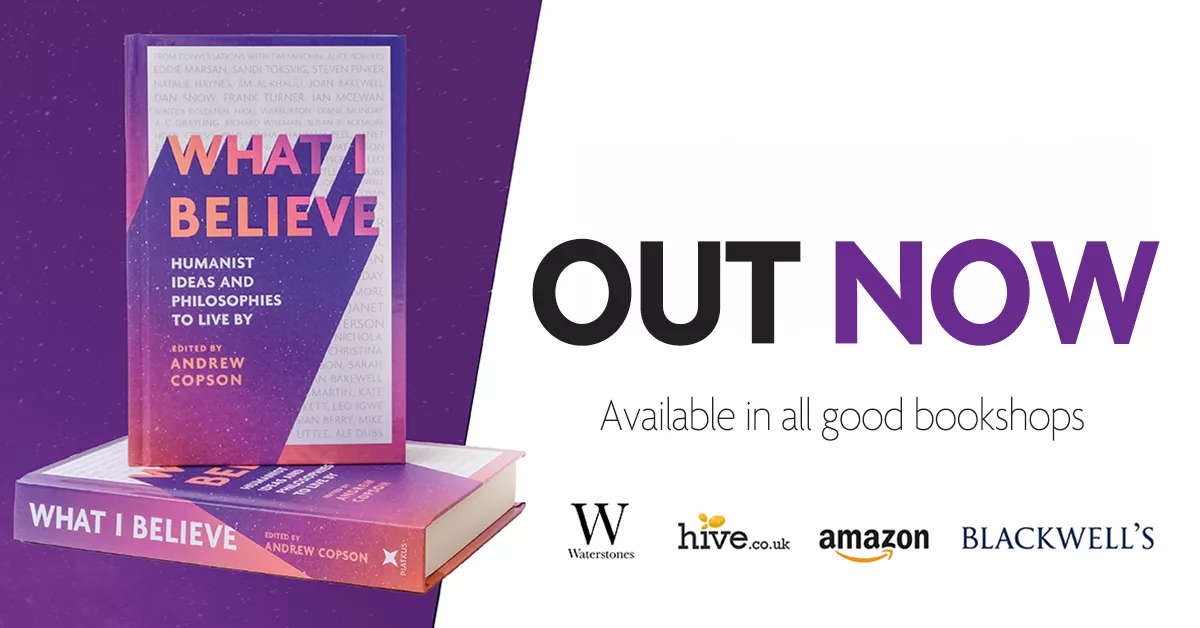
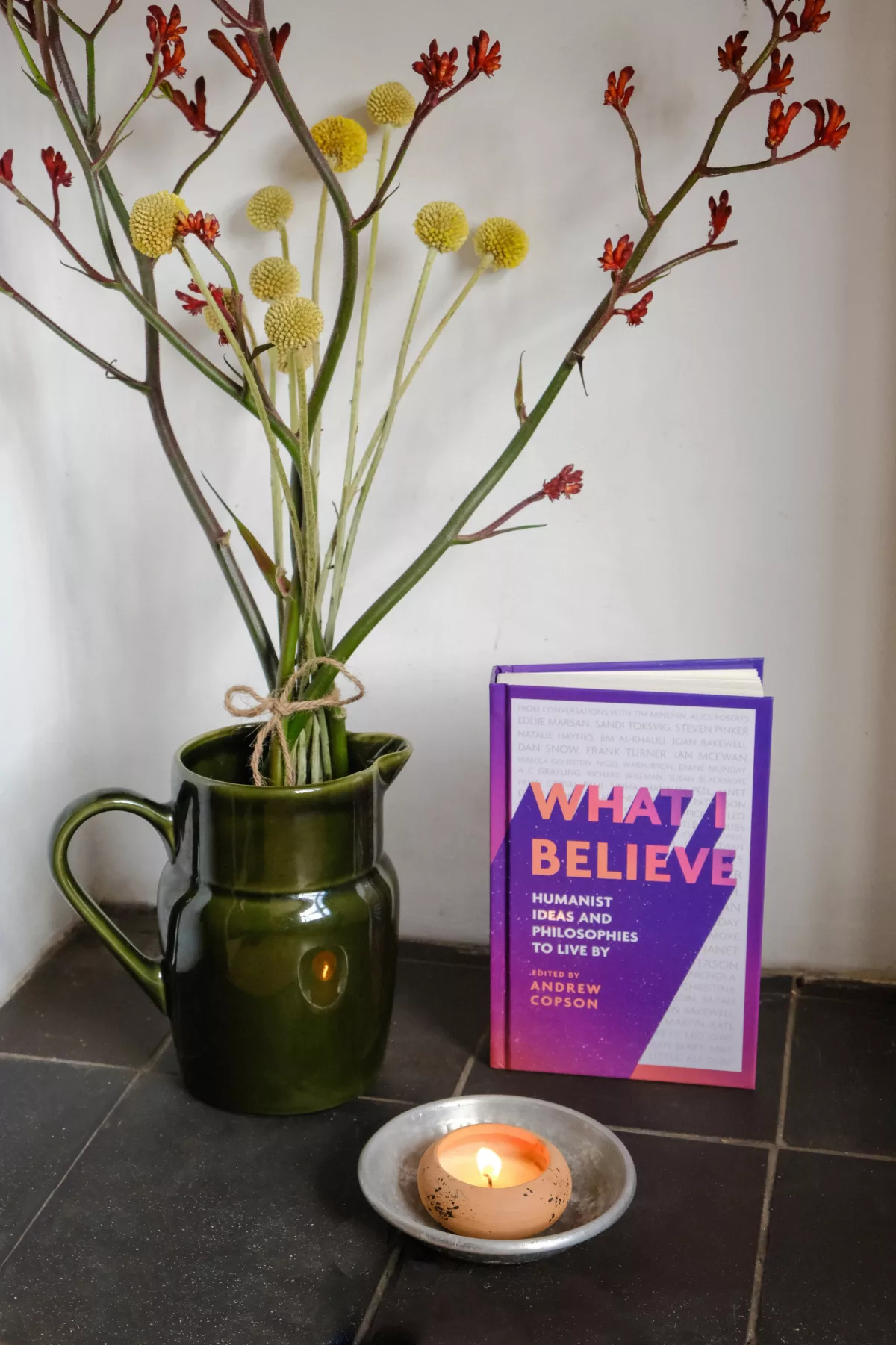

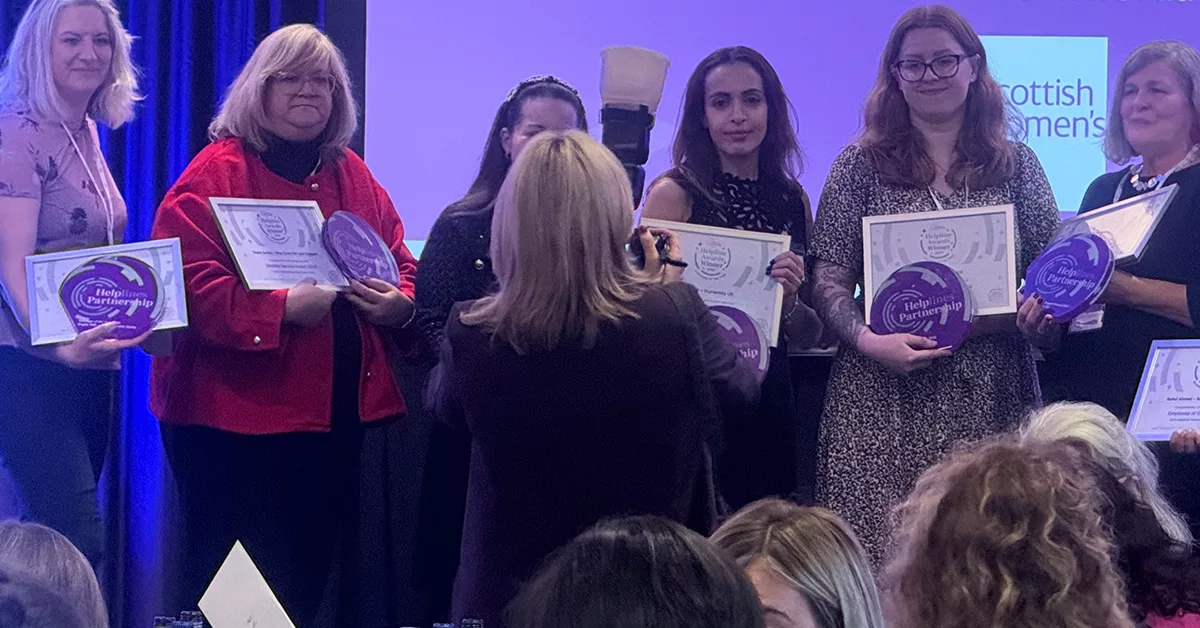

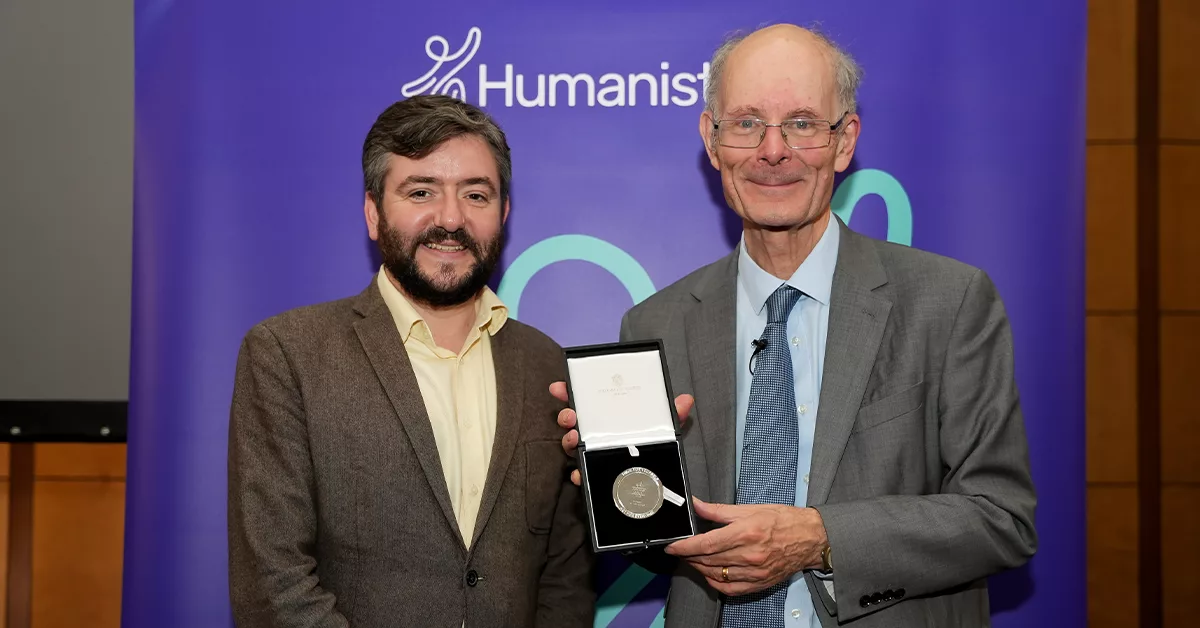
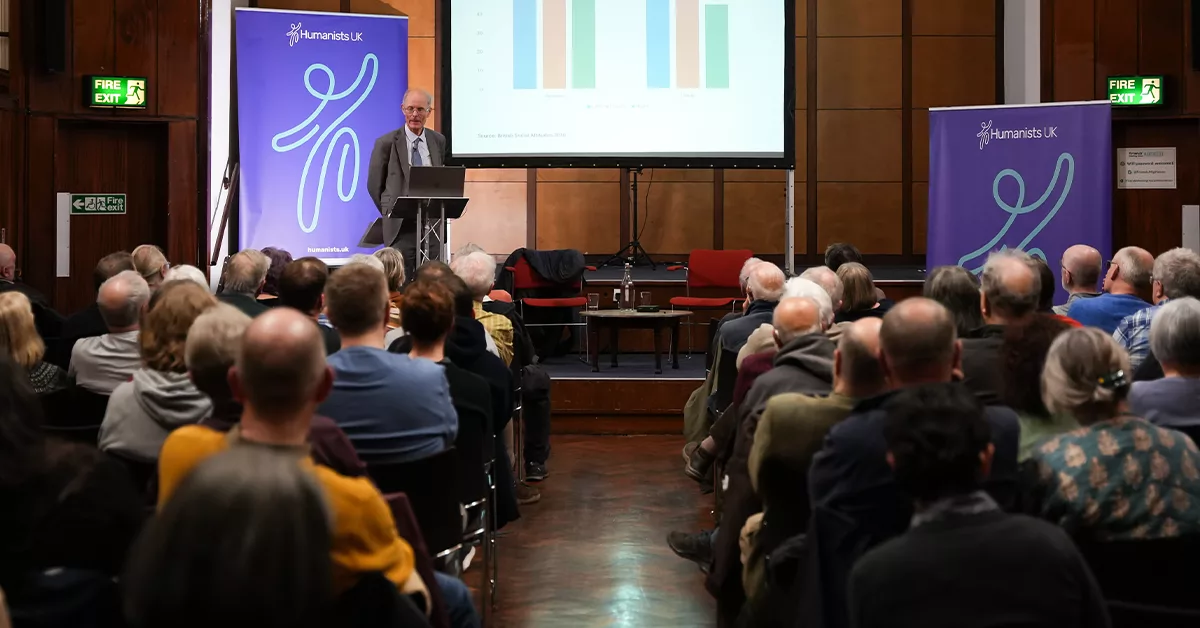
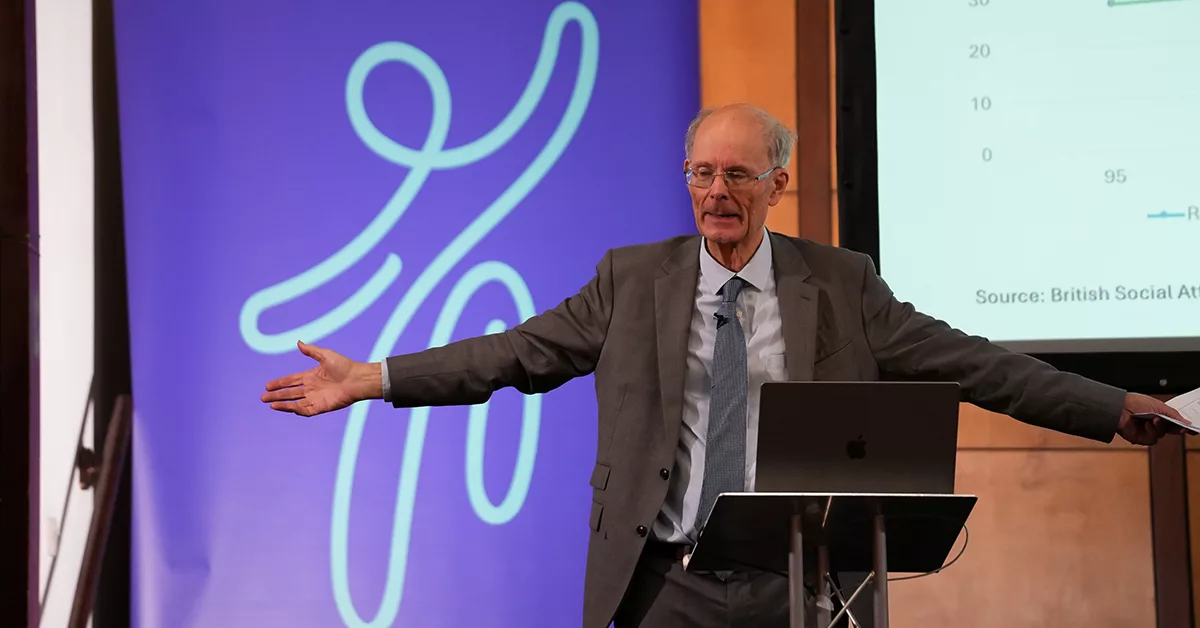







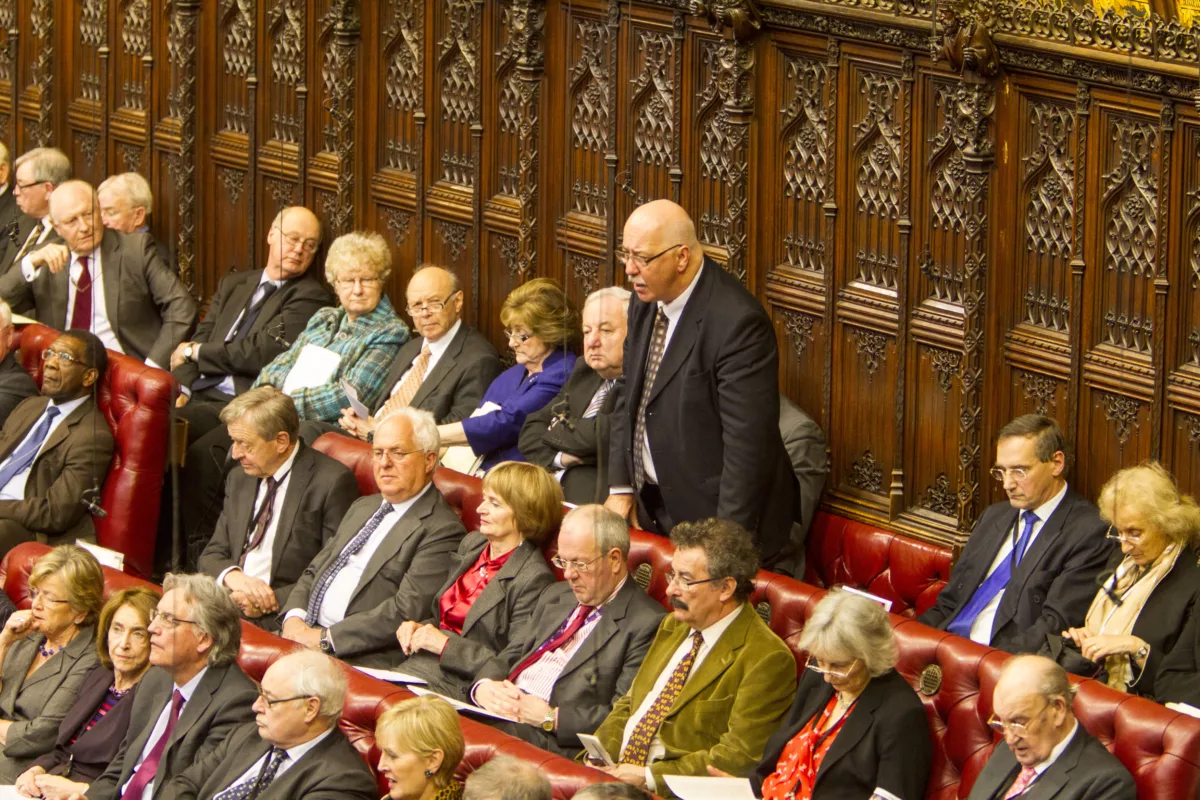

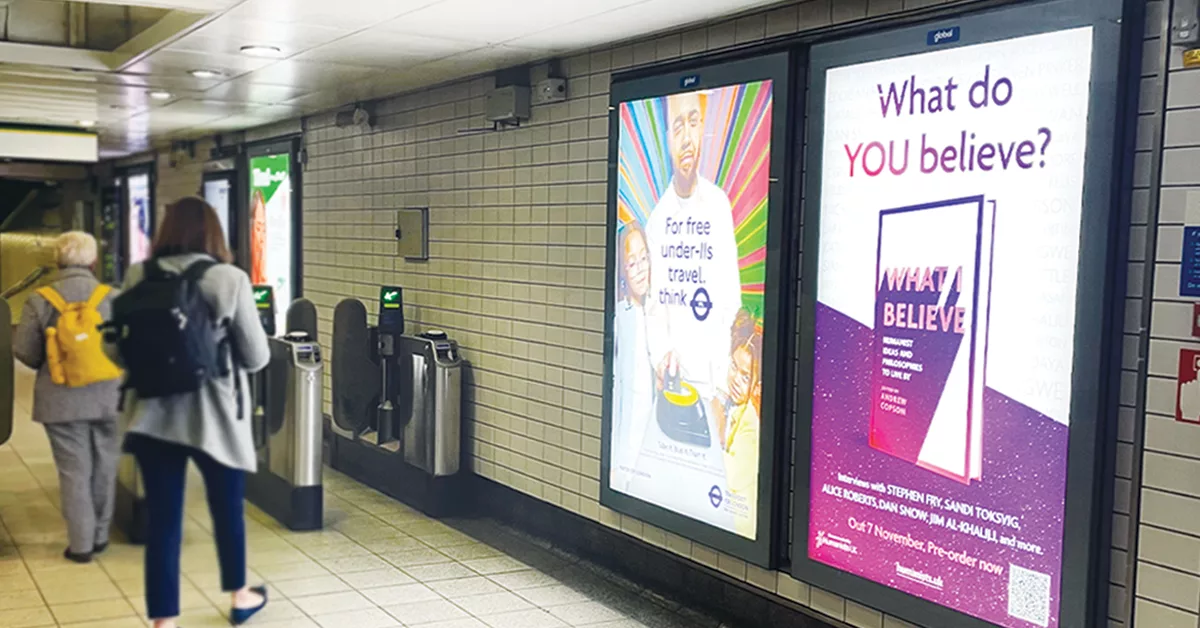
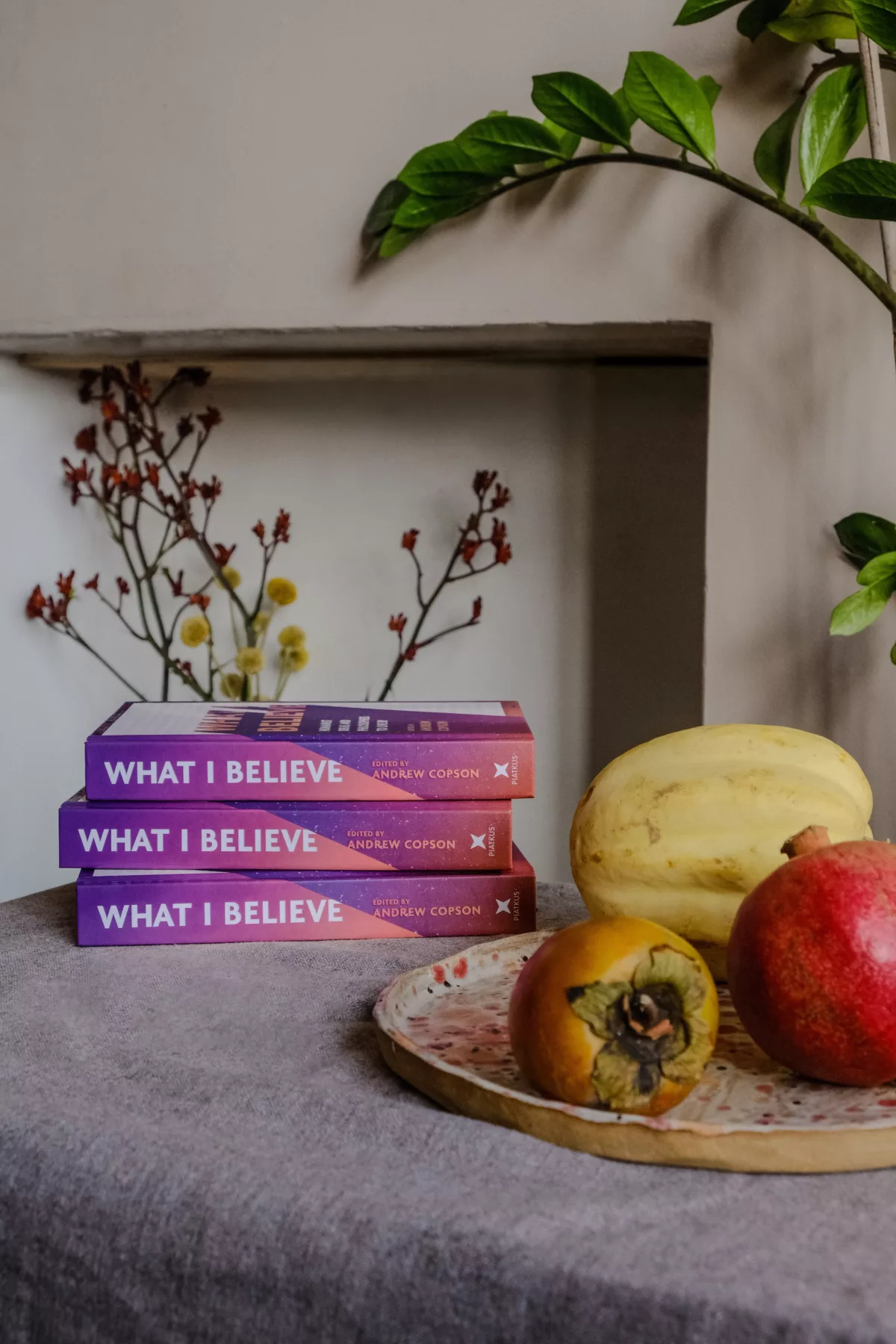
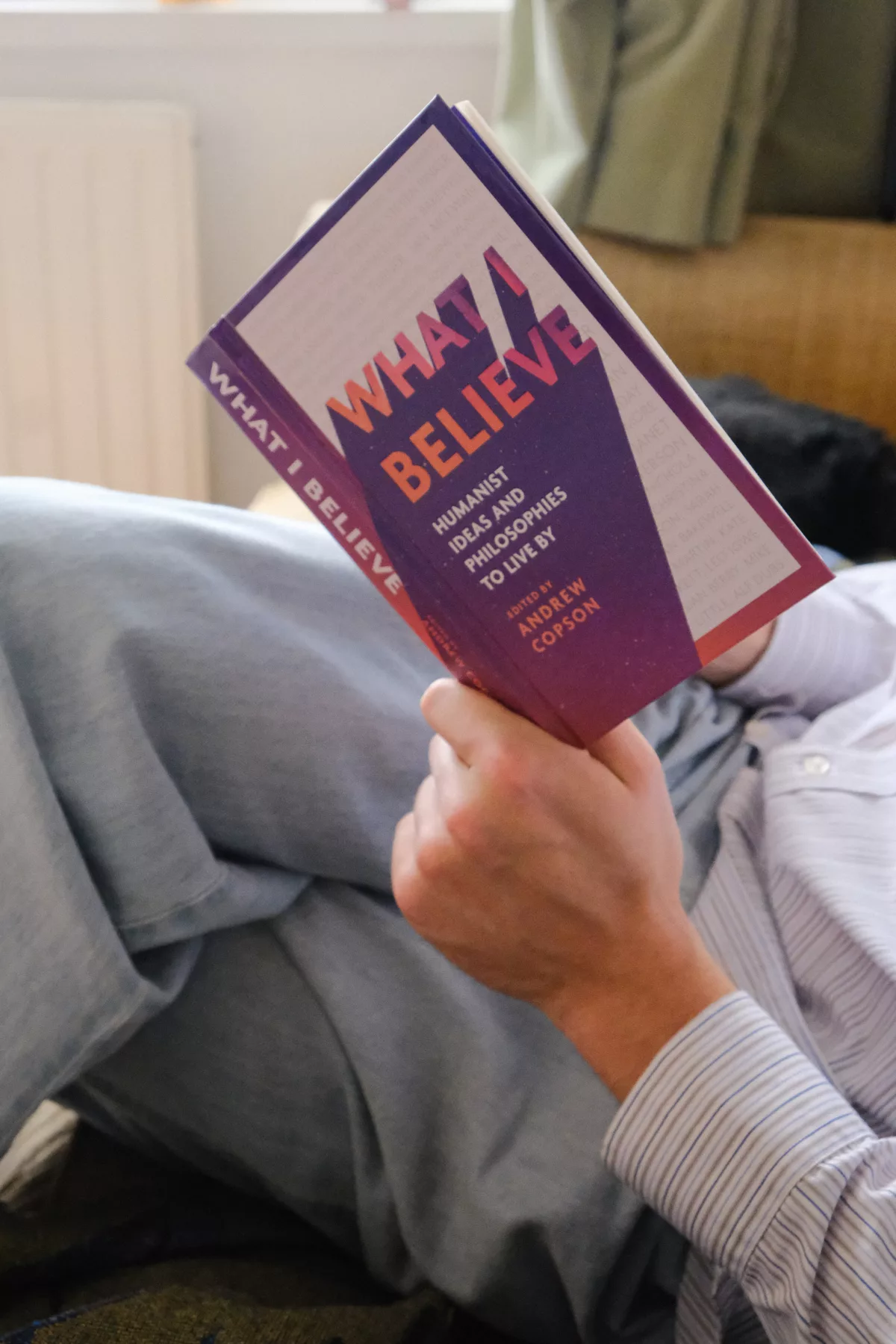
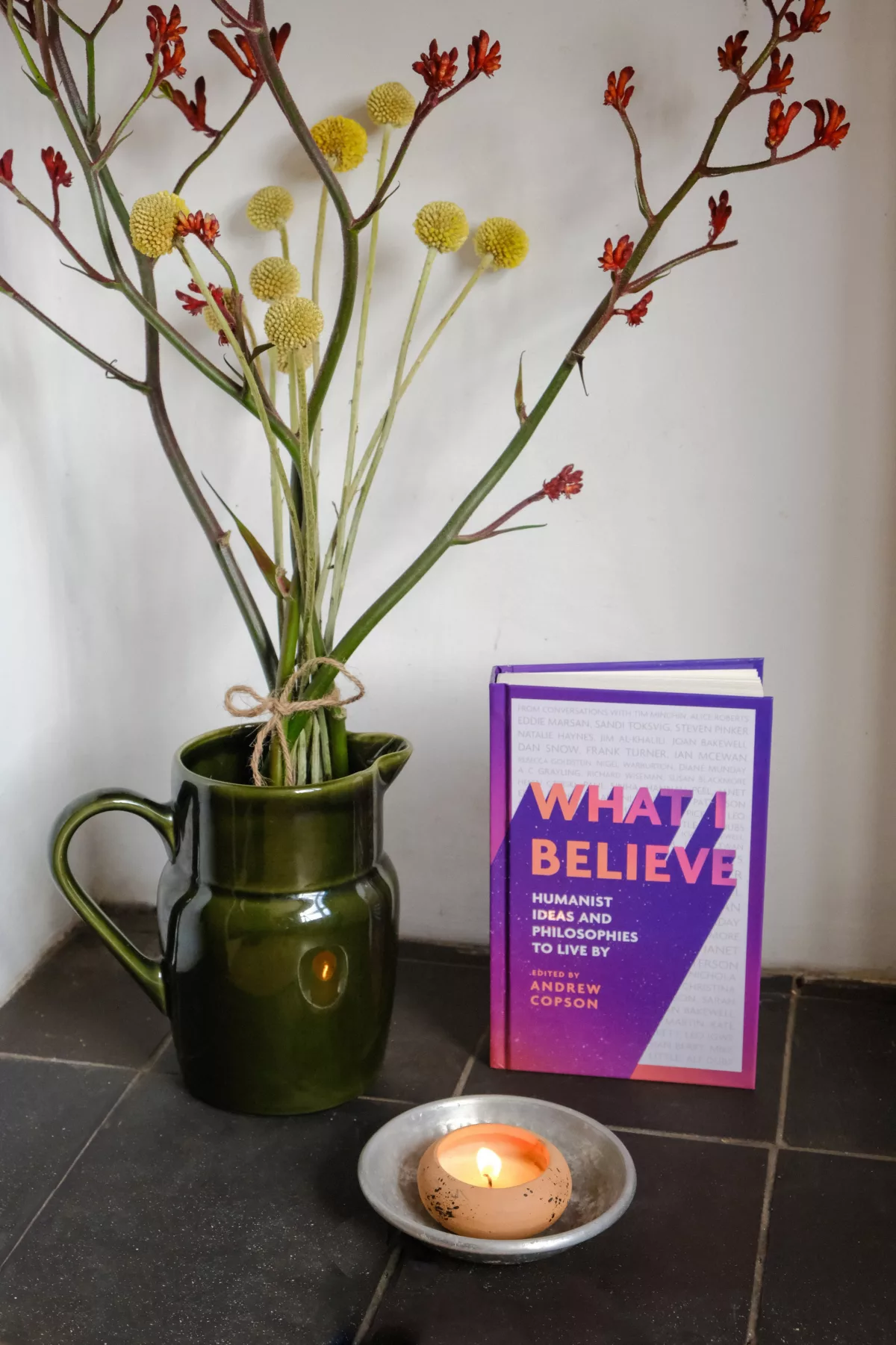
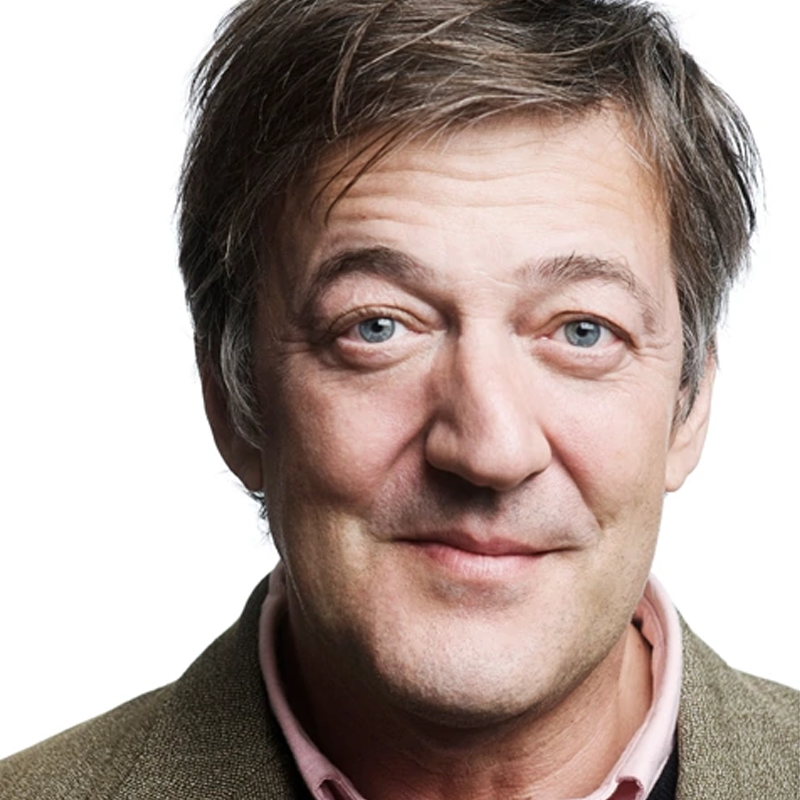
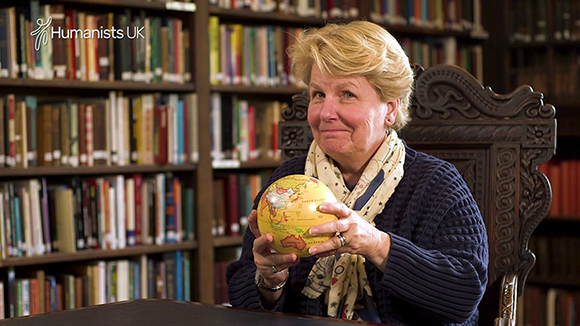

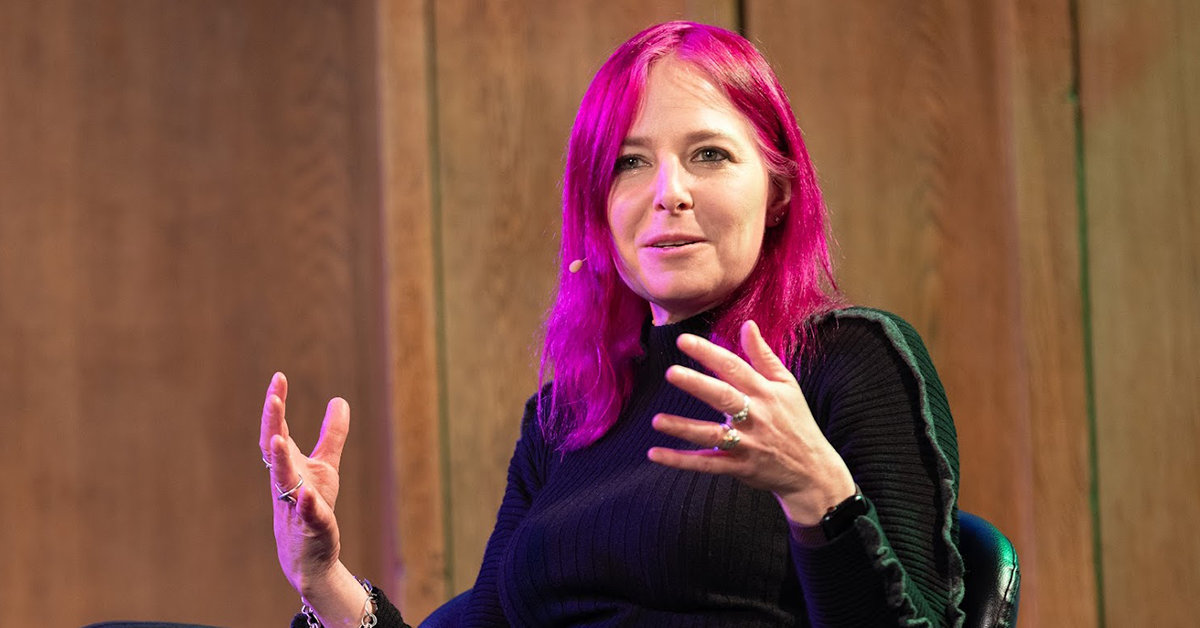


















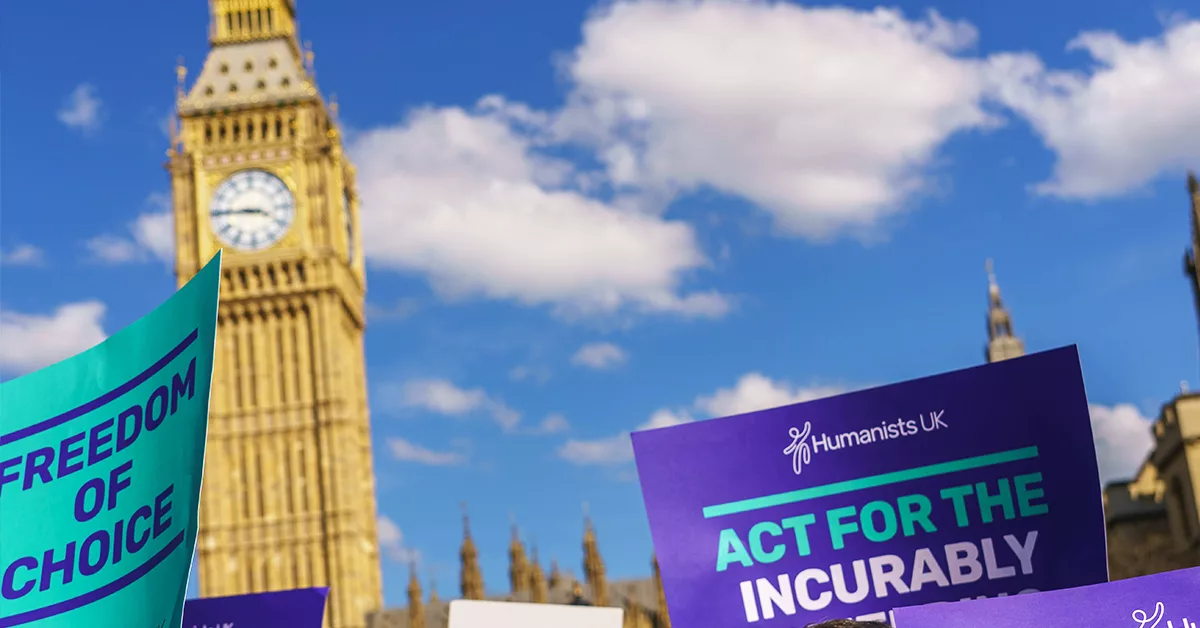


















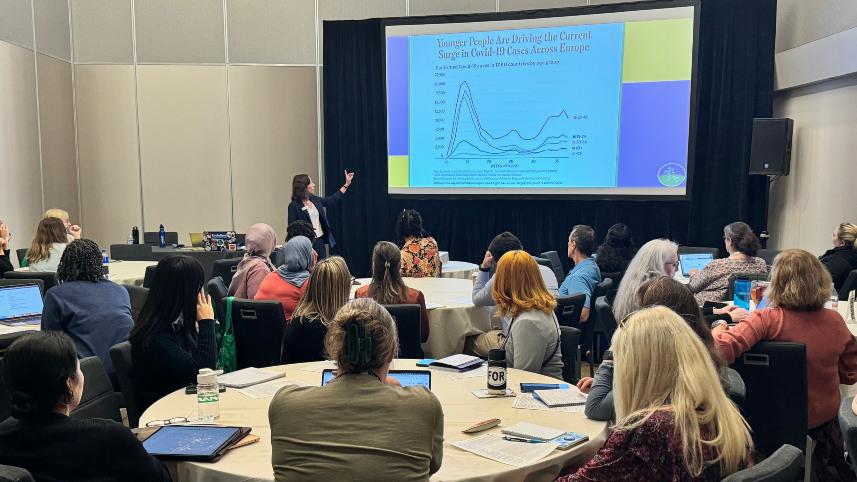
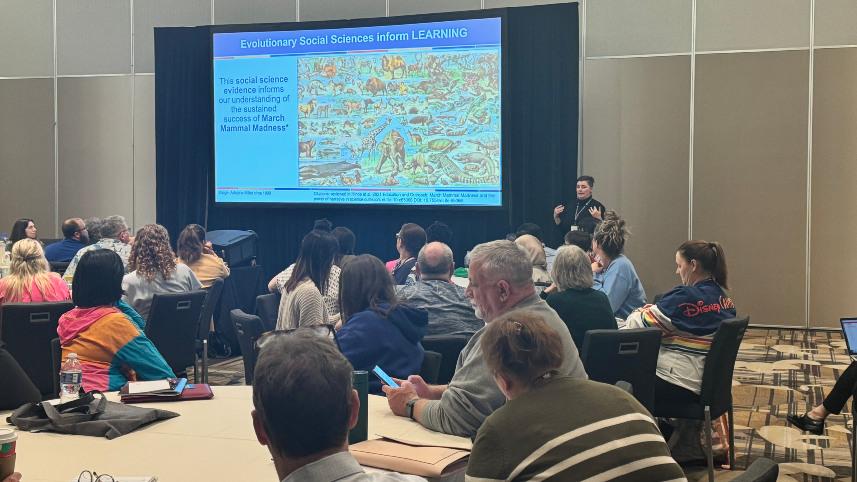






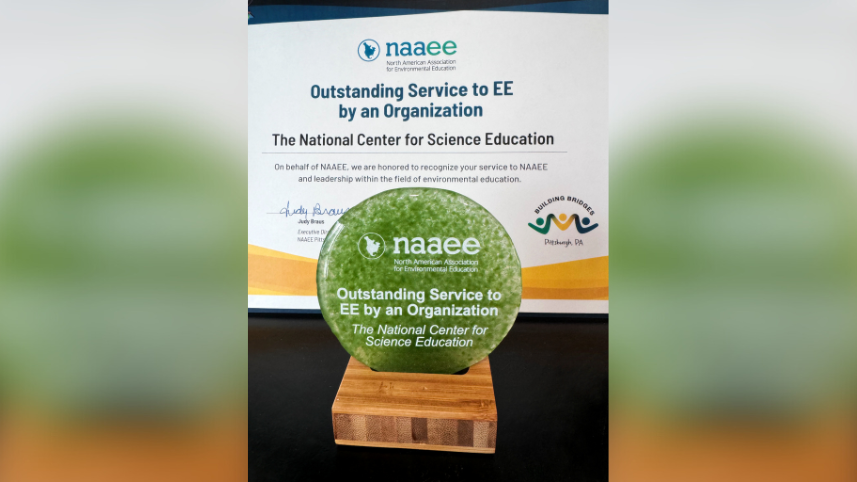




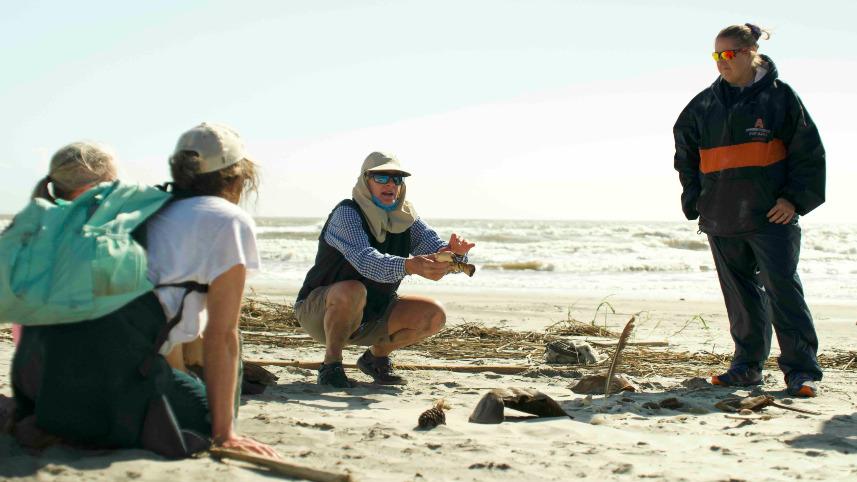
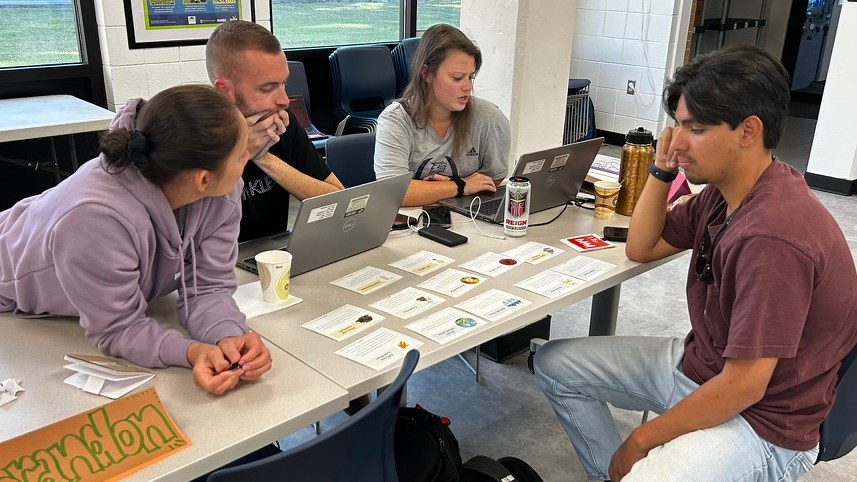





 David Upegui (a science teacher) and David E. Fastovsky (a paleontologist) open their book with the argument that evolutionary theory is the best place to integrate racial justice into the K–12 curriculum. High school students are at the right developmental stage to discuss racial justice, and the history of evolution provides plenty of examples of specious and misappropriated uses of science for racial discrimination and oppression as well as the opportunity to highlight the nature of science and its self-correcting properties. They use the frameworks laid by critical scholars such as Paulo Freire, Henry Giroux, and Derek Hodson to argue that the purpose of general education, and science education specifically, is for students to use literacy for empowerment and liberation. By gaining an understanding of what modern evolutionary theory says about humanity’s diversity and interconnectedness, students can come to see how bad actors in the past relied on ignorant or biased assumptions to create false racial categories and stereotypes.
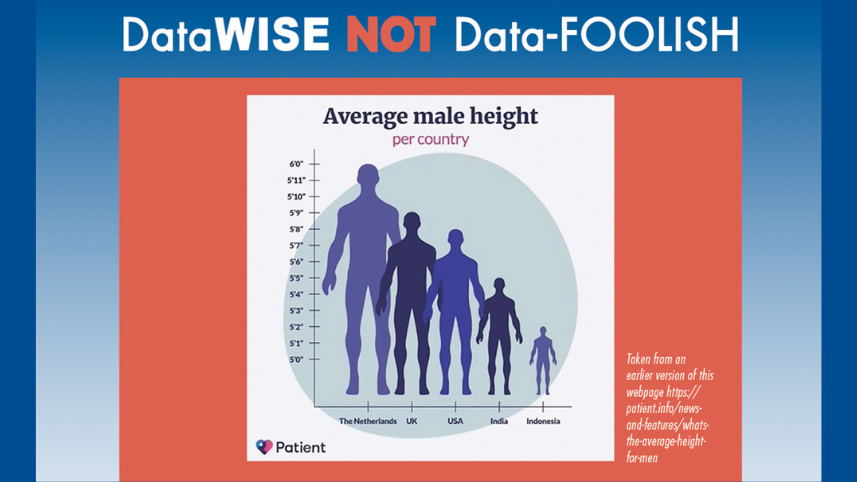



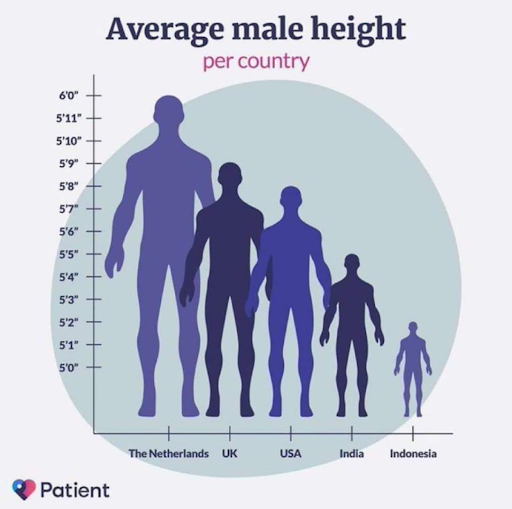
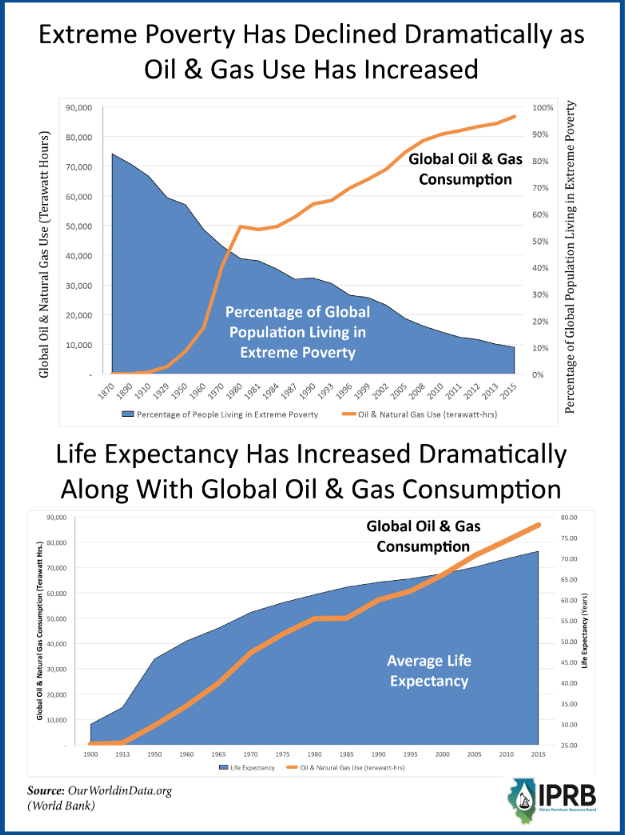




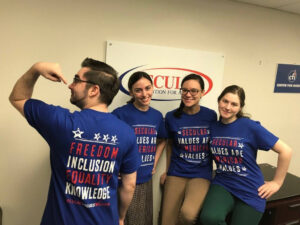


 “I truly believe Charlie Kirk is the most important man in America for the future of our nation,” wrote self-described “high risk humanitarian” Victor Marx in a December 2023 Instagram post.














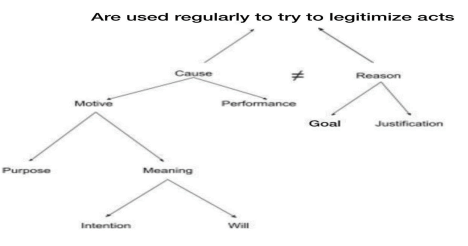












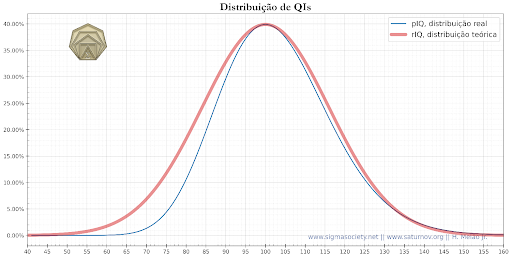
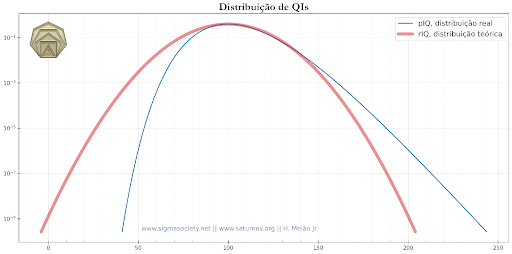

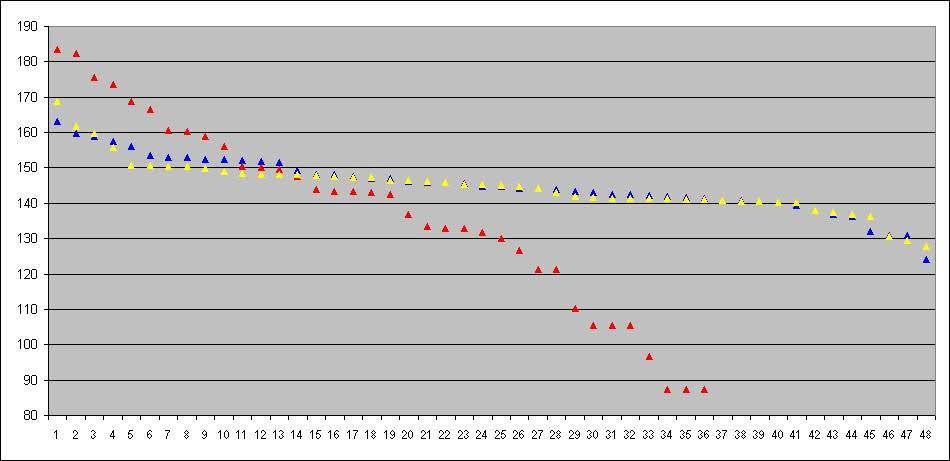



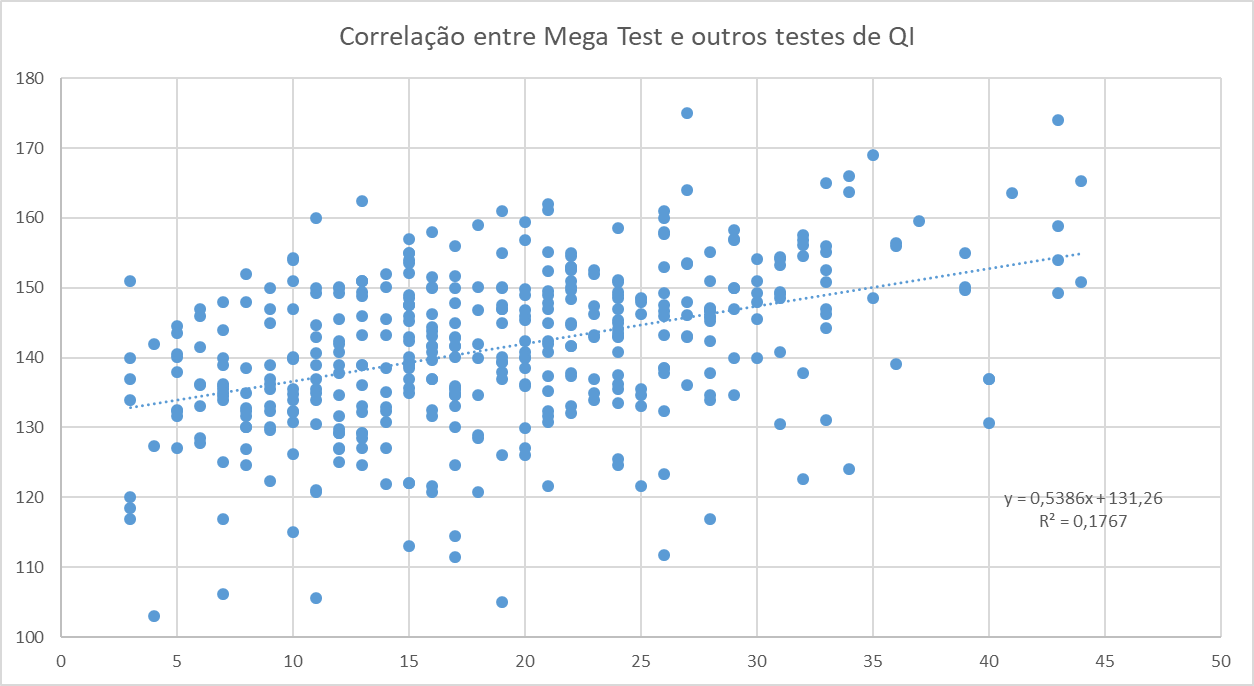














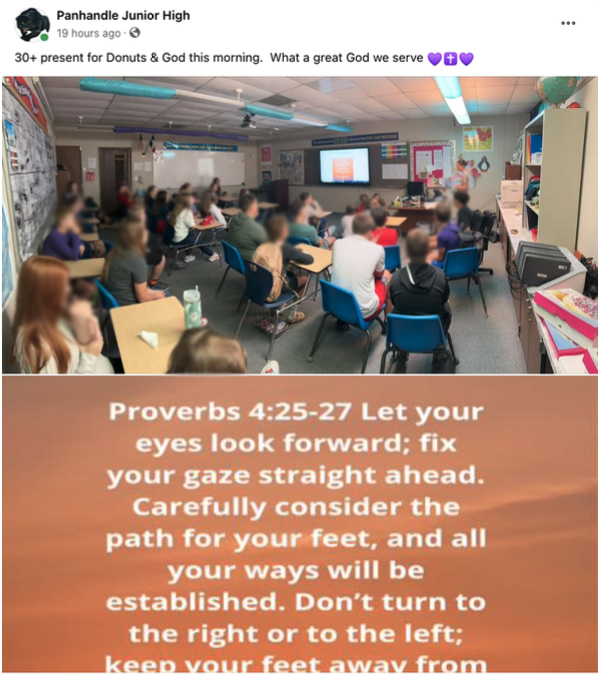





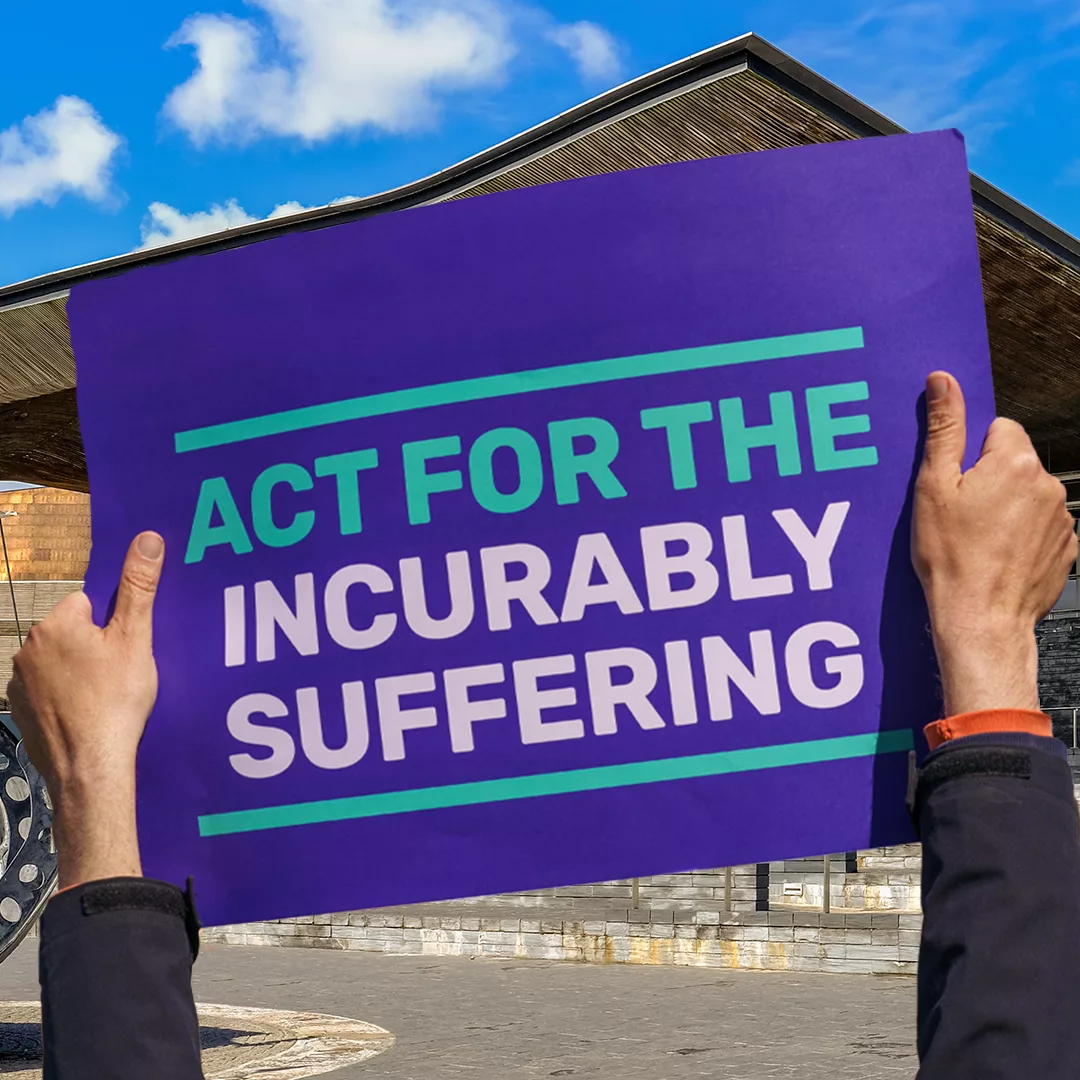




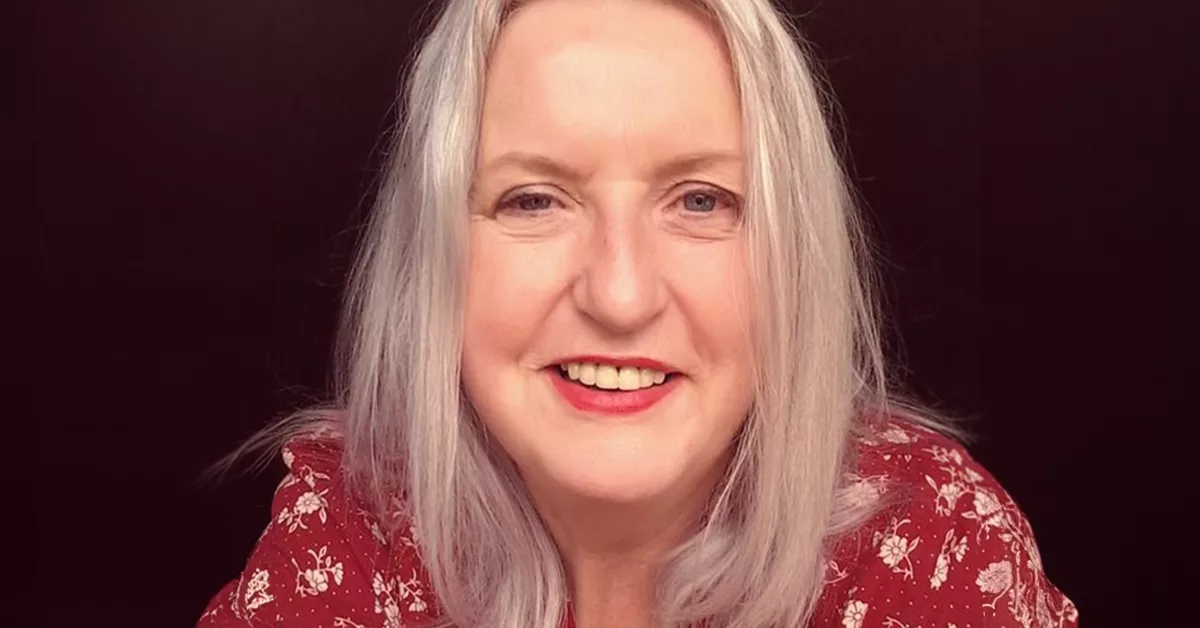


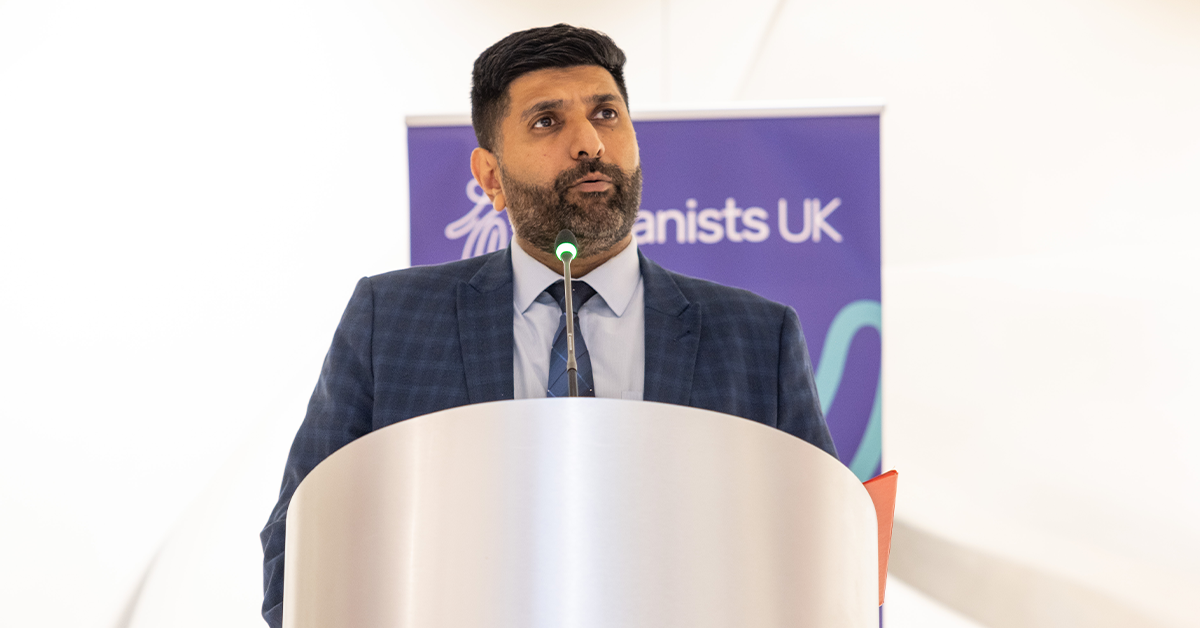


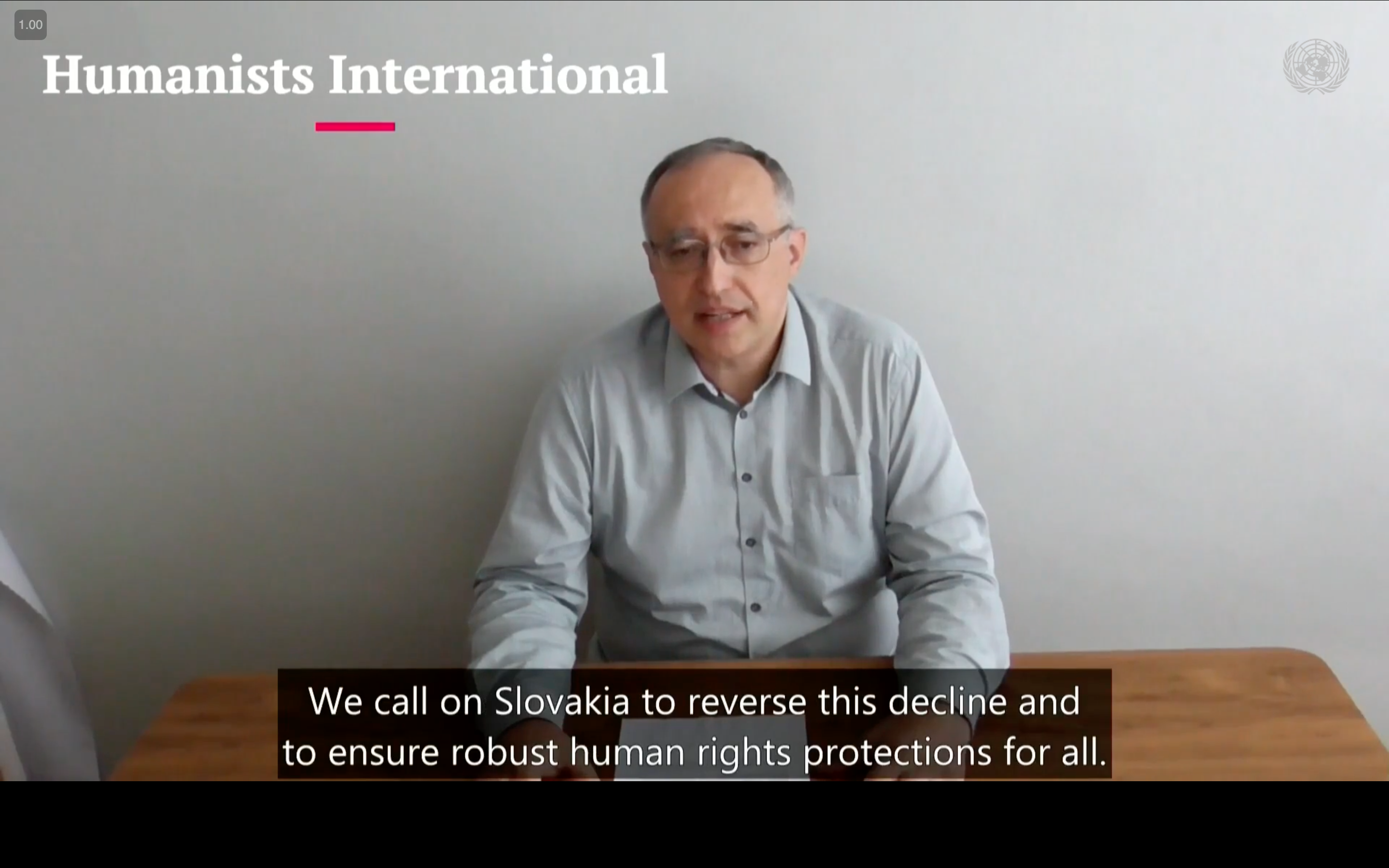










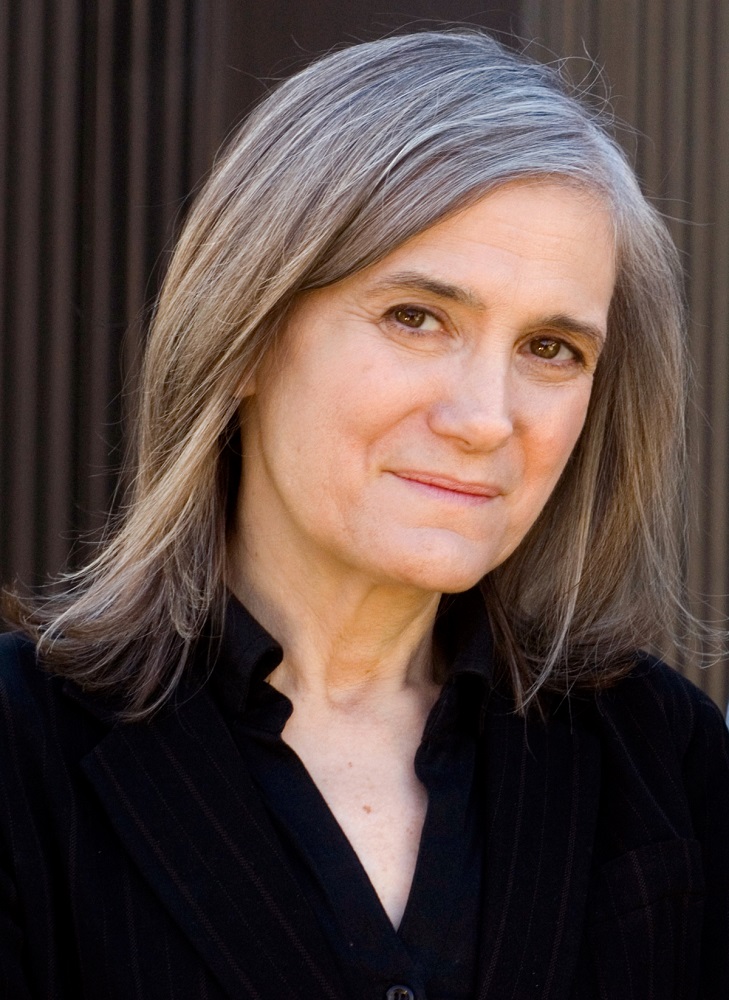




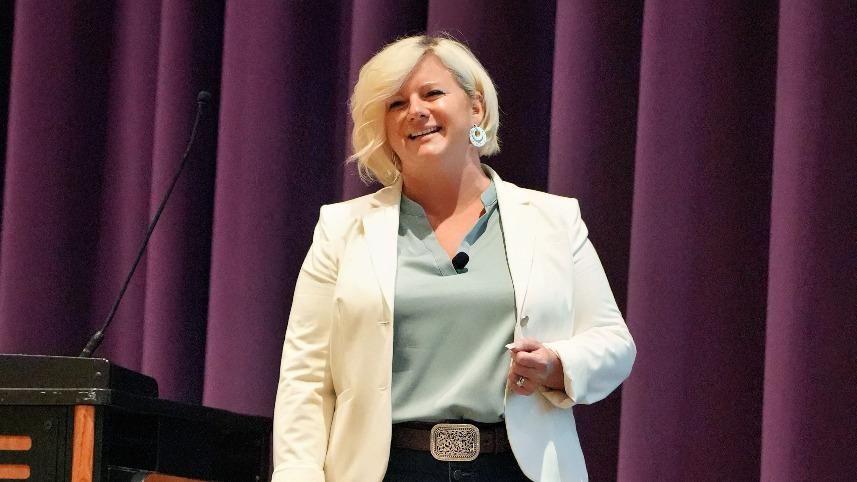

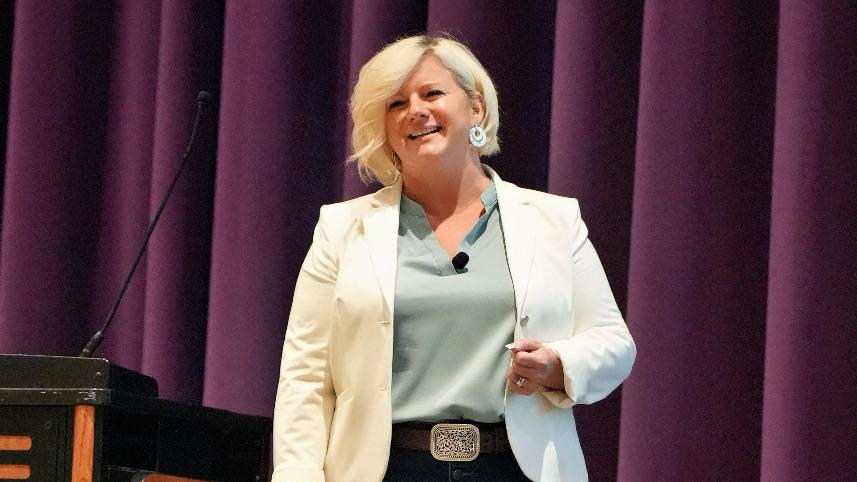

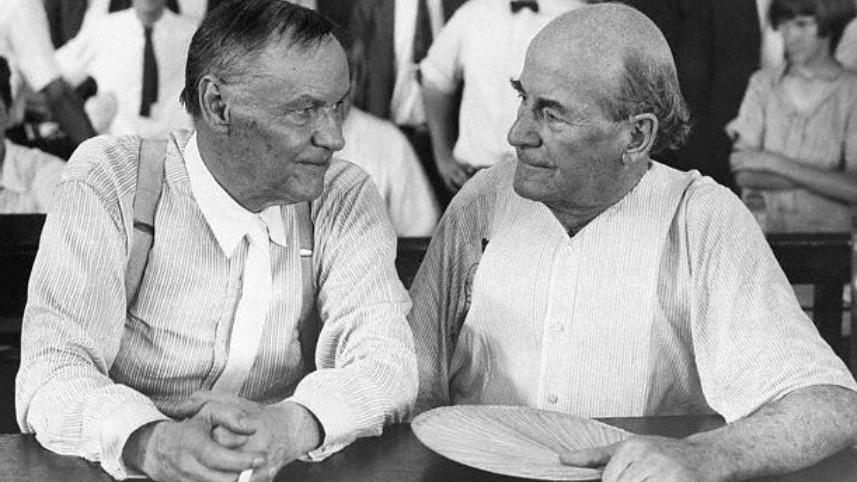









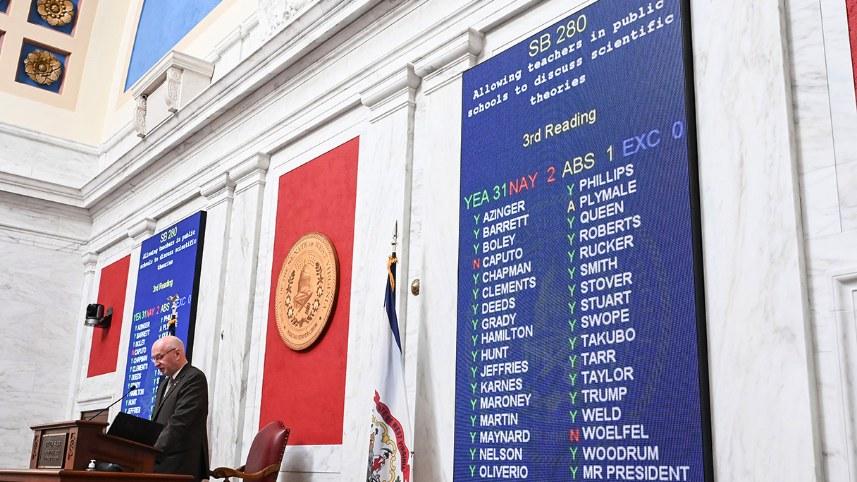


























 In-Sight Publishing